
India continued
Day 20
Sunday 25th January
Thanjavur – Chettinad
21-27 degrees, slight drizzle
I have to say our vegetarian breakfast, which included eggs, was quite nice today, and delivered with the minimum of fuss. We even had wifi for an hour, so things were looking up – just as we’re about to leave!
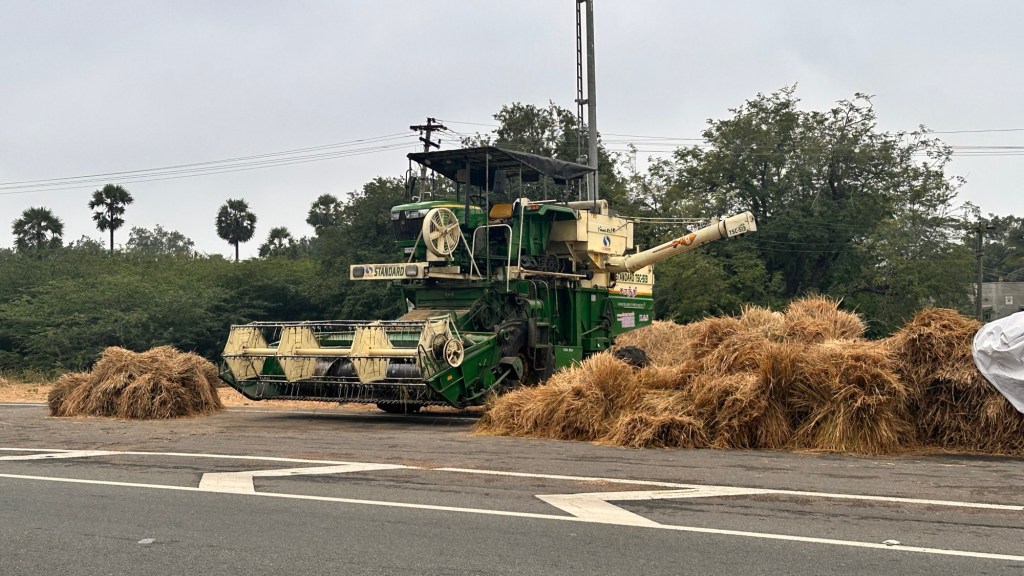
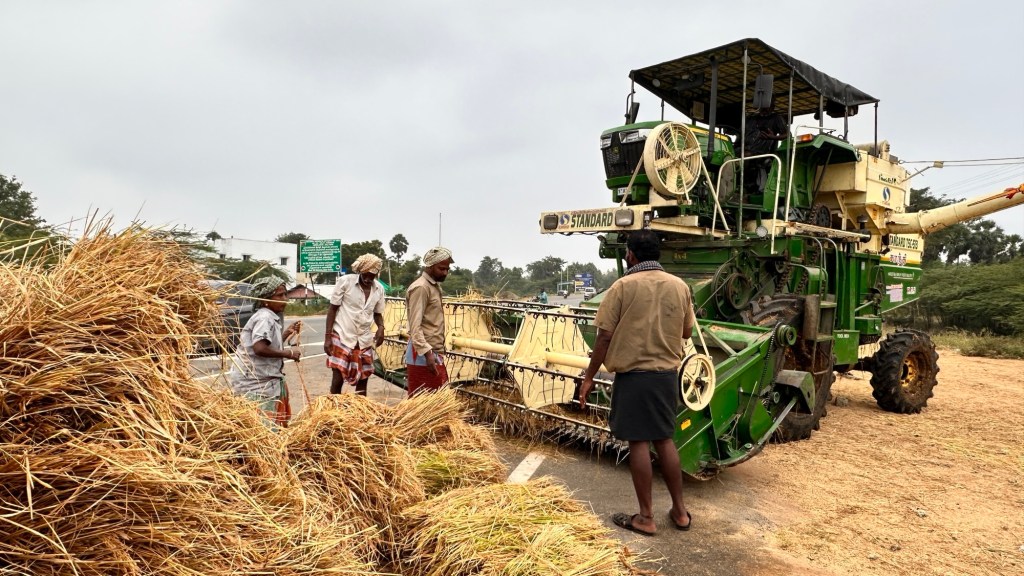
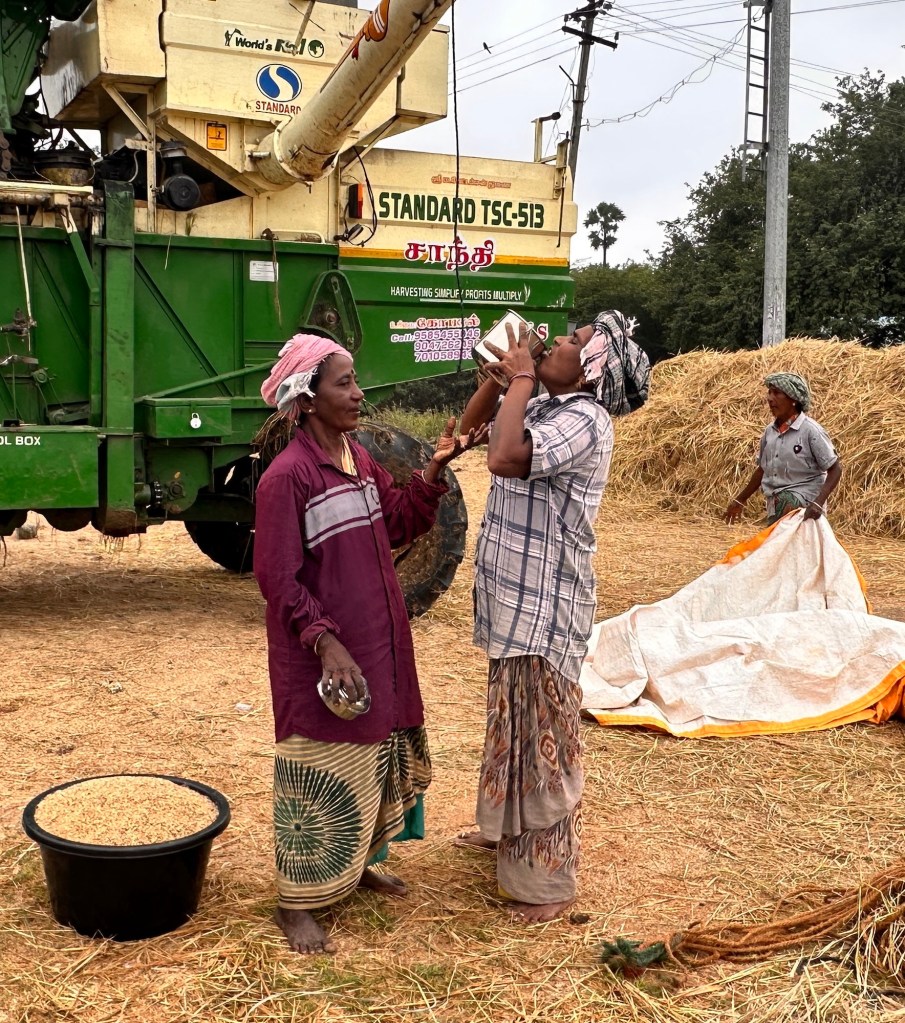
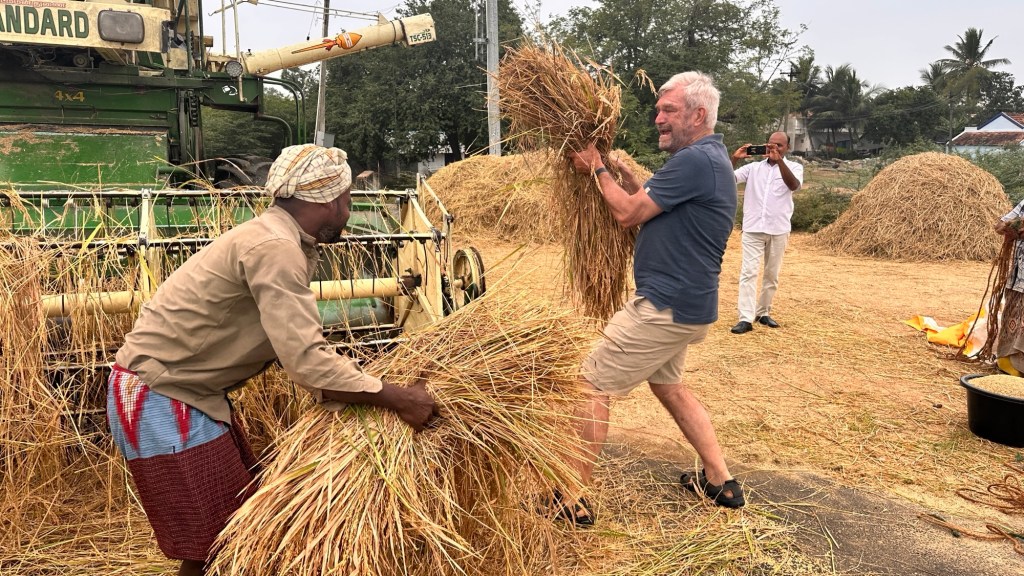
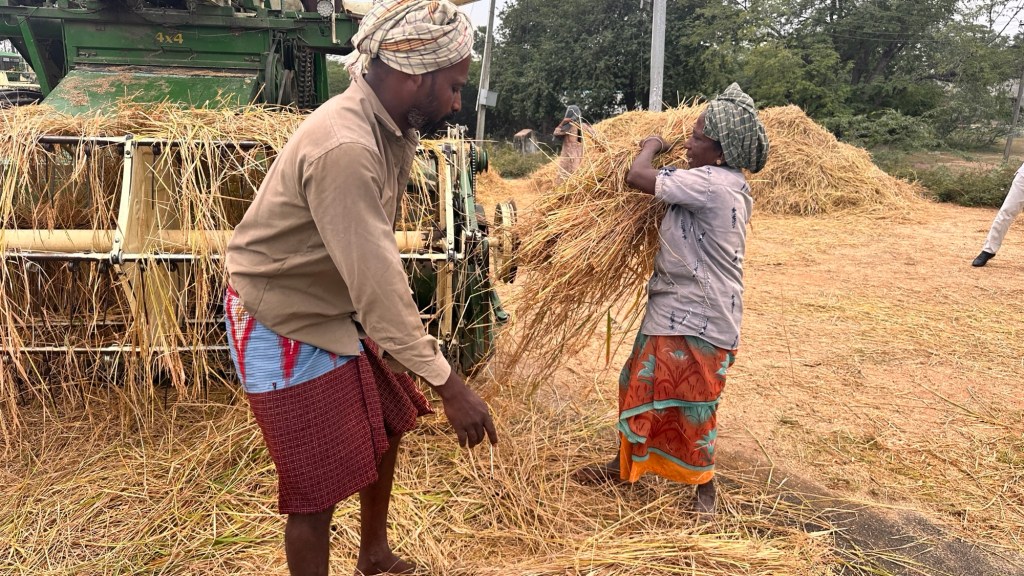
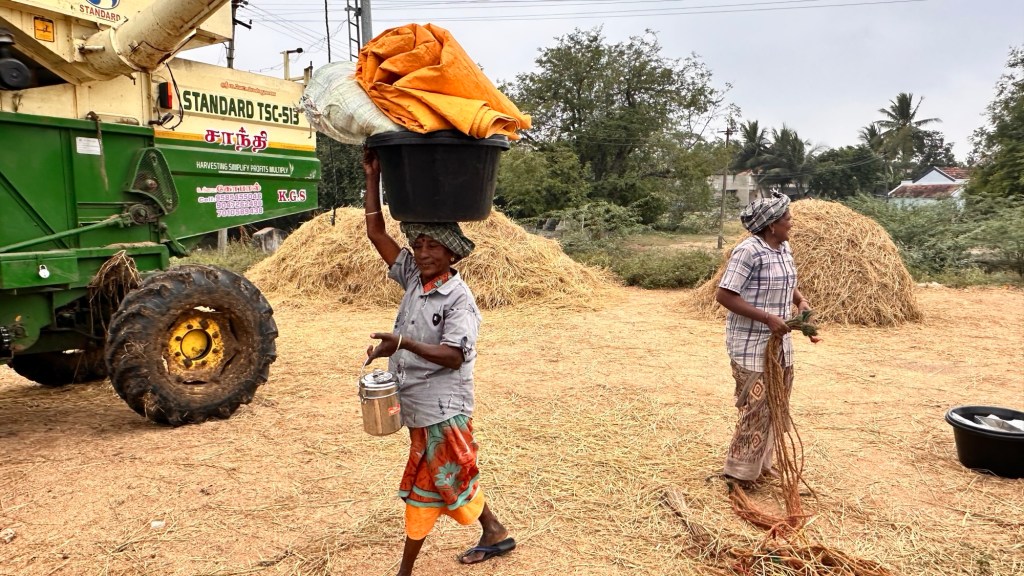
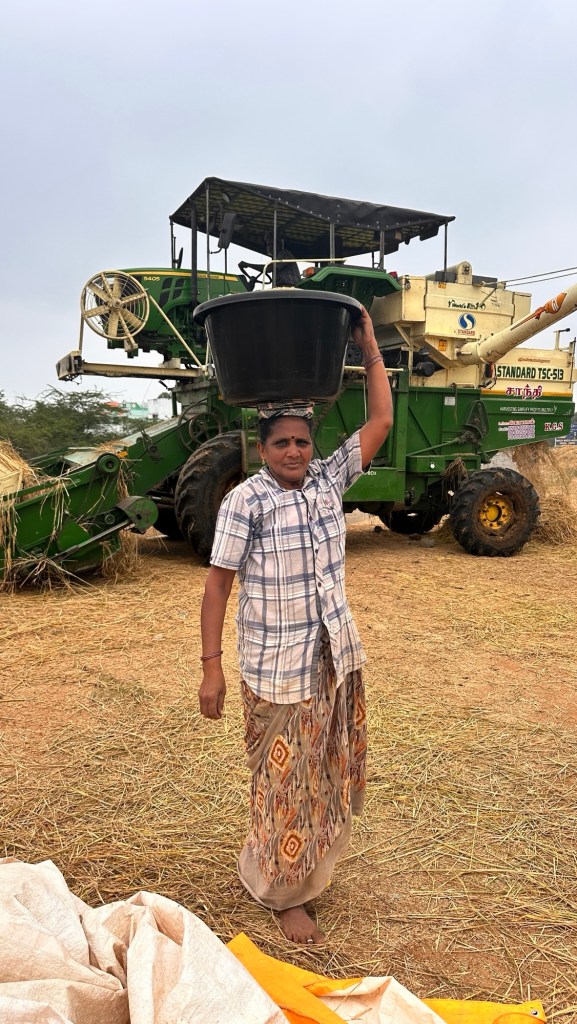
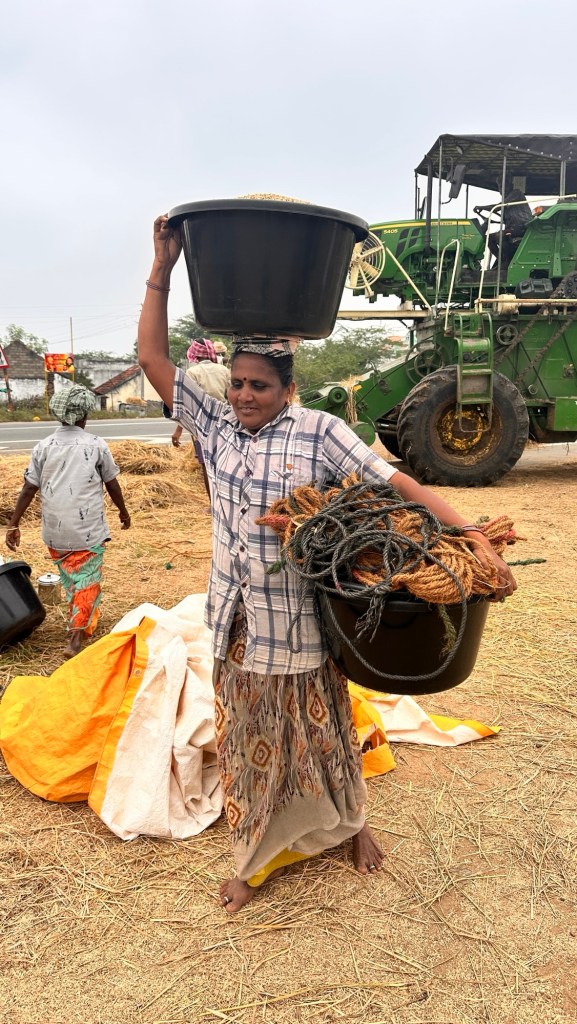
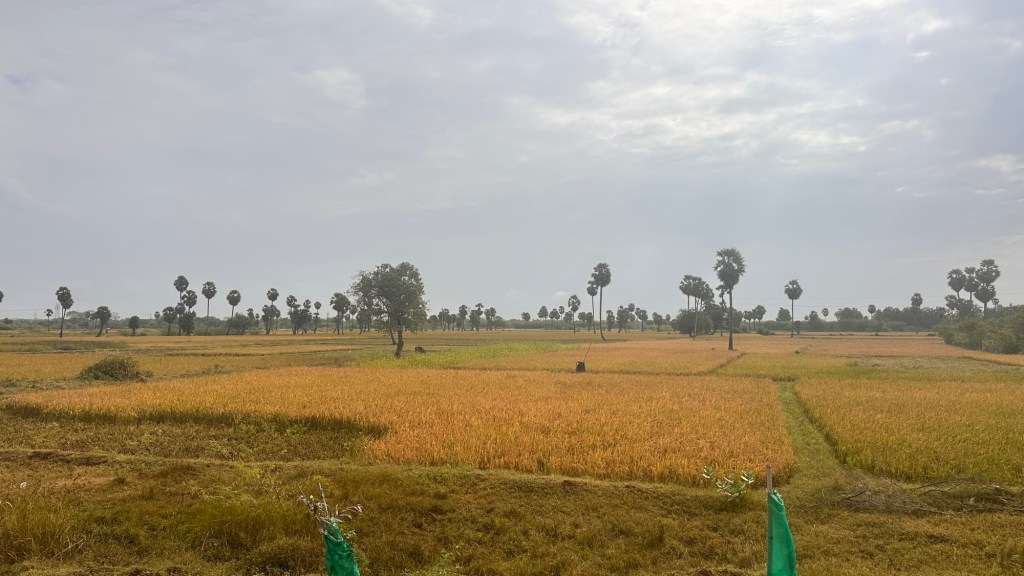
Pradeep picked us up at 9am, ready for our next adventure. It was a two hour drive to Chettinad, again through farmlands, and a decent road. We had a really interesting stop to watch some rice harvesting. The farmers loved that we stopped, and took as many photos of us, as we took of them. The rice harvesting was very hard work for everyone, except for the tractor driver – though when there was a blockage he had to get out of the cabin and fix it. For the women moving the chaff at the back of the tractor, it was dirty dusty work!
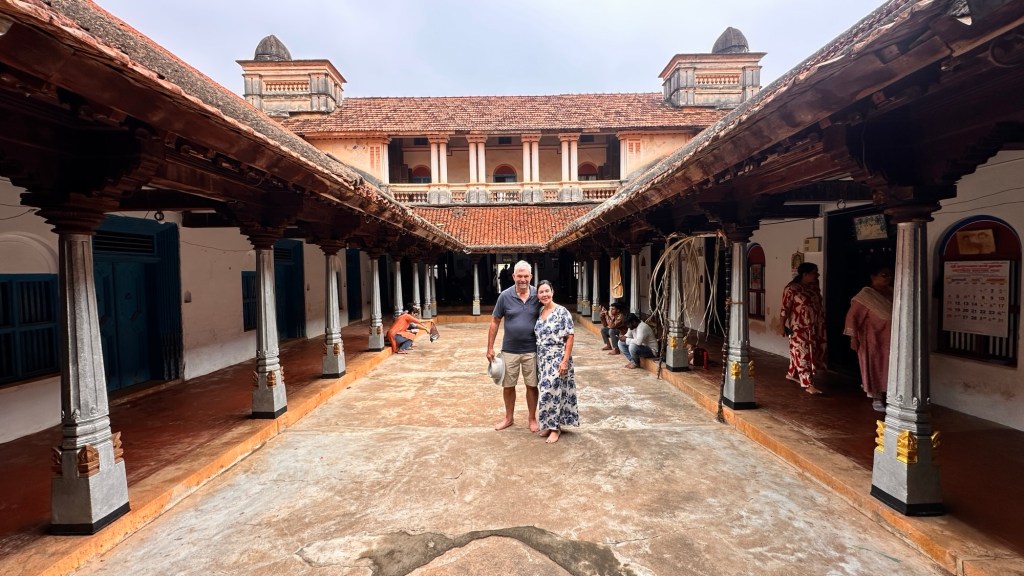
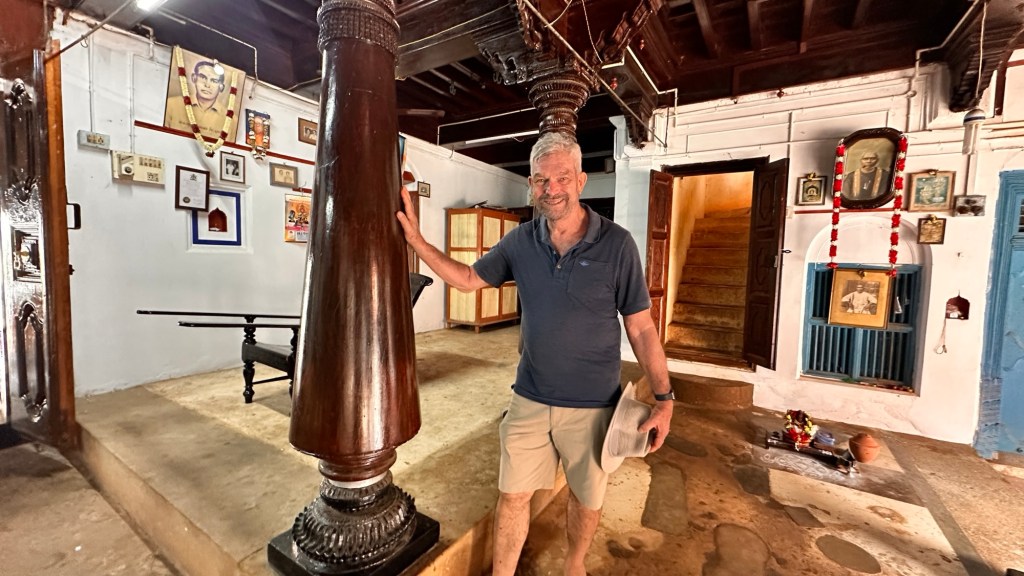
By midday we were checked into the 1902 Chettinadu Mansion – an authentic heritage mansion which has been converted into eight suites. Shoes had to be left at the front entrance – our soft feet are toughening up!
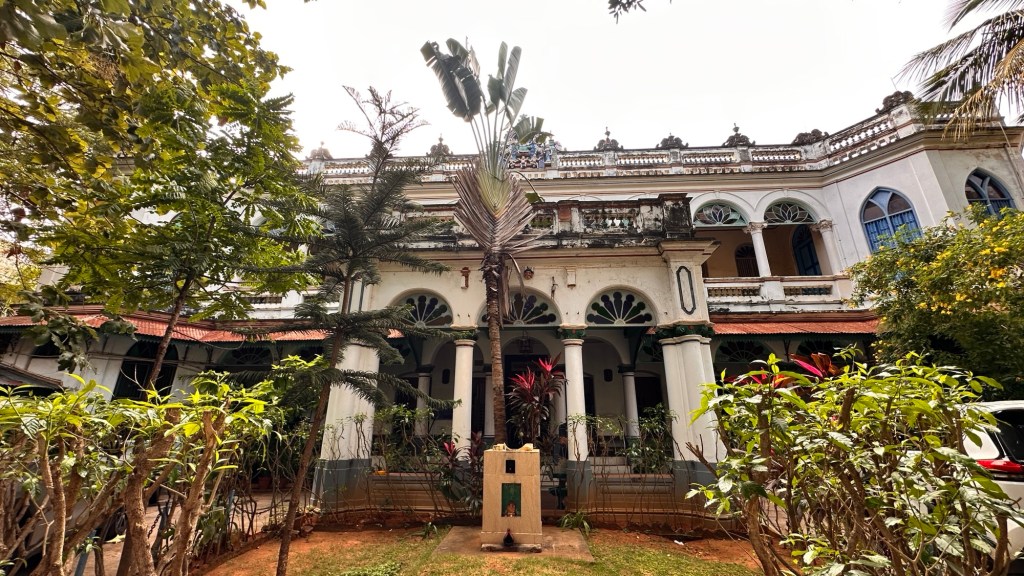
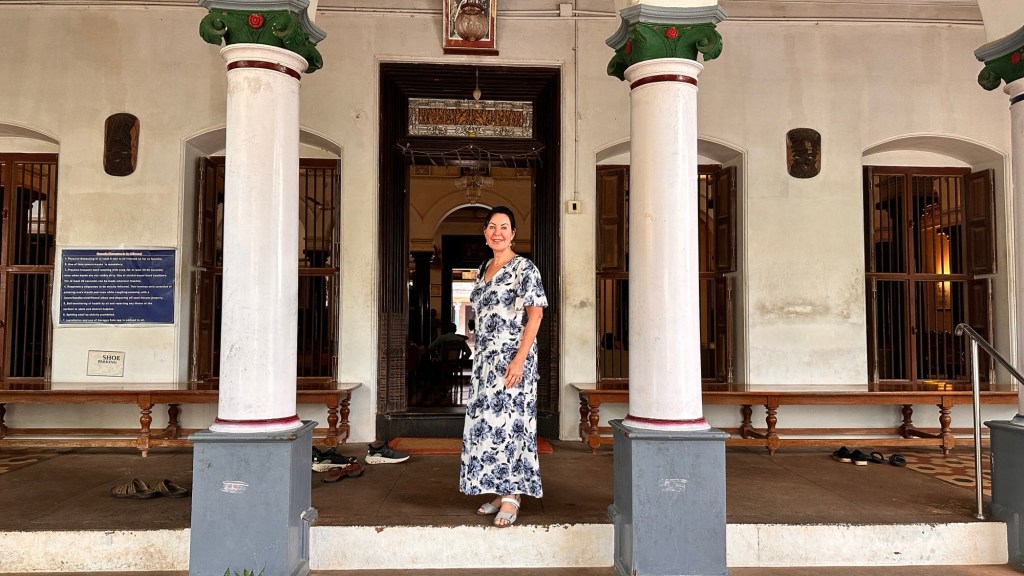
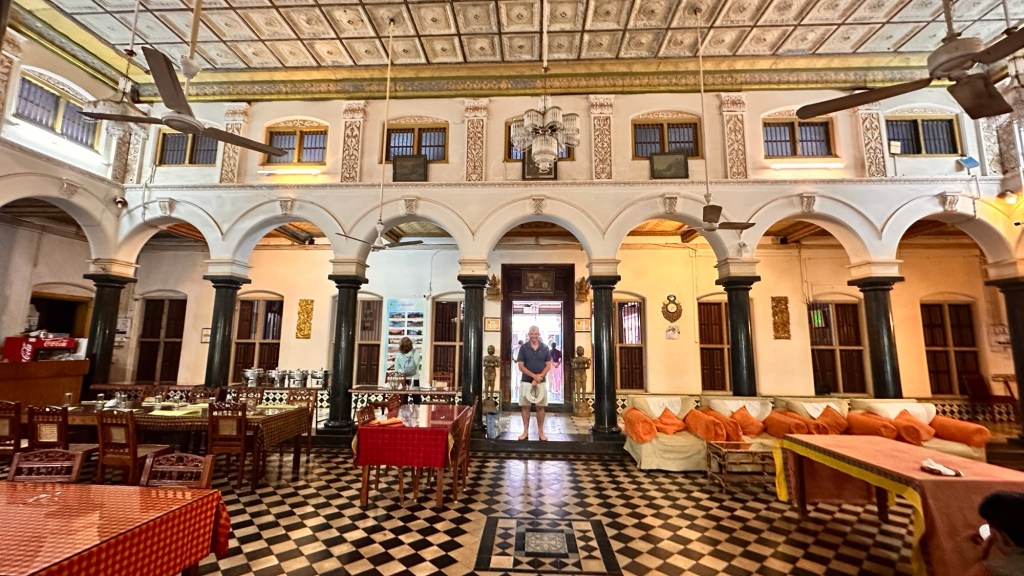
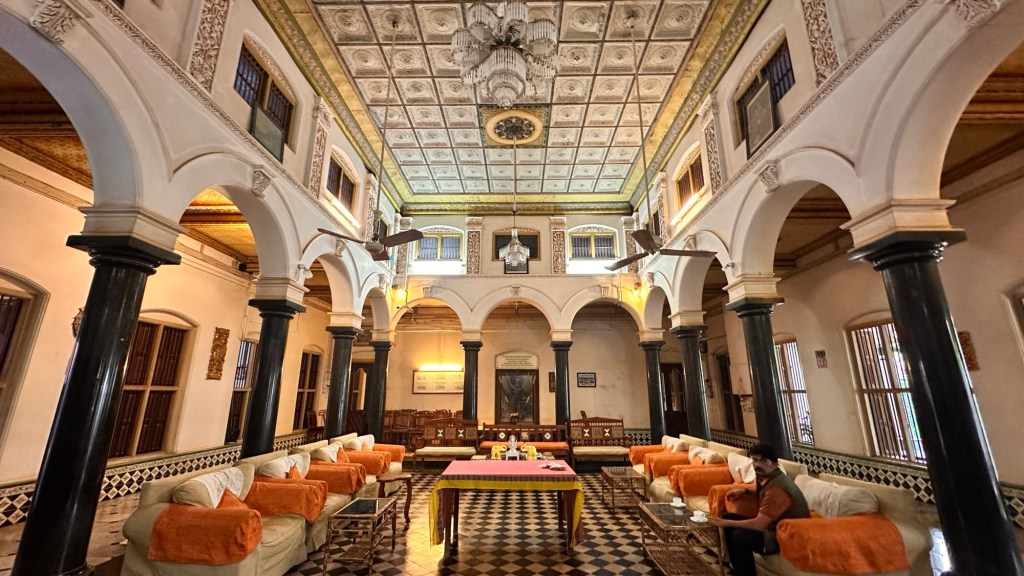
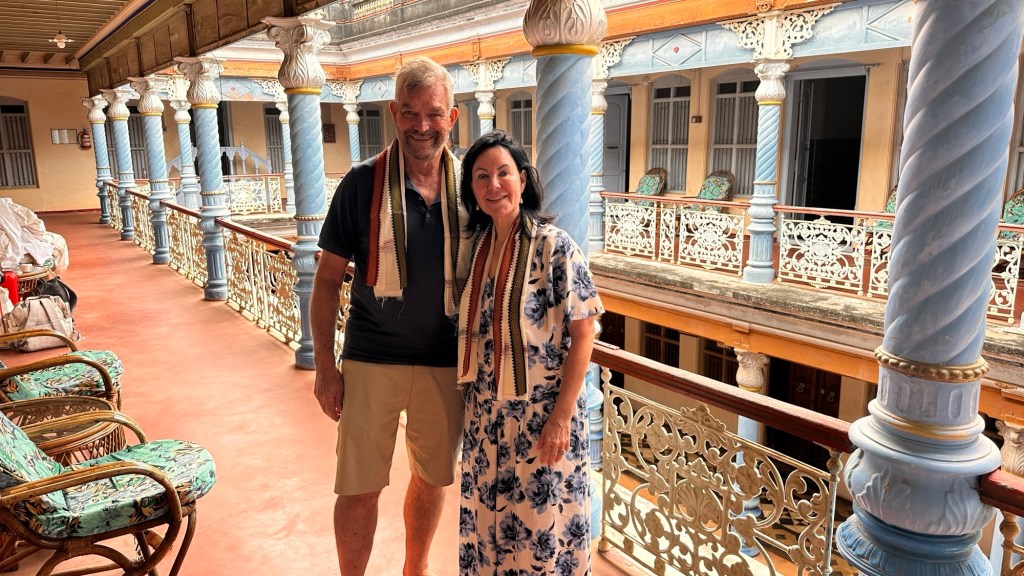
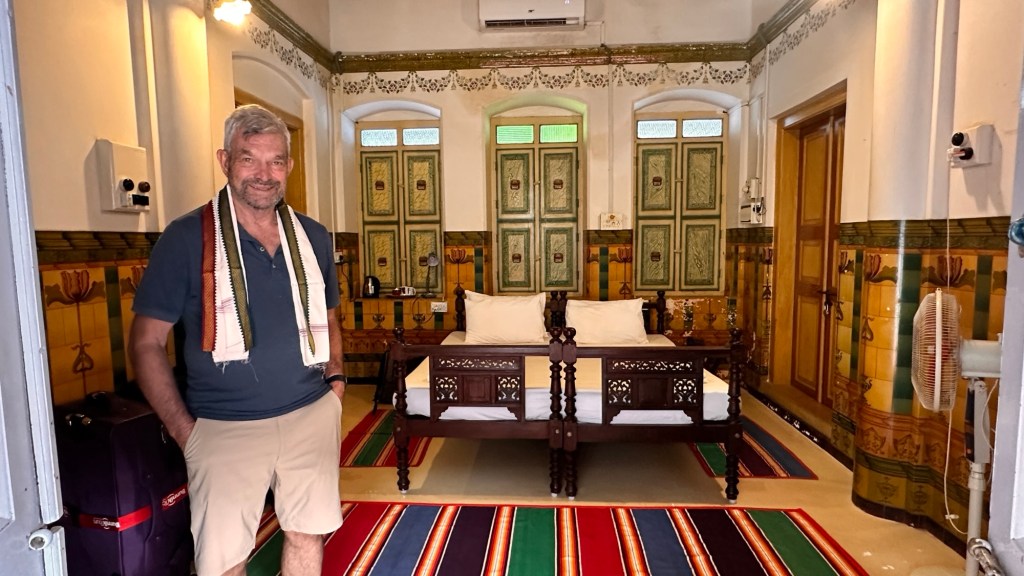
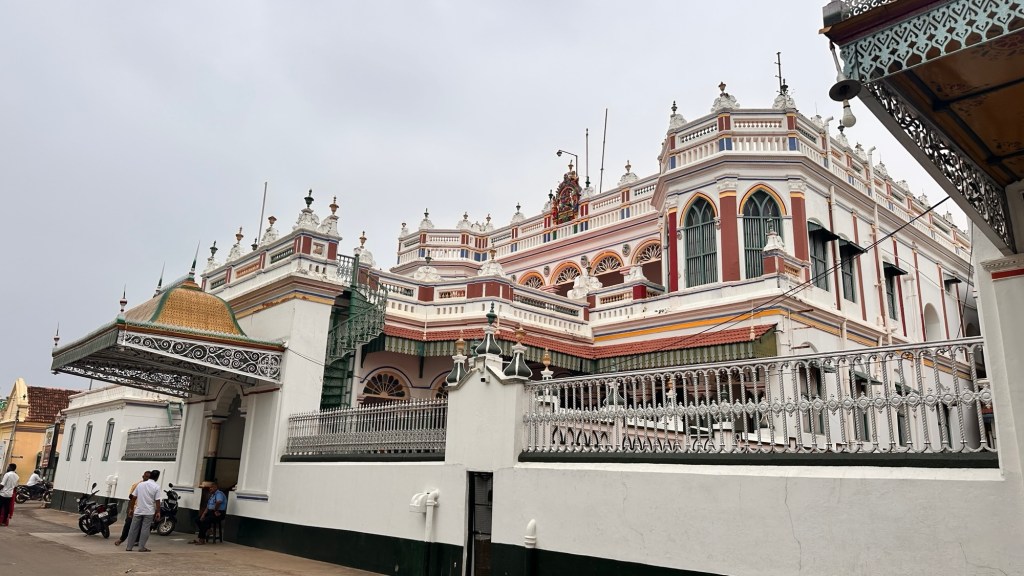
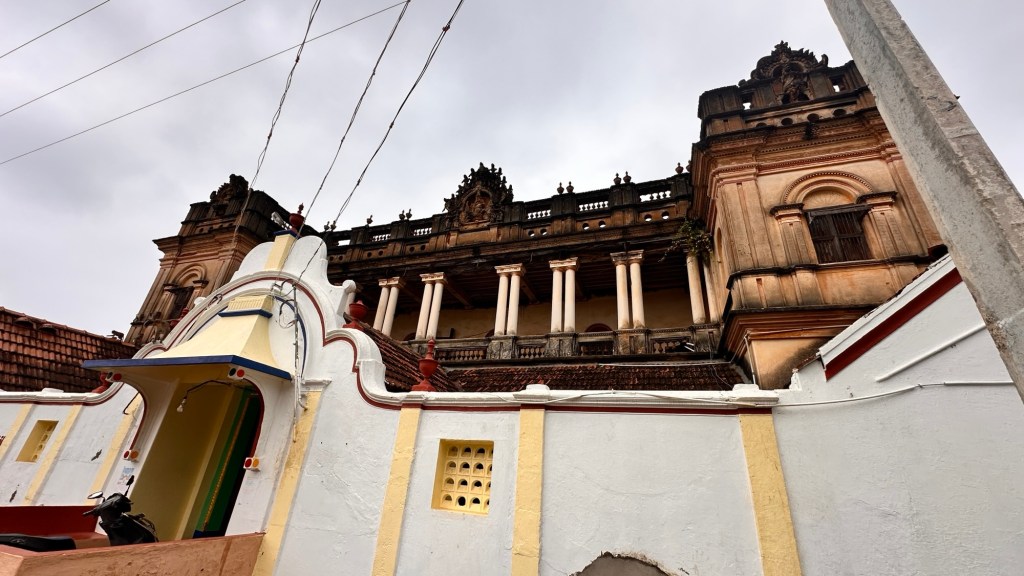
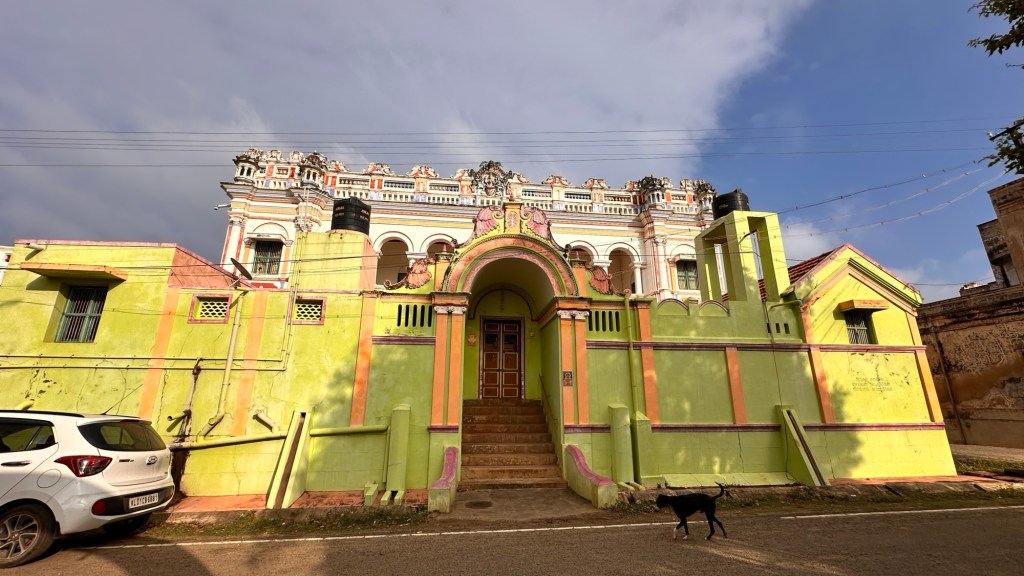
Chettinad is rich in cultural heritage, art and architecture, and is well known for its 18th century mansions, embellished with marble and Burma teak, wide courtyards, and spacious rooms. The Chettiar mansions, as they are known, were built by the Chettiars, a wealthy Hindu banking and trade clan, between 1850 and 1950 as their ancestral homes. While these buildings originally housed multiple generations, many of them now sit empty for most of the year, only used for large family gatherings. The mansions were meant to showcase the Chettiars’ wealth, much of which had been accummulated overseas. As a result, the mansions are decorated with chandeliers made of Murano glass from Venice, clocks from Switzerland and tiles from England. We walked around the village, visiting the RK Mansion. Raja’s Palace is supposed to be spectacular, but was closed to visitors.

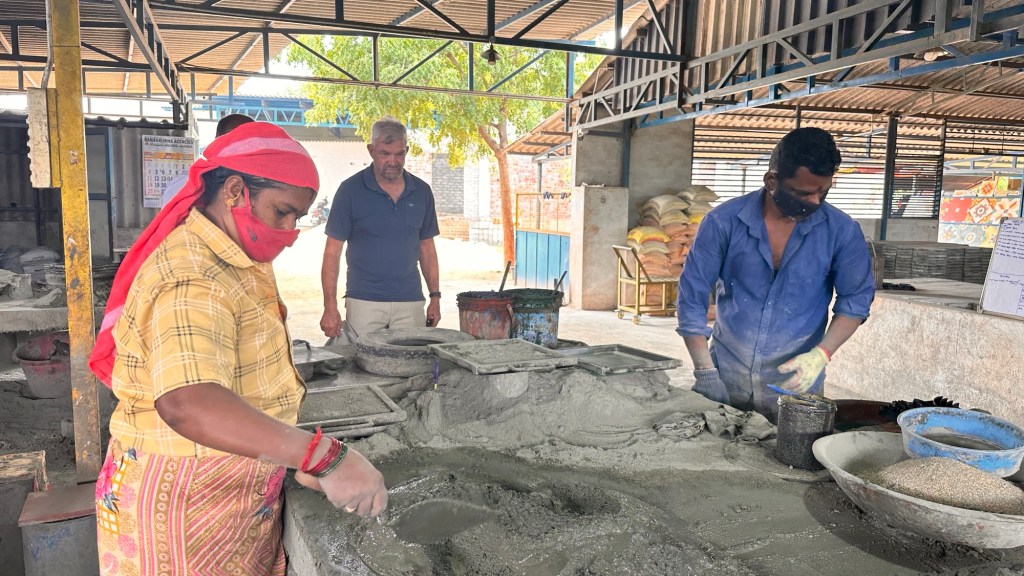
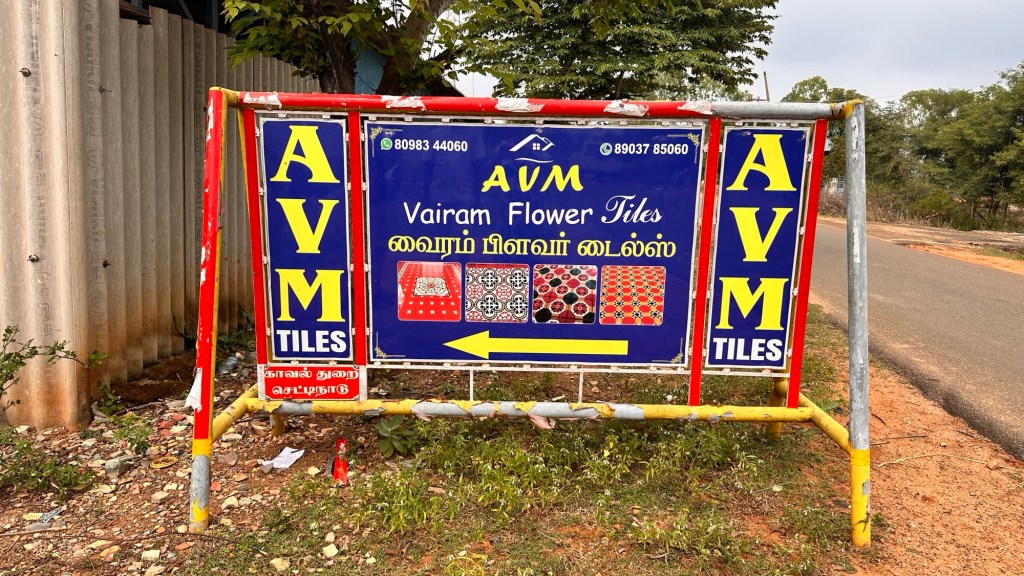
Pradeep took us to one of the many tile factories. The tiles are hand made using cement and are 2 cms thick. The process was fascinating to watch.
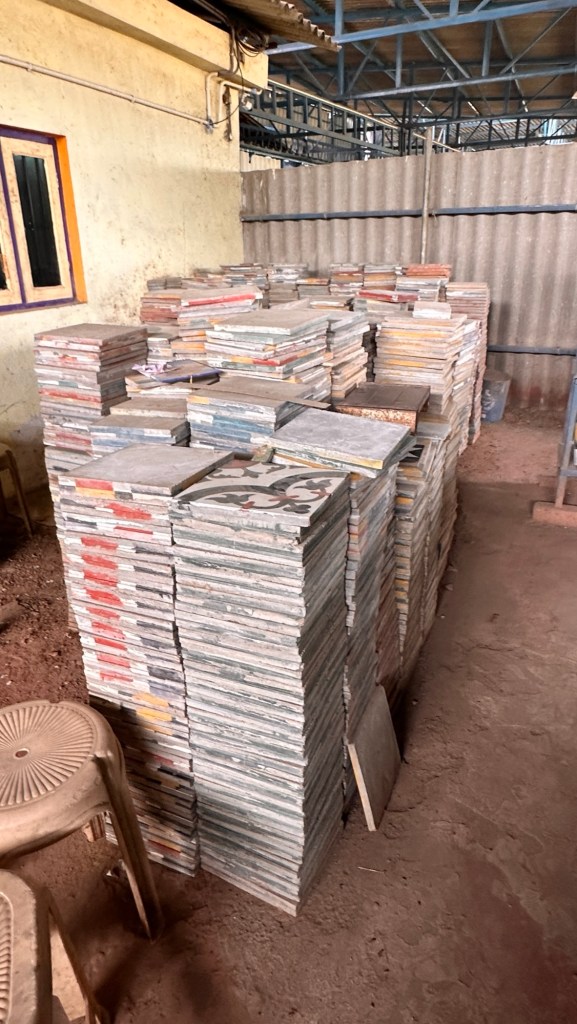
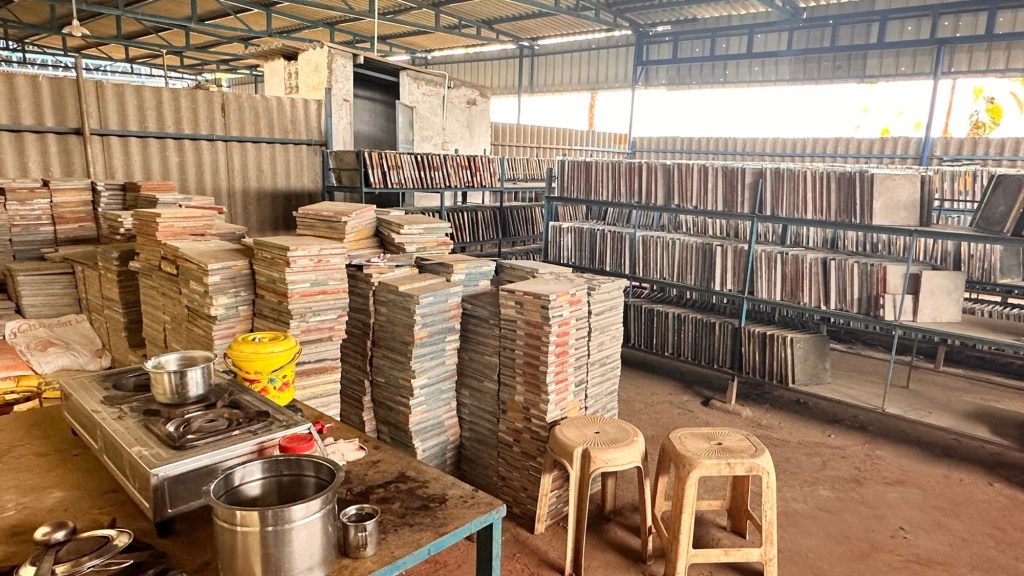
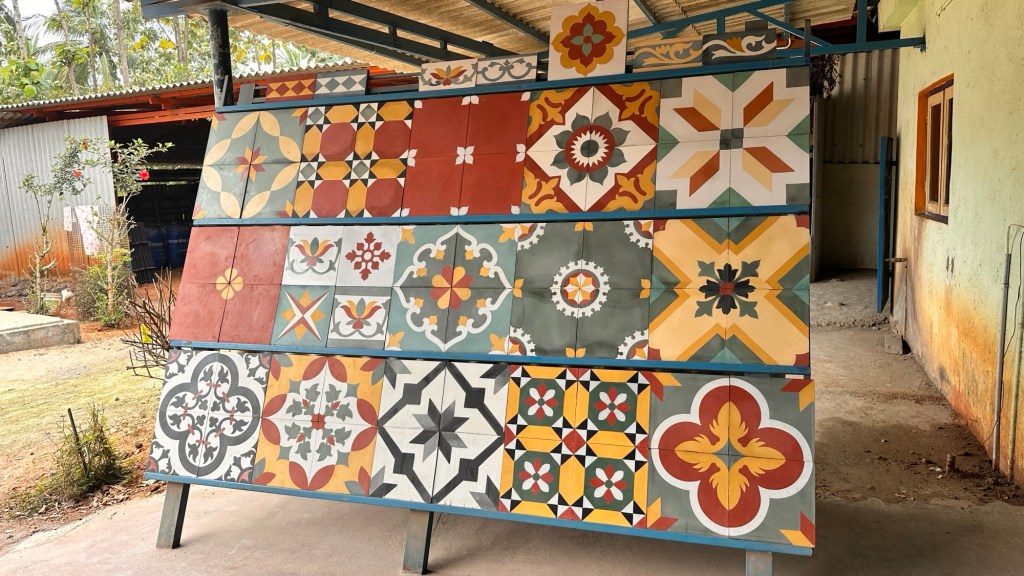
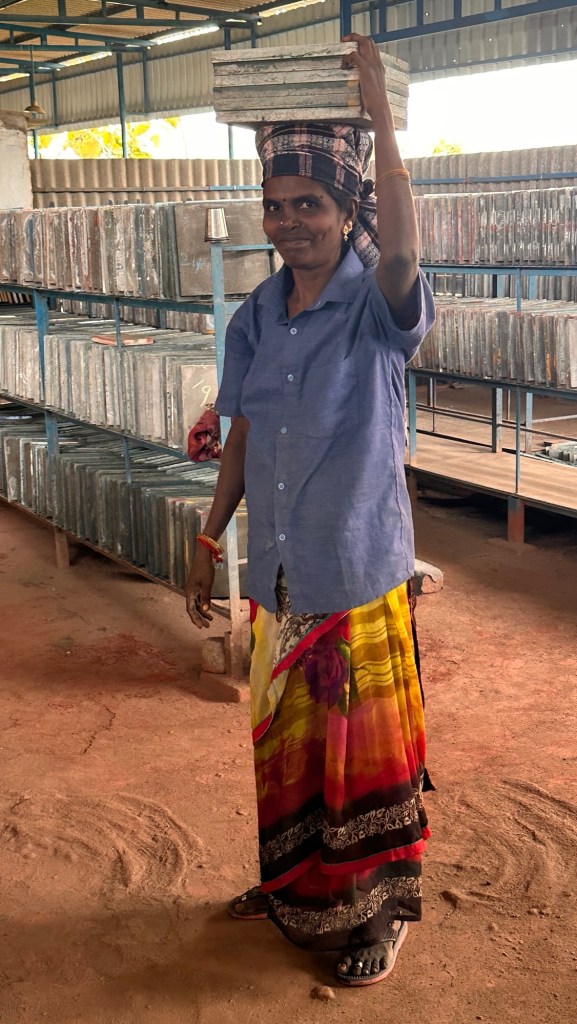
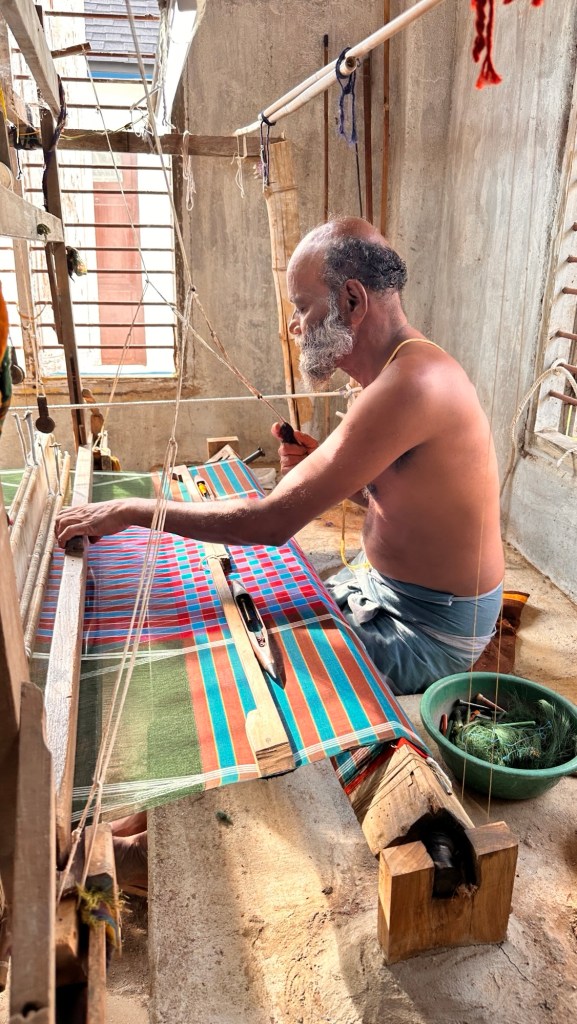
There are also several cotton weaving factories in the village. The fabric is woven manually on looms. The fabrics are cut into 6.5 metre lengths – for saris. I did buy two pieces, more fabric than I needed , but for $2 metre for cotton, and $3 metre for cotton/silk, I’m happy to give it a go when I get home. The cotton is much stiffer than we are used to, but I was assured it would soften when I wash it.

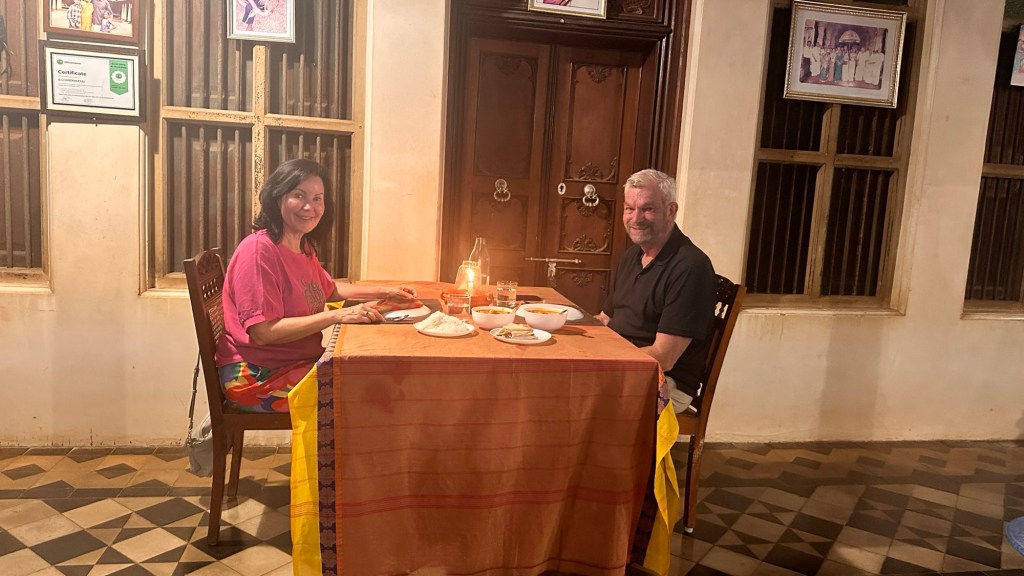
In the evening we enjoyed a candlelight Chettinad cuisine dinner. Chettinad is a cuisine from the Chettinad region of Tamil Nadu and considered as one of the spiciest and aromatic cuisines of Indian owing to the extensive usage of freshly ground whole spices. Star anise and Kalpasi (Black stone flower/ kala patthar phool) are the spices included in many recipes which provide a distinct aroma to the Chettinad food. We had chicken curry, an egg curry, fried cauliflower and rice, followed by carrot and beetroot halva for dessert, served warm. All very nice. No alcohol available for the past two nights – lucky we had our secret stash we bought in Pondicherry!
Day 21
Monday 26th January – Australia Day
Chettinad – Madurai
21 -28 degrees
It was our Australia Day today, but it was also India’s Republic Day as well. Many people heading to the temples to celebrate. One positive, the roads were not so busy… so we were told!
It was a two hour drive to Madurai, the second largest city of Tamil Nadu. Known as the temple town of India, and situated on the banks of the River Vaigai, is believed to be more than 2500 years old. Culturally rich with ancient traditions, historical significance and natural beauty, Madurai is the city that represents the spirit of Tamil Nadu. Madurai was a centre of learning and pilgrimage for centuries.
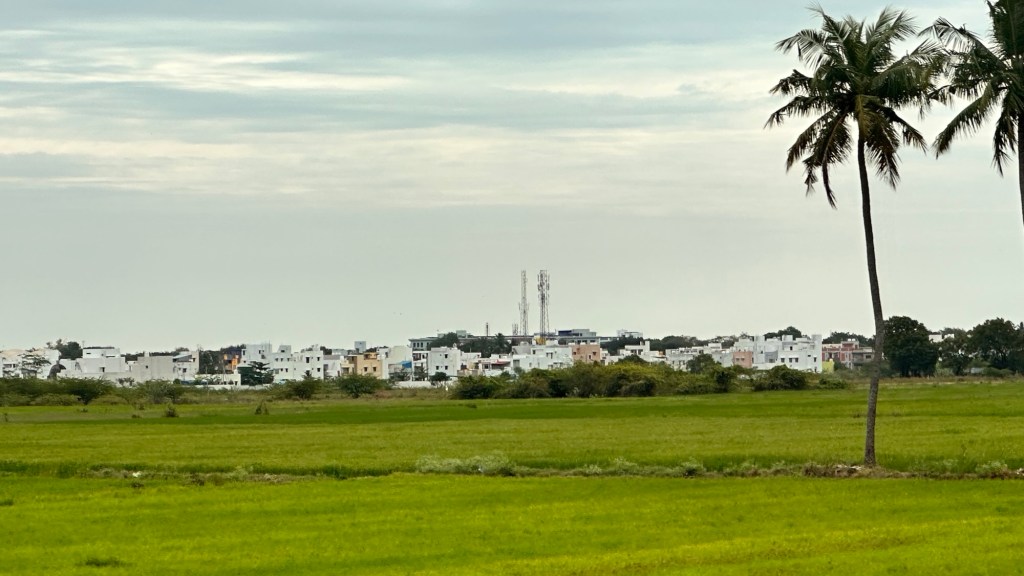
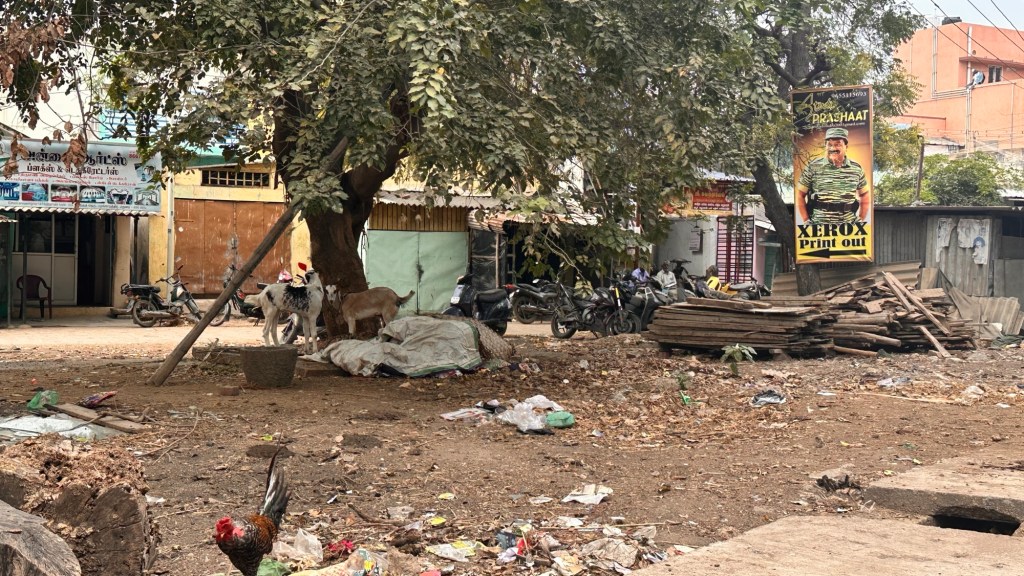
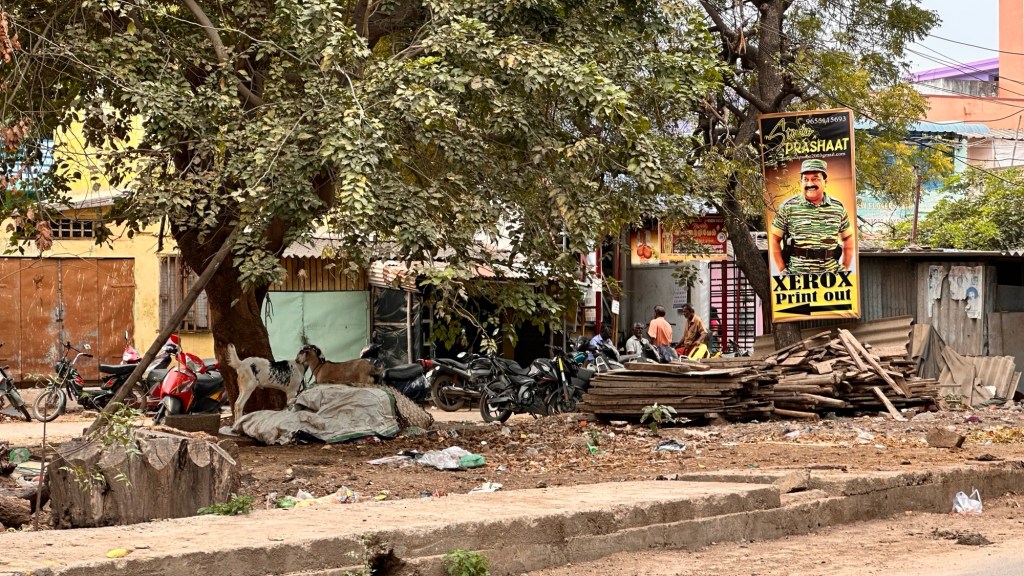
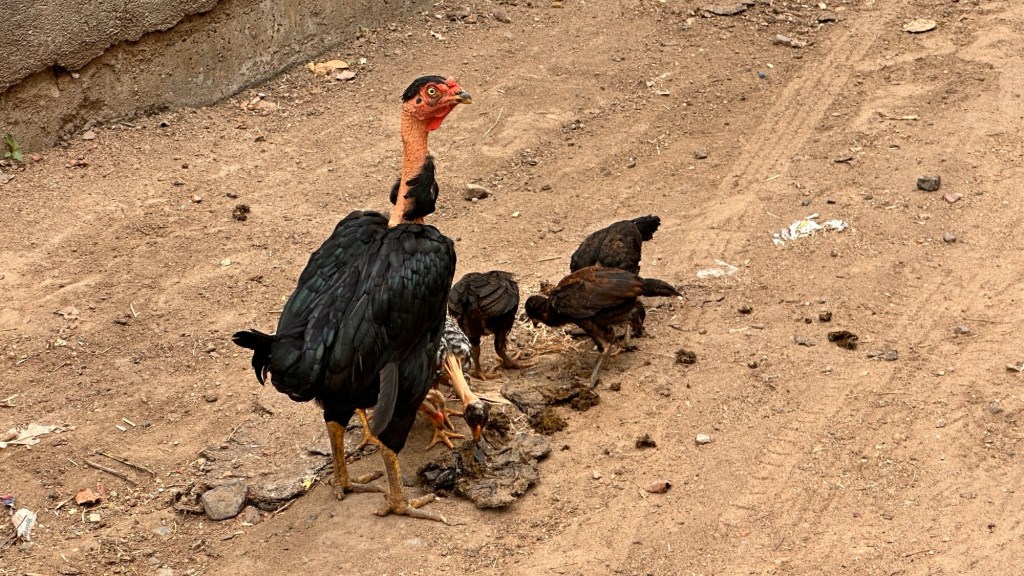
We checked into the GRT Regency Hotel and, feeling adventurous, headed out for a short wander around the neighbourhood. It didn’t take long to realise this was no gentle stroll — the streets were dusty, gritty and a snapshot of very basic living. We zig-zagged our way past cows and cow poo, chooks, dogs, tuk tuks, motorbikes, cars and the occasional bus thundering through it all. The air was thick with unfamiliar smells and the soundtrack was a constant chorus of horns and voices. Slightly overwhelmed but thoroughly enlightened, we beat a retreat back to the calm and cleanliness of the hotel.
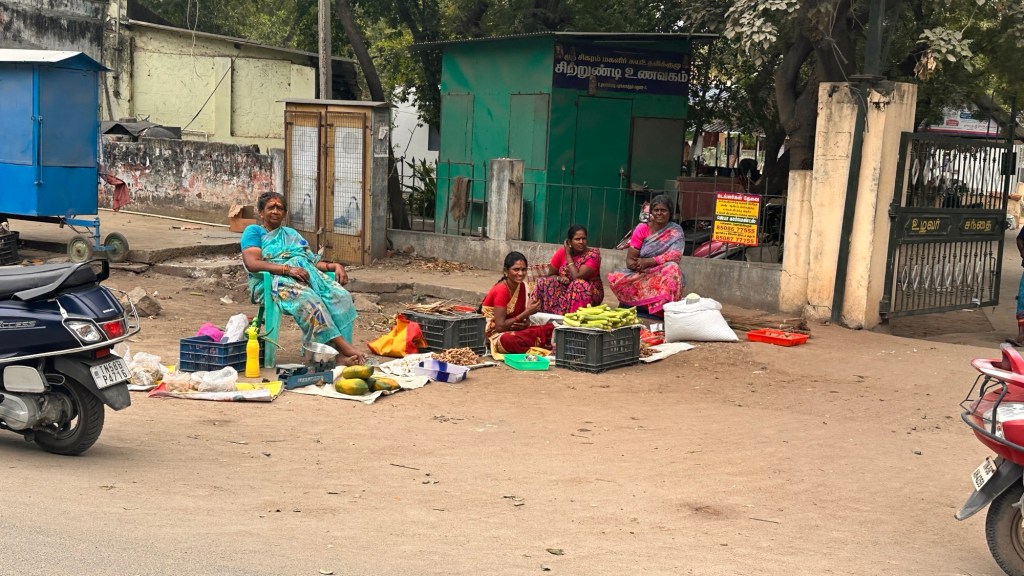
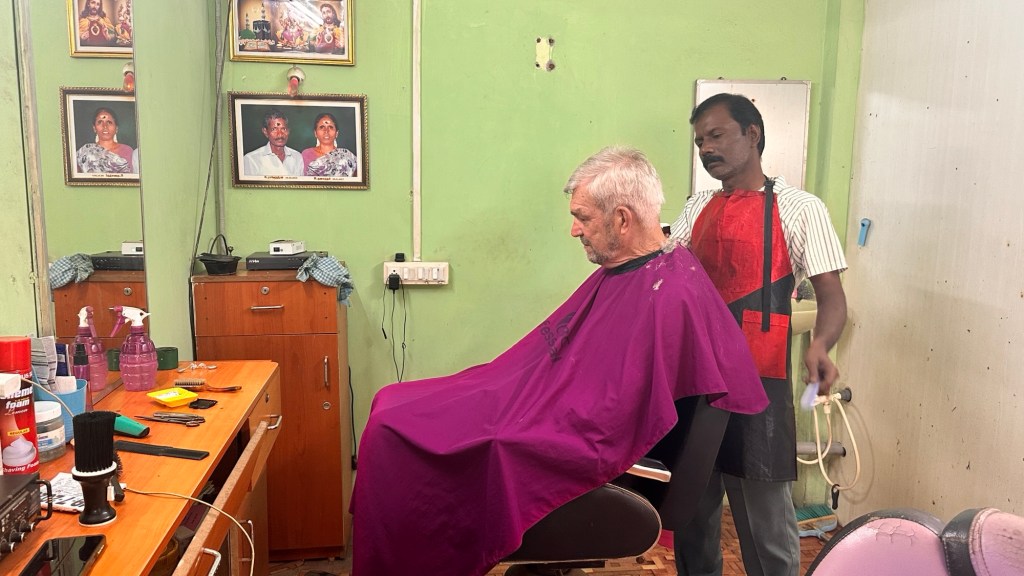
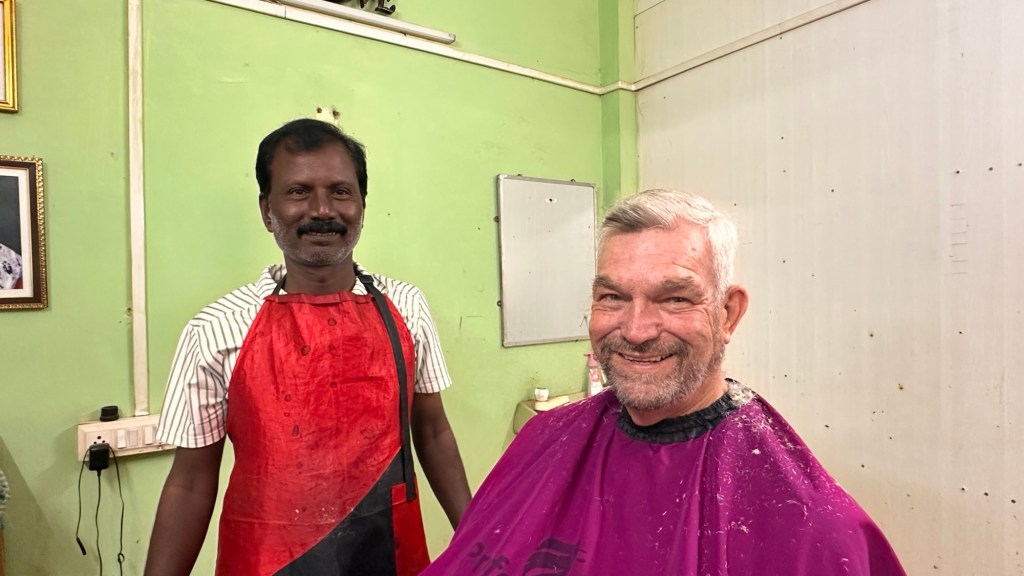
We did spot a barber along the way and, as Frank was overdue for a haircut, he decided to give it a go. With a bit of creative hand-gesturing and smiles, we successfully navigated the language barrier. Ten minutes later — and just 150 rupees (about $2.40!) — Frank emerged with a very respectable new haircut. Hands down, the cheapest haircut he’s ever had.
But wait… it nearly turned into the most expensive. Frank managed to leave his hearing aids behind 😳. Thankfully, he’d mentioned where we were staying, and the barber — absolute legend — turned up at our hotel with them before we’d even realised they were missing. Crisis averted, lesson almost learned, and faith in human kindness well and truly restored. How lovely was that!
In the afternoon we visited Thirumalai Palace. The power and wealth of the Nayakas is evident from the remains of this once-grand palace, built by Thirumalai Nayaka in 1635. The building, with its interesting Islamic influences, was partially restored in the 19th century by Lord Napier. It is remarkable for its audience hall whose dome rises to a height of 20 m without any kind of support. The courtyard is surrounded by massive circular pillars.
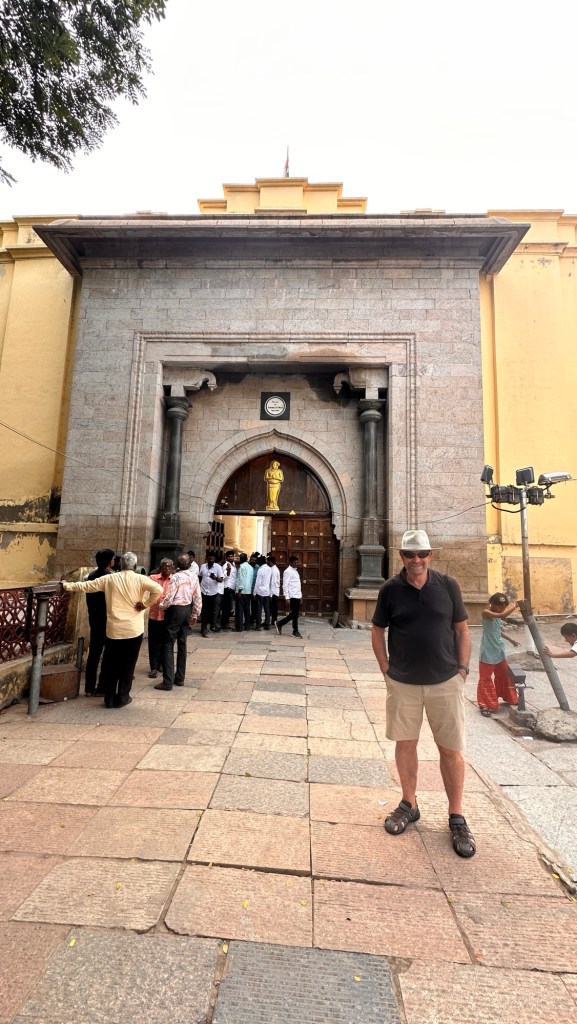
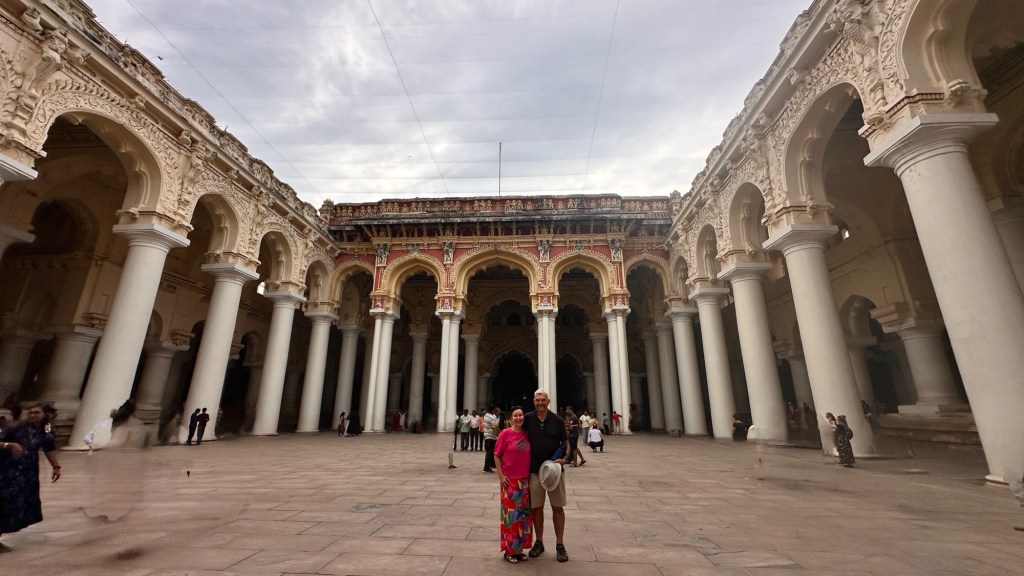
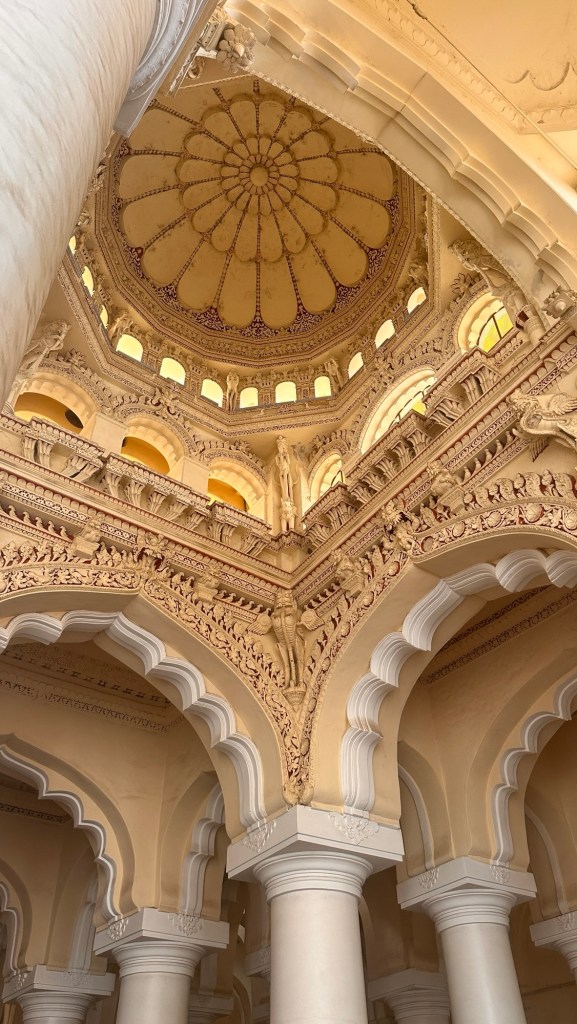
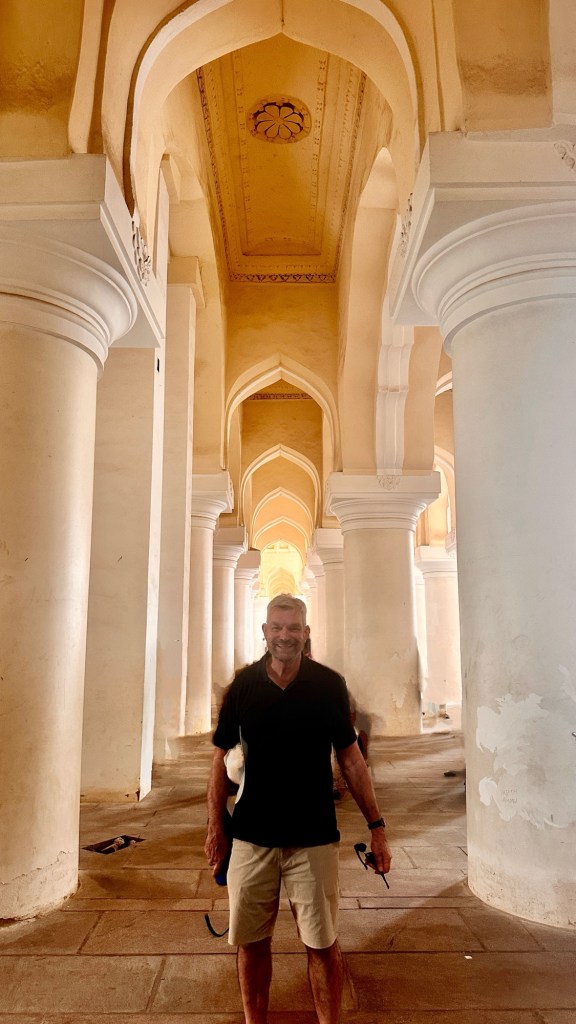
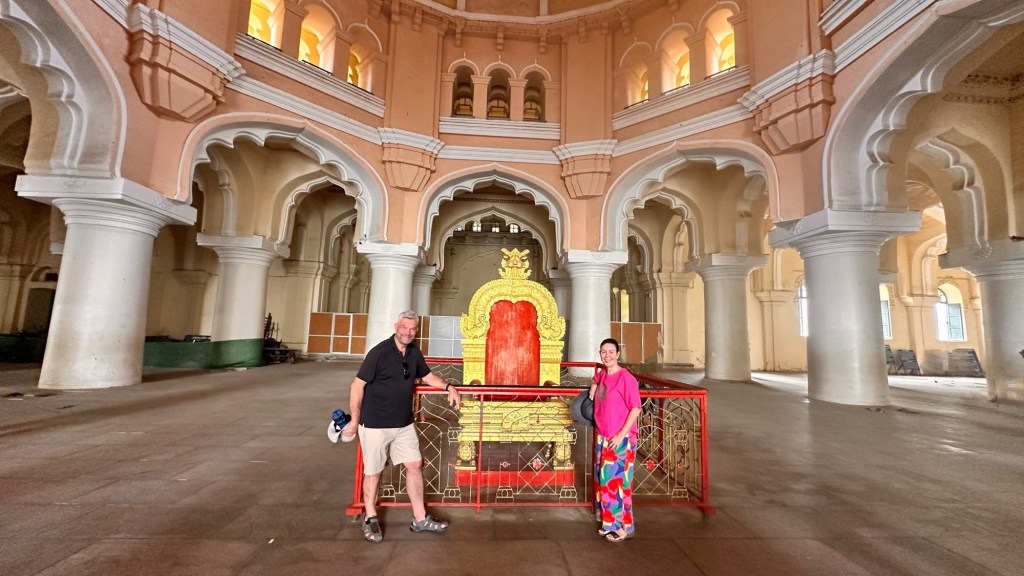

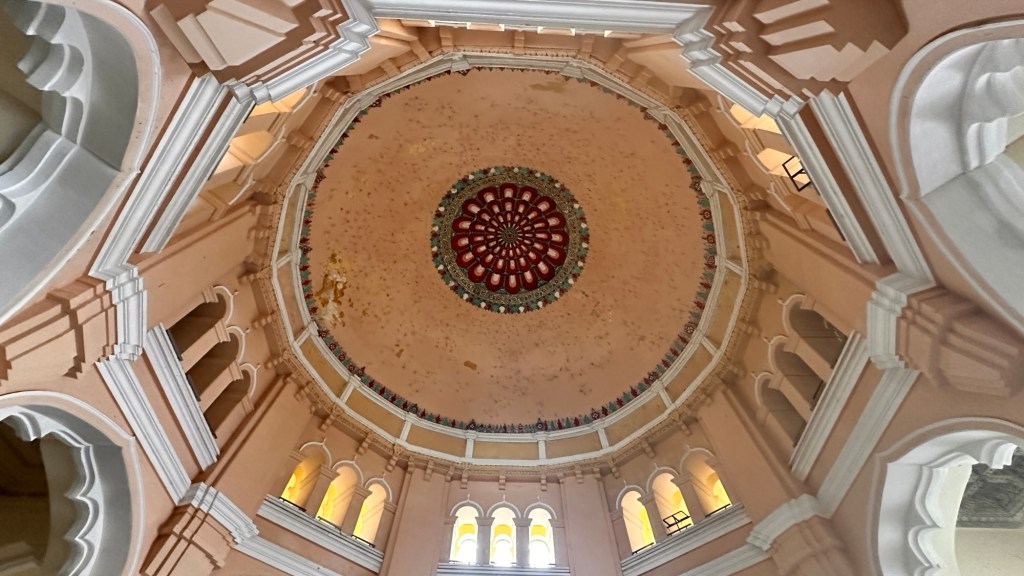
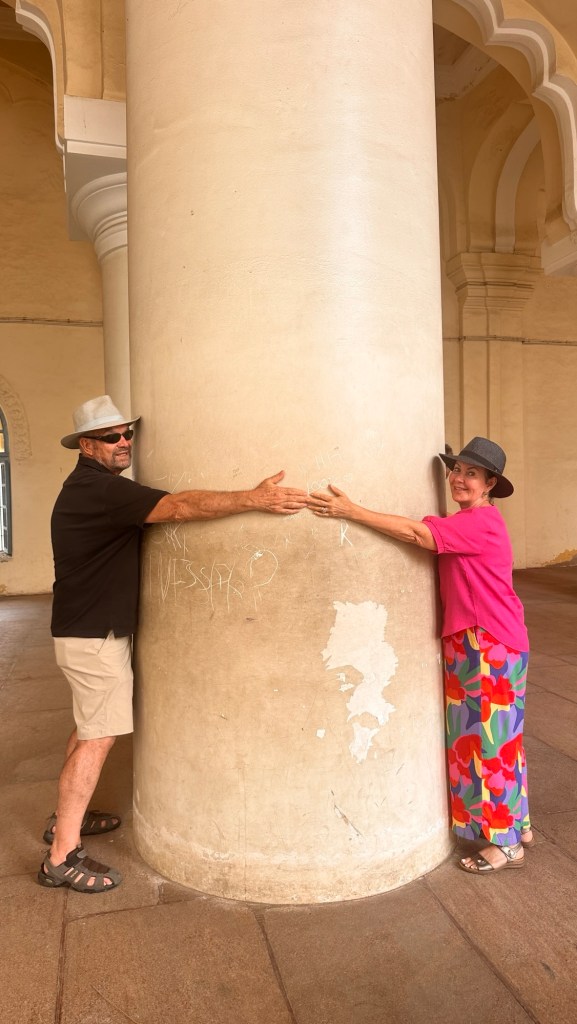
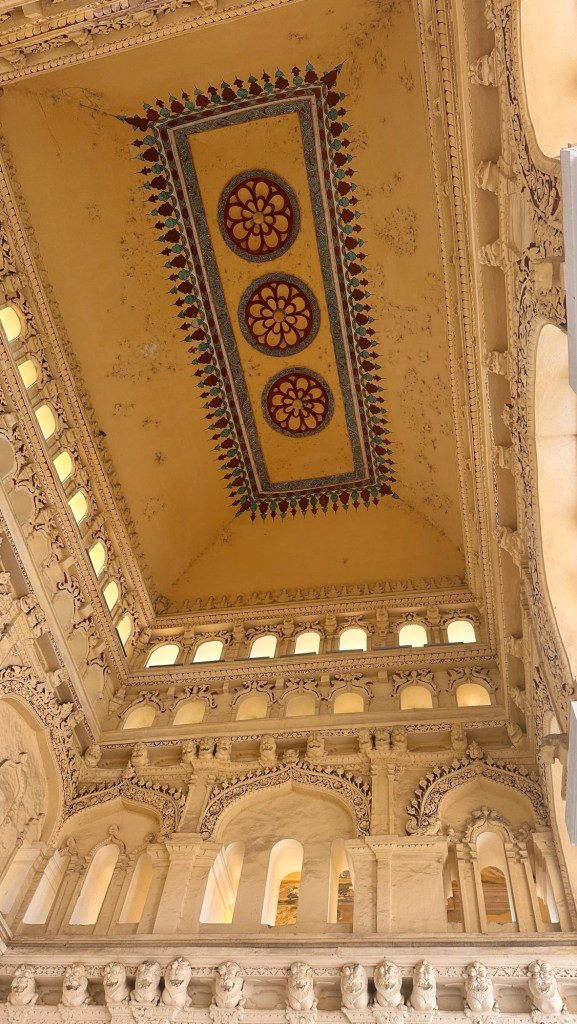
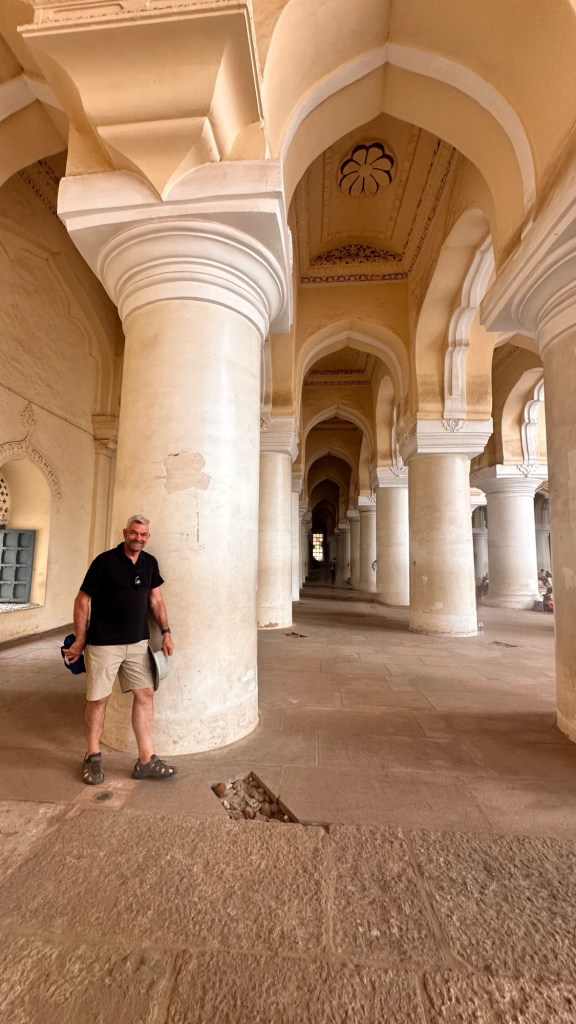
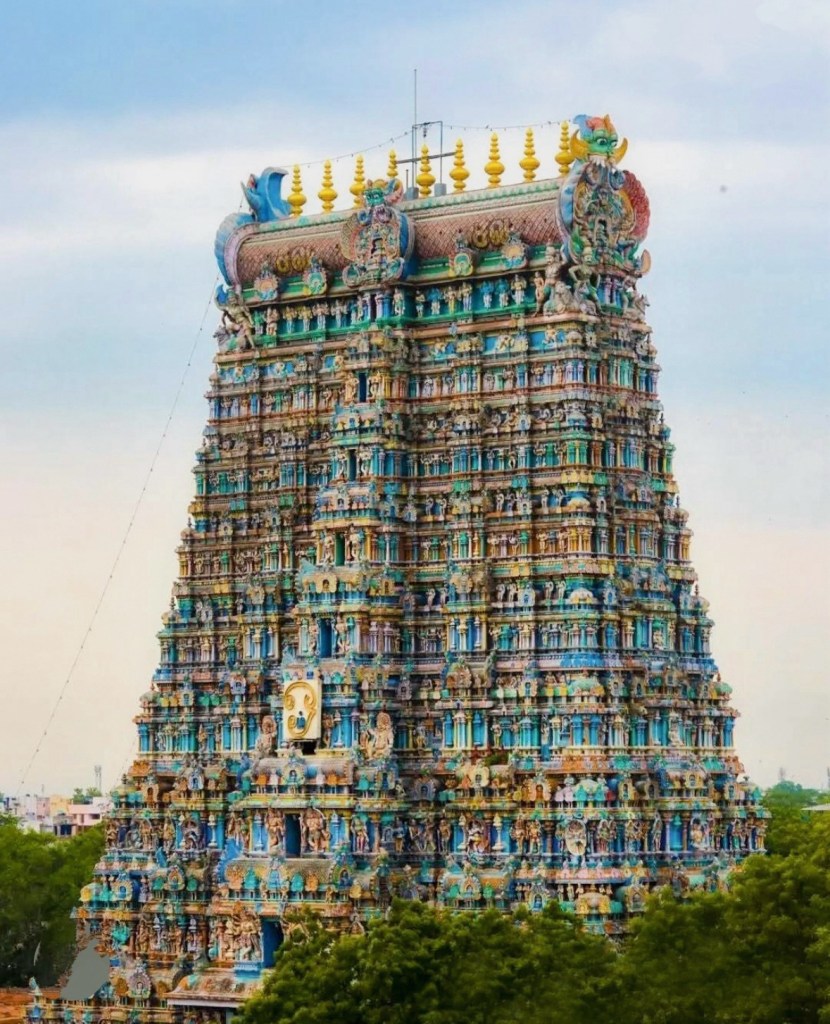
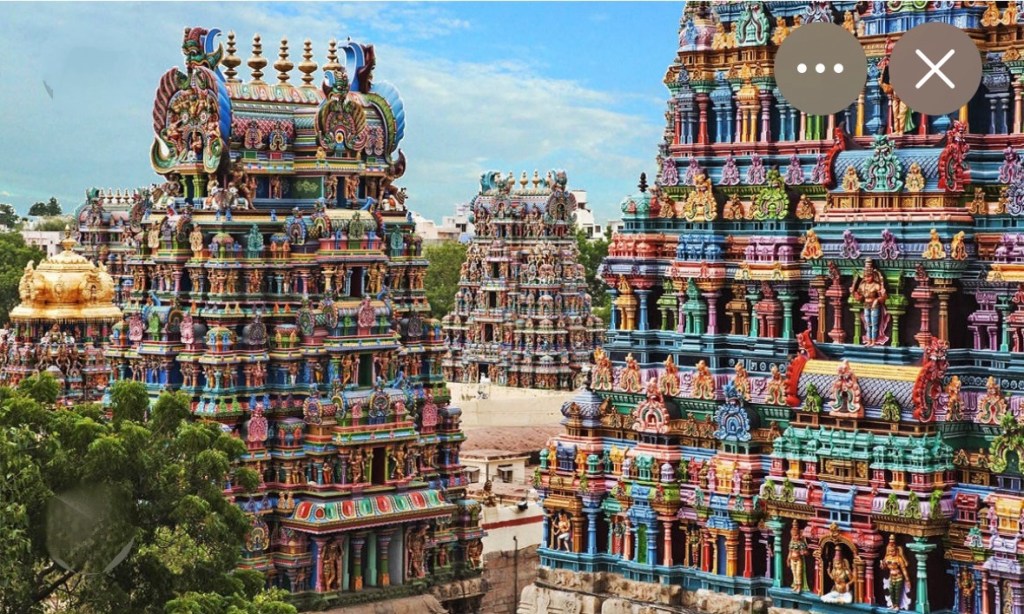
Close by was Meenakshi Temple. This enormous temple was first built by the Pandyas in the 7th century and extensively added to by successive dynasties. Especially impressive are its 14 soaring gopuras,covered with figures of deities, mythical animals and monsters painted in vivid colours. This temple complex is within a high-walled enclosure, at the core of which are two sanctums dedicated to Shiva, and his consort Parvati or Minakshi (“Fish-Eyed Goddess”). These are surrounded by a number of smaller shrines and grand pillared halls. The entire city is built around this temple. Unfortunately for us all 14 gopuras were being renovated and were covered in scaffolding. They do them all at once every 12 years. Ninety minutes of barefoot walking!
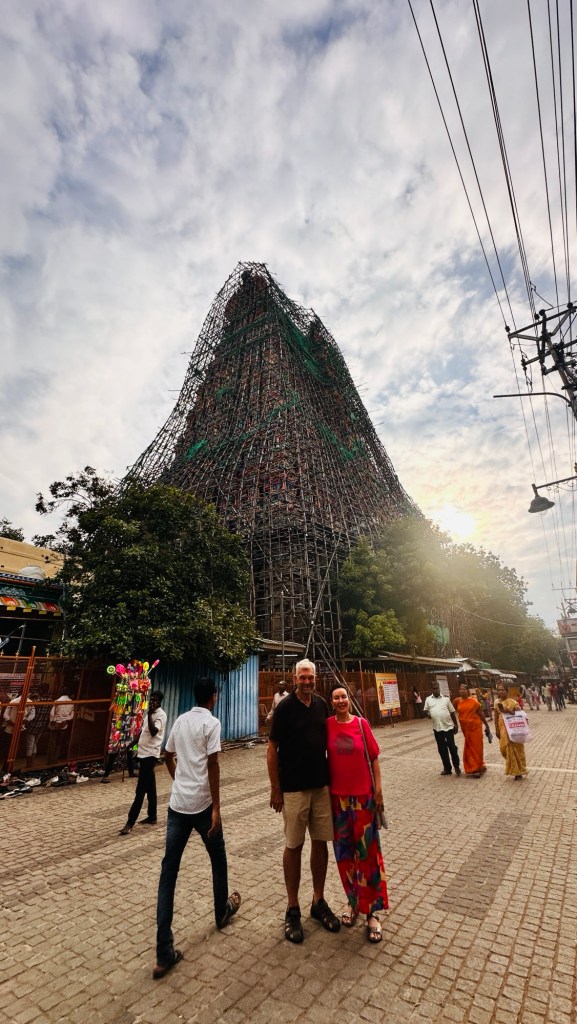
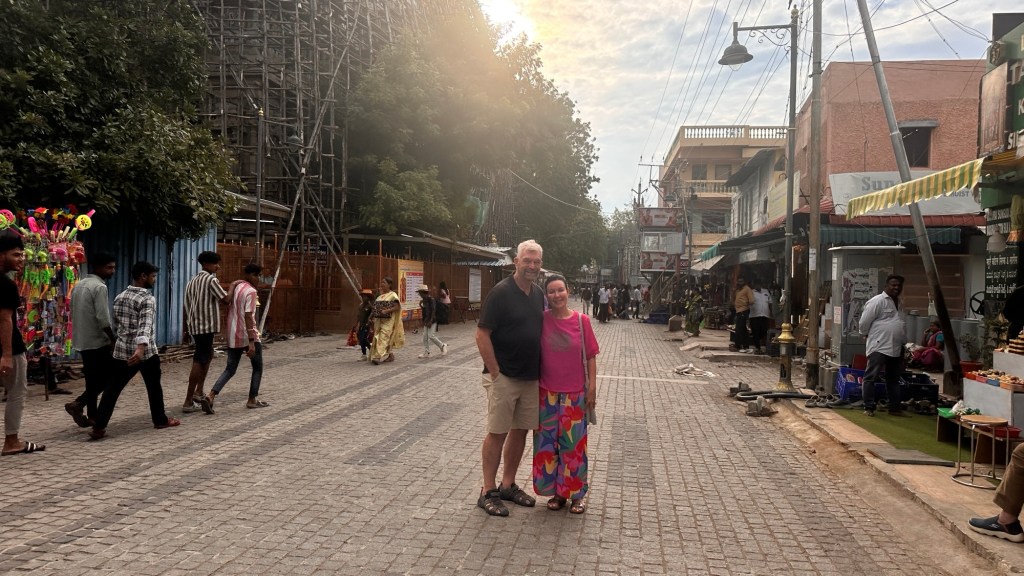
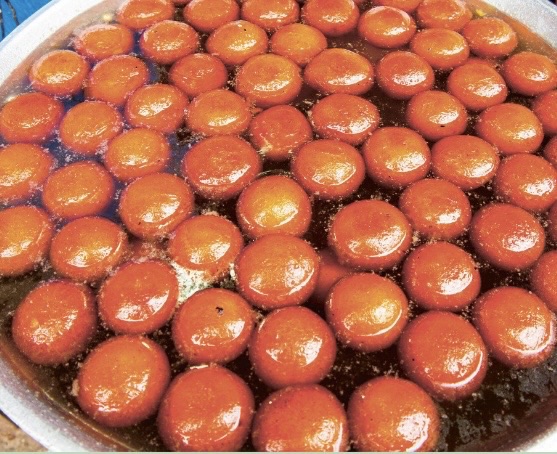
There was a special dinner at the hotel tonight for Republic Day, of which we partook – a buffet. No alcohol sold on Republic Day – a bit different to our Australia Day. One of the foods I tried was a Dosa – a traditional South Indian food. It is a pancake made with wheat flour, filled with spicy potato and served with different chutneys. Also a popular dessert – gulab jamun – which are in deep fried milk and flour balls flavoured with rosewater and cardamom. Both were yummy.

Day 22
Tuesday 27th January
Madurai – Munnar
21- 28 degrees
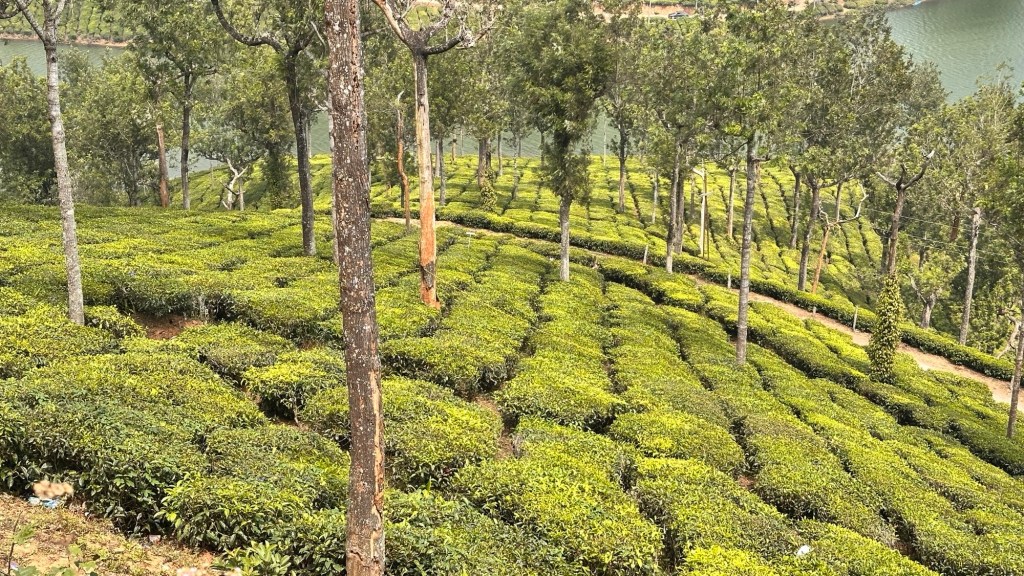
Today we farewell the state of Tamil Nadu and commence our journey through Kerala. It was a four drive to Munnar. An hour out of Munnar, we started climbing up the mountain – the scenery was just spectacular. Tea tree plantations were dotted across the hills. There was a dam near the top.
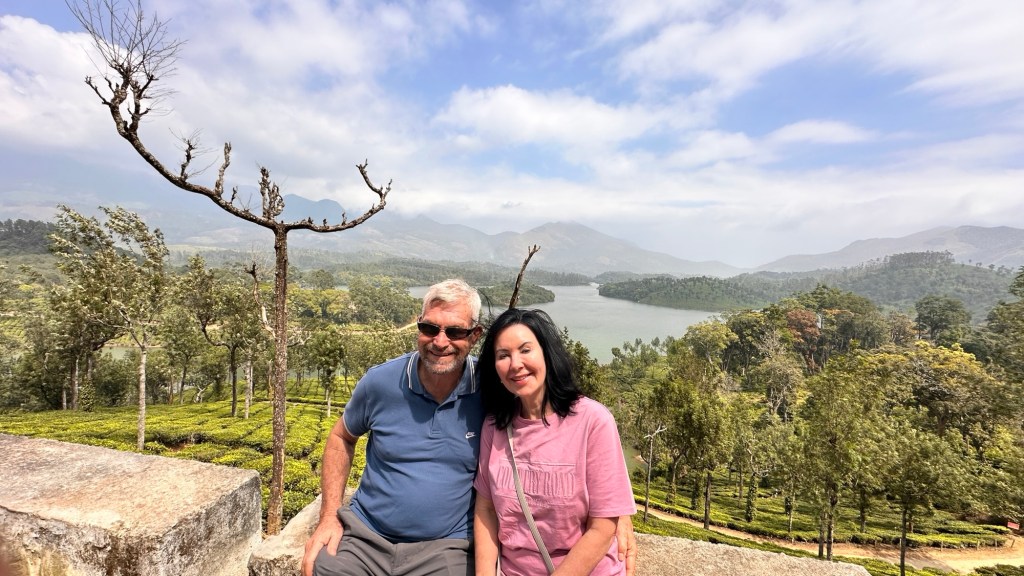
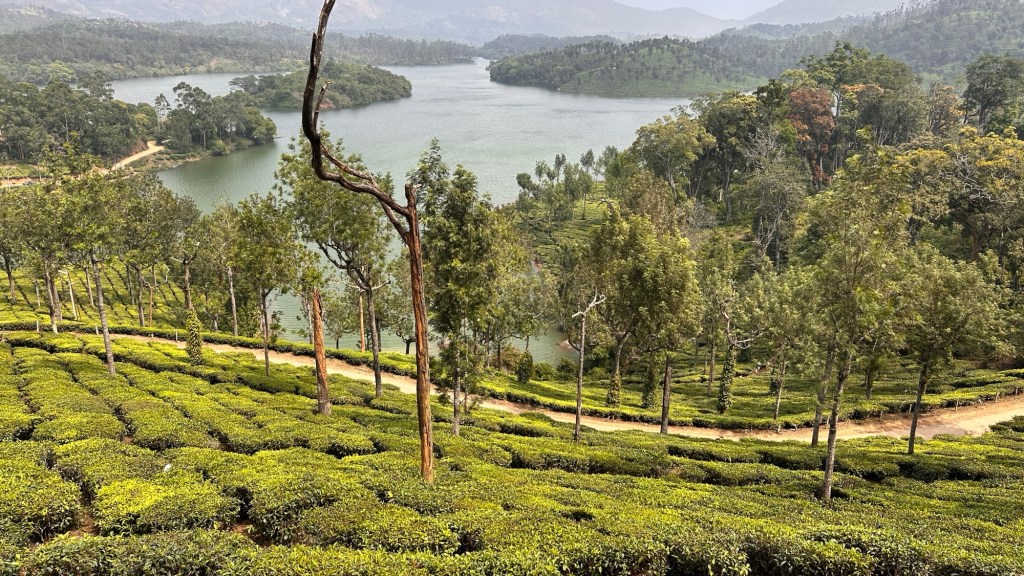


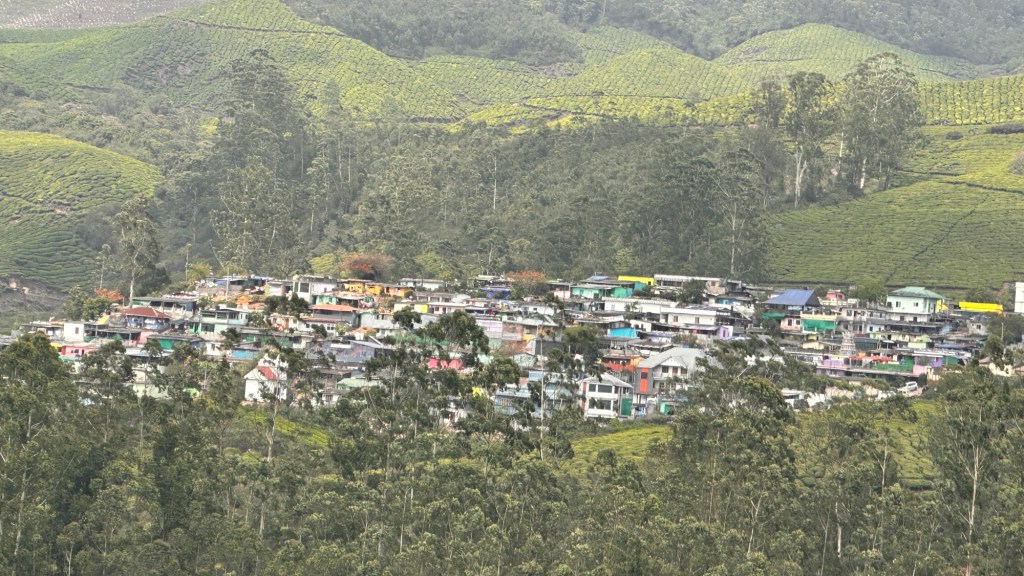
The picturesque little town of Munnar lies at a height of about 1,800 metres in a part of the Western Ghats that is known as the High Ranges. The town stands at a confluence of three mountain streams – Mudrapuzha, Nallathanni and Kundala. The three streams later join the Periyar river and finally the Arabian Sea.
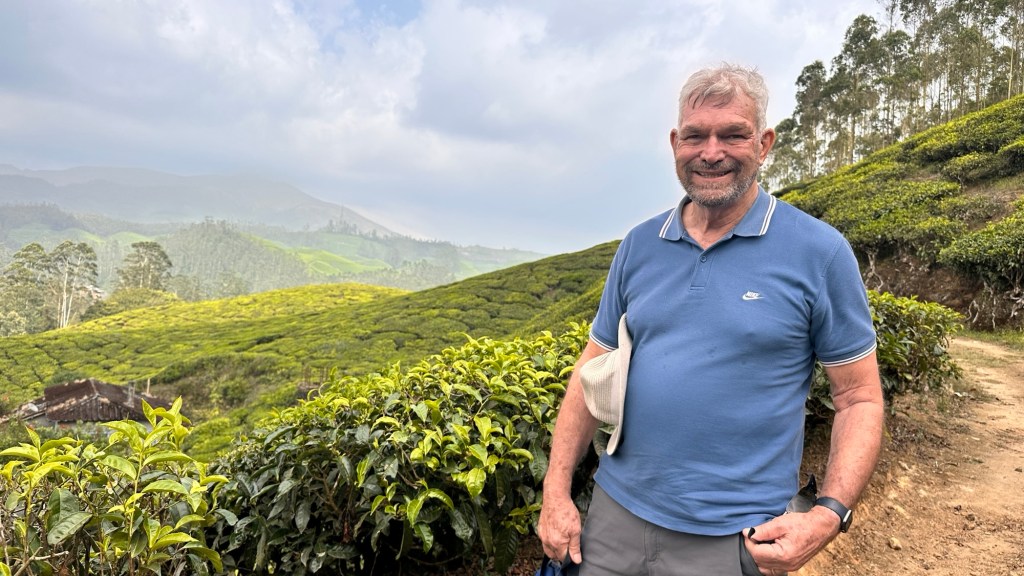
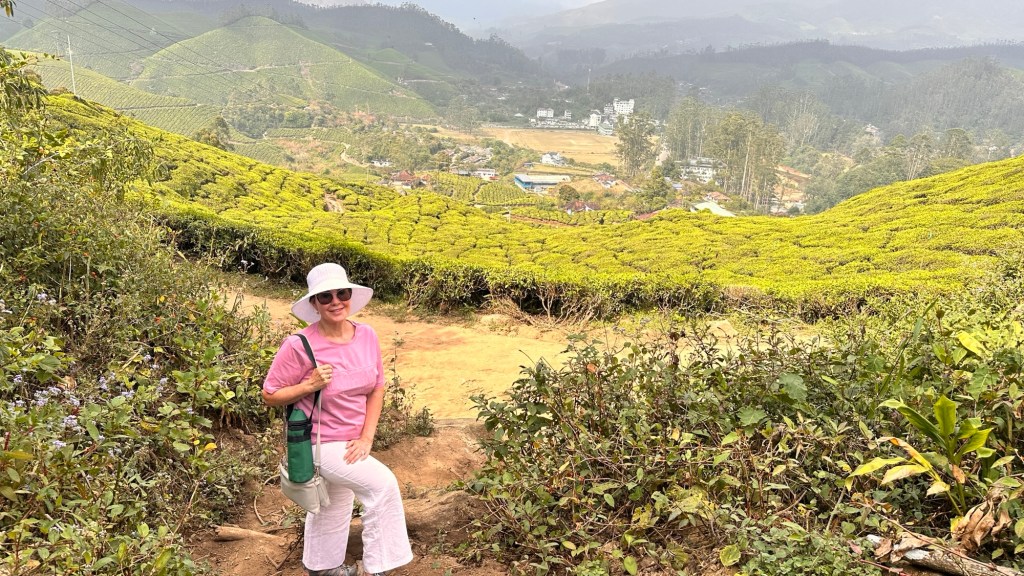
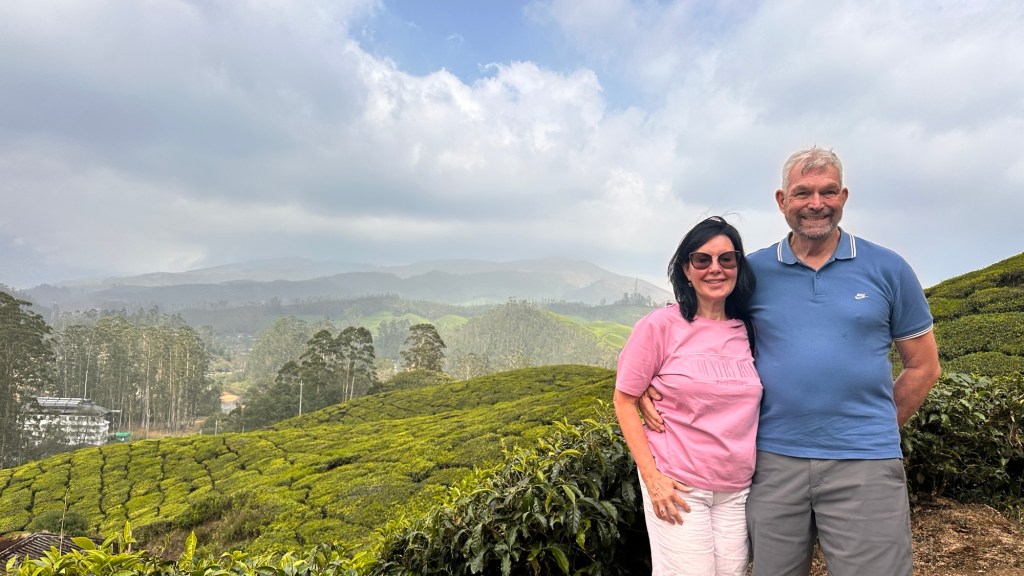
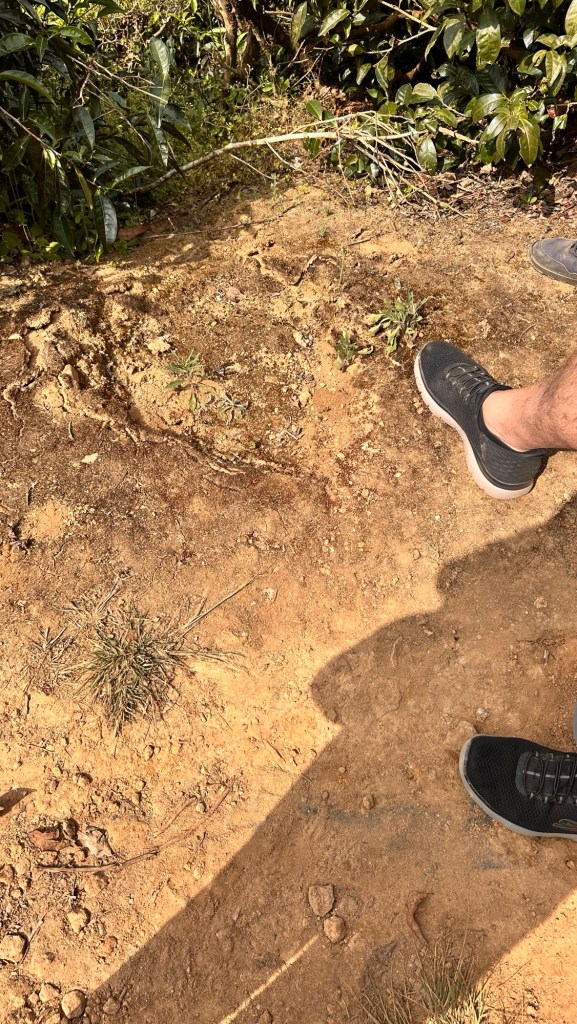
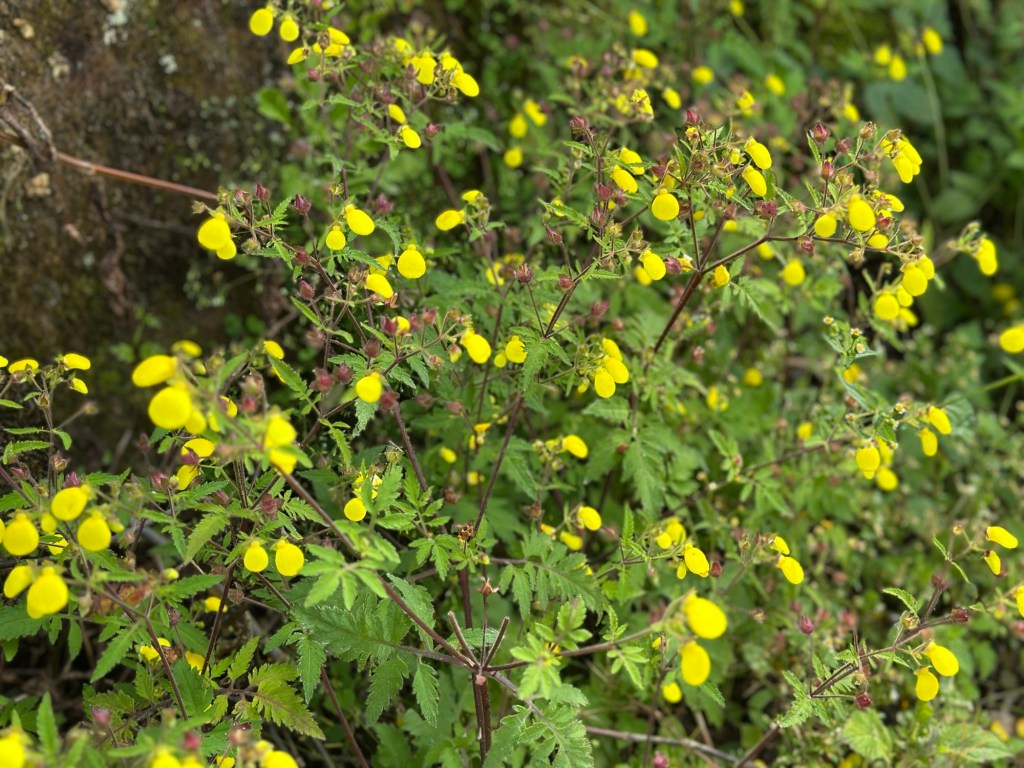
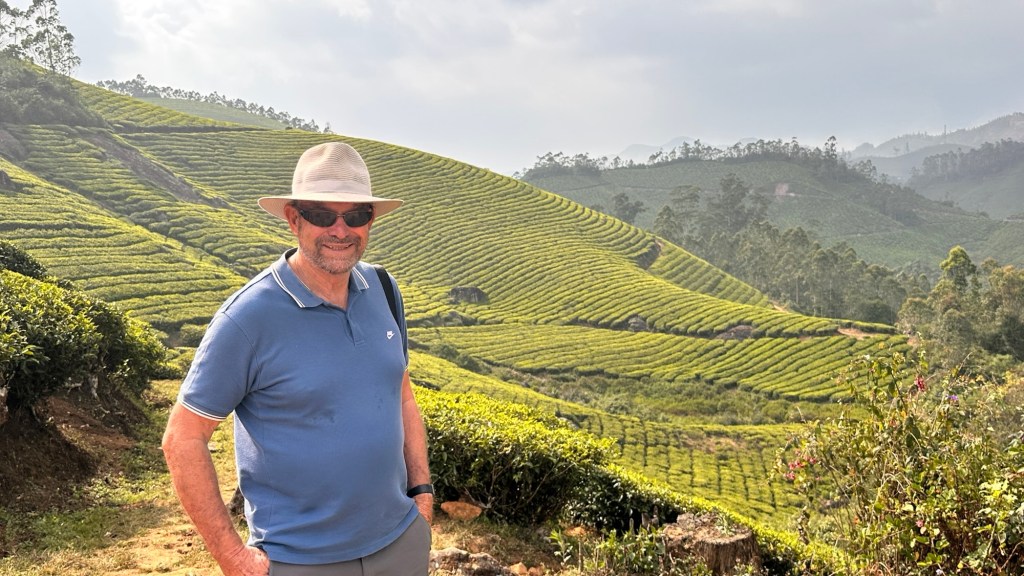
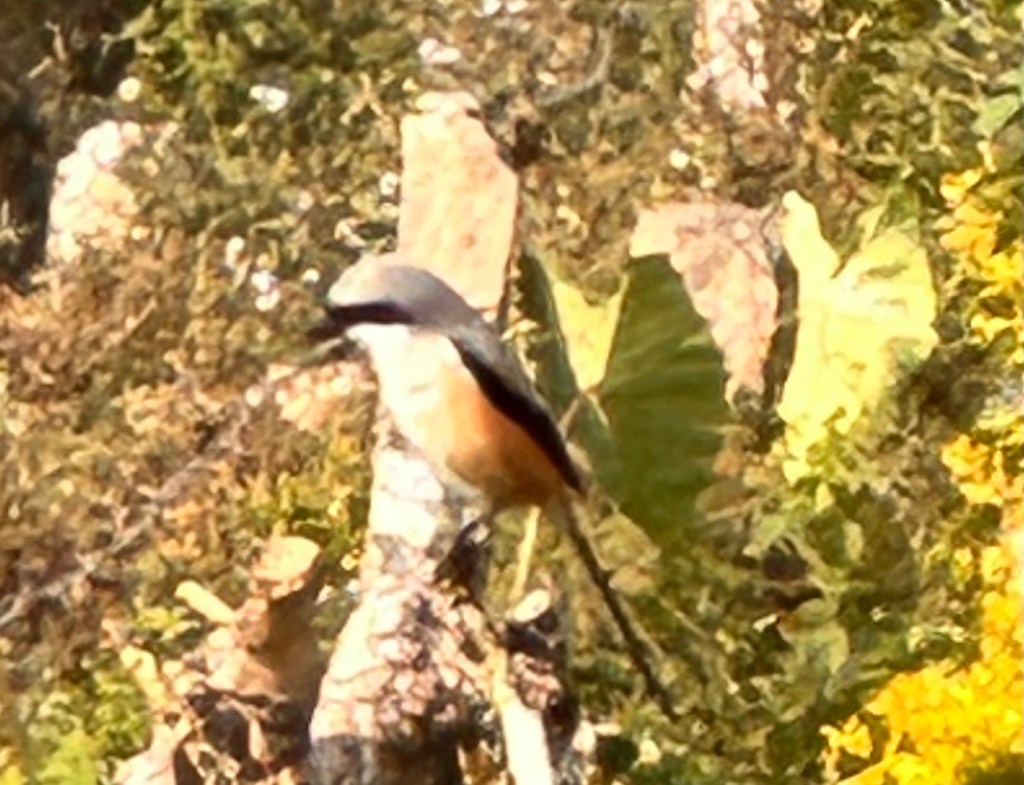
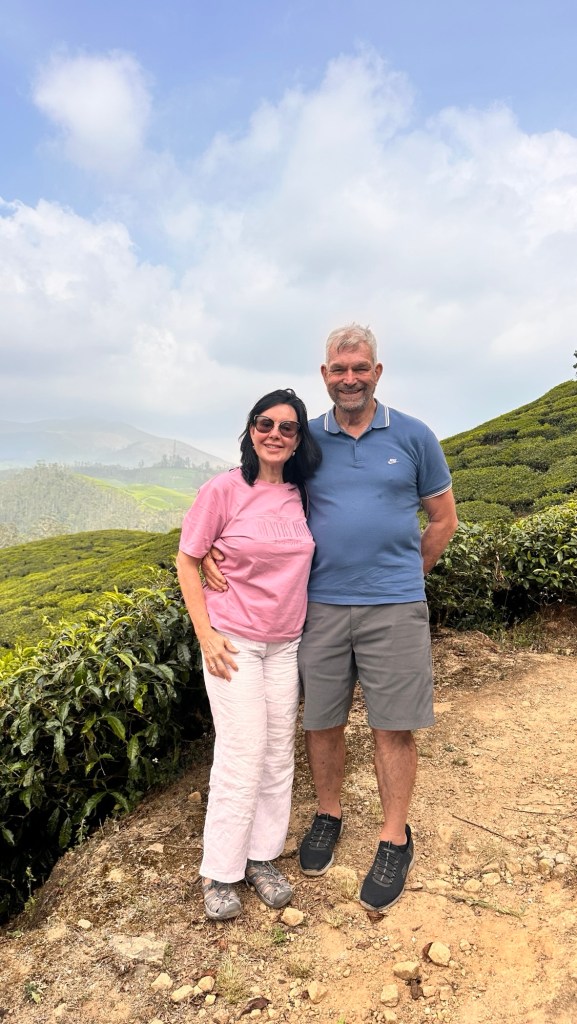
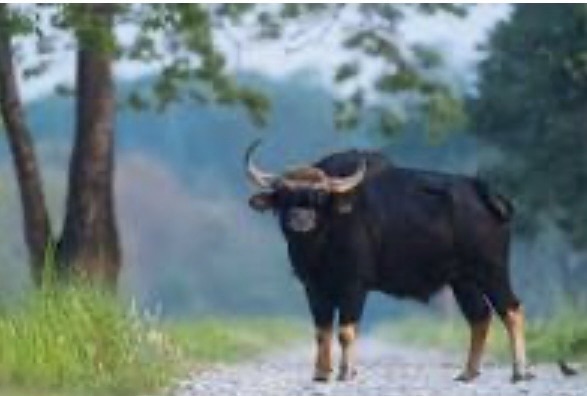
We were met by a guide, then proceeded to have an hour’s hike through a tea plantation. It was quite lovely walking through the tea trees, bird spotting, and identifying all the surrounding fauna. The plantations are set out a little differently to those in Sri Lanka- the main difference being they are not terraced. Apparently wild elephants and gaur Indian bison) roam this area. Luckily we didn’t come across either of them! We did see footprints of both though! ( photo of a gaur below)
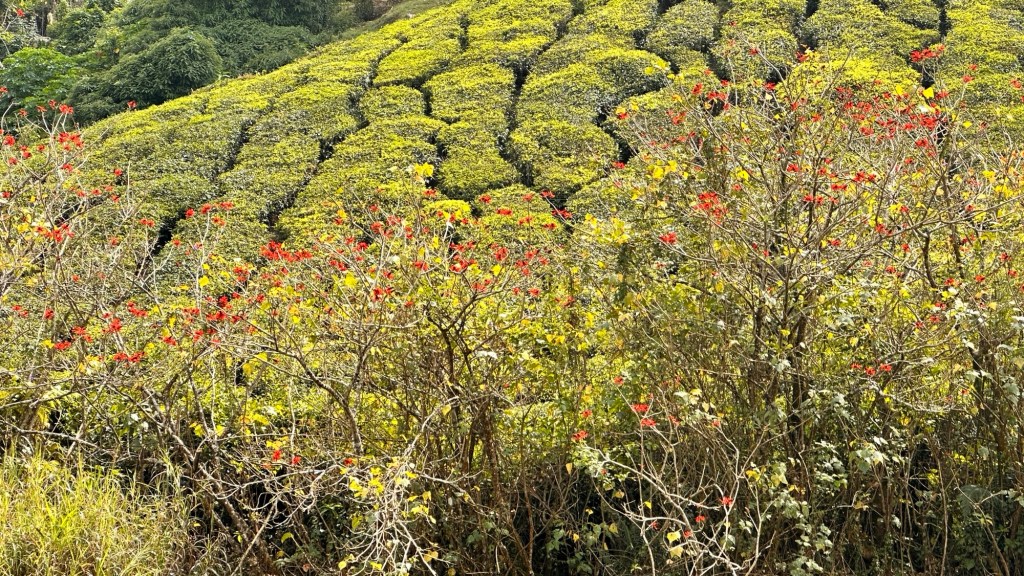
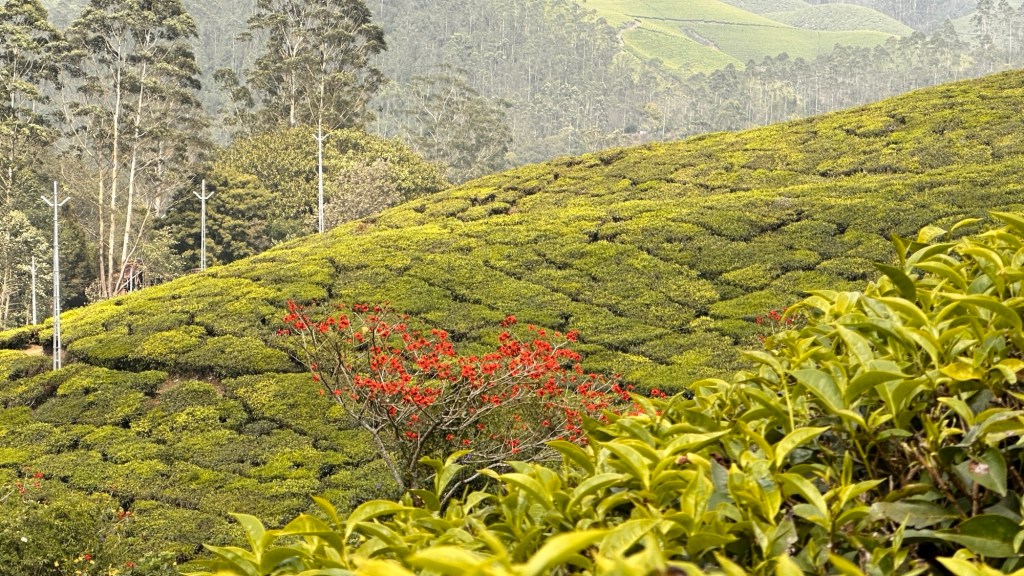

Next we visited the Tea Processing Factory and Museum. The most important plantation today belongs to Tata Tea, which oversees almost every local public facility. The processing here seemed more automated than what we saw in Sri Lanka. India commands a dominant position as the largest tea producer in the world. Our visit finished with a cup of Marsala tea.
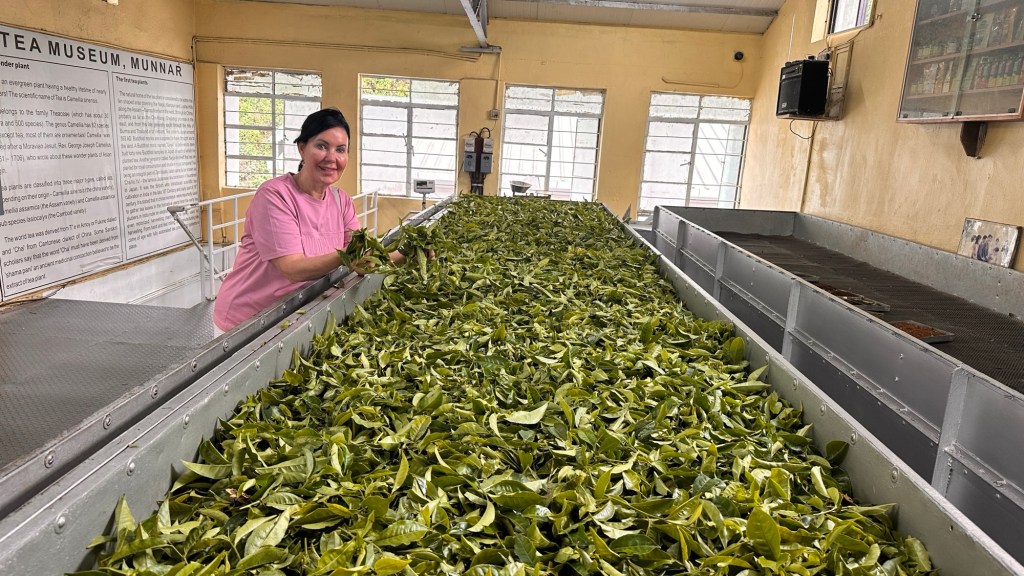
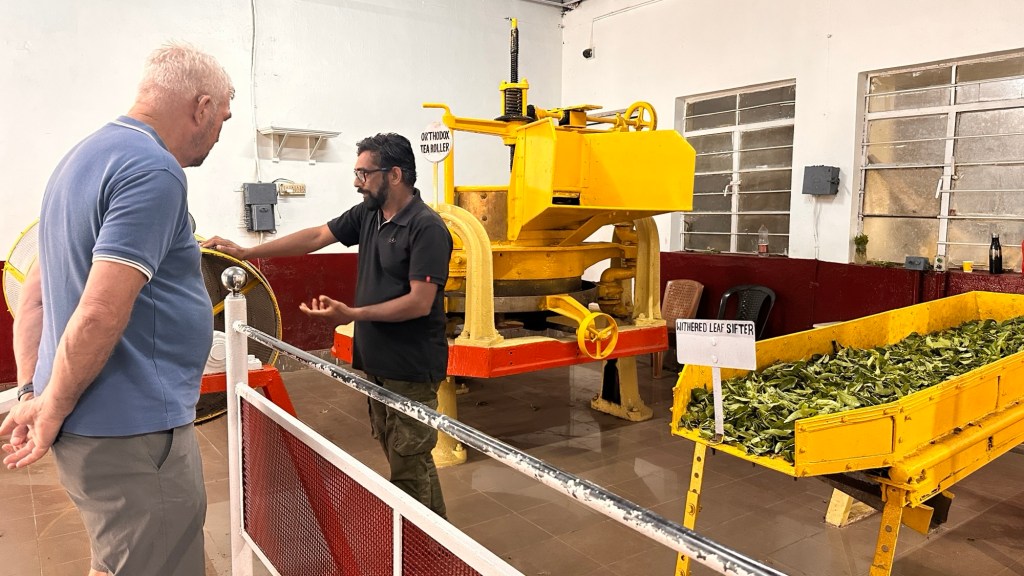
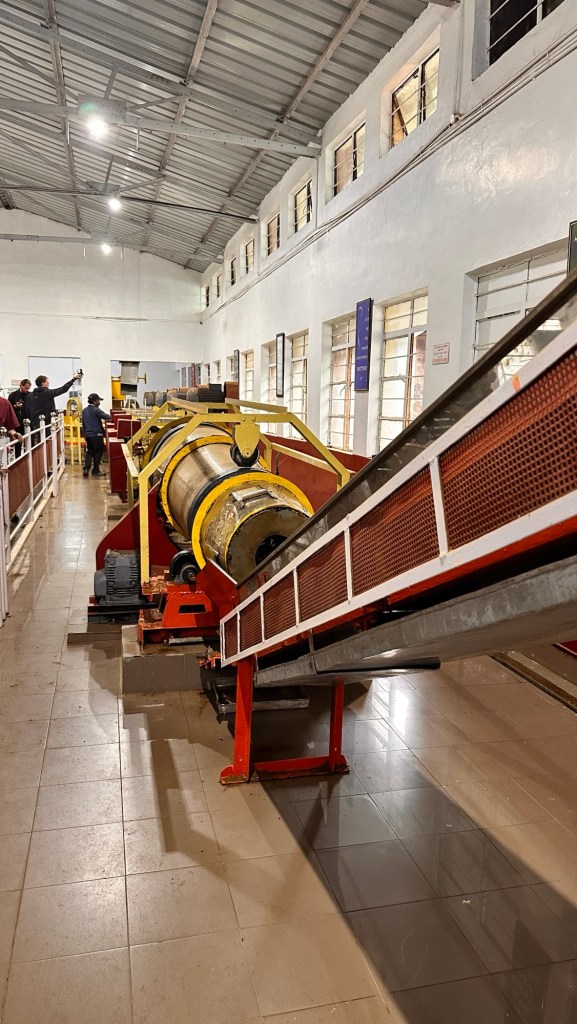
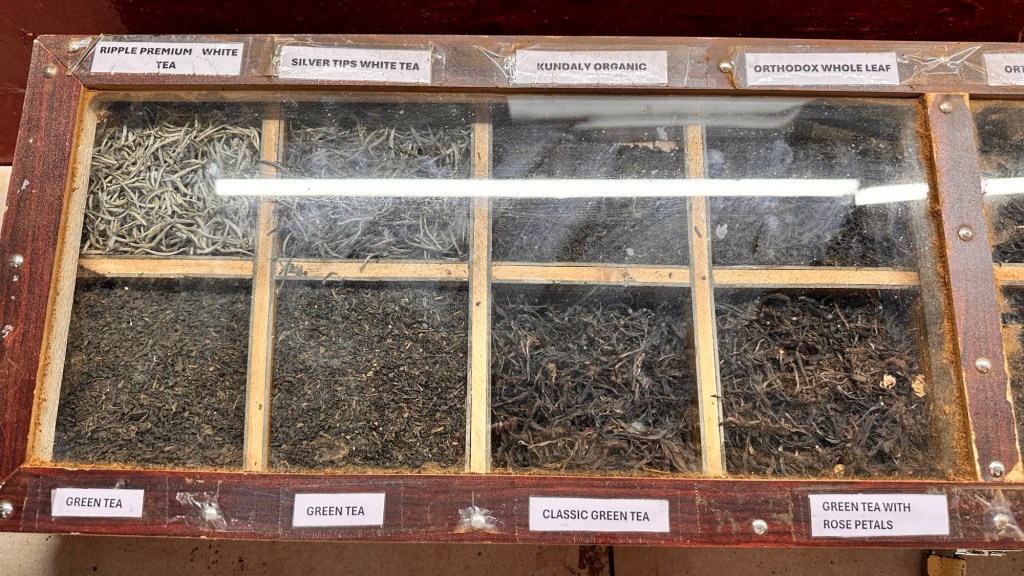
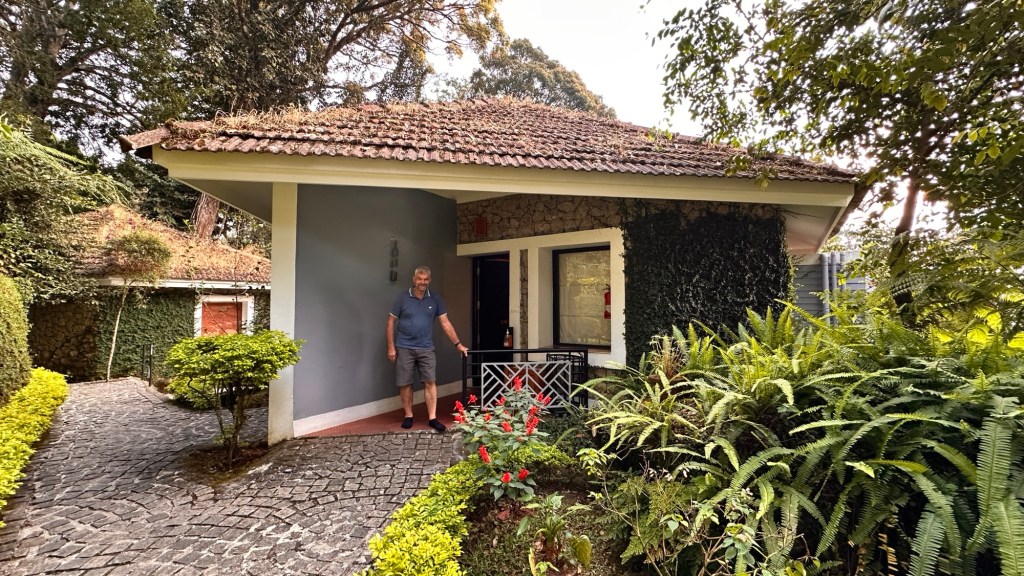
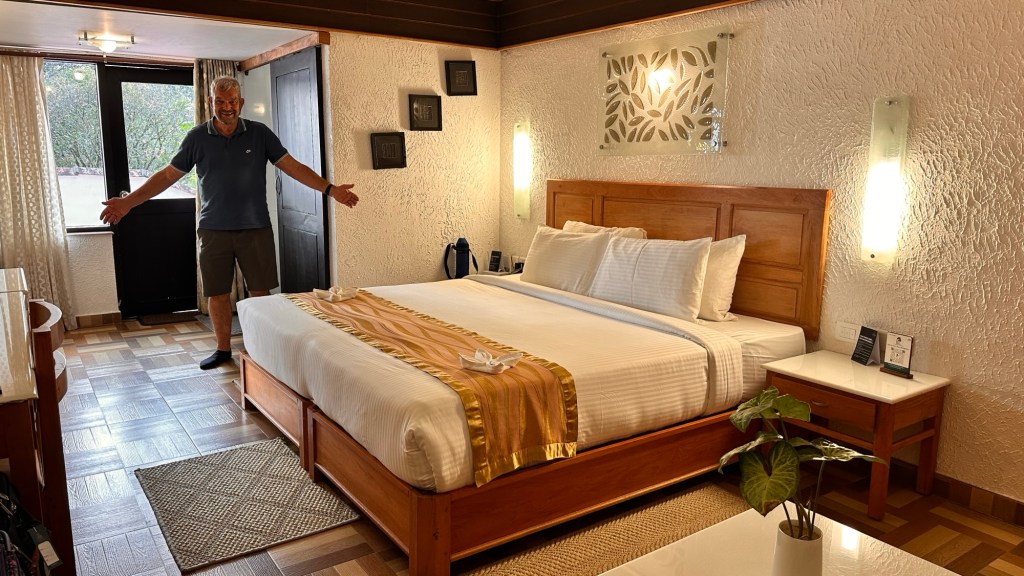
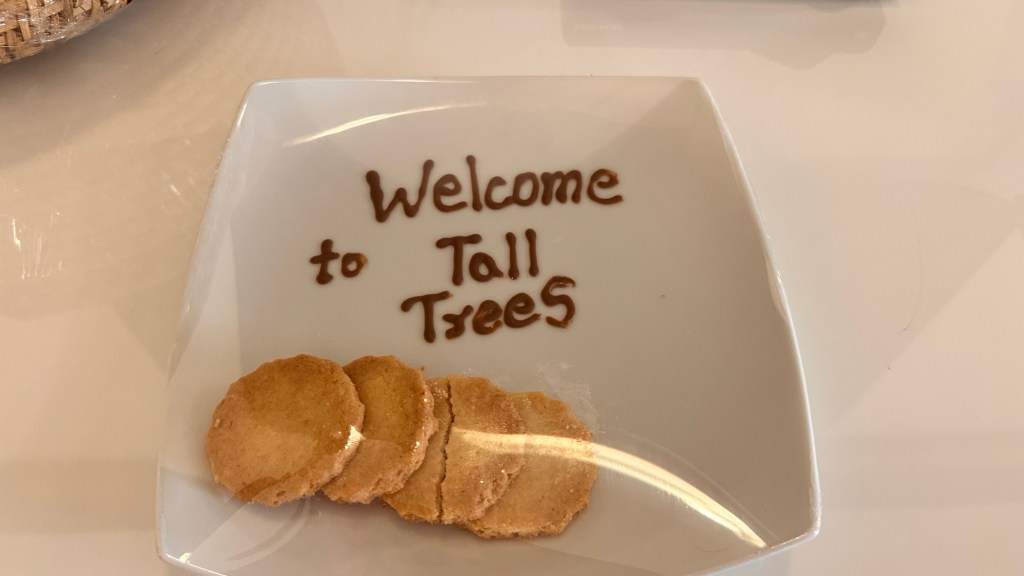
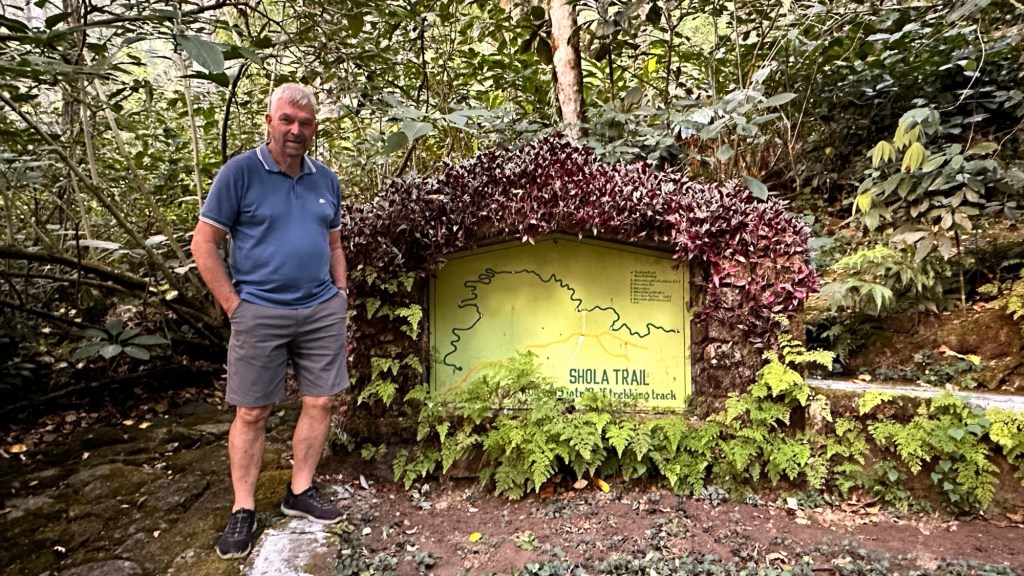
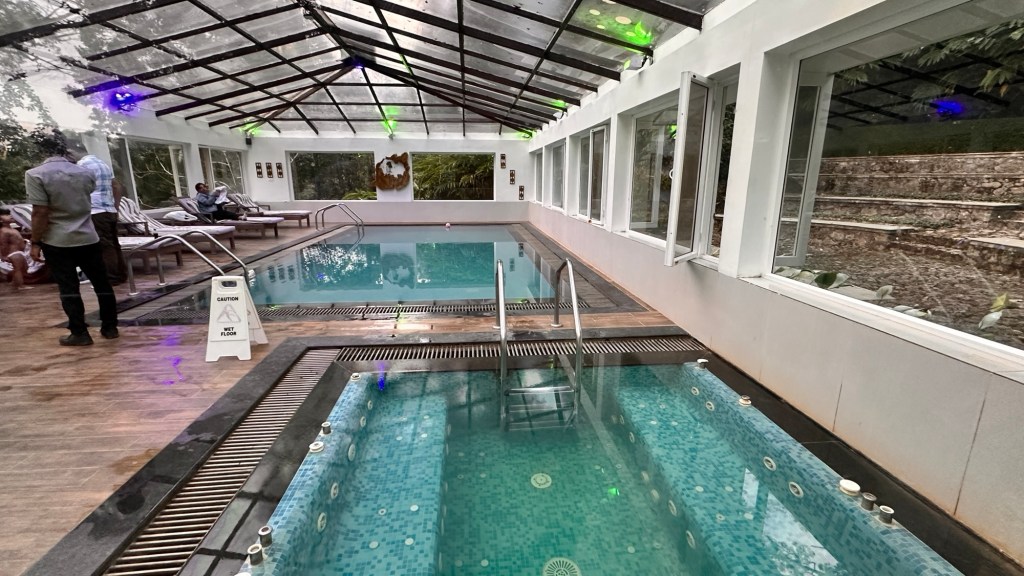
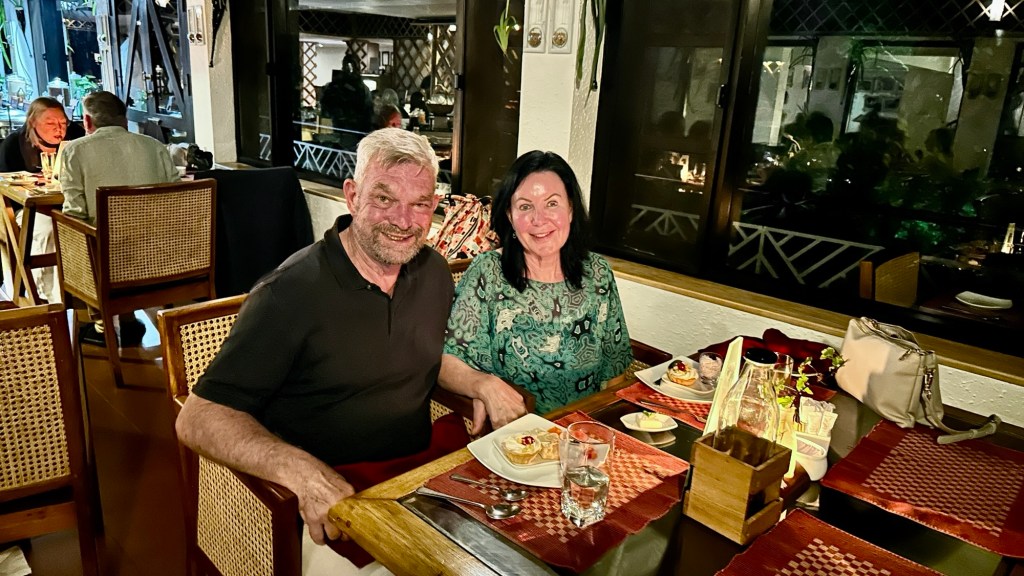
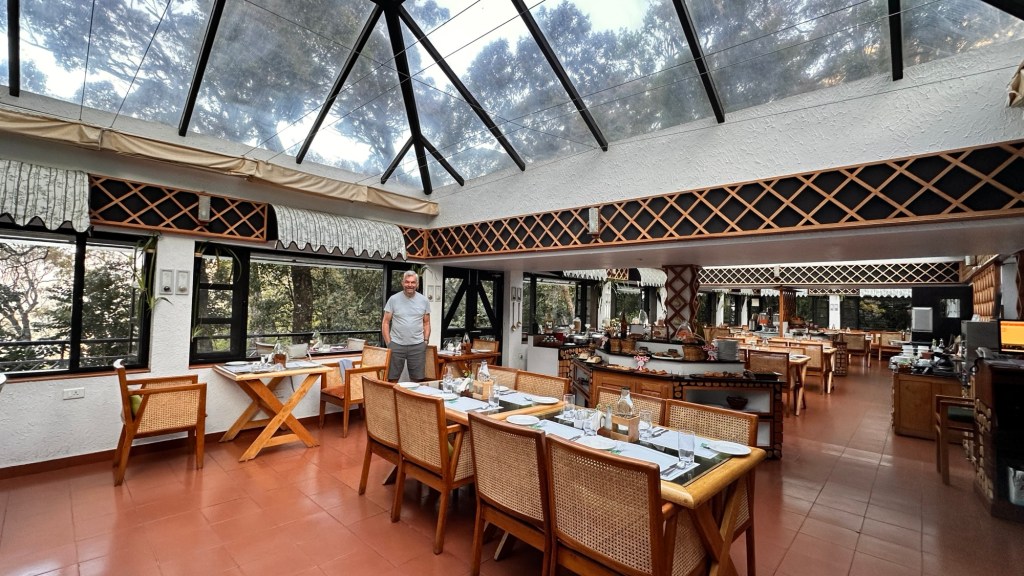
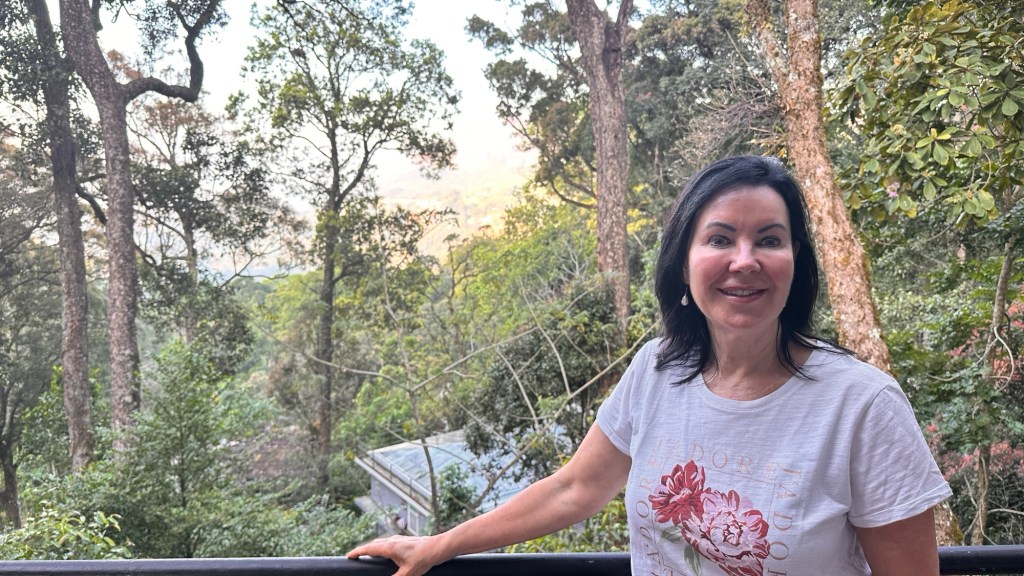
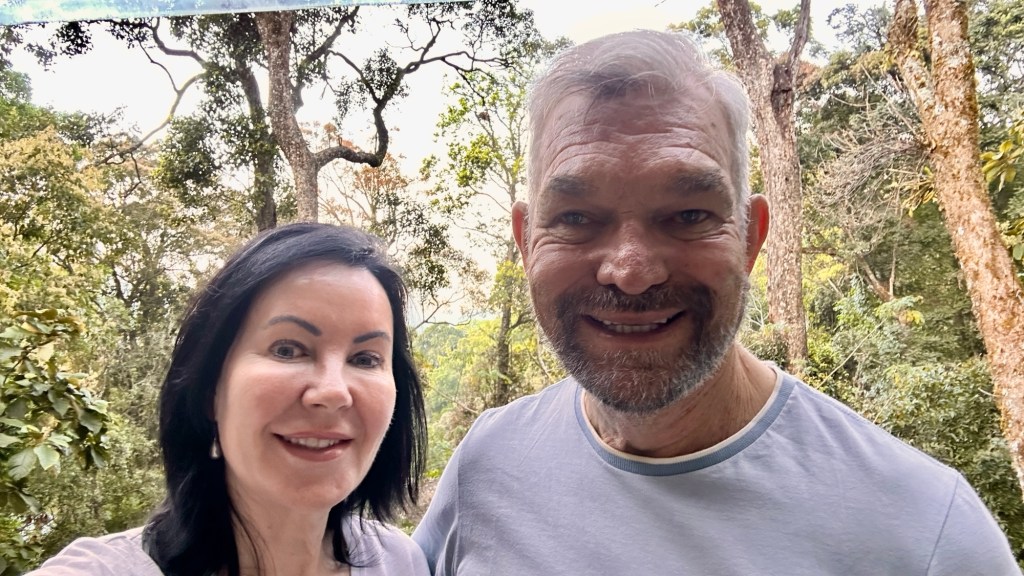
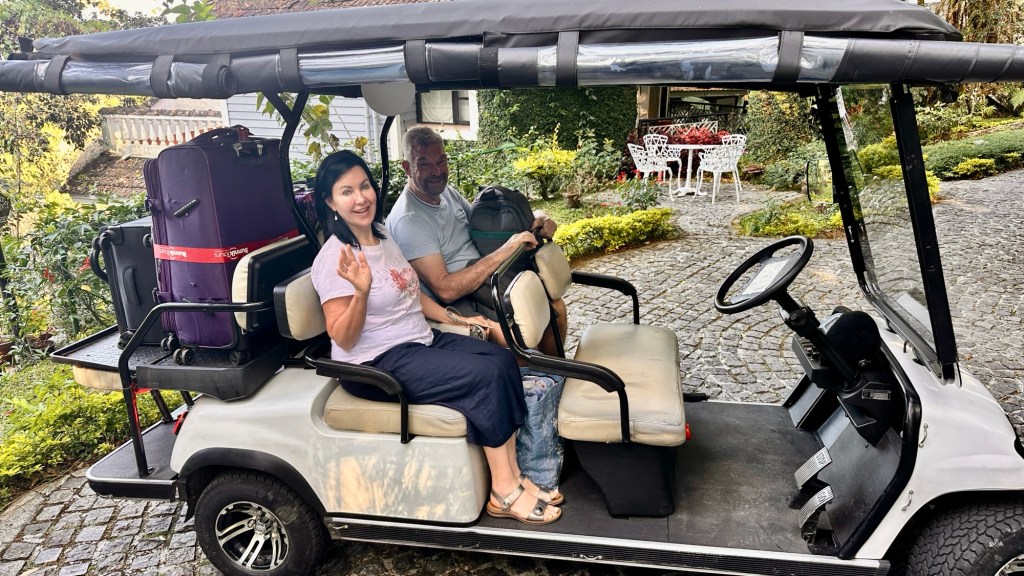
Onto Tall Trees Resort – tonight’s accommodation, located in the rainforest area twenty minutes out of Munnar. Set amongst stunningly verdant woodlands and explosive cardamom plantations, Tall Trees is a nature lover’s hideaway. It is set on 66 acres of virginal wilderness entrancingly held together by the overarching presence of 569 trees. An electric buggy took us to our gorgeous little cottage with balcony overlooking the forest. It was stunning. You could do little walks, bird watching excursions, tea tasting, plus a spa with full services available. We only had time for a short nature walk, a dip in the jacuzzi, and a sit around the bonfire before dinner. We really needed a full day to enjoy all the activities the resort had to offer. Lovely peaceful stay.



 Glammy Goes Global