
The Five Stans , Istanbul and Albania
Day 38
Saturday 18th October Istanbul
Tirana, Albania
14-20 degrees, drizzly, cloudy
Albania’s history is marked by its strategic location, leading to rule by many empires, including the Romans, Byzantines, and Ottoman Turks.
The Illyrians were the ancient inhabitants, who were eventually conquered by the Romans in the 2nd century BC.
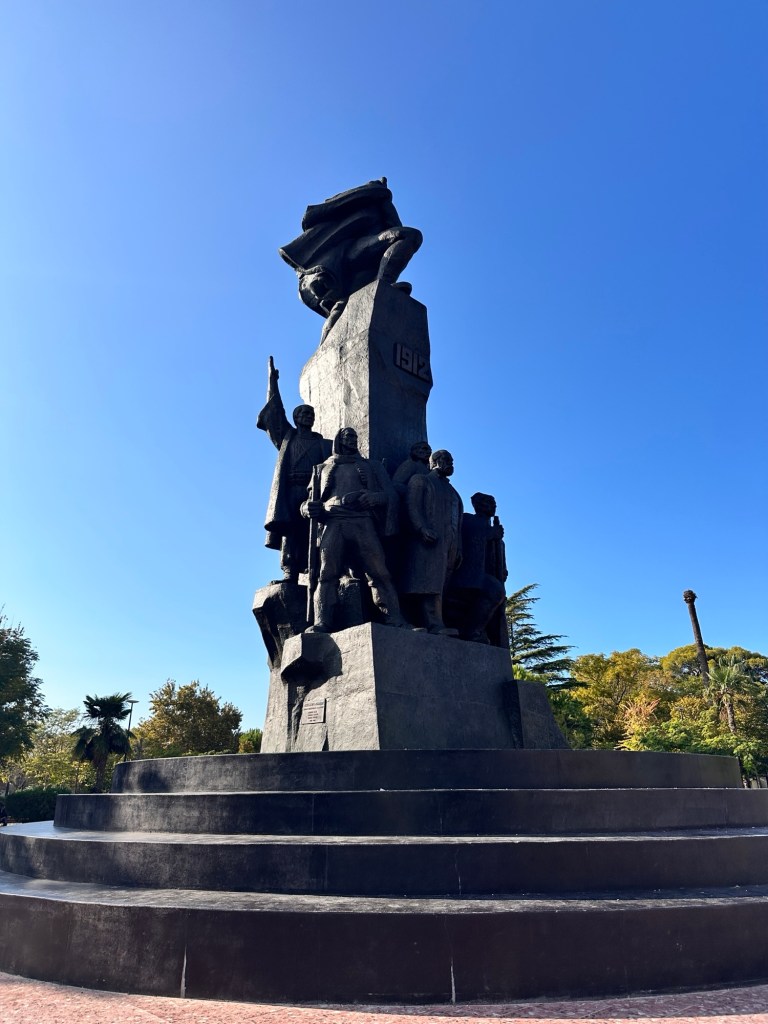
After a long period under Ottoman rule, the country declared independence in 1912.
It became a communist state after World War II, led by dictator Enver Hoxha, and transitioned to a democratic republic in 1992
Population of Albania is 3 million,
Tirana is 1 million, 7 million Albanians live abroad.
Currency is Lek
It didn’t take long to breeze through Tirana’s small airport — quick and easy. Luckily, Frank decided on a whim to change some money (something we never do at the airport, but it turned out to be a good exchange rate, and a smart move). When we jumped in a taxi to the Hotel Metro, we quickly discovered that none of the taxis take credit cards — cash only!
Checked into our room, then headed out to explore a little of Tirana. Our G Adventures tour of Albania started later in the evening with an introductory get together.
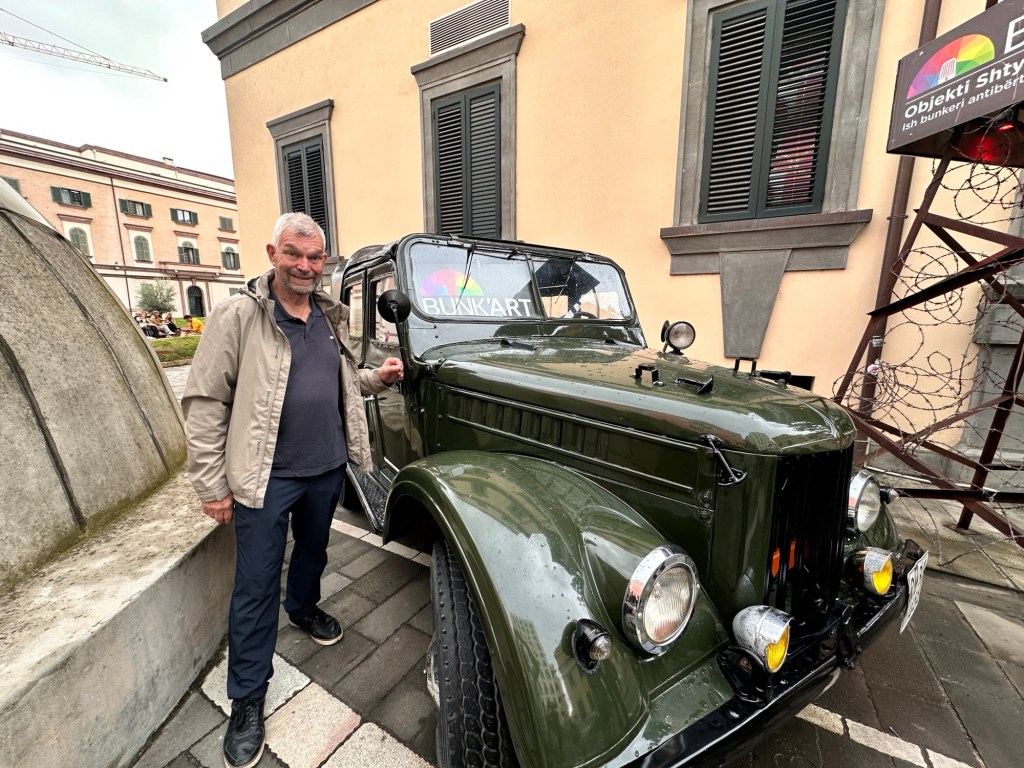
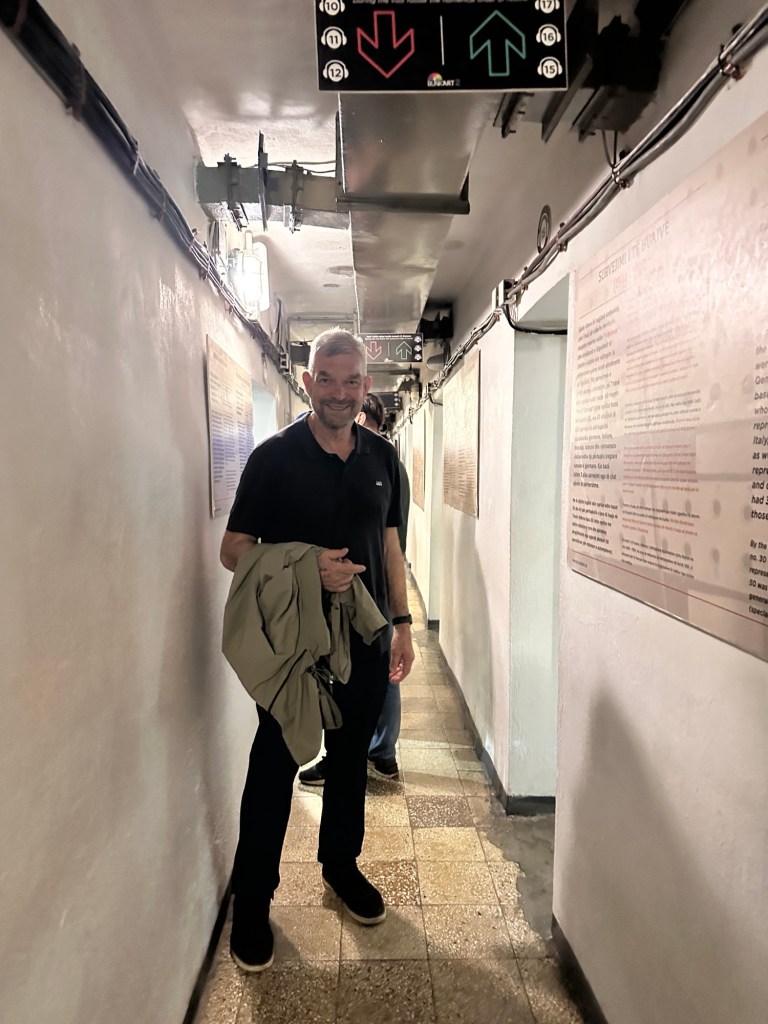
Bunk’art 2 reconstructs the history of the Albanian Ministry of Internal Affairs from 1912 to 1991 and reveals the secrets of “Sigurimi”. It was with this ministry that the infamous Sigurimi, the secret surveillance agency of the Hoxha regime, was associated. In the face of rising Cold War tensions in the late 20th Century, Albanian leader Enver Hoxha oversaw the building of cavernous underground bunkers across the country.Today the rooms of the ex-bunker are filled with a museum exhibition about the police system in Albania in general and the reign of repression and control by the Sigurimi in particular. I had no idea the repression of Albanians was so widespread and happening right up until 1991.


Stopped for a drink and some vegetable soup – also needed a few minutes to digest and reflect on what we had just seen.


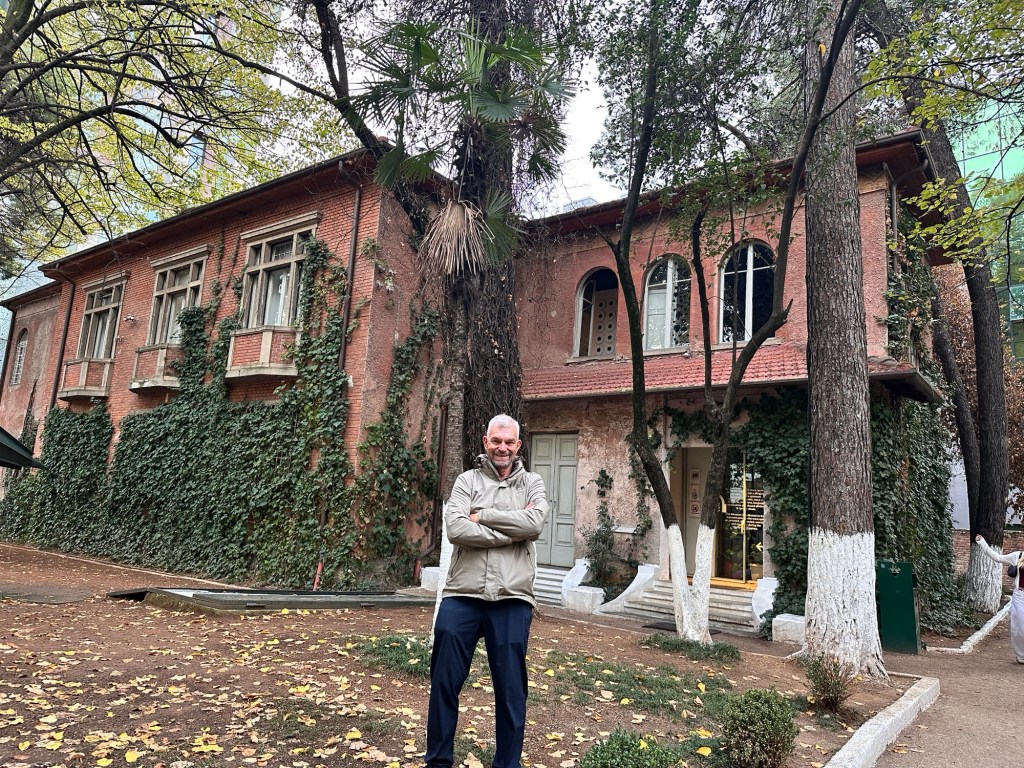
Next The House of Leaves. This house was another museum dedicated to surveillance and interrogation. Originally a maternity hospital, the house became a torture house. The museum showcases the elaborate methods and tools used by the Sigurimi to intimidate and maintain a constant state of fear among the population during communist Albania. On display were rooms full of sophisticated eavesdropping equipment, such as microphones, mini-cameras and wire-tapping kits.

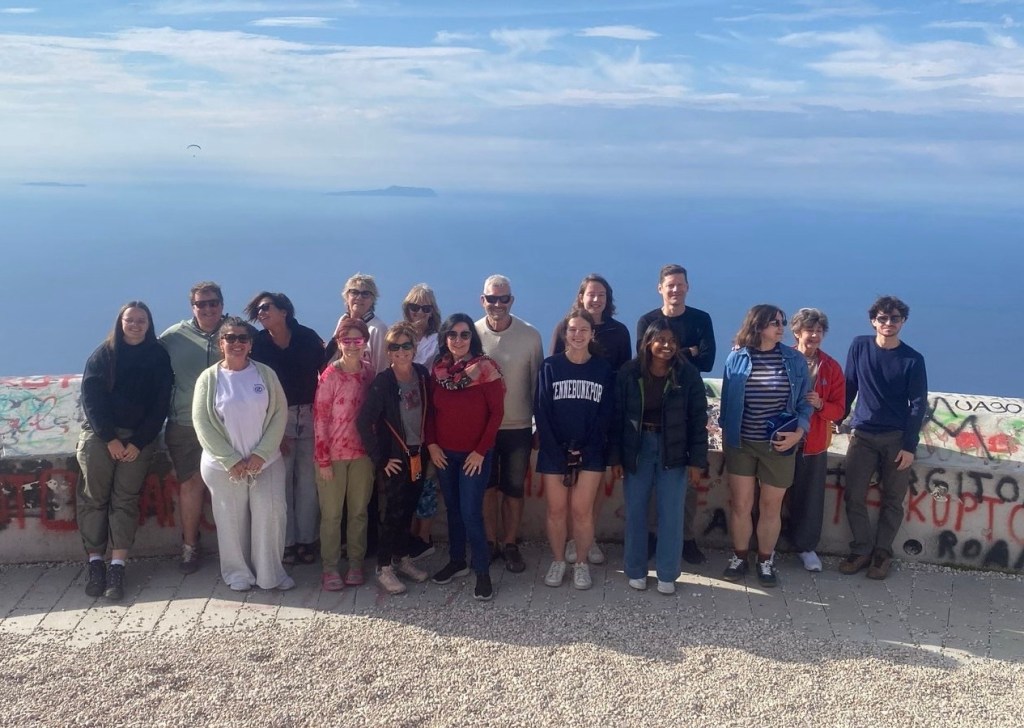
Back to meet the group – our guide Ilke and 16 fellow travellers. A brief rundown of the programme, then out for an orientation walk of Tirana. Ilke then took us to a lovely restaurant- I had the most divine veal escalope with truffles and mushrooms, Frank had a delicious seafood pasta. Food and drinks are very inexpensive here.


Day 39
Sunday 19th October
Tirana to Vlore
11-21 degrees, sunny
We left Tirana with a slight hiccup — the bus wasn’t big enough. Another was sent, only marginally larger, but at least all the luggage managed to fit this time. Inside though, it was still a rather tight squeeze.
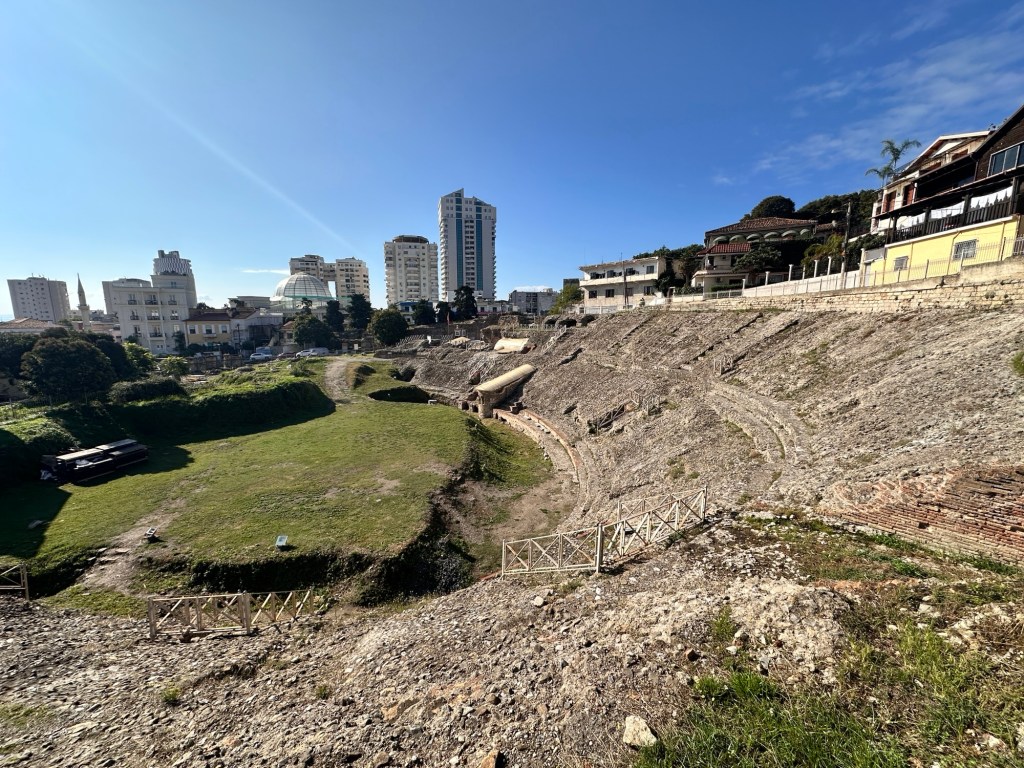
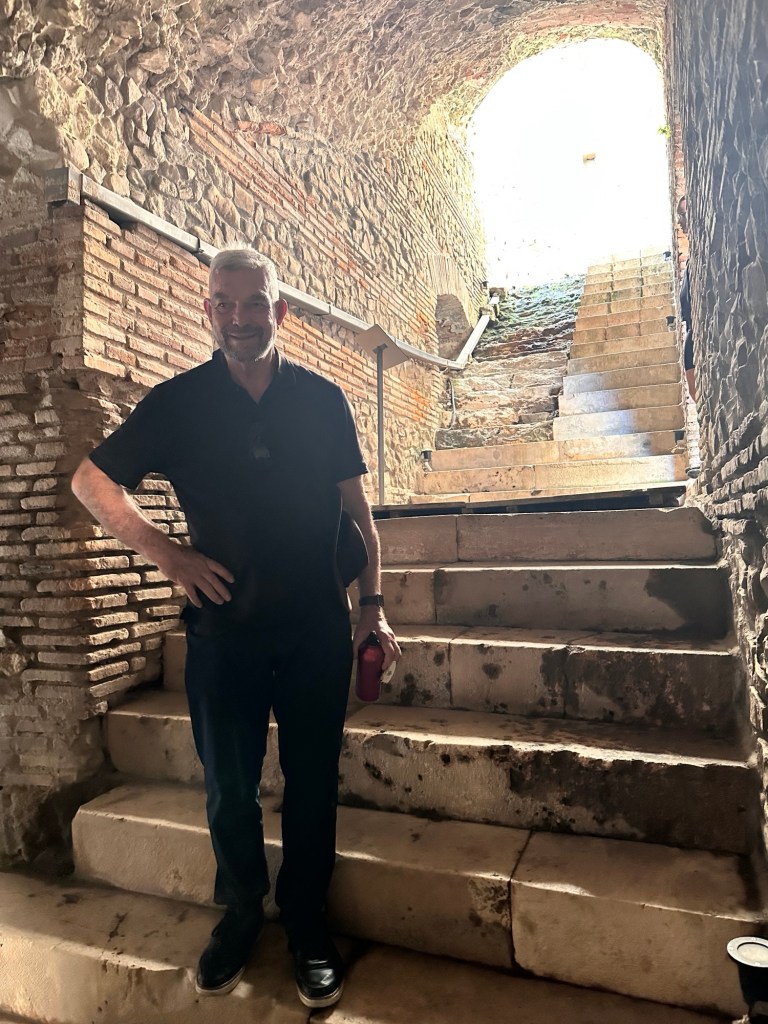
After a forty-minute drive, we arrived in Durrës, Albania’s oldest city, with nearly 3,000 years of history. The highlight was the Roman amphitheater, discovered only in 1966, built in the 2nd century AD under Emperor Trajan. Once, it could seat up to 20,000 spectators who gathered to watch gladiator battles and other ancient spectacles.


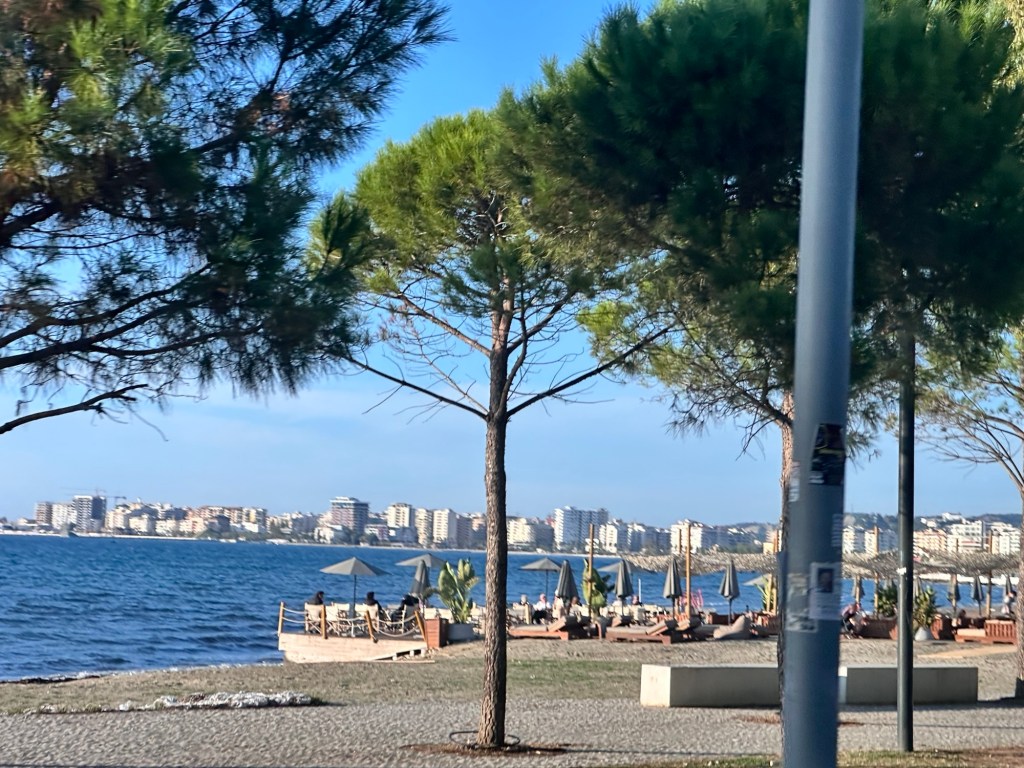
We had an hour to explore the town and the beachfront. The beach itself was less than inviting — a bit grimy and not exactly fragrant — but the Adriatic Sea beyond shimmered brilliantly in the sun, almost redeeming the scene.
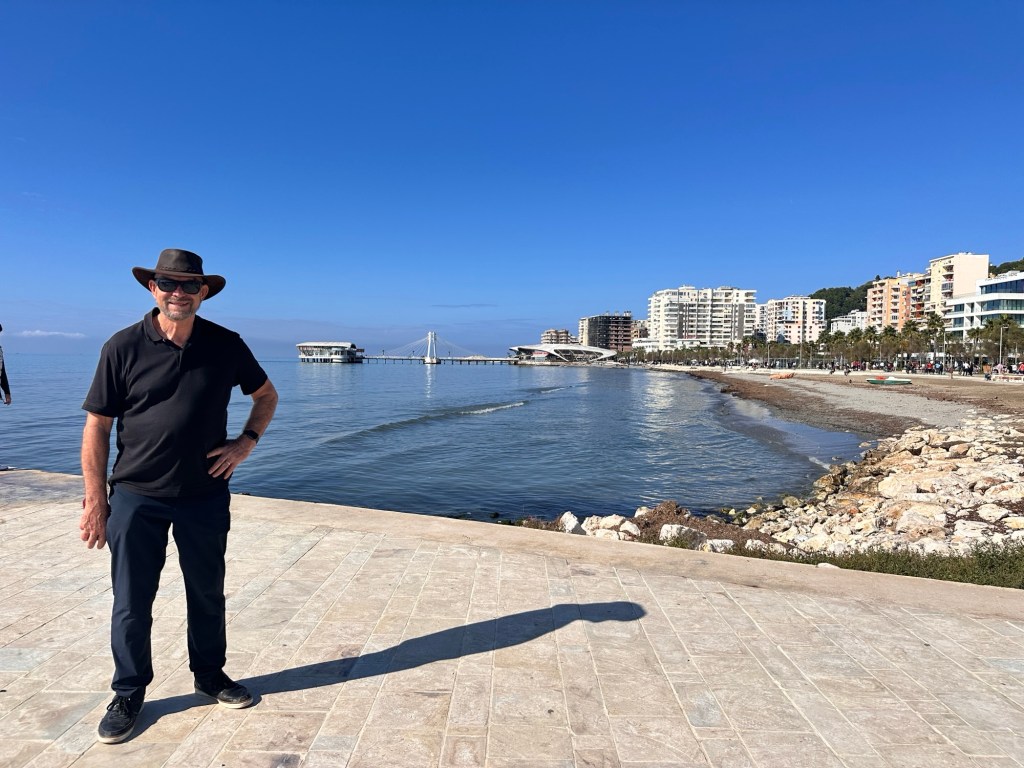
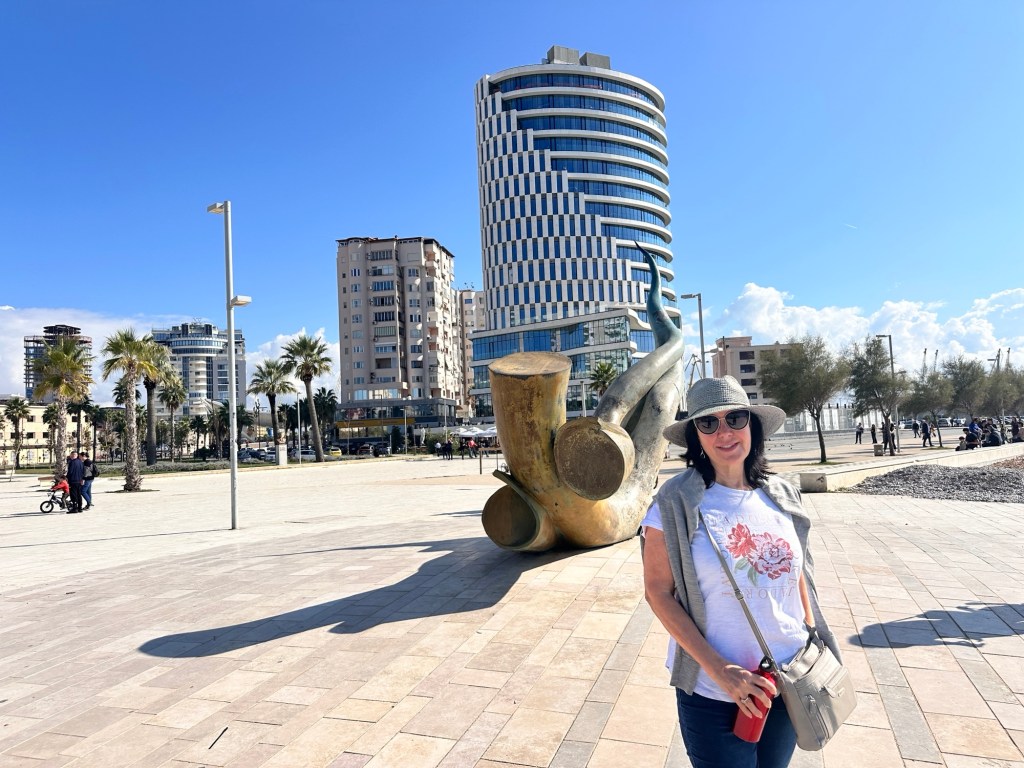
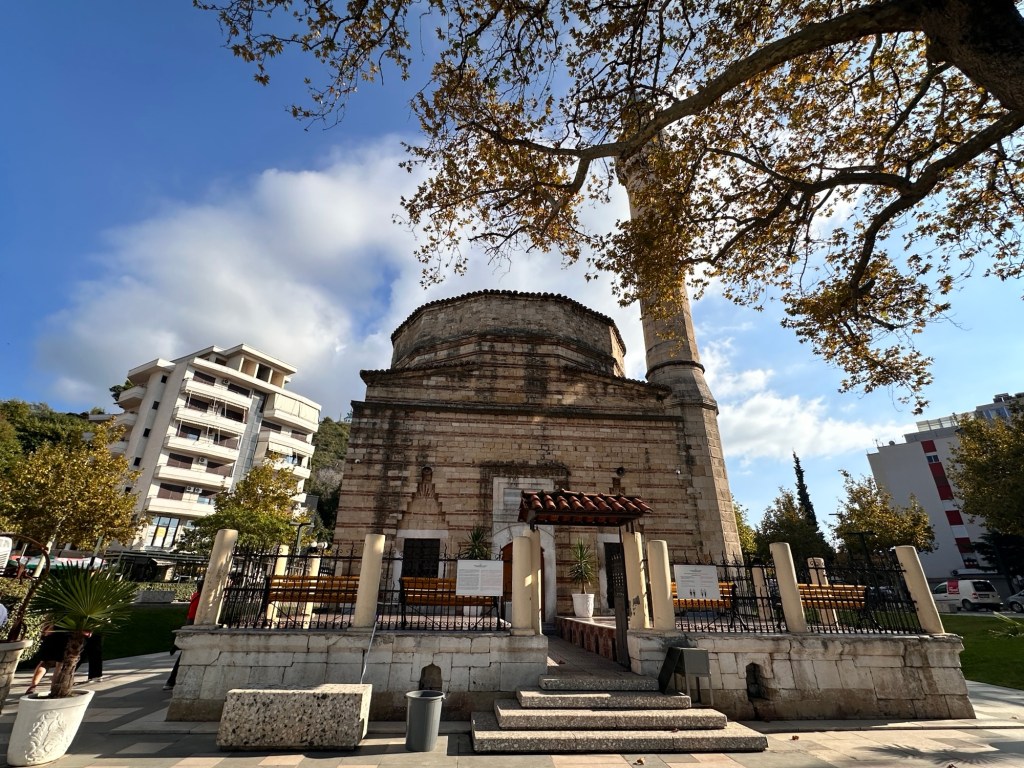
A ninety minute drive then had us at Vlorë. We had a short walk around the Old Town and Independence Square. Also there was the Muradie Mosque (or Lead Mosque) which is one of the most important structures in Vlore. Built in 1537 by Ottaman Turkish Architect Mimar Sinan and is distinctive for its exceptional brick work.


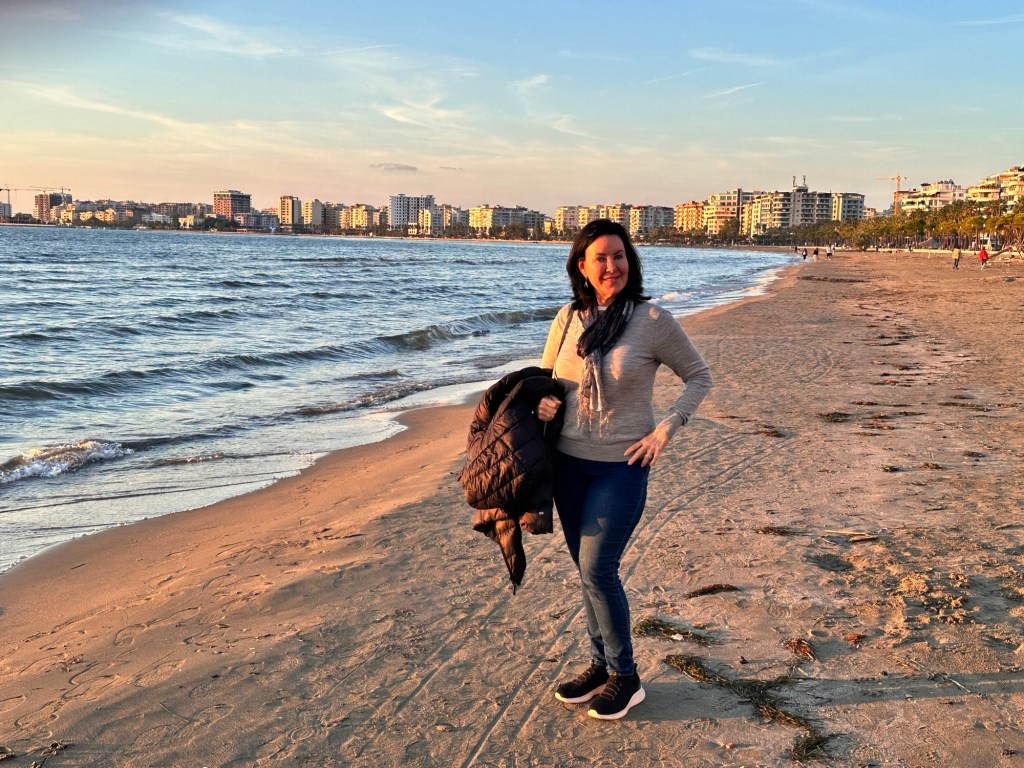
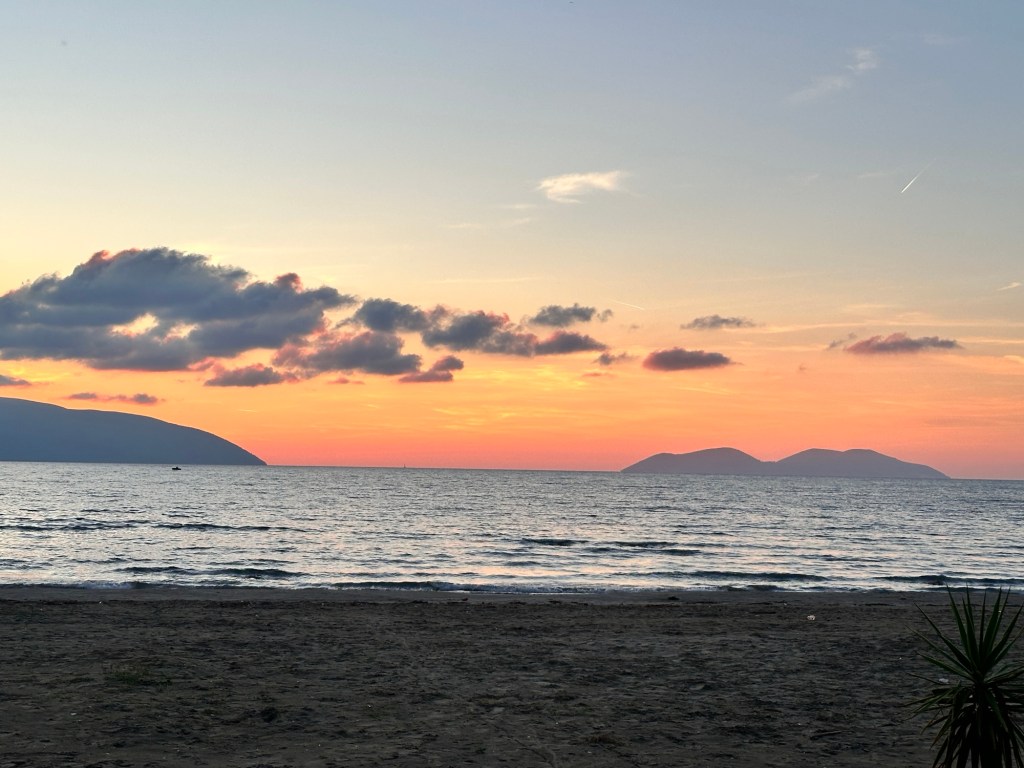
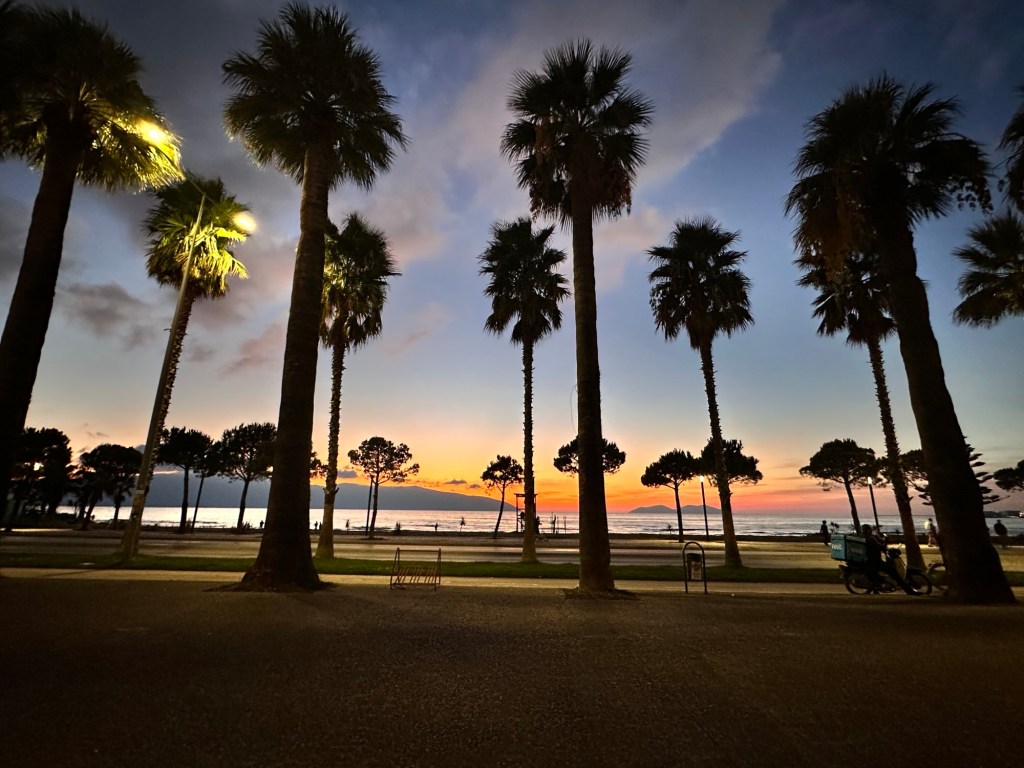
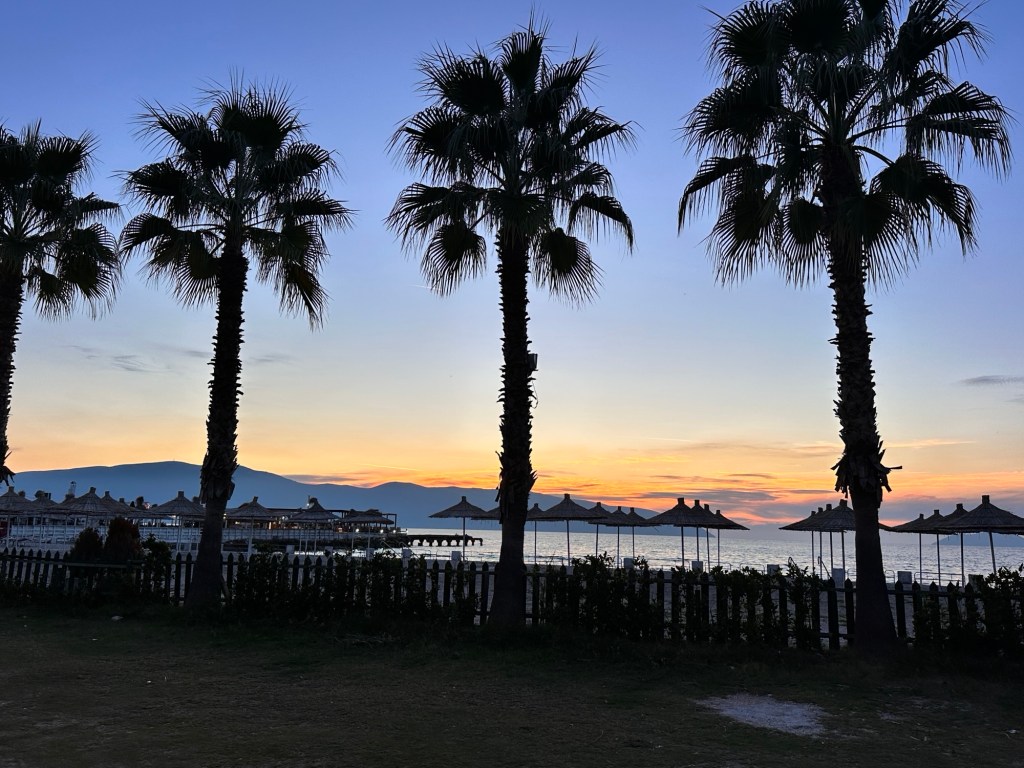
A short drive later we checked into the Semajo Hotel. Vlorë faces west over the Adriatic, making it the perfect spot to catch the sunset. We strolled down to the beachfront just in time to watch the sky melt into shades of gold and crimson over the sea. A lovely seafood dinner rounded off the evening perfectly.

Day 40
Monday 20th October
Vlore
13-21 degrees, sunny
An easy start to the day, before we drove 30 minutes to the village Tragias. After parking the van we hiked a 3km trail, with an elevation of approx 280m, to get to a shepherds outpost. Here we experienced the authentic life of the Albanians – their traditions and life in the mountains, yet so close to the sea.
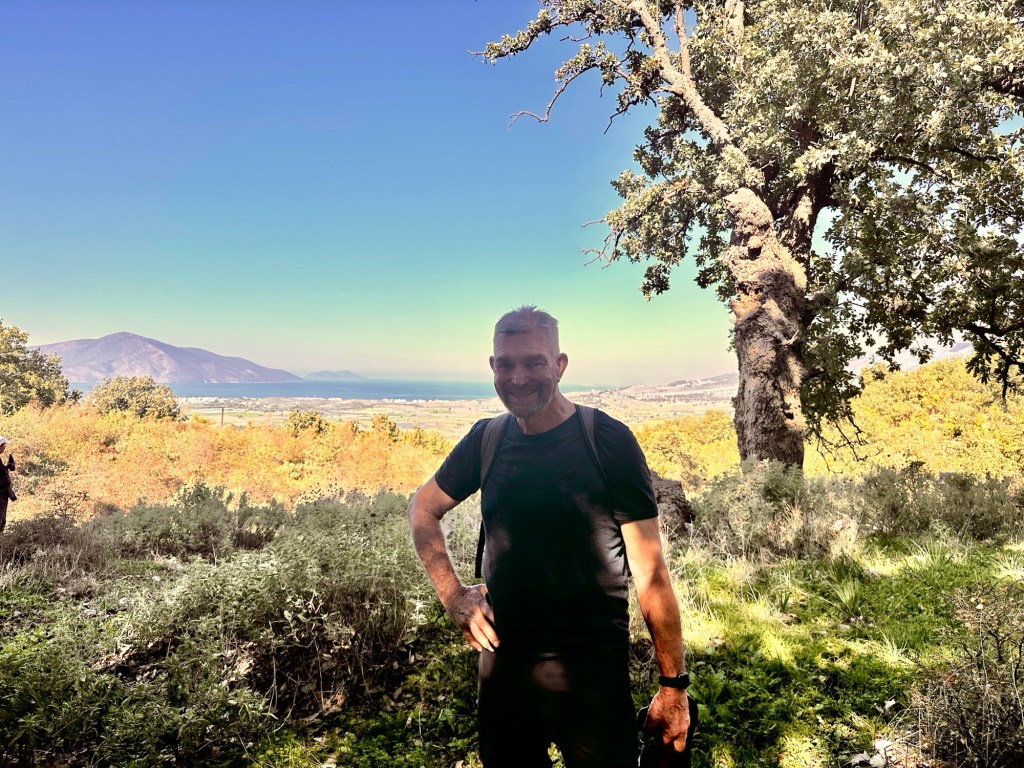
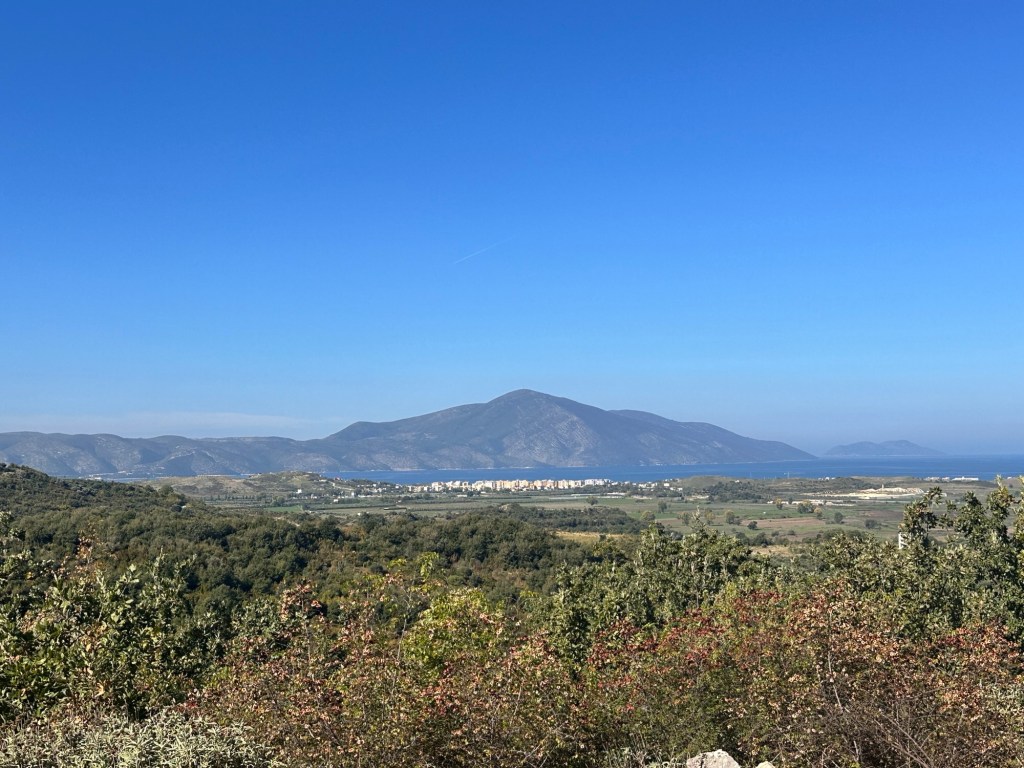

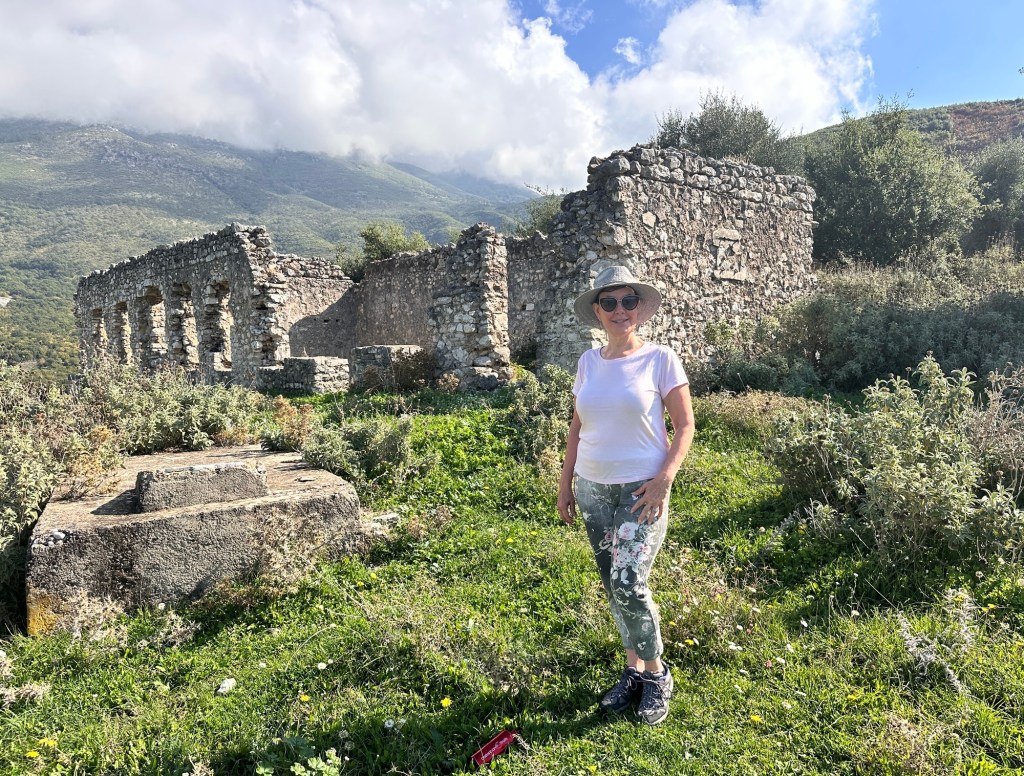
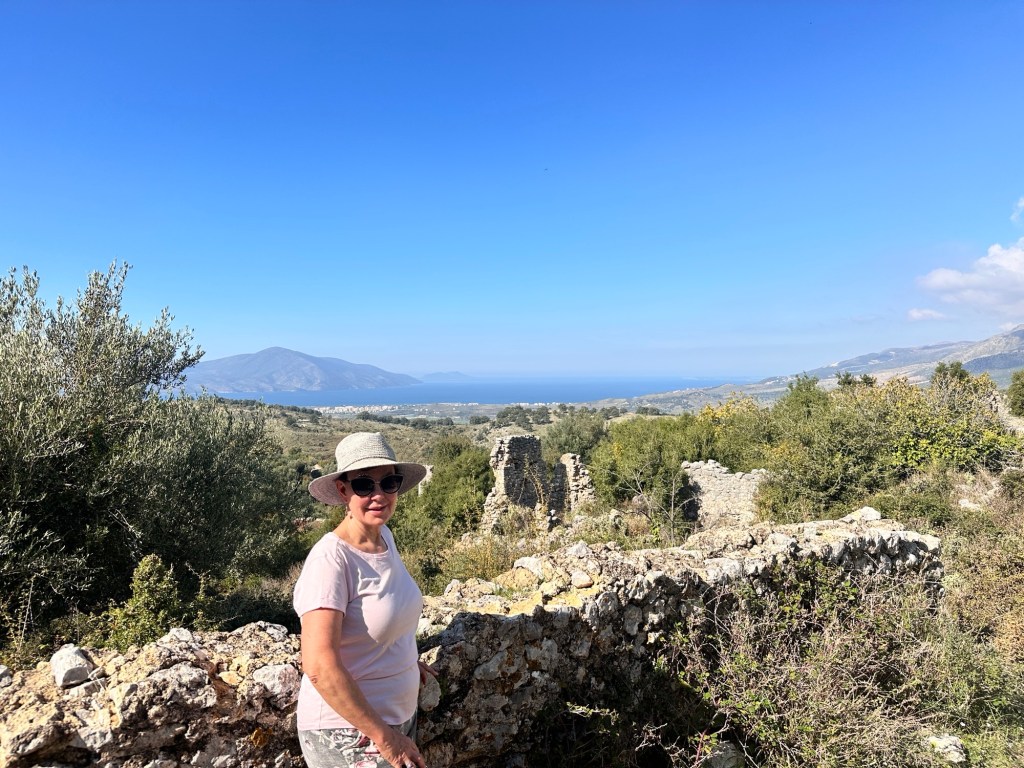
Another short walk took us to the old village of Tragjas, which was completely burned down by the Germans during World War II – only ruins remain today.
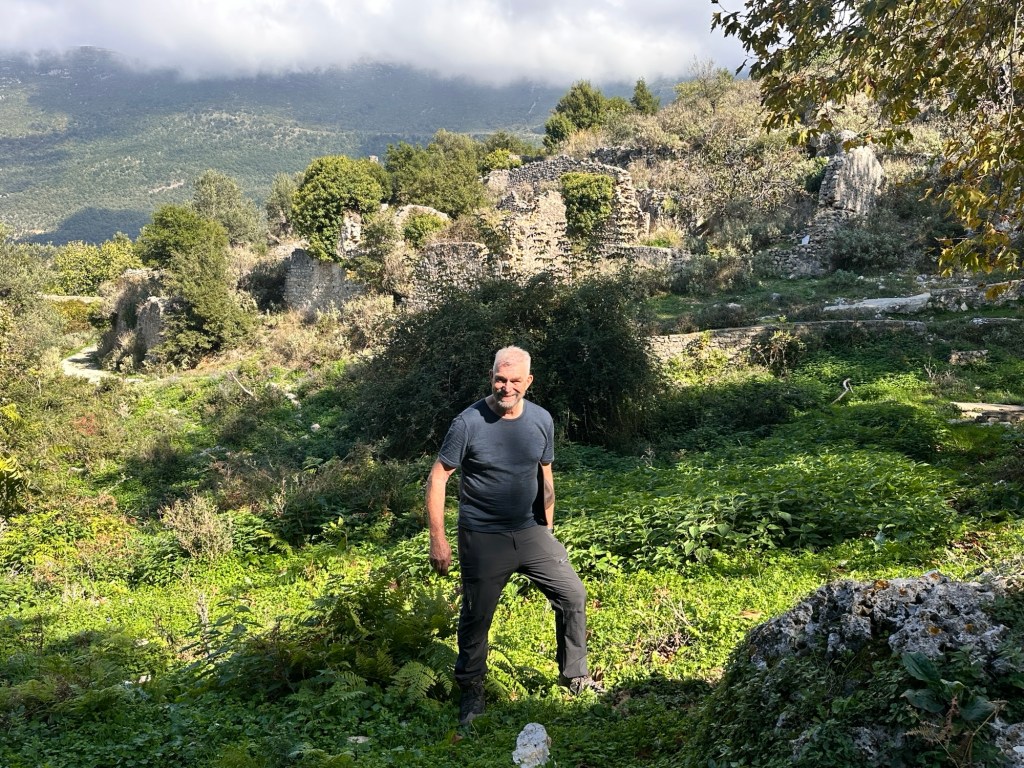
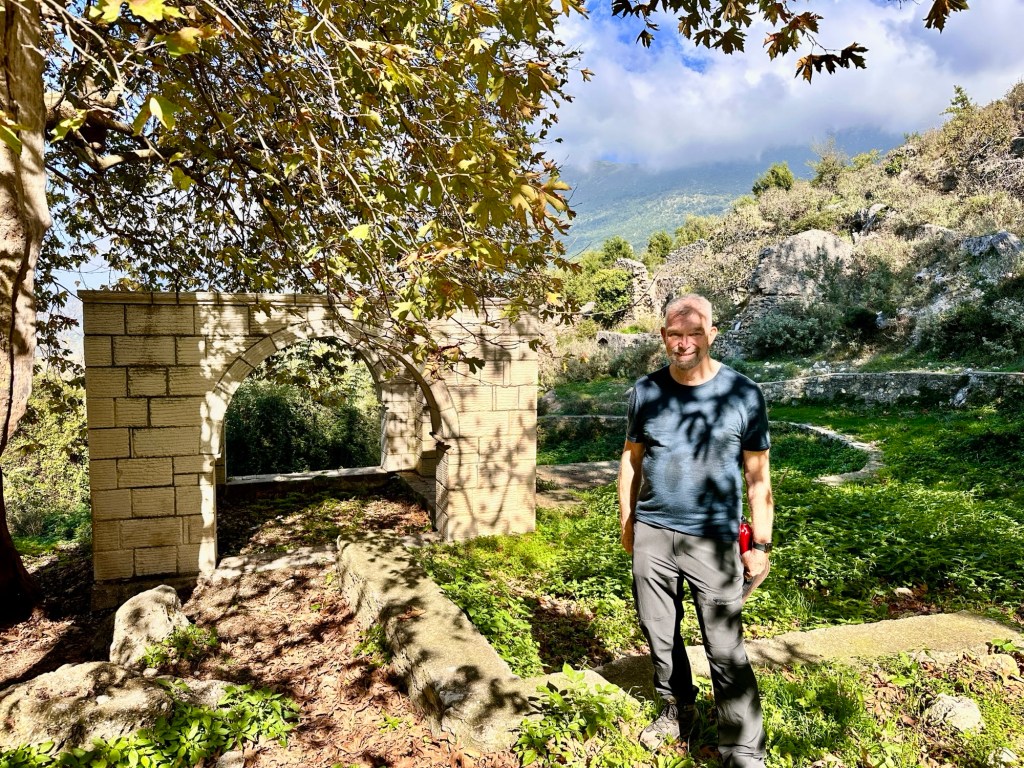
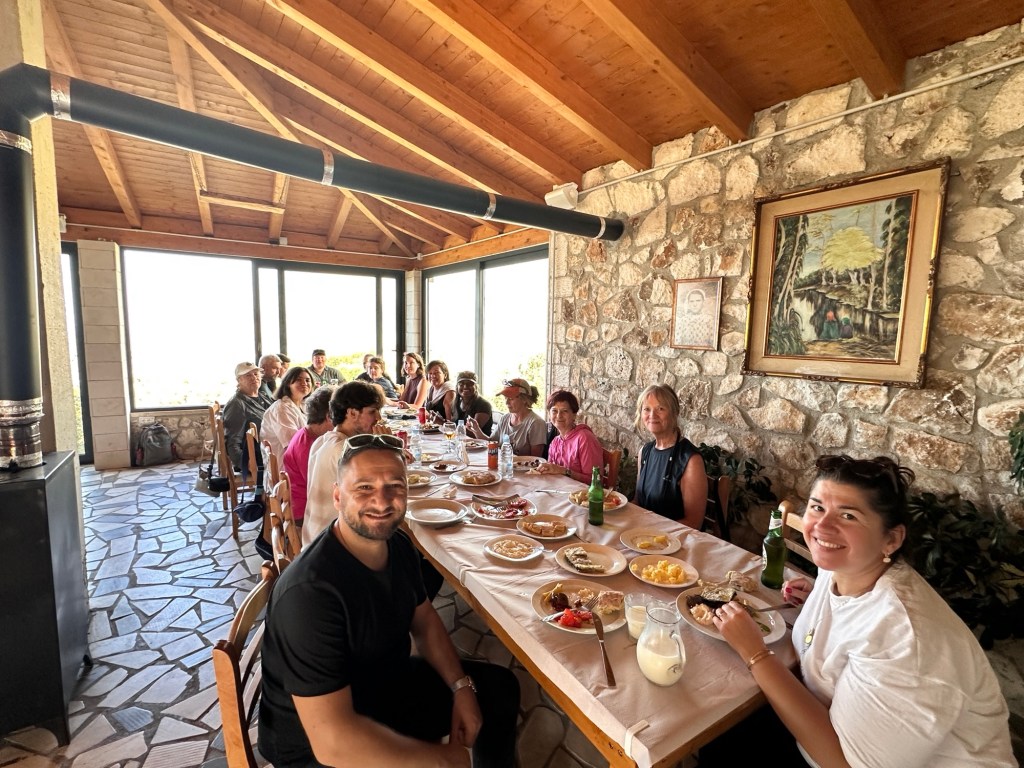
Back to the farm to enjoy a typical lunch – flatbread baked under a dome lid (made with flour, baking soda, milk, and eggs), cow’s milk butter, fresh goat cheese, aged whey cheese in goat skin, pickled eggplant mix and fresh tomatoes, traditional pie with wild nettles (hand-rolled phyllo pastry filled with wild nettles and spring onions), trazore (cornbread with cheese and butter, and a lamb and potato dish. All lovely, and very filling – it made hiking down the hill that much harder!
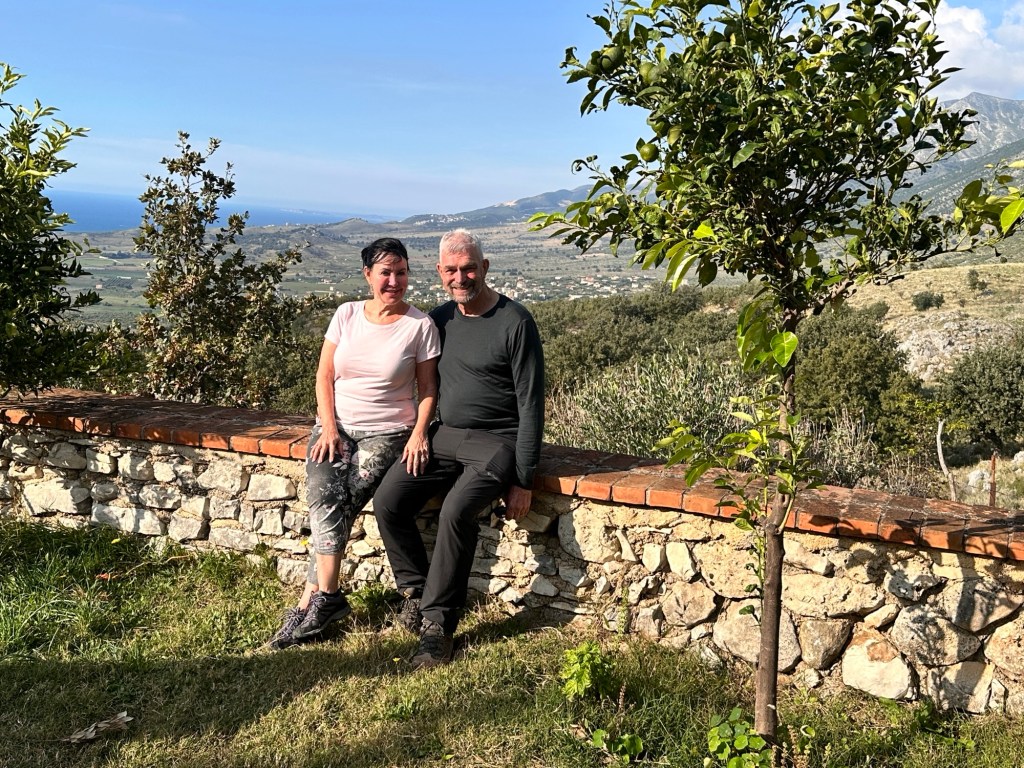
We returned to Vlore in time to enjoy sunset at a lovely little bar, called Sunset, on the wharf. Dinner afterwards at a nice restaurant called El Mar.


Day 41
Tuesday 21st October
Vlore – Gjorekaster
12-20 degrees, sunny
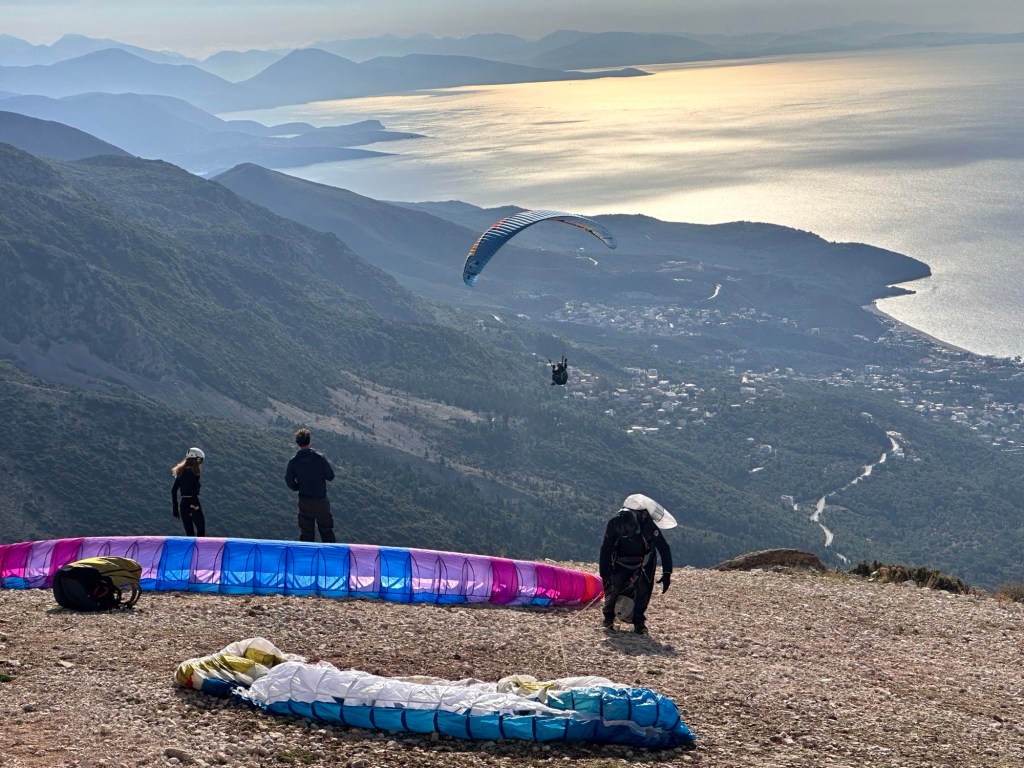
Today we drove along the spectacular Albanian Riviera to Gjirokaster, with a number of stops and highlights along the way. Our first stop was to photograph the amazing coastline. At this vantage point we were mesmerised observing three paragliders jump off into the headwinds and soar over the Adriatic Sea.

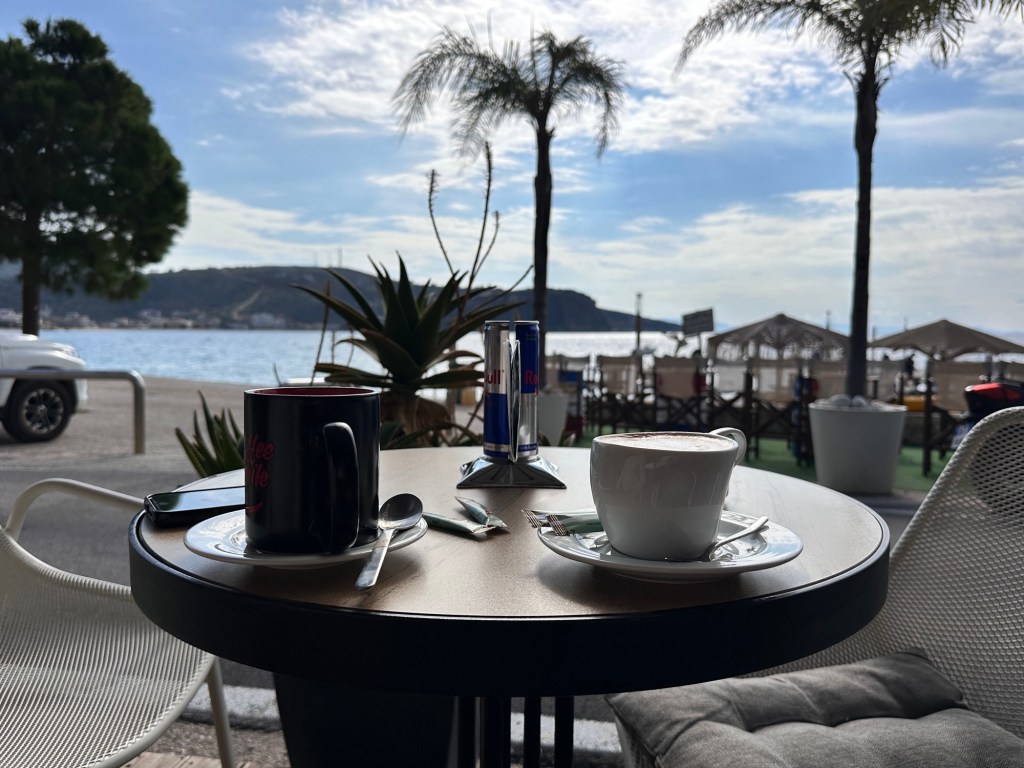
Next we had a coffee stop at the small beach town of Himare. Himarë’s prominent hilltop castle and old town dates back to the Illyrians, who settled in the area around the 3rd century BCE. Down on the seafront, the majority of Himarë’s modern centre was built in the 1960s. A long stretch of coarse-sanded beach fringes the new town, attracting large crowds in summer.

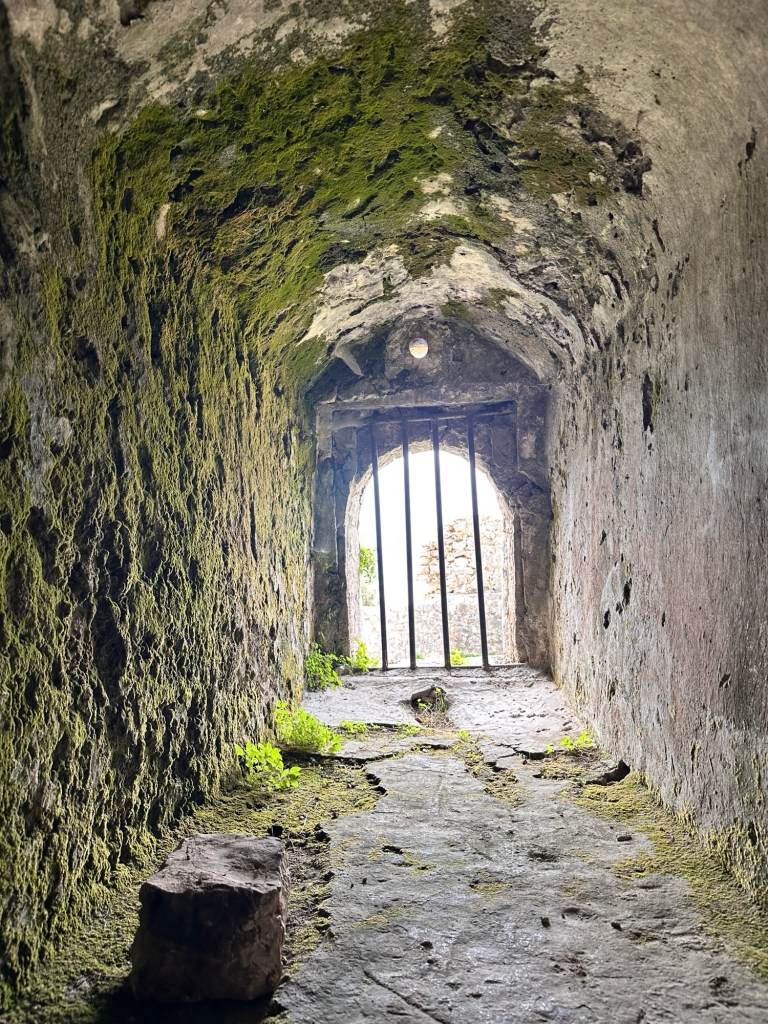
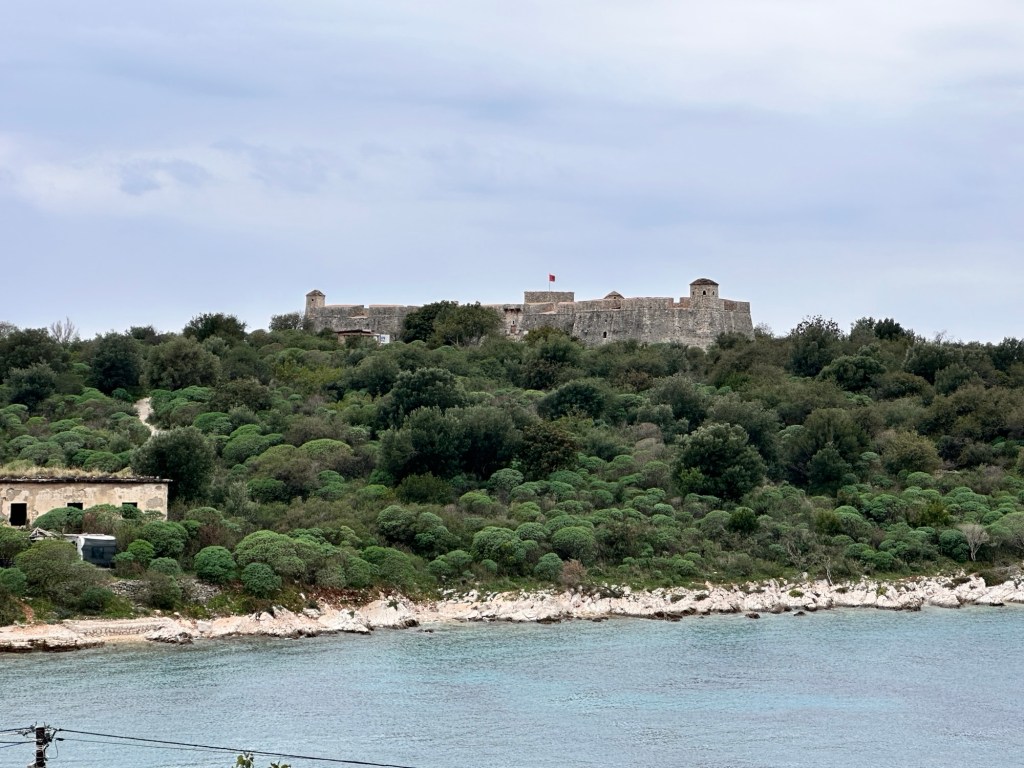
Porto Palermo Castle is cast out at the tip of a peninsula in a bay 8 km south of Himarë. This imposing fortress’s triangular shape and round towers have led some historians to believe the Venetians may have built it. However, a plaque declares this castle to be the brainchild of Ottoman radical Ali Pasha (Ali Pasha was the most famous pasha – feudal lord – in Ottoman Albania), built with assistance from the French in the early 19th century. During World War II and into the communist era of the 1970s and 80s, it was used as a prison. The castle originally occupied an island, but a strip of reclaimed land (Palermo Beach) now connects it to the mainland.

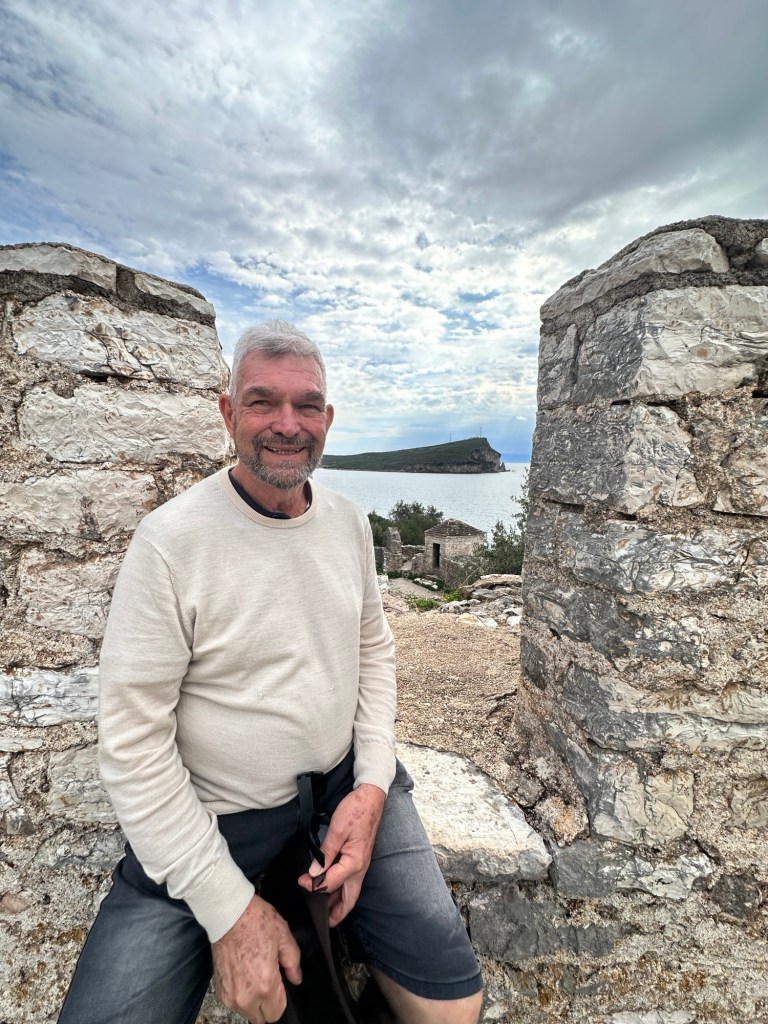
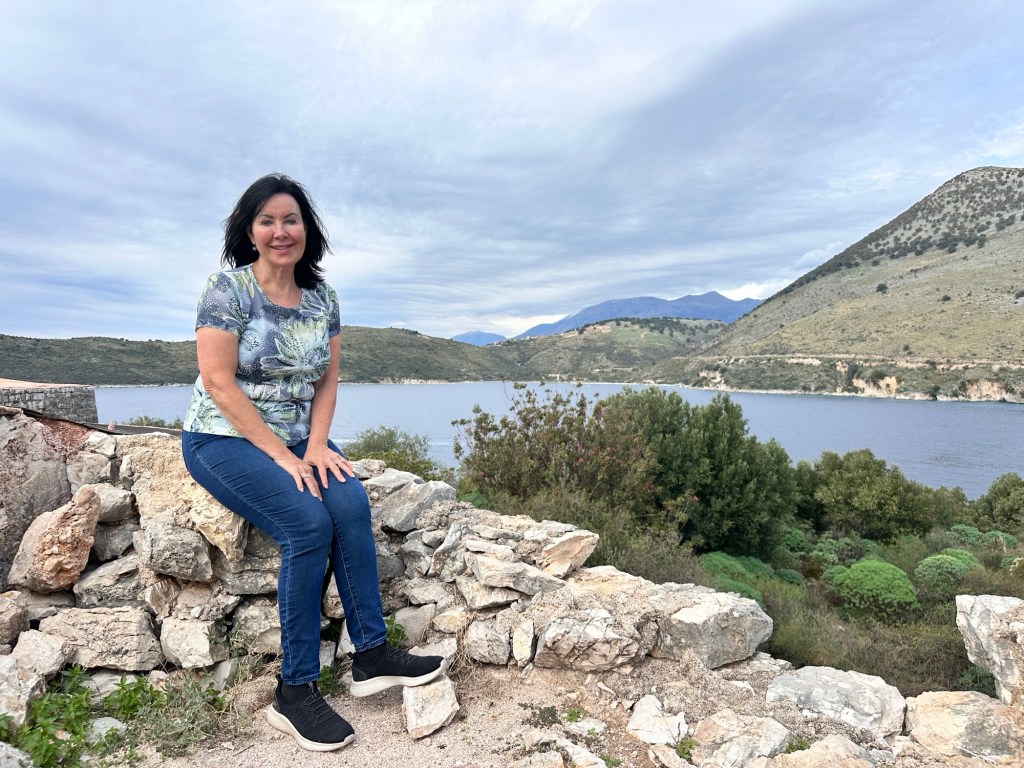
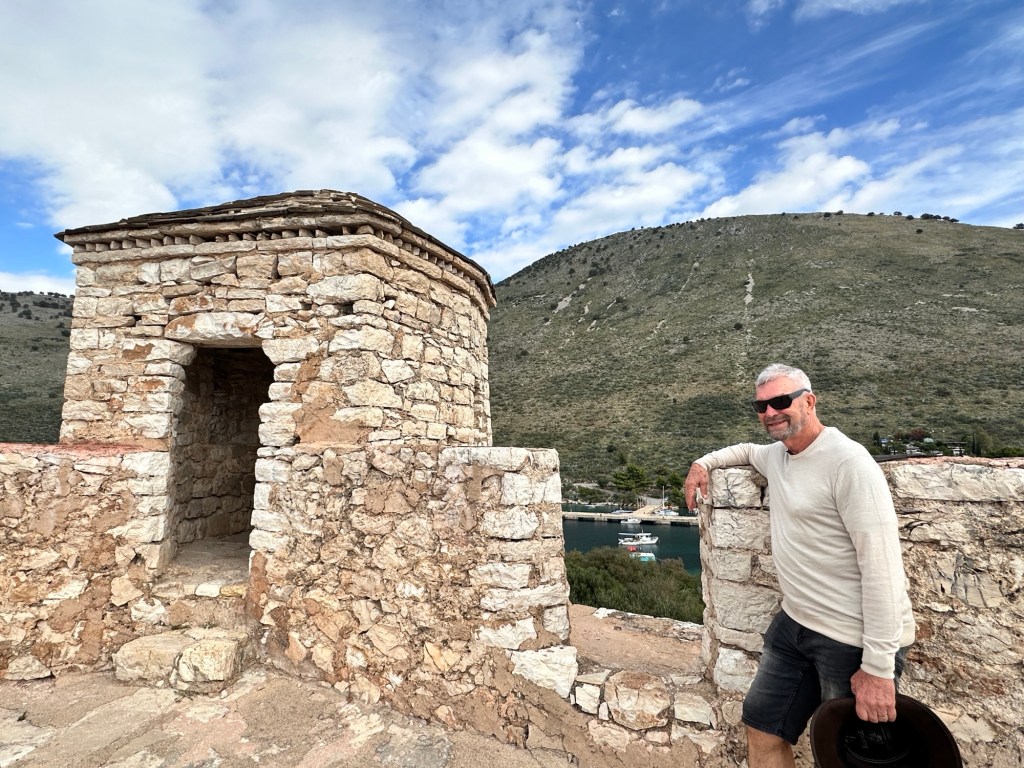

Lunch was at a Greek looking restaurant looking out at the castle. Beautifully appointed. This area is the last stop before the Greek border so a very strong Greek influence here – most of the people here are Greek, and speak Greek.

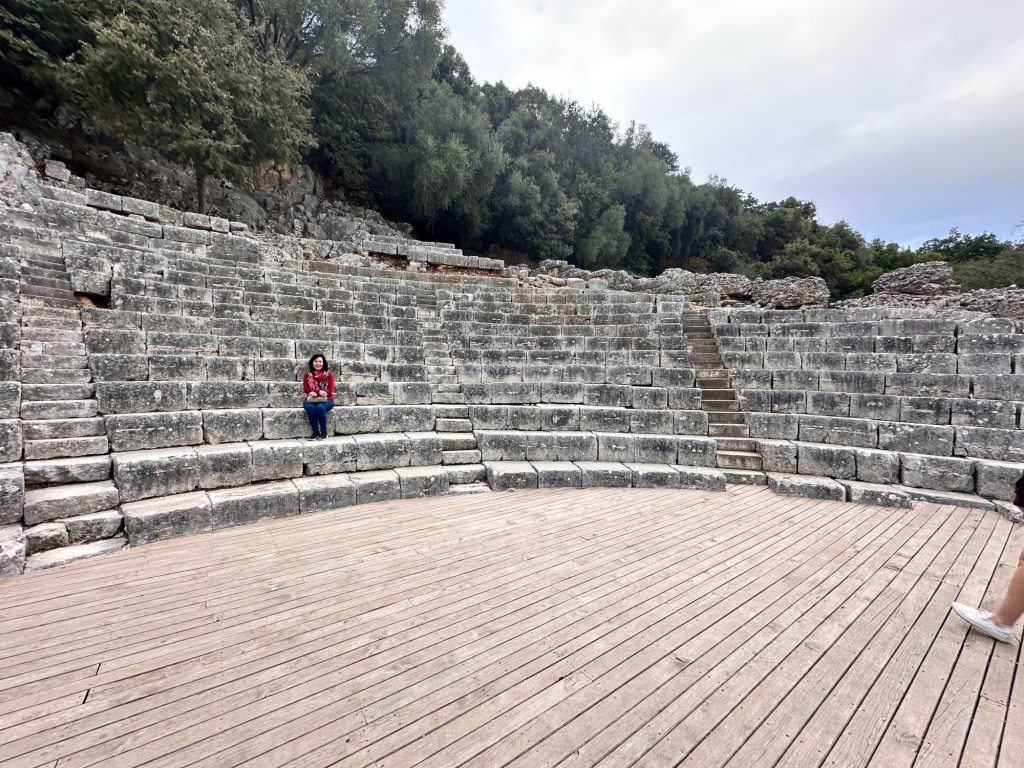
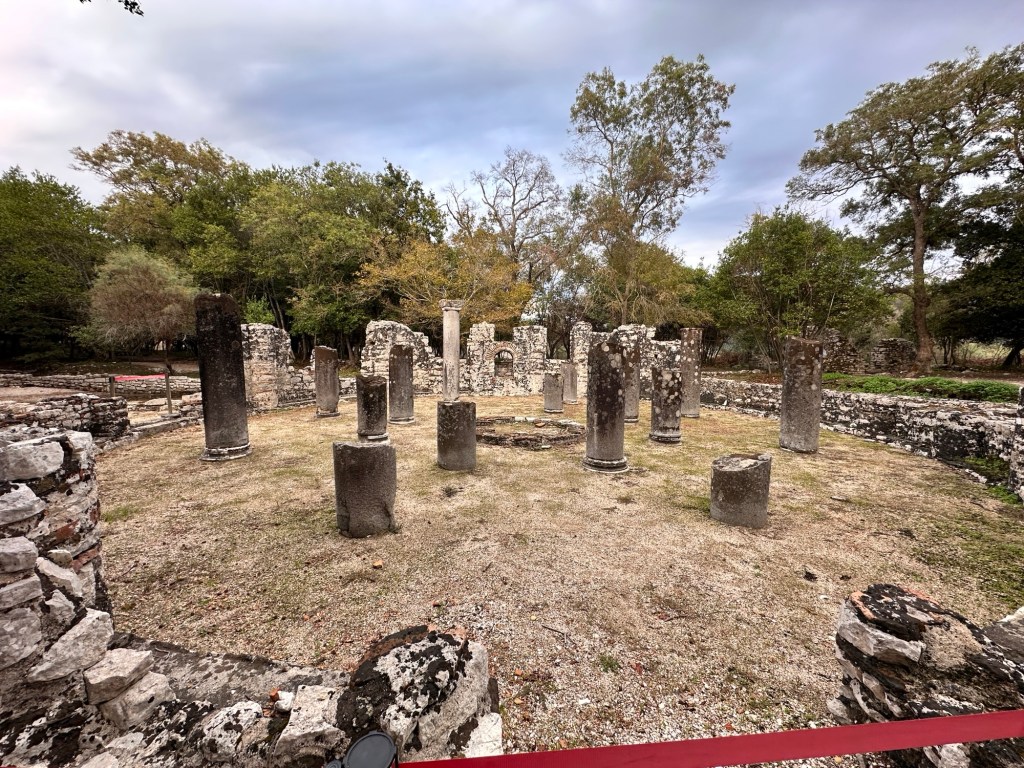
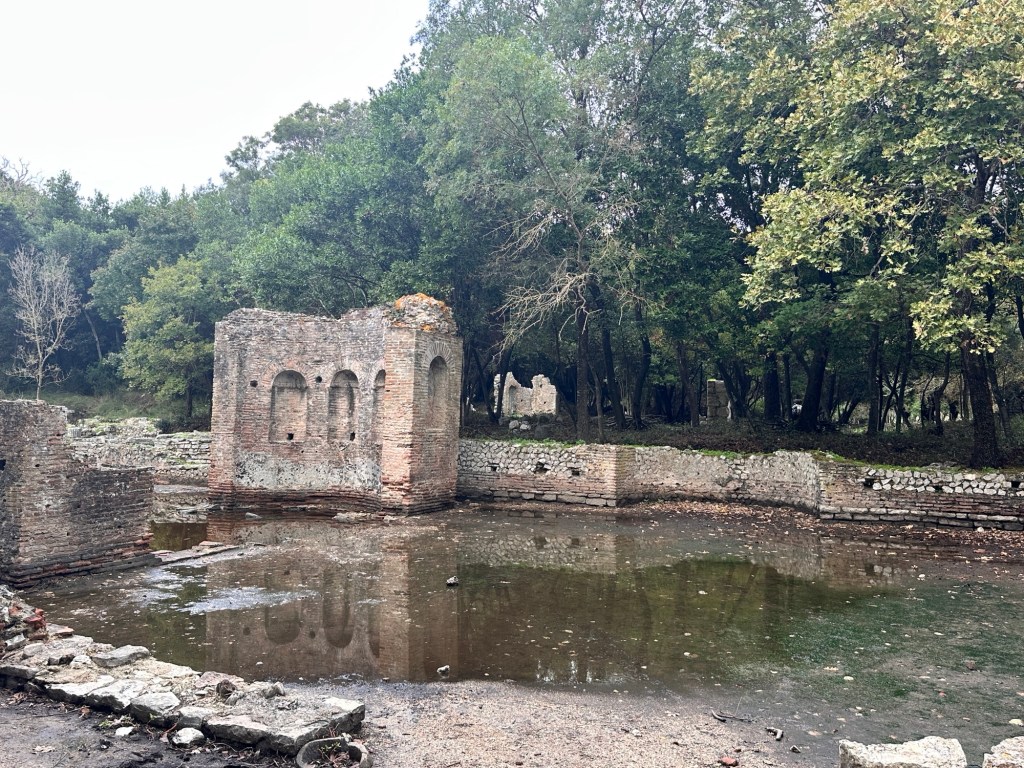
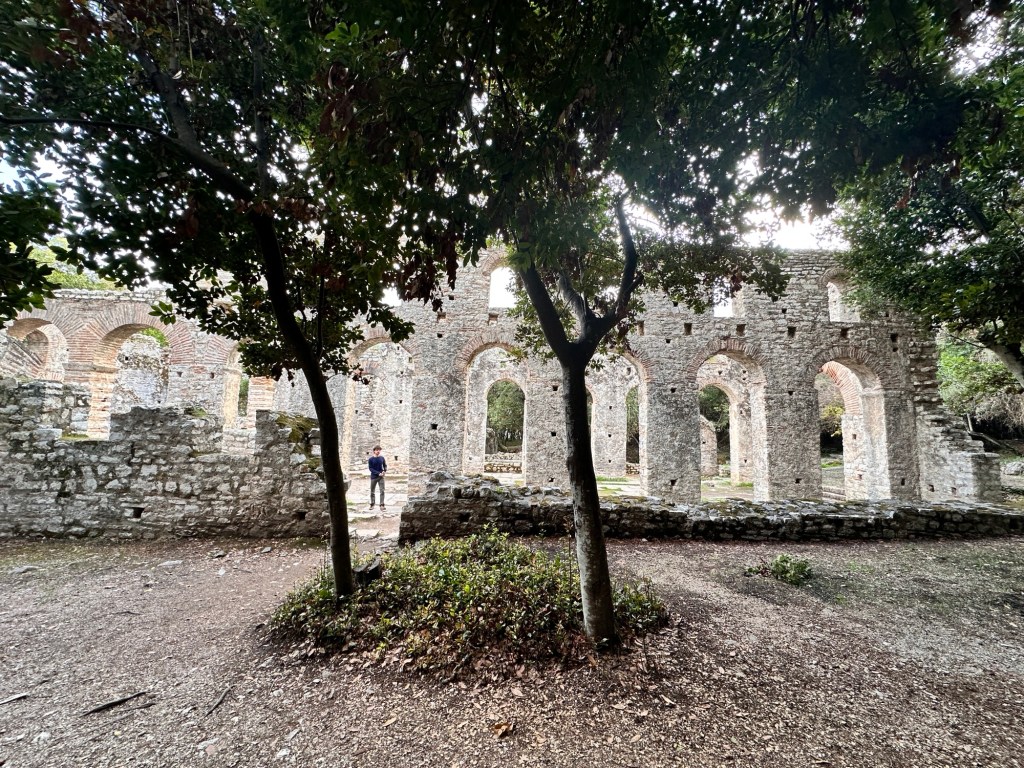
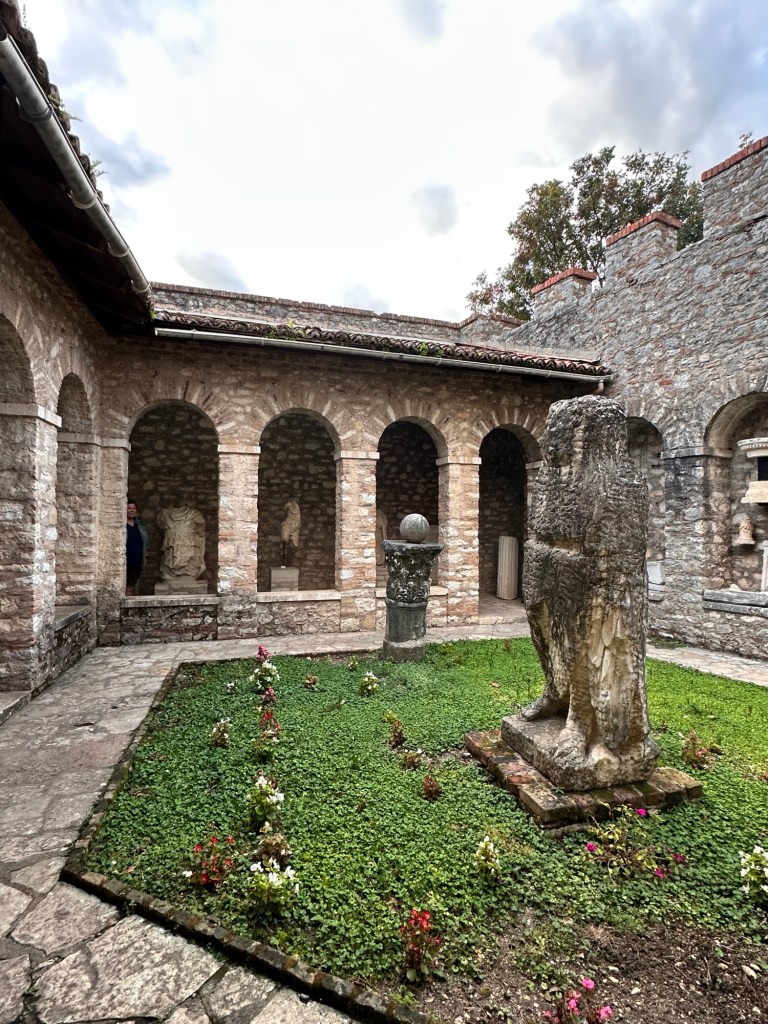
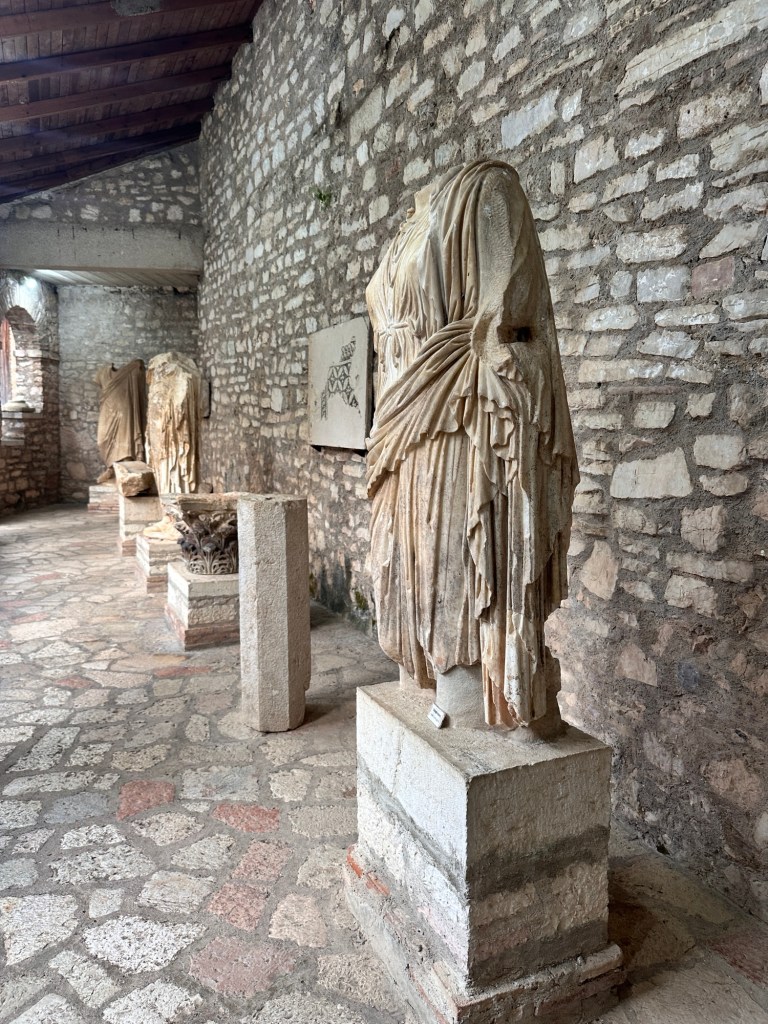
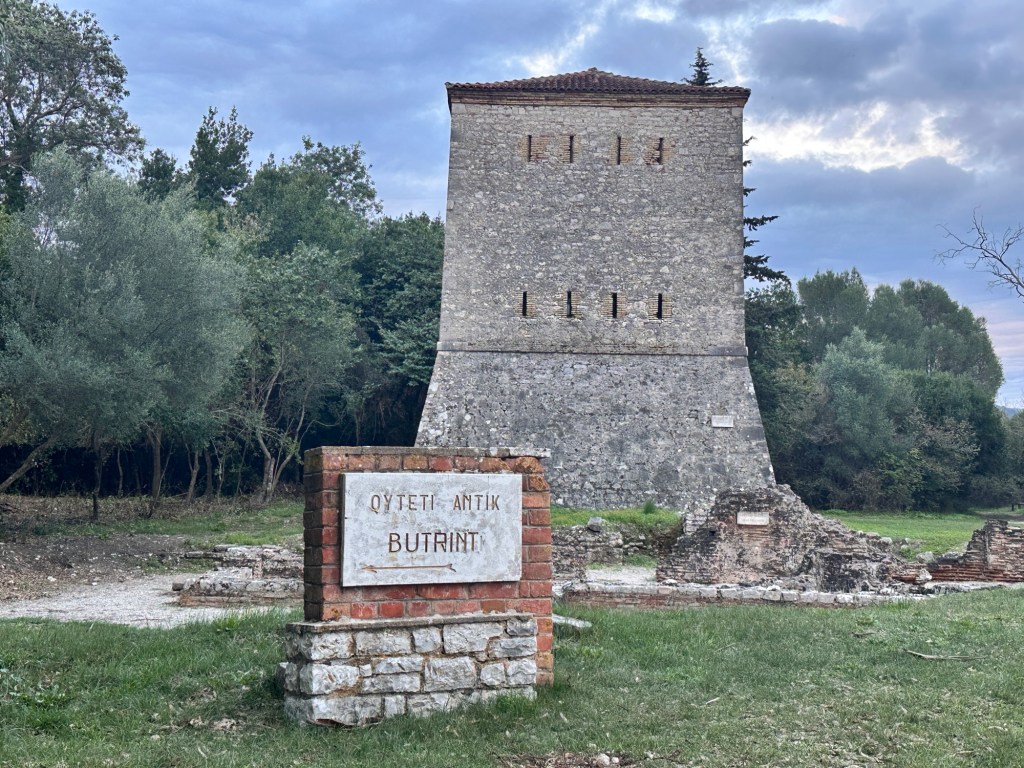
Onto Butrint National Archaeological Park to visit the ruins of the city of Butrint, excavated in 1944. This Greek city and UNESCO World Heritage Site dates back to 8th century BCE, and retains a unique testimony of Hellenistic, Roman, Byzantine, Venetian and Ottoman cultures and civilisations. After the city was flooded during an earthquake, Butrint was abandoned and laid untouched for years under the mud and debris from the quake, preserving artifacts and protecting the ruins. We had a fascinating tour putting the pieces together of this ancient city – Roman baths, amphitheater, gymnasium, baptistery, fountain, the Great Basilica, Venetian castle and tower. Very interesting.


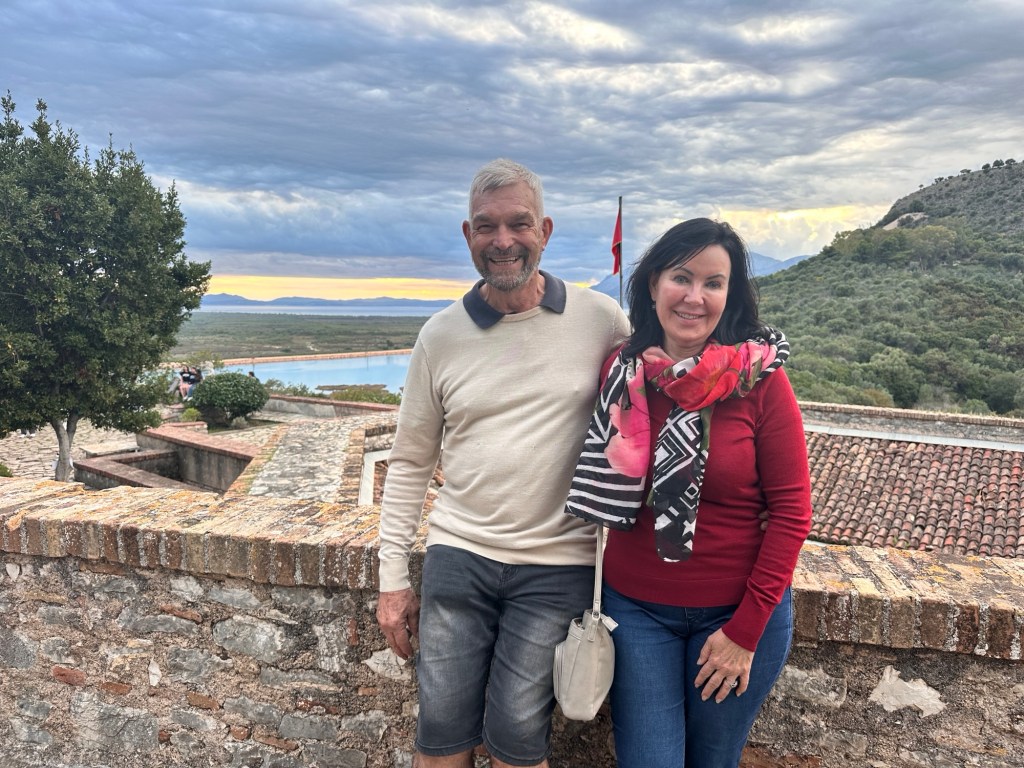
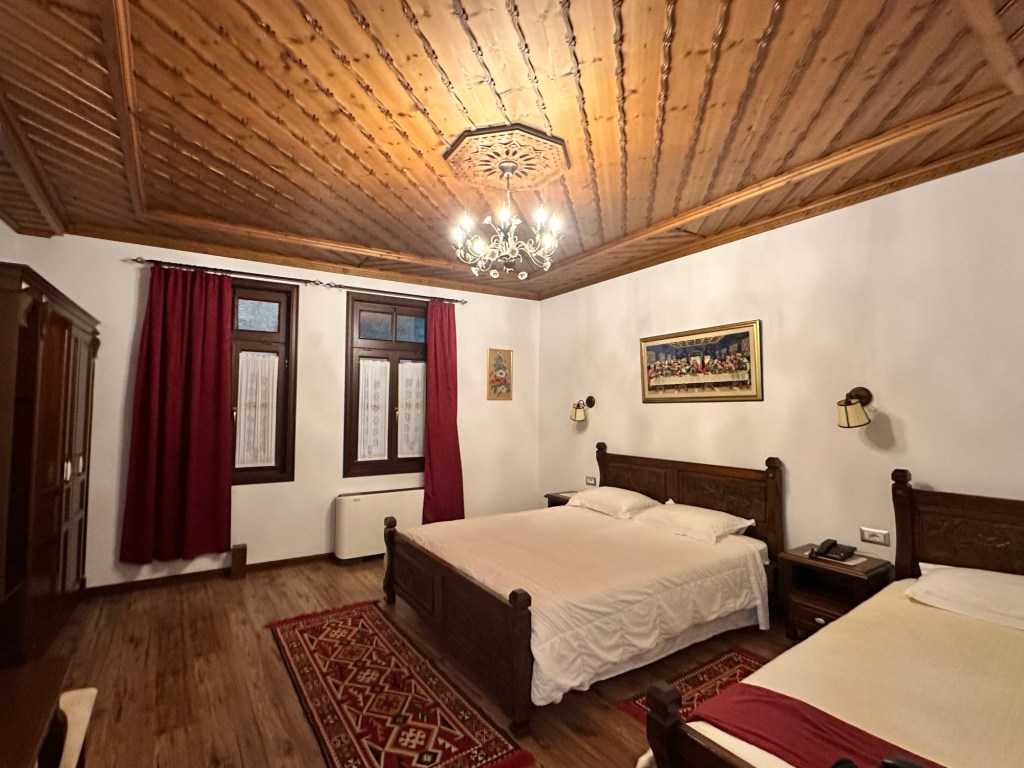
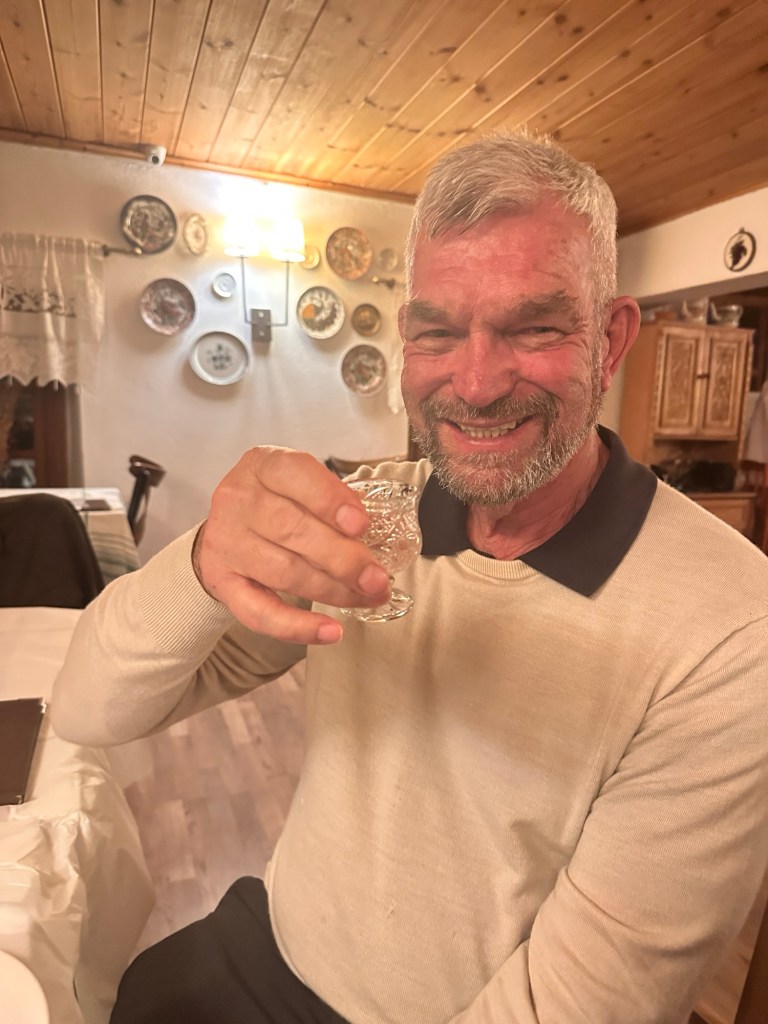
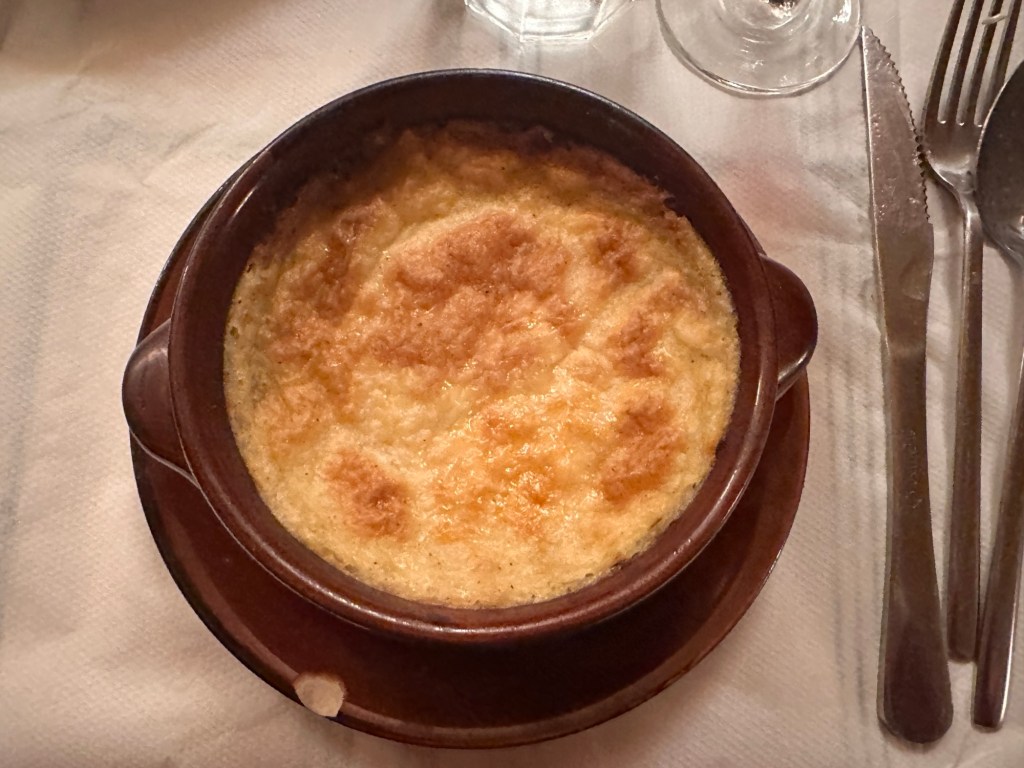
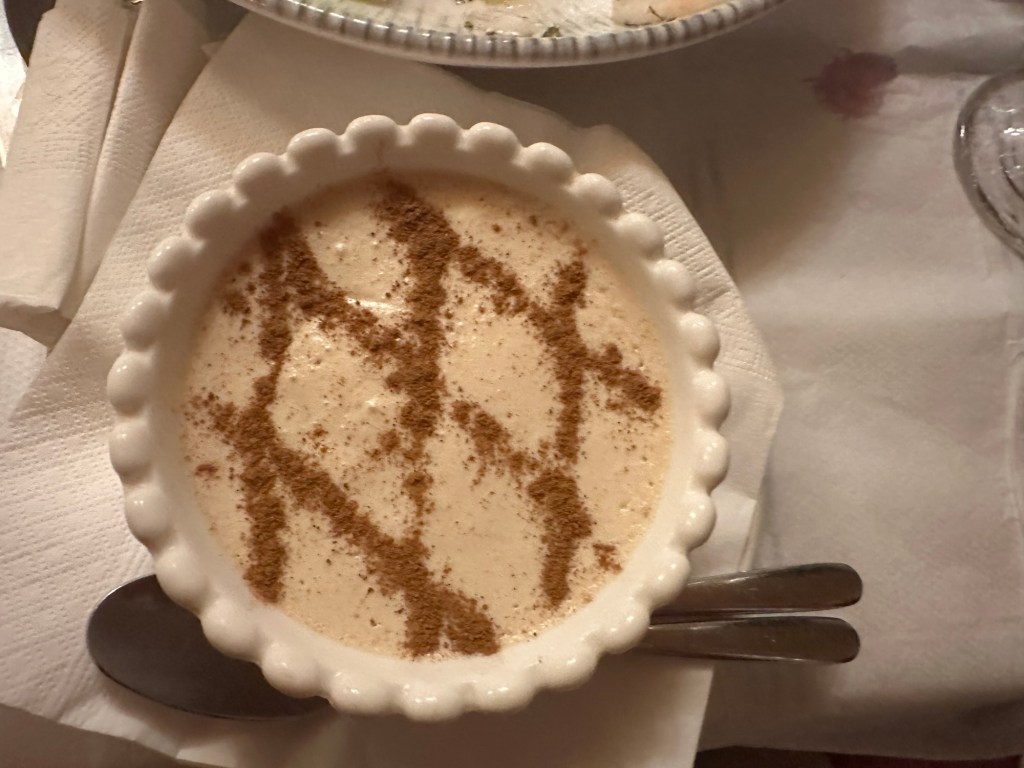
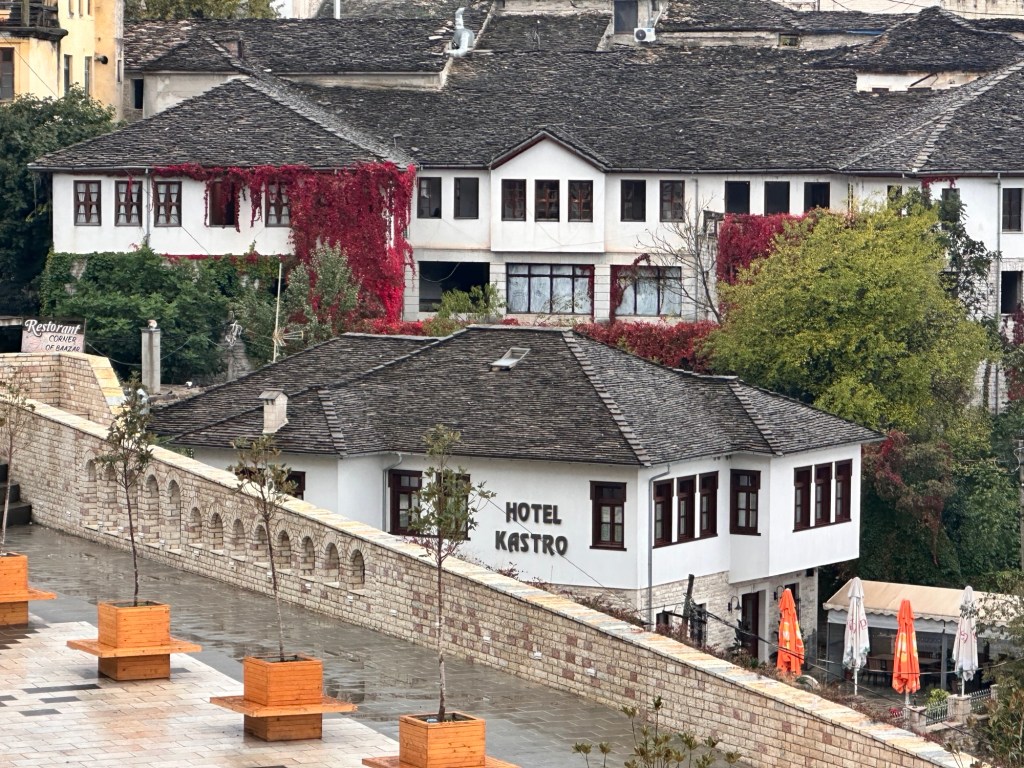
It was dark by the time we arrived in Gjiirakaster. After checking into Kastro Hotel – a quaint family run hotel, we went straight out to dinner in the old city, only a couple of minutes walk away. This traditional Albanian restaurant offered all the local delicacies – I had moussaka, Frank had a lamb casserole with a yoghurt topping. Delicious! Then I simply had to try the local dessert – Oshaf. Gjirokaster’s panna-cotta-style dessert is made with fresh, crushed figs mixed with sheep’s milk and cinnamon. To die for! Plus some local raki! Raki is a throat-tingling spirit brewed all over the Balkans from plums, figs and pears to a strength of at least 40 per cent alcohol.
Day 42
Wednesday 22nd October
Gjorekaster
14-19 degrees, drizzling
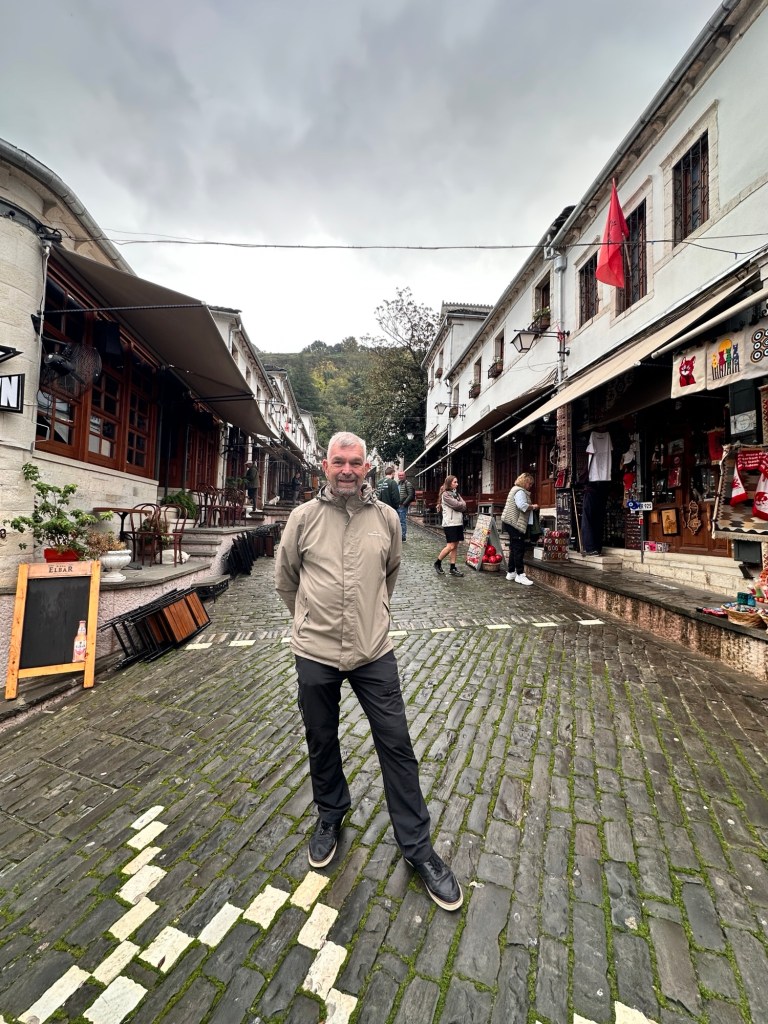
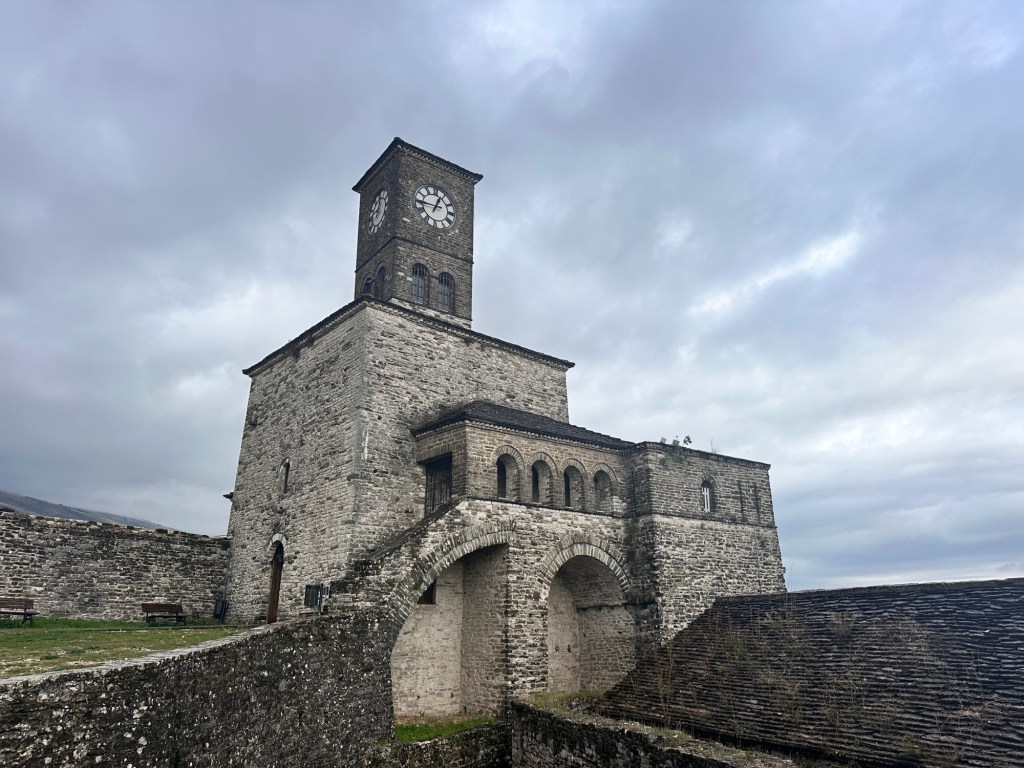
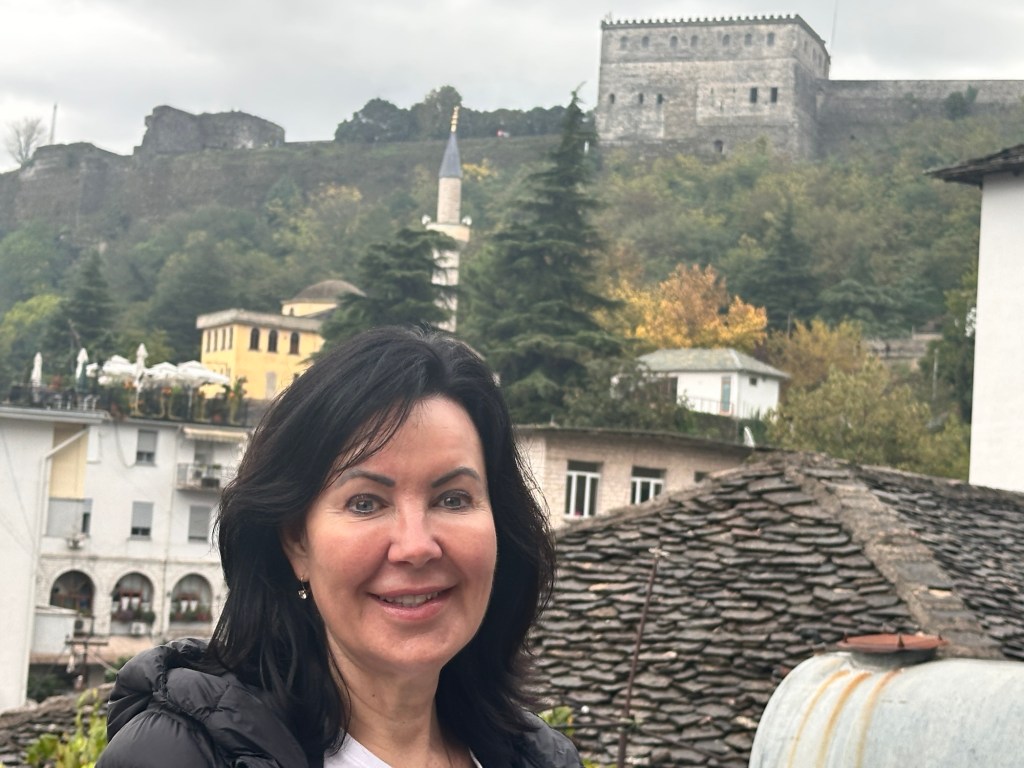
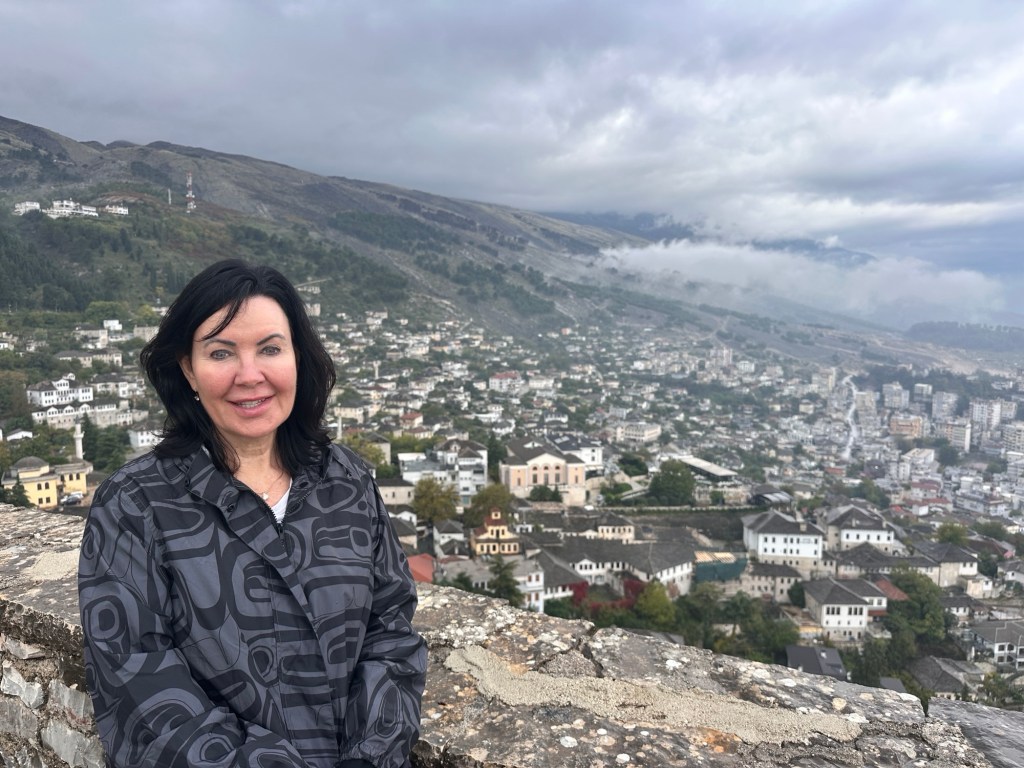
The day started with a walking tour of Gjirokaster for 1 1/2 hrs. Gjirokastër’s name draws from the Greek word kástron (castle), a nod to the 12th-century fortifications that still dominate the city. Steep cobbled streets wind through its Old Town, a UNESCO World Heritage Site containing 15th-century neighbourhoods and 19th-century Ottoman mansions. Originally built during Ottoman rule, the city’s first bazaar was destroyed during a fire in the 19th century; it was rebuilt again soon after, and now anchors the Old Town. Shops, cafes, wine bars and restaurants line the streets.
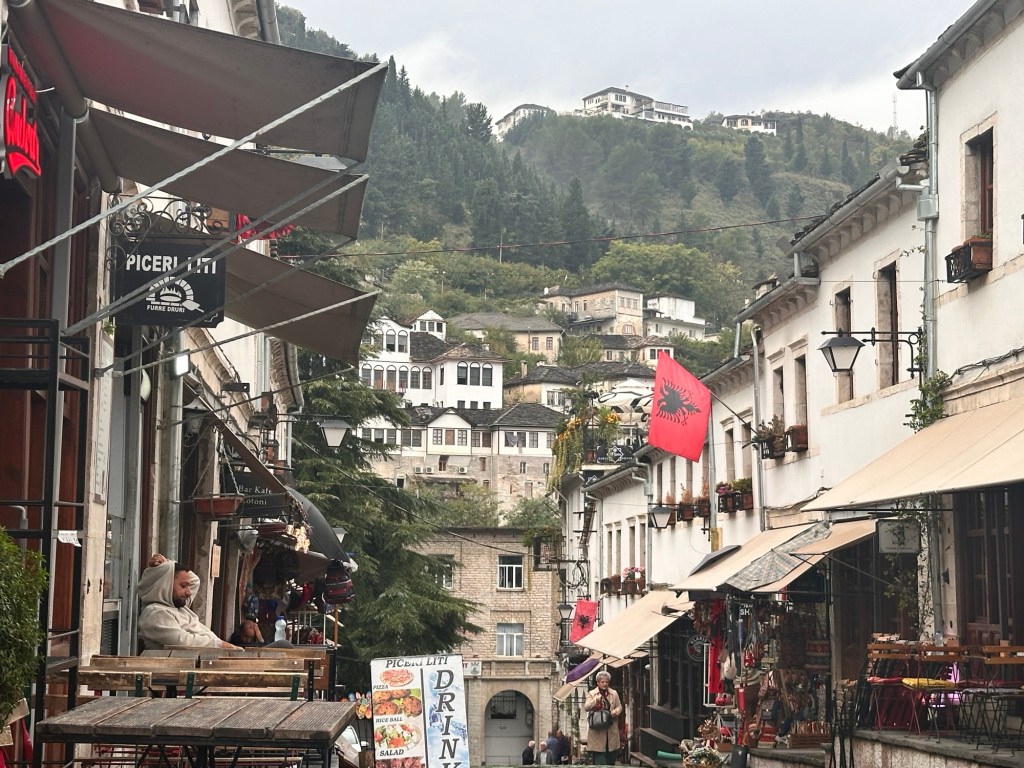

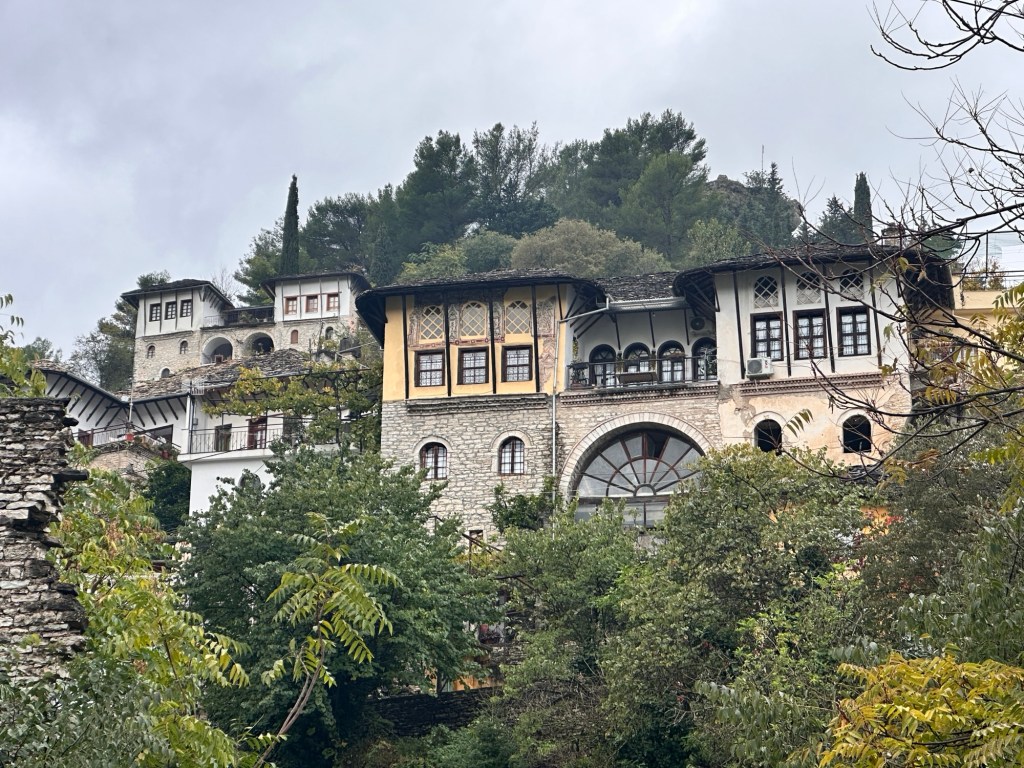
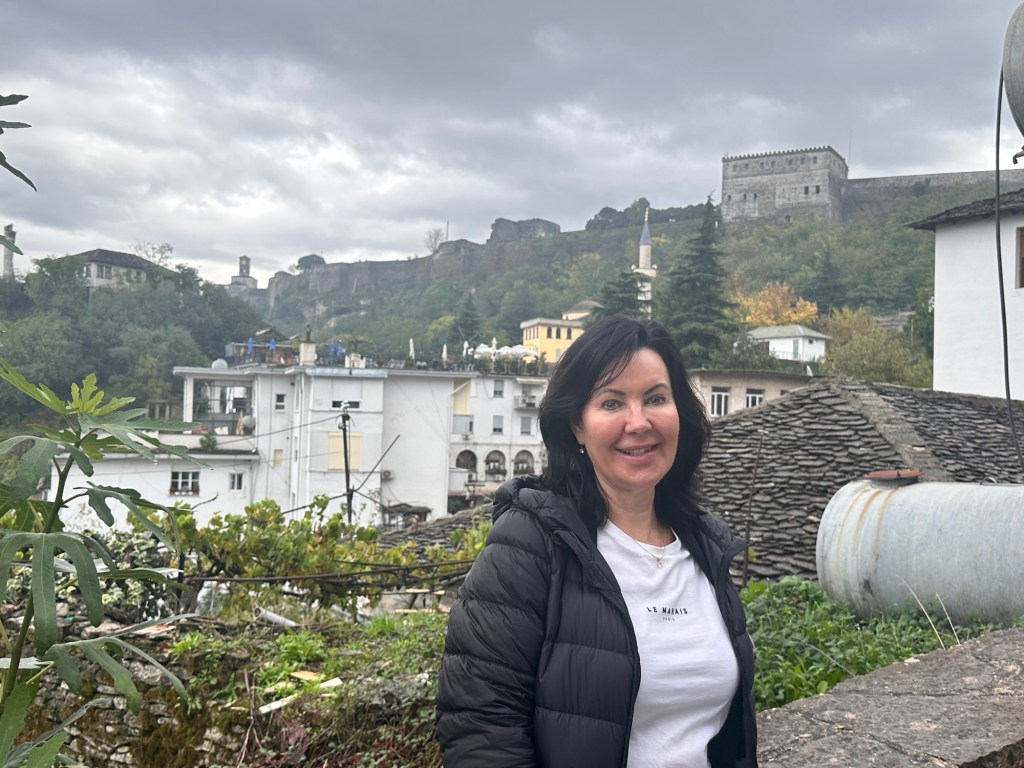

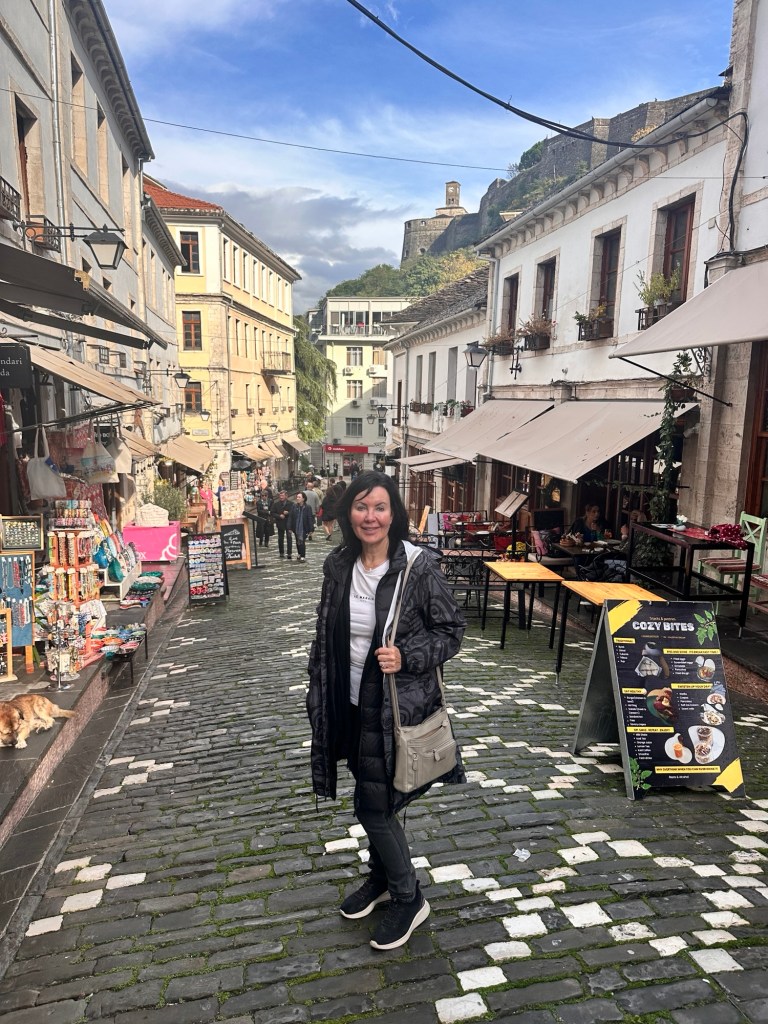
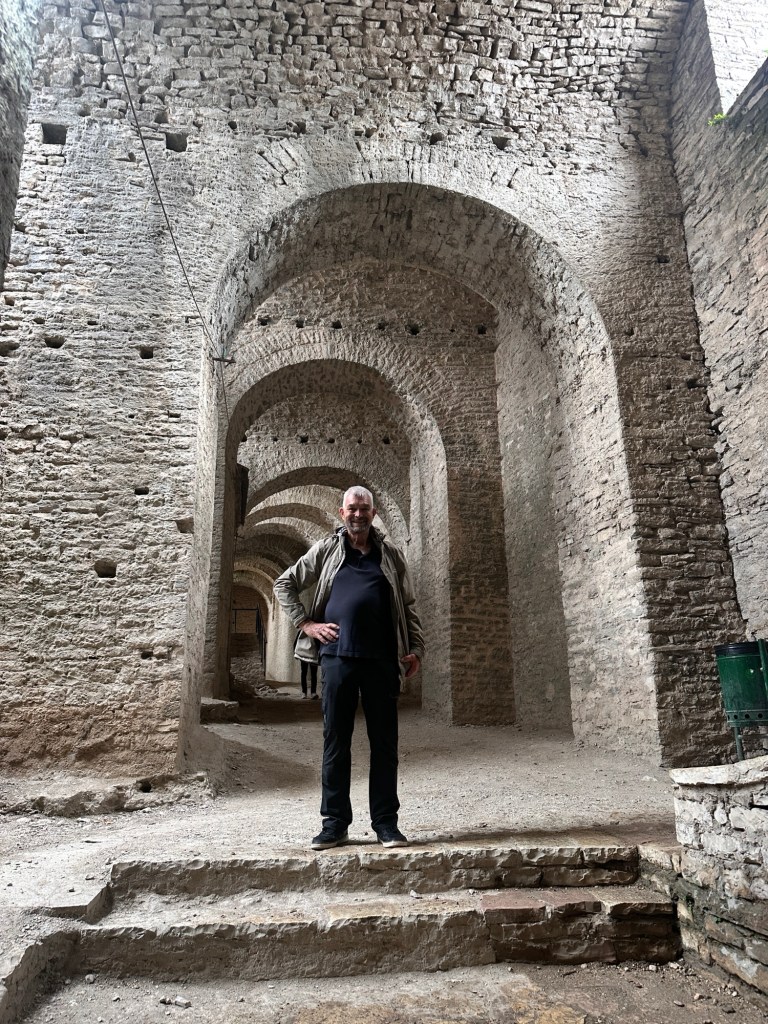
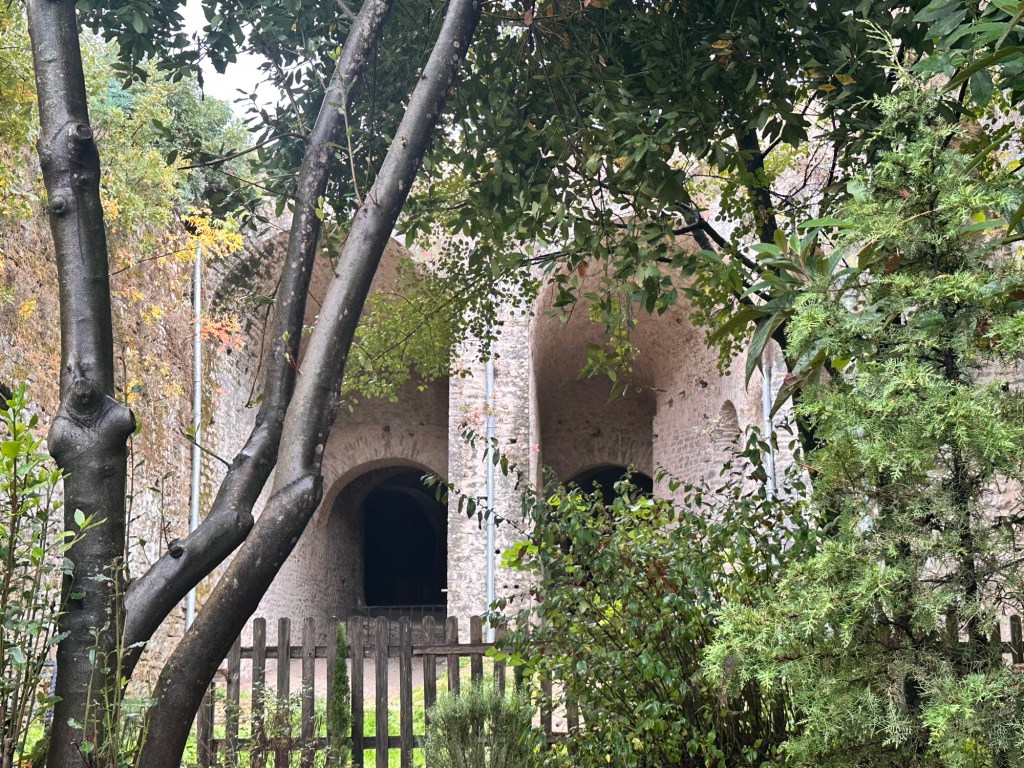
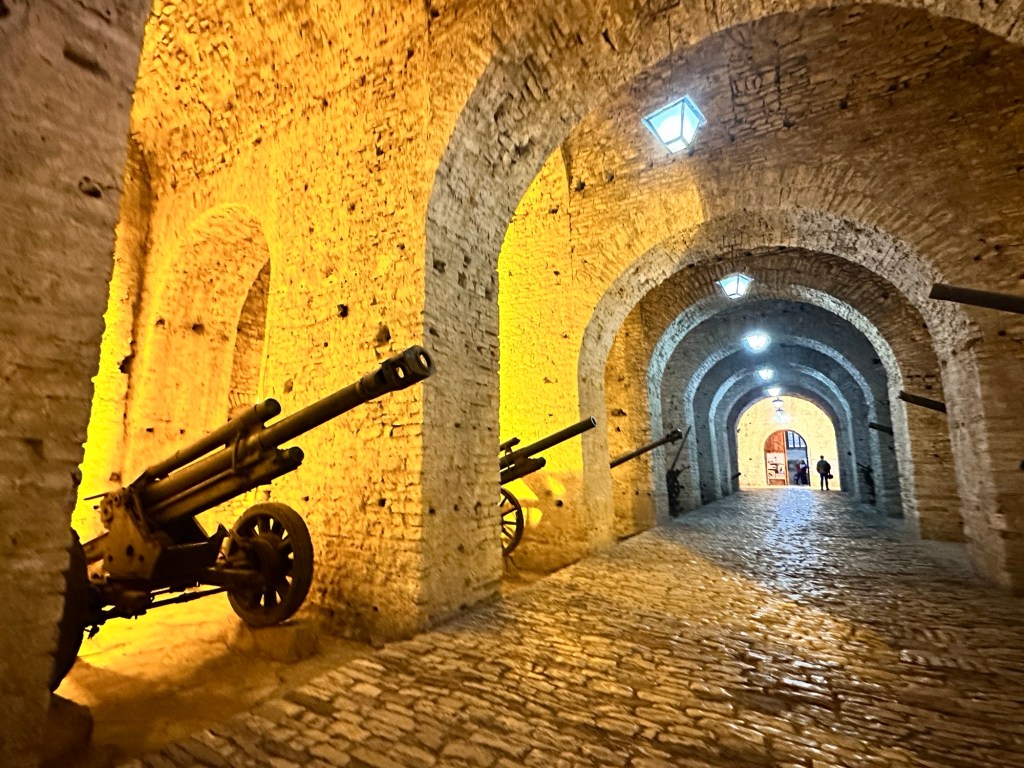
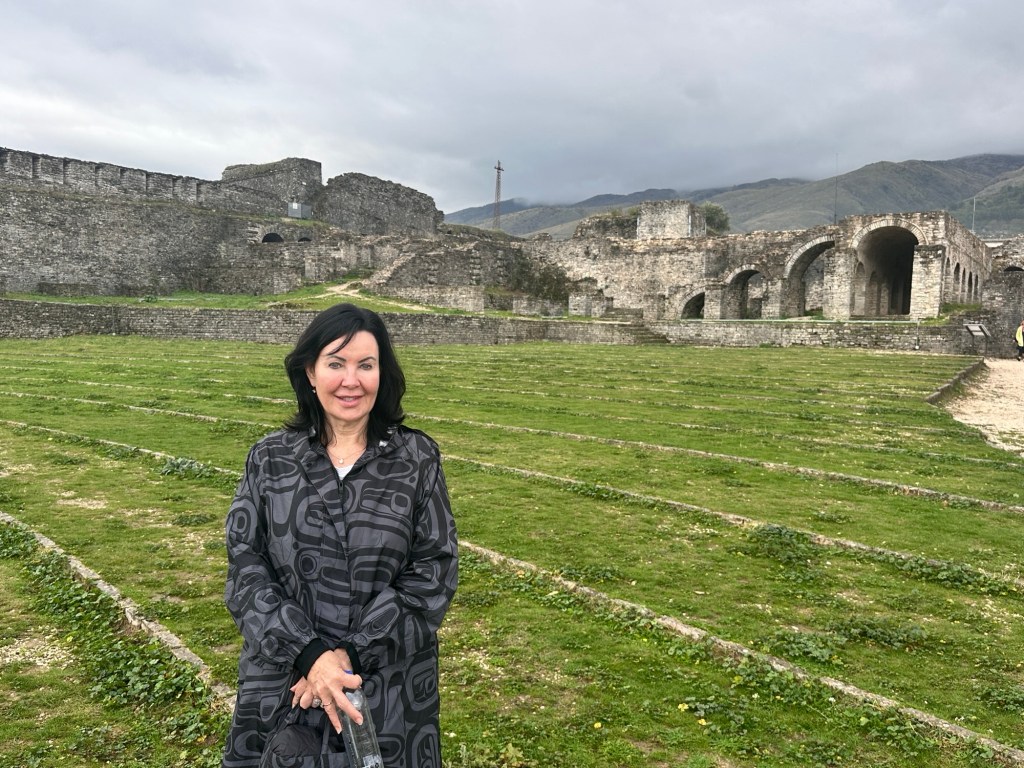
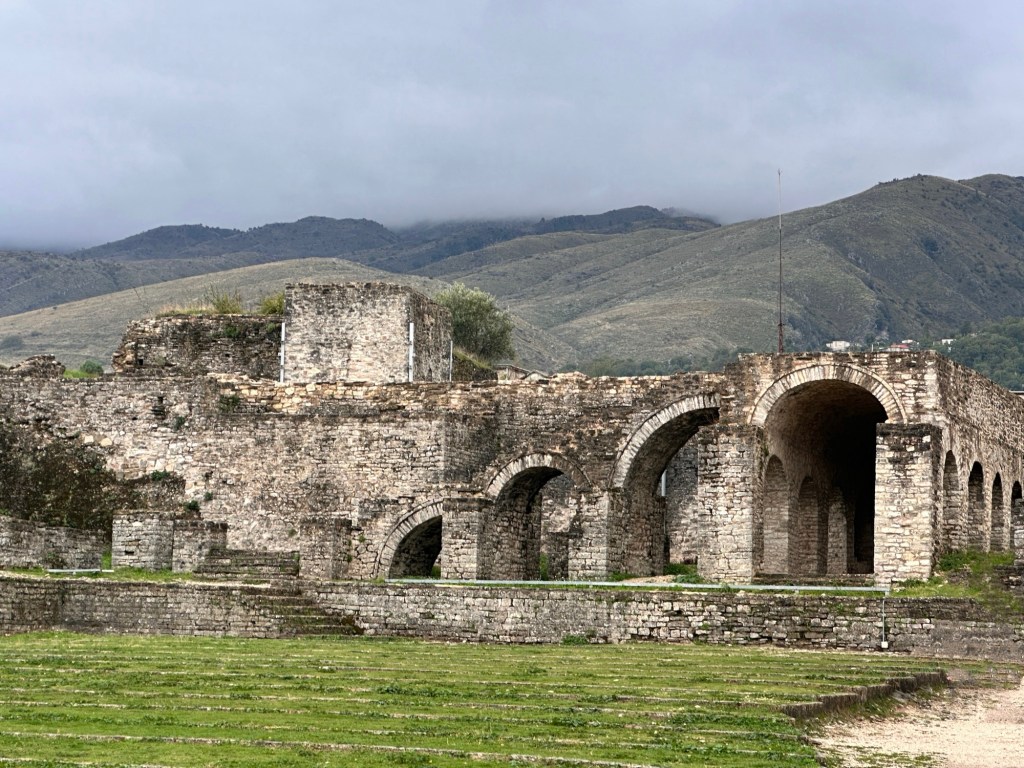
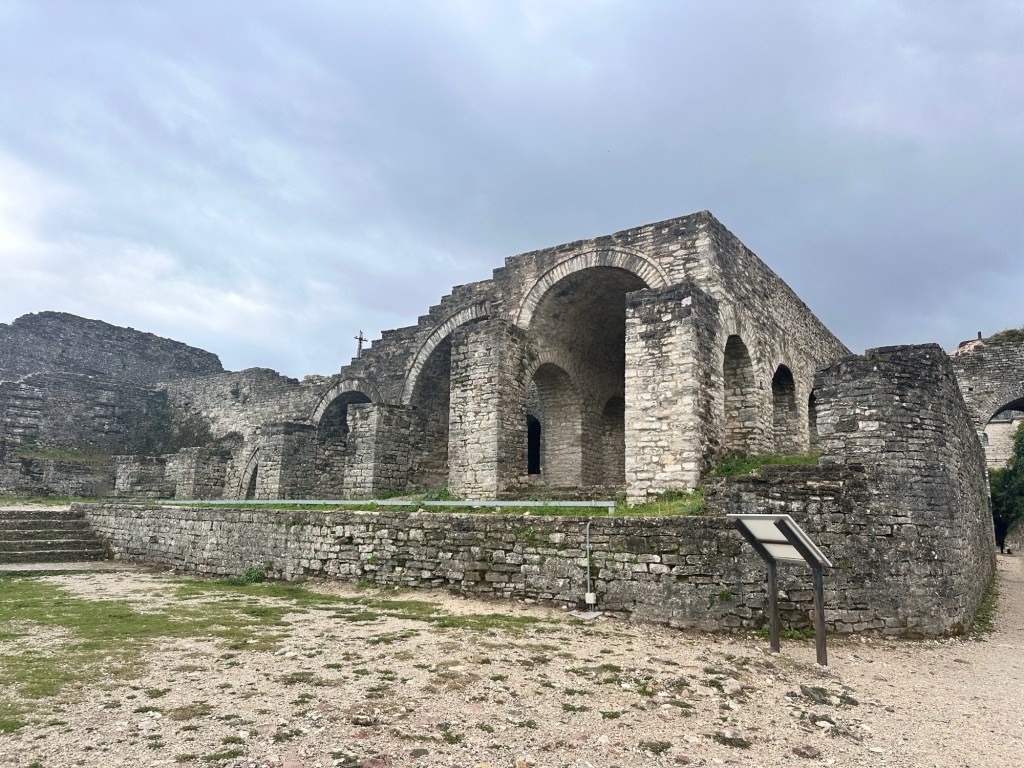
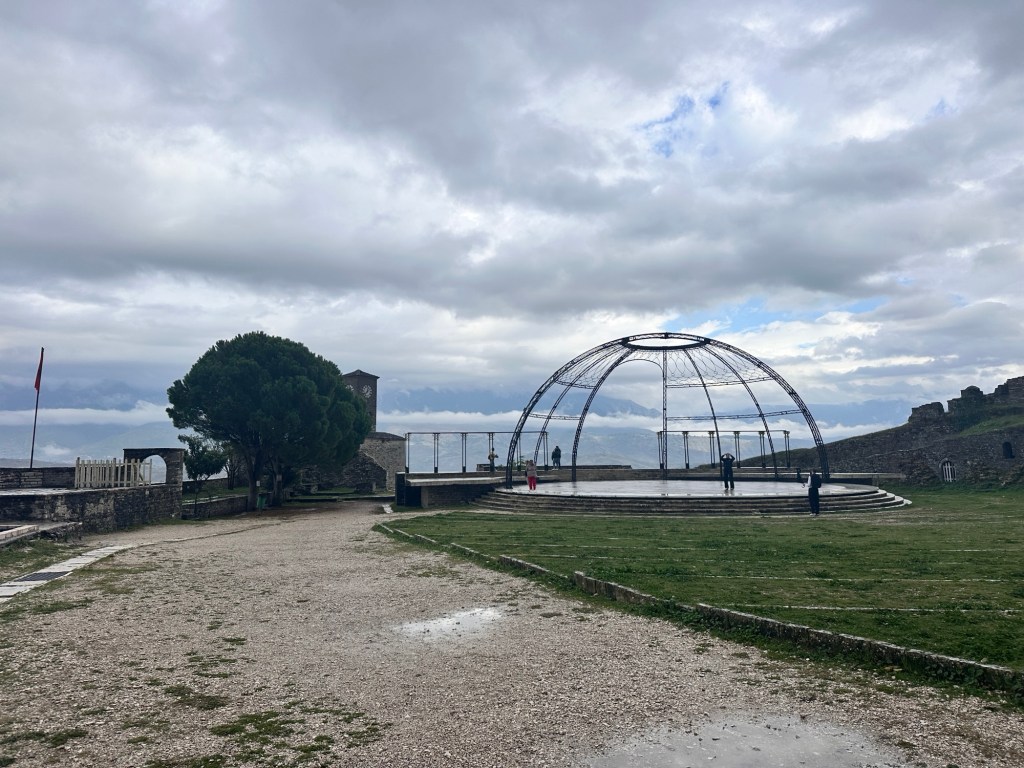
Accessed via steep steps up from the Bazaar, Gjirokastër Castle is located on a towering precipice and has overlooked the Drinos Valley since the 12th century. The settlement inside the fortress walls was added by Ottomans in the 15th century and, in the early 19th century, the castle was fortified further by the regional ruler Ali Pasha. The castle is huge and has been very well preserved.
A light lunch was all we needed – the local bakery making byreks beckoned – either spinach, cheese or onion in phylo pasty. Only 100 Lek each, or €1. I also just had to another oshaf dessert – my last opportunity!
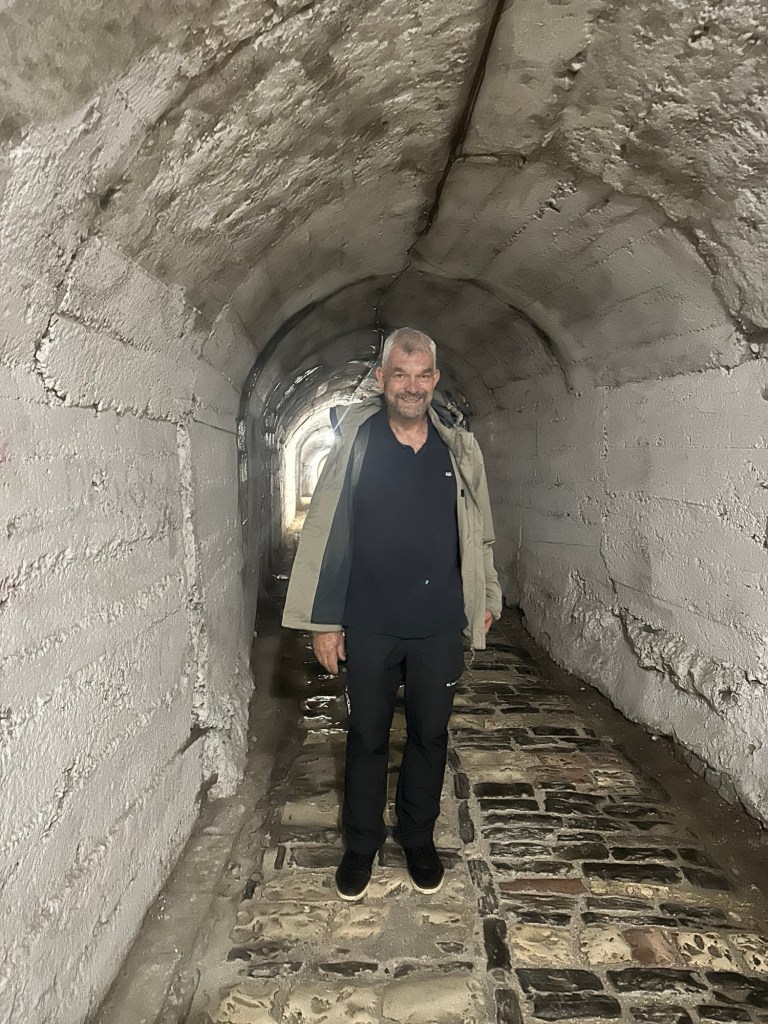
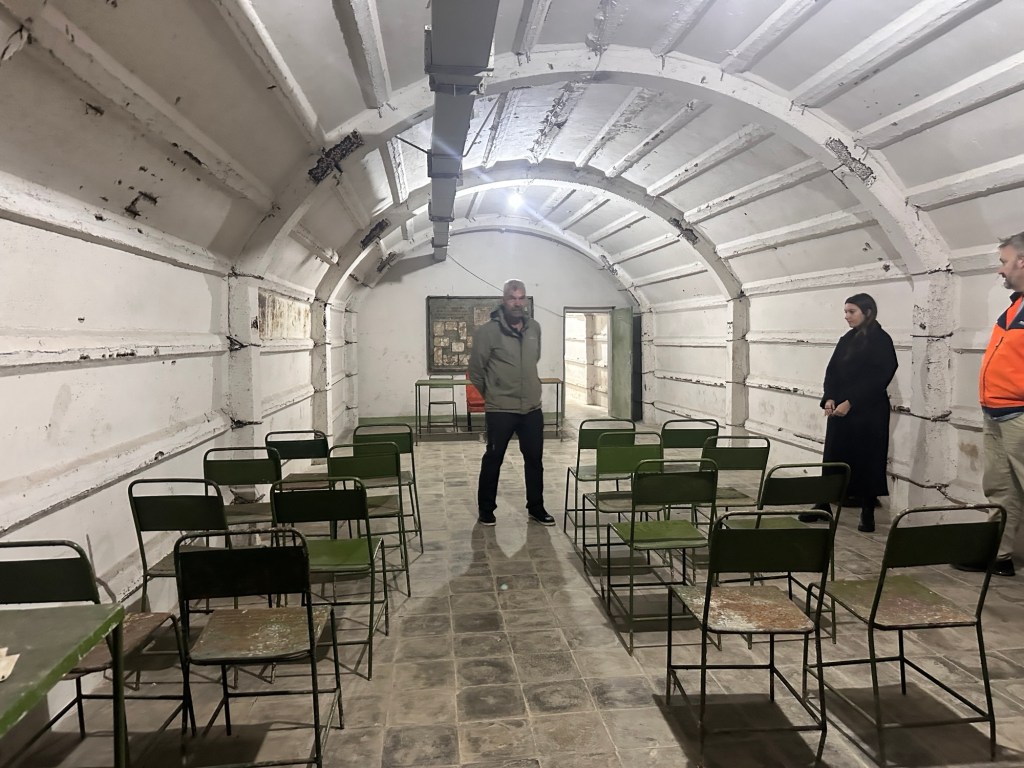
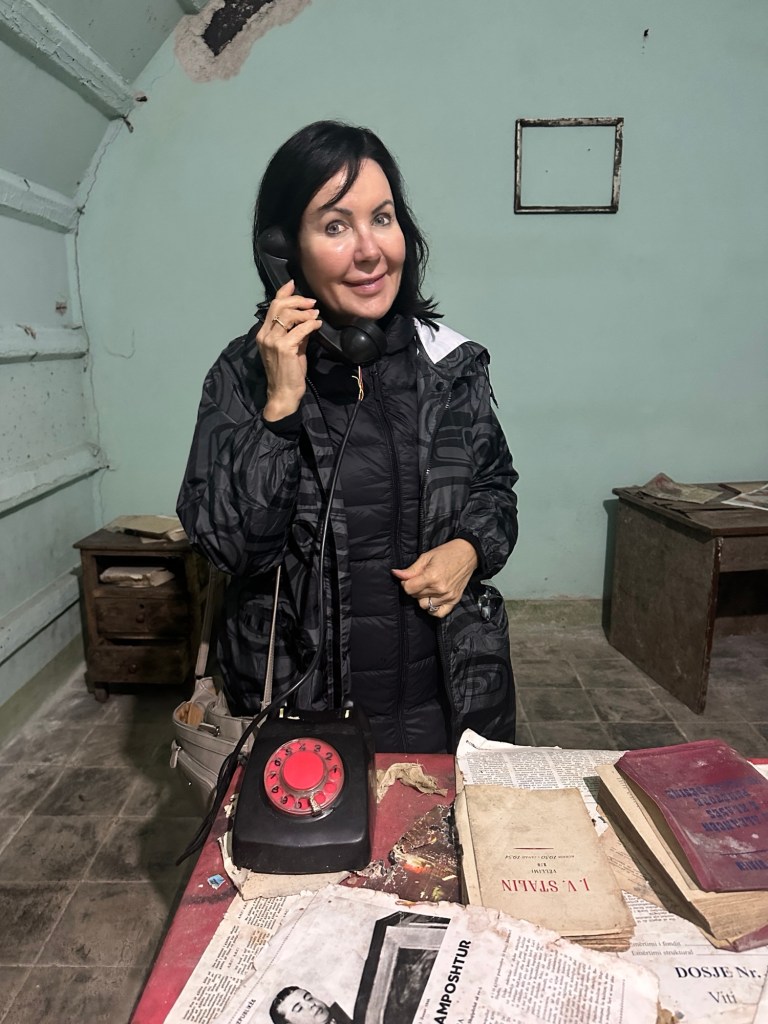
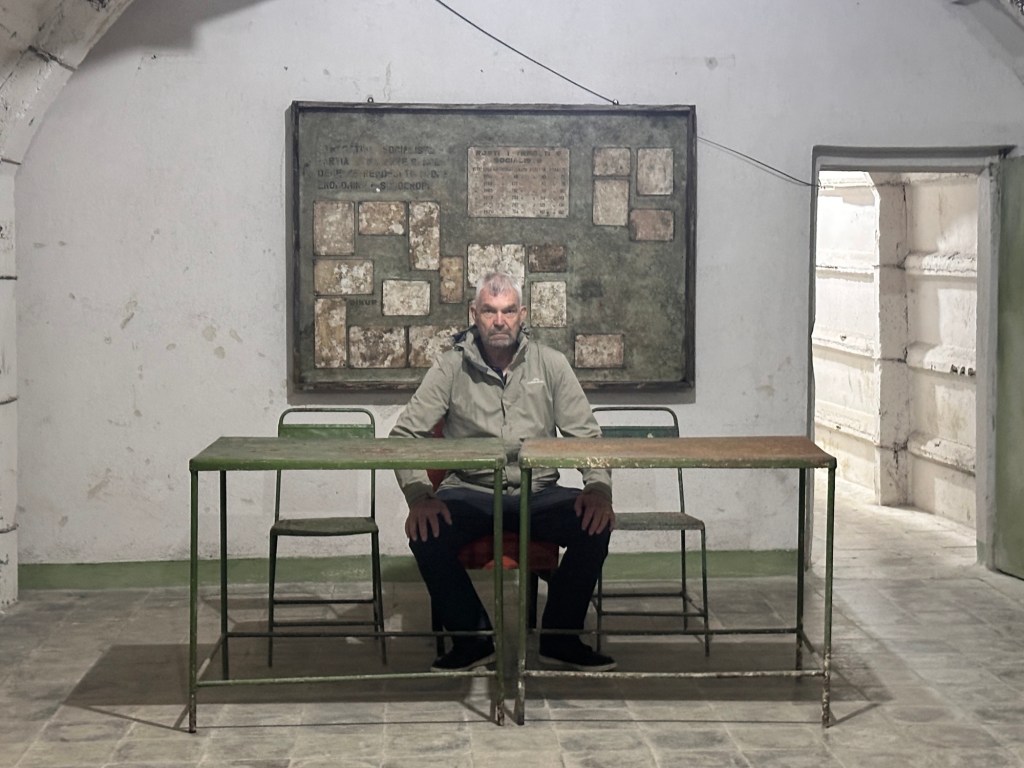
We also did a tour of the Cold War Tunnel – once we found it! The largest of the 99 bunkers that burrow below Gjirokastër, this tunnel was constructed during the government-led nuclear paranoia of the 1970s. According to plans at the time, only 300 Communist Party members and their families would have access to the 59 concrete rooms spread across the 800 metres long tunnel in the event of nuclear war. The project was completed in total secrecy, meaning that most locals only found out about the tunnel’s existence once the regime changed in 1991. Today, there are only a few original furnishings left inside the bunker spaces, including telephones and a rusting filtration system, among the low vaulted ceilings. Inside, displays shed light on plans to continue party rule from the bunkers: the space includes a decontamination room (in the event of nuclear war), a school, a law court and an interrogation cell. Only 3 toilets – one for the president and the mayor, and two for everyone else. No showers were evident! Gjirokaster was the birthplace of former leader Enver Hoxha.
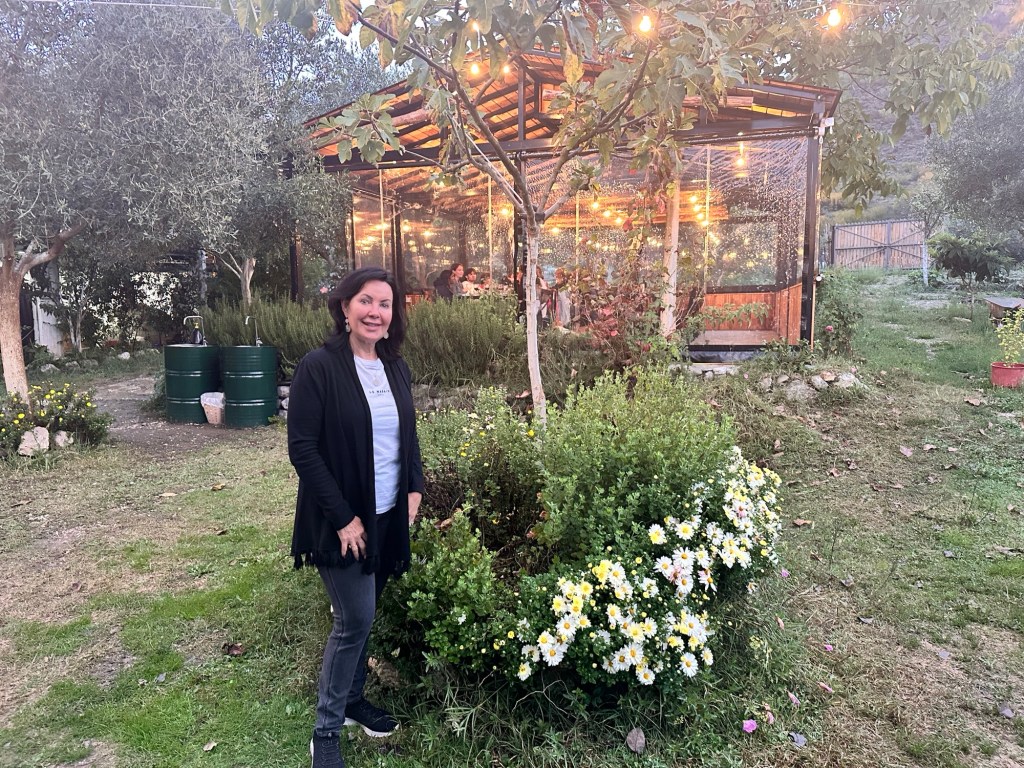
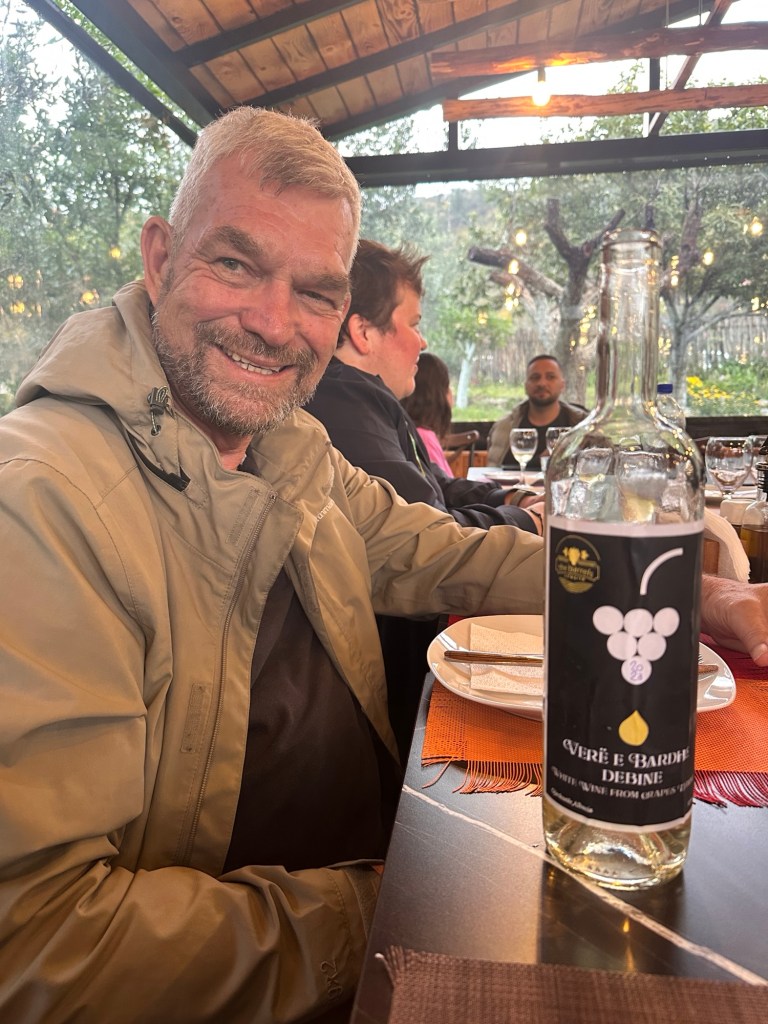
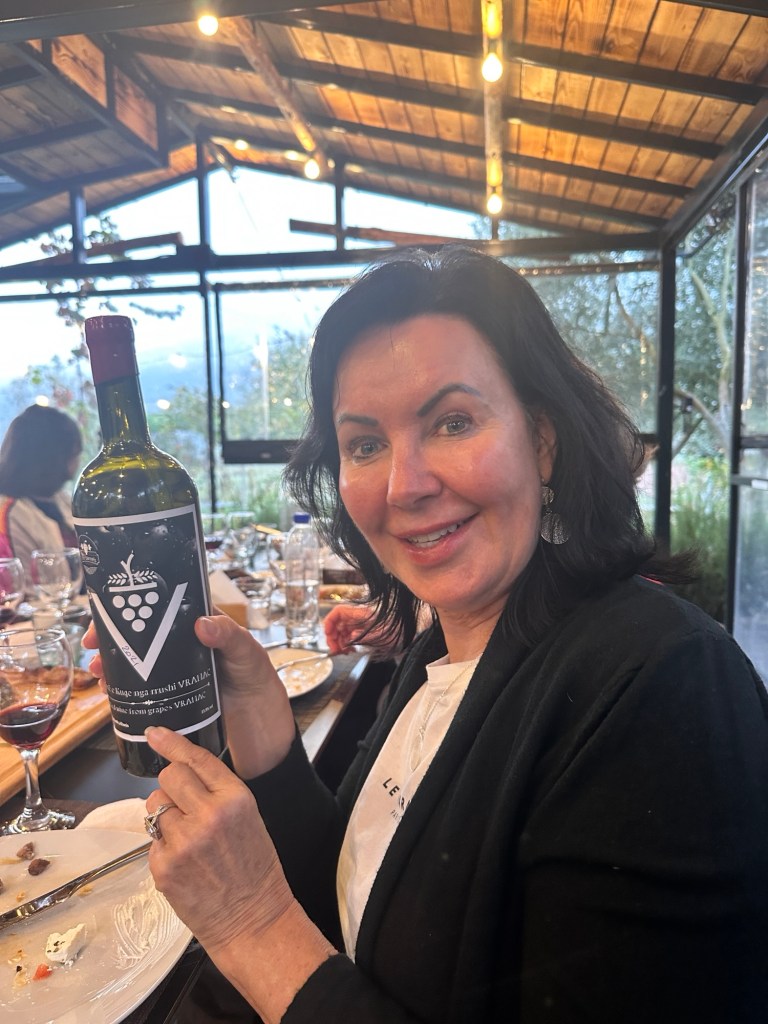
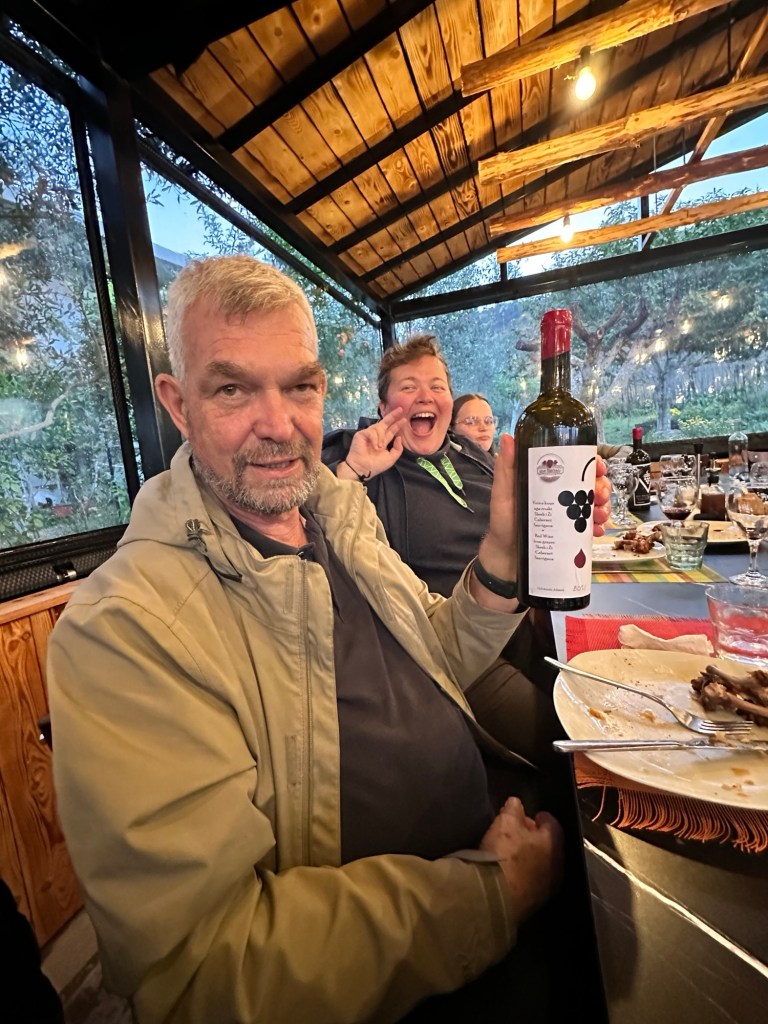
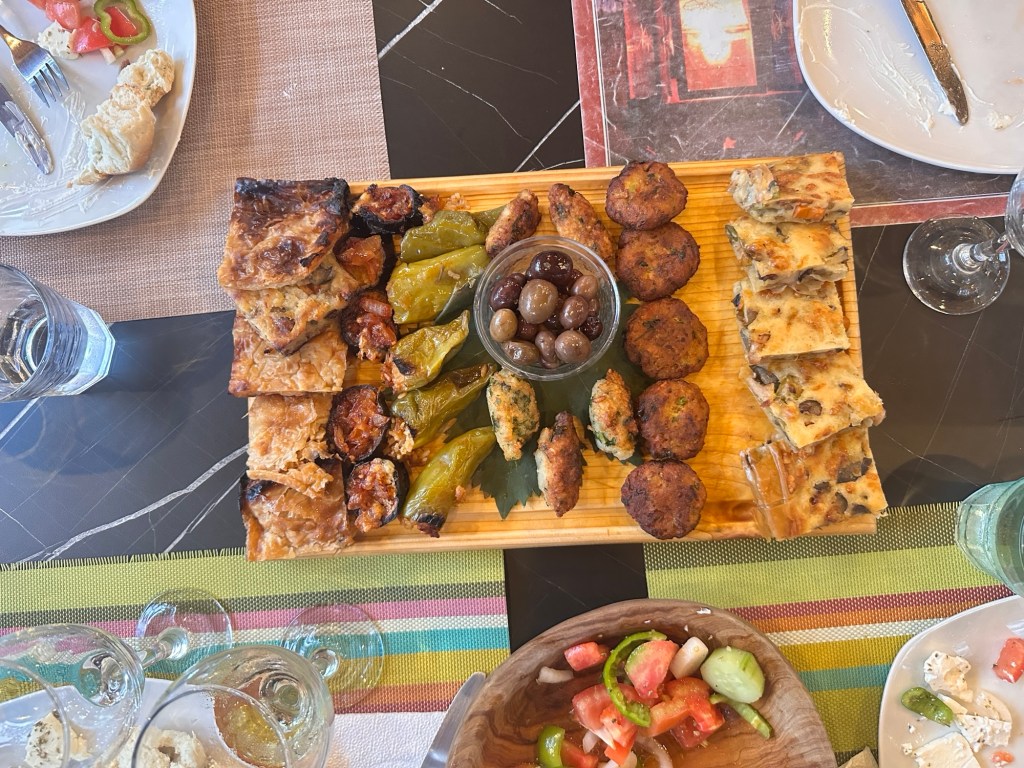
At 4pm we transferred to a local vineyard, passionately run by a family deeply rooted in winemaking, traditional rural cuisine, and hospitality. This was our Albanian foodie moment. We had tastings of both white and red wines, each paired with regionally sourced accompaniments and fresh farm fruits. A bonus was some raki at the end – local liqueur made from grapes, and is 45-50% alcohol. Not for me! Frank of course liked it! Raki is meant to be sipped – this allows the tongue to register its heat and fruity flavour.


Day 43
Thursday 23rd October
Gjirotasker to Berat
14-22 degrees, sunny
Travelling north through mountains and fertile valleys to Berat, we passed through thousands of olive trees – olive production is one of the main industries here. Picking season has just started. Orange, lemon, apple trees, are dotted everywhere, plus small crops of spinach, cabbage, and corn, also grape vines.
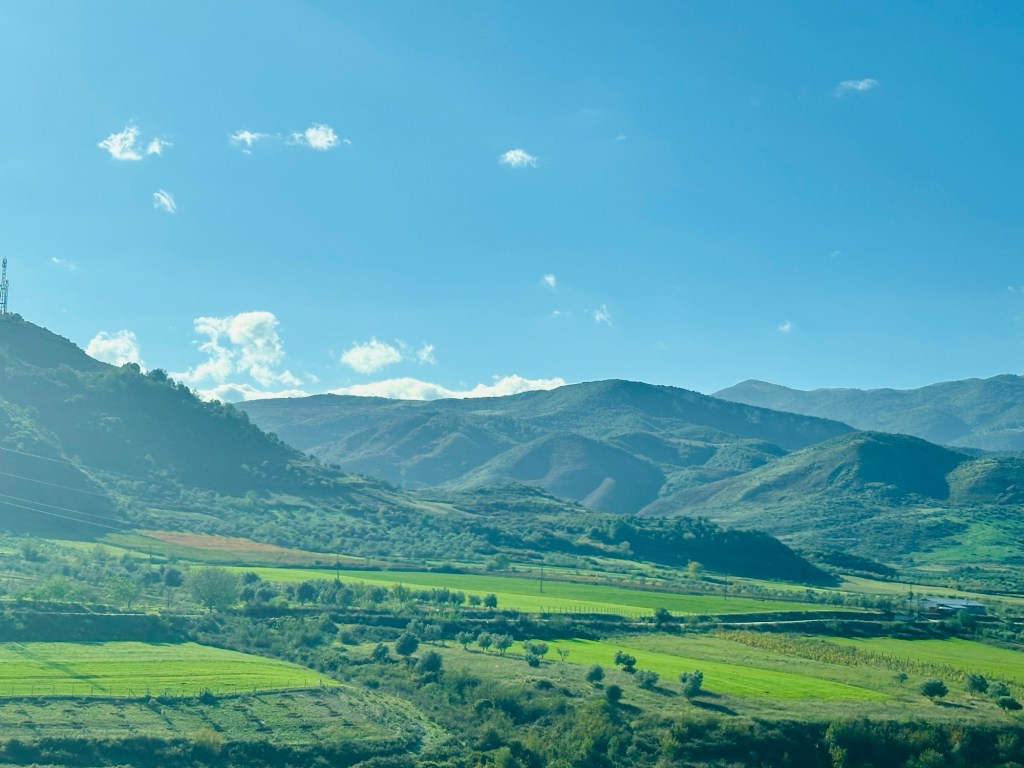
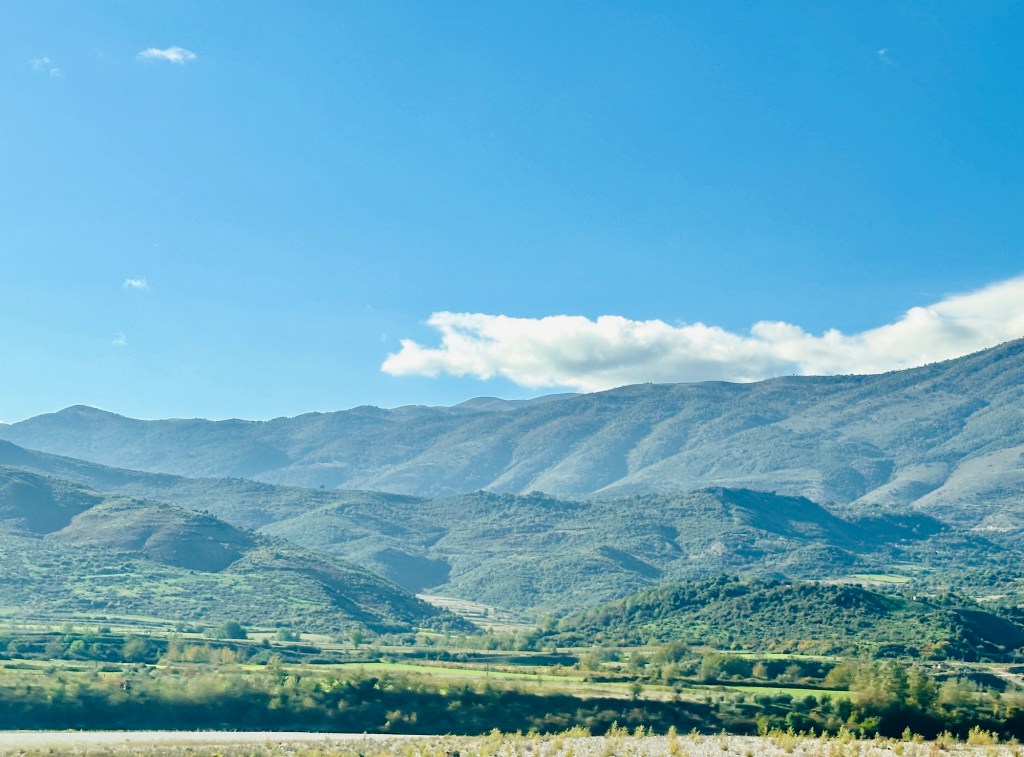
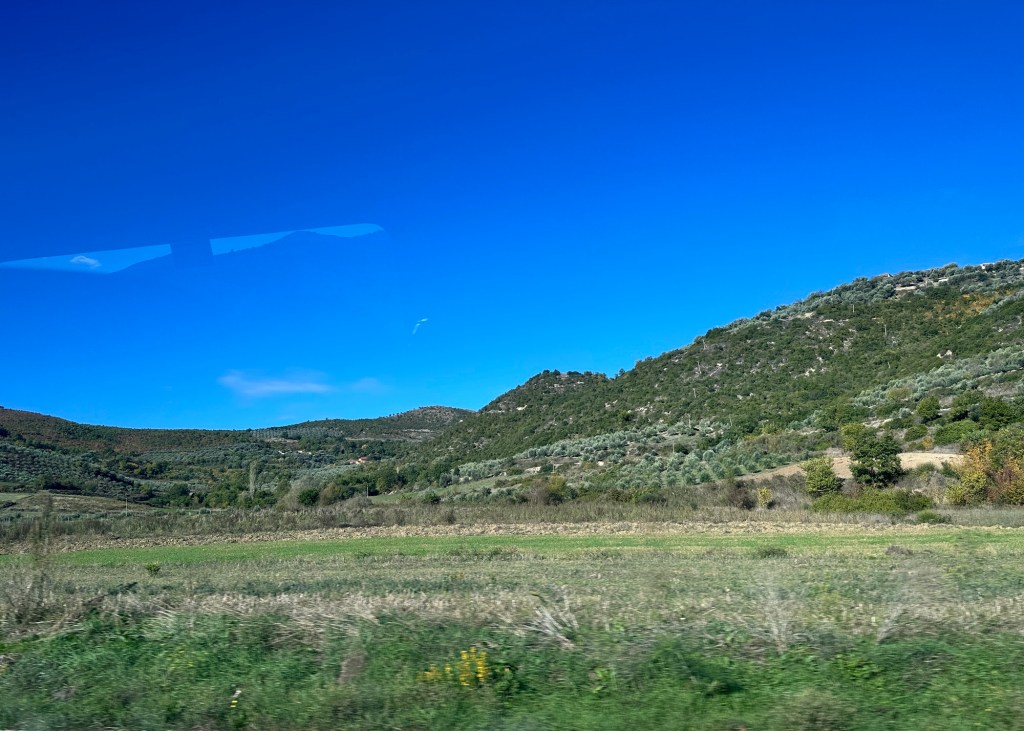
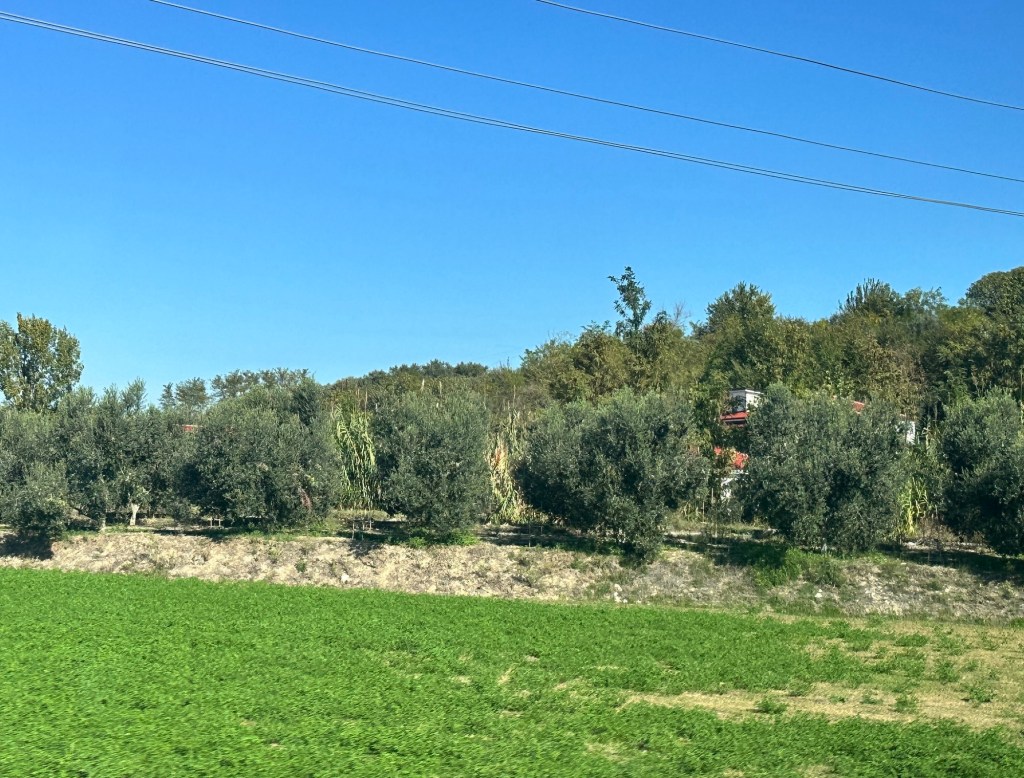
We arrived to the riverside city of Berat just in time for lunch at a gorgeous little restaurant overlooking the mountains. Ready for a walking tour of Berat.


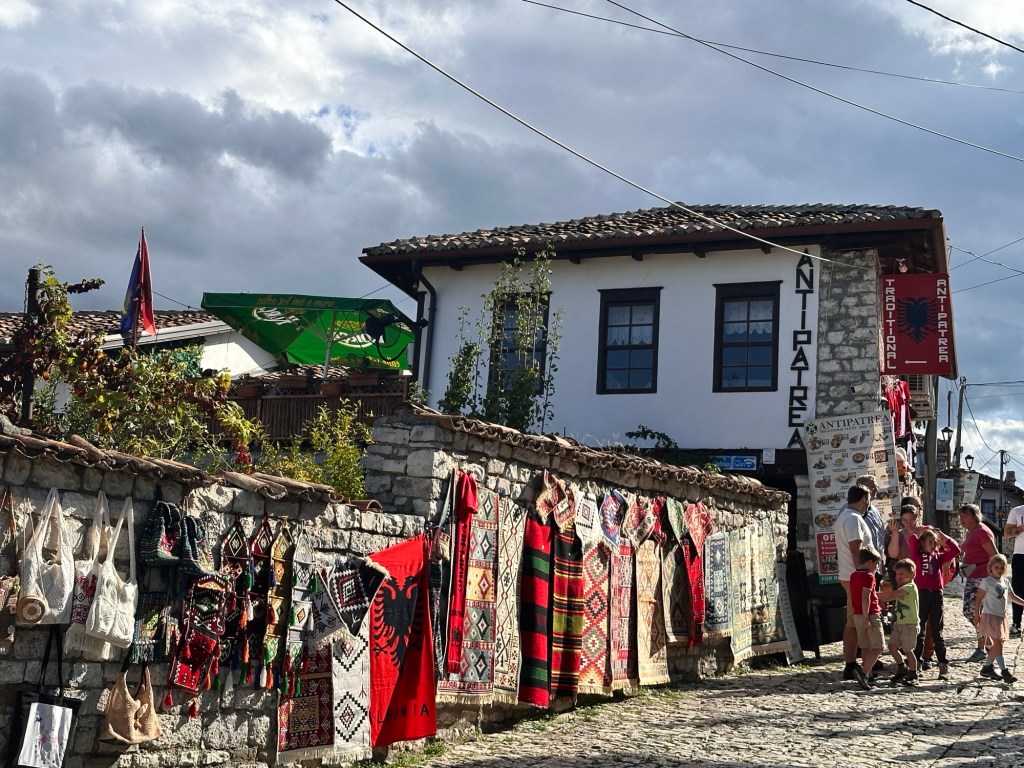
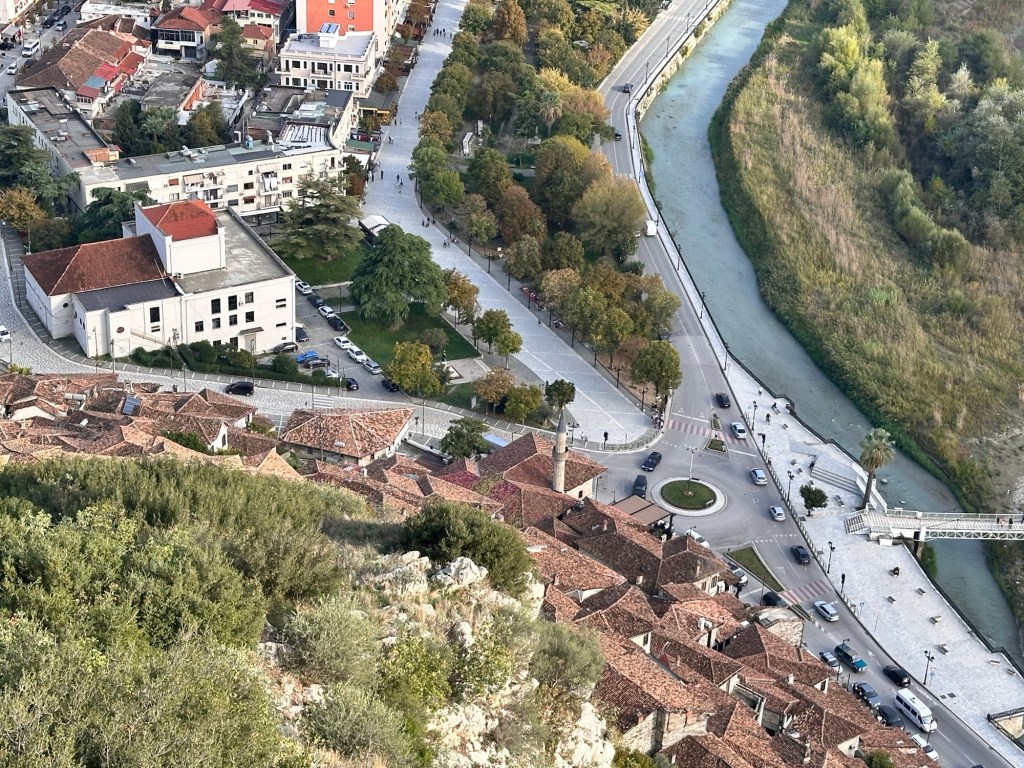
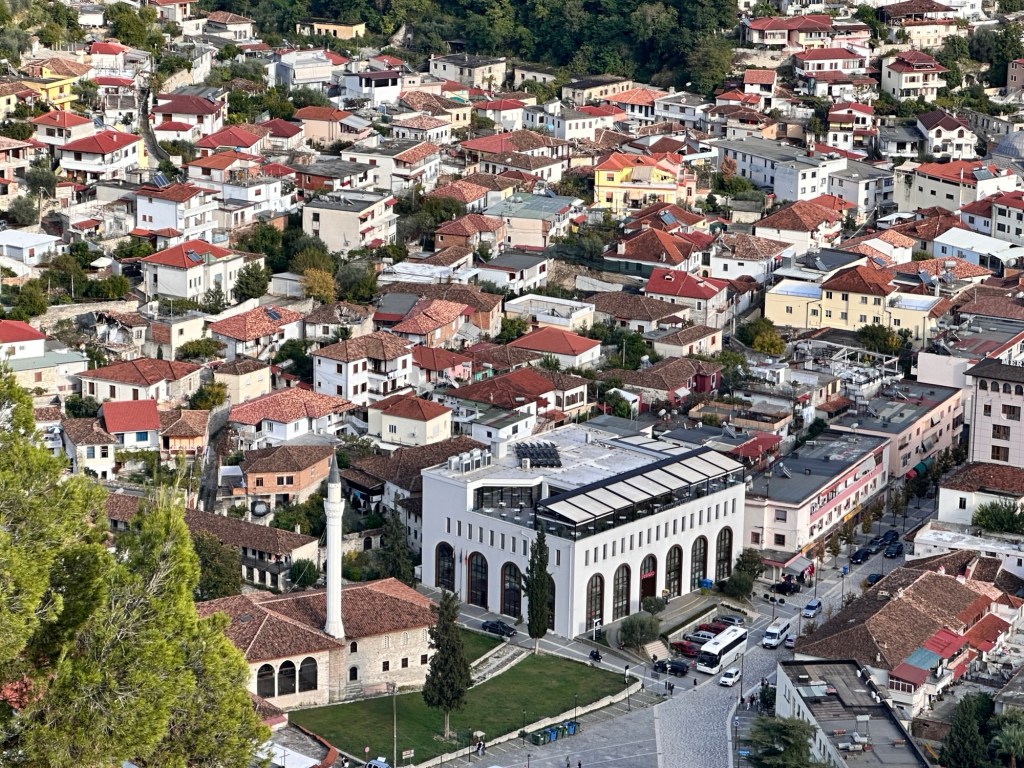
Romans, Byzantines, Bulgarians and Ottomans all took turns to build Berat into a city worthy of UNESCO World Heritage status. The current Berat Castle took its present shape during the 14th century, when it hosted homes, artisan workshops and a dozen or more churches. However, when the Ottoman Empire invaded Berat in the same century, the castle was partially destroyed. Today, all that’s left of the original castle structure itself are the crumbling stone walls lining the cliff edge. Just as there was when it was built, a busy neighbourhood remains within the castle grounds – there are numerous stalls selling handmade crafts, food spots nestled into hidden courtyards and countless bars.
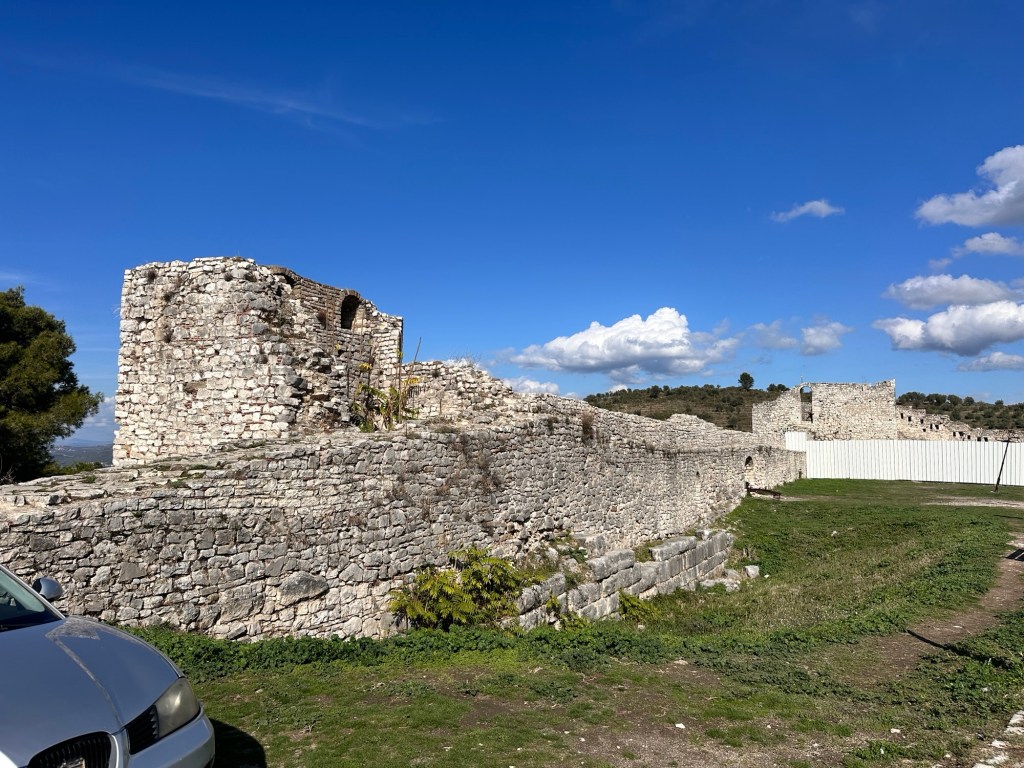

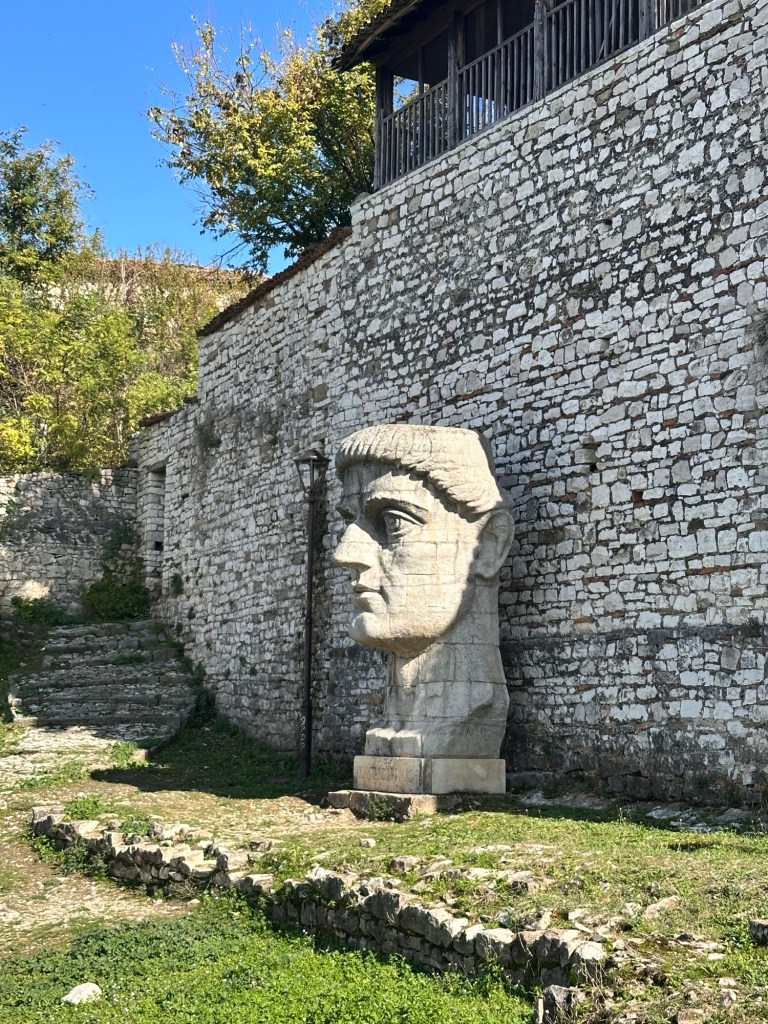

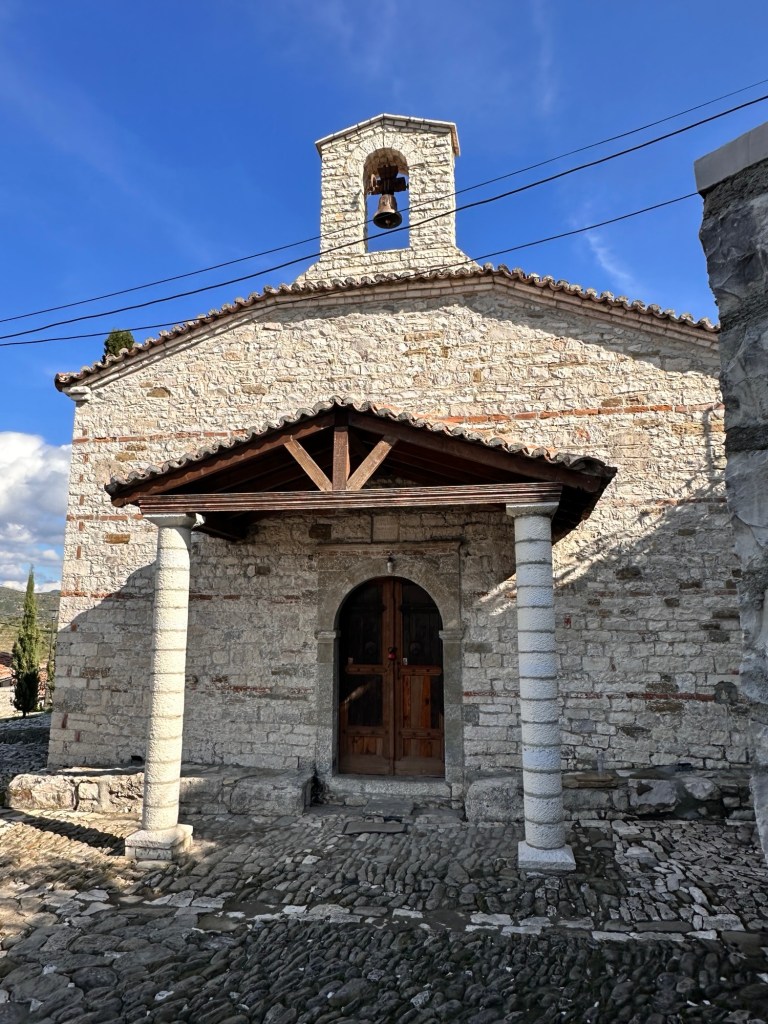

There are many other historic sights within the castle grounds, including the striking remains of the Red Mosque, the Holy Trinity Church, a masterpiece of Byzantine architecture, and the Onufri Iconography Museum located inside the Byzantine Church of the Dormition of St Mary. This unique museum houses one of the greatest collections of Albanian religious paintings in the region. The museum was named after a 16th-century Orthodox priest-turned-painter known as Onufri, who had first trained in Venice before returning to Southern Albania to create his celebrated icons and murals.
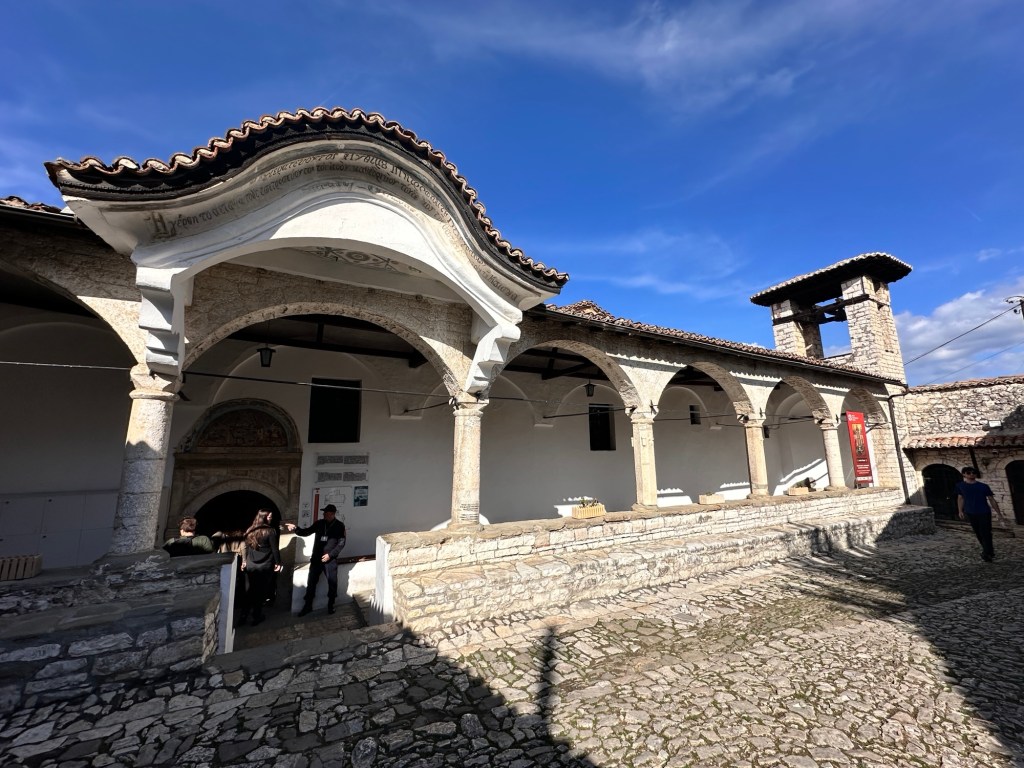
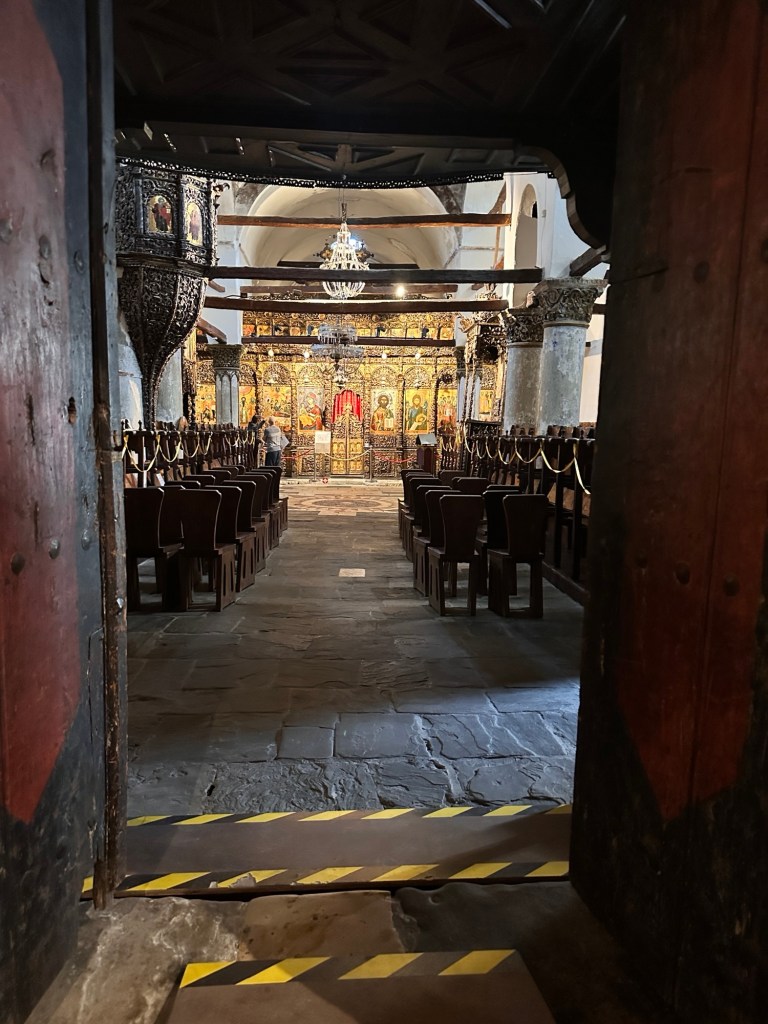
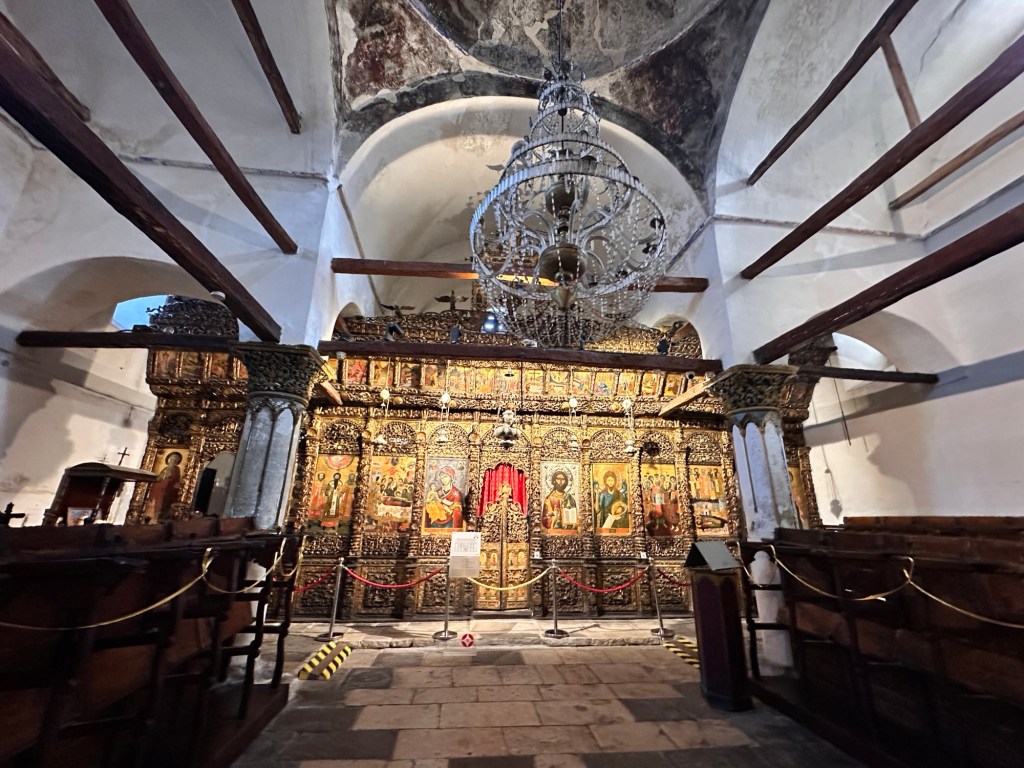

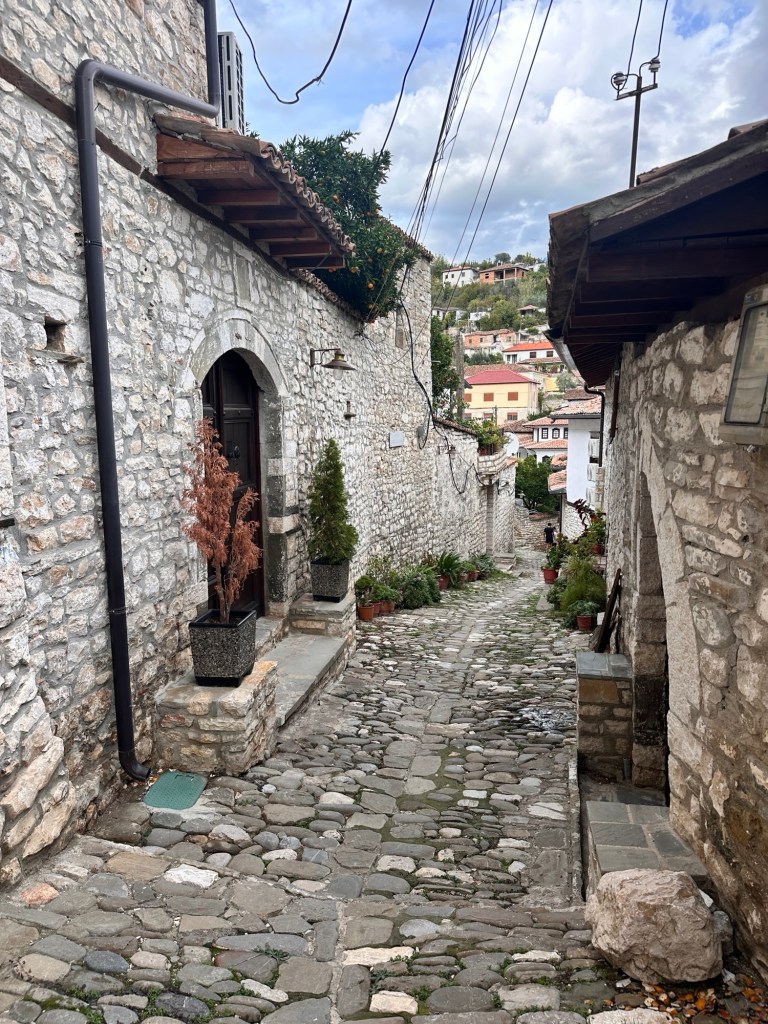
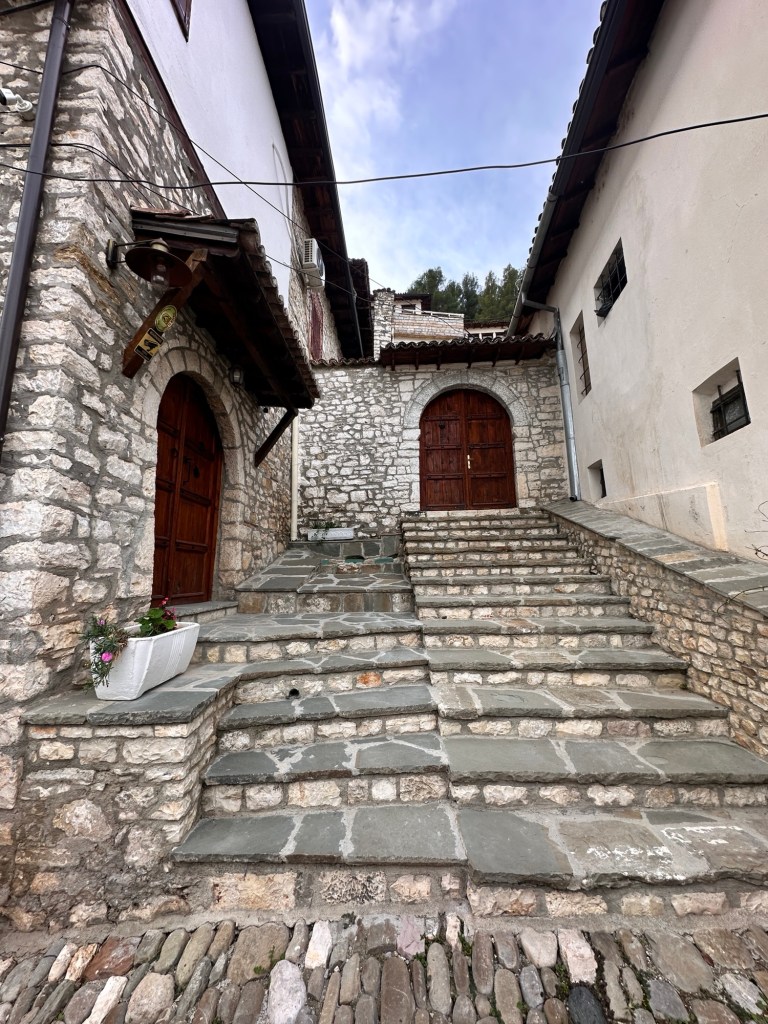
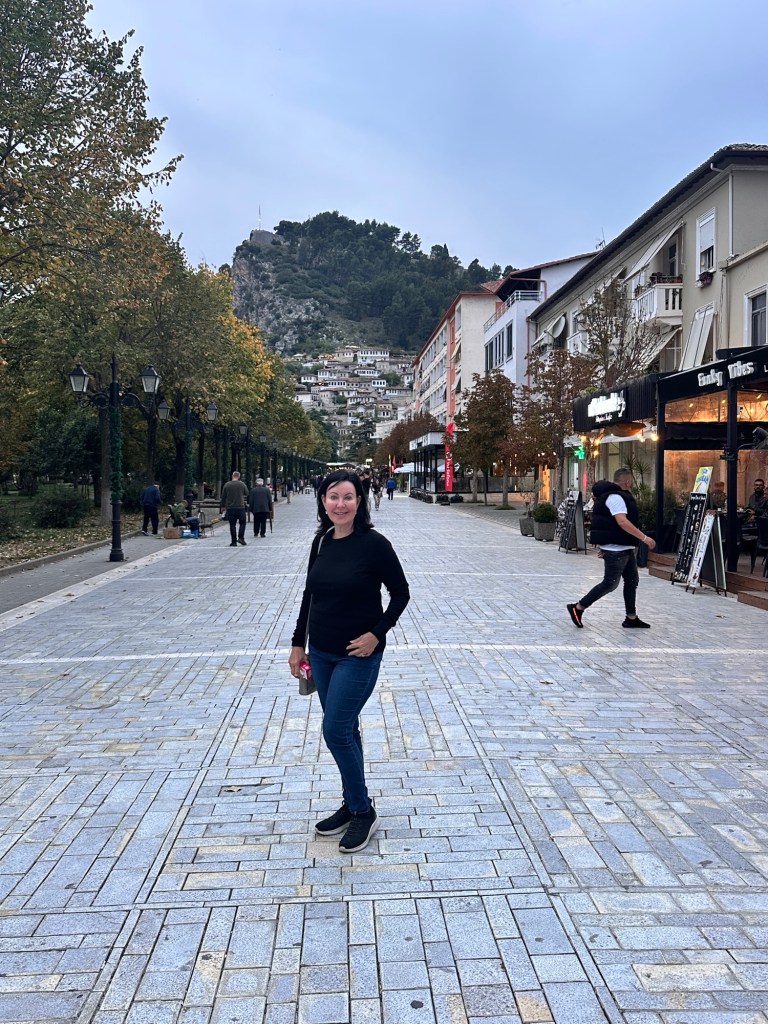
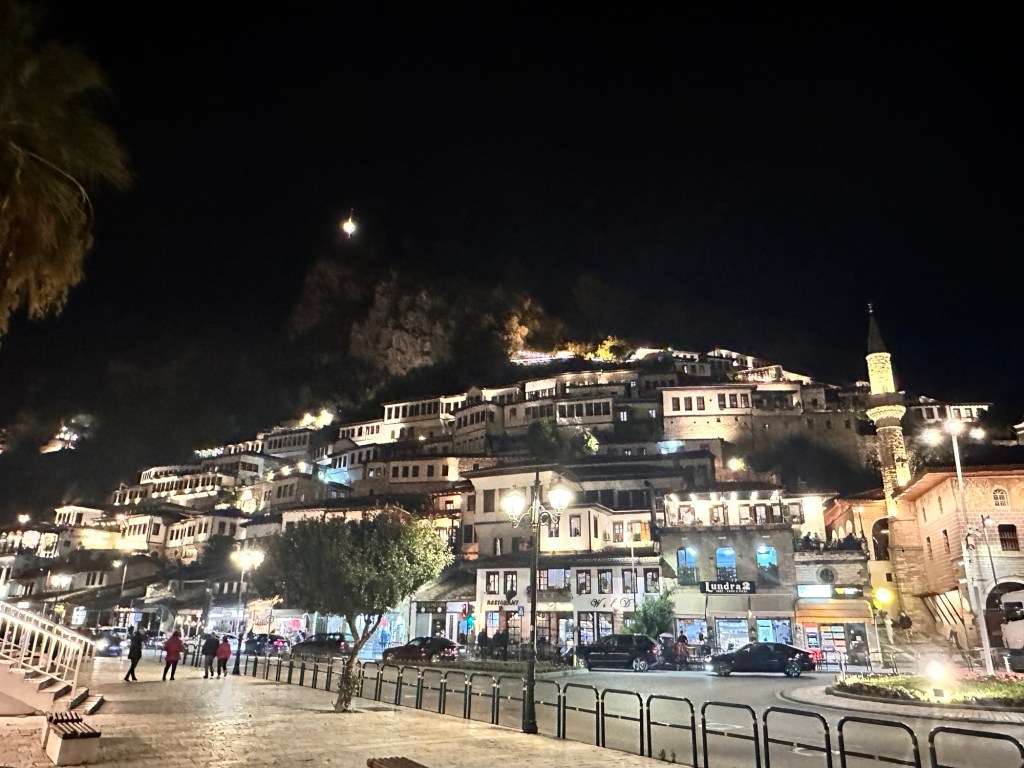
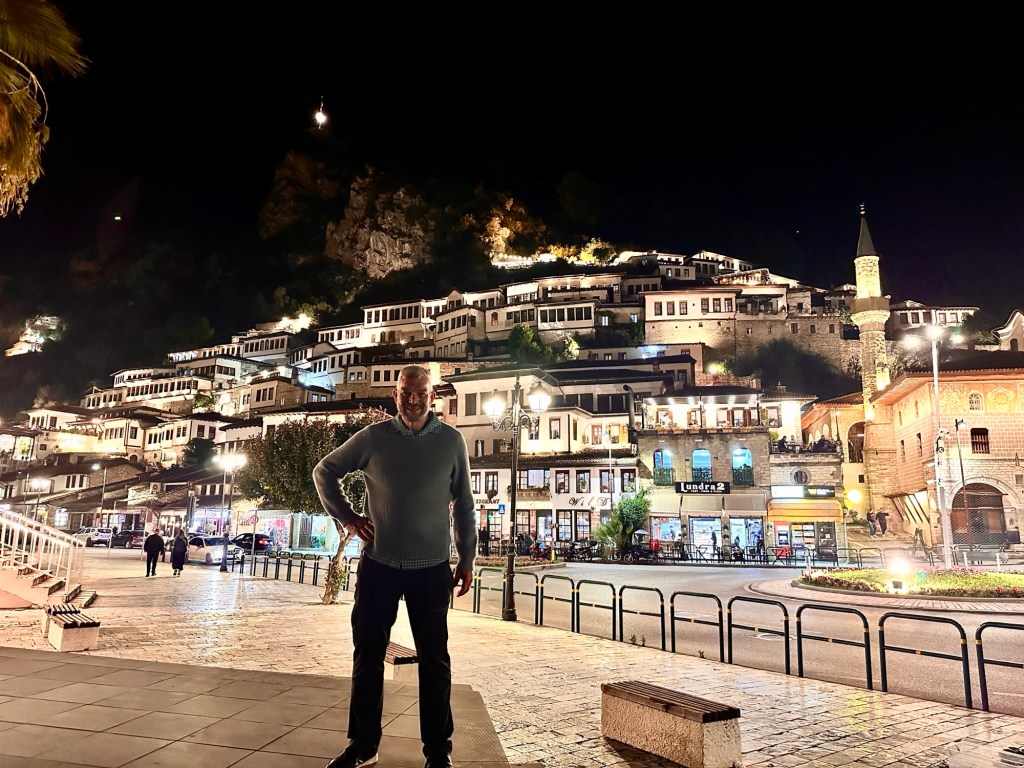
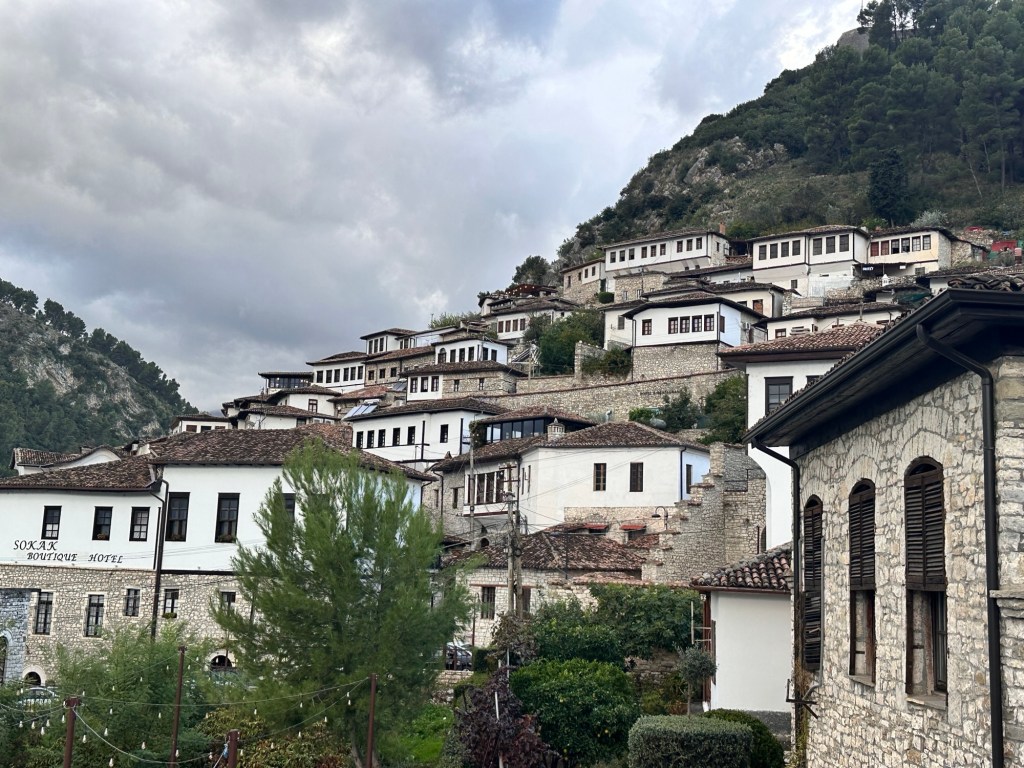
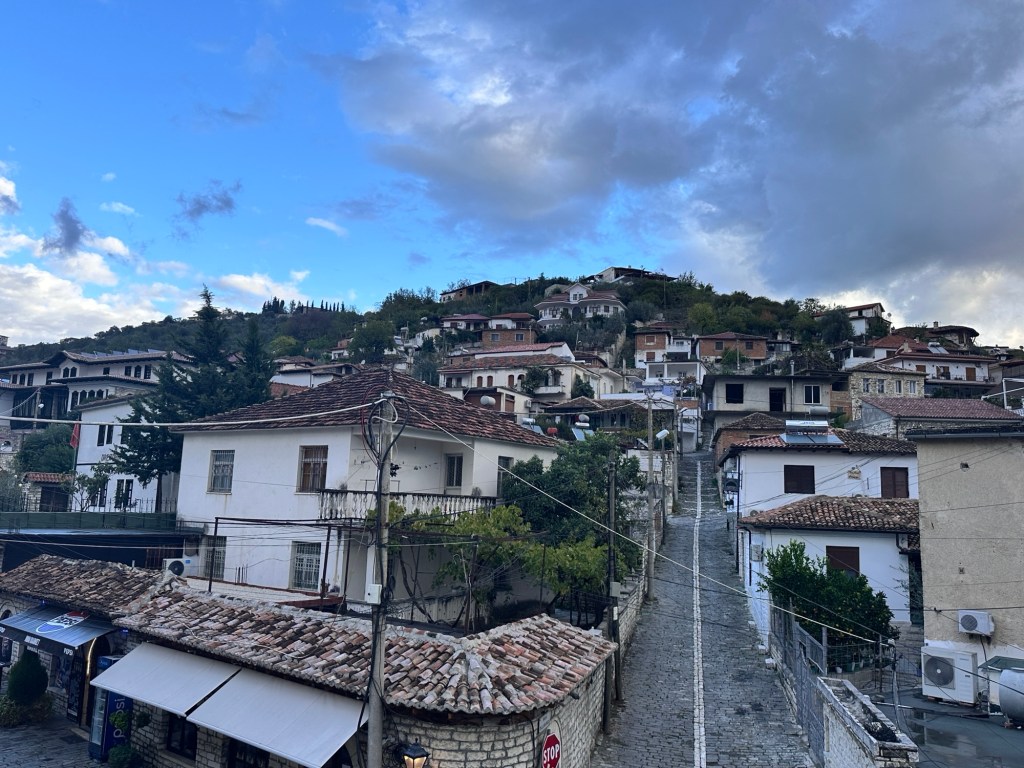
From here, we walked down a very very steep hill to Mangalemi, one of Berat’s historic quarters, located near the Osumi River. 15th Century Mangalemi was originally part of Berat’s Islamic old town; at the time, Christians historically lived across the river in the Gorica area. The houses here gave Berat the nickname “Town of 1000 Windows”. We walked along the cobblestoned lanes peering into the houses and shops – our knees and feet certainly knew about it by the end of the day!

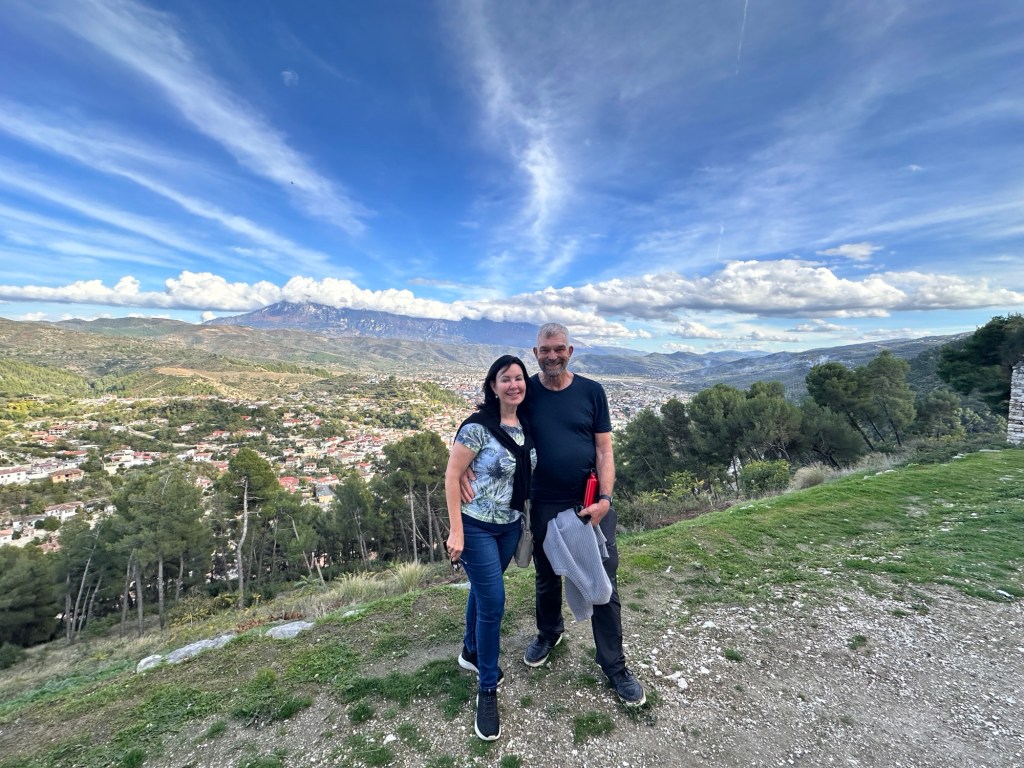
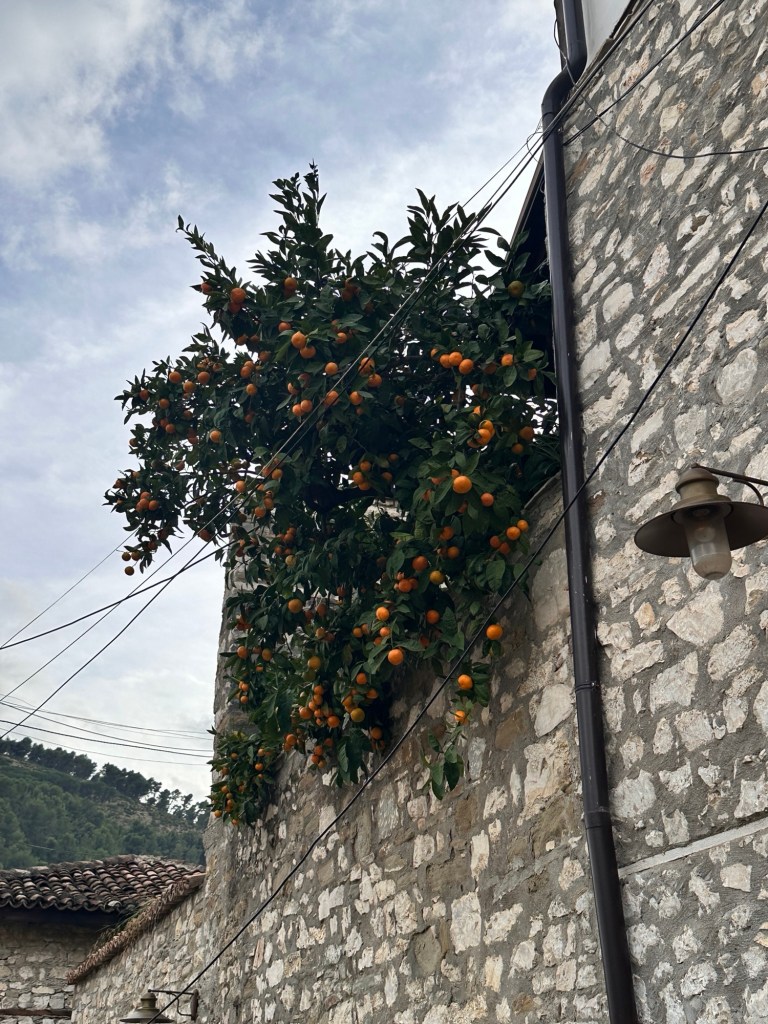
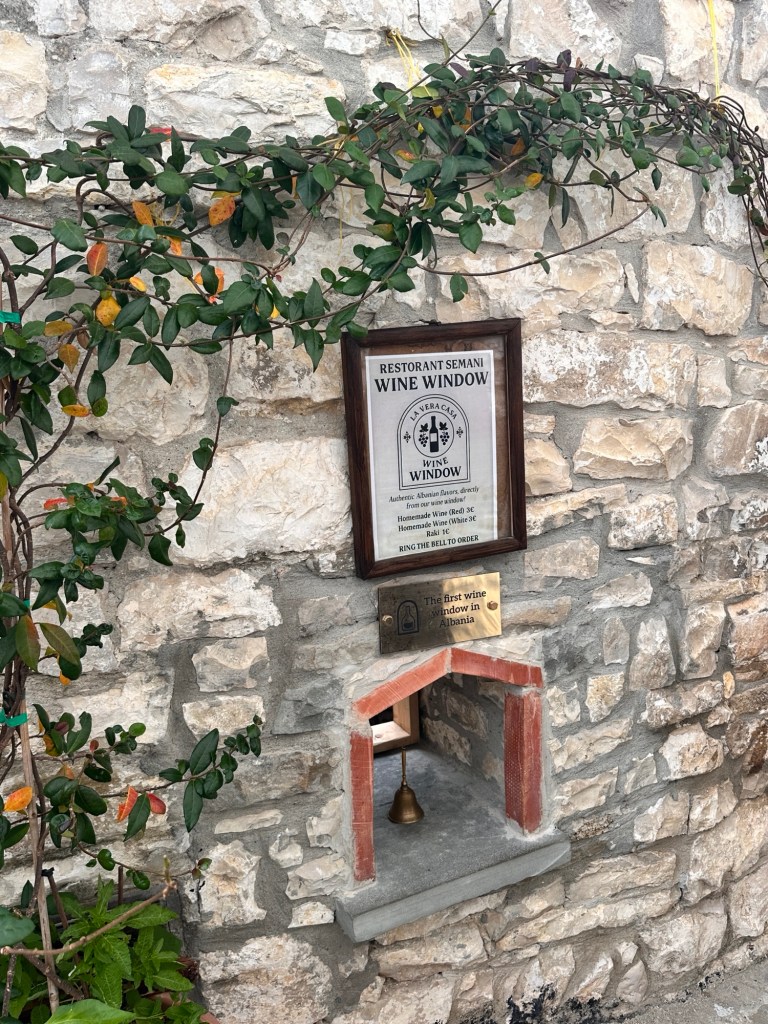
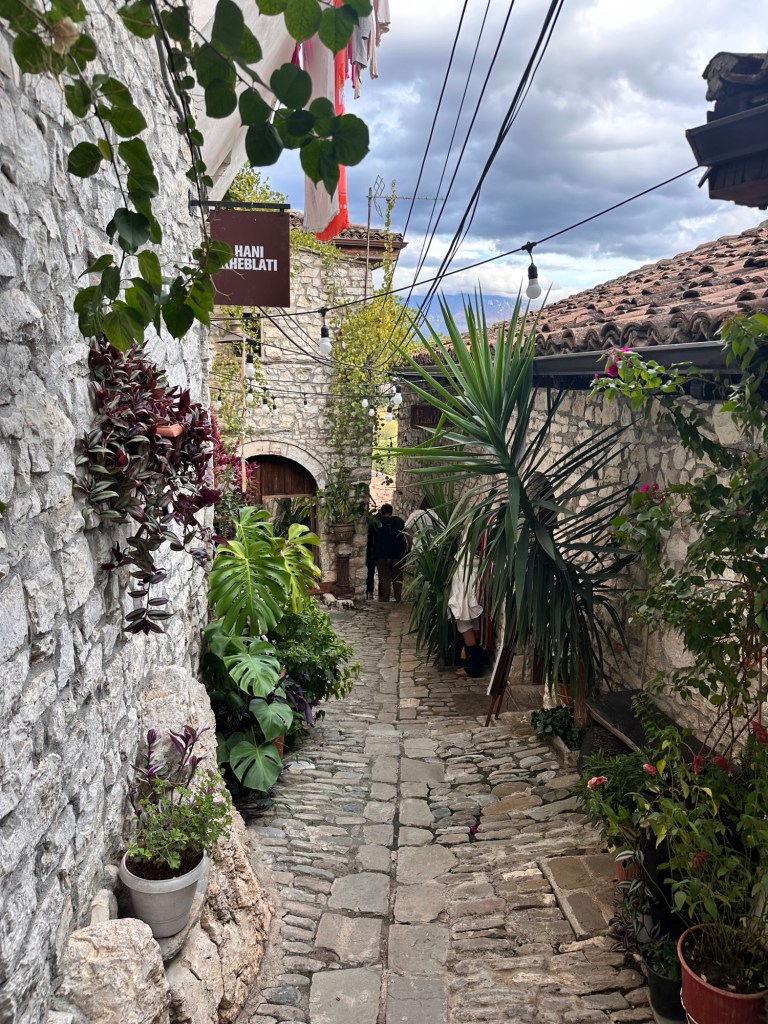

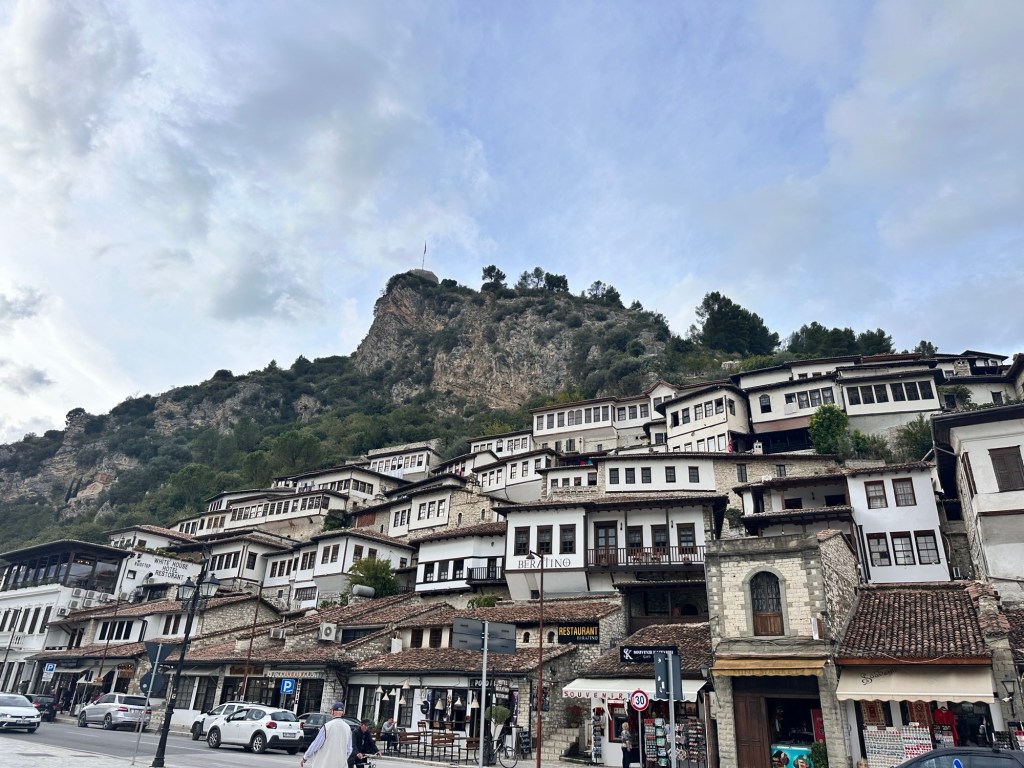

There’s a lovely promenade in town beside the river, creating a lovely area to walk but also a fabulous place to stop for a drink at one of the many bars.
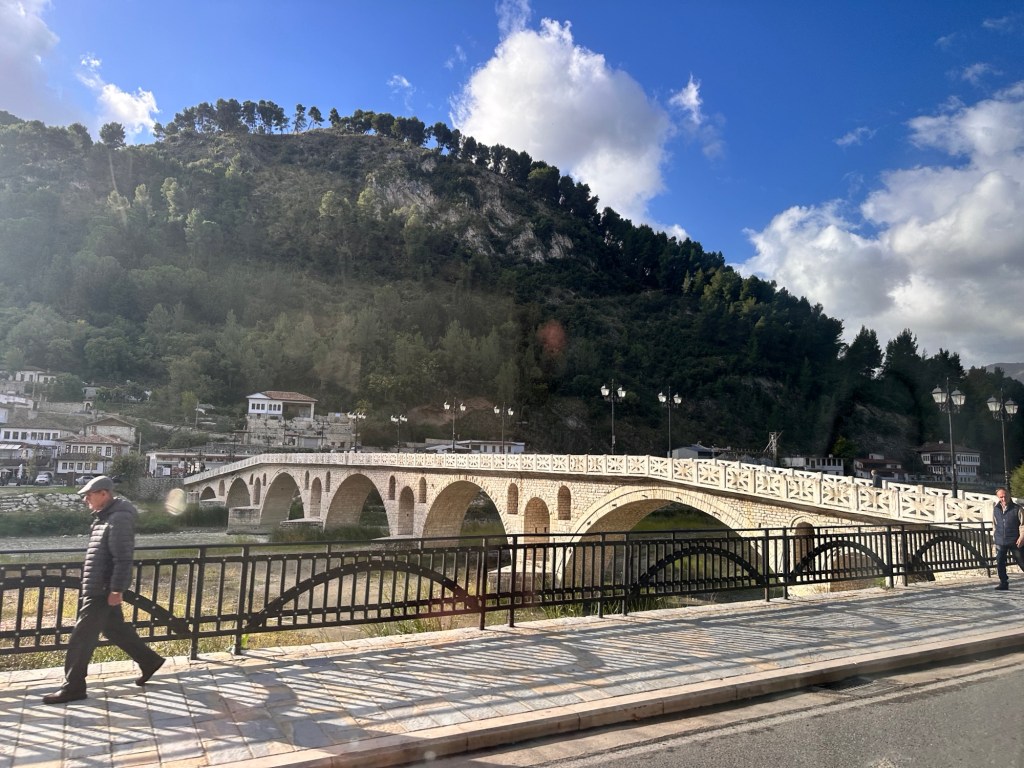
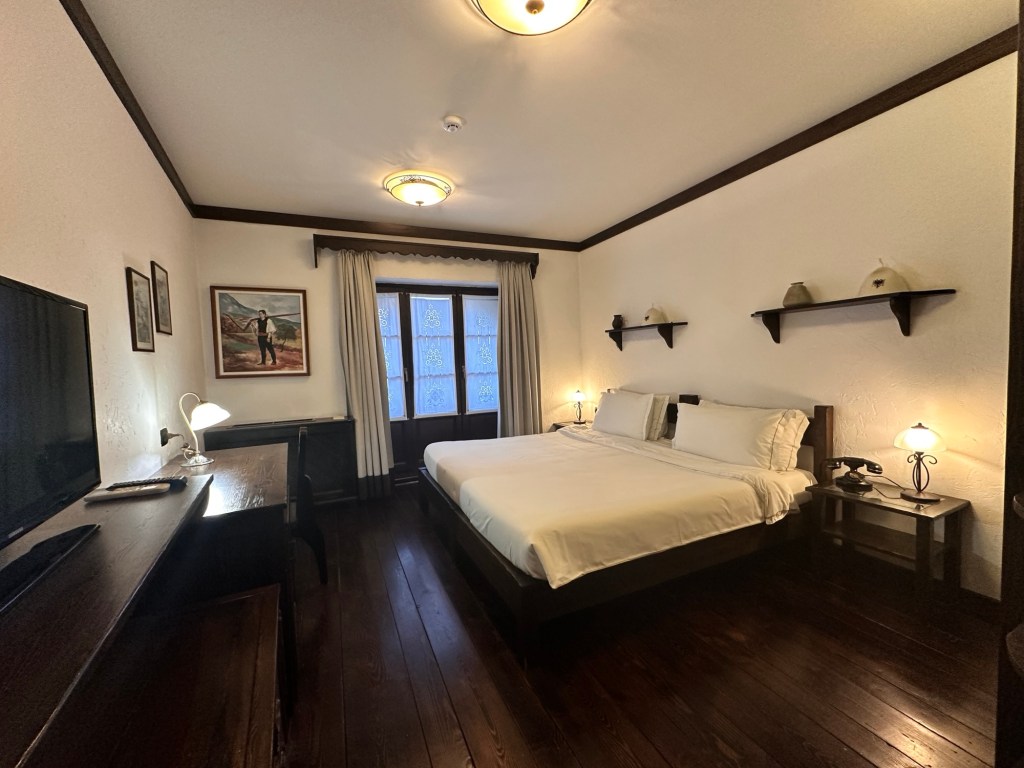
Checked into the gorgeous Mangalemi Hotel, right in the middle of town. This was a charming hotel with so much character. The hotel is family run and the staff are ever so welcoming.
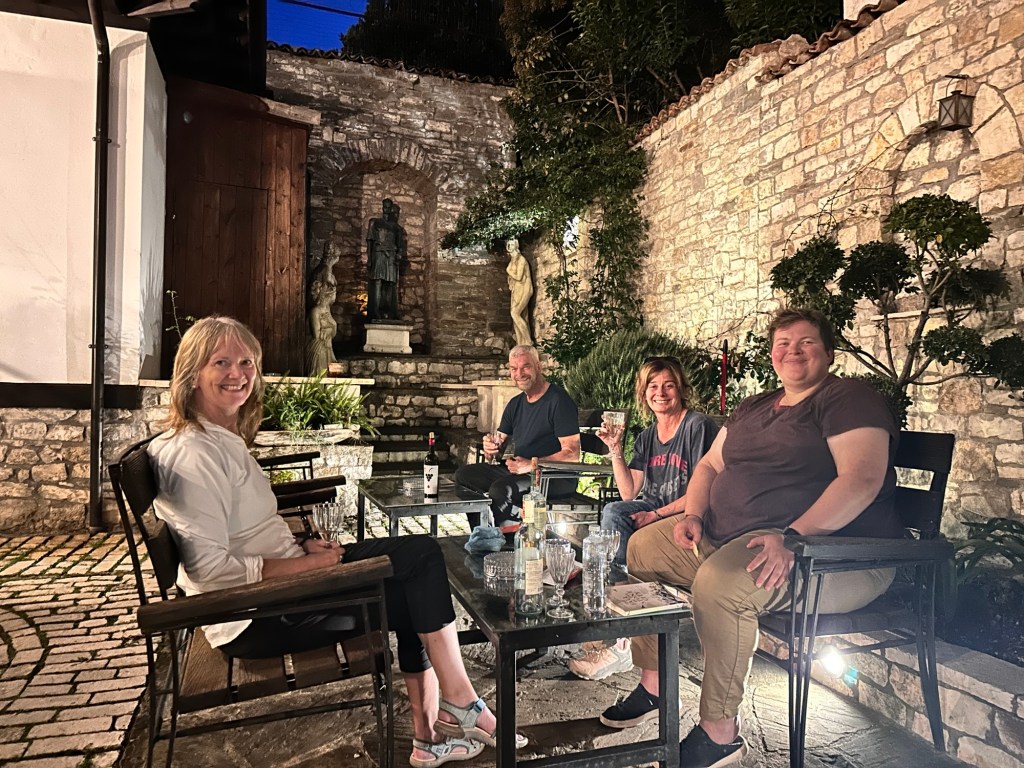
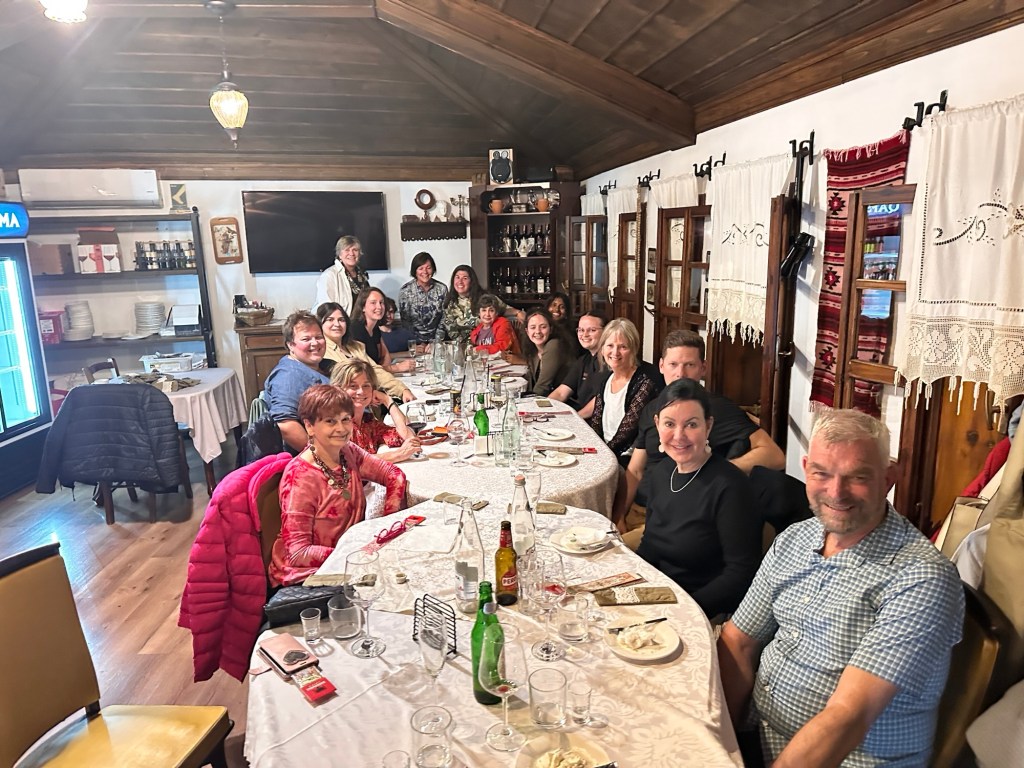
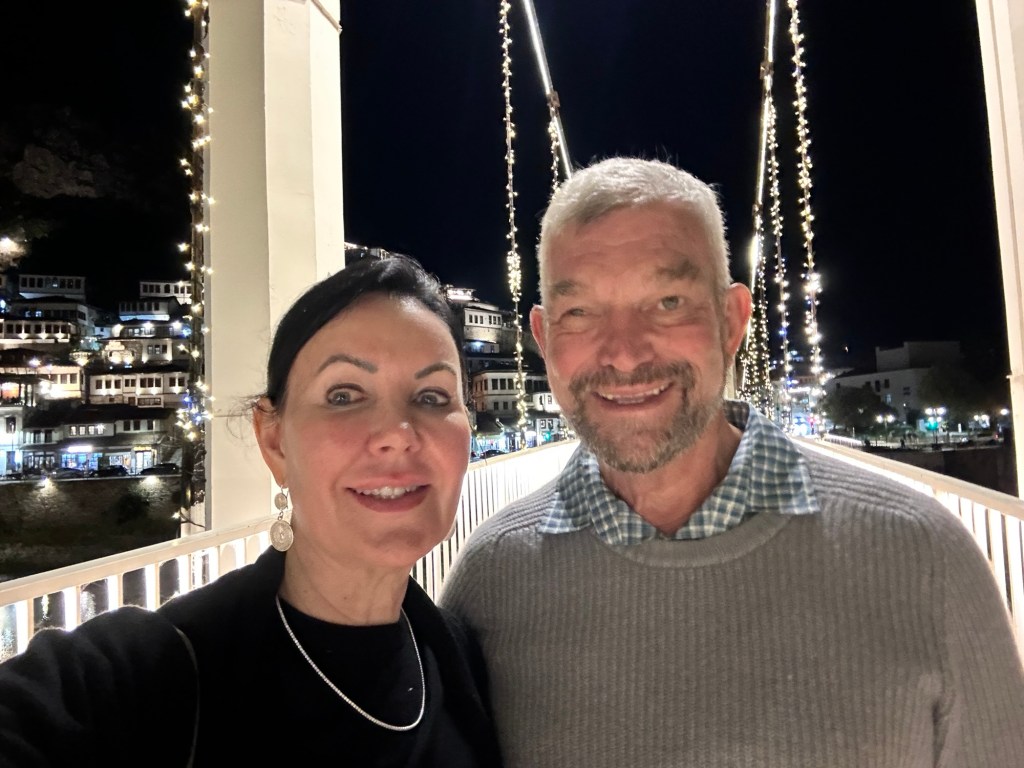
It was our farewell dinner tonight at a nearby typical Albanian restaurant. All local cuisine – eggplant stuffed with mince and tomatoes, rice filled peppers, spinach phylo slice, lamb meatballs, fresh Greek salad, a yummy cheese and tomato paste to go with fresh bread, and a dessert made with cream and halva. A walk around town to look at the lights was the perfect way to finish the evening.


Day 44
Friday 24th October
Berat to Tirana
15-22 degrees, sunny
Final day of our Albanian tour.
After a lovely breakfast on the rooftop terrace looking out at life going on in the Ottoman houses surrounding us, we set off in the van. Another scenic drive through agricultural lands surrounded by mountains took us back into Tirana. We had to walk our bags from Skanderbeg Square to the Metro Hotel where we had stayed the first night.

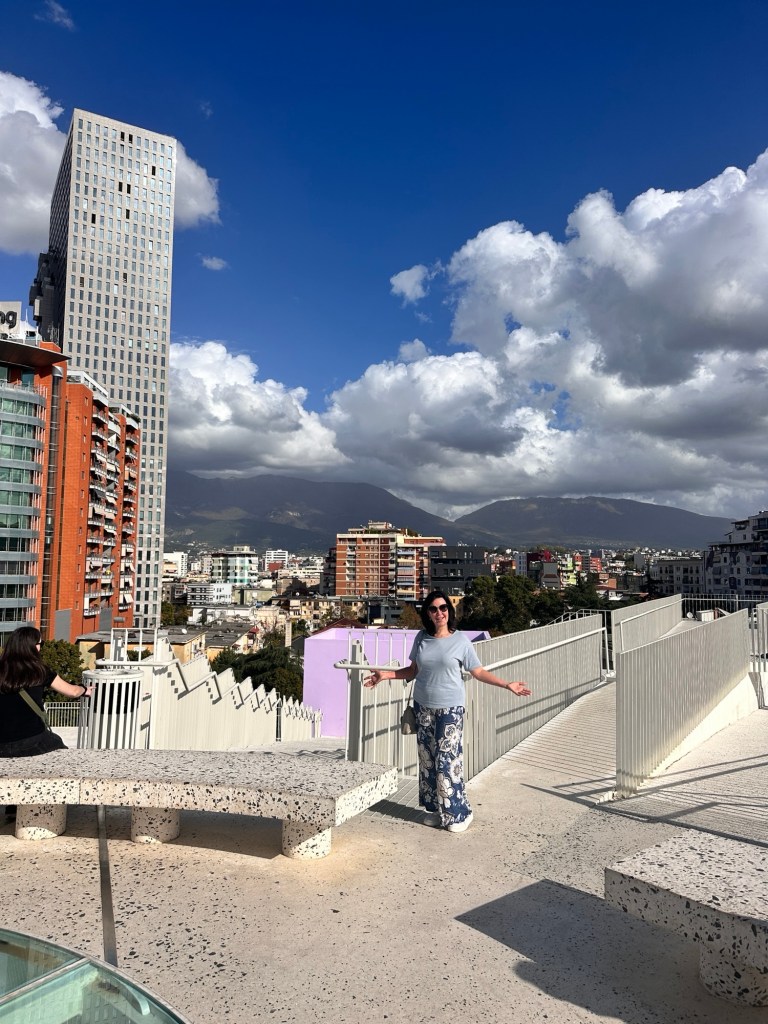
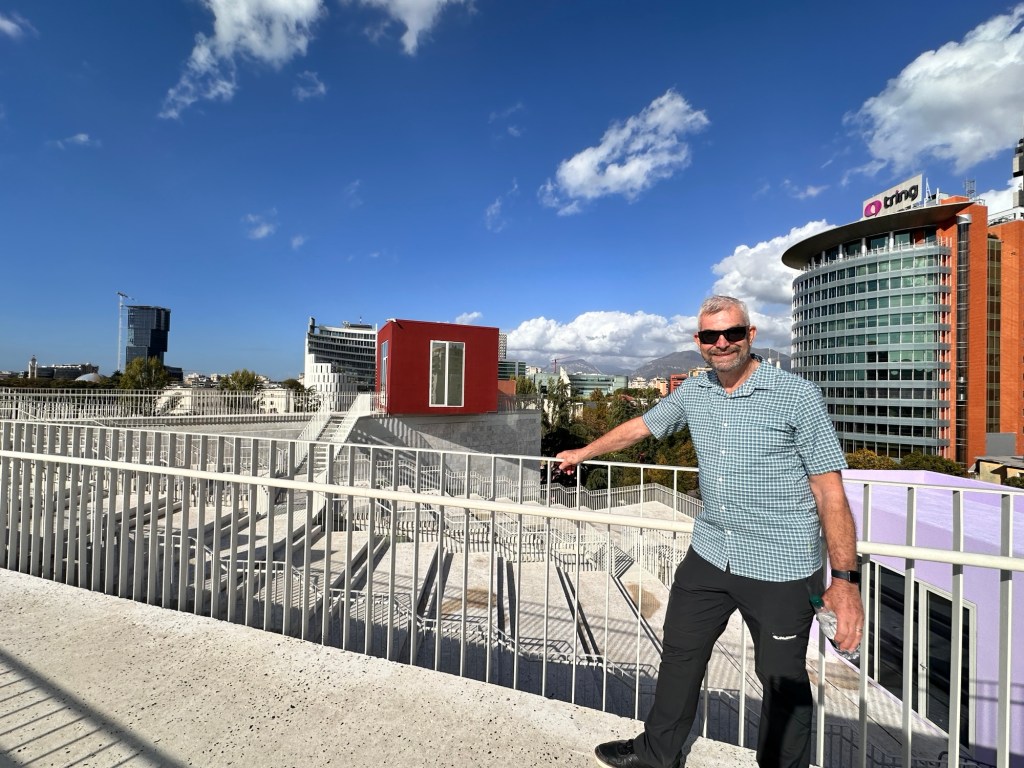
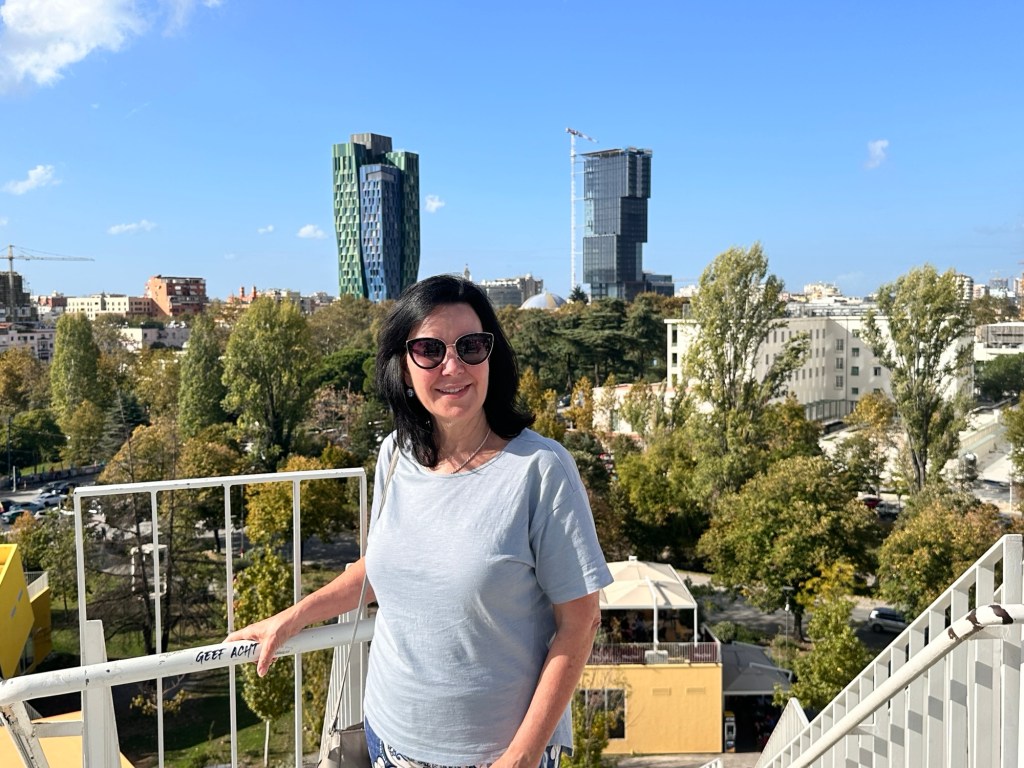
We had the afternoon to explore a little more of Tirana. Built in 1988, the Pyramid of Tirana was constructed as a museum dedicated to the life of dictator Enver Hoxha following his death in 1985. In 2023, the Pyramid underwent a reinvention, when it was transformed into an architectural symbol of a modern Albania. New exhibition spaces, cafés and viewing platforms have been added to the structure, all of which can be accessed via a series of white metal staircases. We weren’t overly impressed, but there was a great view of the Tirana skyline once we climbed to the top of the structure.

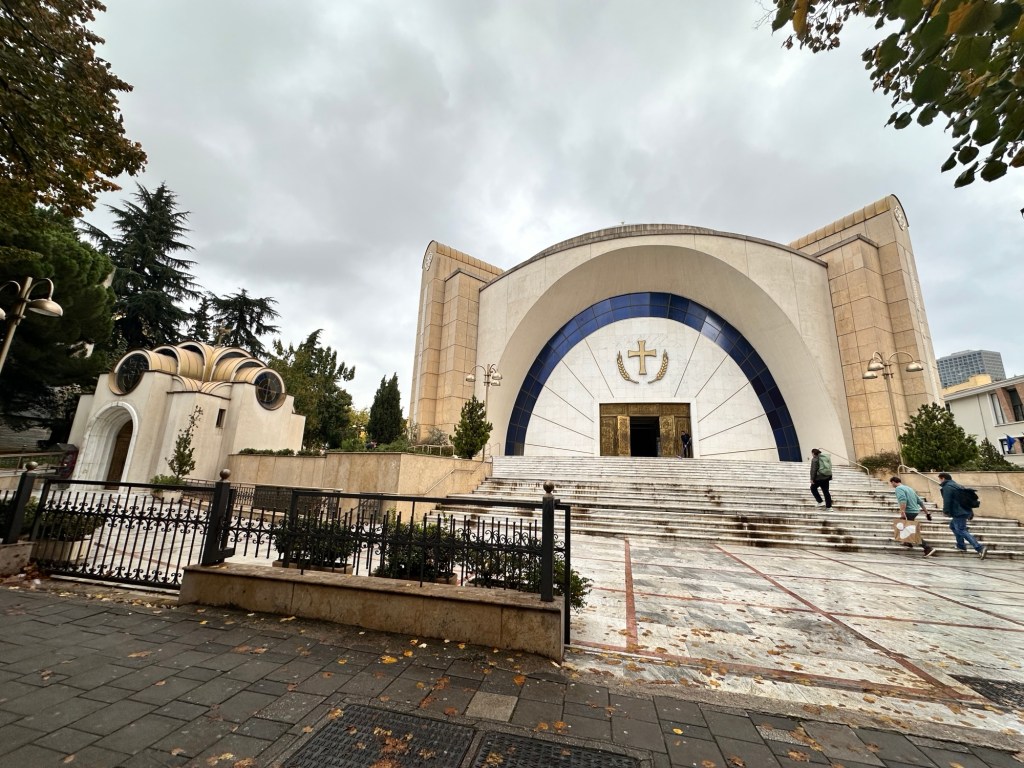
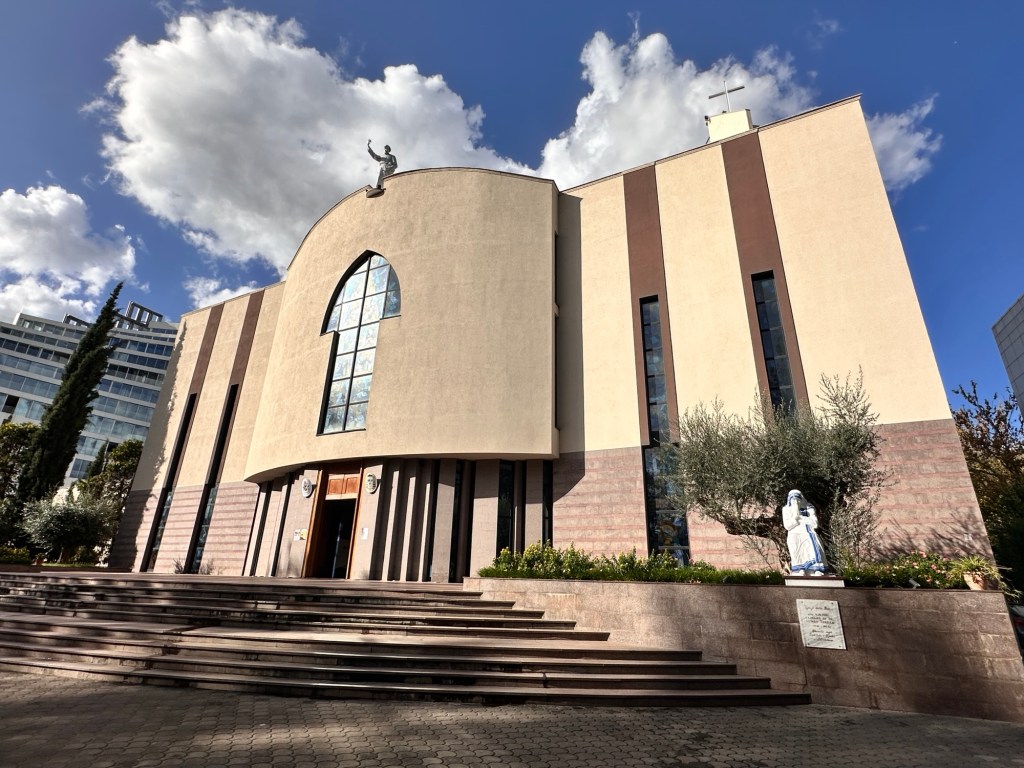
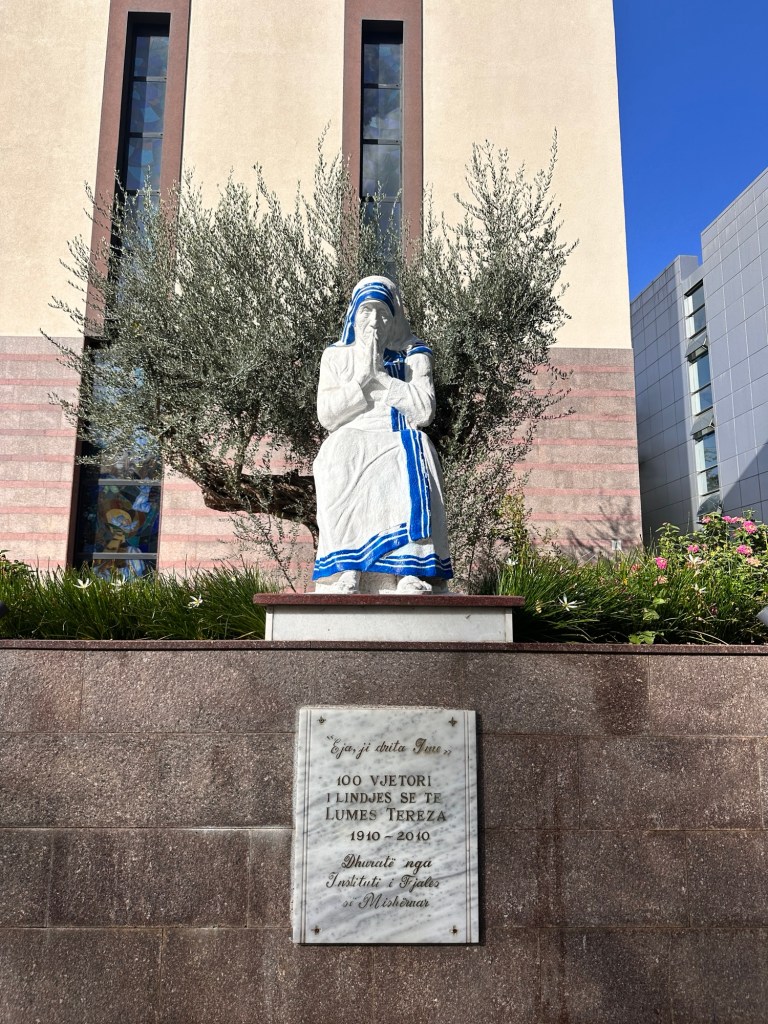
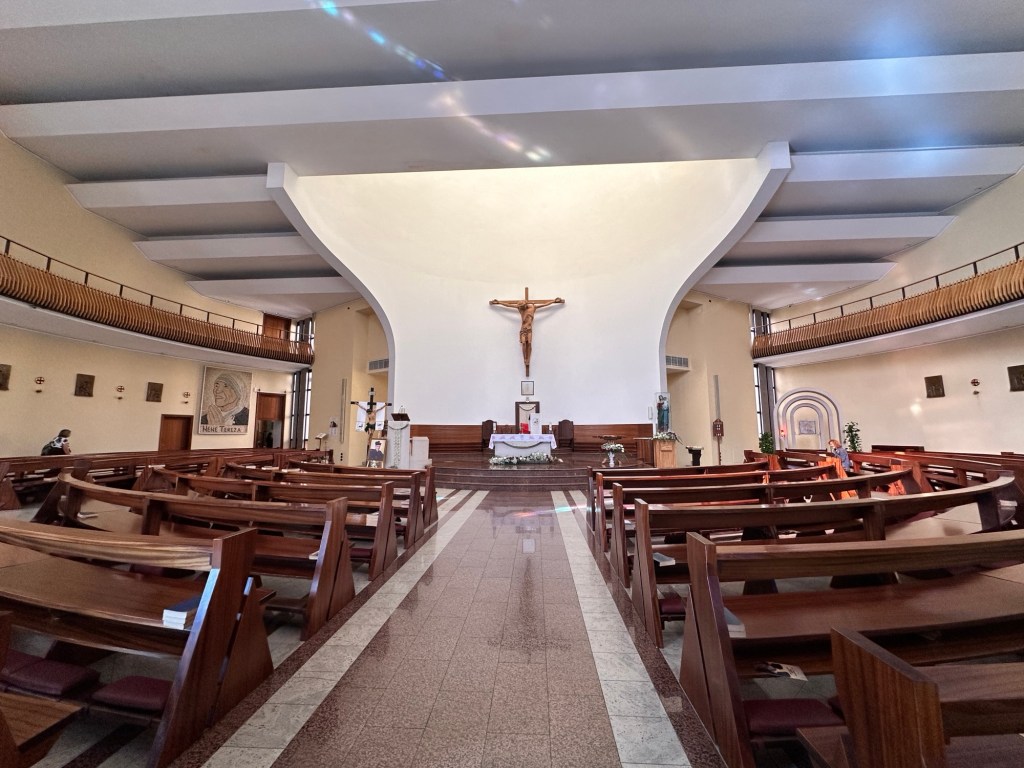
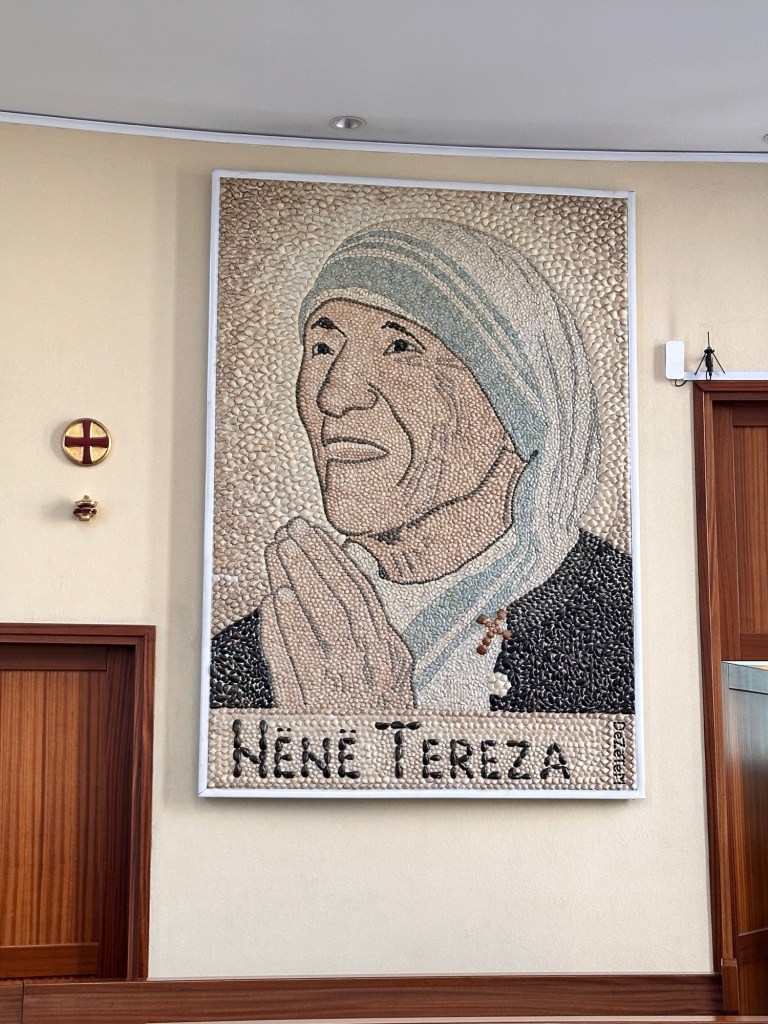
Nearby was St Paul’s Cathedral, a more contemporary church, where the inside space was austere and devoid of the usual detailed decorations associated with this type of religious building. Outside the cathedral stands a well-visited statue of Mother Teresa, or Nënë Tereza, the world-famous missionary nun, and also one of the most famous Albanians in history.
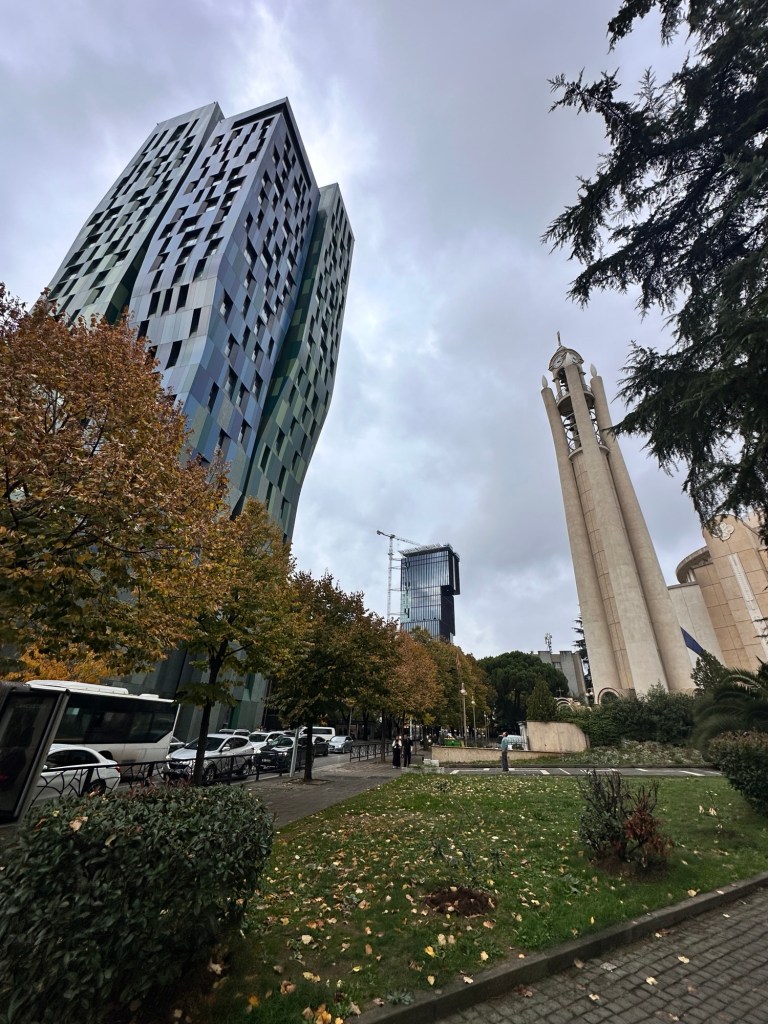
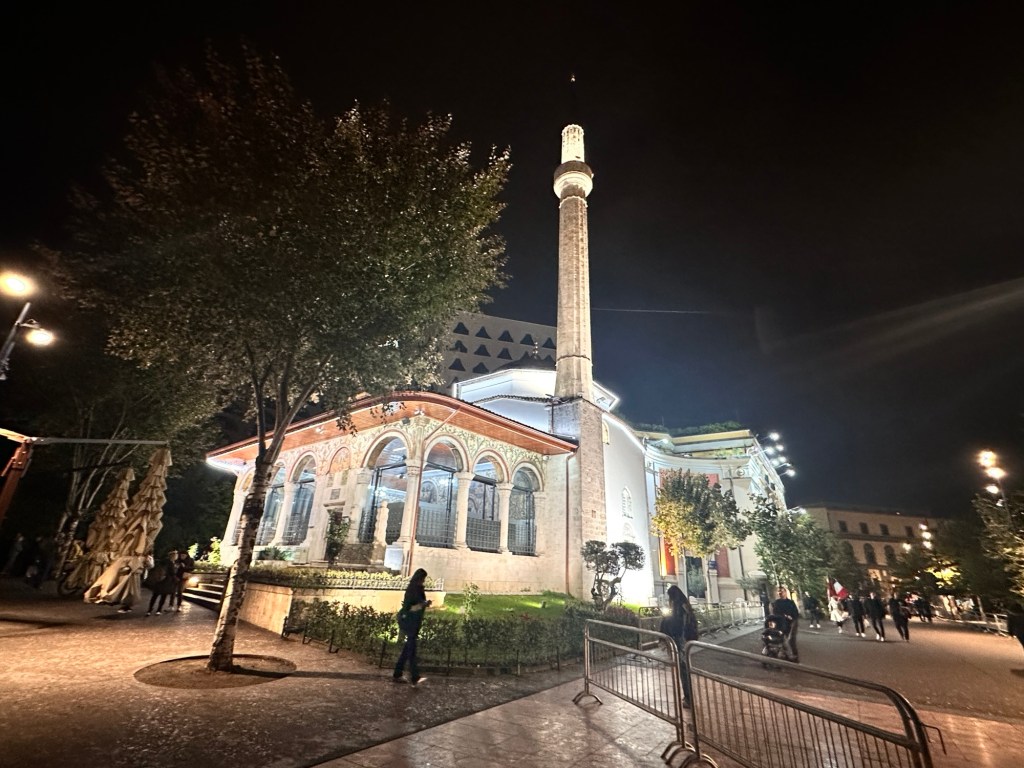
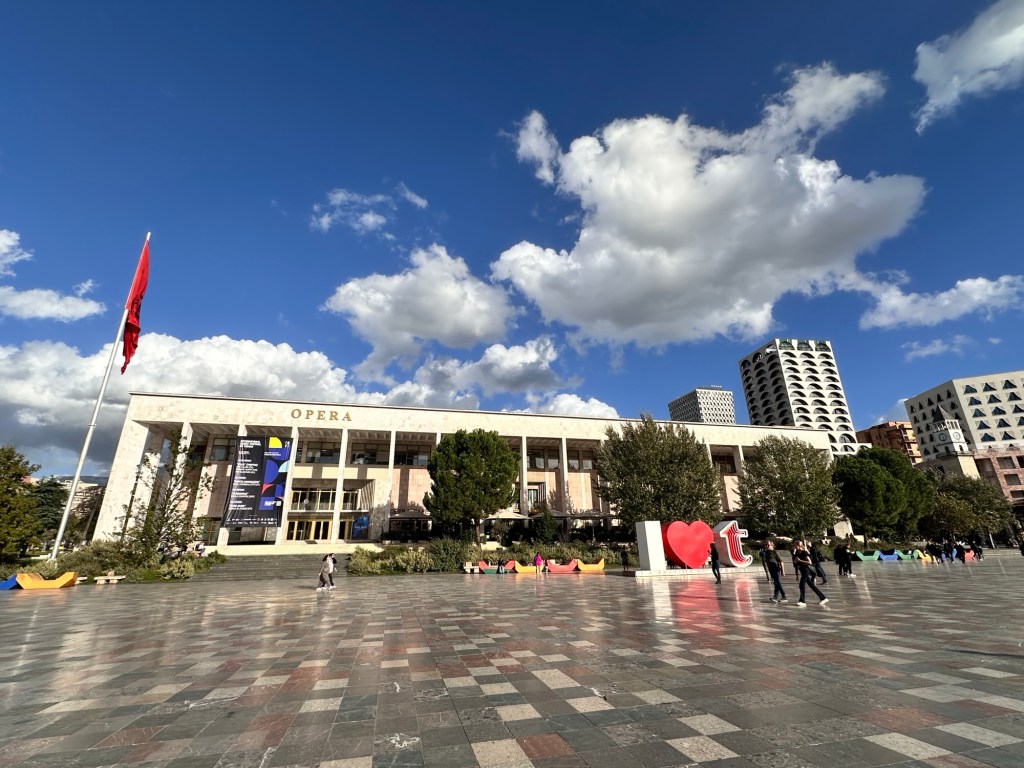
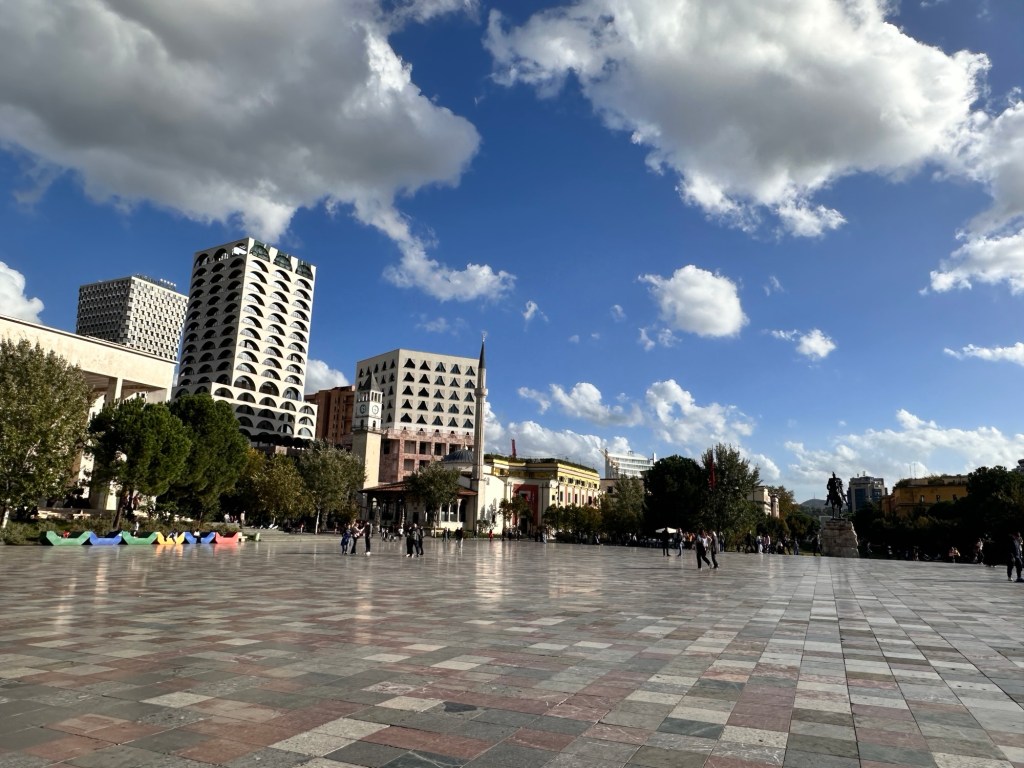
Spent the next couple of hours branching out from Skanderbeg Swuare and onto its connecting boulevards and pedestrian streets to take in the architectural highlights and cultural offerings of the area. There is a huge variety of buildings to be enjoyed here, from historic mosques to towering modern skyscrapers.

Just near our hotel was the Blloku district. Once the exclusive domain of Albania’s political elite during the communist period of the 20th century, Blloku’s pretty, tree-lined streets were mainly reserved for high-ranking officials, including then-leader Enver Hoxha. Today, Blloku attracts a vibrant crowd, drawn to its swanky hotels, bustling bakeries and independent boutiques. The popular neighbourhood is especially known for its thriving food and drink scene. We had chosen to have our final dinner at Salt, a very upmarket restaurant. Not wanting a late night due to our impending early start the next morning, we left at 9pm – boy, the streets were buzzing by then! This was the place to be!


Day 45
Saturday 25th October
Tirana to home
I wasn’t joking when I said early start – we were up at 3.30am, ready for a 4.30am pickup. Luckily no traffic to the airport. We managed to get the bags checked in all the way to Brisbane – we weren’t sure if they could do it as Albanian Airlines don’t have an agreement with Emirates. Anyway, they said “they would try” – we left the check in counter with a degree of anxiety. Also had a drama with the baggage amount as there was no kg weight on the new ticket (our original flight five hours later had been cancelled a few days earlier resulting in a 10 hour layover at Istanbul airport)- anyway, we managed to sweet talk our way through that.
One hour and twenty minutes later we were at Istanbul airport. Here we had to try and get boarding passes for the next two flights as they weren’t able to give them to us in Tirana. That became a drama – I was given a standby boarding pass for the second flight. The only way to sort that out was to go to the Emirates desk – which was on the departure side! We had plenty of time, so we went through passport control and out. But then we had to wait two hours for someone to come to the Emirates desk. Frank had an airport coffee while we waited – $14.60 – very slow dips! Eventually we were sorted, and we both had seats … at the front of the plane!
Next, we were told there was no Emirates Lounge in Istanbul—only the IGA lounge. So off we trundled, along with what felt like a million other weary transients, and settled in for a long six-hour wait.
Eventually, it was time for the first leg: a four-hour hop from Istanbul to Dubai, followed by a quick refresh in the Dubai lounge before the big one—a 14-hour flight home to Brisbane. I’ll admit, we were a little disappointed to see it was a B777 rather than the A380, but once the Veuve Clicquot started flowing, accompanied by five-star dining and rich French red wine, all was forgiven. Fine dining in the sky never loses its magic!
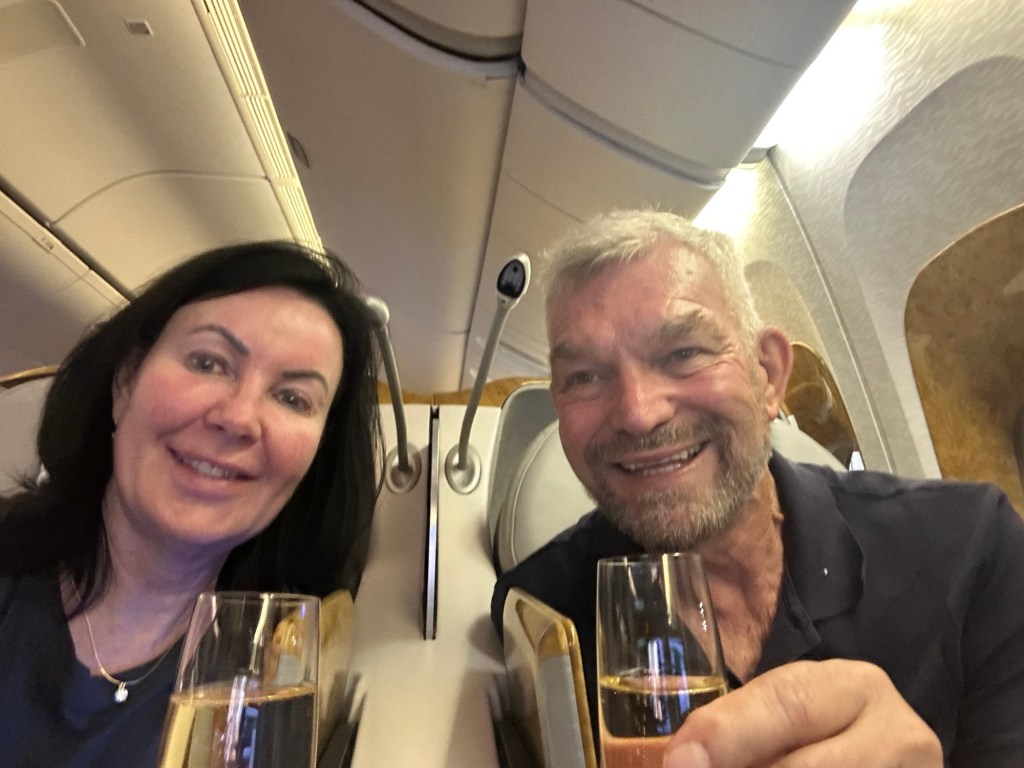
We arrived home just before midnight, only to discover the lifts were out—courtesy of a severe thunderstorm earlier that evening. Nothing like hauling bags up three flights of stairs to complete the journey!
Another wonderful holiday in the books.
Interesting things about Albania
Albanian cuisine is heavily influenced by the many historic empires that once occupied the region, and food traditions are well preserved. Its natural larder, too, is plentiful: from north to south, vegetable patches and fruit orchards abound and farm-to-table food spots are commonplace.
Coffee culture is deeply entrenched in Albanian culture. You’re never far from somewhere to enjoy a traditionally brewed kavhe (coffee).
Catholicism, Orthodox Christianity and Islam were all brought to the region by different conquerors. Eventually, with 20th-century communism came state-sanctioned atheism, which was overthrown in the 1990s along with the government. This long, multi-faith legacy means that, today, a whole host of religions are observed across Albania. Up to 10 per cent of Albanian Muslims today follow the Bektashi Order.
We noticed a lot of unfinished houses/buildings everywhere- apparently this is because in the past, people would claim a plot of land, then start building. But because the land is not owned, they don’t finish, and the government has just the buildings as is – they stay that way for 50 years.
 Glammy Goes Global