
Day 1
Thursday 24th October 2024
Brisbane to Baku
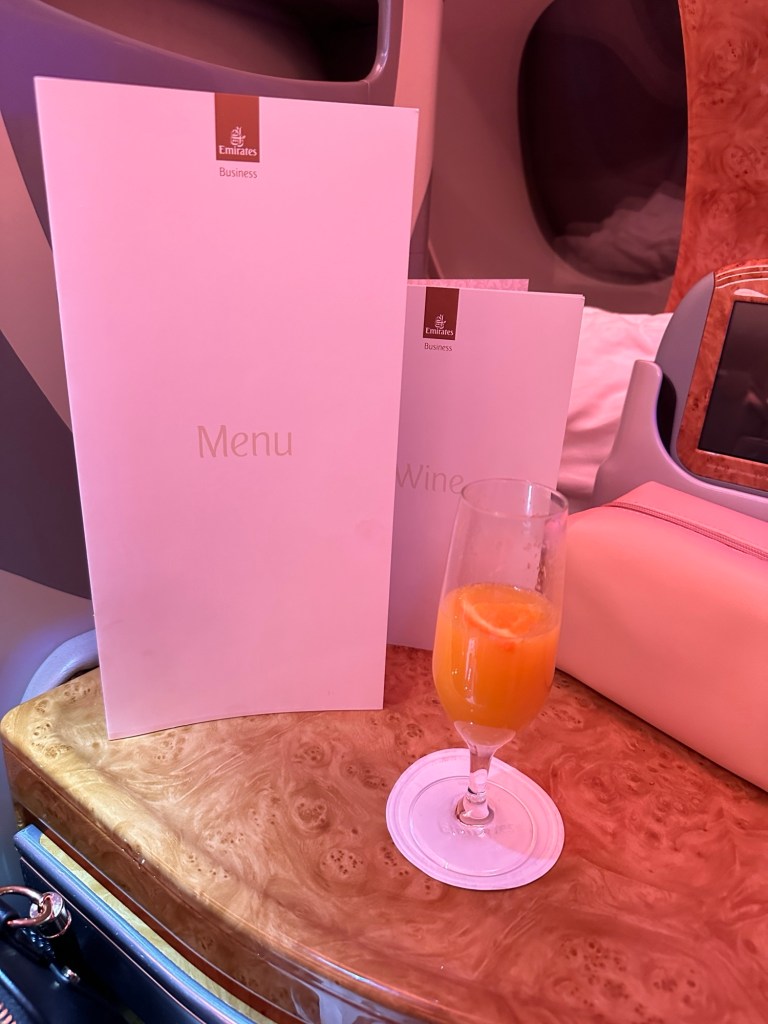
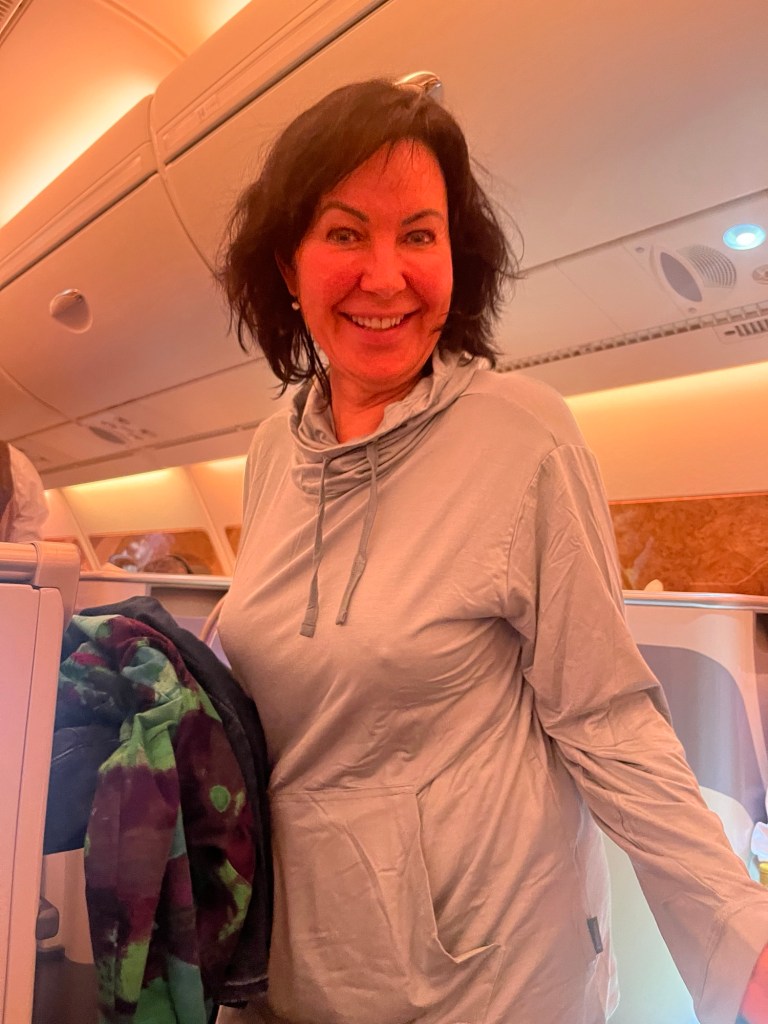
Last-minute surprise upgrades are the best kind, and Frank certainly outdid himself this time. As soon as we settled into our plush seats on the 24 hour Emirates flight to Dubai, a glass of chilled Moet appeared, its bubbles dancing in the flute. Cocktails followed, setting the tone for the evening. Then came the mezzas—a vibrant spread of flavors and textures that exploded on my tongue. The lamb biriyani arrived next, tender and fragrant, as though the spices had marinated for hours just to please my taste buds.
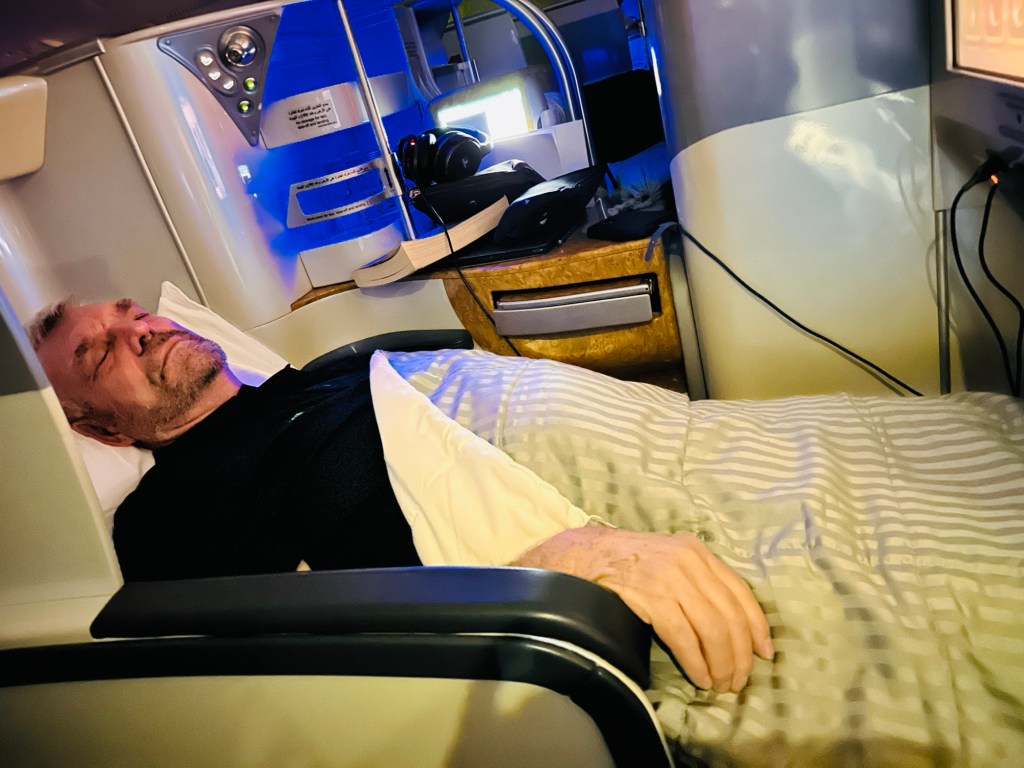
The grand finale was the cheese board which paired ever so nicely with the velvety French red. The flat bed was the ultimate indulgence, though—six hours of uninterrupted sleep that left me feeling as refreshed as if I’d just woken up in a five-star hotel. And breakfast? Oh, breakfast was divine. Mimosas in hand, we lingered over every bite, knowing that moments like these don’t come around often.

Day 2
Friday 25th October 2024
Dubai to Baku
14-19 degrees in Baku
We had a 3 hour turn around in Dubai until our next flight to Baku, Azerbaijan. Back to reality … and economy class! This time it was an almost three hour flight with FlyDubai to Baku.
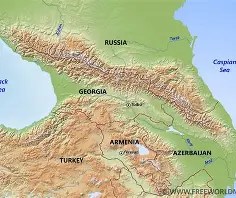
We are about to do an Azerbaijan, Georgia and Armenia tour!
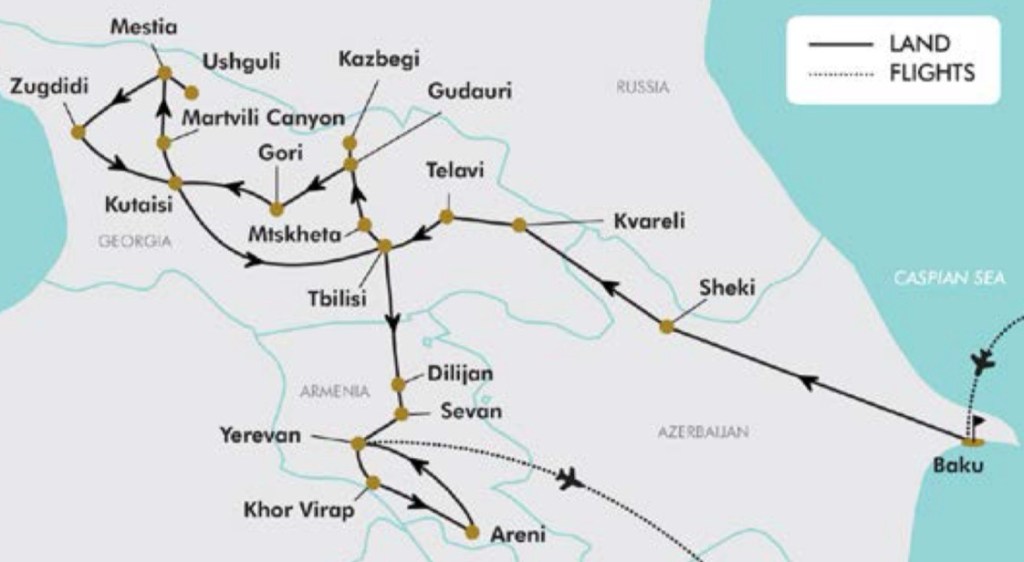
Azerbaijan
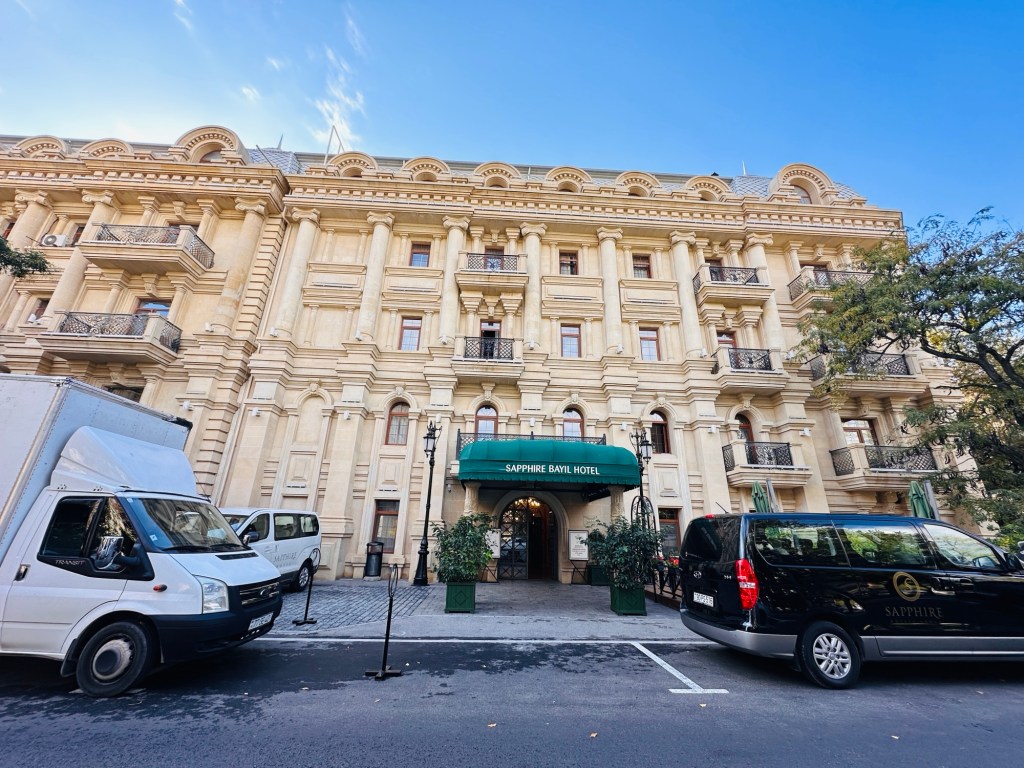
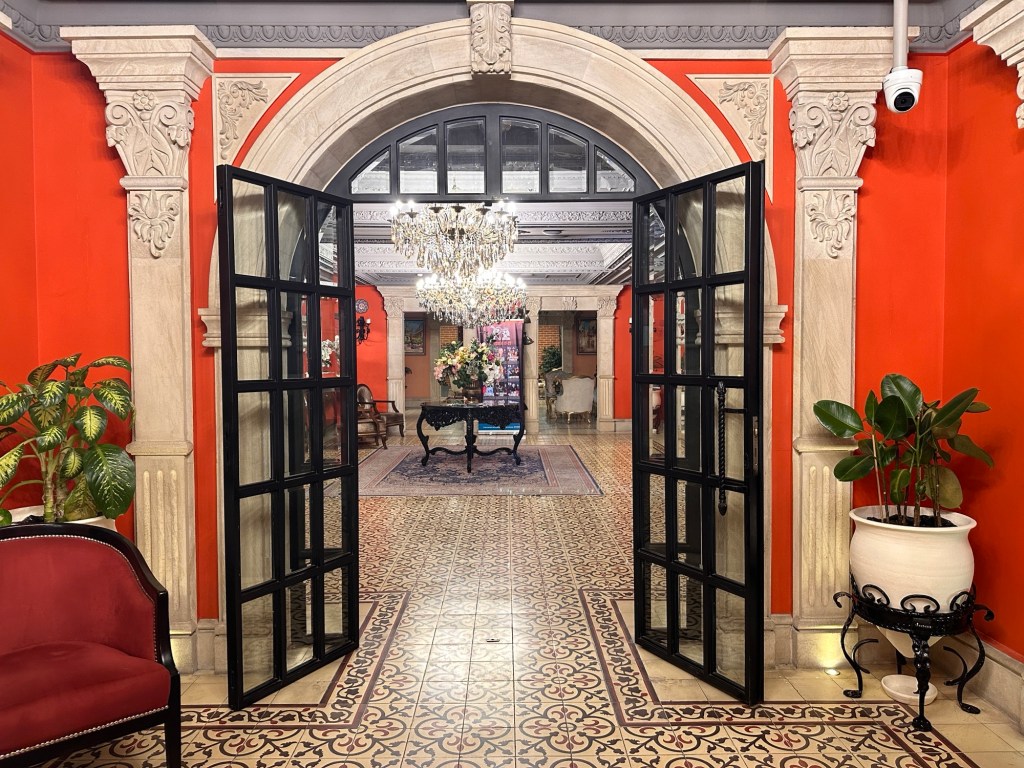
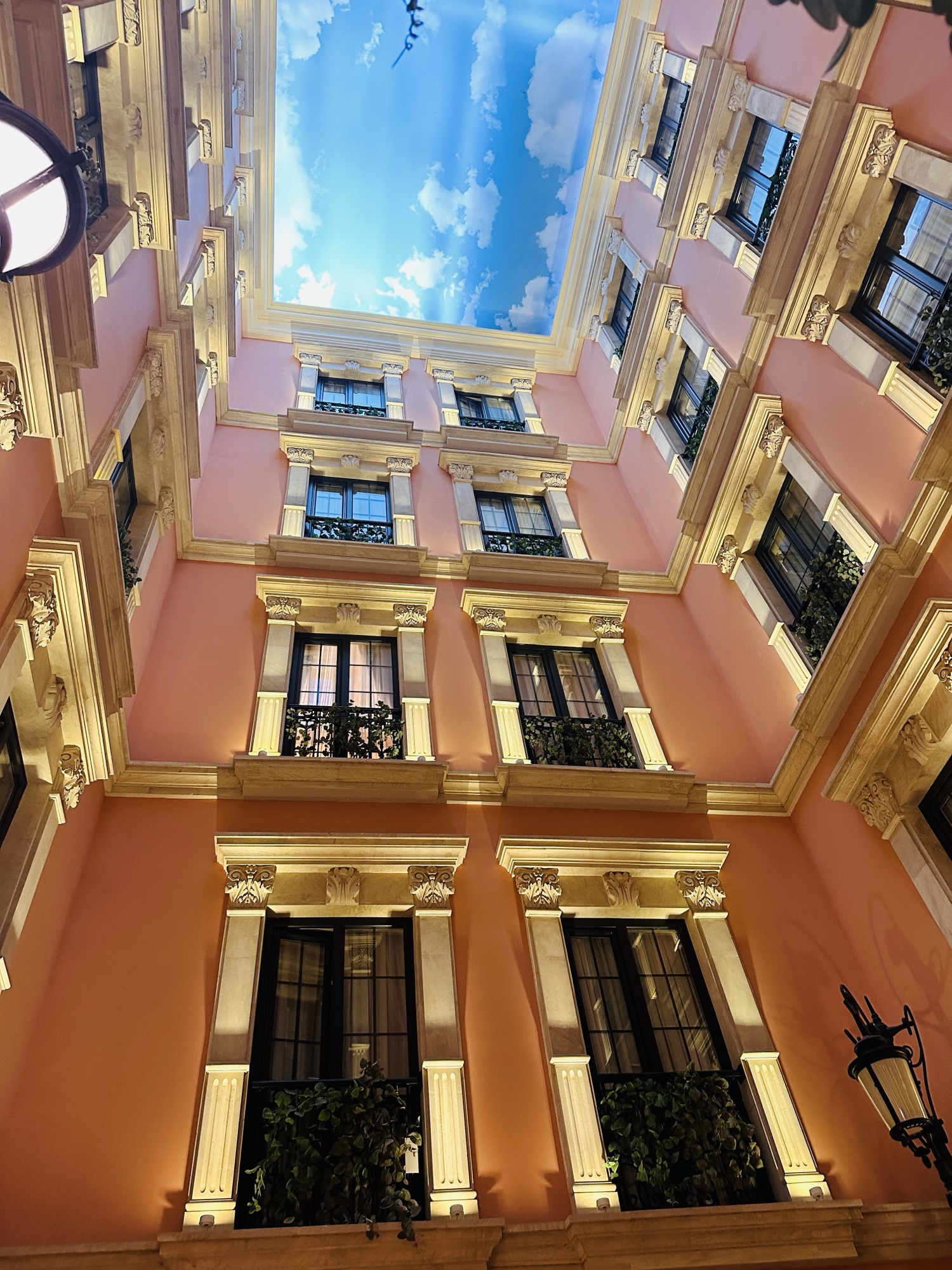
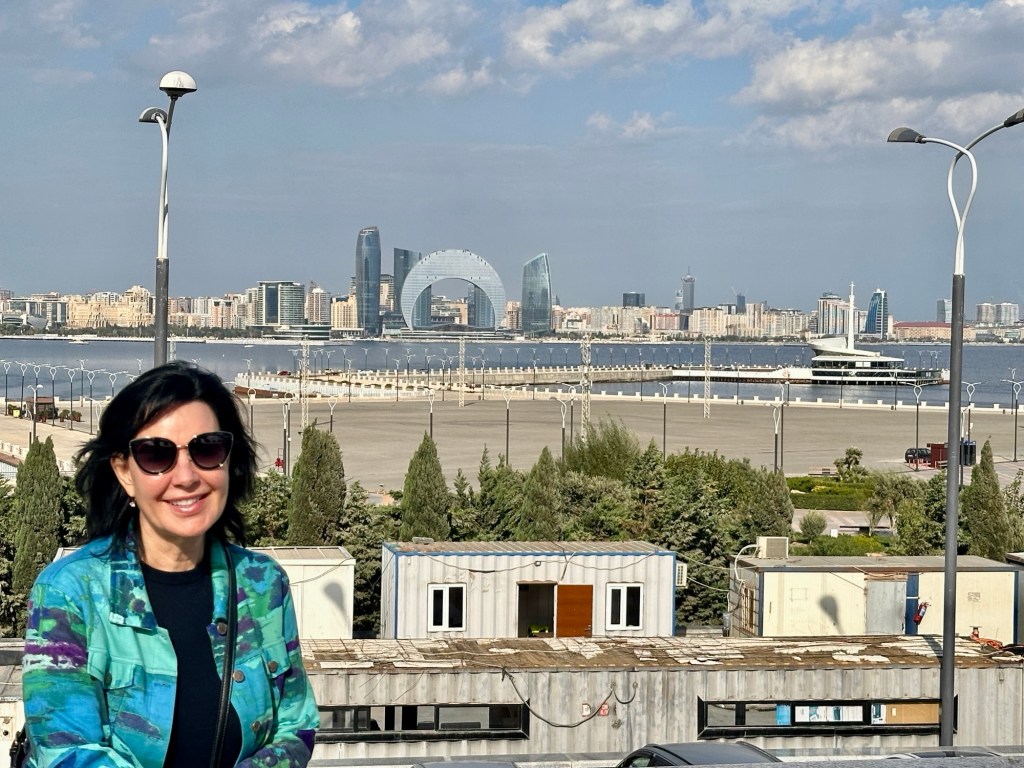
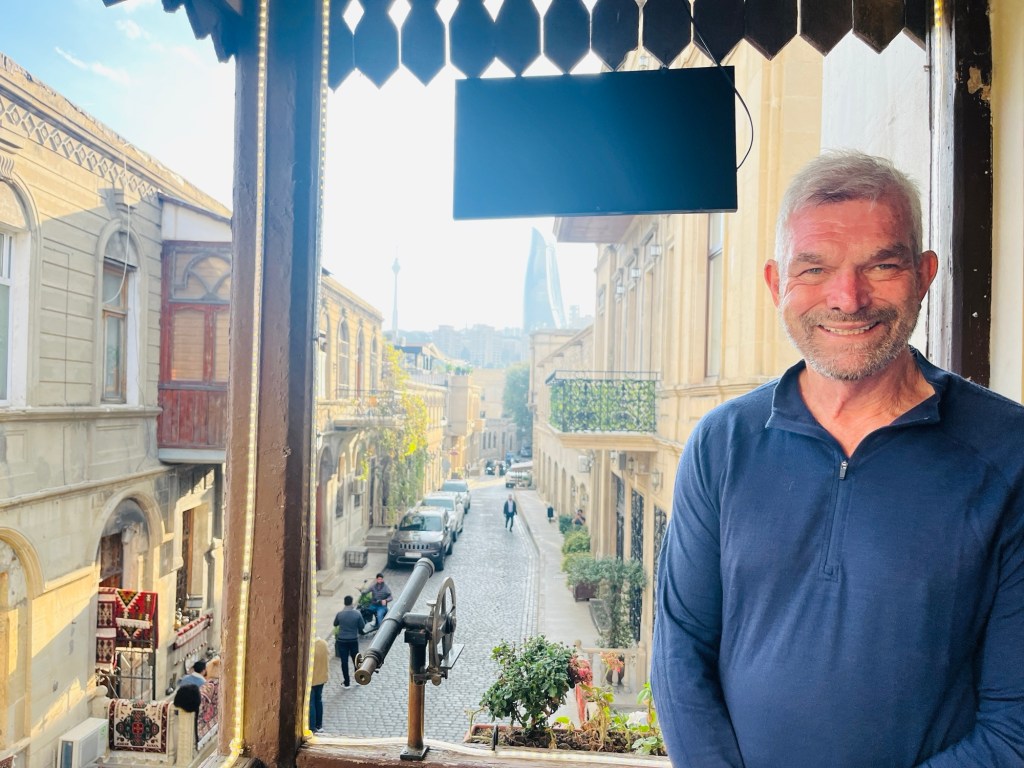
We were met at the very modern airport by the Tripadeal guide. Azerbaijan’s capital Baku (or Baki in Azeri) is the architectural love child of Paris and Dubai…albeit with plenty of Soviet genes floating half-hidden in the background. Few cities in the world are changing as quickly and nowhere else in the Caucasus do East and West blend as seamlessly or as chaotically. A 40 minute drive and we arrived at our hotel, the Sapphire Bayil.
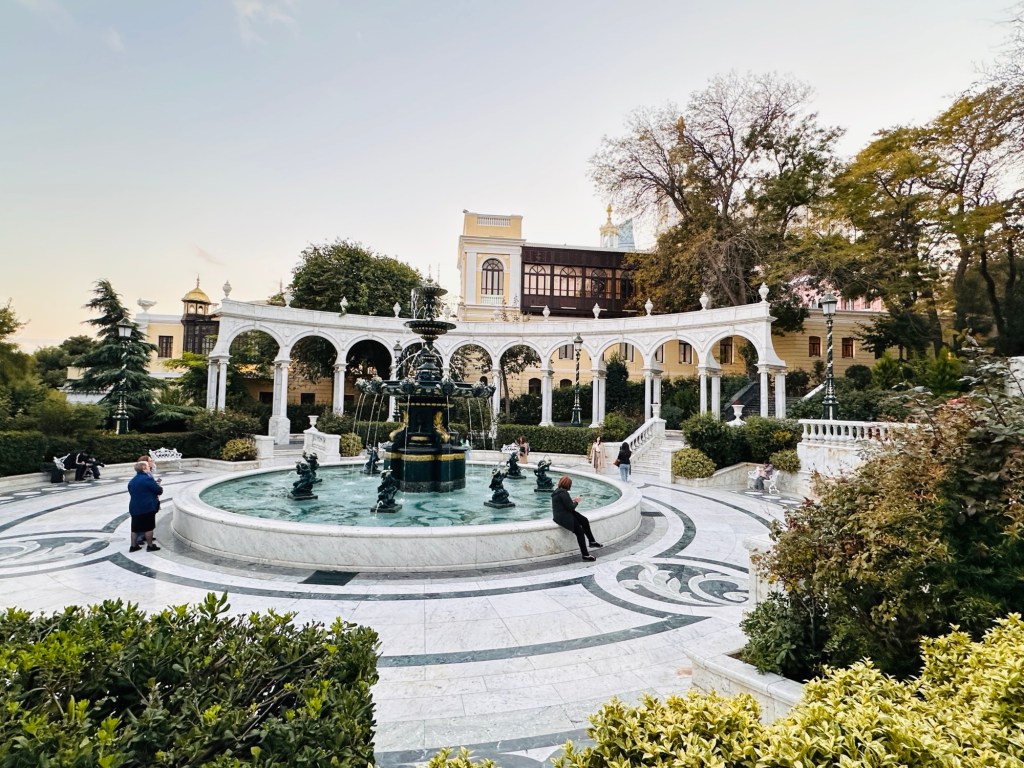
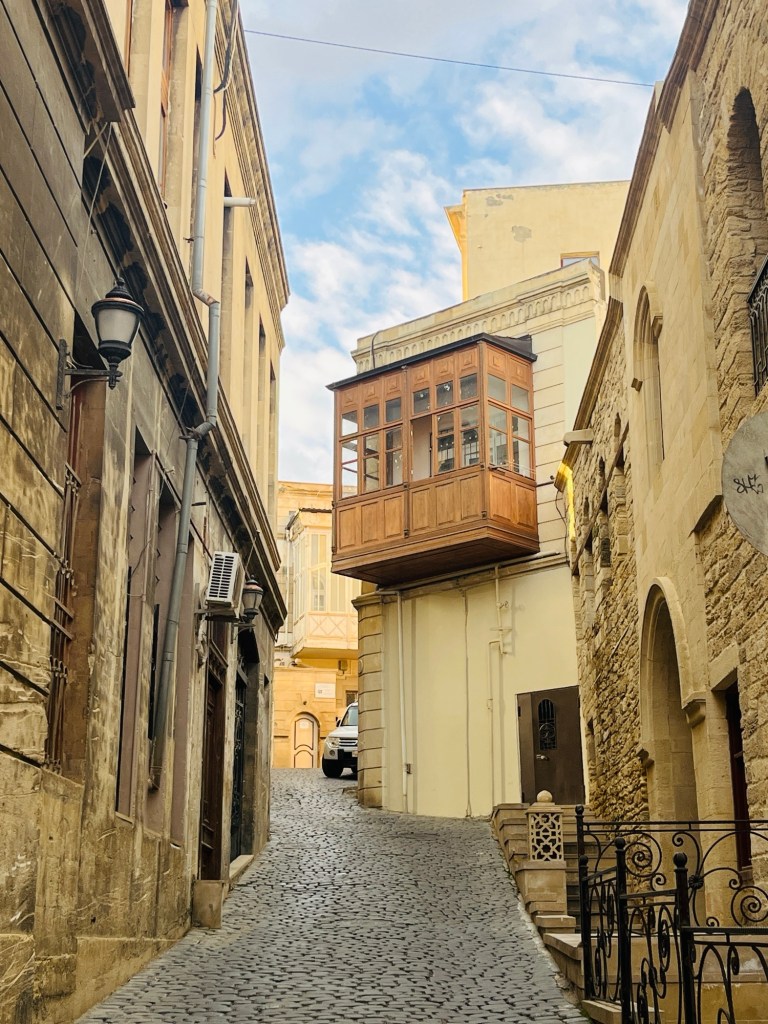
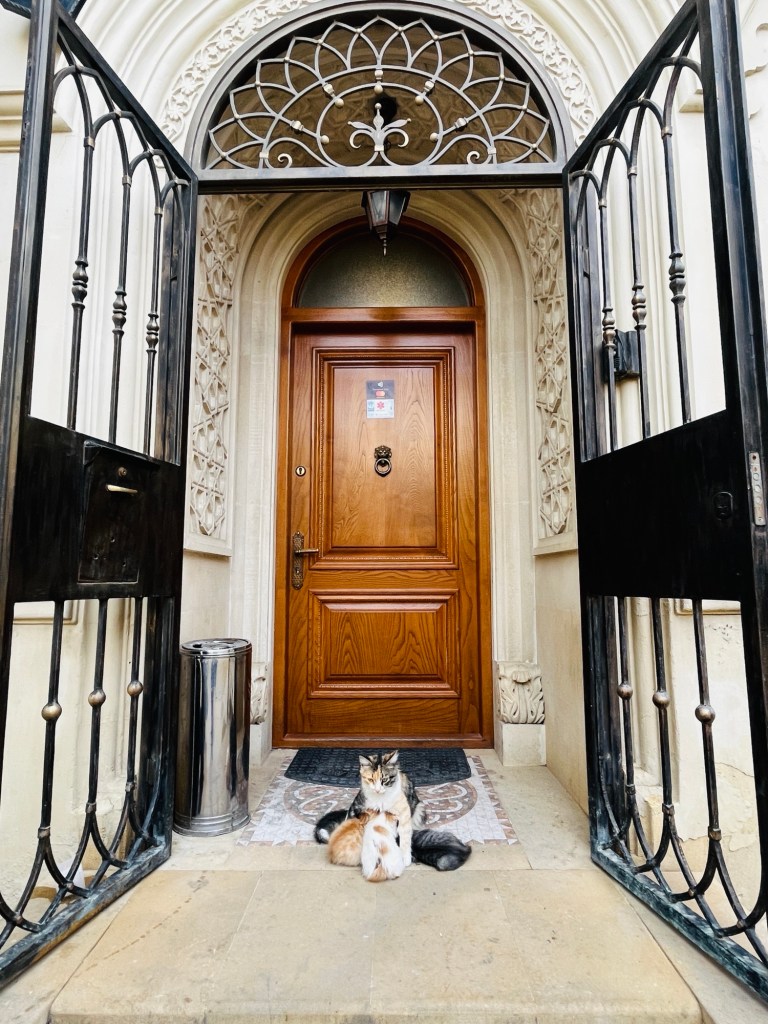
A quick settle in, then time to explore. Our friend Sue from Adelaide, joined us in heading to the Old City for a short explore (even though we knew we would be back the next day). Such gorgeous laneways and buildings – more about it tomorrow. A bite to eat, then a 40 minute walk back to the hotel, and a very early night to try and recover from the long flight.

Day 3
Saturday 26th October 2024
Baku, Azerbaijan
11-16 degrees, drizzle and wind
Our tour officially starts with our guide Elvin, giving us a fascinating and colourful history of Azerbaijan.
In short, Azerbaijan was once part of Türkiye, and still today there is a strong Turkish influence. Even earlier they were ruled by the Persian dynasty.
More recent history – the abridged edition…
1919 -1991 Azerbaijan was part of Soviet Union. The collapse of the USSR in early 90s saw formation of independent states of Azerbaijan, Georgia and Armenia.
1991 Azerbaijan gains its independence.
1991-93 the country was completely broken.
1994 Heydar Aliyev was re-elected as President, and a ceasefire agreed with Armenia. Azerbaijan has had a long running border dispute with Armenia.
2005 and 2007 were big oil boom years – that’s when Azerbaijan really came into its own.
Oct-Nov 2020 – 40 day War with Armenia resulted in a victory to Azerbaijan and return of disputed territory of Nakhchivan. Dispute still remains as to how to access to Nakhchivan by land.
2022 new programme committed to developing rural development.
Azerbaijan is now an oil rich country (land and sea) with a strong economy and military. Baku the capital is 28 metres (92 ft) below sea level which makes it the lowest lying capital city in the world. At the turn of the 20th century, over half of the world’s oil supply came from Baku, and the city quickly became dotted with extravagant buildings and quirky residences that nouveau riches erected to show off their wealth.
Today we did a city tour of Baku, population of 3 million.

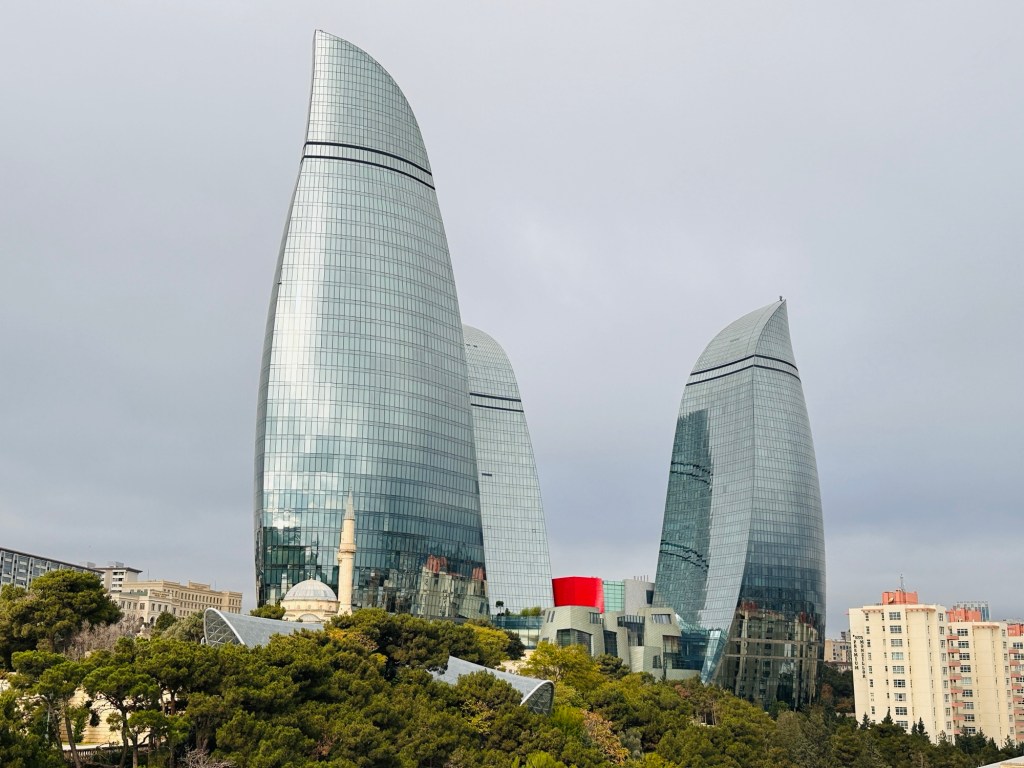
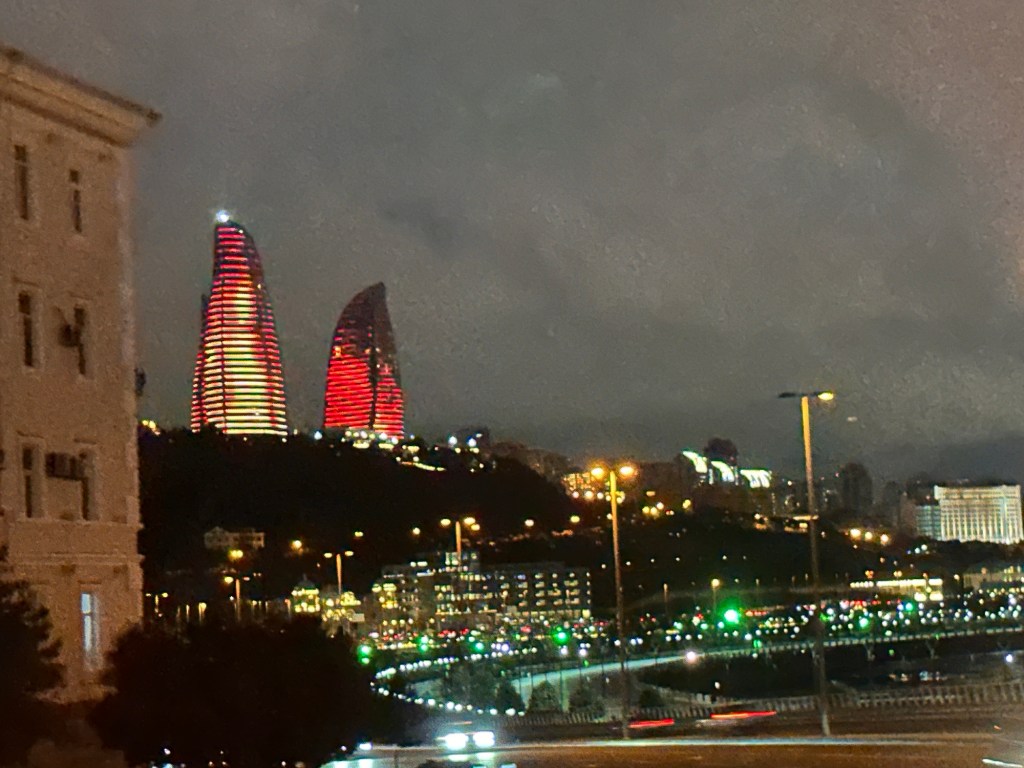
Dominating the city’s skyline since 2013, Baku’s Flame Towers are the most evident testament to Azerbaijan’s second oil boom. The three Flame Towers reflect the country’s long-standing devotion to fire, a symbol of cultural significance echoing pre-Islamic Zoroastrian beliefs. After dusk, the glass structures come to life via a light show with characteristically nationalist hues – rotating images of water, fire and Azerbaijan’s flag, paint the modern landmark as night falls.


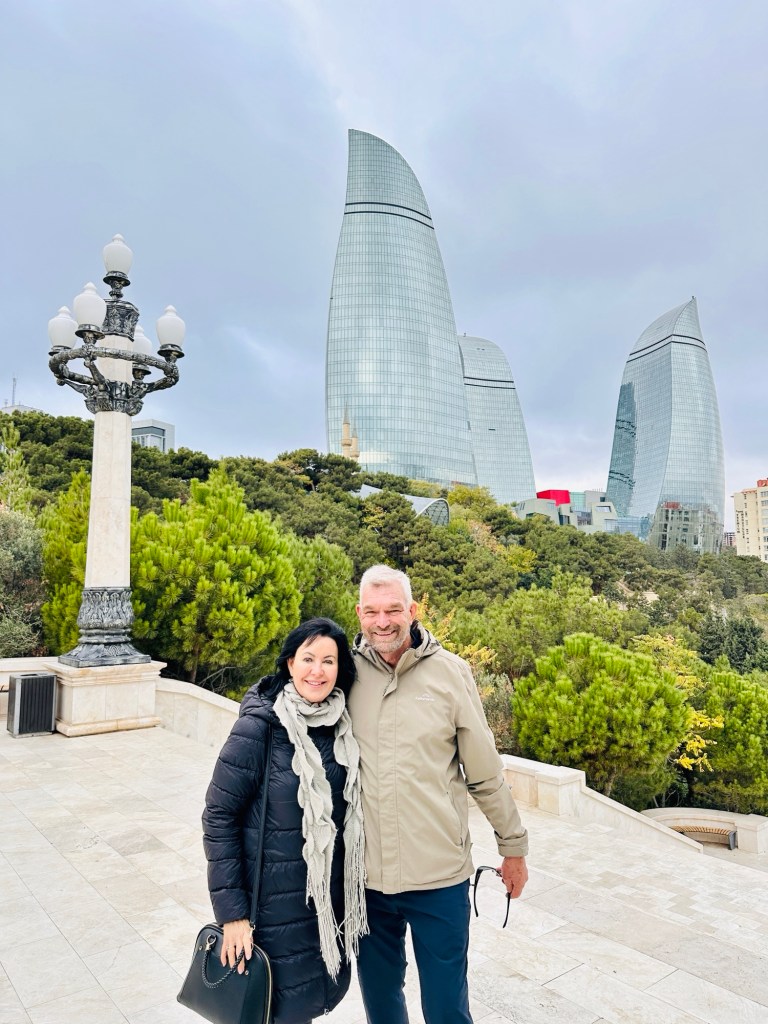
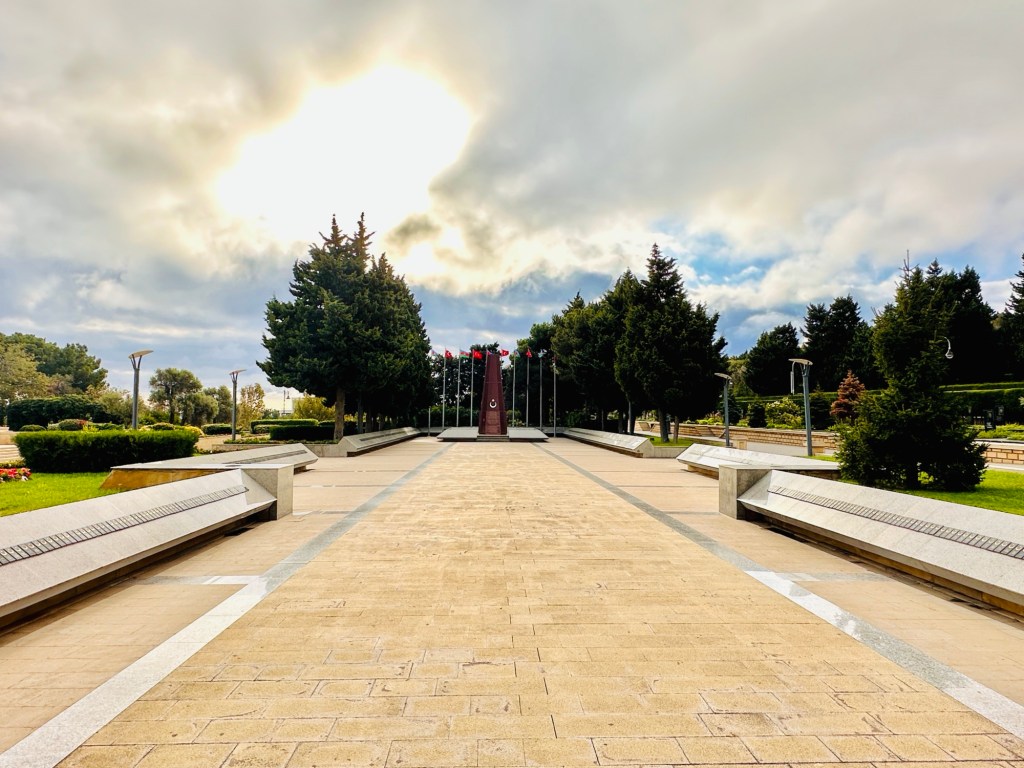
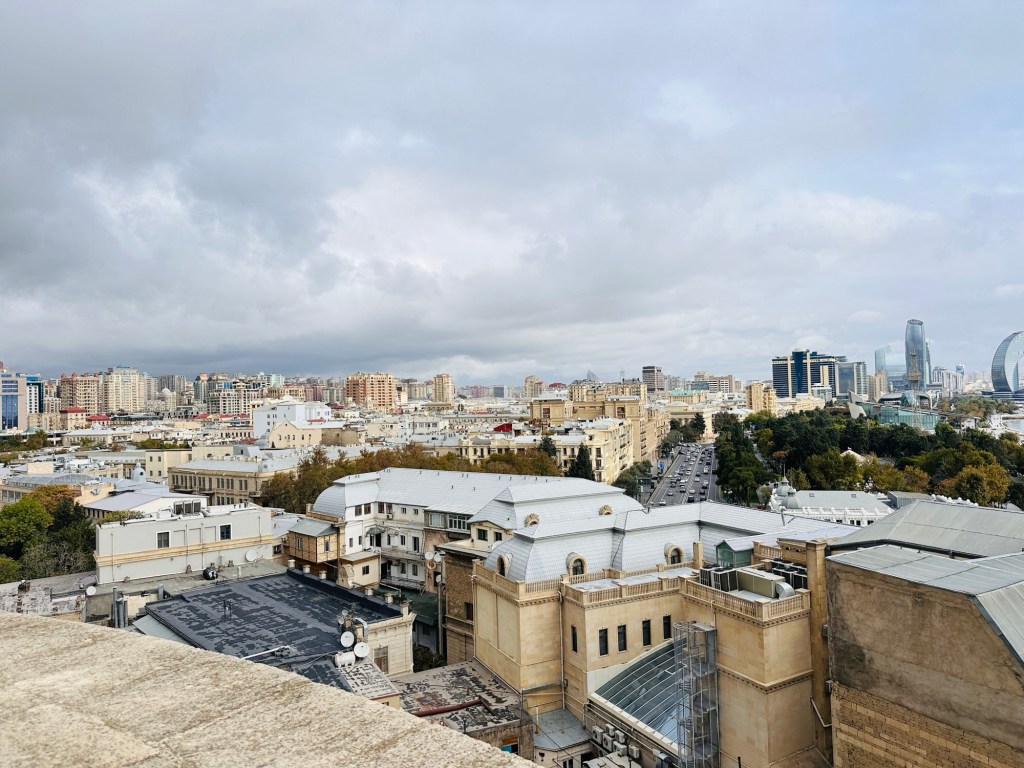
After seeing the the Flame towers up close, we visited Memory Alley (Martyr’s Lane), which is a cemetery and memorial dedicated to those killed by the Soviet Army during Black January and also for those killed in the Nagorno-Karabakh War. From here we walked to Upland Park where we enjoyed a spectacular panoramic view of Baku Bay.

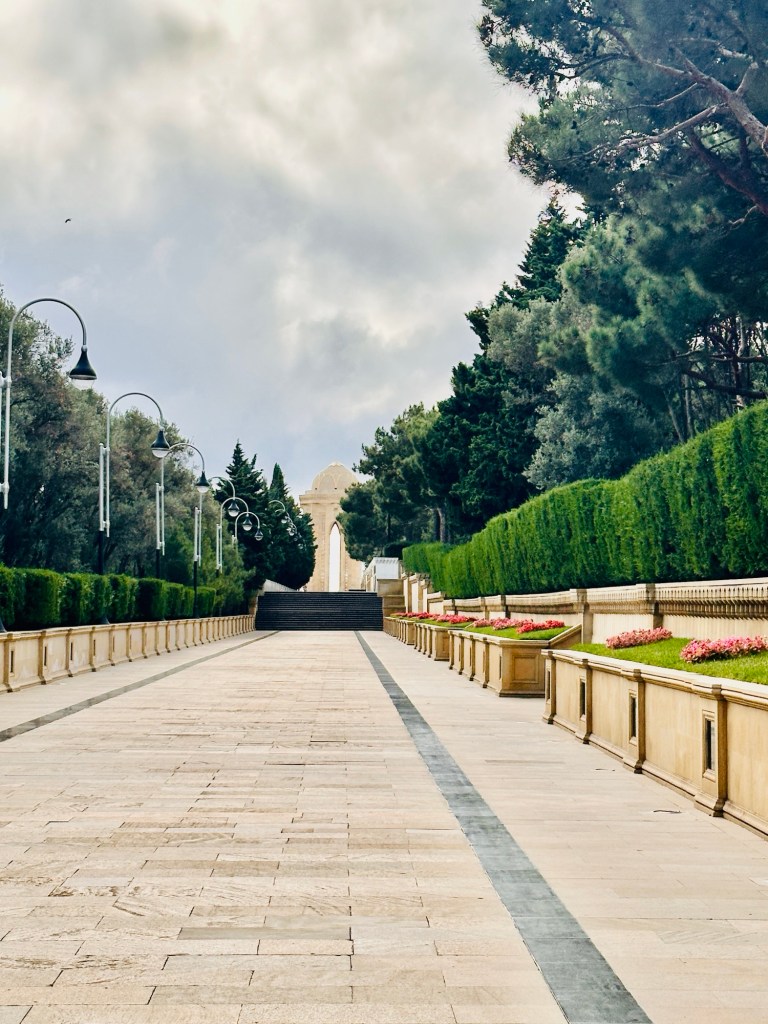
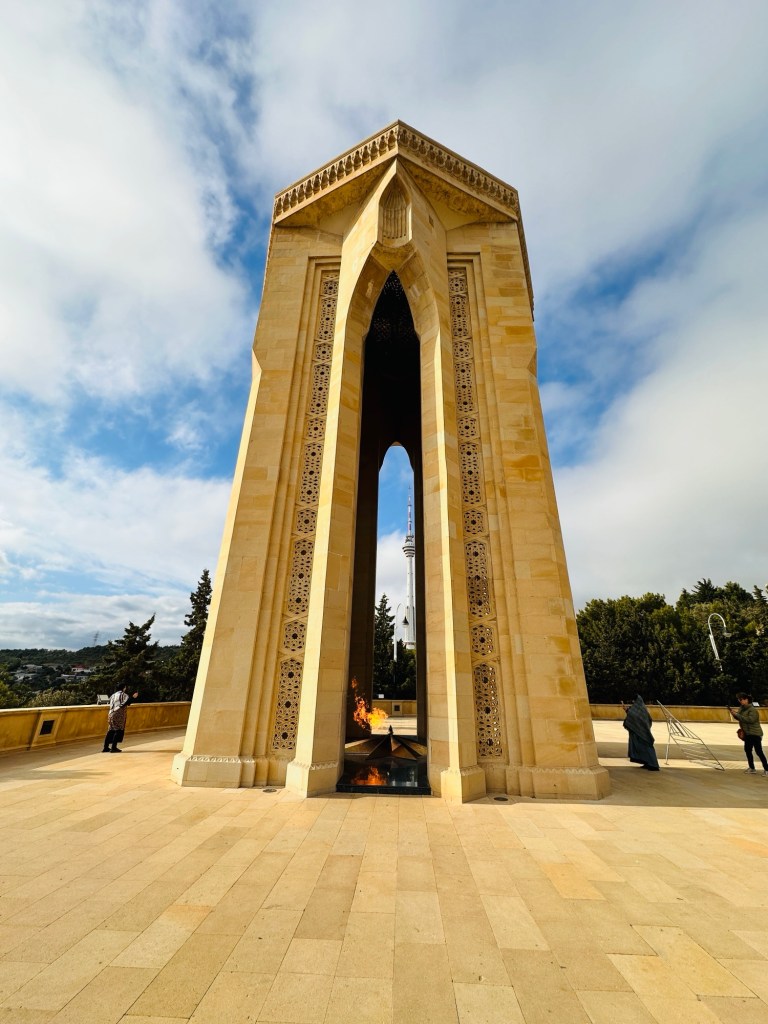
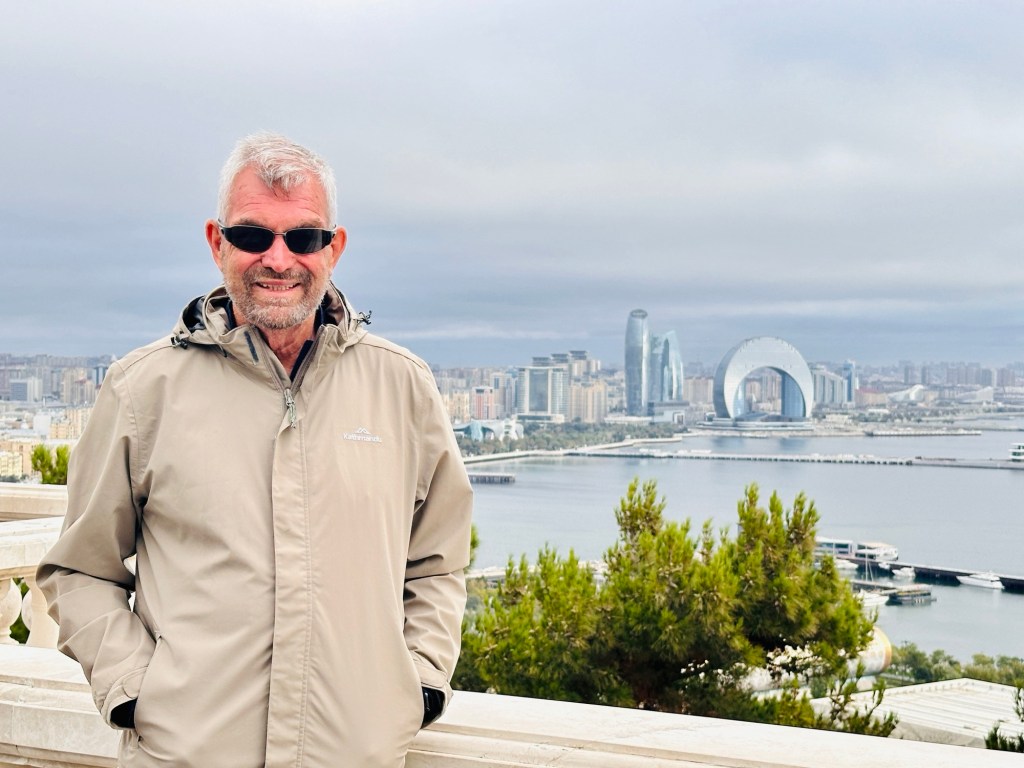


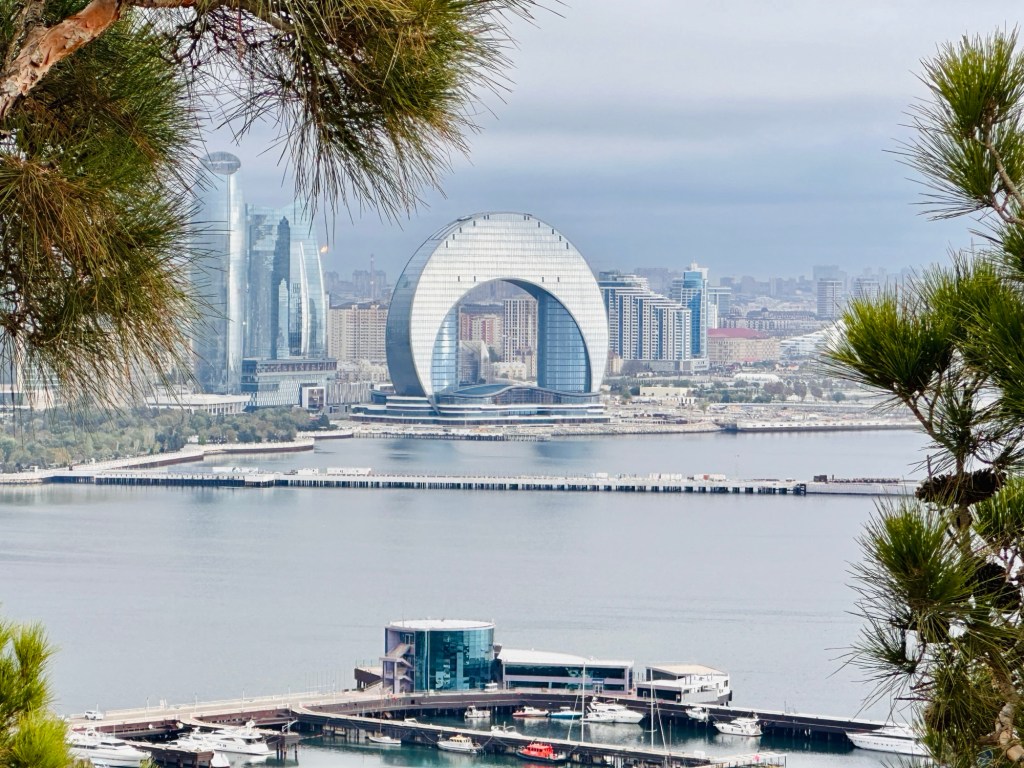
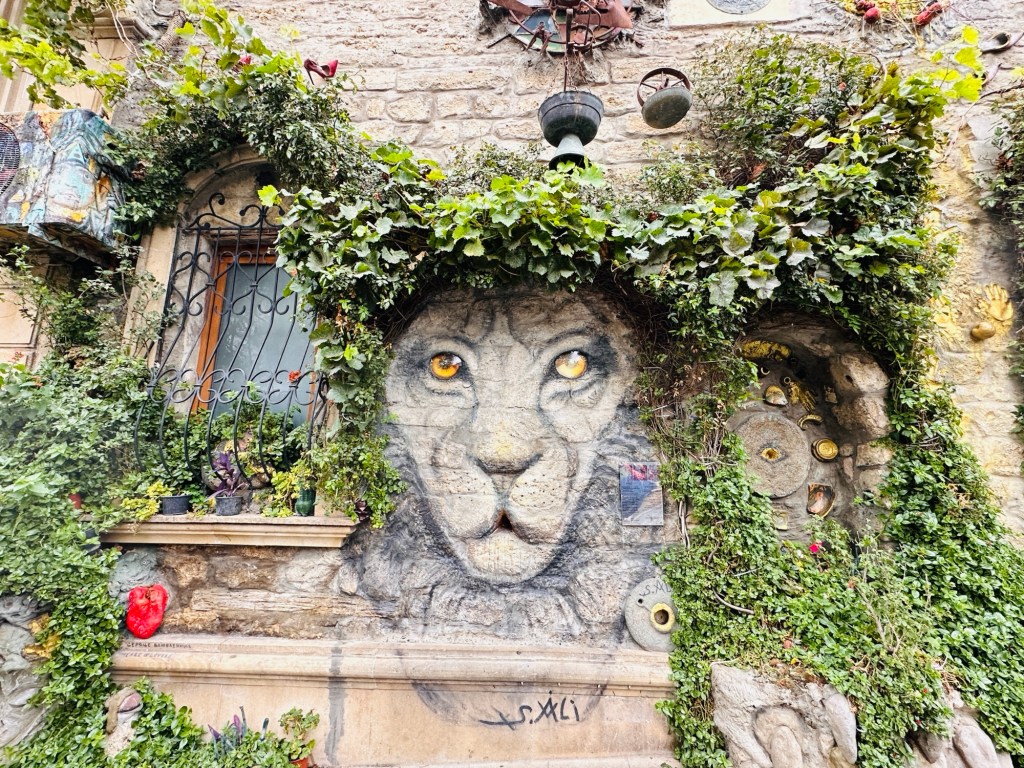
Next a walking tour in the beautiful Old City area (a UNESCO heritage site). Baku’s ancient core – a labyrinthine mixture of narrow alleys, repurposed caravanserais, hidden mosques, colourful carpet stores and faux-old houses blending into the century-old sunburnt stone architecture.
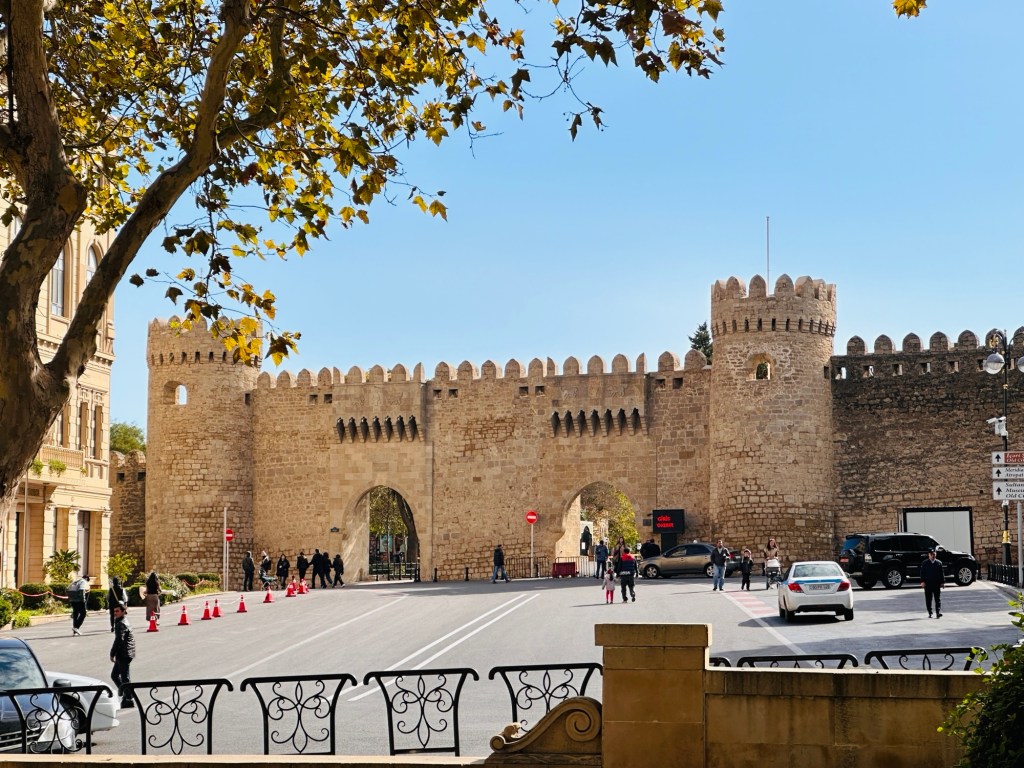
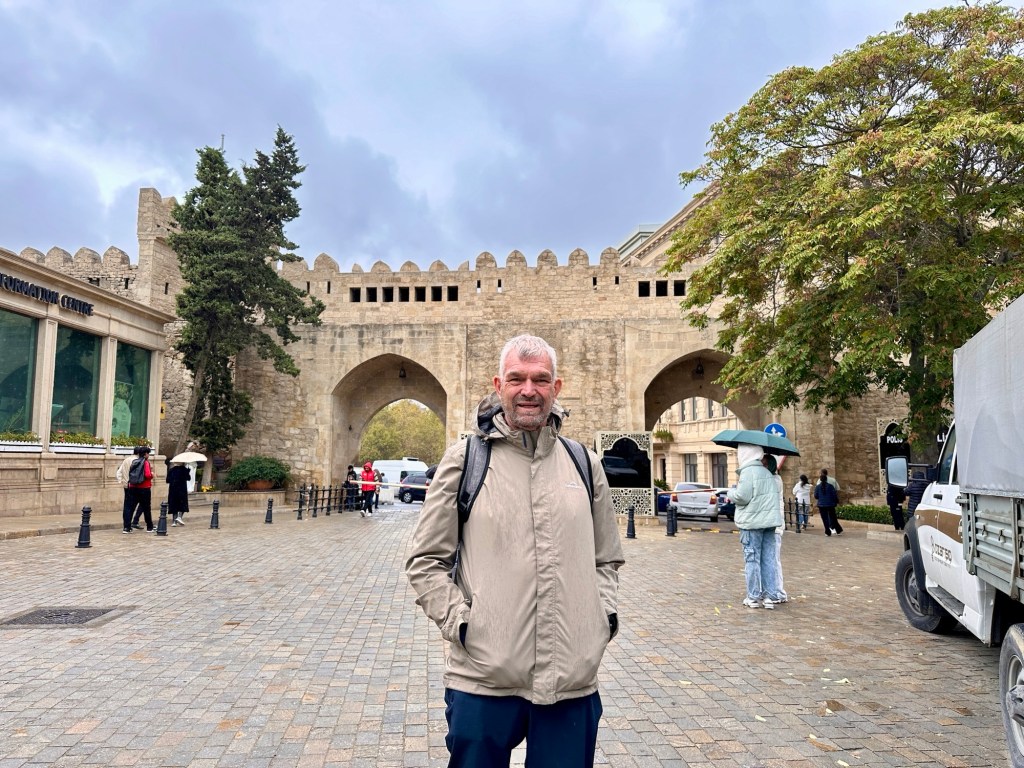


Sitting at the highest point of the Old City, is Shirvanshah’s Palace – once inhabited by members of the Shirvanshah dynasty that ruled over northeasterm Azerbaijan. Wars and invasions have left only a few of the rooms intact (originally 52), and many of the Shirvanshah’s treasures have been looted over the centuries.
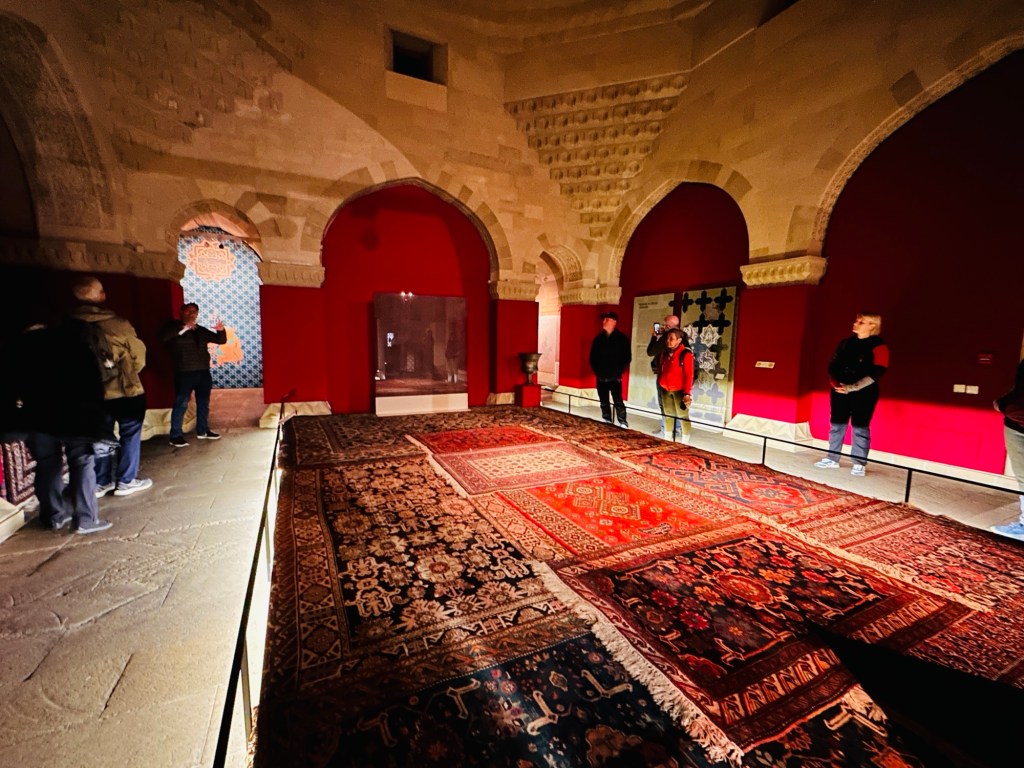
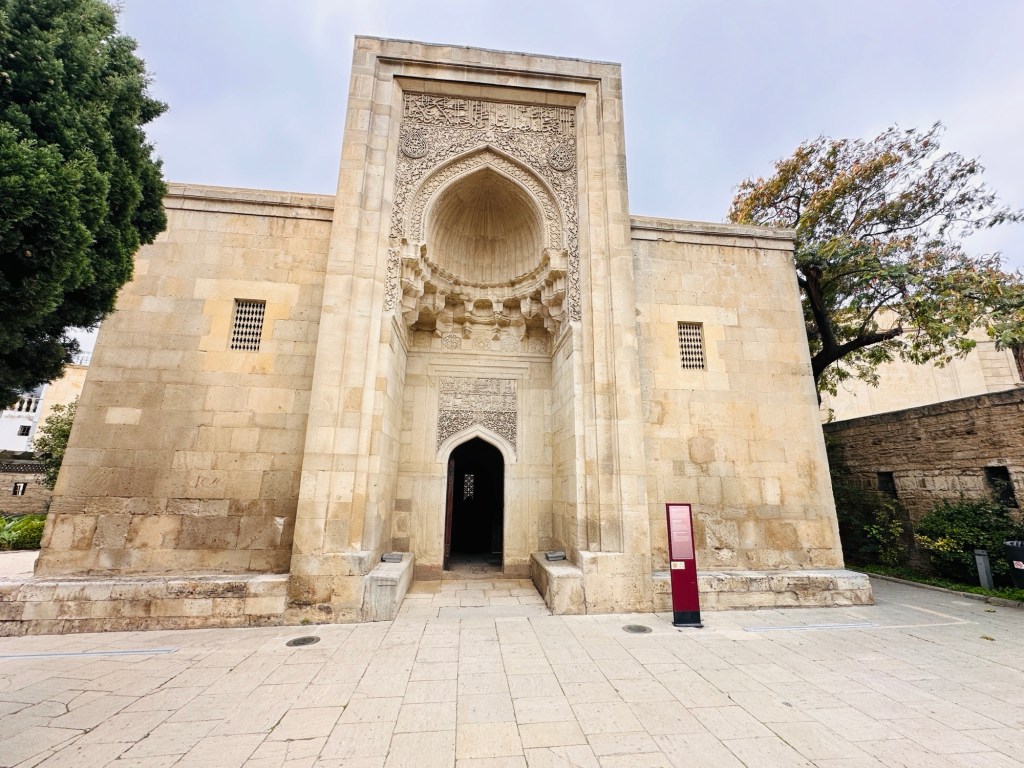
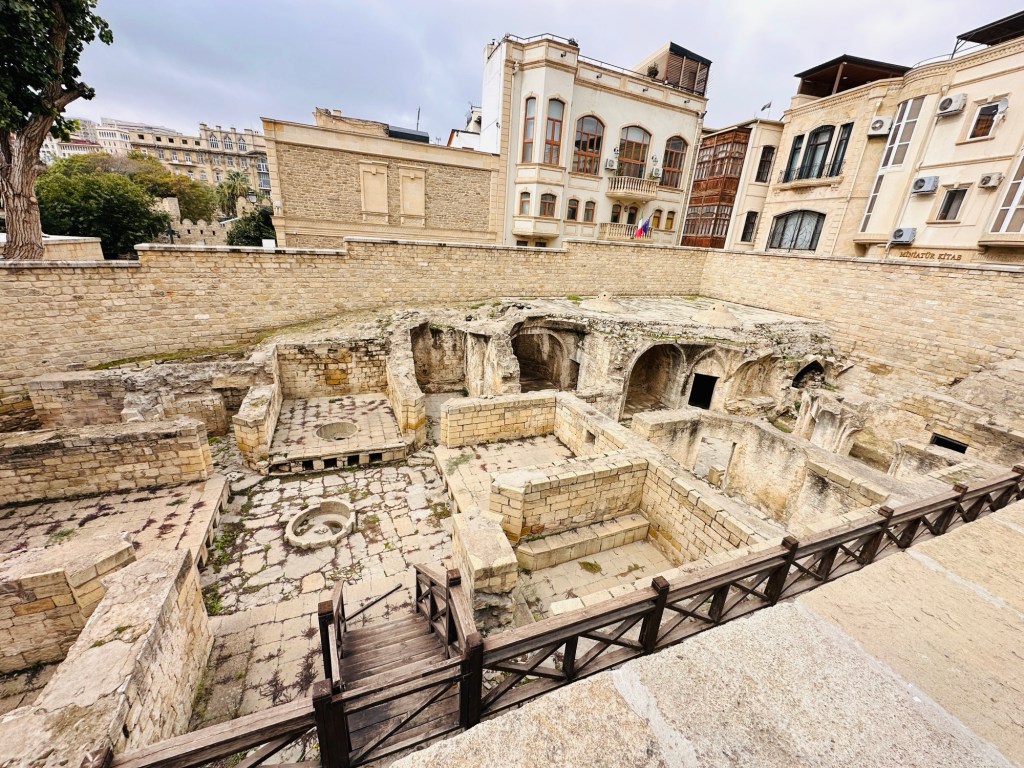
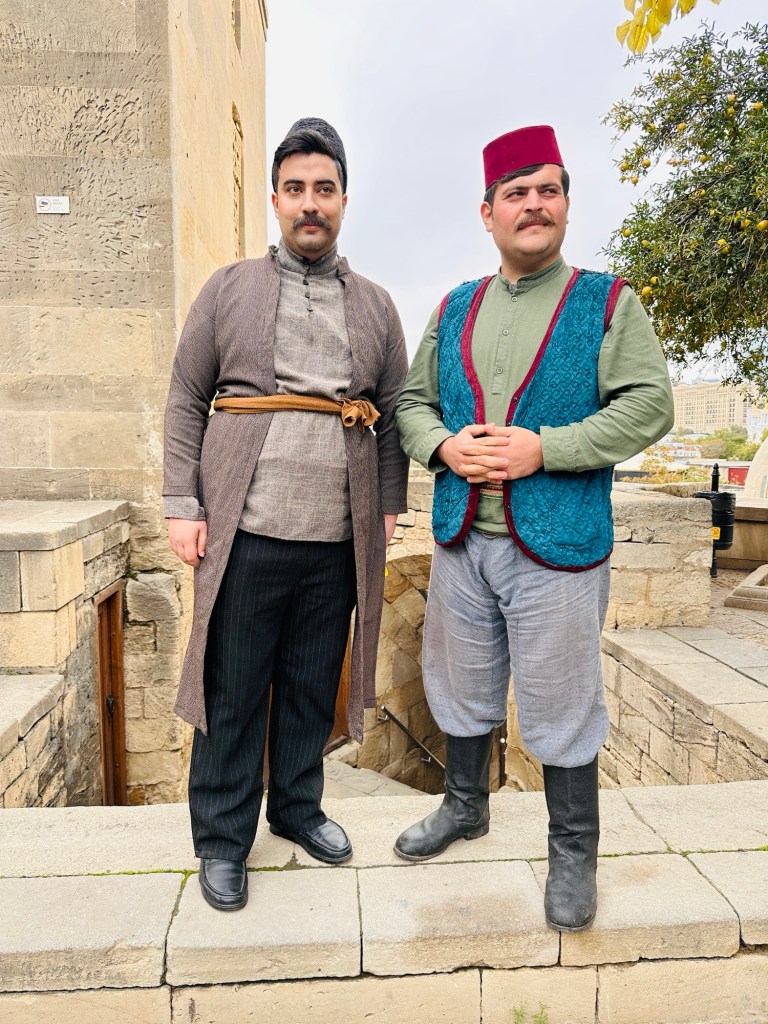
It was fascinating wandering around the old city seeing the repurposed Caravanserai, the hammams (bathhouses), Market Square, carpet shops, art studios and souvenir stalls.
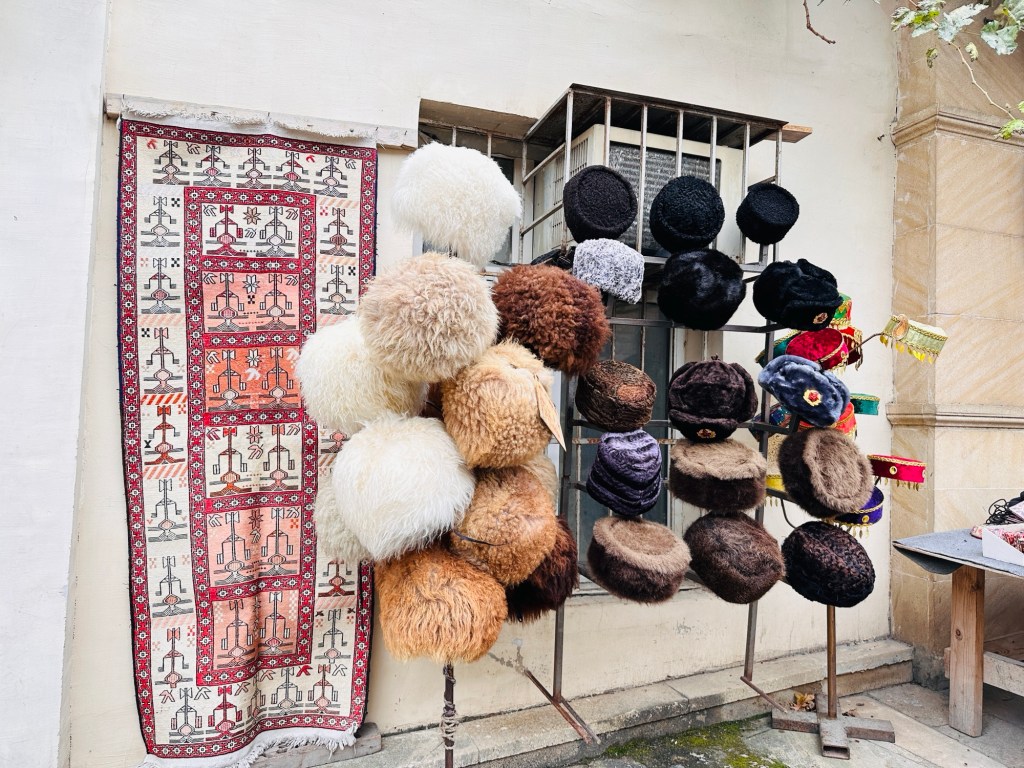
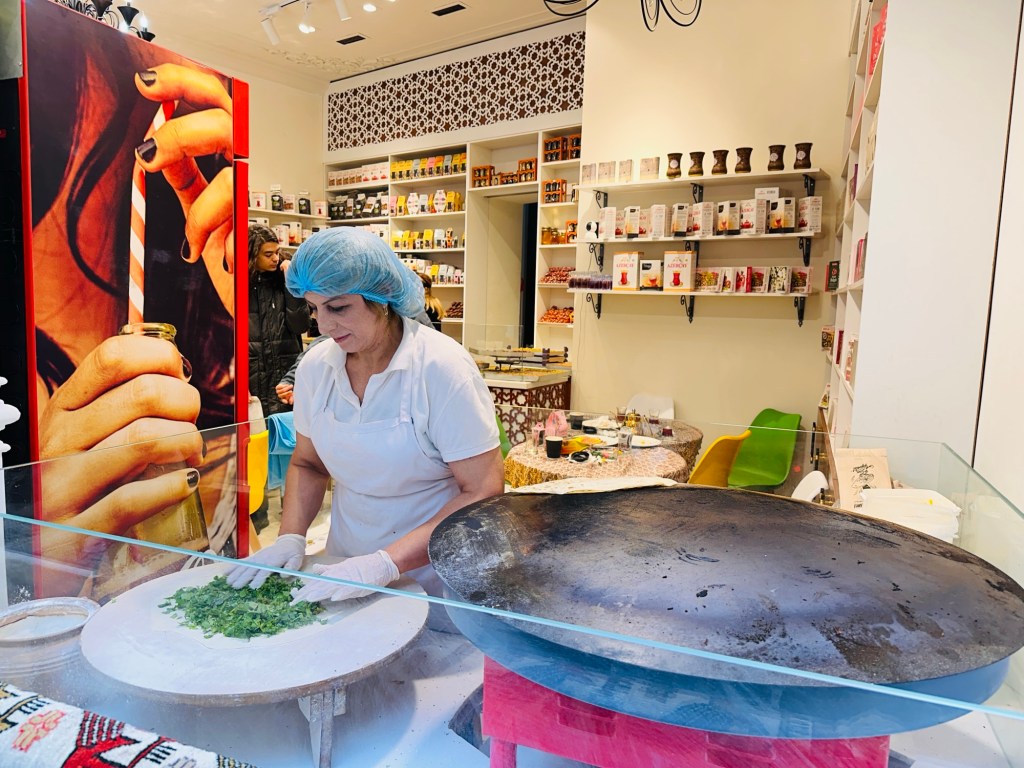


The mysterious 29.5m-tall Maiden’s Tower, one of Baku’s most revered icons, stands staunchly in the southeastern corner of the Old City. We climbed the spiral staircase (124 steps) and enjoyed a another fabulous view of the city.



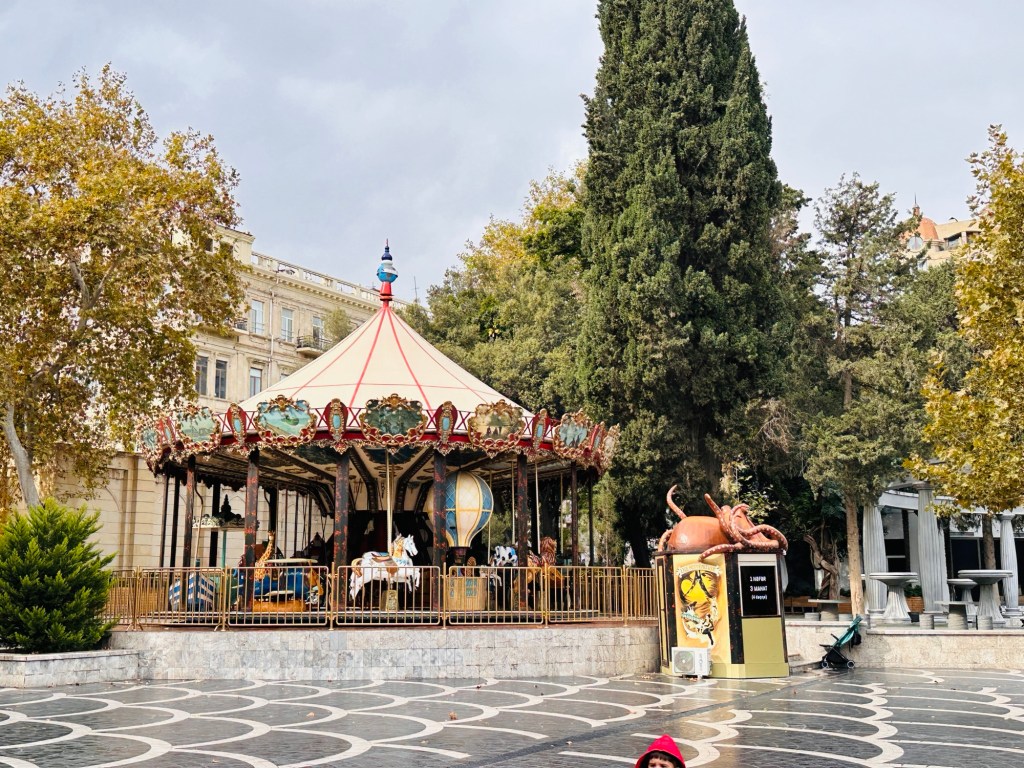
Onto Fountain Square – public festivals and events are often held here. This is central Baku’s main strolling space, locked between tall trees and pedestrian avenues, where restaurants, cafes and fast-food joints line up one after the other. Originally known as Parapet, the square owes its name to the numerous fountains that were built here during Soviet times. Mind you, we didn’t see any fountains!

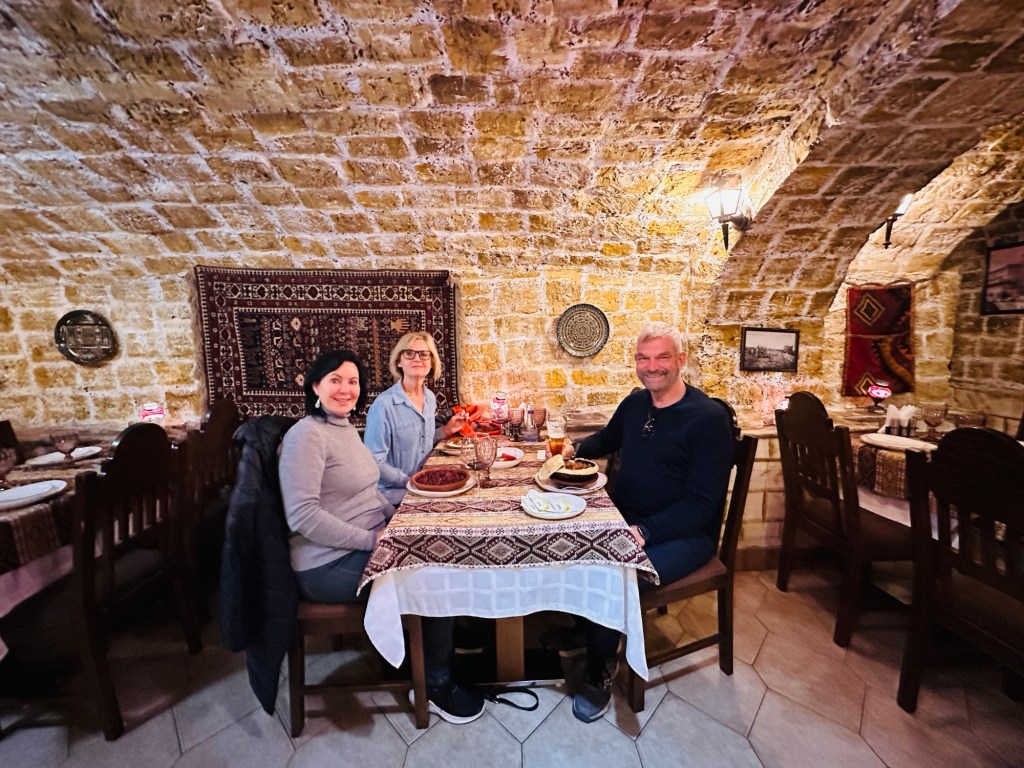
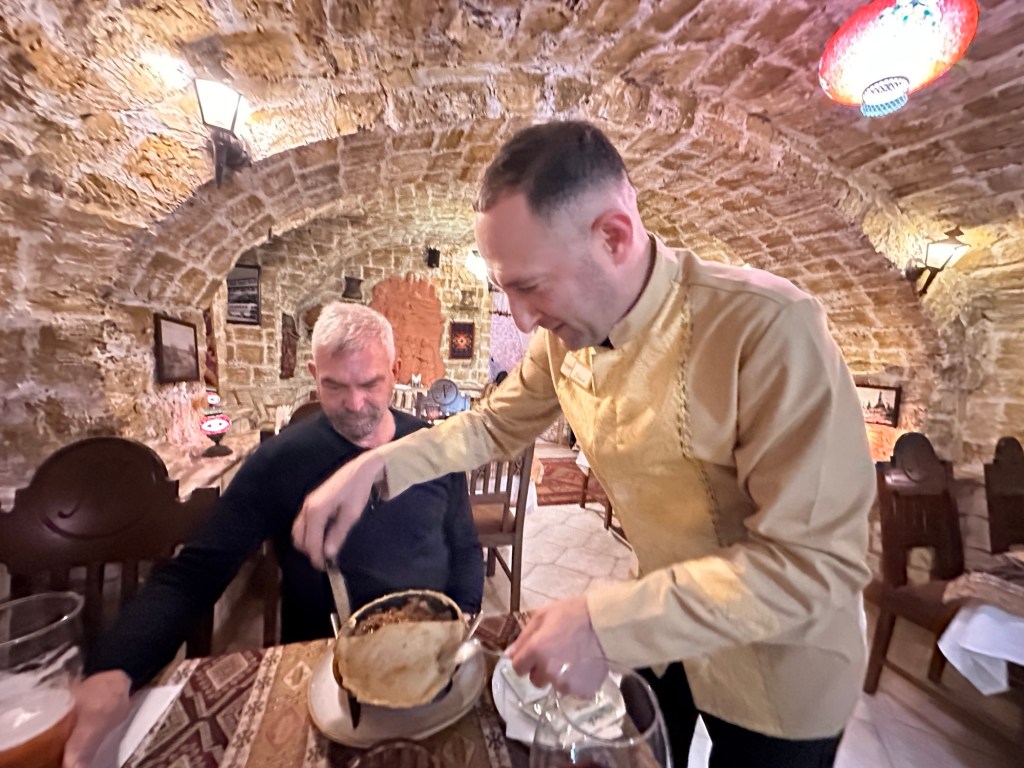
We found a restaurant which served traditional Azeri food – I had the most delicious lamb and pomegranate dish. It was divine. Also tried the Qutab – traditional bread – it can have a neat, cheese or green filling. The spinach and cheese filling was delicious. Food is relatively cheap here, coffee is not- up to $10 per cup for a flat white!
Continuing our tour, we enjoyed seeing the varied architecture. Interior, with the exception of the grandiose Government House, built between 1936 and 1952 during the USSR’s classical revival led by Stalin – what is left of the Soviet architecture of central Baku often goes un-noticed, squeezed between oil-funded towering glass buildings and the charming, open-air museum that is the Old City. The Soviet buildings remaining have had changes made to their facades and roofs – a process of de- Sovietisation!
The construction of the European inspired buildings in Baku during the oil- boom decades, led to the city acquiring the nickname “Paris of the Caucasus”.
Last on the day’s programme was the world class cultural center named after Heydar Aliyev, Azerbaijan’s third president. The Heydar Aliyev Centre consists of various exhibitions and is recognised as one of the world’s most famous buildings – the masterpiece of Zaha Hadid has become an architectural landmark of modern Azerbaijan. Everything in the building is rounded and free flowing. As disorienting as it is mesmerising , this futuristic structure resembling a series of white waves about to spill into the surrounding scenery is absolutely stunning. The carpet and doll museum were astounding!


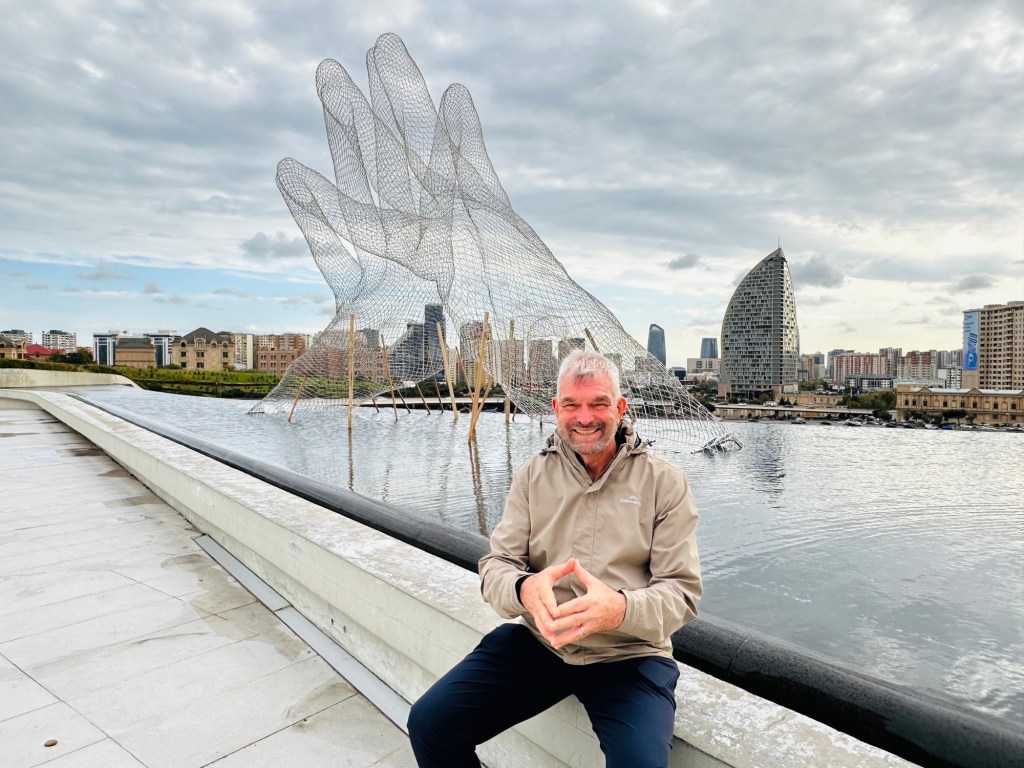


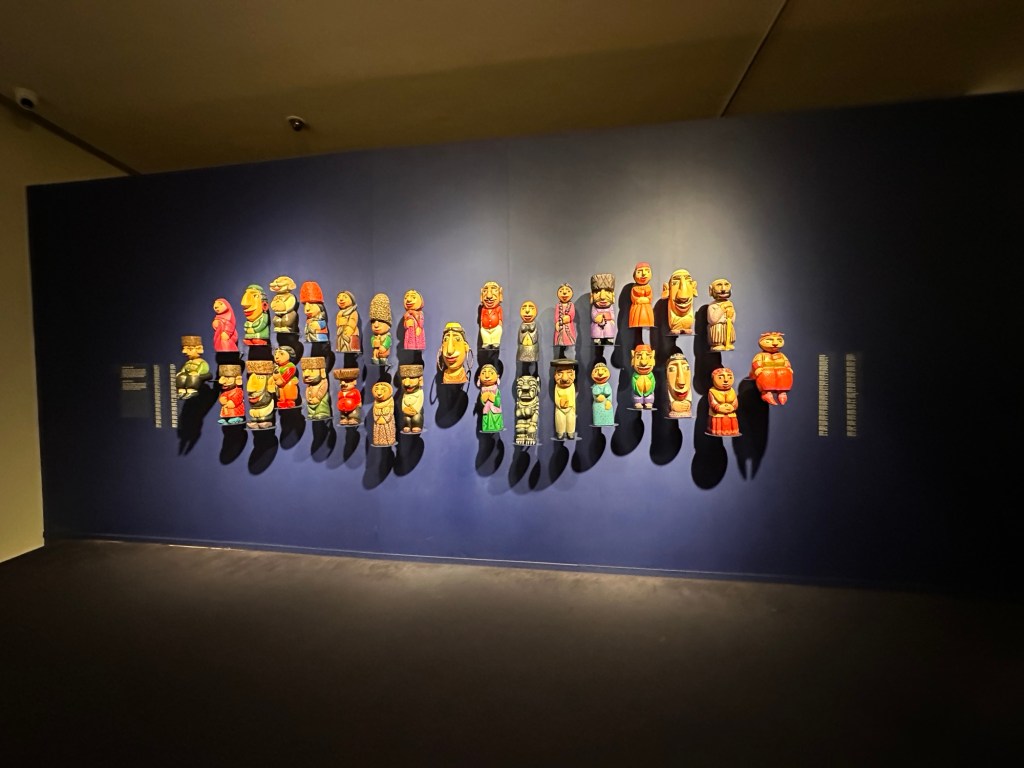
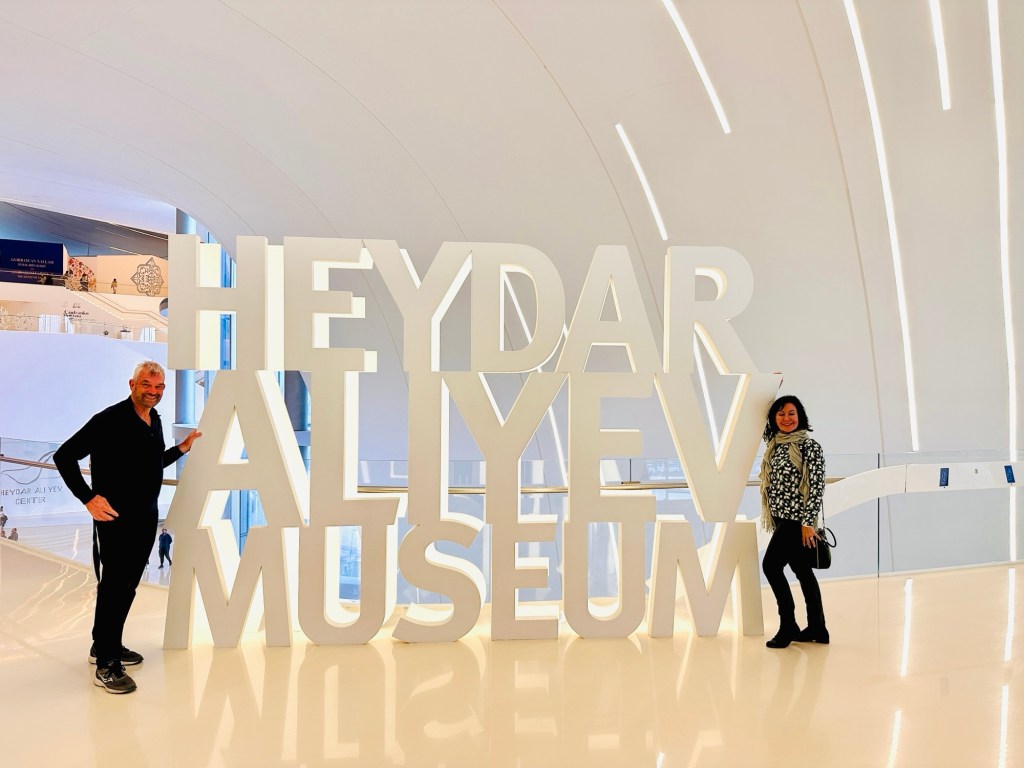
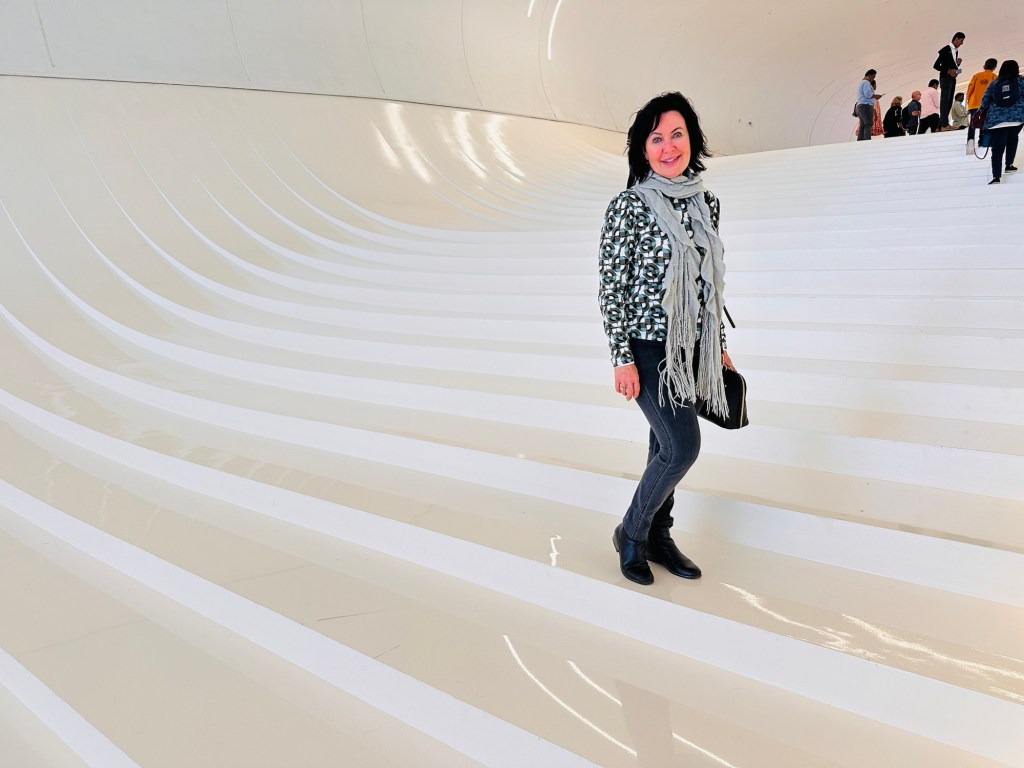
Other fascinating buildings/landmarks we passed, and worth noting, are the Azerbaijan Carpet Museum, Baku Crystal Hall, Baku Eye Ferris wheel, National Flag Square, Museum of Musical Culture, Caspian Waterfront Mall and Mirvari Cafe, Heydar Aliyev Museum(former Lenin Palace) – to name just a few.
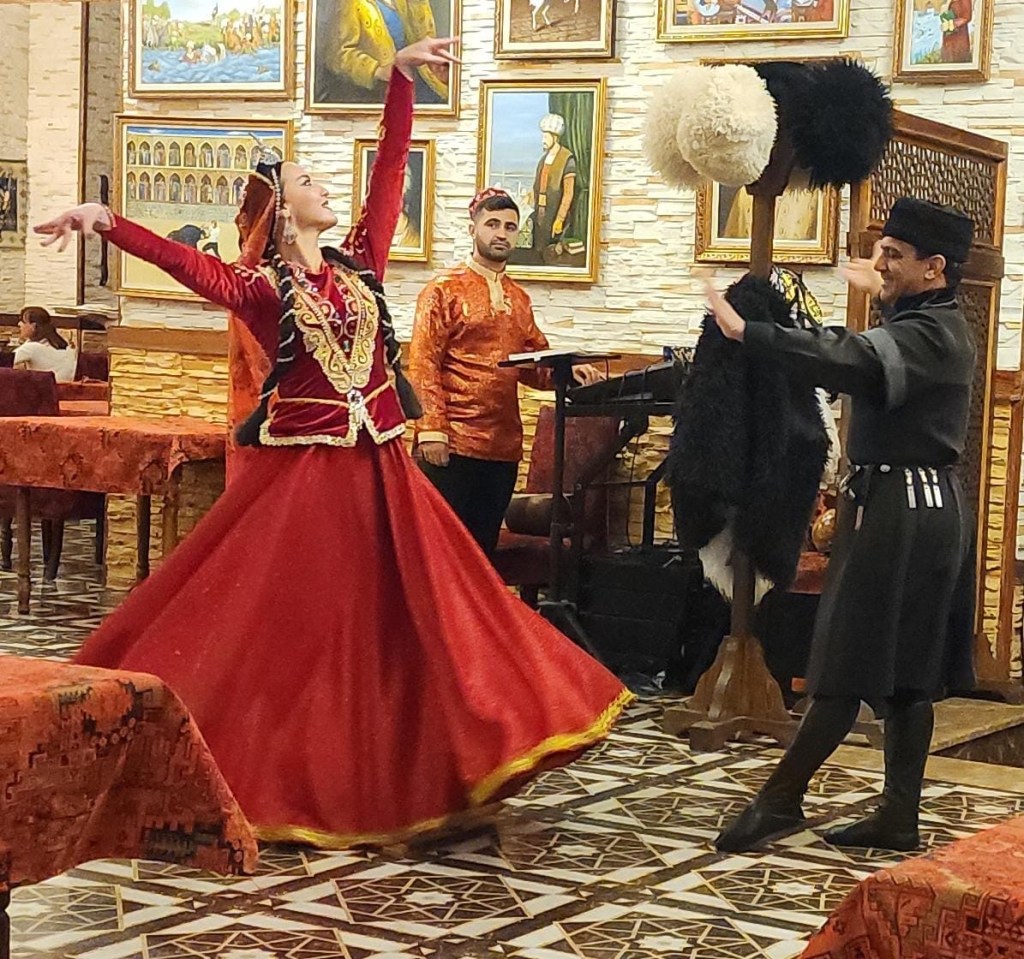
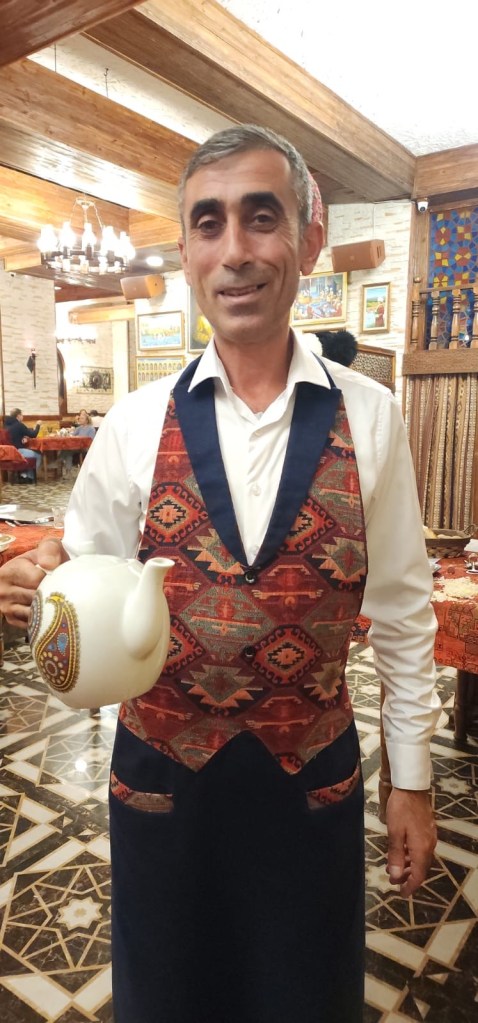
A quick change and out we went for a traditional Azeri Dinner and Folk Show. The food was delicious – mezes and salad to start with, followed by Qatabs and other local breads, chicken with pomegranate dressing, and quince “jam” which you eat, and drink tea at the same time. All very nice. The Yellen folk dancing was entertaining.
The drive back to our hotel gave us the opportunity to enjoy the Baku light show – the Flame Towers are certainly spectacular.


Day 4
Sunday 27th October 2024
Baku
10-17 degrees, beautiful and sunny, although rain was predicted the day before.
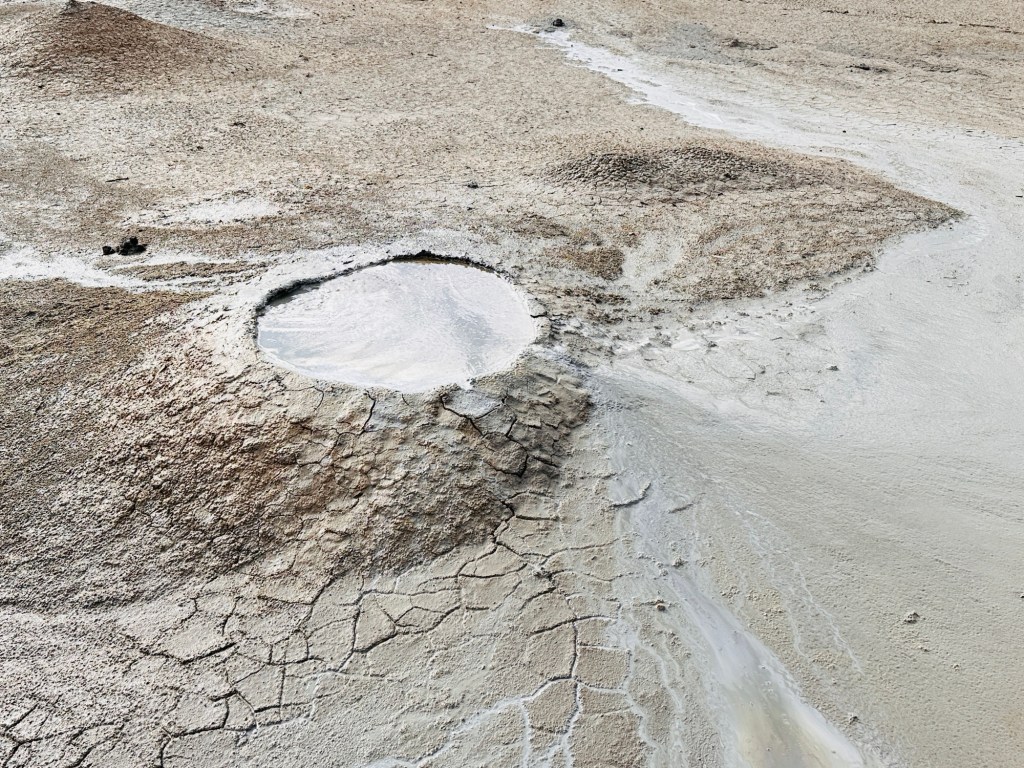
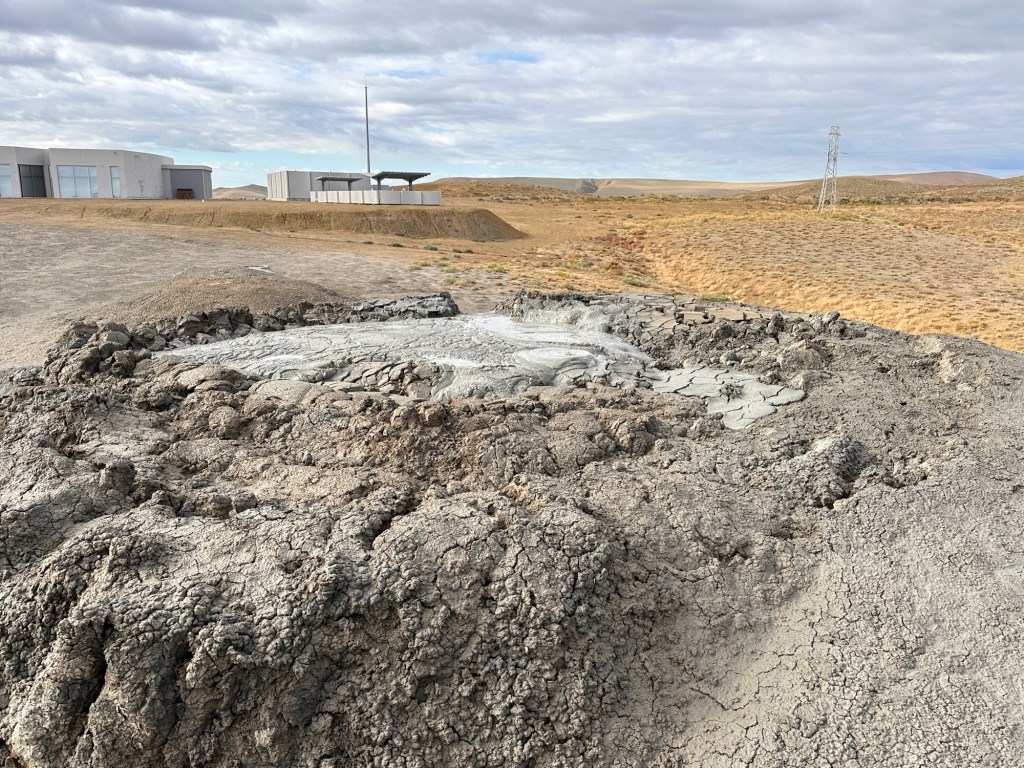
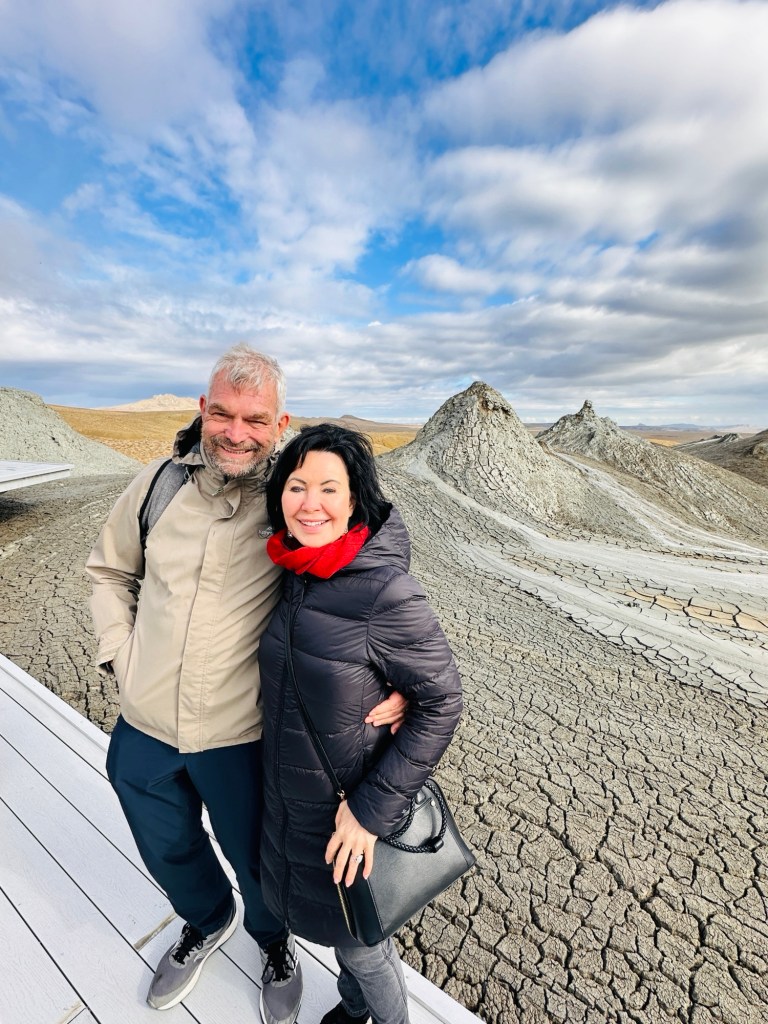
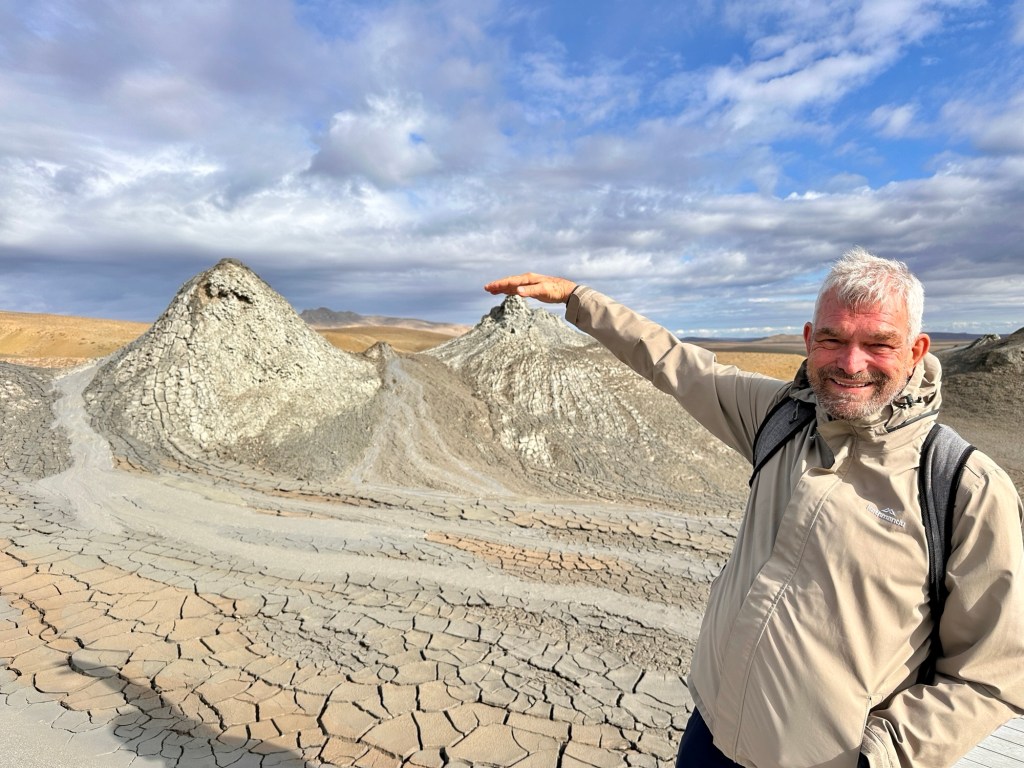
Our first destination today were the Mud volcanoes, a one hour drive from Baku. These are a unique natural phenomenon with almost half of the mud volcanoes on our planet located in Azerbaijan. These were quite insignificant compared to others we have seen in Iceland, Bolivia and New Zealand, but still worth a look.


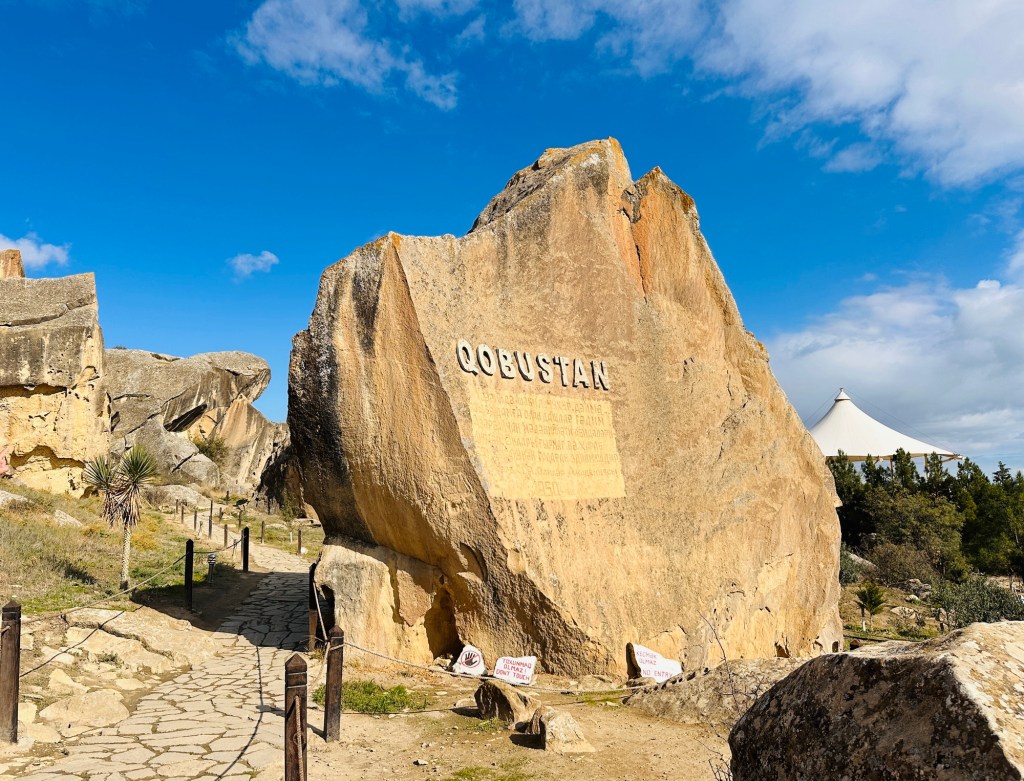
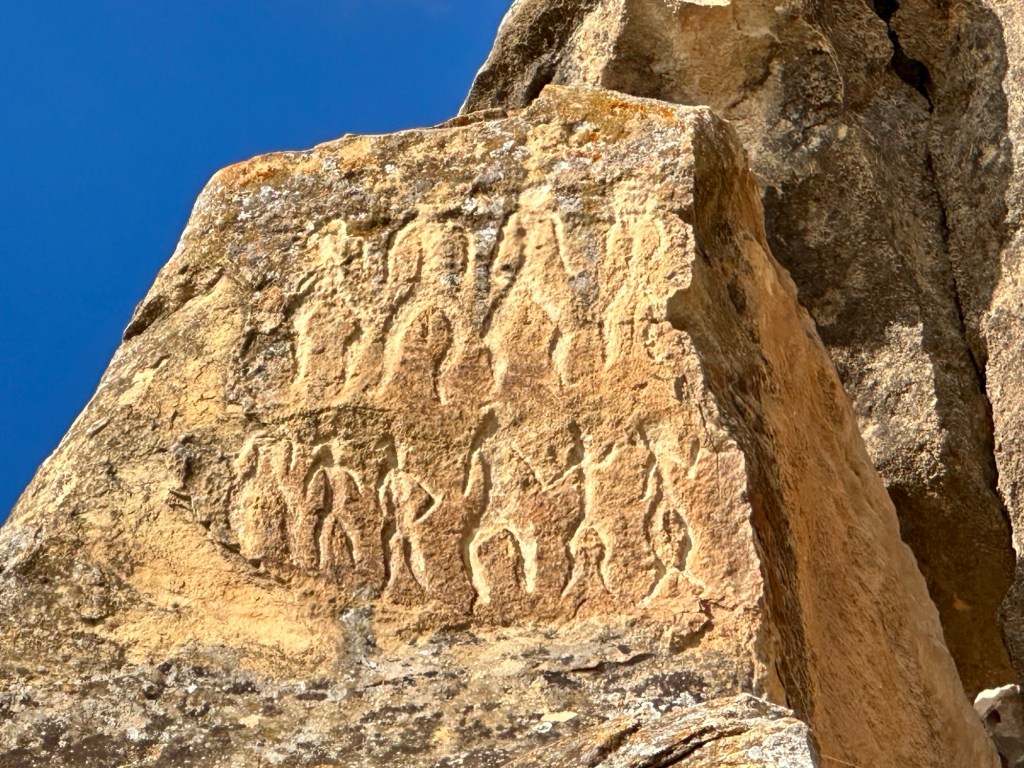
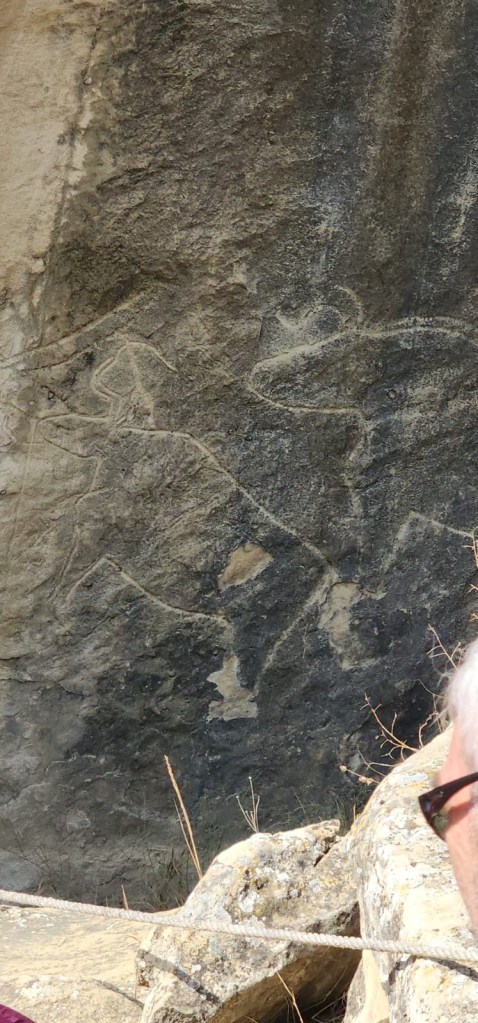
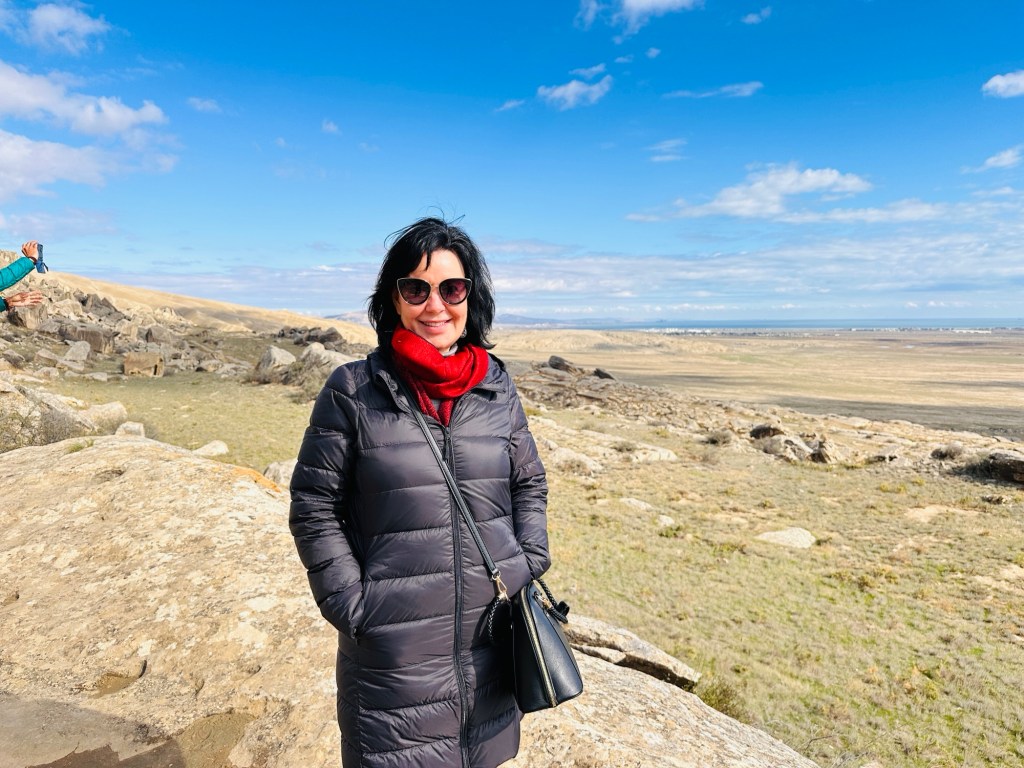
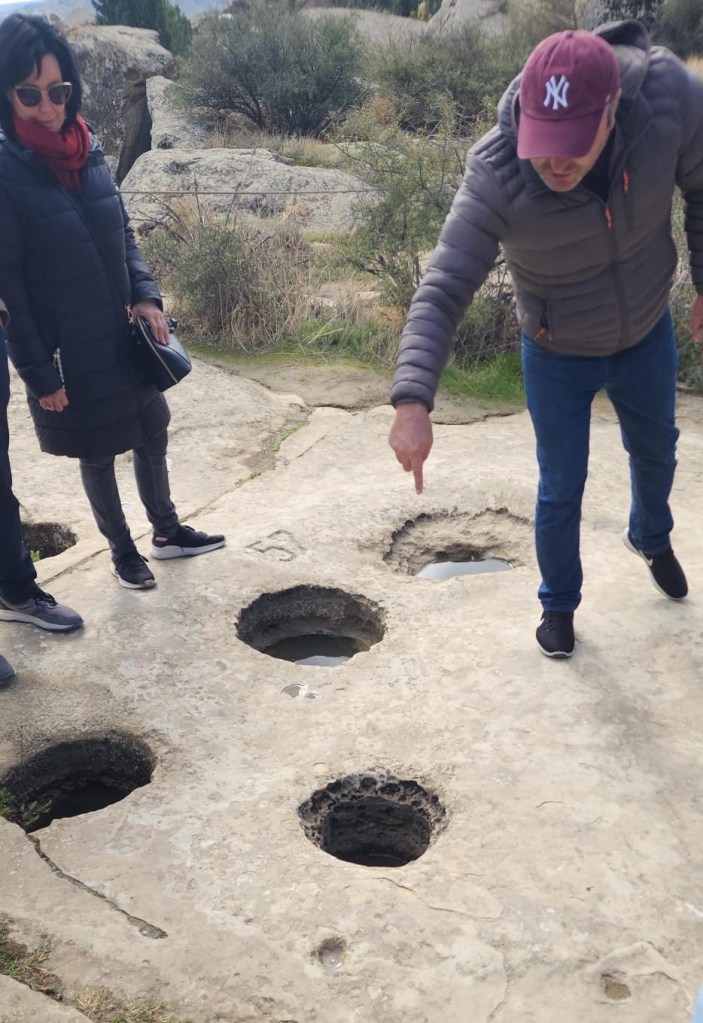
Nearby was Gobustan Reserve, an open-air archaeological museum where we observedthe caves and petroglyphs of the Neolithic period (Stone Age). Gobustan has outstanding universal value, its rock art images depict hunting, fauna, flora and lifestyles in pre-historic times. These petroglyphs date back 12000 years.

We drove back to the city, and stopped for lunch at Fountain Square, where we partook of another amazing traditional meal. I had another version of the lamb and pomegranate, Frank had a huge home baked meat pie, filled with not only beef, but a large variety of vegetables Thoroughly enjoying the Azeri food.
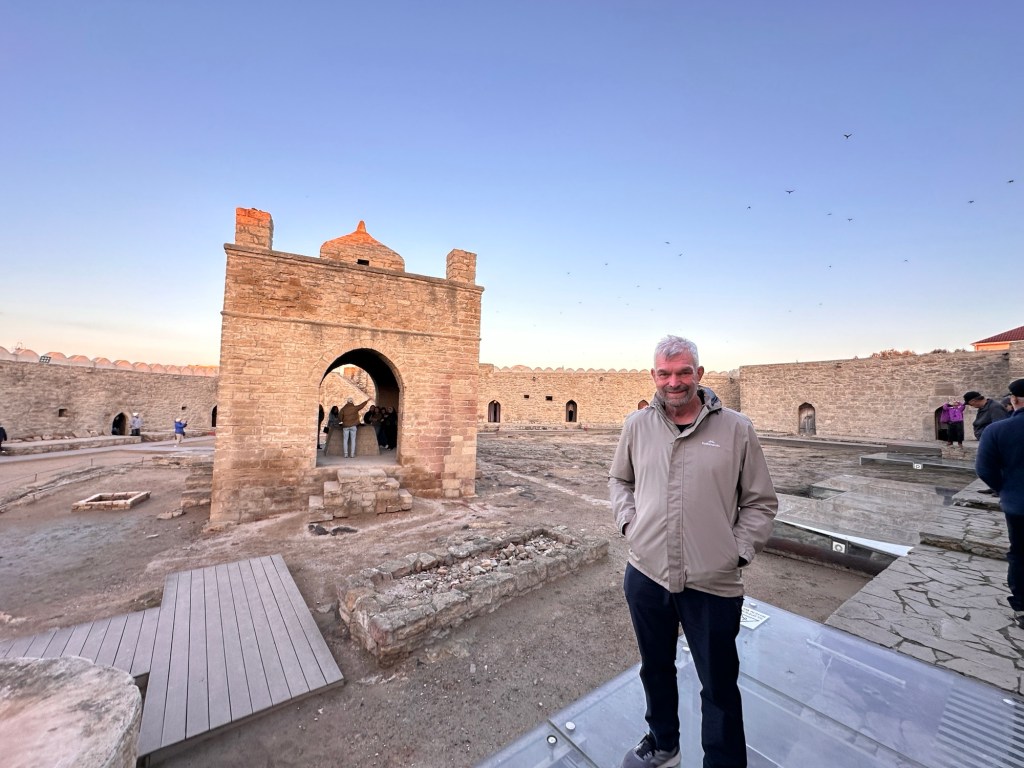
After lunch we drove to the Absheron Peninsula where we visited the Fire Worshippers Temple – Ateshgah. a 17th-century temple enclosing a naturally burning flame, built by fire-worshiping traders and pilgrims from the Indian subcontinent who reached Surakhani along the Silk Road.Until the late 19th century, it was the Zoroastrian pilgrimage place.
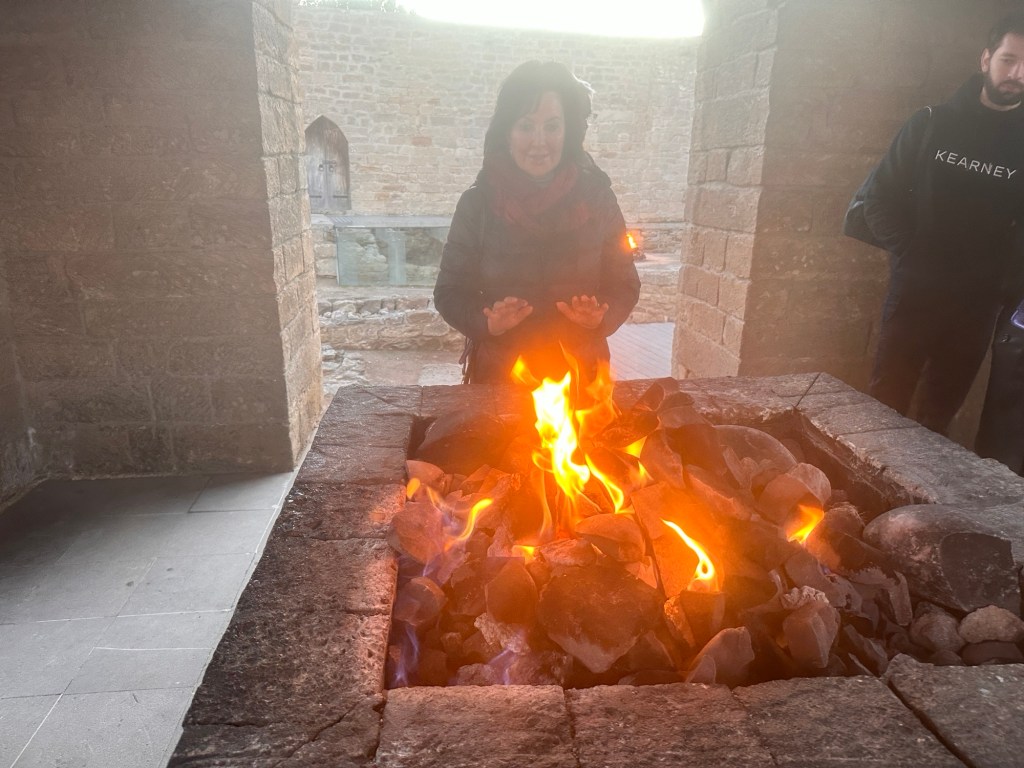
Nearby was the flaming mountain, Yanardag, where natural methane gas comes to the surface and has been burning since ancient times, attracting fire worshippers throughout many centuries. Have to say it was interesting, though a little underwhelming after all the hype!

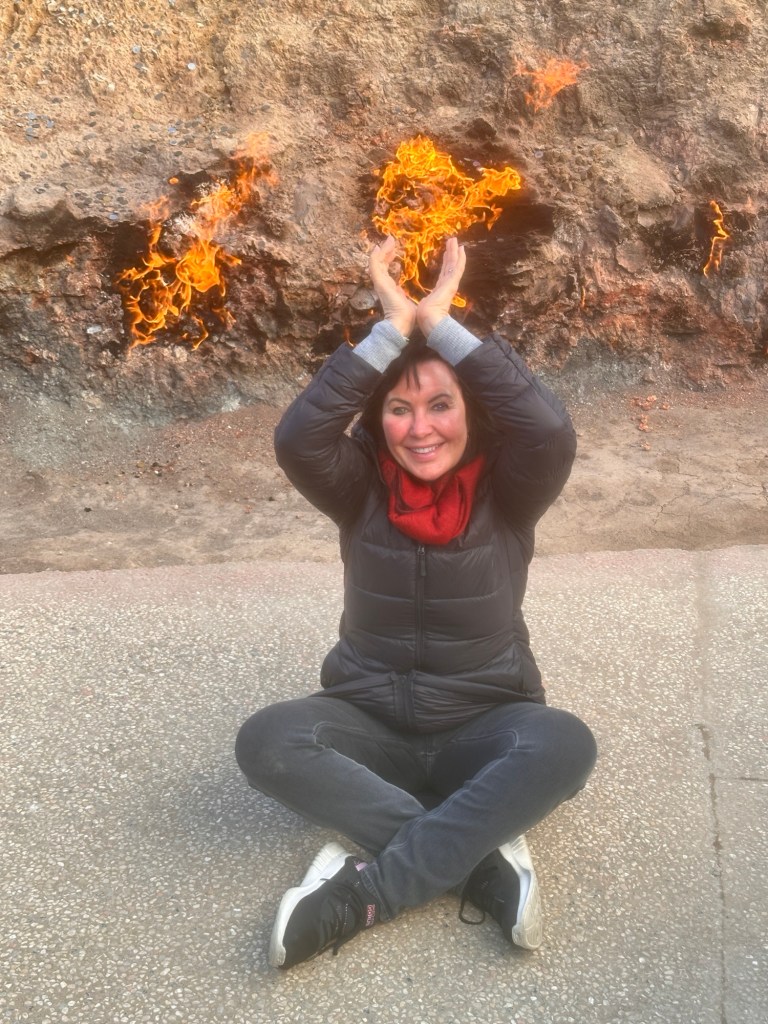
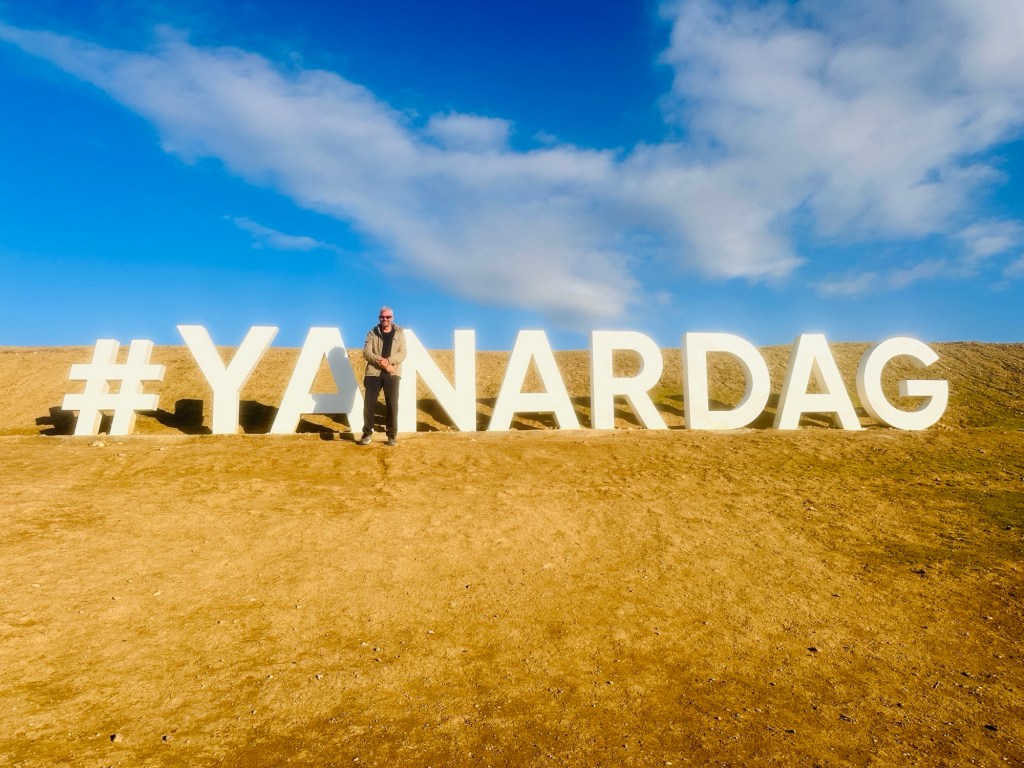
Tackling the traffic once again, we got back to our hotel at 6.30pm. We were still full from lunch, so decided to have a little explore around the hotel, stopped for one drink, then off to bed.
Day 5
Monday 28th October 2024
Baku to Sheiki
330 kms
10-14 degrees , sunny
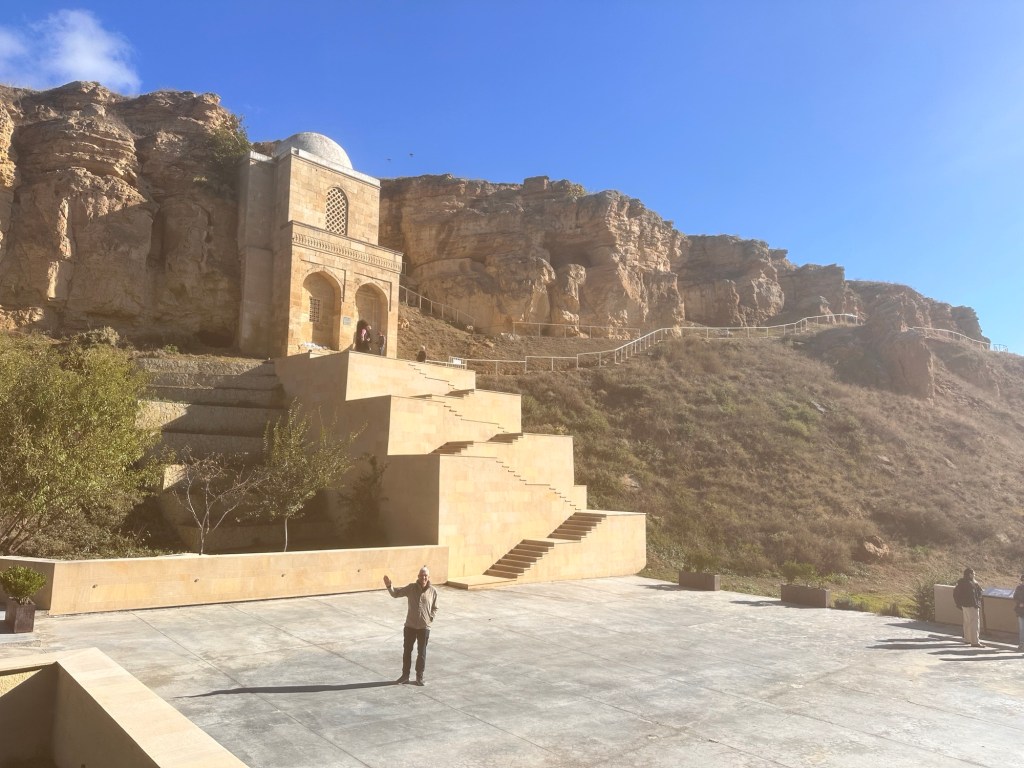
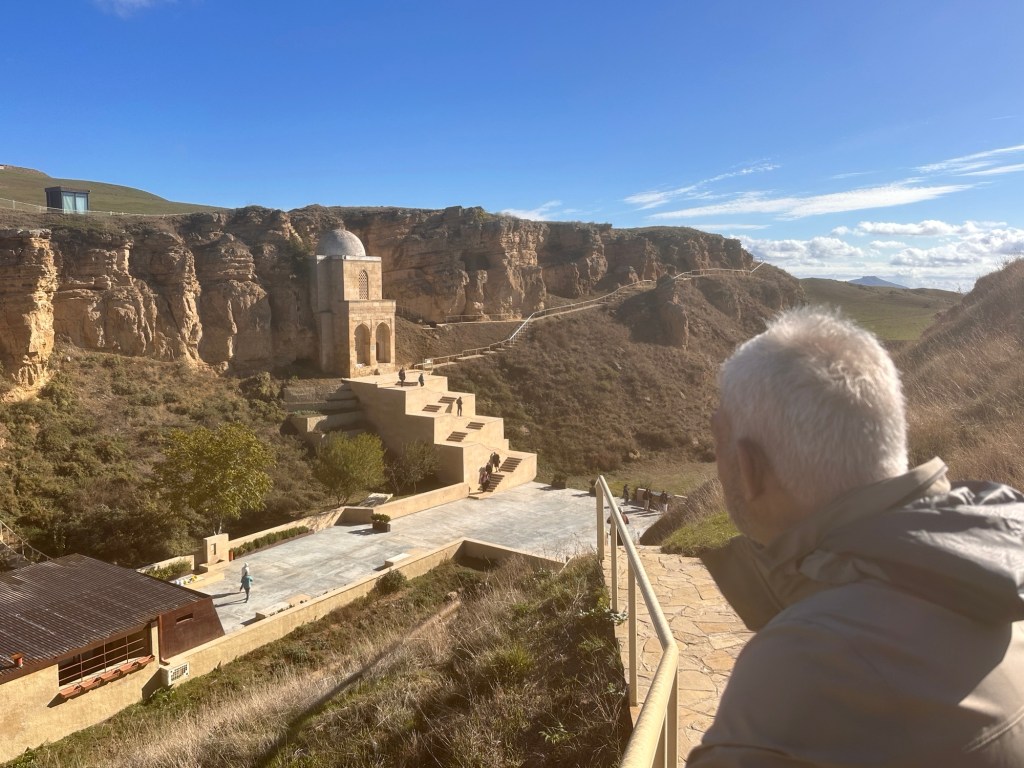
An 8.30 departure today. We are headed for Sheki. Ninety minutes into the drive we stopped at the Diri Baba Mausoleum. This is one of the most significant architectural monuments associated with the history of medieval Sufism in Azerbaijan. Along with the ancient cemetery (16th century), the caves around the tomb are considered a holy pilgrimage site for the population of the Shirvan region. There were some steep steps to walk up to the mausoleum.
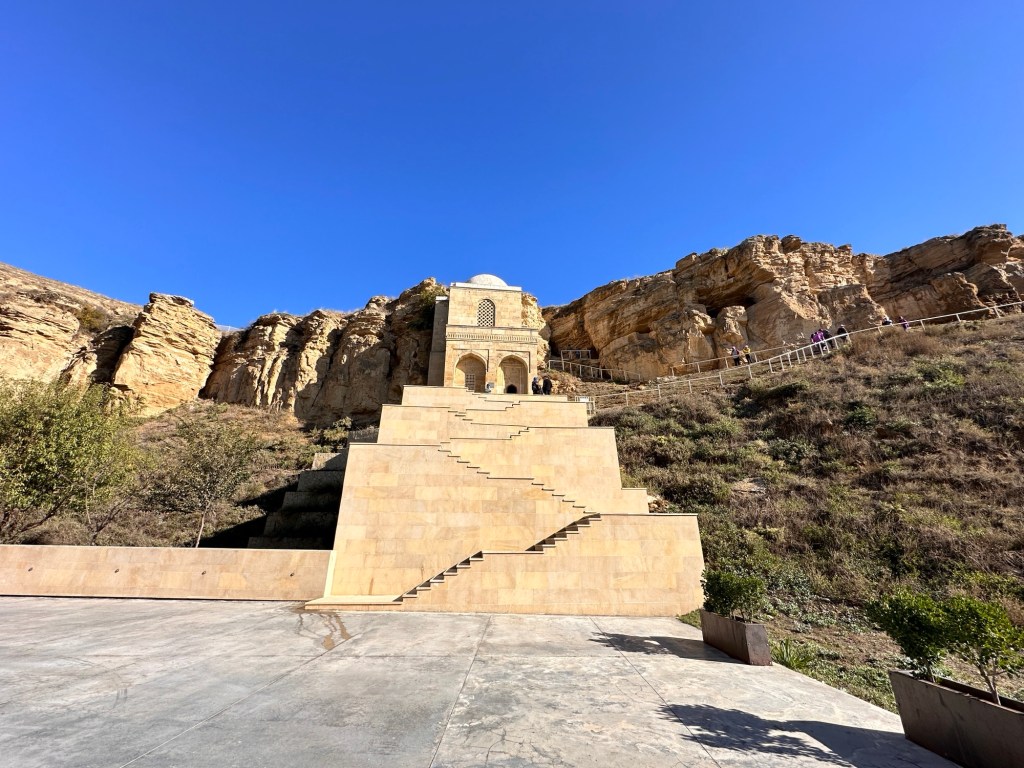
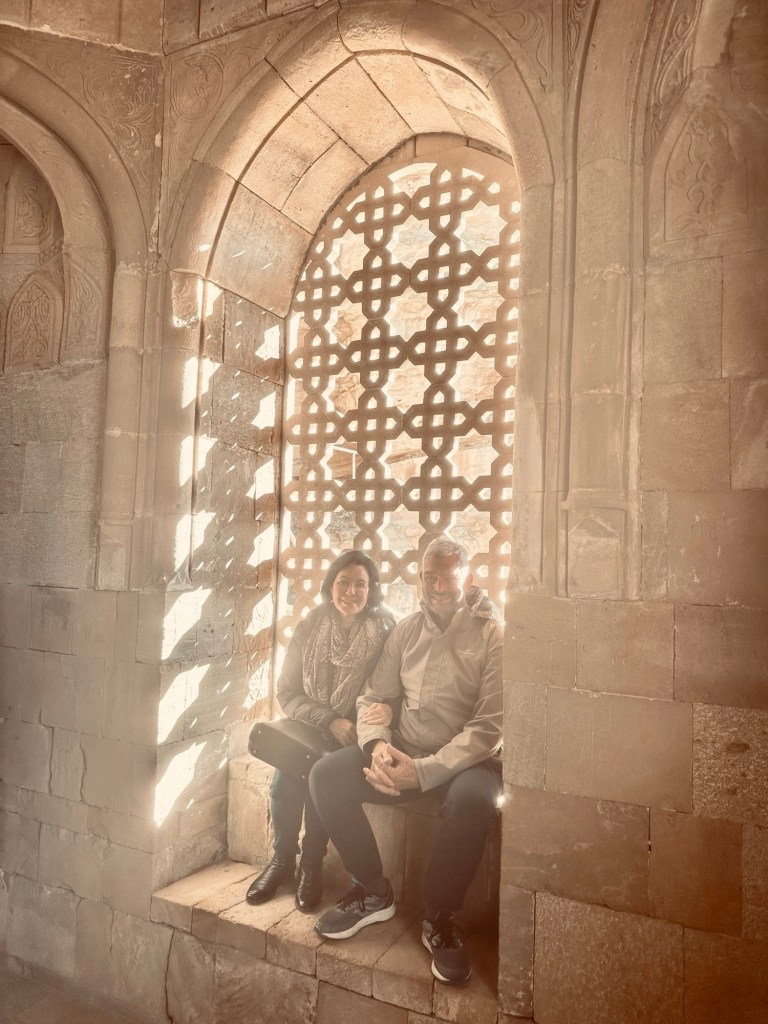
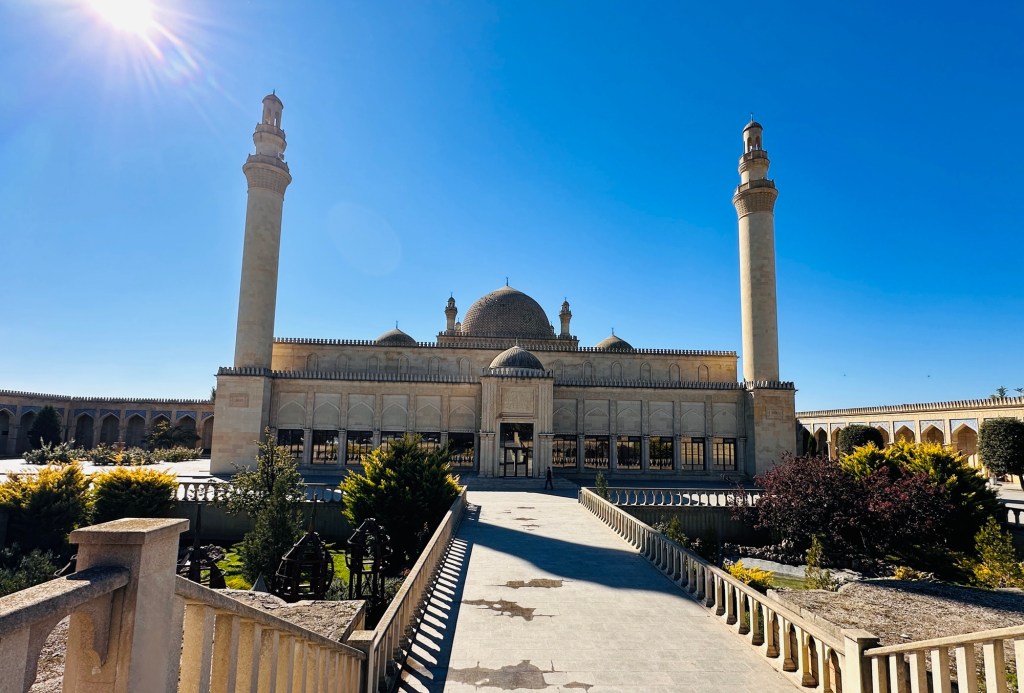
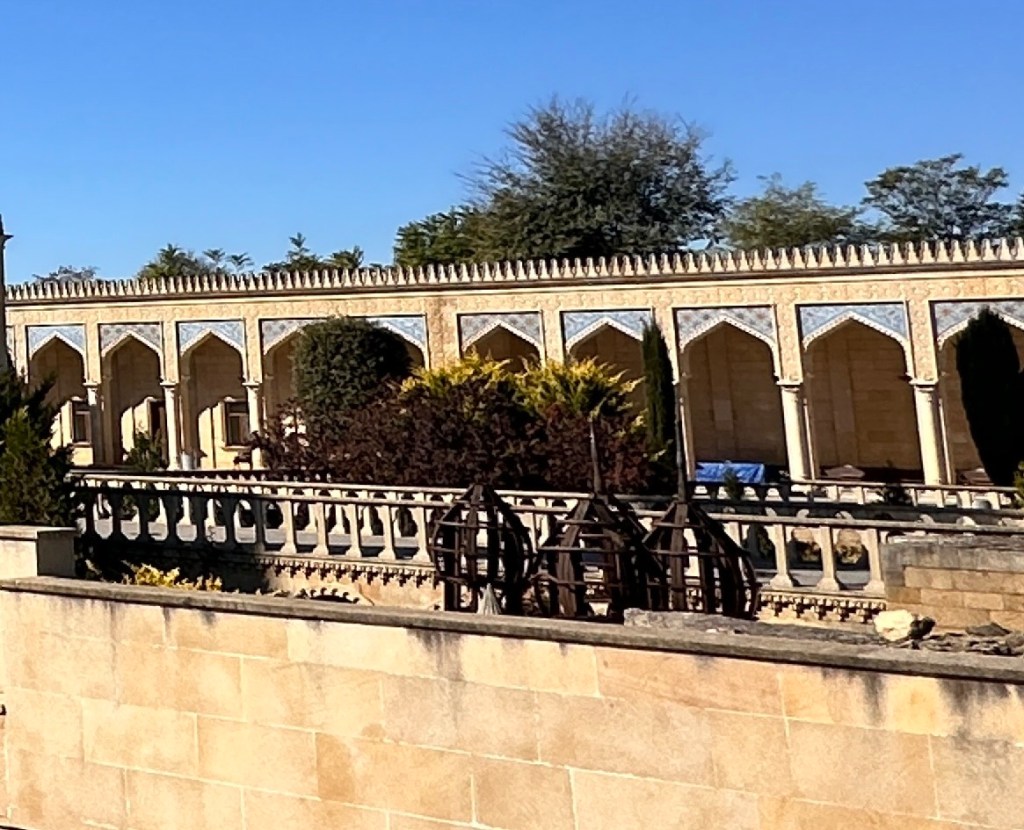
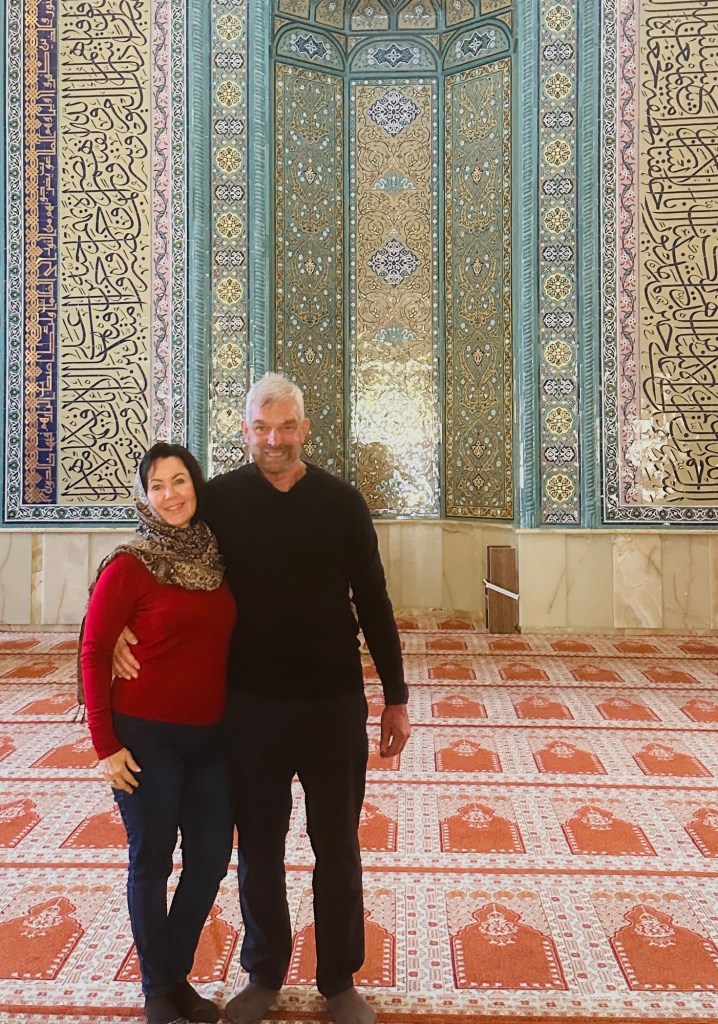
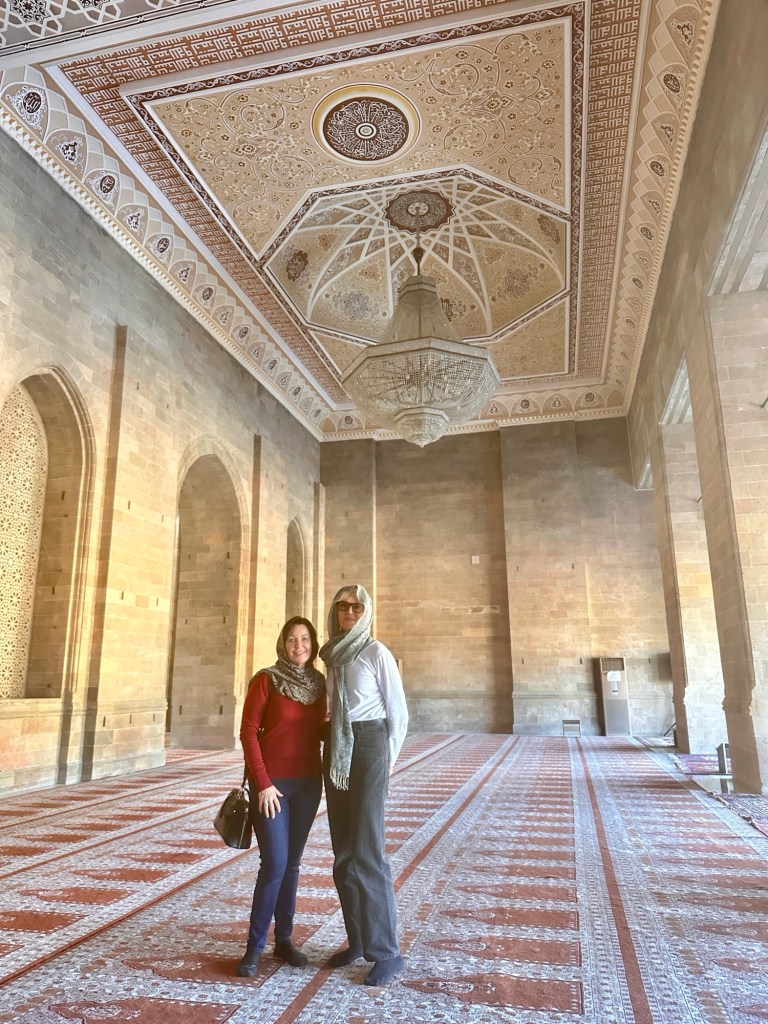
Half an hour later we arrived at Azerbaijan’s oldest mosque, Shamakhi’s grand Juma Mosque. It has been rebuilt multiple times due to earthquake damage, with the most recent refurbishment in 2013. It was the scene of Armenian genocide in 2018 .. 2500 people were killed inside the mosque.
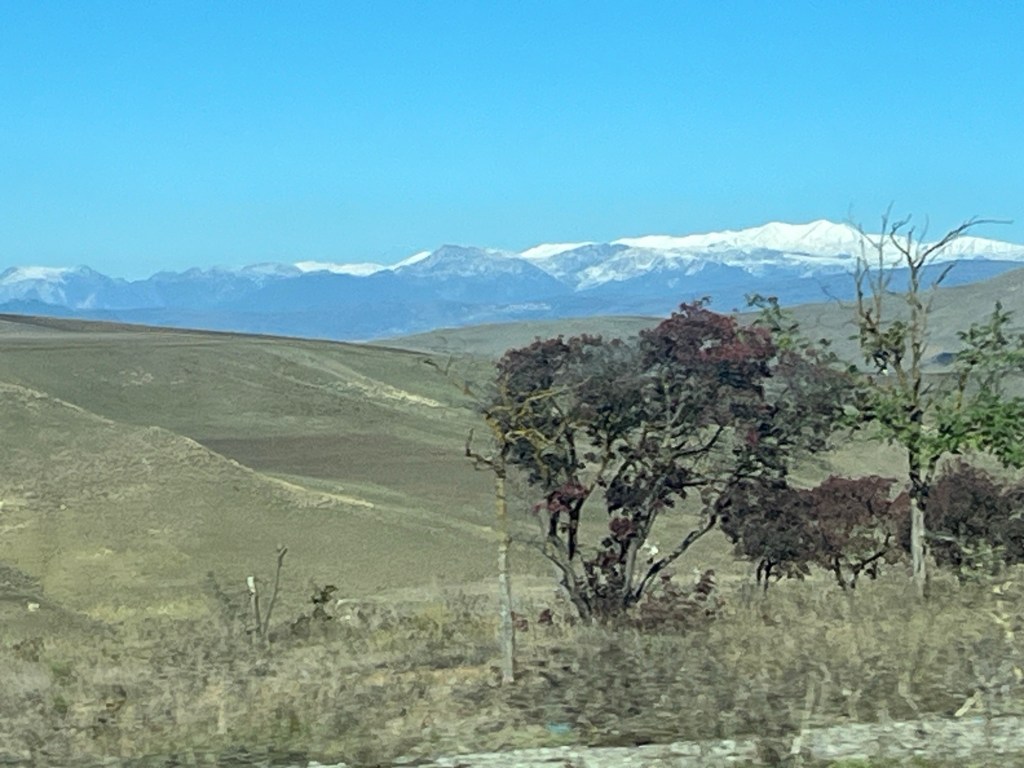
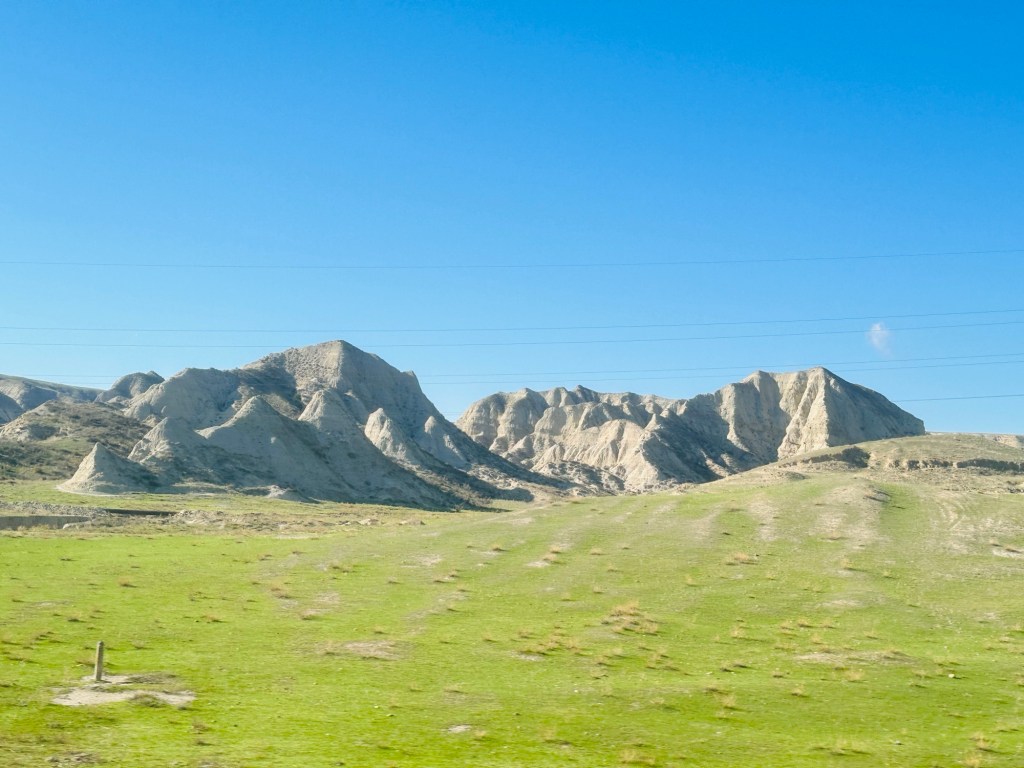
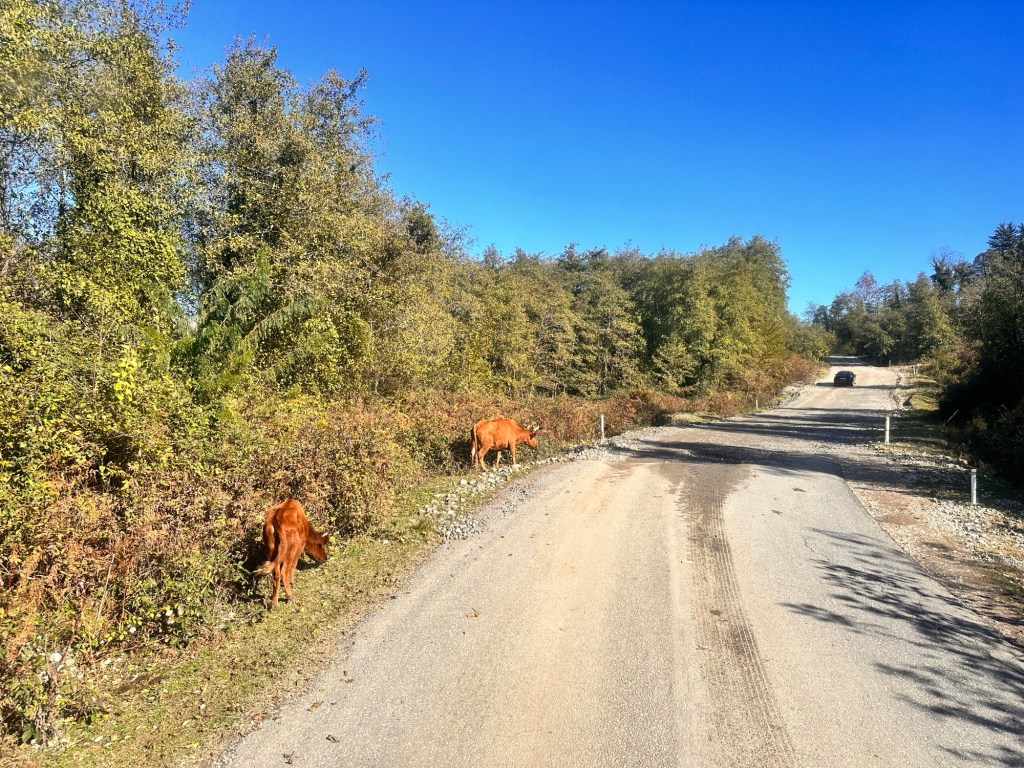
Driving across a river canyon through the beautiful Muganly mountainous pass gave us access to some spectacular scenery – many of the mountains in the Caucasus range were snow capped. We saw nomadic shepherd’s homes where they come down to in the winter – some had just moved. Lovely agricultural area- vineyards, olive trees, many nut trees -pistachio, walnuts, hazelnut and almonds, also pomegranate, quince and persimmon trees everywhere, crops of cotton, wheat and tobacco (for local market) – very fertile soils. Had to avoid the occasional cow crossing the road!
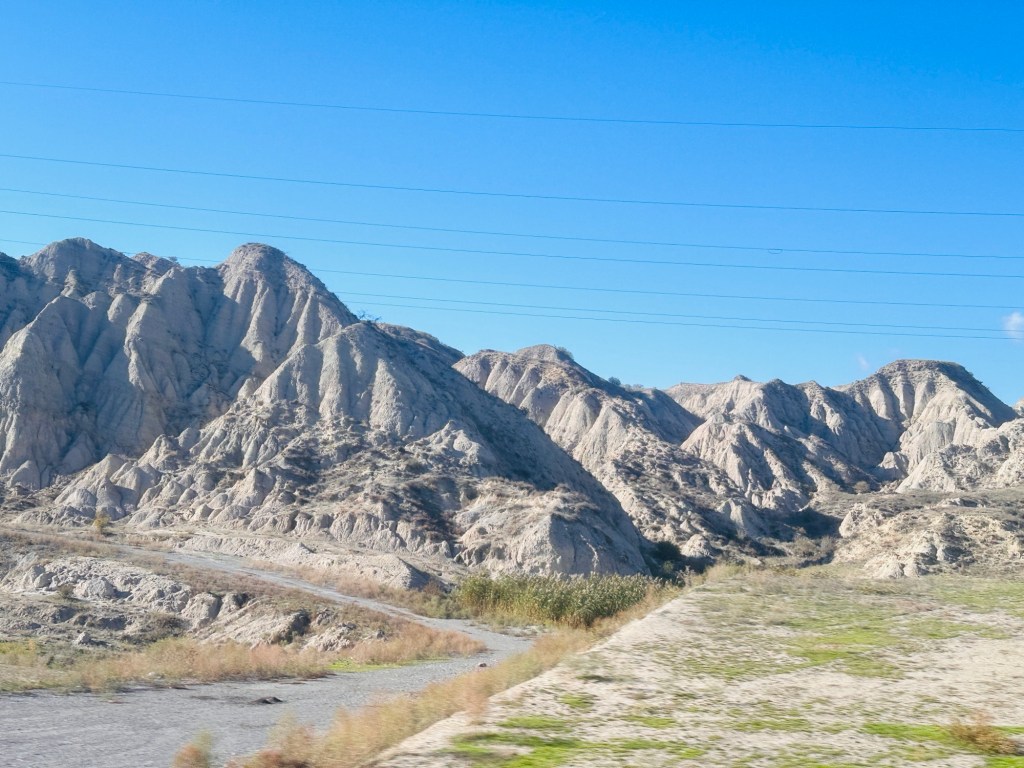
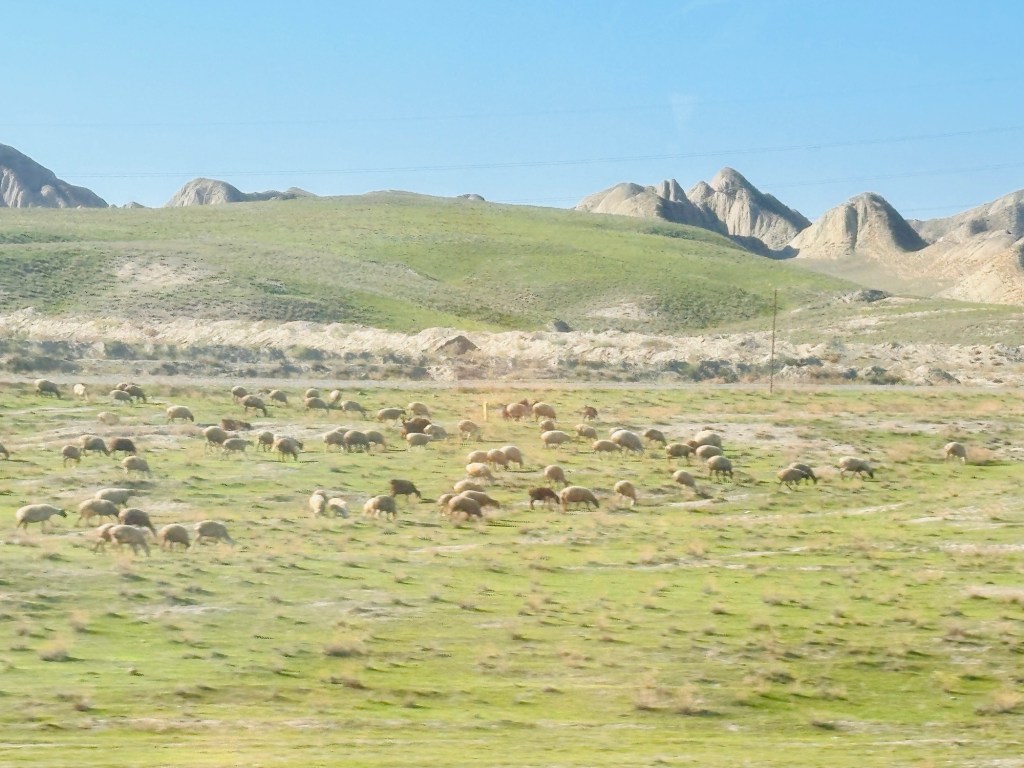

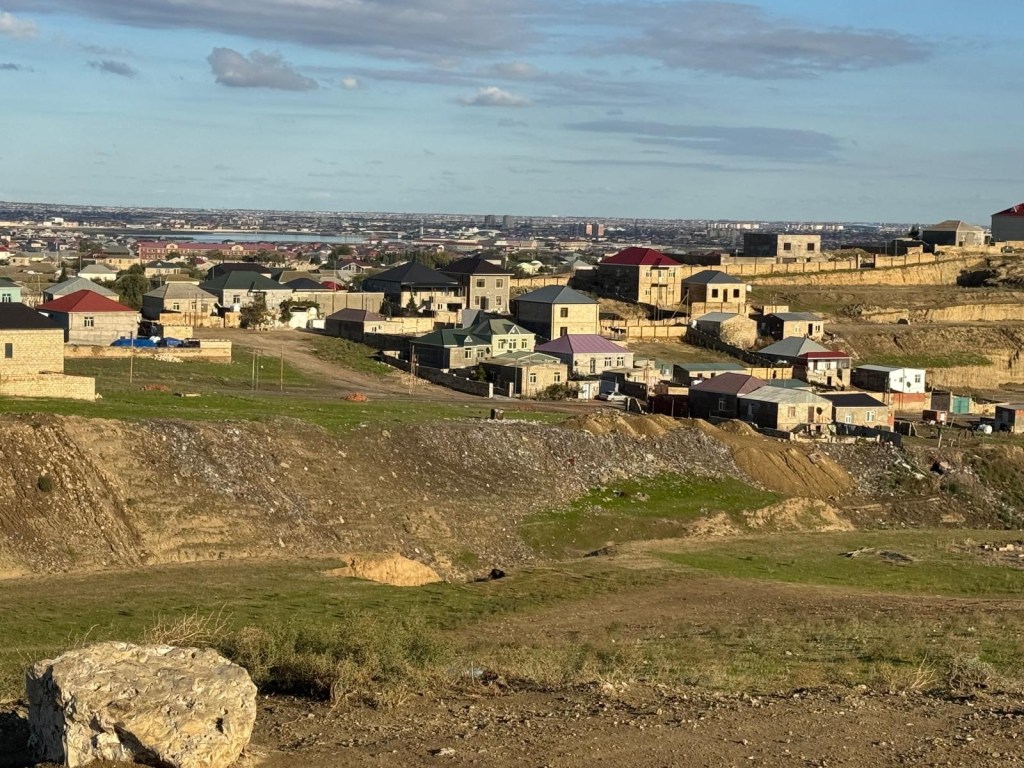
A nice little restaurant stop for lunch – salad and cheese, lentil soup with the most divine bread, and qatab (pancake) with greens inside, accompanied with cornelli juice (small red berries), all for 15 manat ($15).
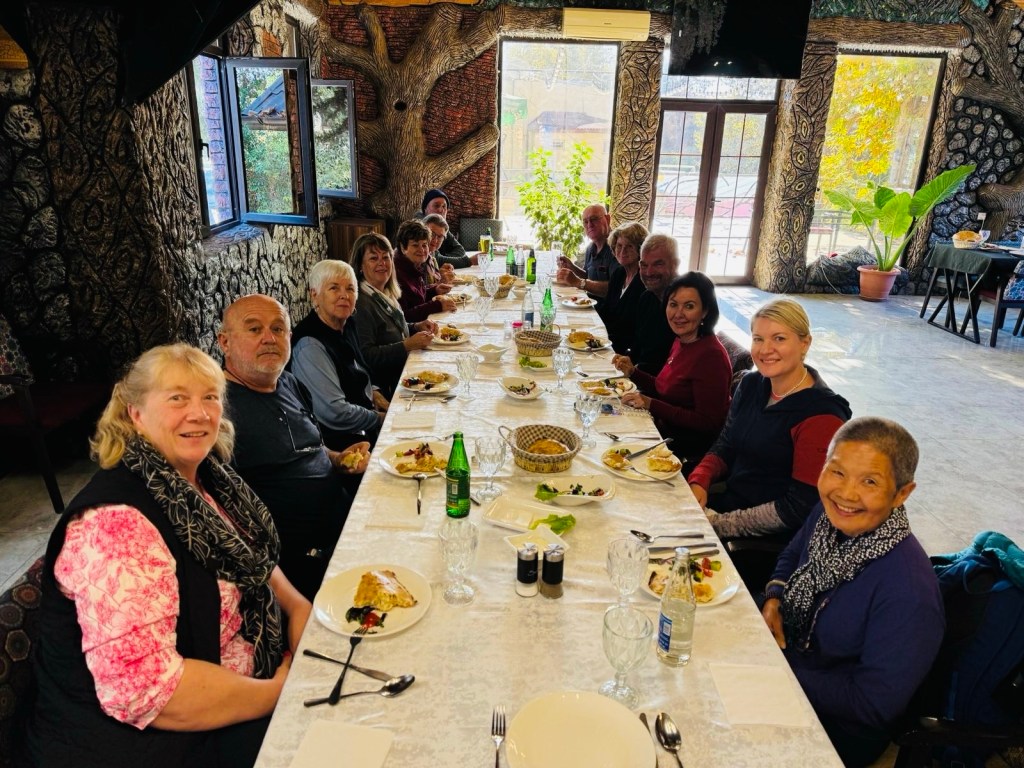
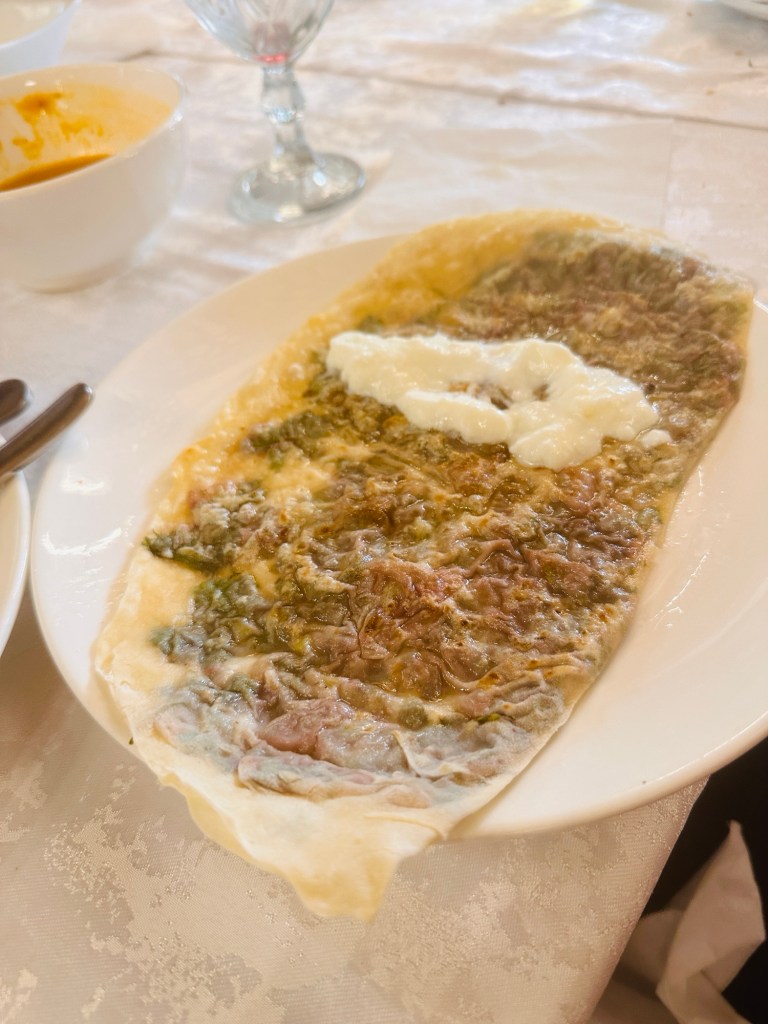
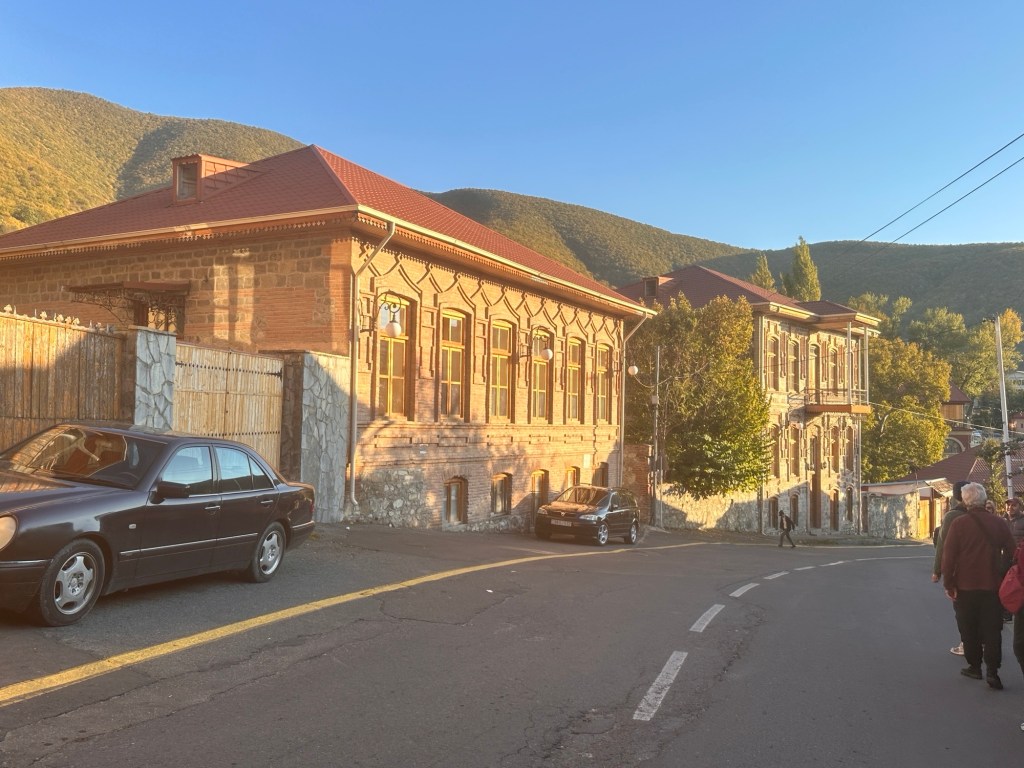
Onto Sheki, snoozing amid green pillows of beautifully forested mountains, once an important stop on the legendary Silk Road, this charming city in the north-west of Azerbaijan is one of Azerbaijan’s must see places. Upon arrival, we enjoyed a walking tour of the city fortress.
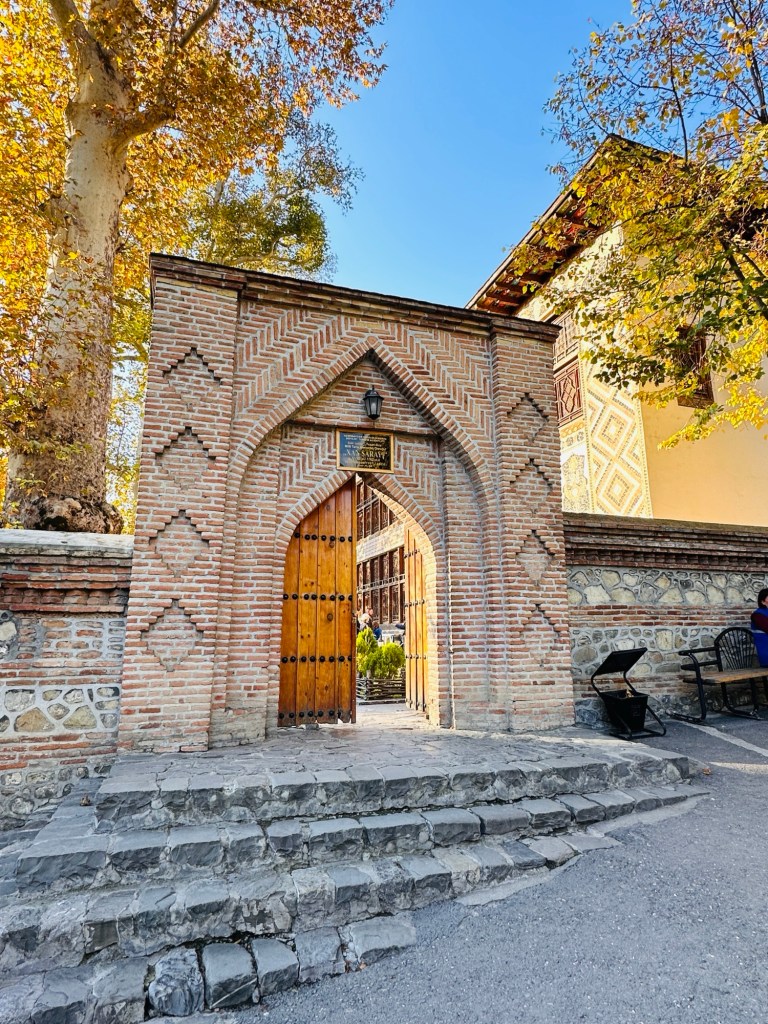
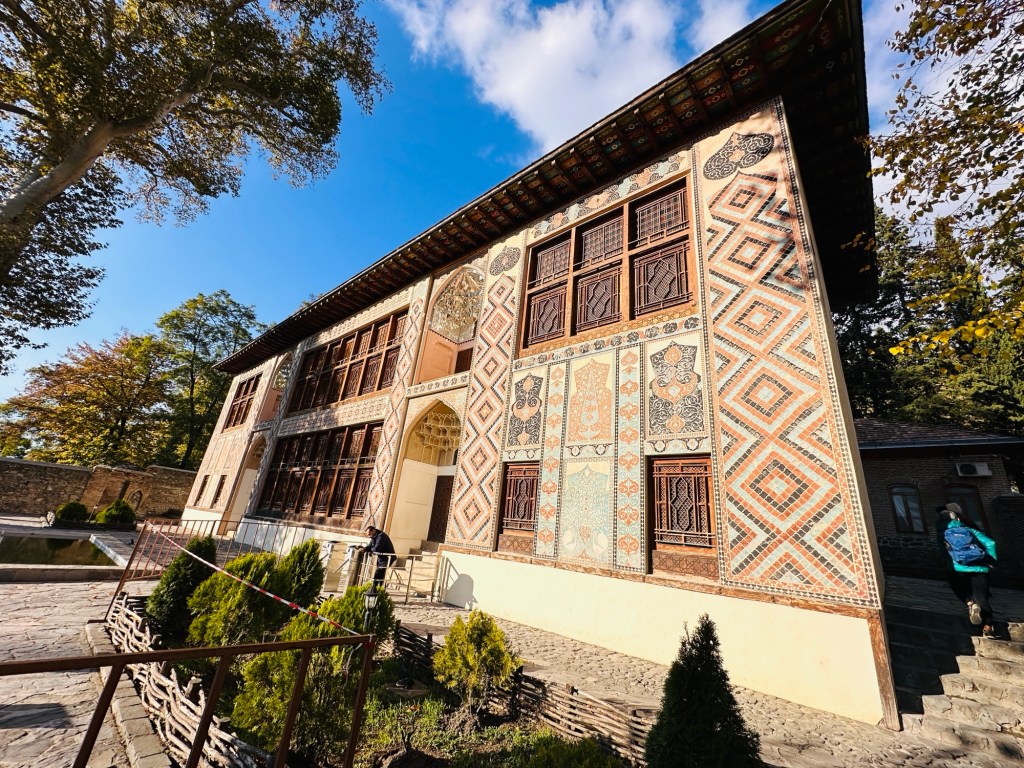
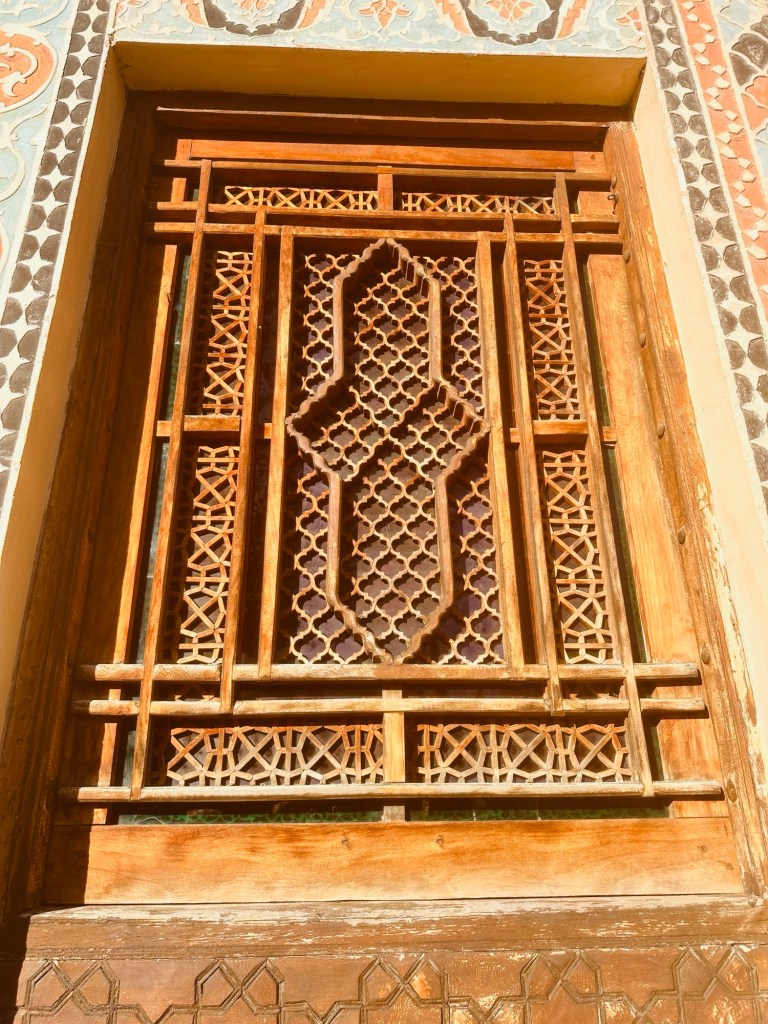
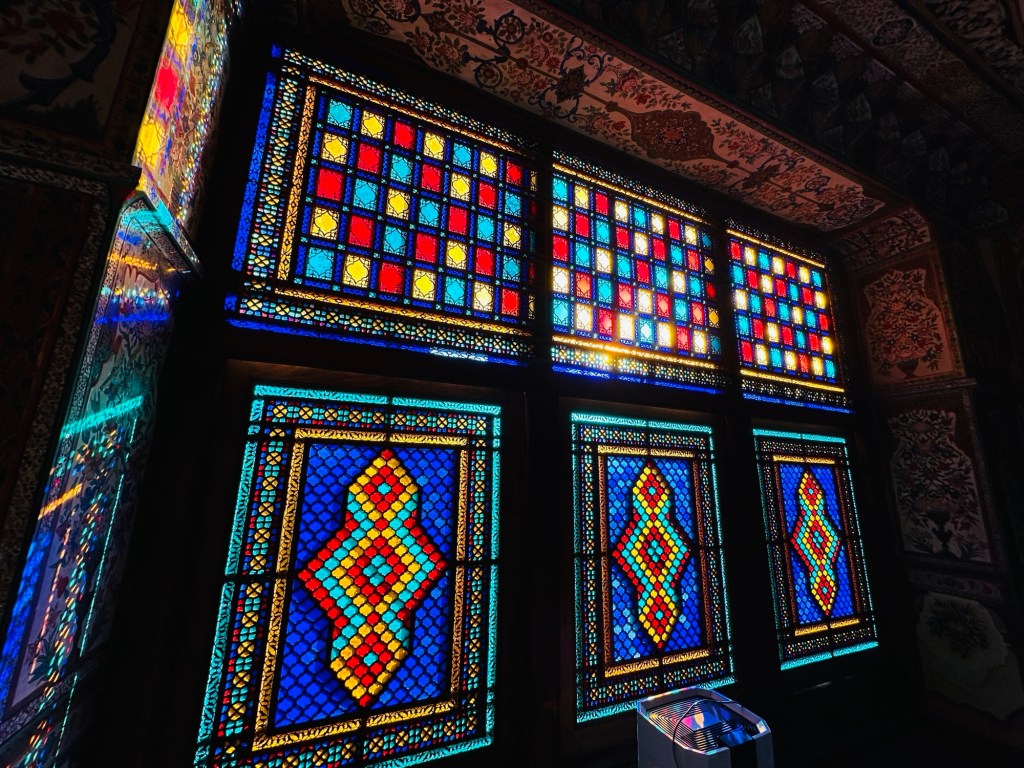
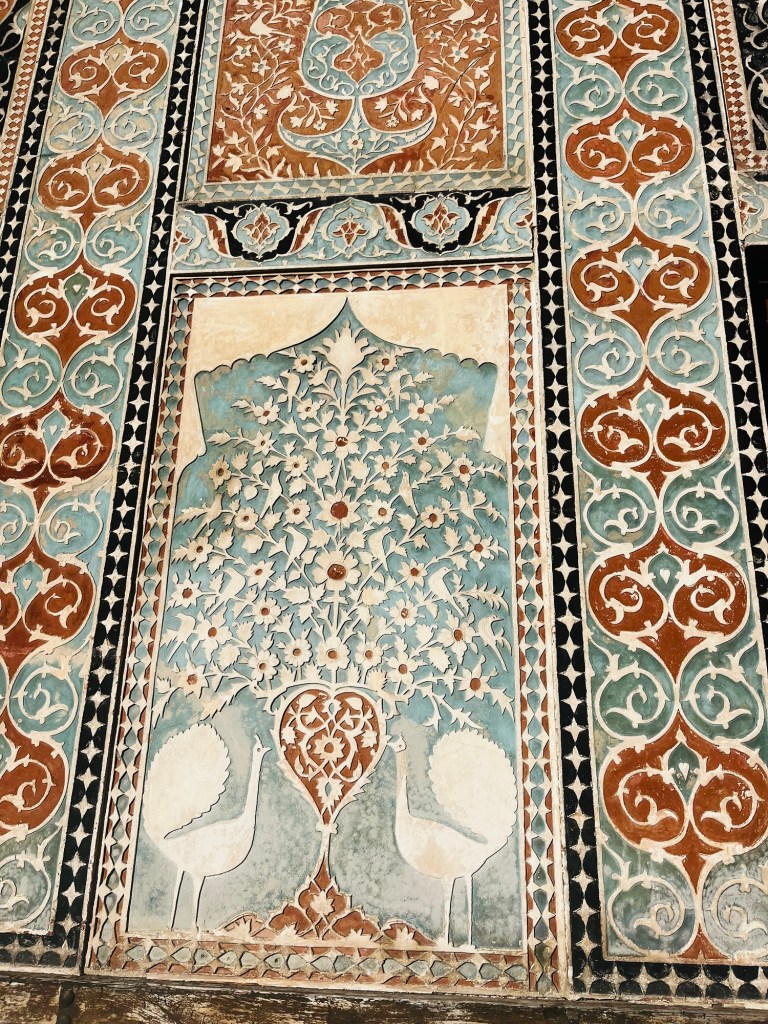
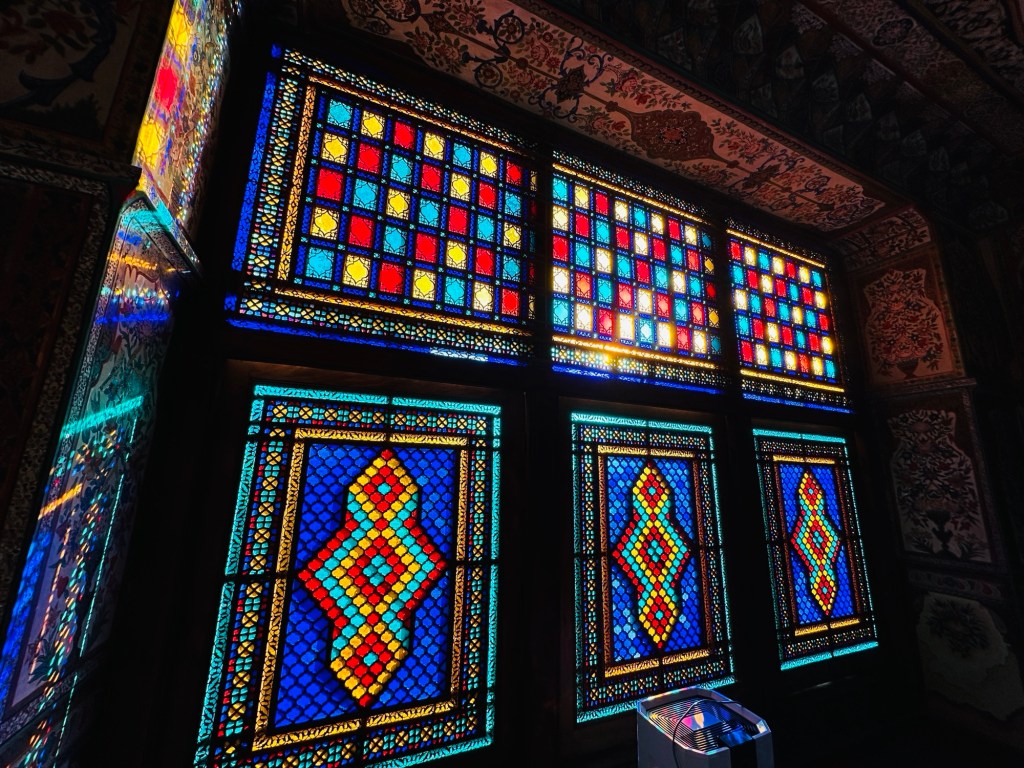
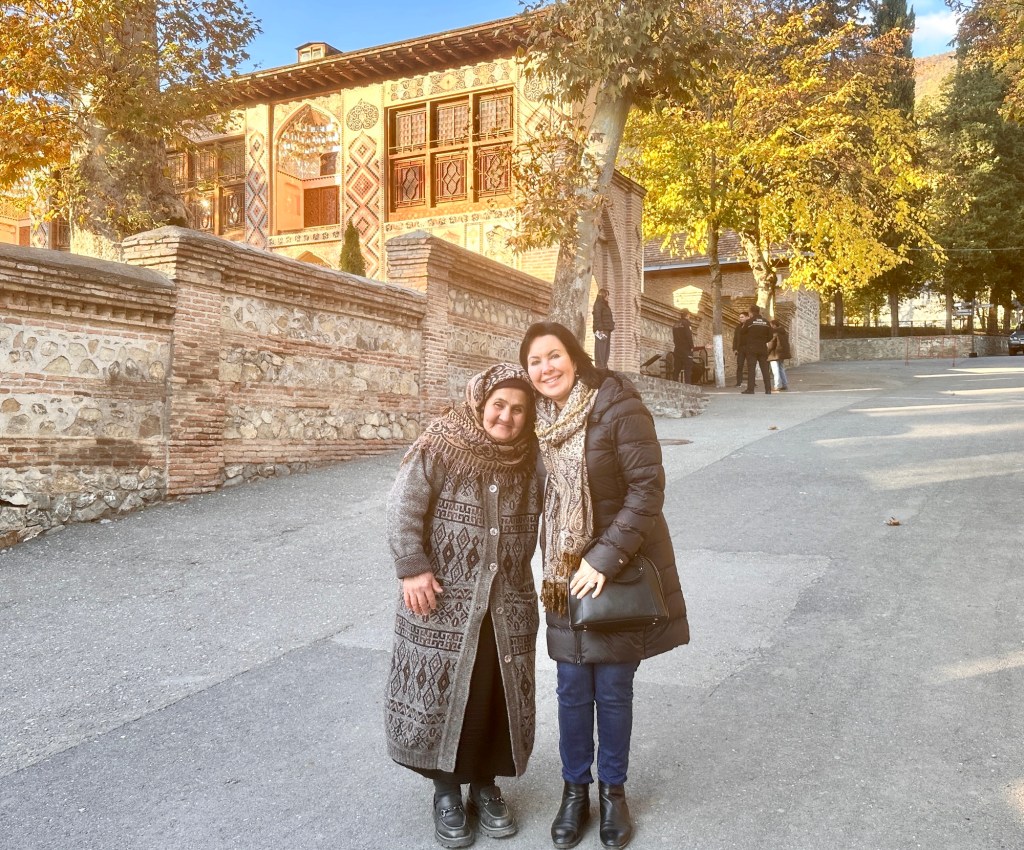
The Sheki Khan Summer Palace (UNESCO heritage listed) built in 1762 is hidden beneath the shade of 500-year-old eastern plain trees (similar to maple). The richly adorned Sheki Khan’s Palace is a masterpiece of craftsmanship. The palace’s intricate designs are on display both inside and out, featuring elaborate frescoes and perfectly arranged tiles. The windows are among the finest examples of ‘shebeke’ – an Azerbaijani technique that creates stained glass windows without the use of glue or nails. It was just beautiful. We couldn’t take photos inside , but I did sneak one!

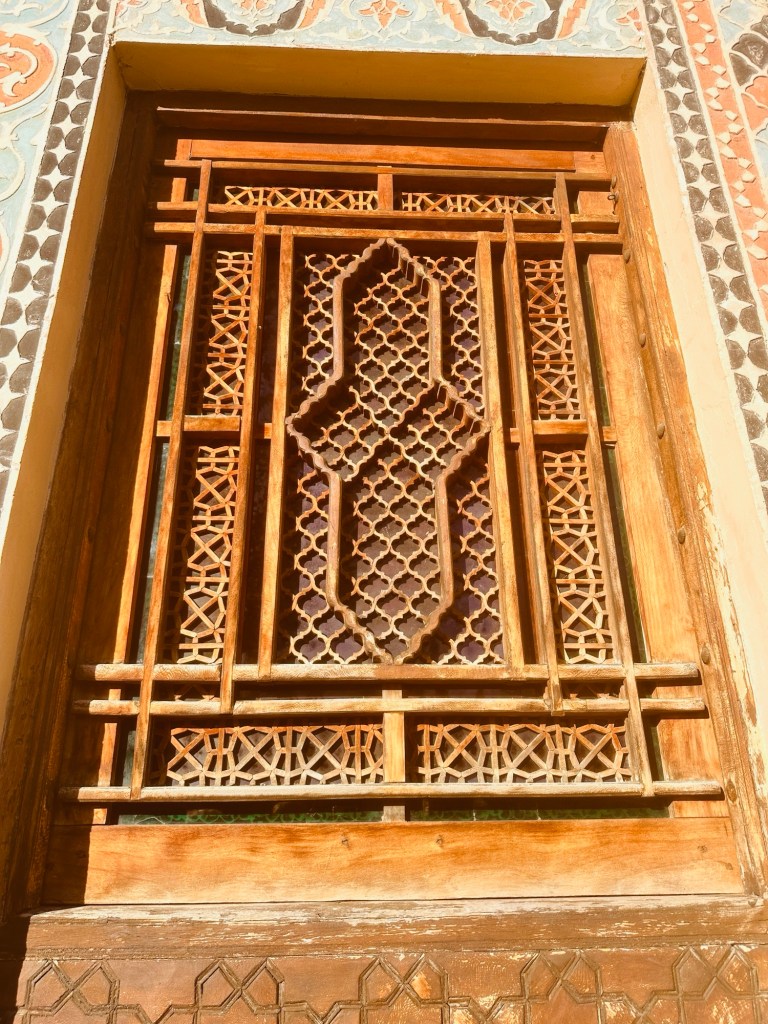
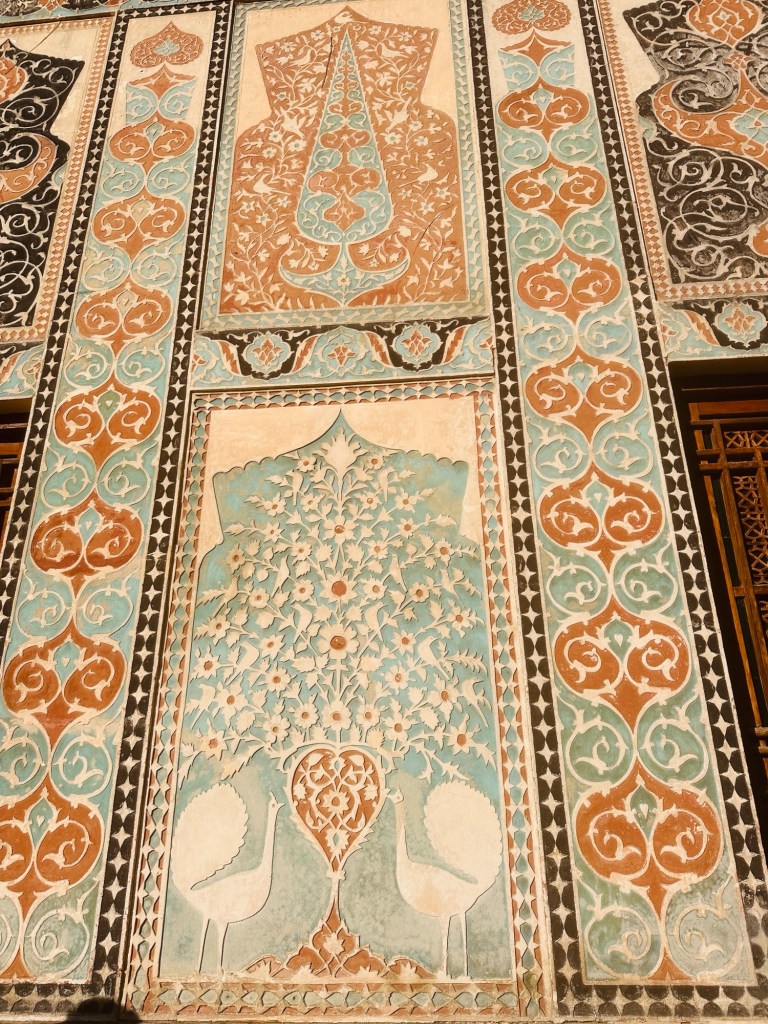
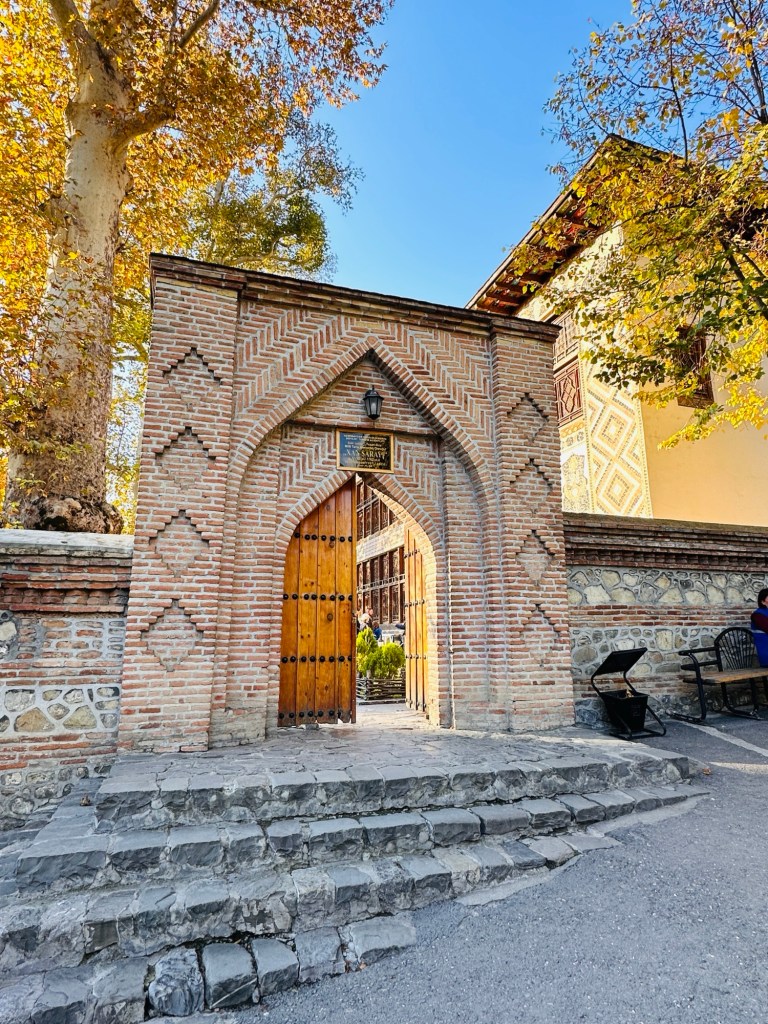
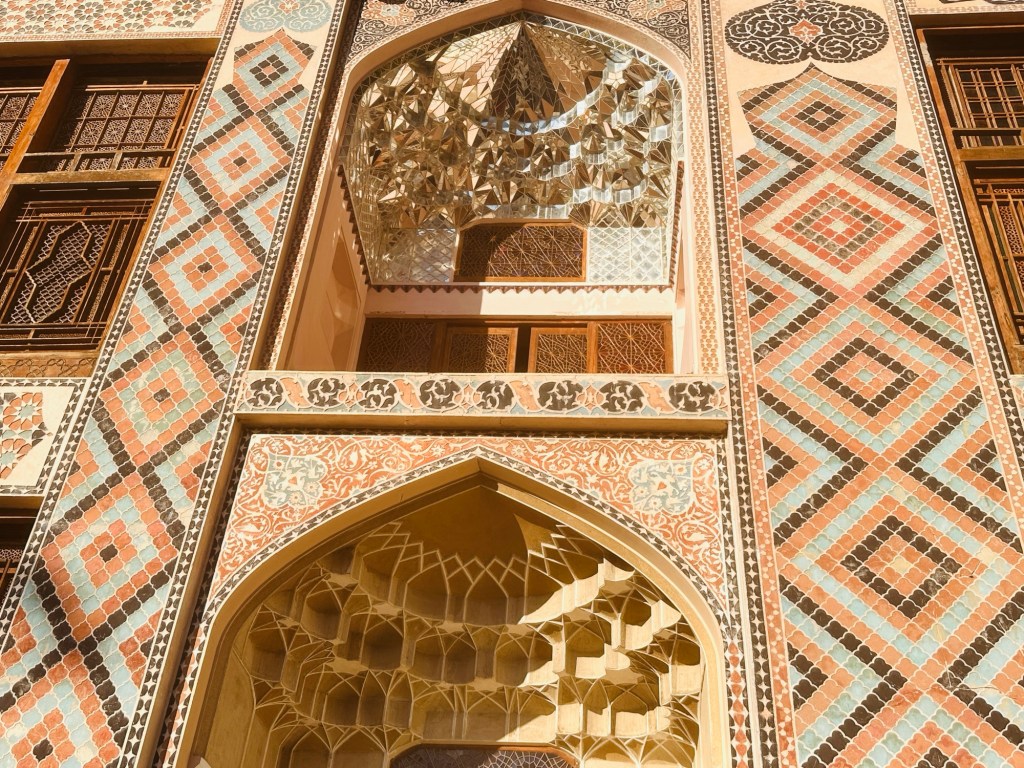
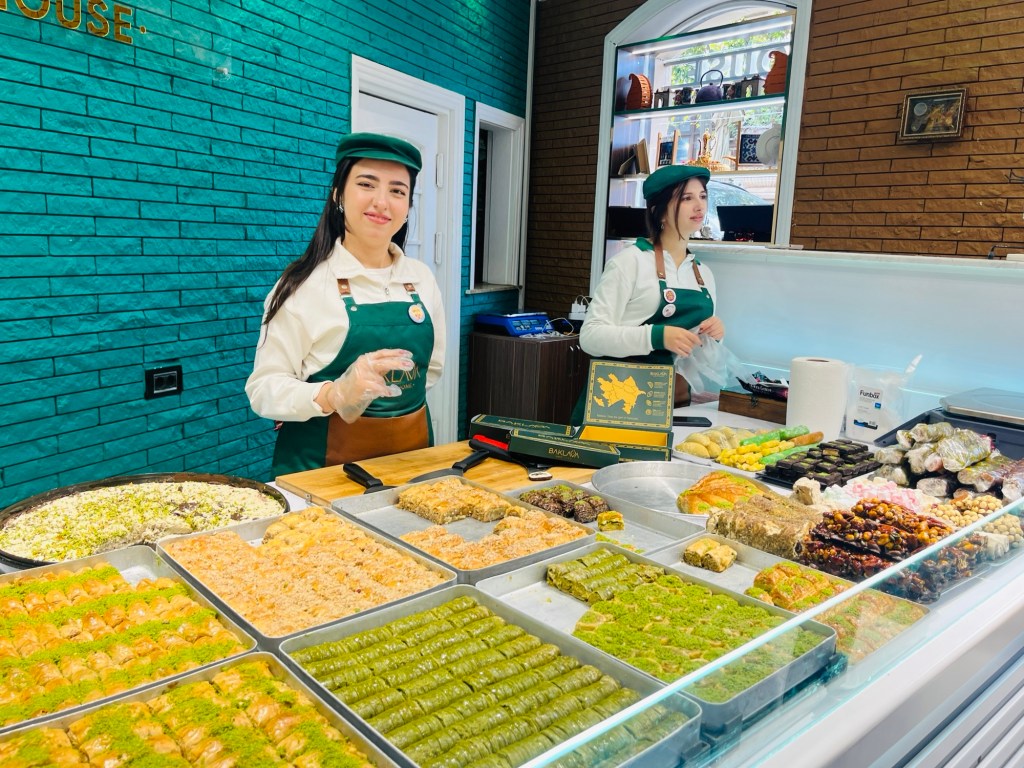
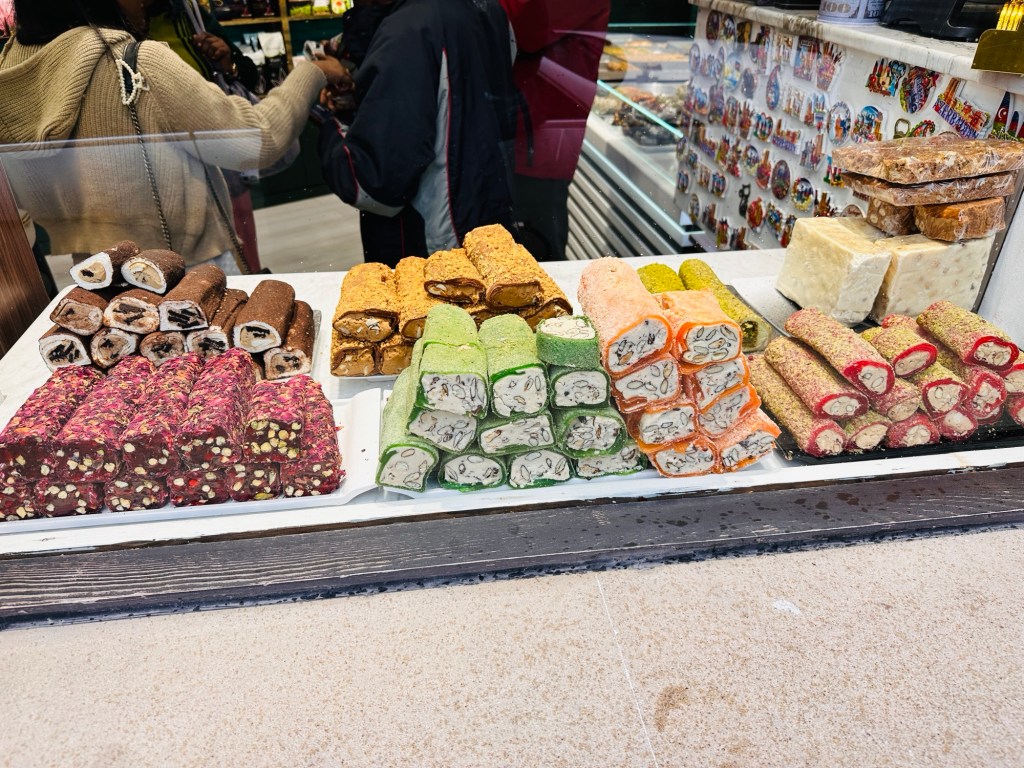
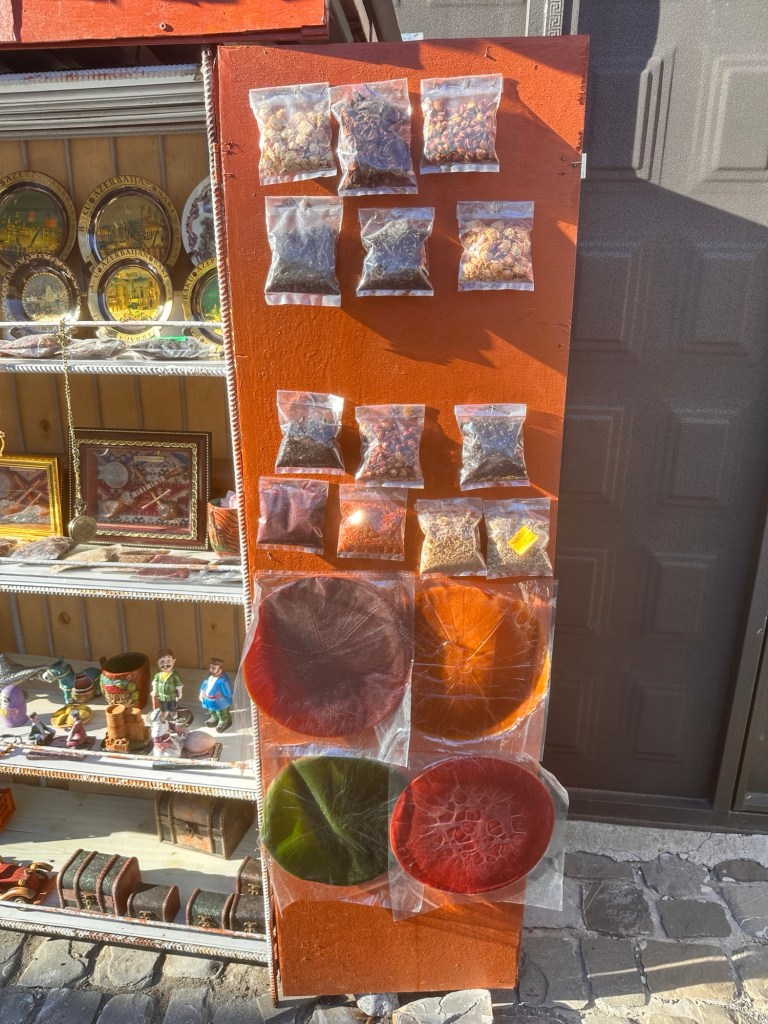
We walked down the cobblestone streets of Azerbaijan’s latest UNESCO World Heritage site to soak up the spirit of an old Caucasian trading hub, and enjoy exploring the city’s craft shops and caravanserais, and colourful sweet shops. Of course I bought a scarf – made with camel hair. Baklava, made with pure honey and halva are the local delicacies here.

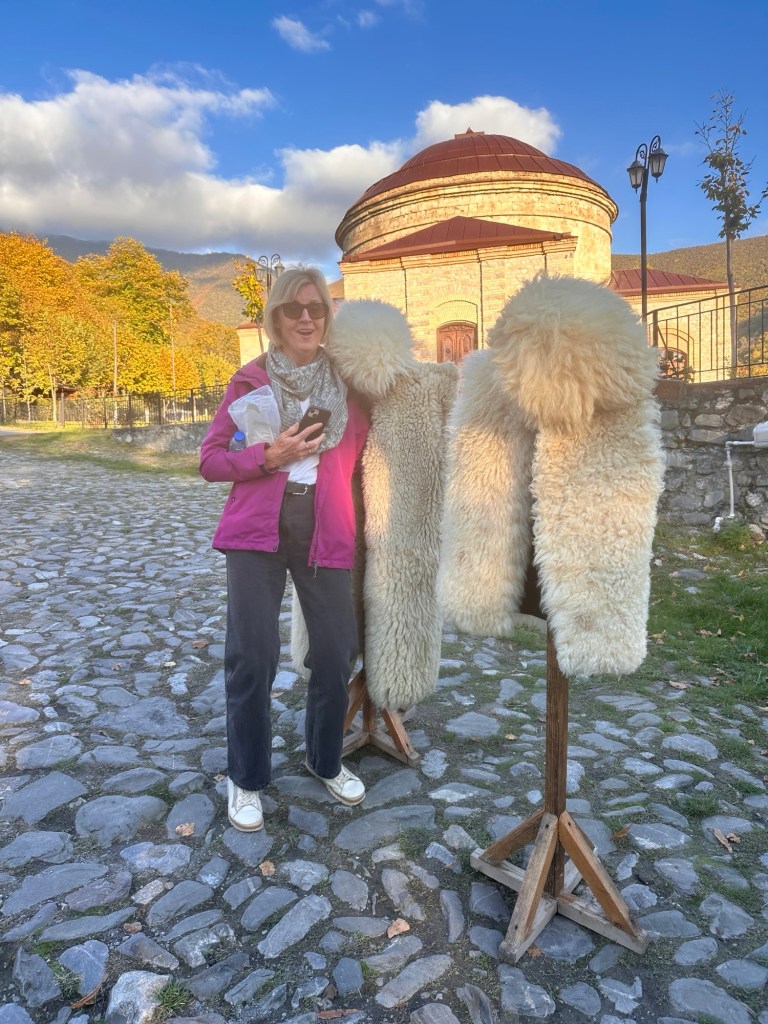
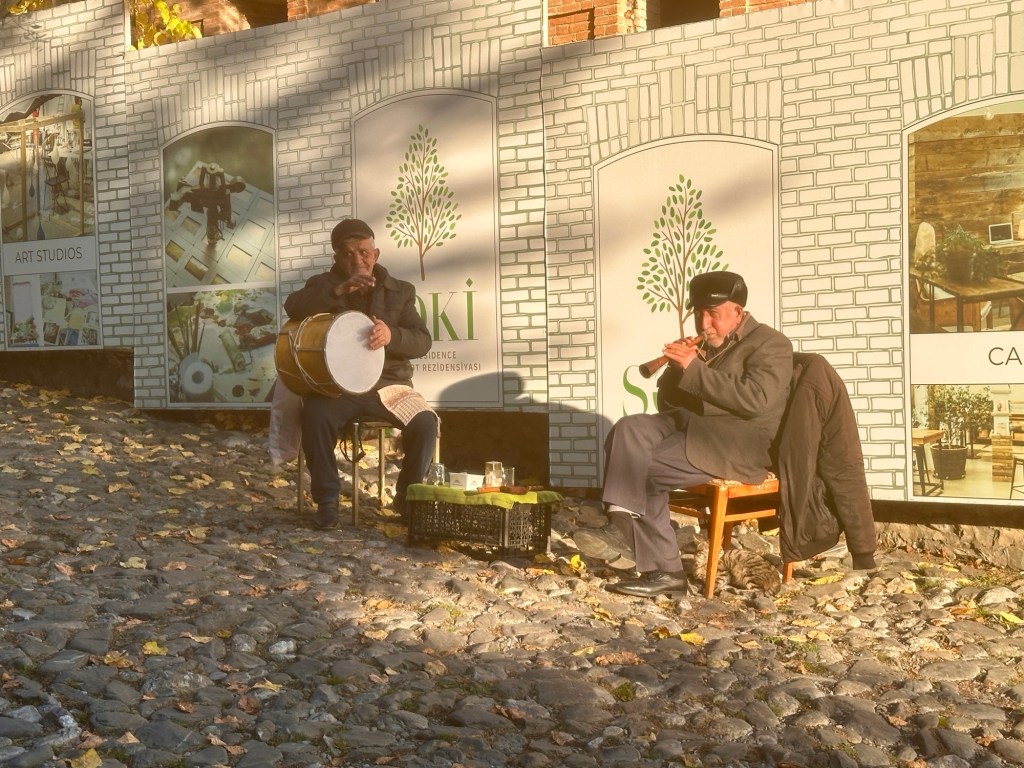

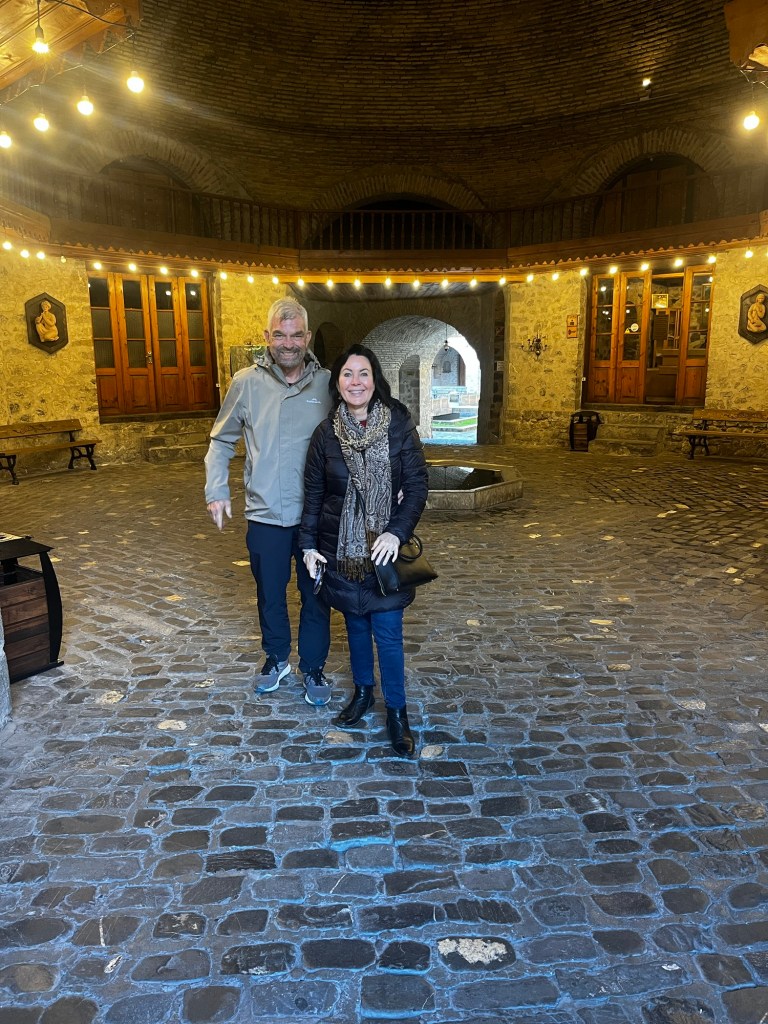
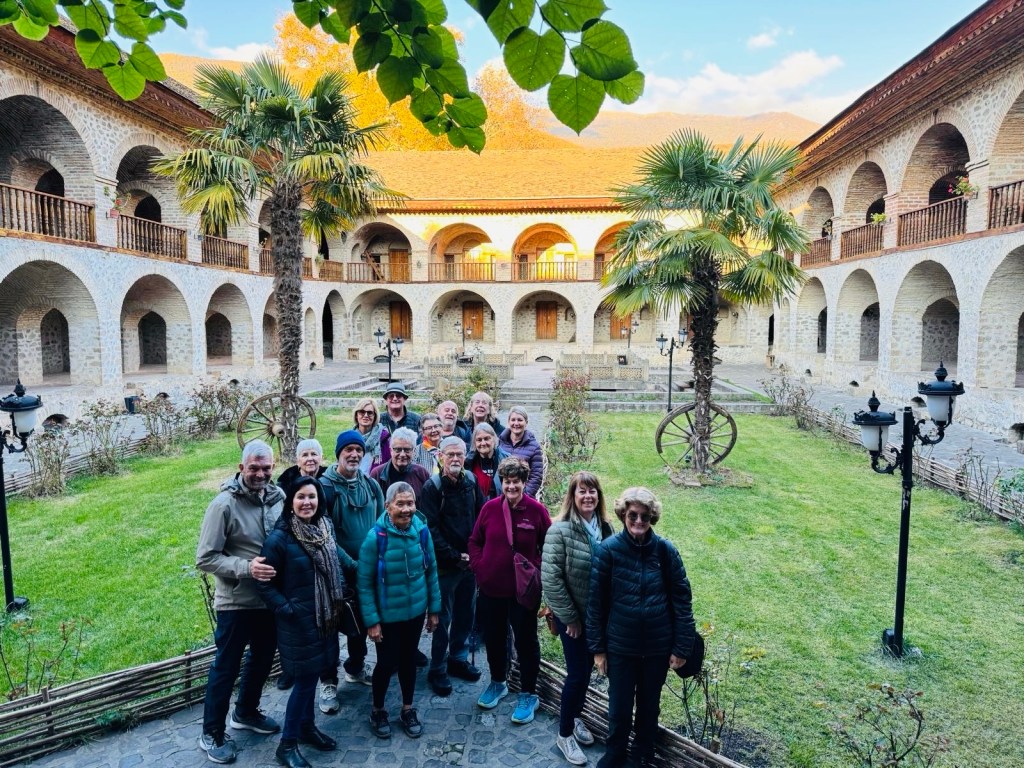
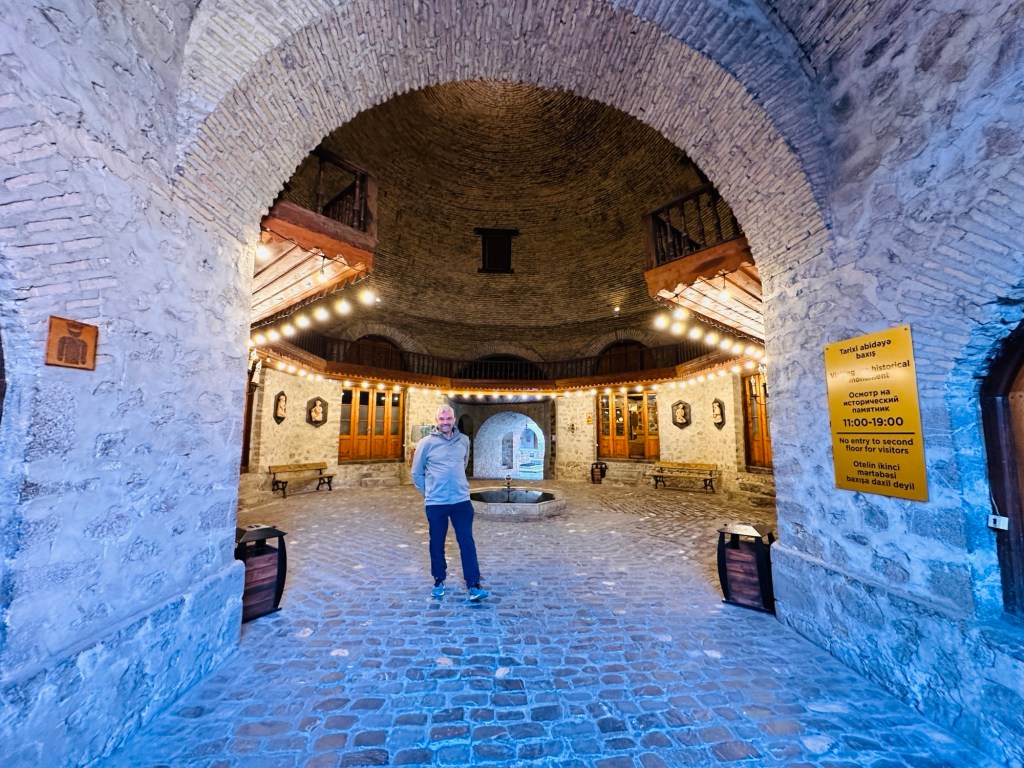
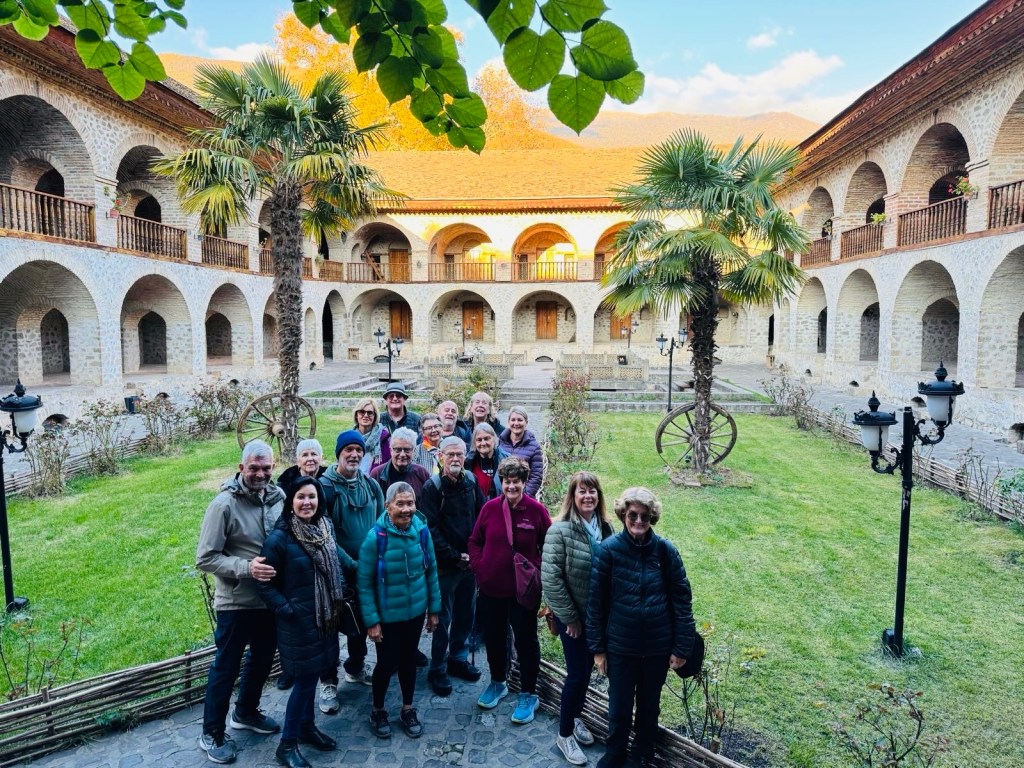
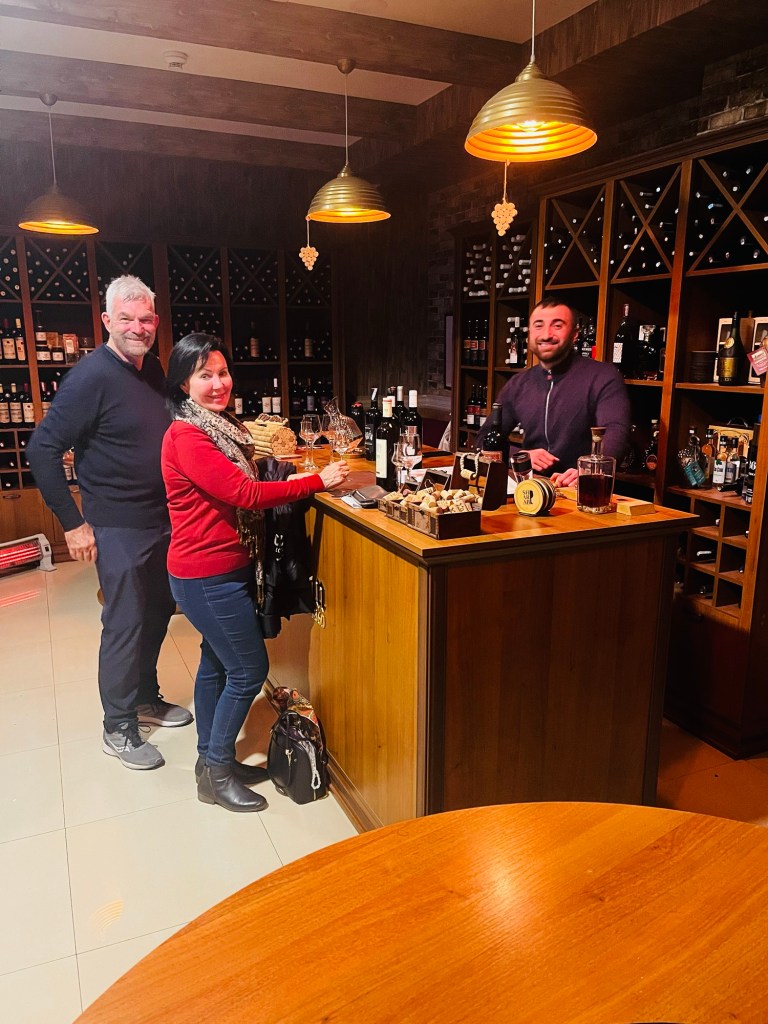
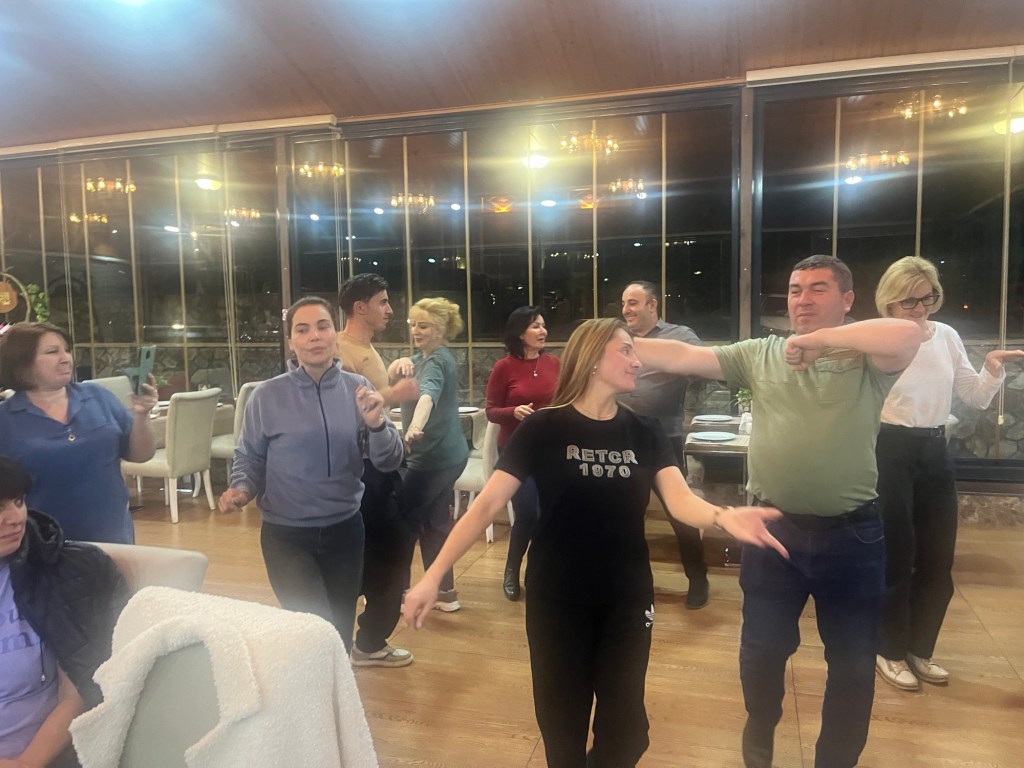
Checked into our hotel right opposite the caravanserai (a caravanserai was a roadside inn where travelers could rest and recover from the day’s journey), where we enjoyed some wine tasting, then a local dinner – I went for the dolamides and Frank went for the lamb this time. Joined in with some locals to do some dancing – it was a lot of fun.
Day 6
Tuesday 29th October 2024
Sheki, Azerbaijan to Kvareli, Georgia
200 Kms
4-12 degrees, sunny
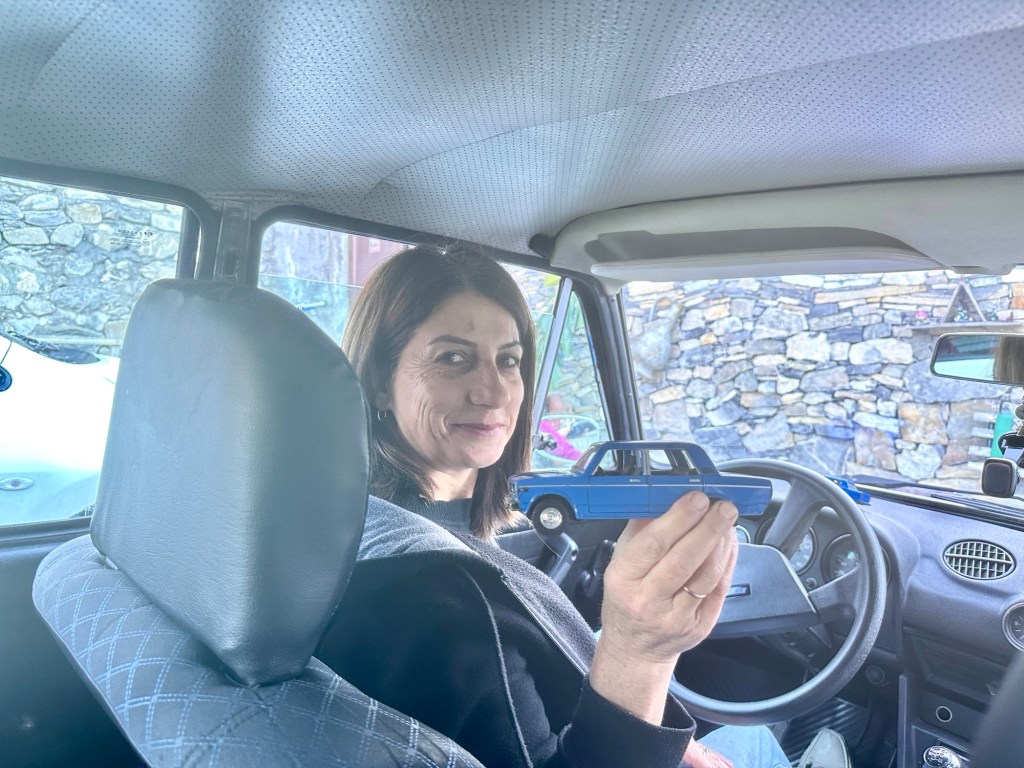
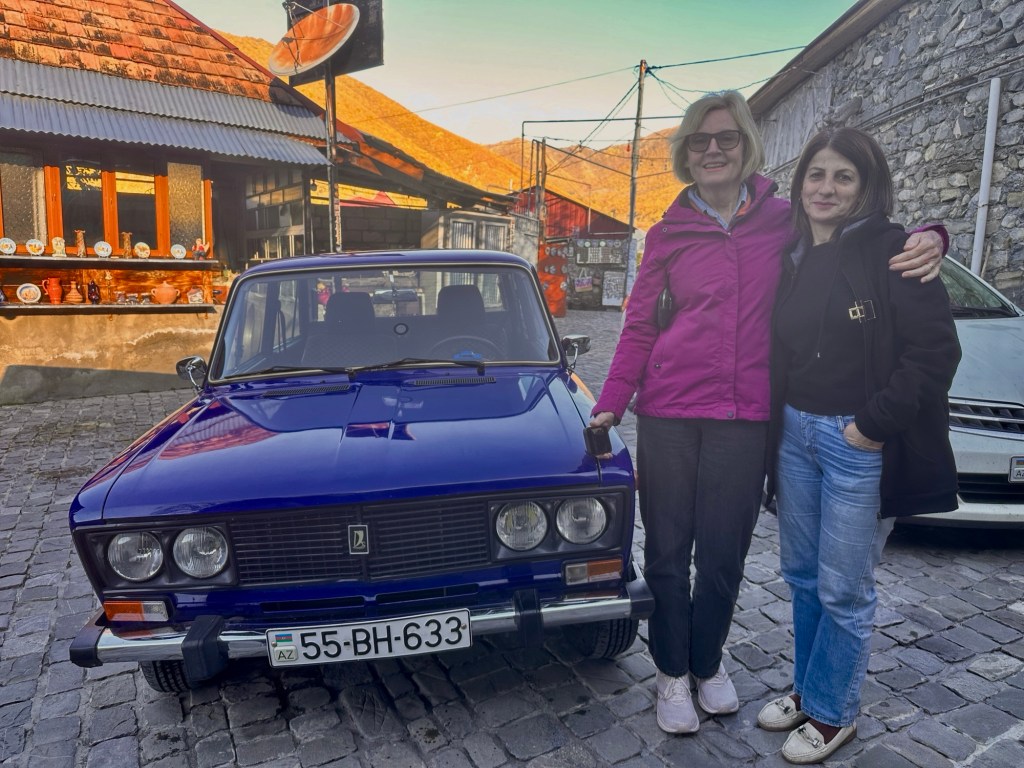
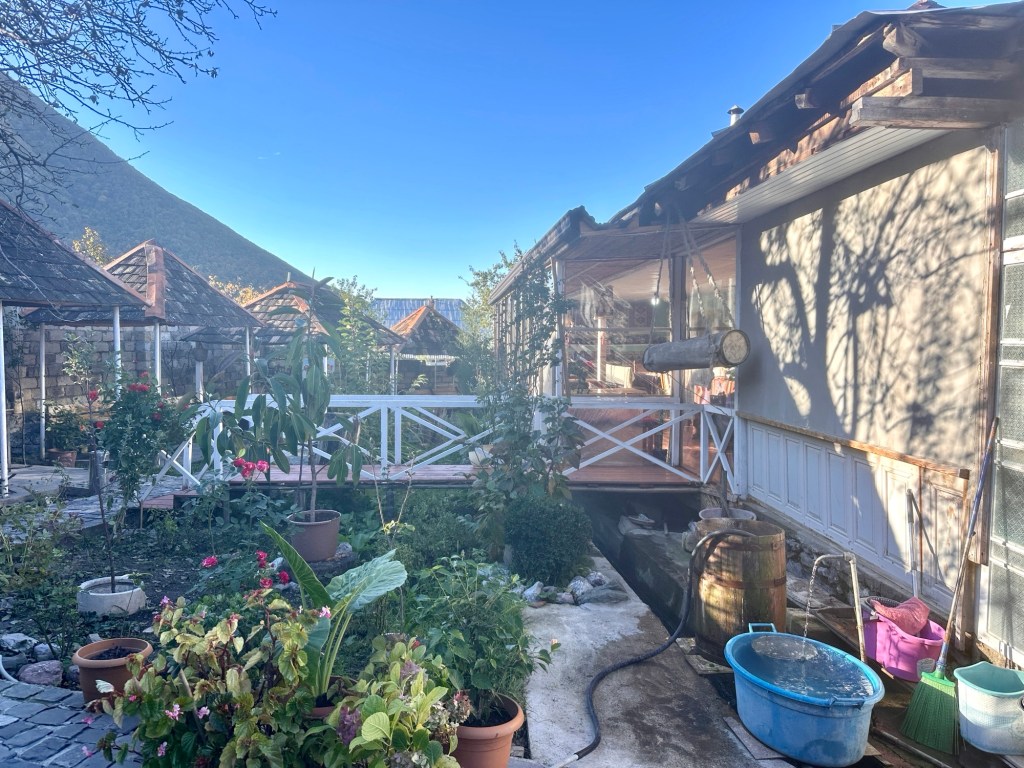
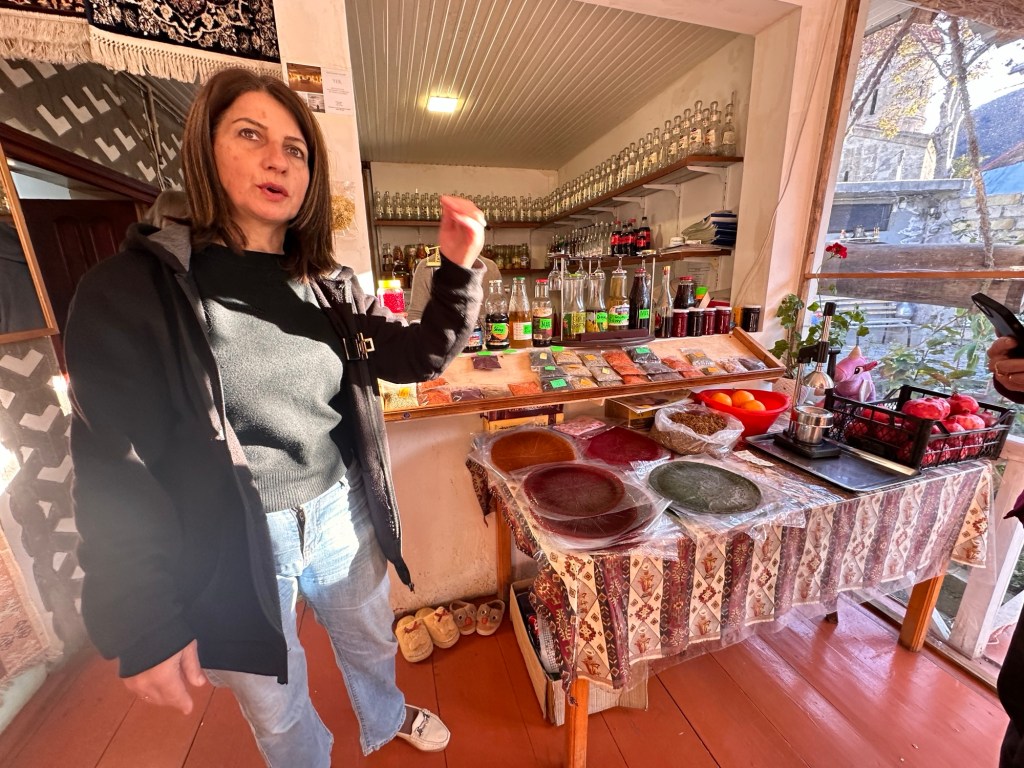
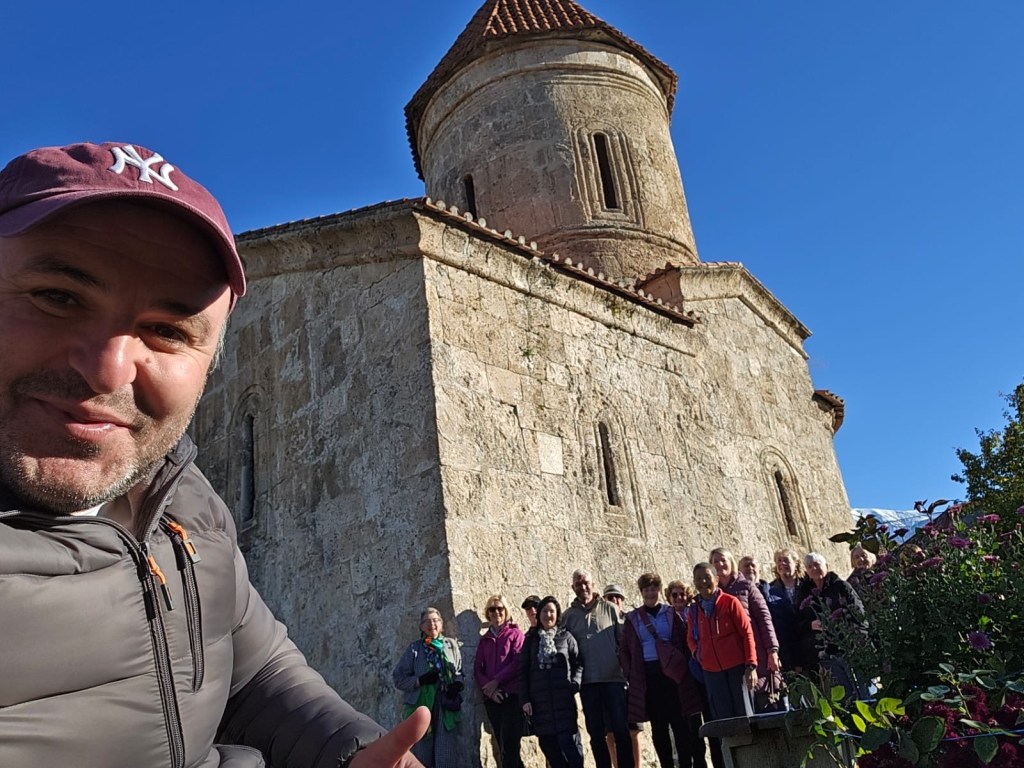
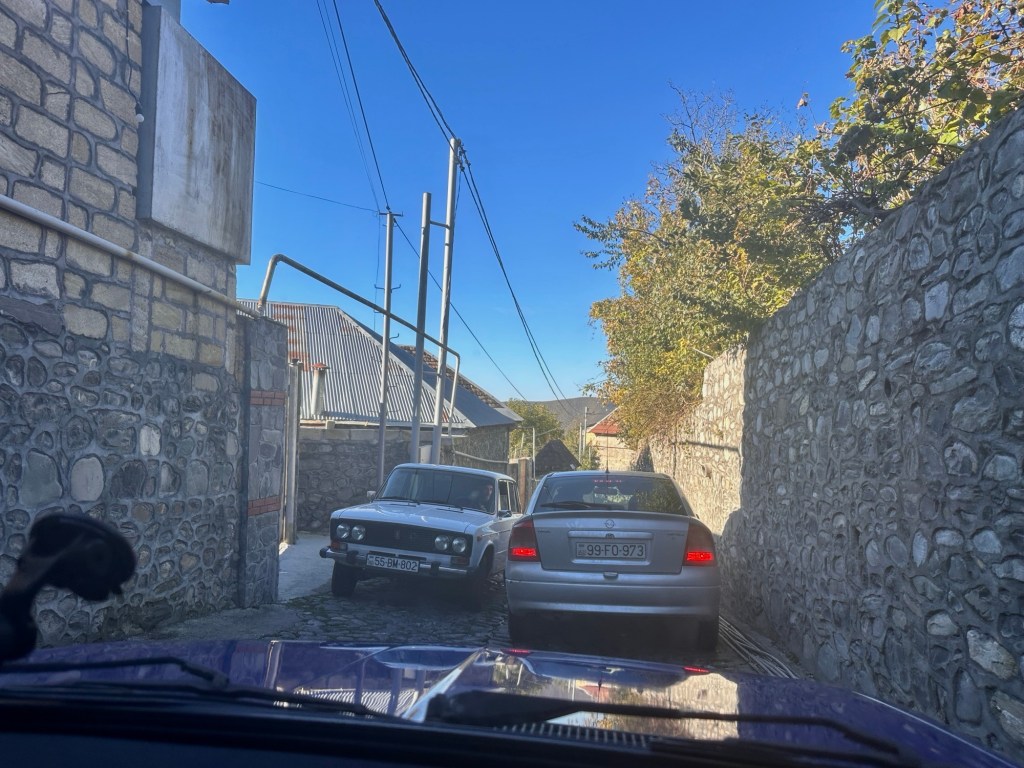
Before leaving the Sheki region, we headed to the mountains to visit the ancient village of Kish. Kish was one of the historical settlements within the state of Caucasian Albania. Even drove in a Lada to get the top!
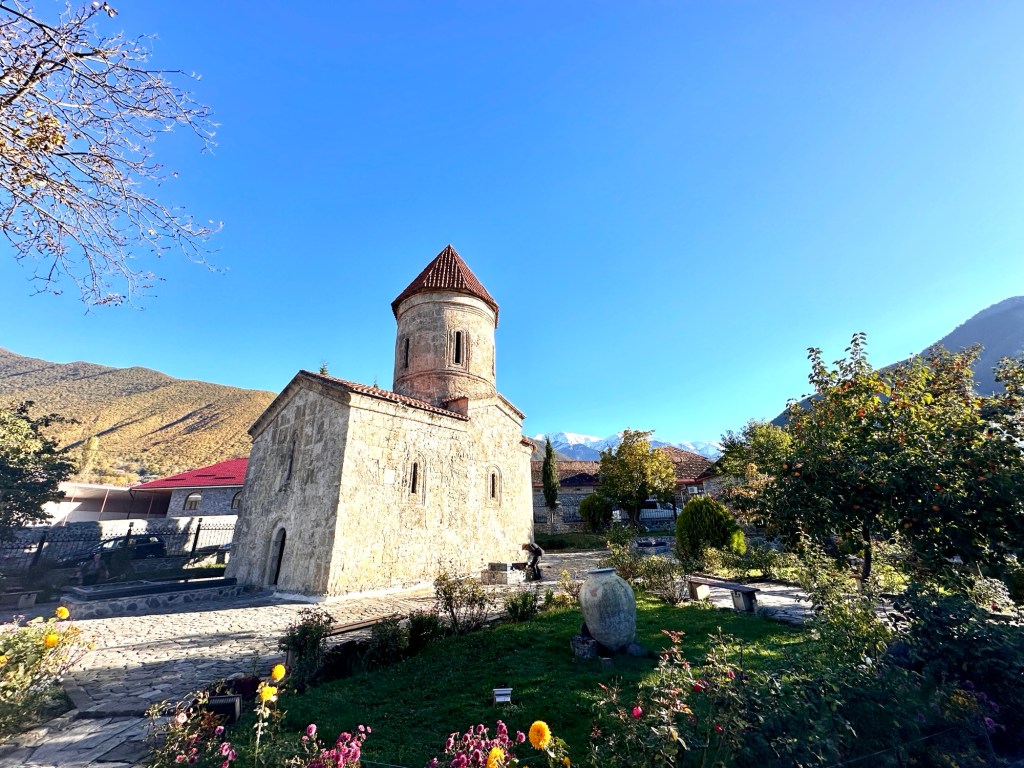
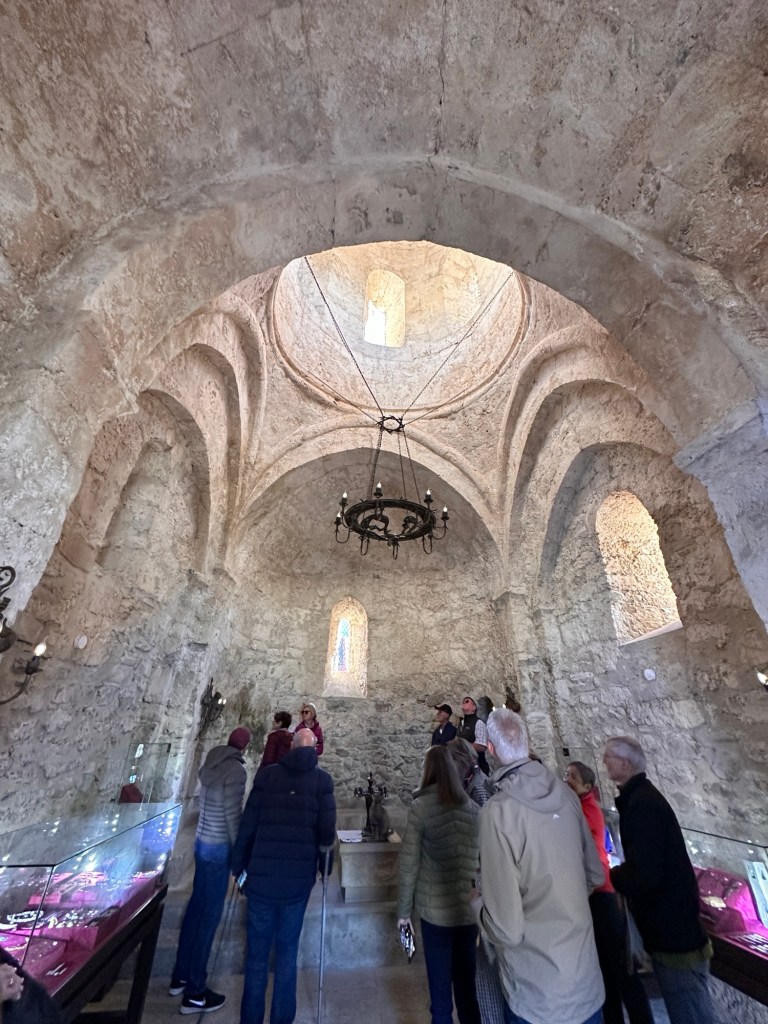
In the Ist century Saint Thaddeus, one of the 70 disciples of Jesus, sent his disciple Saint Elisaeus to the Caucasus to spread the Christian faith among the Albanians. It was here he laid the foundation of the first Christian temple and began to spread Christianity throughout the Caucasus region.
Archaeological research conducted in the Kish temple during 2001-2003 years revealed that this Christian temple was actually built on top of another religious temple reflecting the pre-Christian religious beliefs of the Caucasian Albanians. The Kish Alban Temple is considered the mother of Christian temples in Eastern countries
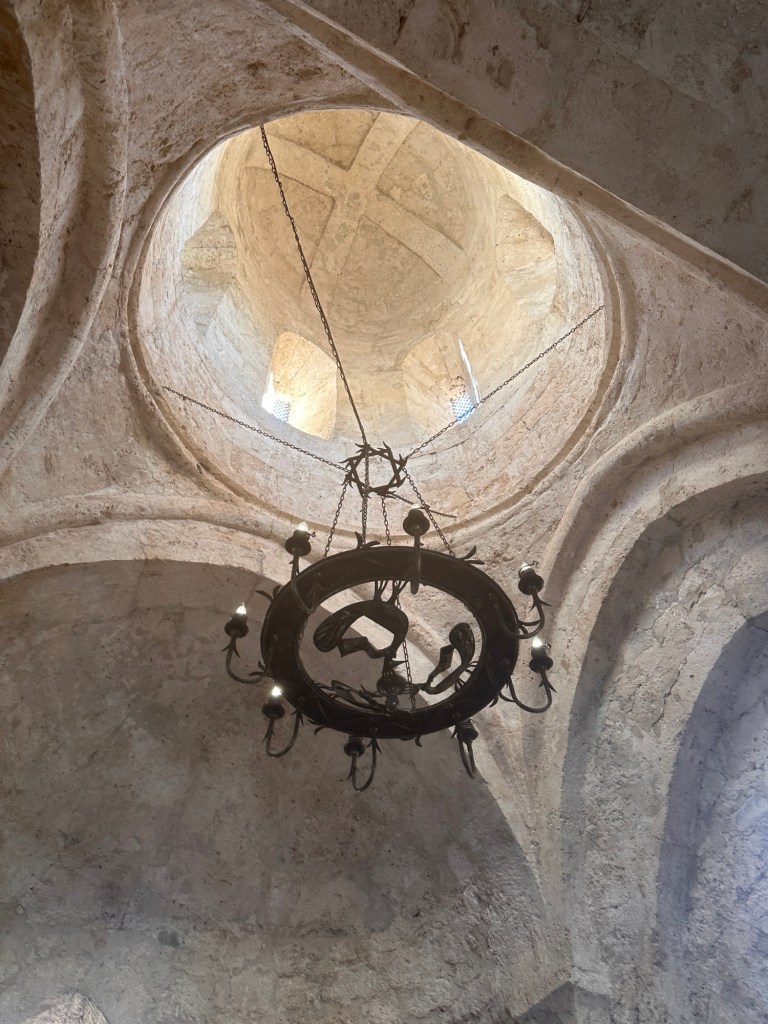
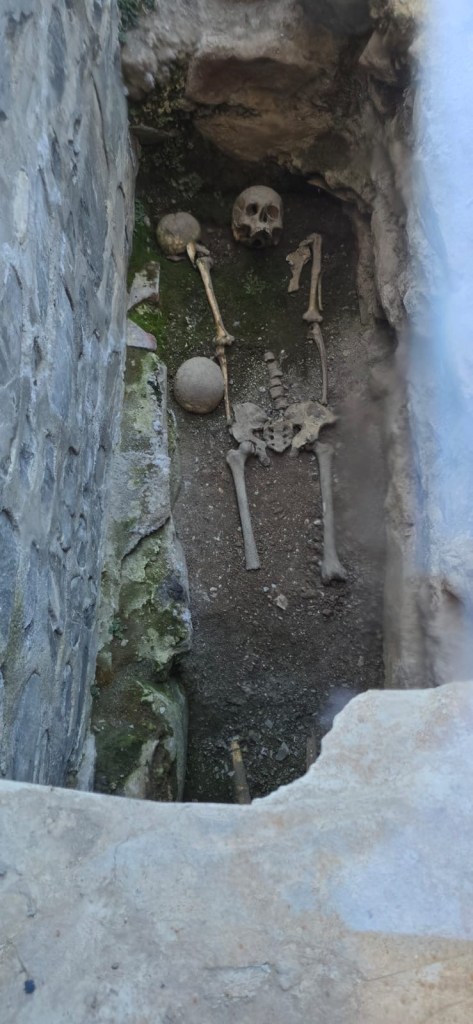
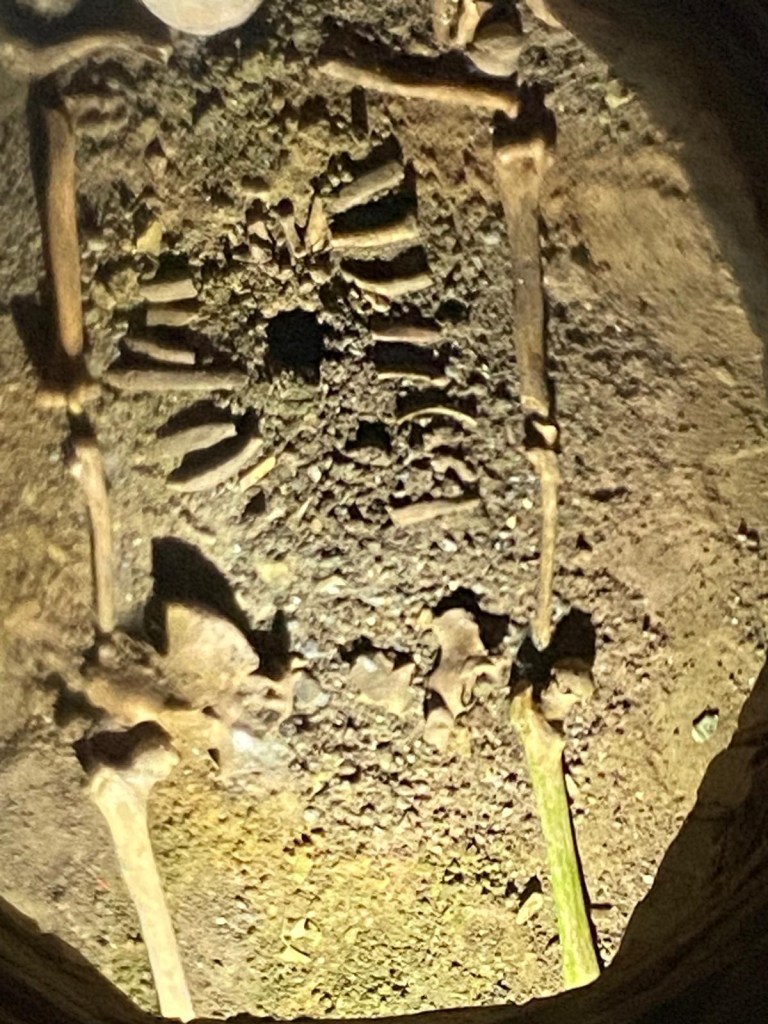
A continuous residential area for 3-4 thousand years, Kish village is rich in archaeological monuments. For example, archaeological excavations carried out in the necropolis revealed skeletons believed to be Vikings, determined because of their size.
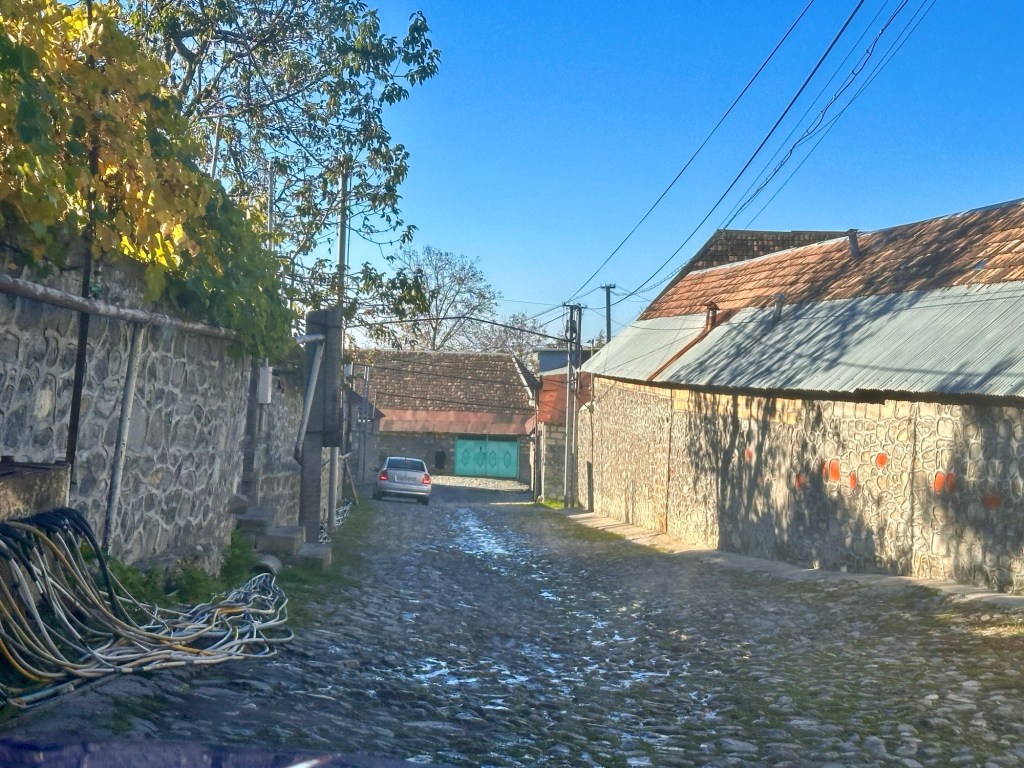
There is a distinctive architecture of Kish village, with its narrow streets paved with river stones, ancient neighborhoods, ancient springs, residential buildings with tiled roofs, and ancient cemeteries, resembles medieval villages.

A two hour drive and we reached the Azerbaijan- Georgian border. Well that was a process…. We had to walk through the Azerbaijan gates then up a stepped path wheeling our suitcases for 100 metres to passport control and security. From there it was another 300 metres up another stepped path, through no man’s land, until we reached the Georgian Passport control. It was certainly a workout! Then it was another 200 metres (but at least this part was flat!) to walk to our new bus and guide, Maya.
Other Facts about Azerbaijan
Currency is manat
Most people are Muslim, but non practicing.
Government is non secular .
45 million Azerbaijani people live in Iran – as a result of the border change.
Food is relatively inexpensive, but coffee is not ($6-$10 per flat white)
They don’t eat pork, rabbit or duck, but not for religious reasons.
They don’t eat goat meat, but use the milk for cheese.
They only eat turkey after it snows, and while there is still snow- they believe it tastes better after turkey eats snow ( old Soviet custom)
Gambling is illegal, since 1994.
We absolutely loved Azerbaijan- the history is fascinating – and hard to remember, the architecture amazing, and the food divine. I wish we had another week here!
Georgia
Day 6
Tuesday 29th October 2024
Sheki, Azerbaijan to Telavi, Georgia
200 Kms
4-12 degrees, sunny
Over the centuries, Georgia was the object of rivalry between Persia, Turkey and Russia, before being eventually annexed by Russia in the 19th Century. Since emerging from the collapsing Soviet Union as an independent state in 1991, Georgia has again become the arena of conflicting interests.
In brief, the important dates are …
1008 – unification of Georgian realms to form a single country under one ruler.
1463 -1801 tripartite division between Ottomans, Persians & Turks.
1801- Annexed by Russia
1918 – independence from Russia(supported by the Germans)
1921 – invasion by Red Army supporting local Bolsheviks
1921- becomes part of USSR as Georgian Soviet Socialist Republic
1936 – Constituent republic in Soviet Republic
1989 declared sovereignty as Georgia
1991 – independence from USSR
Population 3.7 million
Currency GEC Georgian Lari
Once the border formalities were completed, we went to the nearest local village to change money, and then find some lunch . The lunch proved more difficult than we were told – we found a doner kebab shop, however the staff seemed to have no idea of time, and very little English spoken (or Georgian on our behalf either). Eventually our order was ready, and I have to say was worth the wait.
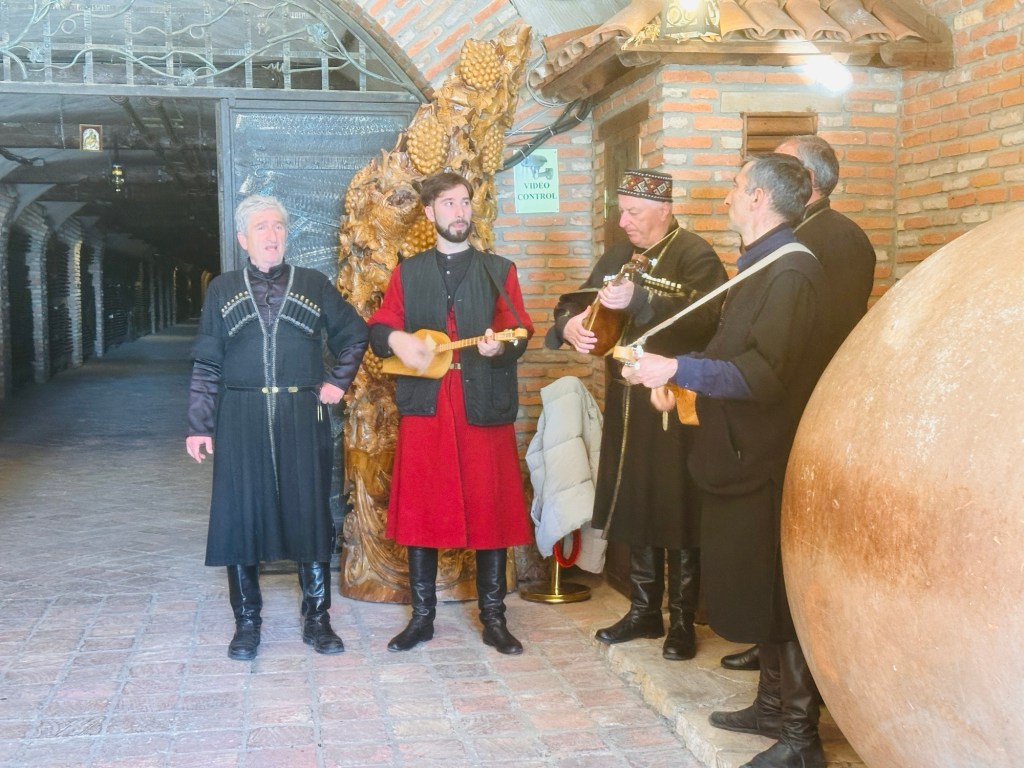
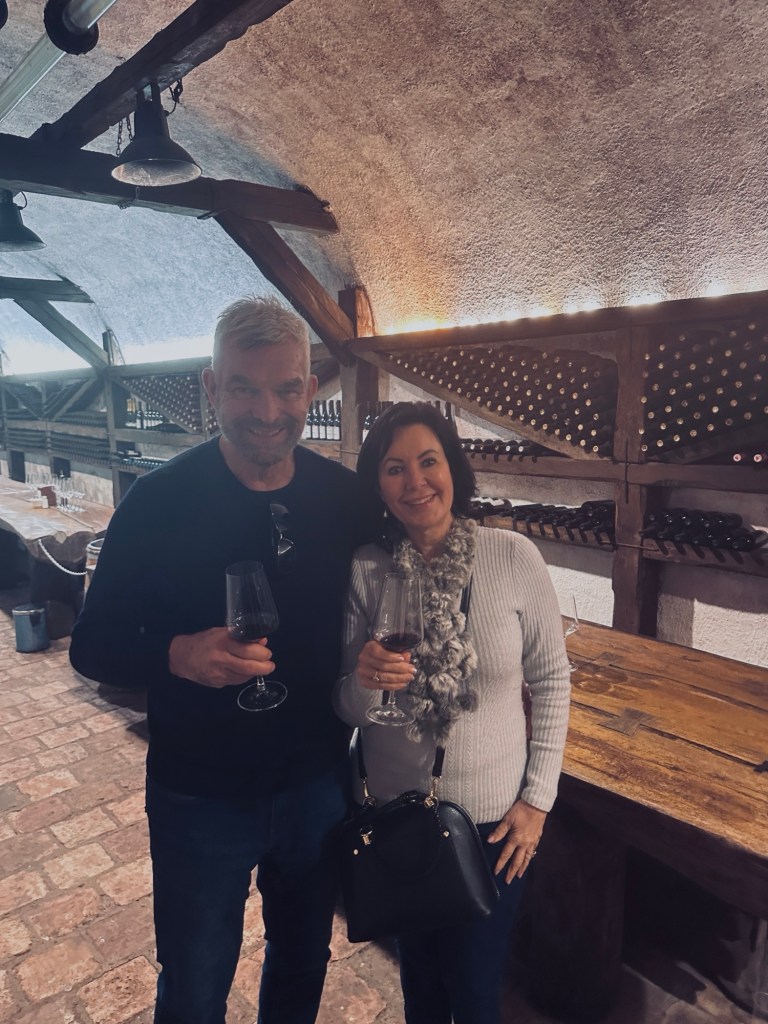
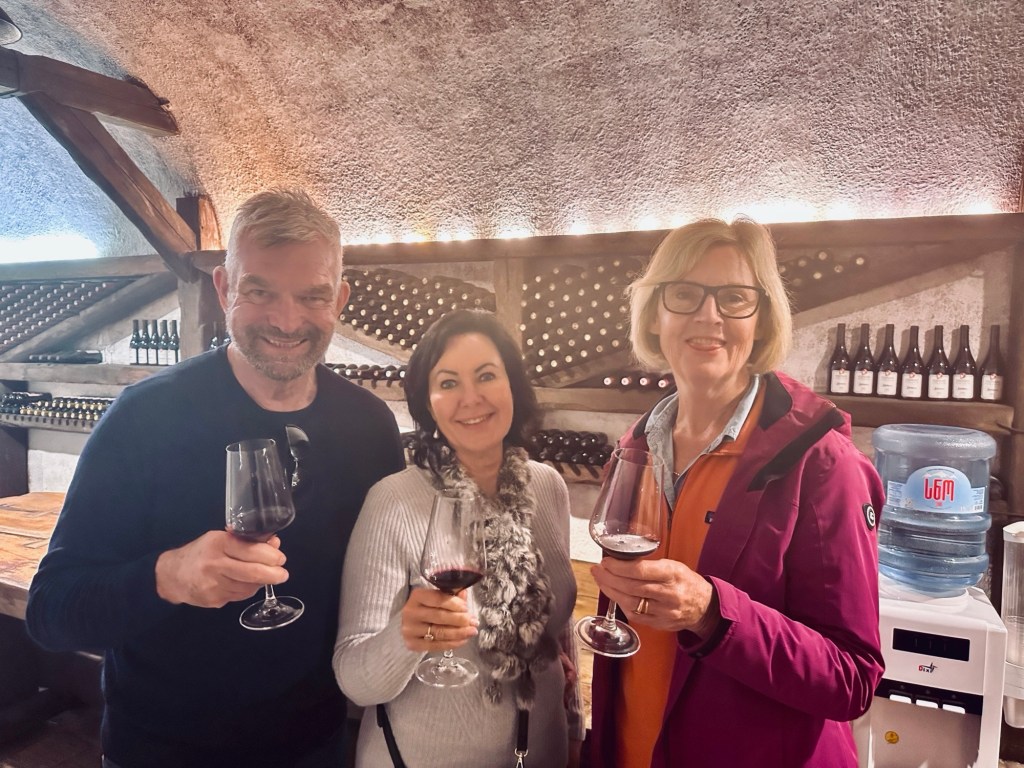
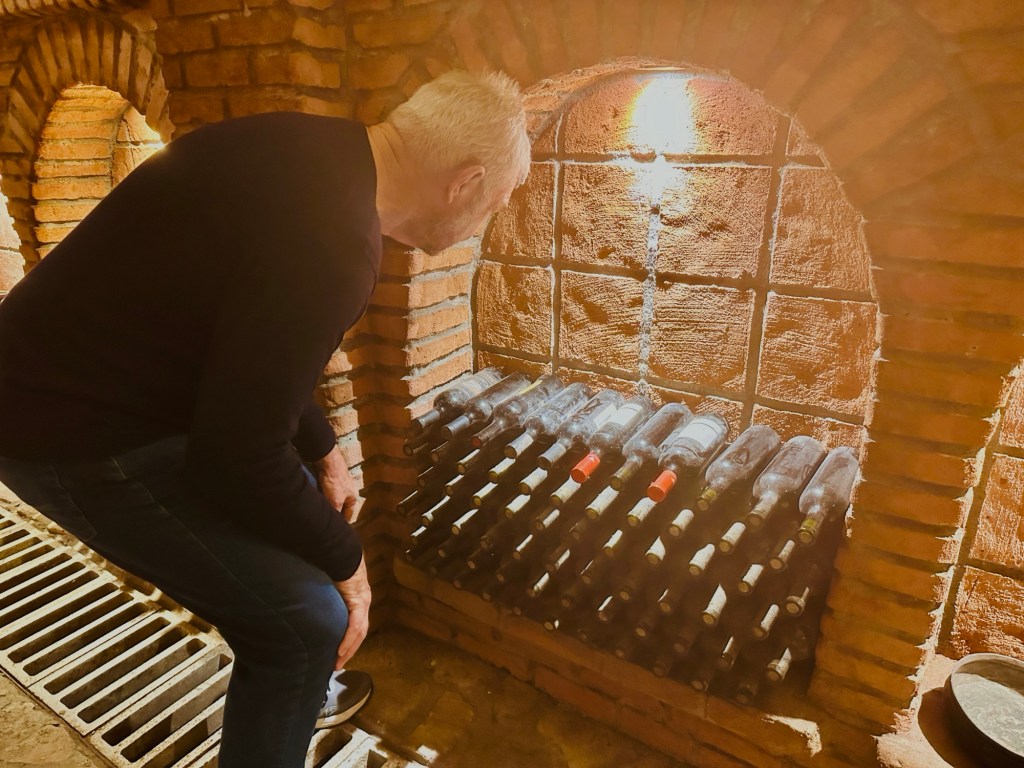
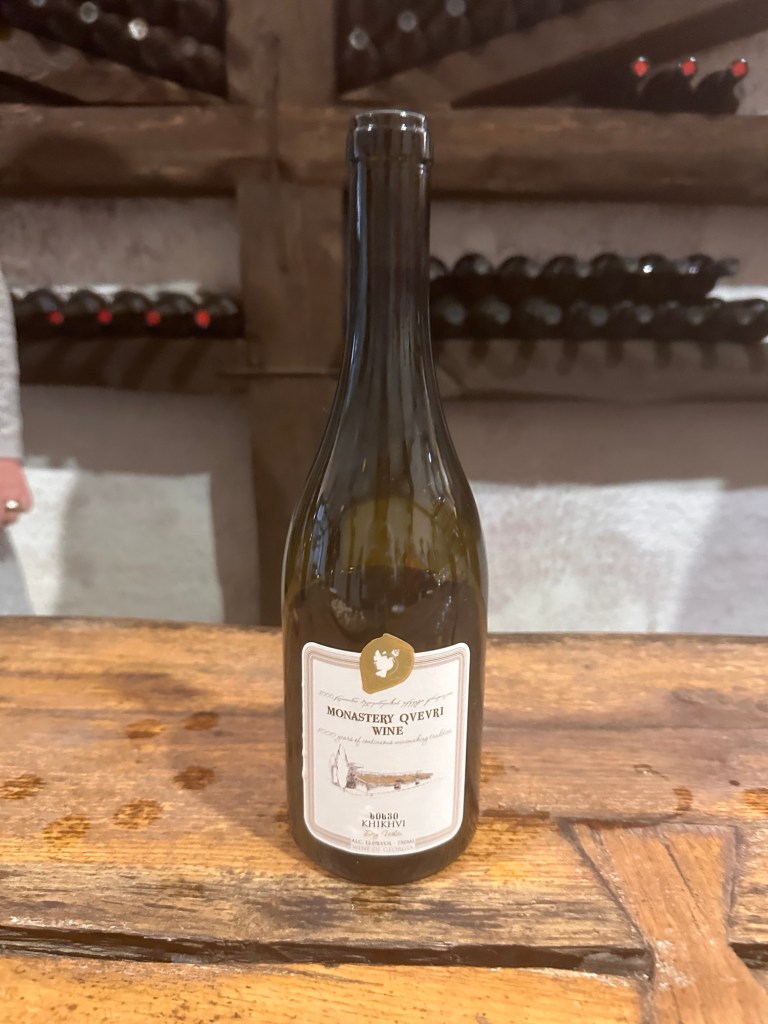
After travelling through rich agricultural country side, similar to Azerbaijan, and same crops, we went to Khareba wine cellar in Kvareli. Georgia claims it is the oldest wine producing country, saying it has produced wines for 8000 years. The cellar is located in a tunnel dug out of the flank of the Caucasus Mountains – here we tasted Quevri wines – Saparevi and Khikhvi. The temperature in the Tunnel stays ideally at 12-14 degrees throughout the year. The total length of the tunnels is 7.7 km. Georgia’s hallmark is wines stay in contact with their skins, stalks and pips for six months and further ferment in huge clay amphorae (qvevri) buried in the ground – obviously the method works as both wines were very drinkable!
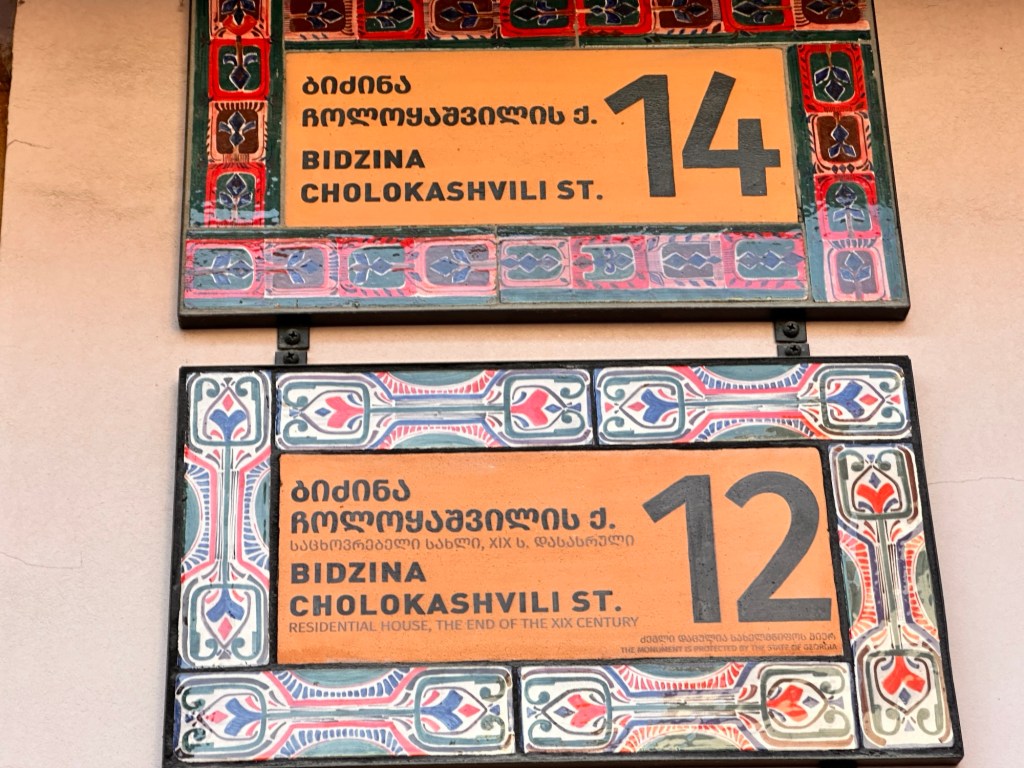
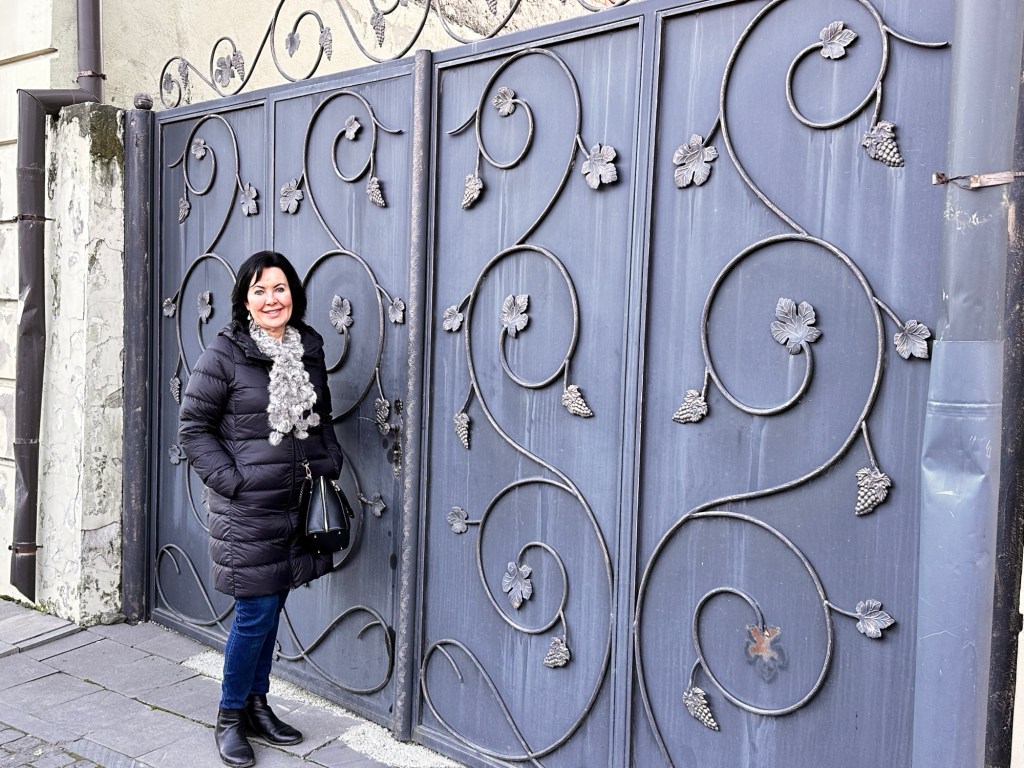
Onto Telavi, which is located in the heart of Kakheti, the historical area of eastern Georgia, in the valleys of the rivers Iori and Alazani. We checked into the Holiday Inn, then went for a little explore of the old town. We discovered some beautiful old buildings with gorgeous doors, some were private residences, others cafes, local handcraft shops, and wine bars. Of course we had to stop for a wine.


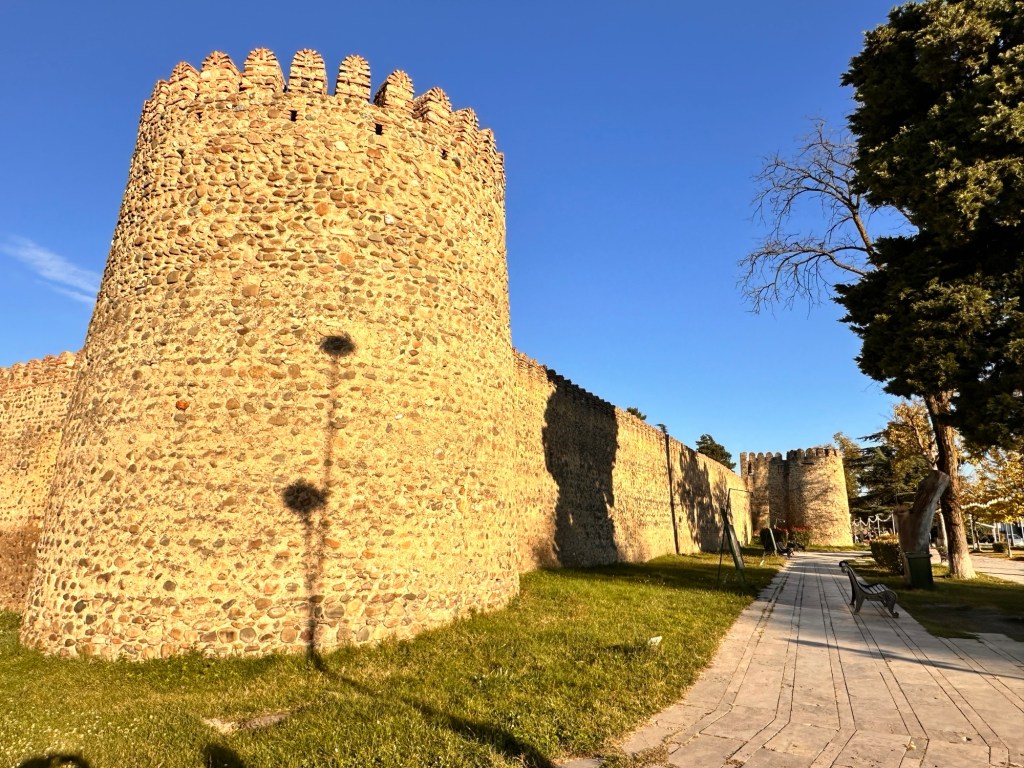
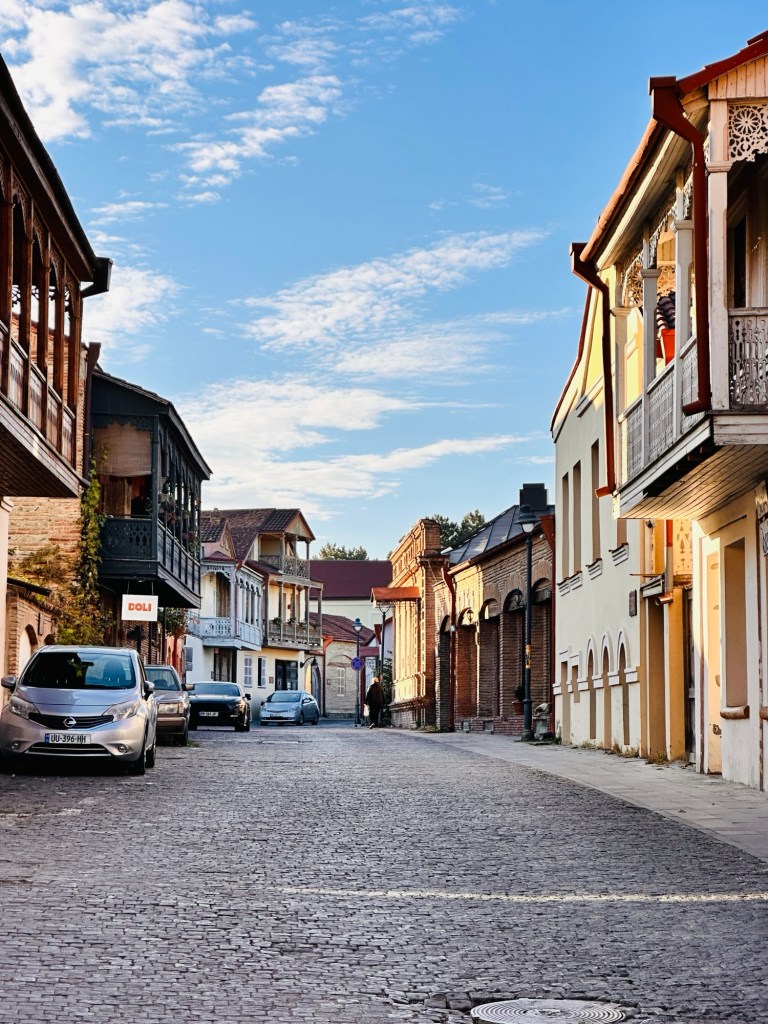
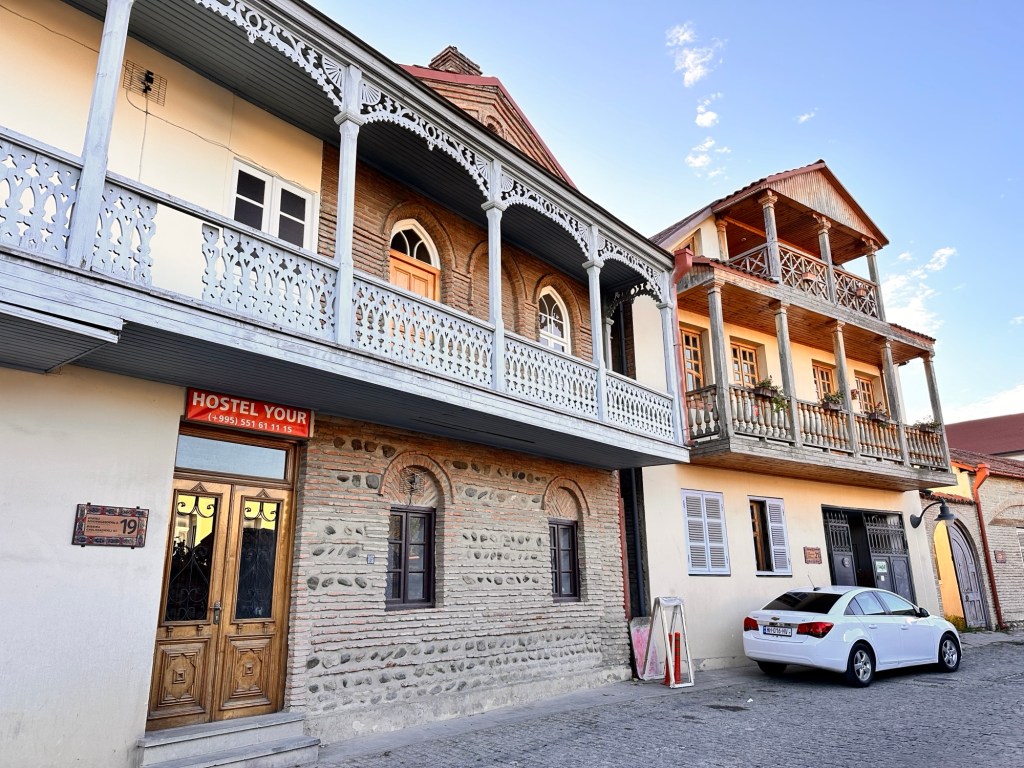
Back to the hotel, and some local food – the eggplant with walnuts and pomegranate was to die for. Along with a veal and tomato dish, and the saperavi, we went to bed very contented.
Day 7
Wednesday 30th October 2024
Telavi to Tiblisi

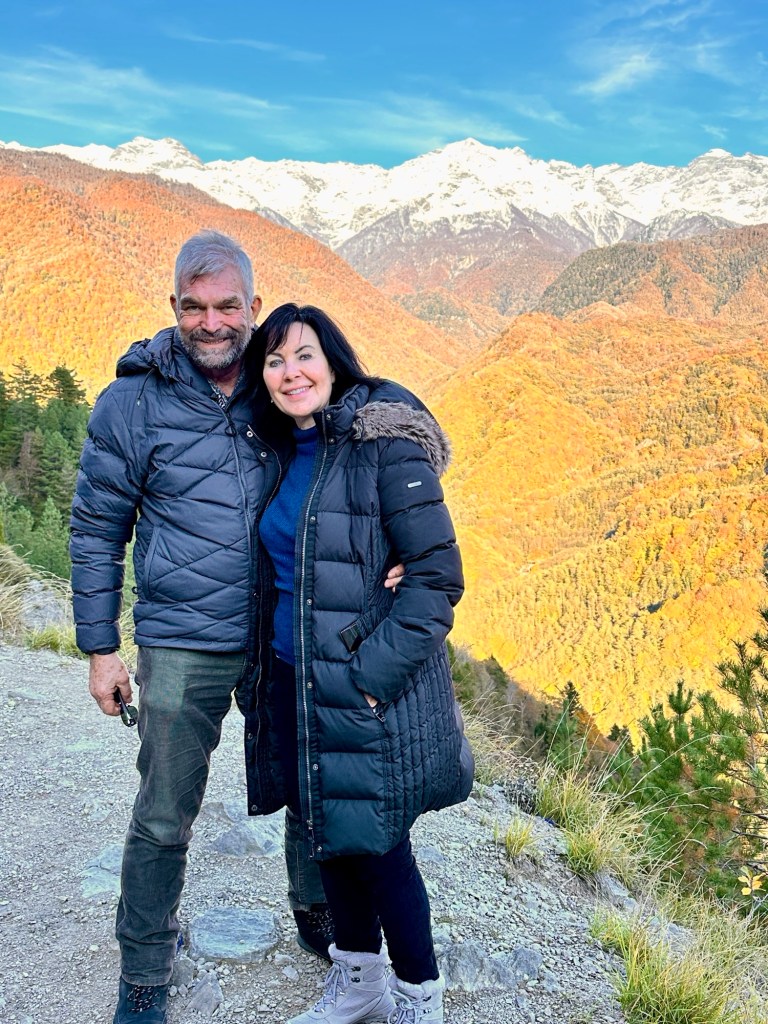
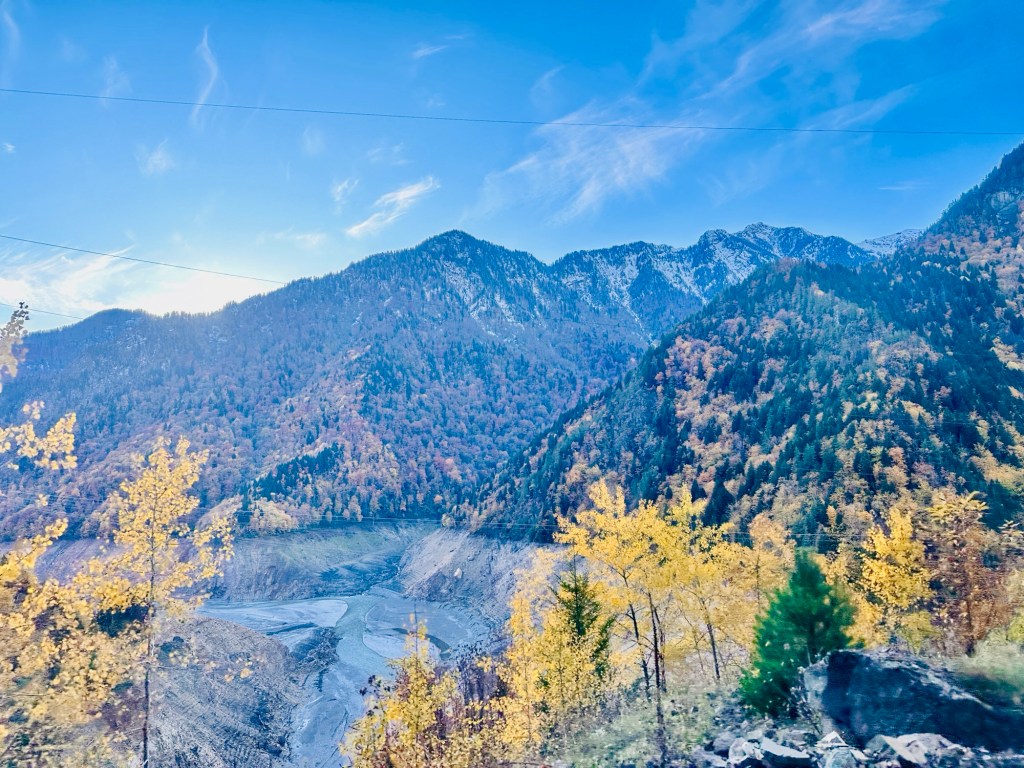
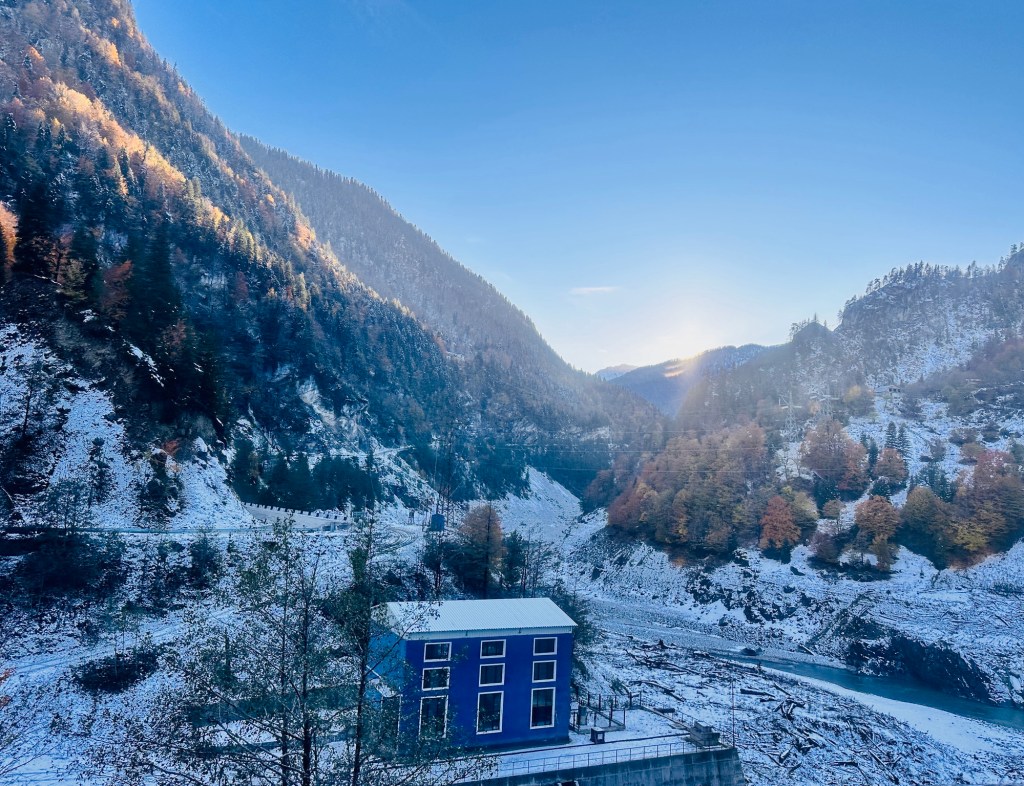
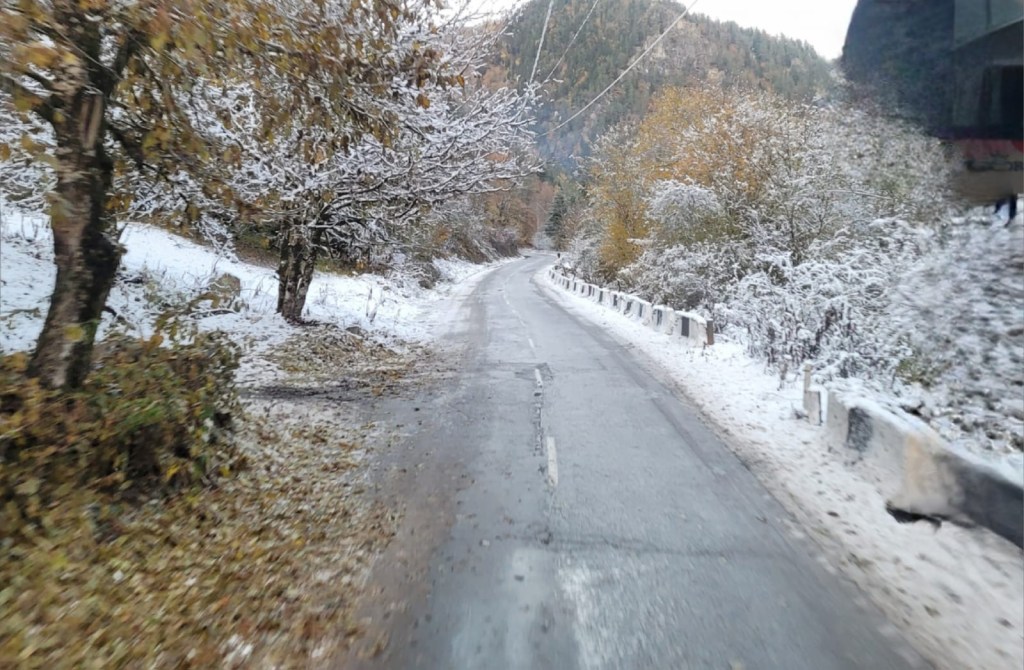
120 Kms



4-16 degrees, sunny
Back to our hotel in Gudauri, where we enjoyed a few drinks, followed by dinner. Tonight, cabbage roll stuffed with spicy pork mix, and delicious vegetables- they certainly do vegetables well here.
After breakfast, we walked to the National History and Art Museum for an informative session on artifacts from 3000years ago, then next door to Batonis Tsikhe Castle. This castle served as the residence of Kakhetian Kings between 17th and 18th century. The castle encloses two churches, the ruins of a royal bathhouse and the Persian style Palace of King Erekle II. Both were very interesting, but boy, Georgian people seem to speak very fast!
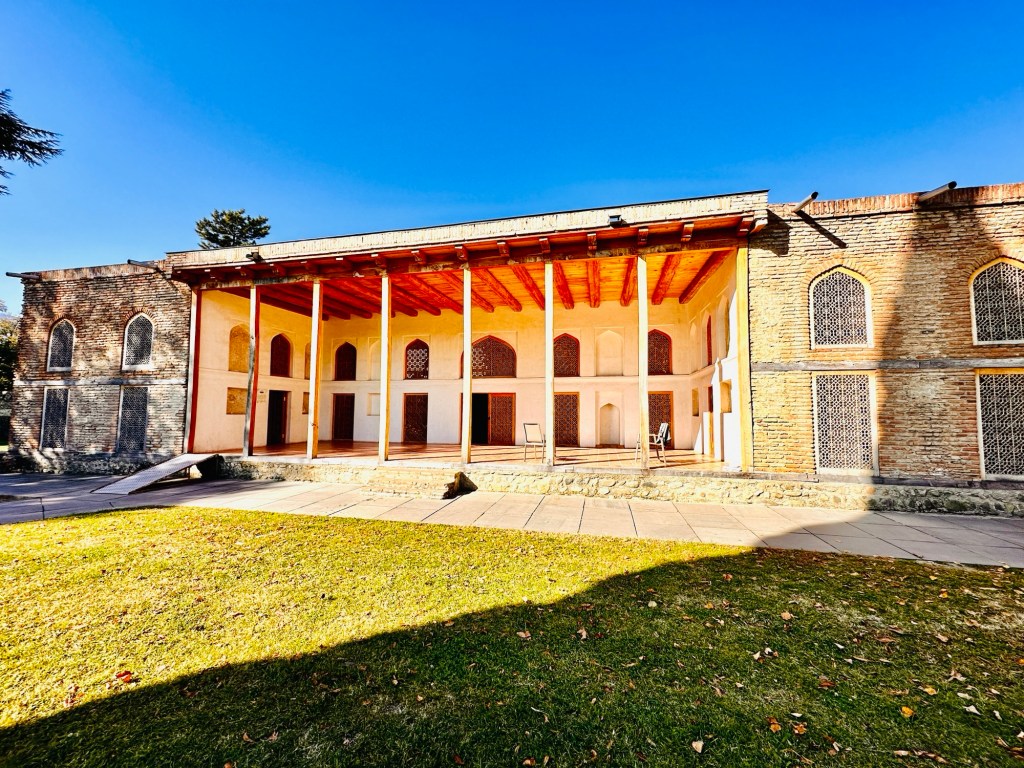


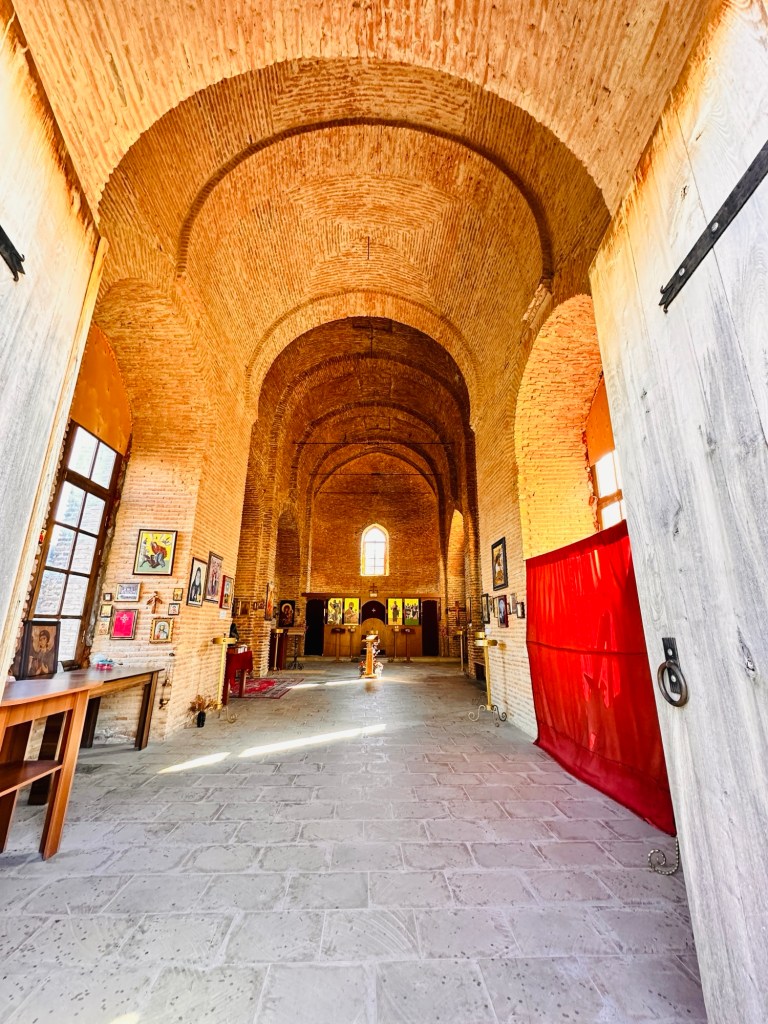

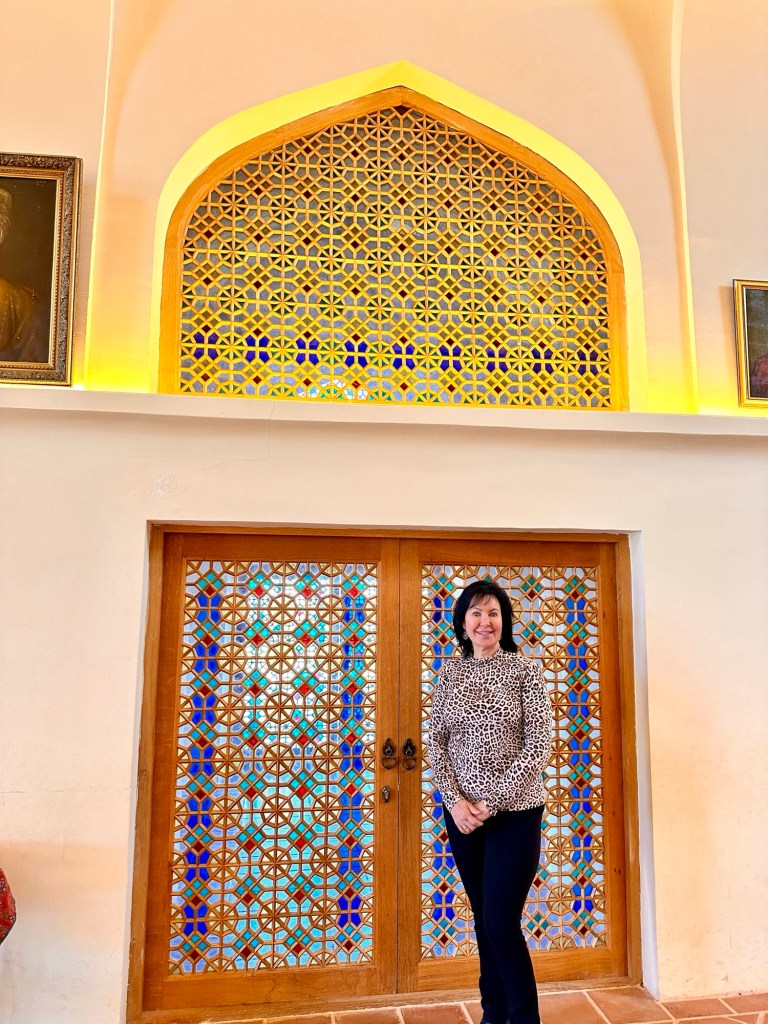
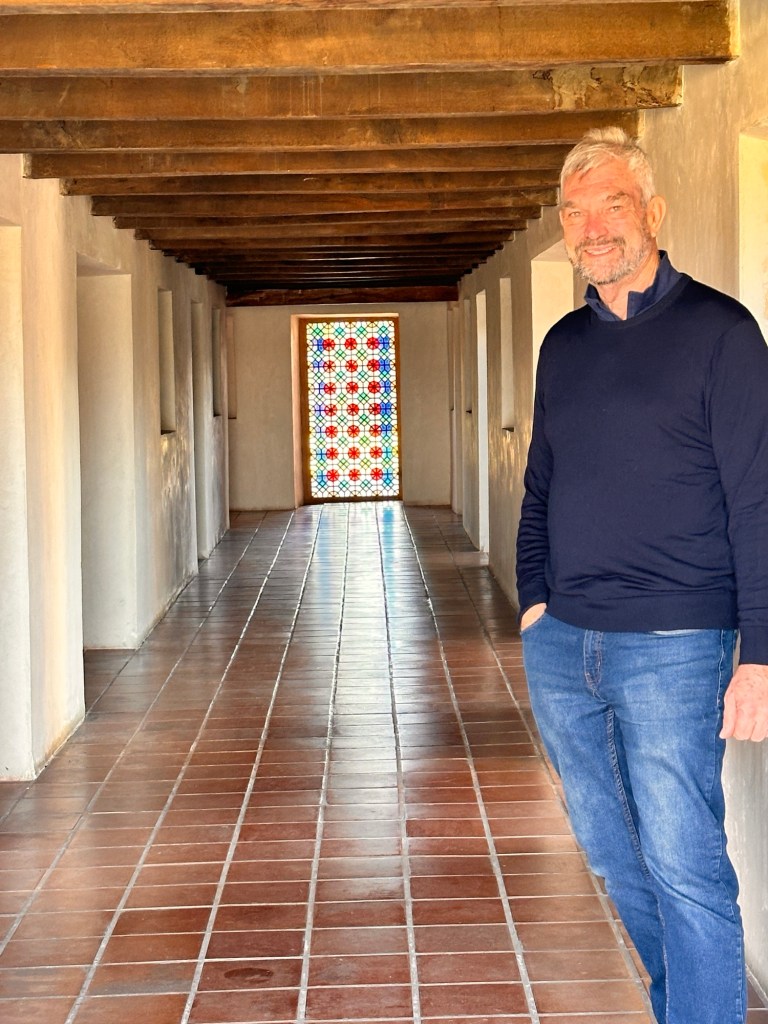
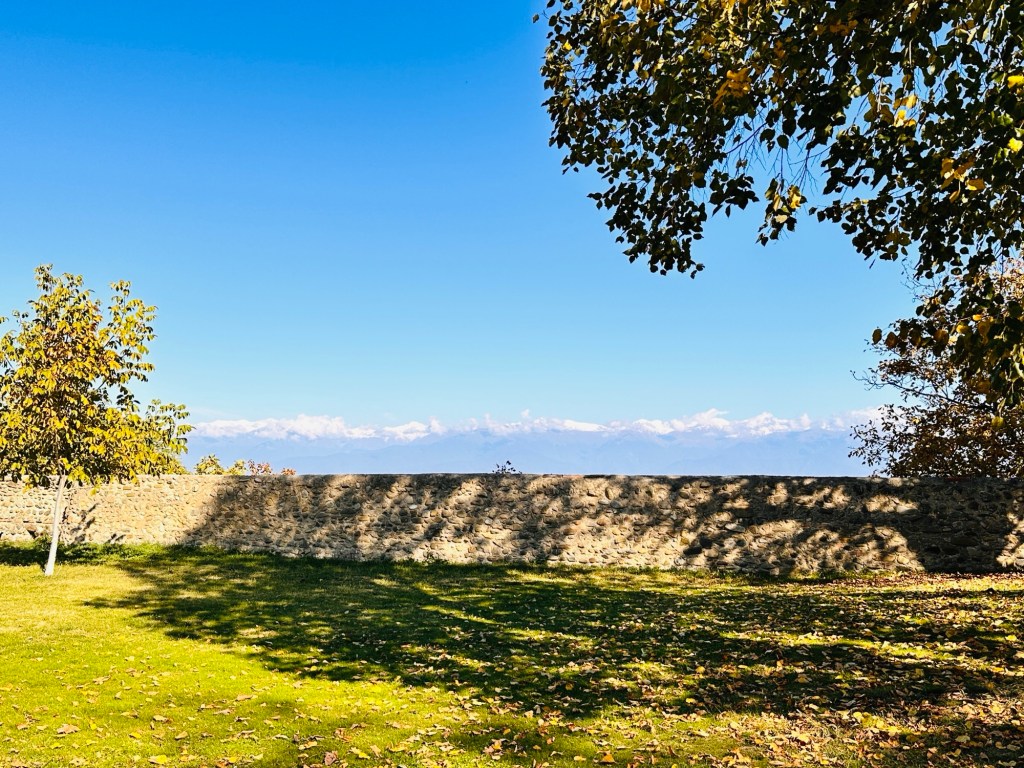
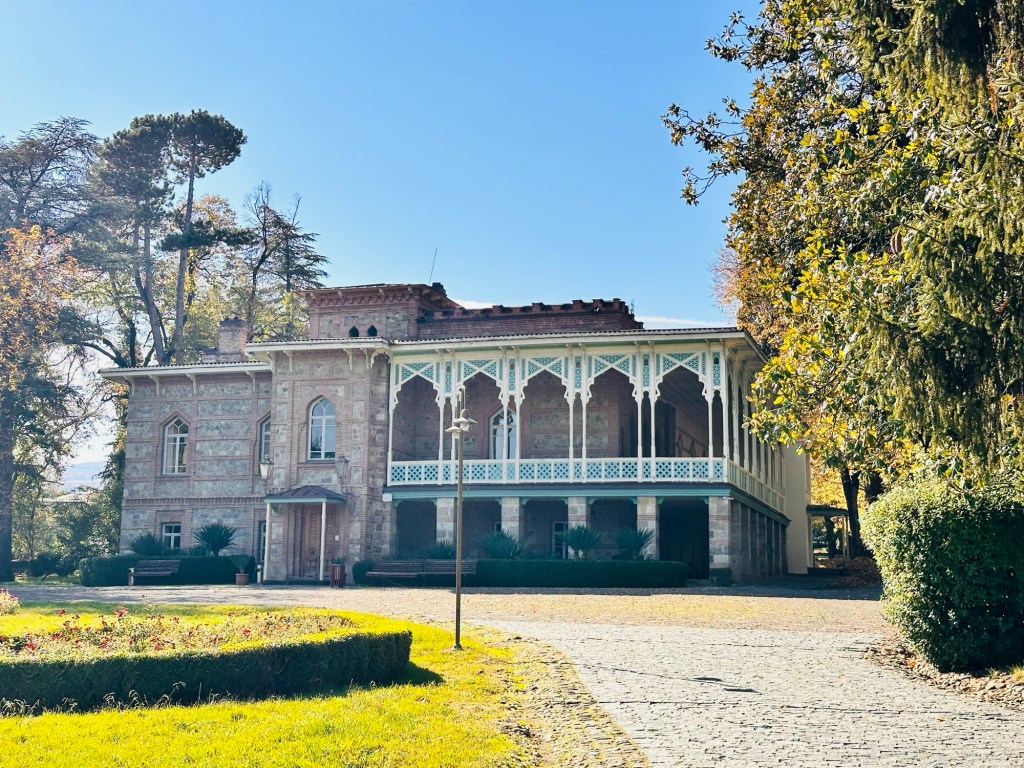
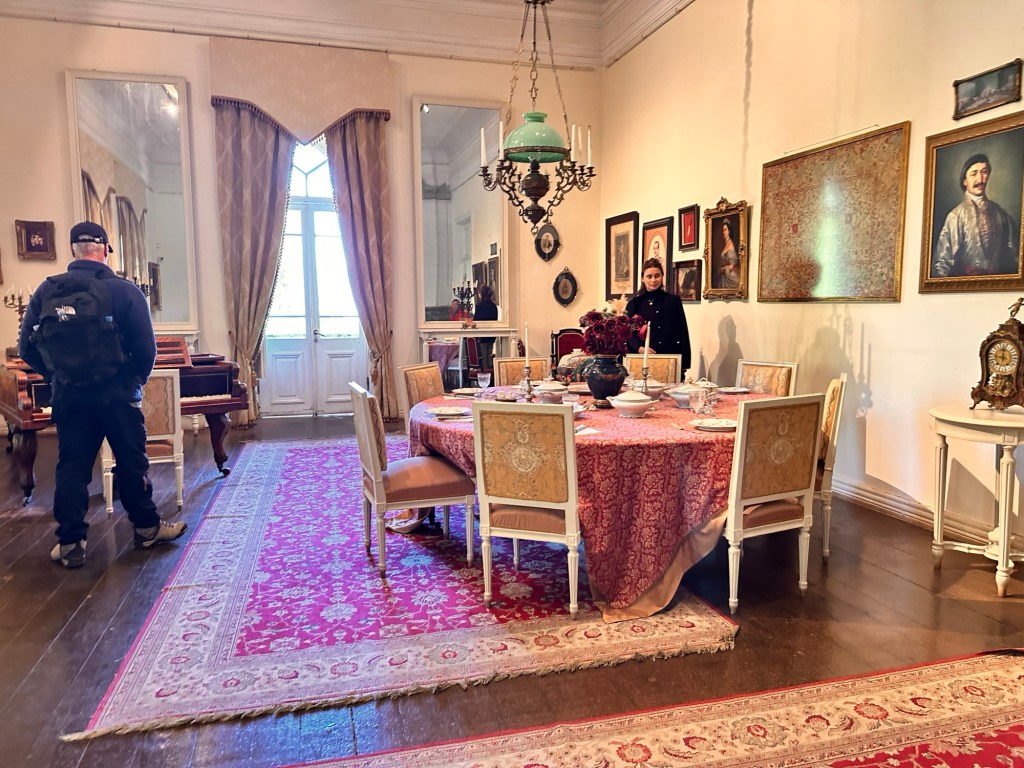
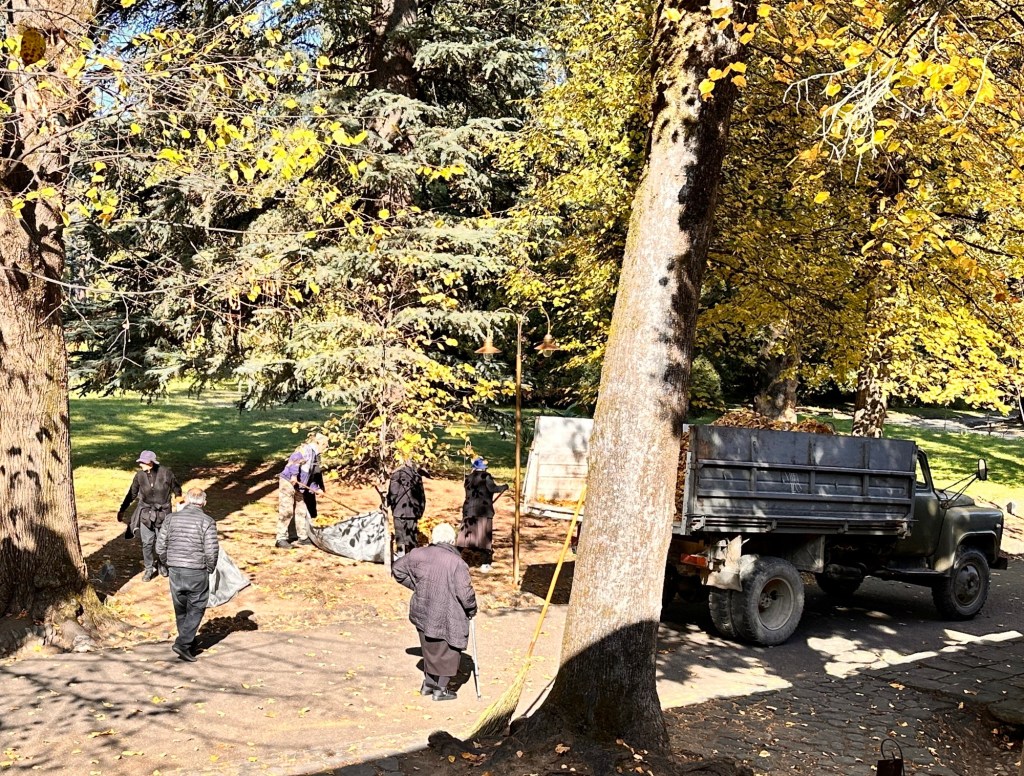
Afterwards, we drove to Tsinandali village and visited the 19th century residence of Kakheti nobleman, poet and public figure, founder of the first wine factory- Alexander Chavchavadze. After exploring the house-museum, we sampled a glass of the finest Tsinandali cellar wine. It was a white wine produced from 6 different grapes – nice, but a little sweet for my palate.
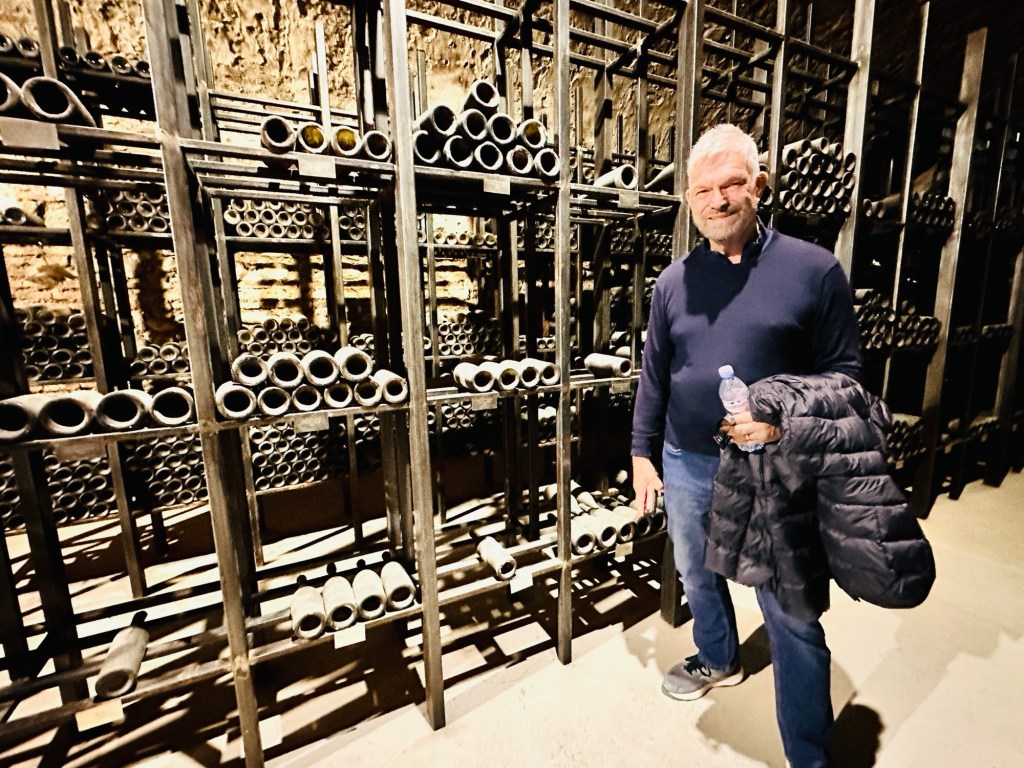

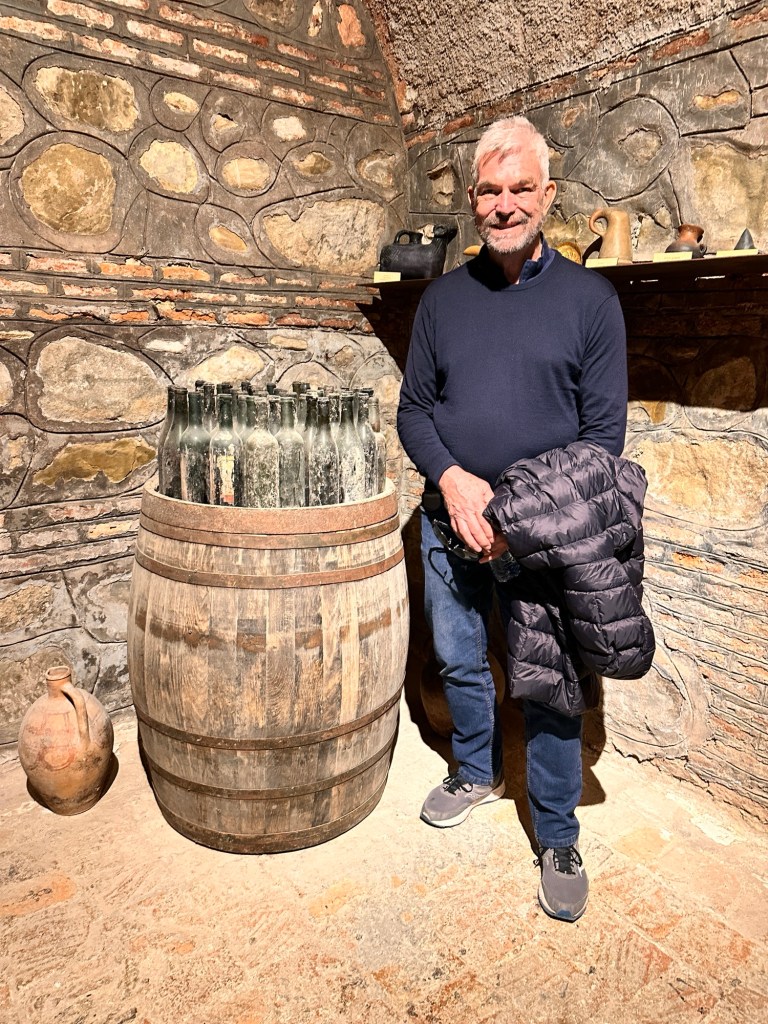


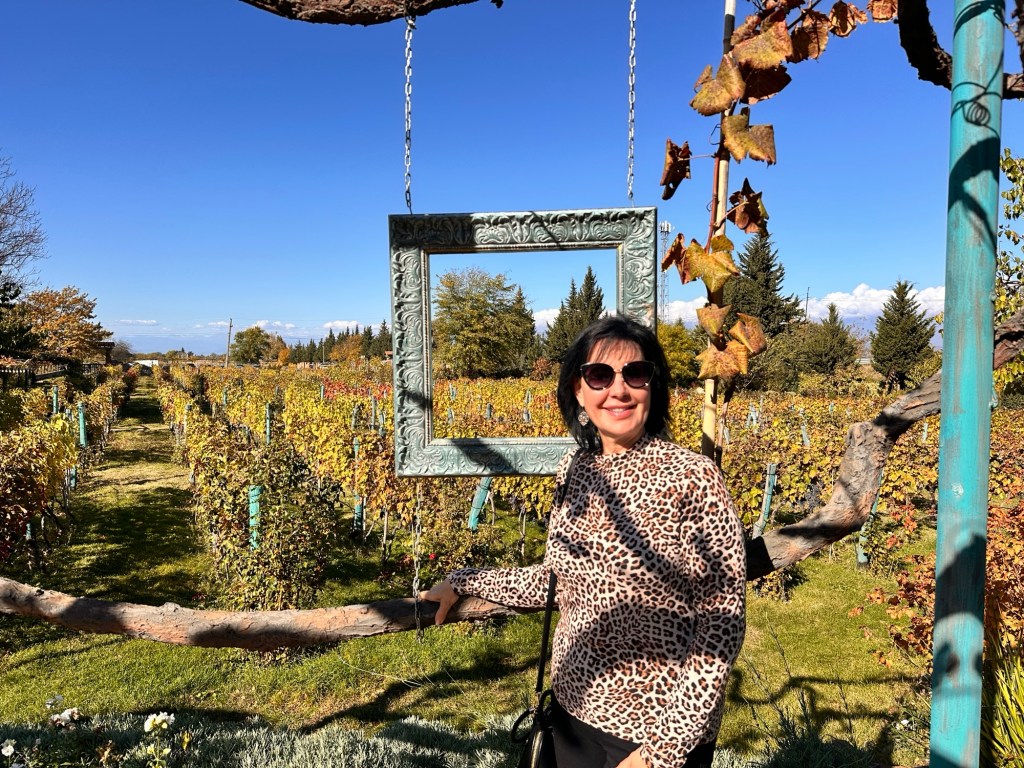
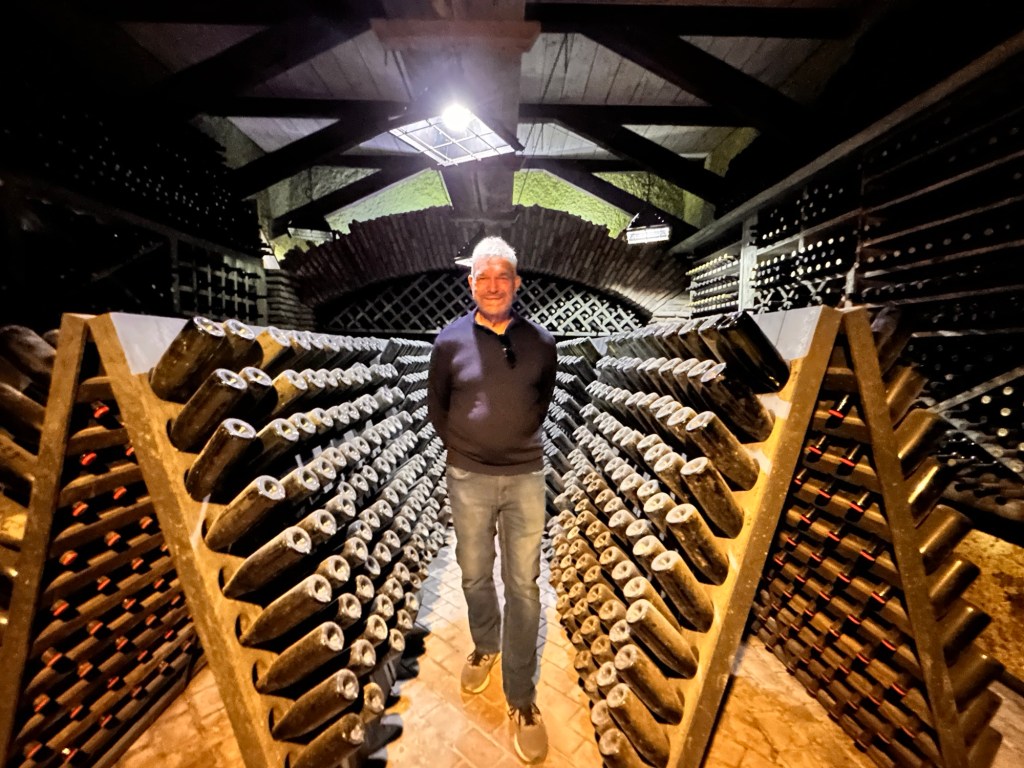
Onto Shumi winery, located just a few minutes drive from Tsinandali. Here we had a tour of the winery which presented a collection of wine related exhibits, a history and culture department and a wine-tasting area. Another wine tasting – this time a white, a light red, and a Saperavi. They won 5 gold medals for their Saperavi in 2015.

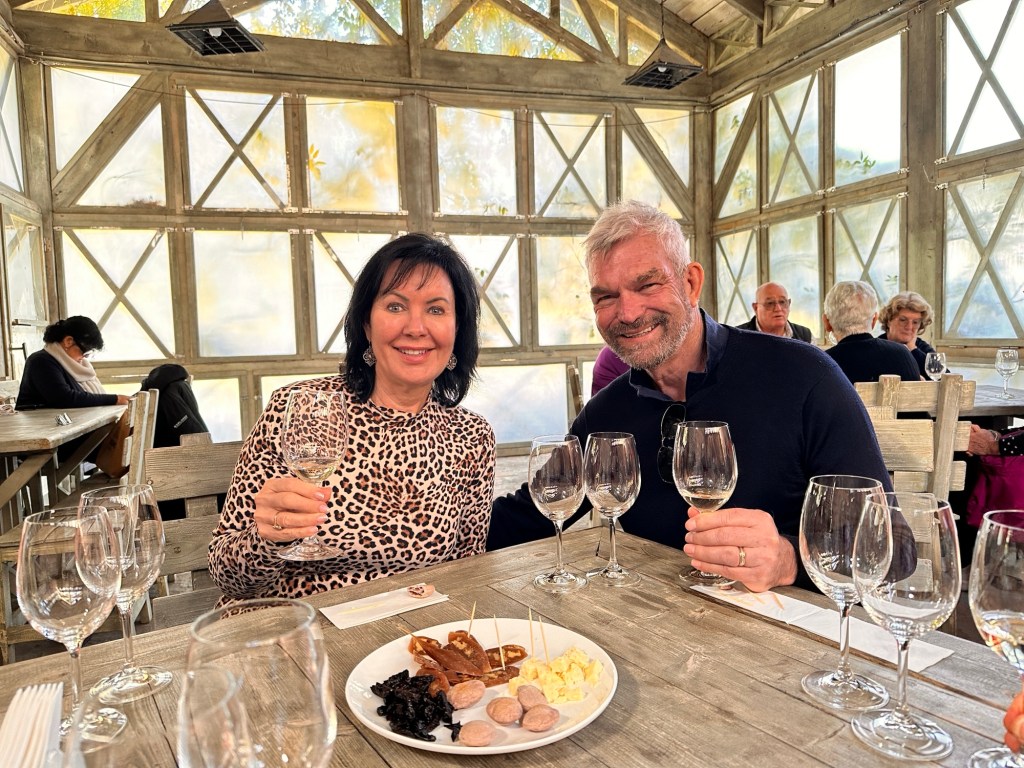
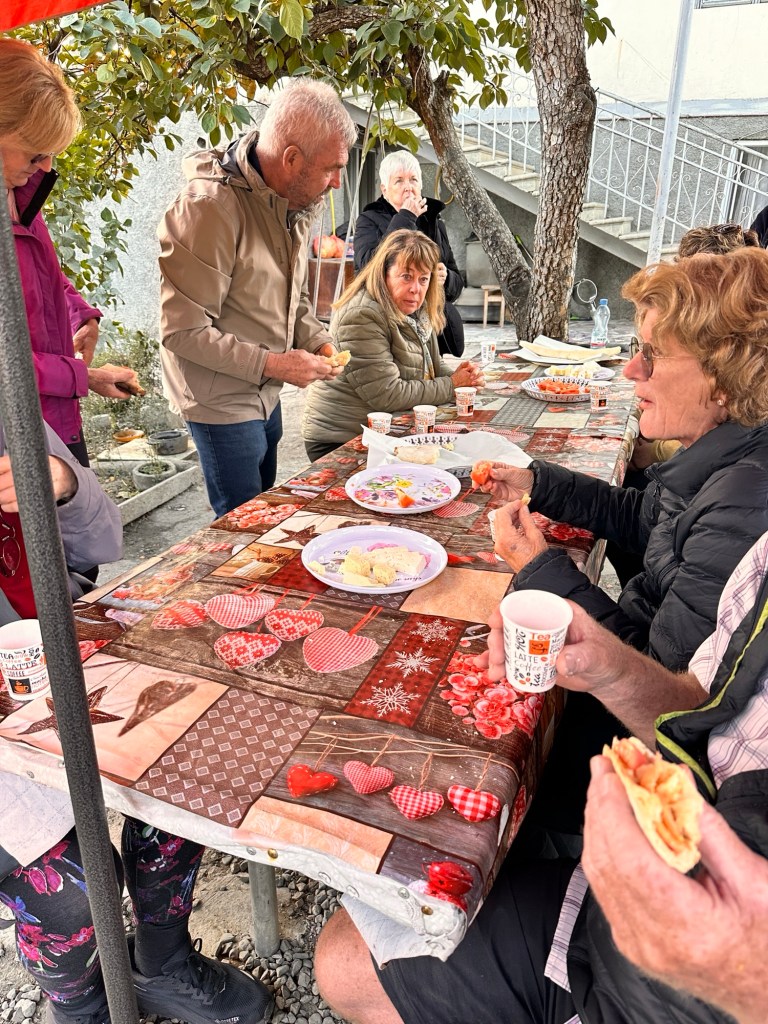
On the way to Tbilisi we stopped at a small roadside bakery in a Badiauri village famous for its Guda cheese (not to be mistaken for dutch Gouda), a hard mountain cheese with sheep’s or cow’s milk. At 4.30 it was a late lunch, but delicious. Freshly bought tomatoes from a roadside vendor were the perfect accompaniment. Also tried the local Chugga (similar to Grappa)- at 60% alcohol, I’m sure you could light your bbq with it! It was awful!
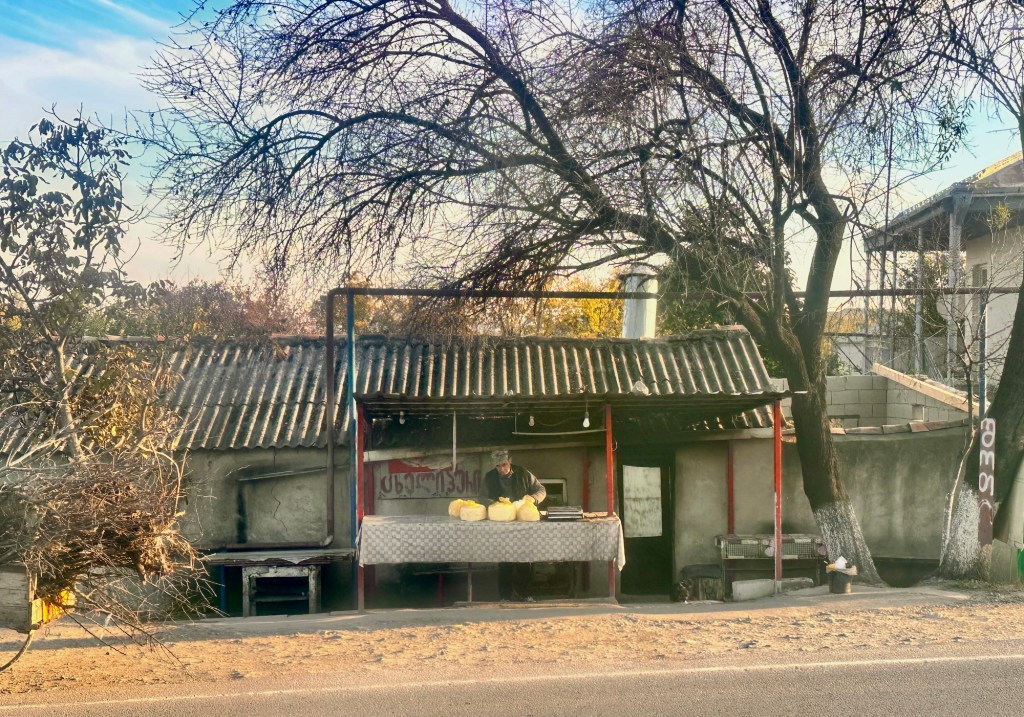


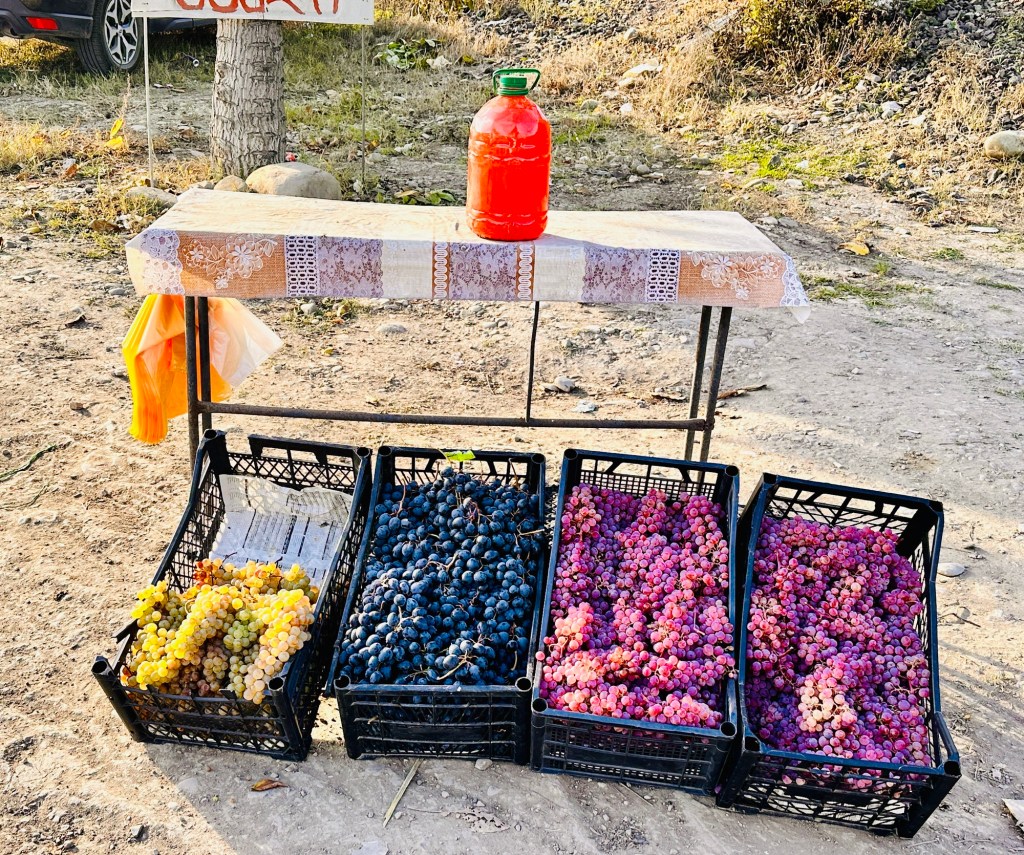

Saw many other interesting vendors along the roadside selling anything and everything food wise – grapes, tomatoes, persimmons, pomegranates, and even fresh meat hanging! Many peach and nectarine trees, not in season however. Walnut trees everywhere.
The other standout today were the drivers- truly, they seem to make up the road rules as they go. Zebra crossings are a suggestion, overtaking on hands with no upfront vision quite common. I certainly wouldn’t like to be driving in Georgia.
Another Holiday Inn hotel in Tbilisi – great location. We weren’t too hungry for dinner after all the wine tasting and late bread and cheese, so instead had a walk around the hotel area. Grabbed a couple of snacks, then a quiet relaxing night in, with another glass of Saperavi of course!
Day 8
Thursday 31st October 2024
Tbilisi
5 – 16 degrees, sunny
Georgia’s cosmopolitan capital is an ancient caravan town whose identity has always hinged on its location between East and West. Since emerging from its Soviet isolation, Tbilisi has seen extraordinary change, with an explosion of contemporary architecture and the arrival of world-class dining and clubbing.
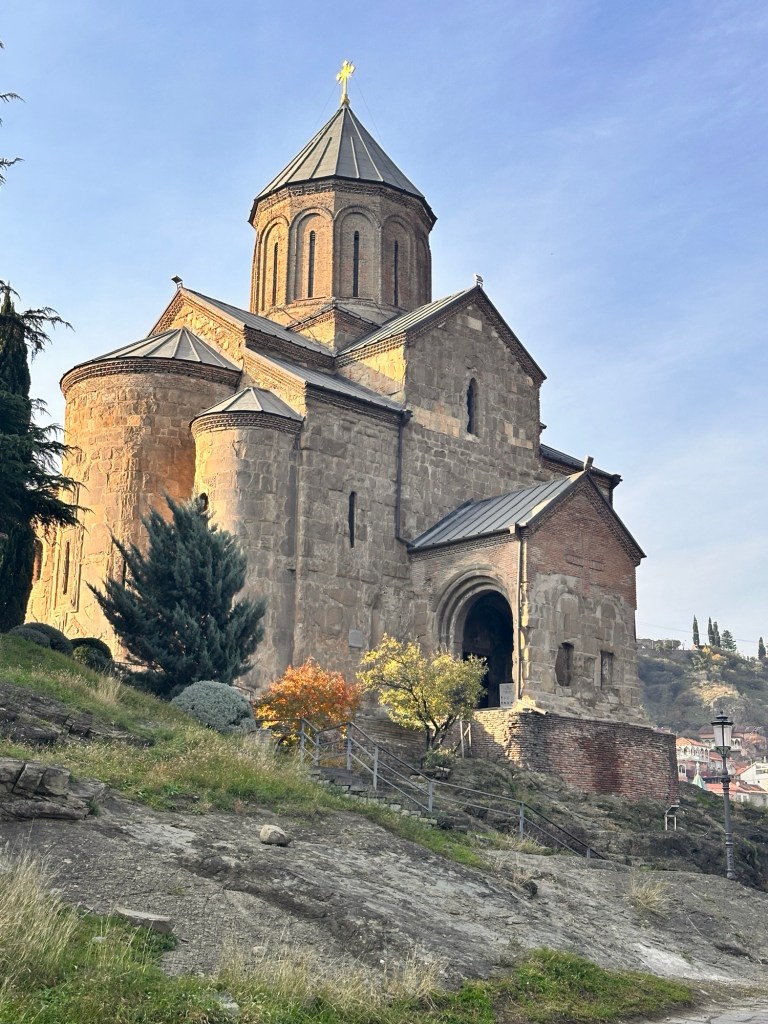
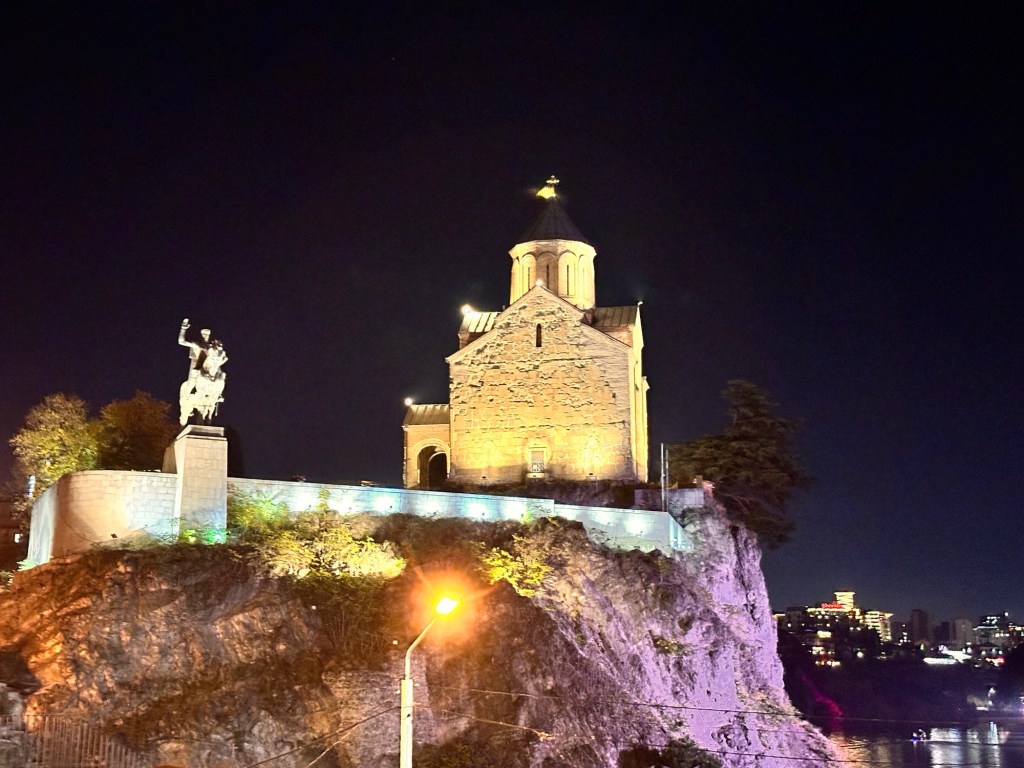
Today was a full day walking tour of the historic capital city starting with the Metekhi Church of Assumption which rests upon the top of the hill. The church was built by the Georgian King St Demetrius Il between 1278-1284. It has a commanding position overlooking the Kura River.
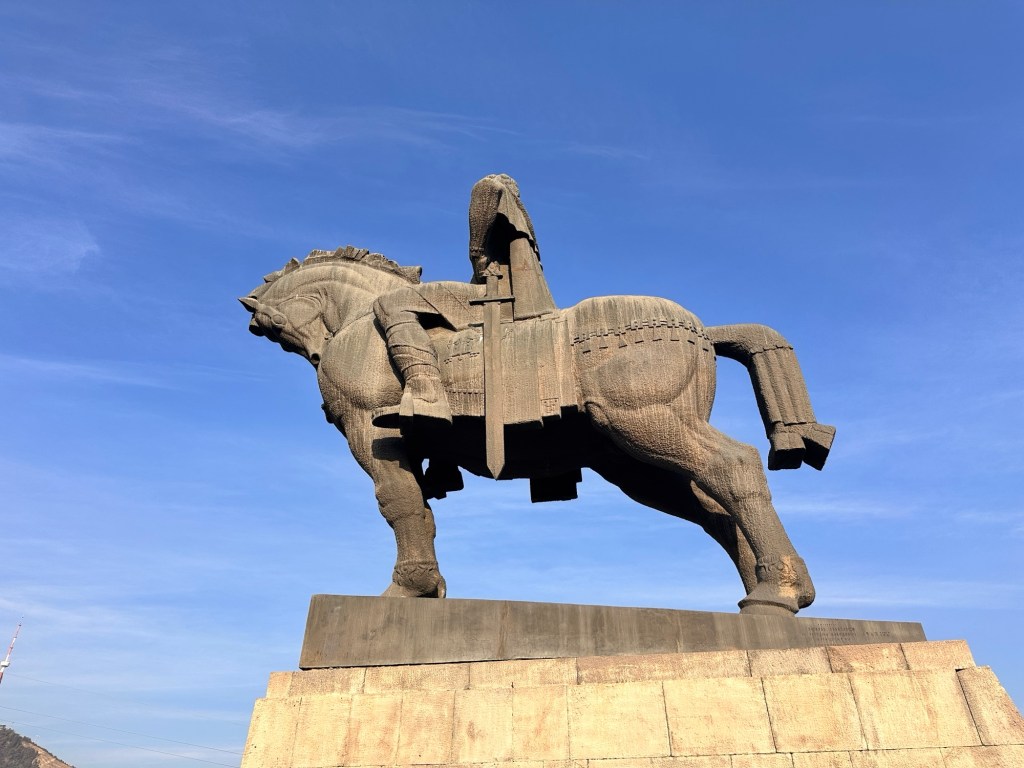
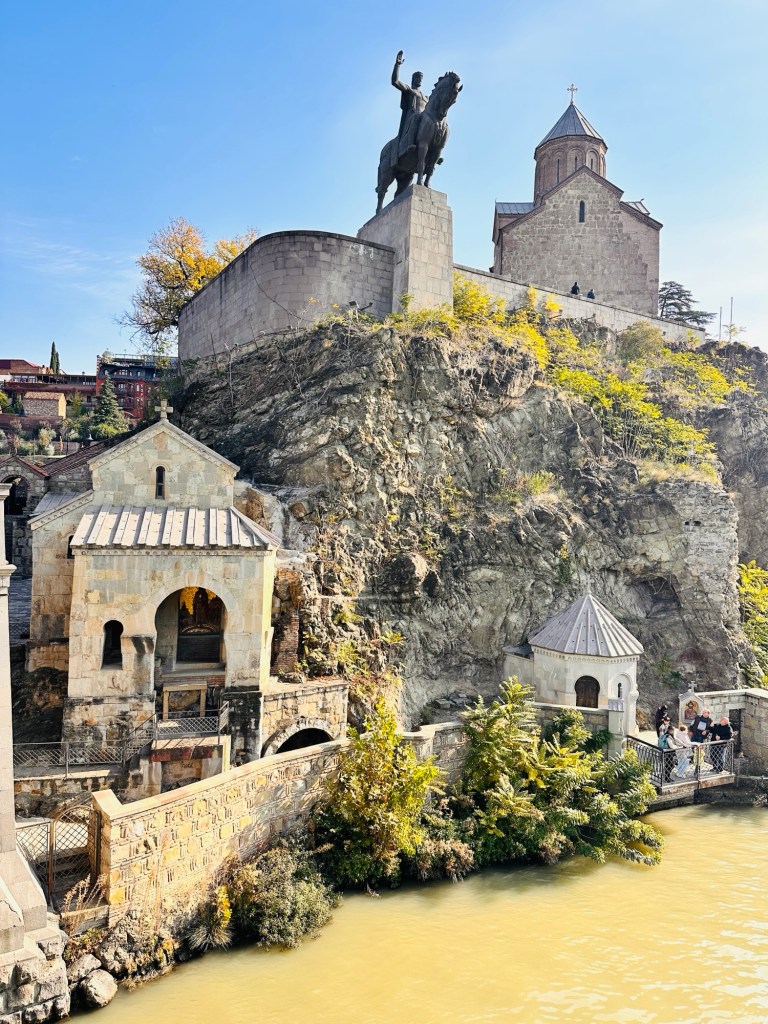
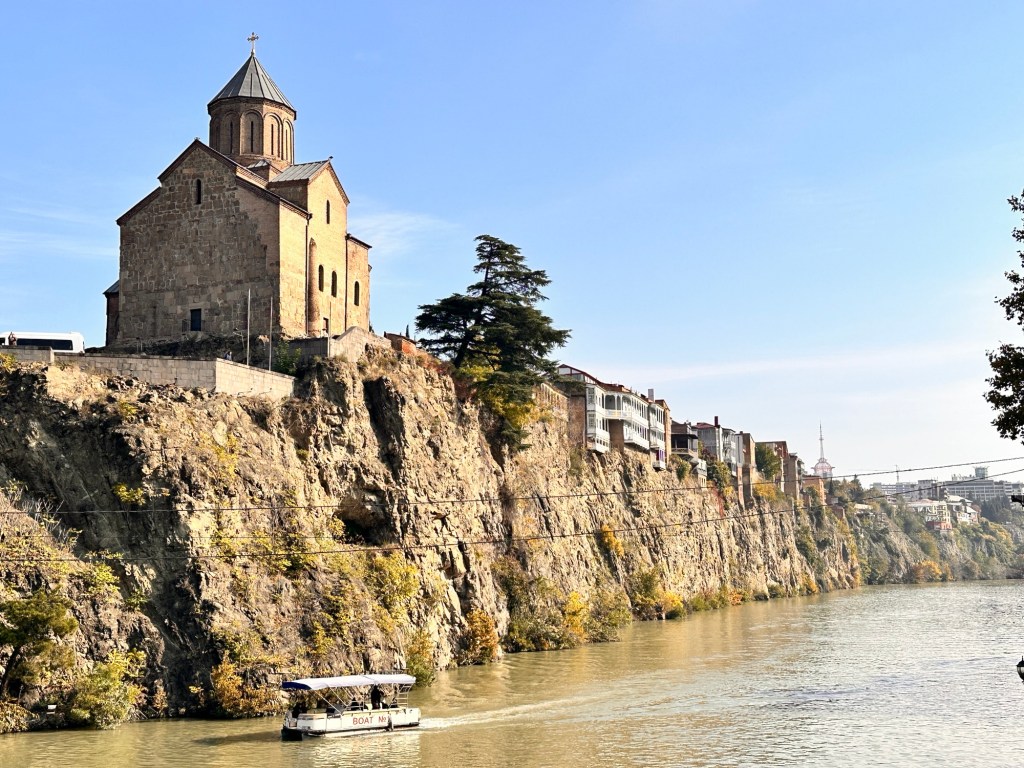
We then went up to Narikala Fortress by aerial cable car taking in the magnificent panoramic views over Tbilisi and the Kura River. Comprised of two walled sections on a steep hill between the sulphur baths and the botanical gardens of Tbilisi, Narikala Fortress dates back to the 4th century. The Mother of Georgia, a 20 metre tall aluminium metaphor holding a wine goblet for her friends, and a sword for her enemies, overlooks the city below from this high point.


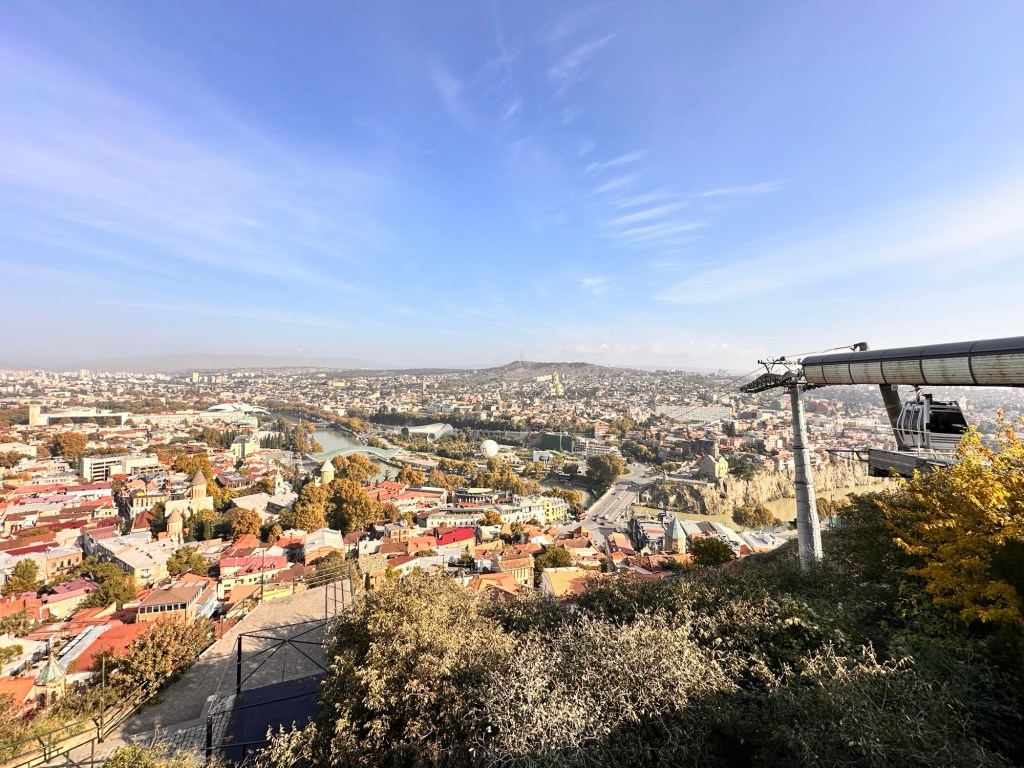
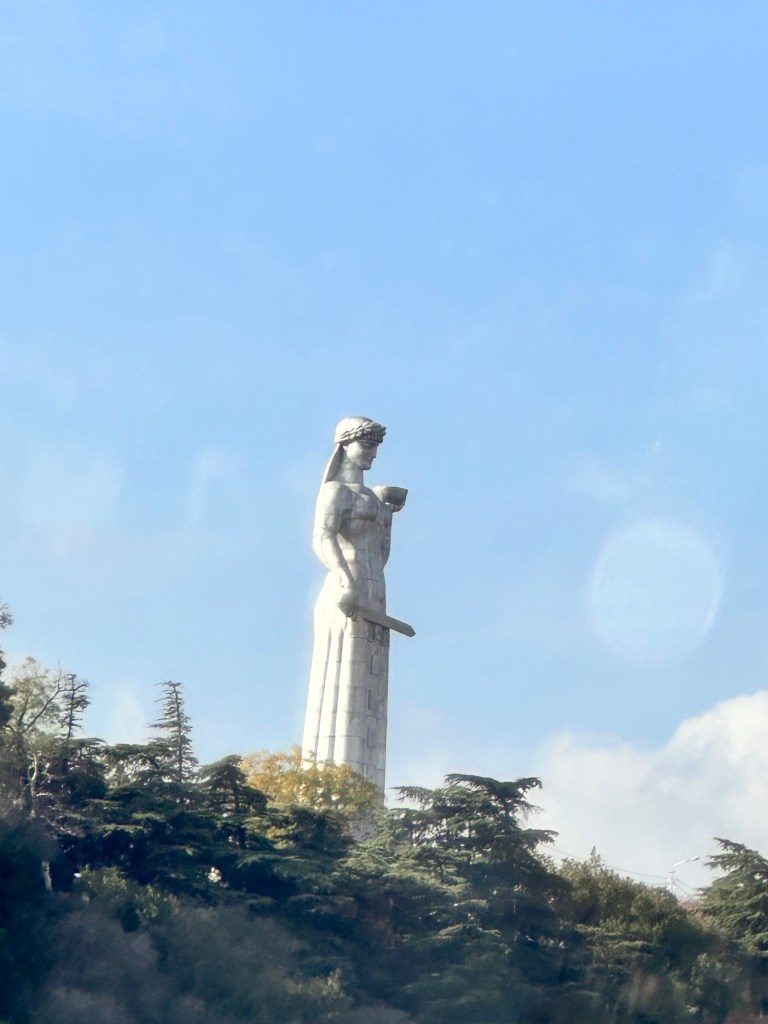
From here we walked down the hill through the bathhouse area – the bathhouses harness the hot springs from which Tbilisi takes its name – enjoying the lovely character of the old city. It is colourful and charmingly decrepit. Next a walk through Meidan Bazaar to get to the other side of the road, and then an explore of Shardeni Street and Meidan Square, which are known for their outdoor cafes, galleries and souvenir shops. The tables all have brightly coloured table cloths or paintings. Dogs everywhere- even saw one giving birth to 5 pups.
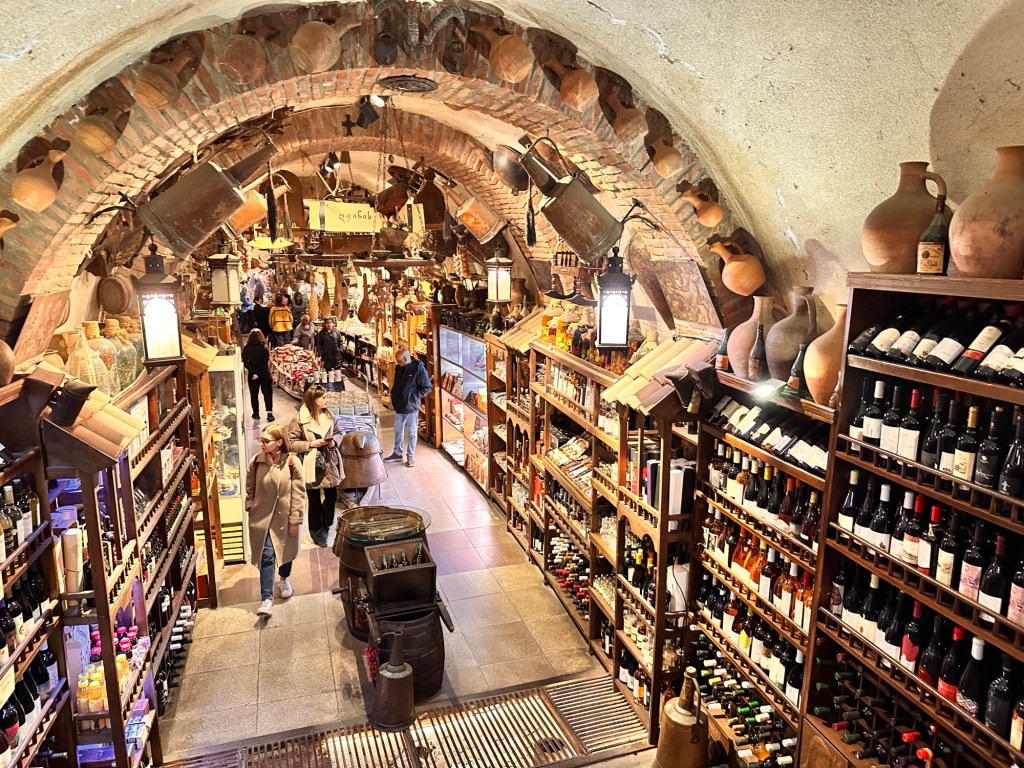

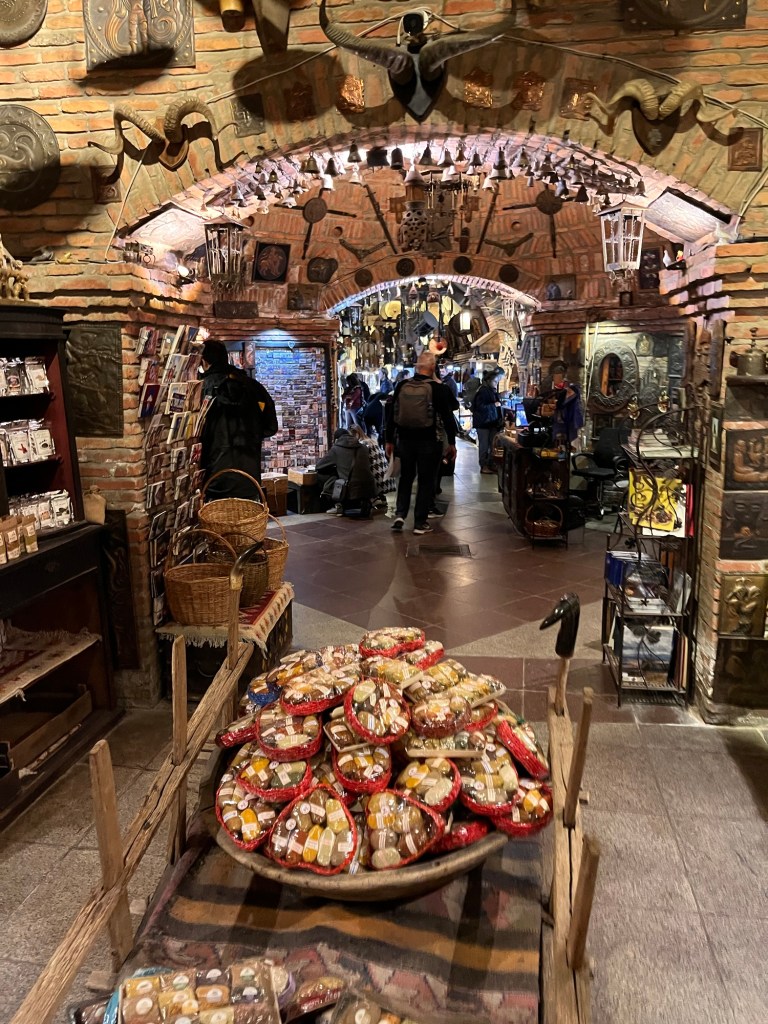
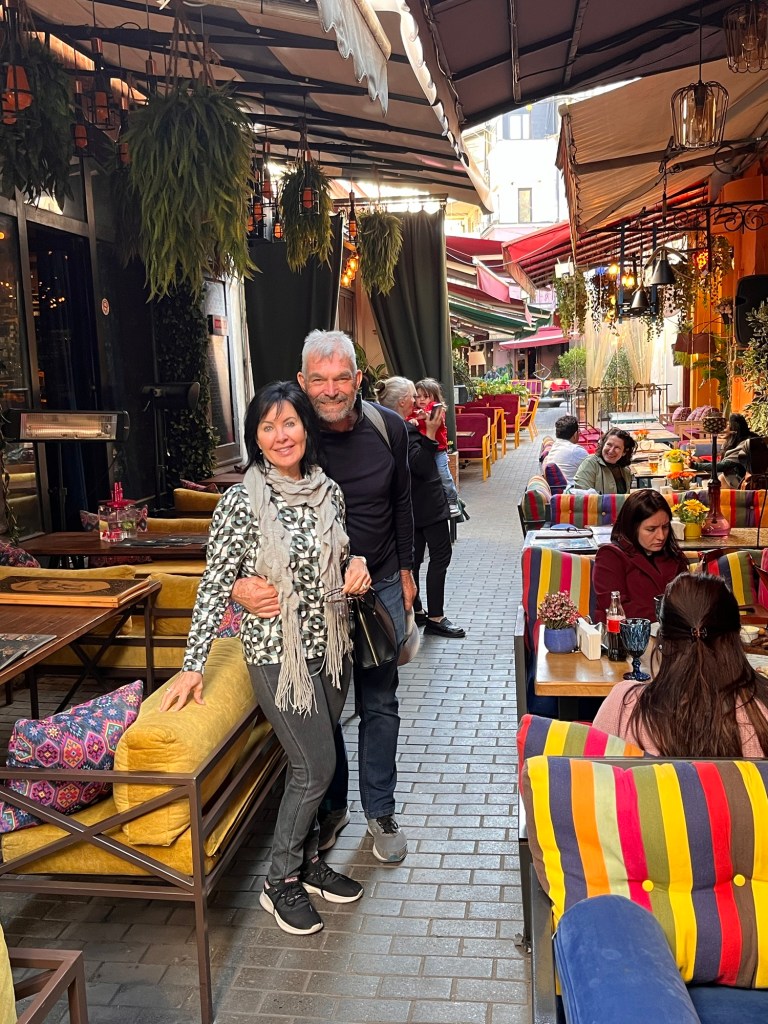
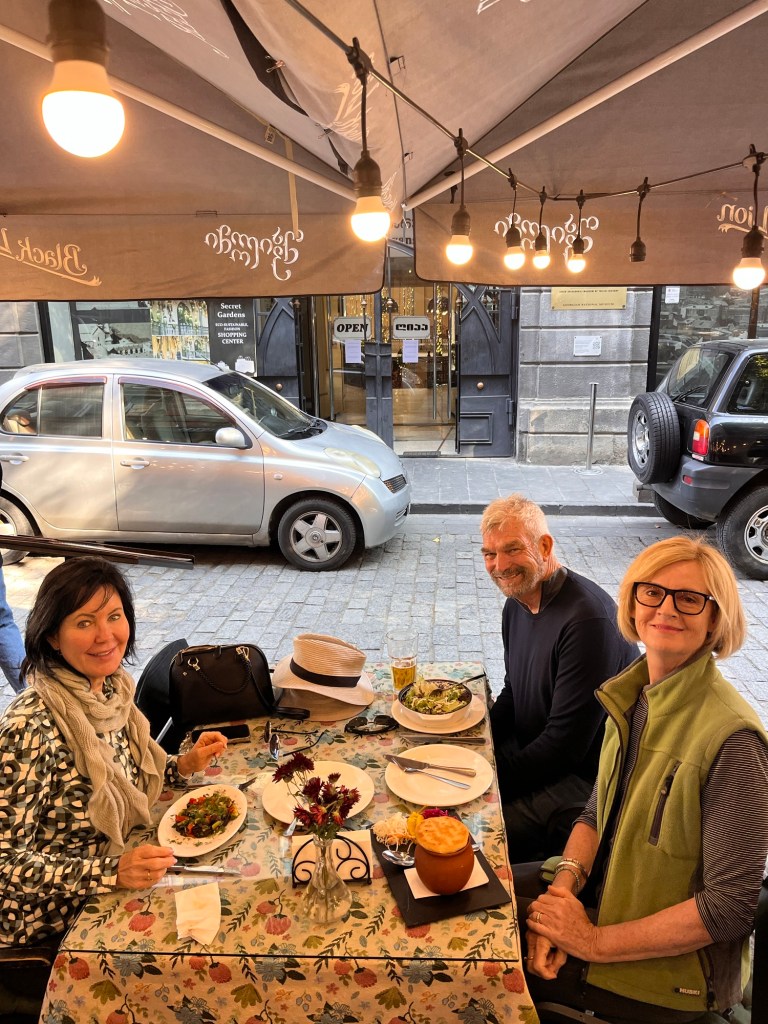
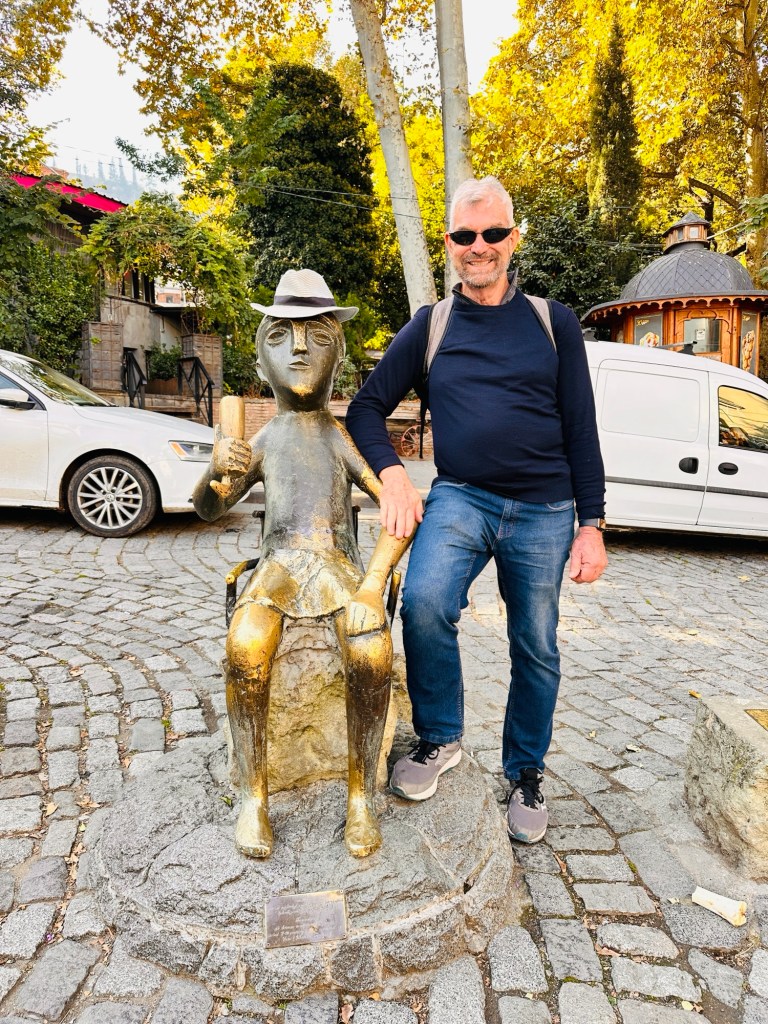
Lunch stop, and yet another scrumptious meal. Eggplant salad for me, and a steak salad for Frank. The flavours are amazing here.
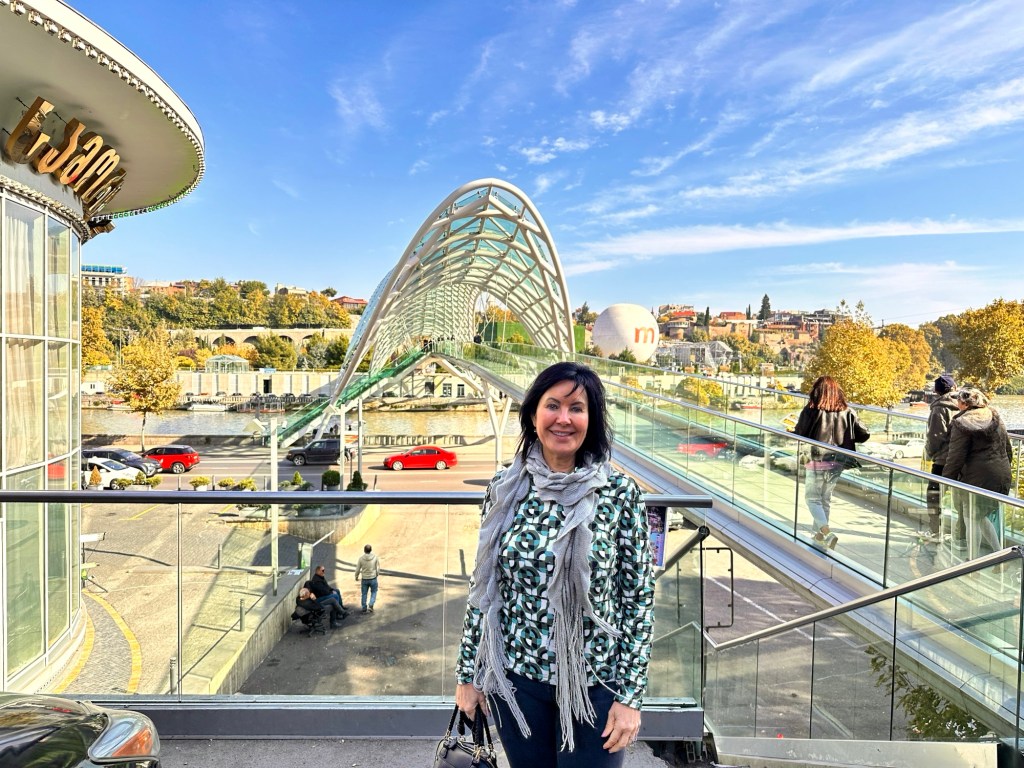
Two standout constructions for me – the Bridge of Peace with it’s unmistakable swooping glass and steel roof, and the Concert Hall with its twin tubular metallic structure- which has been sitting empty for the past decade!

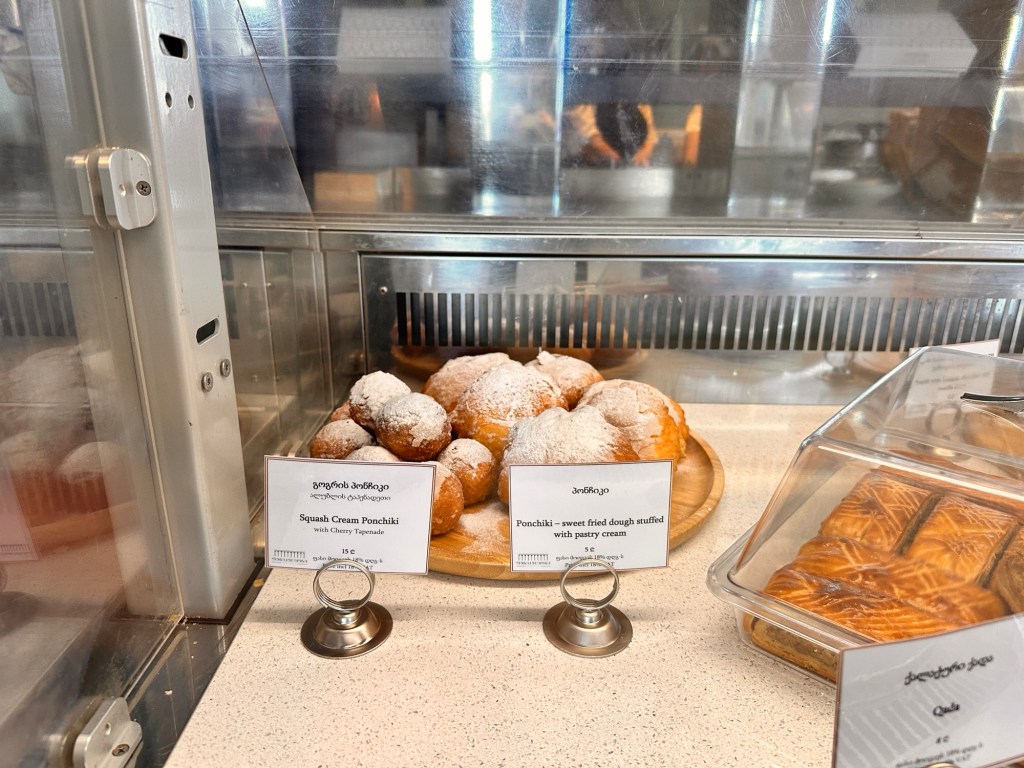
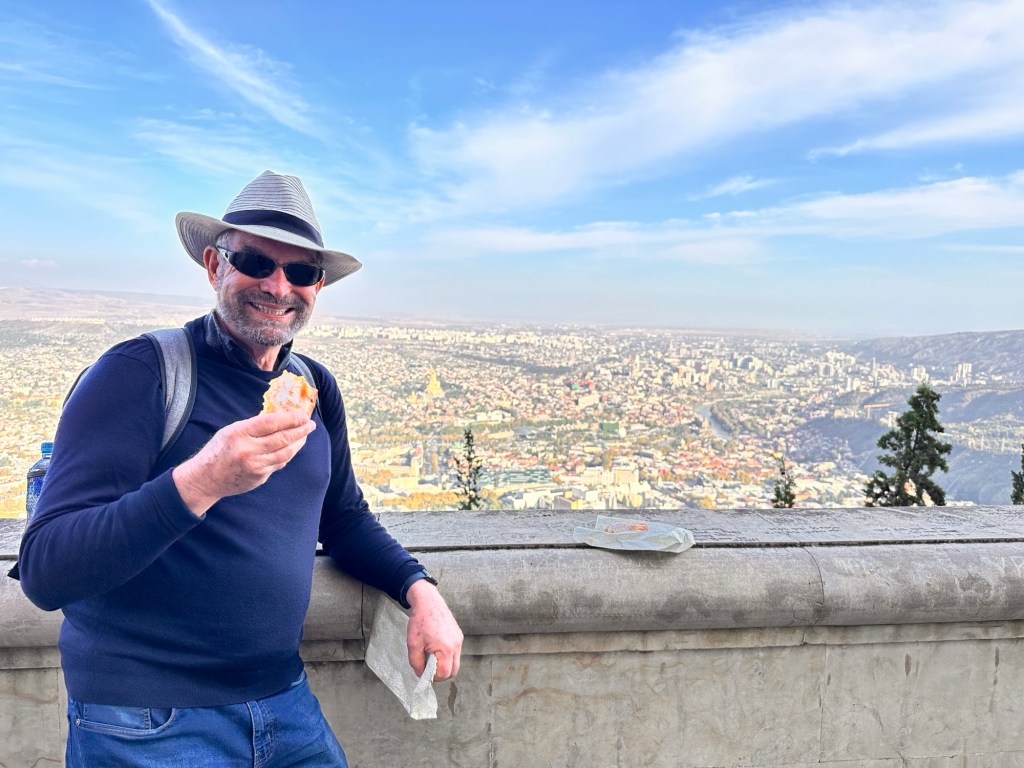
Next a short drive to Tbilisi Funicular Mtatsminda Park, which is located at the top of Mount Mtatsminda, or Holy Mountain, Tbilisi’s highest point and the backbone of the city. The park has carousels, water slides, a roller-coaster, funicular and has the most amazing views. We enjoyed the recommended Ponchiki – sweet fried dough stuffed with pastry cream. Superb!
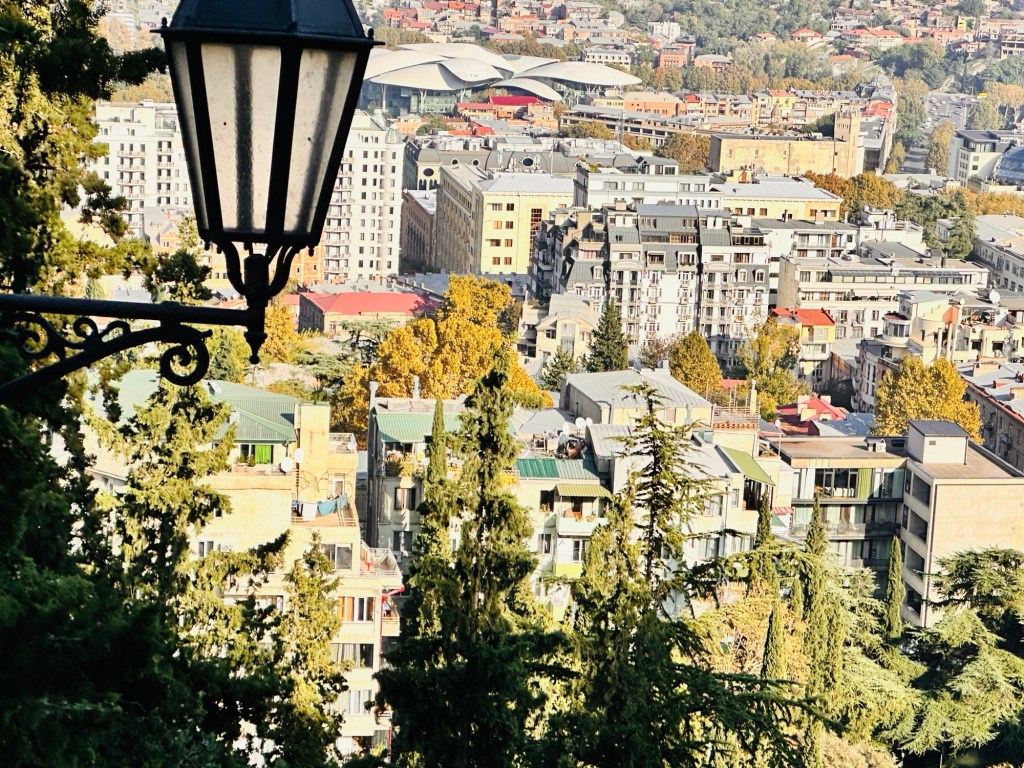

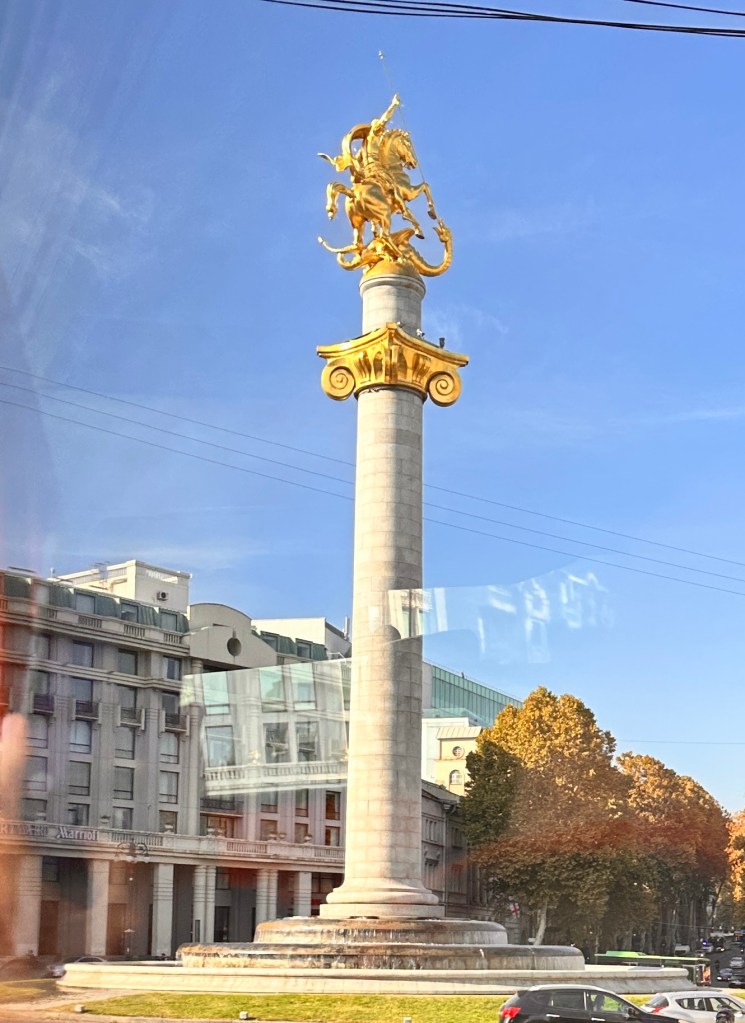
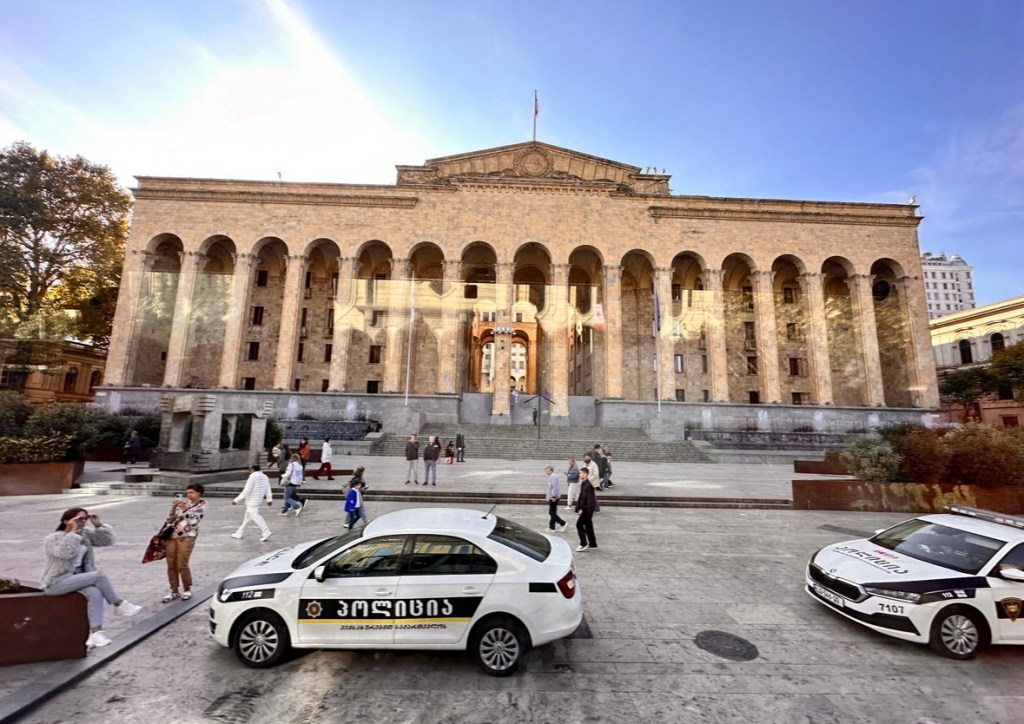
We drove back along Rustaveli Avenue which starts at Freedom Square and extends for about 1.5 kms. Rustaveli is often considered the main thoroughfare of Tbilisi due to the large number of governmental, public, cultural, and business buildings located along and near the avenue. Again, some amazing buildings.
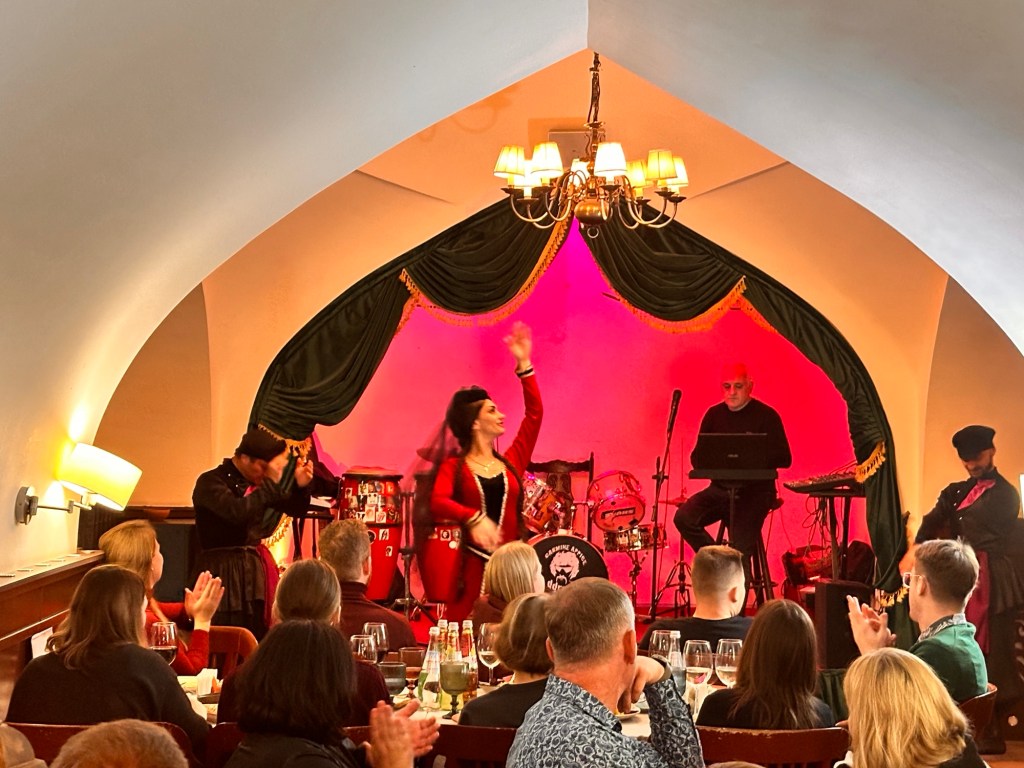
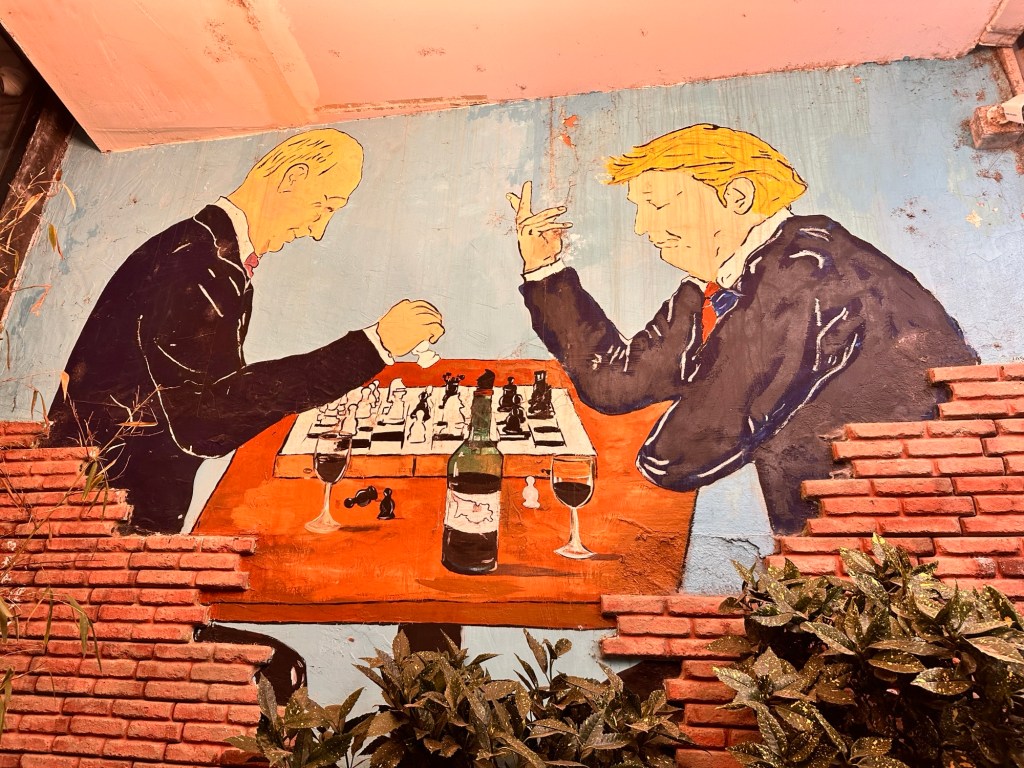
Dinner tonight was at a traditional Georgian restaurant in the Old City – I had a turkey kebab with a walnut salad (walnuts are local and so fresh ) and Frank had the veal and tomato stew. The food is sooo good here. Traditional singing and dancing accompanied dinner, then a walk back to the hotel. A very full day.

Day 9
Friday 1st November 2024
Tbilisi
5-17 degrees
Free day – big day! Almost 20,000 steps! Seemed like we walked the length and breadth of Tbilisi! After leaving the hotel, we headed towards David Aghmashenebeli Avenue because Maya had suggested going there – trouble was the footpath ran out and we couldn’t cross the road because of the traffic… so we went up!
Saw the Holy Trinity church with the gold dome, the Presidential Palace (which is empty because the President has decided to live in her own property!), and even had a spinach pastry from a “window bakery”.


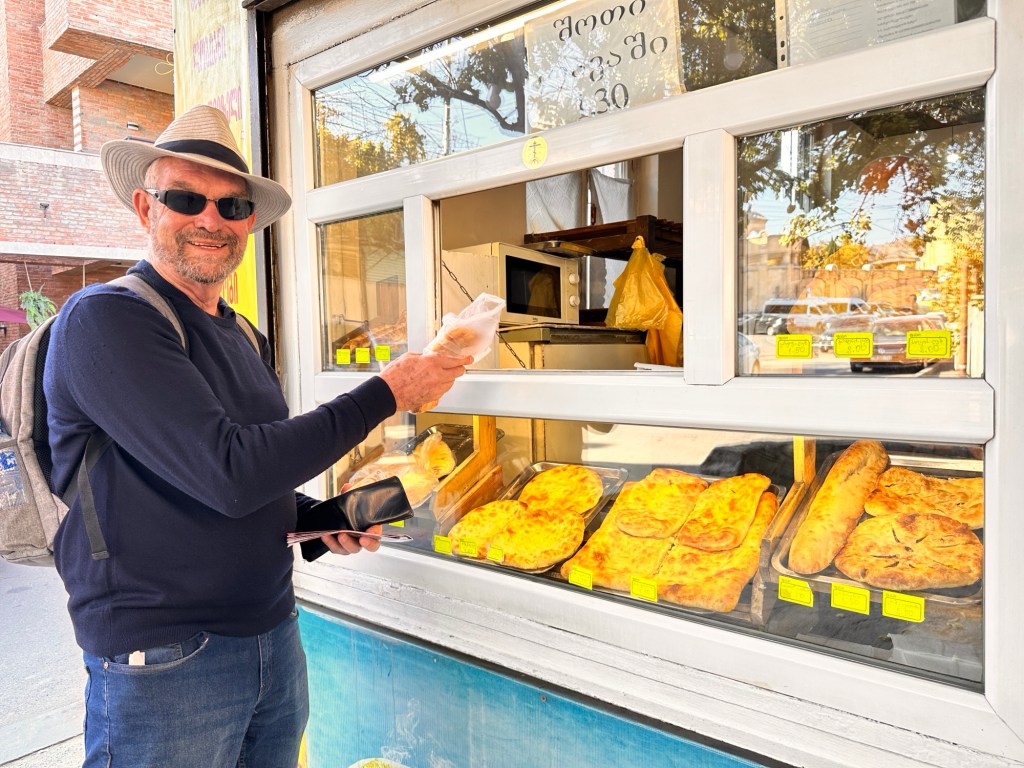
Eventually got to David Aghmashenebeli Avenue. Who was David you might ask. He was considered to be the greatest and most successful Georgian ruler in history and an original architect of the Georgian Golden Age. Beautiful street with 200 year old buildings. Time for a coffee stop, but only after we witnessed a biff with a few of the locals.
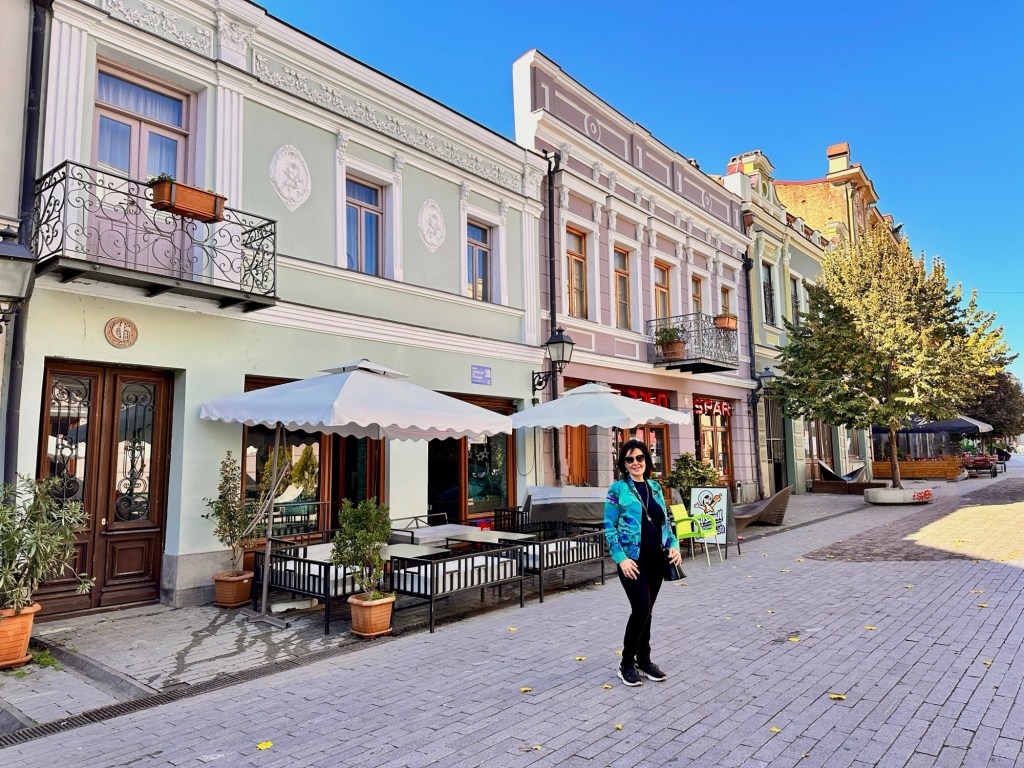


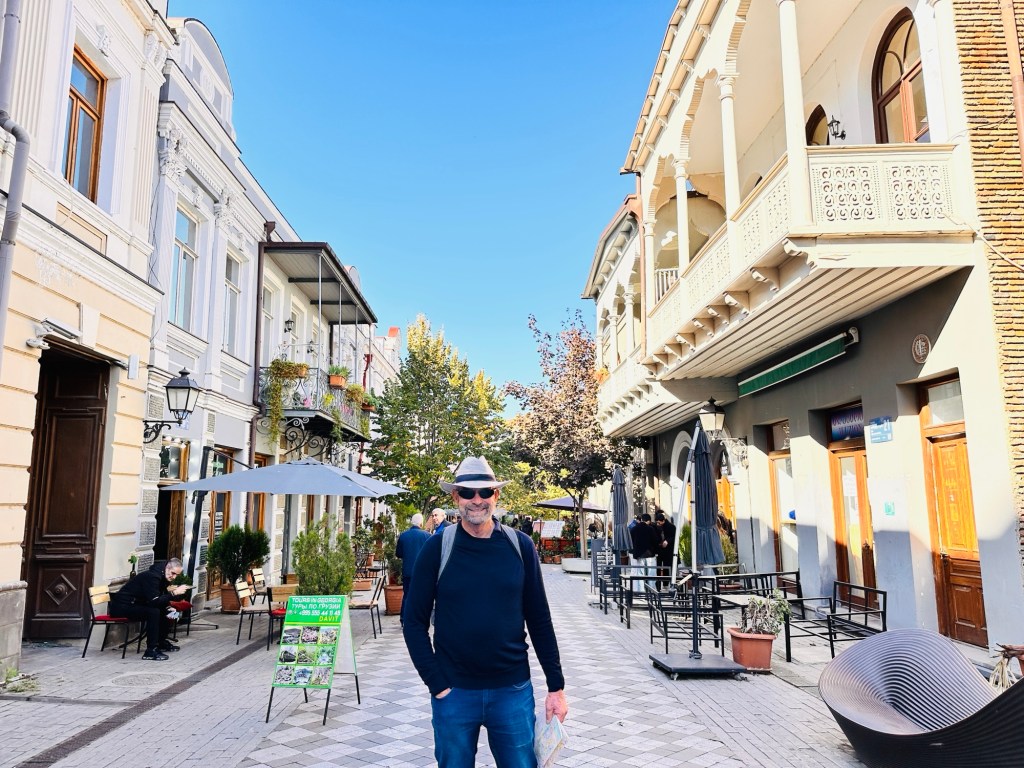
From here we found our way across the Saarbrucken Bridge and weaved our way to Freedom Square. We went over, we went under, we went around, and the traffic continued! So many architectural delights.

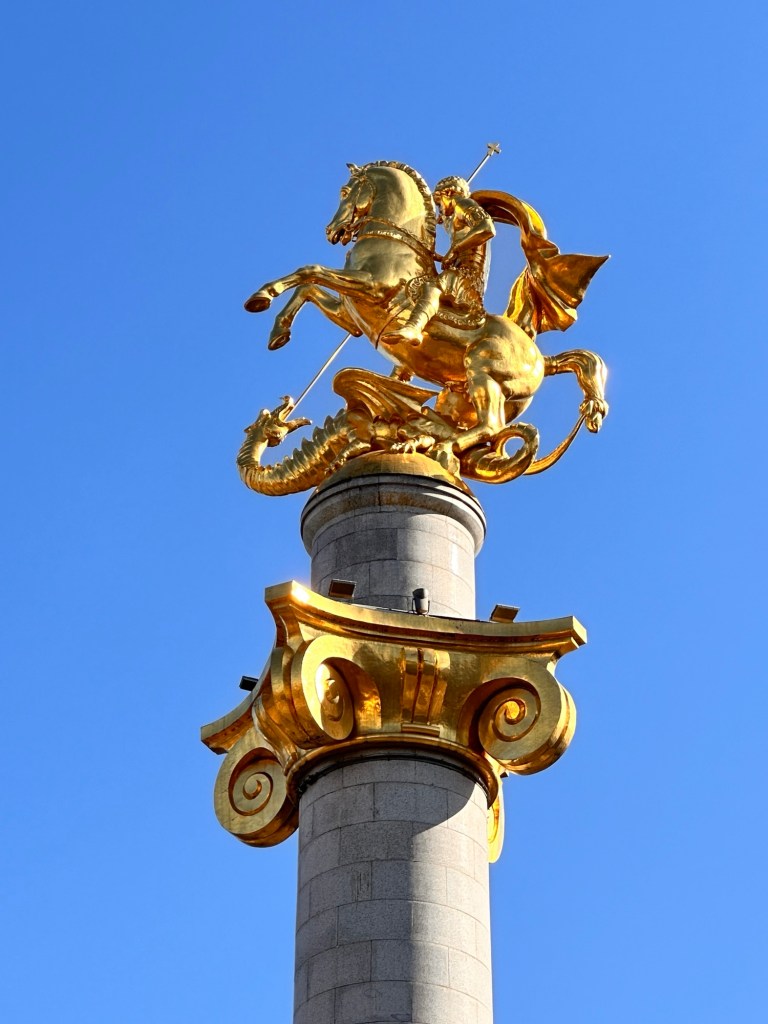
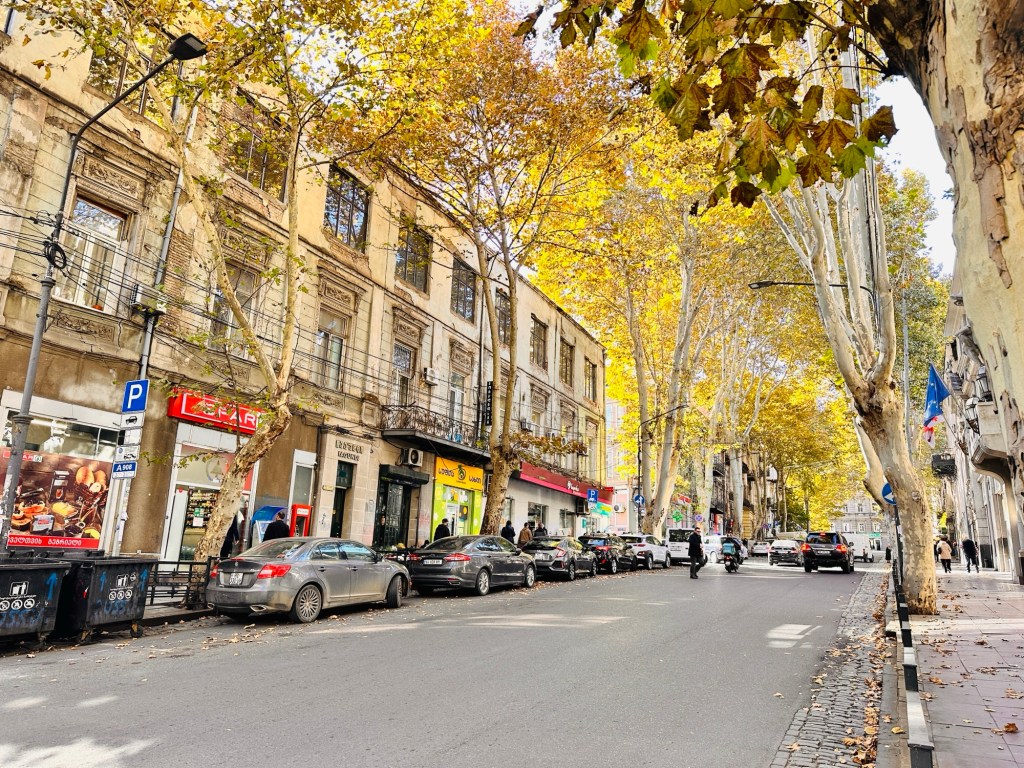

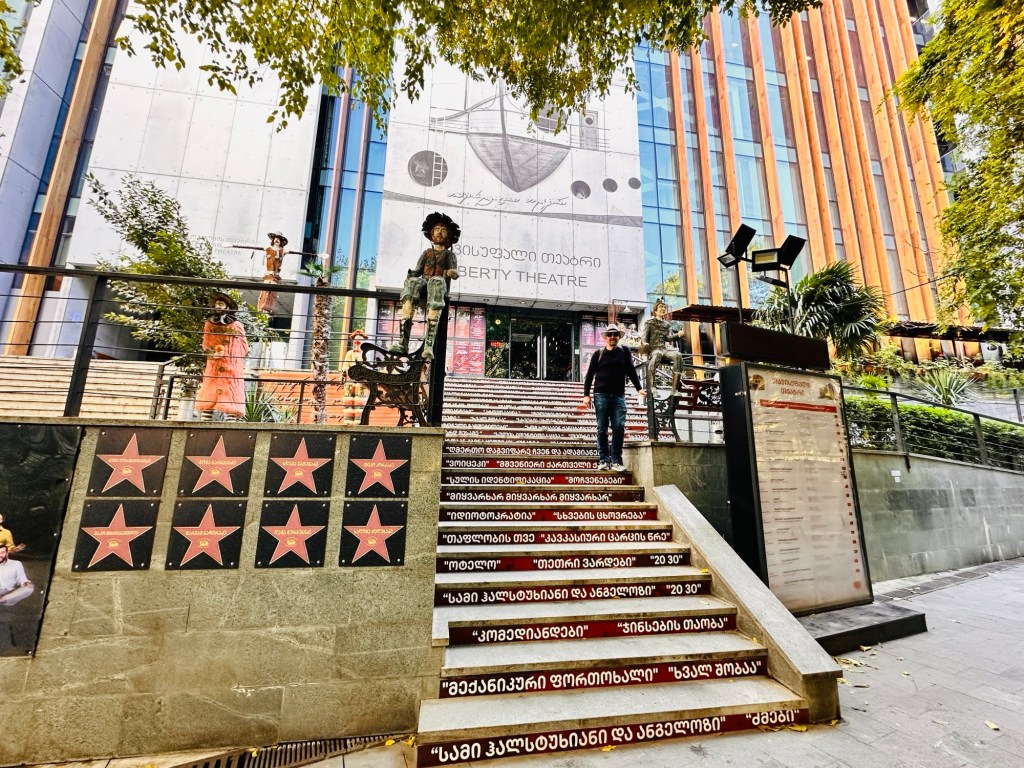
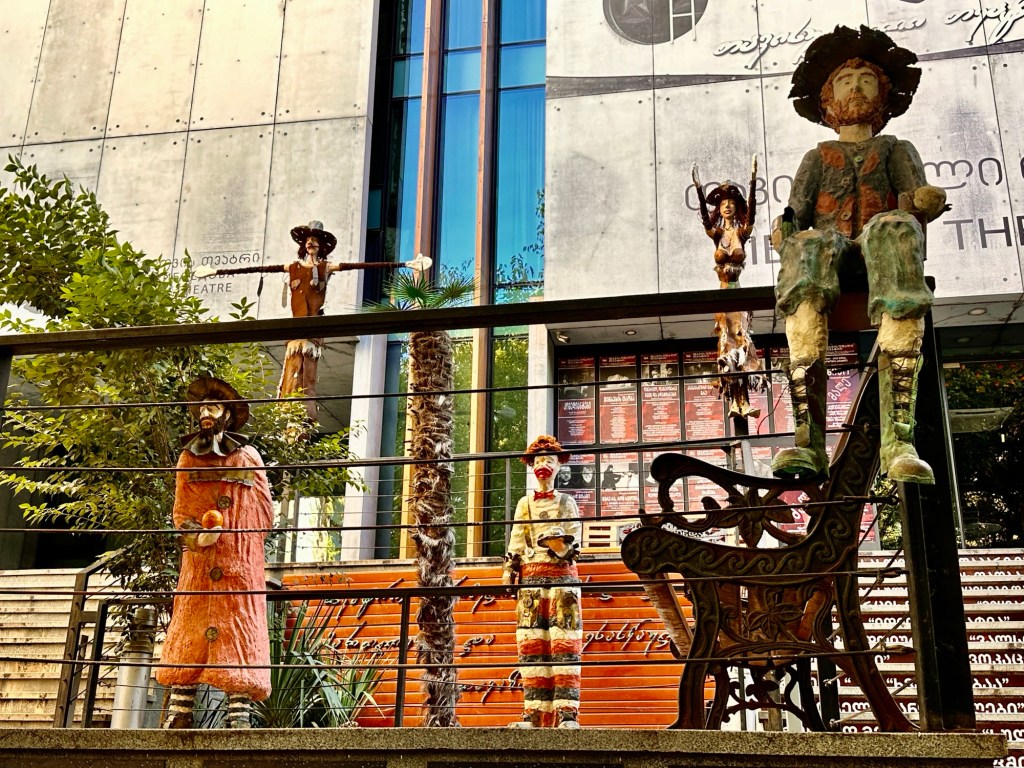
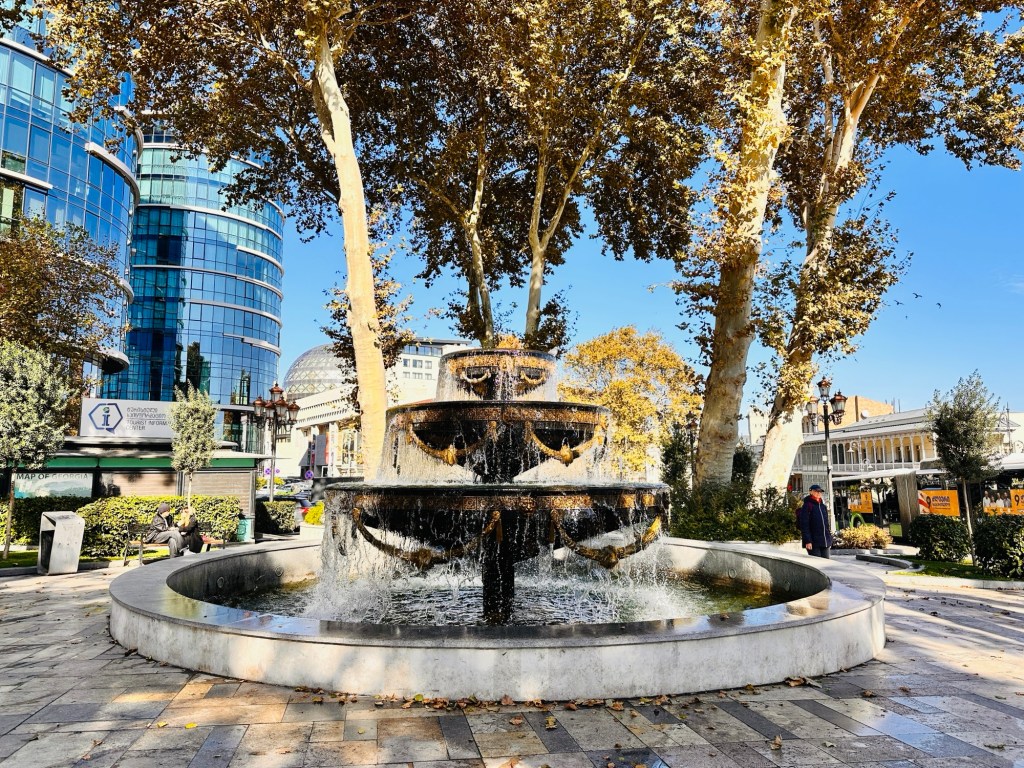
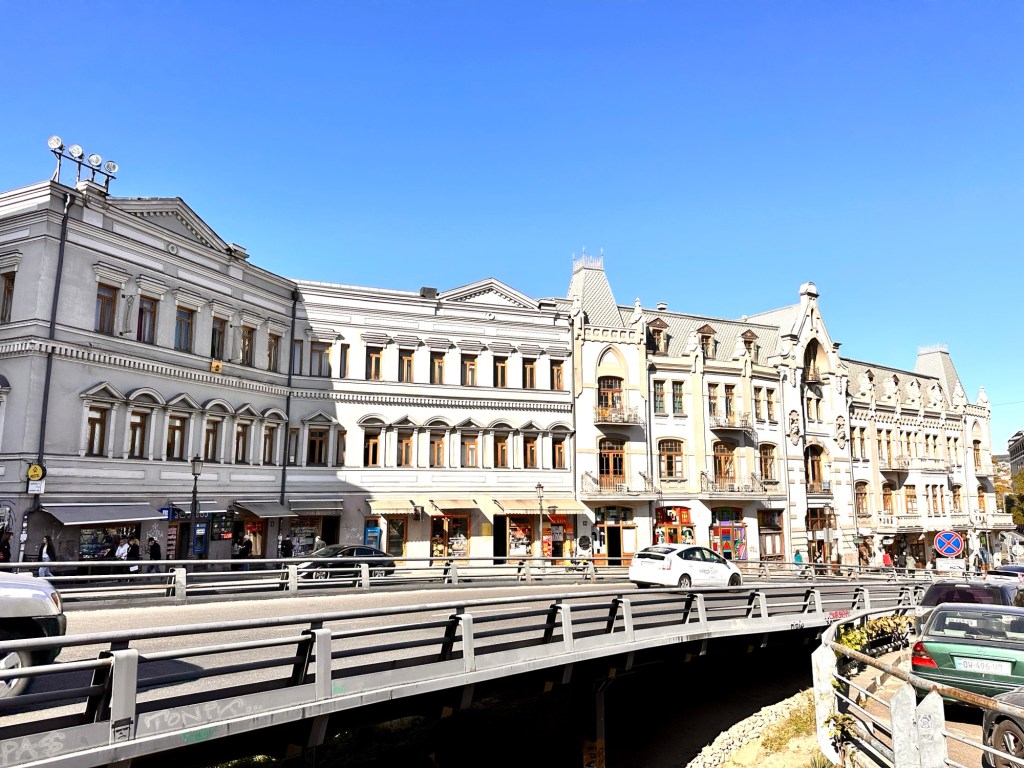
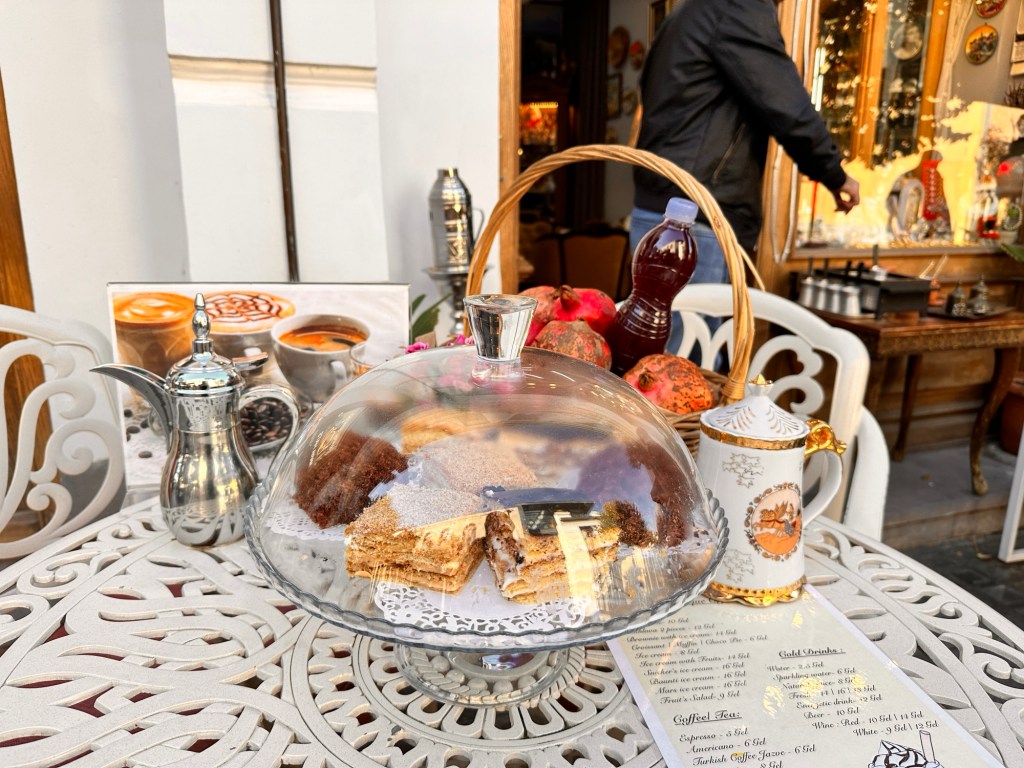
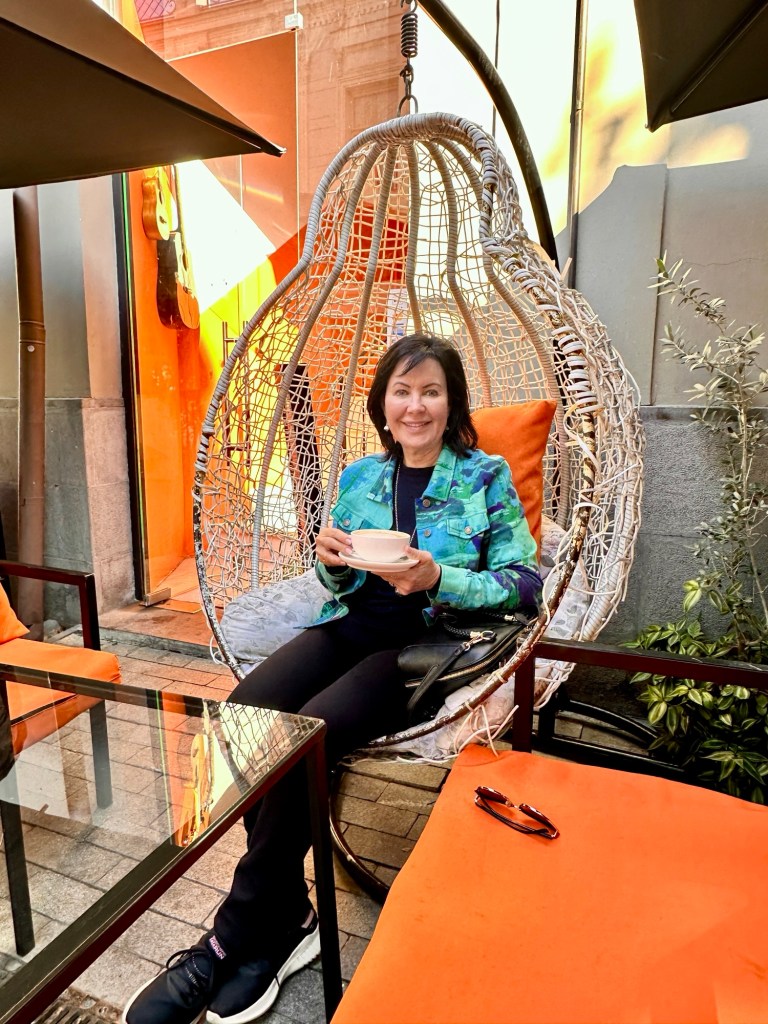
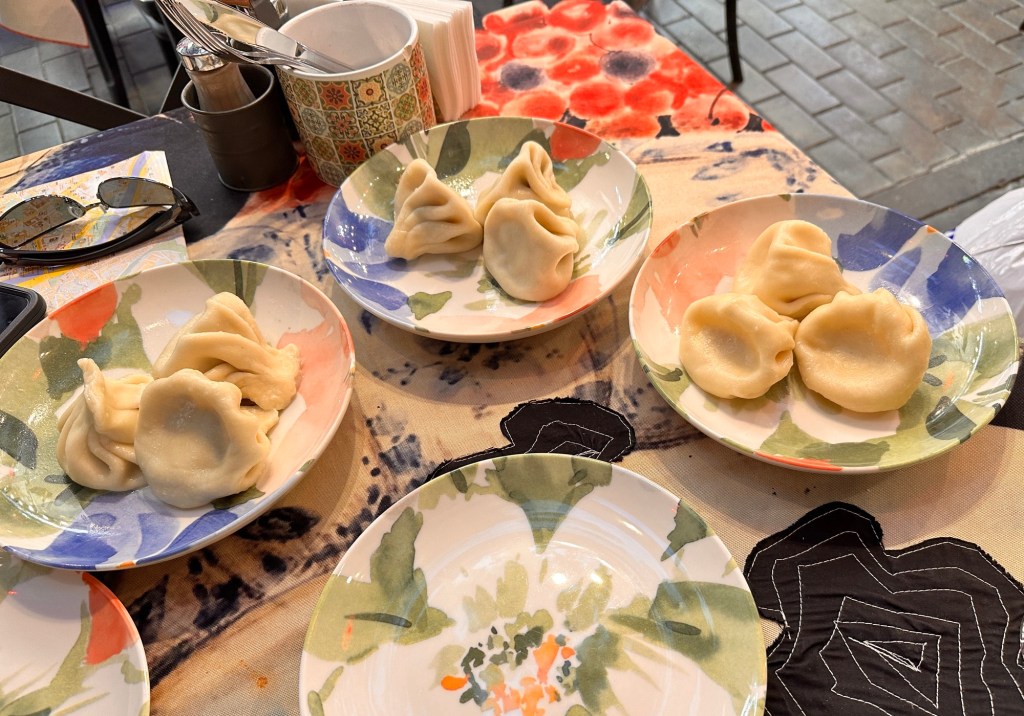
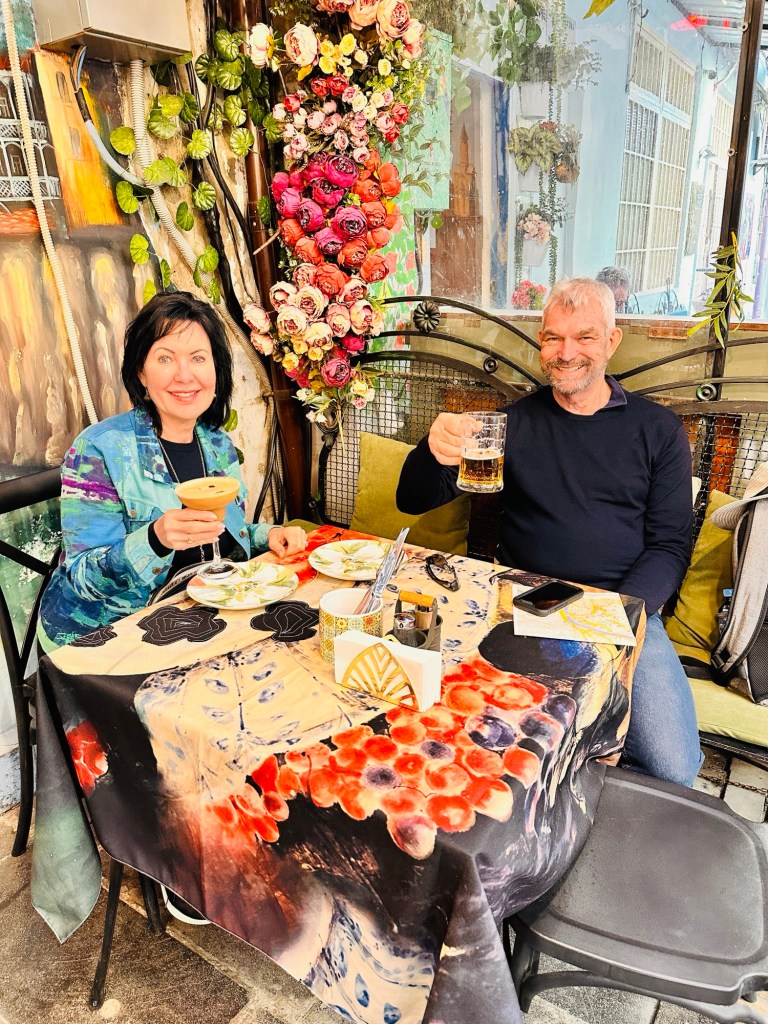
Found our way to the Old City where we stopped for some local khinkali – look like dumplings with beef and pork, cheese, spinach and mushroom for lunch ( believed to have been brought from China by the Mongols in the 13th Century), and of course a local Georgian draft beer for Frank, and a martini expresso for me!
Then it was bath time! Known for their calming relaxing effect, a deep sulphur spring feeds the city with naturally heated mineral water. We went to the Chreli Abano Bath house where we enjoyed a bath in our private marble room with a plunge pool. Very luxurious – even had a relaxing room, complete with TV and tea and coffee maker. 250 GELs for the two of us for an hour. An extra 20 GEL each for a kusi – an exfoliation body scrub. A very rejuvenating experience!
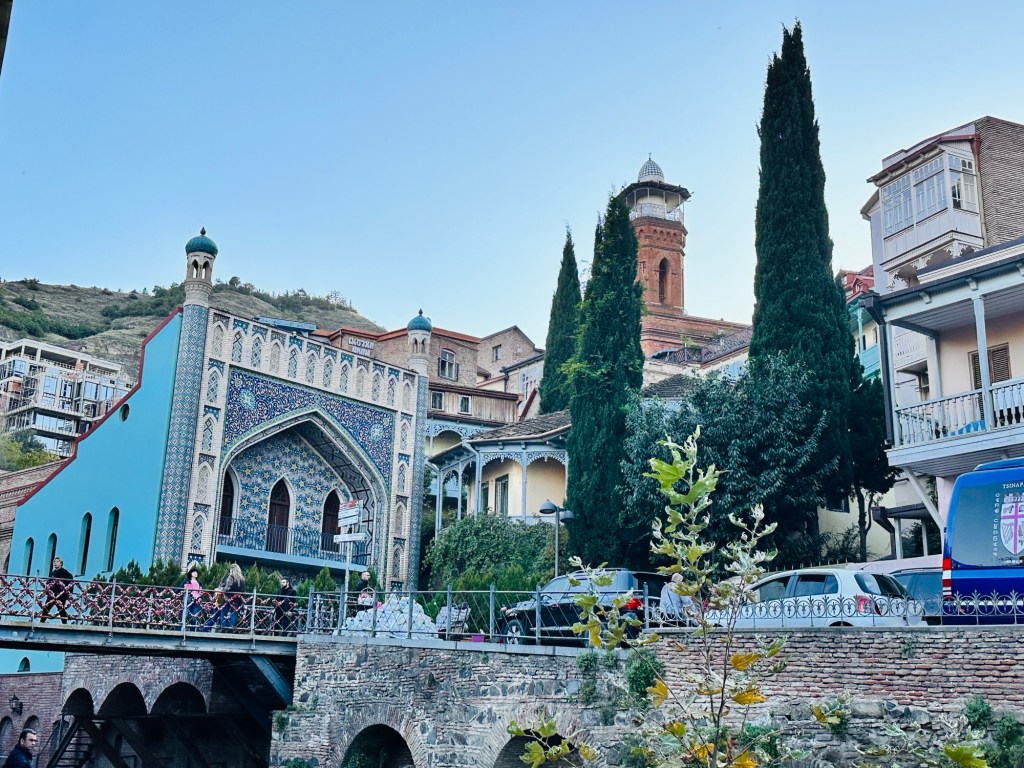
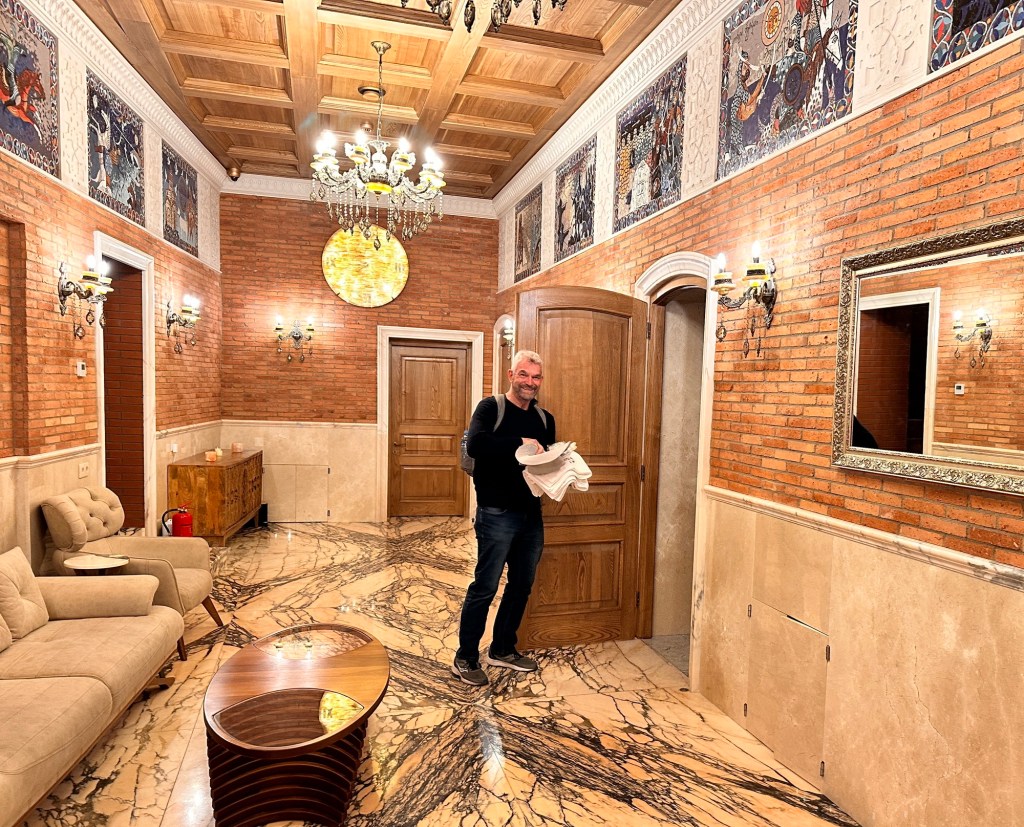
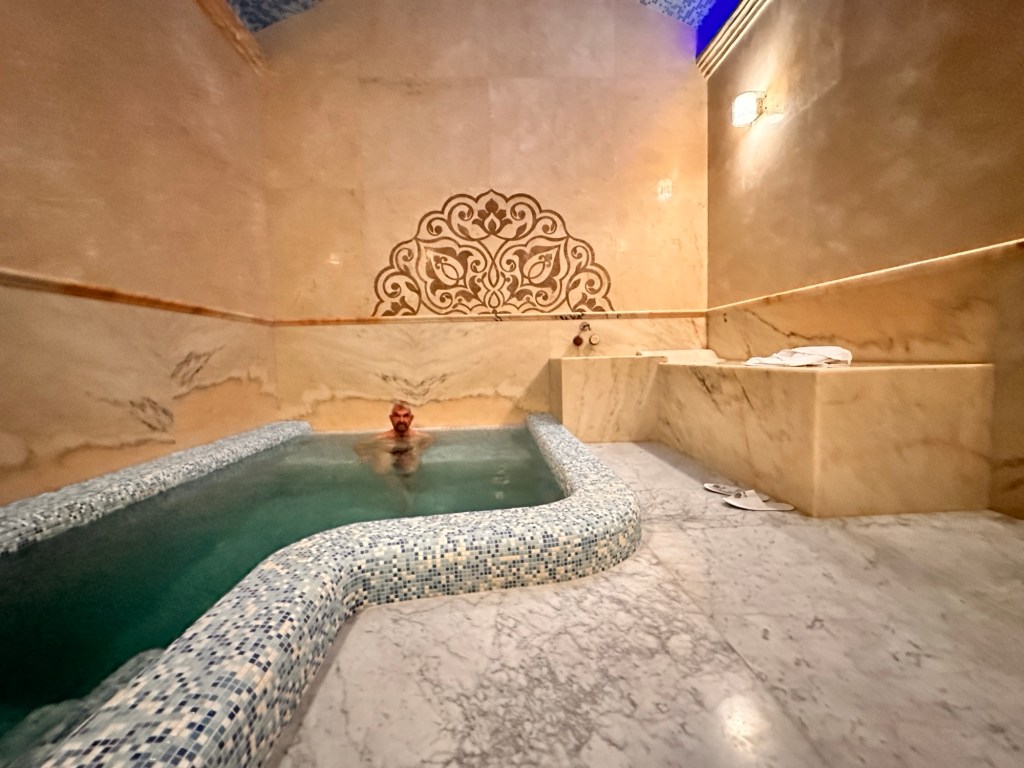
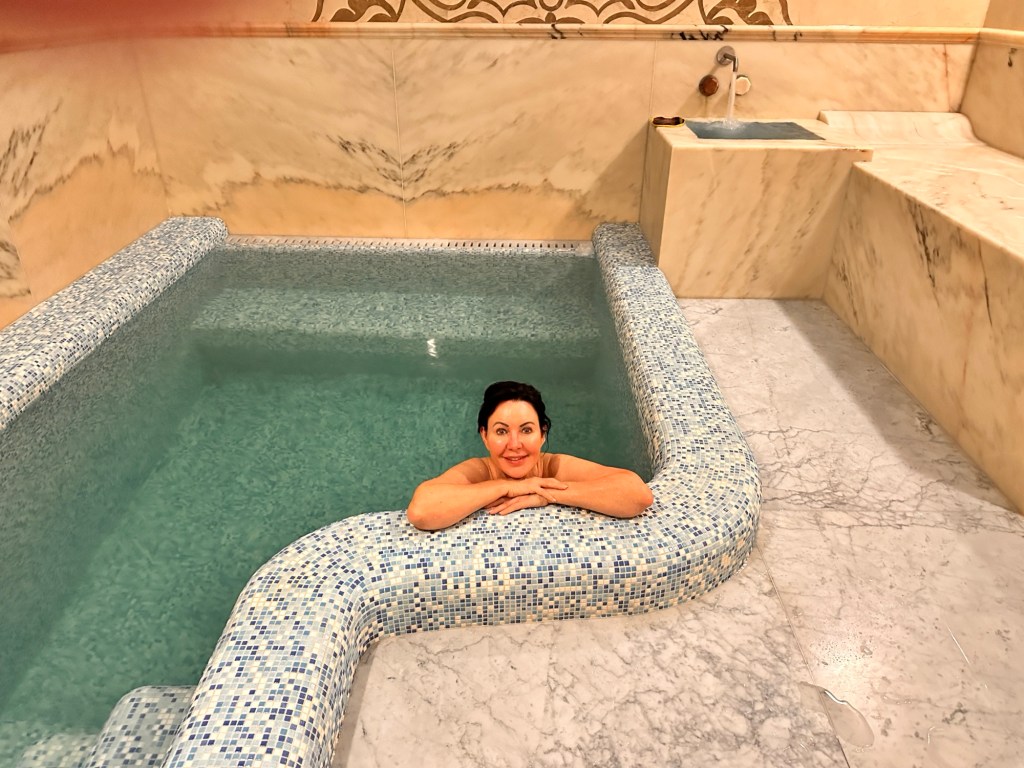
Afterwards, a little bit of retail therapy – jewellery shopping, silk rug looking … before it was time to stop for a drink and do a little people watching. This is such a fascinating city, truly a sensory experience.
Dinner tonight at the Black Lion (where we had lunch yesterday), I had Norwegian salmon in a walnut sauce (sauce is served cold), Frank had the veal in a tomato sauce, Chaskuli. Again, sensational food , and some live music to accompany it.
Day 10
Saturday 2nd October 2024
Tbilisi to Gudairi
120 kms
6-12 in Tbilisi, -2 -6 in Gudairi
After breakfast we drove to the ancient capital of Mtskheta which functioned as the capital of Eastern Georgia – Iberia – from the 3rd century BC to the 5th century AD.
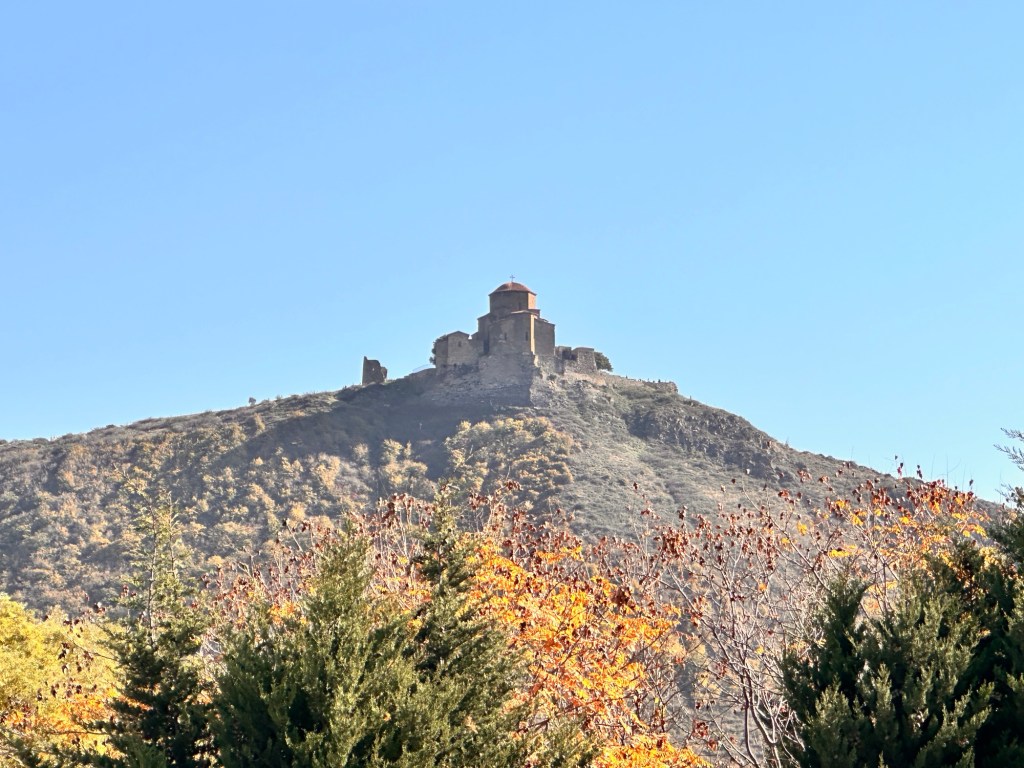
Mtskheta was a site of early Christian activity and the location where Christianity was proclaimed the state religion of Kartli in 337 AD. It remains the headquarters of the Georgian Orthodox Church. The Jvari Monastery (a UNESCO World Heritage Site), perched on top of the hill was built in the 6th century. Many Georgians regard this as the holiest religious site in the country as this is where King Miriam lll erected a wooden cross to mark his conversion to Christianity by St Nino in the 4th Century. Stunning views from the top, and very cold!

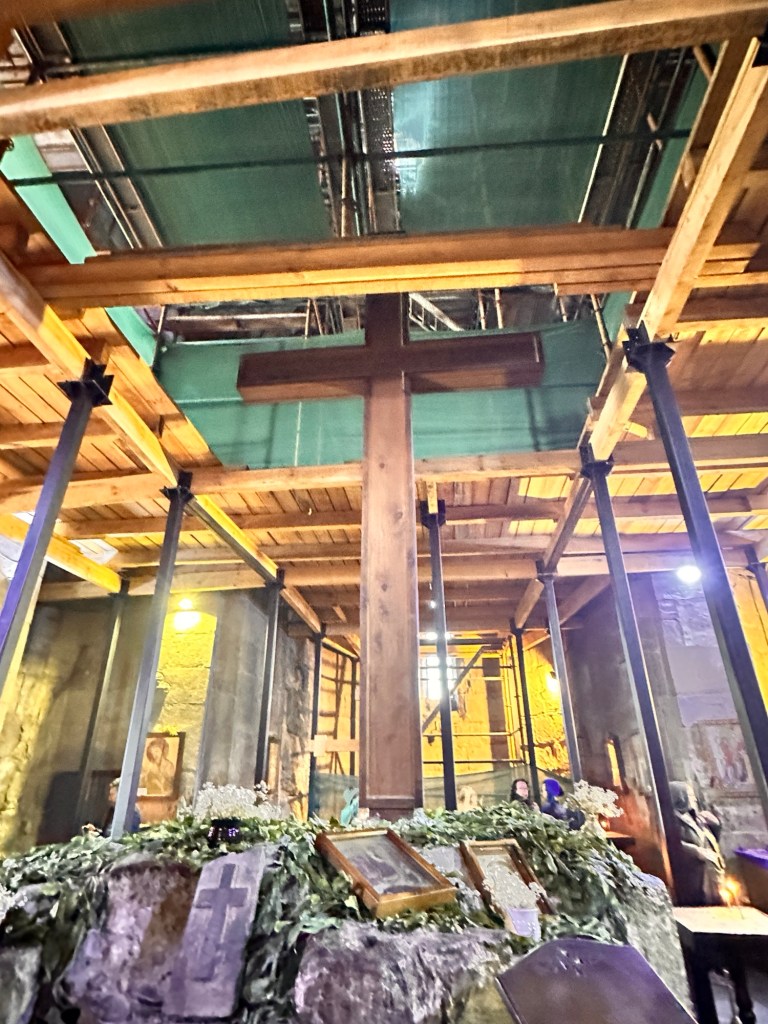
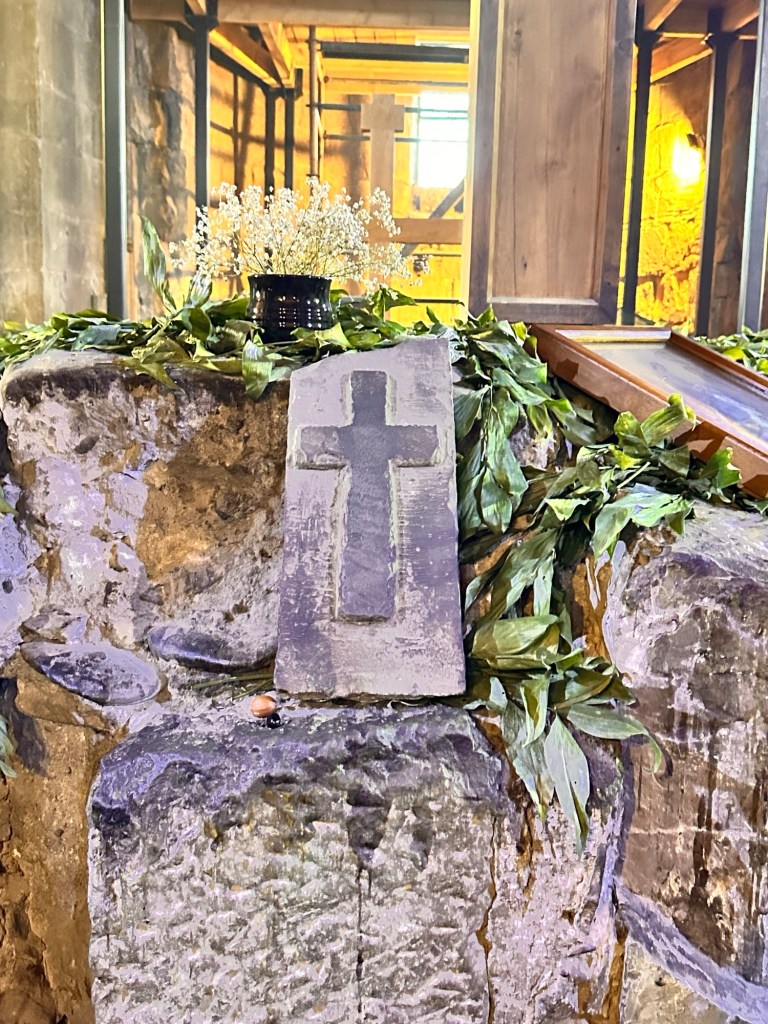
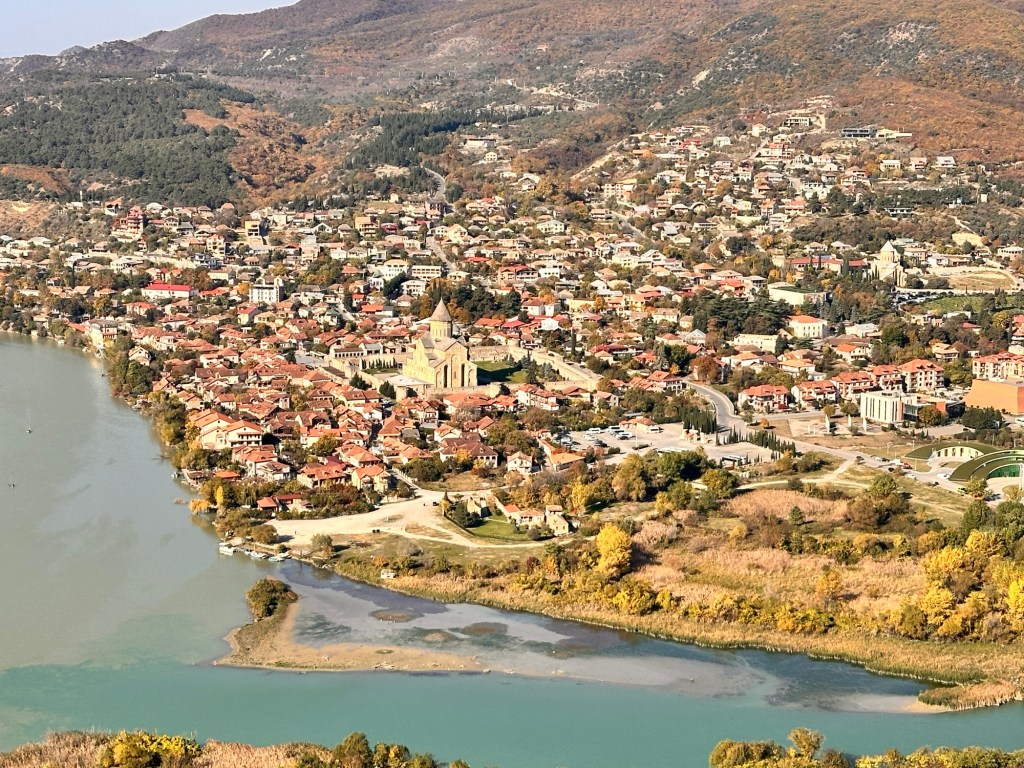

Next, the Svetitskhoveli Cathedral, also recognised as a UNESCO World Heritage Site. An early high point of the Golden Age of Georgian ecclesiastical architecture, the extraordinary Svetitskhoveli Cathedral dates from the 11th century, and is walled off, more like a fortress than a church. It has an elongated cross plan and is adorned with beautiful stone carving outside and inside. Christ’s robe is believed to lie beneath the central nave, under a square pillar decorated with colourful frescoes depicting the conversion of Kartli.
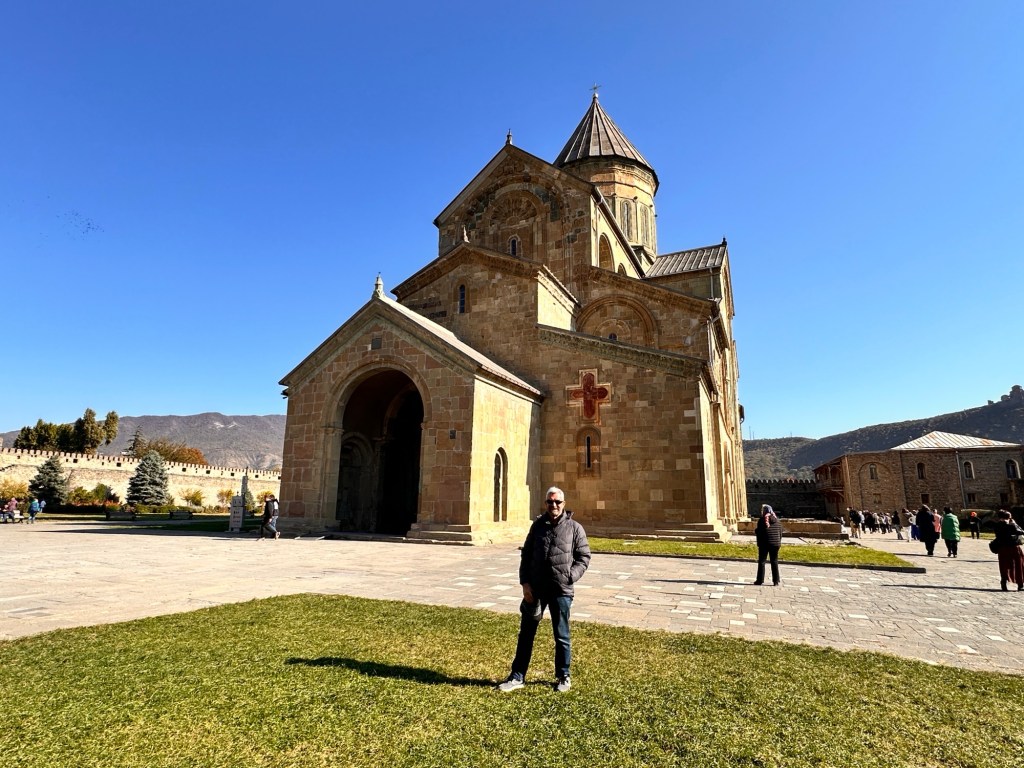
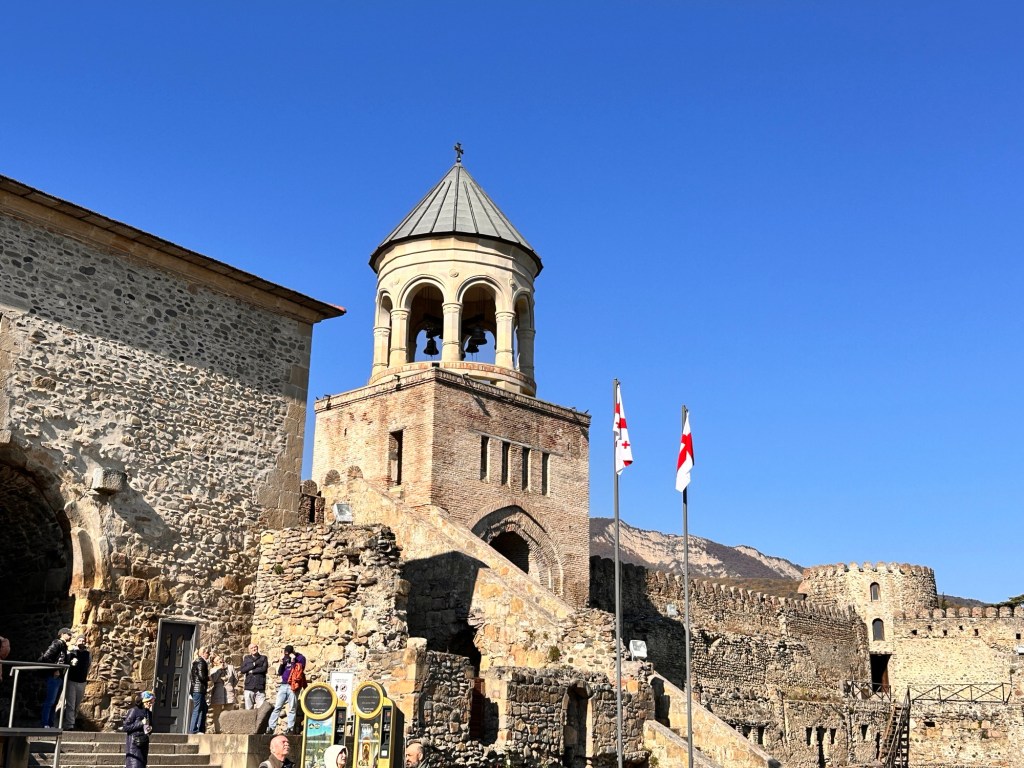
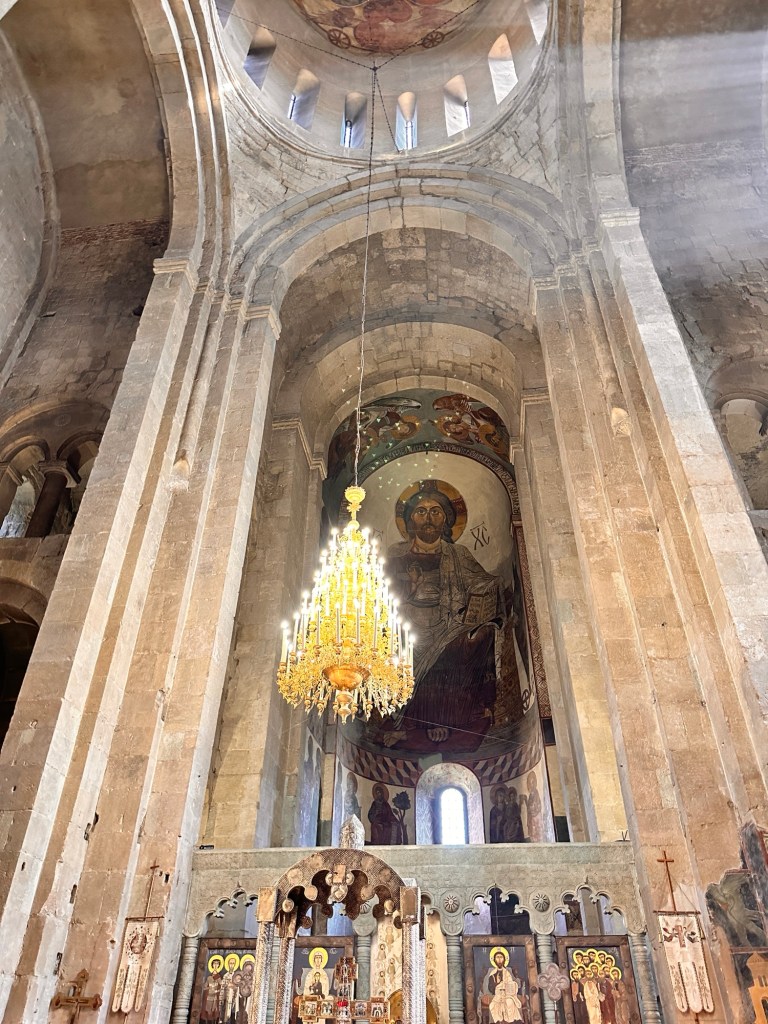
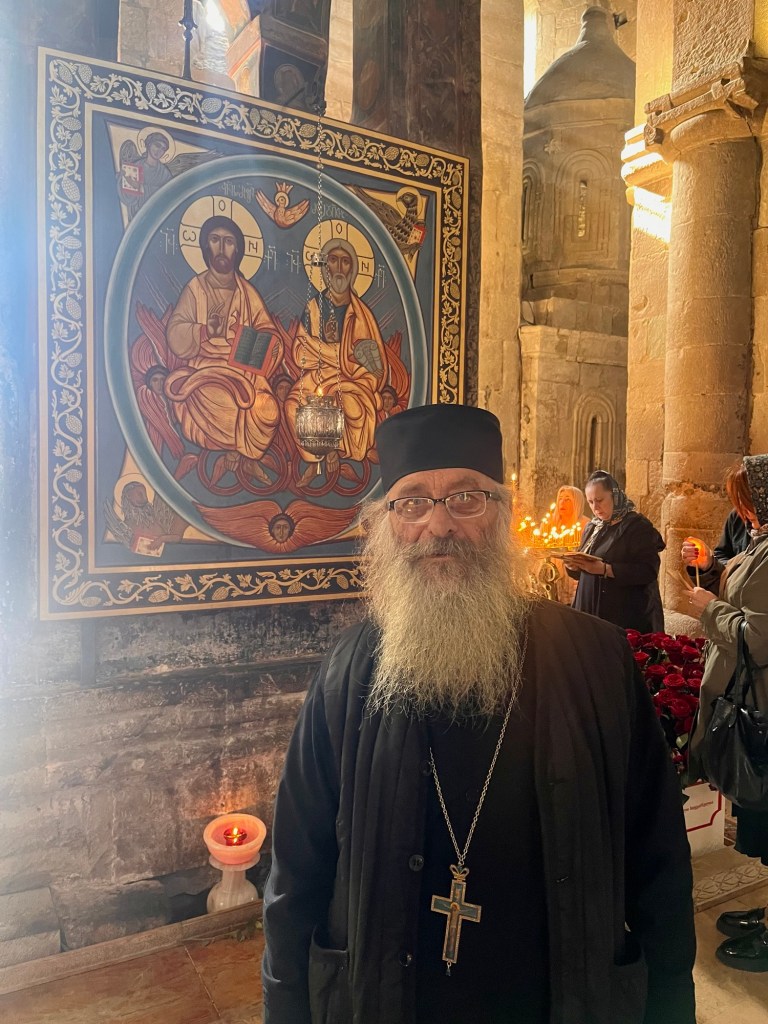
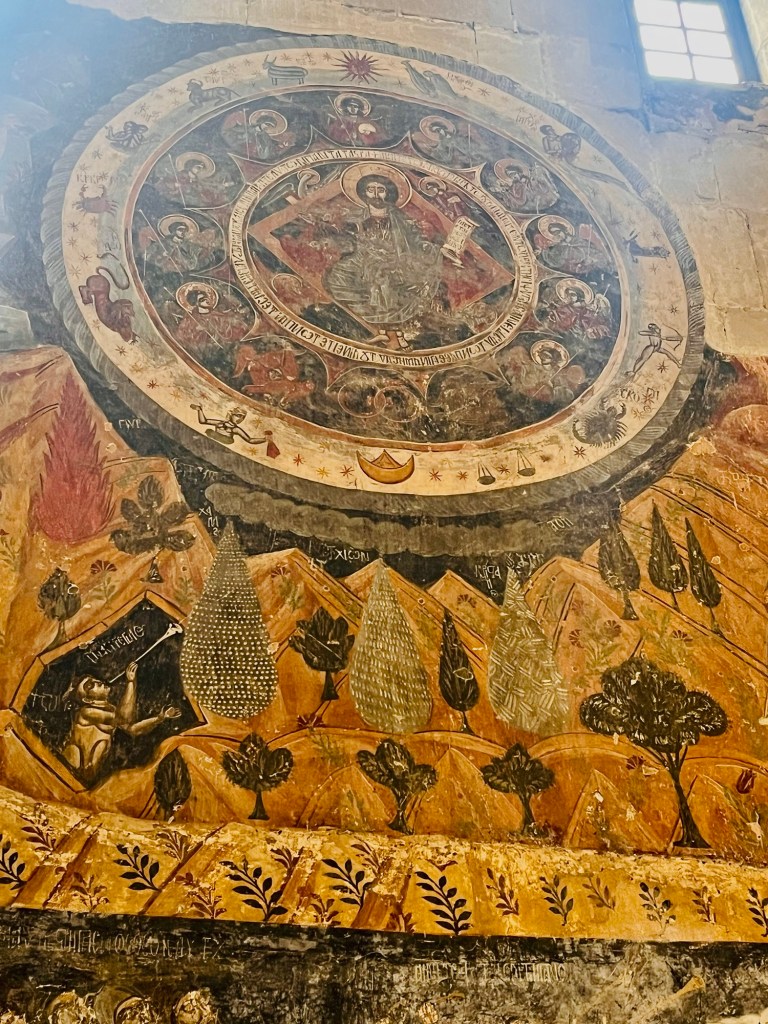
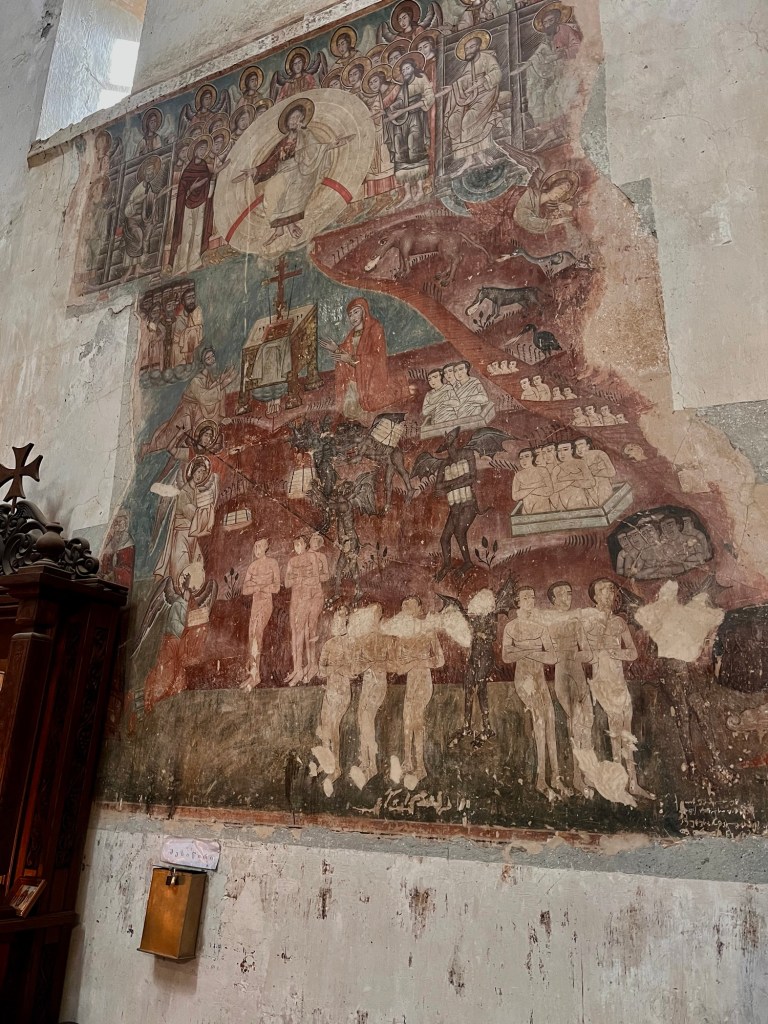
We drive along the Georgian Military Highway through the Caucasus Mountains – this route has been in use for at least 2000 years and became a key part of the Silk Road. This rough road, steep and windy with hairpin turns, is the main road through to Russia. A tunnel is being built for all the heavy vehicles which will be a great project when it is completed. Some hairy turns and steep inclines to manoeuvre, but our driver did extremely well.
Next stop, Ananuri Fortress. This complex consists of fortifications and residential buildings of Aragvi Dukes. The purpose of the monument was to control the trade route and to guard the country from the North. Two 17th Century churches here, one of which was the venue for a wedding.
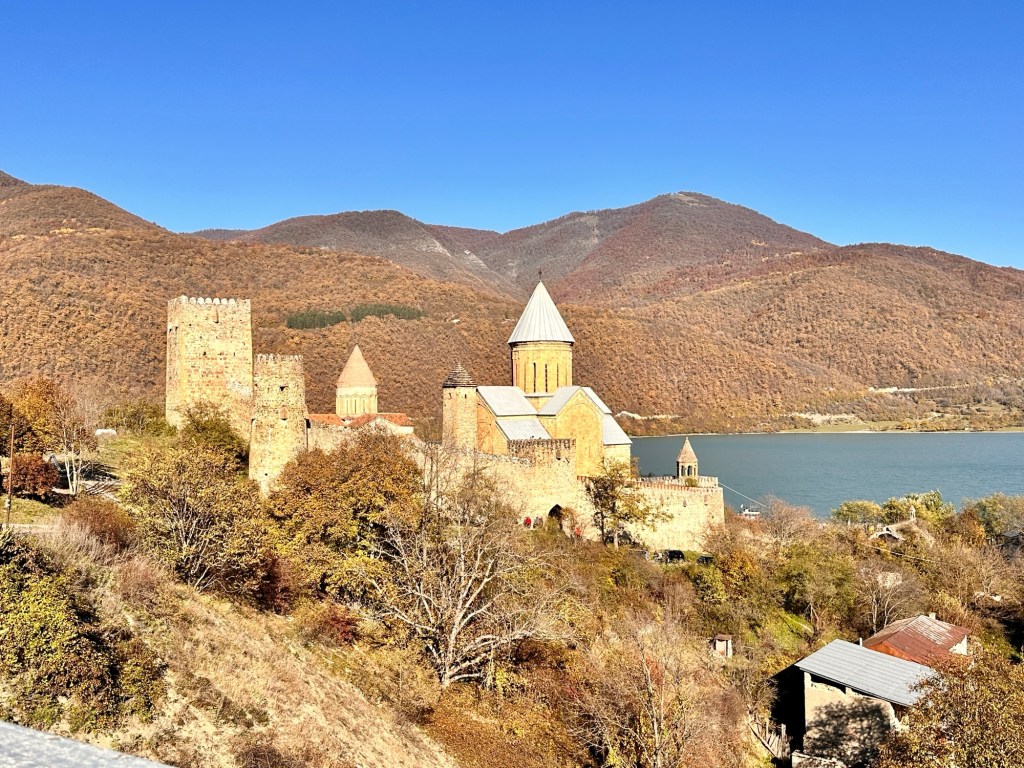
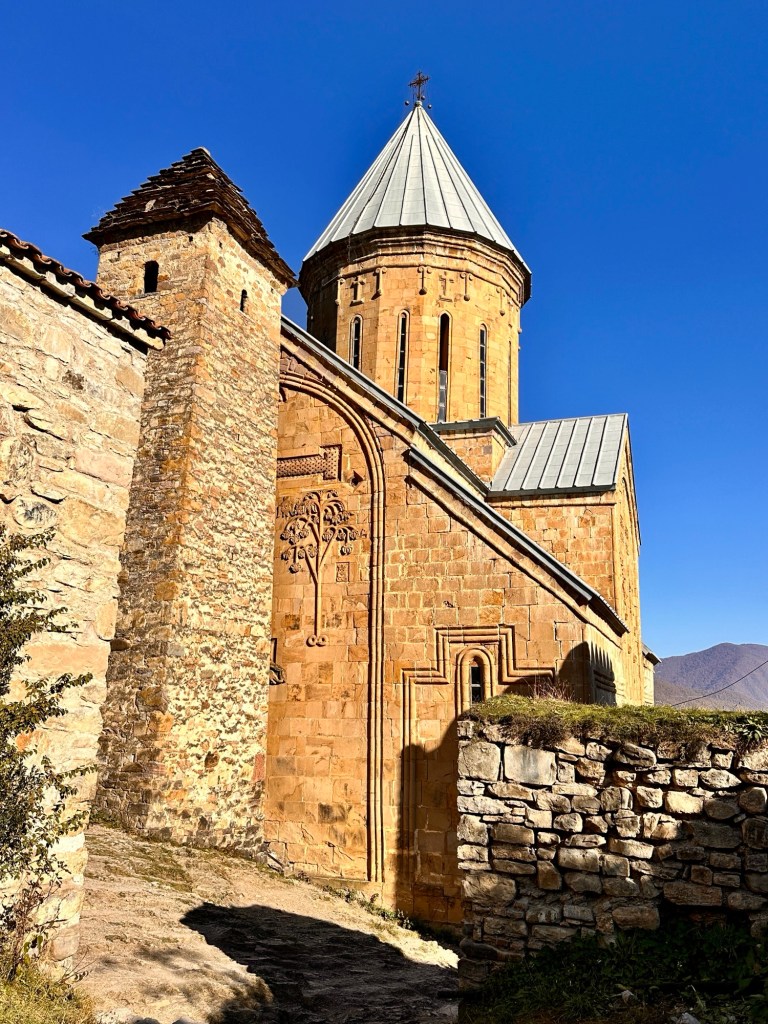
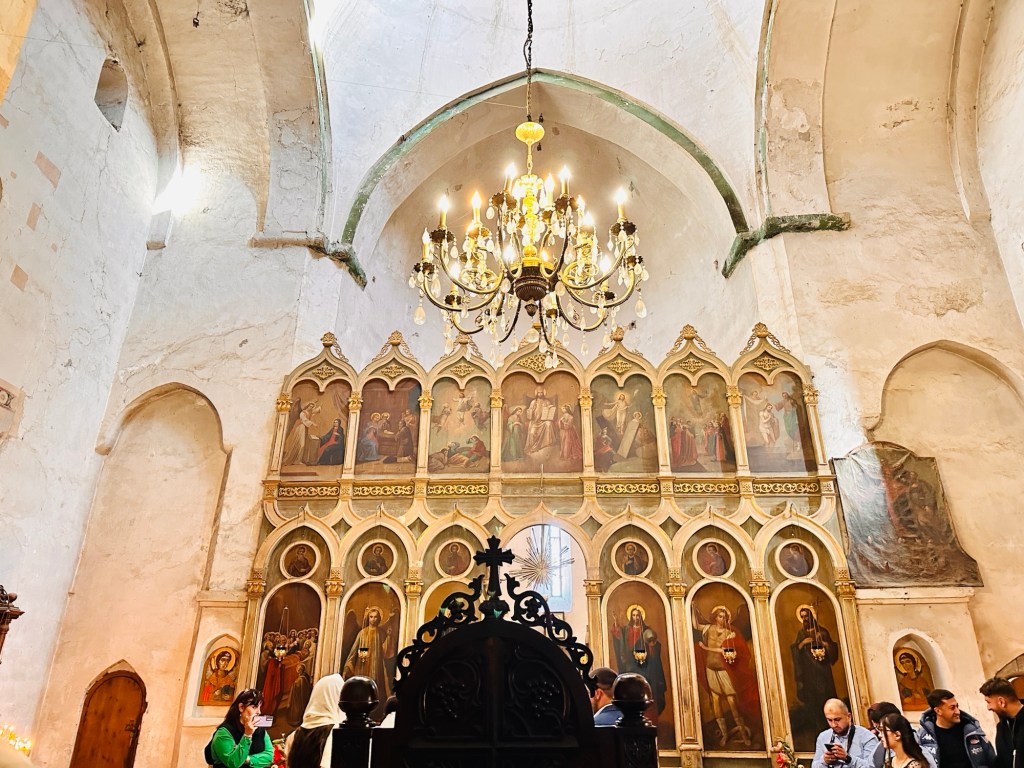
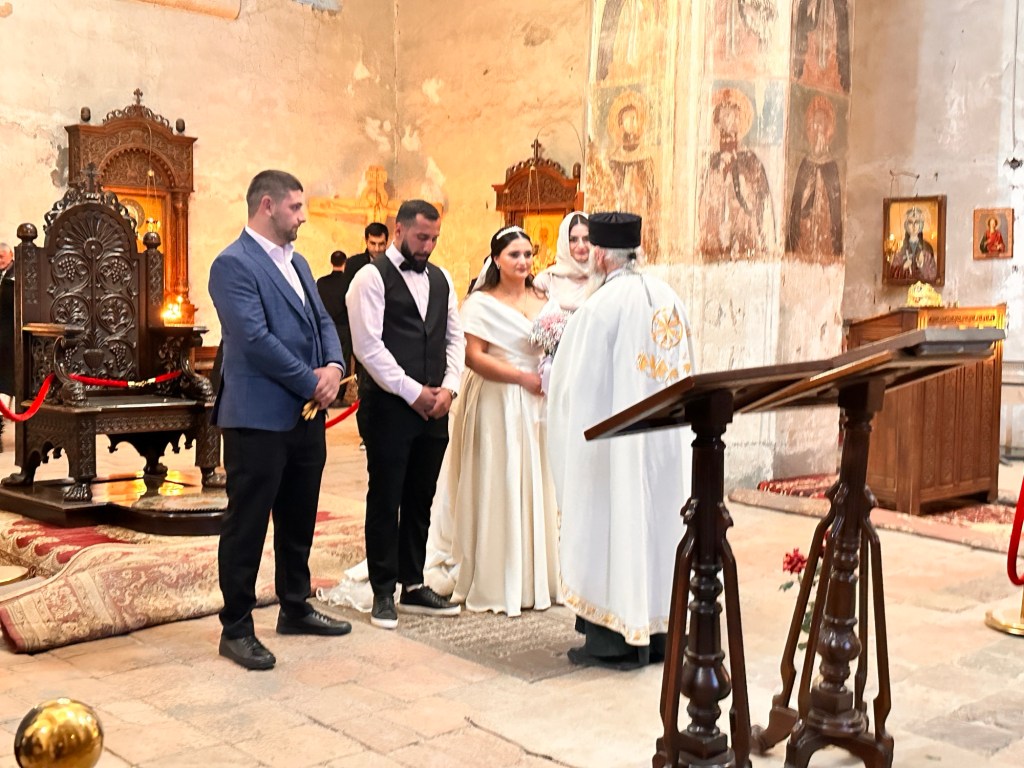
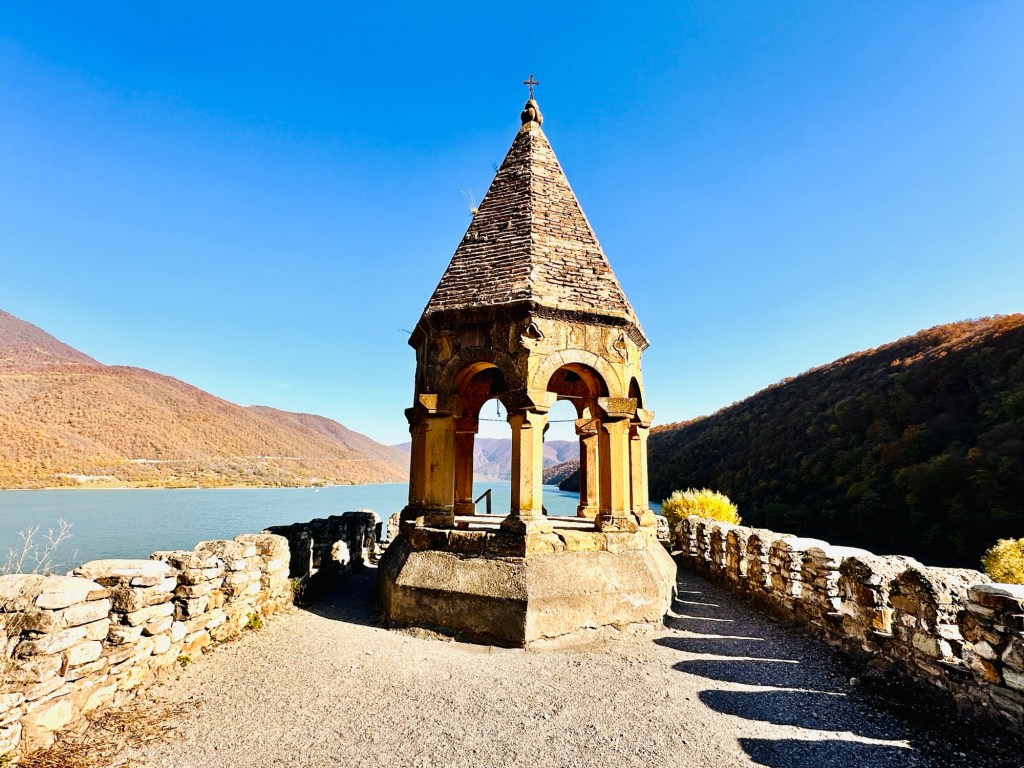
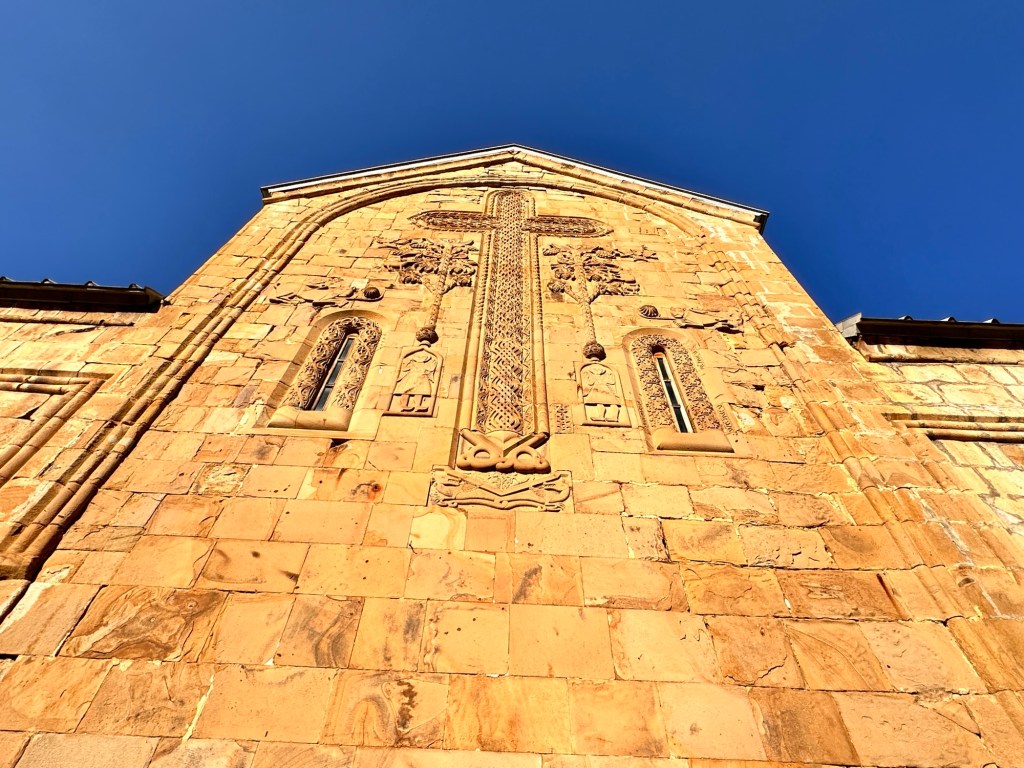
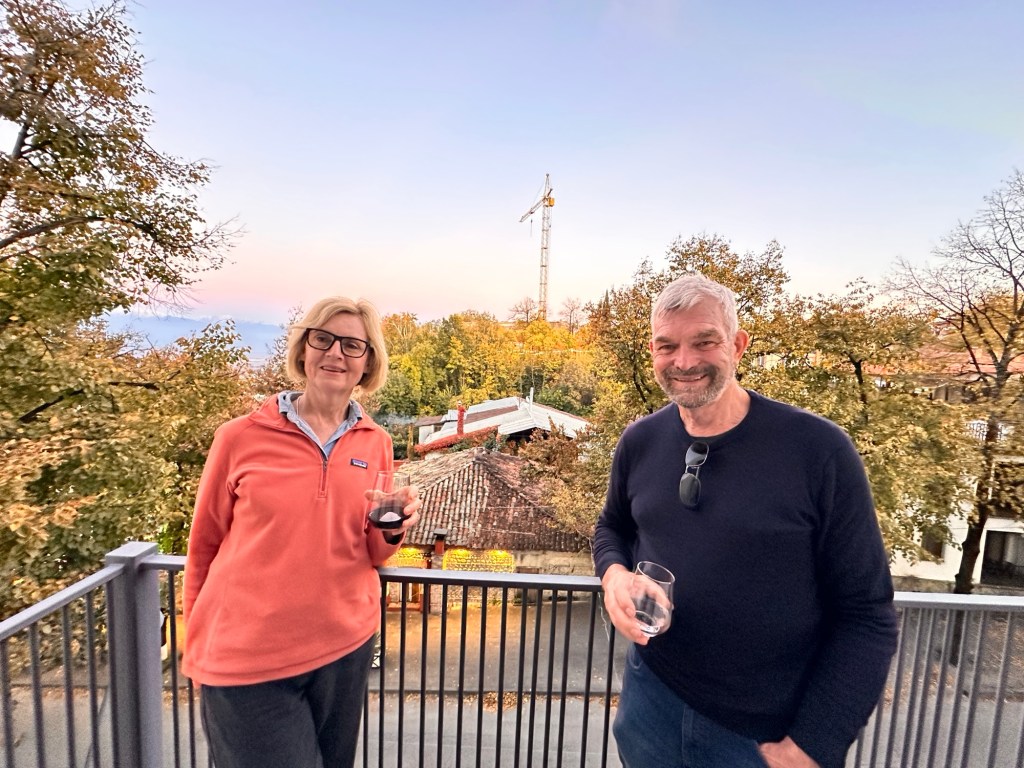
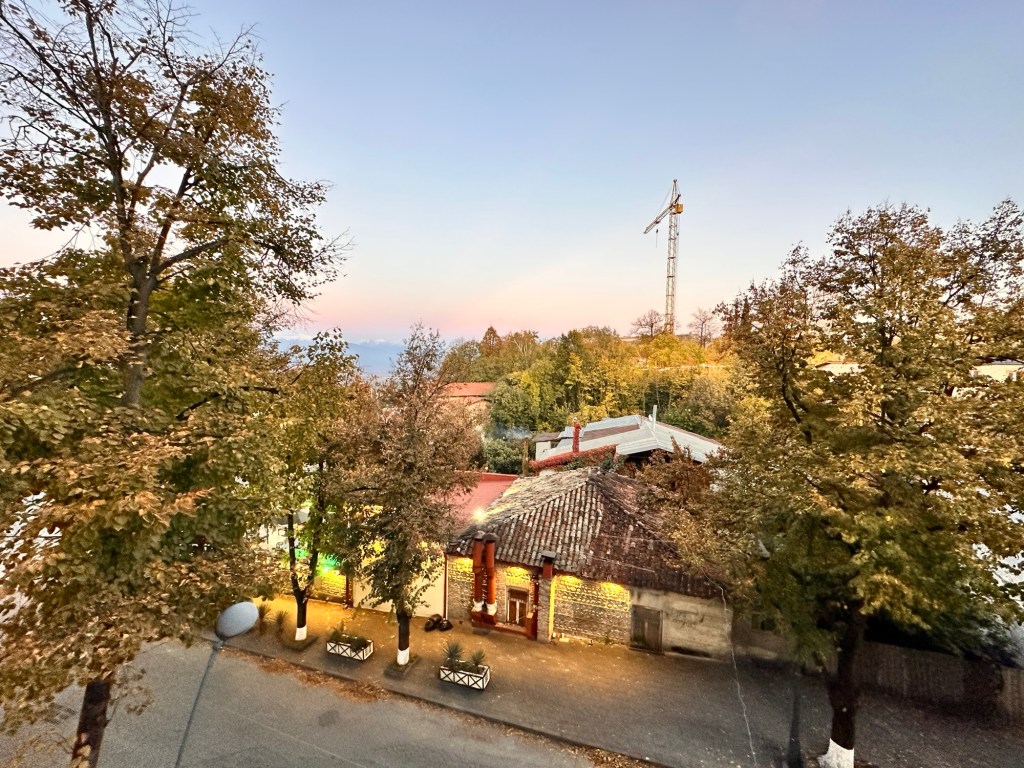
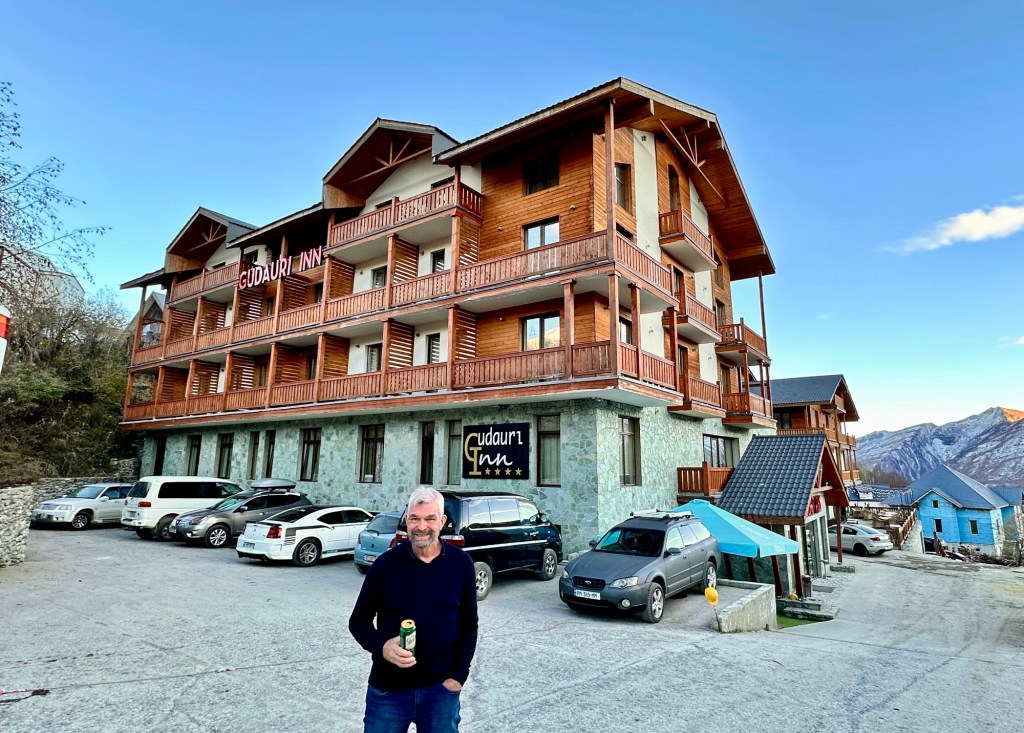
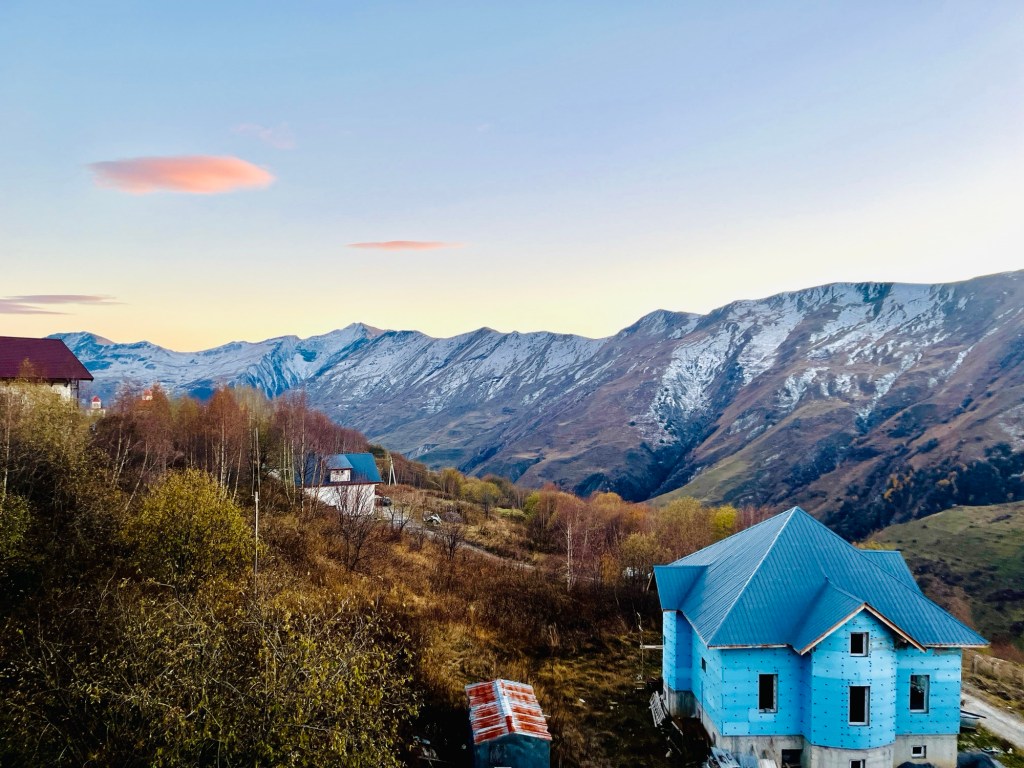
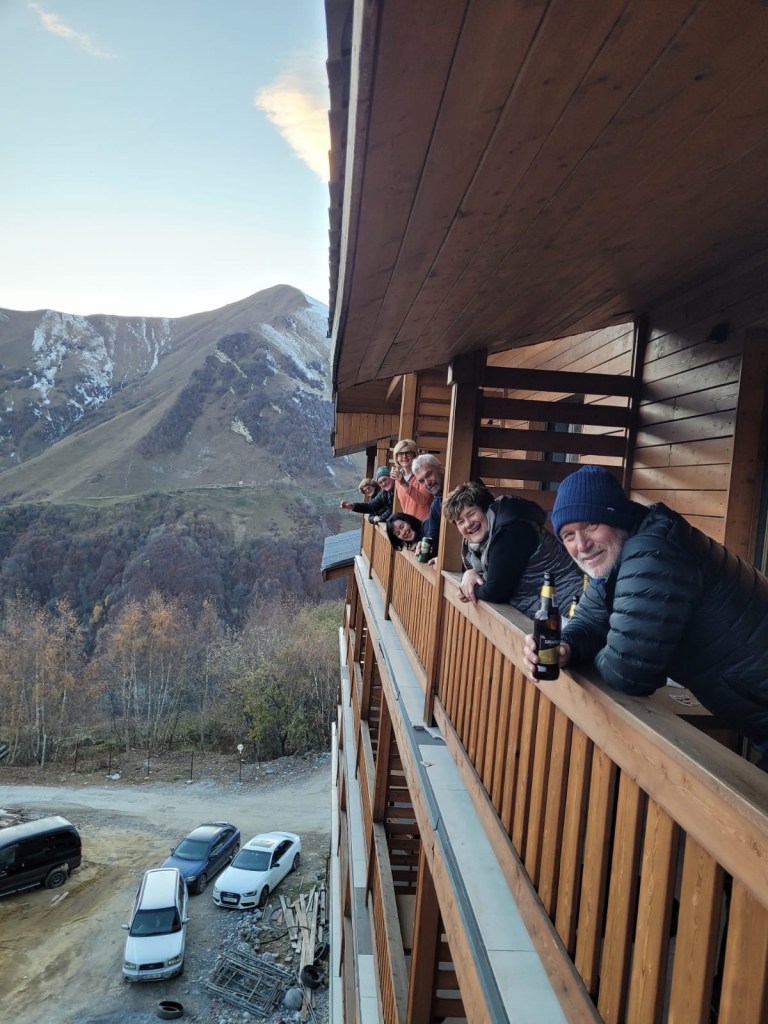
Another hour and we reach Gudairi at 2200 metres above sea level, and check into our hotel. Gudairi is one of Georgia’s main winter sports destinations. A few wines, and a breathtaking view were enjoyed on the balconies, before a delicious dinner at the hotel.

Day 11
Sunday 3rd November 2024
Gudauri – Kazbegi – Walking Tour to Gveleti Waterfall – Gudauri
100 kms
-2 -4 degrees, sunny
Lovely fresh crisp morning – just gorgeous looking out at the “zebra” mountains (black and white because of the snow.


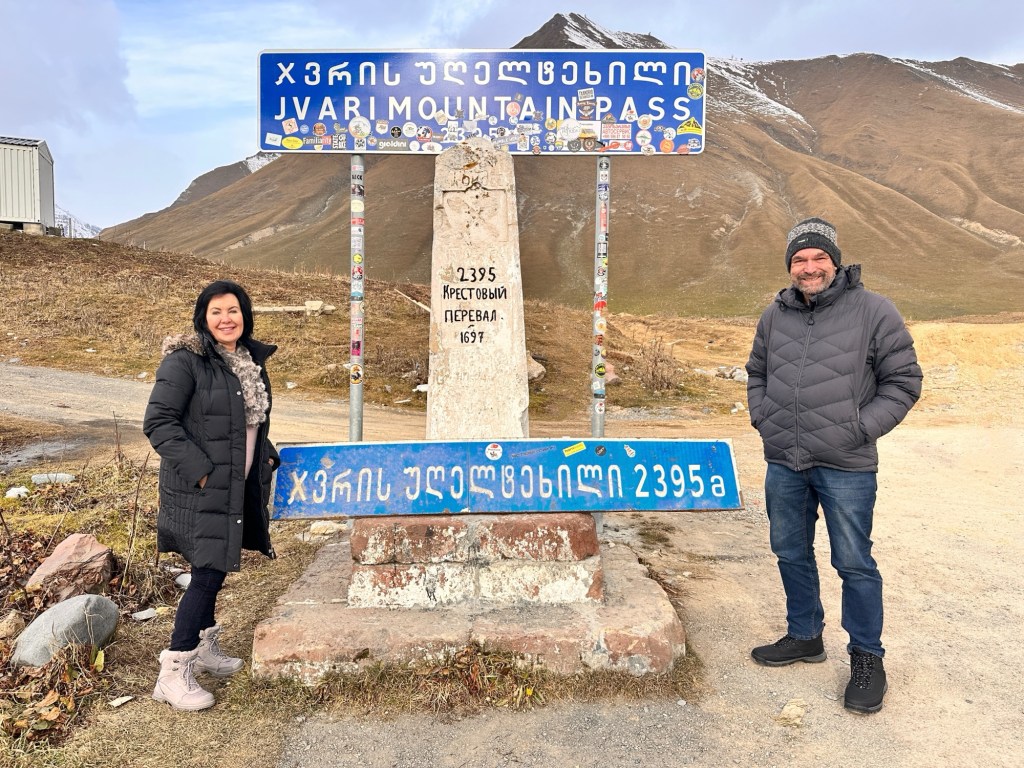
After breakfast, we headed out, again on the Georgian Military Highway again- the scenery was spectacular! Very lucky with the weather…we could clearly see the magnificent Mount Kazbegi (5047 m. above sea level). According to legend Amirani, a cult hero and a prototype of Greek Prometheus, was punished by Gods and chained on the mountain. We stopped for a photo shoot at 2395 metres, also the location of the German cemetery (German prisoners of war who lost their lives building the highway).
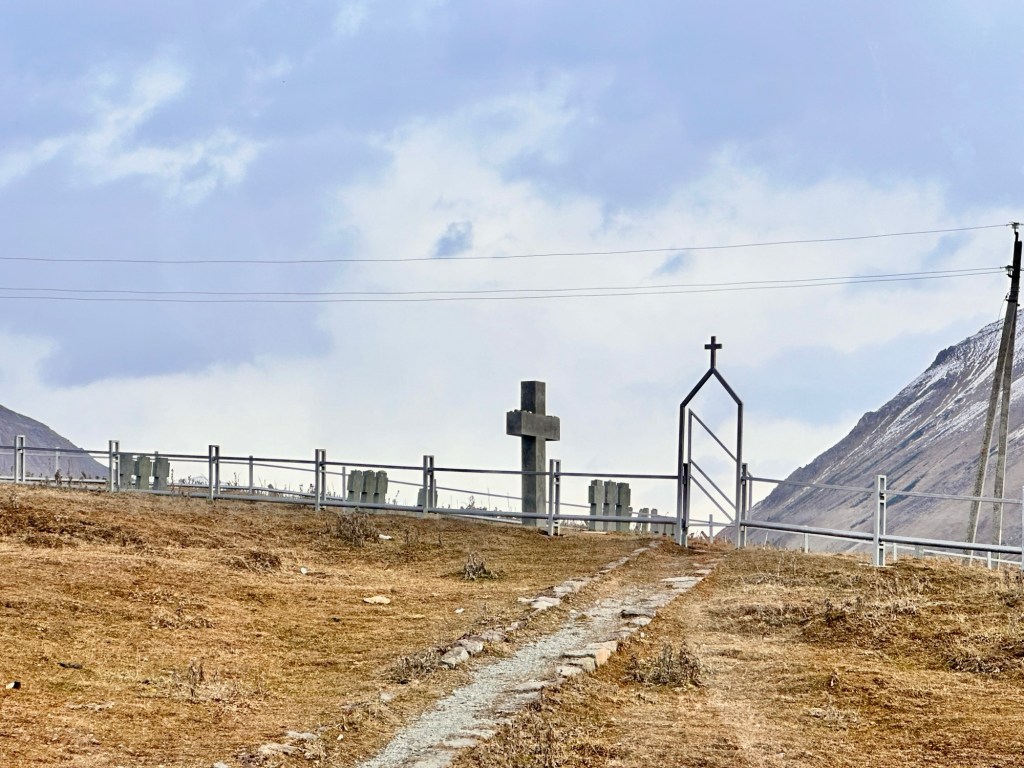
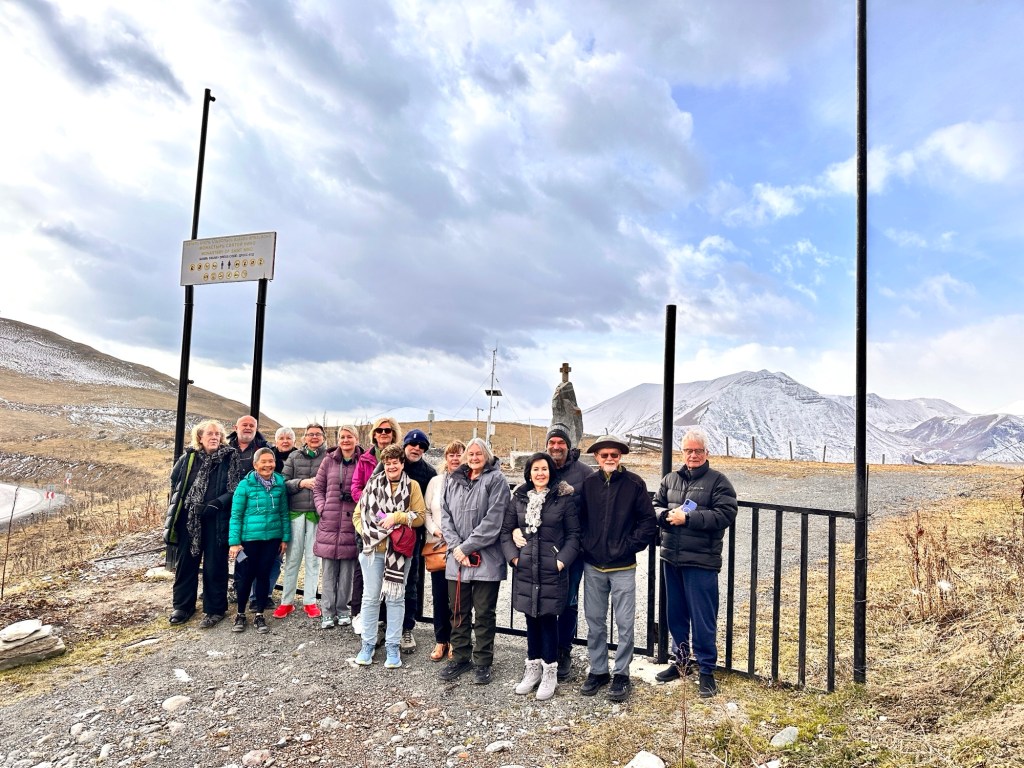

As Tbilisi hasn’t imposed sanctions on Russia over the war in Ukraine, there has been a huge increase in traffic volume at the only border crossing between the two countries, hence the continual large numbers of semi-articulated vehicles travelling the road’s treacherous switchbacks. Very scary watching the cars overtaking the trucks along the way.


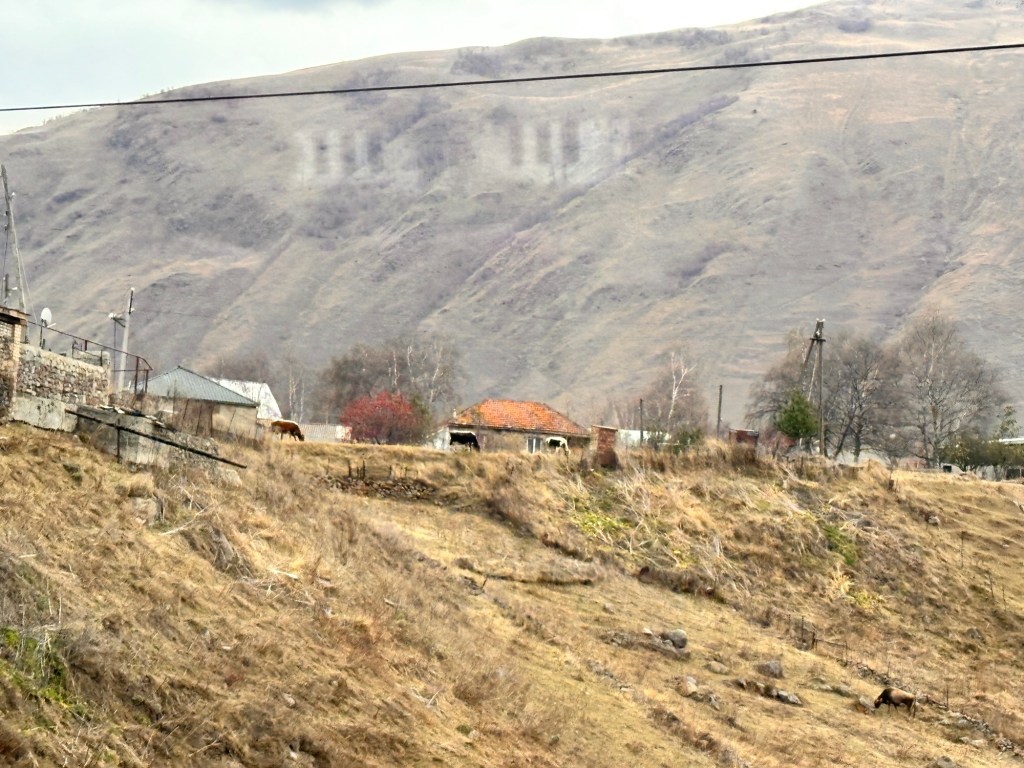
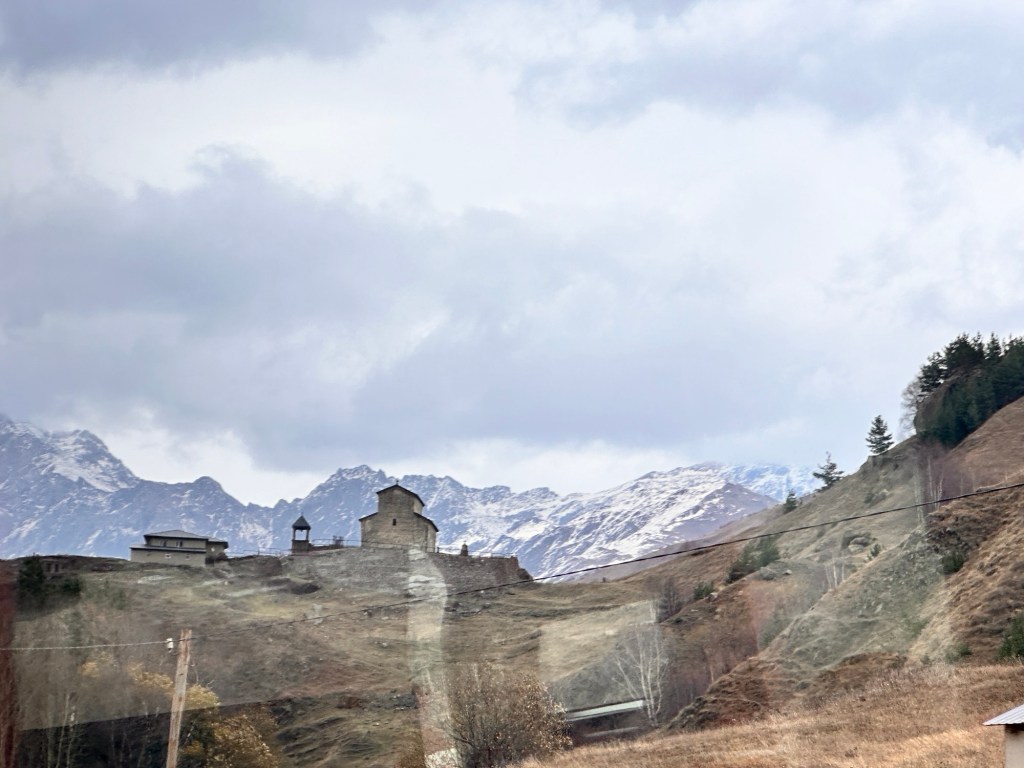
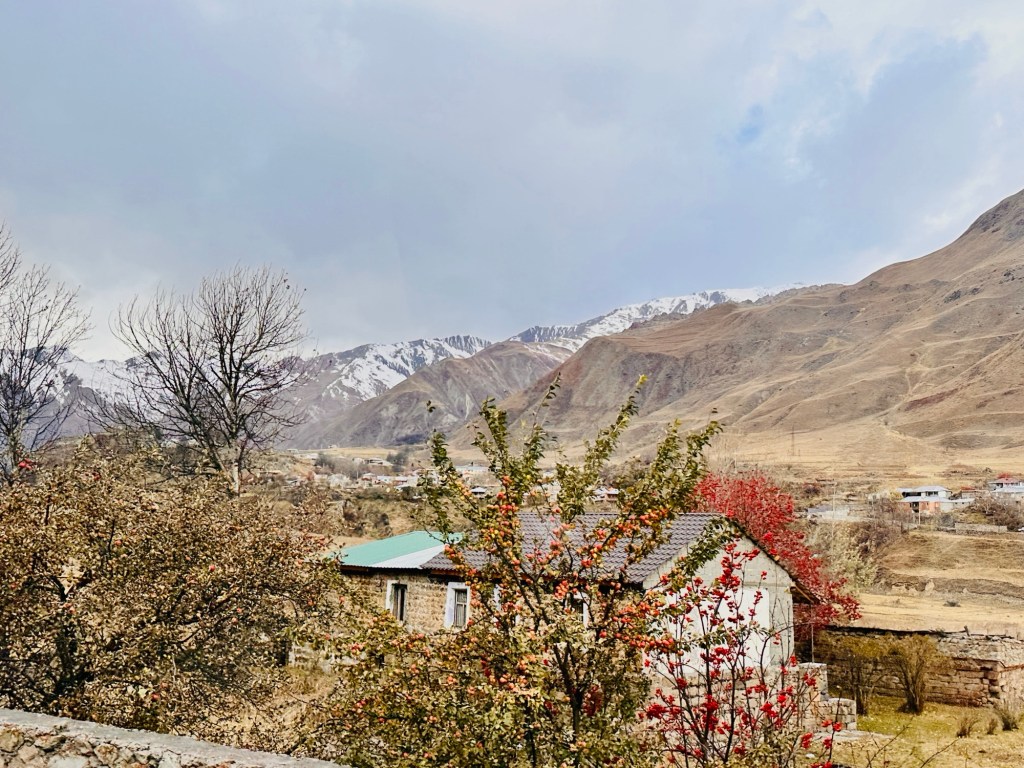
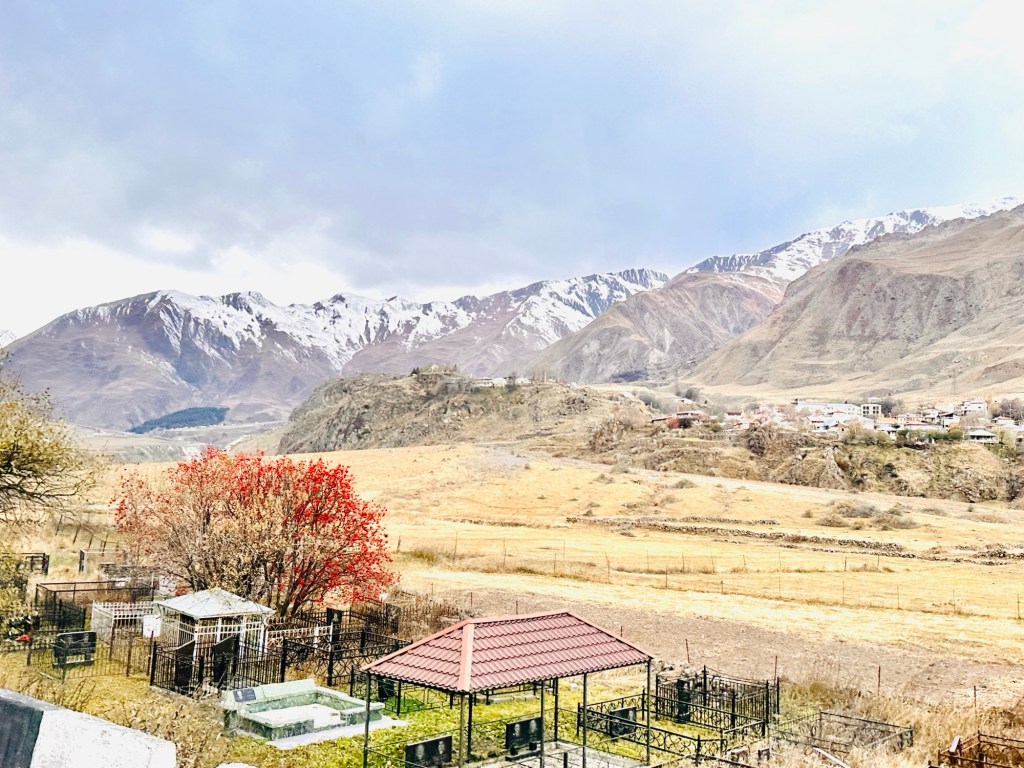
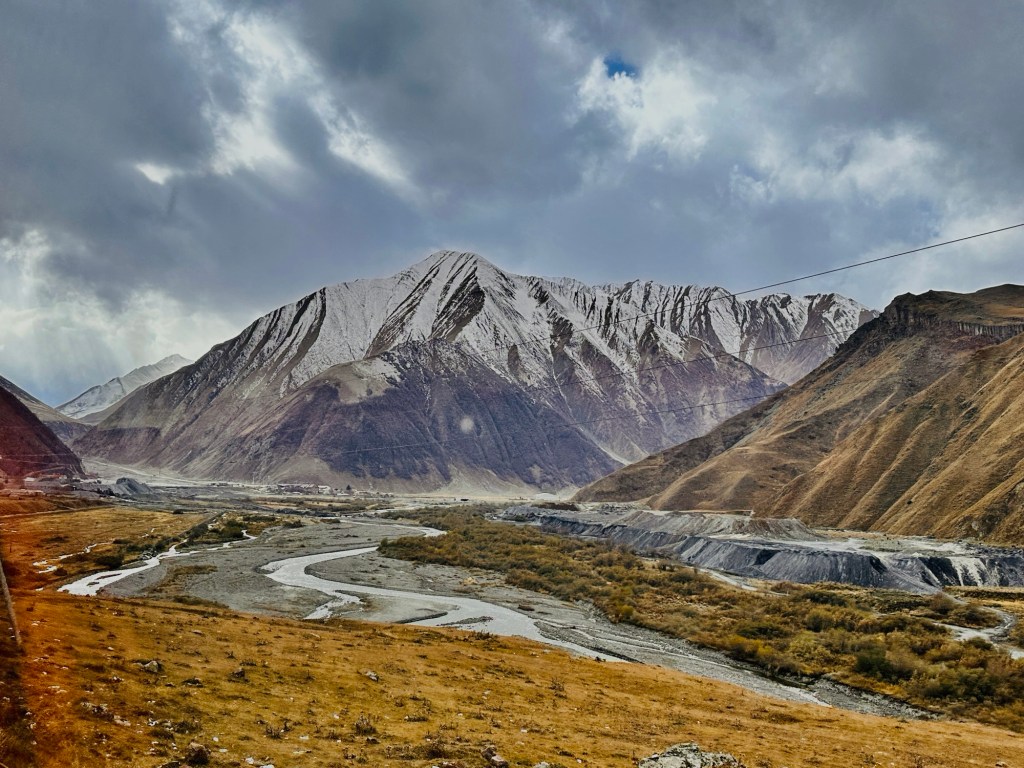
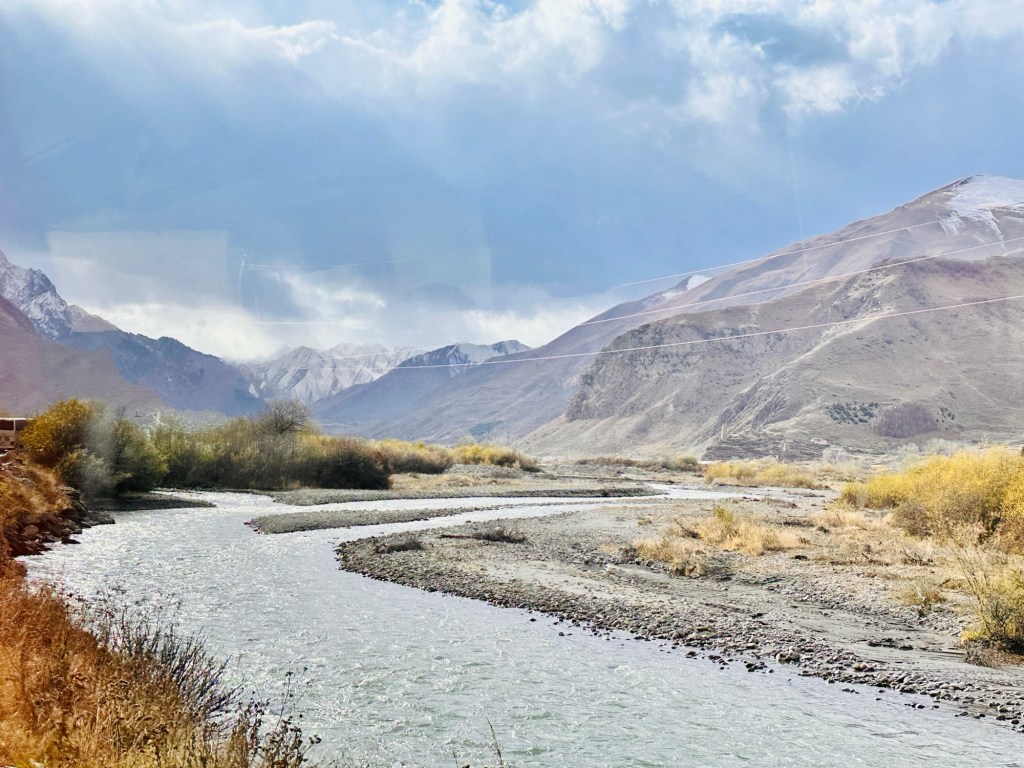
We drove through the stunning Dariali Gorge, from which, a short, leisurely hike up a narrow footpath, led us to the Gveleti Small waterfall. Unfortunately the fog decided to come in at this point, so our view of the waterfall was somewhat limited!
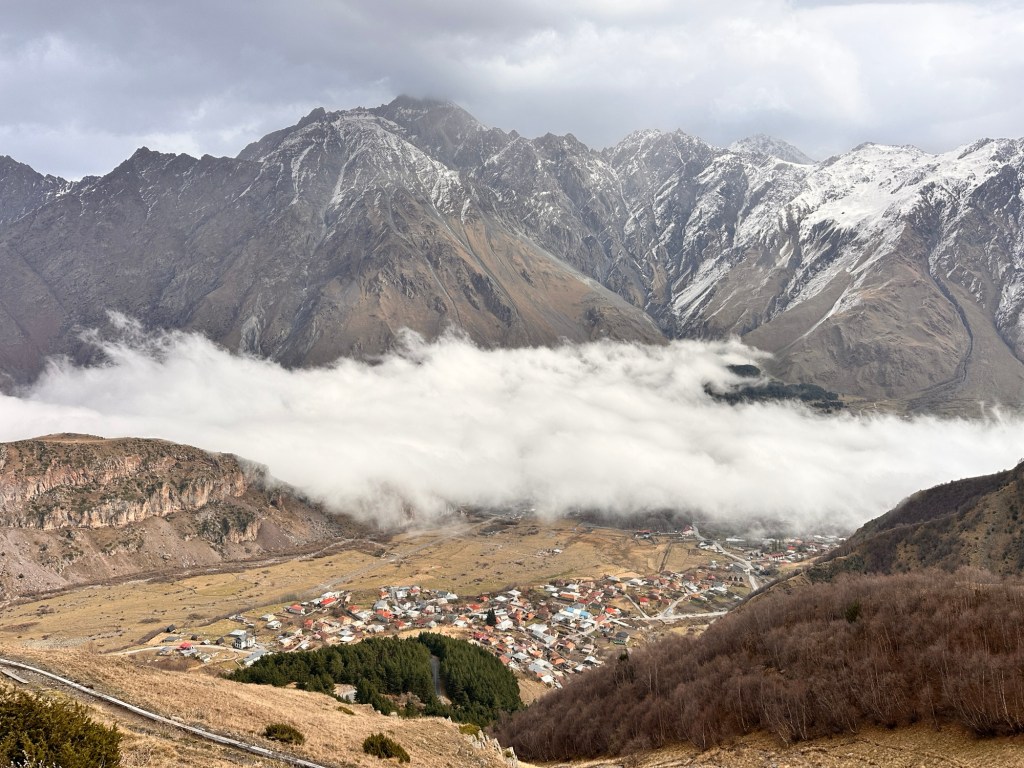
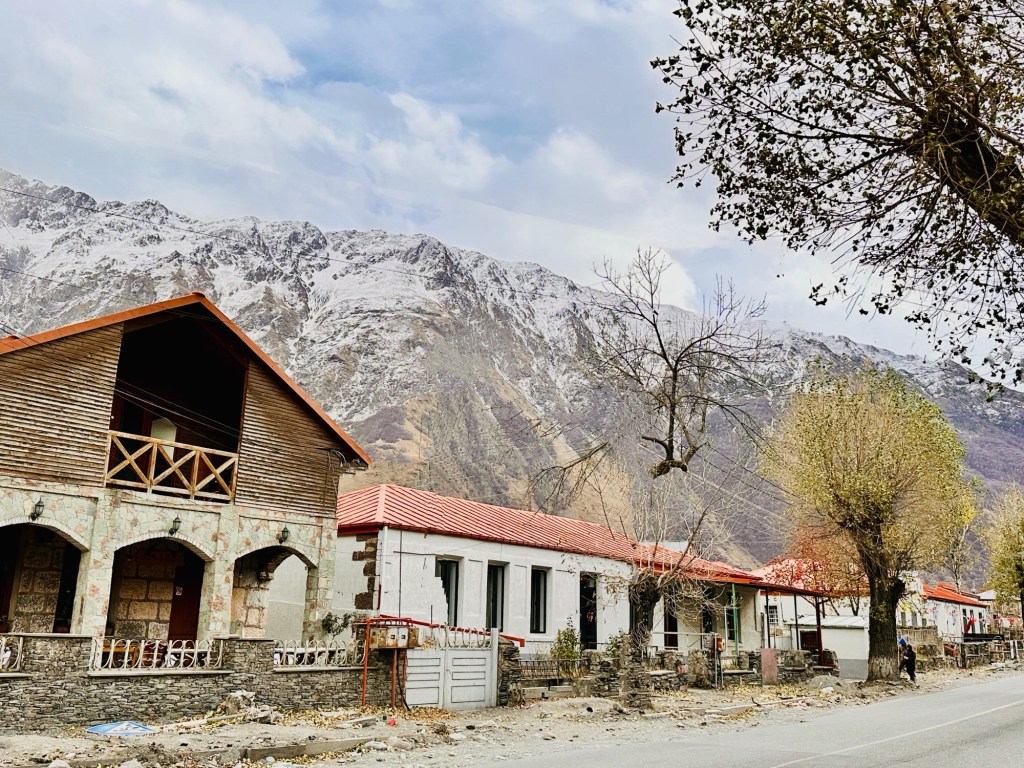
A hair raising drive up another windy narrow road brought us to Gergeti mountain and the iconic Gergeti Trinity church overlooked by Mt. Kazbegi. Gergeti Holy Trinity Church is an important altar of the 14th century, located on the slope of Mount Kazbegi. The church facade preserves stone decorations depicting ancient rituals and beliefs.
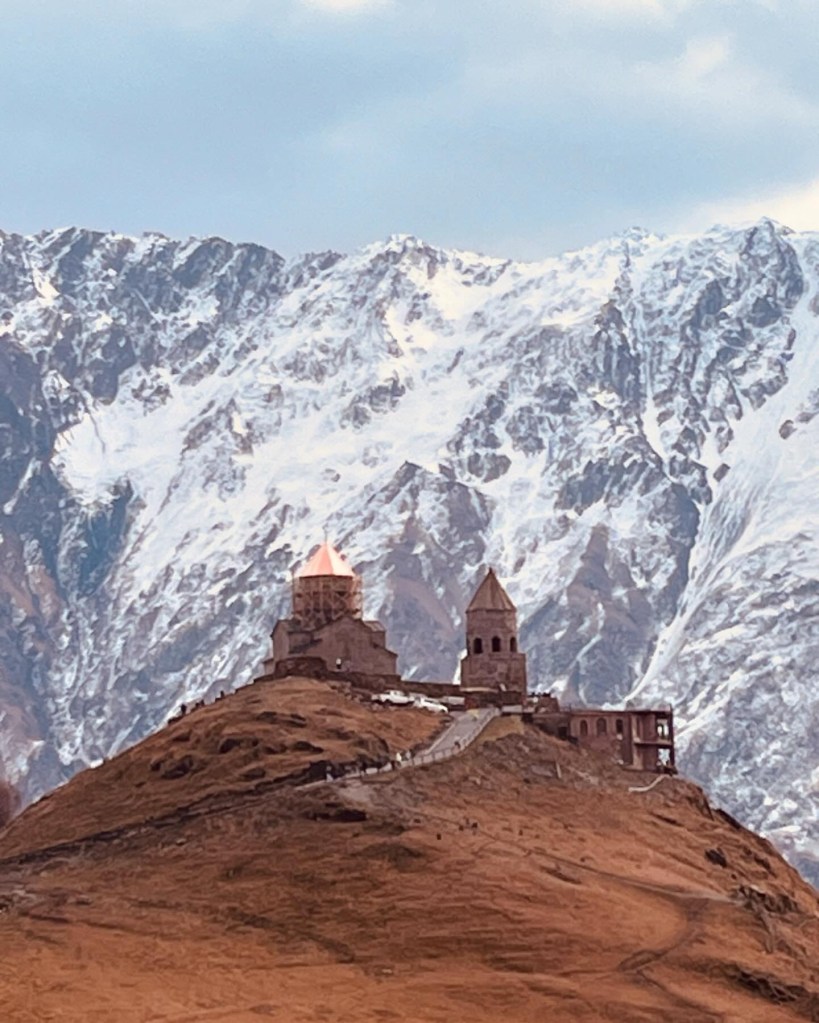
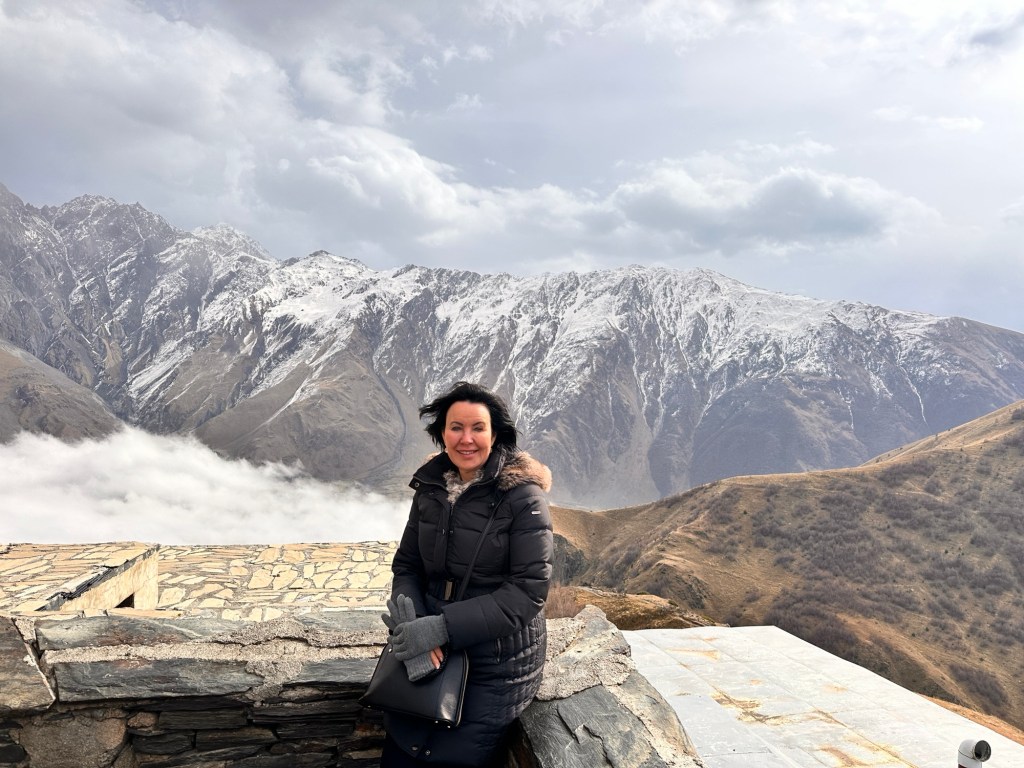
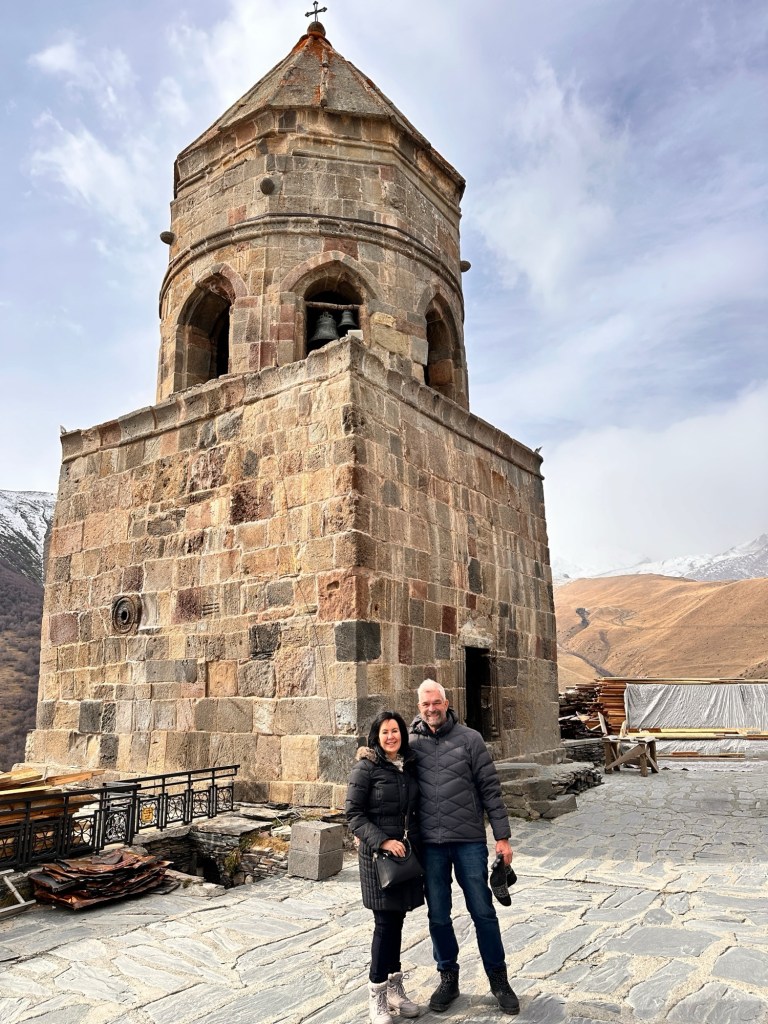
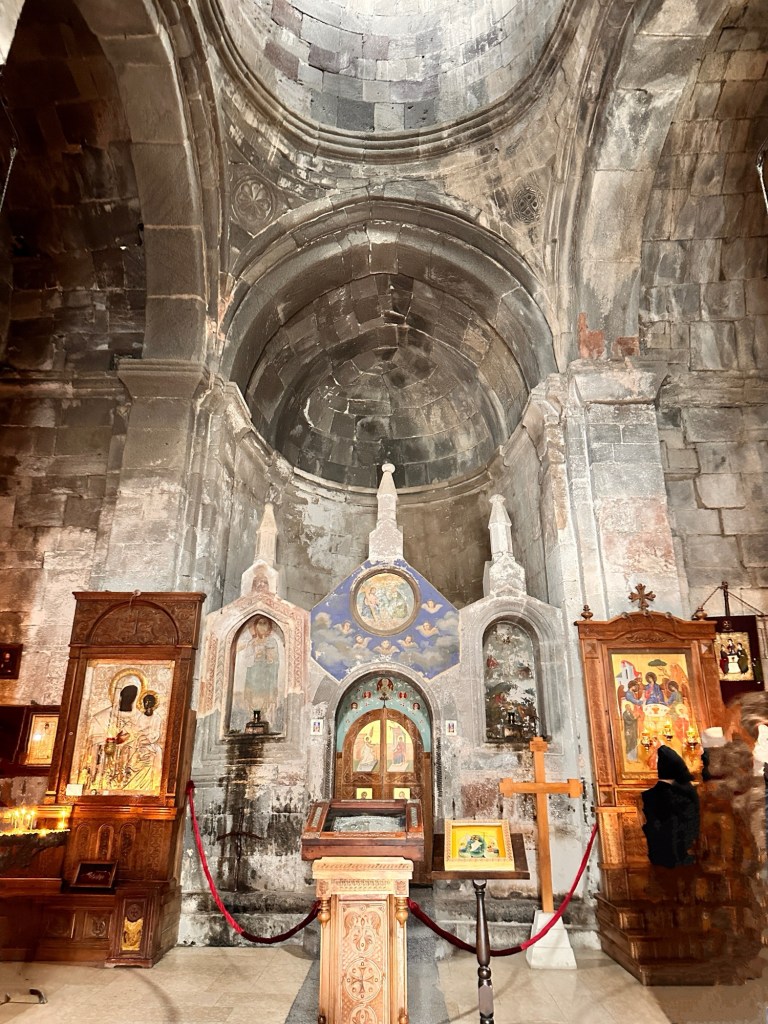
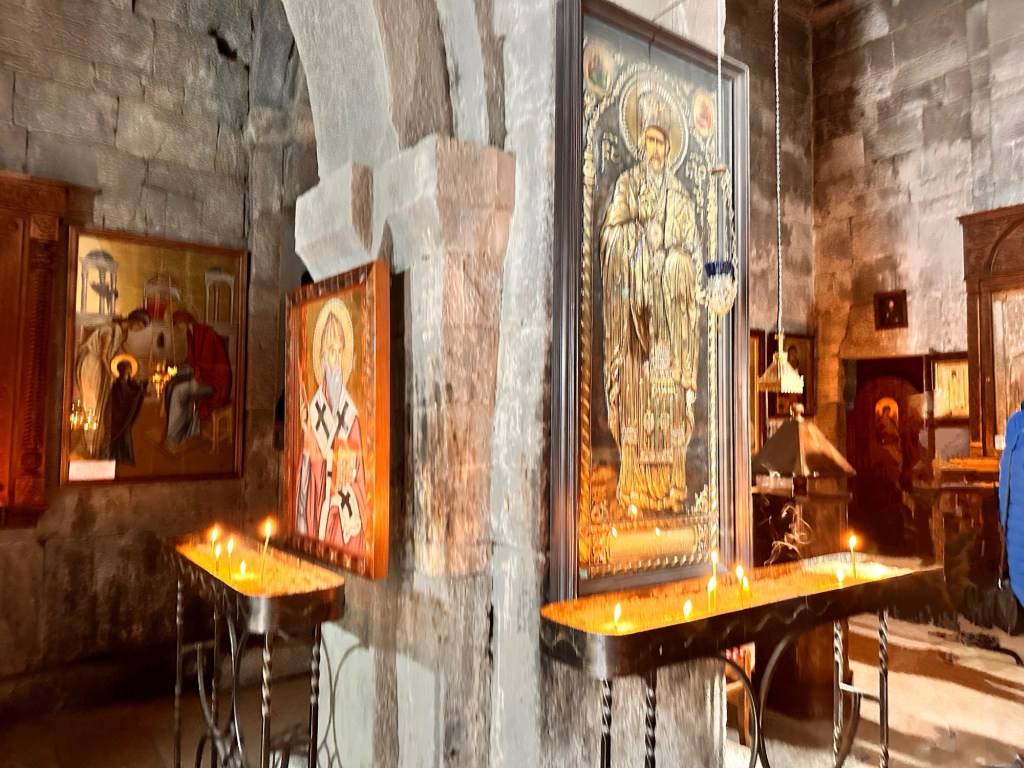
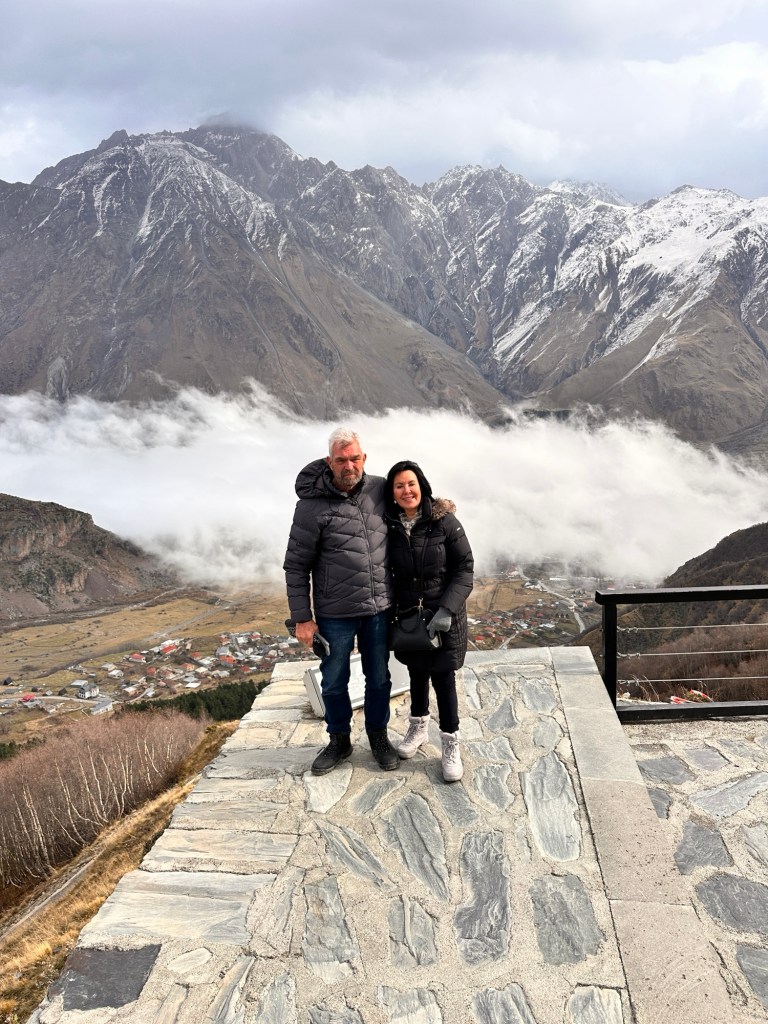
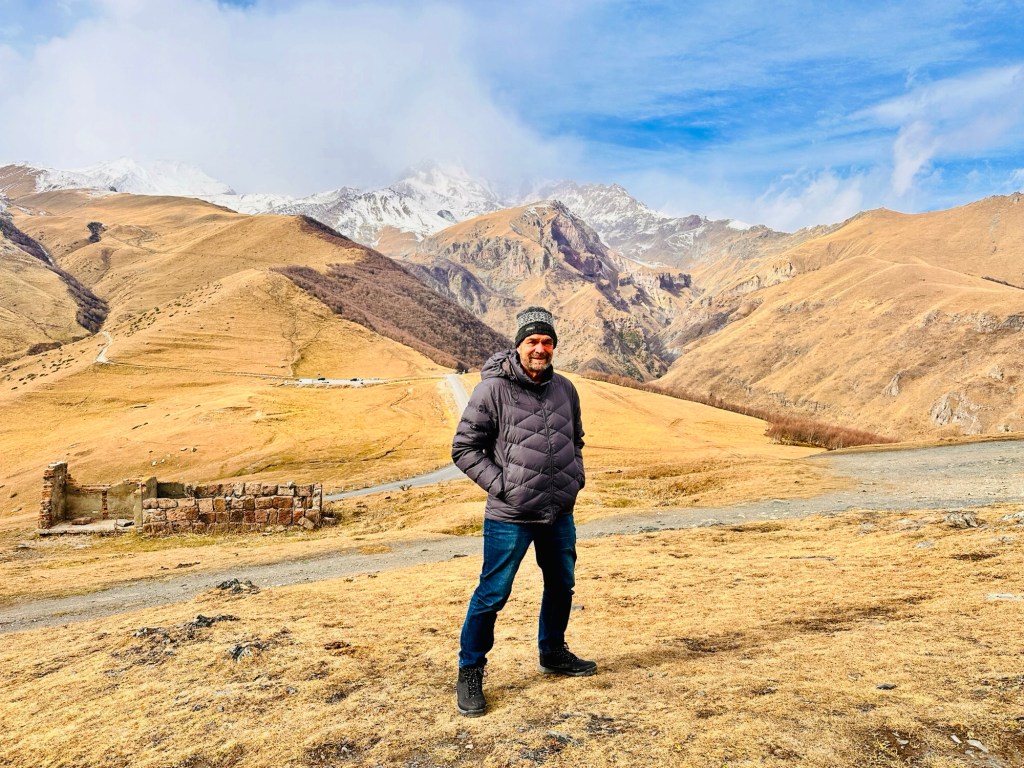
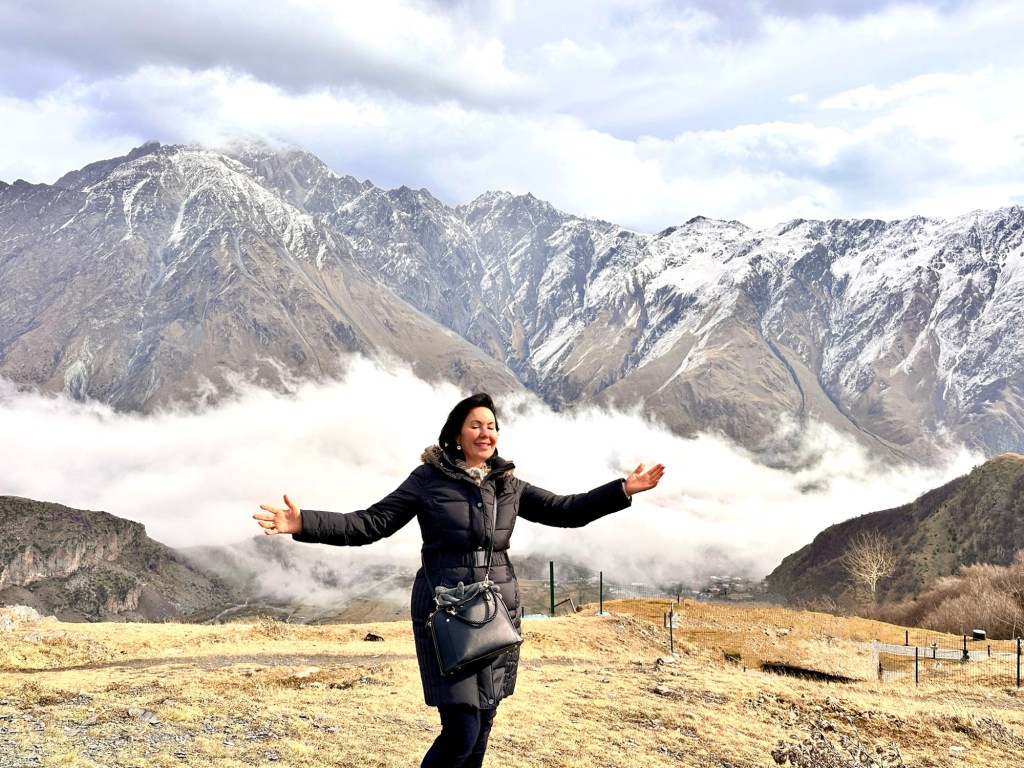
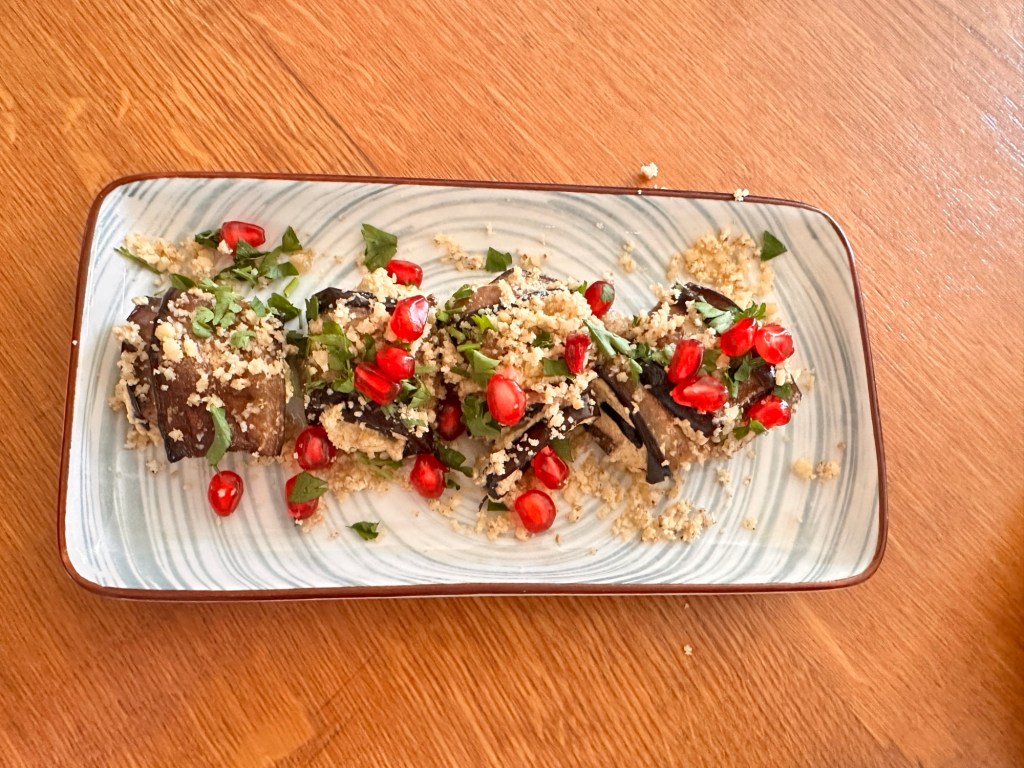
Onto the township of Stepantsminds, only 15 kms from the Russian border, where we stopped for lunch at a local restaurant – eggplant rolls with walnut filling for me, vegetable soup for Frank. Deliciously warming! Not much else happening in this little town.
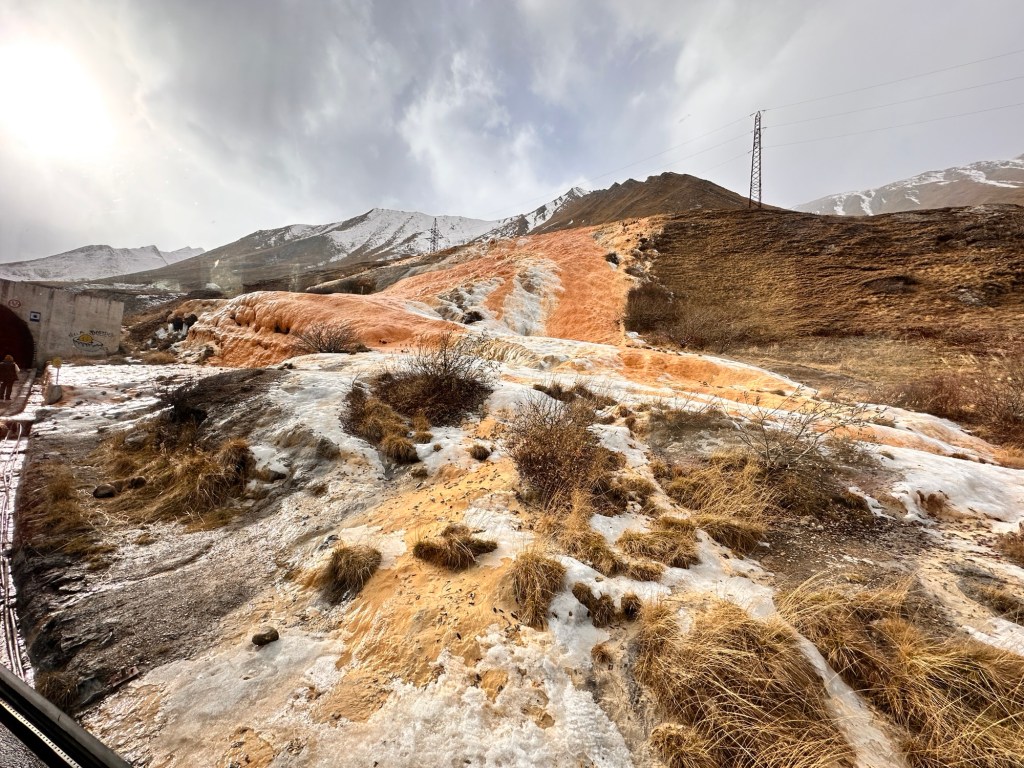
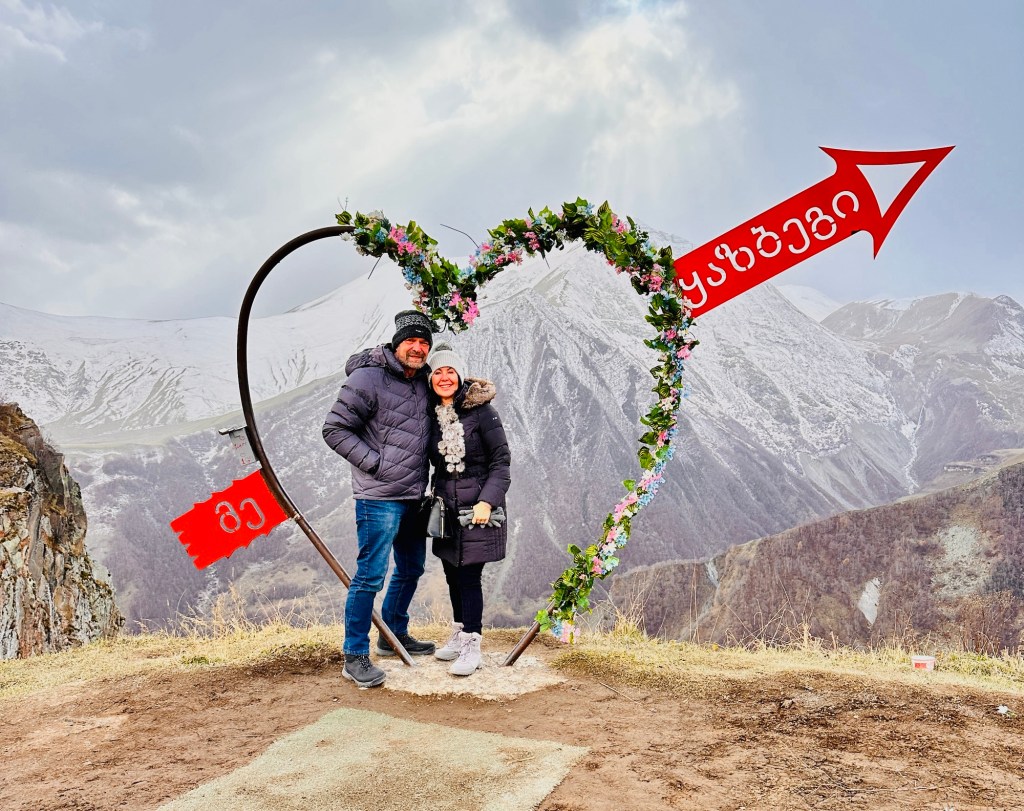
Driving back to Gudauri, we stopped first at the calcium plains, then at the Soviet – Georgian Friendship Memorial. While relations between Georgia and its northern neighbour have soured considerably since the monument’s construction in 1983, its fabulous tiled murals and valley views are amazing! Mind you, the wind decided to flare up, and we were nearly blown off the mountain! A few snowflakes were starting to fall.

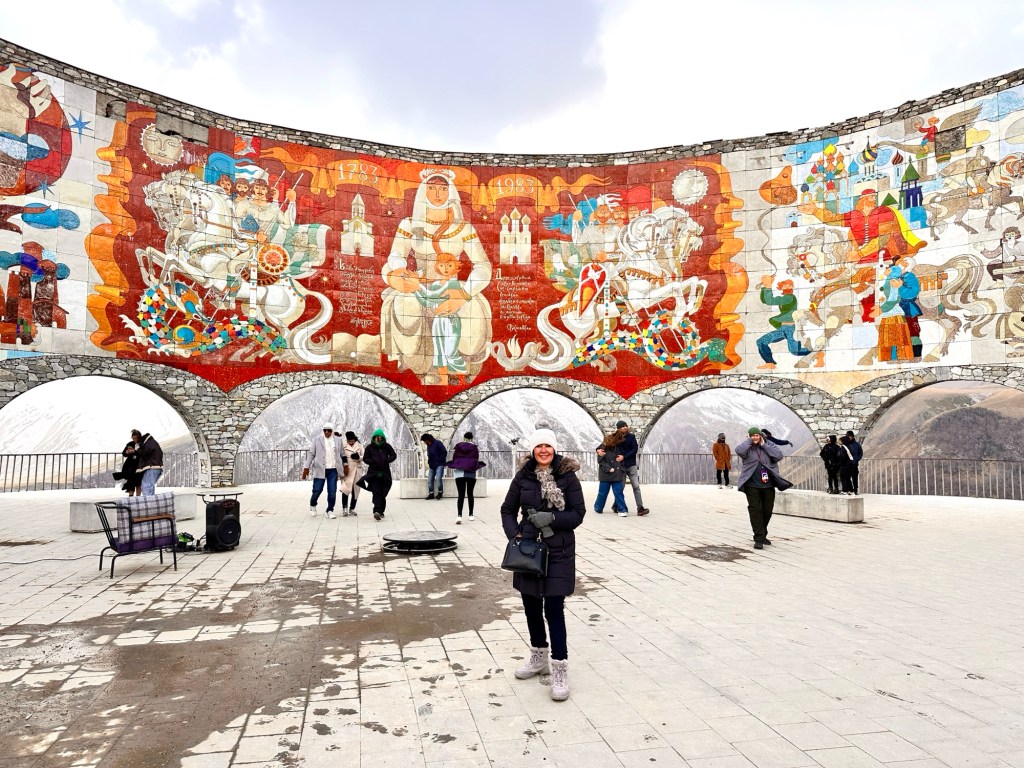
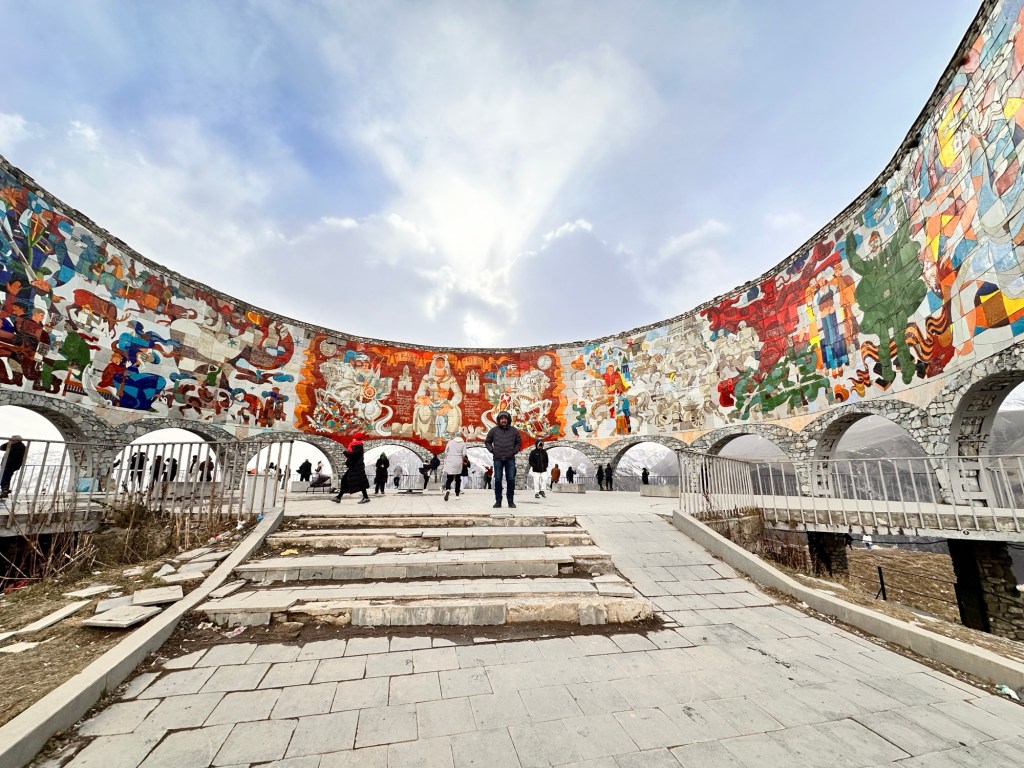
Back to our hotel in Gudauri, where we enjoyed a few drinks, followed by dinner. Tonight, cabbage roll stuffed with spicy pork mix, and delicious vegetables- they certainly do vegetables well here. Of course, there was an accompaniment of khachapuri -Georgia’s national dish – flatbread with salty cheese. They seem to bring it out at every meal. It is delicious… though probably not good for the waistline!
Day 12
Monday 4th November 2024
Gudauri-Gori-Uplistsikhe-Kutaisi
330 kms
-6-0 in Gudauri- 6-11 in Kutaisi
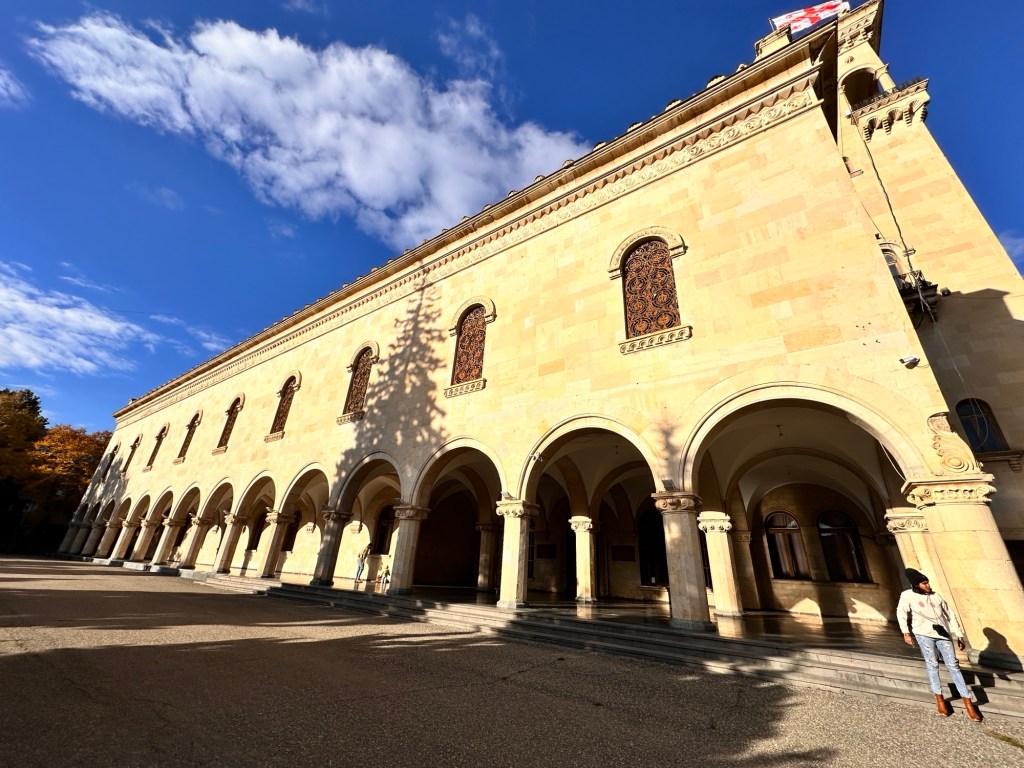
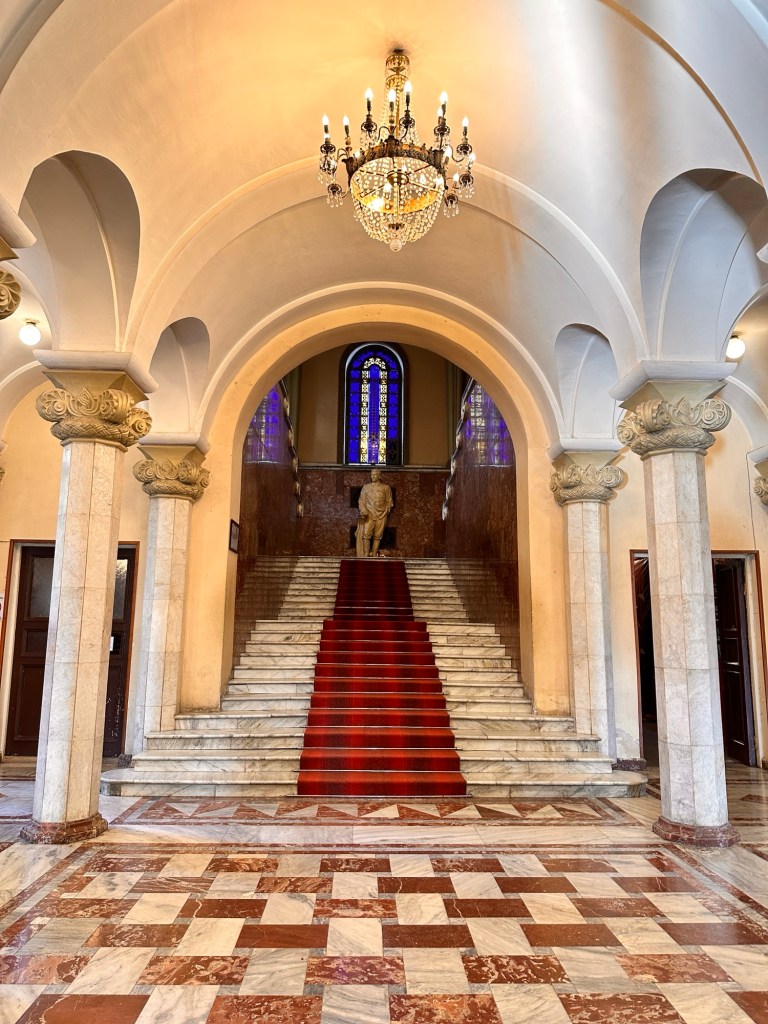
After breakfast we had a 3 hour drive to Gori. Gori will always be synonymous with the Soviet dictator Joseph Stalin (1878-1953), who was born and grew up in this provincial town before embarking on a precarious and cut-throat journey through life that ended with him leading the Soviet Union with merciless brutality for a quarter of a century. Nowadays his former home functions as a museum with items related to his life. Of note is the dictator’s personal train carriage, as well as a museum building and the small house where he was born. The lights went out half way through the tour, and the museum guide never flinched, she just continued as if nothing had happened!
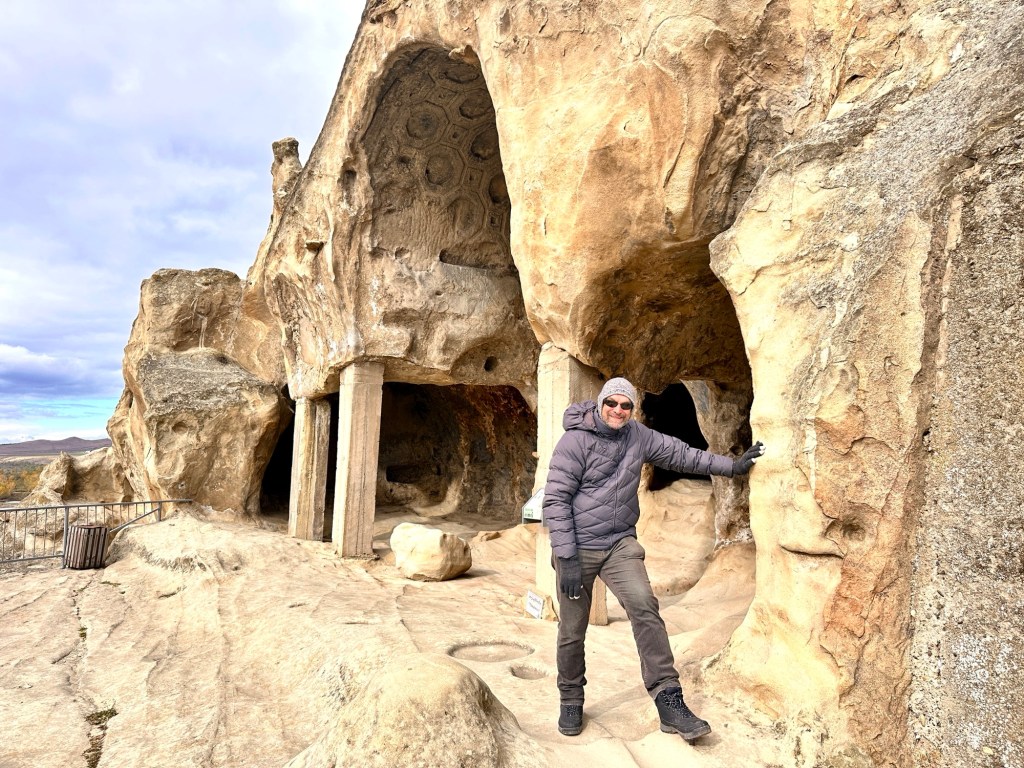
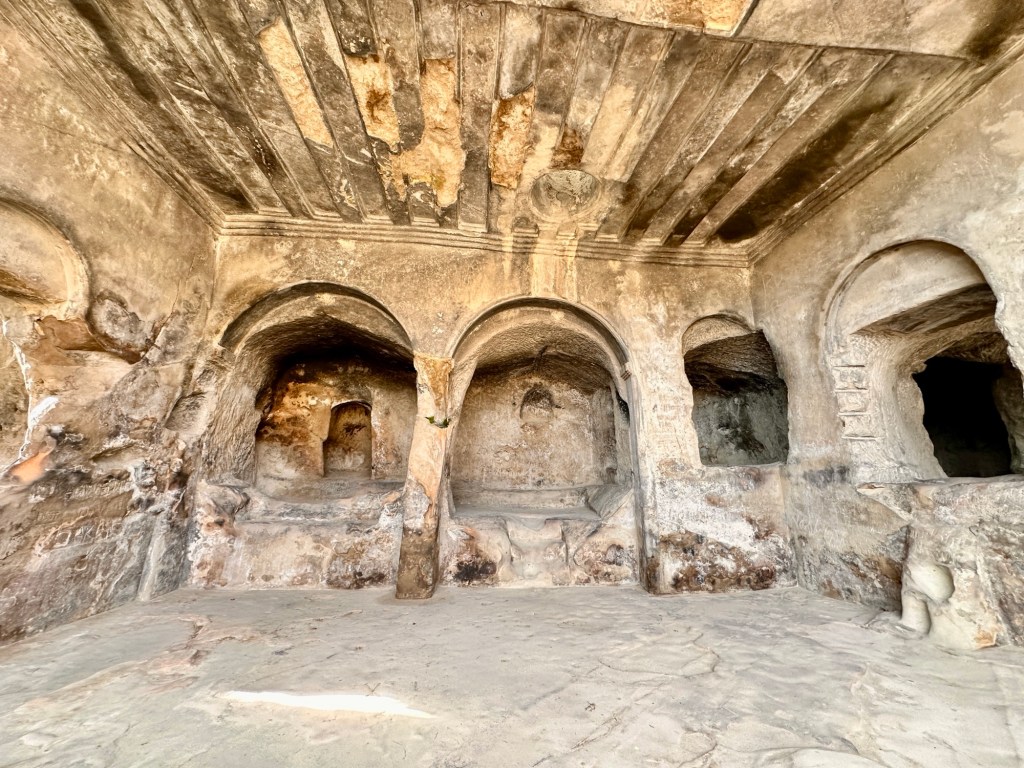
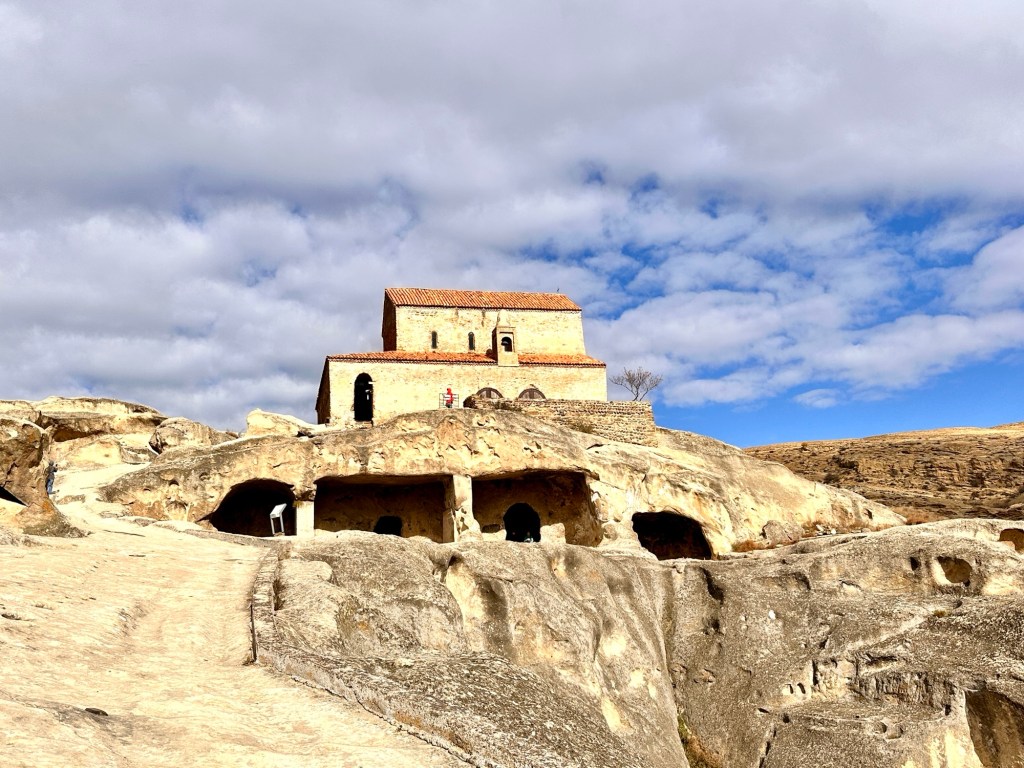
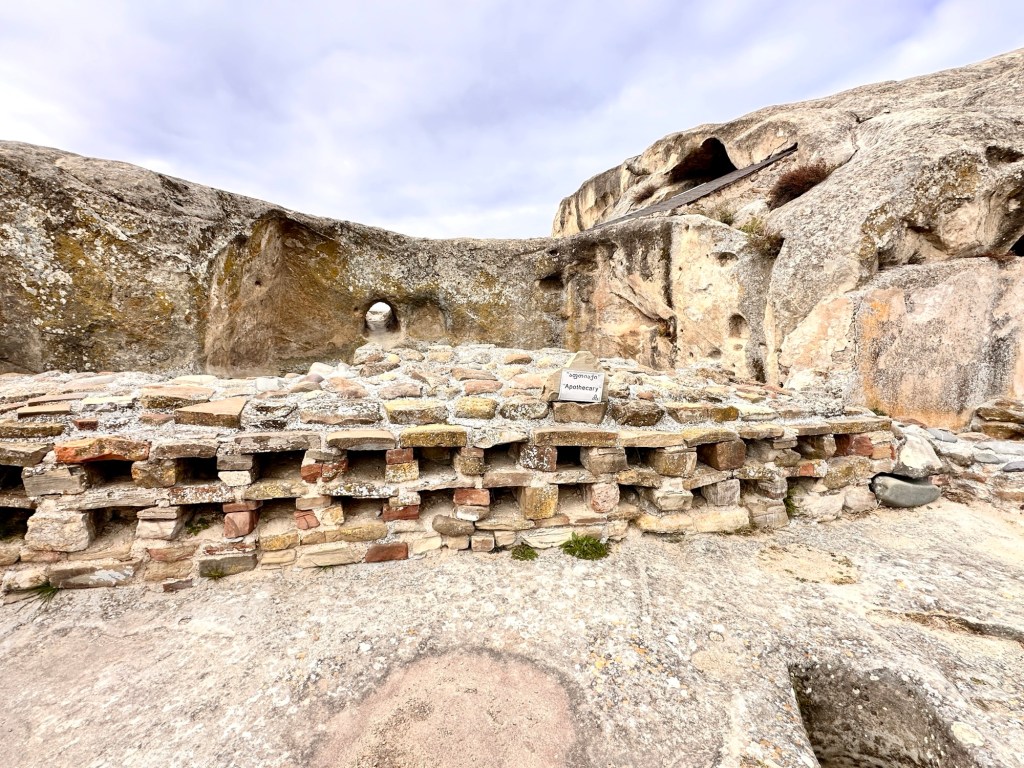
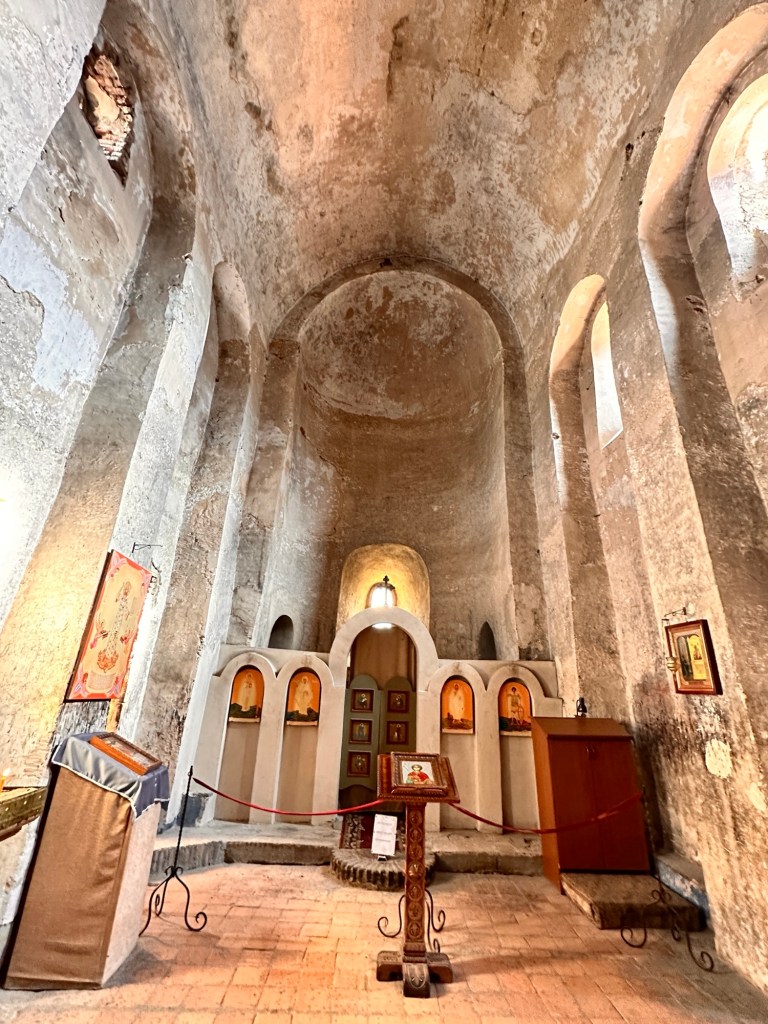
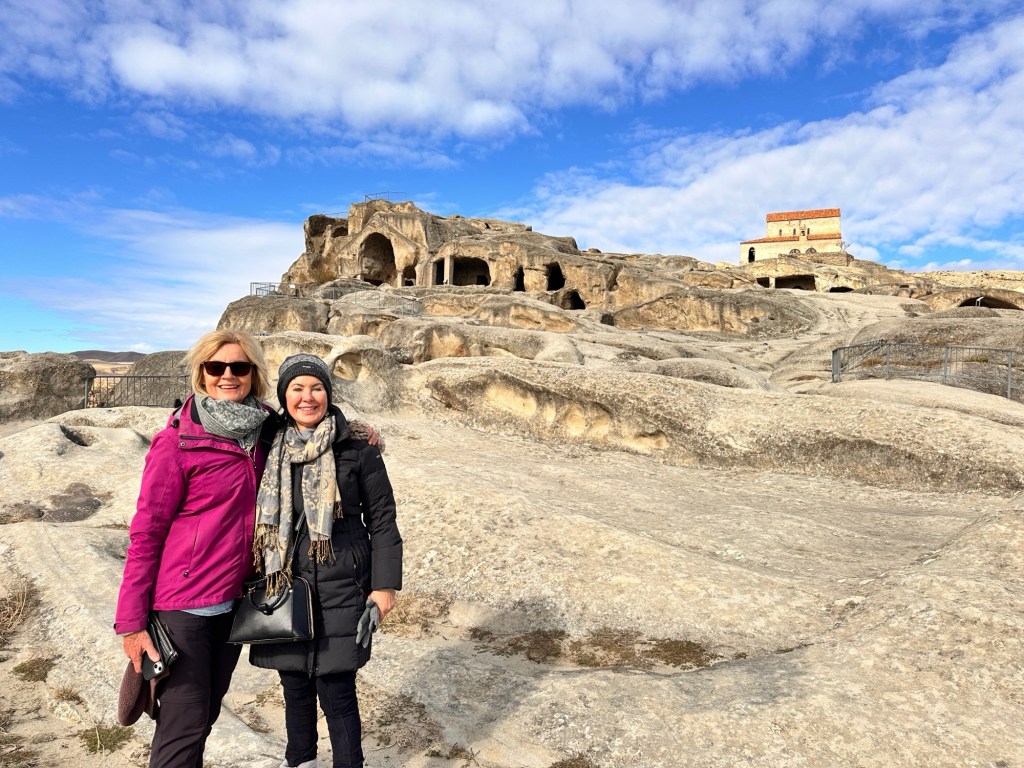
Uplistsikhe is one of the oldest-known urban settlements in the Caucasus, almost everything at the site has been uncovered by archaeologists since 1957, when the once-enormous cave city 10km east of Gori was excavated for the first time. Once one of the chief political and religious centres of pre-Christian Kartli, Uplistsikhe was known as a centre of Sun Goddess worship. It later became the residence of the Christian kings of Kartli and was an important Silk Road caravan town until King David the Builder recaptured Tbilisi from Arab rule in 1222, after which the town began a slow decline, before being almost totally destroyed by the Mongols in 1240. 25,000 people could live there at a time!
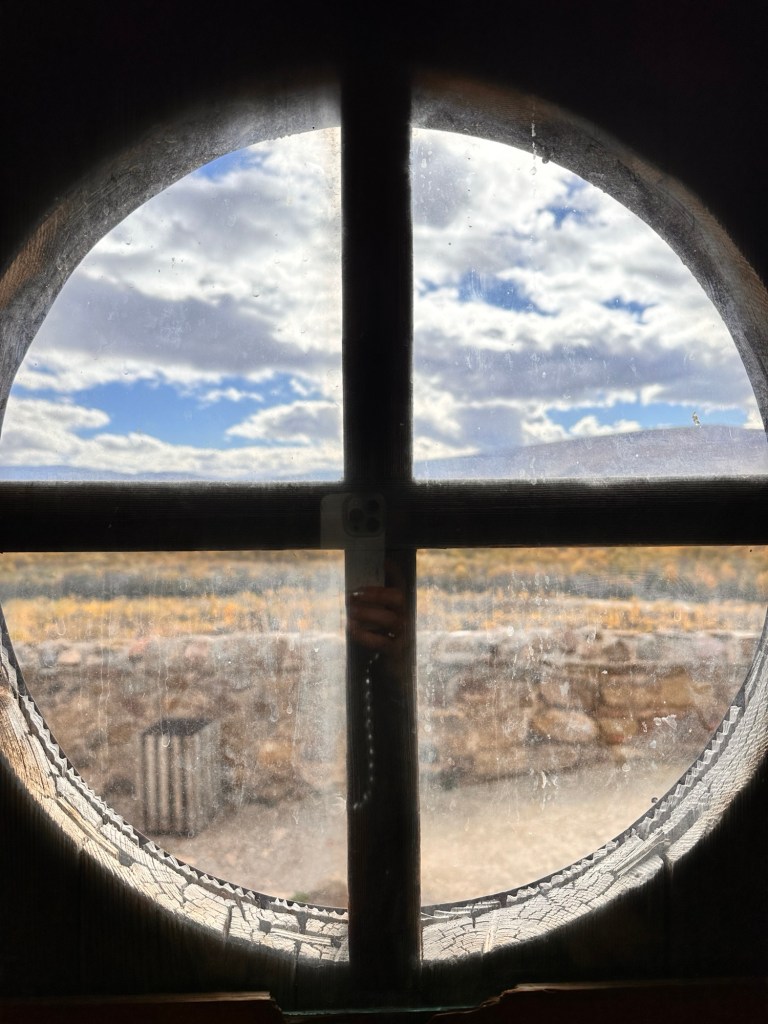
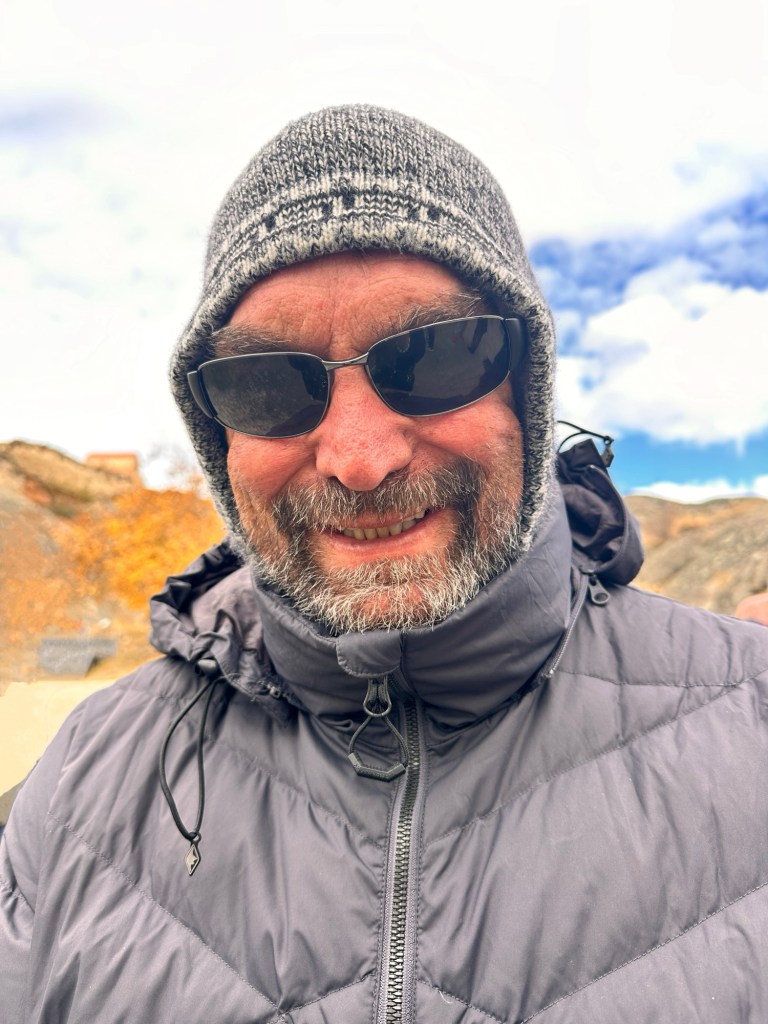
We climbed many stairs, then clambered over the sandstone rock to reach the Inner City, the Theatre, the Hall of Queen Tama, and the pre- Christian Temple of Makvliani. Only 25 percent of the original city remains due to earthquakes in the nineteenth century. It was quite amazing to see how advanced their living conditions were. We exited the site by the very long emergency exit tunnel (many steep stairs) that goes down to the river (they could bring water up to the city, but I imagine were totally exhausted by the time they got to the top!).A very interesting place to visit.



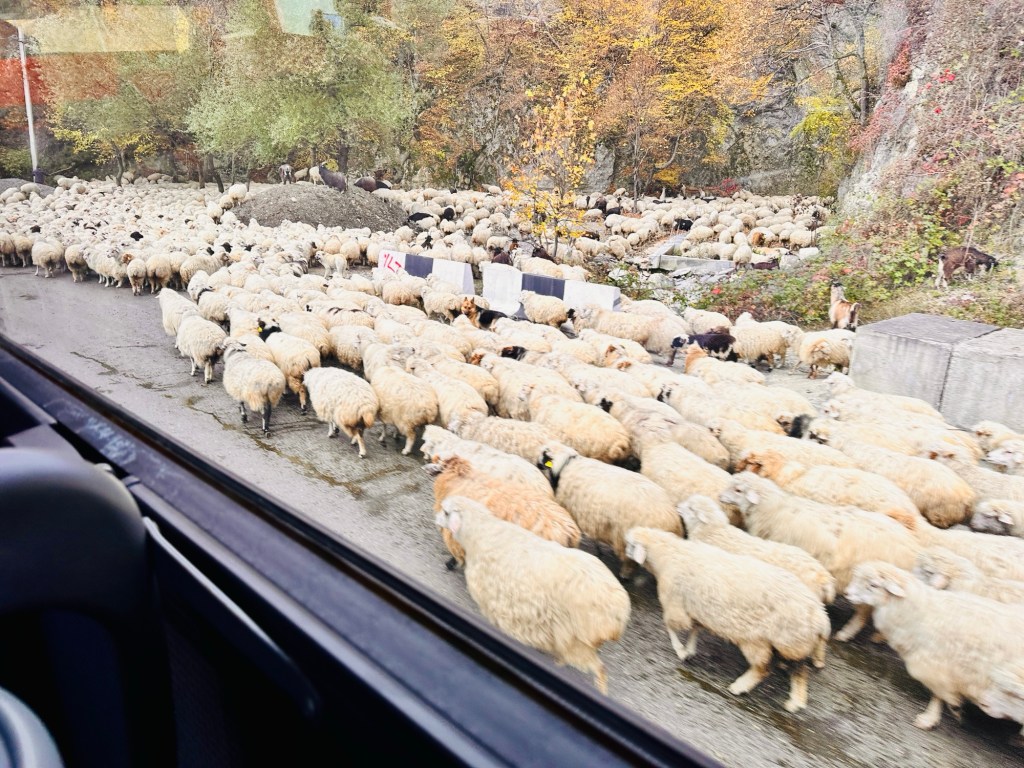
Another couple of hours drive to Kutaisi – the legislative capital of Georgia and capital of the western region of Imereti – via the Rikoti Pass.
Historically one of the major cities of Georgia, it served as the capital of the Kingdom of Georgia in the Middle Ages, and later as the capital of the Kingdom of Imereti. The Parliament of Georgia moved to Kutaisi in 2012 in an effort to both acknowledge the status of the city, and to decentralise the Georgian government.
We didn’t get to the hotel, Kutaisi Inn, until after dark, around 6pm, it had been a long day, so drinks and dinner at the hotel restaurant tonight.
Day 13
Tuesday 5th November 2024
Kutaisi
5-10 degrees, cloudy
Melbourne Cup Day – the race that stops the nation! Of course we had to celebrate with our “Fashion on the Fields” event! Our version was “Beanies on the Bus”! The actual race ran at 8am our time, so we all dressed up (hats only) to have breakfast. All in the name of fun! A sweep as well, but no luck for us! Knight’s Choice was the winner this year.

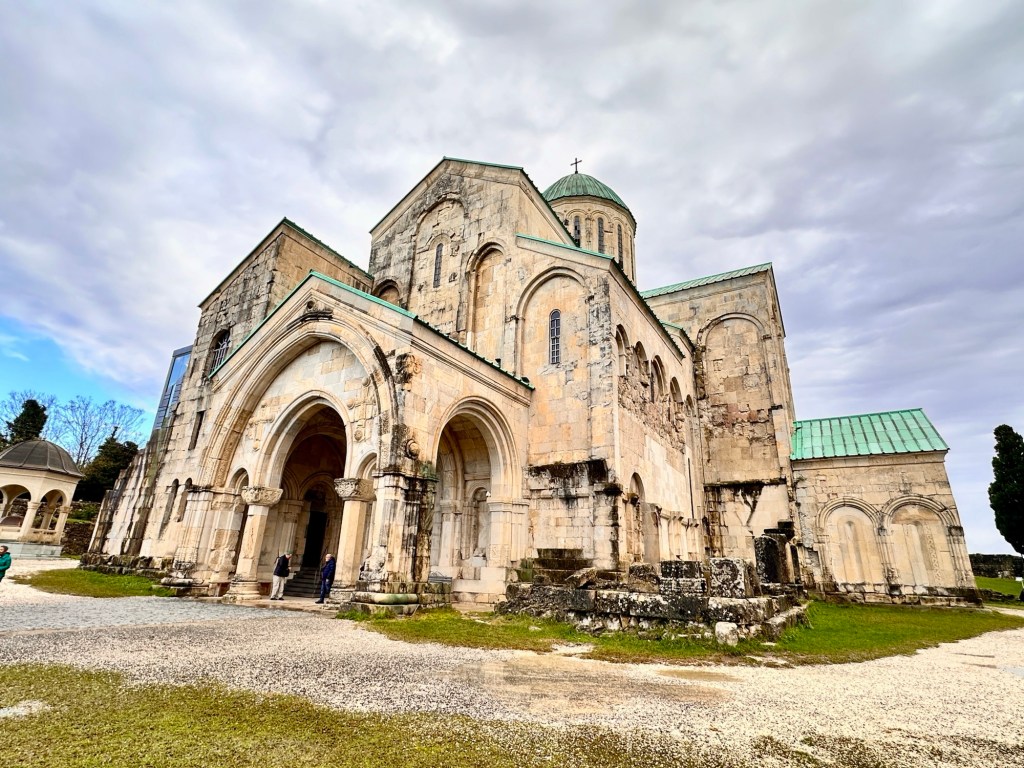
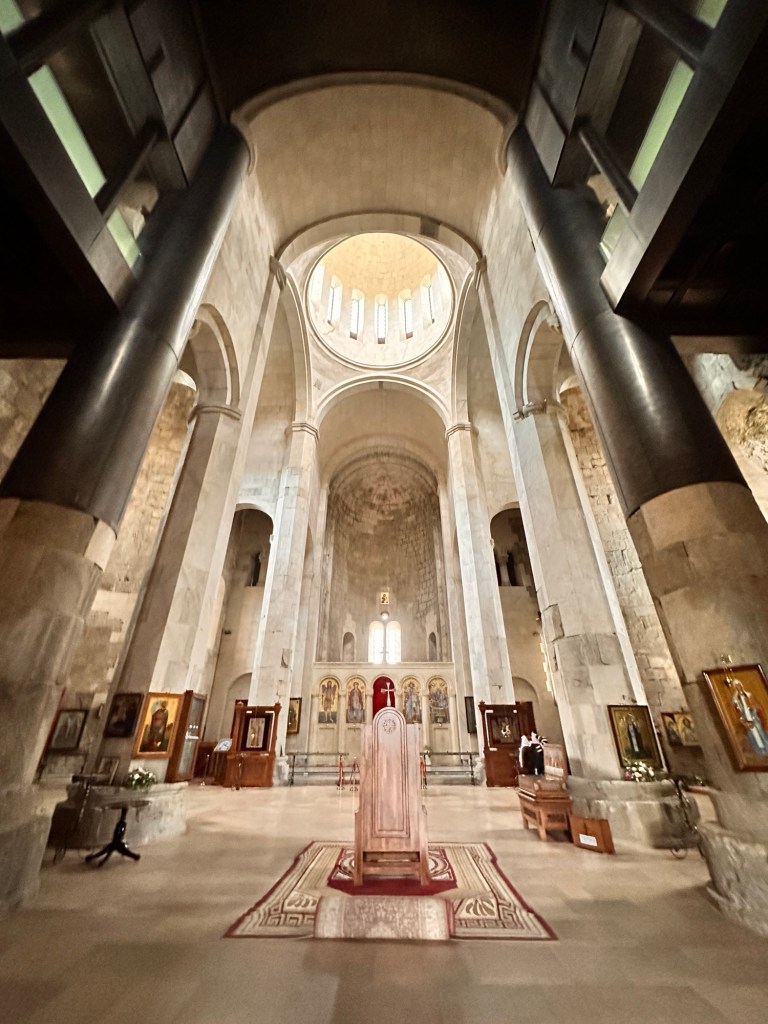
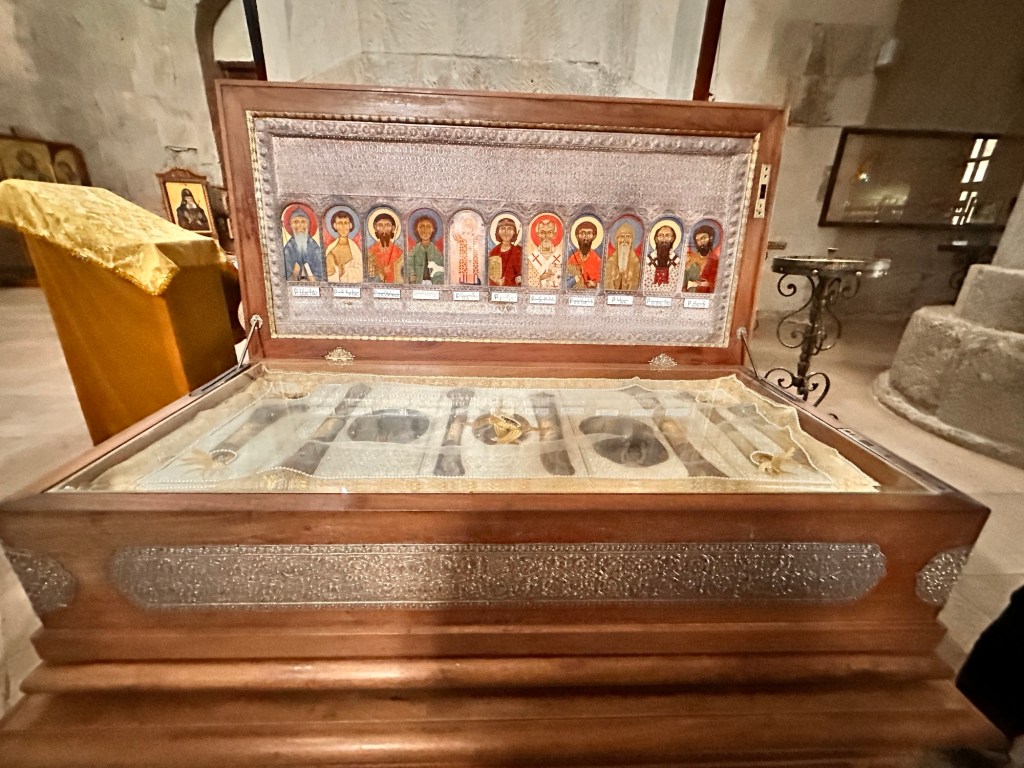
After breakfast, we visited the hillside Bagrati Cathedral, built by King Bagrat III in 1003. Its tall drum and pointed dome rest on four freestanding pillars, an incredible architectural feat for its time, though a Turkish explosion brought the drum, dome and ceiling down in 1692. Work to rebuild the cathedral began in the 1950s, however insensitive renovations to the building led to the cathedral being removed from the UNESCO World Heritage List. Regardless, Bagrati is still impressive to visit. Fabulous view over the city as a bonus!



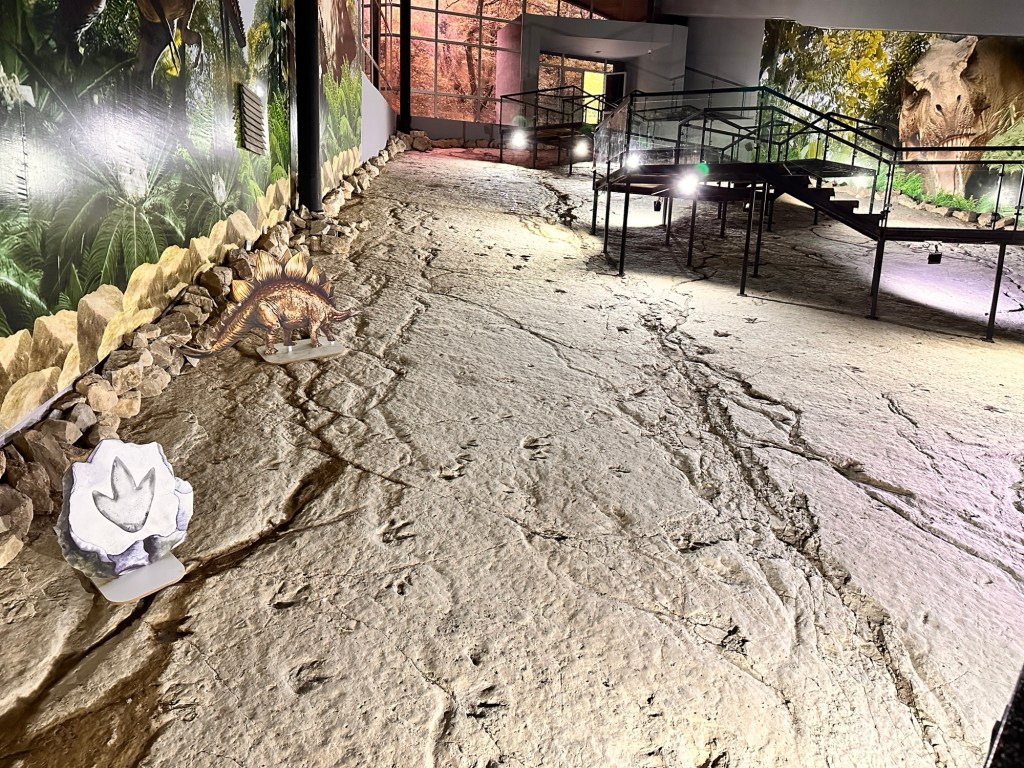
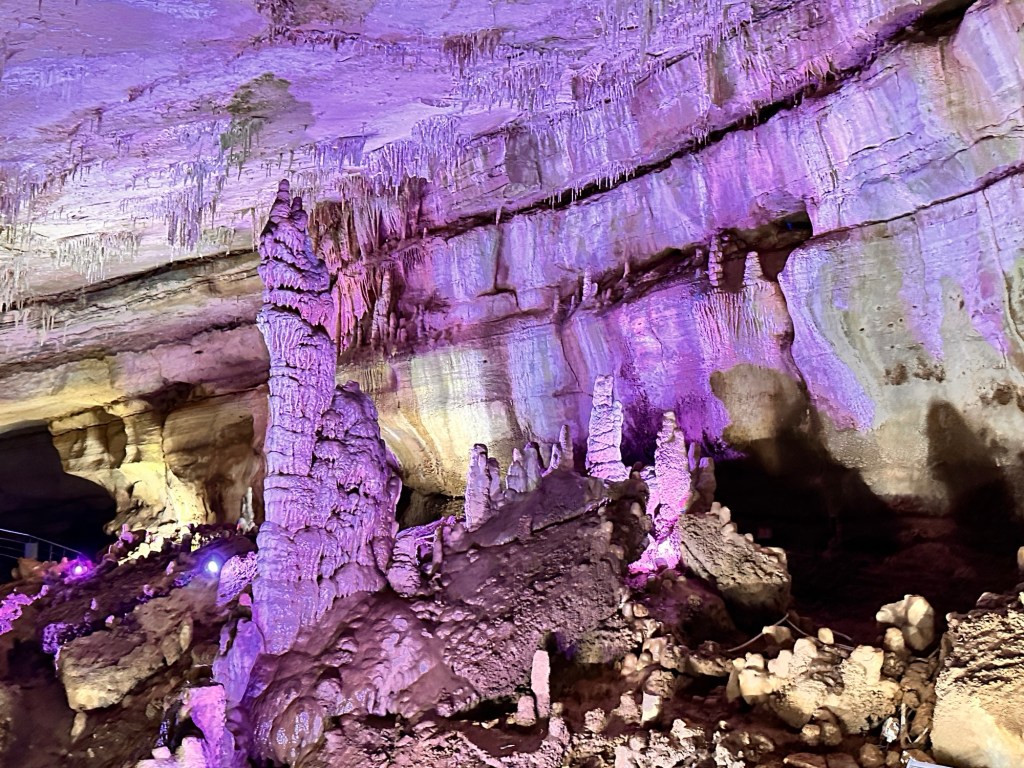
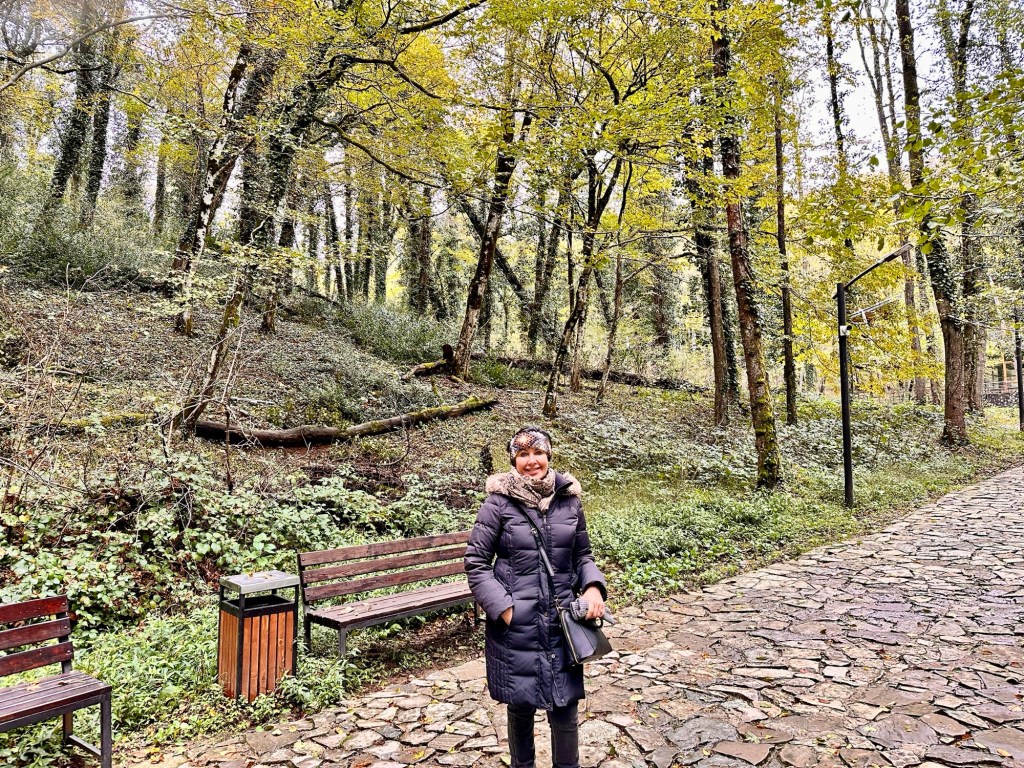
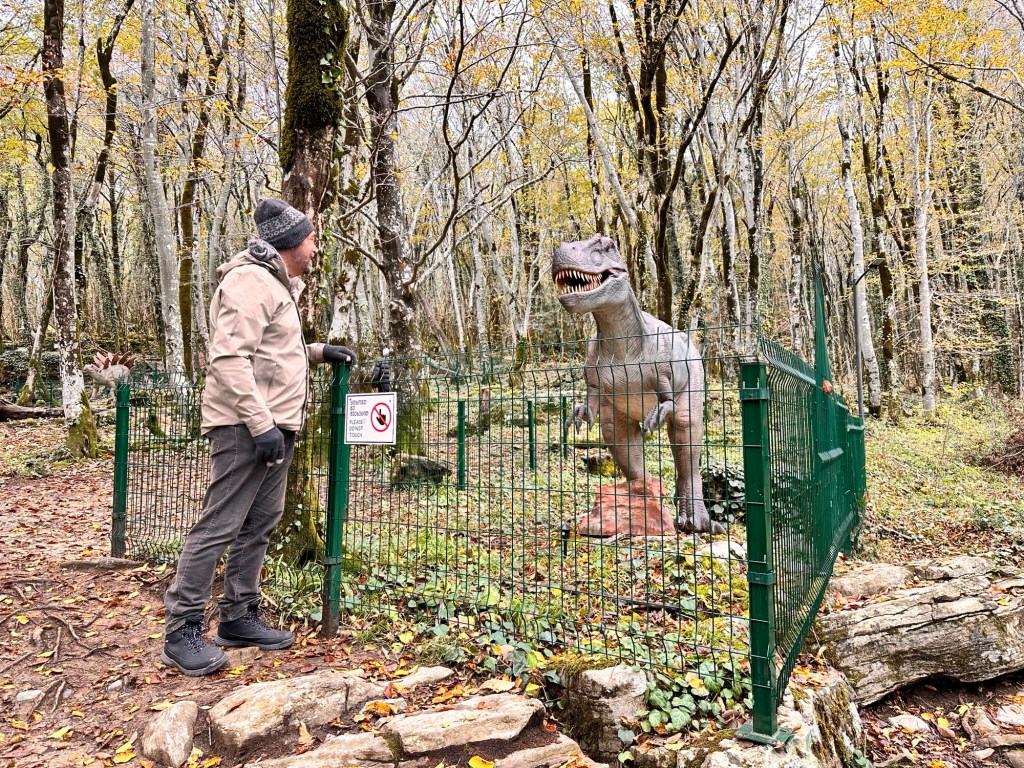
Next a short drive to Sataplia karst caves where we took a walking tour of Sataplia national reserve. This place is famous for containing dinosaur footprints, which are conserved on the territory of the museum. Sataplia cave is 900m long in total and contains stalactites and stalagmites. The dinosaur park provided some light entertainment as the dinosaur models roared and moved as people approached! A short walk to the top of the hill, took us to the glass viewing platform where we had a spectacular view over Kutaisi.

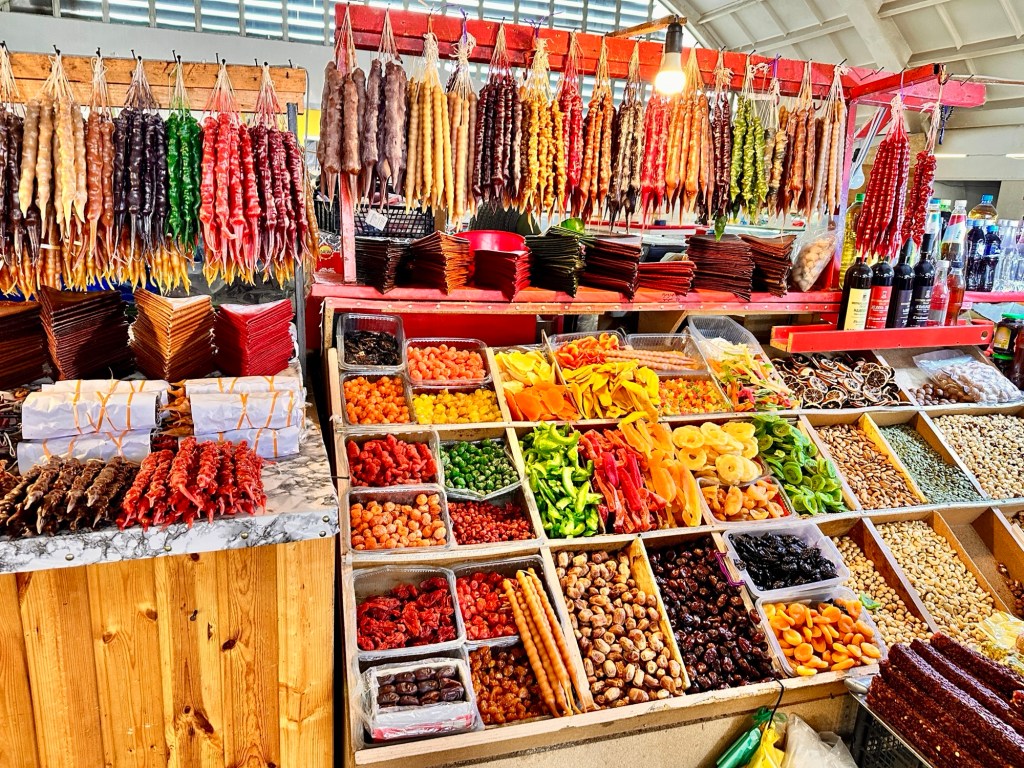
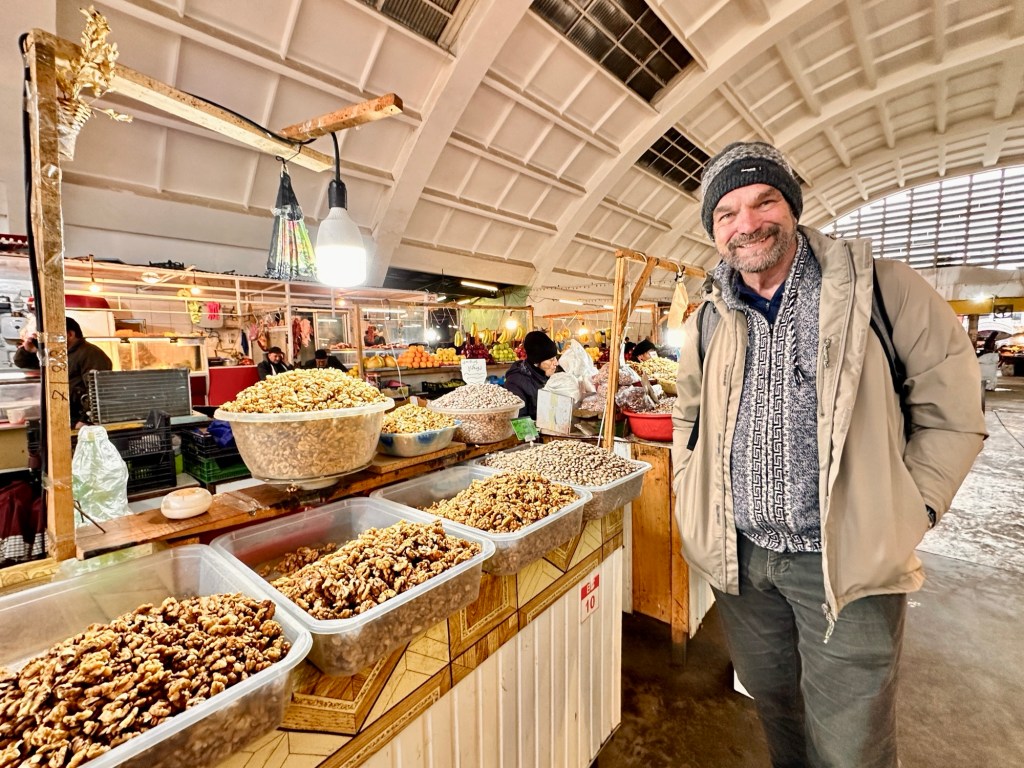
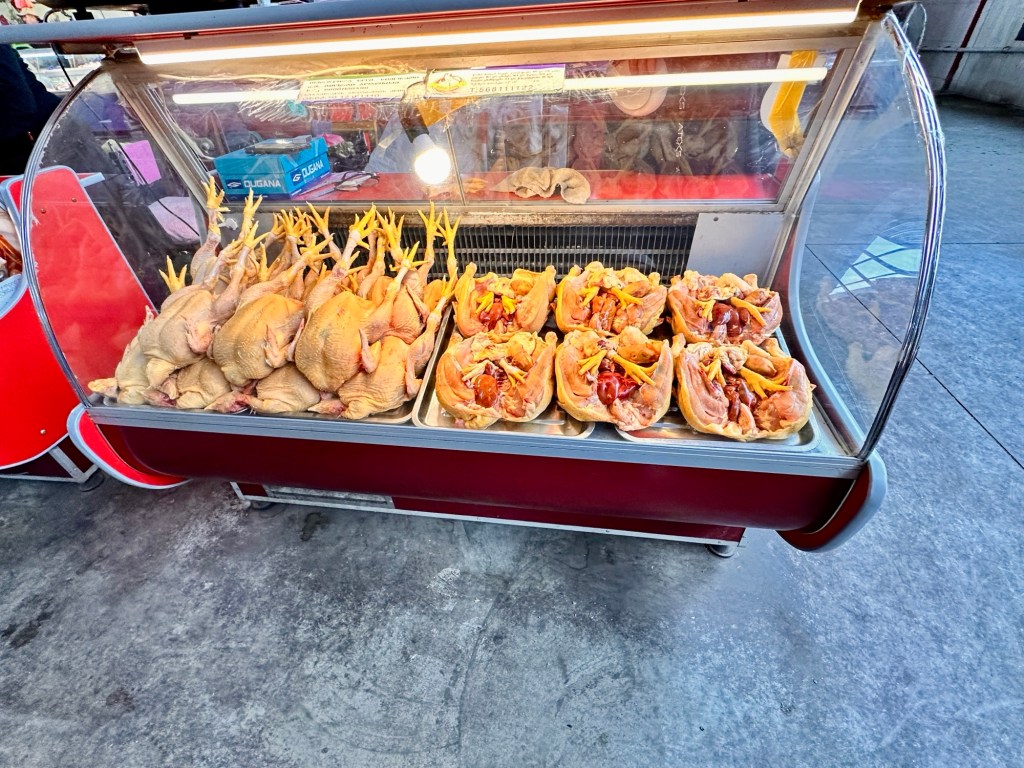
Back to Kutaisi where did a quick tour of the local markets – so much fresh produce! Also plenty of Churchkhela .. a popular Georgian snack of nuts strung together and dipped in grape, or other fruit, resin. It is not too sweet.. a bit like a chewy energy boost!
Lunch at a Georgian restaurant afterwards was delicious! I had beef Chashushulli (Georgian dish – traditionally veal in a rich tomato sauce, with a lot of spices) , and Frank had a bean dish with bacon, and spices… both delicious! With a very full tummy, we enjoyed a short walking tour of the city taking in the Meskhishvili Drama Theatre on Agmashenebeli Square, the Colchis Fountain, the Kutaisi Historic district, and the White Bridge over the Rioni River. Frank and I stayed in town to visit a few shops- just for research purposes – Frank was thrilled! Clothes are so cheap here. I couldn’t help but have a quick look. It was only a 20 minute walk back to the hotel.

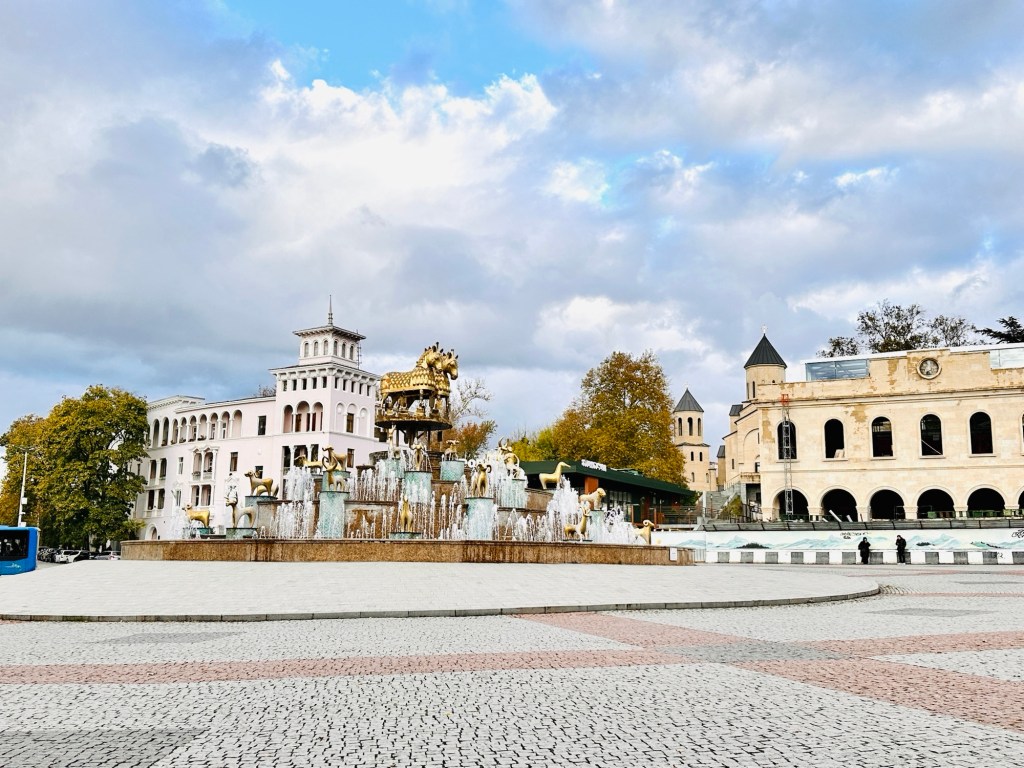
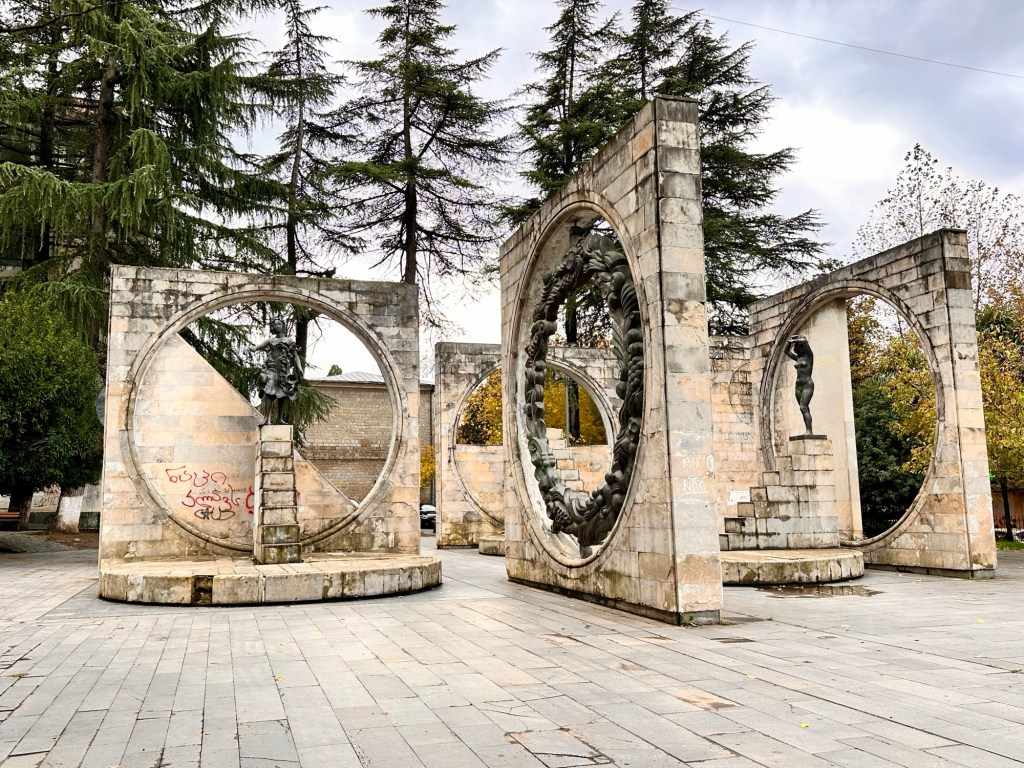
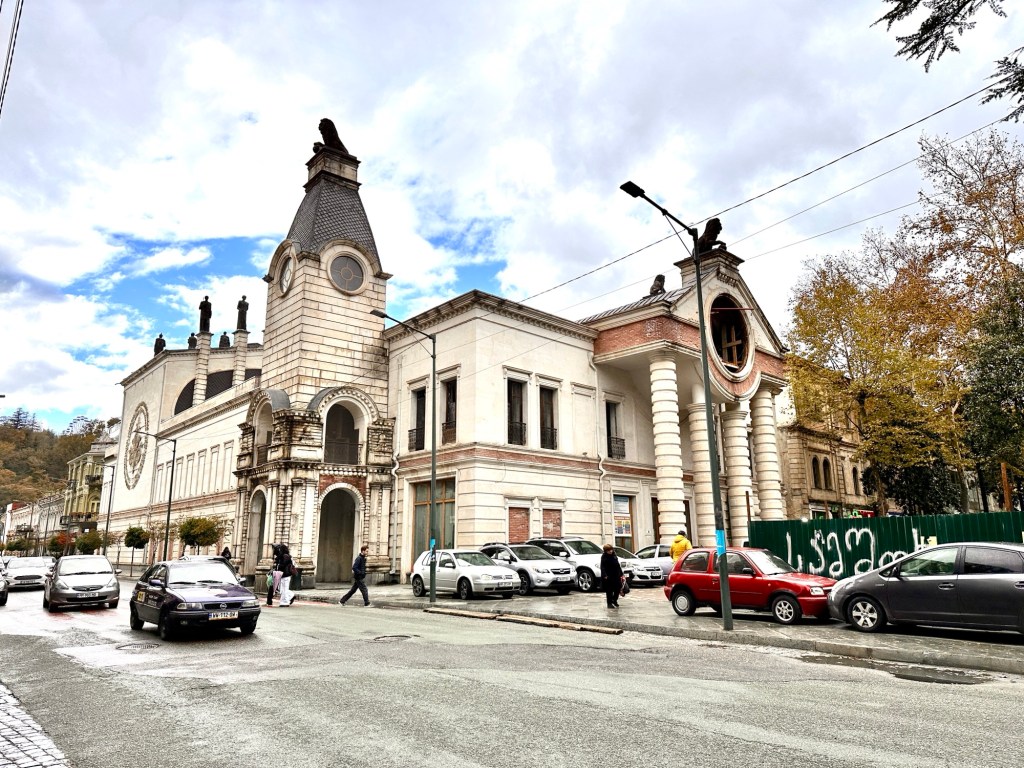
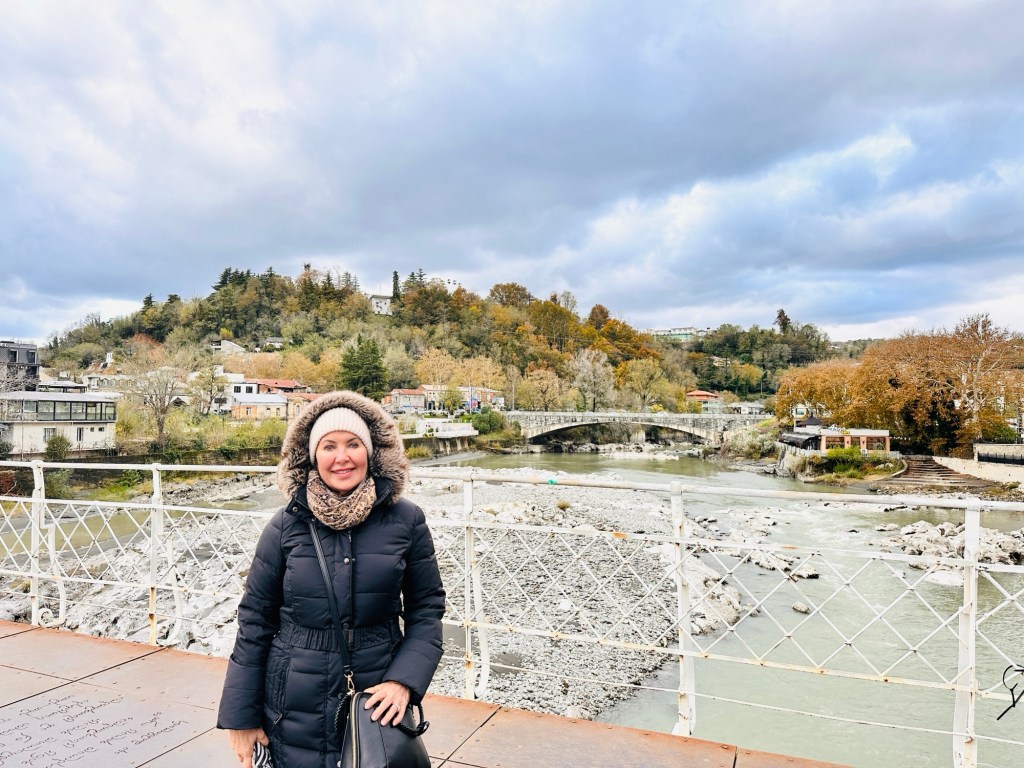
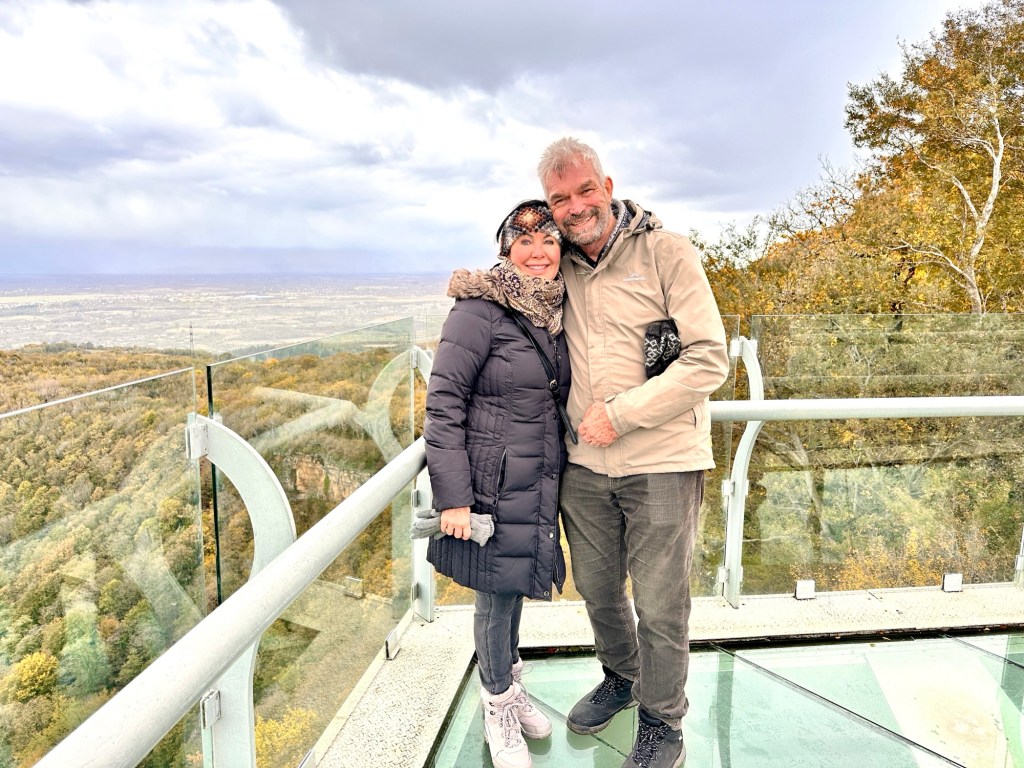
We had a few social drinks before retiring for the night. We were still so full from lunch, so no dinner required. Drinks and food are very cheap in Georgia eg a beer is $8, a glass of wine around $6, and a margarita $10. Our lunch meal cost $25 for 2 meals, a beer and a wine.
Day 14
Wednesday 6th November 2024
Kutaisi to Mestia
210 kms
3-10 degrees in Kutaisi – -11-1 in Mestia
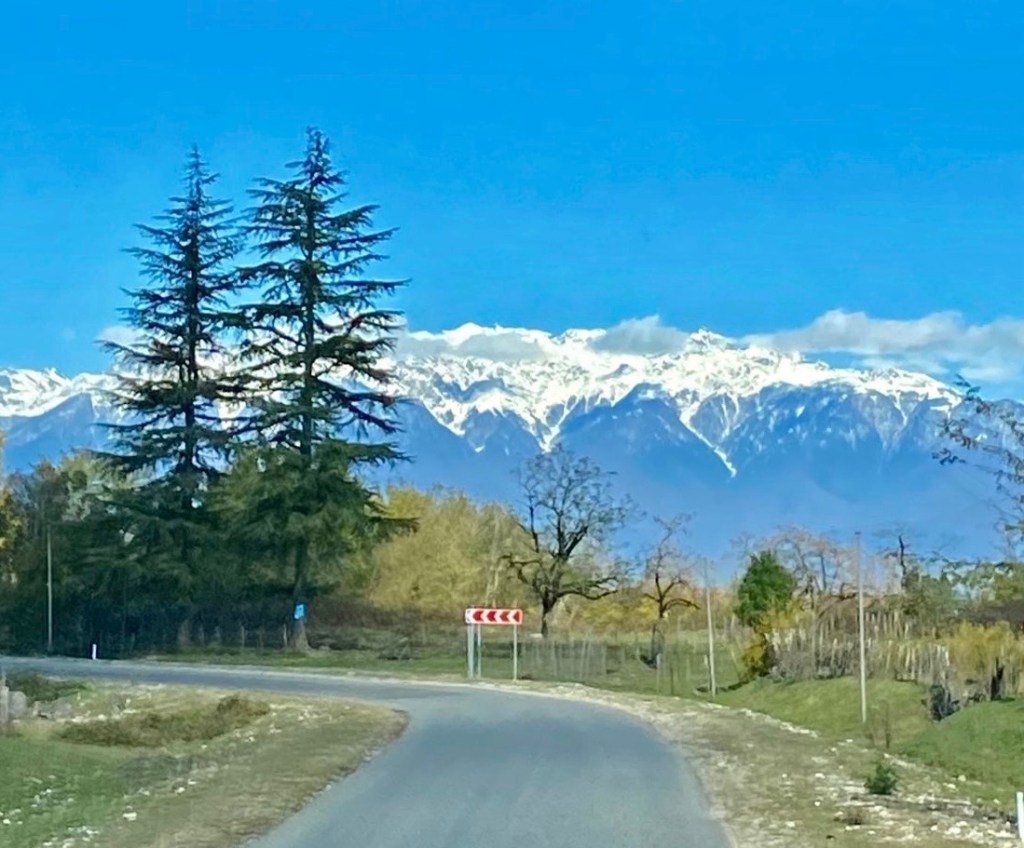
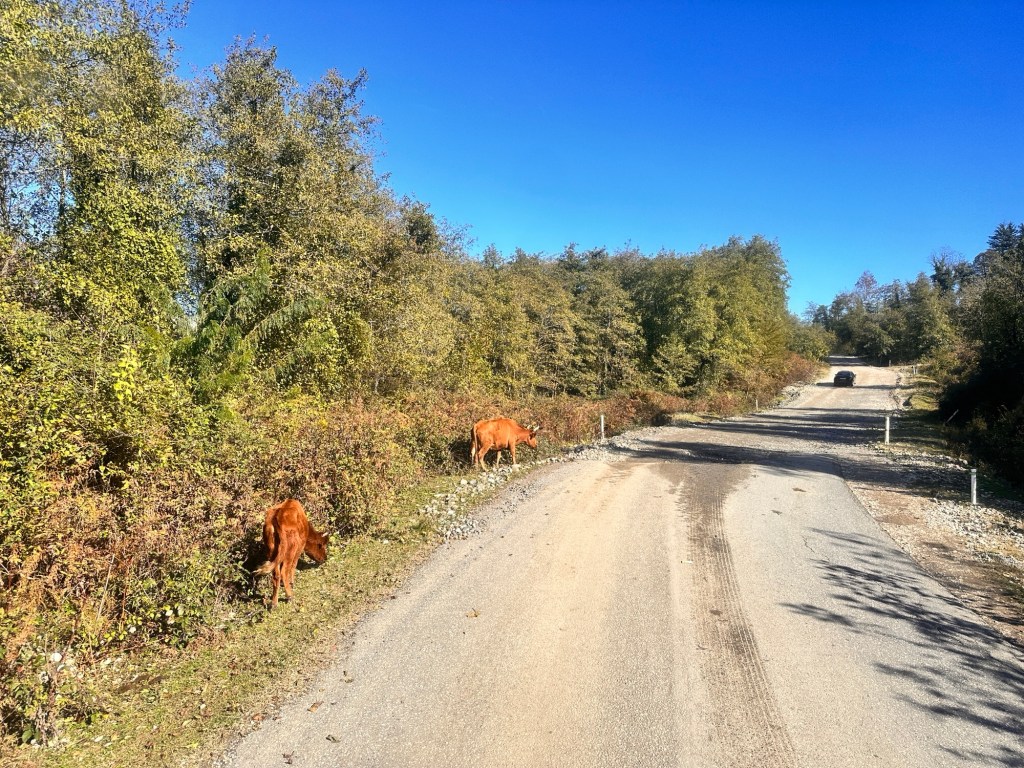
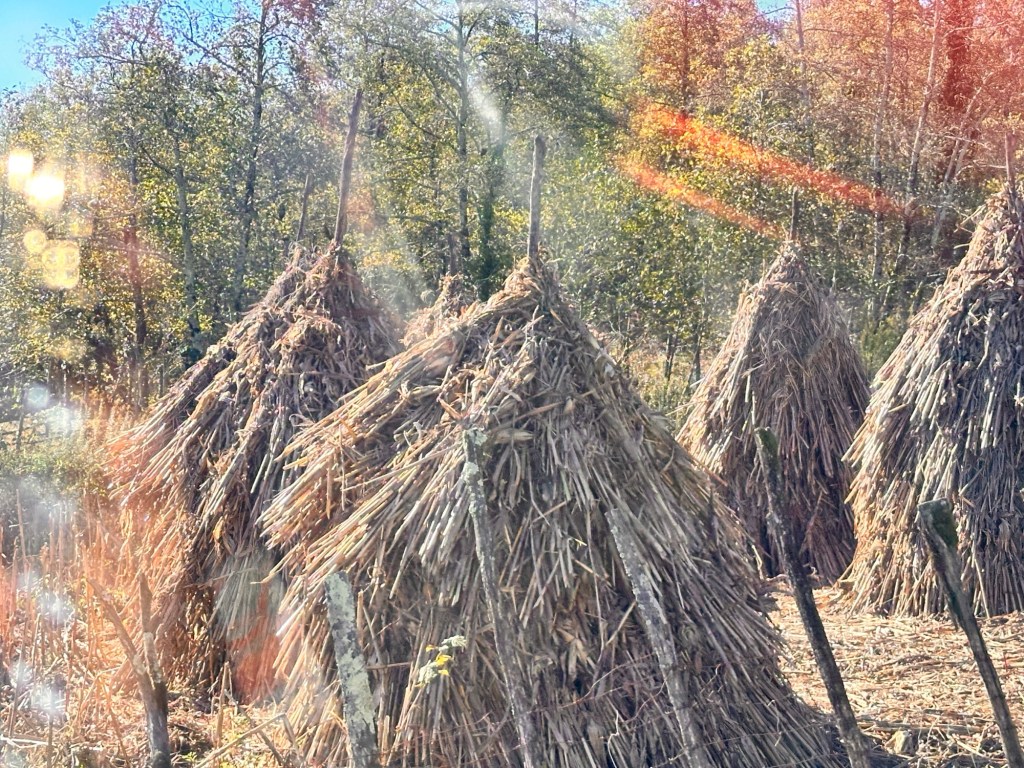
Once out of the city area of Kutaisi, it was a very scenic drive to Martvili – autumnal tree colourings, thousands of persimmon trees with no leaves but simply laden with the orange fruit, quince trees laden with quince, farmlands with corn, and other vegetables, fields of blueberry bushes, cows and pigs wandering along the roadside, geese and turkeys everywhere, all with snow capped mountains in the background.
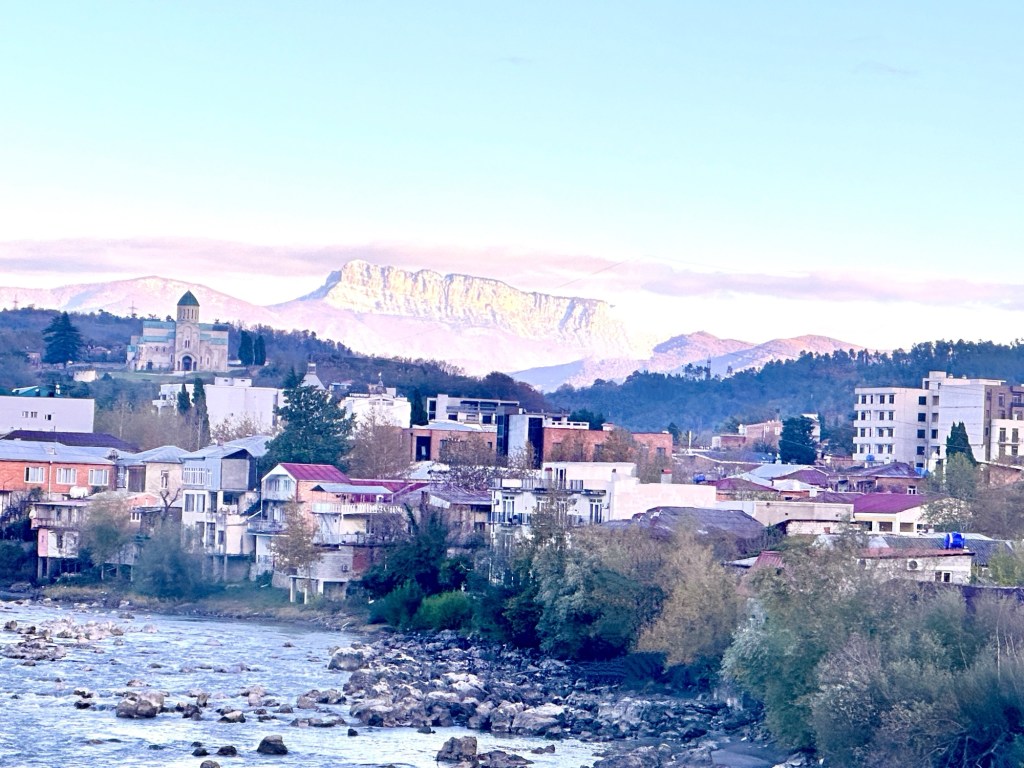
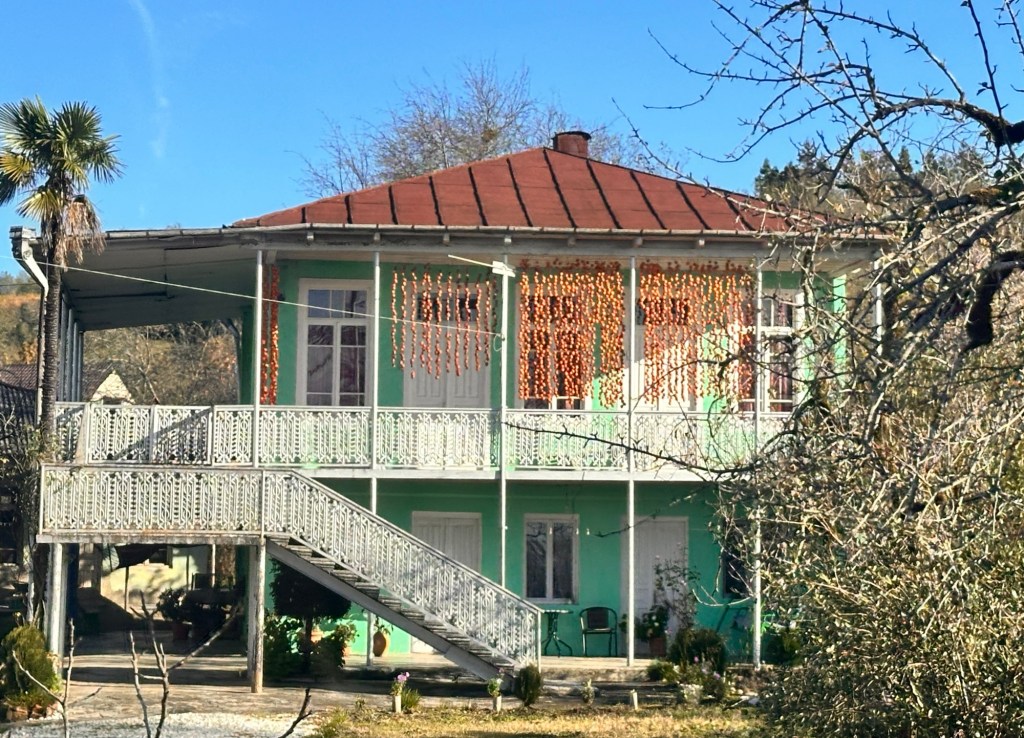
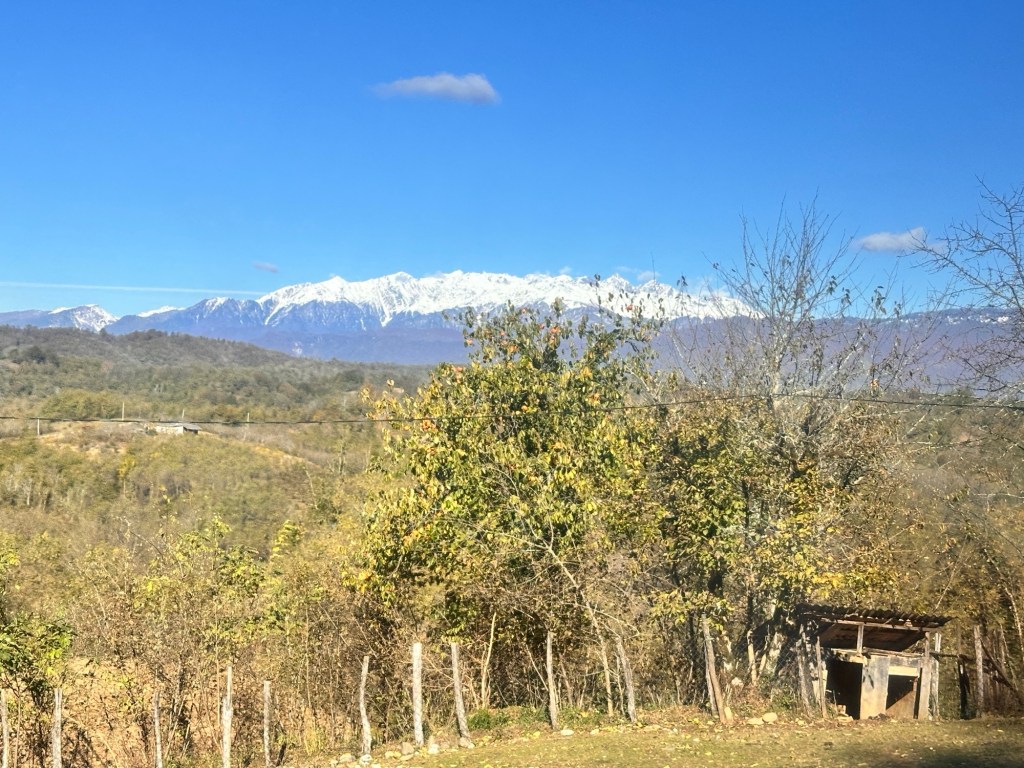
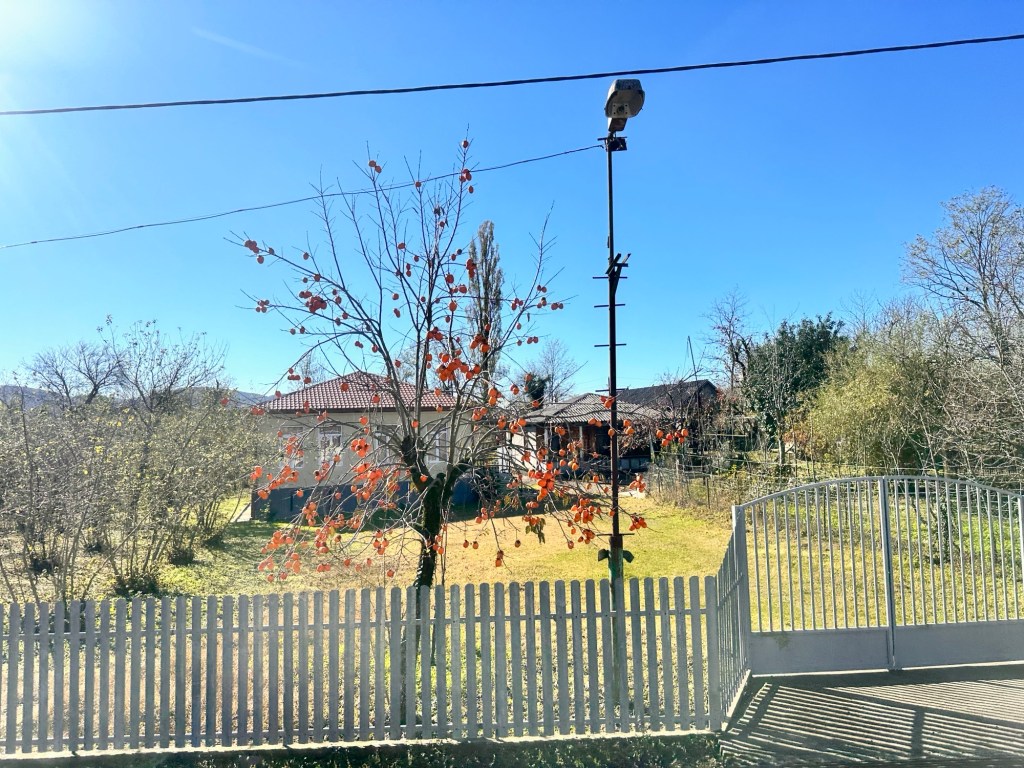
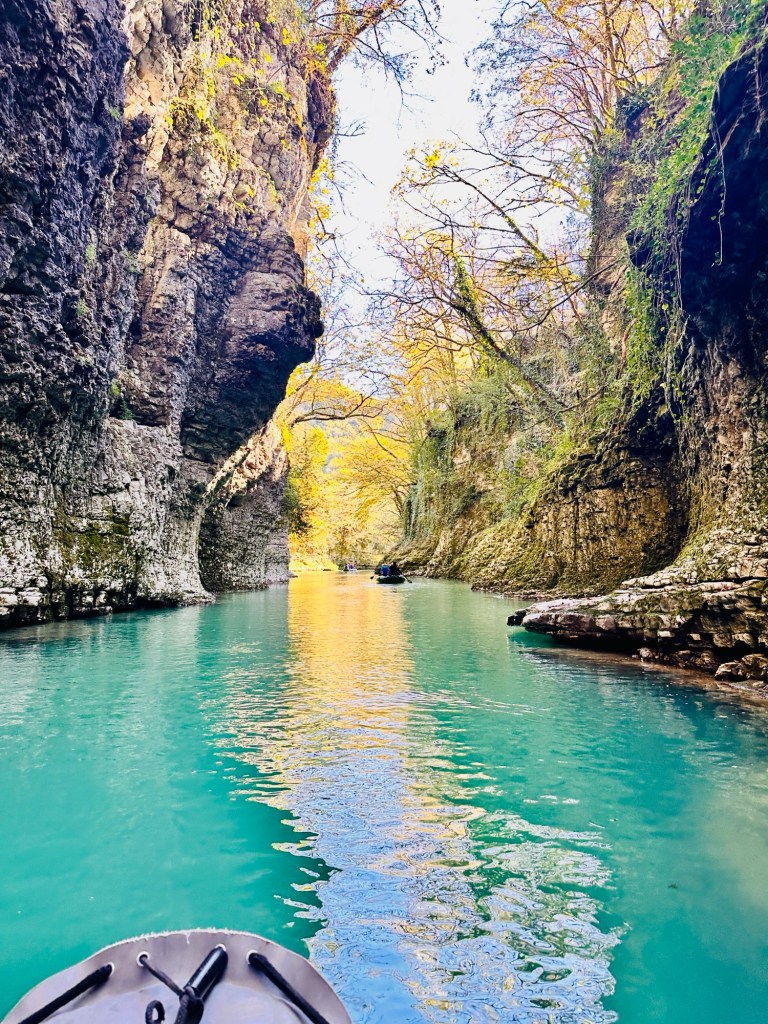
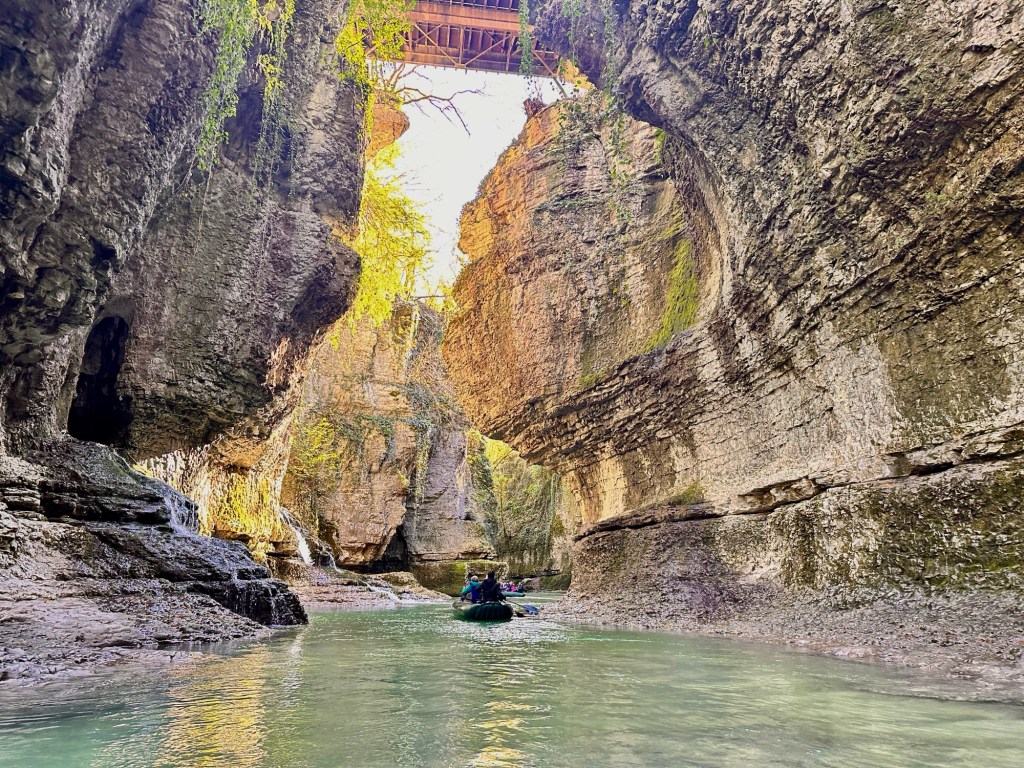
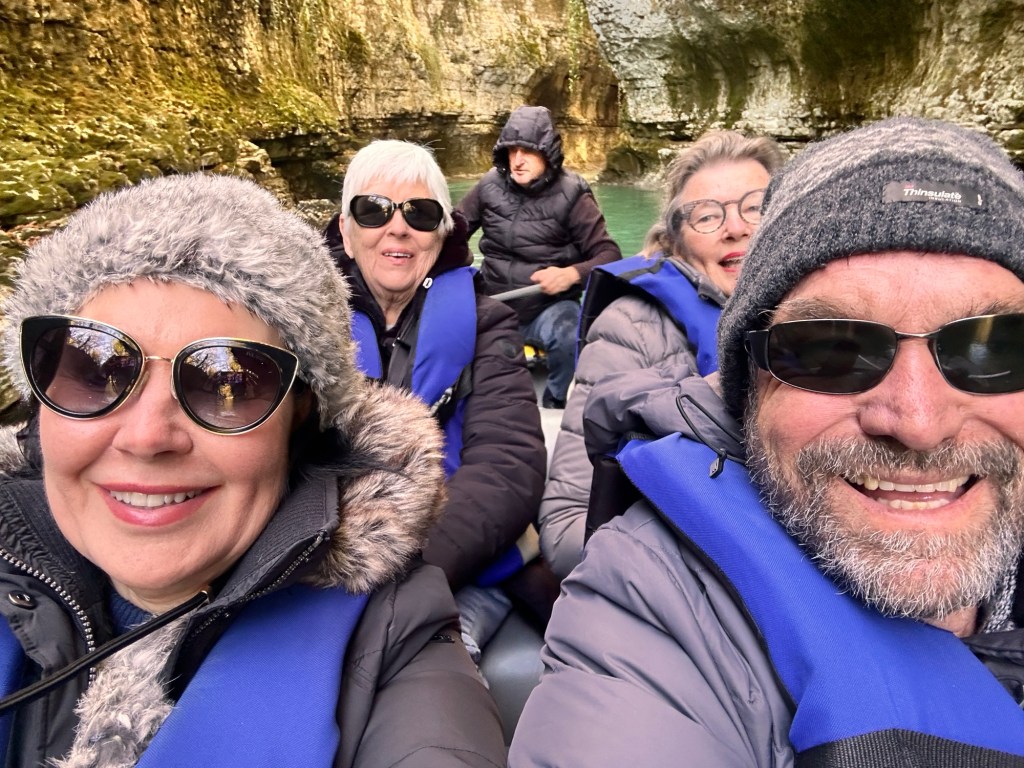
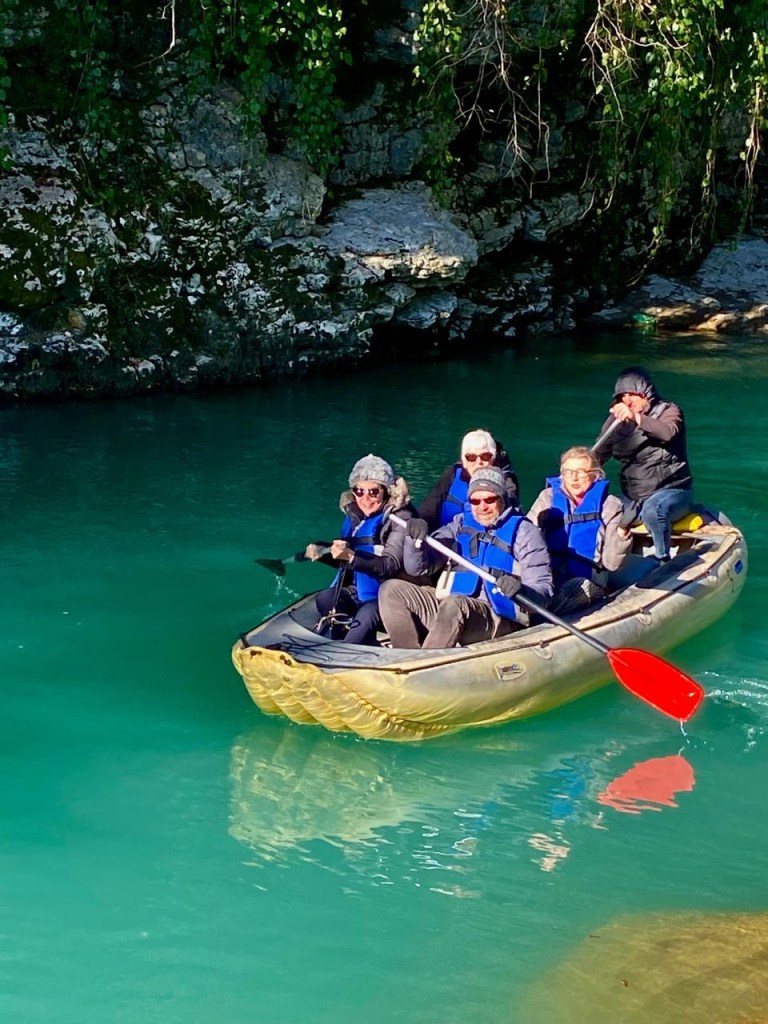
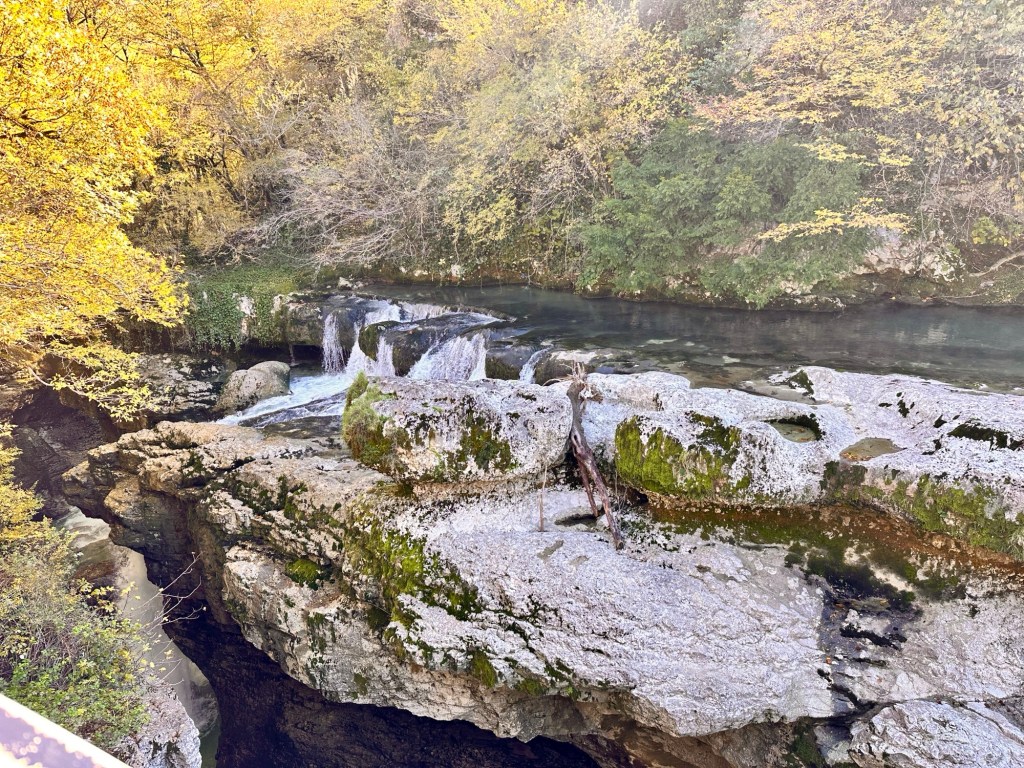
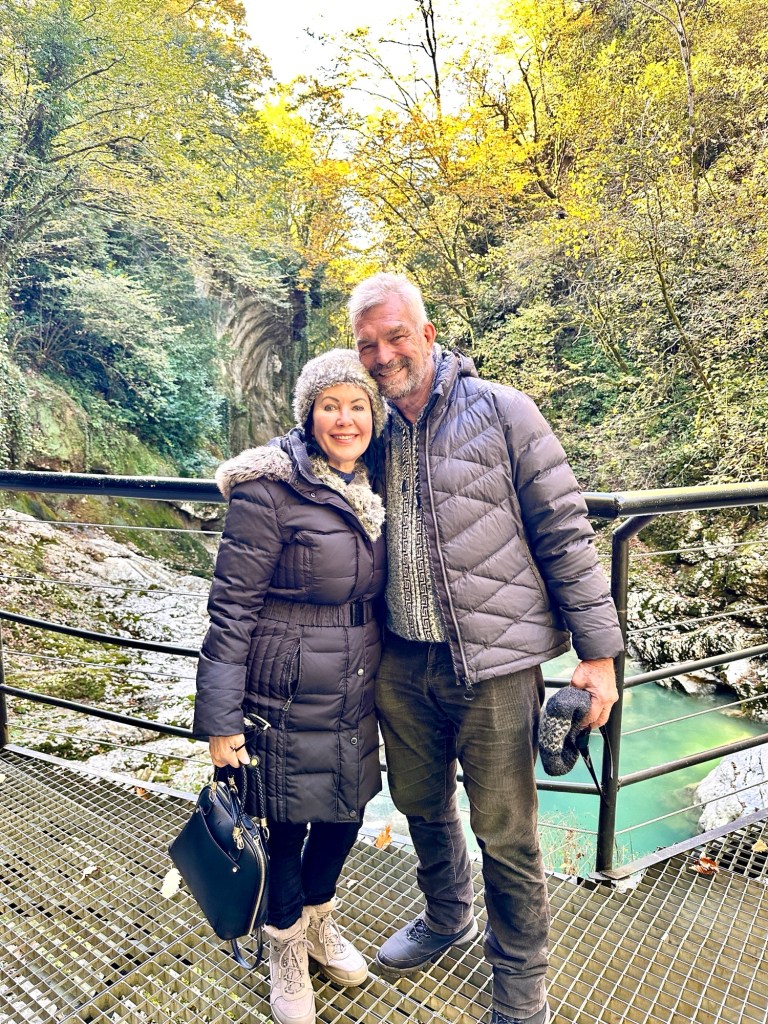
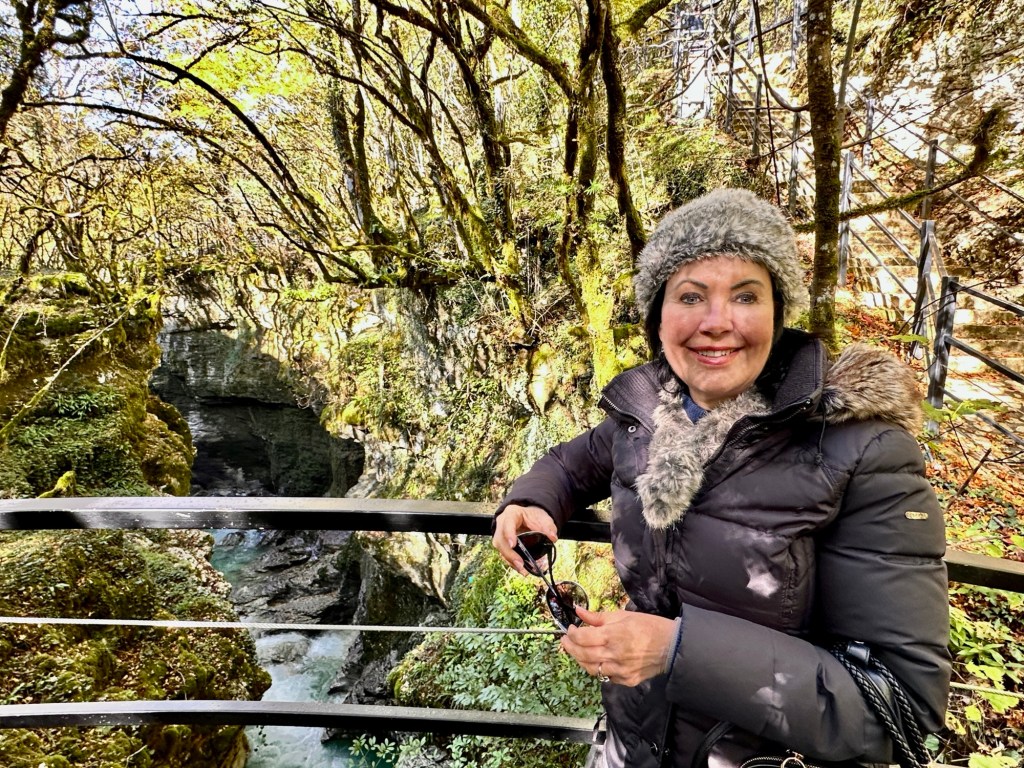
Martvili is a small town in the Svaneti Provence of Western Georgia. Here we visited one of the unique natural attractions of Georgia – Martvili Canyon. Over millions of years, the Abasha River created a magnificent gorge in limestone rocks, reaching a depth of 40m, with canyons, caves and waterfalls.The total length of the canyon is one kilometre and there are stretches of quiet water for boating and swimming, also steep rocks to climb, spectacular waterfalls to enjoy and caves to explore. In the upper part of the canyon, we took a short boat trip up to a 7m high powerful waterfall. We thought we were being taken for a ride… instead we had to paddle! It was quite the adventure! The water falls and forest walk was just beautiful.

Another couple of hours driving then a stop for lunch at a modern shopping mall in a regional town.
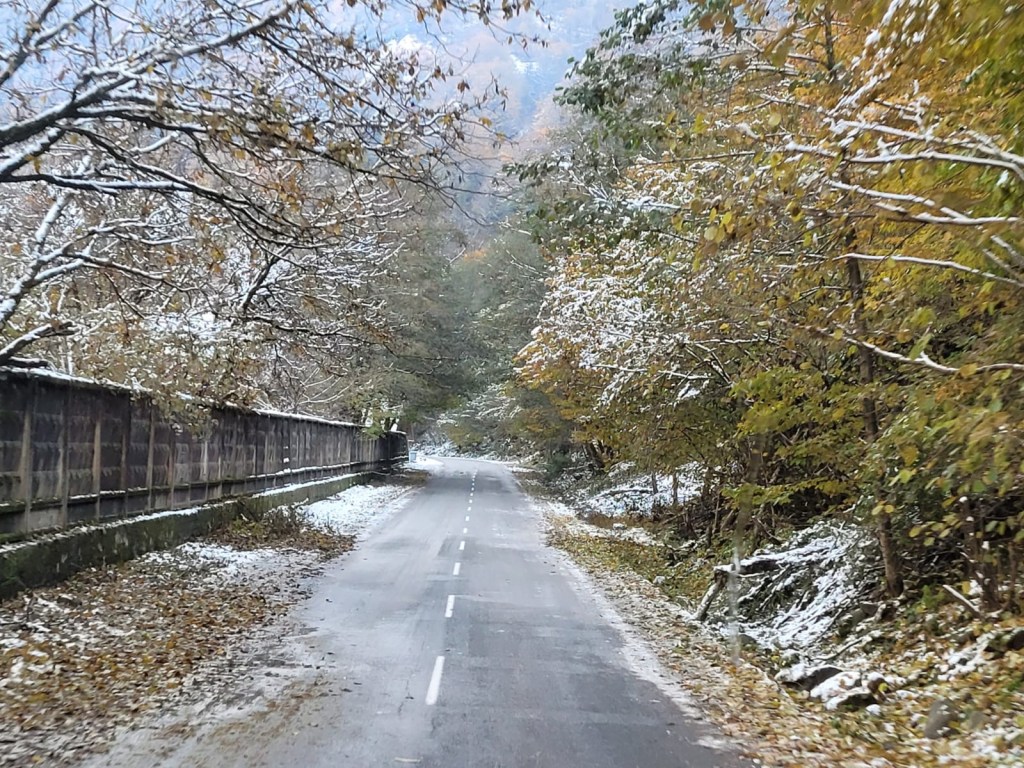
More driving, through the most picturesque countryside. Breathtakingly wild and mysterious, Svaneti is a region locked deep in the Caucasus, so remote that it systematically defies the efforts of multiple empires to tame it. Uniquely picturesque villages nestle beneath snow-covered, 4000m-plus peaks. The autumnal toned trees turned into snow covered trees, then snow/ice on the road. We kept driving and driving, even two hours in the dark. Our driver was amazing – avoiding drop offs on the side of the road, stopping for the cows and horses crossing the road, and manoeuvring the tight bends! Can’t say I enjoyed travelling the windy icy roads in the dark.

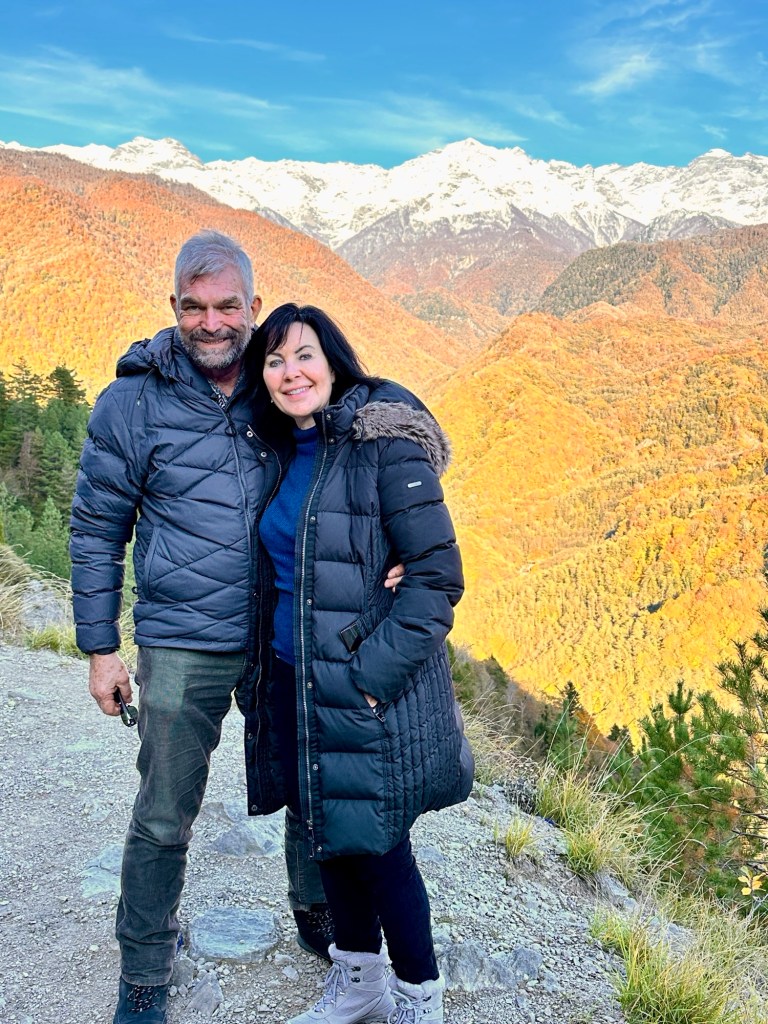

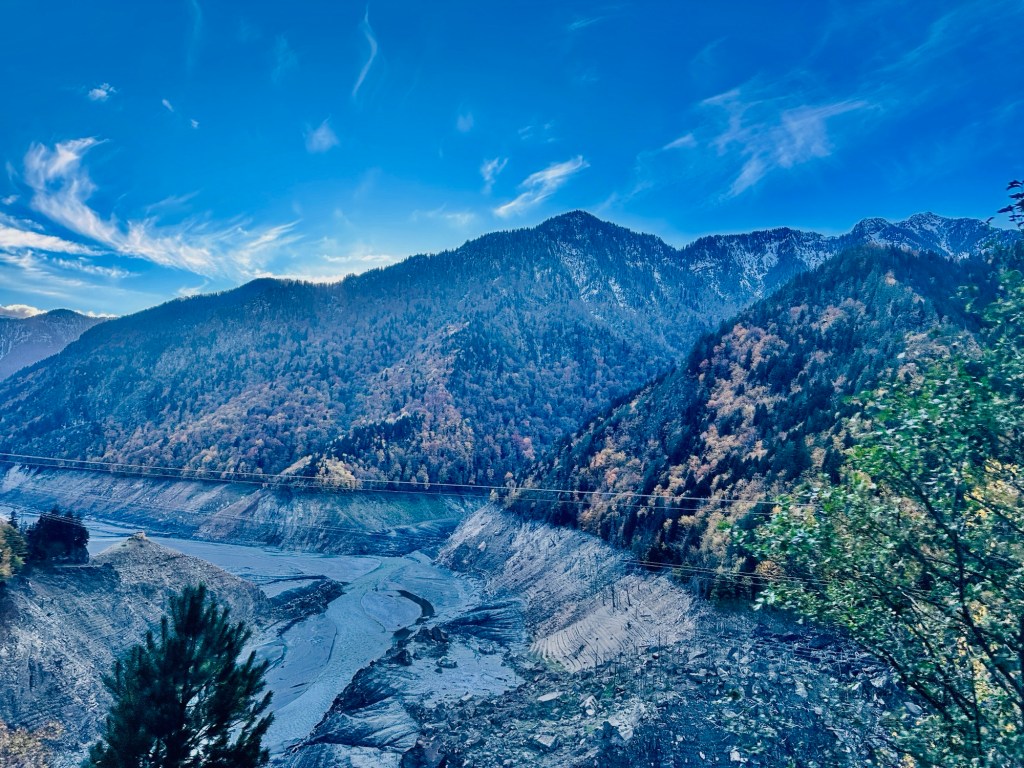
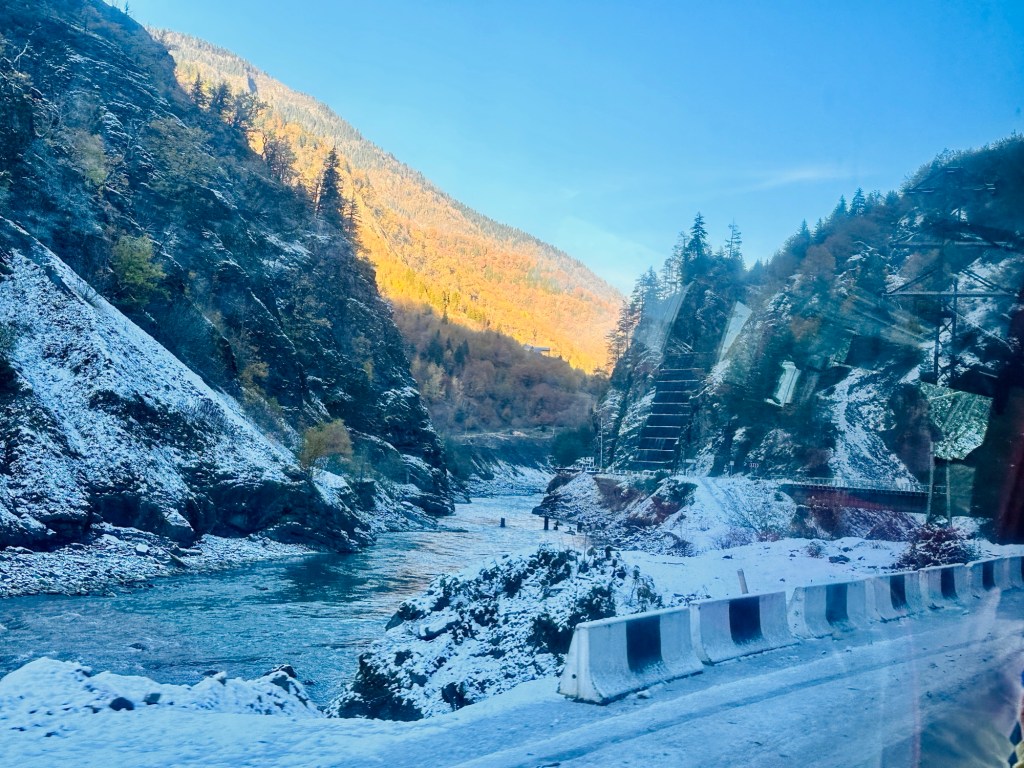
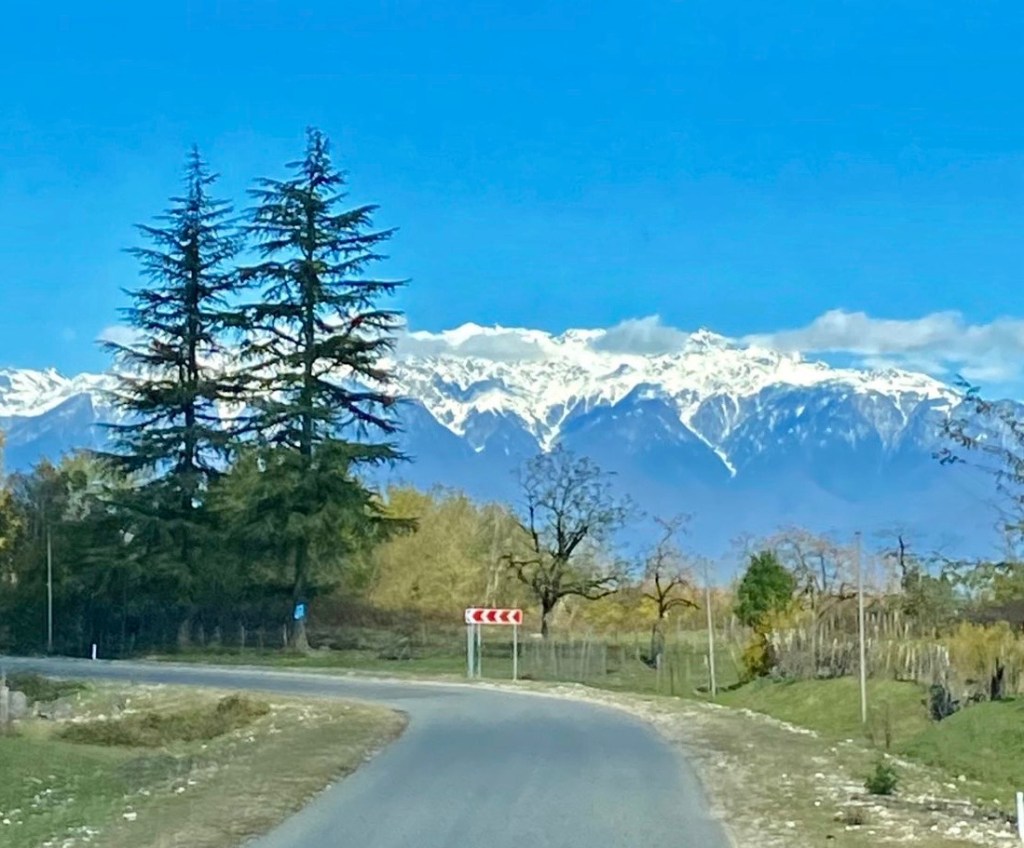
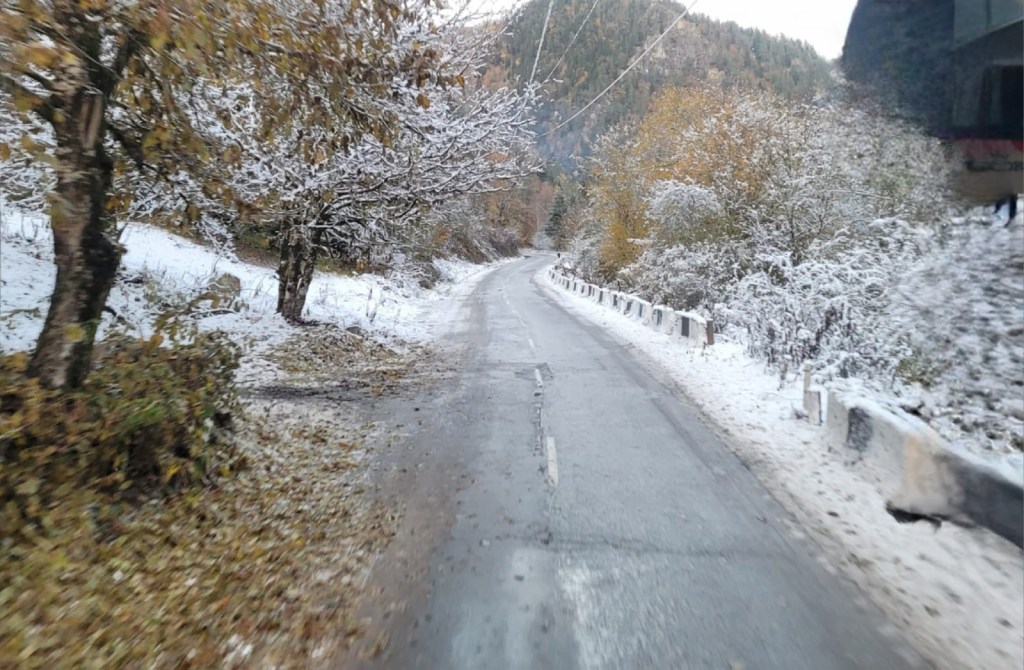
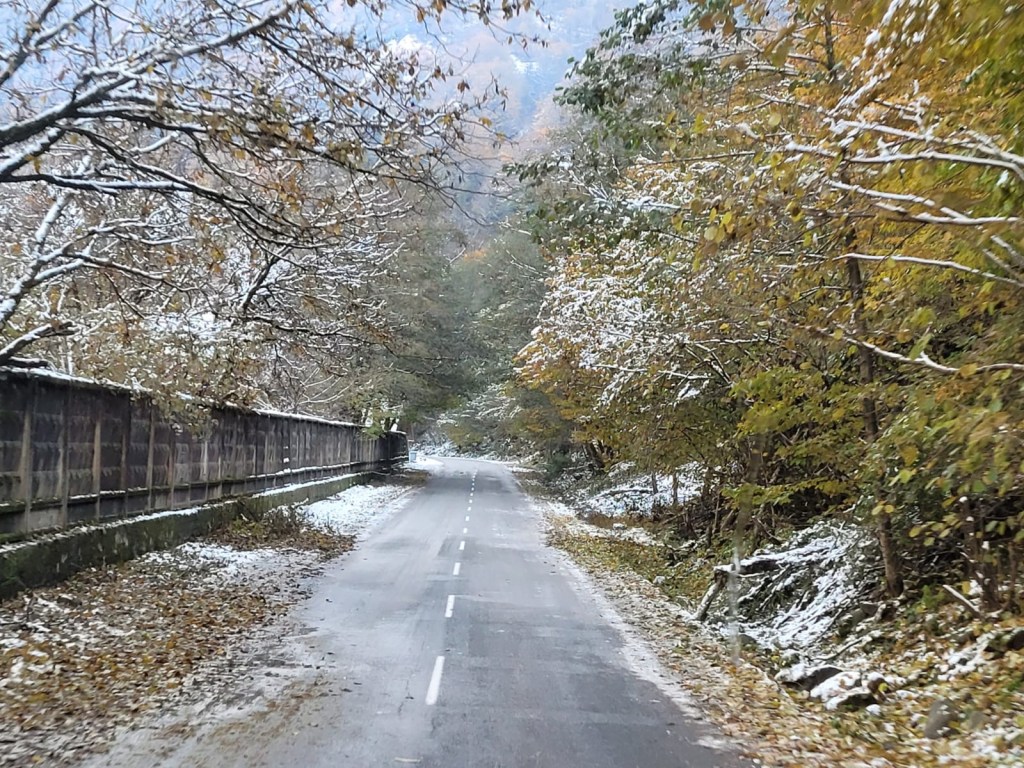
Finally arrived at the mountain village of Mestia (1500m above sea level) at 8pm. Close to 8 hours of driving today. We had to then get cars to drive us up the Hotel Lahili entrance road as it was too slippery for the bus. Luckily dinner was waiting for us, and eventually we got to our rooms at 9pm.
Day 15
Thursday 7th November 2024
Mestia – Ushguli – Mestia
-5 -1 degrees, sunny
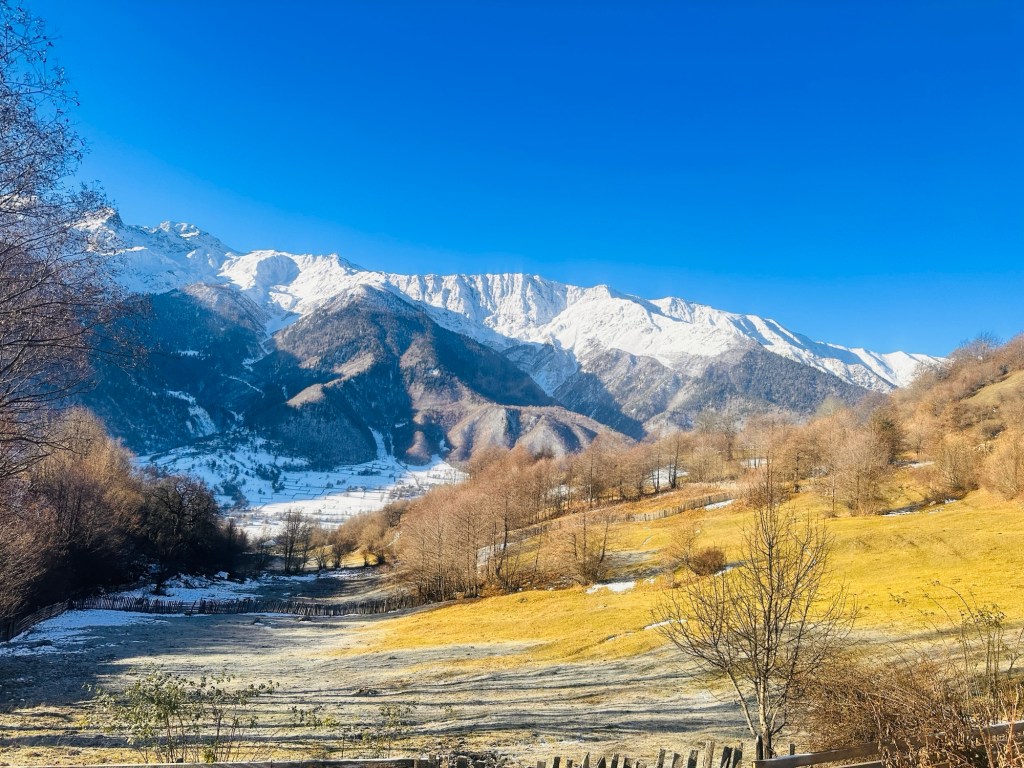
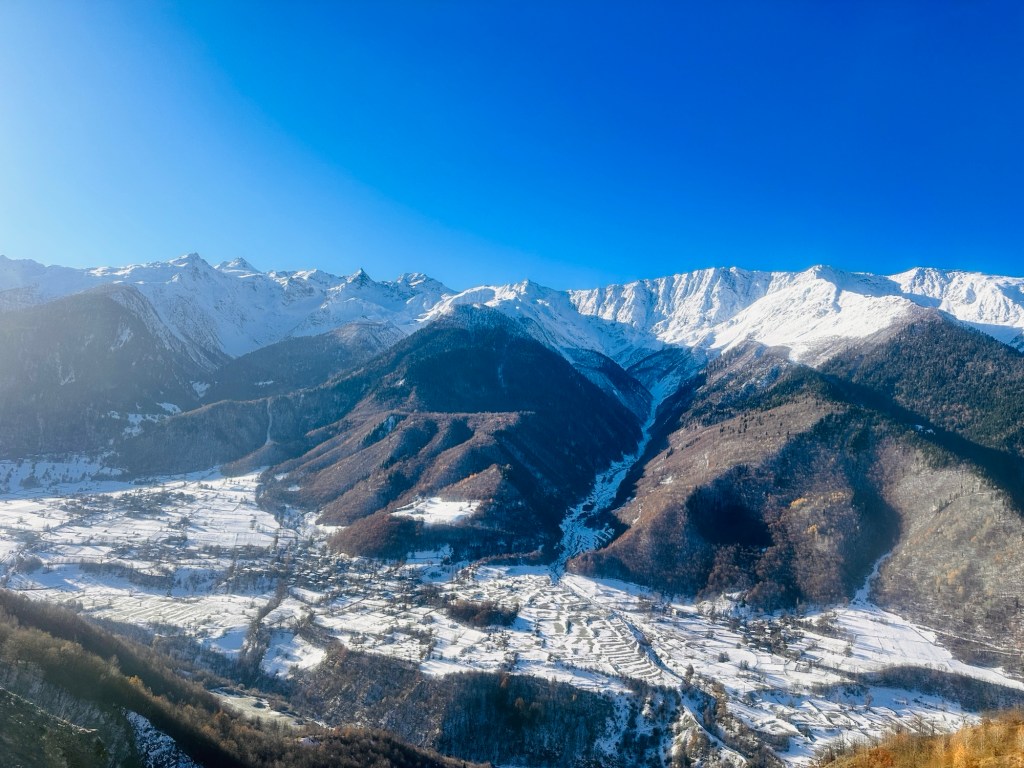
Today we explored the beautiful Svaneti region which is surrounded by mountains, glaciers, high peaks and waterfalls. Svaneti is famous for its defensive koshkebi (stone towers), which were built between the 9th and 13th centuries to protect villagers and their livestock from invaders, some 175 of which still stand today. Not so long ago Svaneti was totally off the beaten track, but recent development has brought ski lifts, direct flights from Tbilisi, a paved road from Zugdidi and a huge increase in accommodation options, to the point where Mestia, Svaneti’s only town, can get quite busy in summer. Svaneti’s mystique and undiluted alpine beauty, however, are in no danger of wearing thin.

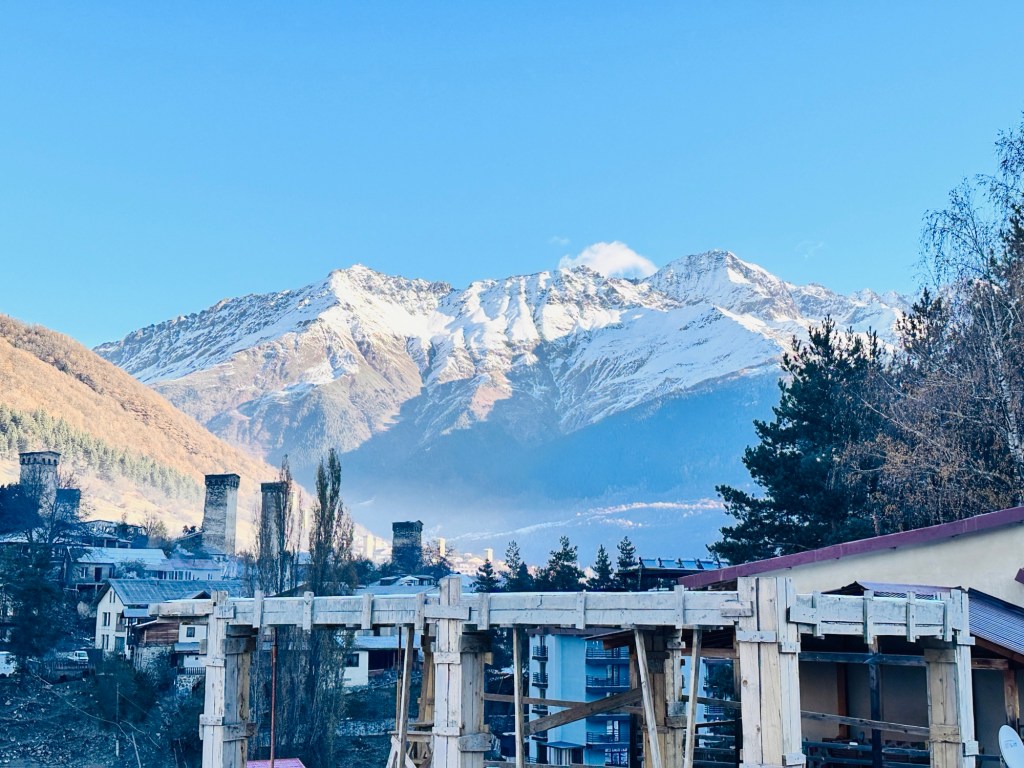

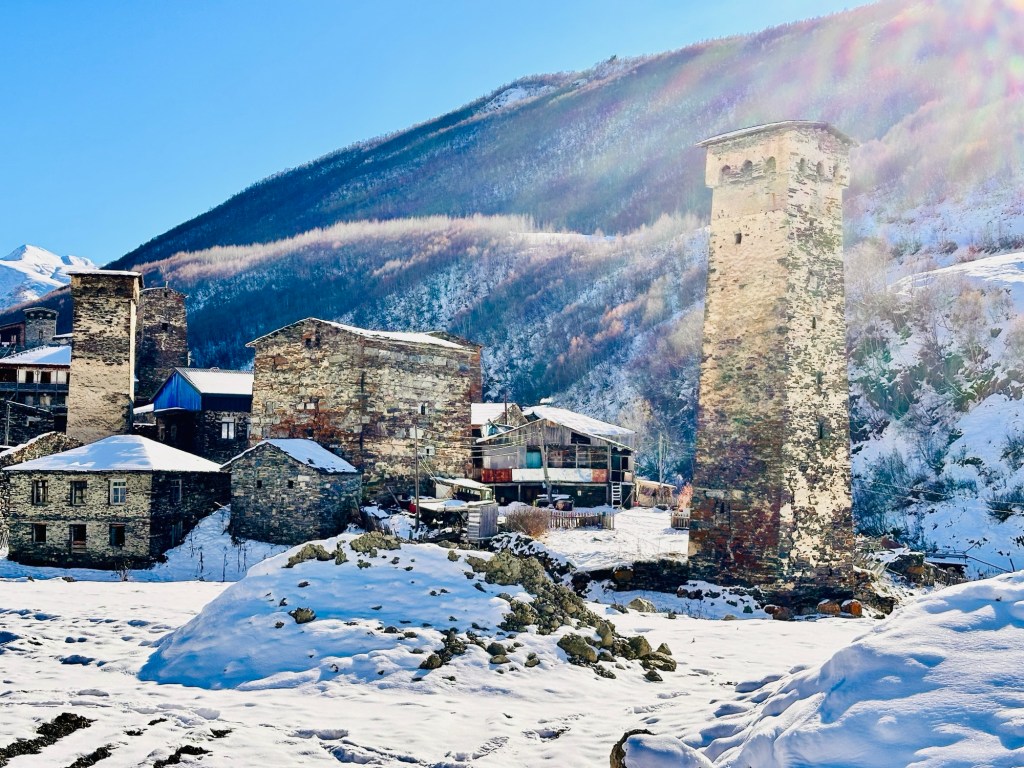

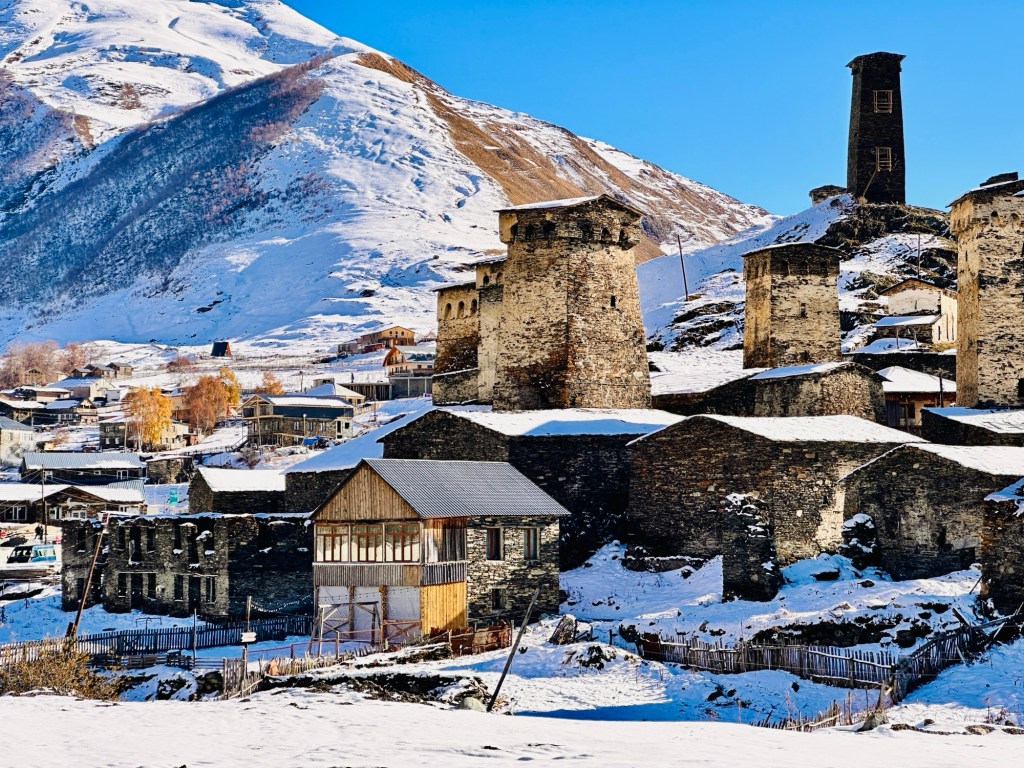
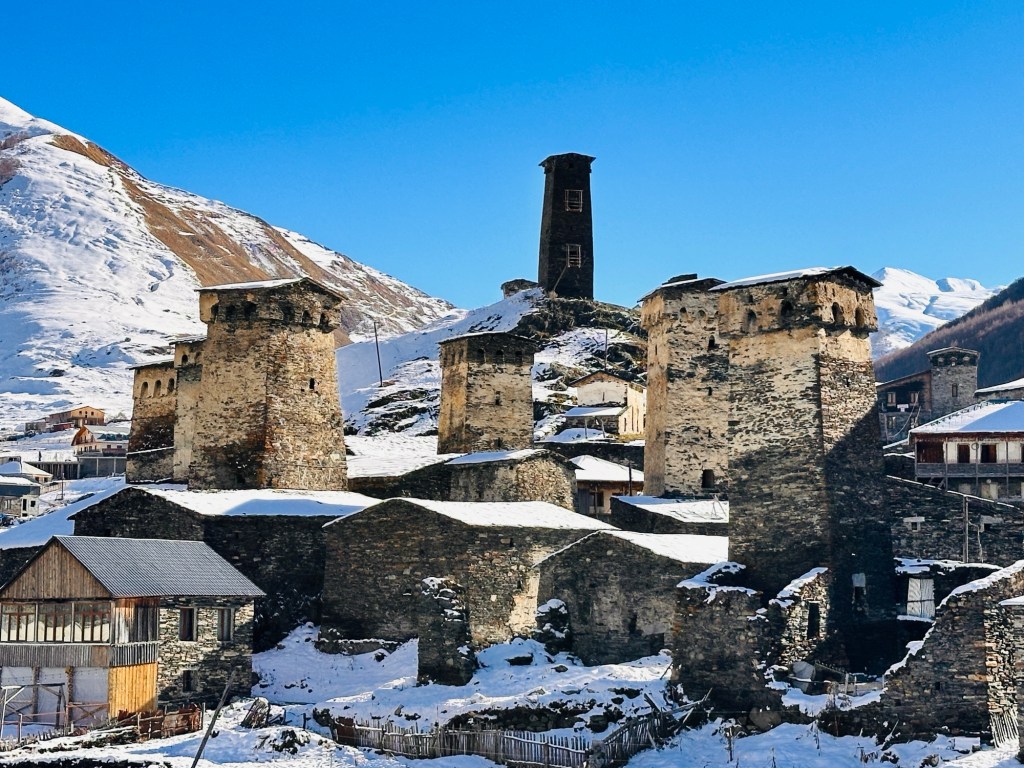
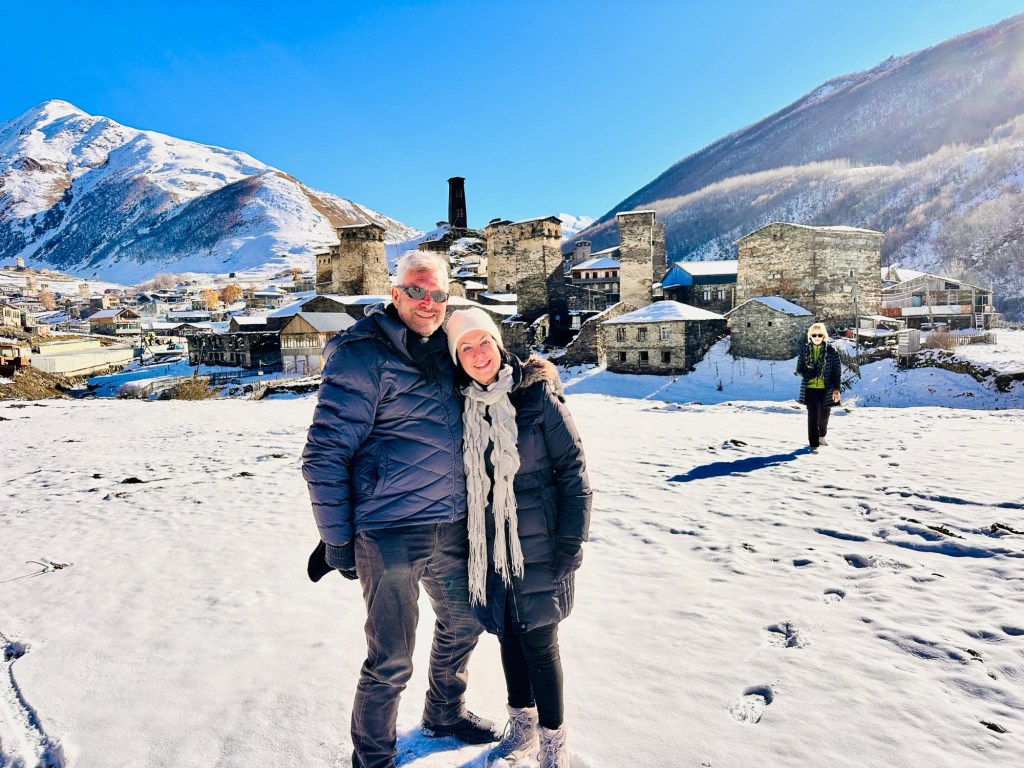
We drove in 4×4 vehicles to Ushguli Village which is a community of four villages at the head of Enguri Gorge. It’s considered one of the highest continuously inhabited settlements in Europe at 2100m above sea level and due to its particularly inaccessible location, it has kept a timeless feel. The road to Ushguli passes by the villages of Ipari and Kala. The scenery was just spectacular – the mountains, the villages all bathed in a touch of snow, more cows, horses, and pigs wandering on the road. Just beautiful! And so lucky with the weather – cold, but a picture perfect day.
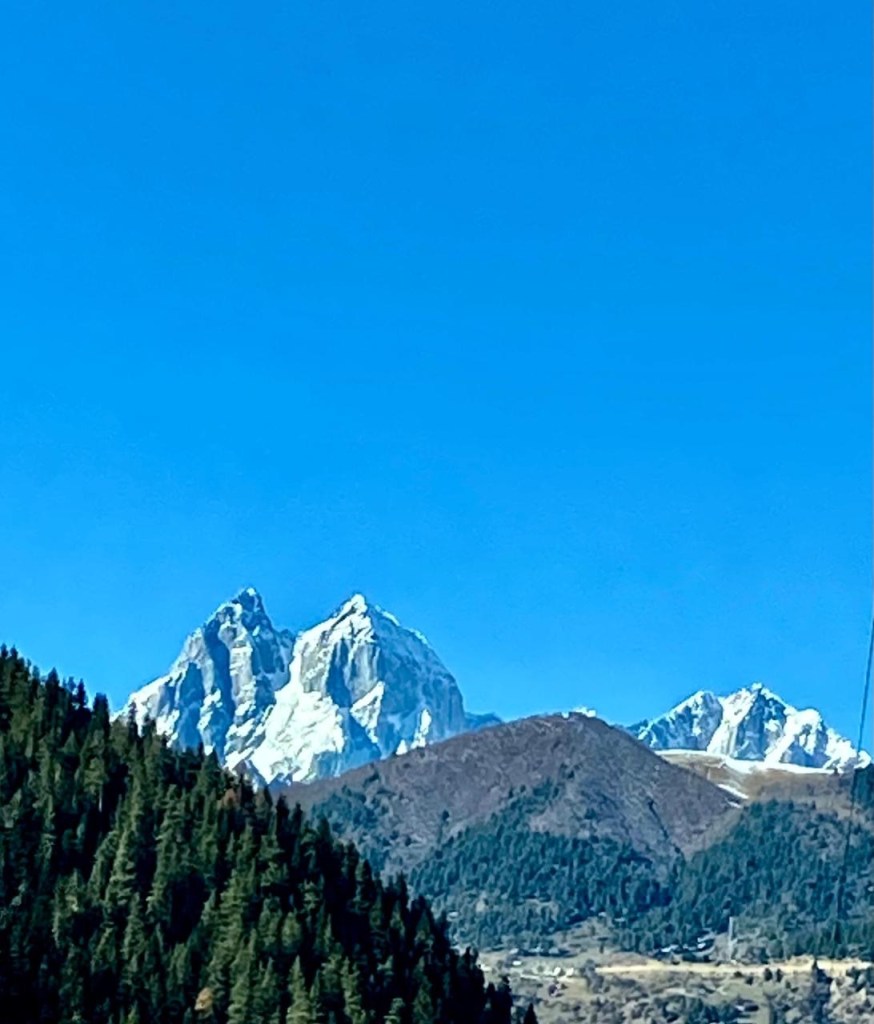
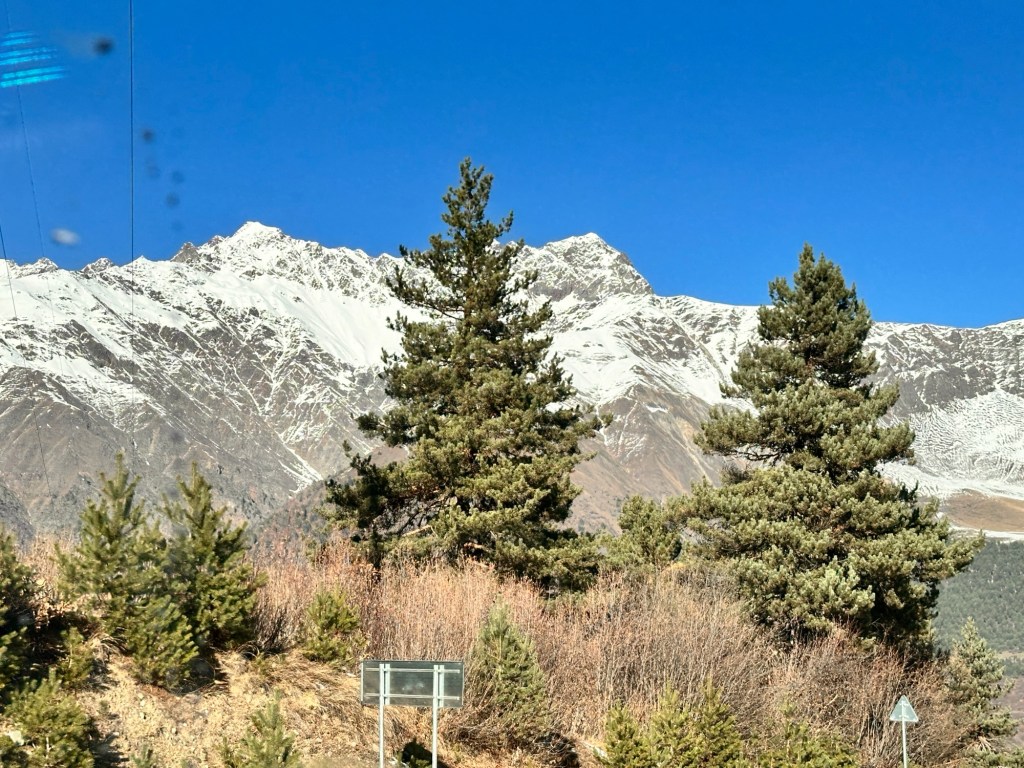
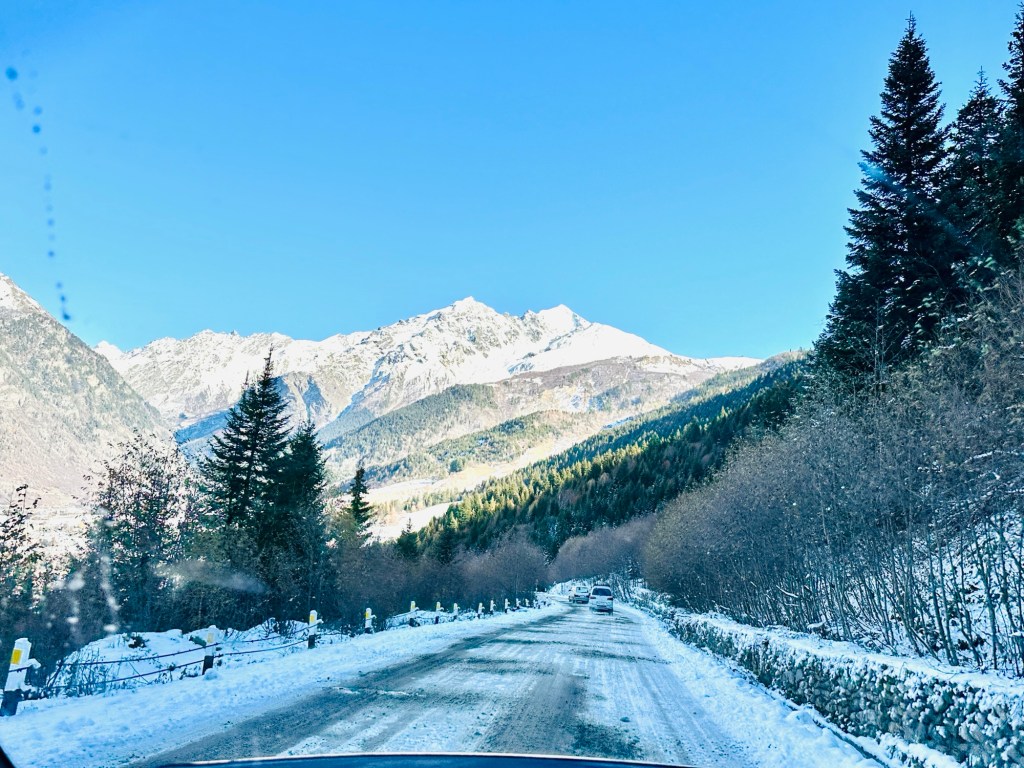
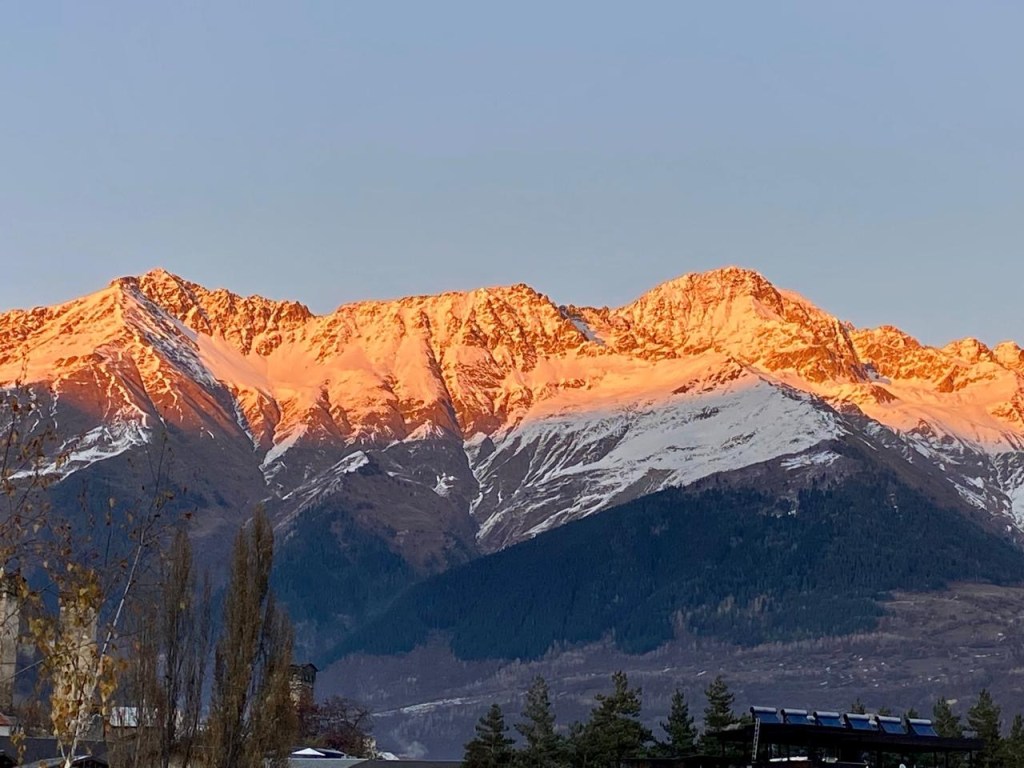
Towering above us were the spectacular twin peaks of Mt Ushba (4700 metres), and the snow covered Mt Shkhara (5193 metres), Georgia’s highest peak. We were only 8 kms from the Russian border.
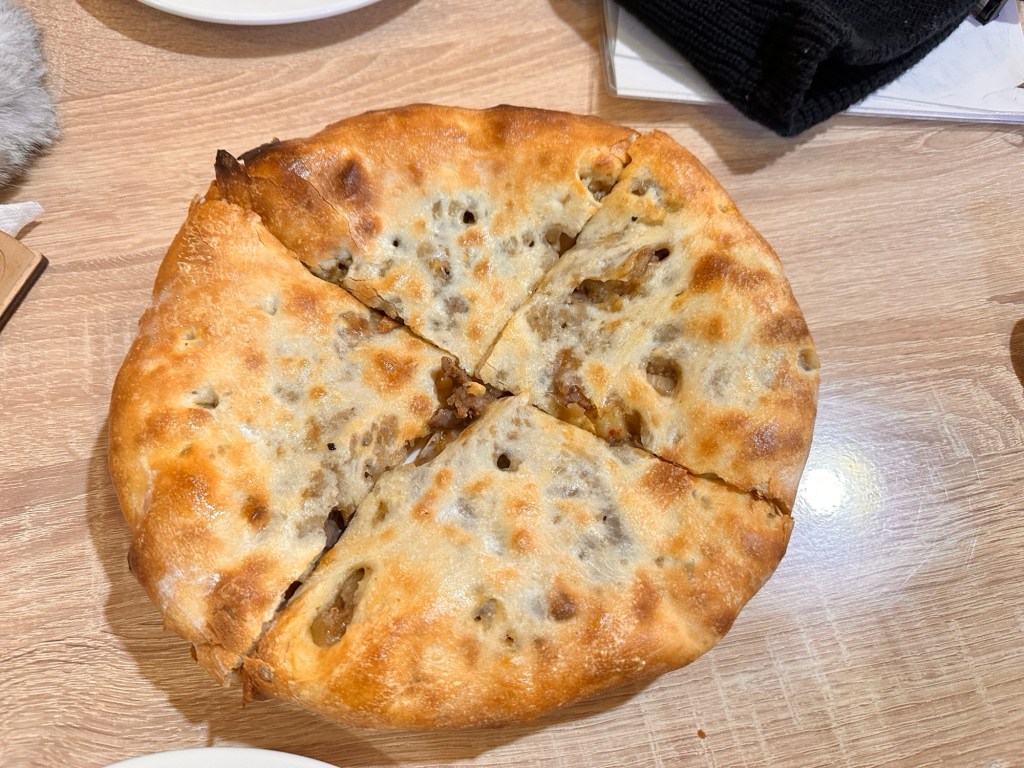
We were supposed to go up to Shkhara Glacier, but the roads were too icy. Had a lovely lunch at a very rustic restaurant- veal chasaculli and a bread with a meat filling, Kubdari. This bread is a national dish of the Svans – leavened bread left to rise, filled with pieces of spicy lamb or pork. Baked in the wood fires. So deliciously spicy and warming! Even a glass of saperavi to accompany it – straight from a 10 litre plastic water container ! We’re in the country now!
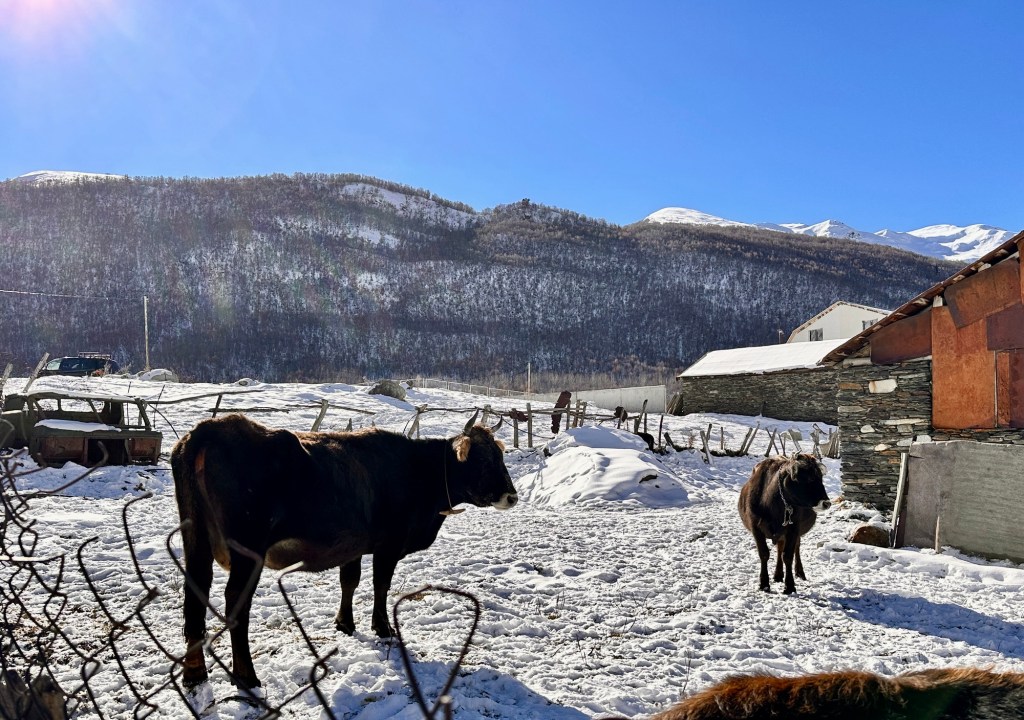
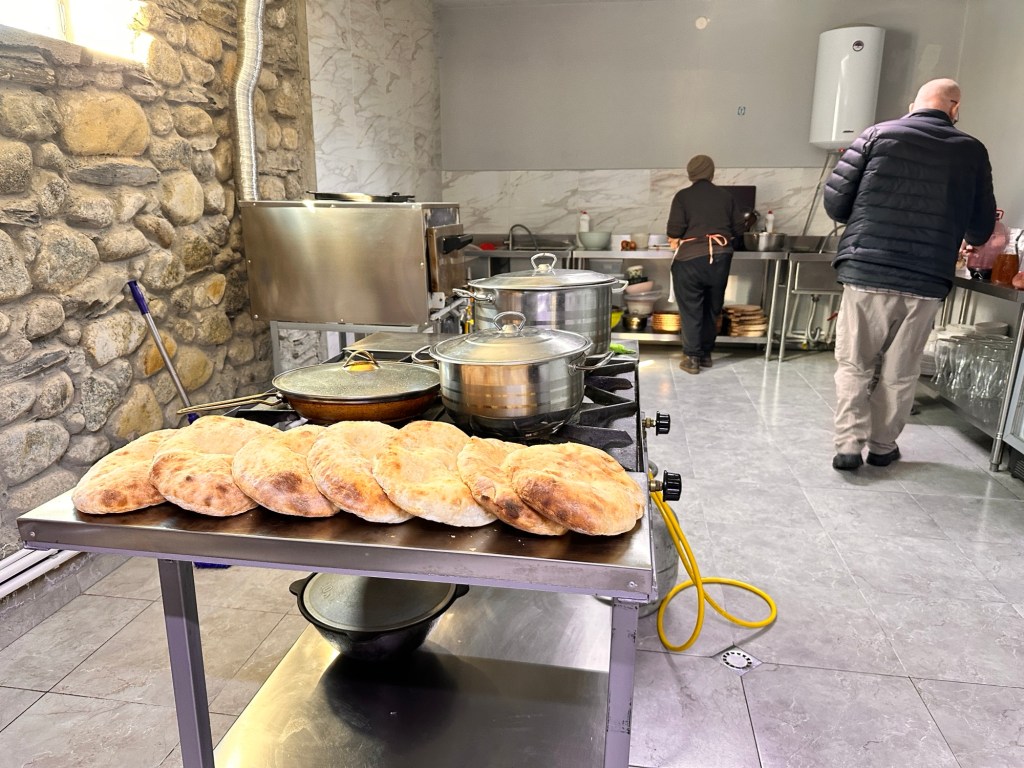
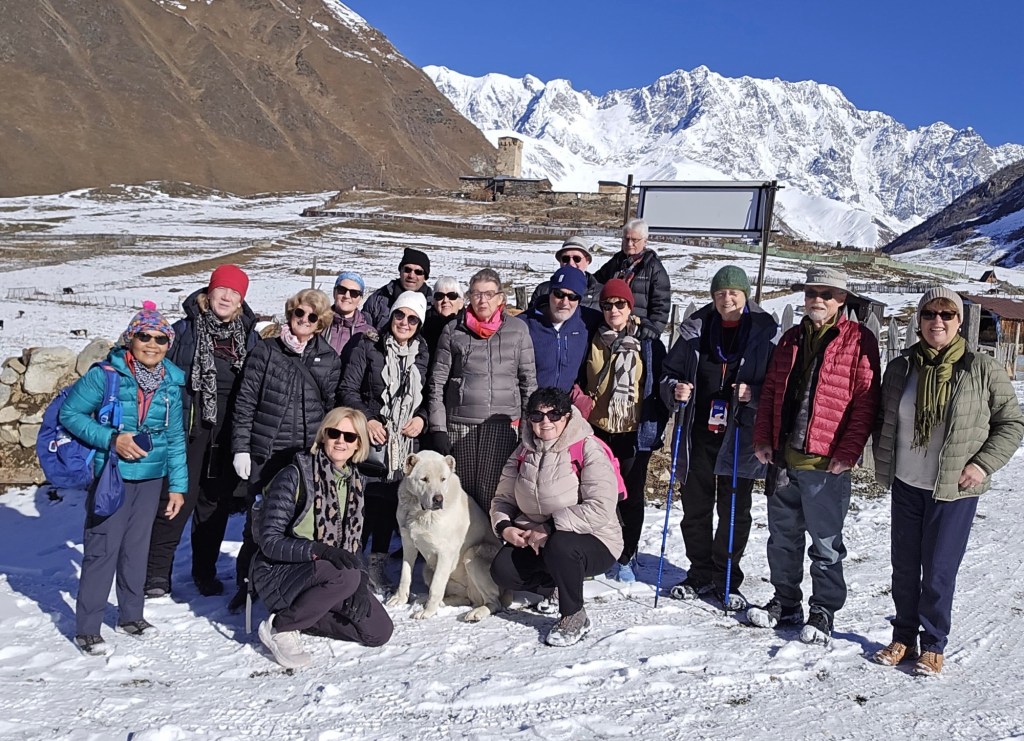
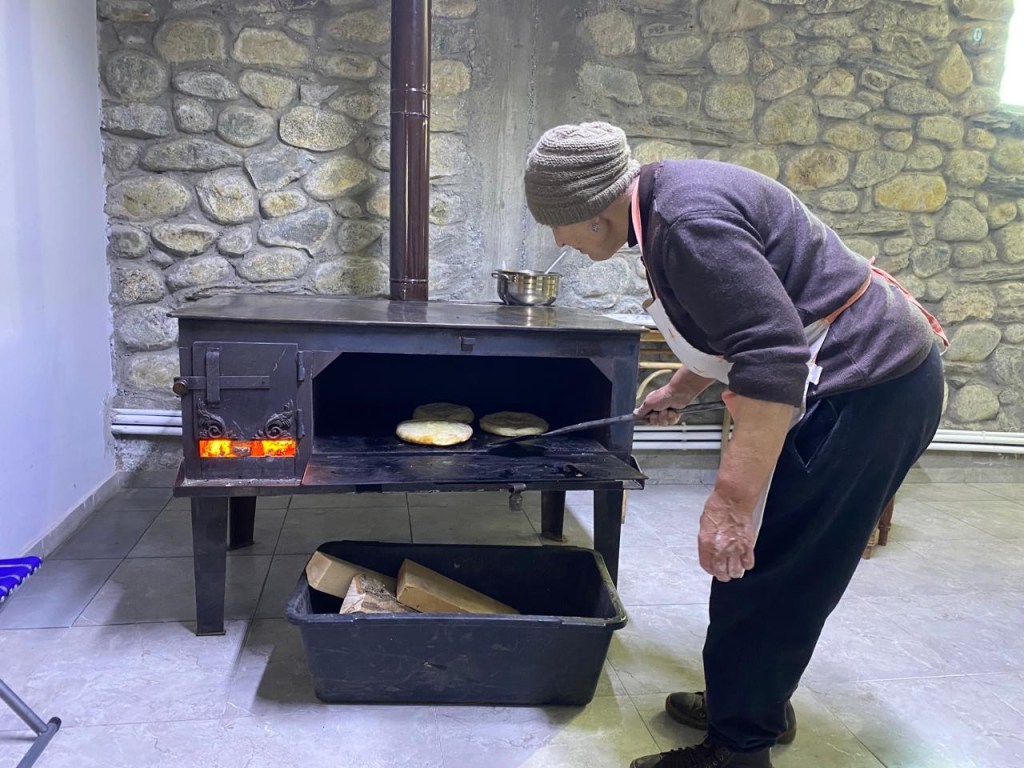
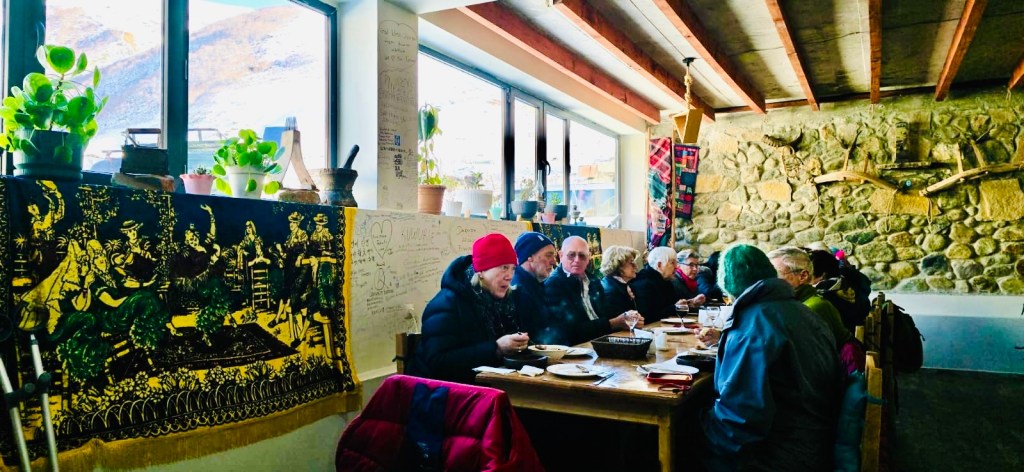
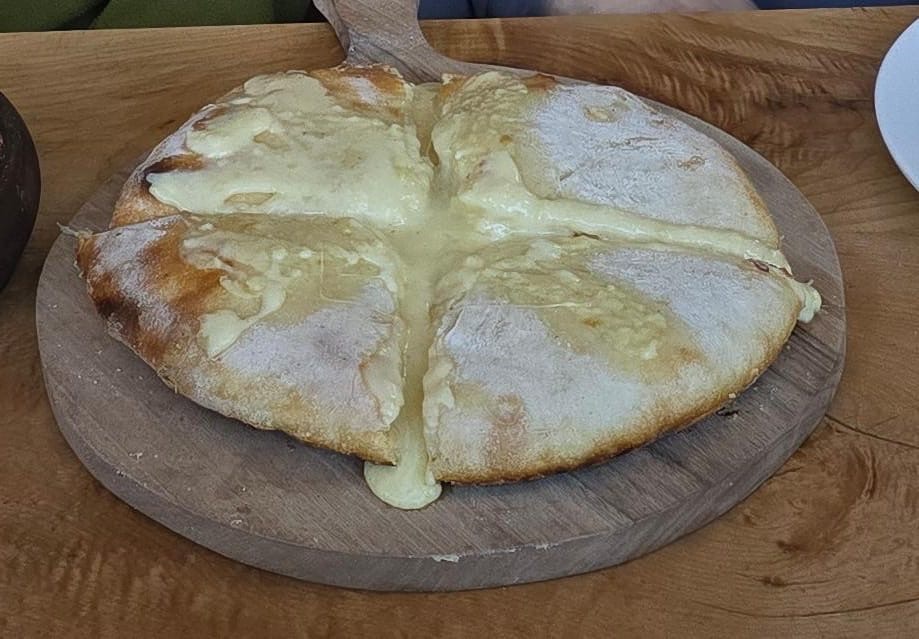
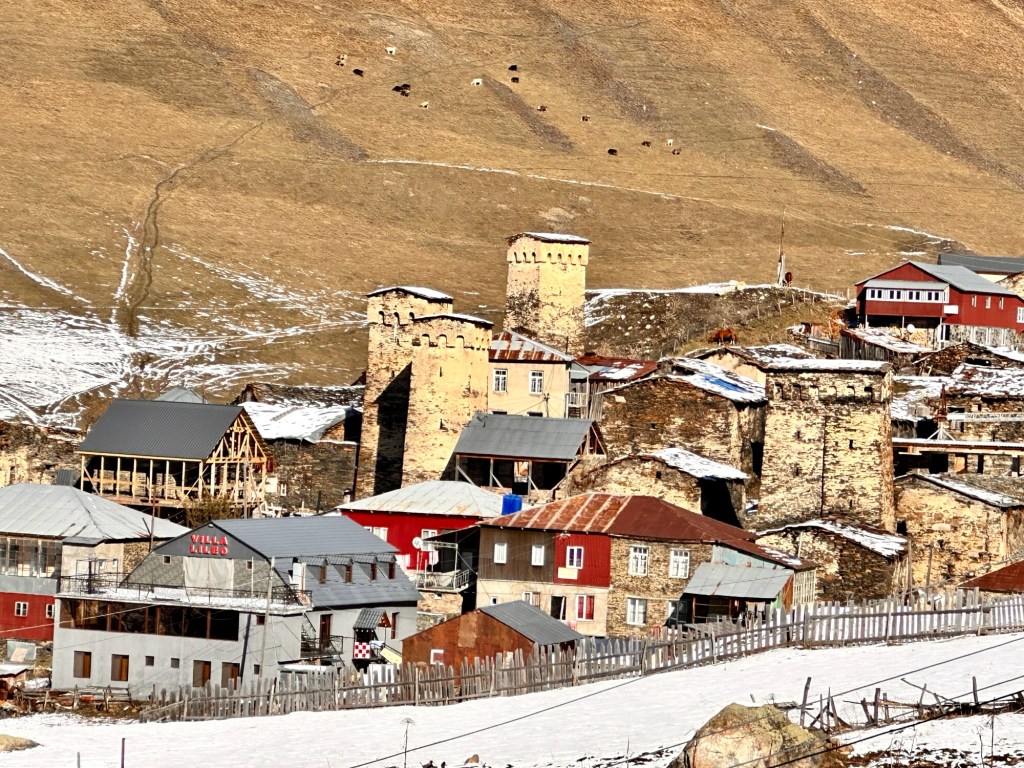
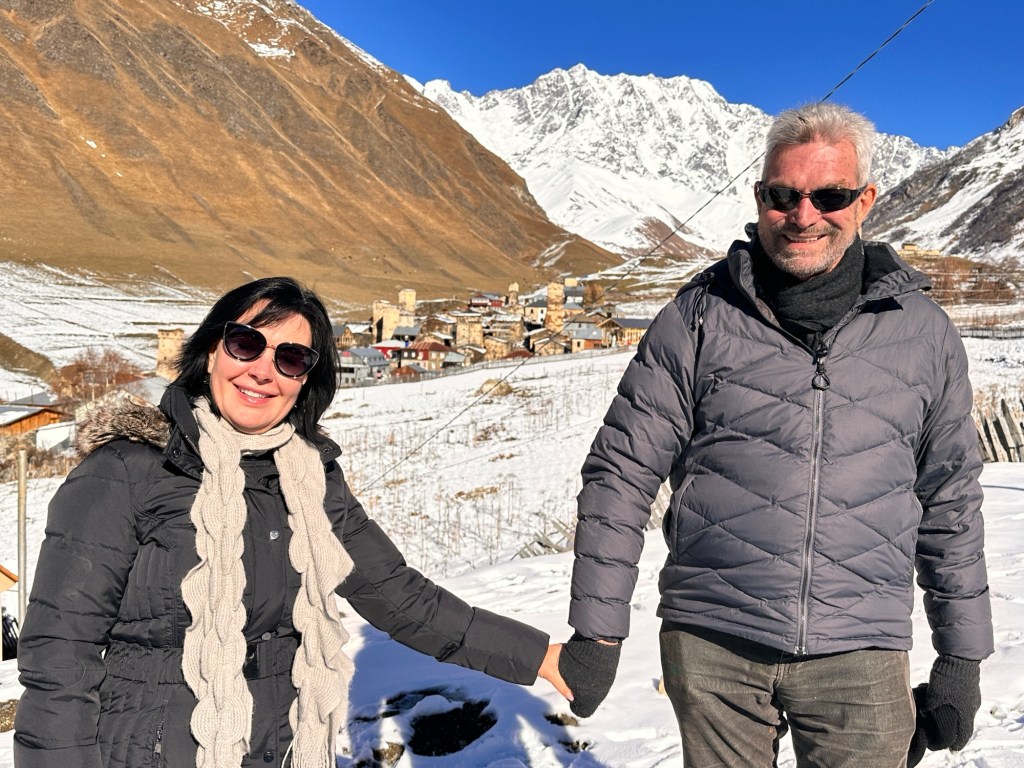
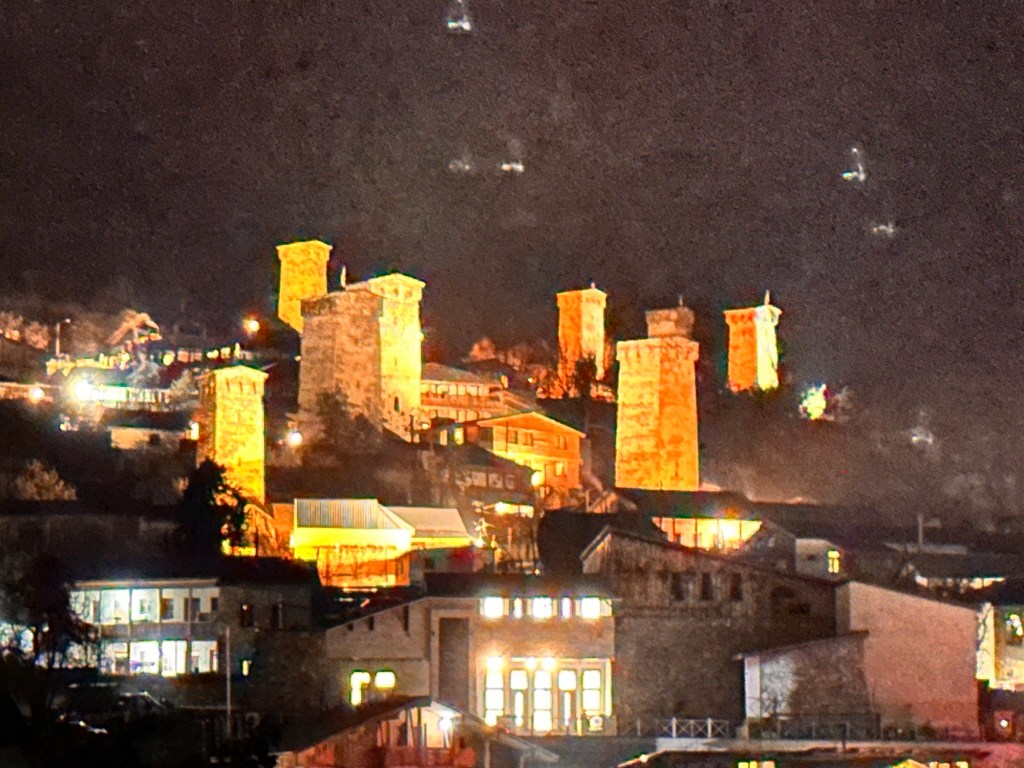
A two hour drive back to Mestia which then still left us time to have a little wonder around town. It’s really from another era – only the SPAR and the pharmacies had lights on, the other little shops were in darkness – why? Not sure. Cows roaming the main street. A lovely park in the centre of town.
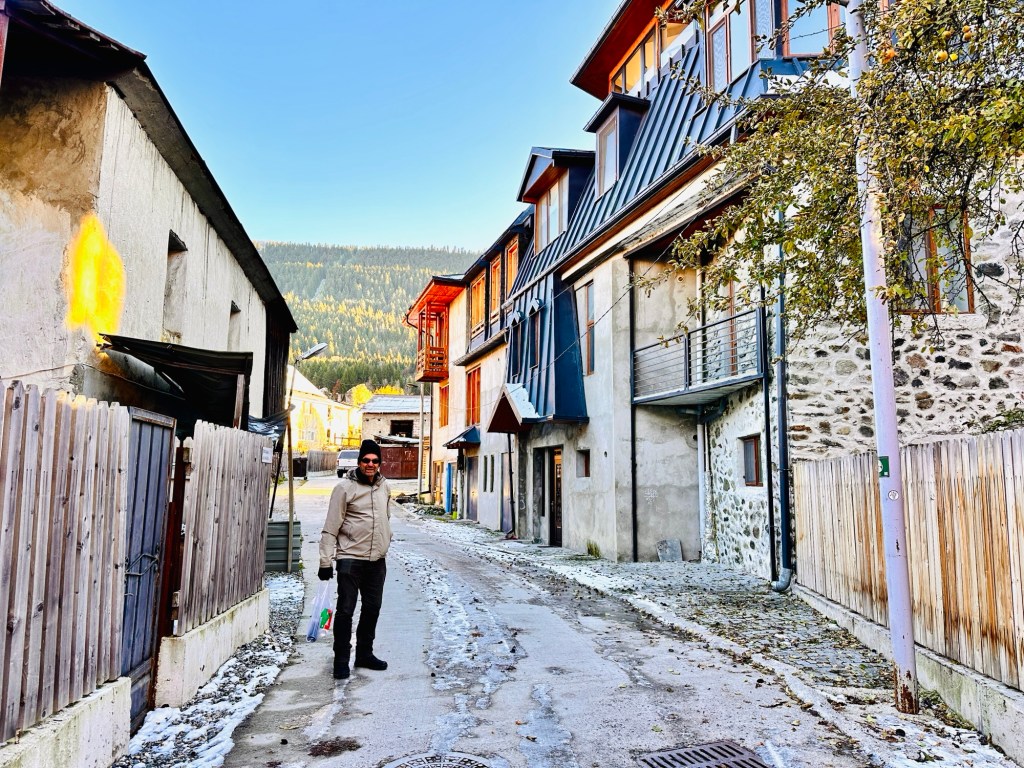
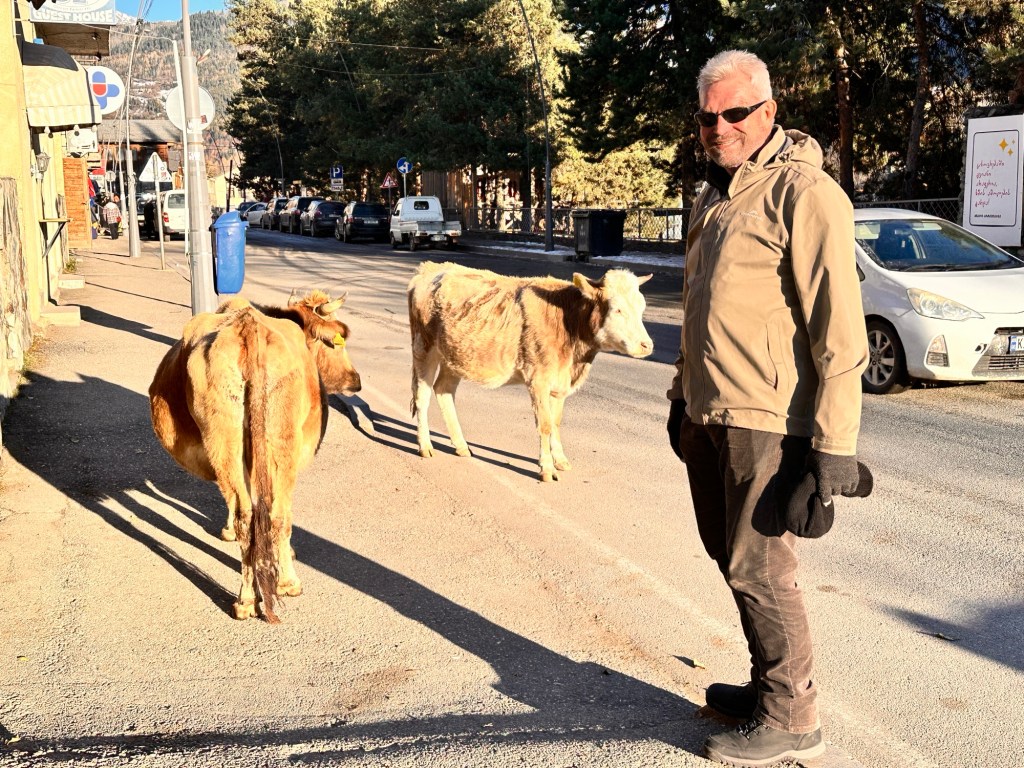
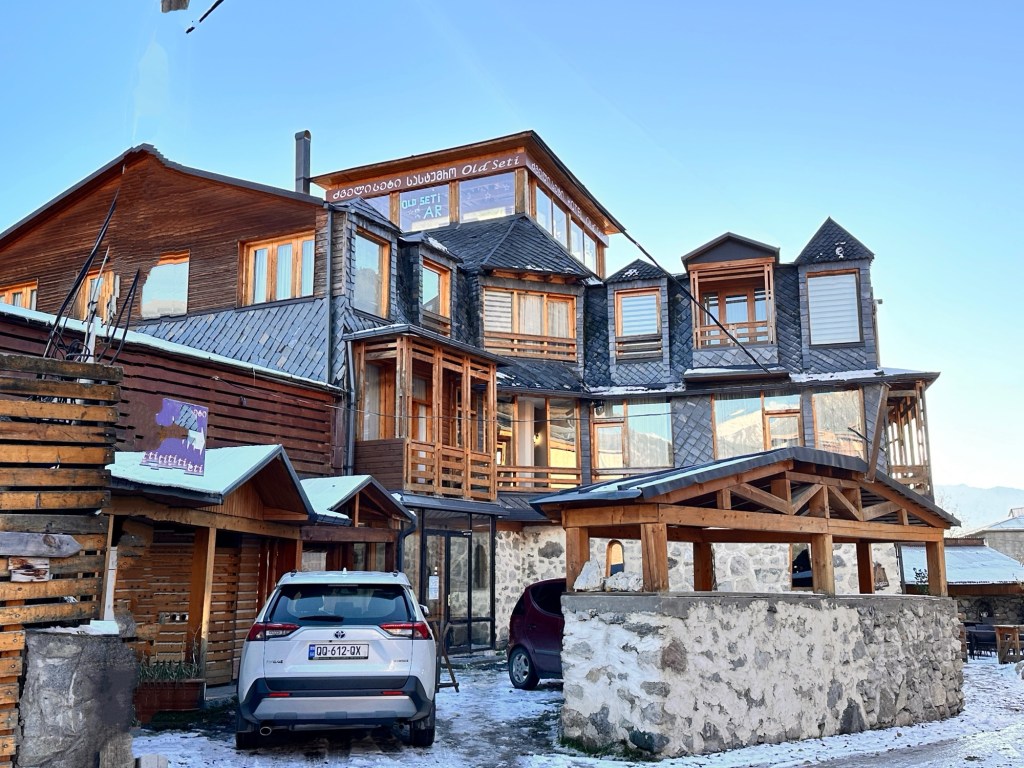

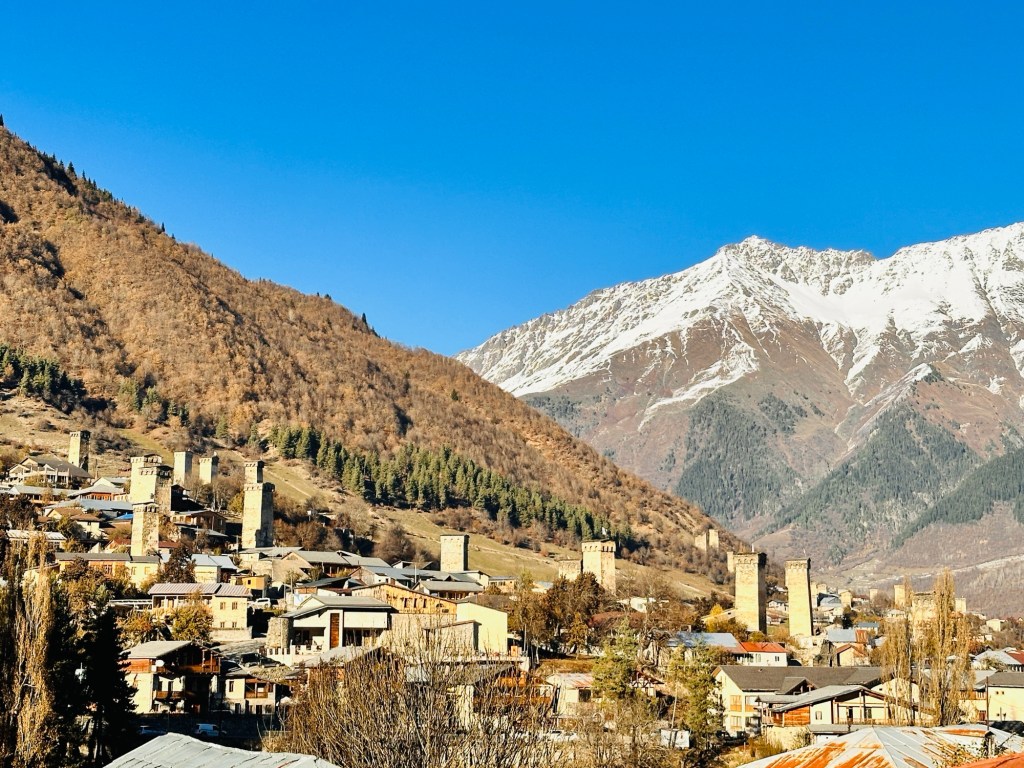
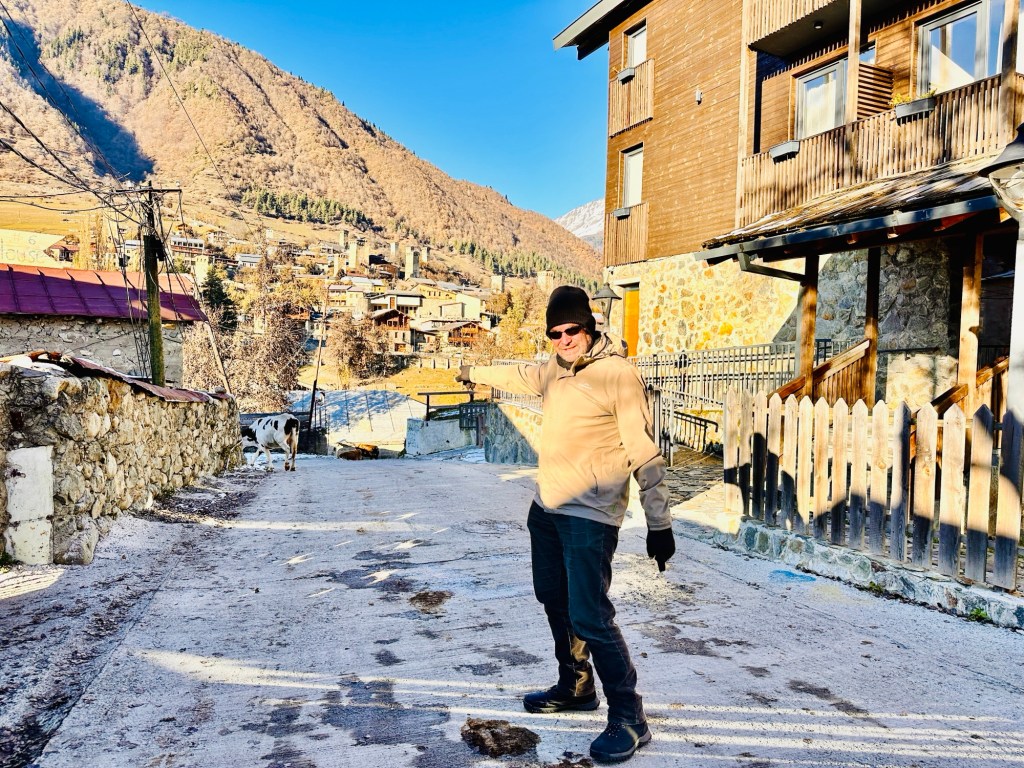
Pre dinner drinks with the group before a small dinner – we were still quite full from lunch. The towers all look so beautiful lit up at night.
Day 16
Friday 8th November 2024
Mestia & Surroundings
-4 – 8 degrees
After breakfast, we walked to the renovated Svaneti Museum of History and Ethnography which has become a 21st century cultural-educational center that also encourages scientific research and the education of future generations. The treasures preserved within the museum also offer rich stores of knowledge for international scientific research. We found unique icons and manuscripts from the 4th to 6th centuries, as well as ethnic artifacts associated with Svaneti and its people. Very interesting.

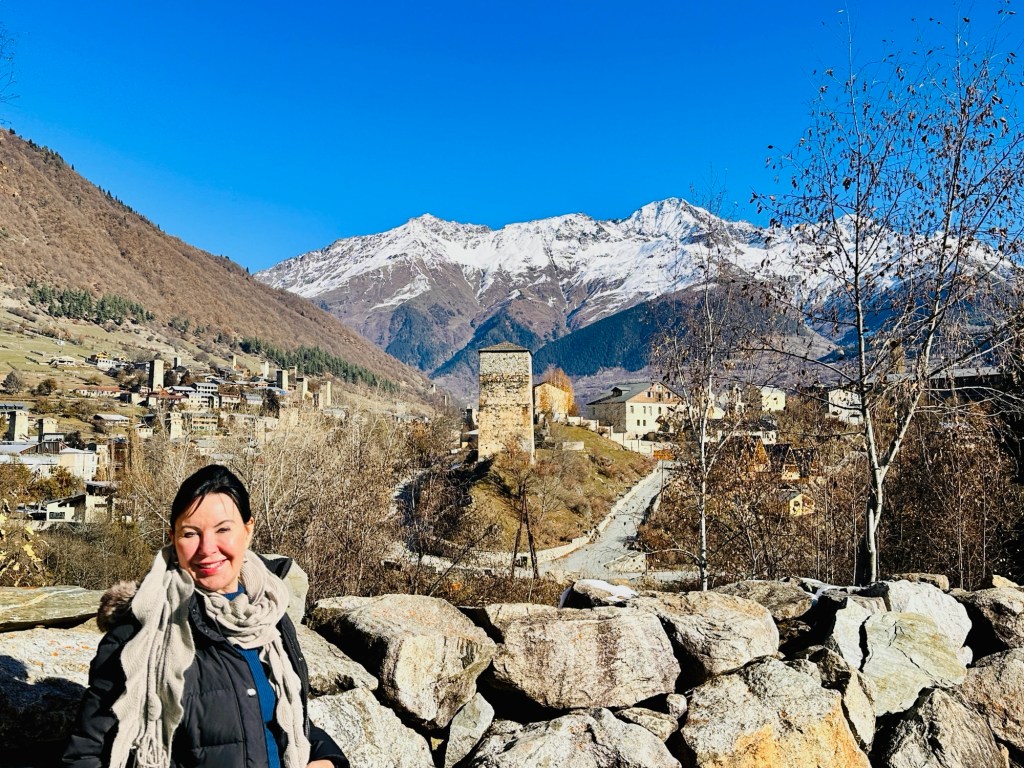
From here we went to the Main Street in Mestia and walked up a very steep cobblestone road to get to an old Georgian home from the Century. The icy cobblestones were a little treacherous . Four generations would live in this home as well as their animals – very cosy!
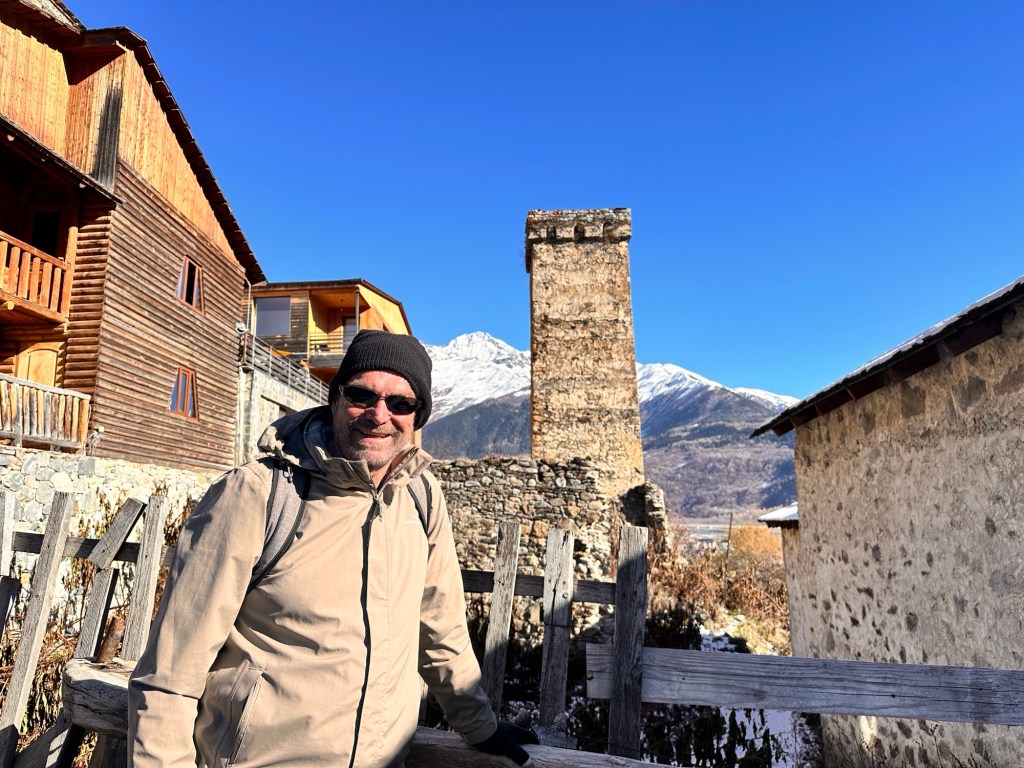
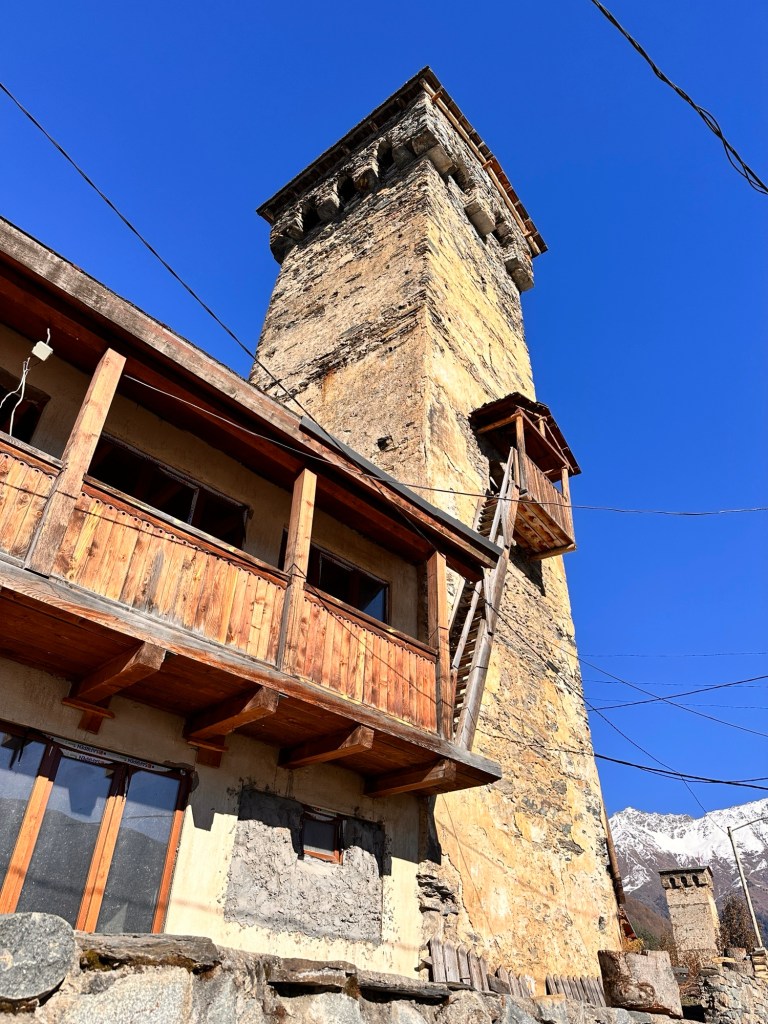
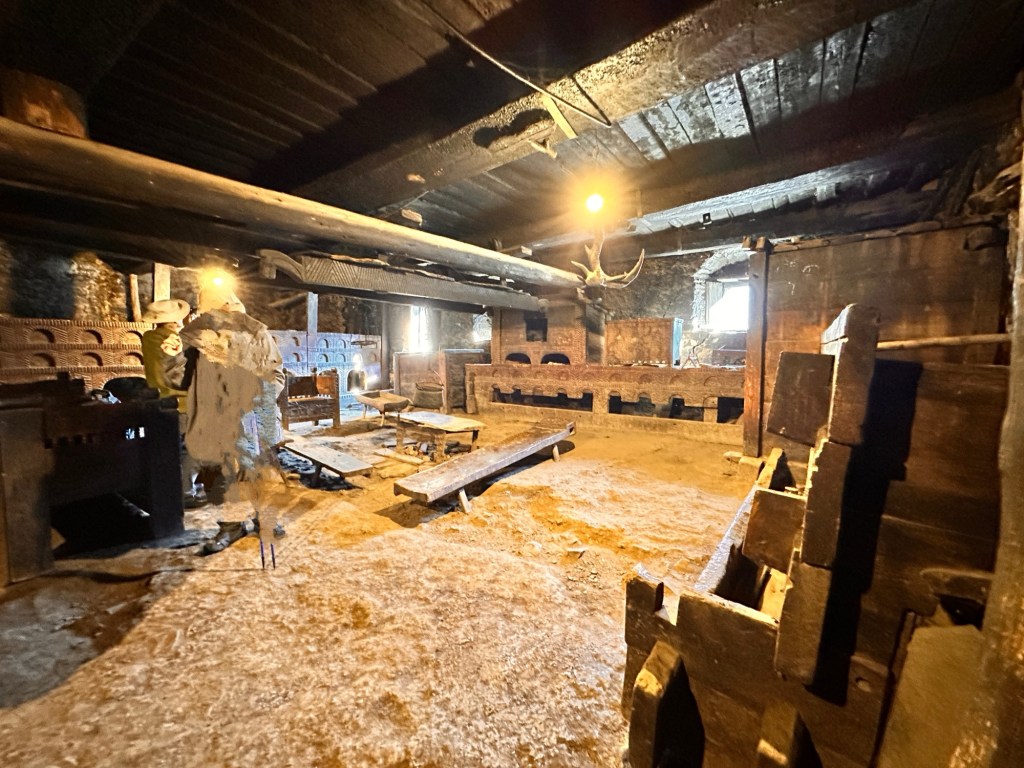
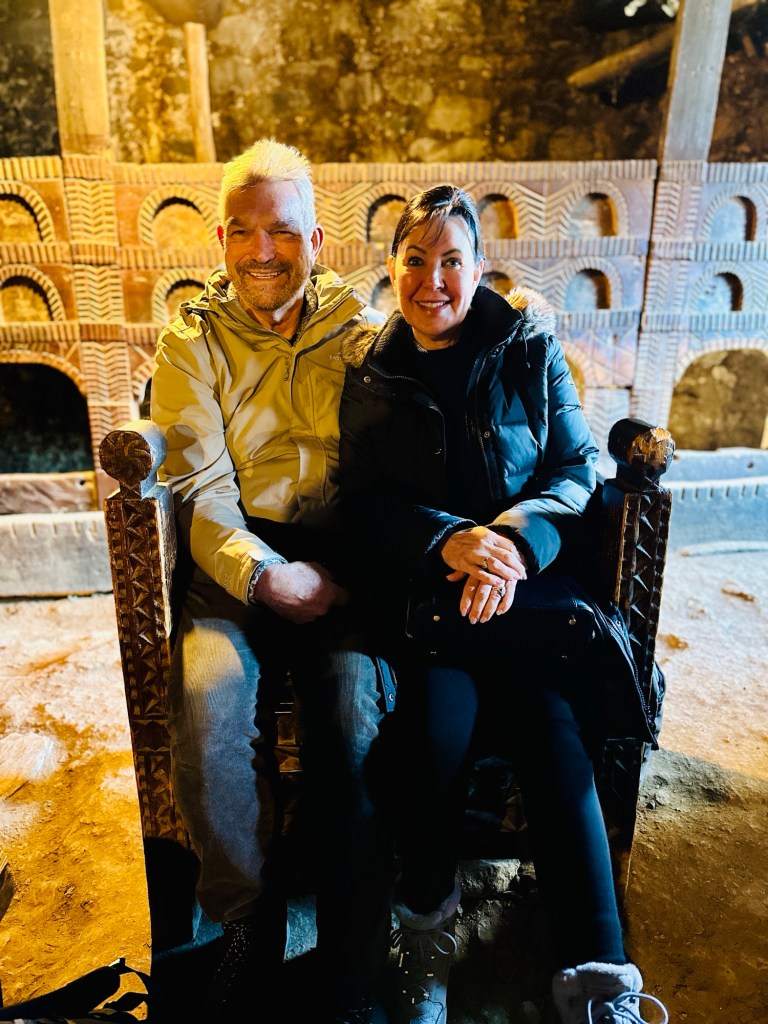
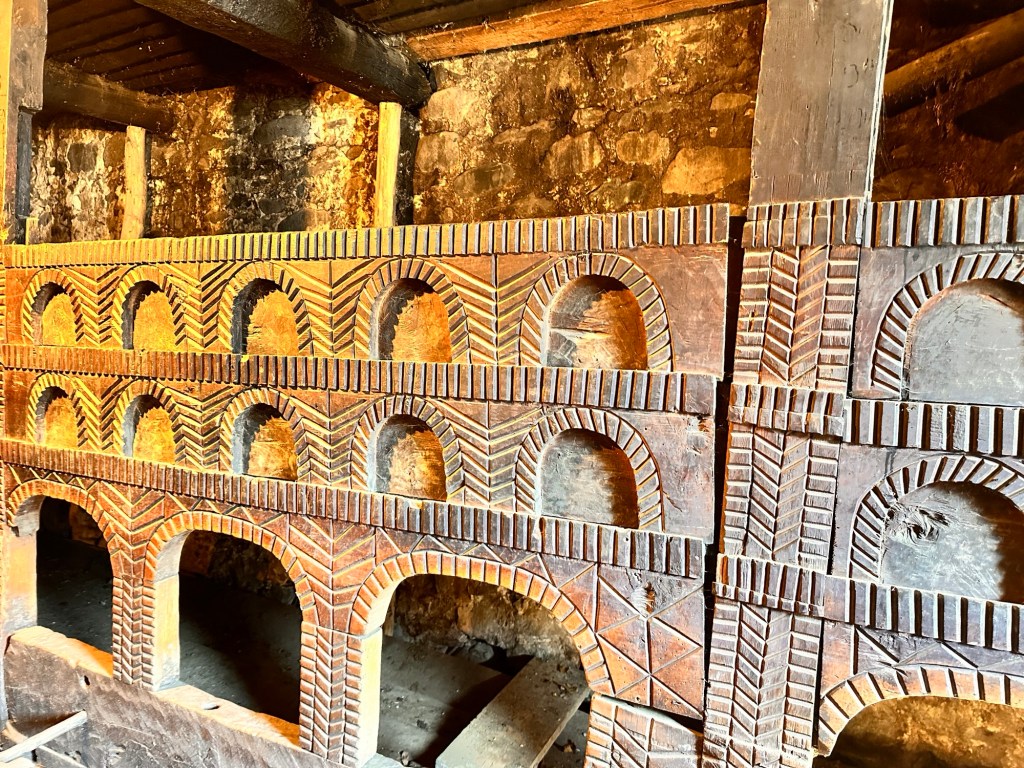

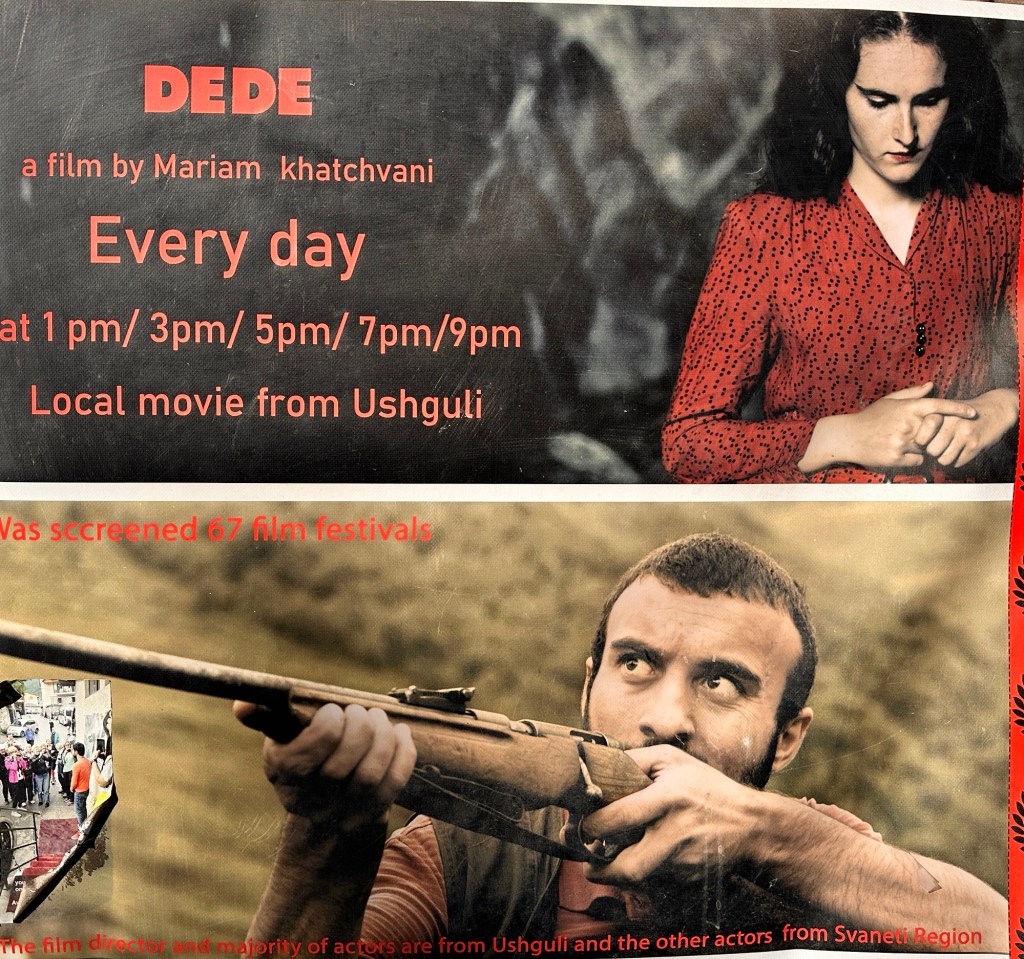
At the bottom of the road was a little cinema, and not a cinema as we know it- more like a room in a basement with a dozen deck chairs, bean bags and cushions, with a heater. We watched a movie set in 1992, made locally in 2017 – “Dede”. It was a true story based on the writer’s grandmother. Not the most uplifting of movies, but it did depict the somewhat difficult living conditions and harsh traditions that people living in these deep Caucasus Mountains endured.
Found a local cafe afterwards for a nice coffee and a Kubdari to share as a late lunch. Those spices… yum!
Wandered back to the hotel for a restful afternoon.
Day 17
Friday 9th November 2024
Mestia – Zugdidi – Kutaisi
250 kms
-5 -8 in Mestia to 3-18 in Kutaisi
After breakfast, we said goodbye to Mestia and started our descent down the alpine road – not sure if it’s better when you can’t see where you’re going like when it was dark, or in beautiful sunshine when you can clearly see the steep drops below! Horses and cows on the road, as well as a truck that had jack knifed, and we barely had room to edge past it. All part of the adventure.

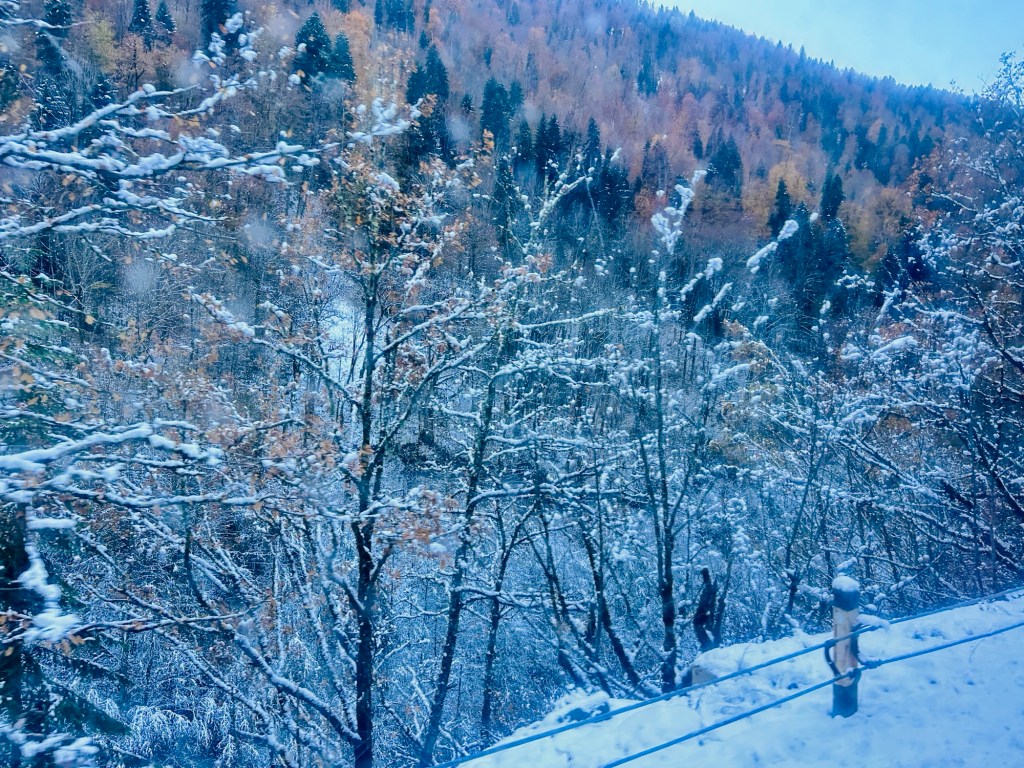

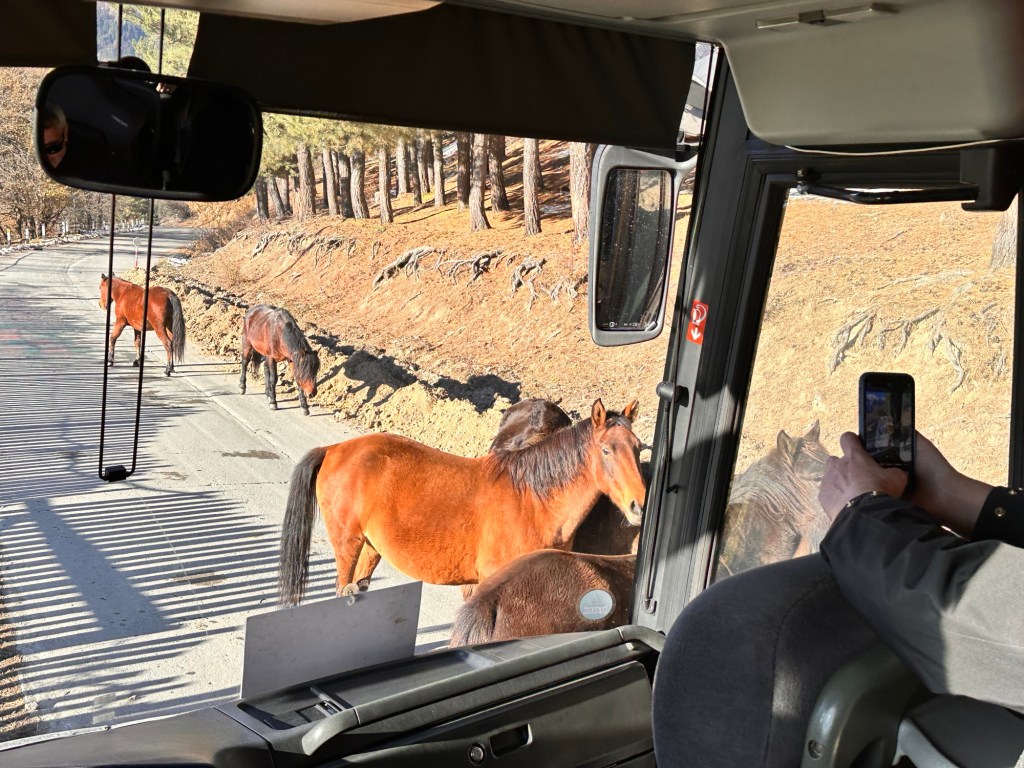
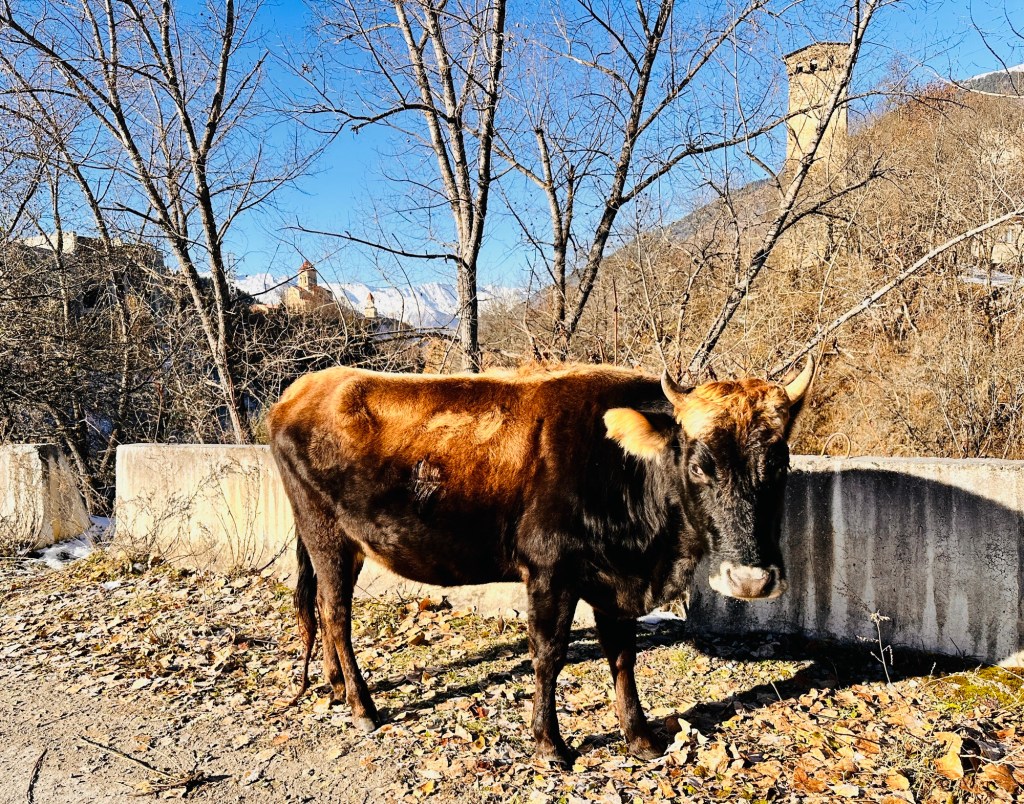
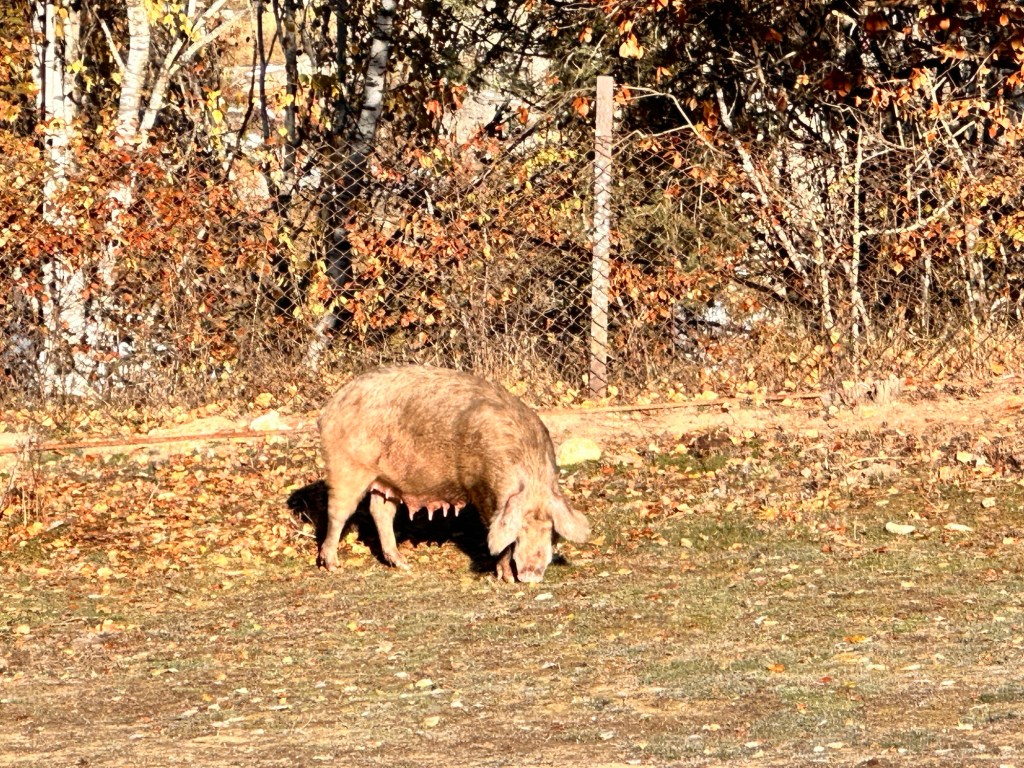
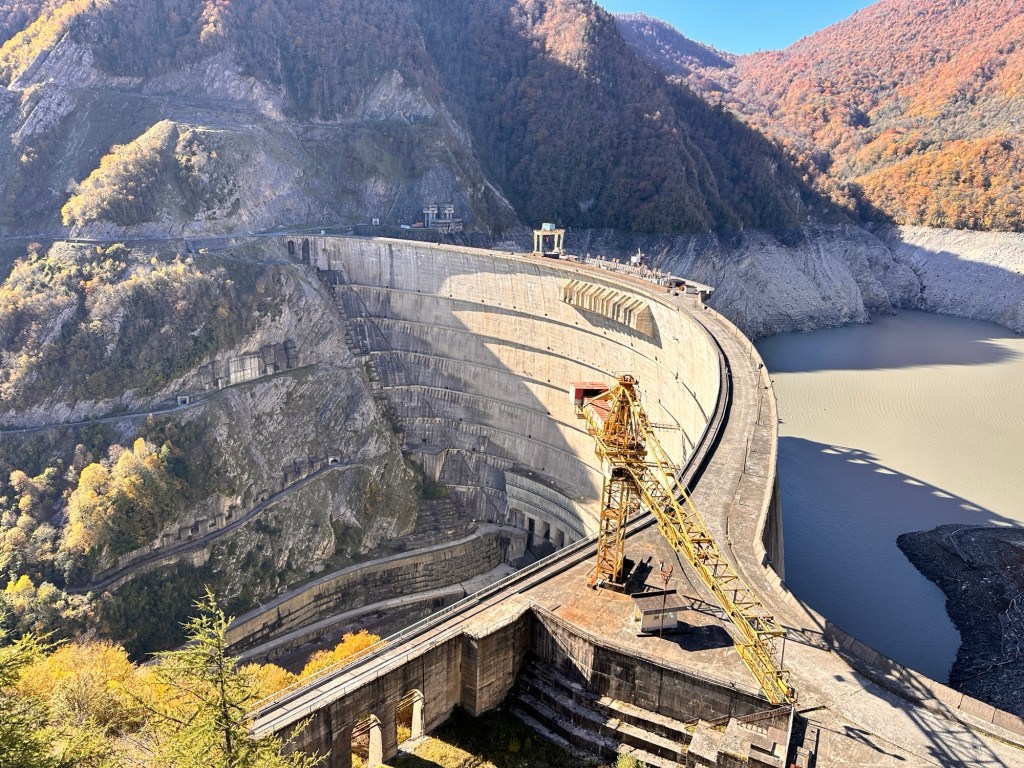
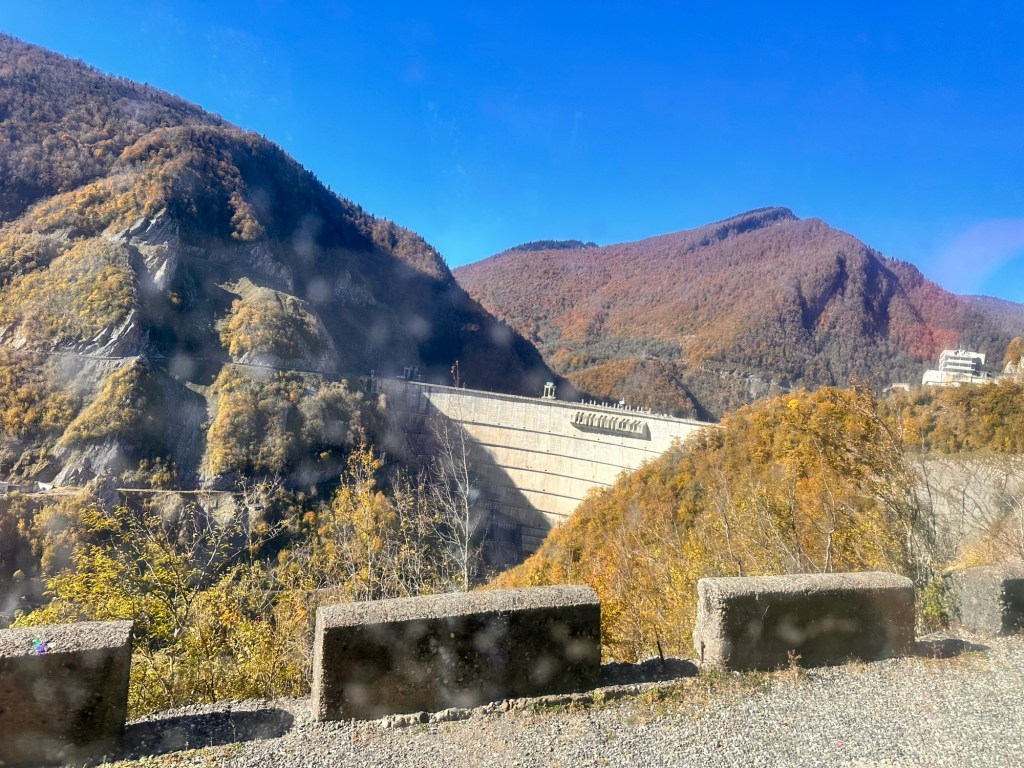
Our first stop was Enguri Dam, the seventh largest arch dam in the world. It started construction in 1961, completed in 1987, and its height is 271 metres. The hydroelectric power station provides up to 70% of the country’s electricity.
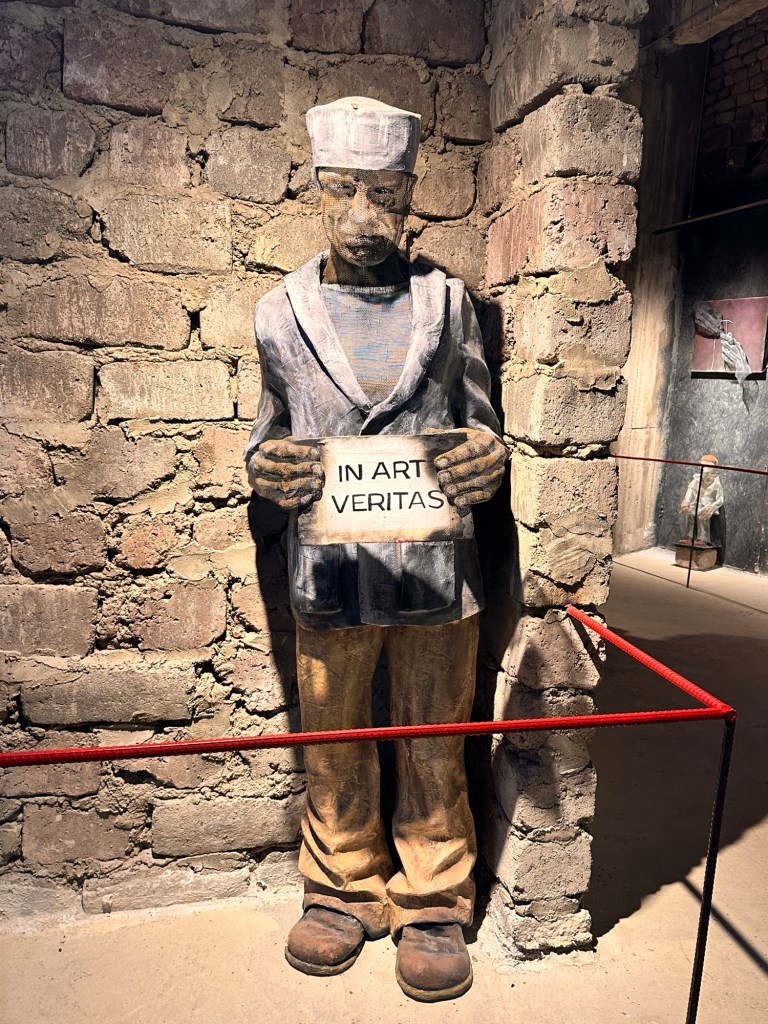
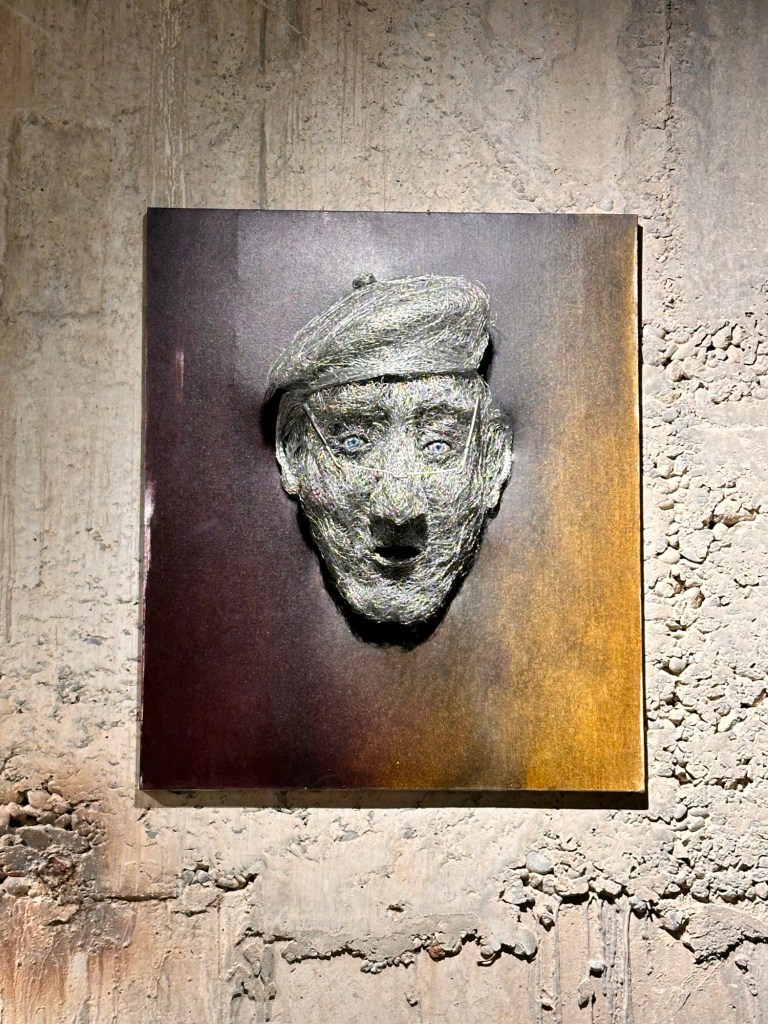
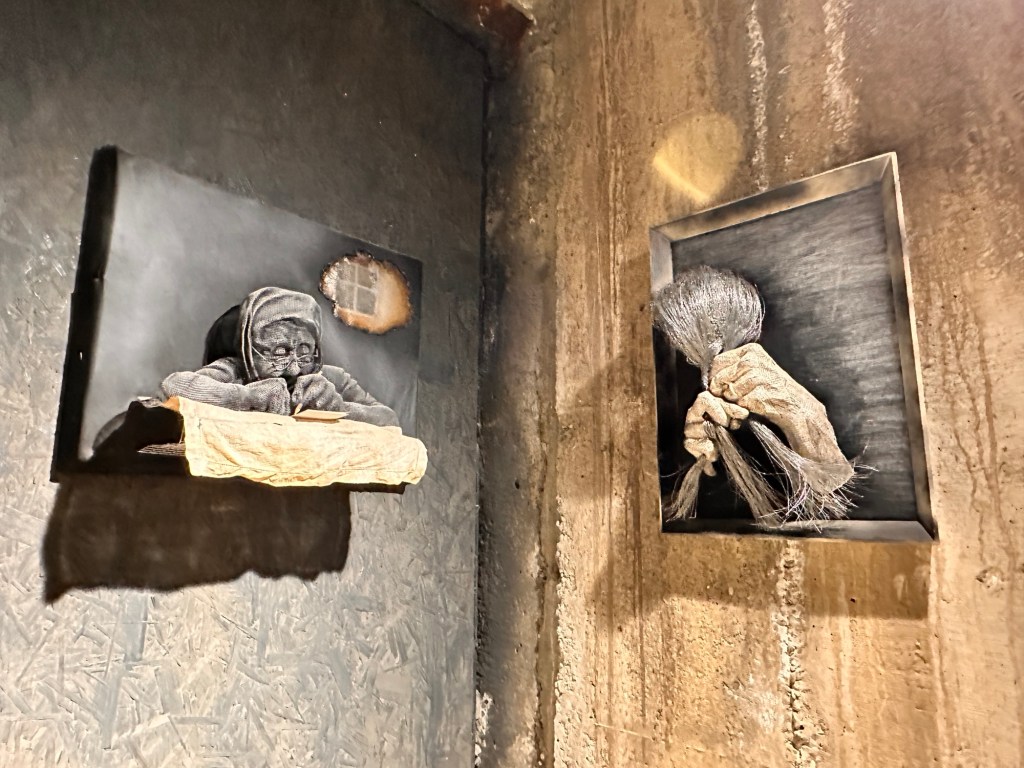
In the basement of the information area was an interesting art exhibit by Keti Melkadze. Her specialty was using wire which she moulded into body shapes. Very talented.

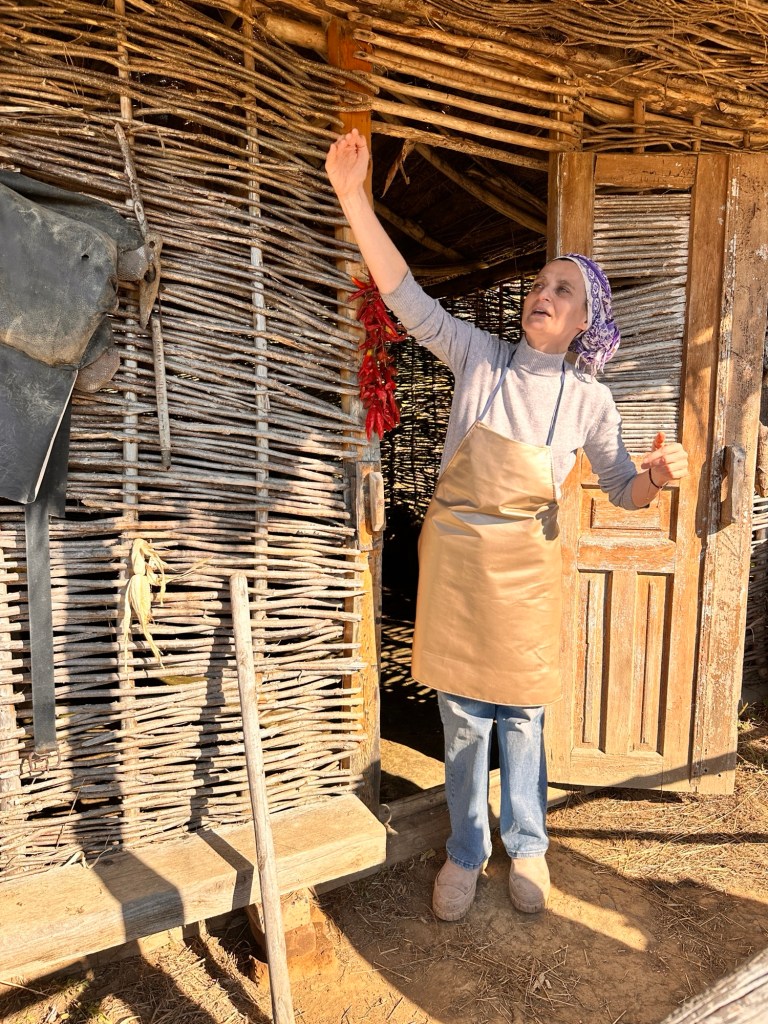
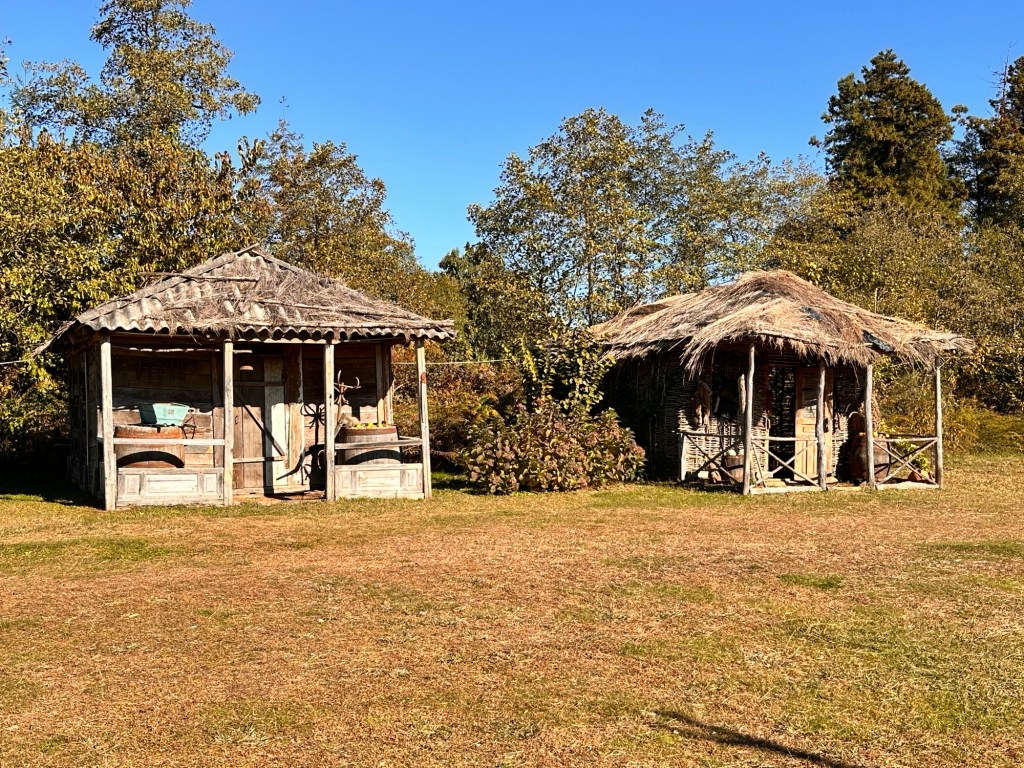
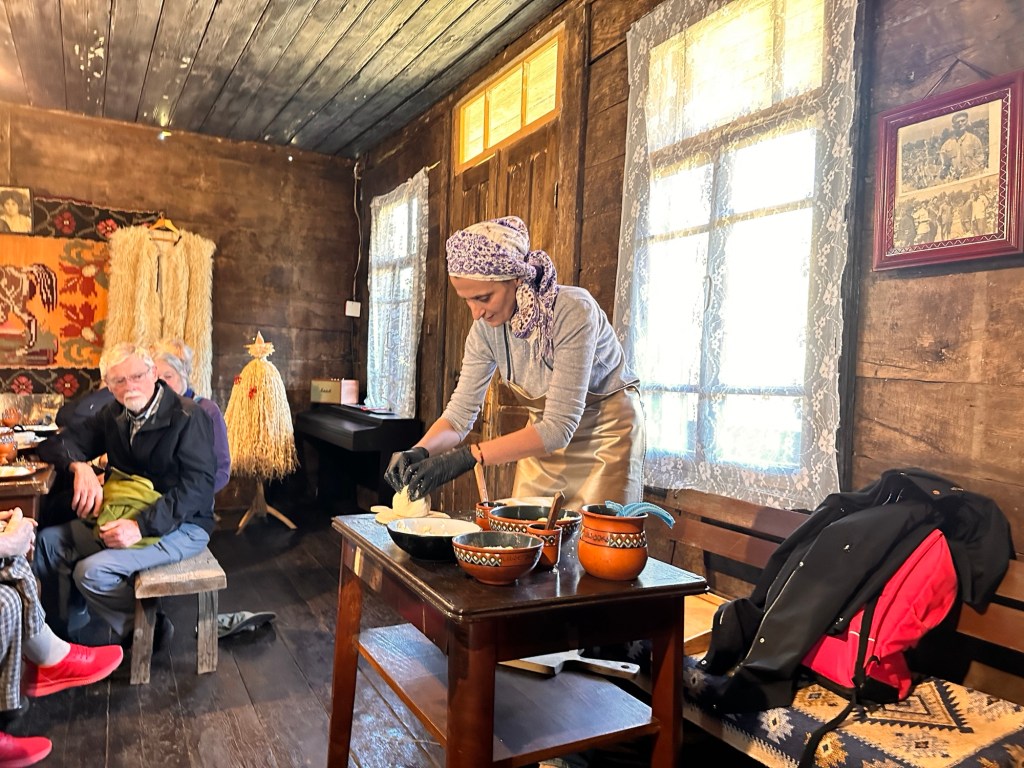
The highlight today was the ethnographic village Sisa Tura which is located in Chkhoria, near Zugdidi. The history and traditions of the Samegrelo region are collected and revived here. There are traditional facilities and unique household items located under the open sky. We enjoyed a lunch here, plus a short cooking class on how to make the Georgian cheese bread. The food and wine were amazing ! We had such a good time. Turns out Merieko was on Masterchef – she was ever so lively, and so passionate about her ethnic background.

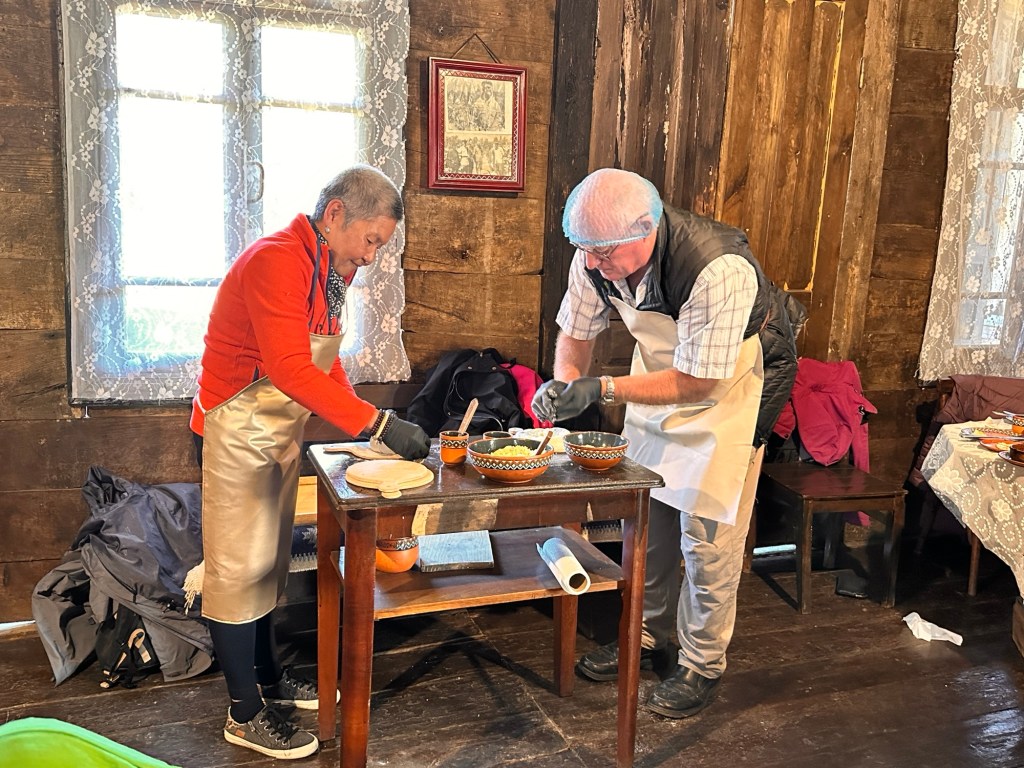
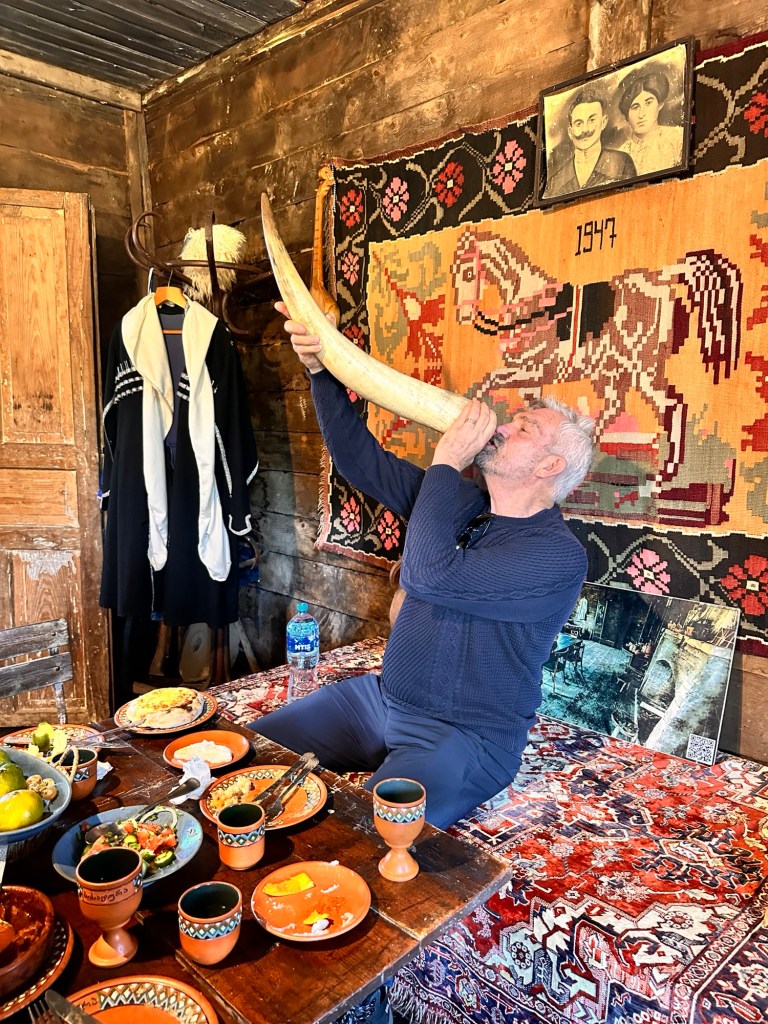
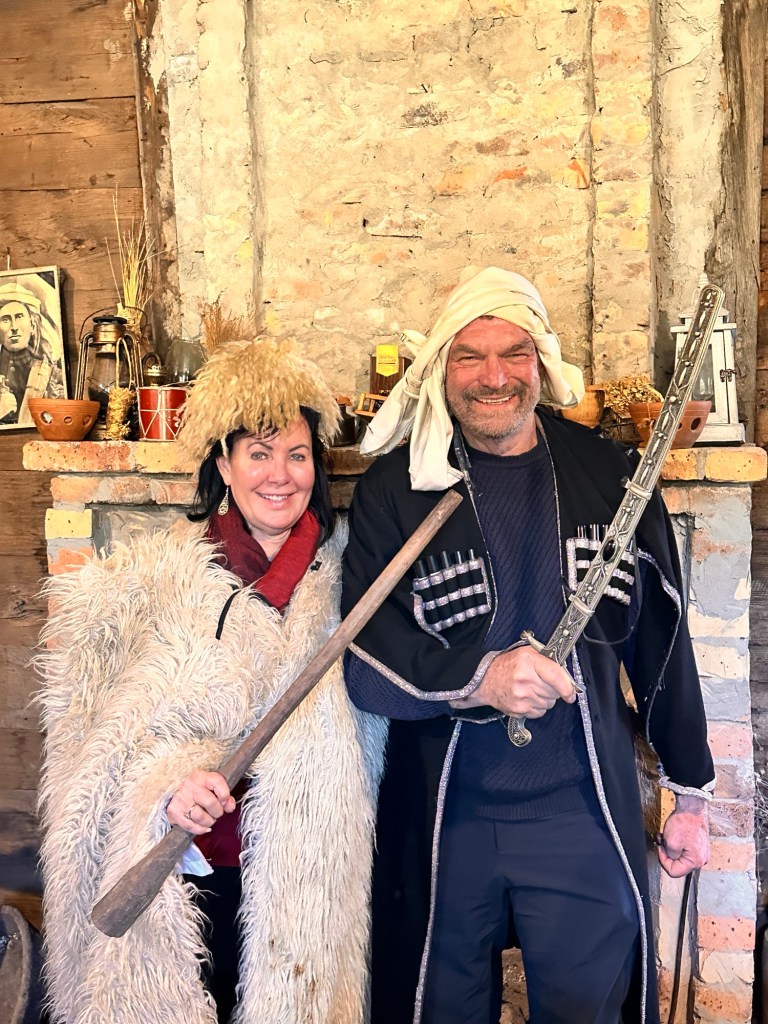
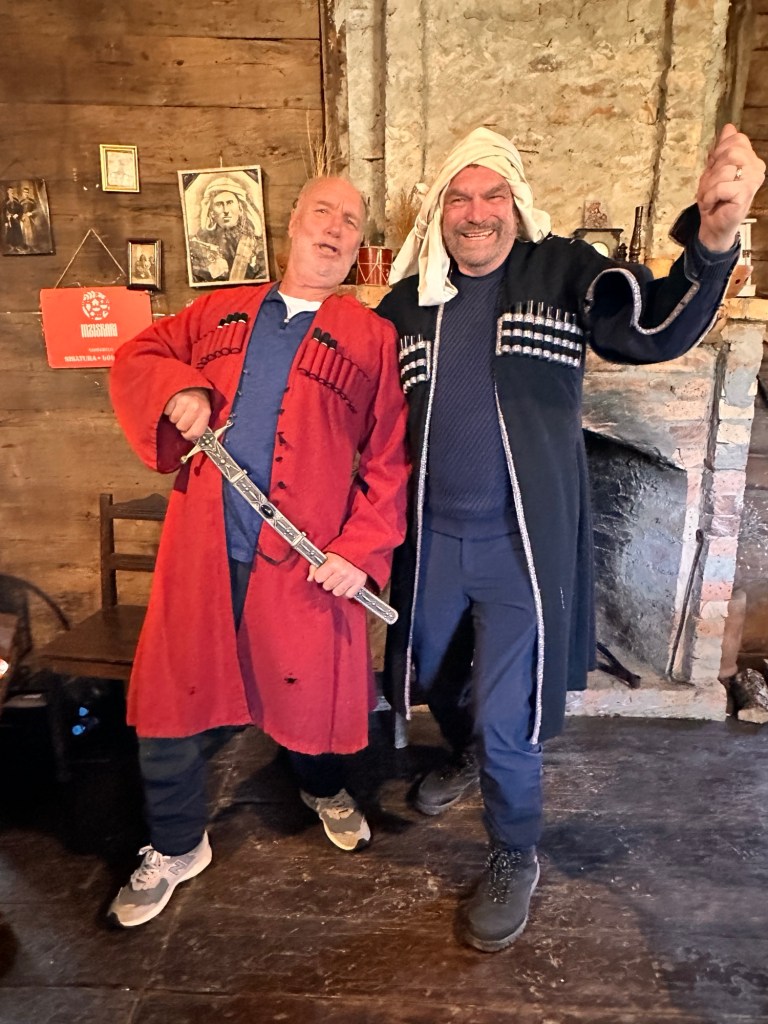
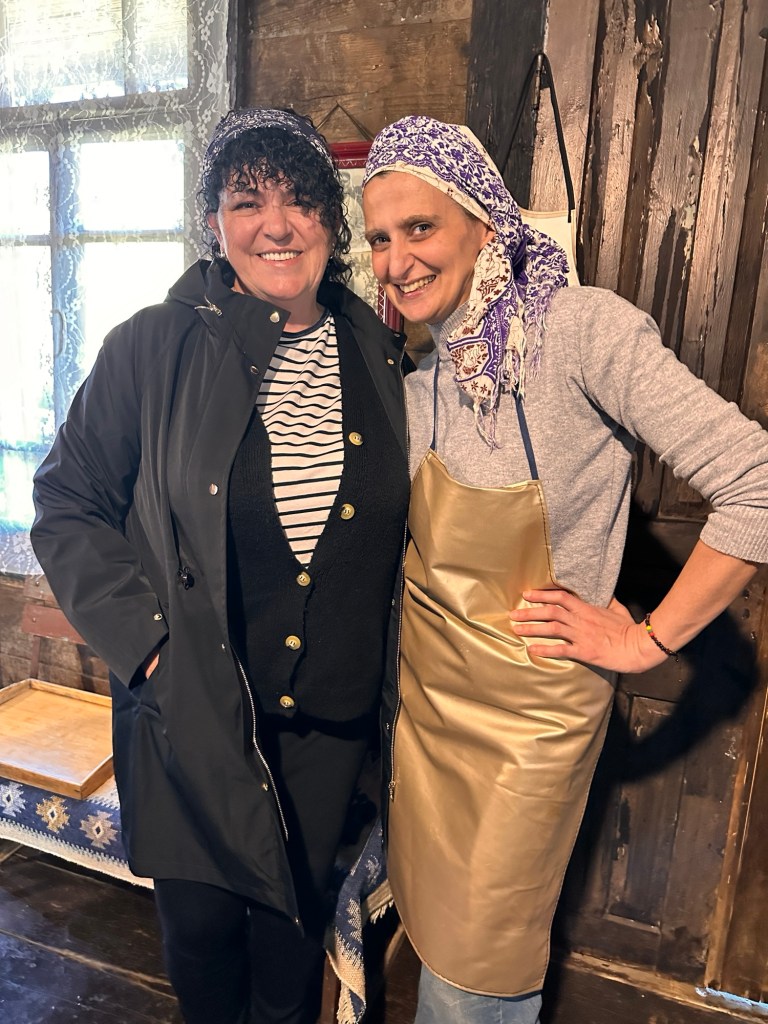
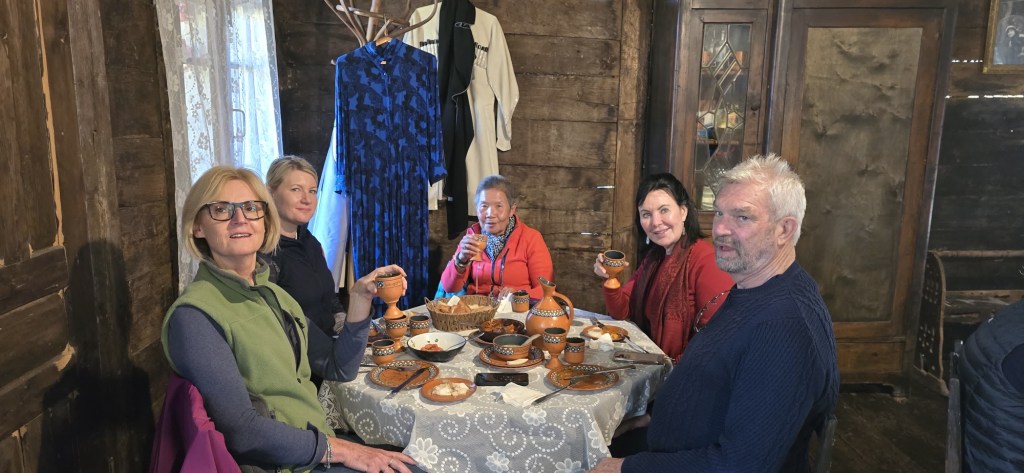
Last stop was the Neo Gothic Dadiani Palace. The Dadiani Palaces History and Architecture Museum is considered to be one of the most eminent palaces in Caucasus. Not sure what the competition is, but I’m not sure I agree – a little dull and run down. The guide here was the opposite of the lovely Marieko!
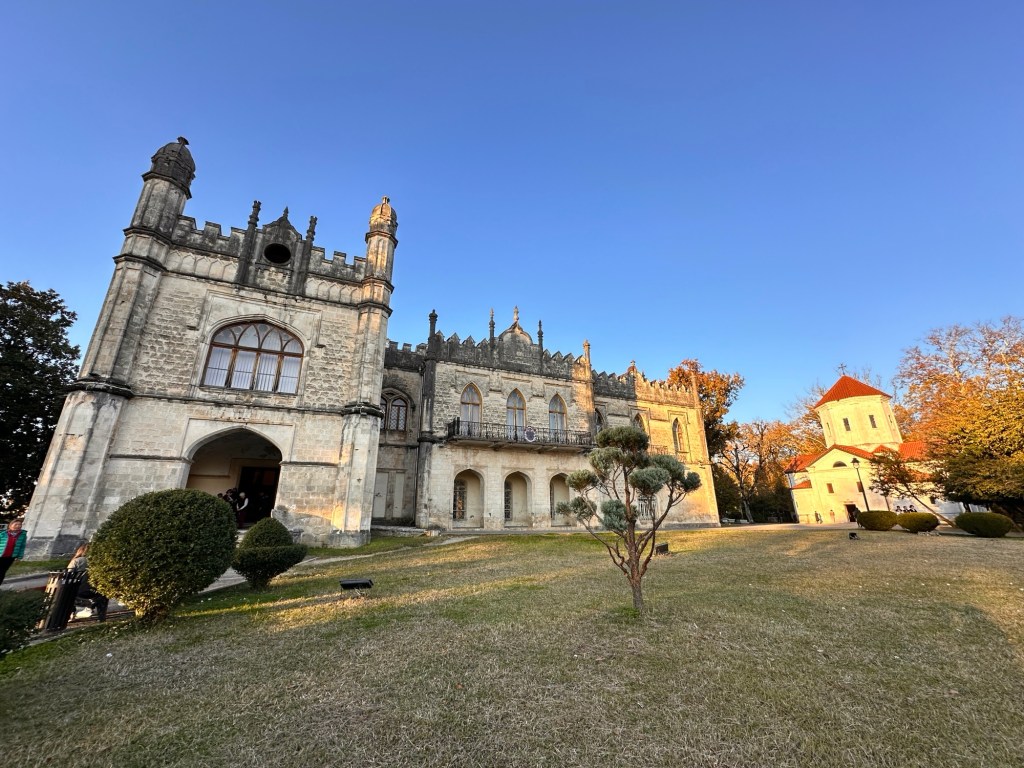
Another two hours of driving and we were back at the Kutaisi Inn. No need for dinner – we were still getting over lunch!
Day 18
Sunday 10th November 2024
Kutaisi – Chateau Mukhrani – Tbilisi
240 kms
8-14 degrees
Back to Tibisli today, a pleasant drive through rural areas, more autumnal tonings, and the mountains in the background. We had a roadside stop to buy some Nazuki – a sweet bread with fruit in it. Delicious. I’ve eaten so many carbs on this trip!!!!!
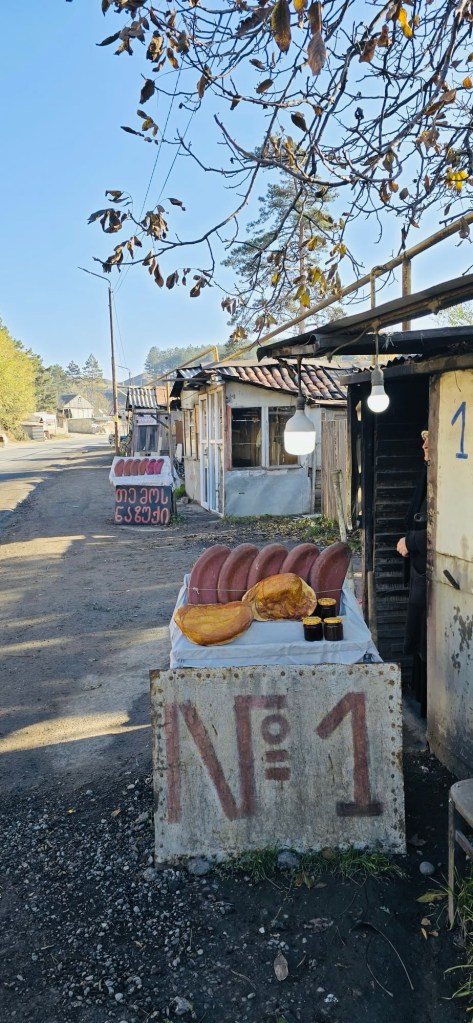
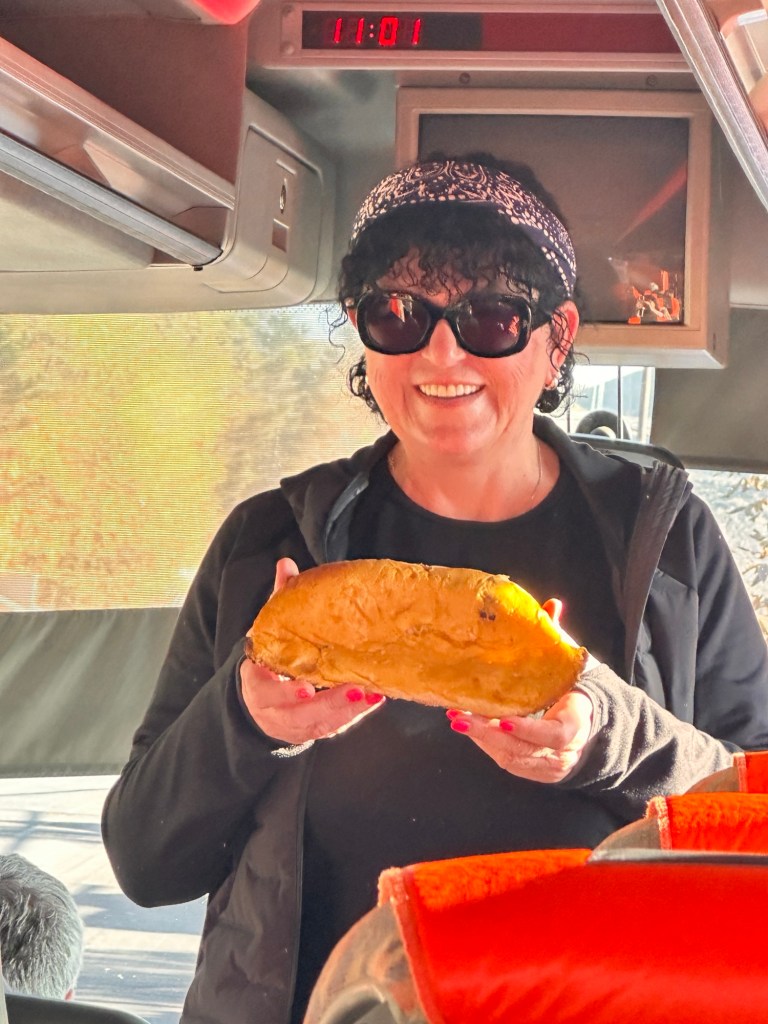
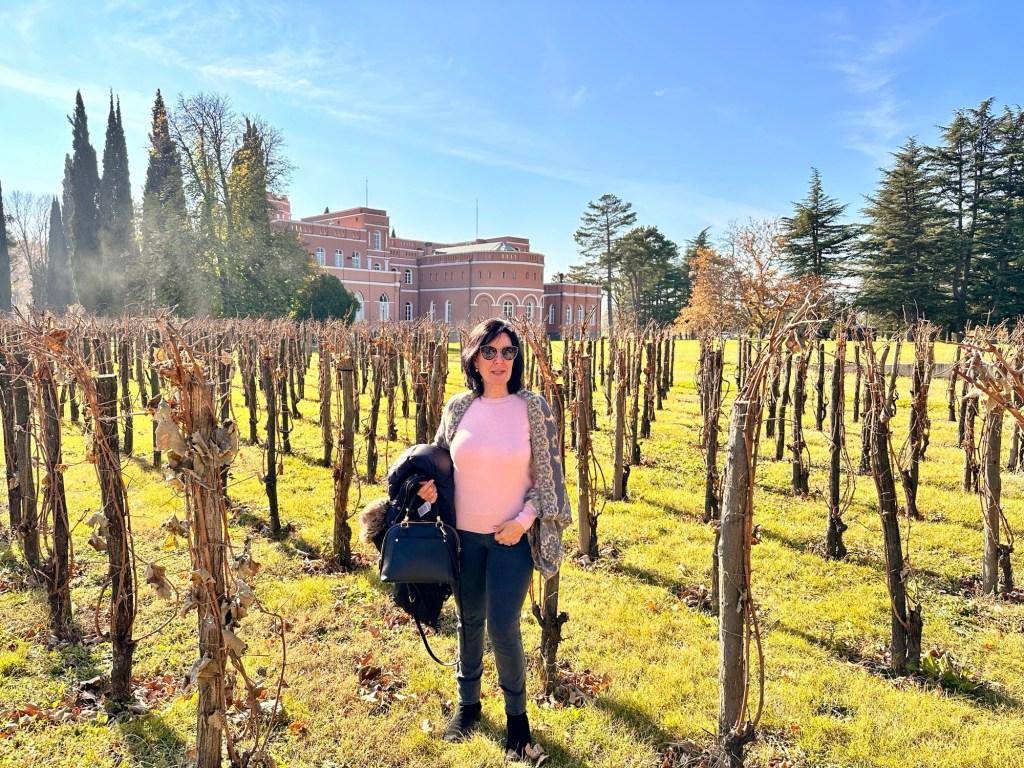
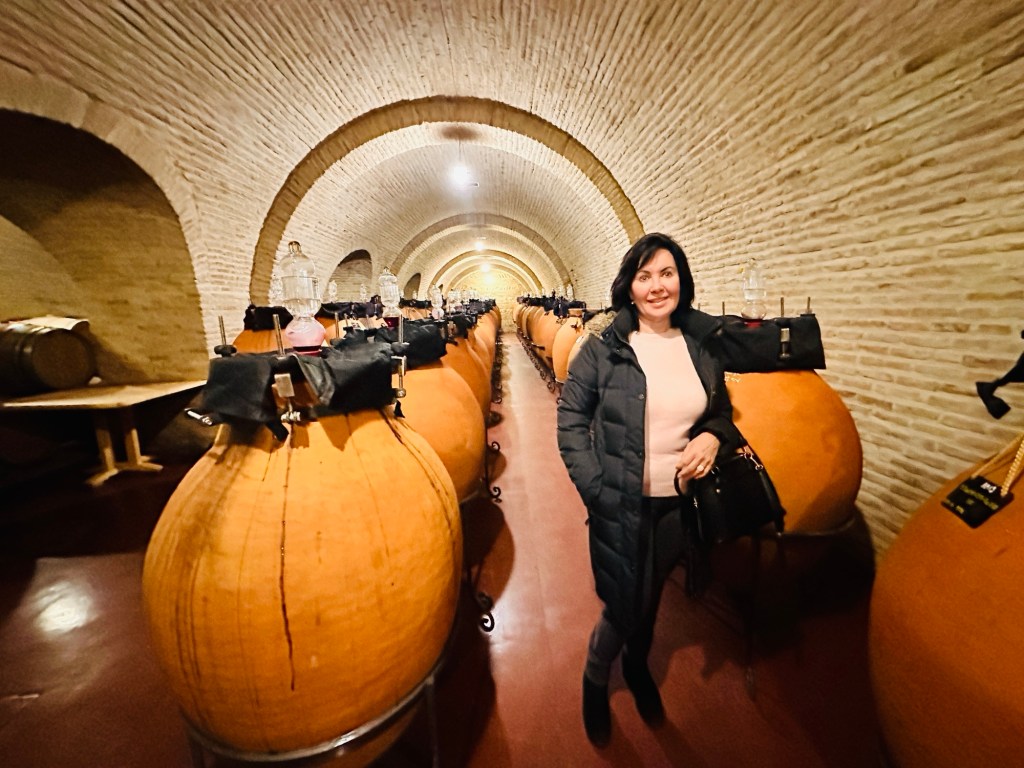
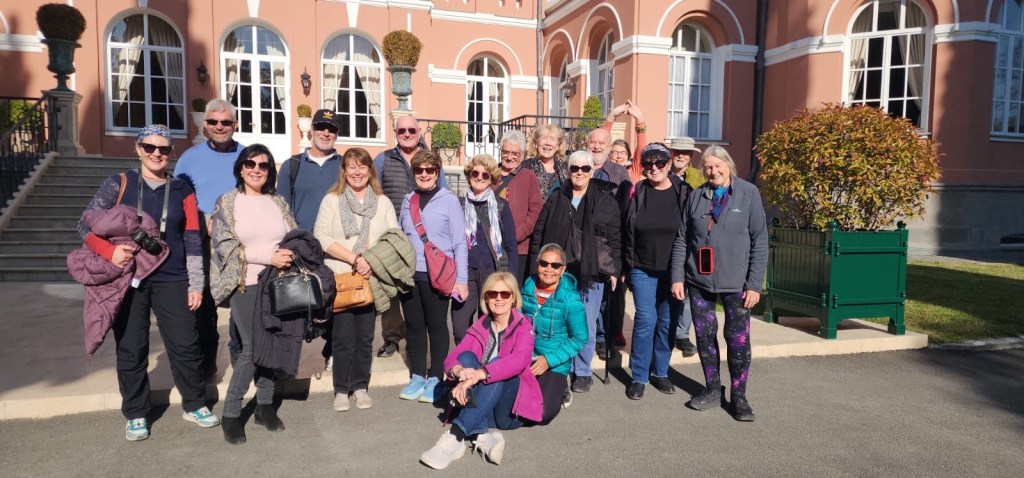
Next we drove to Chateau Mukhrani, the former estate of Ivane Mukhranbatoni Royal family. Here we had a guided tour of the estate, gardens, and old wine-cellars, plus we learnt the history of the Georgian royal family. The good part was next – a tasting of the finest Château Mukhrani wines accompanied with cheese and bread (yes, more carbs!) very nice wines indeed. The guide who presented was so animated – just gorgeous! Also visited the restaurant on the estate – very classy. The chandeliers were exquisite!



An hour’s drive to Tbilisi where we checked into the Holiday Inn Express for another night. Maia’s friend brought some hand made jewellery for us to view – of course I had to make a little purchase.
Our last night in Georgia so we set out one last time to explore the beautiful city of Tbilisi for the last time. Would you believe we ended up buying a silk rug – we just couldn’t pass it by. It was exquisite. Perfect for our lounge room – I hope🤞Now just have to juggle how we carry it home – but then what’s new!
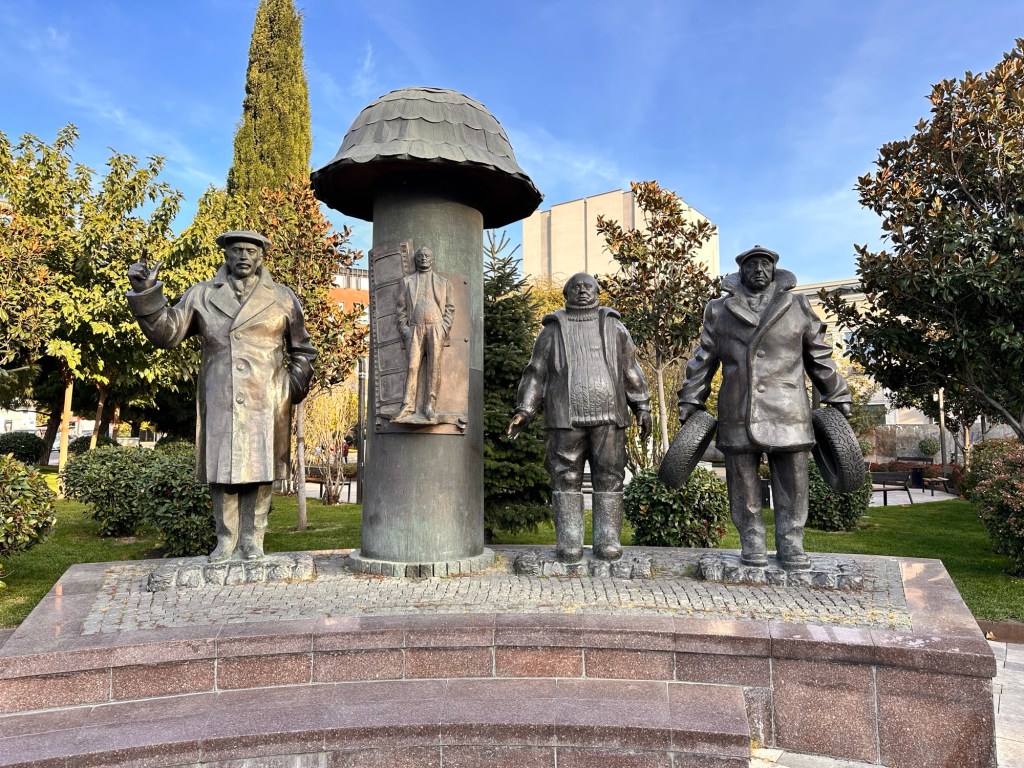
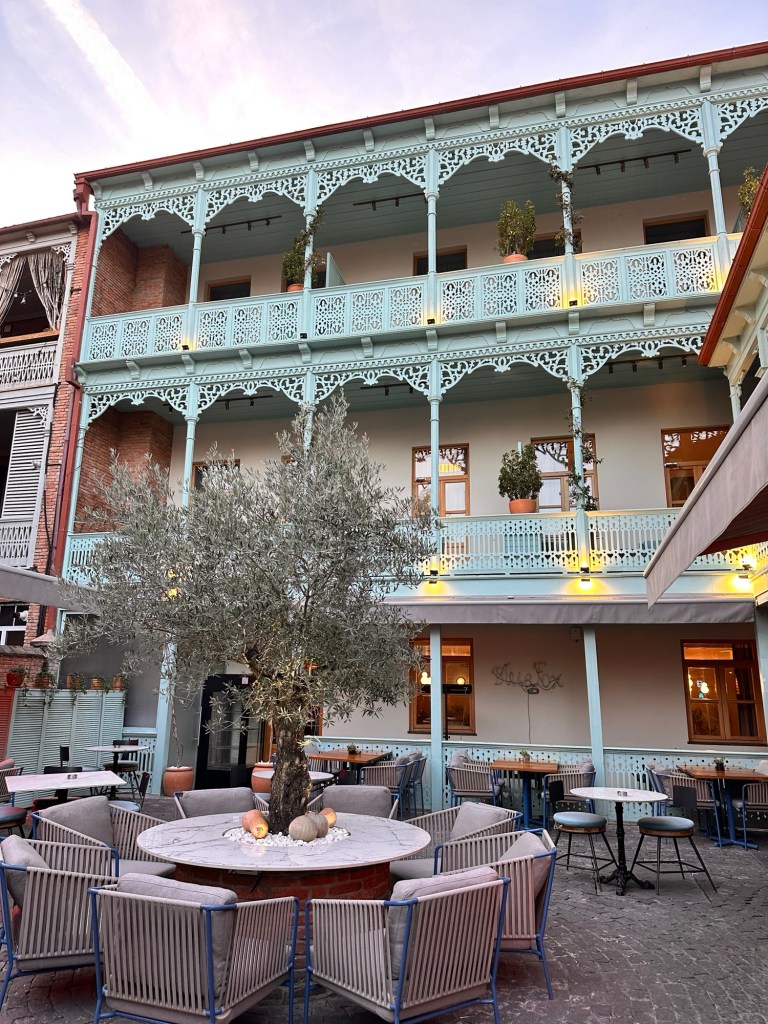
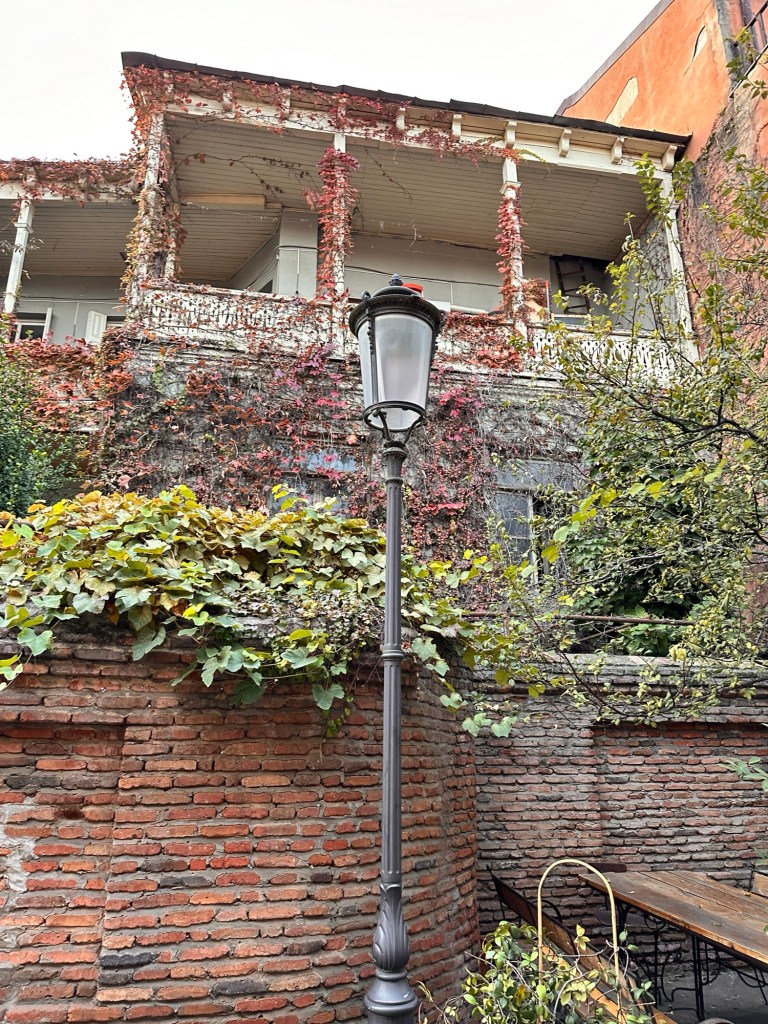
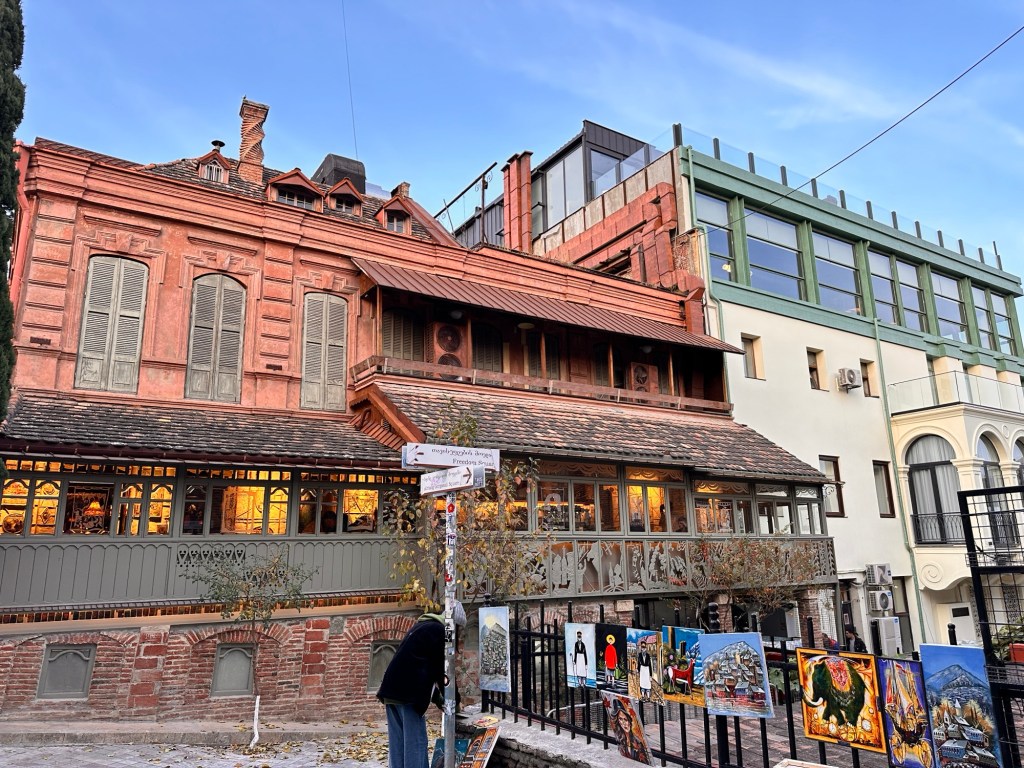
Our last Georgian meal – bean hot pot and the veal Chashushuli with our favourite Saperavi- what can I say! Just divine.
Day 19
Monday 11th November 2024
Tbilisi – Sadakhlo – Sanahin – Haghpat – Dilijan
230 kms
5-14 degrees, cloudy
A 1.45 hour drive to the Sadakhlo border, and we say a sad farewell to Georgia, and our very knowledgeable guide Maia, and our very accomplished driver, Mindia.
A nice touch was our Remembrance Day reflections on board the bus just prior to disembarking, very emotionally led by Frank.
A much simpler procedure crossing the Georgian- Armenian border, still a long walk but at least it was flat and much smoother paving.
Notes on Georgia
So many street dogs and cats! And there is always a dog that barks all night! But they are extremely friendly – the dogs always provide a welcome committee wherever you go!
The Georgian people seem to be quite surly in general – it was often hard to get them to crack a smile! But very helpful.
Such flavoursome food, and so cheap. Consistent focus on fresh vegetables, herbs, fruit and nuts.
Persimmons and pomegranates in abundance!!!!
Saperavi wine is delicious.
So many run down buildings from the Soviet times.
Armenia
Day 19 continued
Armenia
Small country, 30000 sq kms, but very diverse.
Mountainous country – average altitude 1800 metres
12% of the country is forest – northern section. Also rich agricultural area – many pomegranates, also apricots (originated in Armenia)
Eastern Armenian is the official language – 80 dialects here. Traditional Old Armenia language spoken in churches.
Population of Armenians is 10 million – 3 million in Armenia, 7 million living elsewhere worldwide (biggest group is in Russia – 3 million)
Closed borders with Türkiye and Azerbaijan, open borders are Iran and Georgia, but they are only short distances.
Main religion is Christianity , most are members of the Armenian Apostolic Church.
Many factories from Soviet times, but all closed now, since Armenia gained independence in 1992.
Unemployment is 15%
We meet our new guide, Gaya, after the border crossing. We have a short stop soon after for money exchange, and an early lunch .
Currency is Dram
Gaya gave us a brief summary of Armenia’s history
2300BC Hayk – grandson of Noah establishes Armenia
512BC – Armenia annexed by Persia
331BC Armenia gains independence from Persia
301 Armenia becomes first official Christian state in the world
6th century – Arab wars
886 – recognition of Armenian sovereignty by Turkey
1045 Armenia defeated by Byzantine troops
1300 – 1836 Armenia dominated at various times by Persians Mongols and Ottomans
1836 – Armenia ceded to Russia
1918 Democratic Republic of Armenia established
1922 Armenian Soviet Socialist Republic as part of USSR
1991 Armenian independence
1991-94 war with Azerbaijan over disputed territories
2020 War with Azerbaijan over disputed territory- Azerbaijan wins over 44 days but disputes remain.
2022-23 – disputes continue
So much to try and understand, we will hear more as the days go on.
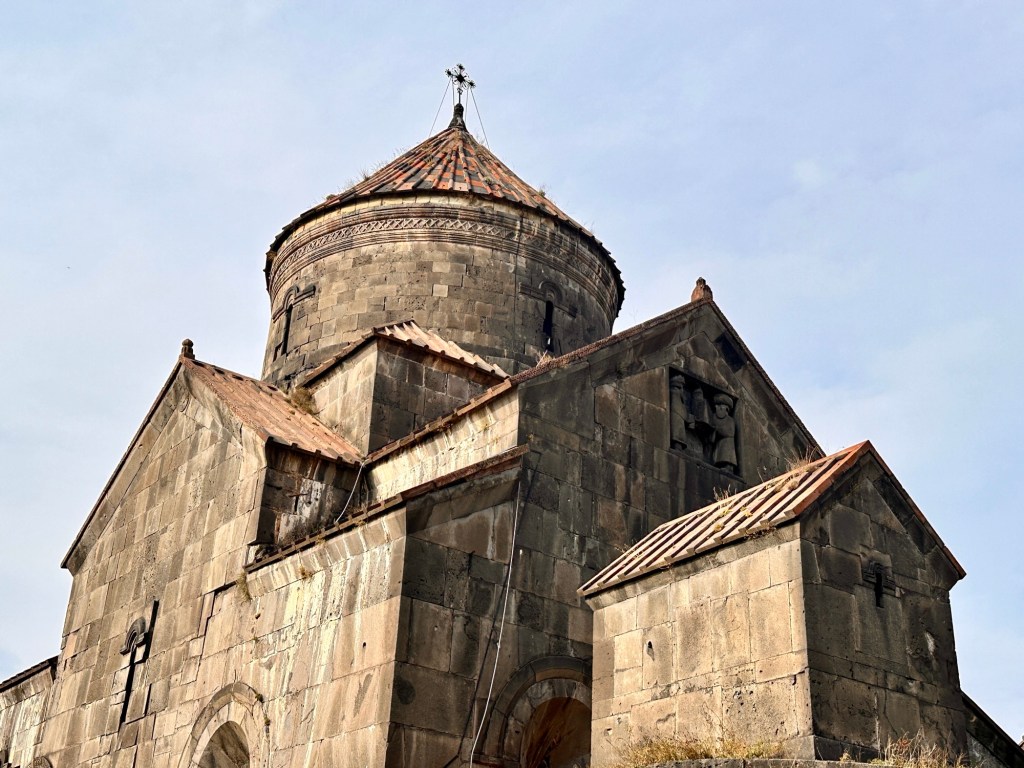
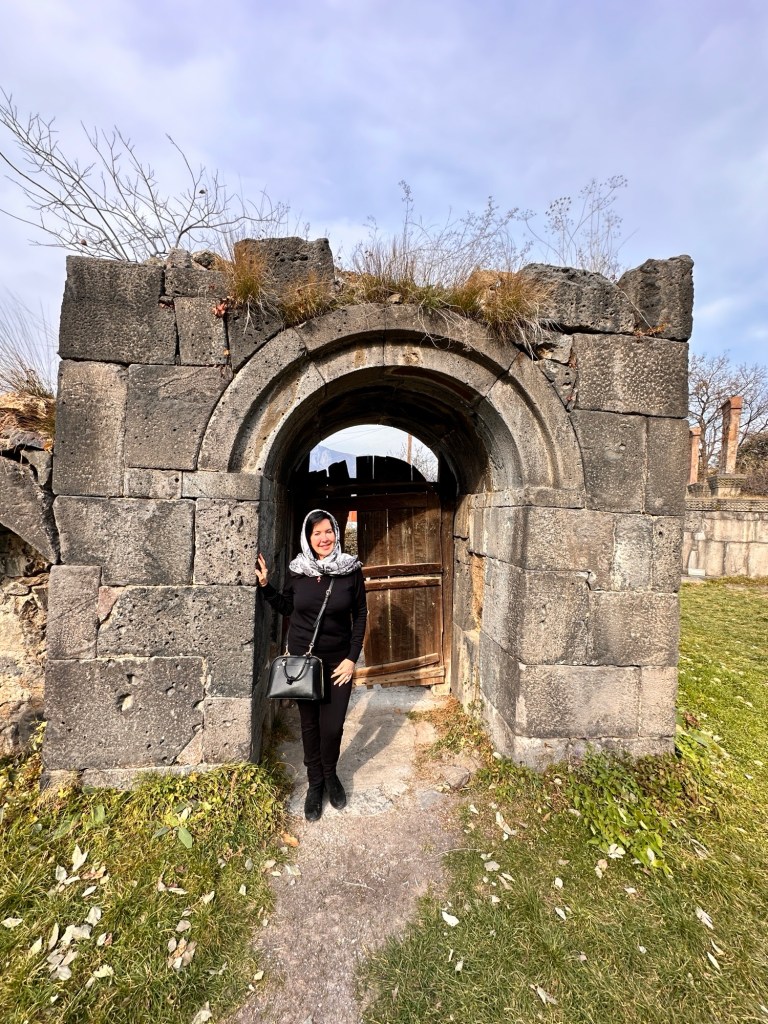
From here, we drove to Haghpat to visit the Haghpat and Sanahin monasteries. Both monasteries are UNESCO World Heritage Sites. Literally the name “Sanahin” in Armenian means “this one is older than the other,” which probably means that this monastery is older than Haghpat. These two monasteries are very close to each other and can be easily seen from one to the other. Both are located on an uneven plateau, separated by a deep crack formed by a small river that flows into the river Debed. Haghpat Monastery was one of the largest religious, cultural and educational centres of medieval Armenia. Both built 10-13th Centuries. There were beautiful frescoes in Haghpat Church, none in Sanahin.
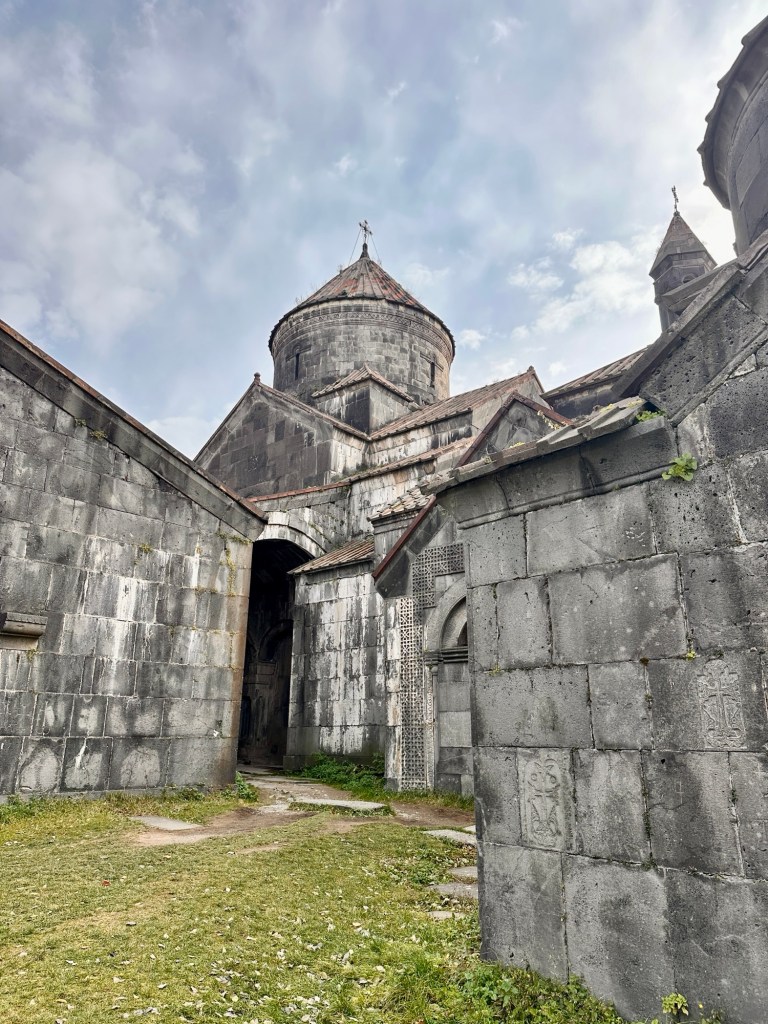
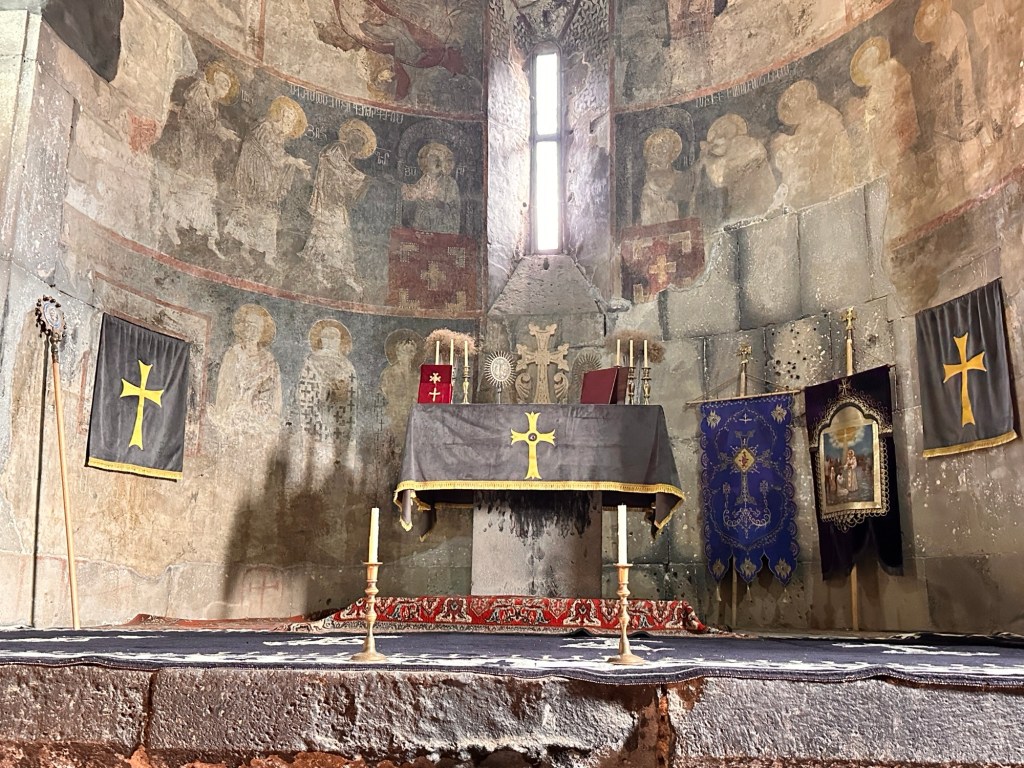
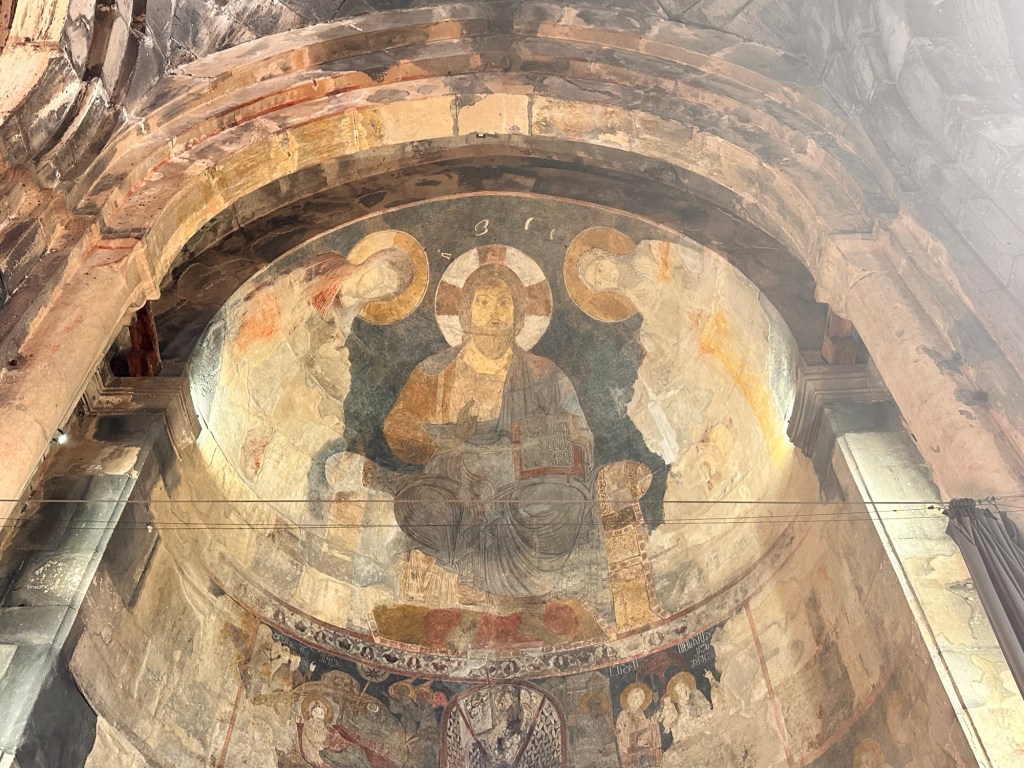
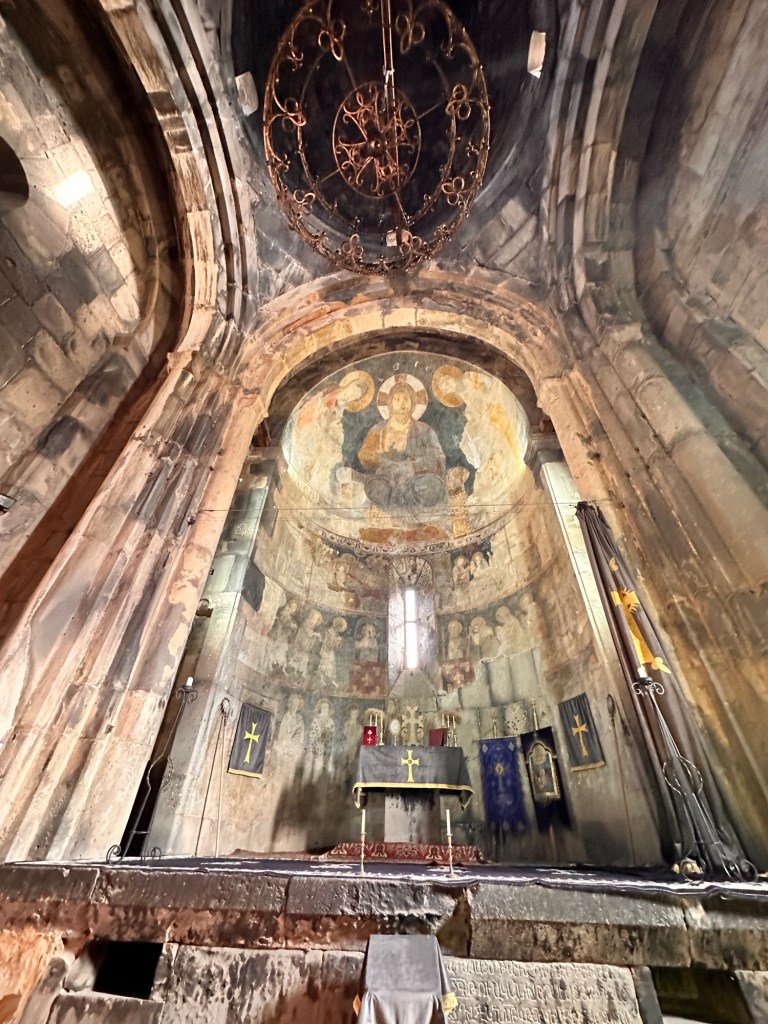
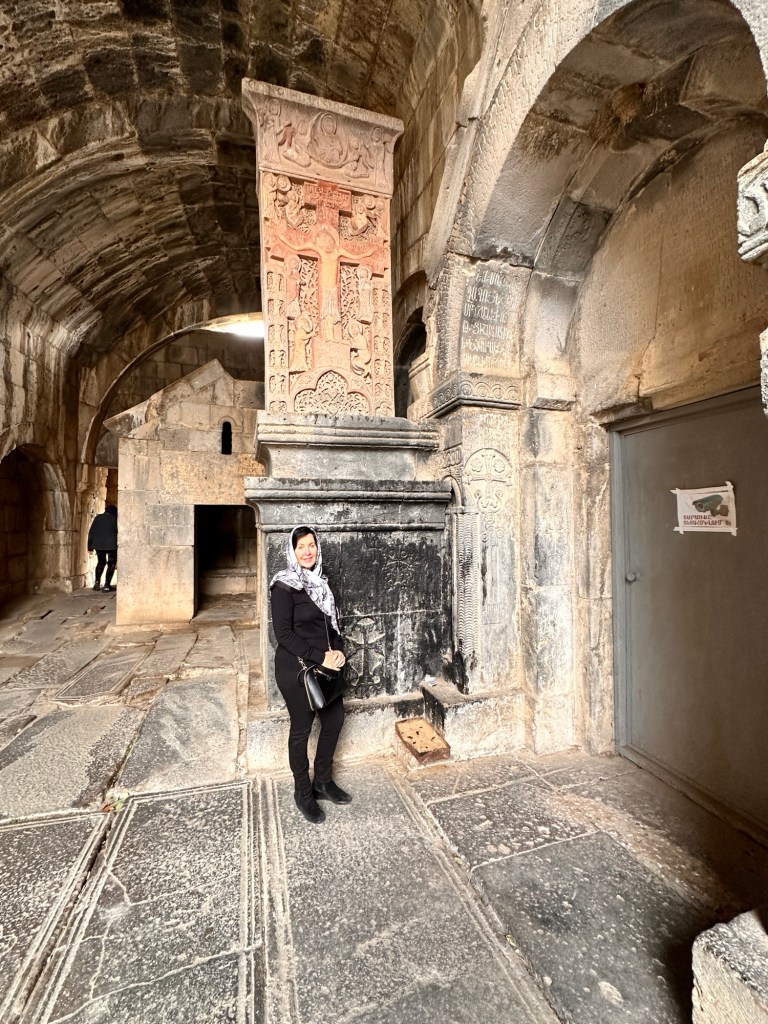

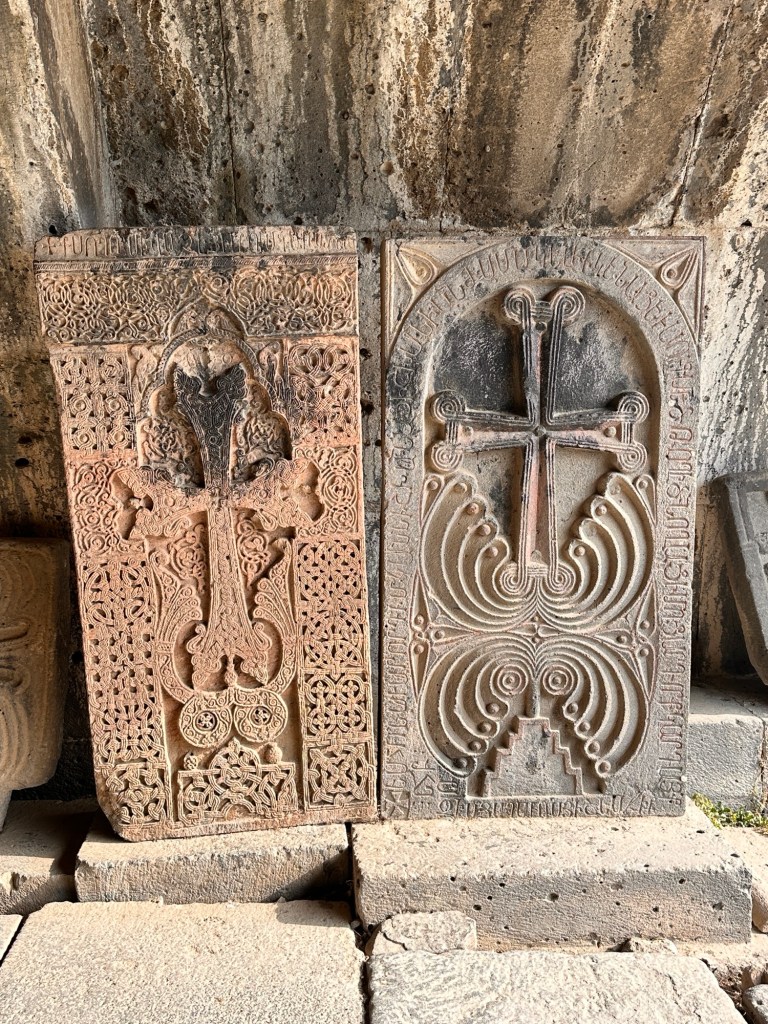
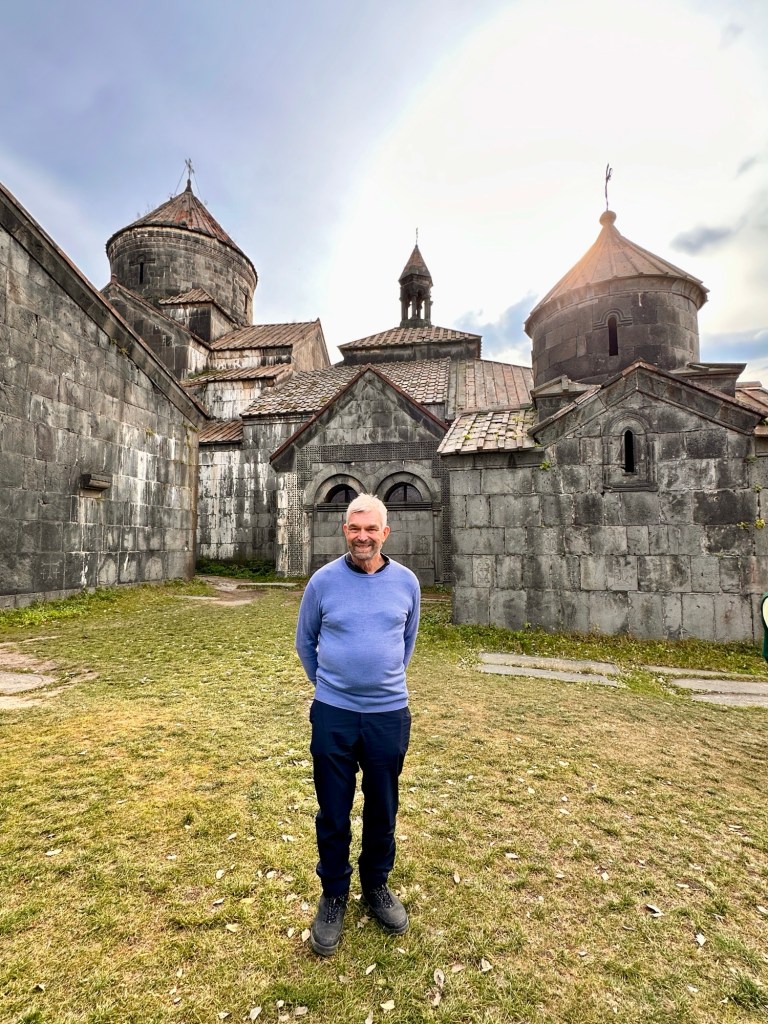
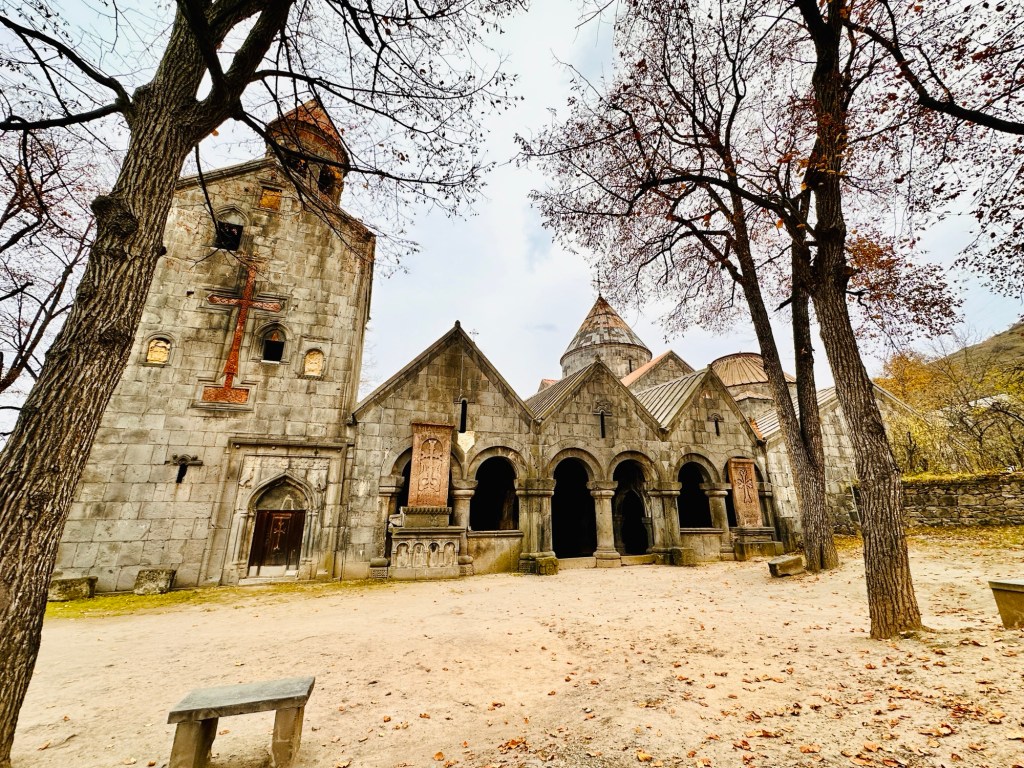
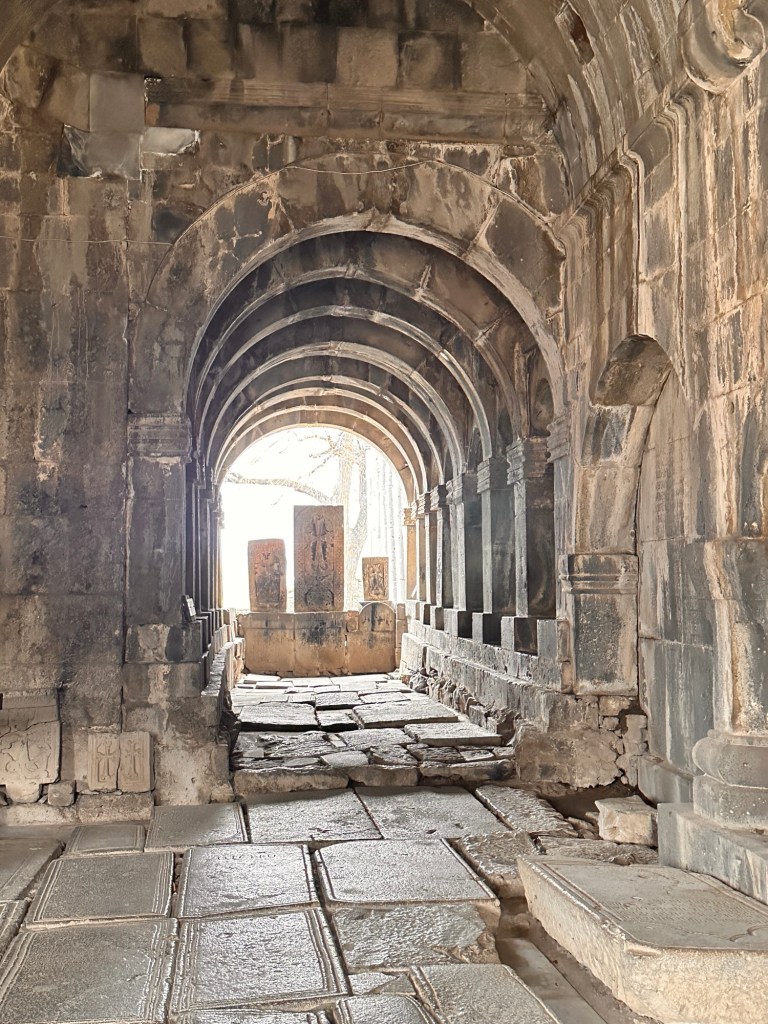
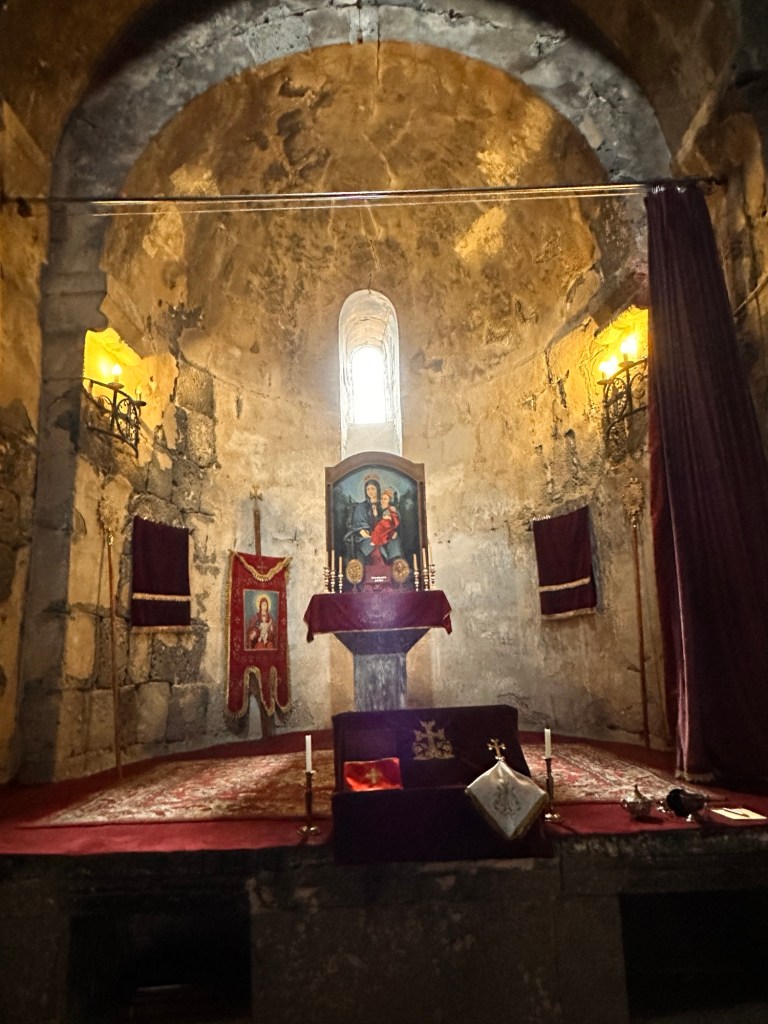
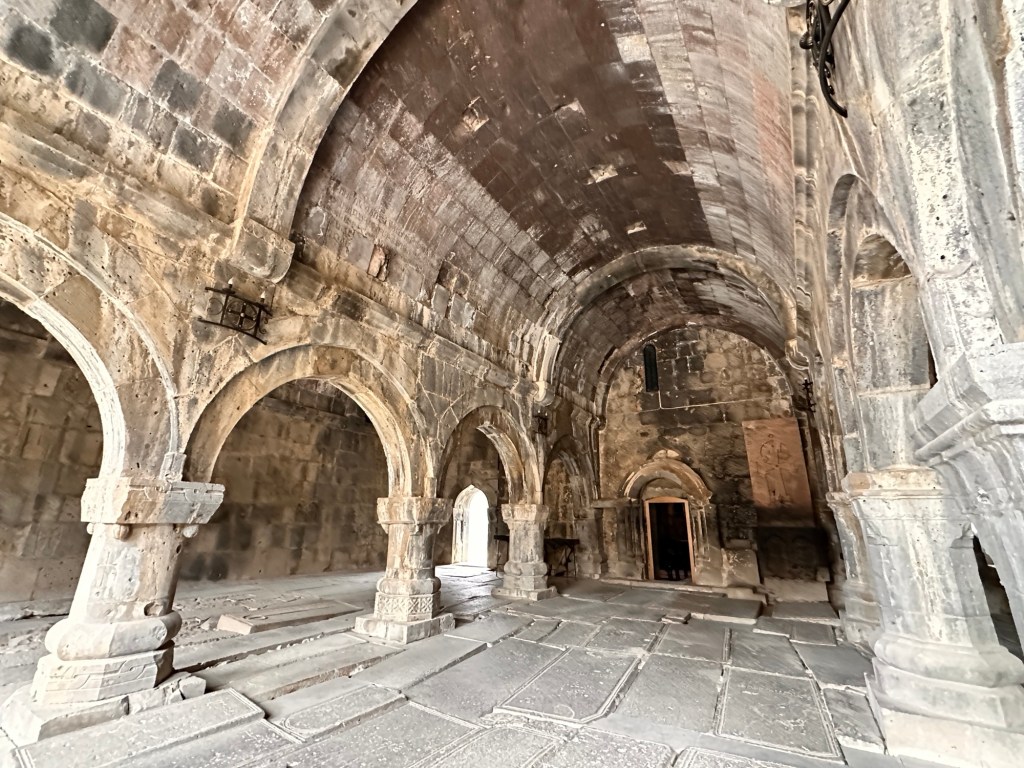
Of note to me, were the Grave Halls that you walked through before the church entrance. As the name suggests, they were graves, that were intended to be walked over. Not only were they graves, but graves of the rich and famous, the kings and queens, and the priests, symbolising, that in the end we all have the same destination in life. The “commoners” were buried outside.
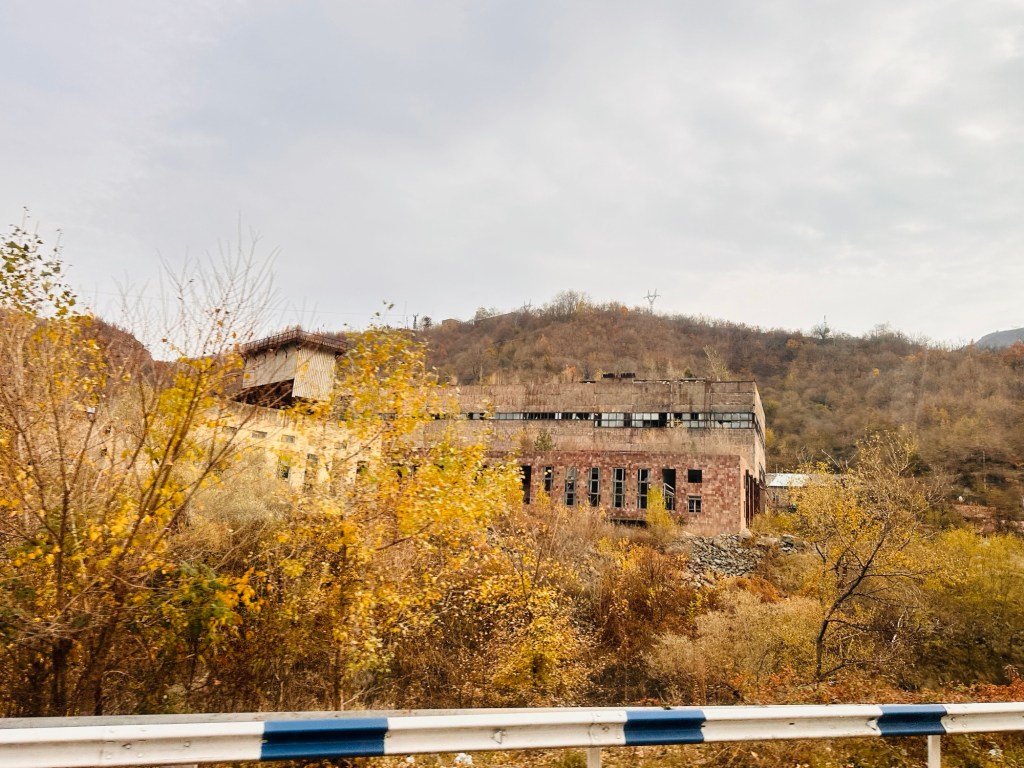
We passed through almost deserted towns to get to both monasteries. Once functional factories, but now closed, were dotted along the road. Sadly many people have moved away. Now mainly farmers are living there. We passed a community of Russian fundamentalist Christians, called Csimatick – they only speak Russian and live harmoniously within the community.
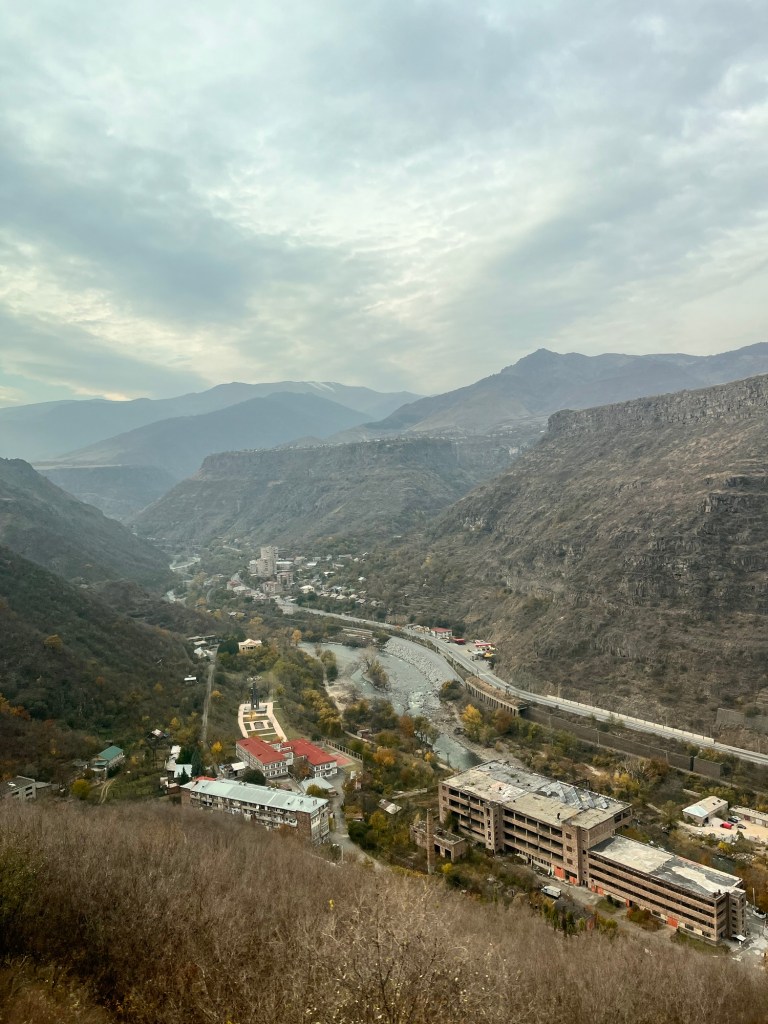

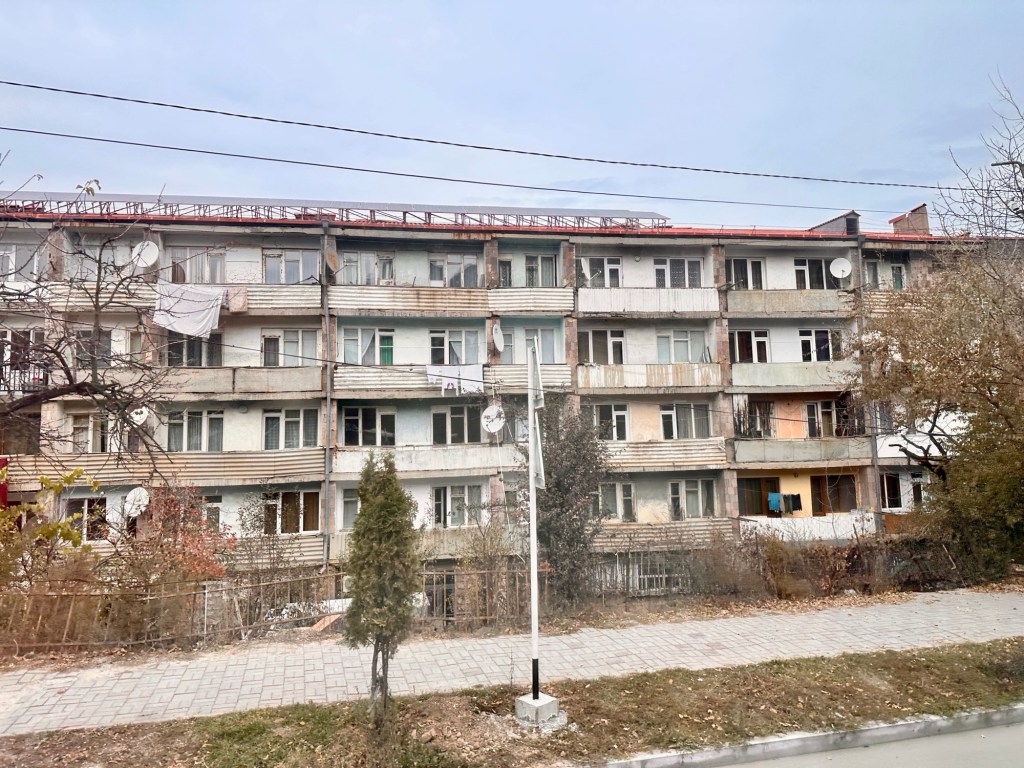
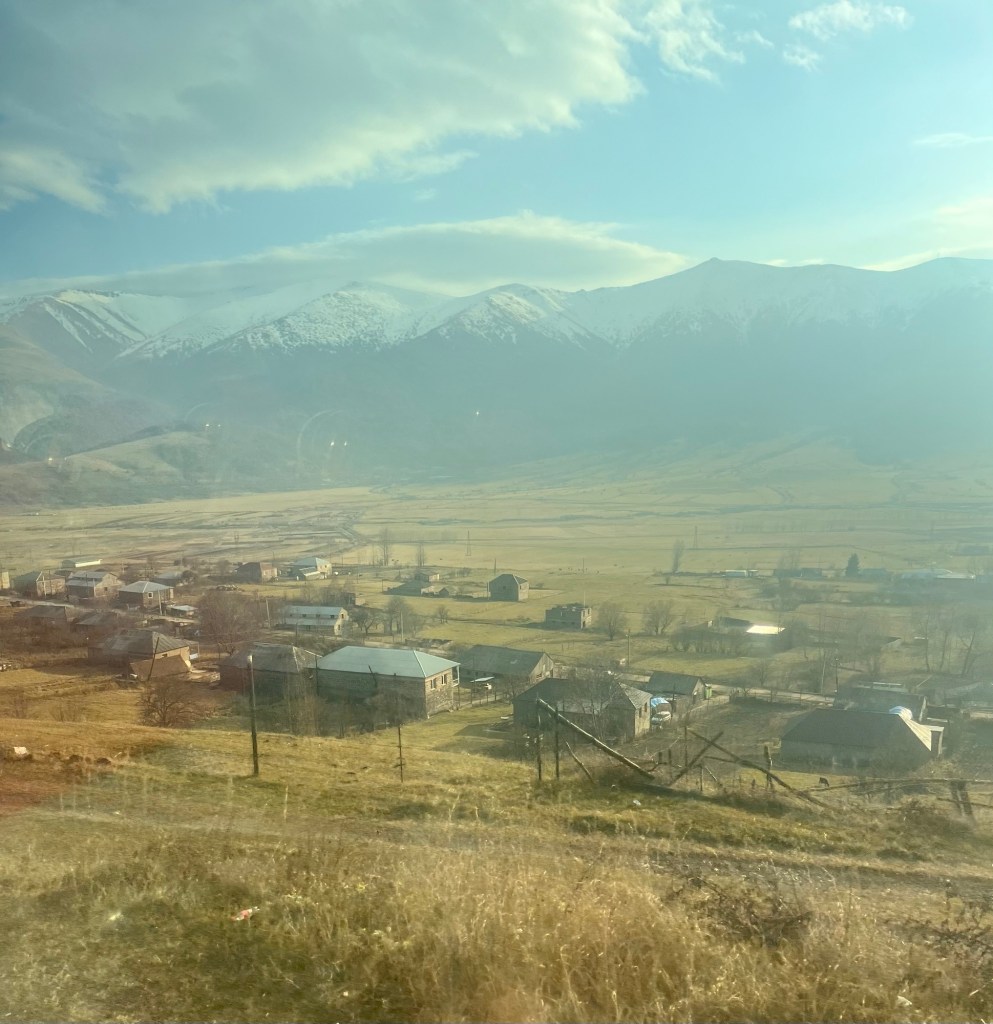
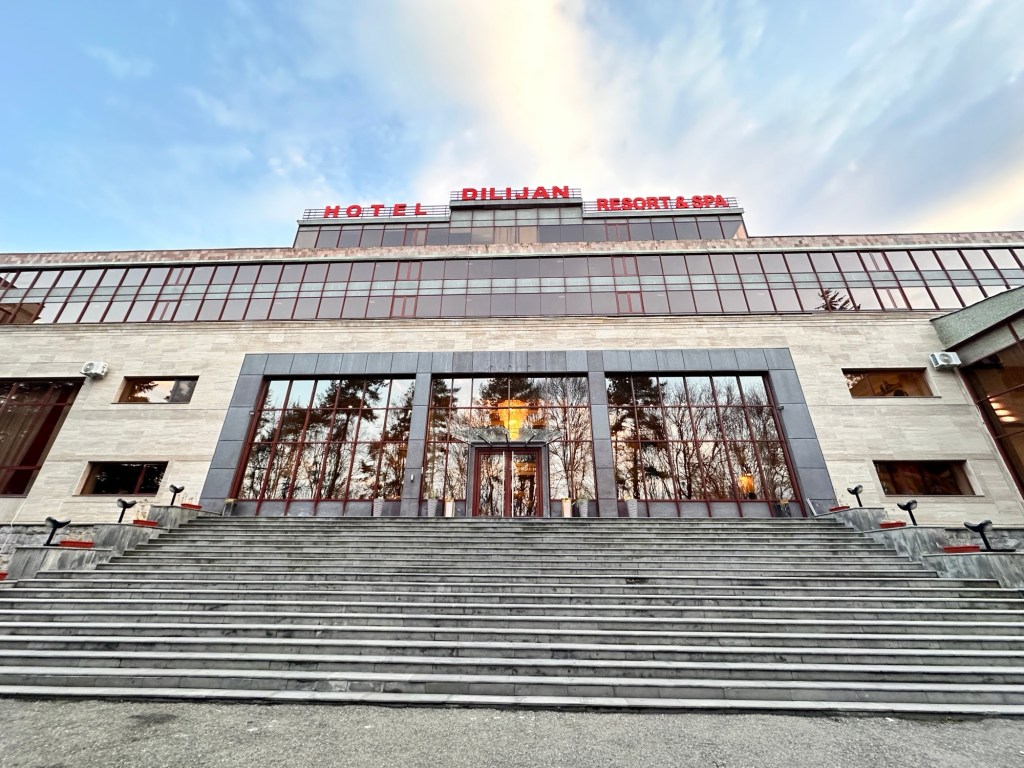
Late afternoon we arrived at the resort town of Dilijan, also known as ‘Little Switzerland’ where we had a short walk through the old centre of Dilijan and Sharambeyan street, full of handicraft stores, souvenir shops and historical buildings.
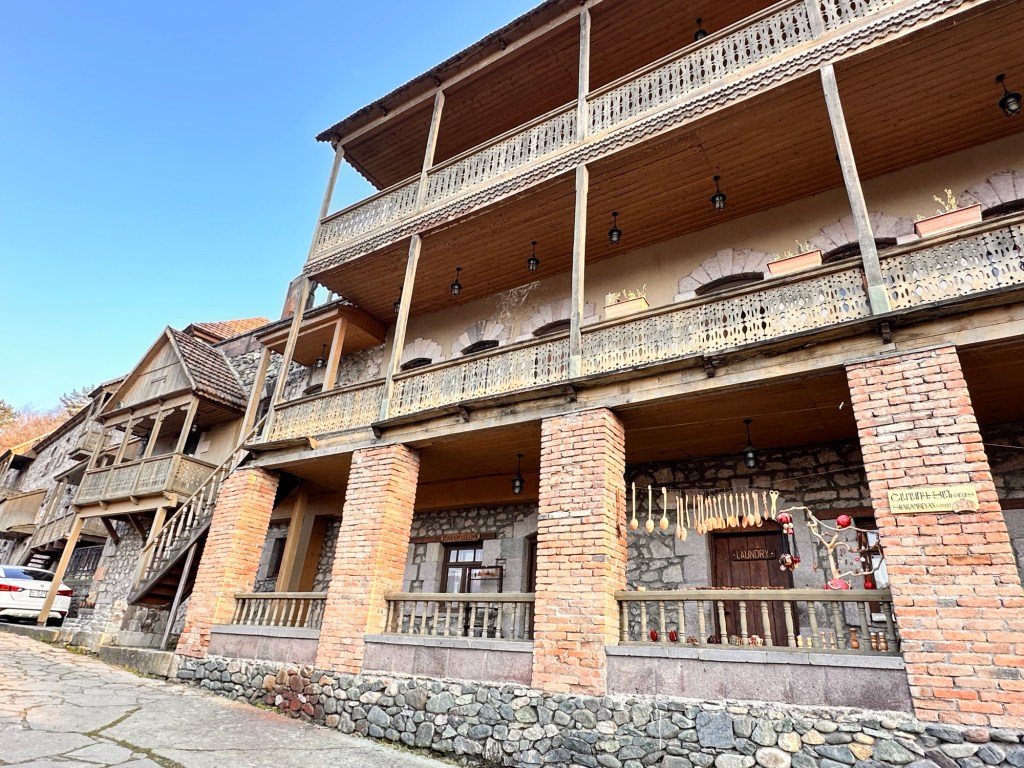
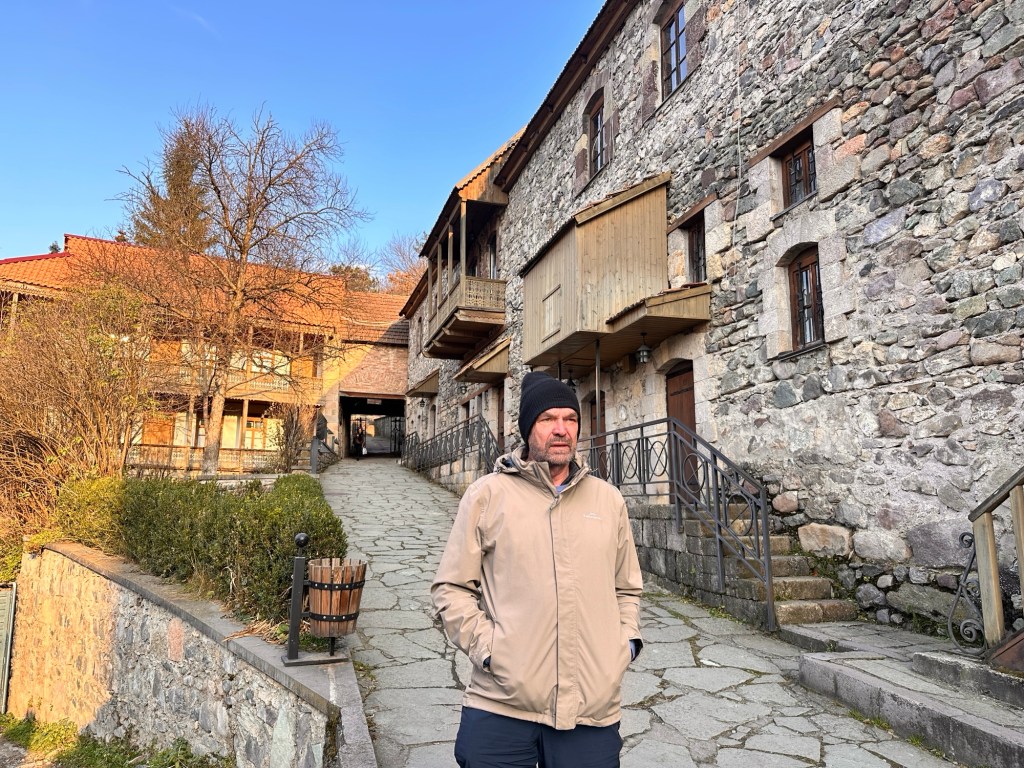
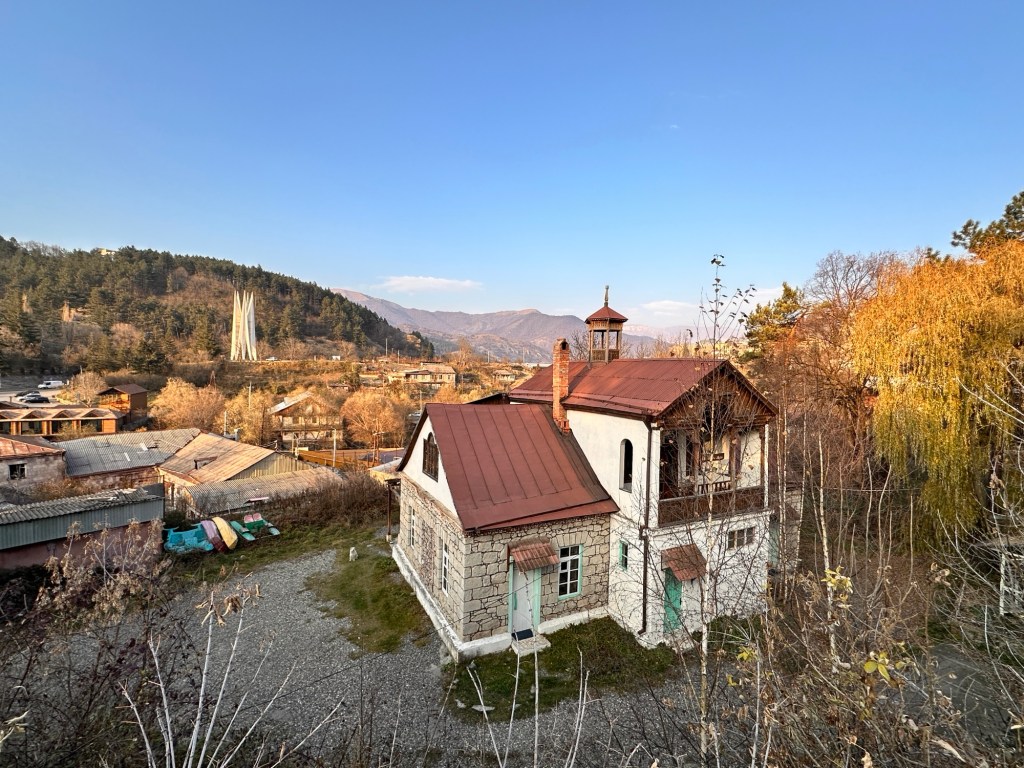
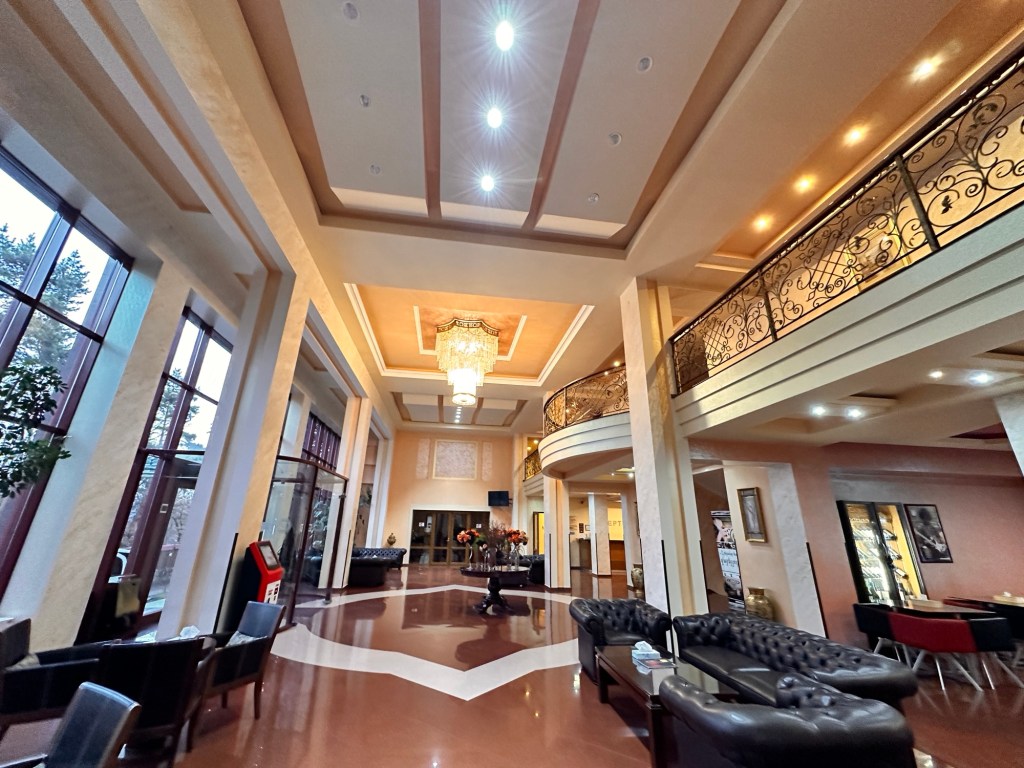
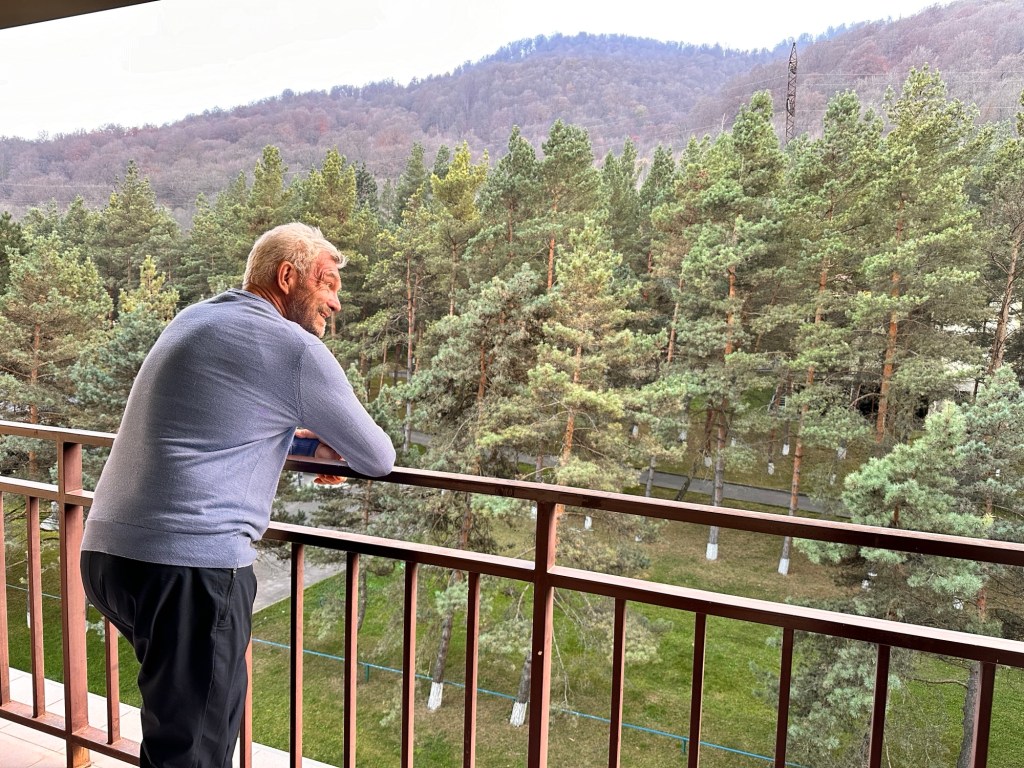
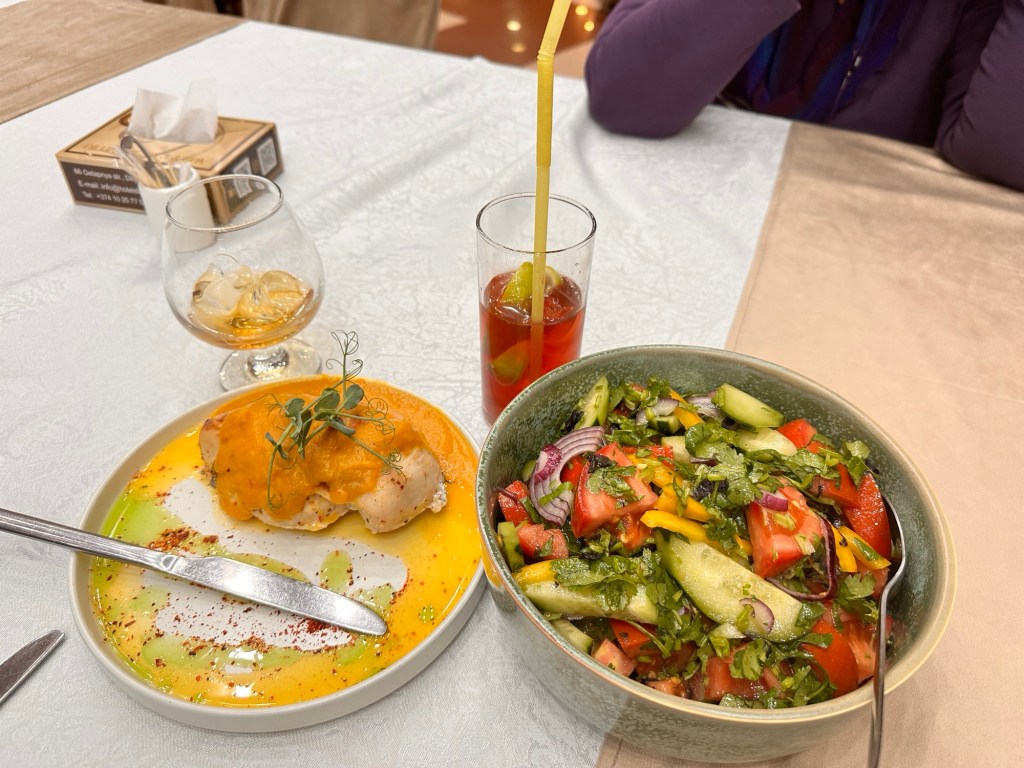
Soon after we arrived at our hotel, Dilijan Resort. It probably sounds more impressive than it actually was, but even so, we had a massive room- complete with a sitting room, and the food at the restaurant was so deliciously fresh and well presented.
Day 20
Tuesday 12th November 2024
Dilijan – Lake Sevan – Garni – Geghard – Yerevan
165 kms
1-9 degrees, cloudy
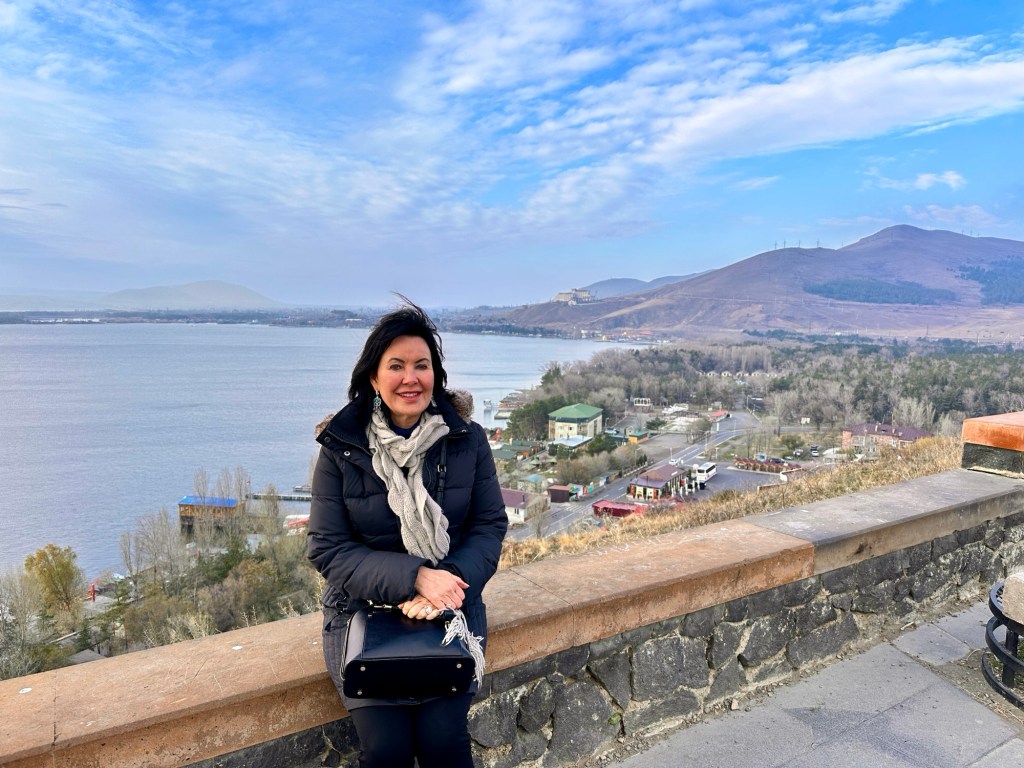
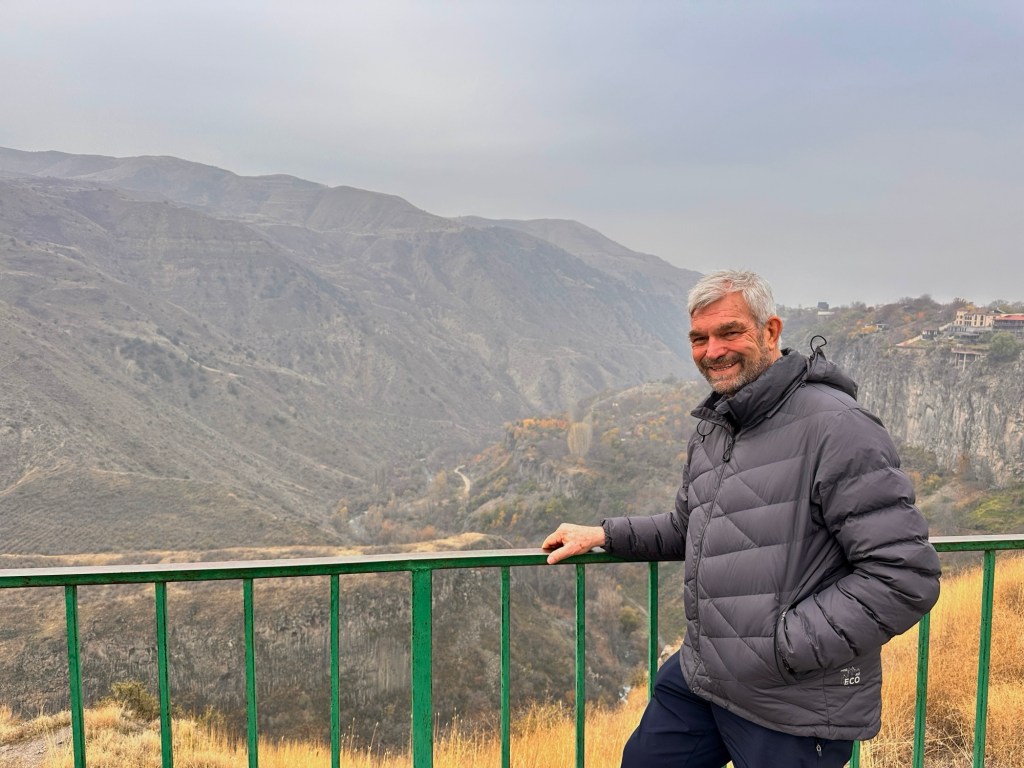
Forty minutes from Dilijan is Lake Sevan. Set 1900m above sea level and covering 1240 sq km, Lake Sevan is the largest lake in the South Caucasus and one of the largest freshwater high-altitude lakes in the world. Its colours and shades can change from royal blue to an enchanting turquoise, which while exquisite is partially a sign of toxic algae bloom resulting from low water levels, overfishing and pollution stretching back to Soviet times. Armenia is working hard to preserve their precious lake.
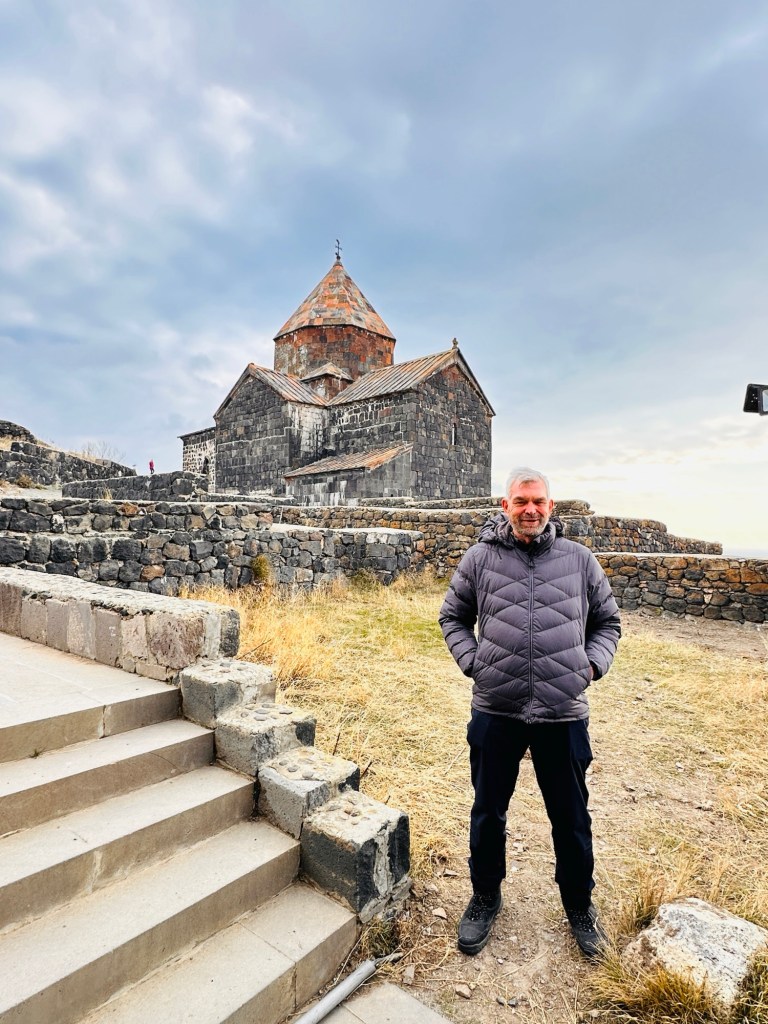
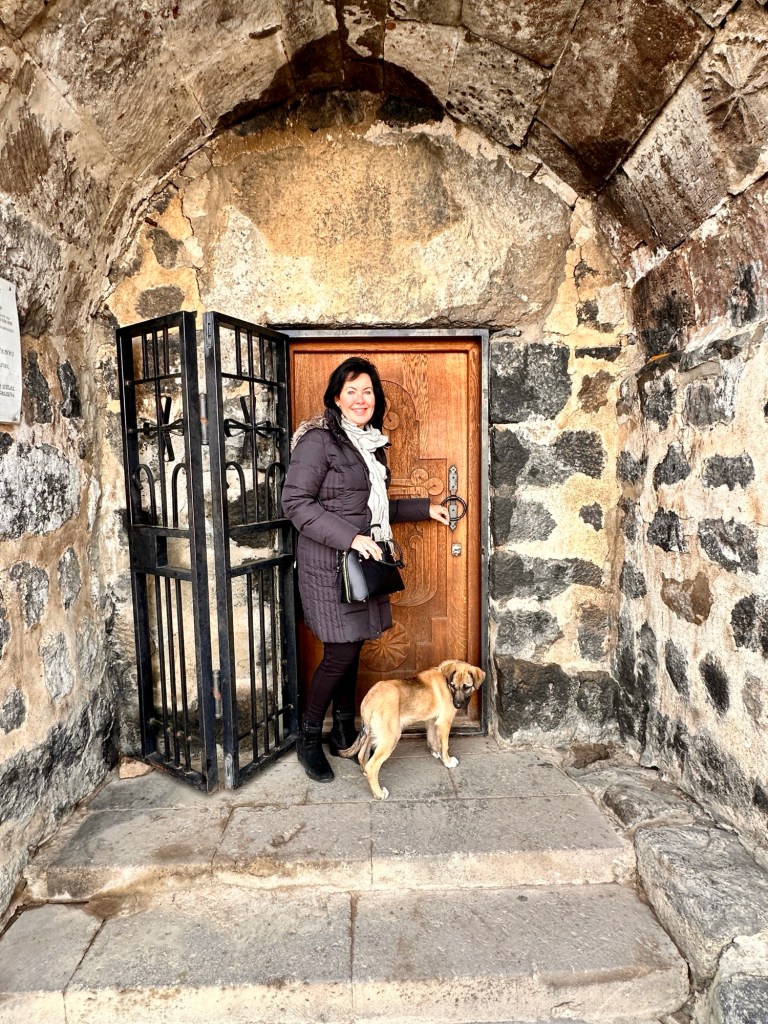
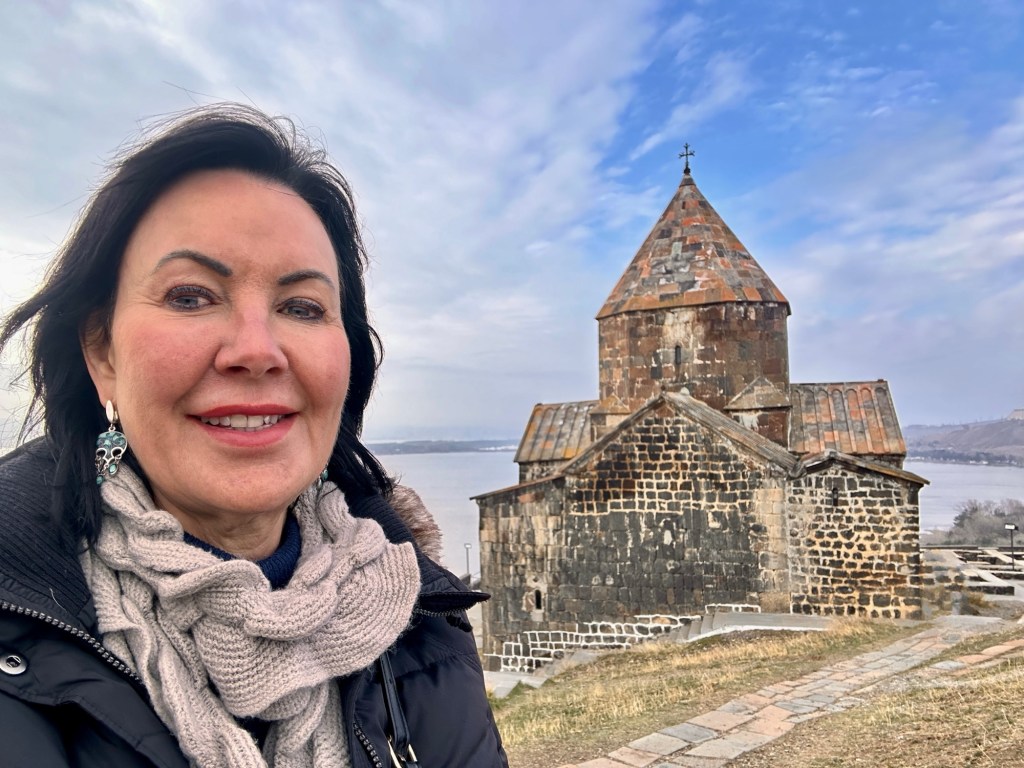
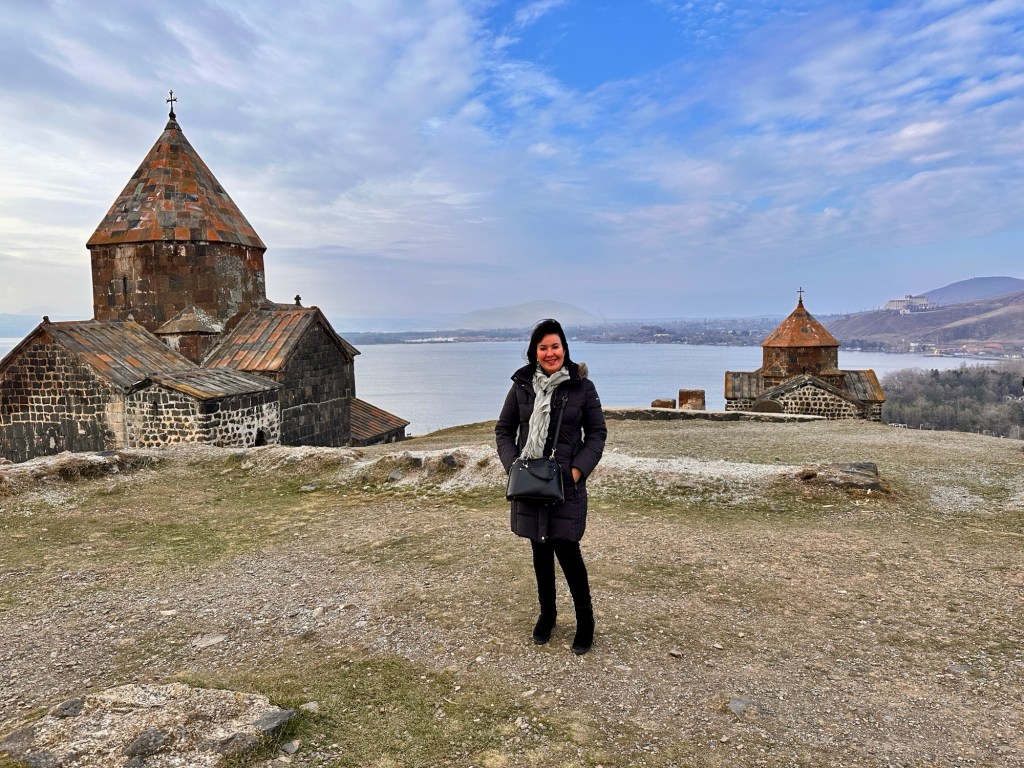
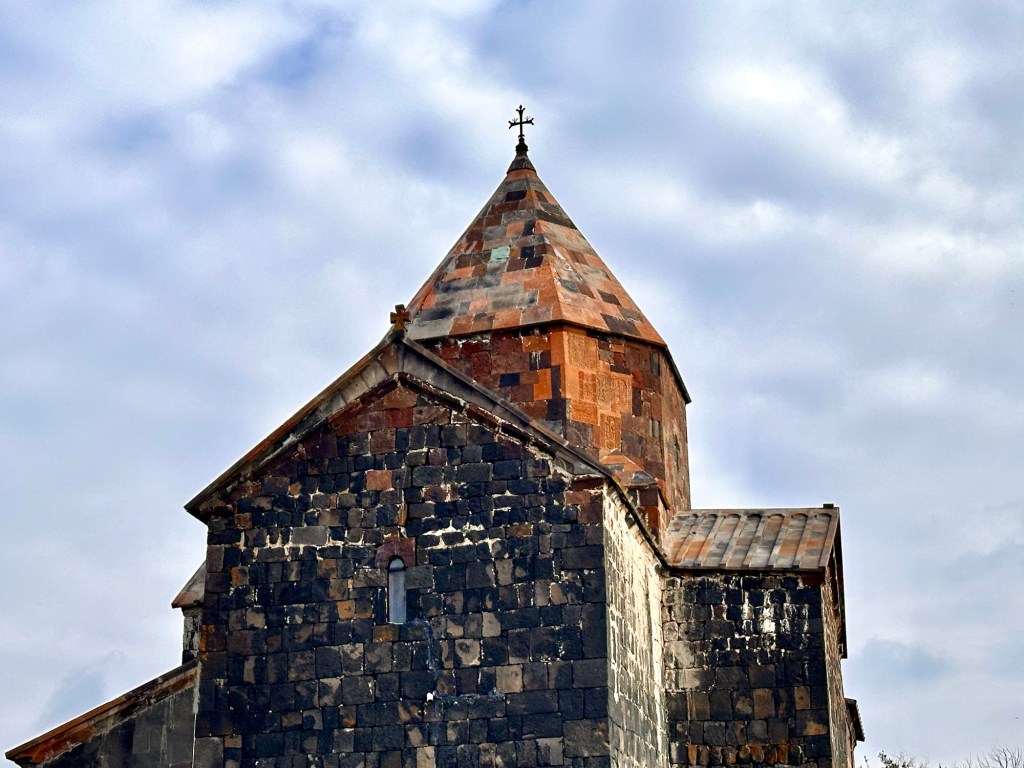
We walked up 250 steps to the monastery complex, Sevanavank, on the Sevan peninsula. Built 9-13th Century. Currently, a religious seminary functions here, which is not readily open to the public. Fantastic view over the lake.
Saw bottles of “orange Juice “ for sales on the side of the road – it was actually Sea Buckthorn – a berry very rich in Vitamin C.
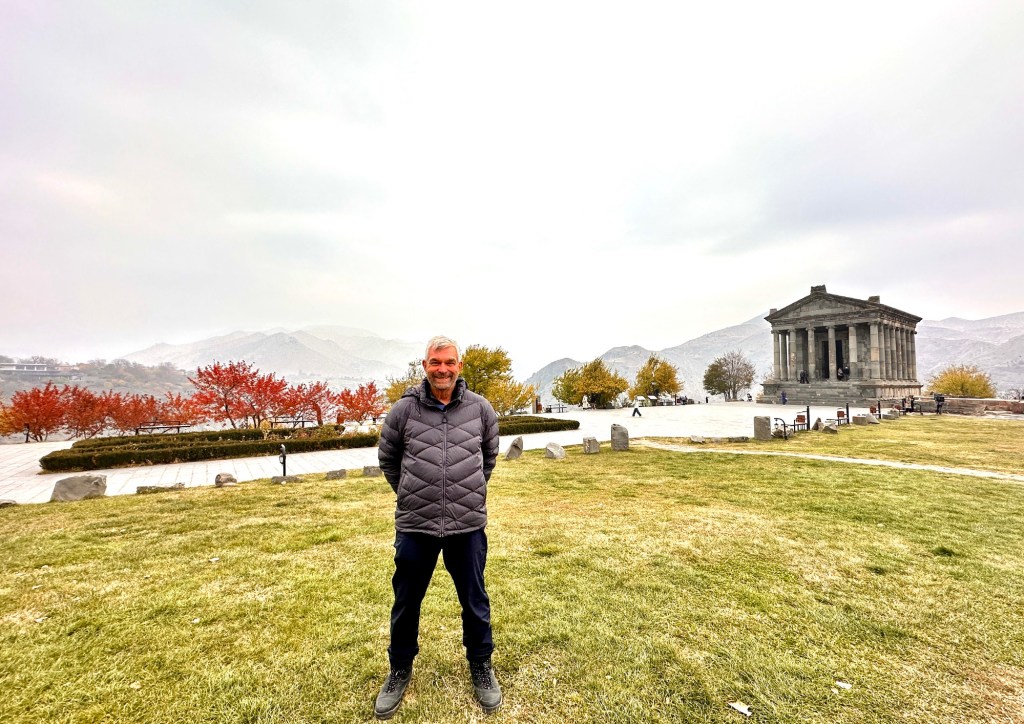
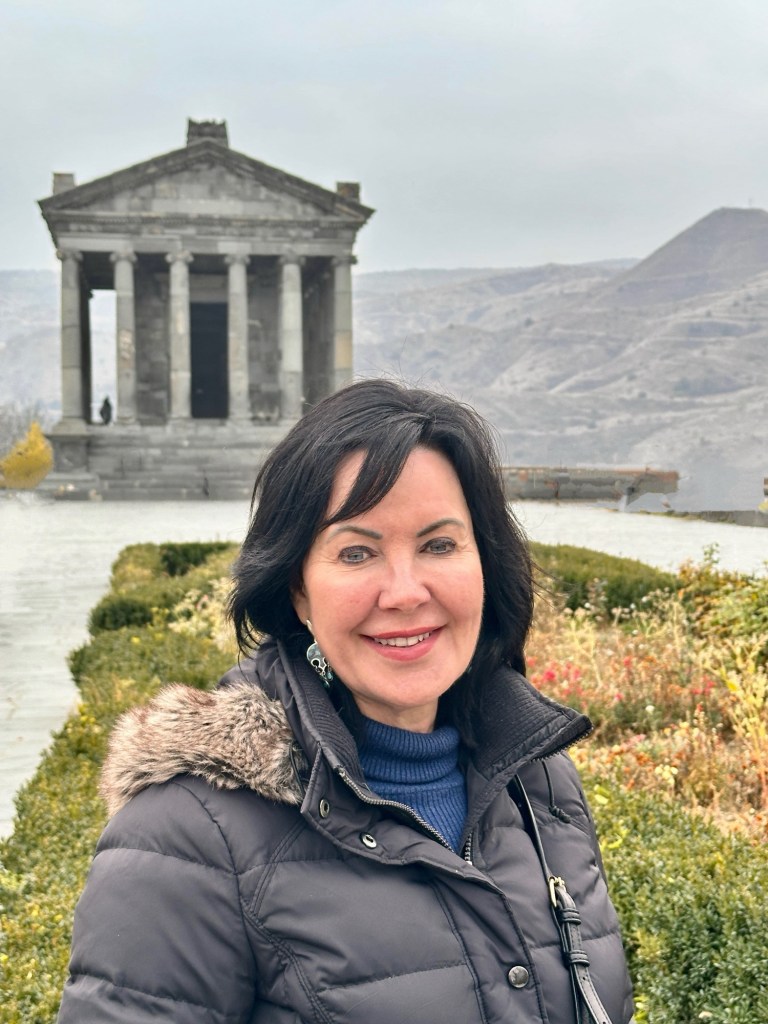
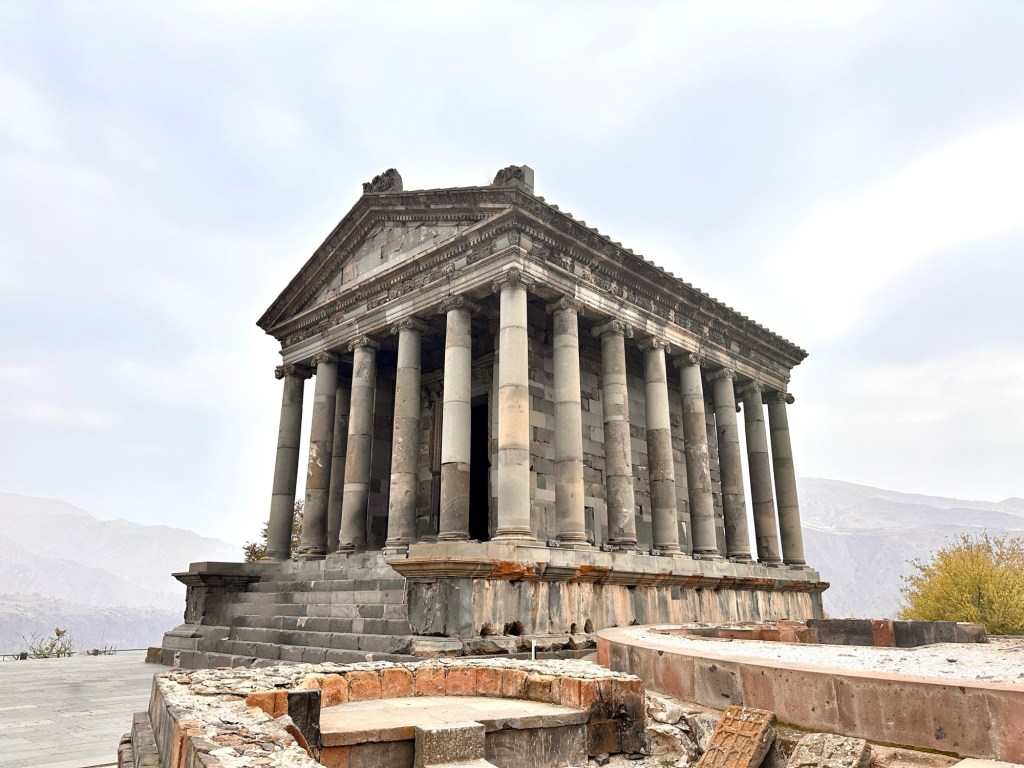
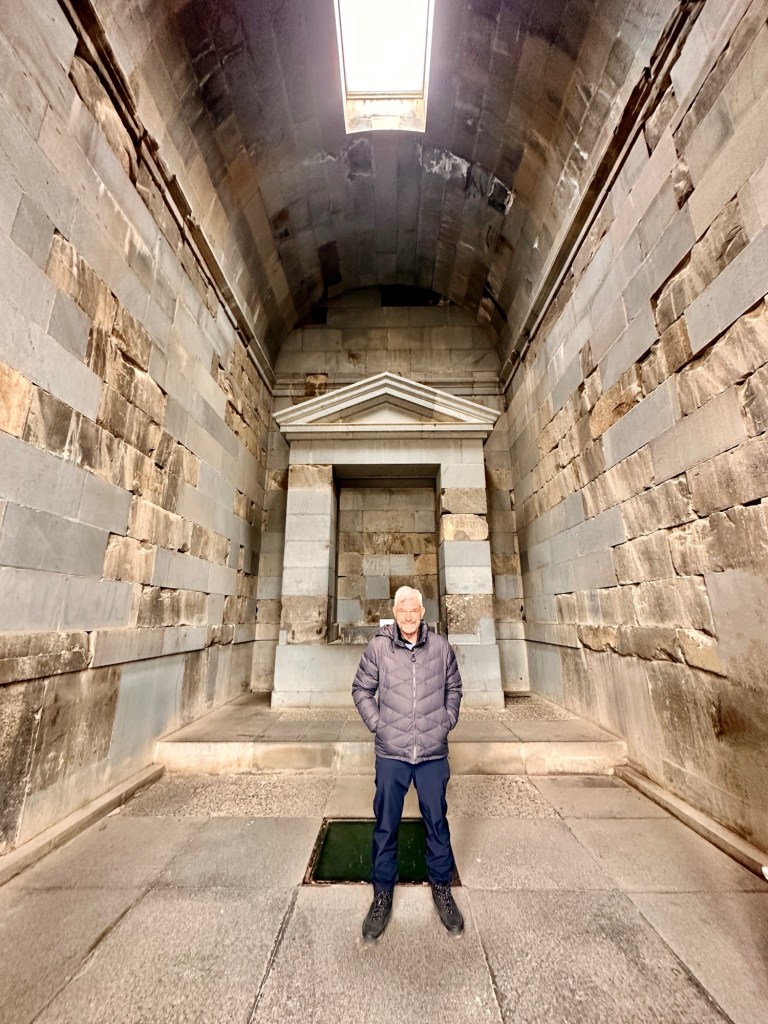
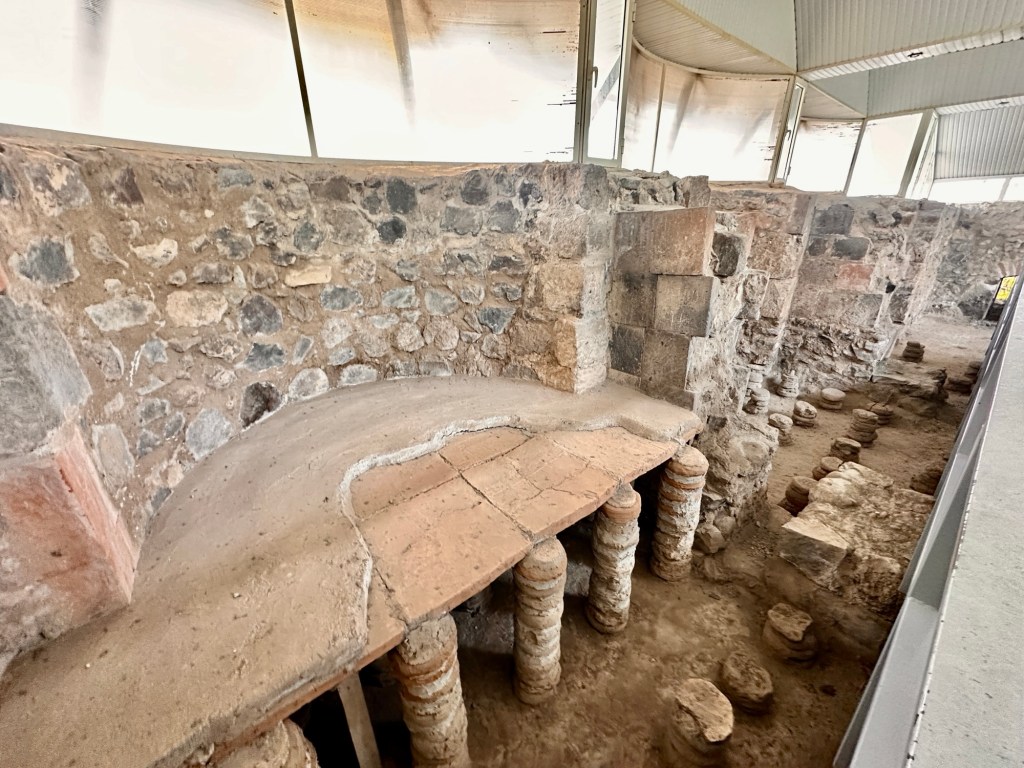
Onto Garni to see the only preserved Pagan temple, an astonishing 2000-year-old pillared Roman-style temple first built in 77 CE and rebuilt between 1969 and 1975 after it was destroyed by earthquakes and invasions over the years. Archaeologists didn’t know how old the temple was until they found a stone nearby with Greek inscriptions attributing it to King Tiridates I, who ruled Armenia in the 1st century. Garni Temple was devoted to the god Mihr, who was the god of cleanness.
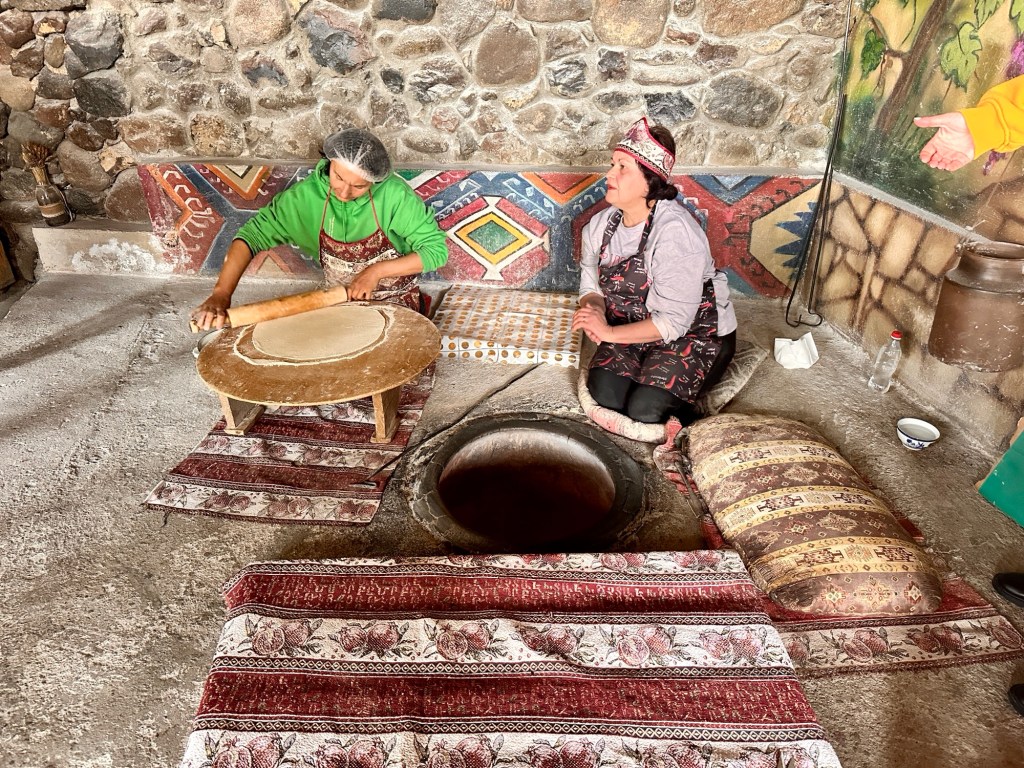
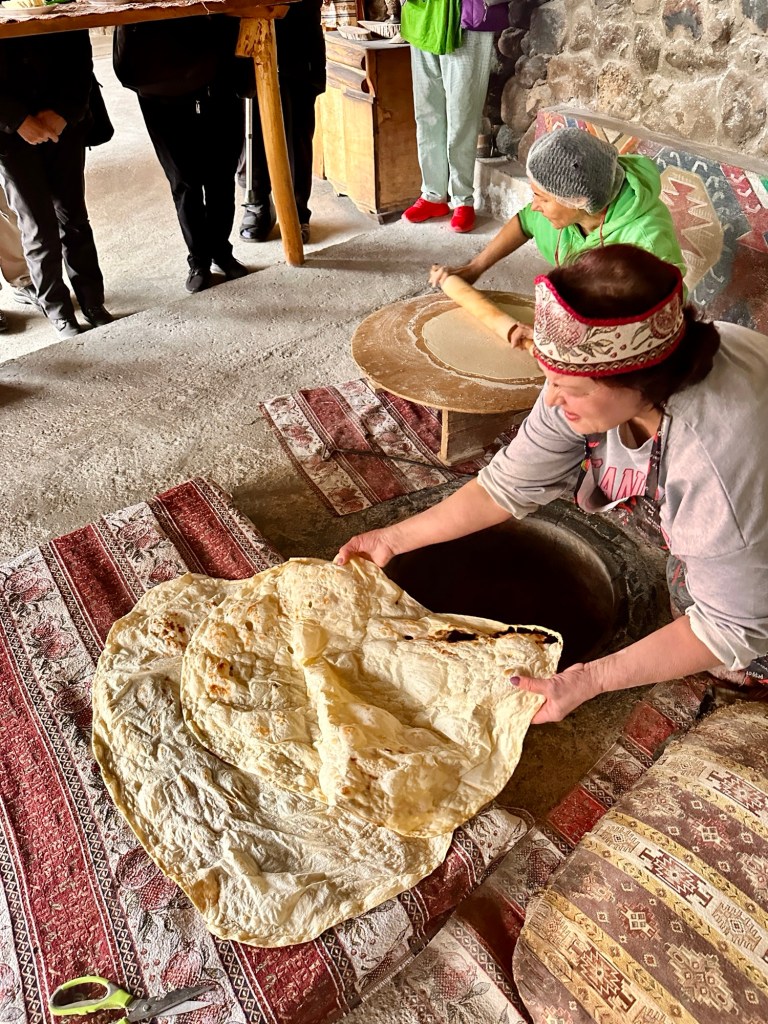
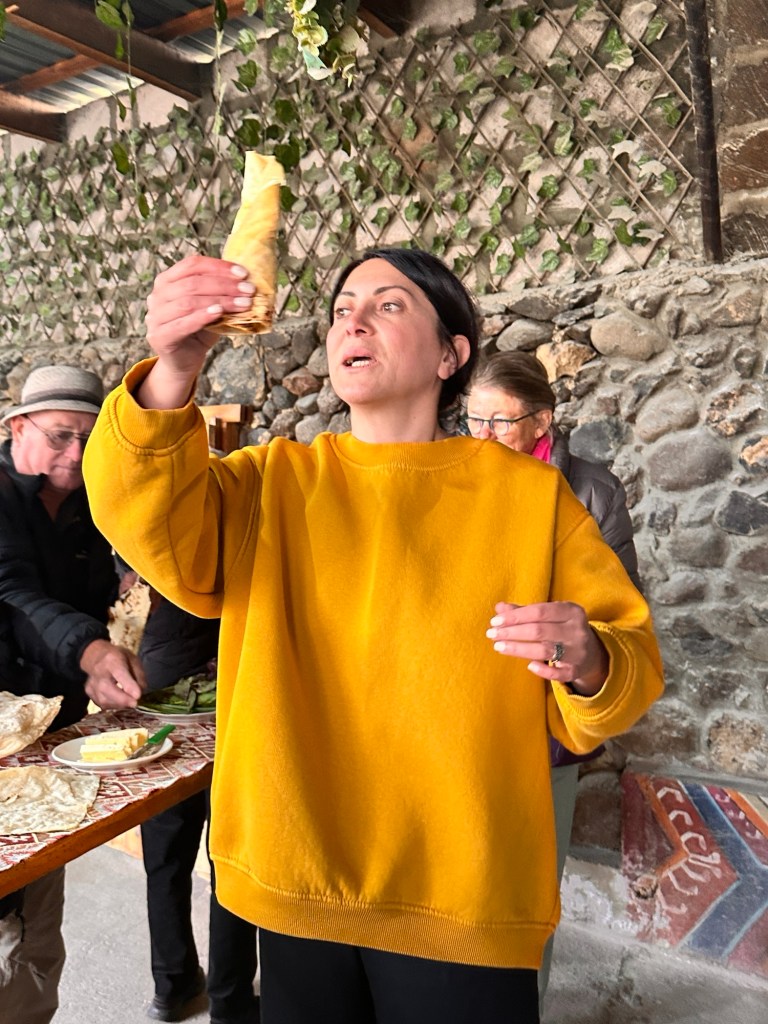
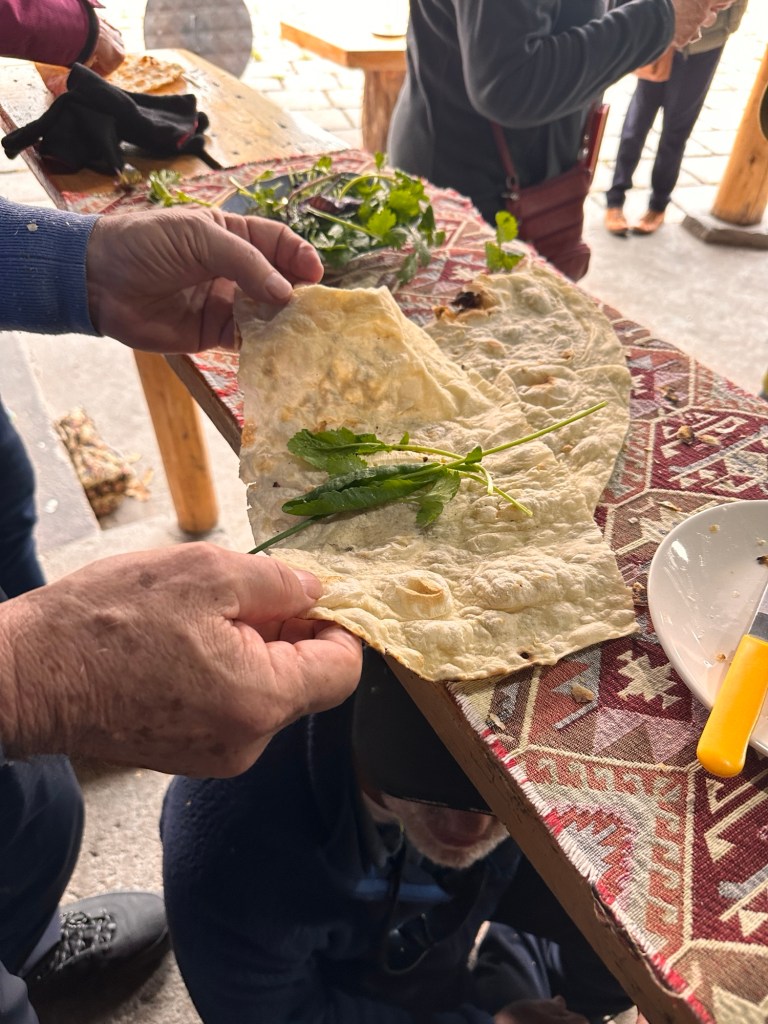
Afterwards we visited a local house with an orchard out the back, where we watched two lovely ladies making Armenian lavash bread. This bread is very thin and made in very large forms. It is cooked in a ground oven – a “tonir”. They spread it over a flat cushion and then slap it to the inside wall of the oven. A few minutes later it was cooked. We then enjoyed Armenian “fast food” – lavash with cheese and greens. In 2014, “Lavash, the preparation, meaning and appearance of traditional bread as an expression of culture in Armenia” was inscribed in the UNESCO Representative List of the Intangible Cultural Heritage of Humanity.
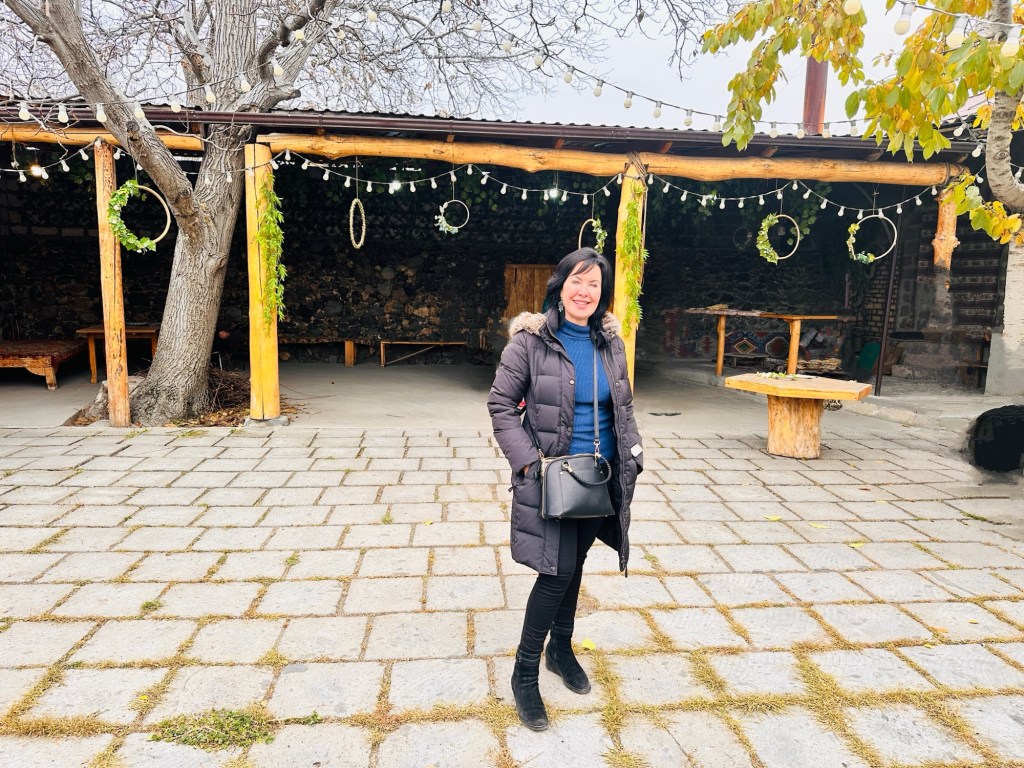
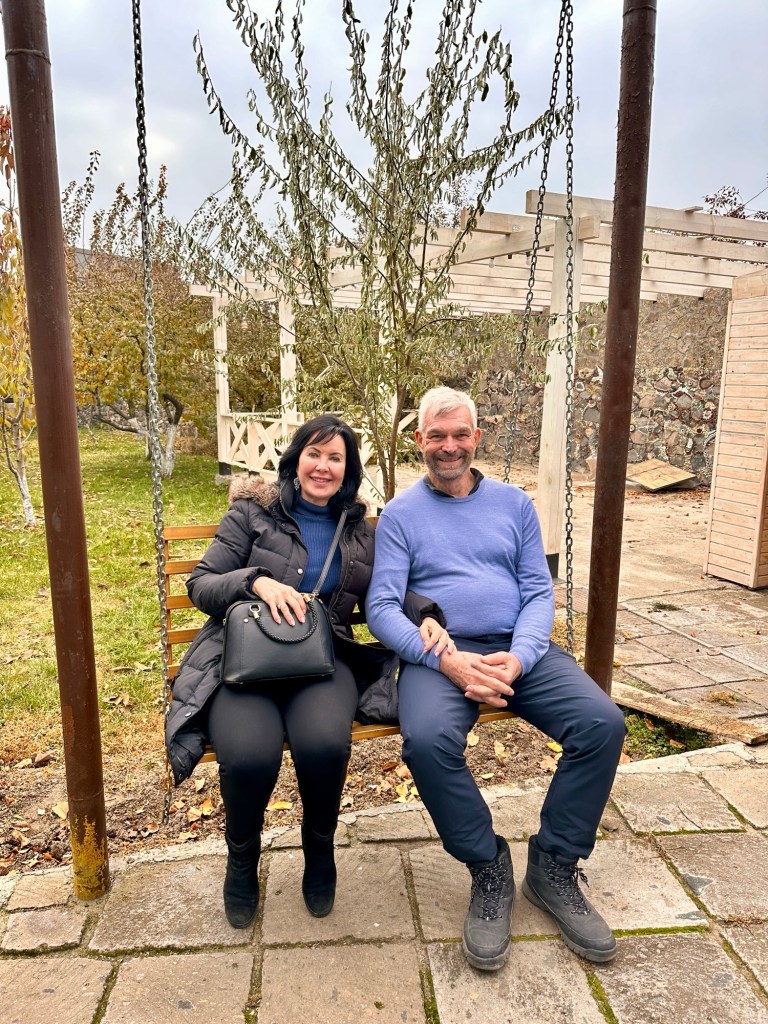
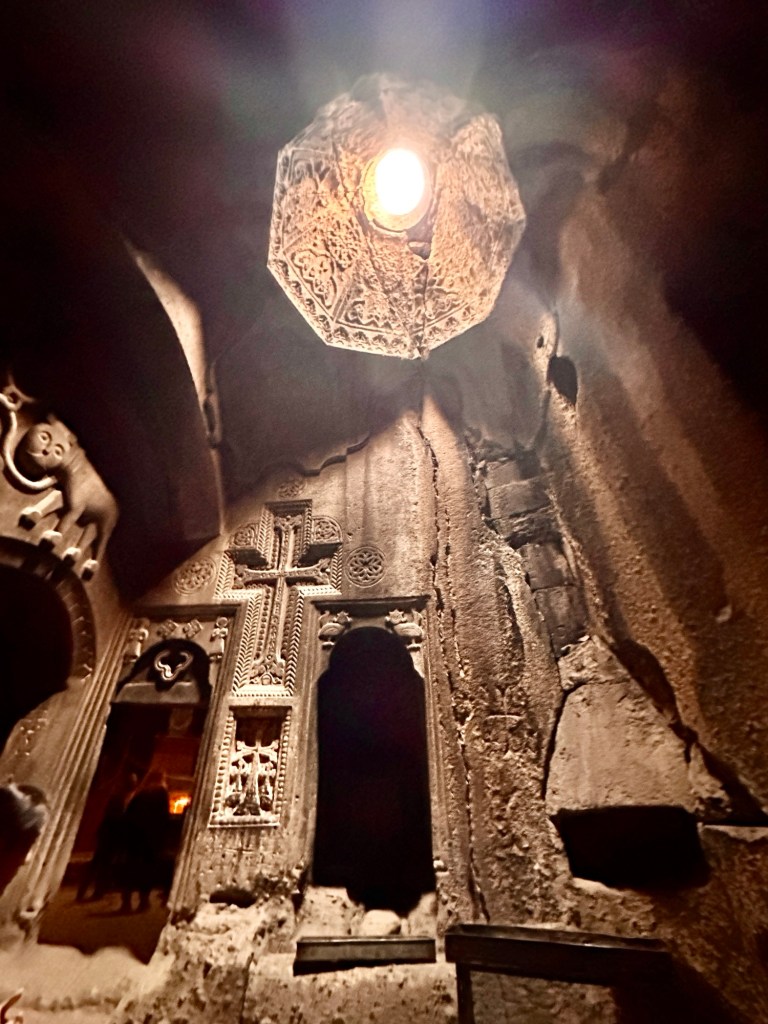
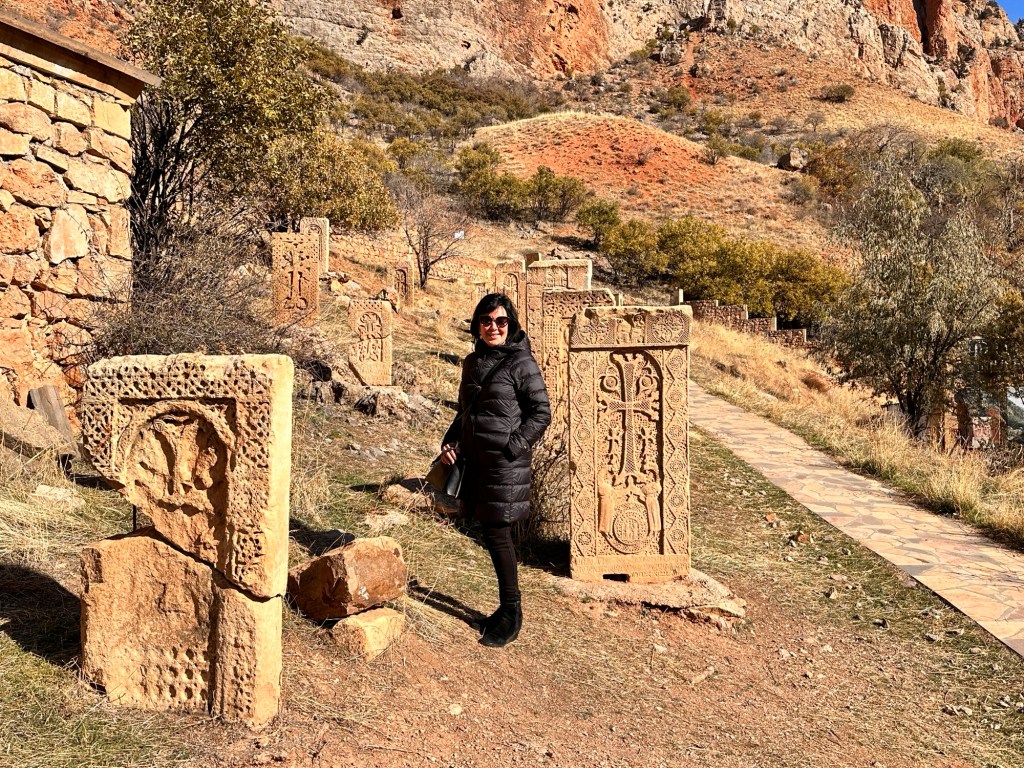
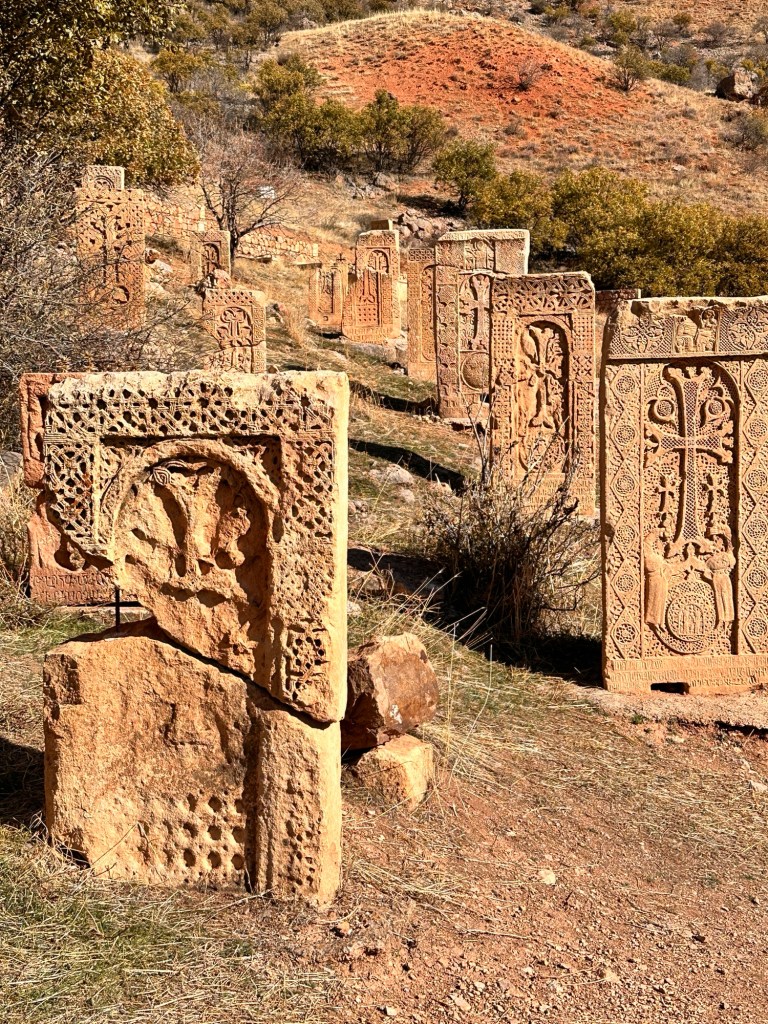
Next Geghard Monastery – its name comes from the legendary lance that was used to pierce the body of Christ. It has been kept here for centuries. Though the exact foundation of the monastery is unknown, the present complex was built in the mid-13th century. One chapel houses holy spring water that locals line up to touch. Many beautiful memorial stone khachkars dotted around the complex.

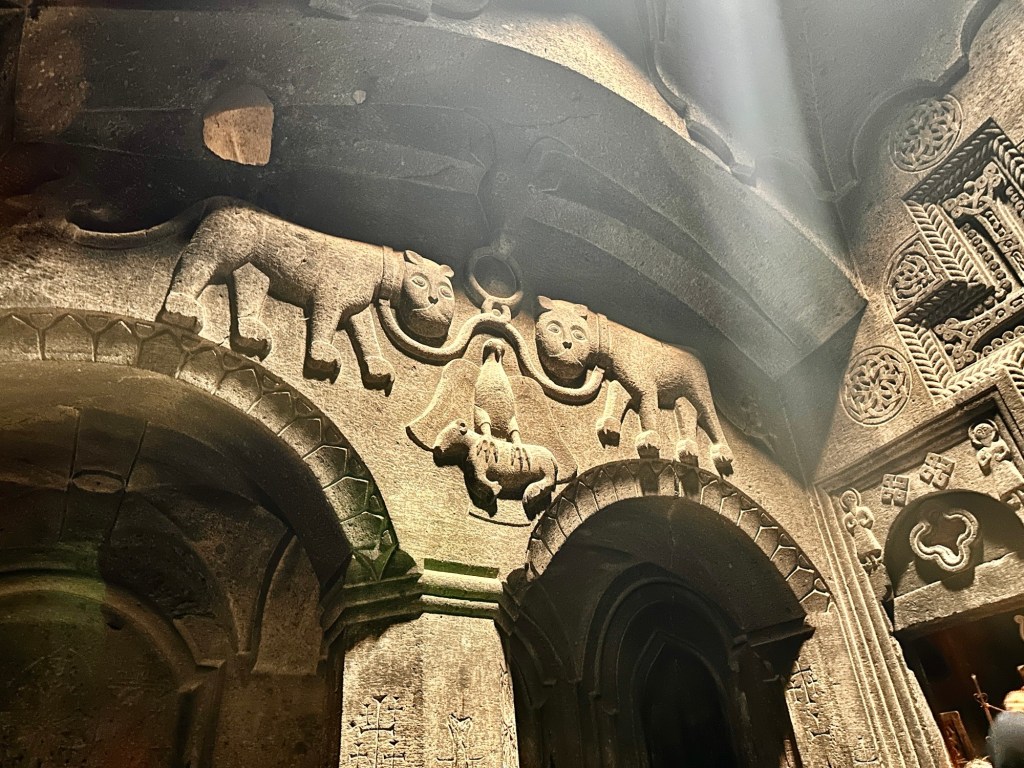
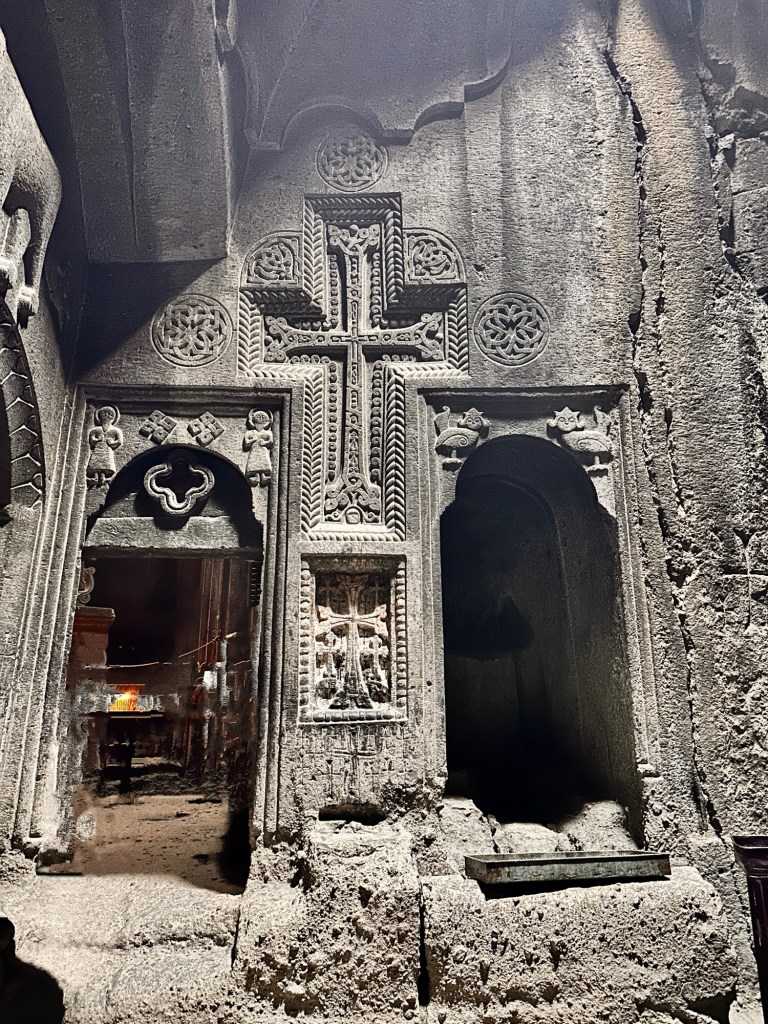
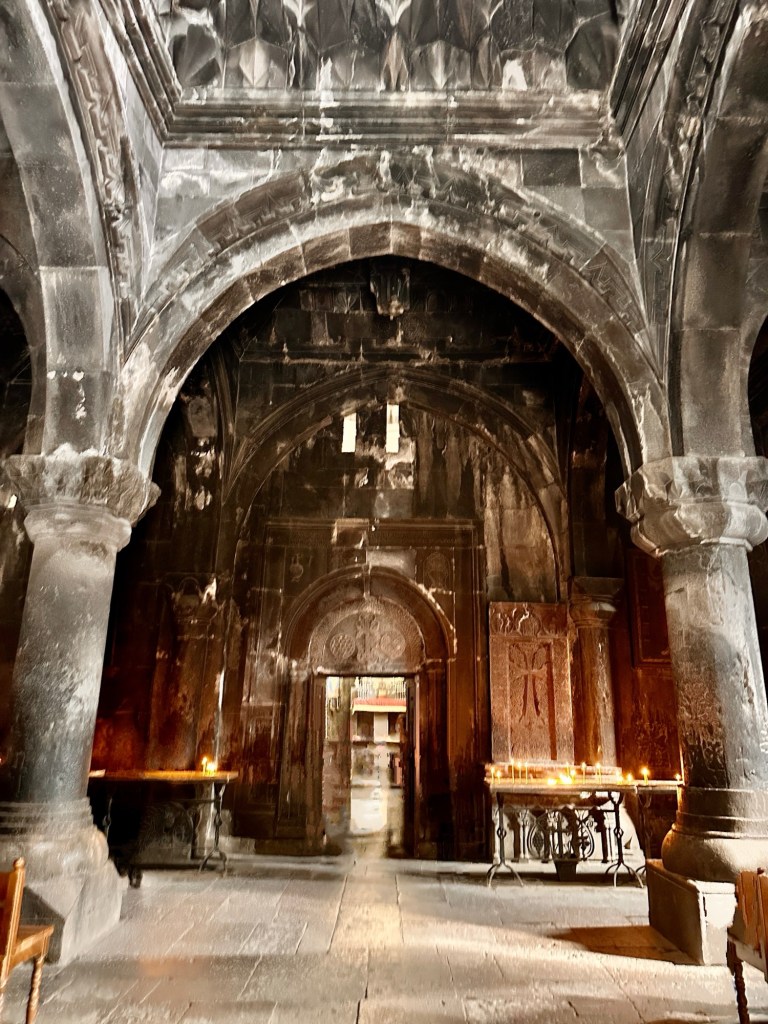
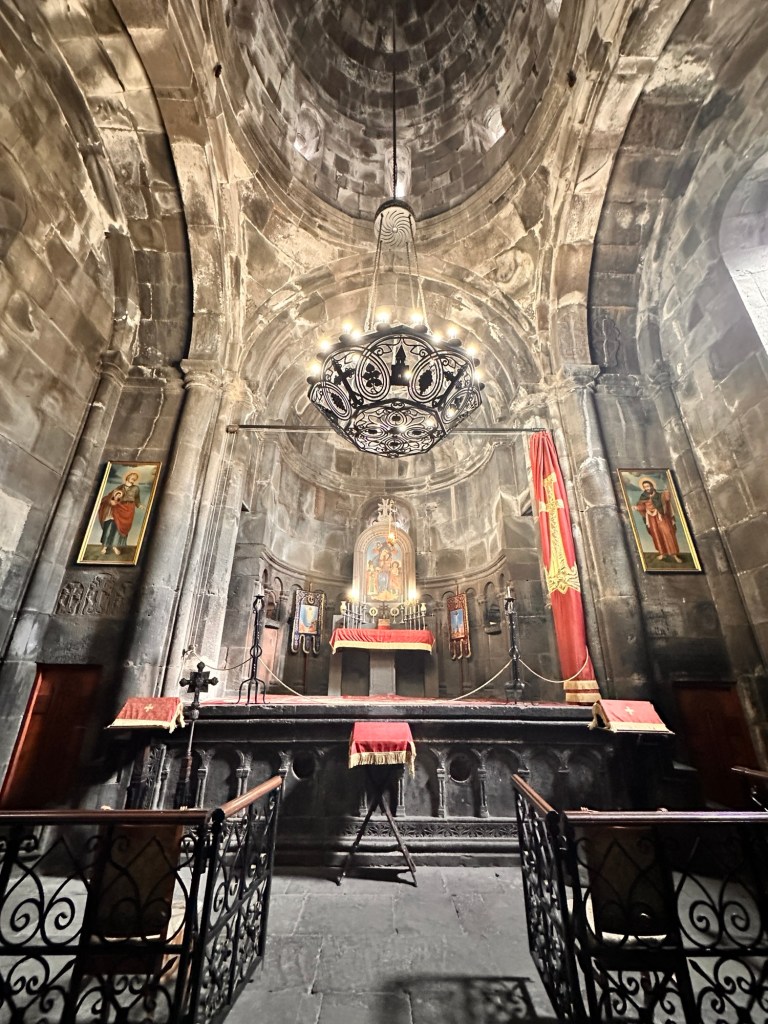
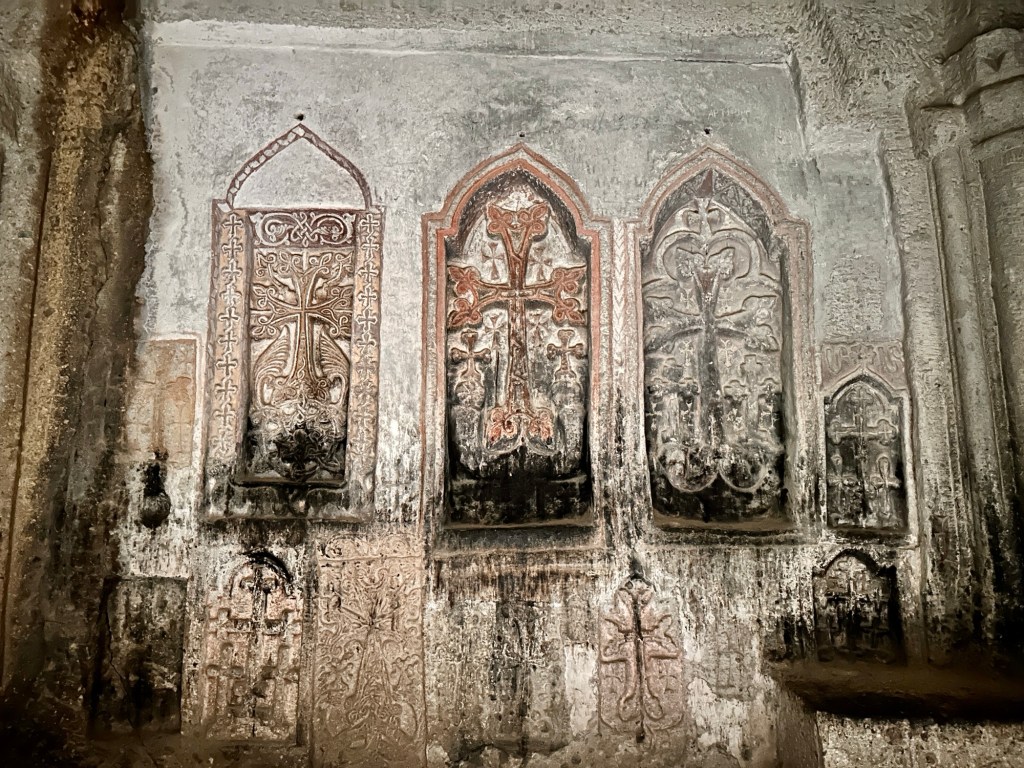
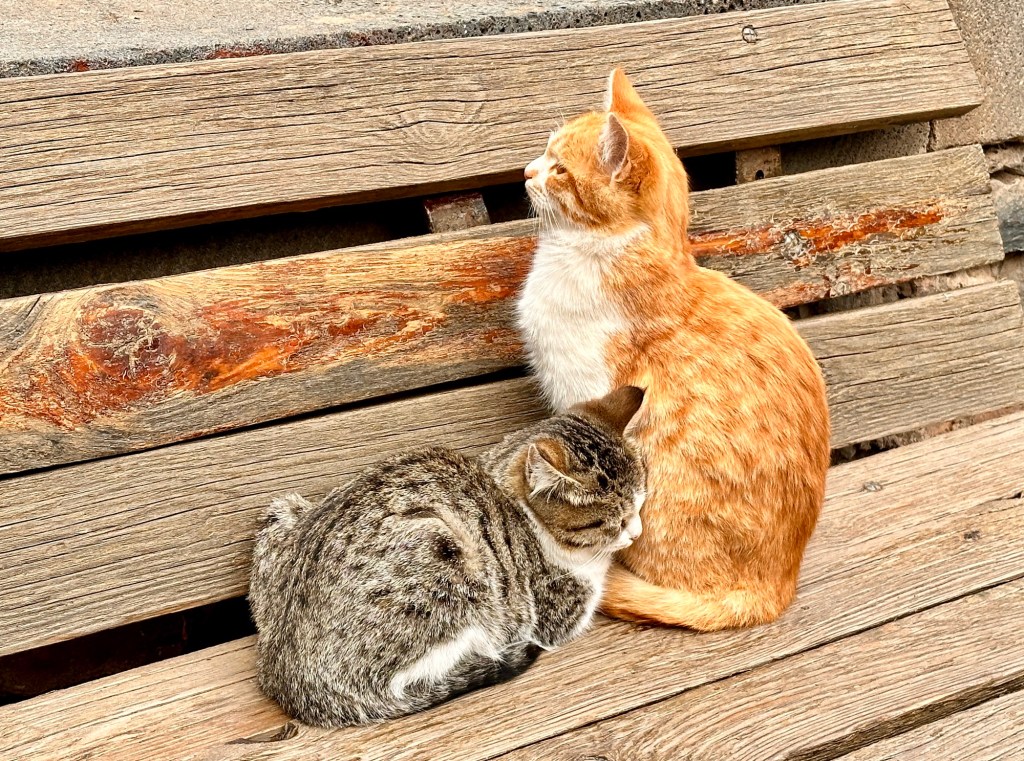
Last port of call, Yerevan, the capital city of Armenia. Almost half of Armenia’s population live here. We check led into Hotel Yerevan- lovely hotel but with very small rooms. I went for a walk around the local area.
Dinner next door at a very nice restaurant- lamb mince in vine leaves for me, lamb and chick peas in tomato sauce, plus some delicious mushrooms. Again, so cheap.
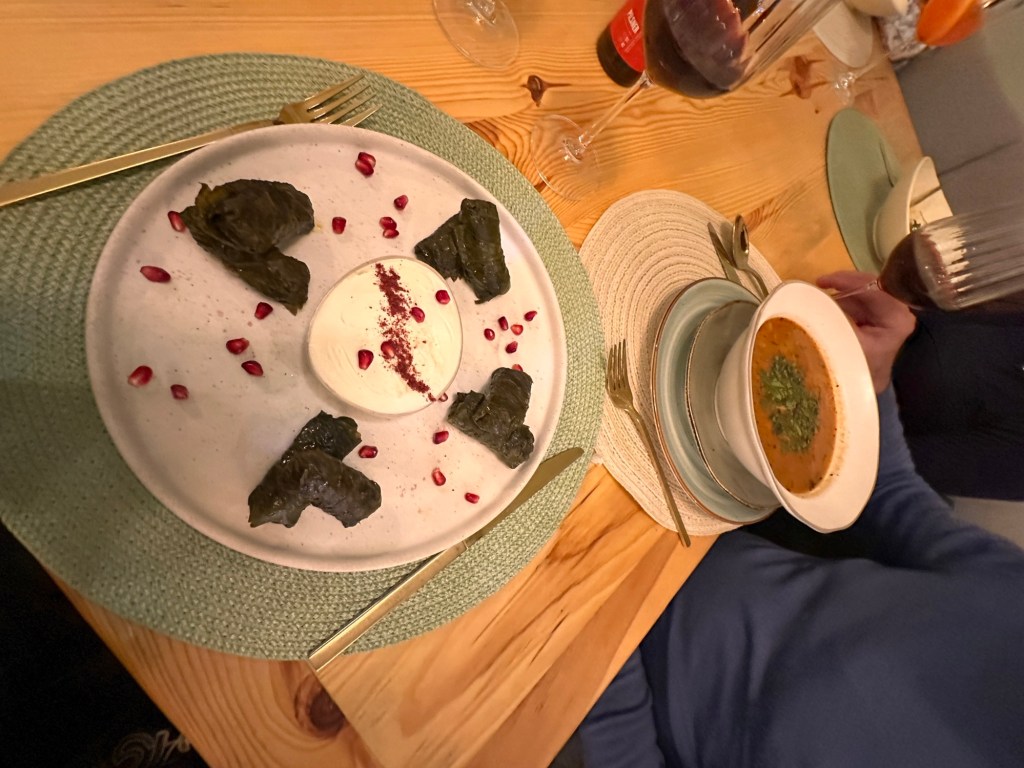
Day 21
Wednesday 13th November 2024
Yerevan City Tour
2-12 degrees, sunny
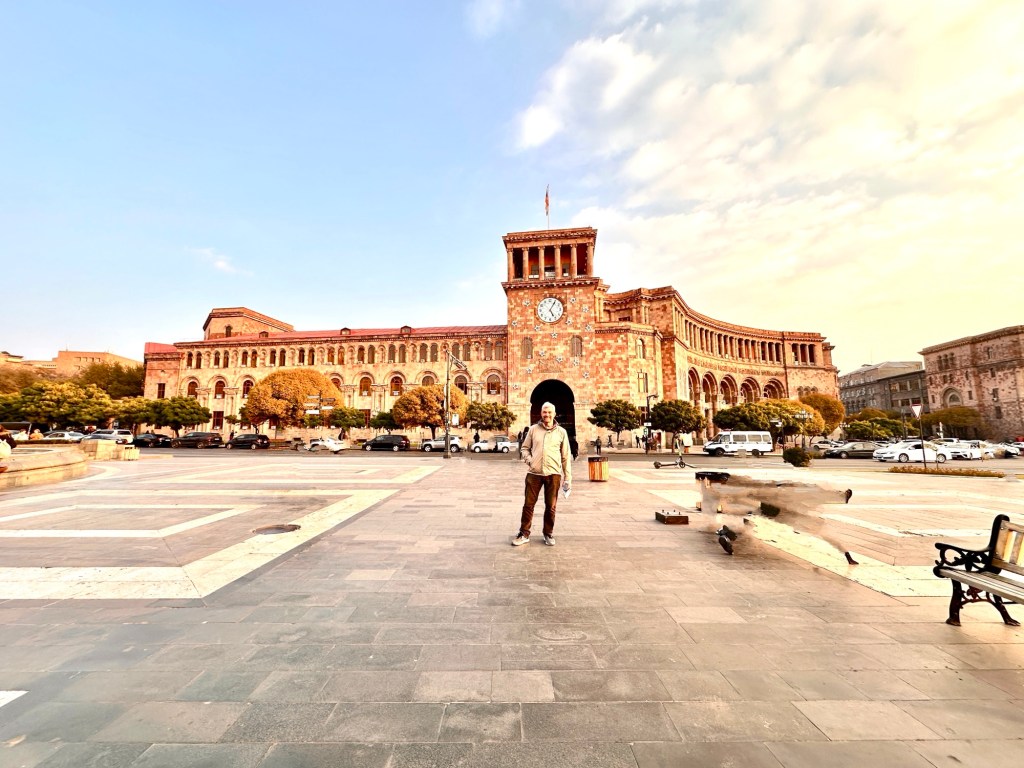
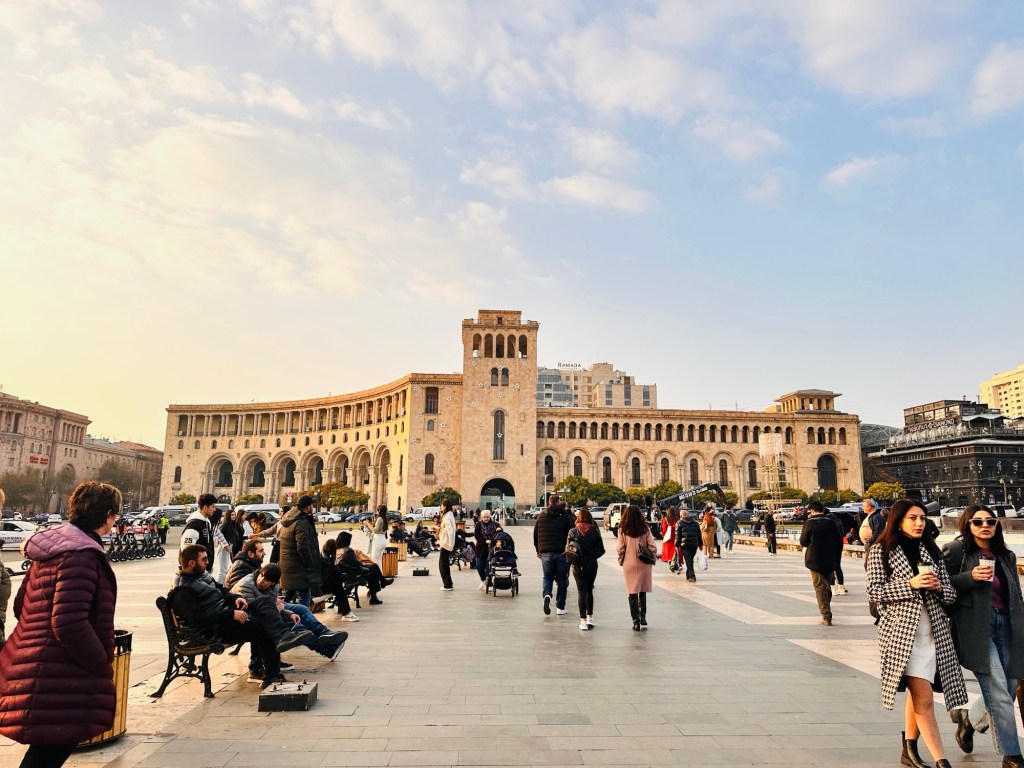
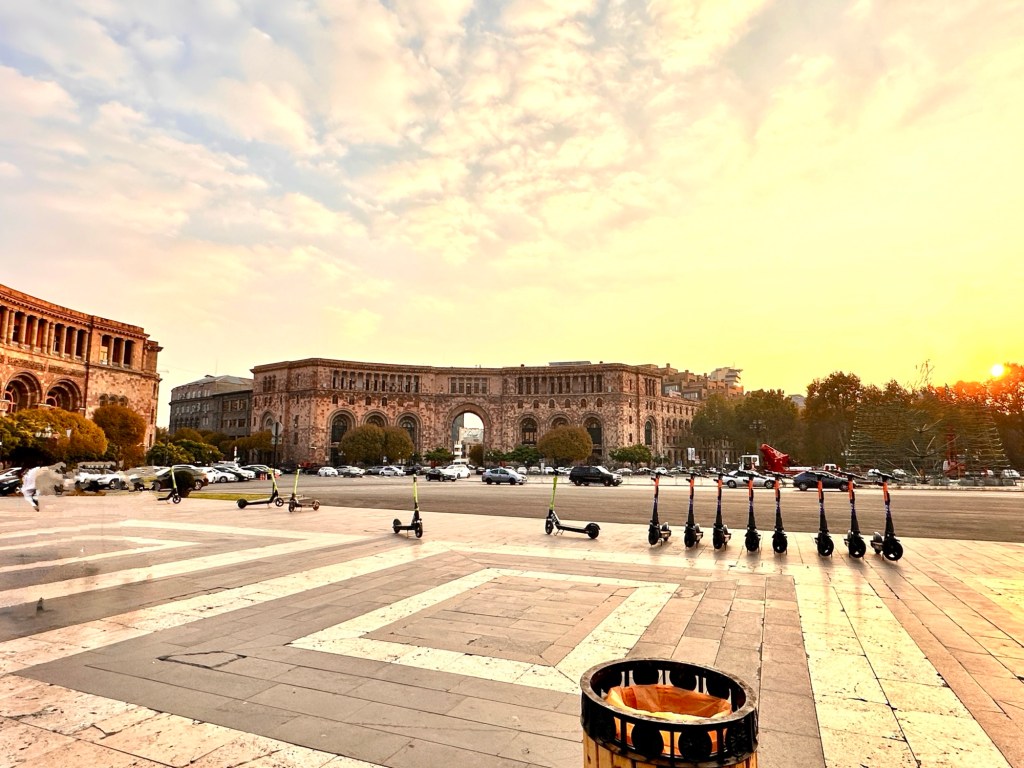
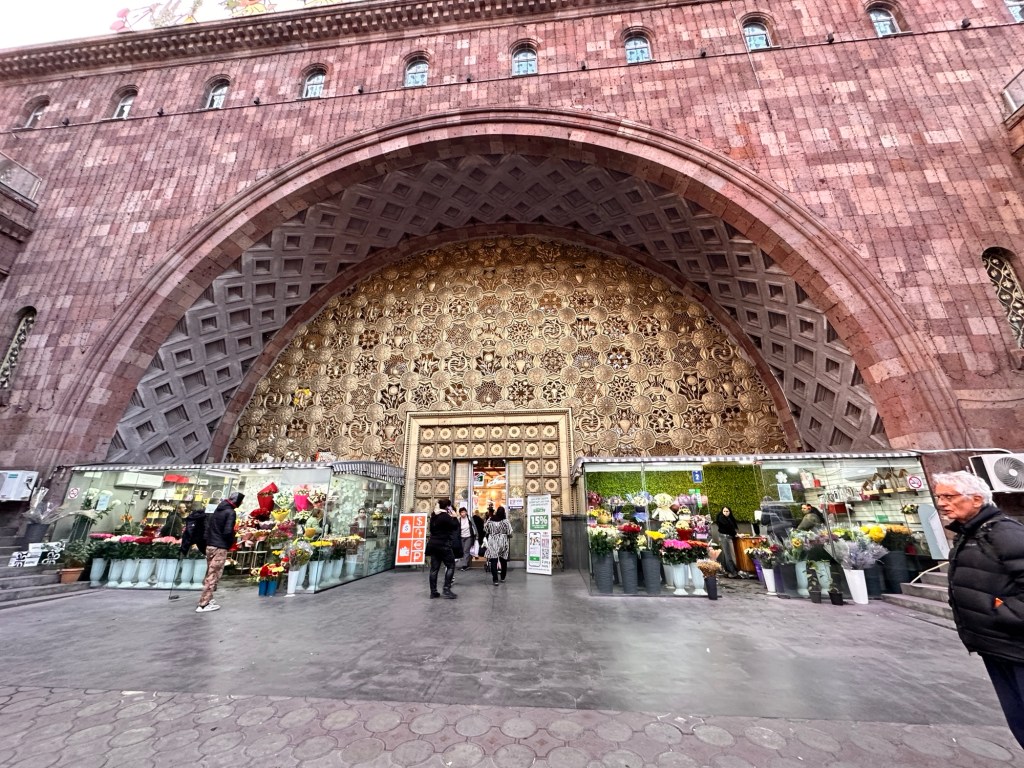
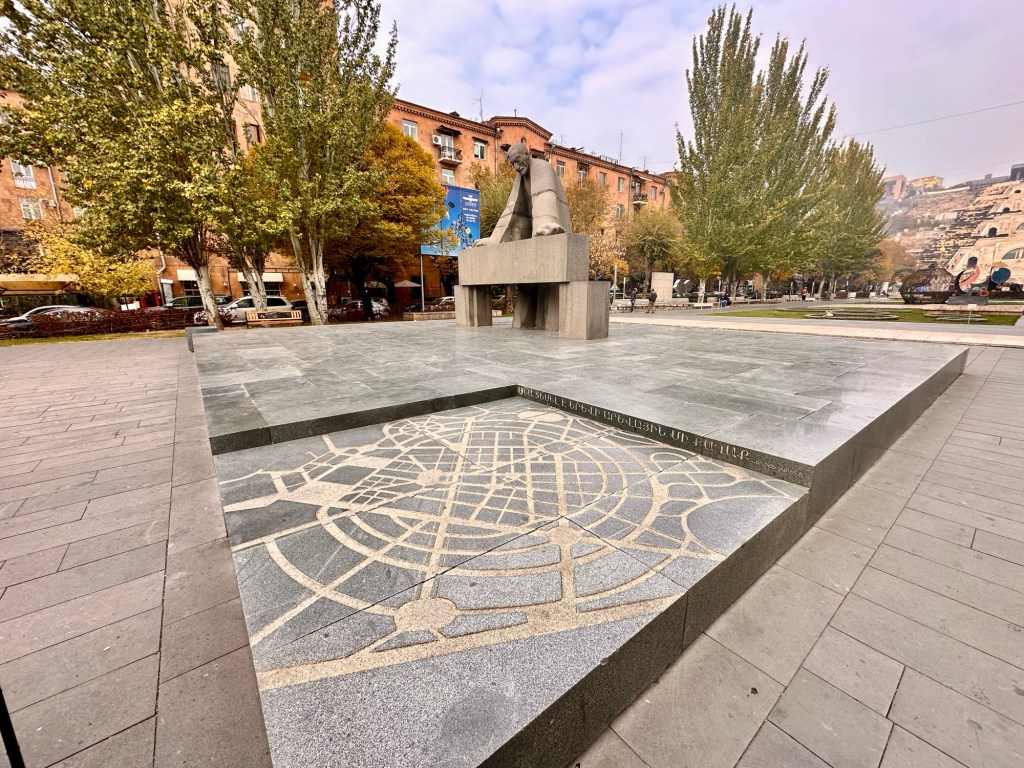
After breakfast, we set out to explore Yerevan, the capital of Armenia. The city, designed by architect Alexander Tamanyan, is known by locals as the ‘pink city’, due to the colour of stone- tuff, commonly used on the buildings. In the city centre, we drove past Republic Square and Mashtoc Avenue, where we saw some of the most prominent buildings. These included the Yerevan Theatre of Opera and Ballet which officially opened in 1933, with Alexander Spendiaryan’s Almast opera performance, and the Mesrop Mashtots Institute of Ancient Manuscripts, a museum and repository of ancient manuscripts.
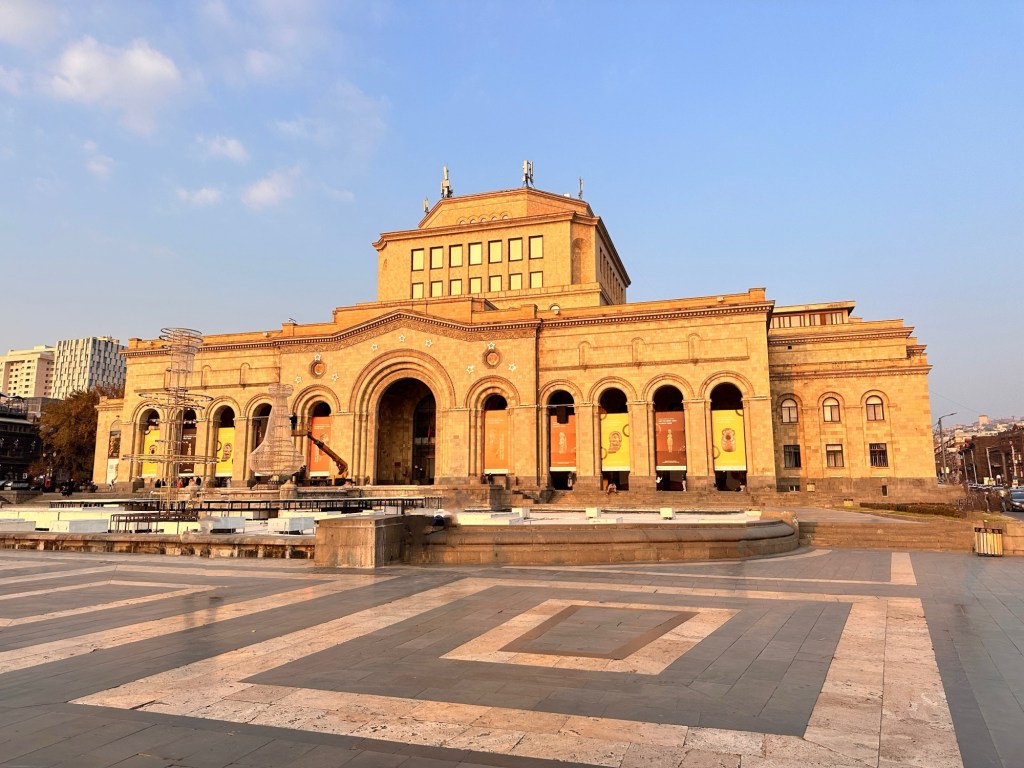
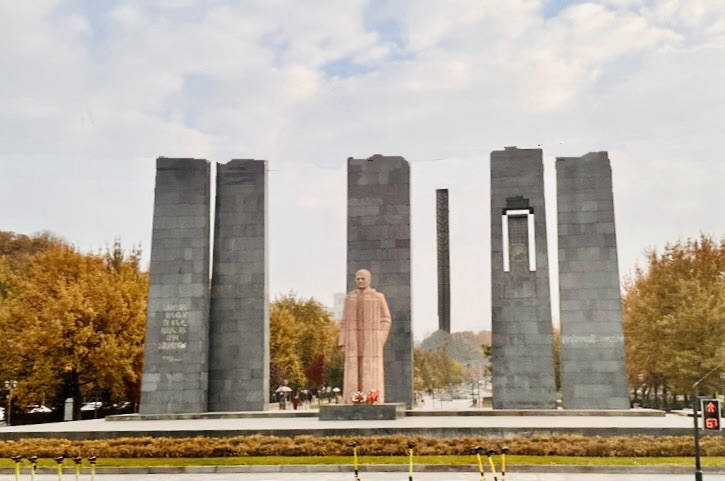
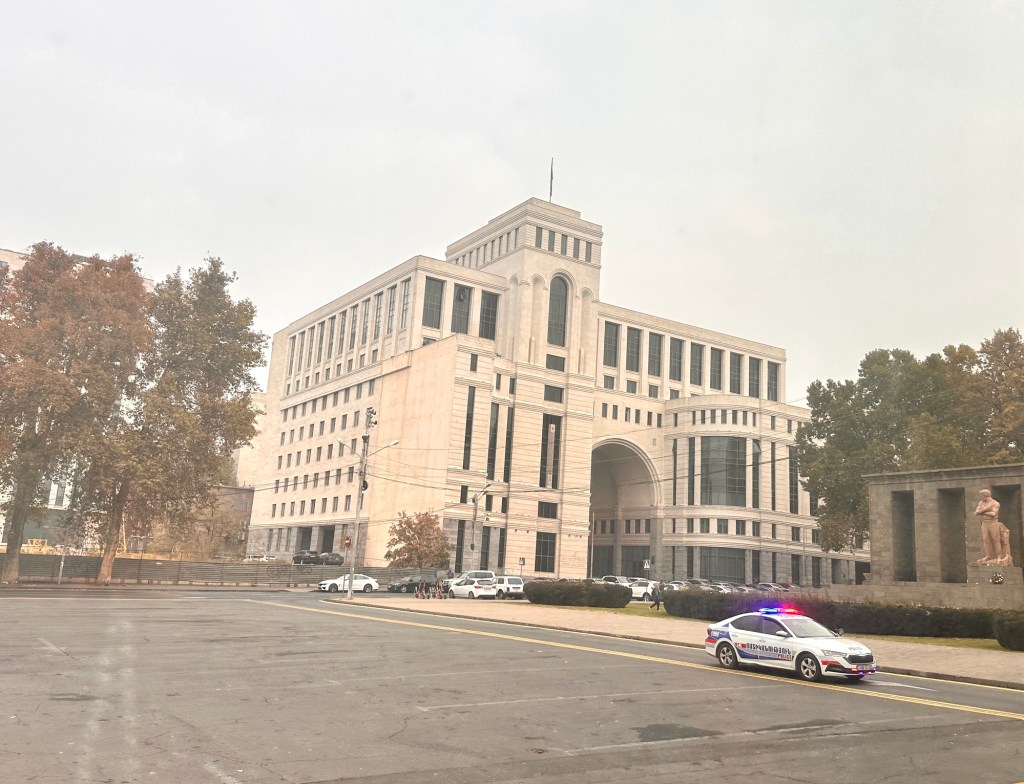

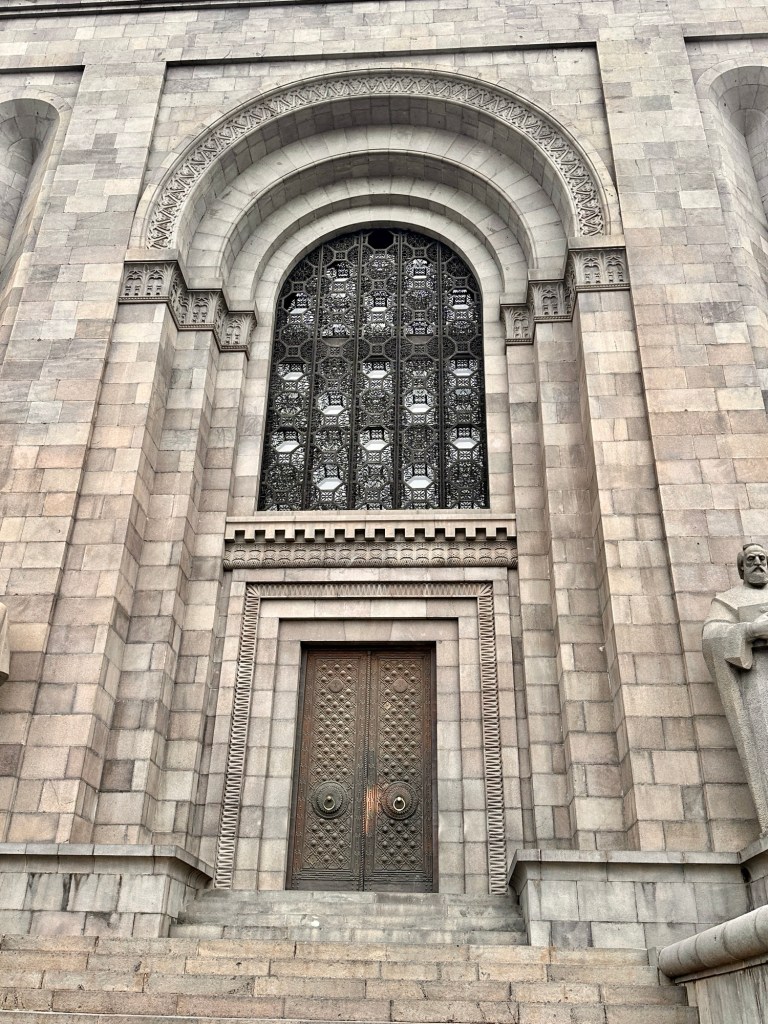
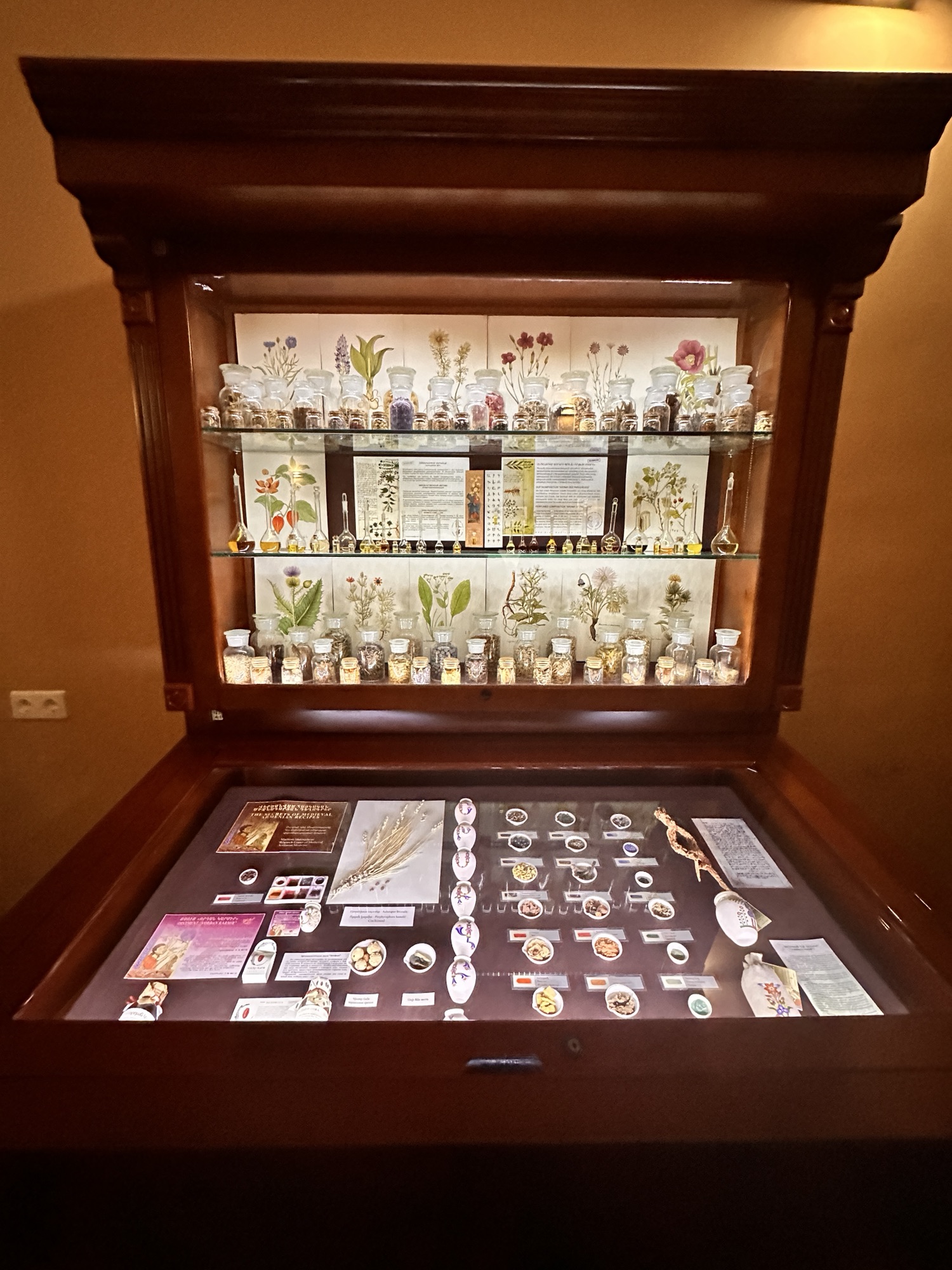
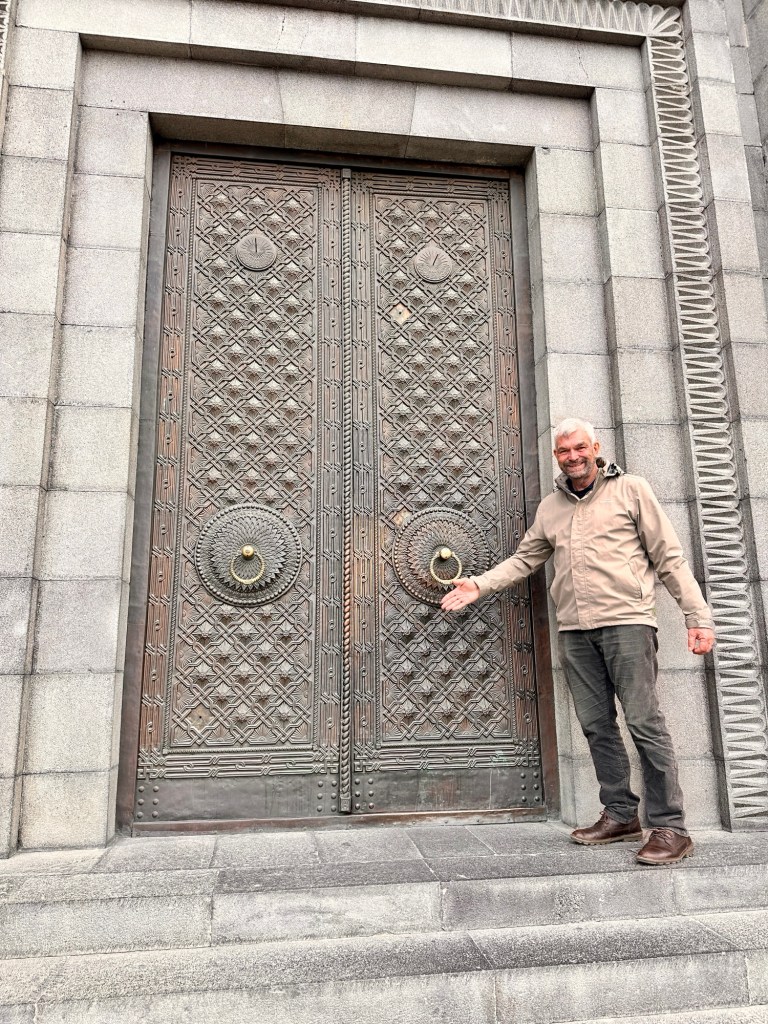
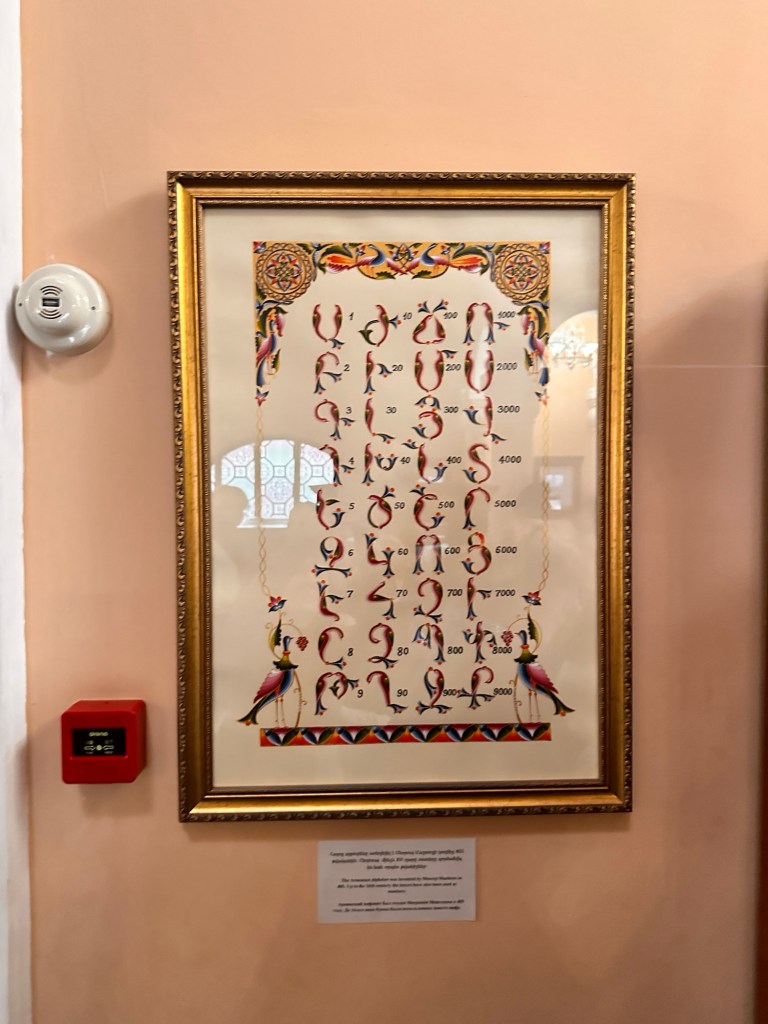
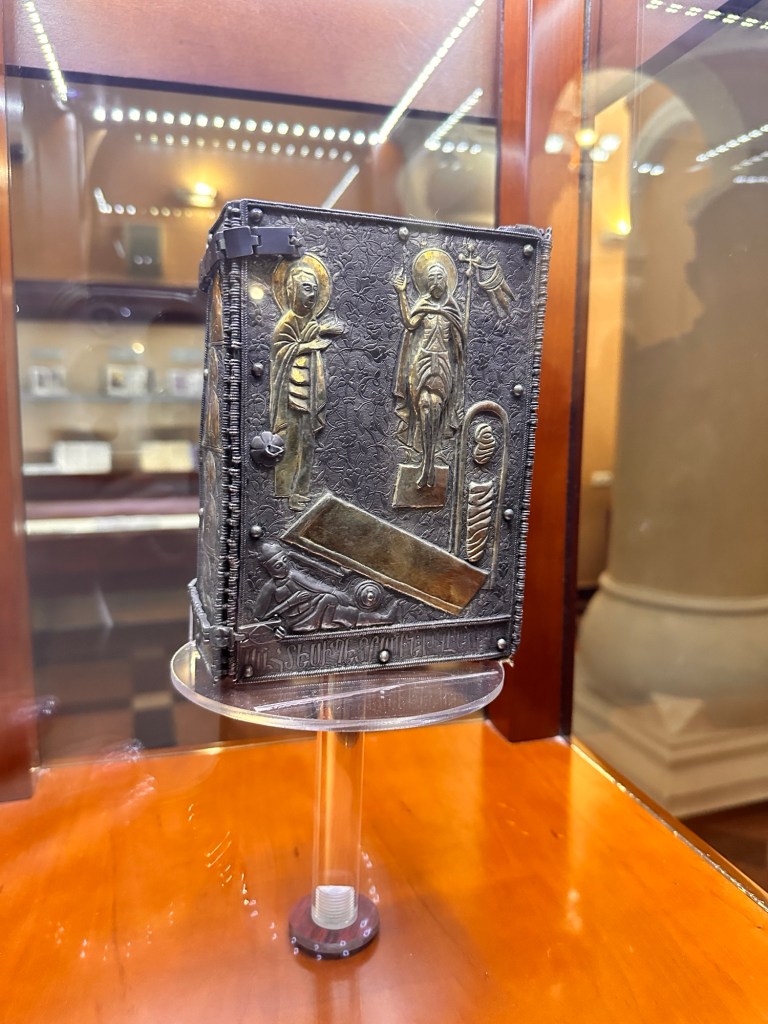
We then had a tour of the Ancient Manuscript Museum of Matenadaran. Built in 1957, and designed by Mark Grigorian, this cathedral like building might be the world’s most impressive ode to the written word housing more than 20,000 ancient manuscripts and scrolls, and over 500,000 various types of documents. The first matenadaran (book depository) for Armenian texts was built by Mesrop Mashtots, the inventor of the Armenian al-phabet, at Echmiadzin in the 5th century and held thousands of manuscripts. Invasions over the centuries led to enormous losses through looting and burning, but nearly 2000 exquisitely illustrated and bound manuscripts survived. The parchment is made from baby calf skin. The collection now includes manuscripts from different historical periods – from antiquity to modern times, that cover various subjects, such as religion, theology, history, mathematics, geography, medicine, alchemy, music etc. I found it fascinating.

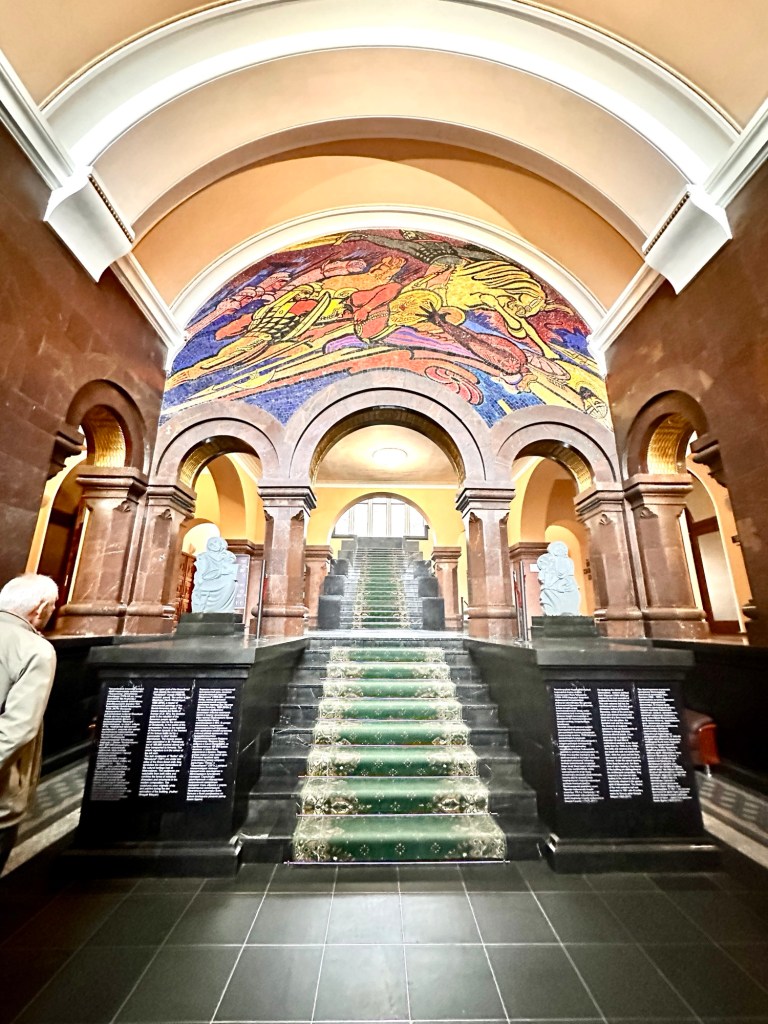

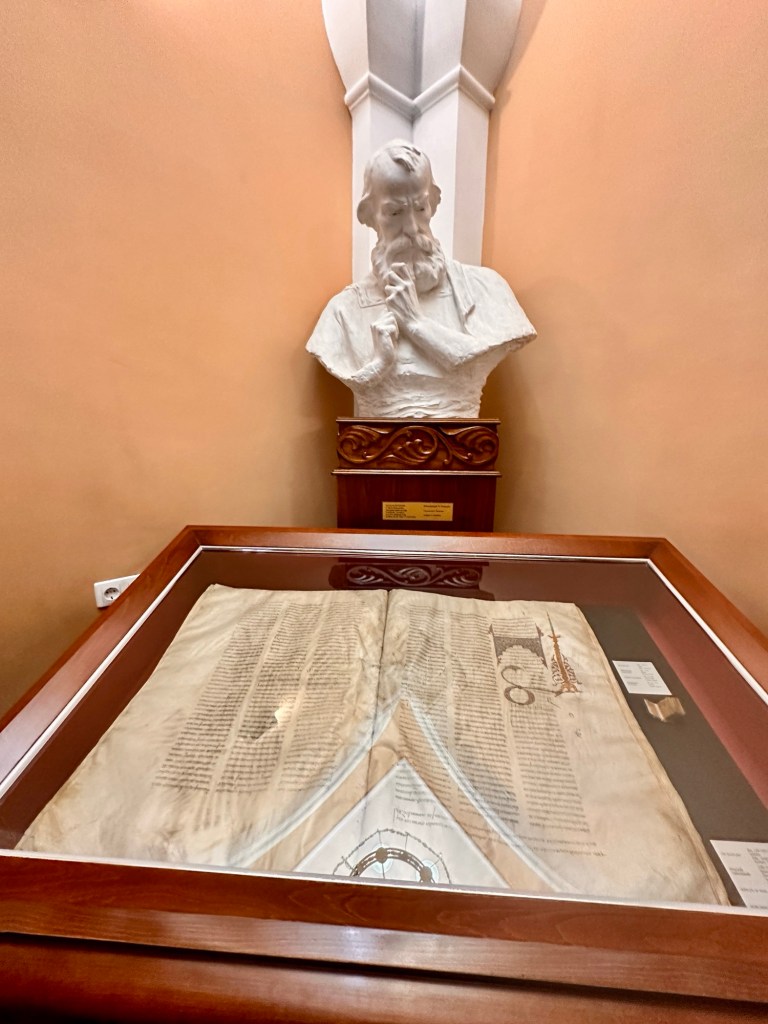
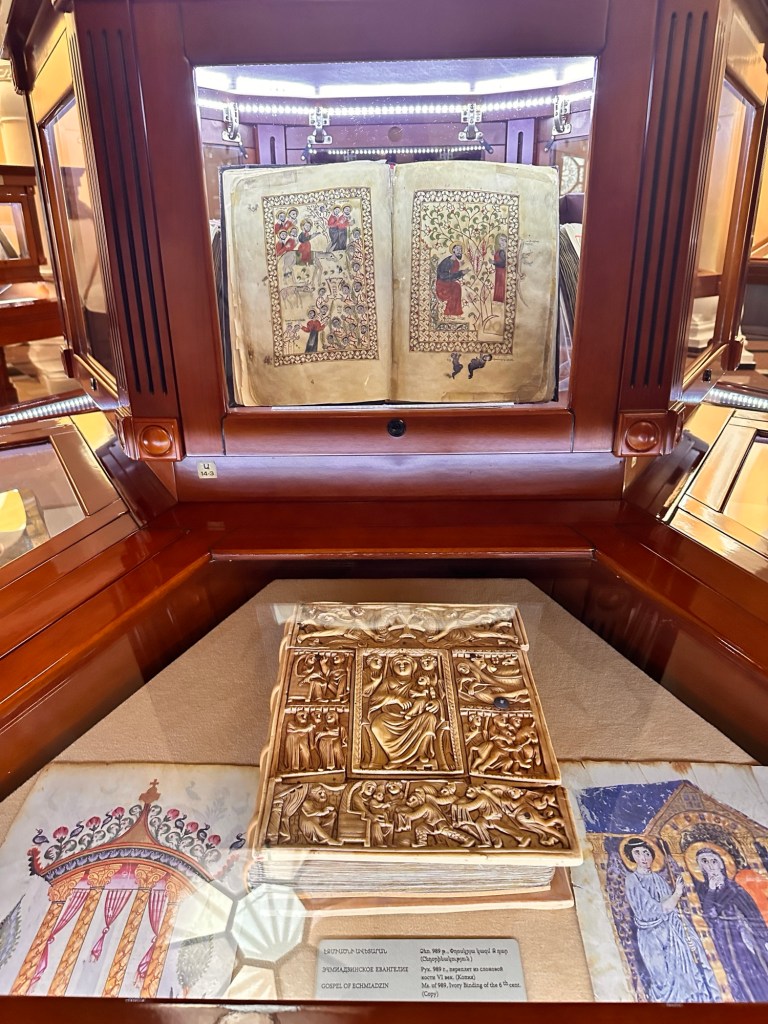
Armenia’s unique language was created by Mesrop Mashtots in 405, about a century after Christianity was officially declared in the kingdom. Mashtots designed 36 original letters, which were also designed as a number system, allowing Armenia to publish bibles in its own text. Two more letters and a symbol for’and’ (4) were added in the 12th century and Armenia’s unique language is alive and well today.
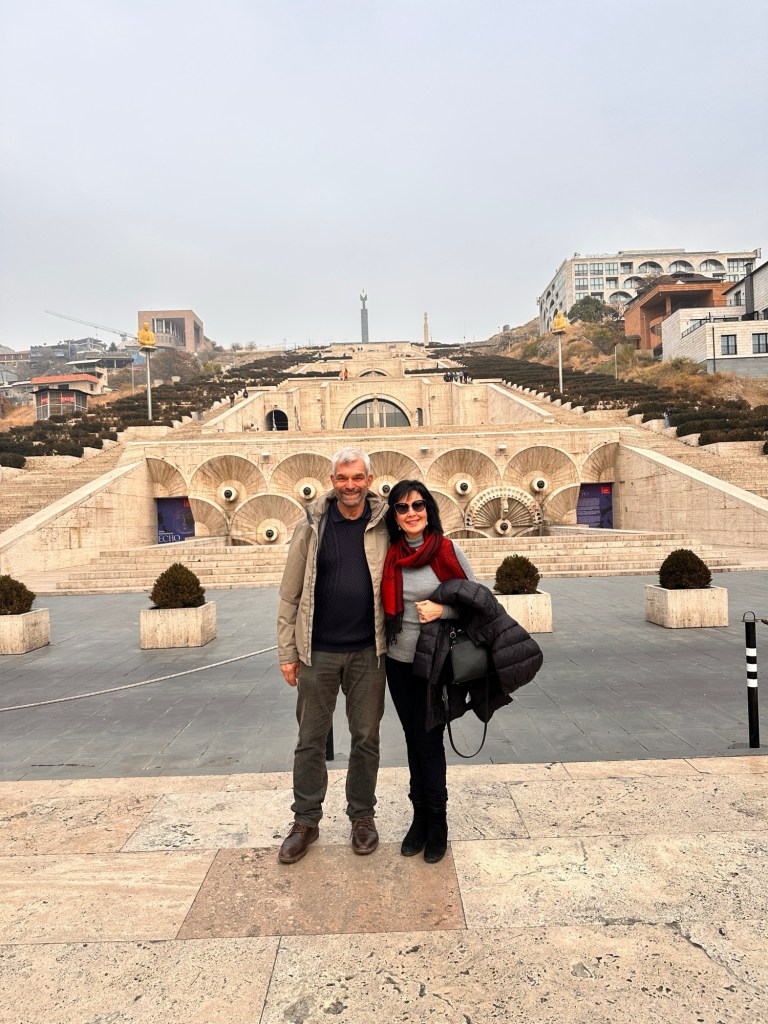
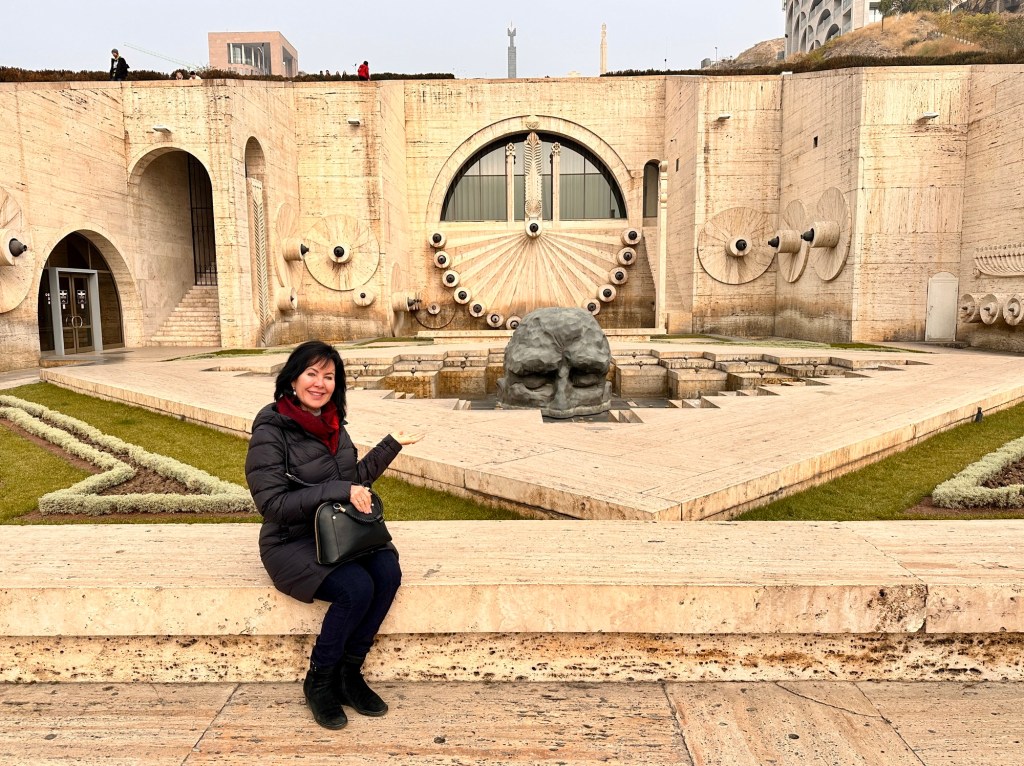
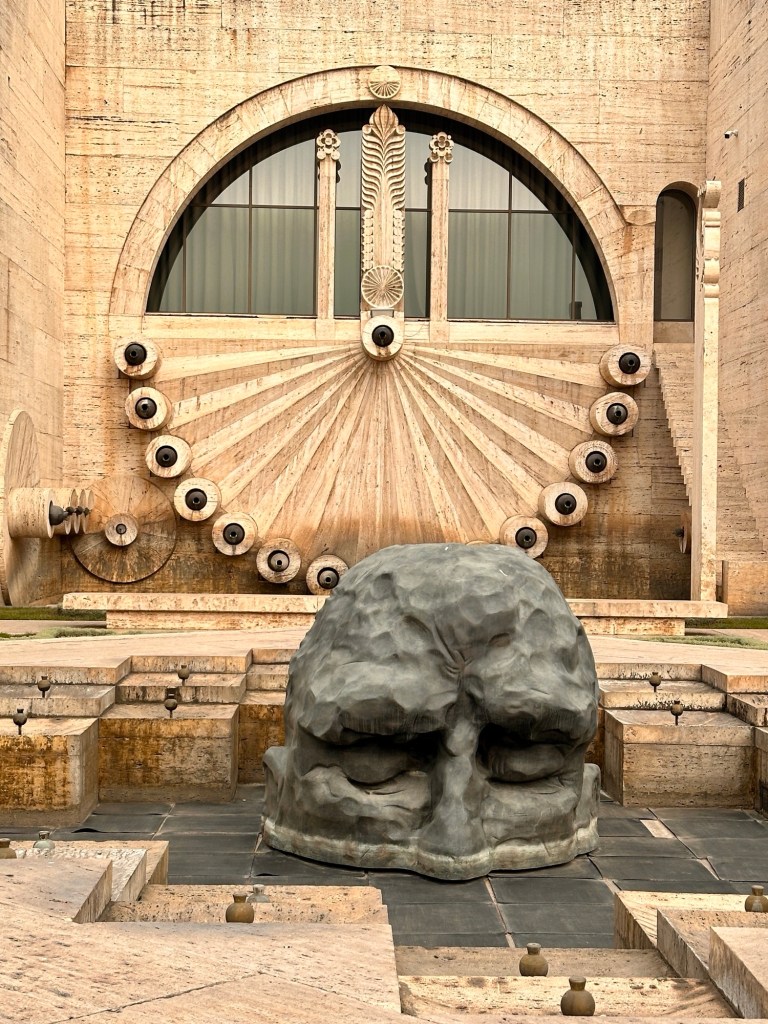
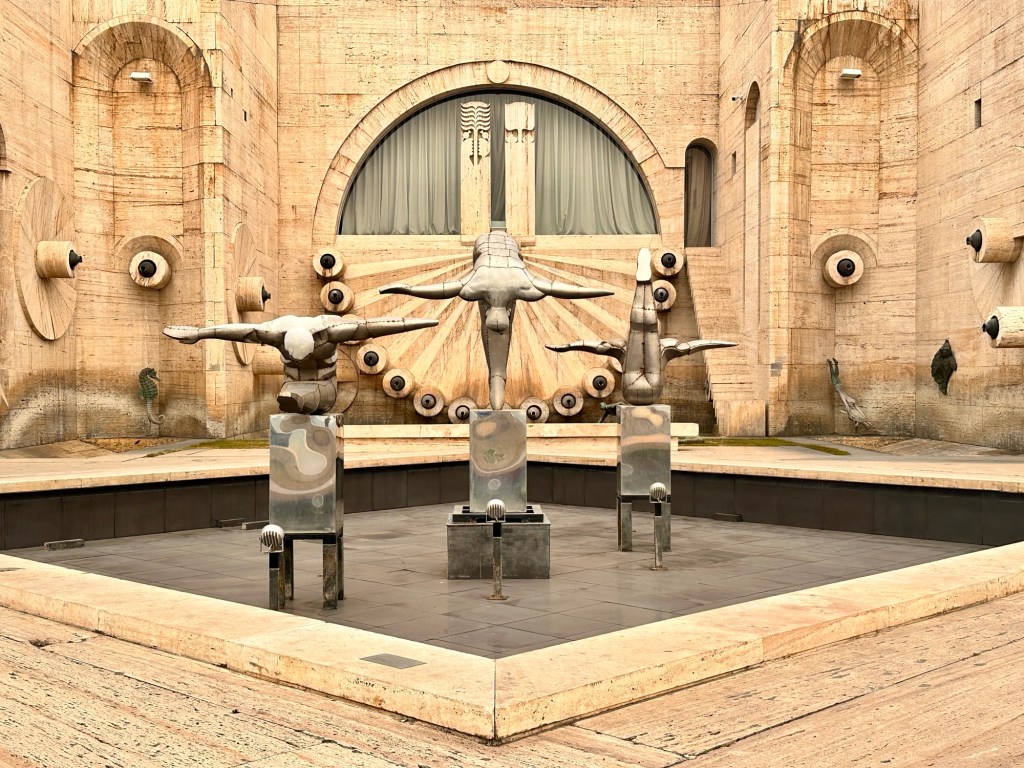
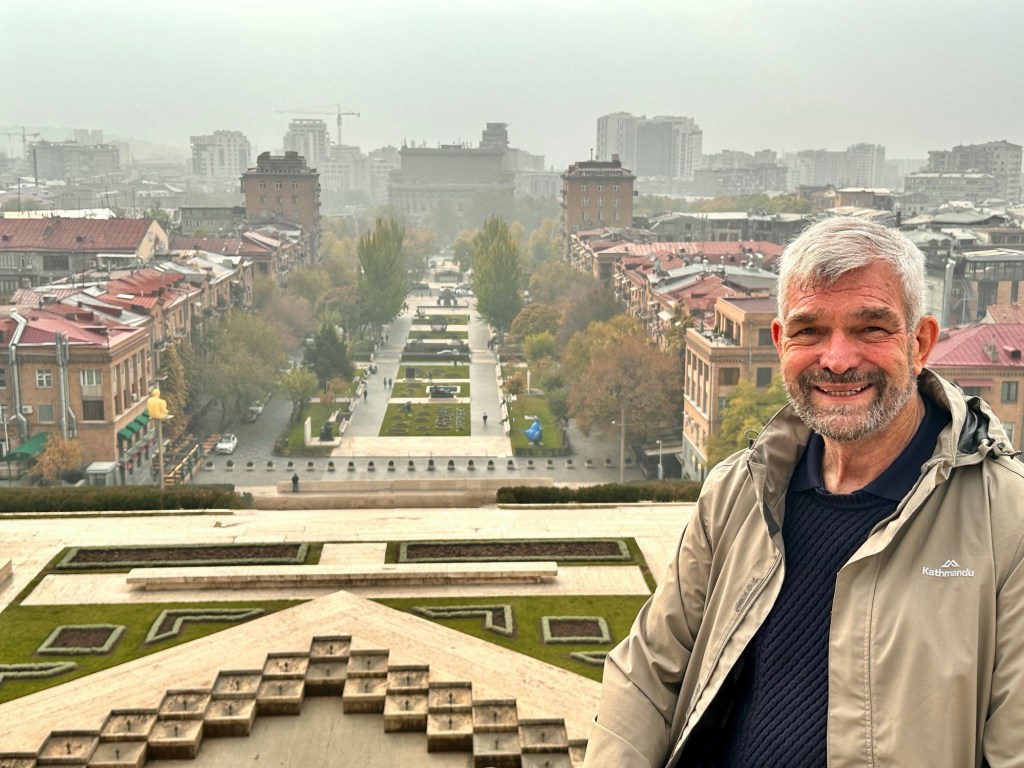
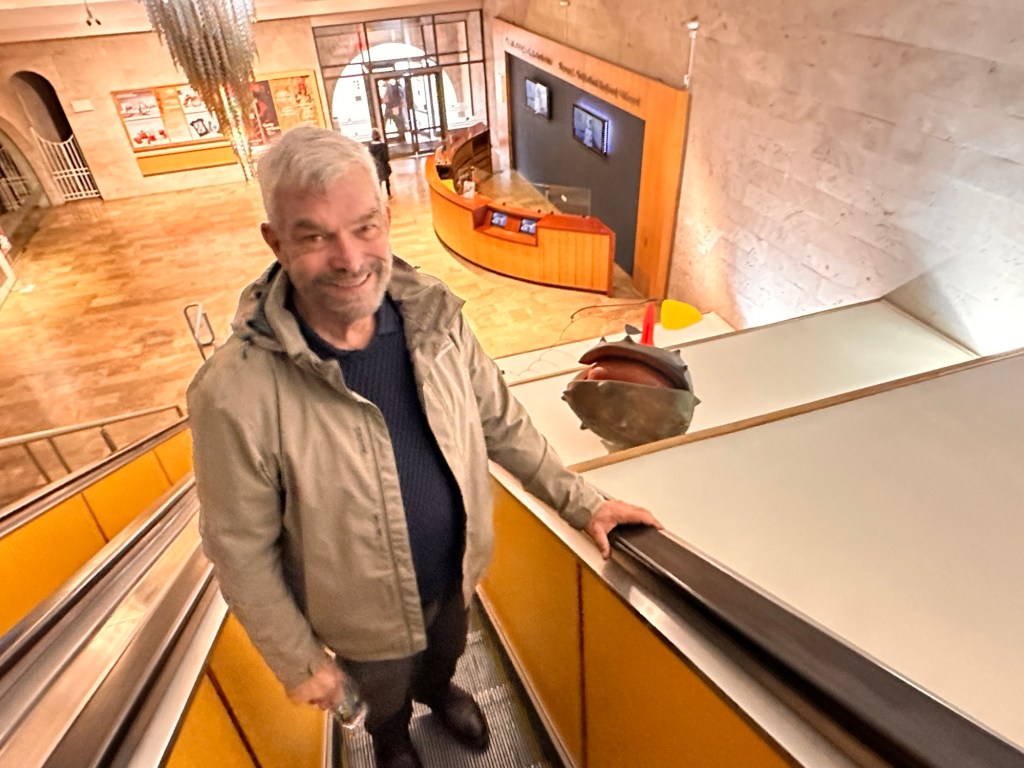
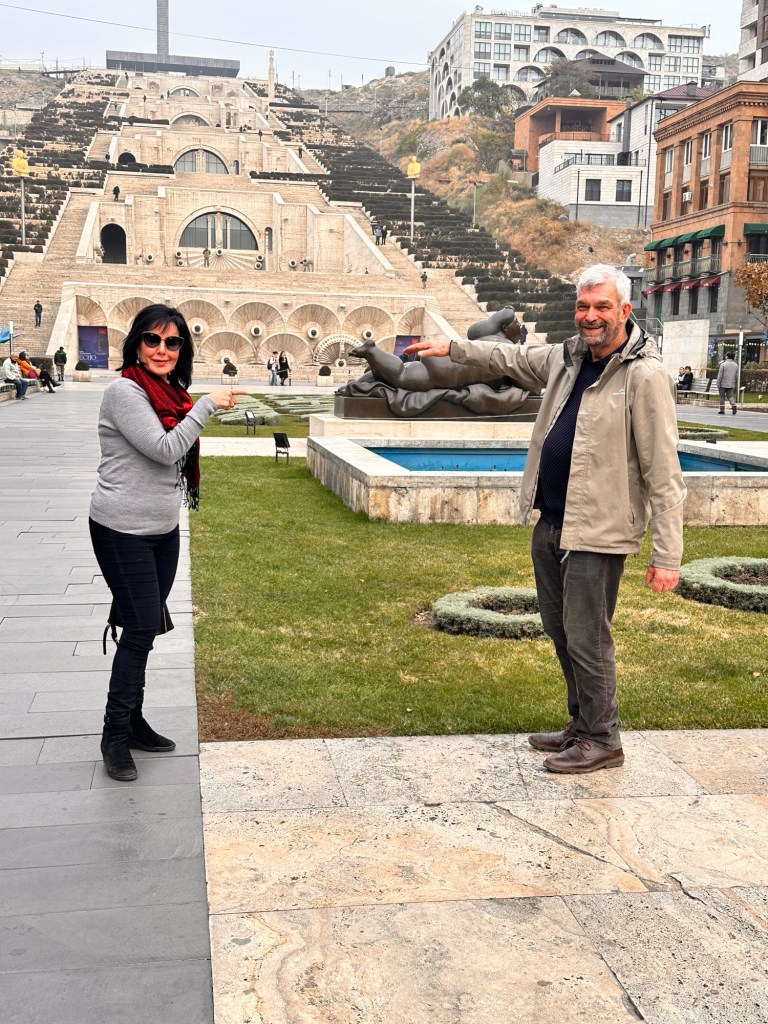
A ten minute walk away was the Cafesjian Centre for the Arts , also known as the Cascade, a giant five-level stairway(572 stairs) built of limestone and adorned with modernist sculptures. The stairs direct visitors gaze to views of central Yerevan and Mount Ararat. At the base of the Cascade is a garden courtyard with statues of contemporary sculptures such as Botero. From June to October there are fountains on each level – unfortunately we missed that affect.


Next, a drive to the city of Etchmiadzin to see two UNESCO heritage sites.
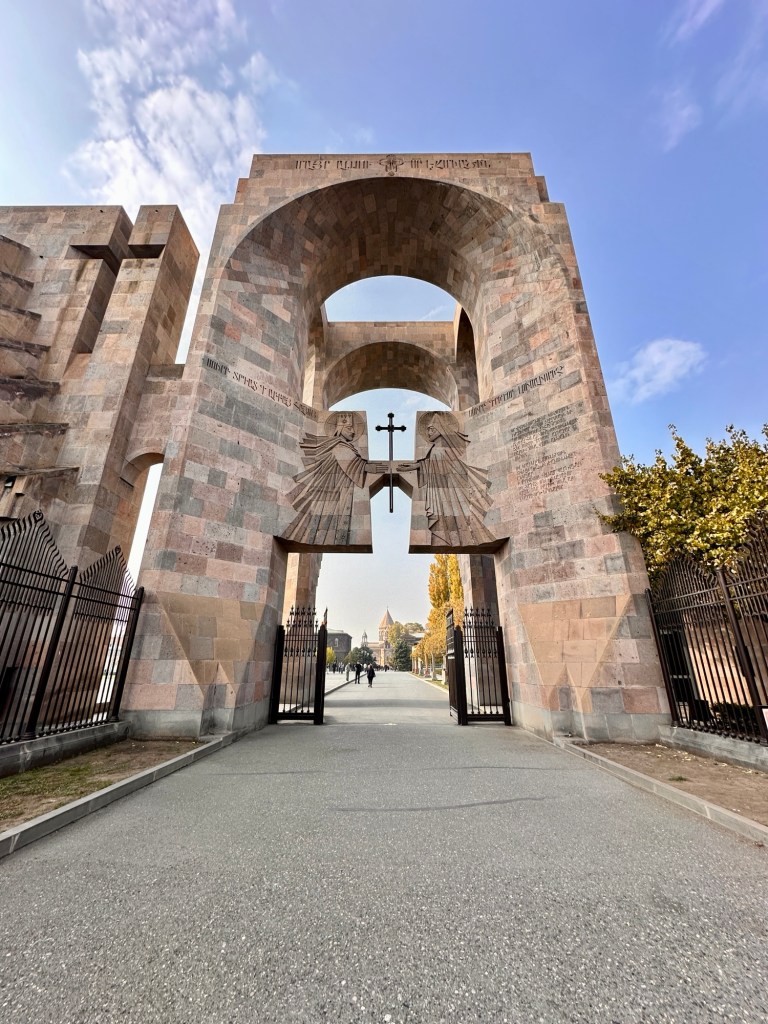
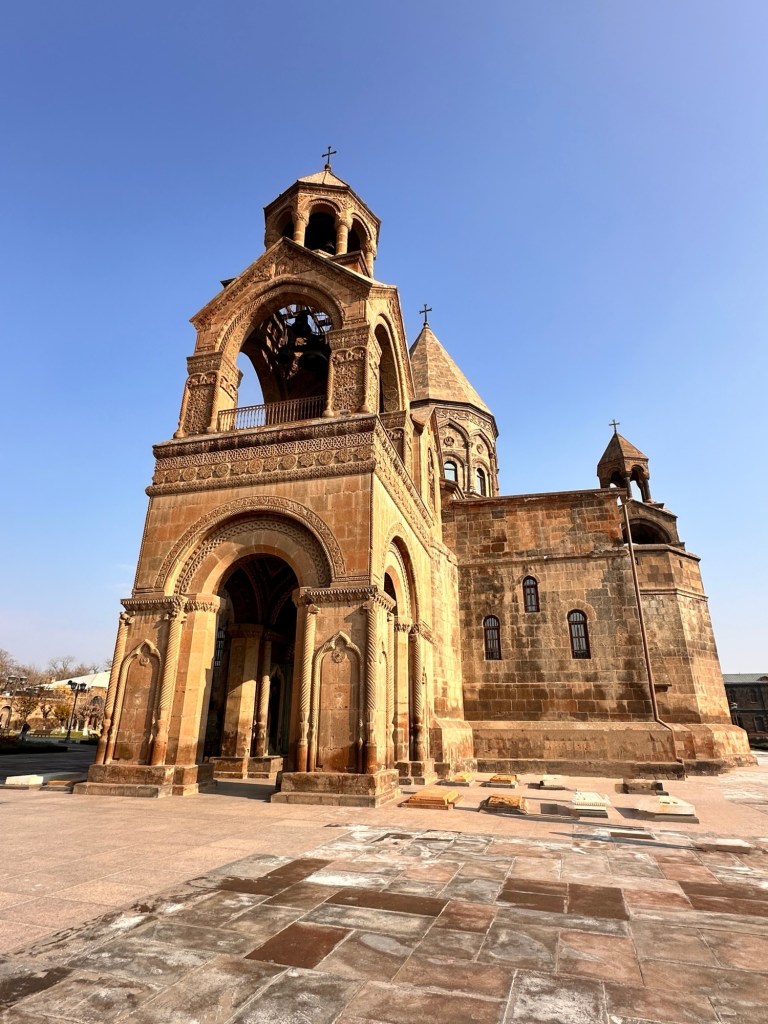
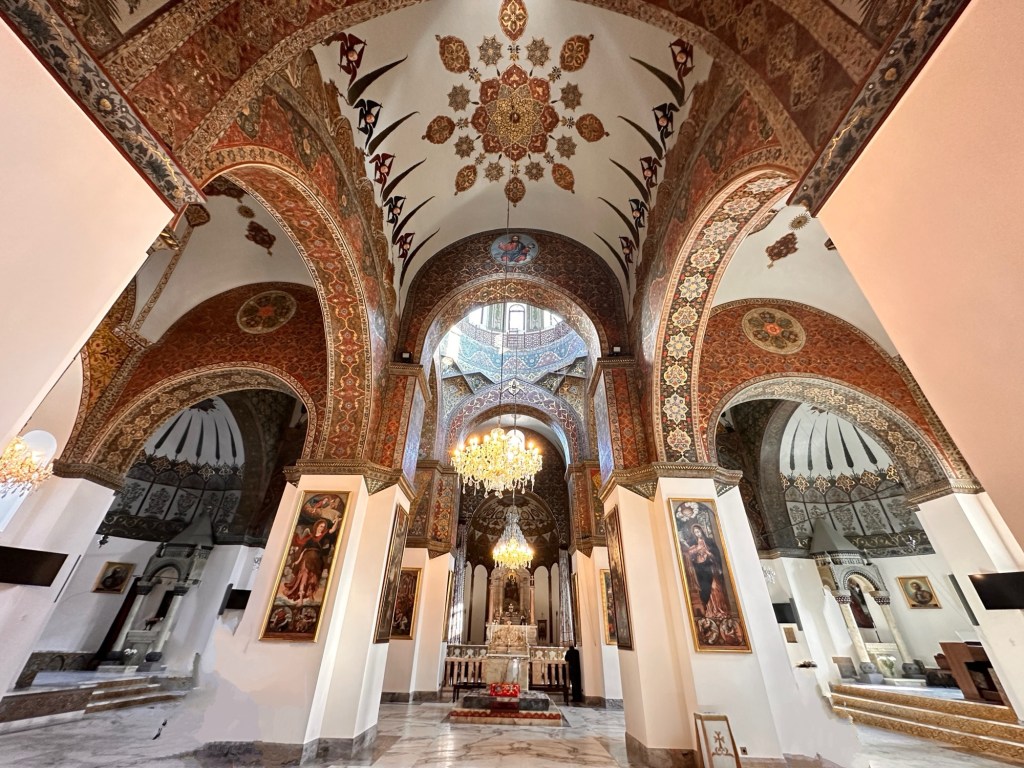
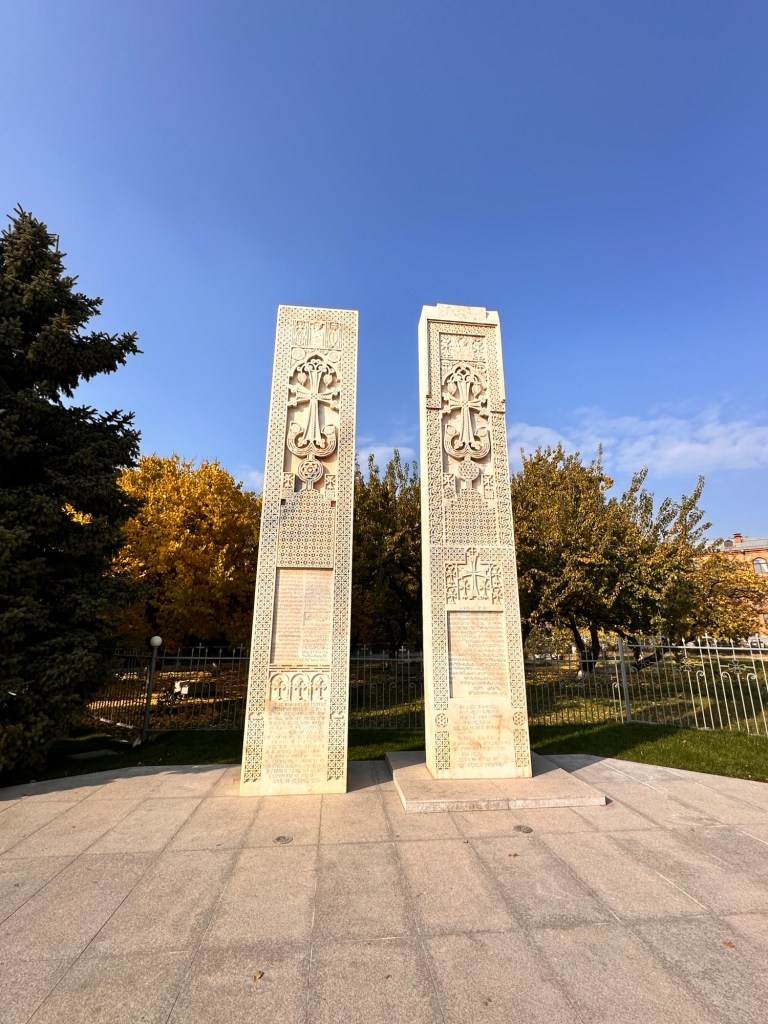
In the early fourth century (301), Armenia become the first country in the world to adopt Christianity as a state religion. Etchmiadzin Monastery is the spiritual center of the Armenian people, and the administrative center of the Armenian Apostolic Church. Called the “Mother Cathedral of Etchmiadzin” by Armenians, the cathedral is among the most ancient examples of Christian architecture anywhere in the world. Many scholars contend Etchmiadzin Cathedral is the the oldest Christian cathedral in the world. The cathedral was originally constructed from wood in the form of basilica. But in 483 it was reconstructed and made into cross-shaped building with a dome. In the 7th century, the Cathedral was rebuilt in stone. In the 17th century the existing dome and the three-level belfry were added. Beautifully decorated inside, this church certainly left a mark.
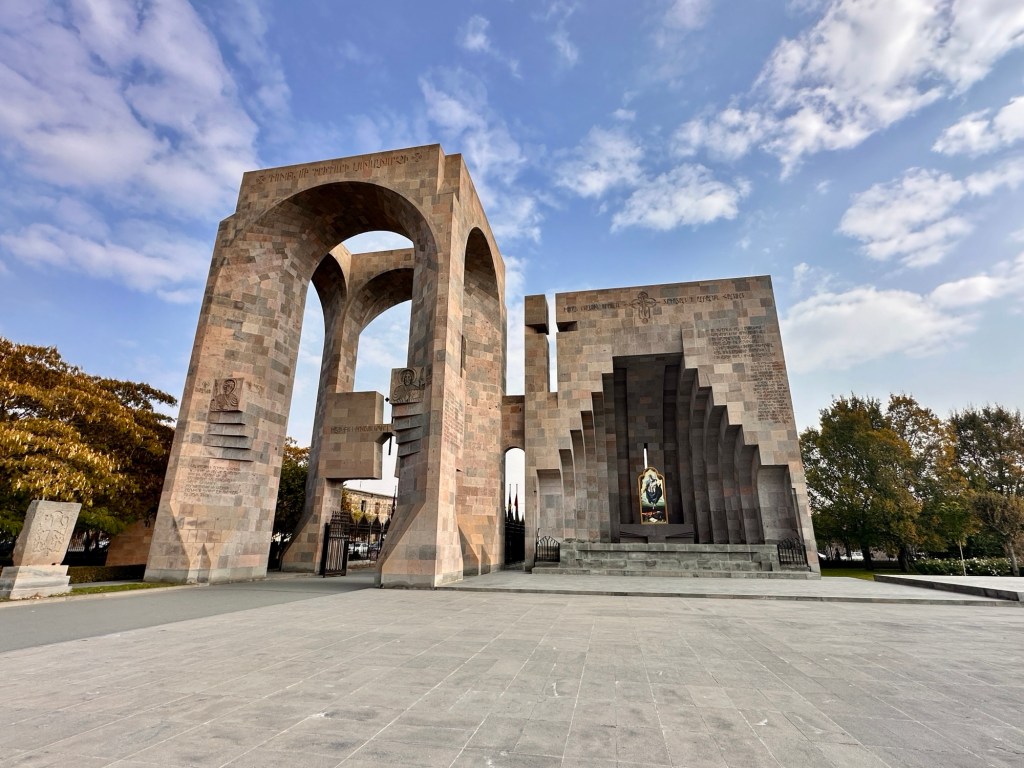
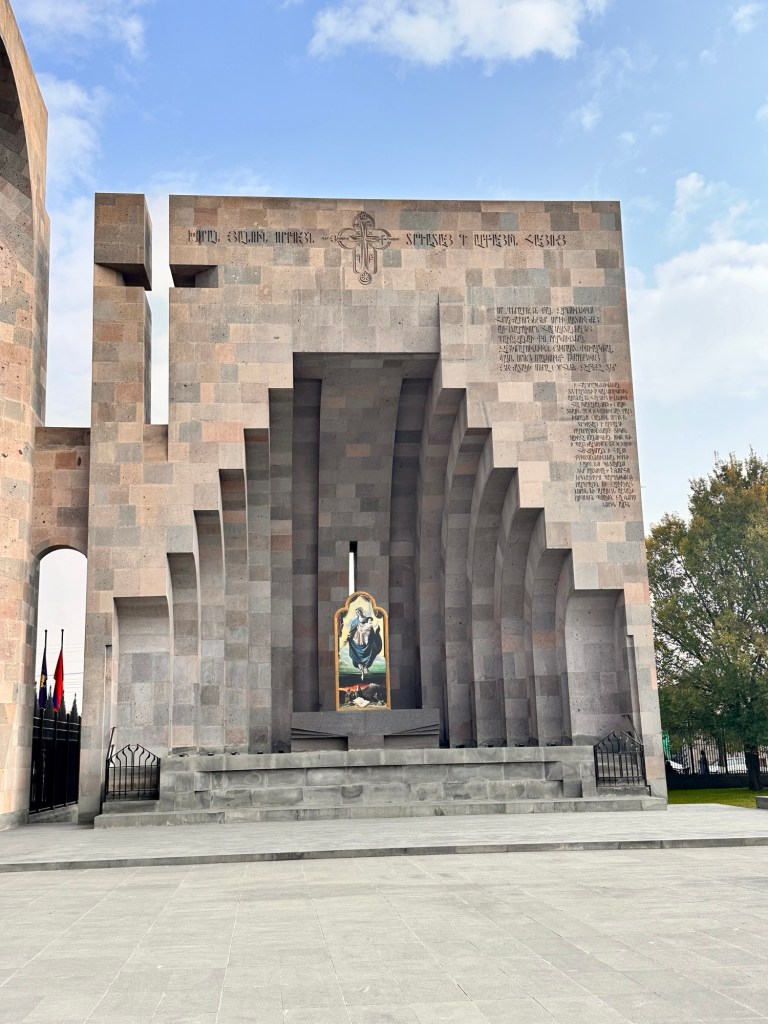


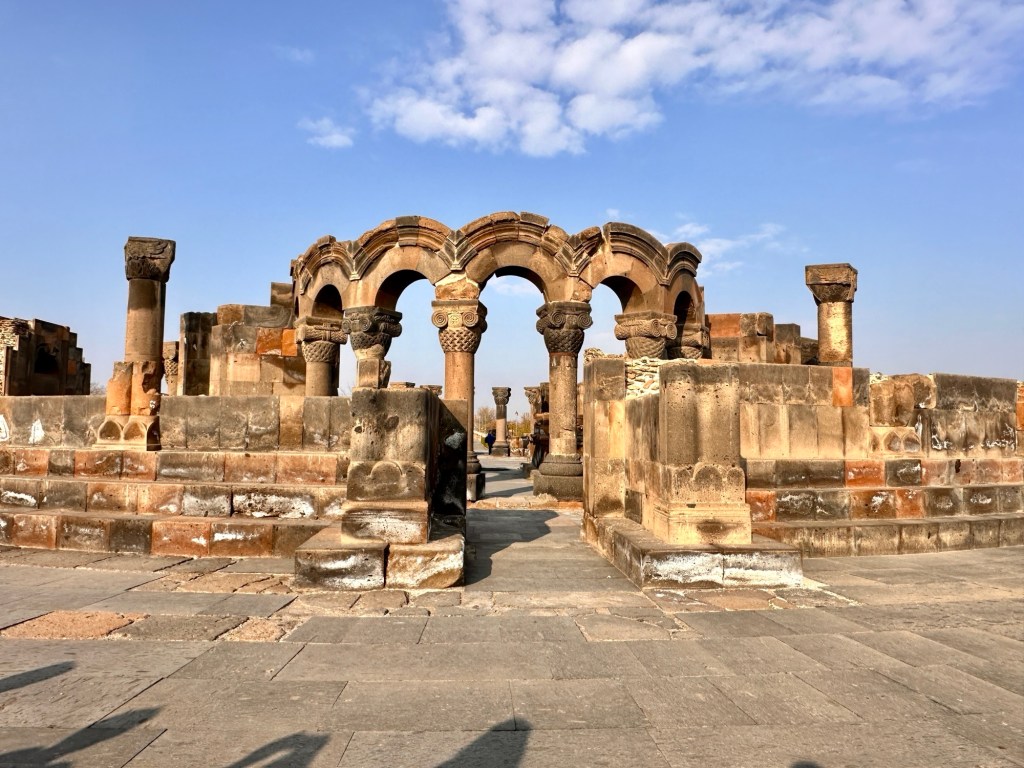
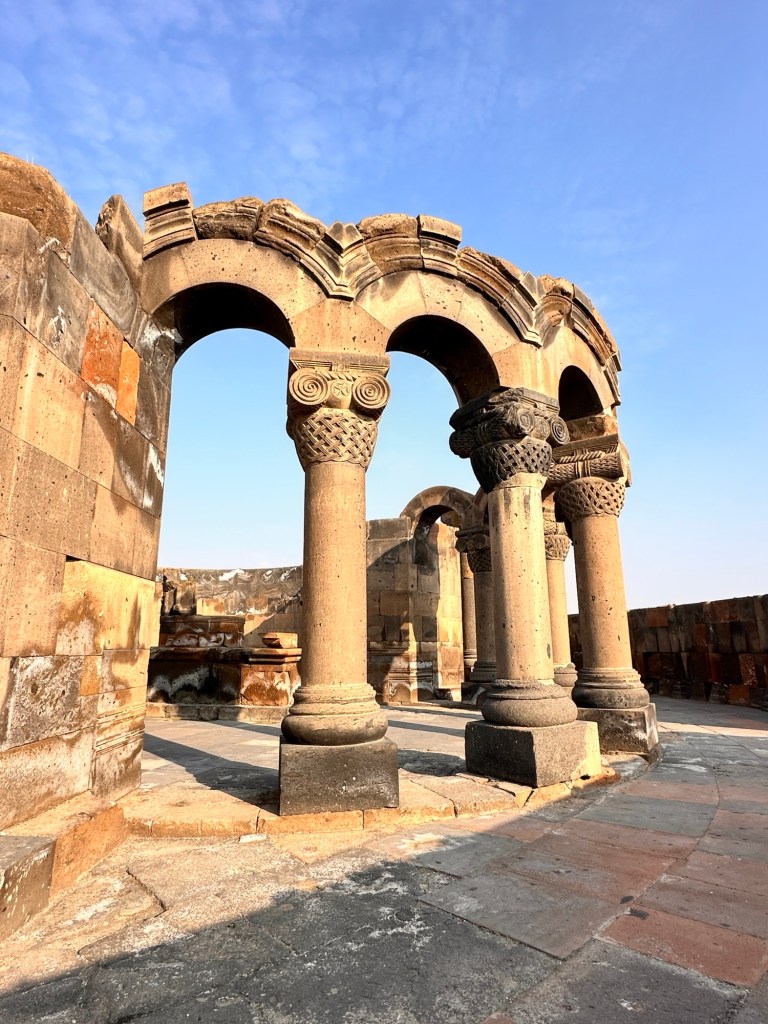
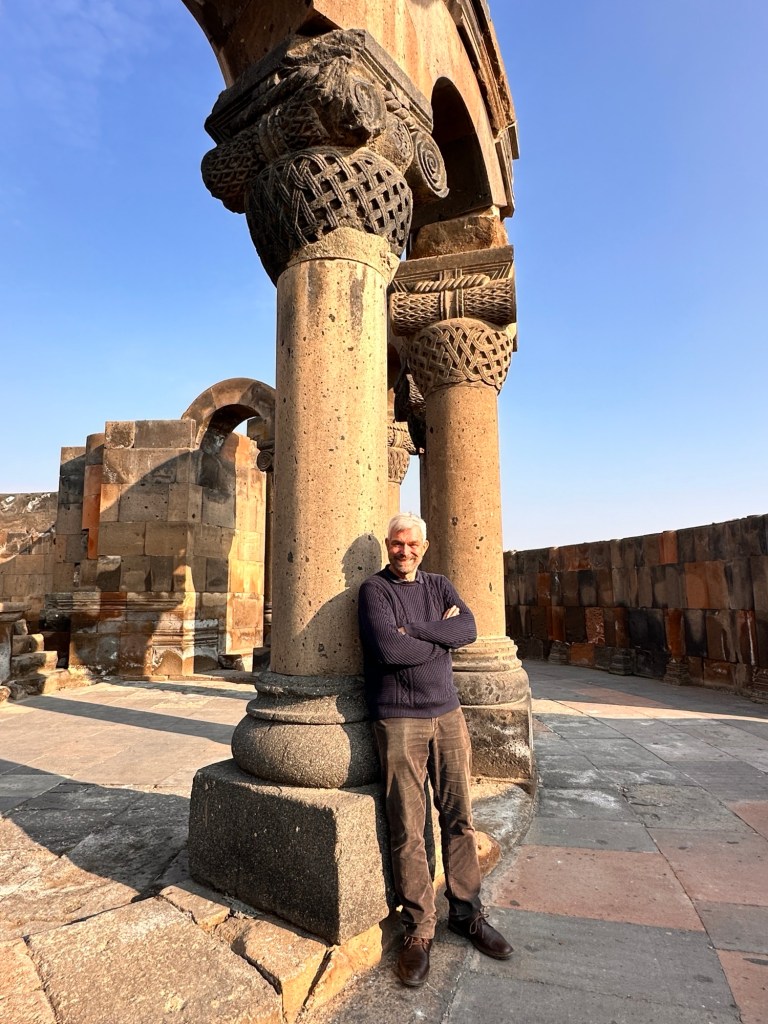
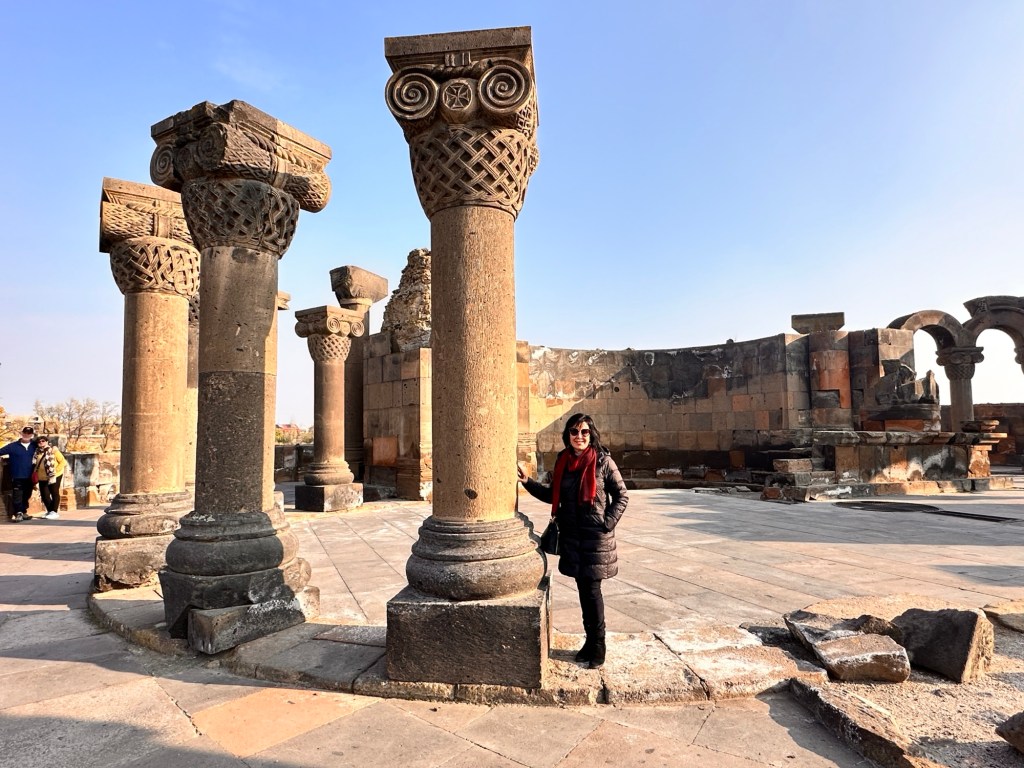
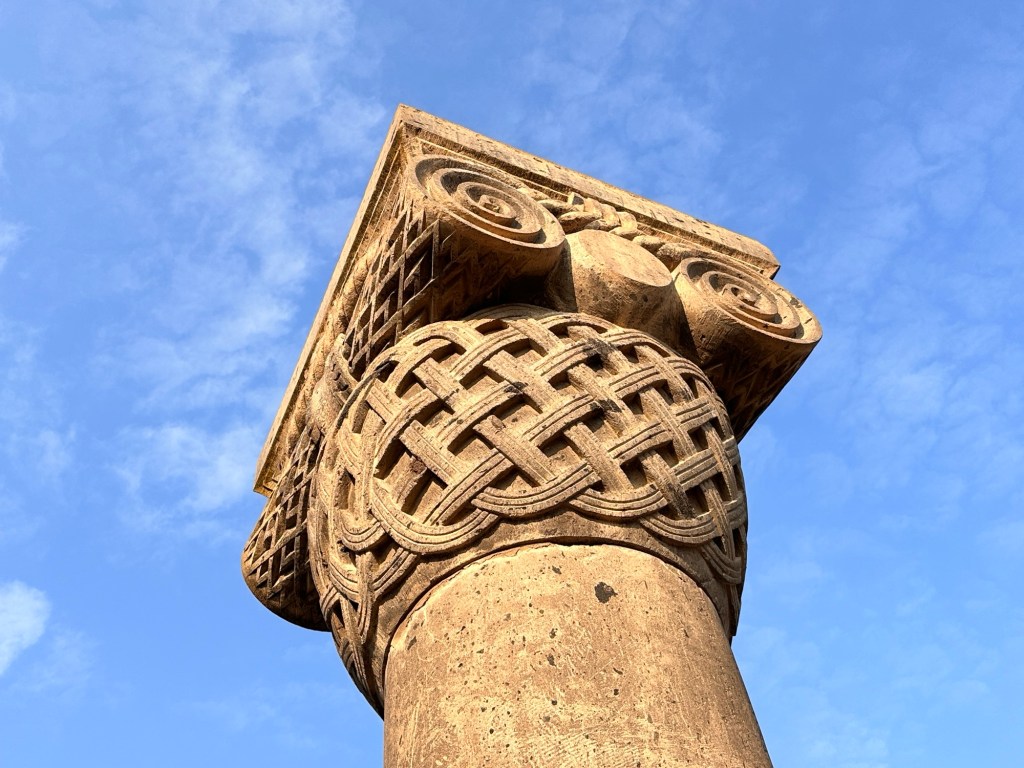
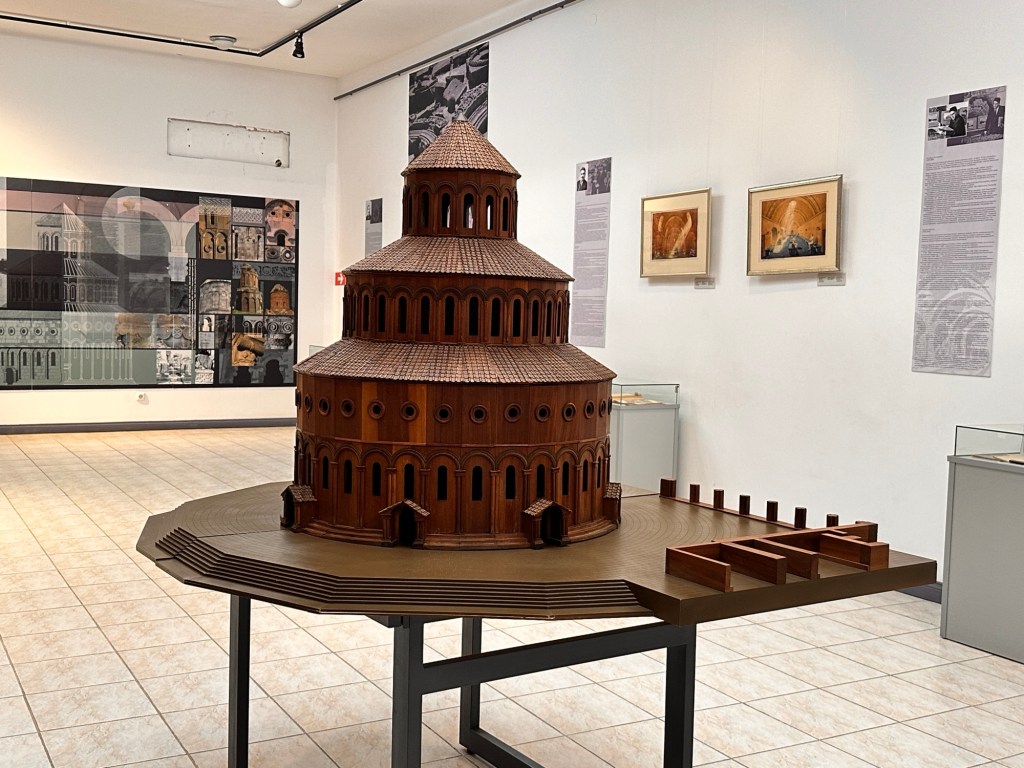
Next, built in the middle of the 7th century, the temple of Zvartnots was considered to be a masterpiece of Armenian architecture. Zvartnots was built at a time when much of Armenia had been occupied by the early Muslim Arabs who had recently invaded the country. Destroyed by either earthquake or Arab invaders, no proof of either, this temple was only discovered in 19th Century, and excavated between 1901 and 1907. A very interesting display in the museum showed a temple that was originally a three-storied round temple of 49 metres in height. Amazing!
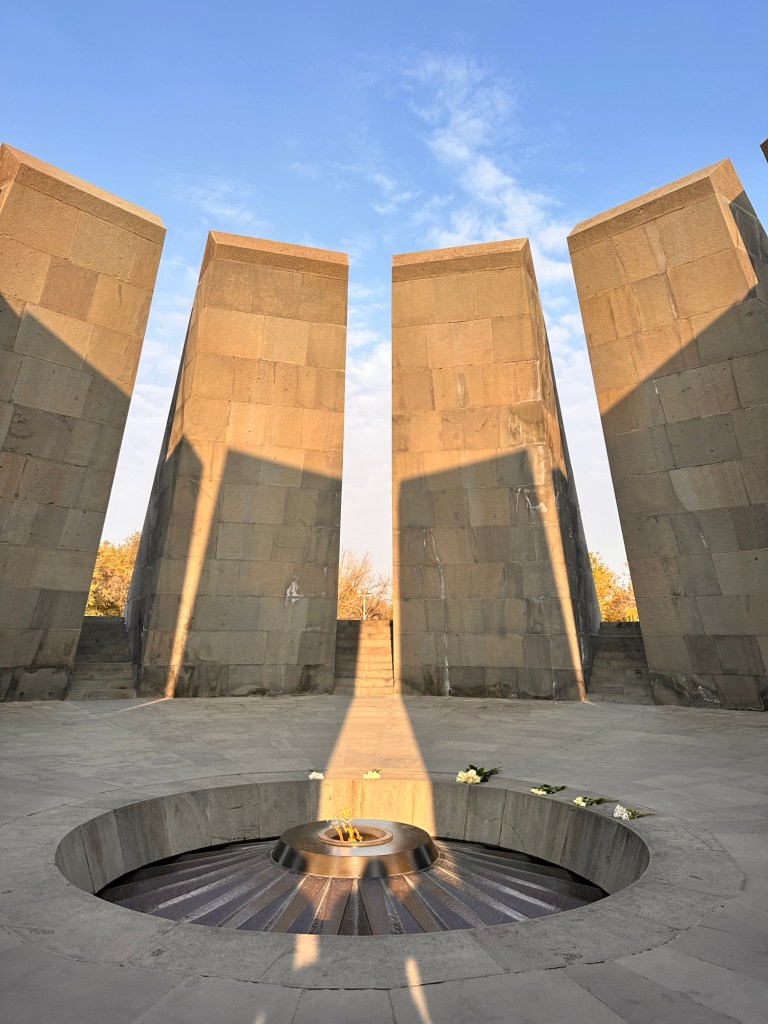
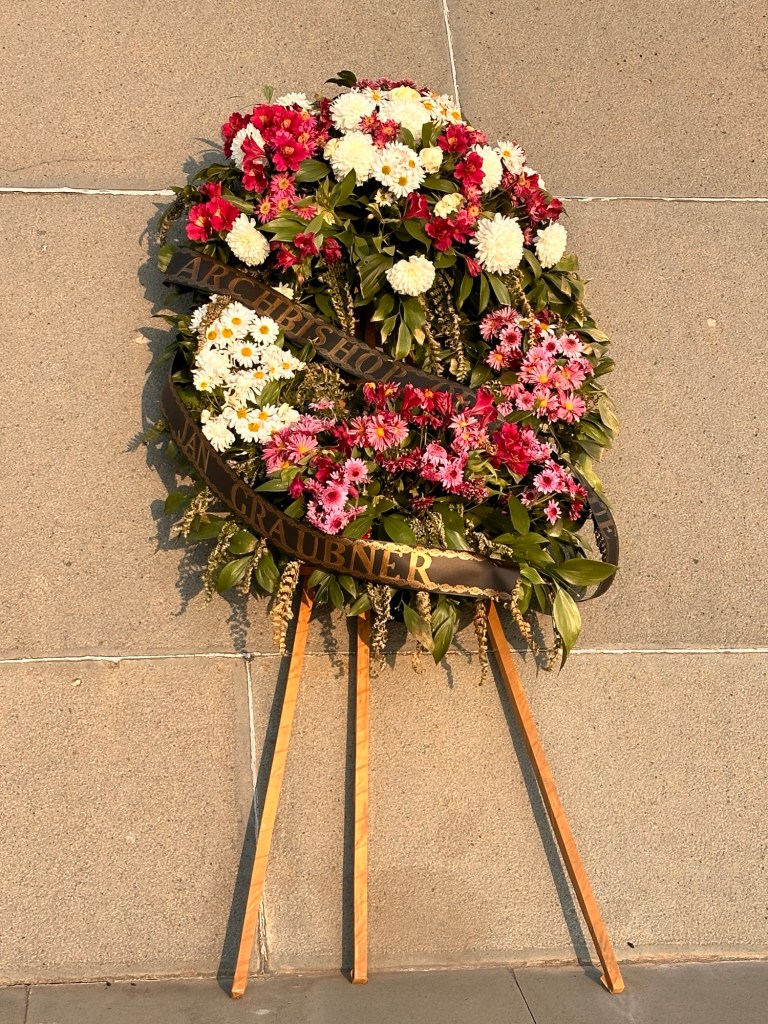
No event has shaped Armenian identity more than the ethnic cleansing, forced conversions and mass killings of between 800,000 and 1.5 million Armenians in the Ottoman Empire between 1915 and 1922. A visit to the Armenian Genocide Memorial and Museum on was very sobering. Outside the museum is a 44m spire memorial, symbolising the rebirth of the Armenian people, next to a circle of 12 basalt slabs leaning over to guard an eternal flame. A realisation that we really are a lucky nation that we have beef far removed from these atrocities of life.


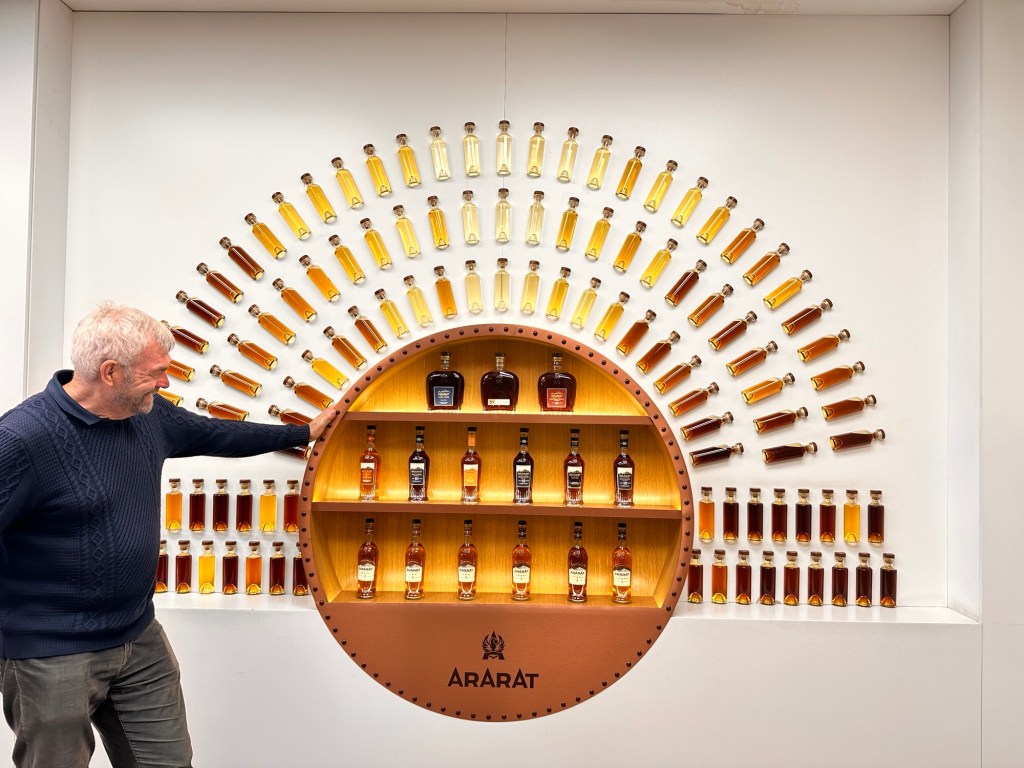
And the carrot dangling for the end of the day was …. a Brandy tasting tour. Yerevan is renowned for its konyak (cognac), a smooth, intense liquor produced from wine grapes that has a smoky aroma similar to whisky. Armenian cousins Nerses Tairyan and Vasily Tairov first brought French cognac-making to Armenia in 1887, leading to the Ararat Brandy Company (brandy is the official name since appellation rules dictate that cognac can only be made in France). We tasted 3 star and 7 star brandy. Frank was beside himself! Purely medicinal.. or so he says!

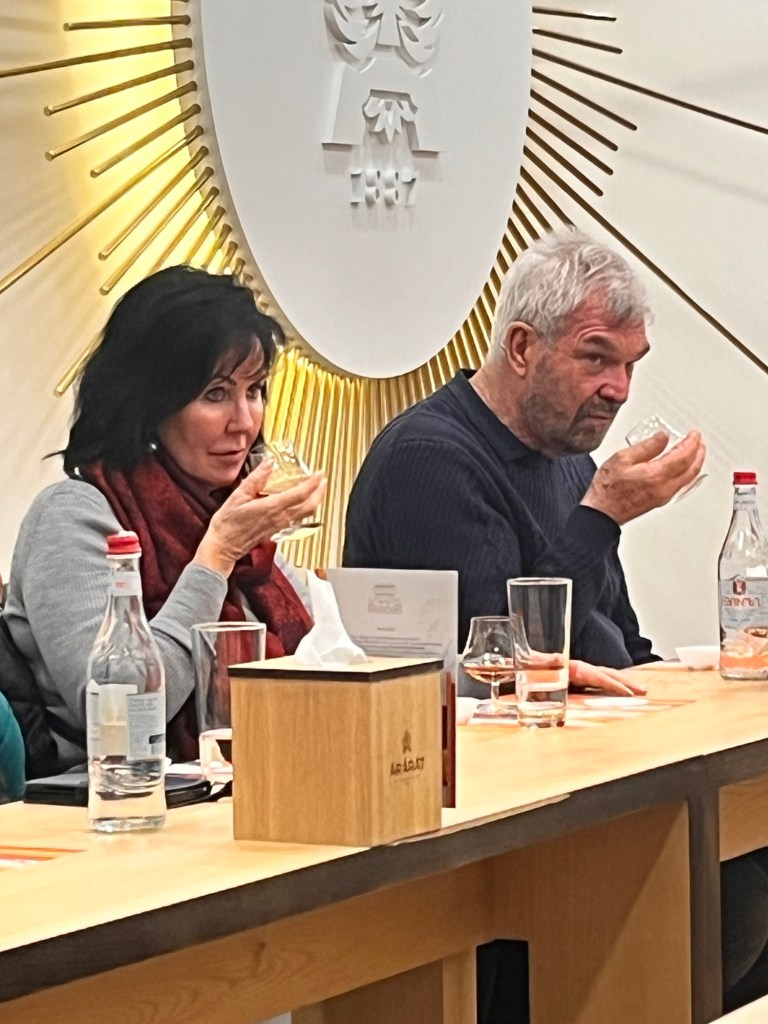
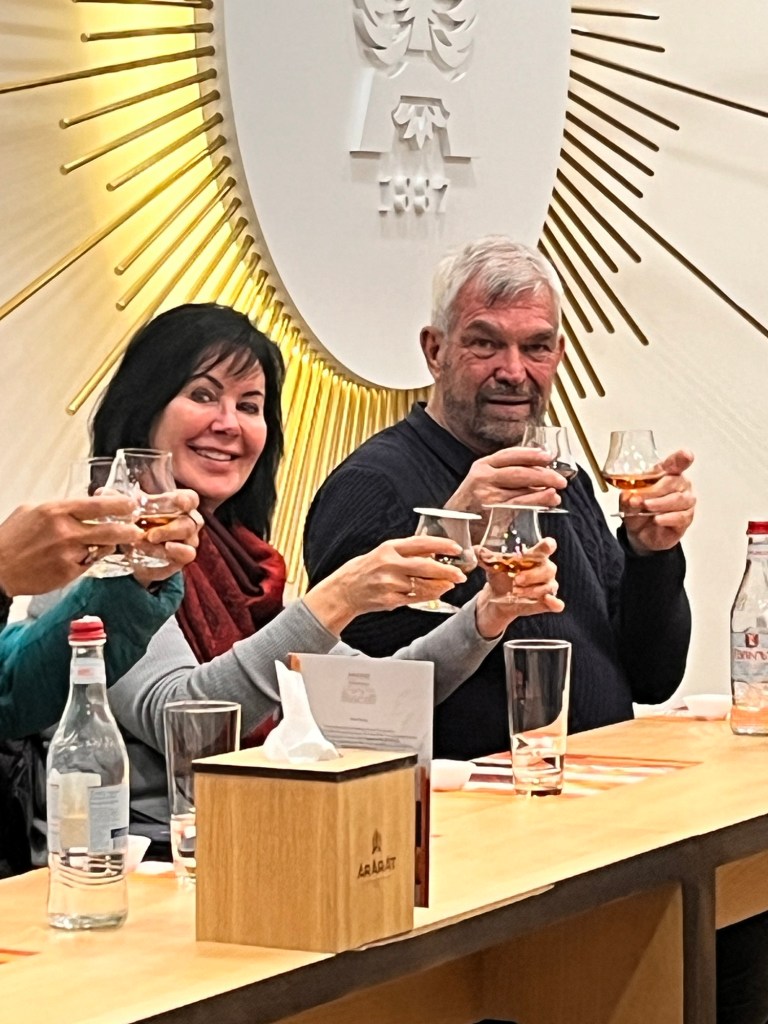
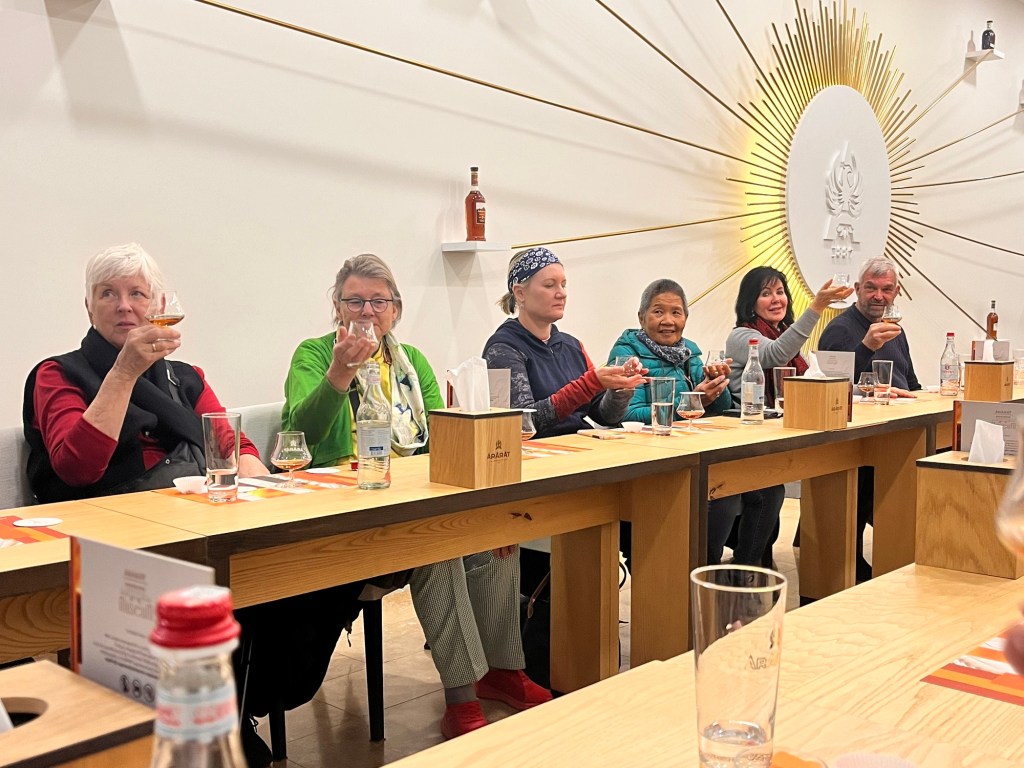
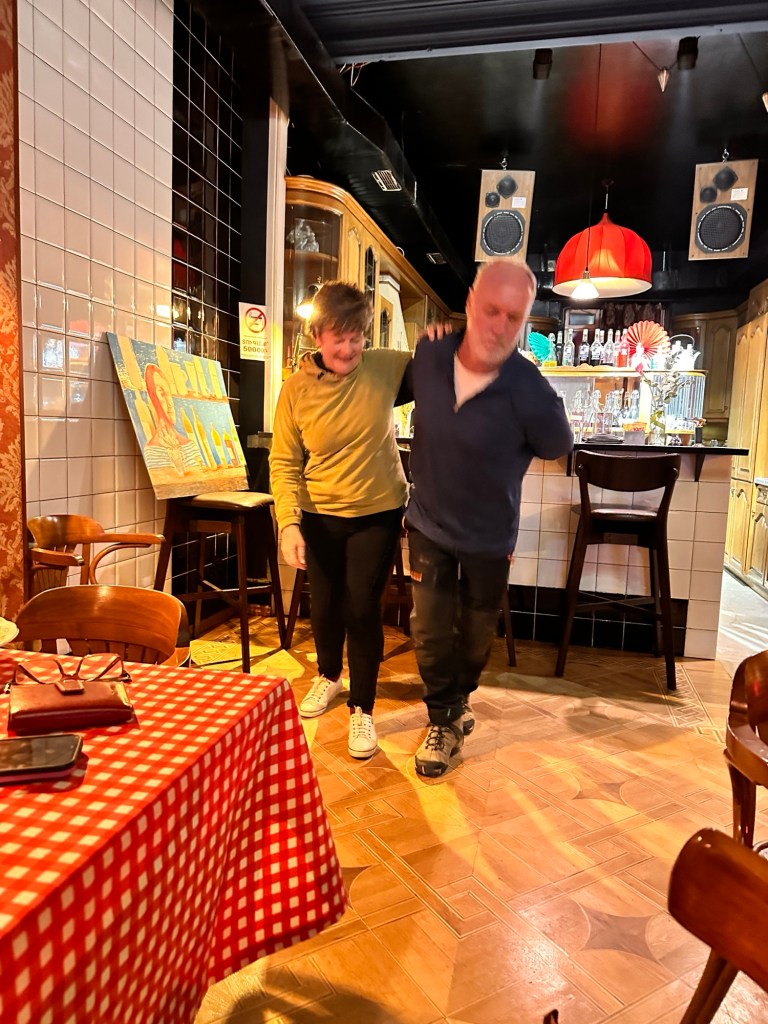
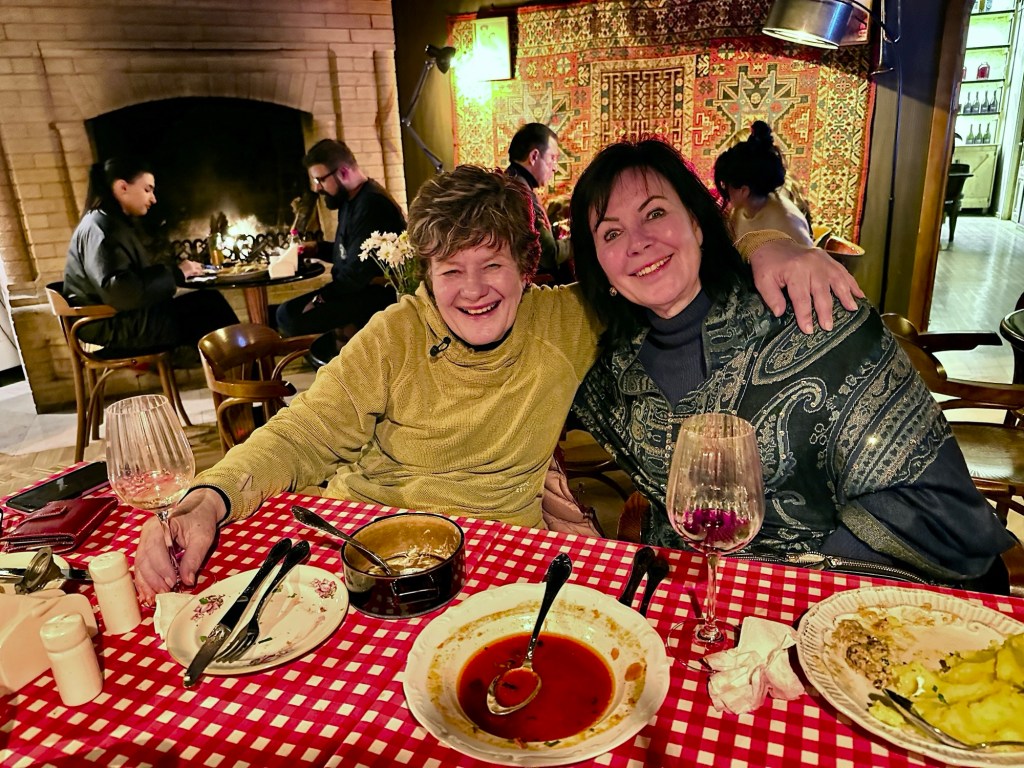
Dinner afterwards, and we found a Russian restaurant, Borsch, near the hotel. A bit hesitant about the menu to start with, but in the end , the food was delicious. We had duck and cranberry balls to start with, borsch, then beef stroganoff- all amazing. A lovely atmosphere, with great music – even a spot of dancing.
Day 22
Thursday 14th November 2024
Yerevan – Khor Virap – Areni Village – Noravank – Yerevan
240 kms
4-12 degrees
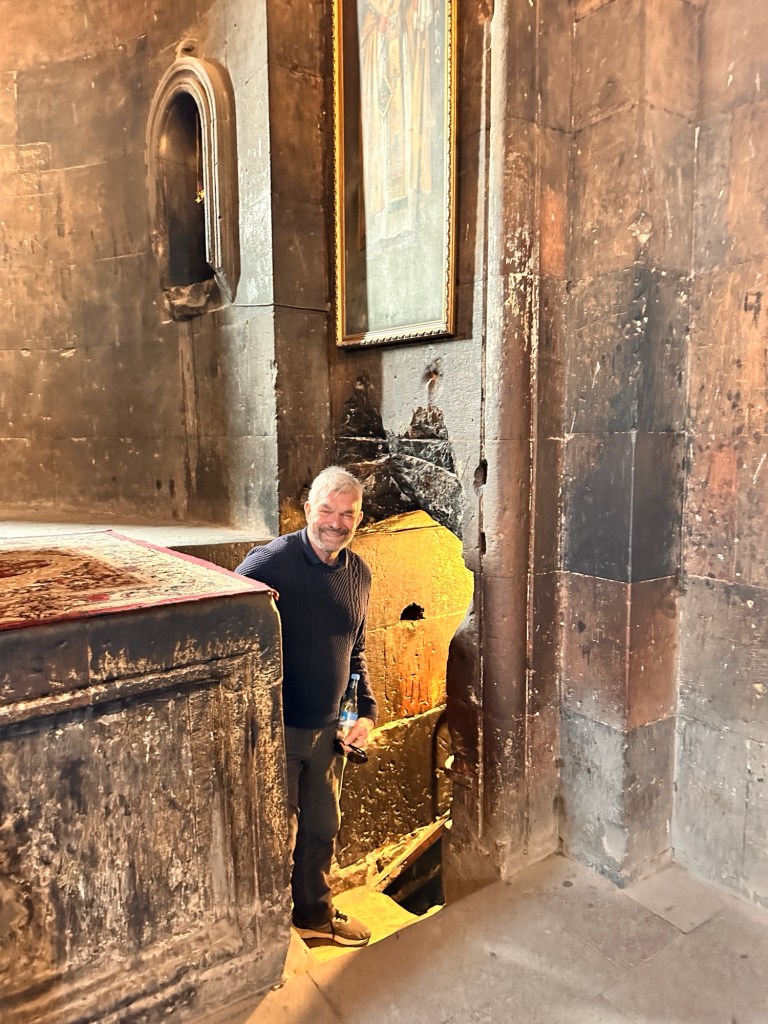
First stop today was Khor Virap Monastery – which translates as “deep dungeon”. Located in the Ararat Plain, near the closed border with Turkey (only 5 kms away), the monastery was host to a theological seminary and also was where Gregory the Illuminator was held hostage for 13 years. When he was released Gregory went to Etchmiadzin where he became Pope.
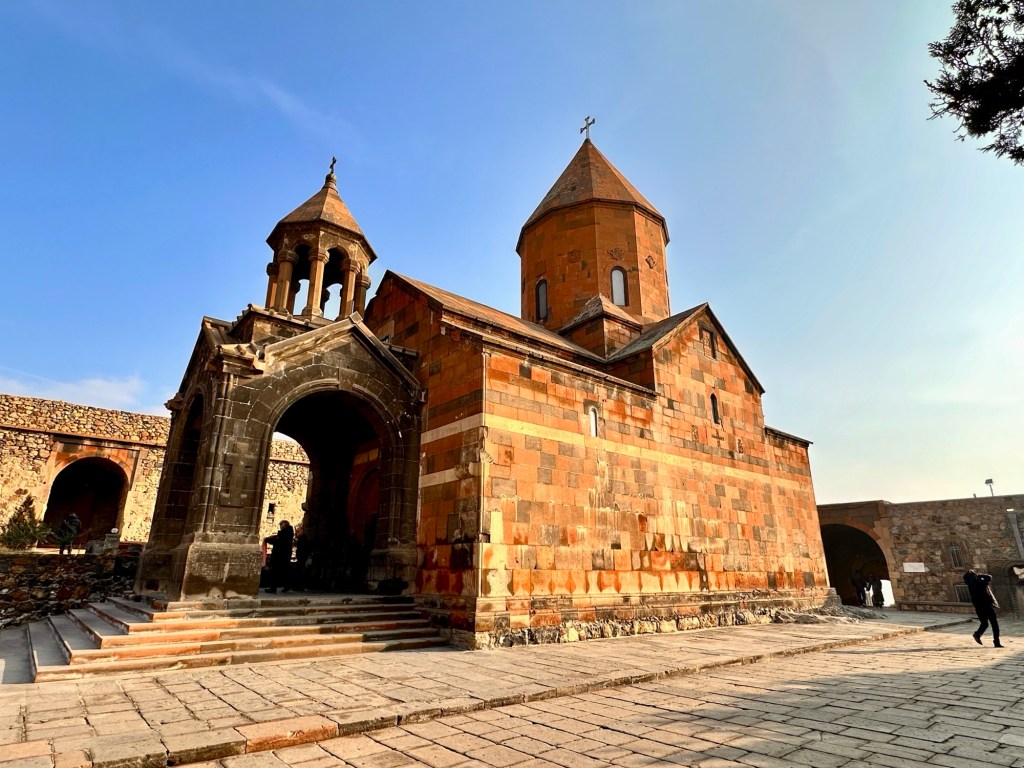
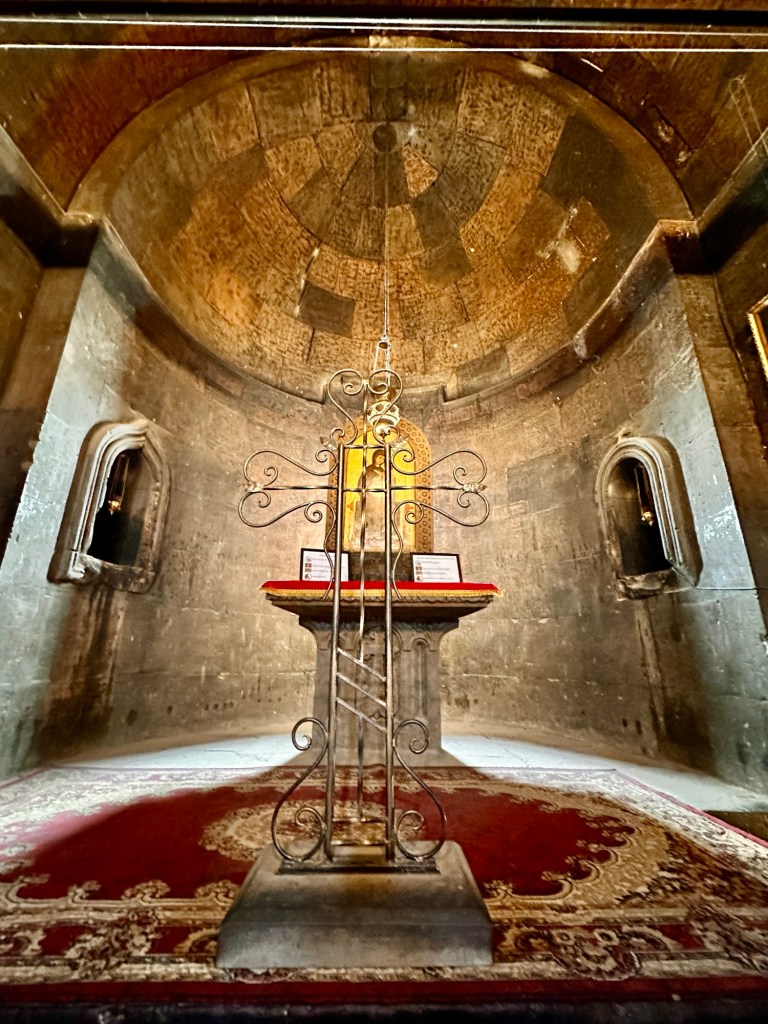
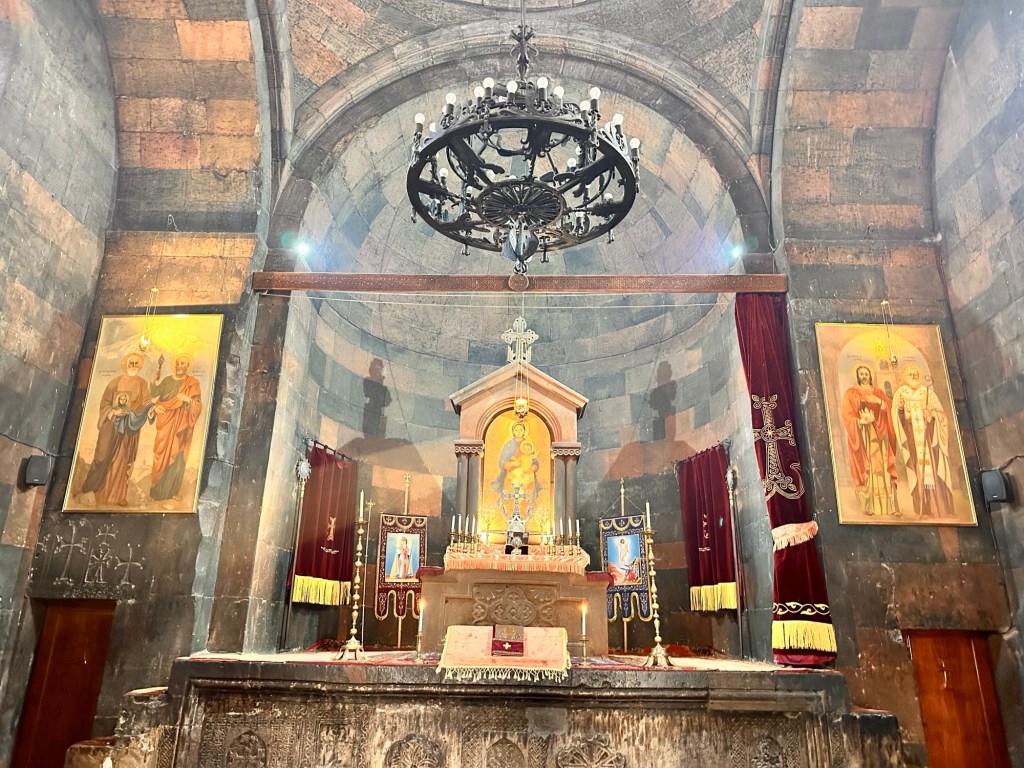
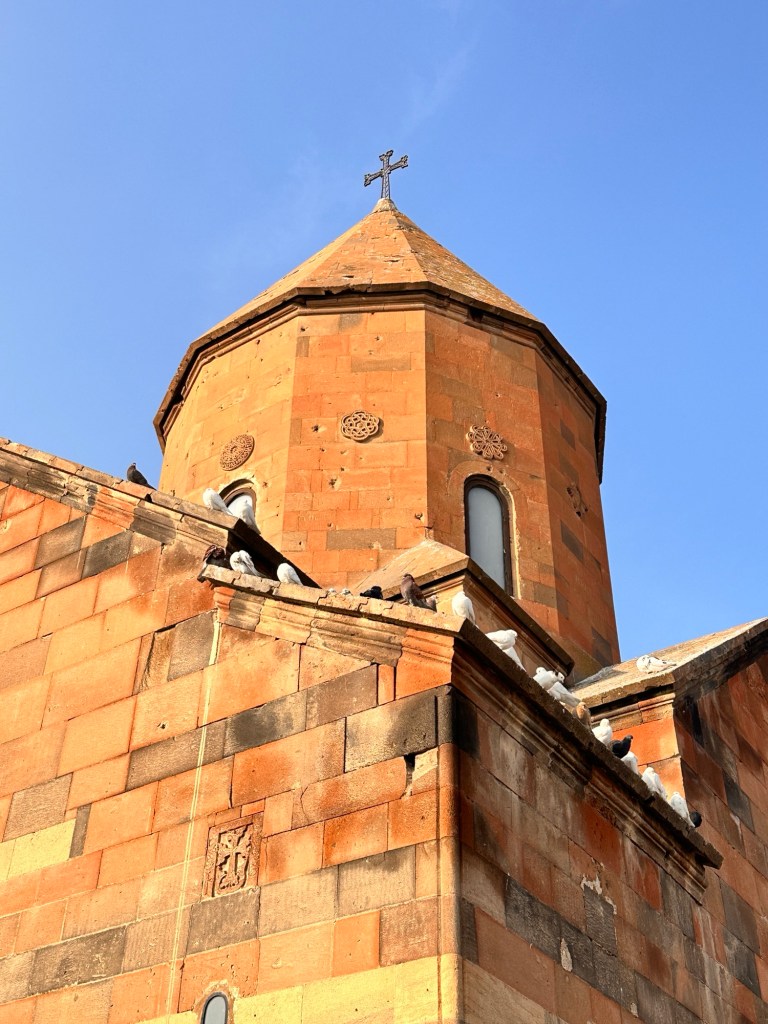
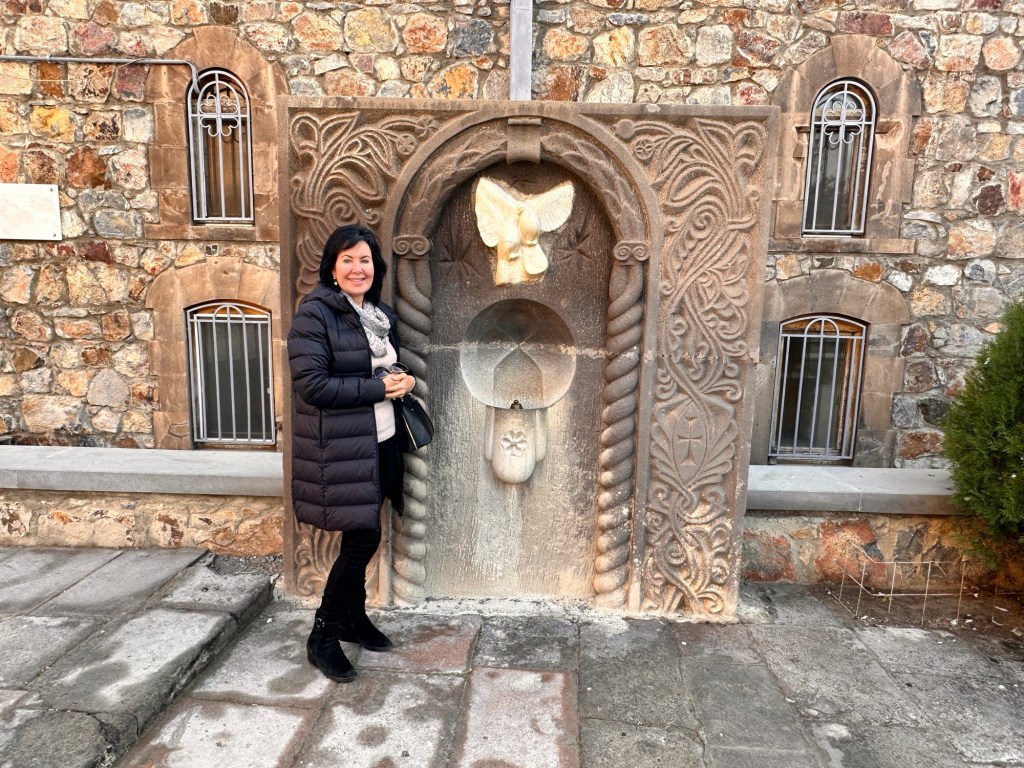
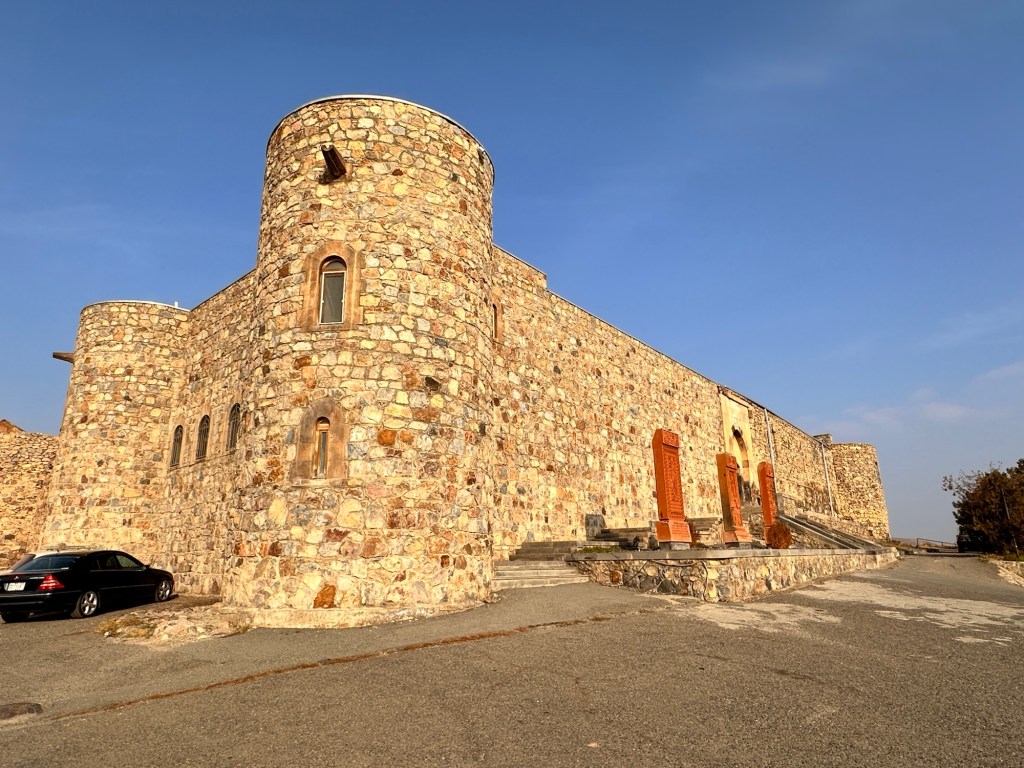
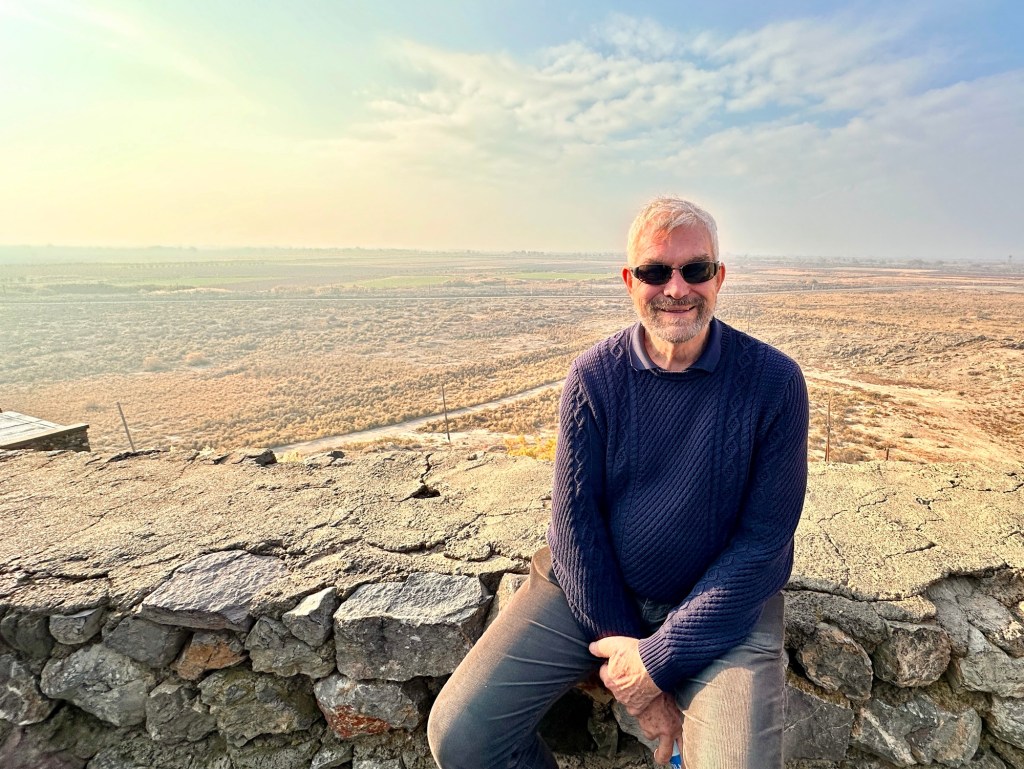
Here, if the skies are clear you can enjoy the spectacular view of the sacred Ararat Mountain, 5137 metres – unfortunately there seems to be a lot of smog, so we could only see a vague outline. Armenians believe
Mt Ararat is where Noah’s Ark, and his safari of animal mates, landed after the flood, and that Armenians are descendants of Hayk, Noah’s great-great-grandson. Yet Mt Ararat is over the border in Türkiye following the 1921 Treaty of Kars between Turkish leader Mustafa Kemal Atatürk and Vladimir Lenin, the latter of whom sheltered Armenians during the 1915-22 genocide, absorbing them into the USSR. To make matters worse, Mt Ararat isn’t even accessible to Armenians due to closed borders with Turkiye….and Mt Ararat has no spiritual reasonance with Turkiye as they are Muslims.
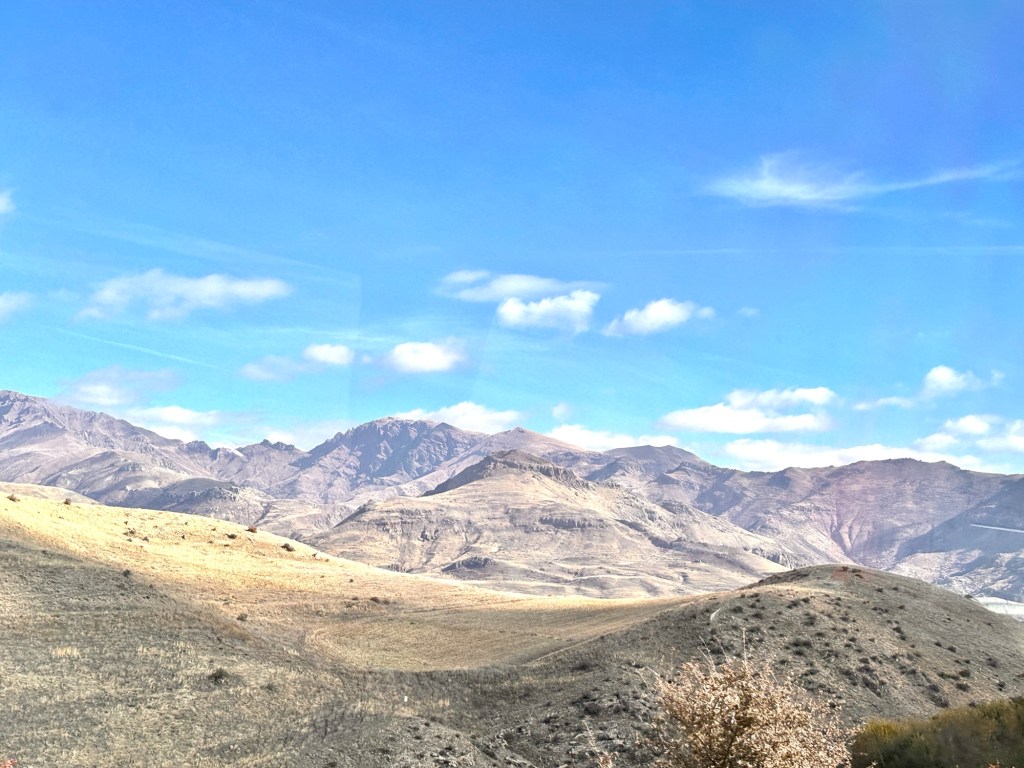
We drove through some changing landscape to Noravank – vineyards, many orchards with apricot and peach trees, shepherds herding their sheep and goats. Mountains either side. Bears are found here, and recently Caucasian leopards spotted here.
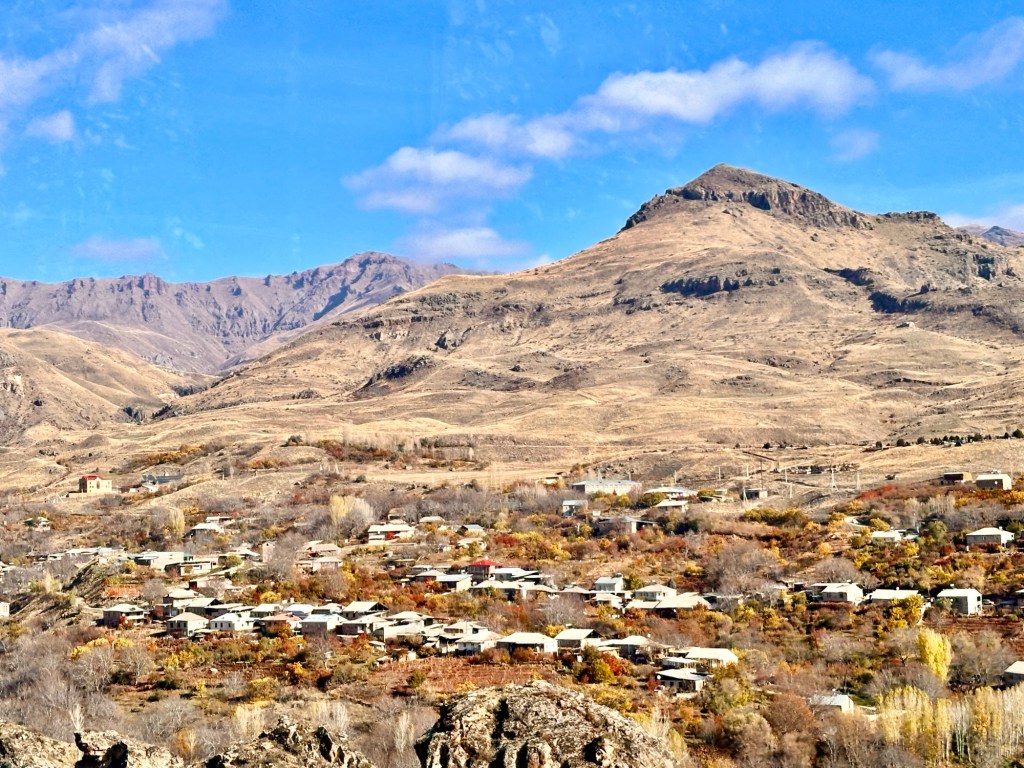
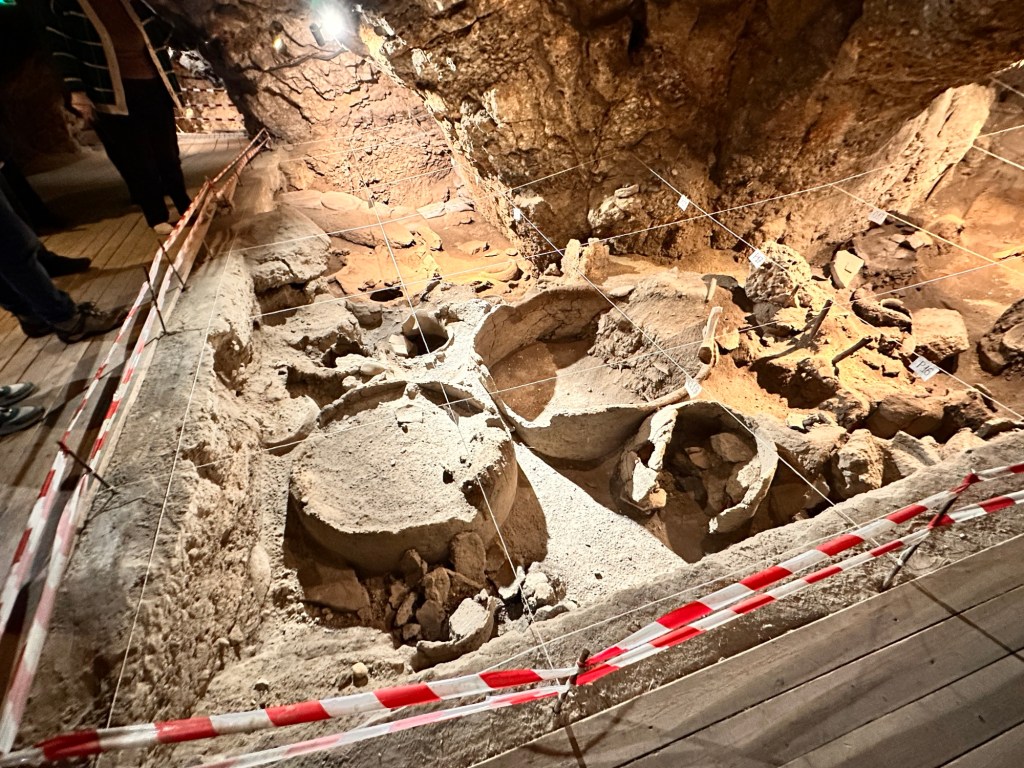
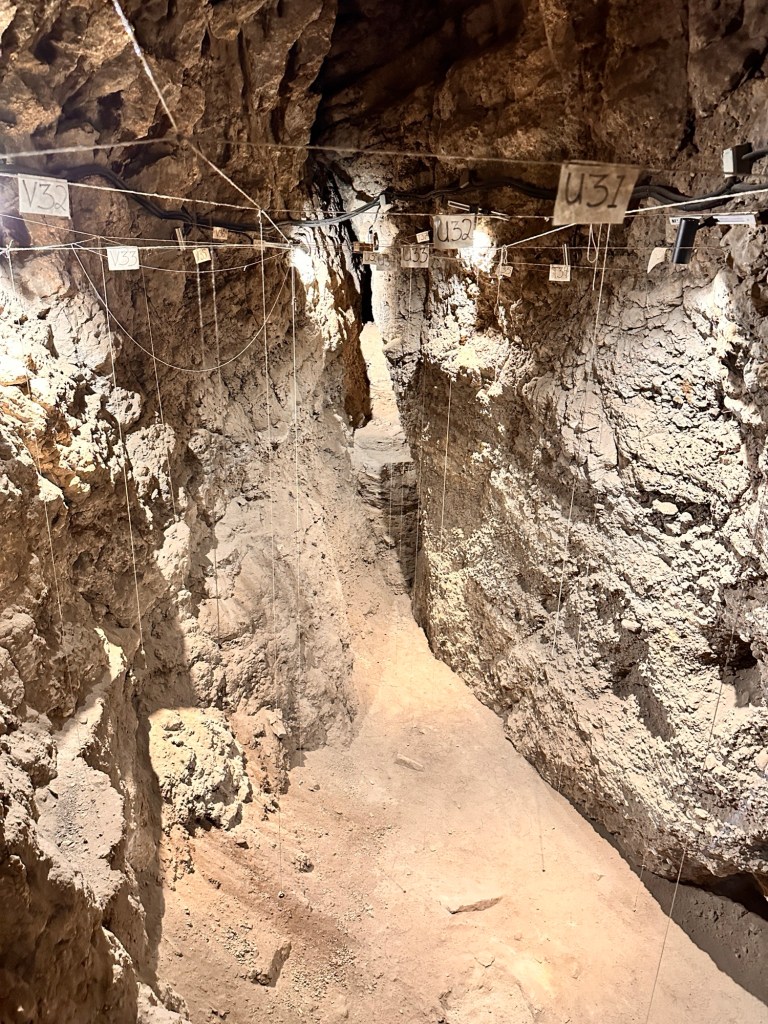
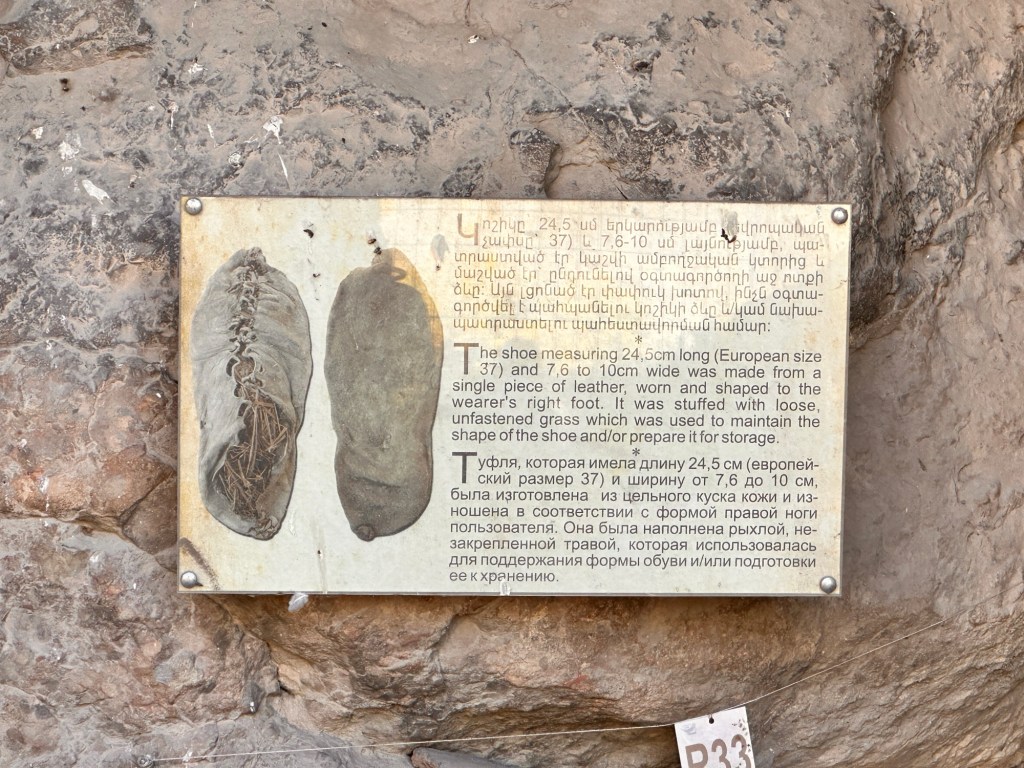
Next is Areni cave – a three chamber karst cave, appearing to have once been the site of the first winery in the world (6000 years old), and also a site for sacrifices. Since 2007, six trenches have been excavated – human skulls, metal knives, fruit seeds, grain residues, rope, dishes, clothing, dried grapes and plums, dated to 4200-3500 BC, were found in the cave. The oldest leather shoe of the world was also found here it is more than 5500 years old.
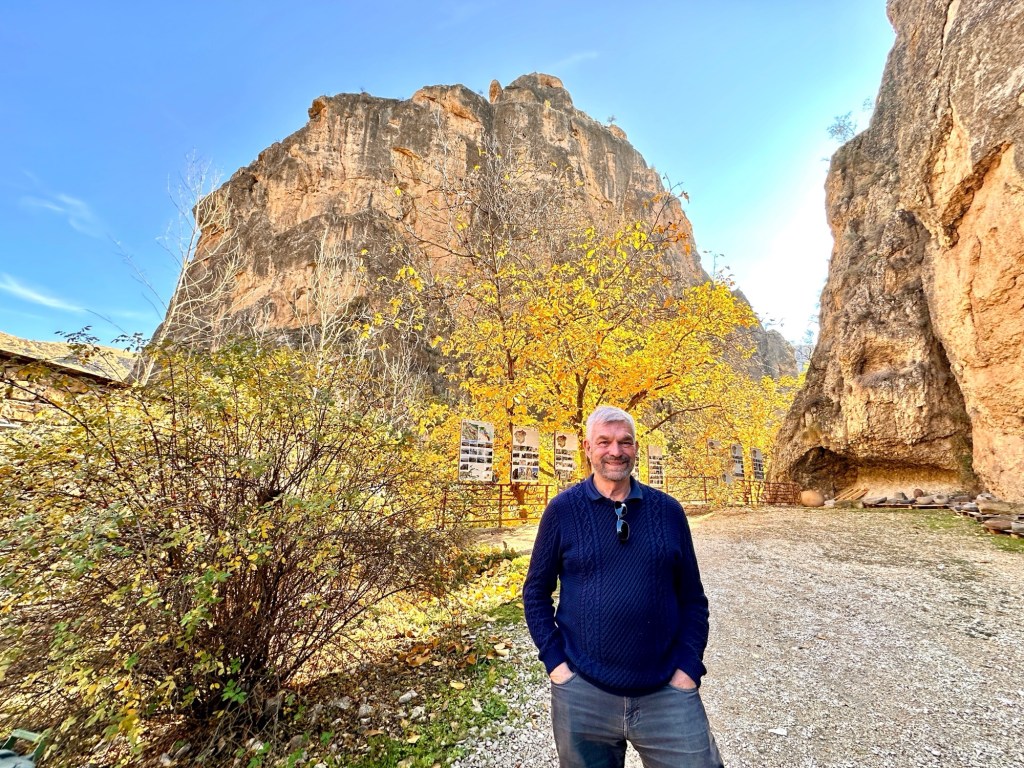
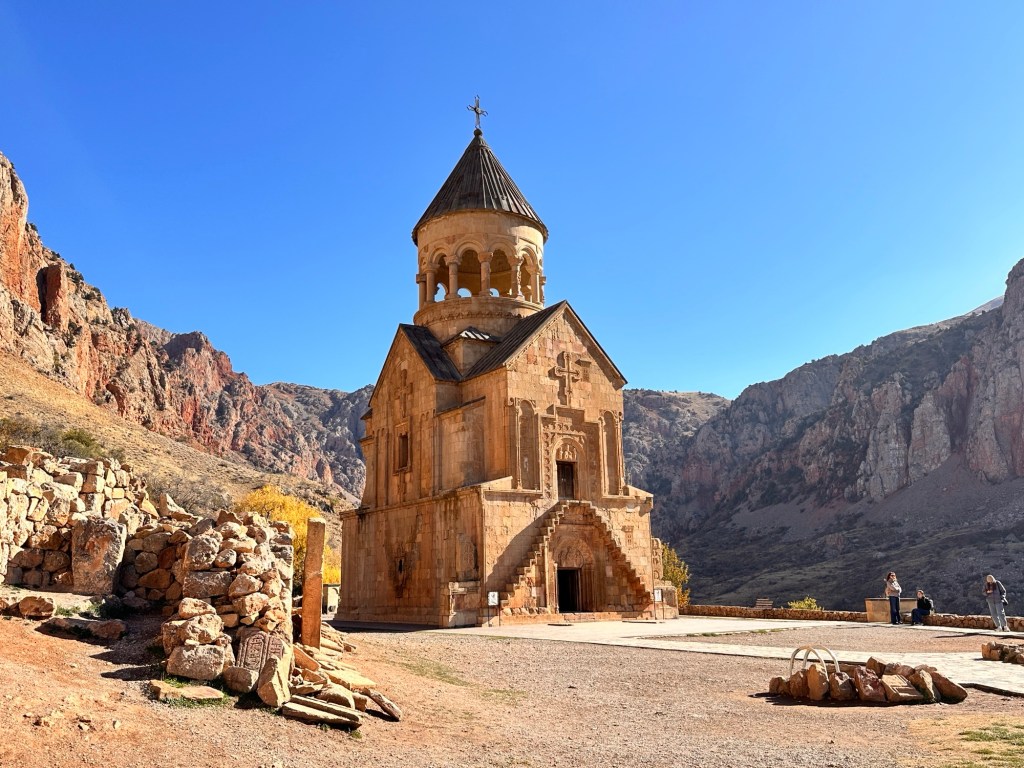
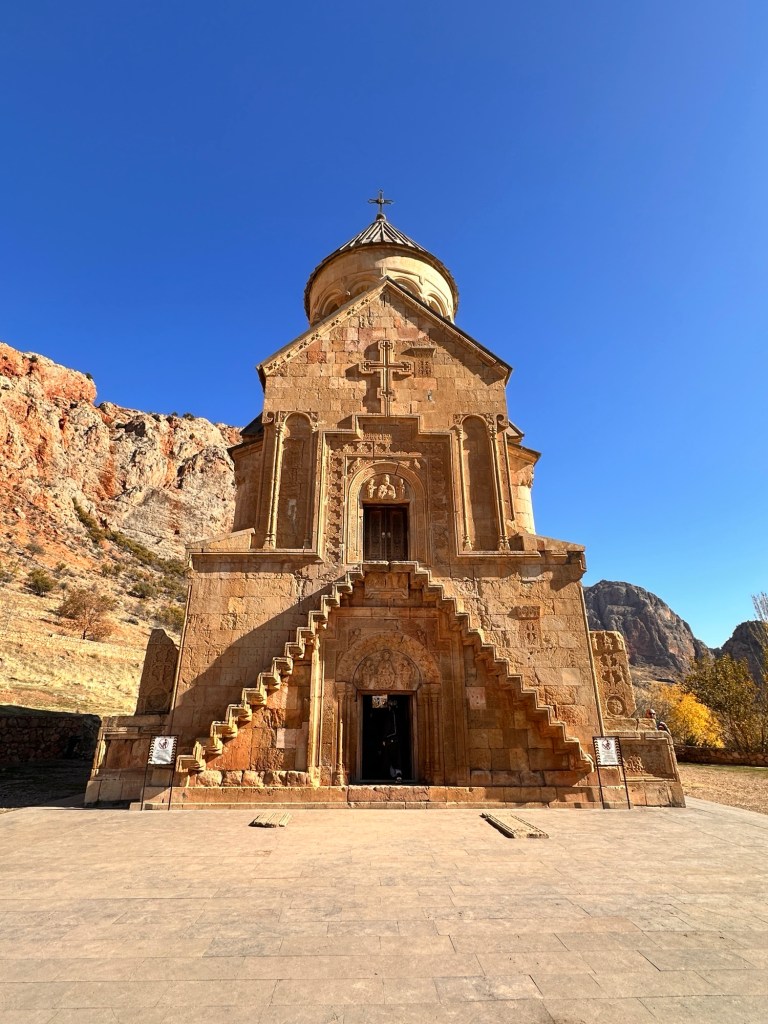
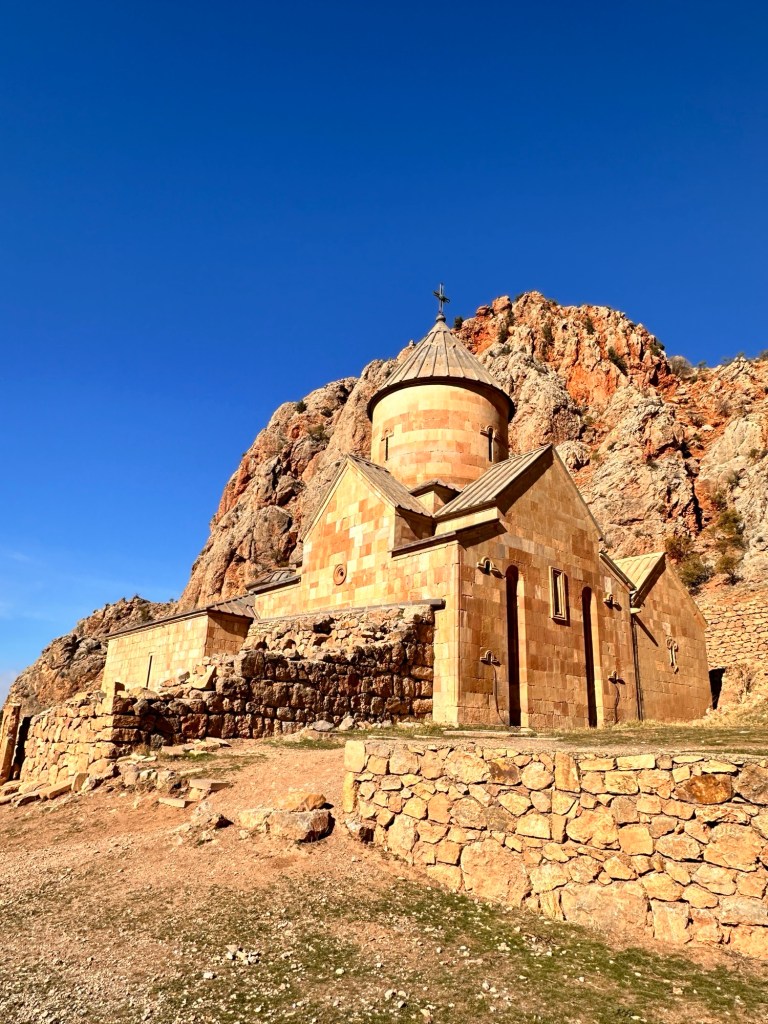
Onto Noravank, an Armenian monastery built 9- 13th century and nestled in a gorge by the Amaghu, amongst amazing sheer rocks on the twisted bends of the river. The monastery is best known for its two-storey Surb Astvatsatsin (Holy Mother of God) church, which grants access to the second floor by way of a narrow stone-made staircase jutting out from the face of the building.

Back to the Areni village which is considered to be an important centre of wine production industry and which has a history of more than 6000 years. Many families make their own wine here, and vendors sell it on the side of the road in coke bottles – to Iranians! Of course we had to do some wine tasting – fruit wines as well as grape wines, fruit brandy and vodka. Just in time before our drive back to Yerevan – time for a little snooze!
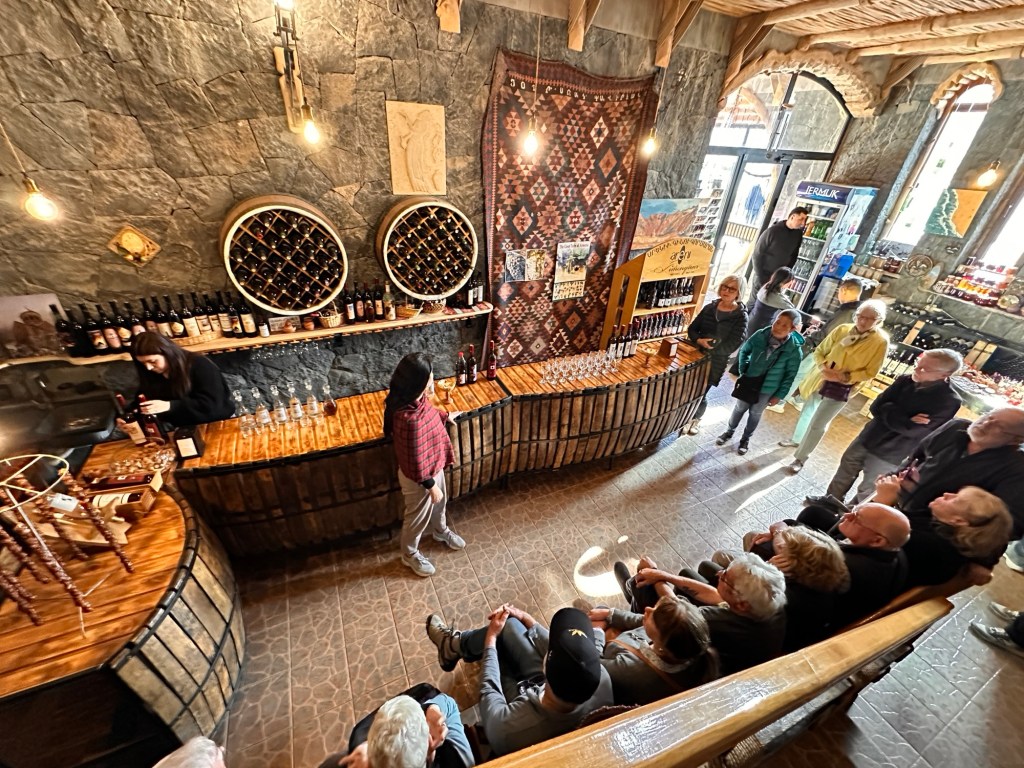
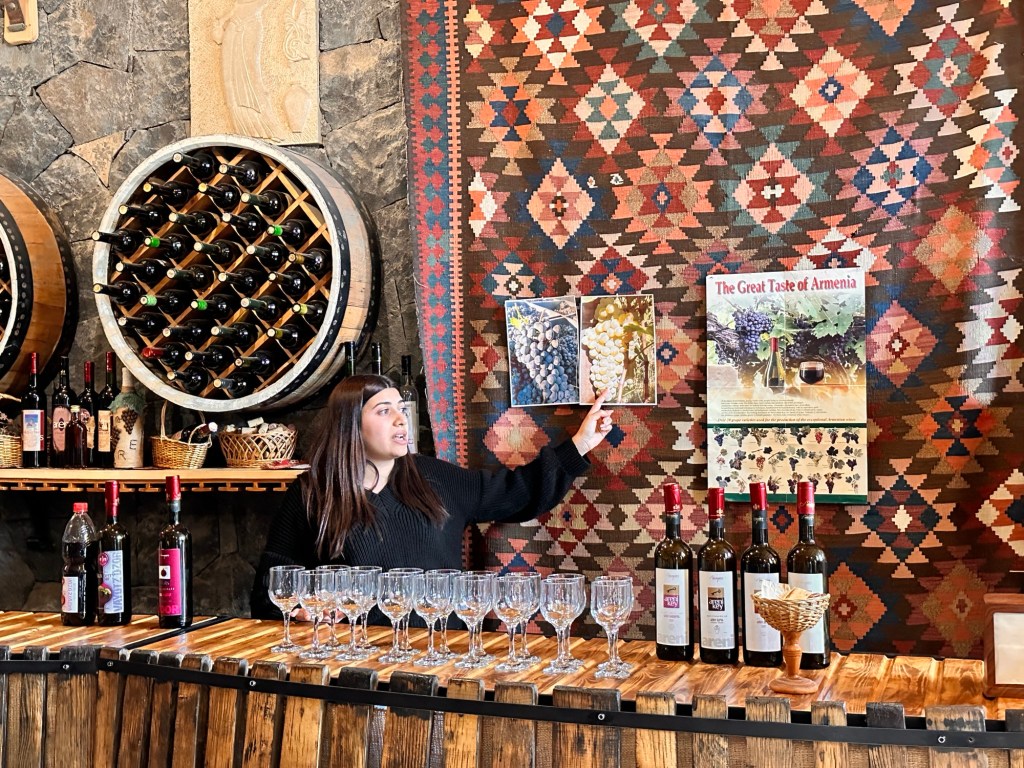
Back to Yerevan, and time to look through the handicraft markets – such a great assortment of local arts and crafts on sale. I was very contained and managed to enjoy the products without purchasing – only because I have limited luggage space! Walked back to the hotel, stopping at the large supermarket- wow! It is huge , with every conceivable thing you could ever wish for!
A nice drink with a few of the group back at the hotel, before heading out to the Yerevan Tavern to try their famous bbq. Very nice. We are going to miss the delicious food at such reasonable prices.
Day 23
Friday 15th November 2024
Yerevan
0-11 degrees
Our last day… and a free day! I admit we didn’t set the alarm so ended up having a bit of a lie in. And then breakfast!
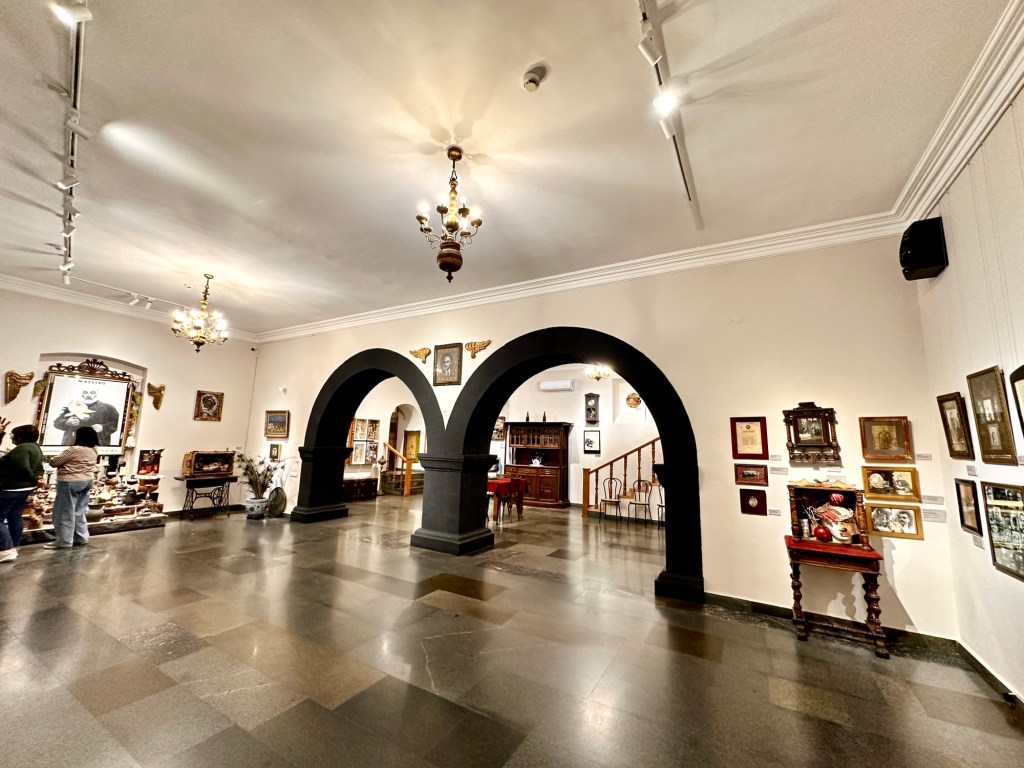
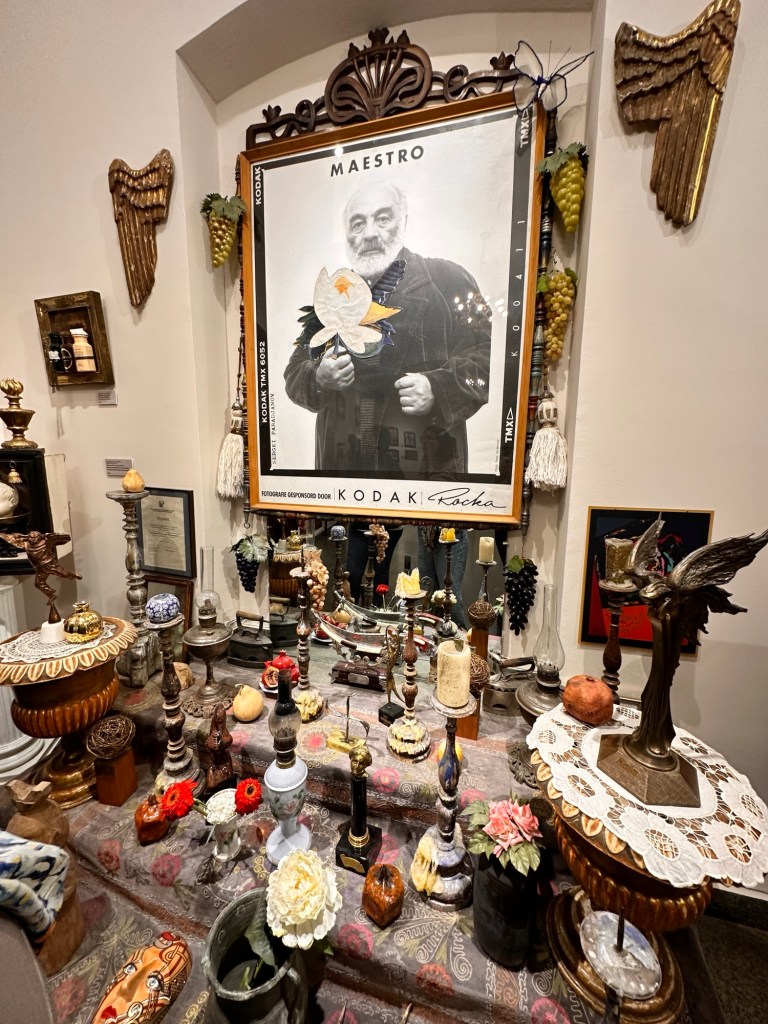
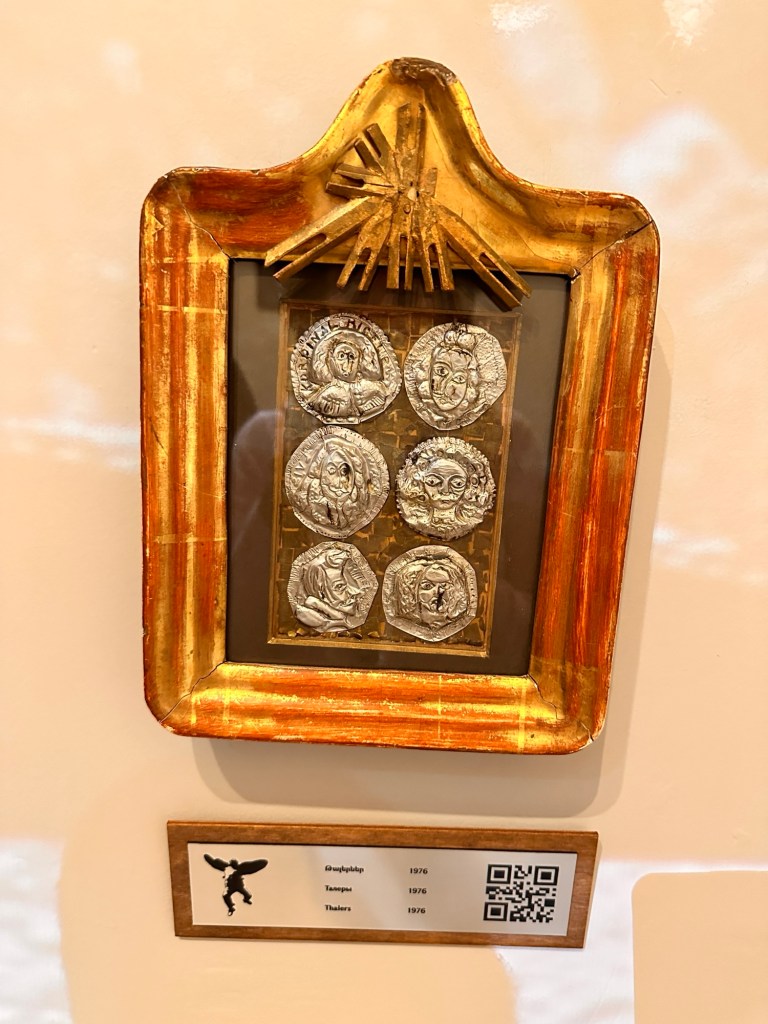
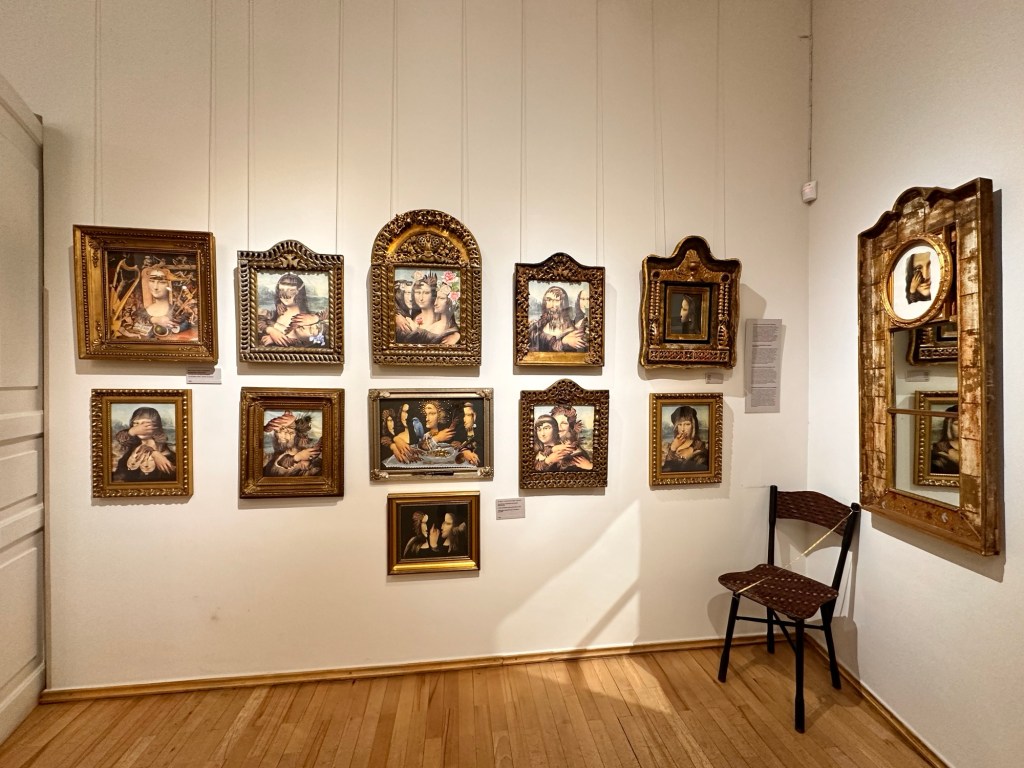
Up and about, and a visit to the Sergio Parajanov Myseum, the quirky museum. The museum showcases artwork by the filmmaker best known for his bizarre 1969 film “The Colour of Pomegranates”. Born in 1924 in Tiblisi, Sergio moved to Moscow in 1945 to study filmmaking. He ended up in a Siberian jail, where he used his fingernails to make faces in aluminium milk bottle tops – we saw them, amazing! A man of many talents. The museum contained many of his collage works – we found it fascinating.
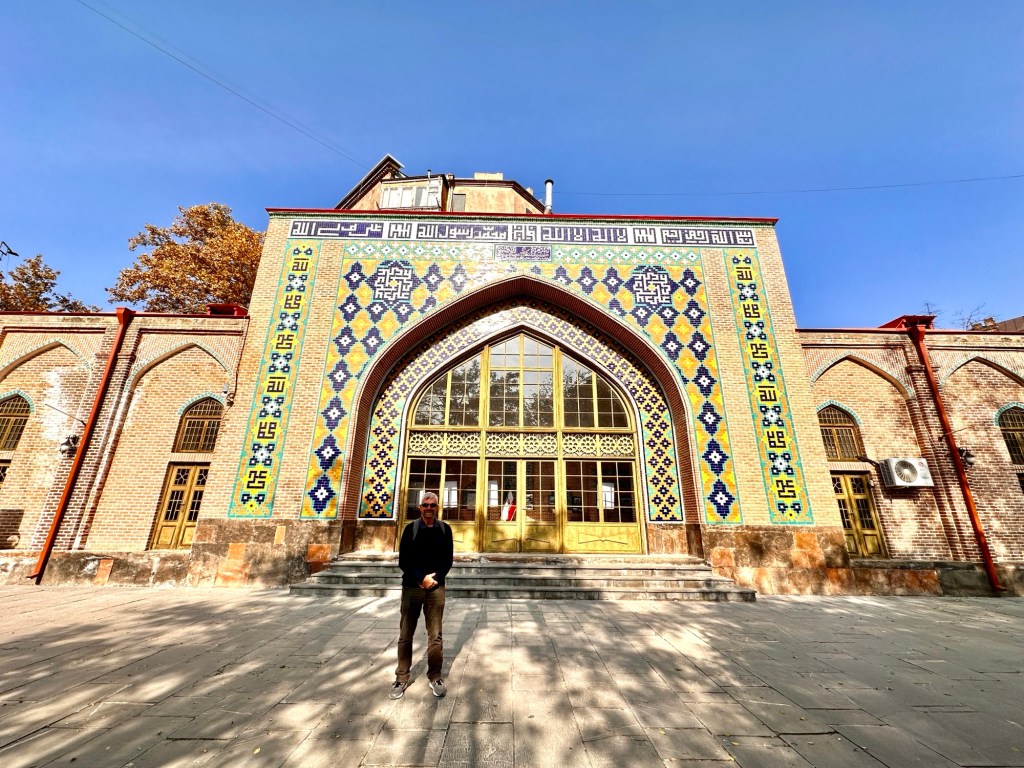
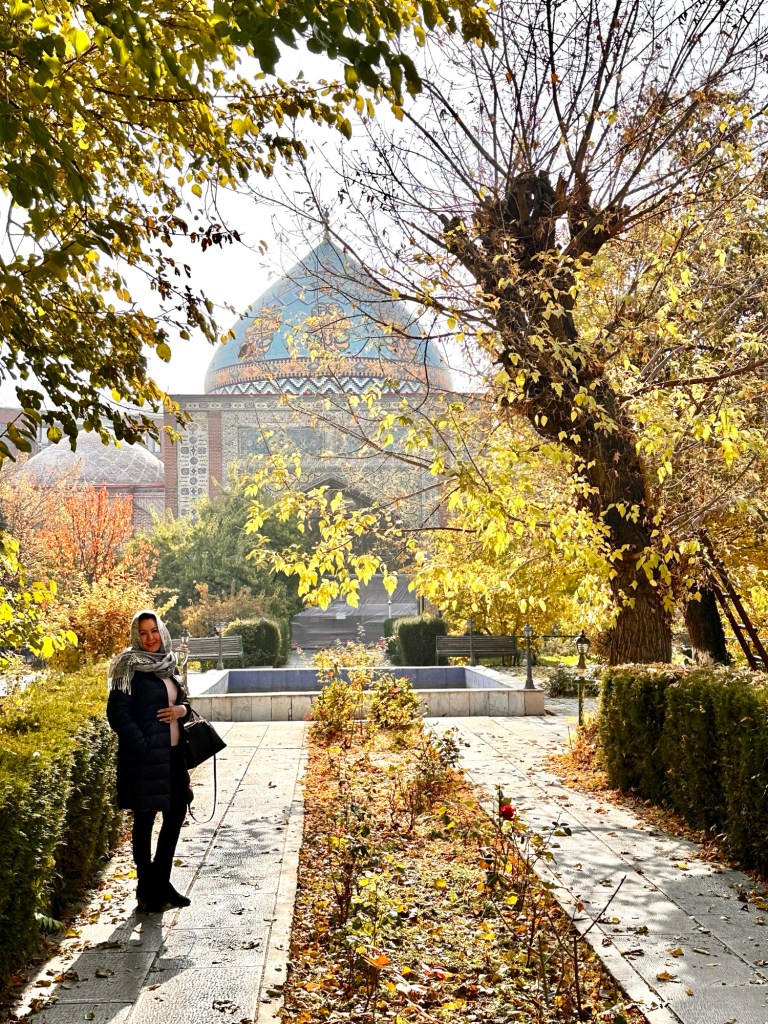
The Blue Mosque was next on our agenda. This Mosque is an 18th-century Persian Shia mosque in Yerevan, and is one of the oldest structures in central Yerevan, and the most significant structure from the city’s Iranian period. Quite lovely, but not a patch on other mosques we have seen. Met a lovely Iranian lady there who gave us some nice information regarding the history.
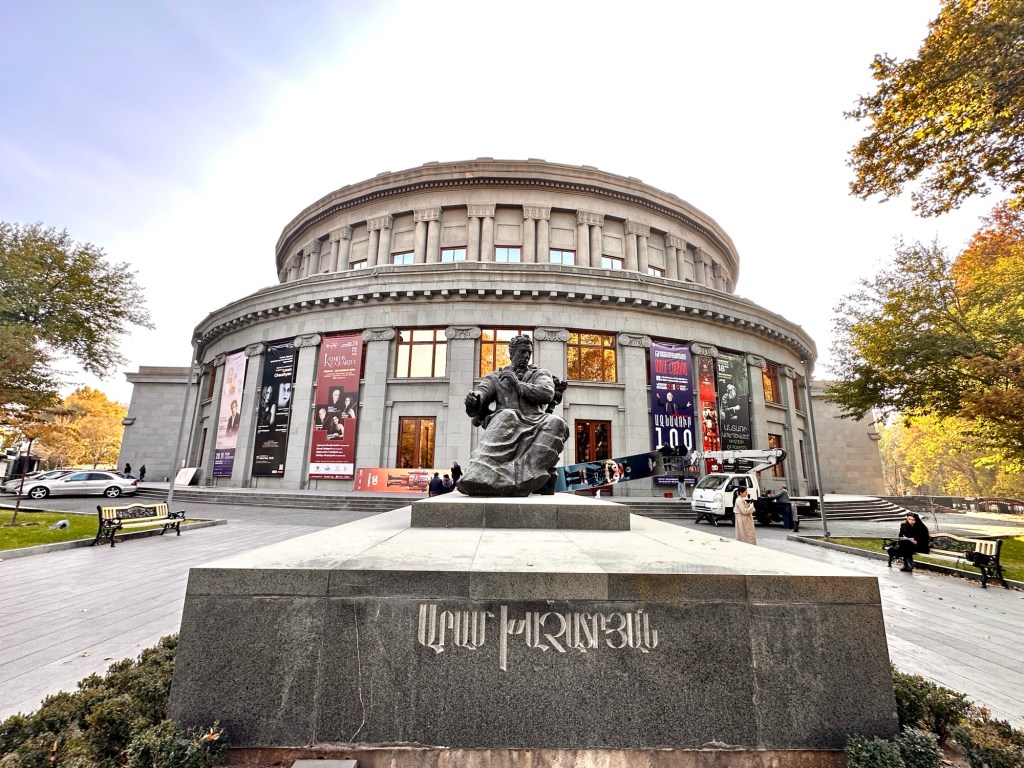
We then walked to the Opera and Ballet Theatre (stunning building ) and the Puppet Theatre. Couldn’t go into the Opera building as there was a performance happening. We could see all the way up to the Cascade from the Opera Building.
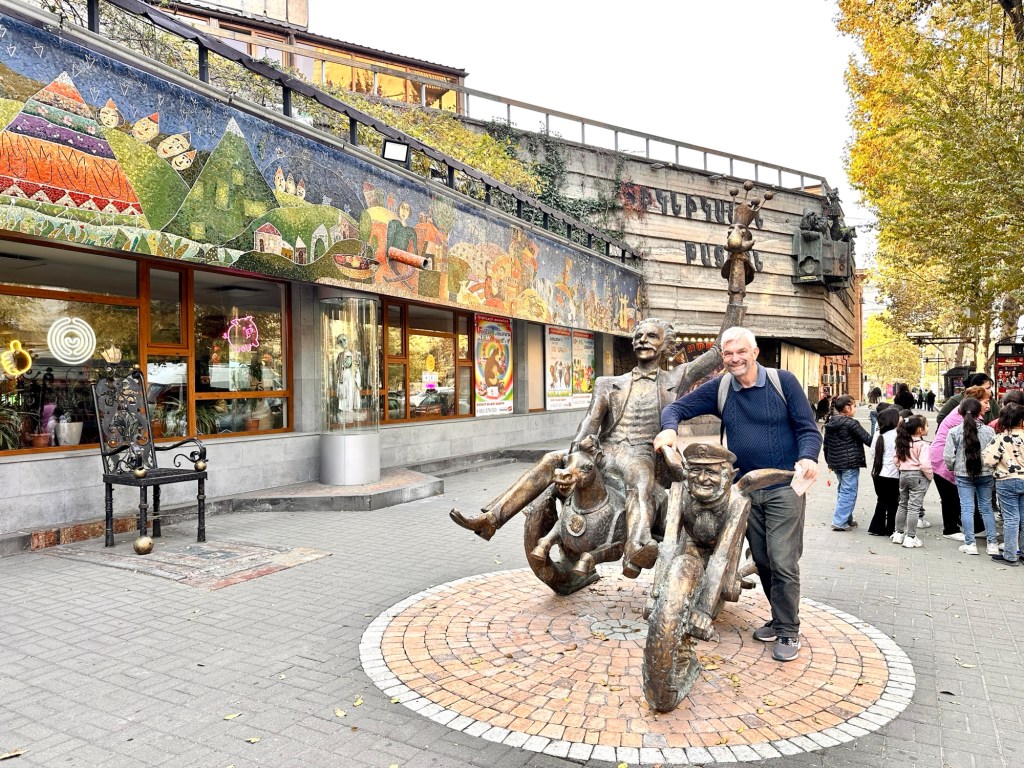
In between these attractions, we did stop at numerous shoe shops as I was looking to replace my “cold countries boots”. Twenty shops later, I did buy a pair of boots – from the first shop I looked at! Lucky Frank is so patient!
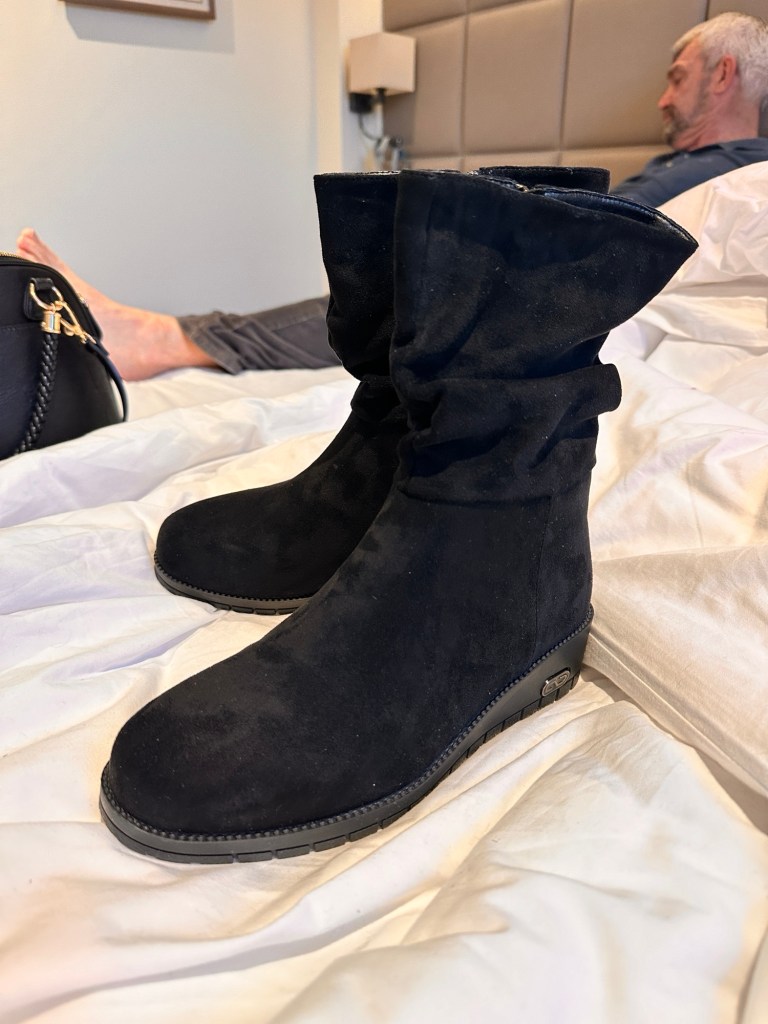
Back to the hotel, a quick change in time for a drink, and then our last dinner together. We had booked the restaurant next door again – a lovely dinner/evening with humorous awards for all our travellers. Everyone seemed to have a good time.
Back to our room, to pack our bags. Hopefully we will make our baggage restrictions.
Day 24/25
Saturday 16th November 2024
Yerevan to Brisbane
All good things must come to an end! 9am pick up to go to the airport, and a 1230 flight to Dubai (3 hours). Thankfully we had no trouble checking in our new rug – we were up to a total of 57kgs with our combined checkin weight – even had room to spare!
At Dubai, we had booked to stay for 12 hours at Dubai International Hotel before our flight to Brisbane. A bit on the expensive side ($500), but the five hours sleep was well worth it.
Next leg… Dubai to Brisbane… no surprise upgrades this time! But there were plenty of spare seats, so we managed to spread out a little bit. It was quite a pleasant 14 hours in there… considering! A bit of congestion at Brisbane Airport when we got there as several planes had been diverted from Sydney due to lightning strikes. Arrived at our home at midnight – just in time to get one load of washing down (yay!), and to wish Frank a happy birthday (18th). Our own bed was looking very inviting after all that flying.
Fantastic trip- loved the history, the scenery and the food. Totally recommend visiting the Caucasus.
 Glammy Goes Global