
Day 23
Wednesday 11th June
Aberdeen to Newby Bridge , Lakes District
9- 23 degrees, sunny
Long driving day today. Over 500 kms. I think a little too ambitious! We left Aberdeen, stopped at Auchterarder for coffee, then a late snack lunch at Housesteads where we made a visit to Hadrian’s Wall and the fort.
And all of a sudden – it seemed like it happened when we crossed the Scotland/England border – it became summer! A real summer!
More stunning scenery- the fifty shades of green I’ve become accustomed to, huge oak, beech , maple and other trees, more stone walls, and thousands of sheep and their lambs. No Highland cows though!
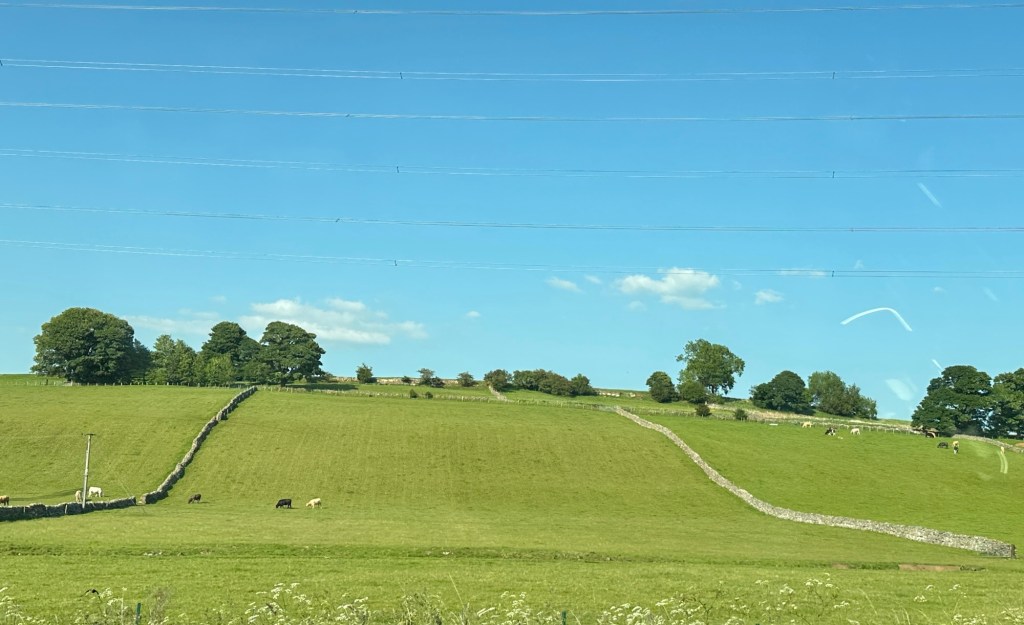
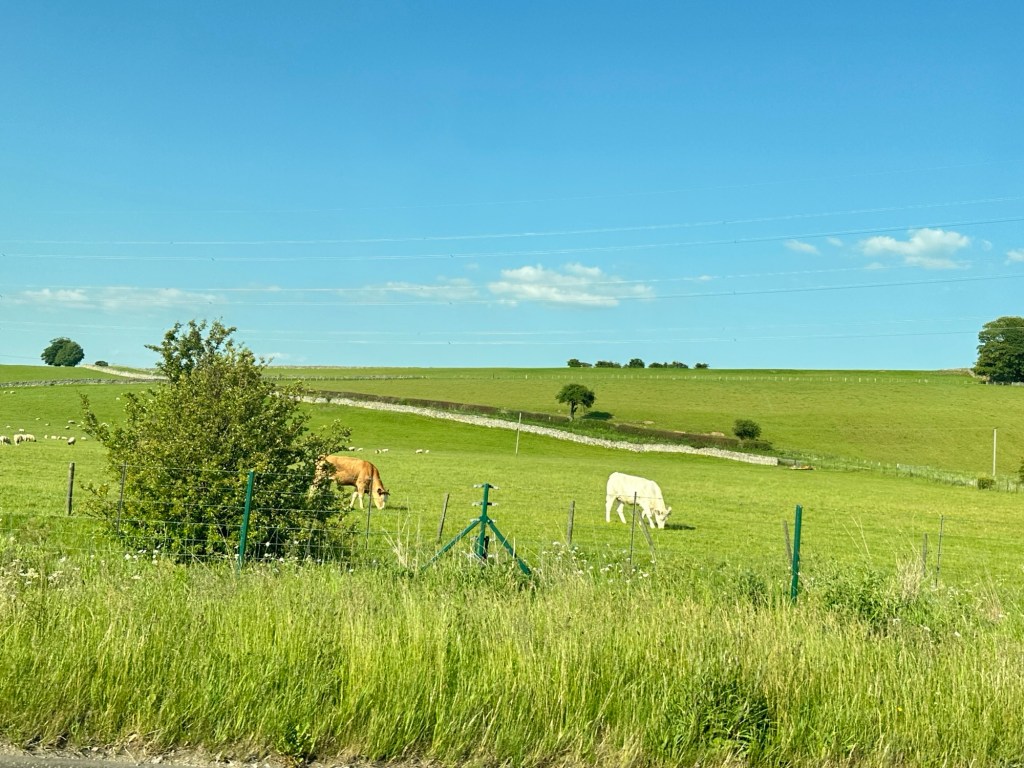
Hadrian’s Wall is a former defensive fortification of the Roman province of Britannia, begun in AD 122 in the reign of the Emperor Hadrian. The wall is 73 miles (117kms) stretching coast to coast across northern England, from Wallsend, Newcastle upon Tyne in the east to Bowness-on-Solway on the west coast. The stone walls were 8-10 feet wide, and a watch tower turret was built every third of a mile. We went for a short walk along the wall. You can actually walk on a path beside the wall for its entire length.
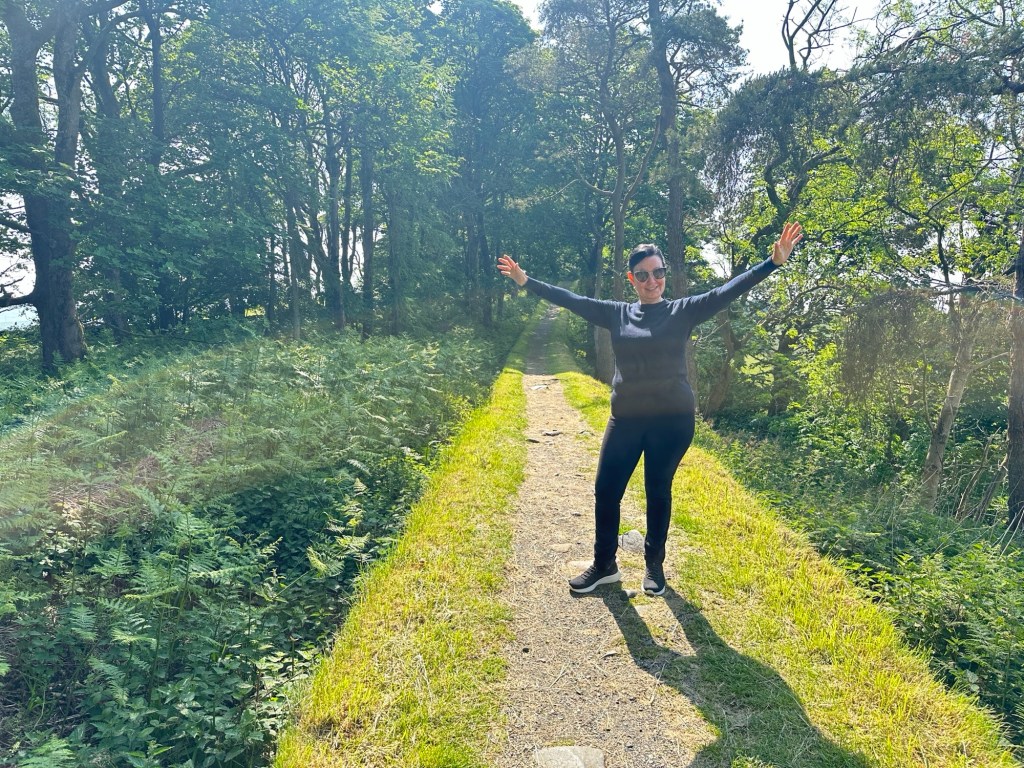


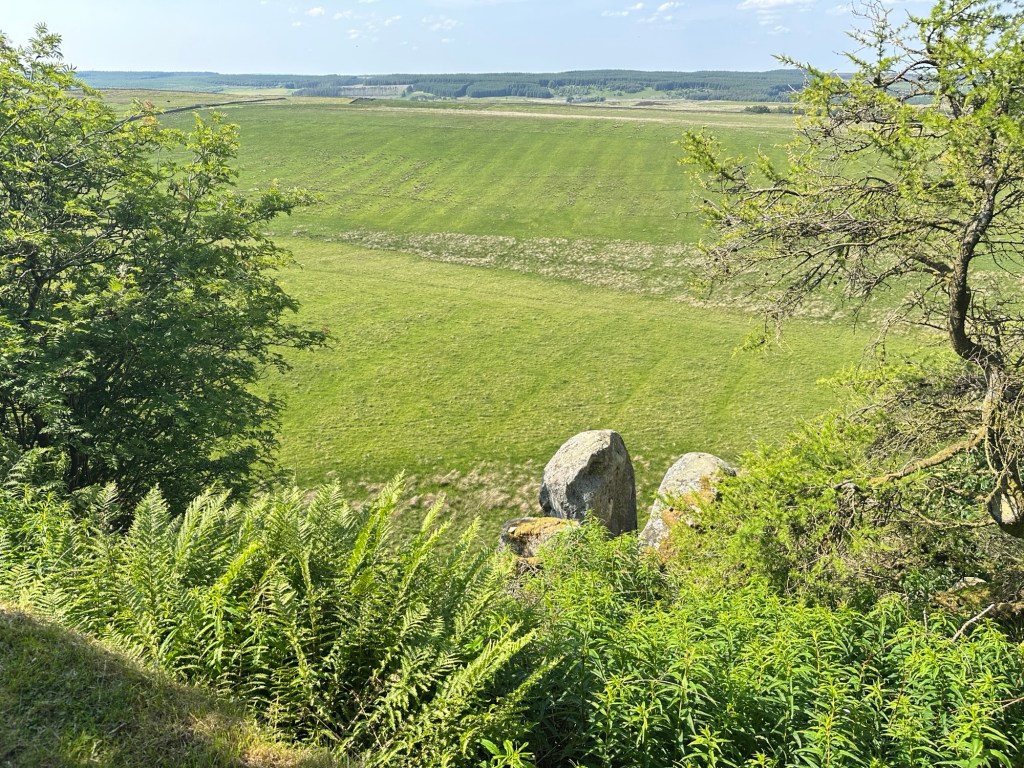
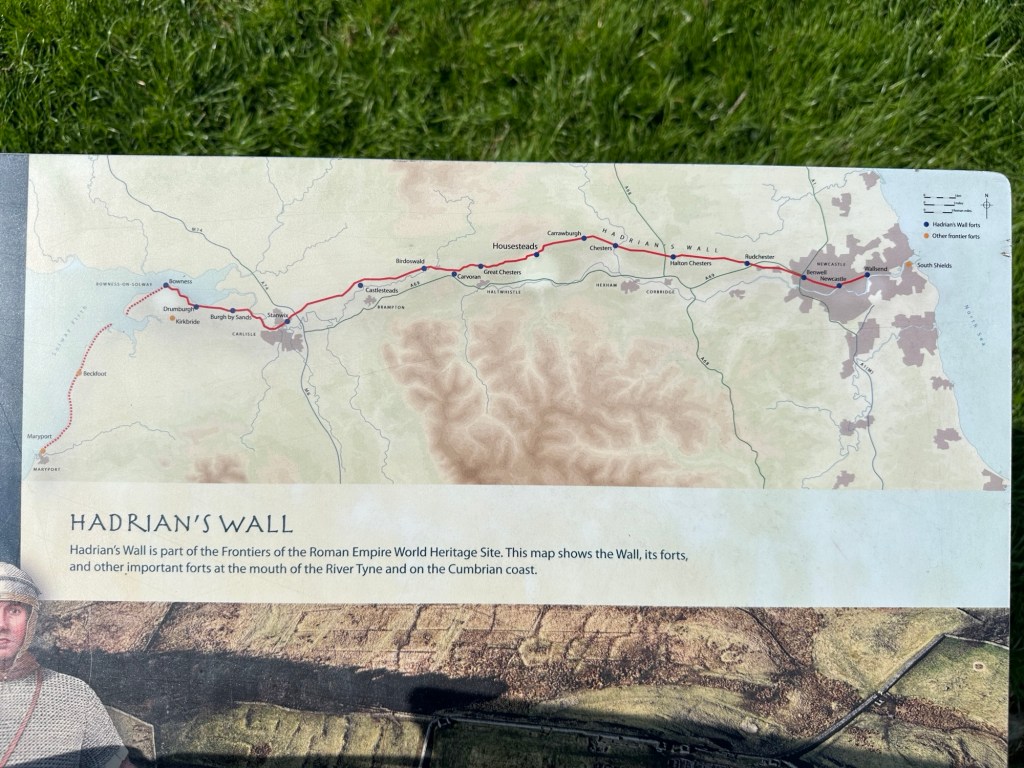
Housesteads was known as Vercovicium to the Romans. The fort is the best preserved of all 16 forts on the Roman frontier of Hadrian’s Wall. It clings to a dramatic hilltop location in a wild upland landscape that was once the edge of the Roman Empire. The fort was begun around AD 124 and occupied for about 280 years by up to 800 auxiliary soldiers.
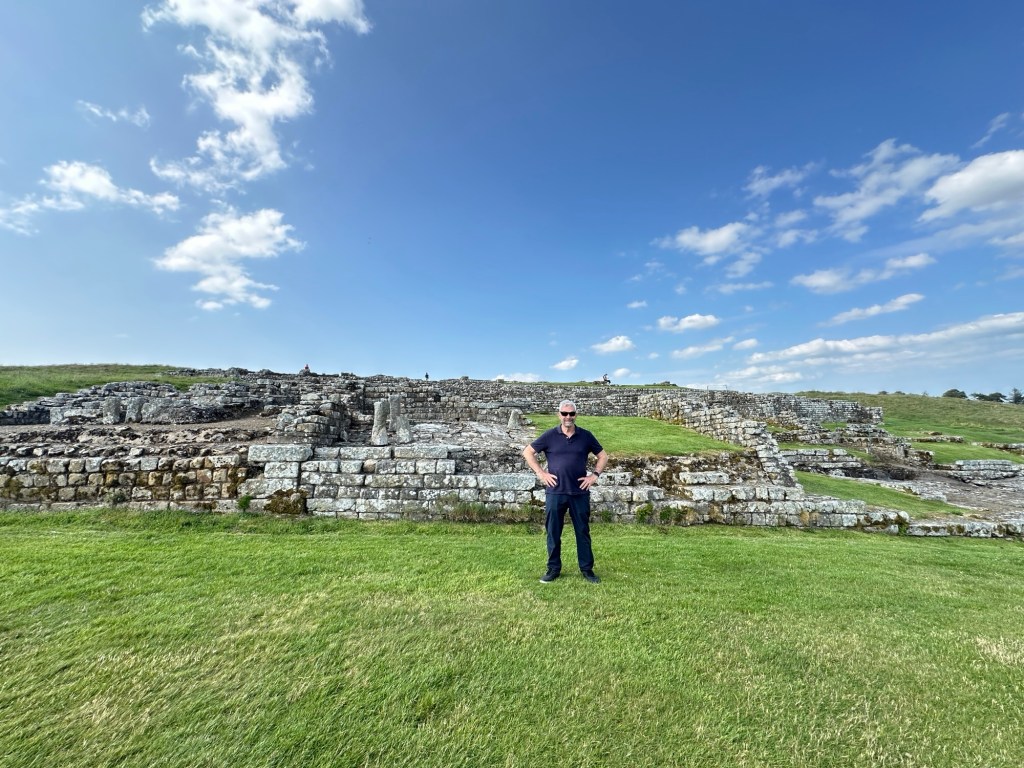
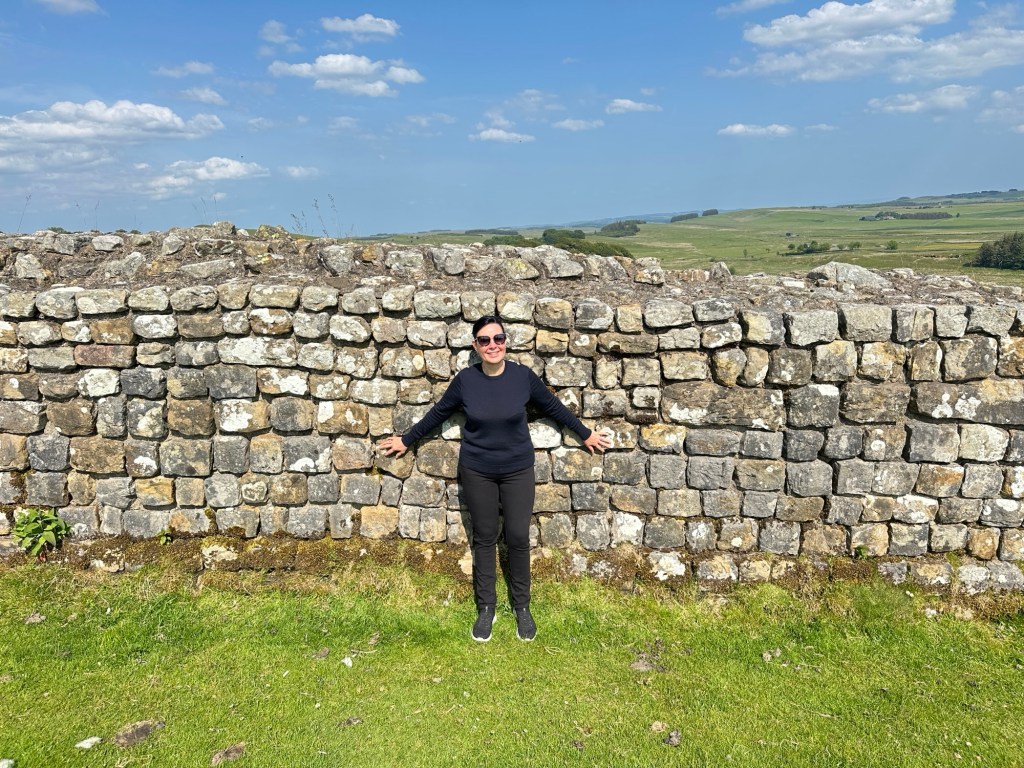
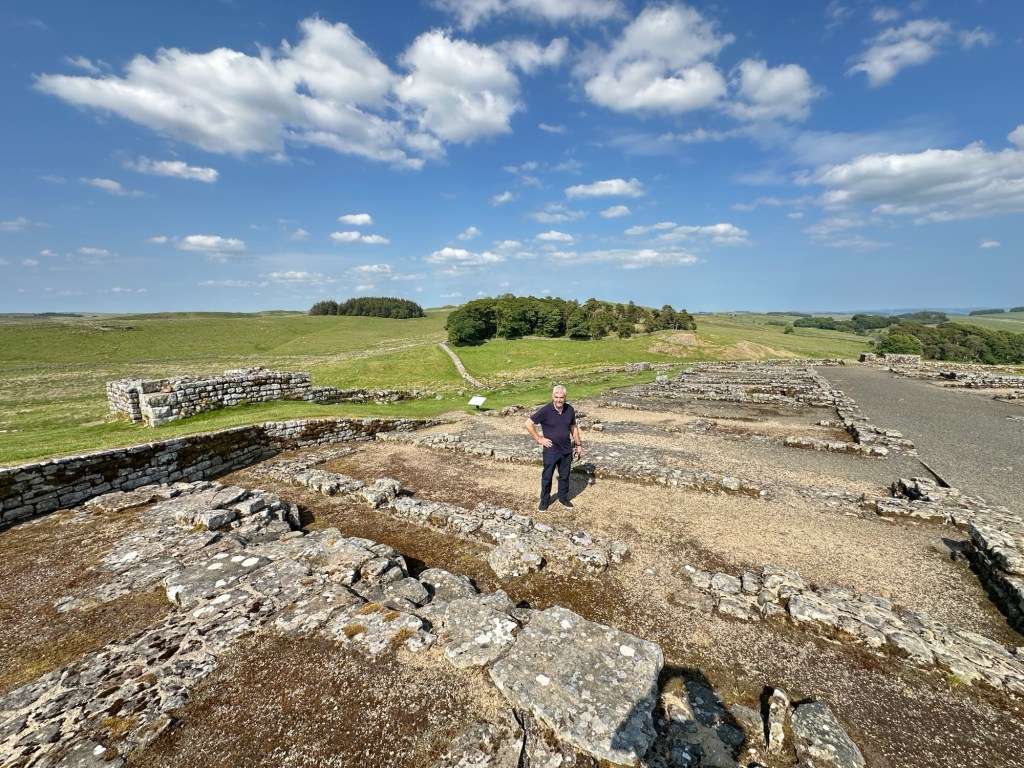

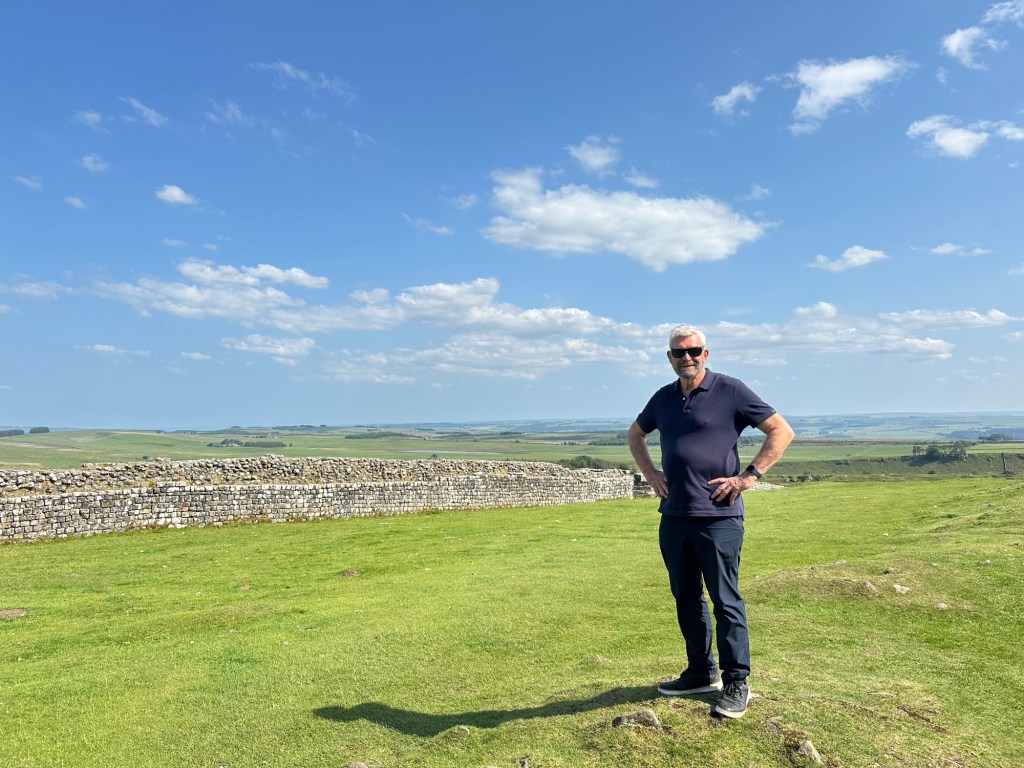

For much of this time there was also a vicus, a civilian settlement clustered on the hillside outside the fort, which helped to meet the everyday needs of the soldiers. It contained houses, shops, inns and temples and an extensive system of fields for growing produce and for pasturing animals. The remains of this once-thriving Roman landscape are fascinating to explore. I can’t believe they built all this almost 2000 years ago. They even had latrines and drainage back then! These sites are UNESCO World Heritage Sites.
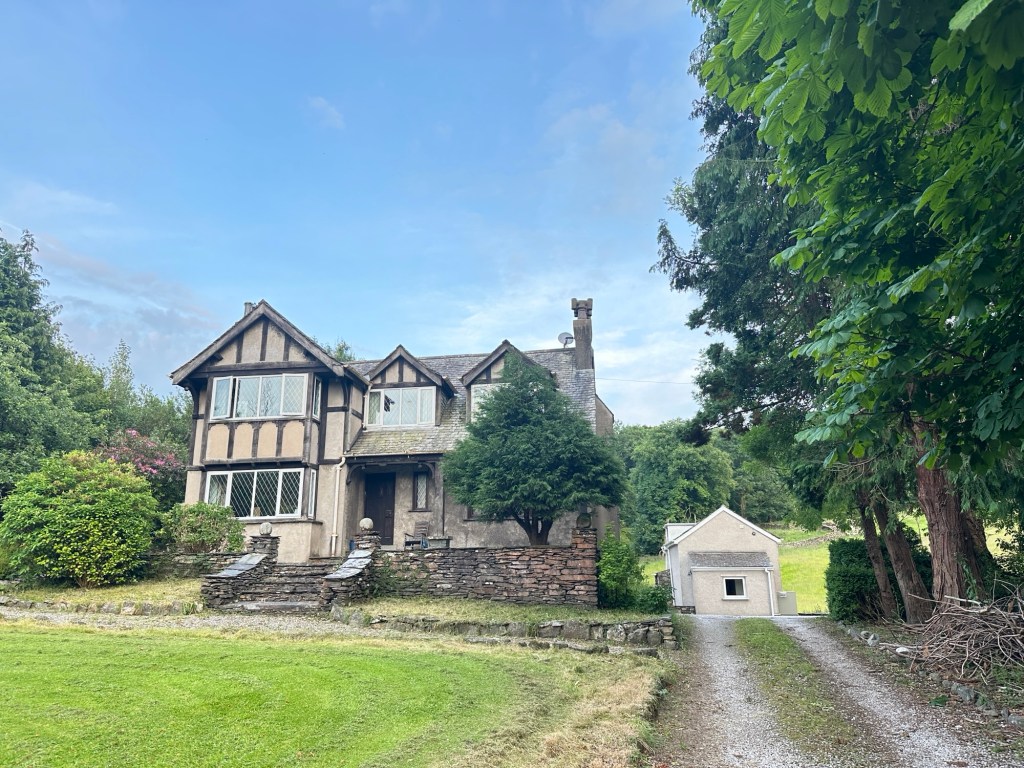
Back in the car, and 90 minutes later we finally get to our AirBnB at Newby Bridge, near Ulverston in the Lakes District. Tonight we are staying in a quaint little cottage, which is next to a Tudor style house built in 1920 set on a large estate.
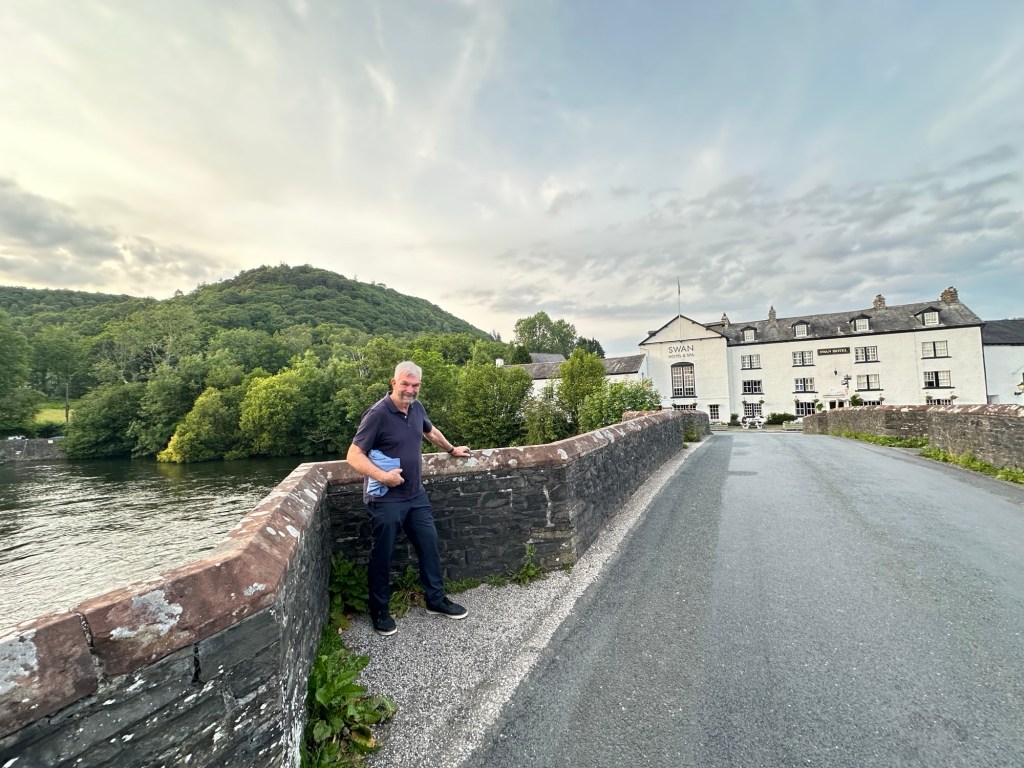
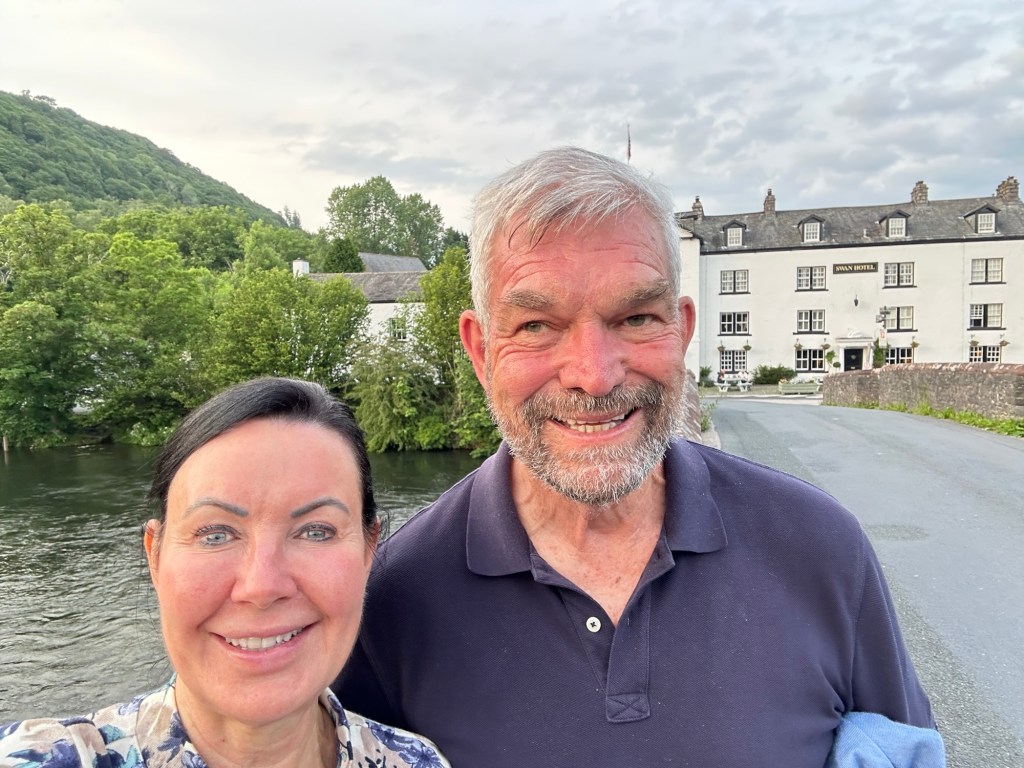
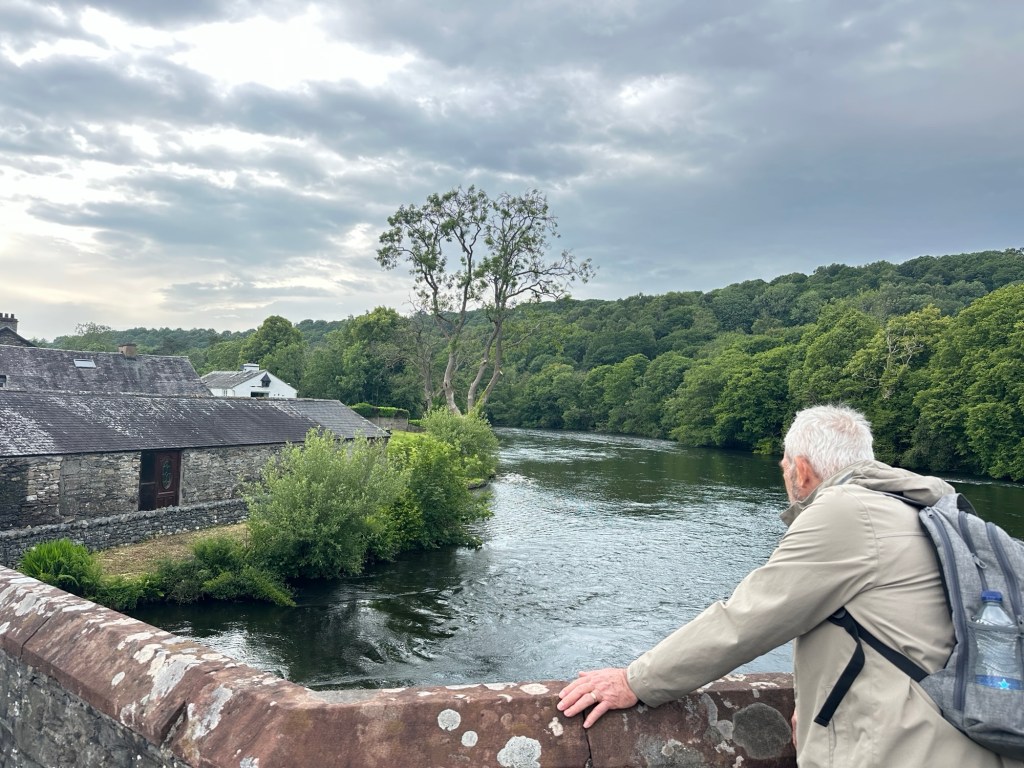
It was after 7pm when we finally unpacked the car, so we headed across the road (taking our lives into our hands doing so), to the Swan Hotel for dinner – it is situated at the southern end of Lake Windermere. They were very busy there, but we ended up having a very nice meal looking out at the lake, and bridge. The lake runs into a river here, dropping 138 feet over 7 miles. We got back to our cottage, just as the sun was starting to go down at 9.45pm – sunset is a bit earlier here!
Day 24
Thursday 12th June
Newby Bridge, The Lakes District
12-21 degrees, fine
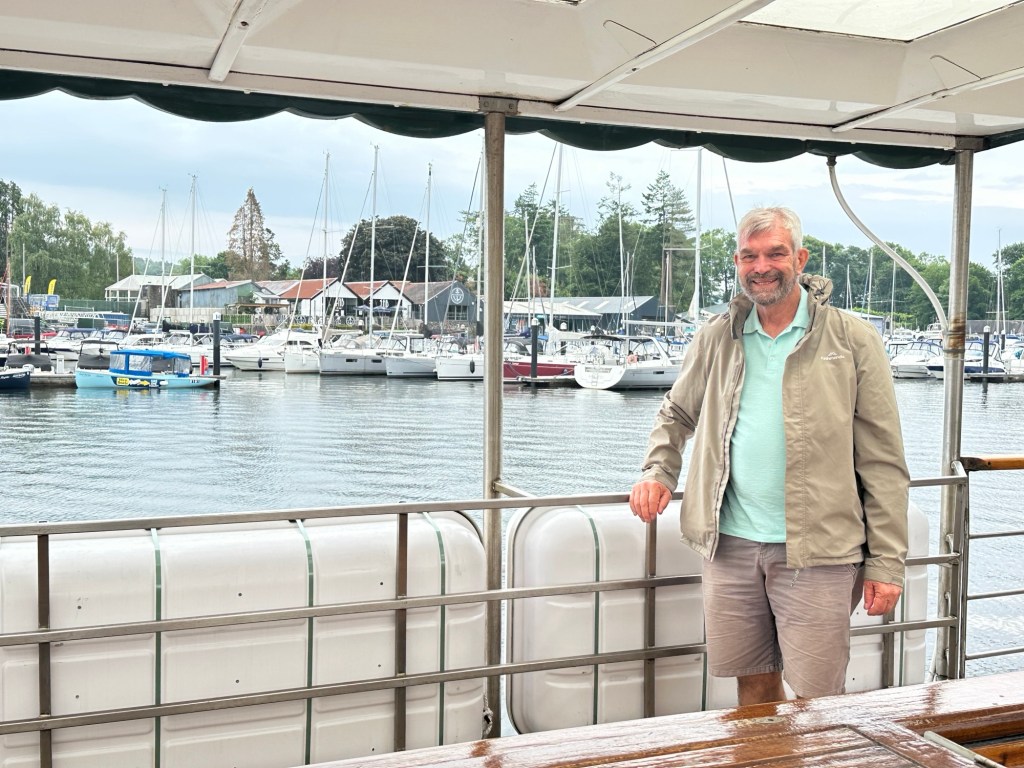
Today we had the day to spend on and around Lake Windermere. We had a brisk 20 minute walk from our cottage along the narrow road (not a good idea – very dangerous in fact! ) to the Lake hotel and Pier where we could get a 24 hour ticket for the Lake cruises .
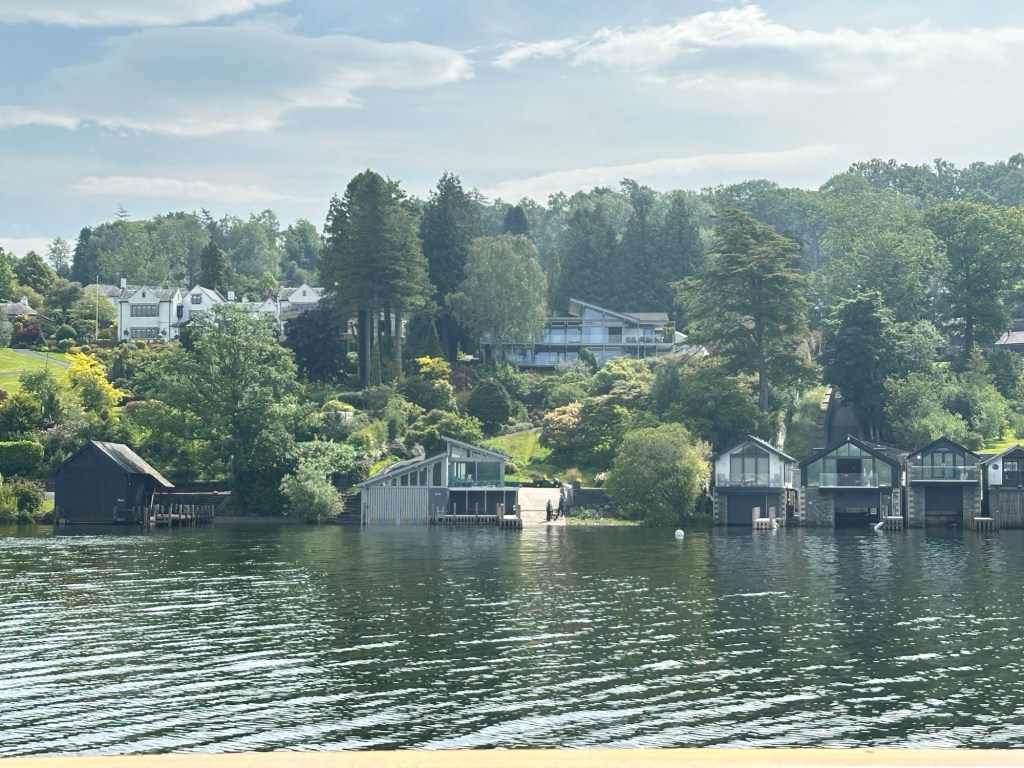
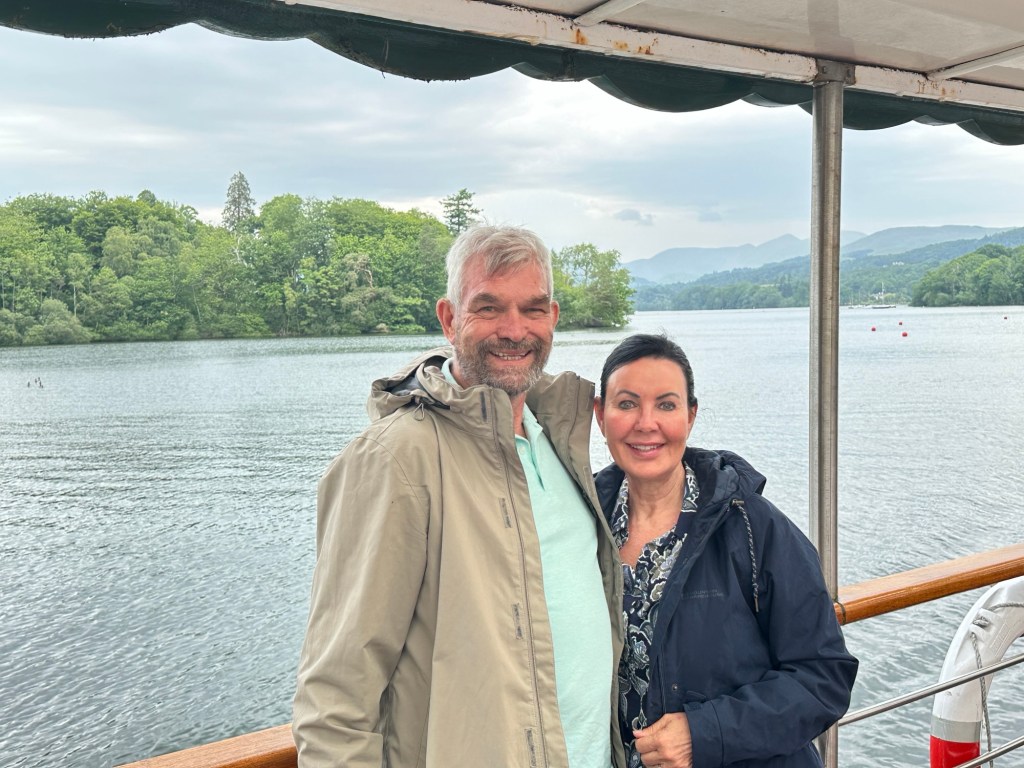
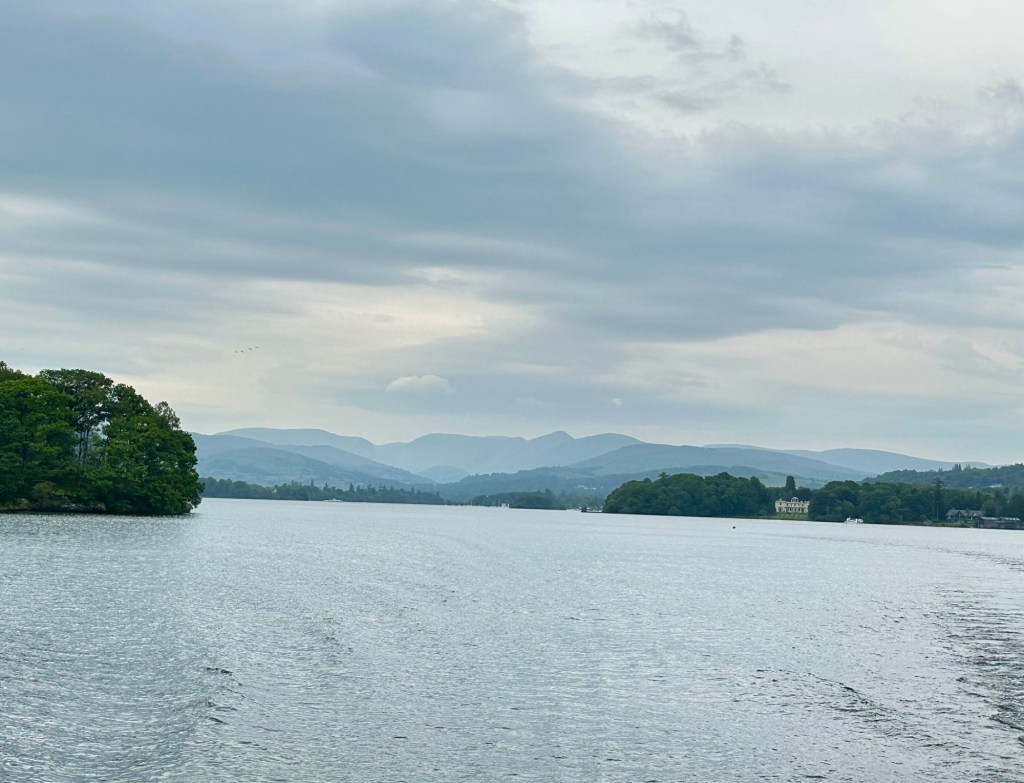
Windermere is the largest lake in England, 16.8 metres long and 60 metres deep in places. The lake is classified as a public highway and in centuries past has supported commercial traffic associated with slate and copper mining, timber, wool and fishing. It’s been a major tourist centre since 1847, when the trains first steamed into town carrying passengers eager for the fresh air and stunning scenery, and it’s been pretty much the same ever since. With the shores of the lake so close, you are never short of fantastic scenery or leisure activities.
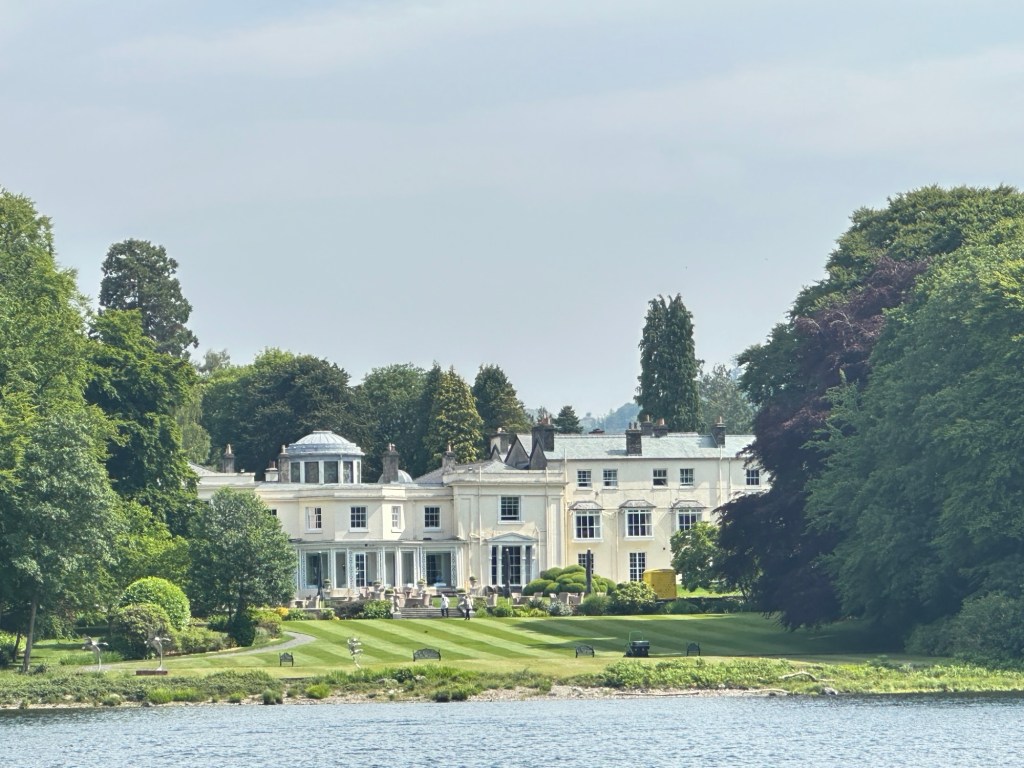
We took the longest route all the way to Ambleside, a popular Lake District town, famous for its natural beauty being situated on the shores of Lake Windermere. It offers stunning views and easy access to the lake and surrounding fells. It was a twenty minute walk from the pier to the township – on the way we discovered a gorgeous hotel set atop a hill where we stopped for coffee and cake, and admired those views.


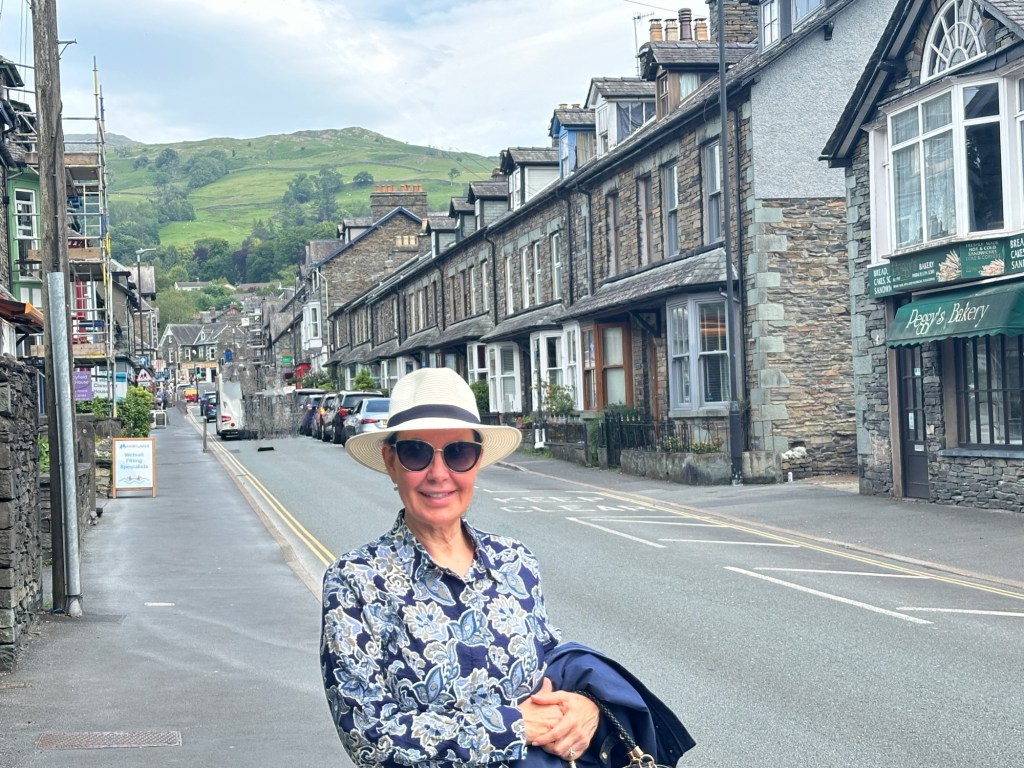
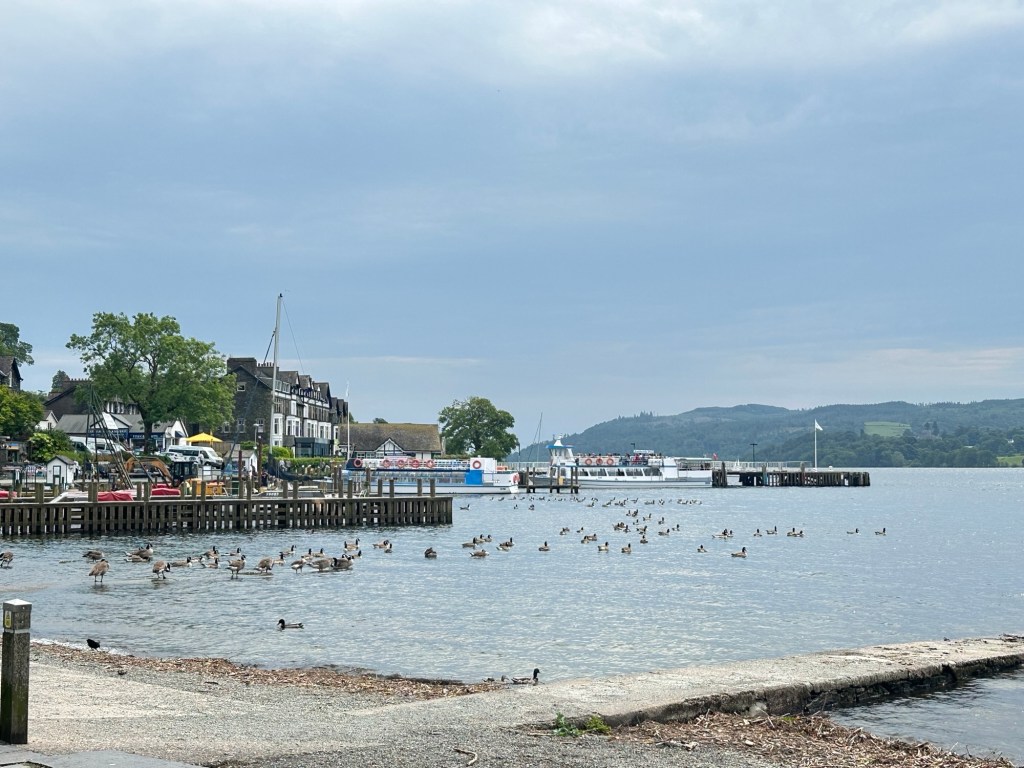
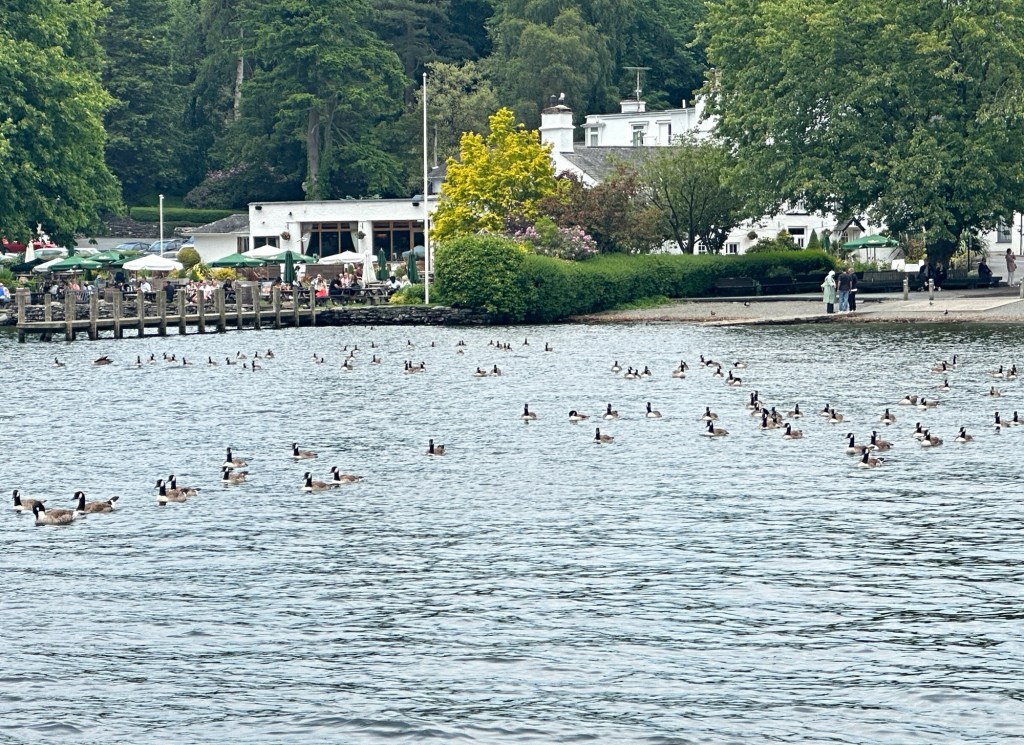
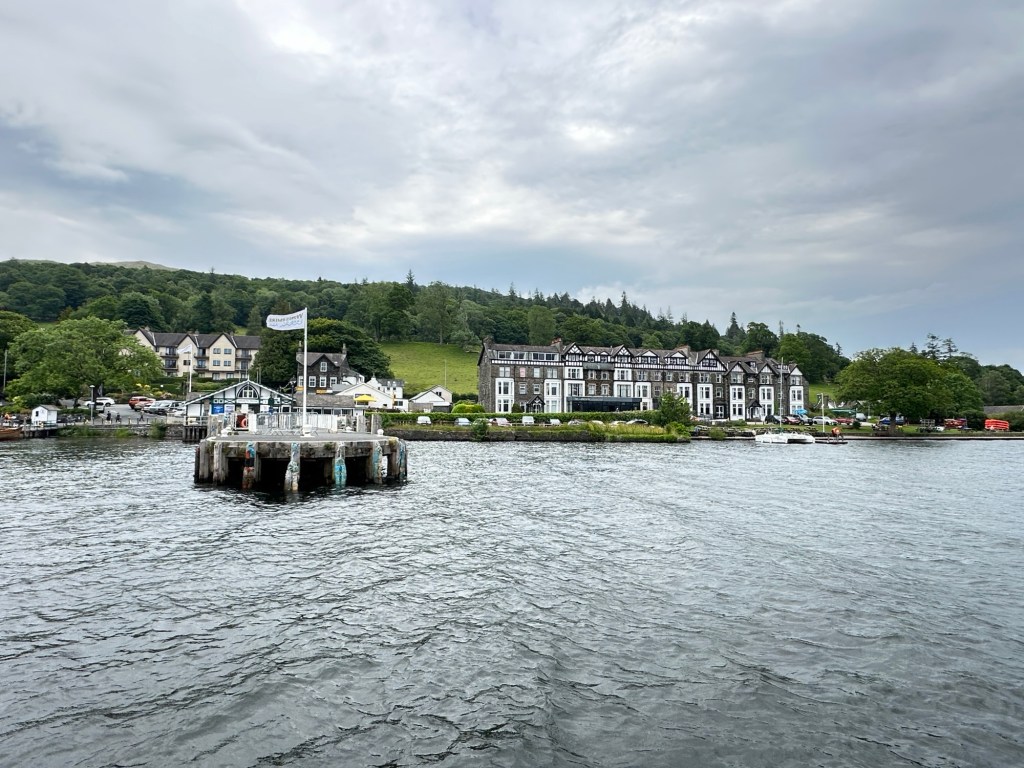
We walked around town, quite touristy – many restaurants, cafes, bars, and outdoor equipment stores ready to supply the hikers with everything they could possibly require for exploring the region on foot. We did have lunch at the loveliest tea shop – Mr H’s. I was fascinated watching Mr H prepare all the meals from scones and cakes, to salads, quiches, ciabattas, and so much more. All so fresh and everything done with flair and a very happy manner. Our salmon salads and ham and cheese ciabatta , with all the extras, were delicious, and the bonus- half the price to everywhere else. Prices seemed very expensive in this town.
This area is synonymous with Beatrix Potter – her home is nearby , and many shops sell Beatrix Potter products. I had visited Hill Top many years ago, and bought a Peter Rabbit and Jemima Puddleduck wall freeze and motifs to decorate my babies’ nursery. So many more keepsakes to buy now.
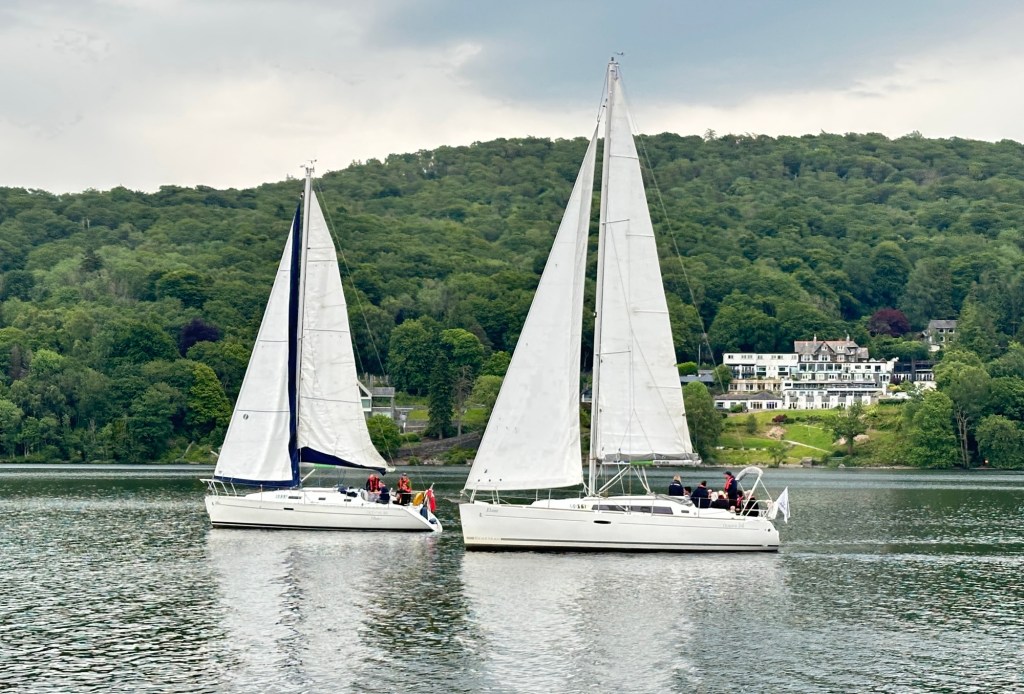
A walk back to the pier, and a cruise back to Bowness on Windermere. This is the Lake District’s most popular visitor destination, it is a sprawling tourist town busy all year round. People come to enjoy the sailing and watersports as well as just soaking up the atmosphere in this delightful setting. Again more restaurants, cafes, bars, and most popular of all – ice cream shops! Everyone was slurping on an ice cream. Not one to miss out on anything, we thought we had better follow suit – and yes, they were worth the hype!

We even bought Cornish pasties from the famous Cornish Pastie shop to take home for dinner (chicken Marsala, and Chorizo and Mozzarella)- which were also a highlight of the day!
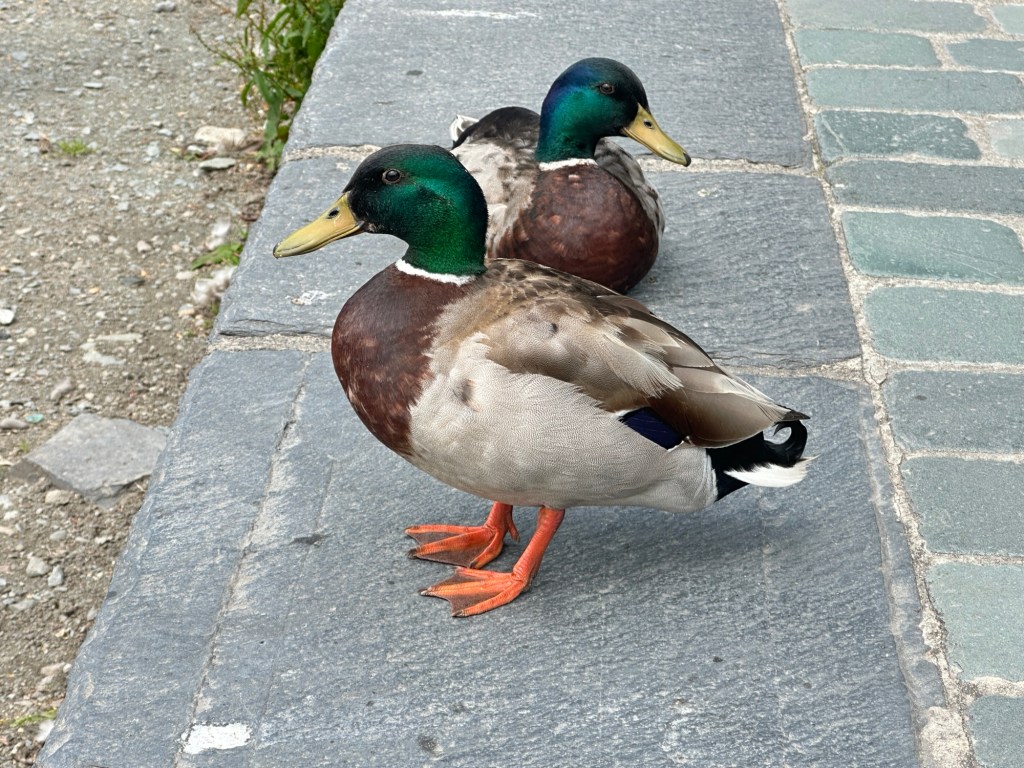
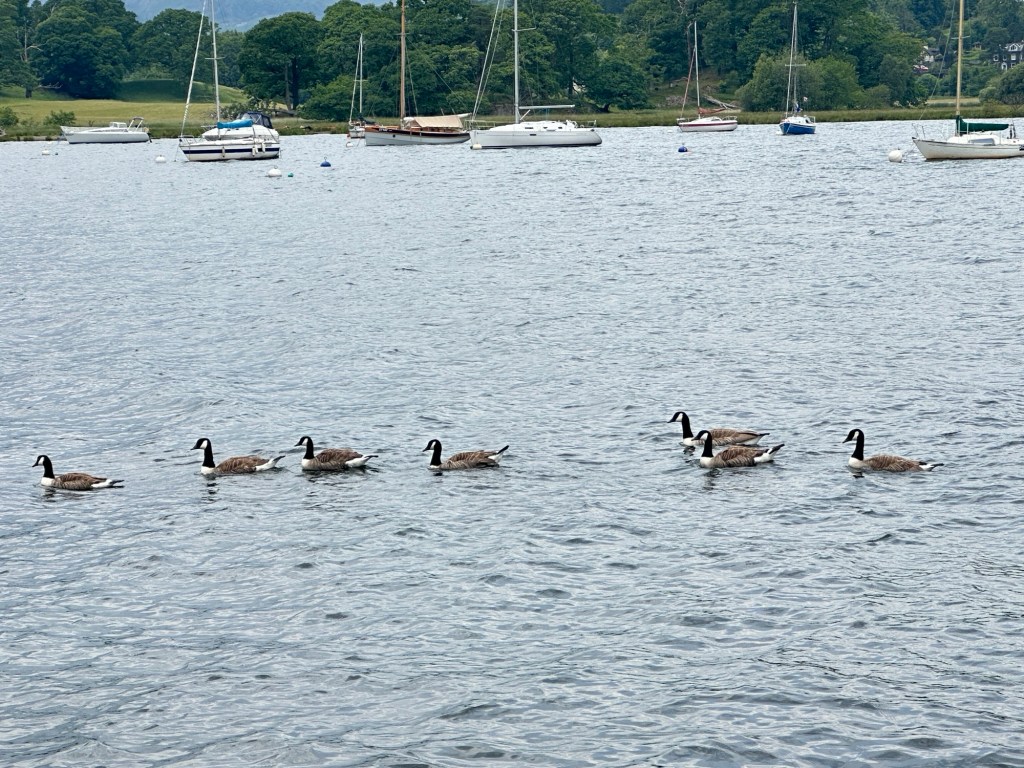
We cruised back to Lakeside. There were other cruises we could have done around some of the little islands with our day pass, but we thought we would call it a day. Loved the birdlife in around the lake – Canadian Geese and Mallard Duck were plentiful in the lake, little black birds which I think are Jackdaw around the foreshore.


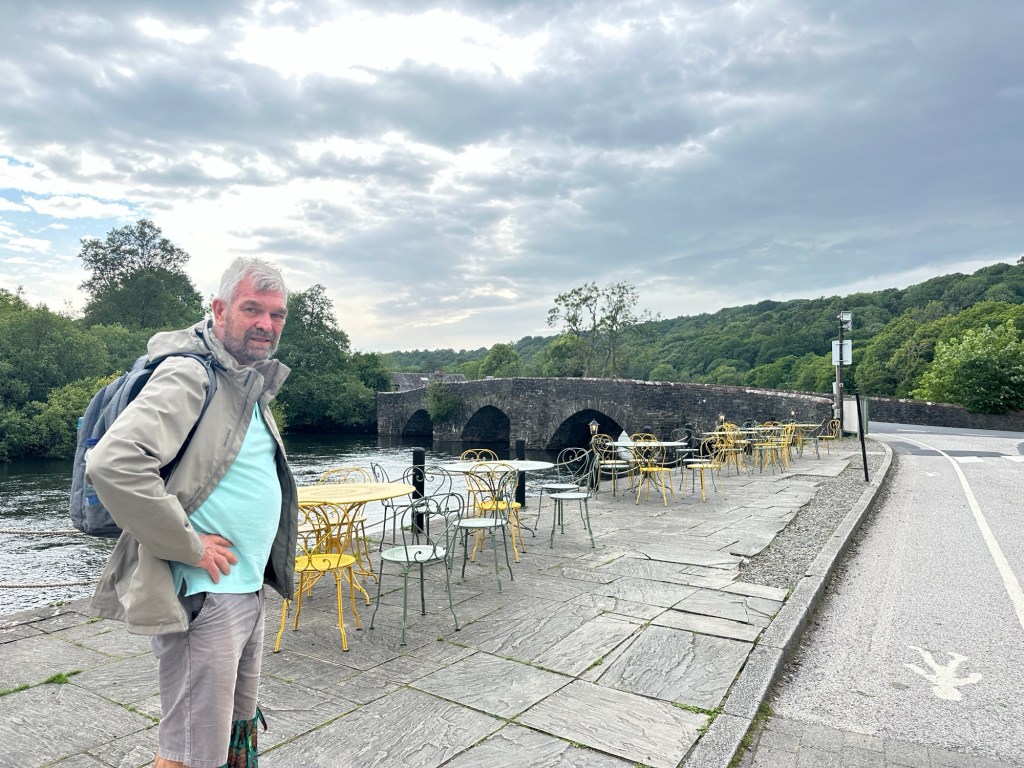
We found the dedicated walking track from the pier back to the Swan Hotel – a lovely track alongside the very southern part of Lake Windermere. All we had to do then was cross that busy road, and we were back at our very quiet and cosy cottage. It had been such a lovely day!

Day 25
Friday 13th June
Newby Bridge to Rugby, then canal narrow boat trip
10 – 25 degrees, sunny
Set off early as we had a three drive to Rugby, also needed a Tesco supermarket stop to pick up some supplies for our narrow boat expedition. Today we were picking up a narrow boat to explore the waterways for 3 days – quite the adventure.
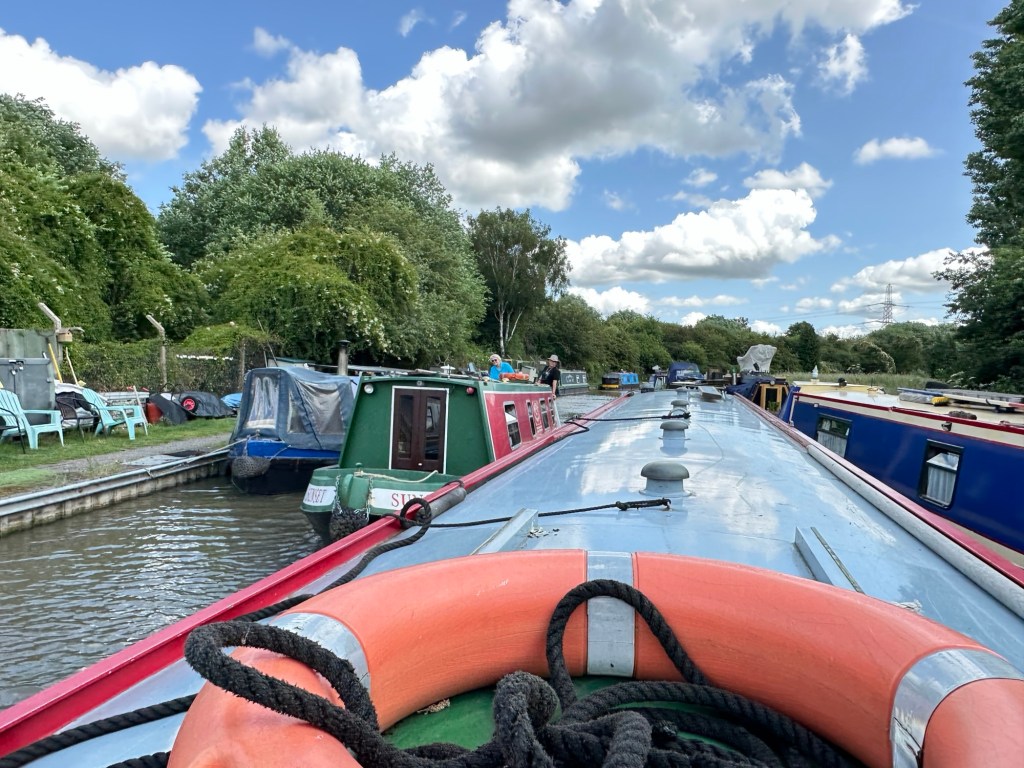
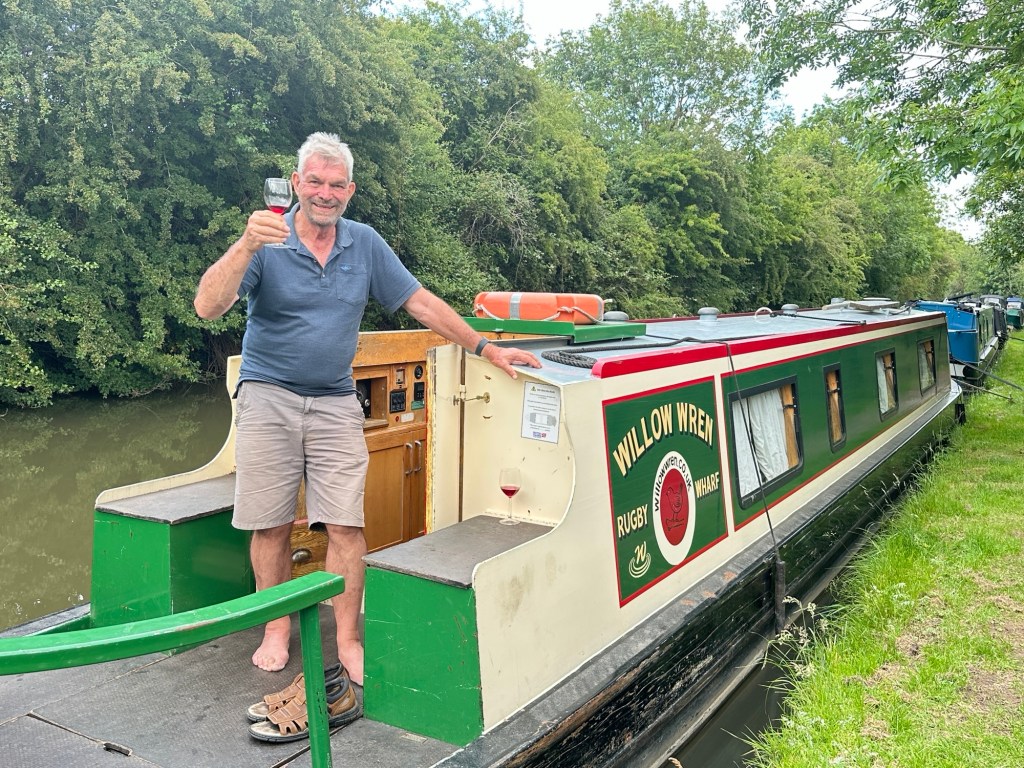
Our boat was Heron, one of Willow Wren’s vessels. Canal boats, also known as narrowboats (and sometimes referred to as barges or longboats) are very easy to drive – so we were told! The UK canal network offers over 3,000 miles of historic waterways and is steeped in more than 200 years of history. A canal boat holiday offers you the chance to visit waterside villages, historic cities and stunning countryside. We had chosen to do the Oxford Canal – actually I chose this one because it had the least amount of locks, only one!
The 78 mile long Oxford Canal, that passes through the area north of Rugby, is part of an original canal network connecting the Thames, Mersey, Trent and Severn rivers. It links the Coventry Canal with the River Thames at Oxford. The engineer, James Brindley began construction of the canal in 1769 and it reached Rugby in the early 1770s. It contributed to the town’s pre-Railway age prosperity. Originally a ‘contour’ canal – following the lie of the land – its sinuous route was shortened between 1829 and 1834 by 13.5 miles – the abandoned loops of the contour canal can still be seen today in places. This shortened journey time helped the canal compete with the expanding railways.
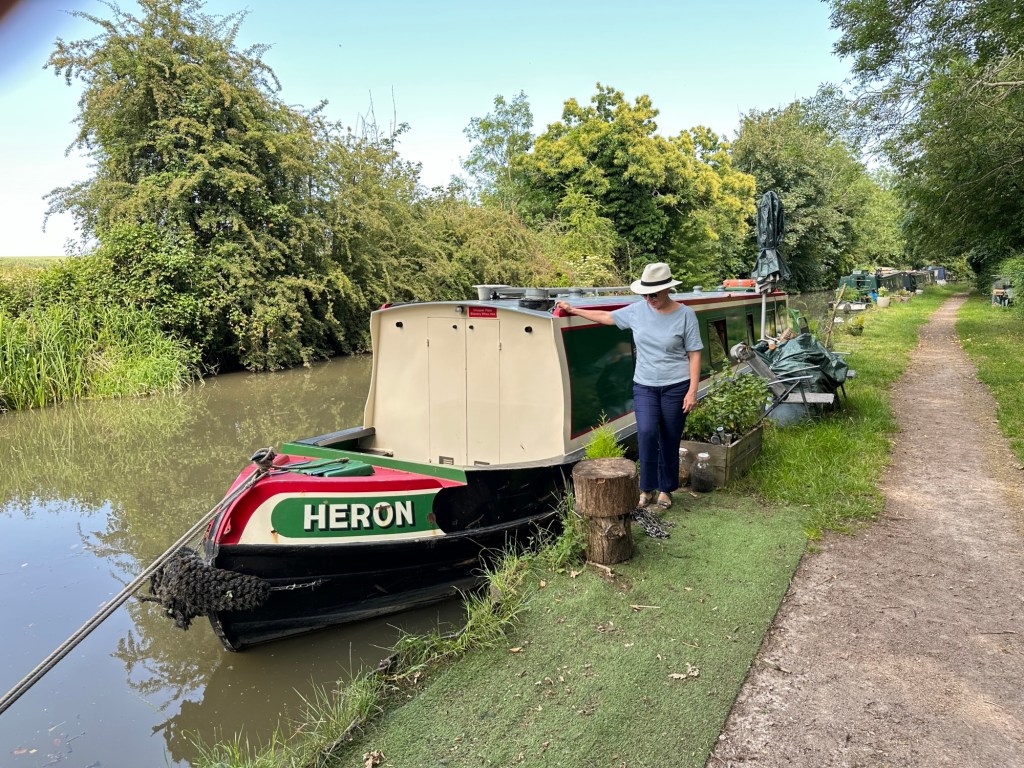
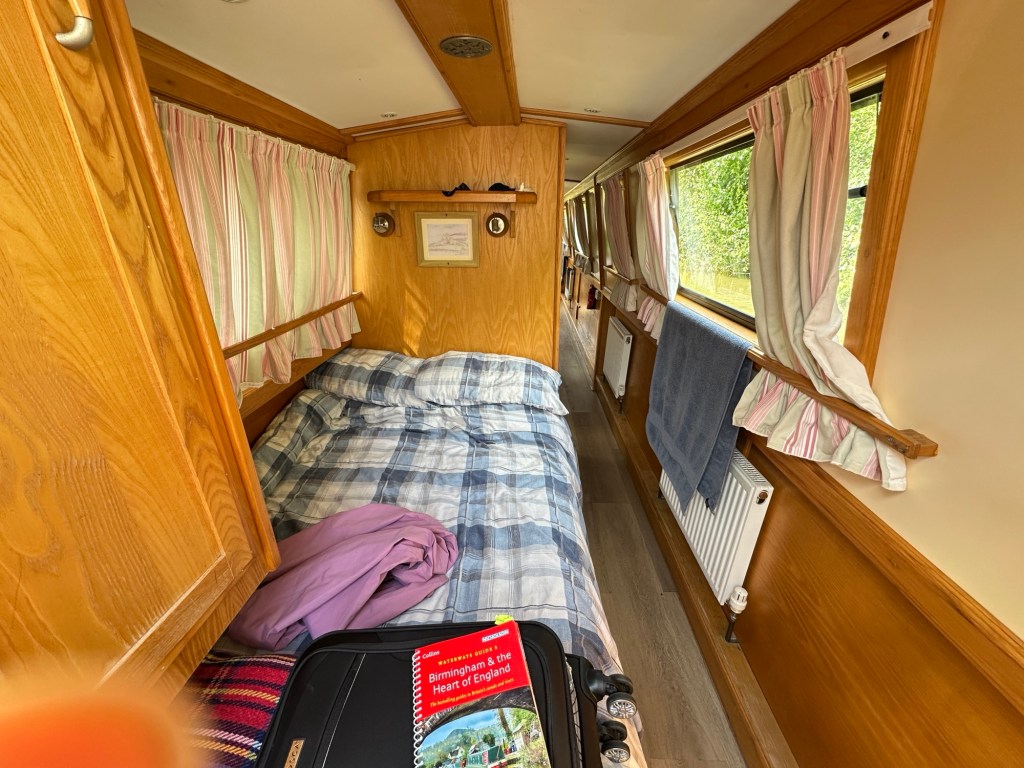
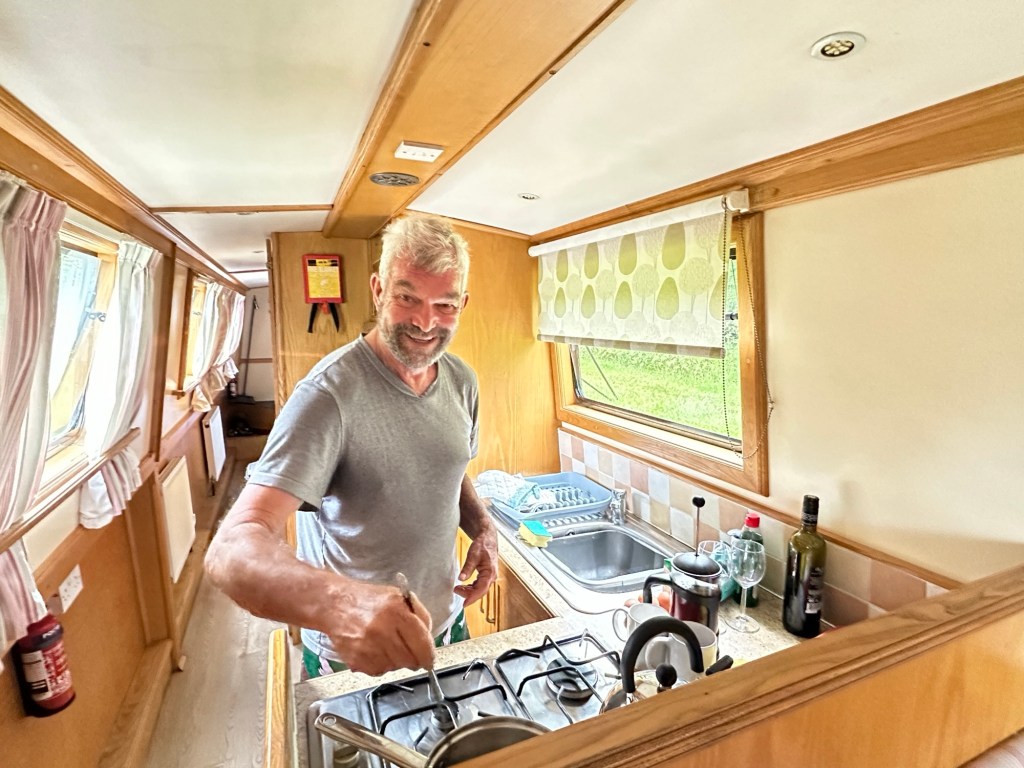

After the very involved briefing – of the boat, canal and lock, we were on our way. From Rugby we travelled along North Oxford Canal to Newbold on Avon. We thought it would be a good idea to do a practice mooring … Captain Frank didn’t think it was necessary!!! Before long, we had another “boatie” helping us with the ropes. It seems everyone likes to help you moor! We had a little walk around town (that’s didn’t take long), checked out the Barley Mow Pub, and were soon back on our way.
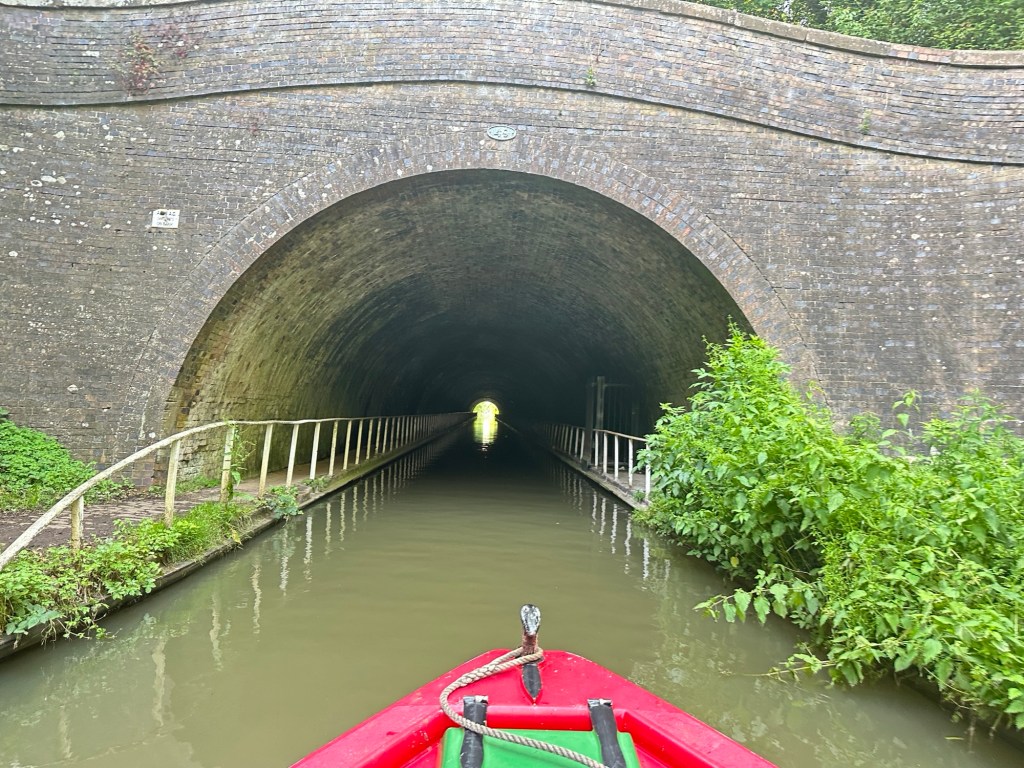
It wasn’t long until we came to the Newbold Tunnel (220 metres in length). This was quite easy to manoeuvre as you could see the other end, and it was wide enough to pass another boat if need be. We did the loud horn beep regardless.

Continuing north-west, we travelled through tranquil woodland and farmland, passing under a few bridges, whilst adjusting to this peaceful winding waterway. I had to keep track of the bridge numbers, while Frank perfected his steering skills. No brakes, just reverse!
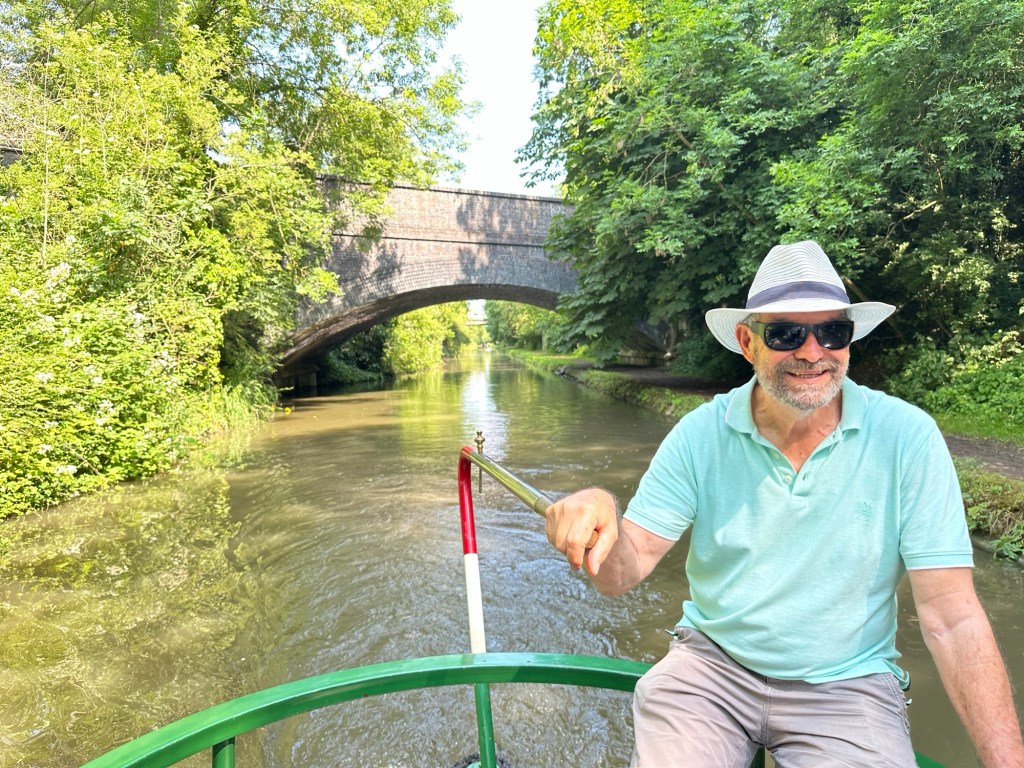
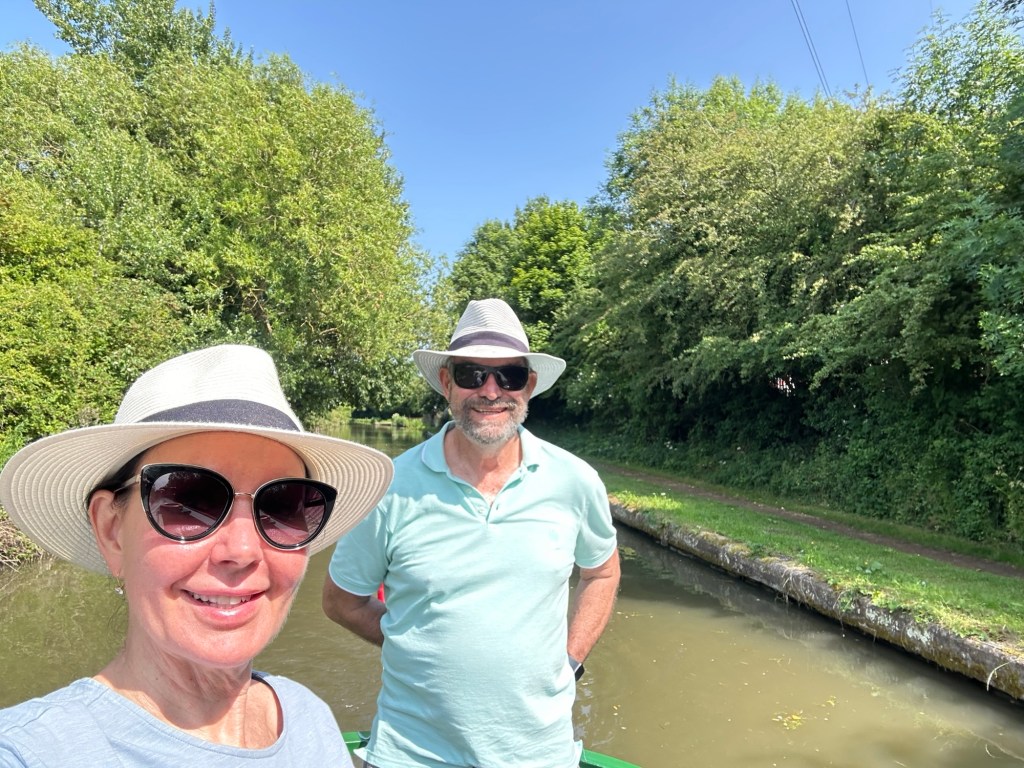

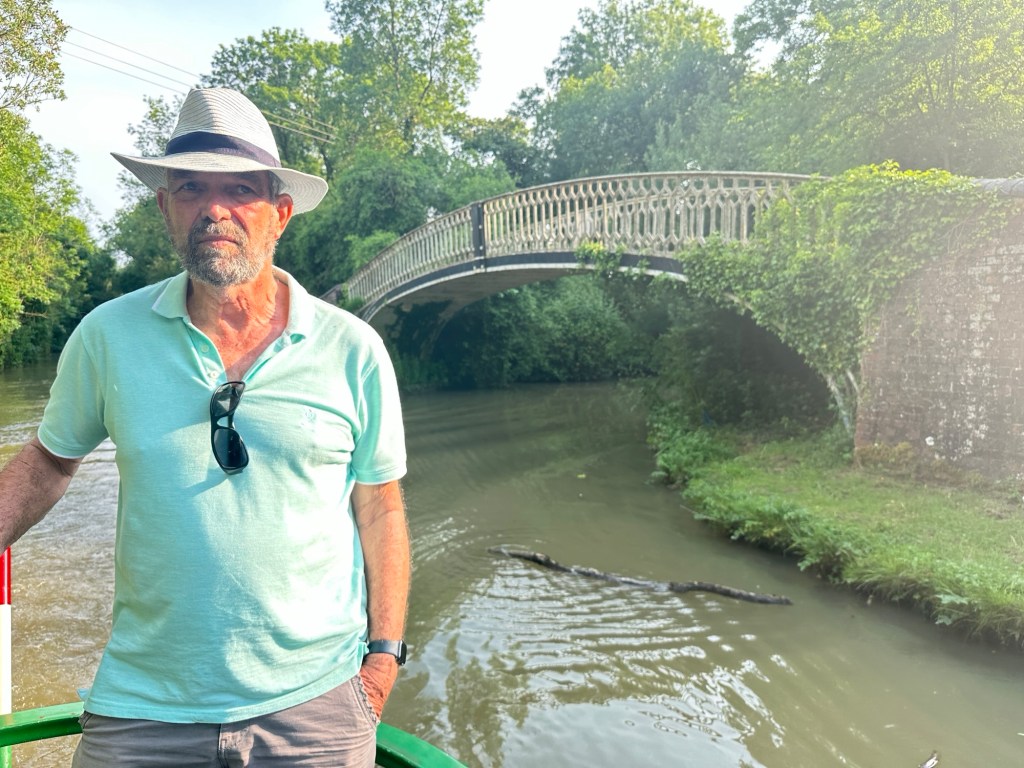

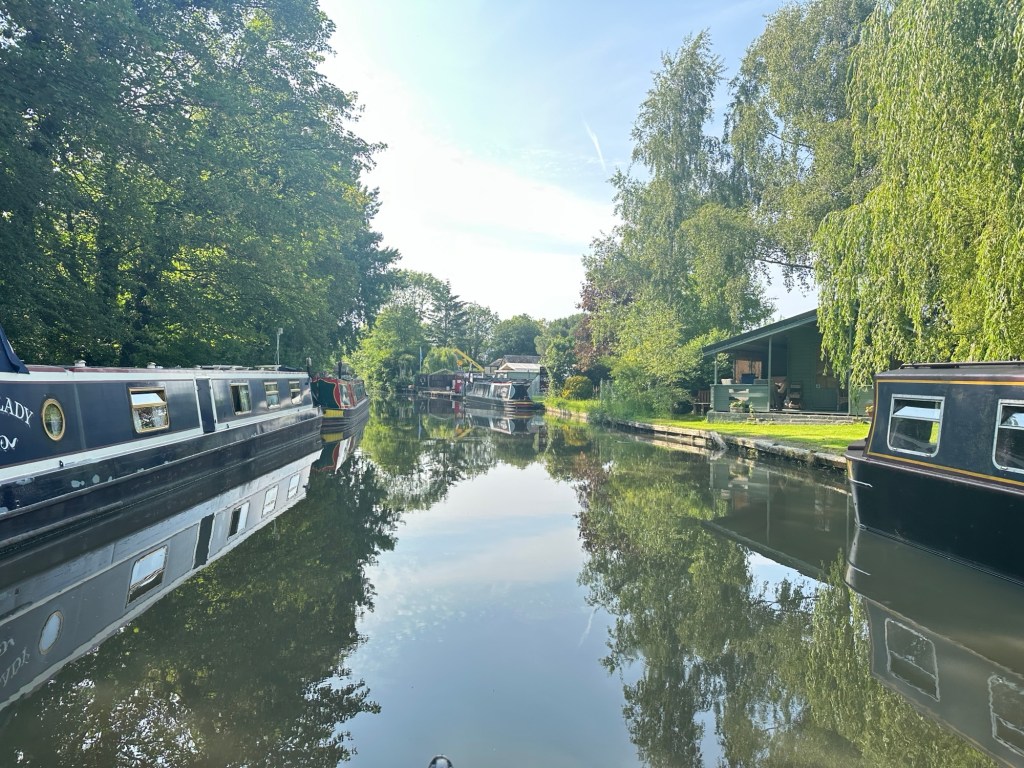
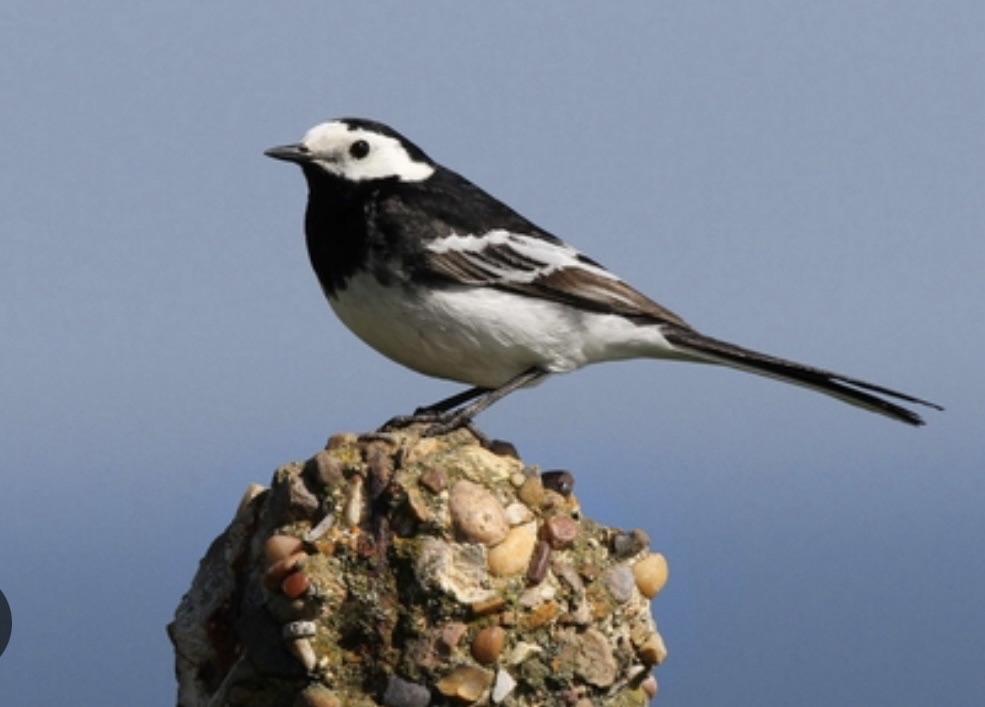
The birdlife was prolific – hard to believe there were little villages dotted all along the way. Duck, geese and swan families followed us as we travelled the waterways . Also pied wagtails – gorgeous black birds with white breasts, and a long blue black tail. Sheep, cows – even standing in the water, and horses, were not far away .
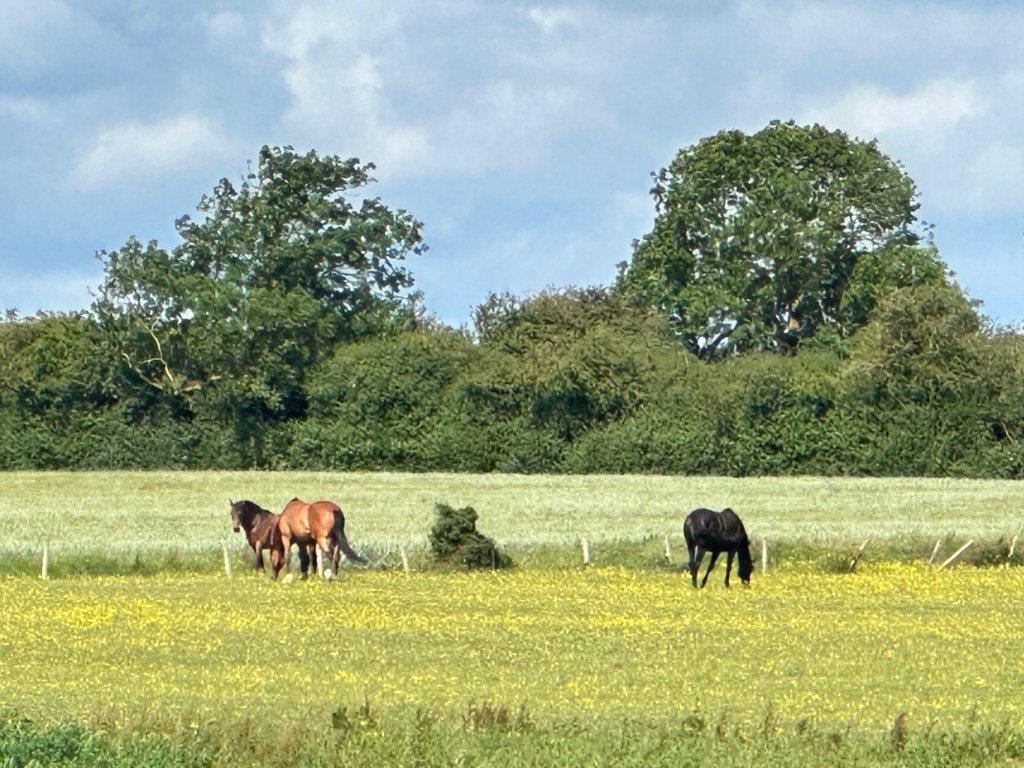
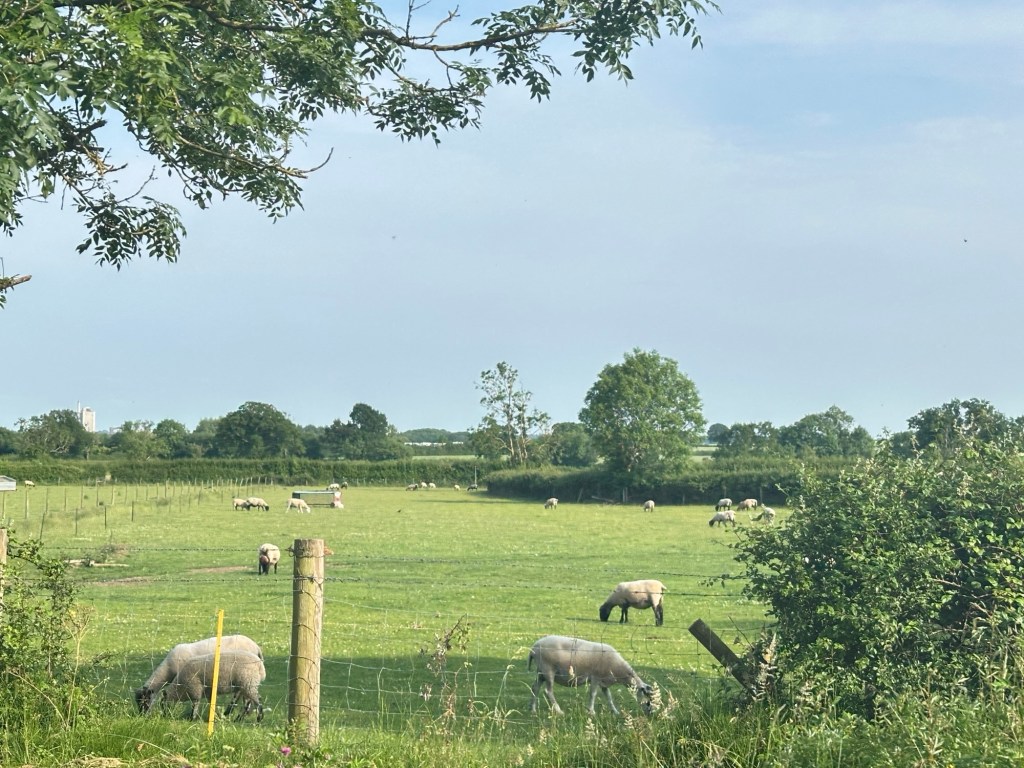
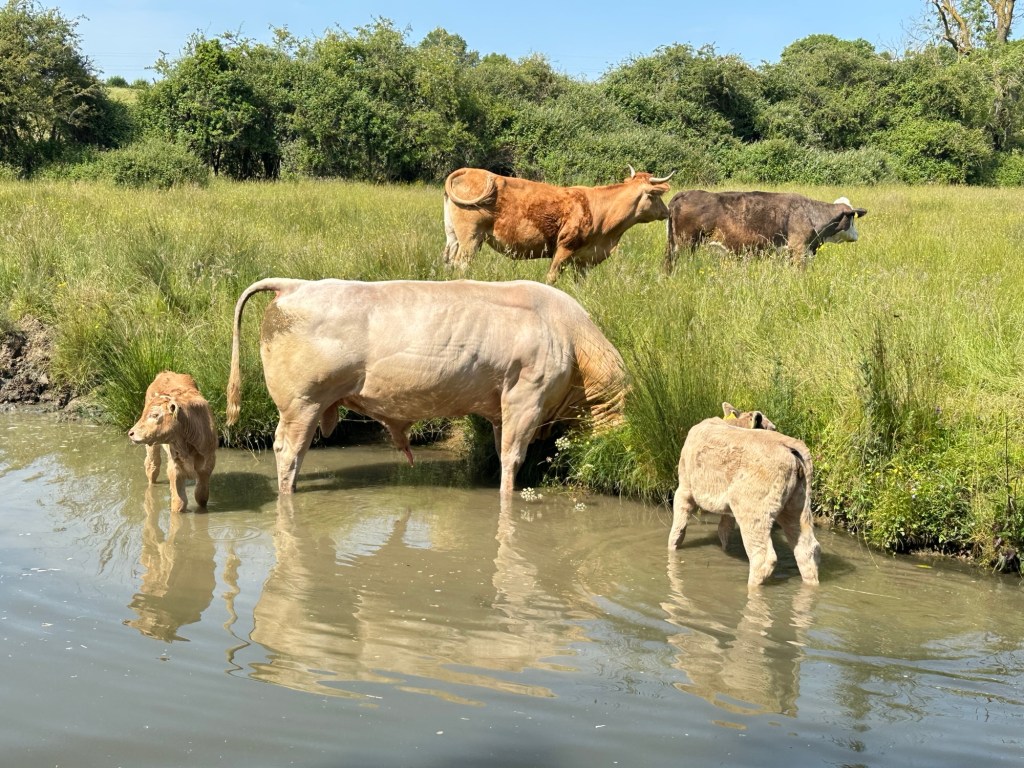

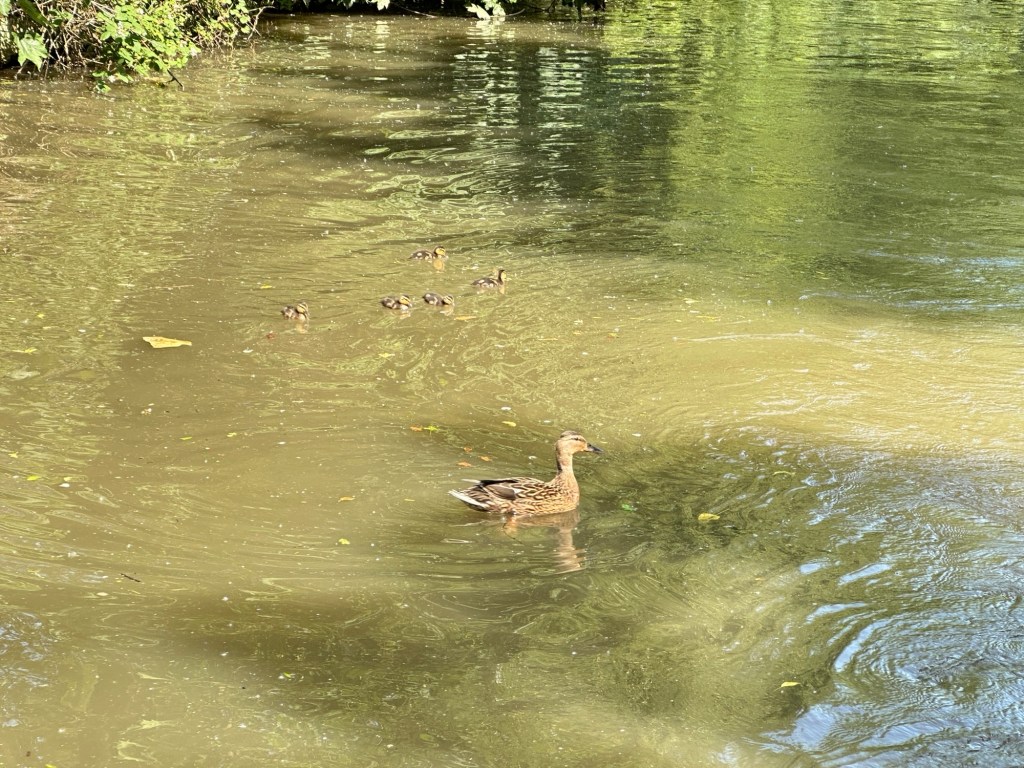
The railway followed the canal for a short stretch, then we were back in a dense farming area. The stone and iron arched bridges date back well over 100 years.
We came across one swing bridge – we thought the canal was barricaded off. We got into a fluster, but a couple of locals helped us out – one swung the bridge open, another helped us from running into another boat! And then they closed the swing bridge. Very helpful locals – they could get so annoyed with us “learners”!
The maximum speed limit on the canal is 4 miles per hour, and if that creates a backwash you need to go slower – to protect the canal banks, and not upset the moored boats. Frank had a couple of comments made by a boatie that he was going too fast – surprise surprise! I might have told him to slow down also!
After several hours we reached Ansty is a tiny village located along the canal, with a restaurant and Worker’s Club. To the north are the church of St James and Ansty Hall; the Hall is dated 1678.
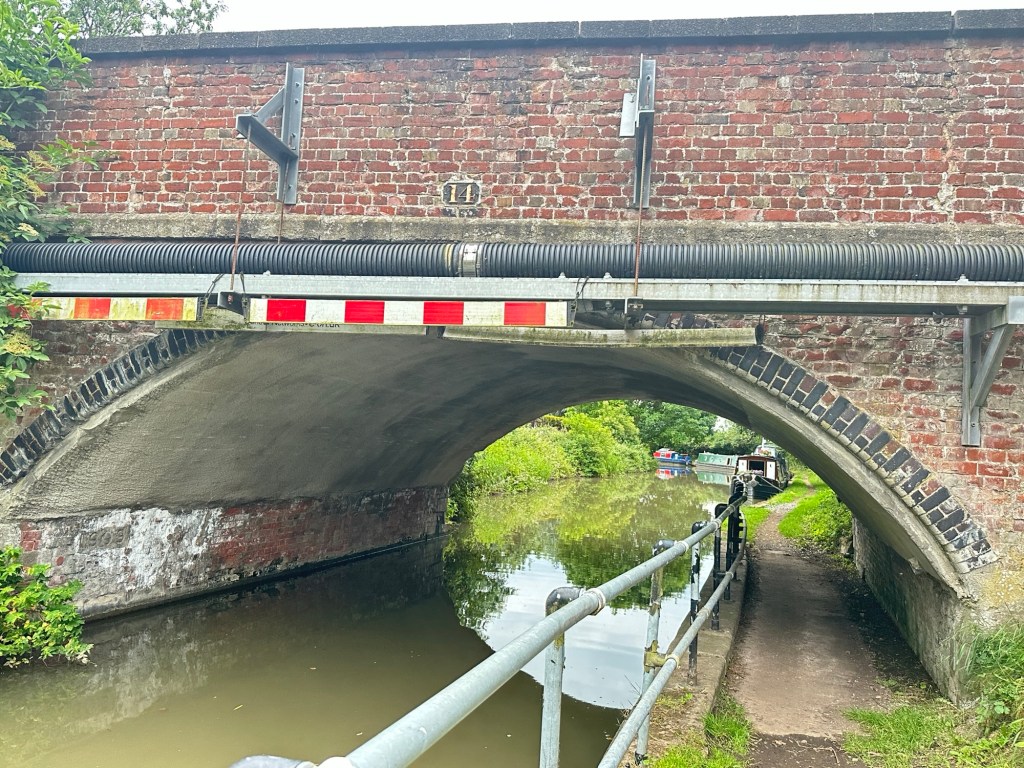

It was after 8pm by the time we moored – curfew time is 8pm. We were too late for the restaurant, but decided to wander up to the club where we had a drink before coming back to heat up our pre purchased lasagne, plus salad. The sun hadn’t set so we could have dinner and enjoy the serenity of the canal. So far so good on the canal highway.
Day 26
Saturday 14th June
Rugby – canal narrow boat trip
13-22 degrees, sunny
How peaceful waking up to the sound of the birds, it’s so quiet on the canal.
No hurry… we on a slow boat! I think a holiday on a narrow boat is the fastest way to slow down!
Breakfast and domestic duties done, we thought we’d do the water fill up next ( you’re supposed to fill up every day) , and we knew where the water tap was at Antsy, so we pulled up there. A long term moorer ( my word for someone who has a long term mooring lease) became our new best friend and helped us moor and fill up. Like I said, they love to help you!
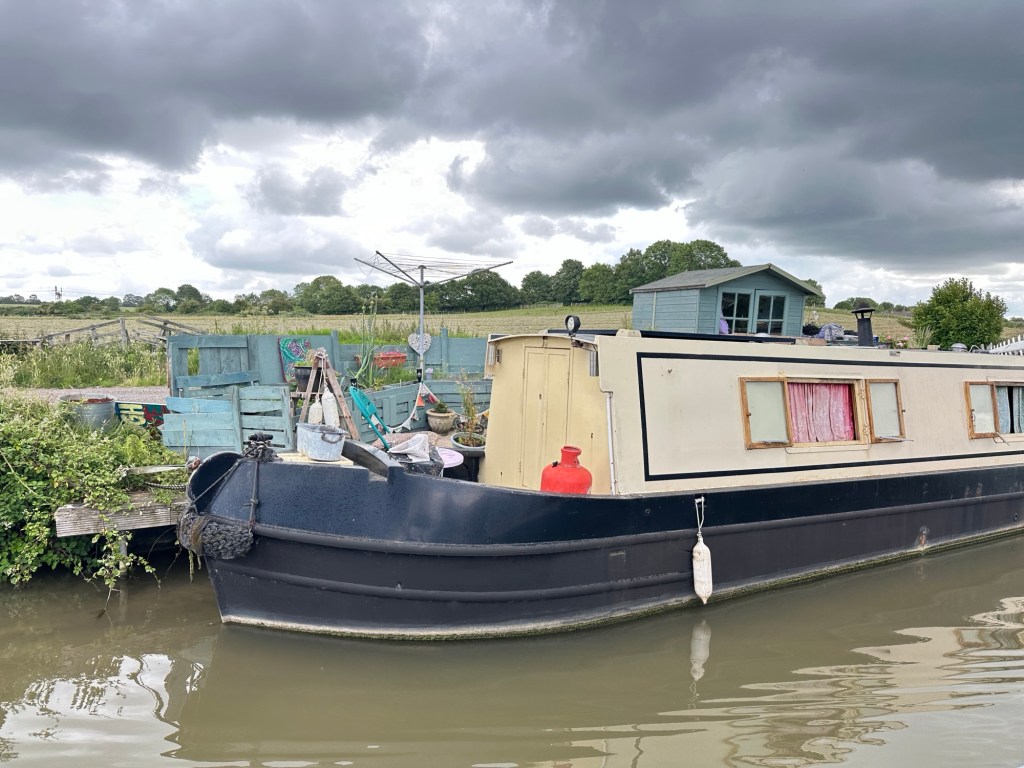
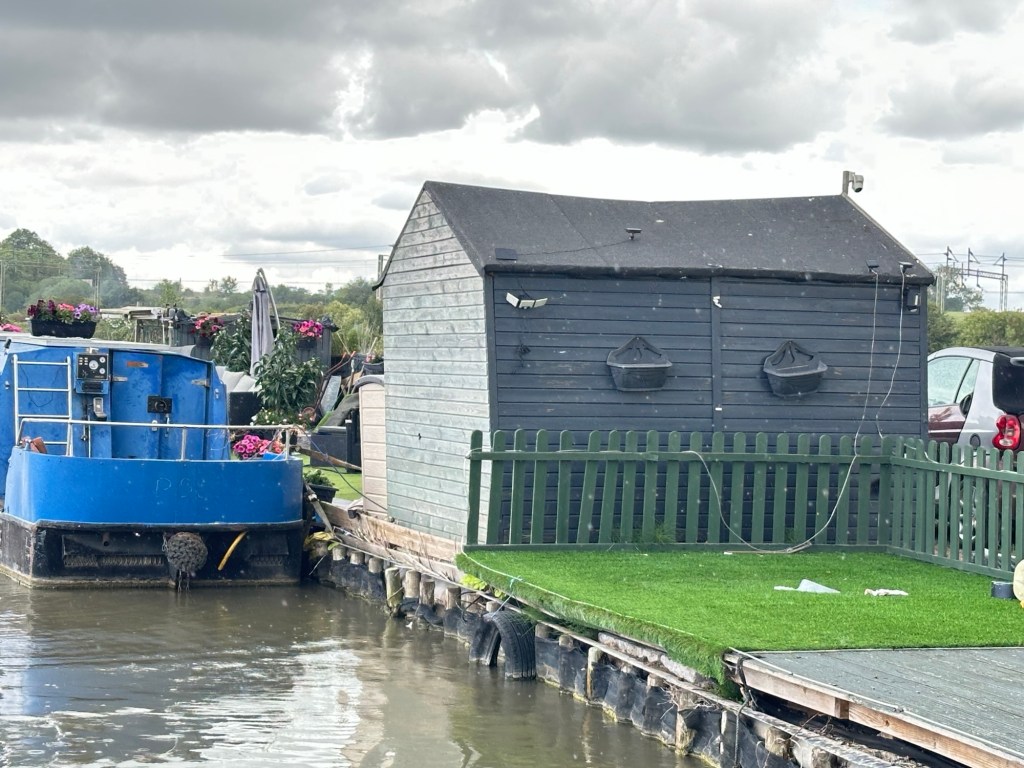
Speaking of long term moorings – there seems to be a lot of people who live in their boats and have an established quite a home base with their boat and footpath. They have their vehicle parked, a little shed, solar panels, vegetable gardens, one even had an above ground pool with water feature. Very interesting. They generally have moorings on the opposite side of the canal to the short termers.


Our plan was to head to Hawkesbury Junction, do the lock, and go to Coventry (as opposed to being sent to Coventry). Our new best friend suggested the Coventry canal wasn’t that clean, and Coventry also had a floating market on today in the basin where we were to turn around. We thought that may not be in our best interest, plus I was thinking it would make it a long day, so, we just went to Hawkesbury Junction (named after the first lock keeper).
So, we moored, walked up to see the lock process (I was worried about it as it was my job to do the lock gate). Turns out they had volunteers helping with the locks – a lovely elderly couple ( the husband had helped us moor only ten minutes earlier), so all my stress was gone! Our plan was to go through the lock, turn around, and go back through the lock (so we could at least say we did a lock!). And we did it! No trouble at all – what was I worried about! And then we moored again- where we had been thirty minutes earlier. Onlookers would think we were crazy!
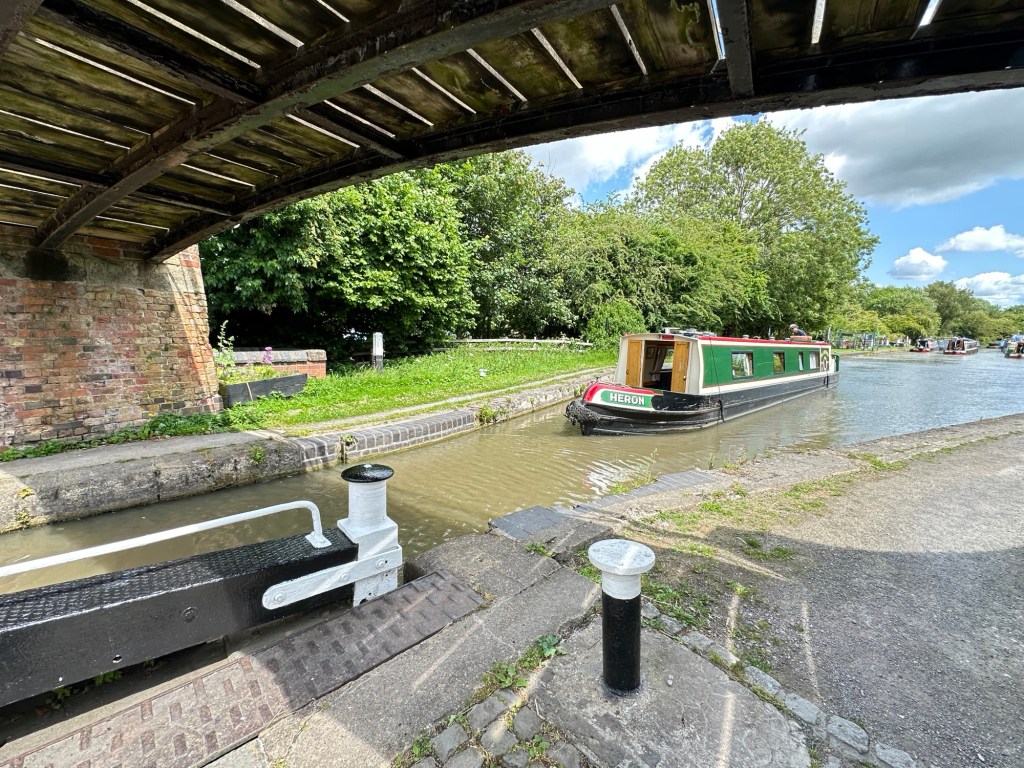
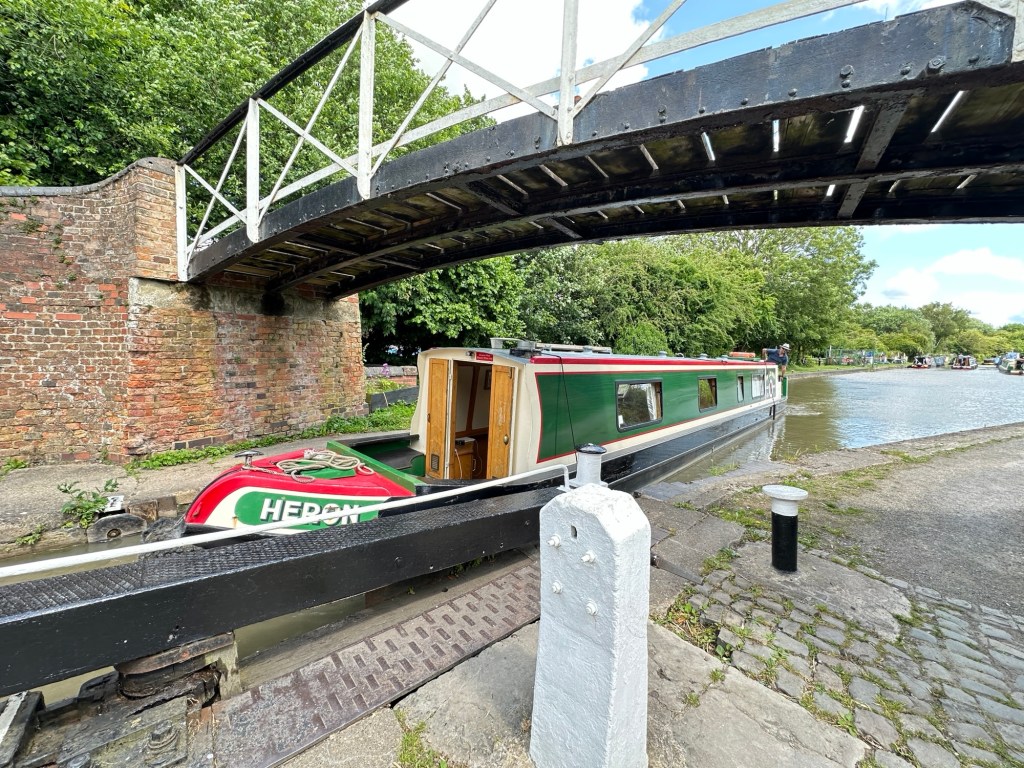
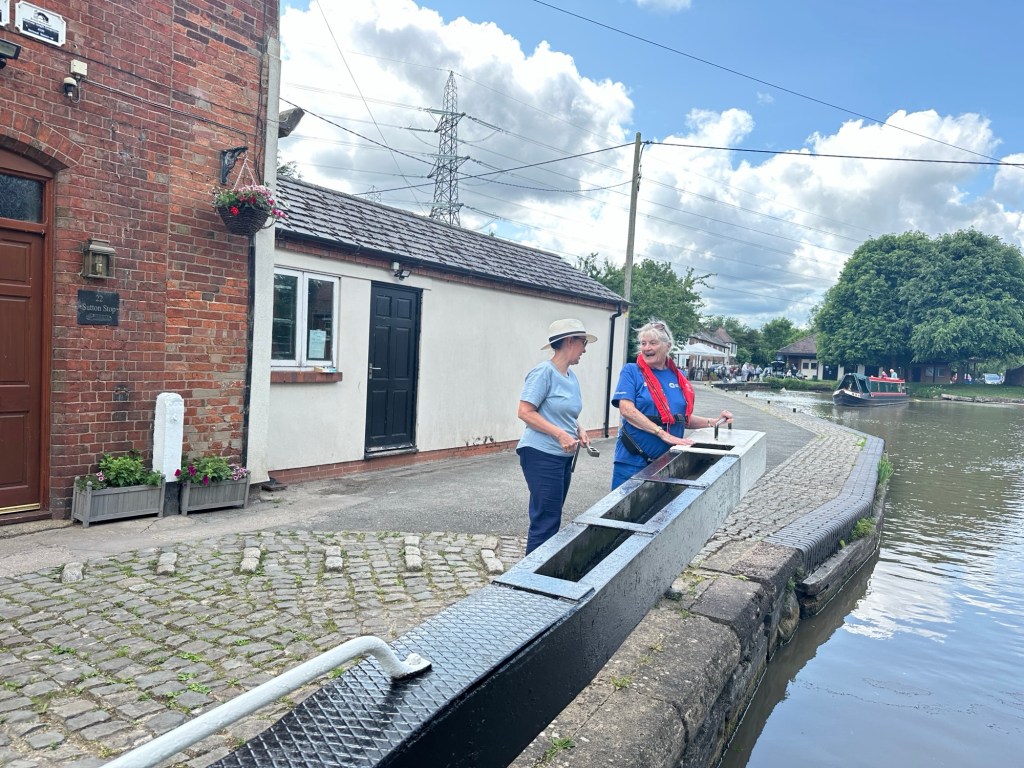

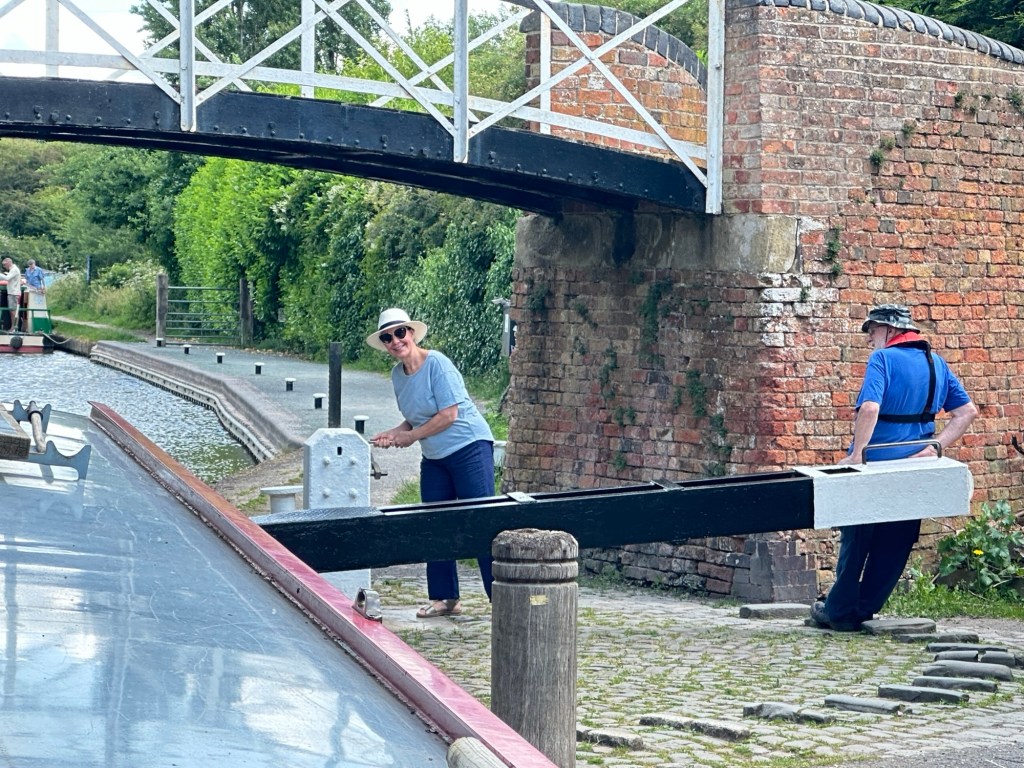
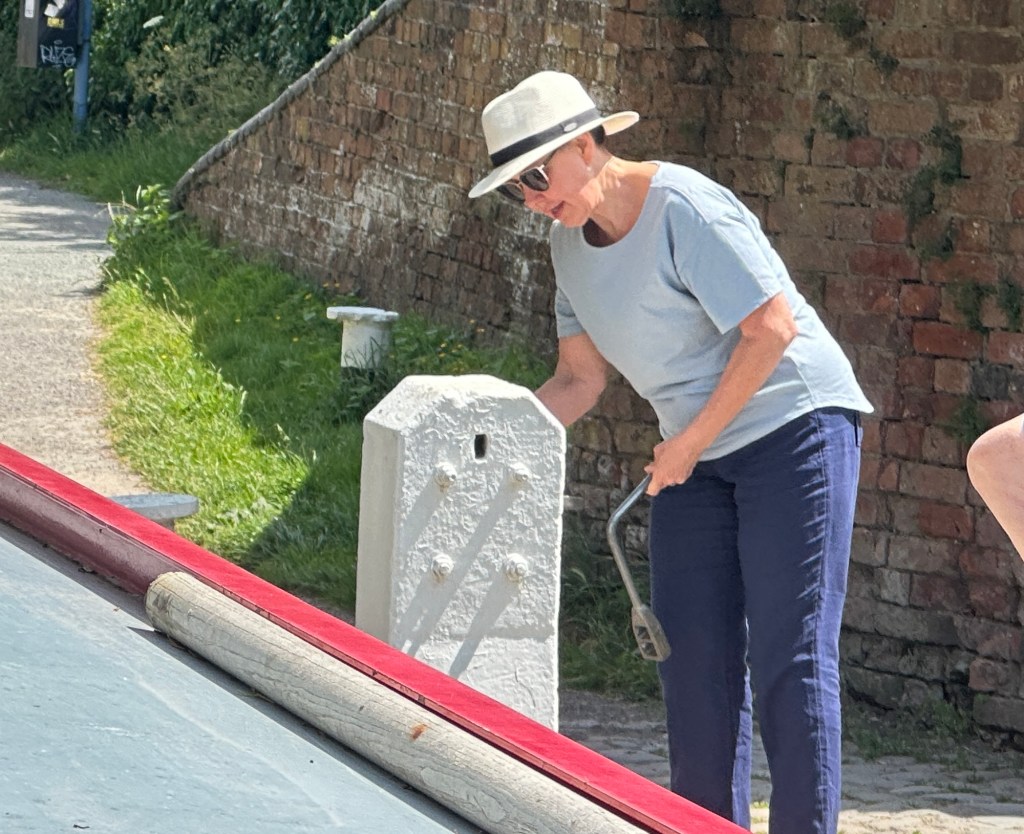
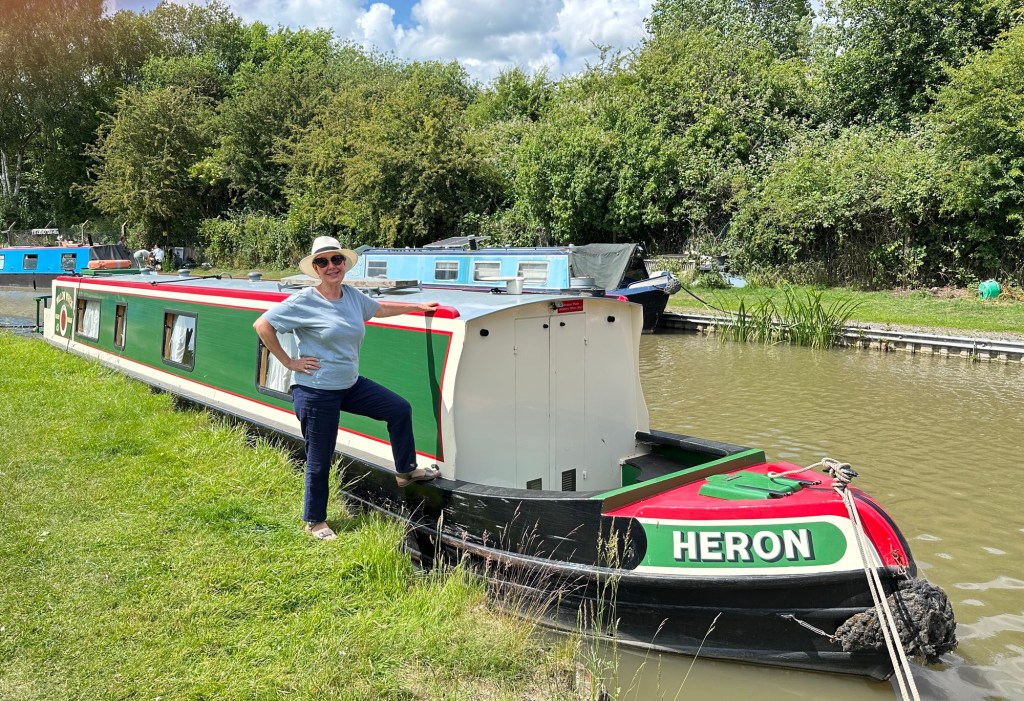
We had a walk around this cute little village, seeing how the locals lived, and realising that the tow path actually plays an important part in their lives – it was a pathway, a cycle path, a place to throw a fishing line in, some guys were racing their remote controlled cars, it’s a whole other world.
We went to the local pub on the waterfront – the Greyhound – ended up having a couple of drinks there with a lovely English couple who were also in a Willow Wren boat, but for a week. We compared notes! We were doing ok!
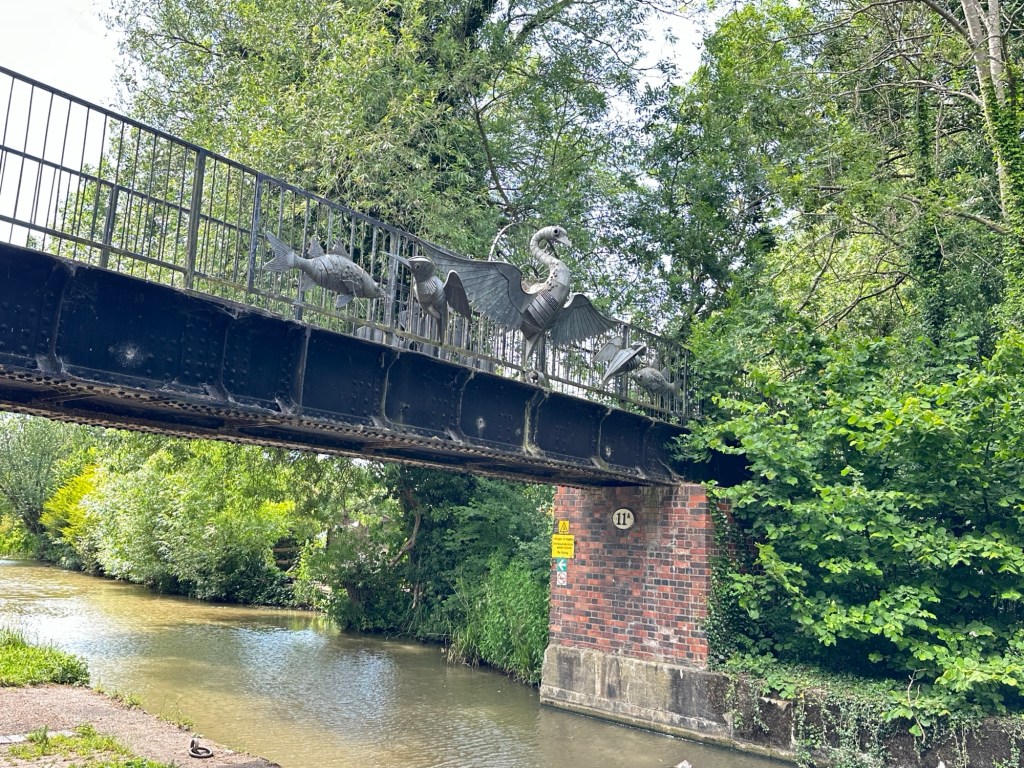

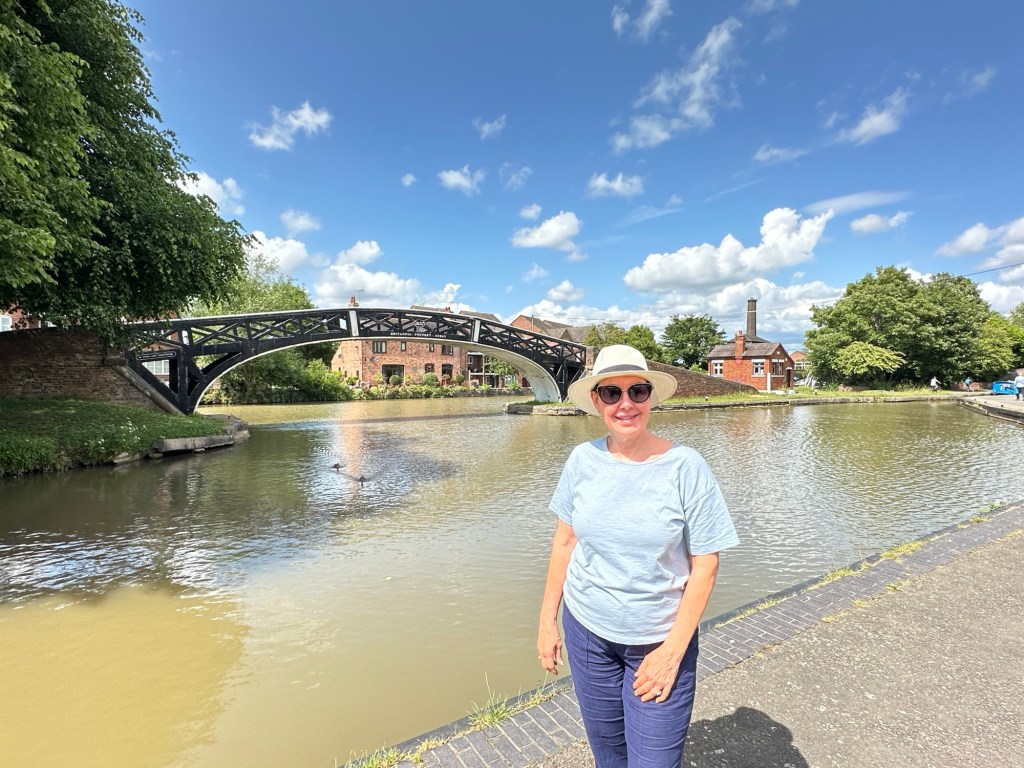
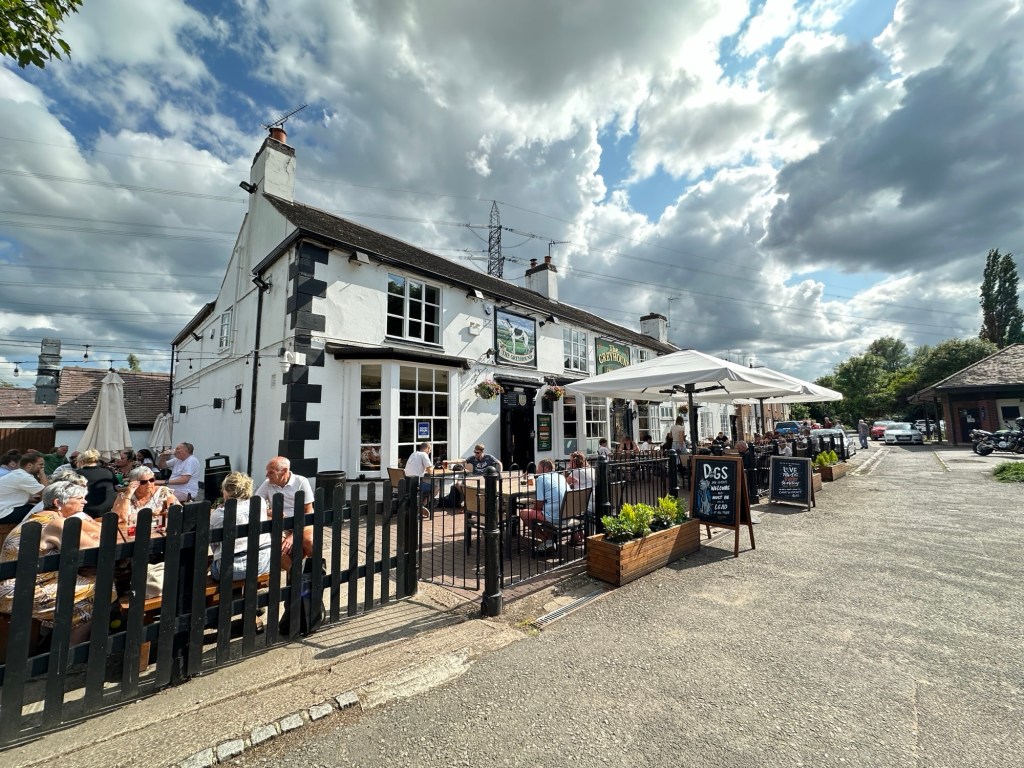
Back to our boat, we had decided to start on our return trip so it wouldn’t be such a long trip the next day. We stopped again at Antsy. This time we had a walk around the little village. We were going to cook dinner, but saw The Rose and Castle restaurant, and thought that would do us nicely – we both had delicious seafood meals, with the loveliest of wait staff. We can cook tomorrow night.
Day 27
Sunday 15th June
Canal narrow boat trip
11-22 degrees
A sleep in this morning – unheard of on an Aldred holiday! But needed!
Breakfast done, and we were on our way, we chugged along all the way back to Newbold on Avon, which is where the Barley Mow pub was. It was a bit busier on the canal highway today – maybe because it was a Sunday? We had to pass quite a few other boats, do the swing bridge ourselves (which was easy as!), go through the tunnel again, and stop for water, before we decided to moor for the night. We are becoming ever so efficient at mooring and setting off again!


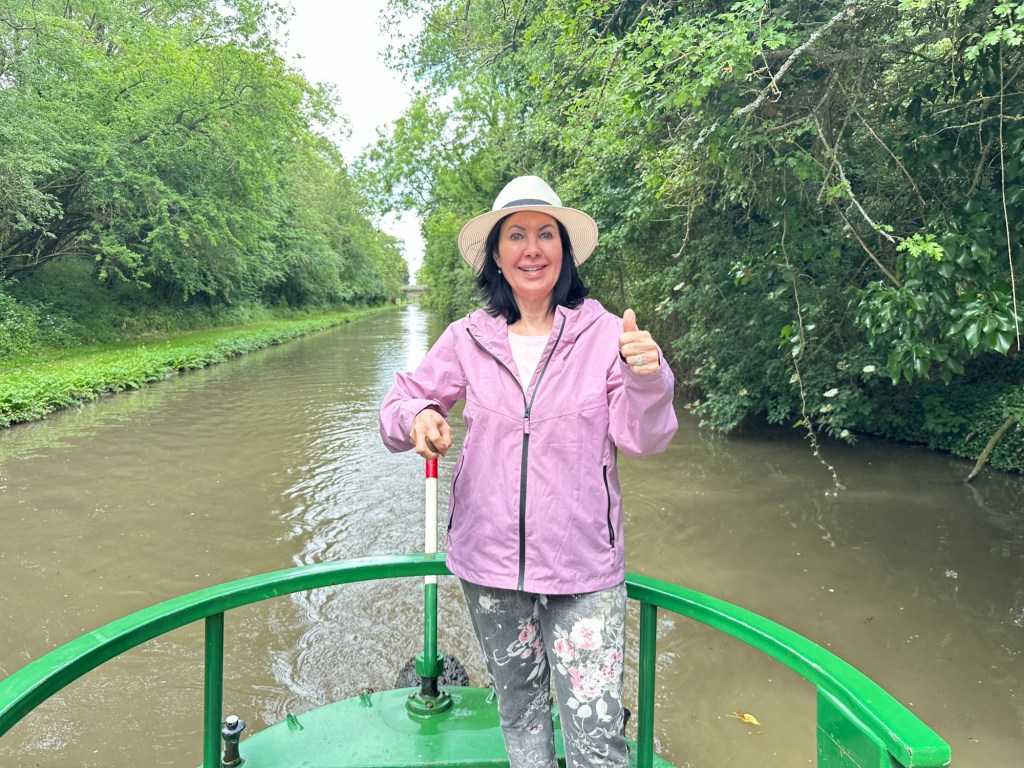

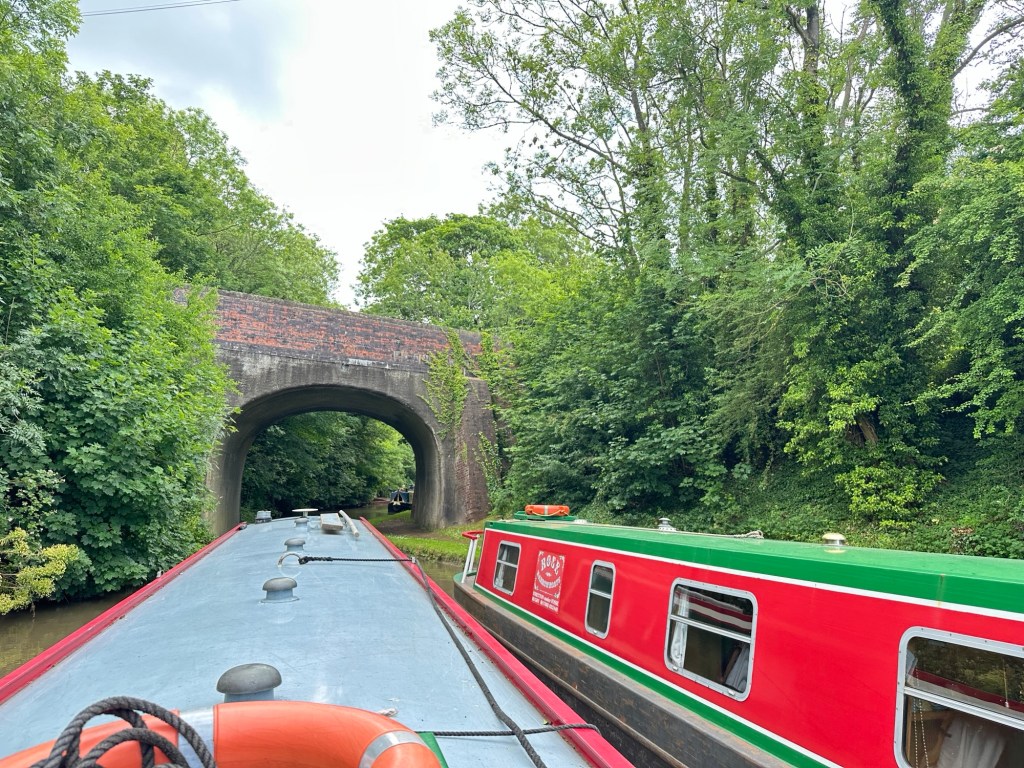
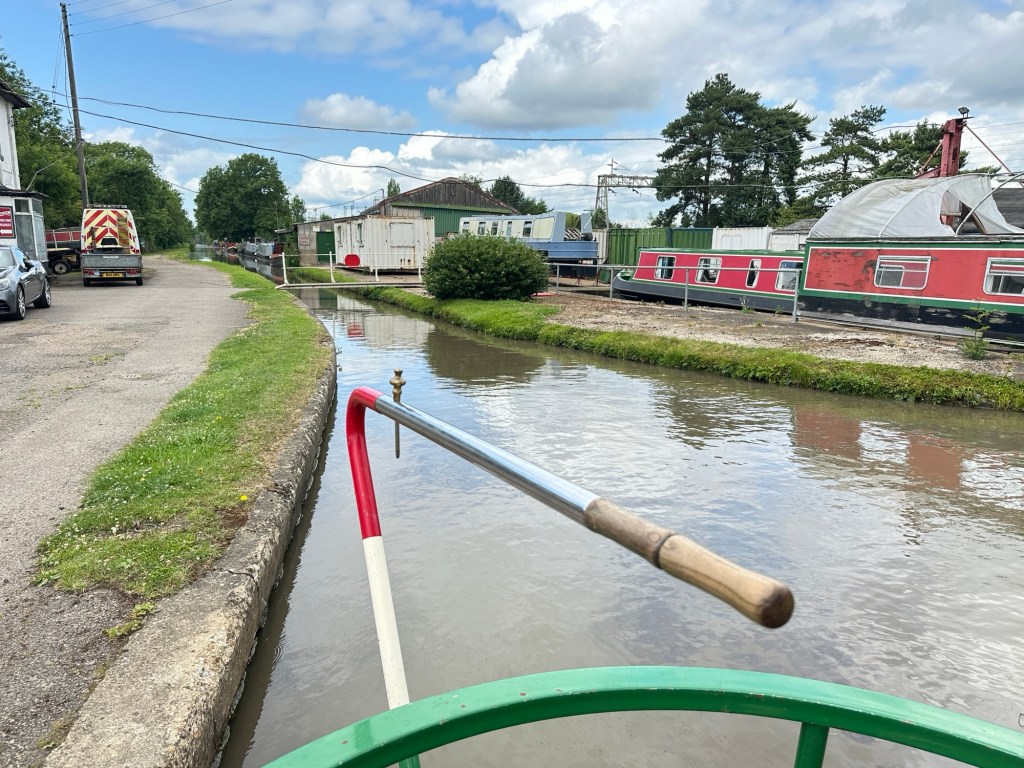
After a late lunch, we walked into town, had a look around, and then had a drink at the Barley Mow – a very popular place to be. It was also Father’s Day today, so probably more people were out and about than normal.

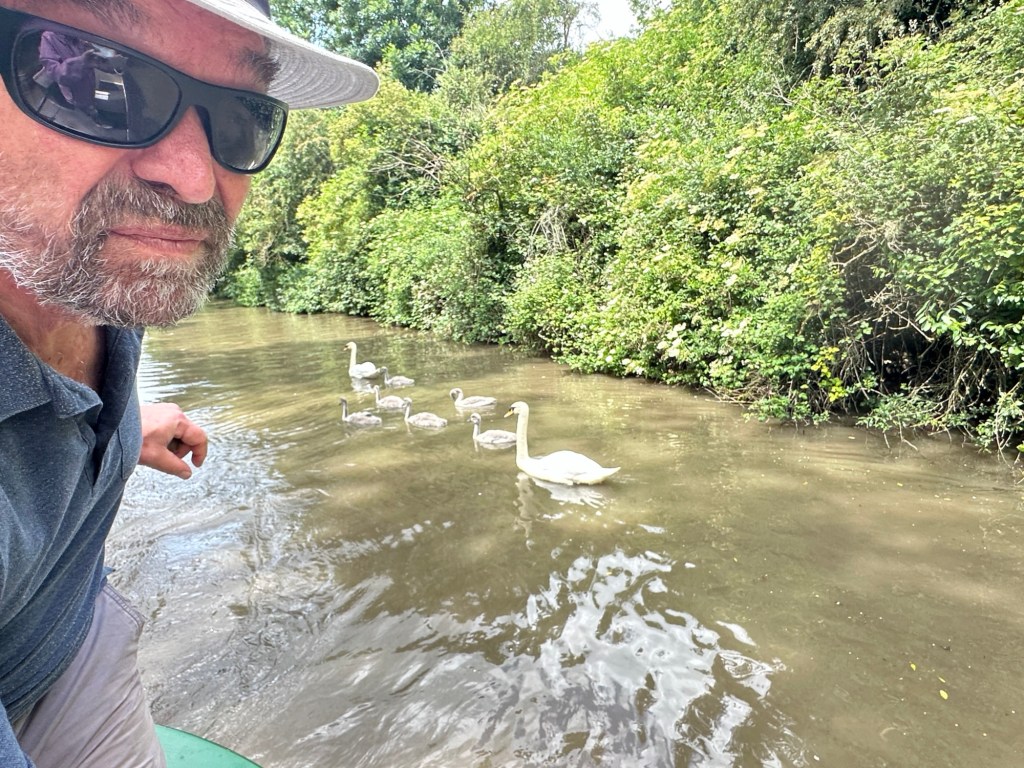
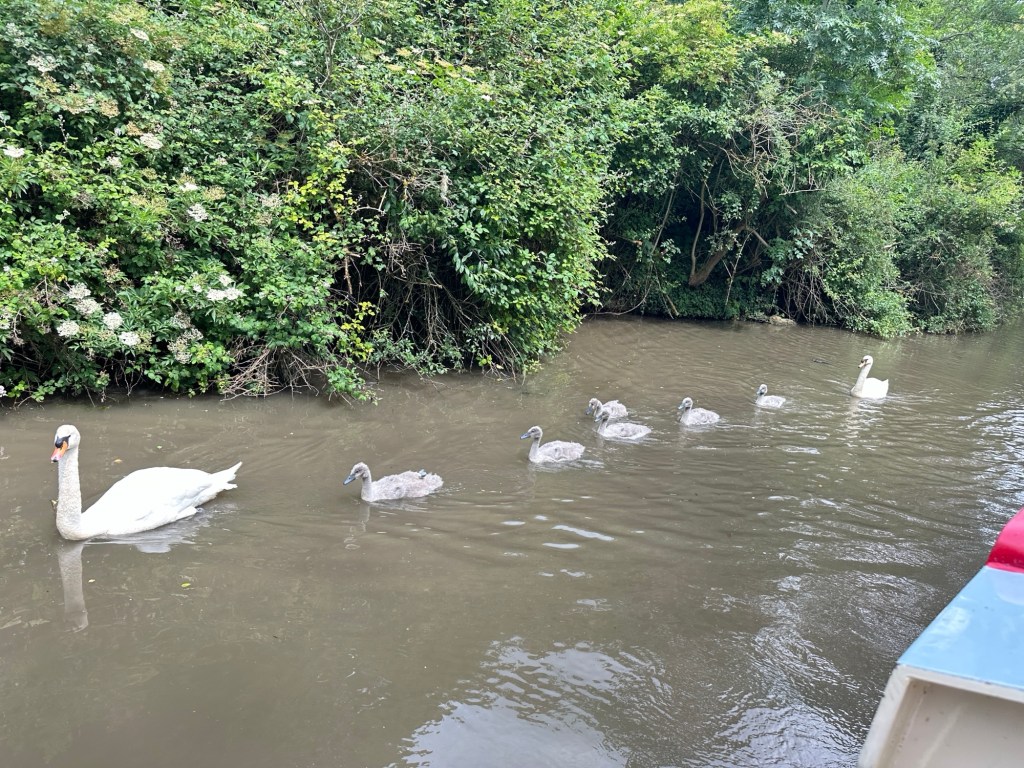

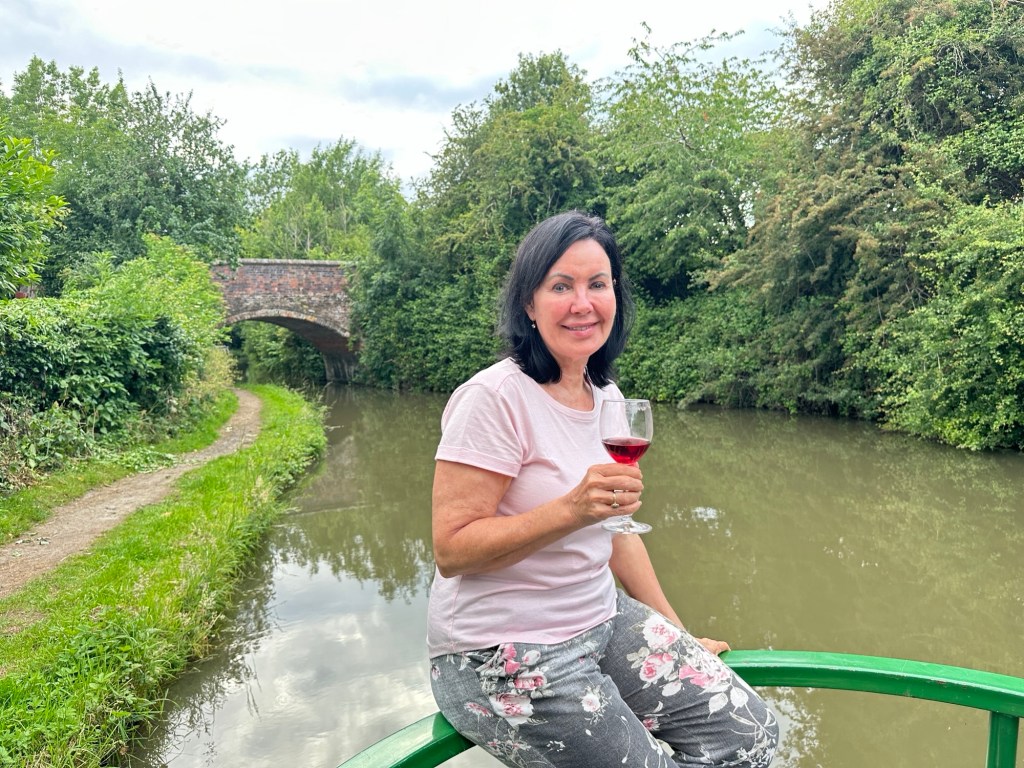
Back to the Heron, where it was blissfully quiet. We had our own happy hour, while our roast duck was cooking, then a lovely evening enjoying a wine enjoying the wildlife on the canal. So peaceful.
Day 28
Monday 16th June
Rugby to Mylor Bridge near Falmouth
12-24 degrees
We were awake early – probably all that extra rest we had had over the weekend – and were greeted with a cloudless English sky. How lucky were we to have been blessed with perfect weather for our narrow boat adventure.
We cruised back to Rugby, only 45 minutes away, as it was time to return our home for of the past few days. There would be a few boats returning so we wanted to get in early to miss the traffic jam. Captain Frank very successfully navigated the turn into the crowded canal we had to return to – it was the home base so lots of boats moored here. Frank even had a very fancy manoeuvre to do at the end – no problems! Not so, our English friends behind us! Eventually with a lot of instruction from the side, they got in. Glad we were there early and no big audience!


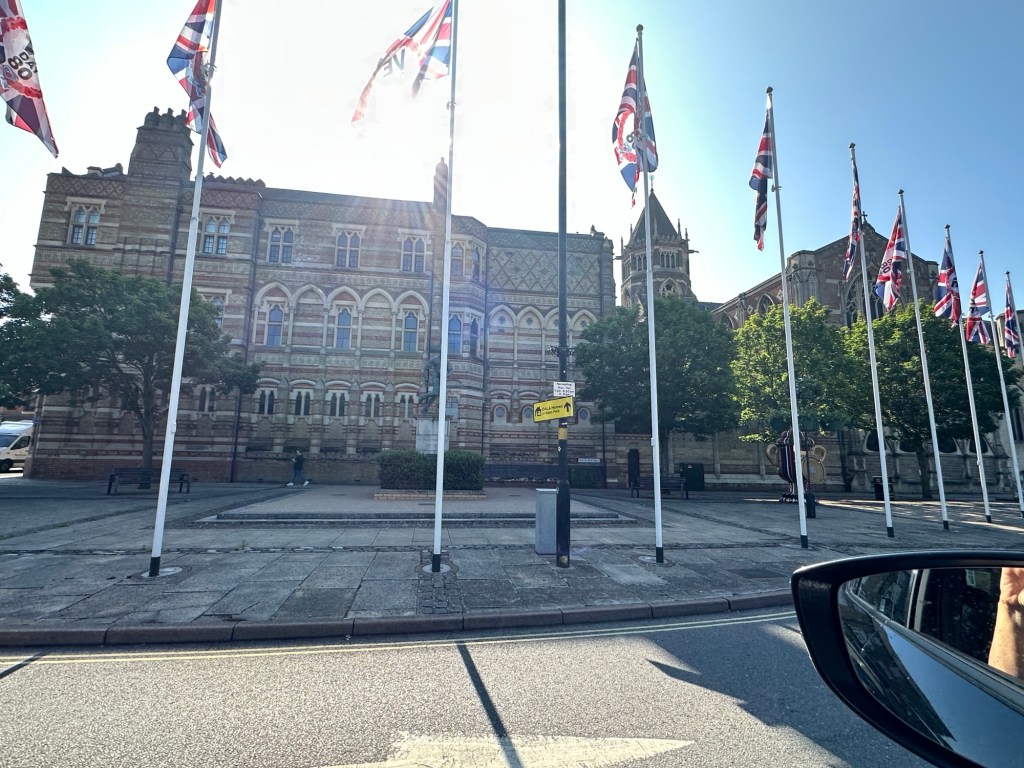
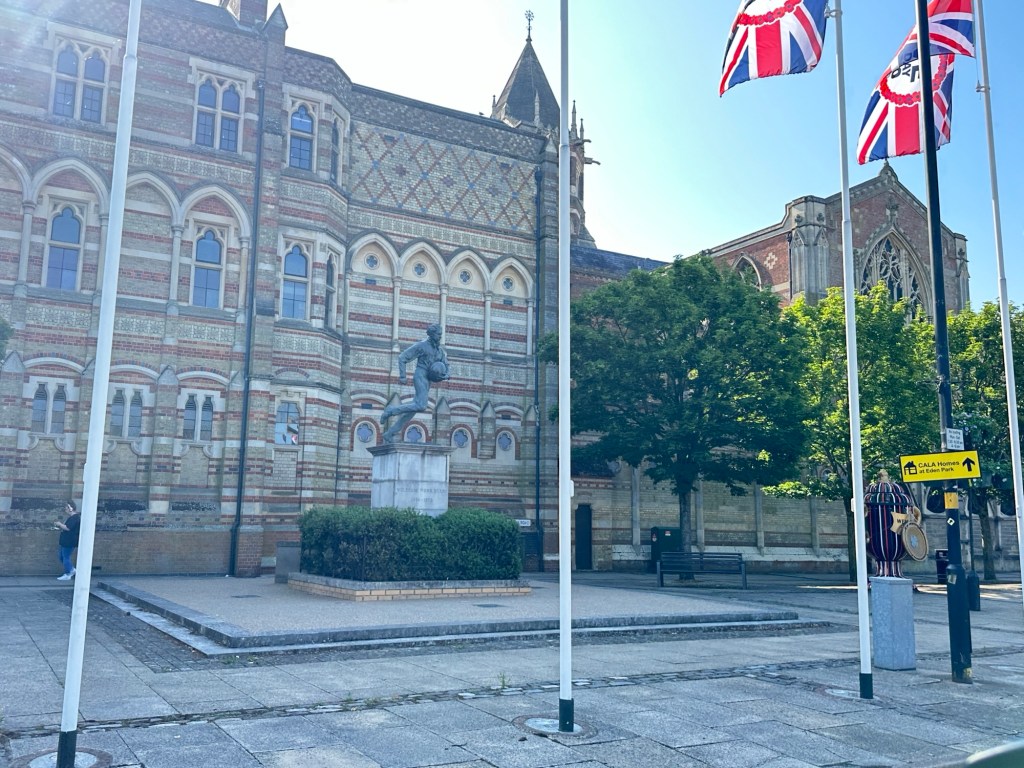
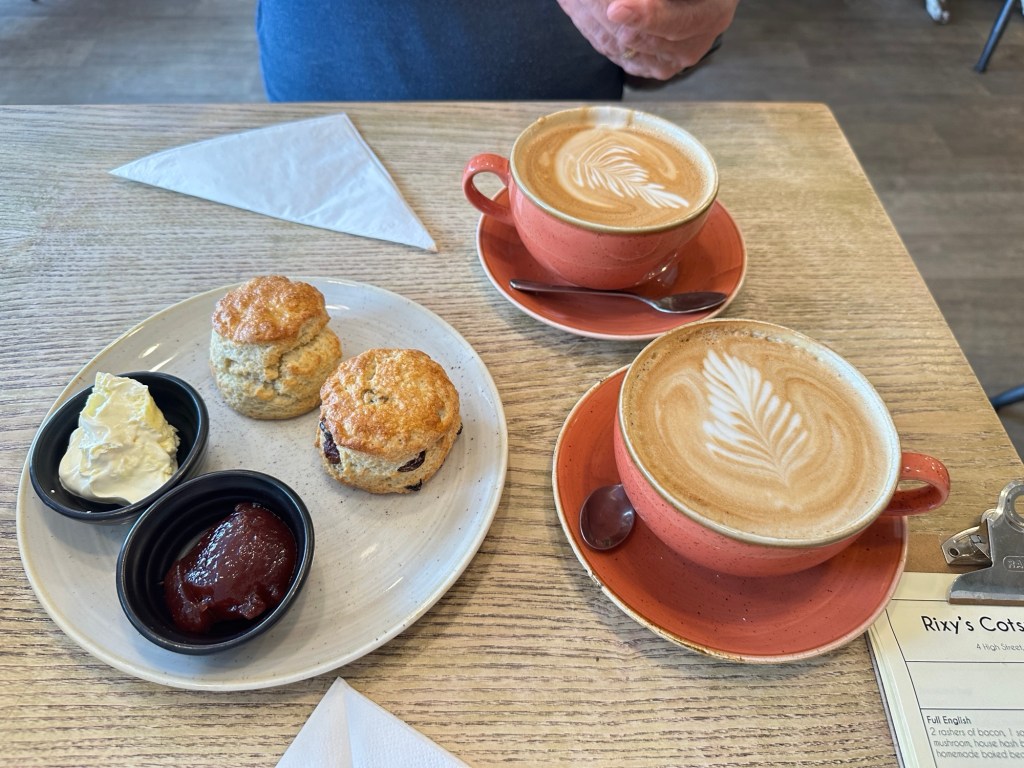
A quick diversion in Rugby to see Rugby School – Frank had always wanted to see it after reading about it. Then on our way to Cornwall. We followed the Fosse Way (an old Roman Road) for a while stopping for a cream tea (scones with jam and cream) at Morton in Marsh. What a gorgeous little village. A little walk around town found us in some very interesting antique shops, plus I managed to get my sunglasses repaired at the local optician. A lovely stop.

Interesting to note all the town names we have seen directions to over the last few days – Tamworth, Launceston, Warwick, Killarney, Kenilworth – all very familiar sounding. Australians obviously aren’t that inventive. And then there’s the Monopoly game names – Coventry, Islington, Liverpool, St Ives etc. Well it keeps me entertained anyway.
Things then took a downhill turn – we had diverted back to the M5, but there had been an accident and the motorway was like a car park! The GPS diverted us for a while, but obviously all the other motorists must have had the same idea, so all the roads were congested. Our five hour driving trip was pushed out to seven hours!!!! Boy were we pleased to get our Airbnb.
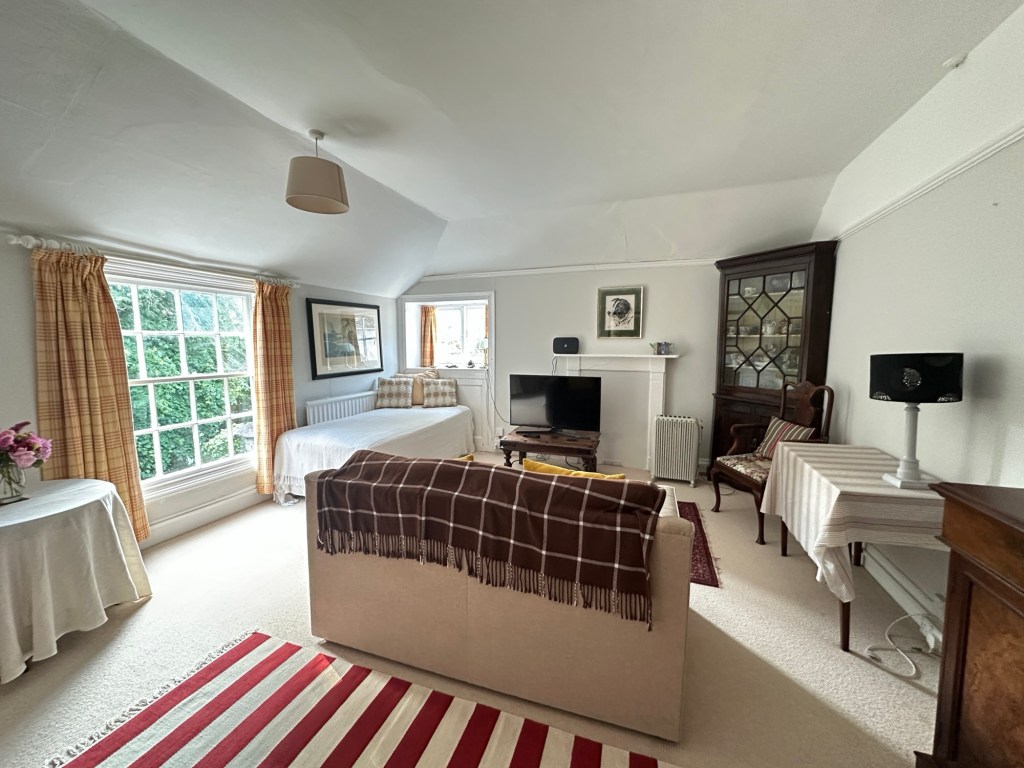
What a great find this Airbnb was – Albion House at Mylor Bridge. We had a courtyard apartment attached to a grand manor house. A spacious lounge, kitchen, bathroom and bedroom. Beautiful grounds and tennis court if we felt like a game. Vegetables for us to pick as required and fresh eggs. The main house was massive – very grand. Pen, the host, gave us the grand tour, and had left us a traditional cream tea ( I didn’t dare say we had one that morning!)


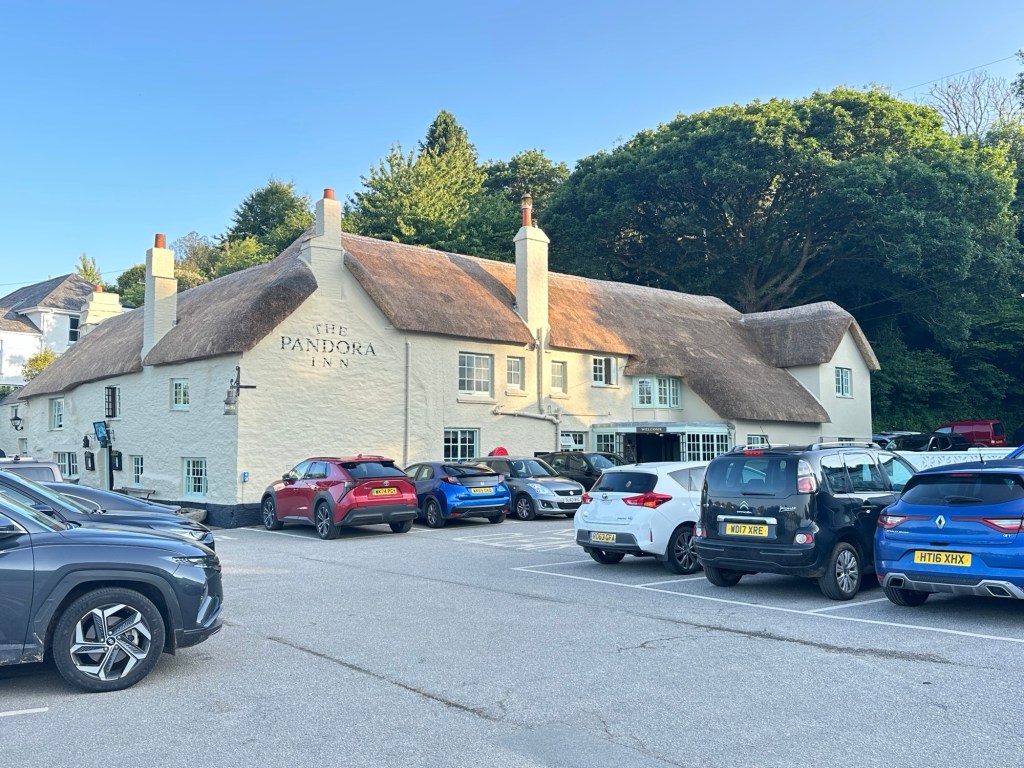
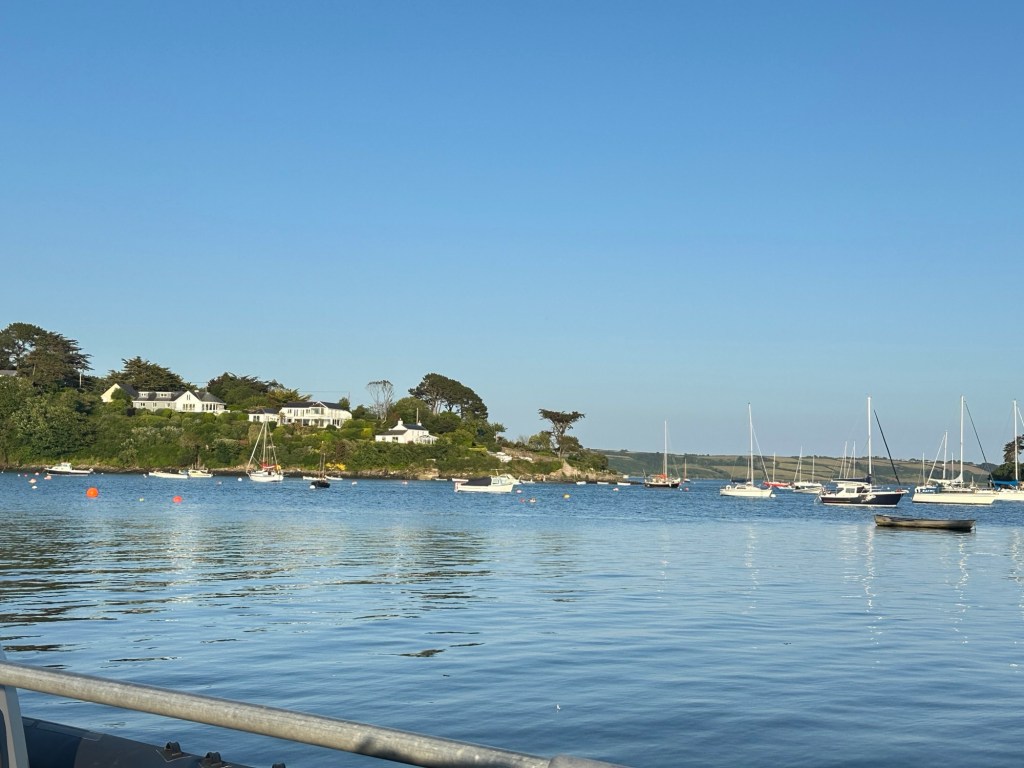
As soon as we’d unpacked, we headed to Pandora Inn for dinner – a 23 minutes walk along gorgeous densely tree lined singe lane roads, down a steep hill, to the stunning thatched waterside pub with pontoon seating for 150 people stretching out into the creek. It looked spectacular in the evening sunlight ( not forgetting the sun isn’t setting until 10pm). We enjoyed a lovely meal, and a chat to a nice couple who had come by sailing boat from Portsmouth. Our walk back was a few minutes longer due to the long steep hill, but we felt quite invigorated by the time we got back to our accommodation.



Day 29
Tuesday 17th June
Mylor Bridge to St Ives to Land’s End to Penzance to Lizard Point to Falmouth and home
11-20 degrees, sunny
Touring Cornwall today. We’re back to the narrow winding roads again! And the road code – pull to the side, give a wave, and hope like mad you pass the oncoming vehicle without touching!
Stone walls or trees/hedges right up to the road edge. Gorgeous flowers everywhere, and of course the fifty shades of green! Charming stone buildings, each village seems to have set coloured stone eg some are sandstone, some are granite, some are painted white, some are red brick, all so quaint. And every house has a cute name. Tiles, slate or thatched roofs.
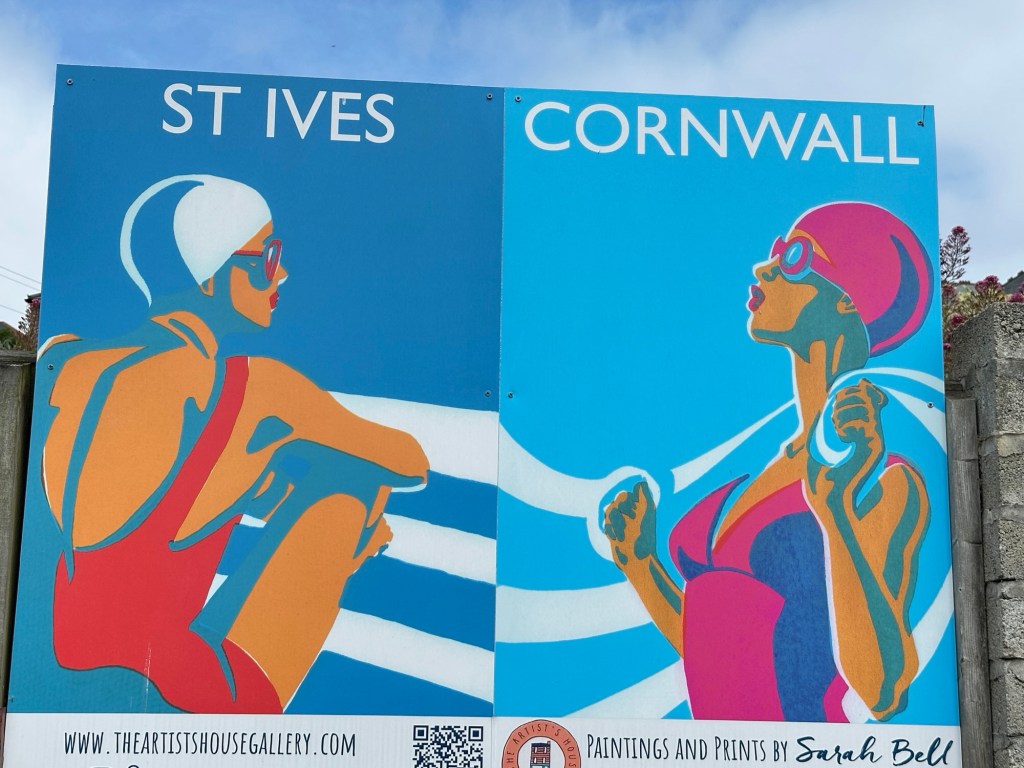
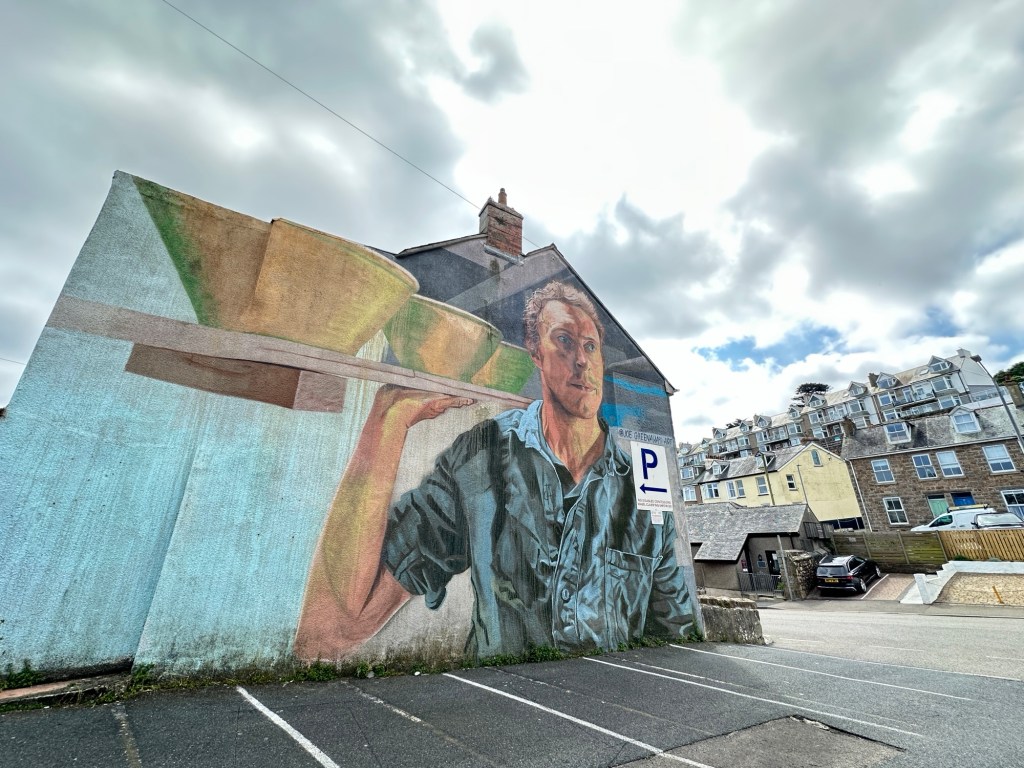
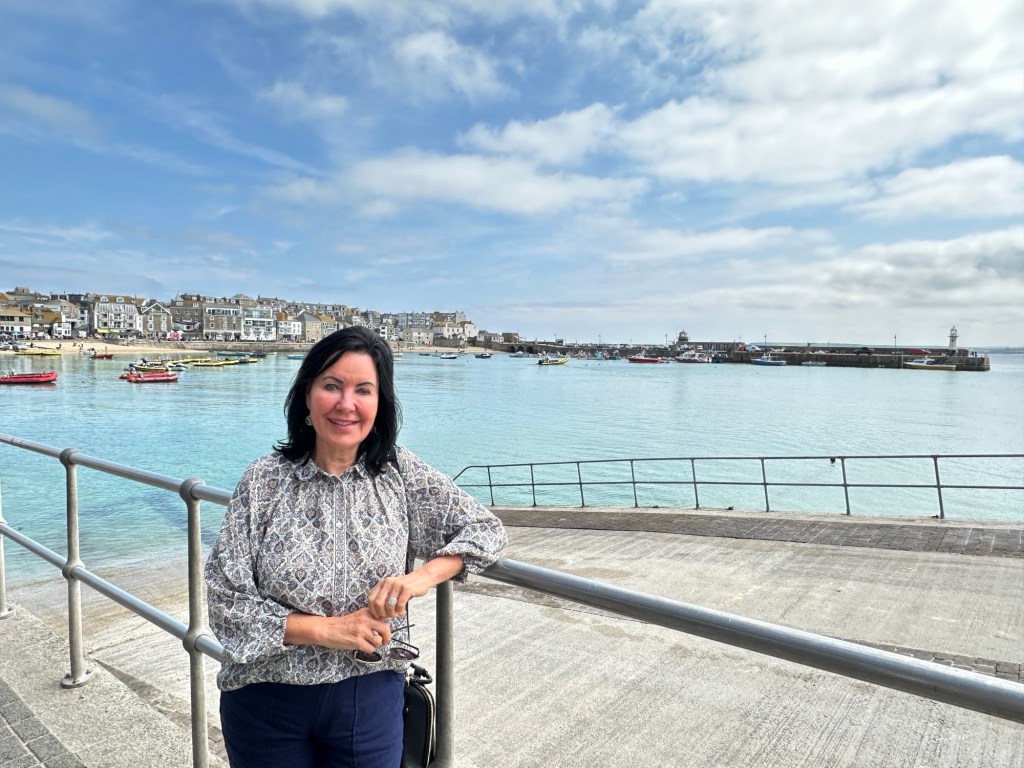
As I was going to St Ives, I met a man with seven wives…. One of Cornwall’s most treasured towns, St Ives is famed for its picturesque cobbled streets and coastal allure.
However, up until the nineteenth century, it was primarily a bustling hub for the pilchard trade and a key exporter of tin across the UK and Europe. Now it’s a must-visit destination for holidaymakers and artists alike. Plenty of others had the same idea, we could just imagine how busy it would be on a summer weekend. The water looked very inviting. Many cafes, restaurants, bars, boutiques, art galleries and souvenir shops. Of course we didn’t have an enough time there, so I missed out on the shopping part!



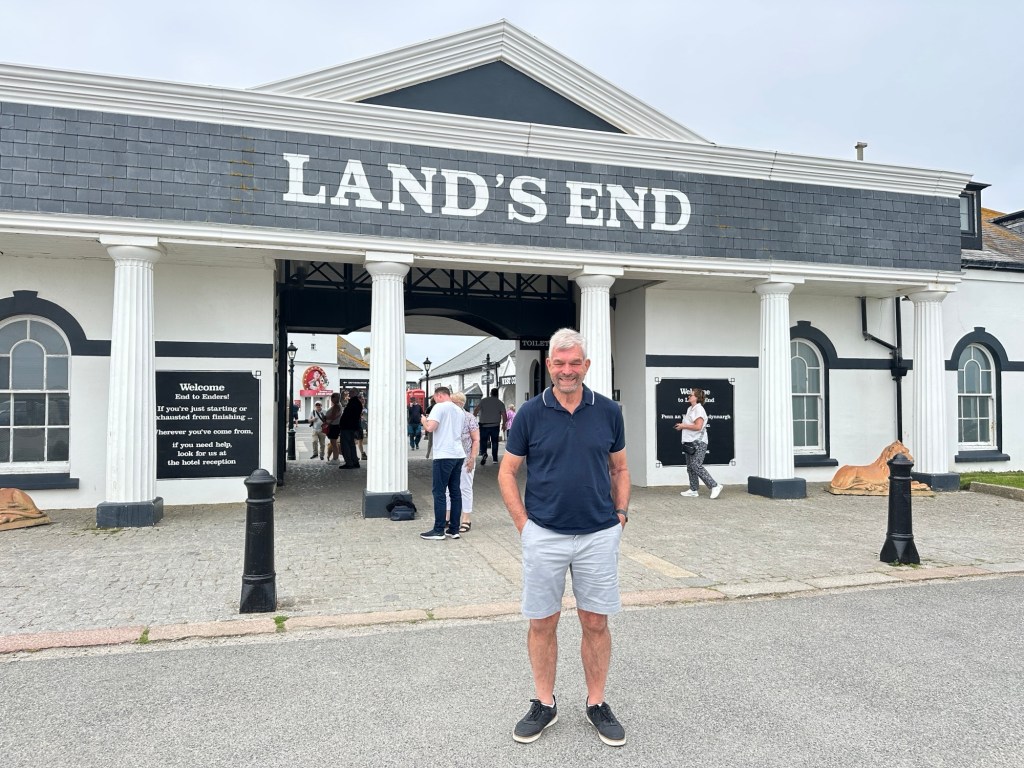
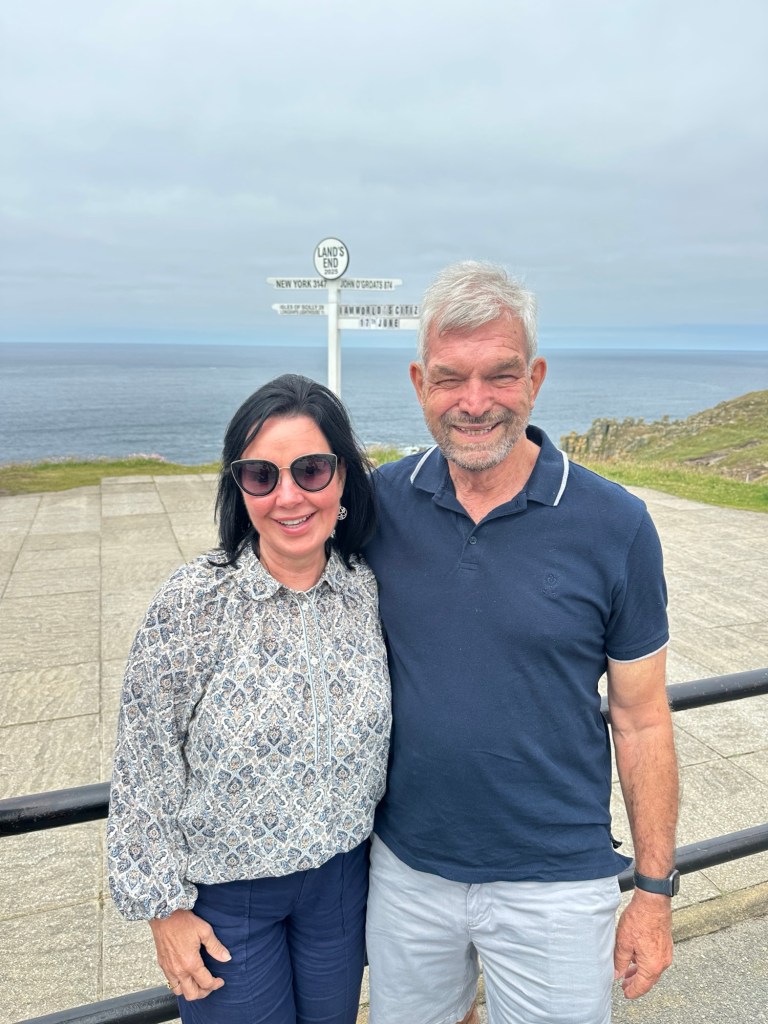
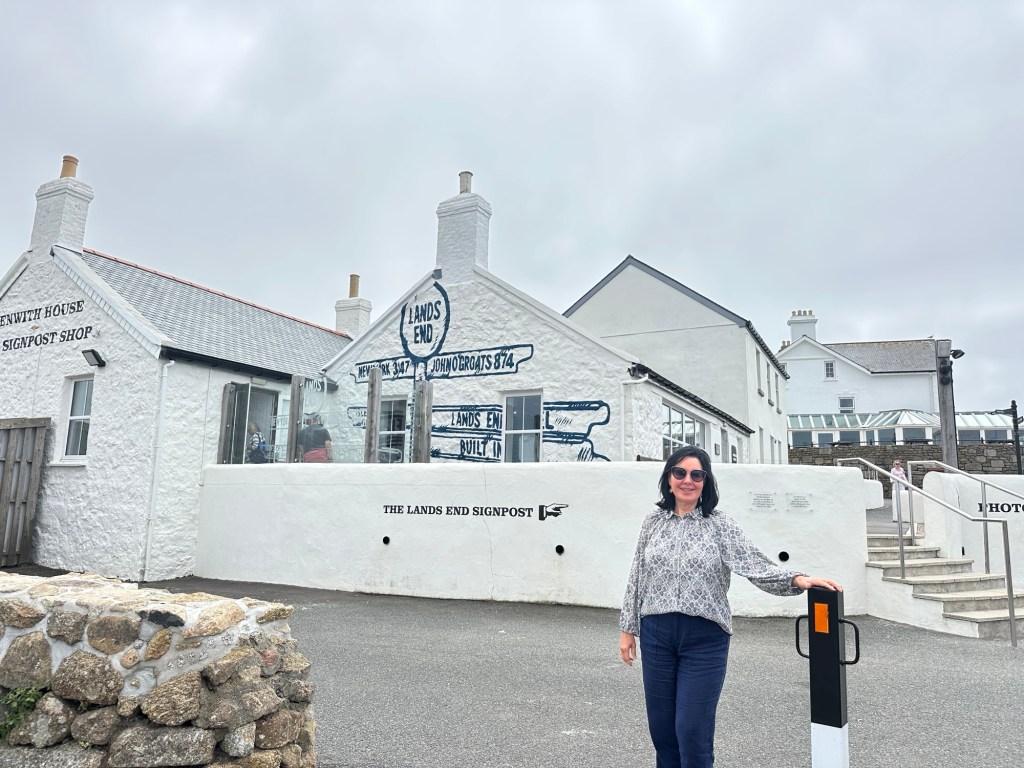
Onto Land’s End….. Lizard Point is the most southerly point of mainland Britain, however Land’s End is the furthest point from John O Groats in distance, hence it tends to be the place most journeyed to. Fantastic scenery. 874 miles from John o’ Groats to Lands End – and we have now driven it all!
This rugged section of coastline is defined by twenty-metre-high granite cliffs, sculpted by relentless Atlantic winds into awe-inspiring shapes. These cliffs are a haven for seabirds, including Cornwall’s national bird, the Cornish chough. Seals, dolphins, whales and basking sharks are often spotted in the ocean.
Western gales, dense fogs, half-submerged reefs and strong currents guarantee these waters are amongst the most challenging in the world. There are at least 140 shipwrecks off the coast of Land’s End. Kettle’s Bottom and Shark’s fin are two razor sharp reefs, only visible at low tide and are responsible for the loss of many lives.
Very touristy though- I had heard it described as Coney Island – it was a bit like that. You couldn’t take your own photos with the Land’s End sign – the official photographer had to do it , at £11 a pop ($23)! We snuck in front of the sign while he was out of sight, and another tourist kindly took our photo. That will be fine for our photobook!

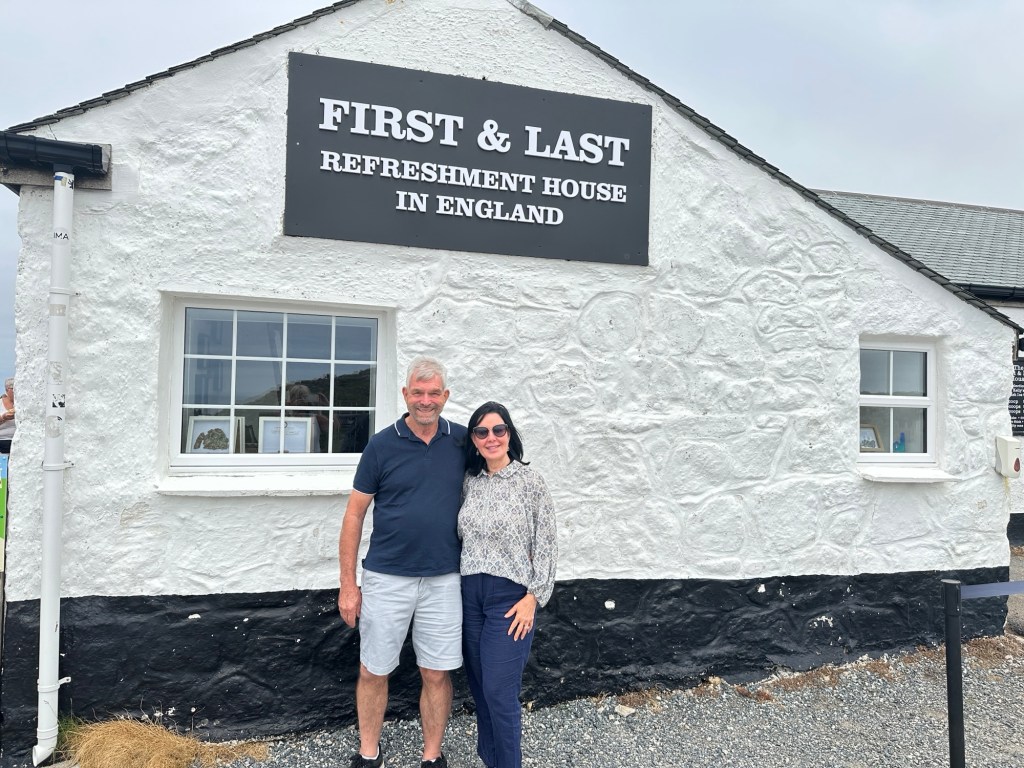

Next, Penzance, a lively market town with a quirky, artist-inspired charm. The town’s market tradition can be traced back to the fourteenth century. No markets today, but had a wander around. And no pirates anywhere that I could see!


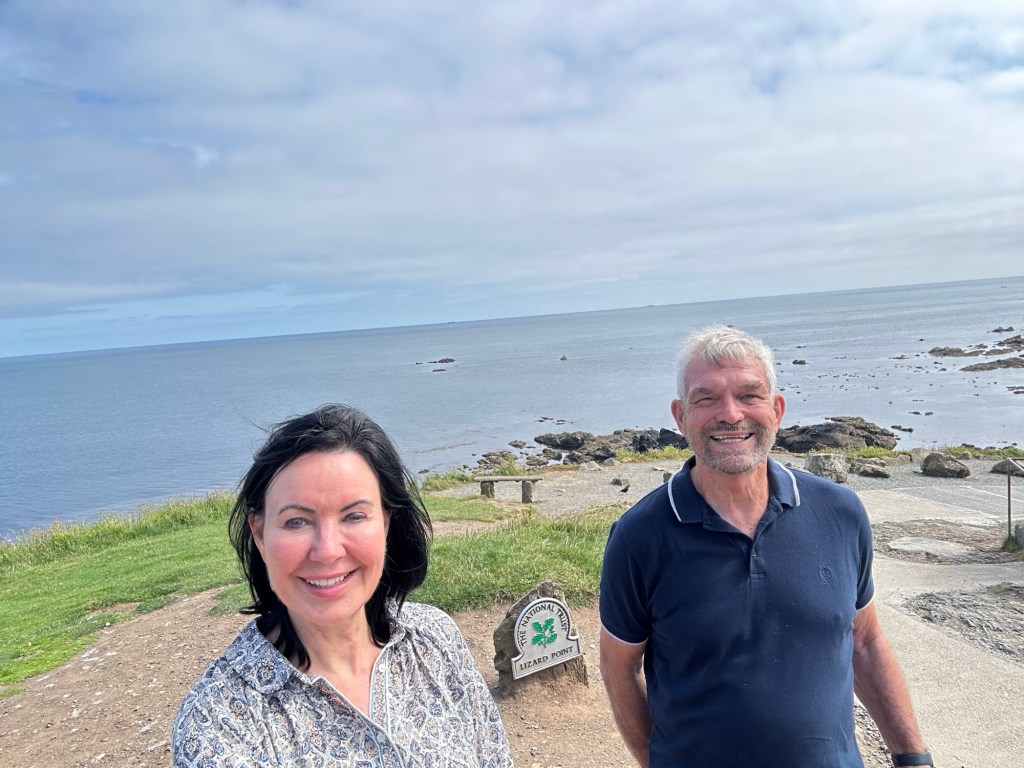
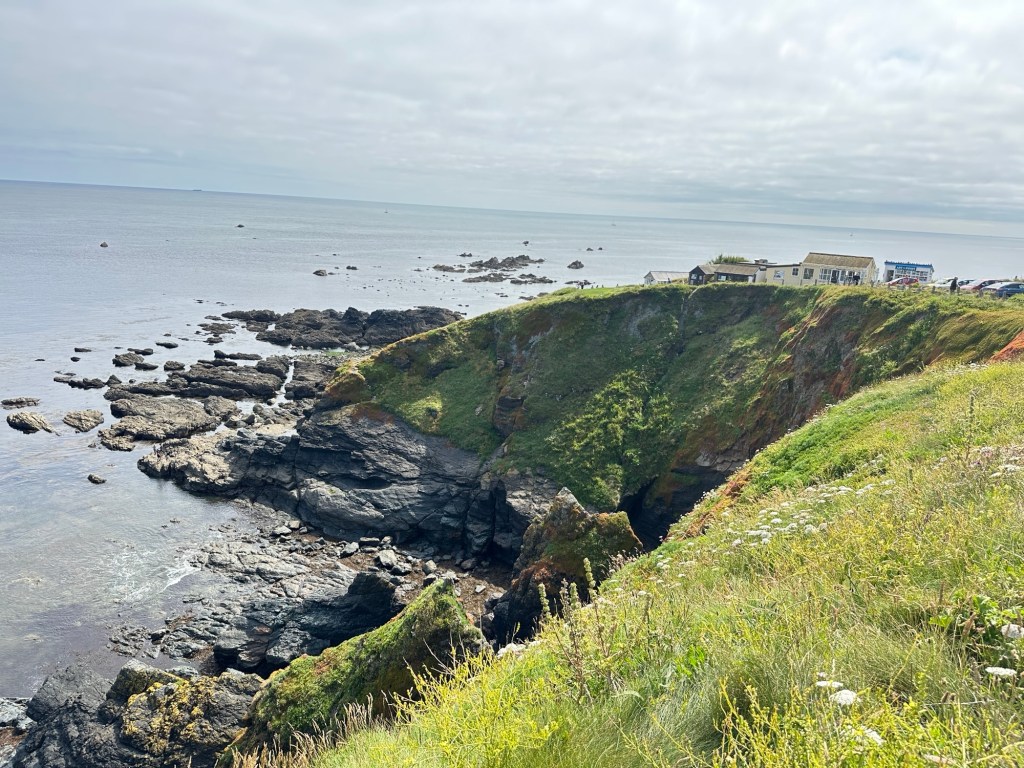
More single lane roads led to Lizard Point, mainland Britain’s most southerly point. This whole area – seashore, cliffs and farmland – is incredibly rich in wildlife, and the sea off Lizard Point is also one of the busiest shipping lanes in the world. There have also been many shipwrecks around these rocky shores over the centuries, which is why the Lizard Lighthouse was built to guide sailors safely past and to warn them away from the hazardous waters off the Point. Looking at the cliffs I could see why there were accidents. Another lively little village, minus the major tourist add ons.


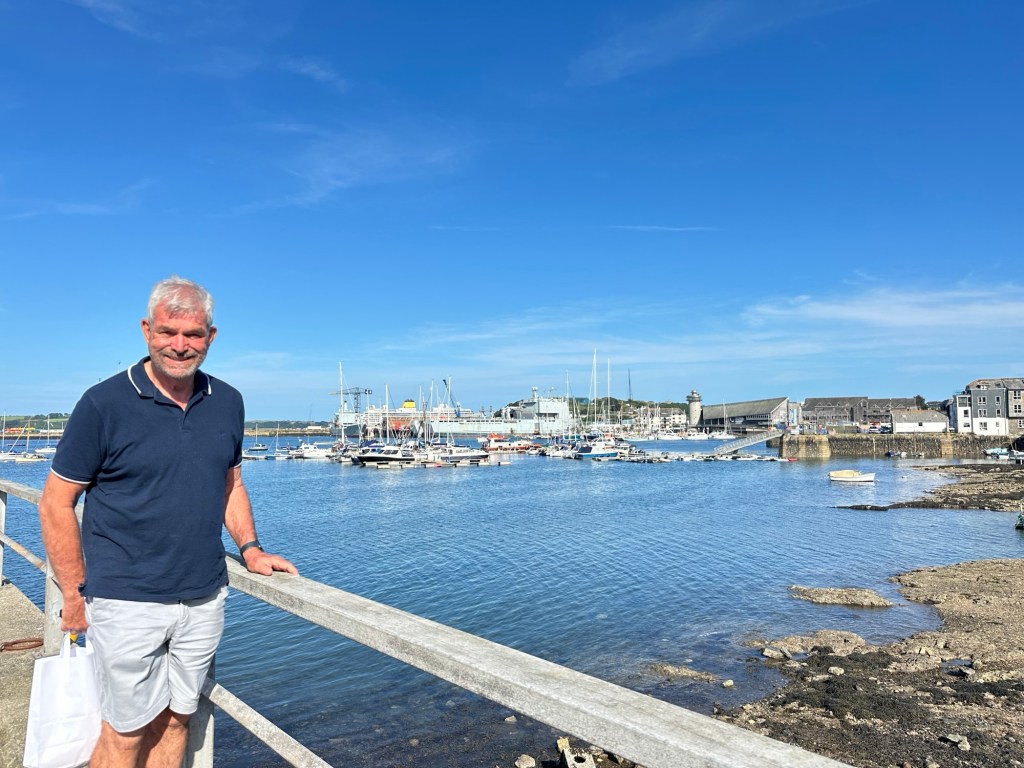
Last stop, Falmouth, a town and port on the southeast coast of Cornwall. Falmouth has been shaped and influenced by its strong connection to the sea. Steeped in rich maritime history, Falmouth was originally developed around its deep natural harbour, which established it as a key port. The town has now evolved into a vibrant creative hub and is home to one of the UK’s top arts universities. We walked around the town, but as it was 5.30, most of the shops were closed. However, some activity around the marina – we stopped at a local pub to enjoy a cider and a beer, looking out the three naval ships in port, plus the large collection of leisure and sailing boats. It was lovely, but I feel the wharf area has yet to be developed to its full potential.
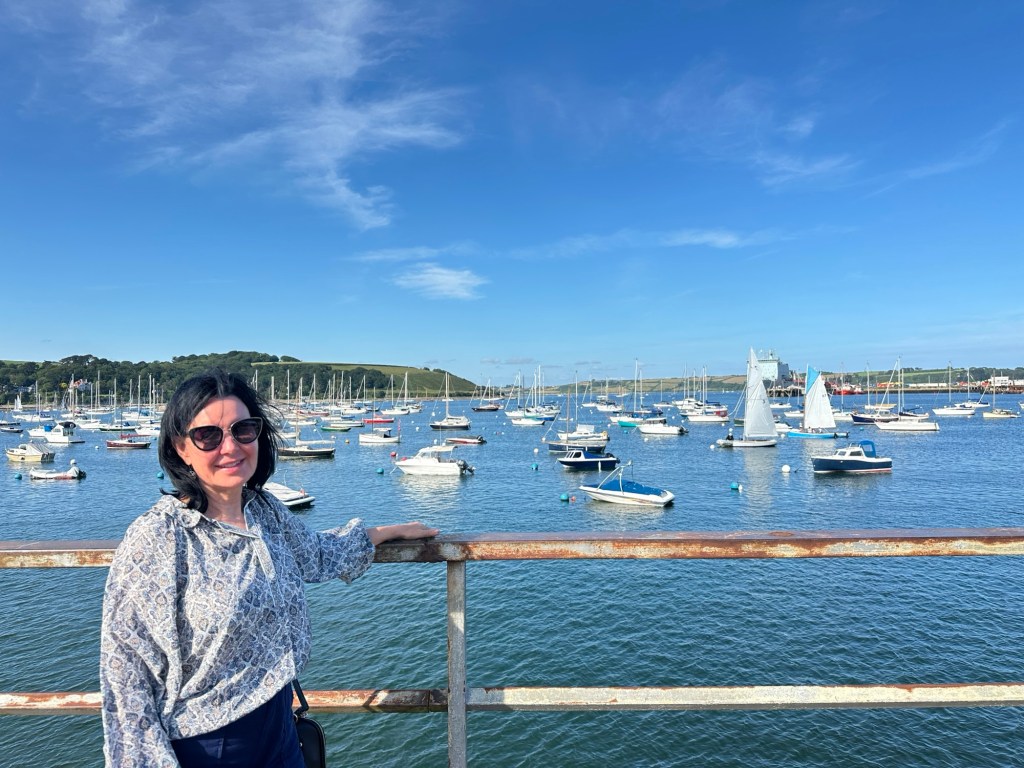
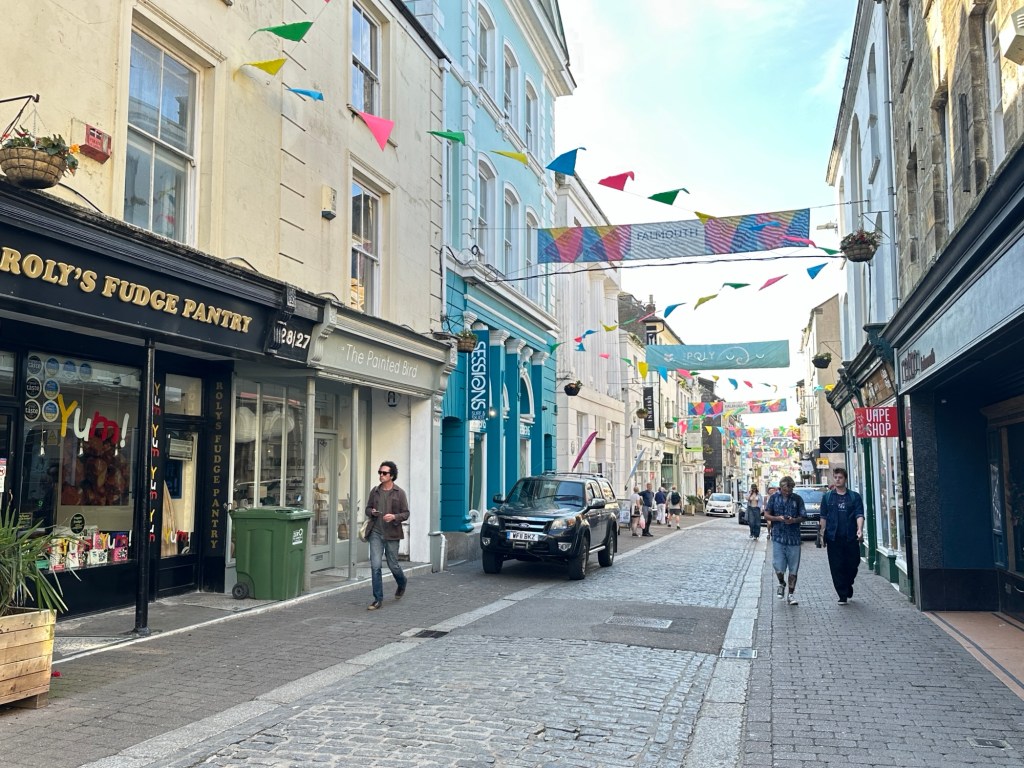
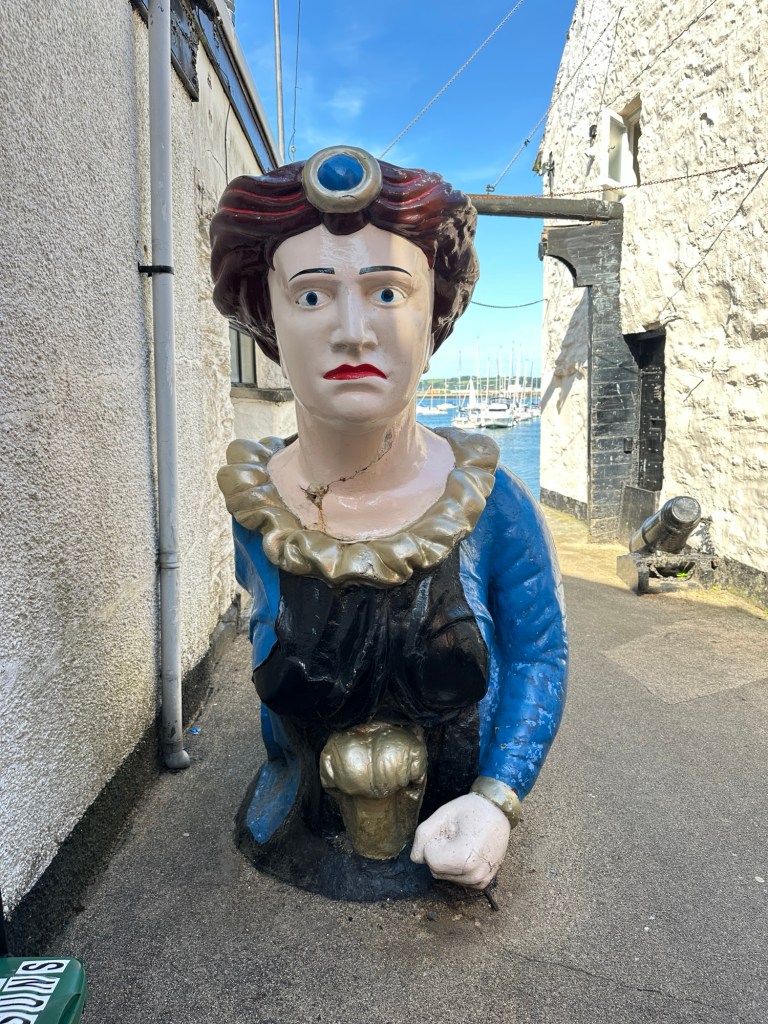

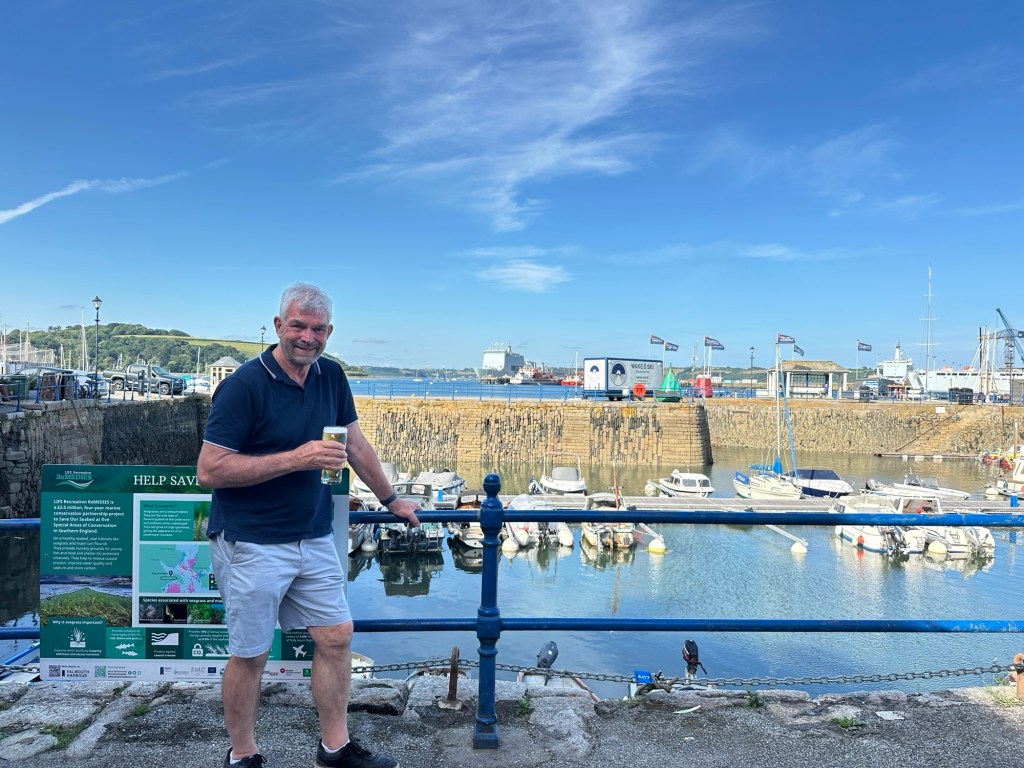
We couldn’t find anything we wanted to eat other than fish and chips so we ended up getting some Cornish pasties and taking them back to our apartment for an easy relaxing dinner.
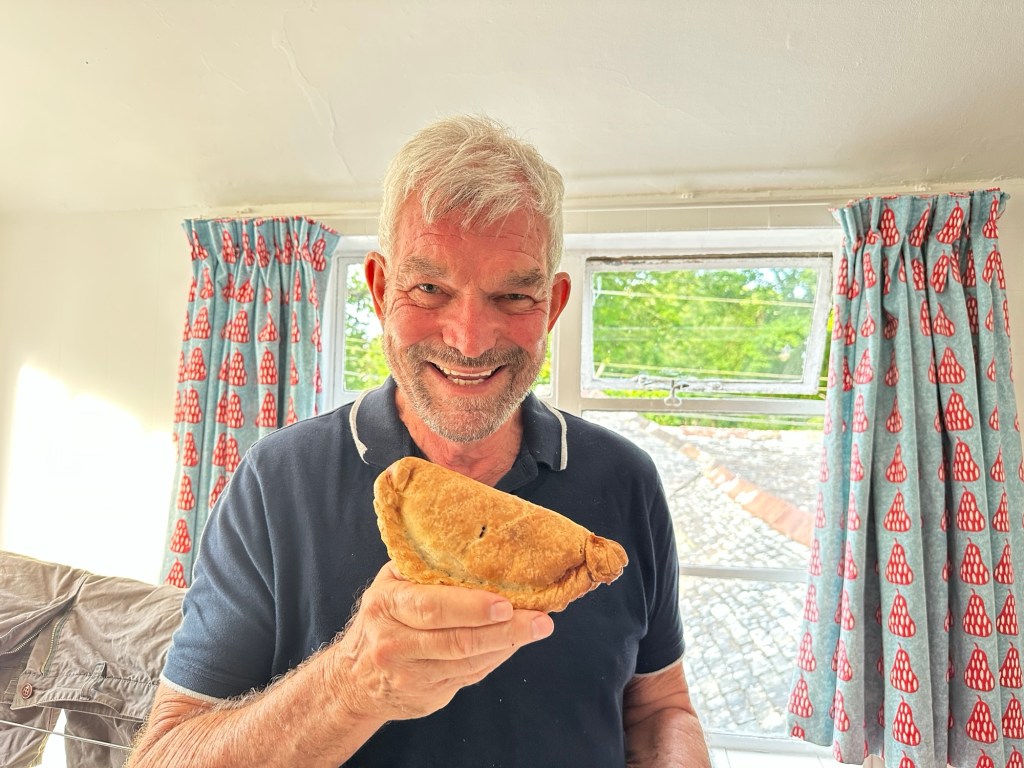
The Cornish pasty has a long and fascinating history – I shall share it. Cornwall’s main industry back in the 1800’s was tin and the Cornish pasty was lunch for every miner. Tin mining was hard and dangerous work and the pasty provided the perfect portable combination of meat, vegetables and carbohydrate with everything they needed for a gruelling day down the mines and the long walk home afterwards. Meat and vegetables were cooked together and enclosed in a thick layer of pastry which acted as a thermos keeping their delicious contents warm, while being easy to carry. The famous crimped crust also served an extra purpose – the miners held it to eat the pasty, then threw it away for the ‘knockers’ (the spirits of the tin mines) to eat – so avoiding transterring arsenic, a deadly poison present in the mines, into their food. They are quite delicious! And defined a staple in Cornwall – they are sold everywhere.
Then we had to have the cream tea our host had left for us. Quite the carbohydrate loaded meal!
There is history associated with the cream tea as well. The Cornish Cream Tea is a tradition dating back to the 11th century. It is believed that monks at Tavistock Abbey (just across the border in Devon) first served bread with clotted cream and jam to workers restoring the abbey. Over time, this simple yet delicious treat became a staple in Cornwall, where it took on its own unique identity.
What makes a Cornish Cream Tea special? It all comes down to how it’s served! In Cornwall, a freshly baked scone is split in half, spread first with a generous layer of strawberry jam, and then topped with a dollop of thick, golden Cornish clotted cream-always in this order! This is what sets it apart from the Devonshire method, where cream is spread first. Turns out I’ve been having Cornish teas all my life!
Day 30
Wednesday 18th June
Mylor Bridge to Dartmouth and back
14 -23 degrees , sunny
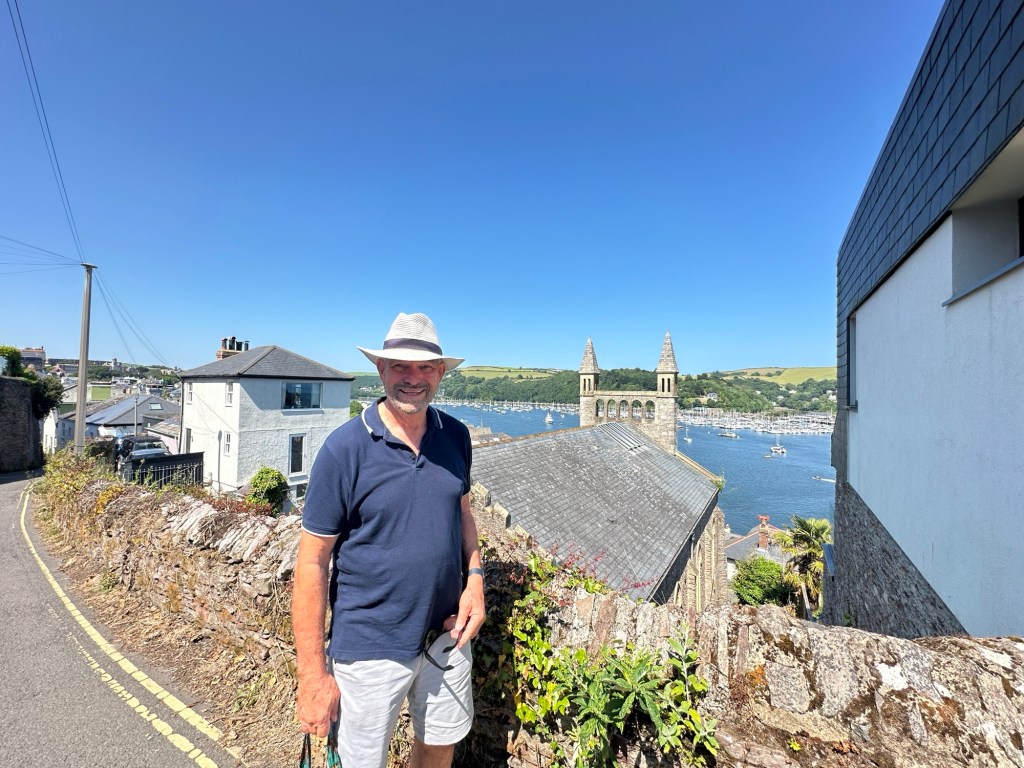
Another perfect day! We had a two hour drive ahead of us – plus an extra 15 minutes due to taking the wrong exit onto the motorway! That happens! Going to Dartmouth – Frank was keen to show me his old stomping ground from his two years he spent there while in the Royal Navy.
We stopped at Totnes first to look at cruising on River Dart options and were advised to continue onto Dartmouth and do the ferry round trip. A series of single lane roads led us to the park and ride. Next challenge was paying to park – they didn’t take credit card and we didn’t have the app. The bus driver suggested we park in the street two minutes away, walk back and catch the bus – which we did – for free. Saved ourselves £10. Bargain!
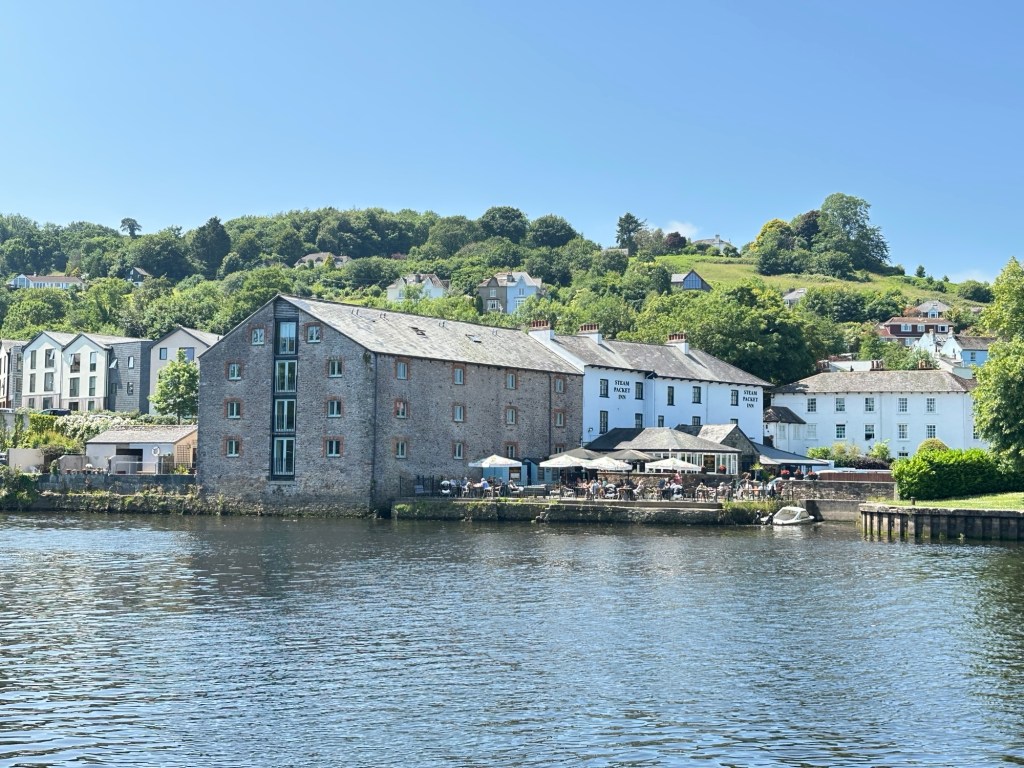
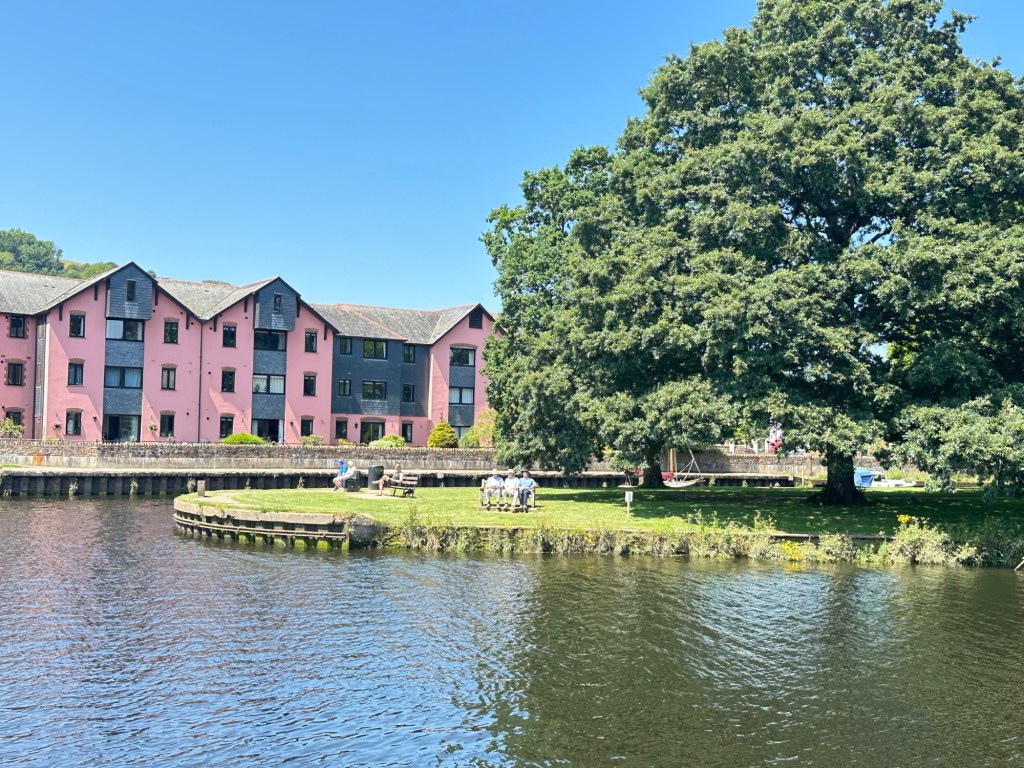

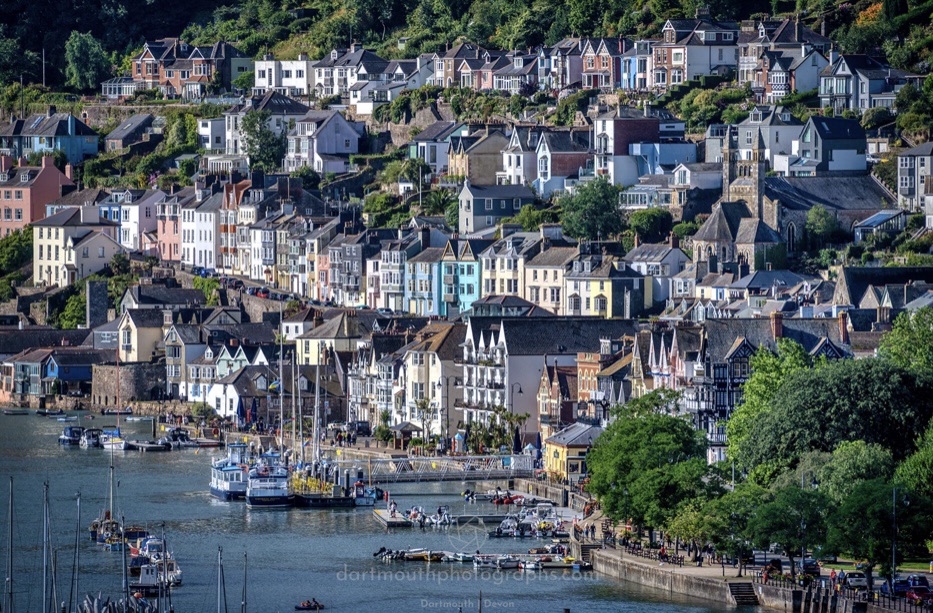
Dartmouth is situated on the mouth of the River Dart and is one of South Devon’s most popular and enchanting towns. With its charming historic streets, scenic river location and surrounded by South Devon countryside, I found it quite stunning. The picture perfect weather accentuated that.
We did the cruise and soon realised Dartmouth is full of history and heritage – saw the Dartmouth Castle (they used to put a chain across the river from here to protect the town from hostile ships), Agatha Christie’s holiday home where she wrote a lot of her novels, the spot where the Mayflower set off to America with the pilgrim fathers on board, and of course the very well-appointed Britannia Royal Naval College. Frank was very chuffed to see his home for 3 months in 1985.
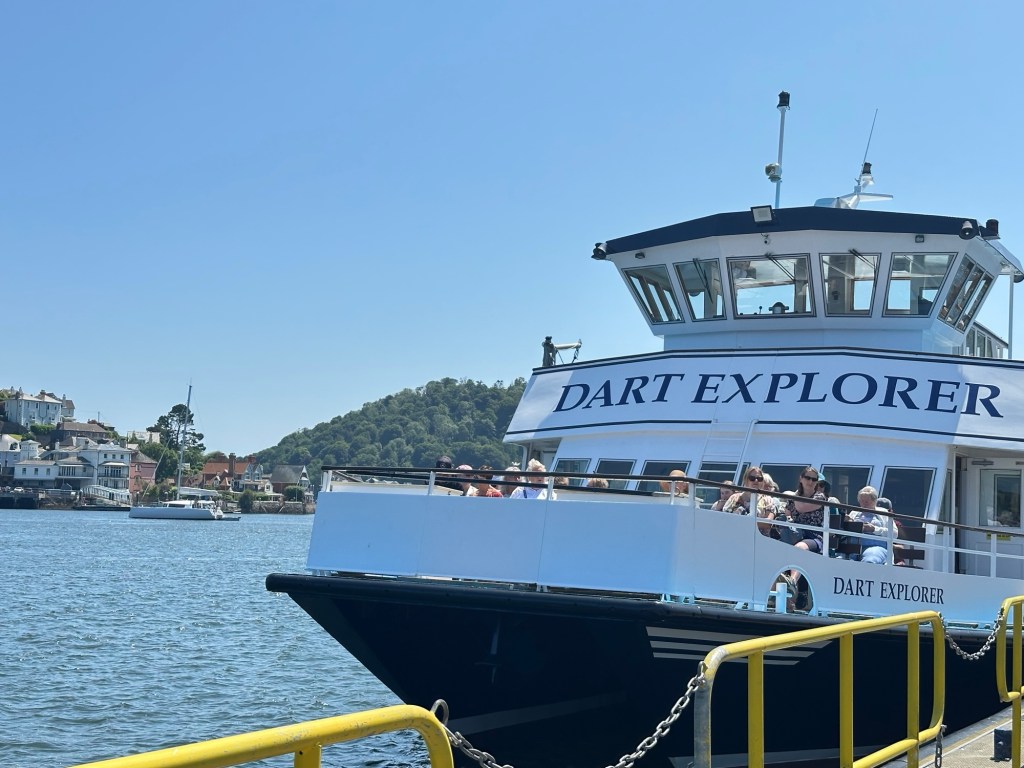

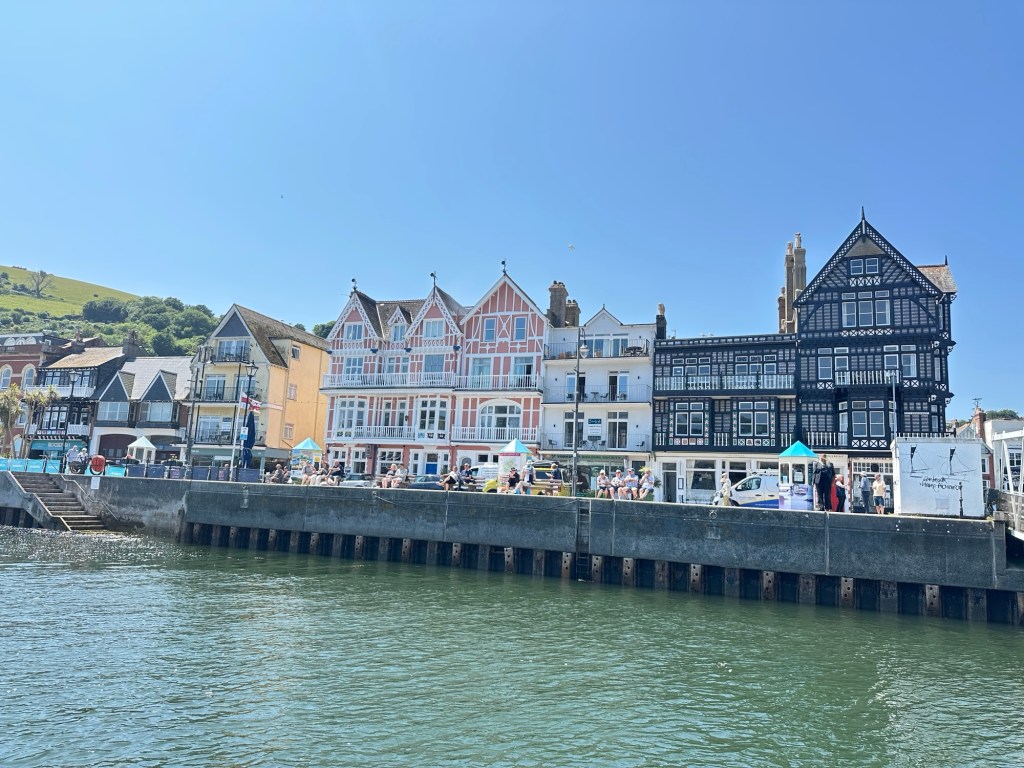
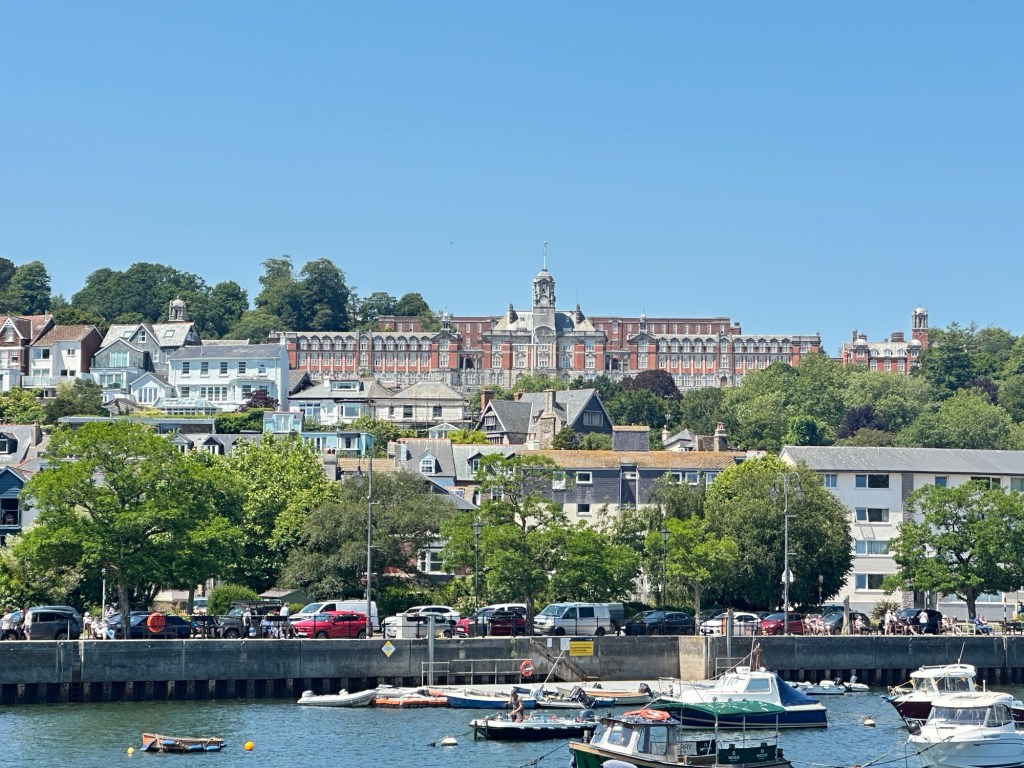

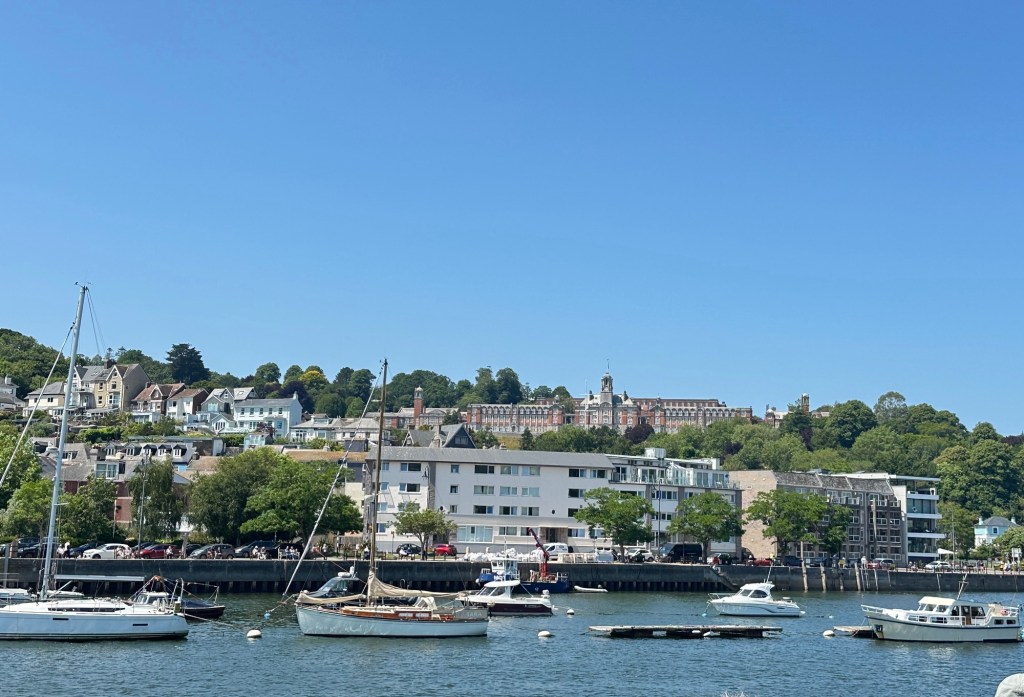
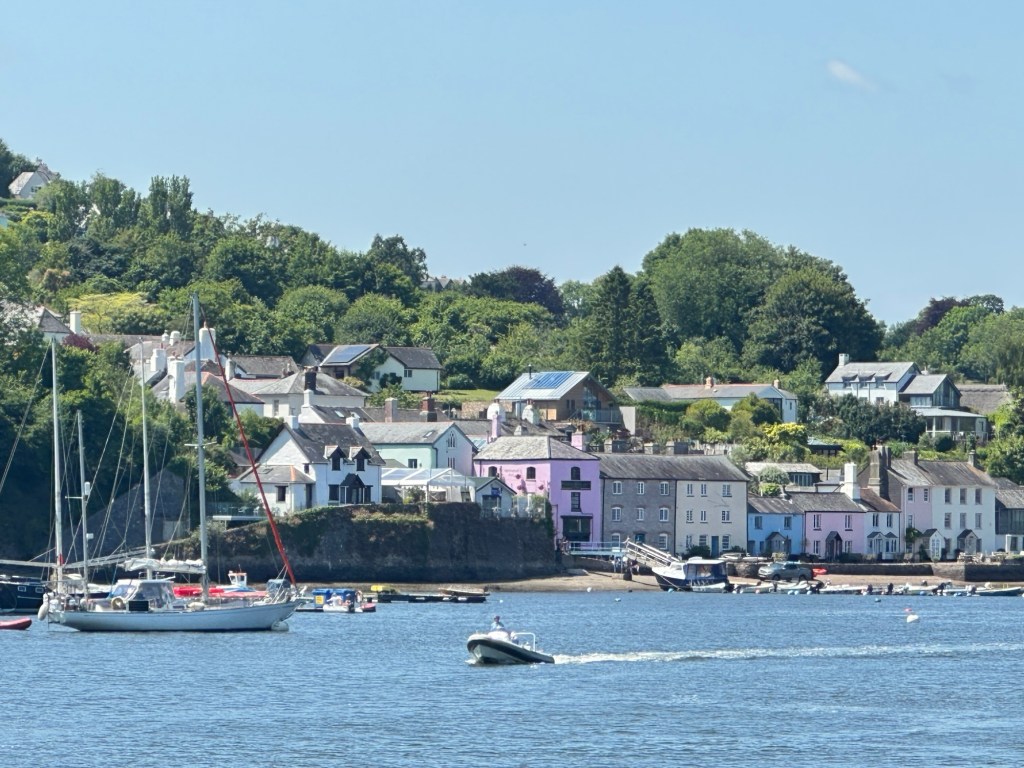
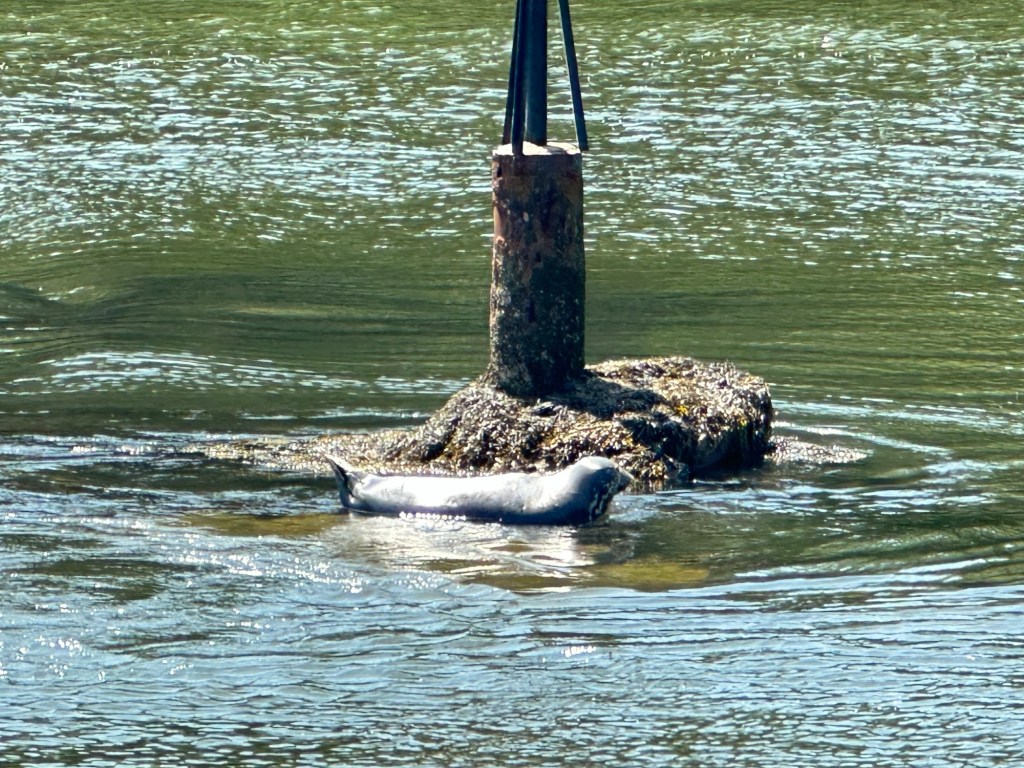


So much activity on the river- naval training, rowers, kayakers, sailing boats, and wildlife. Herons and egrets at the water’s edge, of course hundreds of noisy kittewakes, and a bonus – a grey seal sunning himself on a channel marker.
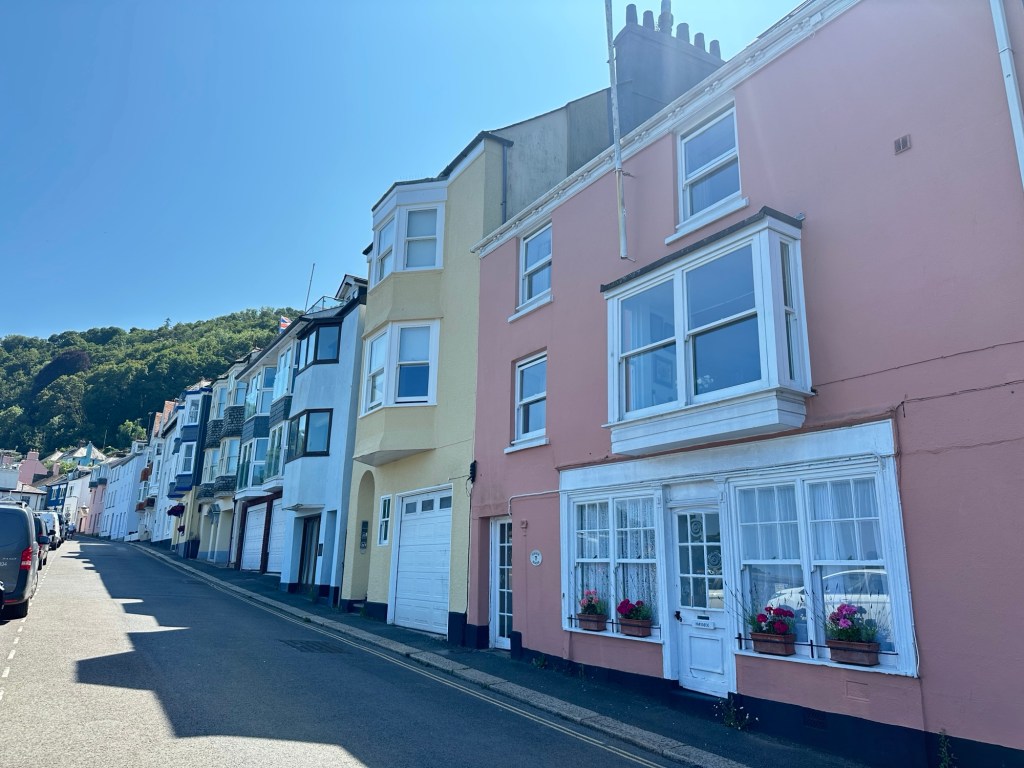
After the cruise we walked up some very steep streets/stairs to have a closer look at all the buildings. I just loved all the brightly painted houses surrounding the harbour. You could spend many hours exploring this area. We were going to have a late lunch at 3.30 but we were too late – all the kitchens were closed. Instead we caught the bus back up to our car, and drove 2 hours back to Mylor Bridge. I swear, I am done with the single lane roads. They were bad in Ireland and Scotland too, but there just seems there is so much traffic on them here. The speed limit is 60mph which the locals seem to want to do, but they are so dangerous and so many blind corners.



We drive to Mylor Bridge village and had dinner at the Lemon Arms pub – nice atmosphere and food, and you could park close by. That’s a plus!
Day 31
Thursday 19th June
Mylor Bridge to Chichester
16- 28 degrees , sunny
Warner overnight, and another clear sunny day. There’s a heat wave coming through – and the English don’t know what to do!
We farewell our lovely manor and have a five hour drive to Chichester. Frank has organised to have lunch with Sir Paul Haddacks, his former Commanding Officer from Intrepid (ship), who retired as Vice Admiral in the Royal Navy, and also Lieutenant Governor of Isle of Man. I will have to mind my p’s and q’s!
We travelled through quite a few counties – Cornwall, Devon, Somerset, Dorset, Hampshire finishing in West Sussex . Interesting contrasts – from the lush trees and shrubs at one point in Devon, to the dryer open barren Dartmoor region in the same county. The flowers continue to be a picture. Hydrangeas are popular in these southern regions, in a full colour palette.
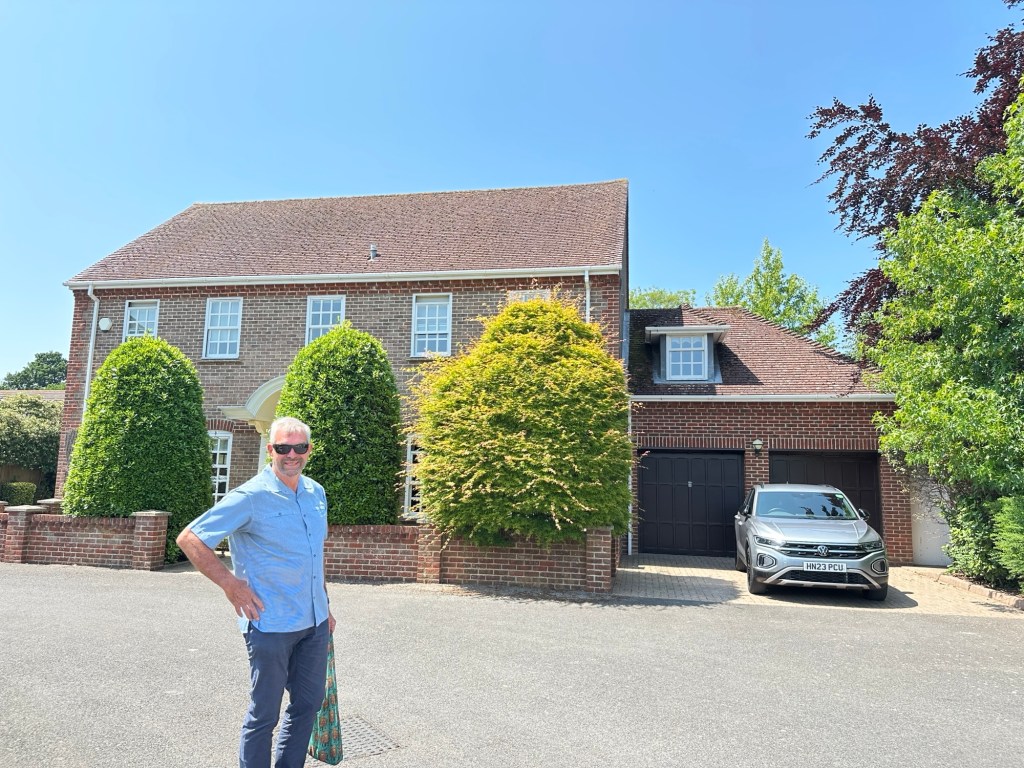
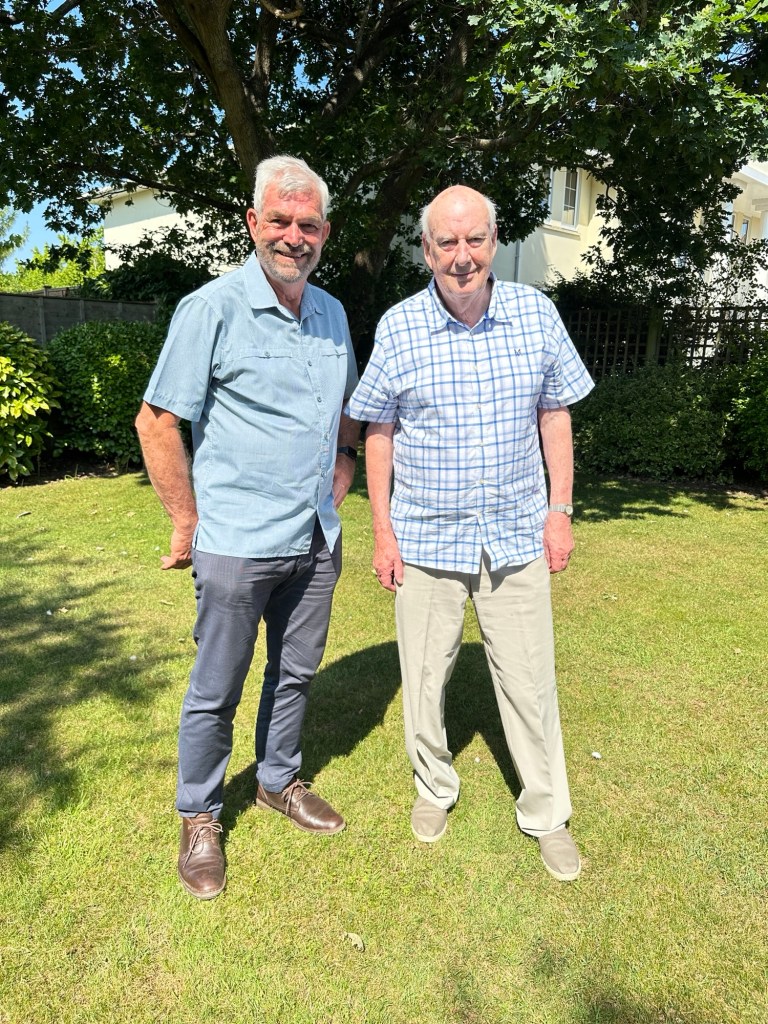
We arrived at Sir Paul’s home right on time at 1pm – good time keeping! We had the most delightful time catching up with him – Paul and Frank caught up on their respective Naval careers, with a little bit of reminiscing in between about their time on Intrepid together. Sadly his wife passed away two years ago, only five weeks after their one and only grandchild was born. Paul cooked us poached salmon with hollandaise sauce, and accompanying vegetables, served on Royal Worcester China. He was the perfect host – obviously all those years hosting Royalty on the Isle of Man served him well. He had photos with the Queen, Prince Charles (now King), Princess Anne, Prince Andrew ( whom he definitely didn’t like) and Prince Edward. A great afternoon.
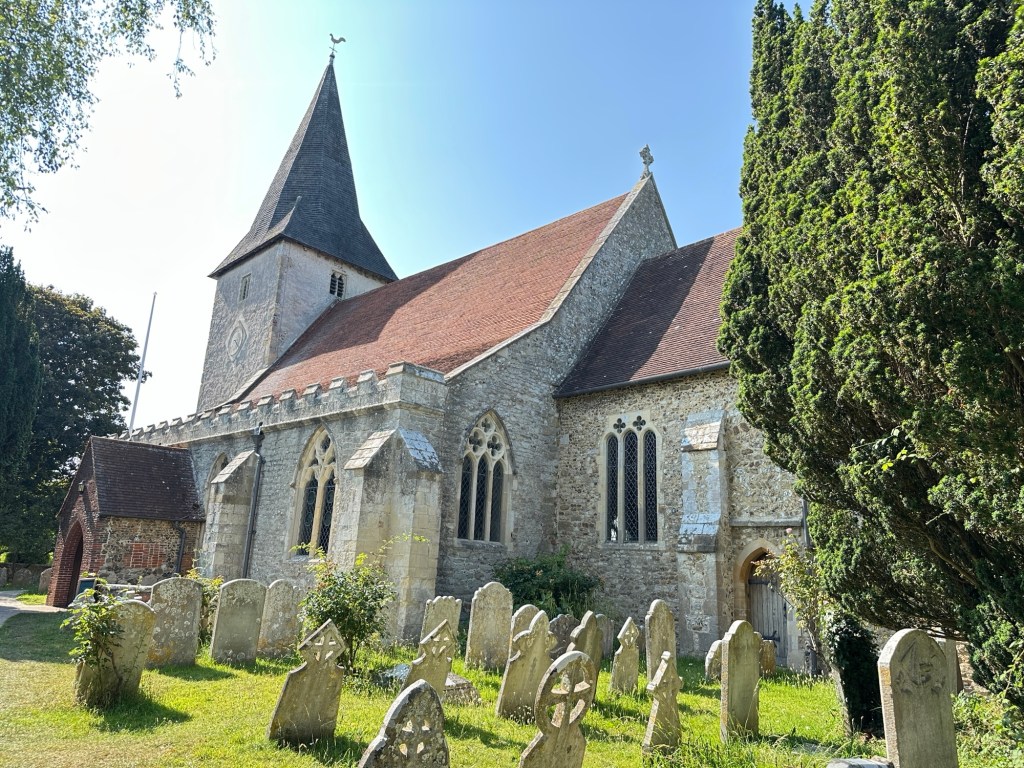
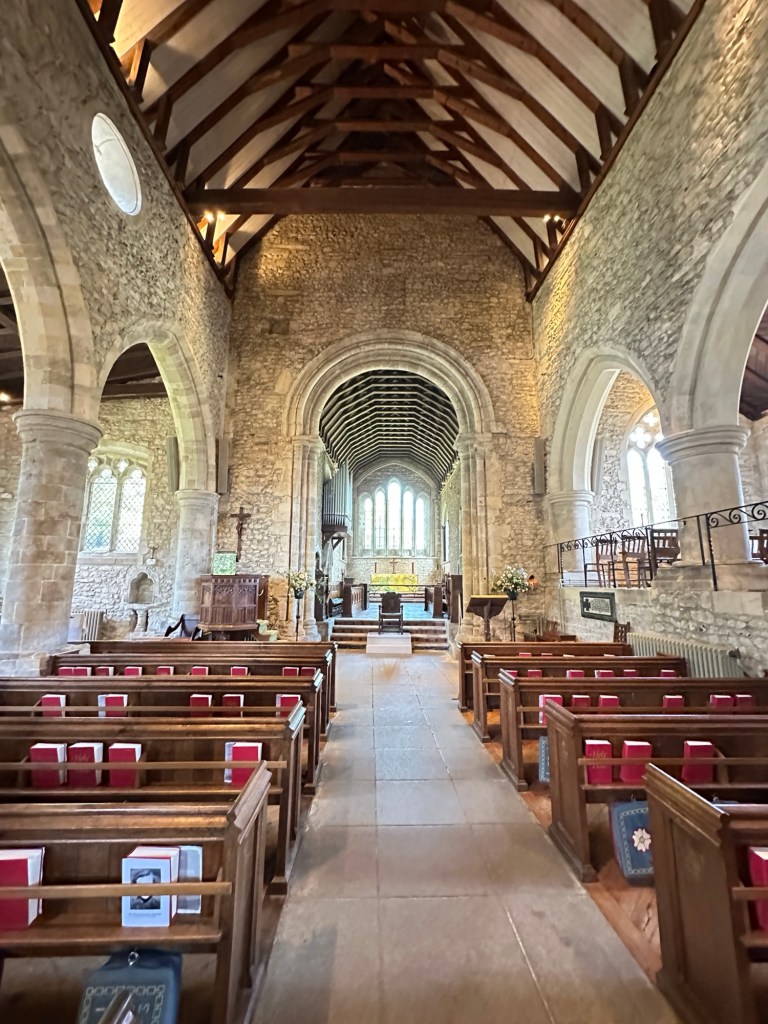
We had an hour to fill before we could check in to our Airbnb so only a few minutes away was the charming village of Bosham on one of the small inlets of Chichester harbour. It was from Bosham that Harold II set forth in 1064 to negotiate with William of Normandy, a voyage that led to William the Conqueror’s return in 1066; Bosham features in the Bayeaux Tapestry. We visited the church, saw a lot of activity on the water, many artist galleries here , plus of course the obligatory pub, right in the waterfront.

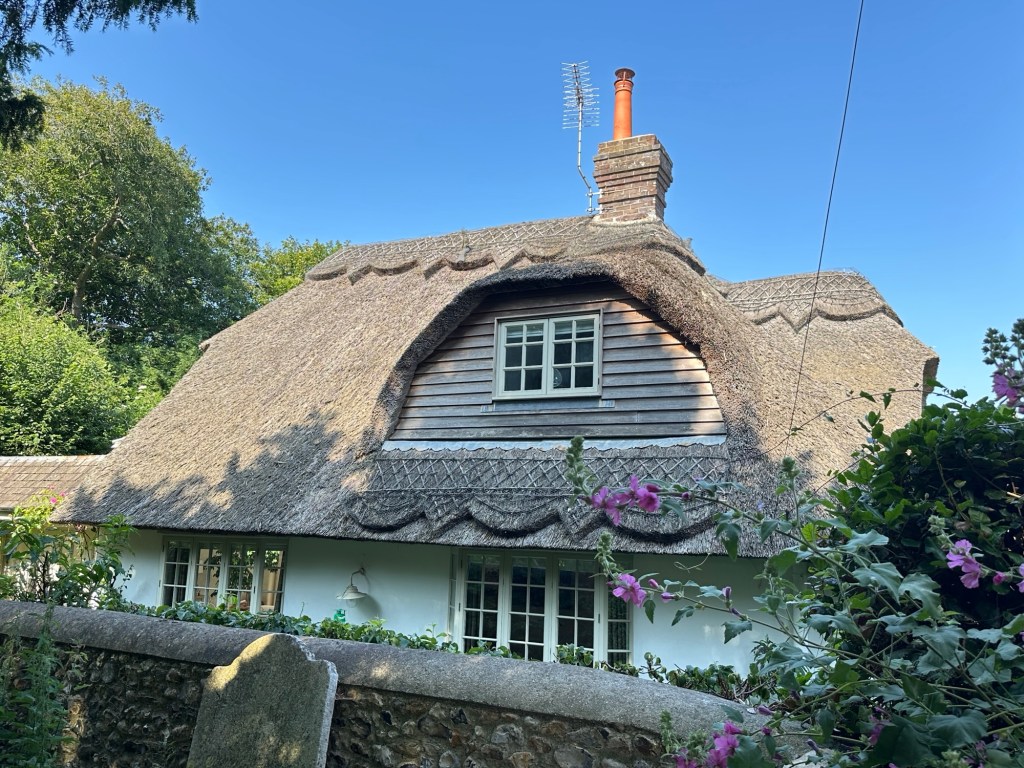
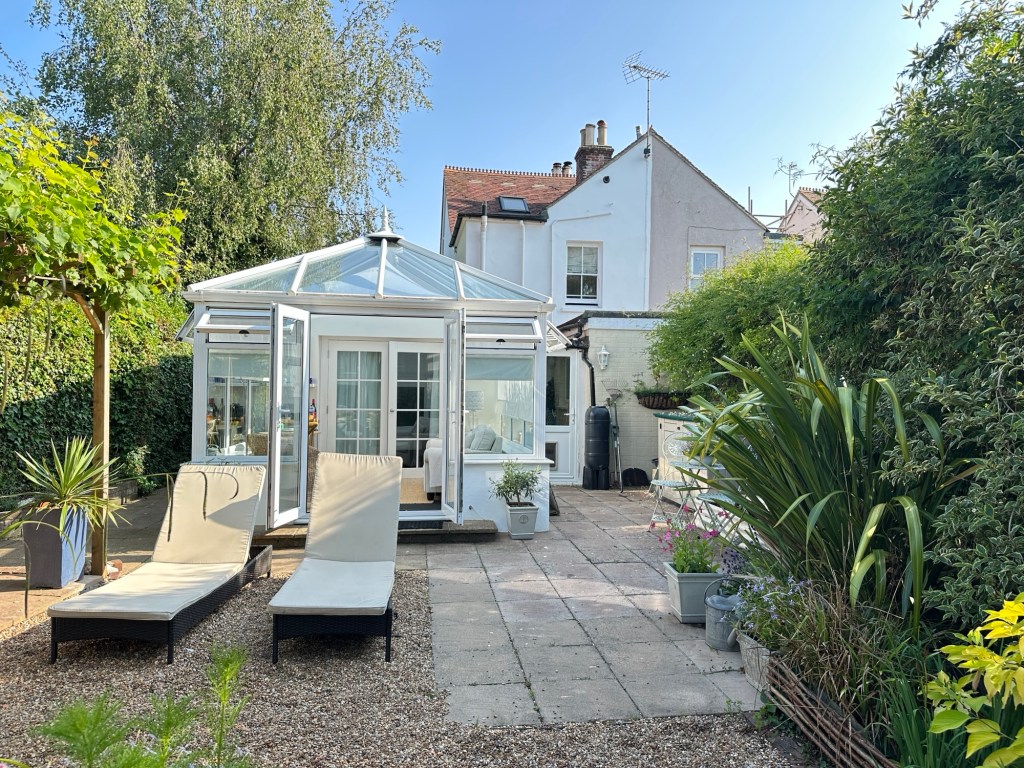
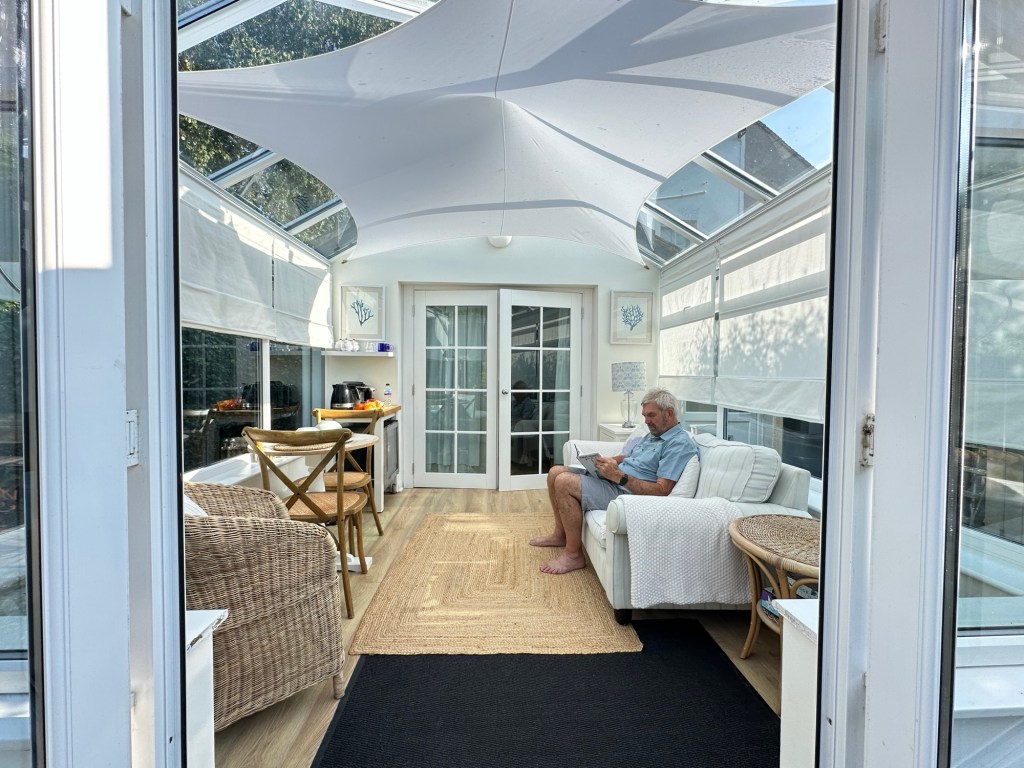
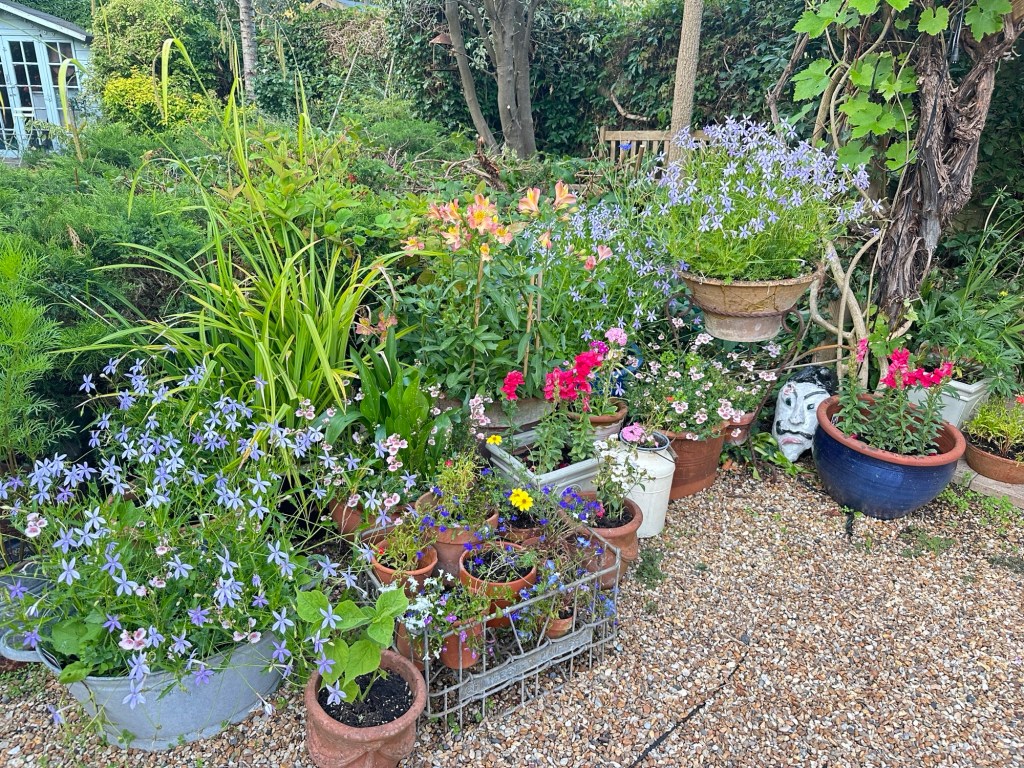
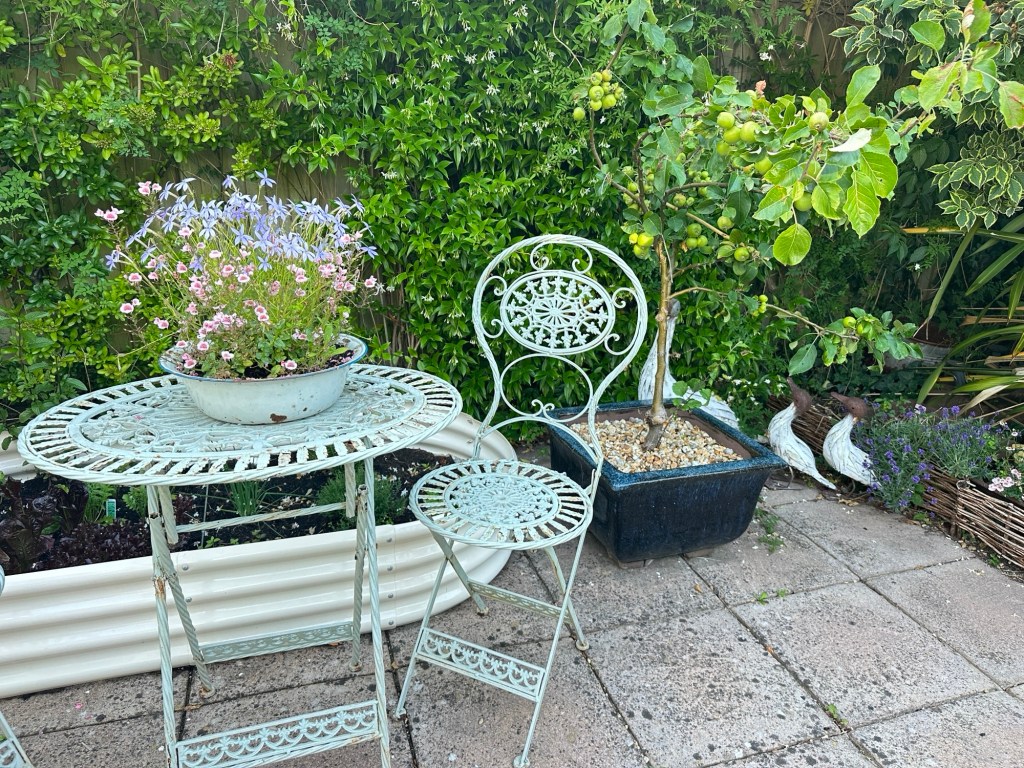
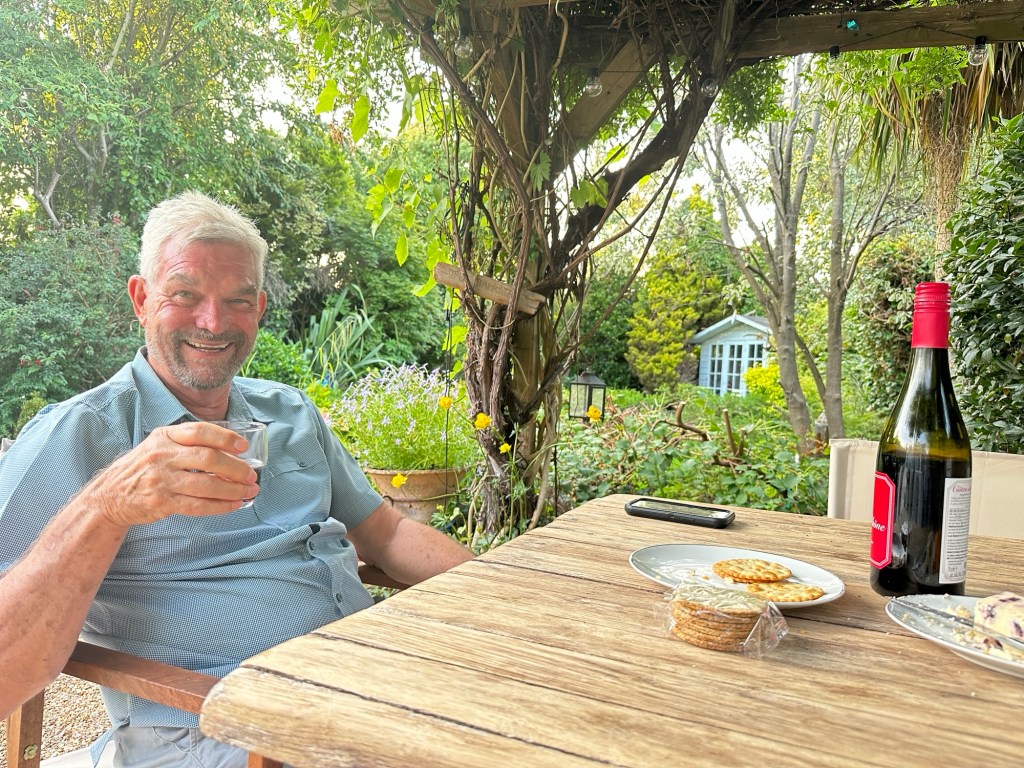
Checked into our Airbnb in Chichester – another delightful studio apartment at the rear of a duplex, with the most gorgeous secluded garden. It was very warm, we’d had a big lunch, so we had a relaxing evening with our cheese and biscuits, and of course a nice bottle of red, enjoying the ambience and the scents of this very pretty garden.

Day 32
Chichester to London
18-29 degrees, hot
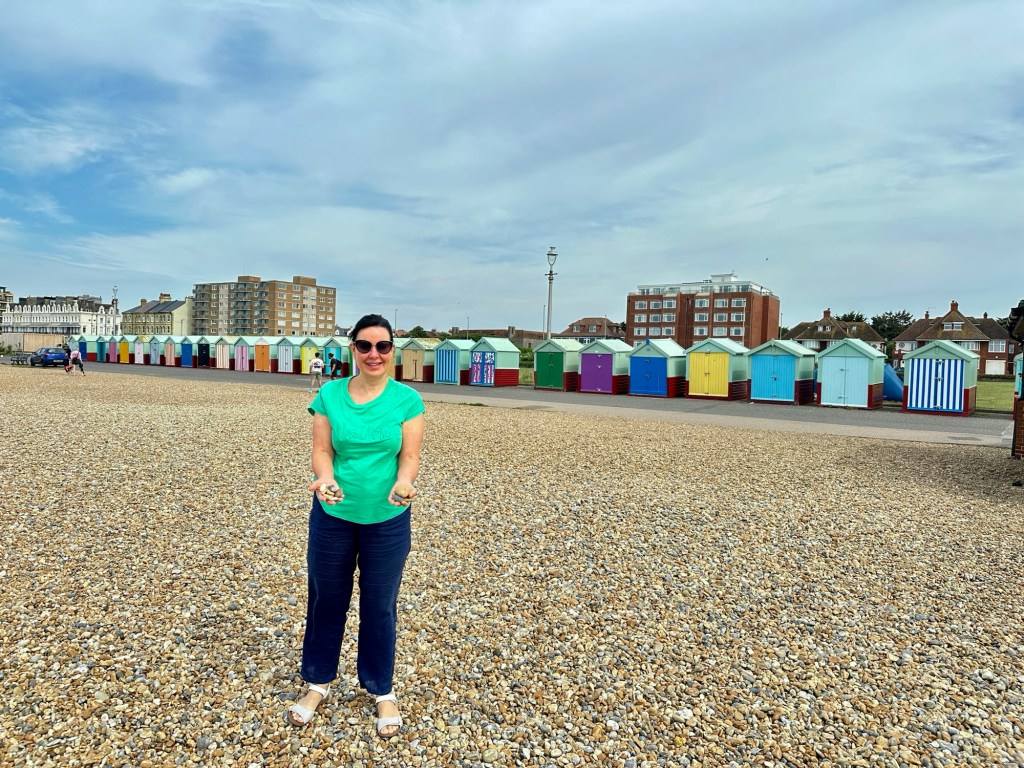
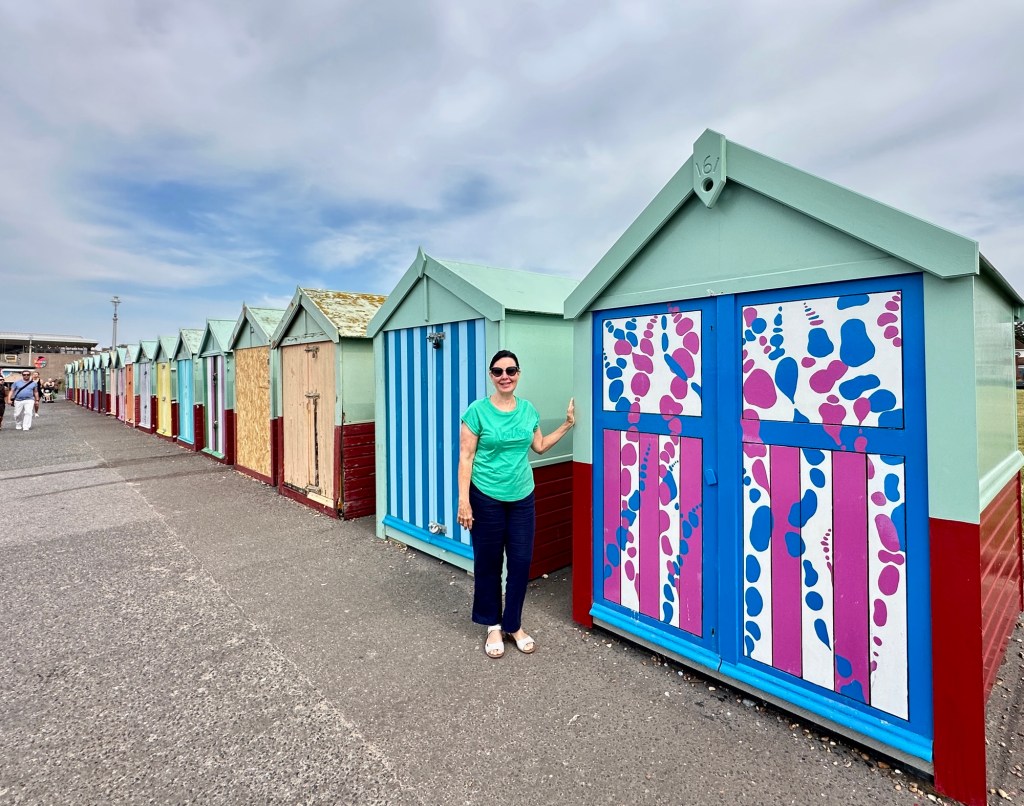
Return the car day today. I’ll be glad not to be navigating the narrow roads any more, but having a car offers a lot of freedom. For example, a detour to the seaside city of Brighton was a nice visit before driving to Gatwick airport to drop the car off. Frank wanted to show me the beach at Brighton – well maintained rocks! Nothing like our white sandy beaches. I did like the long row of brightly painted beach houses along the beach front though. Brighton Pier looked to be a lot of fun, and there were some beautiful buildings as well drove through the streets.

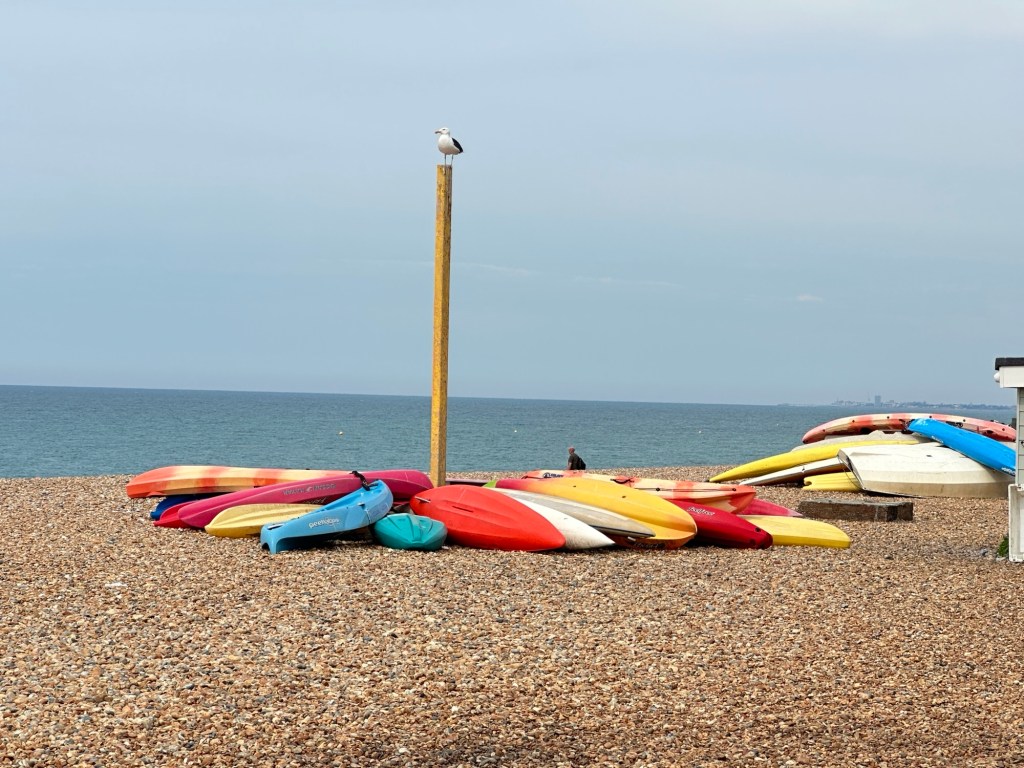
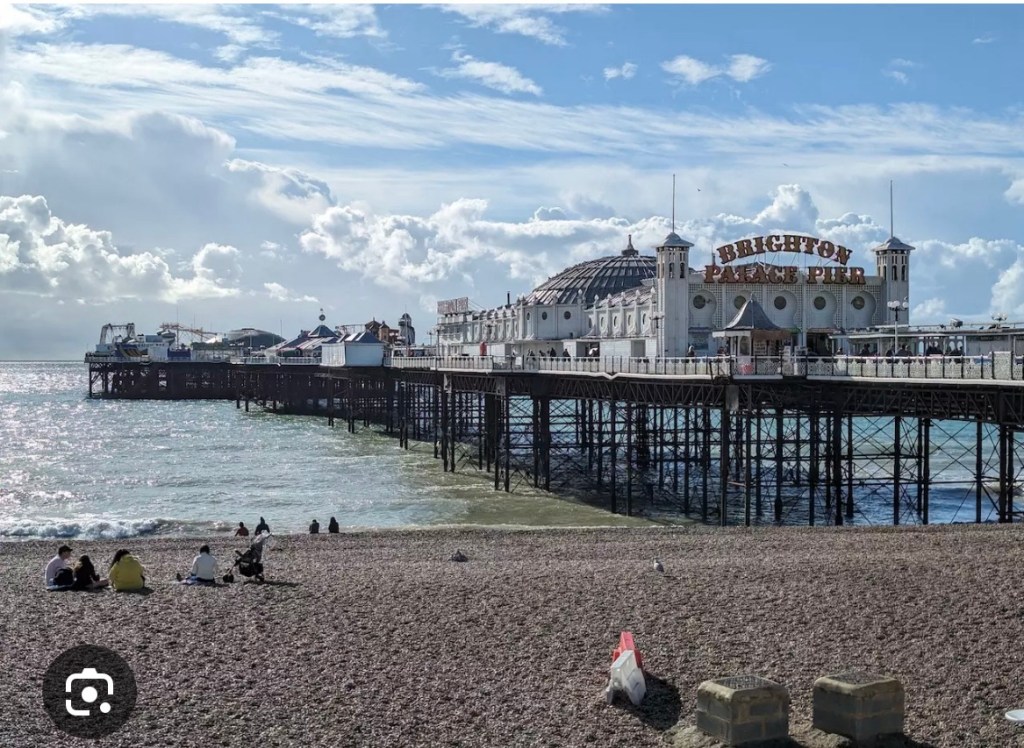
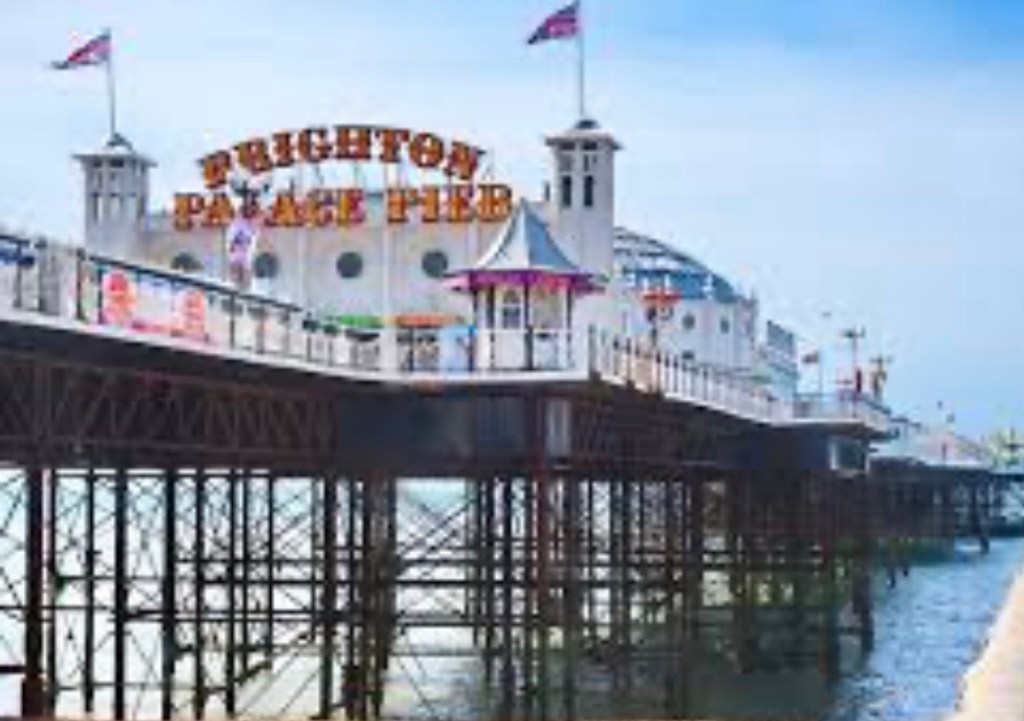
Forty minutes and we dropped off the car. We almost had a sensational finale as someone nearly reversed into us as we were about to park – thank goodness Frank knew where the horn was!
Now, a train from Gatwick to London Bridge, another train to Lewisham, then the DLR ( Docklands light railway) to Deptford Bridge, and then a two minute walk to our apartment on the seventh floor. All in all it took us about 80 minutes, quite straight forward.
I had an apartment booked in Westminster originally, but three weeks ago I received an email saying they had accidentally overbooked- strange when I had booked three months earlier, and they had taken full payment. It was a mad search to find something else, but we came up with this one. It’s not as conveniently located, but still very accessible. Buses and trains right at the doorstep.
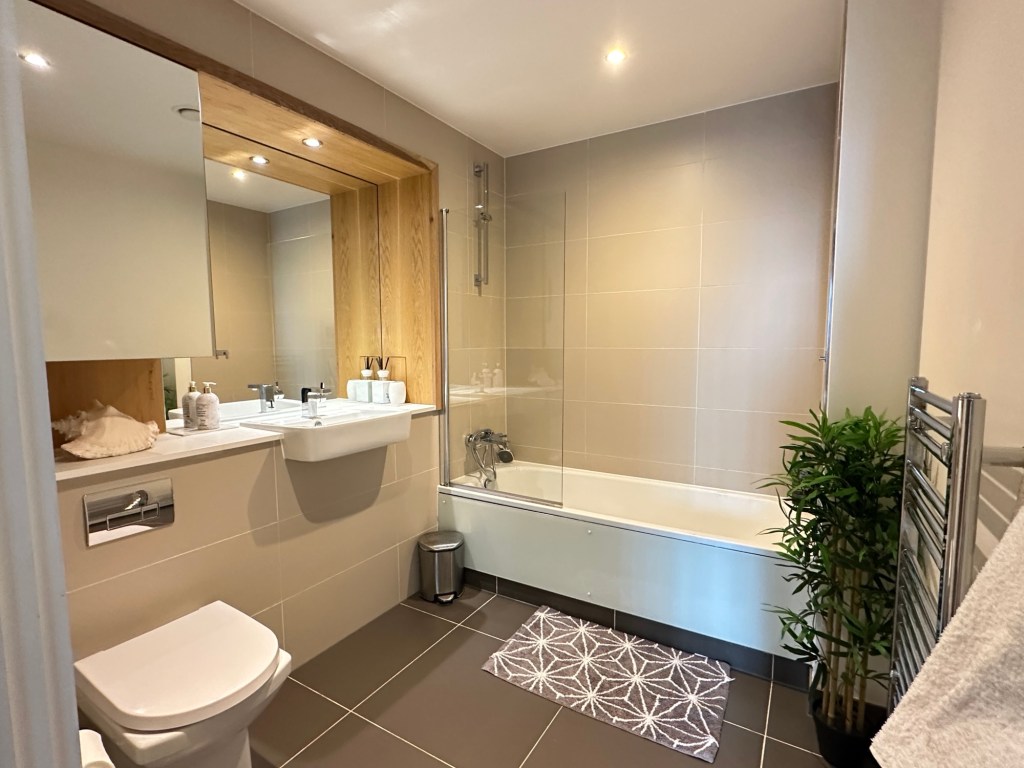
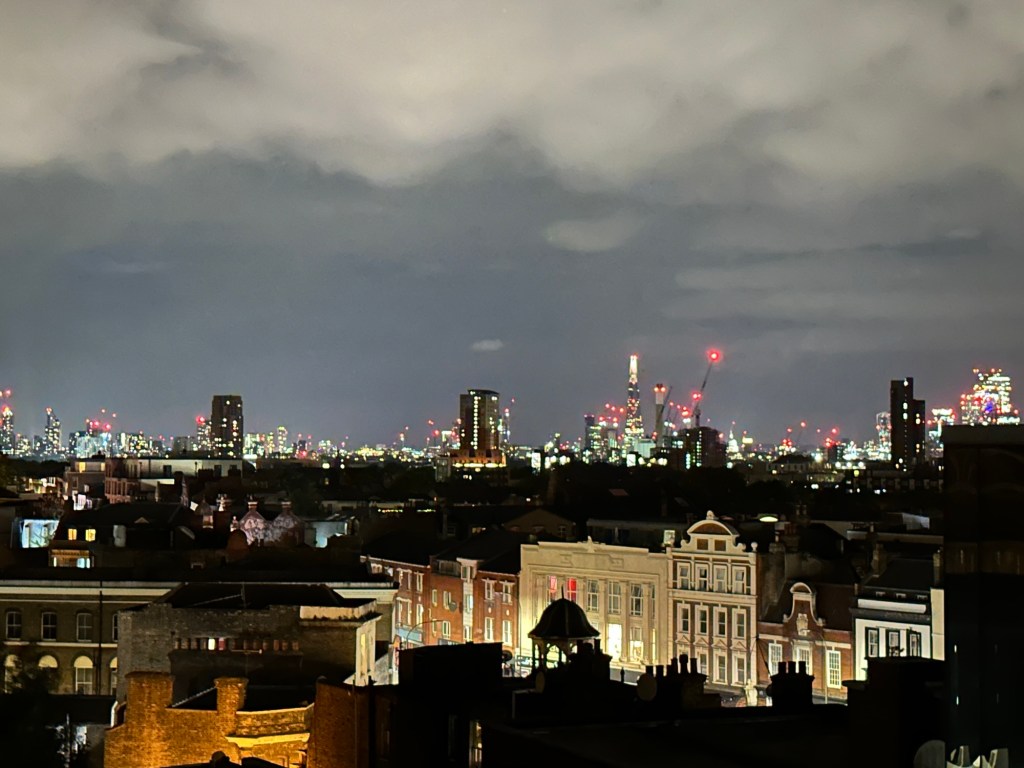
The Airbnb apartment wasn’t quite ready for us, but we could leave our bags, and go and have lunch. That worked out well. The apartment was quite beautiful, again very spacious, and had a fabulous view over London.
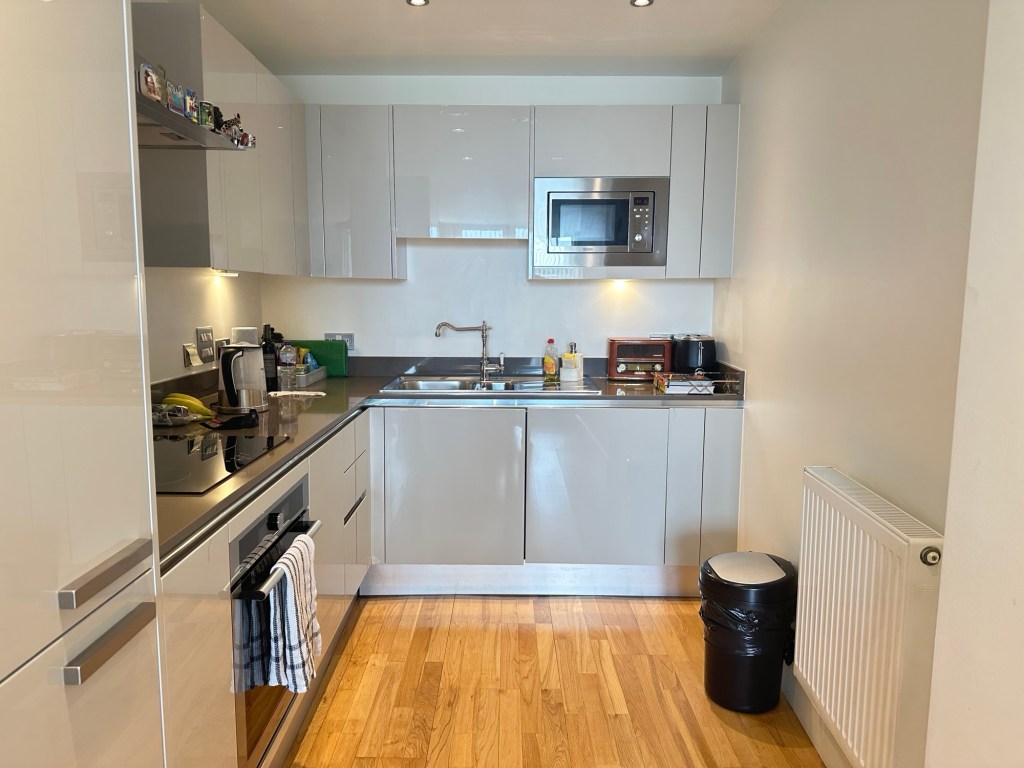


It is hot! My last visit to London was in 1982 and it was a heat wave then, appears it is now as well! London buildings aren’t designed for hot weather – no air conditioning, only heating!
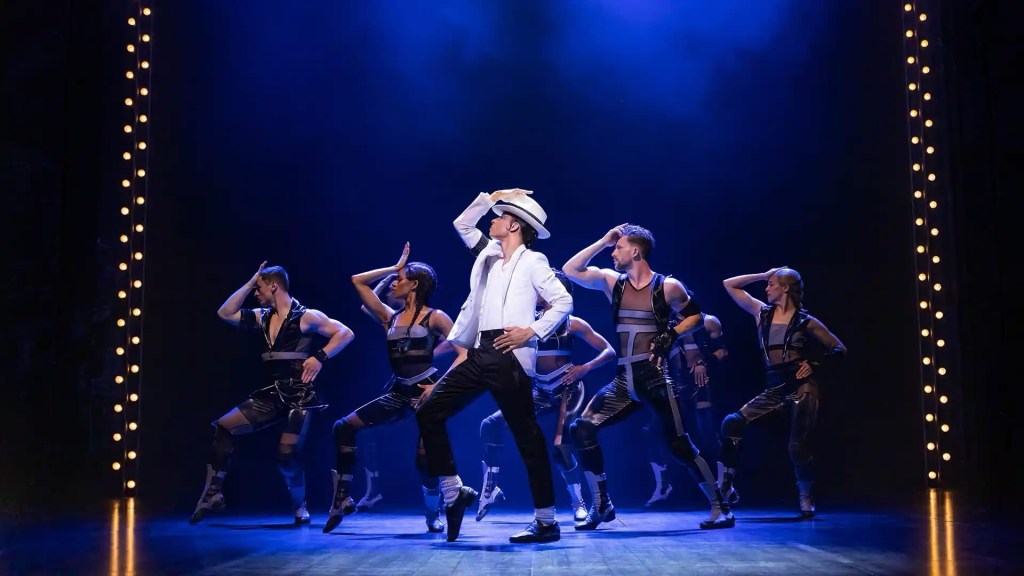
We have tickets for MJ the Musical at the Prince Edward Theatre, tonight so we set off to West End. Frank has the trains all worked out – DLR to Bank, then a fast change to underground to Tottenham Court Road, very efficient. West End was pumping, and it was only 5.30pm. We had a wander, then found a Mediterranean restaurant, Bistro, offering pre theatre dinner deals – two courses for £19.95. Very enjoyable.
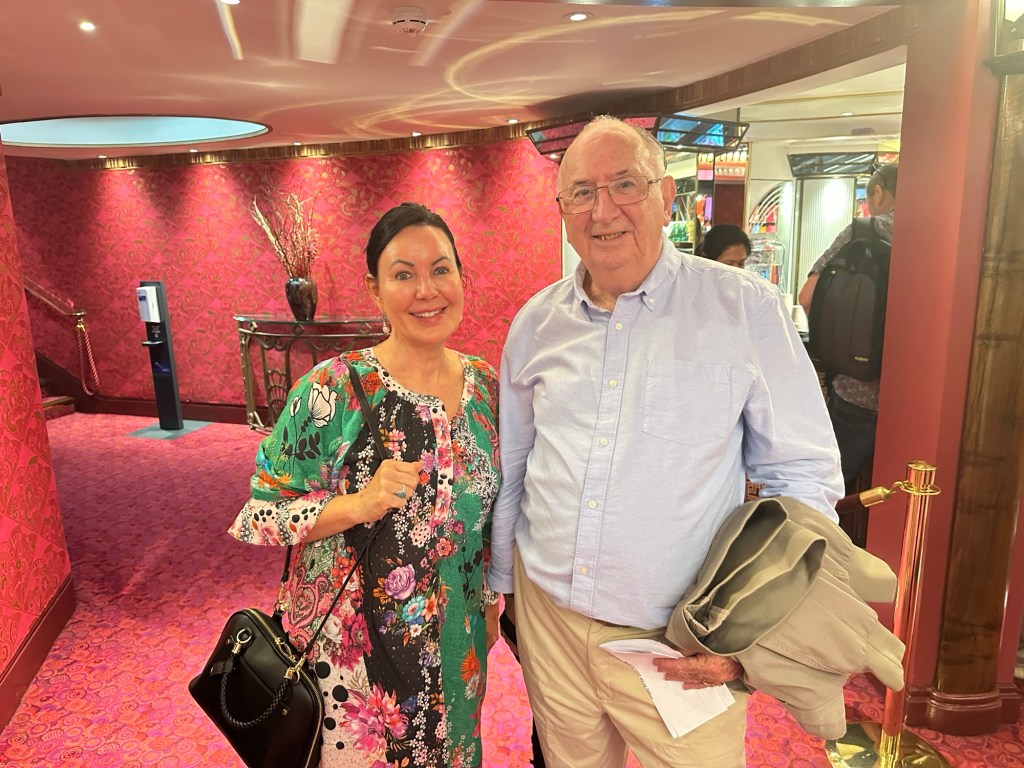
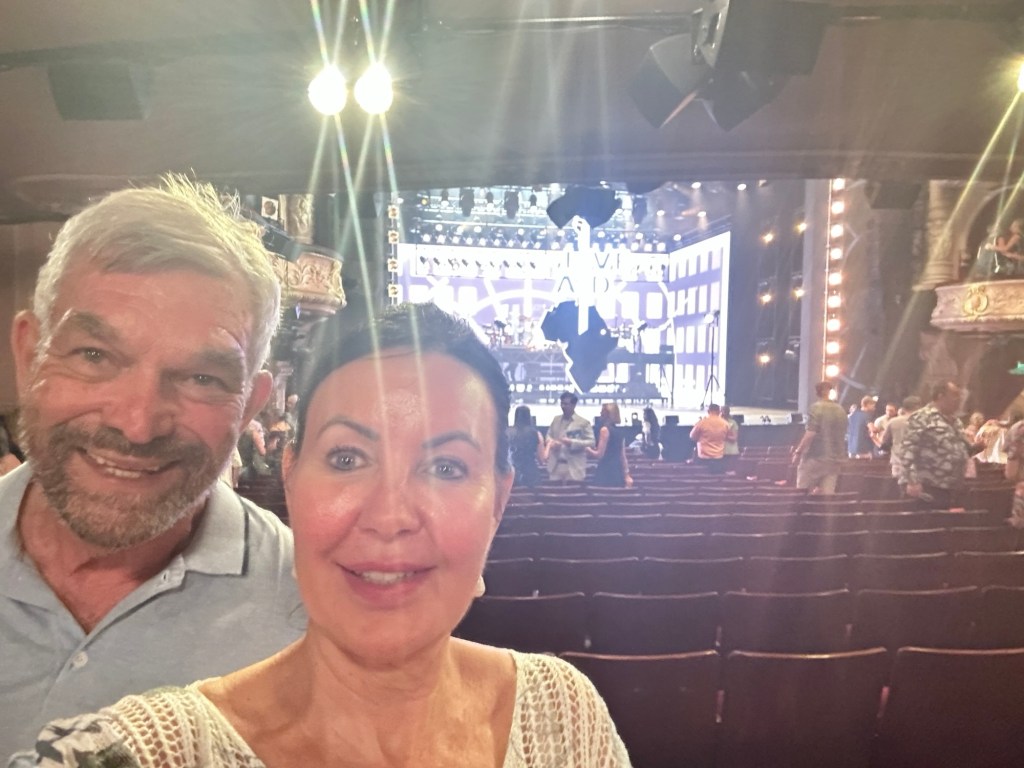
Round the corner we go, check into the theatre, and met up with my ex, Jeff – he had tickets for the same night. Can you believe! Small world! Lovely West End Theatre, the show was fantastic! So much energy! And on such a hot night! I give it a rating of 10/10!


Reverse journey back to our unit, where we had a fantastic view of London by night from our windows. Actually, with the very late sunsets, I think this is the first night we’ve been out until after dark.
Day 33
London
18-31 degrees, hot ***
So here goes… London in three days!! And the first day was very hot!
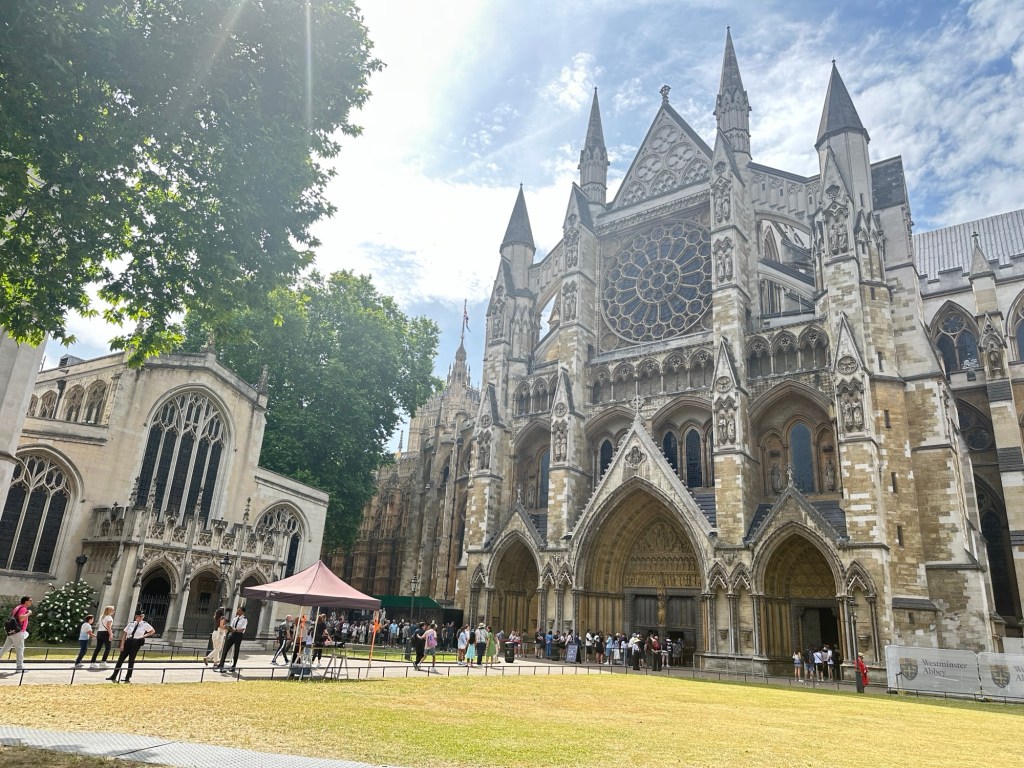
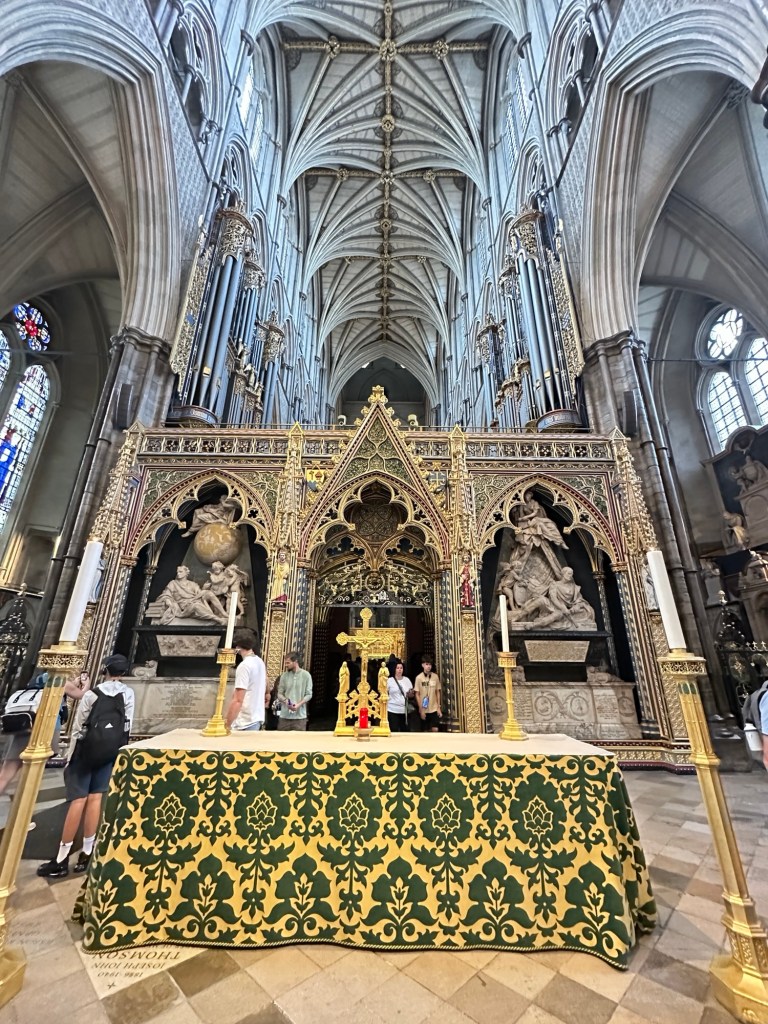
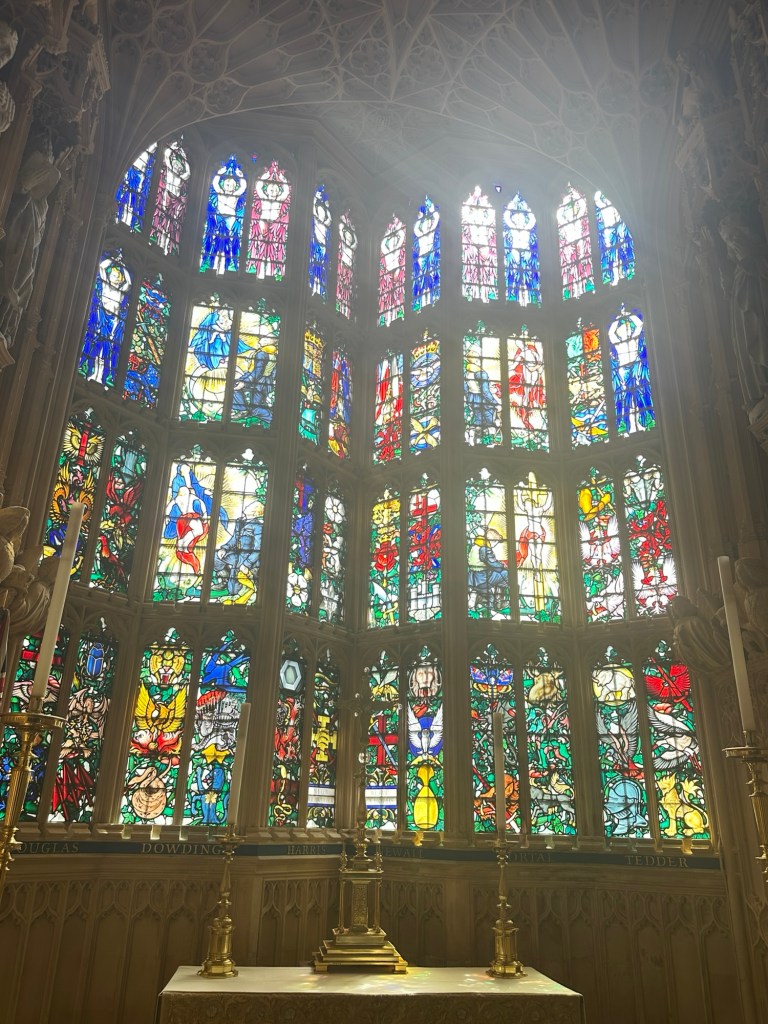
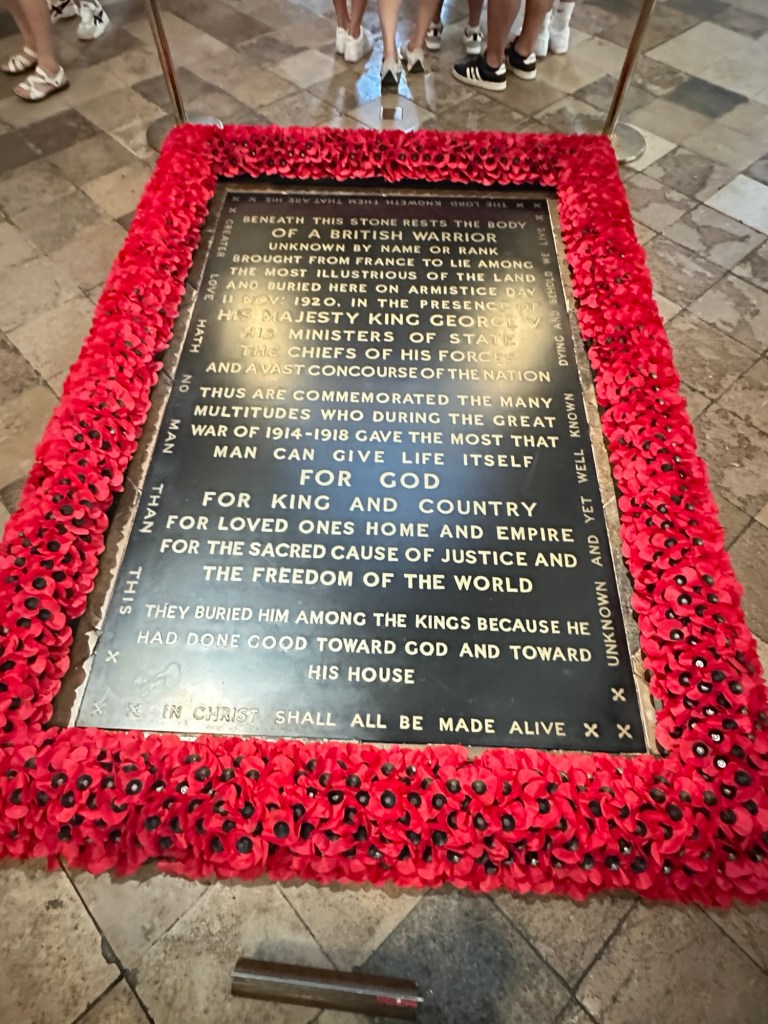
The bus outside our apartment building took us straight to Westminster Abbey – we had pre purchased 9am tickets! Lucky… the crowds there at that time were already large. Westminster Abbey, formally titled the Collegiate Church of Saint Peter at Westminster, is an Anglican church in the City of Westminster, London, England. Since 1066, it has been the location of the coronations of 40 English and British monarchs and a burial site for 18 English, Scottish, and British monarchs. There was an audio guide to give the history. So many beautiful monuments. I am sure you could visit everyday for a year, and still not get to see and appreciate them all.



A short walk away was Buckingham Palace, again massive crowds. We did the walk by, waved to the Royal Family, saw Queen Victoria’s monument which was looking spectacular on such a bright sunny day, and strolled along The Mall up to Admiralty Arch which was under renovation. From there we walked across Horse Guards Parade Ground to Whitehall. The poor mounted guards and horses looked very hot.
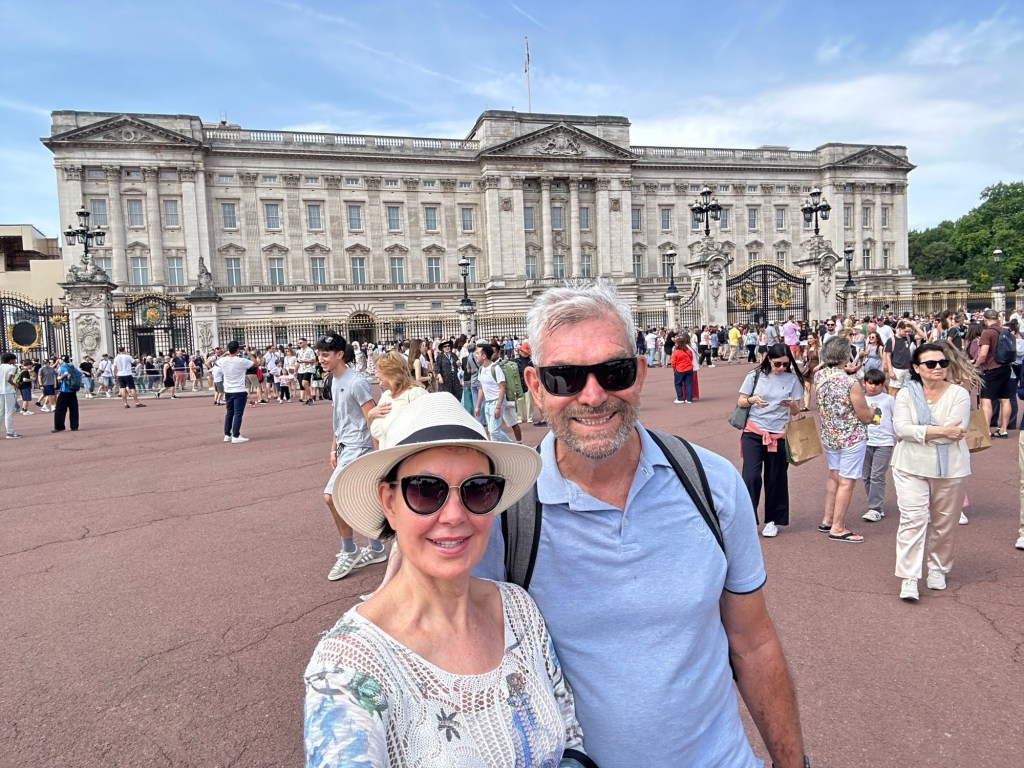

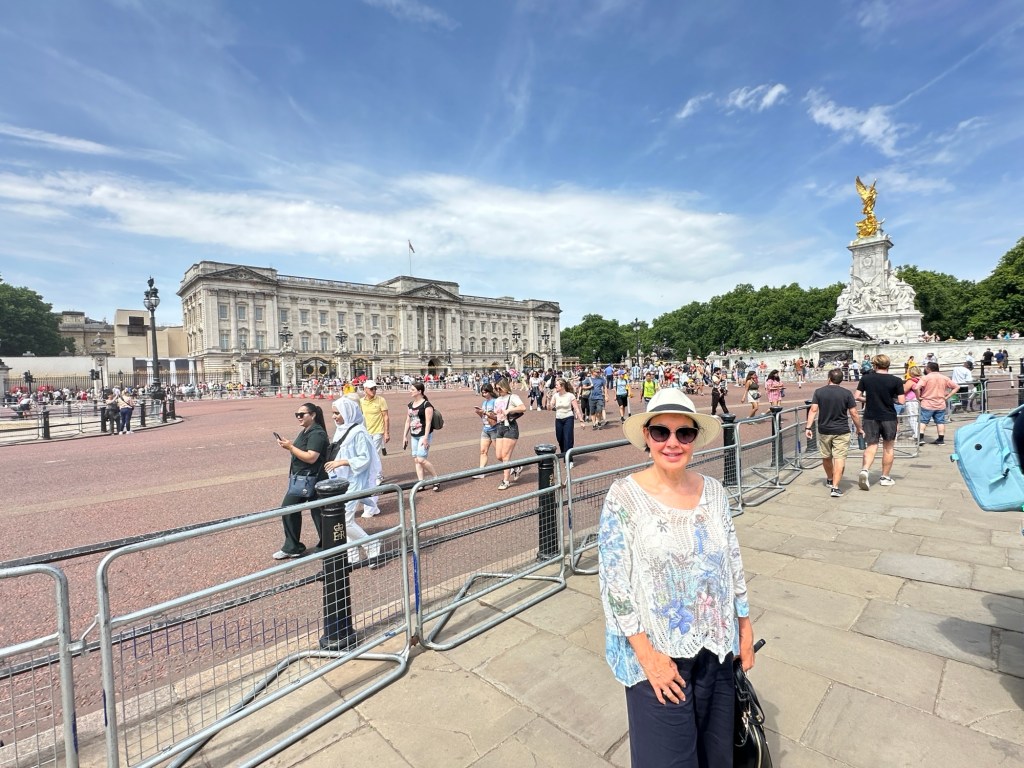
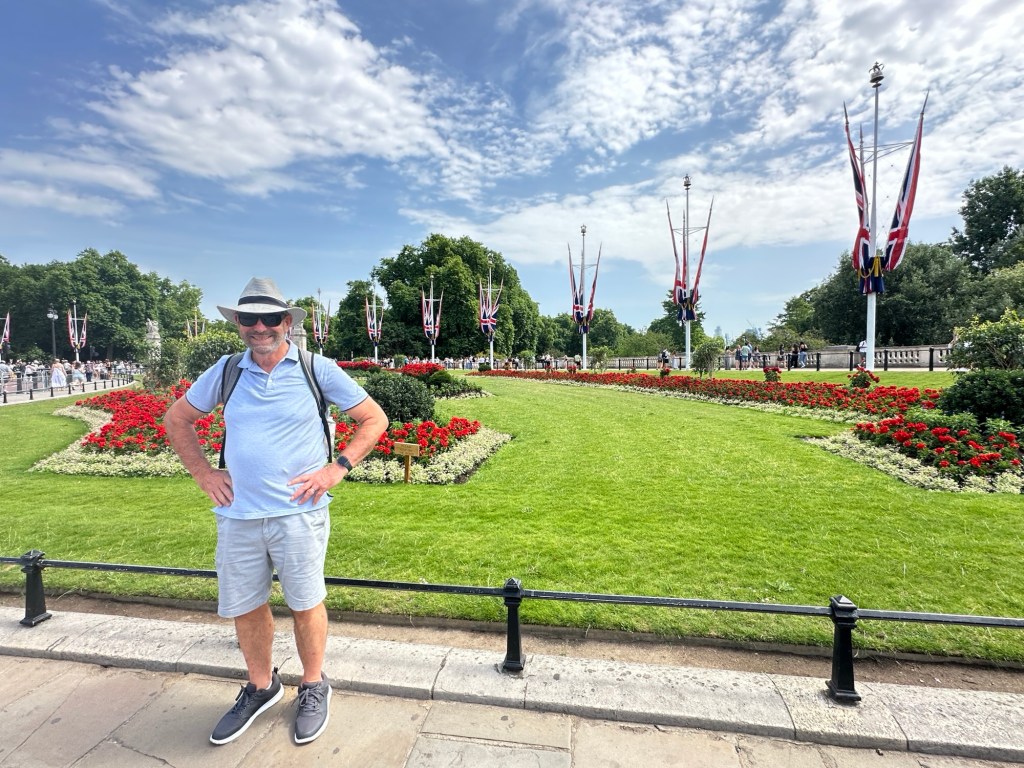
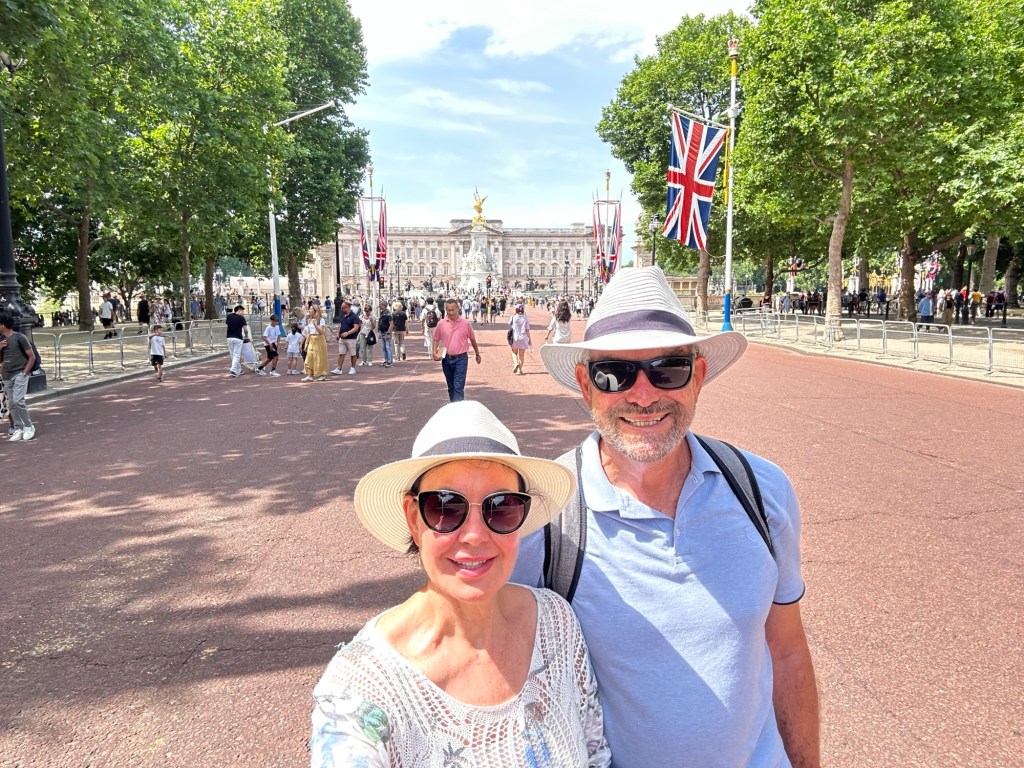

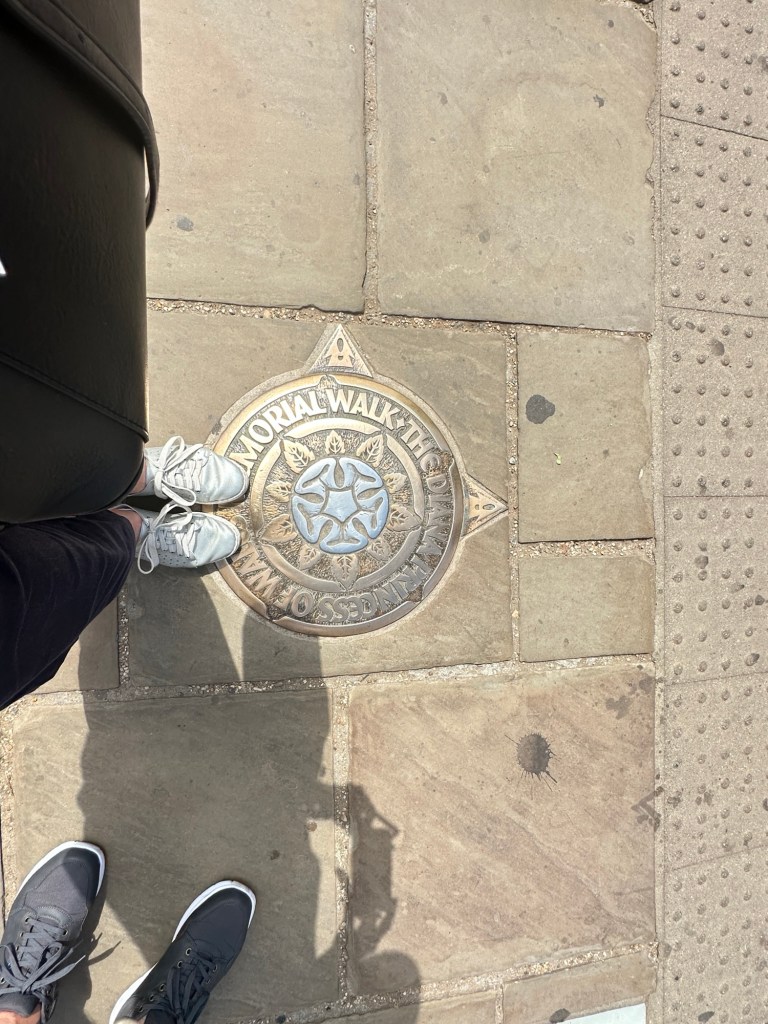
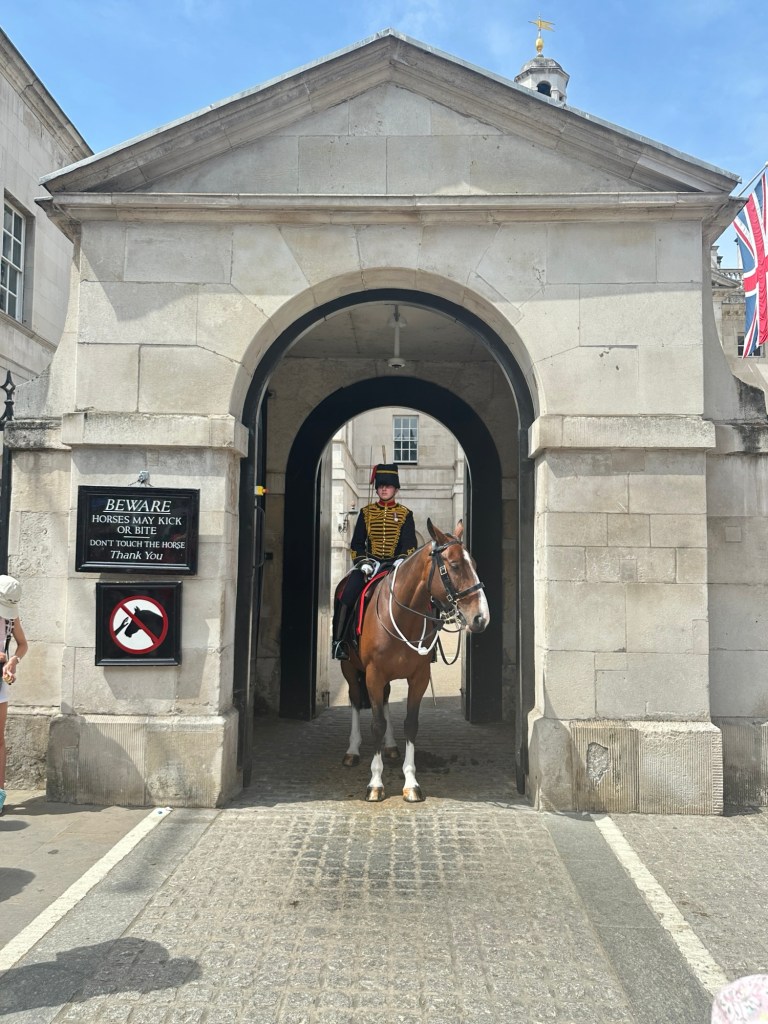
Another couple of blocks and we were at Big Ben ( just as it struck 12pm), and the Houses of Parliament. We walked across Westminster Bridge, and practically ran into the first cafe we saw for an iced drink. It was sweltering! Like I said London isn’t geared up for such hot humid weather.

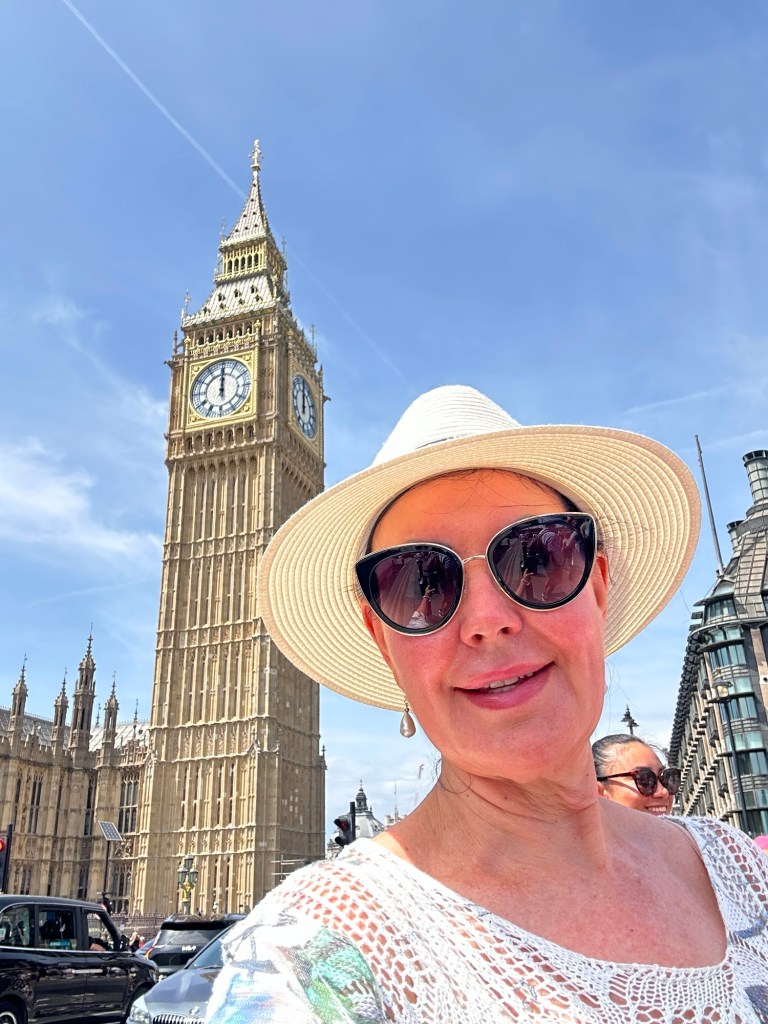

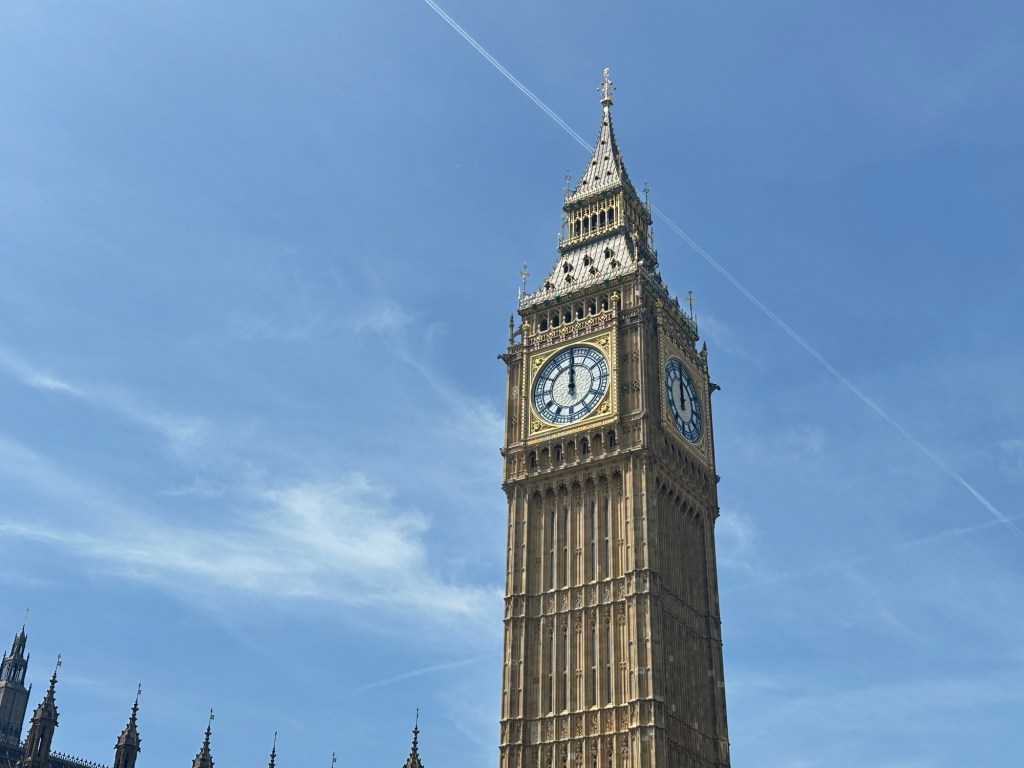
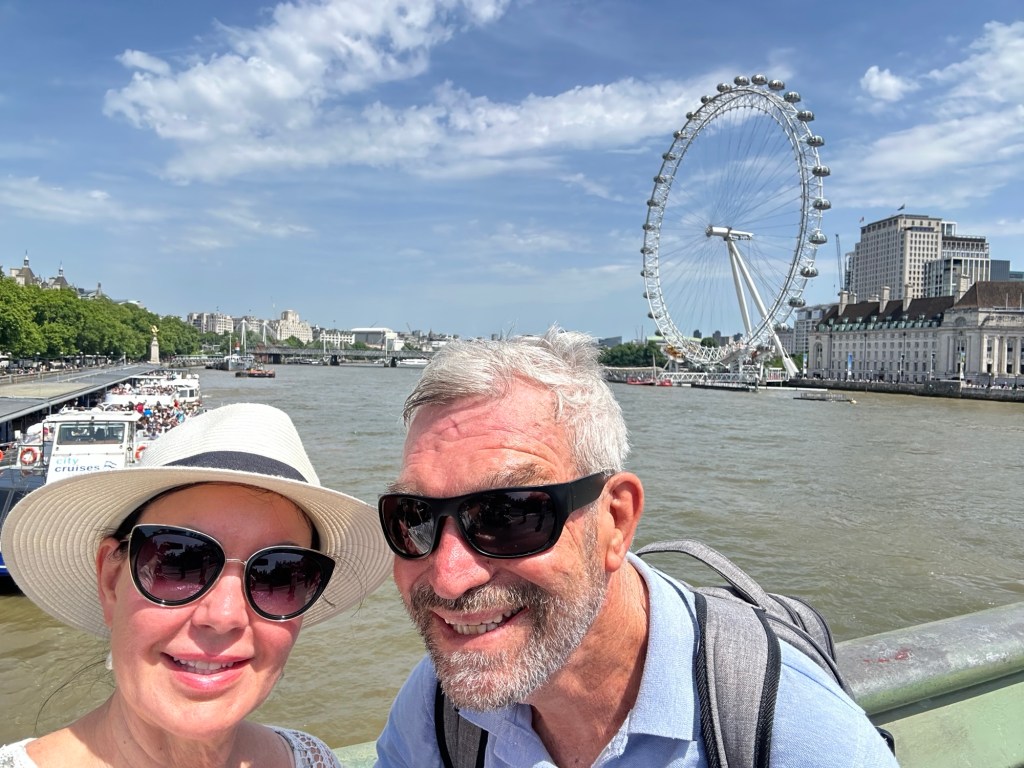
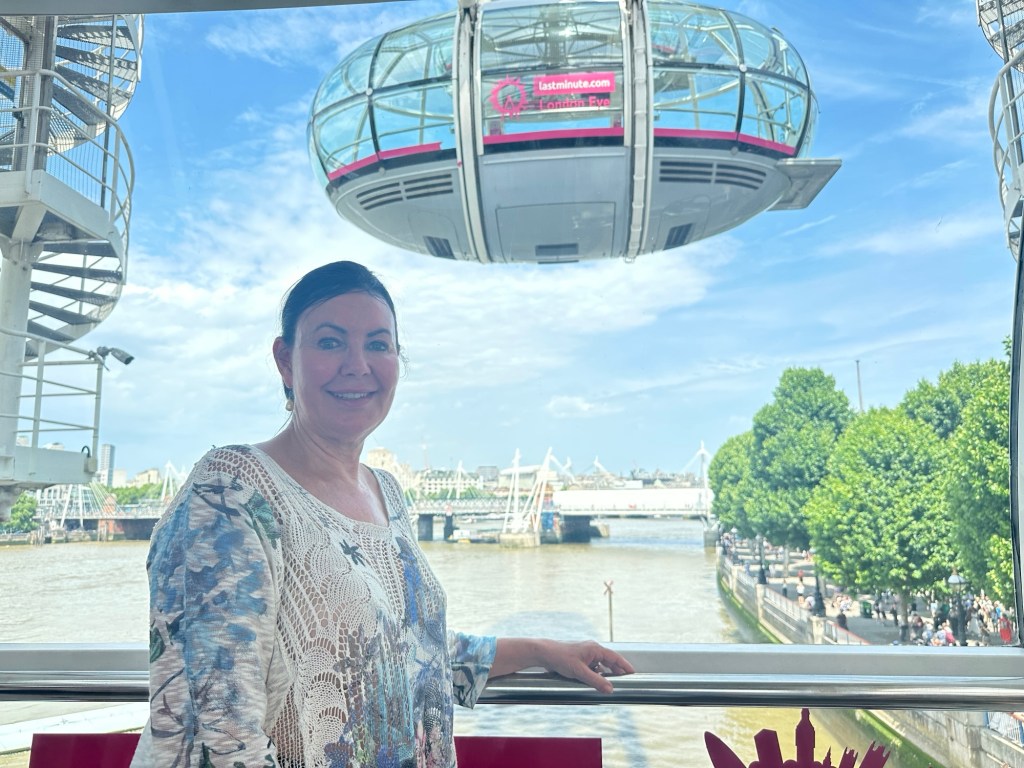
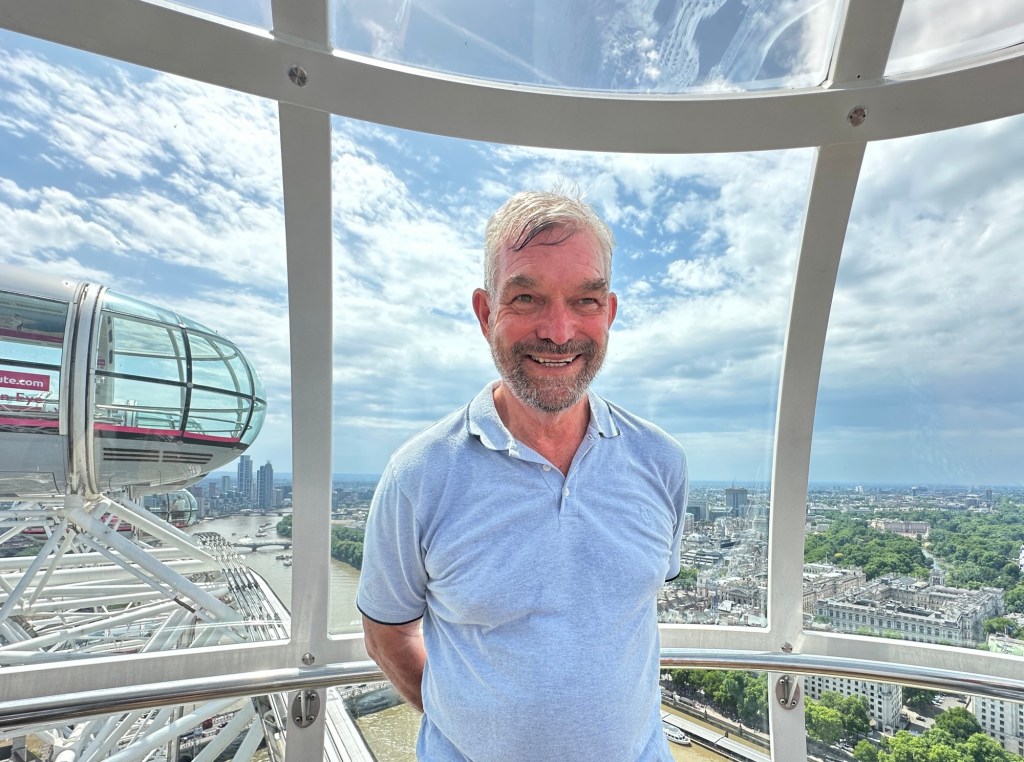
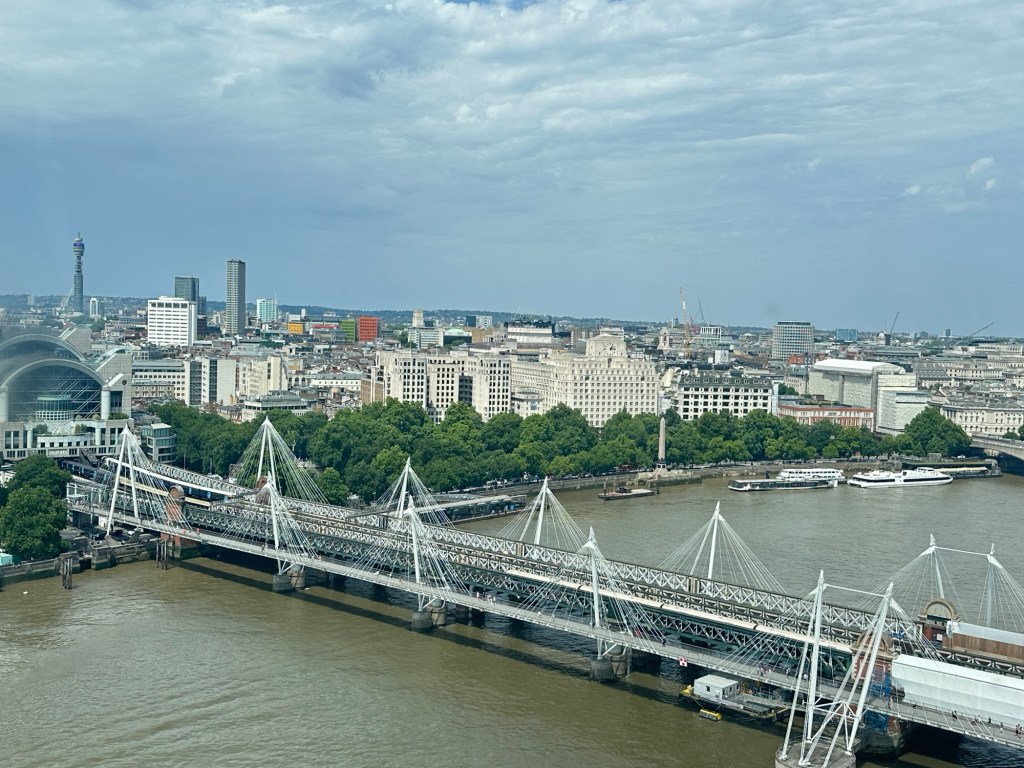
We only had a fifteen minute wait for the London Eye, originally called the Millennium Wheel. It is the world’s largest cantilevered observation wheel, on the South Bank of the River Thames. Breathtaking! The panoramic views of the city from 135 meters high were stunning. And the bonus, the pods were air conditioned.
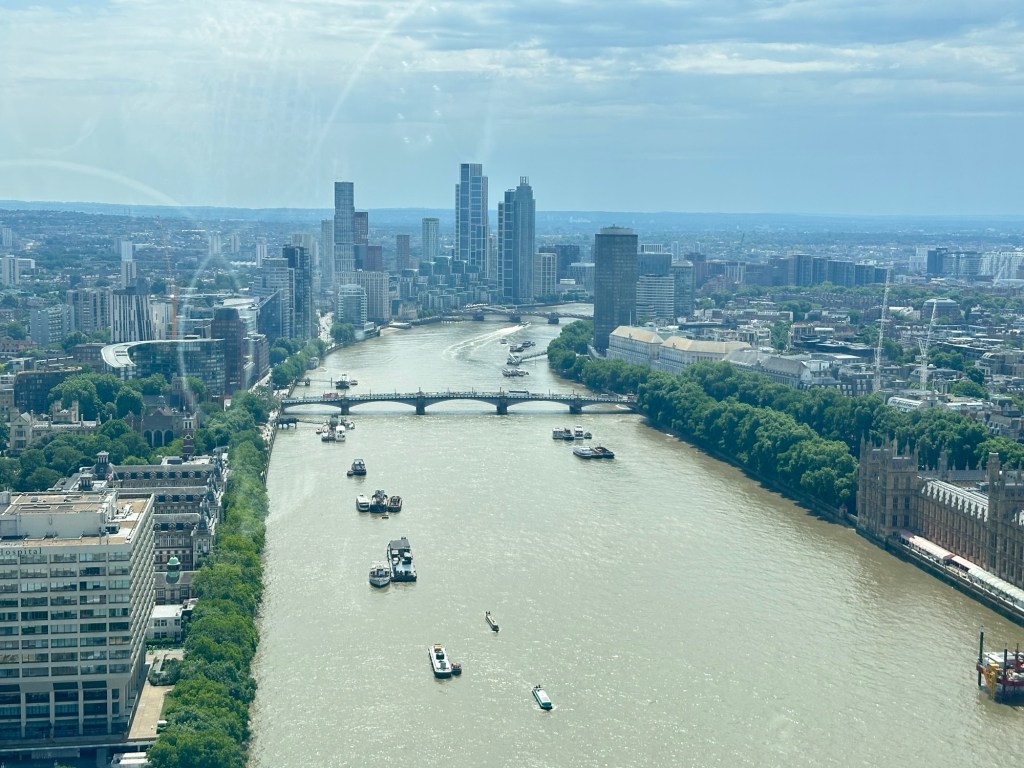
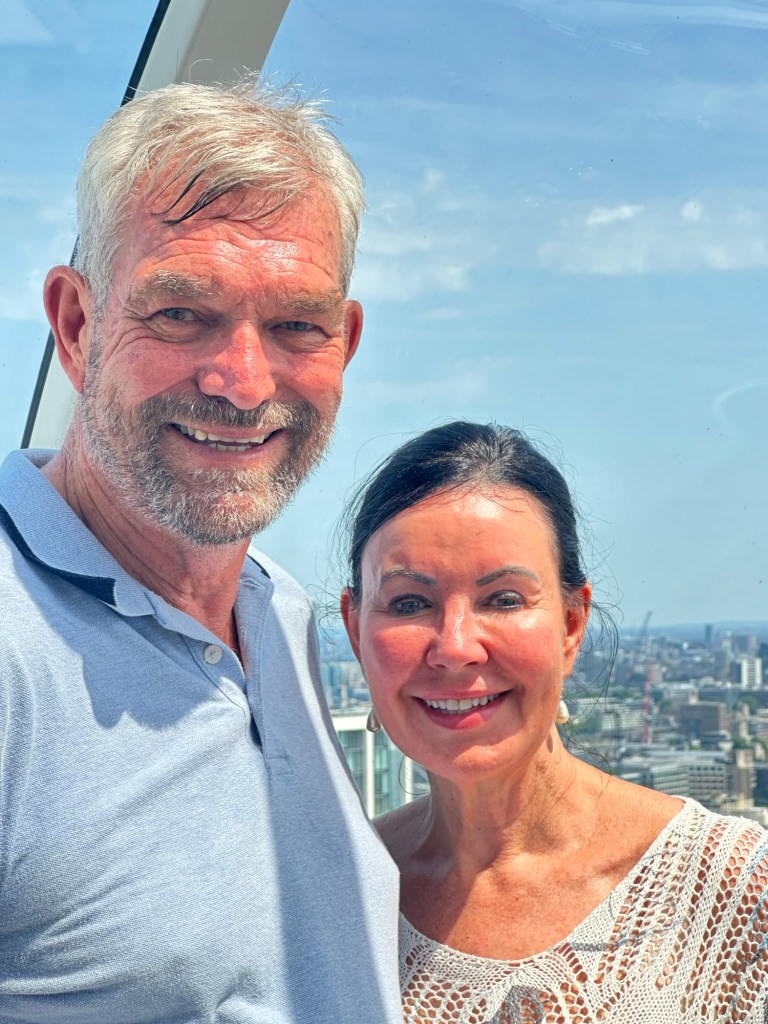
That was it… I needed some more air con! I have an idea…. What better way to cool off than a walk around Harrods! Frank was easily convinced in this weather. It was only a couple of short very crowded train rides right to the door. Other people obviously had the same idea.
Harrods, the famous luxury department store, an iconic London shopping experience – except, I have no luggage space, and everything is frightfully expensive! But we did manage to escape the test! Amazing store, but no sitting areas. We found some lovely plush velvet chairs in the Gucci store, and the lovely girl there told us to sit and rest our legs – she even gave us an icy cold bottle of water each.
Somewhat refreshed we continued on and discovered the iconic Harrods Food Hall – it had everything you could ever possibly want! From fresh food and deli counters to chocolate and patisserie plus roastery and bake hall.
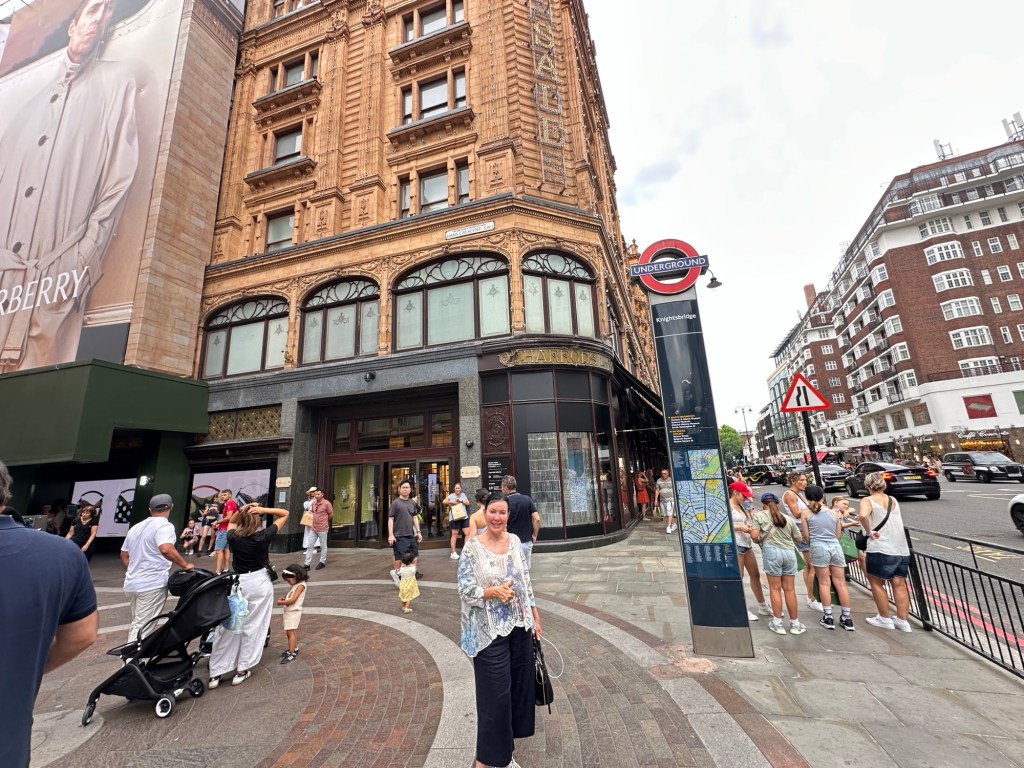
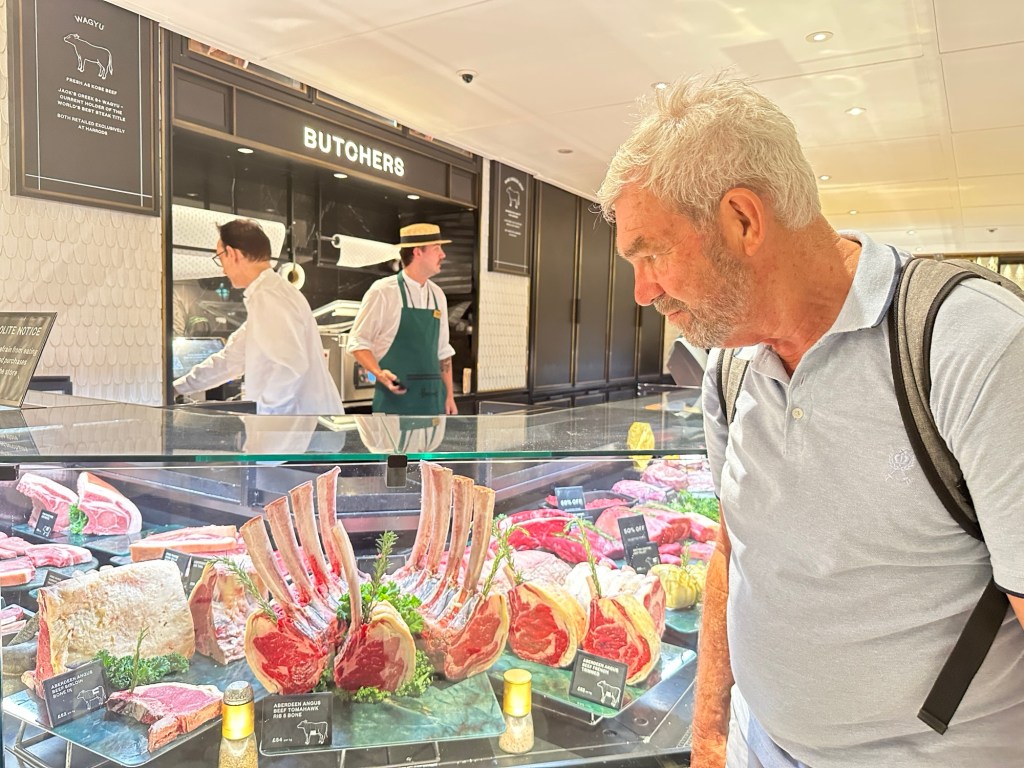
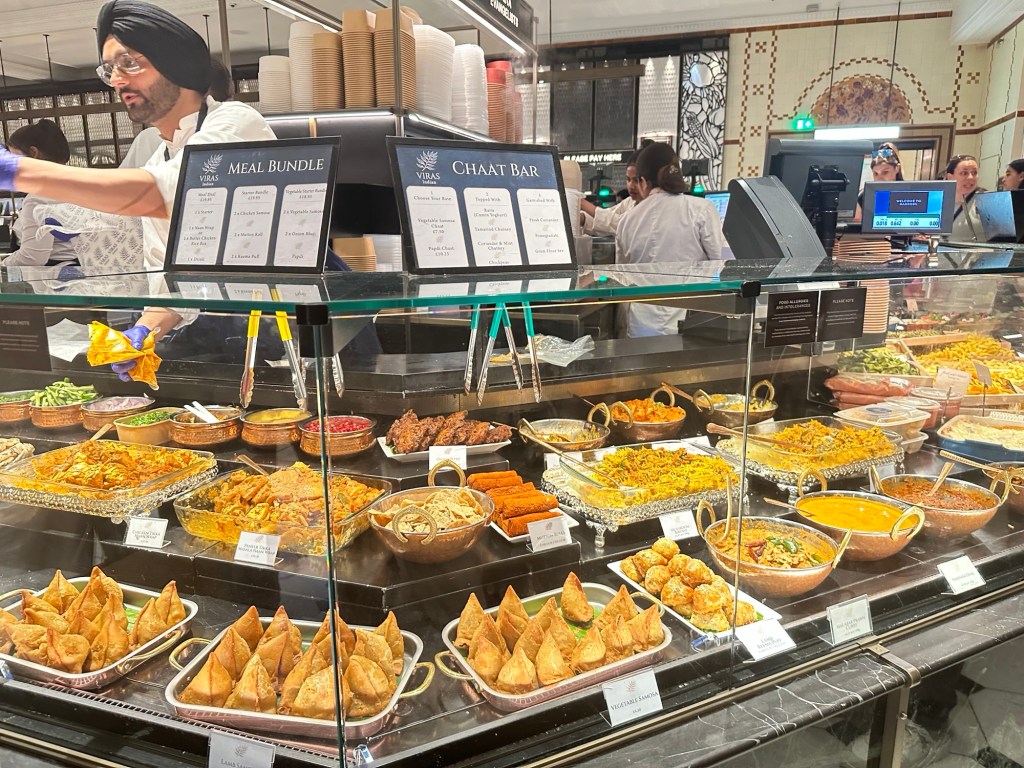
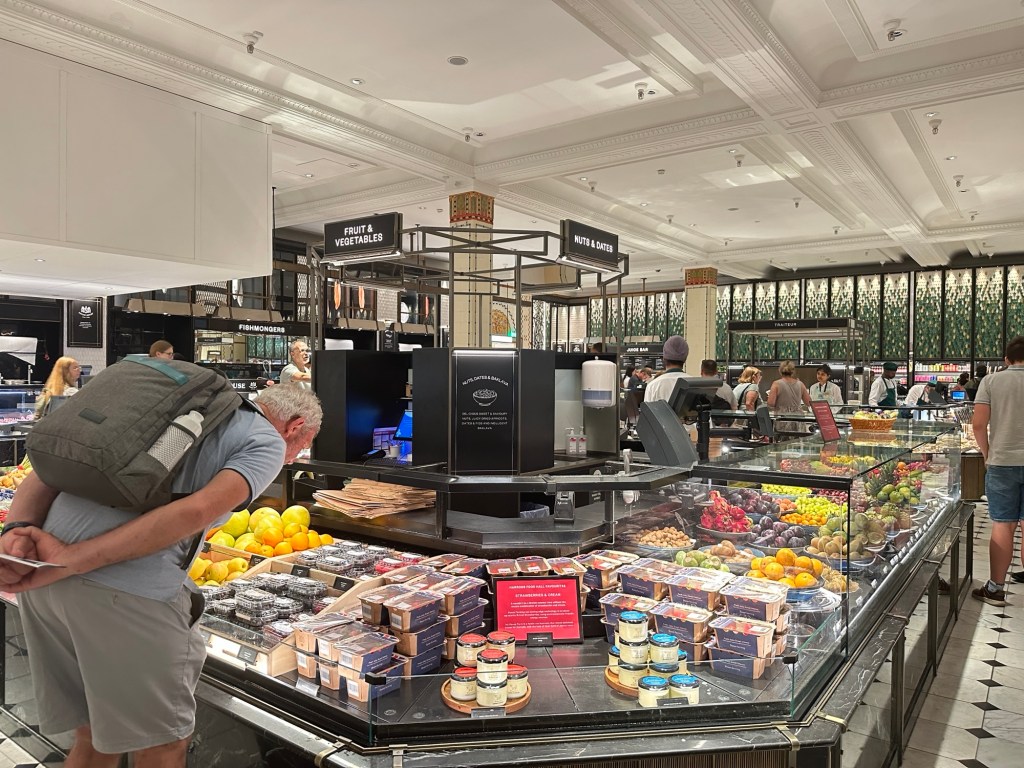
Another short train ride to Covent Garden – an area associated with the former fruit-and-vegetable market in the central square, and now is a popular shopping and tourist site. The Royal Opera House is in this area, itself known as “Covent Garden”. A lovely little precinct – many bars, cafes and restaurants, also a lot of buskers. Pretty flower gardens.
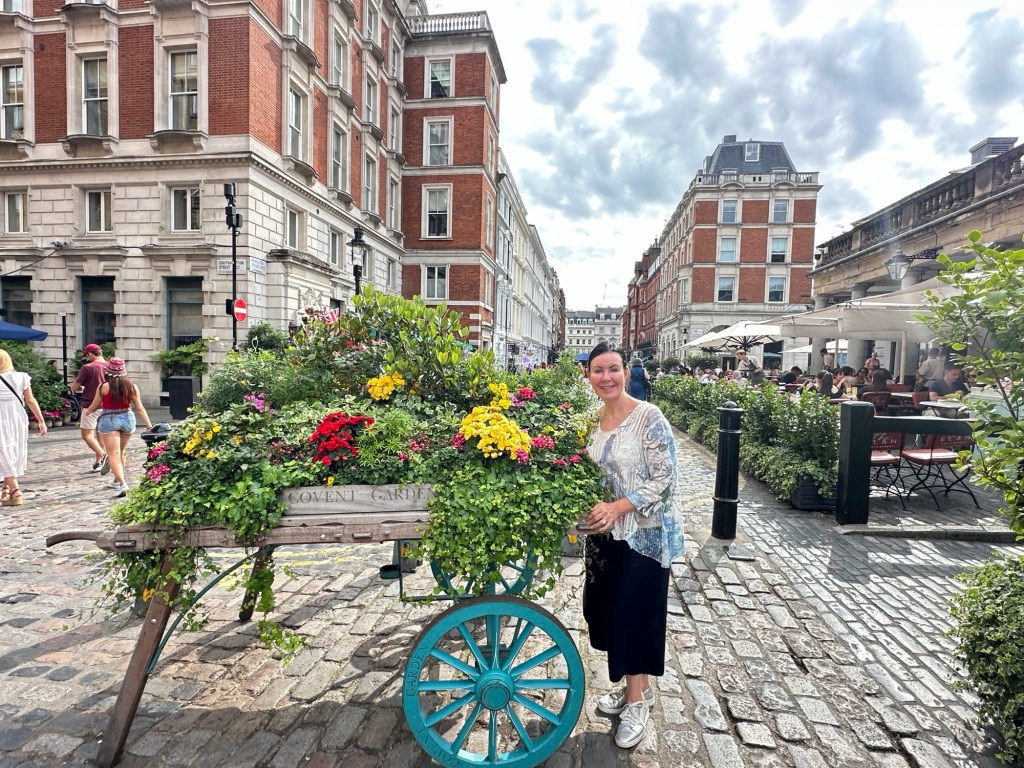
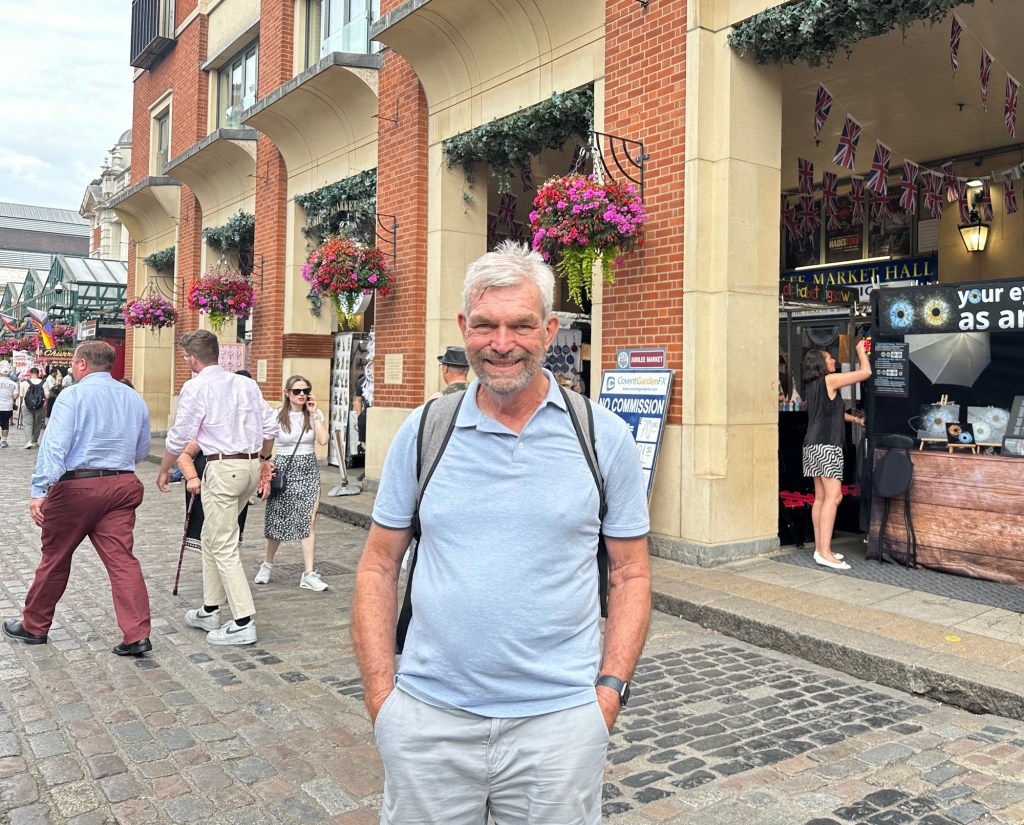
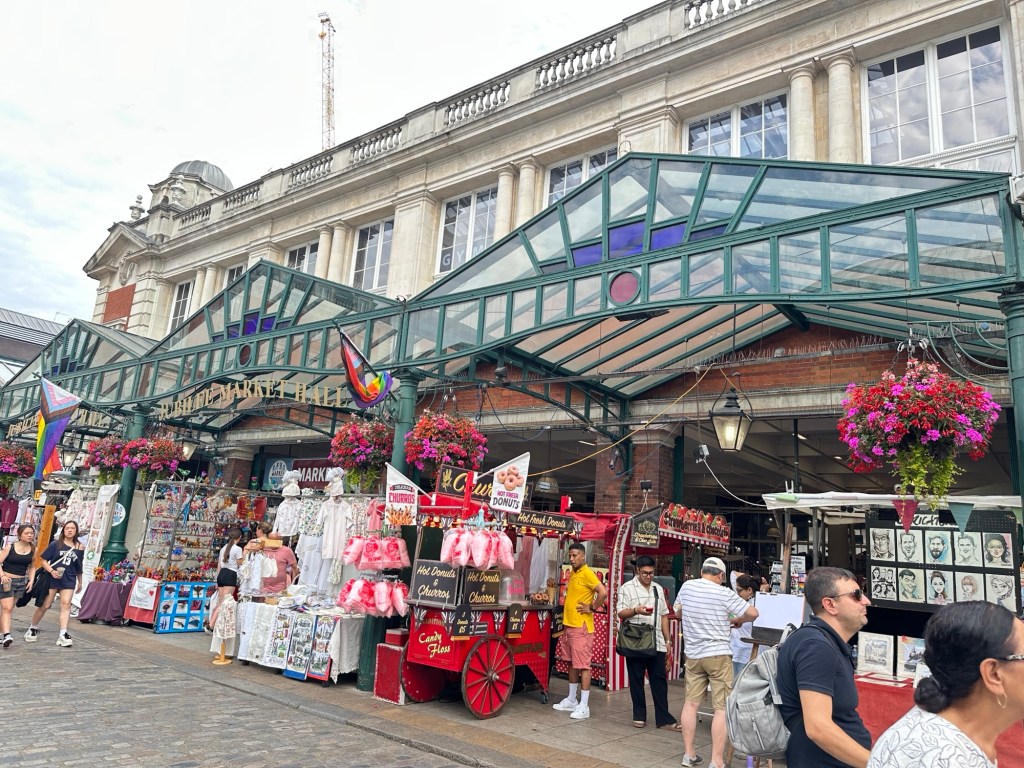
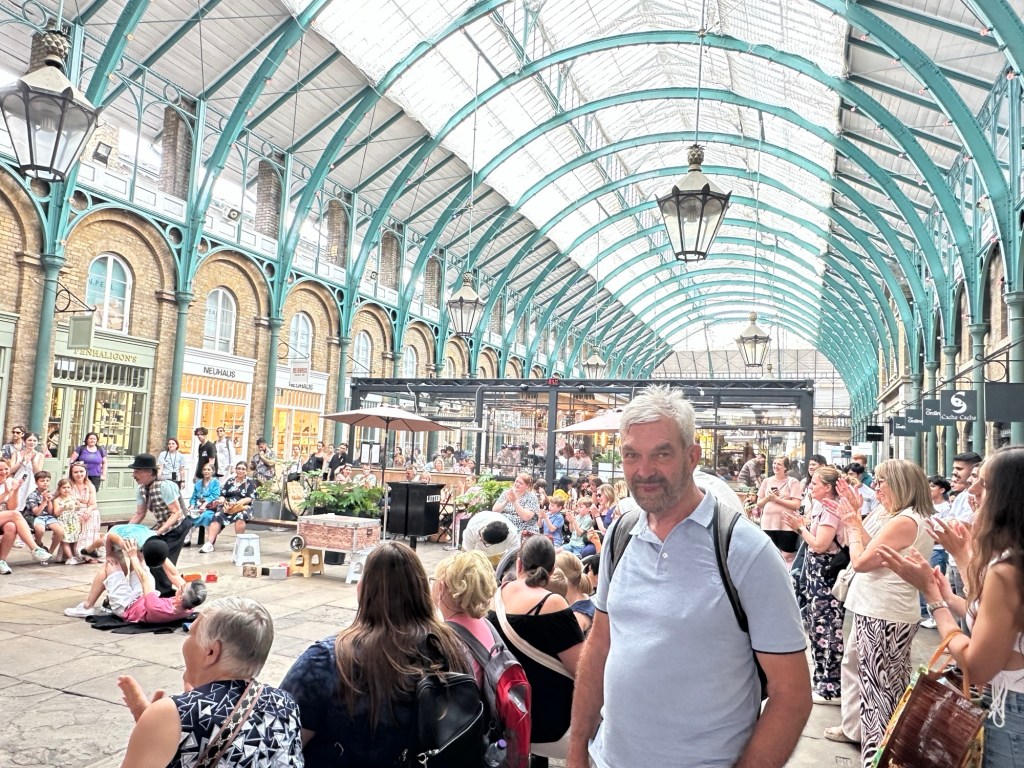
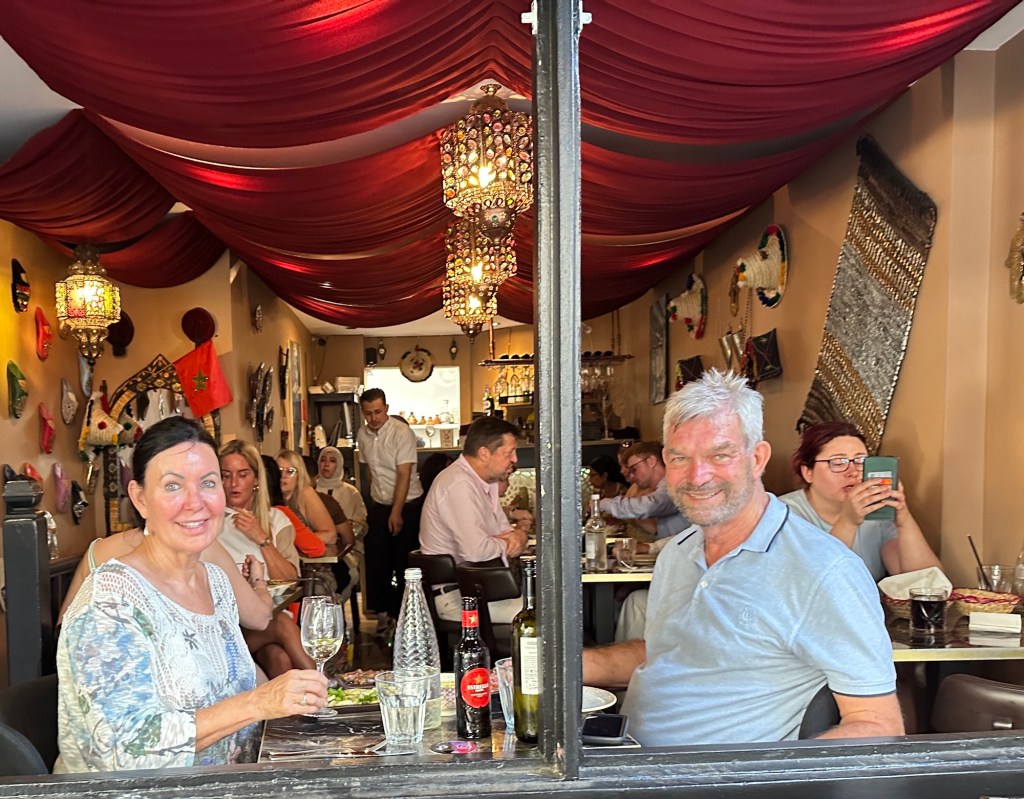
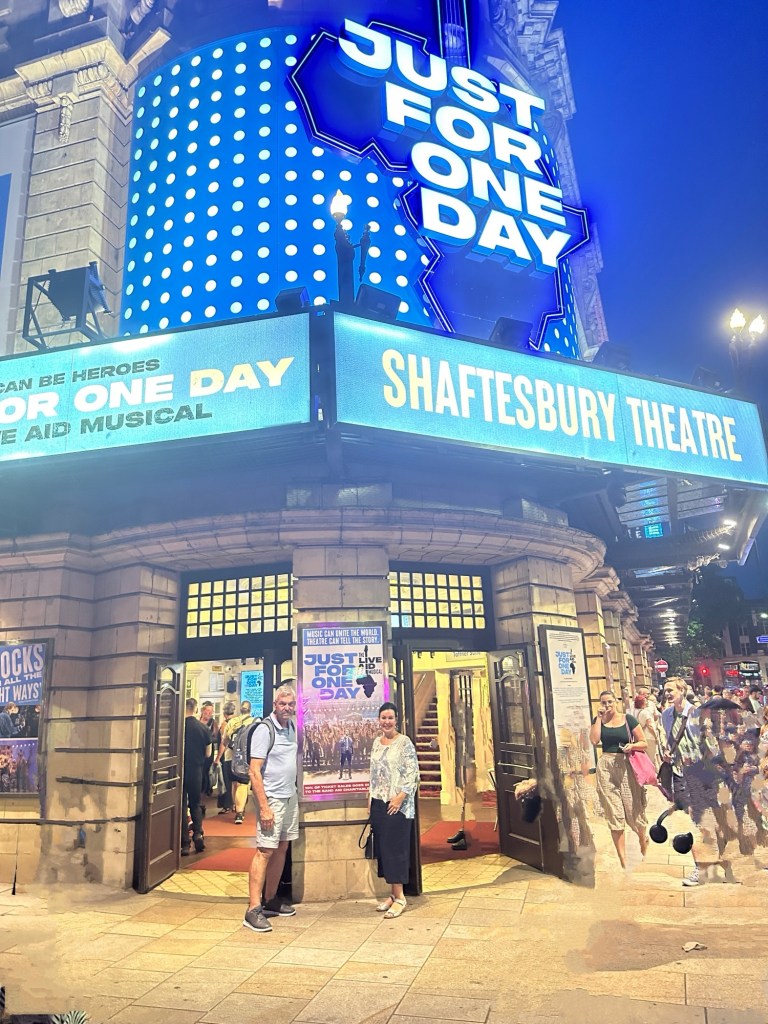
A short walk and we were in West End, a different area to last night. Took a while to find the right place to have an early dinner – criteria was that it needs to be cool, nice food (not pub food), serves alcohol, not noisy, and has free wifi. Found it – Bab Mansour – a Lebanese restaurant with a pre theatre special of six shared maze plates, and a bottle of wine for £49. It was also very close to Shaftesbury Theatre where our show tonight, Just For One Day, was on. Perfect, and the food was delicious.

Just For One Day tells the story of how music united the world on 13th July 1985 as more than 70 artists came together to play huge concerts simultaneously in London and Philadelphia. The show was fantastic- just loved it. The actors who played Bob Geldof and Maggie Thatcher were brilliant! I gave this show a rating of 12/10!


We had very sore feet by the time we arrived home – 18500 steps today in the heat!
Day 34
Sunday 22nd June
London
18-26 degrees, much cooler, nice breeze
Up and running, second full day of our London tour! We had booked onto a “free” walking tour of London City, and had to meet our guide Nathan at Trinity Square. With the free tours you tip as you think appropriate.
Nathan did a fantastic job of turning back the clock 2000 years and giving us the history of the City of London, from the arrival of Julius Caesar, and its roots as a square mile trading village along the River Thames, all the way to becoming the financial capital of Europe, and home to dozens of the quirkiest glass skyscrapers.
He kept us entertained with stories of William the Conqueror’s Norman Conquest, the construction of London’s medieval fortress, the devastation of the Great Fire in 1666, the destruction of the Blitz captured perfectly by a bombed-out church, and the resilience and bravery of the people who lived through it and so much more! Nathan gave us a very theatrical performance for two and half hours- at no time did we lose interest!

Our walking tour highlights included …
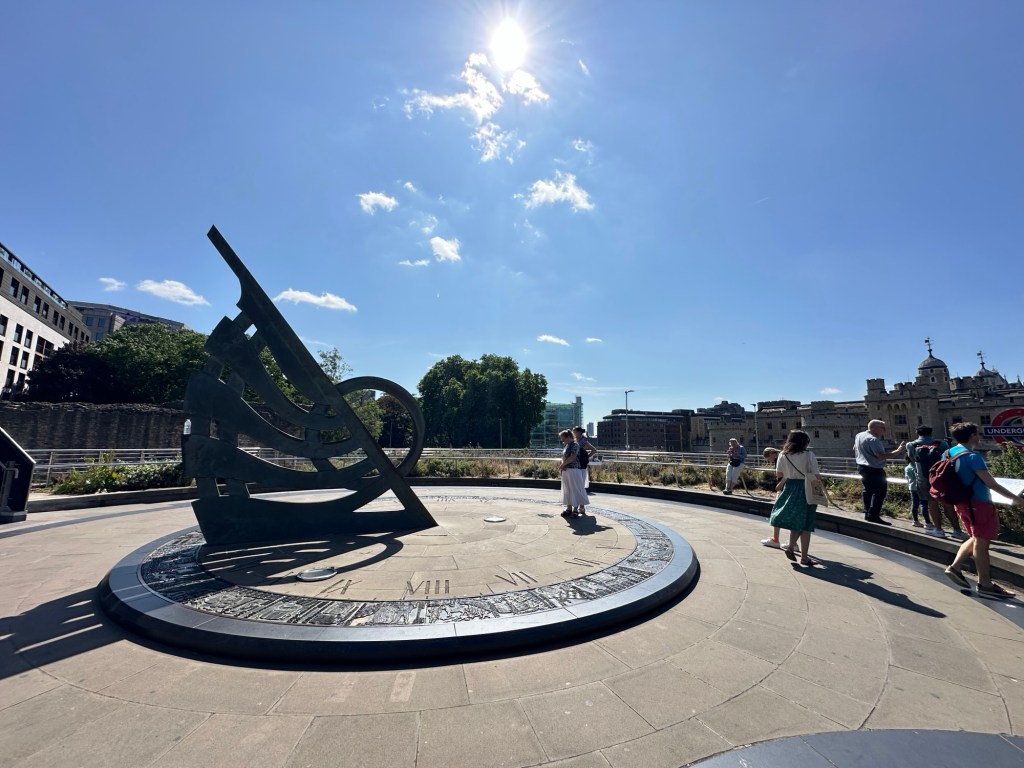
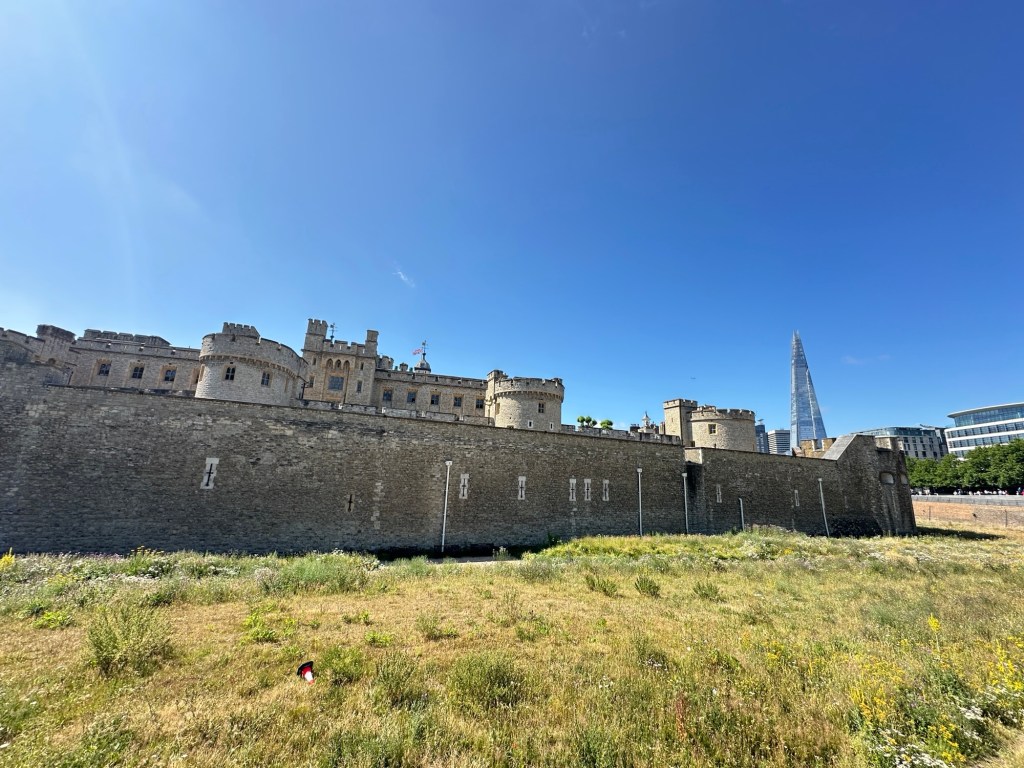
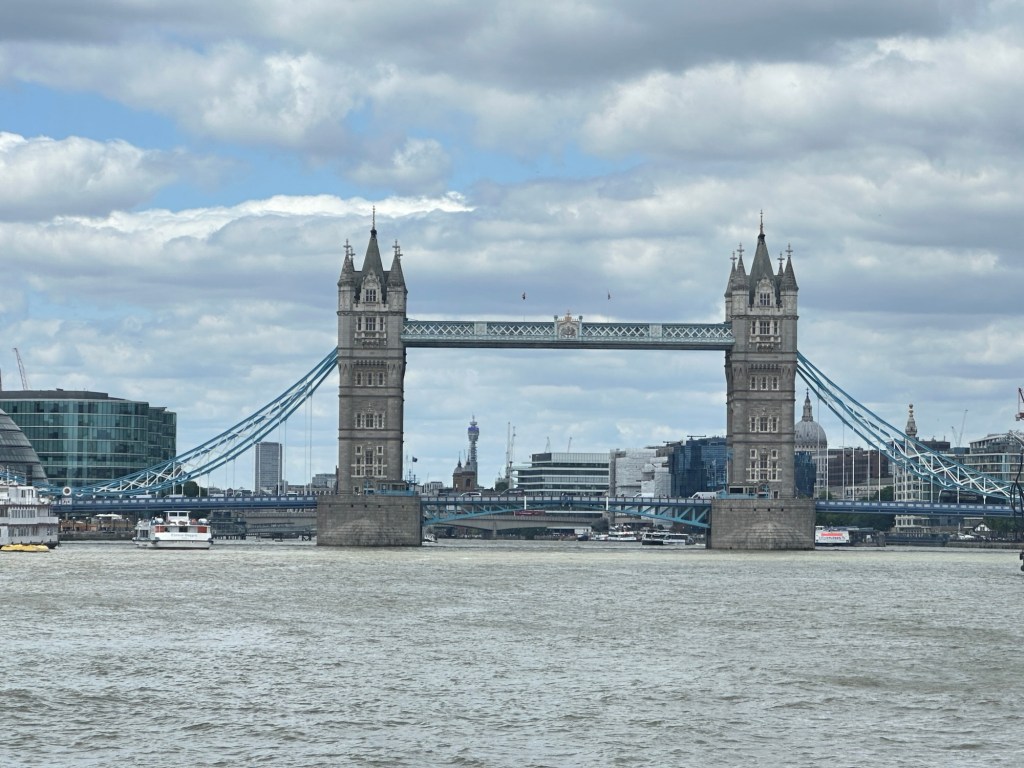
London’s Roman Wall and the Tower of London and Tower Bridge
Monument ( to the fire of London)

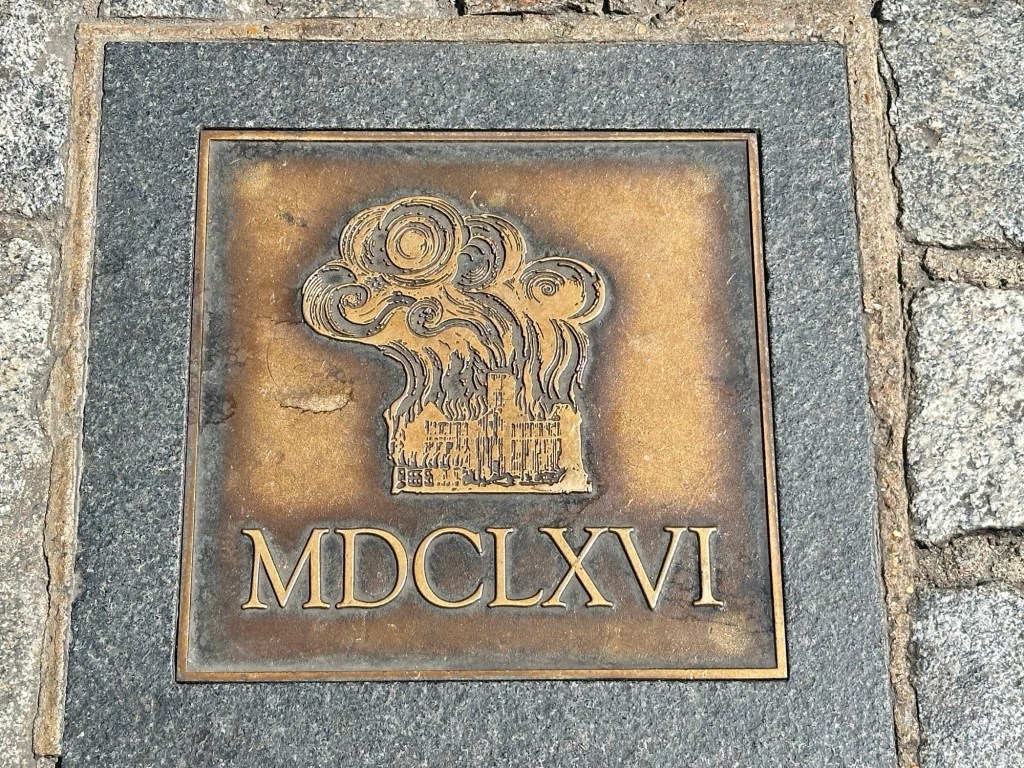
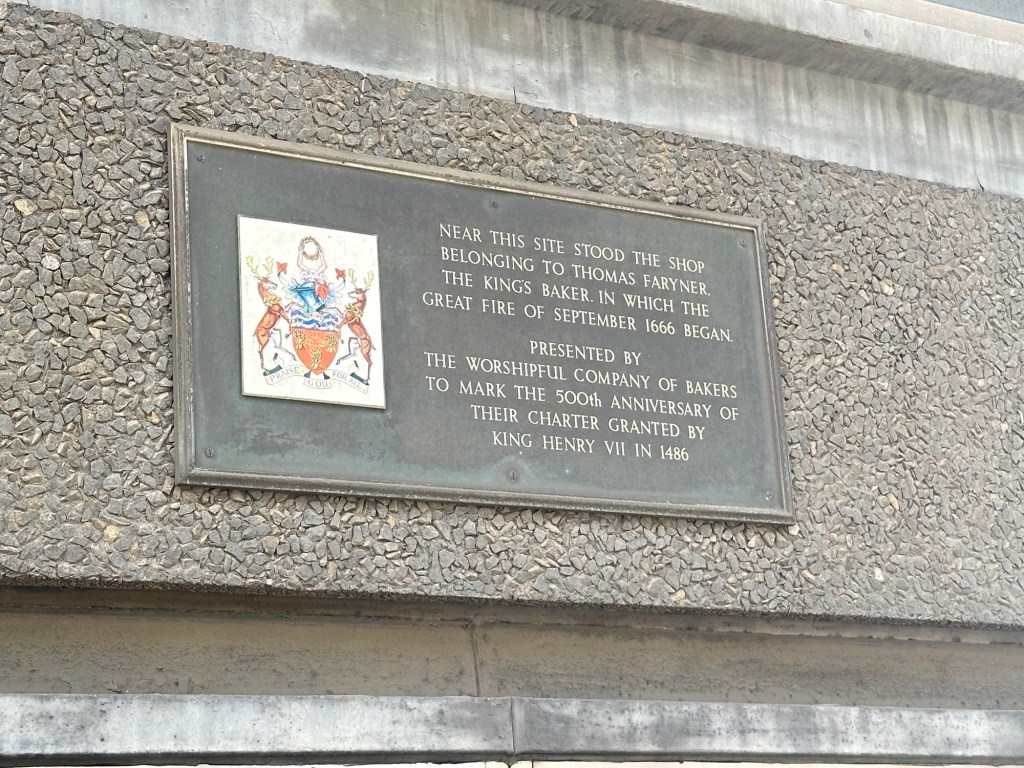
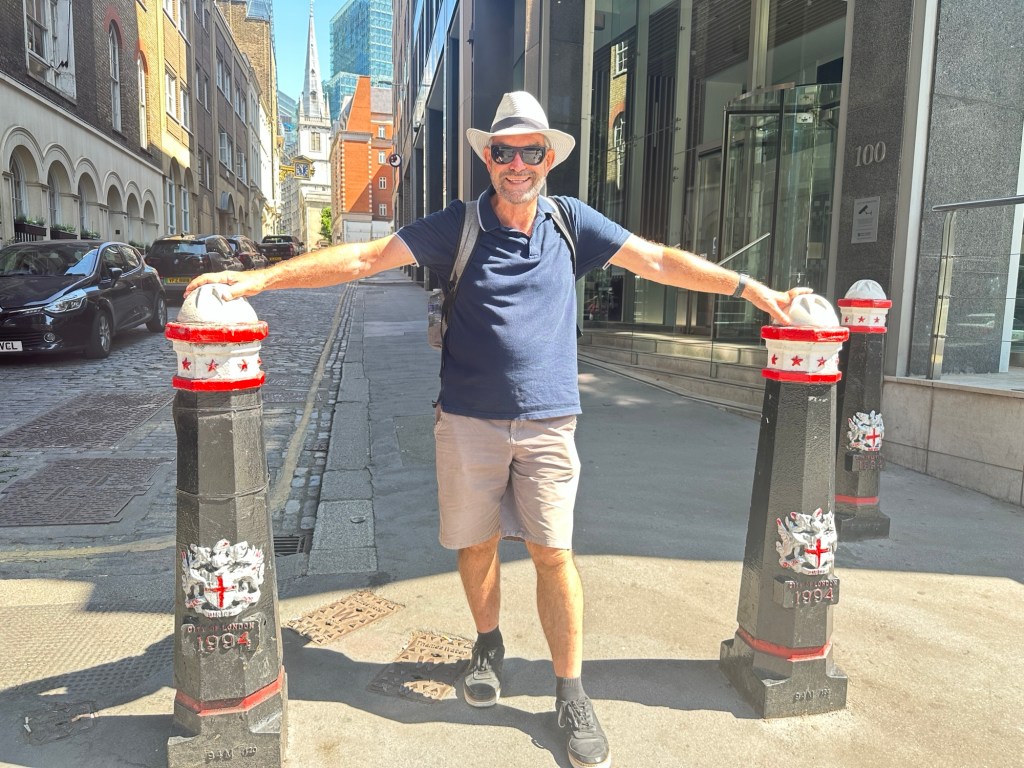
St Dunstan’s Church- damaged twice – once in the Fire of London, and then in WWII

Leadenhall Market – where “the suits” meet during the day to do their work with their pints resting on the barrels. This ornate Victorian shopping arcade was designed by Sir Horace Jones in 1881. It is home to boutique wine shops, cheese-mongers and fine food shops, plus several traditional pubs and wine bars.
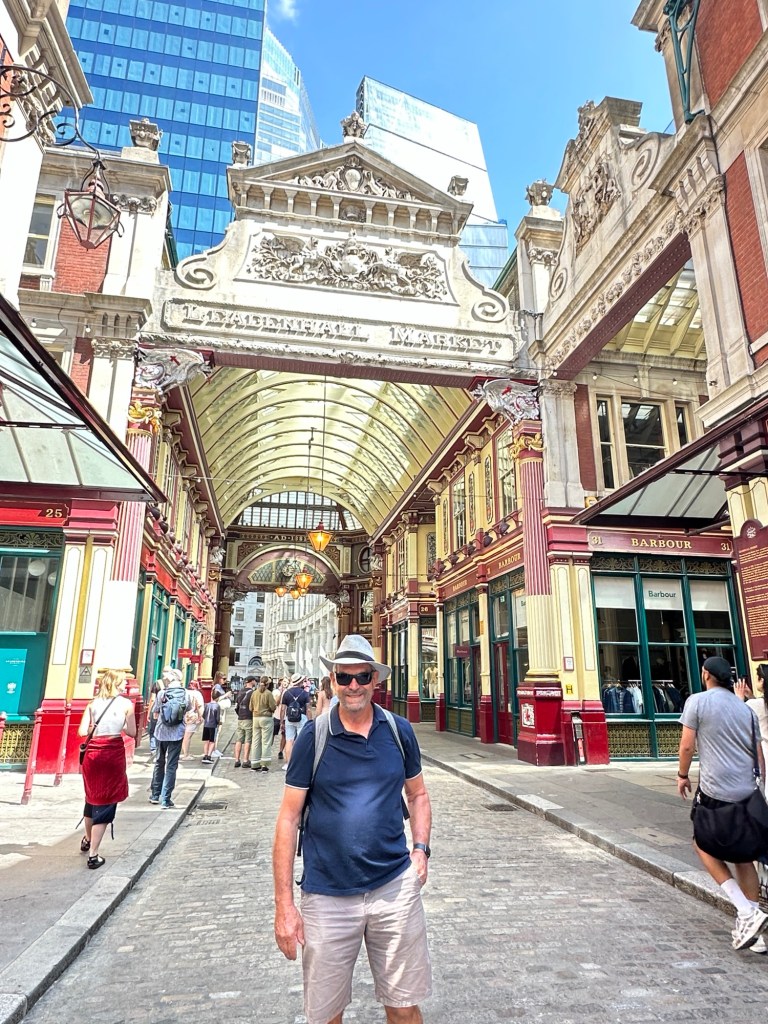
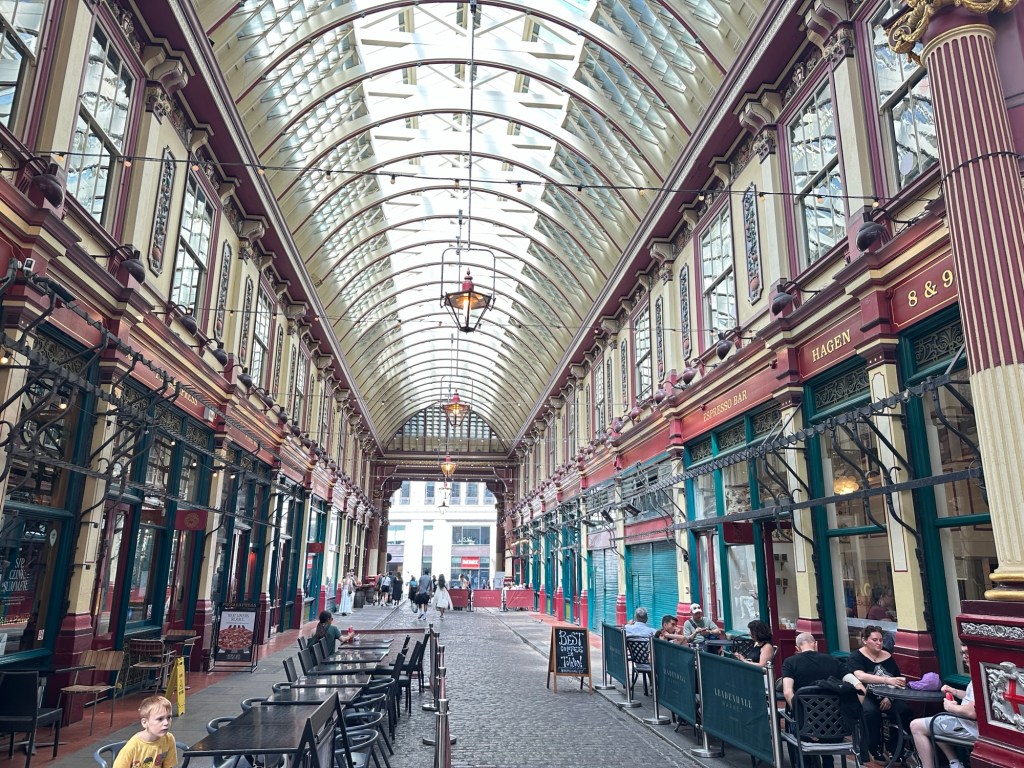
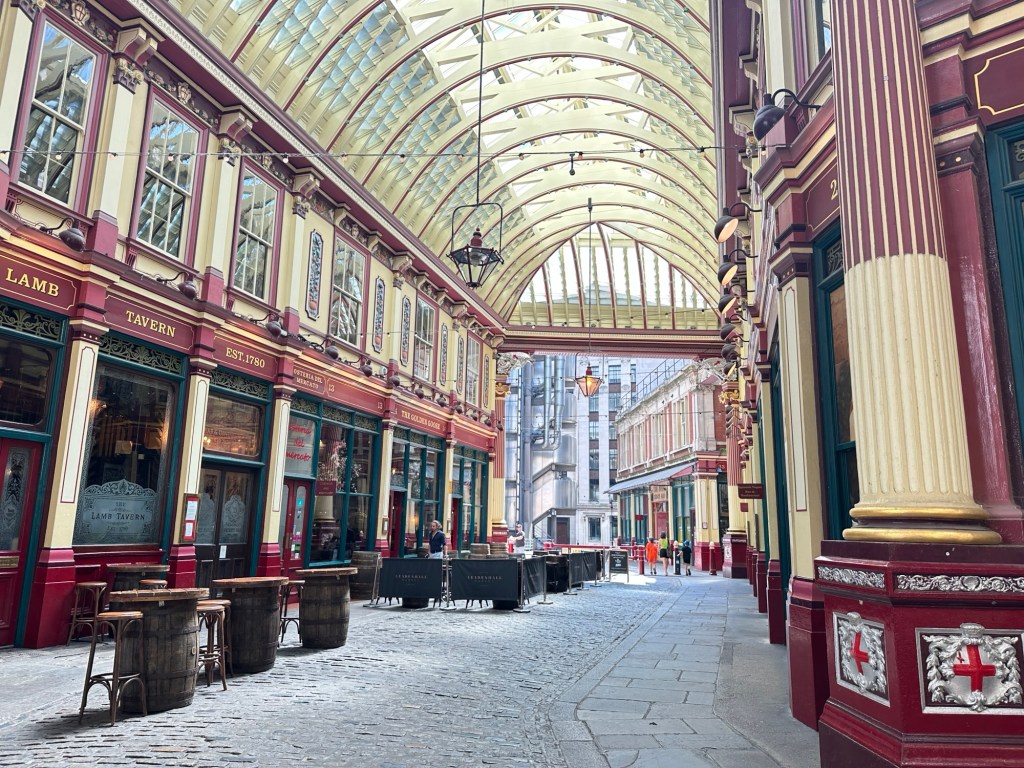
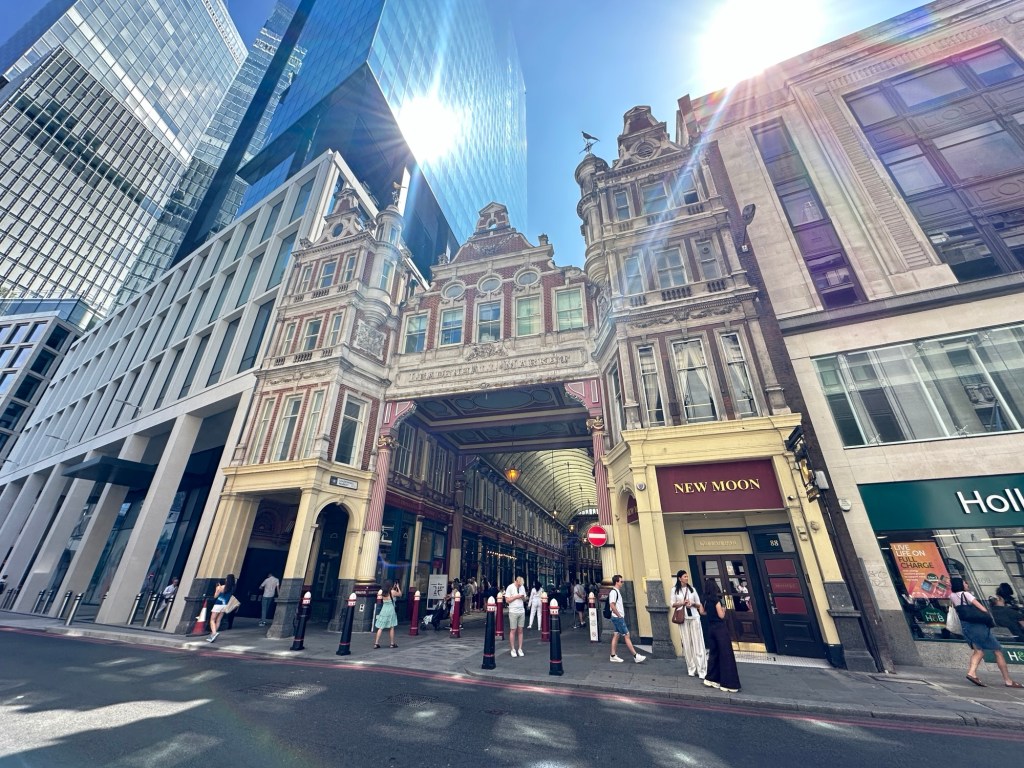
Mansion House – where the mayor of the City of London lives (apparently he dresses in his red robe and gets about in his house drawn gold carriage )

The Bank of England and The Royal Exchange

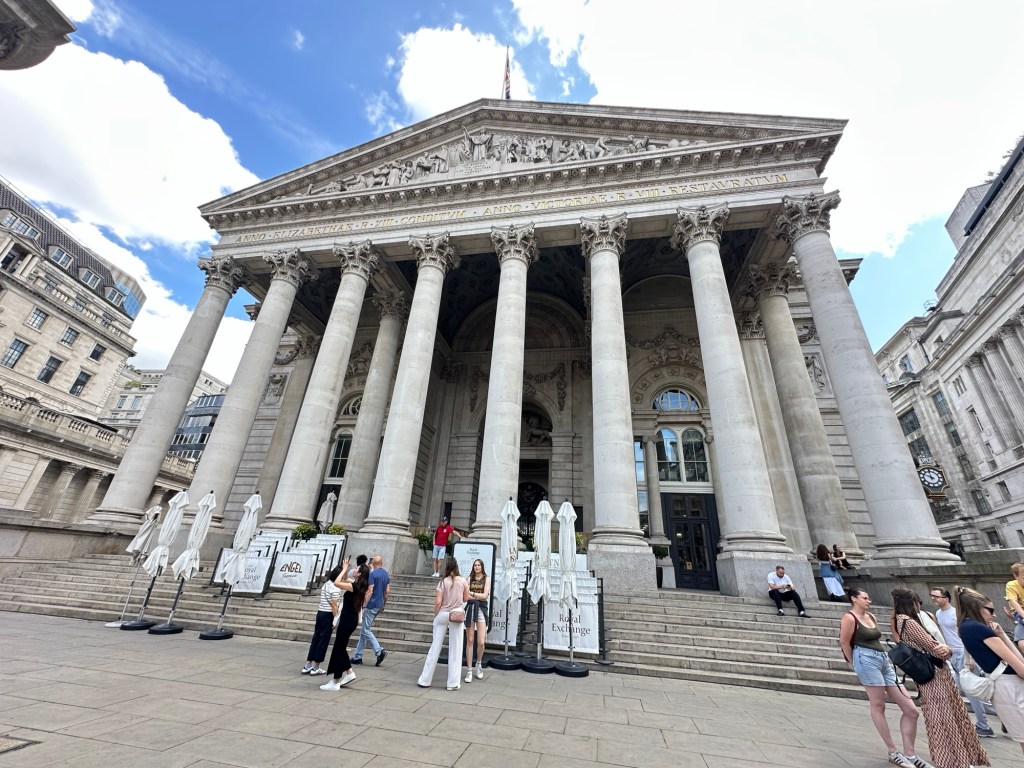
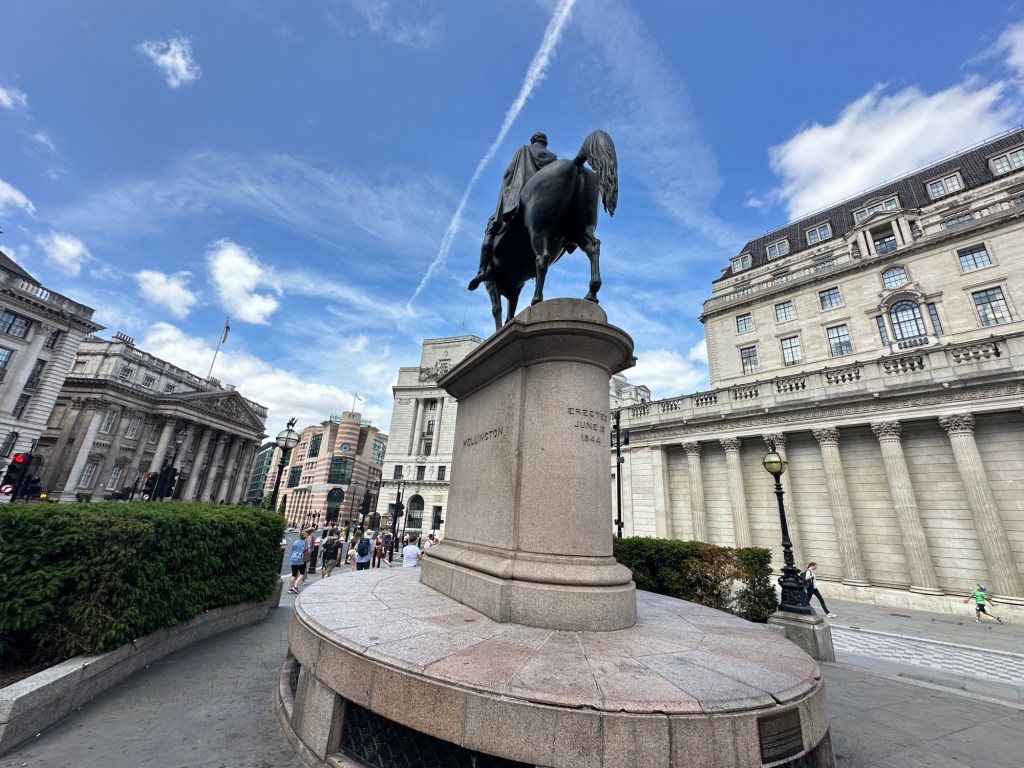
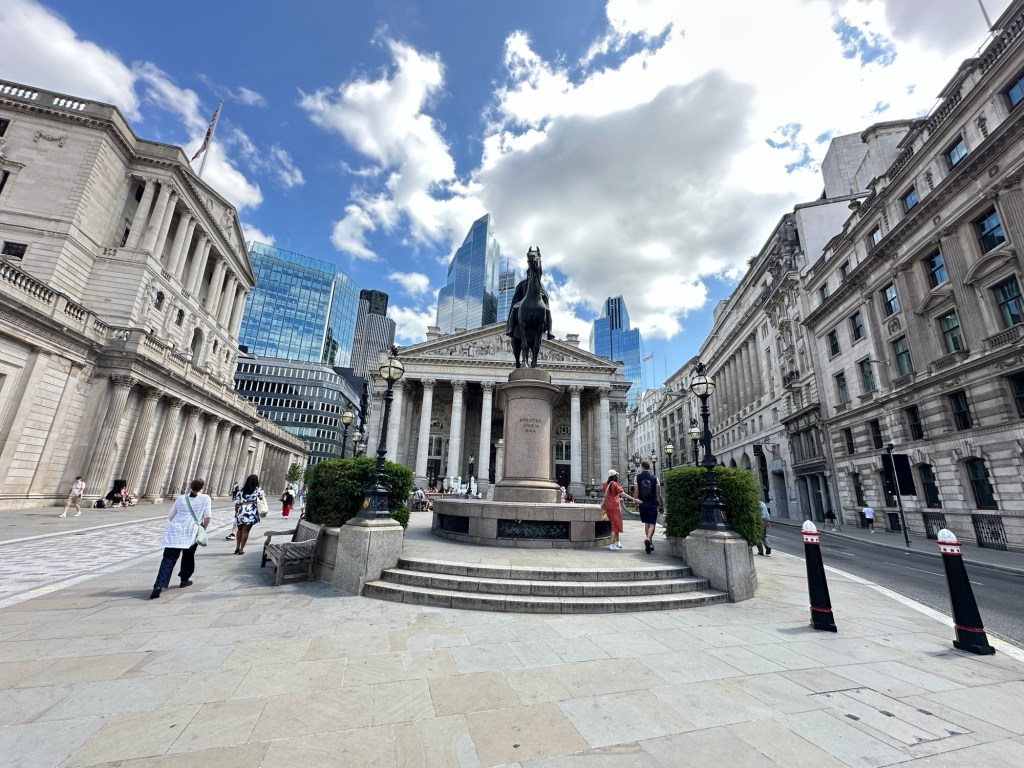
A walk along the River Thames
We covered a lot in the time. Also, good timing as being a Sunday, a lot of the fights were closed which minimised the crowds!
We finished our tour at St Paul’s Cathedral. Designed by Christopher Wren, St Paul’s Cathedral stands 365 feet tall (that’s 111 metres) and is the second largest cathedral in the world, after St Peter’s Basilica in Rome. It’s free to go inside – I think it’s stunning, probably one of my favourite churches – I describe it as exquisitely elegant.
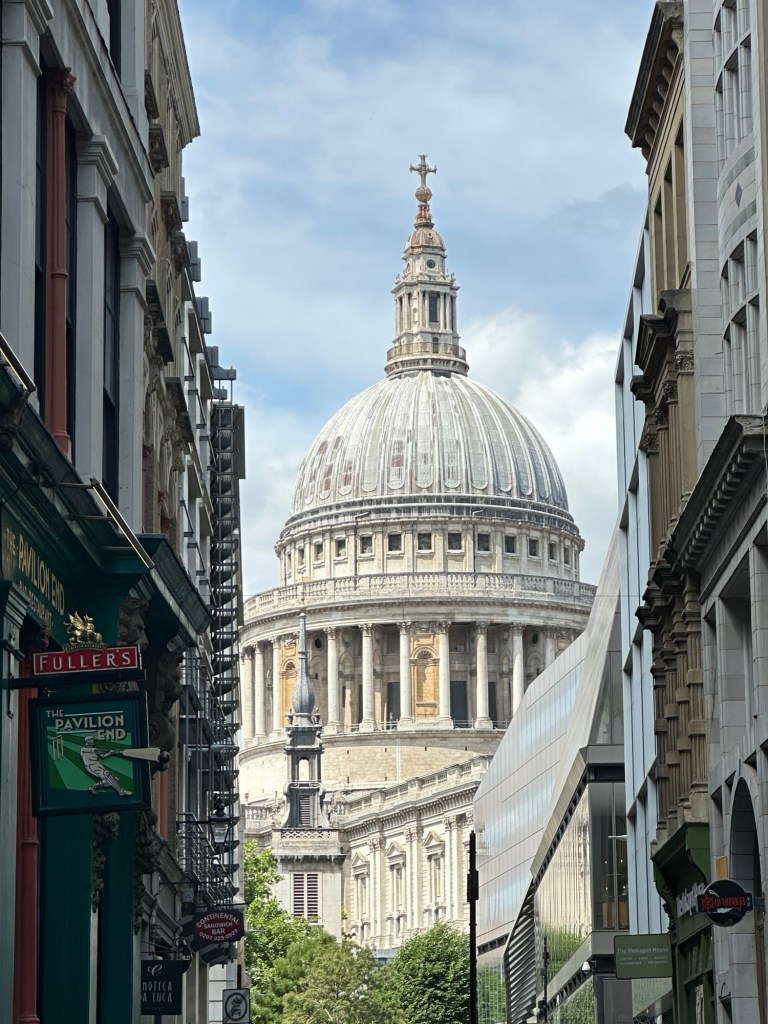
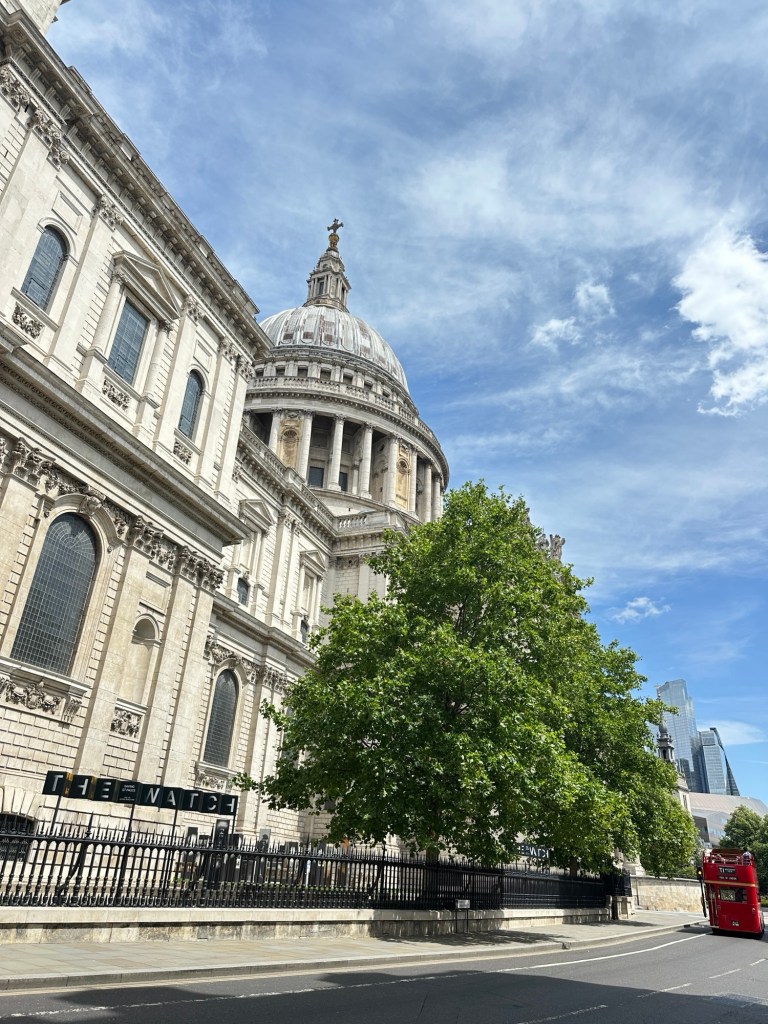


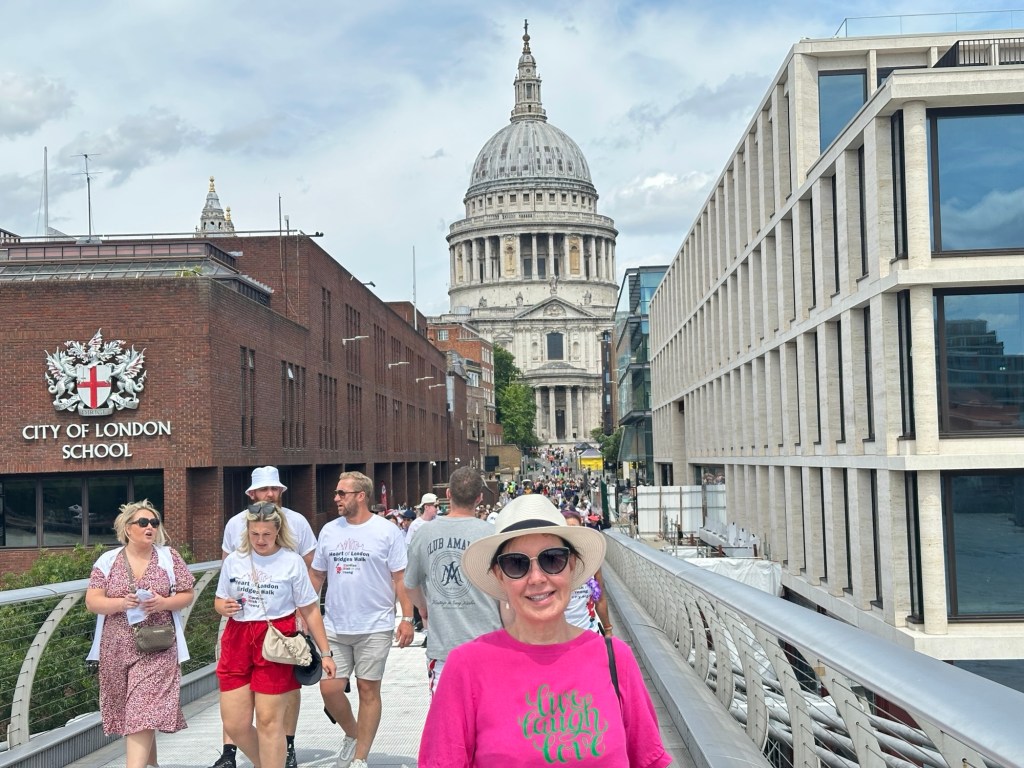
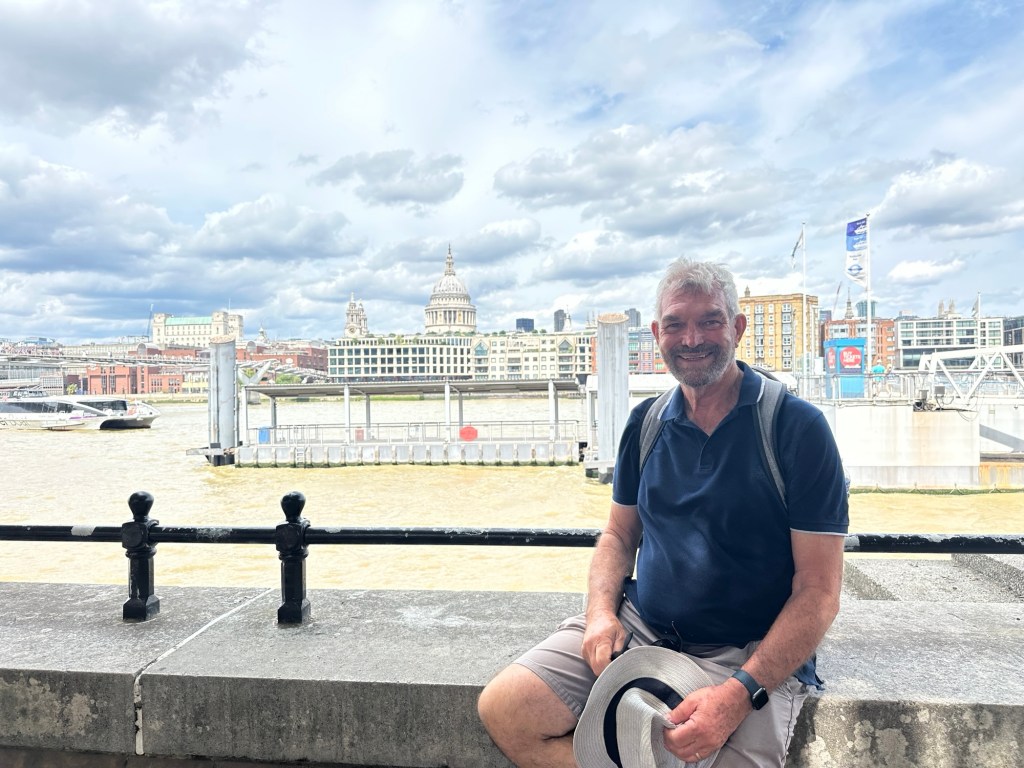
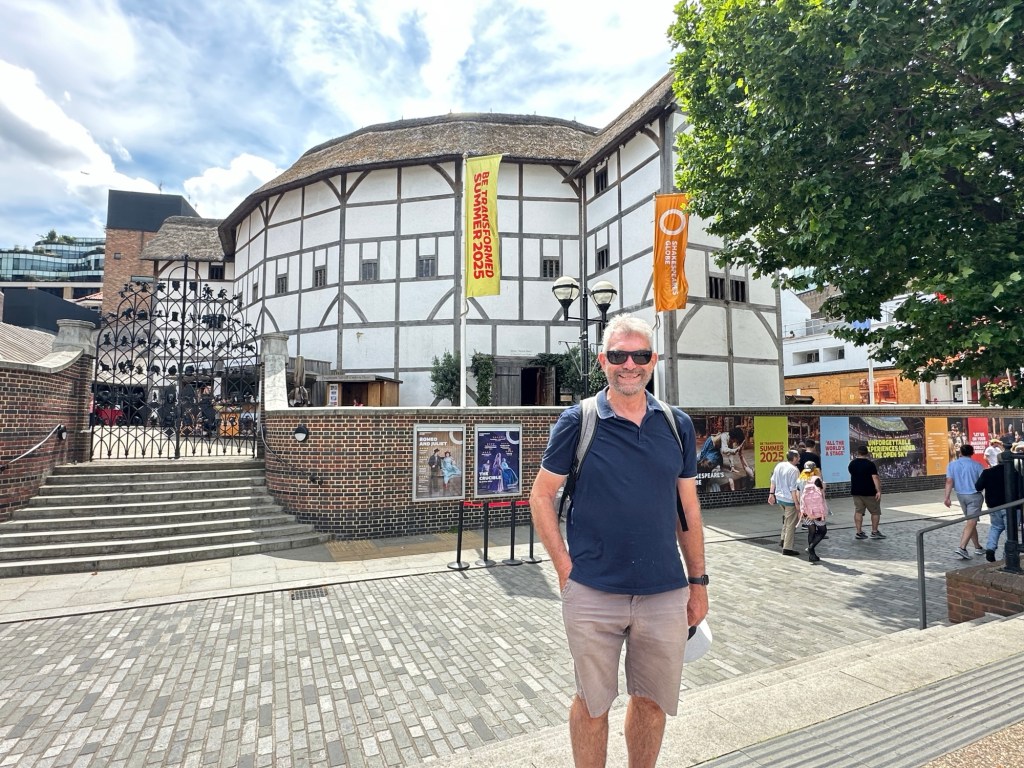
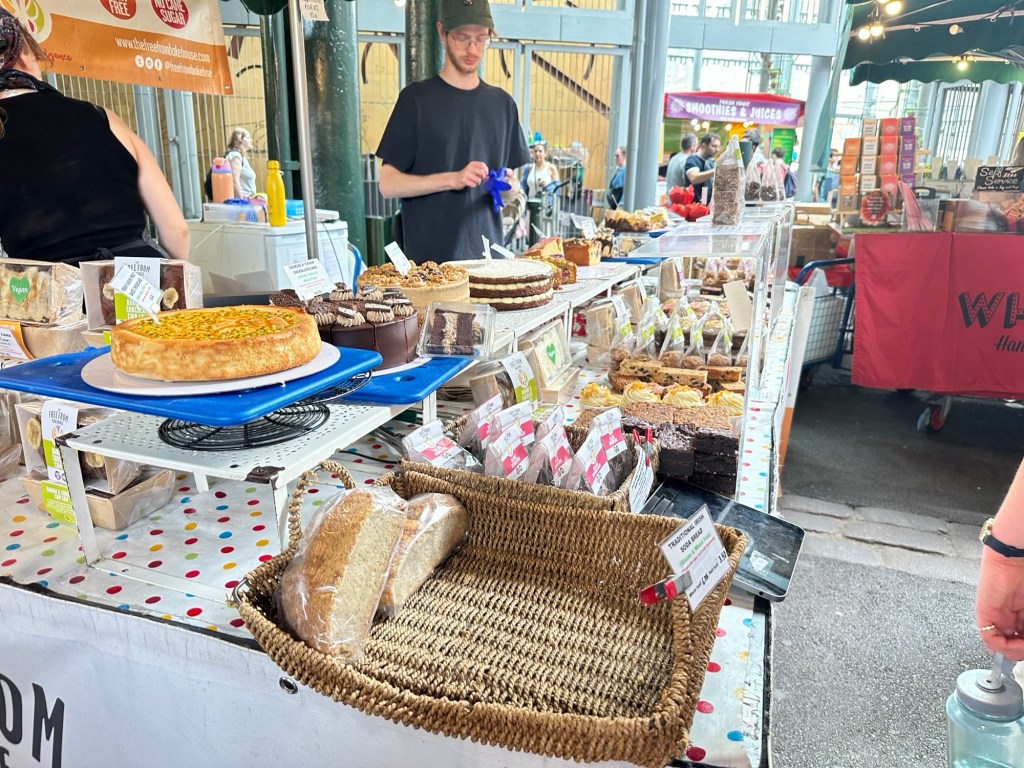
From here we walked across Millennium Bridge to Southbank, where we strolled along the riverfront enjoying the sights. Saw the Globe Theatre, then ventured into Burough Market – and I mean ventured! This is where all the people were! So many people! There were pubs, bars, cafes, restaurants, takeaway food vendors, fresh food vendors, and so much more. And all bursting at the seams with people. All the food looked beautiful, so fresh. We had fresh salads from a Lebanese vendor – very nice.
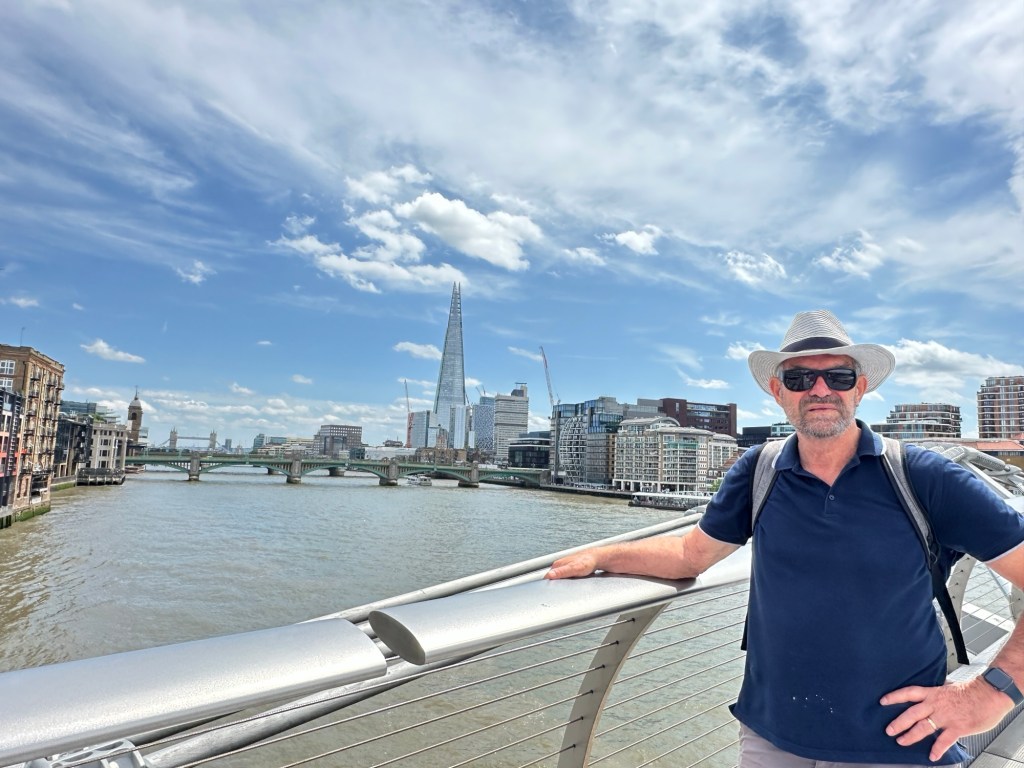

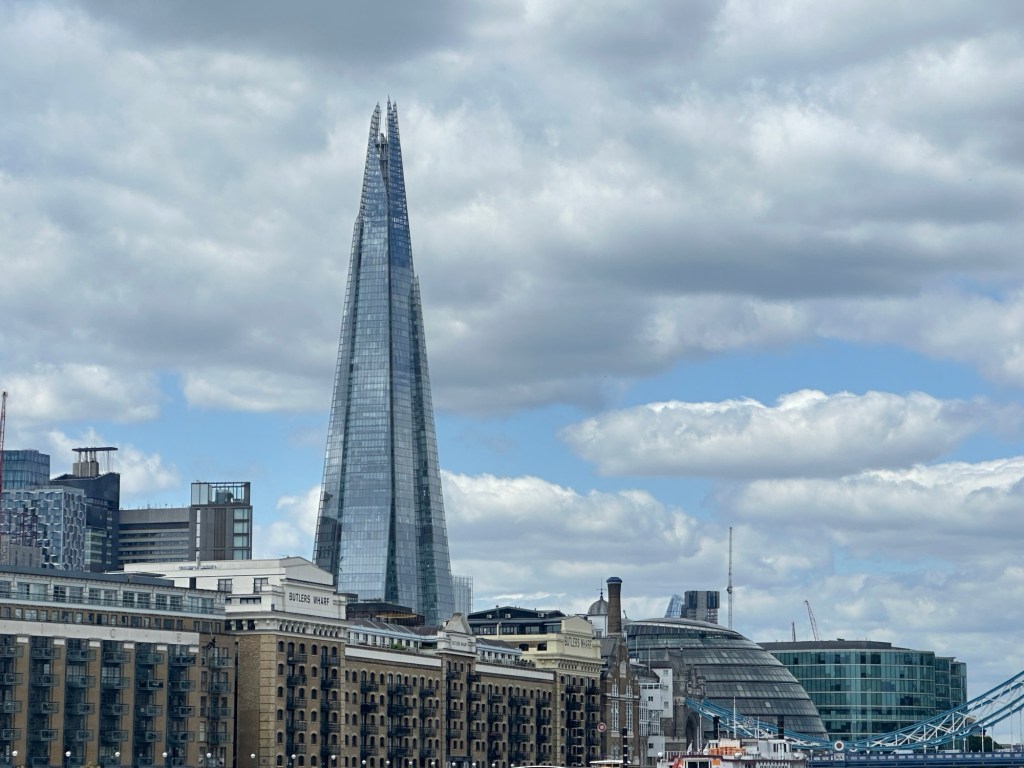
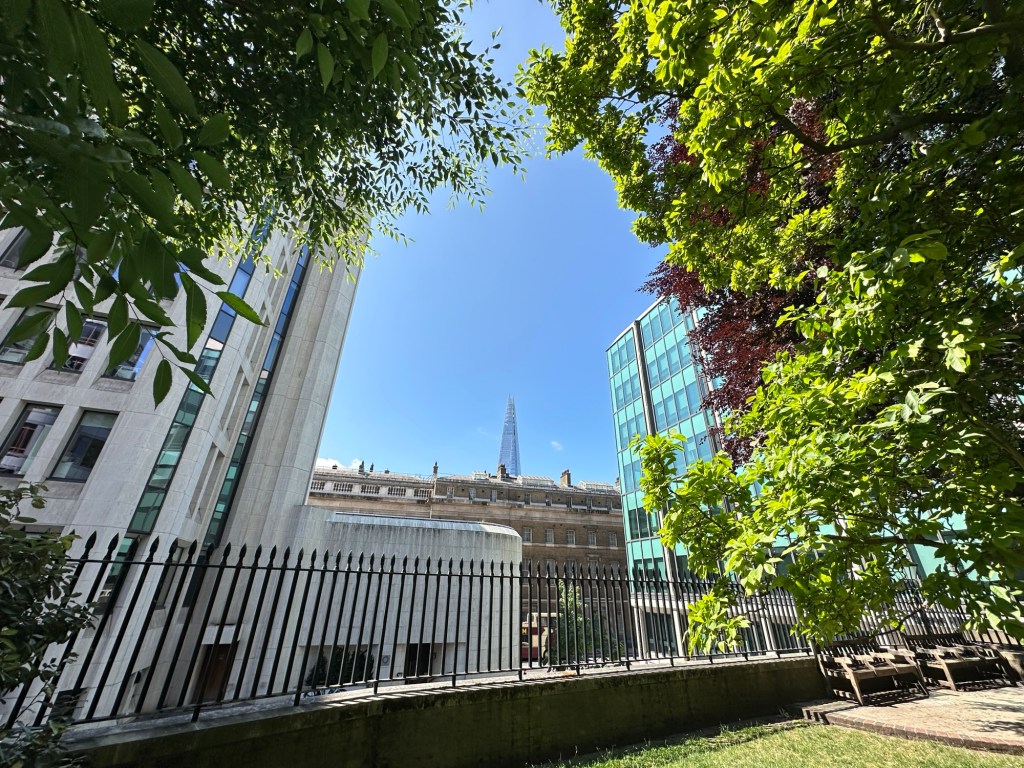
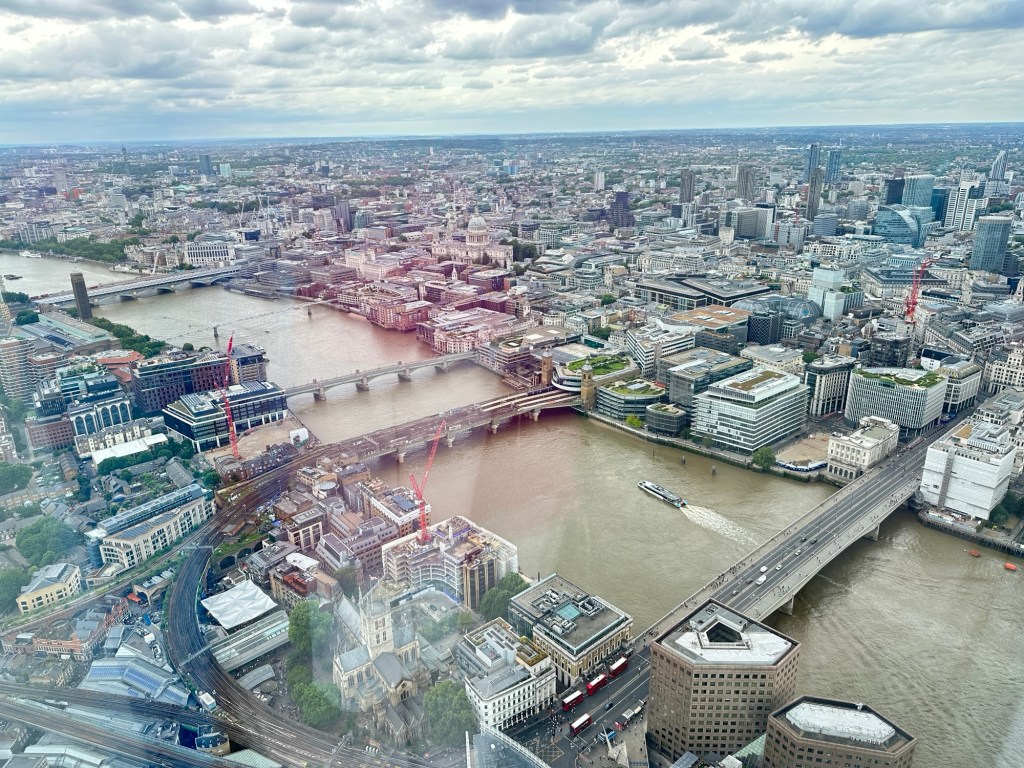
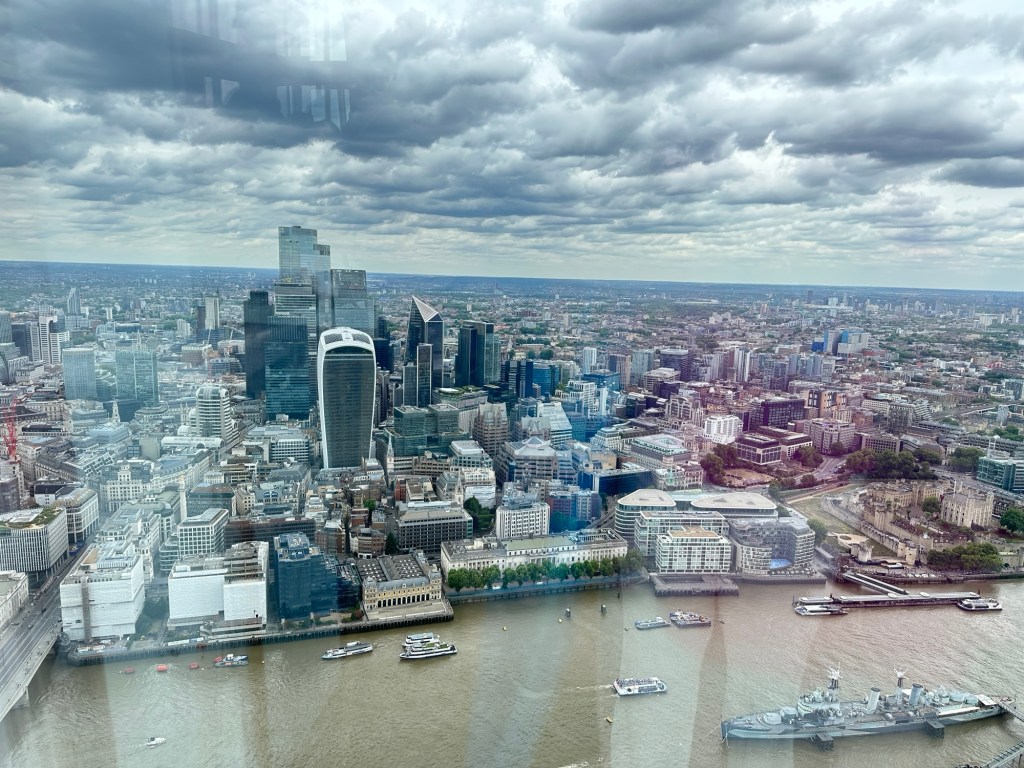
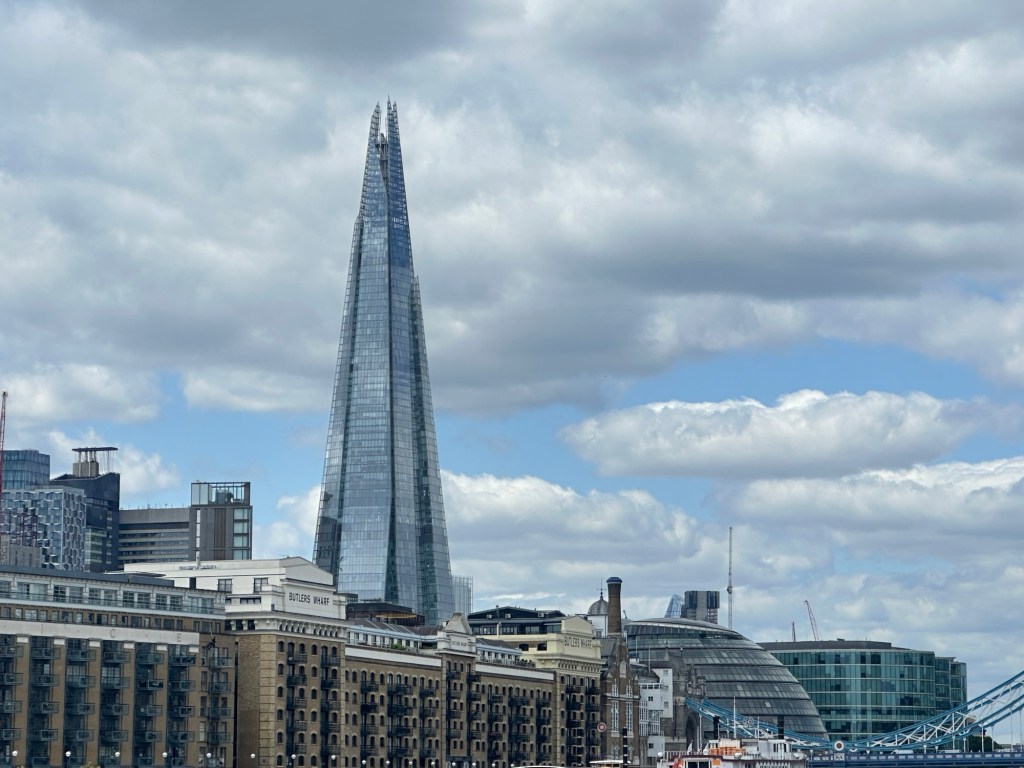
The Shard was close by, so that was our next stop. The Shard, also referred to as the Shard London Bridge and formerly London Bridge Tower, is a 72-storey mixed-use development supertall pyramid-shaped skyscraper, designed by the Italian architect Renzo Piano. It is 309.7 metres high – the tallest building in Western Europe. Apparently it was the tallest building in Europe for a short while, but then Warsaw built one at 310metres! We went up the 72nd floor, and enjoyed some fabulous views over London. It was a nice day, so we were lucky.

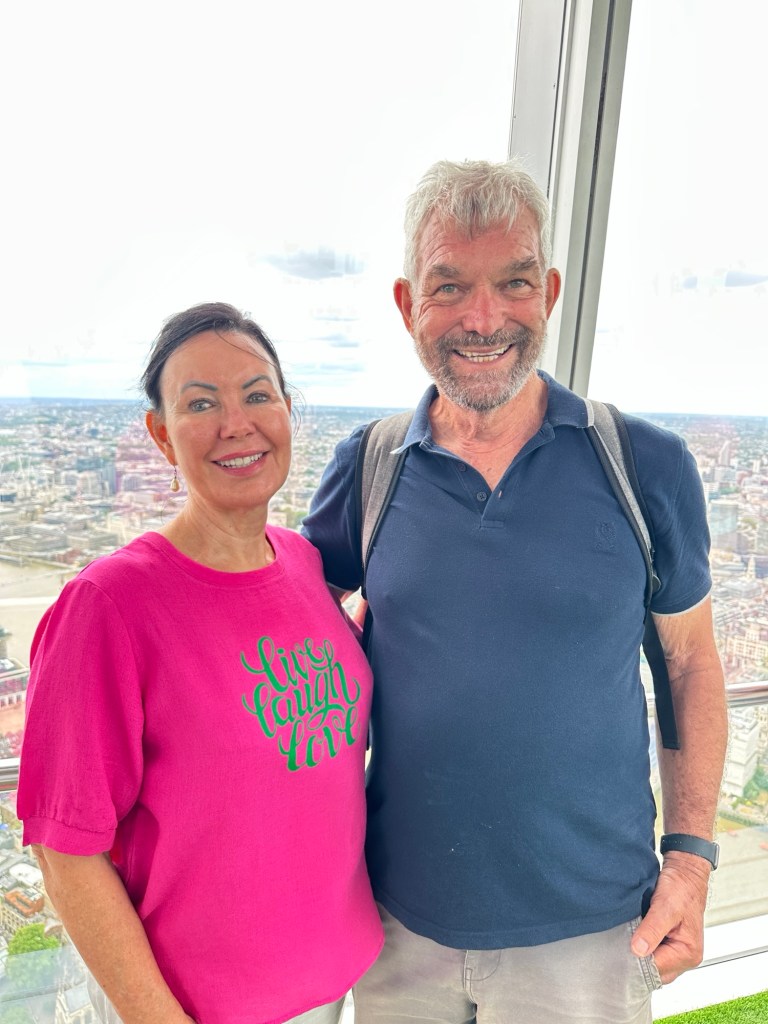
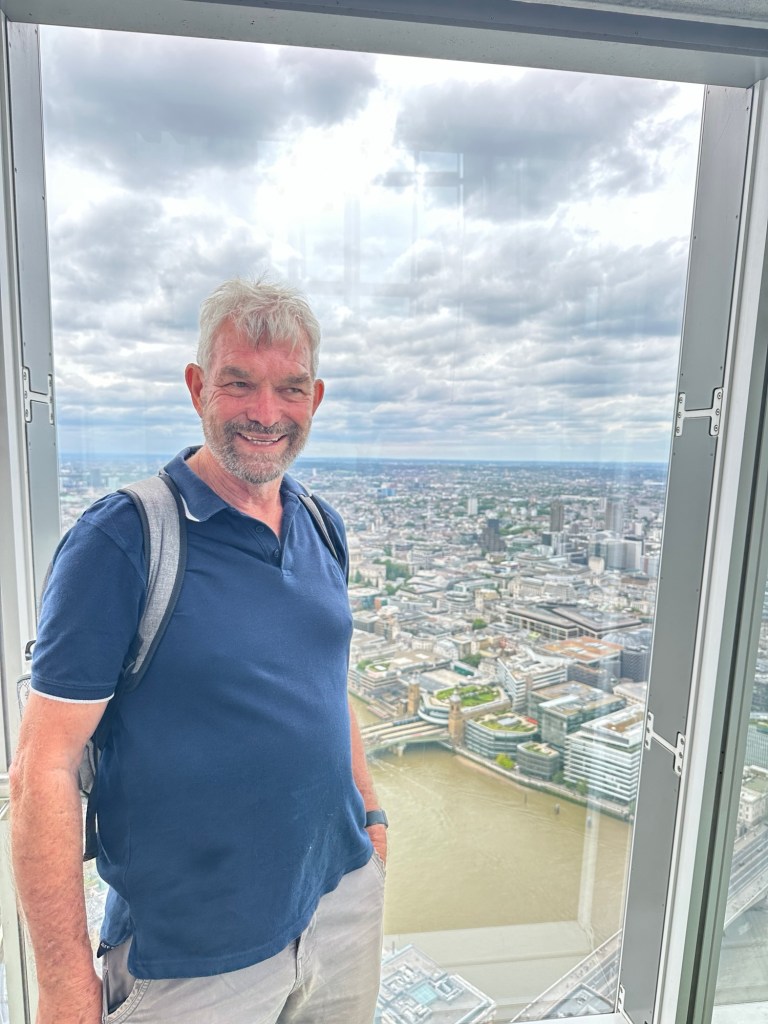

We then met a friend of Frank’s from his Navy days, Andy Stewart and his partner Jeannine, at the Millennium Dome. The dome was built for the year 2000, and is now an outlet and restaurant centre. Lovely to catch up with them over a nice meal. We had last seen them 10 years ago at a Navy reunion in Australia.


Made a wrong turn on the way home tonight – at Canary Wharf ( though it was a nice precinct to get lost in – wished we had more time there) . Some very sweet young girls soon got us back on track, but it did mean an extra train ride, and we were a bit later home than we had anticipated.
1560 steps today.
Day 35
London
16-22 degrees, sunny, and windy
Last day of our whirlwind tour of London. We walked 20 minutes to the Royal Naval College in Greenwich for a tour of the Painted Hall.
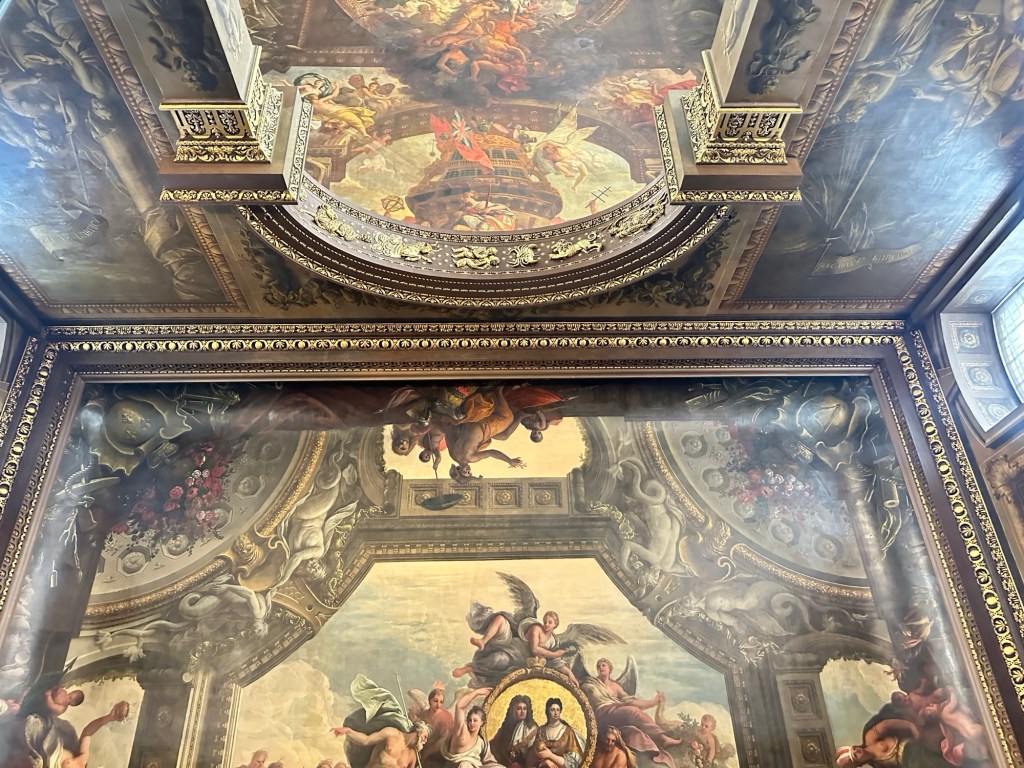
The Painted Hall was originally intended as a dining room for the Greenwich Pensioners living at the Royal Naval Hospital. It is one of the most spectacular Baroque interiors in Europe. The ceilings and walls feature over 200 figures, laid out in celebration of England’s naval power, growing wealth and advancements in science and astronomy. Reigning supreme at the very centre of the scheme are the Protestant monarchs, King William Ill and Queen Mary.
Queen Mary commissioned England’s leading architect, Sir Christopher Wren, to design the hospital. The walls and ceilings were painted over 19 years (from 1708 to 1727) by Sir James Thornhill and his team, to create a spectacular Painted Hall.


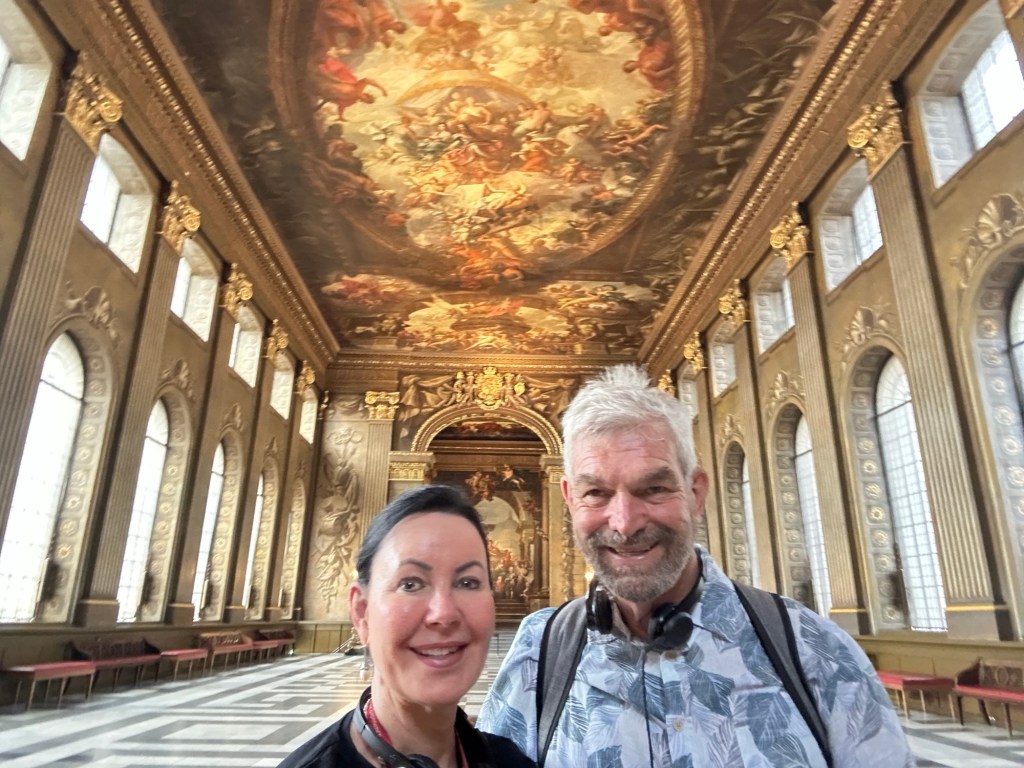


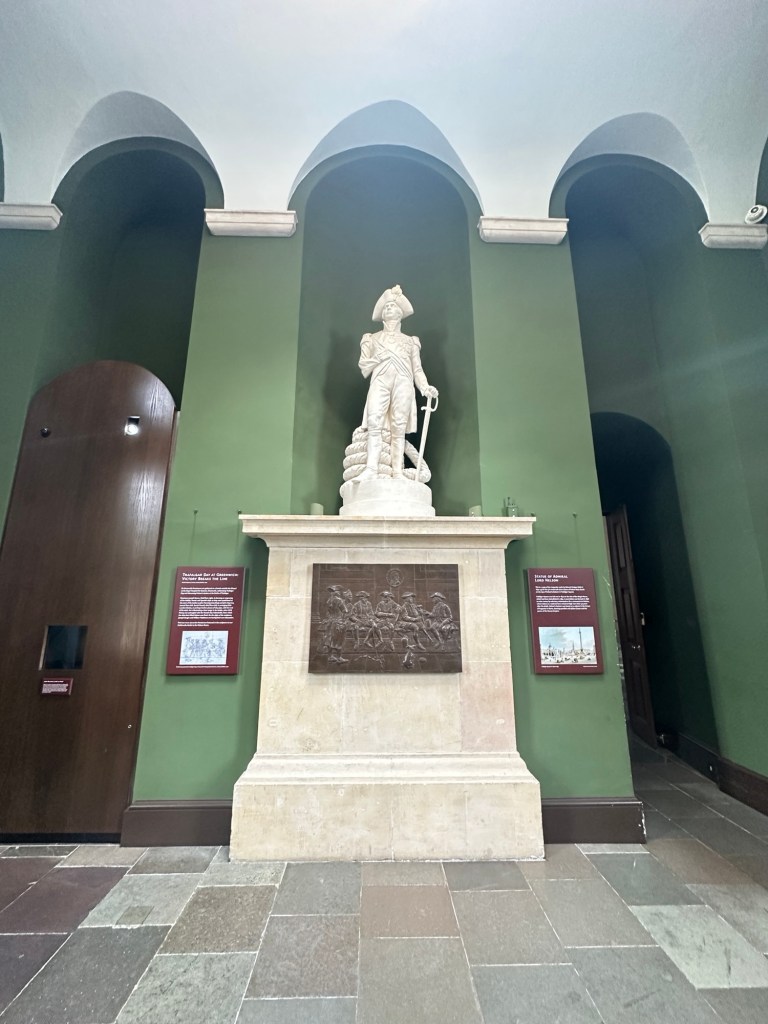
The Royal Naval College opened on 1st February 1873. Its aim was to provide ‘the highest possible instruction in all branches of theoretical and scientific study’ necessary to the Navy at a time of rapidly changing technology. From 1939 – 1998 the restored Painted Hall was reinstated as the Officers’ Mess. During term time the College held regular guest nights when nearly 400 sat down to dinner. The setting, with long rows of polished tables and the silver gleaming under the light of the candlesticks, provided a spectacle that no other mess could rival. Frank attended the college in 1985, and this was his regular dining room for brekfast, lunch and dinner – I’m sure he had very little appreciation for how special it was back then.
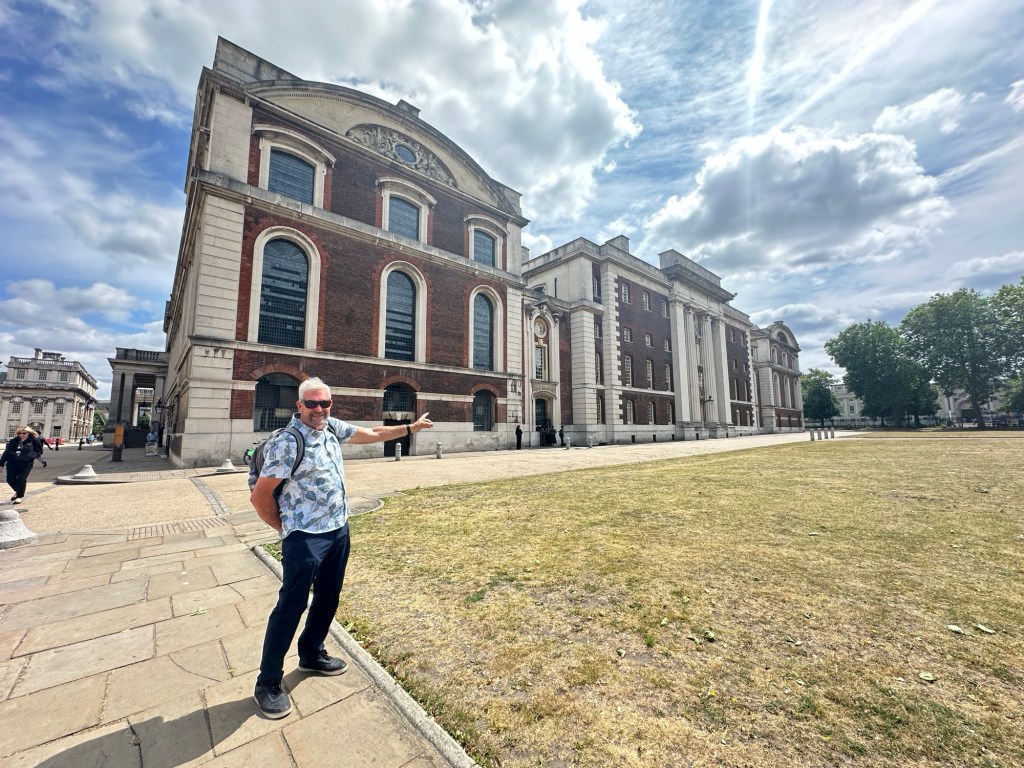
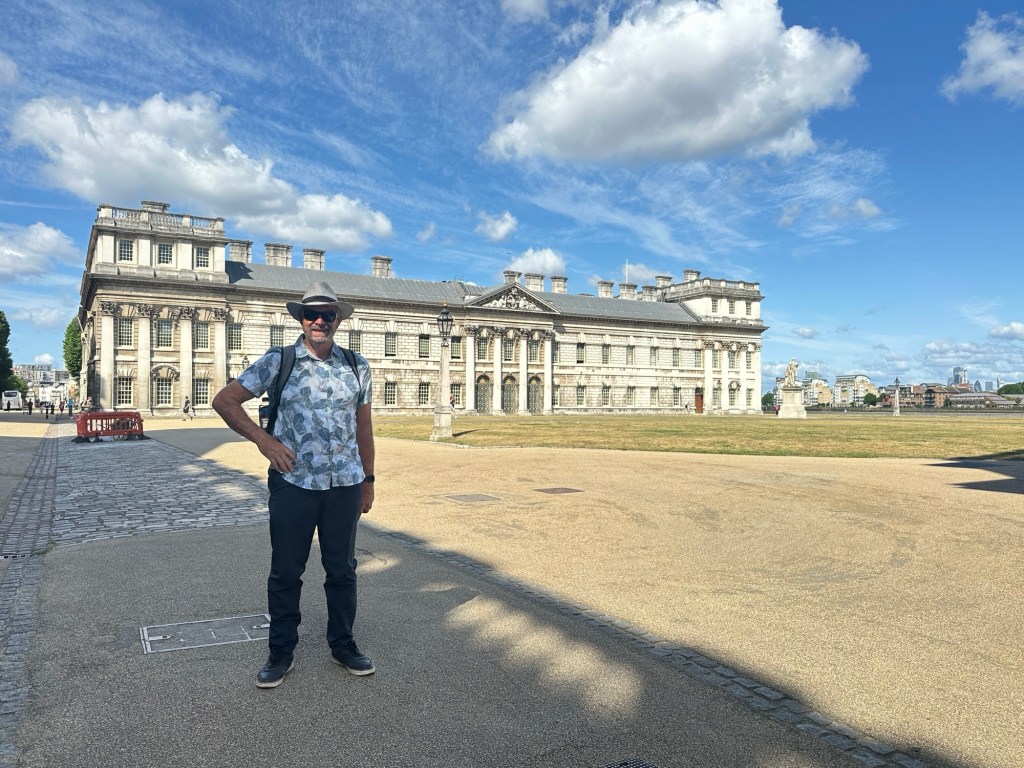
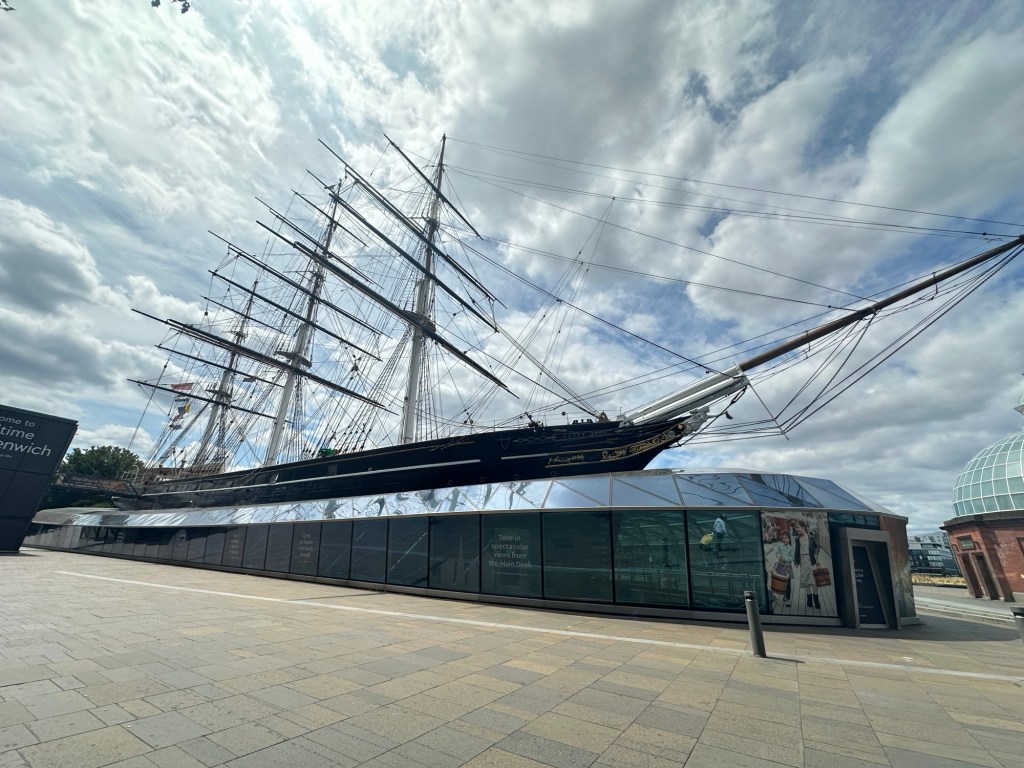
Next, a view of London via the River Thames. An Uber cruise (£10) took us from Greenwich to London Bridge – a very scenic way to travel instead of the Underground.


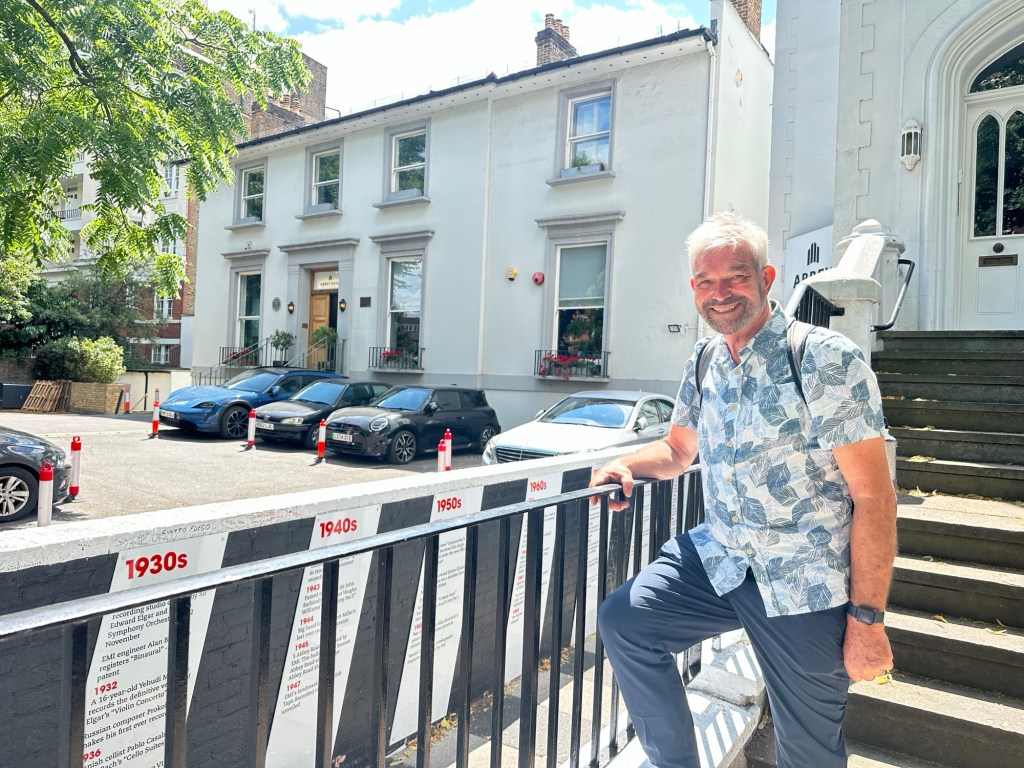
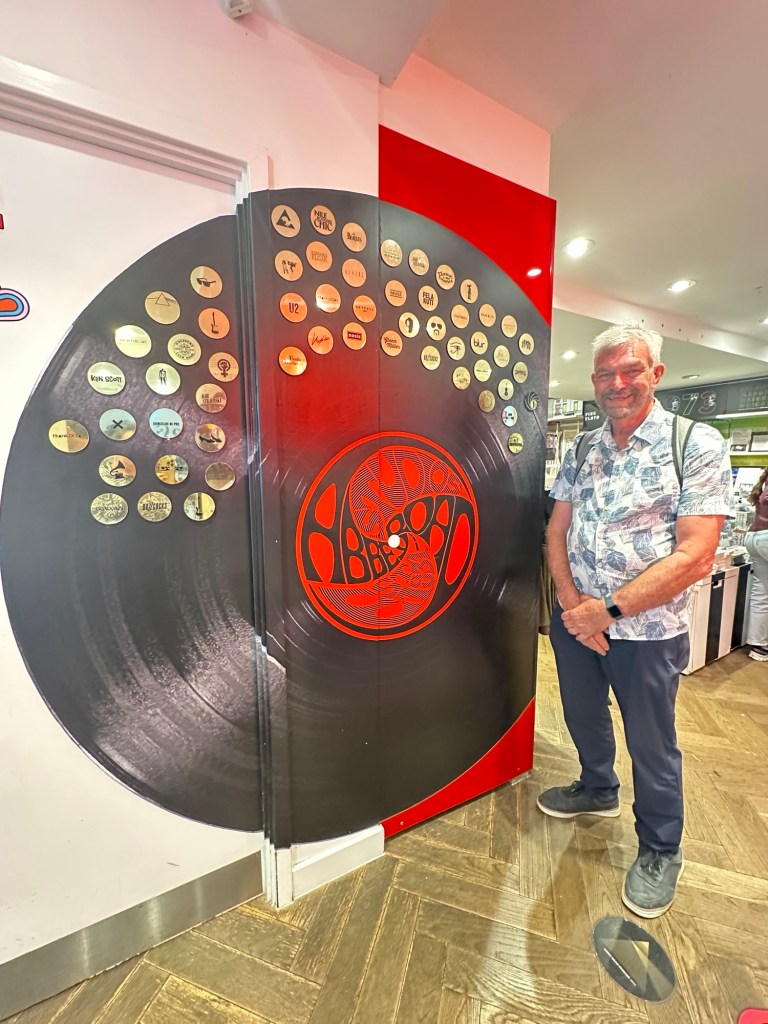
Back on the train to visit Abbey Road, of the Beatles fame. It really is just a functioning zebra crossing, but it is a now famous London icon. It was cool to see the wall in front of Abbey Studios full of signatures and messages from fans around the world. Of course we took photos crossing the road, waiting our turn with everyone else, and also for the traffic to pass. The things you do. We did go the Abbey Road merchandise shop as well – everything Beatles you could ever want!


Got back on the train – and we did “have a ticket to ride!”, to the Museum of Natural History. This is where we had let ourselves down. We had sadly failed with our lack of research – turns out we should have gone to the British Museum (we had wanted to see the Egyptian artefacts there), and there wasn’t enough time to get there with time to enjoy it). Not to worry, we spent an hour enjoying the animal displays in the Natural History Museum. That was enough time as it was so hot inside – I’m sure ten degrees hotter than outside. I’ve decided you have to visit the London museums in winter!
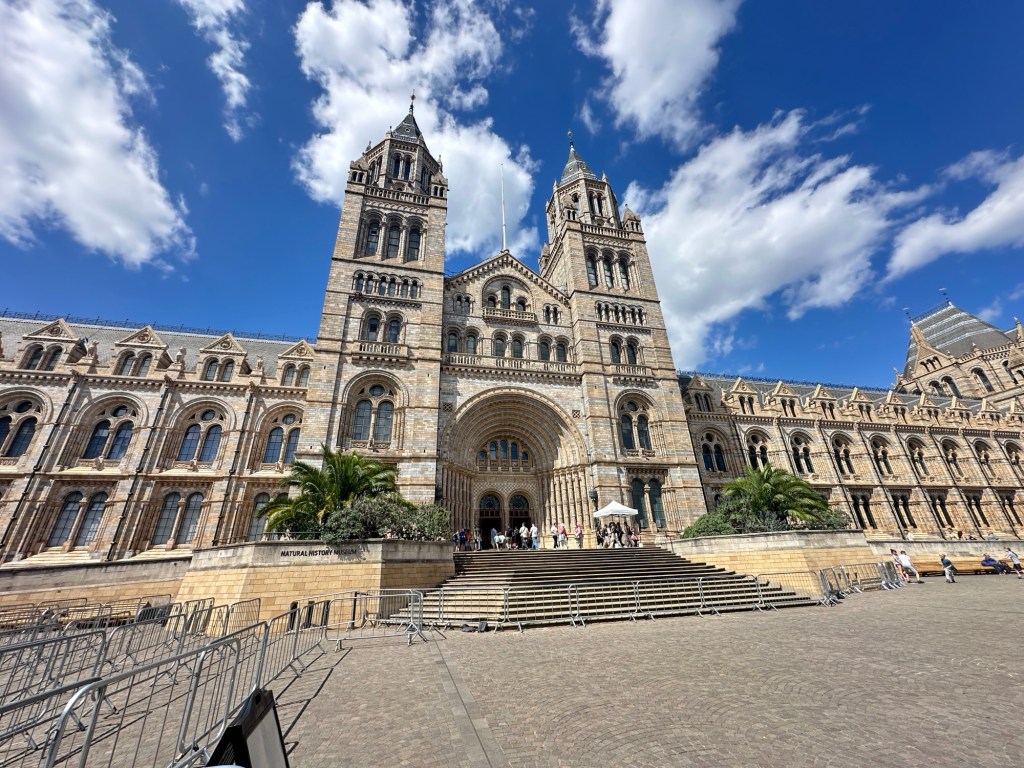
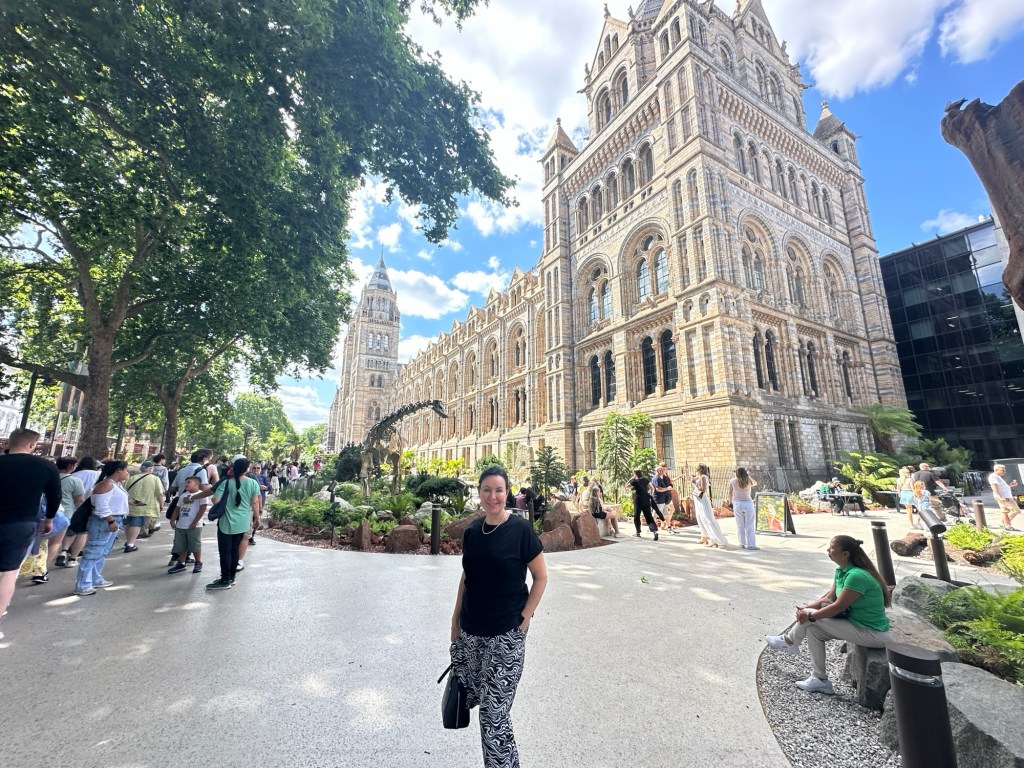
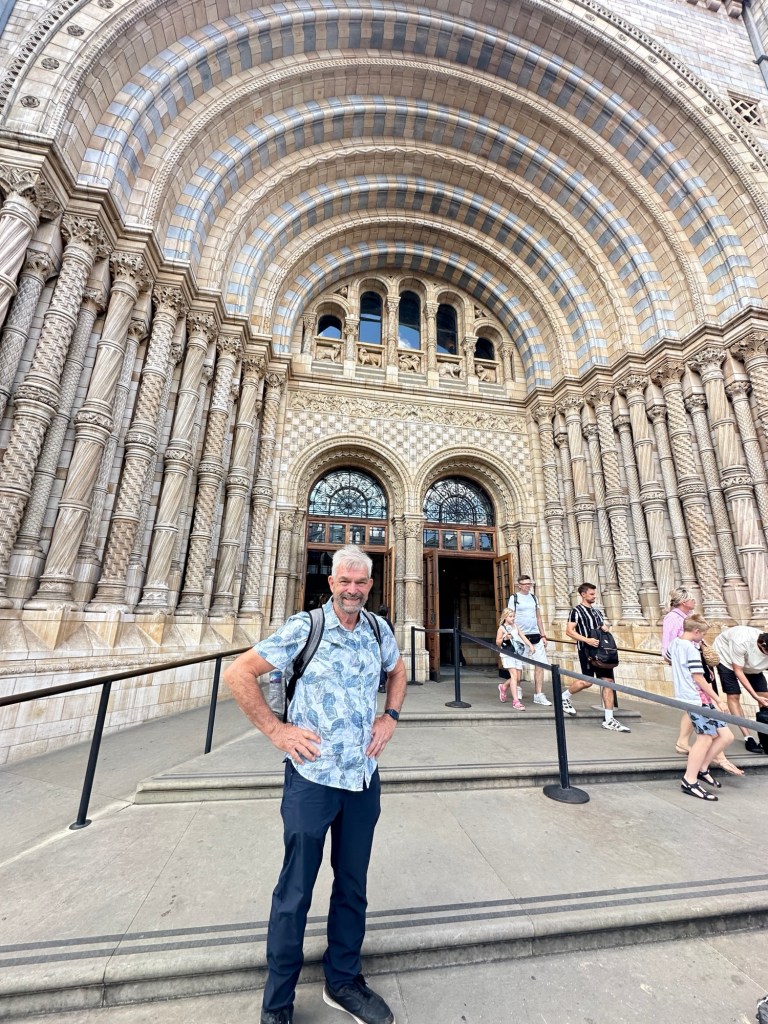


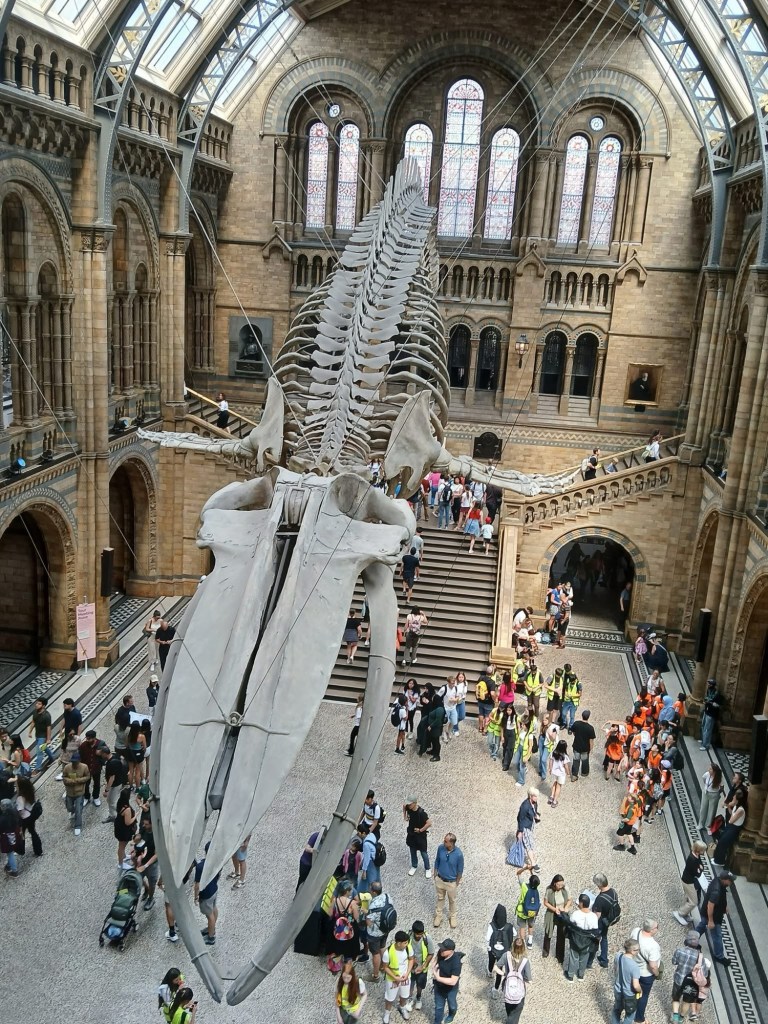
Time for a pint, or in my case a sangria, with an antipasto platter, at a nice bar in South Kensington. Good to rest the feet, and people watch.
Short train to West End, and Indian food for dinner – thought I had better have some chicken Marsala seeing as our guide yesterday told us that was the second-favoured dish in Britain after fish and chips!
Our theatre show tonight was the Great Gatsby at the London Coliseum Theatre. F Scott Fitzgerald’s classic story of dashed American dreams becomes an impressive, glitzy romcom musical”.
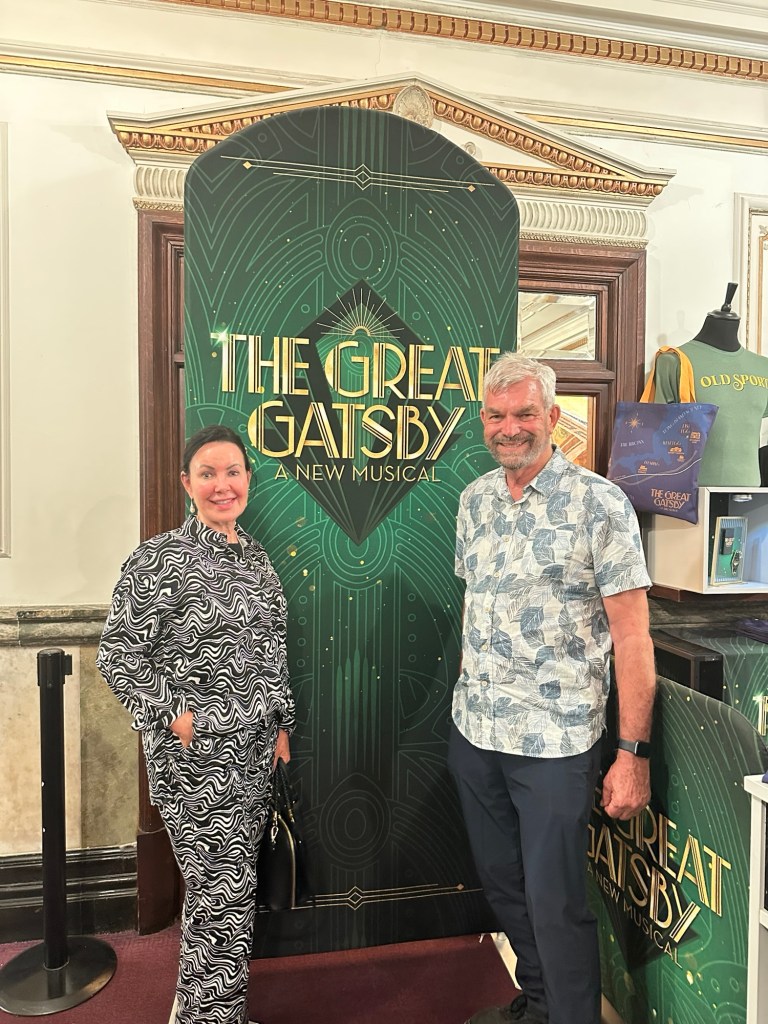

It’s the Roaring Twenties, and eccentric millionaire Jay Gatsby throws lavish parties in hopes of winning the affection of married socialite Daisy Buchanan. The musical delves into themes of social class and the consequences of obsession. The costumes and scenery were spectacular, as was the singing and dancing. Loved the theatre as well, nice spacious seating with a good pitch. Another 10/10 performance!
Train home, 16600 steps today, we were exhausted.
Day 36
Farewell to London
16-24 degrees
Today is a long travel day. DLR to Bank station, underground to Liverpool Street, managing the bags with all the transfers, then look for the bus to take us to Stanstead Airport. That was an issue finding the bus stop, but we did eventually find it. Then we were told that the ticket we had for the bus is really a standby one for Ryanair – turns out they had enough seats. But we have vowed and declared we are never flying Ryanair again! It was a 80-minute bus ride to the airport. Luckily, we had allowed plenty of time.
We lost count of the number of public transport transfers, but in London you can use a credit card on all buses and trains for a maximum fare of 8.90 a day per person.
We had driven a total of 1999 miles (3217 kms) in England.
Farewell United Kingdom, see you next time.
Notes on England
Everyone seems to have at least one dog, or two or three.
Most people are very friendly and generally only too willing to help you.
Everyone has a relative in Australia.
Another case of listening to the news and thinking we are at home – the cost of living crisis, the housing crisis, medical crisis ……
The roads – highways are in good condition, but it could be a complicated detour if you need services! The little country roads are so narrow and winding, and the locals don’t slow down! I may have mentioned this once or twice !
Food was expensive, but more because of our dollar’s exchange rate – we have often paid up to the equivalent of $8.50 for a coffee.
 Glammy Goes Global