
Day 55
Sunday 13th July
Stockholm
14-23 degrees, warm, cloudy, no rain
Our Scandinavian adventure begins. Denmark, Sweden and Norway make up Scandinavia, whereas the Nordic countries comprise of Denmark, Sweden, Norway, Finland and Iceland.
Brief history on Sweden
Sweden was once a powerful nation of conquerors that has now transformed into a world leading nation of peace.
8th century – Viking traders until Christianity reached Sweden in the 11th century.
Late 11th century – tribes united under rule of King Olaf Skotkonung.
C1250 Stockholm founded on one island
1397 – Kalmar Union brought together crowns of Sweden, Norway and Denmark under Danish rule. Designed to block the German expansion.
Alliance lasted until 1523 when Sweden rebelled and King Gustav I Adolphus took the throne
1628- Warship Vasa commissioned and sank within 20 minutes..
Adolphus family reign lasted until 1809 when Sweden became very weak and surrendered to Finnish territory to Russian rule.
1809 – power transferred from the king to parliament who elected subsequent rulers. Sweden remains a constitutional monarchy to this day.
19th century – country stagnated and many Swedes emigrated to the USA.
Sweden remained neutral in both world wars but was also accused of some collaboration with the Nazis in WW2.
1995 – joined EU
2024 – joined NATO
Arrived at Arlander Airport, Stockholm. Looked at transport options – there was an Express train option – 460 kr for two people with 8 minute walk to the hotel, then I checked Bolt – 449kr direct to the door. It was a no brainer!
Checked into our hotel, staying at Elite Hotel Adlon. Back to pokey hotel rooms! It was a nice hotel, great location, but we have been spoilt after staying in apartments and spreading out!
Stockholm was founded around 1250 on a small island in a narrow channel between the Baltic Sea and Lake Mälaren. Today, the Swedish capital stretches across 14 islands.
Out to explore for two hours before we met up with our Nordic Adventure guide, Javier, and our ten other travel companions for the next nine days. Five minutes away is the well-known pedestrian street Drottninggatan – numerous shops, cafes, and restaurants line the car free zone. We recognise Swedish brands – H&M, IKEA and Spotify.
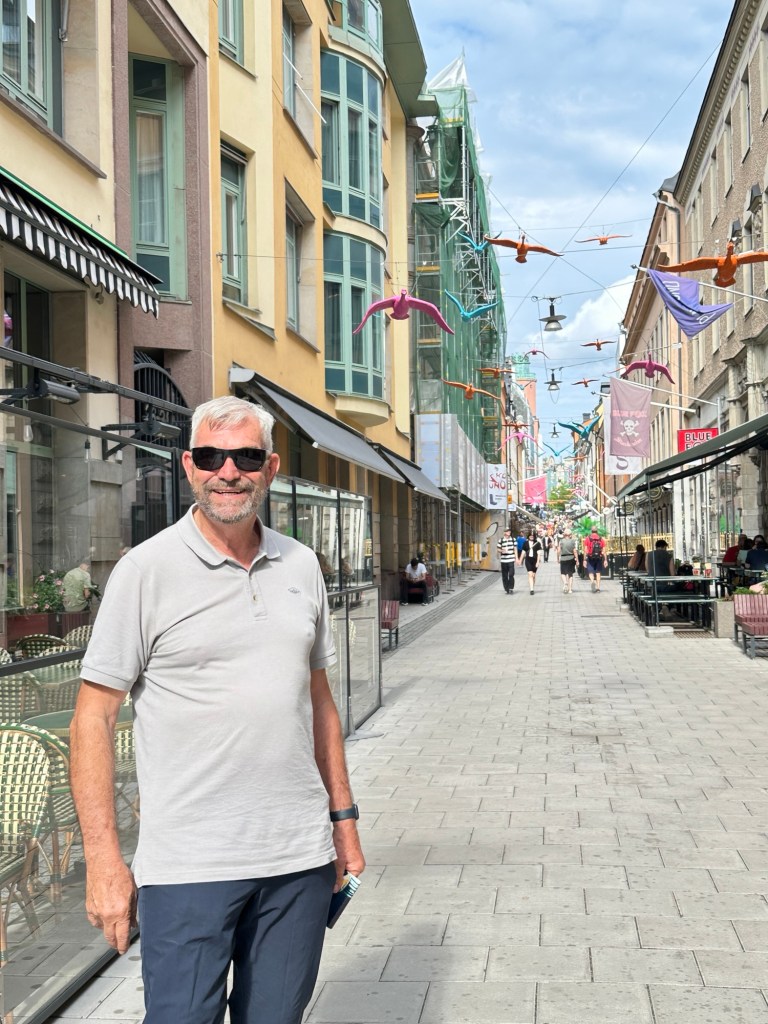
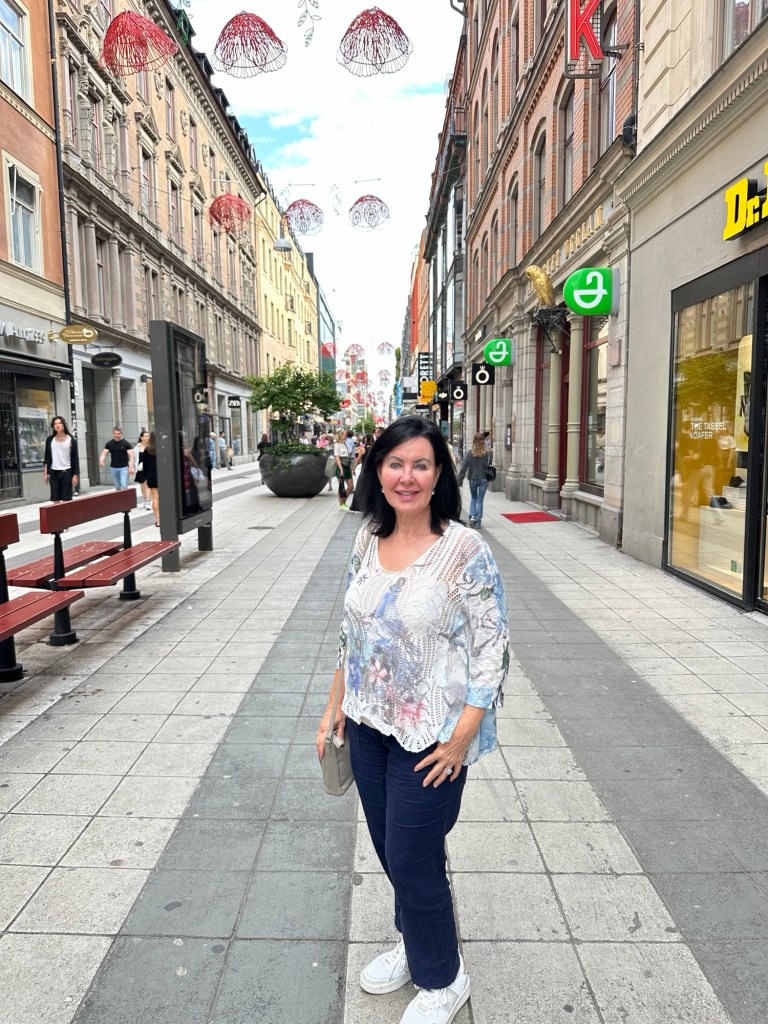
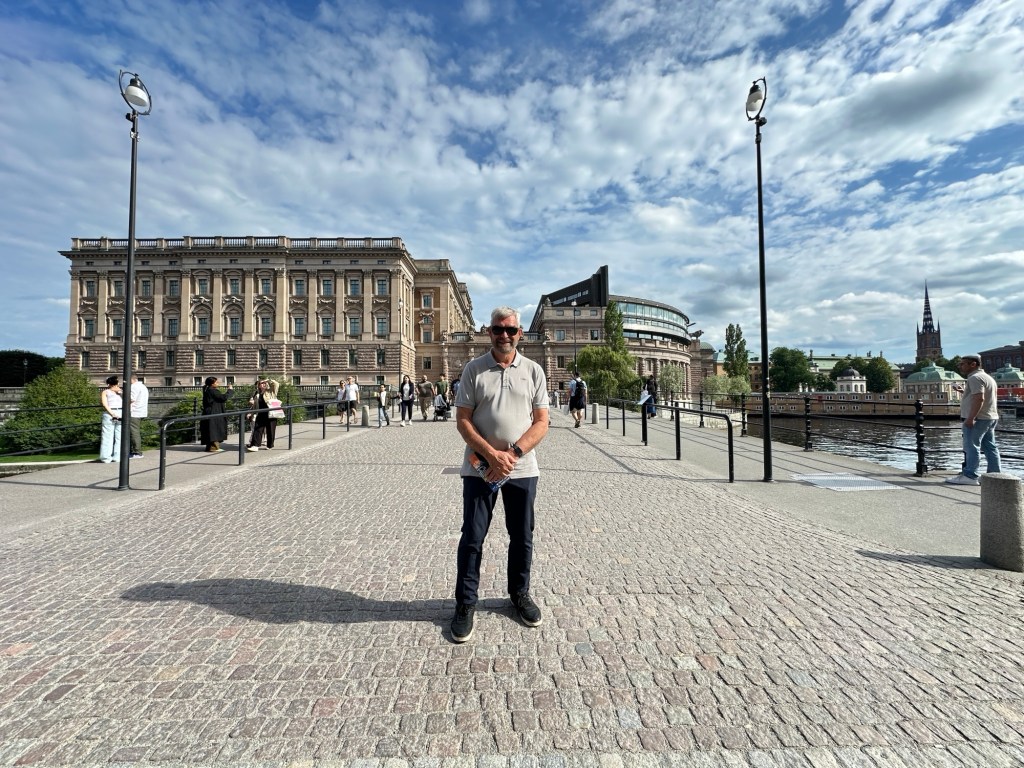

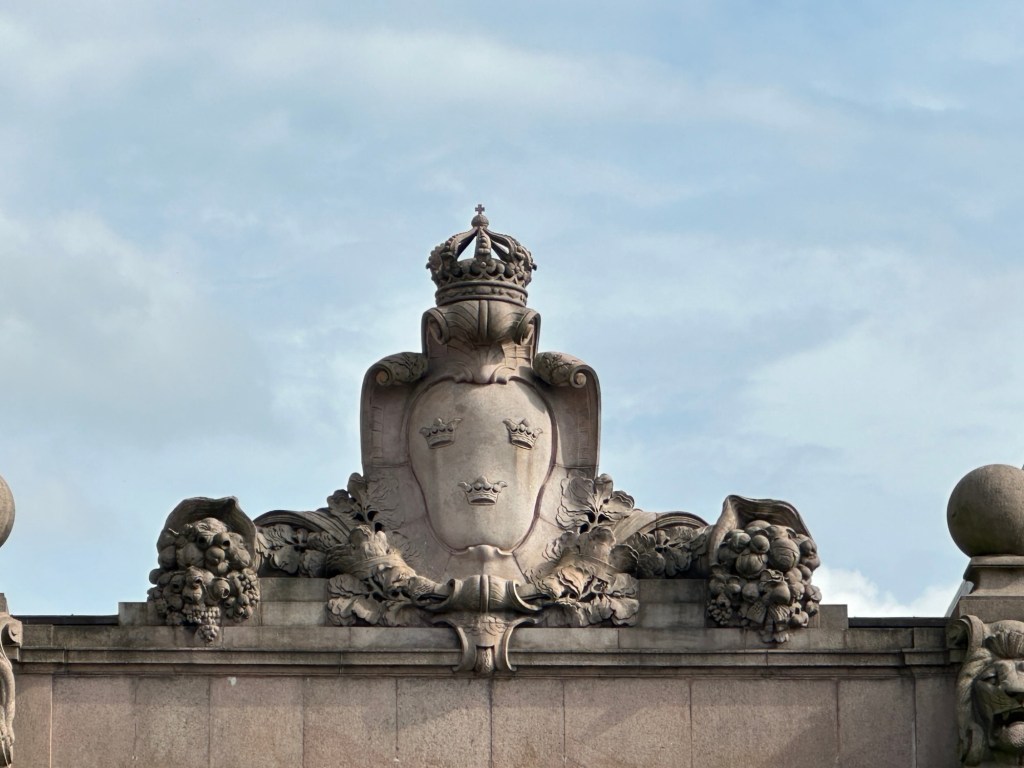
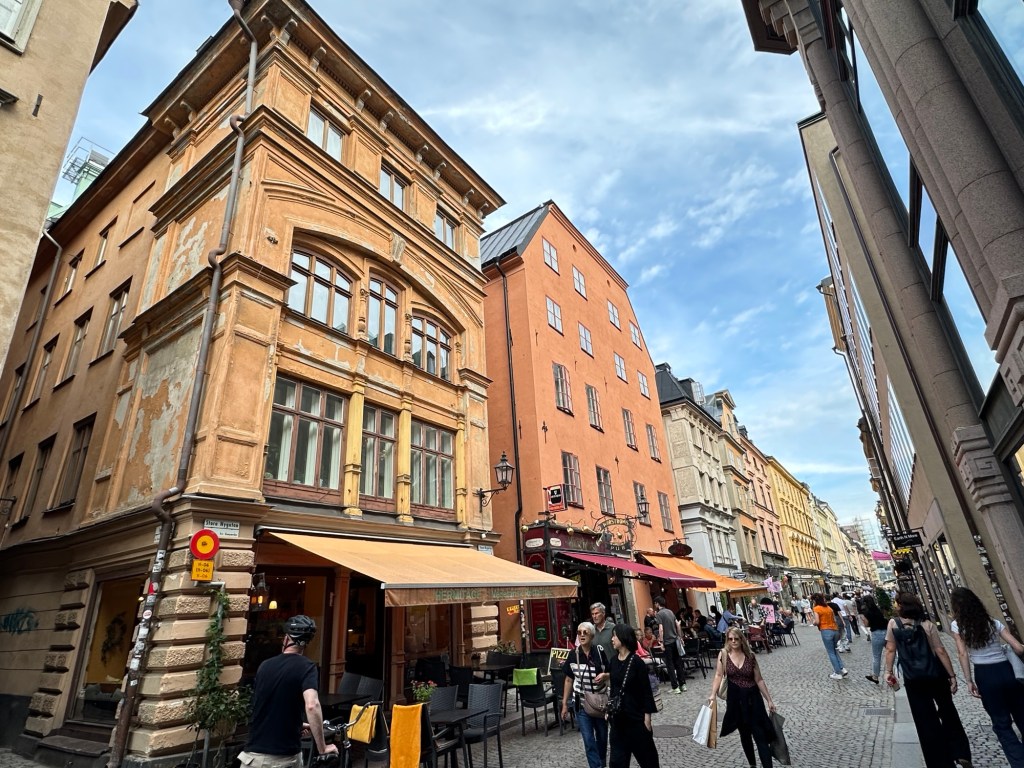
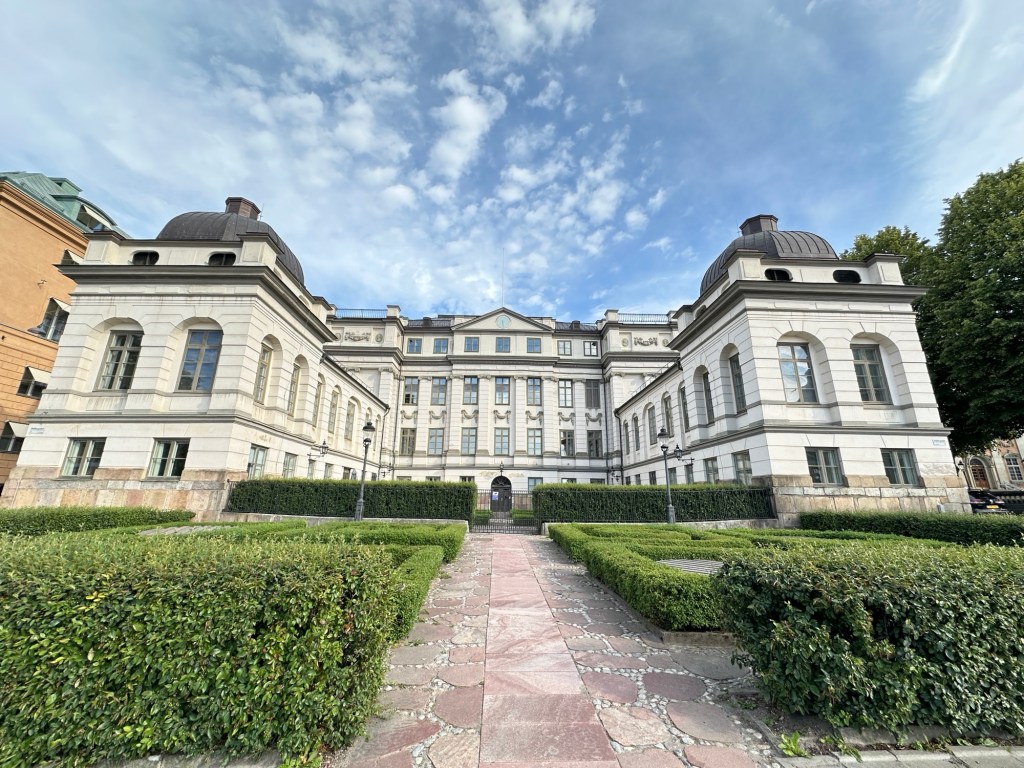
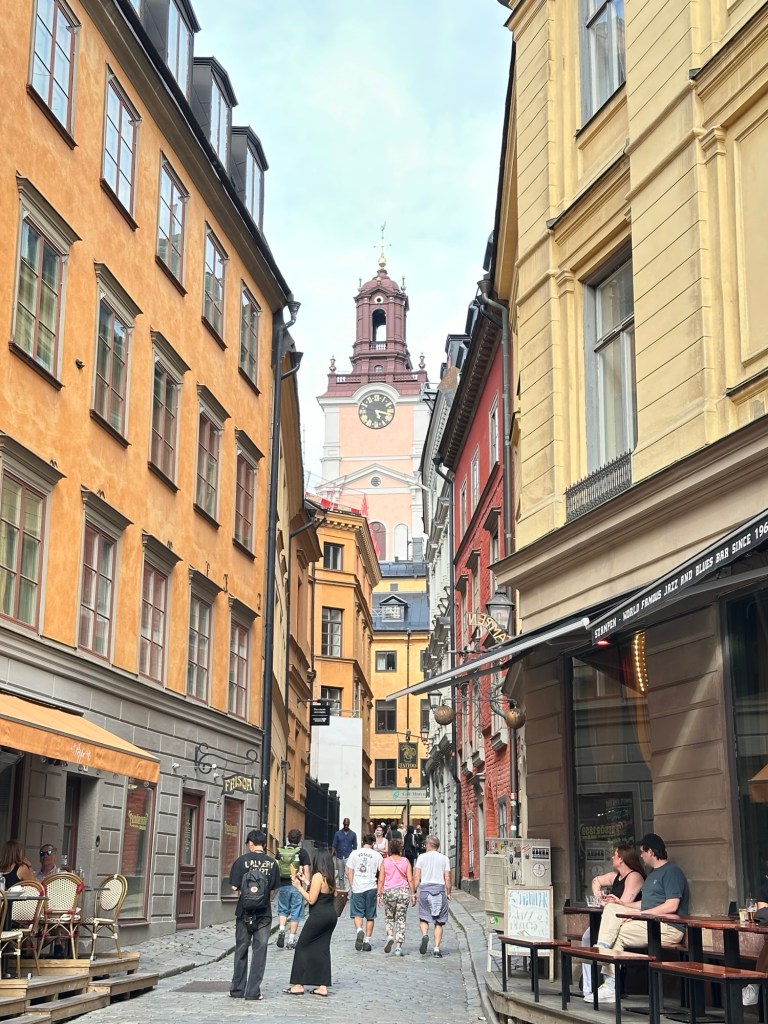
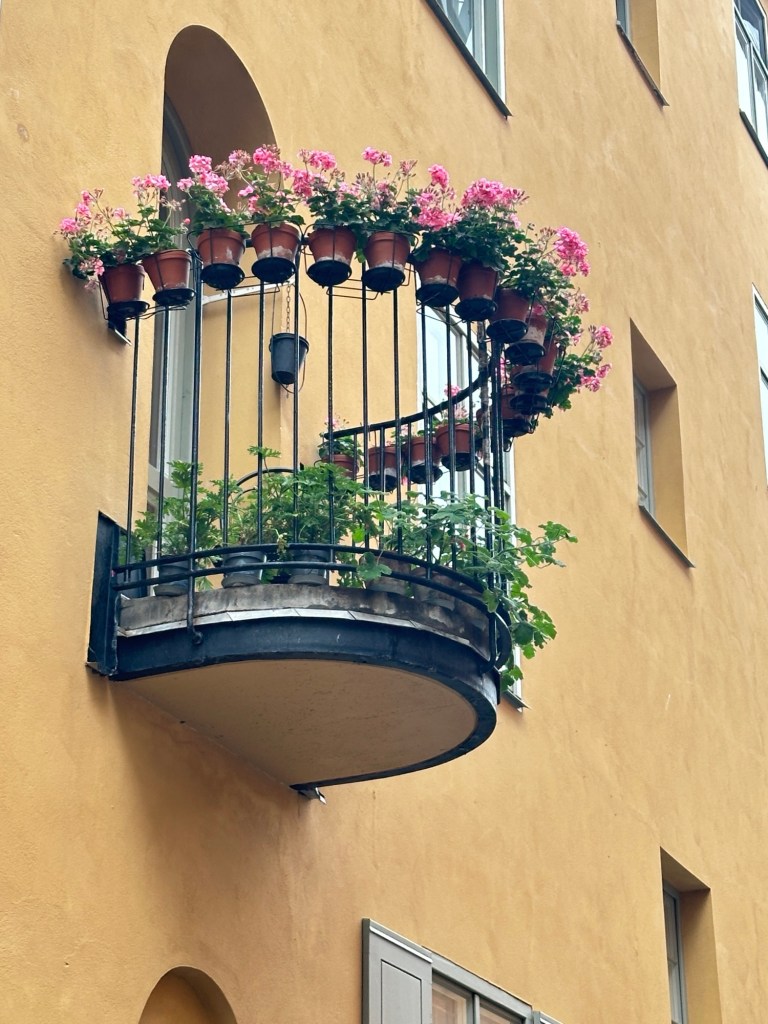
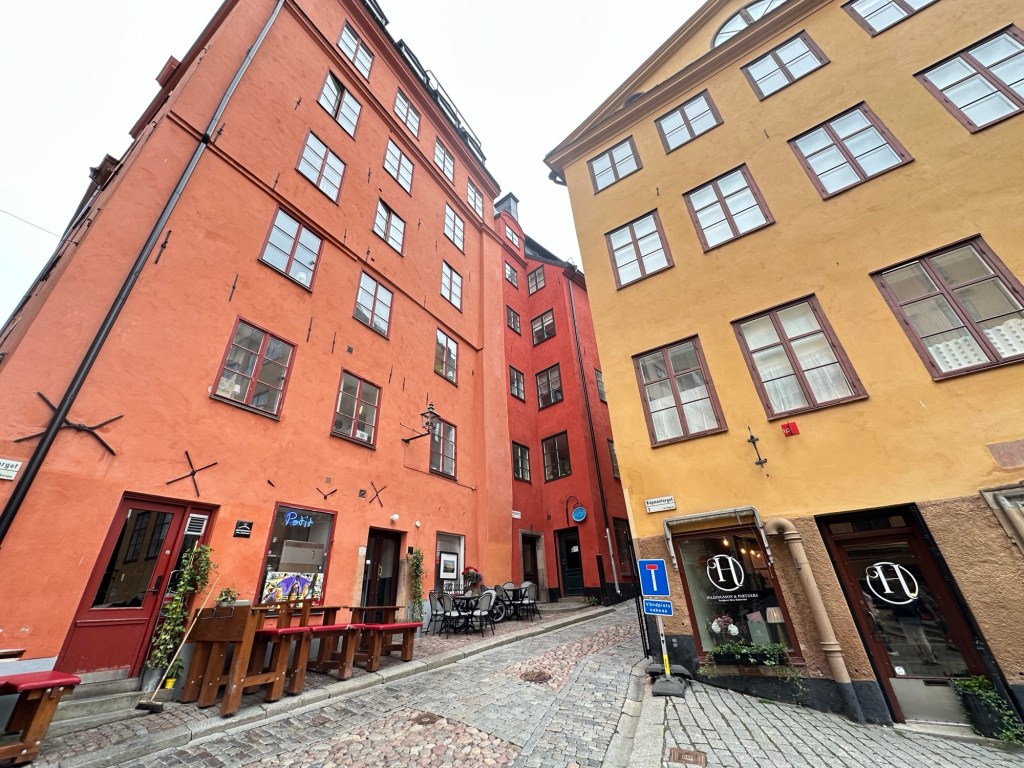
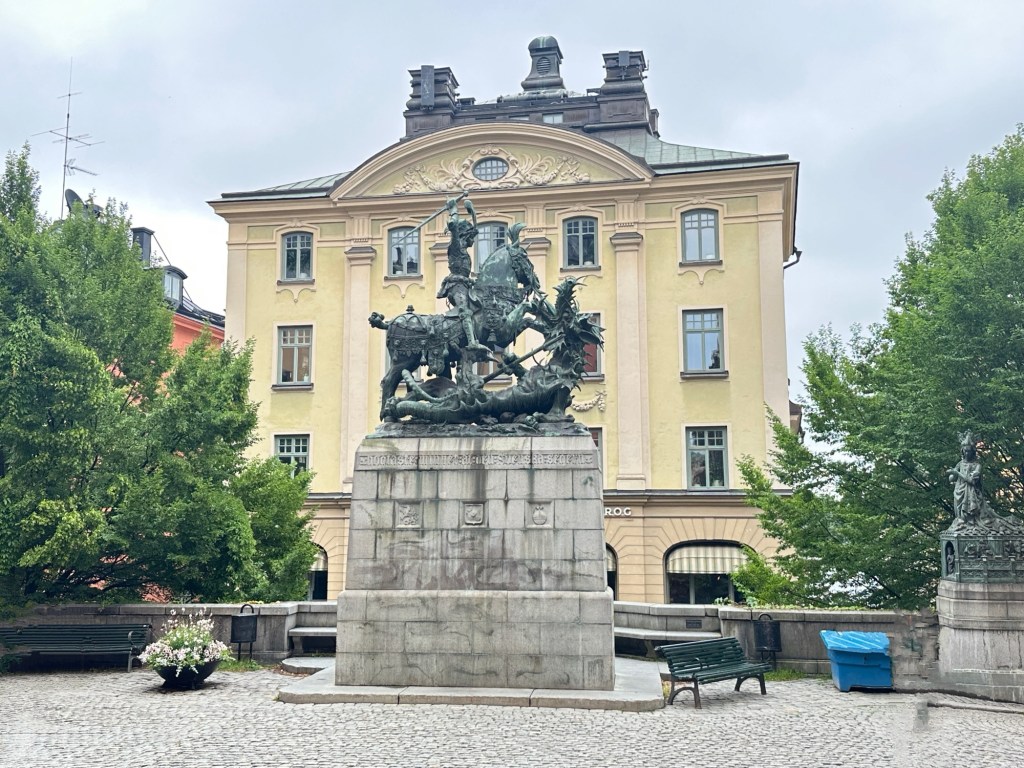
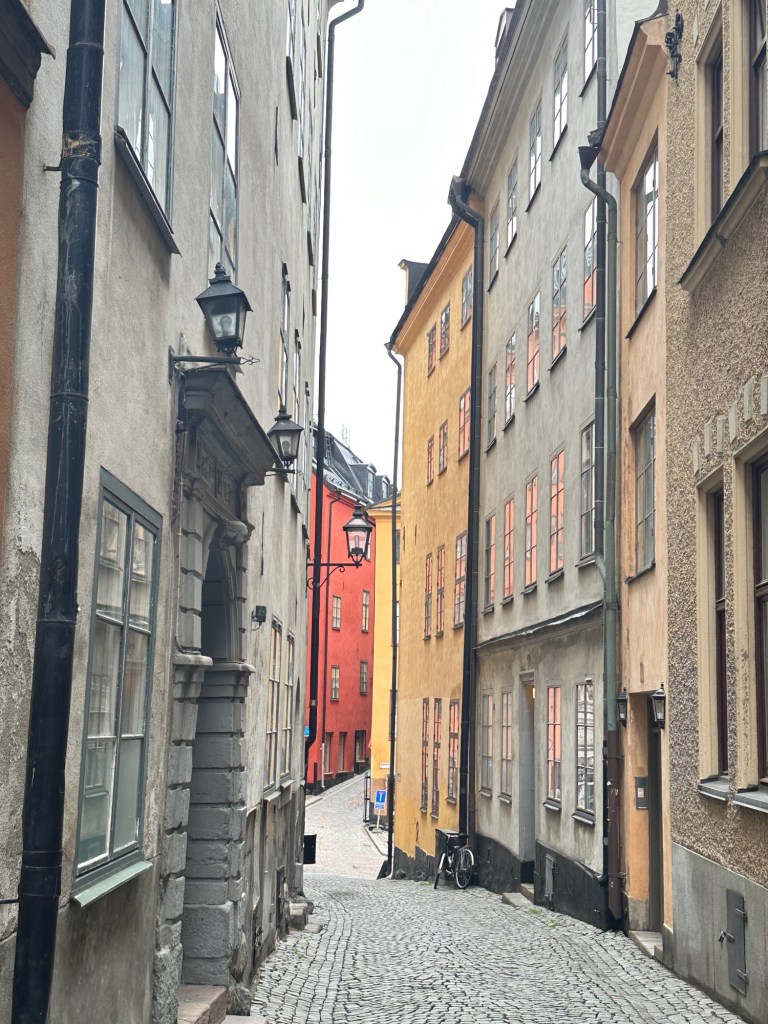
Continuing on, we reach the bustling, compact island of Gamla Stan, which is the city’s old town, founded sometime in the 13th century. With its cobbled streets and colorful 17th- and 18th-century buildings, Gamla Stan is home to the medieval Storkyrkan cathedral and the Royal Palace, the king’s official residence. There are many bistros and restaurants serving New Nordic cuisine, bars, souvenir shops, boutiques and galleries.


After our introductory meeting, we headed out to dinner 5 minutes from our hotel – Belgobaren restaurant, a laid-back restaurant offering classic Belgian fare – we had thought it was Swedish! However nice food – mussels seemed to be the specialty. We both had a seafood stew, with fish, mussels, prawns and scampi, in a tomato based stock. Delicious! We had been warned that food and especially alcohol is expensive in Scandinavia. Well it’s true! A glass of wine is the equivalent of $20-25 a glass, beer $12-16. Luckily, we had bought a bottle of red wine duty free to have back in our room – we’re right for a couple of nights!
Day 56
Monday 14th July
Stockholm
15-21 degrees, cloudy
Today was a city tour of Stockholm with a local guide, Victoria – she was such a good guide, her English was impeccable. We had the biggest double decker bus I have ever seen, for just twelve tourists and the two guides!
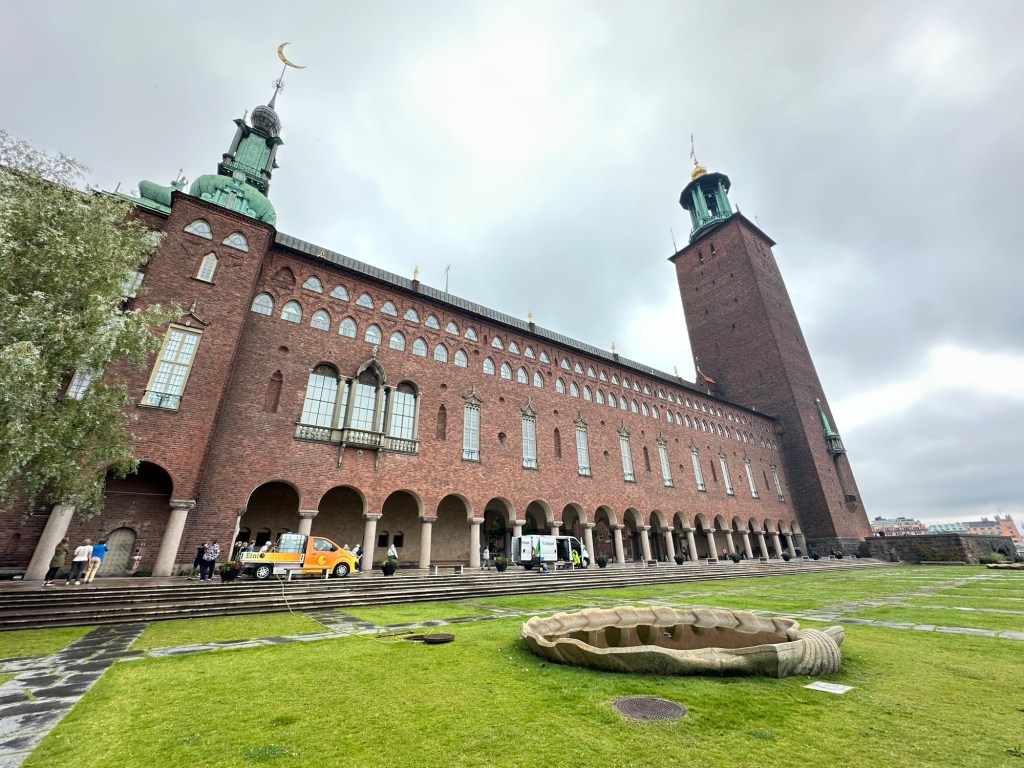
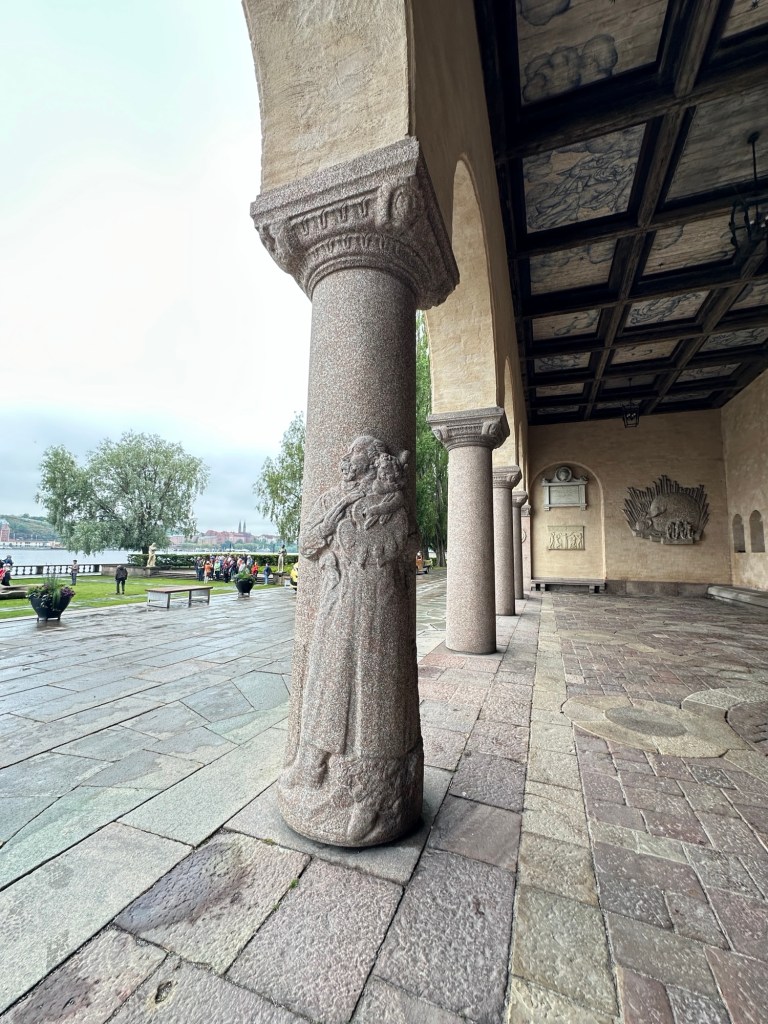
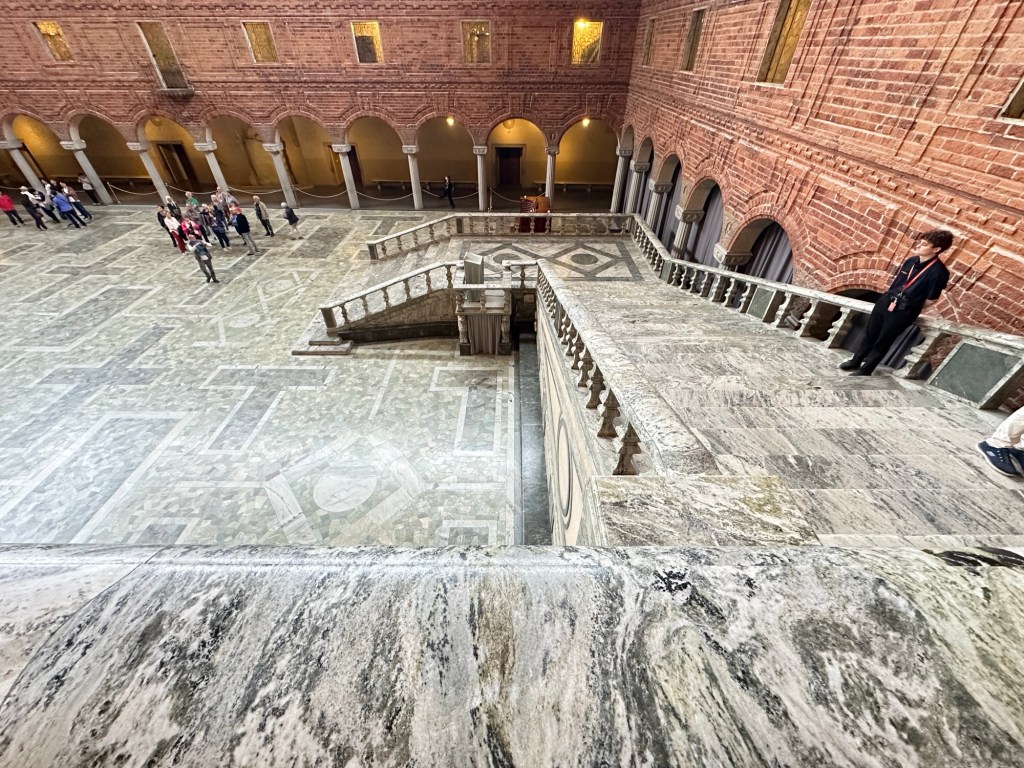
Our first stop was the City Hall – probably Sweden’s biggest architectural project of the 20th century. It was designed by Swedish architect Ragnar Östberg and is one of Sweden’s most important buildings in the national romantic style. As well as a work place for the city’s councillors, the Town Hall also provides a venue for special events, including the Nobel Prize ceremony on 10th December each year. The two most famous banqueting halls are the Blue Hall and the Golden Hall. The City Hall tower is 106 meters tall and crowned by an old symbol for Sweden – the three crowns. It really was a fascinating building to visit.


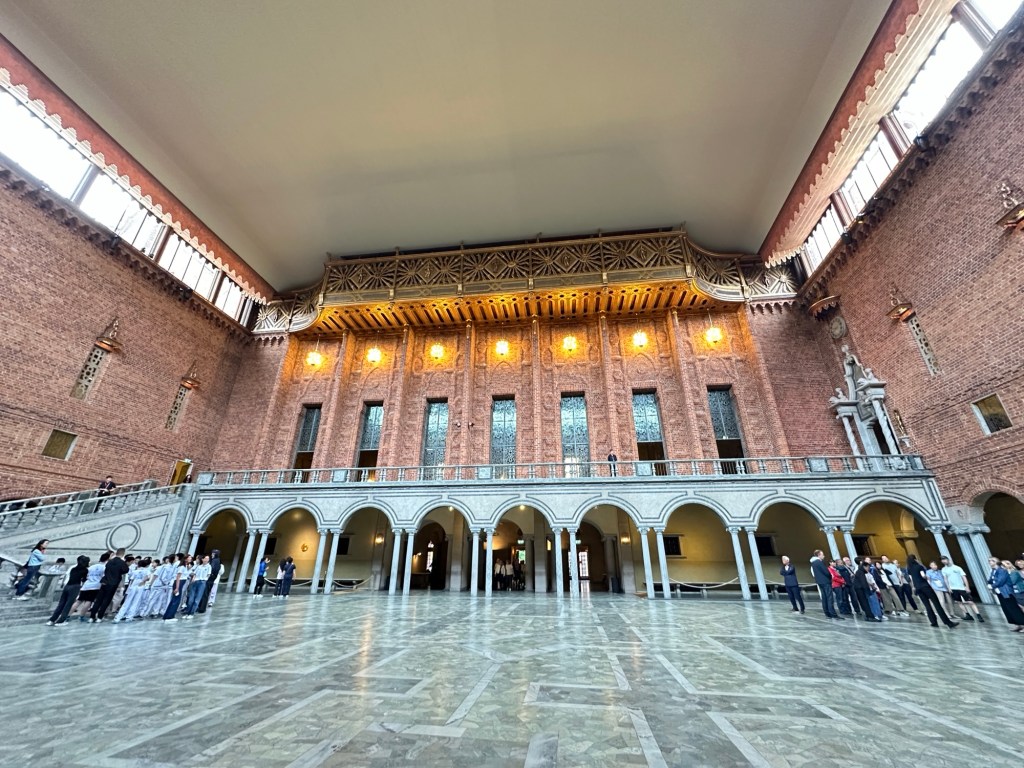


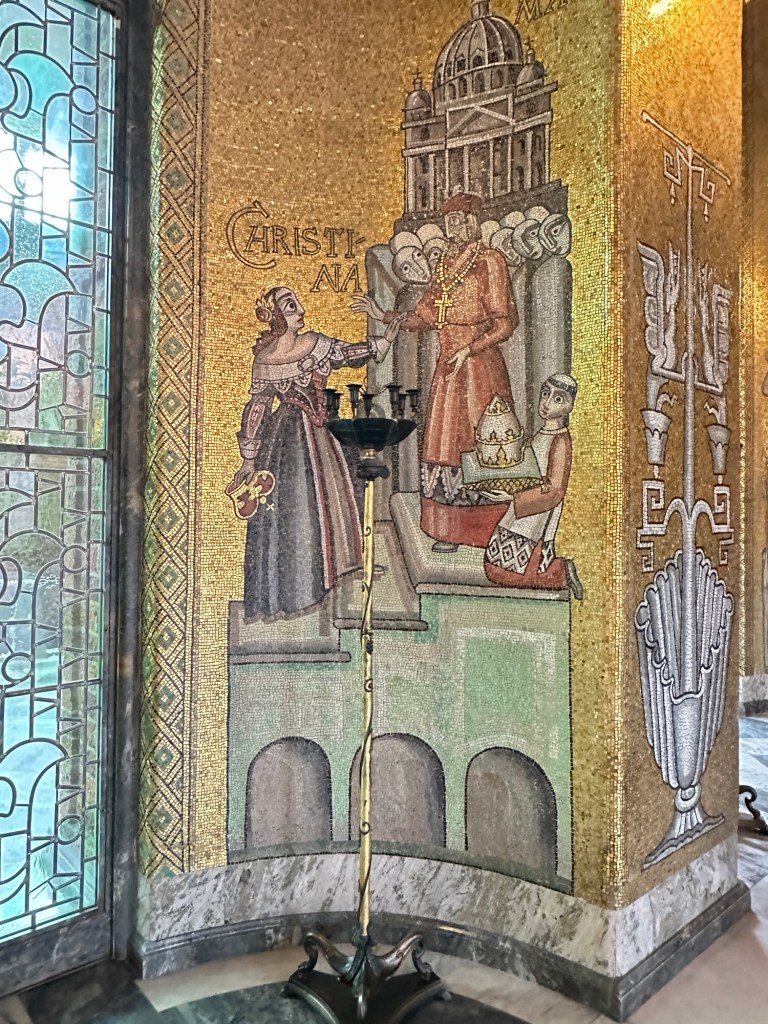
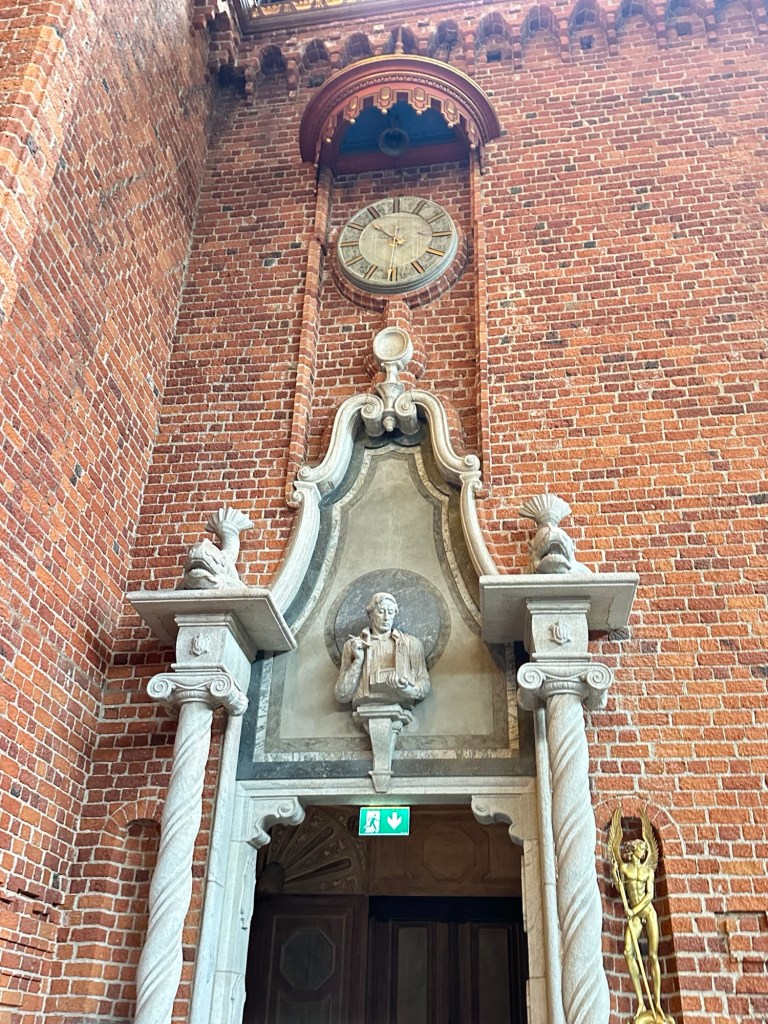
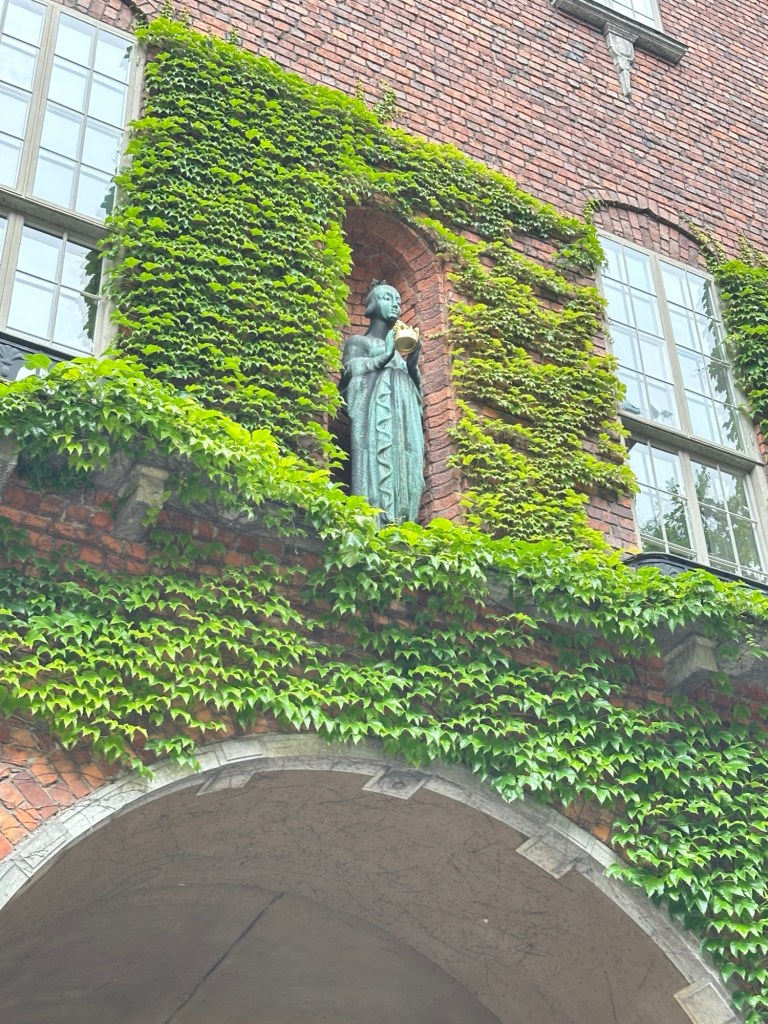
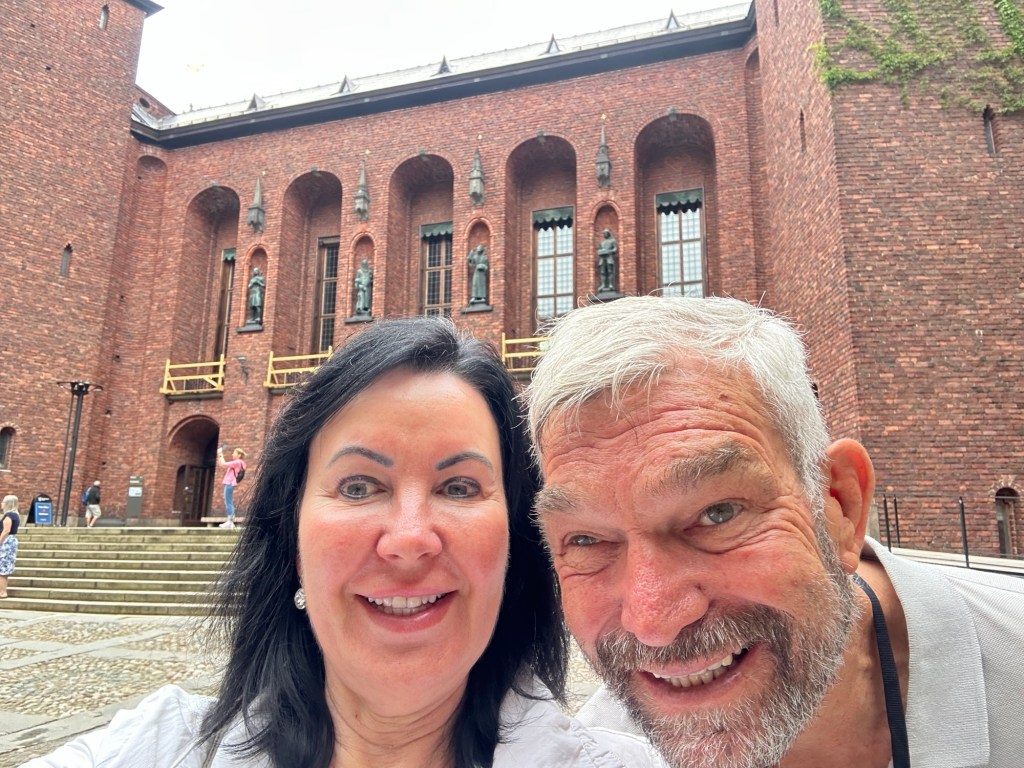
I also found the history of the Nobel prize interesting. As stipulated in the will of the Swedish-born inventor and international industrialist, Alfred Nobel, which was opened after his death in 1896, the Nobel Prizes in physics, chemistry, physiology or medicine and literature are awarded in Stockholm, Sweden, while the Nobel Peace Prize is awarded in Oslo, Norway. Apparently Alfred’s brother died, and the newspapers got the names mixed up – hence Alfred read his own obituaries. They were not complimentary to him, mostly critical that he was rich and mean, so he wanted to change that perception, hence his idea to put all his assets into a trust fund, and the Nobel prize winners receive prize money from the interest each year. It is currently over $US1,000,035 for each laureate. The laureates are guests of the Grand Hotel, and then have the presentation dinner at the Blue Banquet Hall.
Next we drove around Stockholm city, viewing all the magnificent buildings – the Royal Palace, the Grand Hotel, Opera House, Concert Hall, Grand Hotel, the many waterfront buildings, Lake Malaren, the foreign embassies, Djurgarden Island, and so much more. Such a beautiful city.
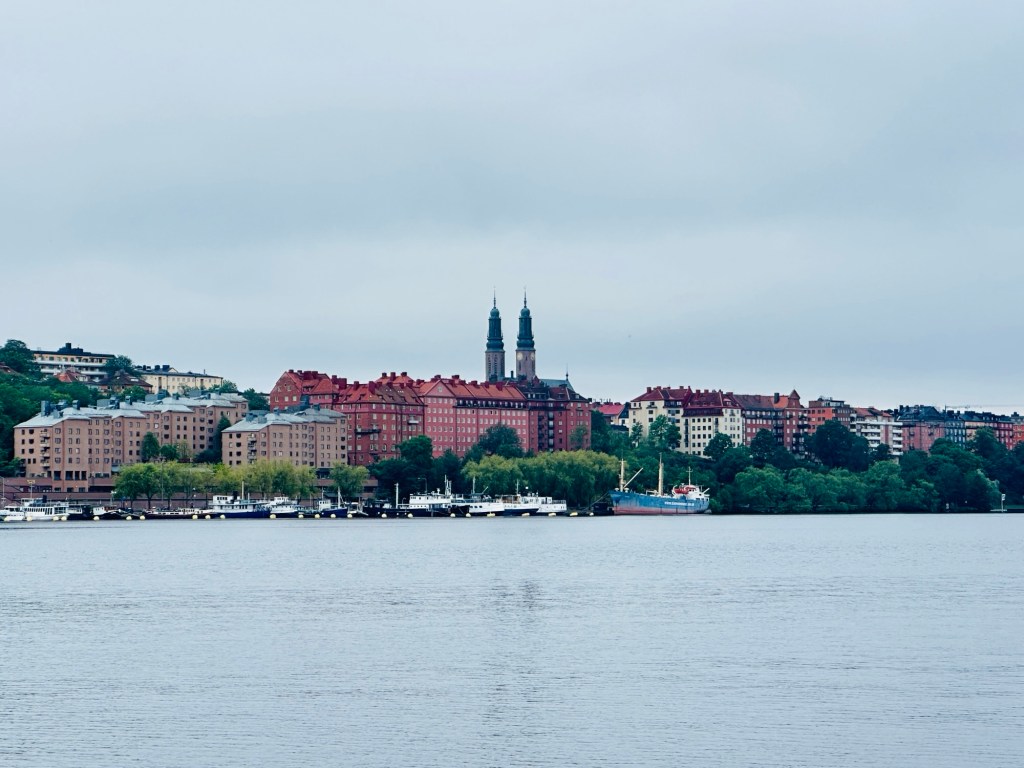
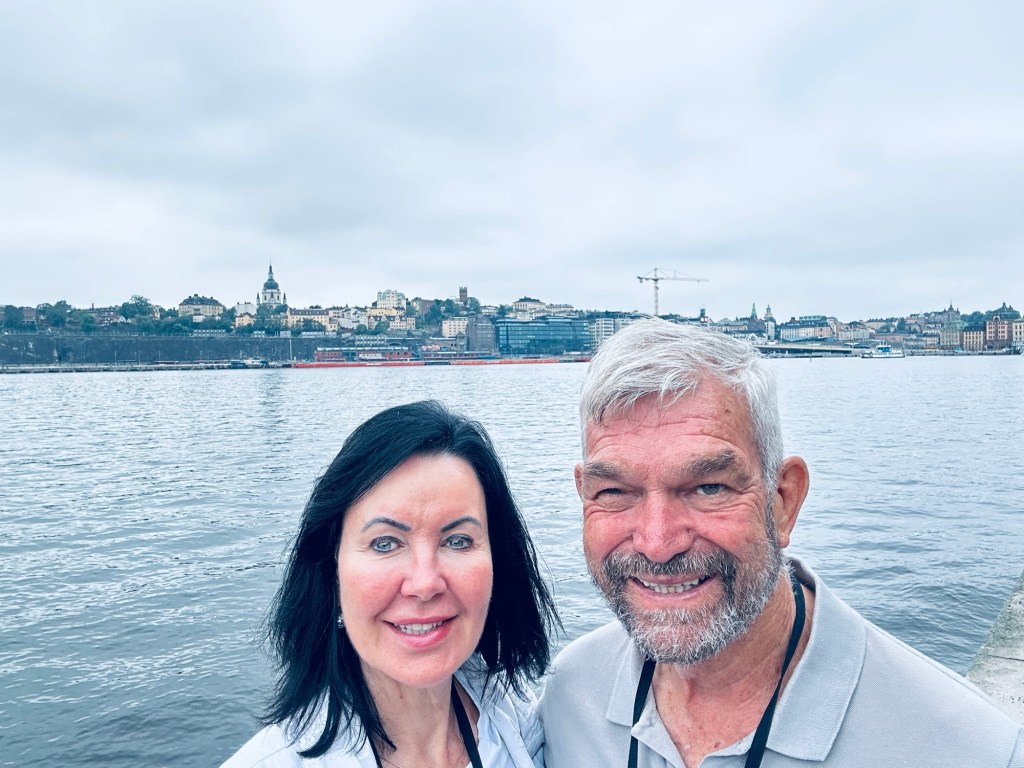
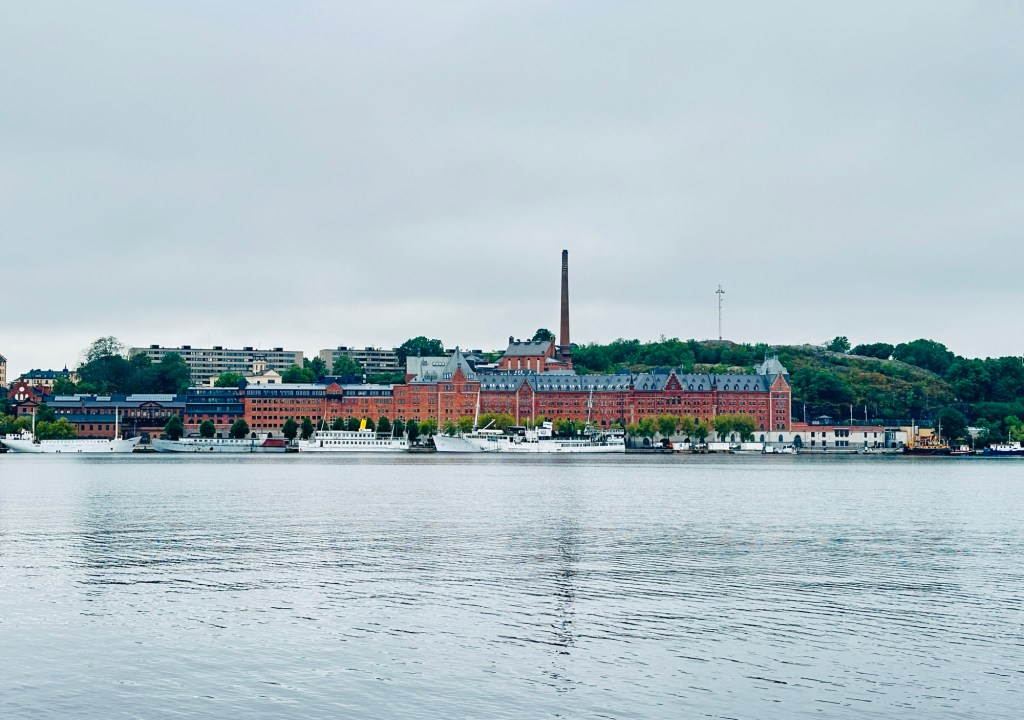
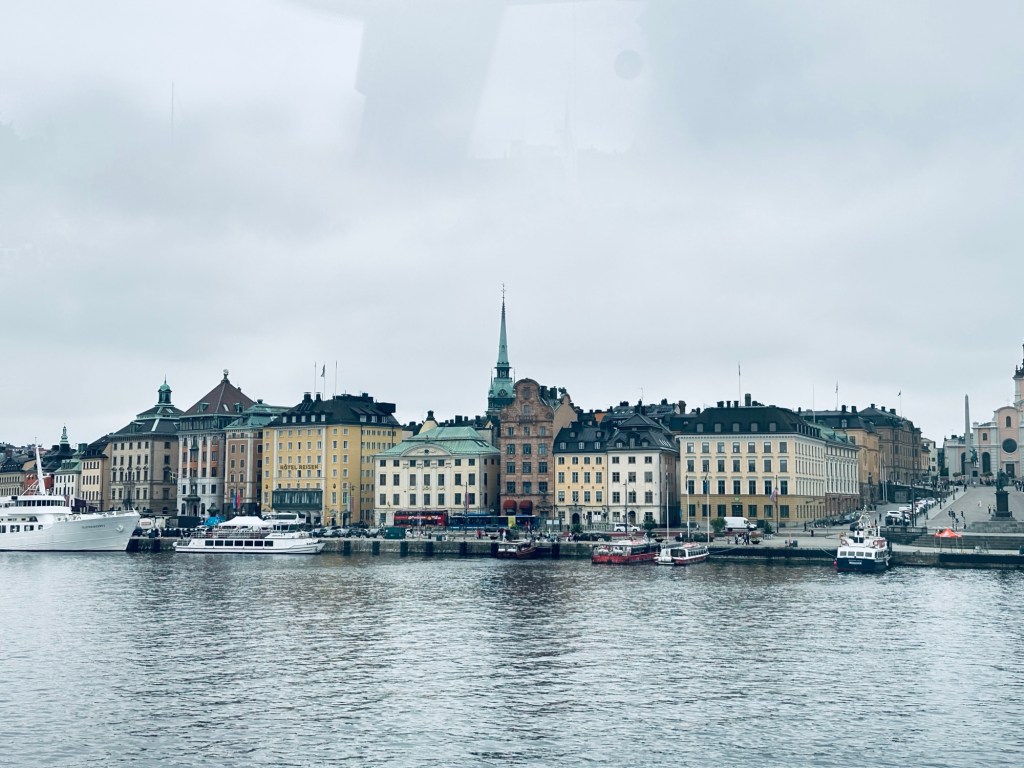
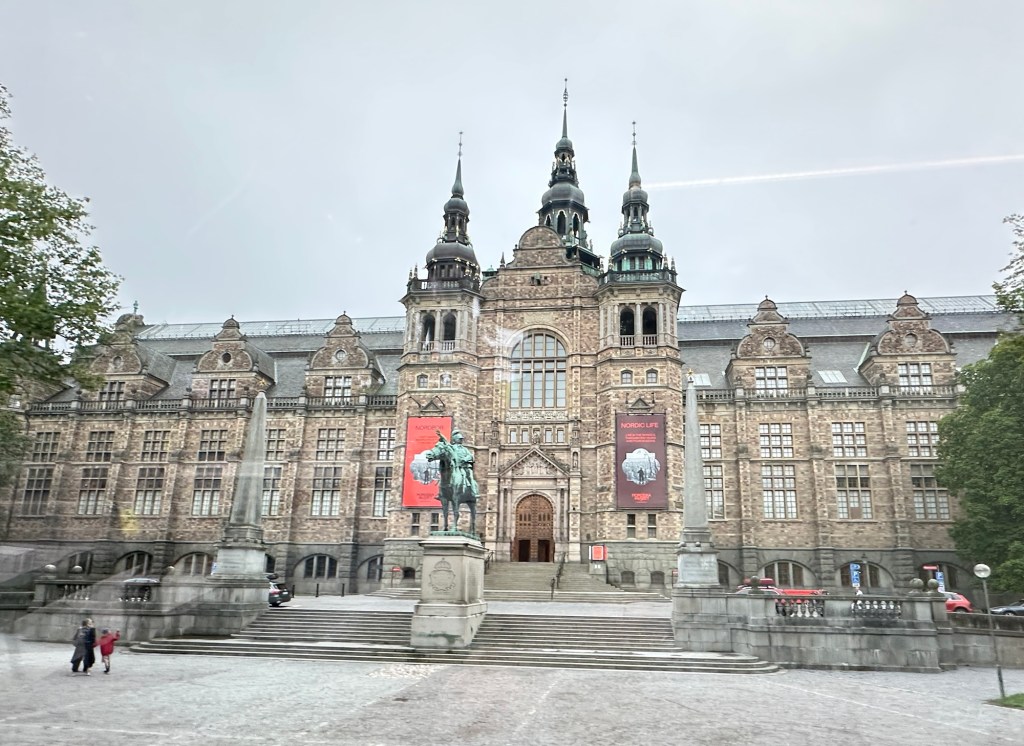
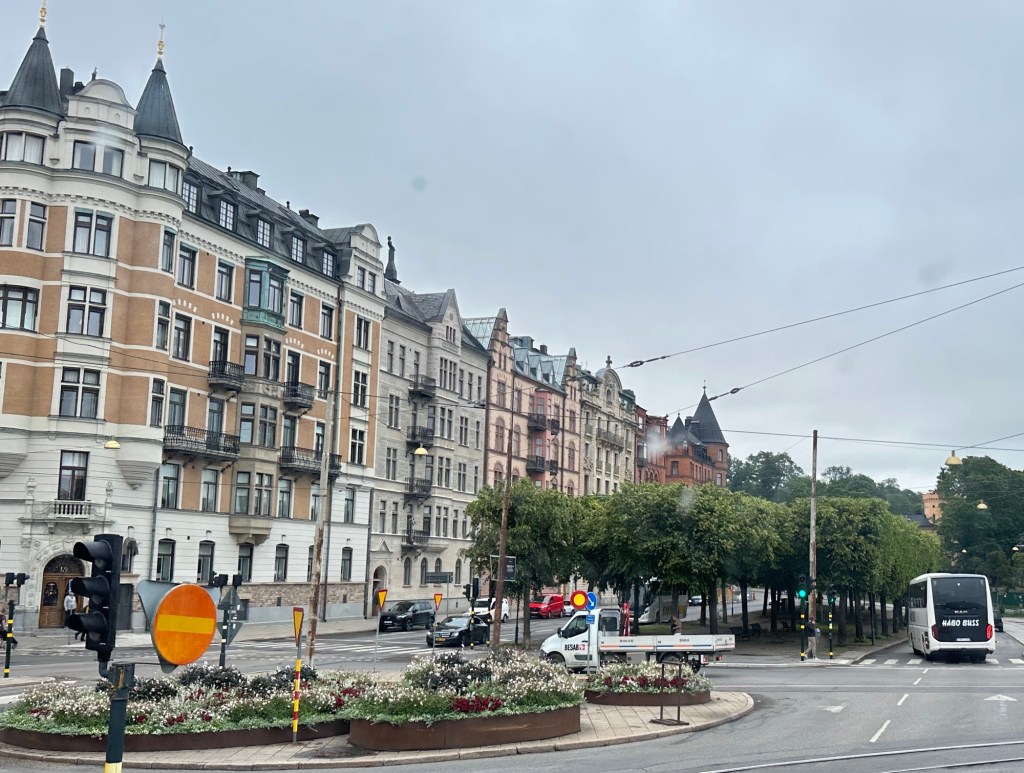
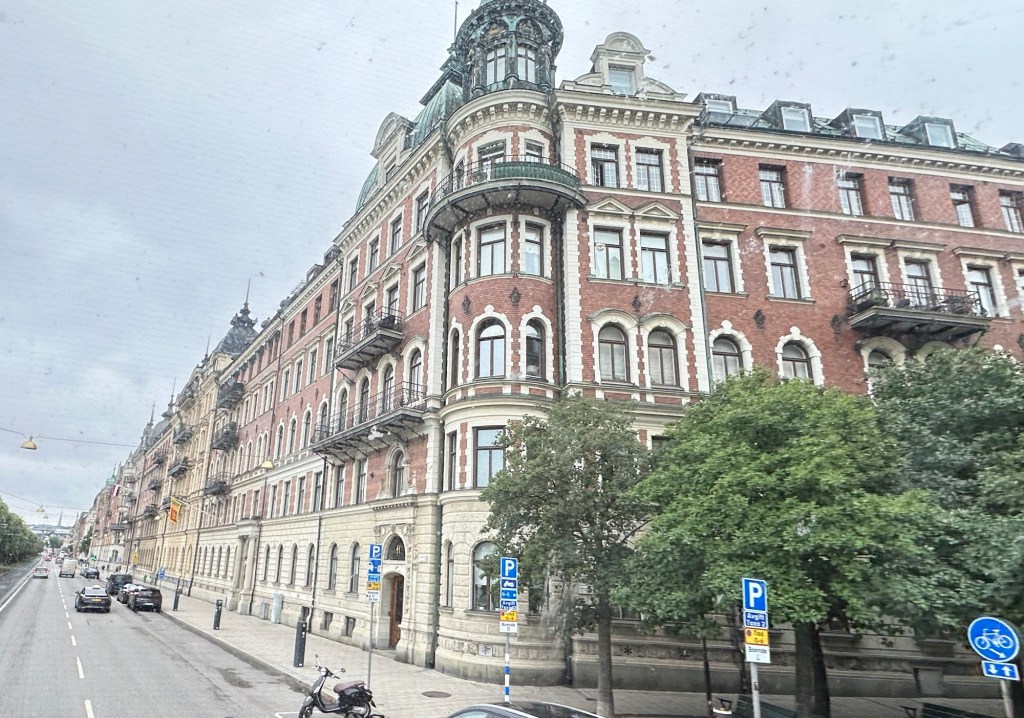

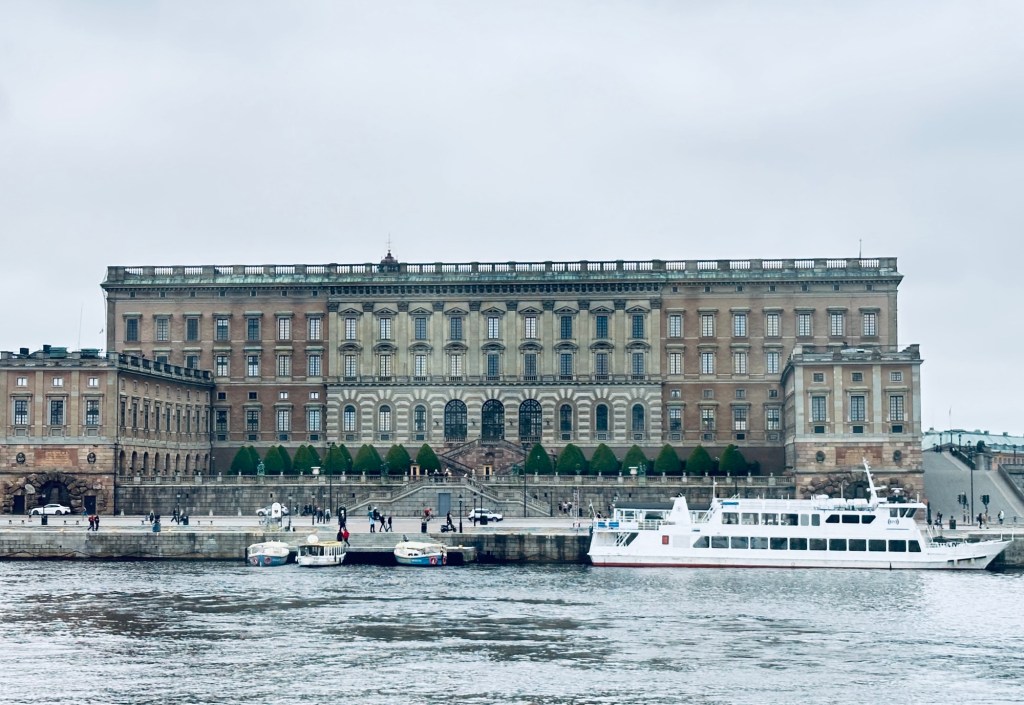
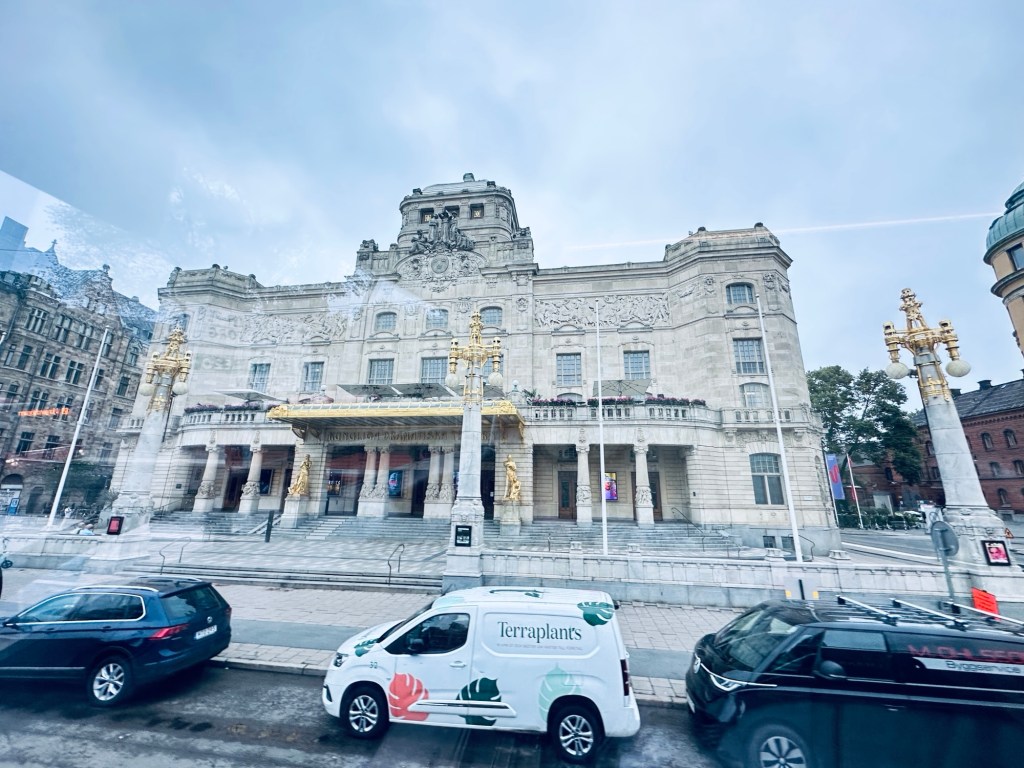
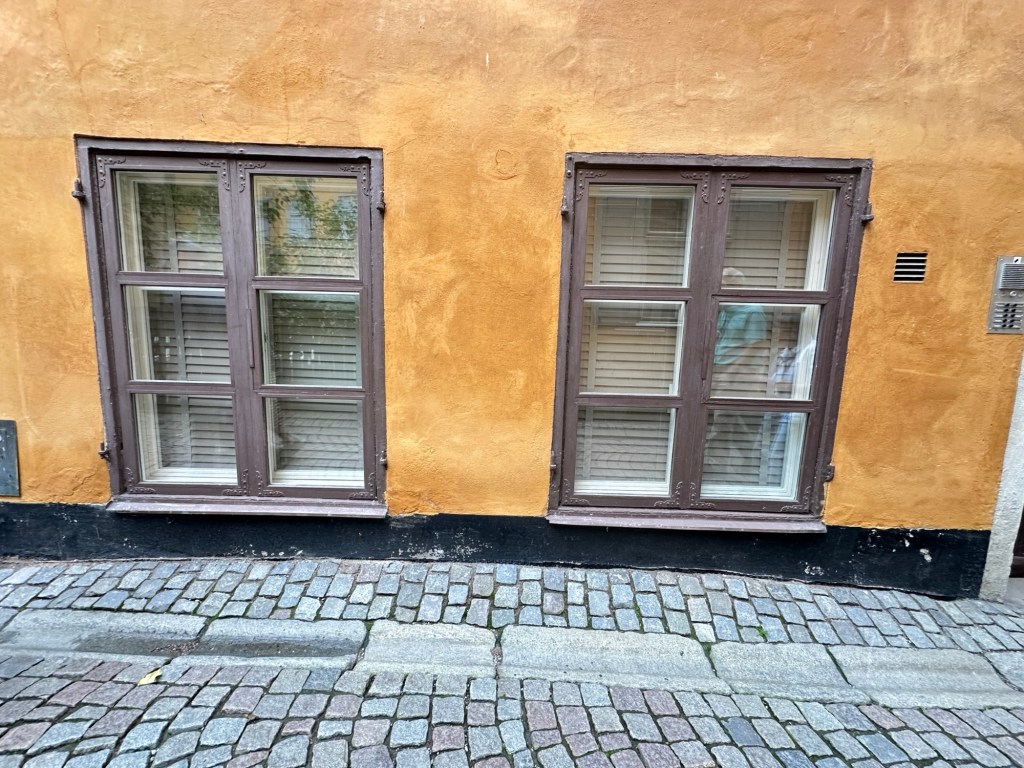
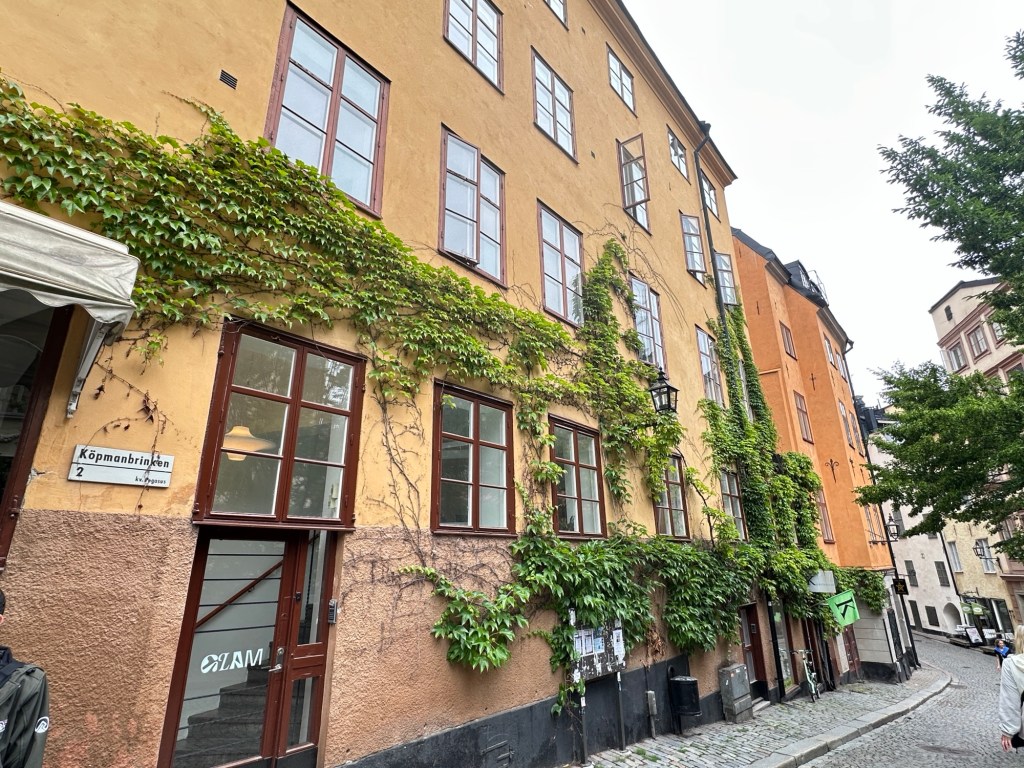
Time to get off the bus and walk some of the Old Town. Because the whole city was compressed under ten thousand metres of ice during the Ice Age, the land underneath is now expanding ( she described it like a sponge losing its water), this is causing the land to rise by 5mm a year. Apparently, the roads have to be repaved every ten years, also a lot of the buildings are leaning, and the windows are distorted. This is supposedly going to continue for 2000 years. Amazing!
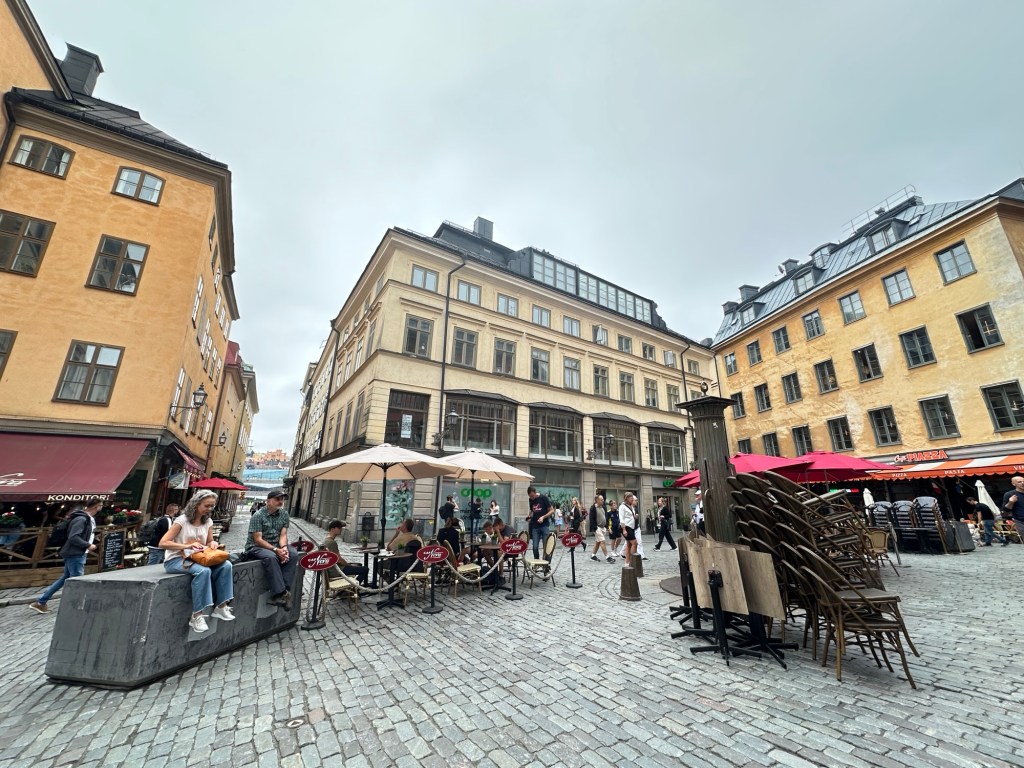

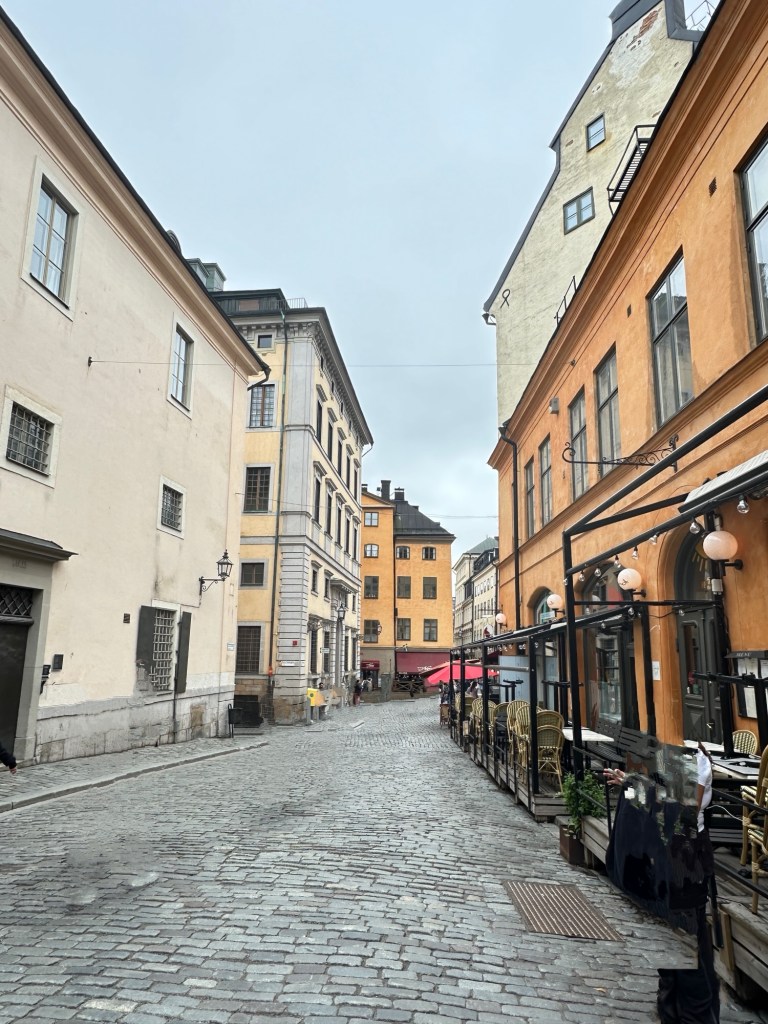

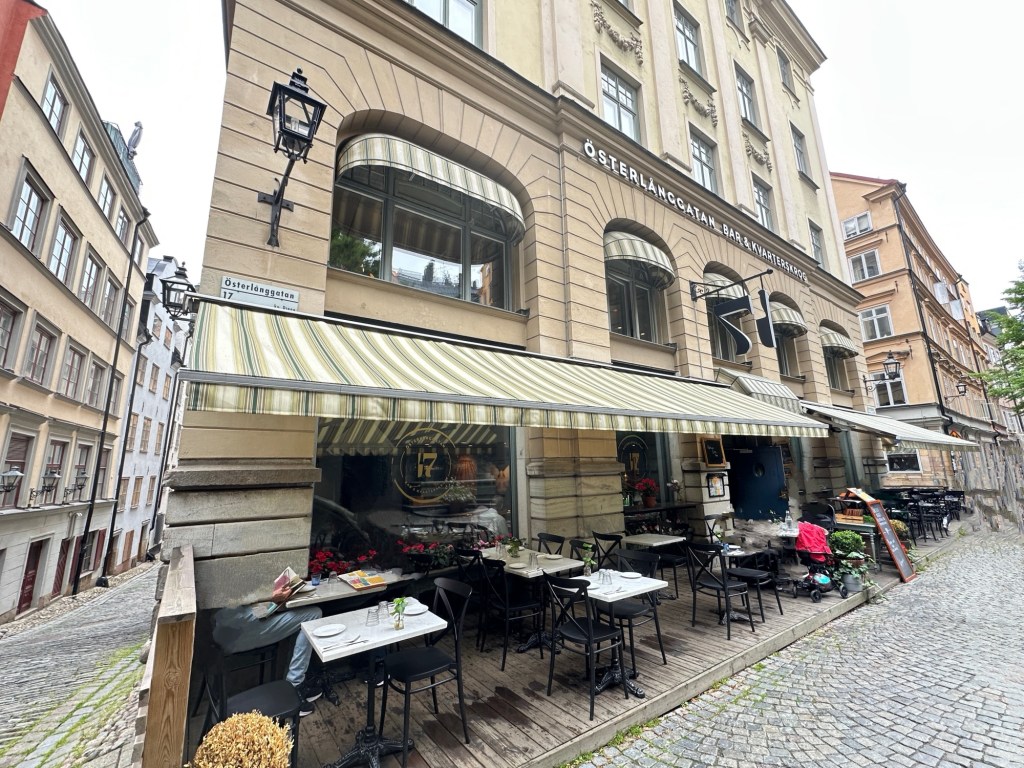
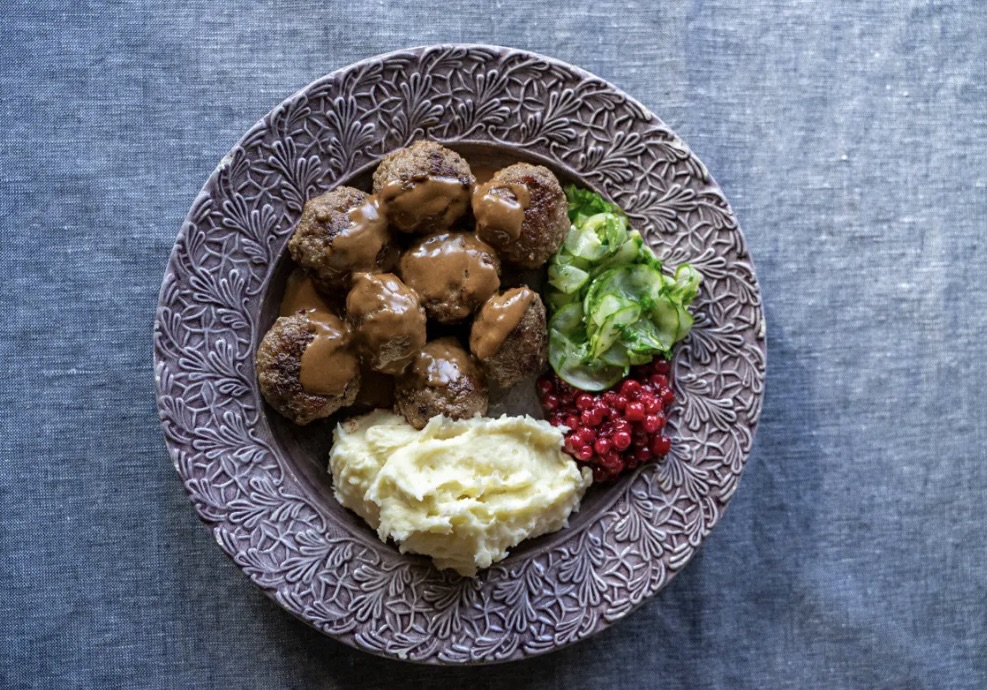
We had a traditional lunch in a quaint Swedish restaurant – meatballs (Kottbullar) and mashed potato in gravy, with a side of pressed cucumber, and lingonberries. The berries gave the gravy a lovely flavour. Lingonberries are deeply rooted in the culture and lifestyle of Scandinavia, symbolizing health, vitality, and the enduring relationship between nature and well-being. Swedes love them with meatballs and herring.
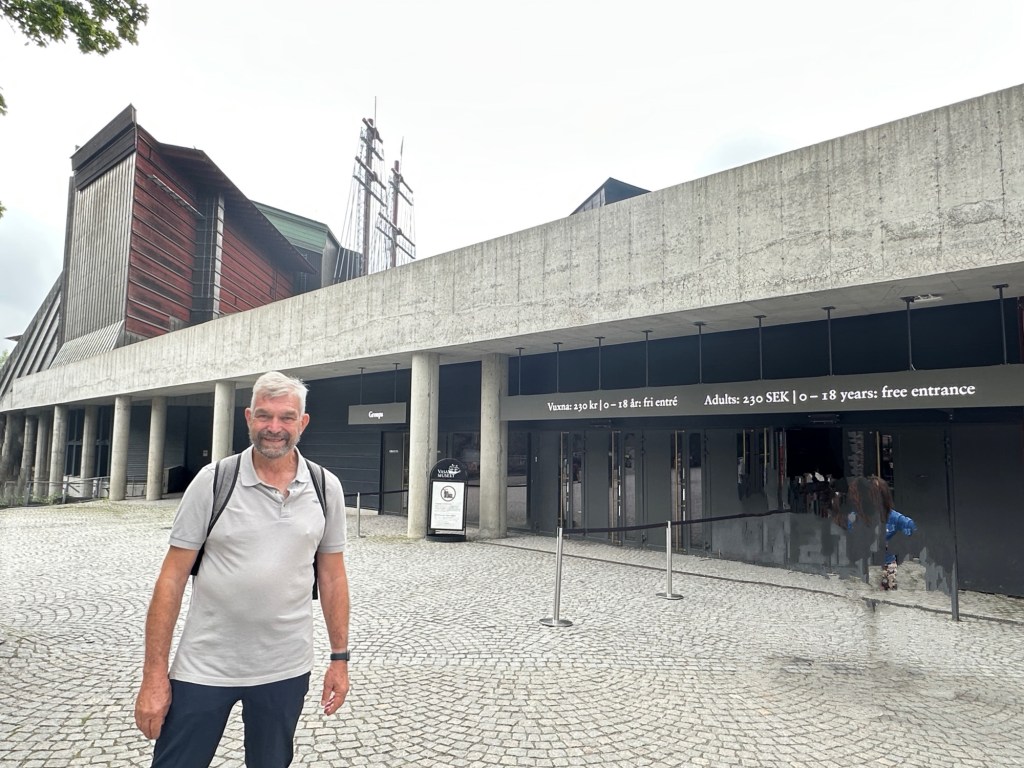
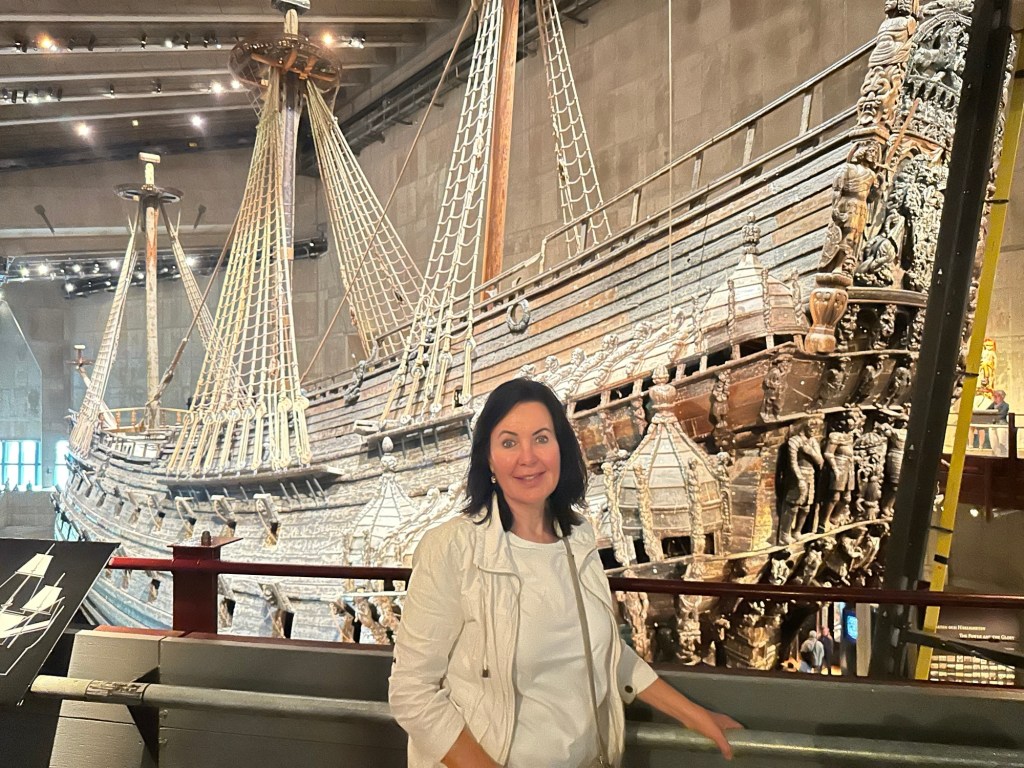
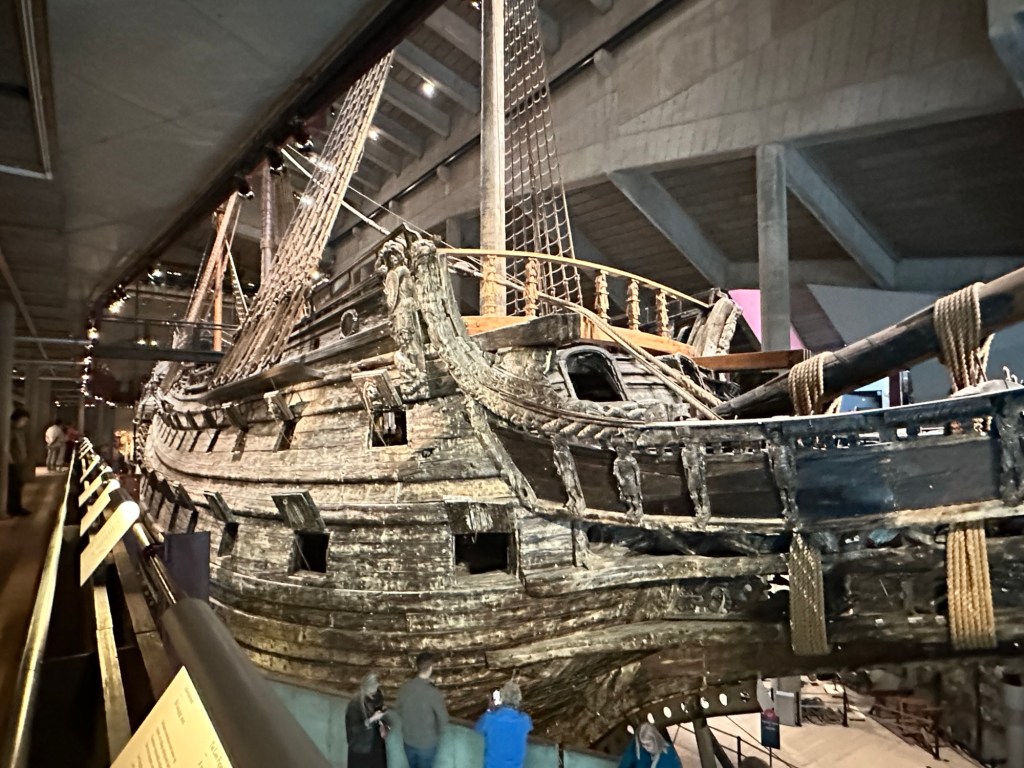
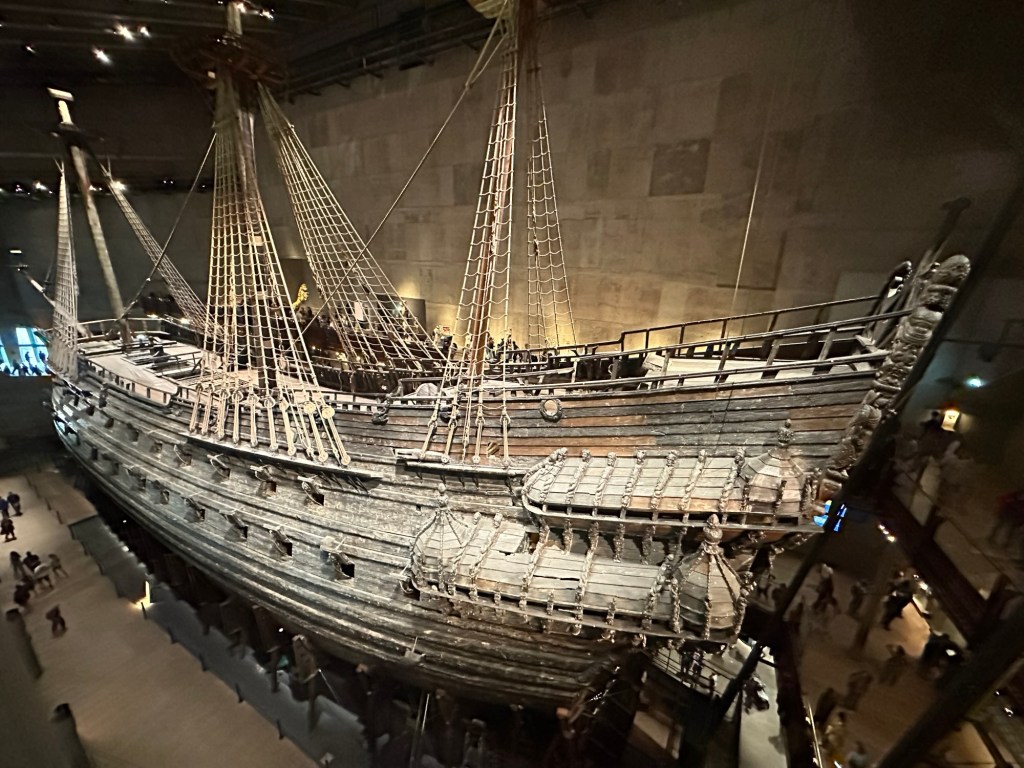
Next we took the ferry (a 10 minute ride) to the island of Djurgarden, which is where the Vasa Maritime Museum is. The museum displays the only almost fully intact 17th-century ship that has ever been salvaged, the 64-gun warship Vasa that sank twenty minutes into her maiden voyage in 1628. The Vasa was left lying 30 metres below the water. She was raised in 1961 and is now in the museum. Because of the low salinity of the Baltic Sea (and hence the ship worm couldn’t eat through the wood), the ship was well preserved considering it had been underwater for 333 years. Now the vessel has been painstakingly restored to 95 per cent of its original appearance. Great exhibition with a lot of information and free guided tours.



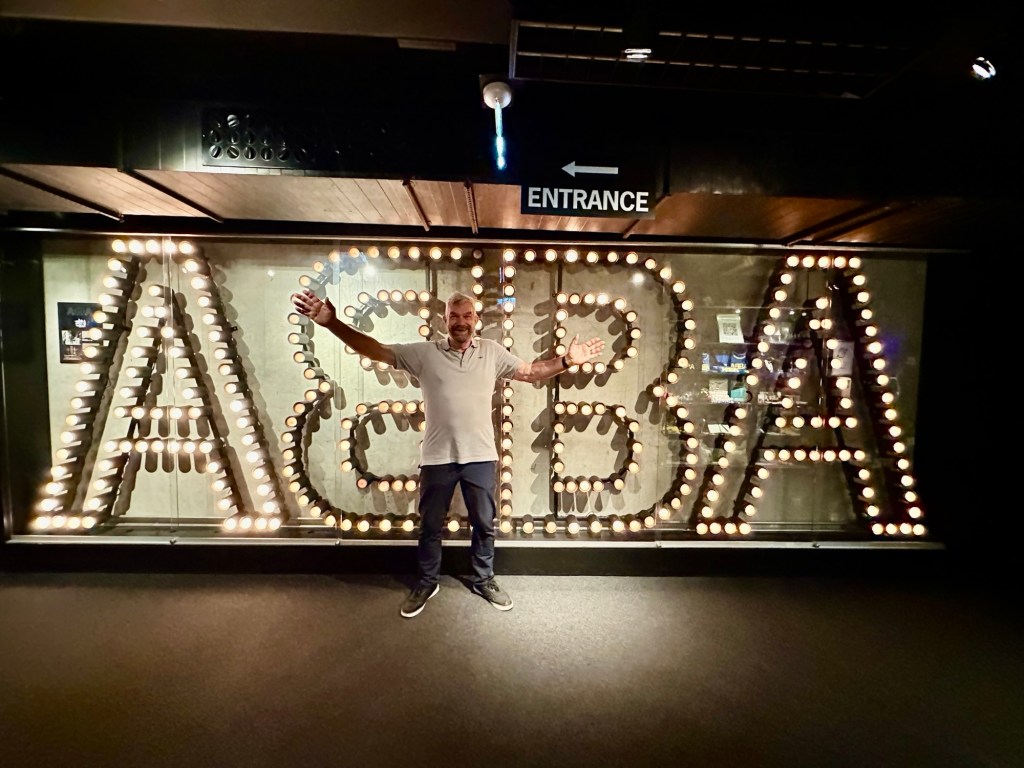
Close by was the ABBA Museum – this is the museum you walk into and dance out of. Few cultural entities have put Stockholm – and Sweden – on the map like ABBA did in the 1970s and 1980s, when they ruled the global pop charts. This museum has exhibits of their costumes, gold records, and other memorabilia. Whilst it is not a must see destination, being an ABBA fan from way back, I enjoyed my time there. It is a small venue, and the crowds are big. I had pre booked tickets which helped.


Ferry ride back to the Old Town where we enjoyed a nice meal and a walk around, before heading back to the hotel. We really did not have enough time in Stockholm – so much more to see, but what we did see, we really enjoyed.
Day 57
Tuesday 15th July
Stockholm to Copenhagen
14-22 degrees, cloudy, sunny
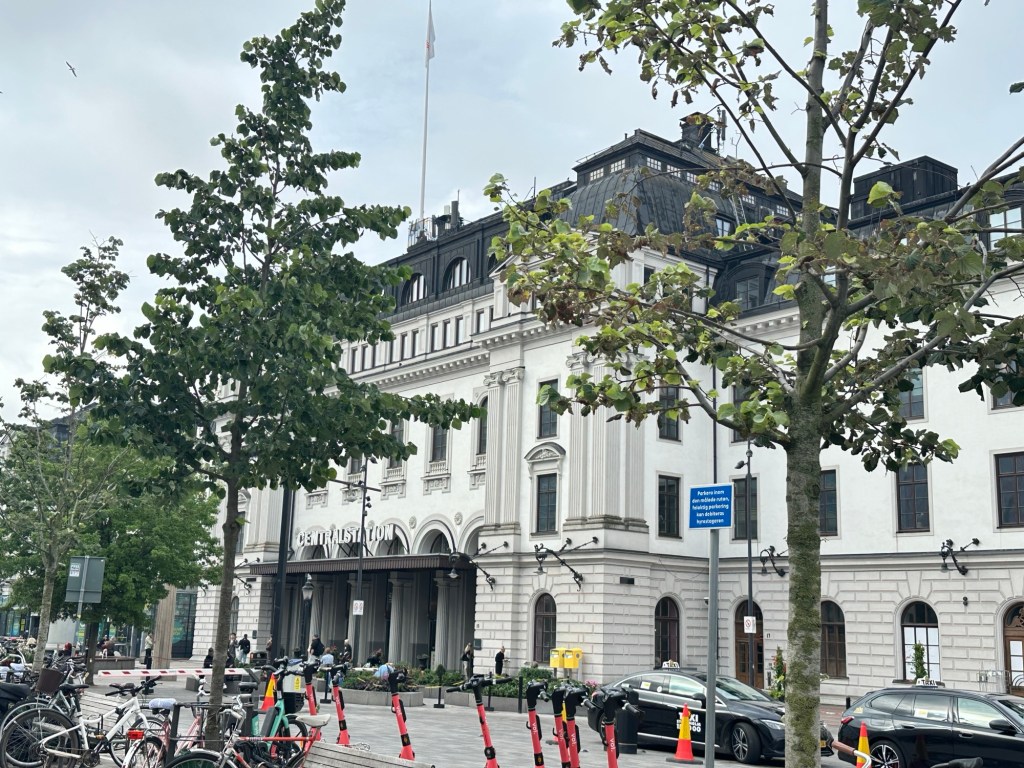
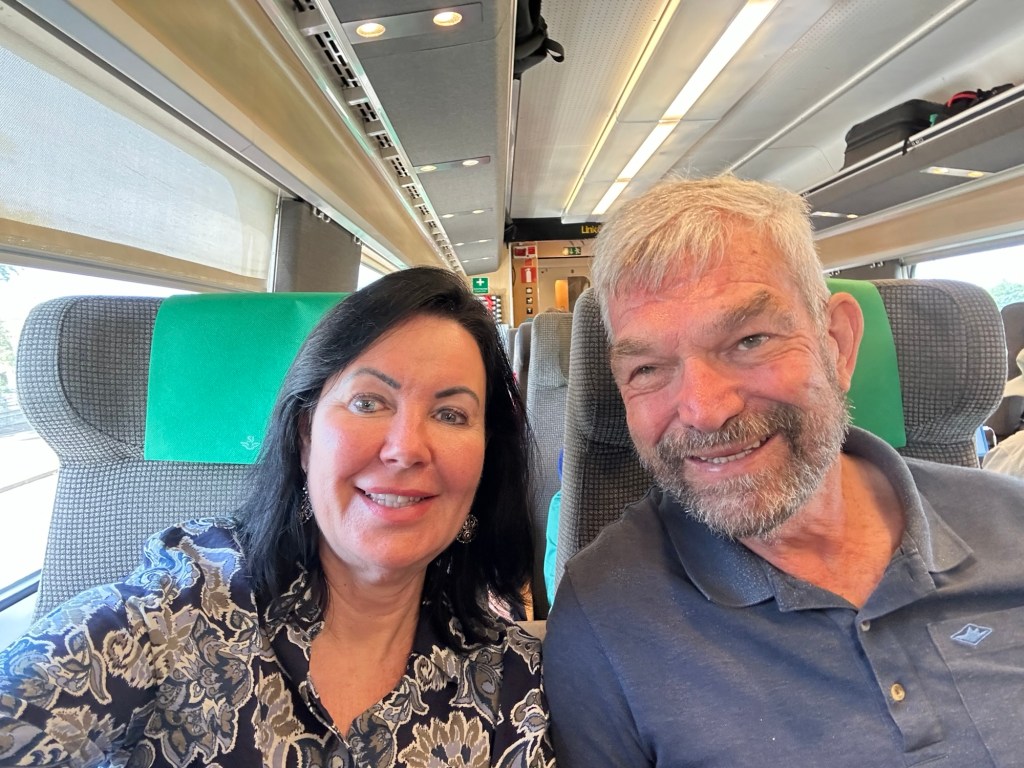
Today we take the train from Central Station, which is an 8 minute walk from the hotel, to Malmo. It is a four and a half hour train journey to Malmö in the south of Sweden. Another comfortable train ride, looking out at gorgeous scenery of little red houses, idyllic farmlands, and forests of southern Sweden.
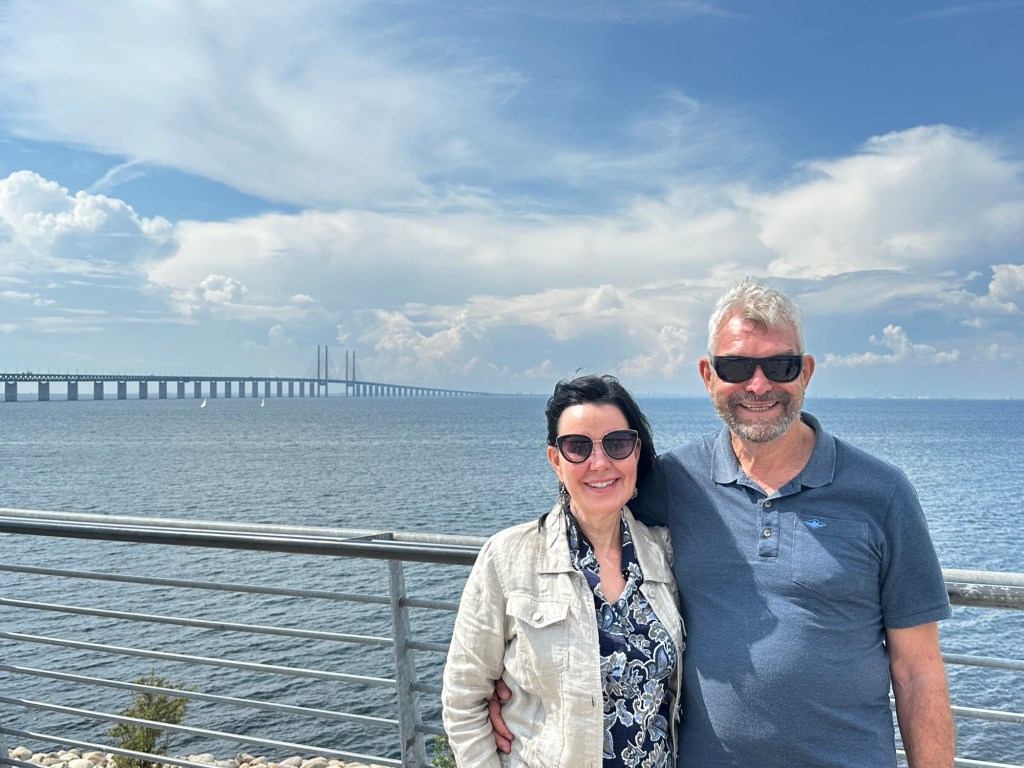
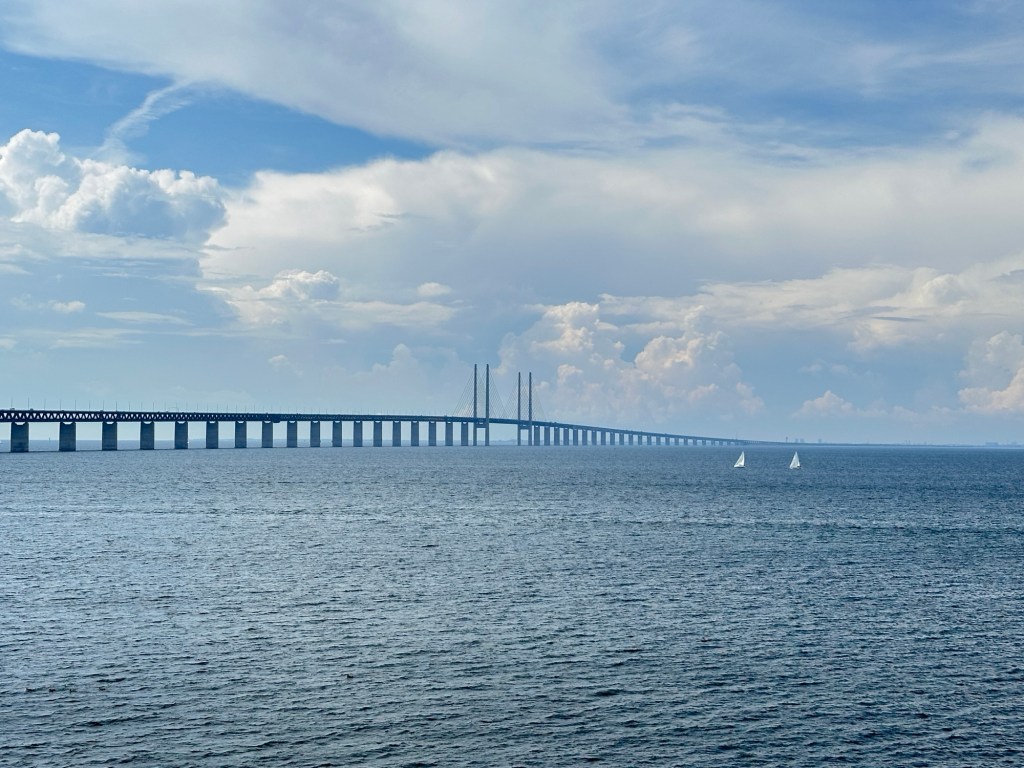
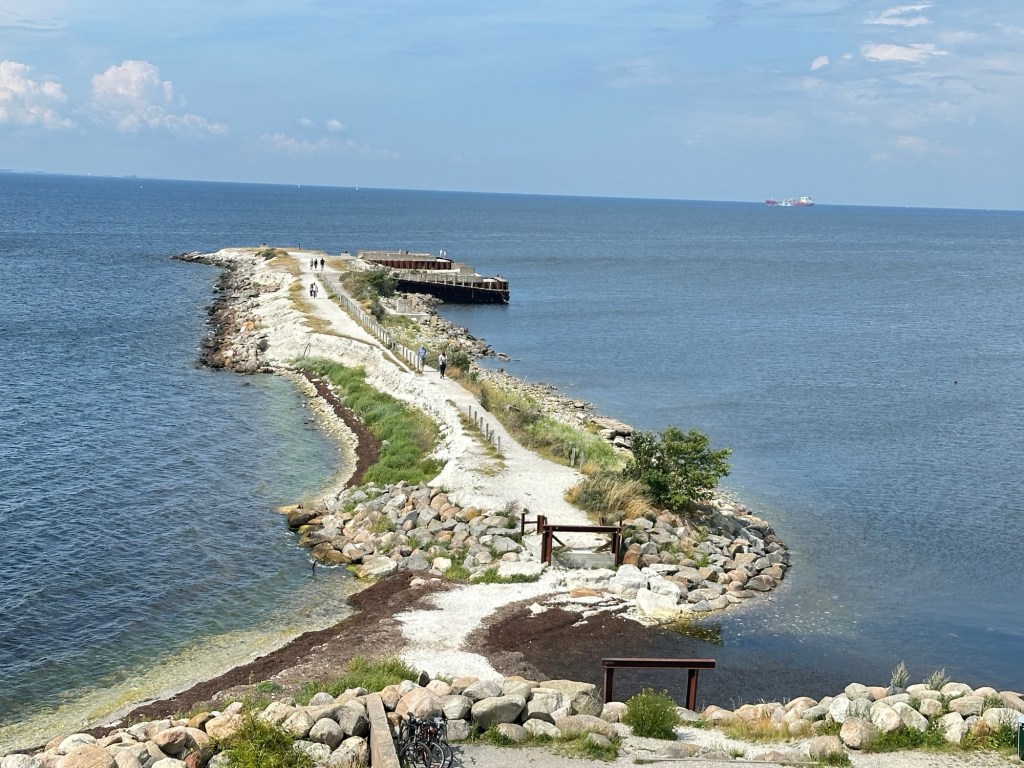
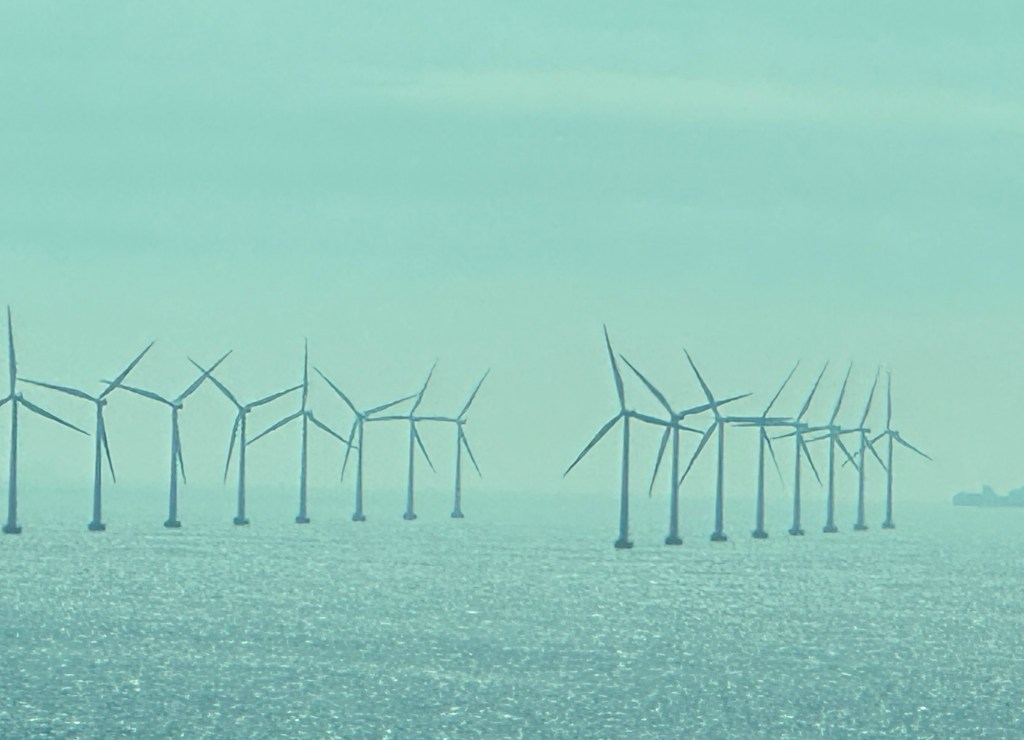
At Malmö, we have a coach to take us over the bridge to Denmark. The cablestay bridge is 16kms long. Great view of offshore windfarms that provide a significant proportion of Denmark’s power.
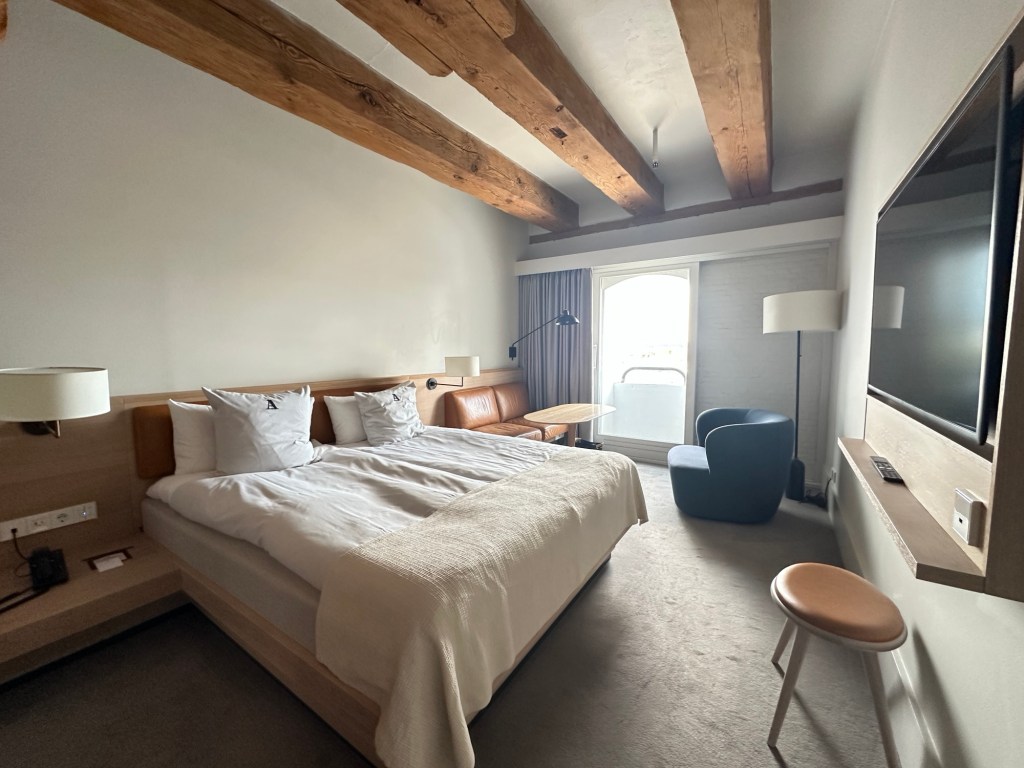
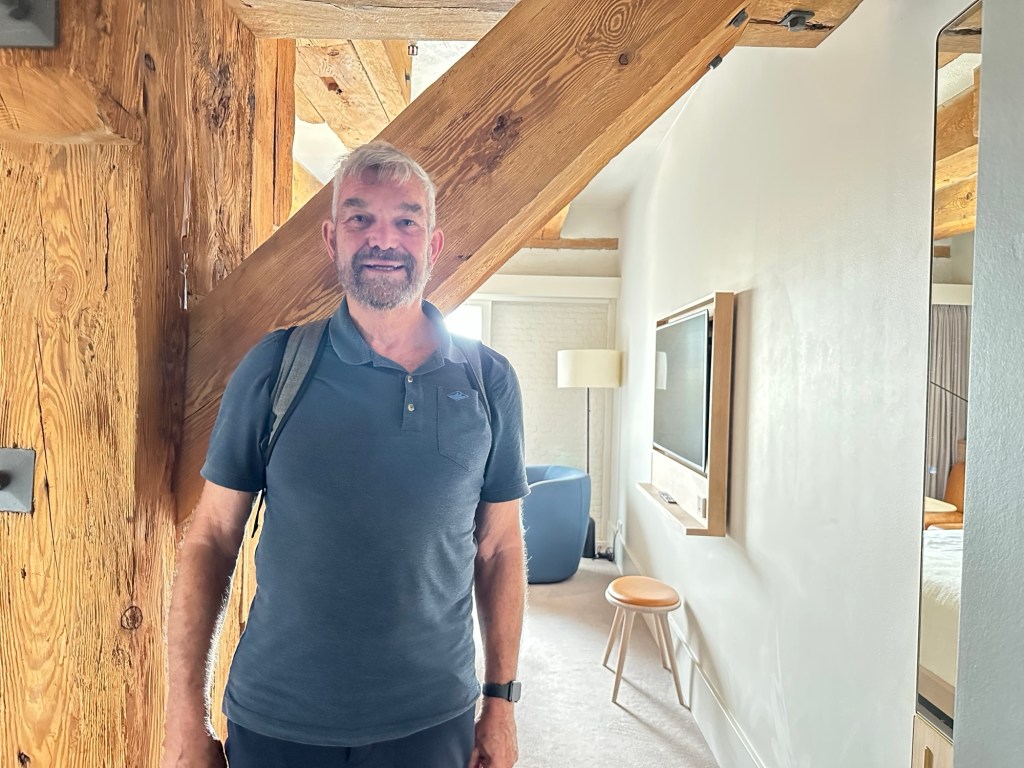
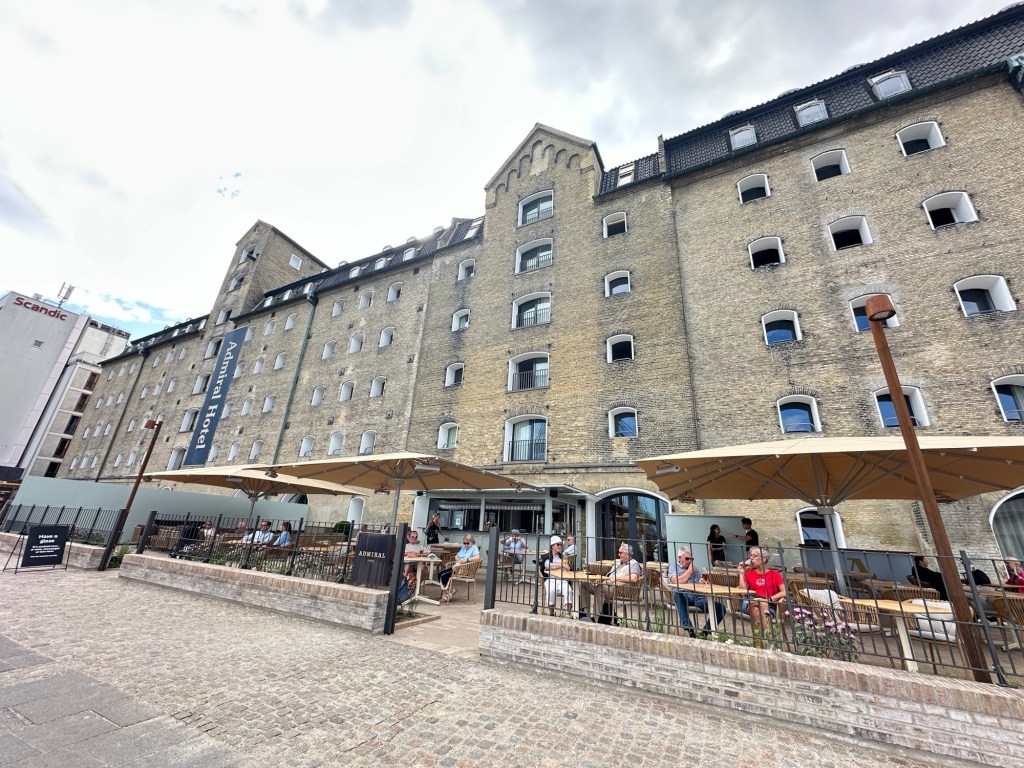
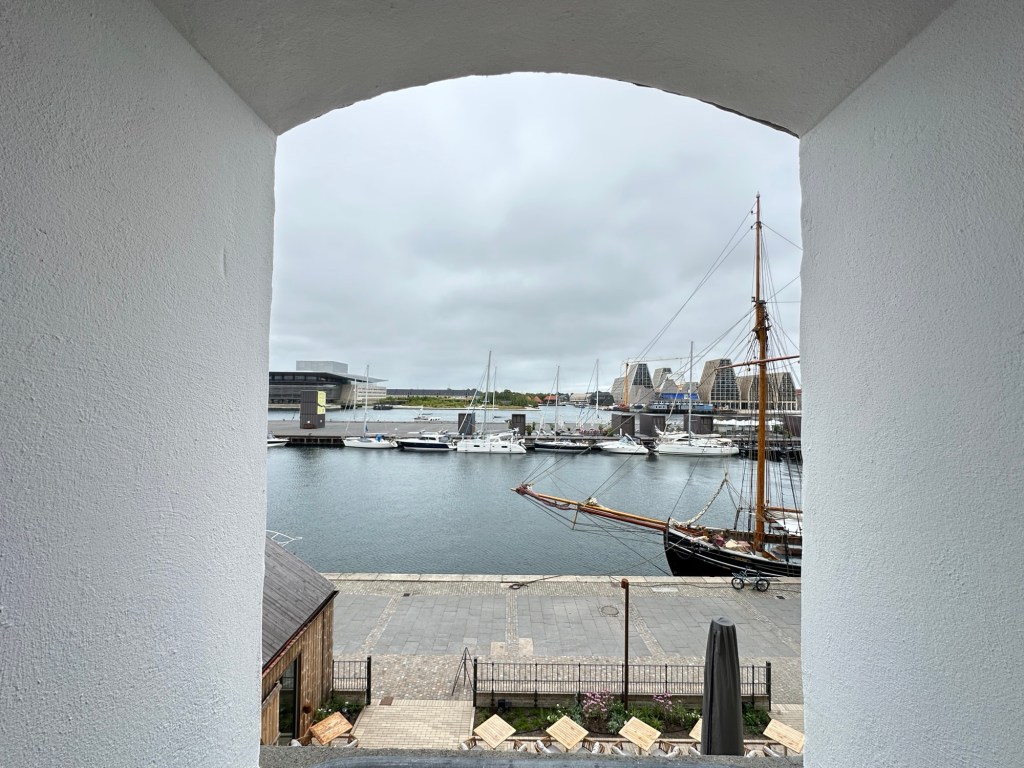
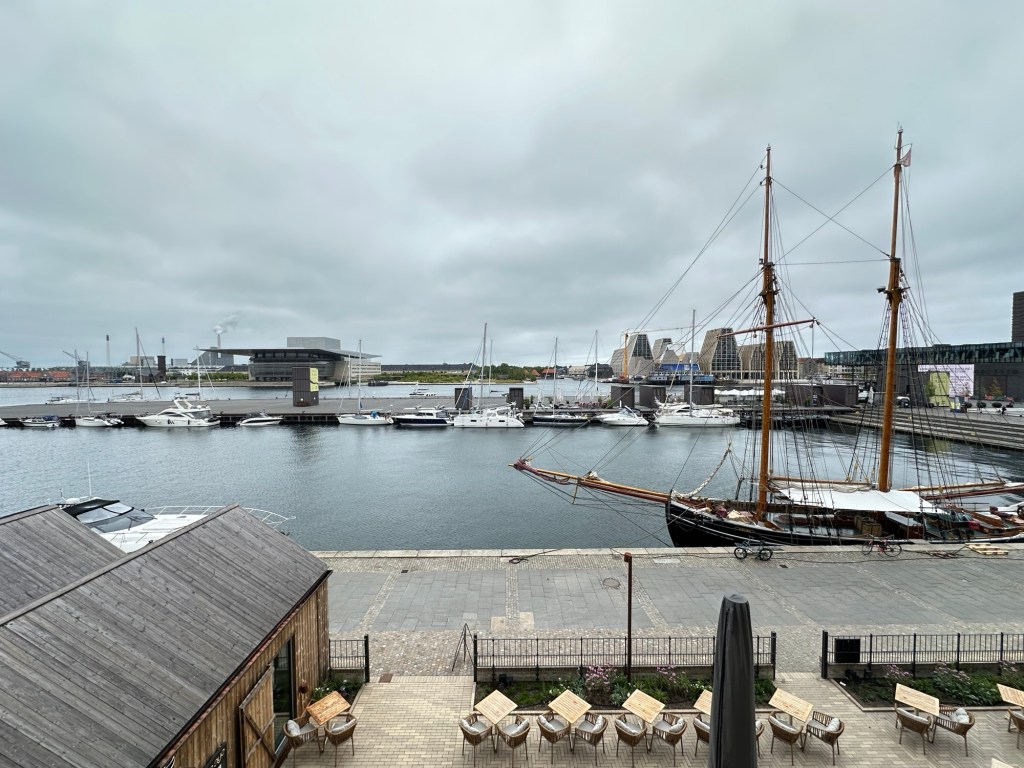
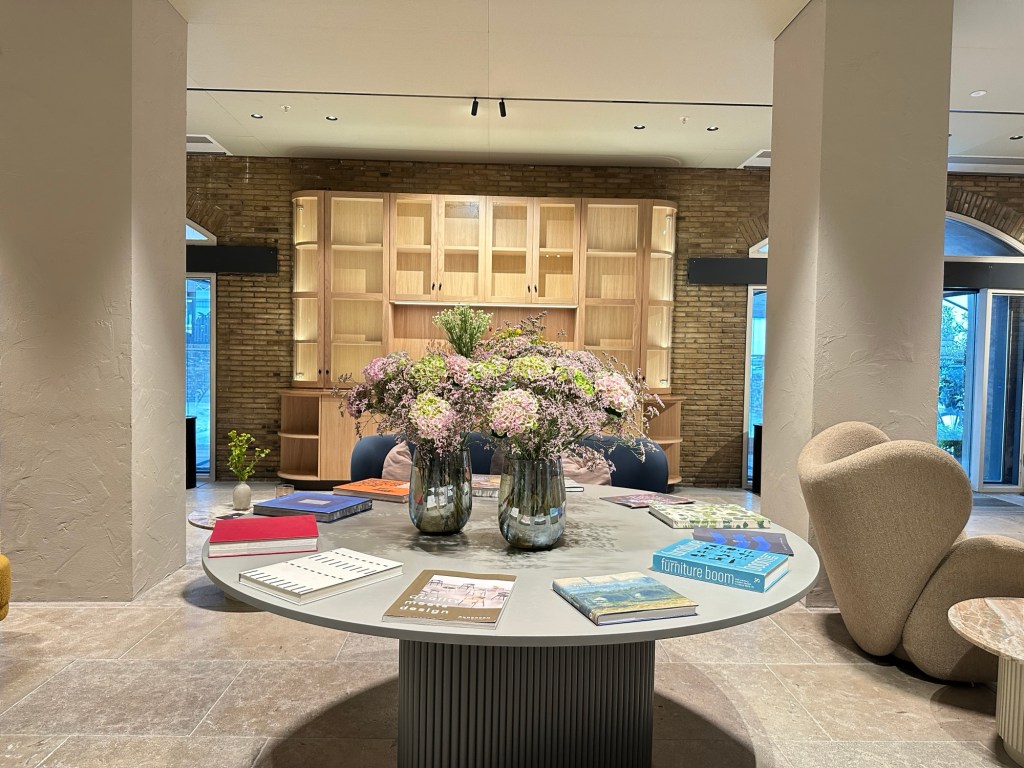
We arrive at the Admiral Hotel an hour later. Very nice hotel – a converted warehouse on the waterfront.
Brief history of Denmark
Danish history dates from around 530CE with power centred around the Vikings. For the next 500 years the Vikings were the major power in northern Europe and the Atlantic. By 1033, the Danes controlled most of Britain, northern France and the entire Baltic trading region.
14th century – Kalmar Union – Danish rule over the kingdoms of Sweden and Norway. Alliance disintegrated as a result of a number of religious wars.
16th century – profited from a tax on ships using the channel between Denmark and Sweden (Kattegat).
18th century – established trading in east Asia
Early 19th Century – attacks by British on Copenhagen did not prevent unprecedented flourishing of culture. Also rise of social democrats and trade unions.
By 1901 parliamentary democracy established.
WWI and WW2 Denmark was neutral but occupied by Nazis.
1972 – first Scandinavian country to join the European Union.
Considered to be one of the world’s most desirable places to live.
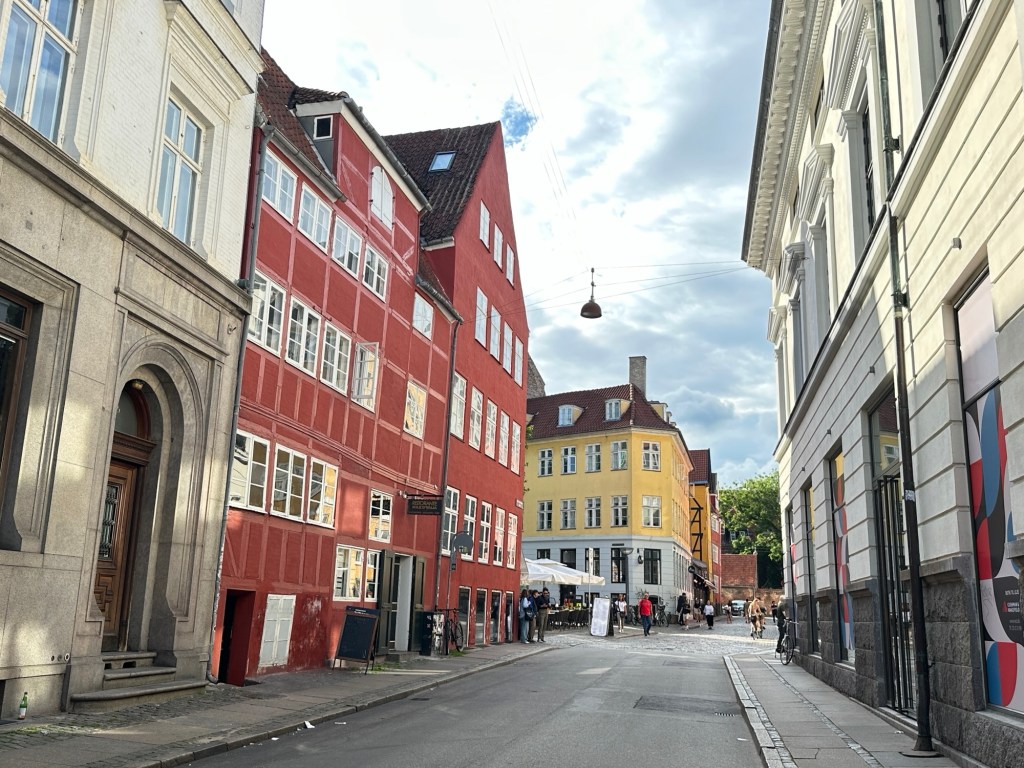
We were met by a local guide at our hotel in Copenhagen to take us on a walking tour of the main landmarks. Copenhagen, the capital of Denmark, is one of Scandinavia’s most beautiful cities. In fact, the locals like to call it “The Paris of the North” owing to its rich history, classic art and architecture and a wide range of attractions, most of which are within walking distance of the city centre.
Not far from our hotel is Amalienborg Palace – the winter home of King Frederick, and our Queen Mary. The palace is made up of four identical buildings spread around an octagonal courtyard. The Danish Royal Guard stands watch day and night.
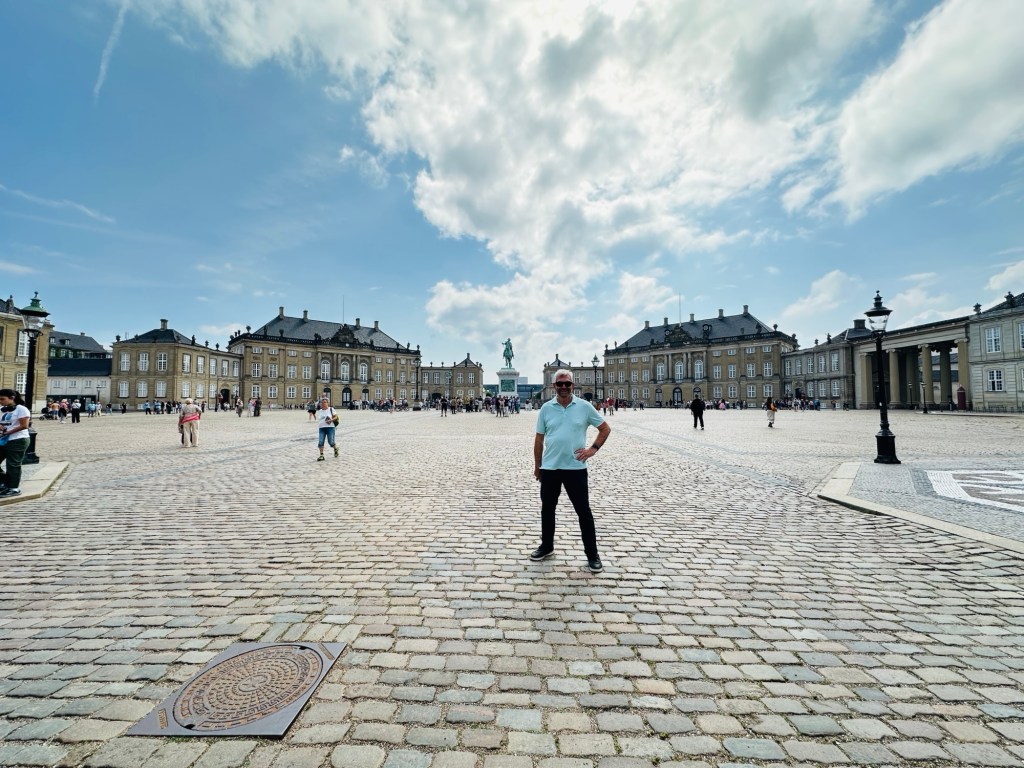

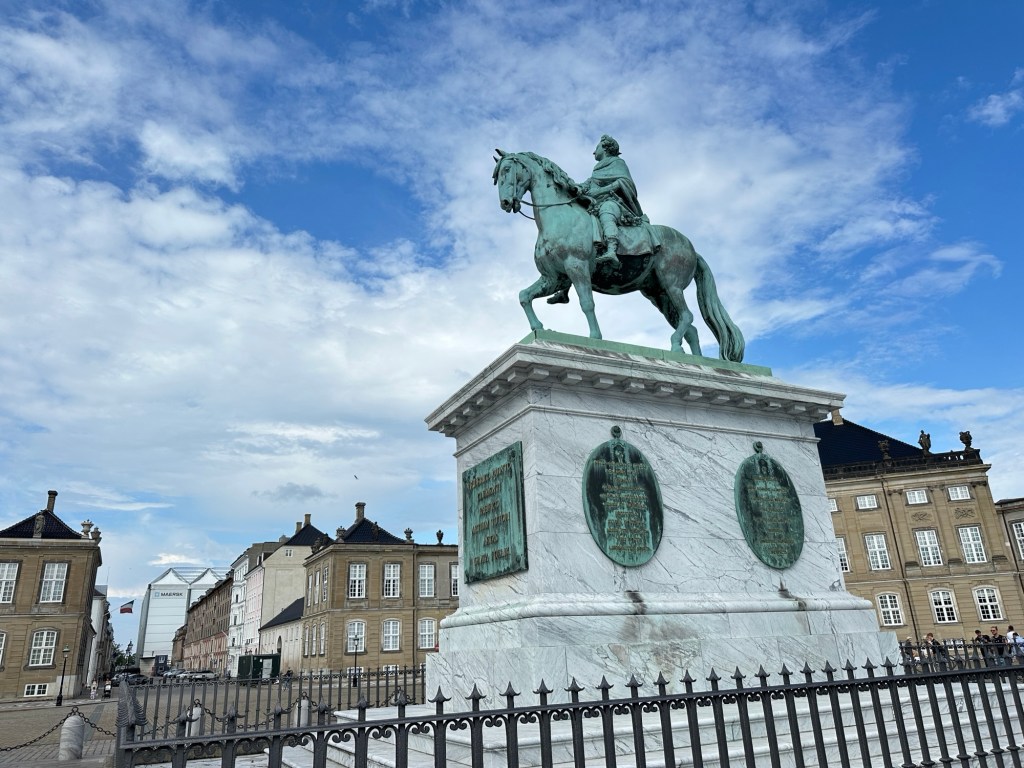


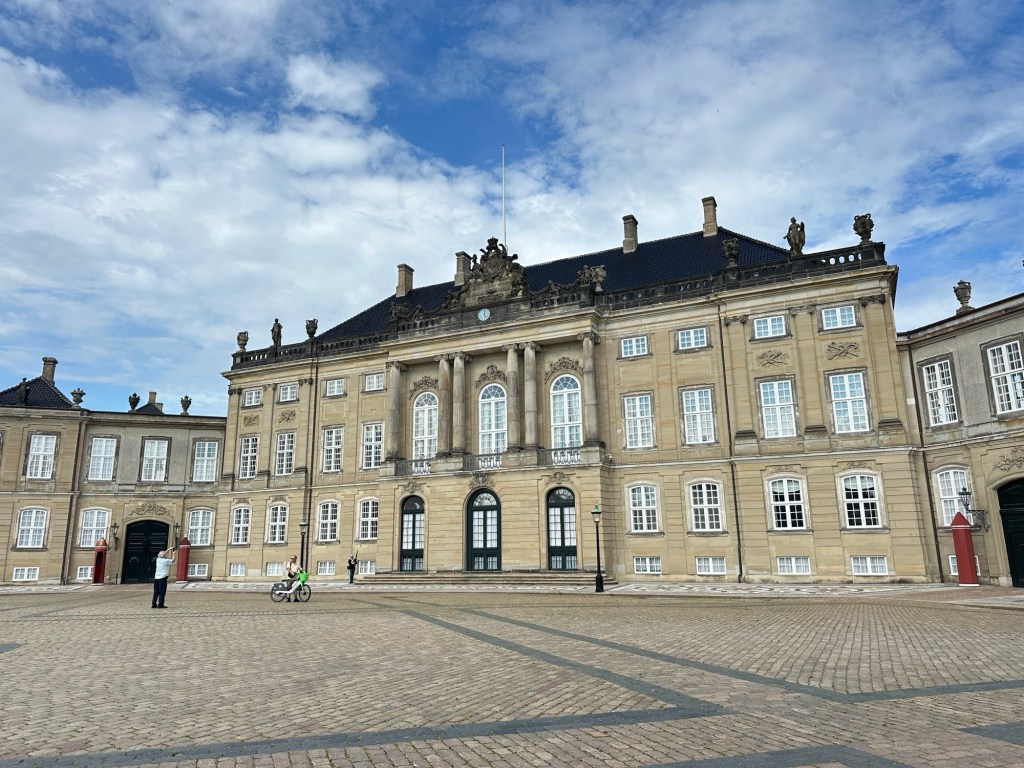
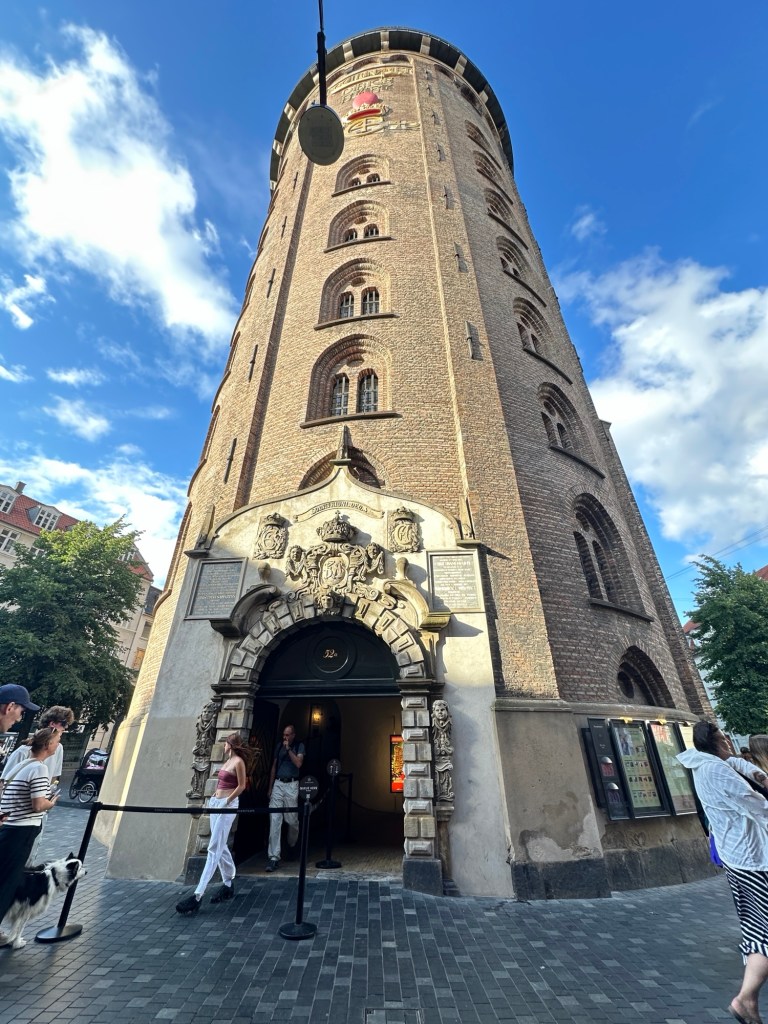
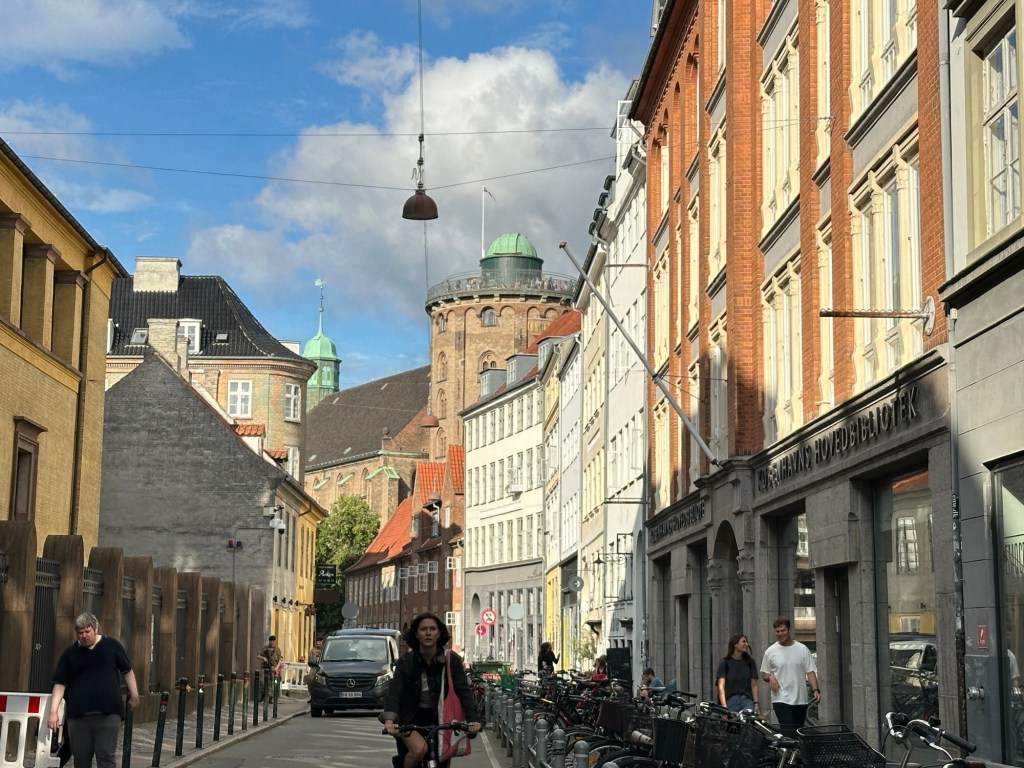
We see the Round Tower, built in the 17th century by Christian IV, and is still used as an observatory.
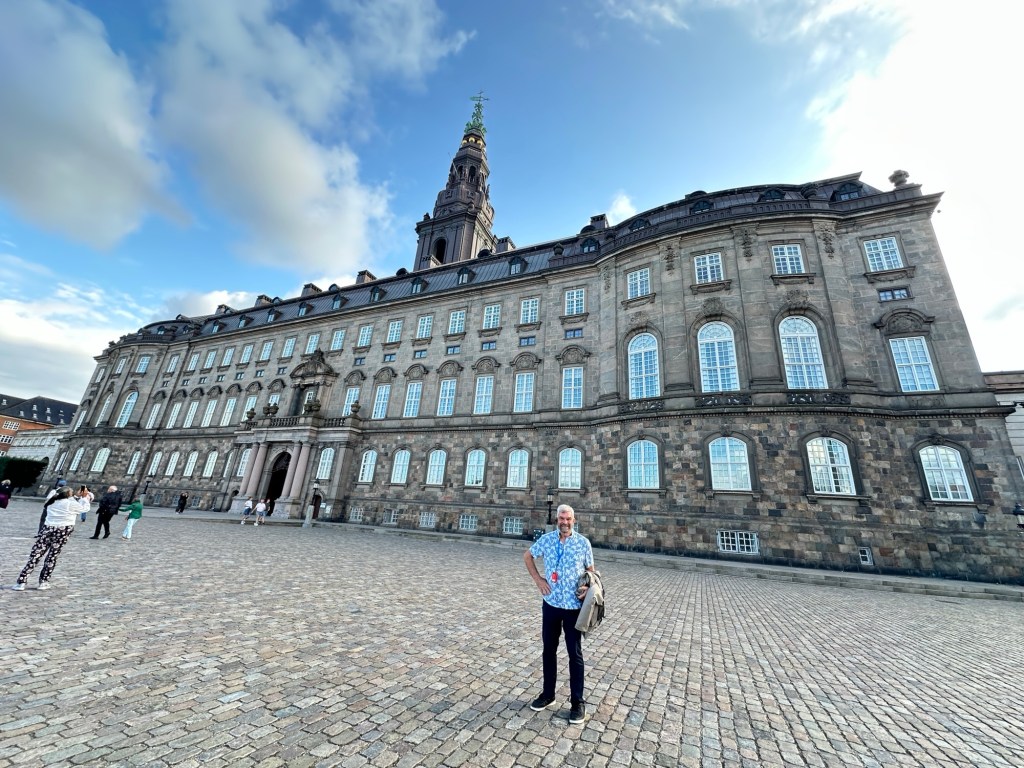
Christiansborg Palace has been the heart of Danish government for over 800 years. Situated prominently on the small island of Slotsholmen in the Copenhagen harbour, it is now mostly used as the seat of the Folketing (Danish Parliament) as well as the Prime Minister’s Office, the Supreme Court and the Royal Reception Rooms.


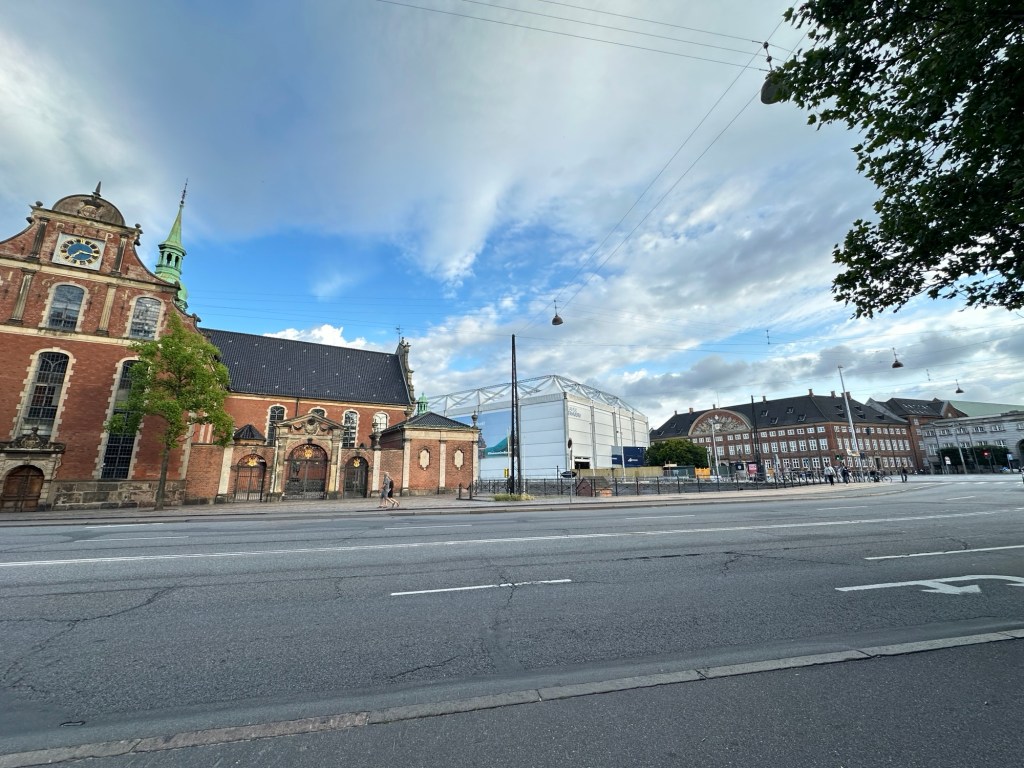
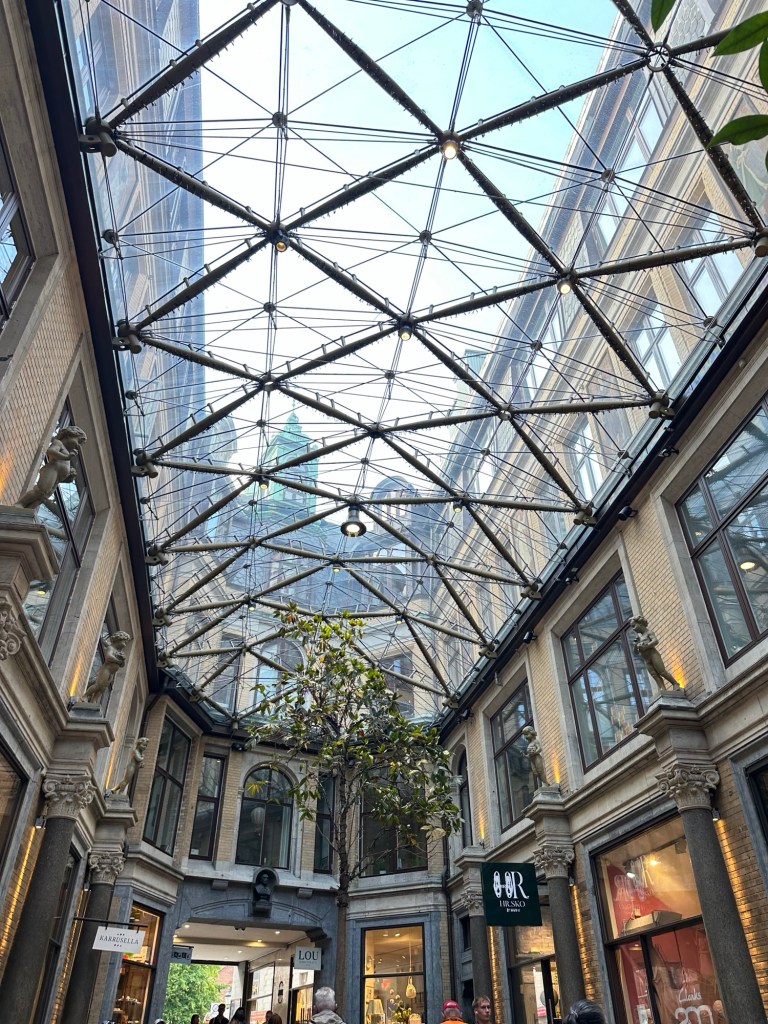
A walk through Stroget was next, Copenhagen’s largest shopping area and among the world’s longest pedestrian streets, stretching over a kilometre. Stroget is actually a nickname given to the combination of the streets Frederiksberggade, Nygade, Vimmelskaftet and Ostergade. It was a bustling area.


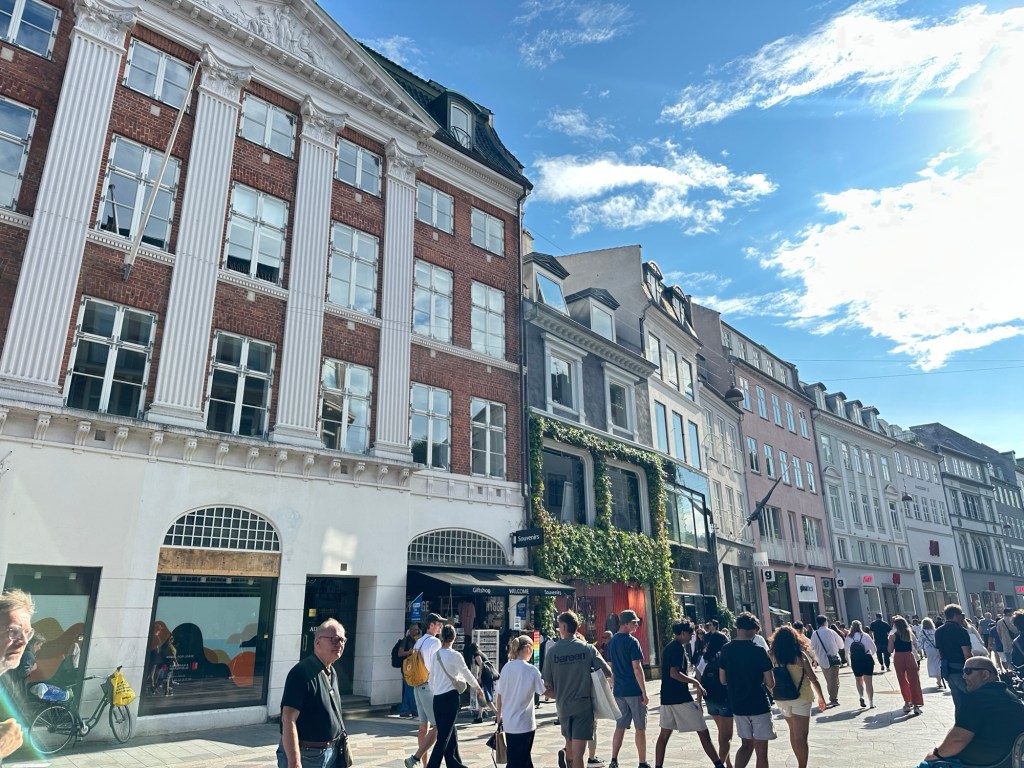
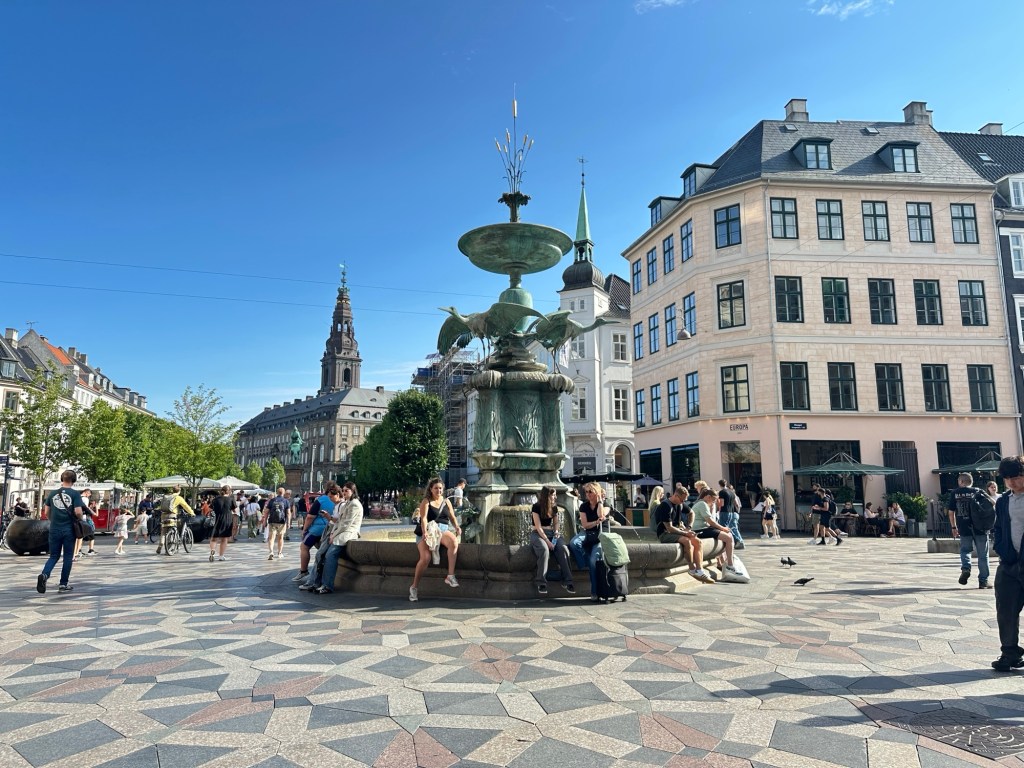
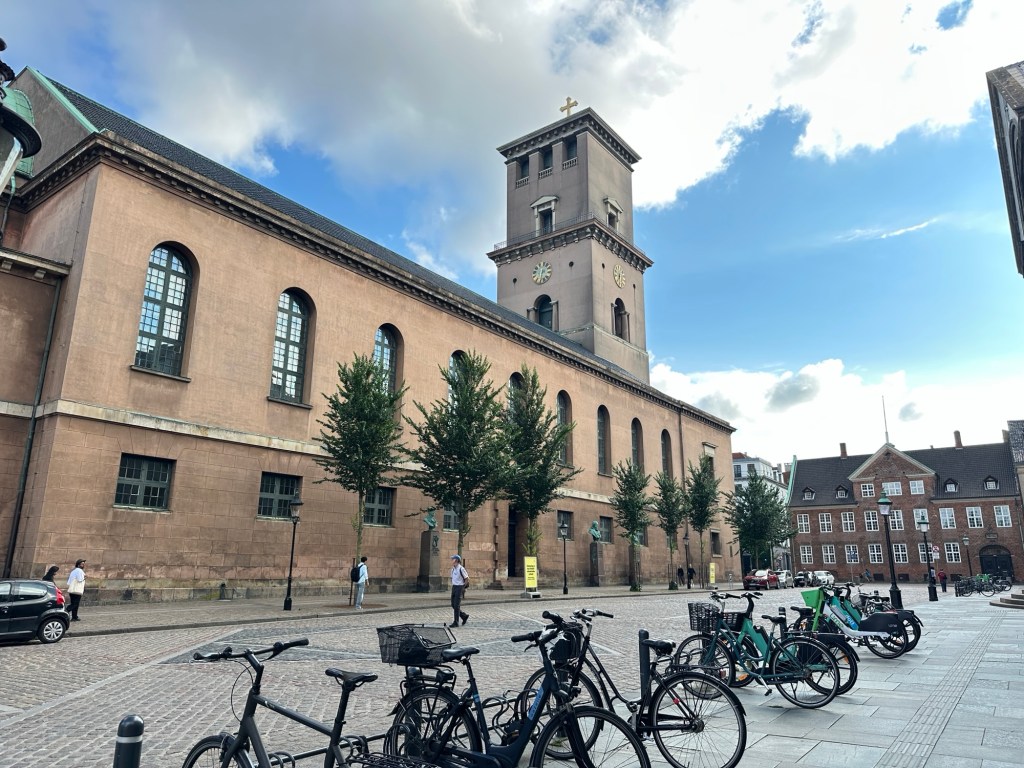
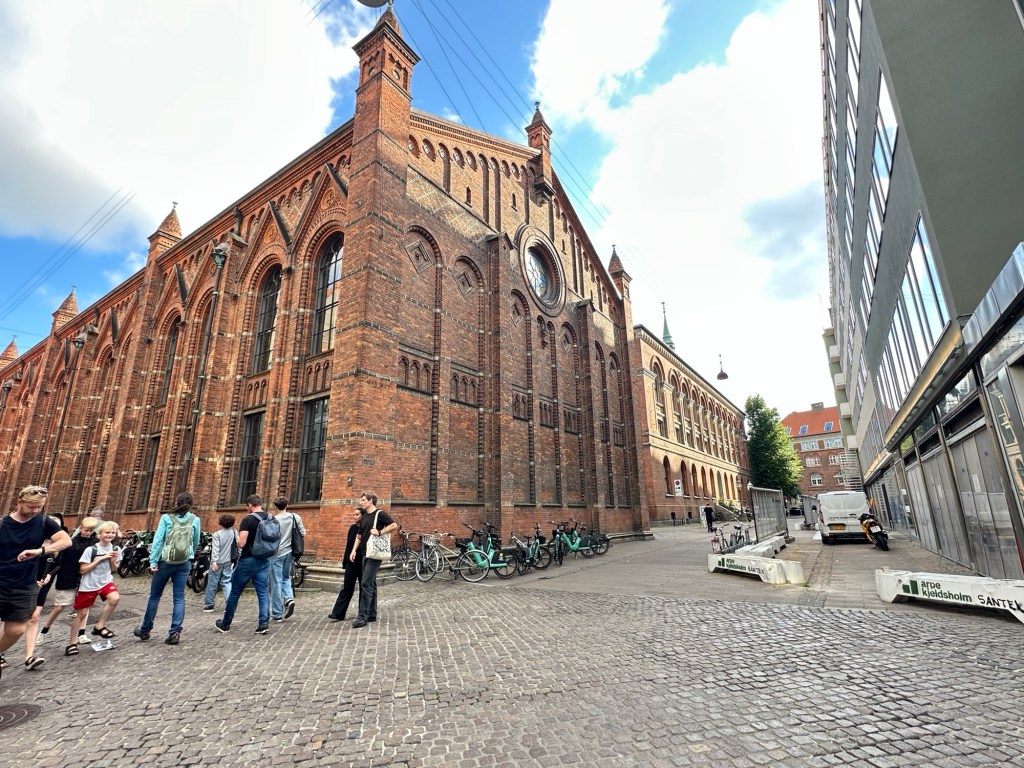
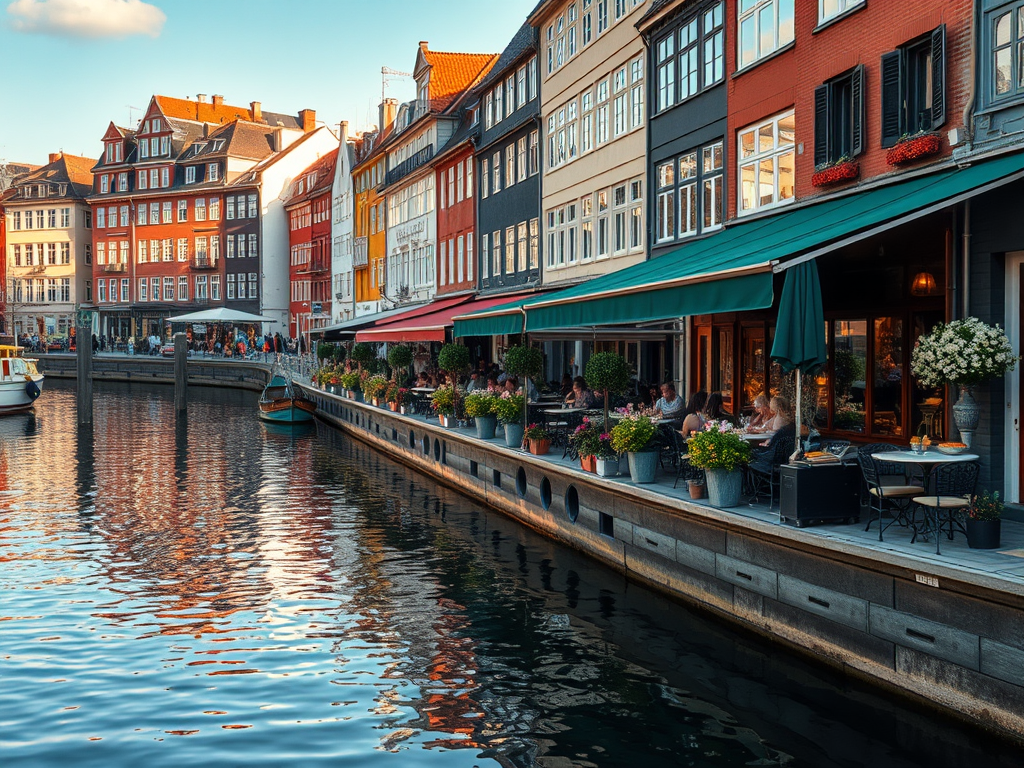
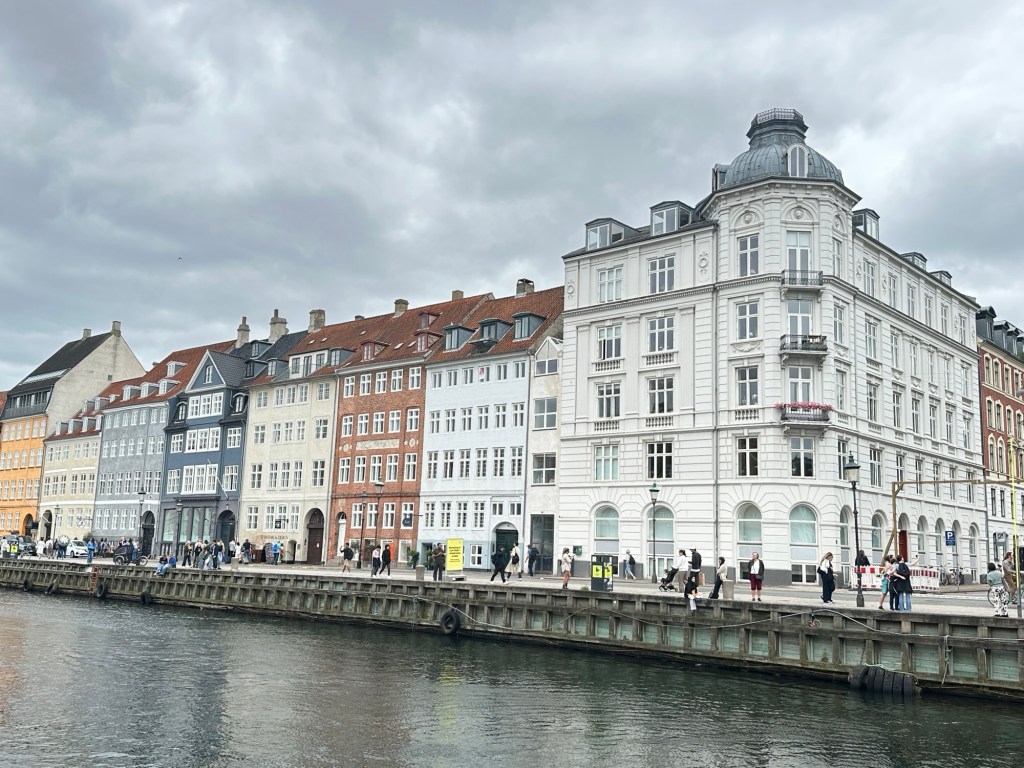
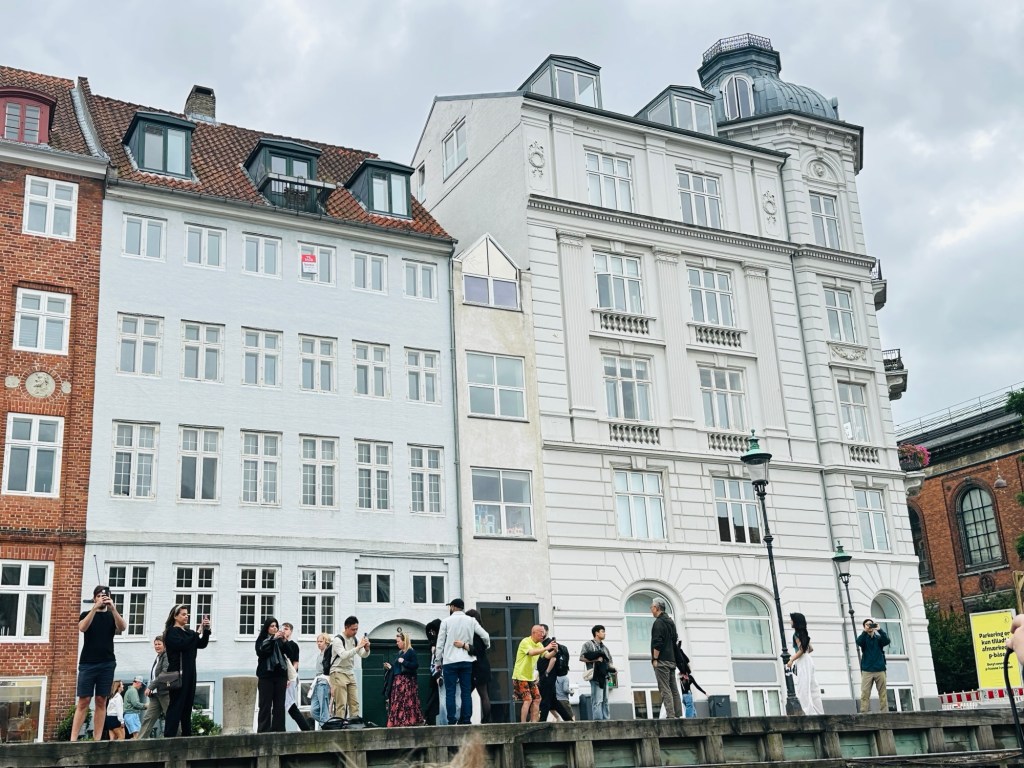
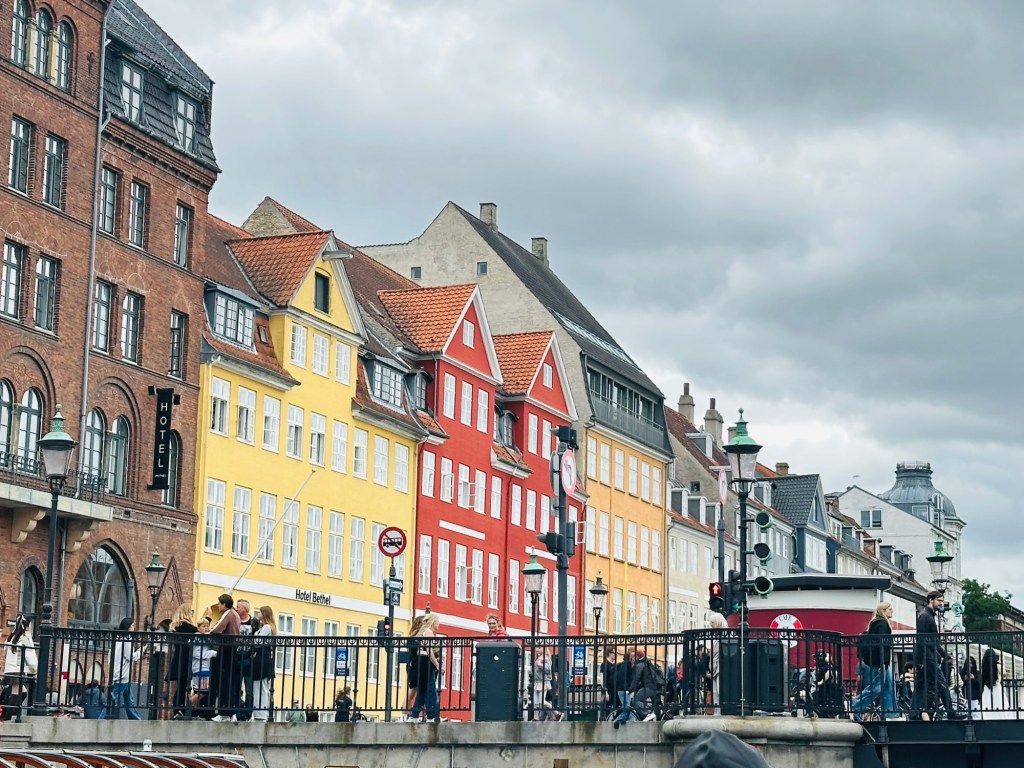
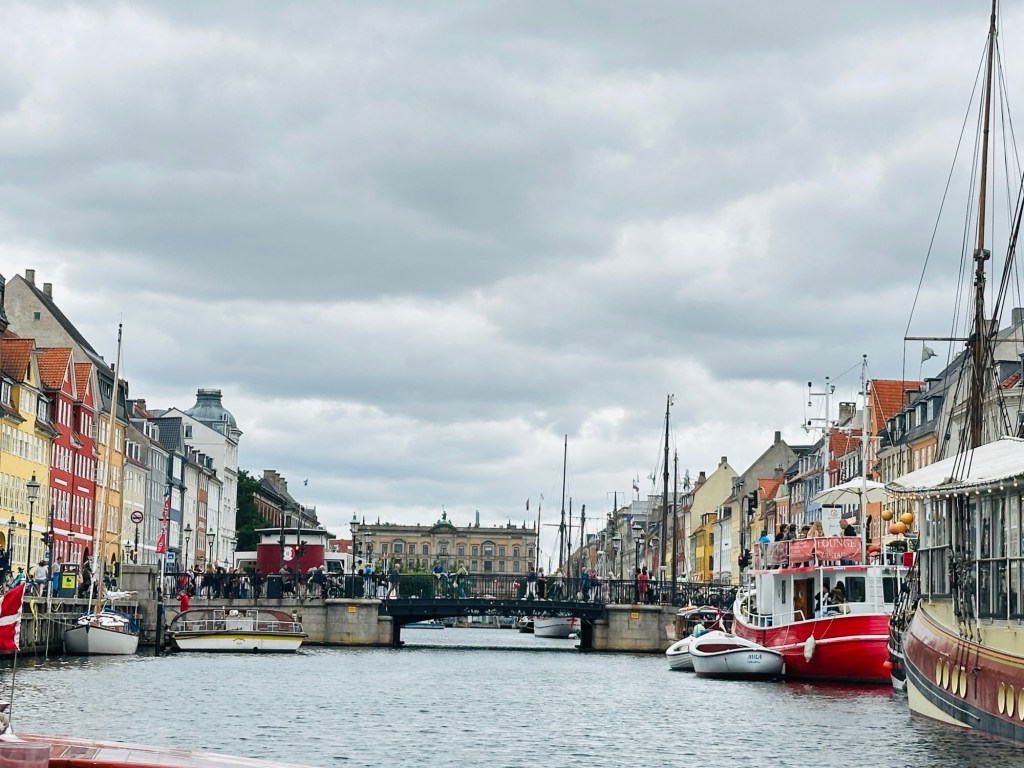
Nyhavn is the famous canal lined with colourful old buildings, sailboats and sunny waterfront cafes that is featured in countless postcards. Formerly a seedy area with drunken sailors and brothels, Nyhavn is now a popular spot for dinner, drinks or coffee while doing a bit of people-watching in summer. I loved this area. There is even the tiniest house in the world here.
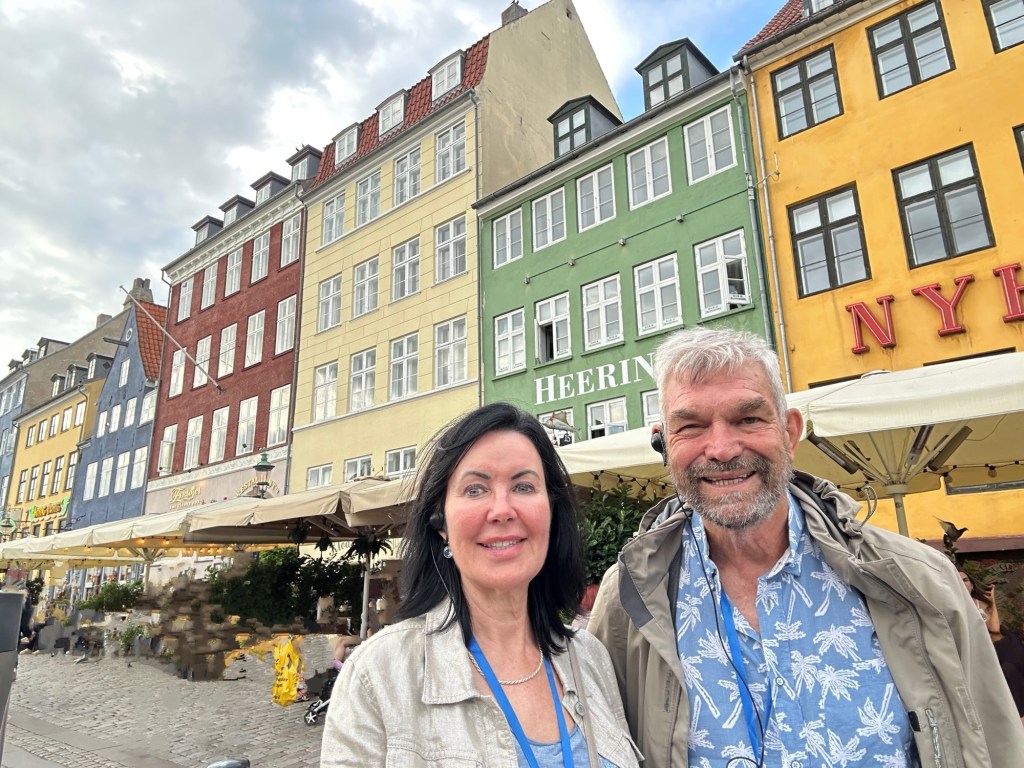
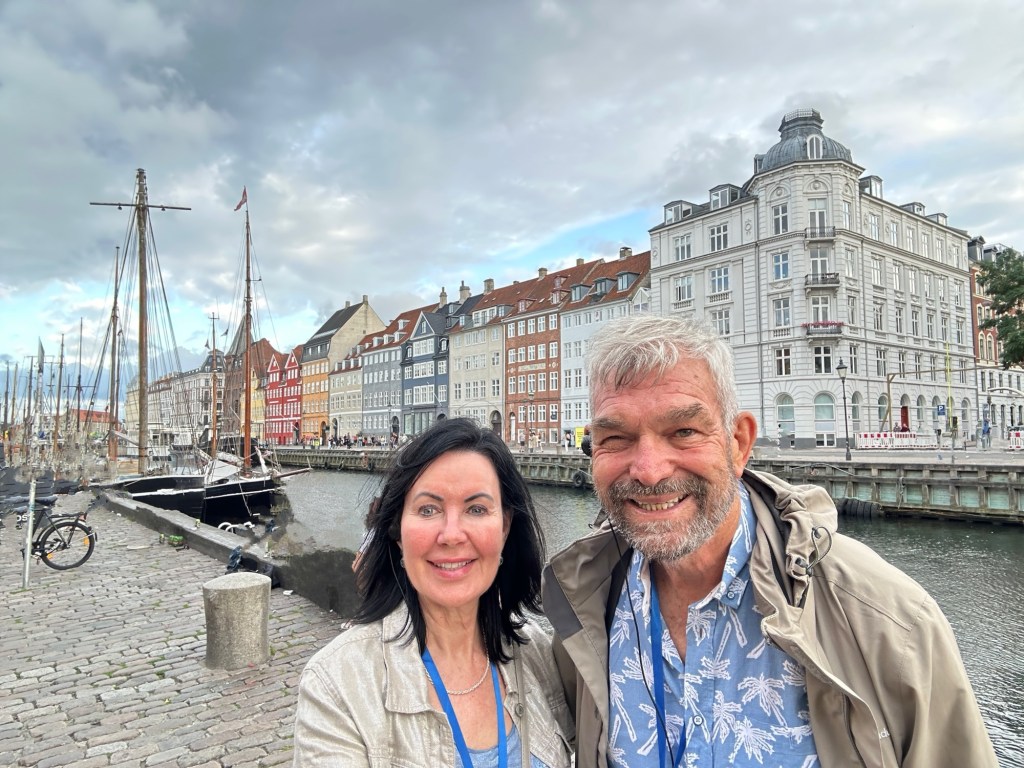
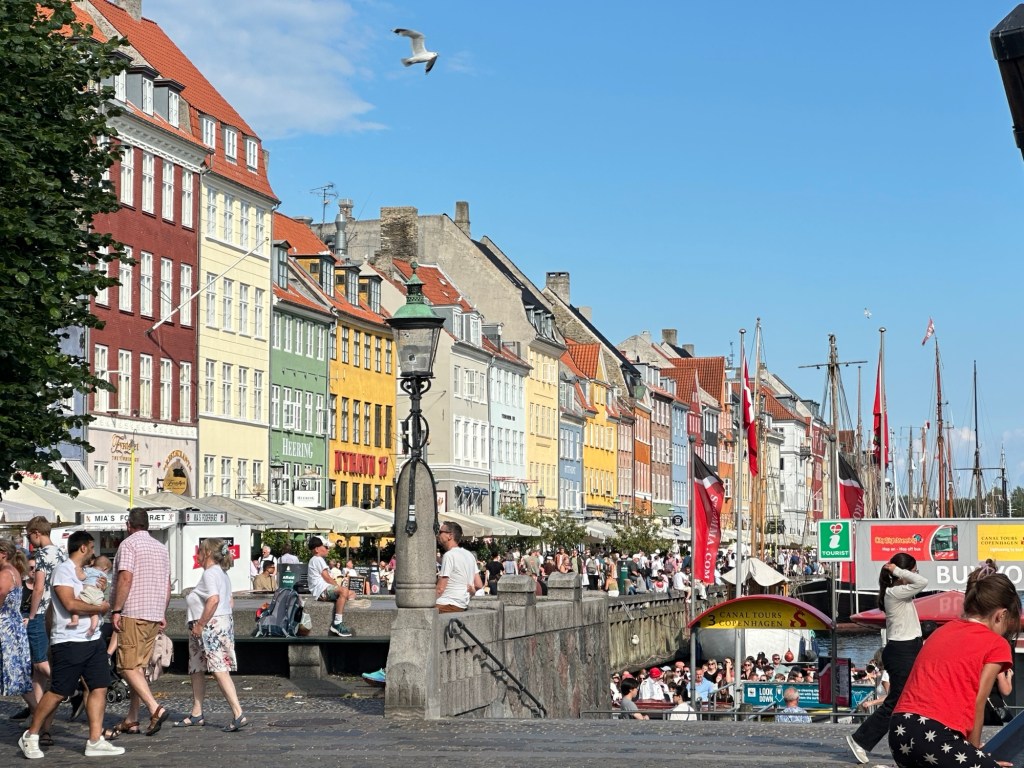
We had a group dinner at Heering restaurant in Nyhavn, a three course meal, and Carlsberg beer of course. Copenhagen has become something of a foodie hotspot in recent years with internationally acclaimed restaurants like NOMA and its “New Nordic” culinary culture.
Day 58
Wednesday 16th July
Copenhagen
14-20 degrees, cloudy
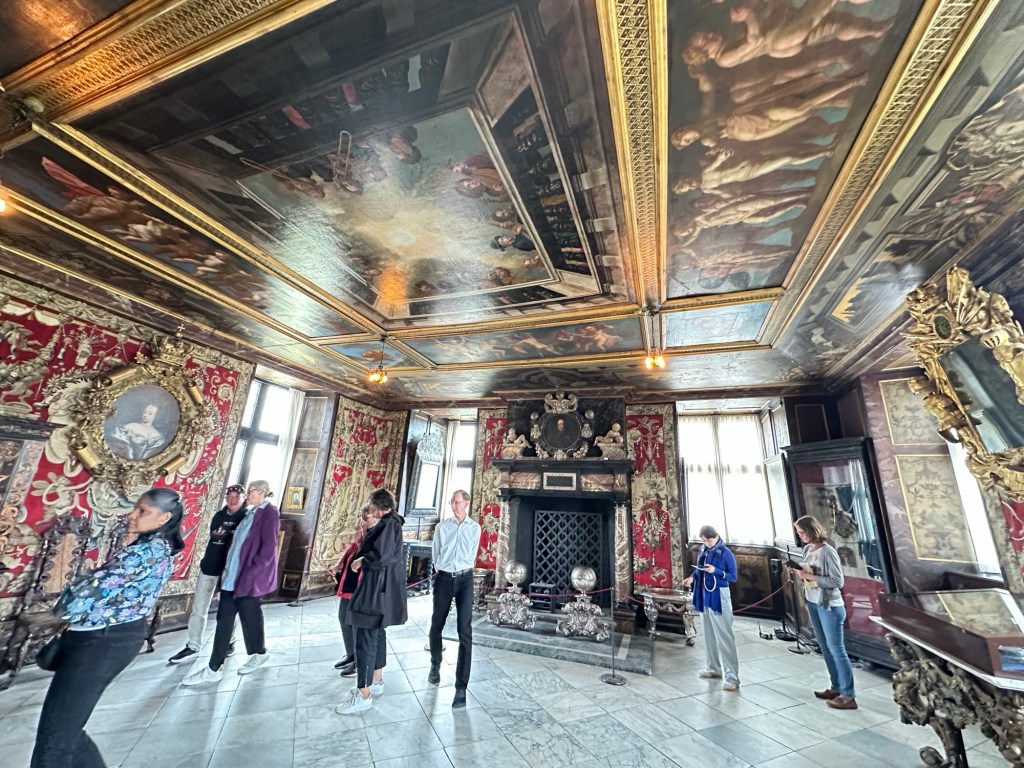
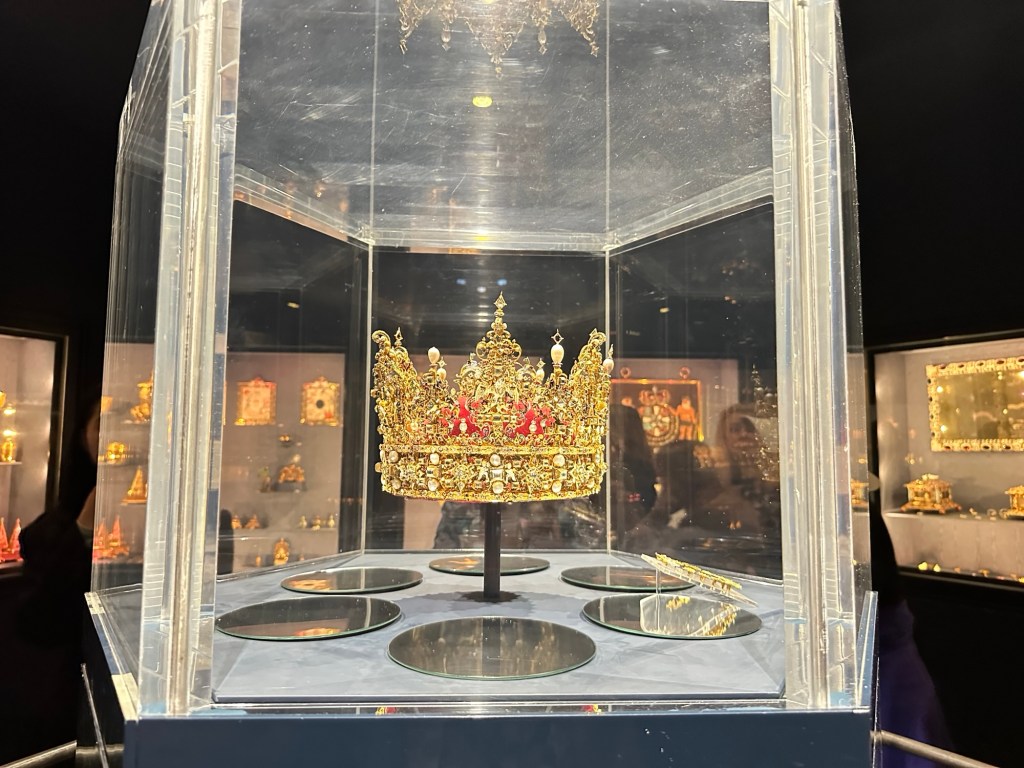
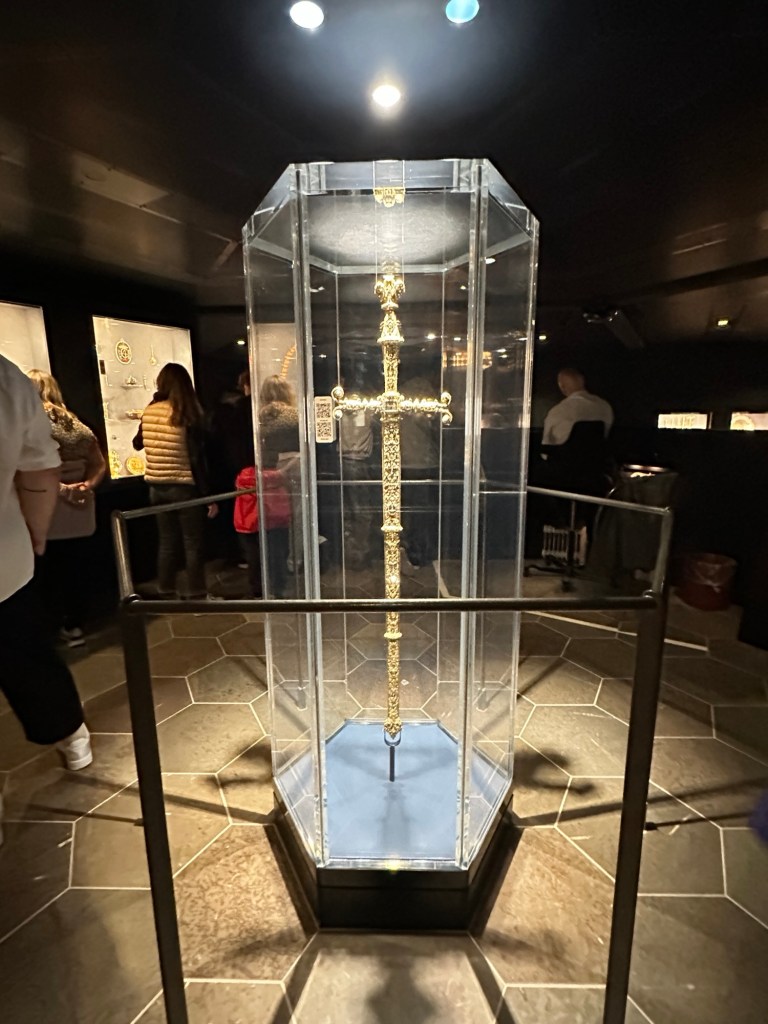
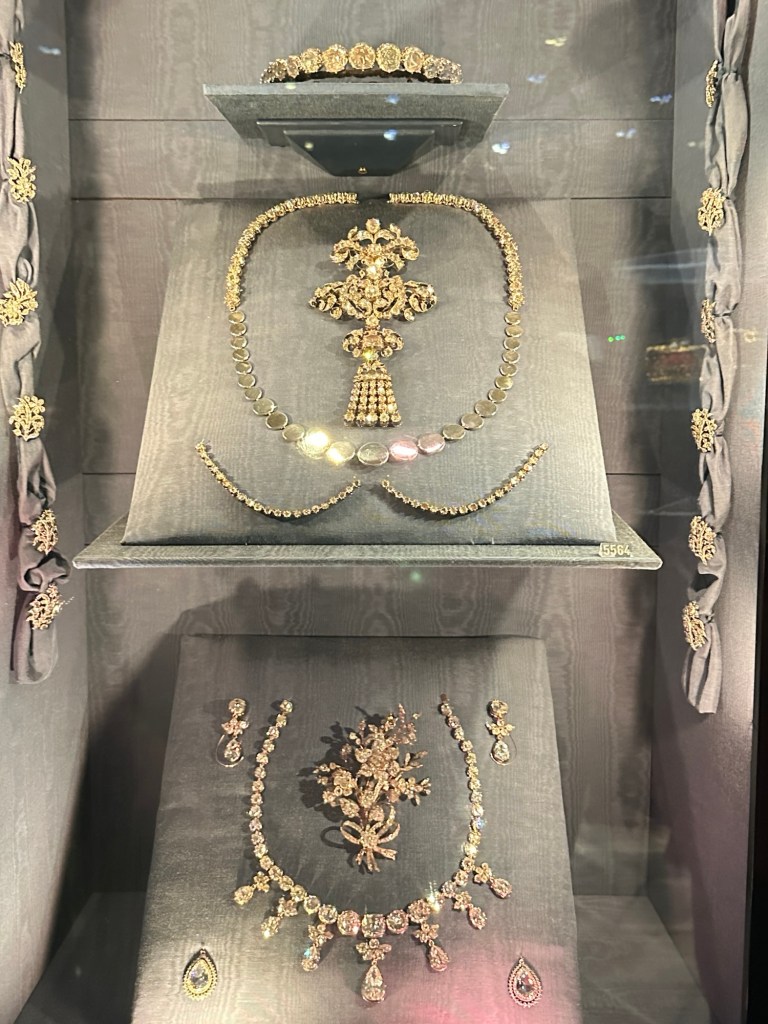
Today we did a guided tour of Rosenberg Castle which sits amongst the King’s Garden. Built during the Renaissance period, this 400 year old castle was used as a summer home for the Danish monarchs. Inside, we could admire lavish portraits and tapestries, walk through long, adorned halls, and step inside the king’s private quarters. A highlight was the Knights’ Hall, complete with the coronation thrones and 3 life-size silver lions. In the vaults are the Danish Crown Jewels and Royal Regalia. The guide told us some animated stories about Royal life in days gone by.
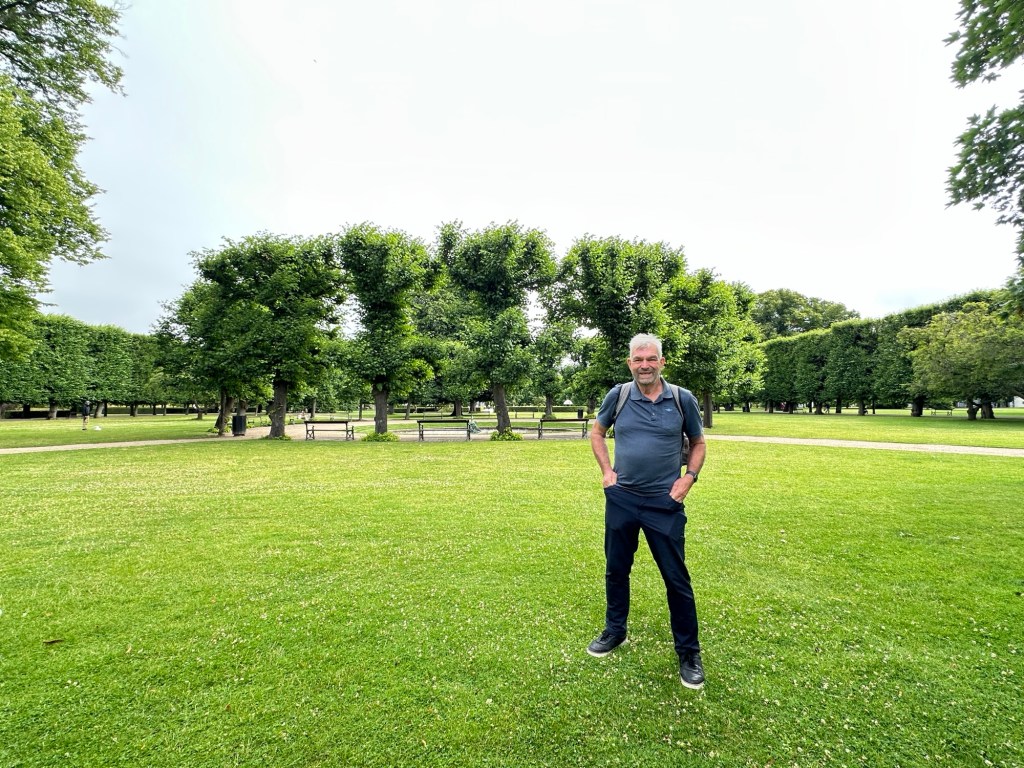
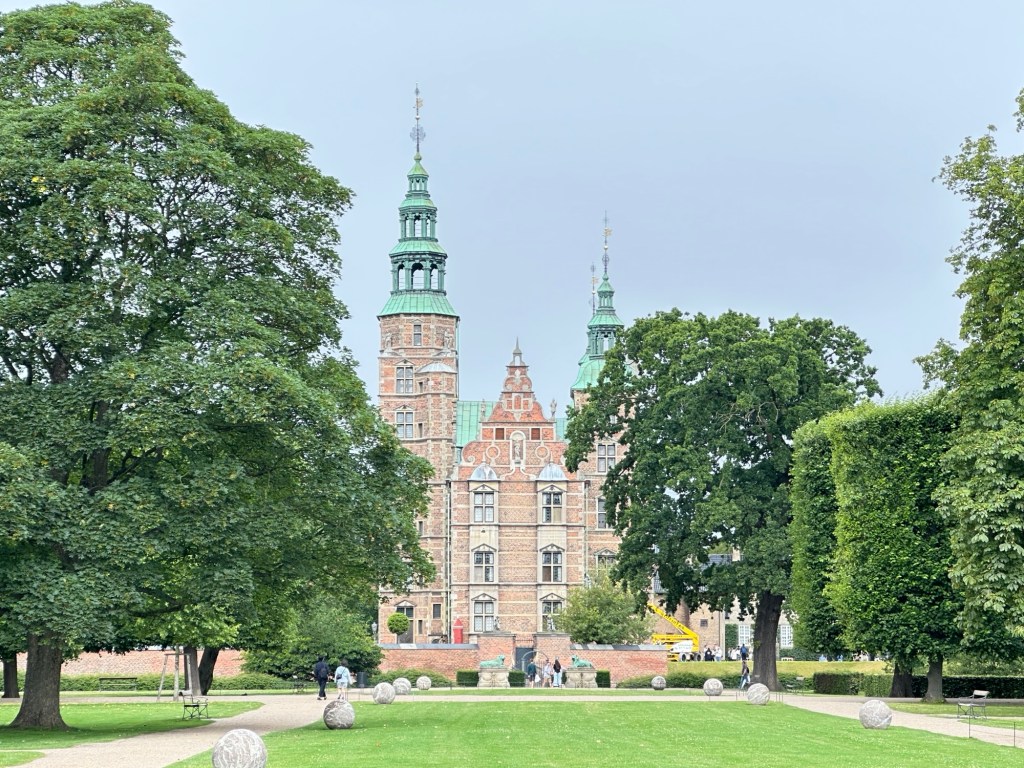
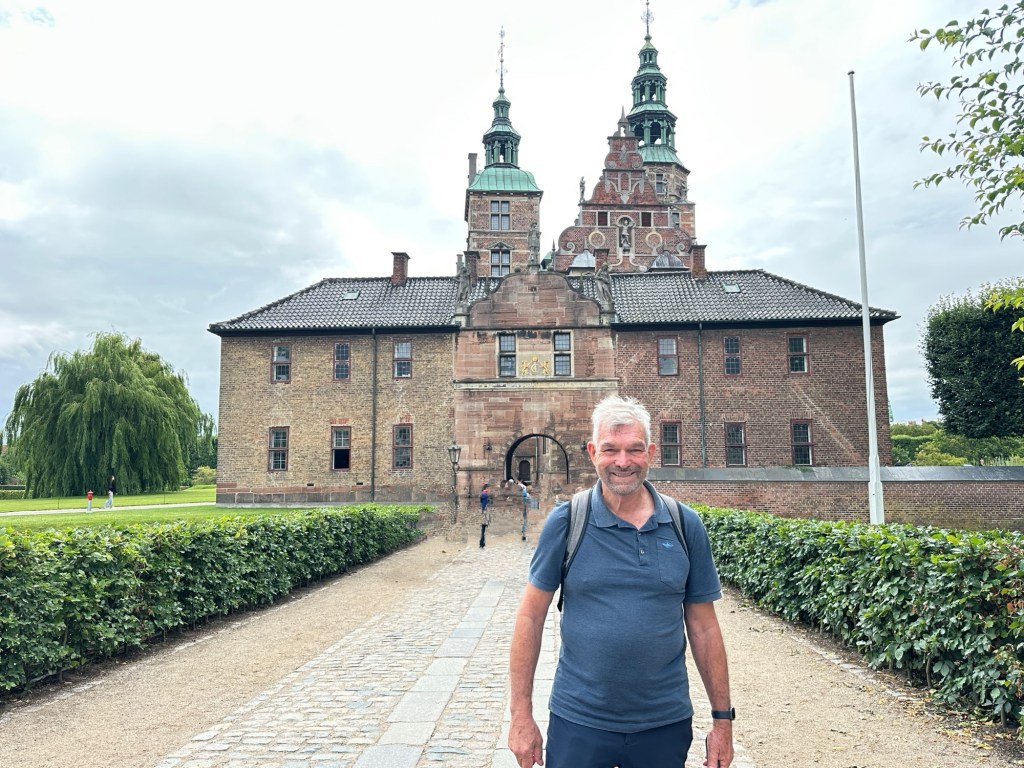



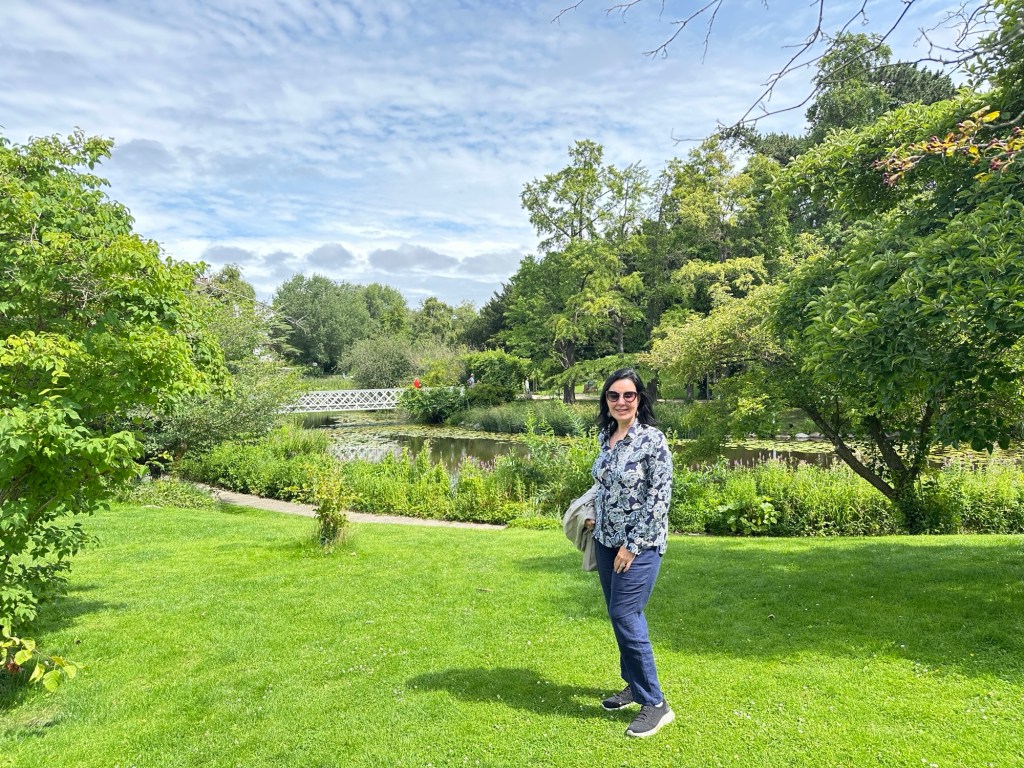
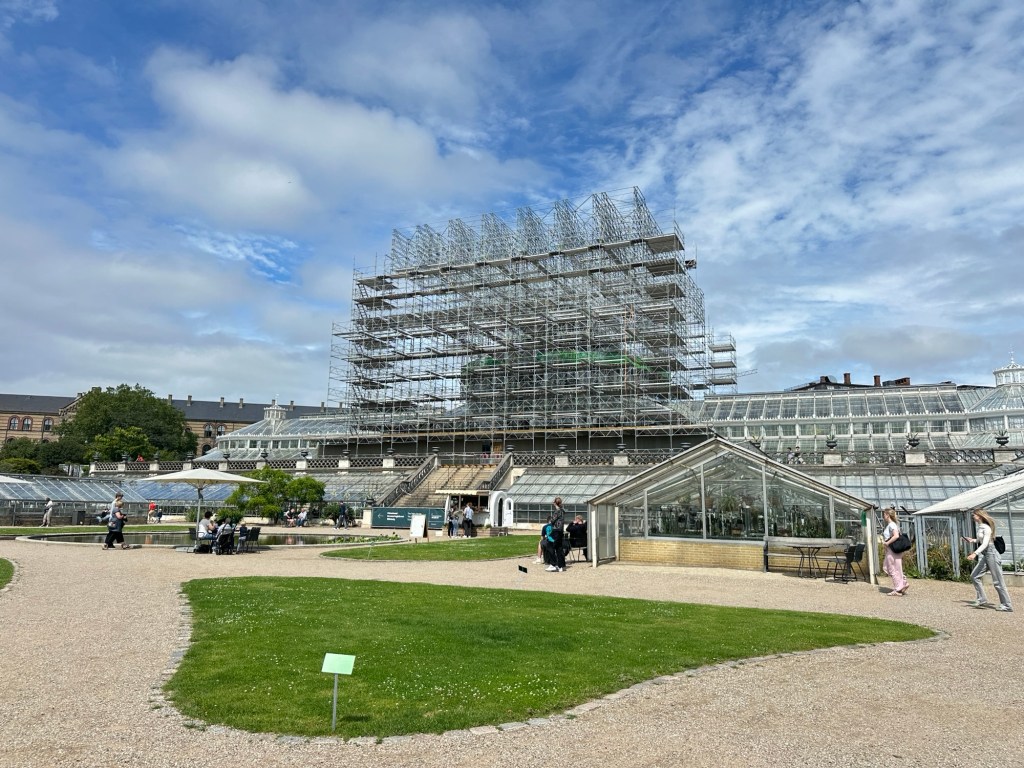
Near to the Castle are the lush Botanical Gardens. We had a walk through there, and heard the history of the Carlsberg families – they established a brewery there, but then the father and son had a fallout and didn’t talk to each other.


Lunch we had at the famous Torvehallerne food market – a favourite amongst local and visiting foodies. We had to try the famous Smorrentod. Scandinavia is world-famous for the colourful, openfaced sandwiches, known as Smorrebrod.
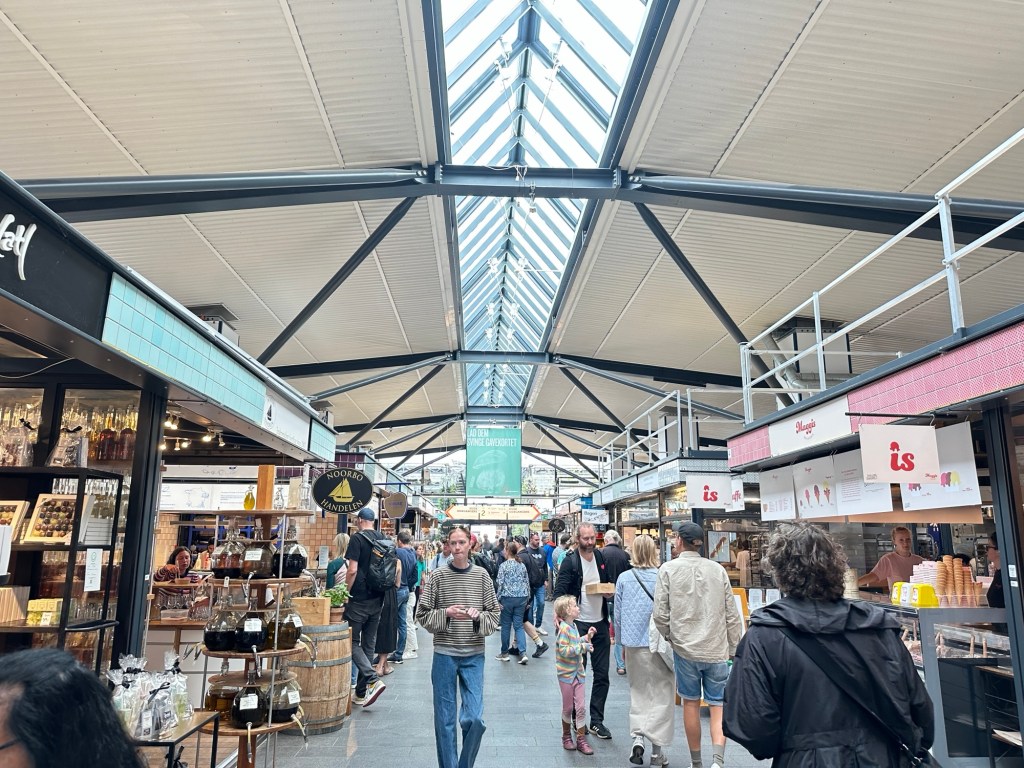


Smorrebred has been a beloved part of Danish cuisine since the 19th century and was popularised in restaurants and cafés. Basically there a slice of bread, generally rye, with a spread of preference on top, then the filling – no top slice of bread. Very nice. Nice price also of $20-$30 each. We followed up with a coffee – $12 each! Prices are up there!
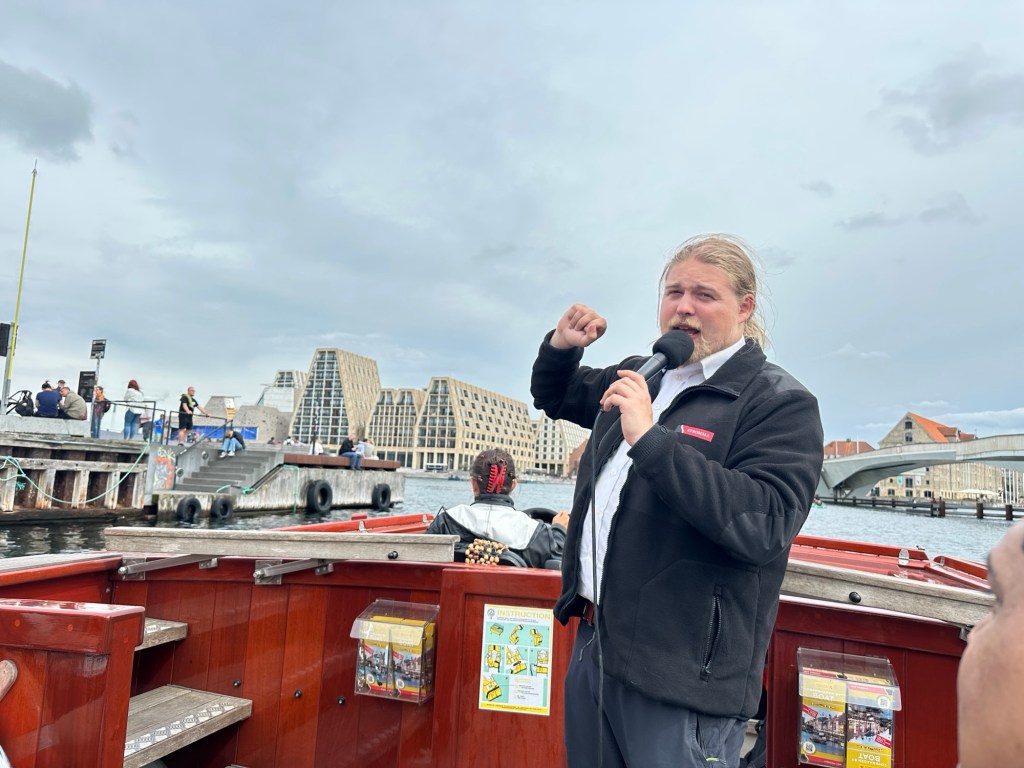
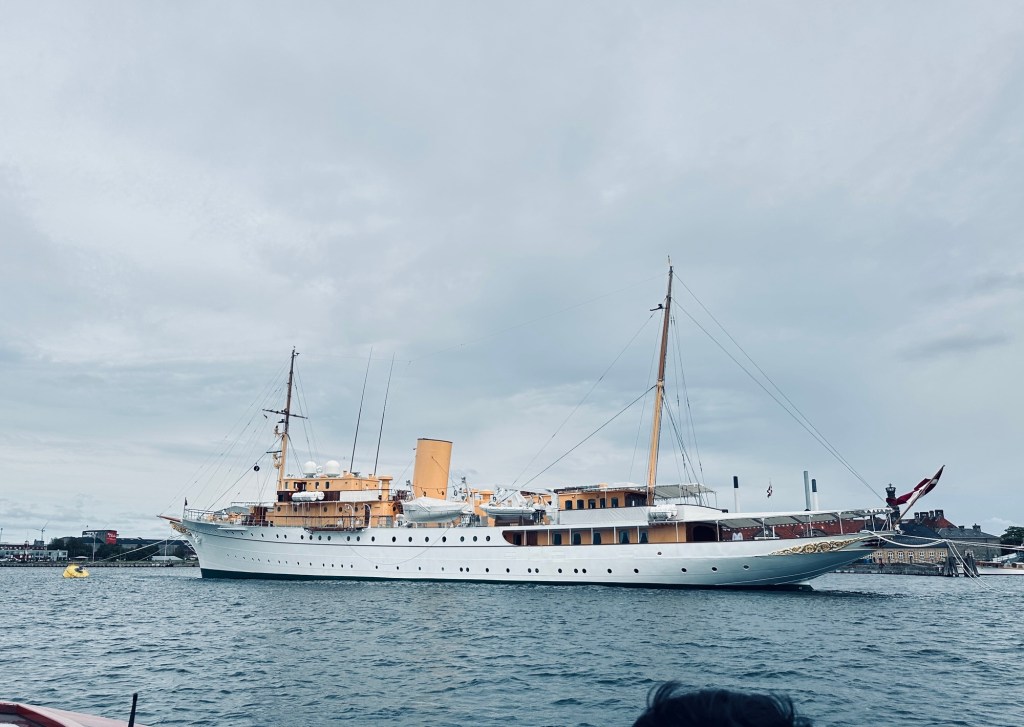
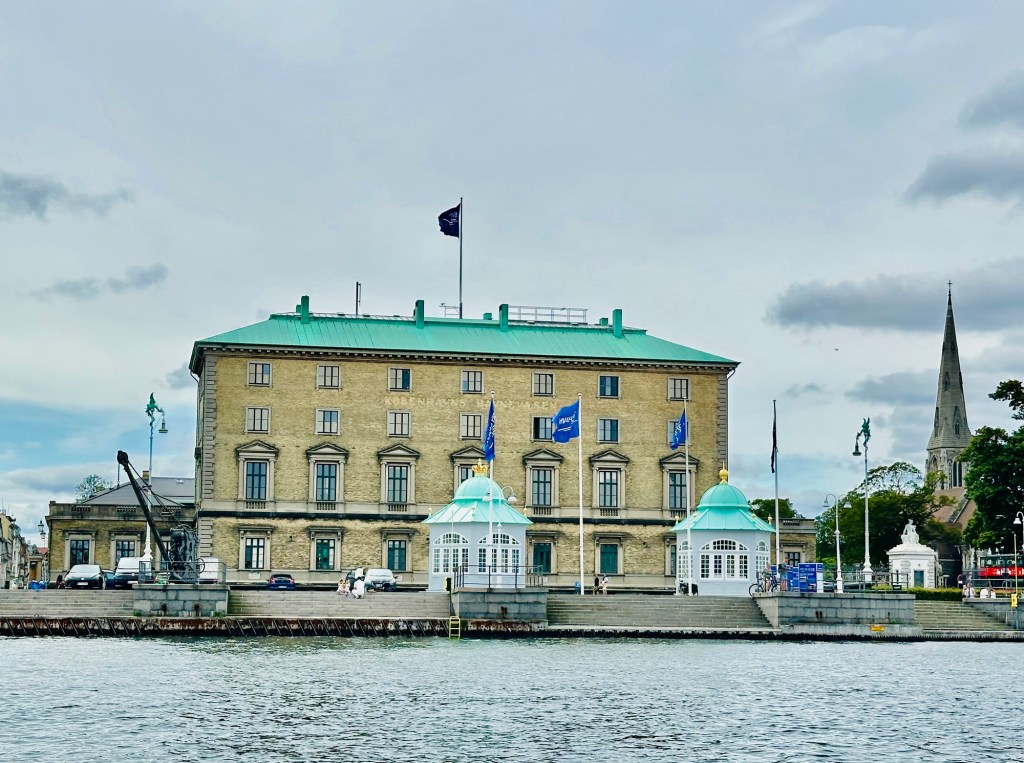
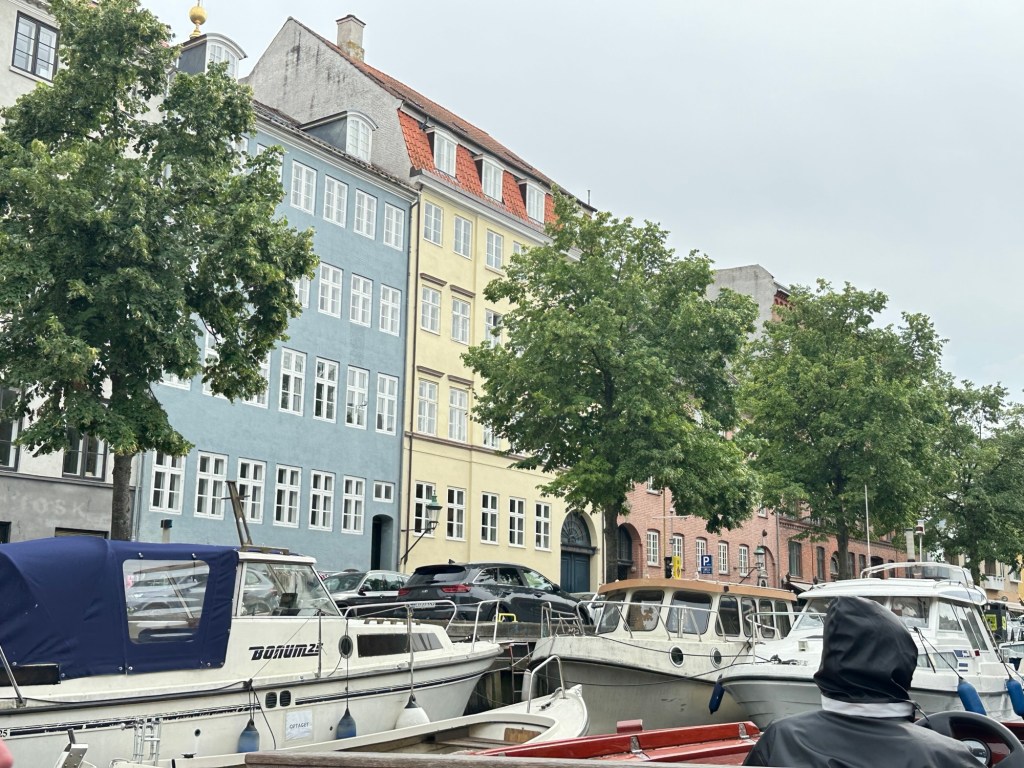
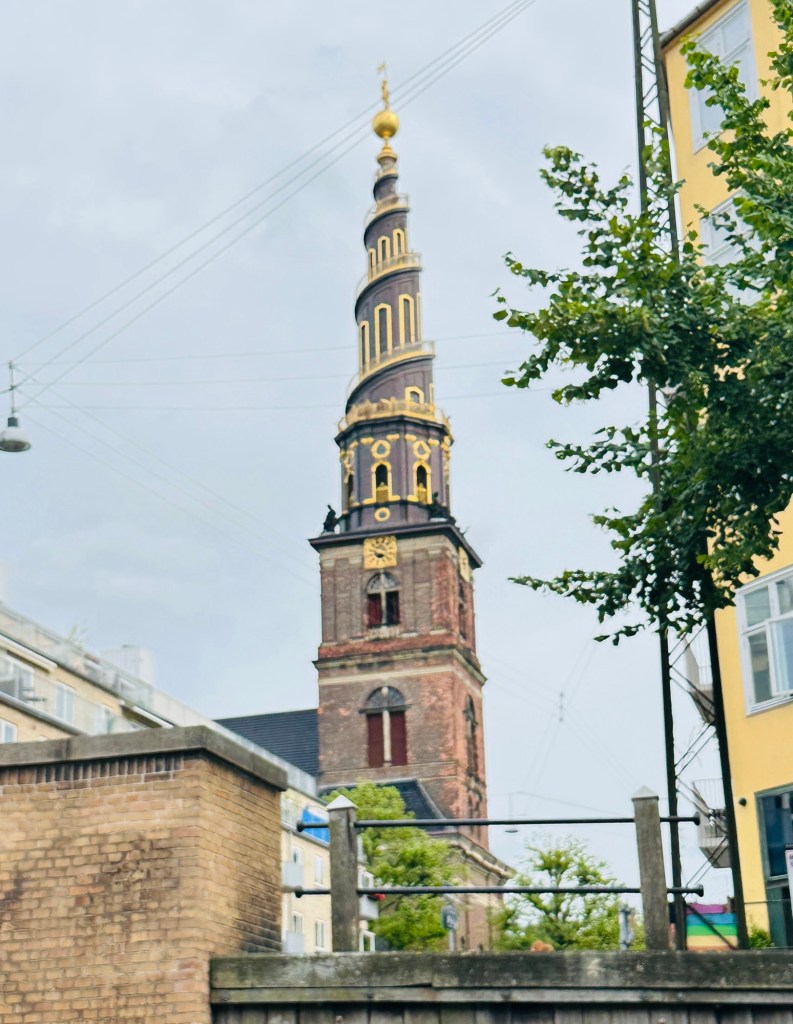
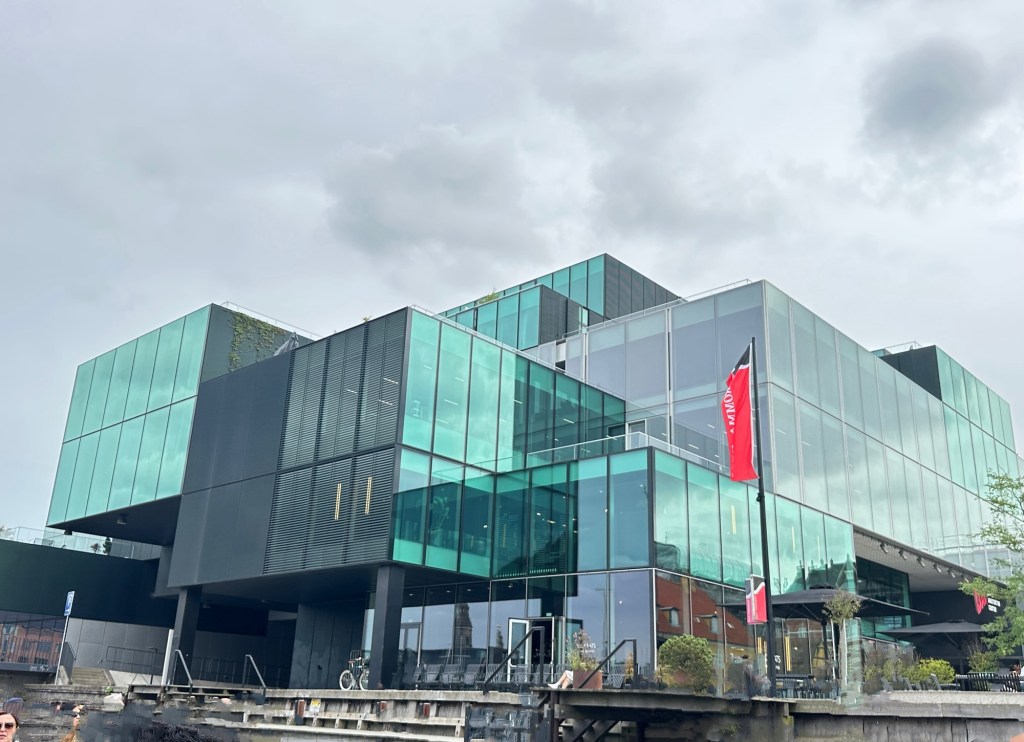
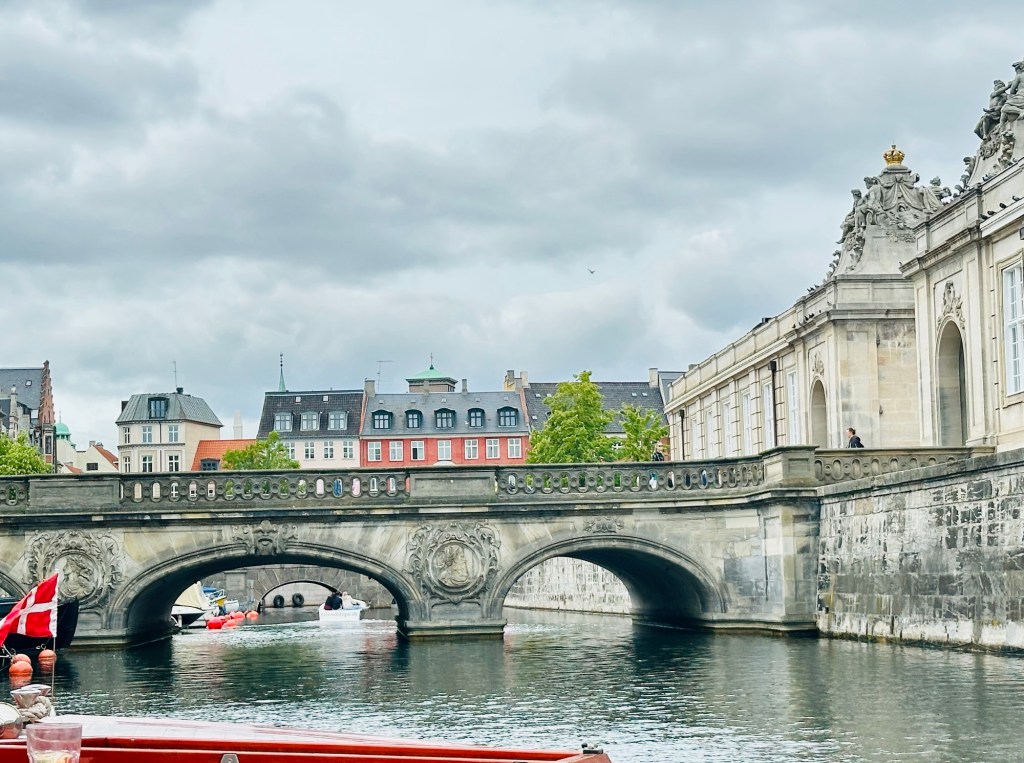
After lunch, a different perspective of the city, with a short canal boat tour. We had a very entertaining ride taking in views of Christiansborg Palace, the Royal Danish Opera House, the Black Diamond Library, the Royal Yacht, the Lego Building ( Lego is a famous Danish brand) and the colourful Christianshavn canal itself. There were approximately twenty bridges we went under – some with very little clearance.


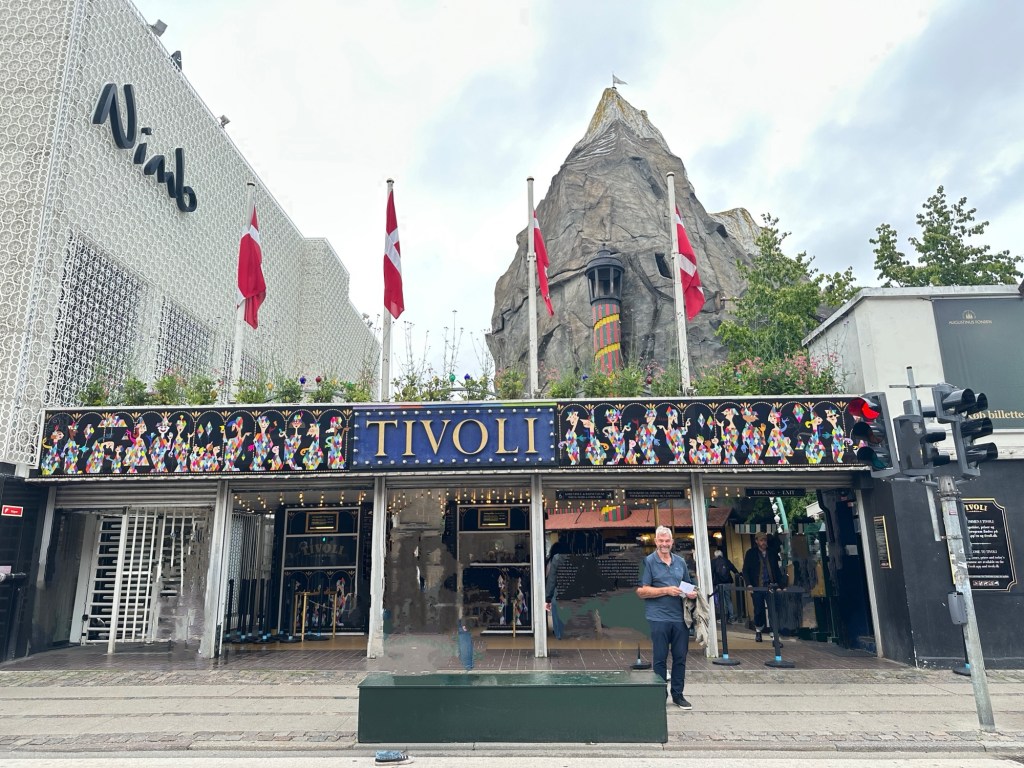
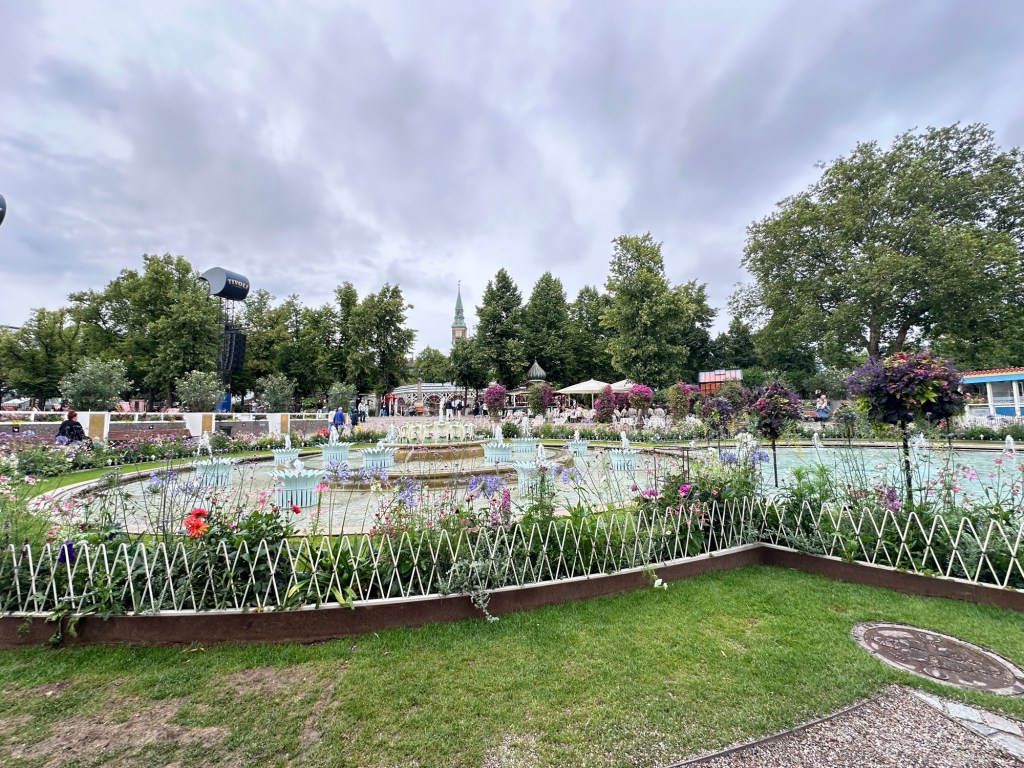
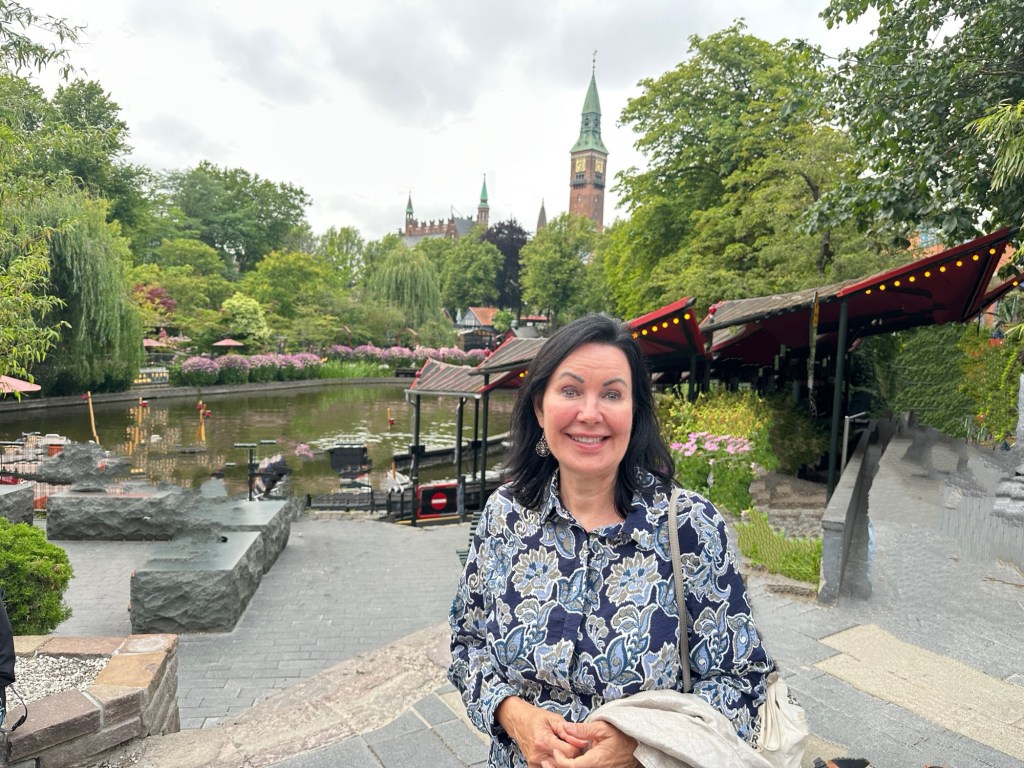
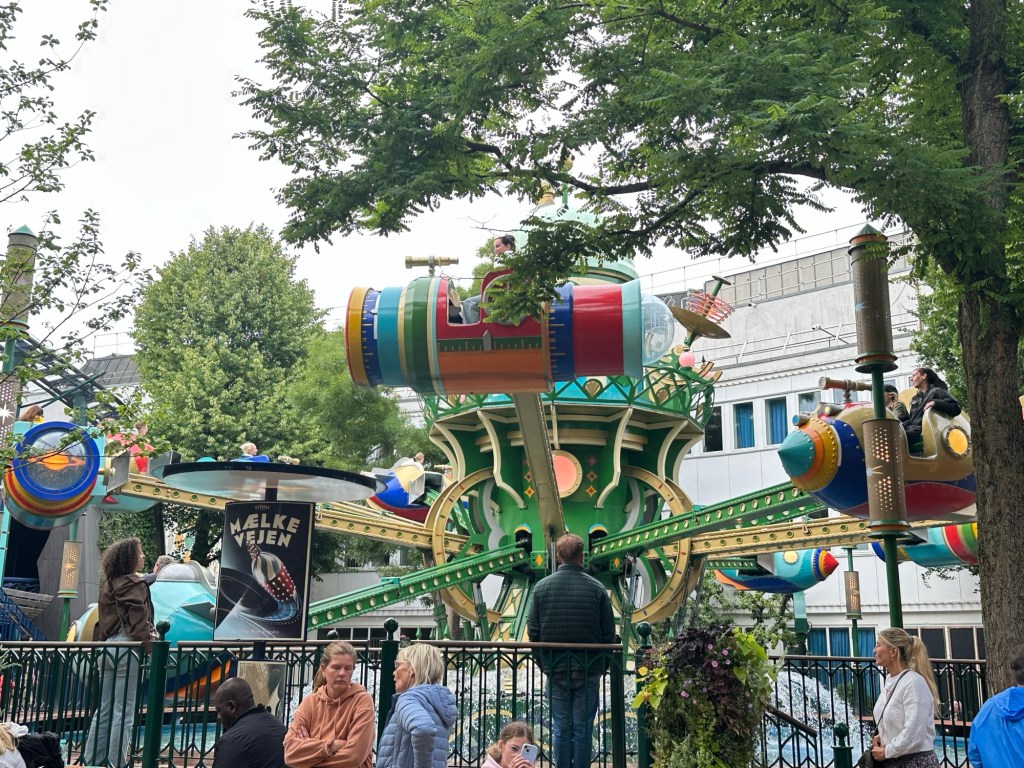
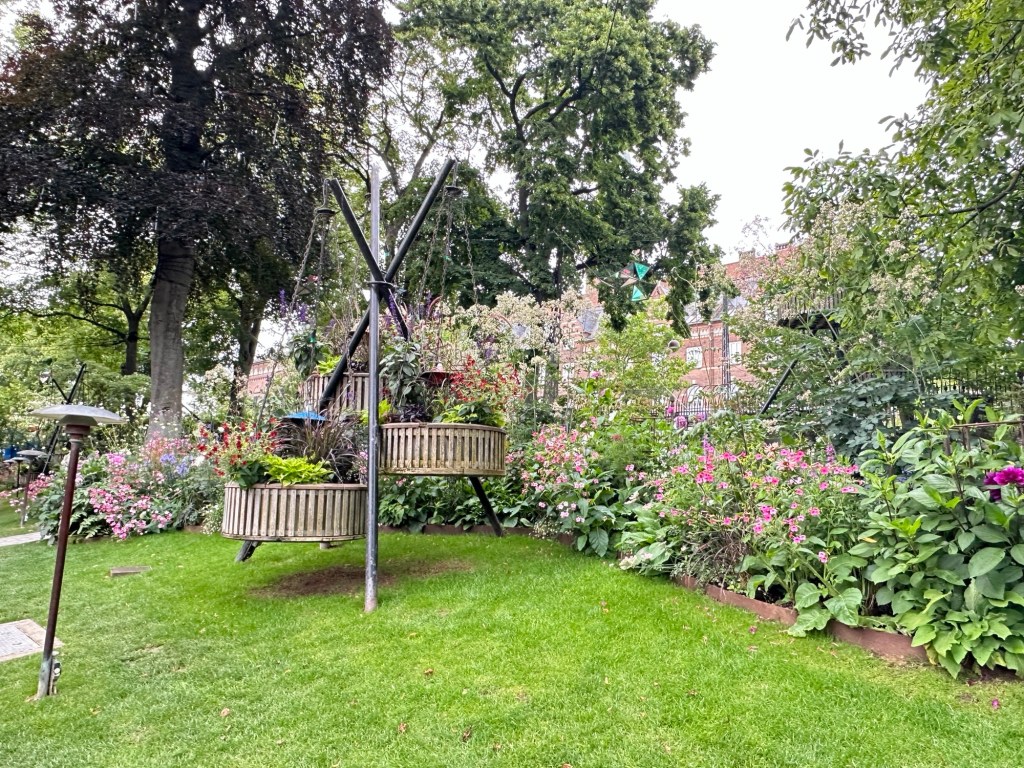
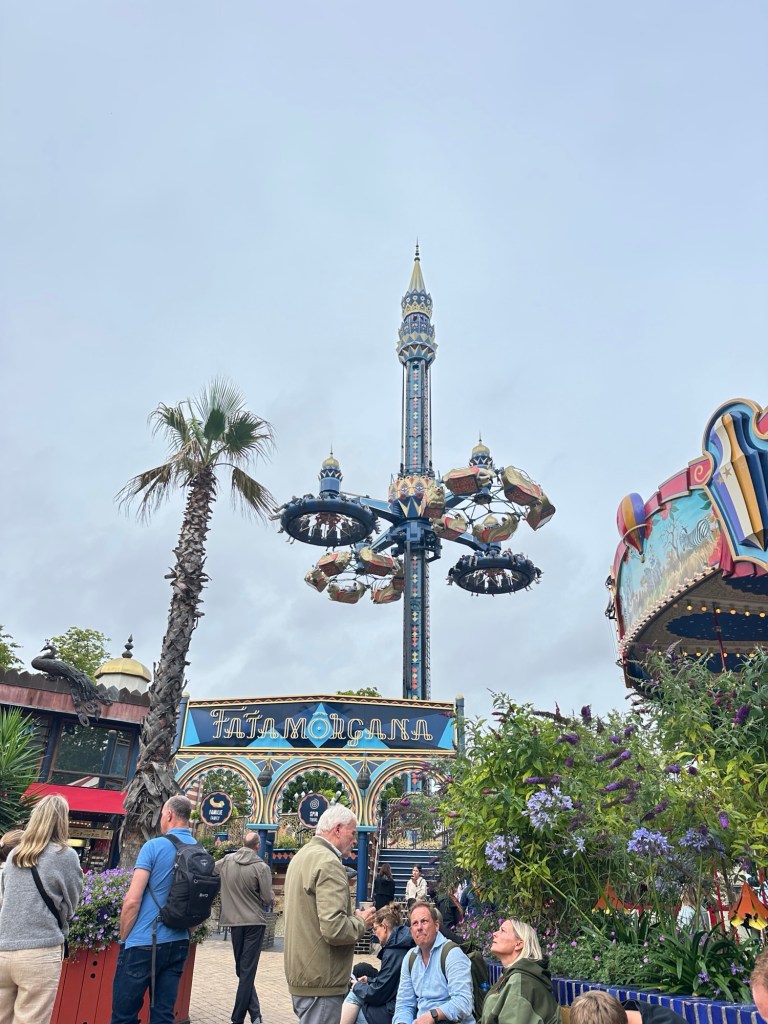
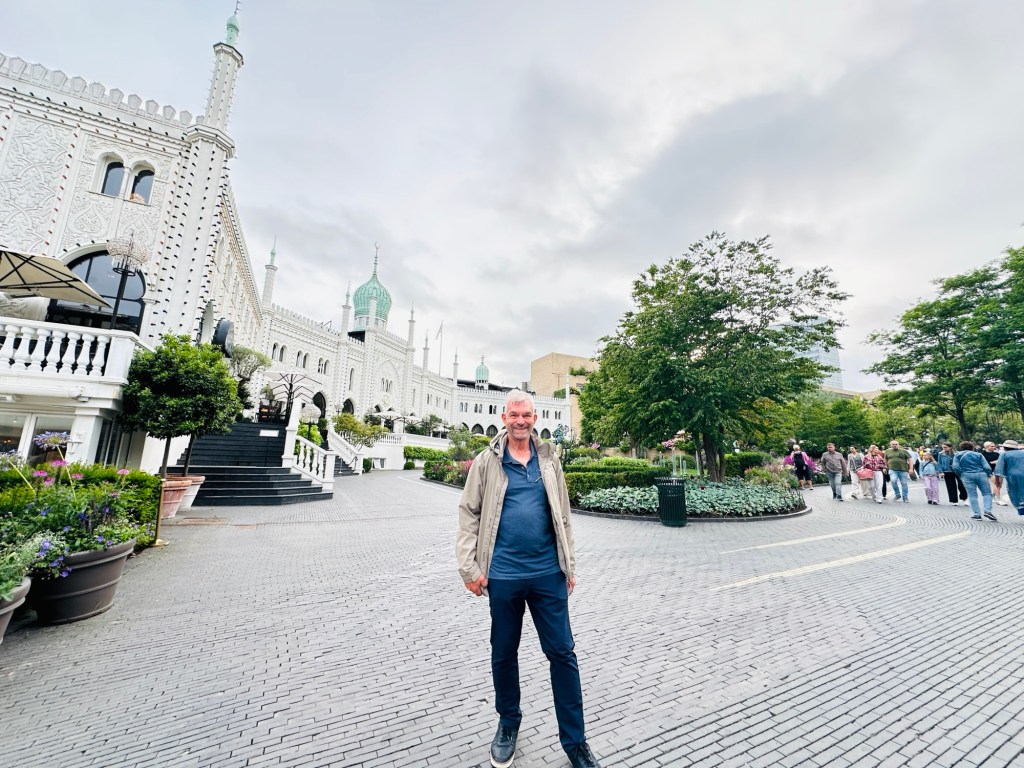
Next, a rather simple navigation of the Metro and we were at Tivoli Gardens. Opened in 1843, Tivoli Gardens is the second oldest amusement park in the world and the most visited theme park in Scandinavia. The park offers amusements for young and old alike, with an assortment of rides, games and arcades as well as numerous cafes and restaurants and beautifully landscaped gardens. It is also a popular venue for jazz and classical music events and festivals. We walked around for an hour enjoying the happy faces of people on the rides. The gardens were a picture.

We thought we’d go back to the picturesque and colourful Nyhavn for dinner – it was a bit quieter than Tivoli. Another lovely meal on the canal front.
Day 59
Thursday 17th July
Copenhagen-overnight cruise to Oslo
17-24 degrees, hot
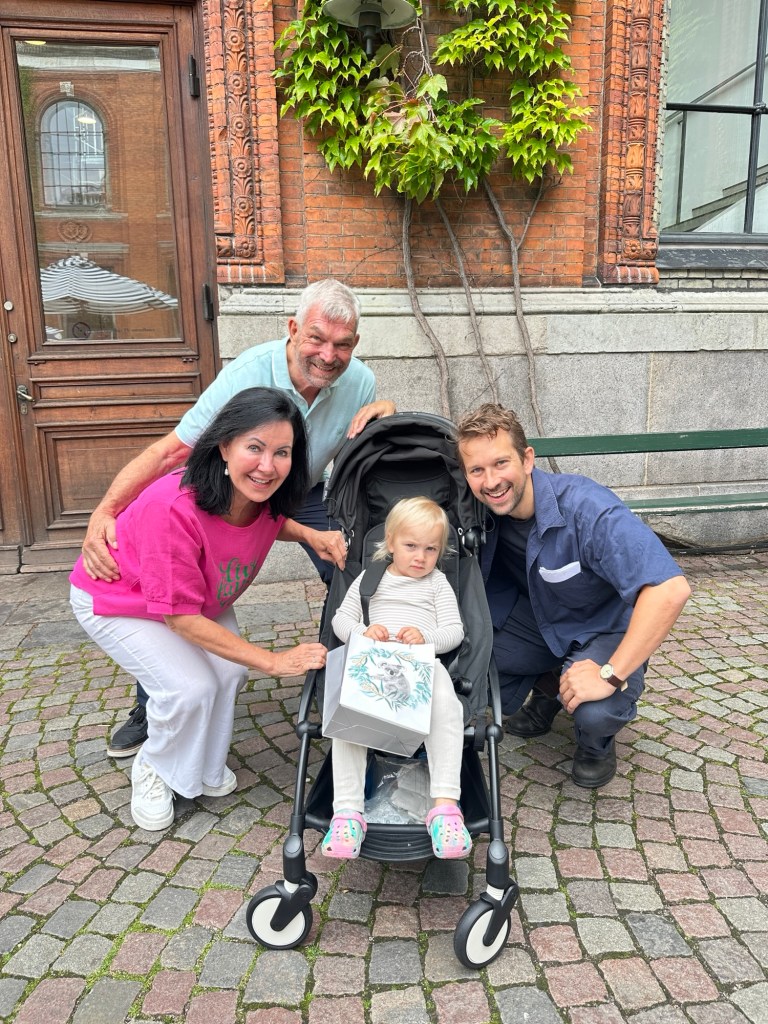
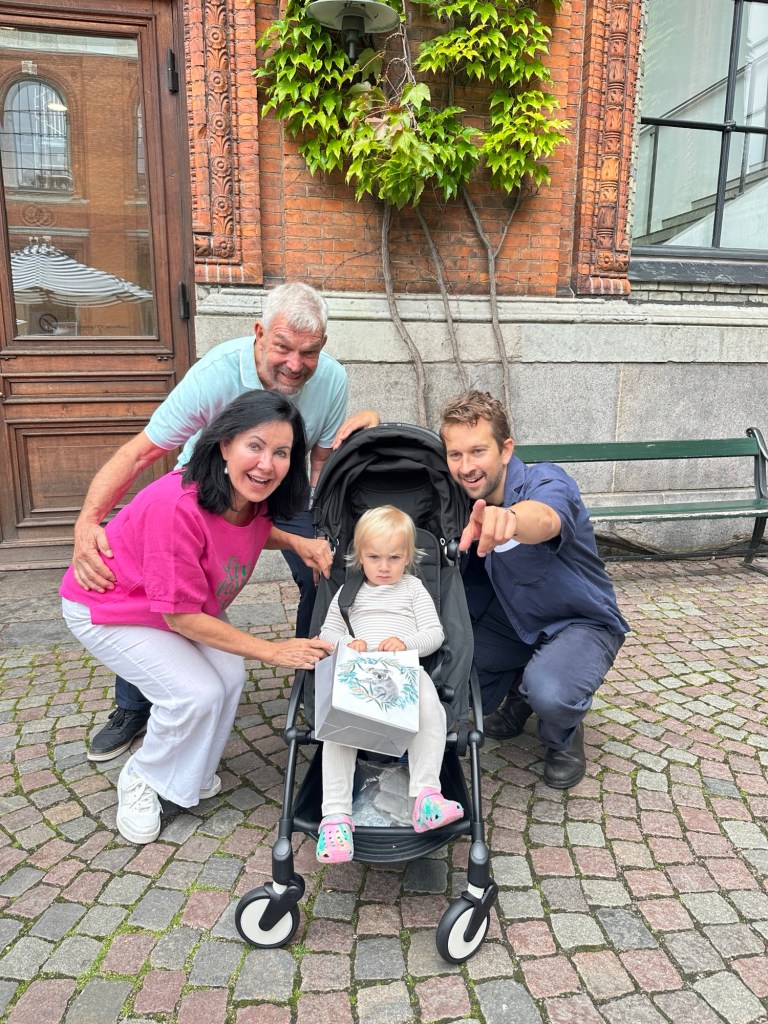
We had a special start to the day – after the buffet breakfast- a visit from Callum and little Vivi. Callum’s family are very good friends of ours – I used to drive Callum to school many years ago! So lovely to see them. Callum’s wife, Mira, had to work unfortunately.
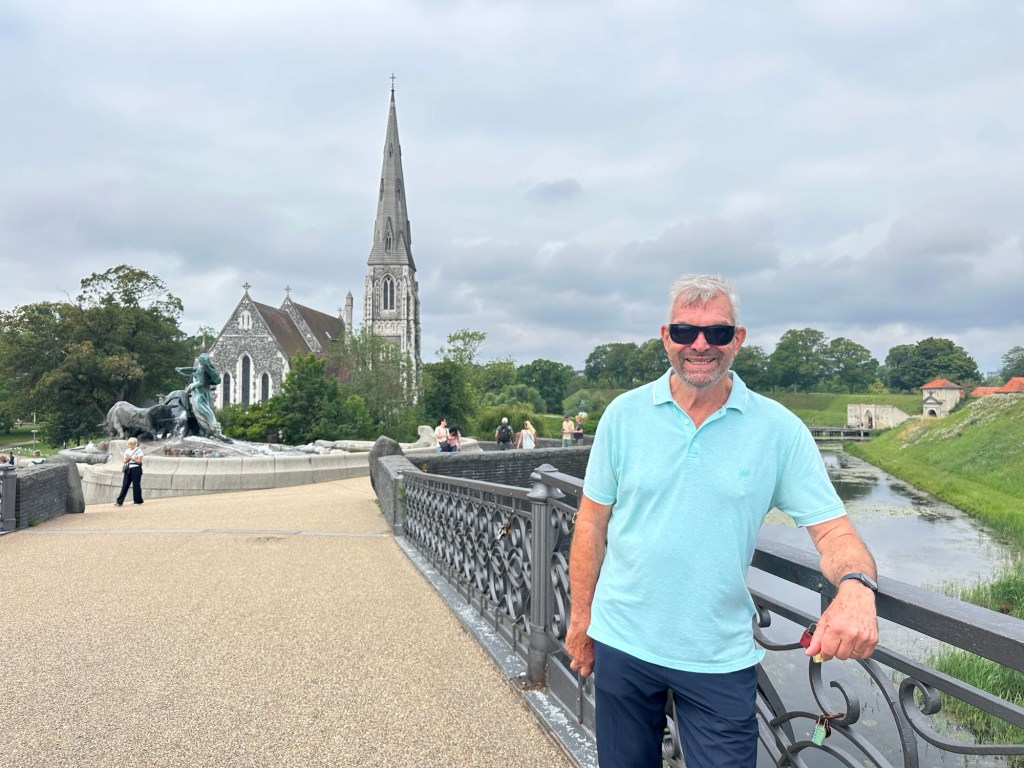
After saying goodbye to them, we walked to see the best known icon of Denmark – the statue of The Little Mermaid, inspired by the fairy tale of the same name written by Danish author Hans Christian Andersen in 1836. The statue is perched on a rock in the harbour off Langelinie promenade. Perhaps, a little underwhelming (that’s being generous) – it is rather small. The walk to and from the Mermaid was very nice though.



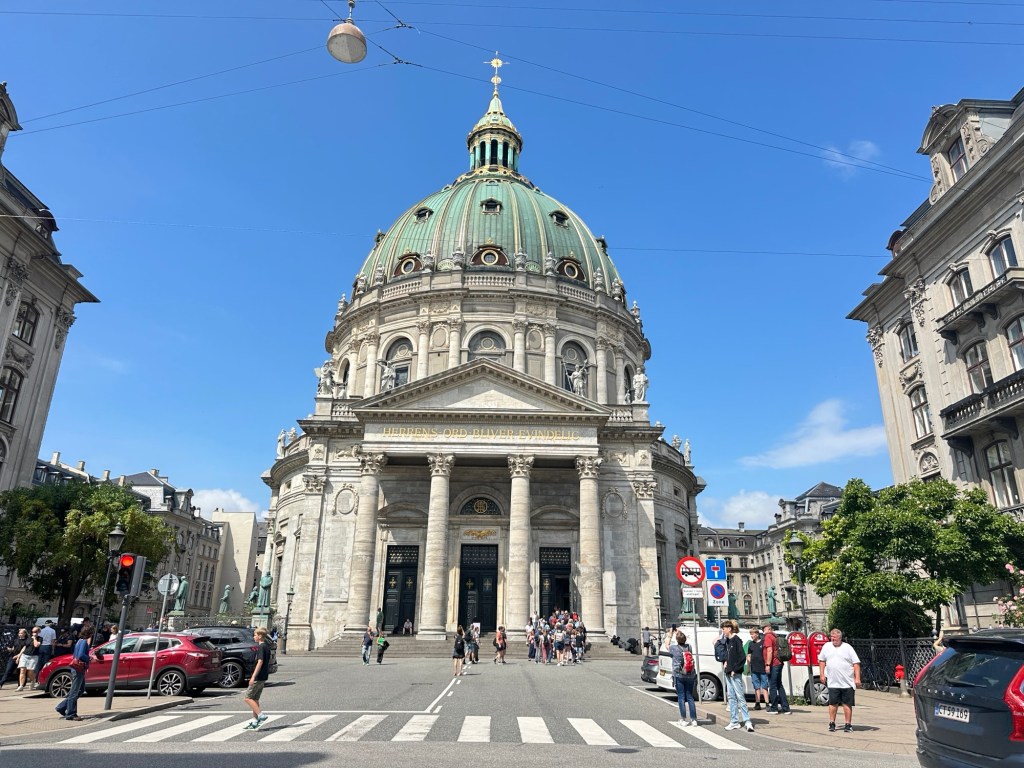
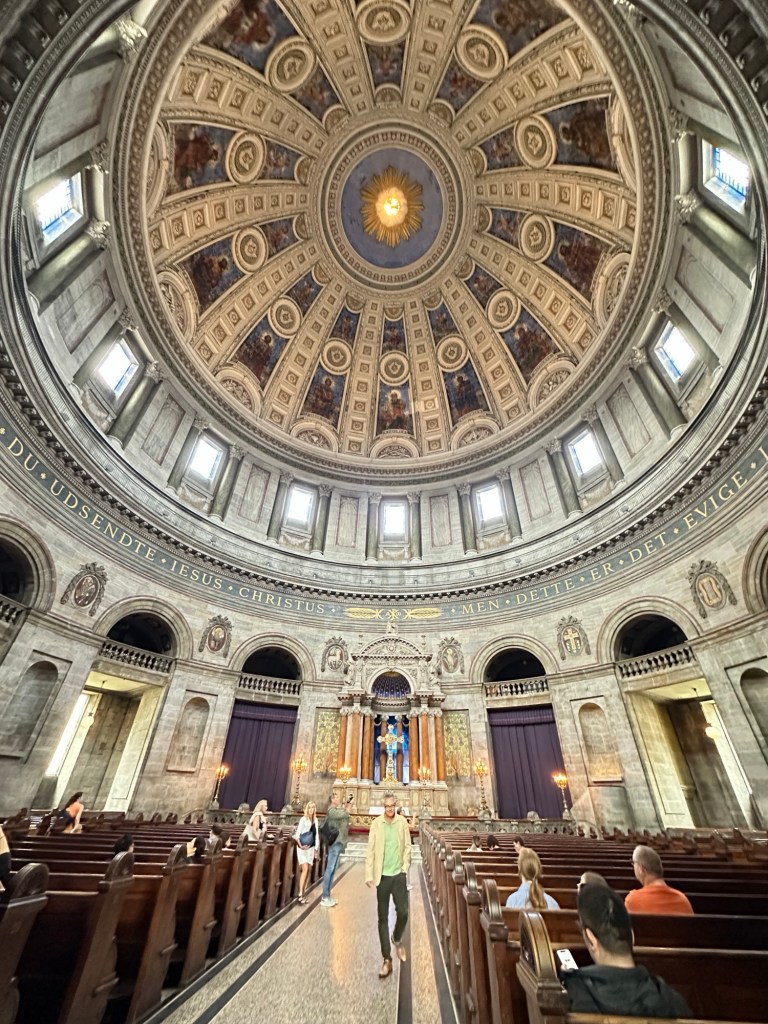
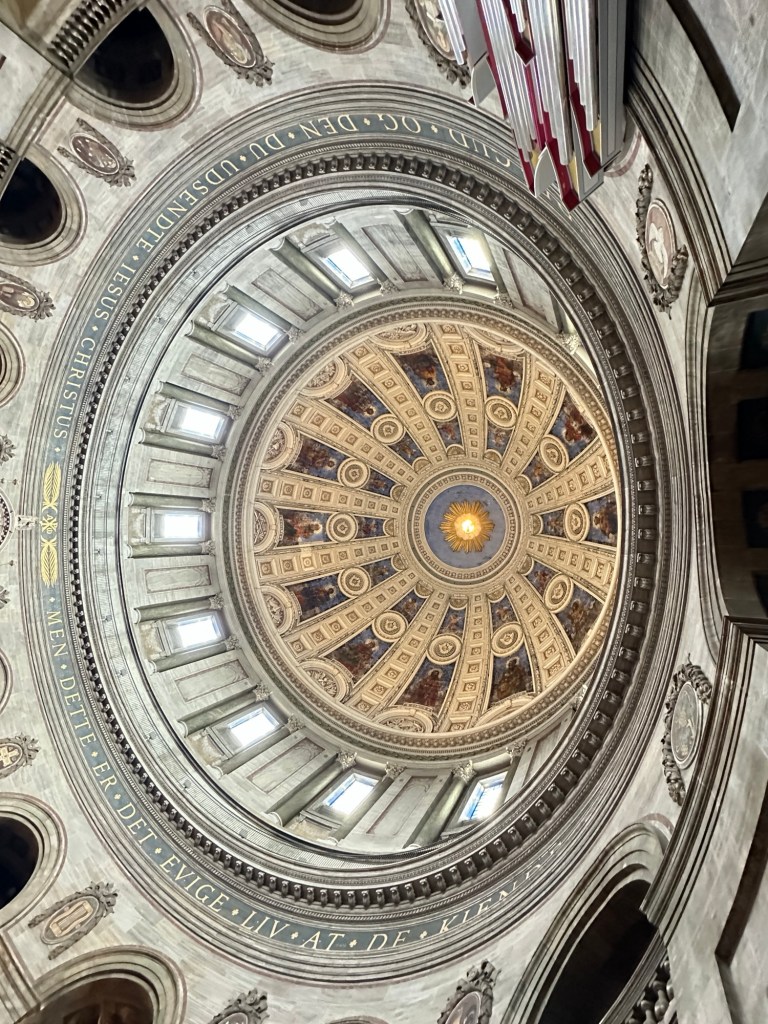
Stopped at the Marble Church on our walk back. Frederik’s Church, popularly known as The Marble Church for its rococo architecture, is an Evangelical Lutheran church in Copenhagen, Denmark. Quite stunning inside.
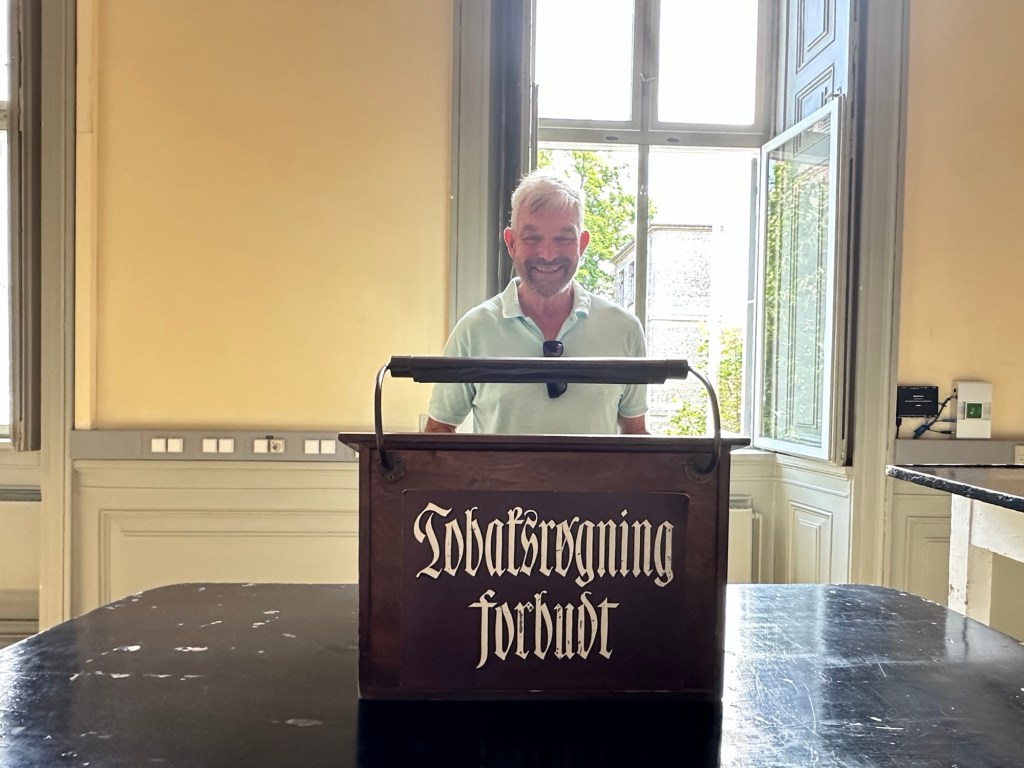
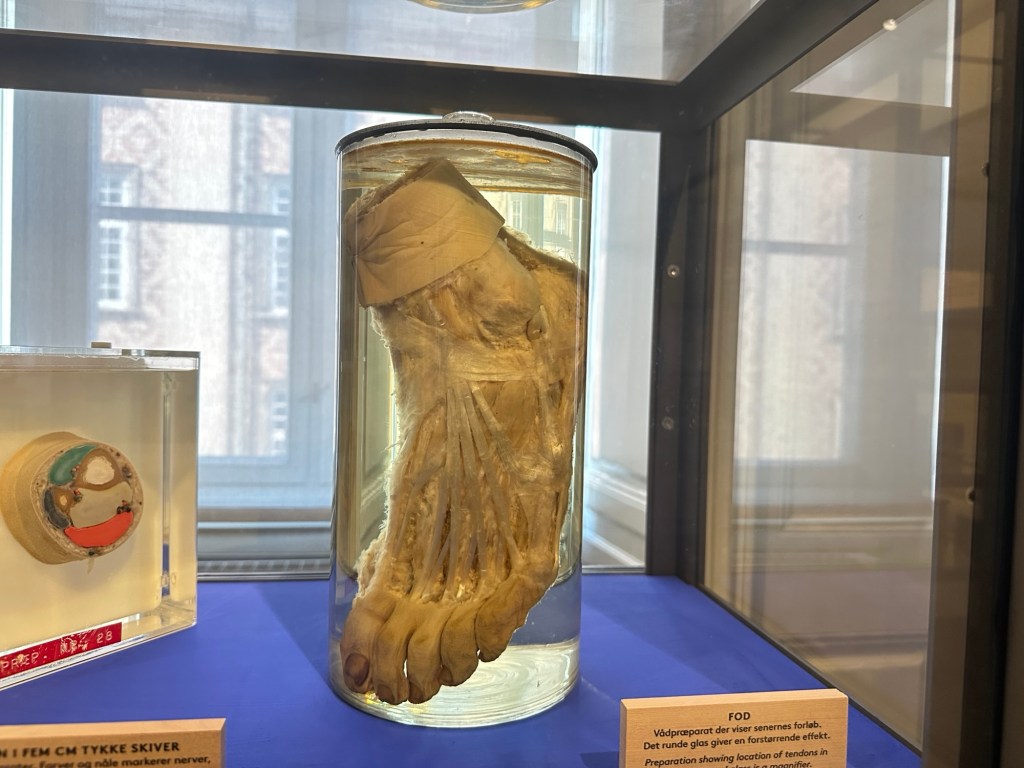
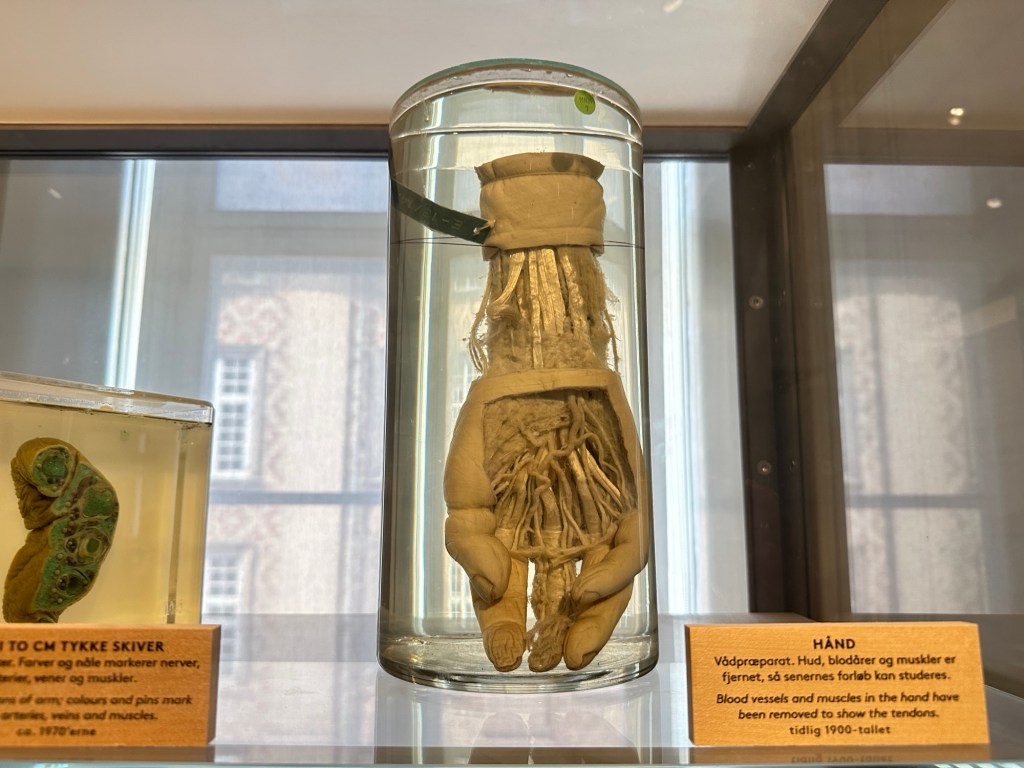
We still had a couple of hours to fill in, so decided we’d go to the Royal Academy of Surgery. We thought it was something different! The Academy was built in 1787 as a school for surgeons. Generations of surgeons have attended the academy and have been dissecting bodies and learning anatomy in these buildings. As someone who has worked in the medical field for almost fifty years, I found it very interesting, and so did Frank. We had a short introductory talk in the auditorium- apparently the air used to be so thick with smoke from all the surgeons in the 1800’s they couldn’t see past the third row. Their thoughts then was that smoking “cleanses“ their lungs!

I have to mention the bike culture in both Stockholm and Copenhagen – there are so many bikes! And every rider seems to be in training for the Tour de France! They show no mercy! Bike lanes/paths everywhere. There are bike additions to carry babies, children, people, grocery shopping, you name it they’ve got it covered!
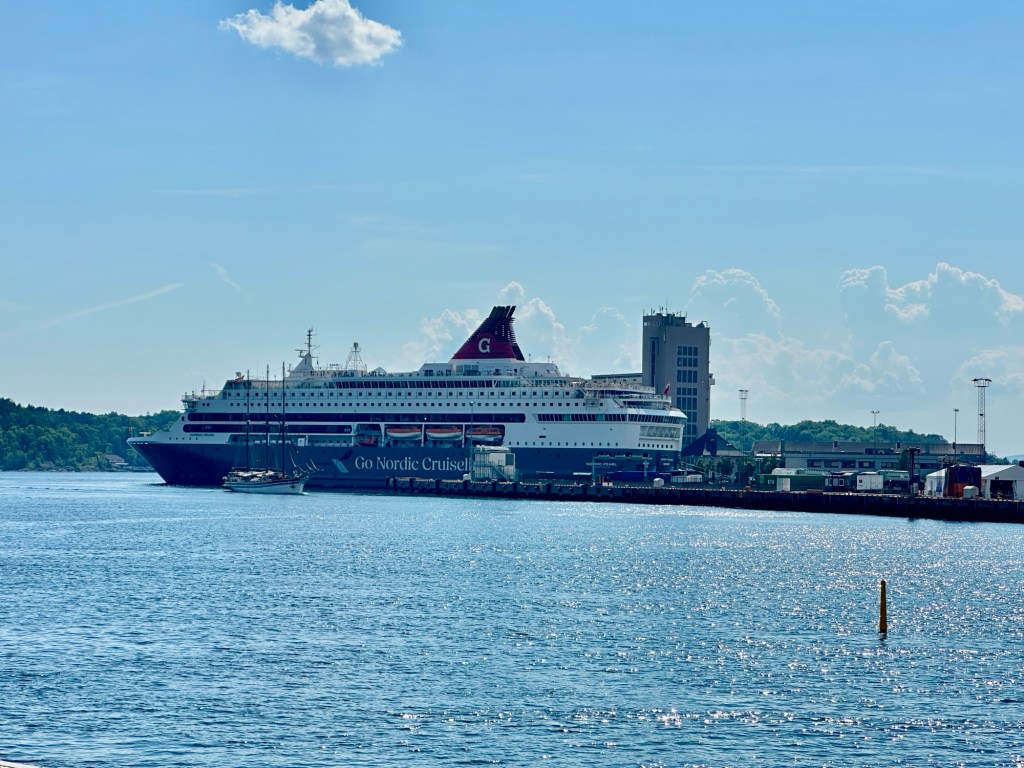
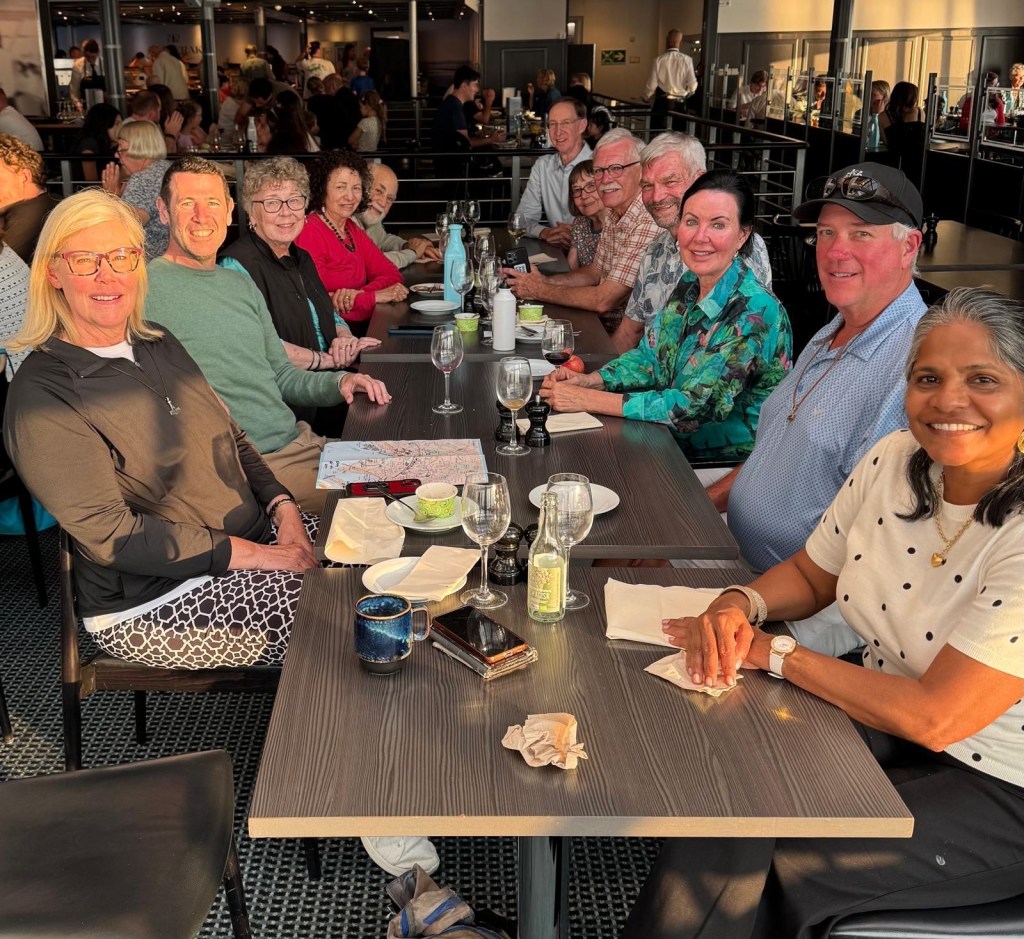
Back to the hotel where we were picked up and transferred to the ferry terminal for our overnight cruise on the Nordic Pearl to Oslo. This “ferry” is actually a large cruise ship which has sailed in the Scandinavian waters since 1994. It can accommodate over 1700 passengers and 450 cars, and takes 17 hours to make the journey. In that time, we enjoyed the sail away, had a buffet dinner with every variety of seafood, played song trivia, slept for the night, and finished up with a relaxing breakfast the next morning whilst admiring the scenery as we sailed through the fiord. All very civilised, and very much like a “real” cruise… except for the very small cabins! But it was just for one night!

Day 60
Friday 18th July
Oslo
17-30 degrees, sunny, hot +++
Brief History of Norway
Vikings dominated Norwegian history with early agriculture groups.
By 8th Century, overpopulation led to expansion to Britain, Greenland, Iceland and North America.
890 -Viking chieftain Harald I Fairhair united the various clans.
11th and 12th centuries was marked by dynastic conflicts but more significantly, by the rise of Christianity and its subsequent influence.
Norway ruled both Greenland and Iceland.
14th century – Black Death plague led to diminished status and from 1380 until 1905 ruled by either Denmark or Sweden
1905 – independence from Sweden.
WW1 and WW2 – remained neutral but occupied by Nazis in WW2.
Half of its merchant fleet sunk in WW1.
1945 – founding member of NATO- significant role as it increases the ability of NATO forces to control shipping and military activity from Russia.
Twice refused membership of the EU.
Strong economy due to significant revenues from North Sea oil resources.
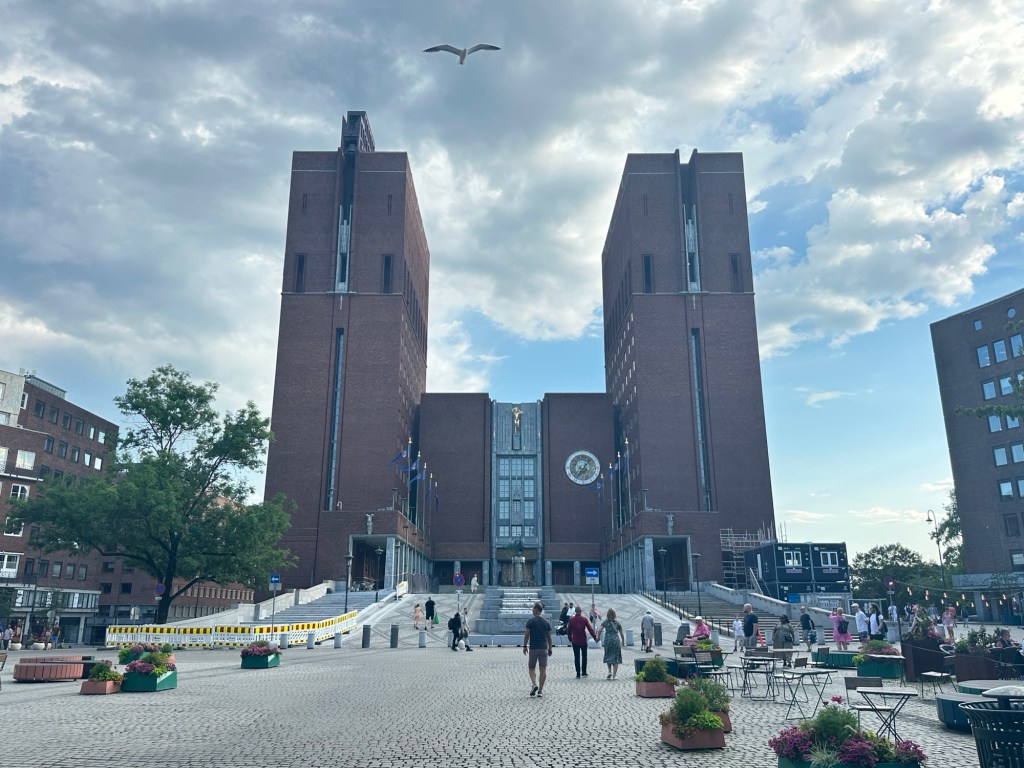
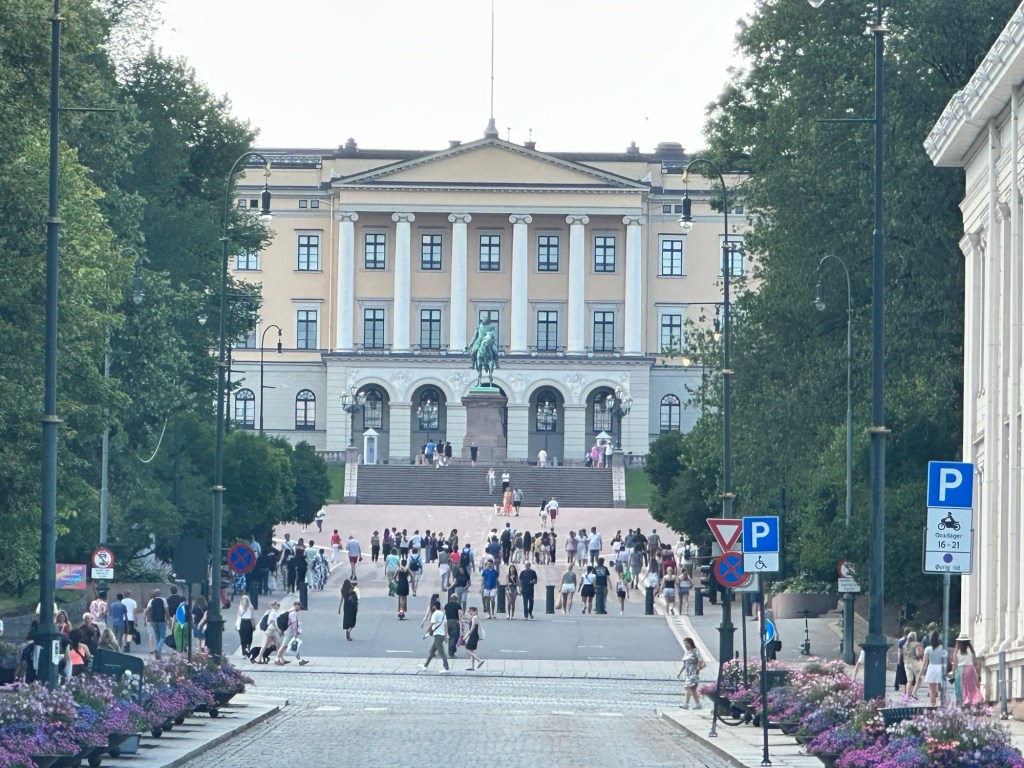
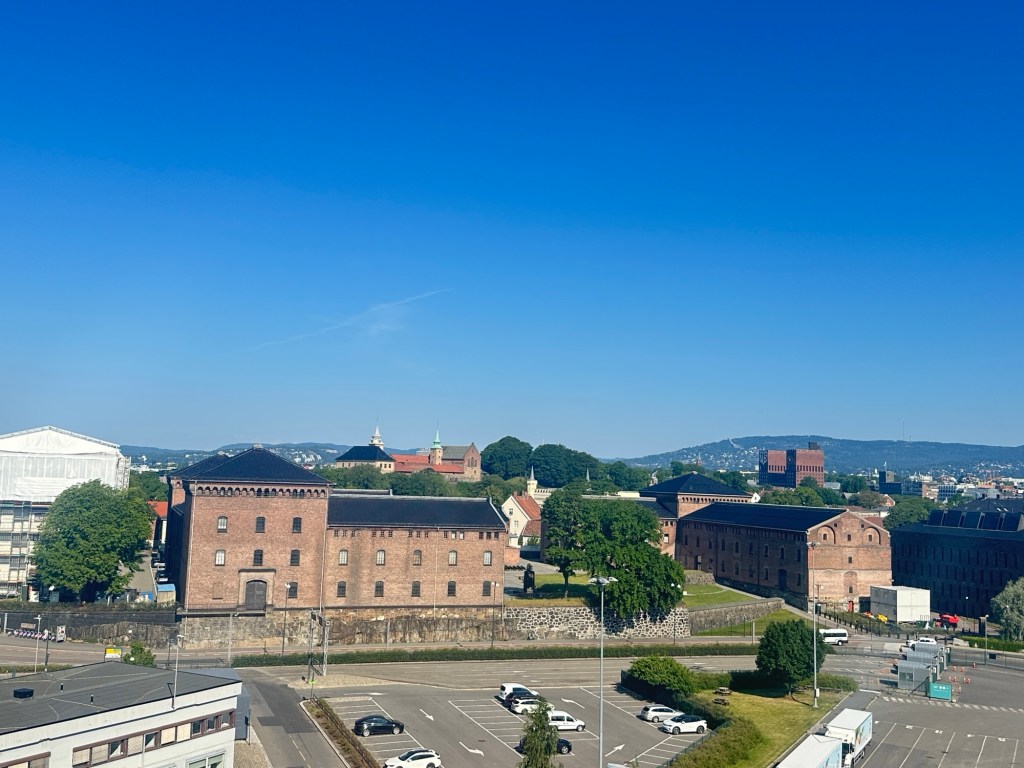
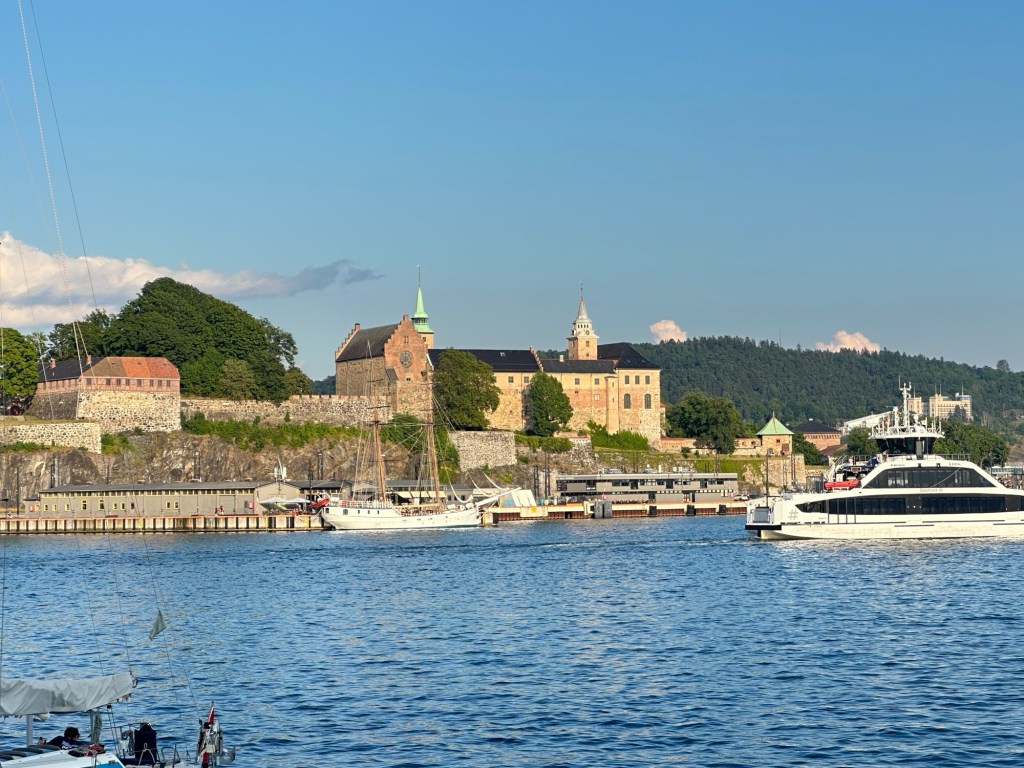
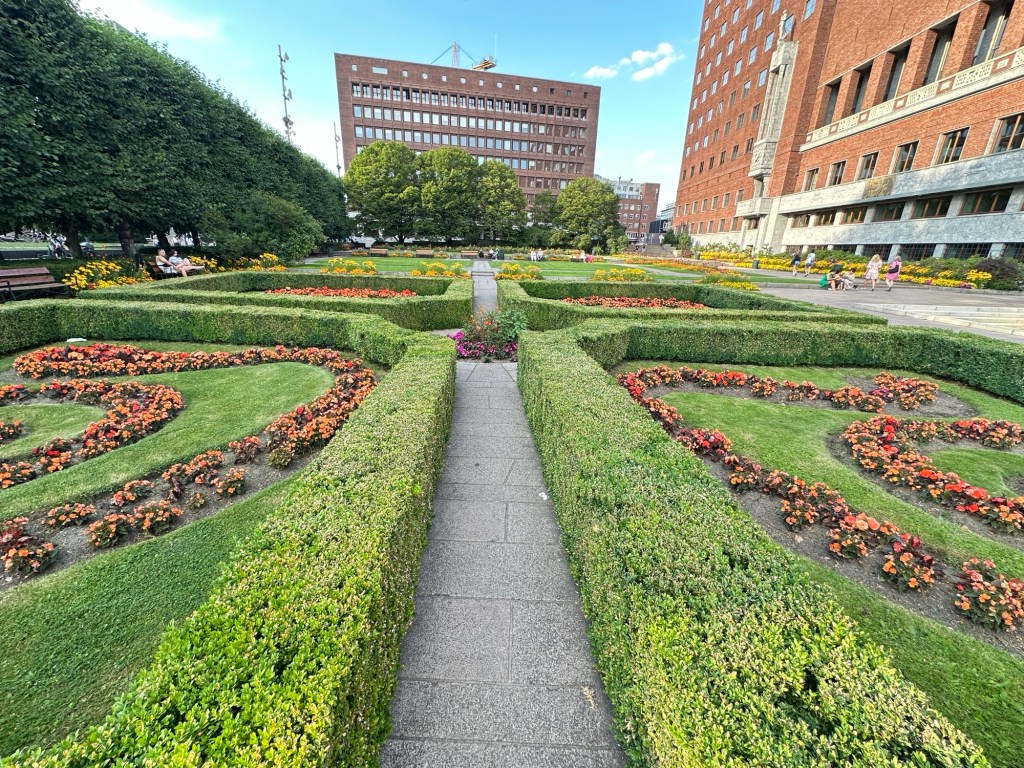
Disembarkation was 10.30am. We were picked up by bus, and a local guide for a tour of the famous landmarks of the city. These included the Royal Palace, Akershus fortress, the Empty Chair memorial to the Jews killed in the Holocaust, the Barcode buildings which consists of twelve narrow high-rise buildings of different heights and widths, and the City Hall. Norway’s 1,000-year-old capital and largest city is famous for its museums and parks.


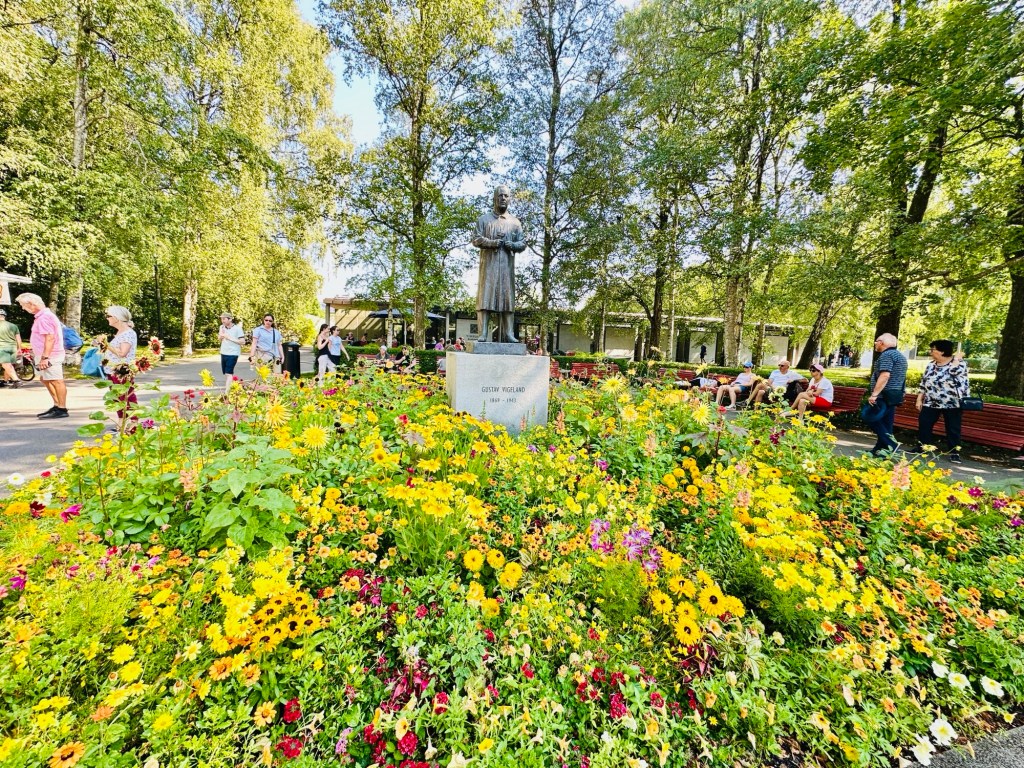
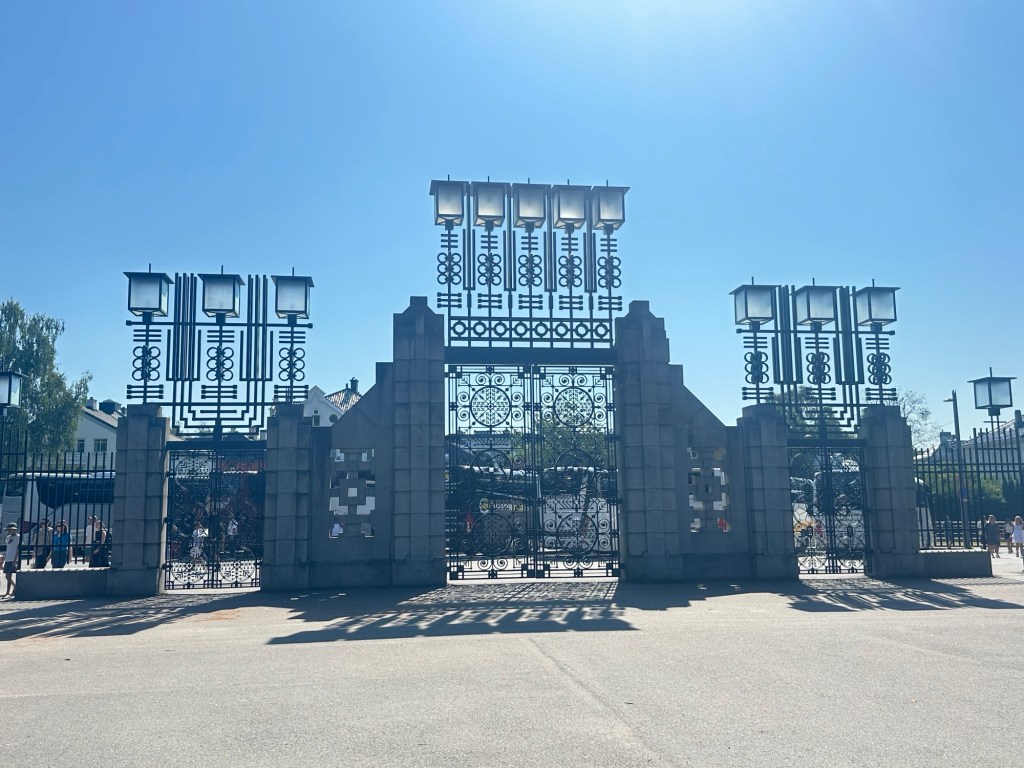
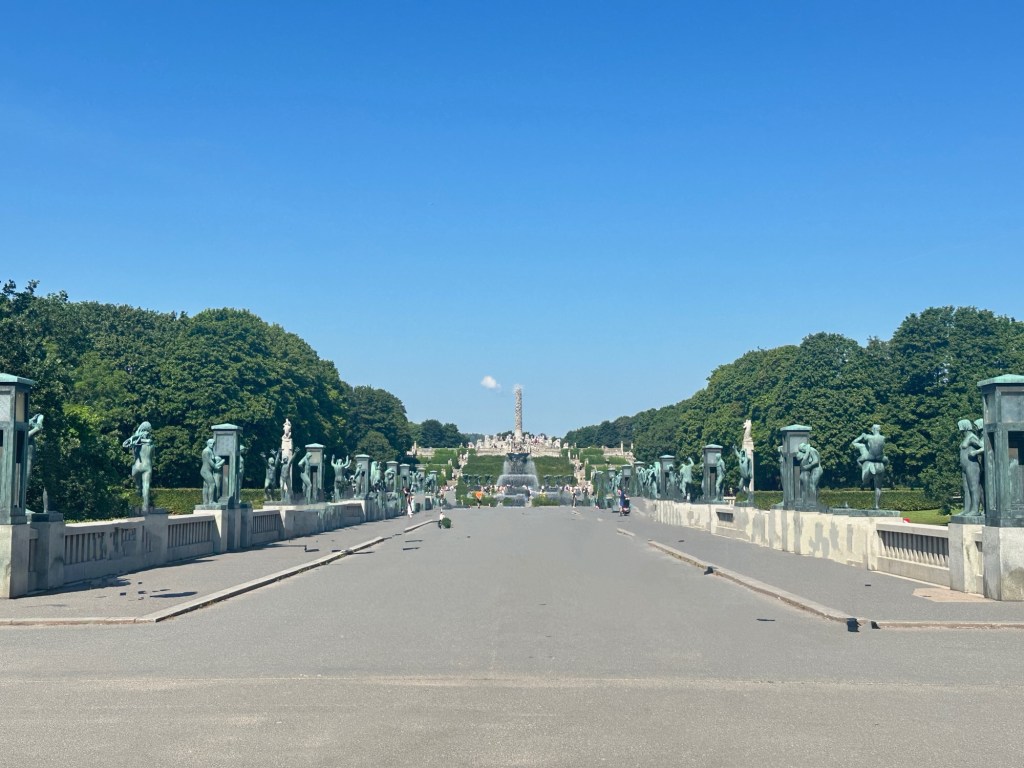
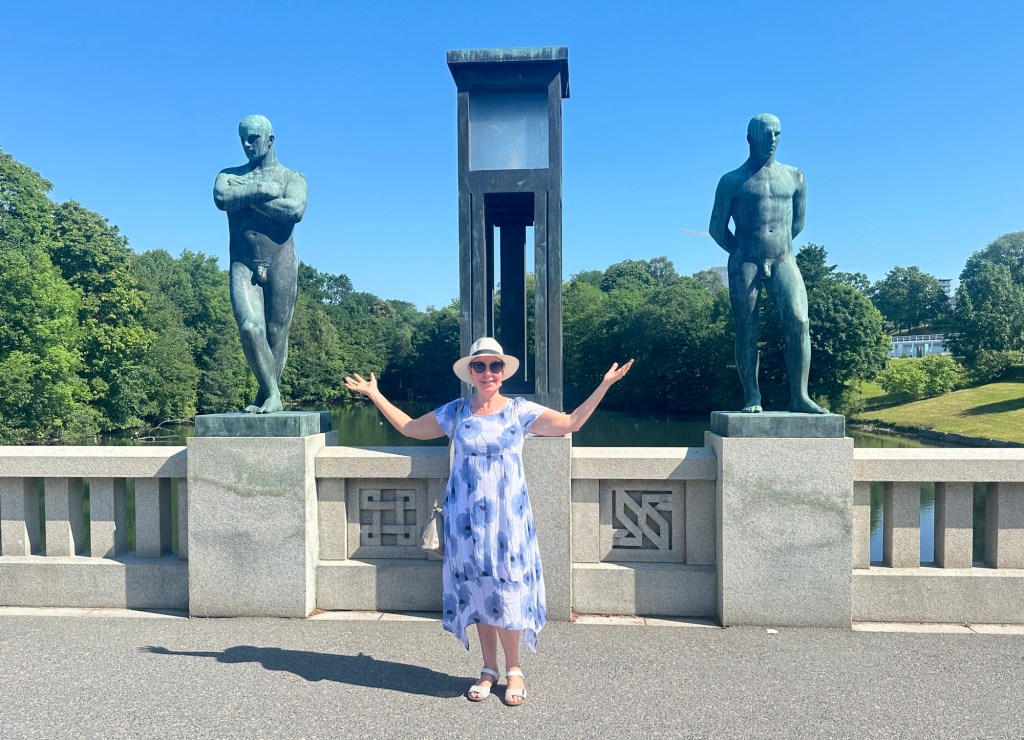
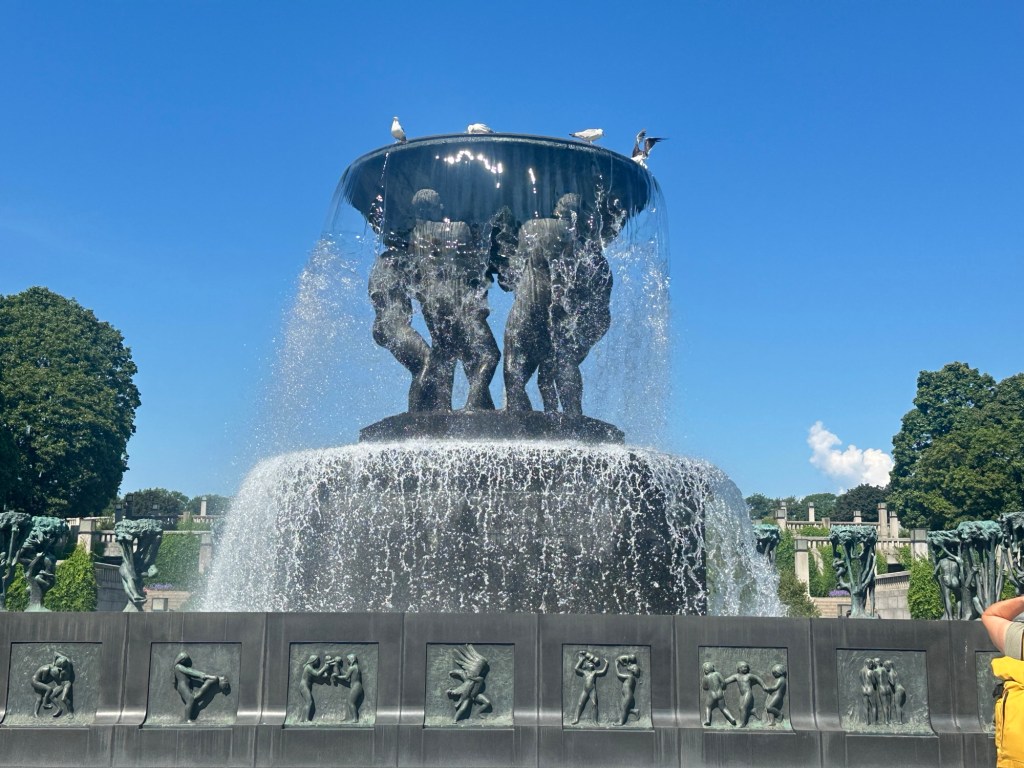
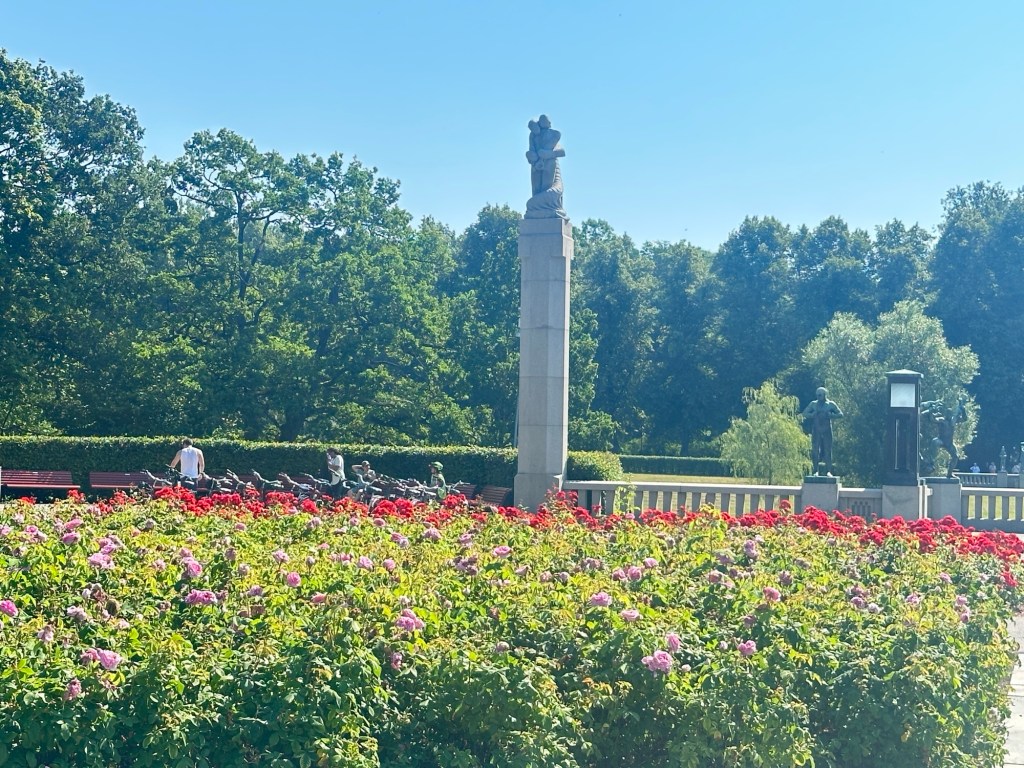
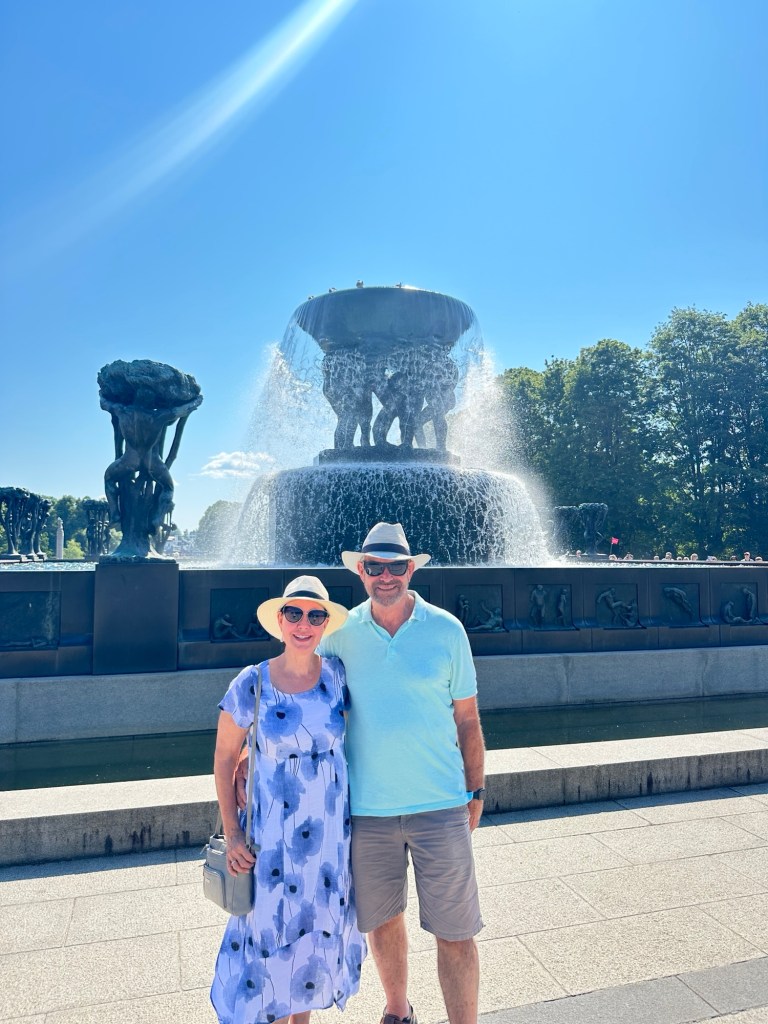
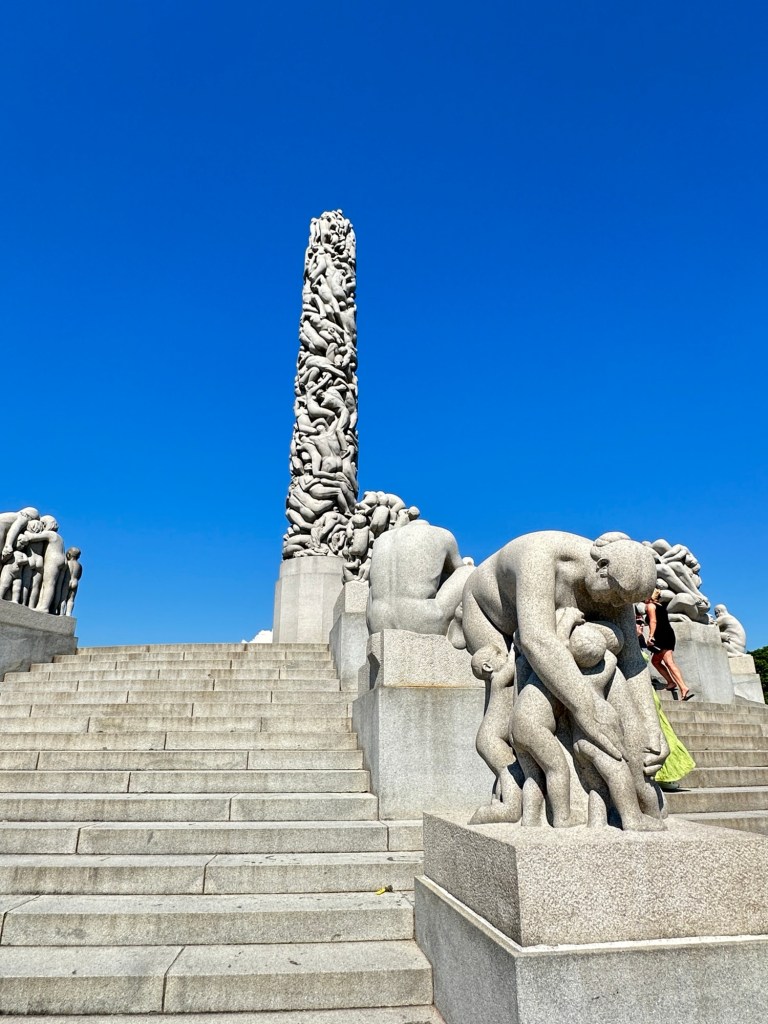
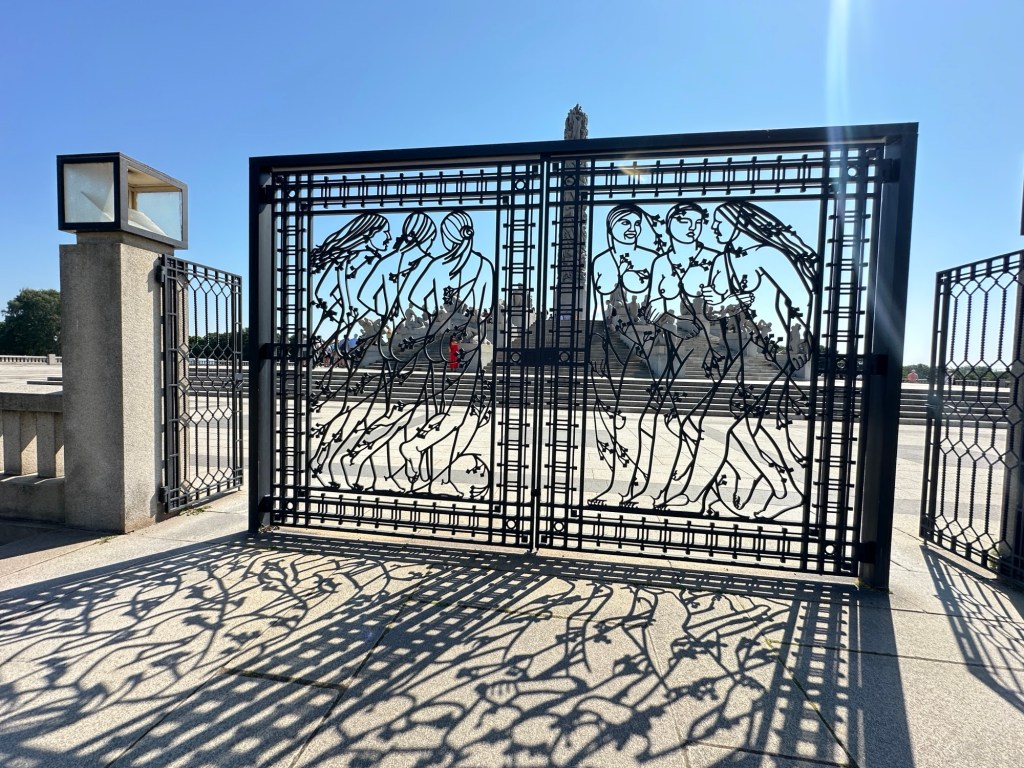
We had an hour stop at Vigeland Sculpture Park. Gustav Vigeland dedicated much of his life to this unique park creating over 200 sculptures in bronze, granite and wrought iron. In addition to carving the sculptures he designed the 80 acre park that surrounds them. The park was completed in 1949. The statures represented life, relationships, family, and the circle of life. The Monolith stands at the highest point in Vigeland Park, and measures 17 metres above ground. The sculpture depicts 121 human figures clinging and floating together. The sculpture is carved out of one stone block, hence the name. An absolutely fascinating park, hard to imagine one person could create so much!



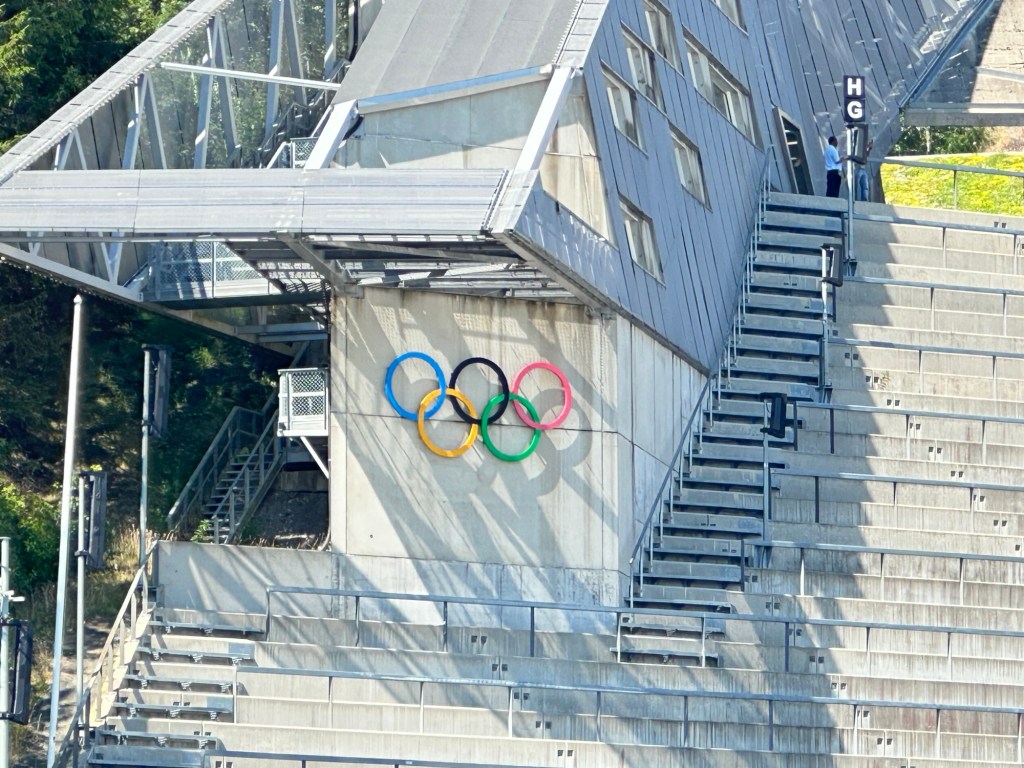
We also stopped at Holmenkollen Ski Jump – in wintertime, ski jumping draws large crowds. Apart from the ski jump, this area is one of the most popular recreational areas in the city – sledding, skiing and snow play. Here everyone gets free ski lessons up to the age of twelve.

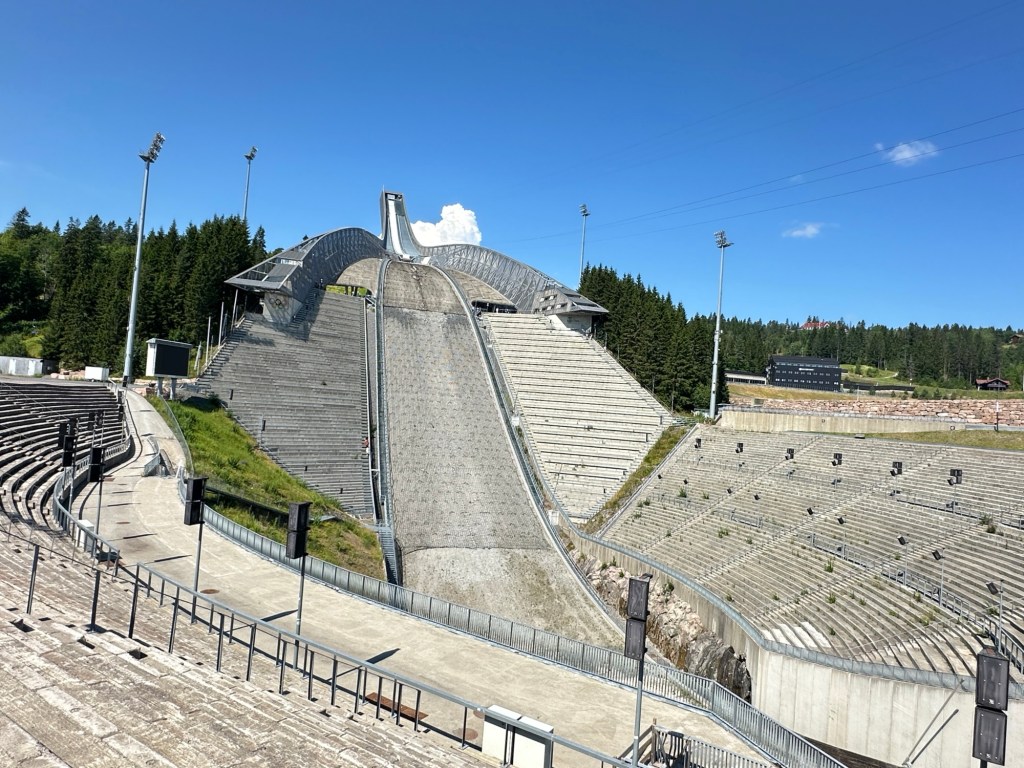
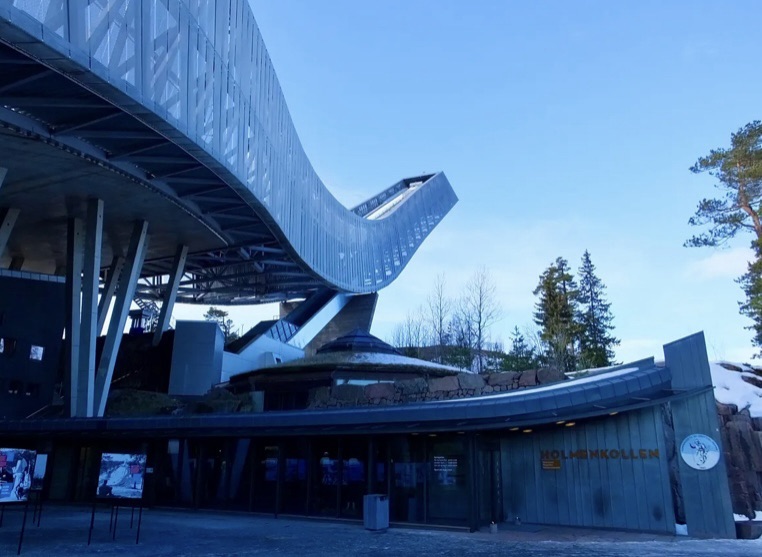
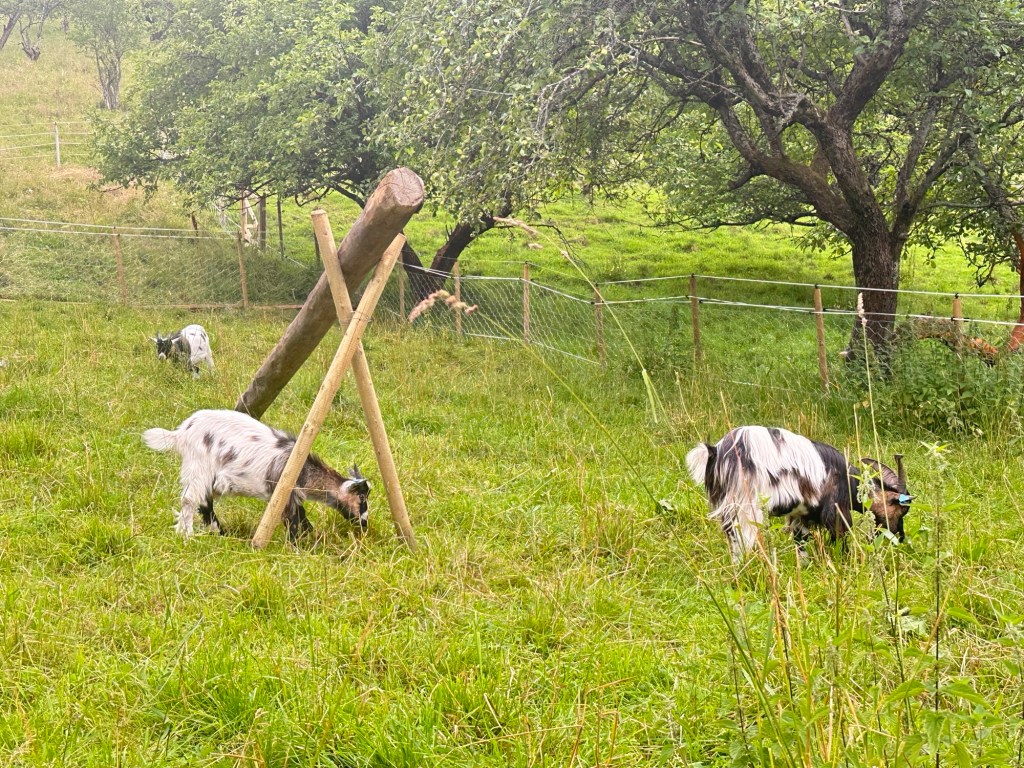
Lovely wooden homes in this area – of note is the grass growing on the roofs. The aim is to continue the feel of nature. Apparently the goats keep the grass down.


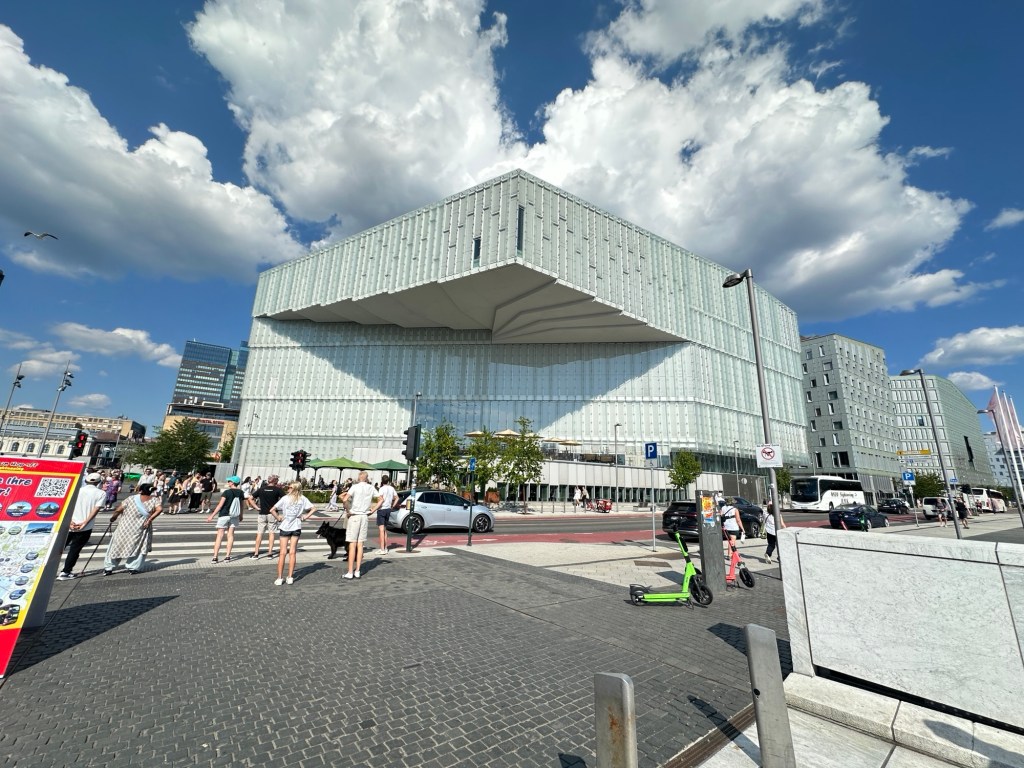
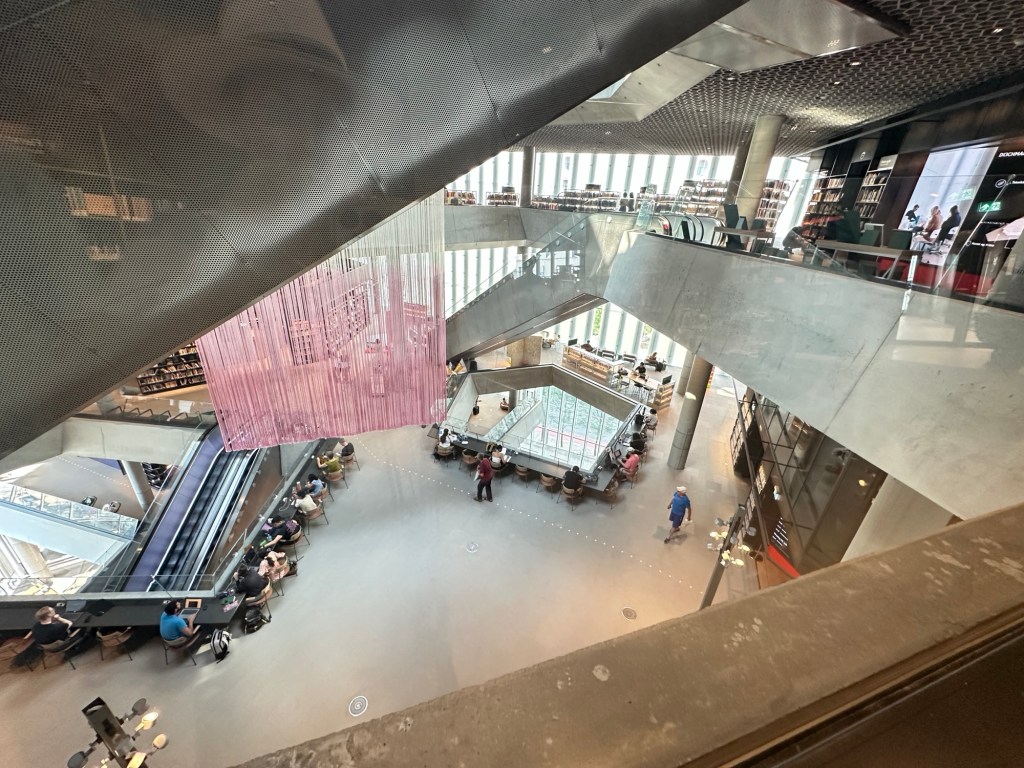
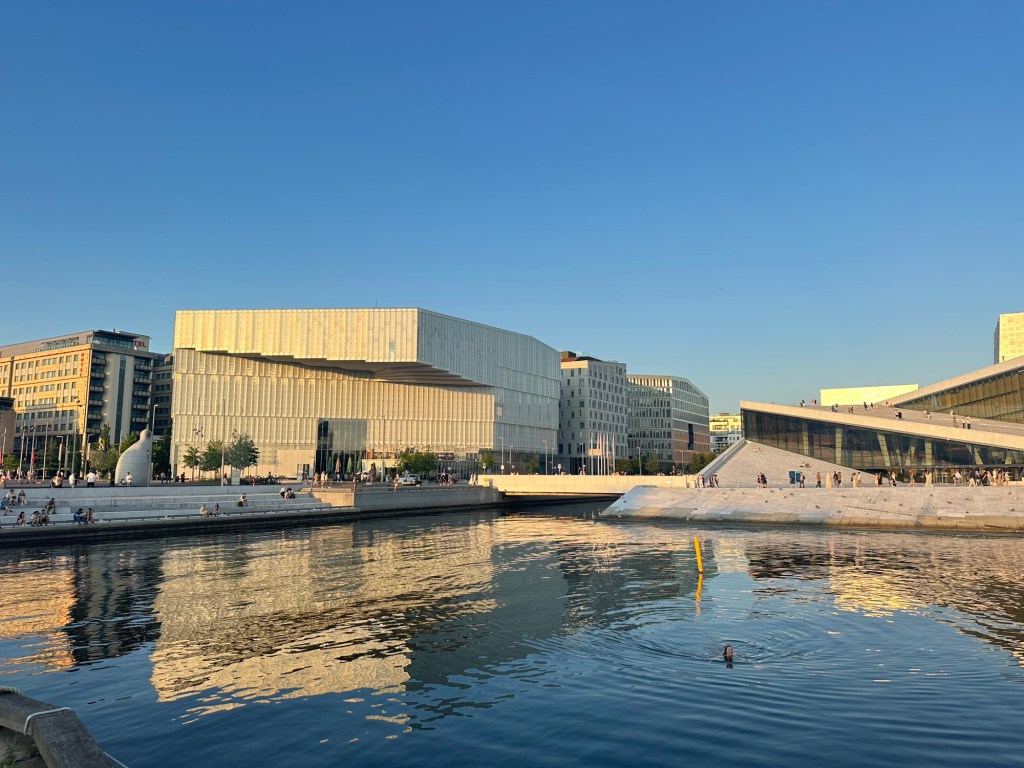
We check into the Thon Opera Hotel at 2pm, then have the afternoon to explore Oslo by ourselves. Across the road from the hotel is Deichman Library – we were recommended to pay a visit. It is a modern and dynamic library that contains not only Deichman’s extensive book collections, but also a movie theatre, media workshops, gaming zones, lounges and a restaurant – among other things, and over five floors. We had a coffee stop there – a very nice coffee, but then it would want to be for $9 a cup!
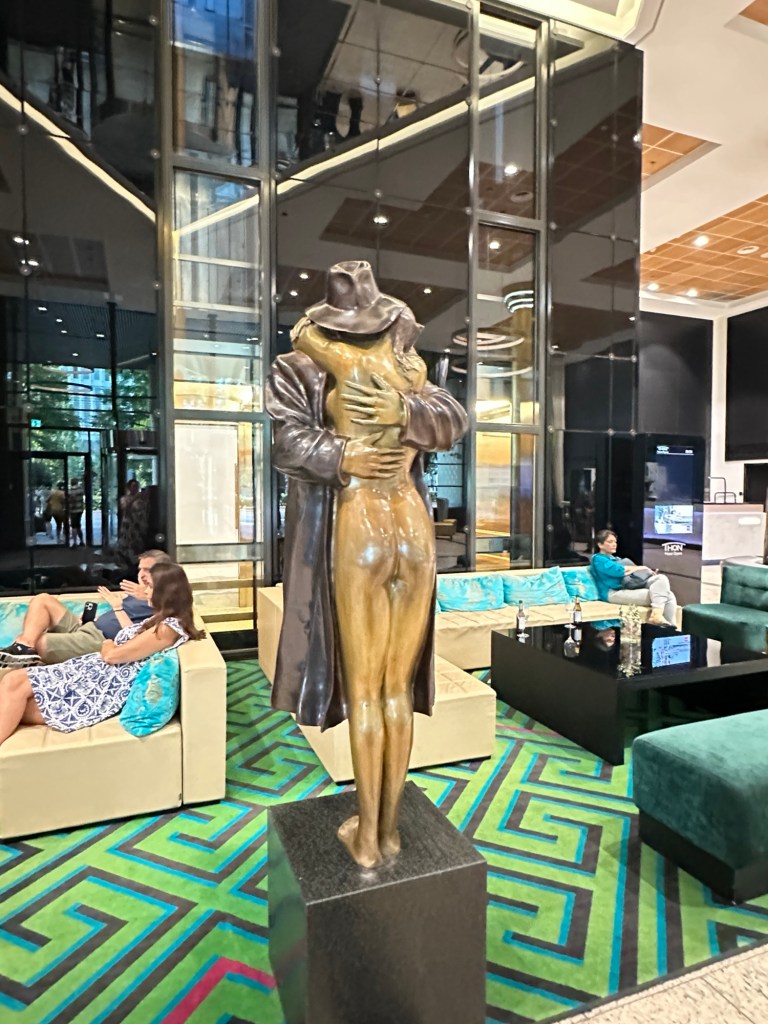



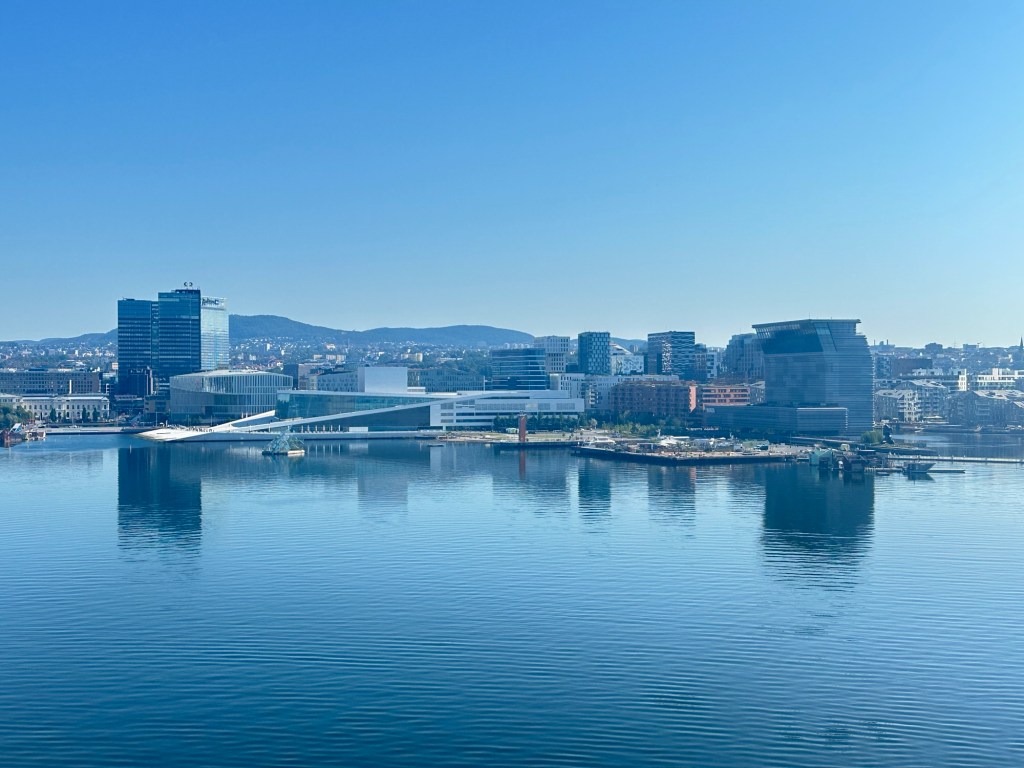
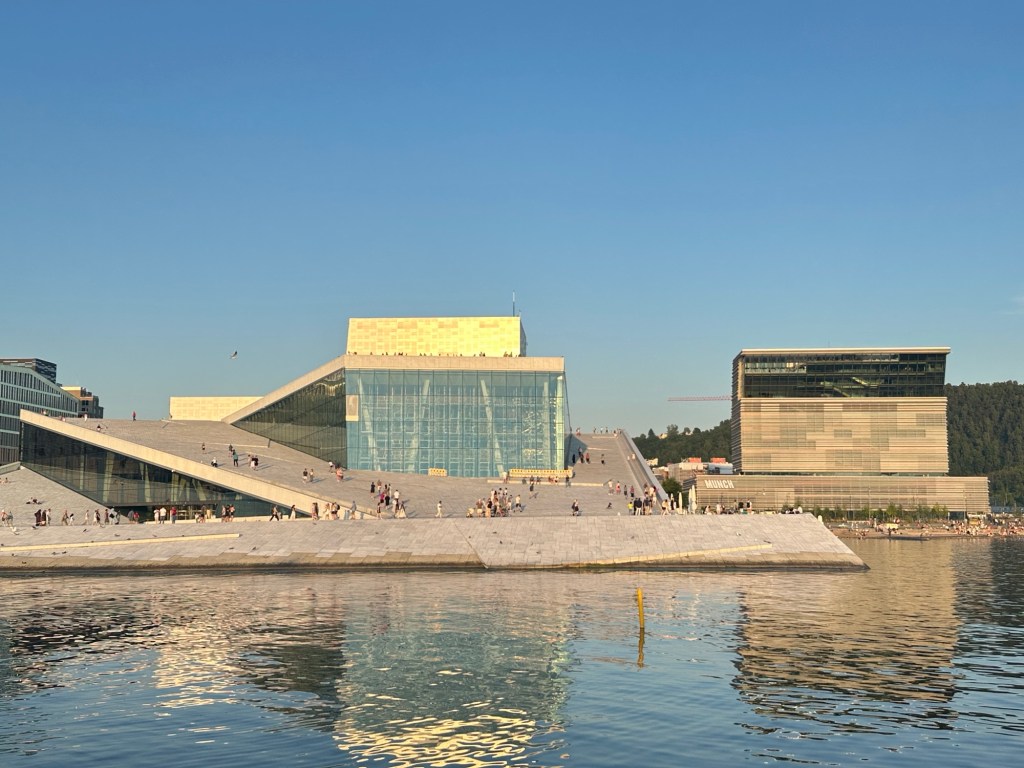
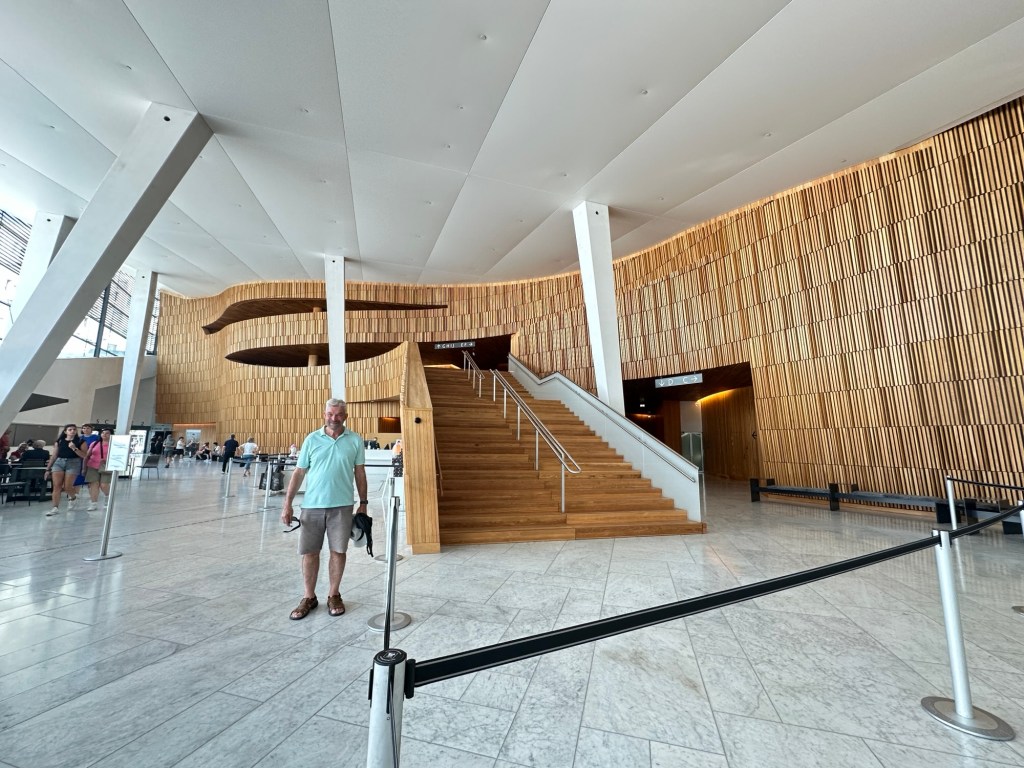
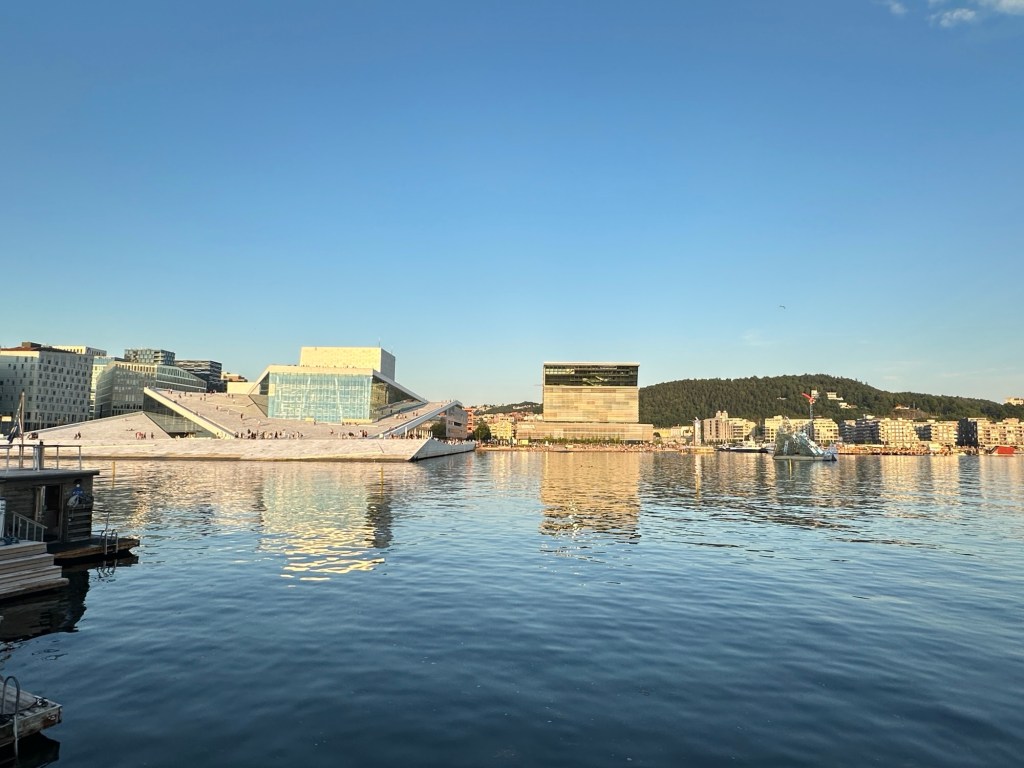
The Opera House is next to the library on the fiord waterfront. The vast, white, angular architecture seemingly arises from the waters of Oslo Fjord. The sloping roof, which is meant to be walked on, is covered in white marble and granite, creates the illusion of glistening ice, like a glacier rising from the fiord. The intention of the architect was to create a new landscape that would draw together the natural beauty of Oslo Fjord and the city. Great view points from the rooftop. Inside the Opera House is an unusual wooden theme which is a soft reminder of Norwegian nature and history.

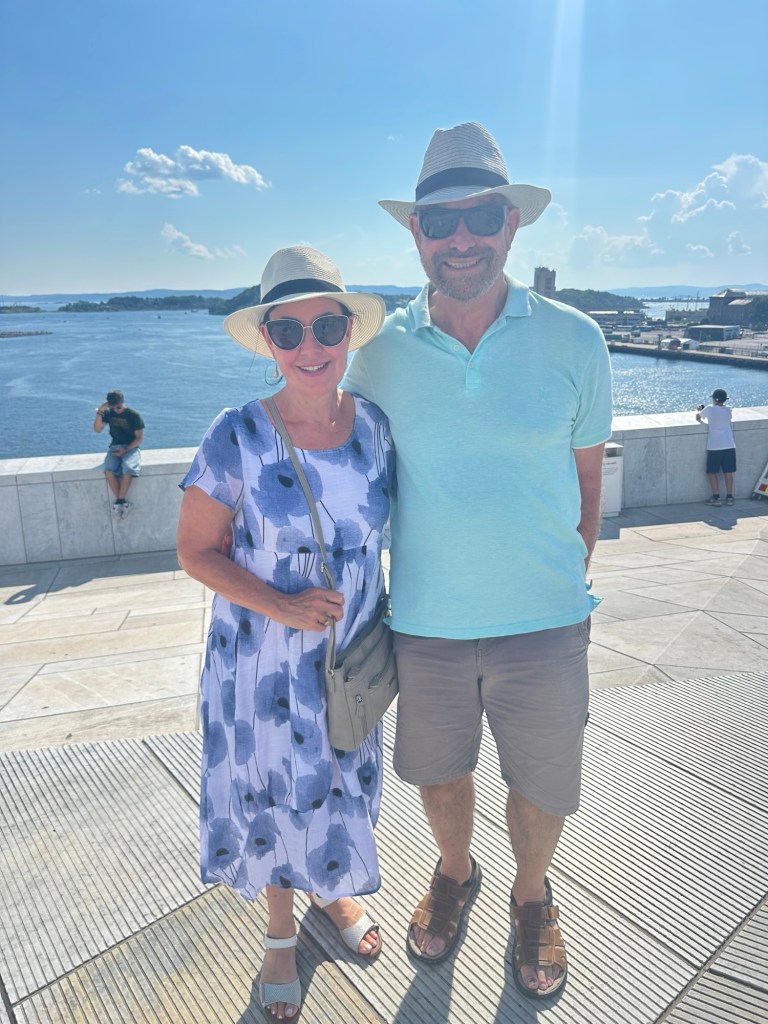

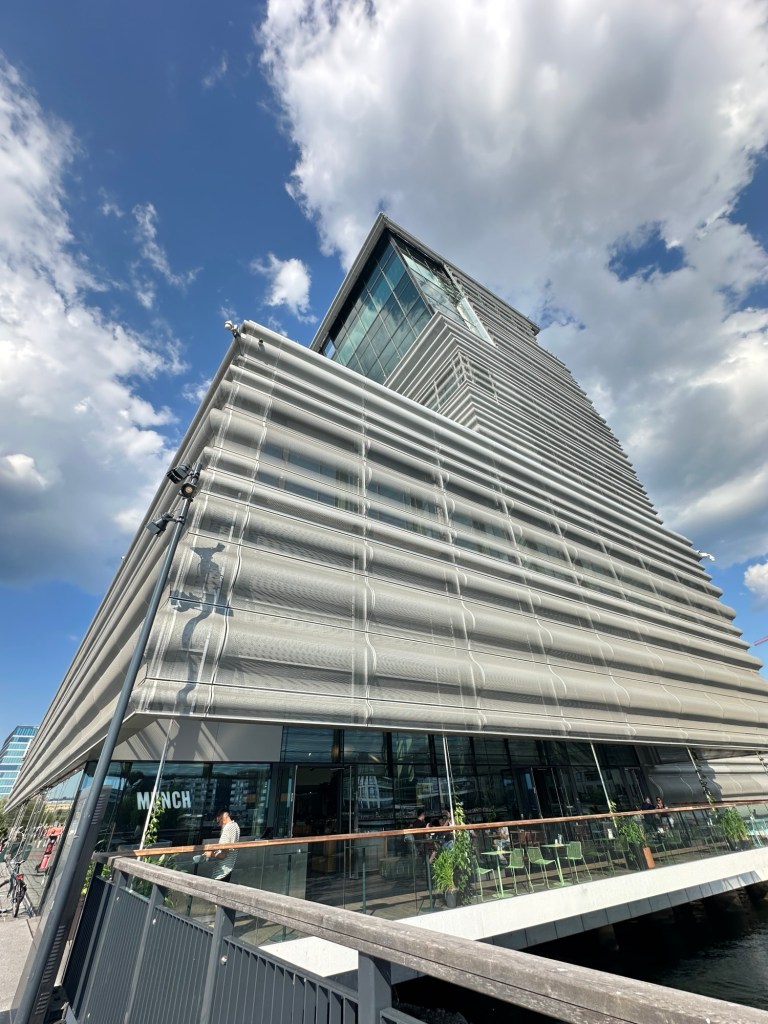
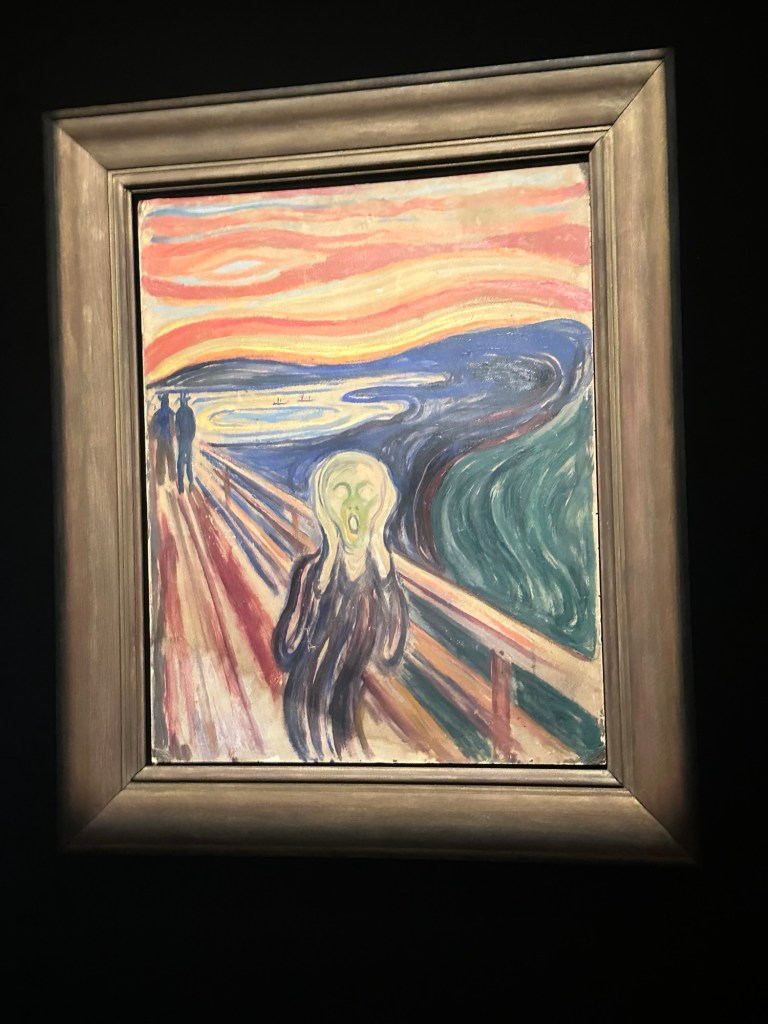
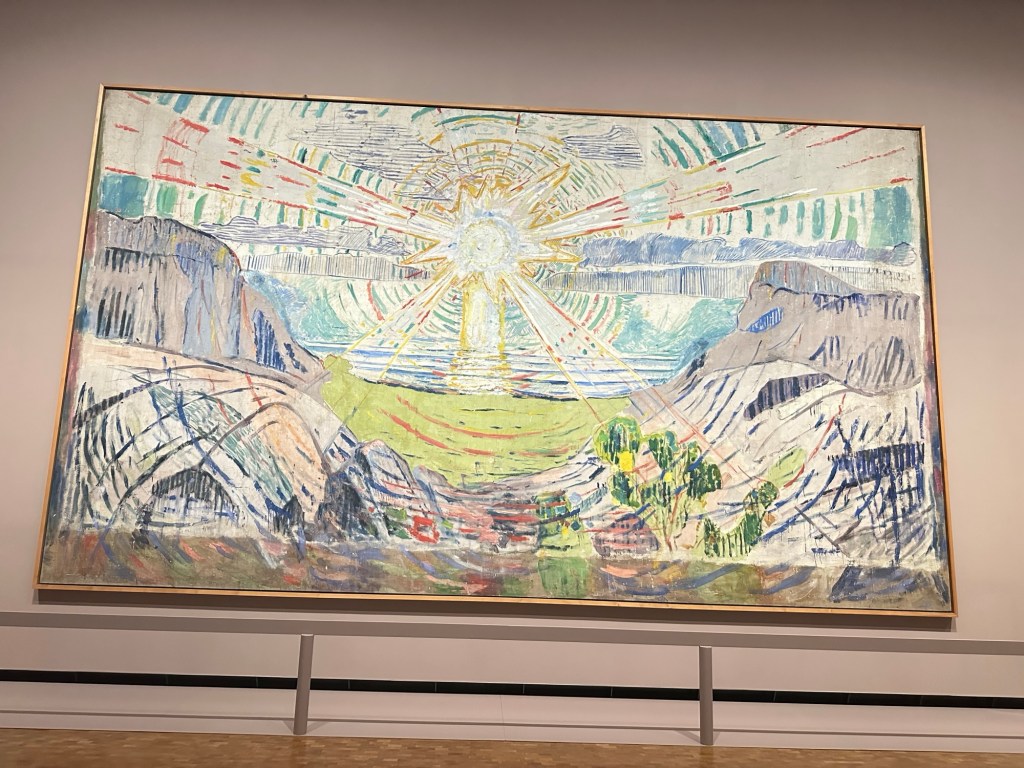
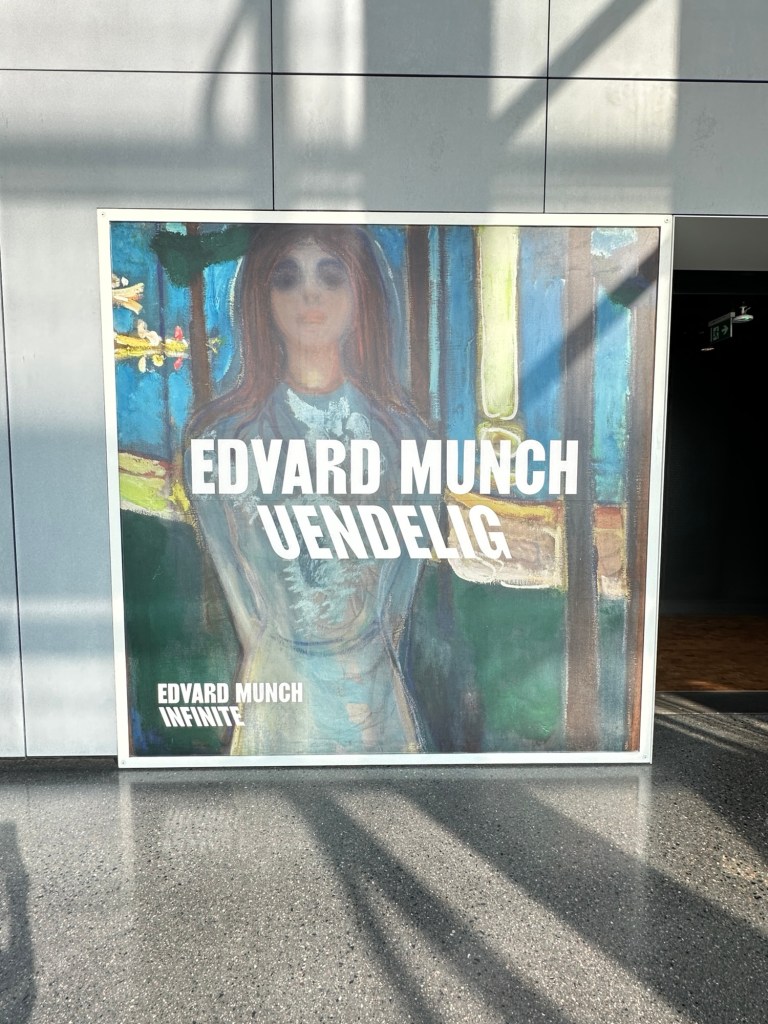
Across the waterway is the Munch Museum – dedicated to the life and works of renowned Norwegian artist Edvard Munch. Munch led a troubled life, plagued by melancholy and depression; this had a profound influence on his work, which remains a great cornerstone of early Expressionist art. Highly prolific, he left an amazing 1,100 paintings, 4,500 drawings, and 18,000 graphic works to the city of Oslo when he died.The very famous “Scream” has centre position, plus numerous other works. Great city views from the thirteenth floor, plus views of surrounding apartment blocks, and residents swimming and kayaking in the fiord. Great way to cool down on such a hot day.

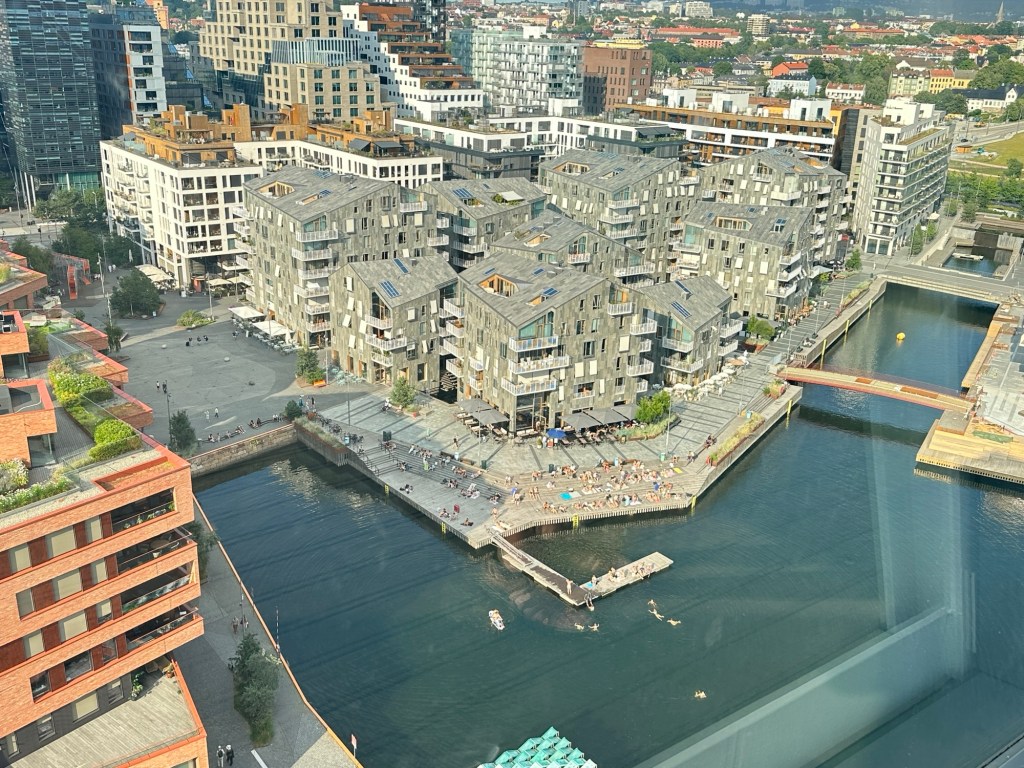


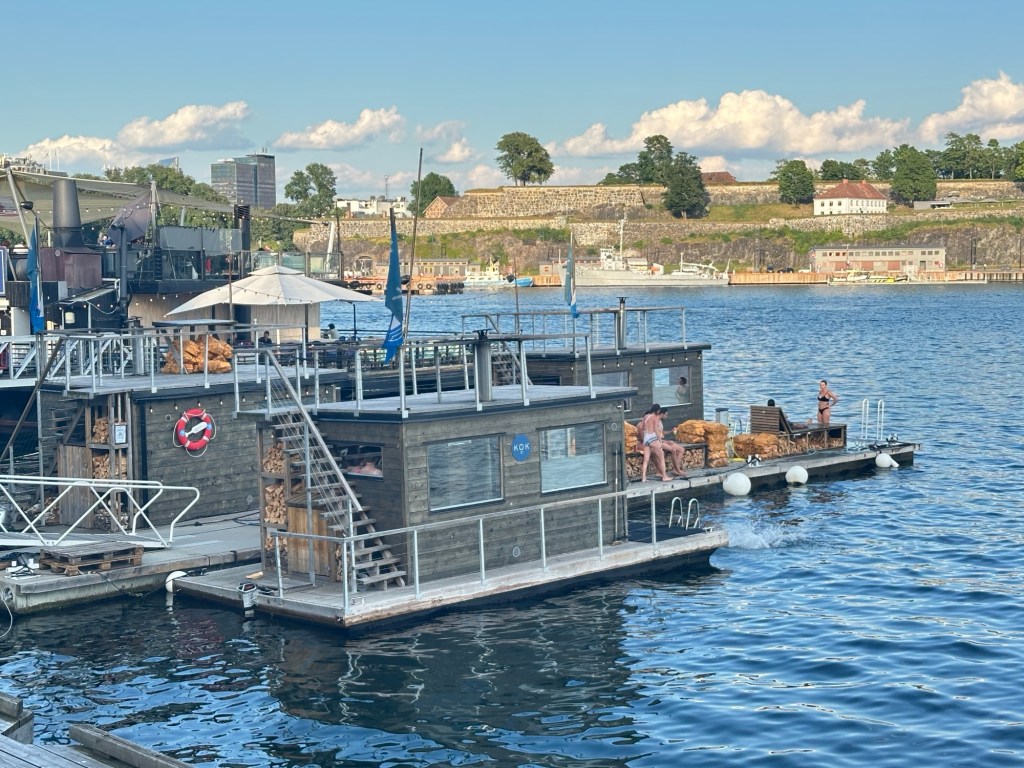
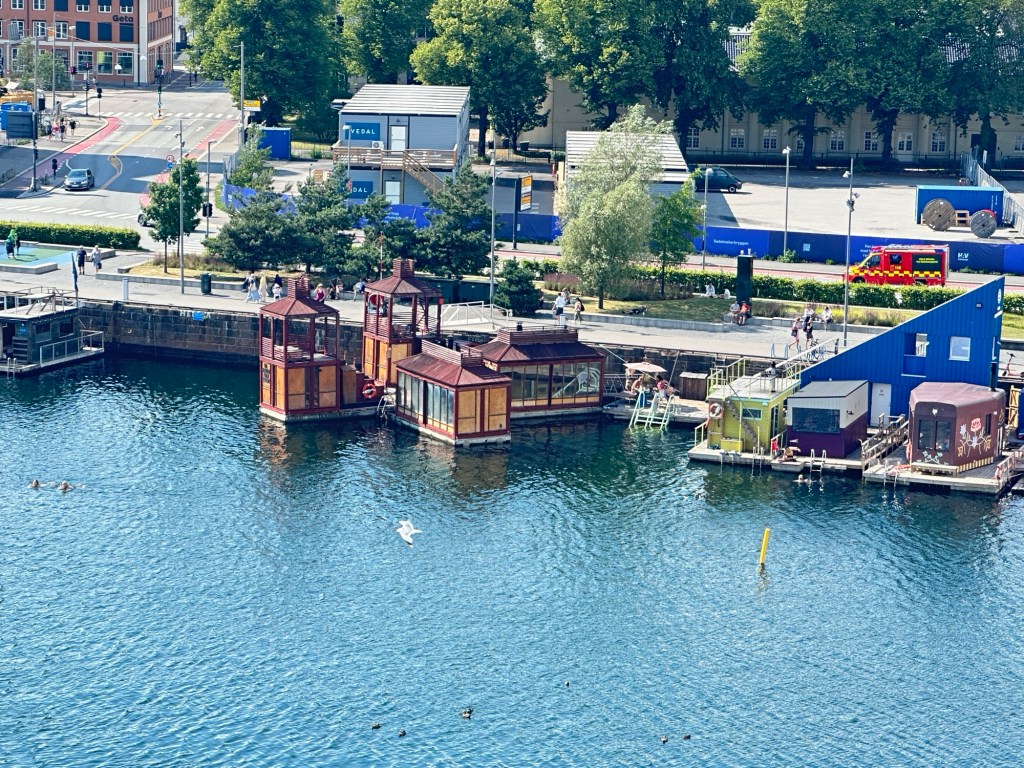
Of note, there are floating saunas along the water’s edge, which you can hire. No need to pay for a sauna today, you could just step outside and get one for free! Everyone kept commenting on how hot it was.
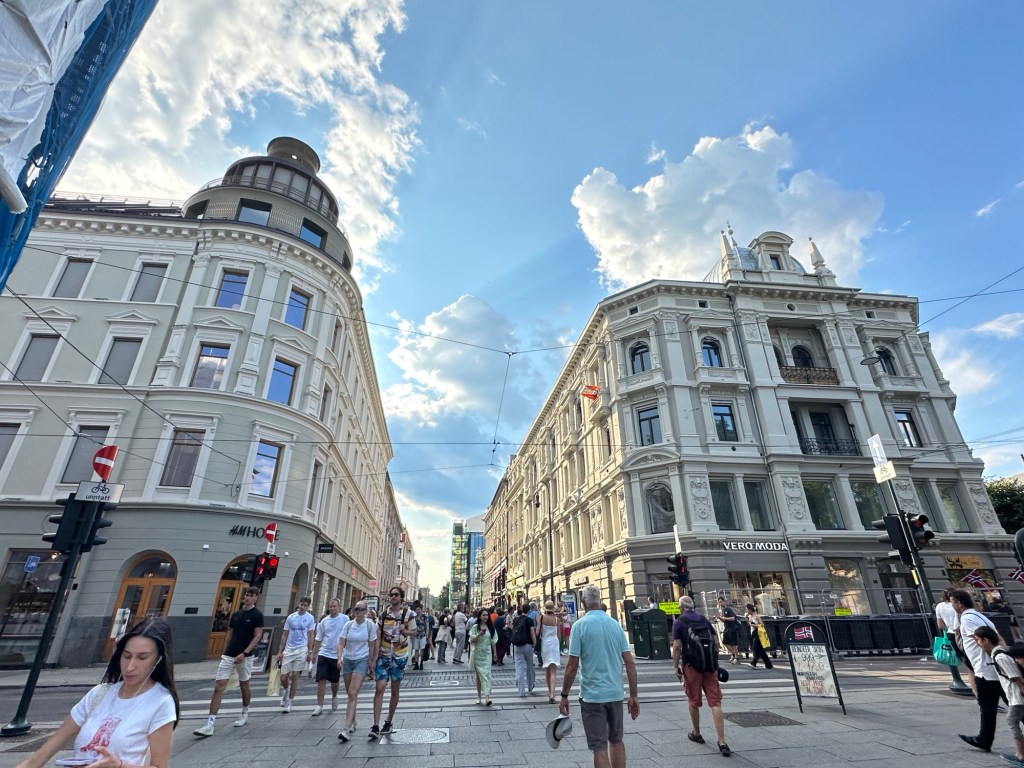
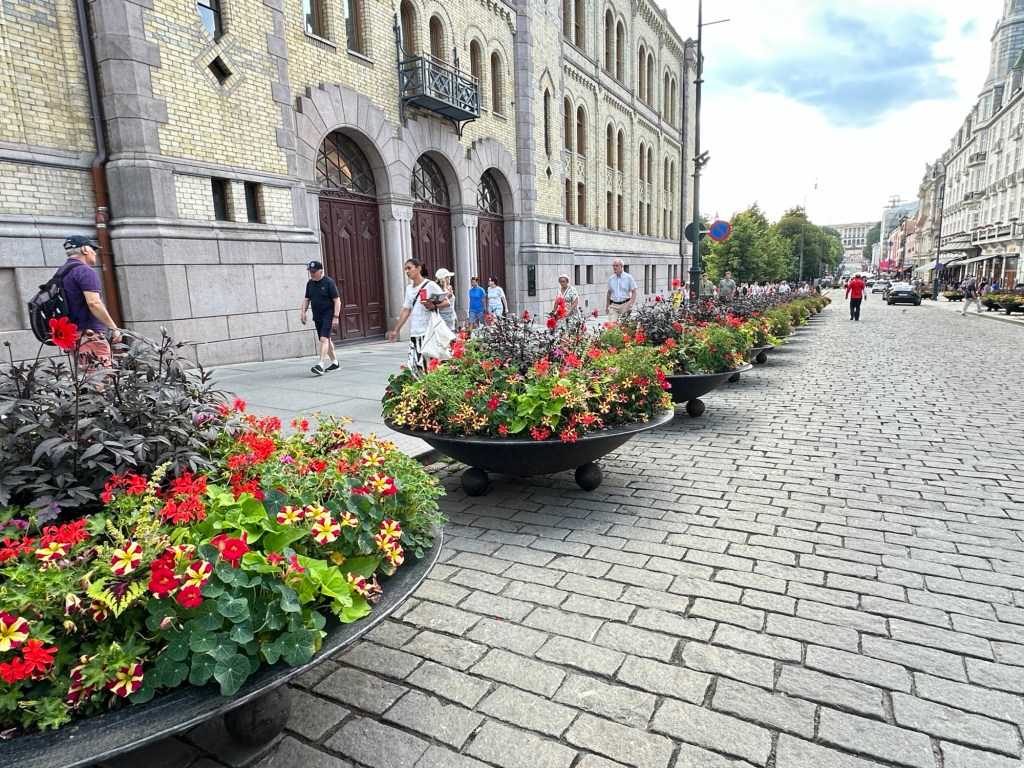
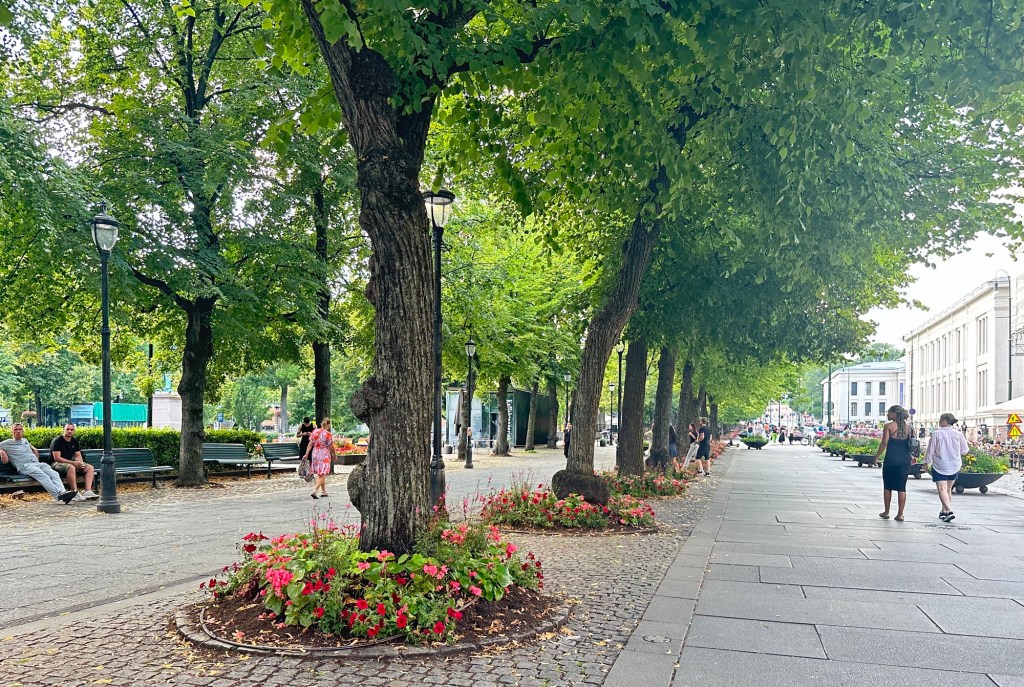
We then walked down the popular shopping street, Karl Johans Gate, which features a wide range of quality brands and local crafts, restaurants, cafes, and street musicians. Spectacular grand buildings line the street, including the 19th century parliament building, Stortinget, and finishing at the Royal Palace.

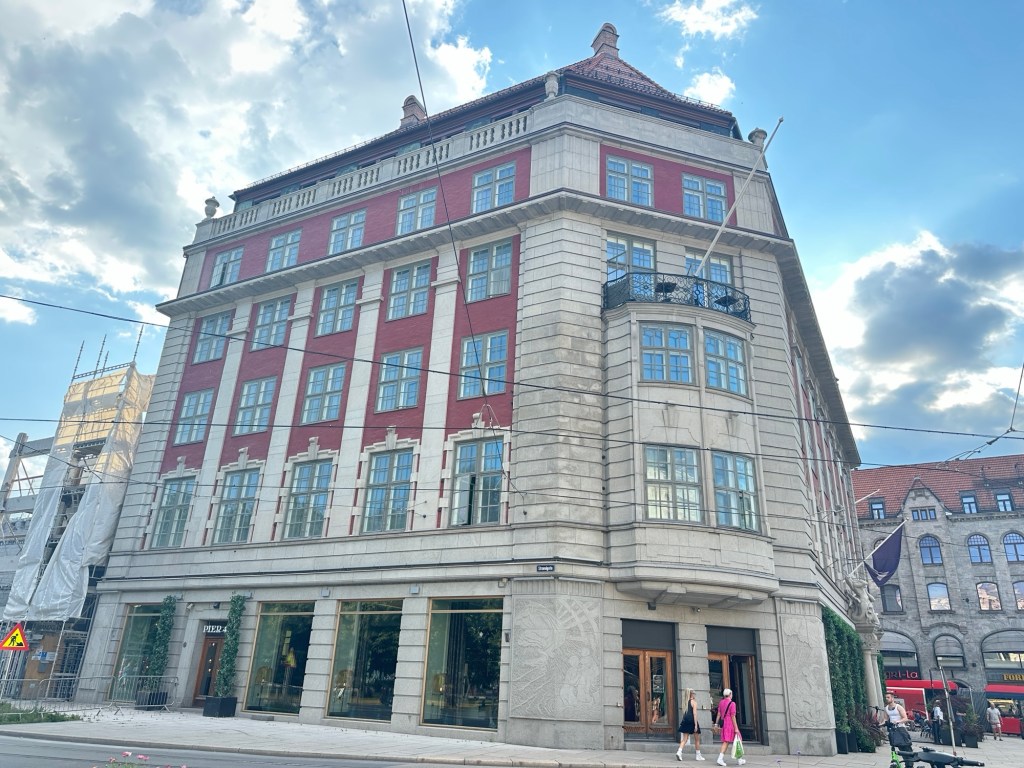



We then turned to the old Waterfront area, Aker Brugge – this fusion of “old meets new” is now a buzzing neighbourhood of trendy shops, bars and restaurants. We had dinner at an Asian restaurant- normally we’d always try the local food, but it was so hot, we settled for a light duck salad, which was lovely.
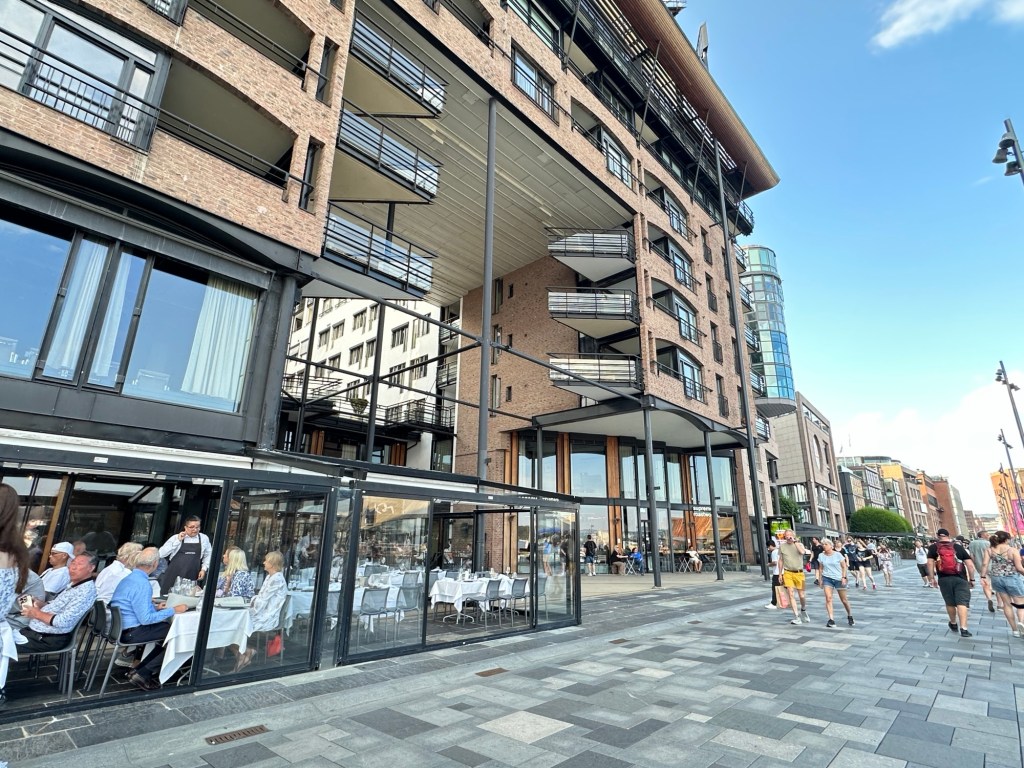
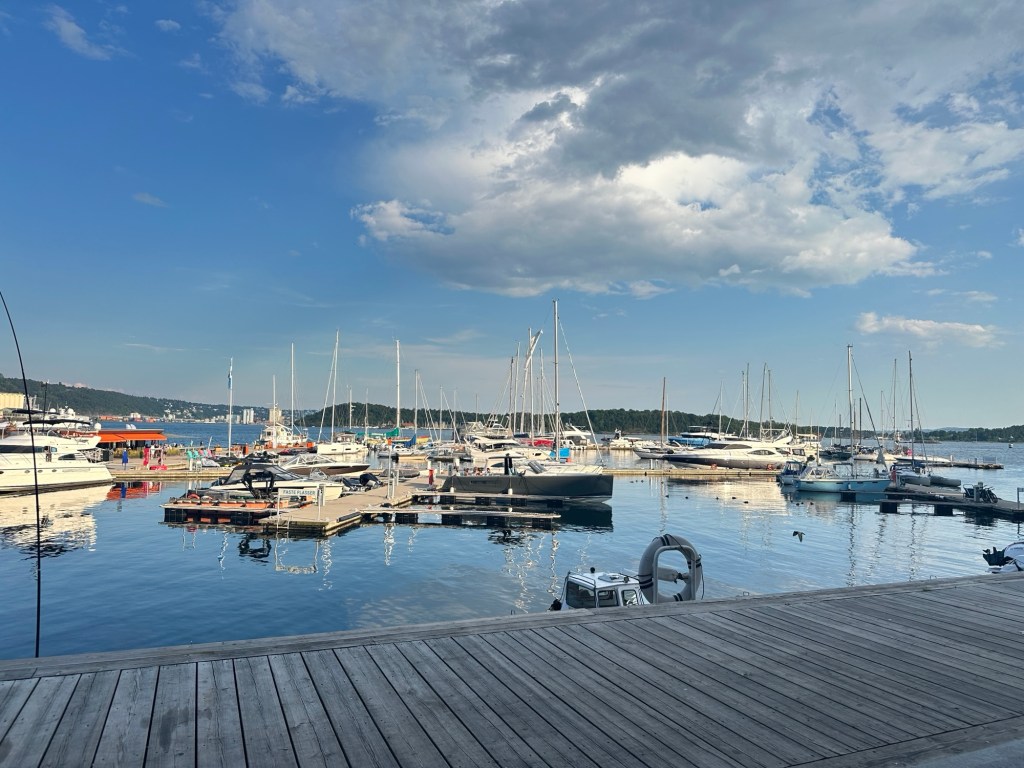
A note about the costs here – very expensive! We found a main meal was commonly $60-$80, a beer was $16, gin and tonic $30, a glass of wine $26. A good way to cut back on our eating/drinking!
Day 61
Saturday 19th July
Oslo to Flam
16-29 degrees, sunny, hot
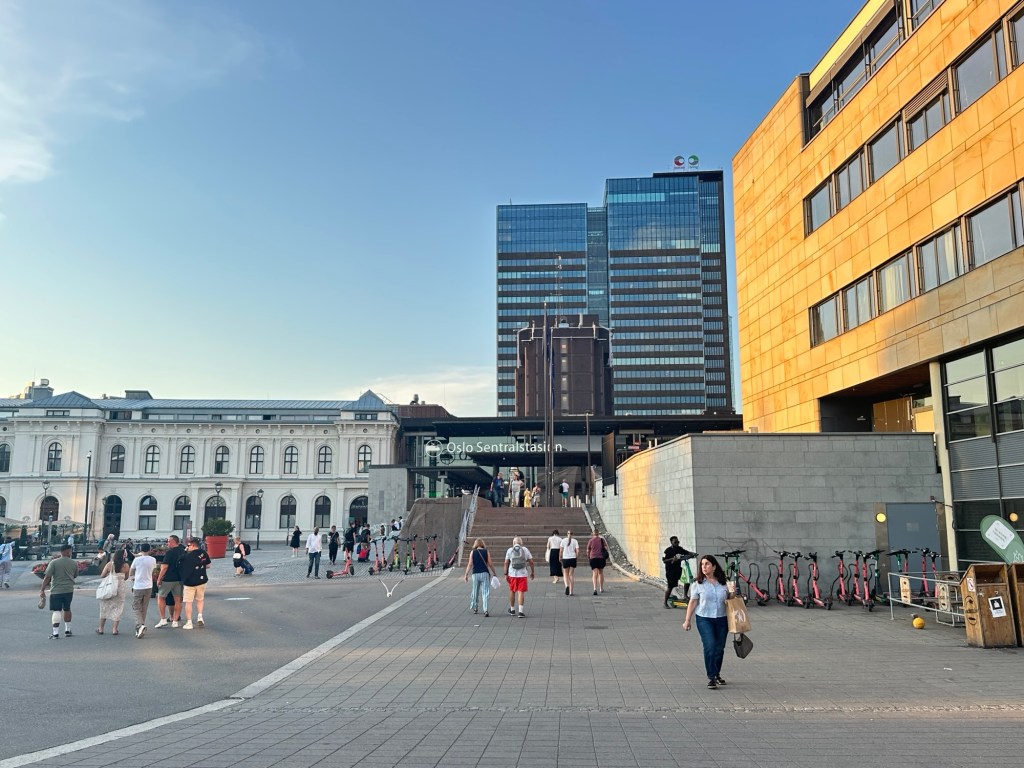
It was an earlier start today, we had to be at Central Station – which was behind our hotel, for a 8.15 train to go to Myrdal – a five hour ride. This train ride, ranked amongst the 20 best train journeys in the world, took us over Norway’s mountainous “rooftop” and through charming villages like Gol and Geilo.
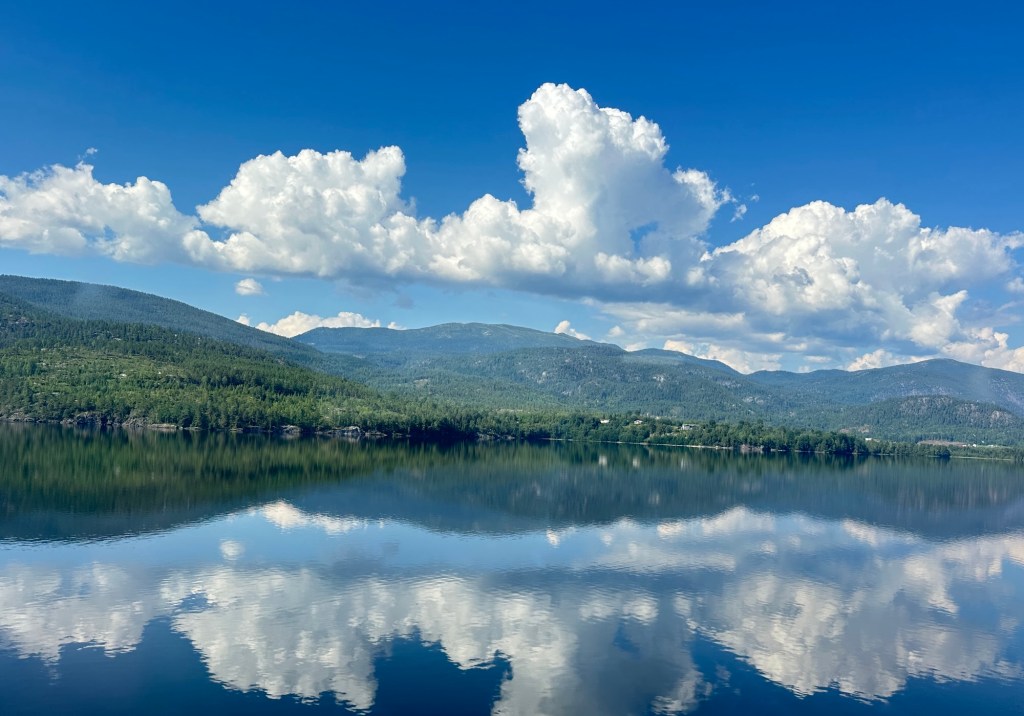
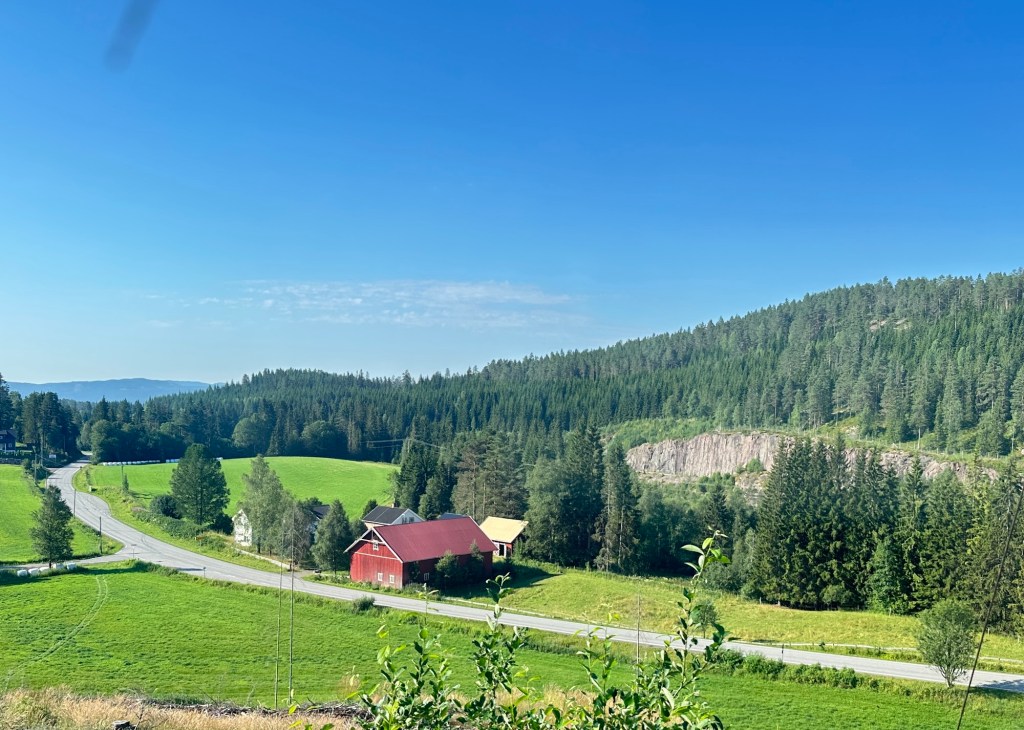
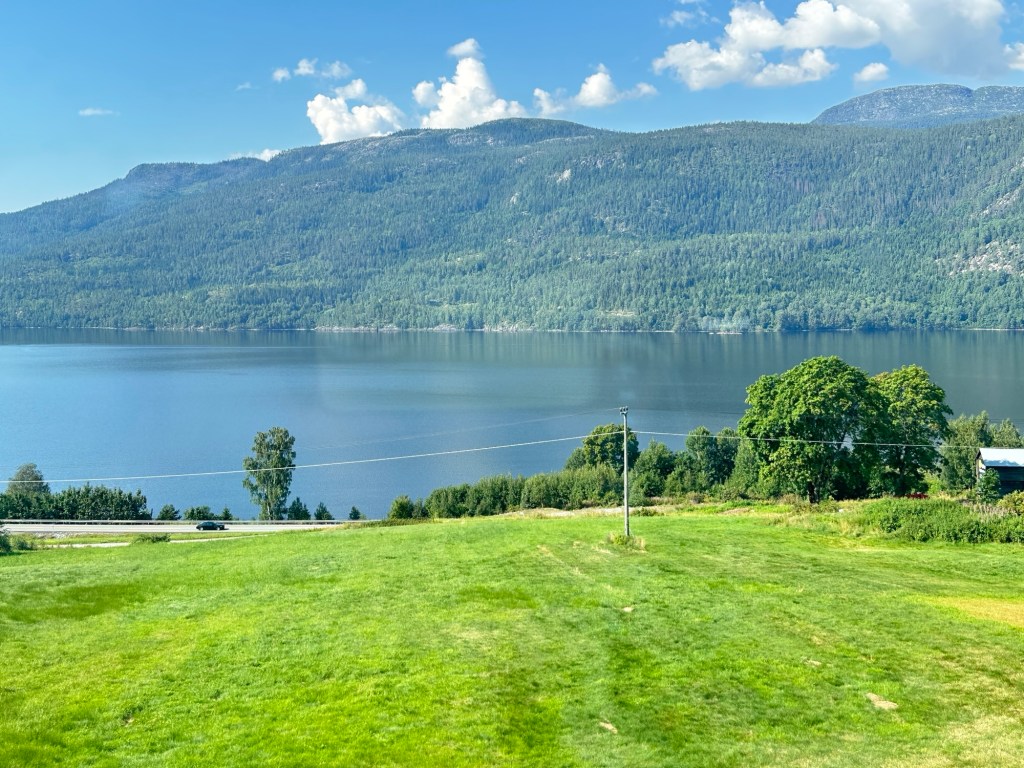
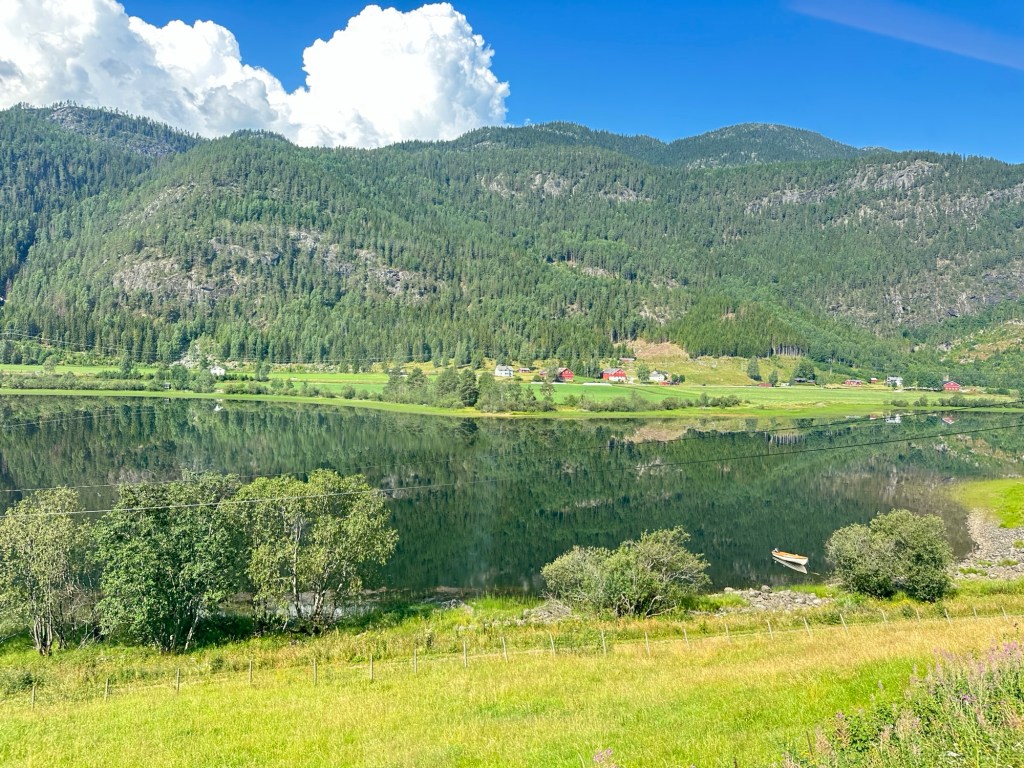
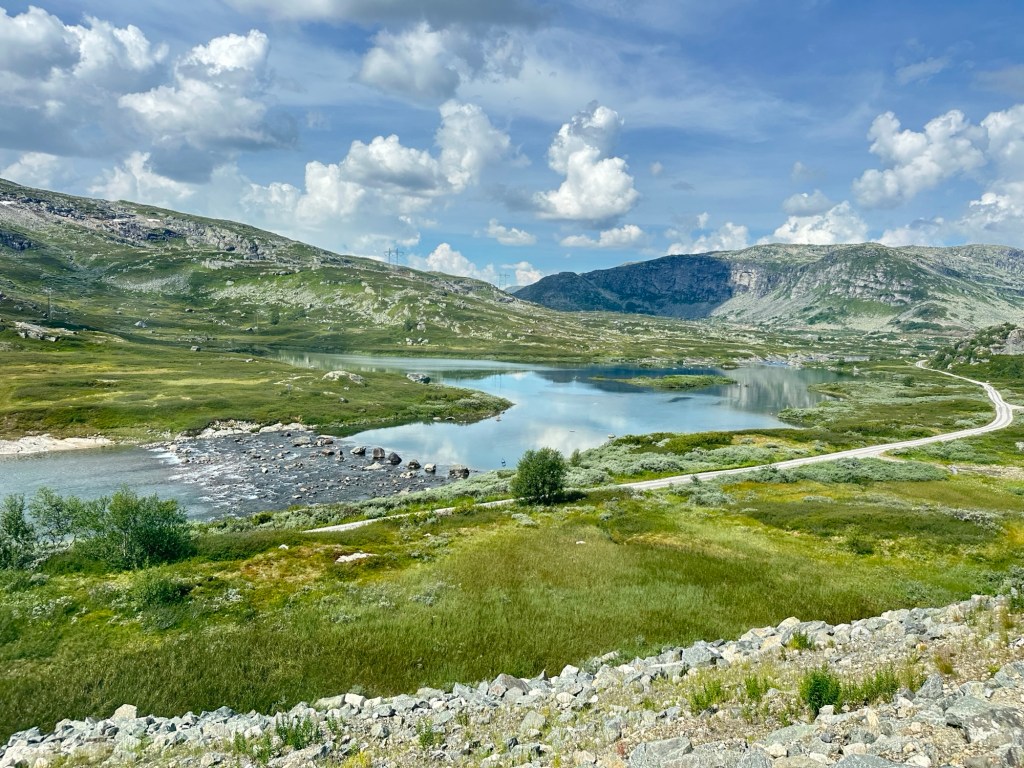

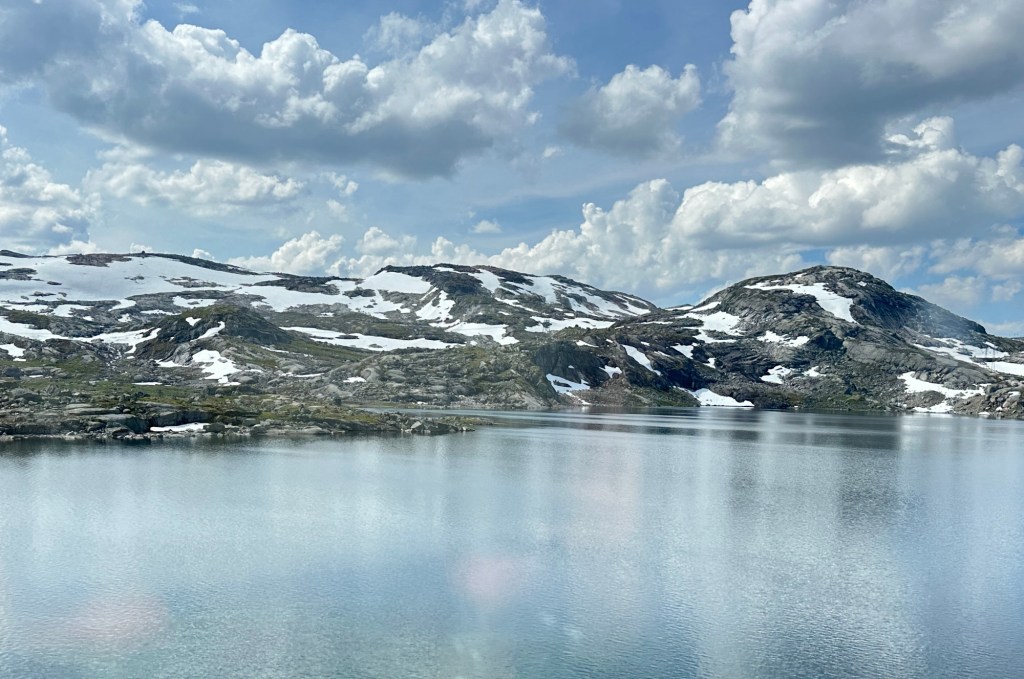
In Myrdal, we swapped trains to board the Flåm Railway for an incredible 20 kilometre ride with a 900 metre descent to the beautiful village of Flåm. The Flåm Railway is one of the steepest train journeys in the world, winding through some of the most dramatic fjord and mountain scenery in Norway. It has 20 tunnels – 18 of which were excavated by hand, and took around 20 years to build – from 1924 to 1944. Stunning scenery. There was one disappointment, in that you couldn’t hear the commentary.
We had one stop on the train, to look at the big waterfall – where there was an appearance by the local spirit. Over the years, characters from local folklore and tales have been observed in the Flämsdalen valley. The Huldra is an underground spirit who captivates travellers with her enchanting song and tries to lure men into the mountains!
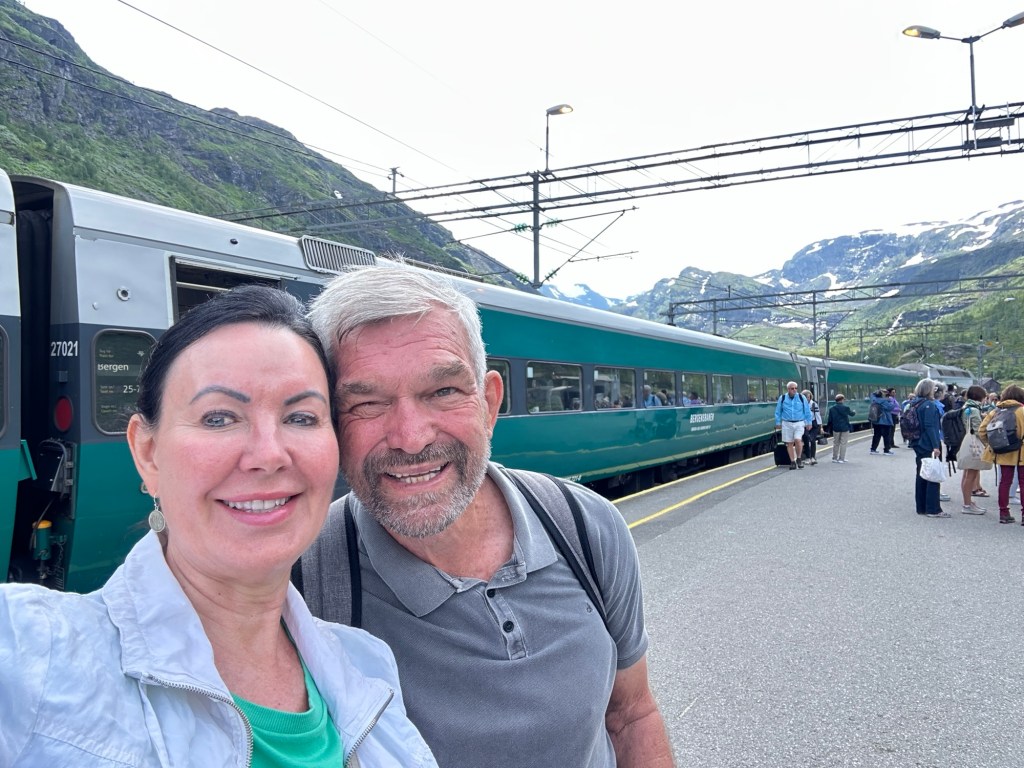
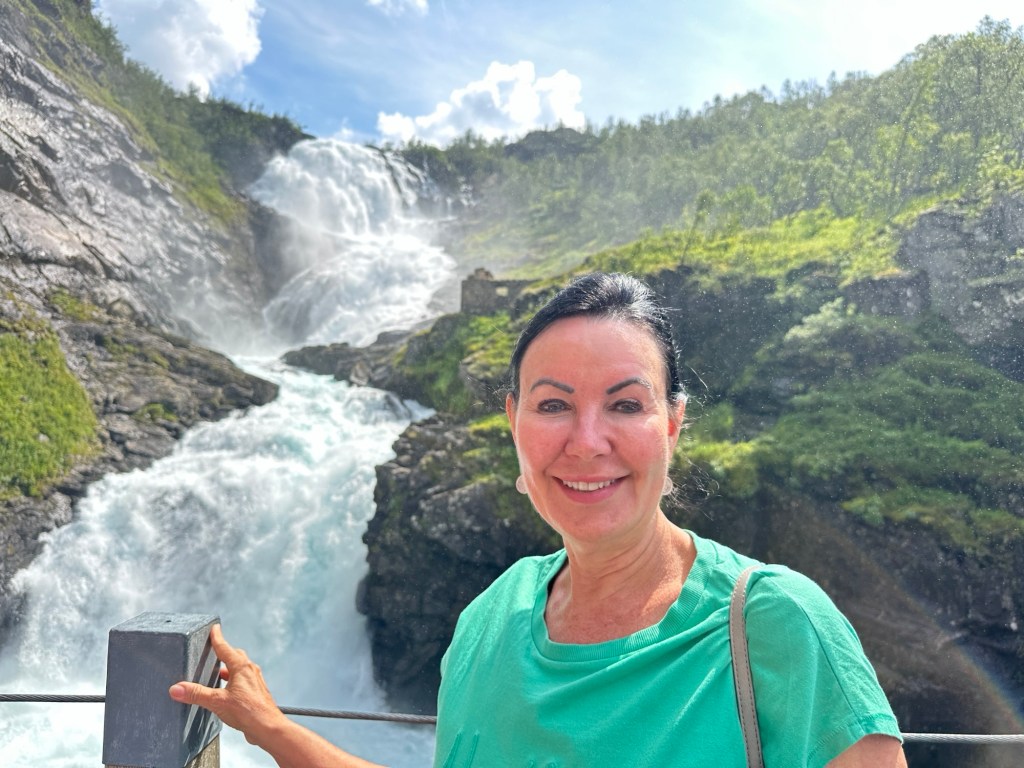
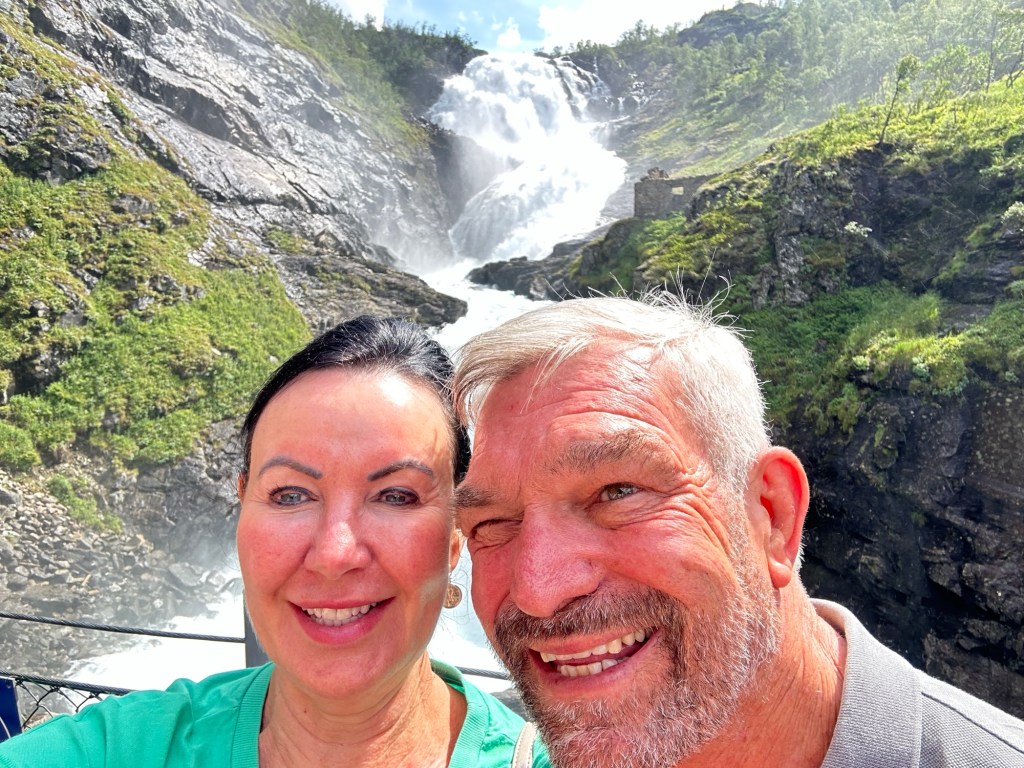

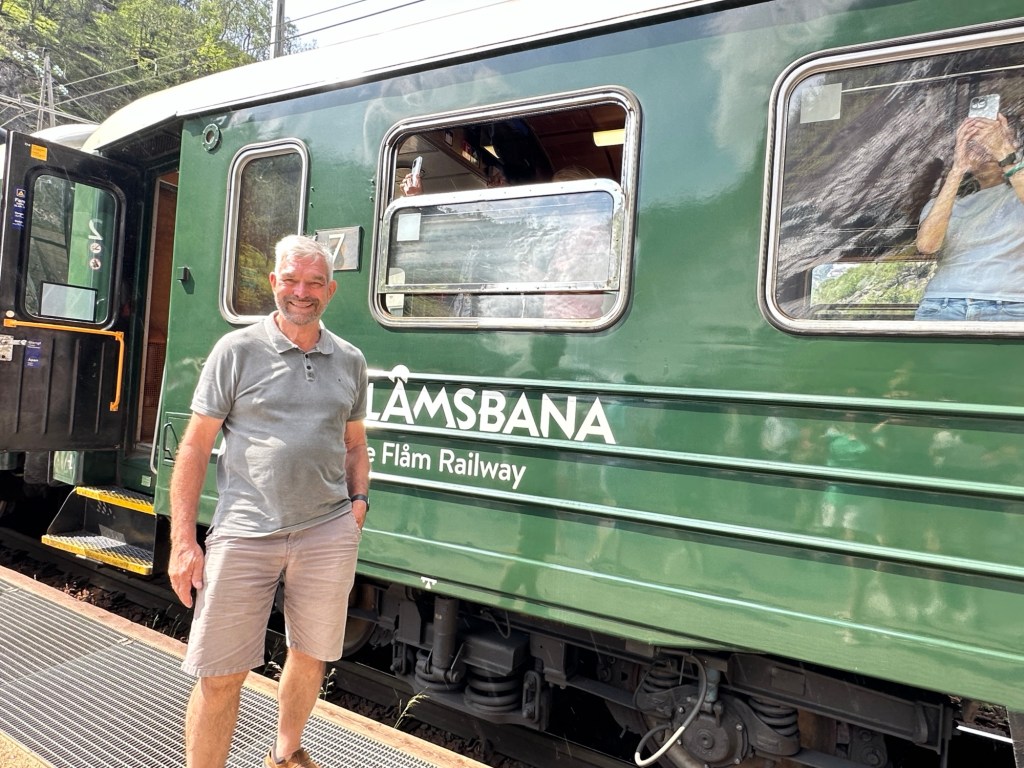

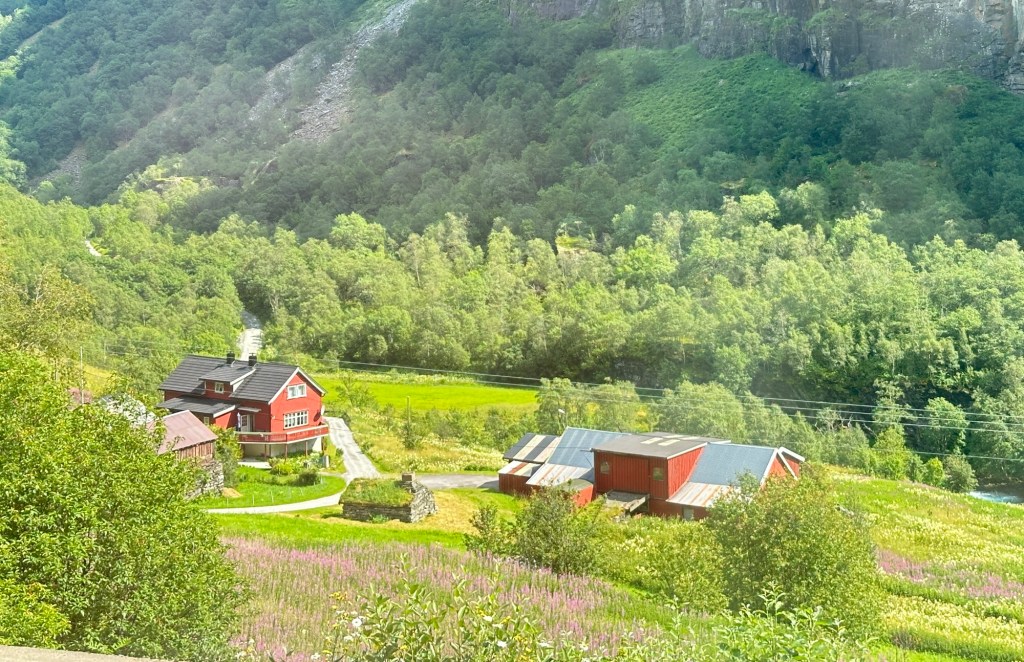
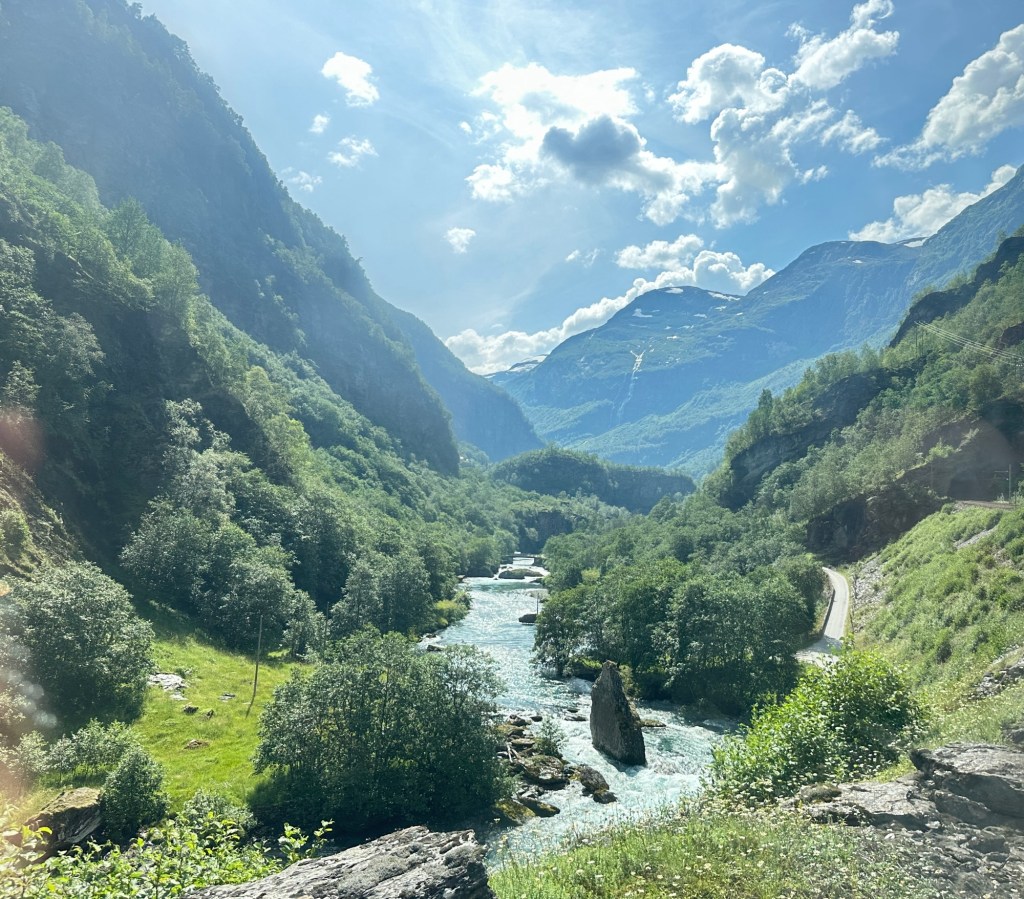
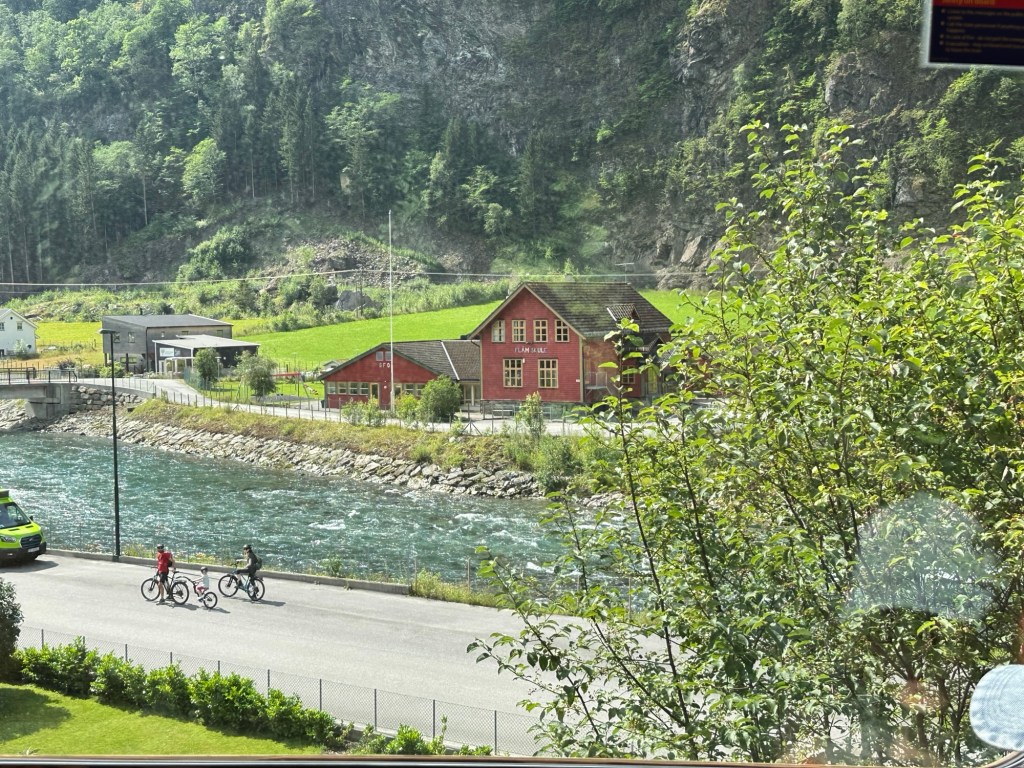

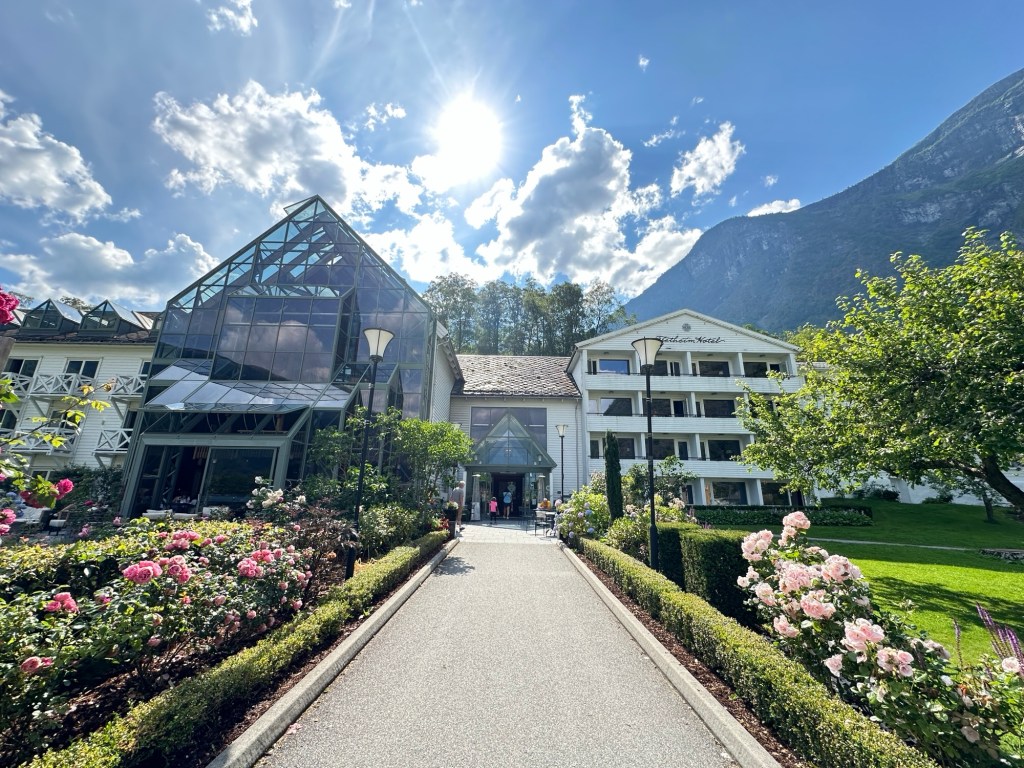
Once at Flam, we could check into the Fretheim Hotel – it was like a ski lodge (which is what it is in winter). The hotel is framed by a huge mountain behind it, quite spectacular.
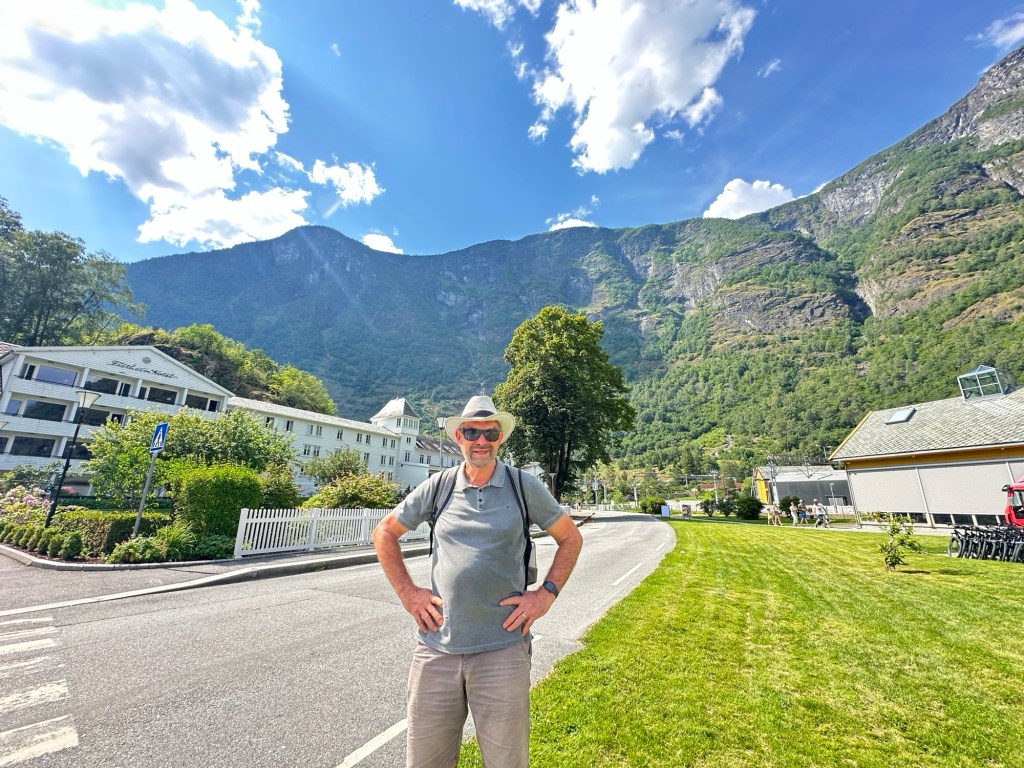
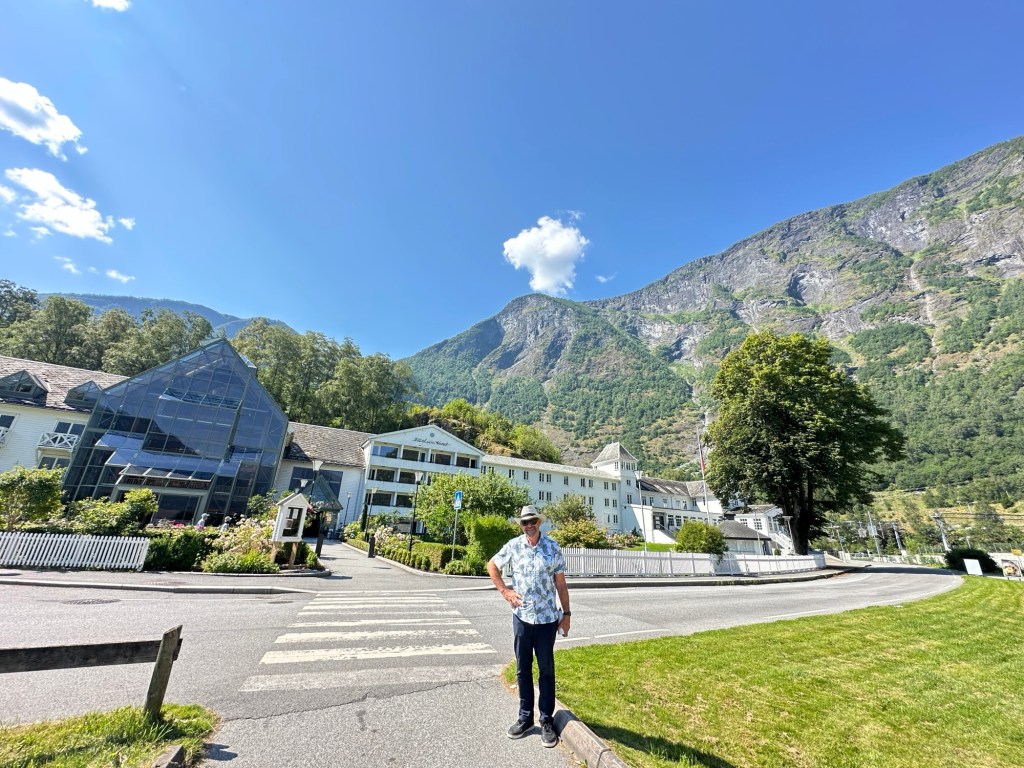
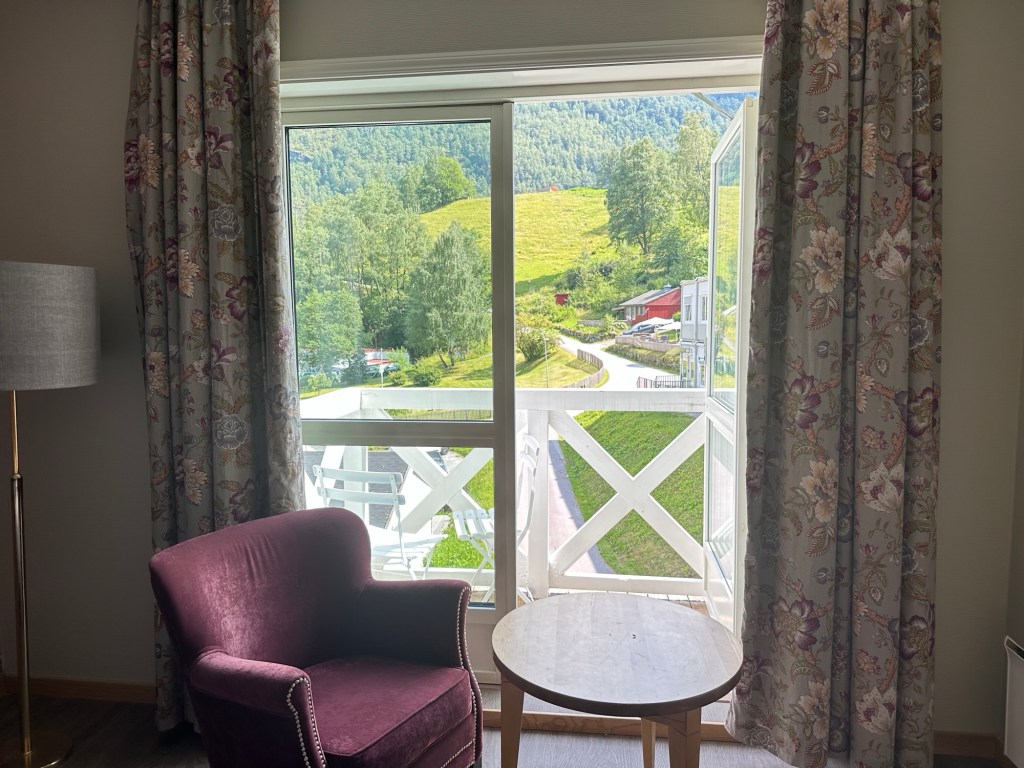
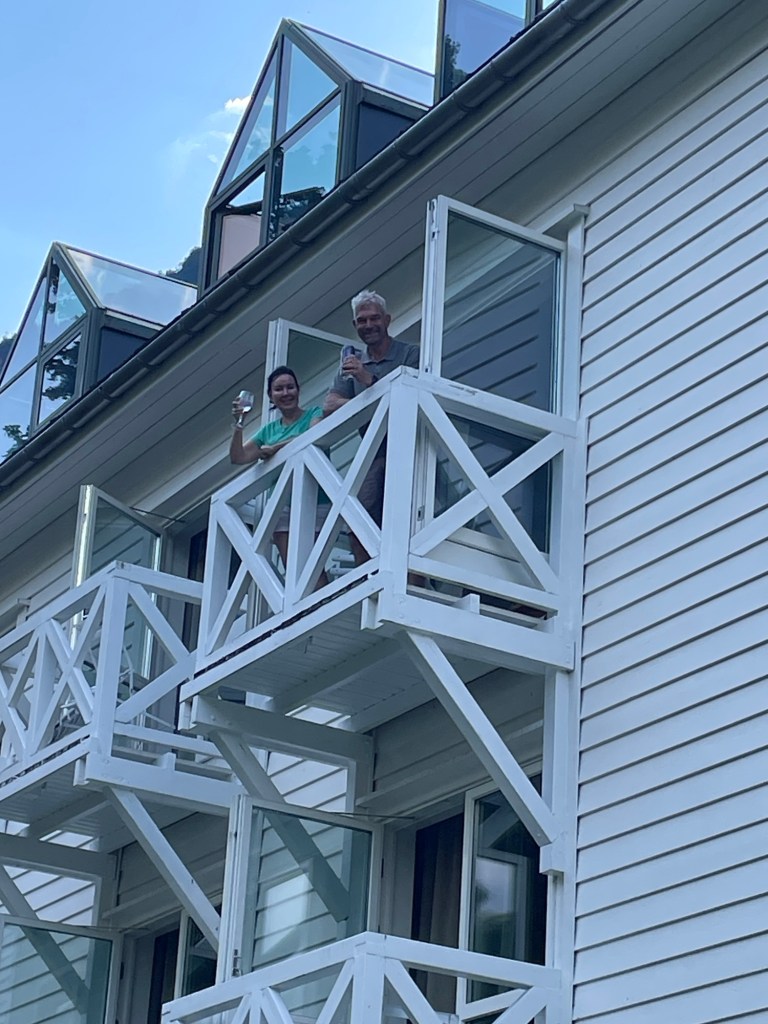

Nestled in the innermost part of the Aurlandsfjord, the tiny village of Flám (pop. 400) is a paradise for nature lovers with its steep mountainsides, roaring waterfalls and deep valleys. Owing to its amazing scenery, Flám has been a popular tourist destination since the 19th century. As a major travel junction, the village is perhaps best known as the end point of the famous Flám Railway (Flámsbana), one of the steepest train tracks in the world.
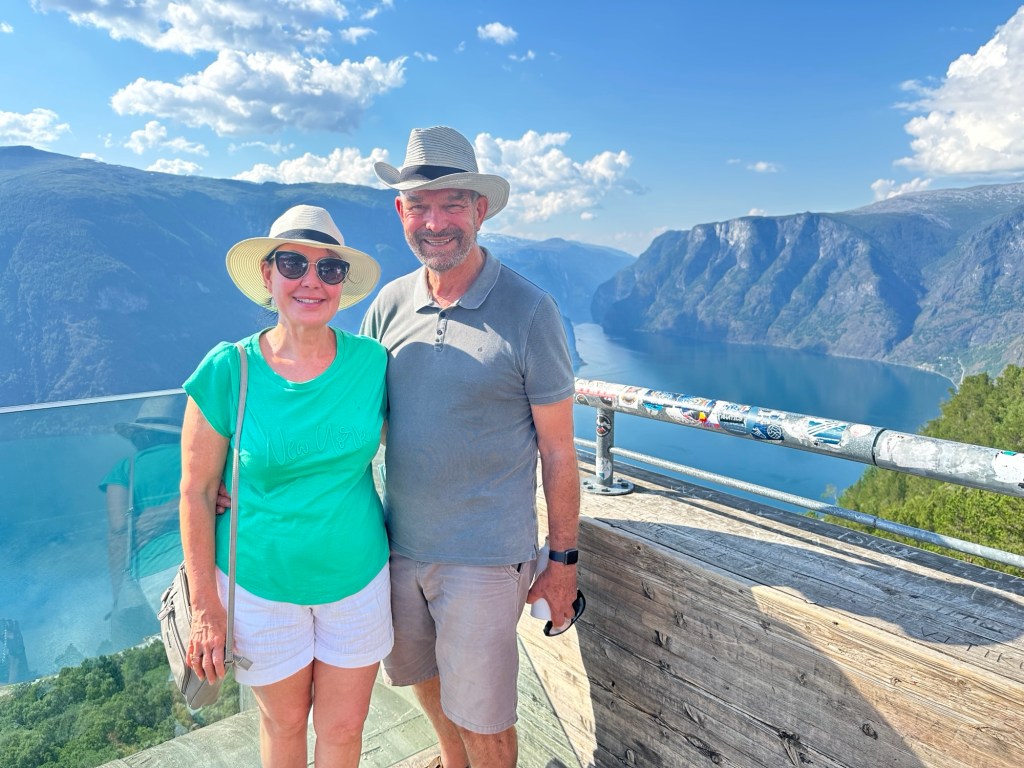
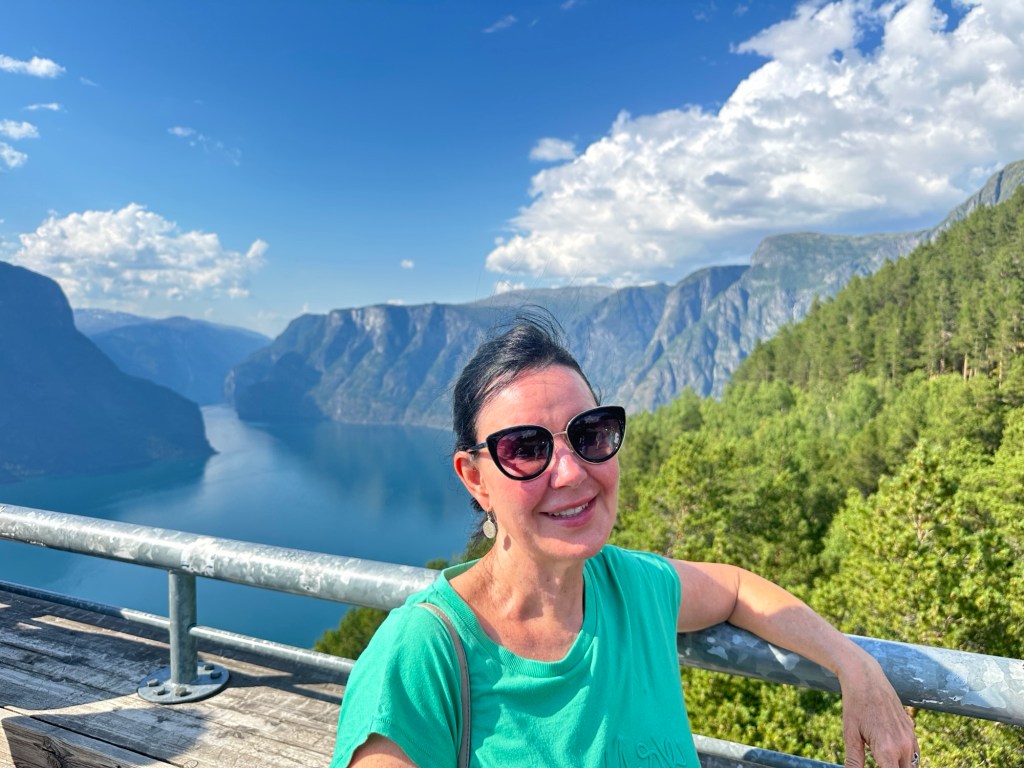
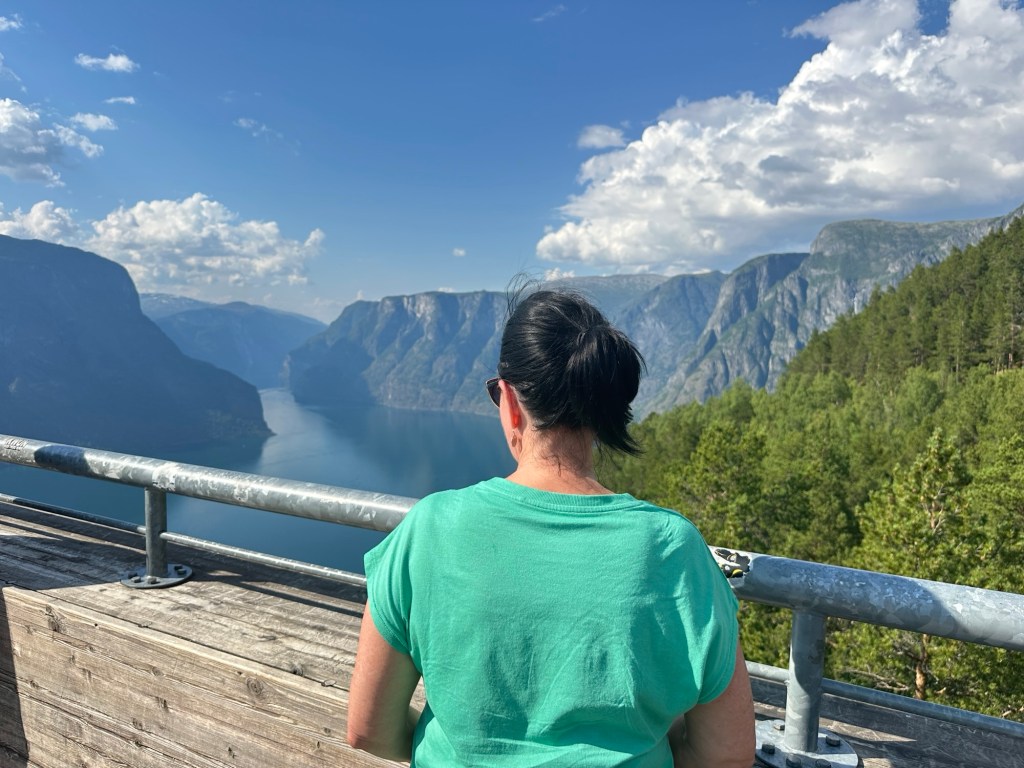
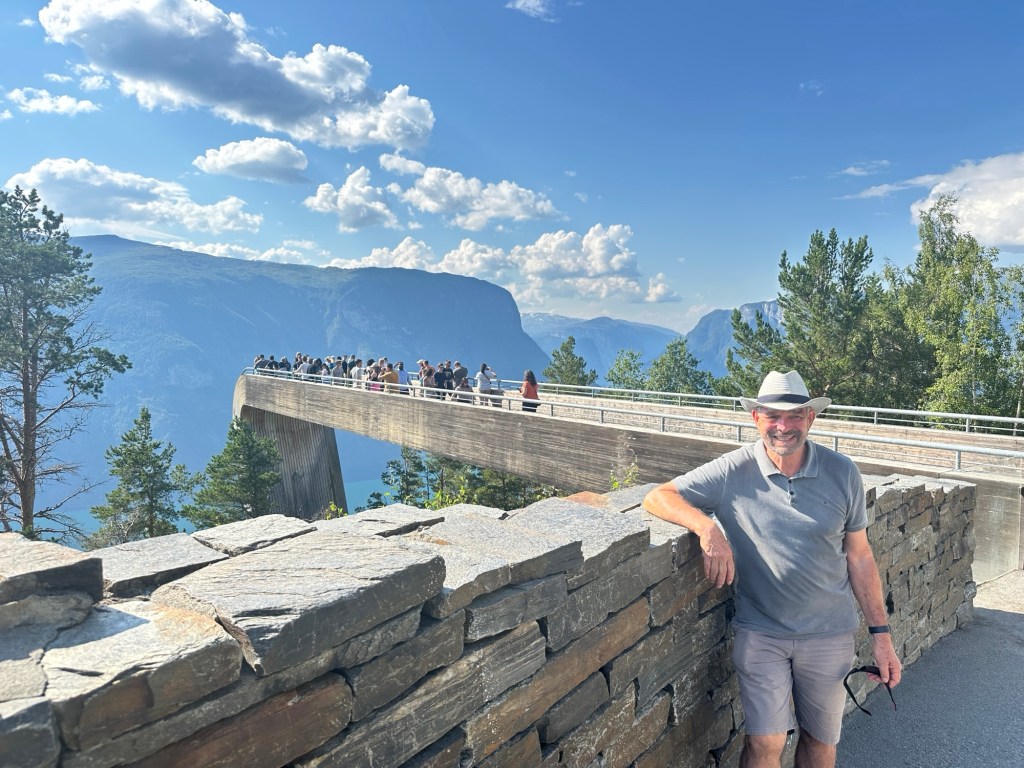
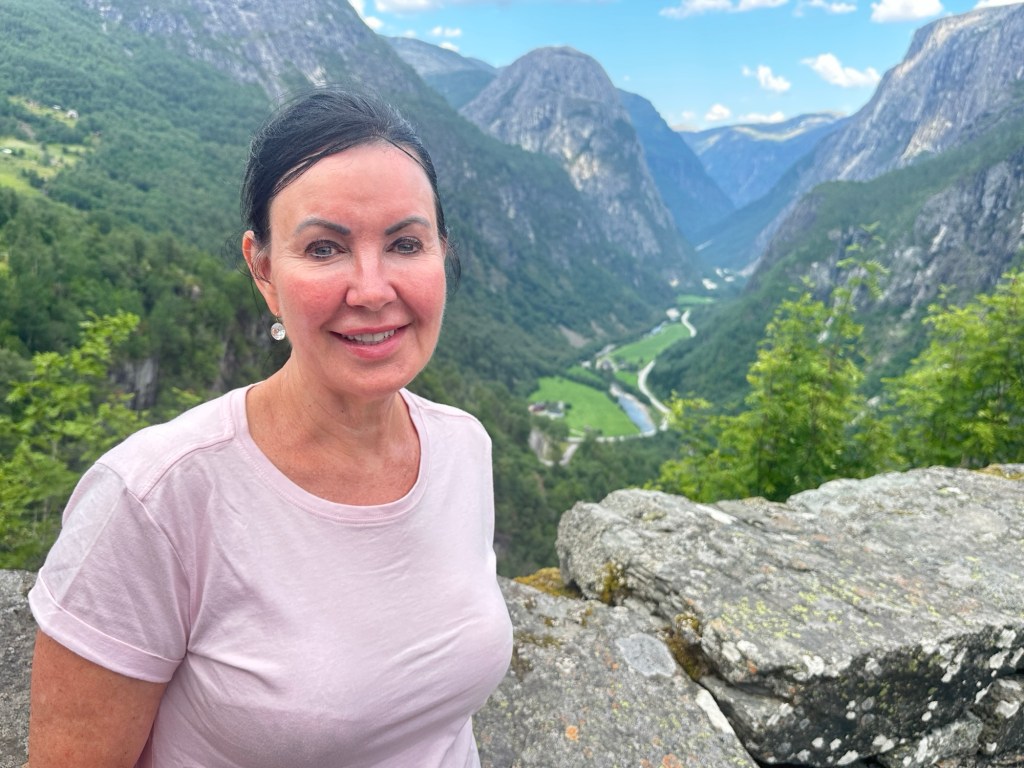
There is quite of optional activities to do in Flám. We had chosen to go to the Stegastein viewpoint. This involved a thirty minute bus tour on a very narrow winding road (I thought we were back in Scotland!) from Flám via Aurland, to the extraordinary and spectacular viewpoint. This structure, which juts 30 metres out from the mountainside, is located 650 metres above the fjord, offers an unparalleled panorama. A fantastic view of the fjord, mountains and surrounding landscape.


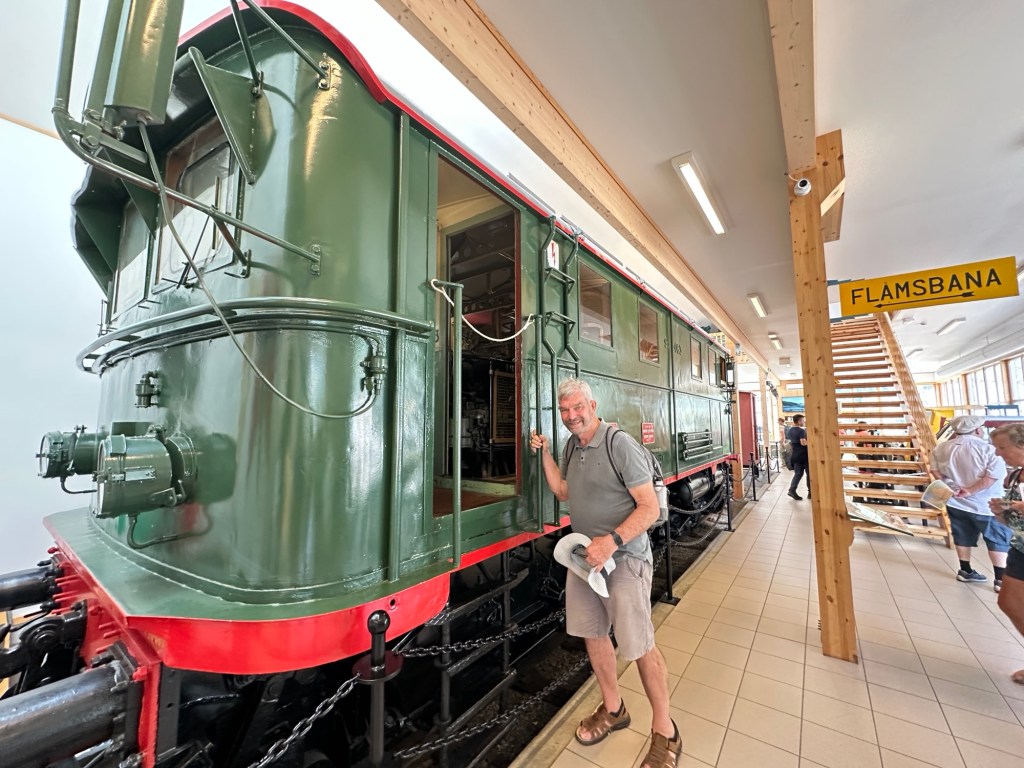
Back in Flåm, we went to the Flåm Railway Documentation Centre, located beside Flåm Station. It was interesting to hear about the construction of one of the world’s steepest railway lines.
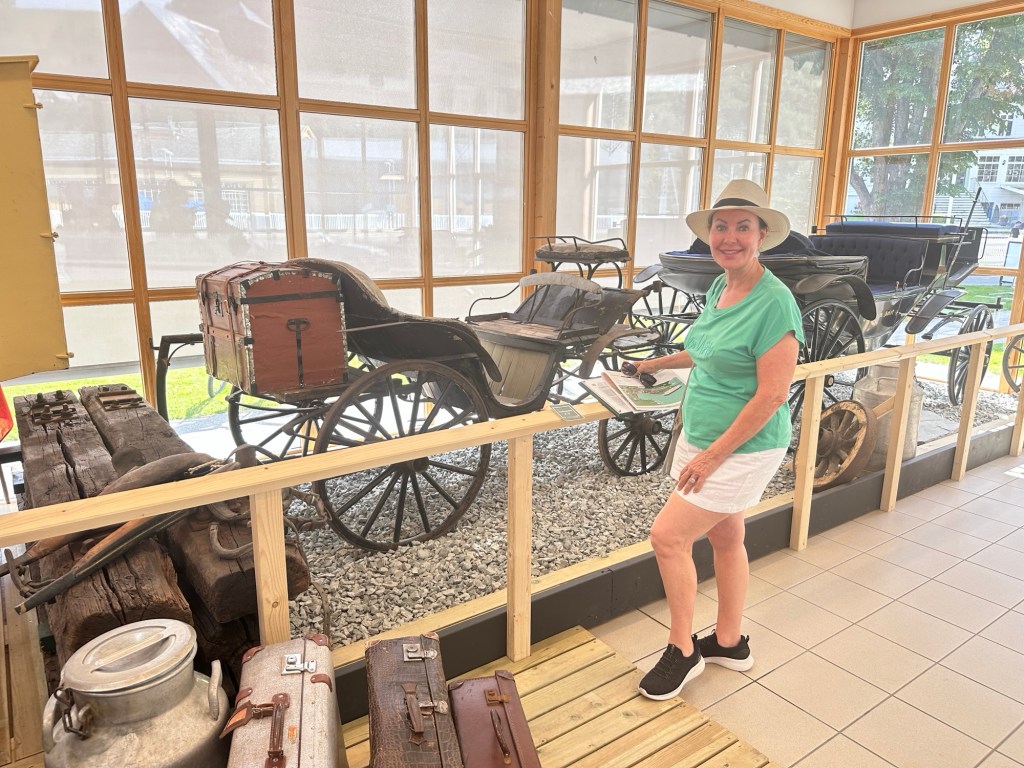
In the evening, we had a group dinner at the restaurant at the hotel – a buffet with an assortment of Norwegian local food. Reindeer, goat, herring, mackerel, salmon, meatballs were just some of the choices.
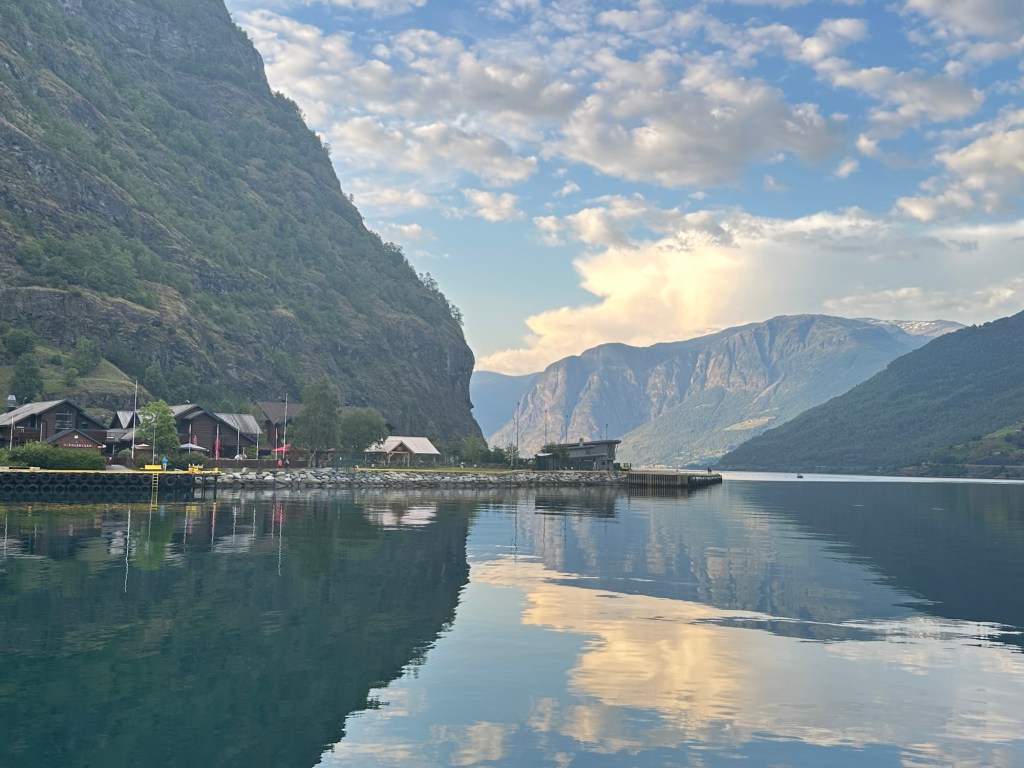
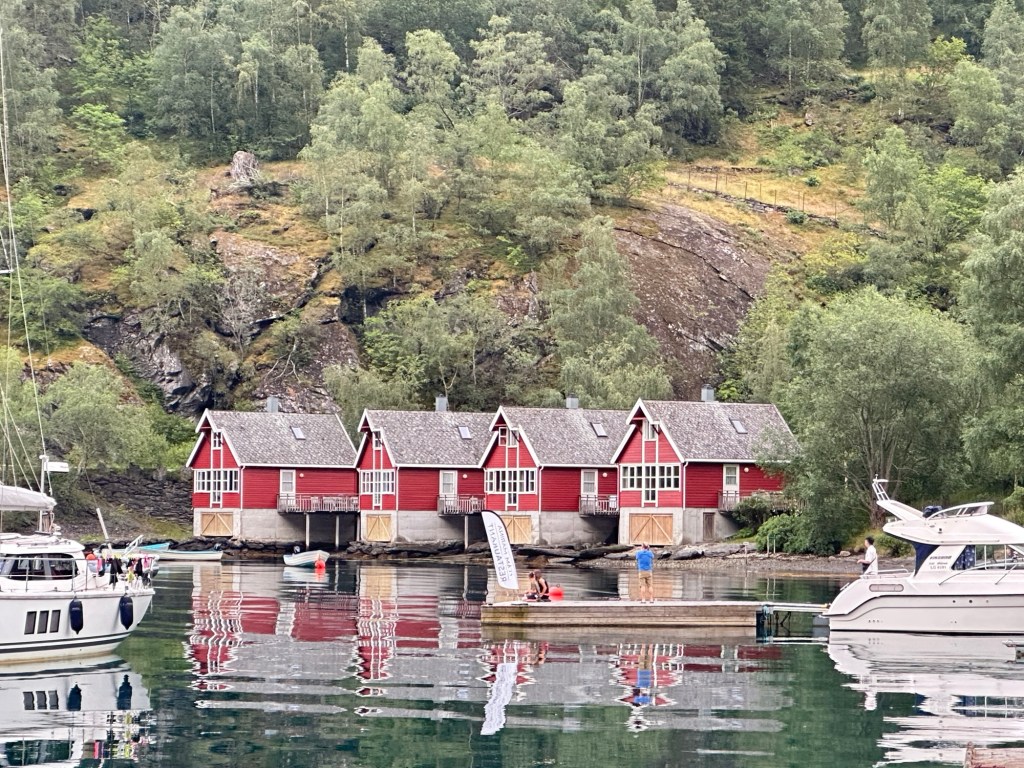
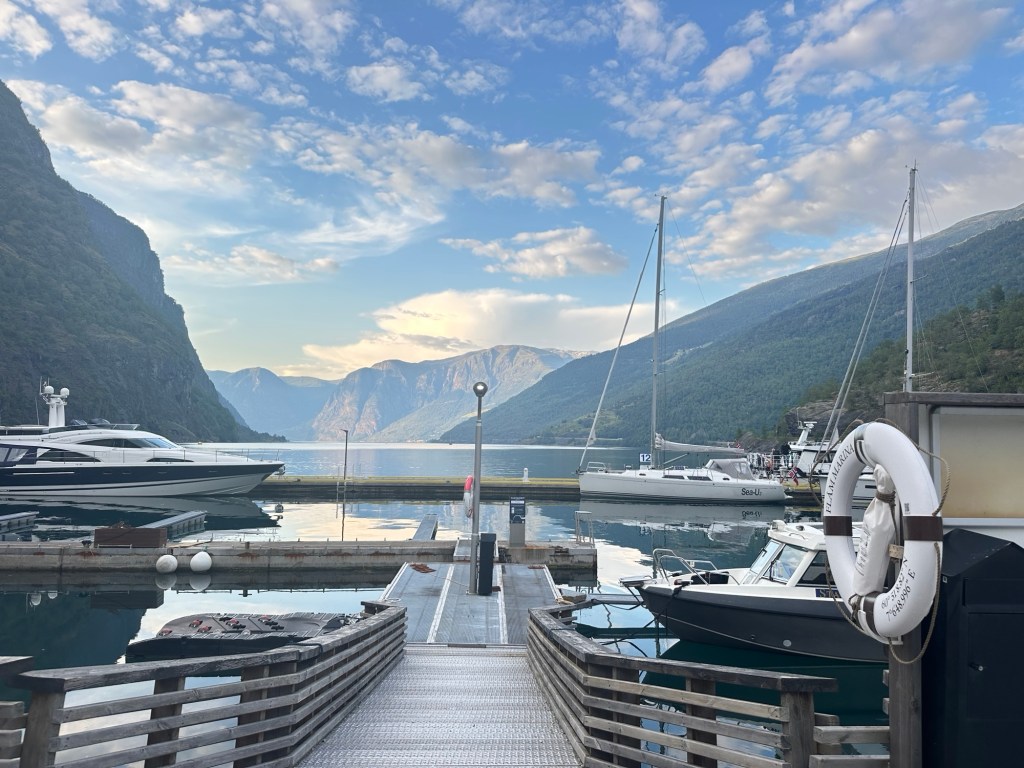
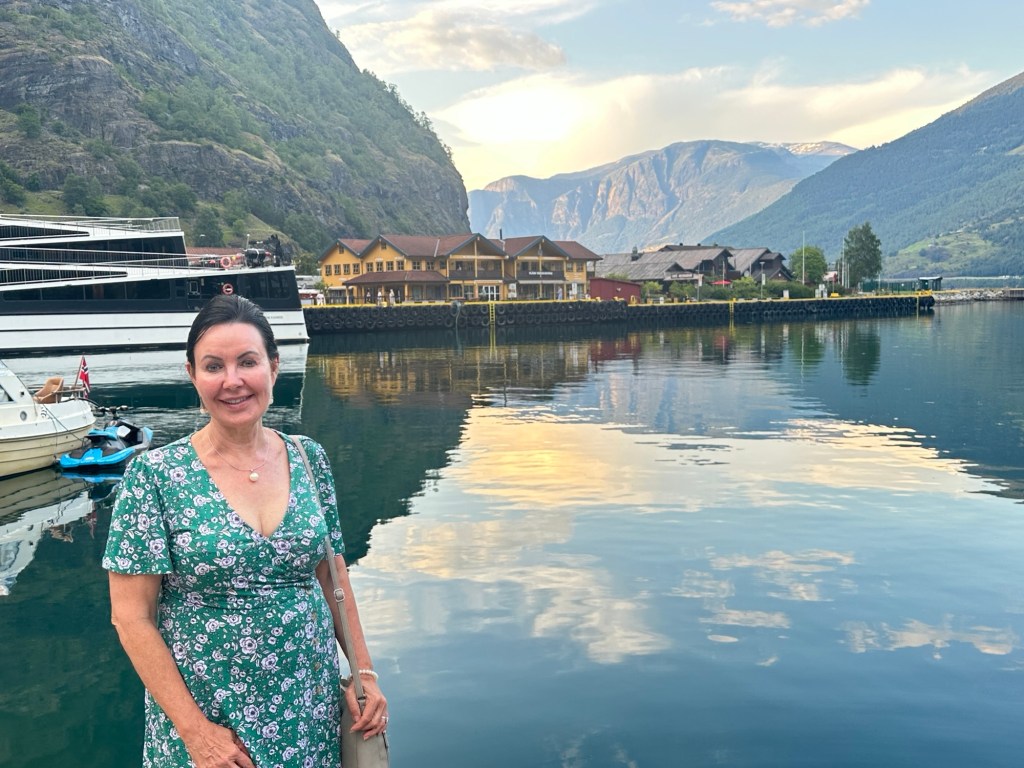
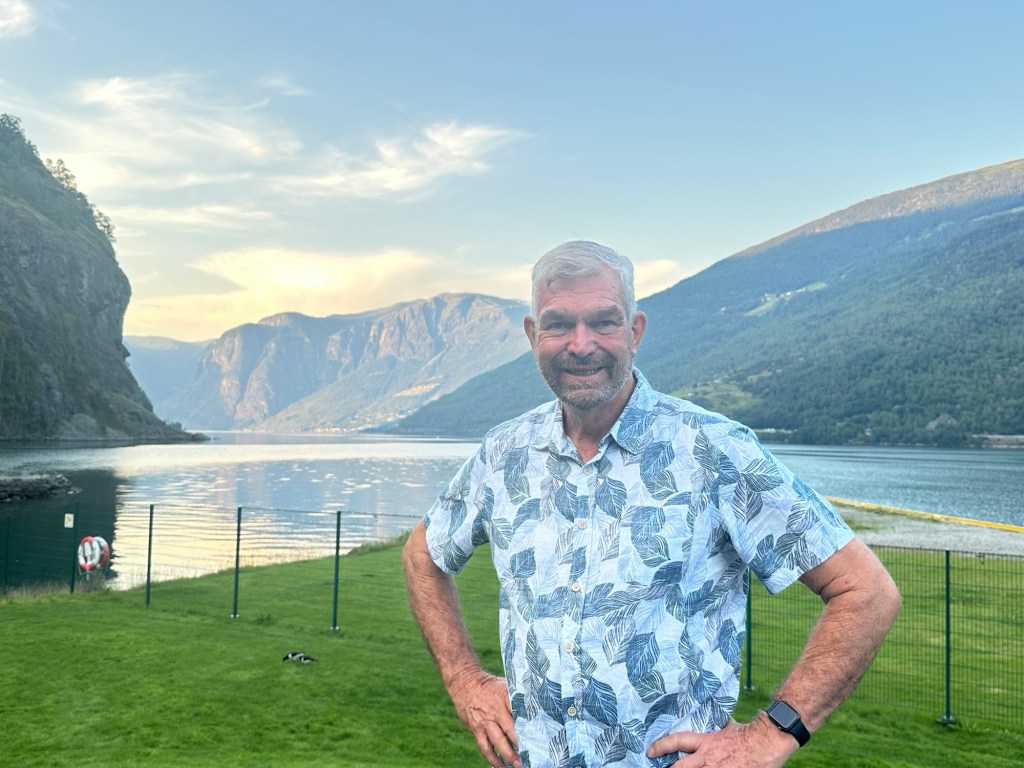
After dinner, Frank and I went for a walk around the marina. Flám has a population of only 400. Luckily for us, no cruise ships were in for the two days we were there, as apparently you can’t move when the ships are in port. There are people who day trip there for the day via bus or train as well. But at night, it is so quiet and peaceful. It felt like we had the whole village to ourselves. The marina was serene in the soft late evening light – it doesn’t get completely dark until after 11pm at the moment. It was just beautiful.




Day 62
Sunday 20th July
Flám to Bergen
16-29 degrees, sunny
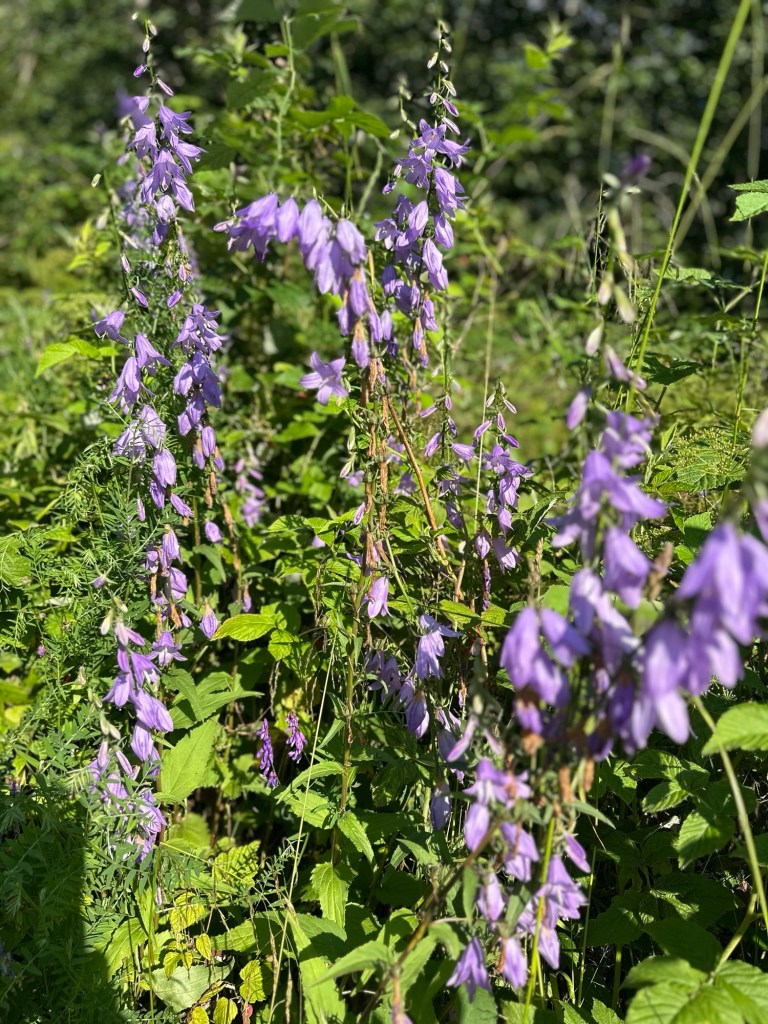
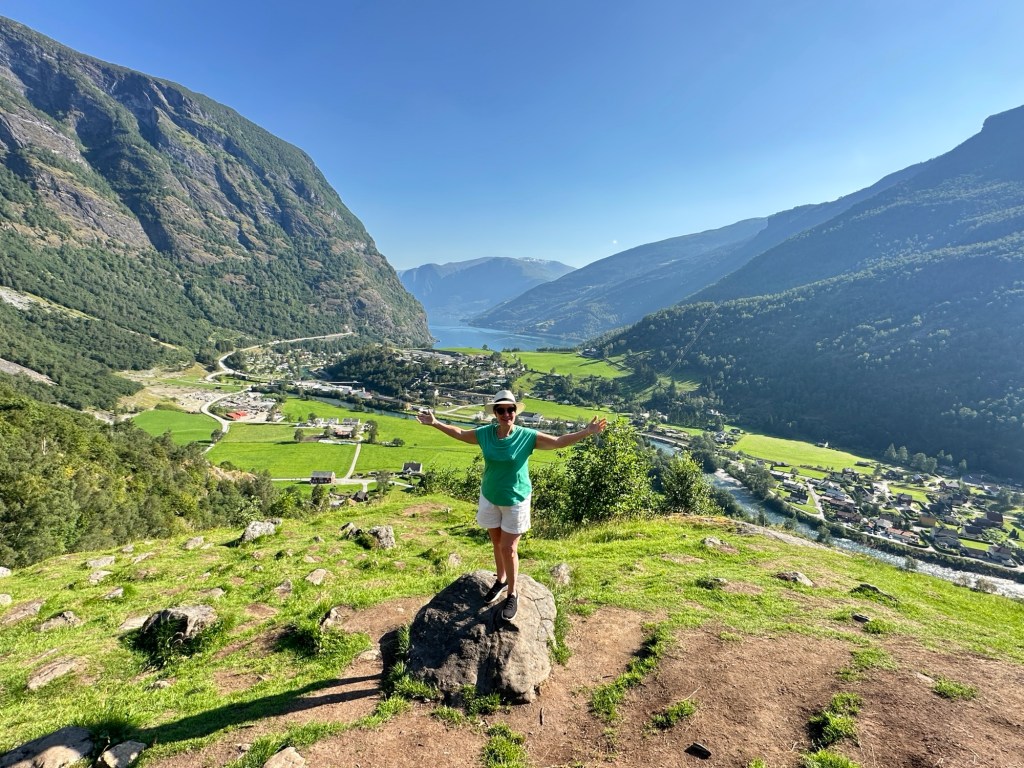
We had free time until 2.30pm. Our plan was to hire bikes and have an early bike ride after breakfast and before it got too hot. The ride to Lunden was very pretty- I love the little painted houses, some with grass growing on the roof. The Flám Church and graveyard were a pretty centrepiece of the village.
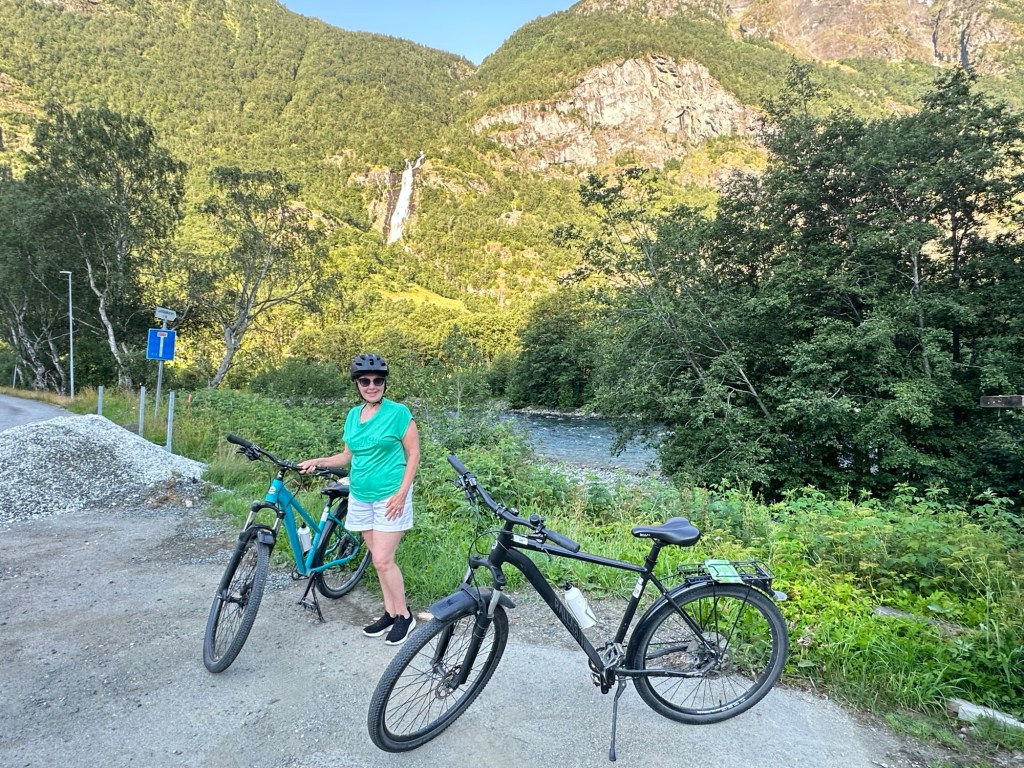

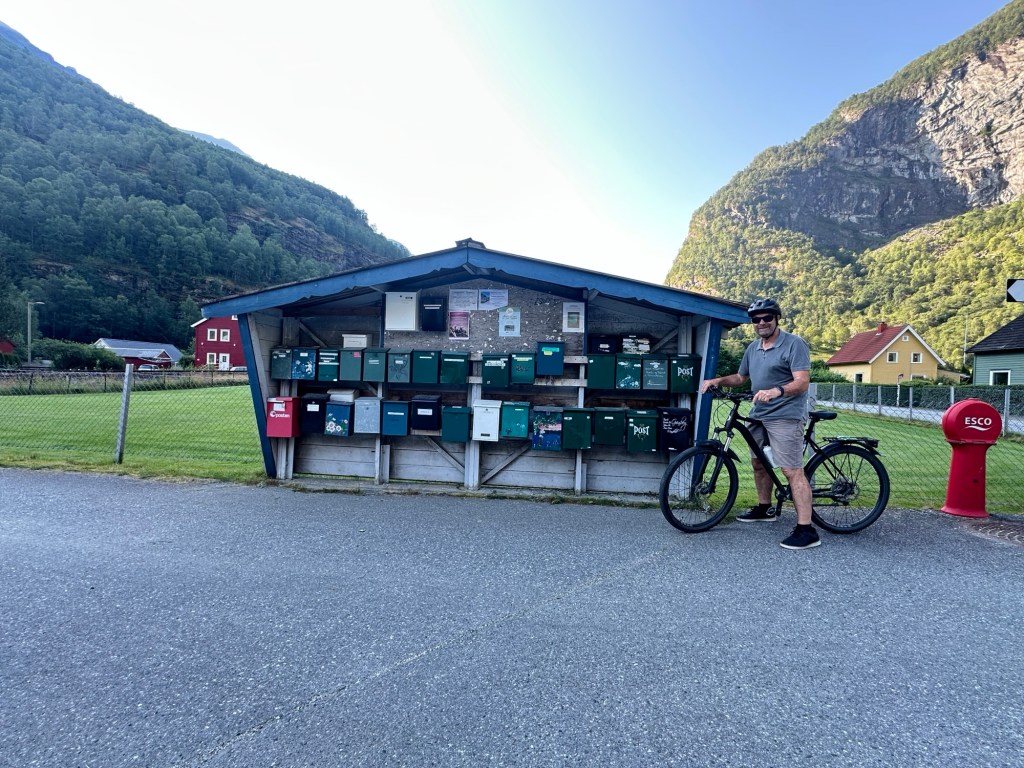

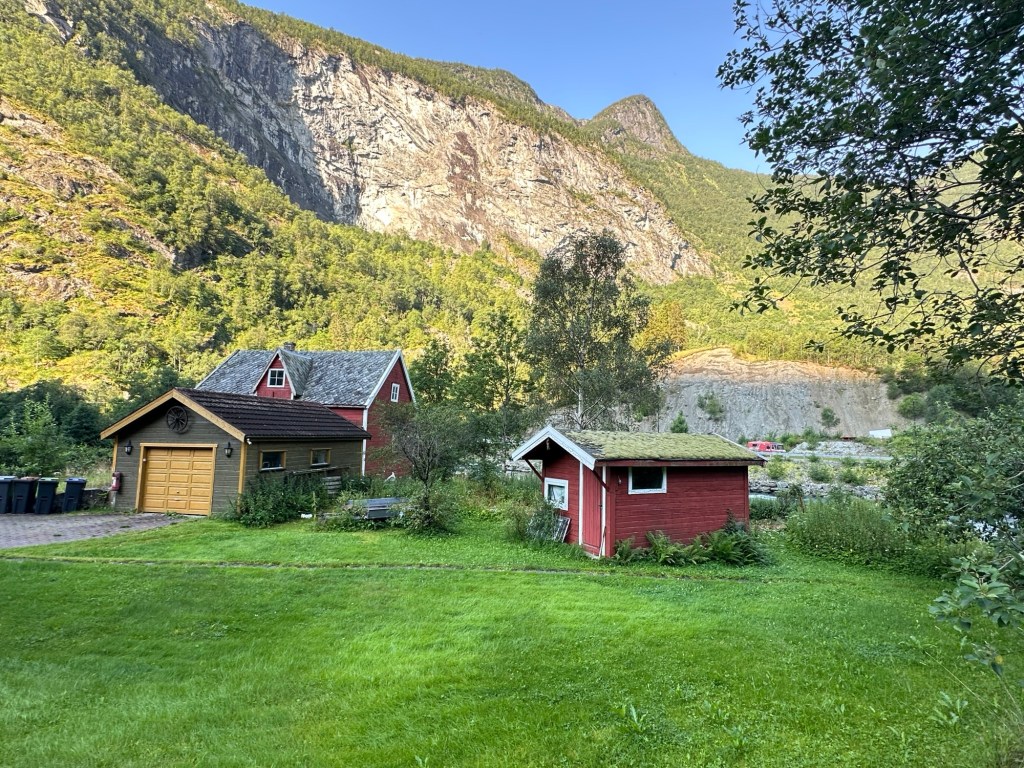
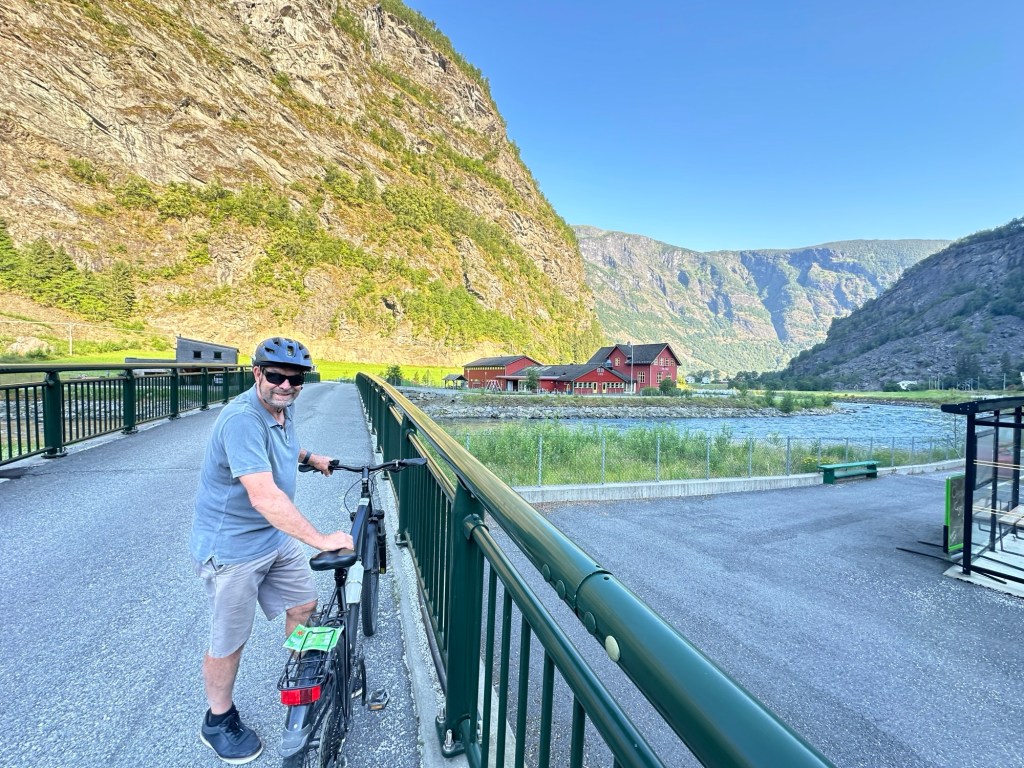
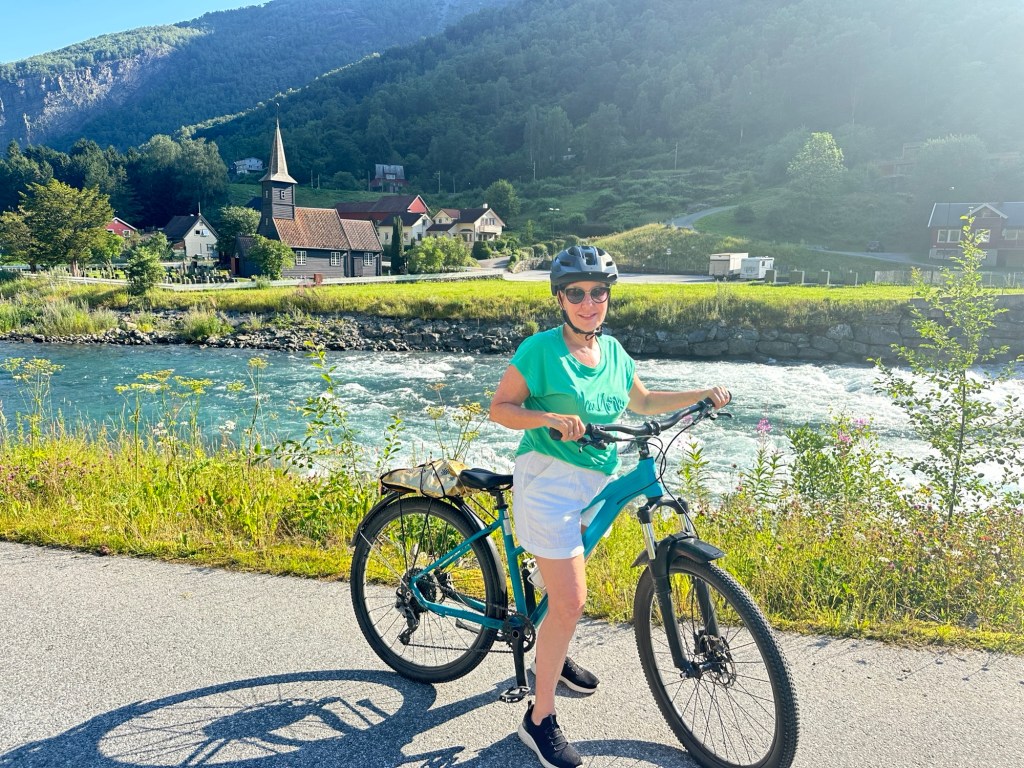


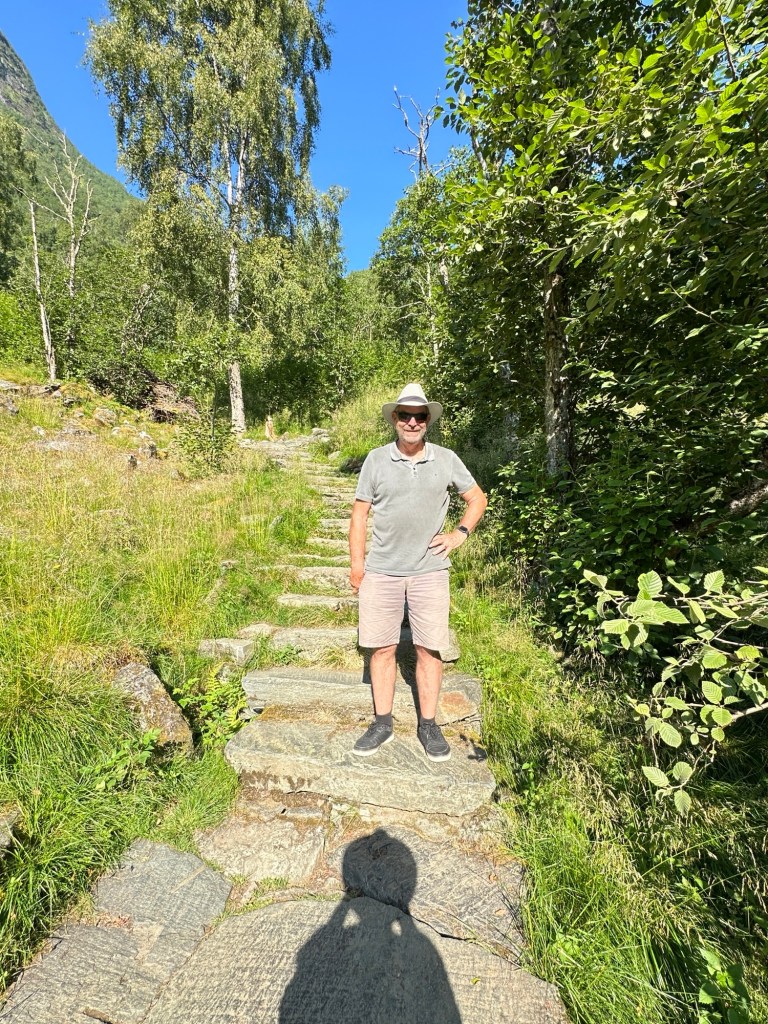
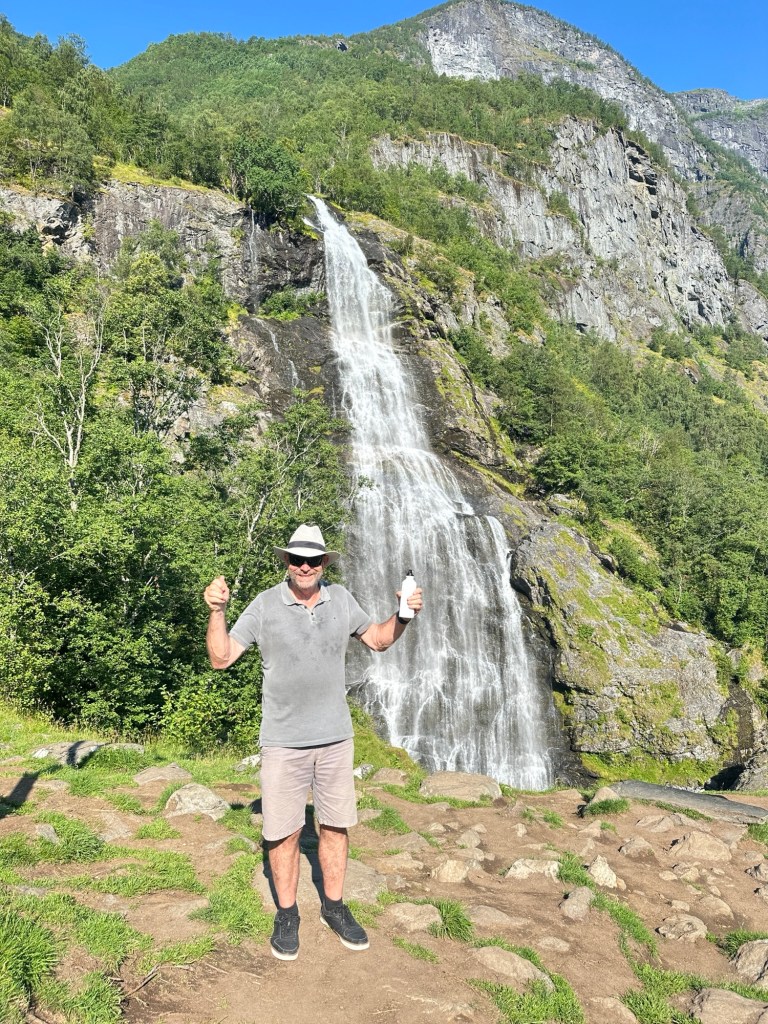
We also walked, or climbed up the hill to Brekkefossen ( waterfall). Steep climb, and hot, but worth the effort.


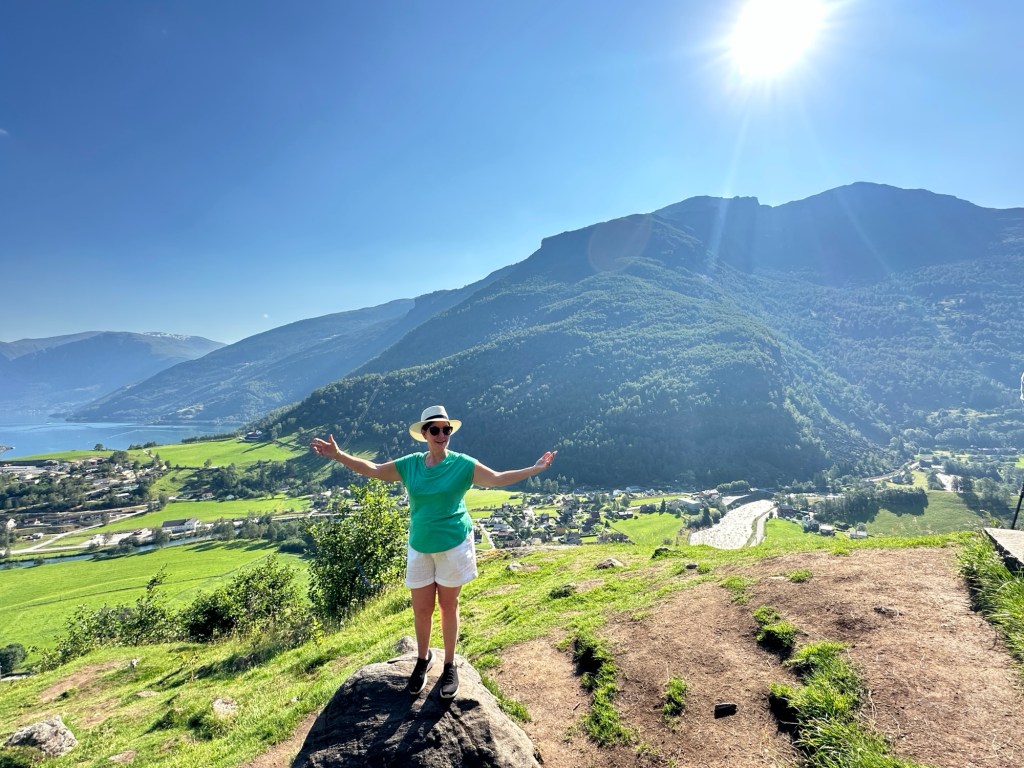

Back in Flám, we had time to visit the Flám Brewery, where we tried the local beer, and a crepe filled with cooked reindeer and pomegranate, for lunch – it was delicious.


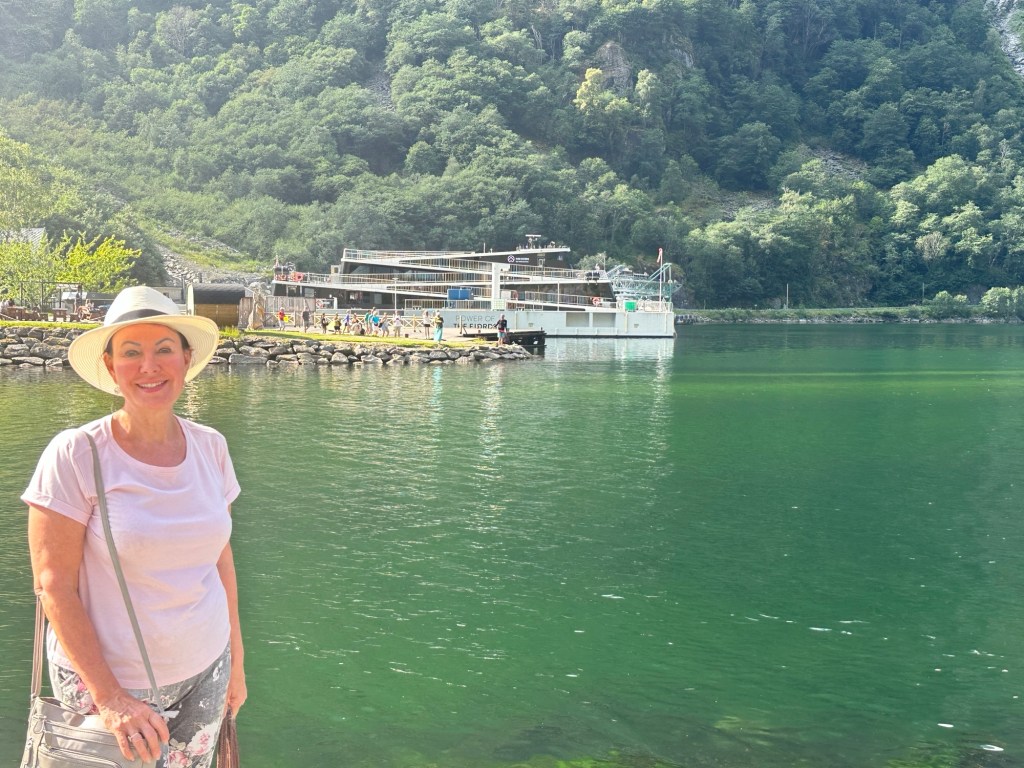
For the next two hours we went on an amazing electric catamaran through Aurlandsfjord, and the World Heritage-protected Nærøyfjord, the narrowest fjord in the world. This arm of the Sognefjord, with its tall mountains, mighty waterfalls and small farms clinging to the steep mountainsides, was just stunning. Of note, it only takes 25 minutes to charge the 400 person capacity boat.
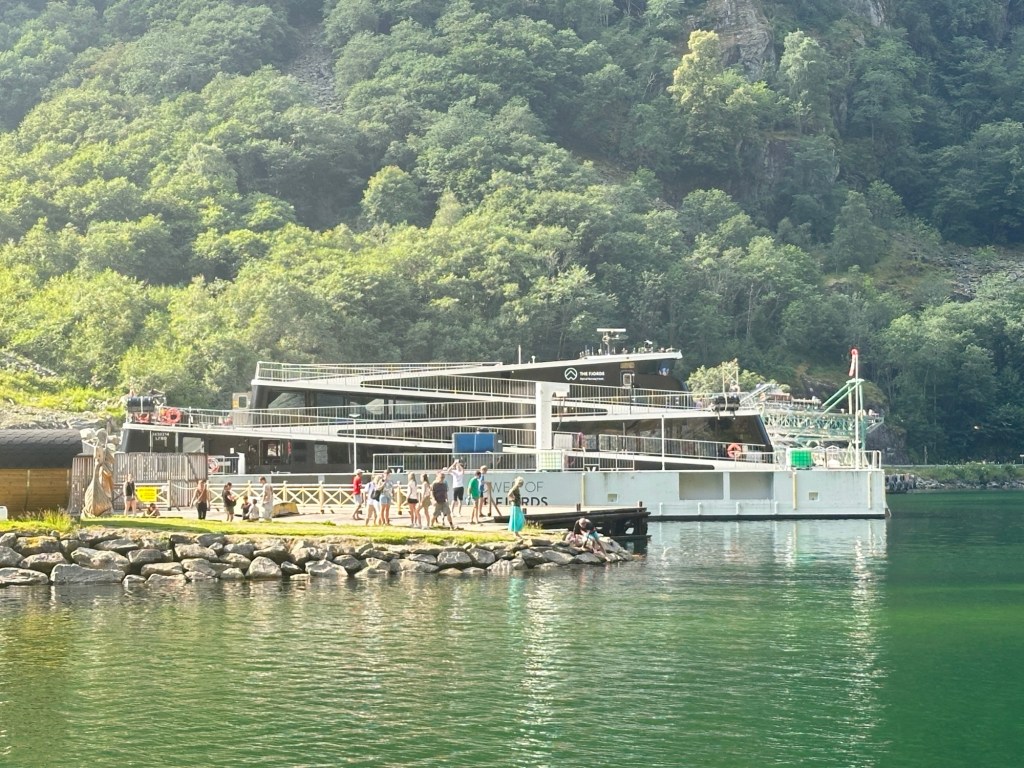
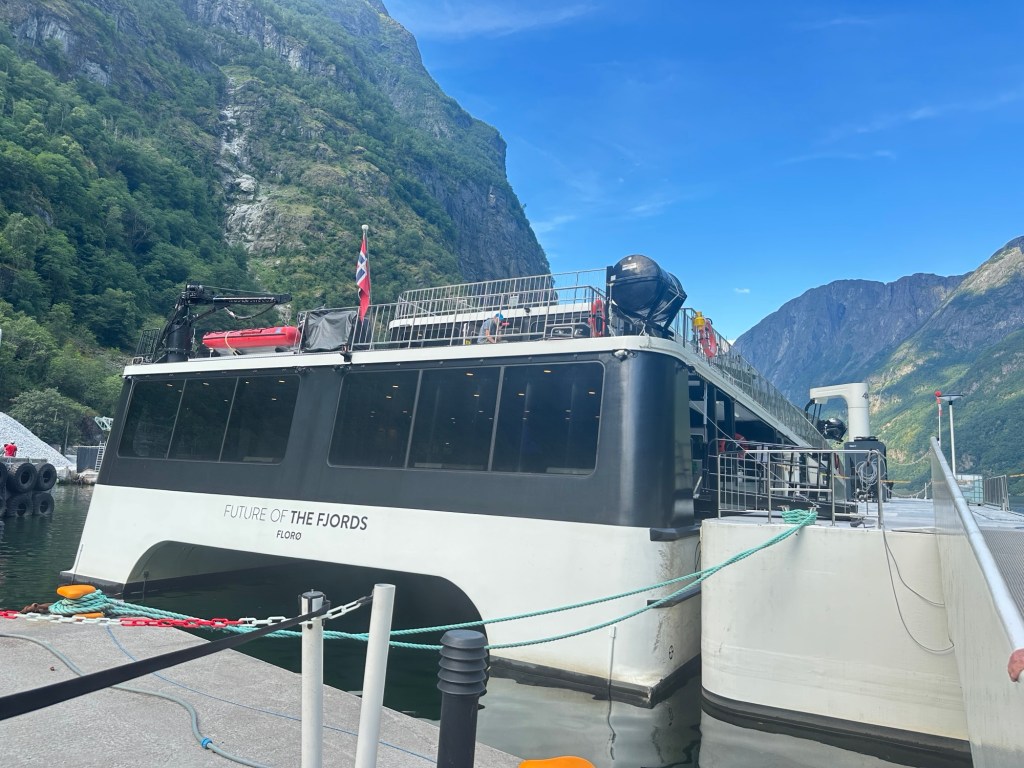

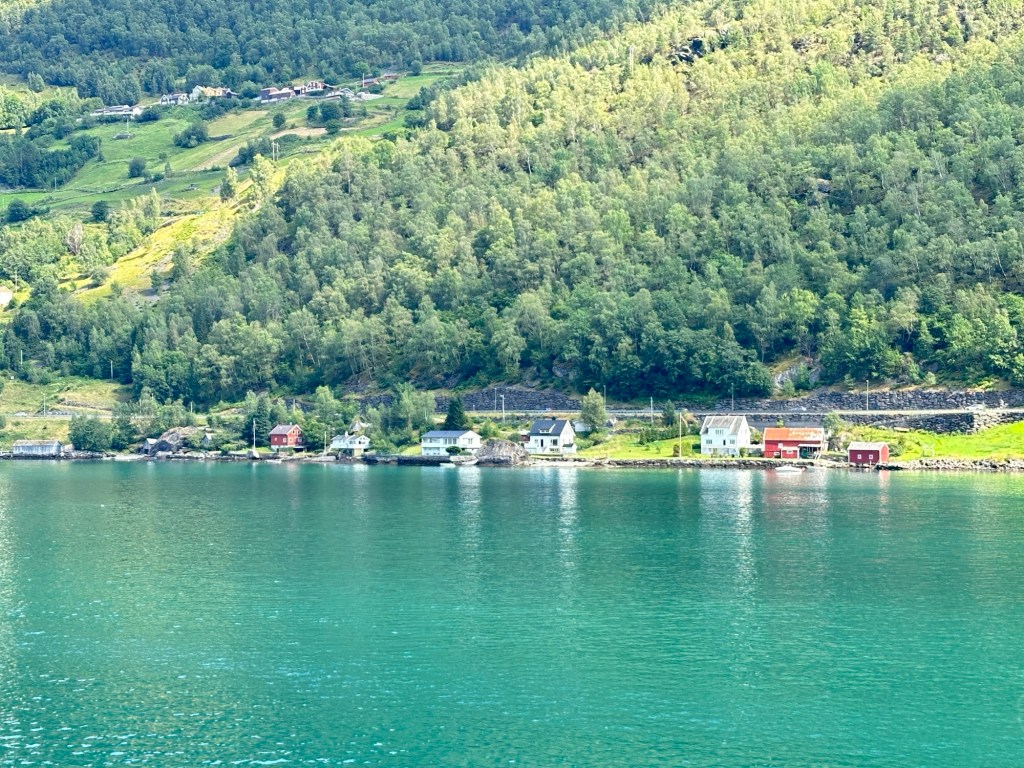

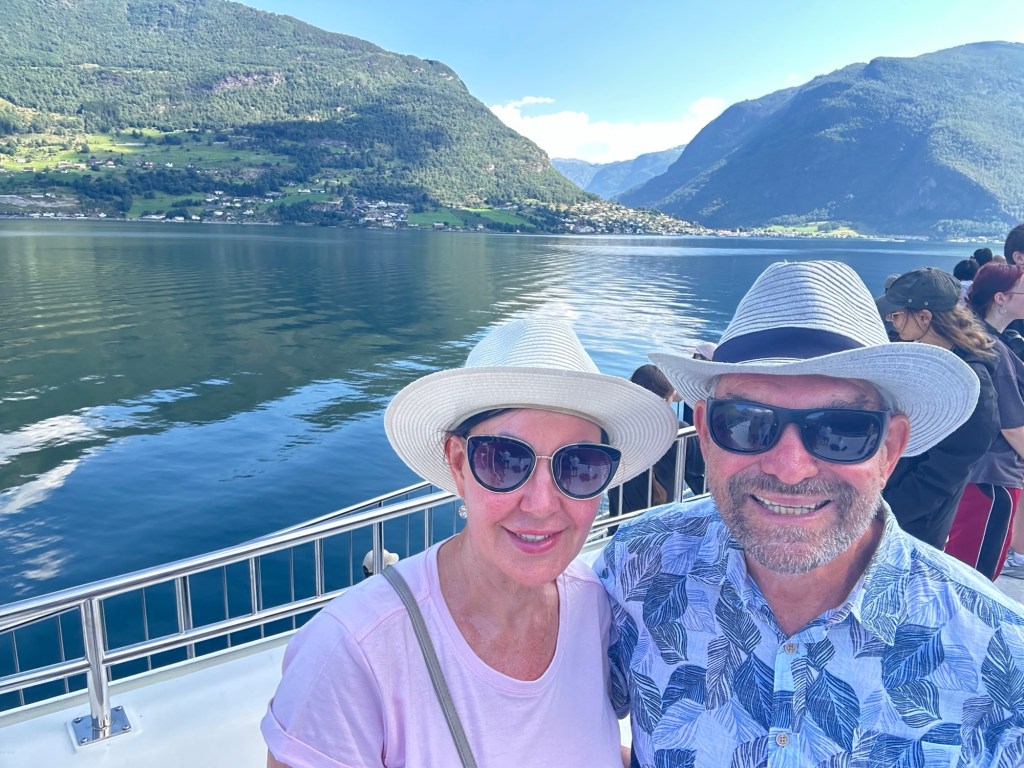
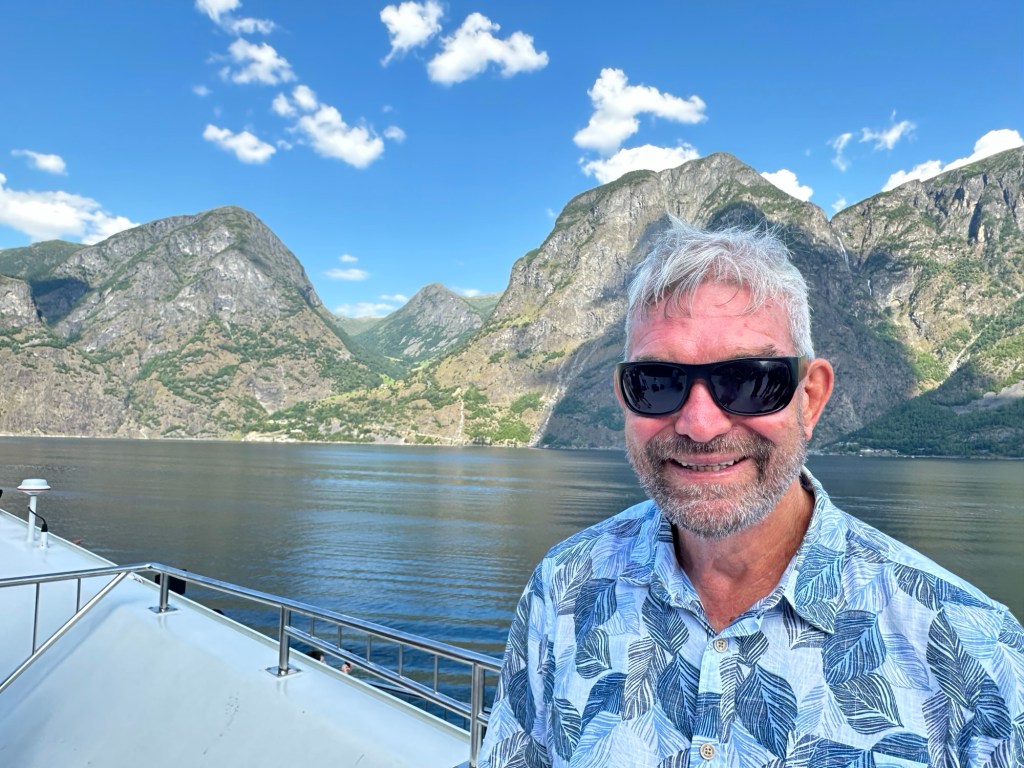
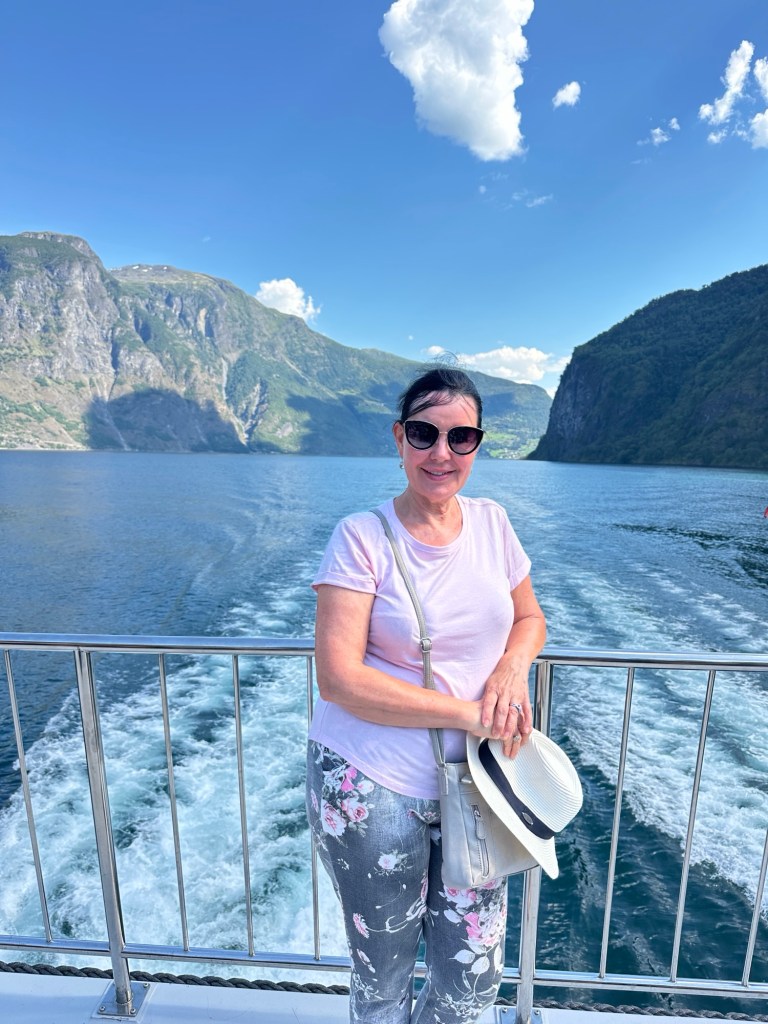

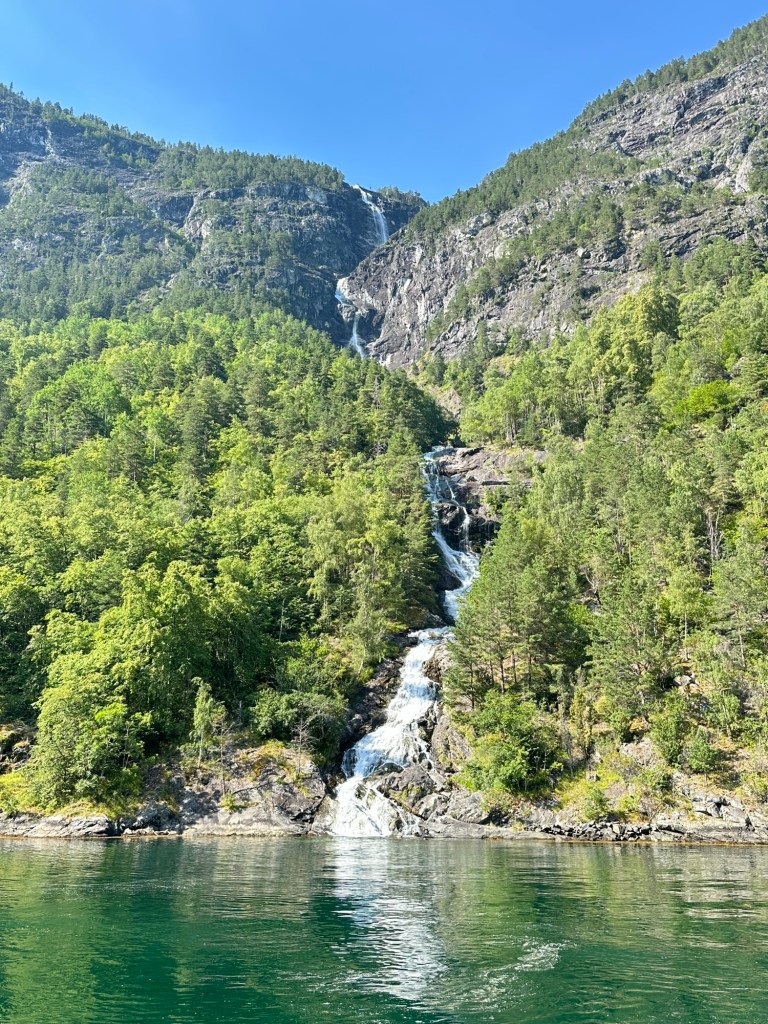
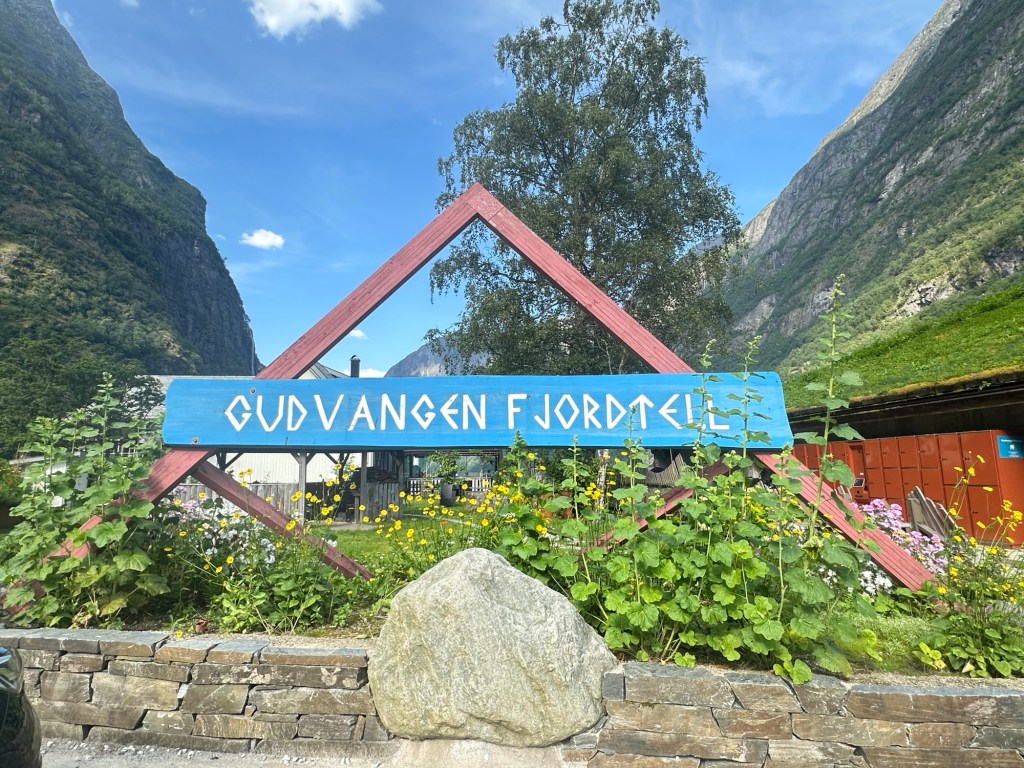
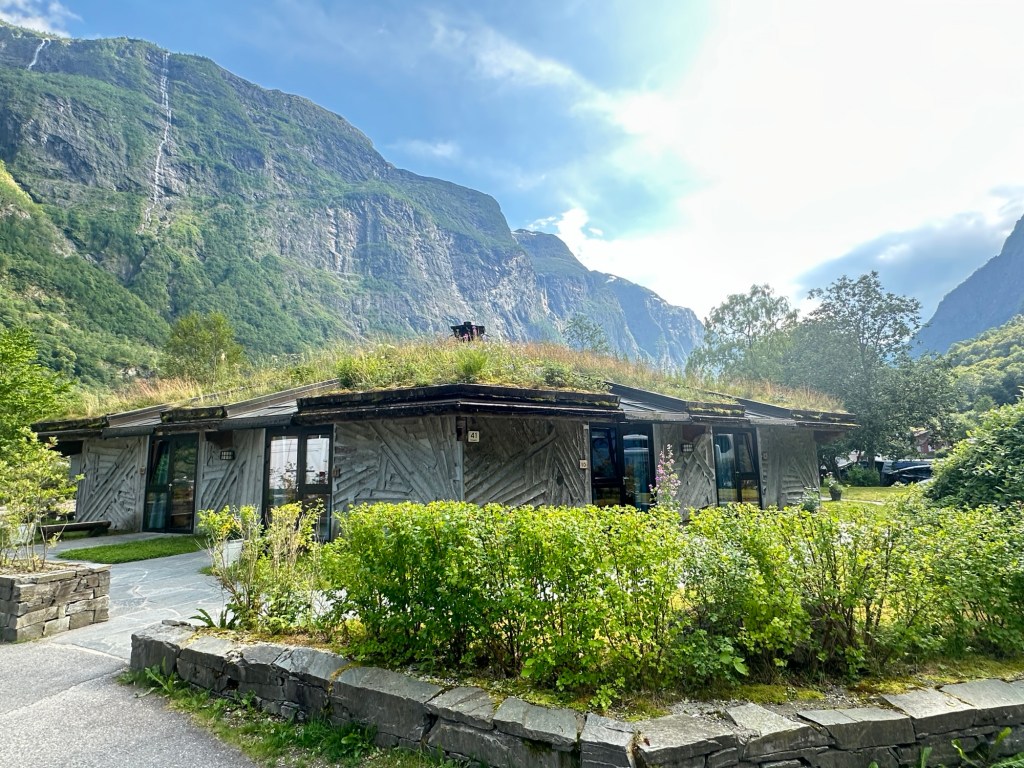
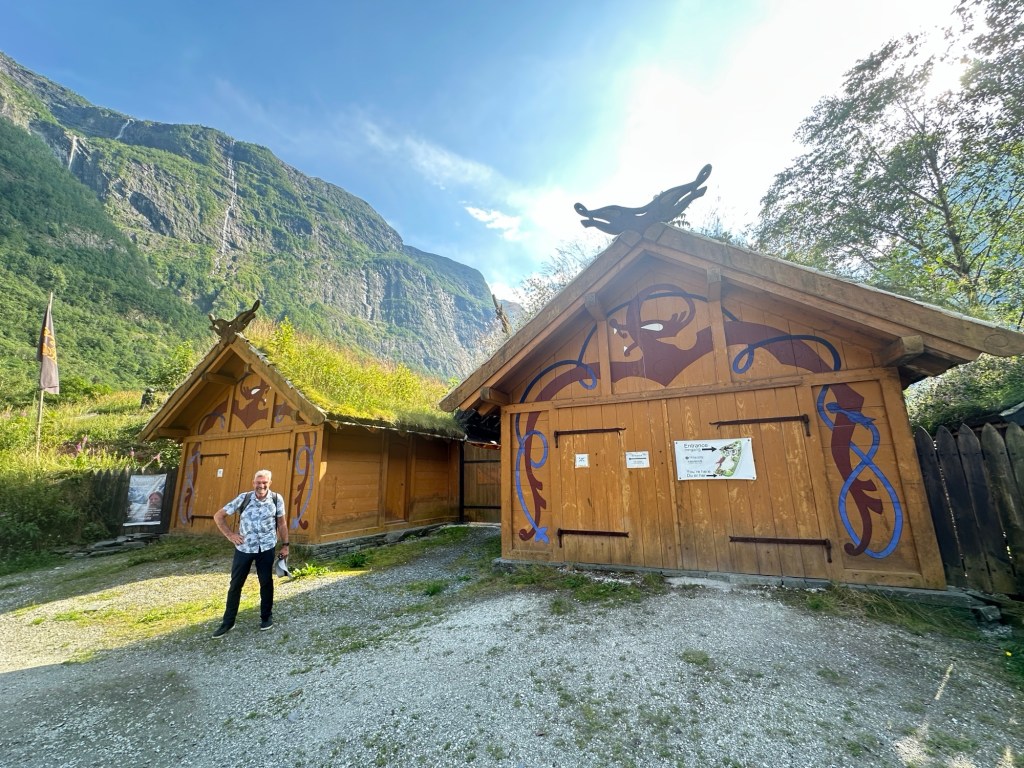
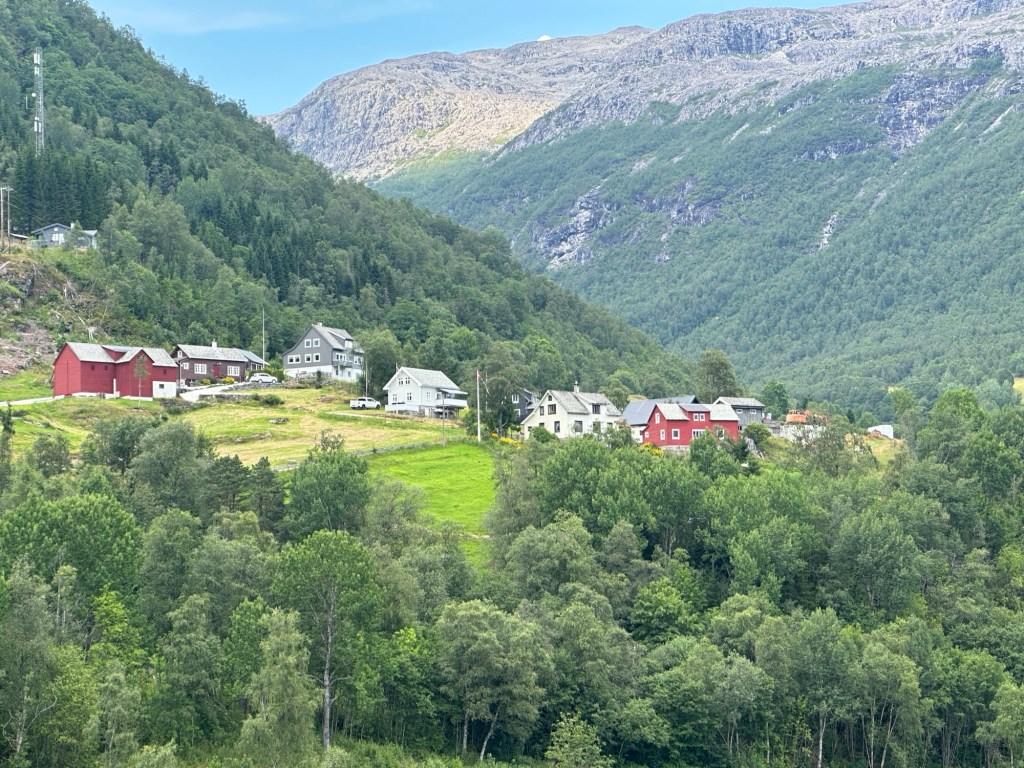
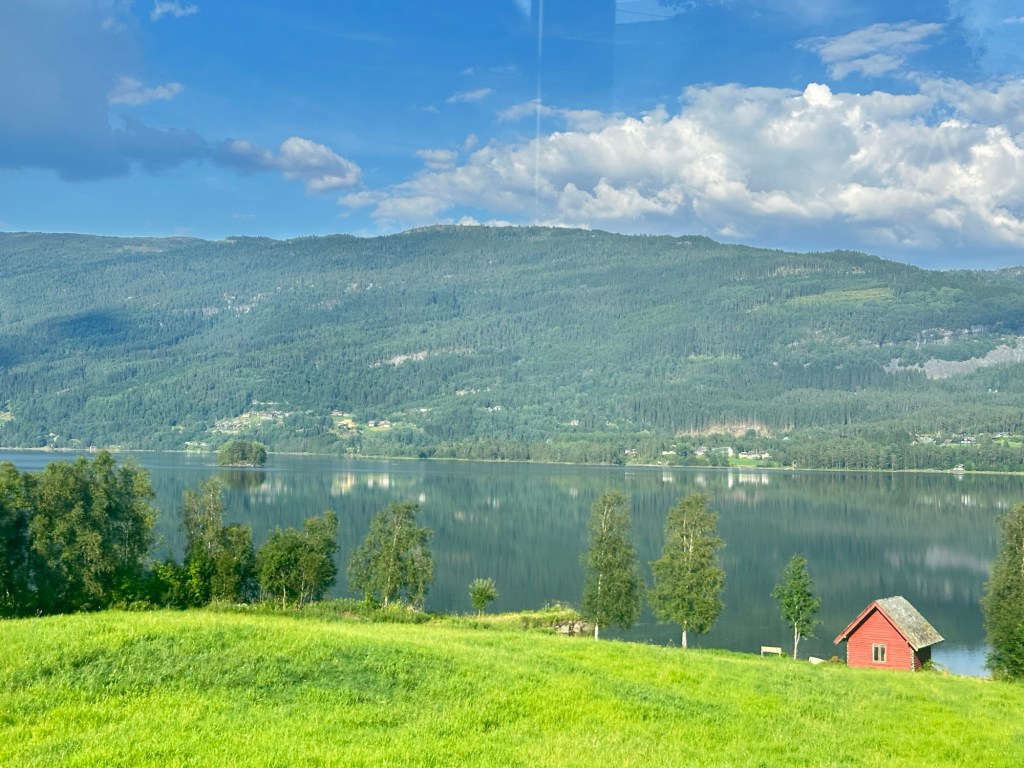
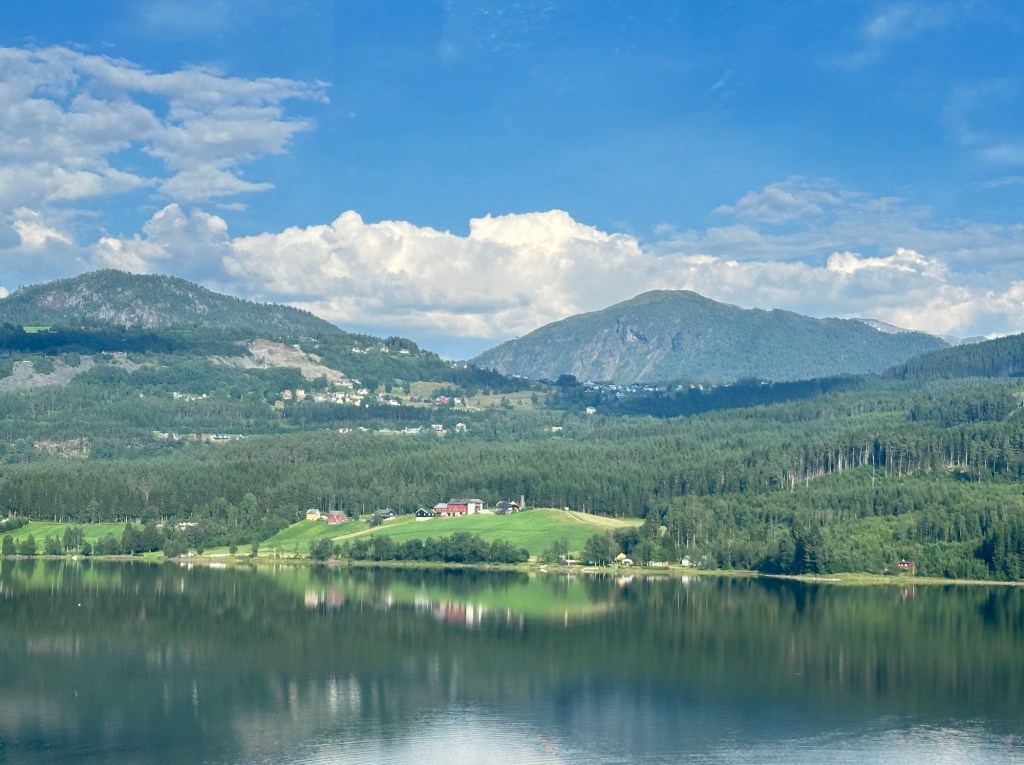
On arrival at the pier in Gudvangen, we transferred to a coach bus to take us on to Voss – more stunning scenery along the way – mountains, lakes, gorgeous villages, the lush green vegetation. Just loving what I’m seeing.


In Voss we switched onto a train for the last stretch of the journey to Bergen, arriving around 9pm. Our hotel Zander K was across the road from the station, again very centrally located. We had a bite to eat at the hotel restaurant before heading to bed.
Day 63
Monday 21st July
Bergen
18-28 degrees, hot
Bergen, the “Capital of the fjords”, is Norway’s second largest city while still enjoying the charms of a small town. Today was a day to experience its beauty and character first-hand with a walking tour with a local guide. We had been here before 8 years ago, but in January – completely different climate, very cold, wet and only three hours of sunlight per day. We had the exact opposite today!
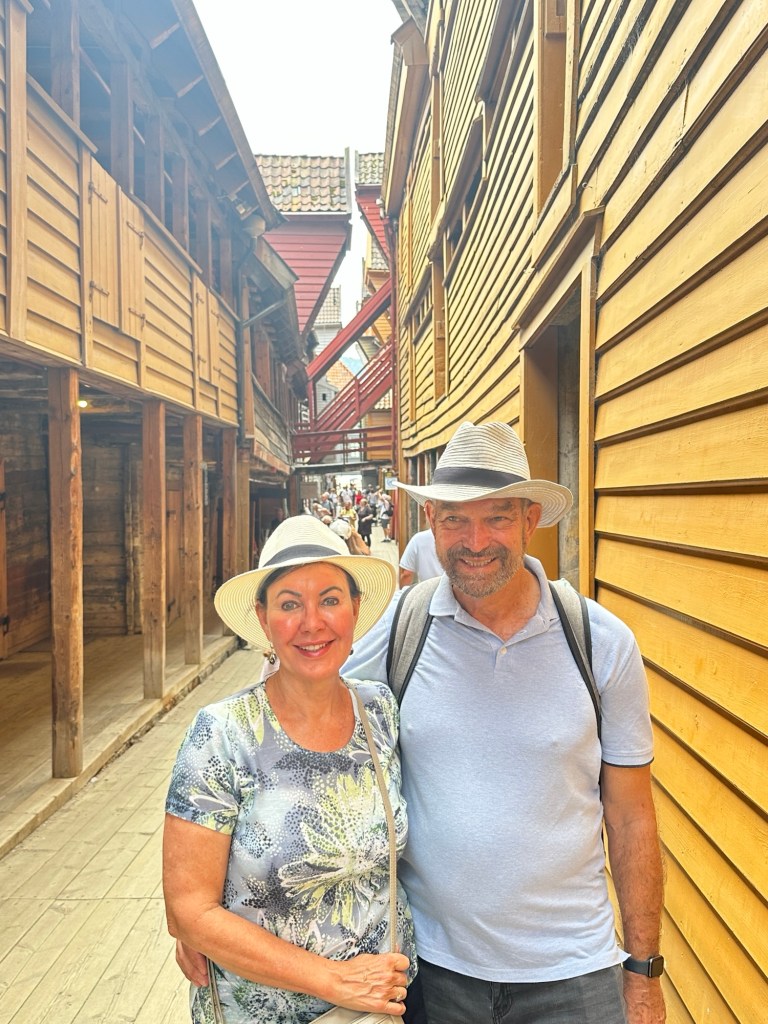
The medieval quarter dates back to the days when Bergen’s port was an important hub of European trade for the all-powerful German Hanseatic League. Many of the surviving Hanseatic buildings are found on the Bryggen (quay), where brightly painted old wooden warehouses – now museums, shops, and restaurants – make up an attractive harbourside. This area is a UNESCO World Heritage Site. I just love the 300 year old painted warehouses.

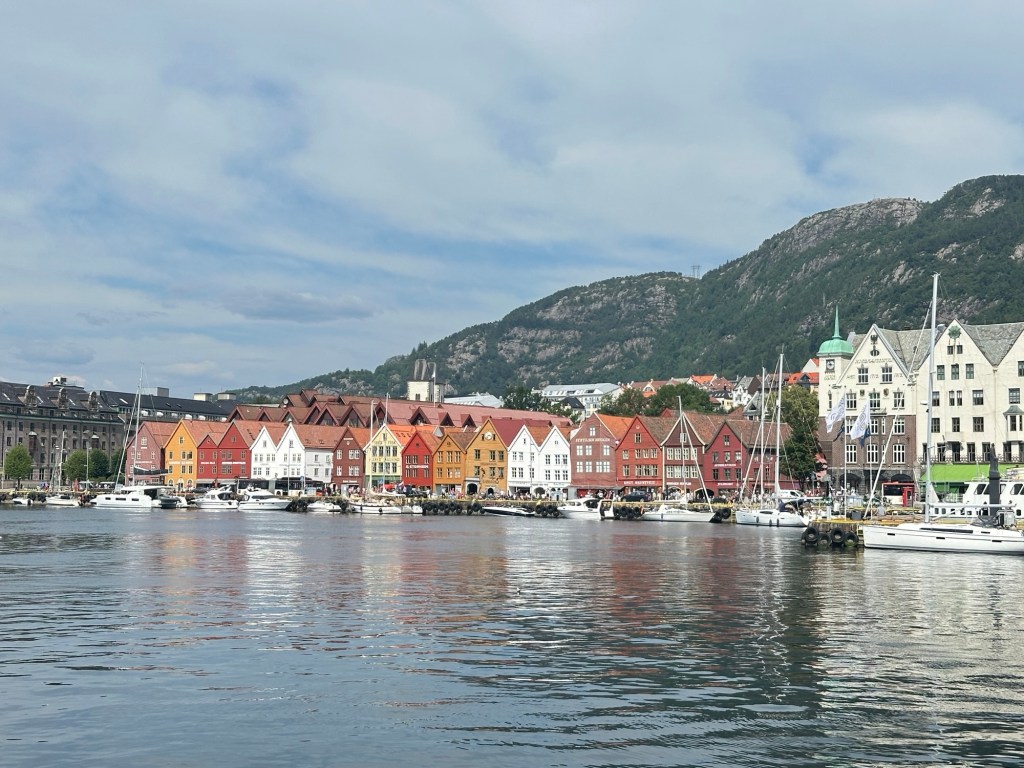

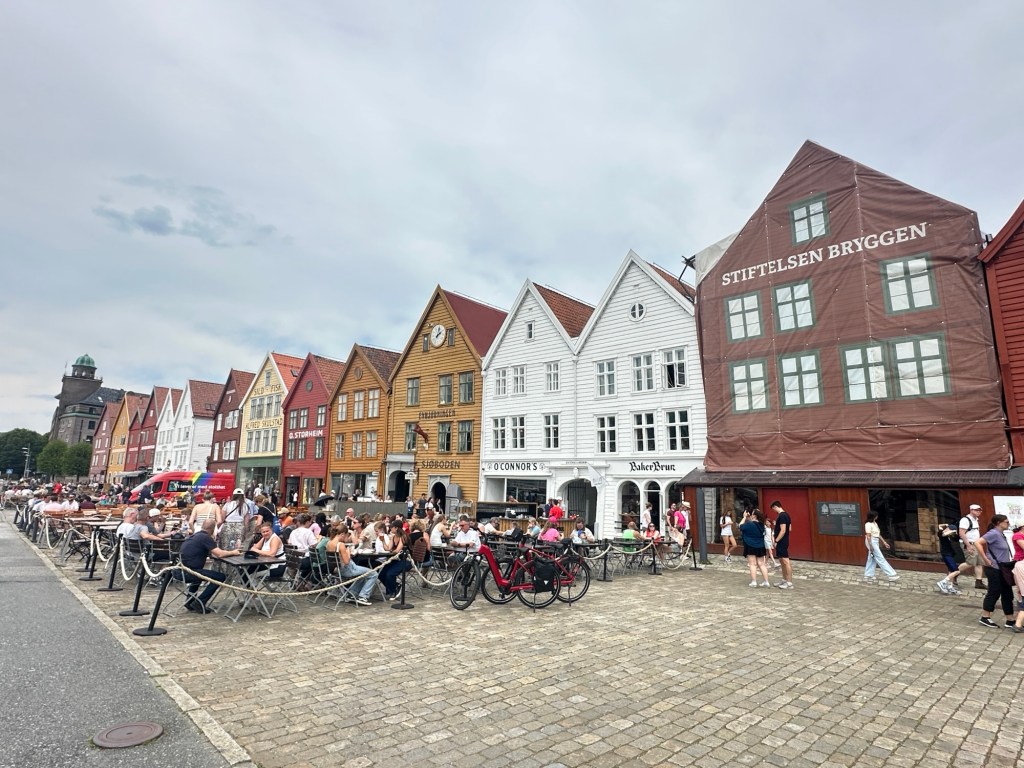
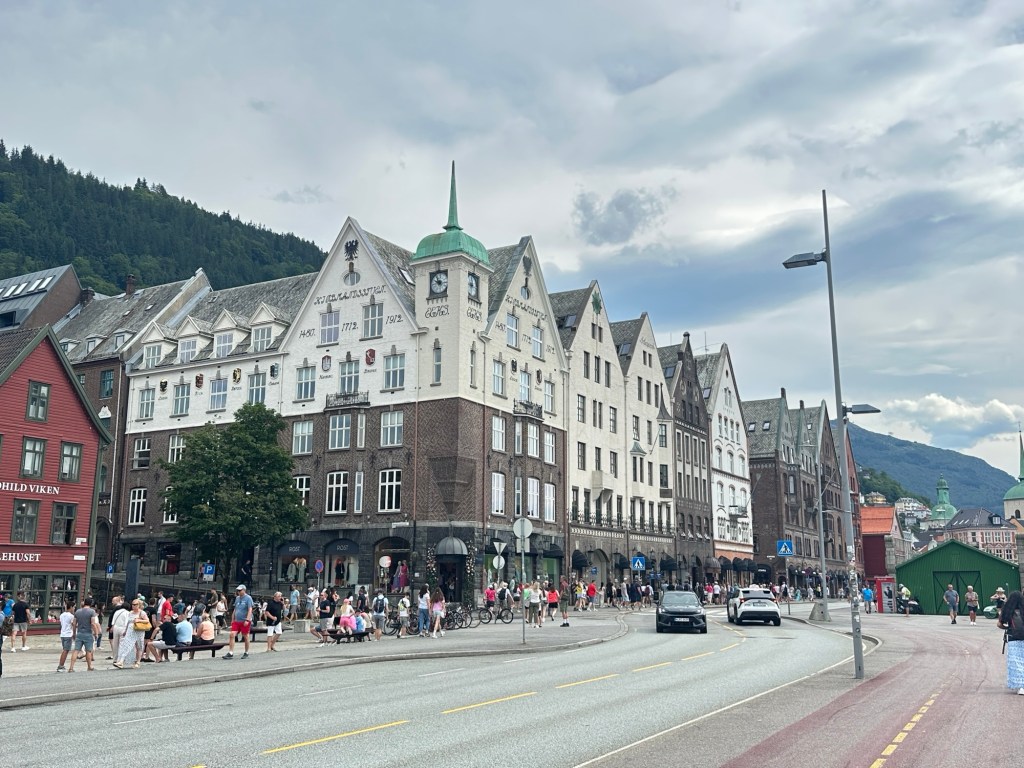
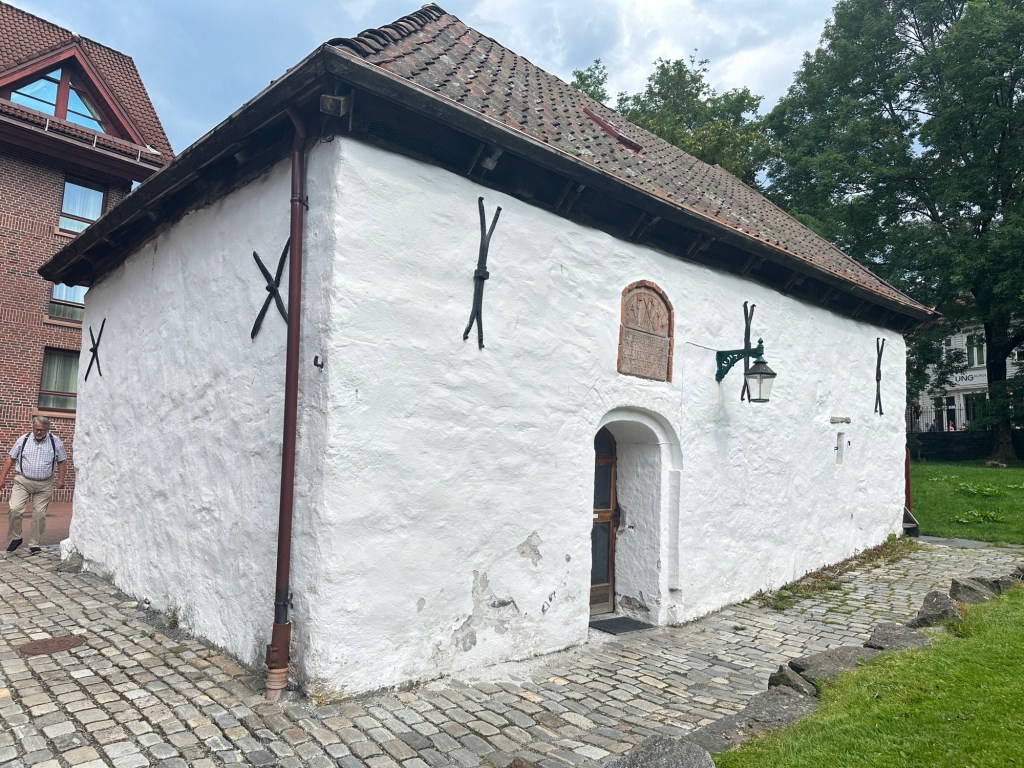
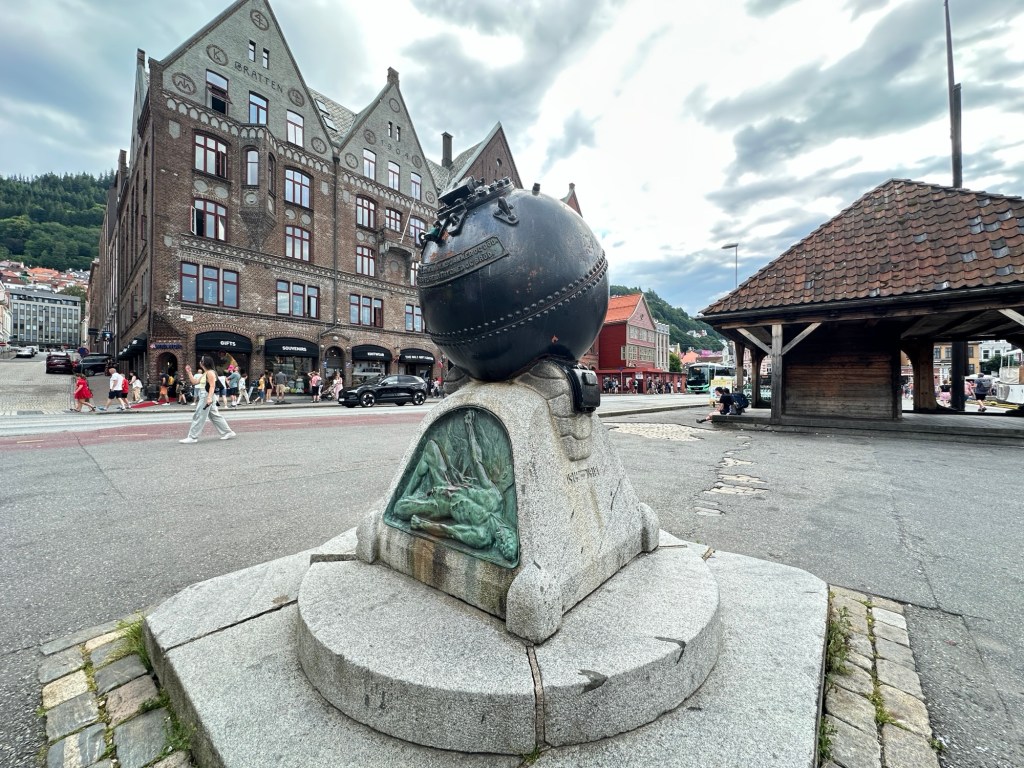
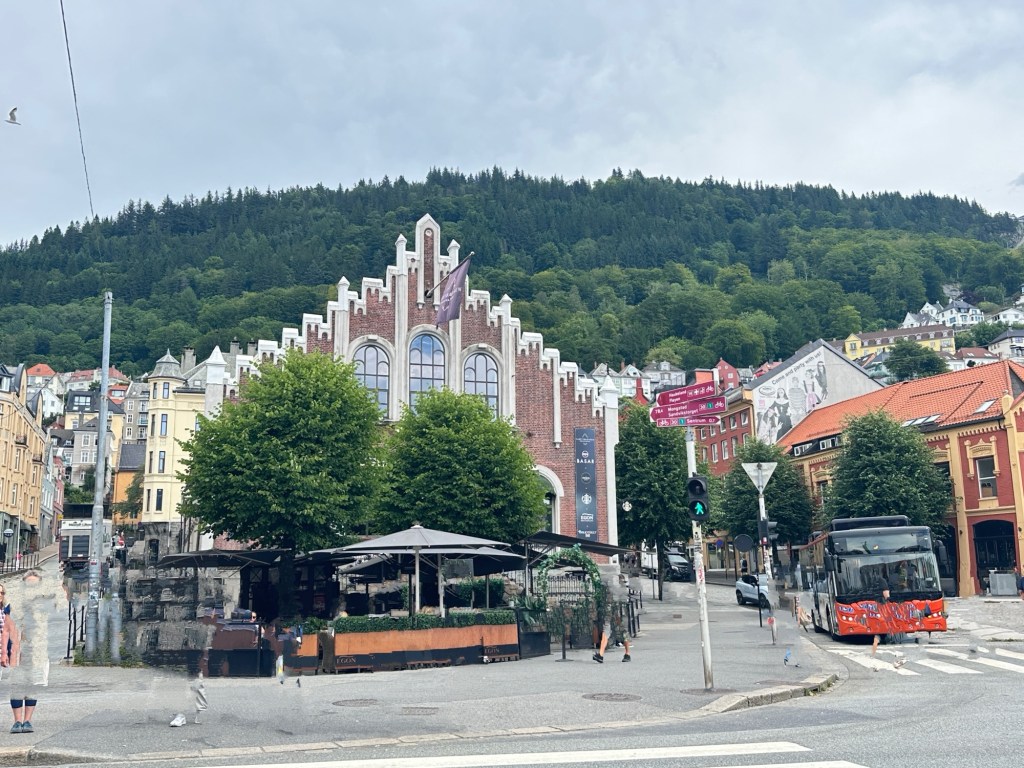
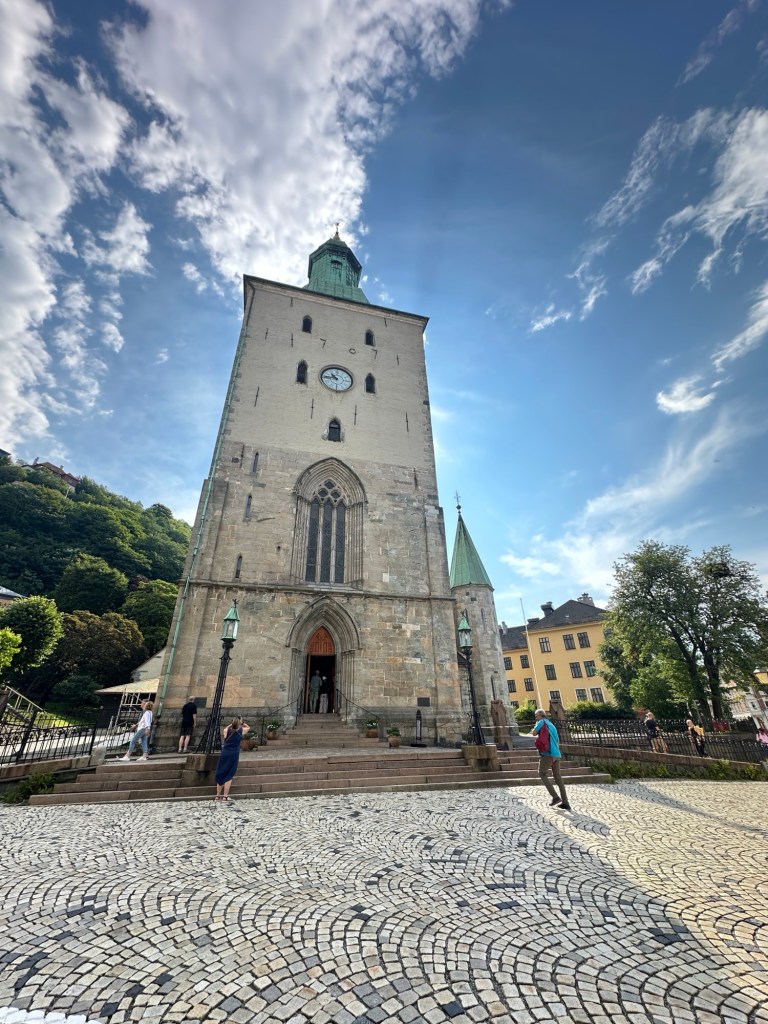
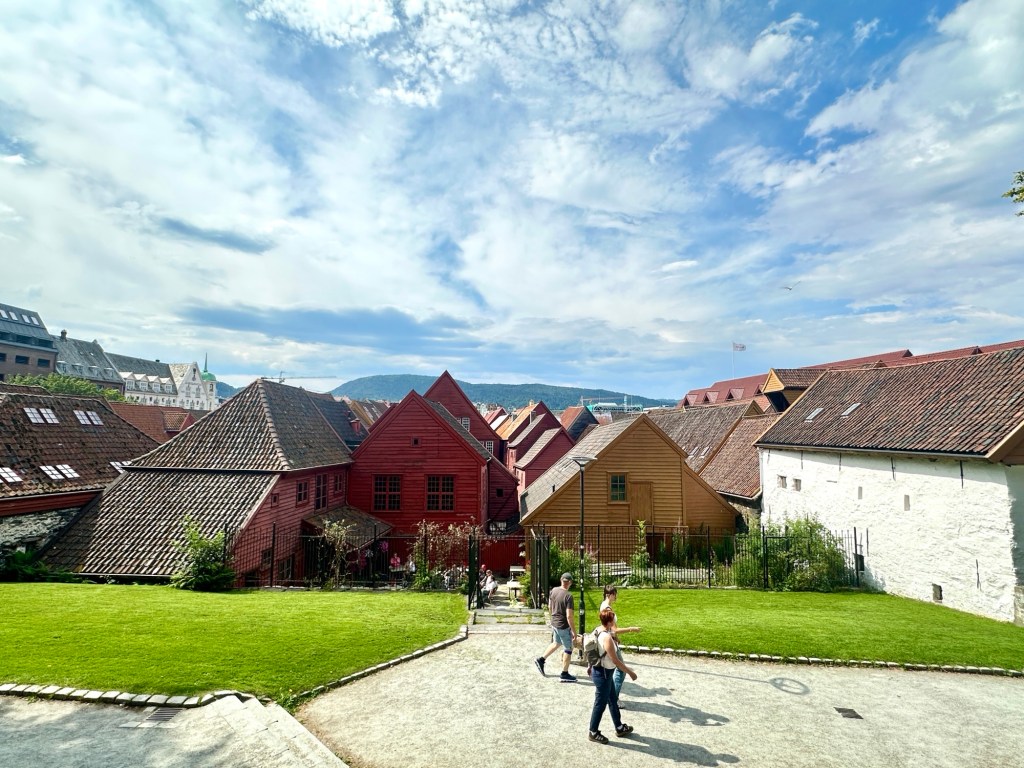
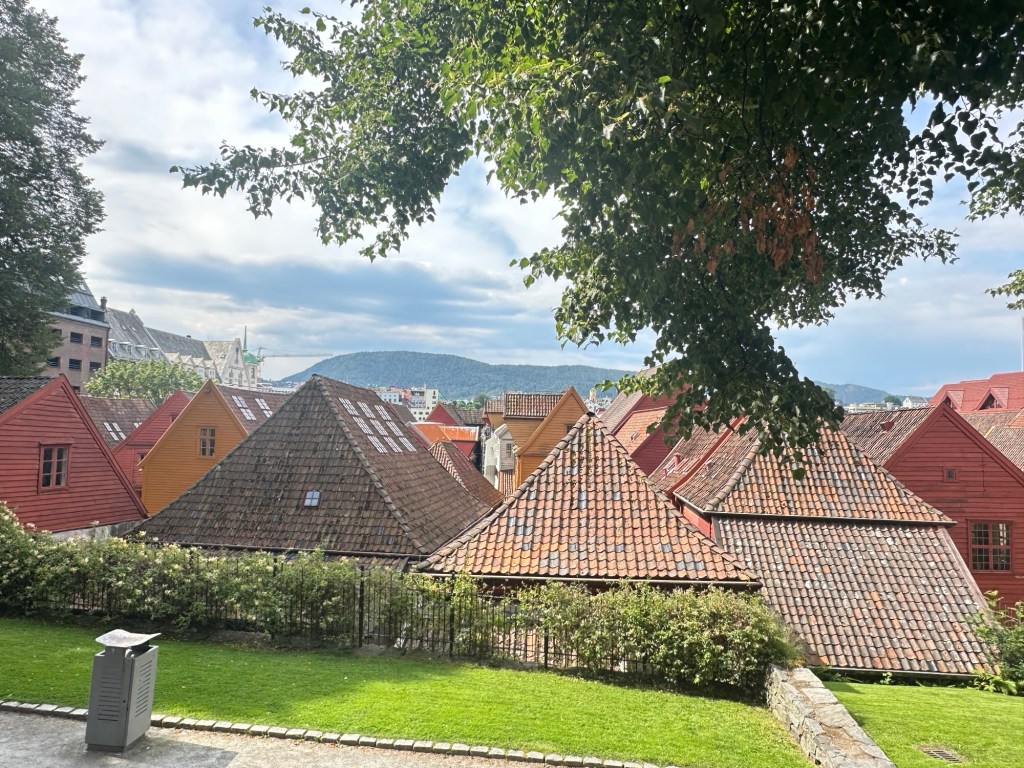
We then took the funicular up 320 metres to the nearby mountain, Fløyen, for stunning panoramic views over the city and surrounding fjords.

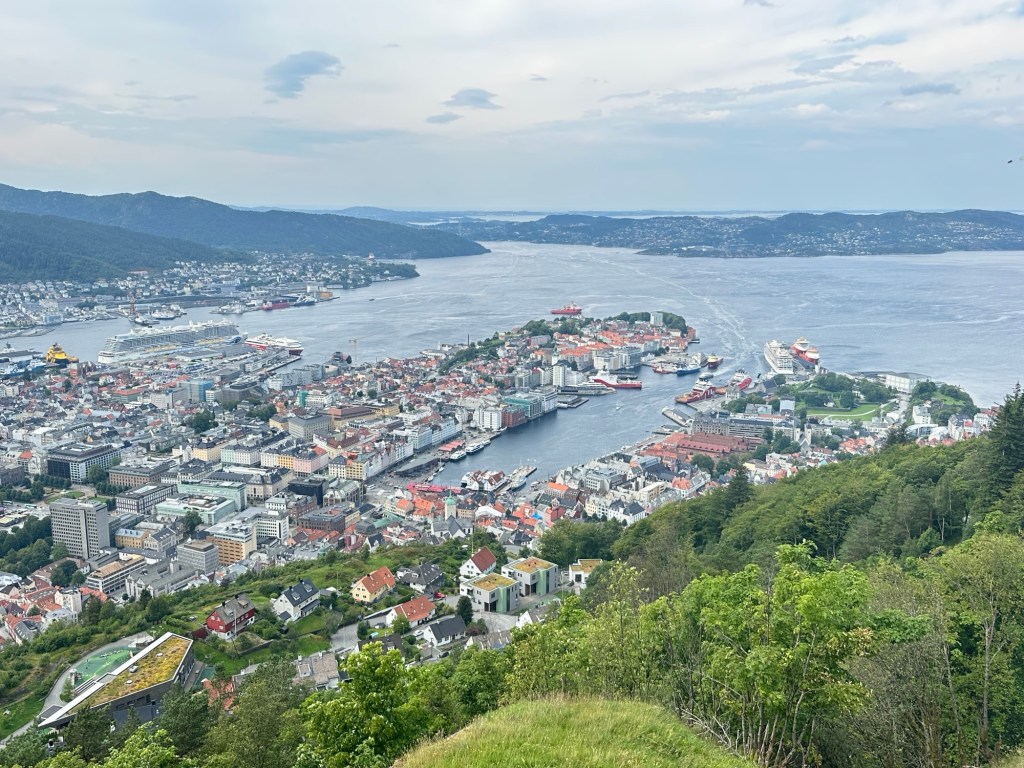
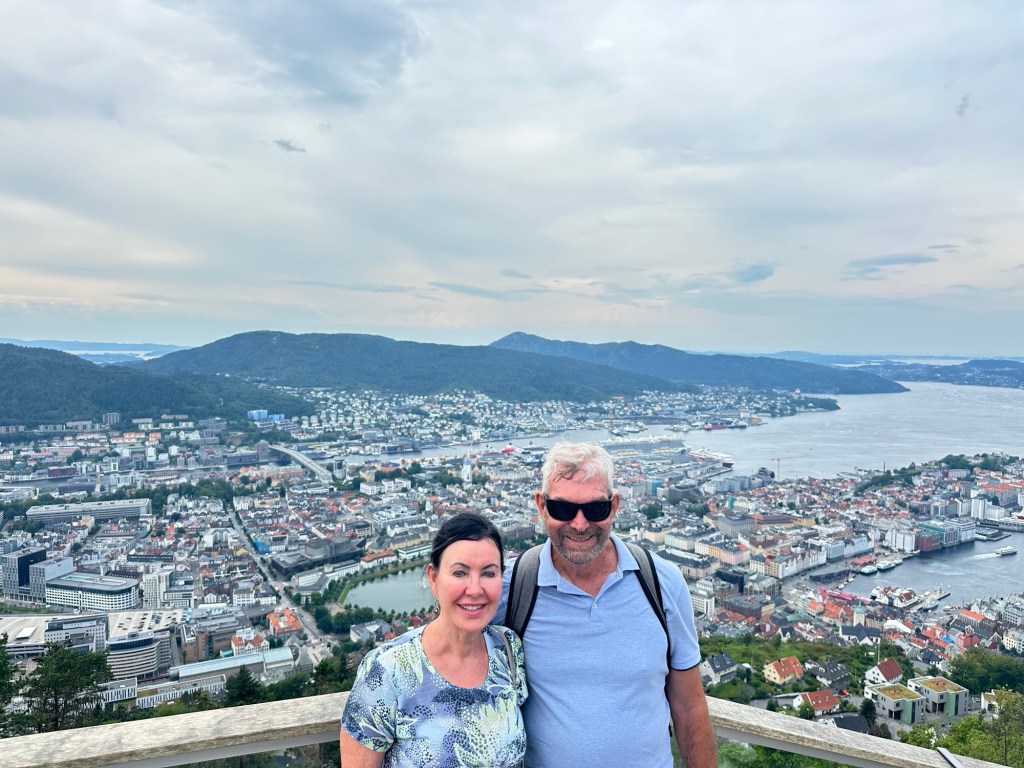

There were two cruises in port, plus the Hurtigruten, so there were plenty of tourists wandering the old town.
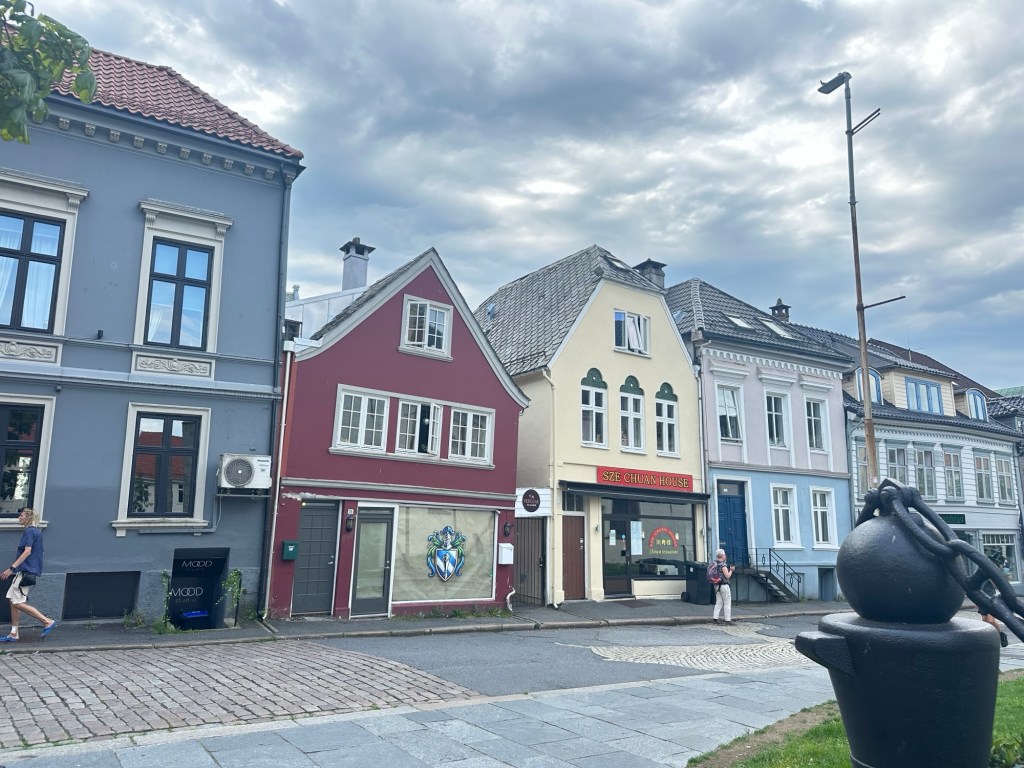
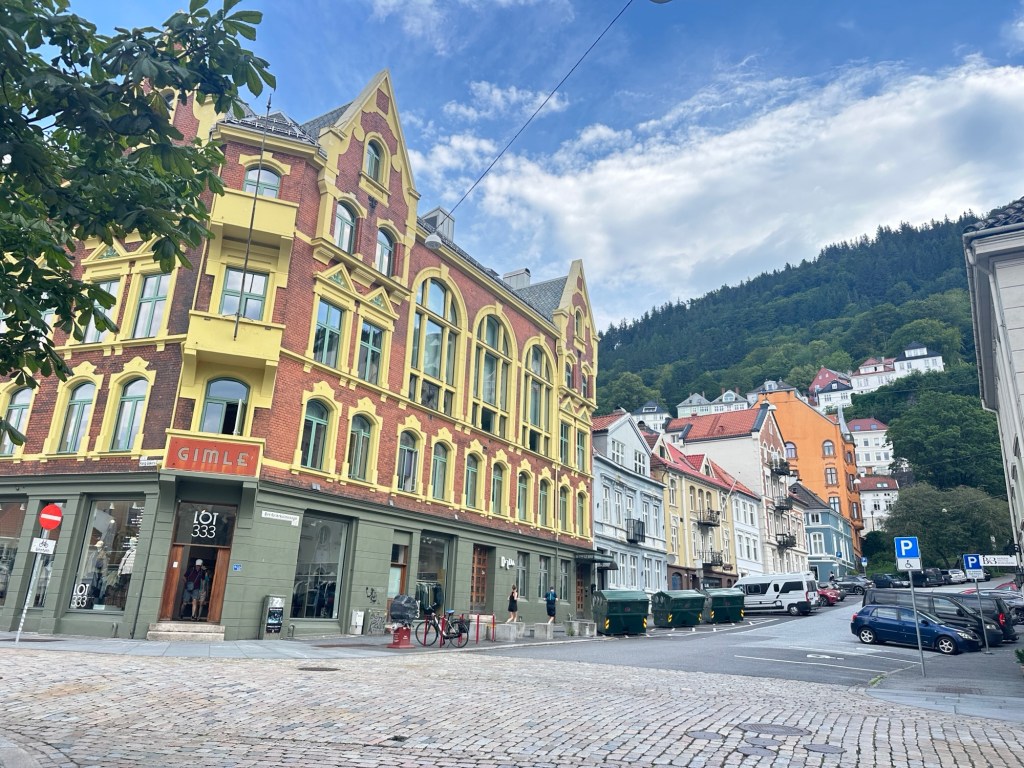
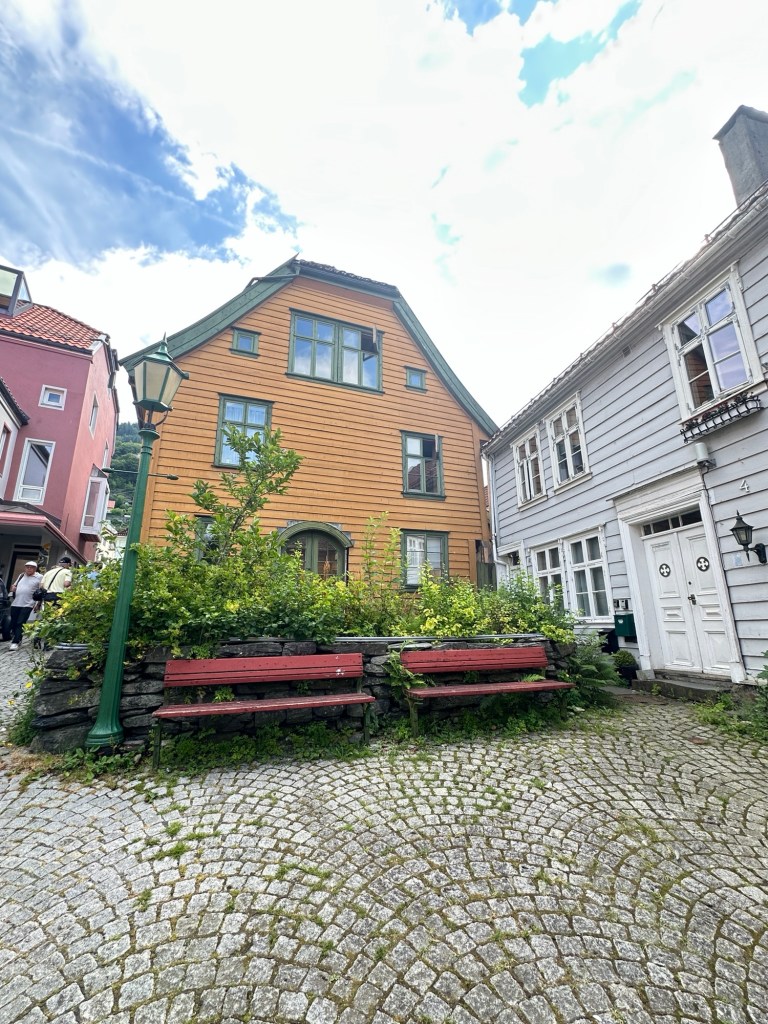
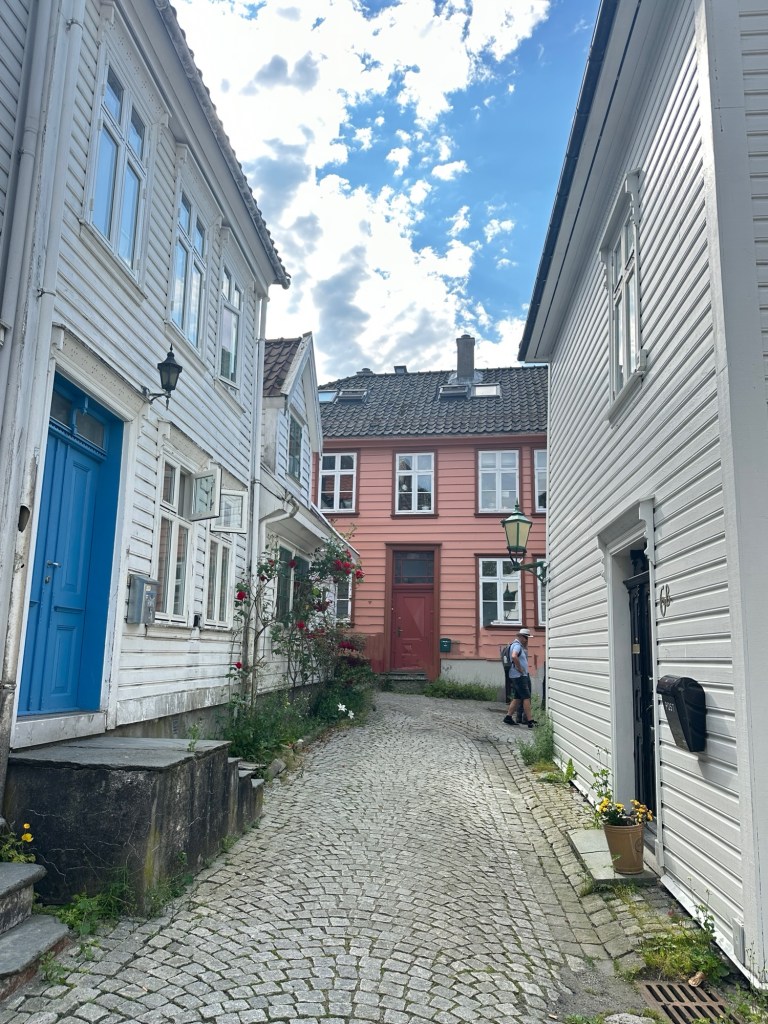
We decided to explore the other peninsula of Bergen for the afternoon – it is less touristy. Lots of narrow little laneways, and colourful houses.


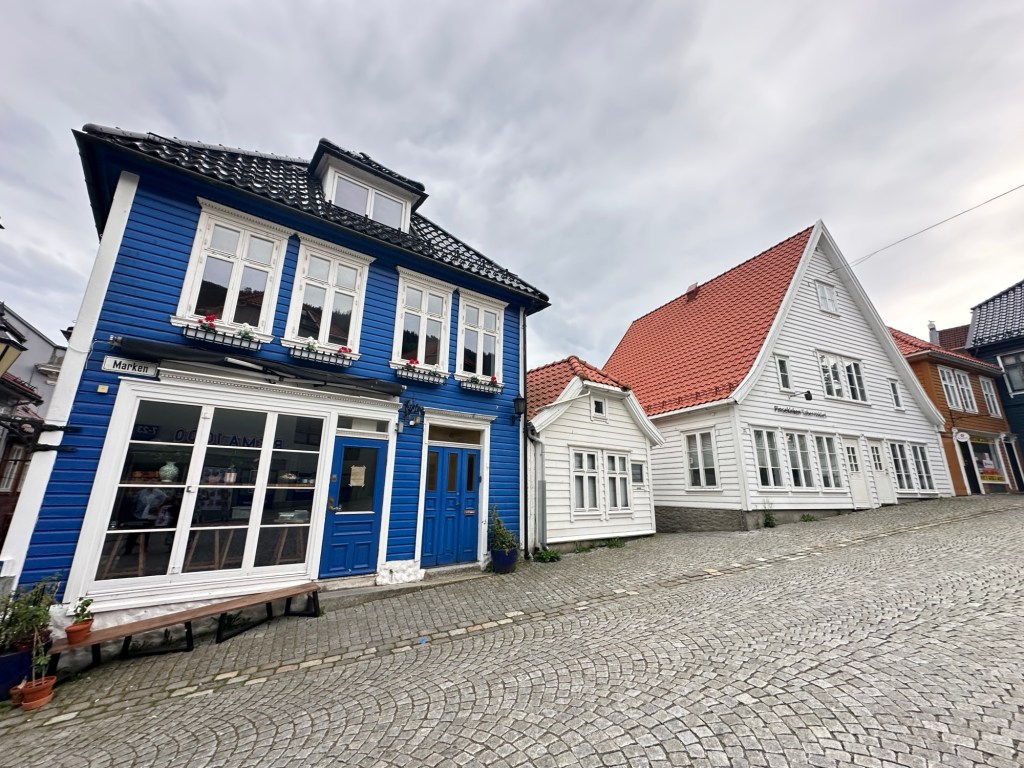
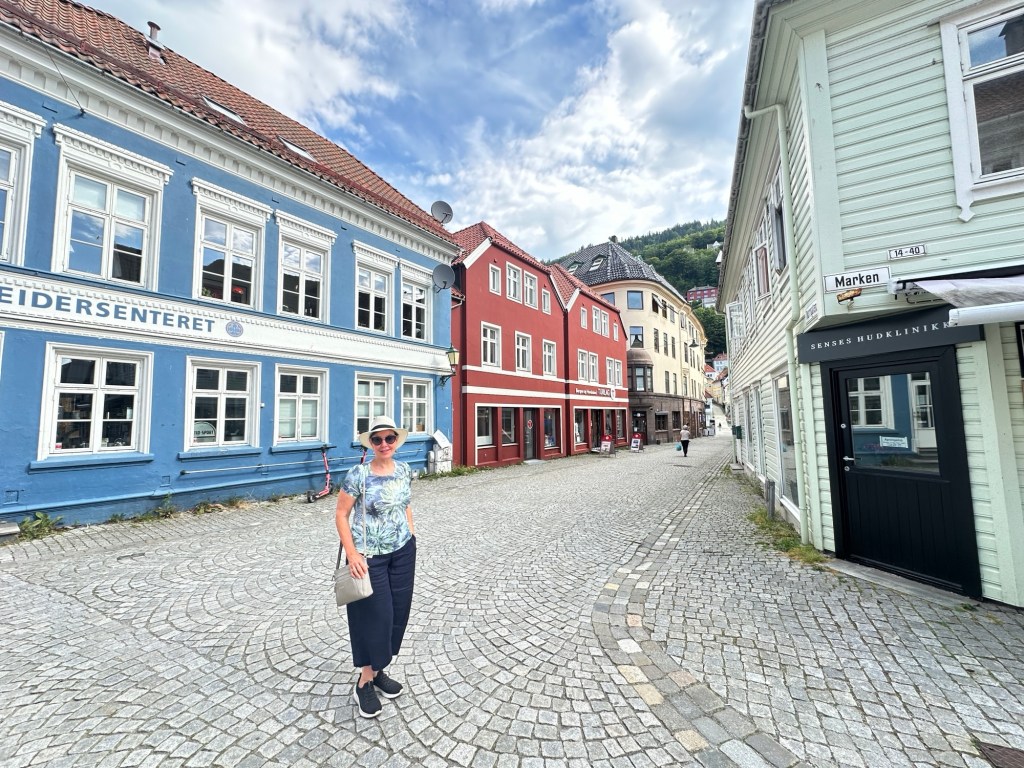
We got back in time to repack our bags ready for our return flight tomorrow – even though I’ve got rid of a bag of medication, another of spare toiletries, and some gifts, I seem to have less room!
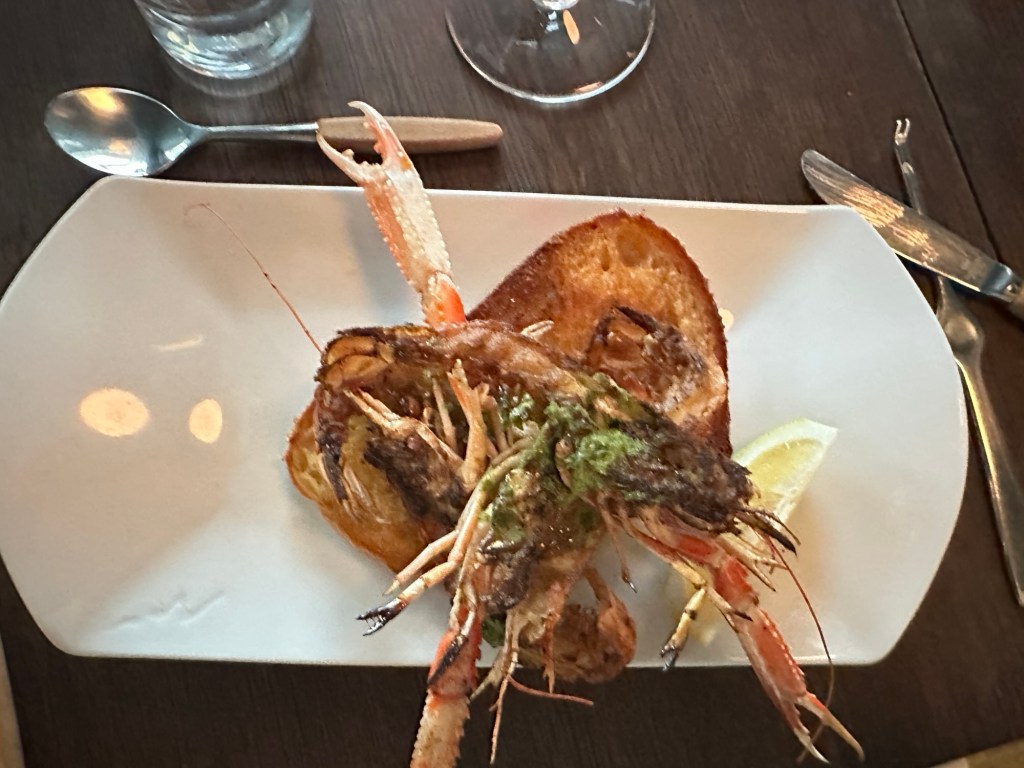
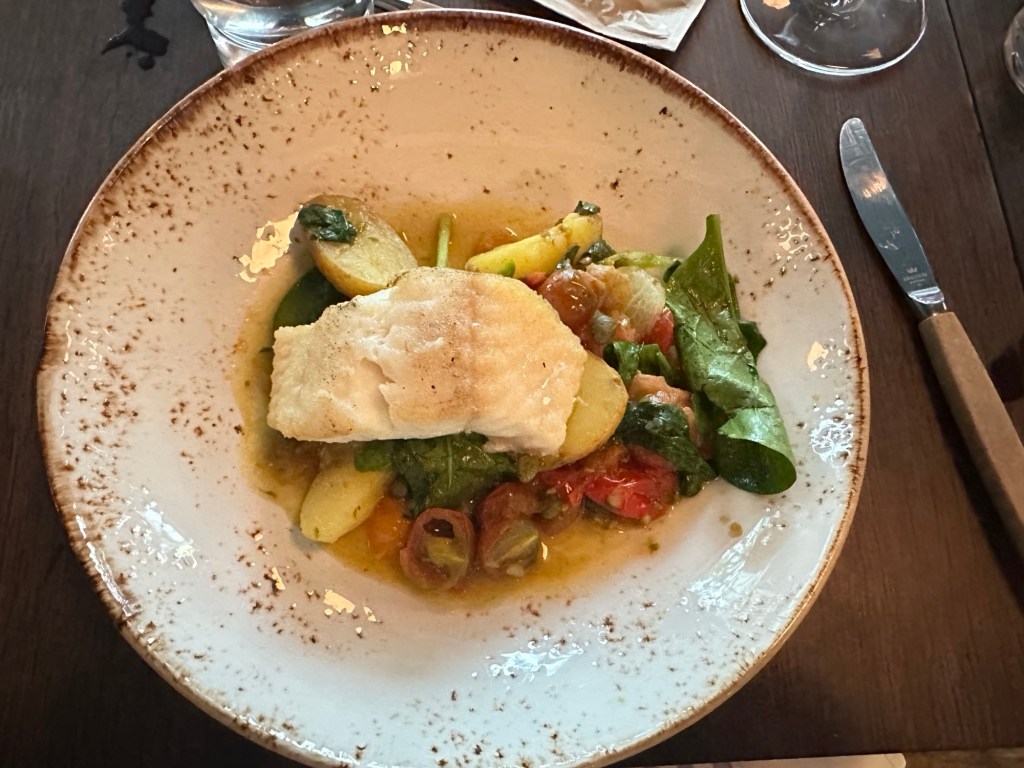
In the evening, we shared one last dinner with the group at a lovely traditional Norwegian restaurant. Garlic flavoured langoustine was the starter, wolffish and vegetables for the main, and a deconstructed lemon meringue tart for dessert – all traditional Norwegian foods and flavours. Very nice, though the langoustine proved a lot of effort for the amount eaten!

It’s been an absolutely fabulous trip. Travelling via train, coach, ferry and bus has been a great way to get around. It totally reinforces why we much prefer to travel by land, and not cruising. You get to see so much more, and experience the local culture, without the hordes of tourists.
Day 64
Tuesday 22nd July
Bergen – home
17 degrees
An eight minute walk from the hotel was the air train stop to go to the airport. At the equivalent of $5.50 AUD (less for seniors), this has to be the cheapest airport transfer fare we have ever purchased! Considering how Bergen was very expensive for food and drink, and that it was a fifty-minute ride, we couldn’t believe how cheap it was.

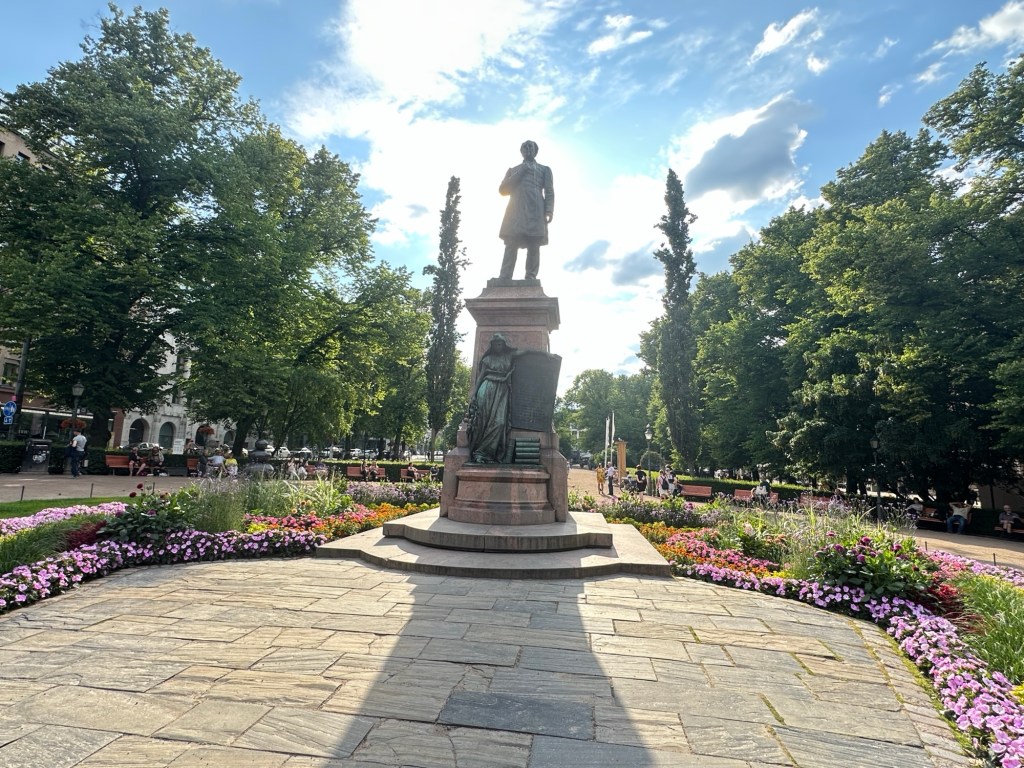
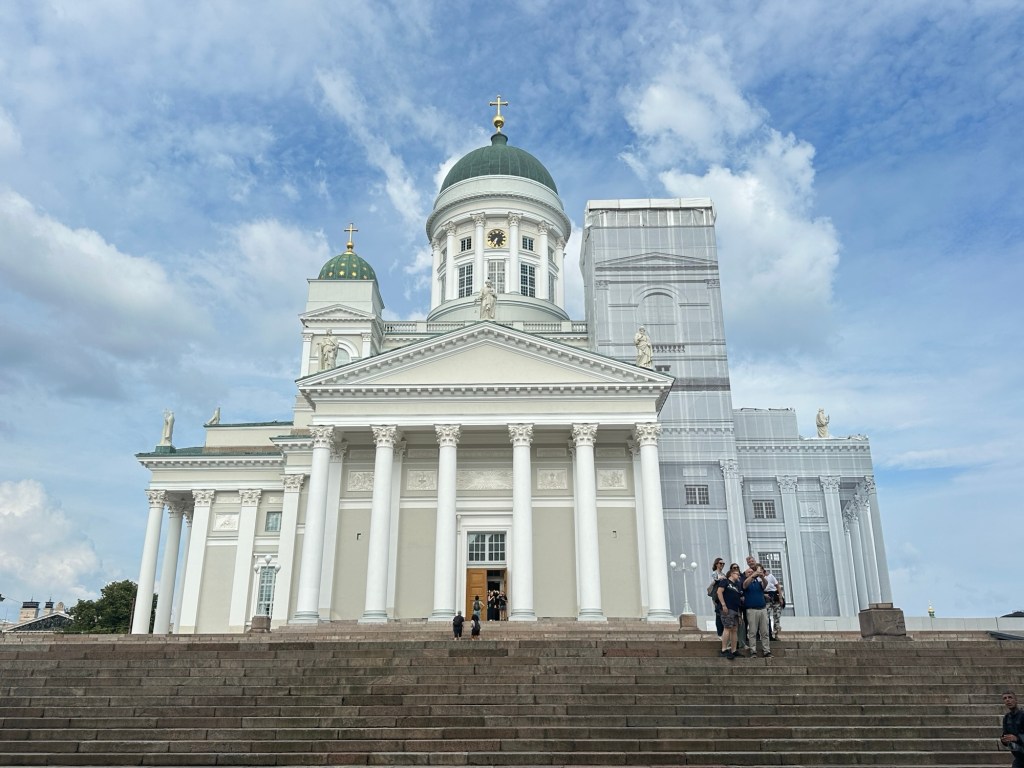
Of course it’s a series of flights to get home. The first is Bergen to Helsinki, with a stopover in Stockholm. At Helsinki we have an 11 hour layover. To fill in some time, we stored our carry on baggage in the Finnair lounge lockers and caught the train into Helsinki Central Station – it took 40 minutes. Friends had suggested we go to the library next to the station. Oodi is Helsinki’s new Central Library and a living meeting place. It functions as a living room for residents, located right at the heart of Helsinki. Great space over three levels with so much going on. It has a cafe, children’s play area, private meeting rooms, good view of the surrounding area, and has a real vibe. I think Oslo’s library was slightly better, but both are great spaces, and nothing like boring libraries I am used to!
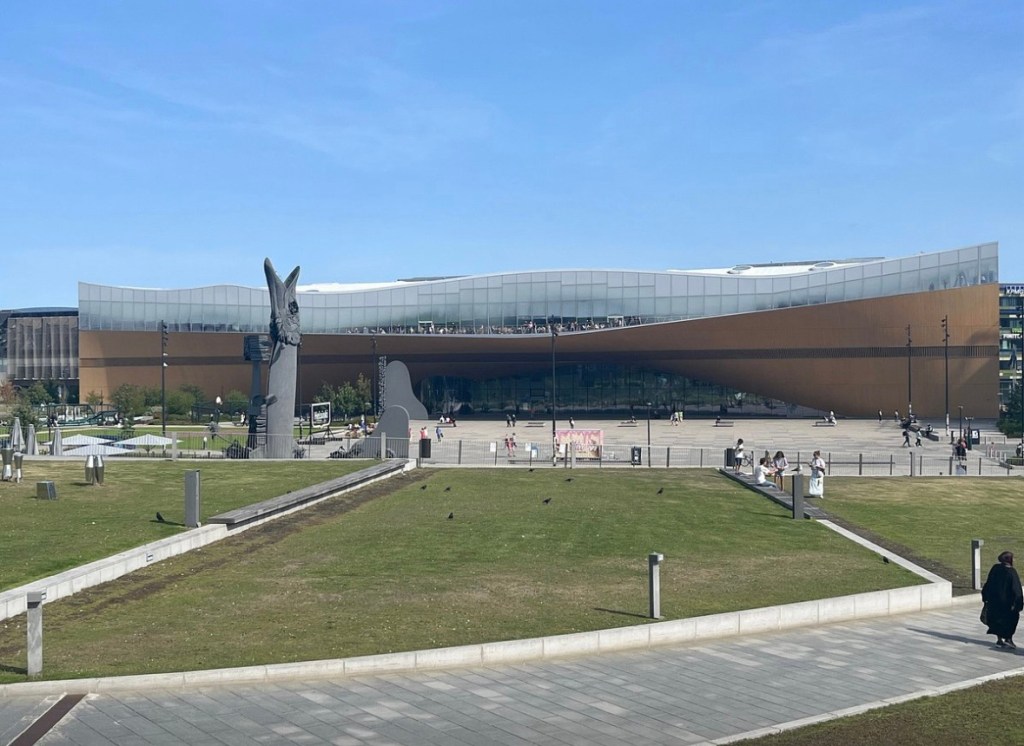

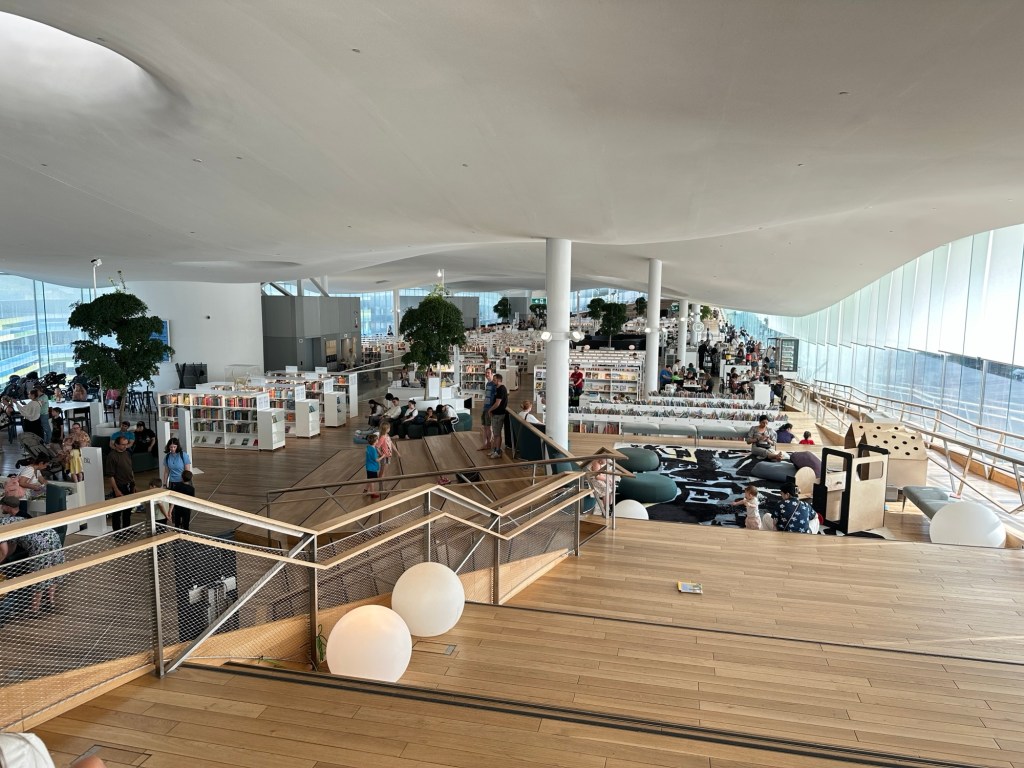

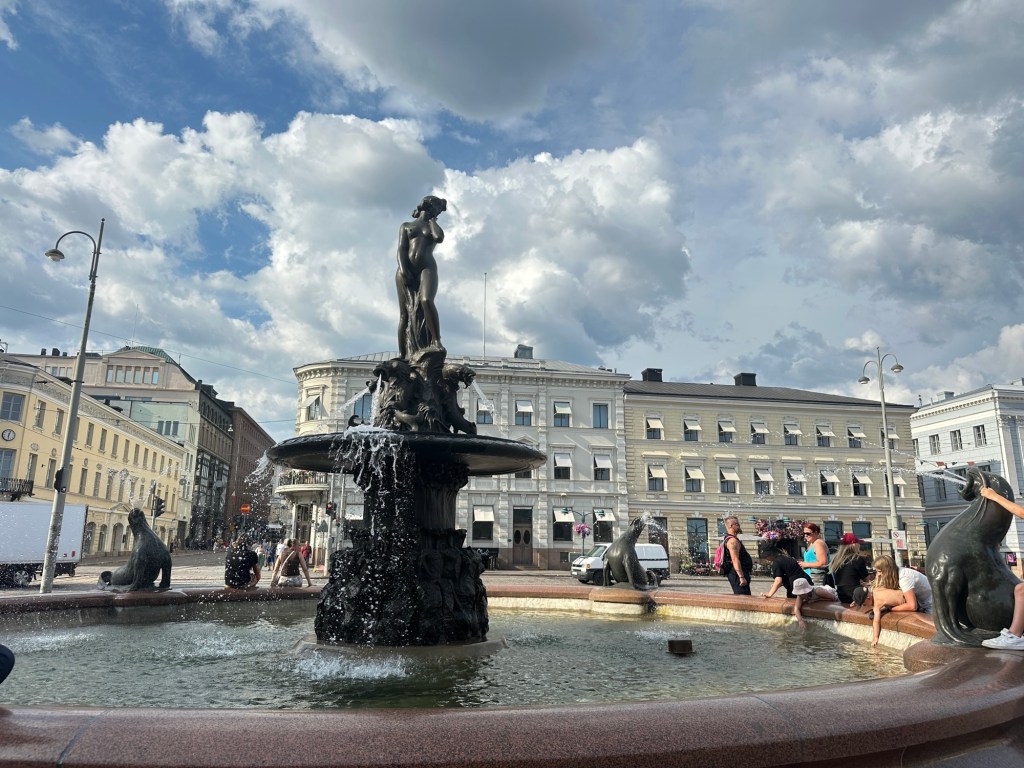
We continued our walk to Market Square and the harbour – it was busy there as a cruise ship was boarding and left while we were there. So much more peaceful afterwards! We bought some deliciously fresh cherries from the market, and ate them while we watched the Harbourside activity. It was cool with the sea breeze there, as it was another warm day.
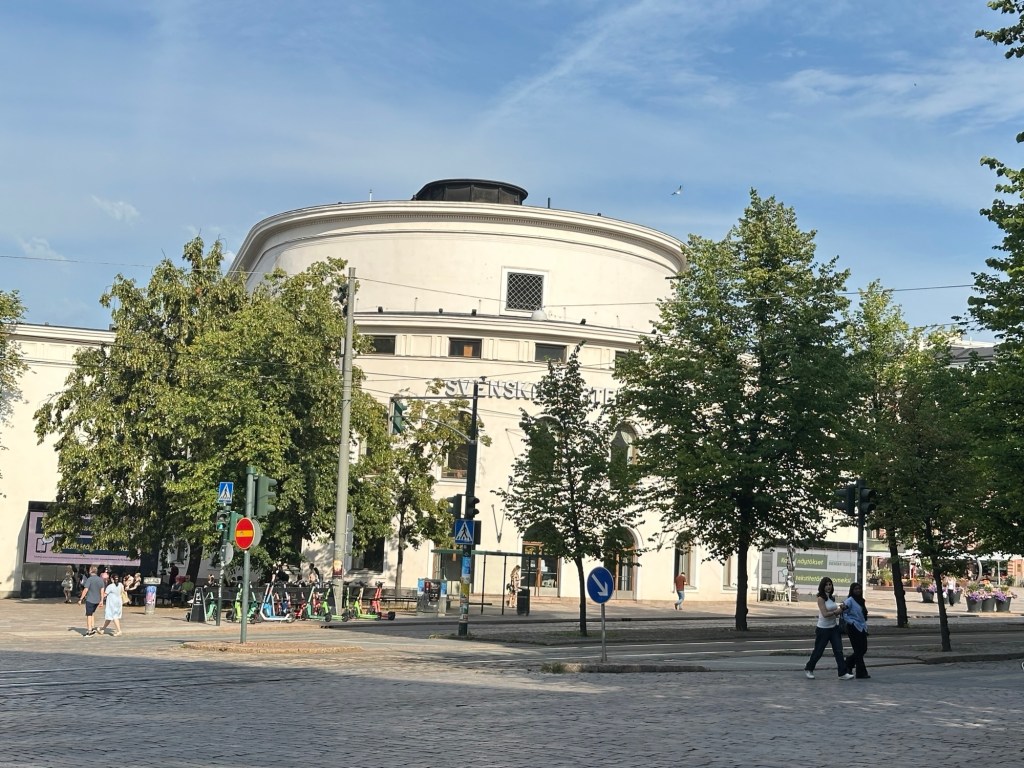


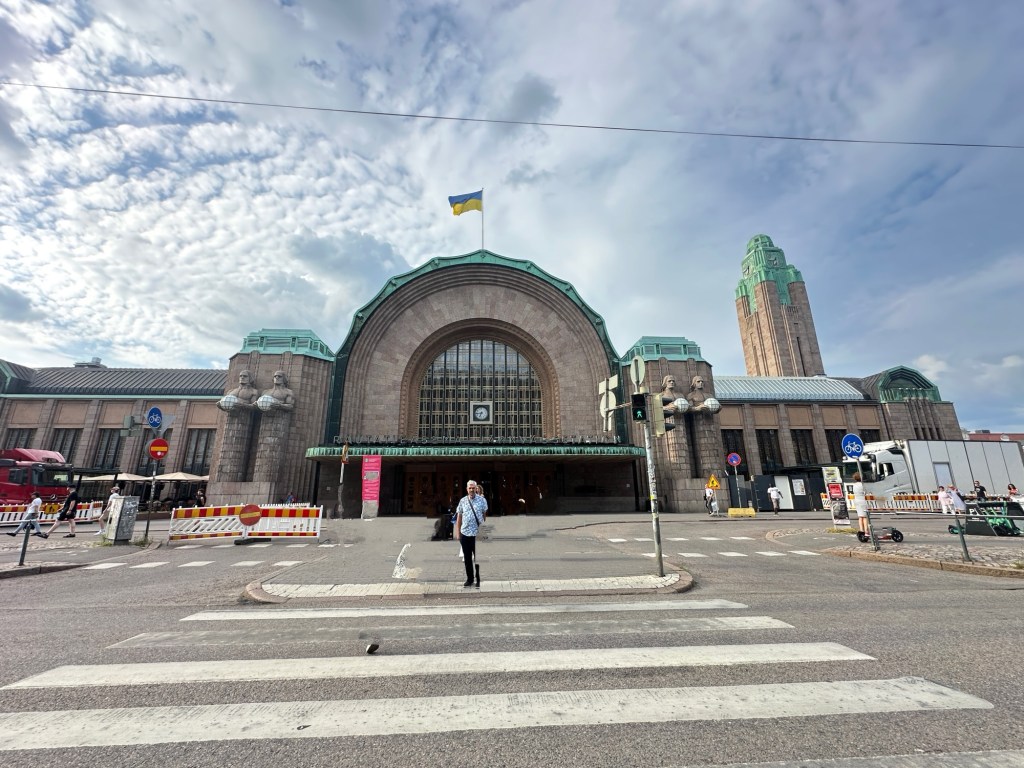
Back to the station, and onto the train back to the airport. That turned out to be a tragic event – as we got close to the airport, the train suddenly slammed on the brakes – apparently someone had jumped in front of the train. How awful. The poor train driver. We all had to sit on the train for a while until services were called and a plan put in place. Then we could get off, but had to find our own way to the airport. We called a Bolt, and still got to the airport in plenty of time. Bit of a sad end to the day though.
At the airport, we got through border control with minimal fuss, showered, and then all set for the thirteen hour flight to Singapore, followed by the eight hour flight to Brisbane.
And just like that our holiday is over. Back to the real world. We have had the best time, sad it is over, but so looking forward to seeing our nearest and dearest.
General thoughts of Scandinavia
Sweden, Denmark and Norway all are very safe countries.
Very clean countries, seems to be a low rate of homelessness.
People are generally friendly and helpful, also very respectful – noticed that on public transport.
They are very focused on healthy eating and healthy lifestyle. Fitness and outdoor activities are like their religion.
A big emphasis on recycling, including clothes, and also refilling water bottles from all taps.
Bicycles and scooters are flying past everywhere, and heaven help you if you are on their beloved bike paths!
The mountain scenery and pristine waterways are spectacular.
Residents enjoy a high standard of living- all healthcare and education, including university, is paid for.
A high tax on alcohol makes it very expensive, but doesn’t seem to hold locals back from drinking.
Almost everything is cashless, including the banks.
 Glammy Goes Global