
The Baltics
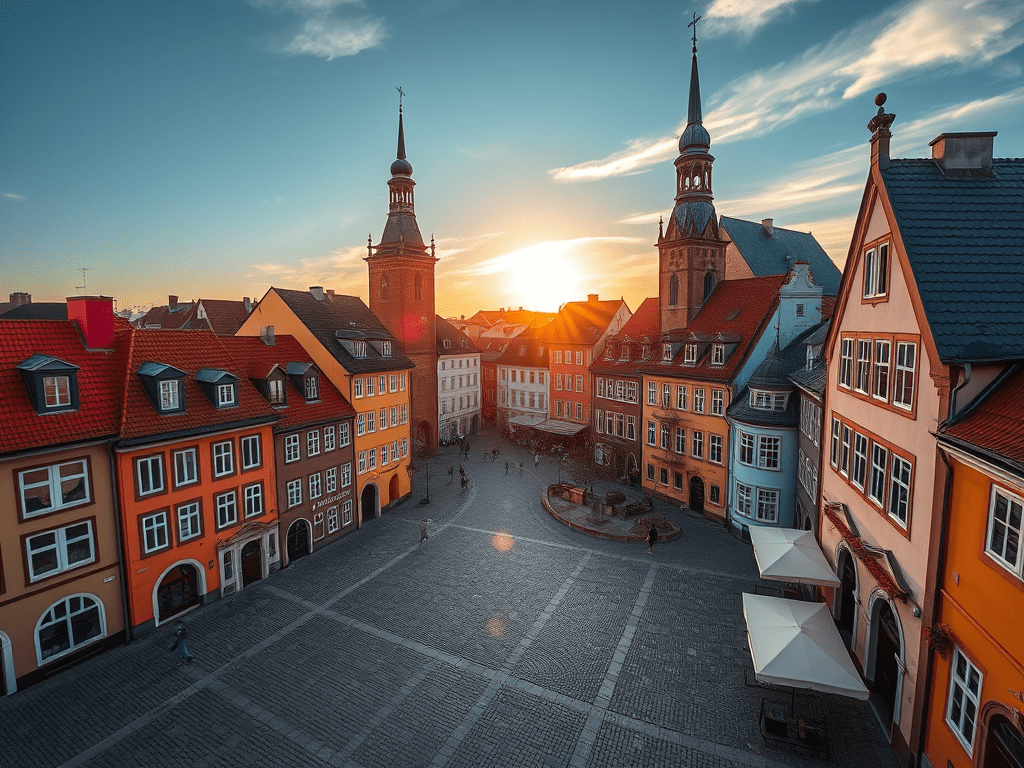
With Estonia in the north, Latvia in the centre and Lithuania in the south, the Baltic States lie on the southeastern shore of the Baltic Sea. The region is bordered in the east by Russia and in the south by Poland, Belarus and the Russian enclave of Kaliningrad. The Baltic States’ total land area is 173,000 sq km. Latvia and Lithuania are of roughly equal size, while Estonia is about a third smaller and has a relatively flat terrain in comparison to the other two countries. The three capital cities – Tallinn, Riga and Vilnius – are home to around a third of the region’s 6.3 million people.
Day 36
Tuesday 23rd June
London to Tallinn, Estonia
Our Ryanair flight got us safely to Tallinn in two and a half hours – maybe we shouldn’t be so critical. It’s probably just us not being so aware of budget travel. Now we have the app, and our luggage within the right limits, we can go anywhere!
A very quick transit through immigration and customs, then a very entertaining taxi ride to Go Hotel Shnelli in Tallinn. Our driver gave us a rundown of Tallinn – he is a national. Loves Tallinn, except for the weather and his wife of 40 years!
It was after 11pm when we got to our room – we had moved ahead two hours. The hotel is in a very central location – next to the train station (we didn’t hear trains though), and a five minute walk from the Old City.
Brief history of Estonia
Very old country that has been desired by several other northern nations forever.
Earliest occupiers came from Finland.
The Danes came in the 13th century followed by the Swedes in the 16th century.
Russian forts laid claim to the country early in the 1700s
Russia in and out until early 1900s
War of independence 1924 rejected Russia.
1930s Russian support requested to build Defence capability
1941-44 Nazi occupation
1944 annexed by Russia and absorbed into the USSR
1991 – independence following collapse of the USSR
2000 – 2011 underwent long process to join EU
2004 – joined NATO
2014 – adopted Euro
Twe
Day 37
Wednesday 25th June
Tallinn
11-15 degrees, overcast but no rain
Free day, time to get our breath back before we start our Baltics tour.
We did have a sleep in – didn’t wake up until 8.30 – I blame the time change. This was to be an easy day for us. Because we were having a walking tour of the Old City tomorrow, we thought we would go to the Occupation Museum and the KGB Prison cells today, within the old City.
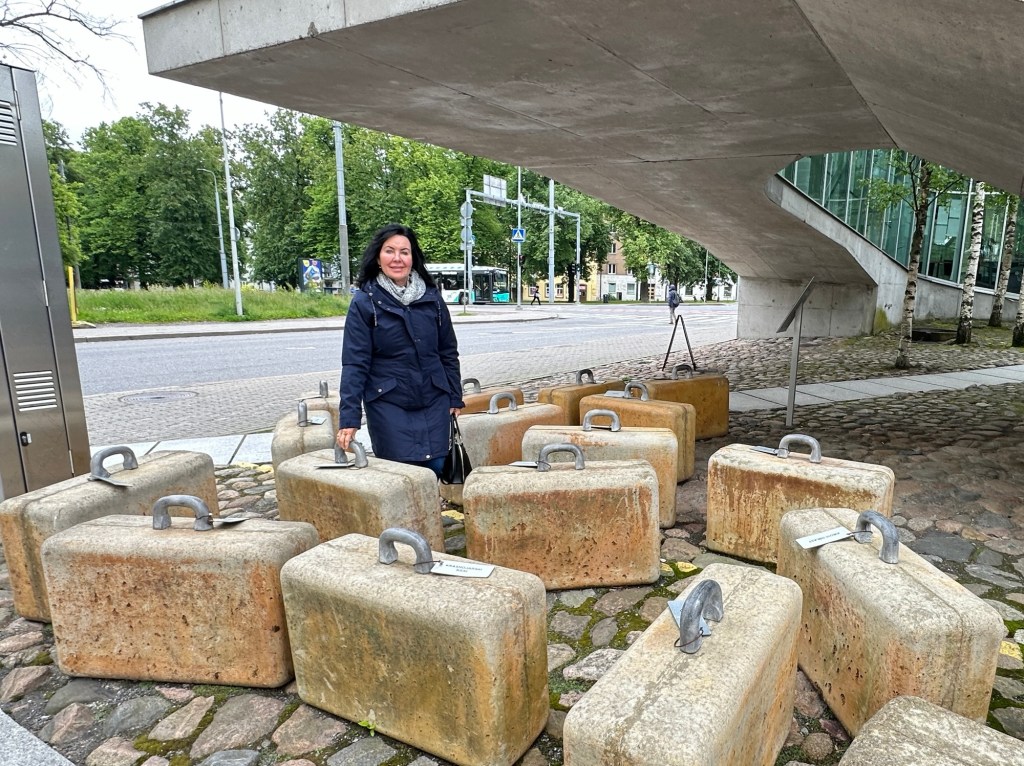
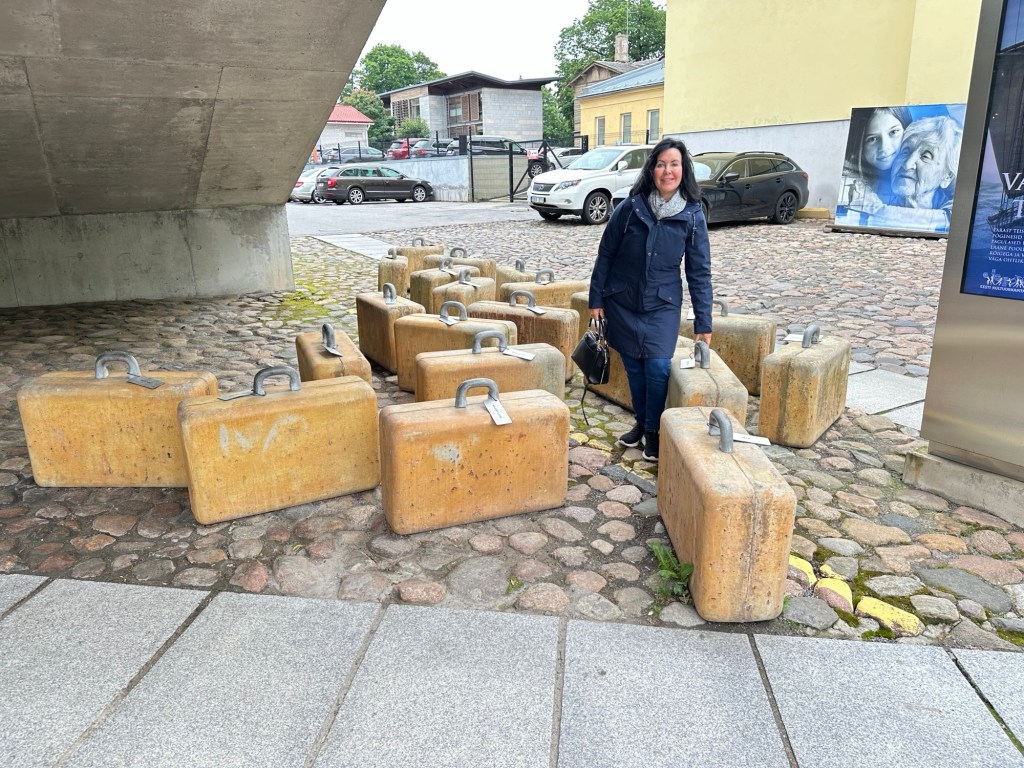
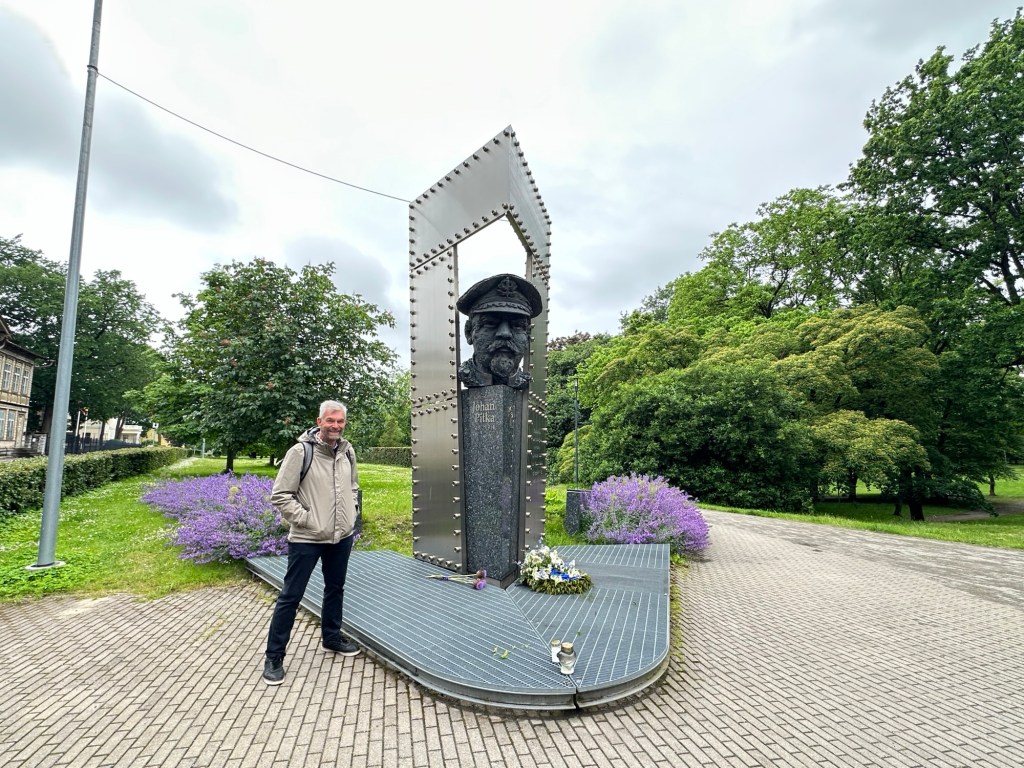
The Museum of Occupations and Freedom permanent exhibition Freedom Without Borders introduces the history of Estonia during and after the Soviet and Nazi occupations, arriving at the era of restoration of independence. The story of Estonia and Estonians is told through personal memories, and the moving stories of grandmothers and grandfathers. A well thought out museum. It does not tell you the rights and wrongs. Rather, it encourages you to make your own mind up. The history of Estonia is laid out from the perspectives of those who lived through the occupations and fought for freedom and independence. Very thought provoking.

Had a little look at some of the shops and cafes in the Old City on the way to the prison cells, but don’t want to spoil our day tomorrow. Don’t want to miss a shopping opportunity either!
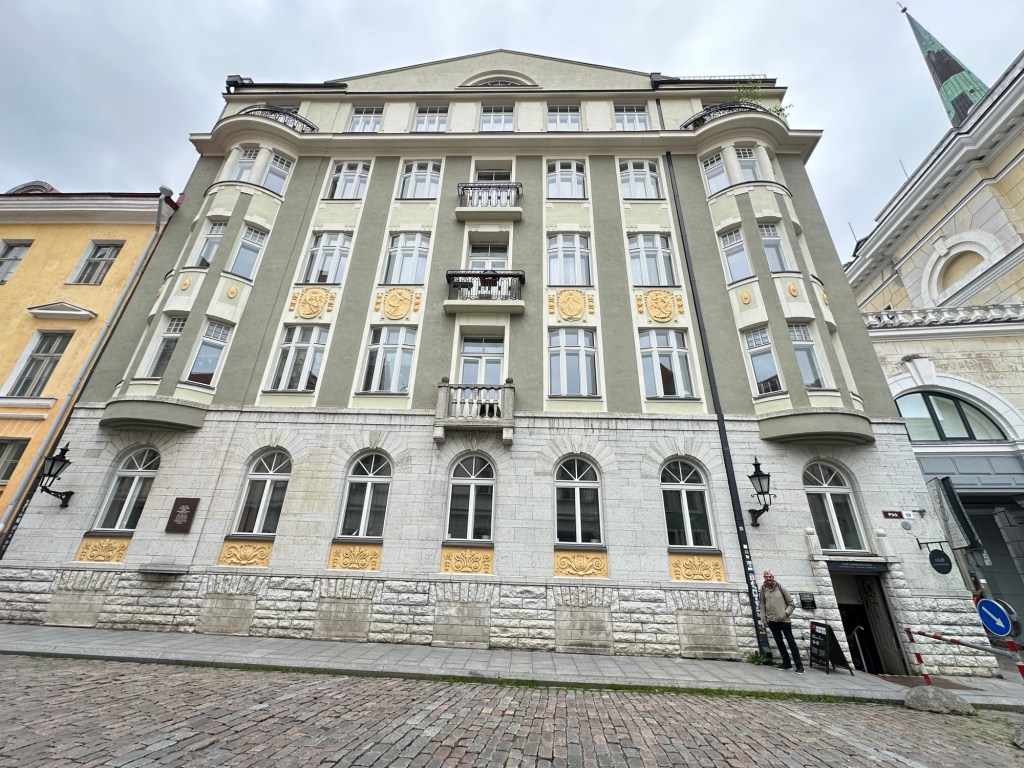
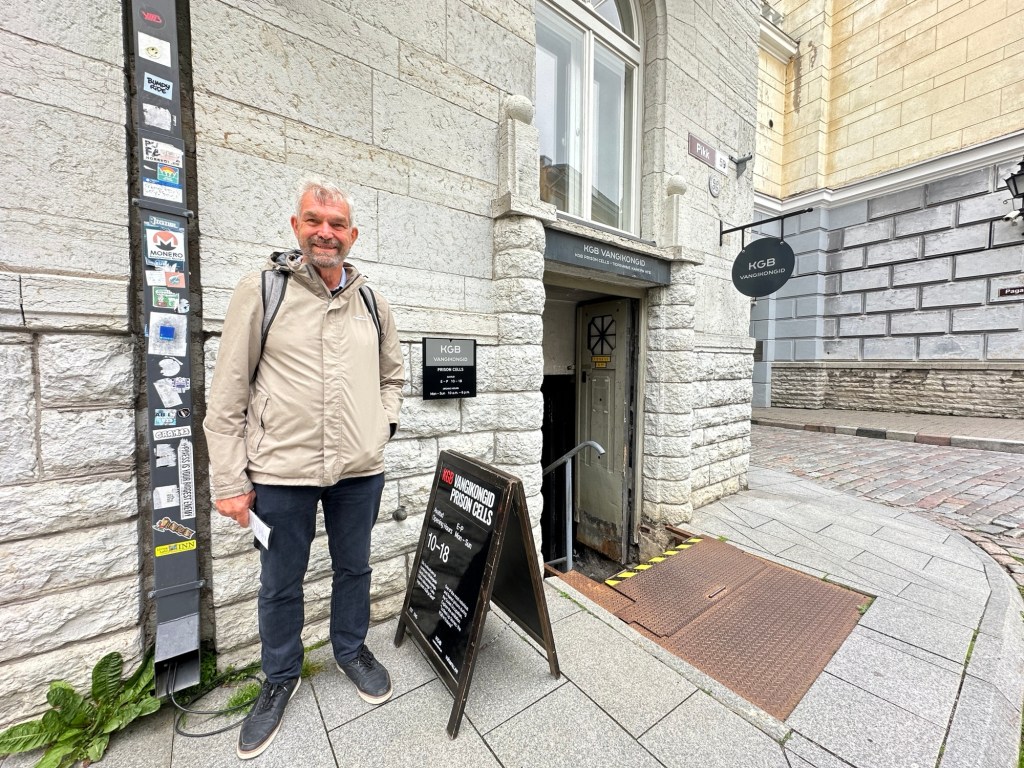
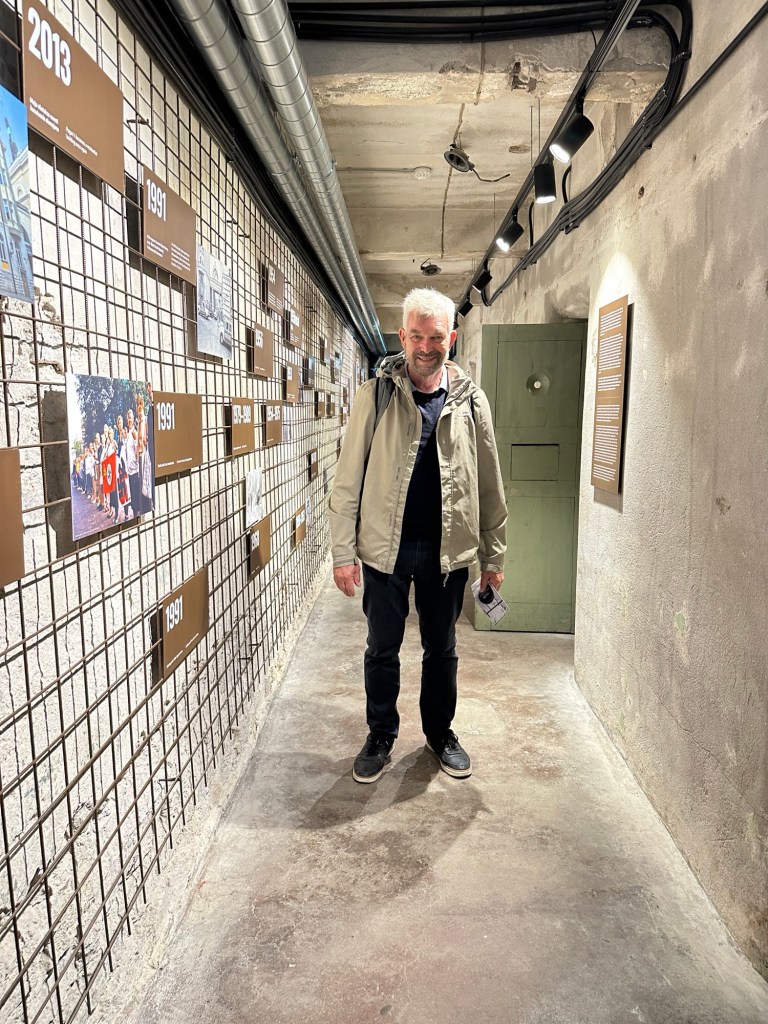
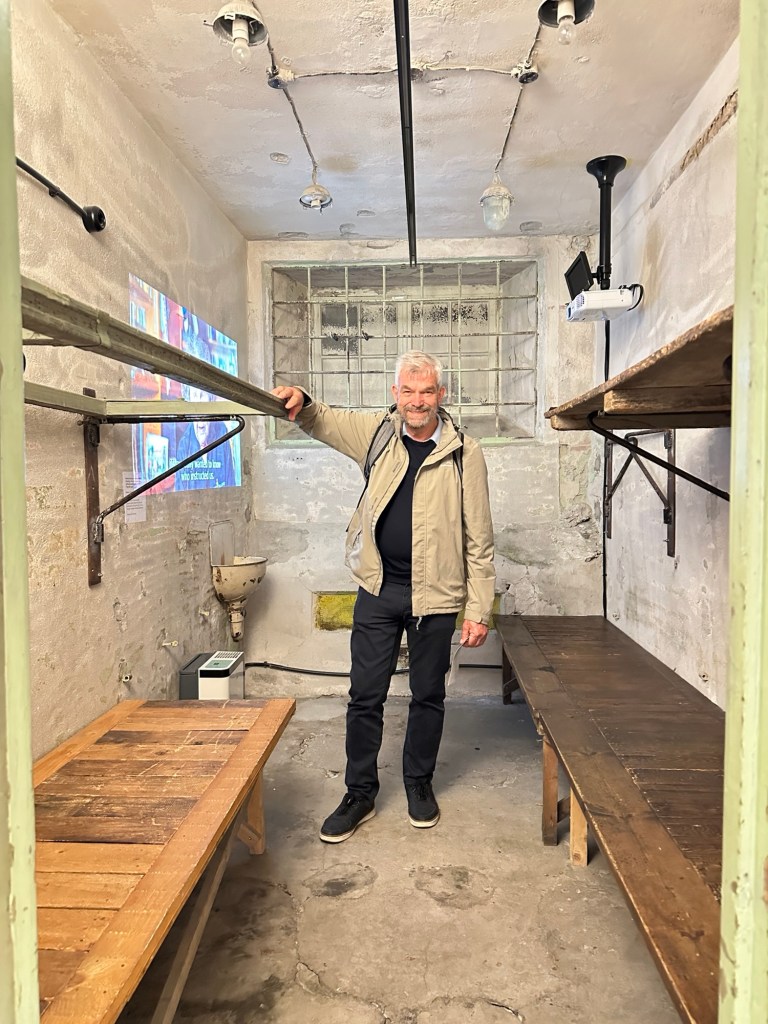
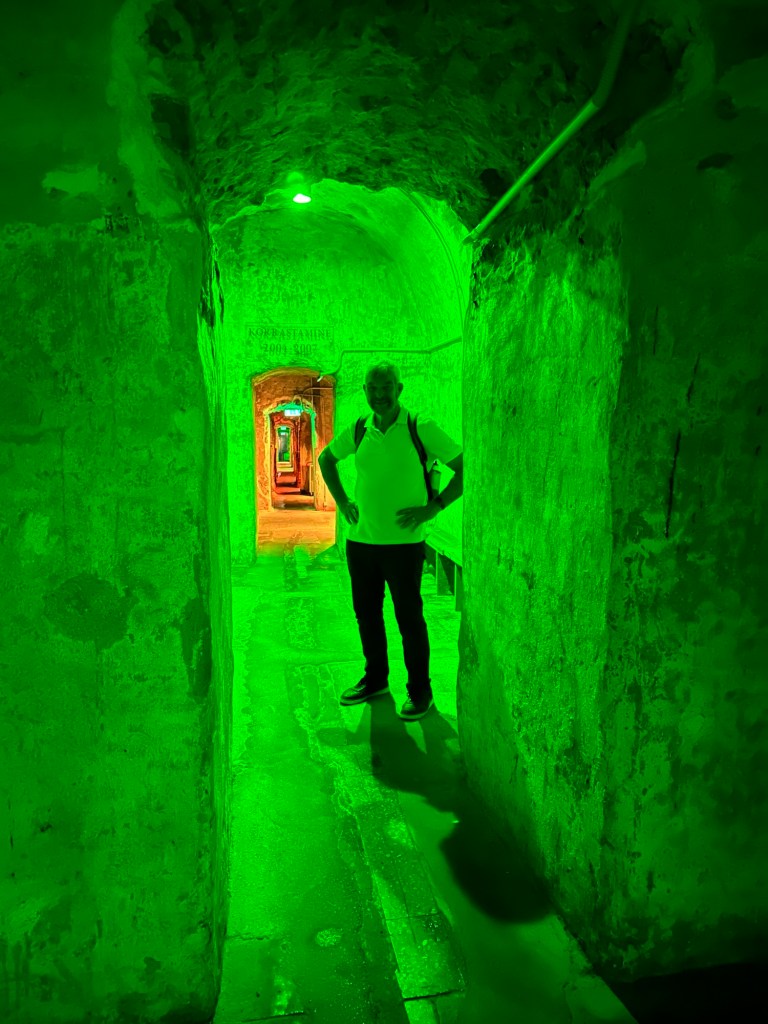
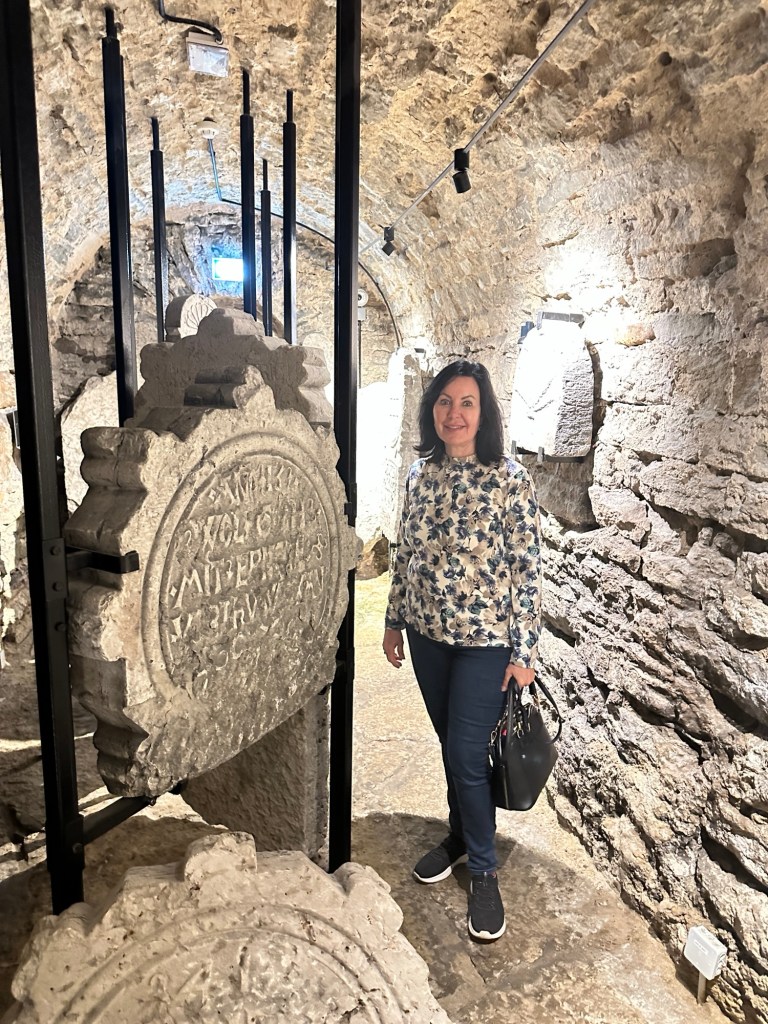
The KGB prison cells are located in the old town of Tallinn, at the address Pagari 1. During the half-century-long Soviet occupation, the house on Pagari Street was feared across Soviet Estonia. Originally constructed as an apartment building, it was turned into a pre-trial prison and served as the headquarters of the KGB in Estonia. This exhibition is about the cruelty of the NKVD and its successor, the KGB, and the suffering of people who were imprisoned, tortured, and murdered here. While the KGB Cells serves as a sombre memorial, this exhibition honours the courage, strength, endurance, and hope of the victims who perished and survived. Whilst the museum is in the basement, the apartments above function as residential properties.
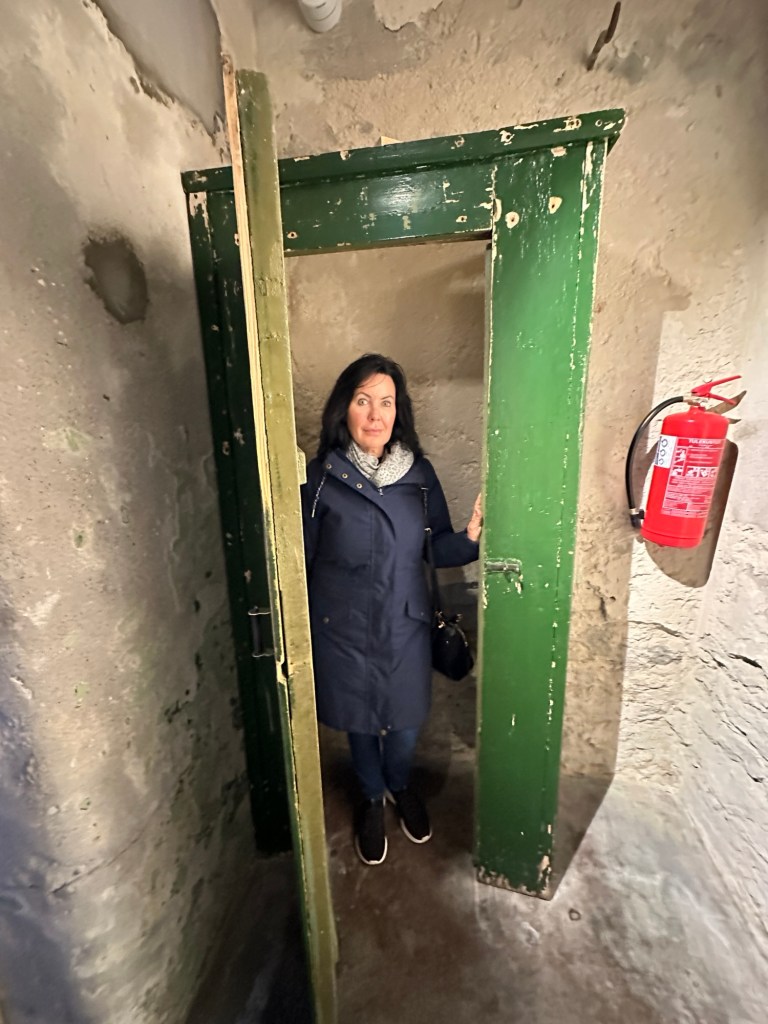
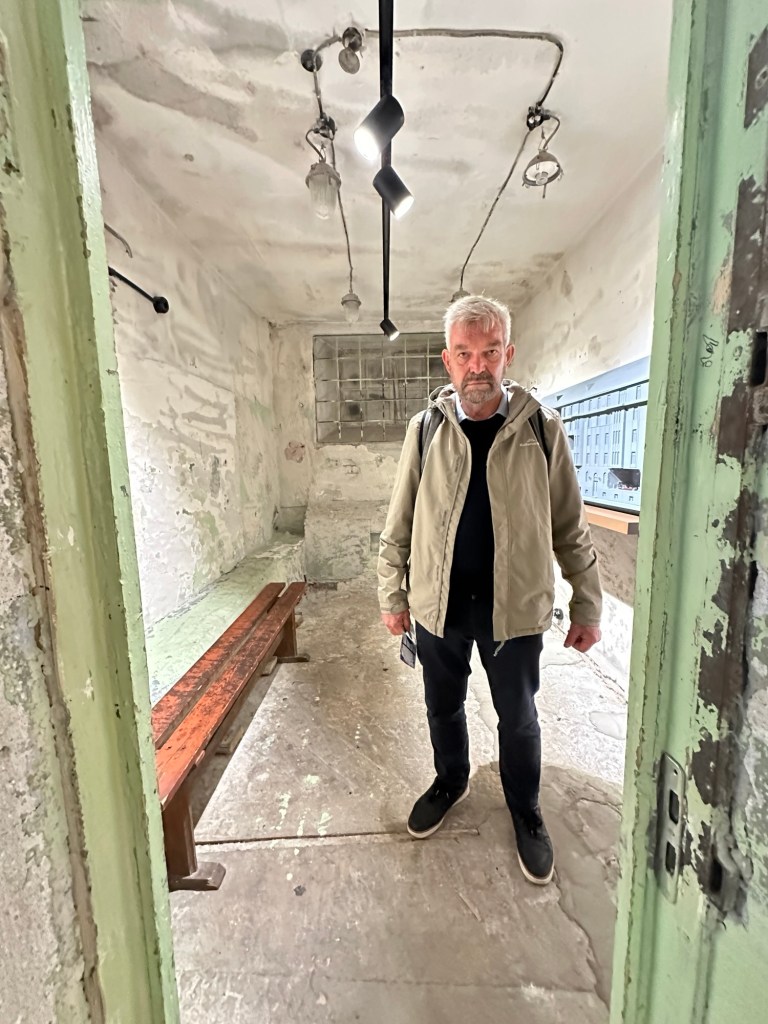
Walked back to the hotel to get ready to meet up with our Exodus tour guide and the rest of the tour group. We walked five minutes to the rear of the hotel to the Balti Jamm district, a restaurant and market precinct built in more recent times, where we had a tour briefing, and then dinner. There are 15 of us, plus the guide. Most of the travellers are English, one Costa Rican, one Colombian, and us Aussies.
Day 38
Thursday 26th June
Tallinn
11-19 degrees, sunny
Today we explored, with a lovely guide, Maria, the vibrant Tallinn, the largest city in Estonia, also a UNESCO World Heritage Site since 1991. The Old Town framed by ancient city walls, is full of architectural wonders. It is divided into the upper and lower city.
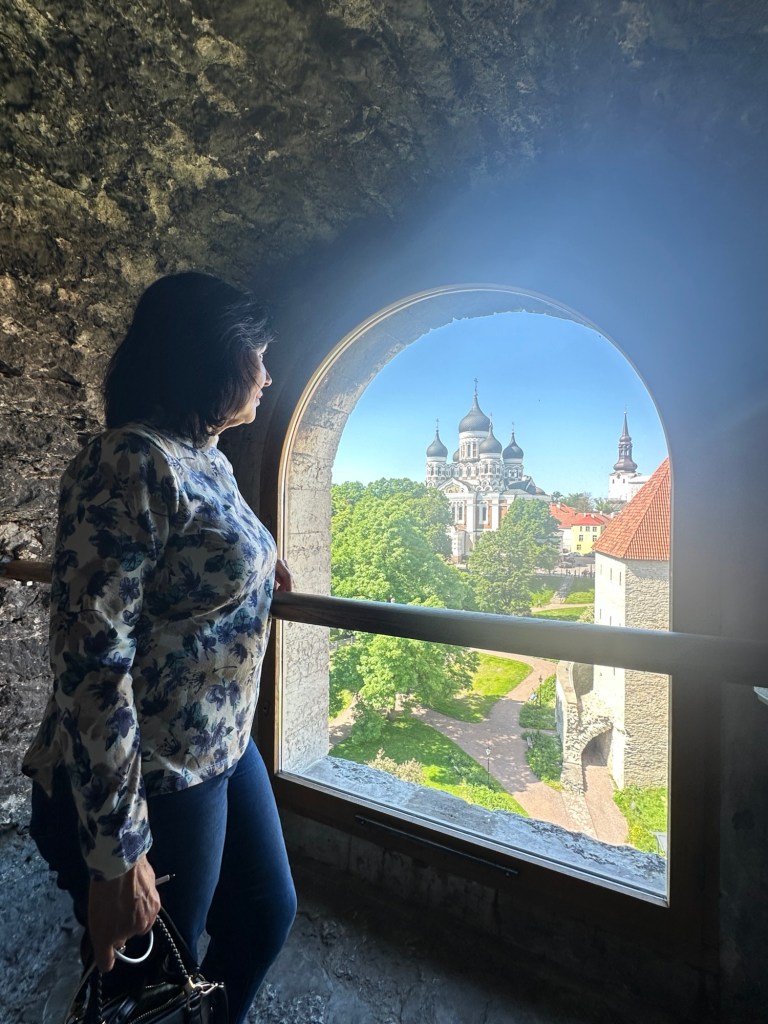
Set on Toompea Hill, Toompea (medieval upper city) dates back to 13th Century, when the Danes erected a stone castle on the site. The main attractions are the Toompea Palace and Castle, Alexander Nevsky Russian Orthodox Cathedral, Kiek-in-de-Kok cannon tower, Cathedral of St Mary the Virgin Cathedral , the Governor’s House, and two viewing platforms which offer spectacular views of the lower city. Many embassies here, also homes of wealthy residents.


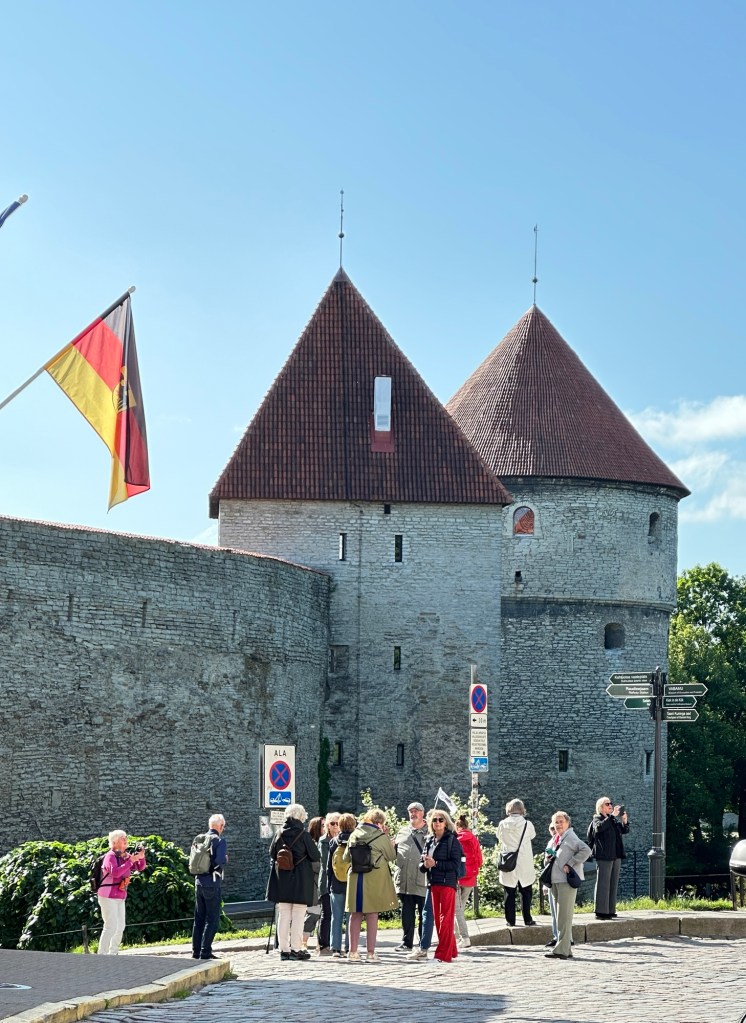

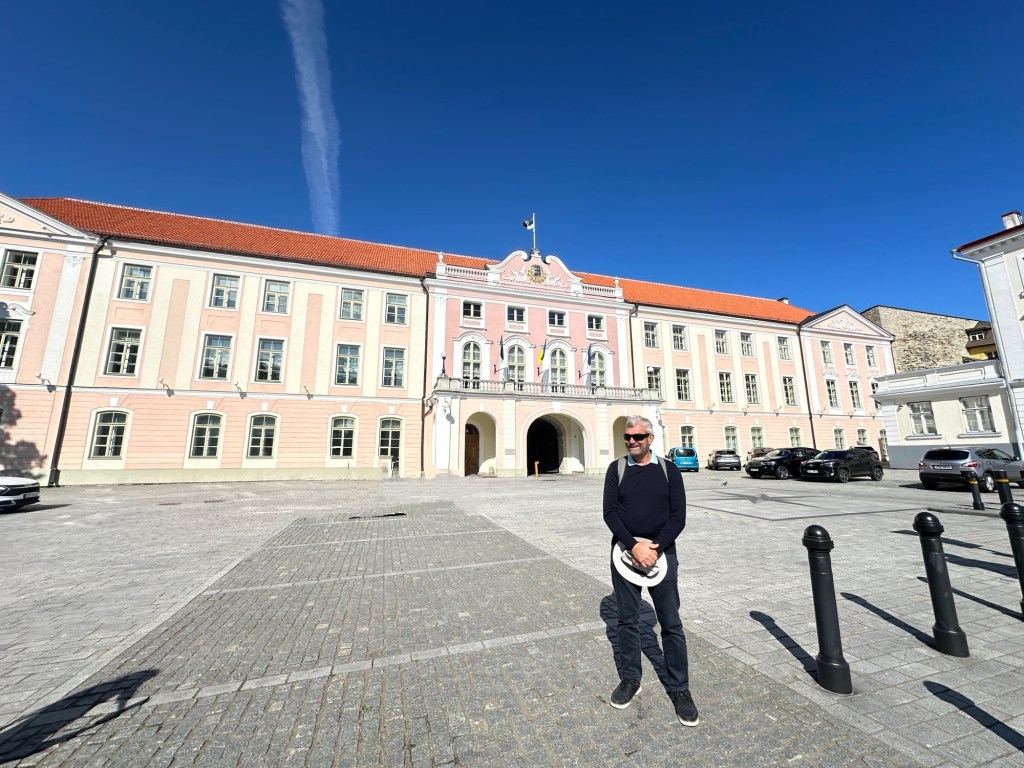
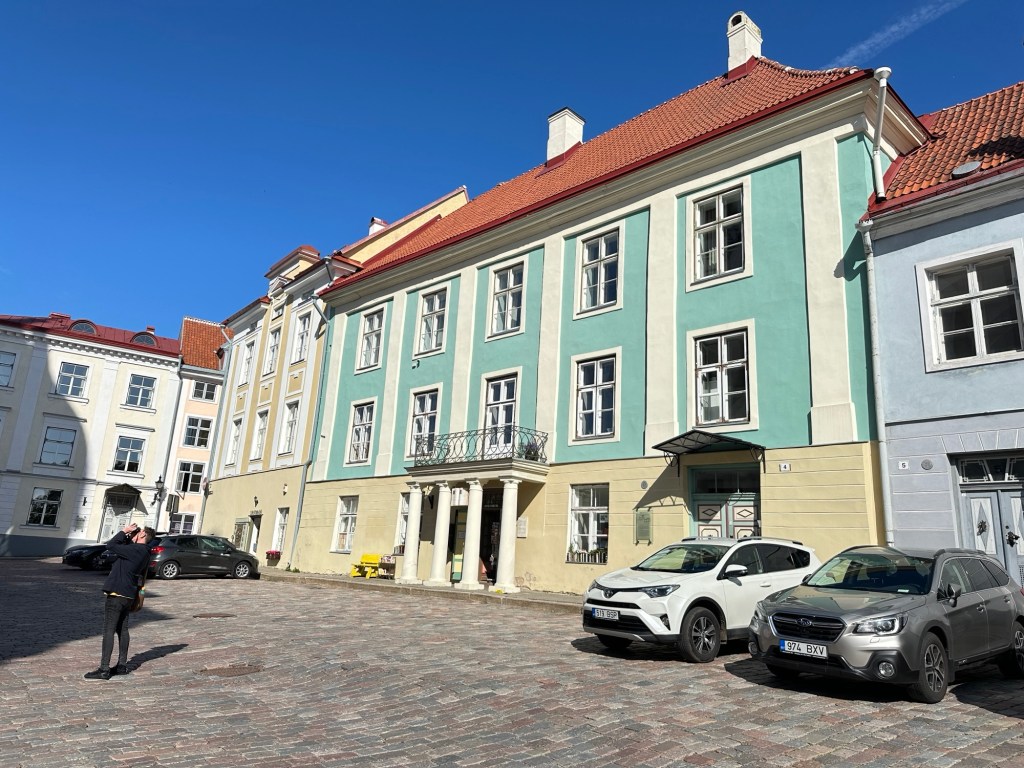
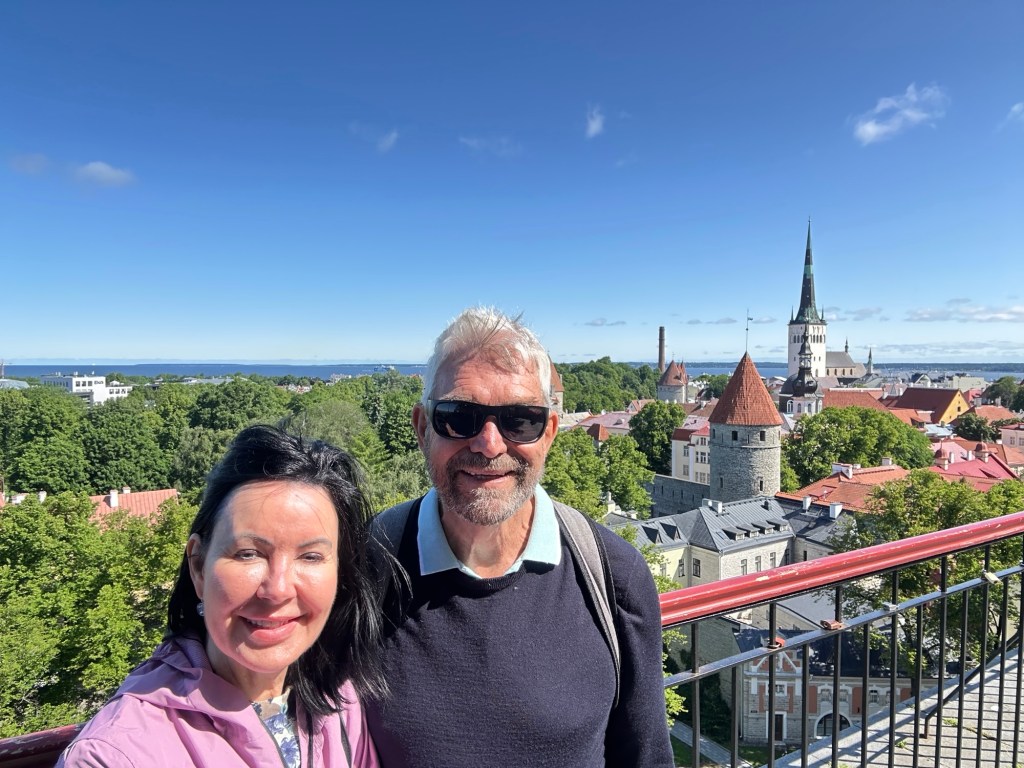

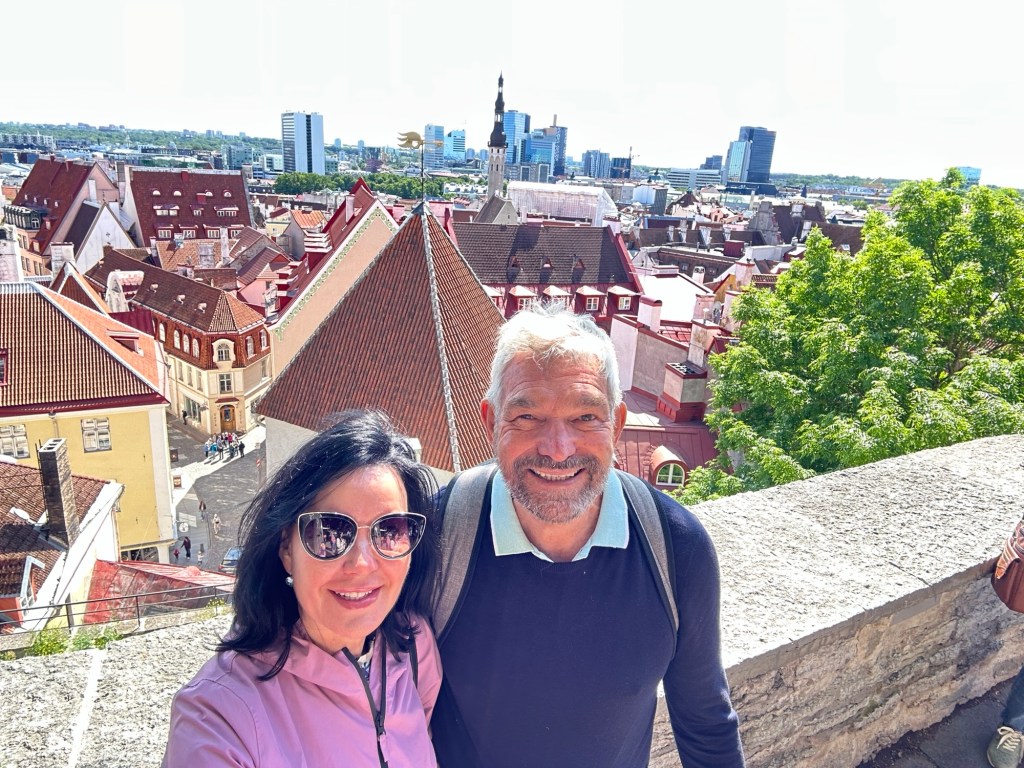
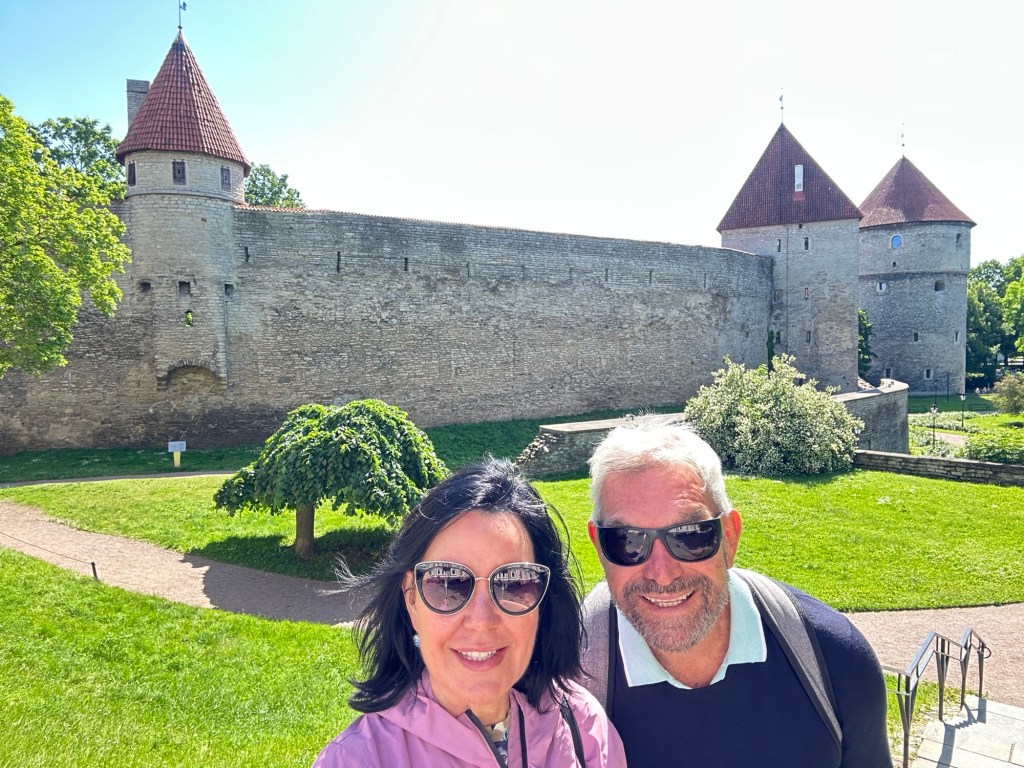
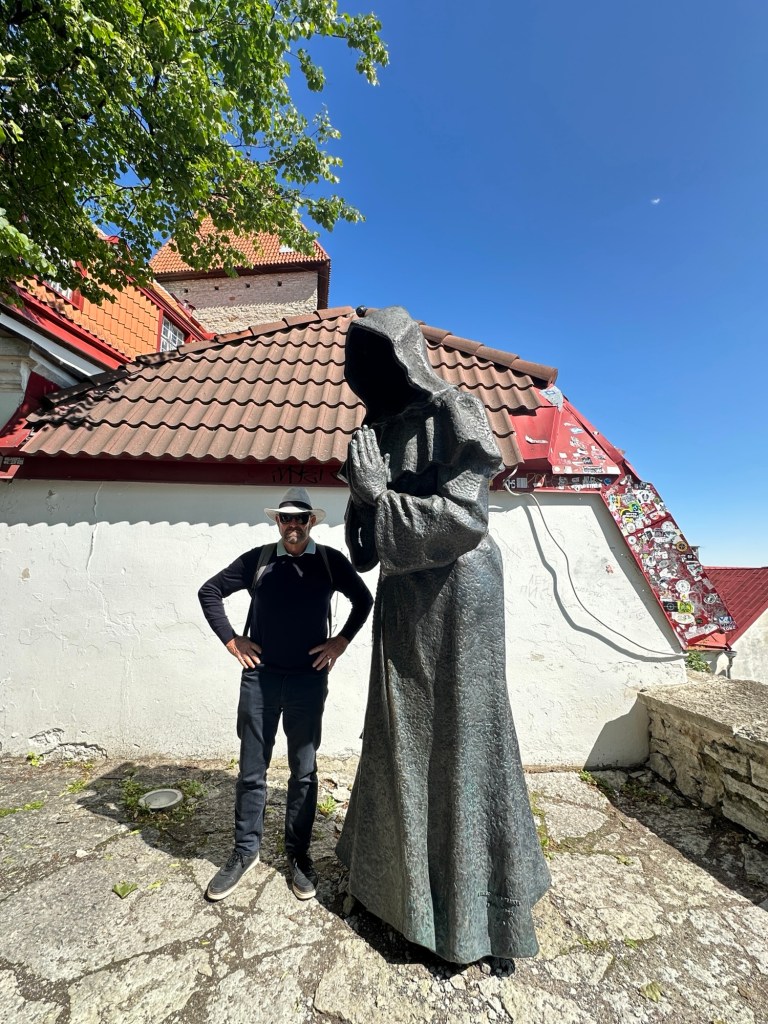
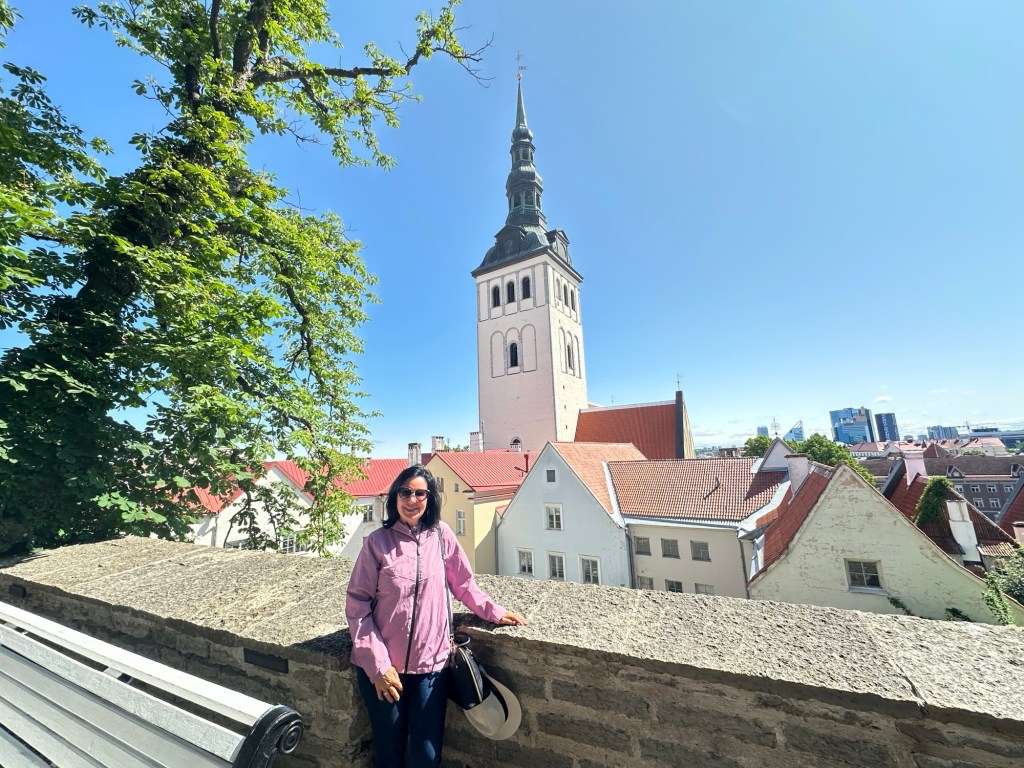


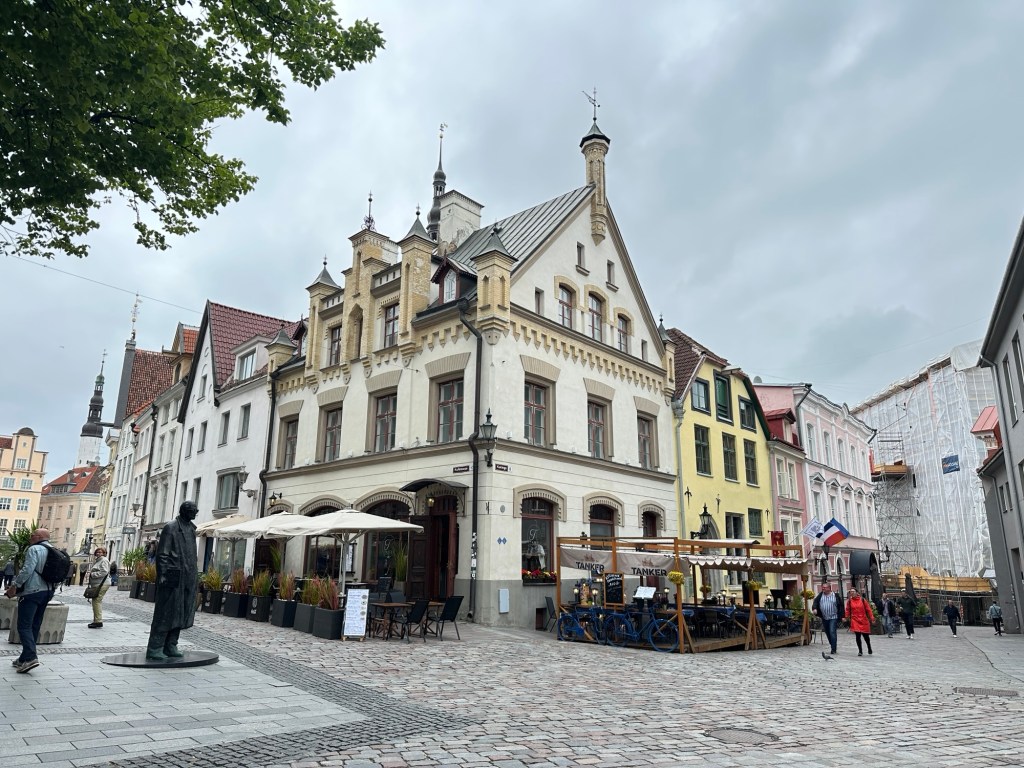
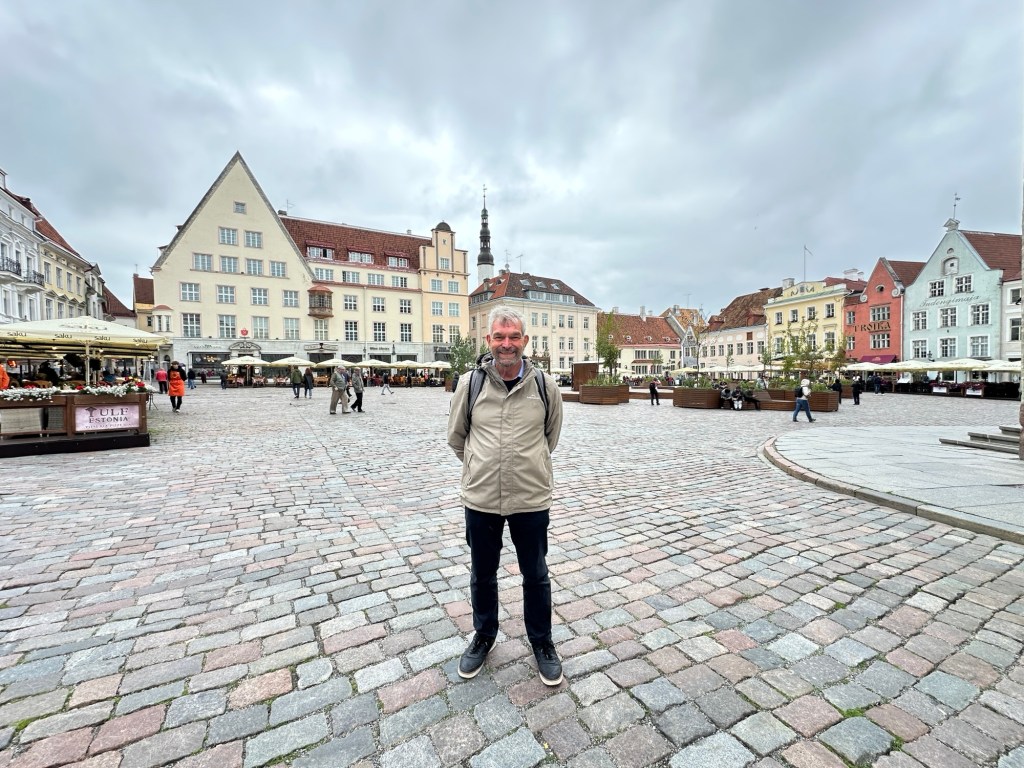
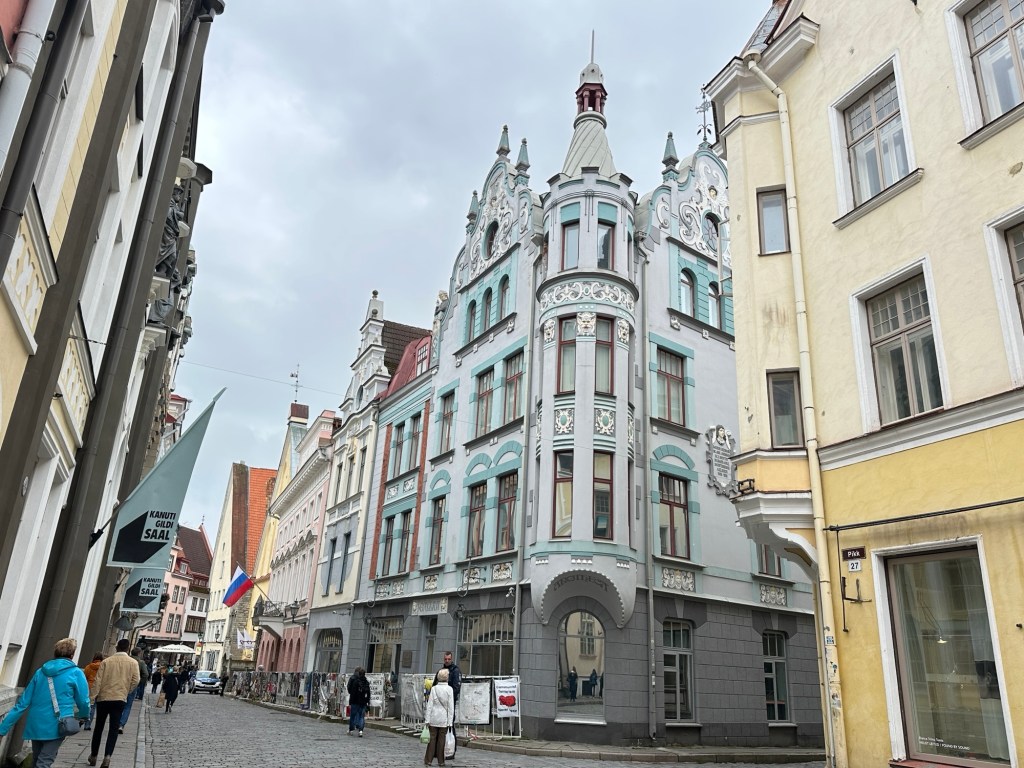
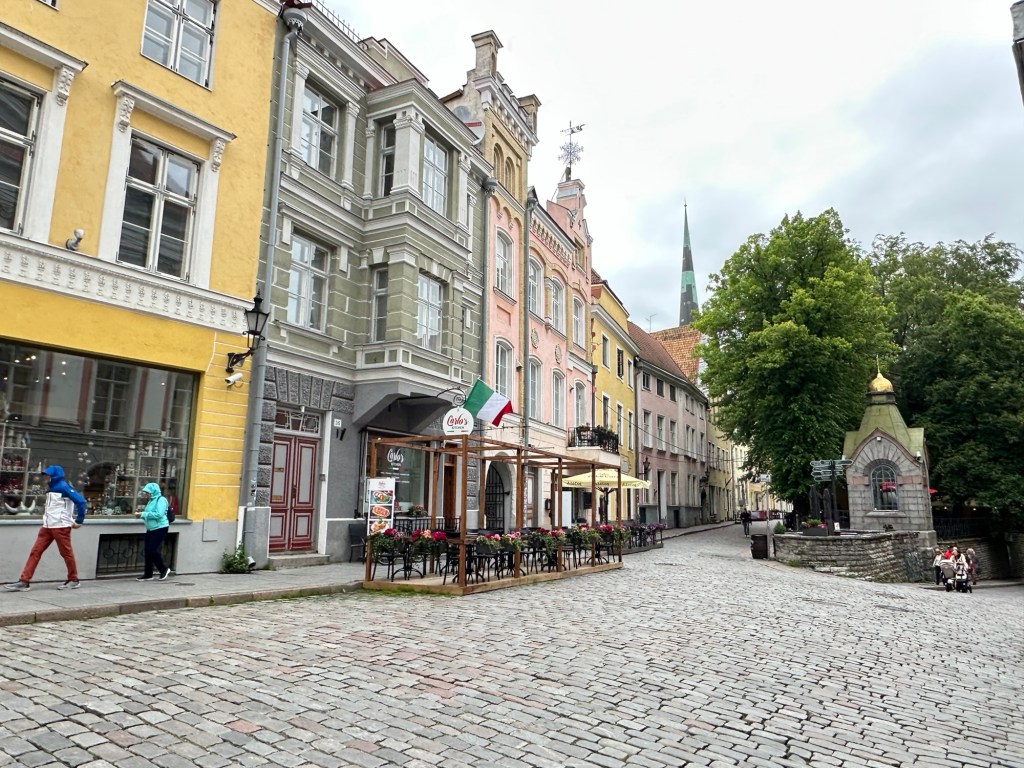
Down to the lower city where most of the sights are centred around Town Hall Square including Niguliste Church. Relatively easy to explore on foot, the winding cobbled streets are dotted with alleys, courtyards and spired churches, as well as fascinating museums. I think this is one of the prettiest cities in the world. The hanging flower baskets and potted flowers are just so pretty and welcoming. The architecture is very striking, and the painted houses are very eye catching.

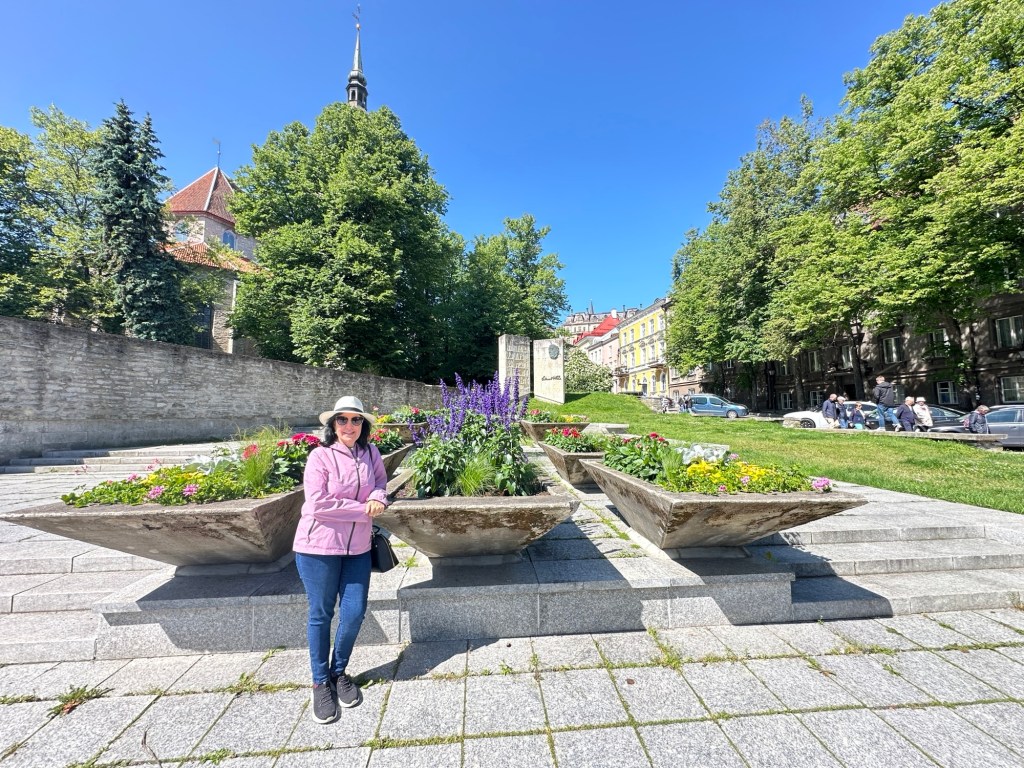

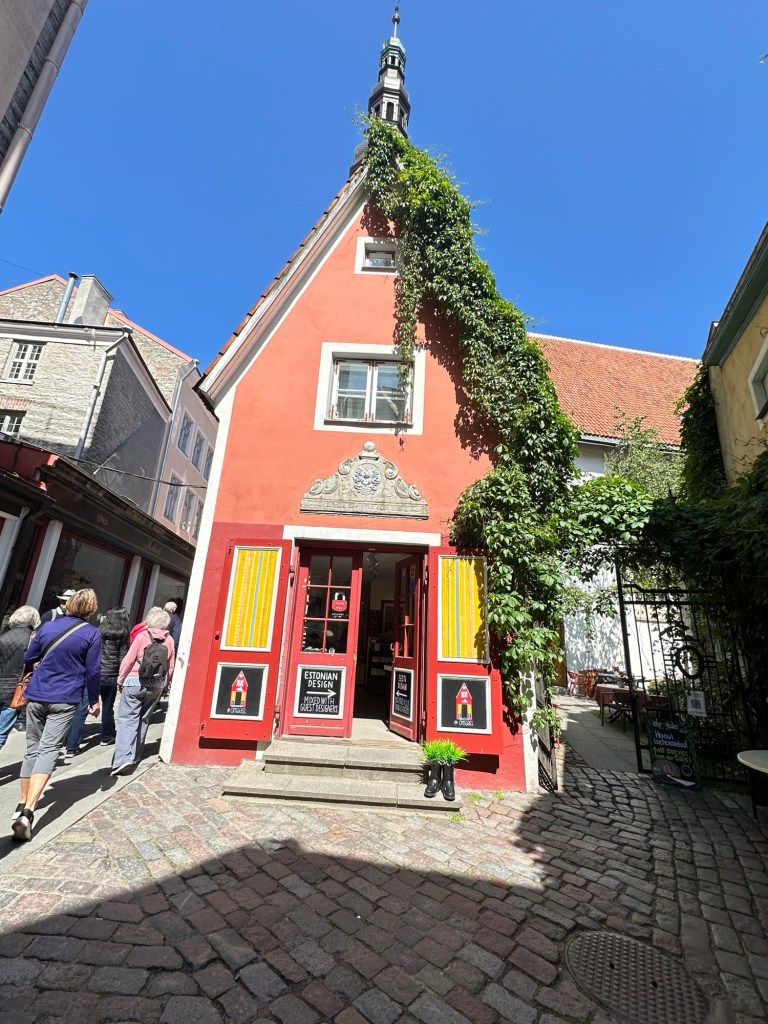
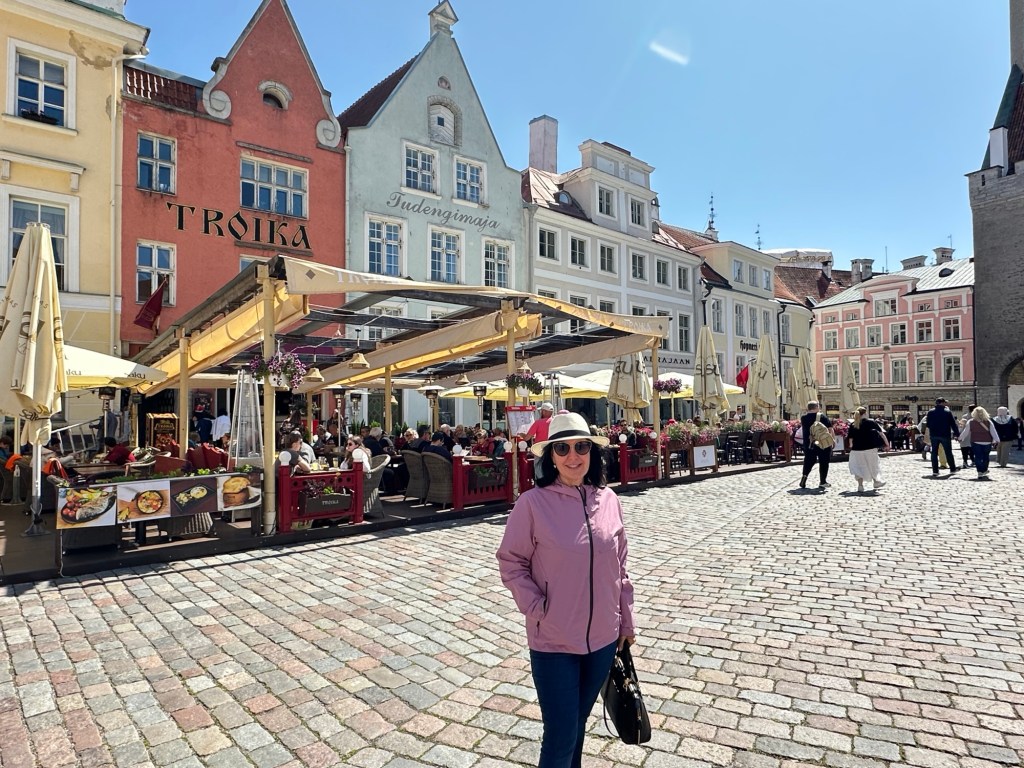
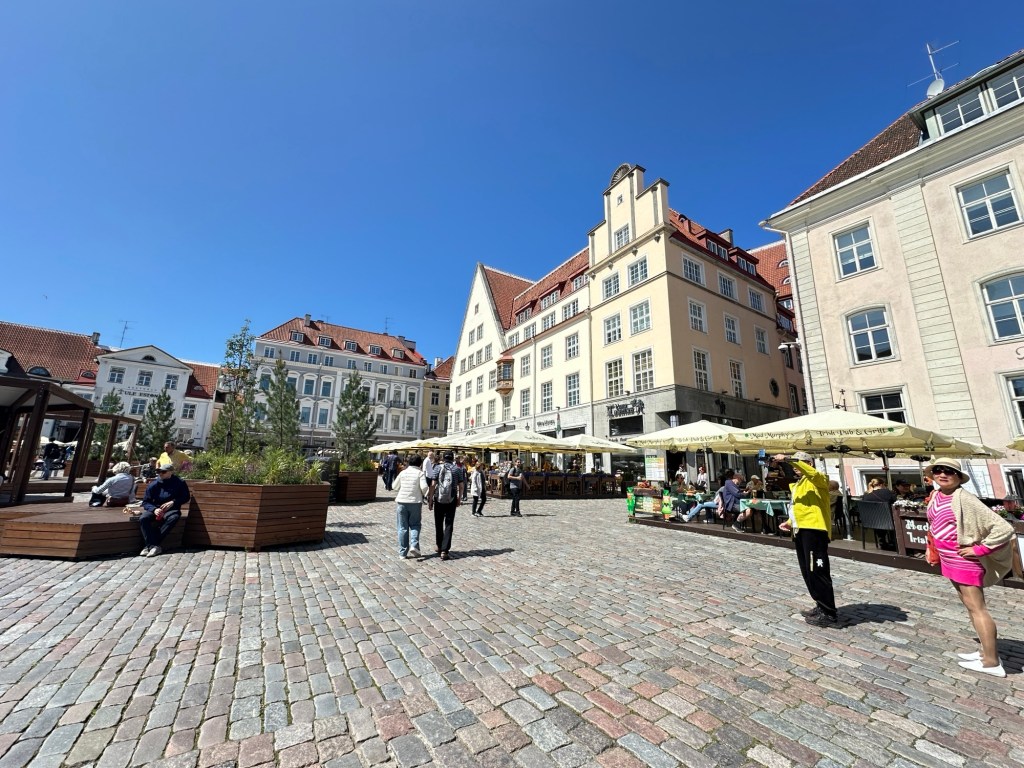
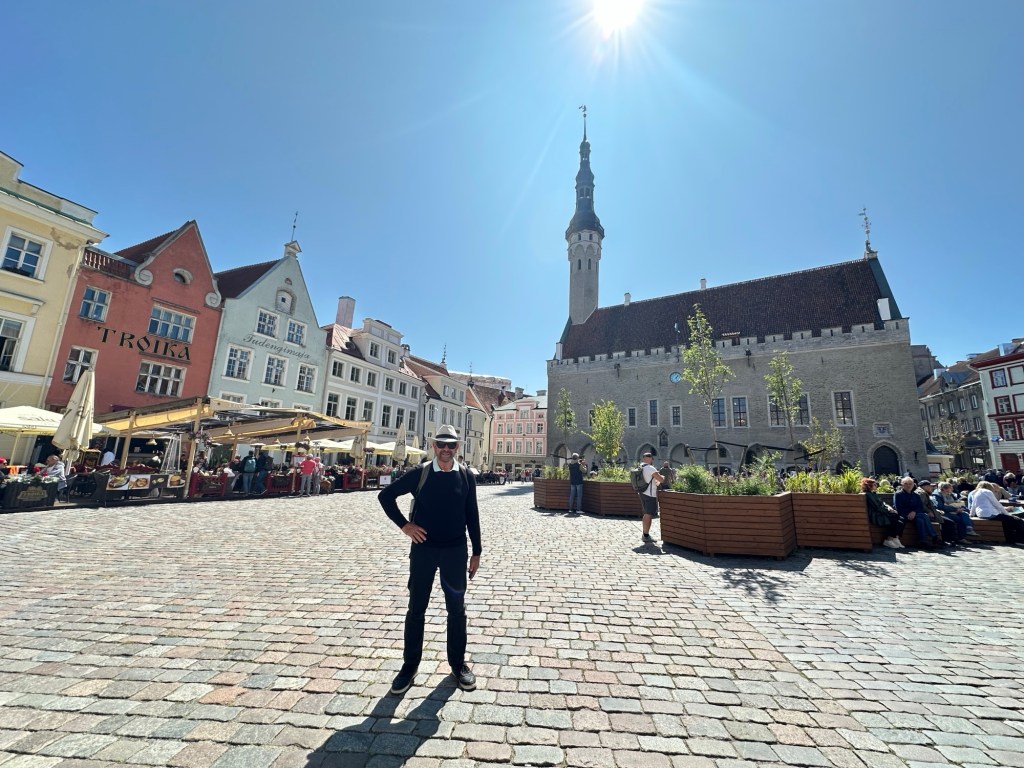
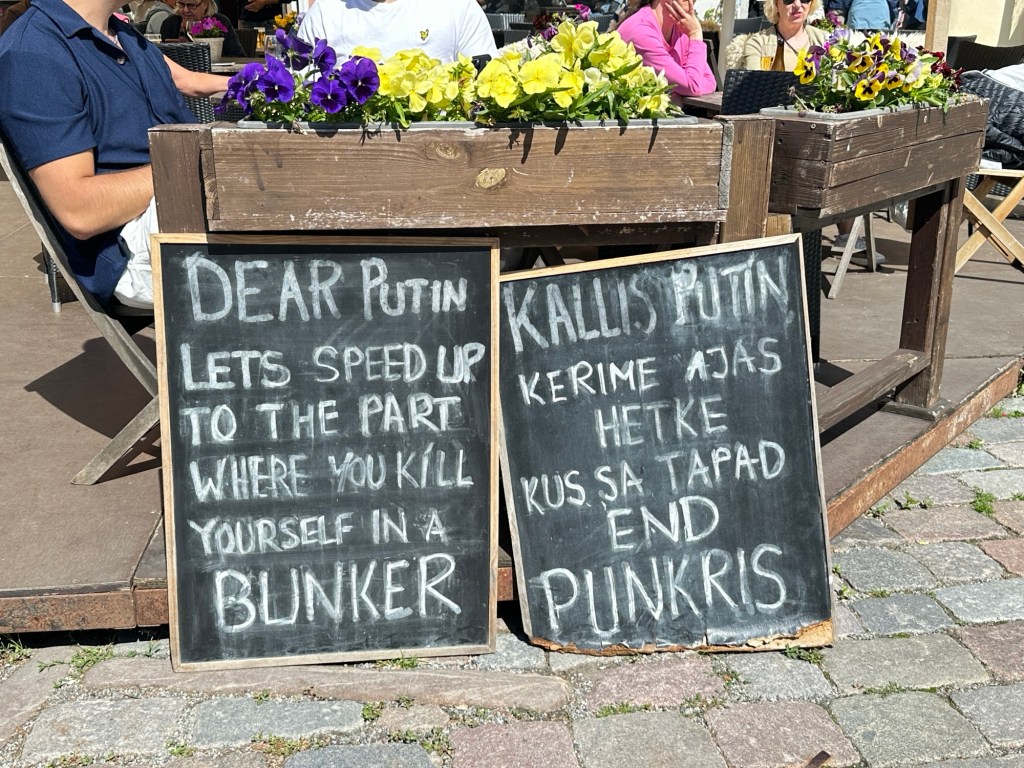
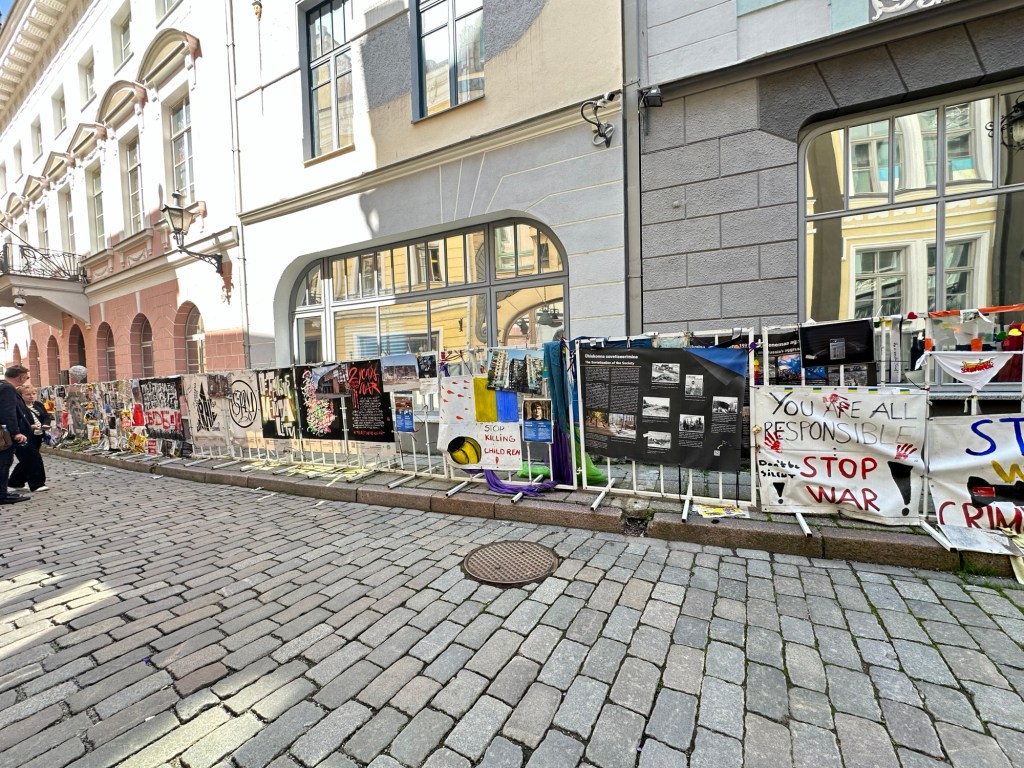
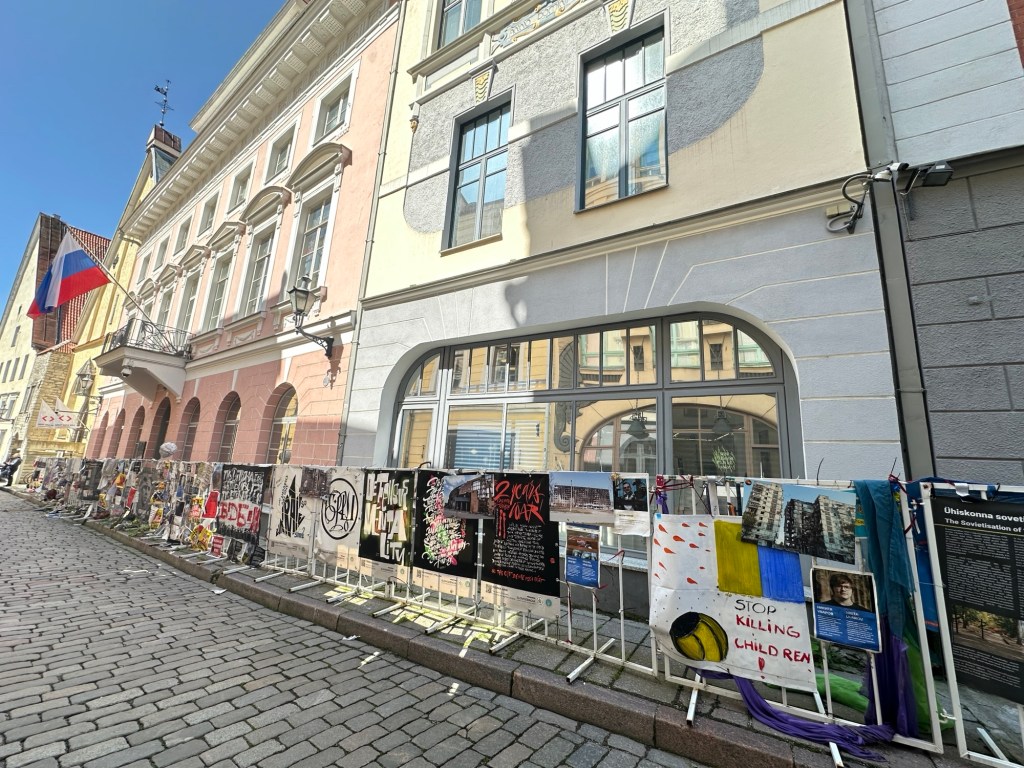
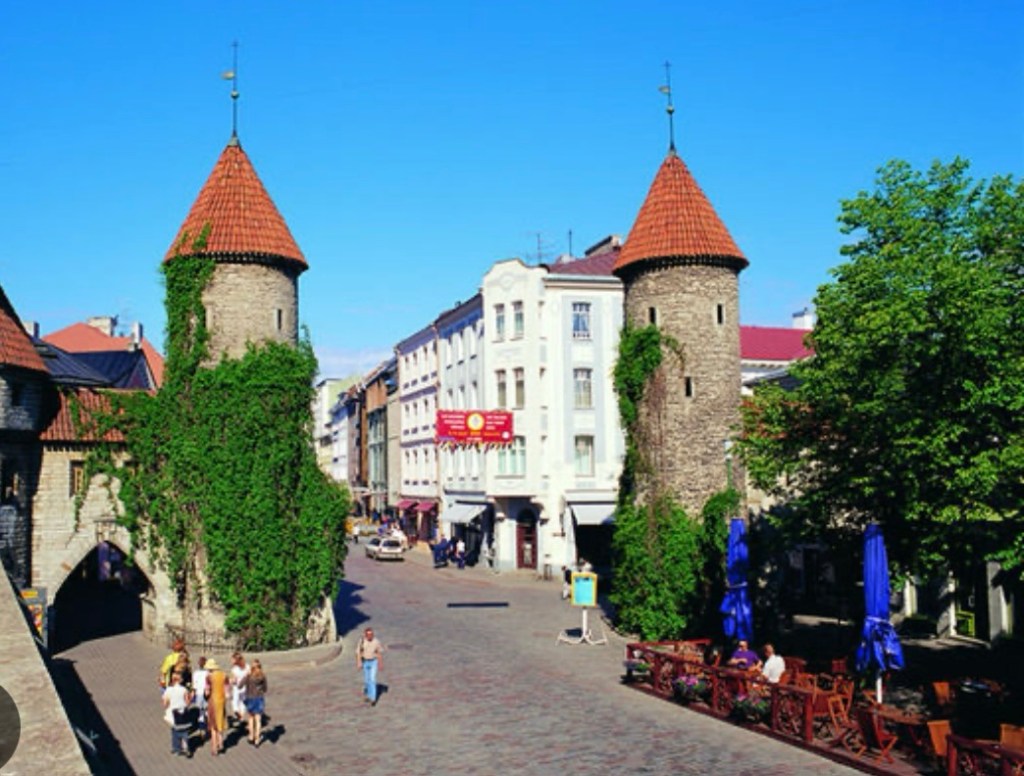
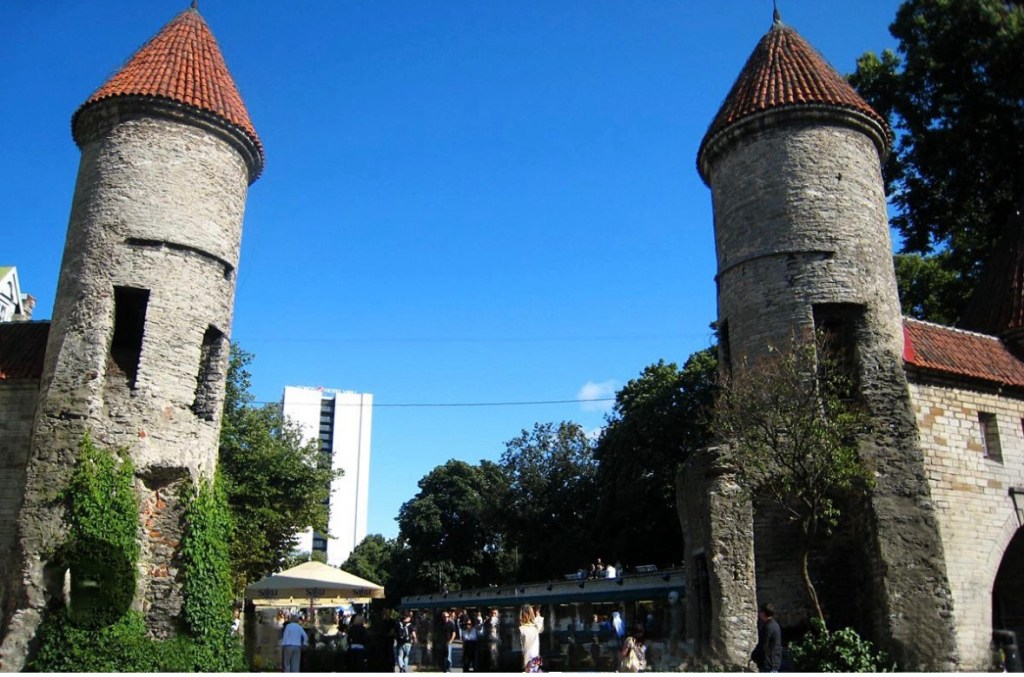
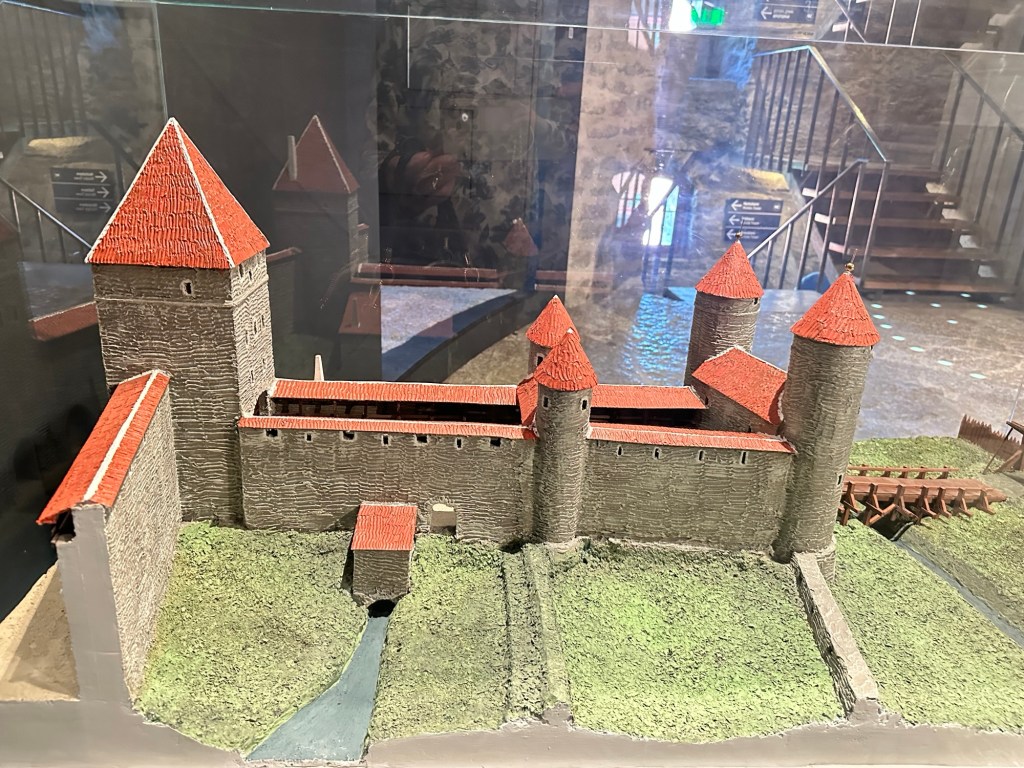
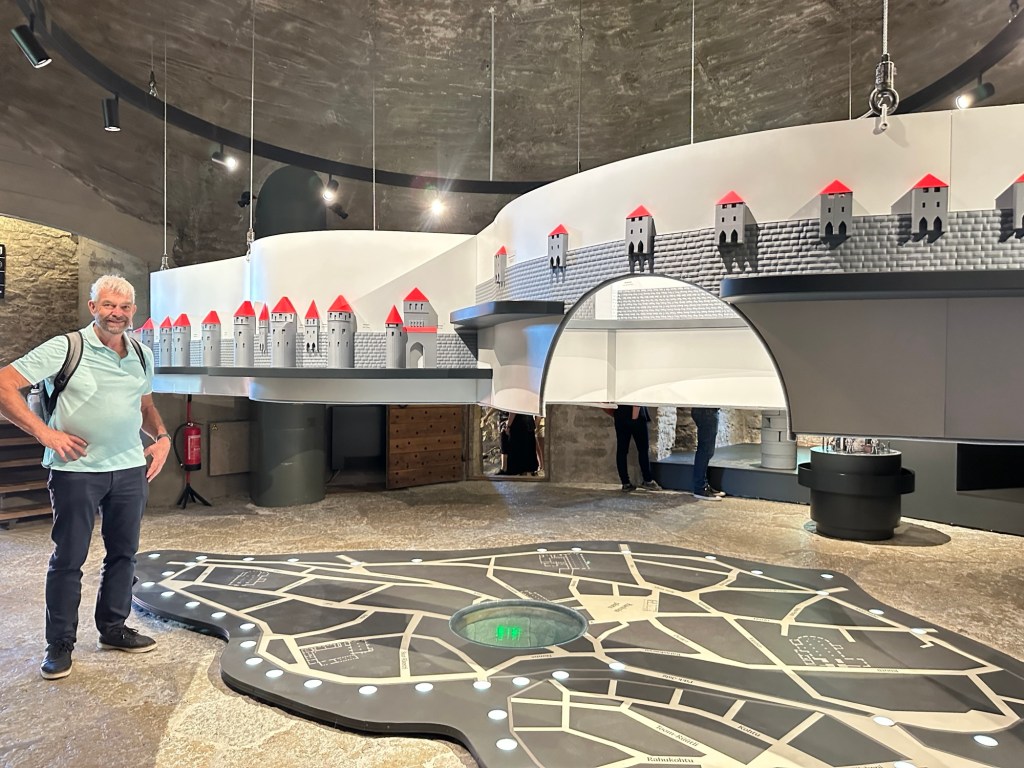
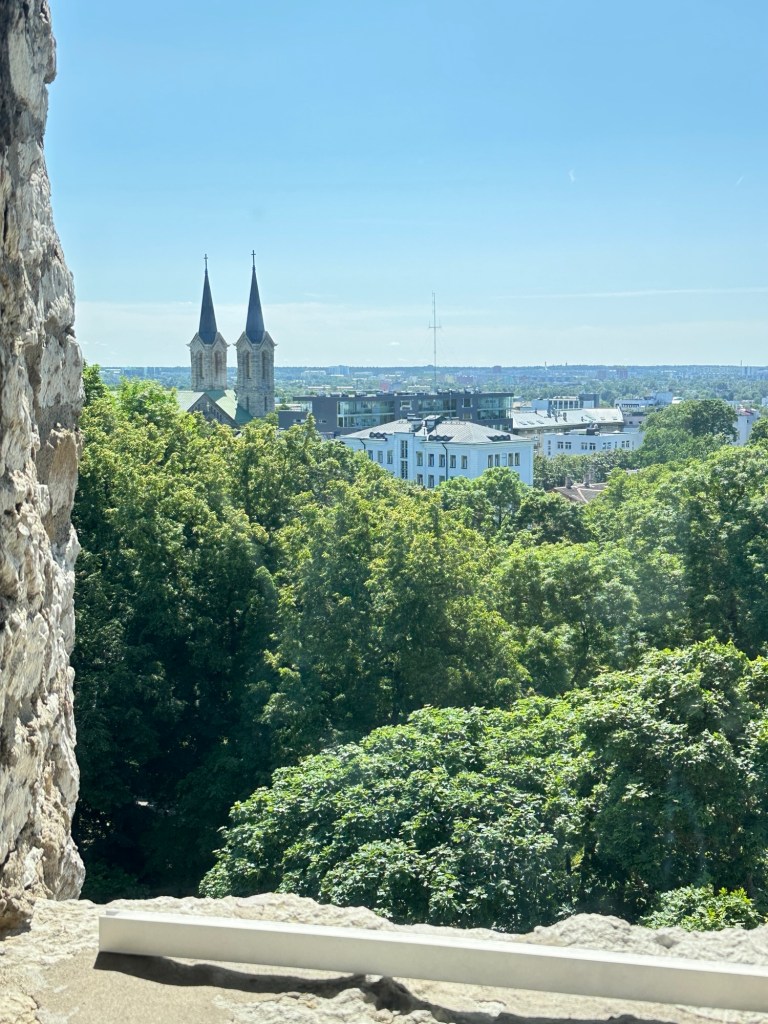
The Kiek-in-de-Kok Museum was our afternoon activity. The cannon tower was built in 1475 as Toompea’s main bastion. The bastion passages are the mysterious tunnels in Tallinn’s earthwork fortifications – these were built along with the bastions in the 17th and 18th centuries to conceal the movement of soldiers, ammunition, and other equipment from the enemy. They were also used to monitor the enemy’s underground activities of planting mines. There were 400 metres of them, all solidly constructed. We also went up five floors in the tower – great views of Kaarli Church, St Nicolas’ Church and Toompea. The medieval towers are famous symbols of the city’s history.


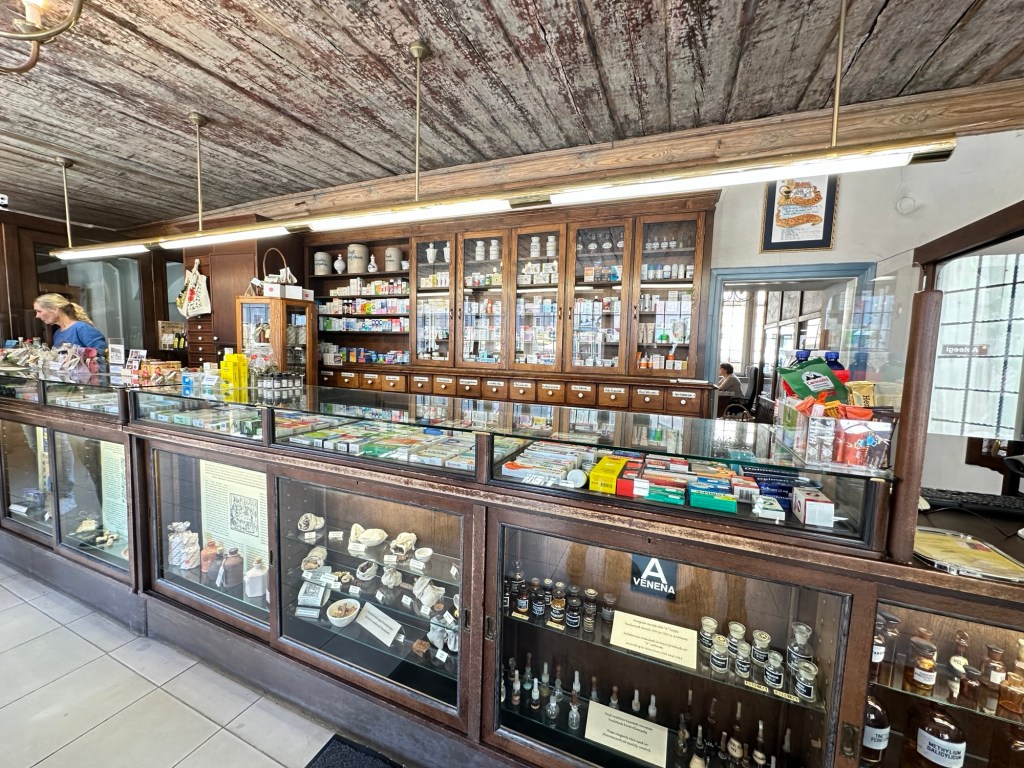
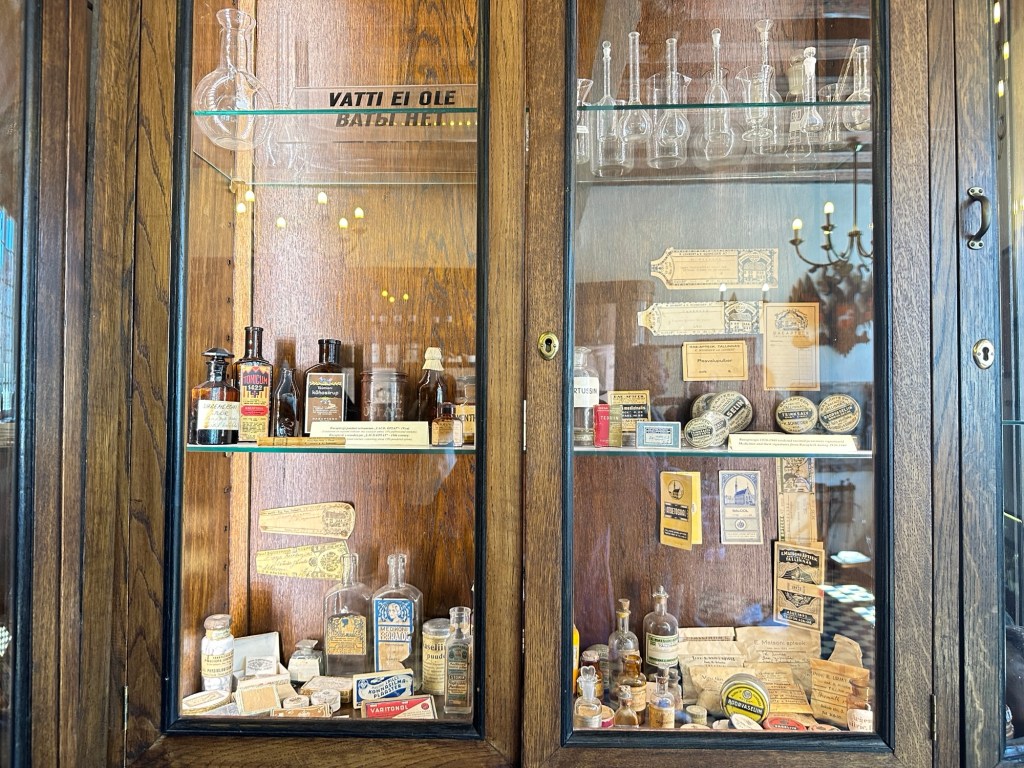
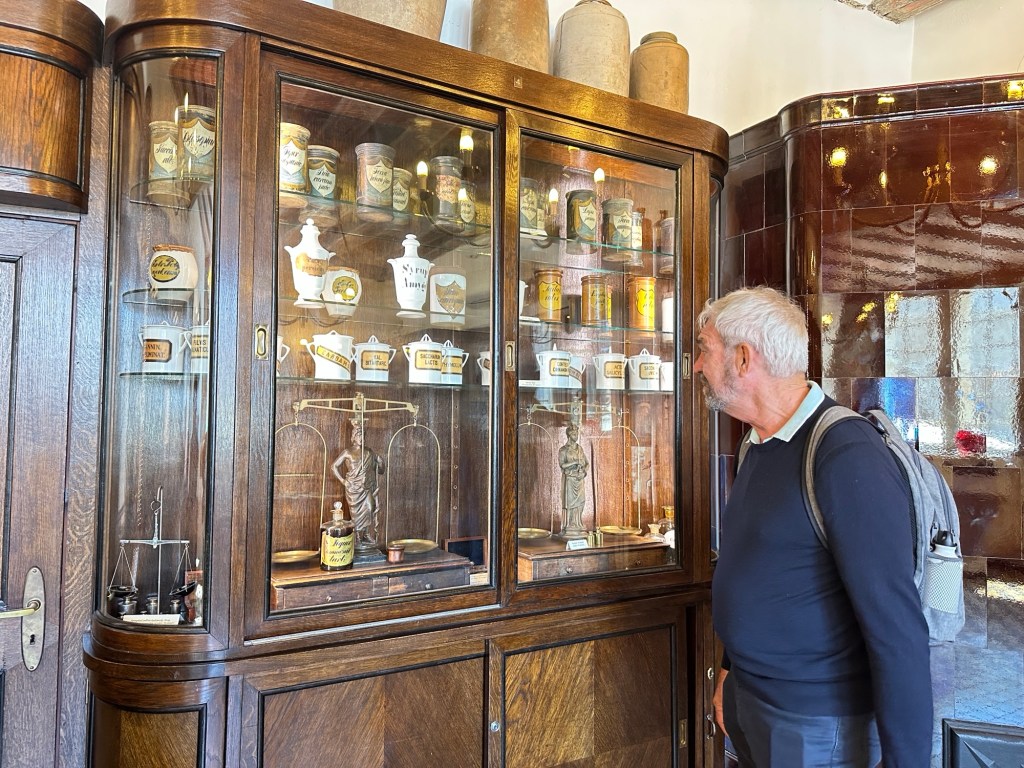
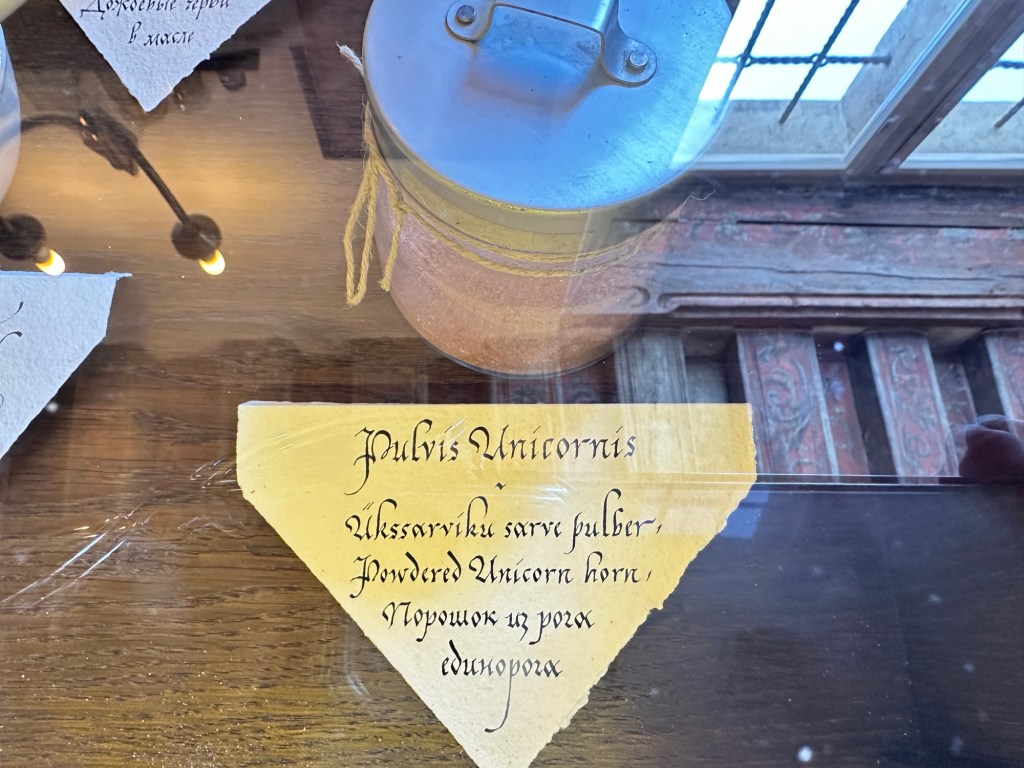
Had a quick look at the Town Hall Pharmacy, famed for being one of the oldest pharmacies in Europe – there is evidence that a pharmacy existed on the site as early as 1422. There is a modest museum with a small selection of historical exhibits, including “powdered unicorn horn”!
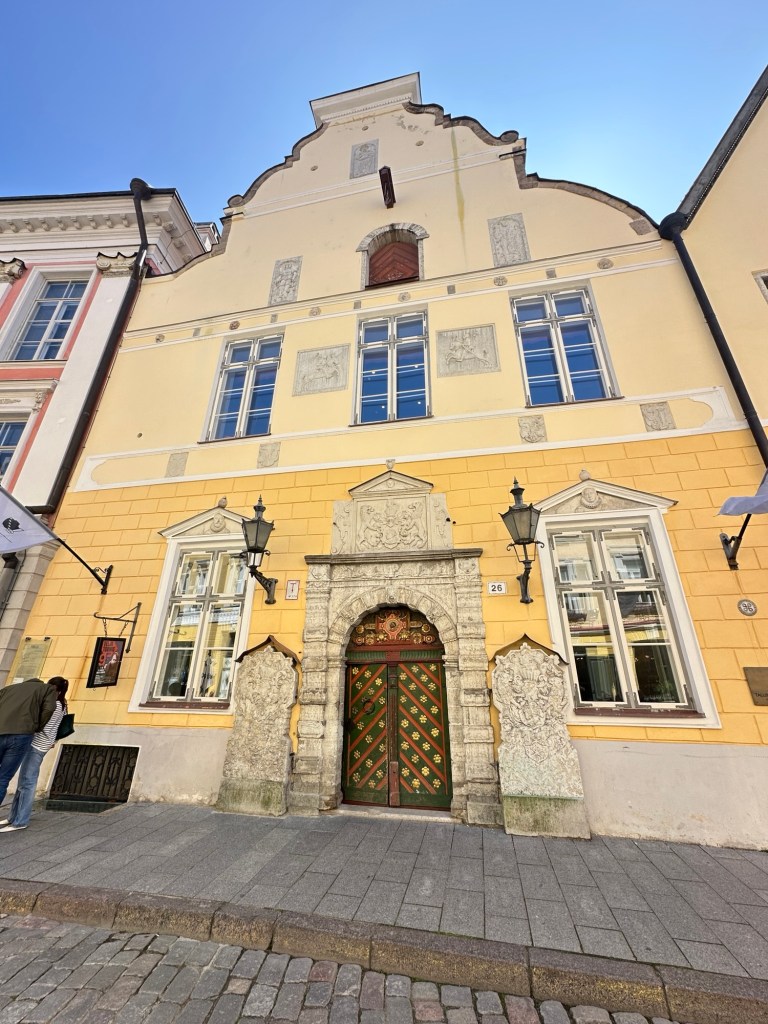
Also saw the House of Blackheads – a 15th Century Renaissance building which was the meeting place of the Brotherhood of Blackheads, an association of unmarried merchants and shipowners who were then able to join the more powerful Great Guild upon marriage. The Tallinn Blackheads were obliged to defend the city in times of strife .

Time to look at a few souvenir shops, plus Frank had his hair trimmed. His hair had become a bit wild and woolly after being away all this time.
Dinner at the same precinct as the night before, different restaurant, recommended by fellow travellers. Maybe not the best choice, mostly burgers – I didn’t travel all this way to have a burger – but I did find a nice Laksa on the menu. First time ever we have had to pay for tap water!
Day 39
Friday 27th June
11-19 degrees, sunny to cloudy to light shower
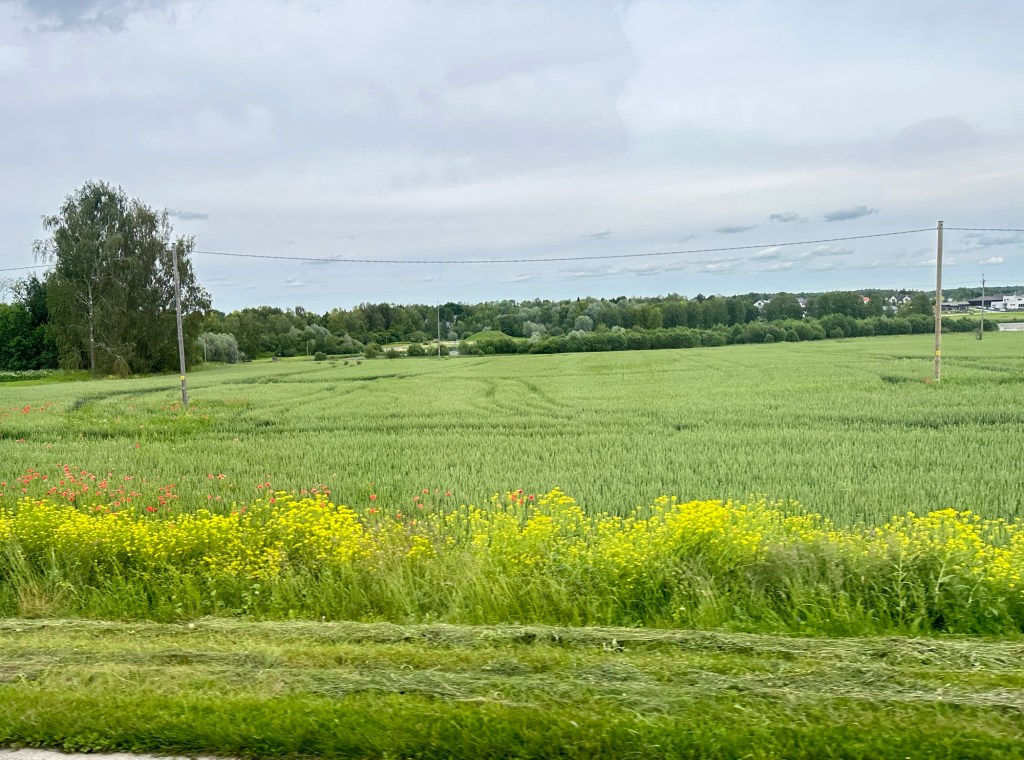
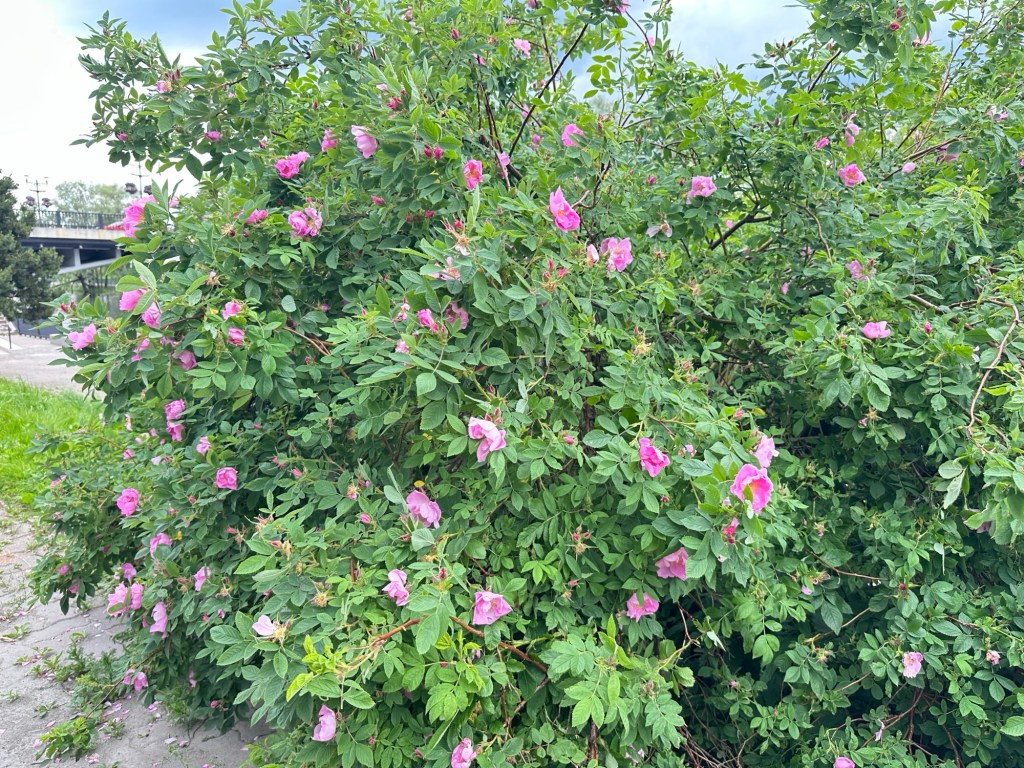
Today we leave Tallinn and journey to Tartu, stopping at Lahemaa, the largest national park in Estonia. It is a popular tourist destination with sandy beaches, waterfalls and mossy pine forests. Spruce pine and birch trees, also black elder and oak, wild poppies and daisies, just so many wildflowers, and the most heavenly scented rose bushes growing wild. Mushrooms (Chanterelle ) and berries grow wild.
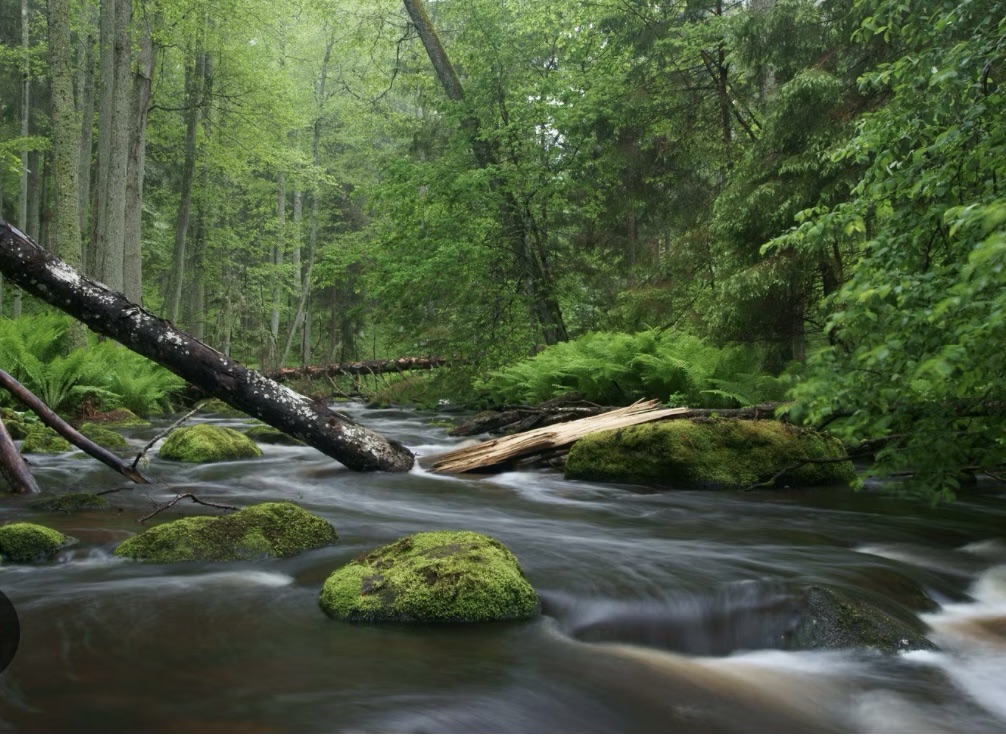
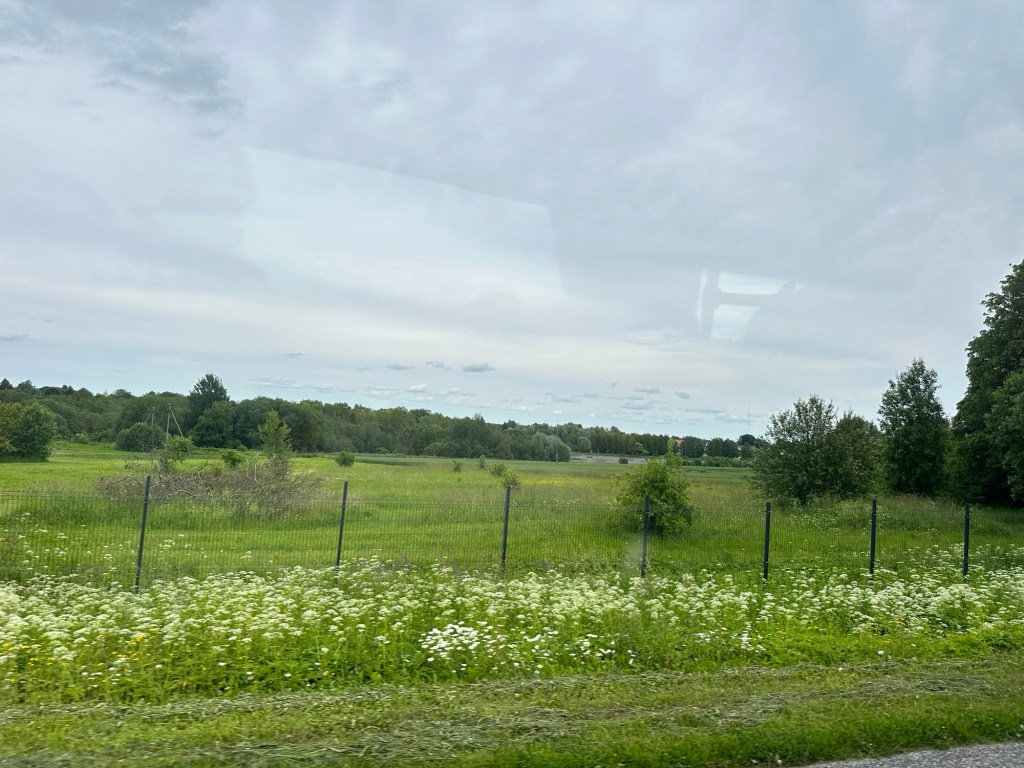
Wildlife in the forest – no wolves here, but there are black bears – one currently has three cubs, elks, beavers, badgers, and storks (saw a large nest with parents and chicks) – all call this forest their home.
Lahemaa has a variety of cultural sites, including the restored stately Baroque Palmse Manor and grounds.
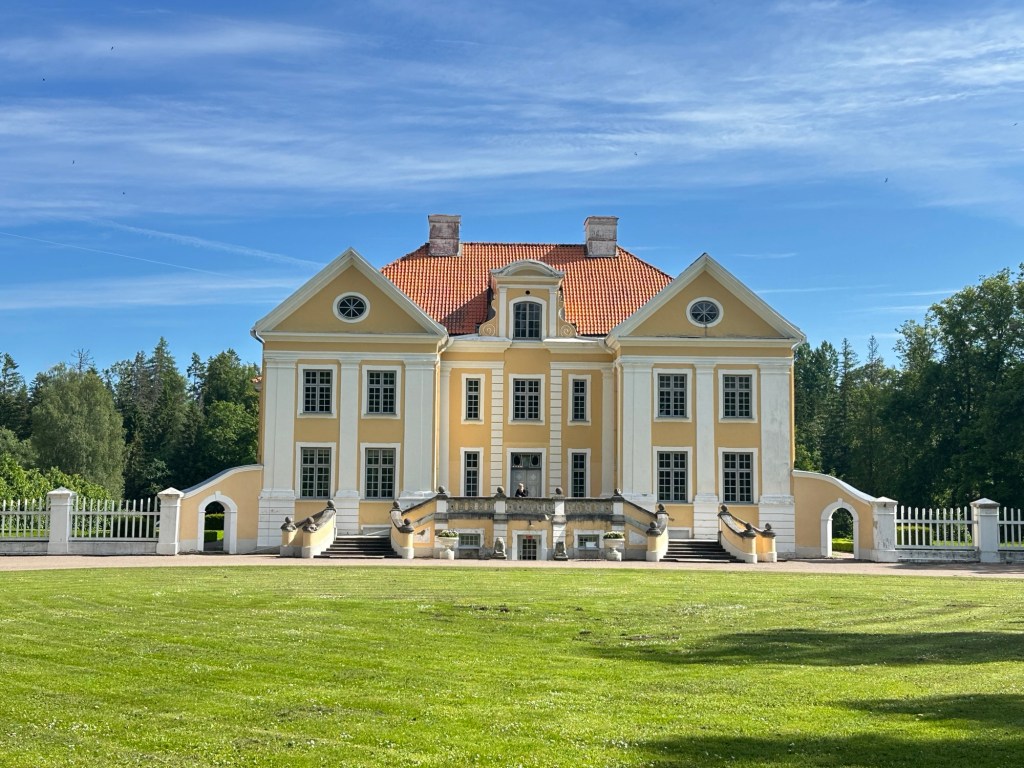
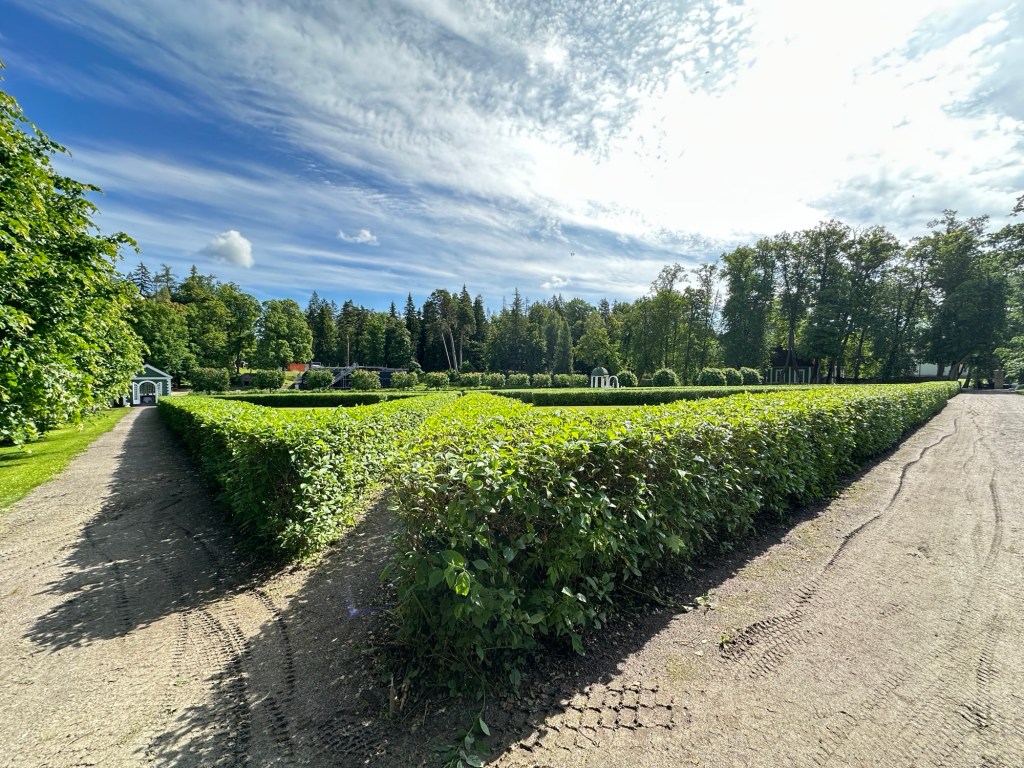
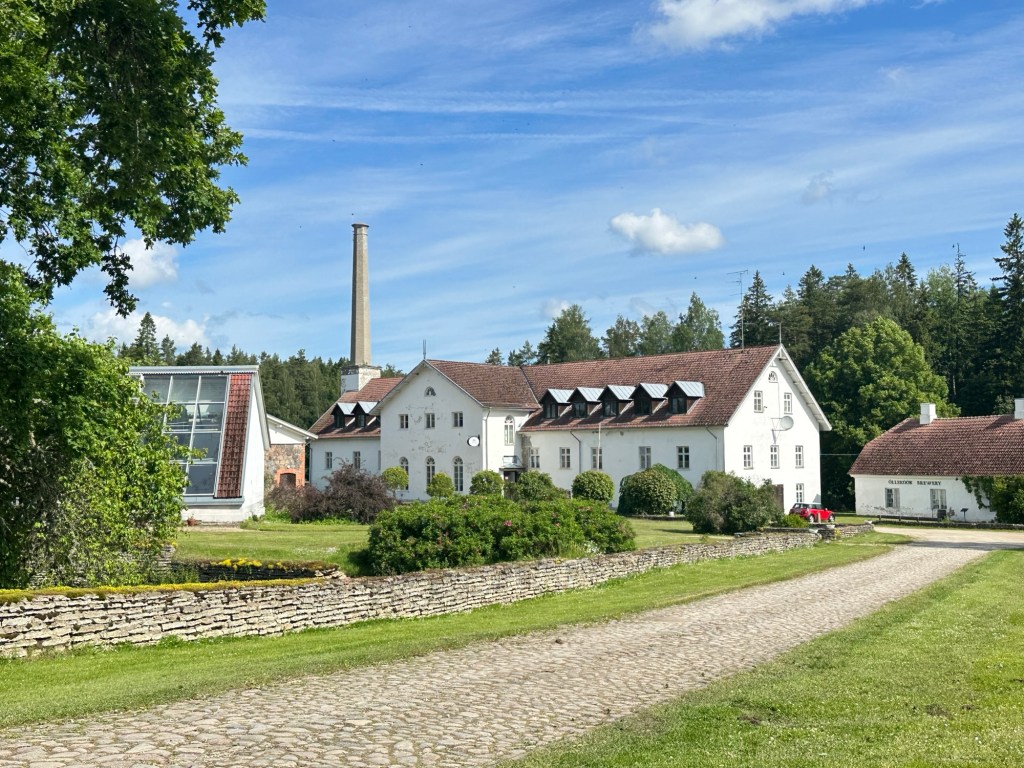
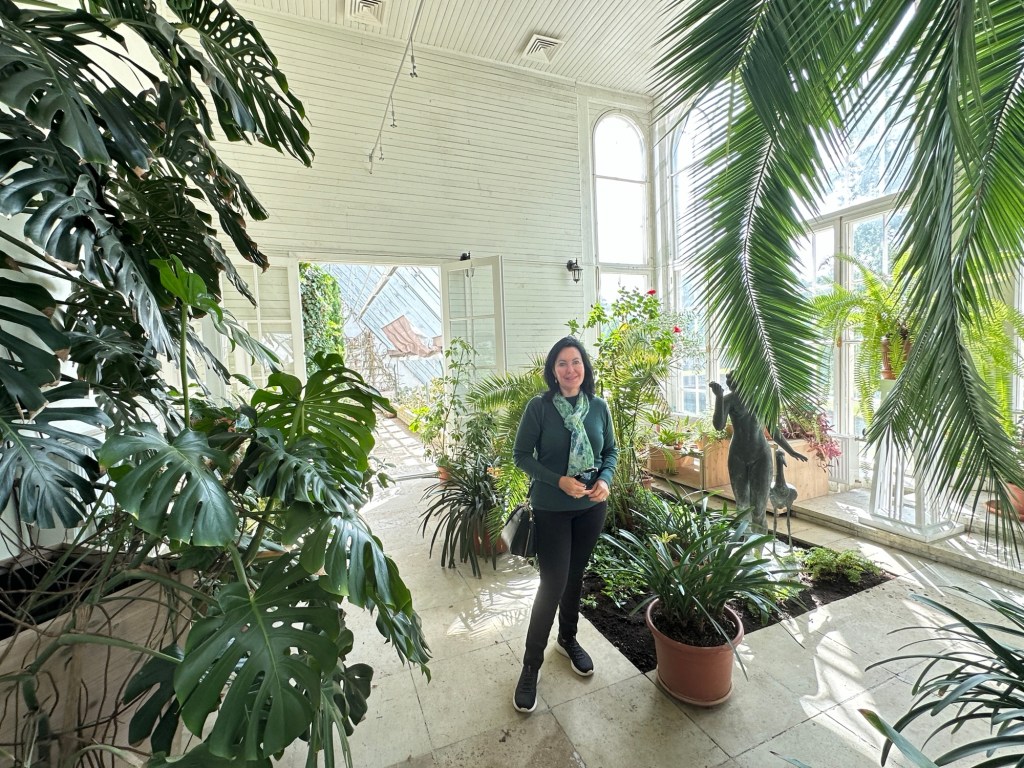
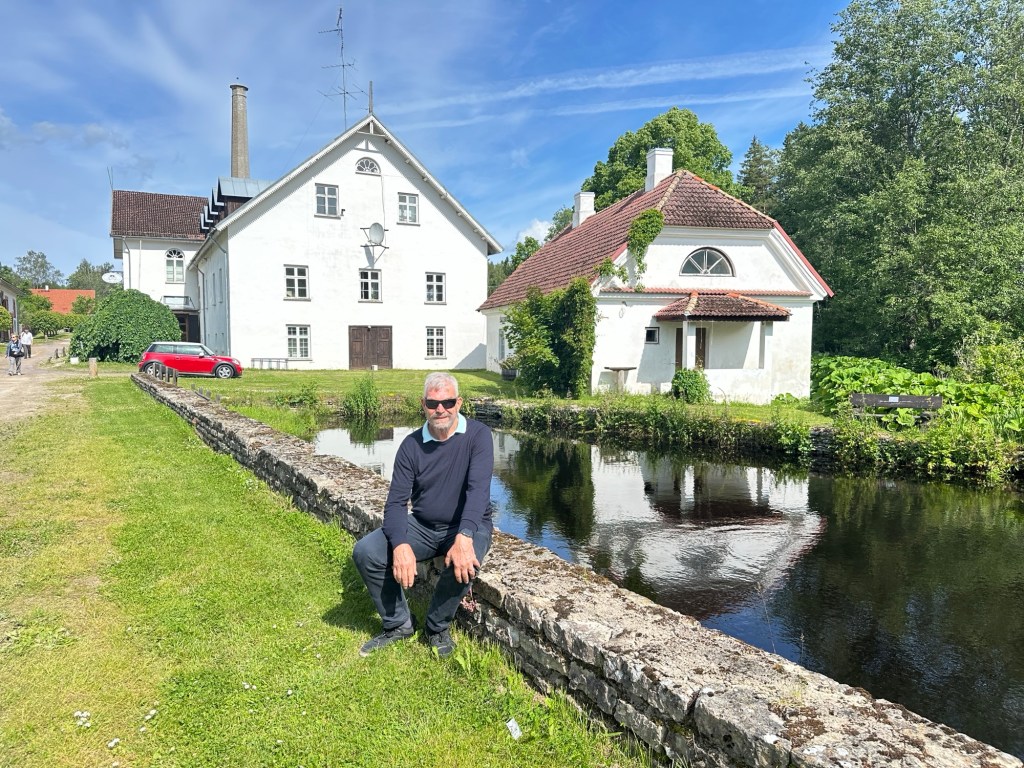
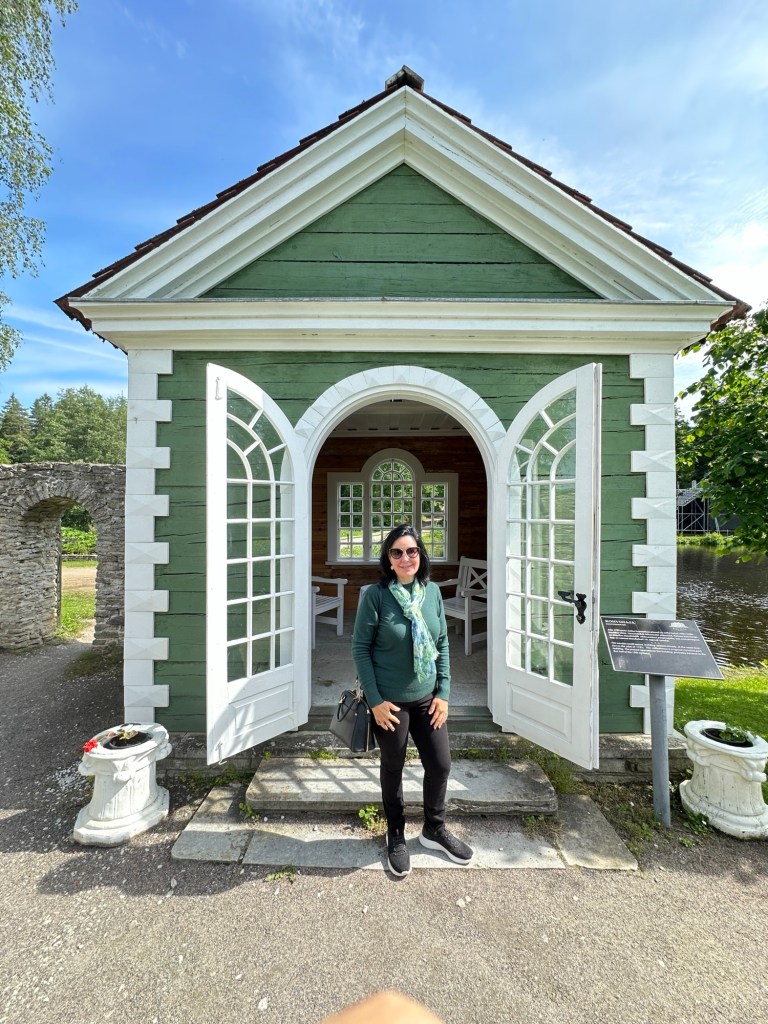
Also visited the 400-year-old fisherman’s village of Altja. With its timber houses with ornately thatched roofs, this fishing village provides an authentic glimpse of a bygone era, when its survival depended on the sea. A very peaceful walk to the suspension bridge – originally built for the Russian guards to patrol the beach. Estonians were not allowed to live near the beach during Russian occupation – just in case they decided to try and escape by swimming 100kms to Finland!

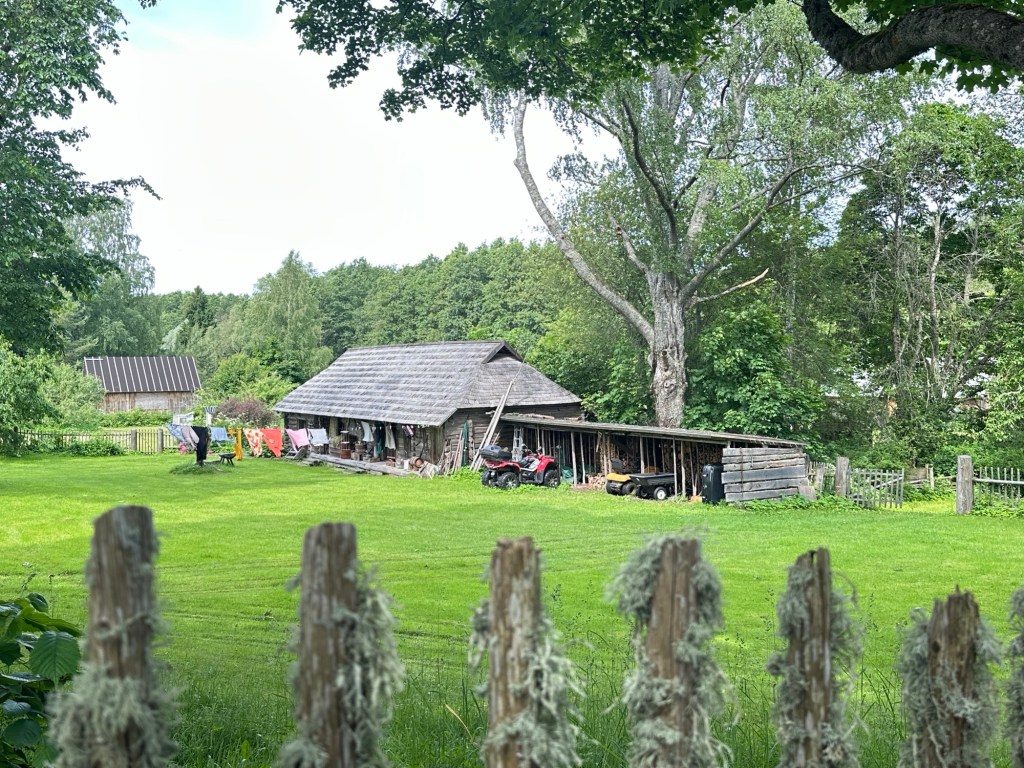
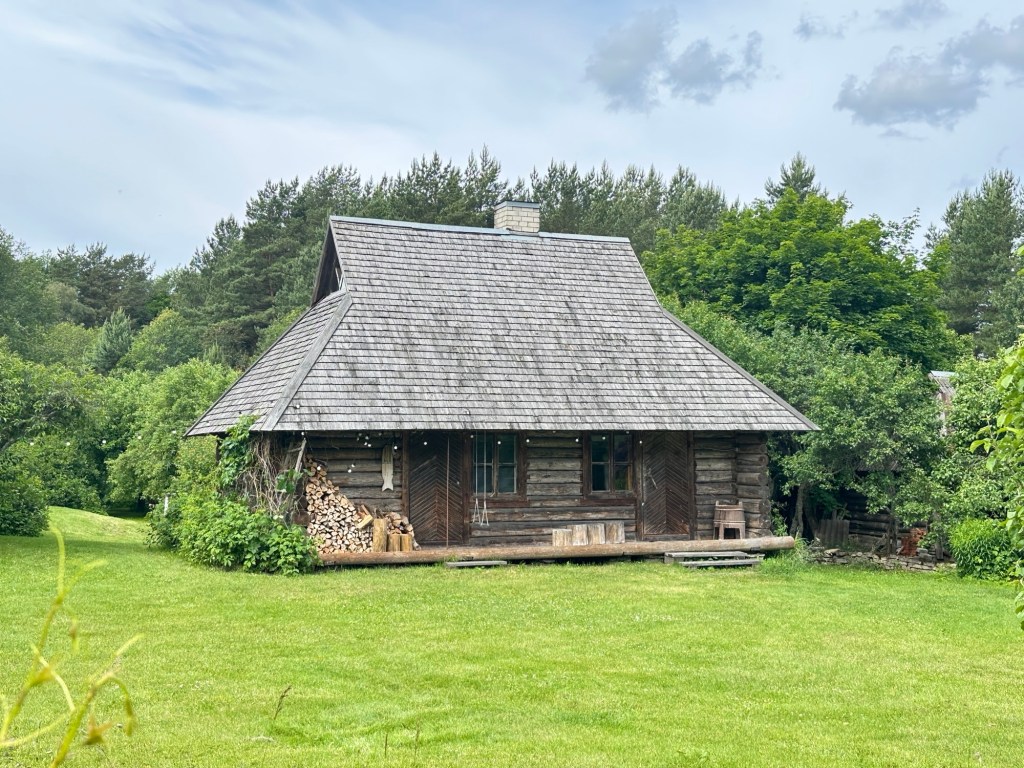
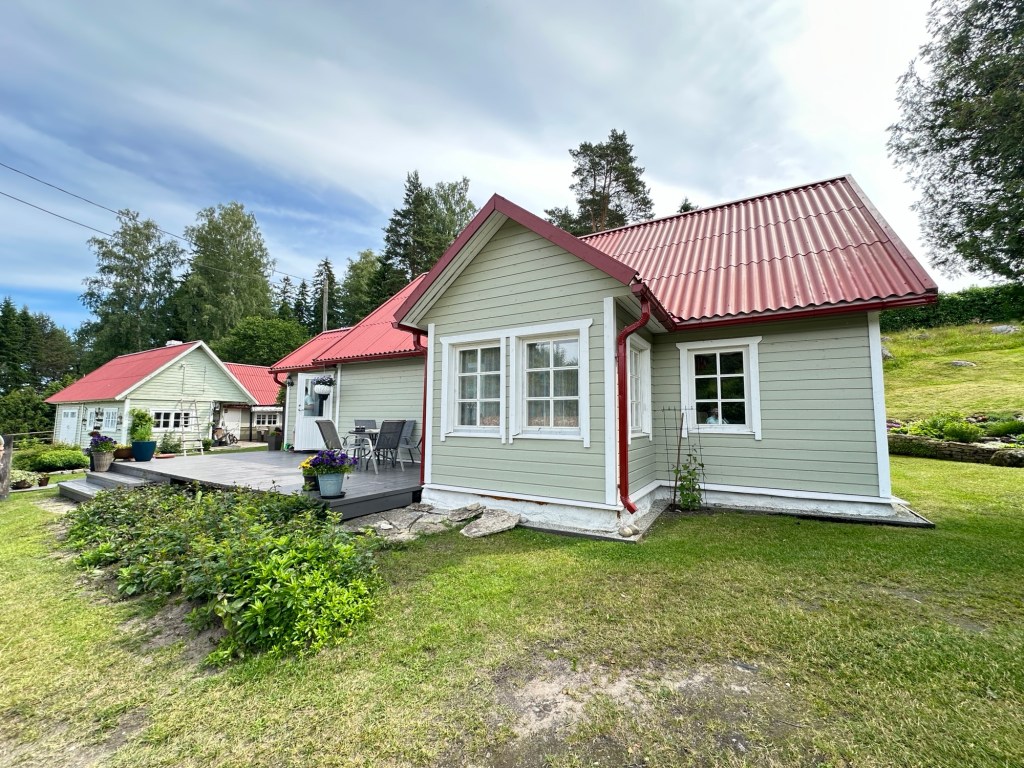
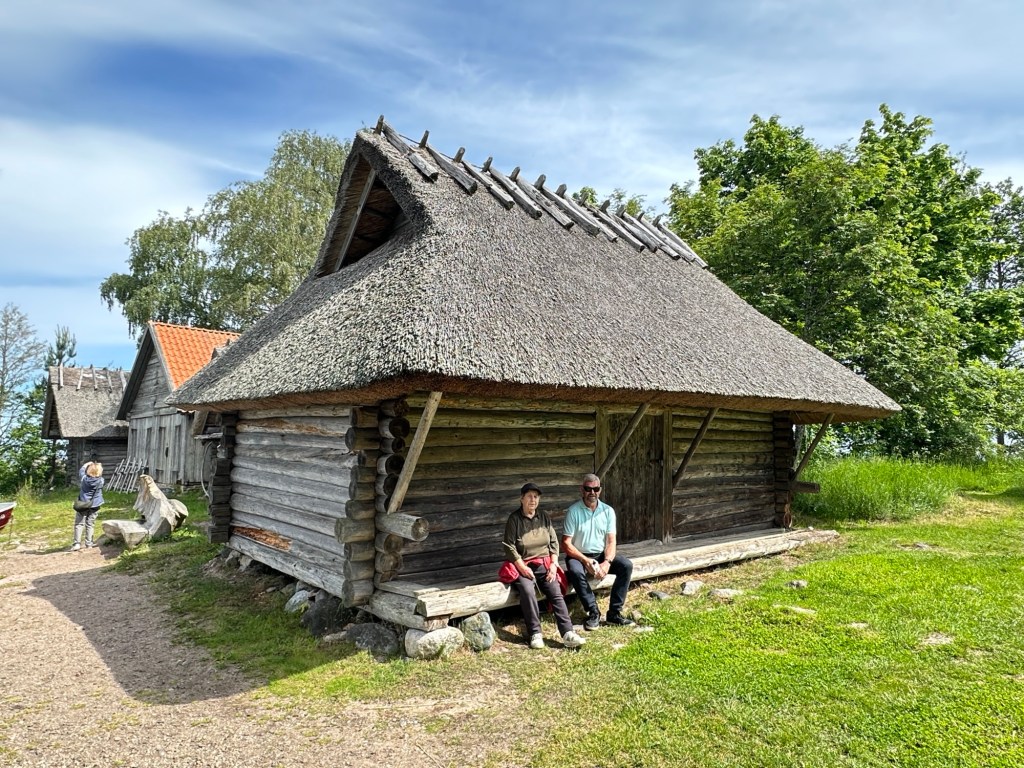


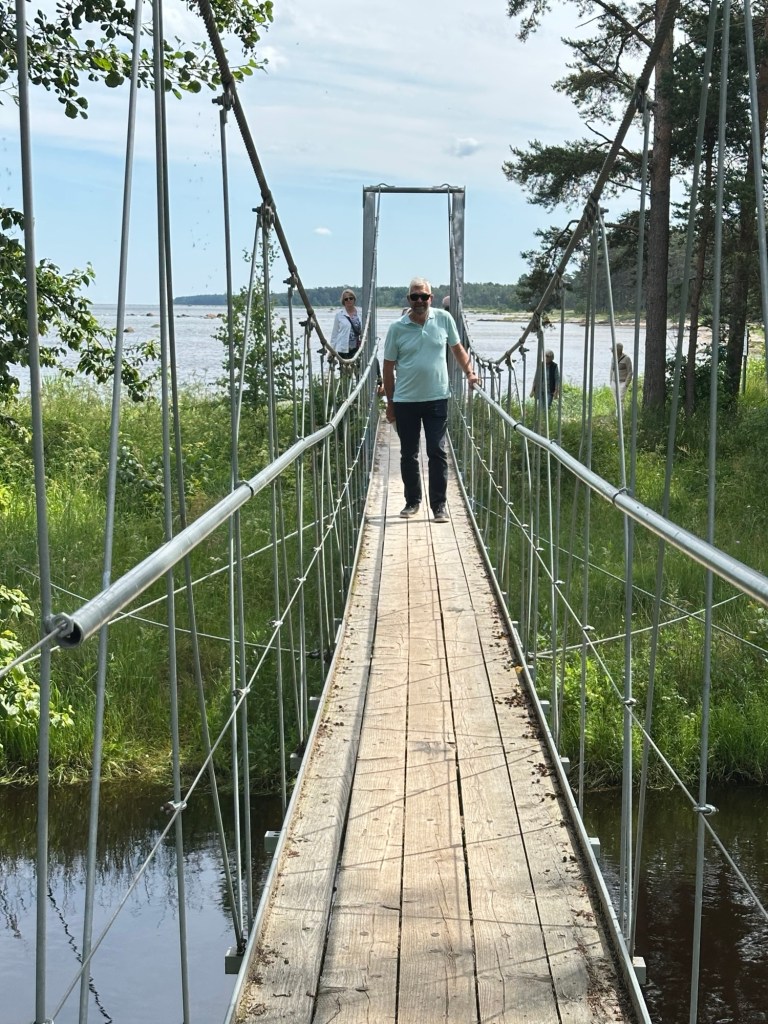
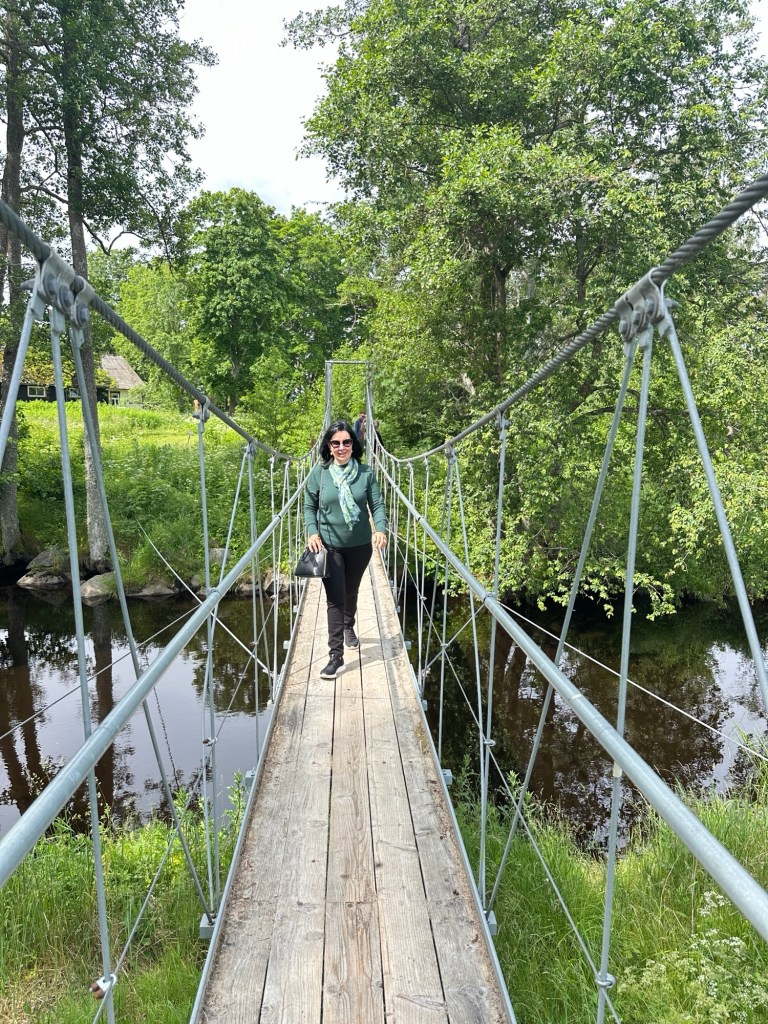

After lunch at a local food house, we travel almost two hours to Tartu for a guided city walking tour. Tartu, the capital of southern Estonia, is the second-largest town in the country, with lots of local culture, including festivals, concerts and theatre exhibitions. Also known for being home to the Tartu University, the city is frequently referred to as the intellectual capital of Estonia. We walked to Town Hall Square, saw Town Hall and the Kissing Students, the leaning building which is where the Art Museum is housed, Tartu University, Angel Bridge, the Cathedral Ruins – now a museum, St John’s Cathedral, and ending up at the Statue of two Wilde’s which was outside the restaurant where we had dinner.
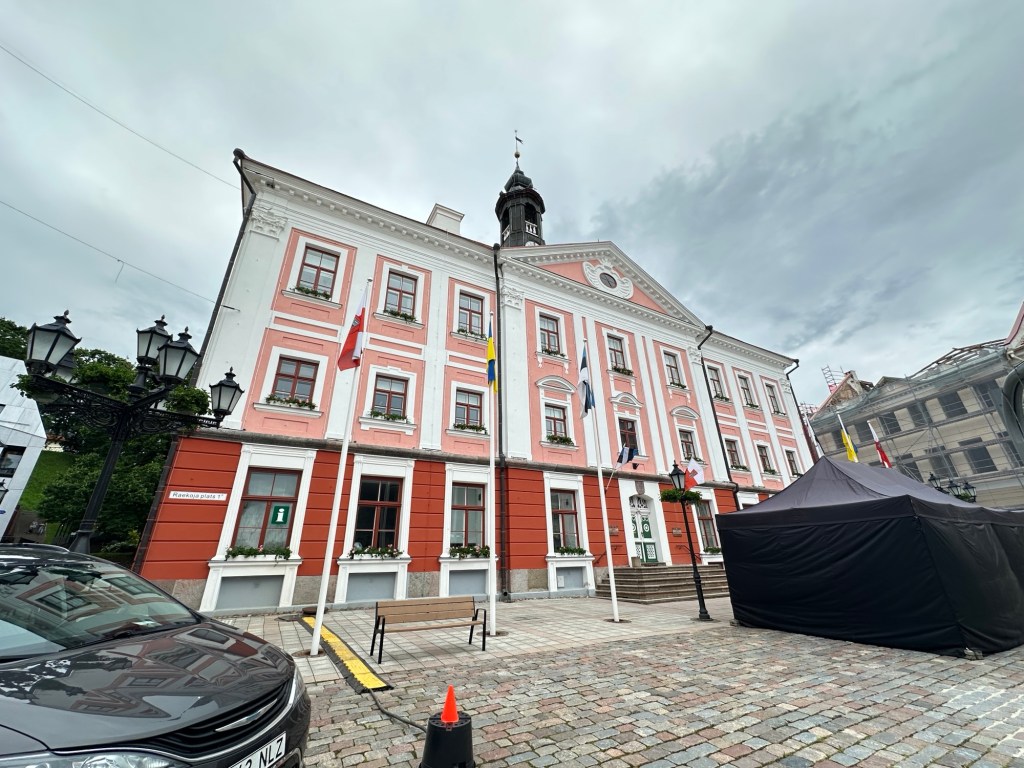
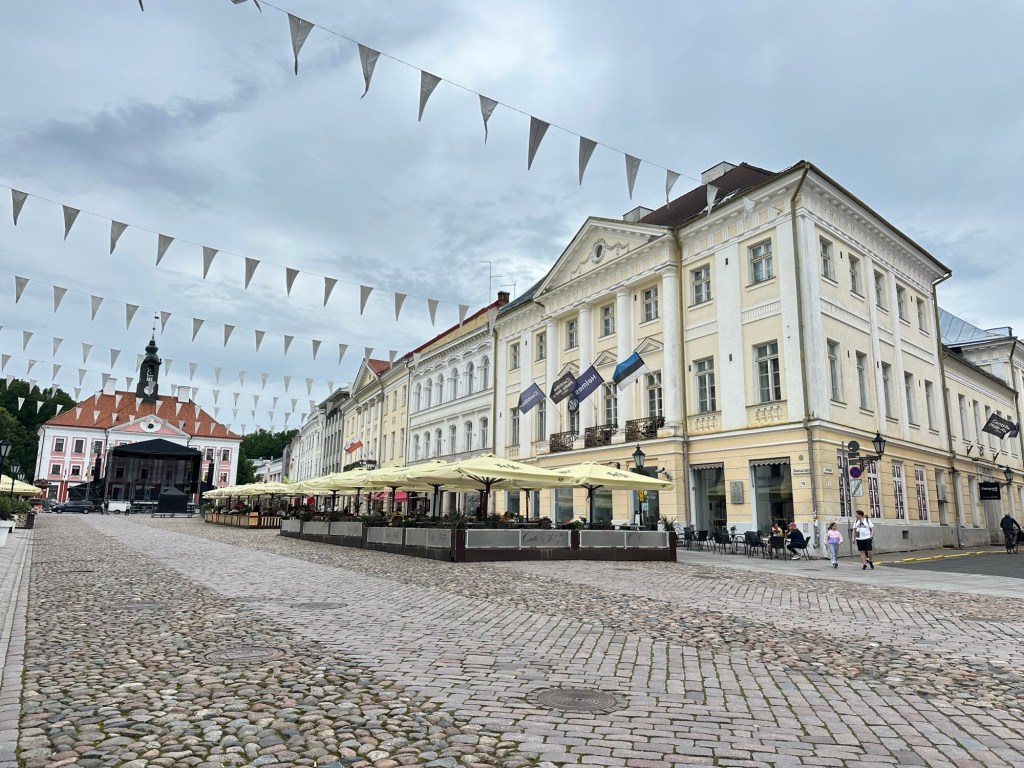
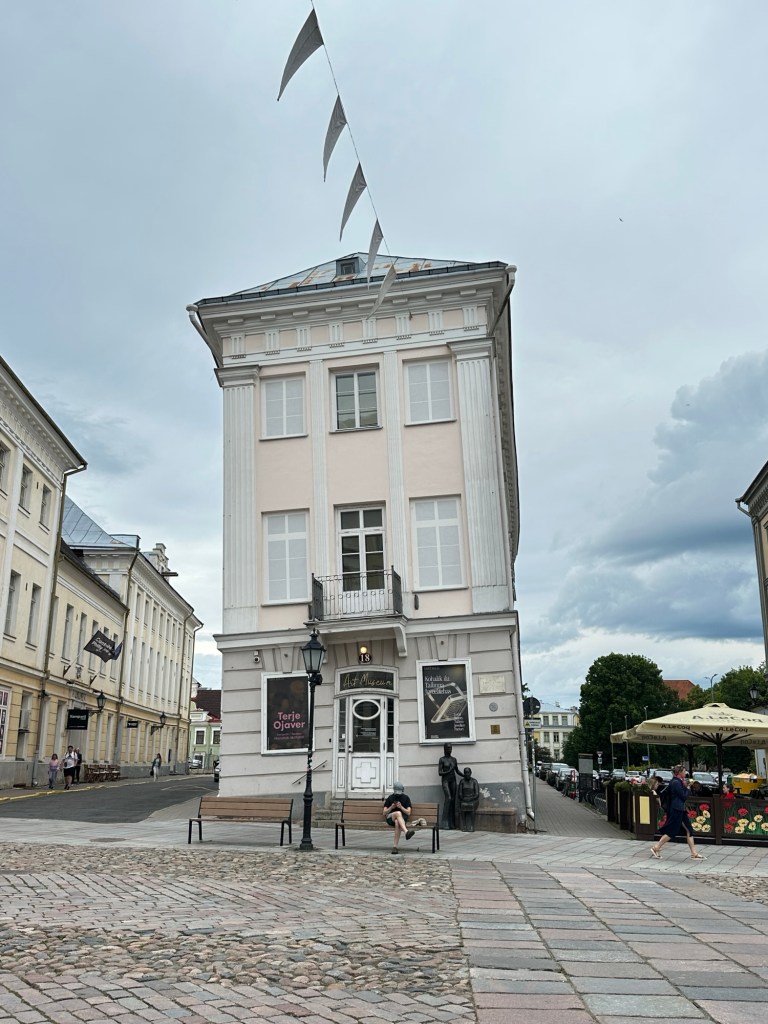
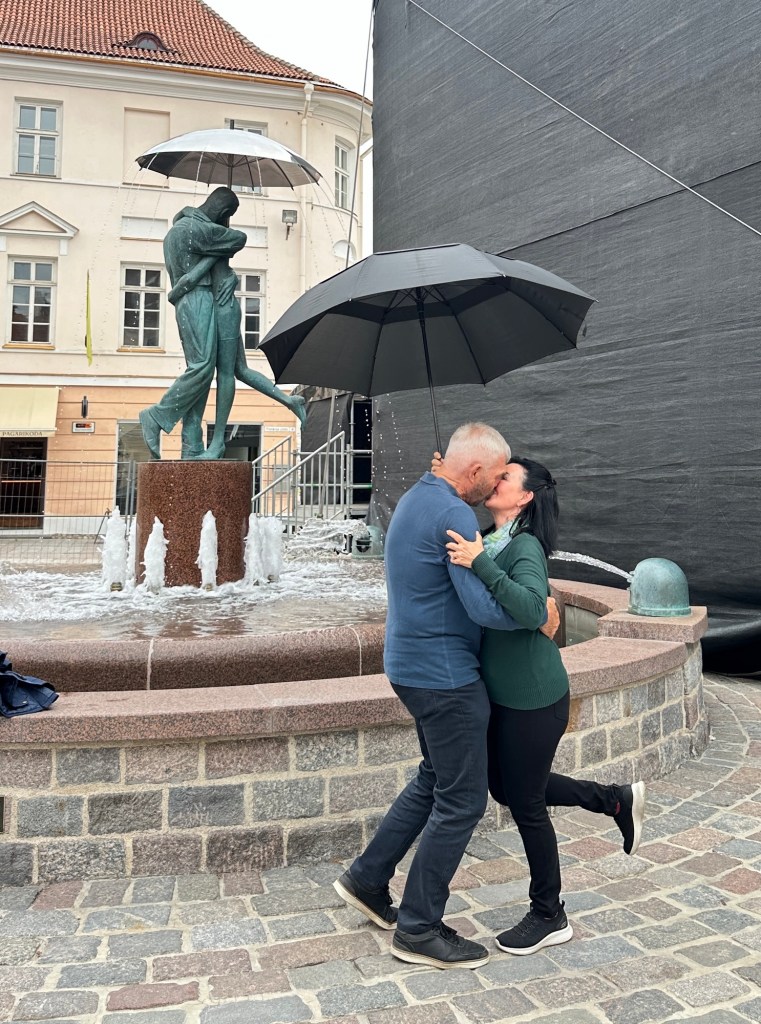
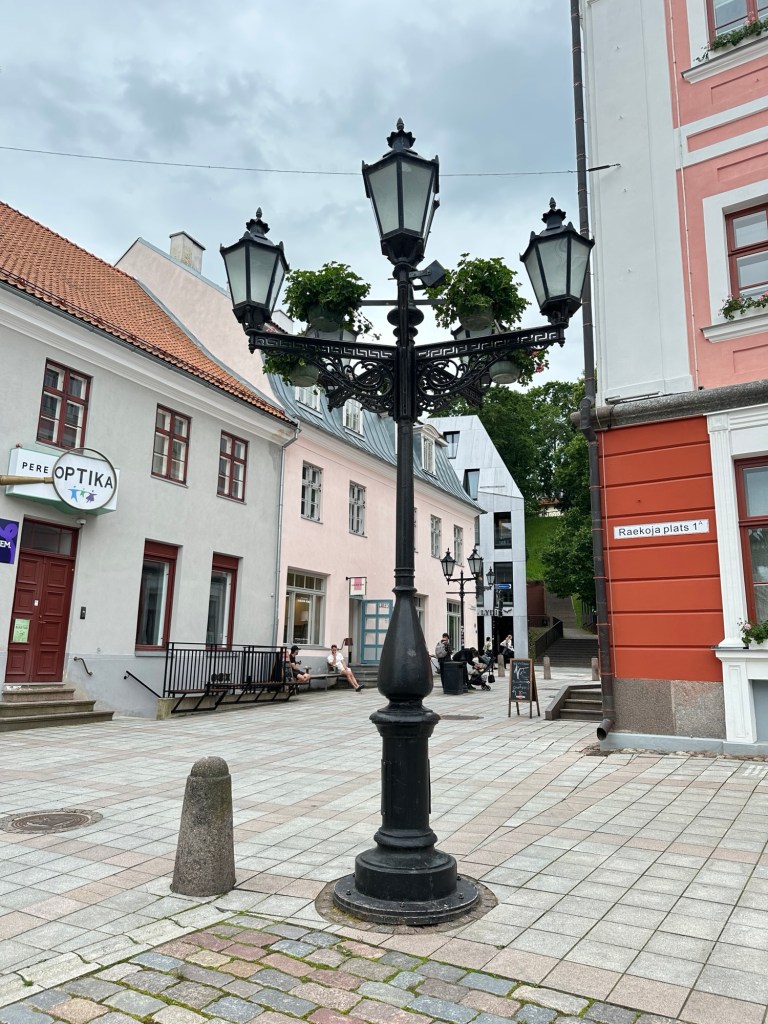
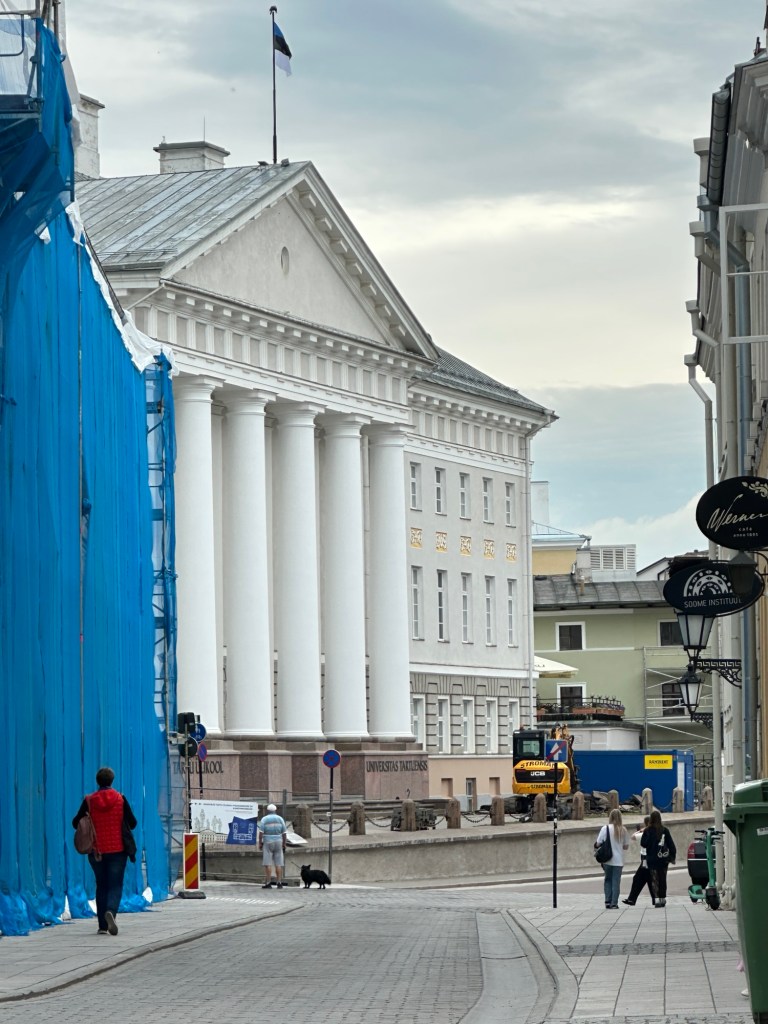
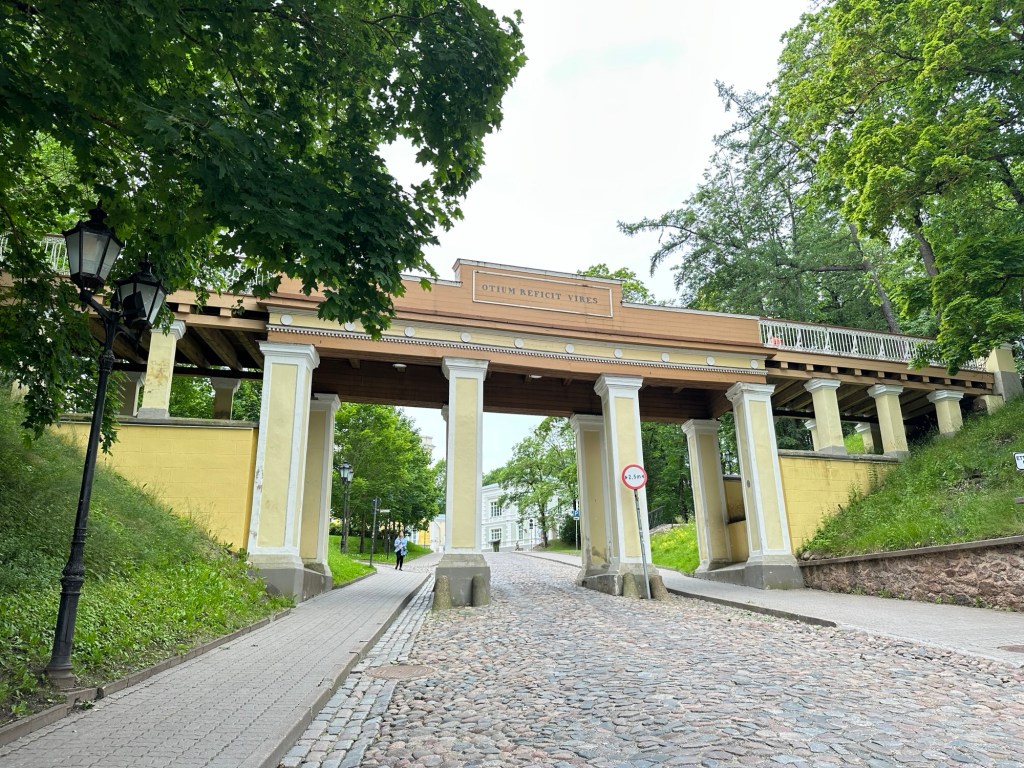
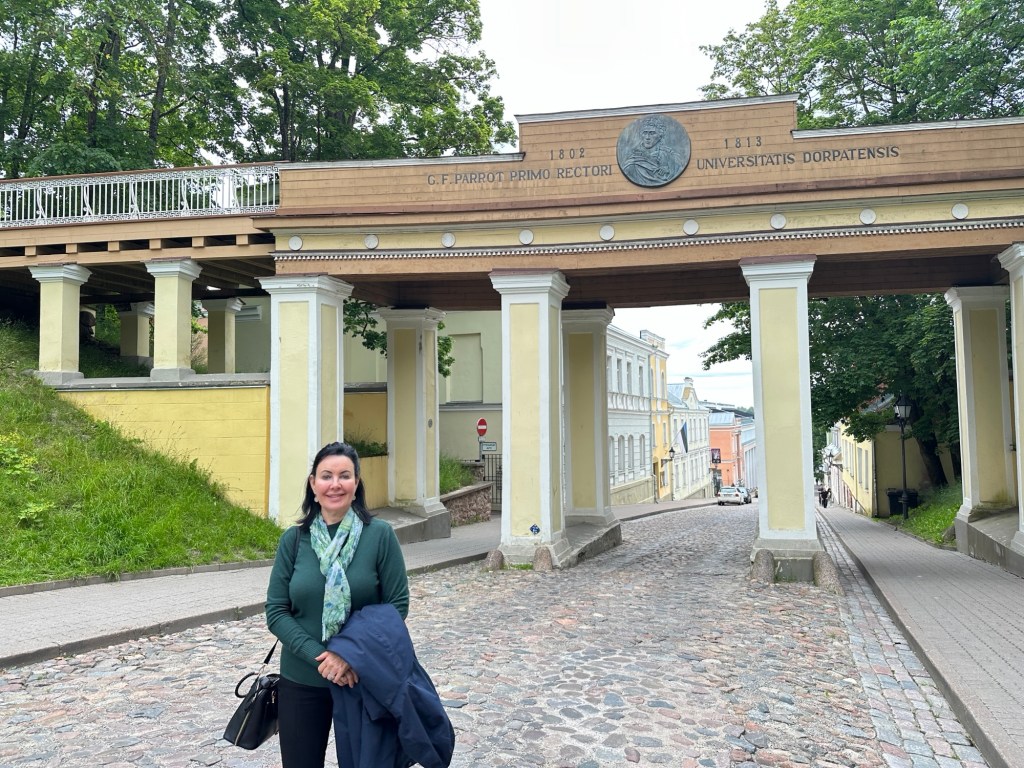
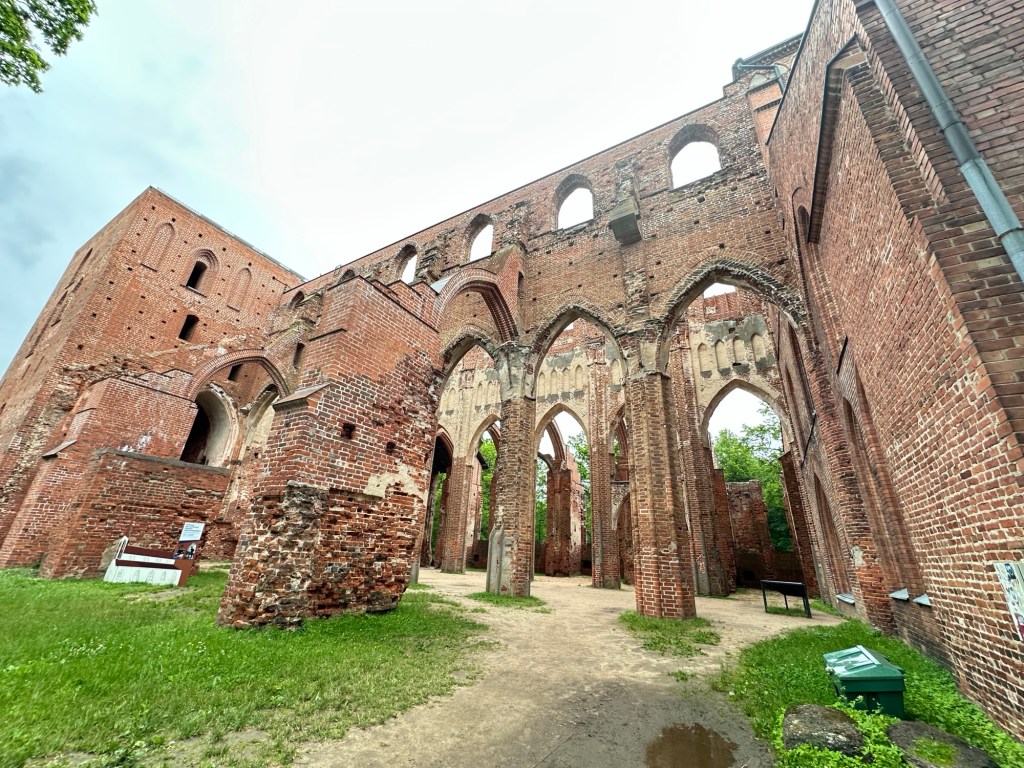
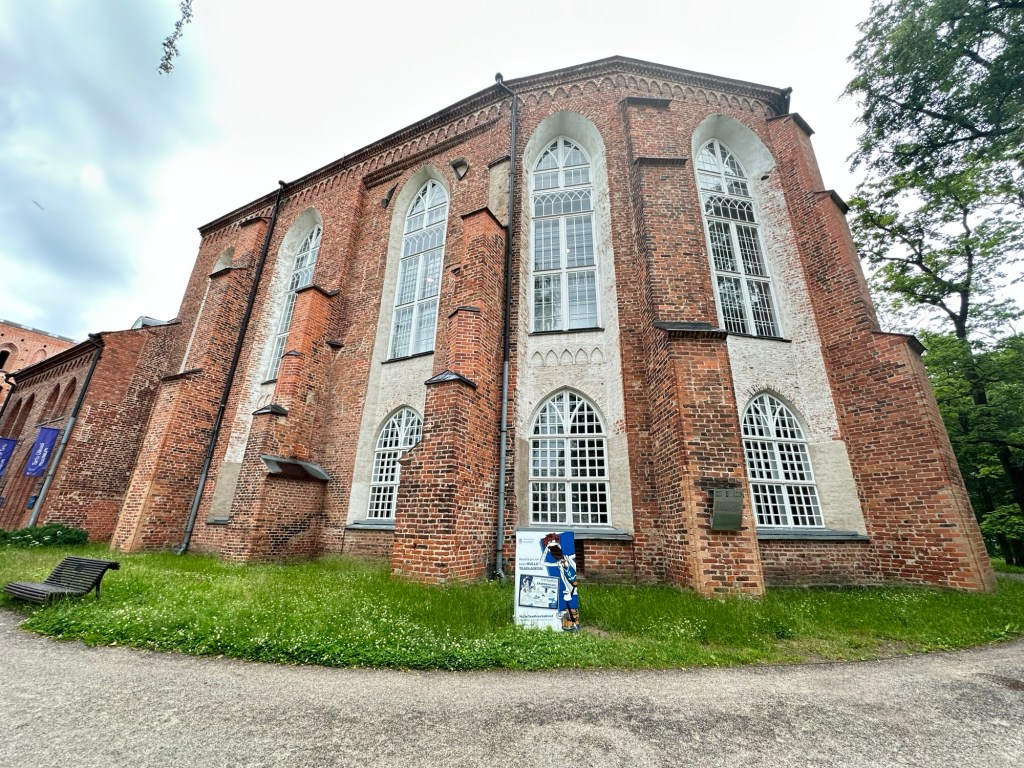
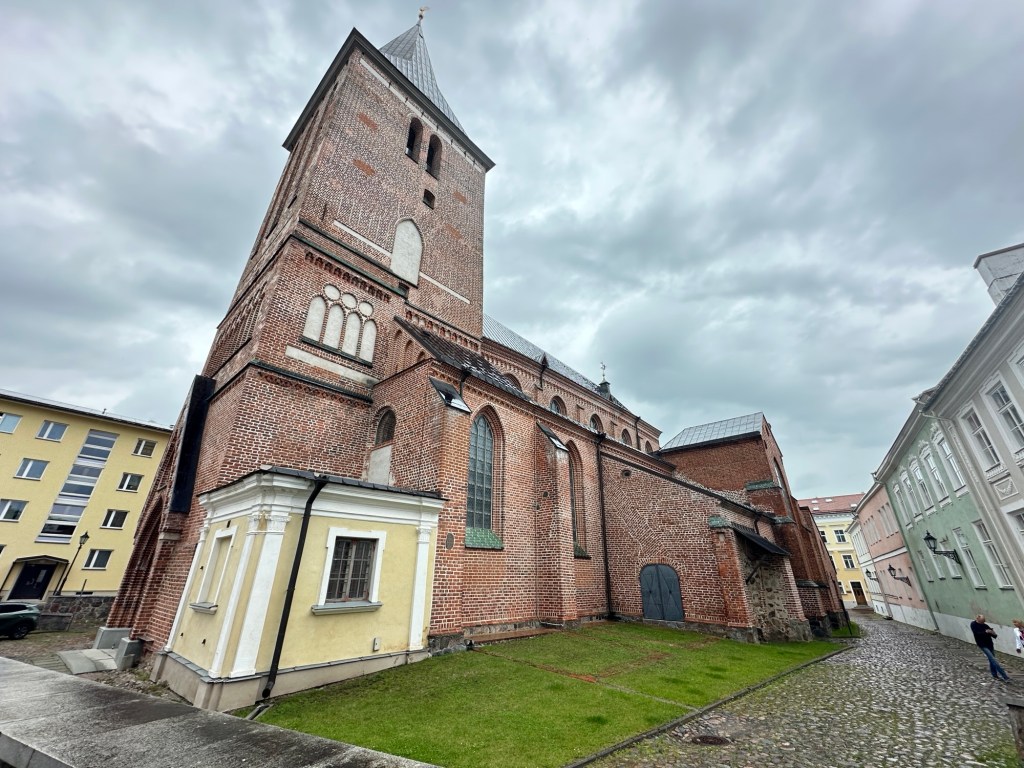
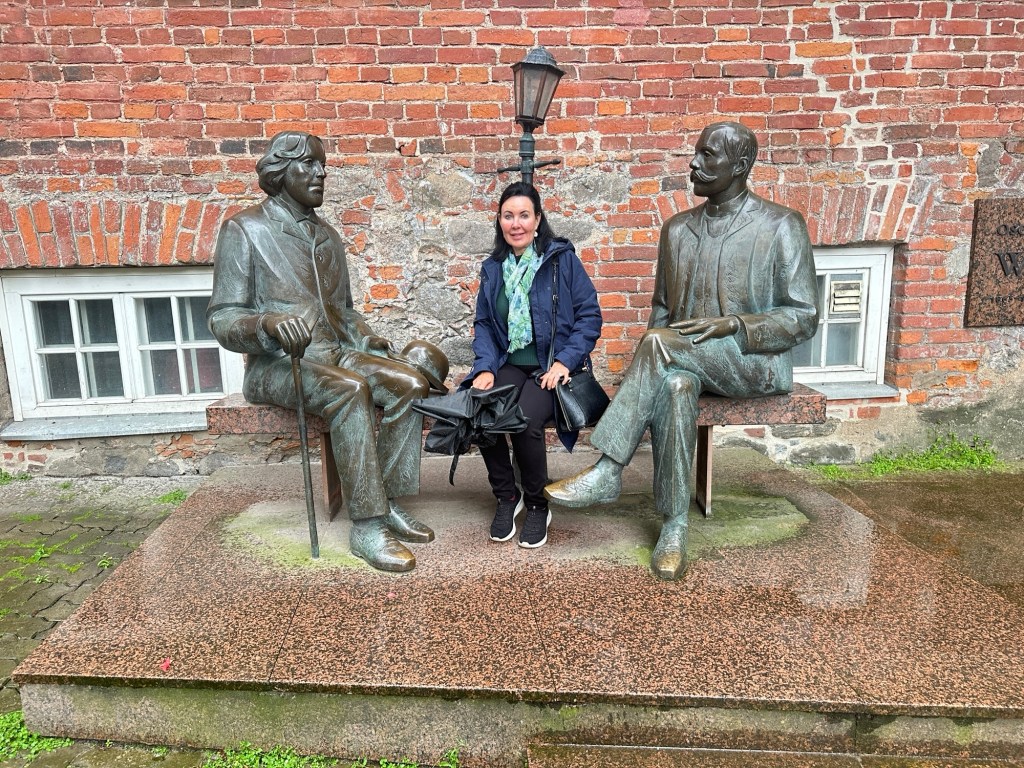
A short walk and we arrived at our accommodation Tartu Hotel where we were staying for one night.
Day 40
Saturday 28th June
Tartu to Riga
14 – 19 degrees
A very scenic drive this morning as we leave Estonia and enter Latvia at Valga. At the border there is a novel wooden swing which when you swing on it , you are in Estonia one second, then Latvia next second , and so on! Very amusing.


Brief history of Latvia
Considered to have begun in 1201 with German dominance in the area for the next three centuries.
Riga, the capital established 1201.
Riga joined other European cities in the Hanseatic League to expand trading opportunities.
16th – 18th centuries – divided among Poland and Sweden
Early 16th century – Livonian Wars – Poland established Catholicism (at this time Latvia and Estonia wre considered to be Livonia).
Duchy of Courland created in south and west – probably now Lithuania
1621 – Riga sized by Gustav Adolphus of Sweden.
1629 – Swden colonises Latvia. Remains under Swedish rule for next 80 years
1710 – conqured by Peter the Great of Russia. Remains under Russian control until 1905 when independence is first gained.
1914 – occupied by Germans
1918 – formal declaration of independence at the end of World War 1
1919 – Bolshevik (communist) government in power for 6 months until 1920 when Russia recognises Latvian independence.
1934 Karlis Ulmanis established as president after a coup – supportive of Russia.
1935 – Freedom Monument
1939 – Russia and Germany sign a pact which sees Russia resume occupation. This lasts for about a year when Nazis occupy Latvia.
1945 – Defeat of Germany sees Russia reoccupy Latvia and it is annexed to the Soviet Union as the Latvian Soviet Socialist Republic.
1987-89 implosion of communist system
1991 – Latvian independendent again
2004 – Latvia admitted to NATO and the European Union.
2014 – Latvia adopts the Euro
Major remaining issue is around 45 percent of population speak Russian as their first language, leaving them open to subversion and corruption from Russia.
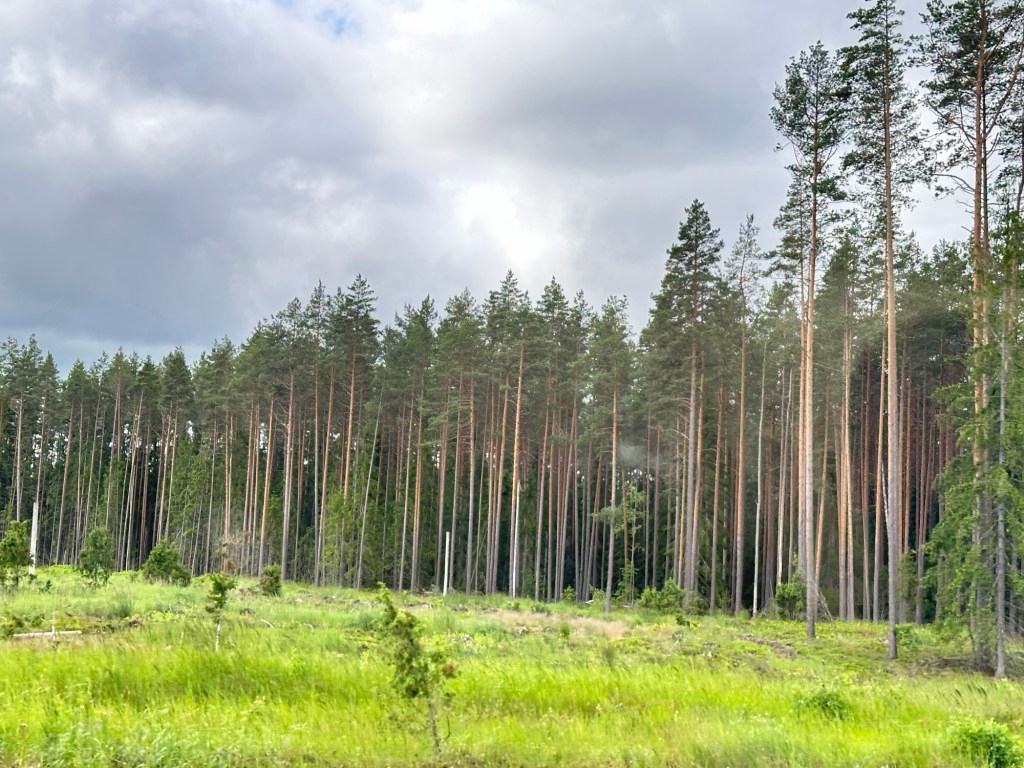
More pine forests, farmlands, undulating roads lined with oak or linden trees, spruce hedges, and an extraordinary amount of wildflowers, including poppies. Fields of rapeseed and lupin were a picture.
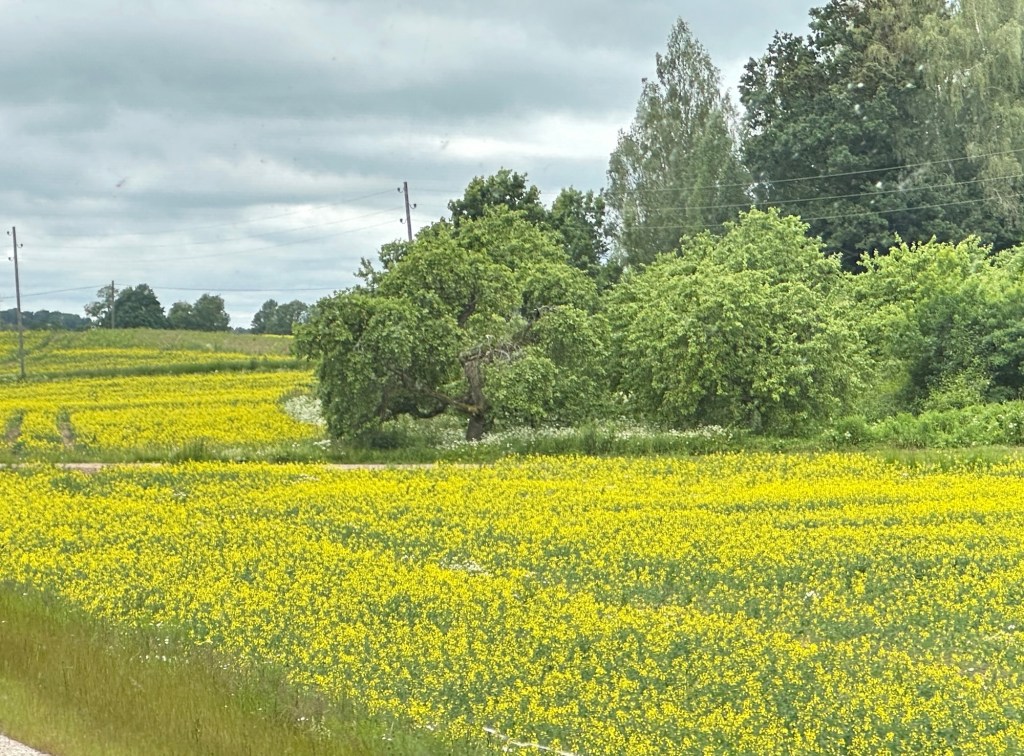
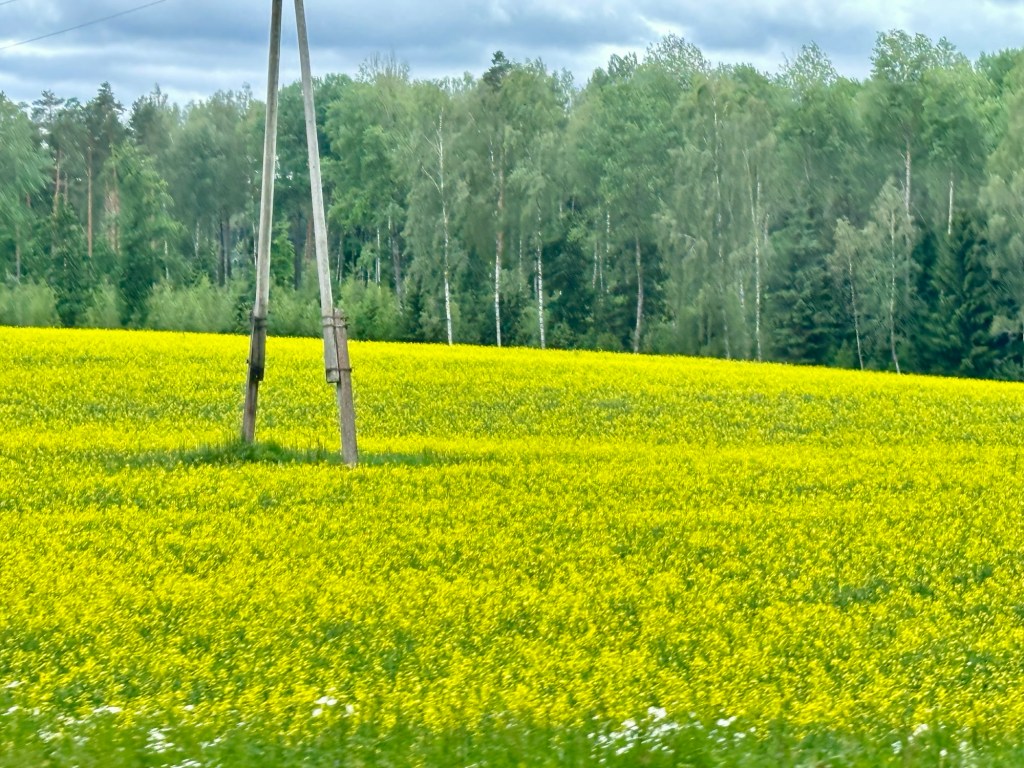
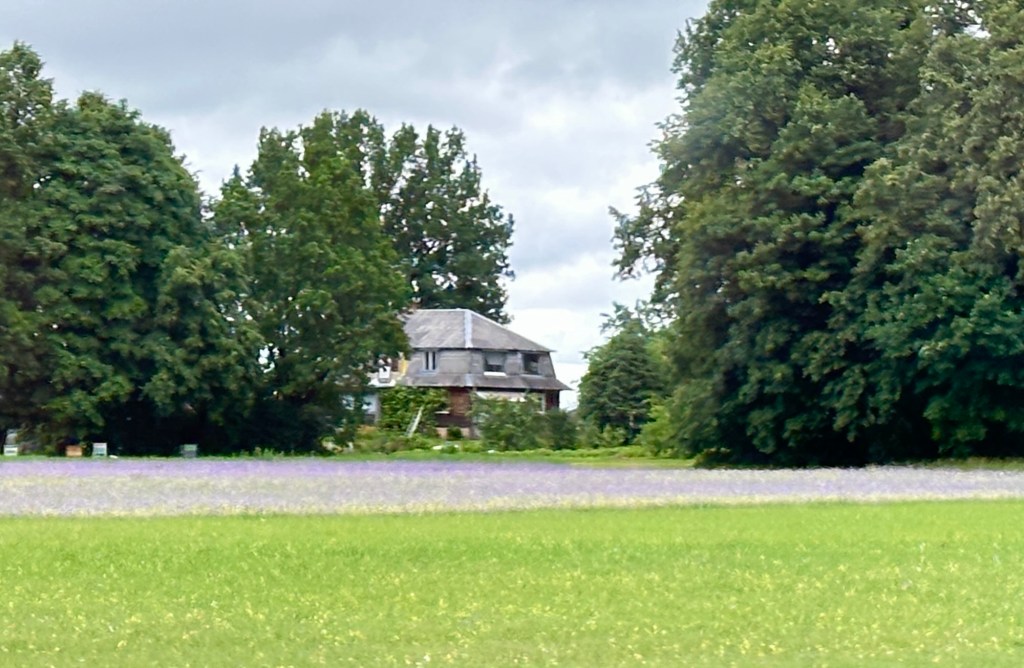
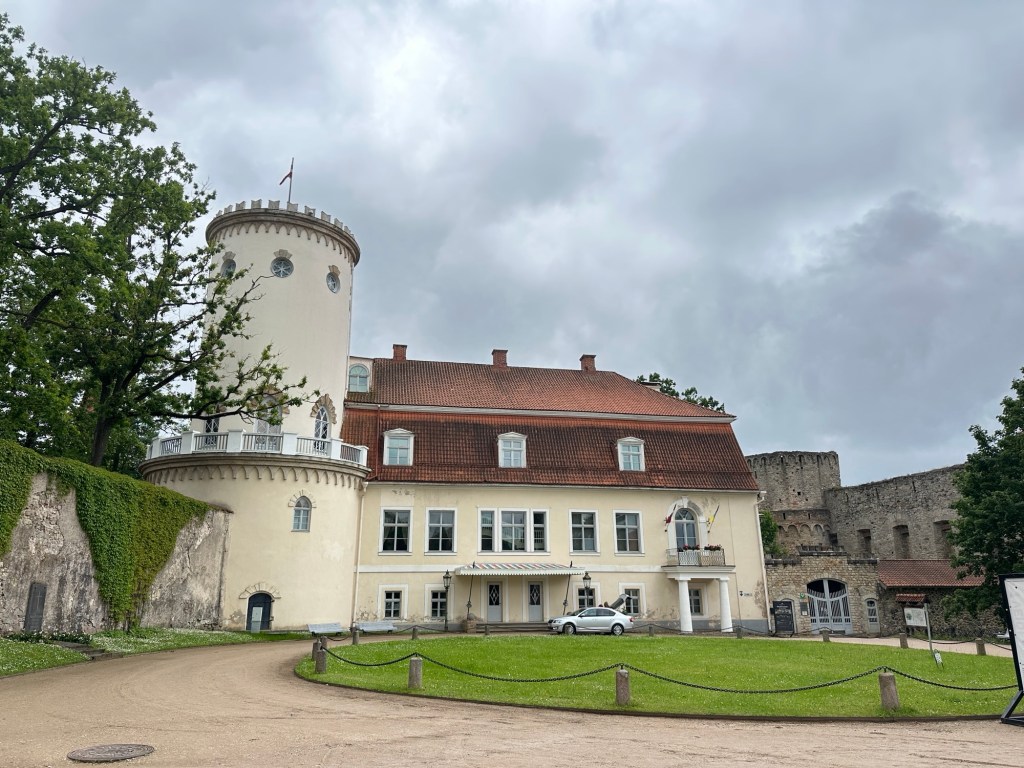
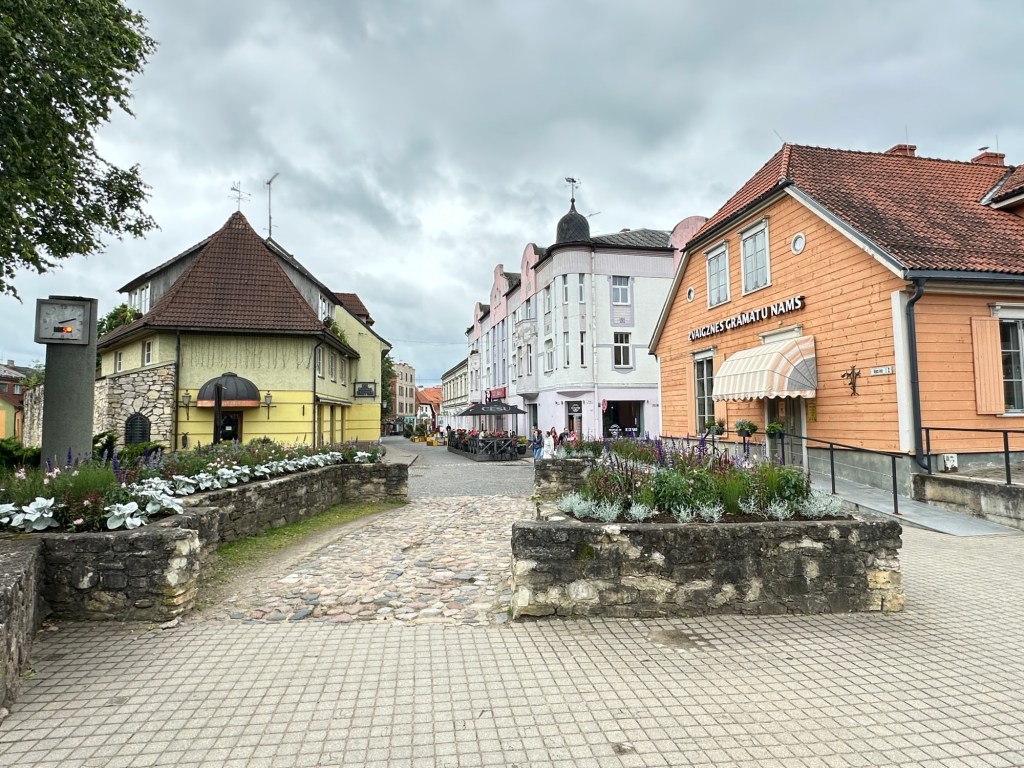
Two hours driving onto historic Cesis, in the Gauja River valley. It is one of the oldest towns in Latvia, where red-roofed wooden and stone buildings with restored facades line cobbled streets. The star attraction here is the Medieval castle, a partly preserved fortification knocked down and rebuilt in various forms. The town was very pretty with beautiful gardens, water features, and pots overflowing with brightly coloured flowers. There was a cycling event happening today, so a lot of action around the Main Street.

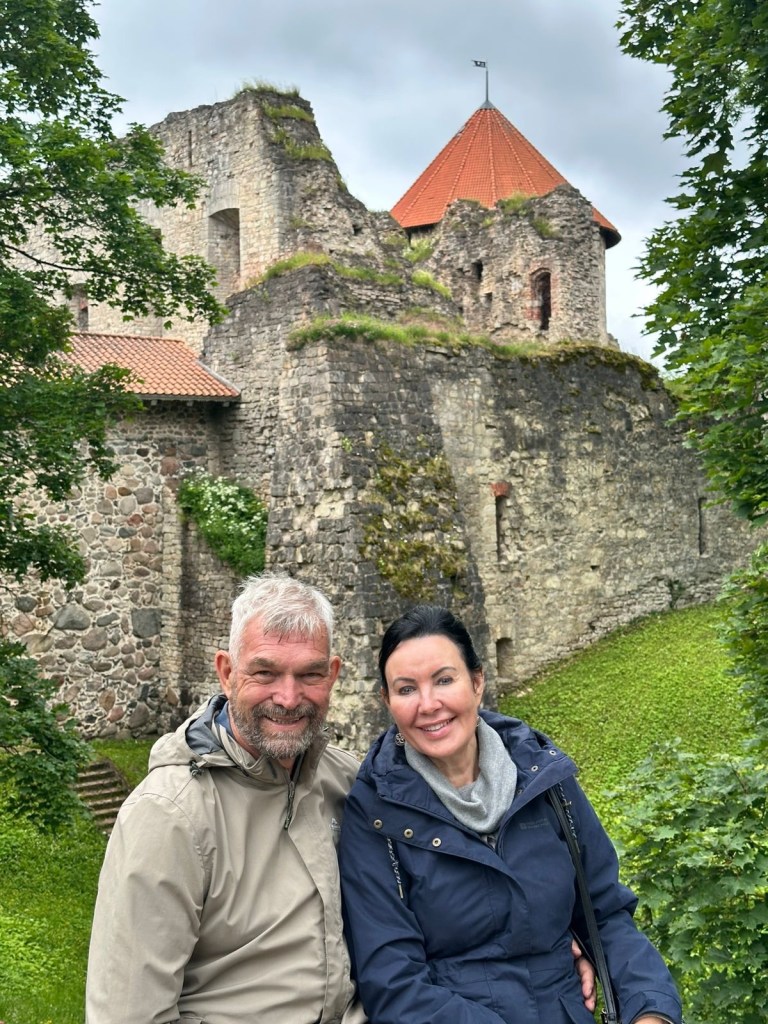
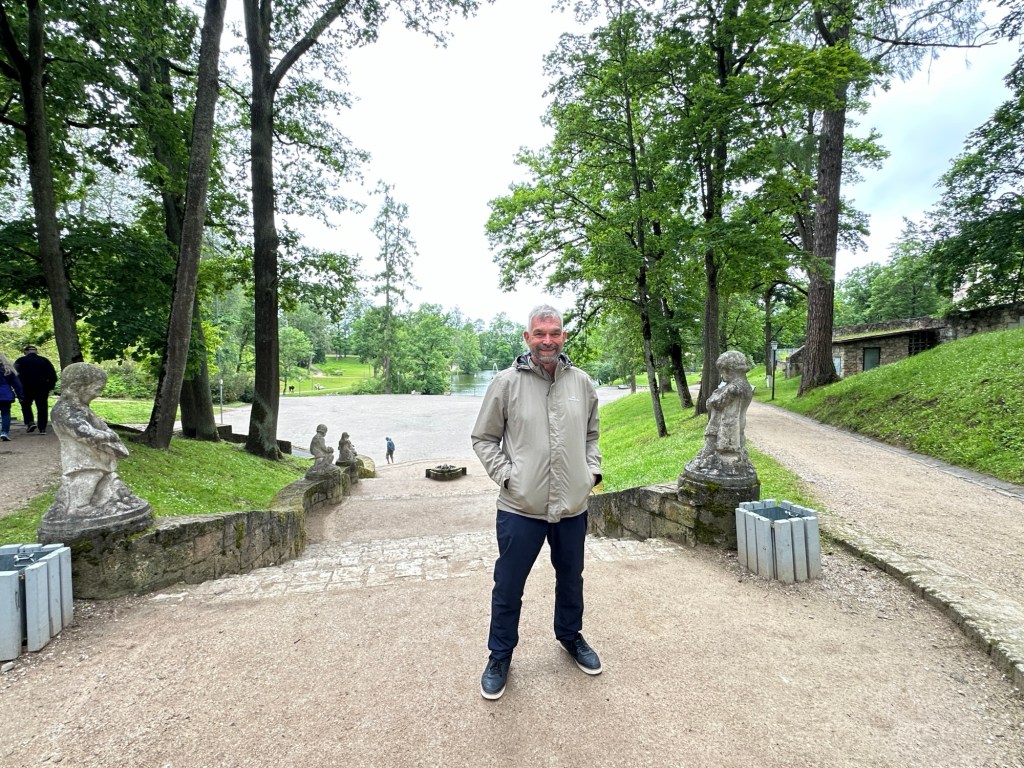
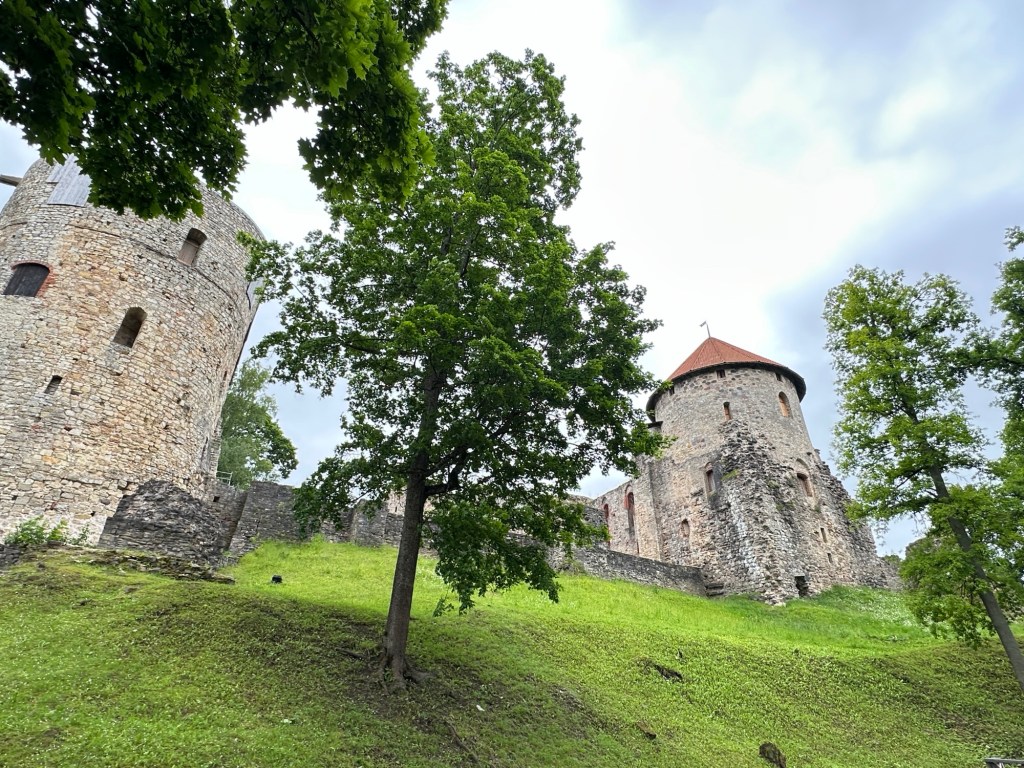
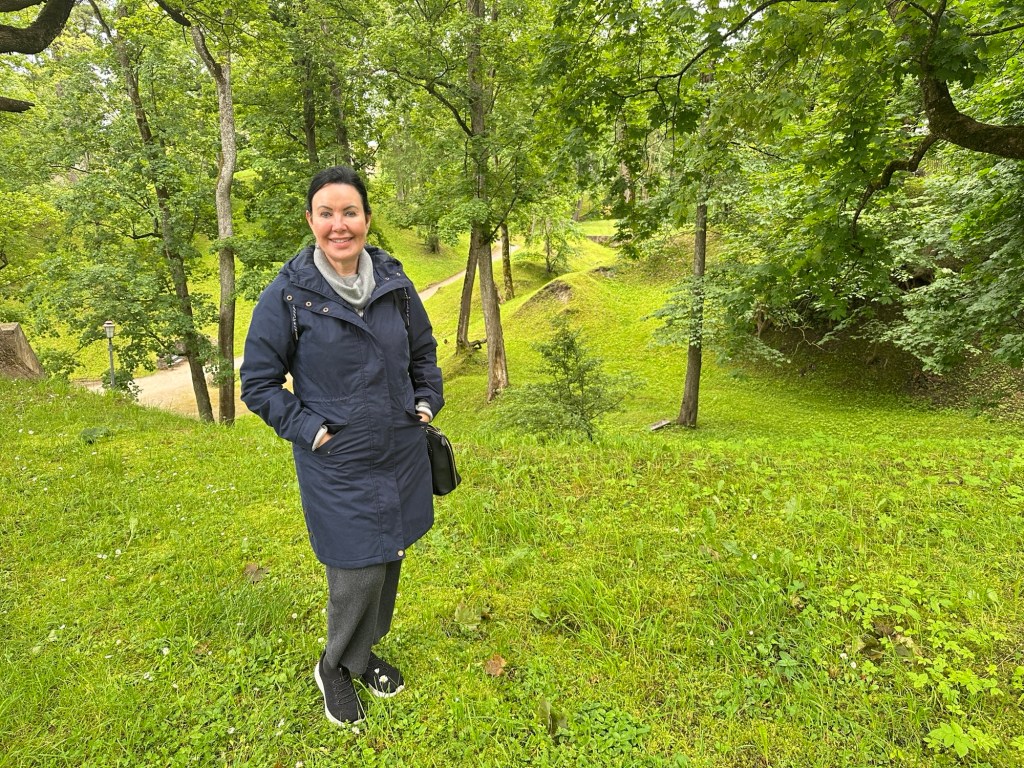
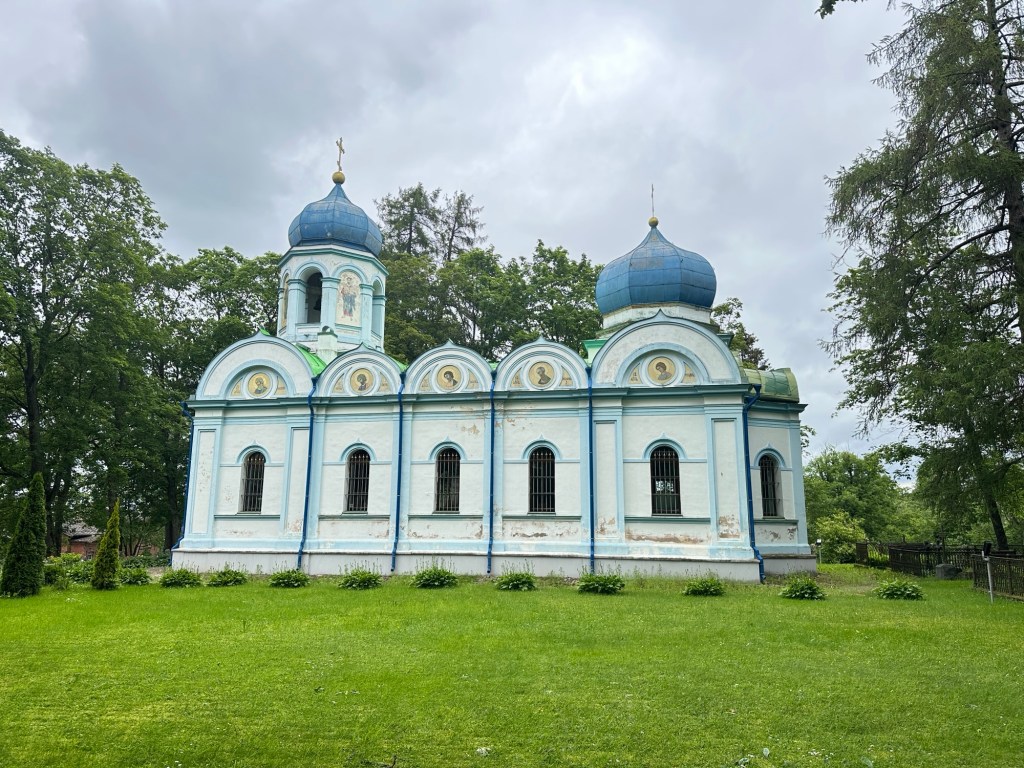
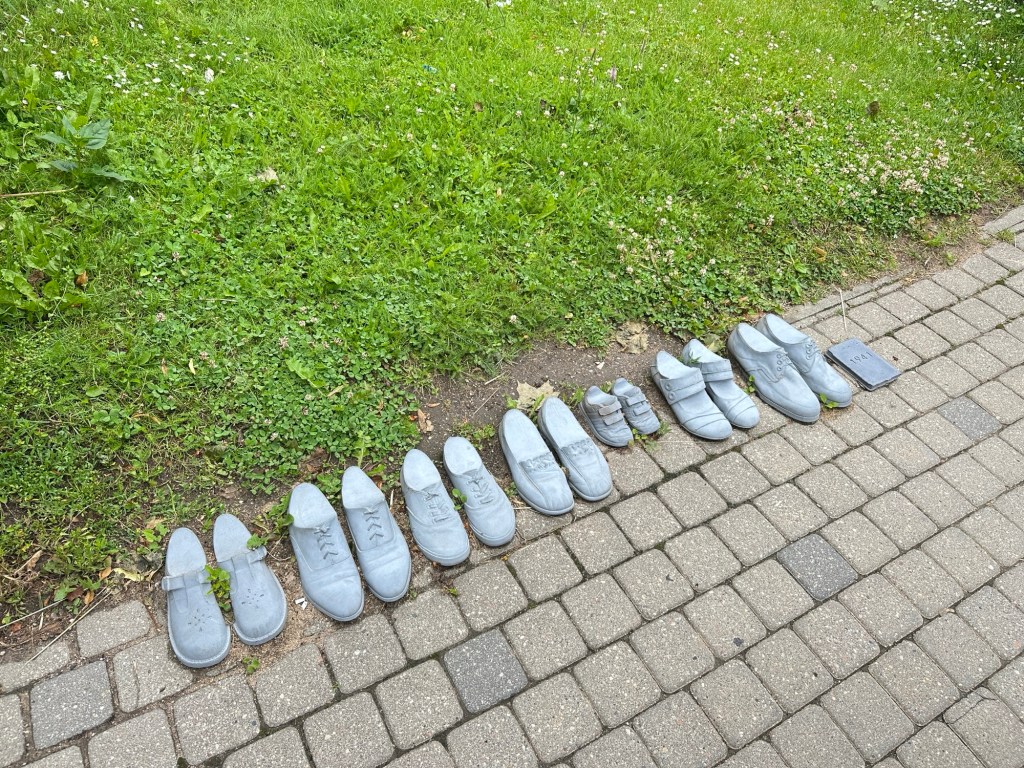
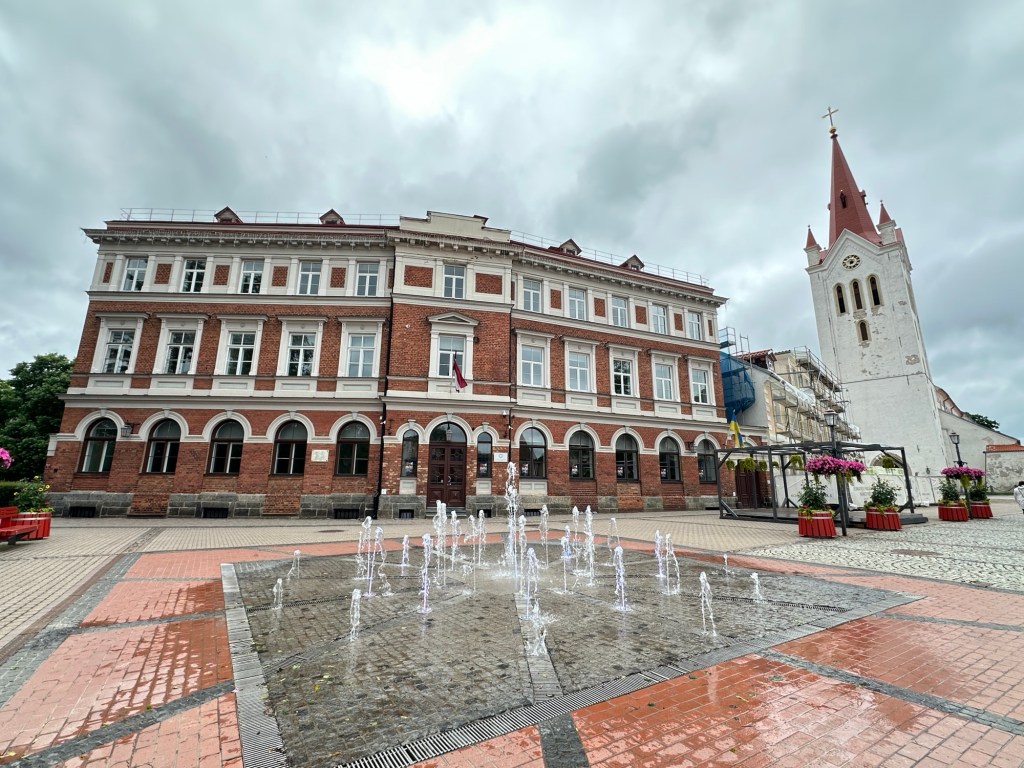
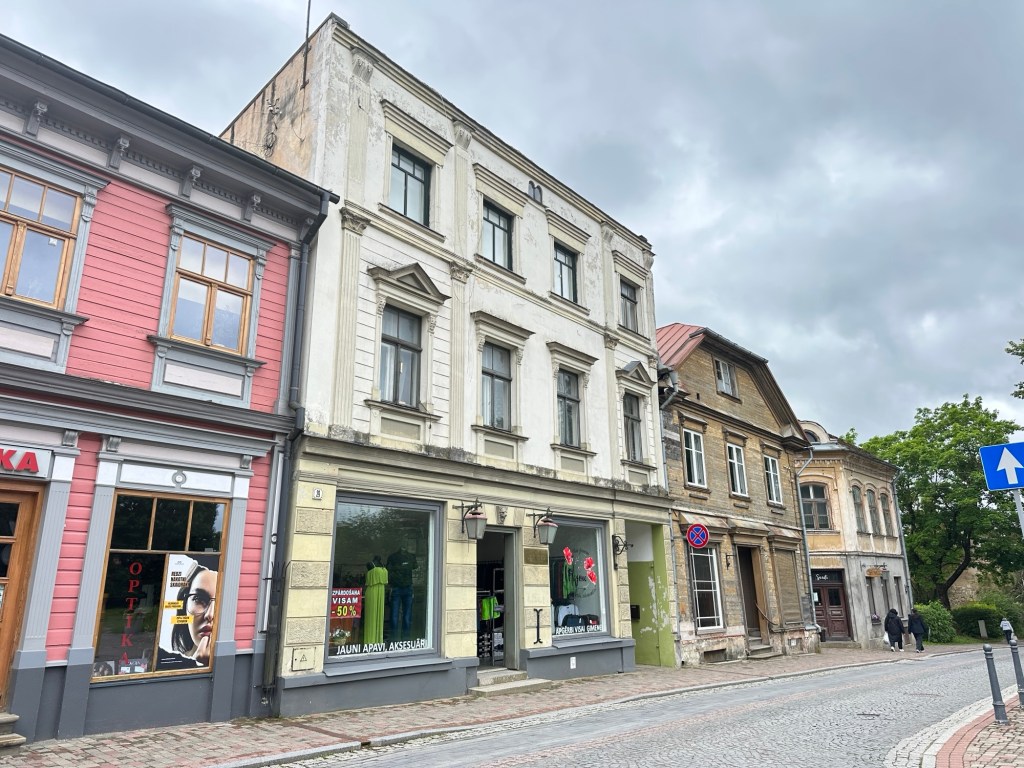

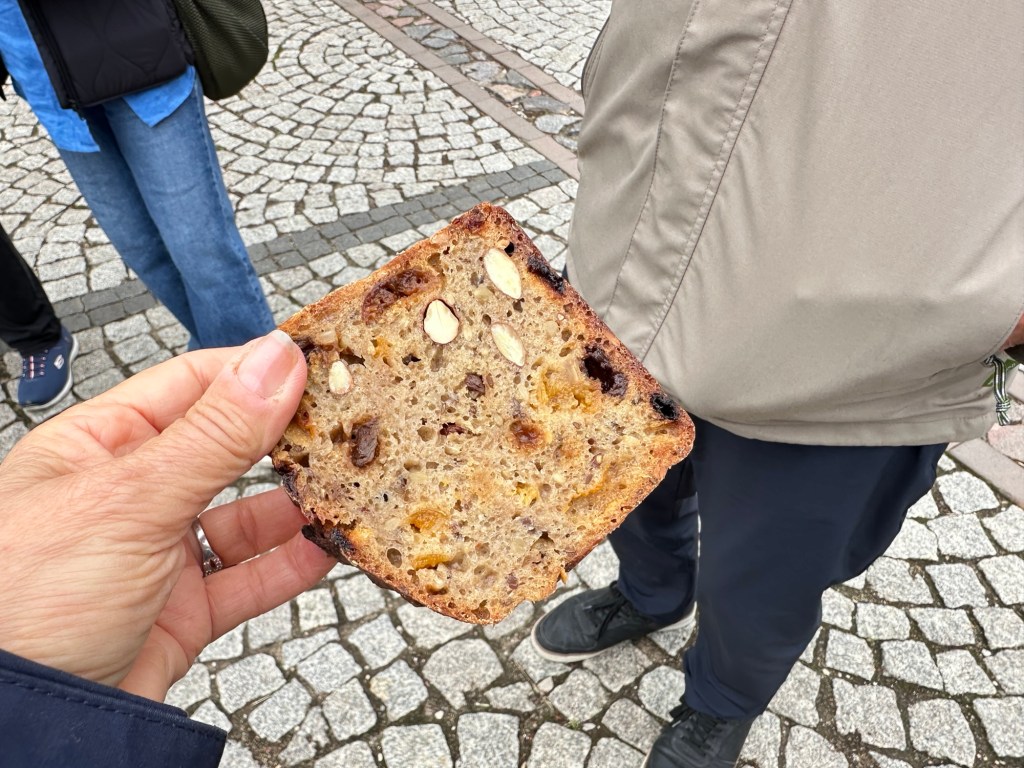
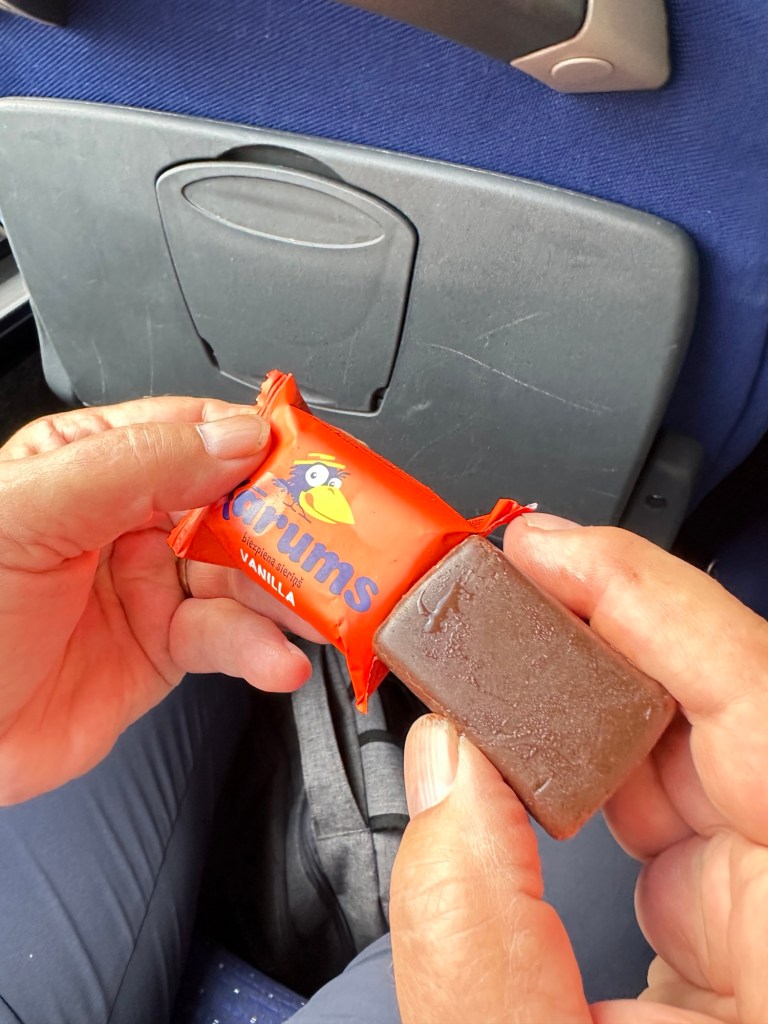
Andrew bought some of the local fruit and nut bread for us to try – it was just delicious! Also some fresh strawberries – so deliciously sweet, plus an Estonian dessert – it was like a cheesecake coated in chocolate- also sweet.
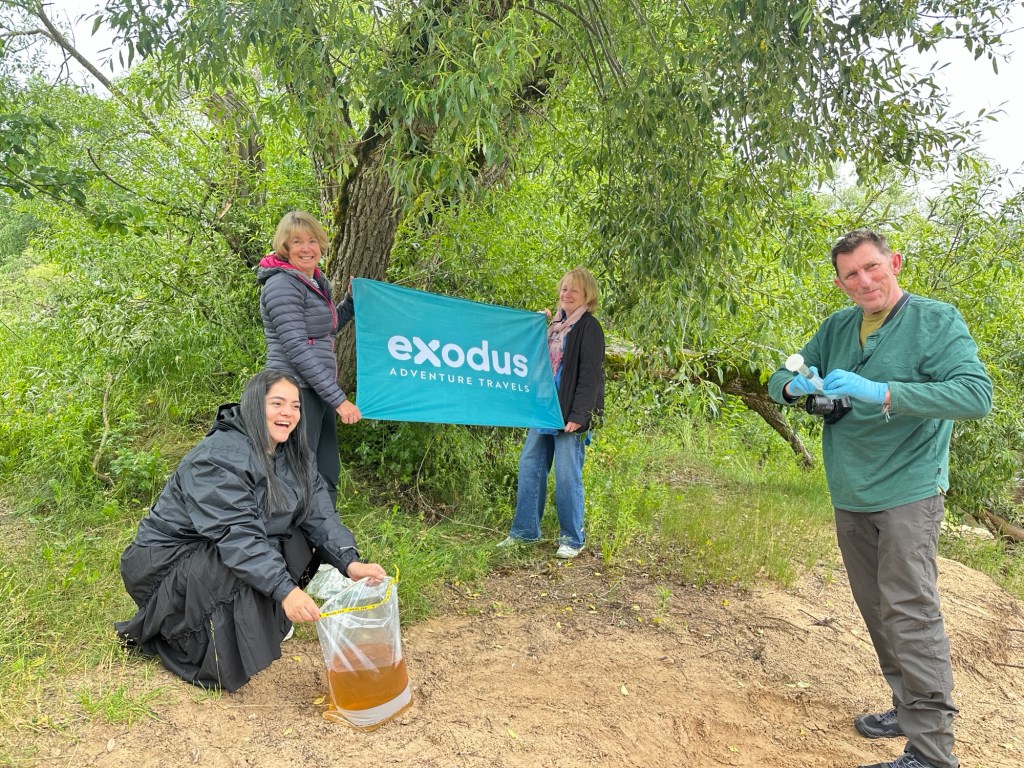
A short stop in Gauja National Park, a region known as Latvian Switzerland. Very pretty. Water activity is popular. We actually did a little science experiment here – our tour group was selected to test the river water for DNA. Samples were successfully collected and sent off to the laboratory.
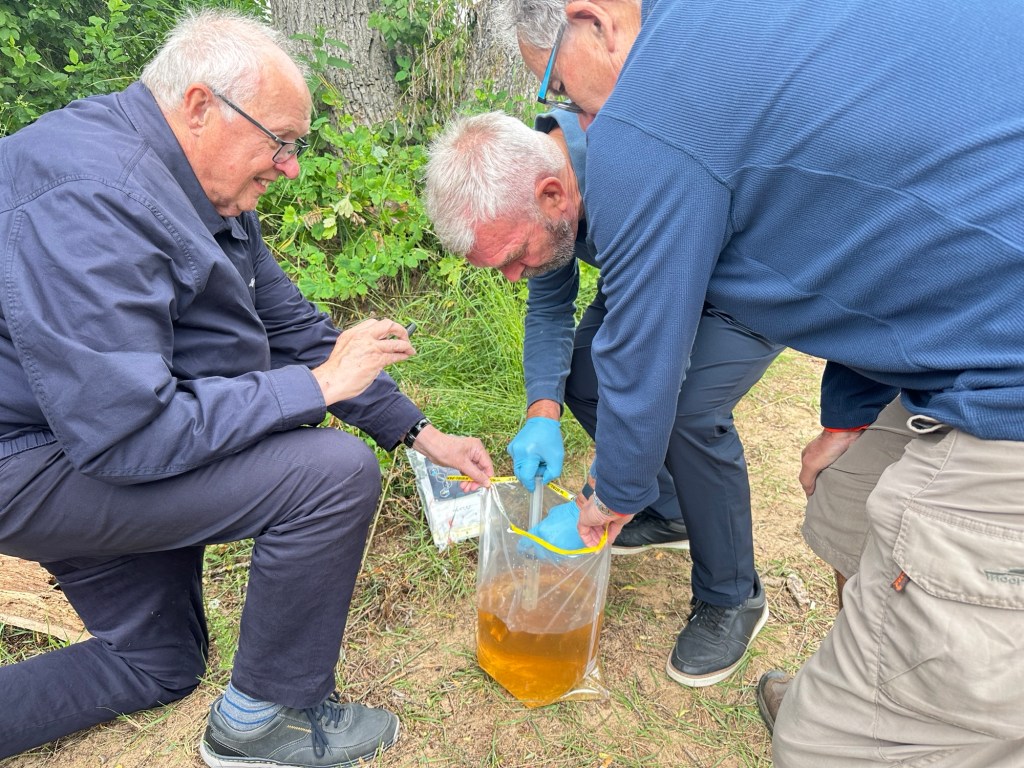
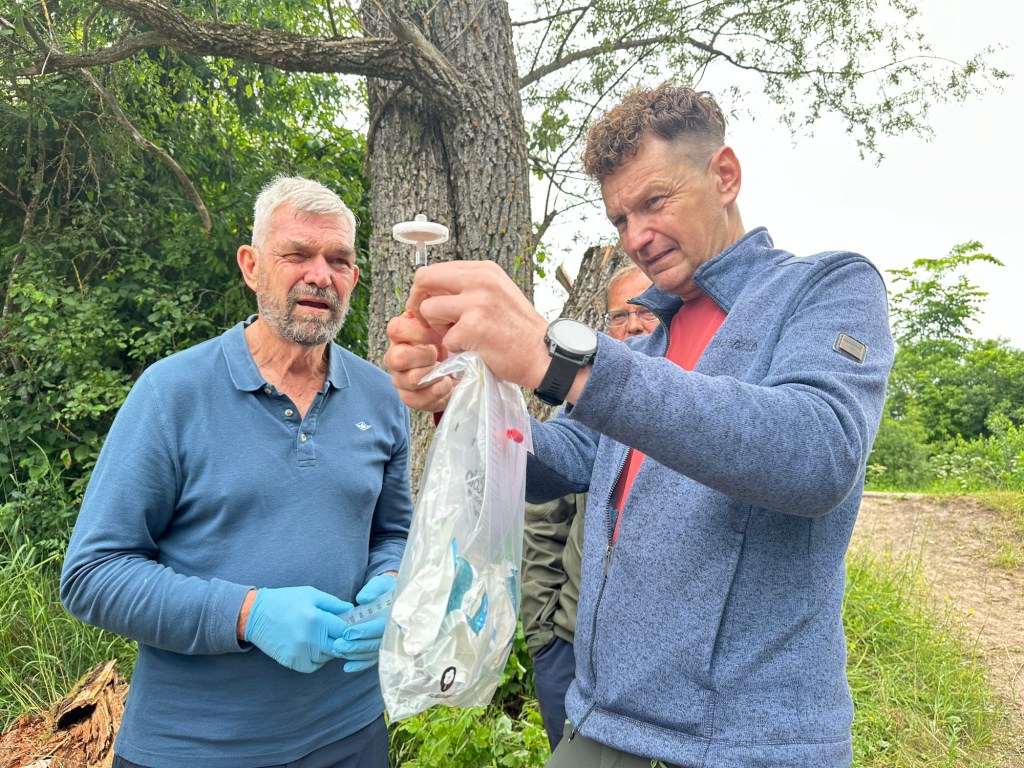
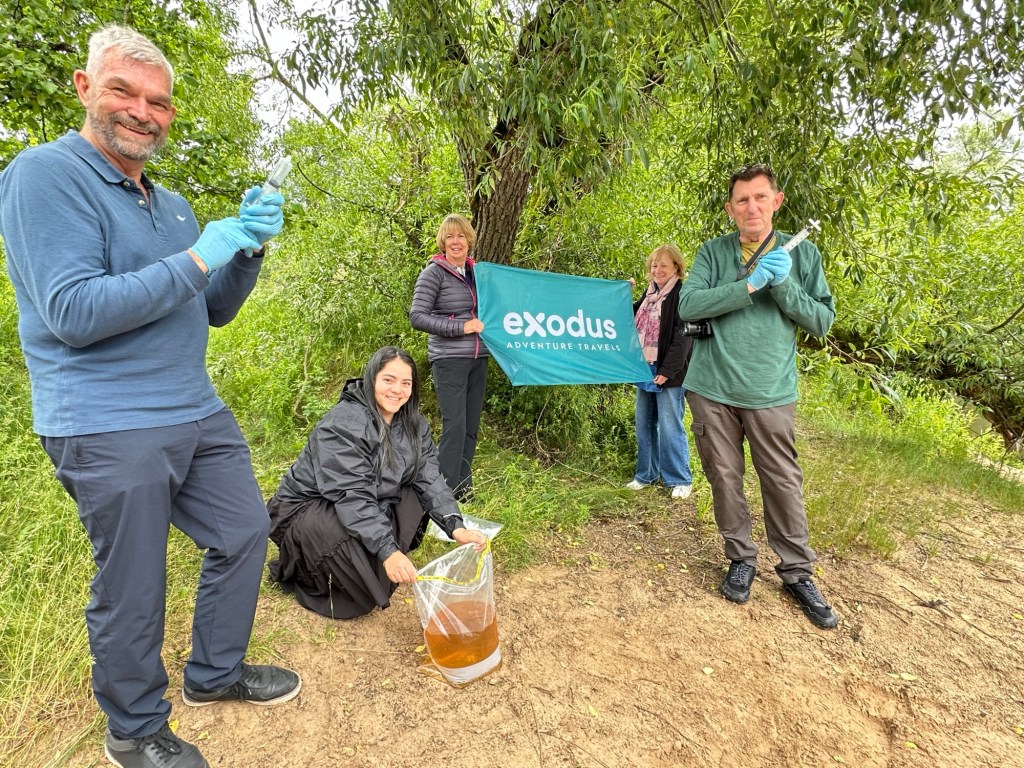
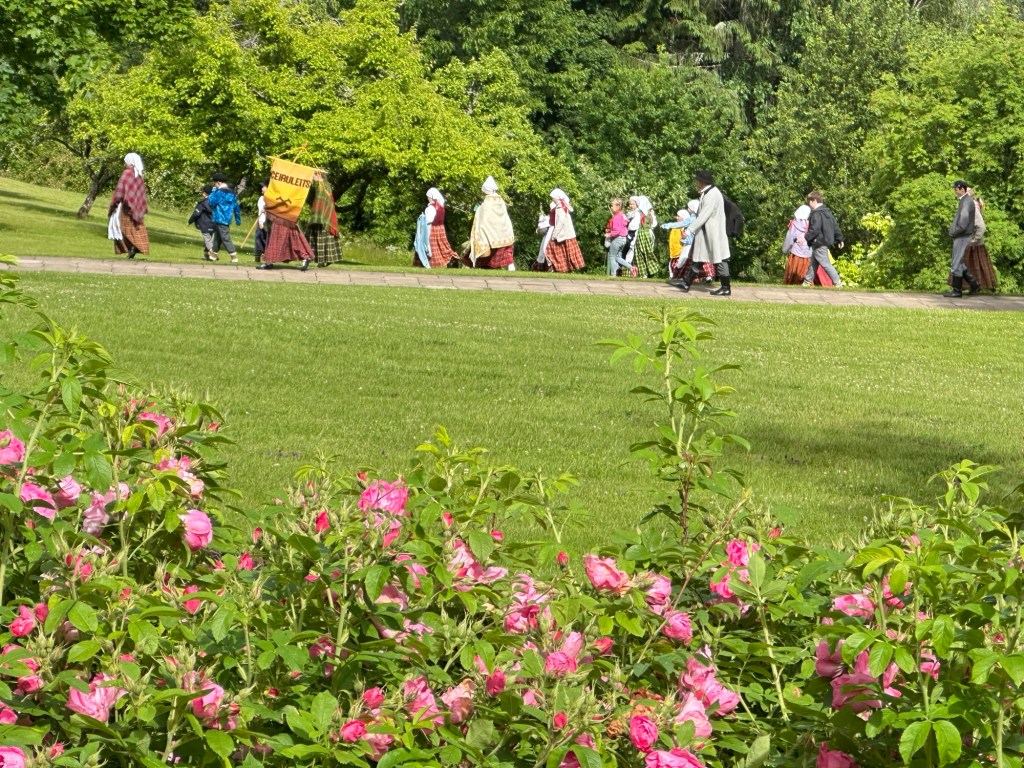
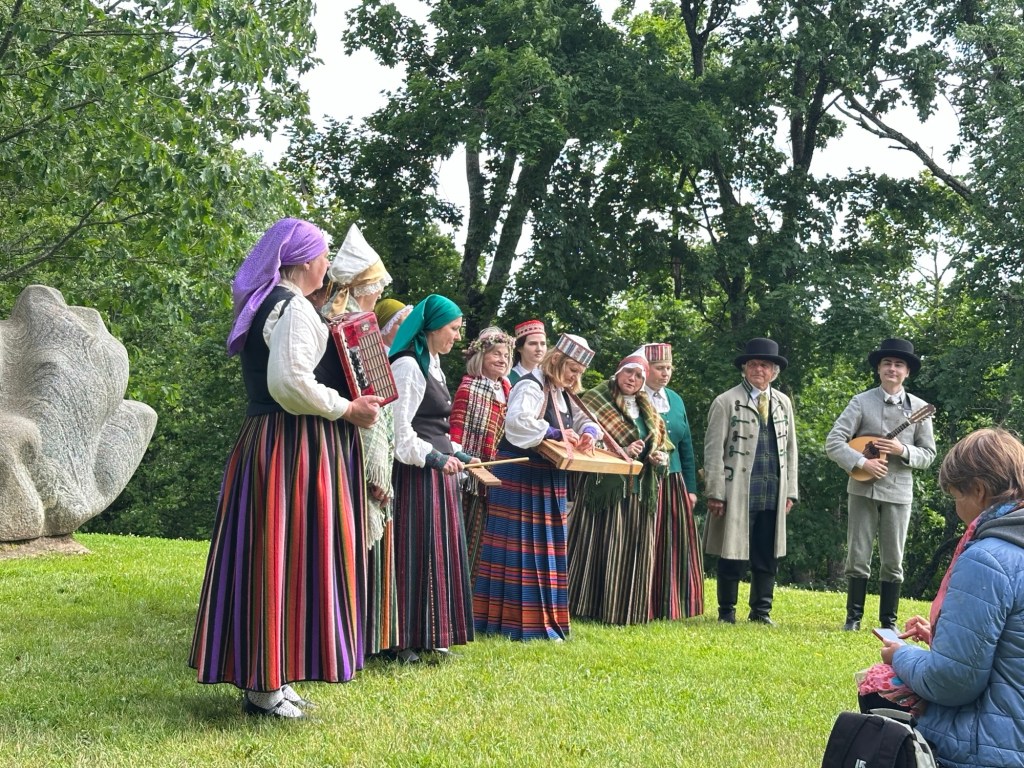
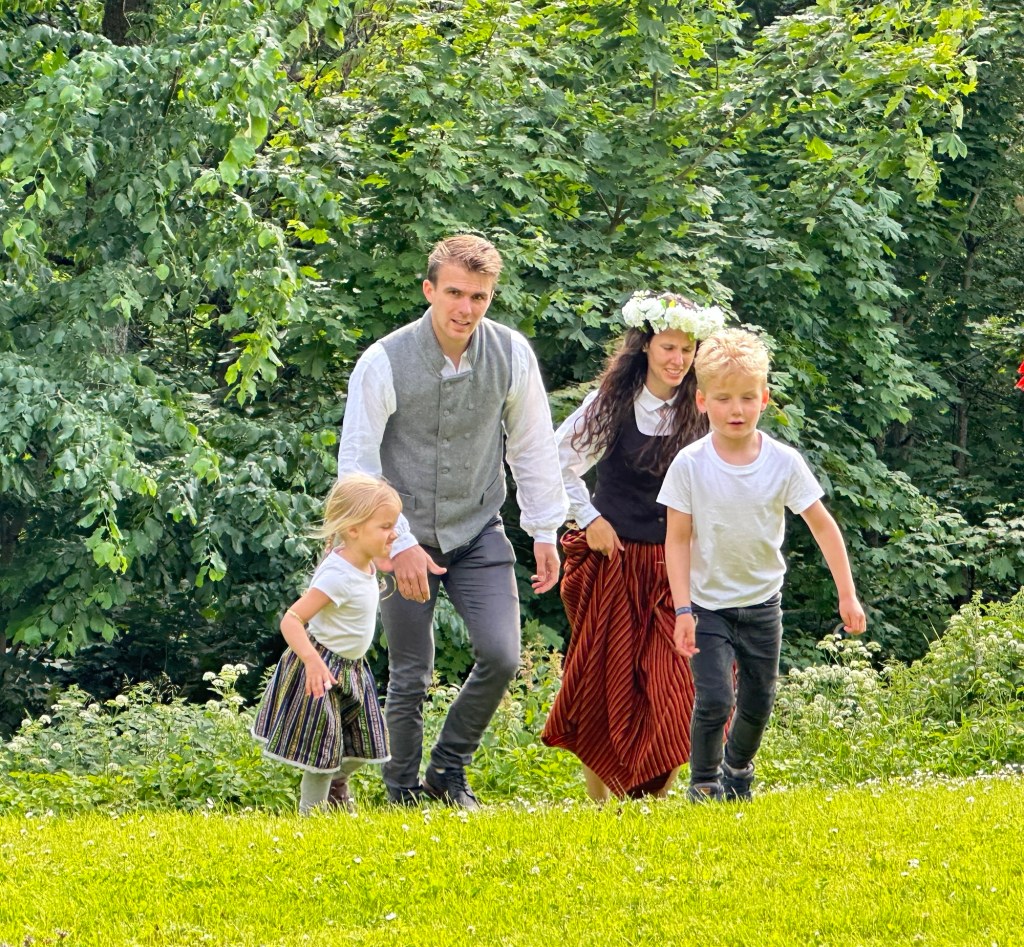
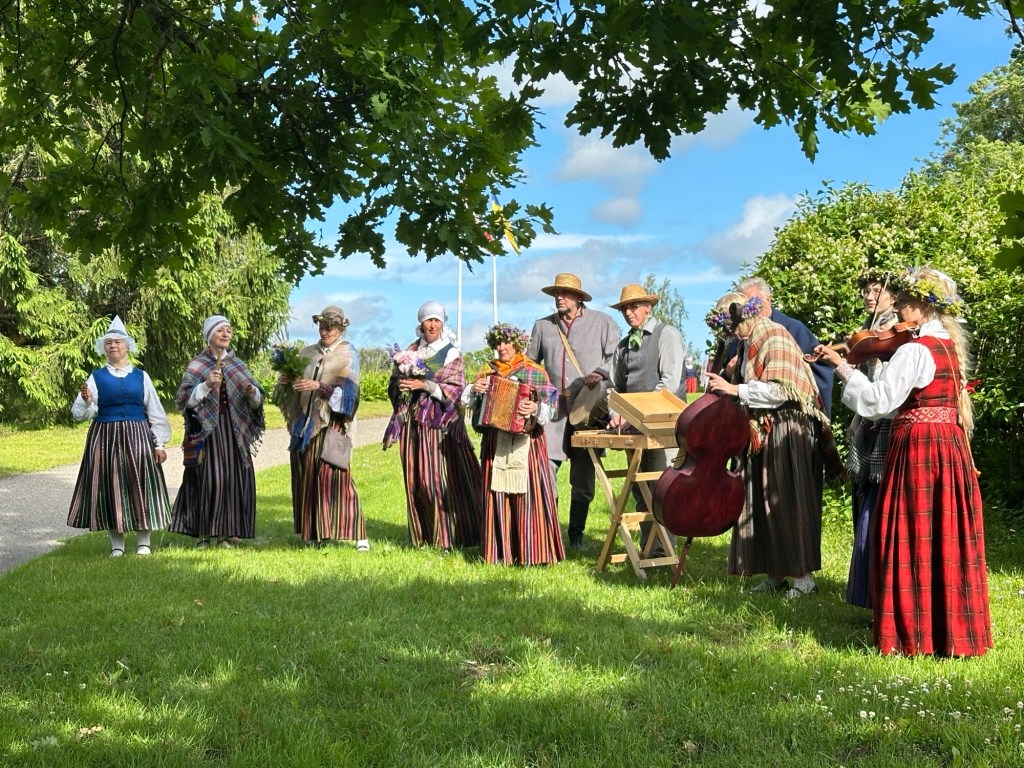
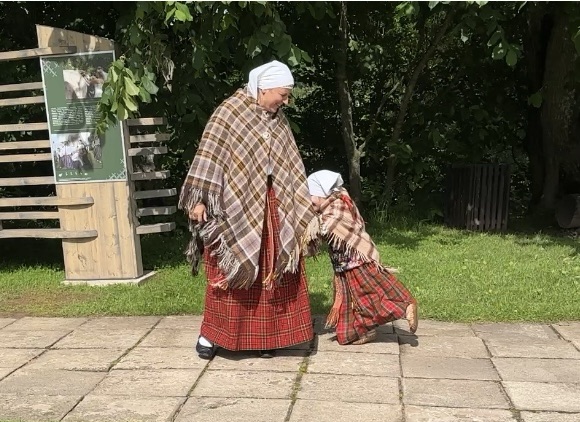
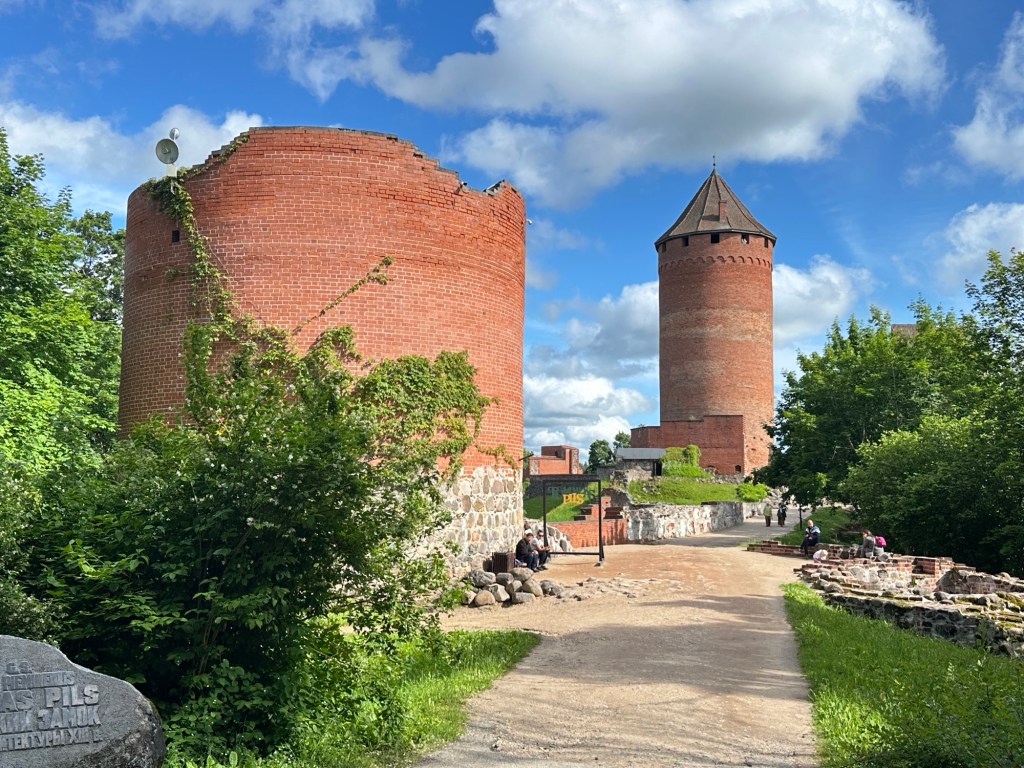
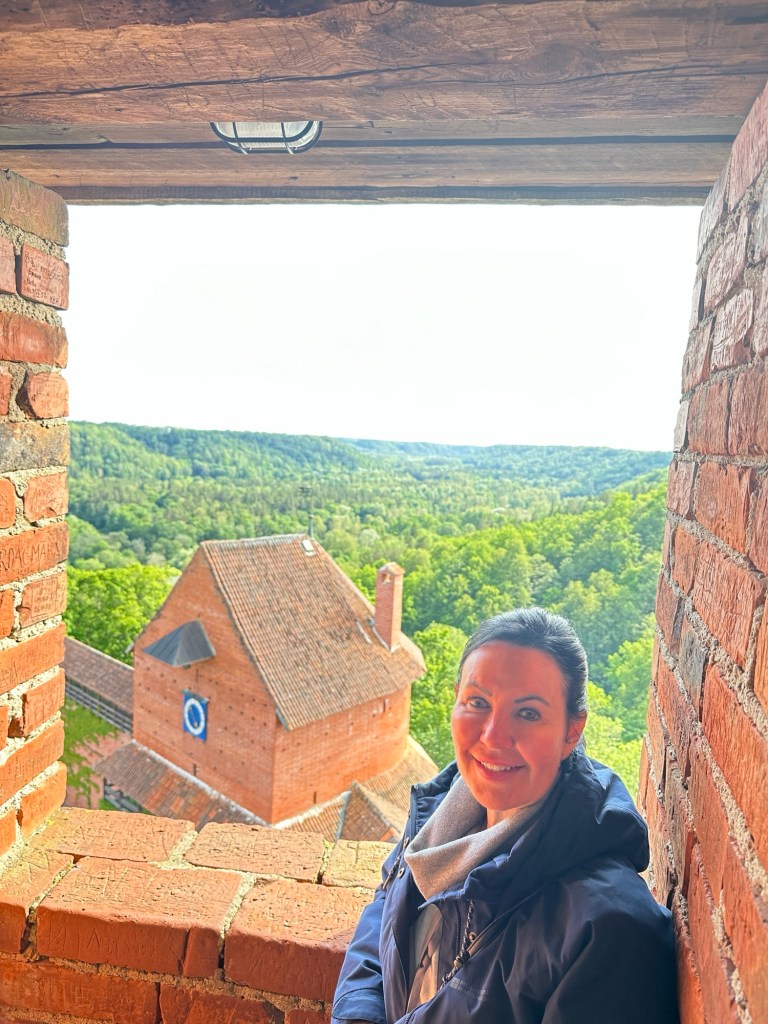
Also in Gauja National Park was Turaida Museum Reserve which included Turaida Castle built in 1214 by the Brotherhood of the Sword, some outbuildings, the Turaida Church built in 1750, and the Folk Song Park with its 25 rock sculptures. Today there happened to be a Song Festival event so we were treated to a large number of singing nationals in traditional costume. It was lovely. The nature trails leading through the park were at least fifty shades of green, and again flowers everywhere. Apparently there are only three months of the year where there are no frosts, so everyone loves this time of year.


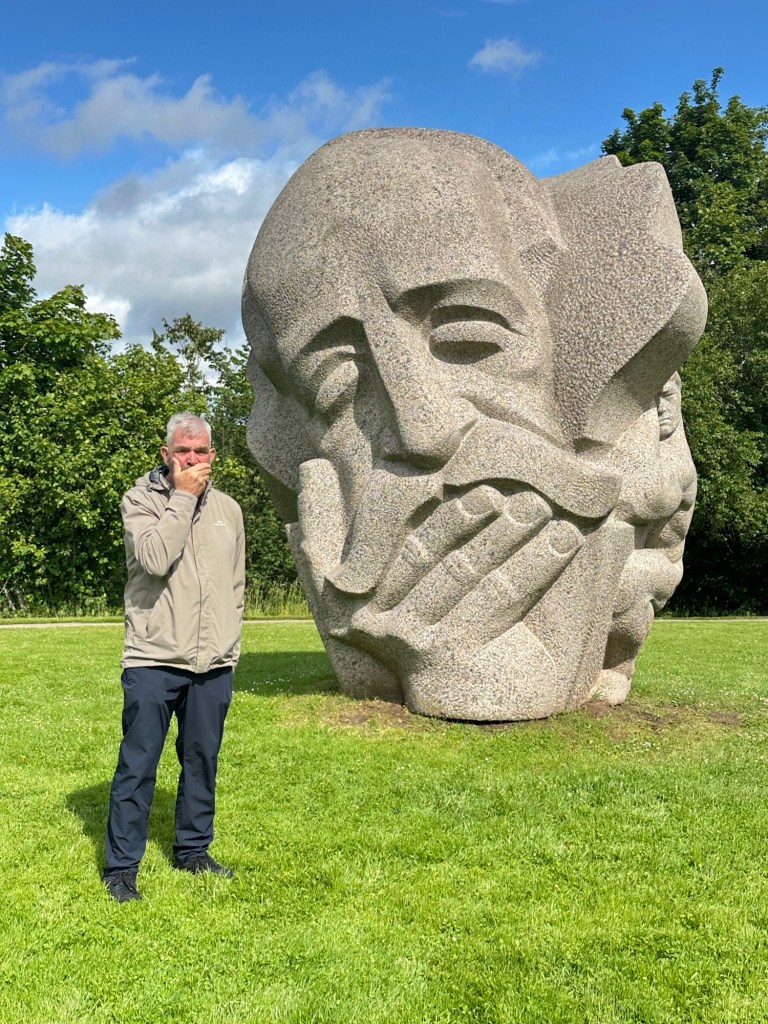

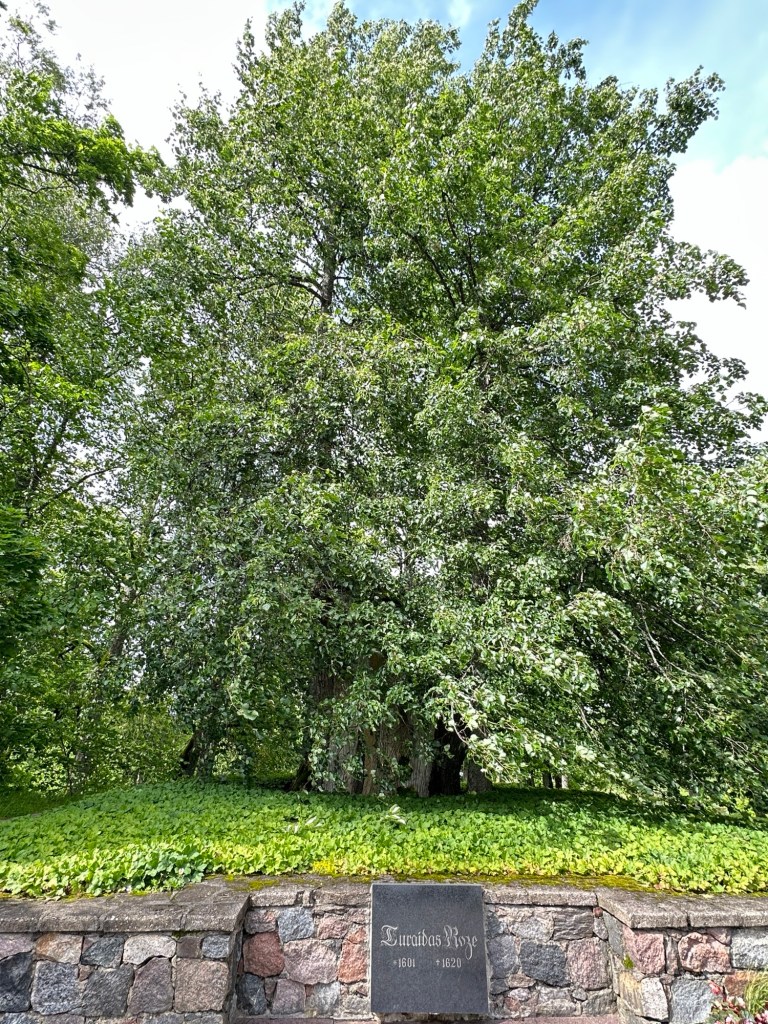
Andrew had a surprise for us – we had a toast with a traditional Estonian drink, Vana Tallinn (even though we are now in Latvia) to the legend of the Turaida Rose, in front of the giant Linden tree. The liqueur was a spicy rum based drink – sweet, not too bad, even if you don’t like rum!

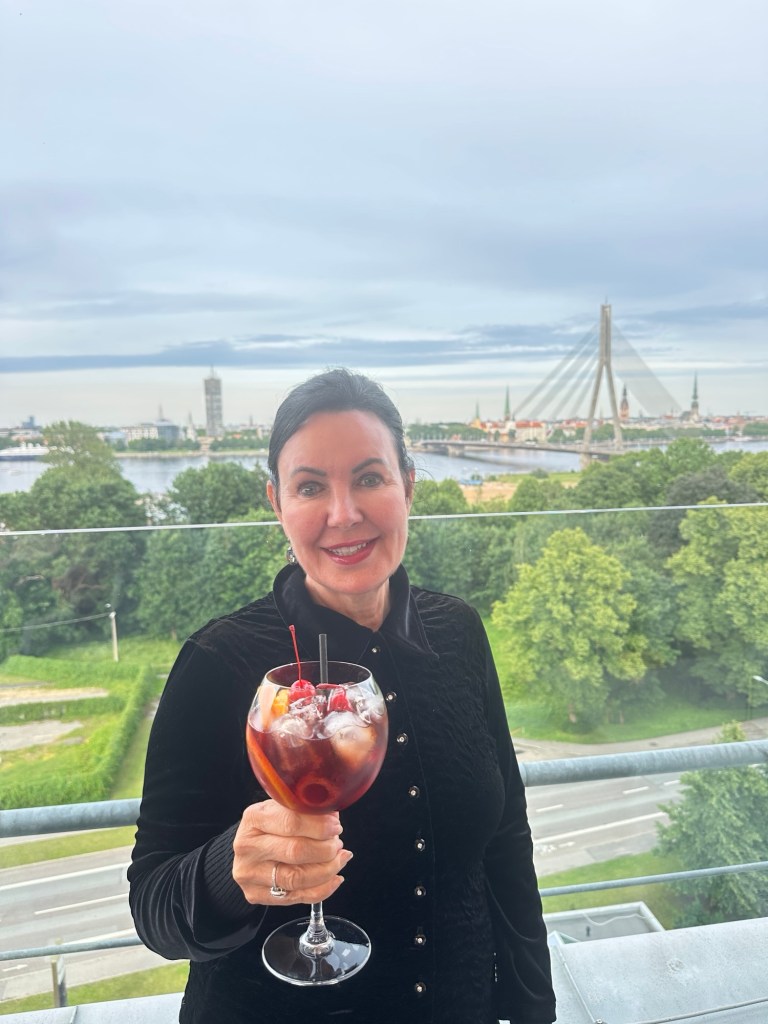
Another hour’s drive and we are in Riga where we checked into the Islande Hotel. It was 7pm by this time, so we went straight up to the 10th floor where the restaurant was, for dinner. Fabulous views over Riga. Really nice food, a few wines, and a fun night had by all. I had a cocktail with the Latvian herbal liqueur – Black Balsam, cherry flavour.

Day 41
Sunday 29th June
Riga
16 – 20 degrees, sunny, windy
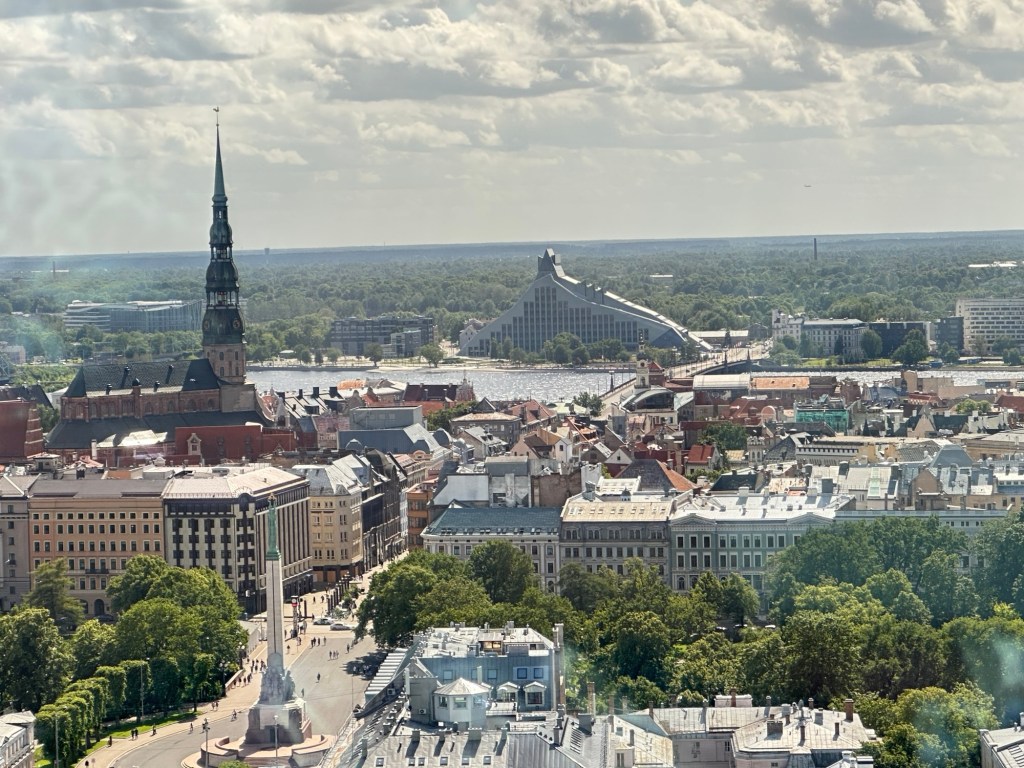
With its long history as a mercantile centre, Riga is the largest and most cosmopolitan city in the Baltic States. This morning, we catch the local bus across the bridge to do a walking tour of the magnificent old town of Riga.
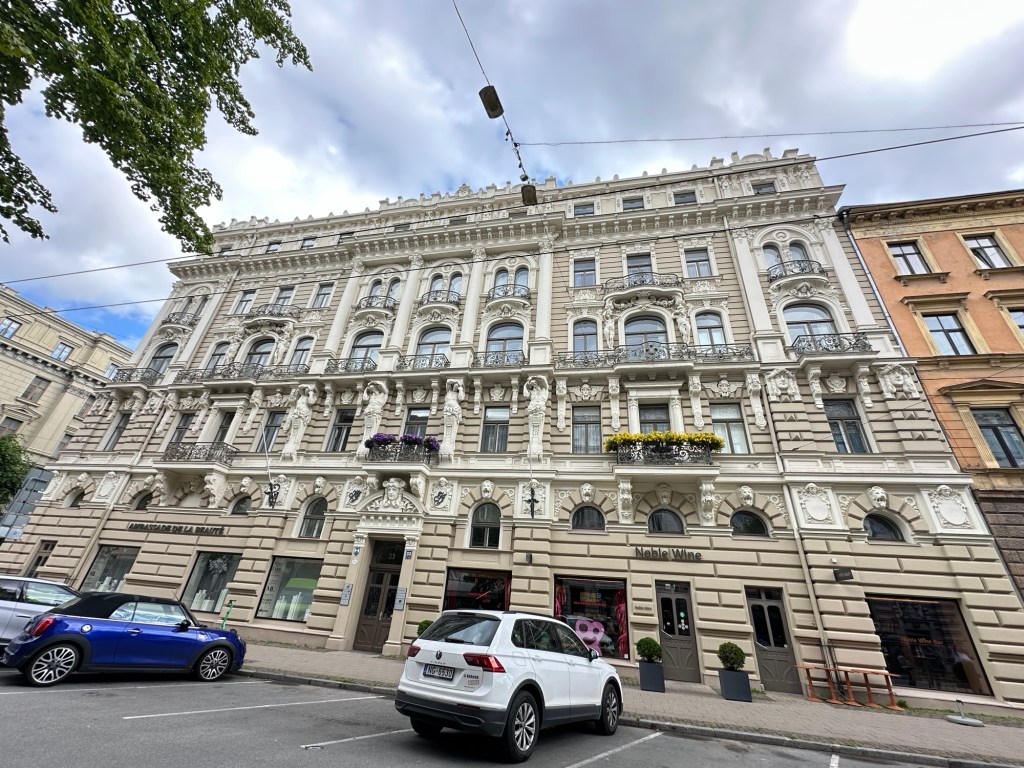
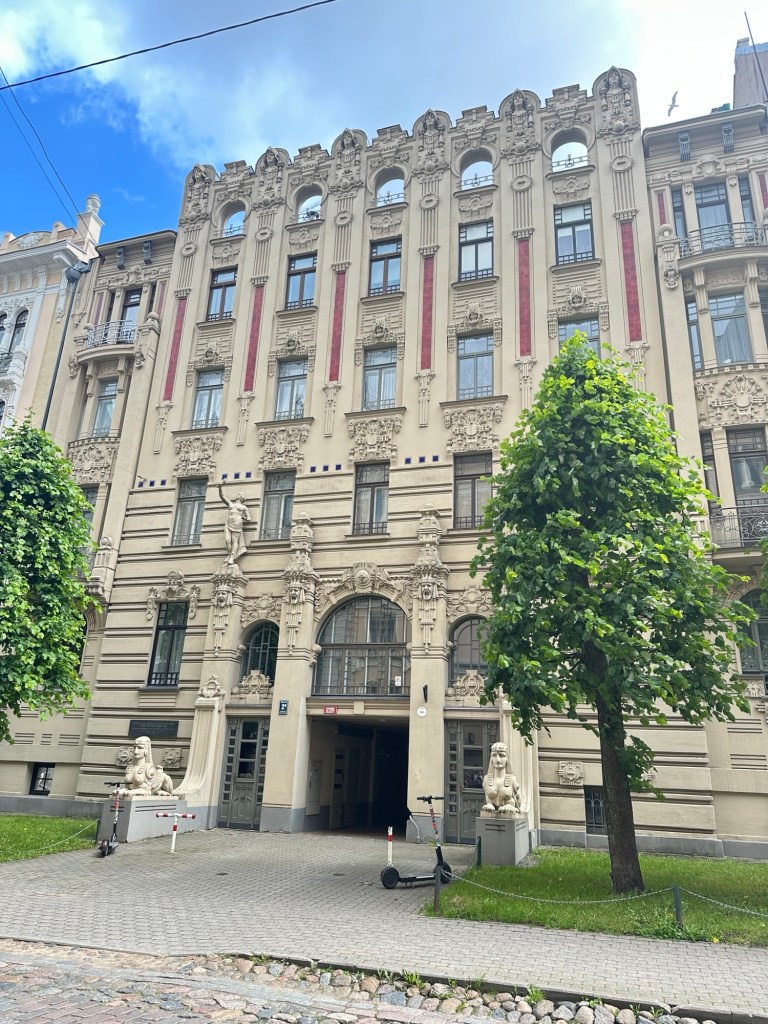
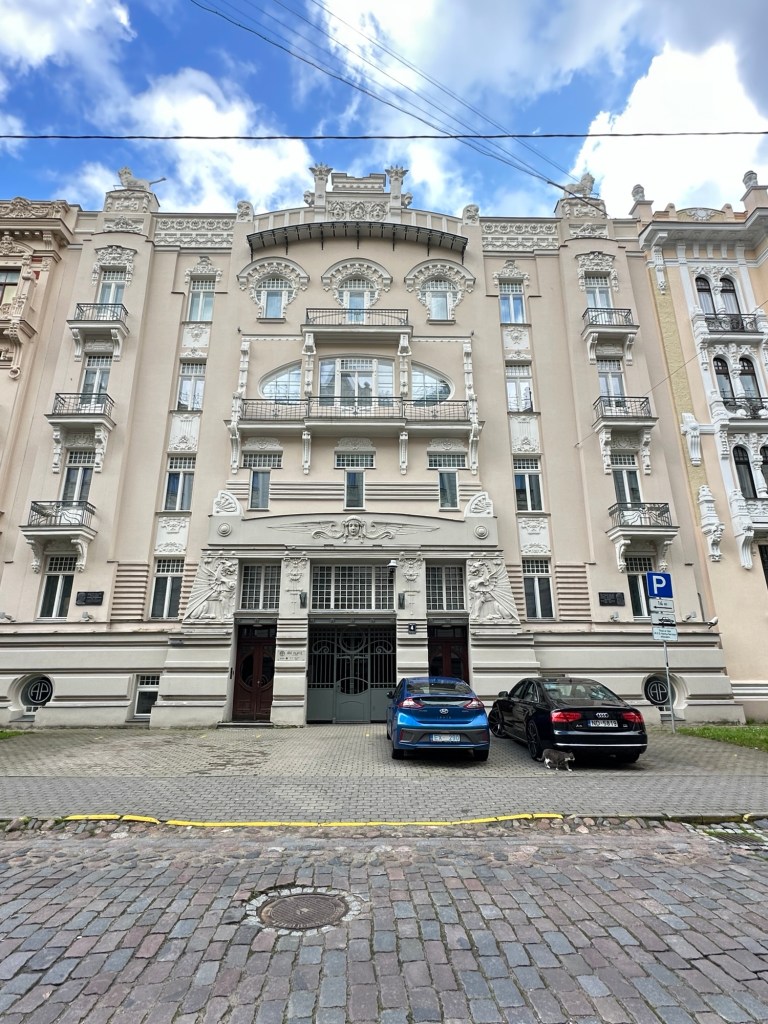
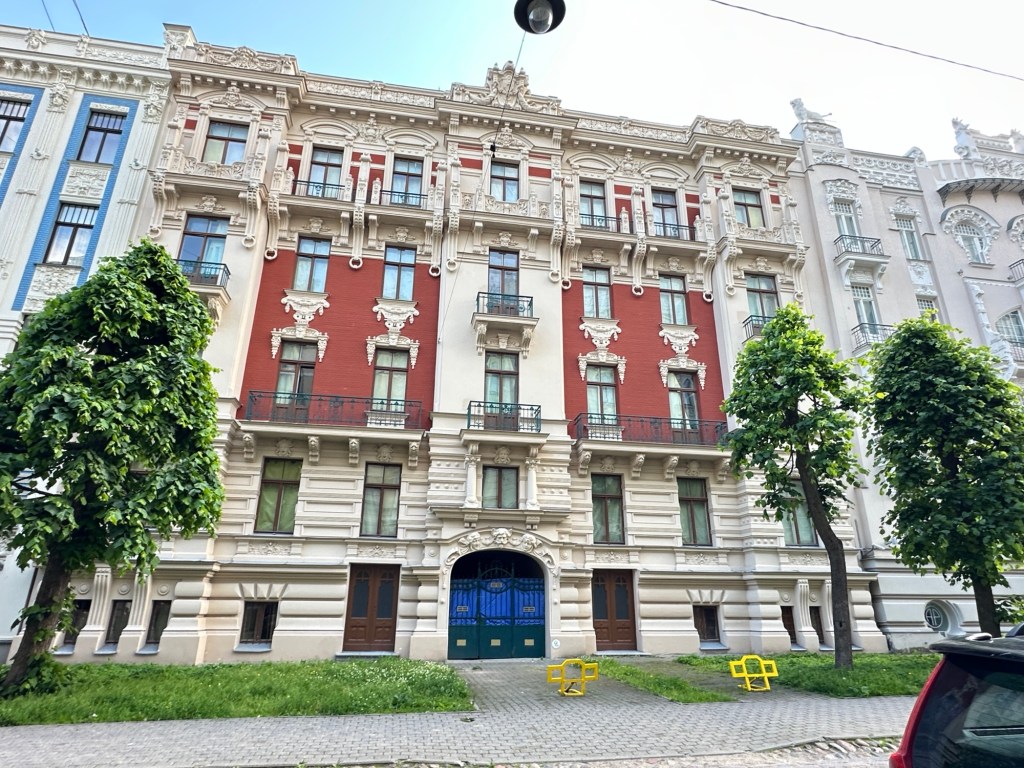
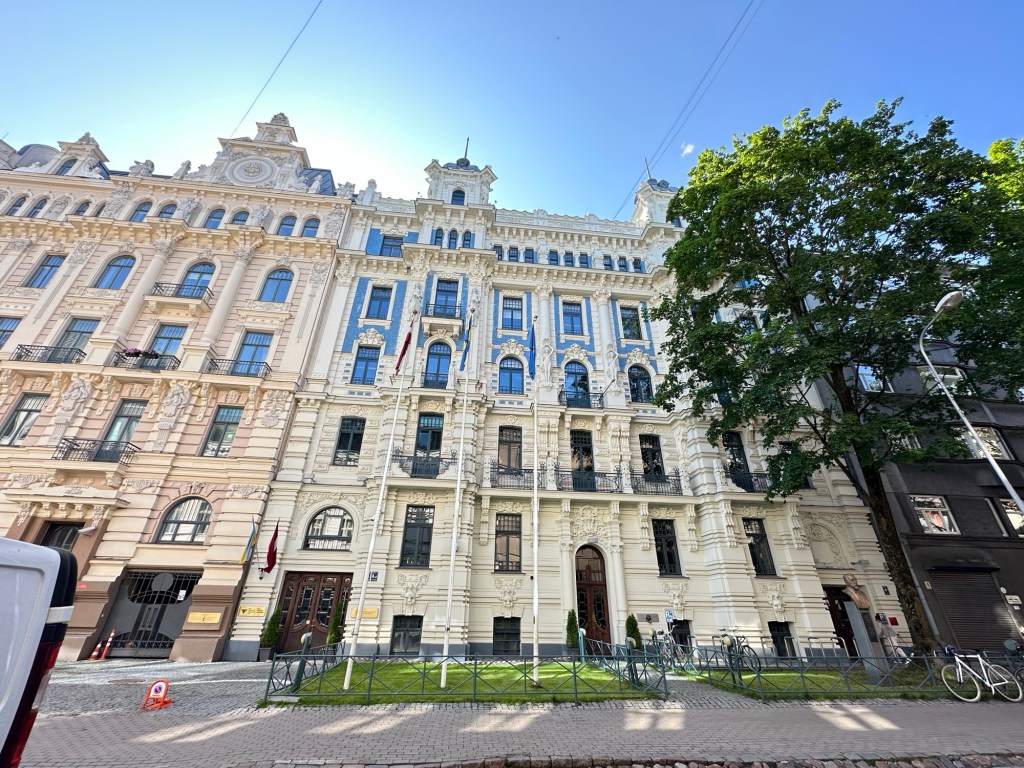
And, what a surprise! Riga has a collection of at least 800 (another 200 were destroyed in the war) renovated Art Nouveau buildings, all recognized by UNESCO as unparalleled anywhere in the world.
The period from 1898 to 1915 in Riga is called the Art Nouveau period. The development of Art Nouveau coincided with a time of economic prosperity unprecedented in the city’s history. During the Art Nouveau period, about a third of the buildings in the center of Riga were constructed in this style, thus making the city one of the main Art Nouveau destinations in Europe. Many of the brightest examples of these buildings are located in the area of Elizabetes and Alberta streets, but spectacular buildings can also be found in many other areas in the center of Riga. The most famous architects of this style in Latvia were Konstantins Peksens, Mihails Eizensteins, and Eizens Laube. I was in awe of these beautiful buildings.


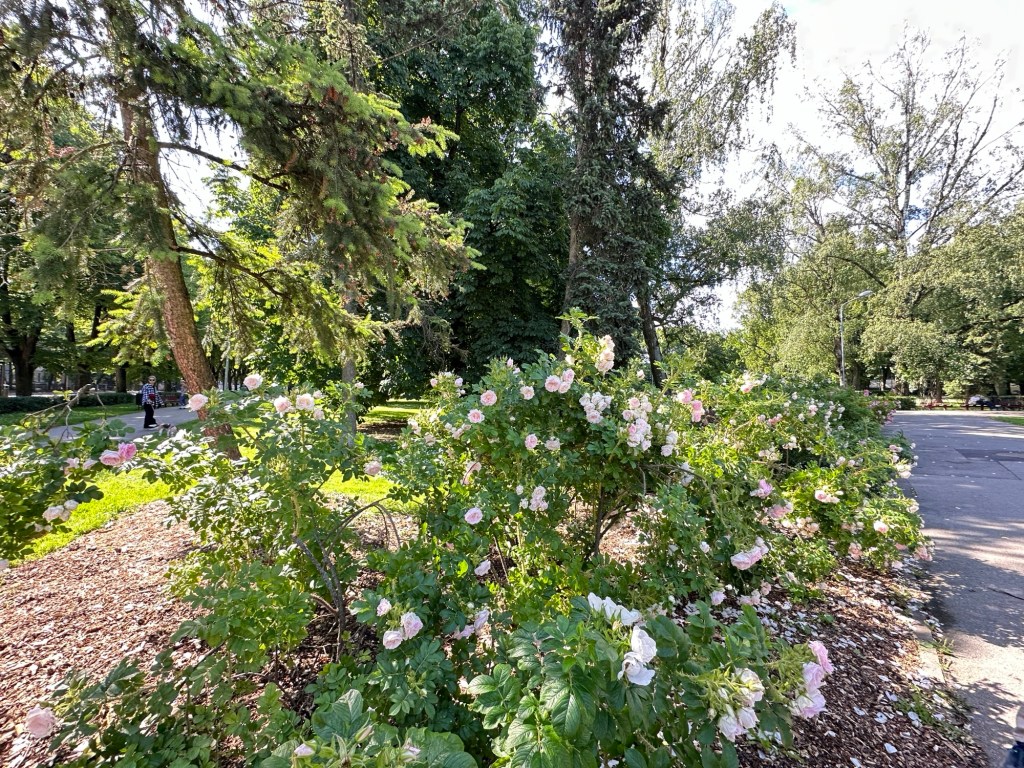
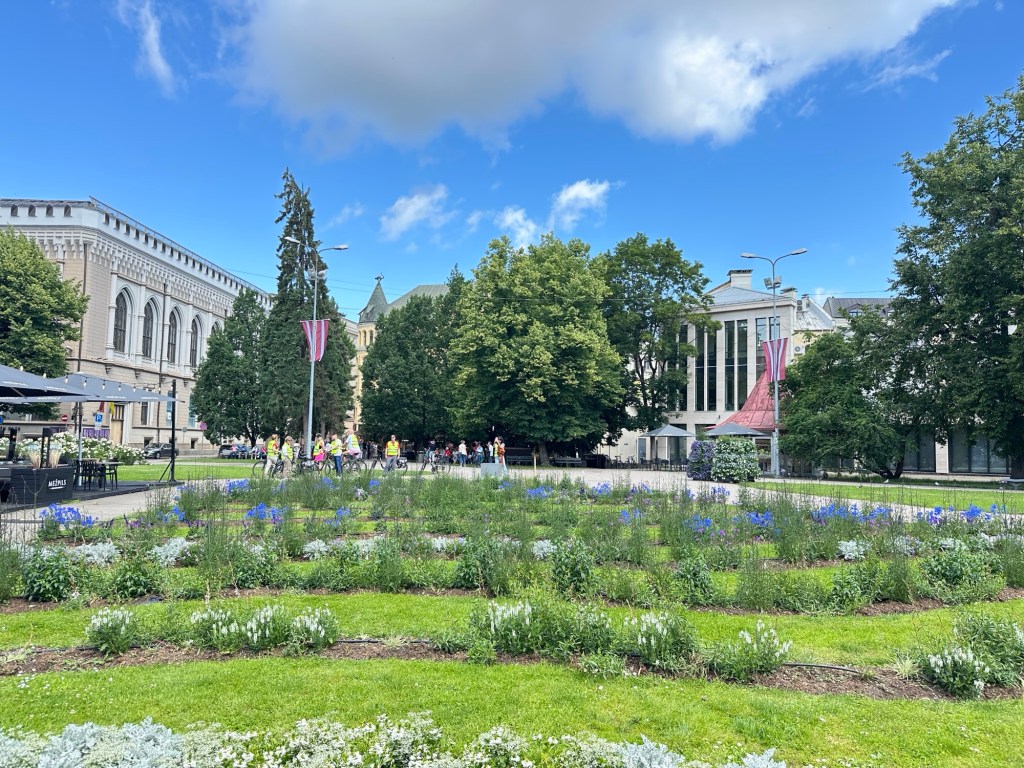
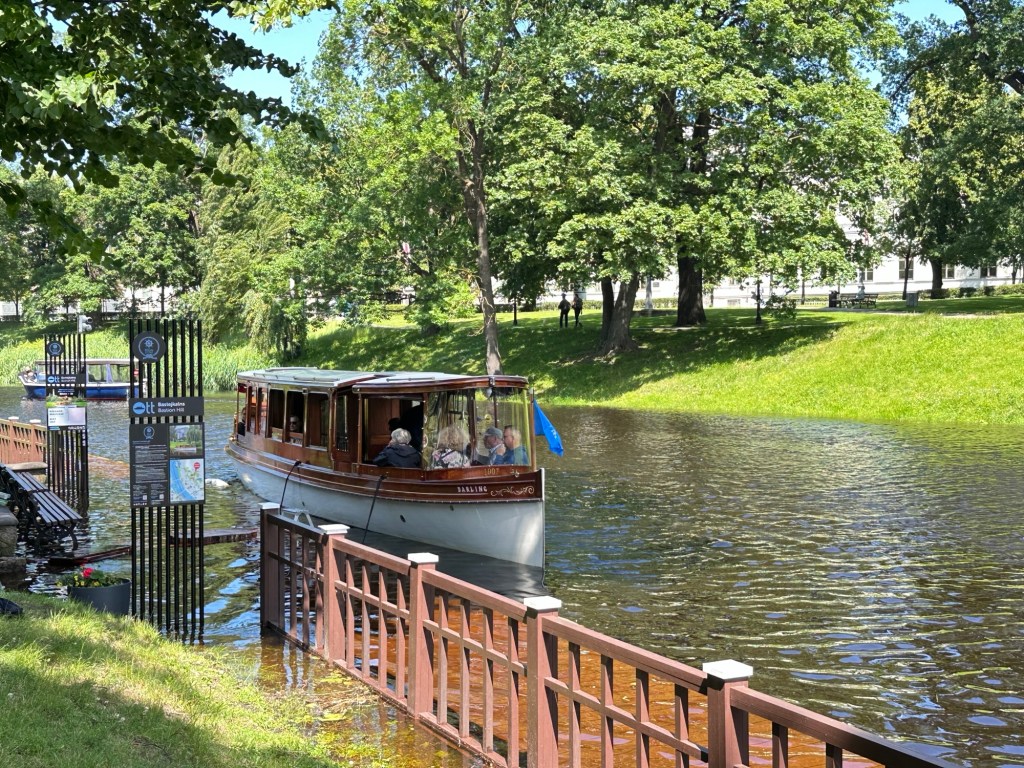
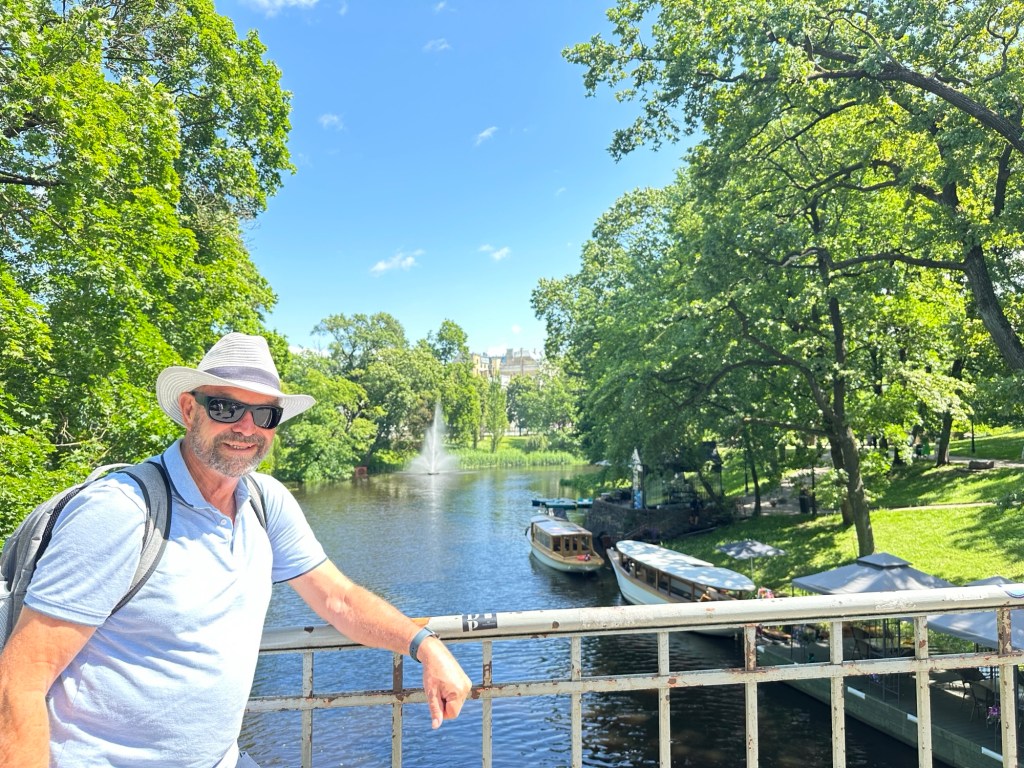
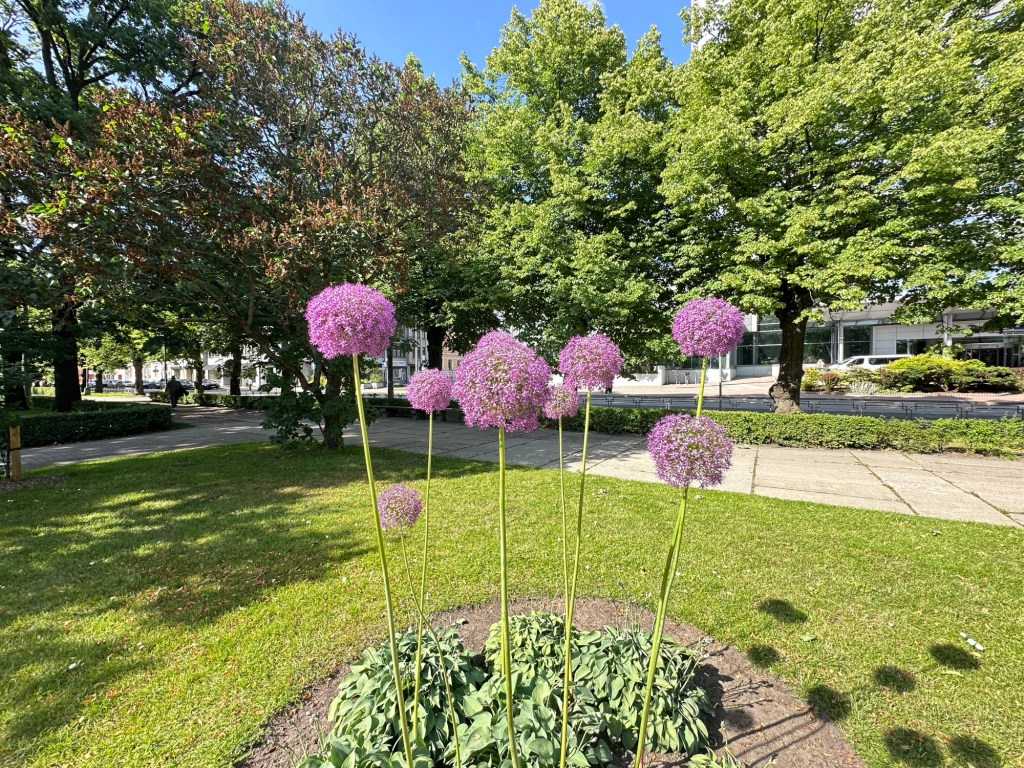
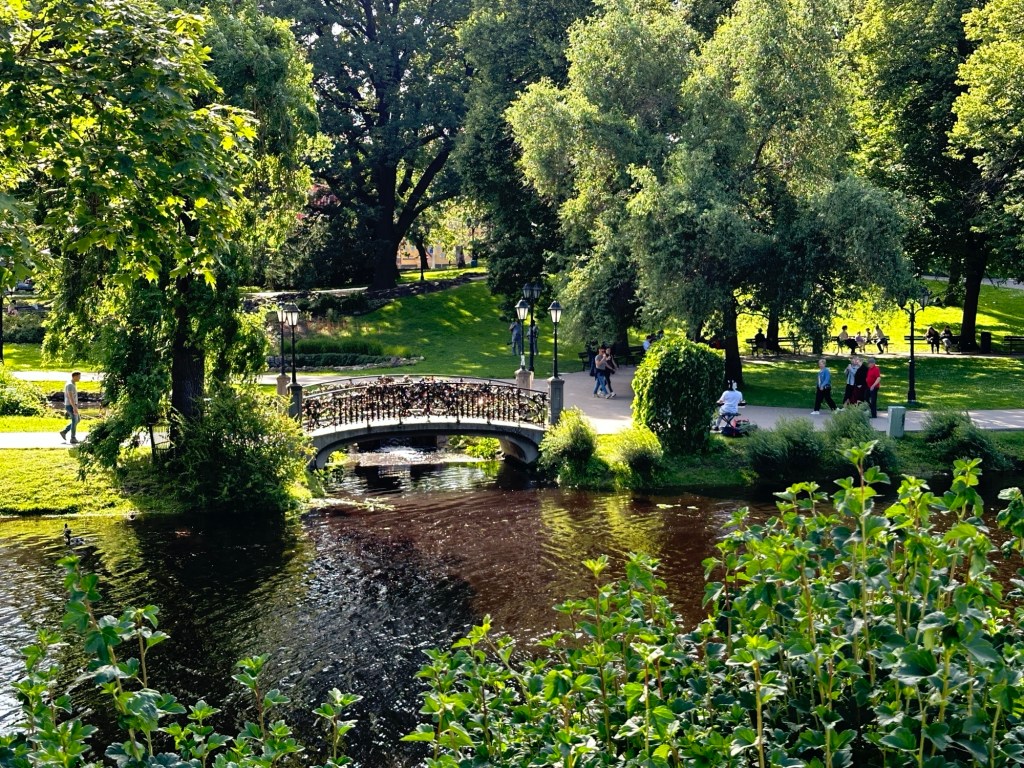
From there, we walked through the lush green park running alongside the canal. The paths were lined with Linden trees and pretty flower gardens – I never tire of the flowers.
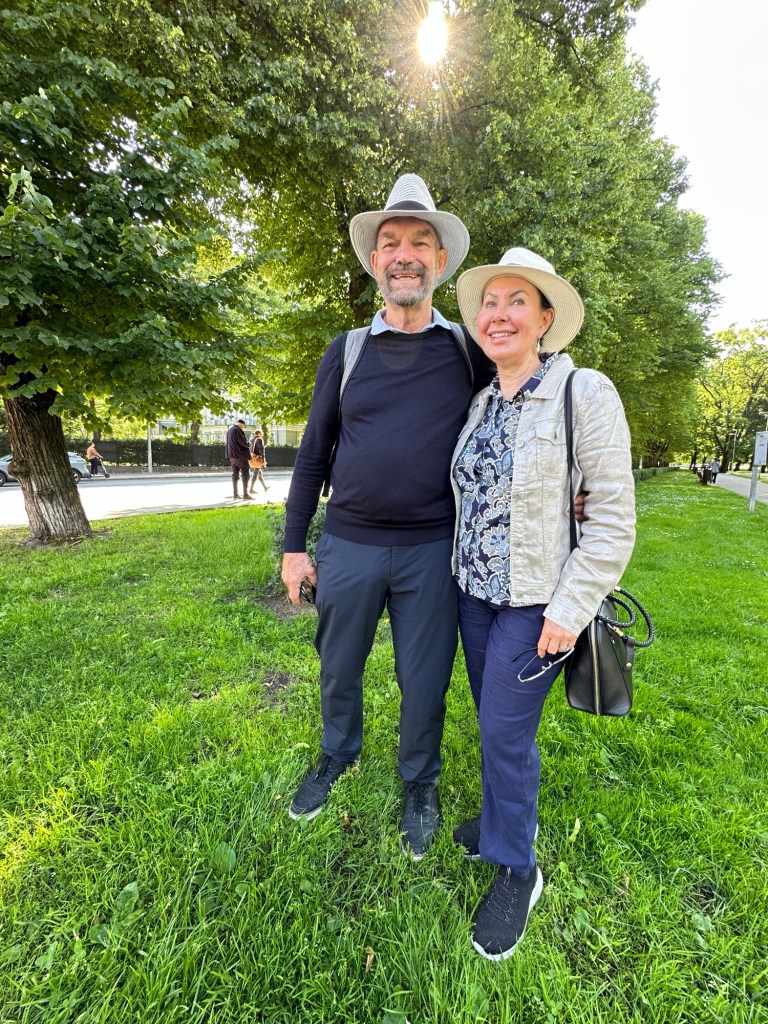
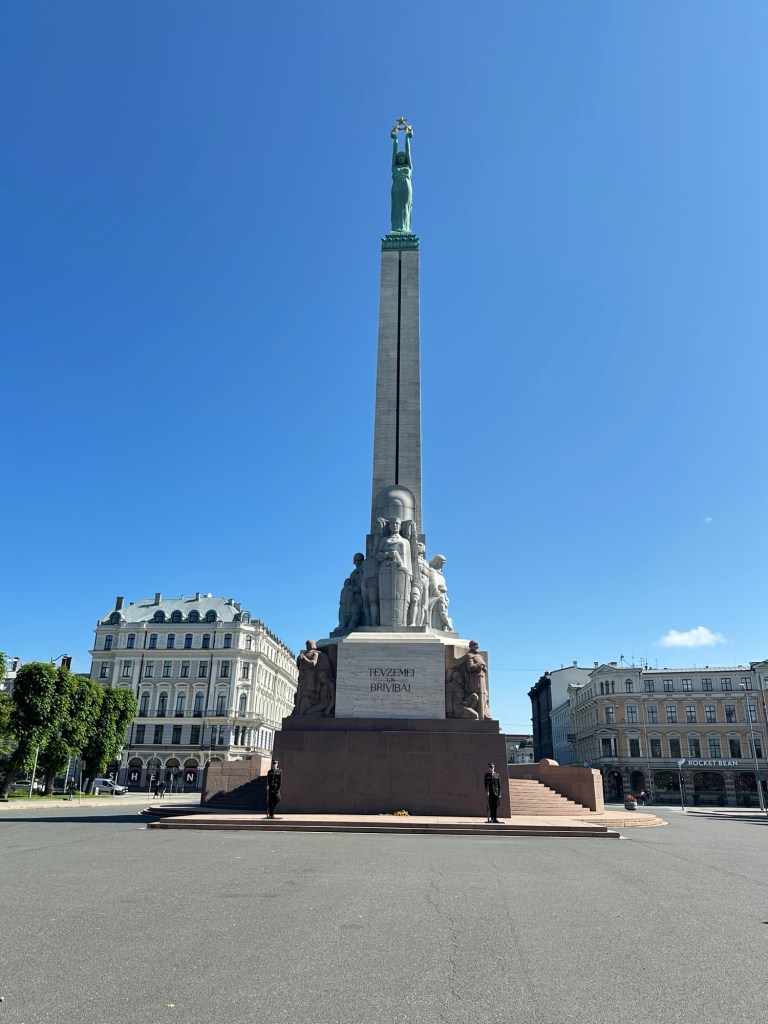
We soon arrived at the Freedom Monument. Built in 1935 on a site previously occupied by a statue of Peter the Great, the 42 metre tall Freedom Monument is a potent symbol of Latvian independence, freedom and national unity. It was paid for entirely through donations from the people.
It was designed by the sculptor Karlis Zale. The slender granite column is topped by a female figure holding aloft three golden stars, which represent the three cultural regions of Latvia – Kurzeme, Vidzeme and Latgale. During the Soviet era the authorities banned people from laying flowers at the base of the monument and placed a statue of Lenin a short distance away. Our visit happened to coincide with the midday changing of the guards.


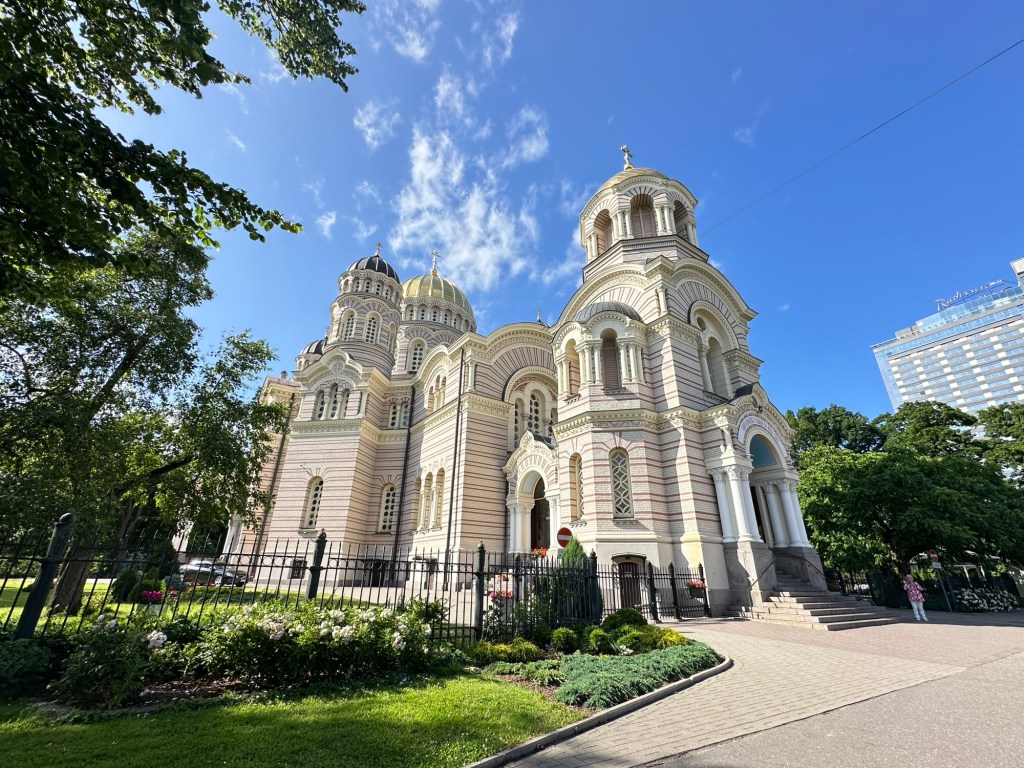
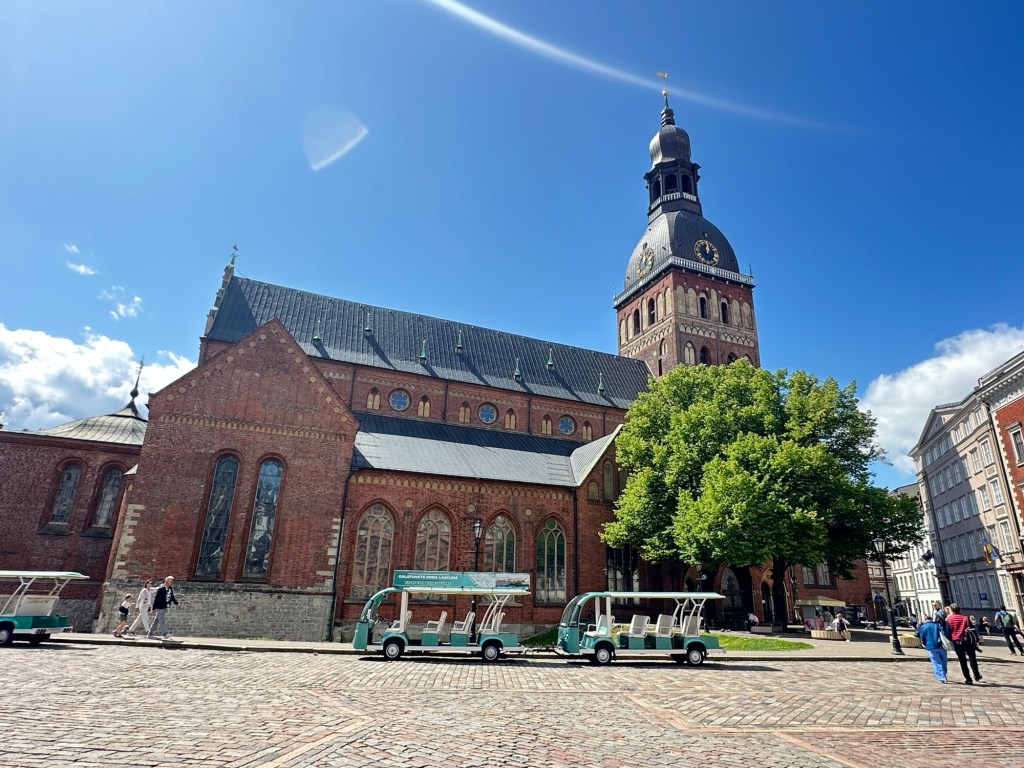
Now for the Old City- there are just so many facets to it. Winding our way through cobblestoned alleys we take in the Latvian National Opera House, Livu Square ( meeting point of eight streets), the Powder Tower (the only only one preserved of 28 towers, built 1330), Town Hall Square, House of the Blackheads ( built in 1334 as a meeting place for public organisations in Riga), St Peter’s Church (first mentioned 1209), Cathedral of the Nativity of Christ (Orthodox), Dome Square and the Riga Dome Cathedral – just to name some of the sites. Riga is a treasure trove of gems, highlighted by flowering gardens and pots everywhere. It’s quite overwhelming.
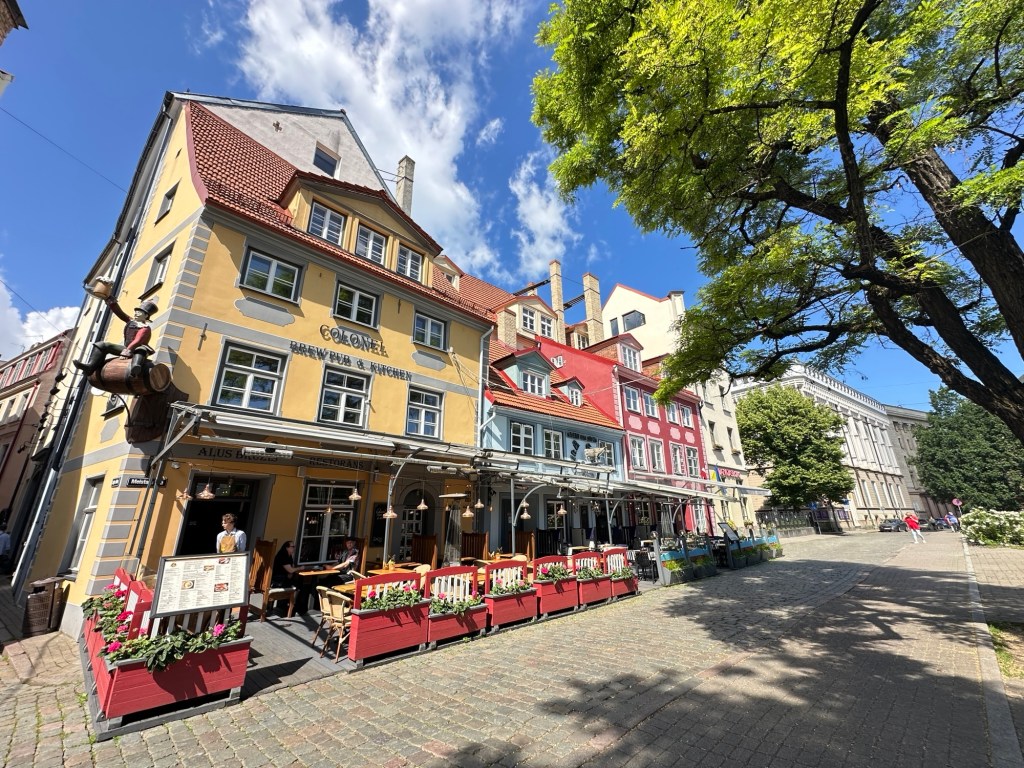
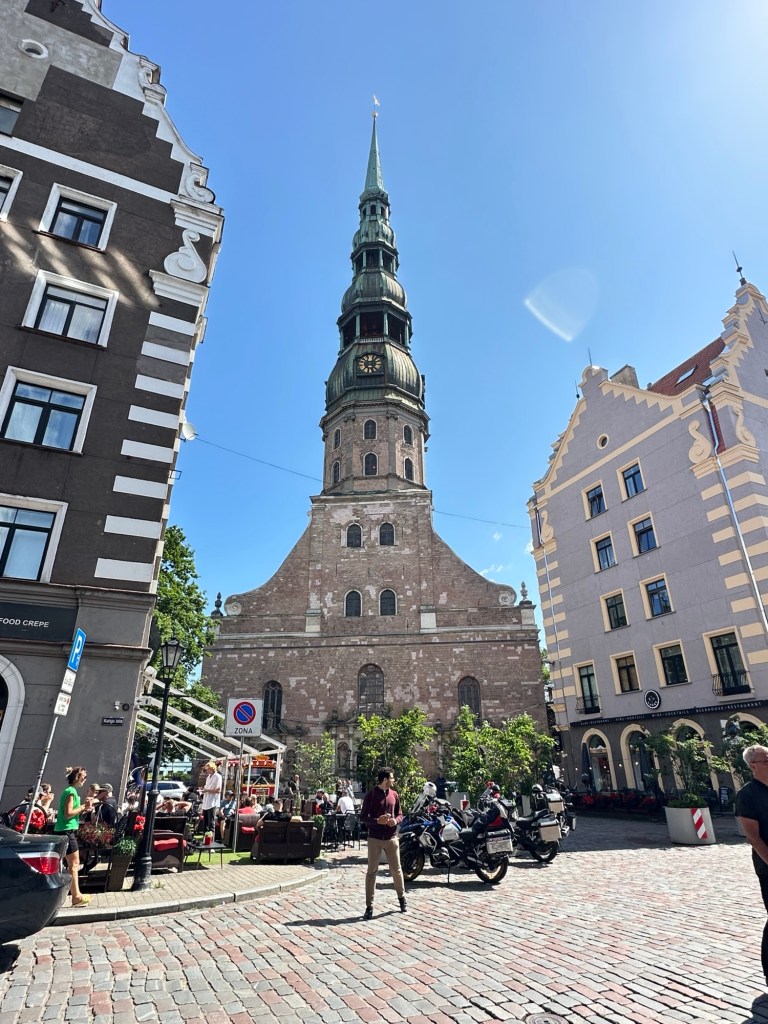
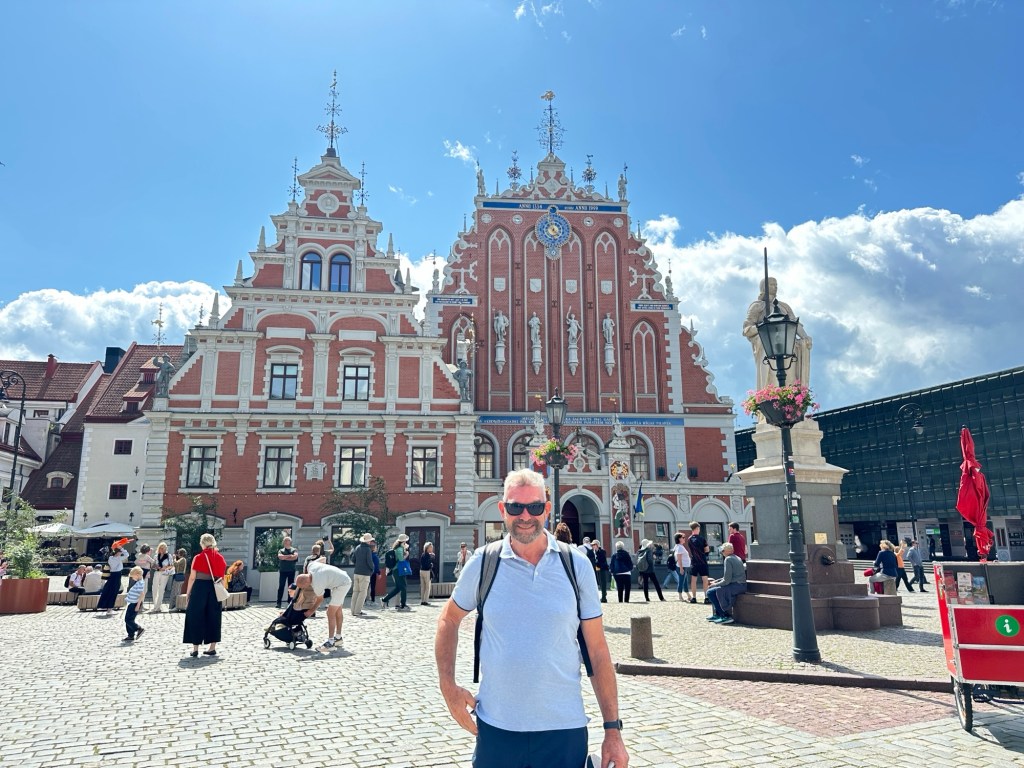
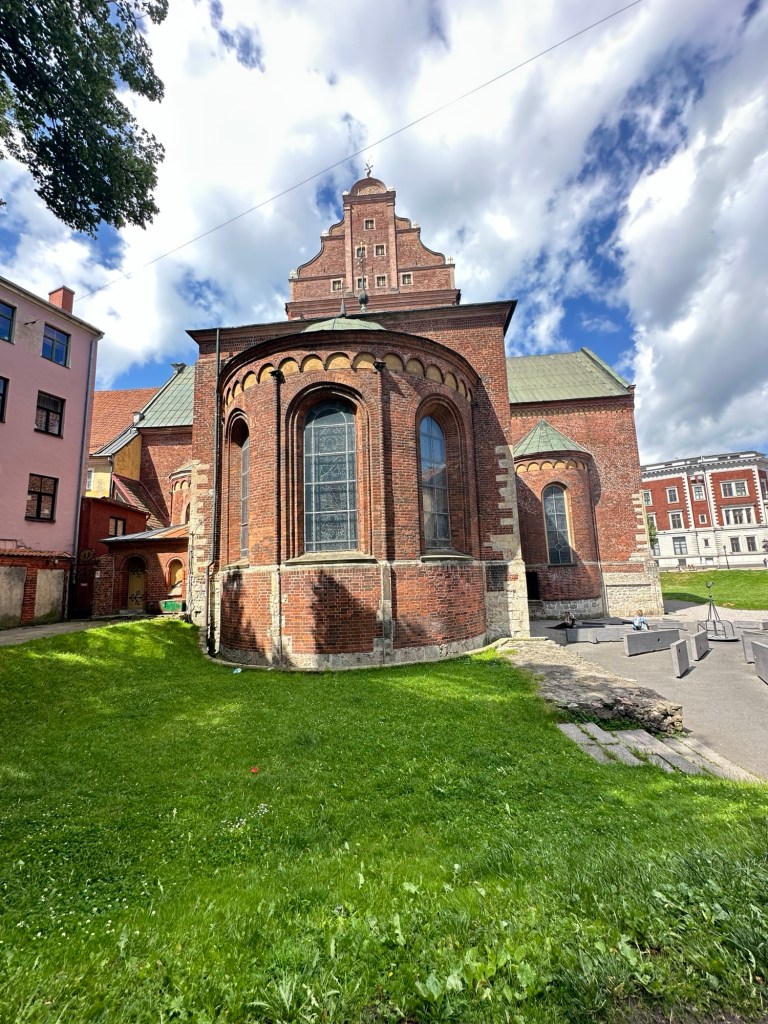


Lunch break … Lido’s. It is a restaurant chain, but does offer a Latvian culinary adventure – harmonious blend of traditional Latvian cuisine and international flavors, with something to satisfy every taste. We loved our lunch, and so cheap!
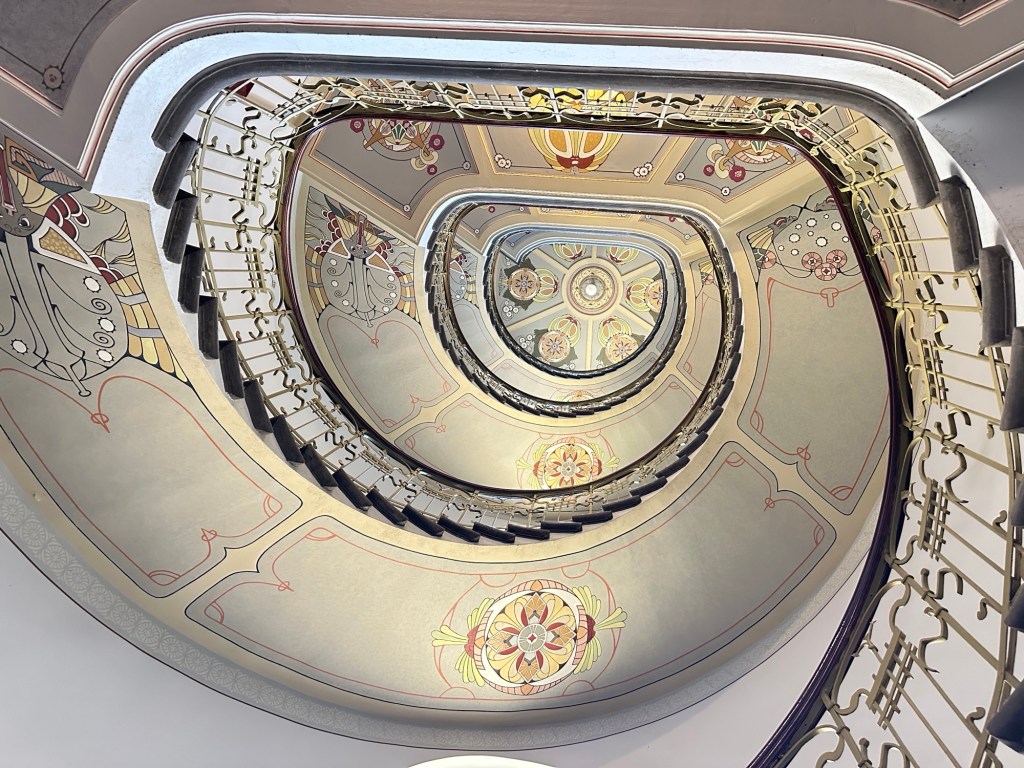
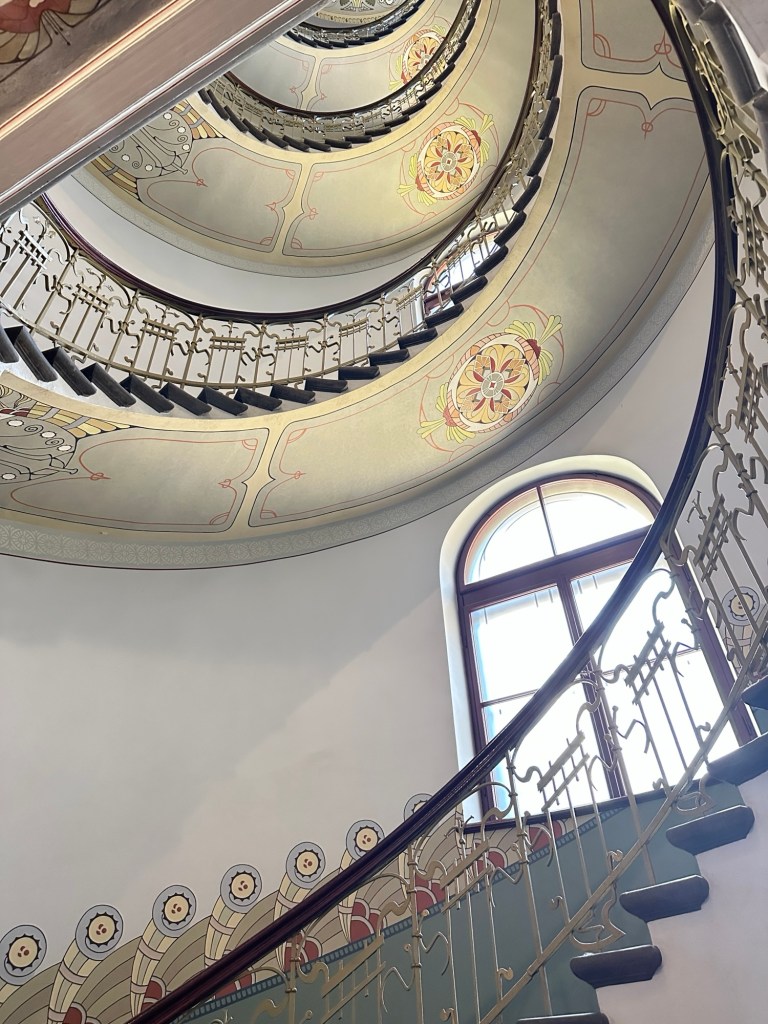
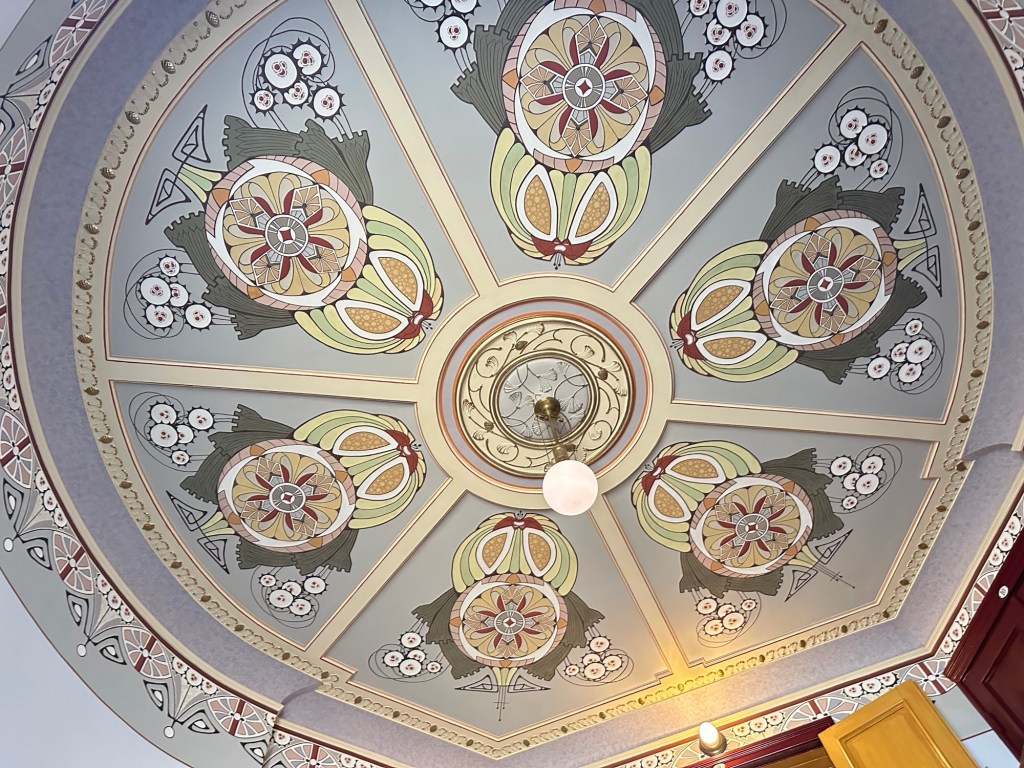
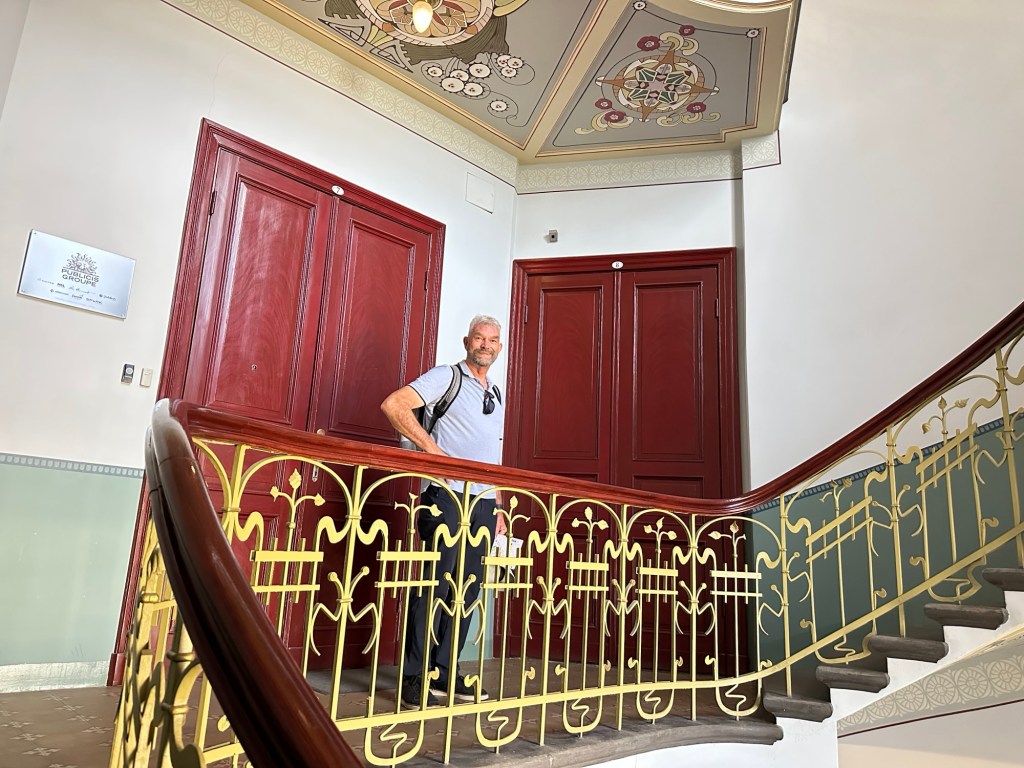
Refueled we walked back along the canal to Alberta Street to visit Art Nouveau Museum. The museum is housed in the former apartment of the building’s architect, Konstantins Peksens, who lived there around 1900. The decorated five floor spiral staircase is a work of art in itself.
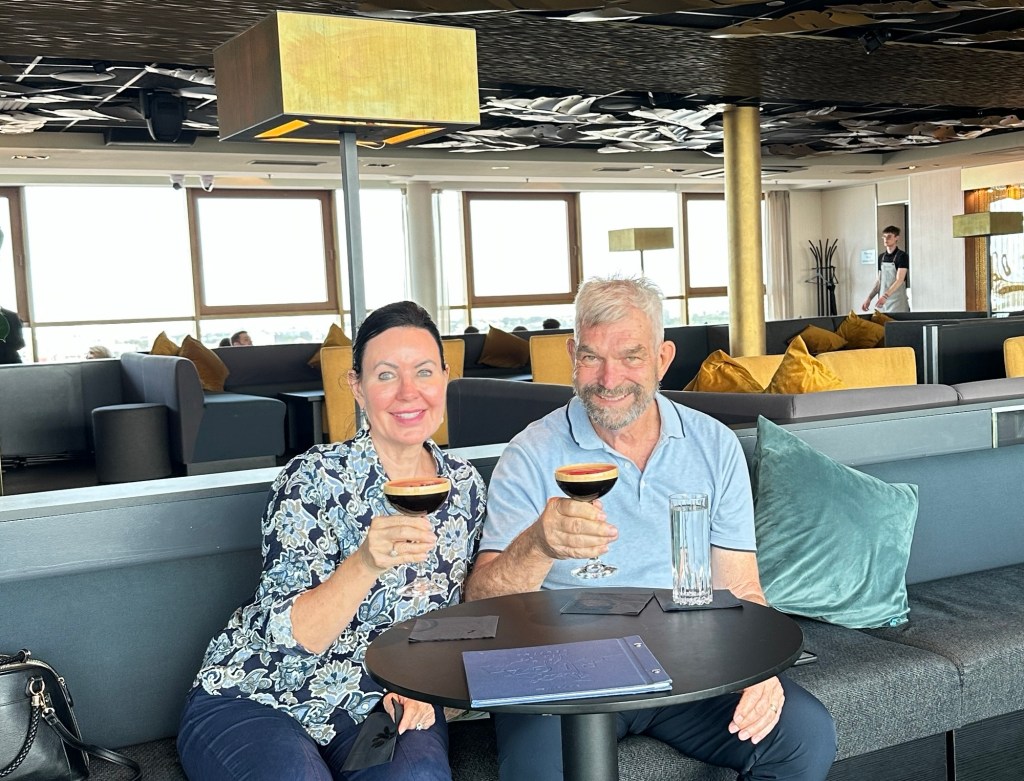
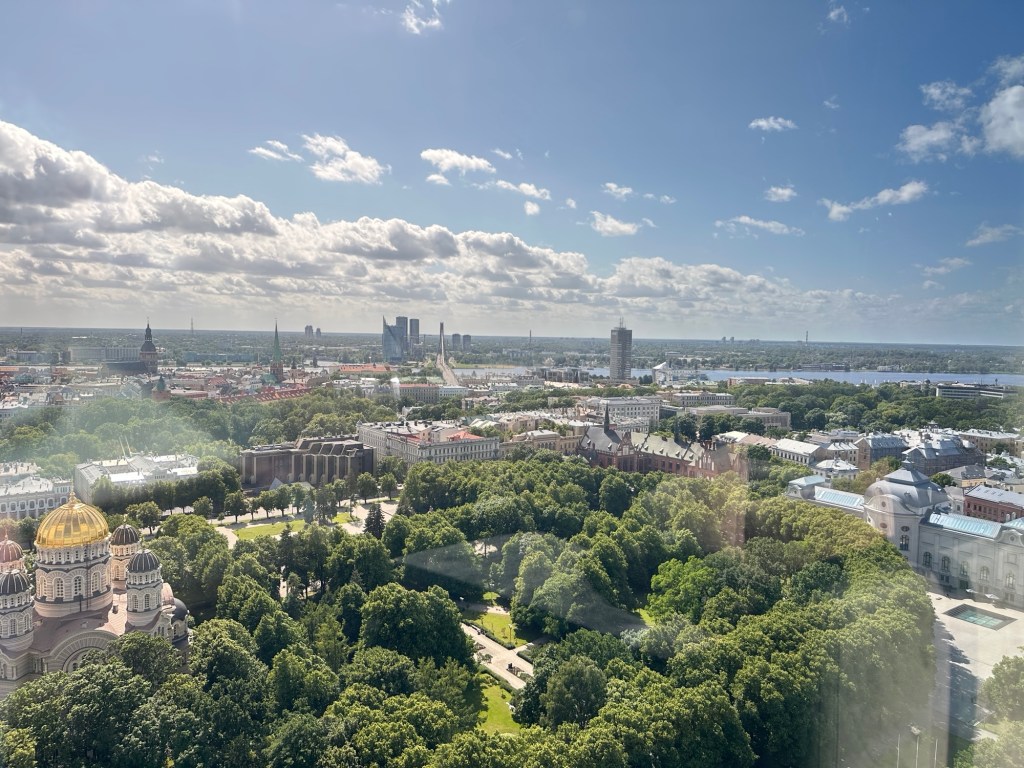
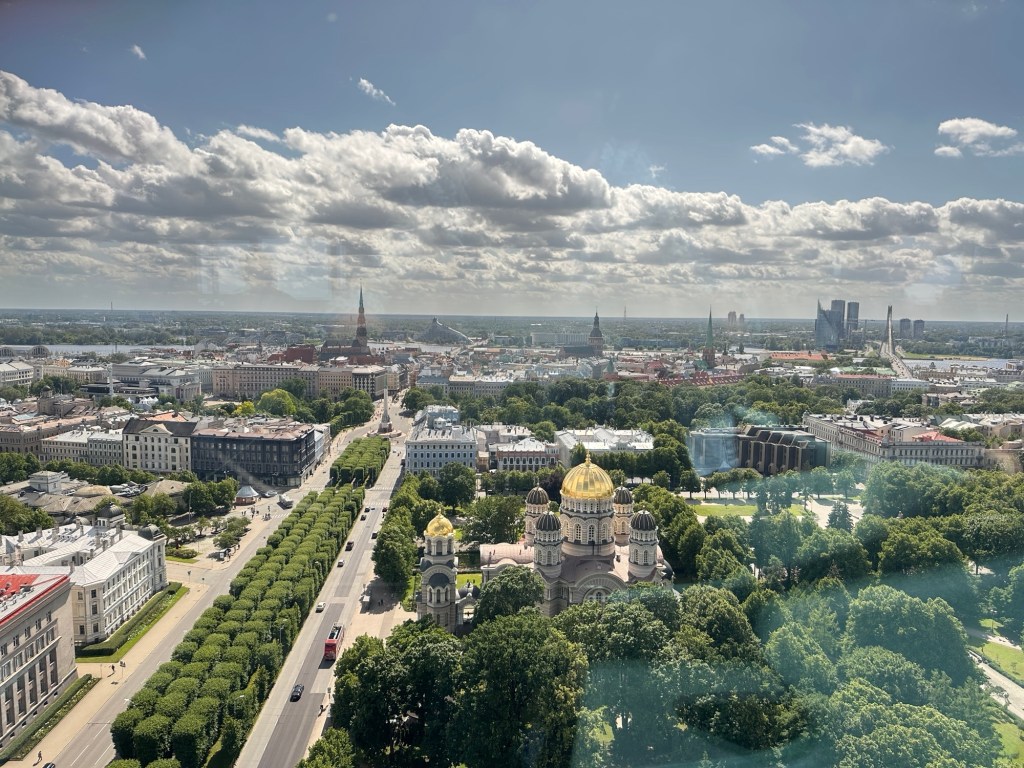
Close by was the hotel Radissons Blu ( though we did take a few wrong turns adding to our step count!). A trip up to the 26th floor gave us panoramic views over all of Riga. An espresso martini, very cleverly decorated, helped us to enjoy the moment- plus gave us a much needed caffeine boost.


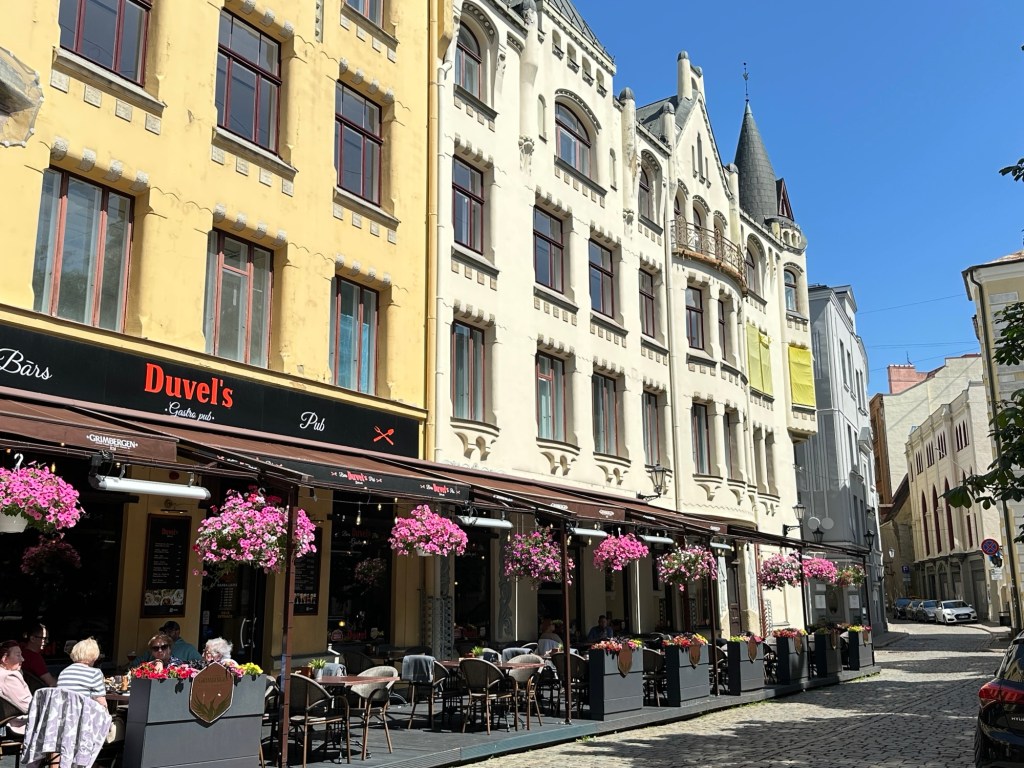
Continuing to explore Riga, we found ourselves winding our way through cobblestone alleys, finding more interest buildings and flower beds.
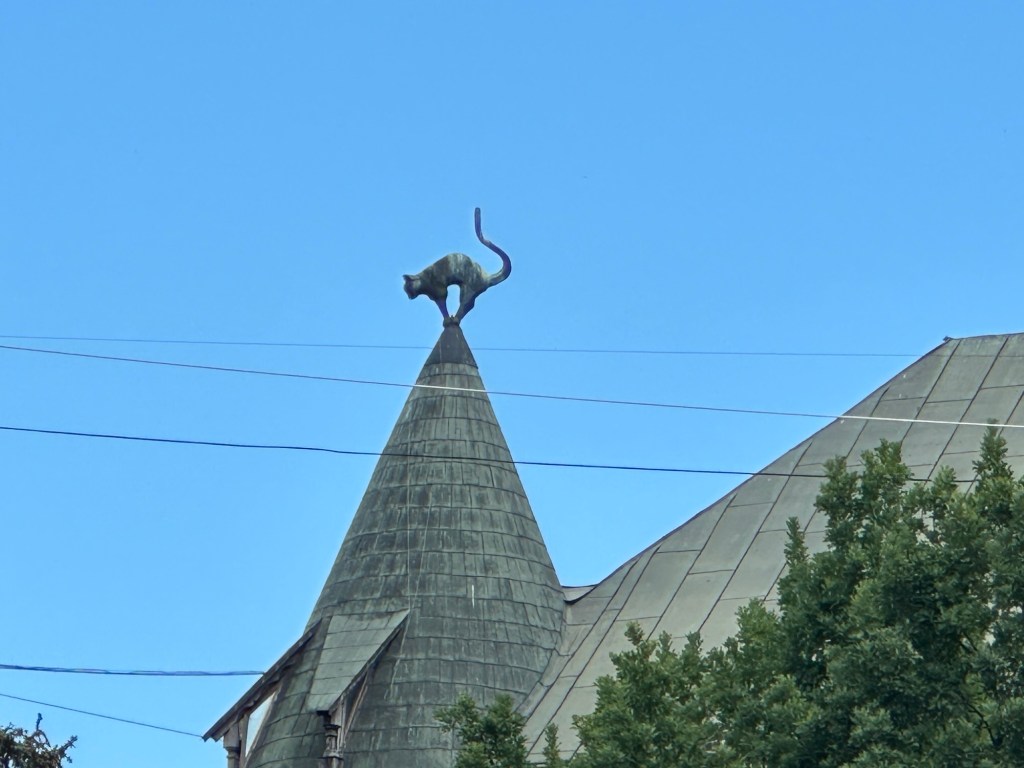
Also found the city’s cats – there are two feline statues perched on the top of a yellow Art Nouveau in Livu Square. The story is told that a Latvian merchant who was refused entry to the Great Guild as membership was reserved for Germans only, placed the black cats with arched backs and tails, positioning them so that their backsides faced the Guildhall. After a lengthy court battle, the merchant eventually gained entry and turned the cats around.
A quick bite to eat, then we bought tickets for a concert at Dome Cathedral. Thought this could be a nice experience, and we could buy tickets for EU15. I think we were a bit misled as we thought it was a jazz recital – turned out to be a baroque organ recital, with a saxophonist accompanying for a few pieces, and then a violist and double bass. It all sounded lovely with the fabulous cathedral acoustics, just not our type of music.
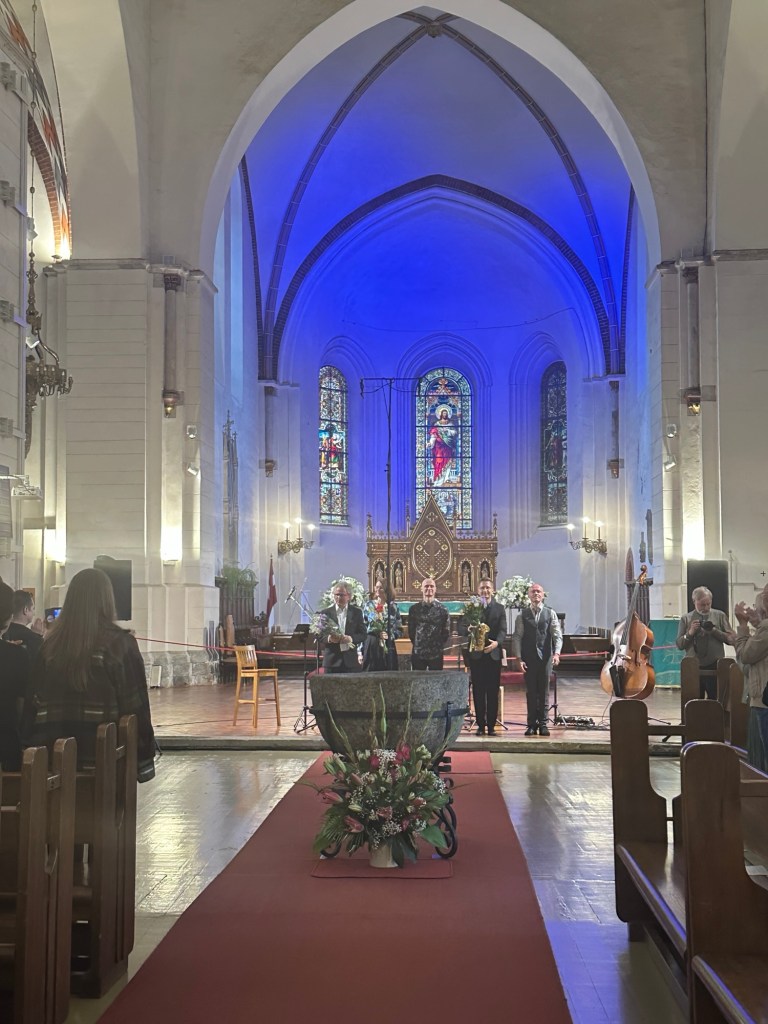
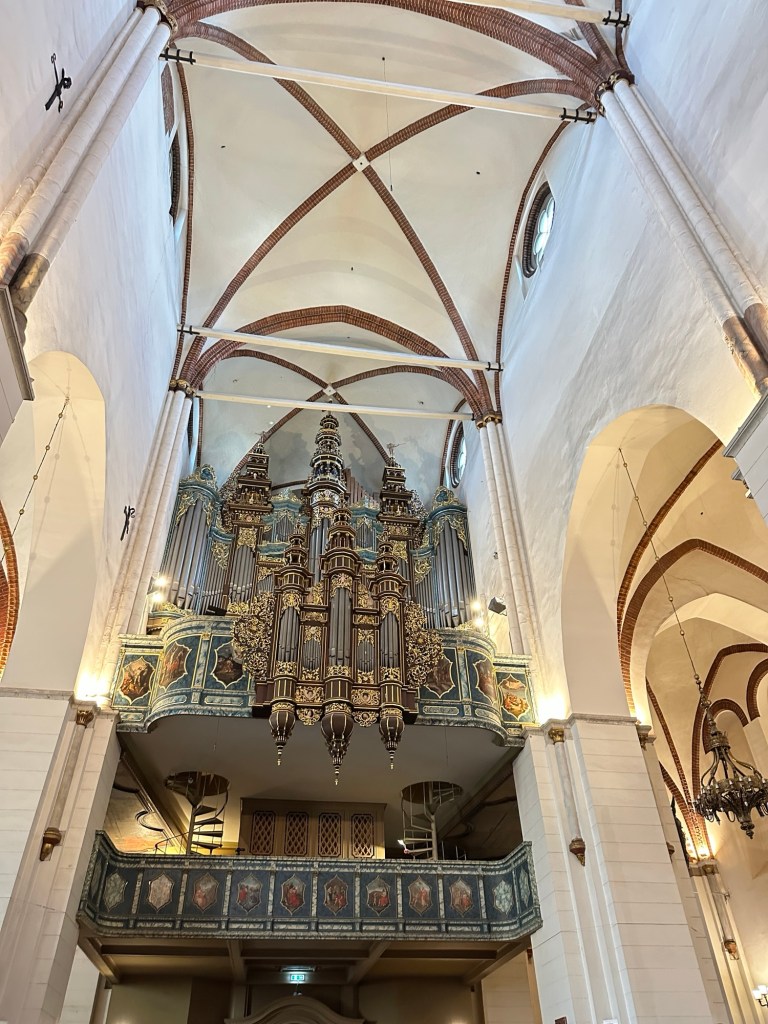
The Cathedral itself had some exquisite stained glass, and the organ pipes stand majestically overlooking the inside of the building. There have been several additions to the Cathedral over the years, and its bulky structure exhibits a variety of architectural styles.
The walk back from the old town across the bridge to our hotel, gave us a step count of 20,000 for the day. It was still light at 11pm.
Day 42
Monday 30th June
Riga
12-18 degrees, sunny, extremely windy
Today was a short drive to Jurmala for the morning. Literally meaning “seaside” in Latvian, Jurmala is an attractive stretch of beaches, pine forests and small towns alongside the Baltic Sea. During the 19th century, the area became famous for its medicinal mud and sulphur-rich spring water. Many Russians own summerhouses here, which they rent out for summer – mind you, summer only really lasts for 3 months, and even then I wonder if summer ever really starts! A drive along the beach street had us drooling over some magnificent guesthouses. They were absolutely stunning.
Then our intrepid leader decided we needed to need walk along the beach front … in the howling wind! A swim in the Baltic Sea was ruled out, although Frank dipped his toe in – the water was sitting at a balmy 12 degrees. A coffee in a protected cafe on the beach gave us some sustenance to continue on.

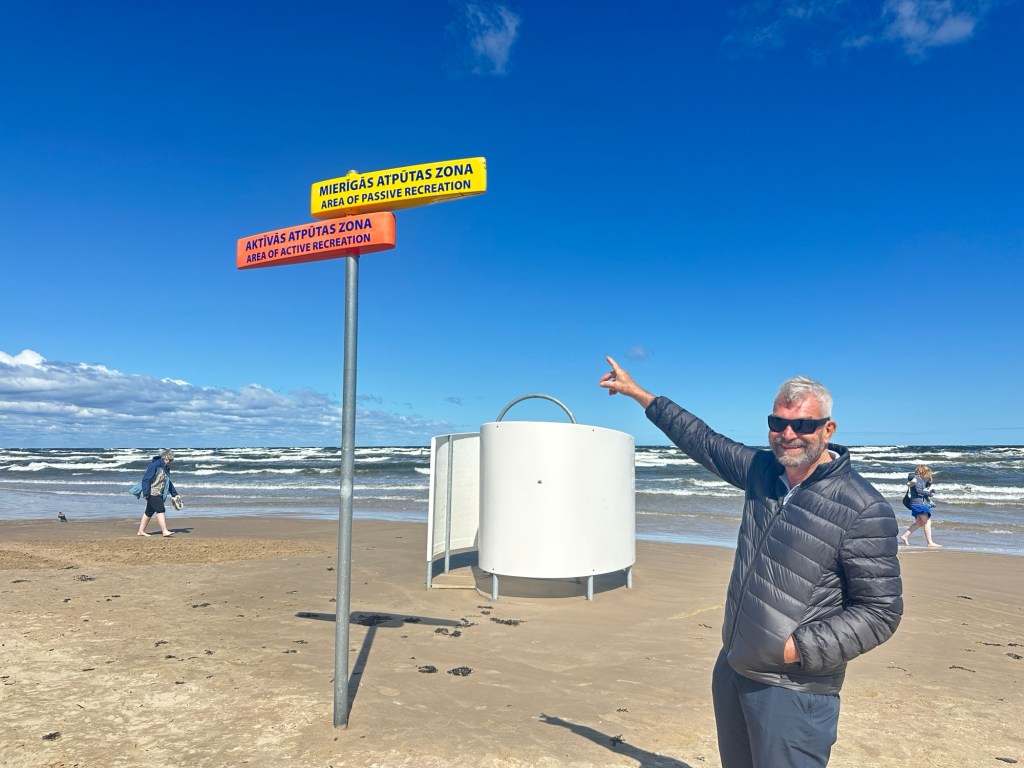
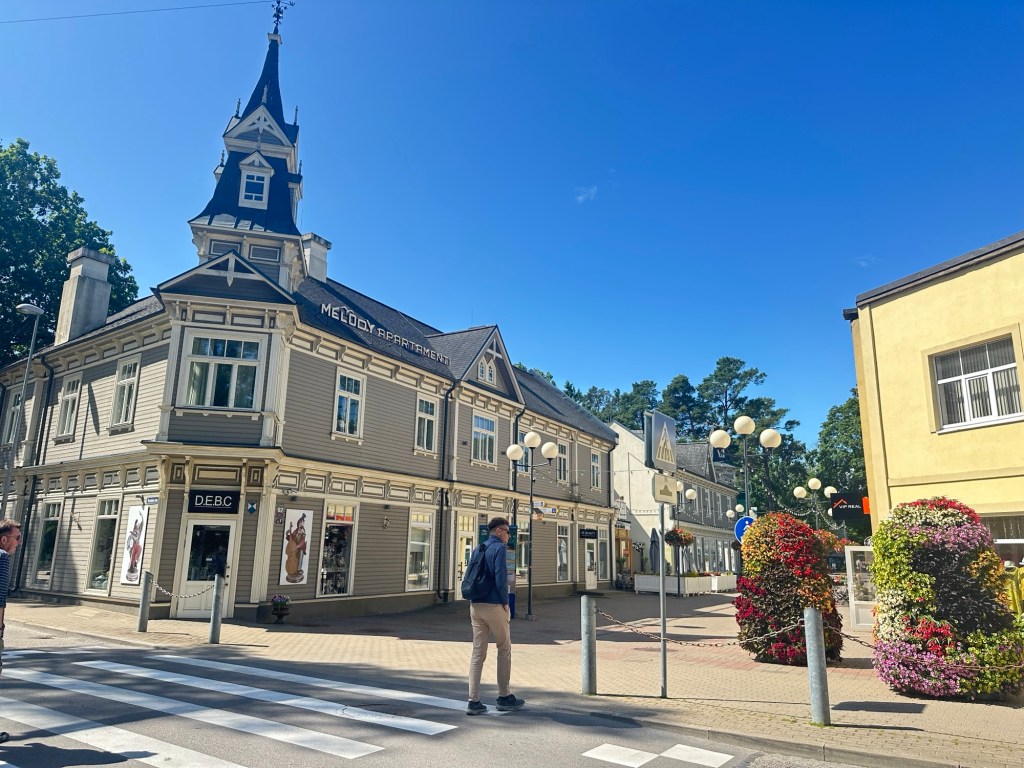
Off the beach and a leisurely stroll down Jomas Street – a pedestrianized strip that forms the heart of Jurmala. It is lined with a large number of outdoor cafés, restaurants and hotels, as well as a variety of shops. Still windy here! And no shopping time!

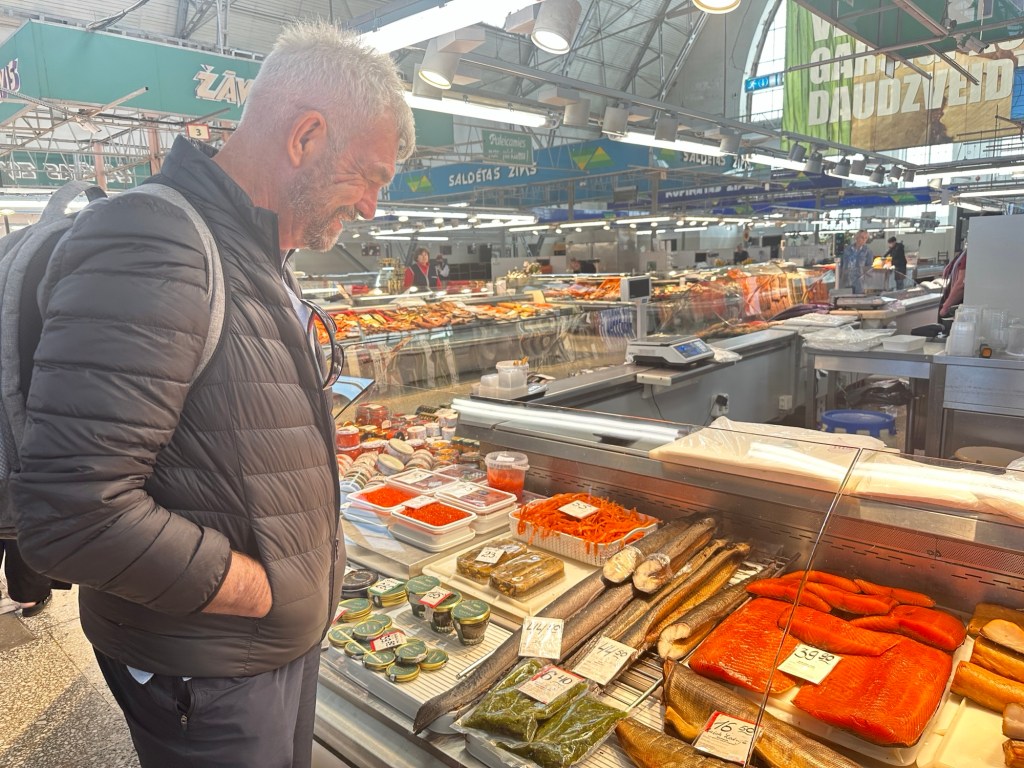
Back to Riga, where we were just in time for lunch at the markets. Housed in five Zeppelin hangars, Riga’s Central Market is one of the most distinctive in Europe.
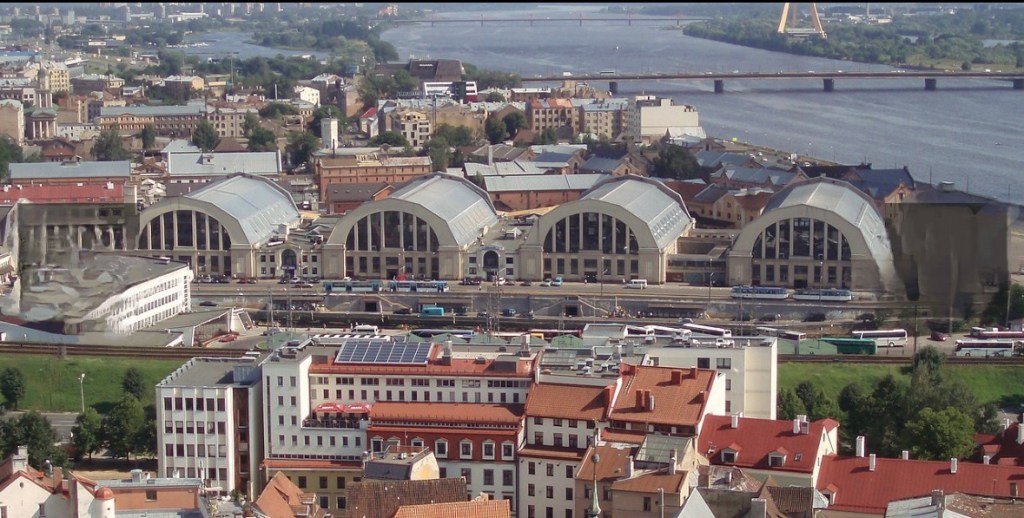
The hangars, which the German Kaiser’s army had abandoned in Kurzeme during World War I, were moved to their current site during the 1920s. The market building sells mostly fresh food, while the area around it is crammed with stalls selling other goods.
We had three different smoked fish (salmon and herring), and the third I’m not sure), on different breads with varying accompaniments. They were delicious. Also some halva for a little sweet treat. Frank had a pint of beer for EU1.50. I could have kept eating and eating – so many choices of wonderful foods.

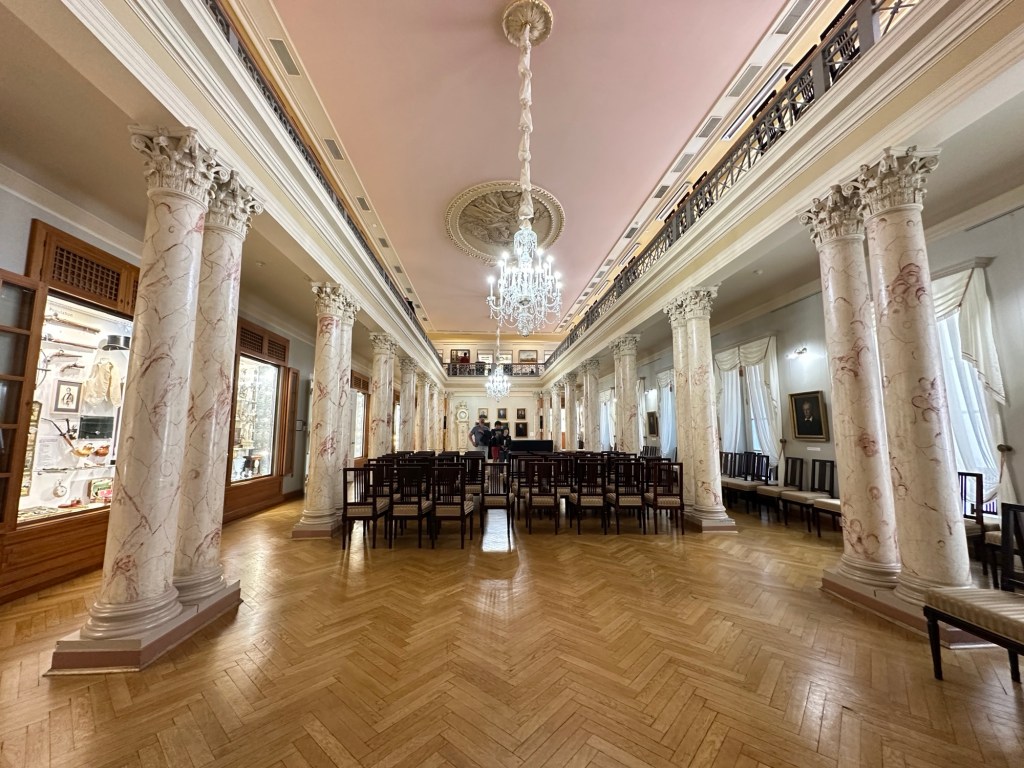
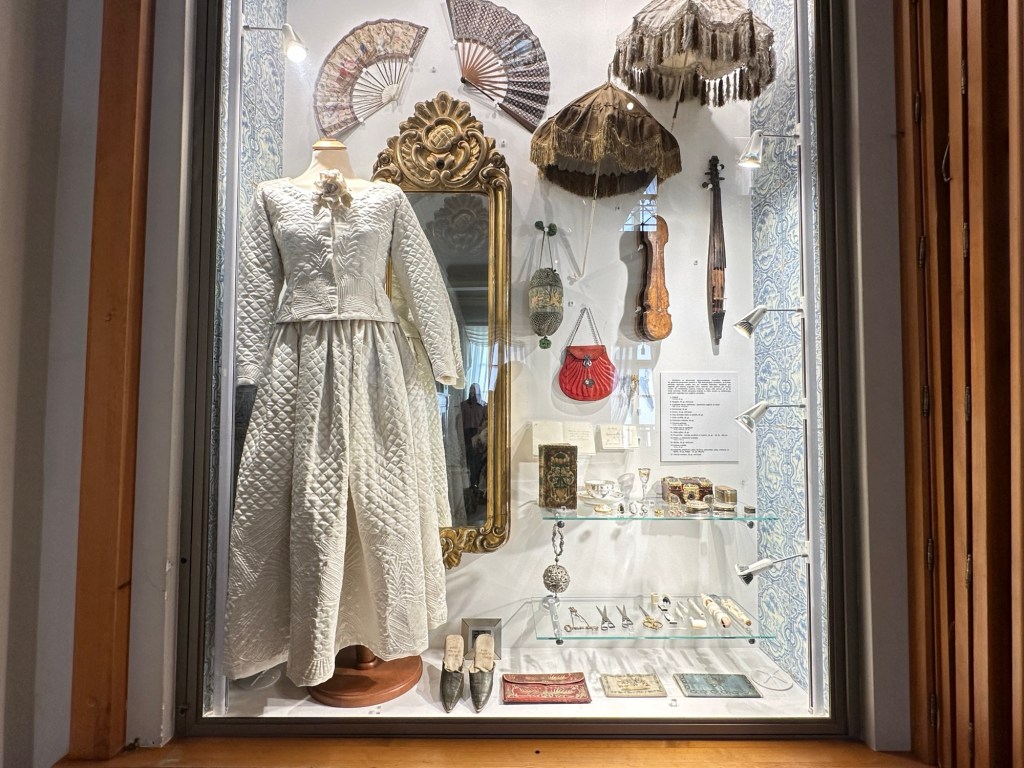
We then walked to the History of Riga and Navigation Museum where we spent an hour looking at the exhibits, and tracing the history of this city for more than 800 years – great museum, but I did find it a bit tiresome as there was no English on the exhibits – you had to read a printed booklet in each room and match with corresponding artifact.
Onto the Three Brothers which are the oldest medieval dwelling houses in Riga. Each building was constructed in a different century. The middle building houses the Museum of Architecture ( in one room) so had a quick look in there.

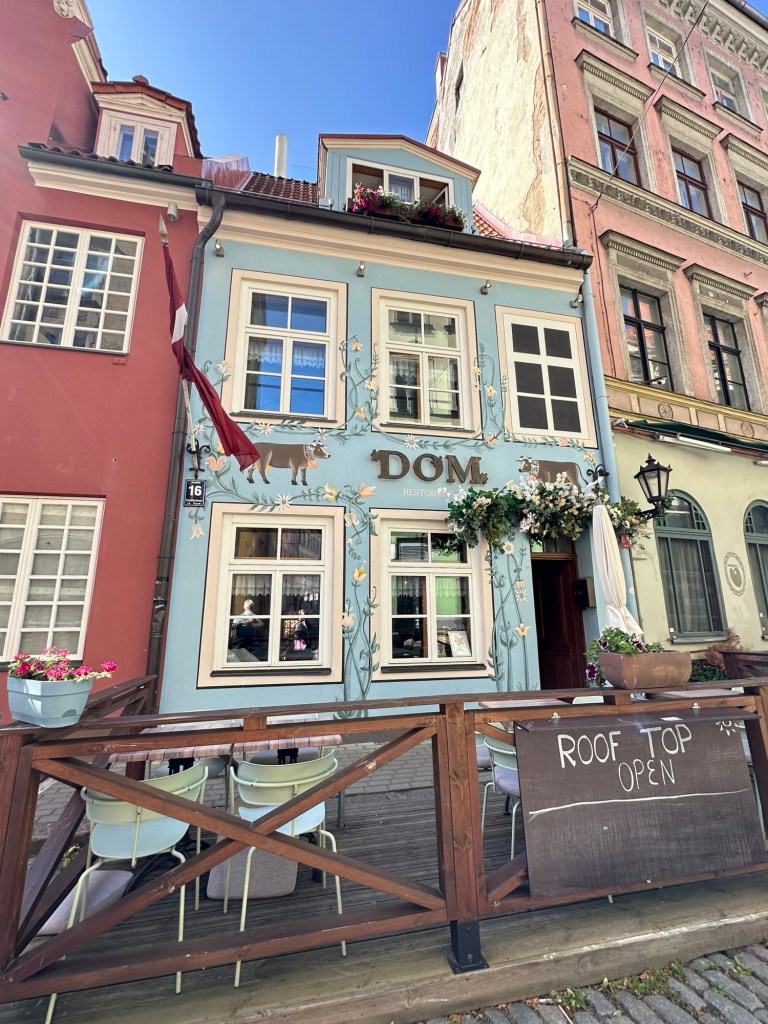
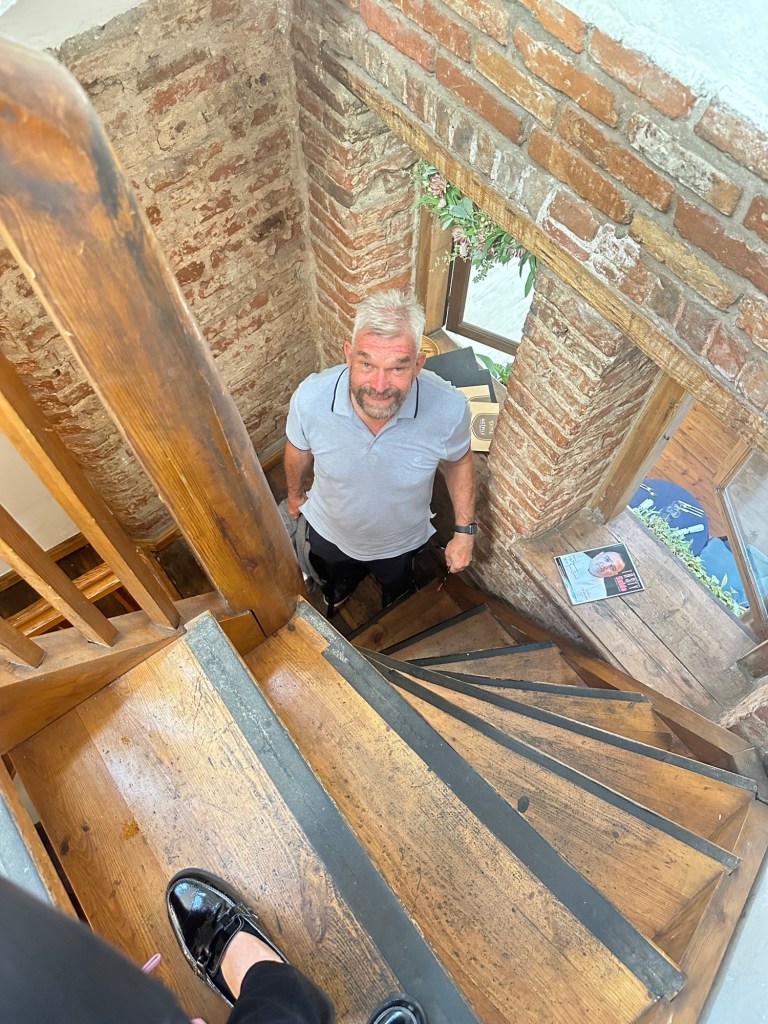
We were in need of a sit down and a refreshment next, so found a lovely rooftop terrace on top of Dom Restaurant (French Latvian restaurant). A treacherous climb up the stairs, but once there, it was out of the wind , and we could enjoy a drink in the sunshine looking out at some of the Art Nouveau buildings.

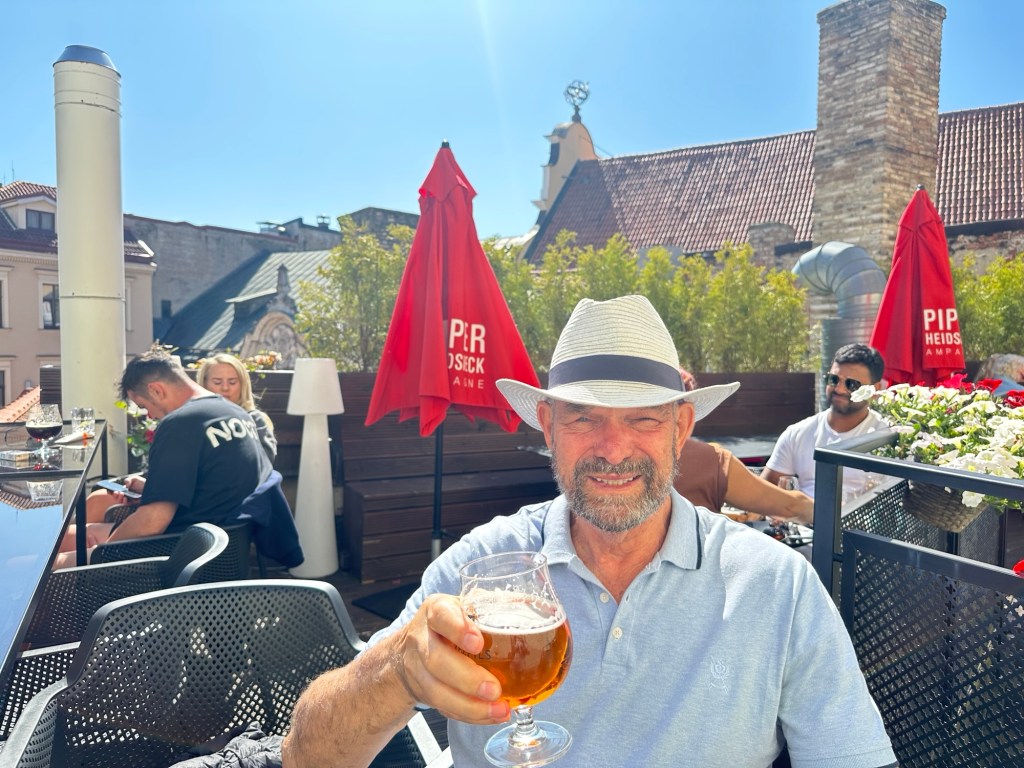
Refreshed, we were ready to tackle the strenuous feat of walking back to the hotel – that meant walking along the river 500 metres, across the bridge, and onto the hotel, in the prevailing winds. I can’t believe how strong the winds were. It took all our might to stay upright on the bridge!
Quick turnaround, a ten minute walk to a nearby restaurant, Fabrikas, on the river front. Another fantastic meal. The Latvians certainly know how to do food!
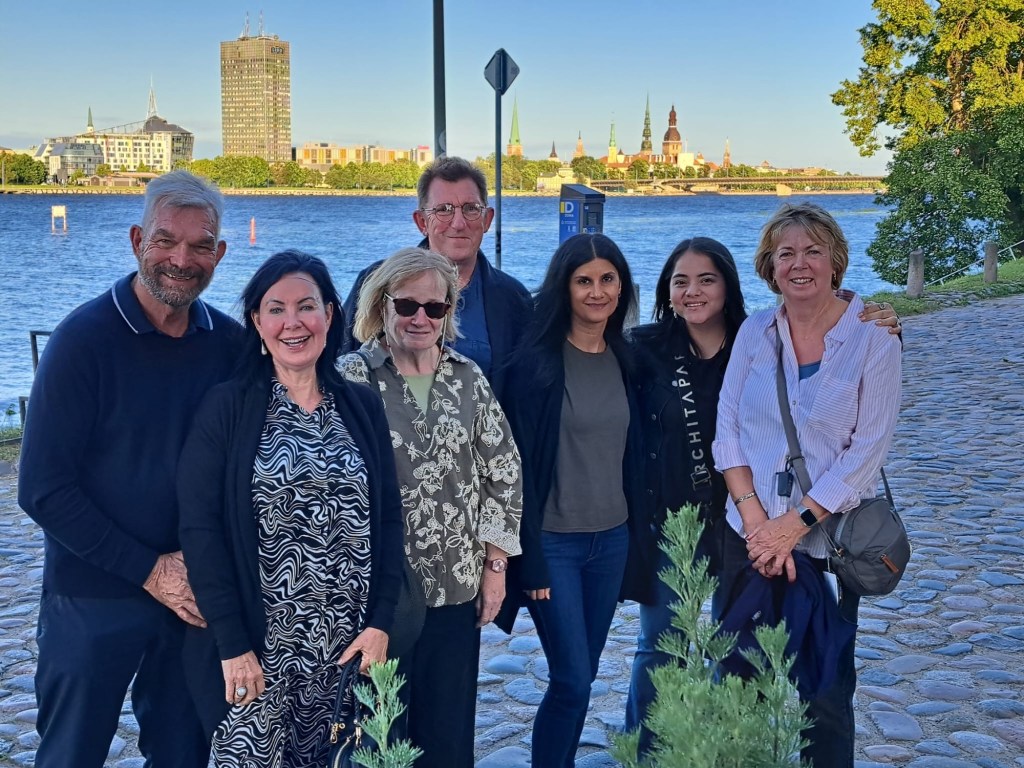
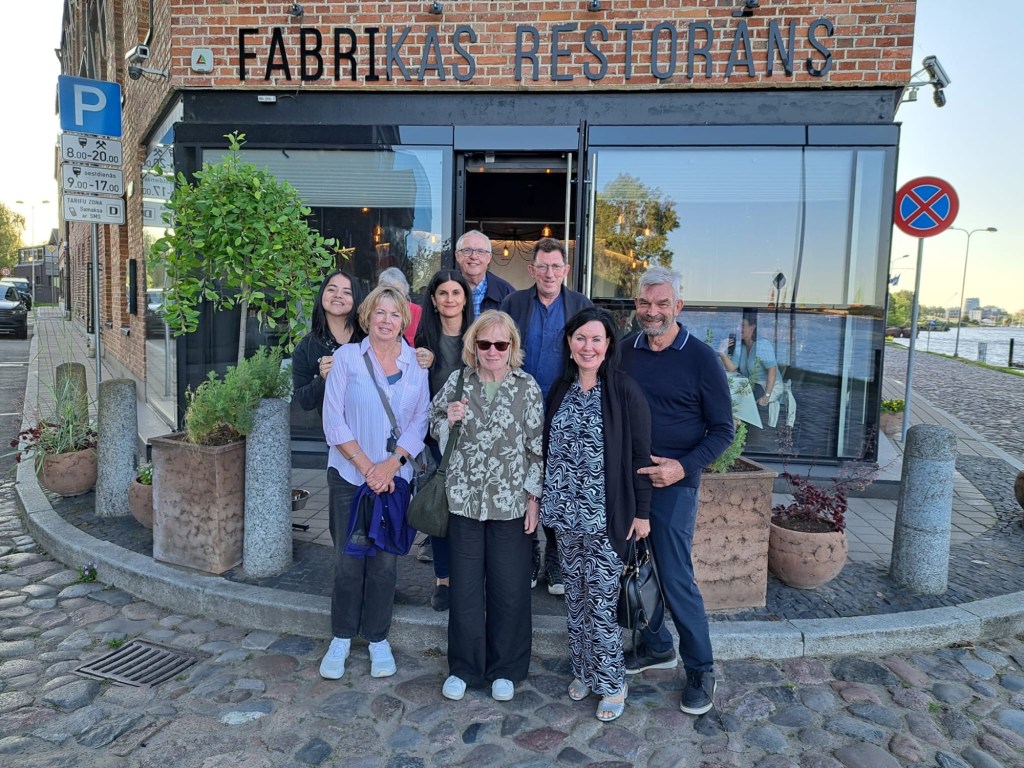
Side note…. We had planned to go back to the restaurant here on the tenth floor, but it was closed due to the winds!
Day 43
Tuesday 1st July
Riga to Klaipeda
13 – 21 degrees, sunny
Thank goodness the wind has gone – it was wild yesterday!
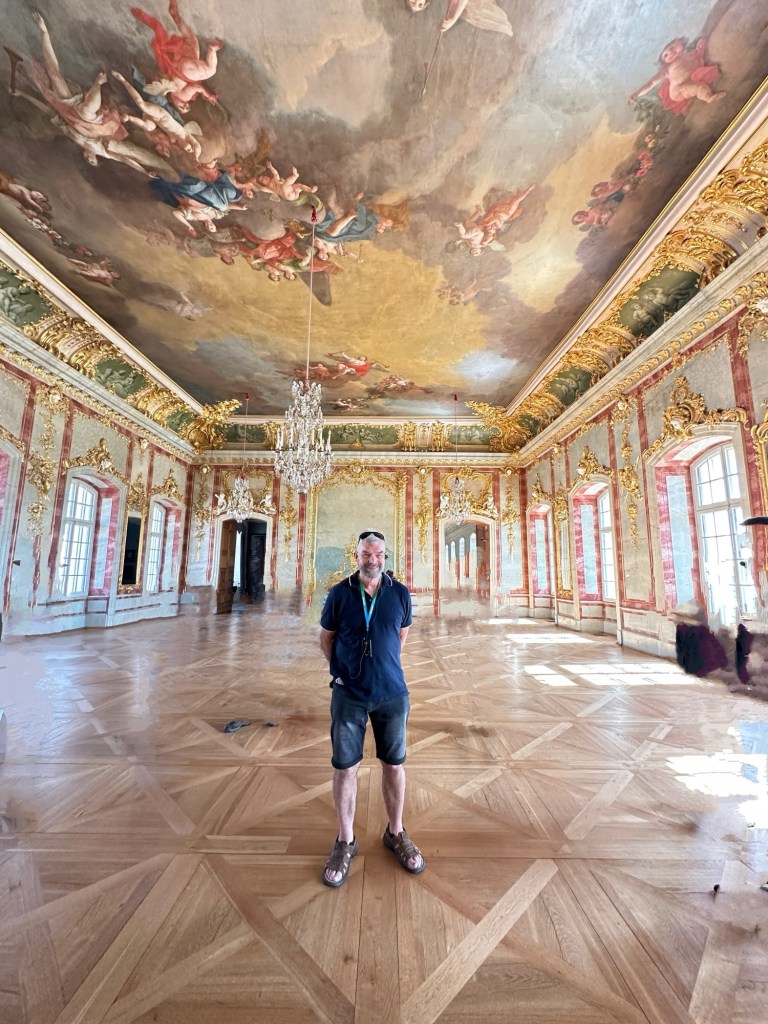
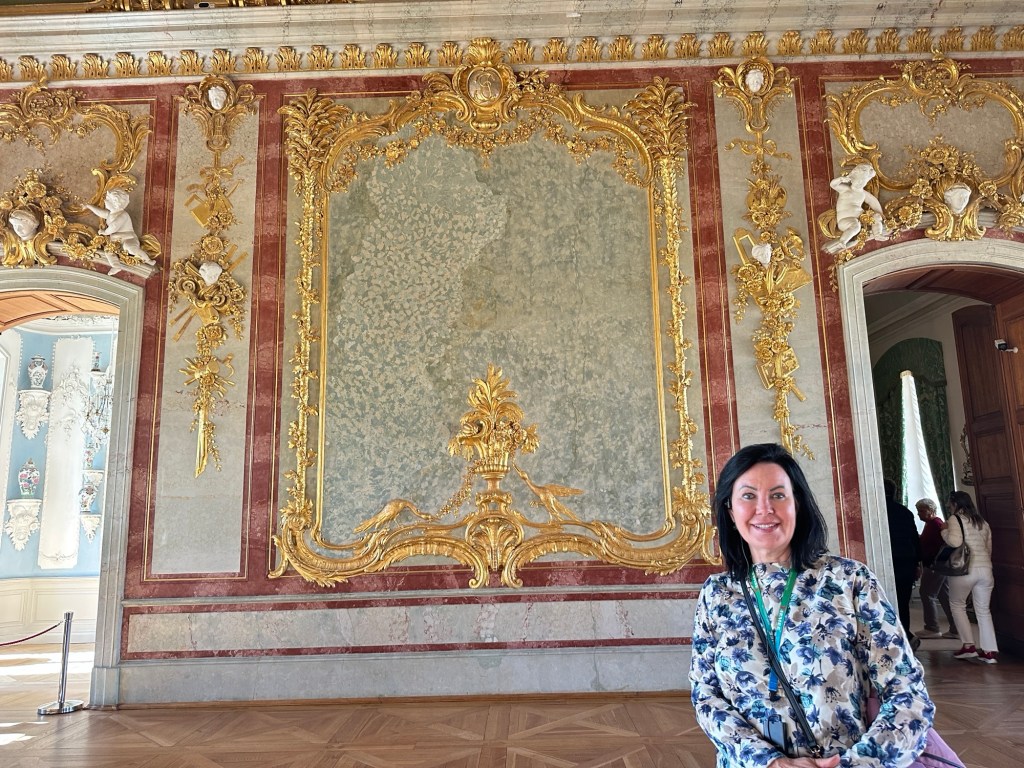
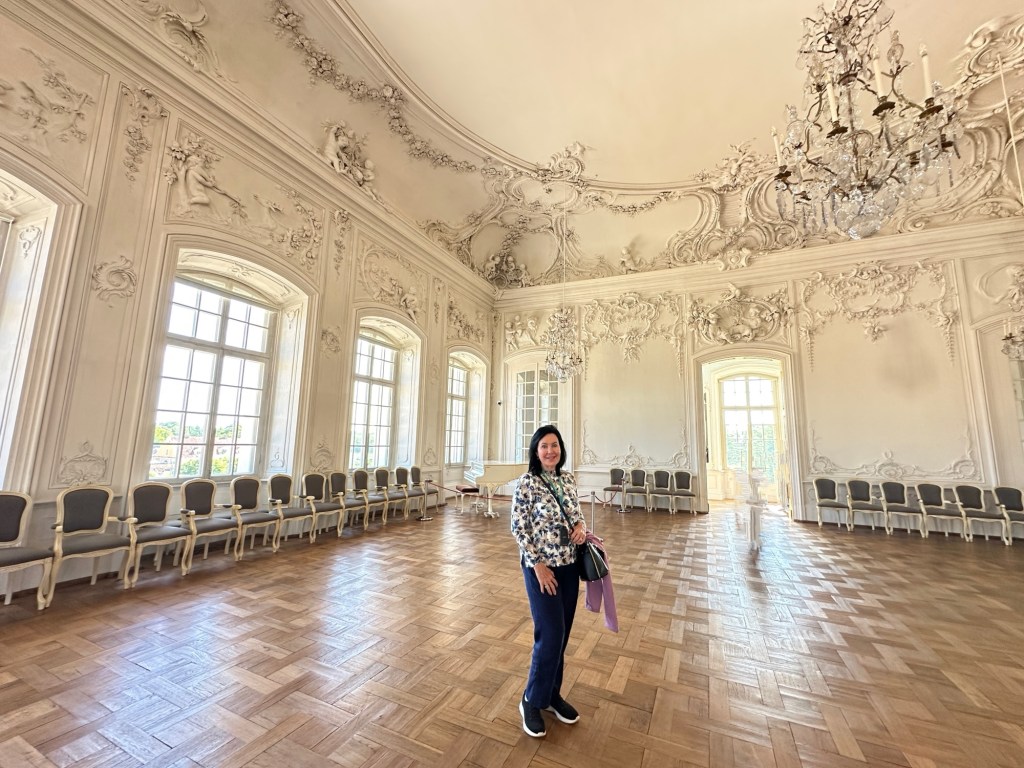
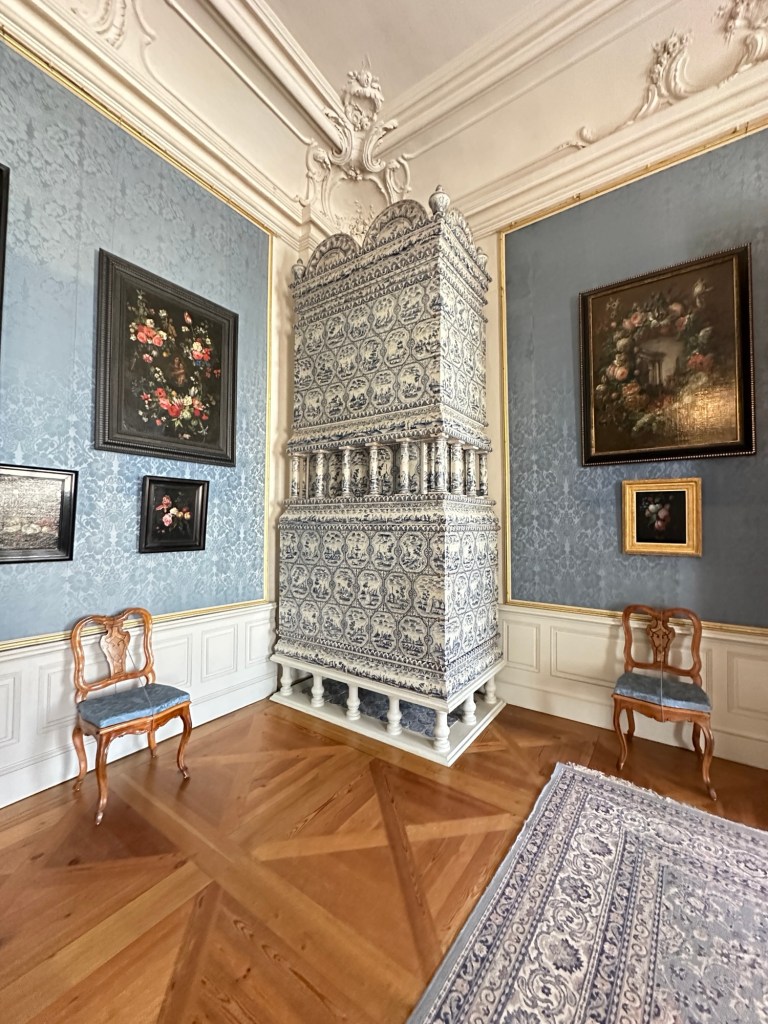
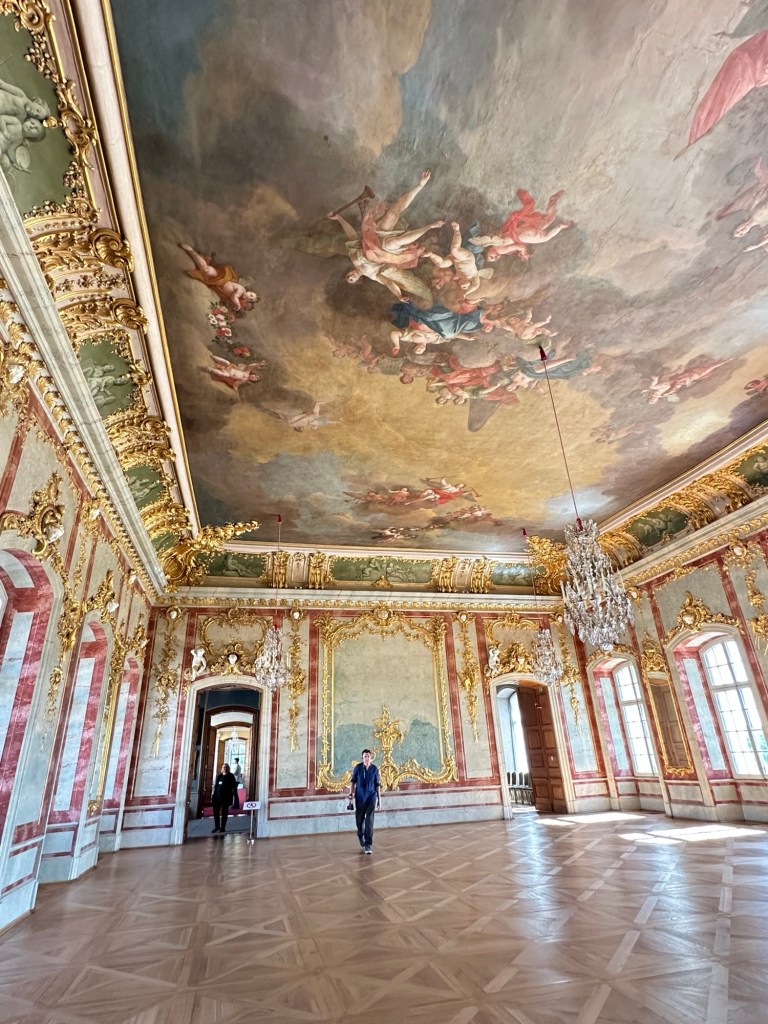
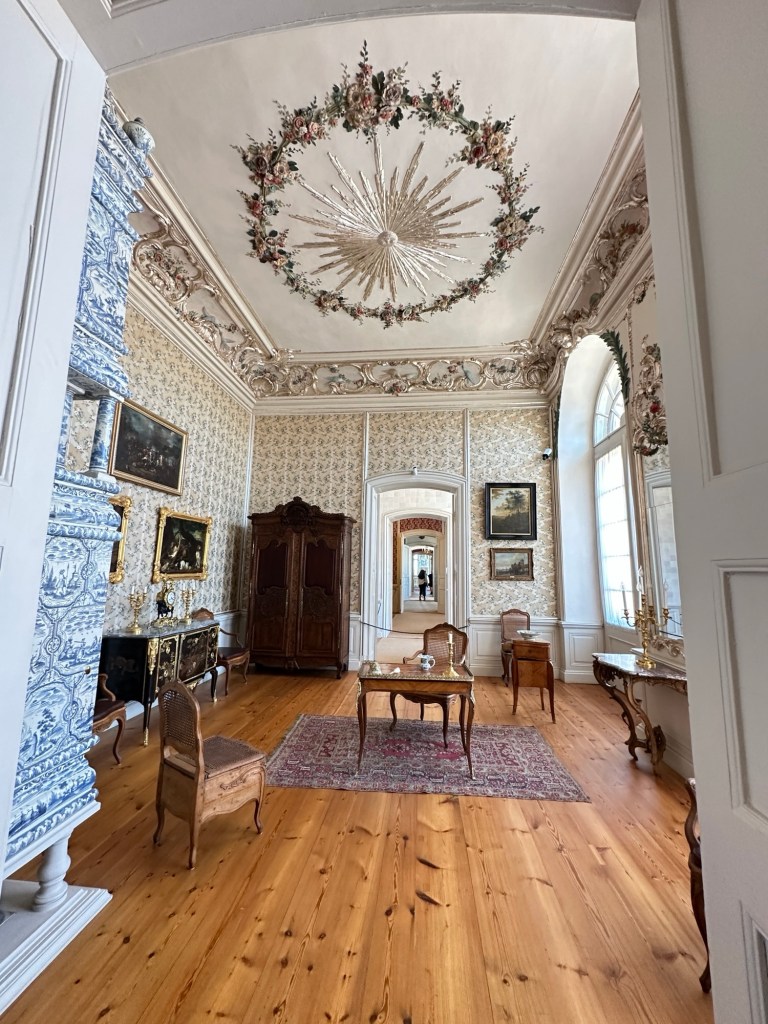
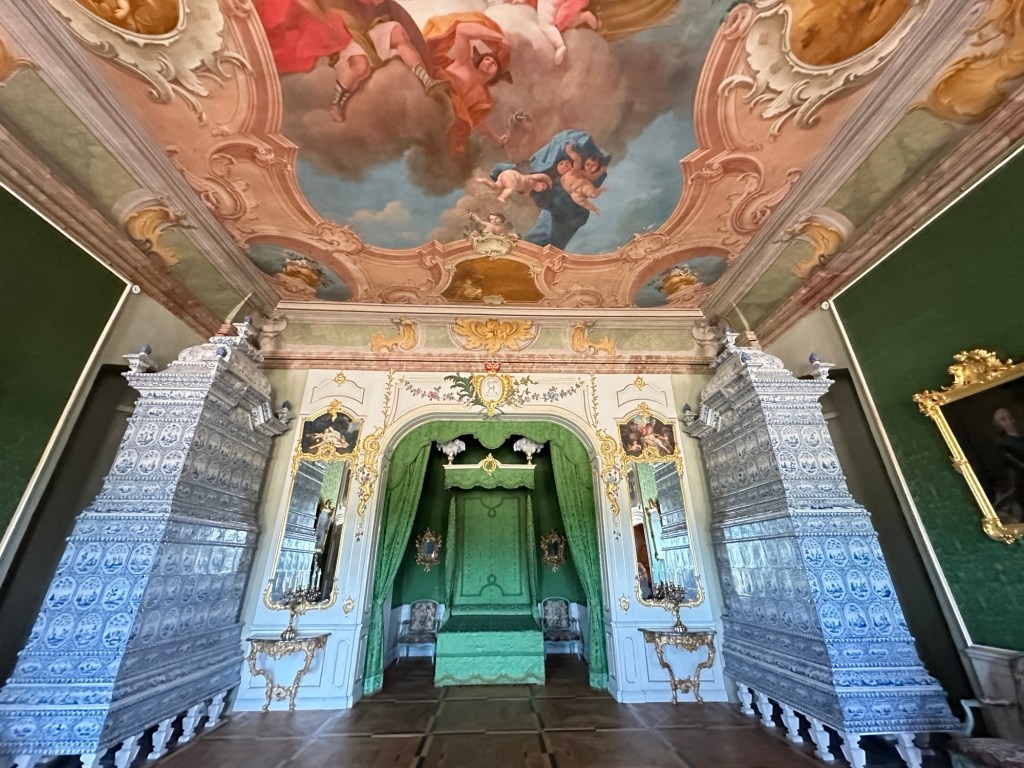
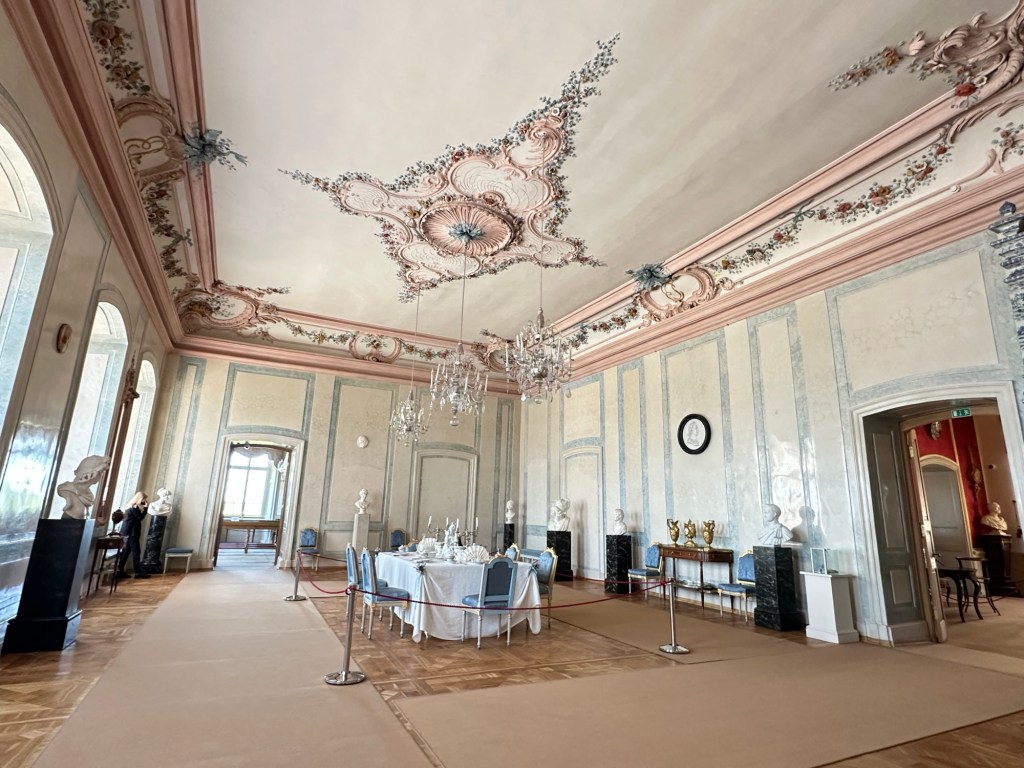
Firstly, we visit the 18th-century Rundale Palace, which was designed for the Duke of Courland by Italian architect Rastrelli, who also designed the winter palace in St Petersburg. The structure suffered damage during the 20th century, and the rooms then served as an elementary school and a granary. Today, the palace is the most magnificent piece of architecture in the Baltic states, surrounded by impressive gardens. Now, visitors have access to 45 rooms, which have been renovated and furnished according to the 18th-century layout and usage. The restoration of the palace was completed in 2014. I have to say I’ve had the best tour of any palace- our guide Olaf, was hilarious! I’ll never forget his explanation of the hidden meanings when using a fan.




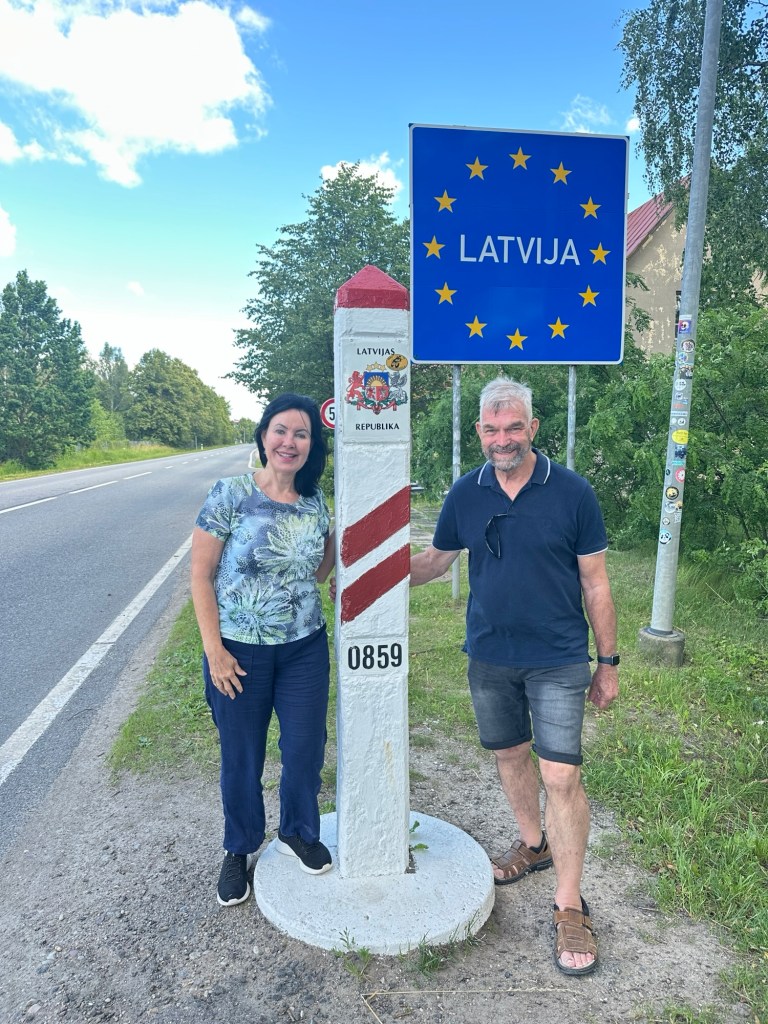
We then cross the border to Lithuania. A short stop to notice the difference on each side. Andrew may be slightly biased telling us the air is fresher on the Lithuanian side. No fancy swing here .

Brief history of Lithuania
Lithuania was the last pagan stronghold in Europe.
13th and 14th centuries – Duchy of Mindaugas (Dukes Mindaugas and Gediminis)
1386 – Lithuania and Poland unite
1569 – Polish and Lithuanian Commonwealth formed (one country) – lasts until 1795. Most of Lithuania absorbed into Russia
1812 – Napoleon defeated
1831 – rebellion against Tsarist Russian rule. Another rebellion occurred in 1863. This resulted in Russia taking over and “Russification” of the whole country.
1918 – Lithuania declares independence. Following invasion of Vilnius by Poland, Kaunas declared the capital and remained so until 1939
1939 Russian- German pact places Lithuania under Soviet control
1941 – Nazis occupy Lithuania
1944 – Russia recoccupies and then annexes as the Lithuania Soviet Socialist Republic
1955 – Partisan war against Russia repelled
1990 – Declaration of independence
2004 – Lithuania admitted to NATO and EU.
2015 – Lithuania adopts Euro
Not far from the border is the Hill of Crosses. This saddle shaped knoll in a field filled with thousands of crosses, crucifixes and rosaries is an insight into the significance of Catholicism to Lithuania.
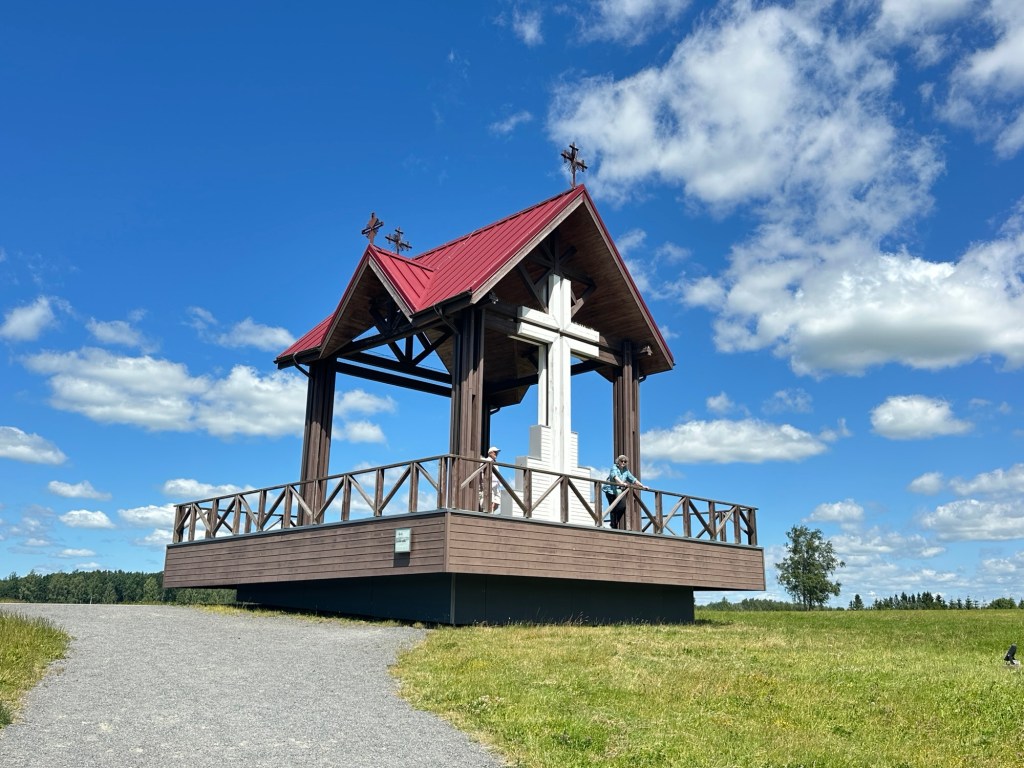
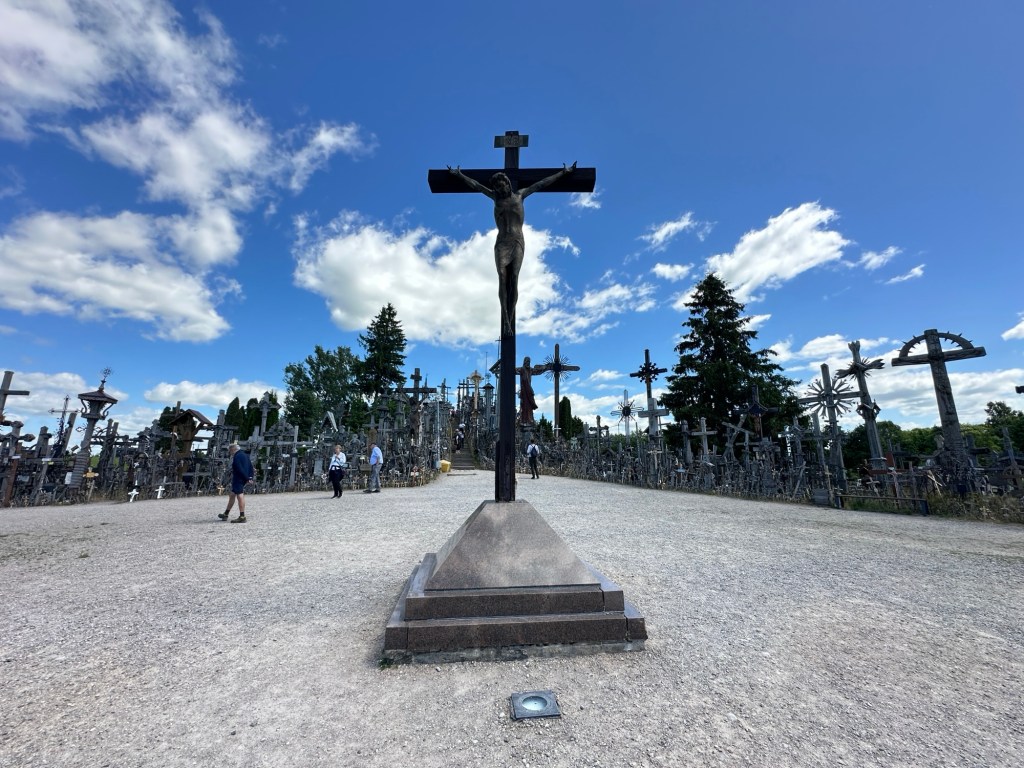
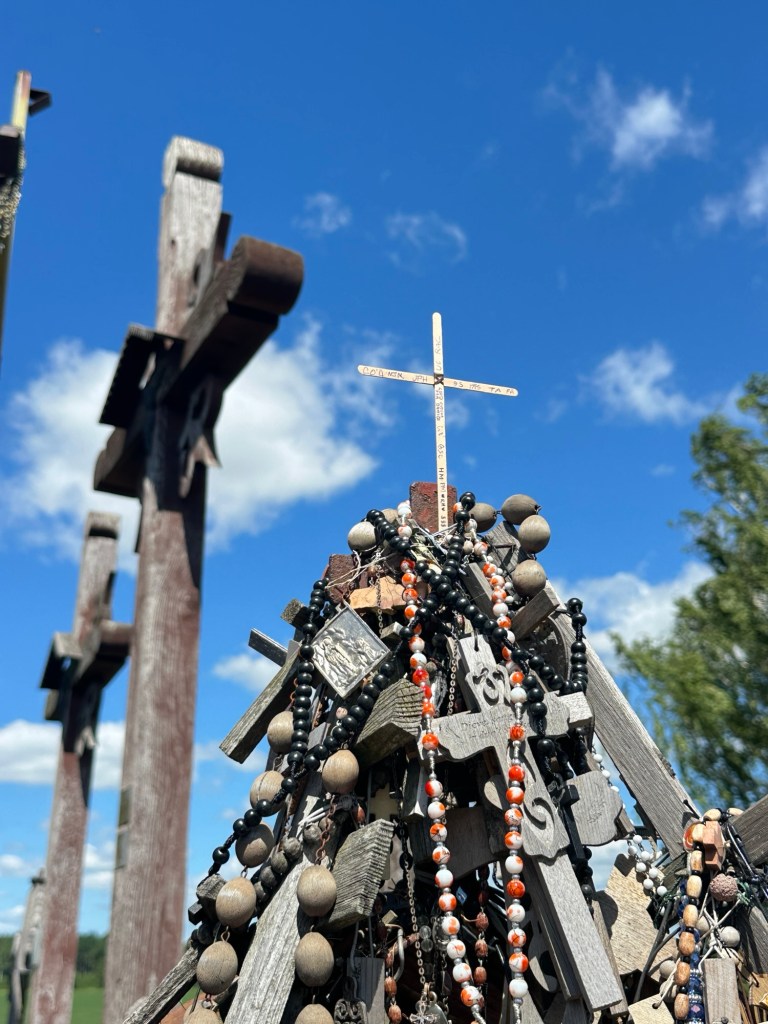
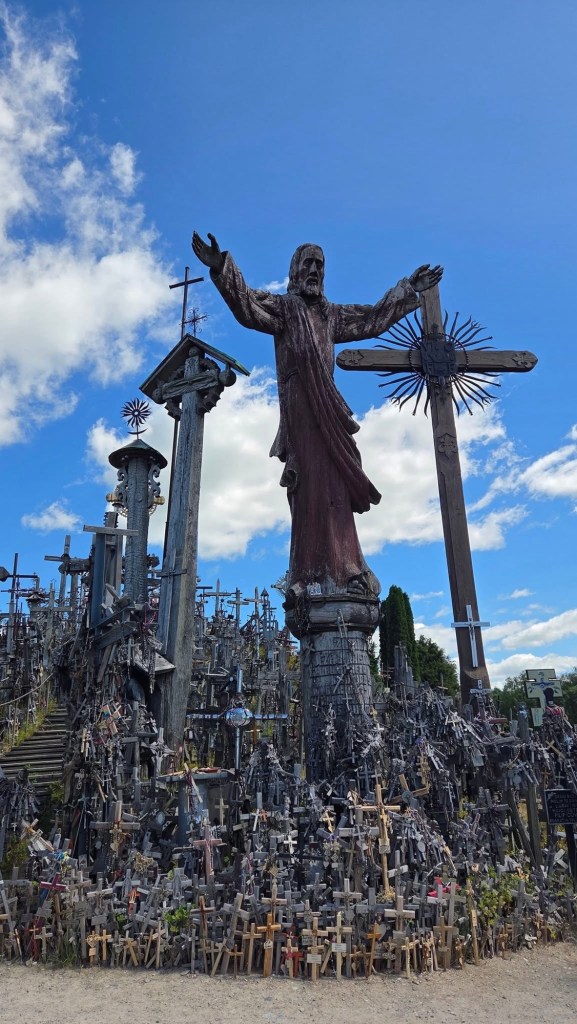
Crosses started appearing on the hill after the ruthless suppression of the 1831 uprising against Tsarist Russian rule. By the end of the 19th century, 150 large crosses stood here, 200 by 1914, and many more by the time the Soviets came to occupy Lithuania in 1940. It was bulldozed in 1973 and again in 1975, but the crosses kept appearing. Finally, the hill was left in peace. By the time Pope John Paul II visited it, in 1993, it had crosses and religious sculptures from all over the country and around the world. I didn’t find it particularly attractive.
A nice lunch, then we drove to the Plokstine forest and visited the Cold War Museum, which is housed in a once-secret Soviet Union missile base. We were able to view the internal control facility, see decommissioned missiles and a silo from where they were launched, and learnt about the five-decade-long period. A very cold sterile series of rooms underground.


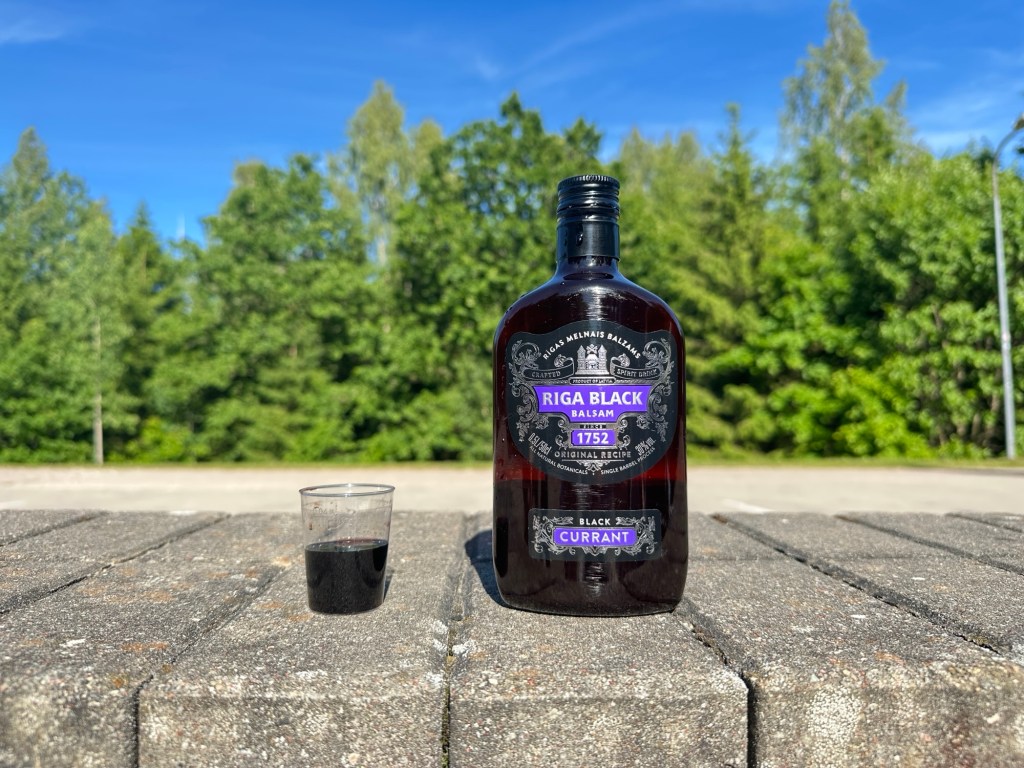
Before getting back on bus, we had a belated Latvian toast with the national drink – Black Balsam with Redcurrent flavour. Andrew suggested we need to wash the Russian spirits away, with a Latvian spirit.
Just over an hour to reach our hotel at Lithuania’s only sea port, Klaipeda – Hotel Memel. It was already 7.30pm. A ten minute stroll through the port town of Klaipeda along the water front to get to our restaurant. Again, delicious food – Frank had chicken rolled in bacon and risotto, I had salmon roulade with mango – we’re very impressed with the food here, and pricing much cheaper than the UK.
Day 44
Wednesday 2nd July
Klaipeda
14-23 degrees, sunny
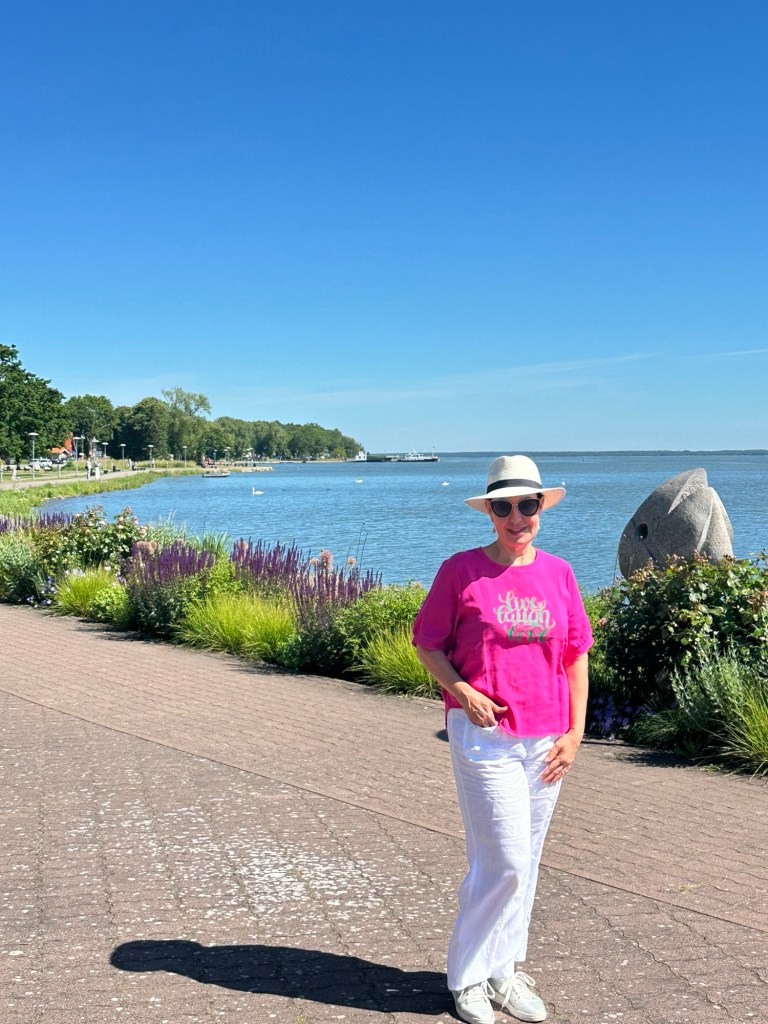
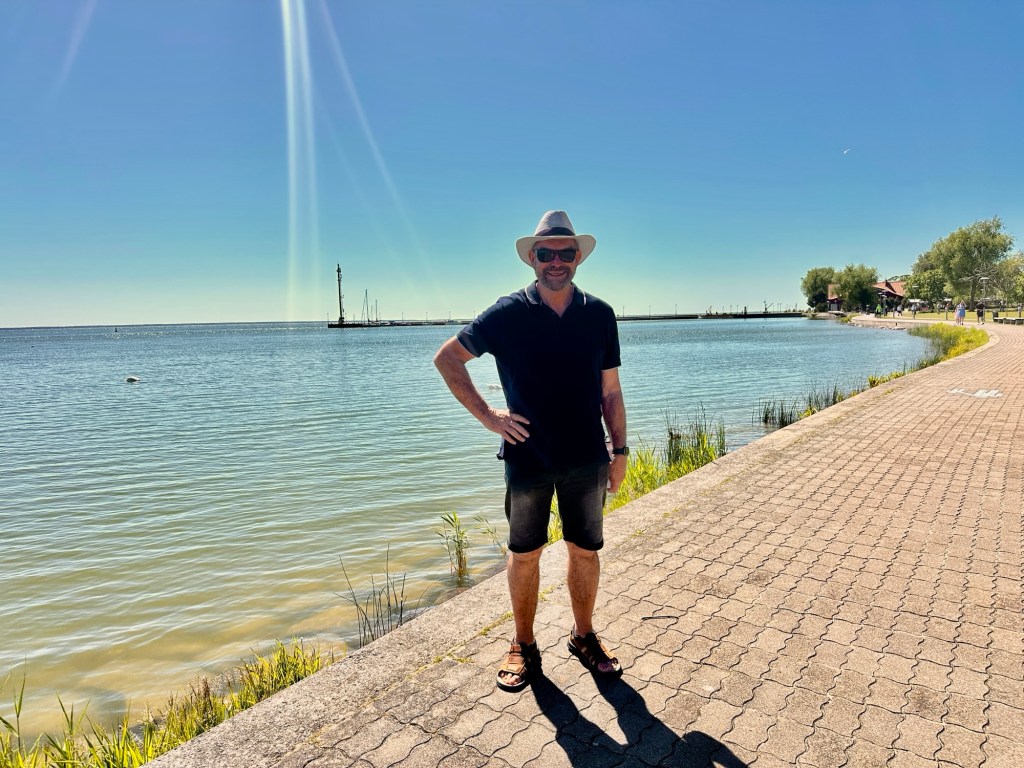
We started the day with a short ferry ride across the lagoon to the Curonian Spit, a Unesco World Heritage site between the Curonian Lagoon and Baltic Sea.
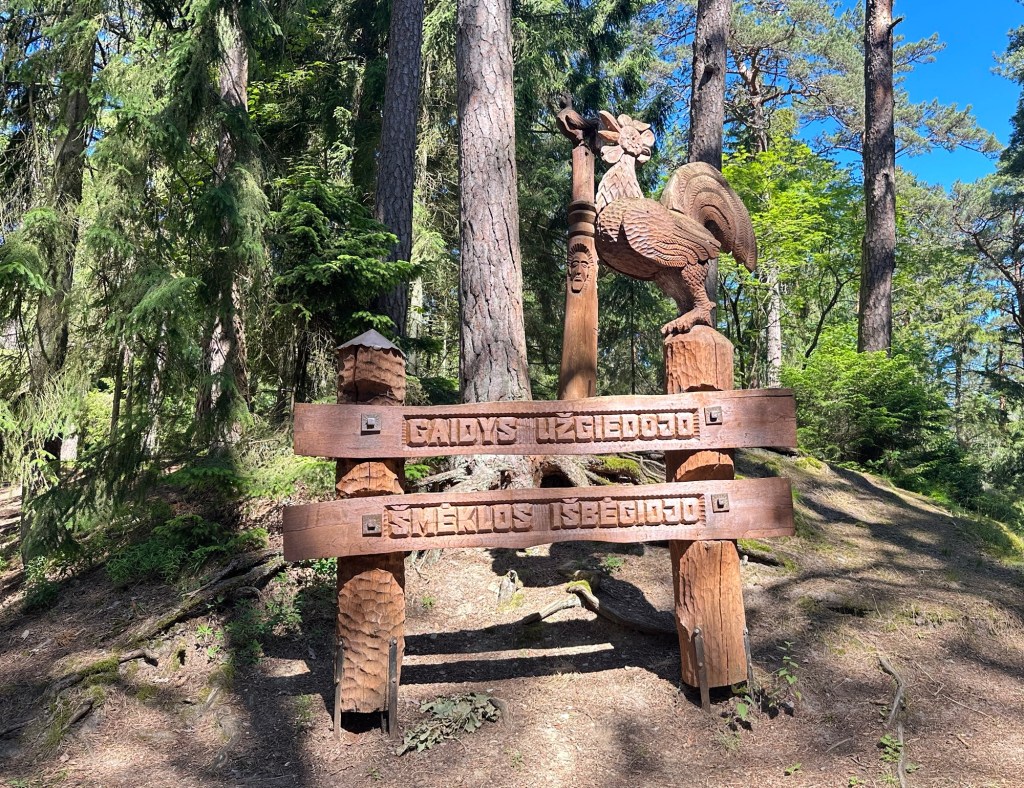
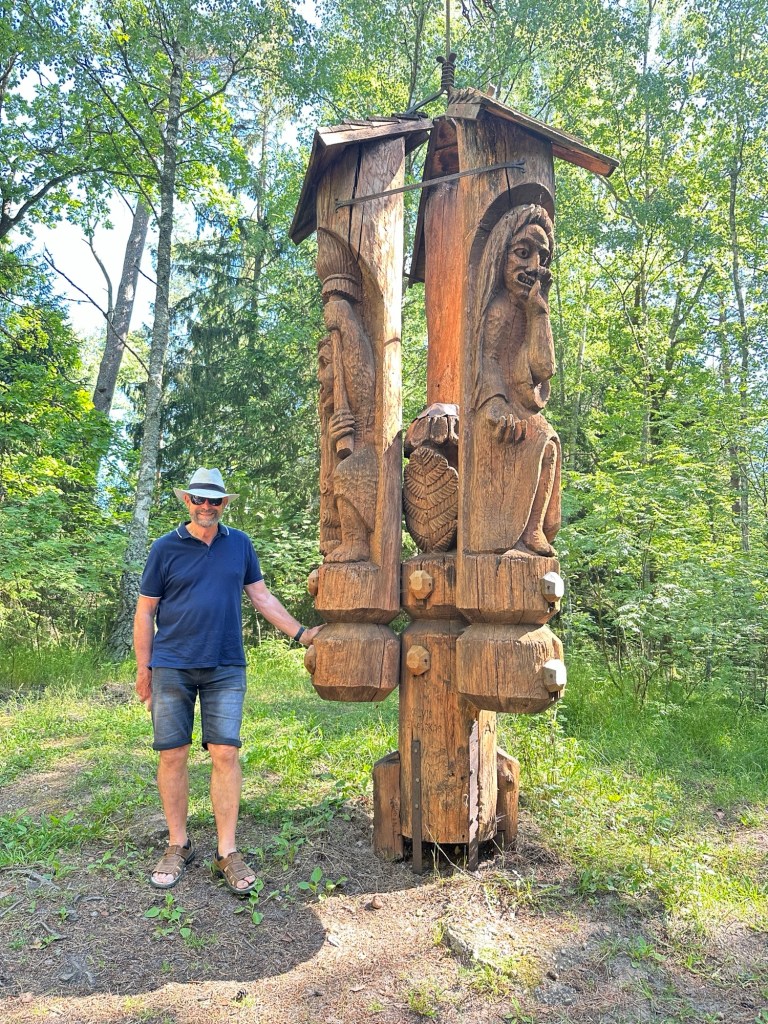
We stopped just past the town of Juodkrante. Lurking alongside the path of the pine forest, in an area called the Hill of Witches. we found demonic wooden statues. Of course there is a legend with each one. The statues were set up by a group of local sculptors in the 1980s.

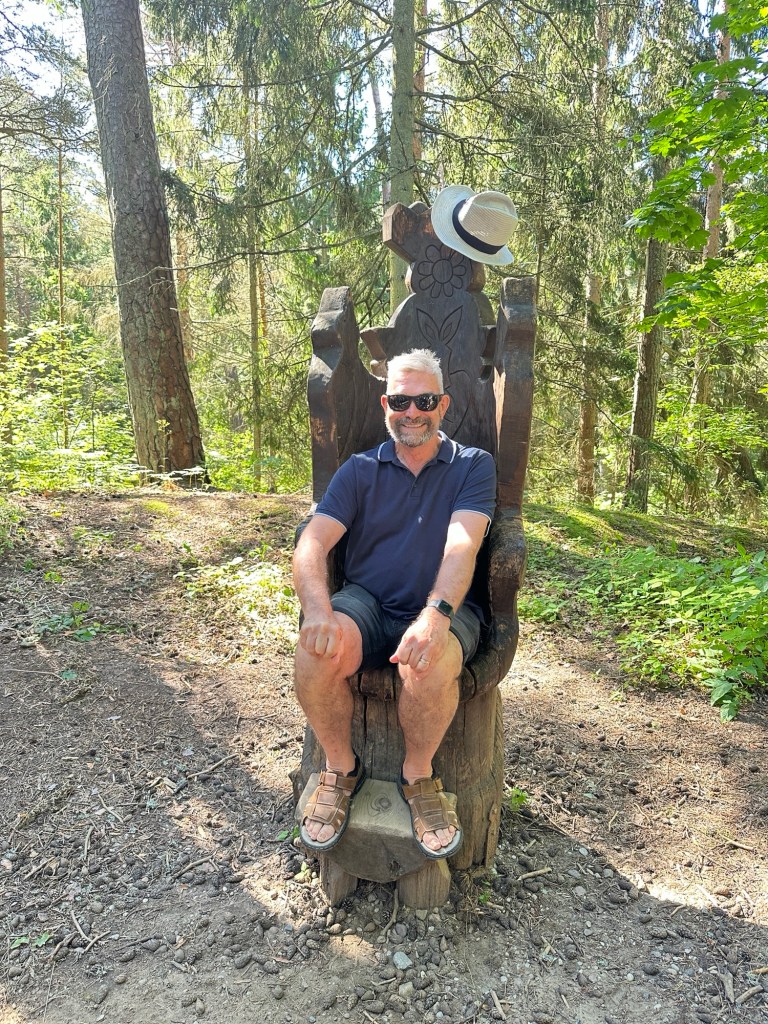
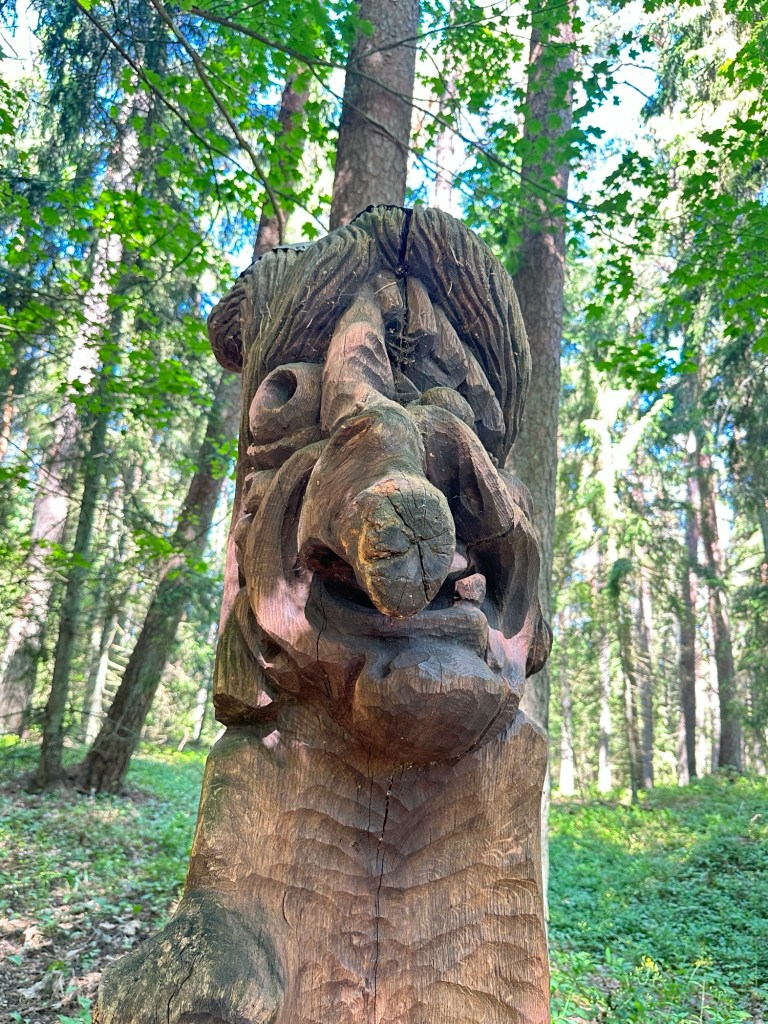

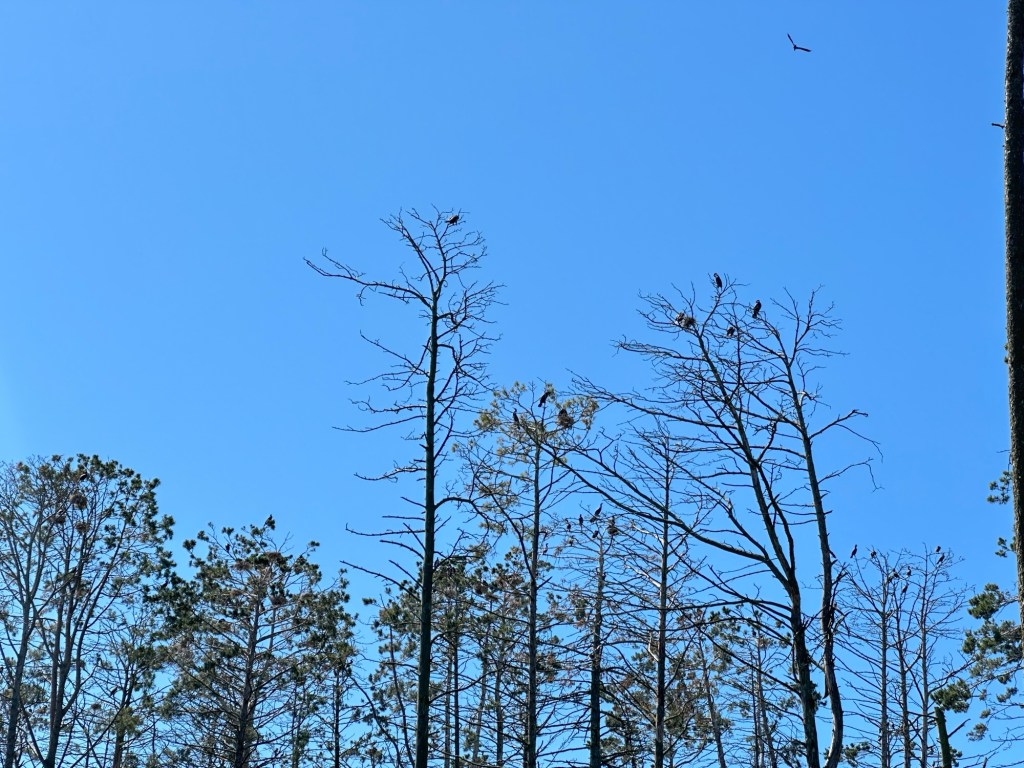
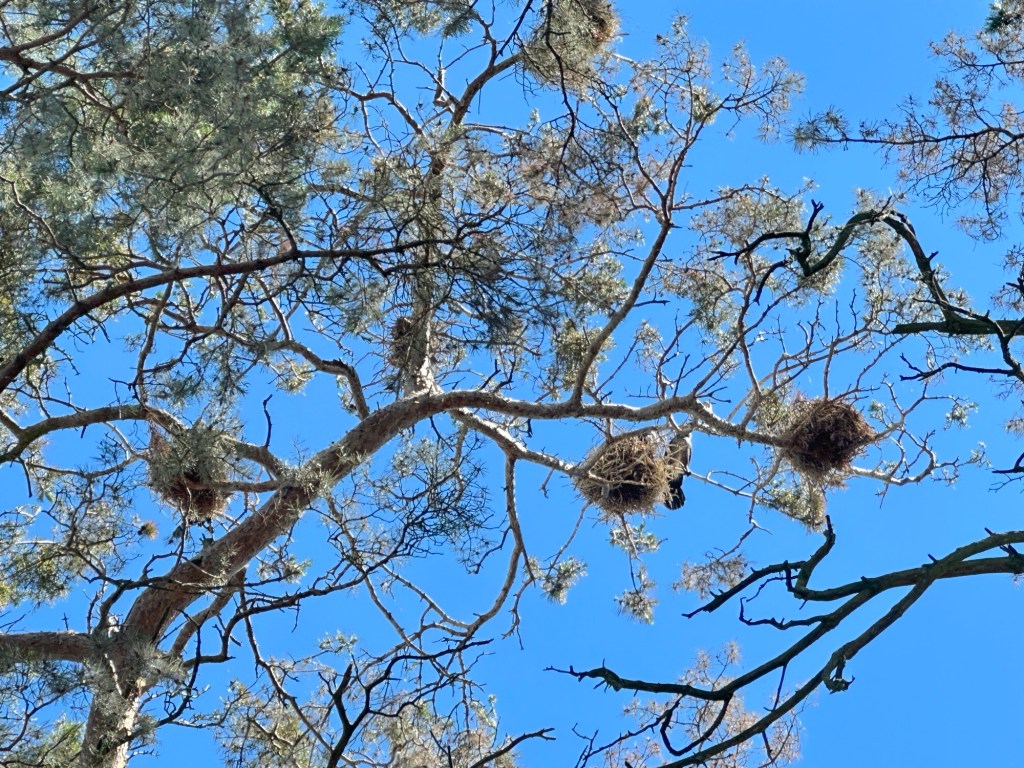
A quick visit next to see a large group of cormorants. Great cormorants came to Juodkrante in the 19th Century after chasing the herons that used to live here away. However, the hill that is the current home of the colony is called the Heron Hill to this day.
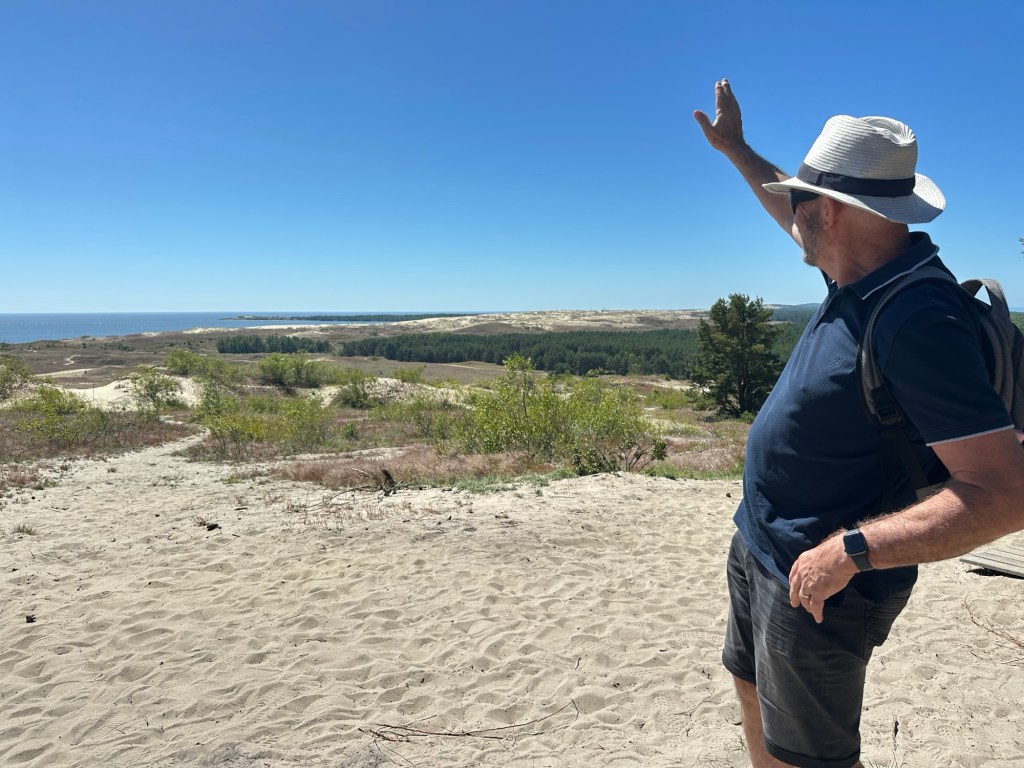
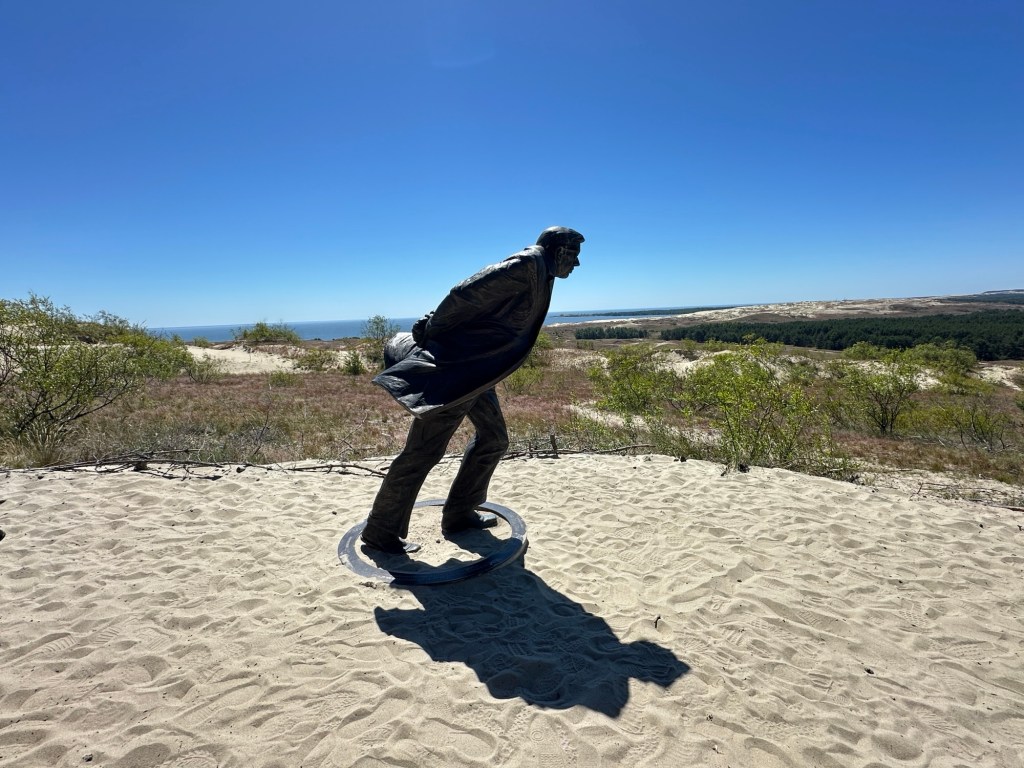
We explore the largest dunes in Europe. In the 17th century, when the forests on the Curonian Spit were cut down to fuel industry and supply constant military campaigns, the mountainous dunes were released.
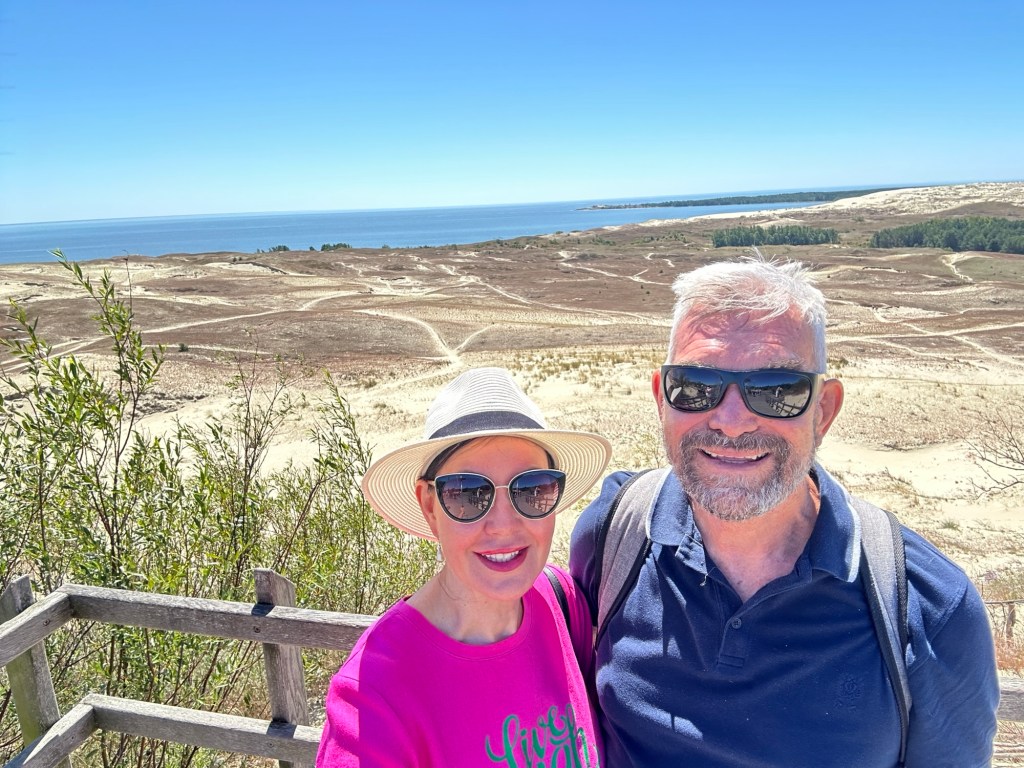
In the Baltic winds, the sand started to shift up to 20 m (66 ft) a year in places, burying entire villages. A vast number of trees were planted to reforest the area, and the moving dunes were stopped. Parnidis Dune towers over the fishing village of Nida, on the Curonian Spit. Views from the summit take in both the Baltic Sea and the Curonian Lagoon and stretch southwards to Kaliningrad. We could see the Russian border in the distance, only 3 kms away – Russia owns half of the spit.

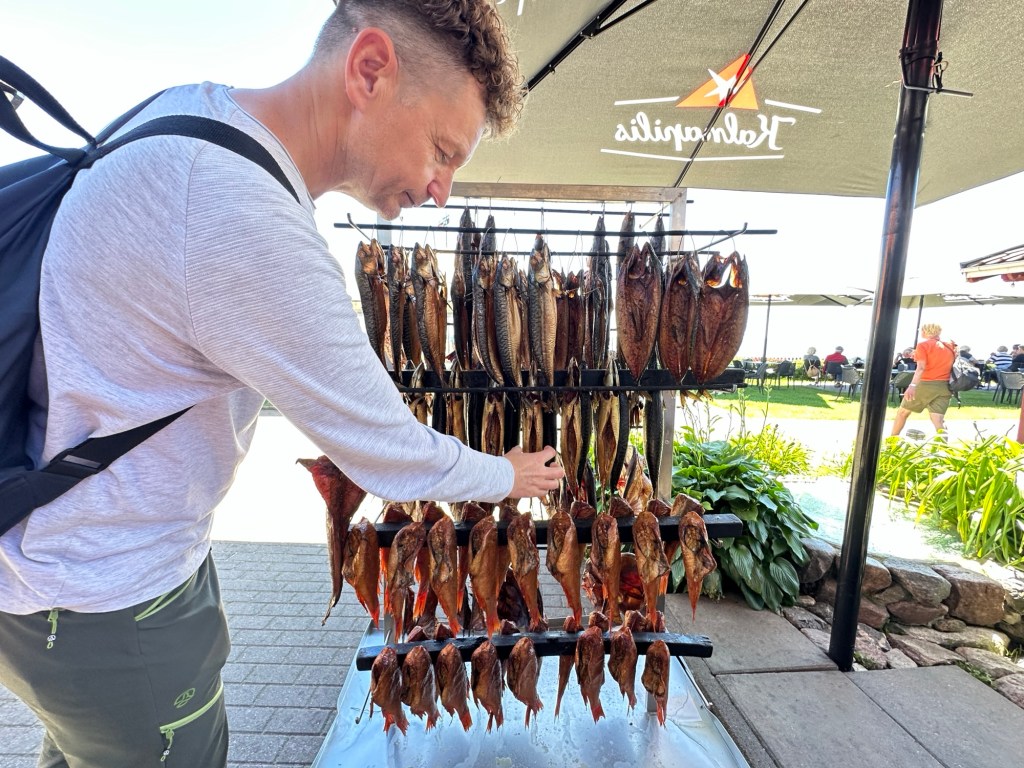
Lunch stop was a Lithuanian seafood restaurant at the resort town of Nida. There was a selection of smoked fish – sea perch, mackerel and bream (fresh water). We had the smoked sea perch with salad – the fish was beautiful , also tried a small piece of smoked eel – it is considered a delicacy here. Its texture was similar to crab, but not as sweet.


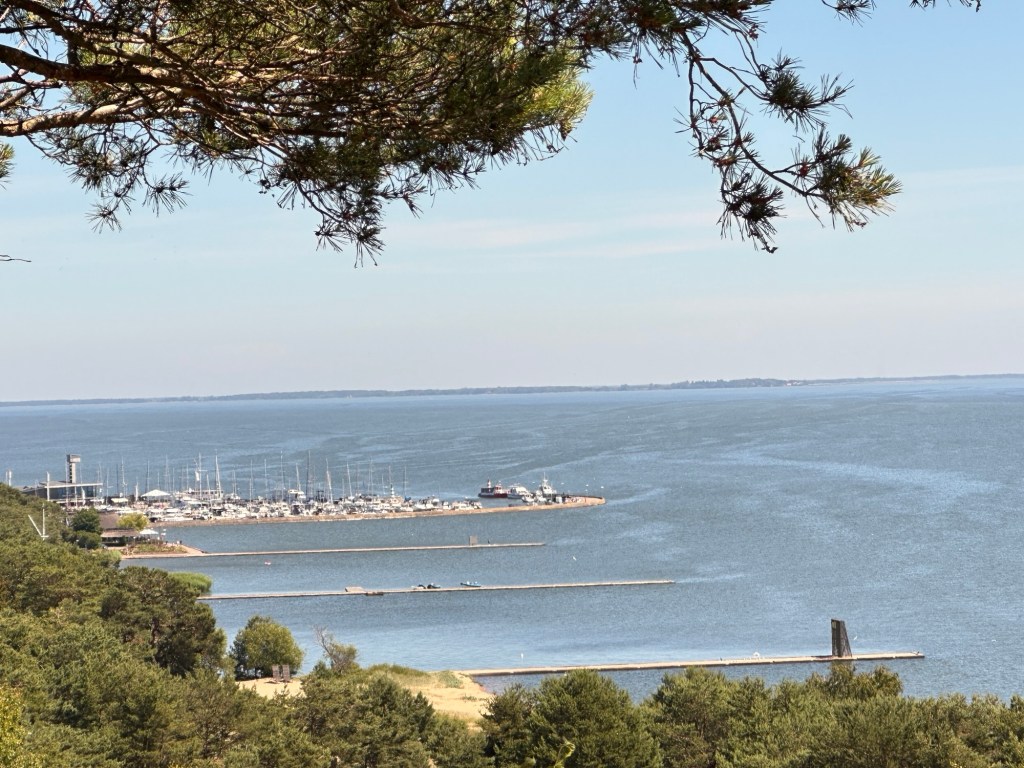
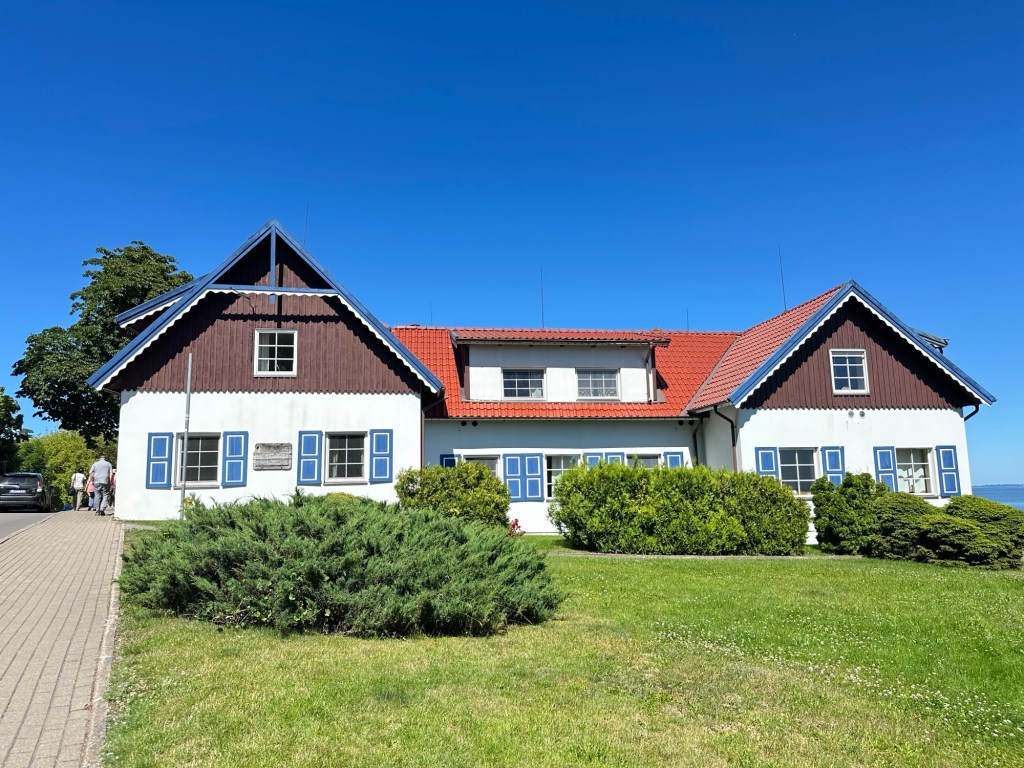
We had a lovely walk along the waterfront at Nida. The highly characteristic red-and-blue fishermen’s cottages in Nida have remained unchanged for centuries. Brightly coloured weather vanes adorn the front of the houses. Very calm water here.
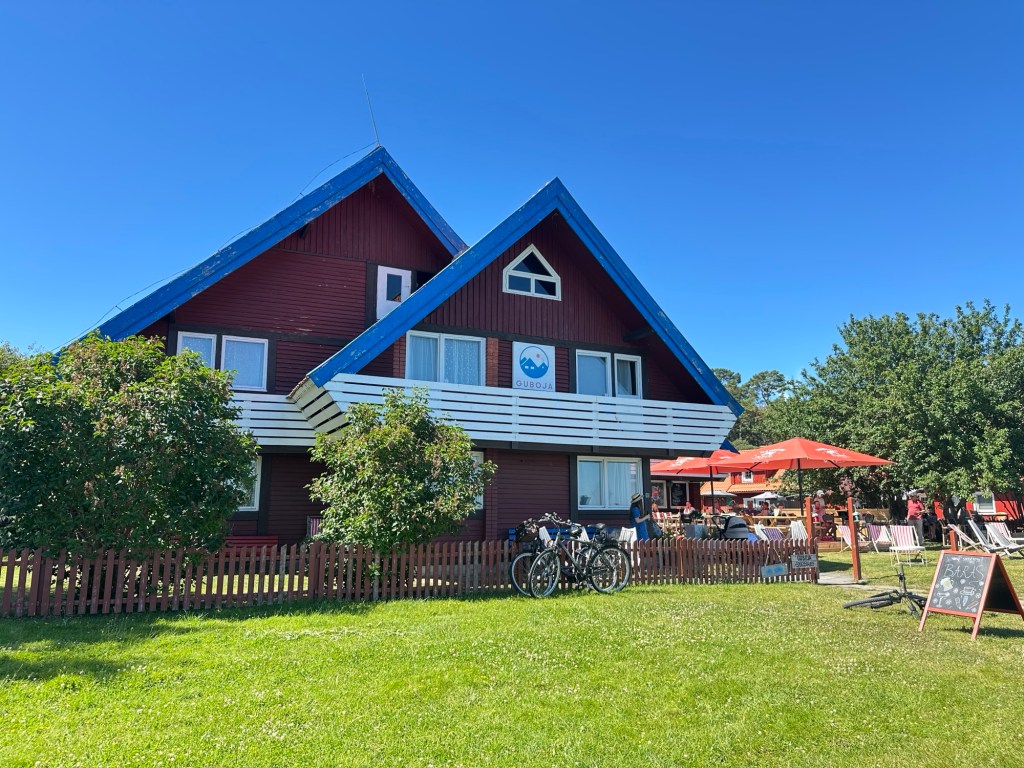
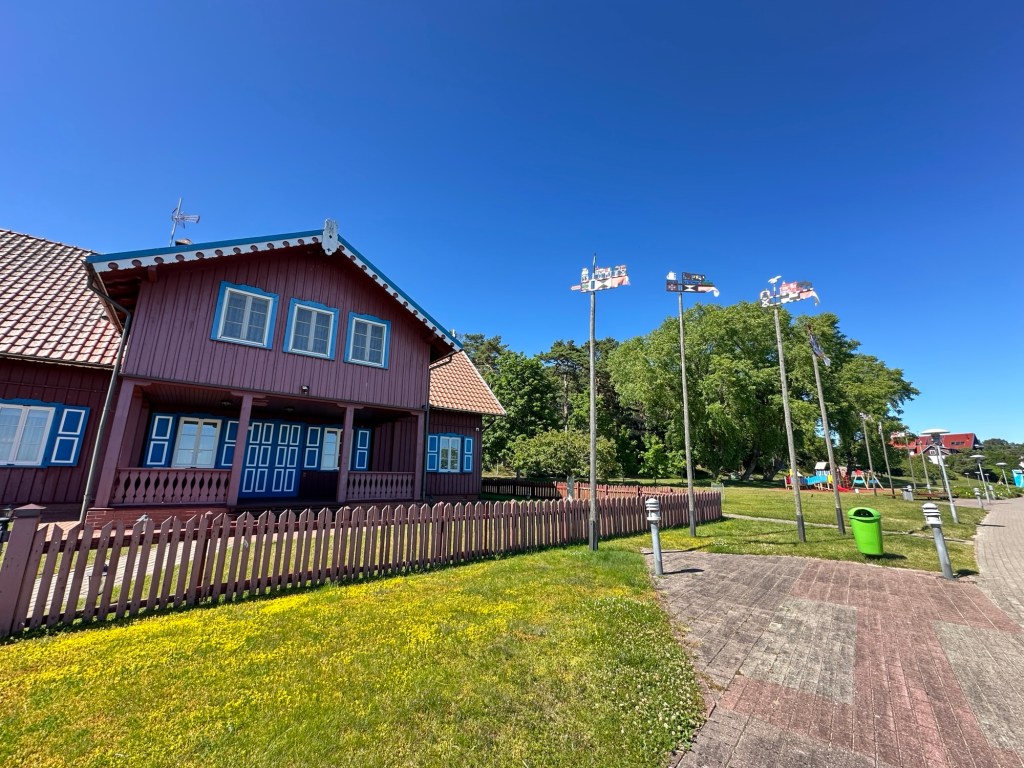
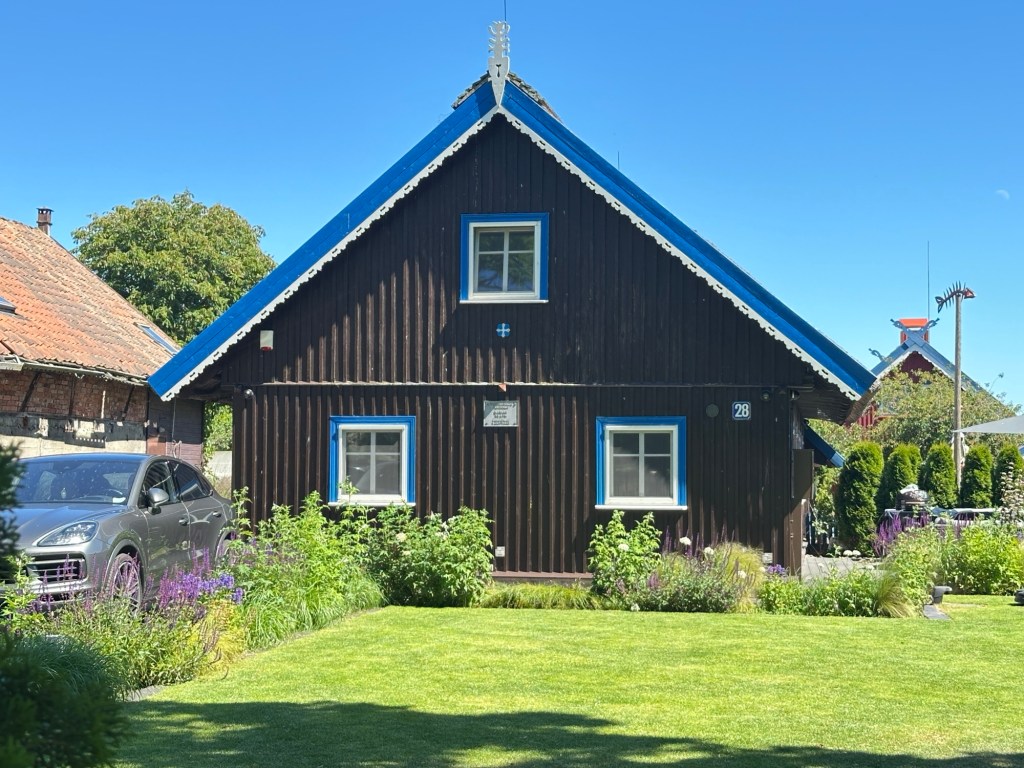

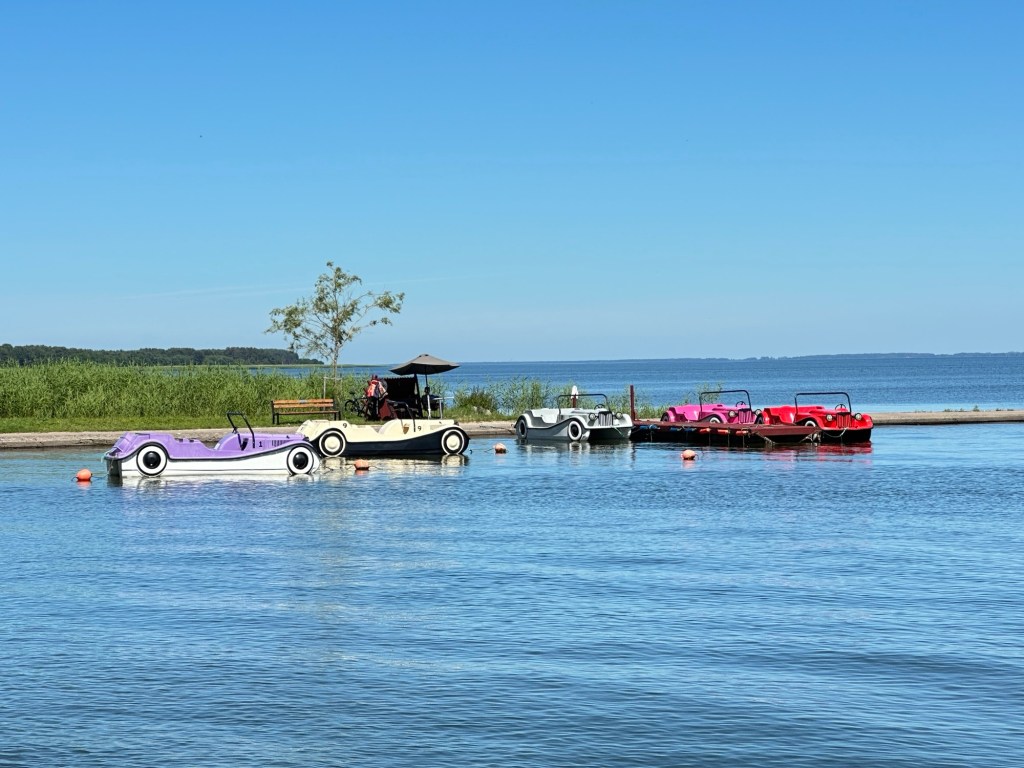
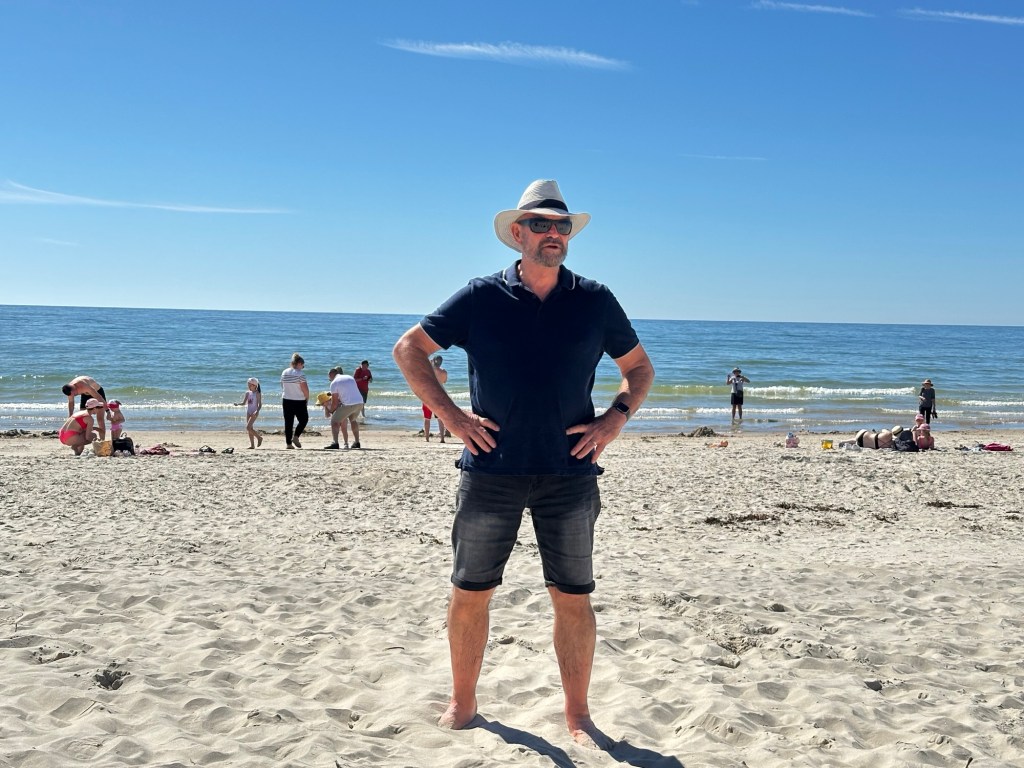
In contrast, we then stopped at the Baltic Beach to dip our toes in the 18 degrees Baltic Sea. Too cold for me! Nice wide beach with white sand. French prisoners of war moved sand to make sand hills to protect the beach.
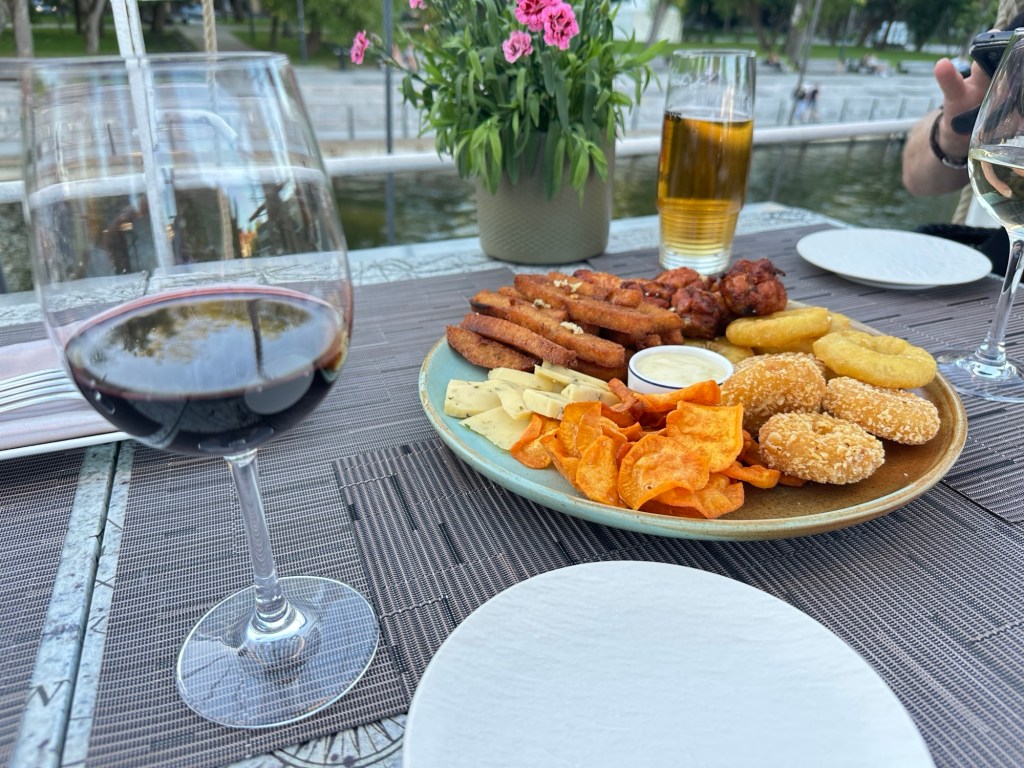
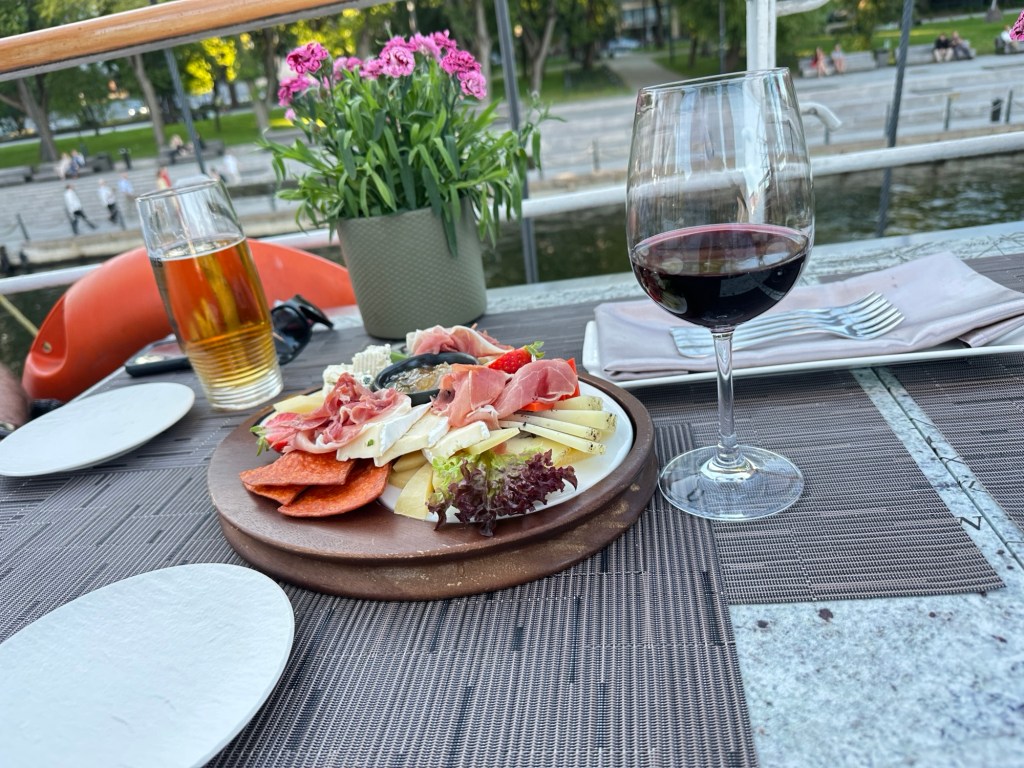
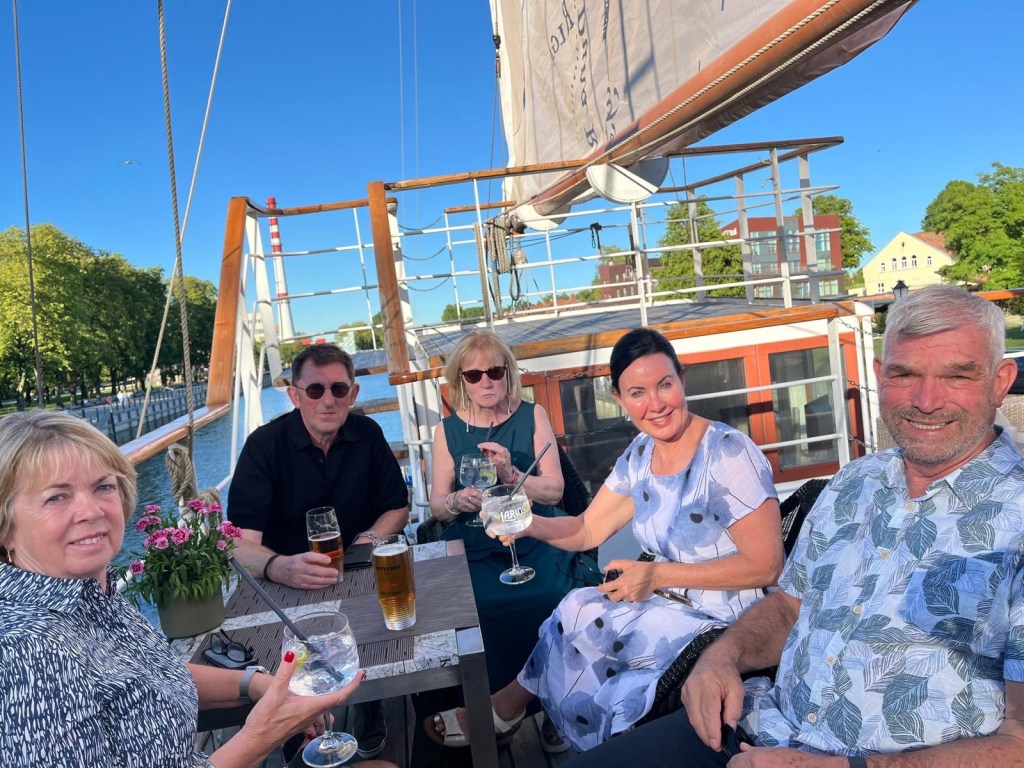
Quite a relaxing but still big day. Back to Klaipeda where we headed out to explore the town a little more, and have dinner. We didn’t get far as a couple of our group spotted us and asked us to join them. They were sitting on a three masted sailing ship in the canal – it has been converted to a restaurant. An iconic and impossible to ignore landmark, this decommissioned sailboat is almost 75 years old. Although its sailing days are behind it, Meridianas is still full of life. Tonight, it was packed with hungry locals and guests alike, enjoying a sea inspired menu. Such a lovely evening enjoying the food and the activity on the canal.

Day 45
Thursday 3rd July
Klaipeda to Kaunas
18-33 degrees, sunny, hot!!!!
A driving morning – then arrive at the town of Kaunas. A series of disasters, including invasions by the Russians (1655), Swedes (1701) and Napoleon’s Grand Army (1812), hindered the city’s development. Rapid growth in the 19th century culminated in Kaunas becoming the temporary capital of newly independent Lithuania in 1919. Later, the city suffered under Nazi and Soviet occupations.
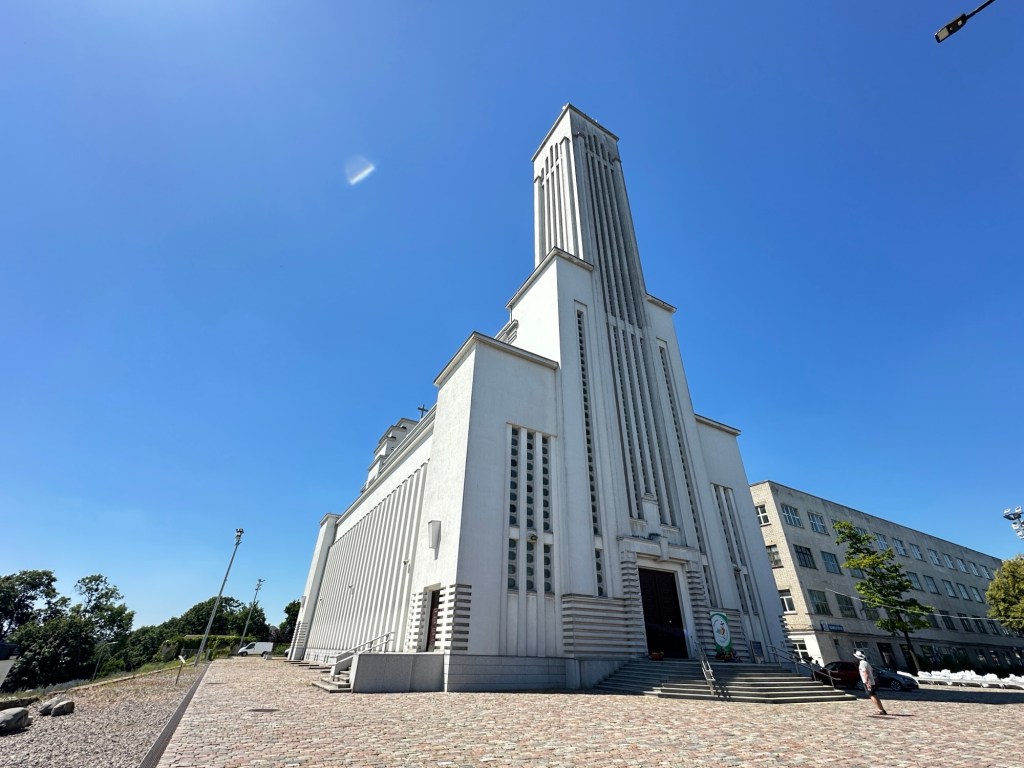
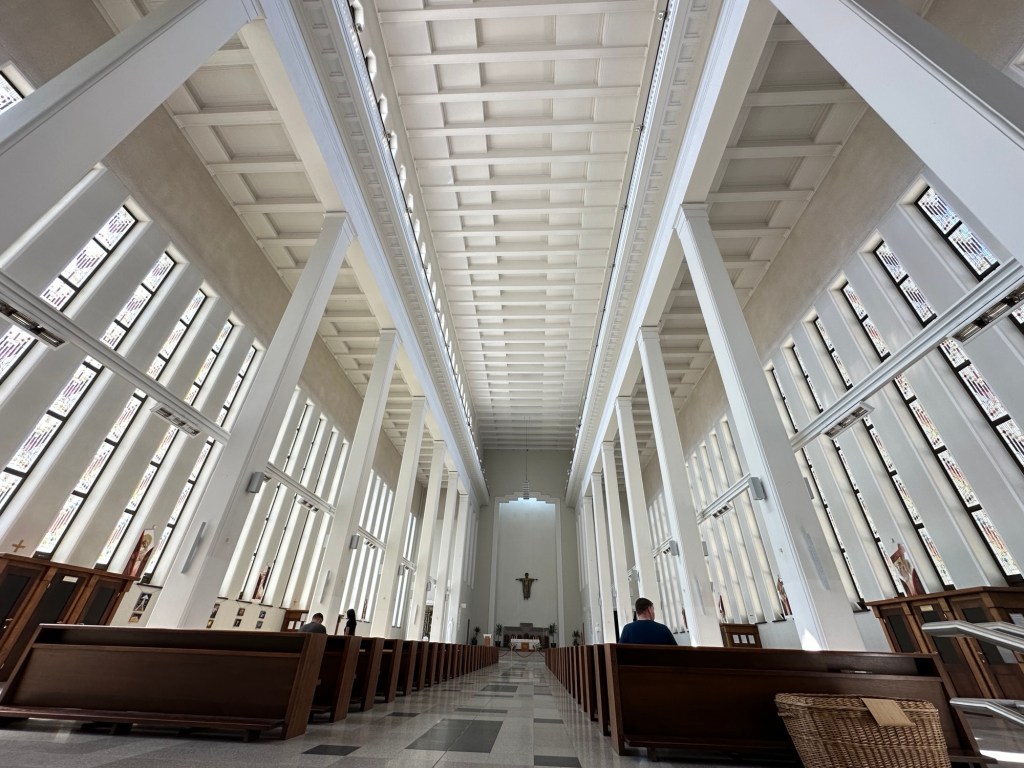
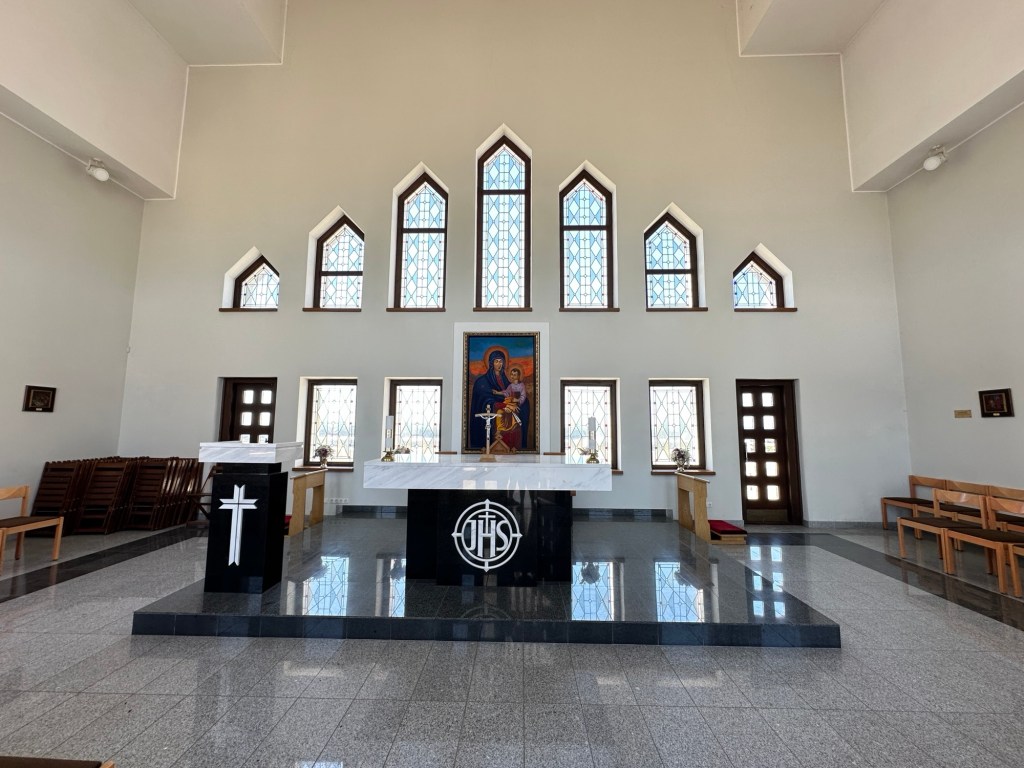
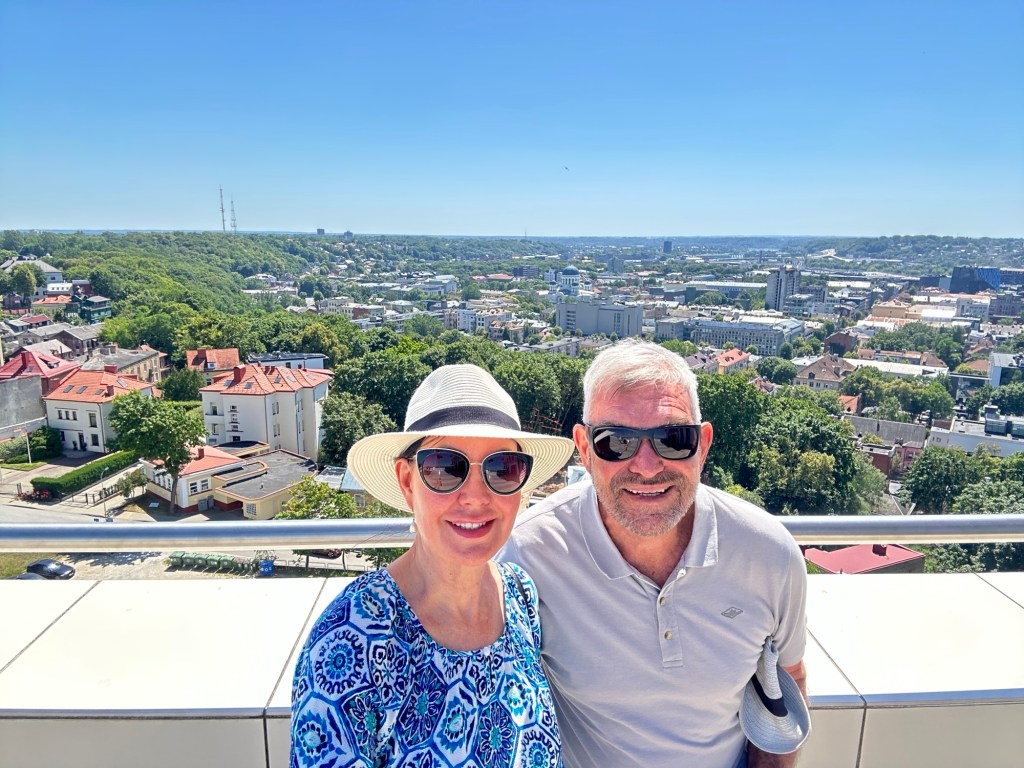
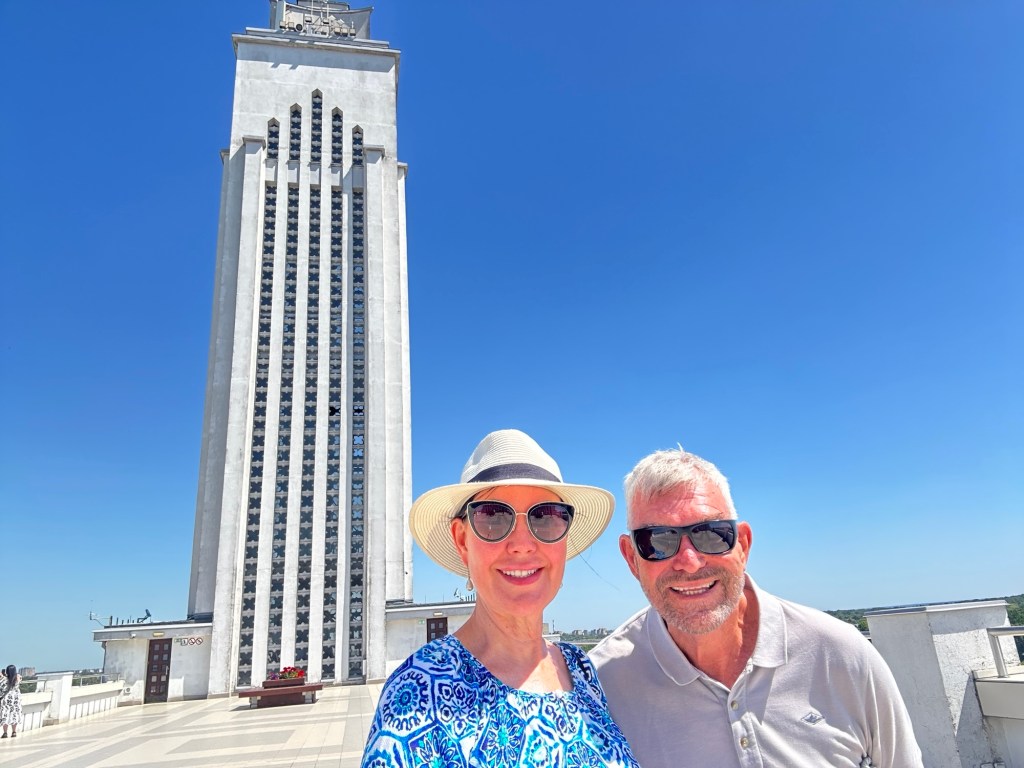
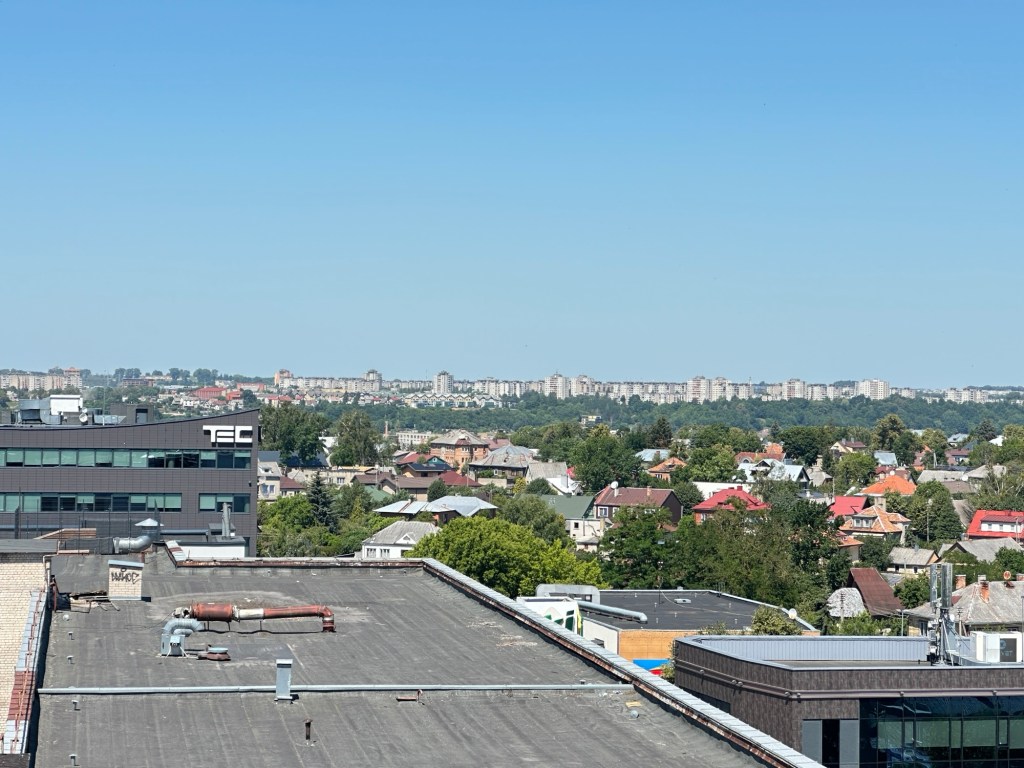
We stopped at the Church of the Resurrection of Christ. With a 70 metre steeple, this church was built in 1918 to mark Lithuanian independence. After World War II, the Soviets turned it into a radio factory. With independence regained, the factory was evicted. After reconstruction the church was consecrated on Christmas Day 2004. This is an important landmark for Lithuanians. We went up the lift to the rooftop where there were panoramic views over Kaunas. There was a gorgeous little chapel at one end – beautiful art deco windows.


Next, lunch at a nice restaurant where we tried the salmon cutlets – which to us were more like salmon rissoles. They were delicious. Also tried the zeppelins – meat-stuffed potato dumplings in a sour cream, onion and bacon sauce. I didn’t think much of those – too much potato. I always like to try the local food.
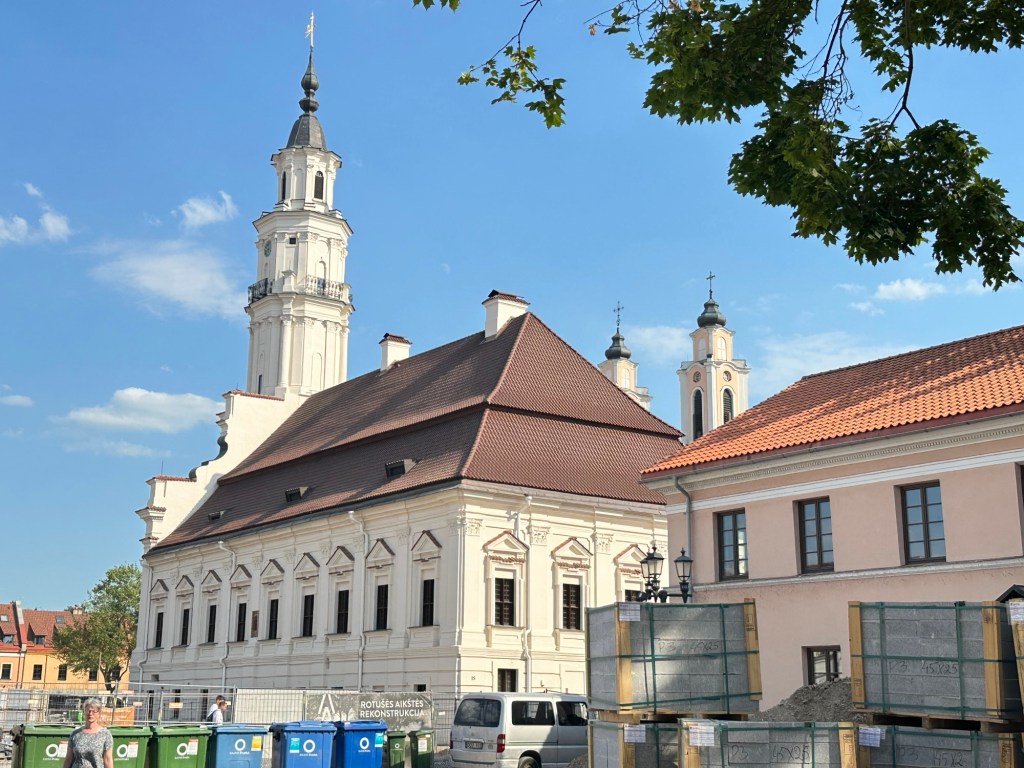
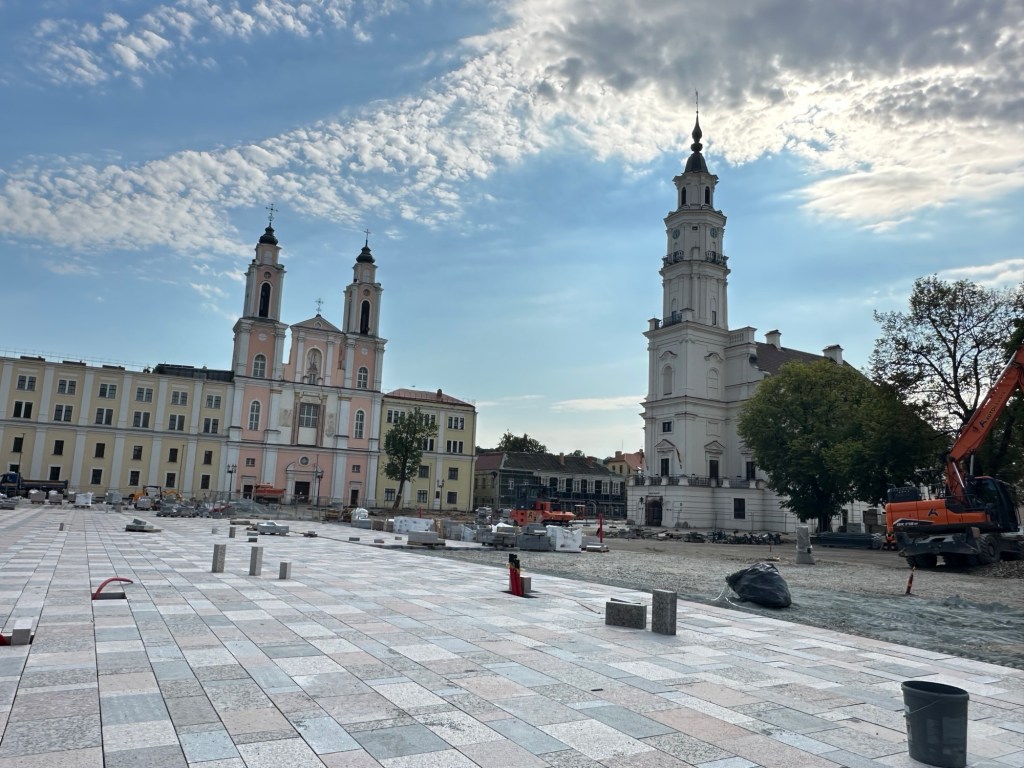
It was really hot today, zapping all our energy. We checked into the Best Western Santaka hotel where we had a quick shower to cool down before heading out for our walking tour of the old town. We took in the 13th-century castle, Old Town Hall ( it resembles a church), Cathedral of Sts Peter and Paul Basilica (gothic exterior, baroque interior – very ornate) and Church of St George. Lovely town, but my observation was that there didn’t seem to be a lot of people around.
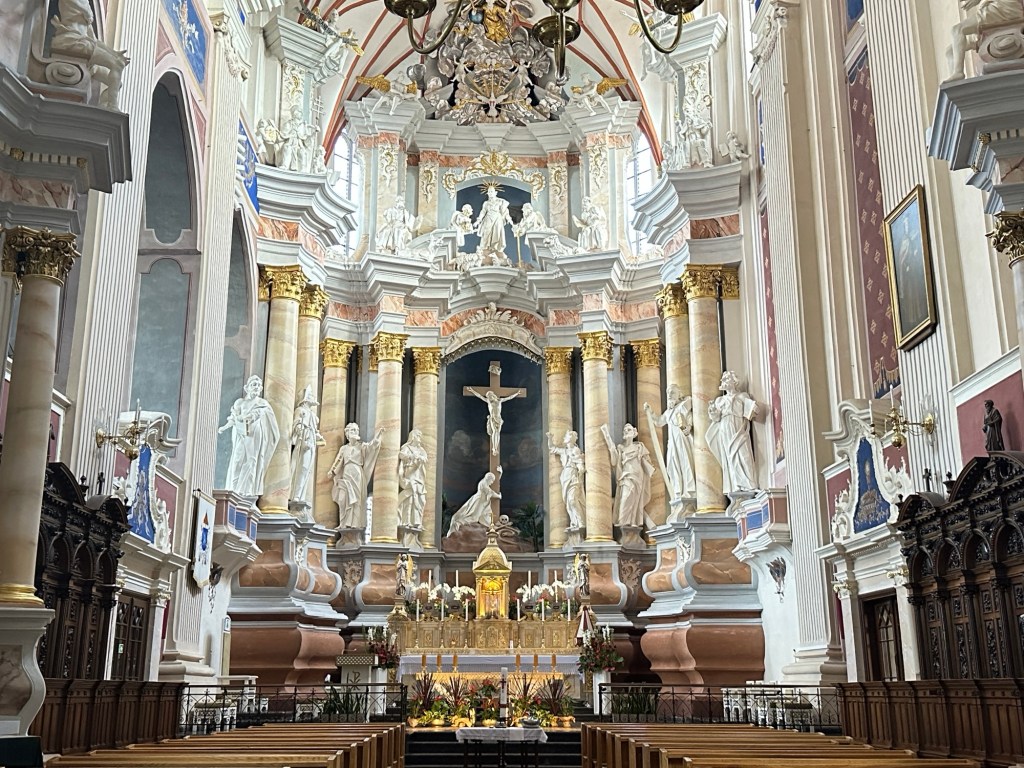
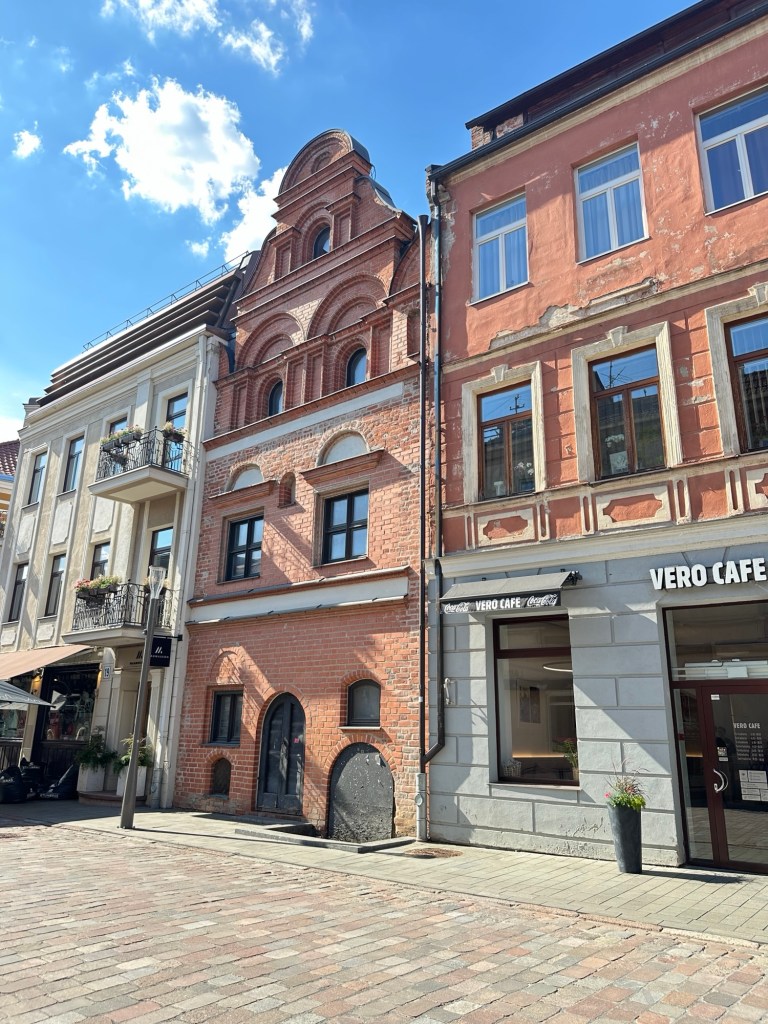

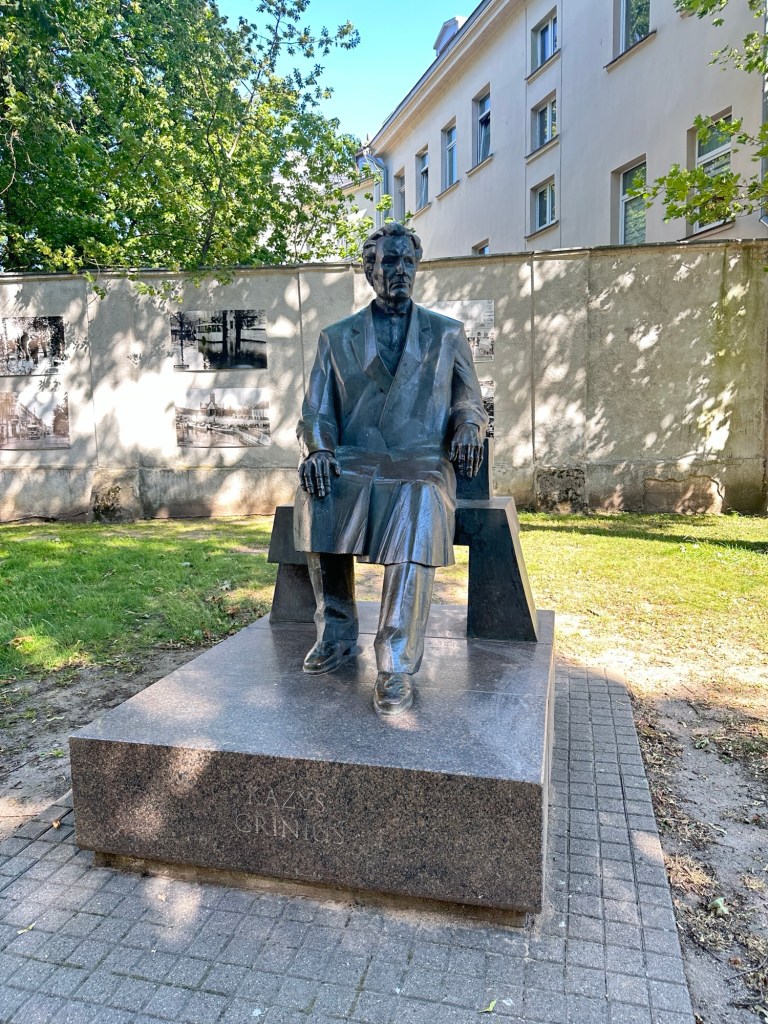


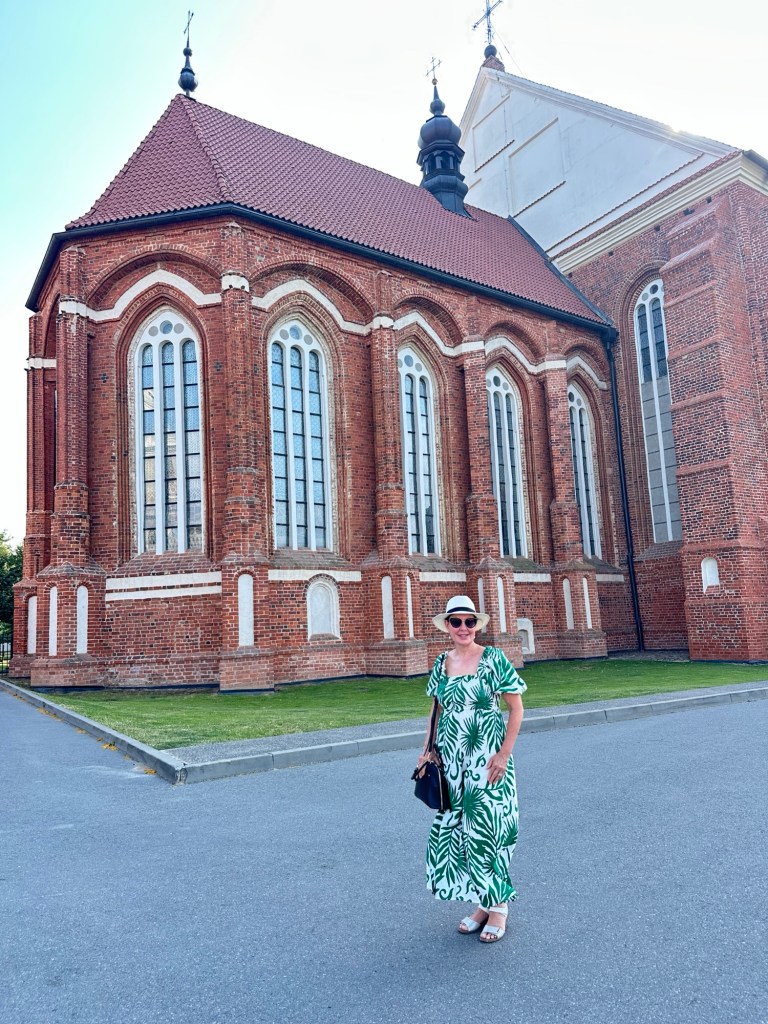
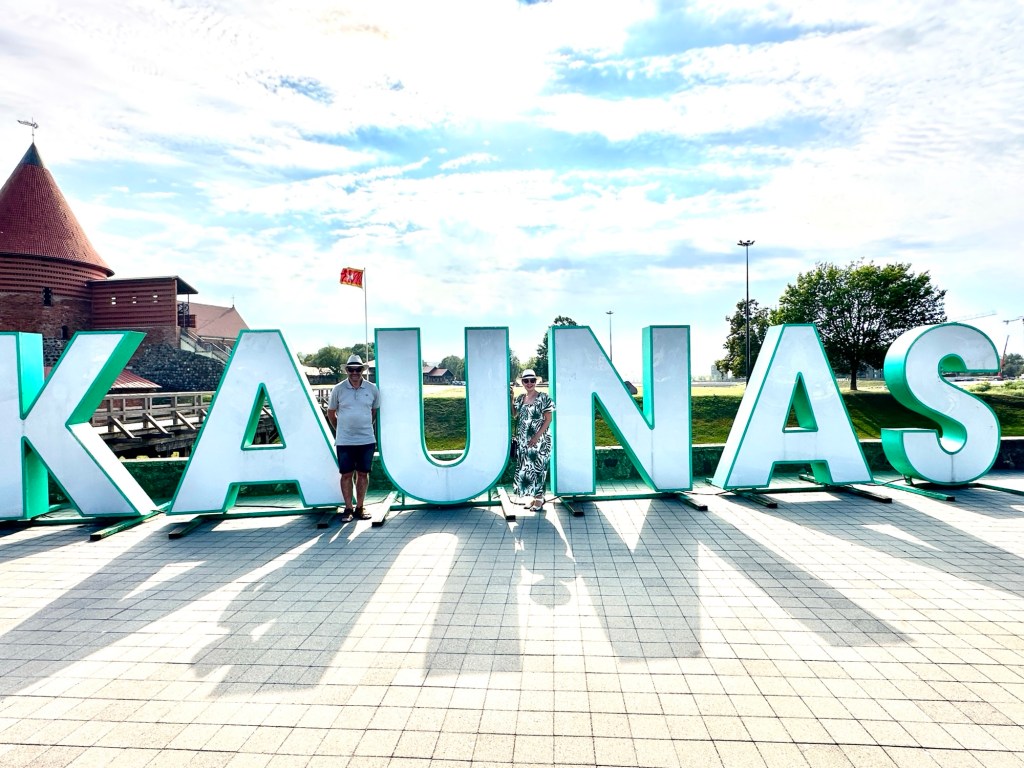
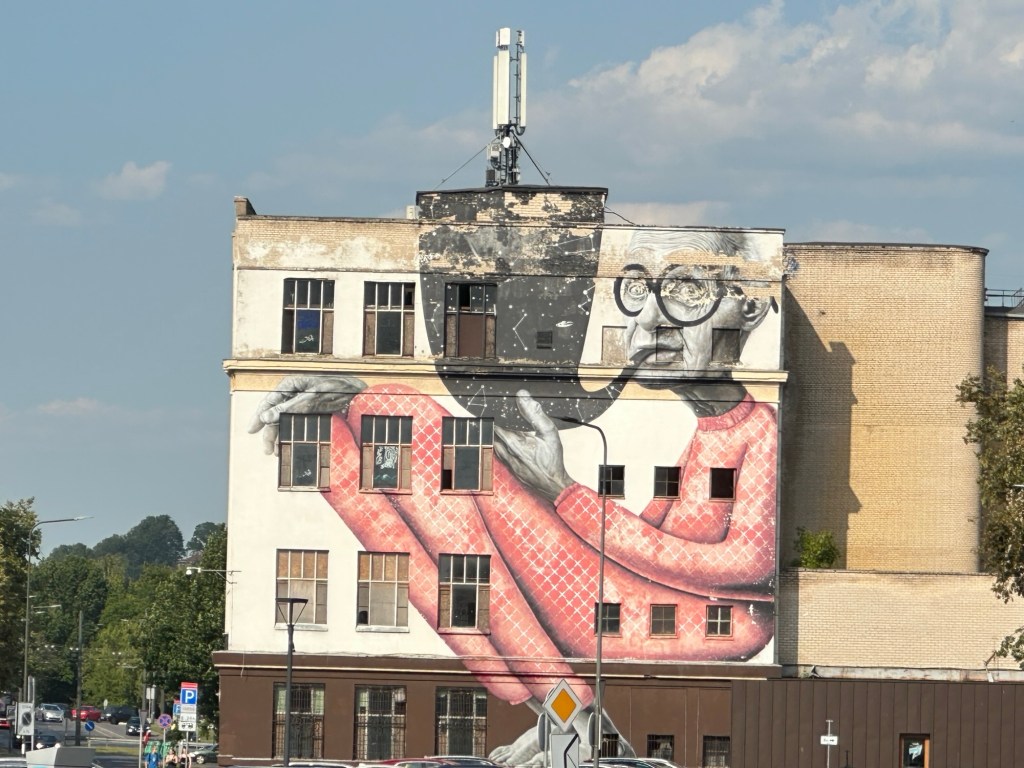

Time for a drink, so refreshing sitting outside under some flowering Linden trees. Then all of a sudden, the temperature dropped ten degrees and the wind came up.
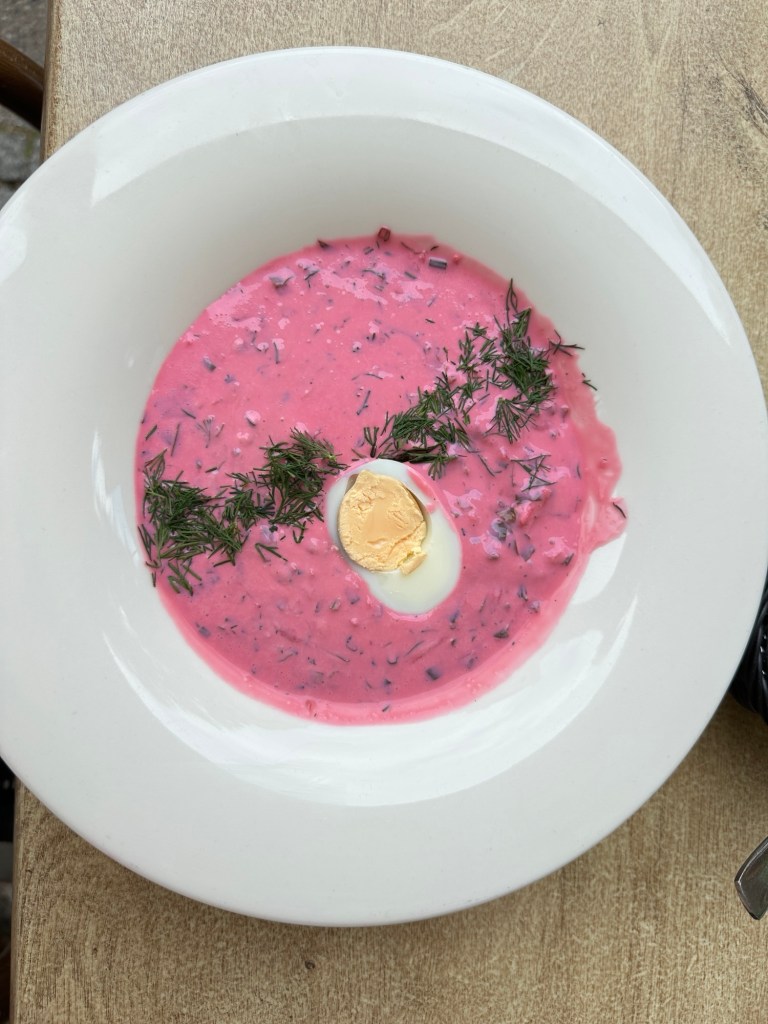
We found a charming little restaurant, which wasn’t actually so little. Would have been lovely sitting outside but there was a short rain shower – we sat on the covered back balcony overlooking the grape vines instead m. Tonight I tried the traditional borsch soup – very nice. Frank had the mushroom soup. The cheese bread was yummy too.

Day 46
Friday 4th July
Kaunas to Vilnius
14-23 degrees, sunny, and thankfully cooler
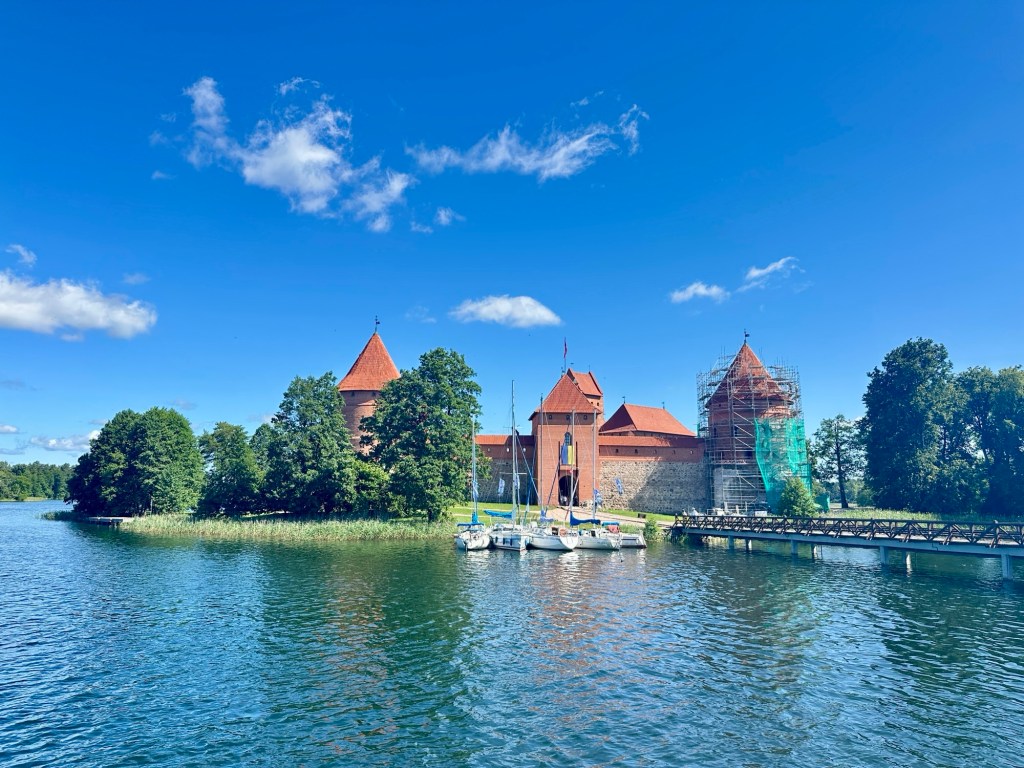
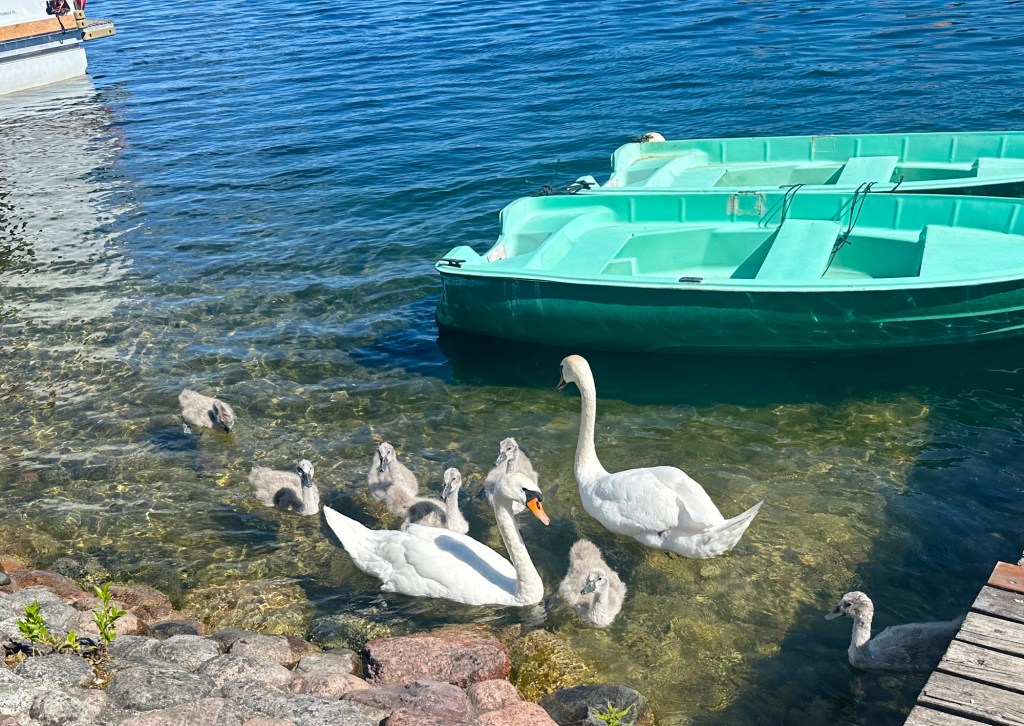
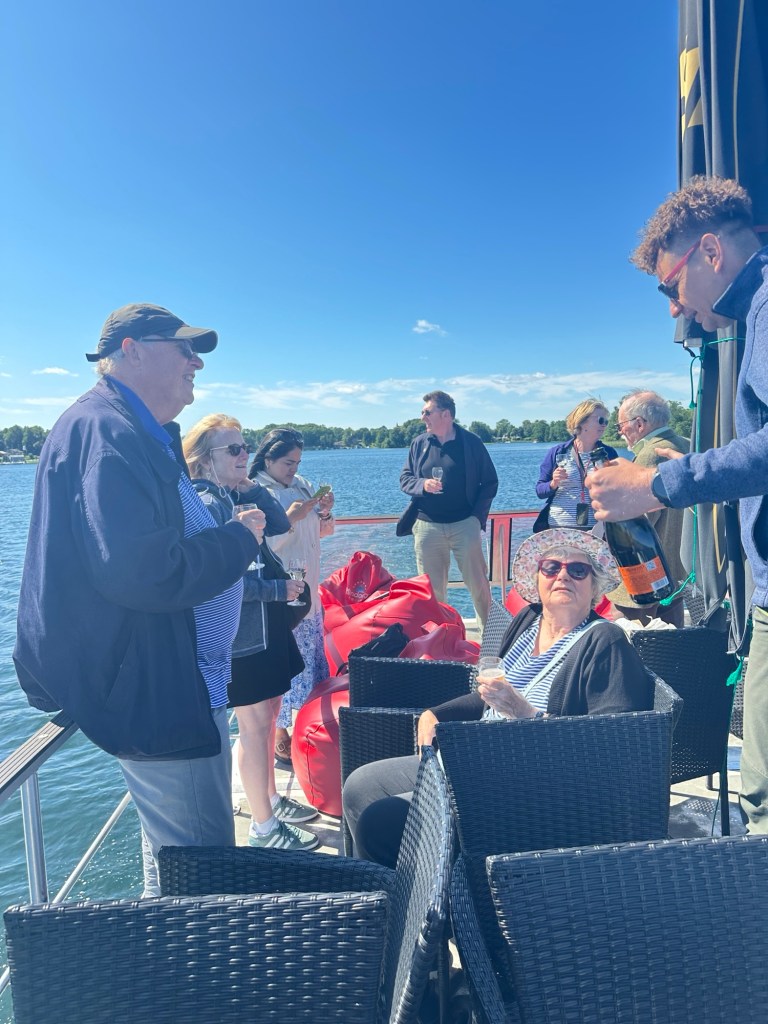
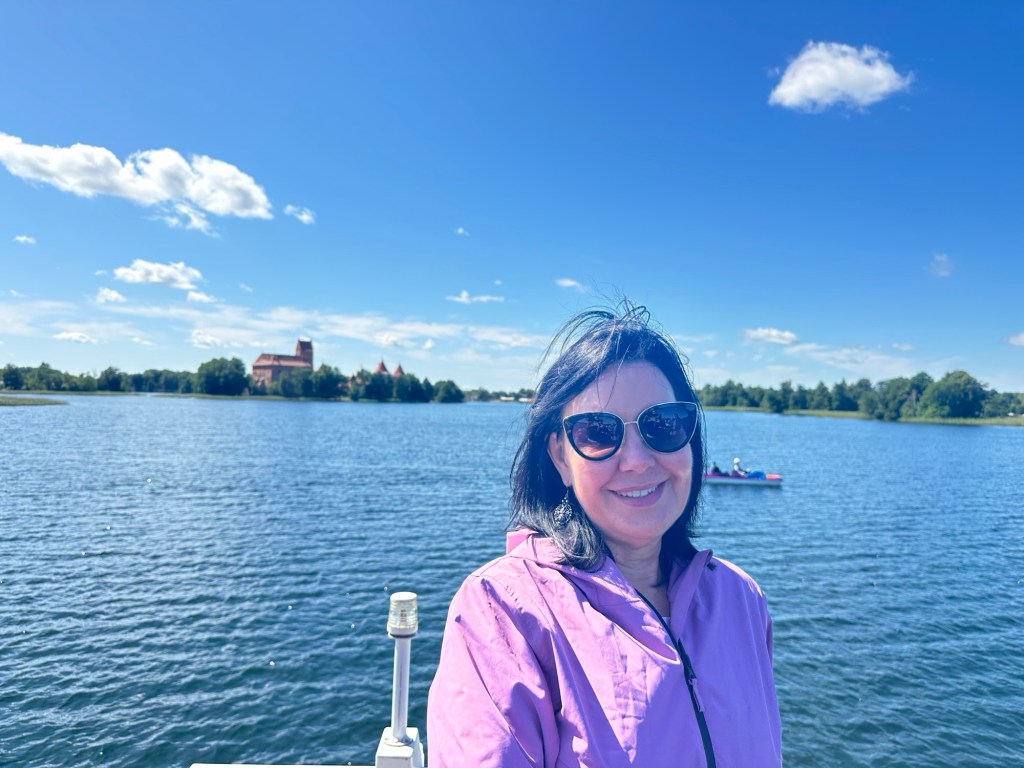
First stop today is in Trakai, the former capital of the Grand Duchy of Lithuania. Here there is a 14th-century castle, which occupies a small island in the middle of the lake. As a group we decided to take a boat ride around the castle enjoying the lake and castle ( instead of going inside the castle – we all felt we’d seen enough castles for the moment!). Good decision, the lake was very picturesque, it was such a beautiful day, and a couple of bottles of Prosecco made the morning very enjoyable.


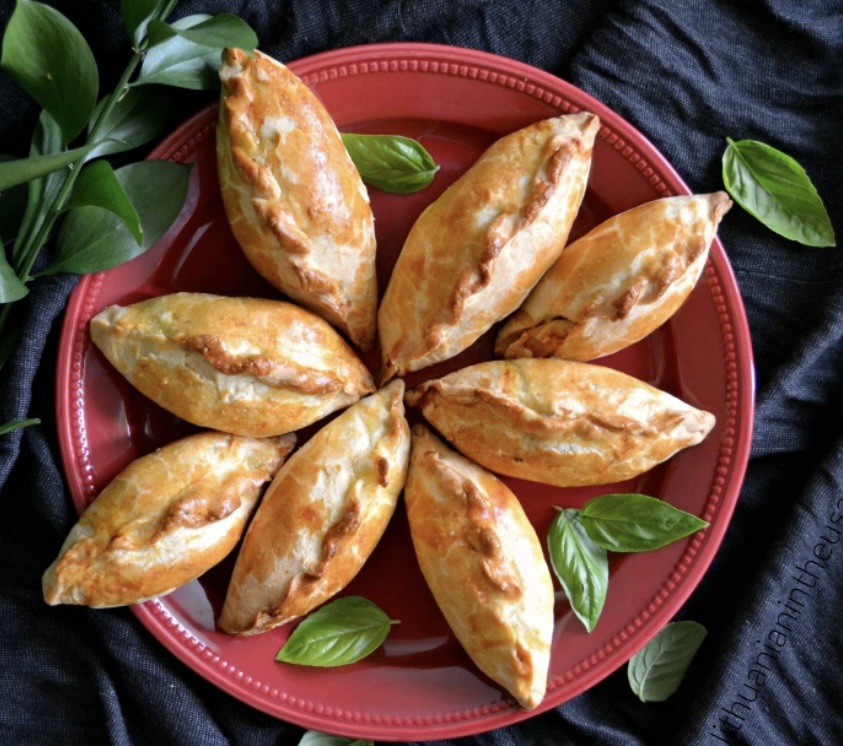
We had lunch at one of the local restaurants. Andrew insisted we try the kybens. Kybens are traditional Lithuanian pastries, filled with a savory mixture of minced lamb, potatoes, and onions, or cottage cheese and spinach, or cabbage, all enveloped in a soft, flaky dough. Very similar to Cornish pasties, or empanadas. Yum!
Forty minutes to Vilnius where we check into the Comfort Rock ‘n’ Roll Hotel – a Rock´n´Roll themed hotel with a cool design and spacious rooms.
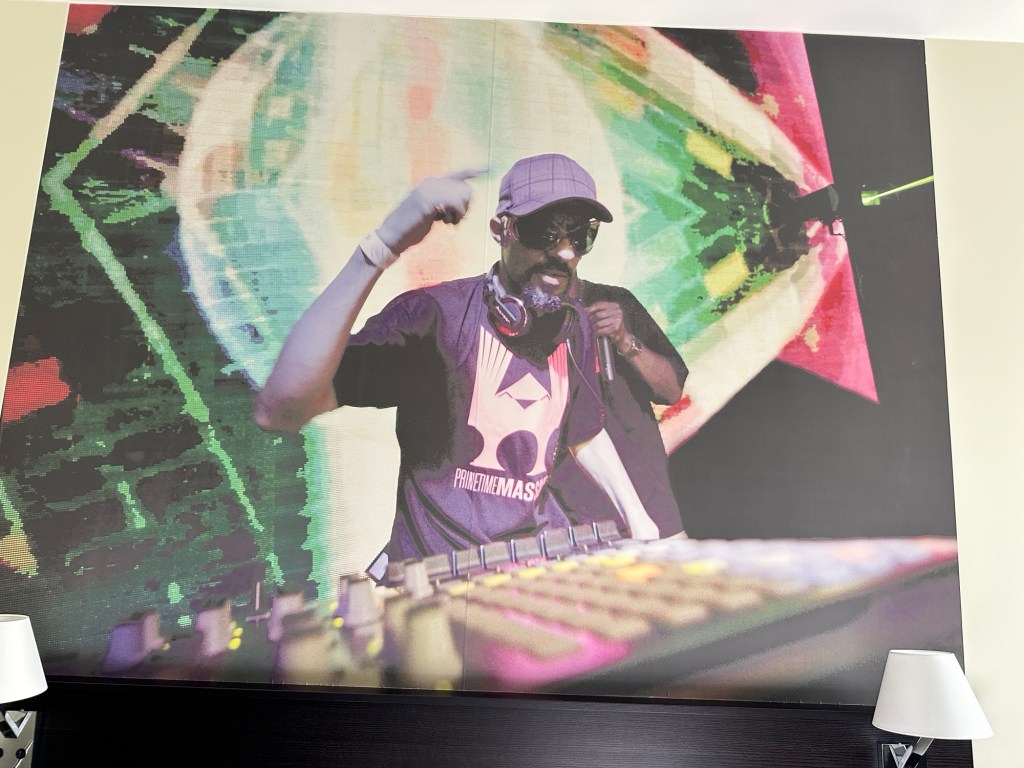
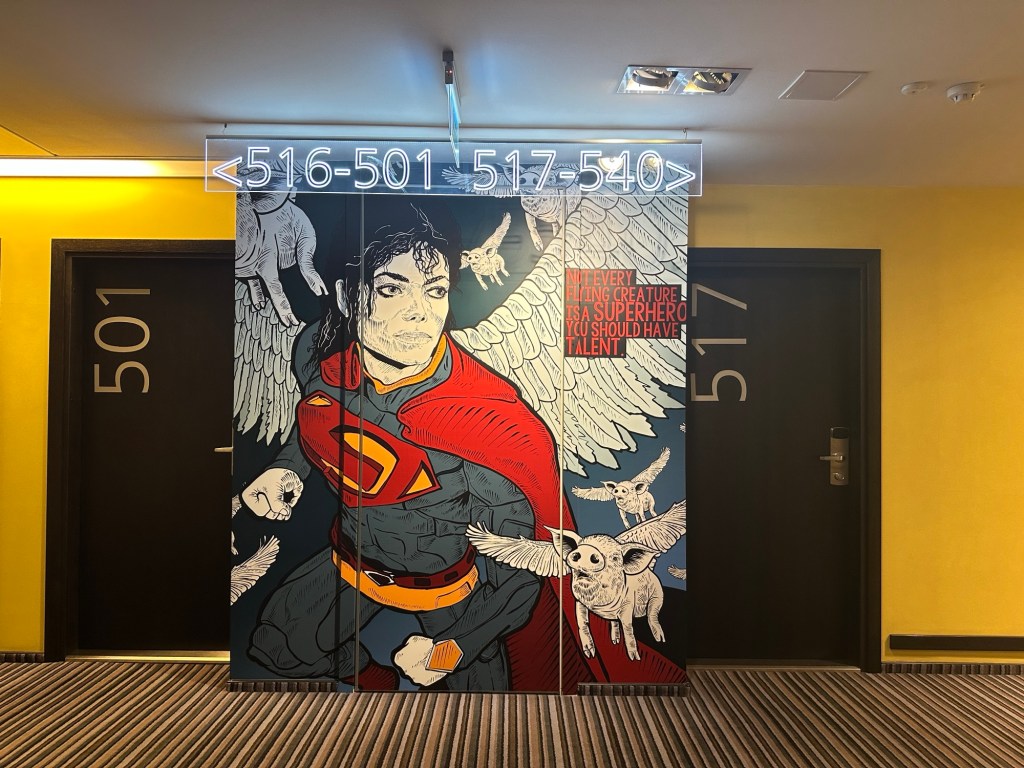
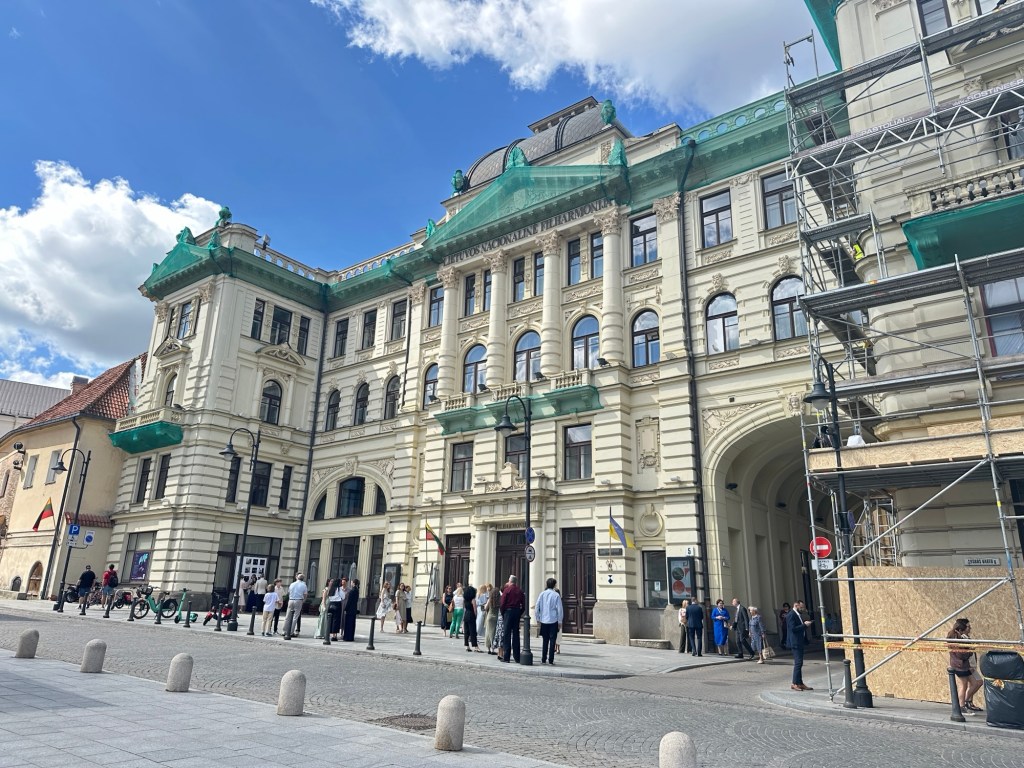
We do a quick turn around, and head out for a walking tour of Vilnius. Whether viewed from one of the hills that overlook the Old Town or from one of the many pavement cafés with tall spires rising all around them, Vilnius is unmistakably a city of great beauty. The Old Town, on the UNESCO World Heritage list since 1994, blends Gothic and Neo-Classical styles with a breathtaking late flourish of Baroque.
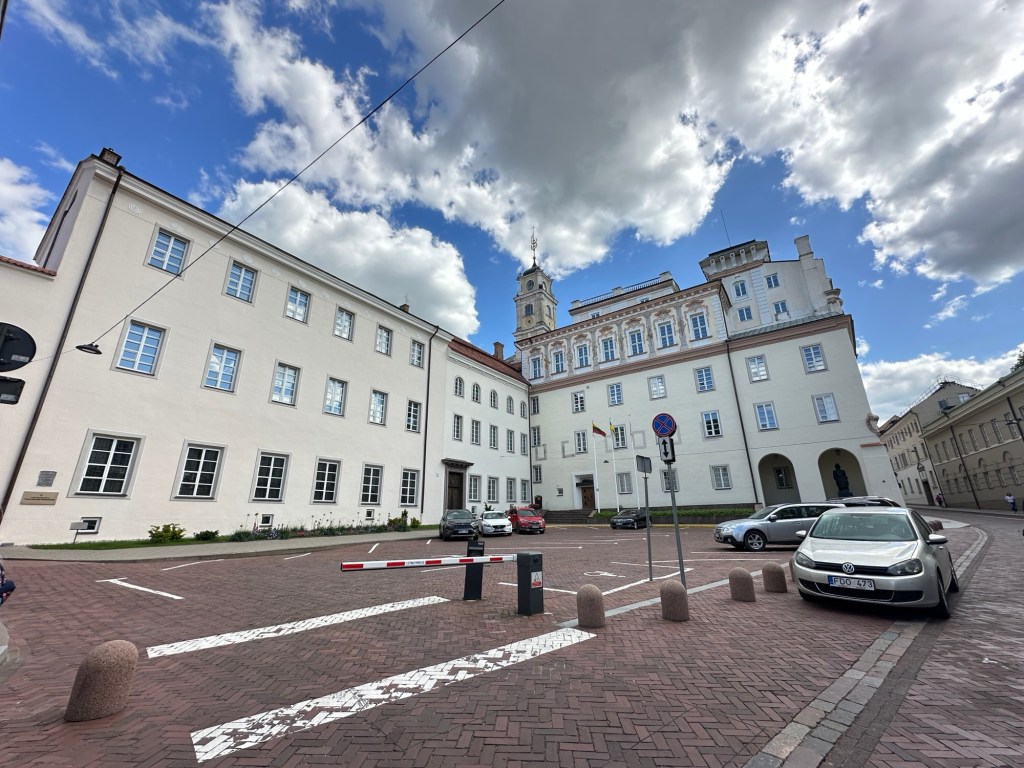
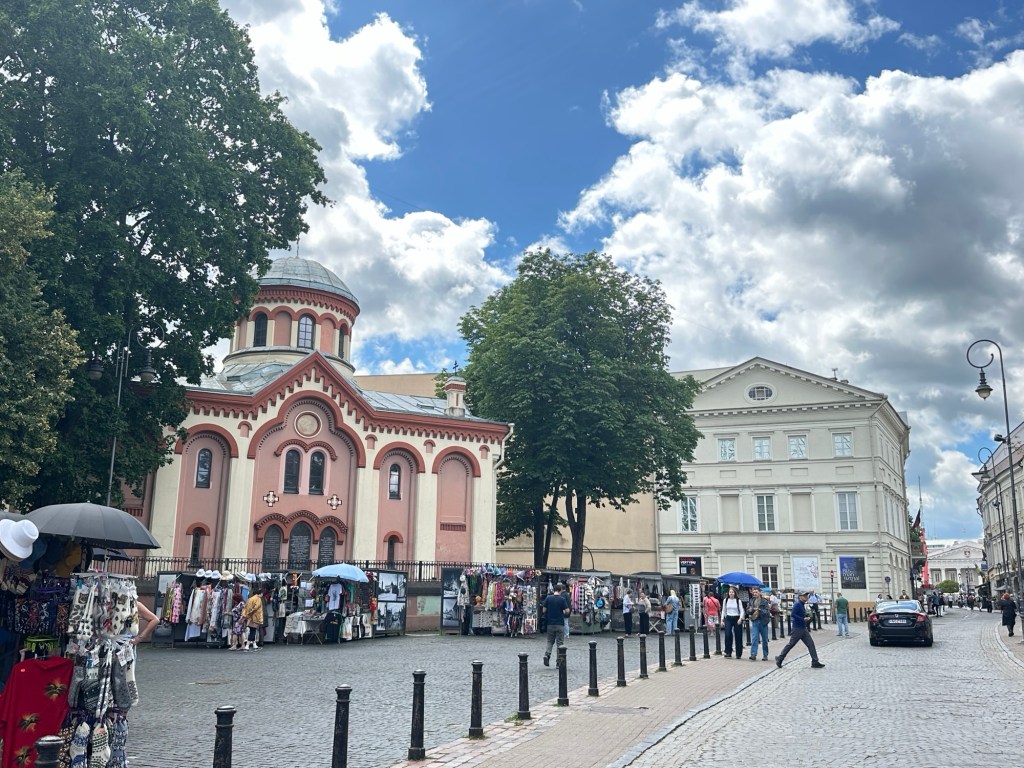
We start at the austere Neo-Classical Vilnius Basilica, with the Royal Palace to its rear. Behind that again is the Upper Castle and the Hill of Three Crosses.
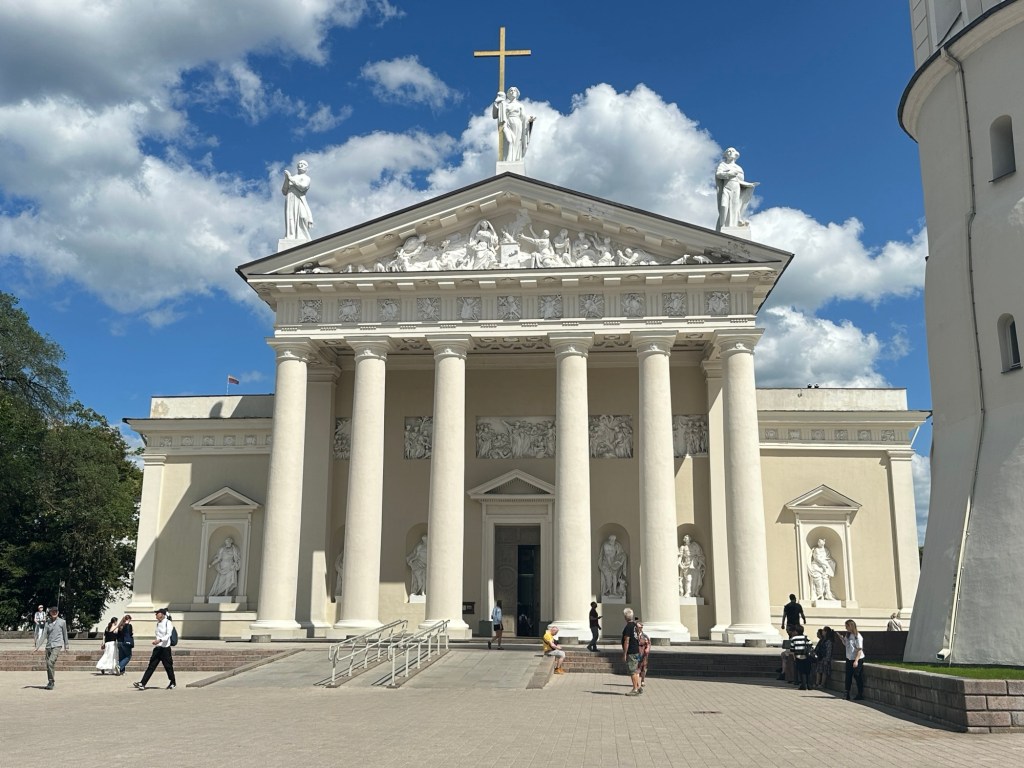

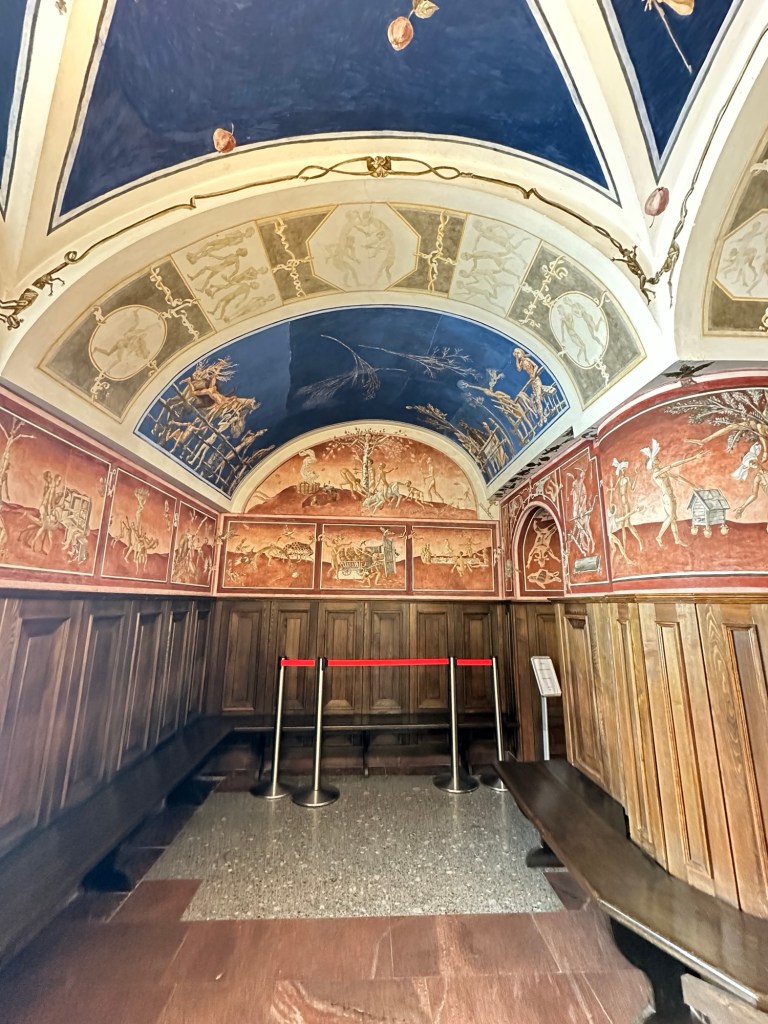
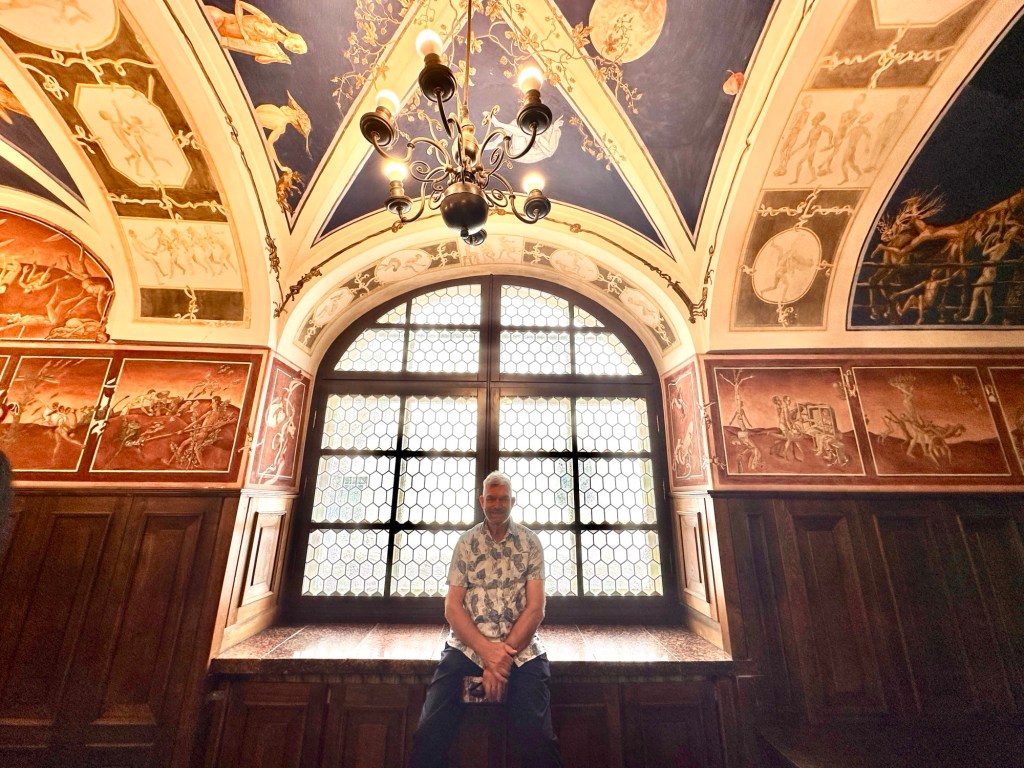
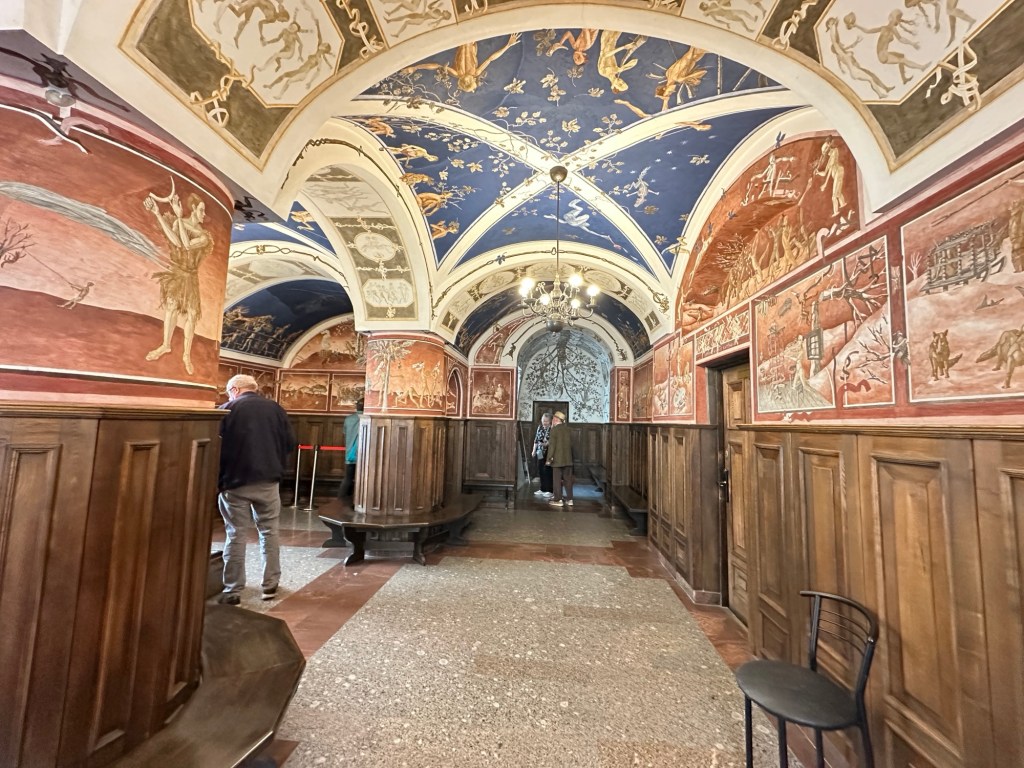
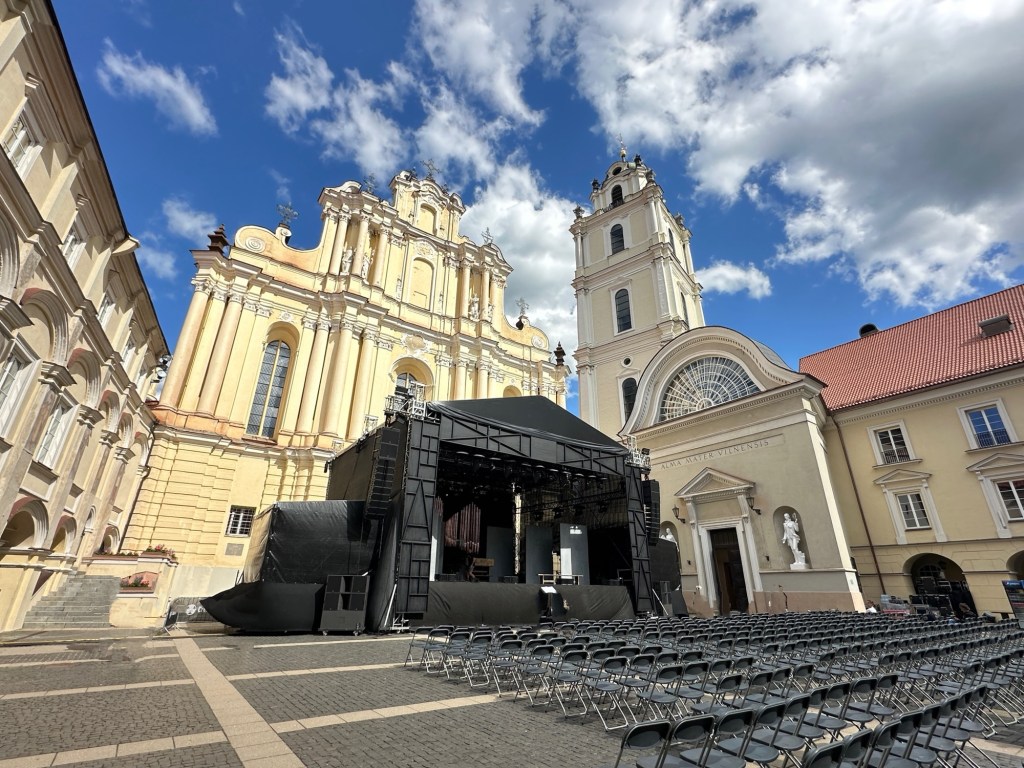
Turning down narrow lanes and hidden courtyards, we come to Vilnius University which is over 400 years old. Originally founded as a Jesuit College, then becoming a school of higher education in 1579, it is a combination of different architectural styles. Andrew took us to a special section that was an artistic impression of the tree of life and seasons of life. Also went to St John’s Church at the southern end of the campus.
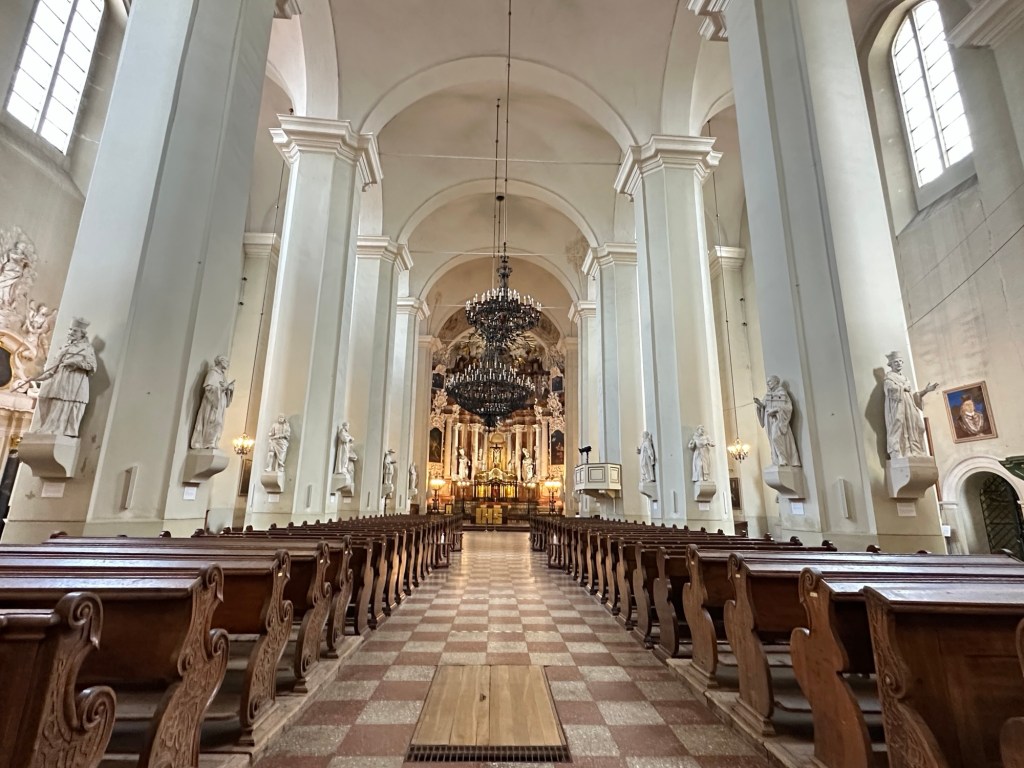

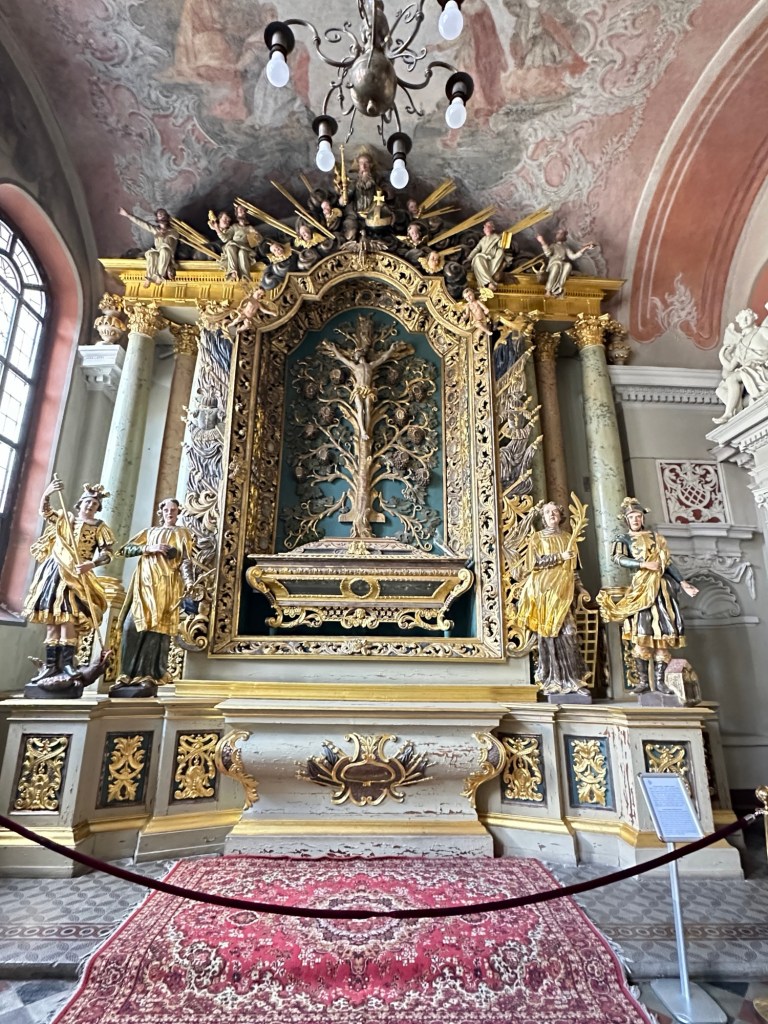
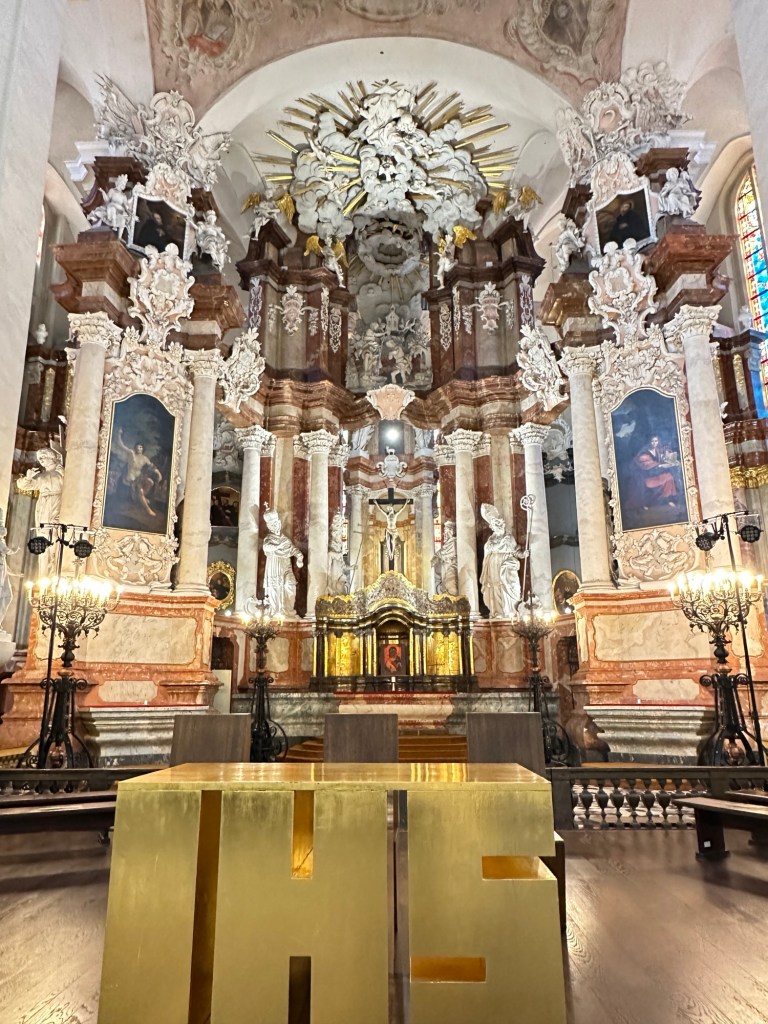

We took a walk down to Jewish Ghetto area. The Ghetto is where the Jews of Vilnius were imprisoned during Workd War II. Until the Holocaust, Vilnius was home to a large Jewish community. About 250,000 Jews lived in Lithuania at the turn of the 19th century, compared to under 5,000 today. By the early 19th century, Vilnius had emerged as a major centre of Jewish learning and bustled with life. Decimated by World War II and ravaged further by the Soviets, Jewish Vilna is a ghostly reminder of a vanished world. There is a map plaque on the wall where the gates once stood.
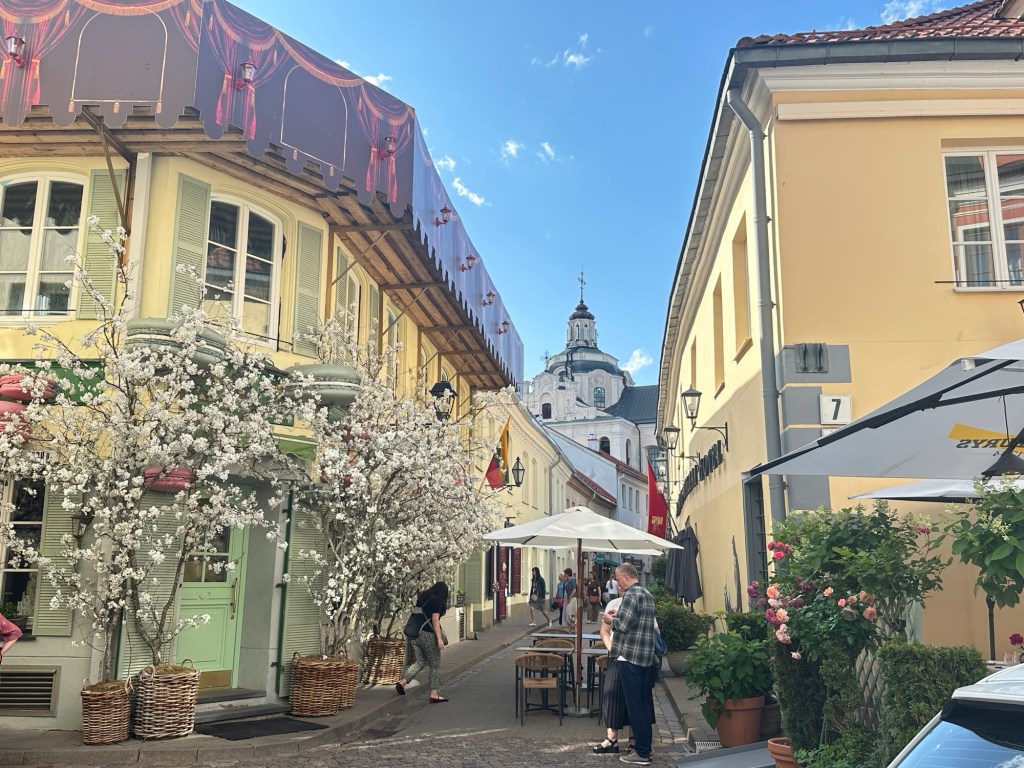

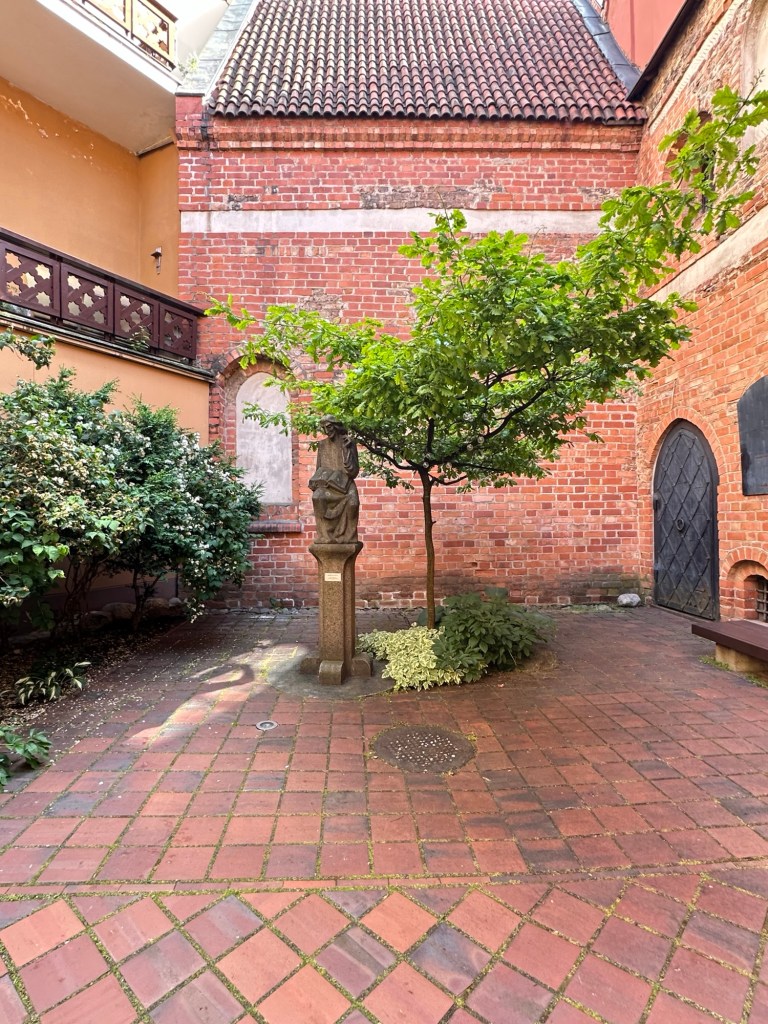
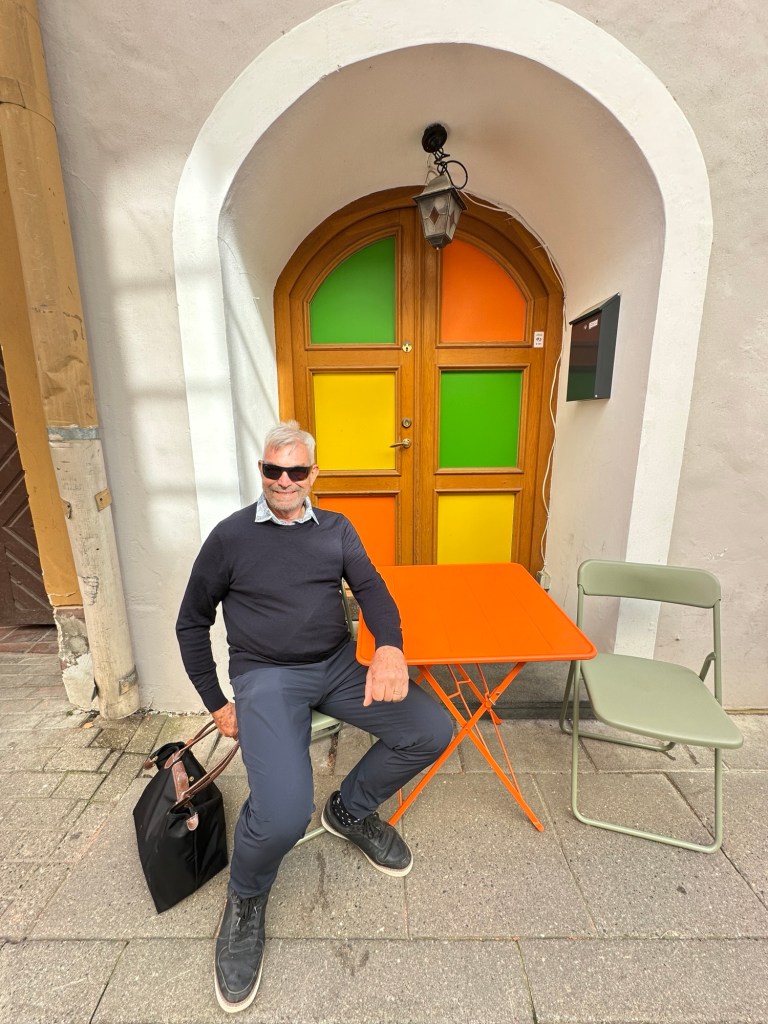
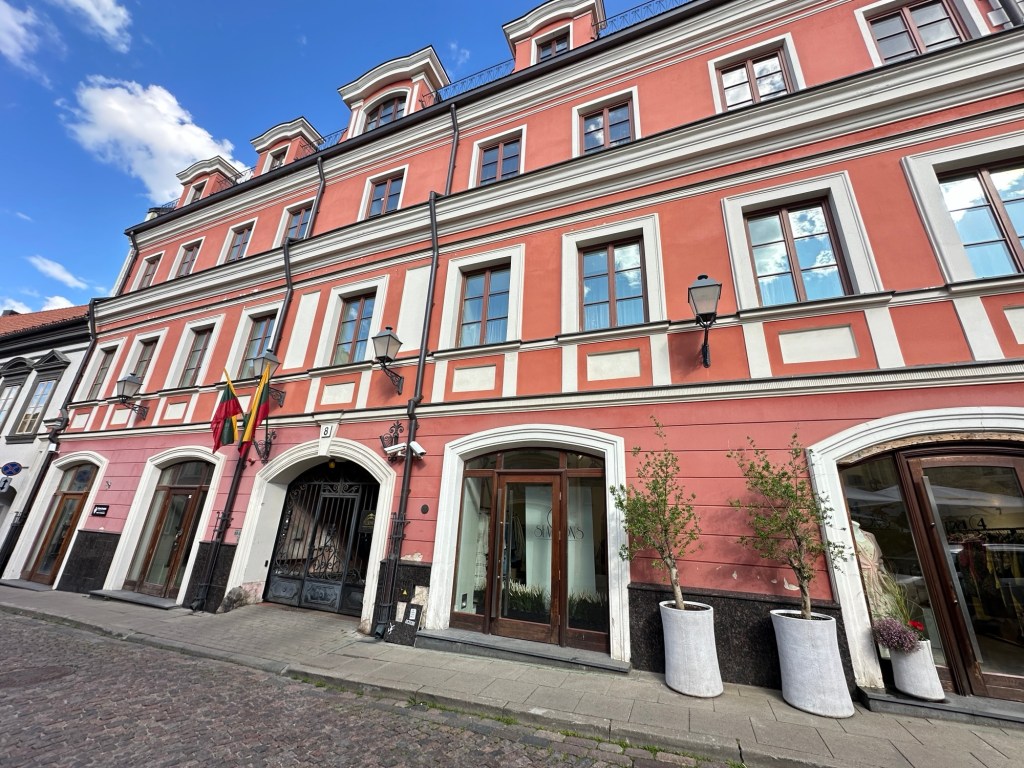

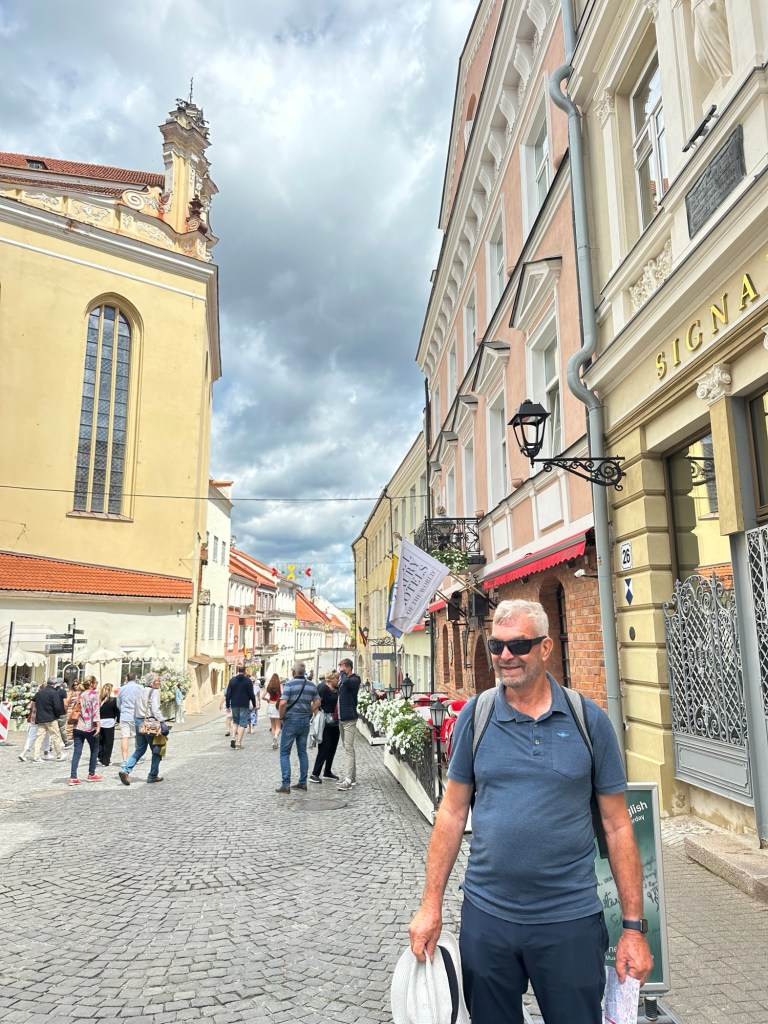
Andrew took us to the bookshop he used to work in, before then wandering up Pilies Street – one of the city’s oldest streets. It was once Vilnius’s commercial centre, now today is a popular area for shopping, eating and drinking.

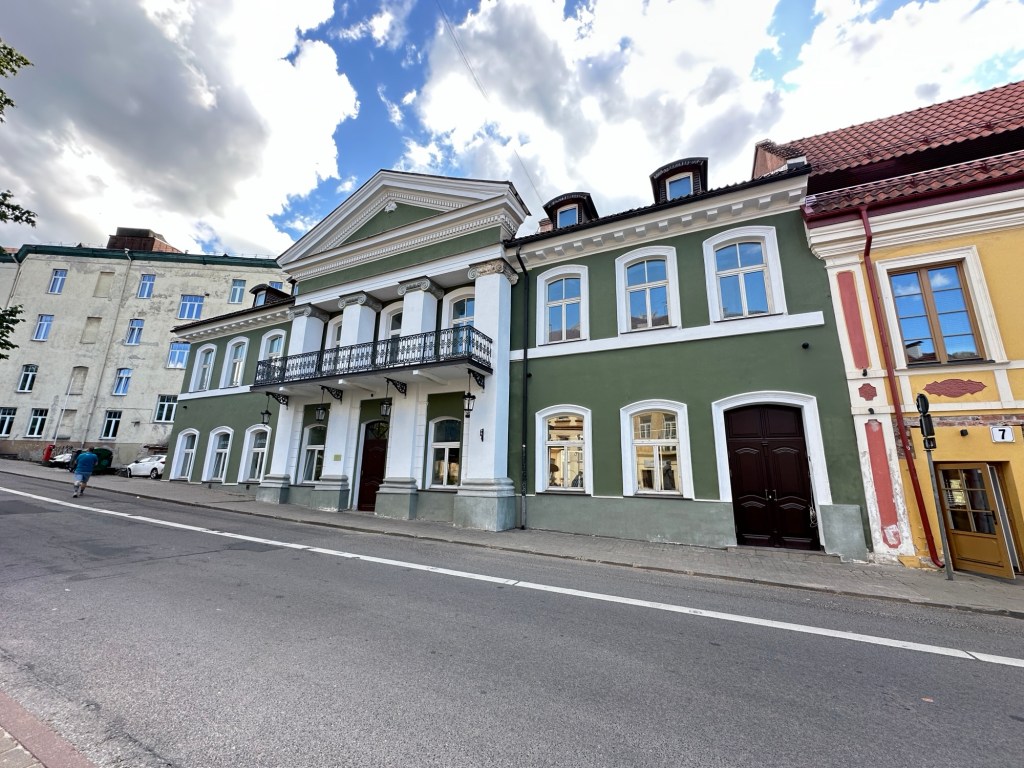
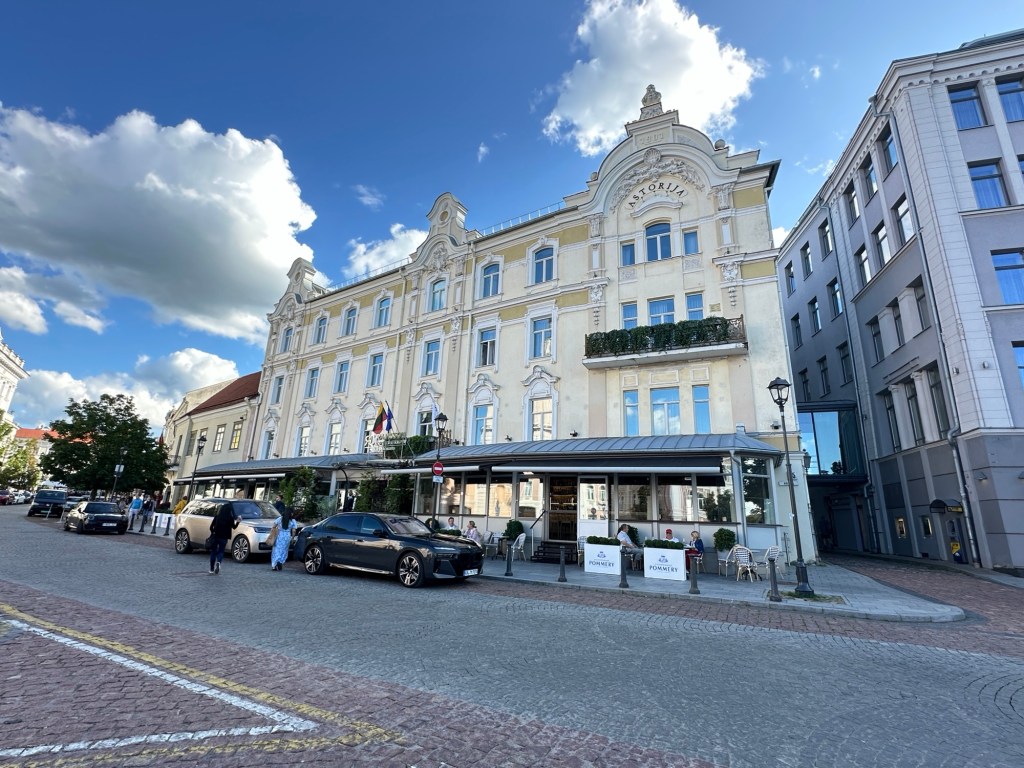
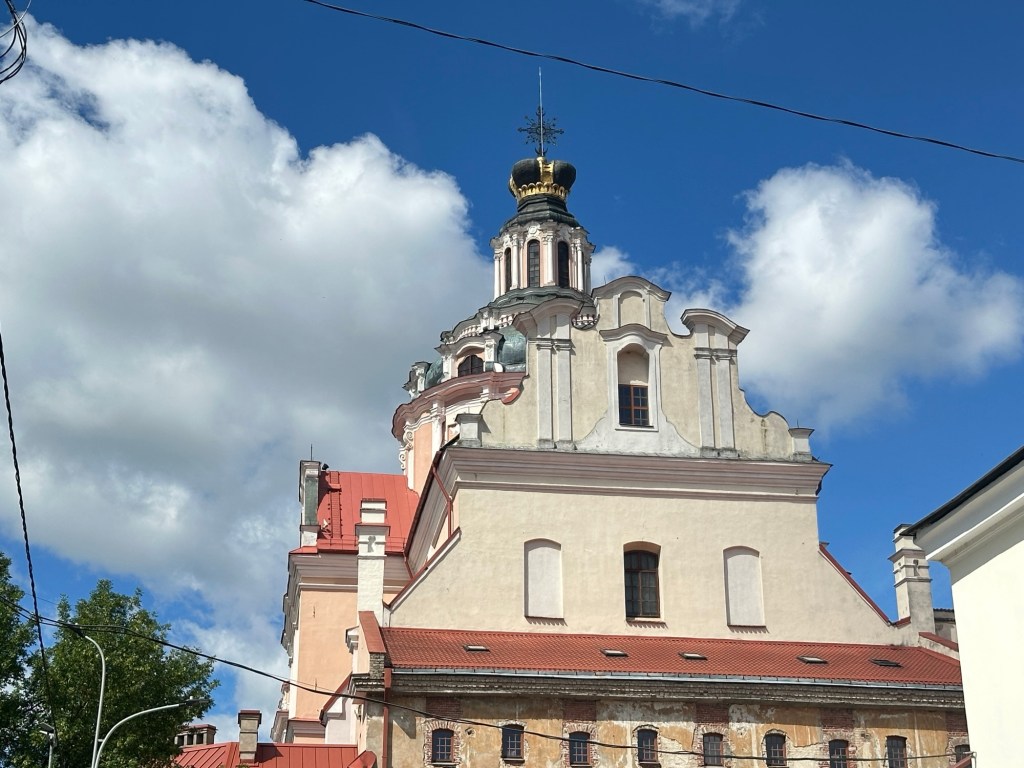
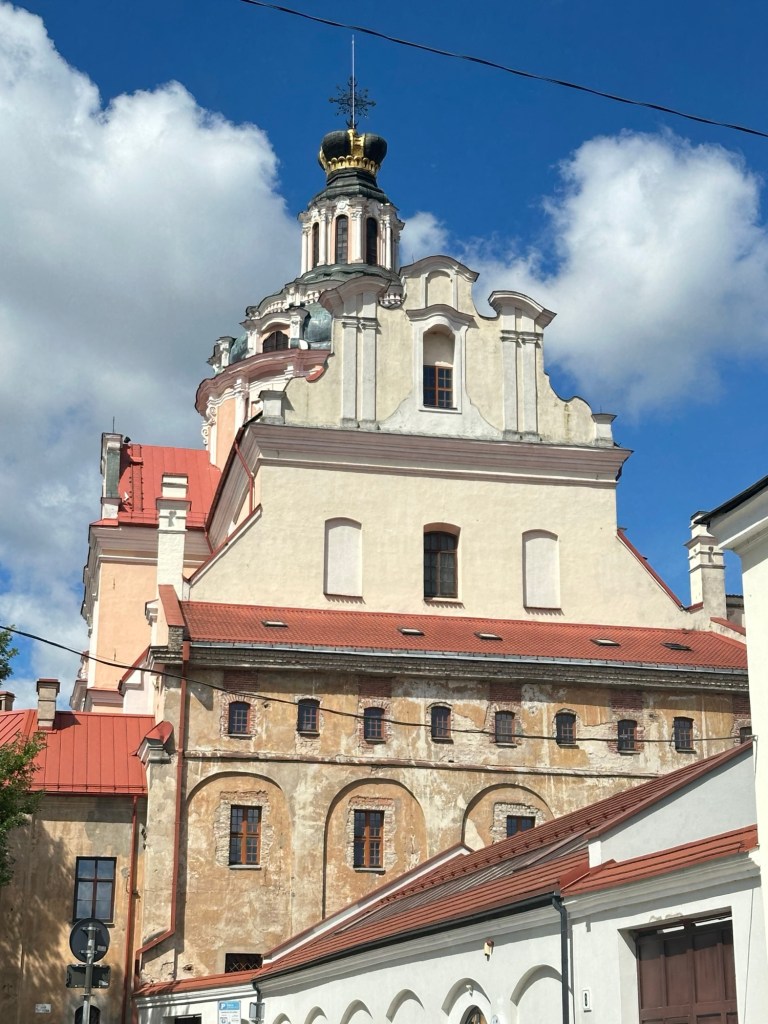
Saw so many churches – one notable church was Church of St Casimir. This church was the city’s museum of atheism in communist times. The crown symbolizes St Casimir’s royal lineage.
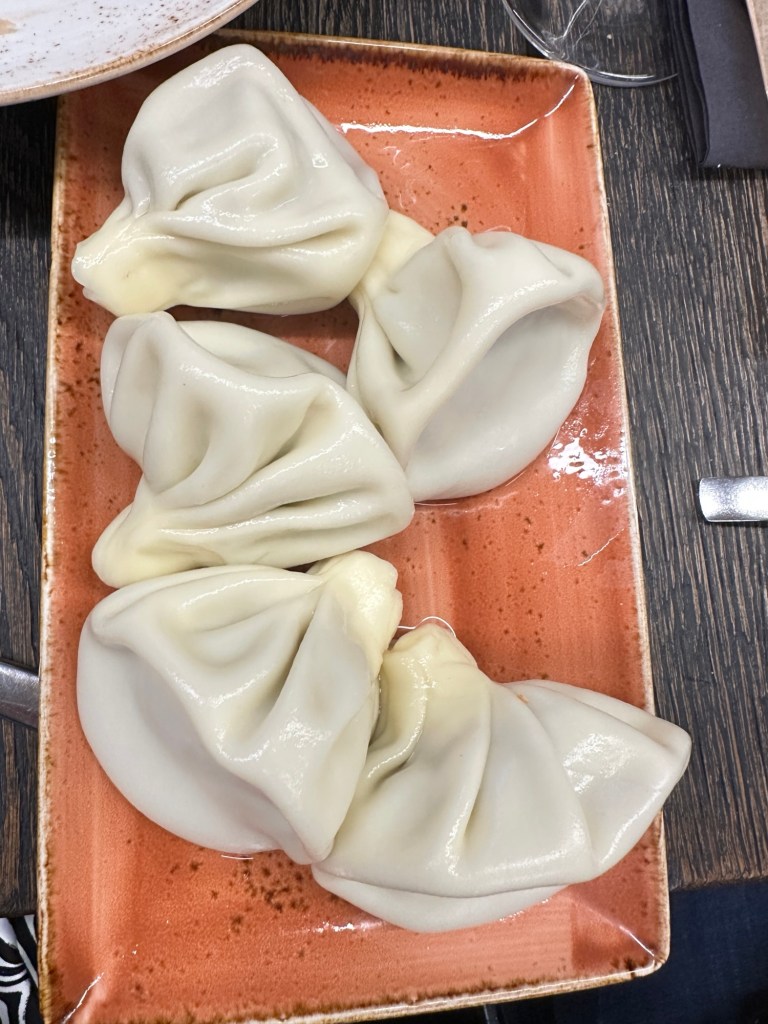
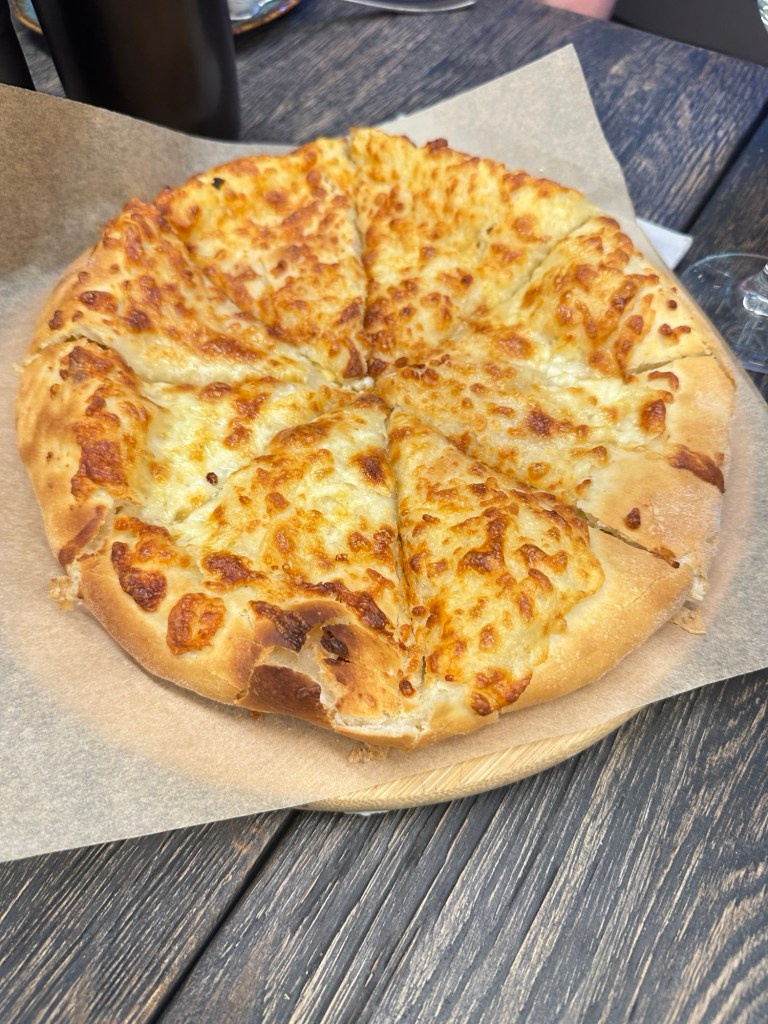
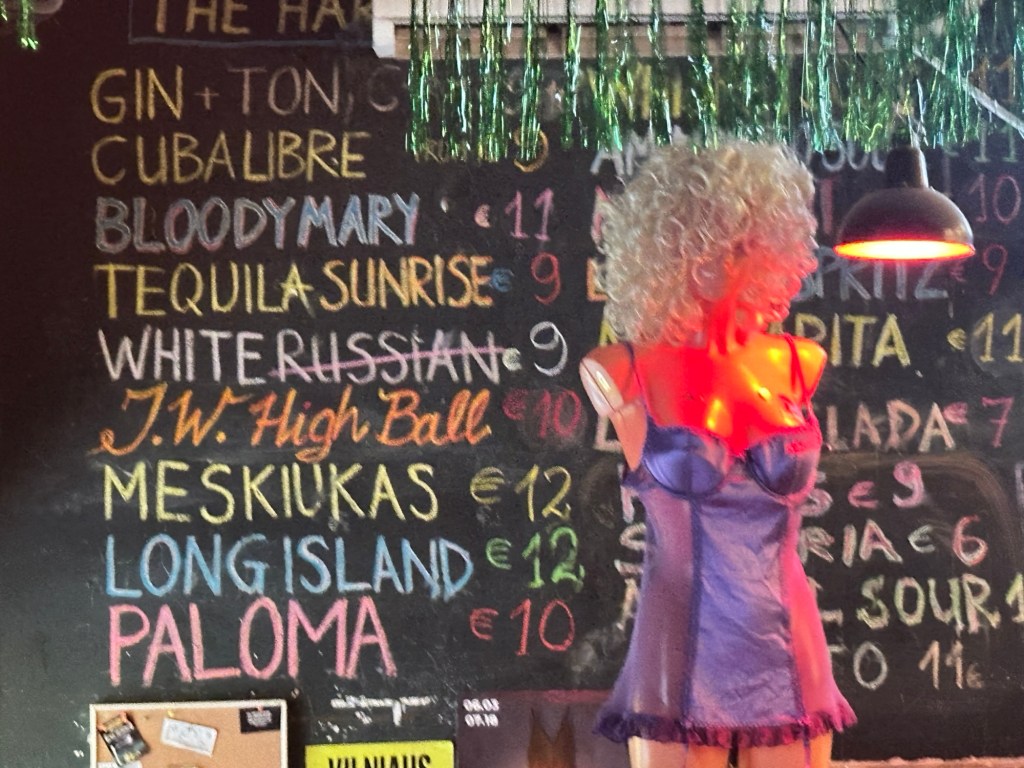
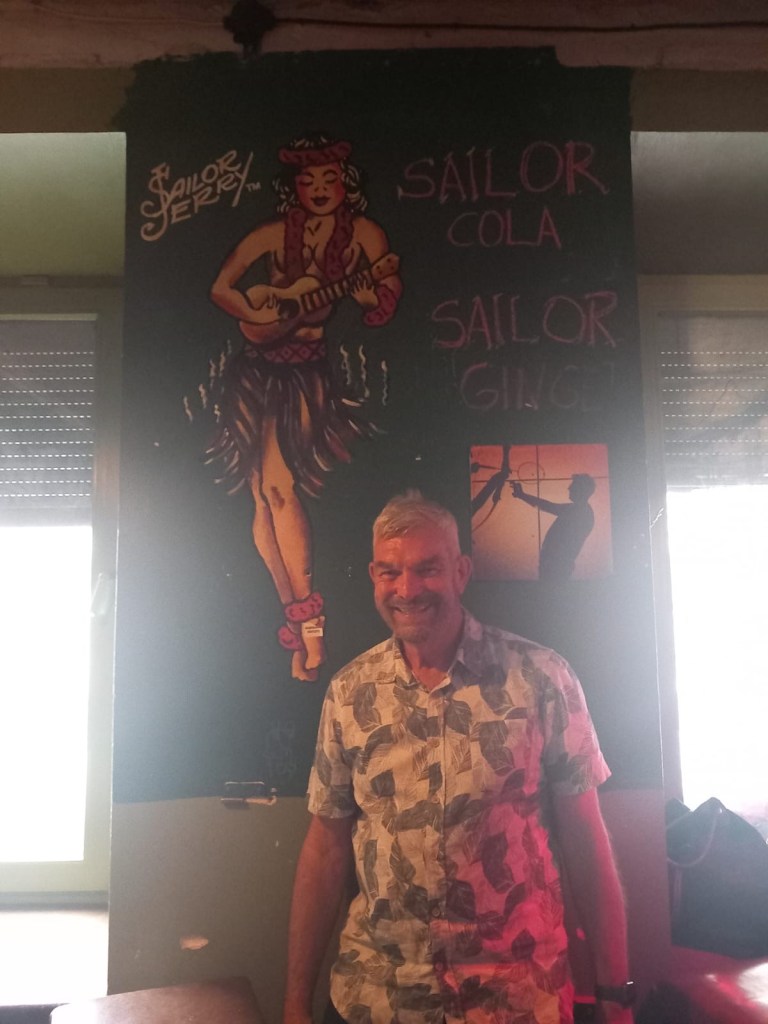
We walked then to the Georgian restaurant, Chacapuri, where we were having a Georgian banquet. We love Georgian food, even had the Saperavi wine to go with it. Not far from there was a grunge bar – Andrew thought we should try the Kombucha- the alcoholic version. I still haven’t worked out what was in it, but it was very nice. Time to call it a night.


Saturday 5th July
Vilnius
10-21 degrees
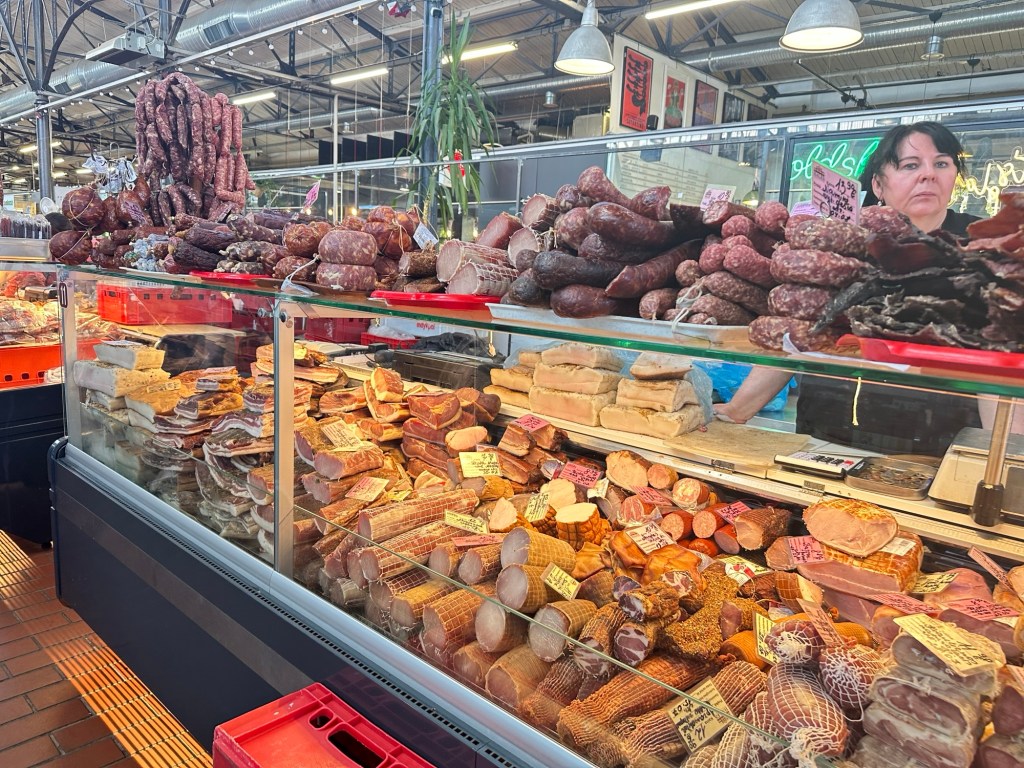
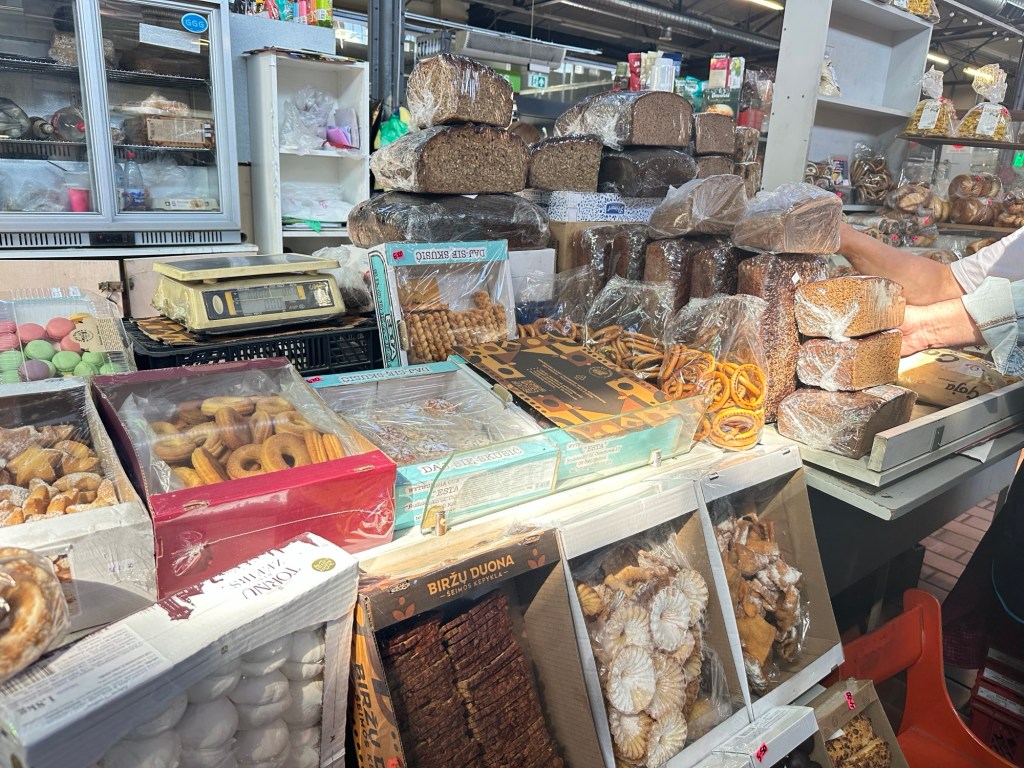
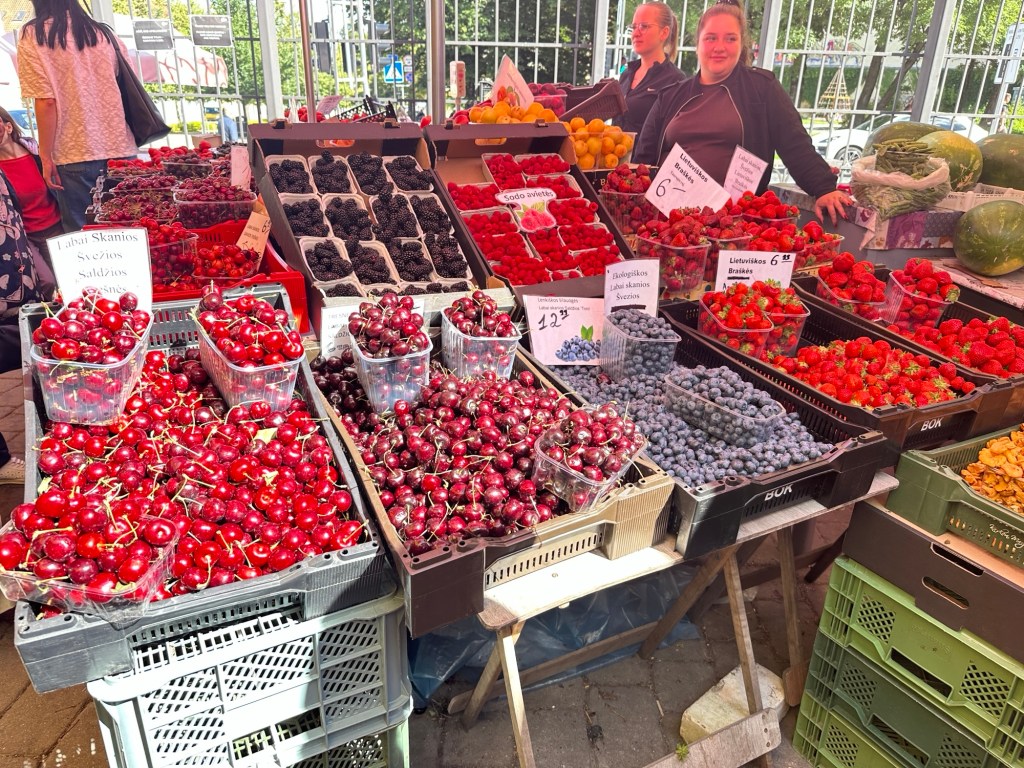
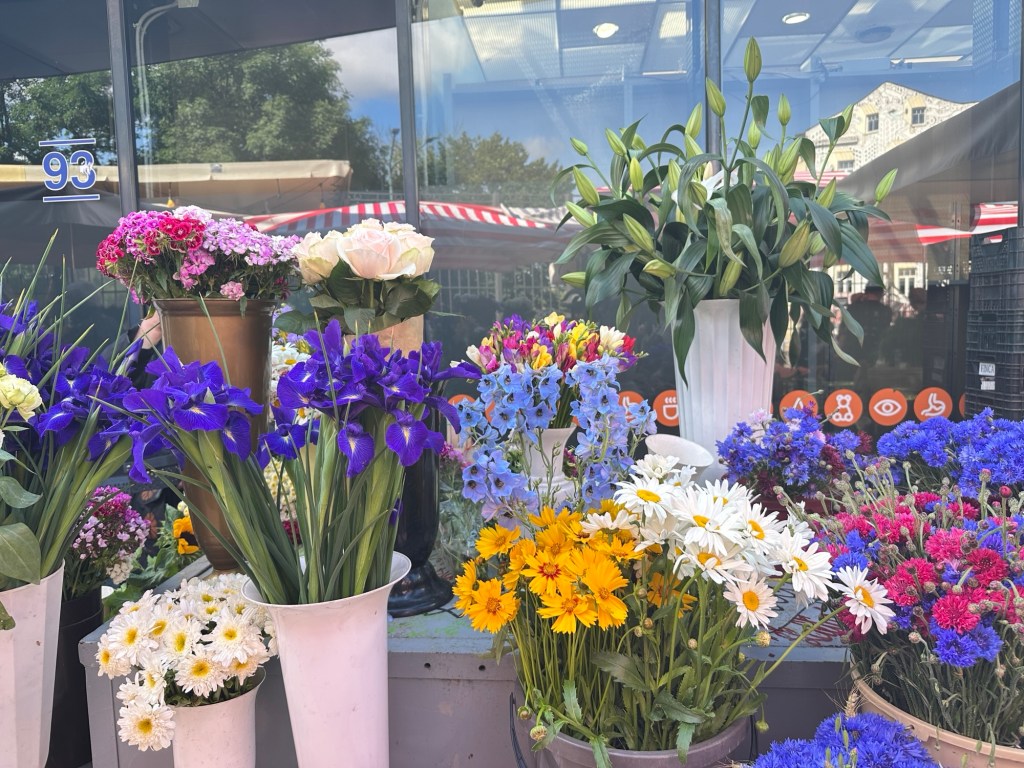
Part two of our city walking tour starting at the Central Market. On display was a huge variety of cold meats, cheese, fresh fruit and vegetables, and flowers. The strawberries and cherries were so juicy and sweet.


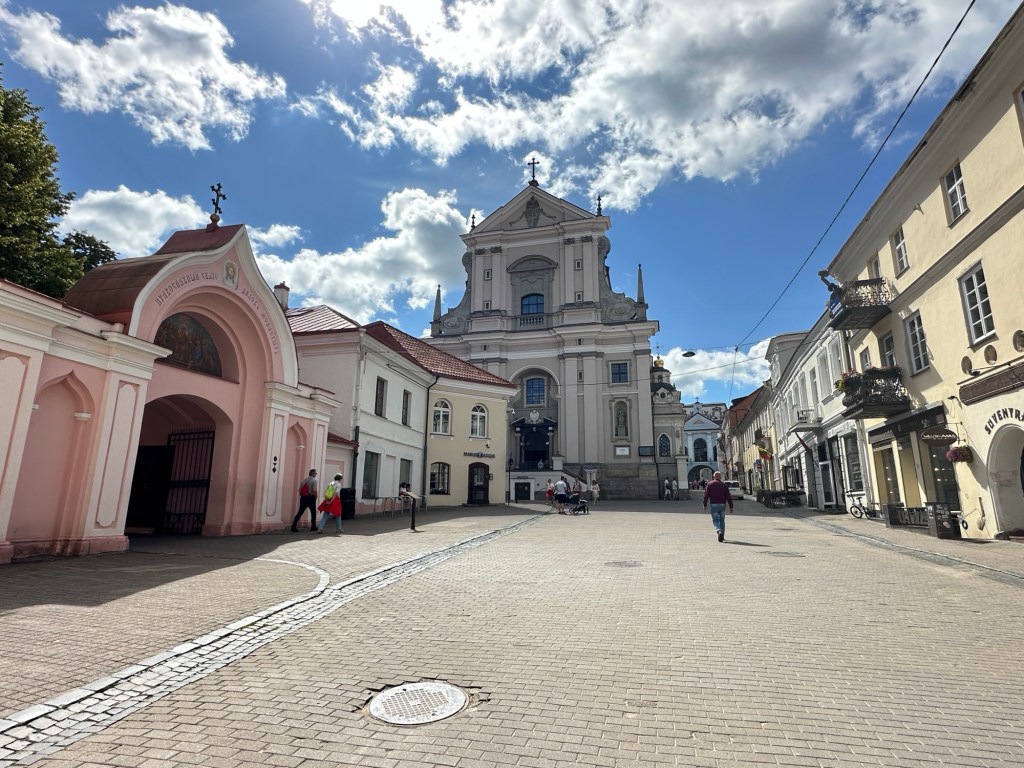
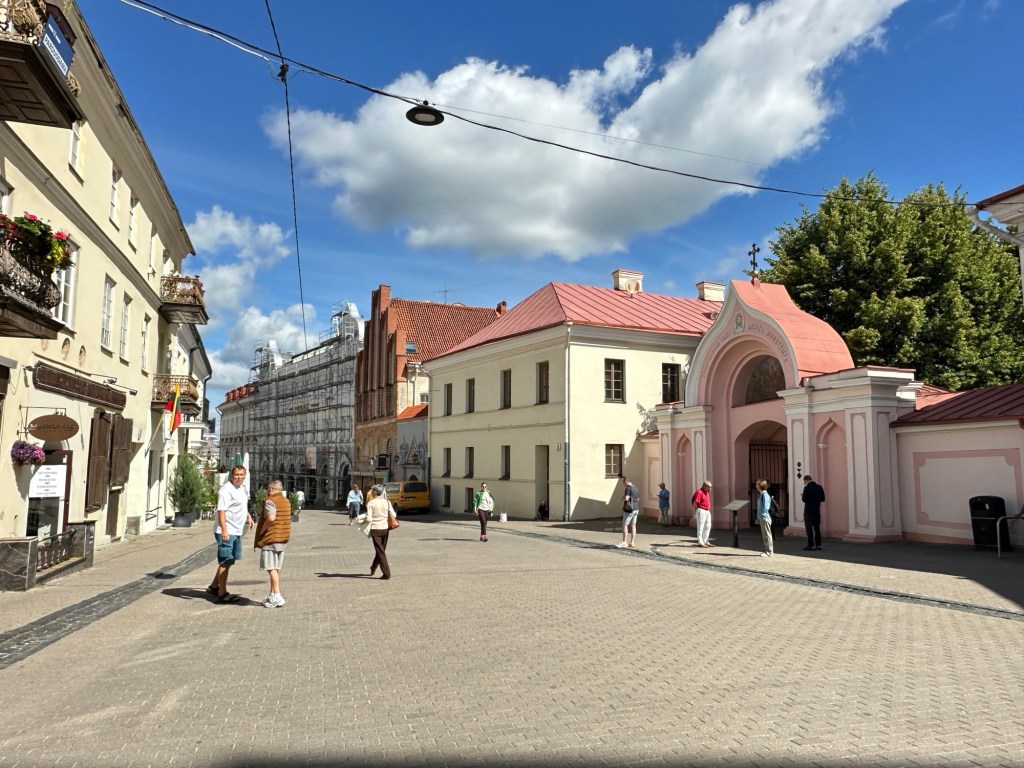
We continue to the Old City entering through the last remaining gate of the old city wall. The Gates of Dawns is the only gateway from the early 16th-century city walls to have survived. It becomes more evident when viewed from the outside, where round holes that were used for cannons are still visible. The Classical chapel of Gates of Dawn follows the centuries-old custom of having a chapel or a religious image in every gateway to safeguard the city from outside enemies and to protect departing travellers. The focus of this chapel is The Madonna of Mercy, an image reputed to have miracle-working powers. A site of pilgrimage, it was one of the first stops for Pope John Paul II when he visited Lithuania in 1993.
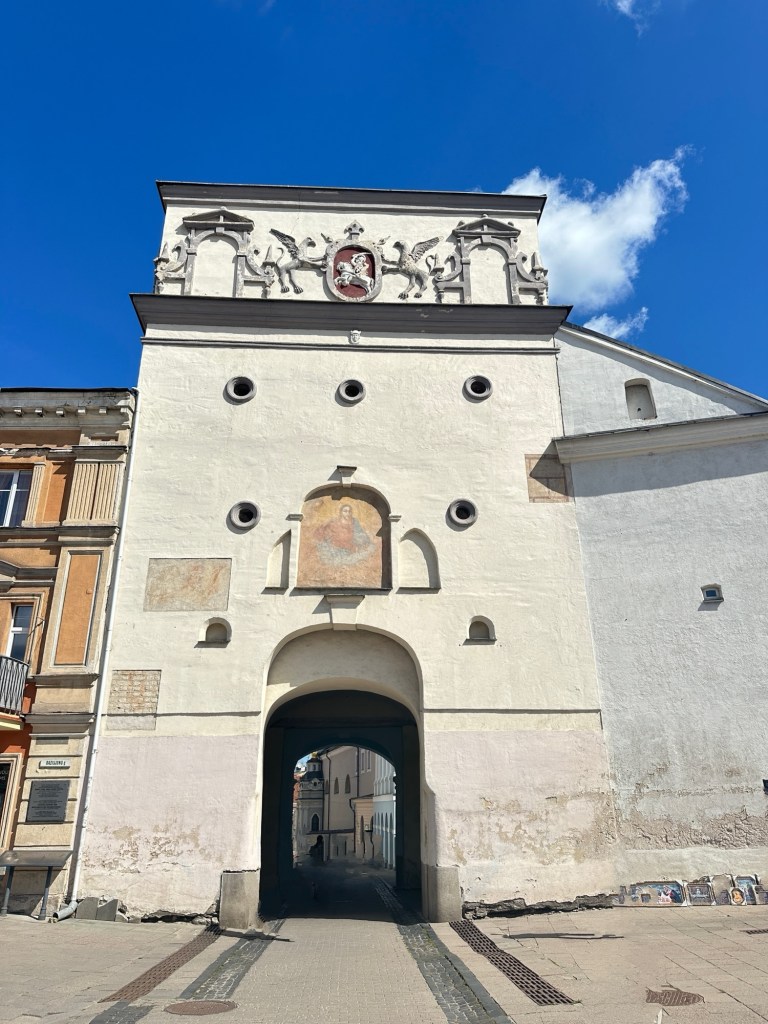

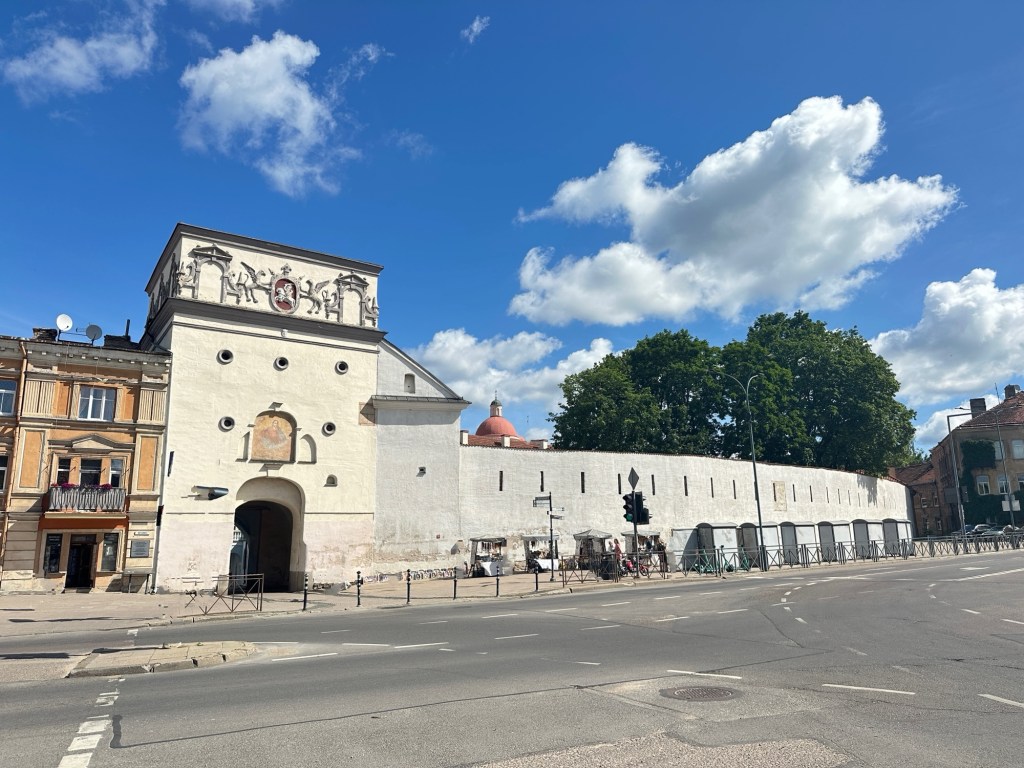
Lithuania’s distinctive Baroque architecture, known as Vilnius Baroque, can be admired in the outstanding monuments clustered around the Gates of Dawn and the Church of St Casimir. The enchanting collection of towers and sculptures was created during the 17th and 18th centuries by Italian and Polish architects and their Polish-Lithuanian noble patrons.
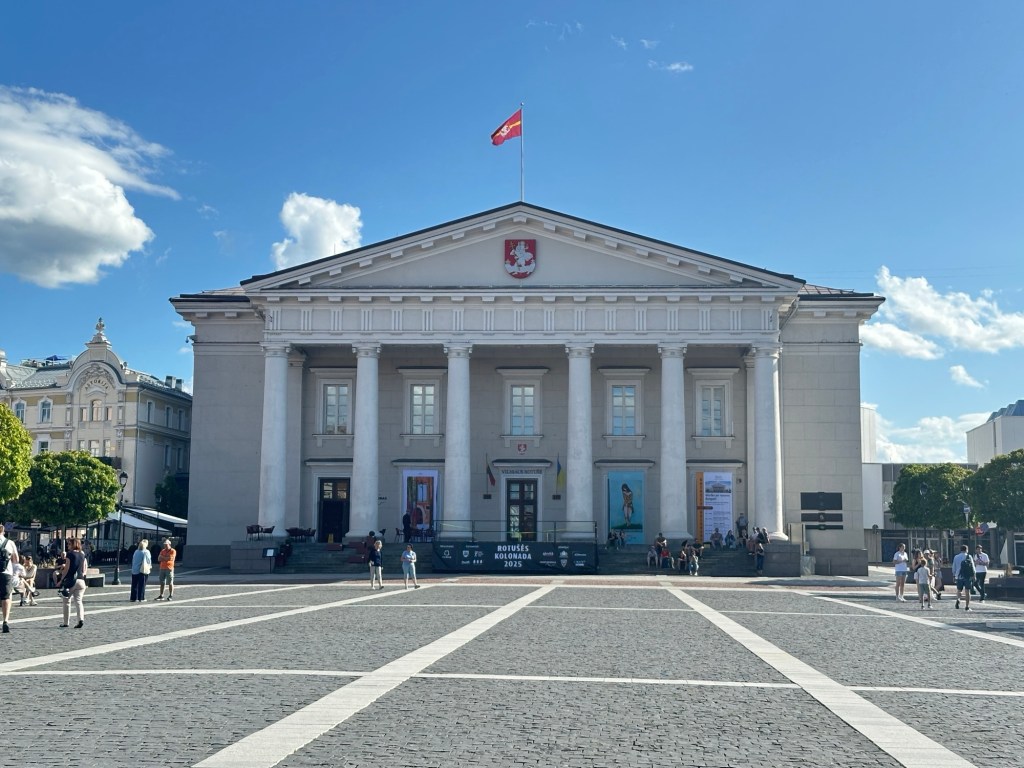
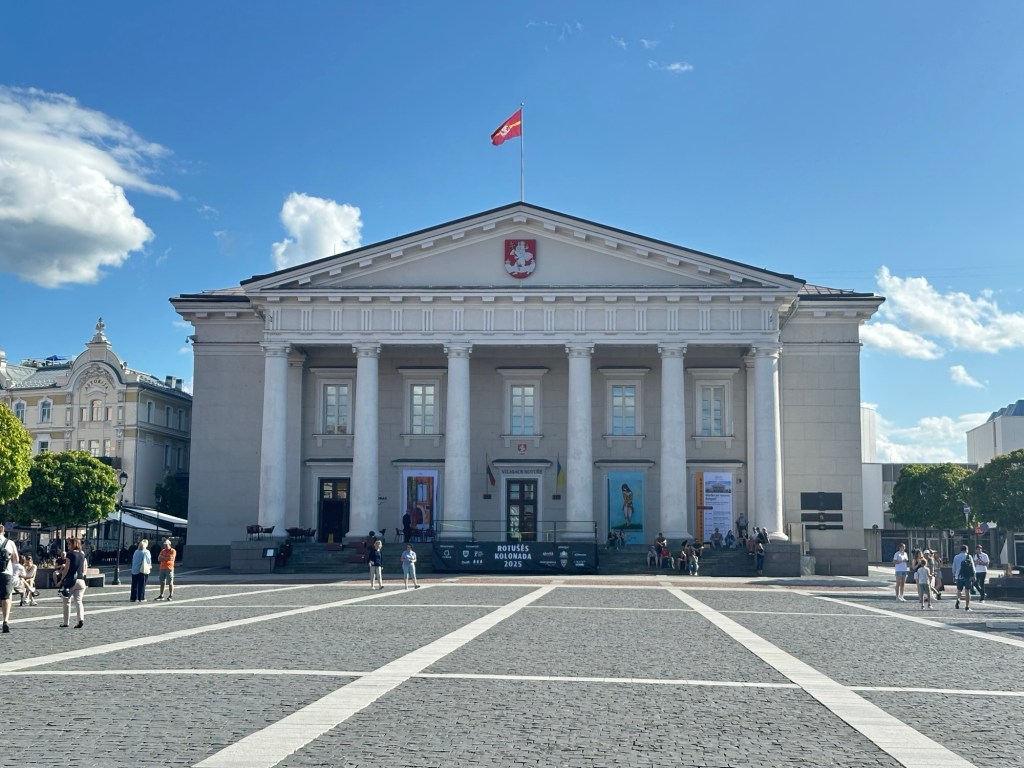
The buildings are elegantly designed with symmetrical façades, reflecting an unmistakable Italian influence. An early feature of the Baroque landscape, built from 1630 to 1655, is the Church of St Theresa, which stands in front of the Gates of Dawn. The Town Hall at the end of the street has a bold Classical portico.
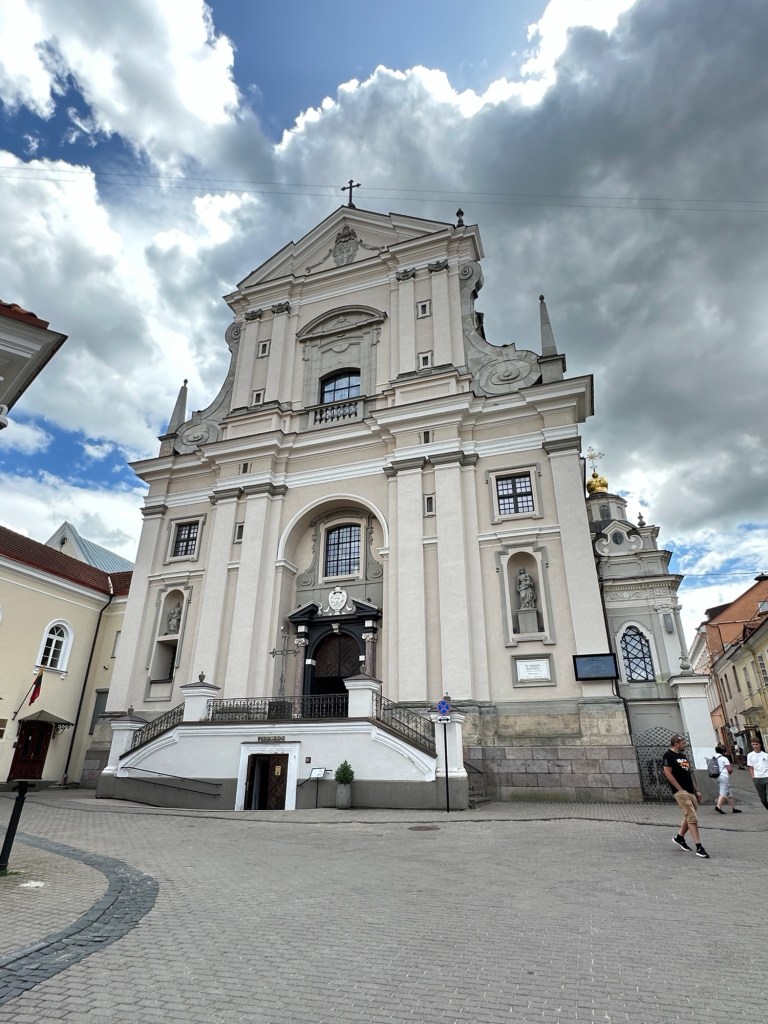
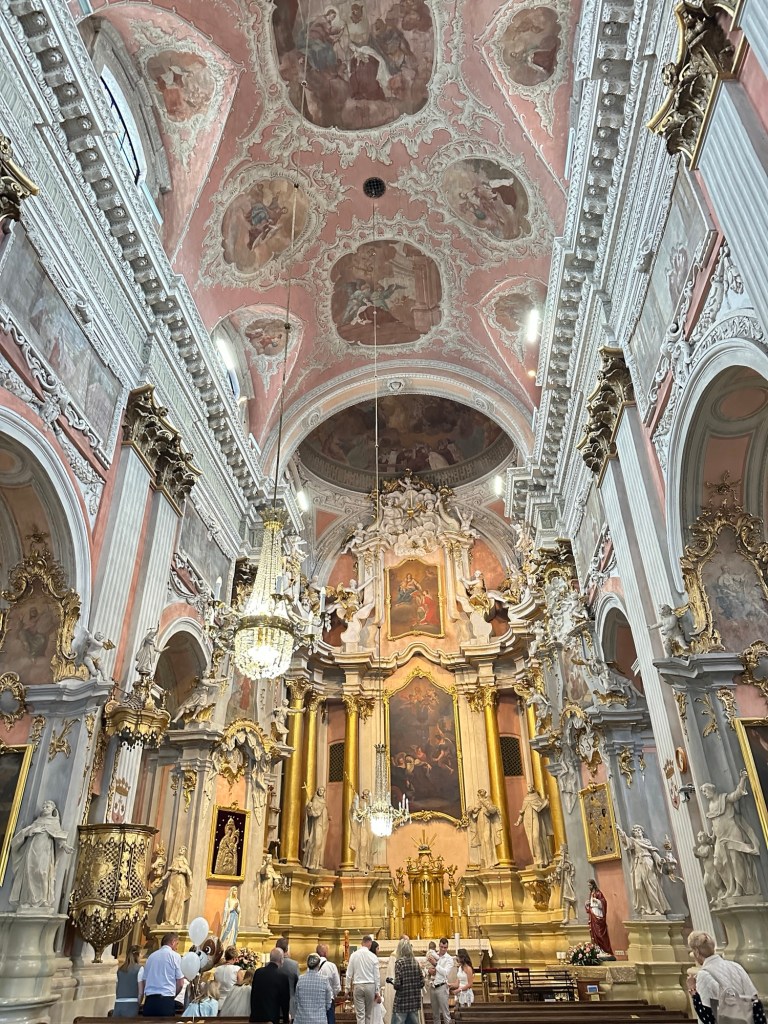
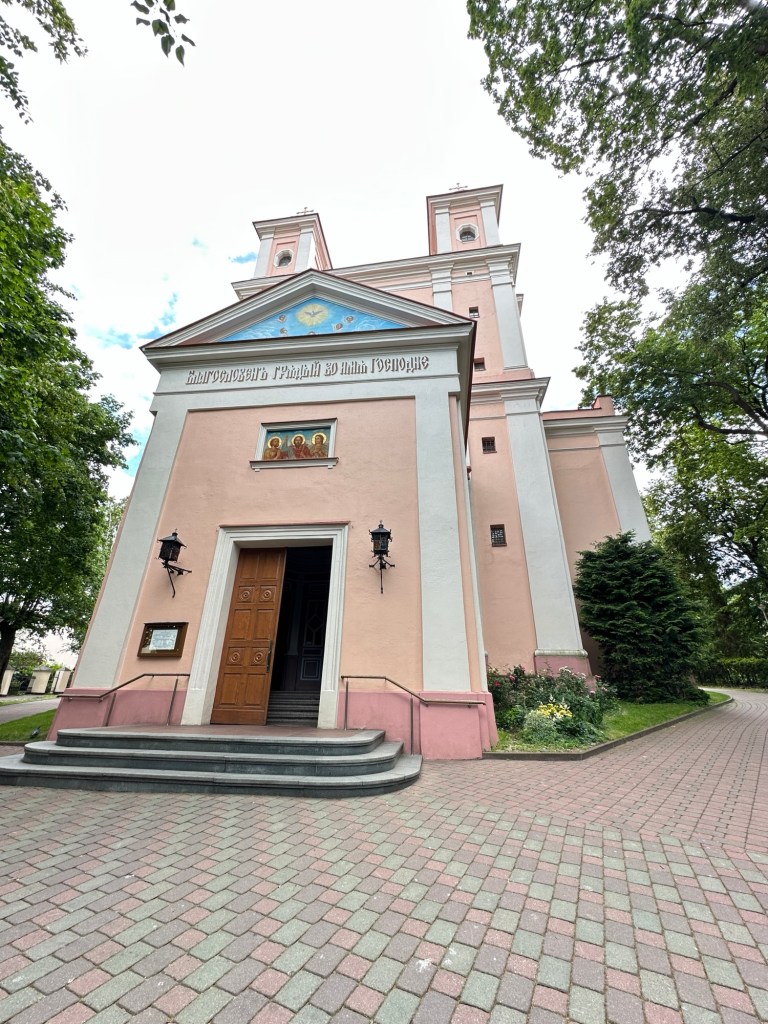
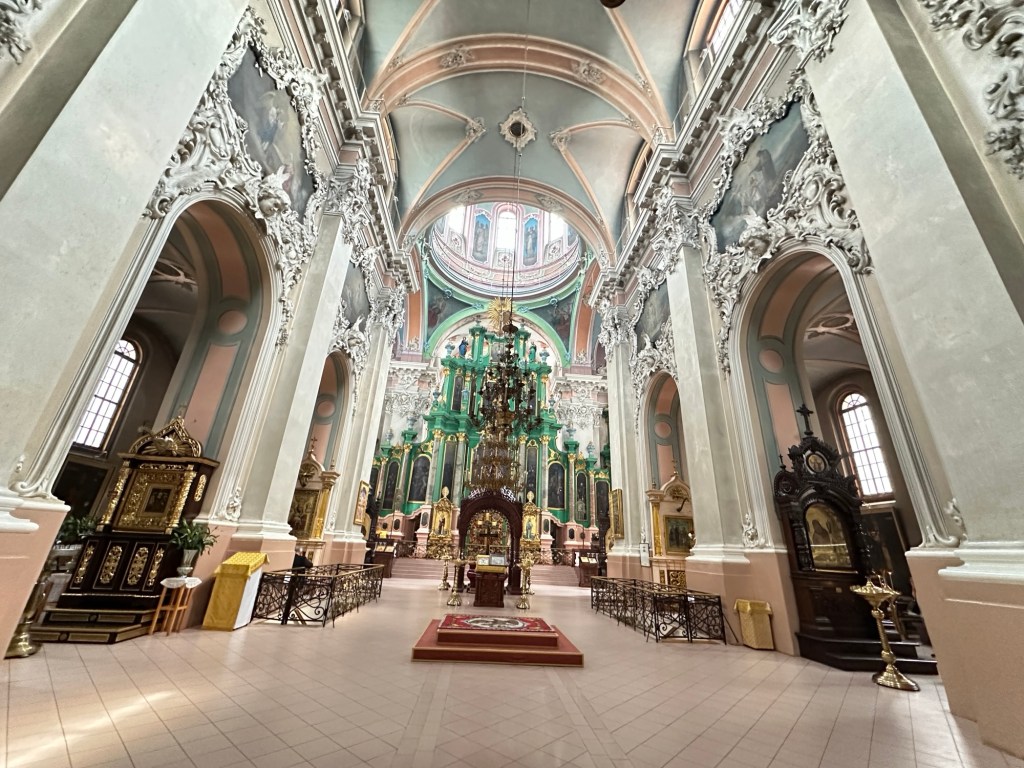
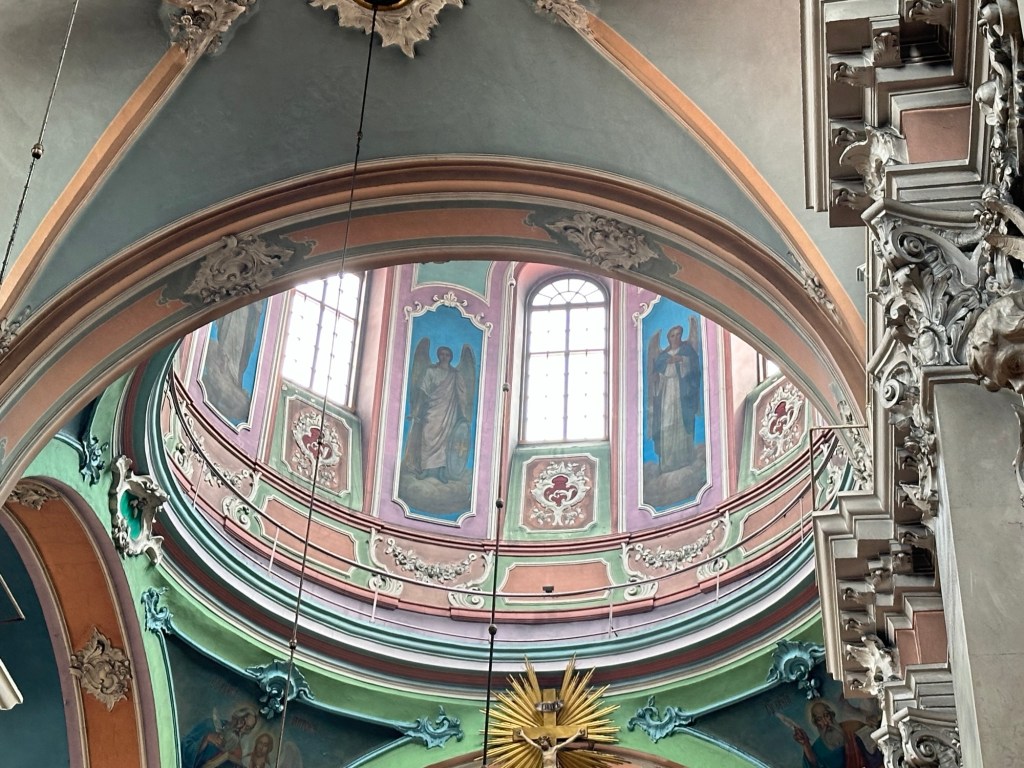
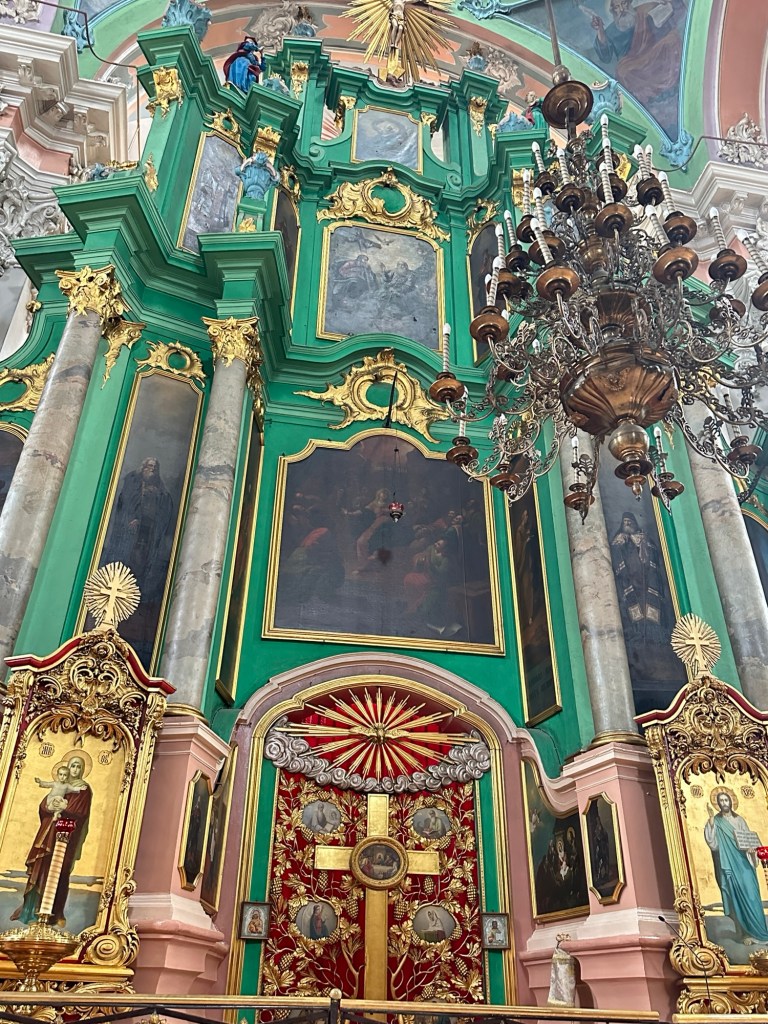
Also in this street is the Orthodox Church of St Nicholas. Originally a Gothic Church dating from 1514, it became Greek Catholic, then returned to Russian Orthodox in 1827. Very vividly decorated inside.
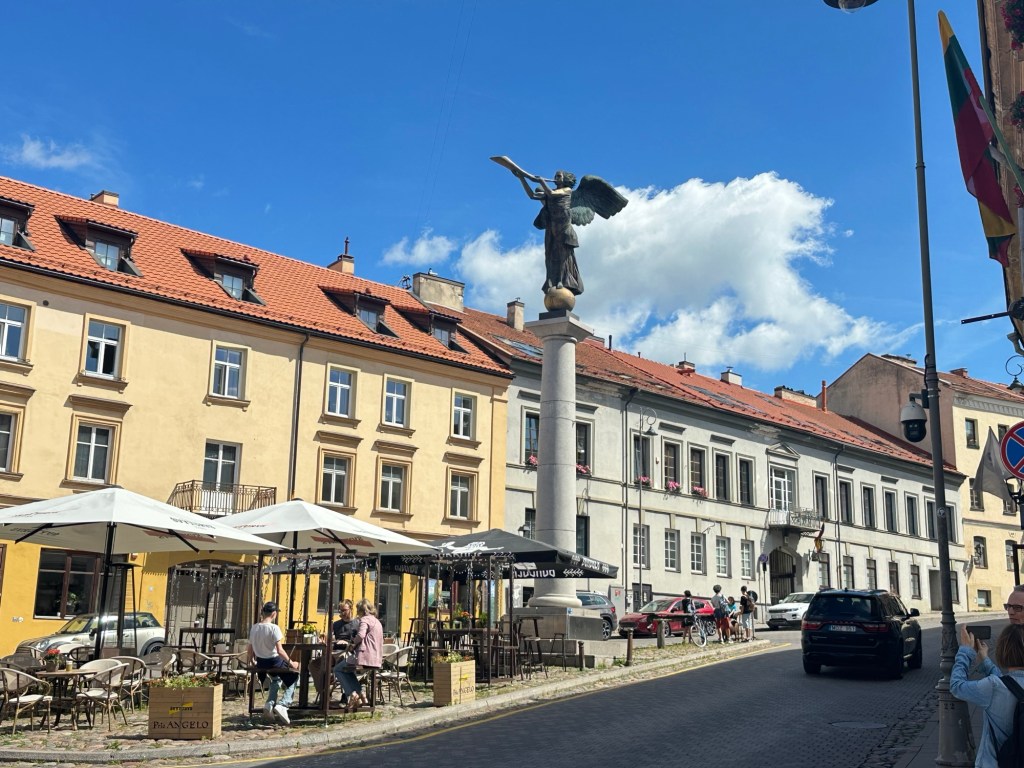
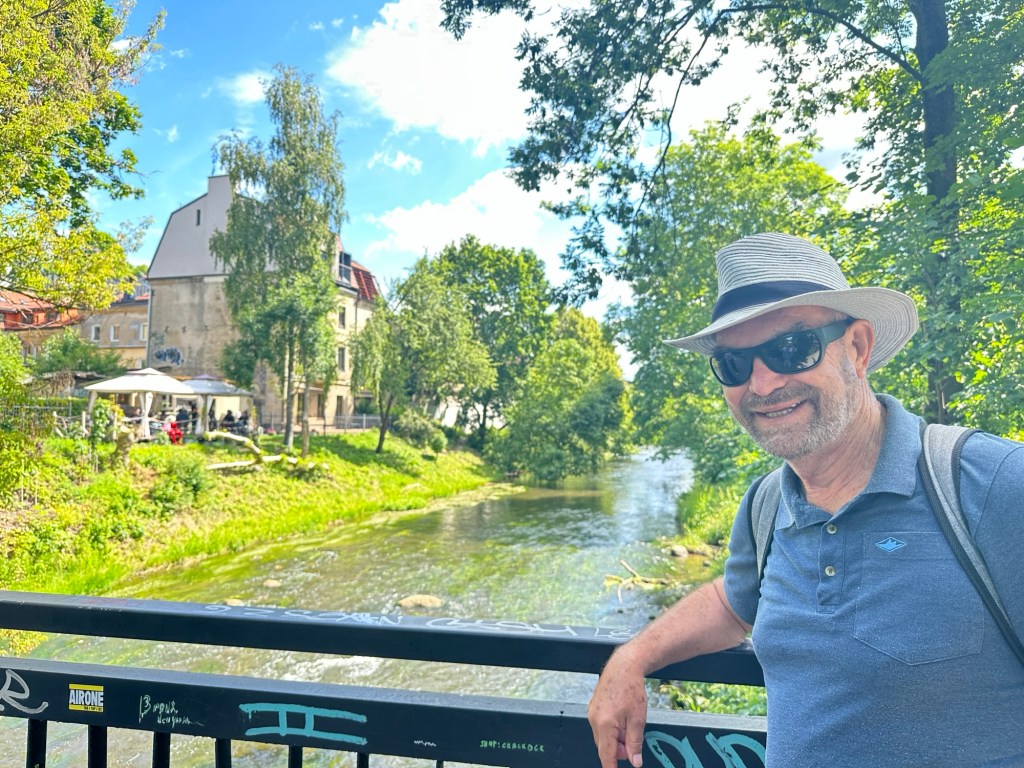
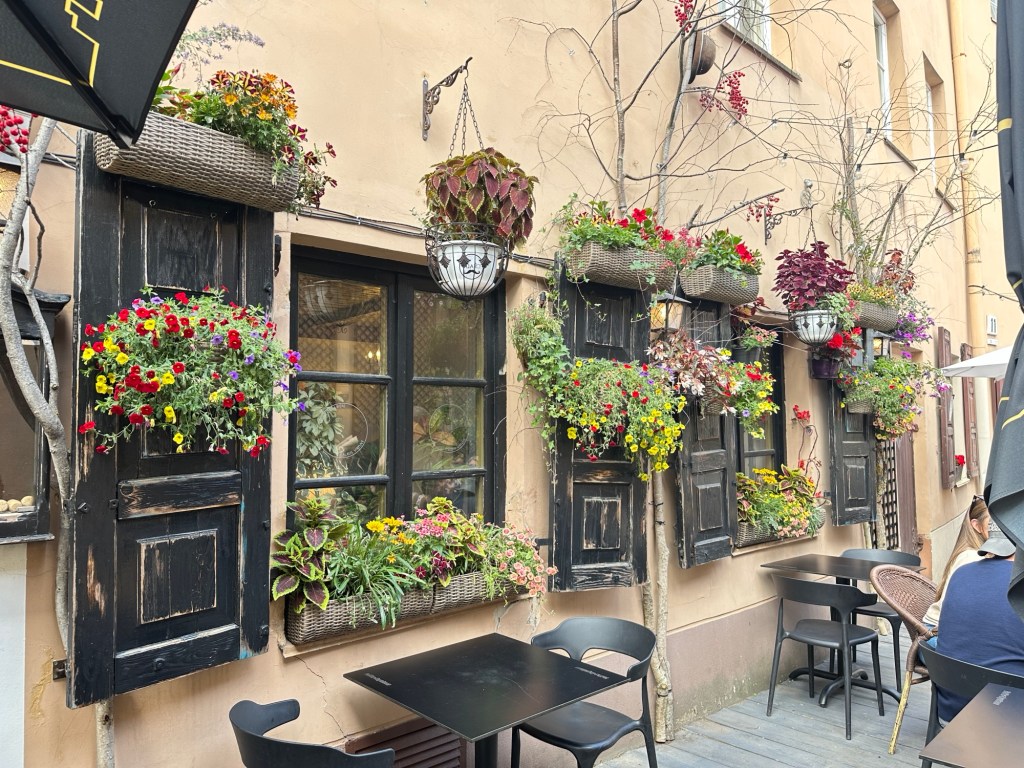
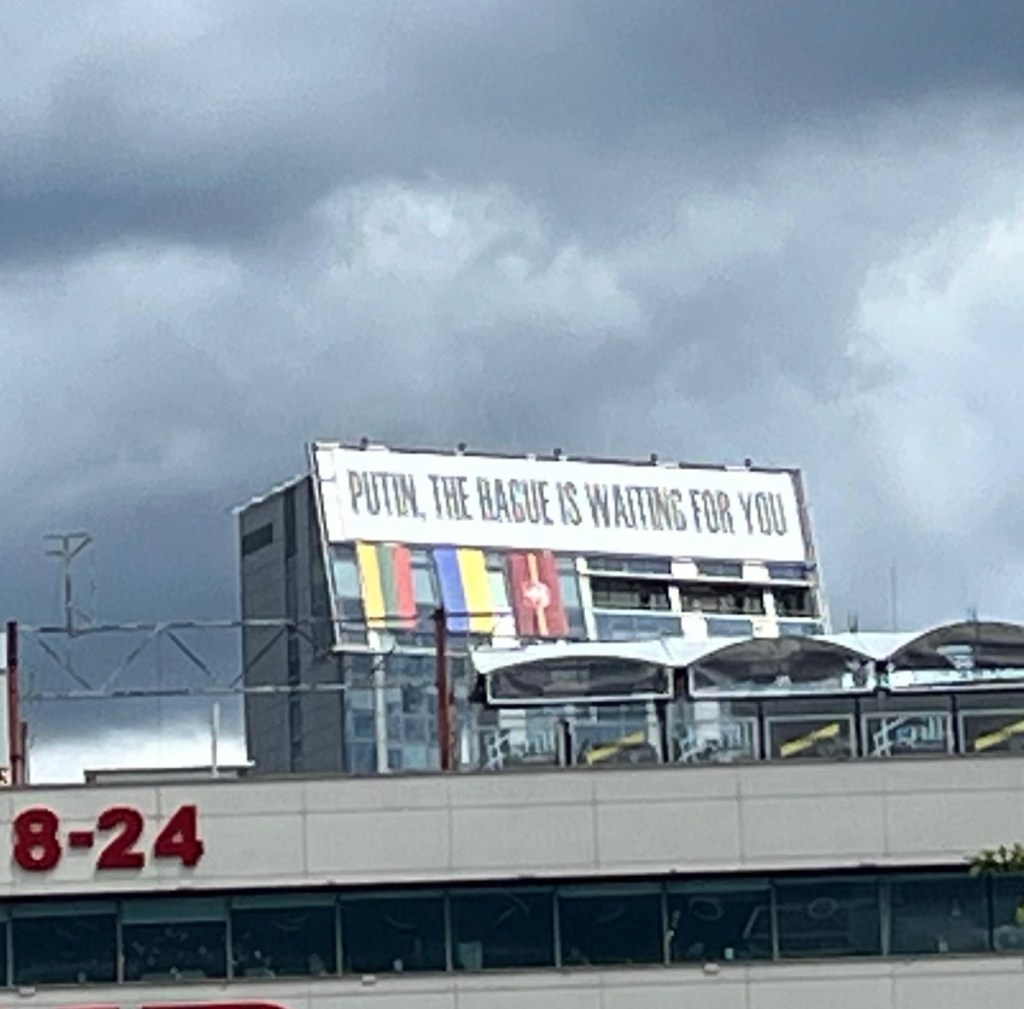
A short walk from the town centre tucked inside a bend in the Vilnia river, is Uzupis, which translates as “Behind the River”. This picturesque part of central Vilnius has narrow streets filled with cafés, art galleries and mysterious hidden courtyards.
The artists who live here declared independence in 1997, with their own flag, president and independence day (1 April). Their constitution, which features articles such as “Every-one has the right to understand nothing”, is nailed to a wall on Paupio Street. The statue of an angel, the symbol of Uzupis, stands nearby. The Alternative Art Centre, or Incubator, where the door is always open, stands by the river. Lots of quirky art, quite a fascinating concept.
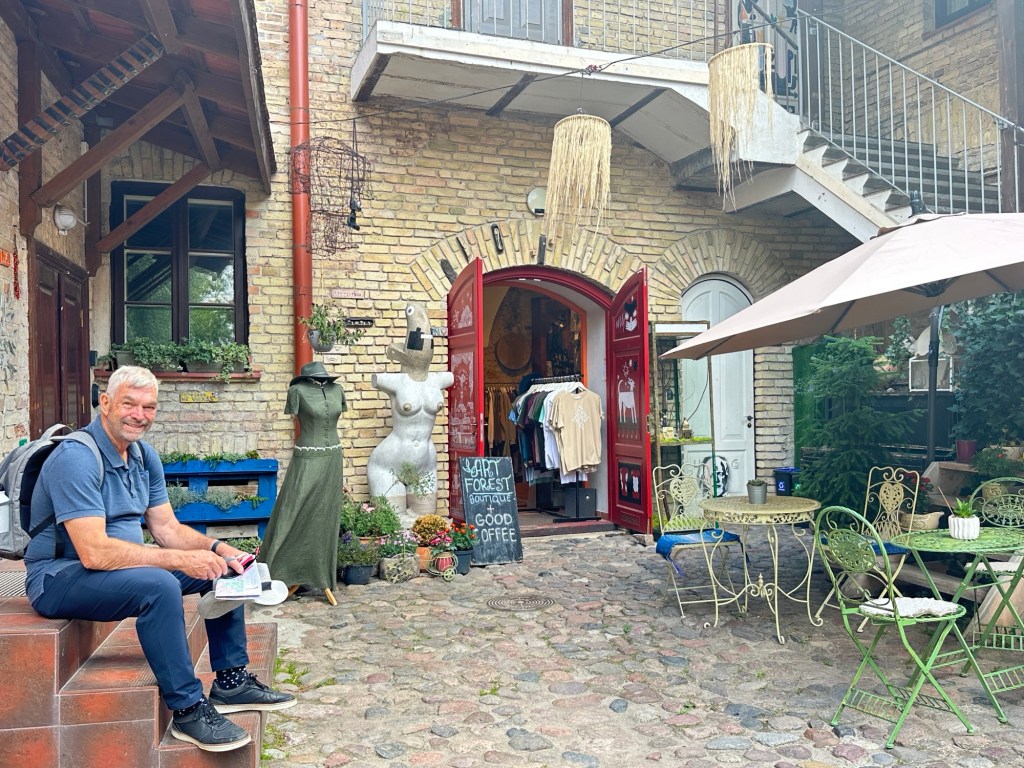


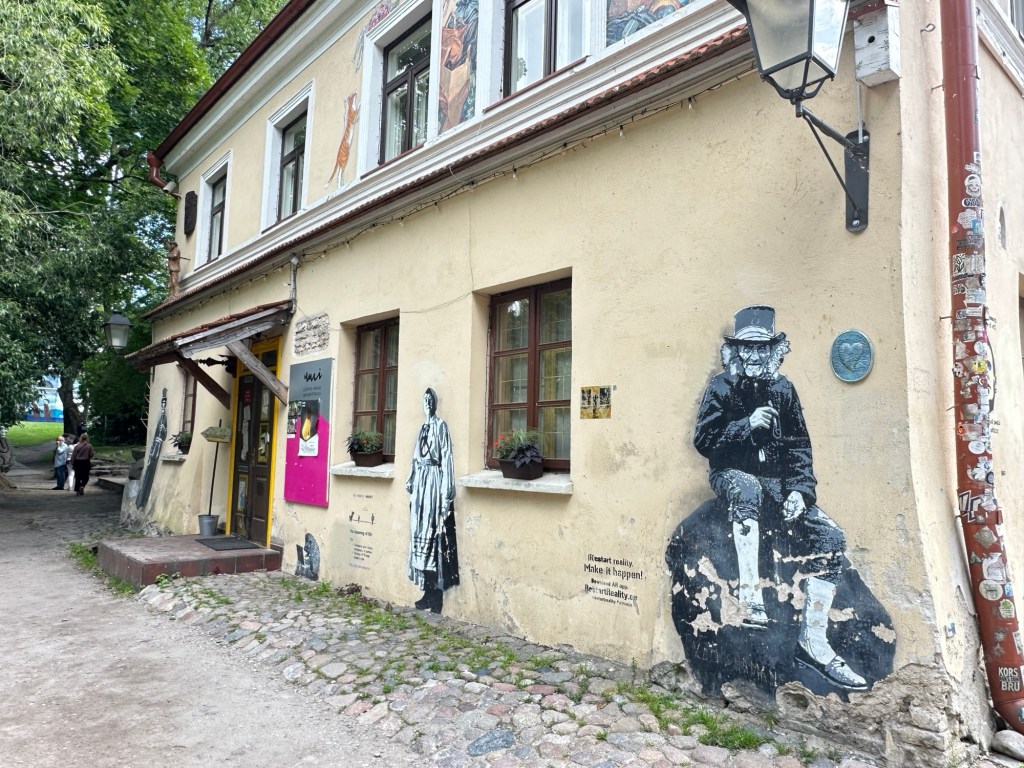
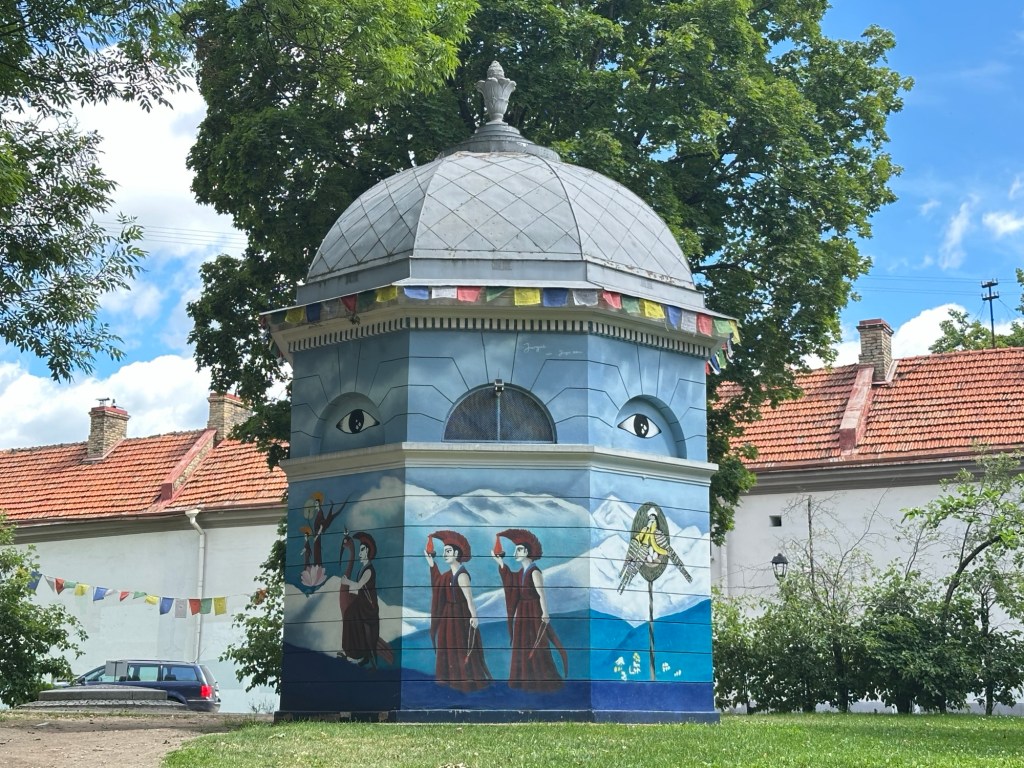

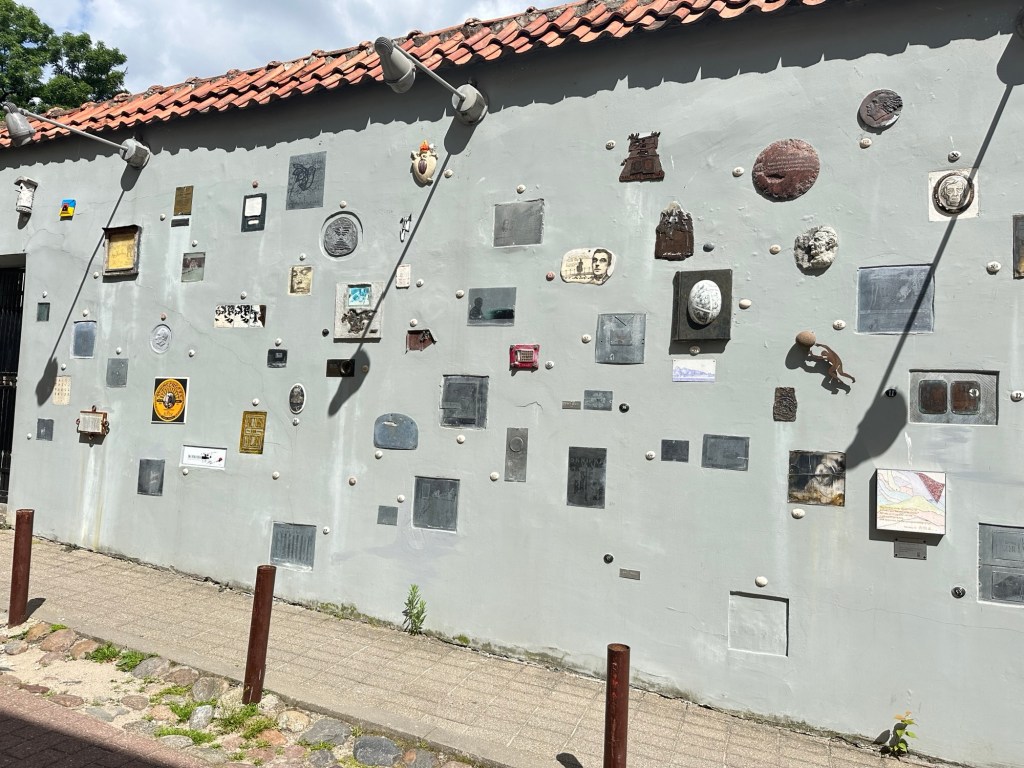

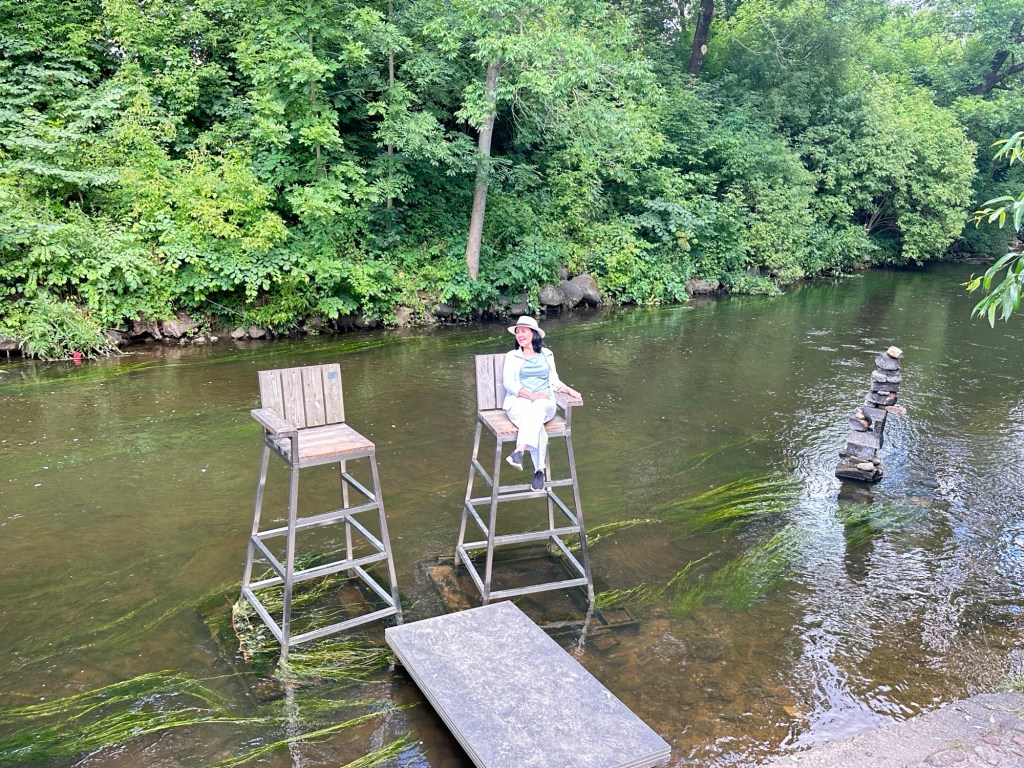
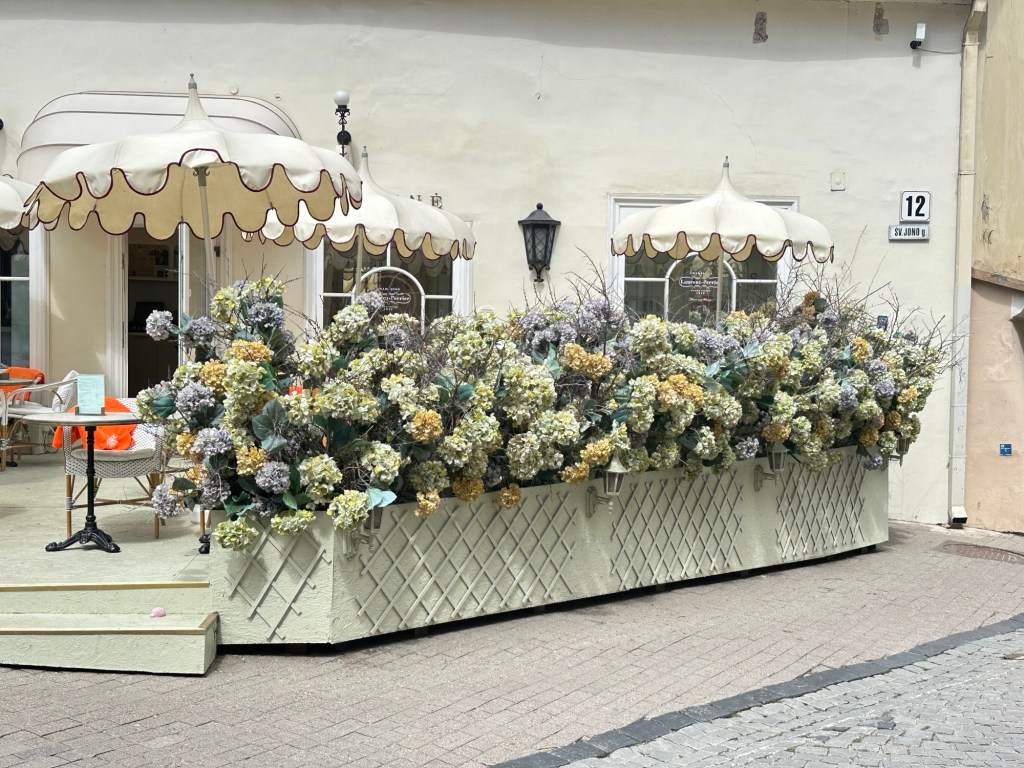
We then had a few hours to have a coffee and explore the shops. Some lovely cafes, restaurants and boutiques to explore.


We headed back to the hotel for a couple of hours to have a quick rest, repack the bags ready for our flight in the morning, and dress for dinner.
Our farewell dinner was at a Latvian restaurant ten minutes walk from the hotel. Again, delicious traditional Lithuanian meals. We said our goodbyes to Andrew and our fellow travel companions, but not without the traditional Lithuanian drink – Mead. It had a strong honey flavour. As Andrew taught us “books wake us” – or cheers in Lithuanian!


Day 48
Sunday 6th July
Up at 5am for transfer to airport at 6am. The airport is only ten minutes away, so nice and close. This time we are flying the Polish airline LOT. Vilnius to Warsaw, then Warsaw to Gdansk – both 50 minutes flights. Unfortunately there were no direct flights, and the train trip was 11 hours. Have to say it was very smooth getting through the airport at Vilnius, and again in Warsaw.
General observations about the Baltic States
Food
Traditional Baltic cooking is hearty and filling, designed to satisfy after hard physical labour and during long, gloomy winters. In the past, staple dishes were mostly soups and porridges made with grains such as barley, although coastal communities also ate fresh and preserved fish. We found herrings at every breakfast – yummy. Meat was usually reserved for festivals. Today it is central to most dishes, typically accompanied by boiled potatoes and rye bread. Popular seasonings include garlic, onions, caraway seeds and dill. Baltic cuisines have been influenced by those of neighbouring countries, particularly Russia and Germany in Estonia and Latvia, and Poland in Lithuania.
Portions are generous and ingredients tend to be deliciously fresh. The considerable rise in the diversity and standards of restaurants has happened across all three Baltic States, although there is far more variety and choice of cuisine in the capital cities.
Drink
Beer is popular in the Baltic States and several of the region’s breweries date back to the 19th century. Vodka is not as popular as it was during the Soviet era, although it is still widely drunk and both local and Russian brands are available. The region also has some unusual spirits and liqueurs made with herbs. While there are a couple of local wineries, we did not come across any of their wines.
Religion
Although the Baltic lands were officially Christian by the end of the 14th century, pagan beliefs persisted and mingled with the new religion. Protestantism left its mark in the 16th century, but Lithuania soon returned to the Catholic fold. Today, it is the only Baltic State where the church plays a major public role – in Estonia and Latvia, the surge in religious participation after independence in 1991 proved short-lived. A significant number of ethnic Russians belong to the Russian Orthodox church, while other minority religious groups include Jews and Muslims.
Amber
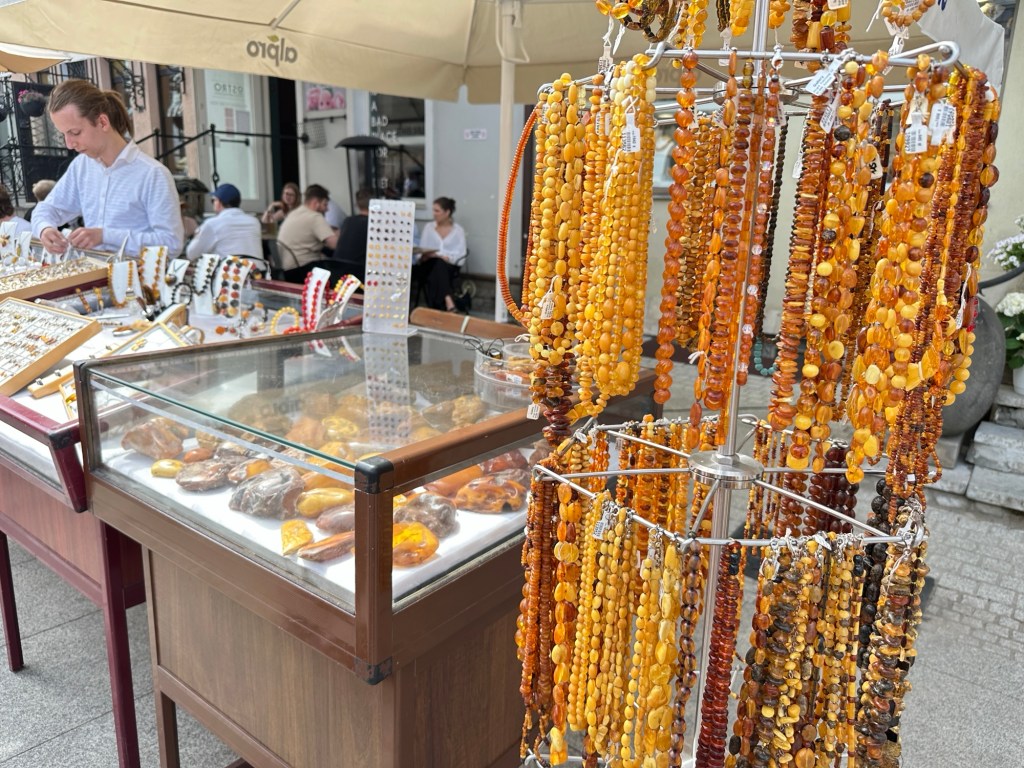
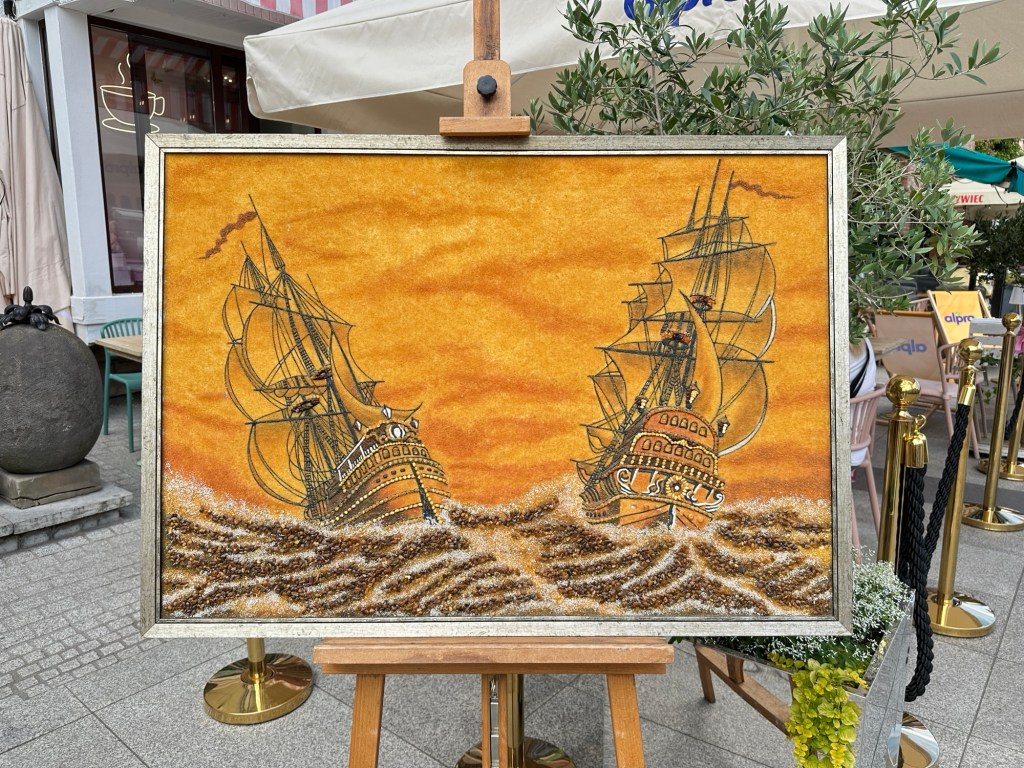
So much amber for sale in all countries! Amber has been valued for millennia, with amber jewellery found dating back to the early Neolithic period (around 7000 BC).
Many medical authorities of the ancient world, including Hippocrates, believed that amber had healing properties. A trade network, now known as the Amber Road, arose at the height of the Roman Empire. In the medieval period, amber was used to make rosaries. Today, it still washes up on Latvian and Lithuanian shores, although 90 per cent of the world’s amber is mined in the Curonian Spit of neighbouring Kaliningrad.
Poland
One of Europe’s biggest countries, Poland has had a stormy history due to its strategic location between Russia and Germany. Today, however, the country is firmly future-facing, with an infectious energy infusing its resurgent cities.
A brief summary of Poland’s history is…
10th century – 1370 Slav tribes from Gniezno region united to rule under Piast dynasty.
1370- Lithuanian Grand Duke Jagiello came to power. Jagellians ruled until 1569 with the Union of Lublin. This resulted in the union of Two Nations (Poland and Lithuania) which lasted until 1795.
1572 – Jagellian dynasty died out, Rule thereafter by elective kings voted in by the nobility.
17th century – wars with Sweden, Russia and Ottoman Empire. Severely weakened the country, resulting in it being partitioned by Russia, Prussia and Austria in 1795.
Poland did not exist again until 1918 after World War 1.
1 Sep 1939 – invaded by Germany and World War 2 started. Occupied for next 6 years by Germans and Soviets.
1940 – 1944 – extermination of most of its Jewish population. Significant loss of territory and devastation of it buildings and infrastructure.
Jan 1945 – subjugated to the USSR as a communist state but not part of the USSR..
1980s – Solidarity movement started in Gdansk and spread to other cities.
1989 – freedom from communism.
1999 – joined NATO
2004 – joined EU
Back to Sunday 6th July
We arrive in Gdansk, pick up our bags – again very smooth sailing. Very impressed with LOT airlines. A short taxi ride – 20 minutes – and we were at the Mercure Hotel where we had only one night. Not quite sure why we only had one night- definitely needed another!
Dropped the bags off, and out to explore. Gdansk is a port city on the Baltic coast of Poland. One of Poland’s most beautiful cities, Gdansk, has played major roles in history, especially in the 20th-century. It was the 1939 flash point of World War II, and then in 1980, the birthplace of the Solidarnosc (Solidarity) labor movement, ushering the end of Communist domination in Eastern Europe.
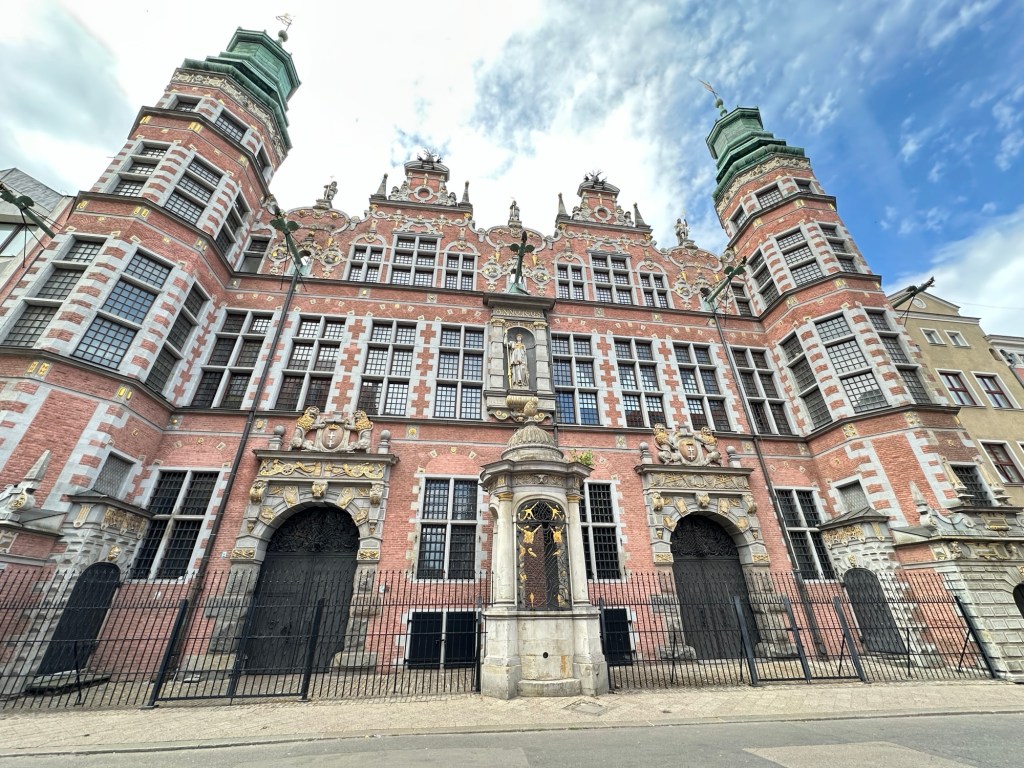
On our way to the Old Town we passed the Great Armoury – a magnificent example of renaissance architecture. Built in 1609, it was an armoury until the 1800s ( it seemed too fancy for that to be honest), now is the Academy of Fine Arts Gallery.
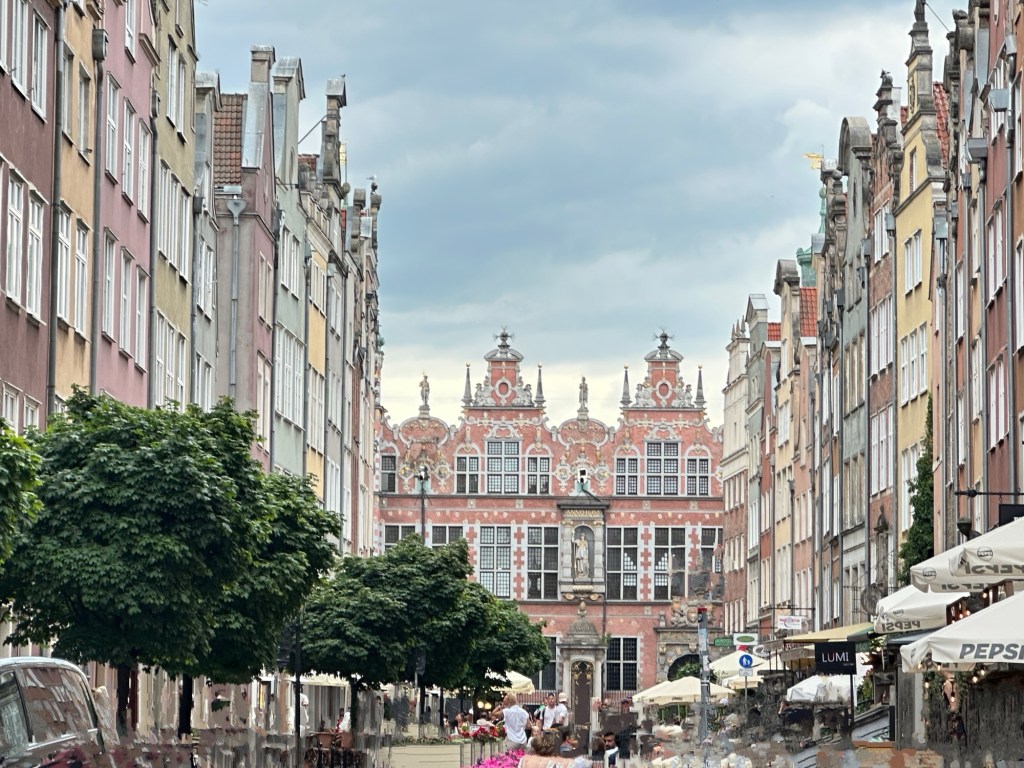
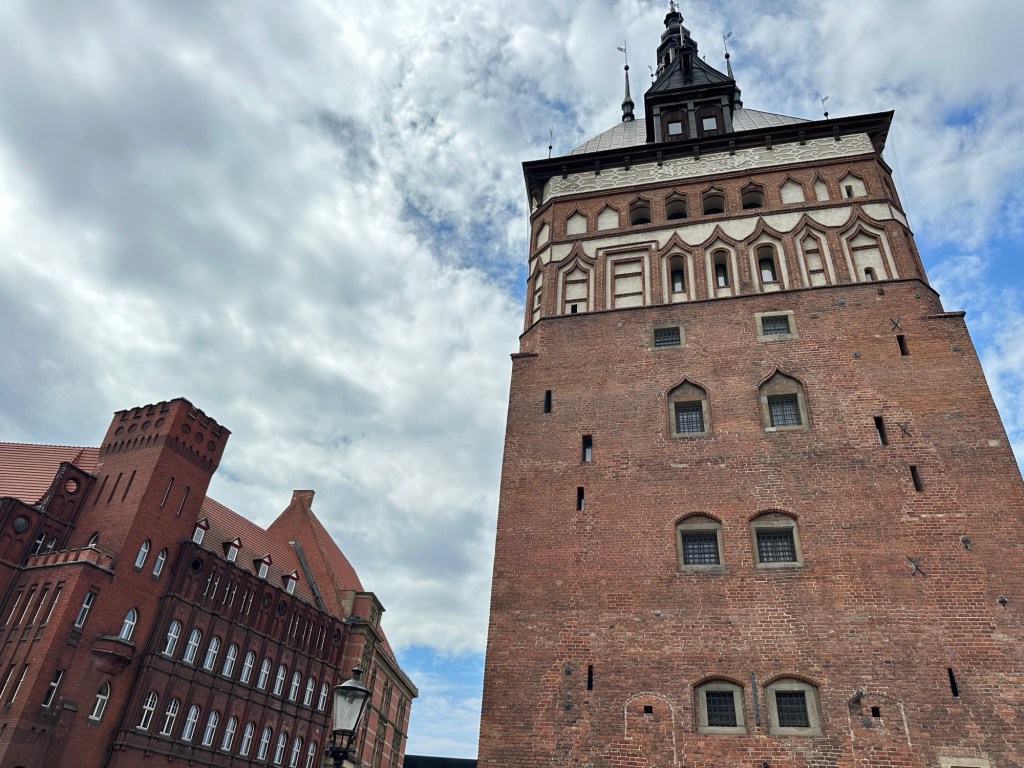
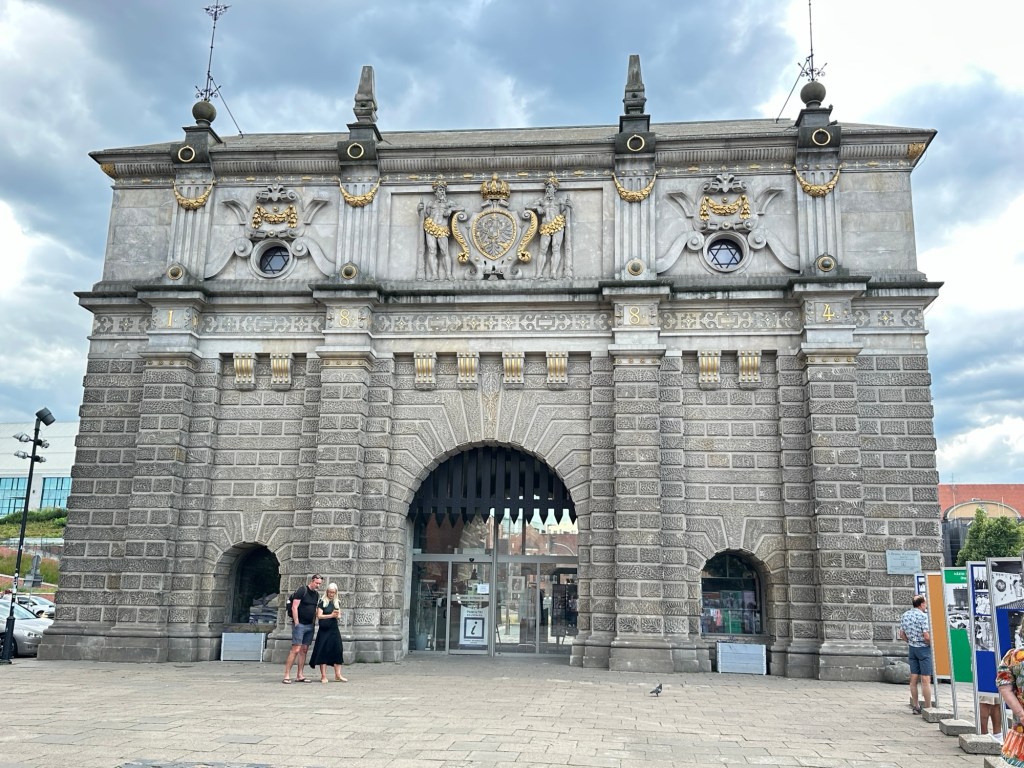
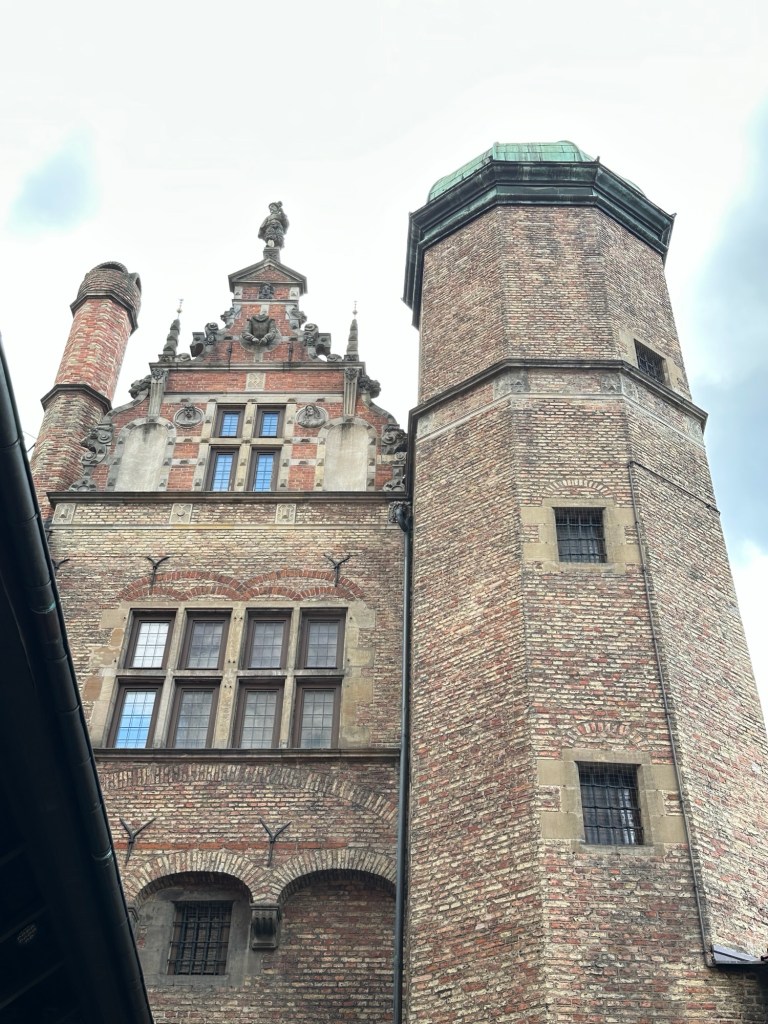
Next the Golden Gate which forms part of the Old City fortifications , together with the Highland Gate and the Prison Tower. Below the Prison Tower is the Jailing Museum, which depicts life in the prison.
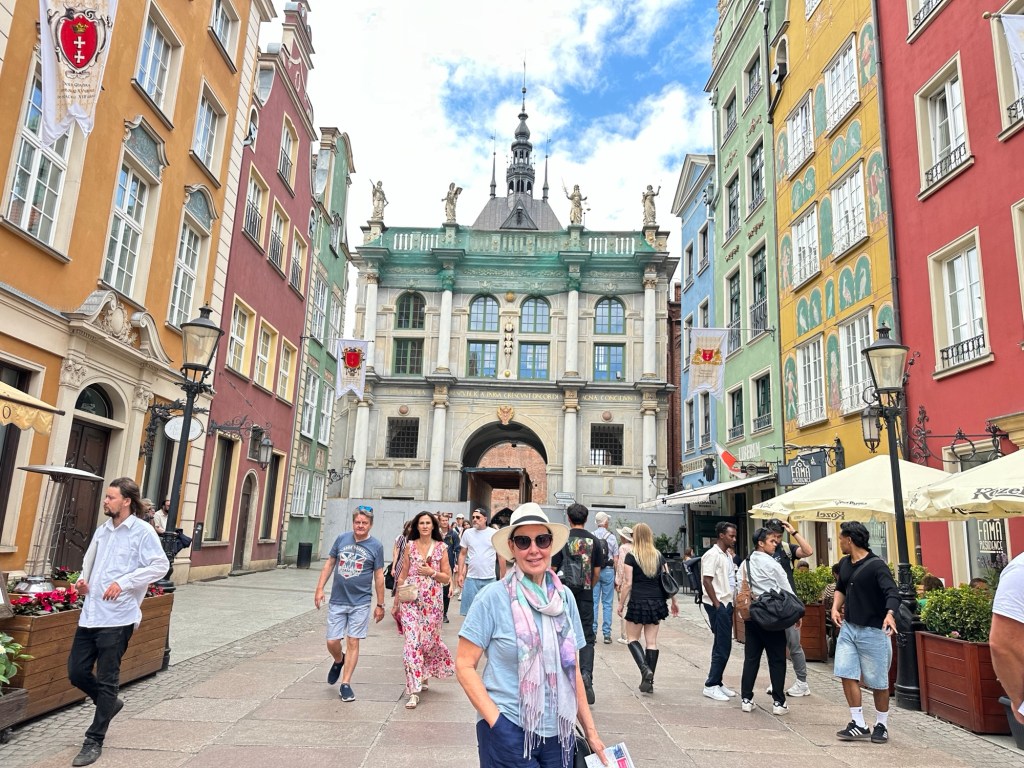
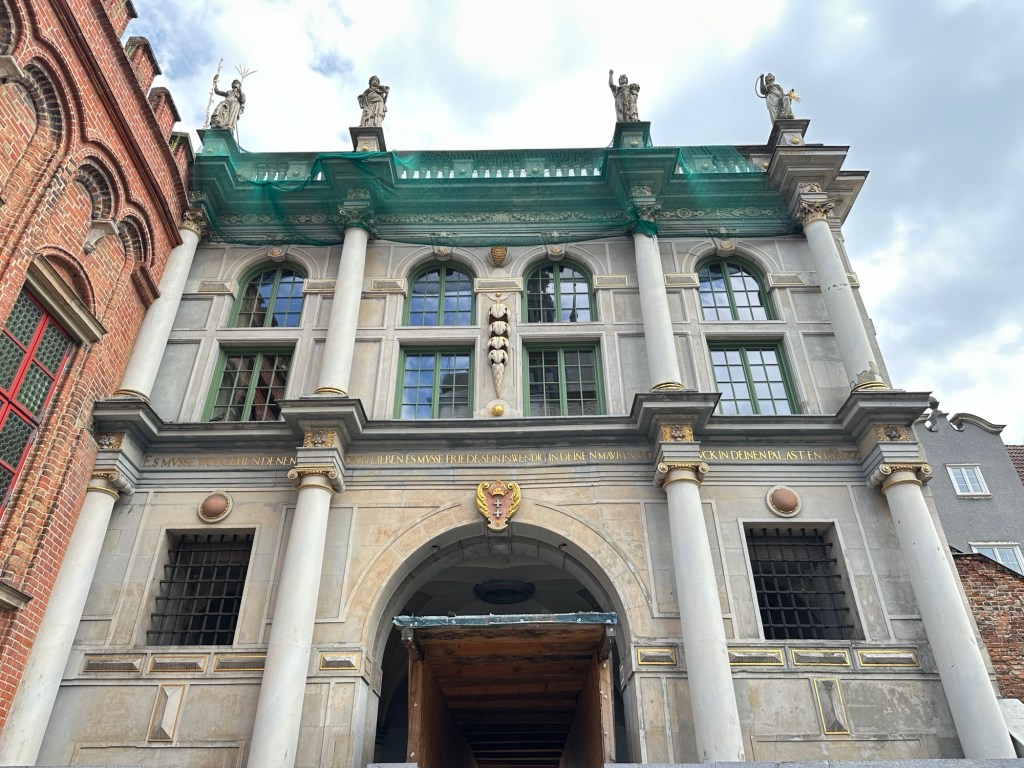
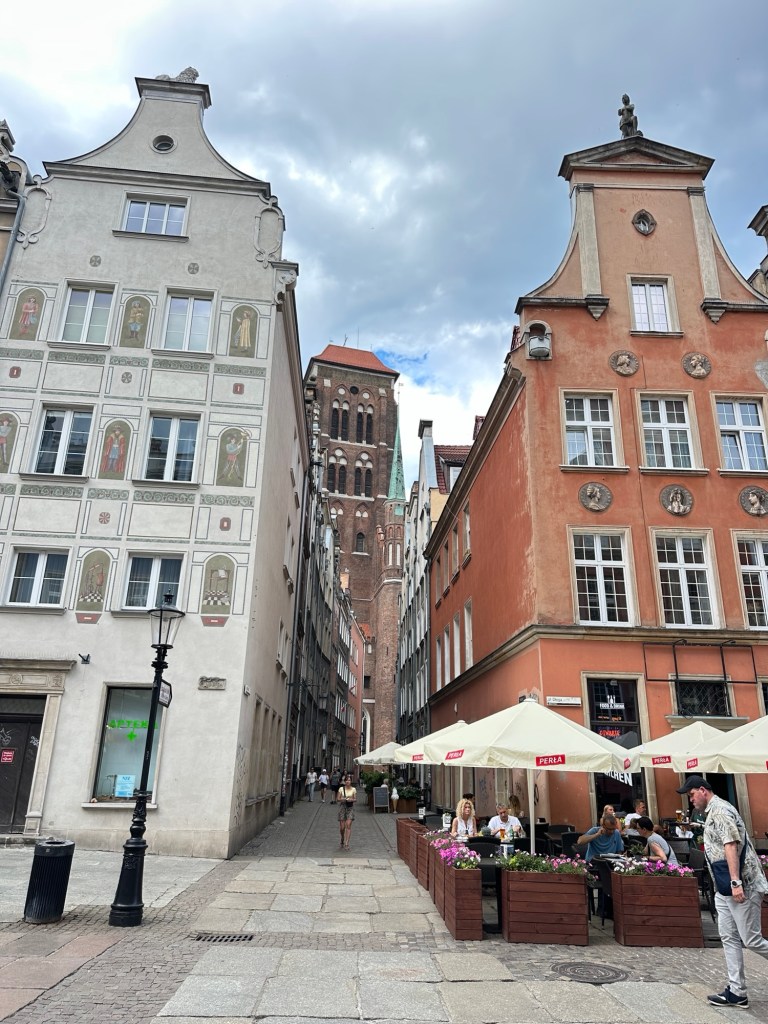


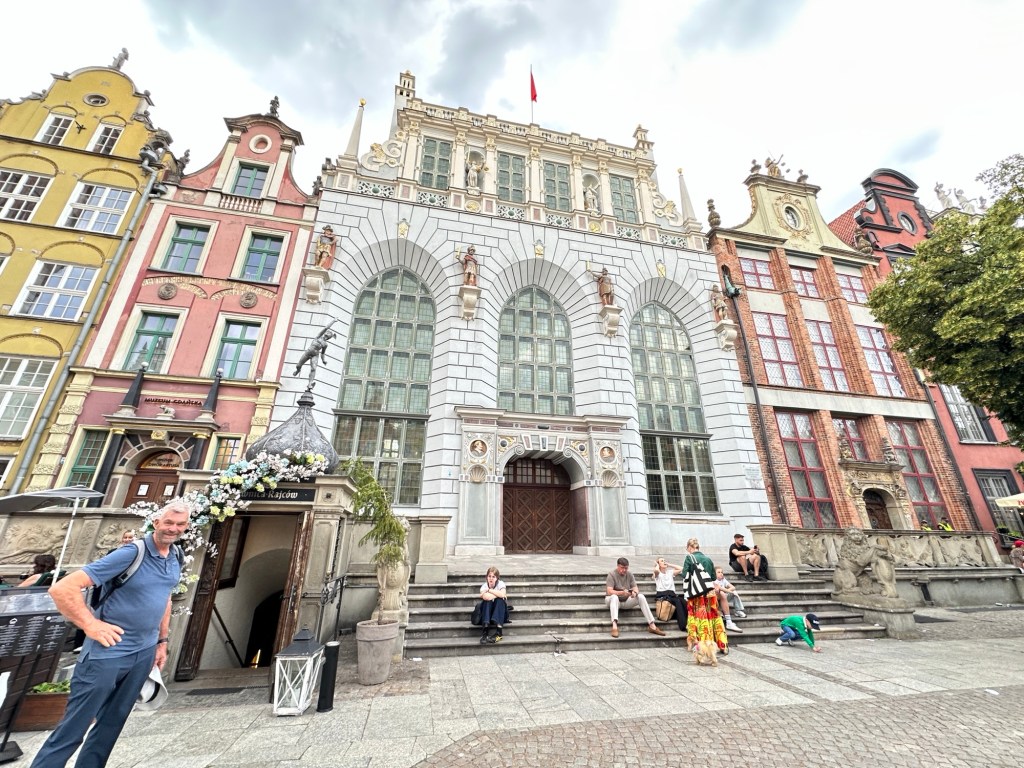
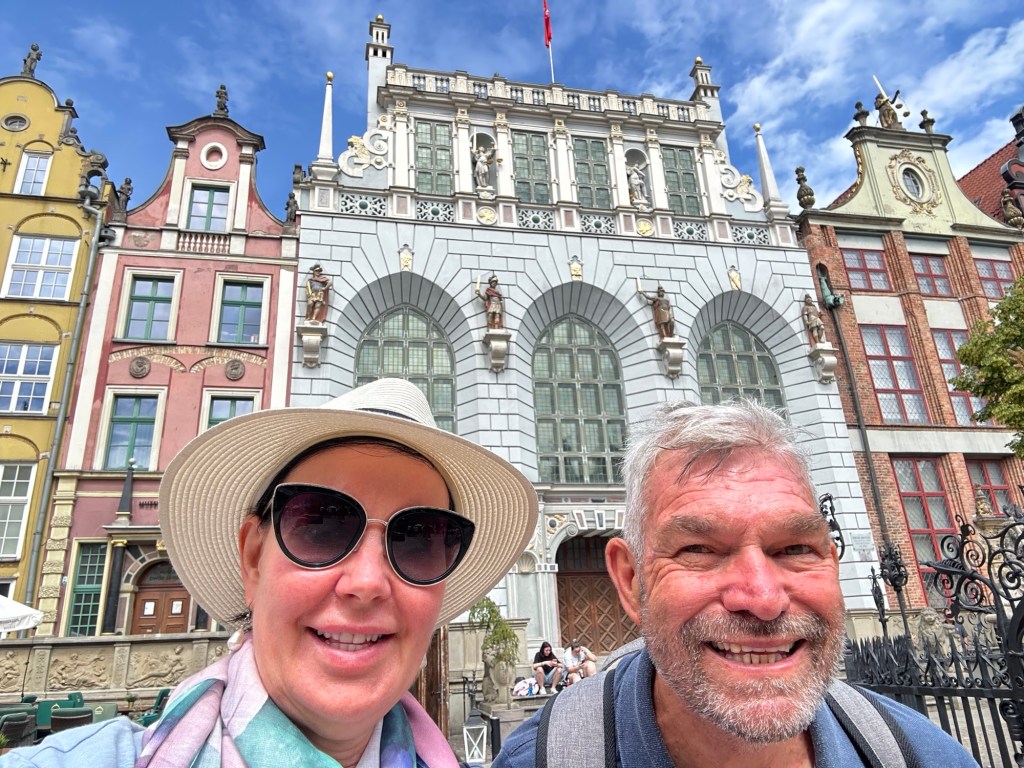
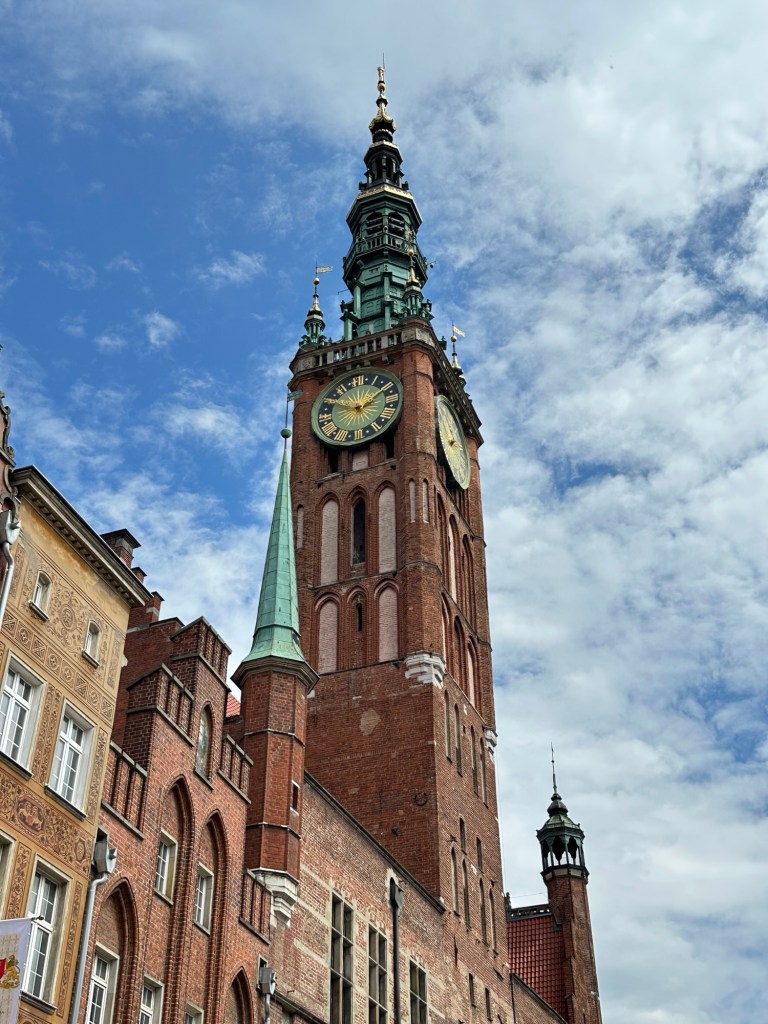
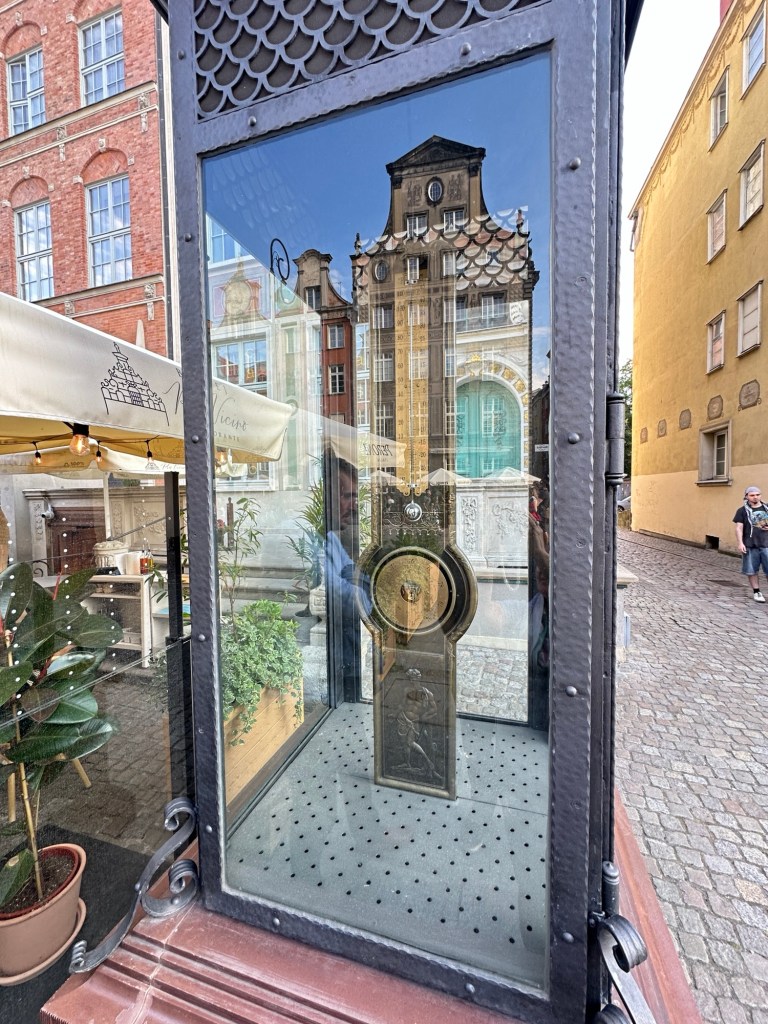
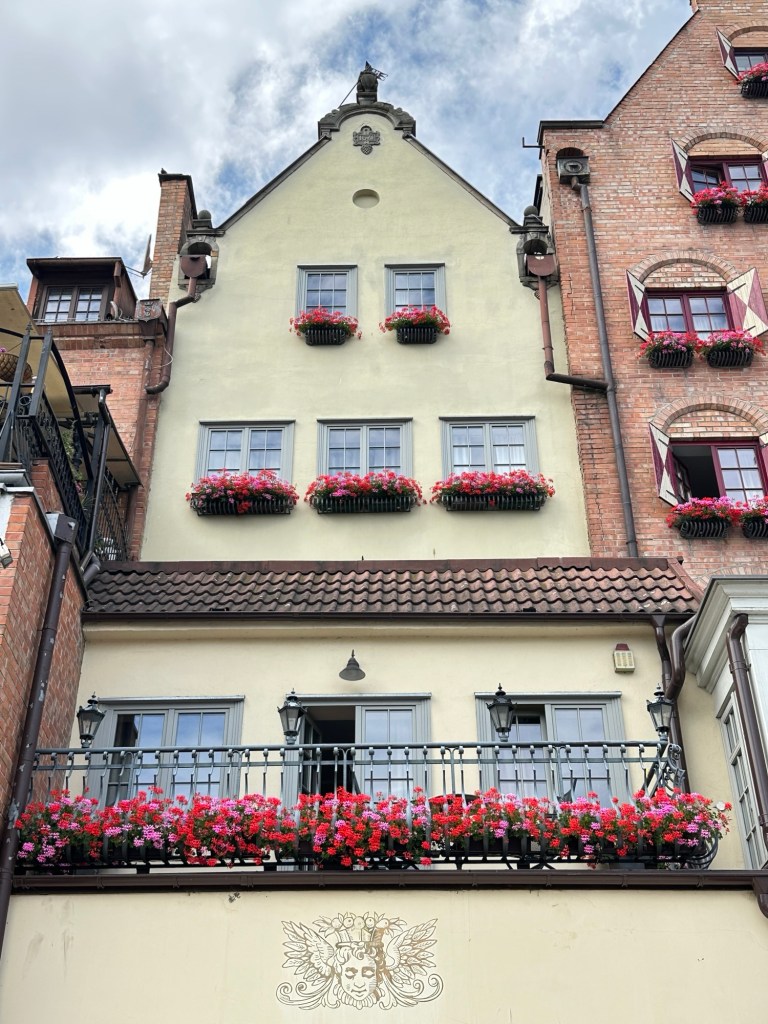
Onto the centre of the Main Town, reconstructed after WWII, where the stunning colourful merchant houses of Long Market are – these are now home to shops and restaurants. These were all destroyed in the war and have been painstakingly rebuilt over the next 70 years. I just loved the facades! Nearby is Neptune Fountain, a 17th-century symbol of the city topped by a bronze statue of the sea god (it was dismantled and hidden in basements during the war, hence its survival). The fountain stands in front of Artus Court, a 600-year-old building that survived the bombings. Across the square is a replica thermometer in a case – a memorial to resident Daniel Fahrenheit whoinvented the thermometer and fahrenheit scale. The 14th Century Main Town Hall stands prominently in the Square – it now houses the city’s historical museum.
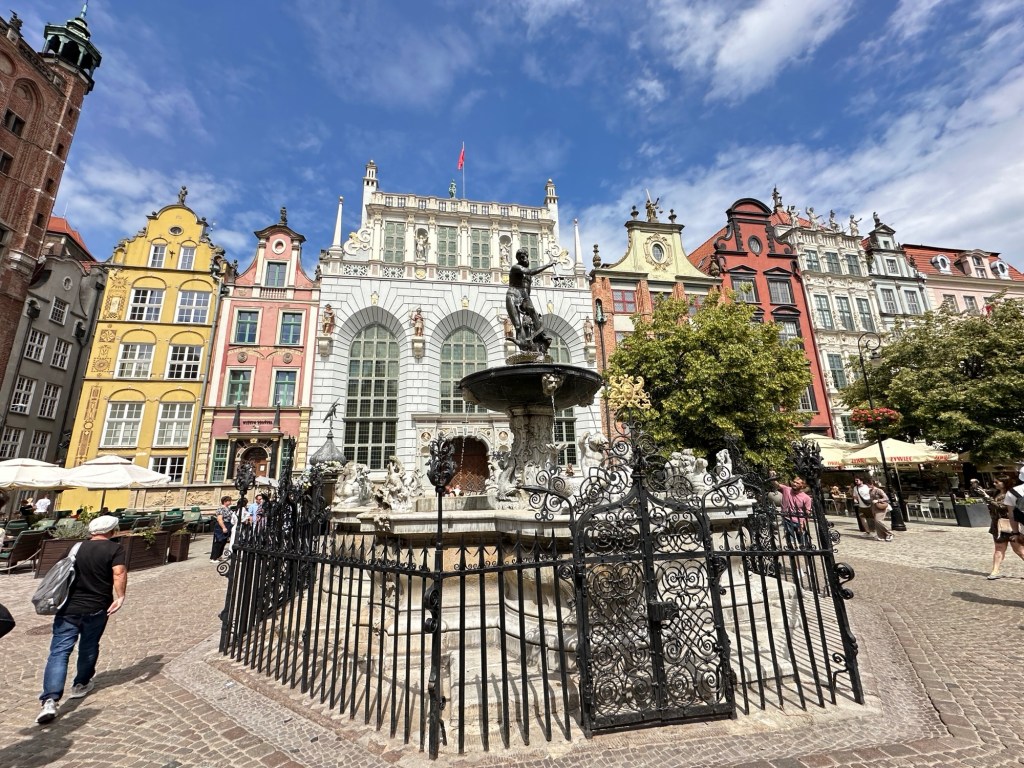

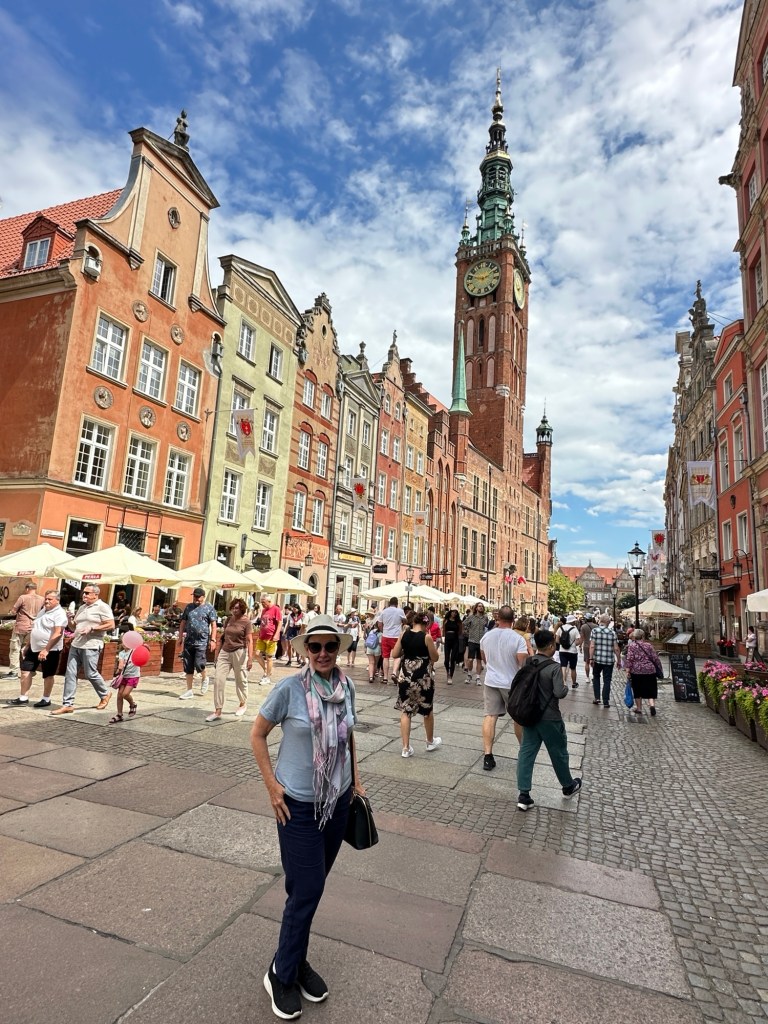
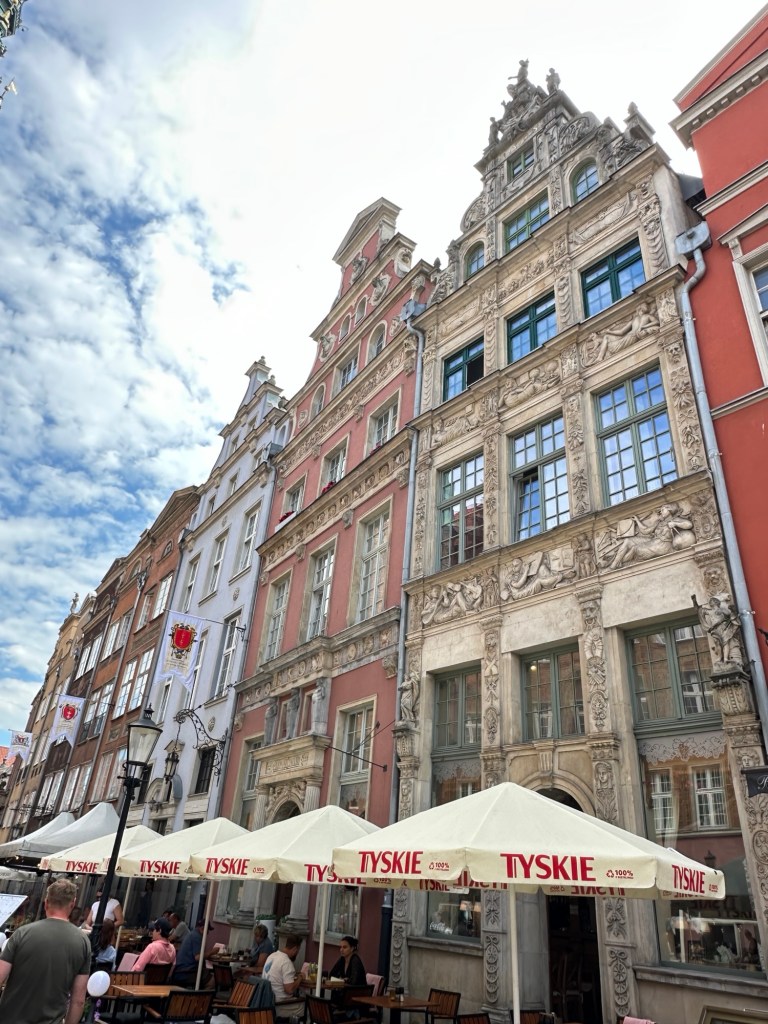
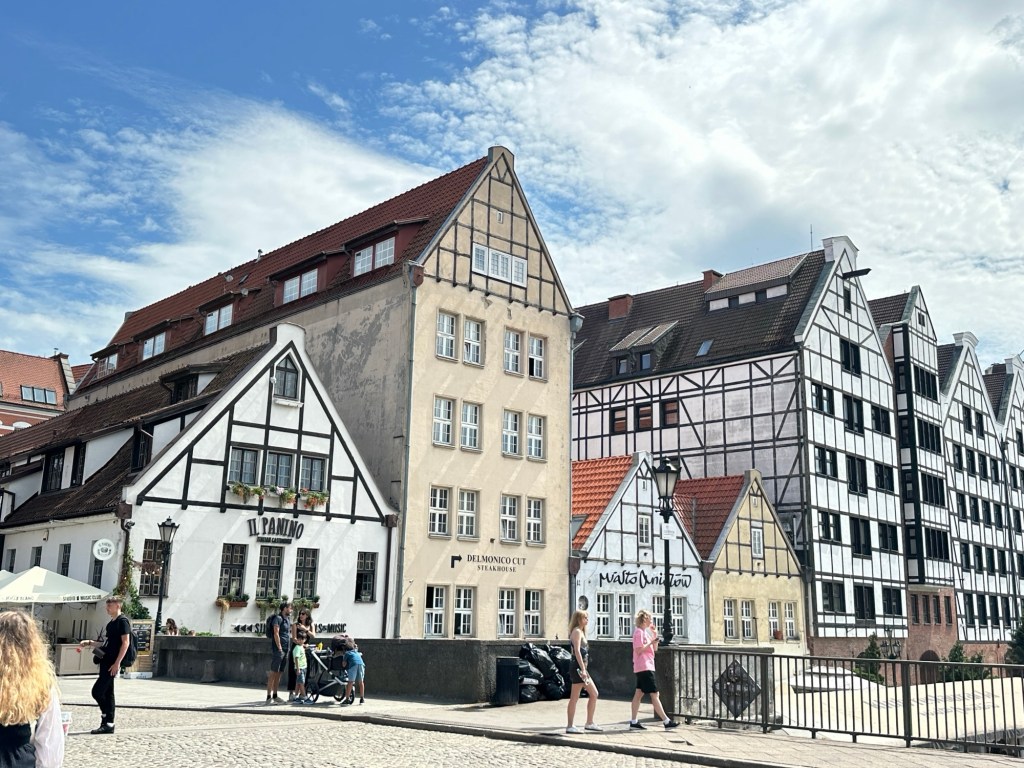
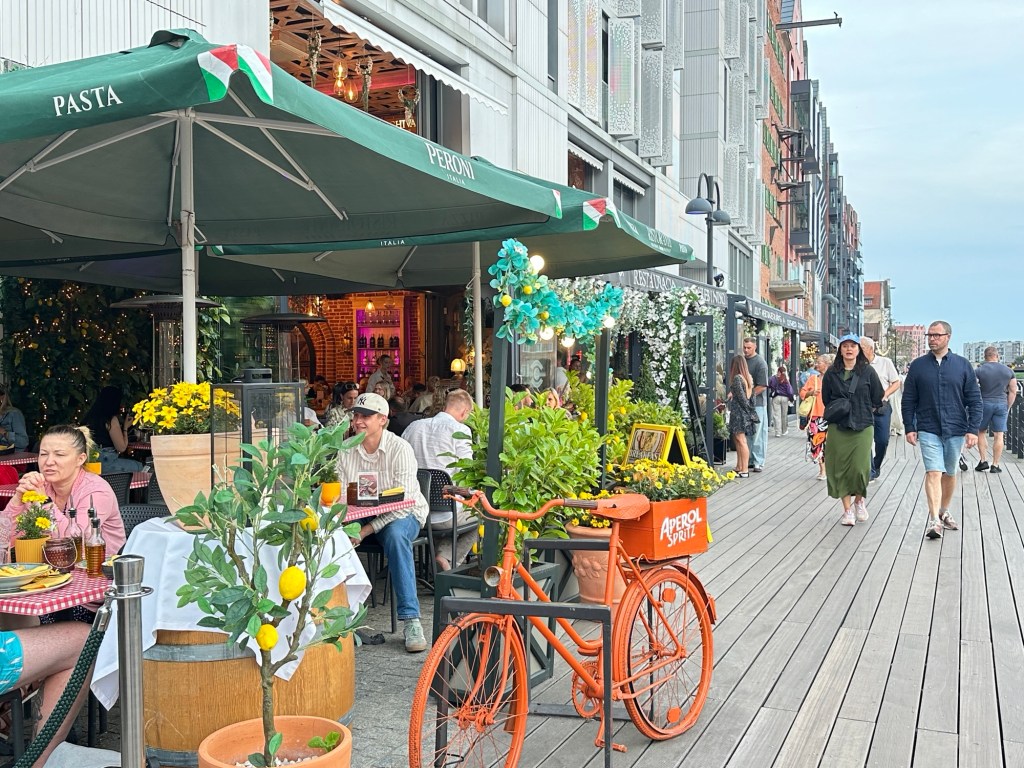
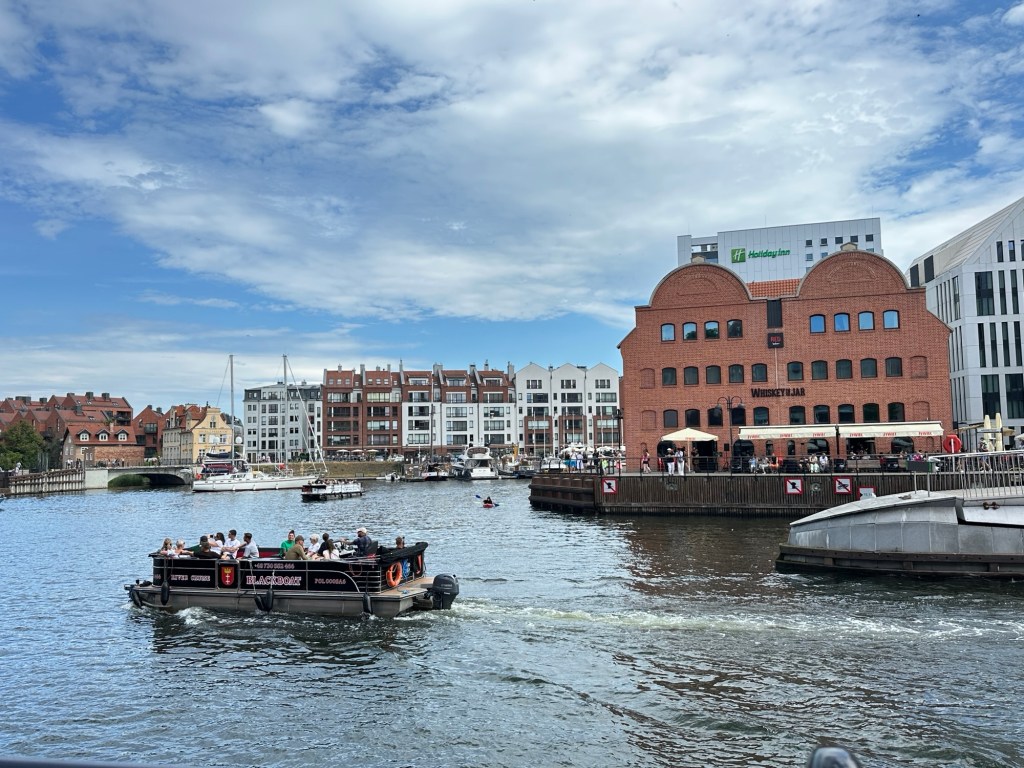
More colourful houses! Through the Green Gate, there were houses that had a Dutch influence , and others had a German influence . There was another area which had only been developed in the last ten years ( it had lain as rubble since the end of the war) where they had kept the theme, but with a more modern look. Restaurants lined the row of houses, all with river front views. It was all so beautiful.

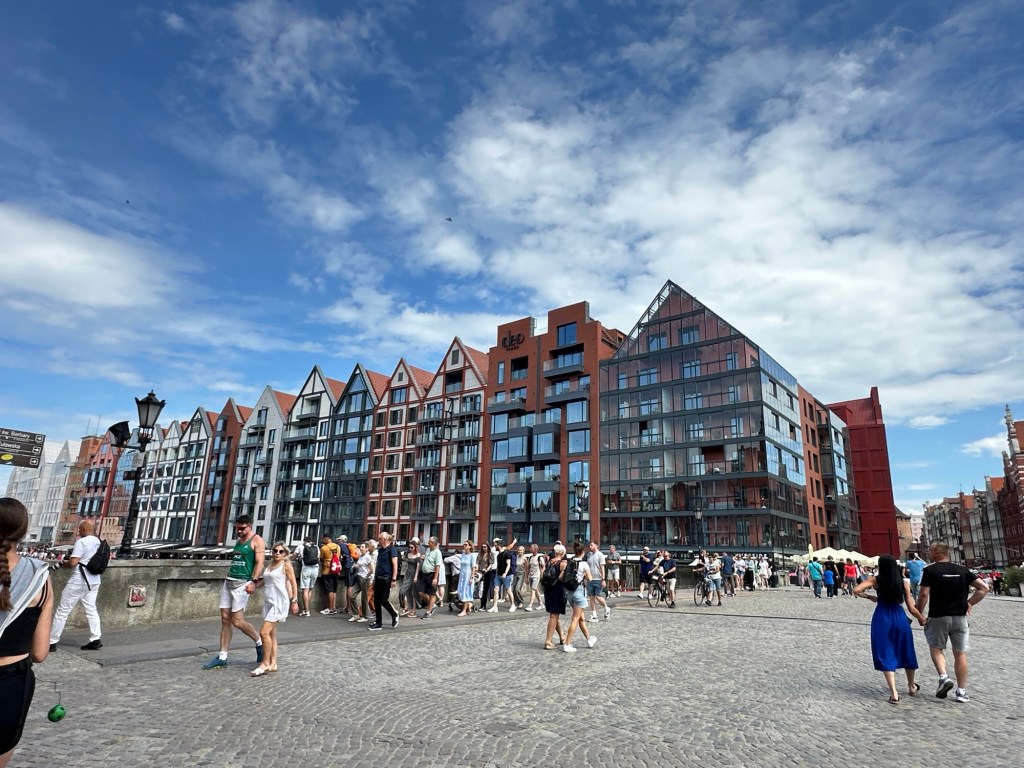



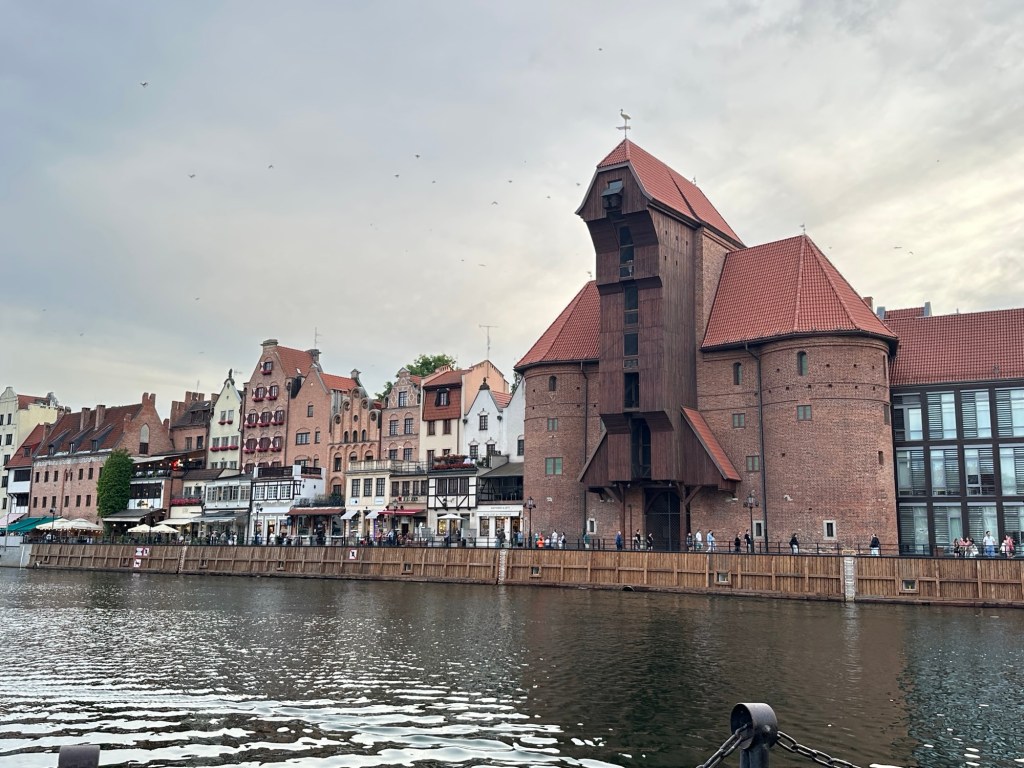
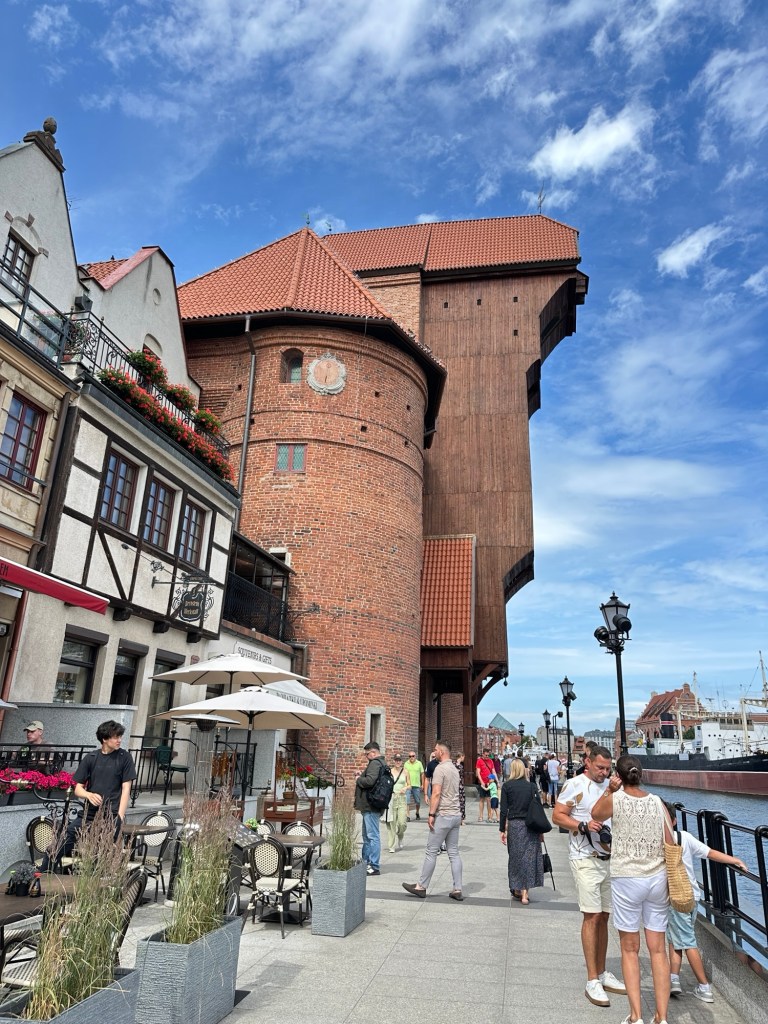
The waterfront Crane Gate, one of the defining symbols of Gdansk, dates back to 1444. The lifting mechanism was made of two pairs of treadmills and four workers powered each treadmill. This provided enough power to lift two tone of load to a height of almost 120 feet.
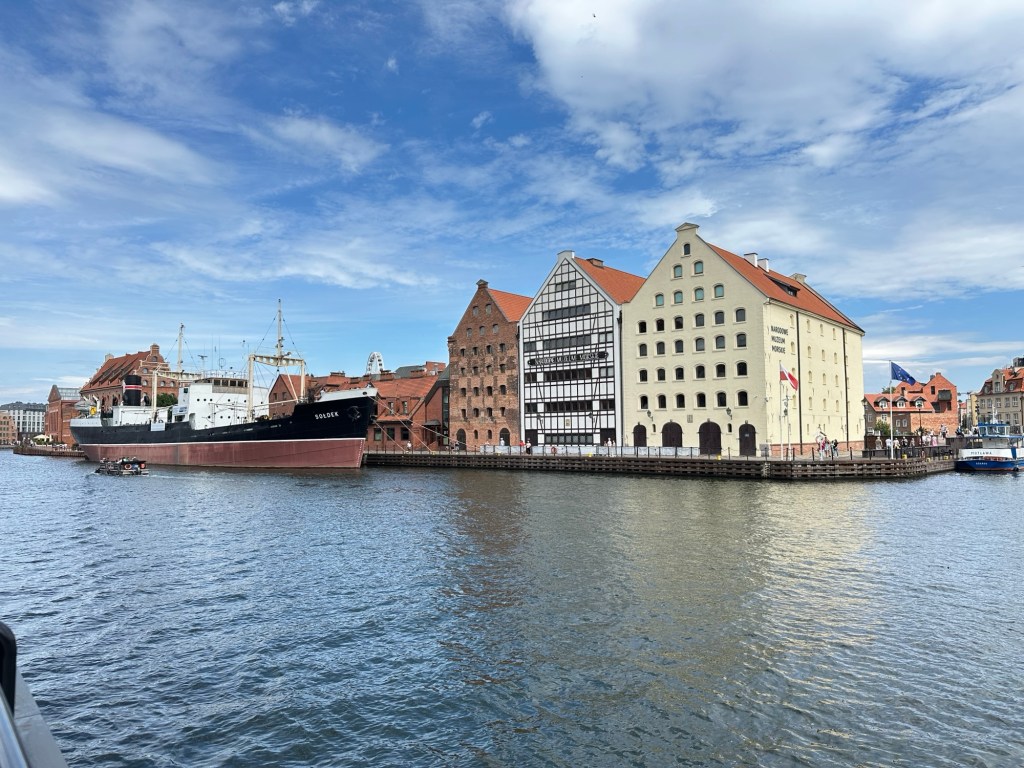

Gdansk is also a center for the world’s amber trade; boutiques throughout the city sell the ossified resin. Stalls and shops everywhere you look.
At 5pm, we met Bart, who was taking us on a walking Food and Sightseeing tour of Gdansk. Turns out it was just us – so a private tour!
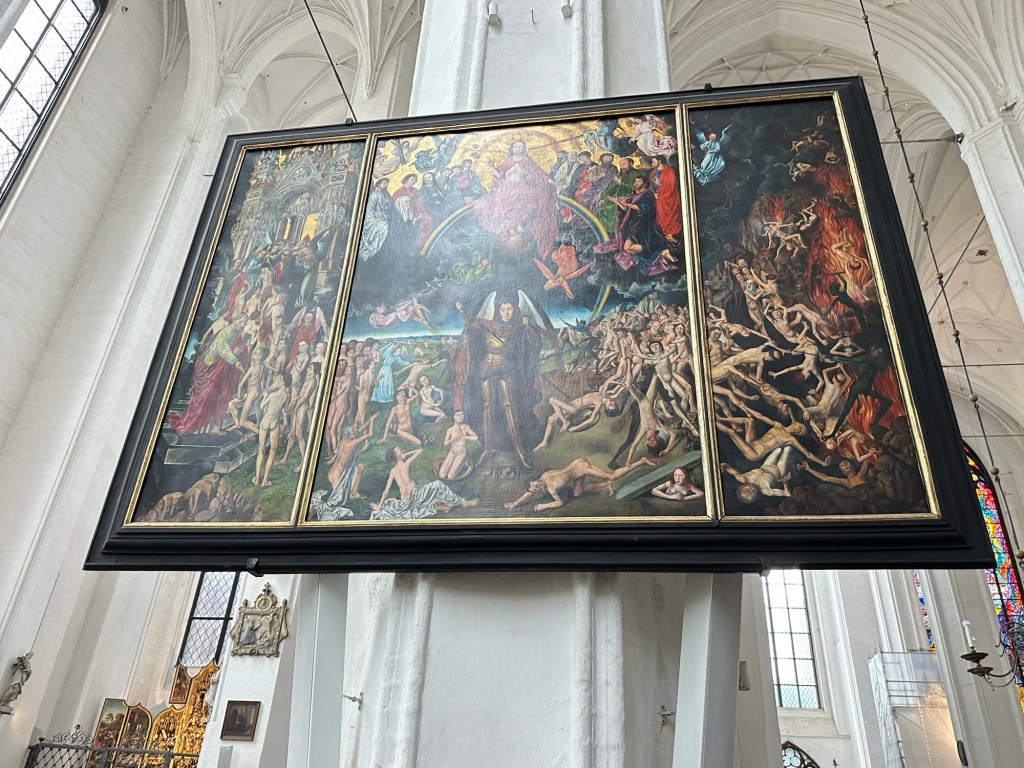
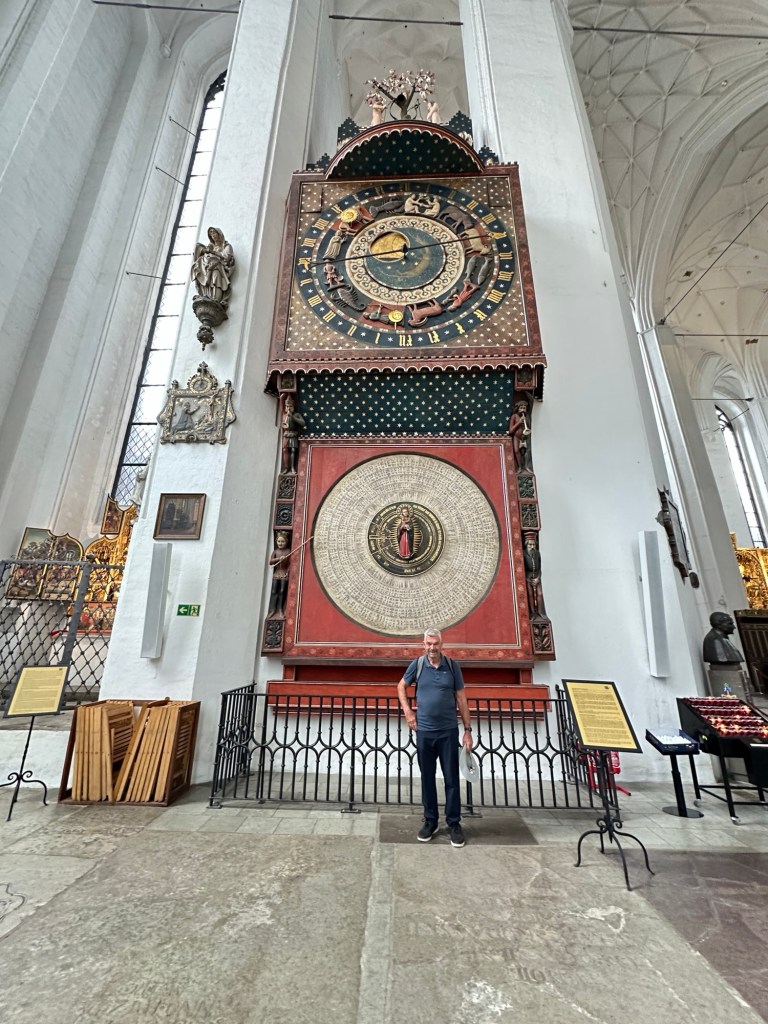
We did go back to some of the sites we had seen already, however Bart gave us more details. He also took us to St Mary’s Basilica, built circa 1379, which has been used jointly by Catholics and Lutheran in the past, now Catholic since 1945. It is considered the largest brick temple in Europe. Inside is a copy of The Last Judgement made in 1472 by Gabs Memling. Also, an astronomical clock made in 1467 by Hans Duringer – it wasn’t working for 500 years, but they took all the parts to Prague (where there is a similar clock) and got it going again.


Bart took us to a restaurant in the basement under Artus Court. Here we had three craft beers to try accompanied by a typical Polish antipasto platter – Polish smoked sausage and meats, cheese and pickled and preserved vegetables.
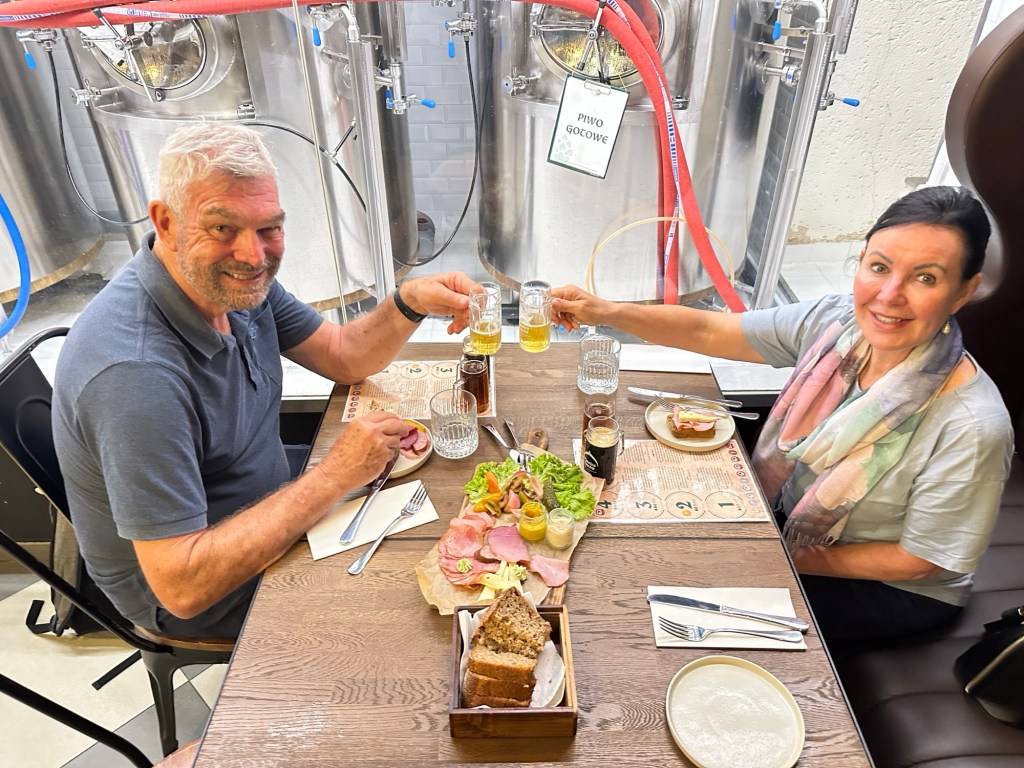
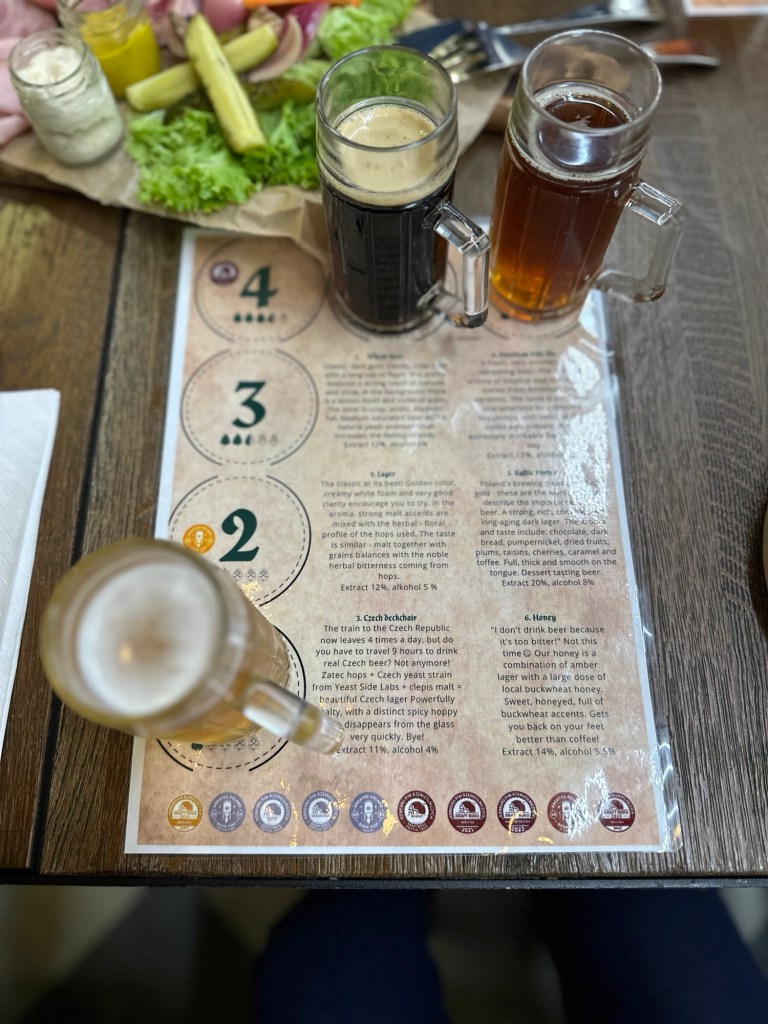
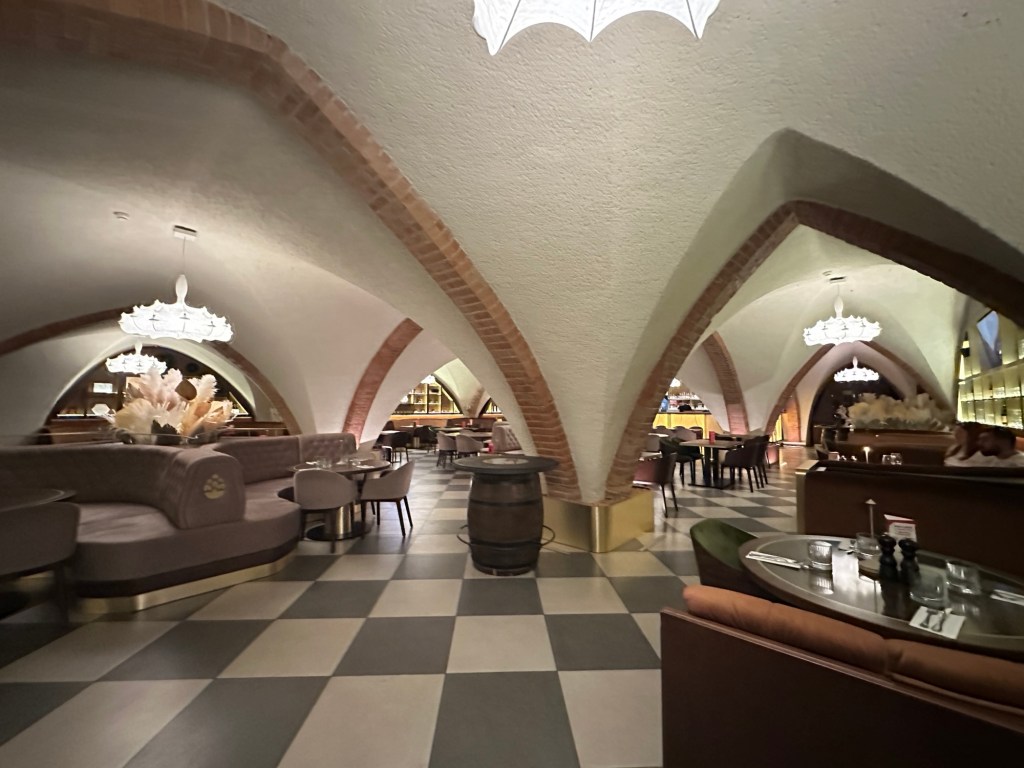
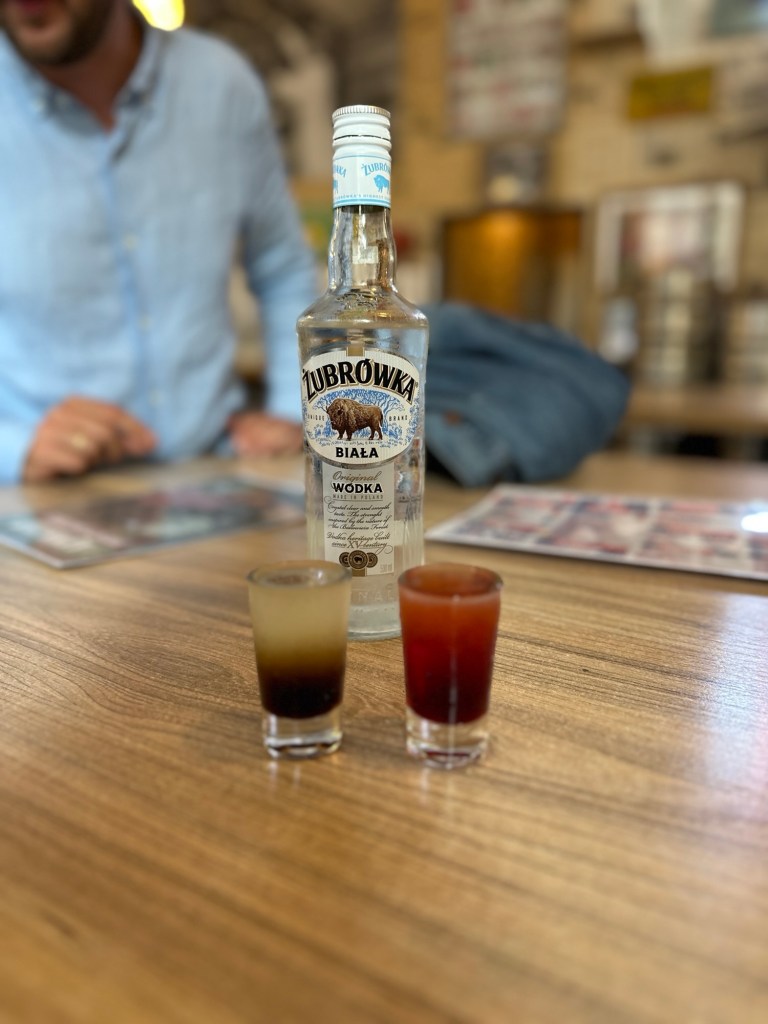
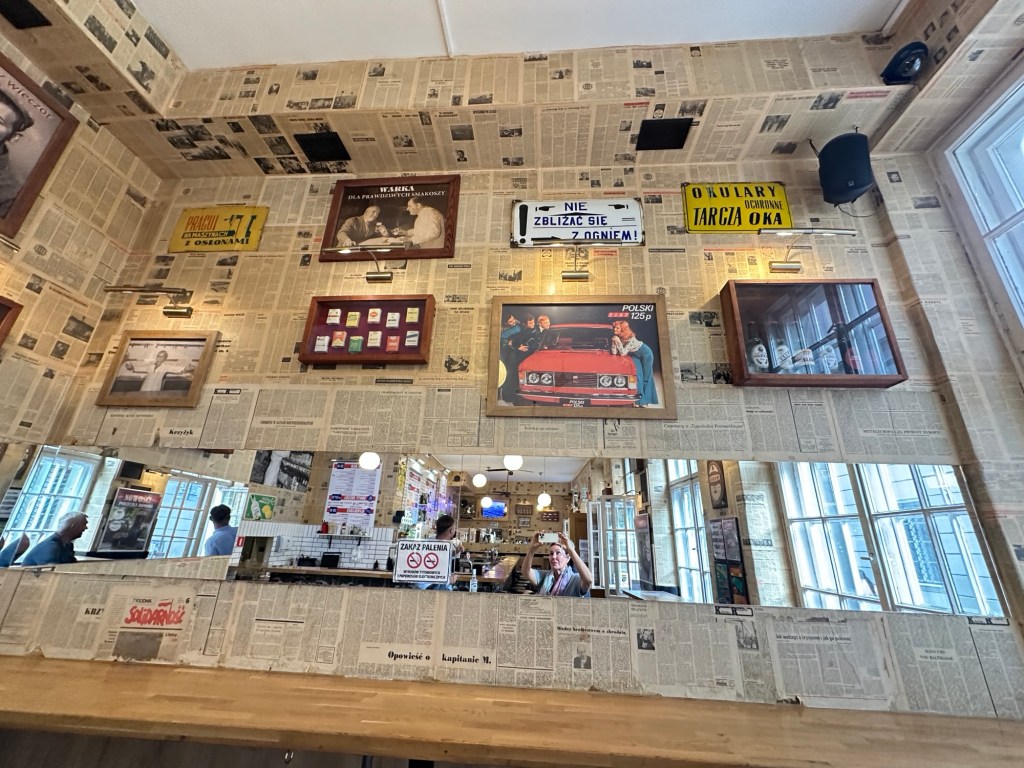
I’m not a beer drinker, but I didn’t mind the light beer, and the sweetish beer, whereas Frank enjoyed the dark beer, with its chocolate/coffee flavours. Next, a typical Polish bar, decorated with Russian propaganda posters, where we had Vodka shots – one was vodka, Tabasco and cherry, the other was vodka, ginger and pepper. I was only brave enough to do the first, Frank managed to do both, plus my other one! Nothing like taking one for the team!


Not far away, and another bar – this time we had to try the famous, to Gdansk only – Goldwasser, a strong root and herbal liqueur with gold in the liquid, which was produced from 1598 to 2009 in Gdańsk. Now made in Germany.
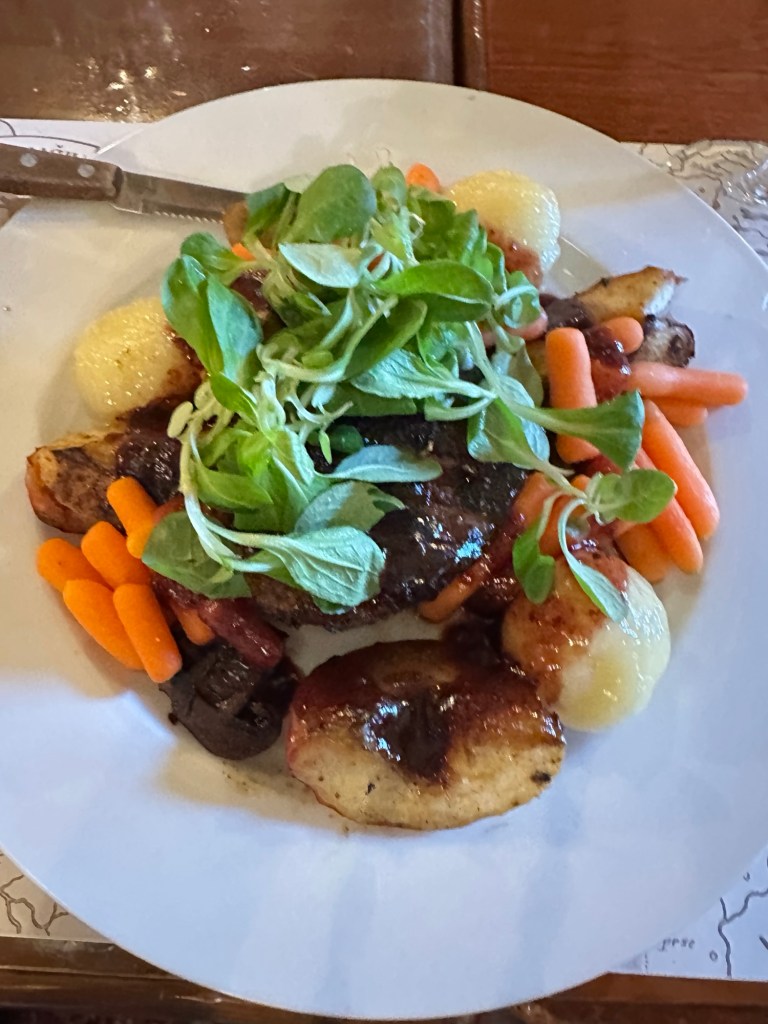
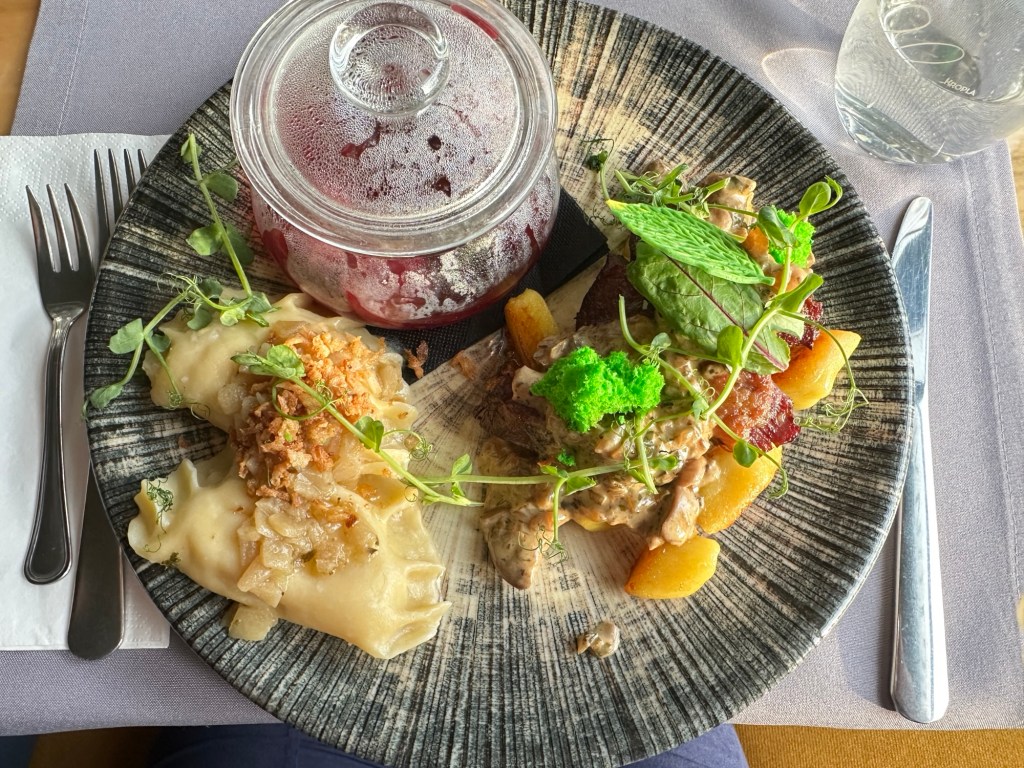
Some more sightseeing, before a three course meal at a lovely Polish restaurant on the waterfront. White borsch soup (no beetroot as I was expecting, fermented sourdough is the starter and creates a broth, sausage and potato added, giving a unique umami flavour – delicious), followed by wild boar with a rich mushroom sauce, sitting on potato gnocchi, accompanied with warm preserved beetroot and dumplings filled with cottage cheese. It was divine – the boar so tender! Surprisingly it was quite pink in colour. Bart, who was a chef, said that was normal. He was like a walking encyclopaedia when it came to food and its source. It was also great to hear of the Polish tradition food customs. We really didn’t think we could fit anything else in, when dessert was placed in front of us – Bart assured us it was only light! It was a cheesecake – the base was “old” bread, light ricotta cheese filling, and pistachio topping (it was baked) served with blueberries, strawberries and fresh sago – again divine. And it was light!


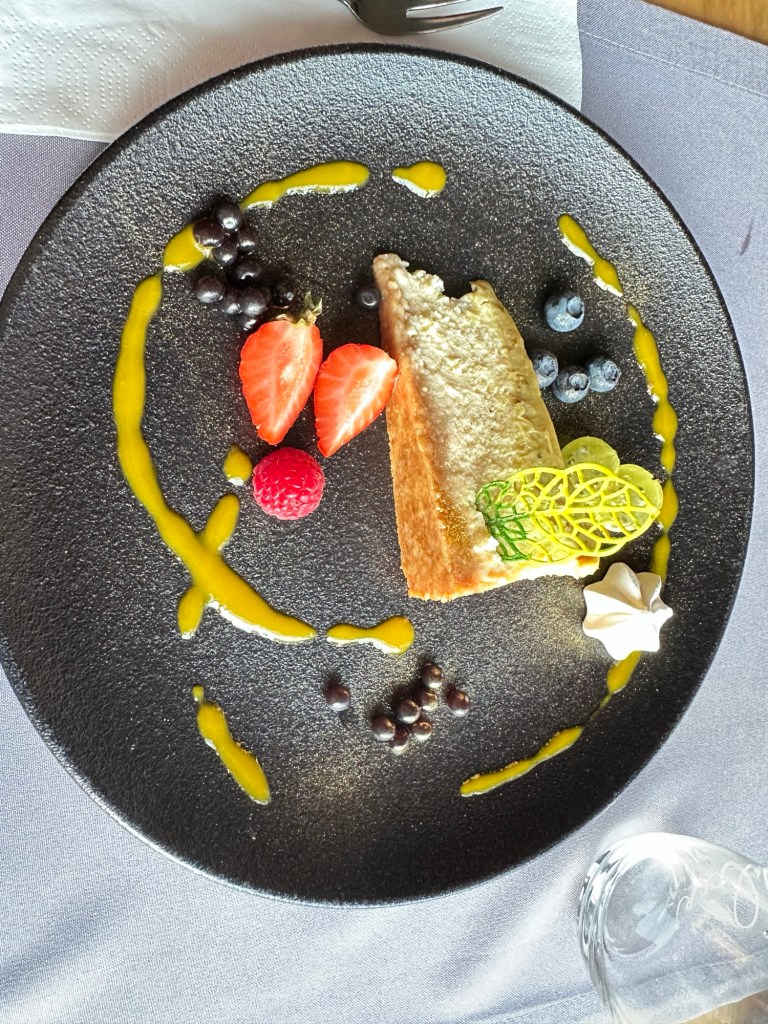
We were so full! We took the long way bank to the hotel to help try and digest our meal. It had been a wonderful experience.
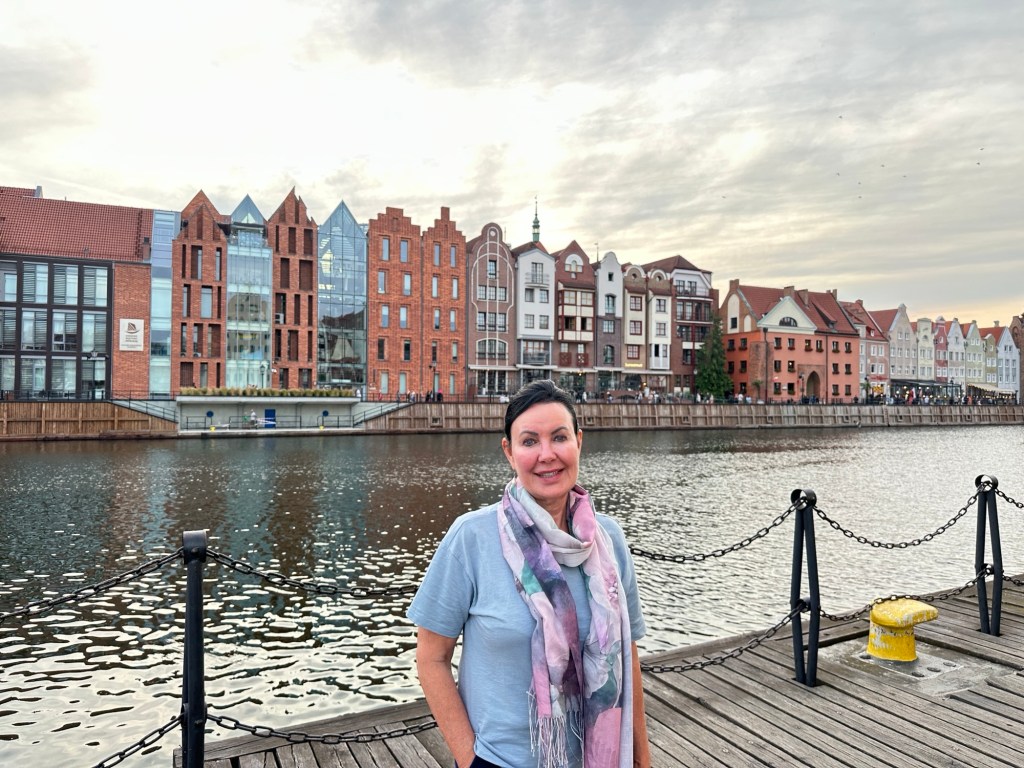
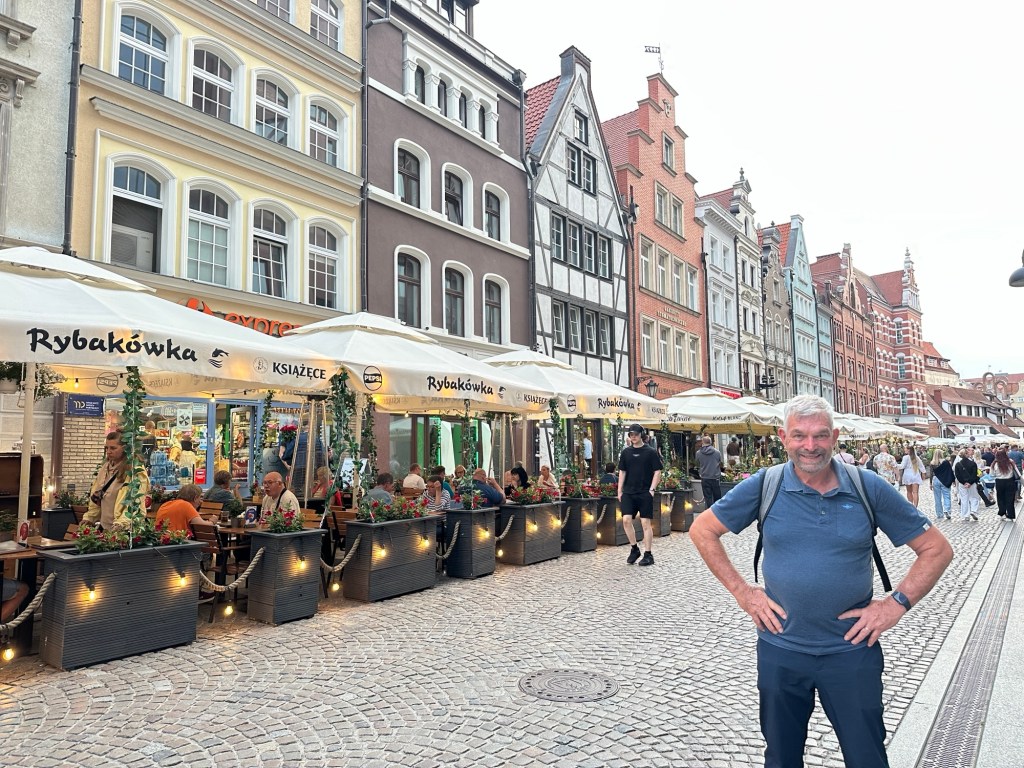


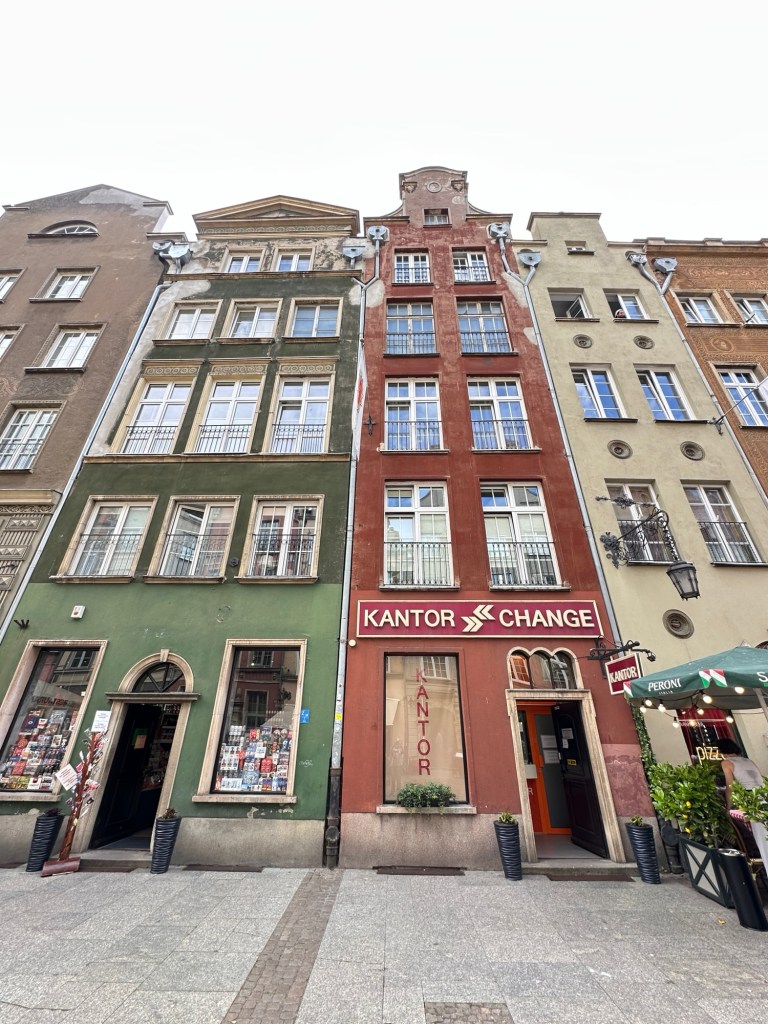
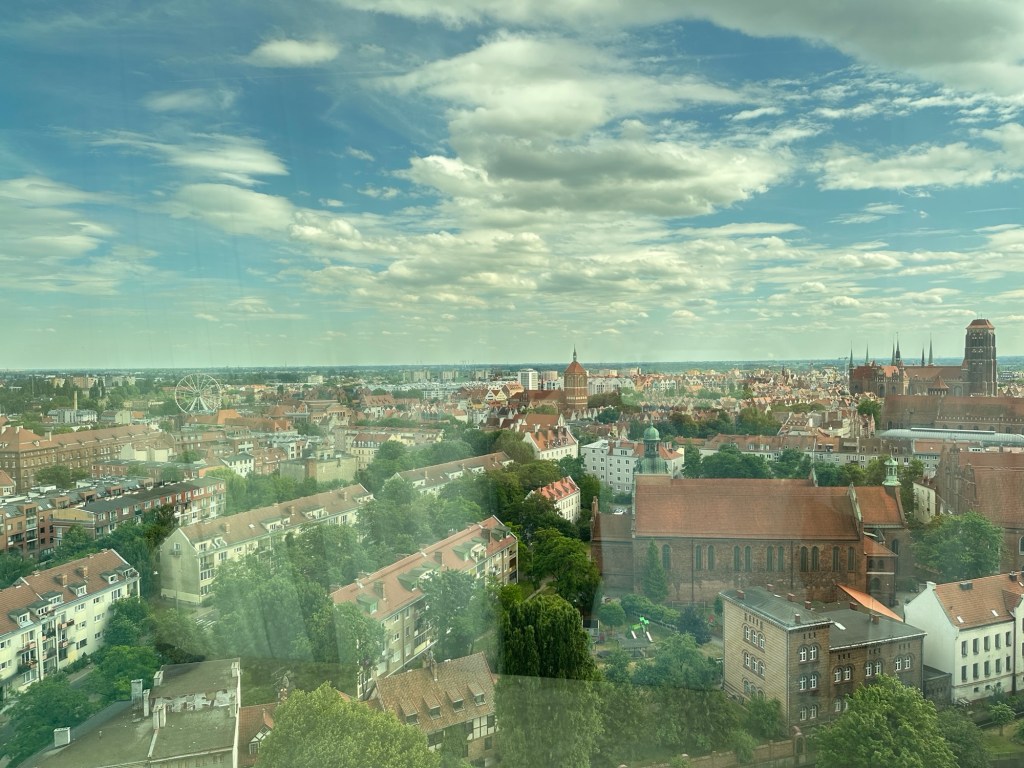
Great view from our room.
Day 49
Monday 7th July Vilnius
Gdansk to Warsaw
14-24 degrees
No breakfast this morning – as we were still full from the night before! We were catching the train to Warsaw this morning. A ten minute walk to Glowny station (an impressive looking station), then a two and a half hour journey to Warsaw.


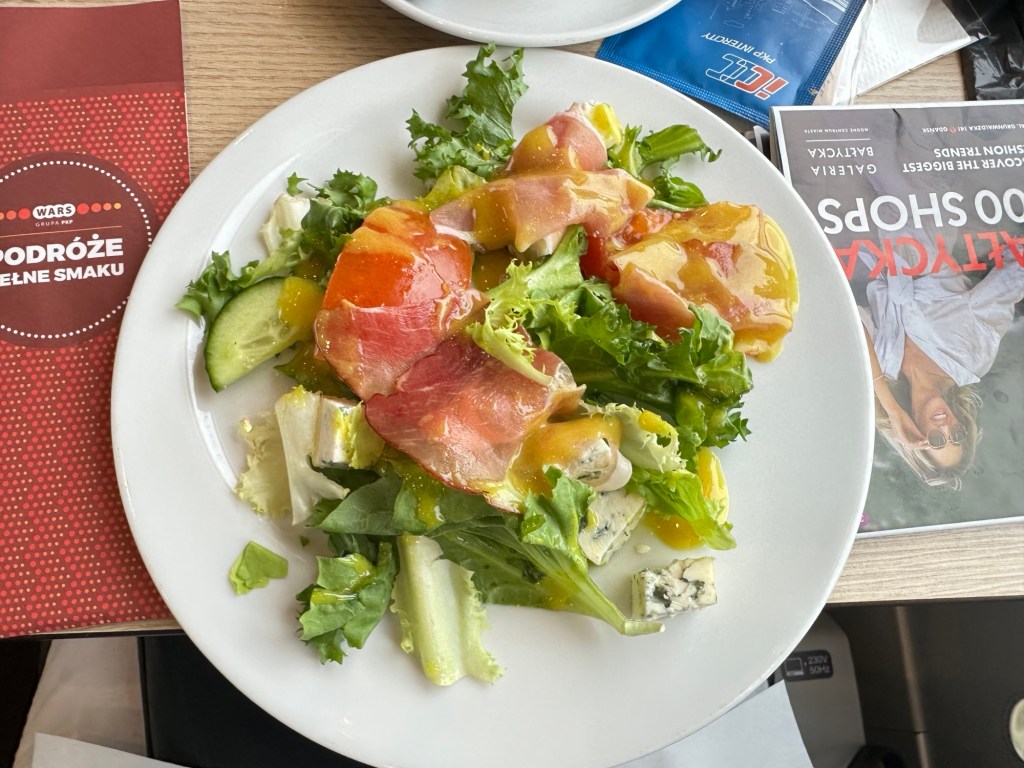
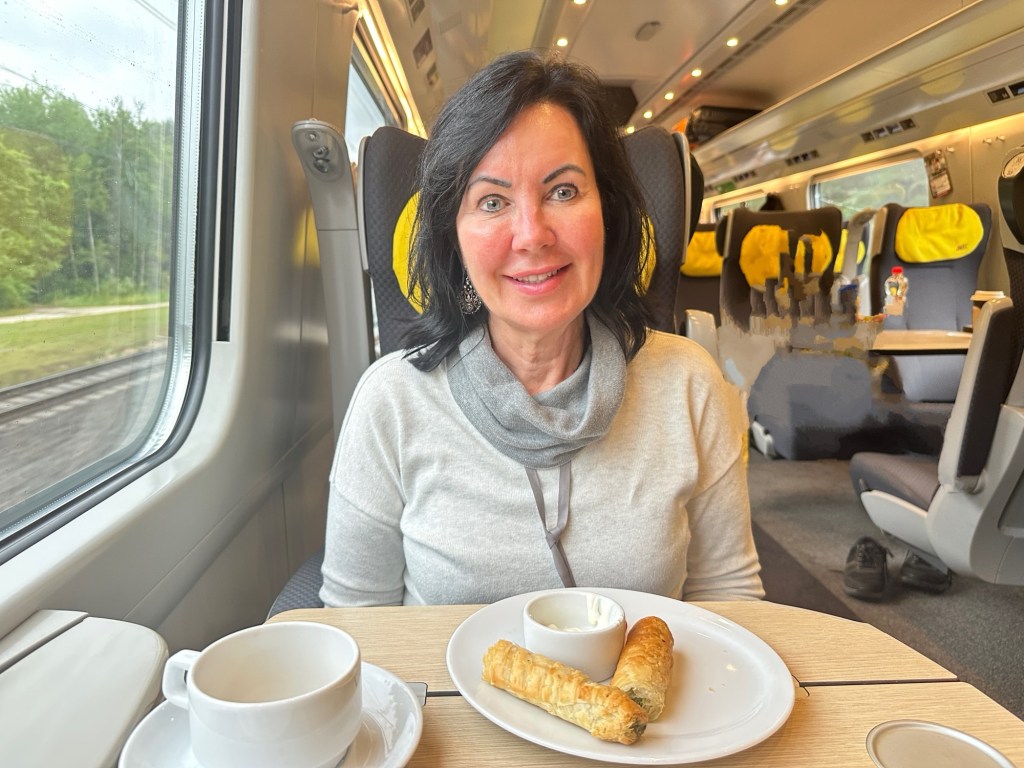
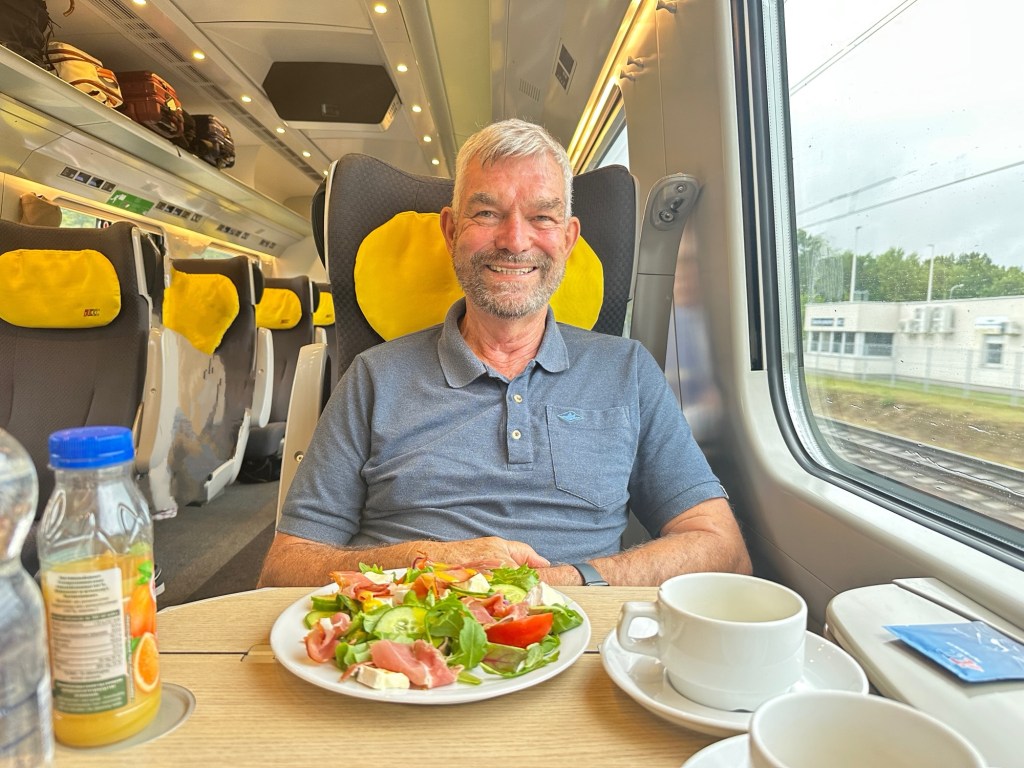
Frank had booked first class tickets which included lunch. We had bought salad rolls to have on the train not realising, so just had the light option of prosciutto and blue cheese salad to go with the rolls. It was a relaxing smooth ride – very comfortable. We will know about the meal for our next trip!
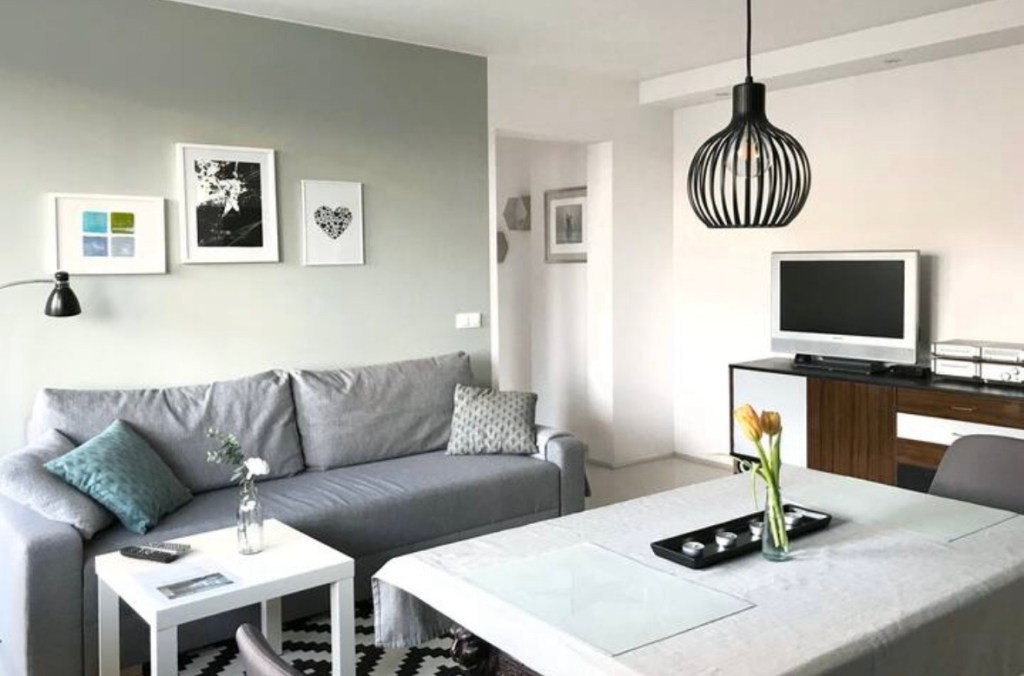
Our Airbnb was only 5 minutes from Central Station- of course, we took the wrong exit and had to walk around the station doubling the walk, plus had to encounter several main roads to cross. That happens! Our Airbnb was in a great location, next to the Intercontinental Hotel and opposite a big shopping centre. It was easy to get our breakfast supplies for the next couple of days at the local Carrefour.

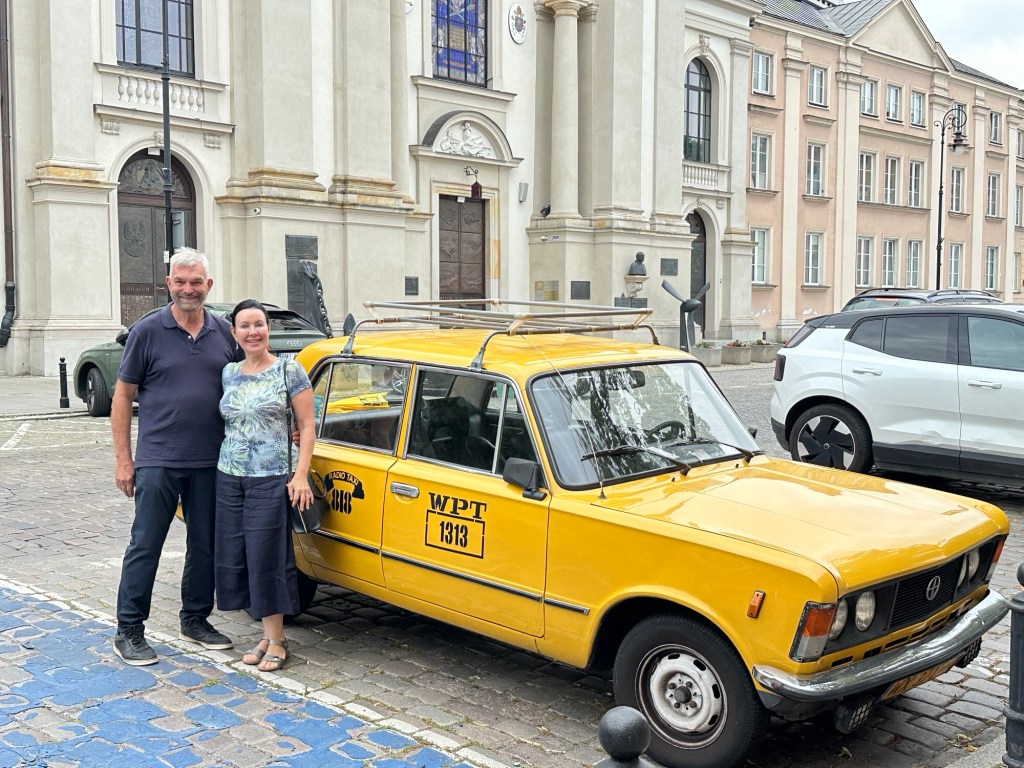
This afternoon we had a private historical tour of Warsaw – our guide Martin, picked us up at 4pm, and spent four hours filling is in on 1000 years of Warsaw history – all while touring in a retro yellow fiat!

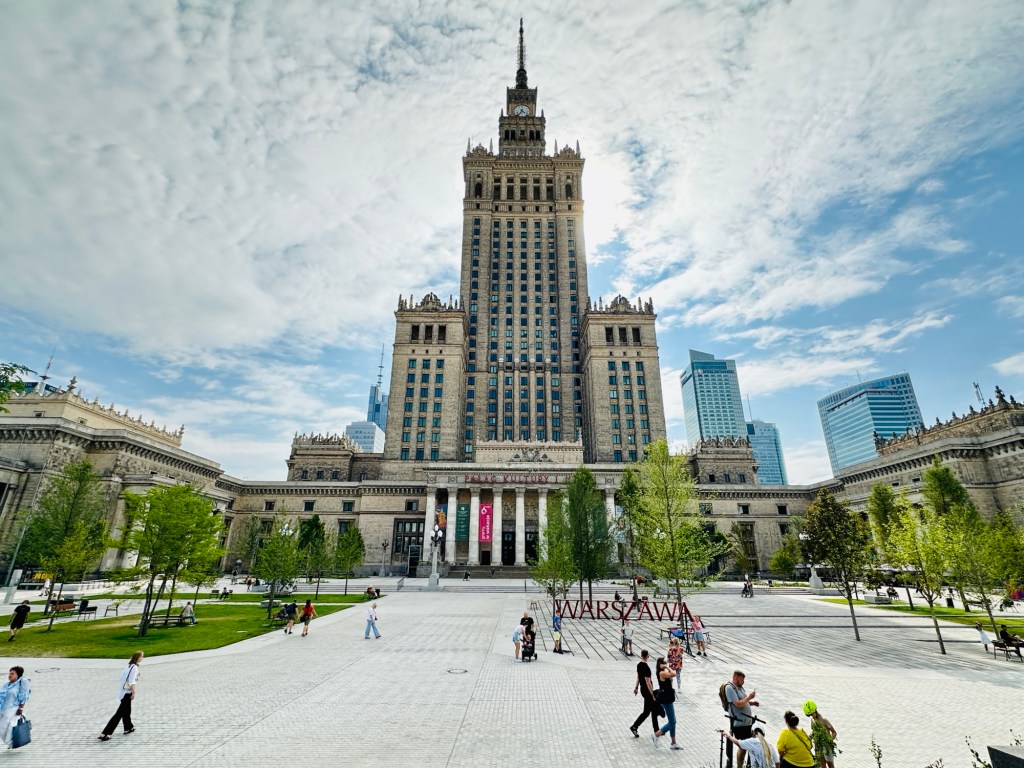
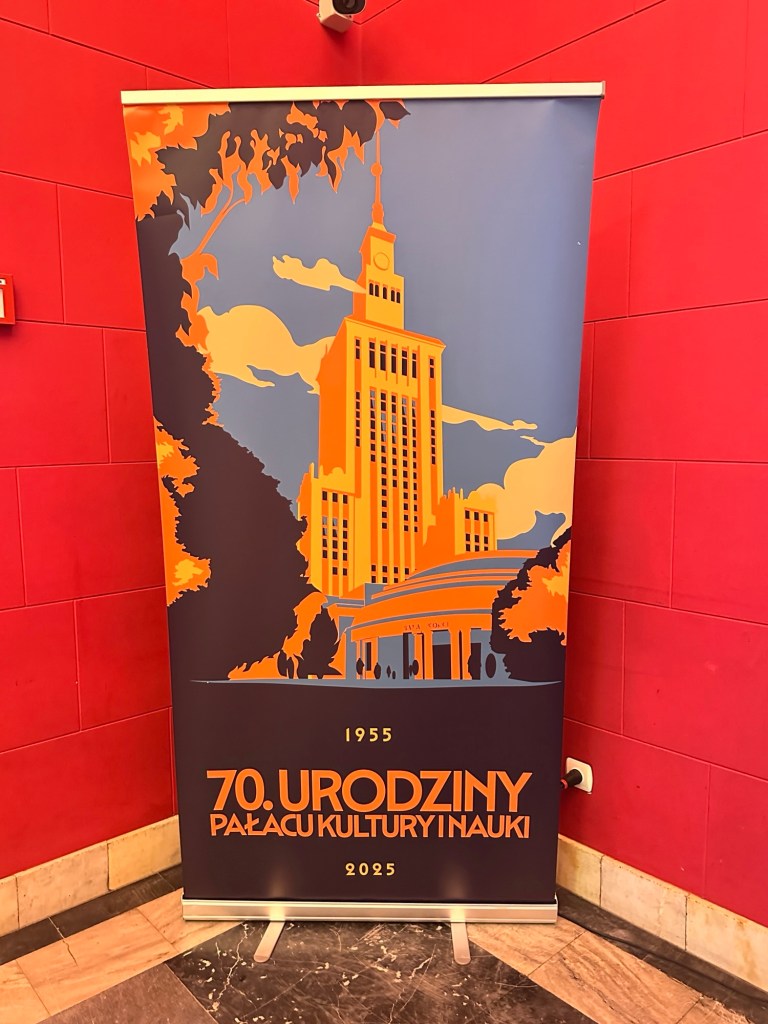
We started at the Palace of Culture and Science, which was across the road from our Airbnb. Possibly the most recognized building in all of Warsaw, this monolithic structure was a “gift” from the Soviet Union to the city’s residents, and intended as a monument to “the inventive spirit and social progress.” Built in 1952–5 by the Russian architect Lev Rudniev, it was the second-tallest building in Europe at that time and resembles Moscow’s Socialist Realist tower blocks. This symbol of Soviet domination still provokes extreme reactions among Varsovians, ranging from admiration to demands for its demolition. Since the end of the Soviet era, the building’s role has changed: the tower itself now provides office space, and the Congress Hall is a venue for concerts and festivals. It remains a cultural centre in other ways, housing the Theater of Dramatic Art, a cinema, puppet theater, technology museum, and a sports complex.

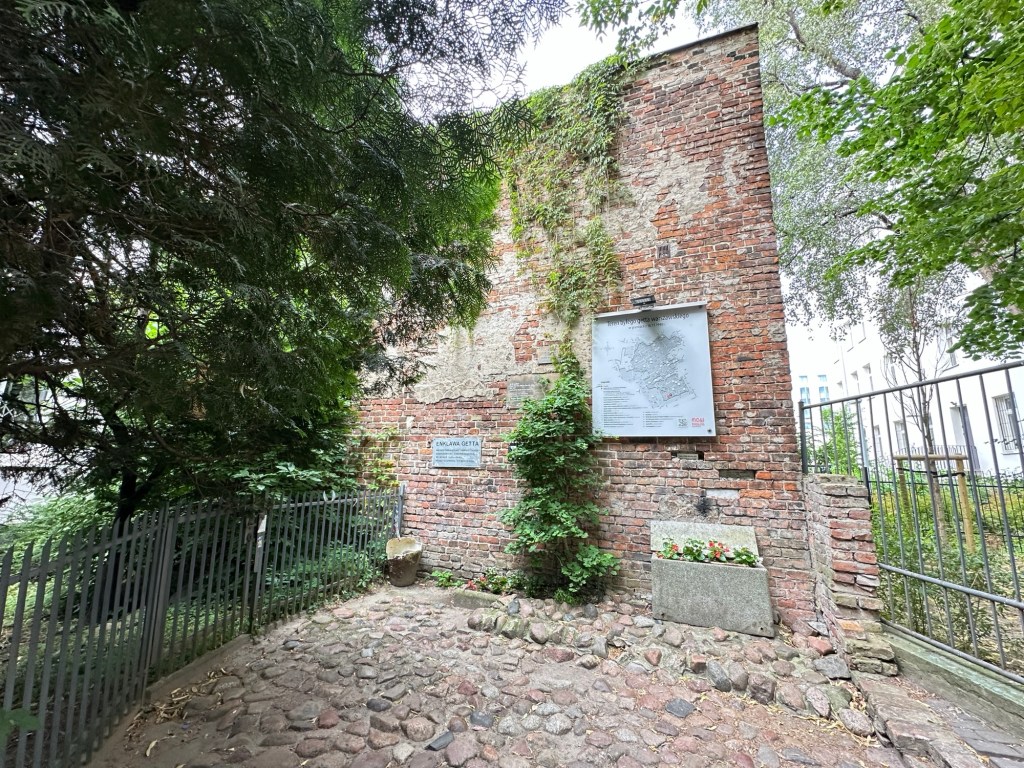
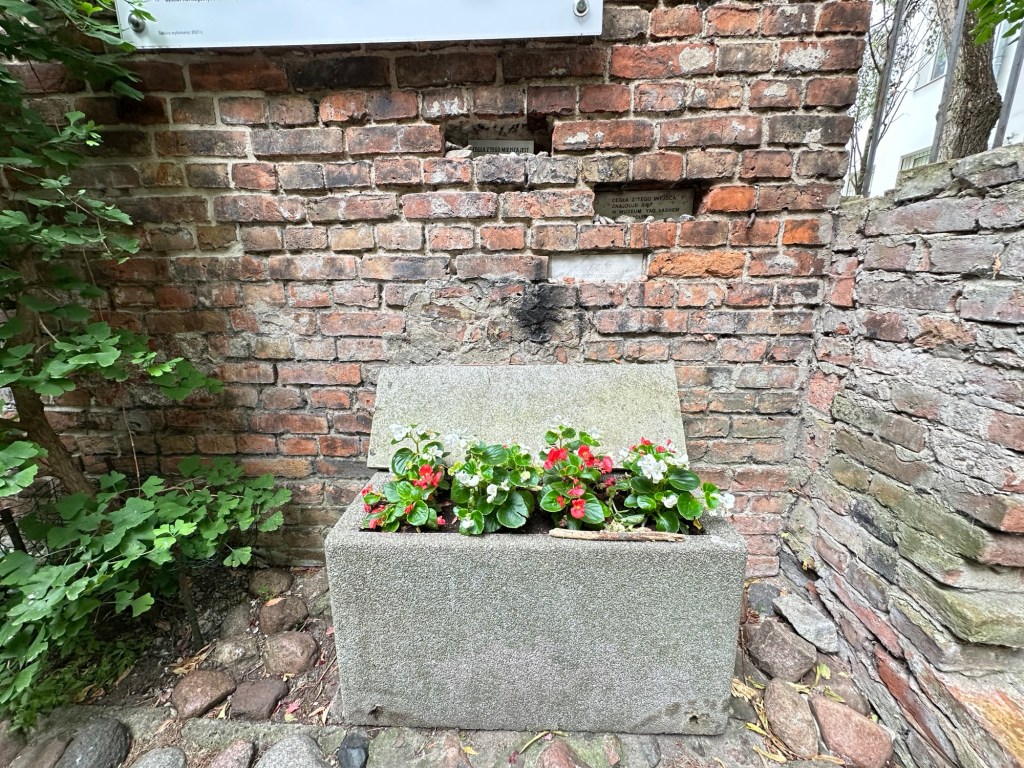
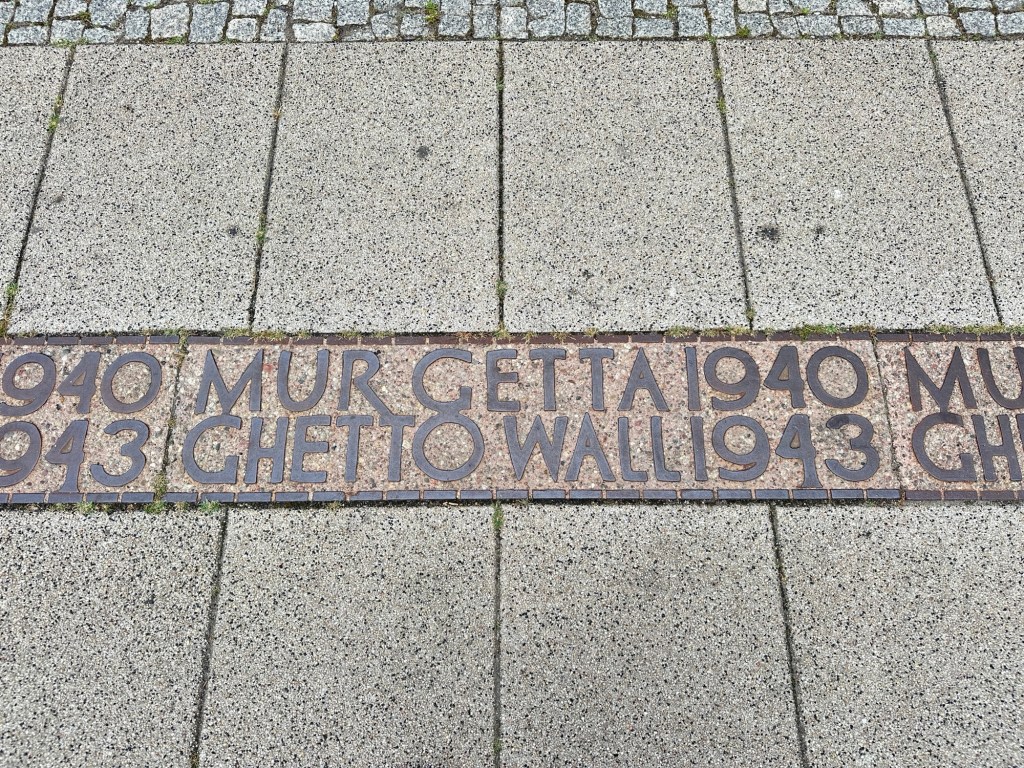
Close by was the Ghetto wall. By order of the German occupation authorities, the ghetto was cut off from the rest of the city on November 16, 1940. The ghetto area was surroundedby a wall, initially 307 hectares, and with time, it was reduced. Starting in January 1942, it was divided in two parts – the large and small ghettos. Approximately 360,000 Warsaw Jews and 90,000 from other towns were herded into the ghetto. Nearly 100,000 died of hunger. During the summer of 1942, the Germans deported and murdered close to 300,000 people in the gas chambers of Treblinka. On April 19, 1943, an uprising broke out in the ghetto. Until mid-May, fighters and civilians perished in combat or in the systematically burned ghetto buildings. The remaining population was murdered by Germans in November 1943 in the lajdanek, Poniatowa and Trawniki concentration camps. Only a few survived.
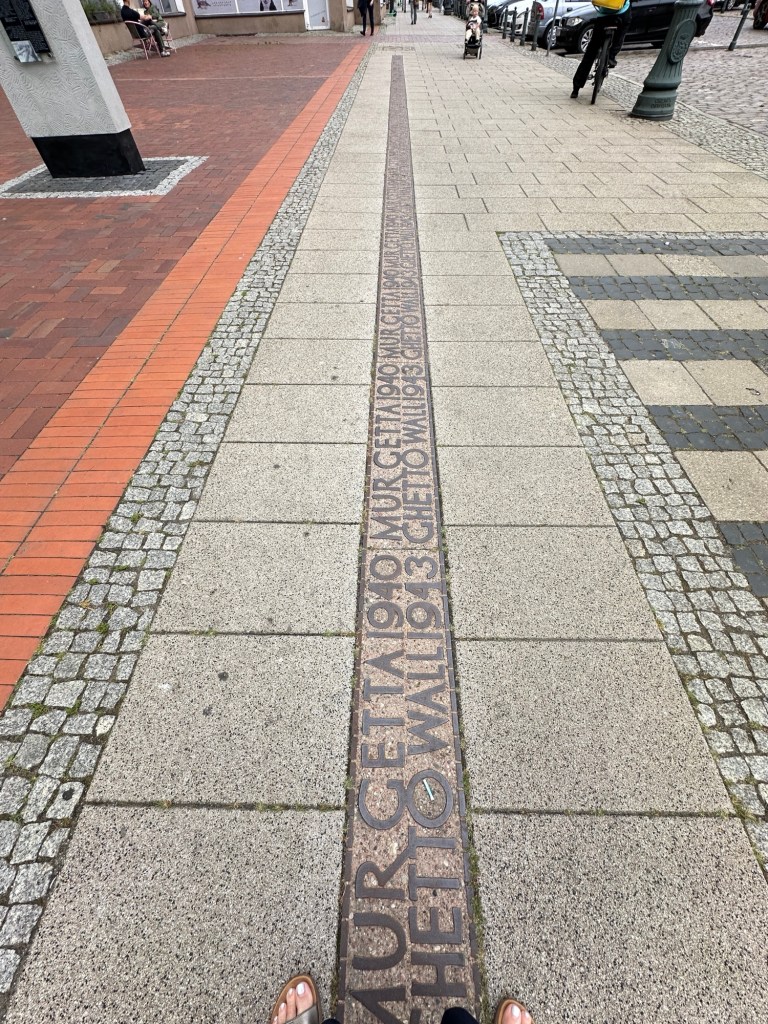
We saw two sections of the six remaining ghetto walls. Also where the foot bridge stood to move the Jews from one section to another. Dedication cast iron plates set in the pavement, mark the boundaries where the walls once stood. Very sobering.

Martin must have thought he needed to lighten the moment so bought us some traditional Polish donuts, filled with plum jam.
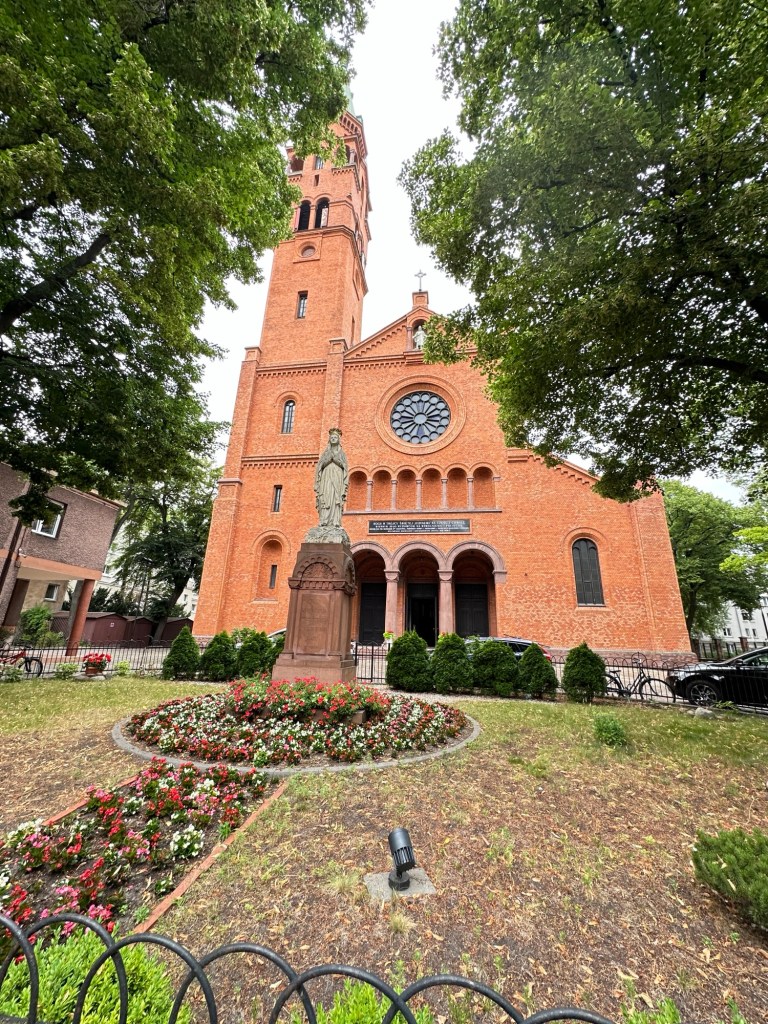
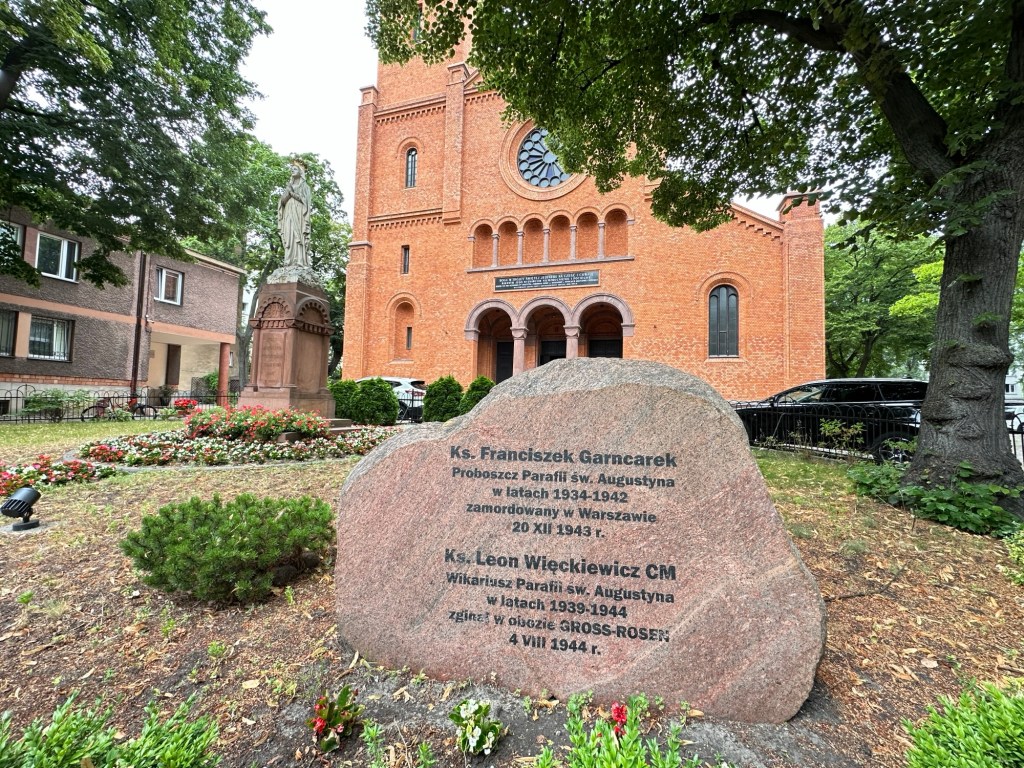
St Augustine’s Church was the only building left standing in the Jewish Ghetto. Here the Poles helped some Jews escape.
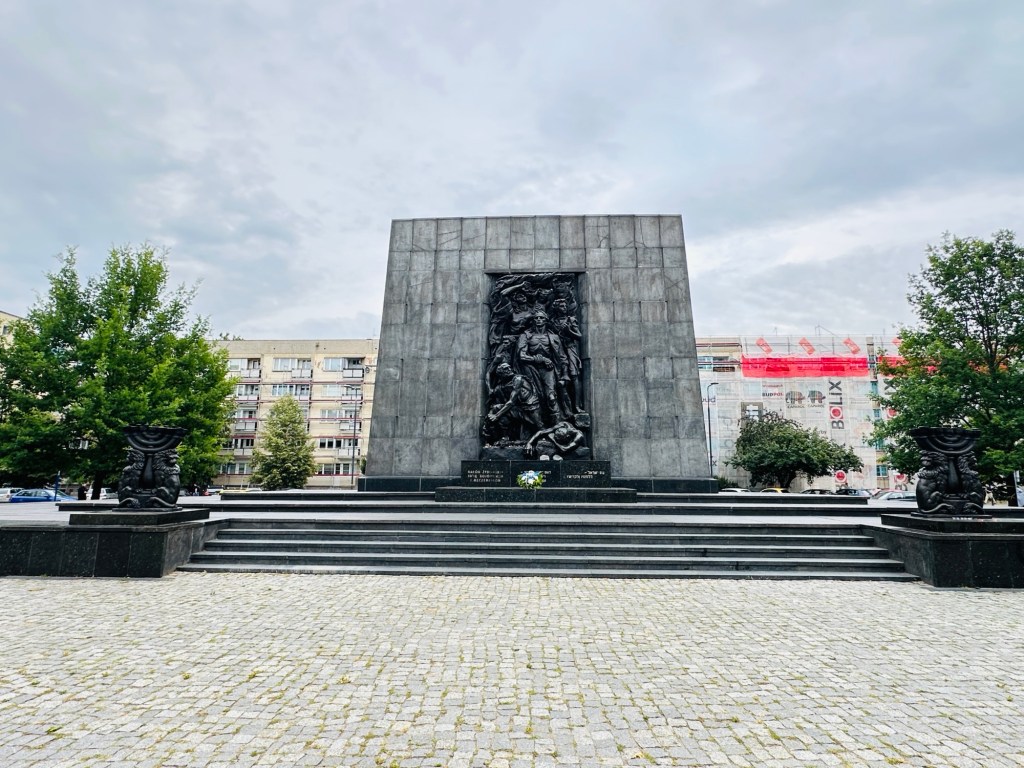
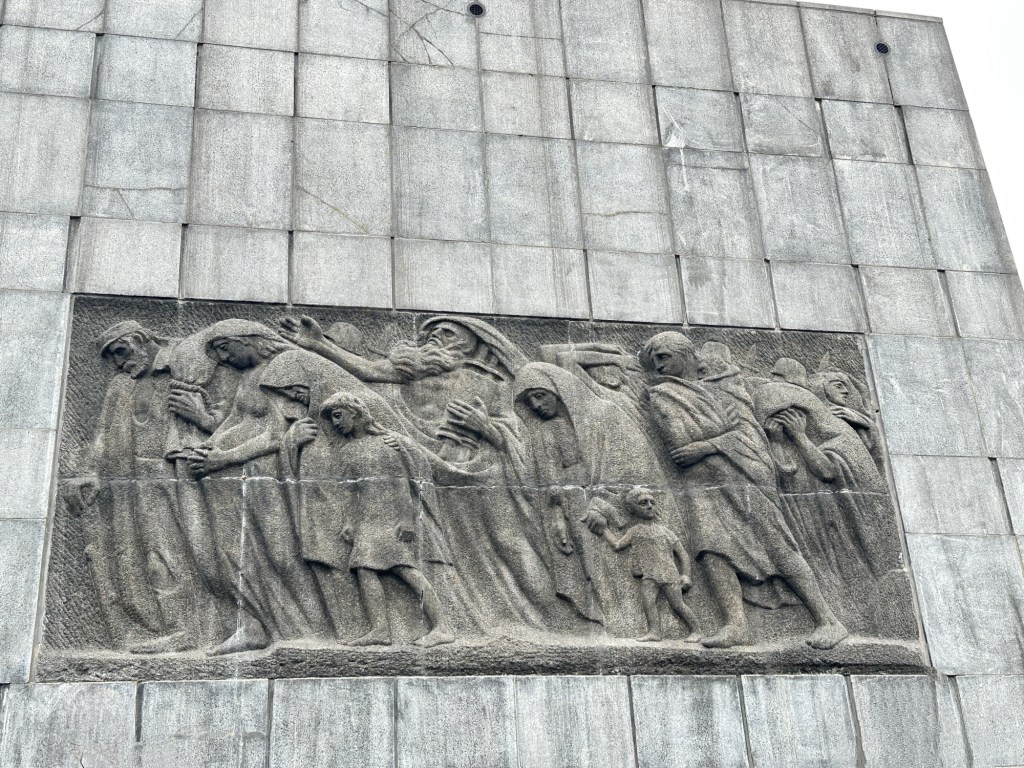
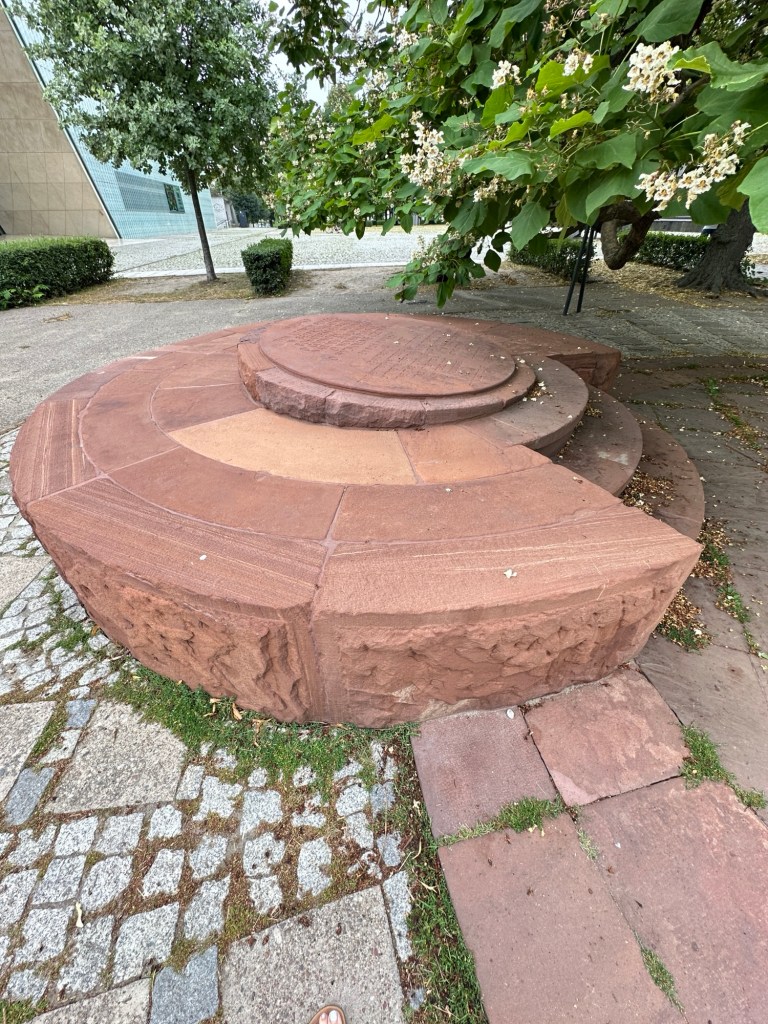
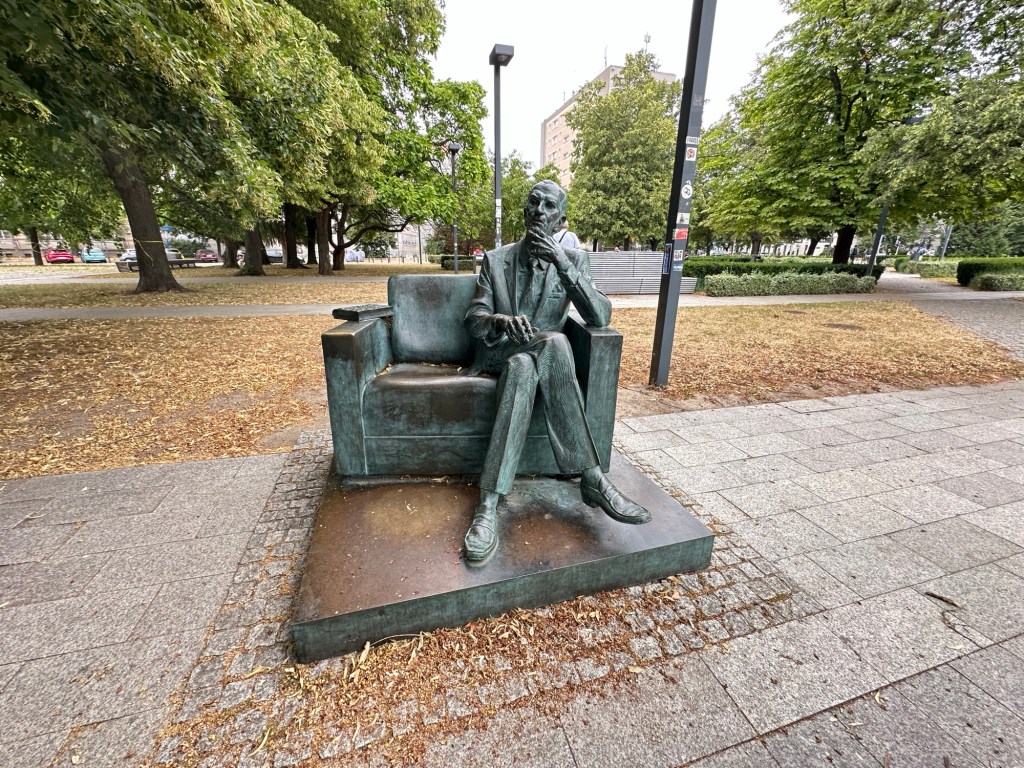
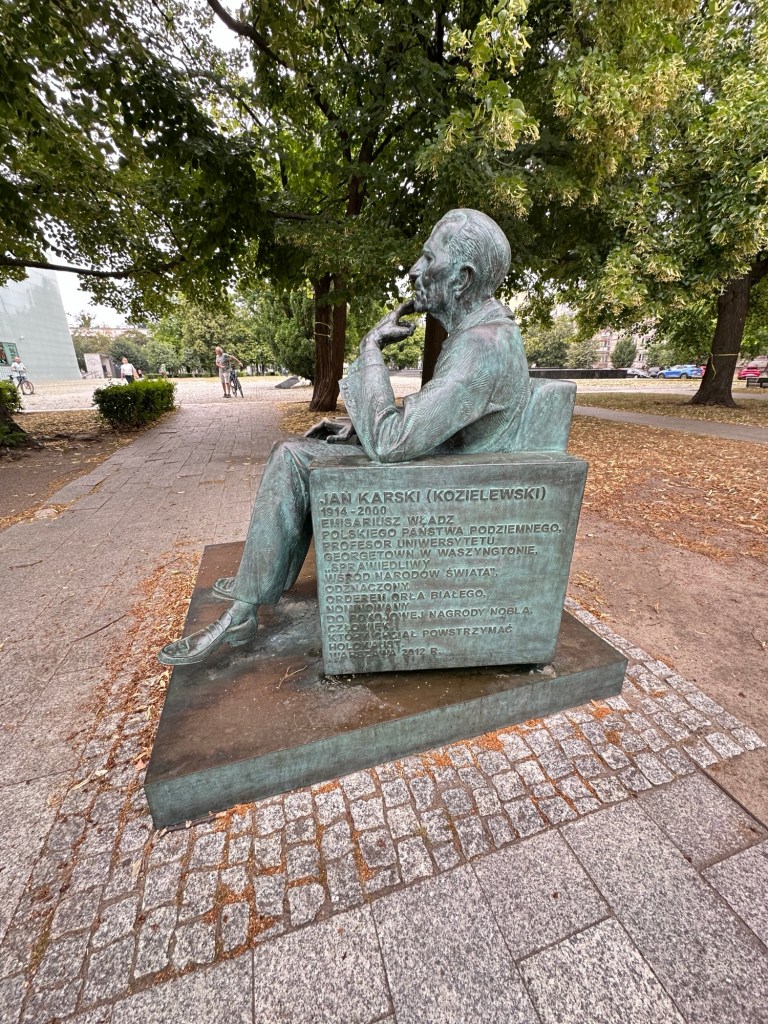
We stopped next at the POLIN Museum of History of Polish Jews. Here Martin gave us the information about the monuments and plaques in front of the museum. The Monument to the Ghetto Hero’s commemorates Jewish insurgents from the Warsaw Ghetto, which lasted from 19 April 1943 to 16 May 1943. On the eastern flank of the monument there is a relief entitled “March to the Holocaust” showing the suffering of women, the elderly and children led by the Nazis in an unknown direction.

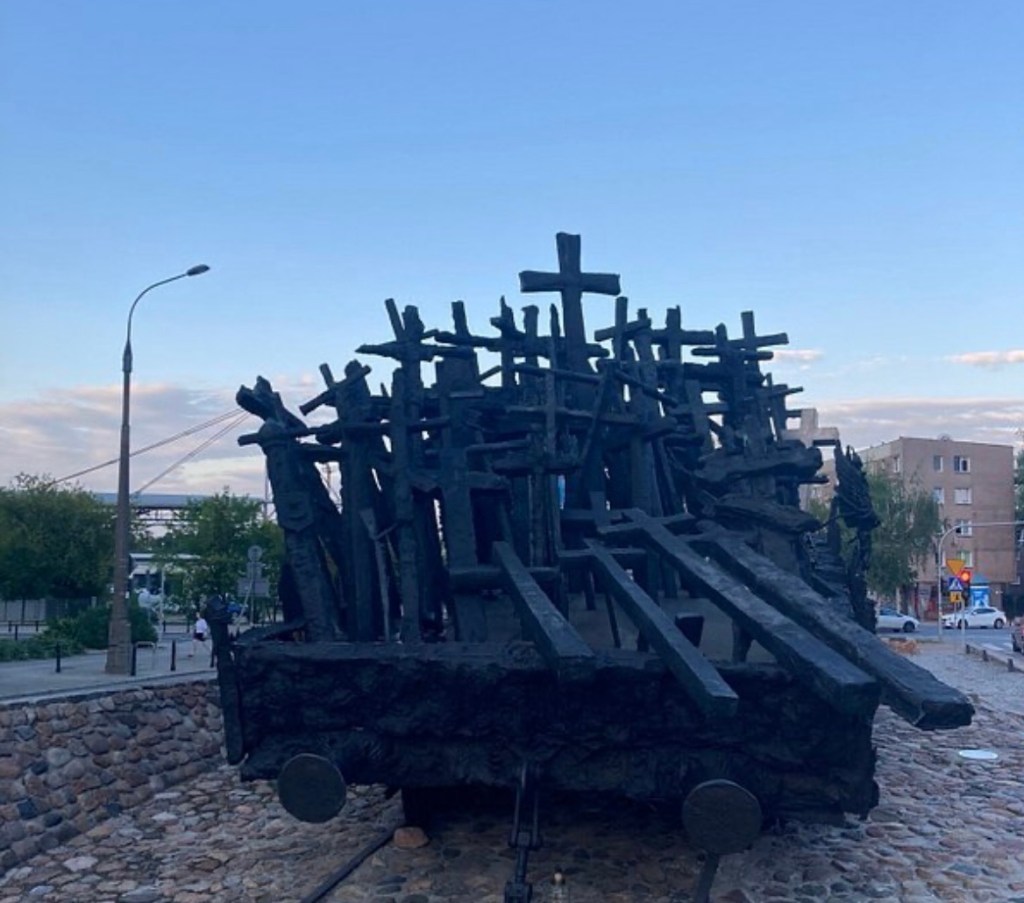
Drove past the Monument to those Fallen and Murdered in the East – this monument takes the form of a typical railroad wagon in which Poles were deported into the depths of the Soviet Union (Siberia). It is filled with a pile of crosses symbolizing the hundreds of thousands of Poles transported east in cattle vans. Many died there of hunger, overwork, or disease.

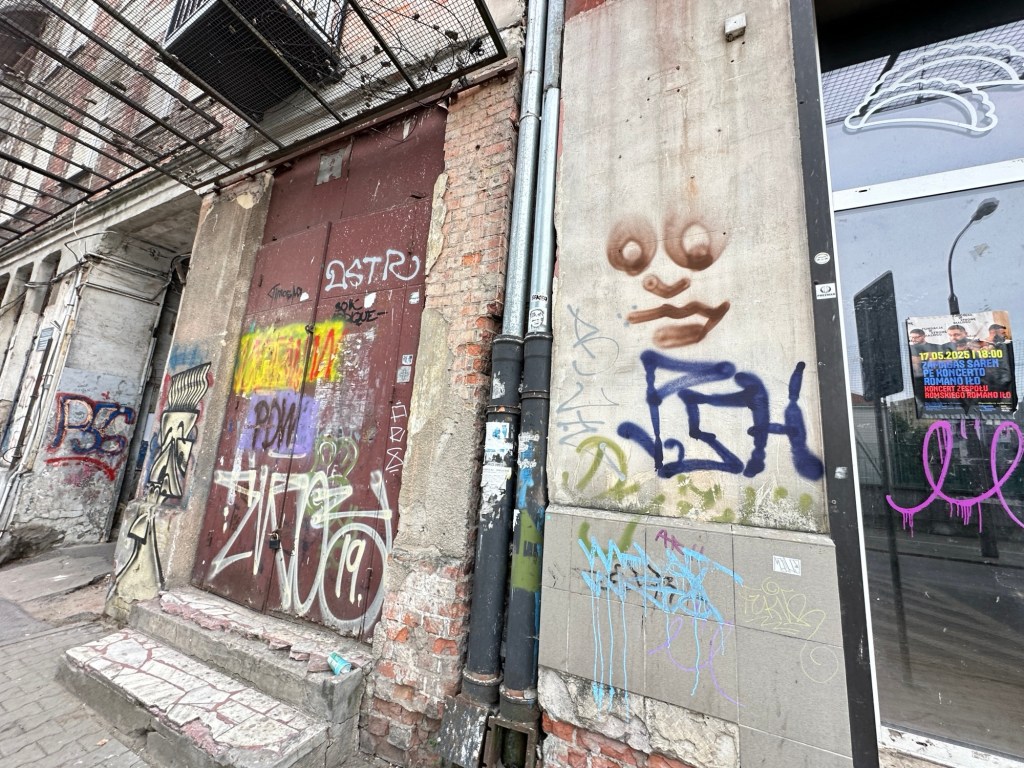
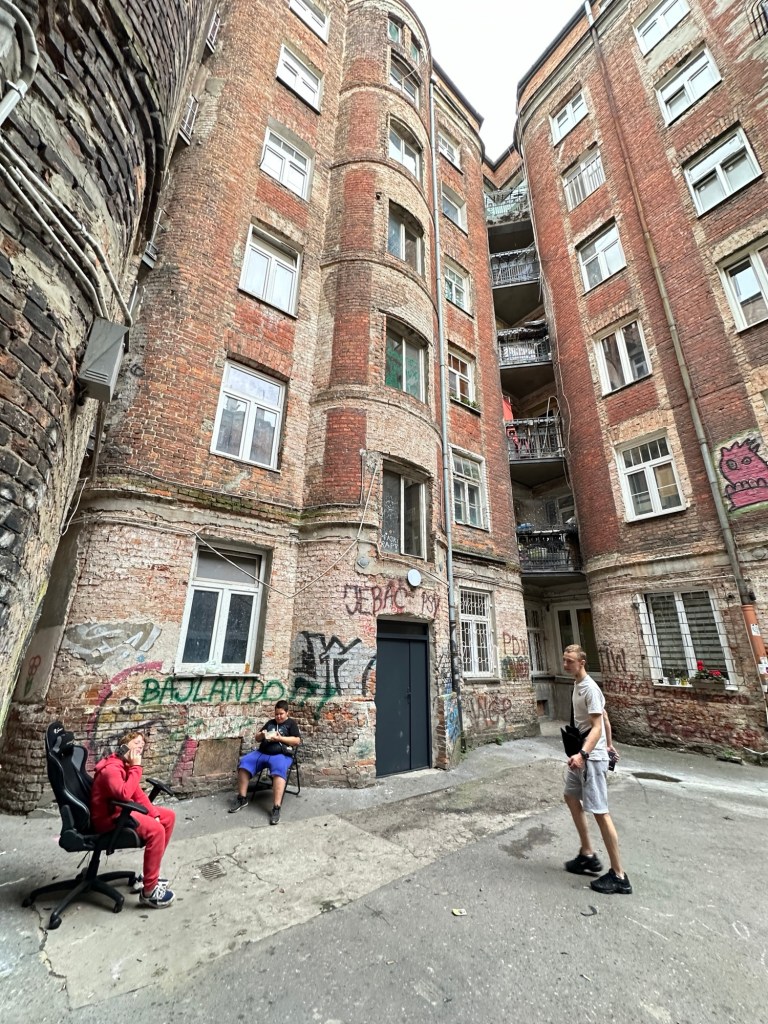
Martin also took us to another part of Warsaw (no idea what it was called), where the Polish lived when the Germans were in control. Lots of graffiti and bullet holes on the walls. Slowly some of the buildings are being renovated. Some buildings remain boarded up – until it can be proven that there no surviving descendants, these buildings can’t be touched. Some shifty characters could be seen in the street, though Martin thinks this area will be like New York’s SoHo in ten years.

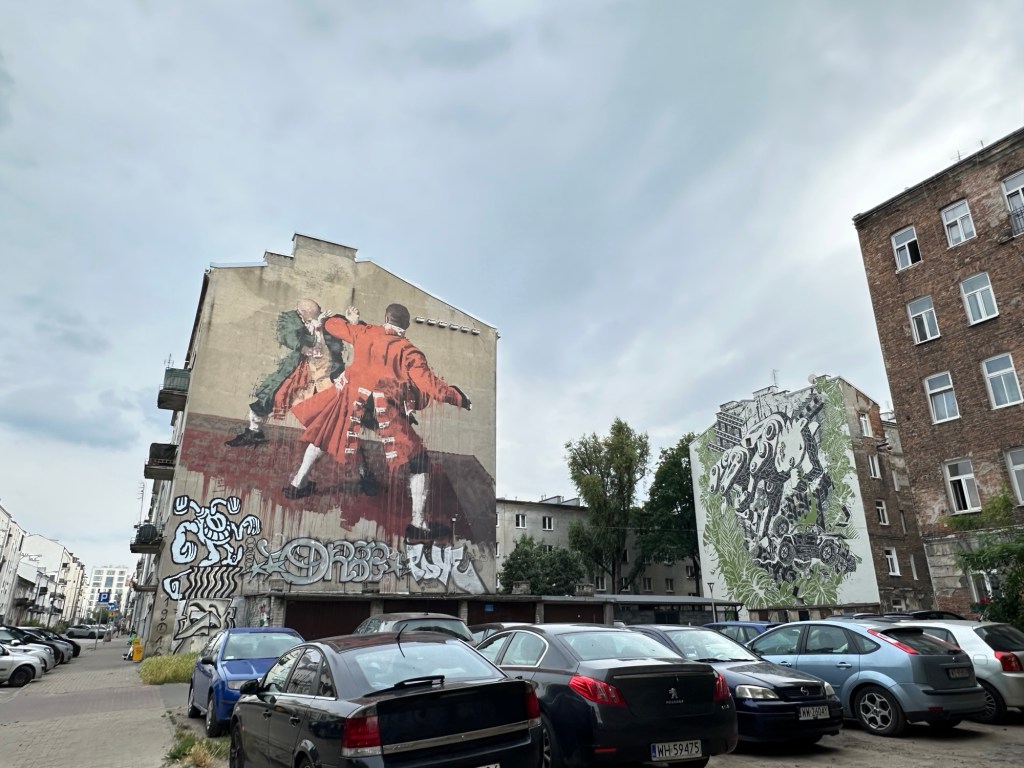

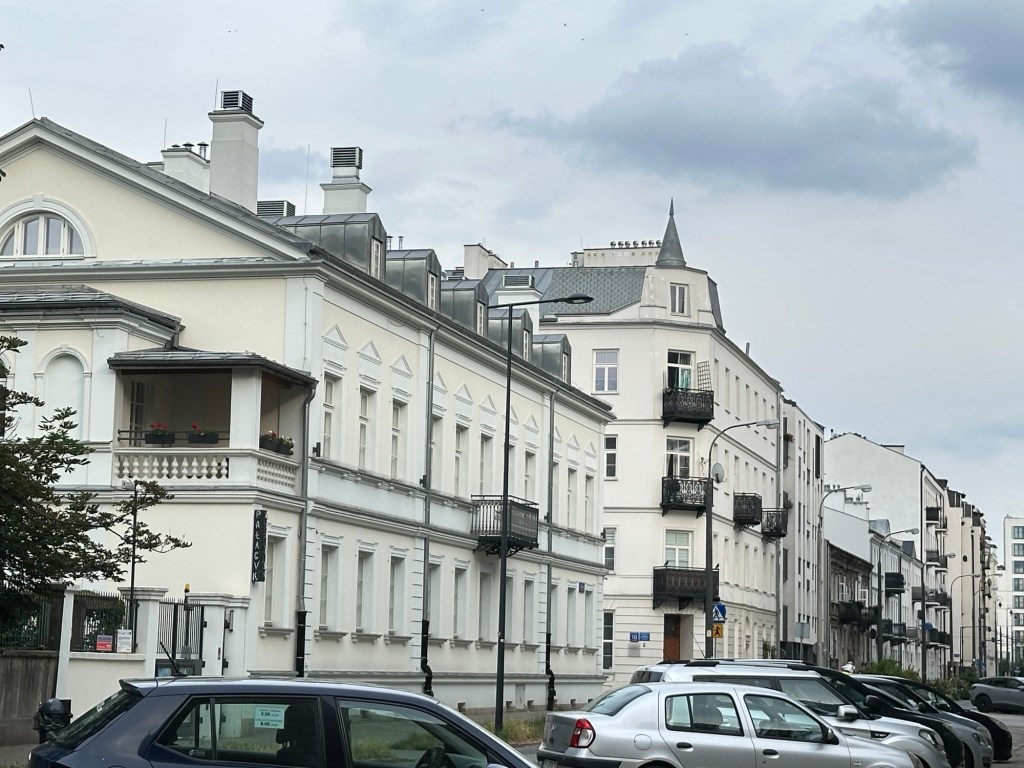
Next the Old Town. Believed to have been founded in the late 13th century, Warsaw became capital of Poland in 1596. The castle and grand Old Town buildings date largely from the Renaissance and Baroque periods, but by the end of World War II, most of the buildings had been reduced to rubble. Interestedly, only five of the houses around Market Square were left standing – they had each had the staircases recently replaced with steel structures, hence adding stronger support to the buildings. Meticulous reconstruction was undertaken during the Communist era. Warsaw is rich in museums and sights, and its center has been declared a UNESCO World Heritage Site.
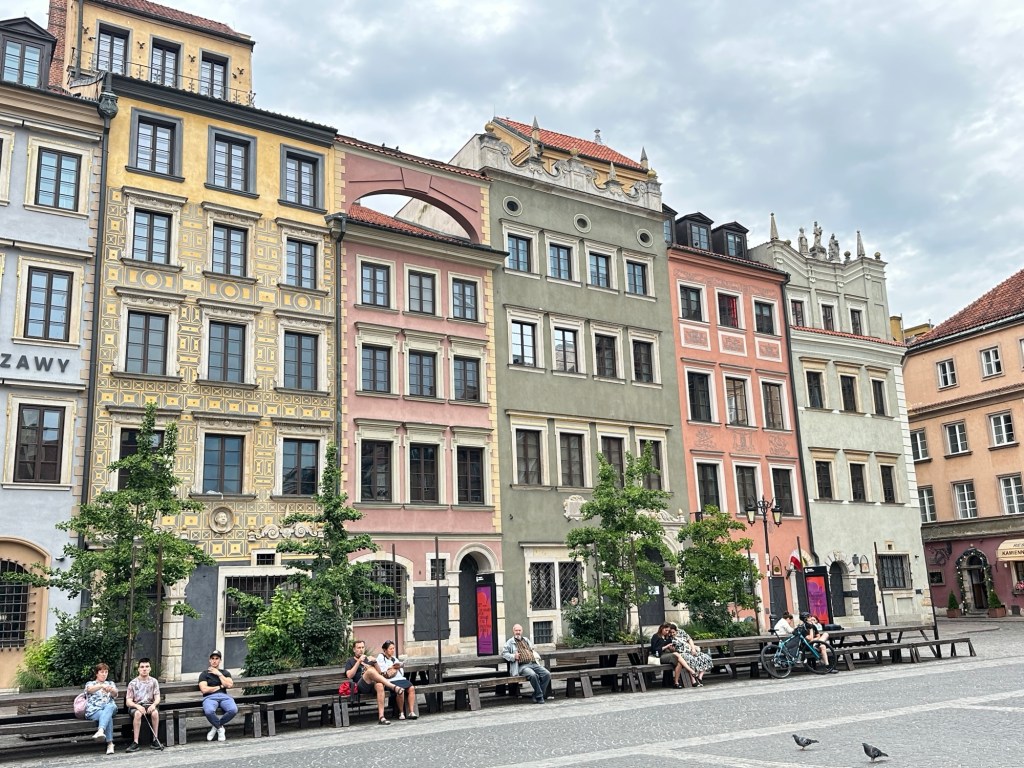
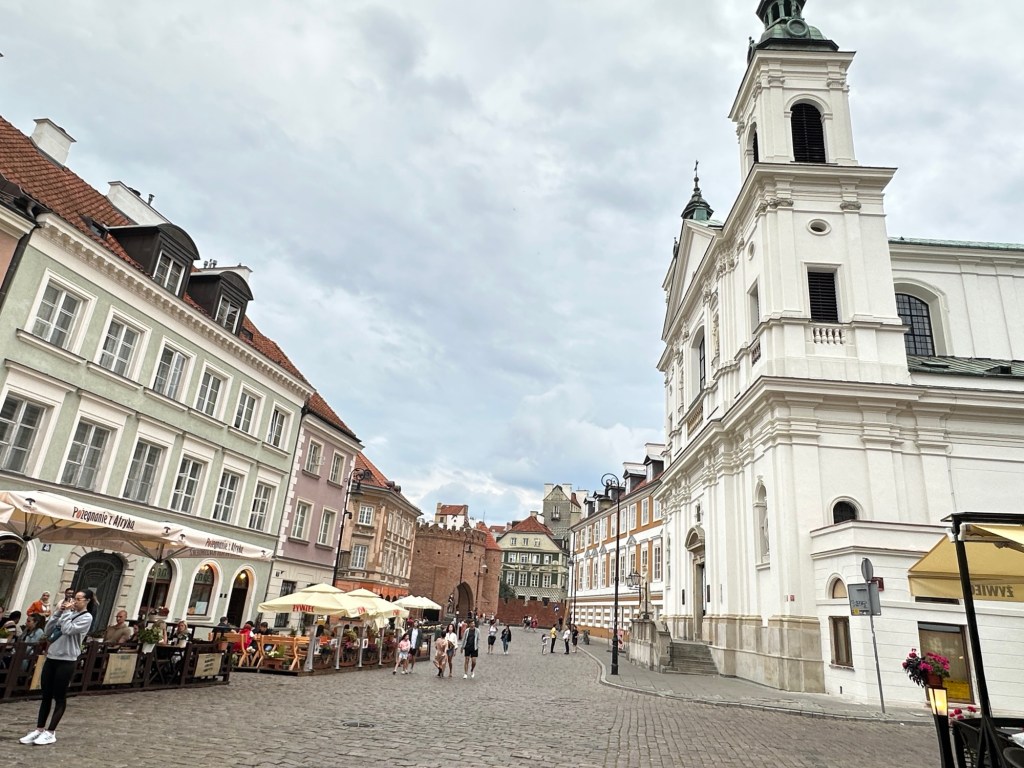
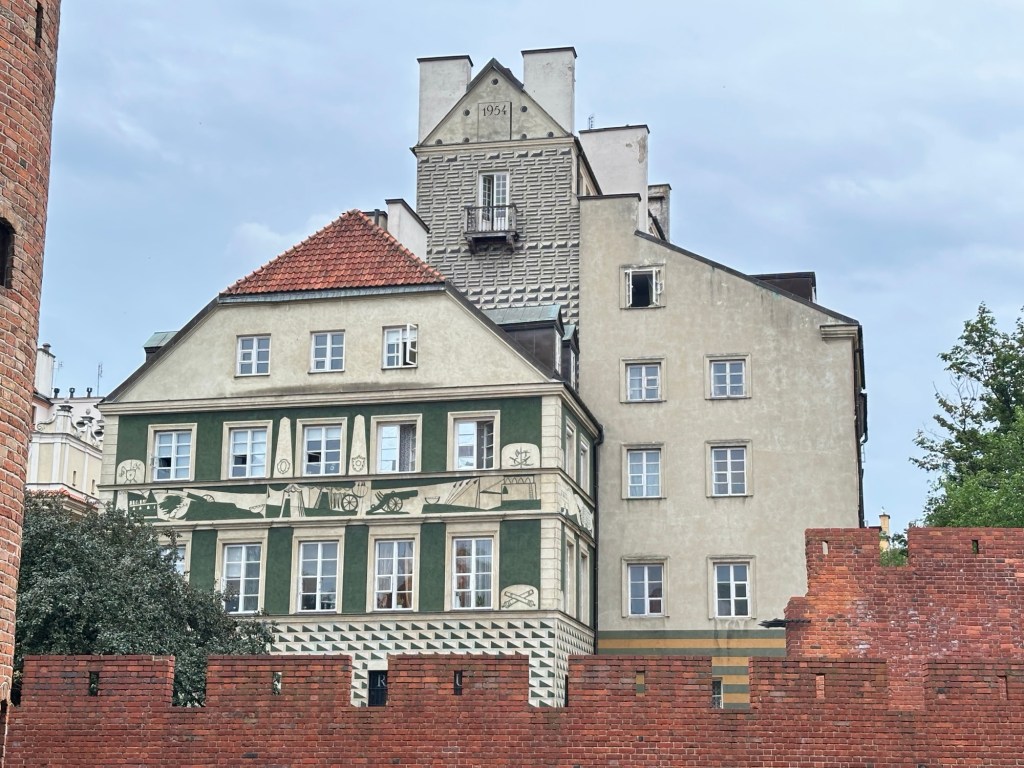

Just outside the Old Town is the Warsaw Uprising Monument which commemorates the heroic struggle for freedom, dignity and independence, but also the brutal suppression and destruction of the city. Although the monument is meant to commemorate the 1944 uprising, it was not erected until 1989. The communist governments were always negative about such a project.

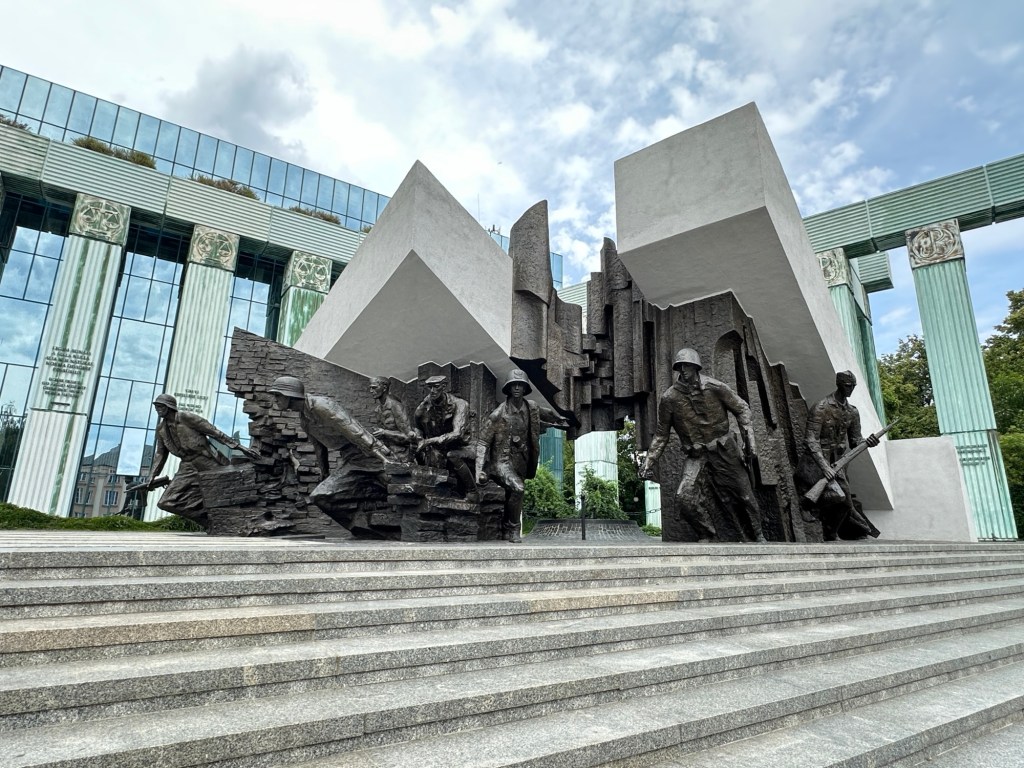
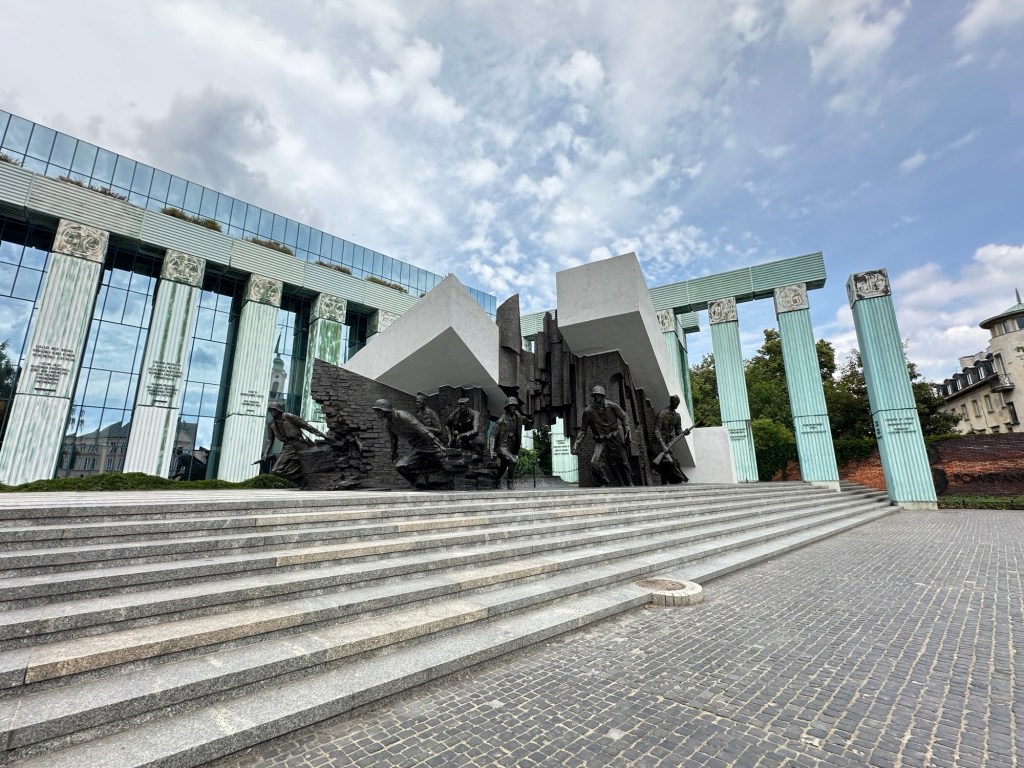
By the time we got back to our apartment at 8pm, we had brain overload! Easy night tonight, cheese and crackers, and even a movie. We needed some down time.
Day 50
Tuesday 8th July
Warsaw
16-25 degrees, sunny, rain late afternoon
As it was just an overview of the Old Town yesterday, we needed to go back and spend more time there. It was walking distance from our apartment – along the Royal Route.
The grand Royal Route is one of Warsaw’s most historic and beautiful streets. Starting by Castle Square, and continuing all the way to the royal palace at Wilanów (a total of 11 kms – we only walked a small section), this thoroughfare was the path along which Poland’s kings would move in procession whenever doing business in the capital. The social elite built grand summer residences and town houses here, while religious orders established lavish churches and monasteries. Many such buildings have been preserved, including the churches of St. Anna, St. Joseph, and the Church of the Assumption. Warsaw University and the Fine Arts Academy are also located here, while various monuments pay tribute to eminent Poles.
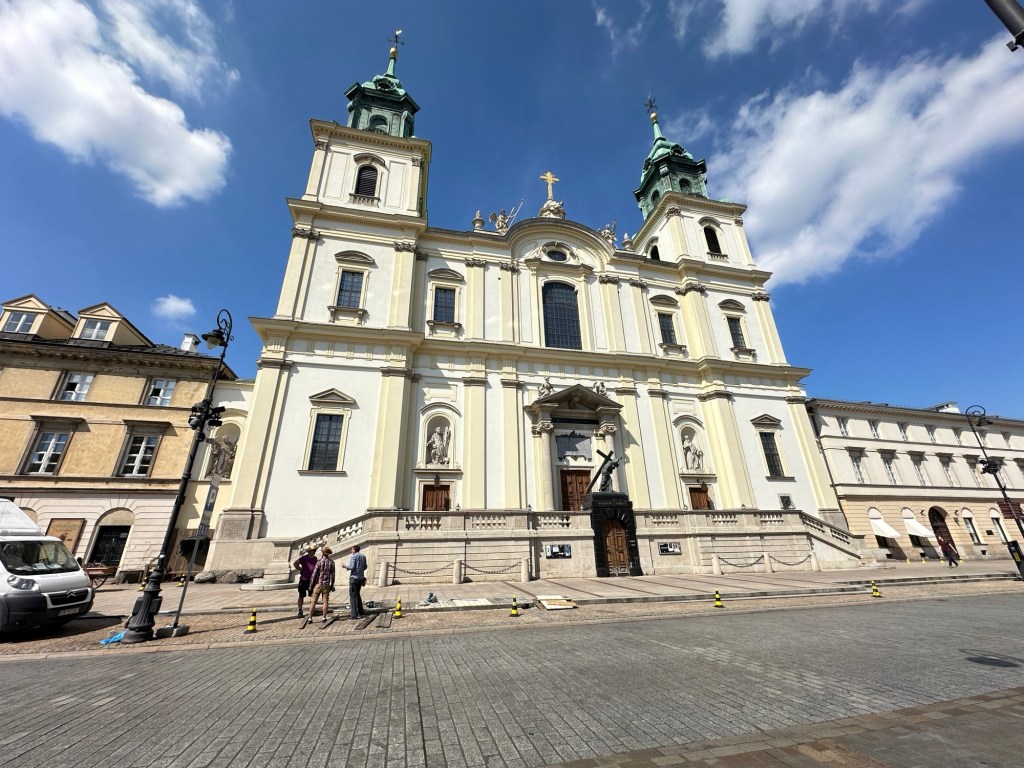

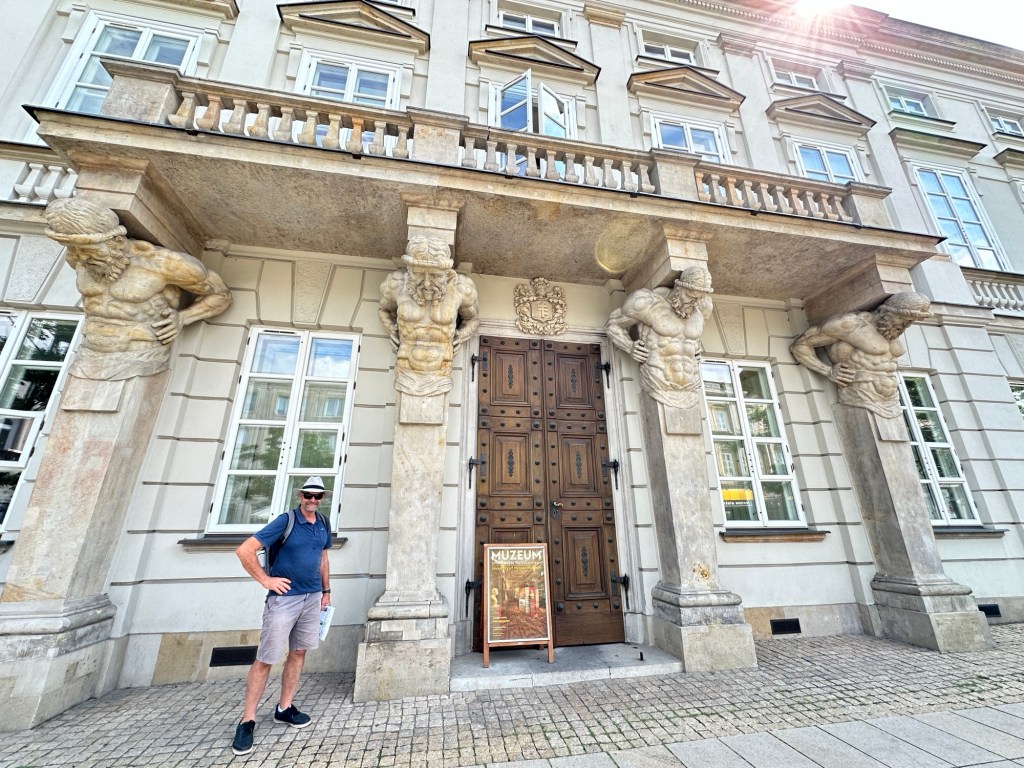
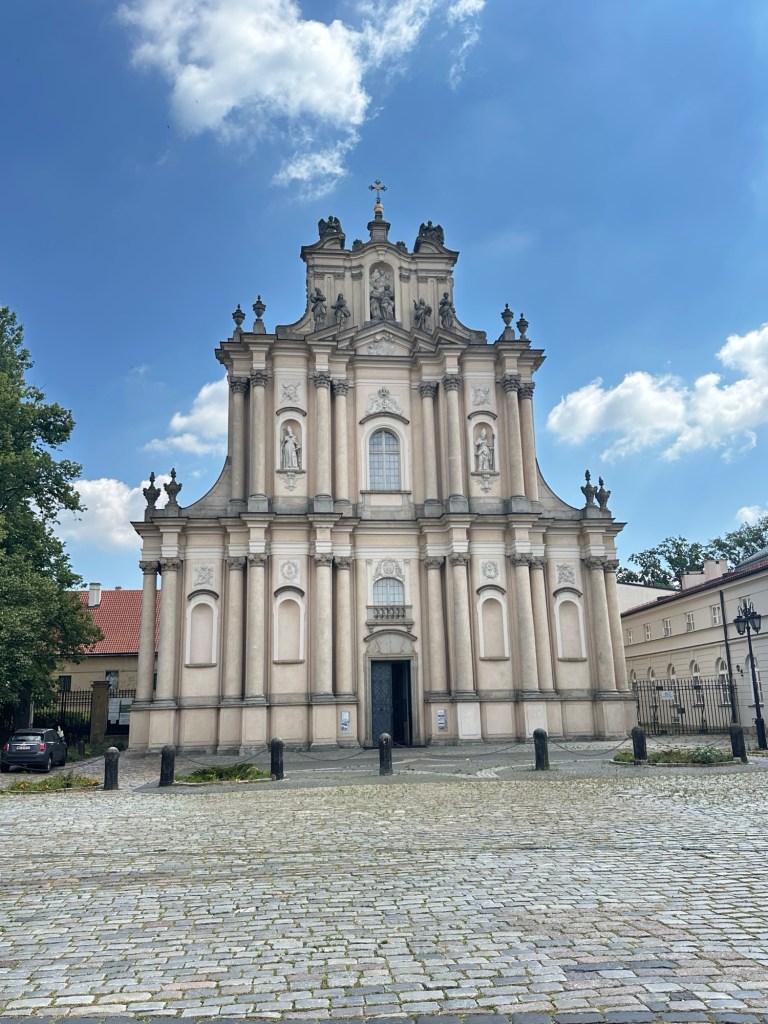
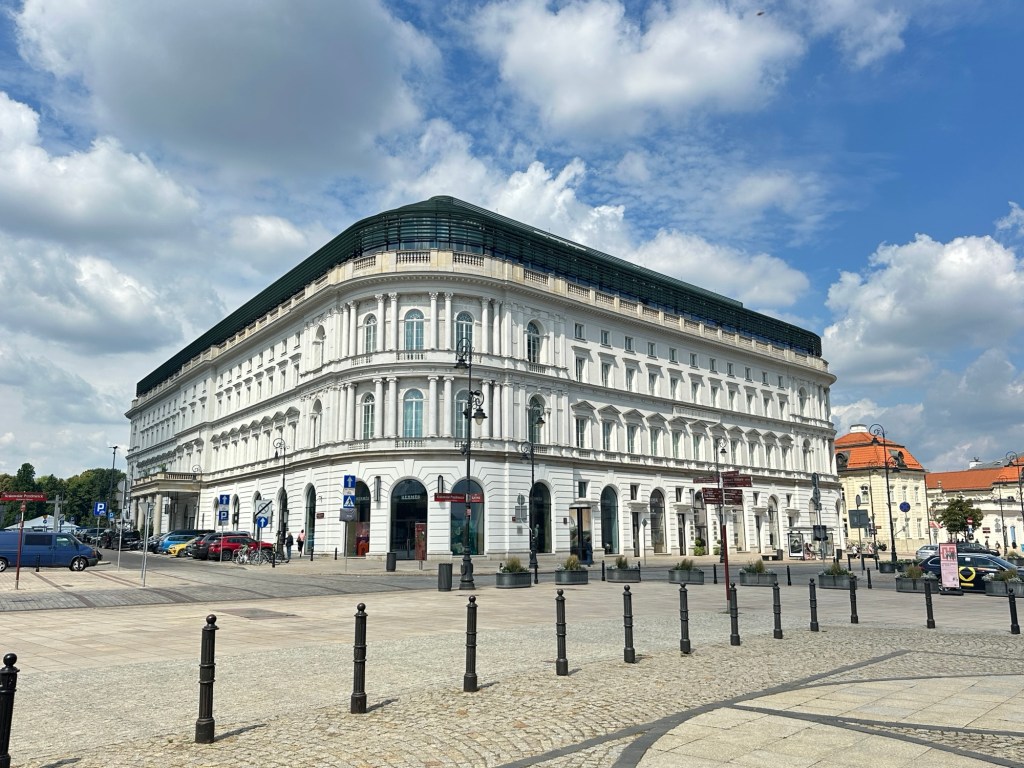
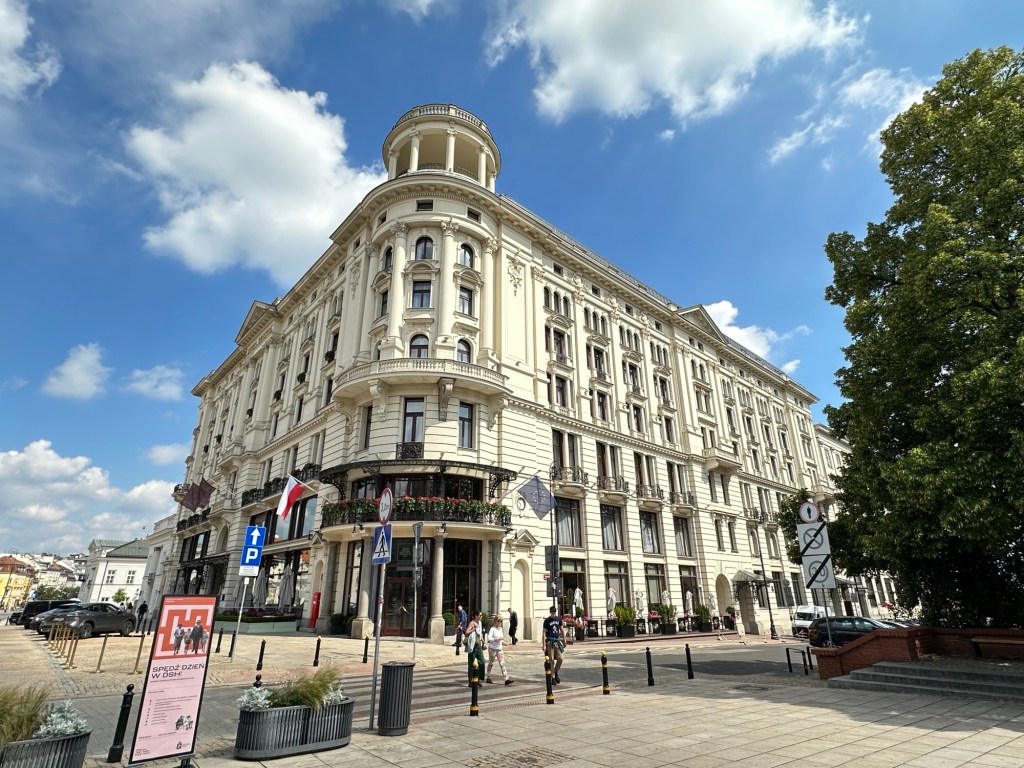
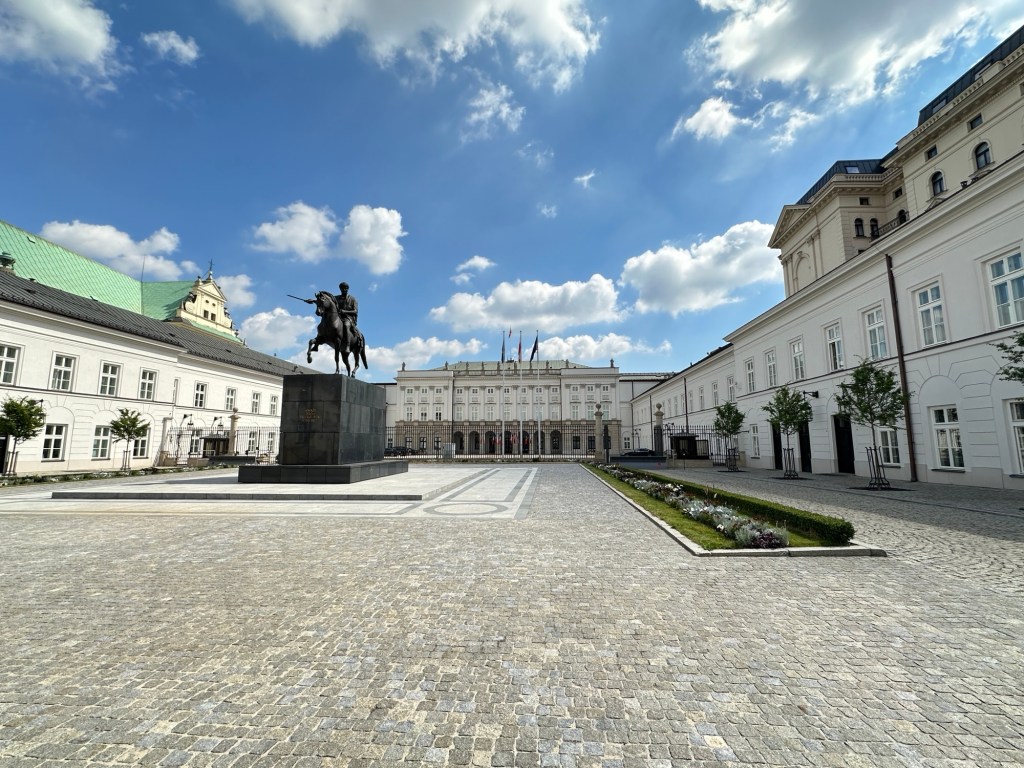

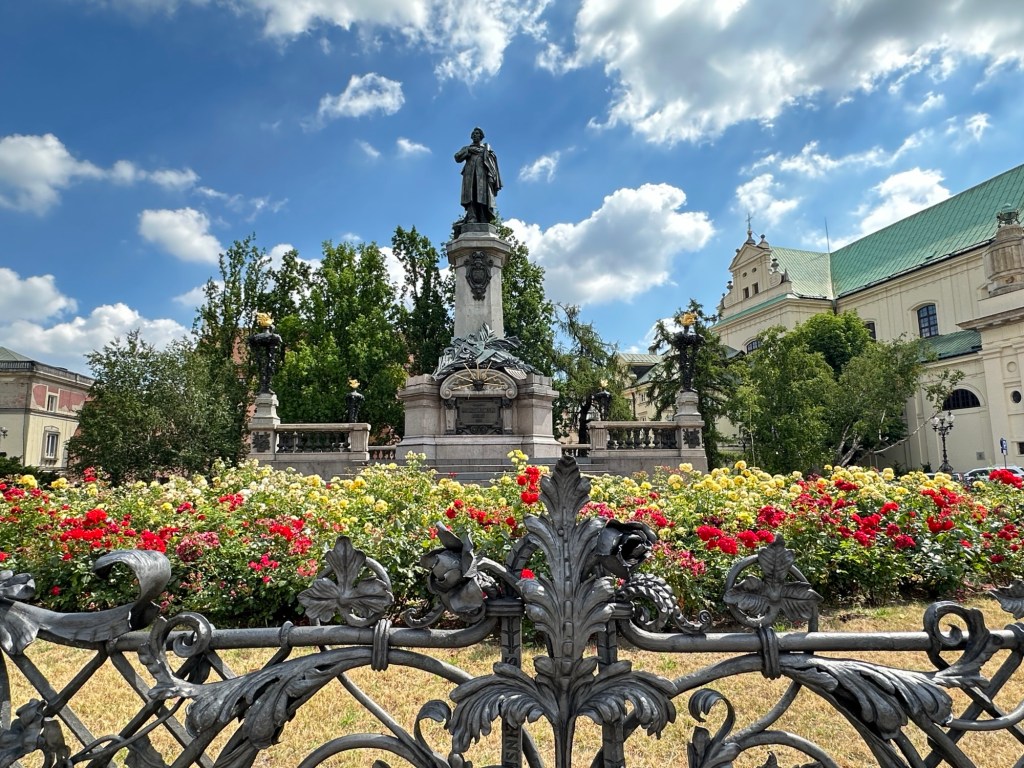
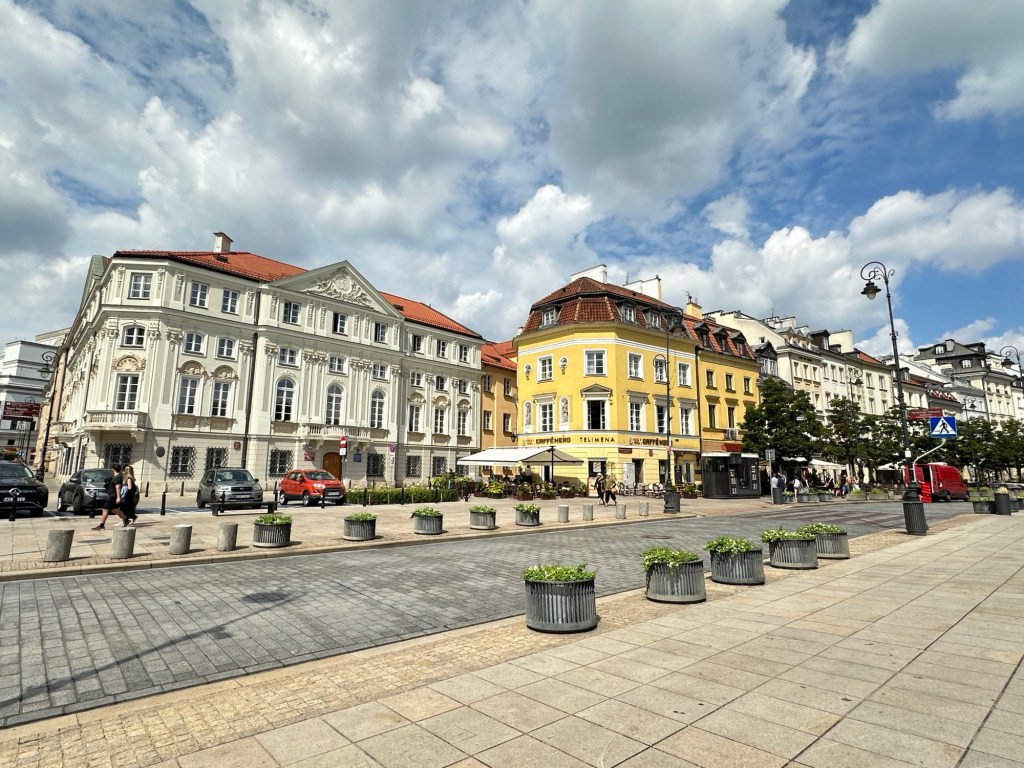

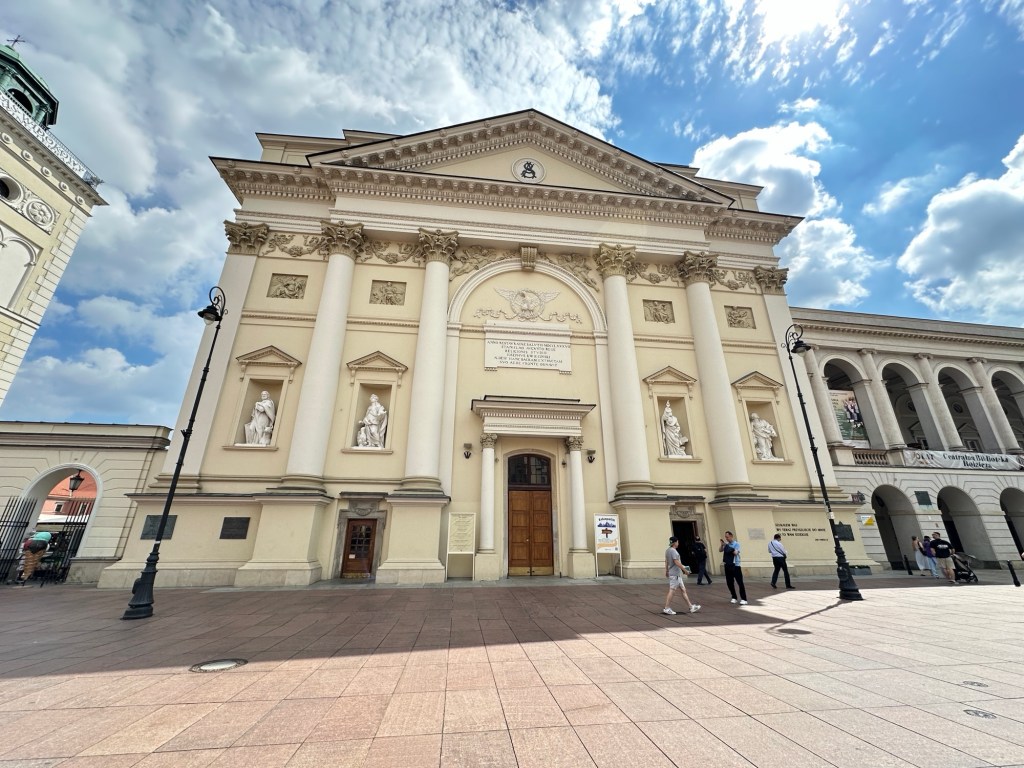
It took us 30 minutes to walk to Castle Square, and hence the Old Town. King Sigismund’s Column marks the start of the Old Town. Warsaw was deliberately annihilated in 1944 as a repression of the Polish resistance to the German occupation. The capital city was reduced to ruins with the intention of obliterating the centuries-old tradition of Polish statehood. The rebuilding of the historic city, 85% of which was destroyed, was the result of the determination of the inhabitants and the support of the whole nation. Many of the residents took it upon themselves to work at night, after their day jobs, to make the renovation process faster .
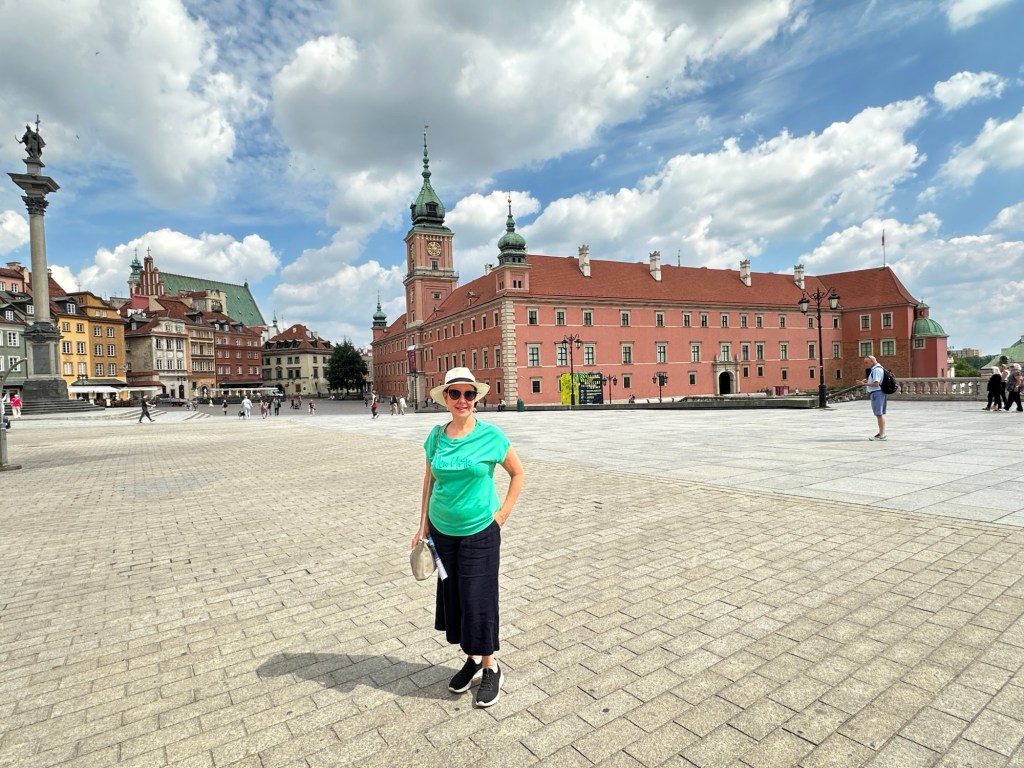
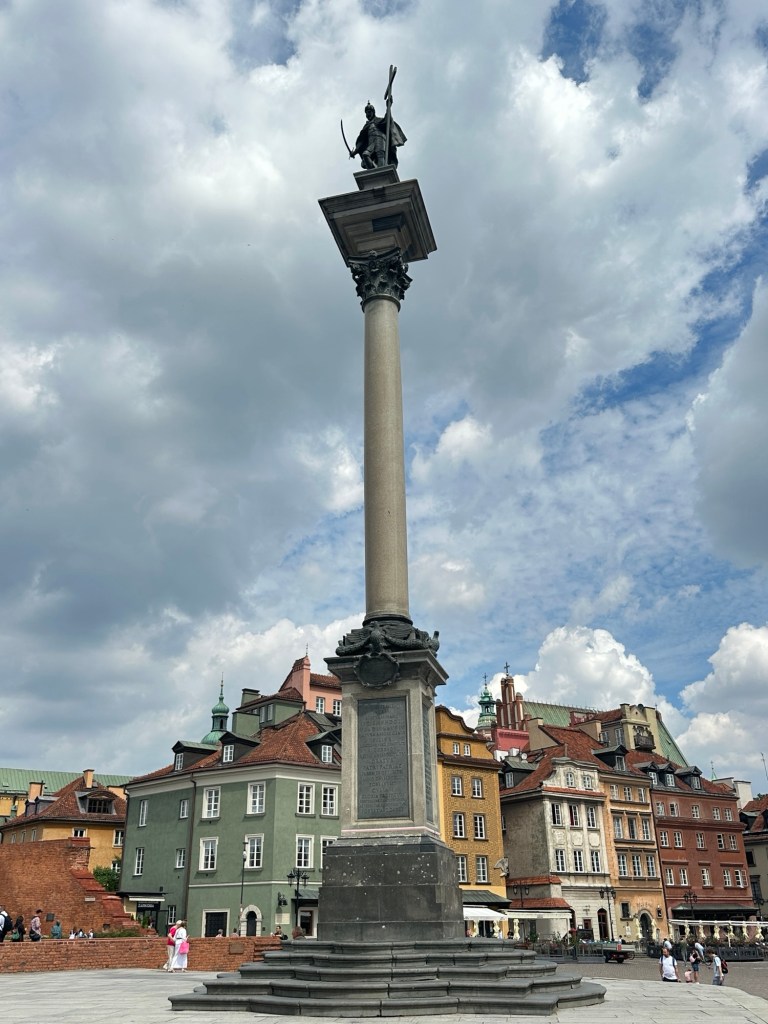

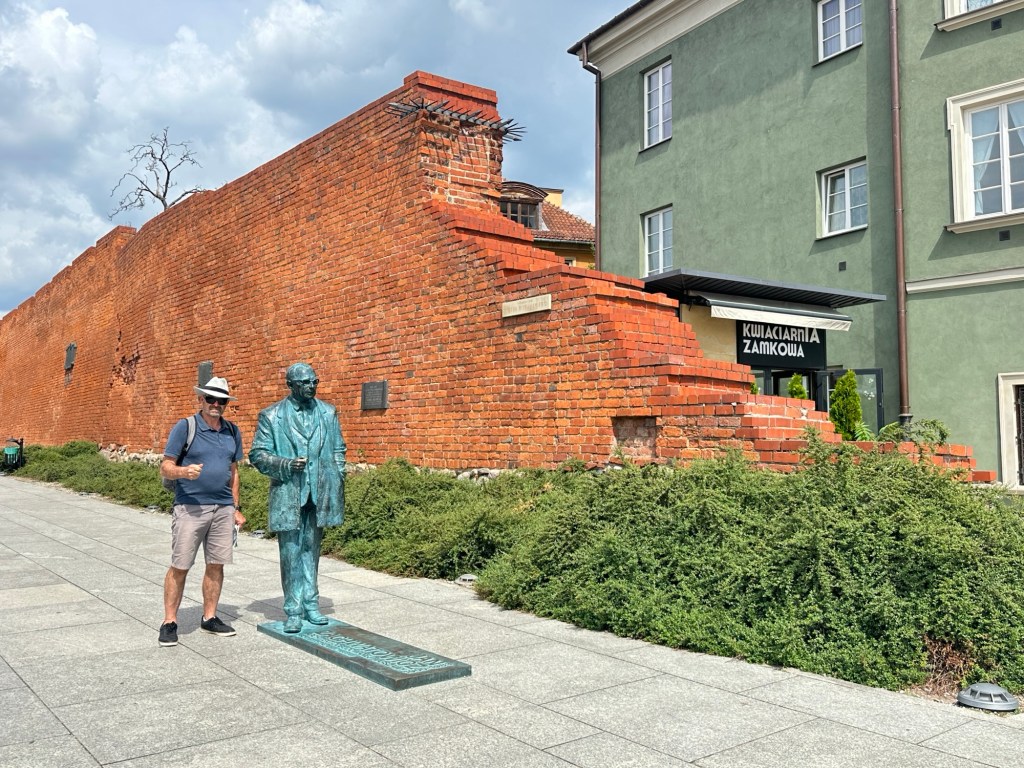
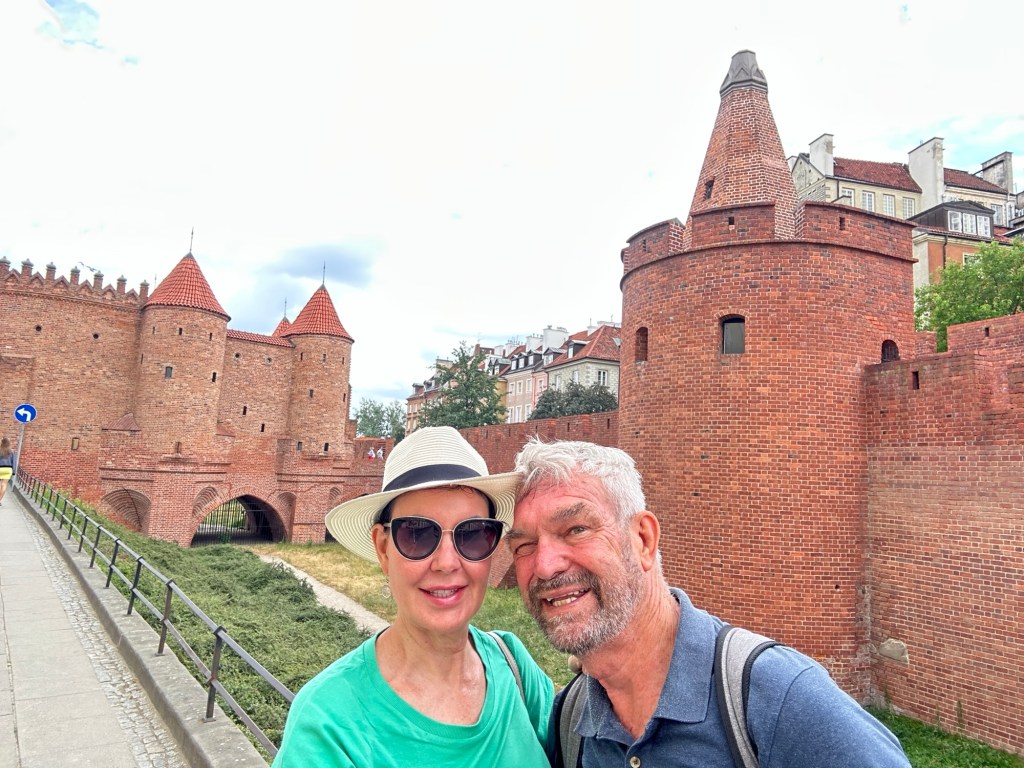


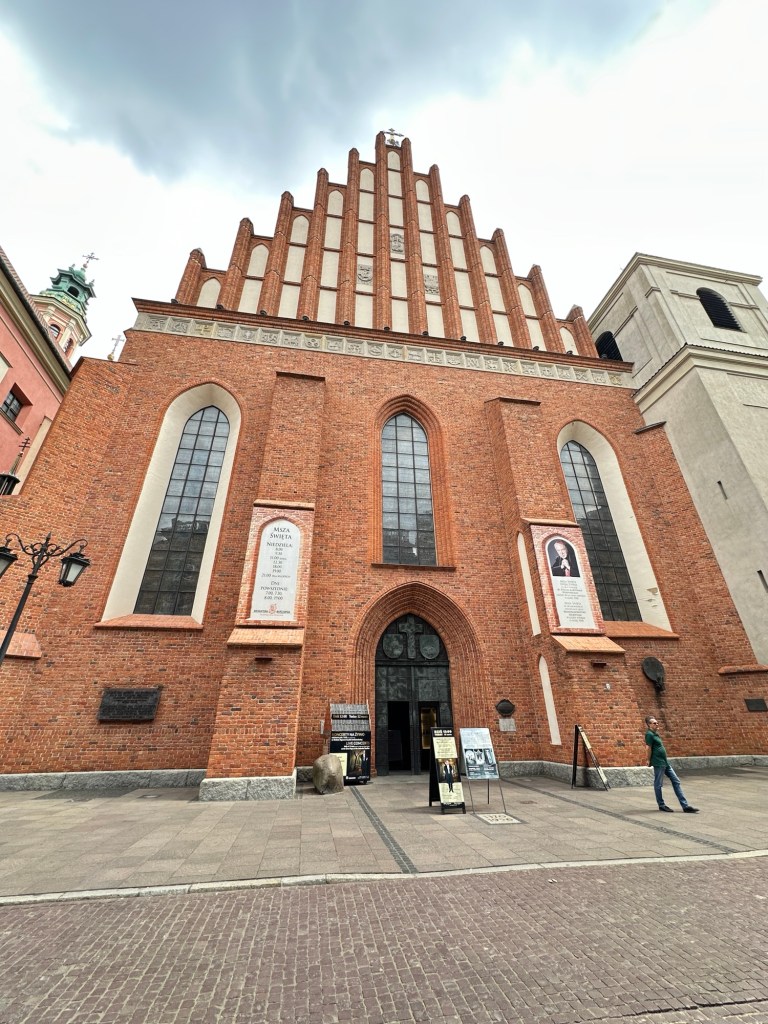

In the center of the square is a statue of the Warsaw Mermaid, a mythical creature who has been considered the city’s protector since the Middle Ages. The tall, colorful houses around the square each with its unique character, were originally built by wealthy merchants in the 17th century. They have been rebuilt as they were then. The Castle was reconstructed from 1971 – 1988, with public donations of both money and works of art. You can tell the Varsovians are a very proud race.
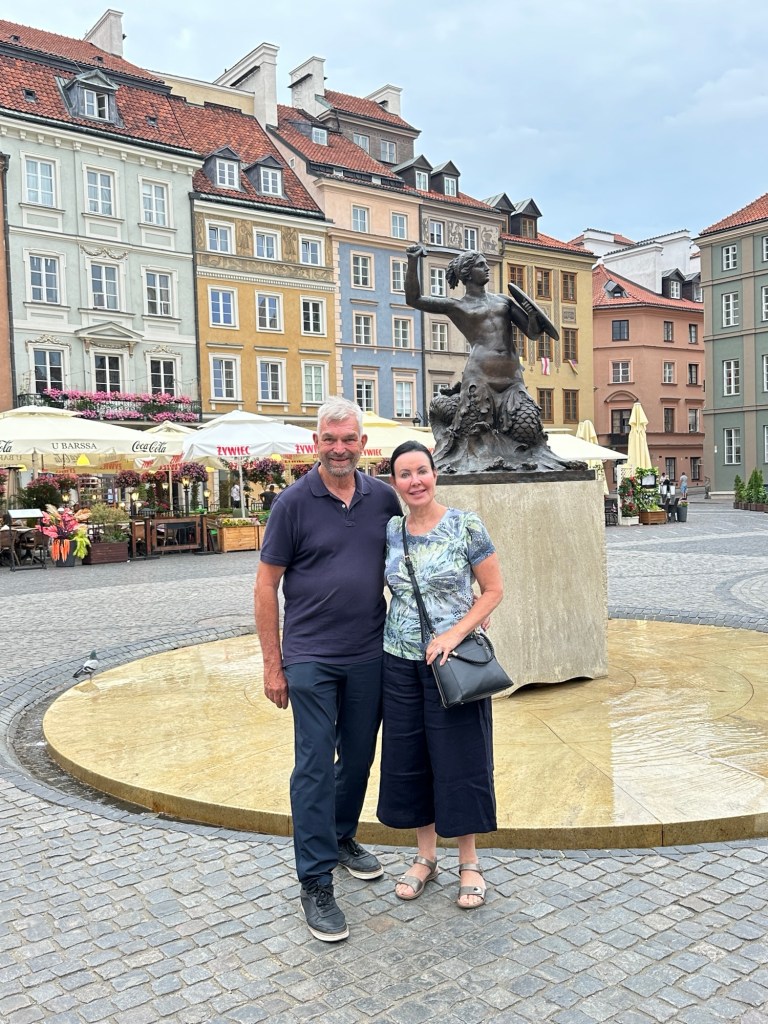


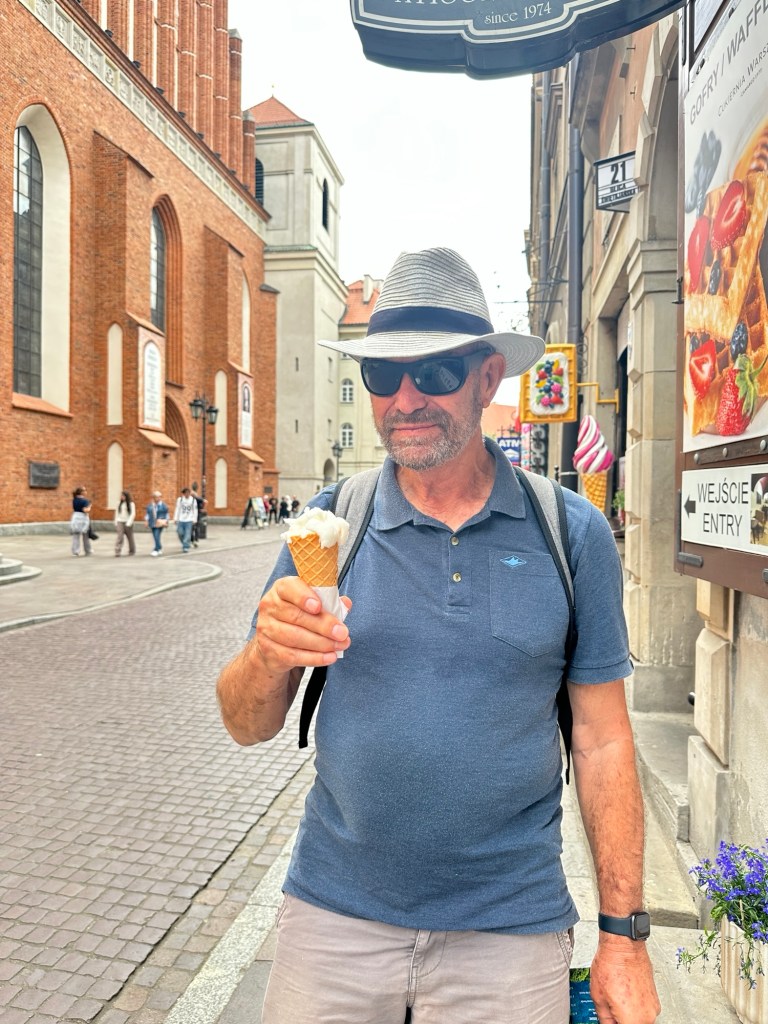
We had an enjoyable time walking through the Old Town, looking through churches and shops, reading the plaques. Many restaurants and cafes – obviously geared up for the tourists. Not too crowded. We had a traditional Polish meal at one of the restaurants- potato pancake (similar to Rosti) with goulash on top. Very filling. Also just had to try the Lody ice cream – there are vendors everywhere. They are an ice cream in a cone, and quite refreshing on a hot humid day.
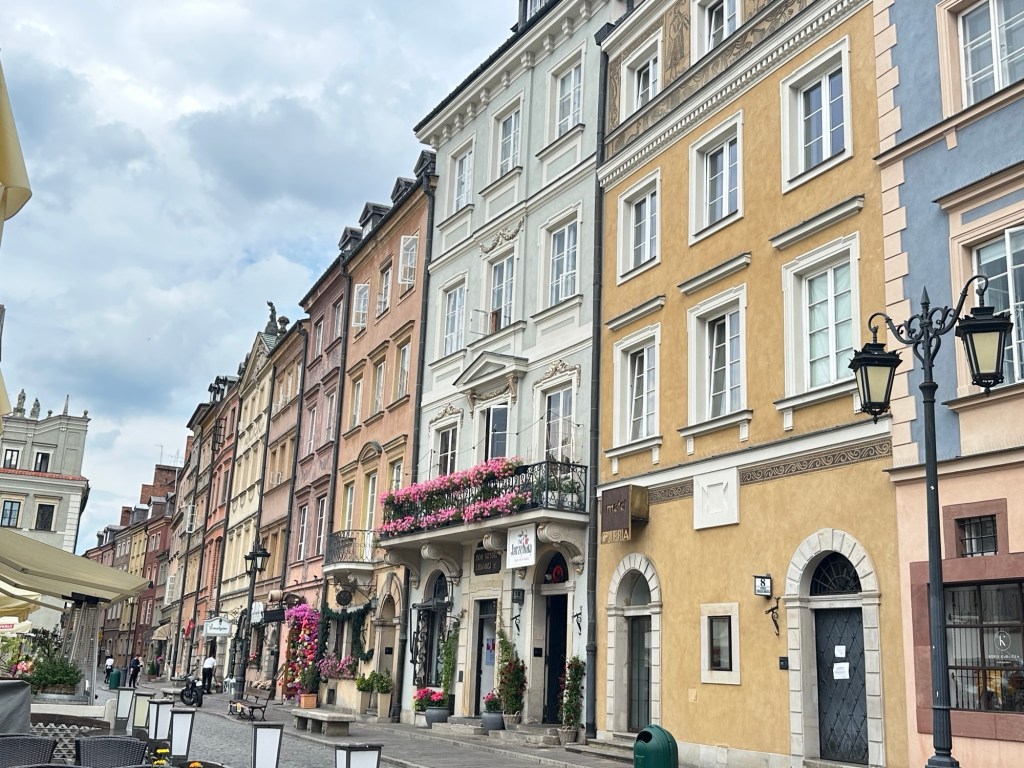
Then the rain came… it was a very brisk walk back. Of course I had a great idea – escape to the shops to stay dry. Luckily, TK Max, C&A, H&M were close by – that filled in an hour or so, at least until the rain stopped!
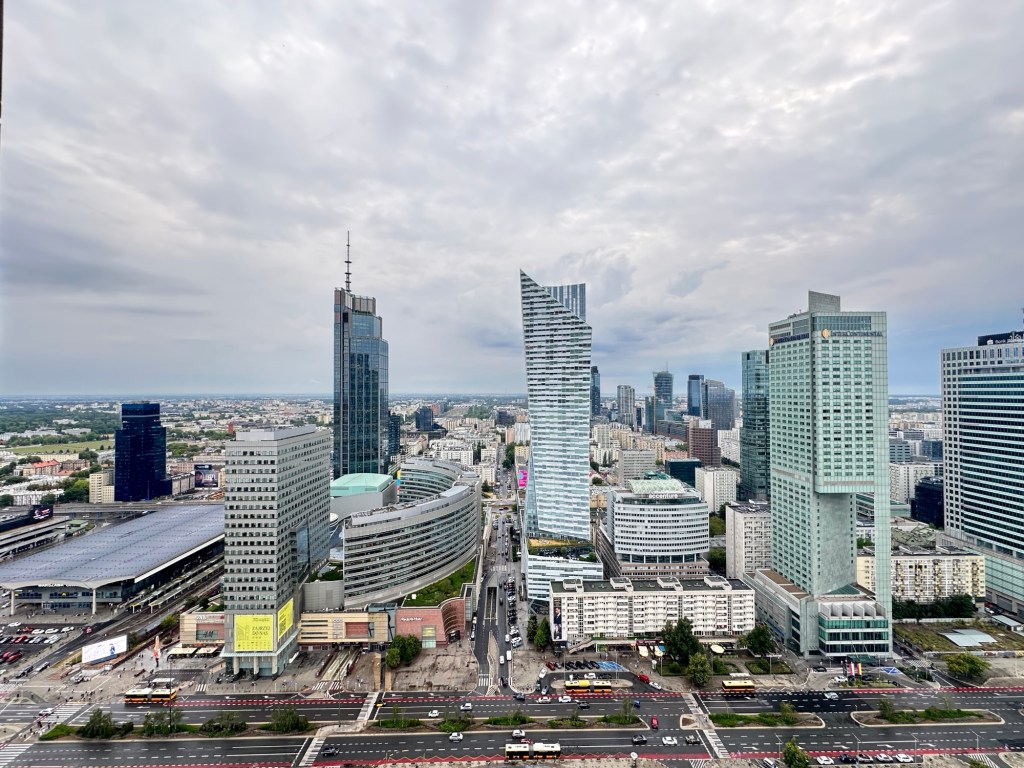
The sky cleared for a while so we went up to the 30th floor of the Palace of Culture and Science to the public viewing terrace on the roof, which offered spectacular views across the city. Very easy to see where we were staying, in amongst the few tall buildings. We saw the apartment building that is only 30 cms taller than The Shard, plus Zlota 44, an apartment building often called “the Sail” due to its shape. New buildings are springing up in this ever changing landscape.
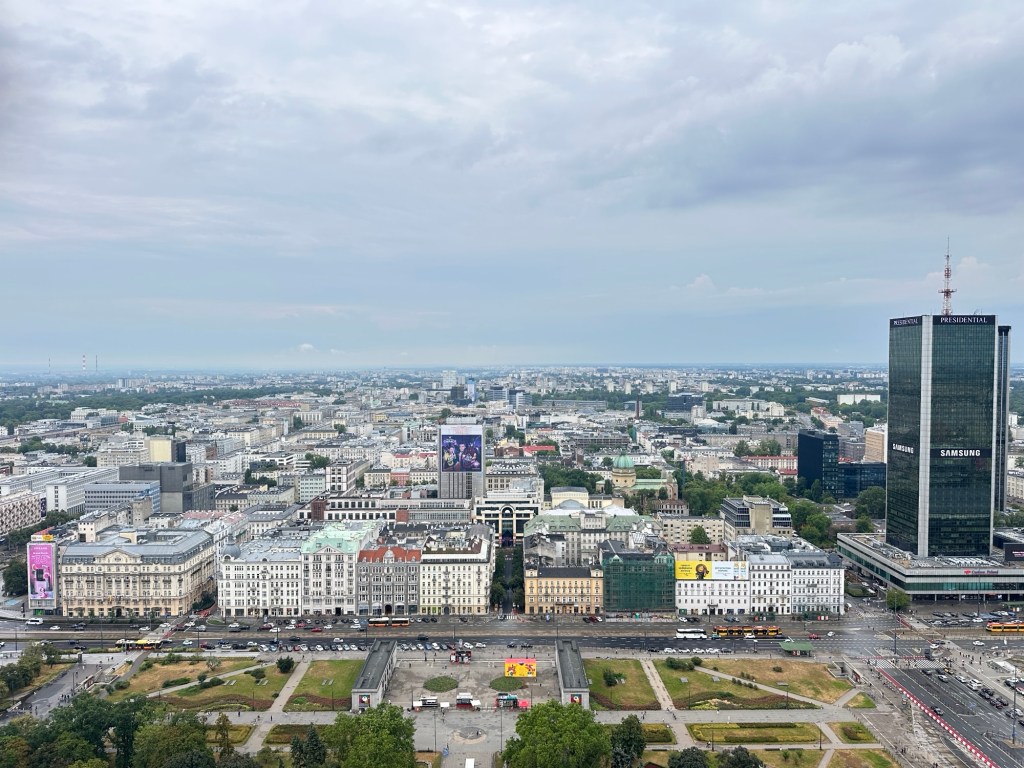
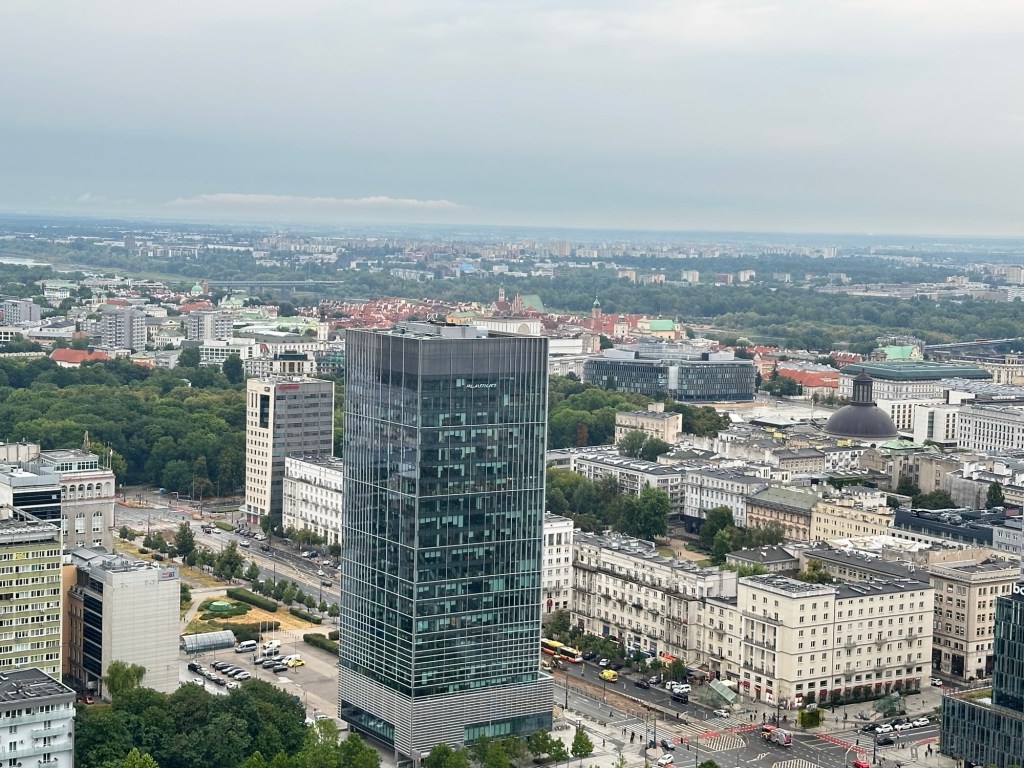
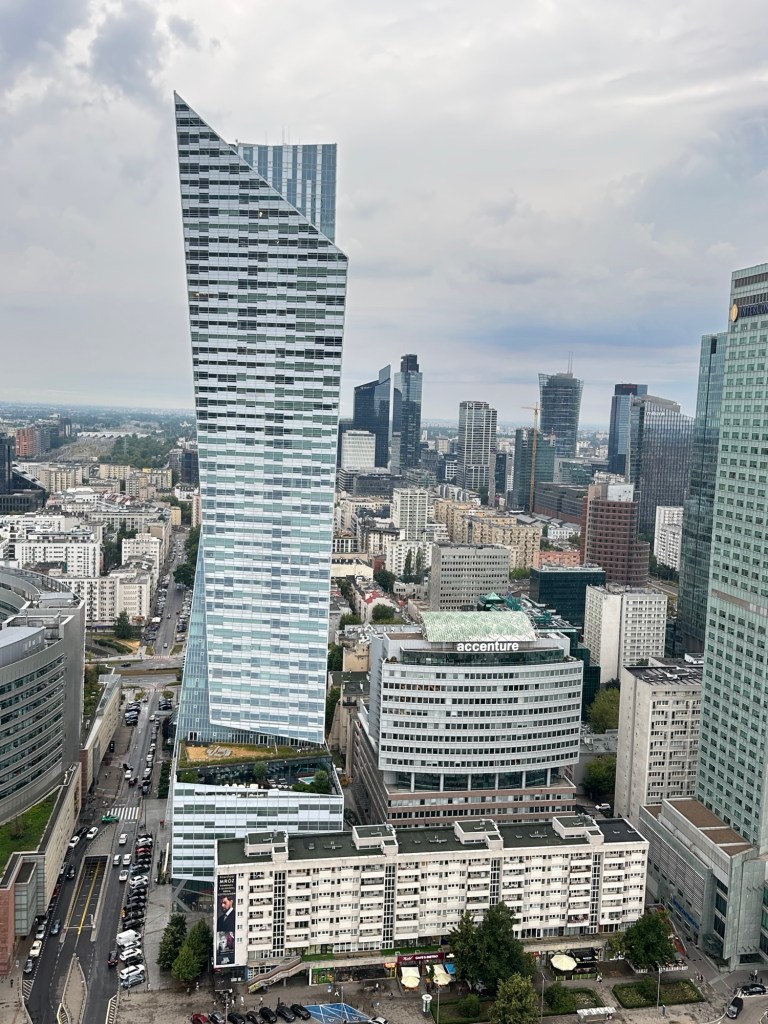
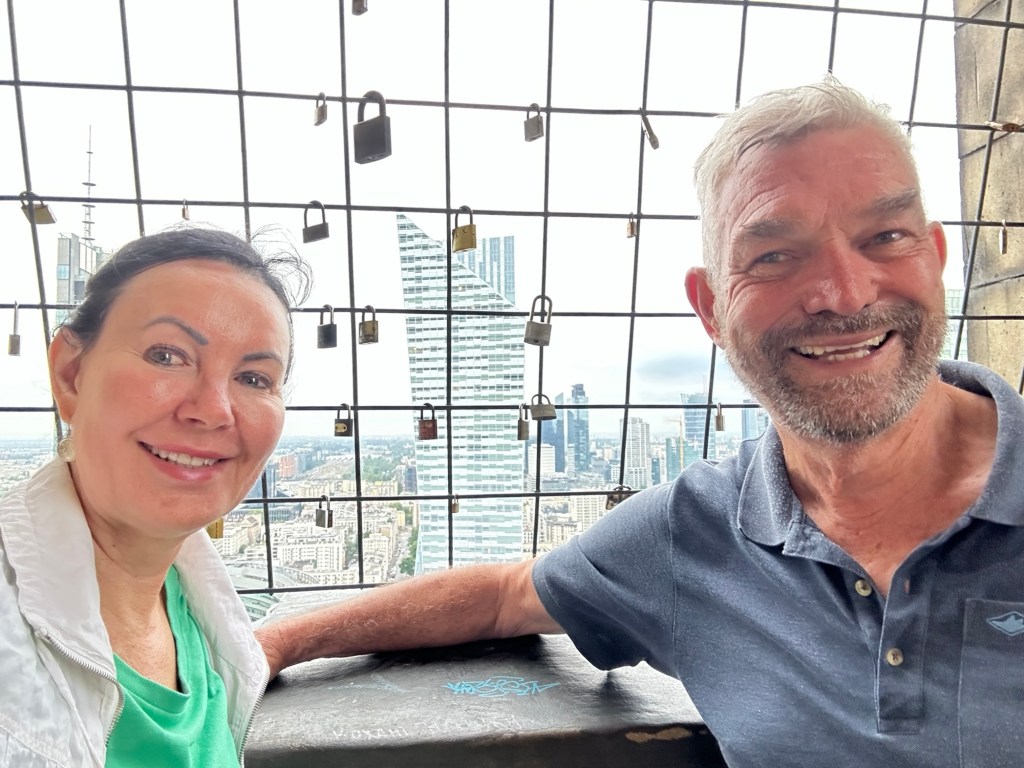
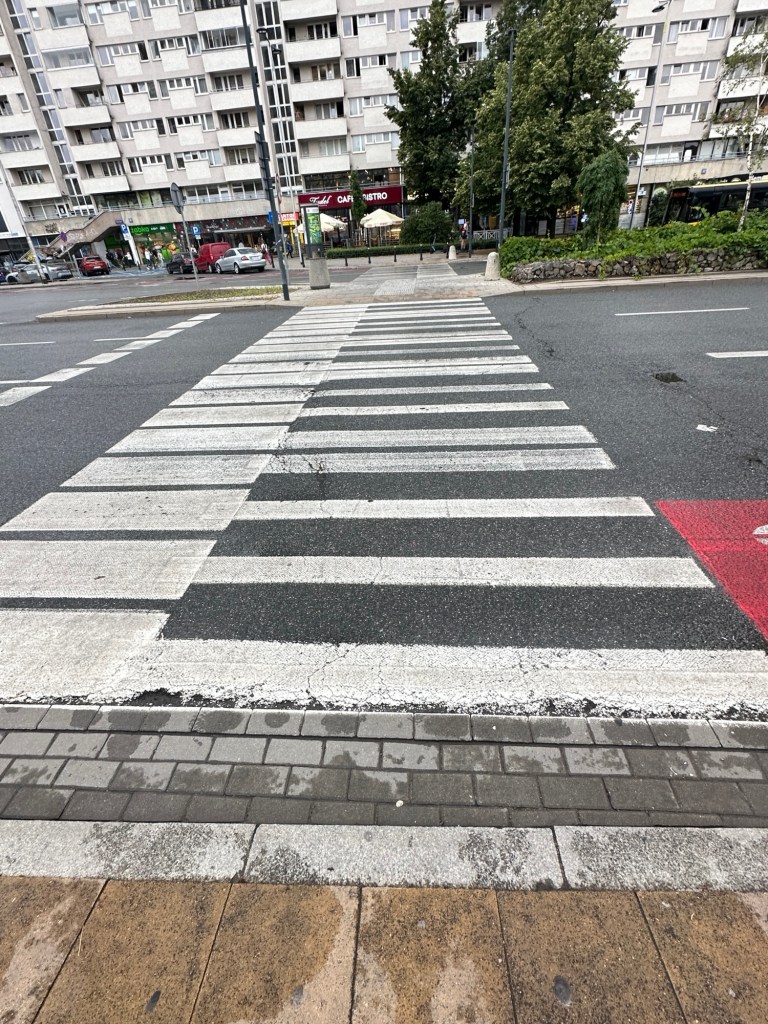
Frédéric François Chopin, a Polish composer and virtuoso pianist of the Romantic period, was born in Warsaw. Crossing the road from the Palace of Culture and Science is the Chopin Zebra Crossing – it is like a keyboard. Very cool!

We found a little local restaurant where we had a drink and shared an antipasto platter, before heading back to finish the movie we didn’t get through the night before.

Day 51
Wednesday 9th July
Warsaw to Krakow
14-17 degrees, rainy
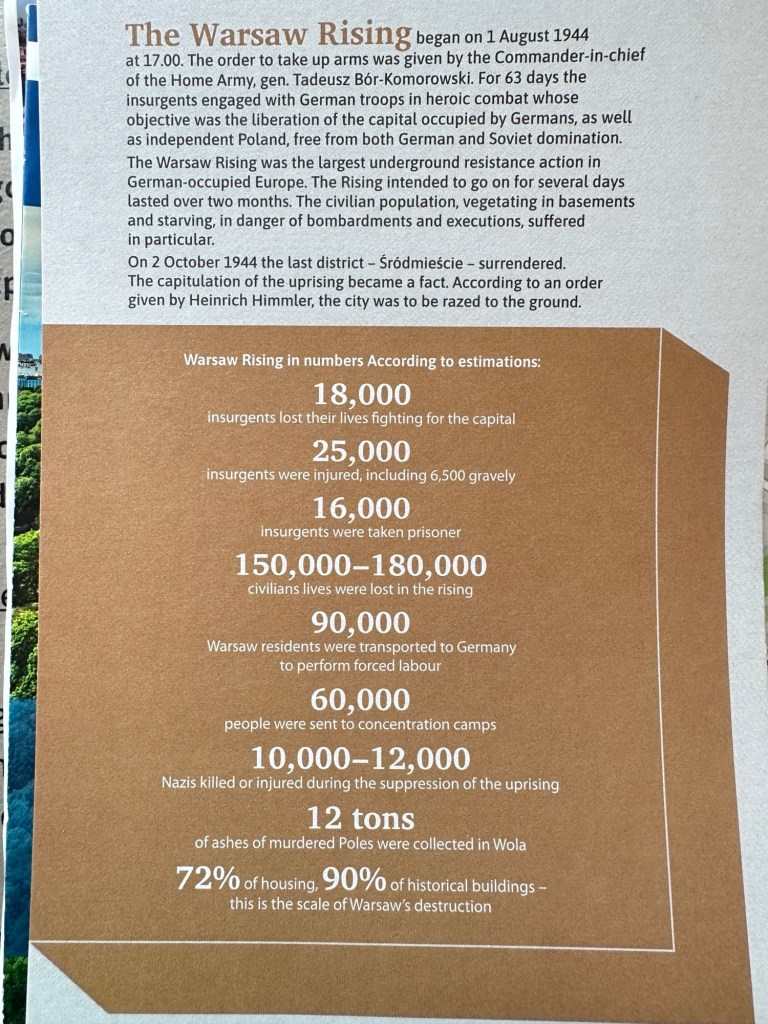
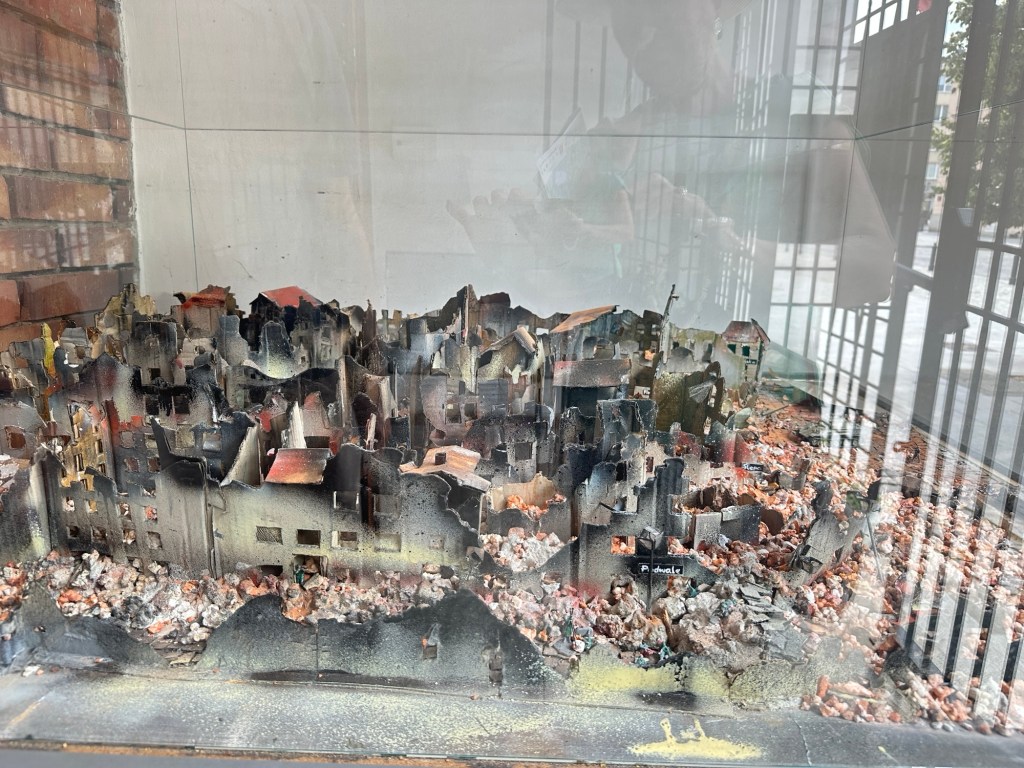
Raining today. We had a couple of hours before we needed to head to Central Station to catch the 12.52pm train to Krakow. That gave us time to walk 25 minutes (yes, in the rain) to the Polish Rising Museum. This exceptional museum, housed in a former tram power station and its surrounding grounds in the Wola District, traces the history of the city’s heroic but doomed uprising against the German occupation in 1944. It was a very moving exhibition, but showed the determination and resilience of the Polish people to be freed from German rule. The Poles lost their hard fought battle, and Hitler ordered that all Varsovians be murdered. Those that escaped and survived were not allowed to talk about it for 60 years while they were under Russian control. Hard to comprehend. The Monument of the Little Insurgent is now inside the museum – a bronze statue commemorating the children who lost their lives in the Warsaw Rising. We had limited time there because we had a train to catch, but you could easily spend the best part of a day there.

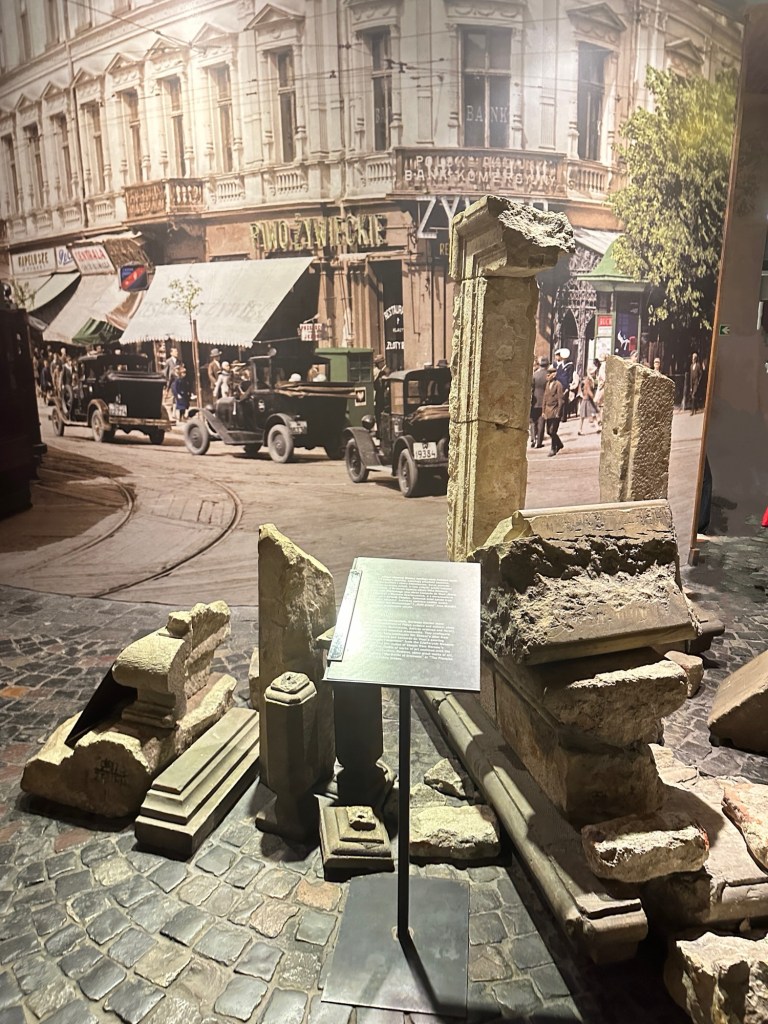

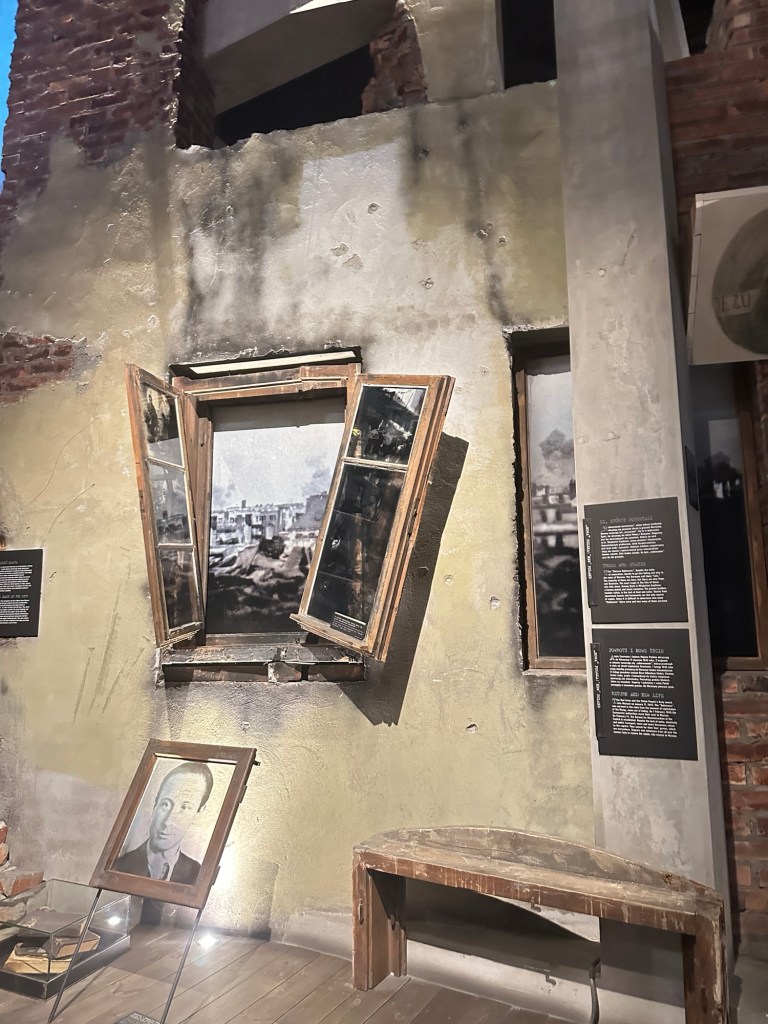
Another brisk walk in the rain, picked up our bags, and walked to the station -the short way this time! Another very smooth ride to Krakow – two and a half hours. Same menu.


Got a Bolt ride to our next Airbnb – this time we are right in the Old Town, great location, and very spacious apartment.
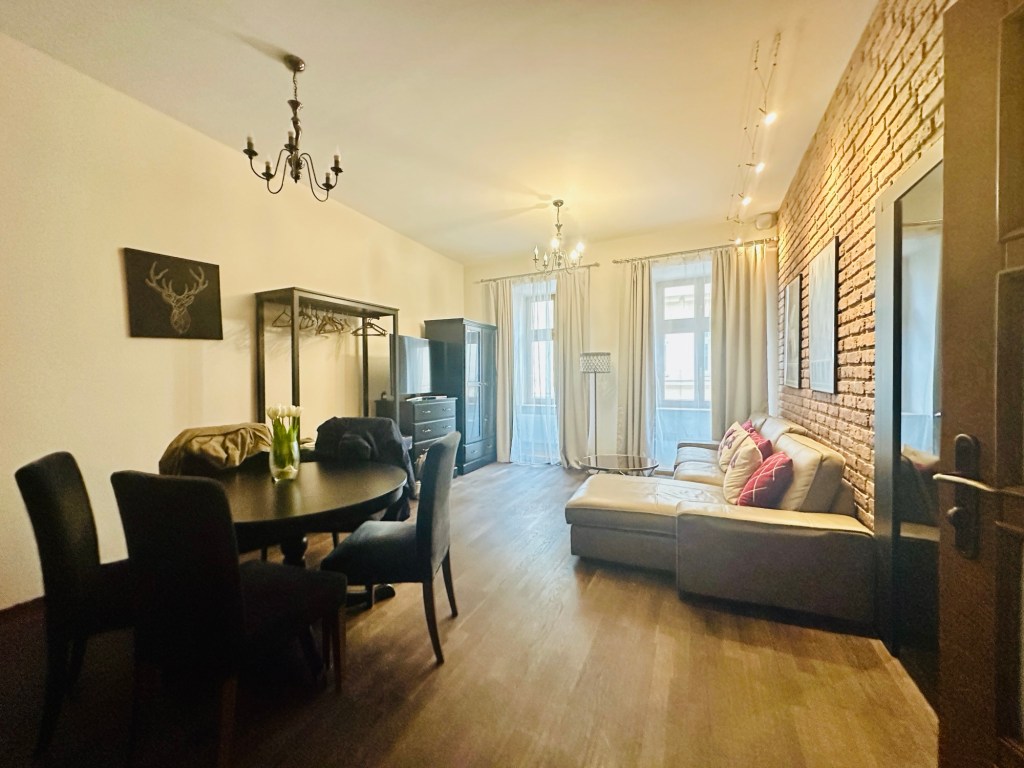
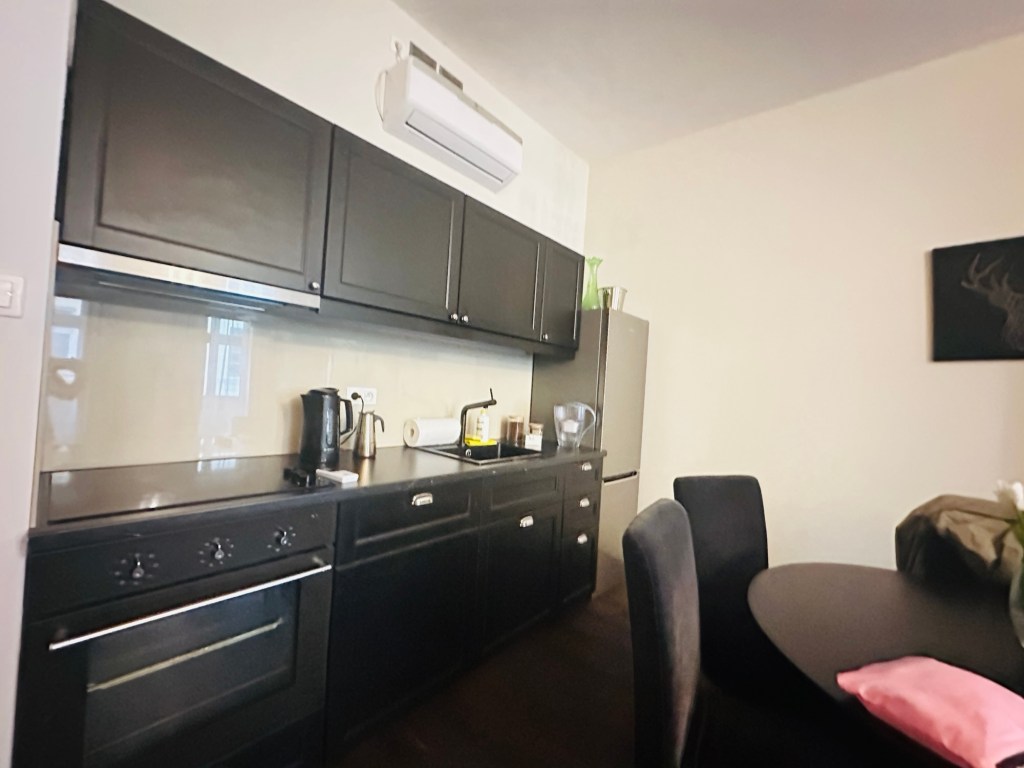
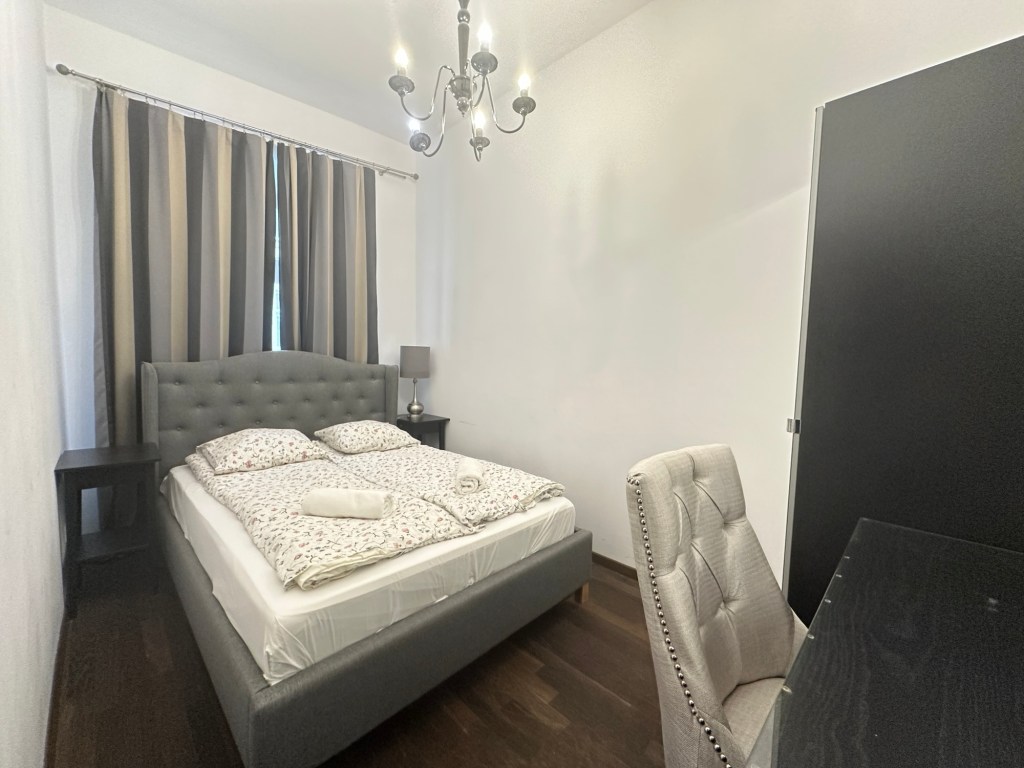
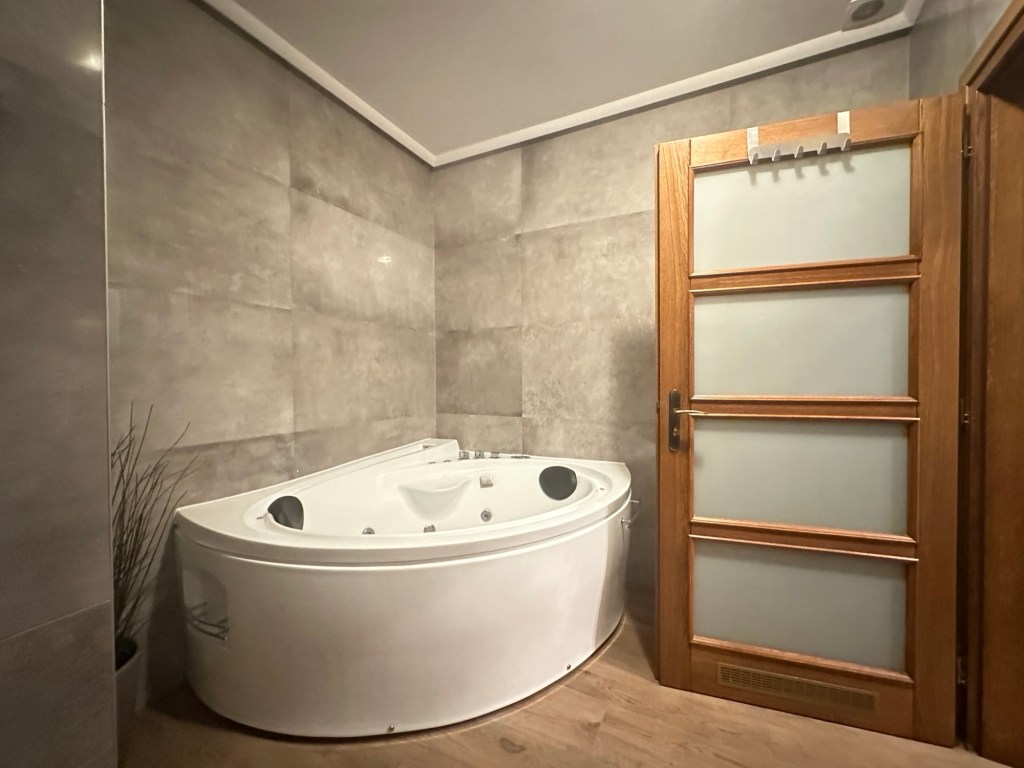
It was only early afternoon, so we had time to shop for breakfast supplies, and then a walk to explore some of the Old Town.
For nearly six centuries, Kraków was the capital of Poland and the country’s largest city, until the court and parliament moved to Warsaw in 1596. Today, Kraków’s greatest attraction arguably lies in the fact that, unlike so many Polish cities, it was scarcely damaged in World War II. In recent years, many buildings have been restored to their former glory. Again, the Old Town has beautiful painted houses, many churches and cathedrals, several squares, and in the centre of Market Square is the Cloth Hall. We will need to revisit. We also walked part of the Planty green belt. Comprised of eight separate gardens, the Planty follows the outline of Kraków’s medieval walls, which were demolished in the early 19th century.
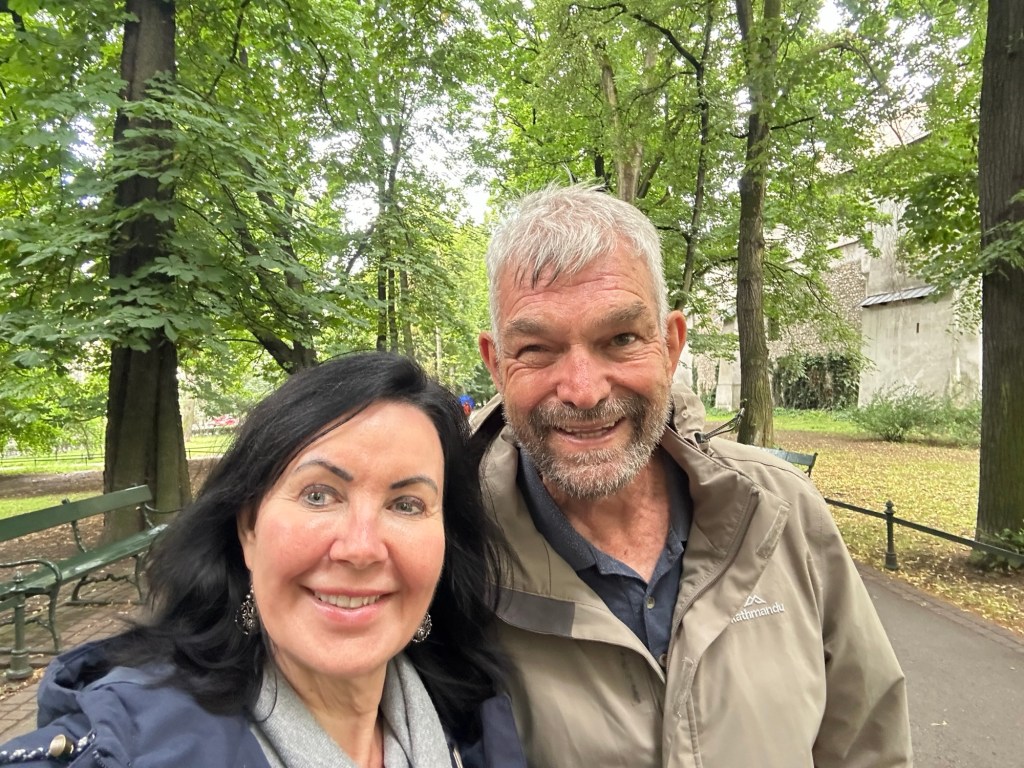
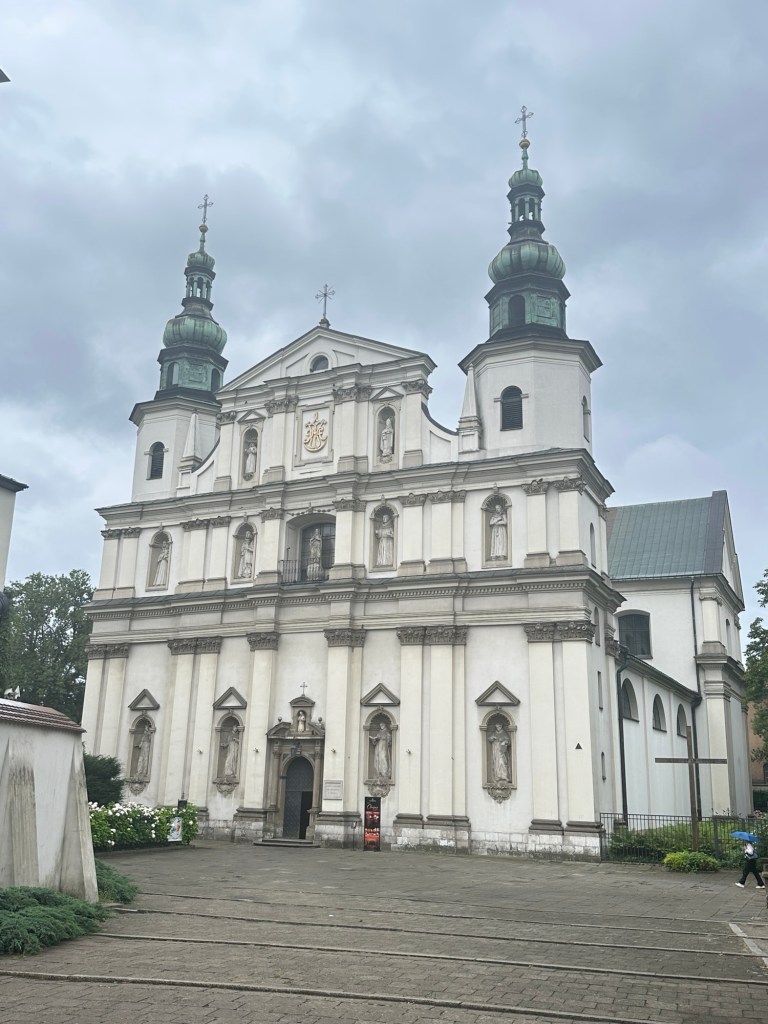

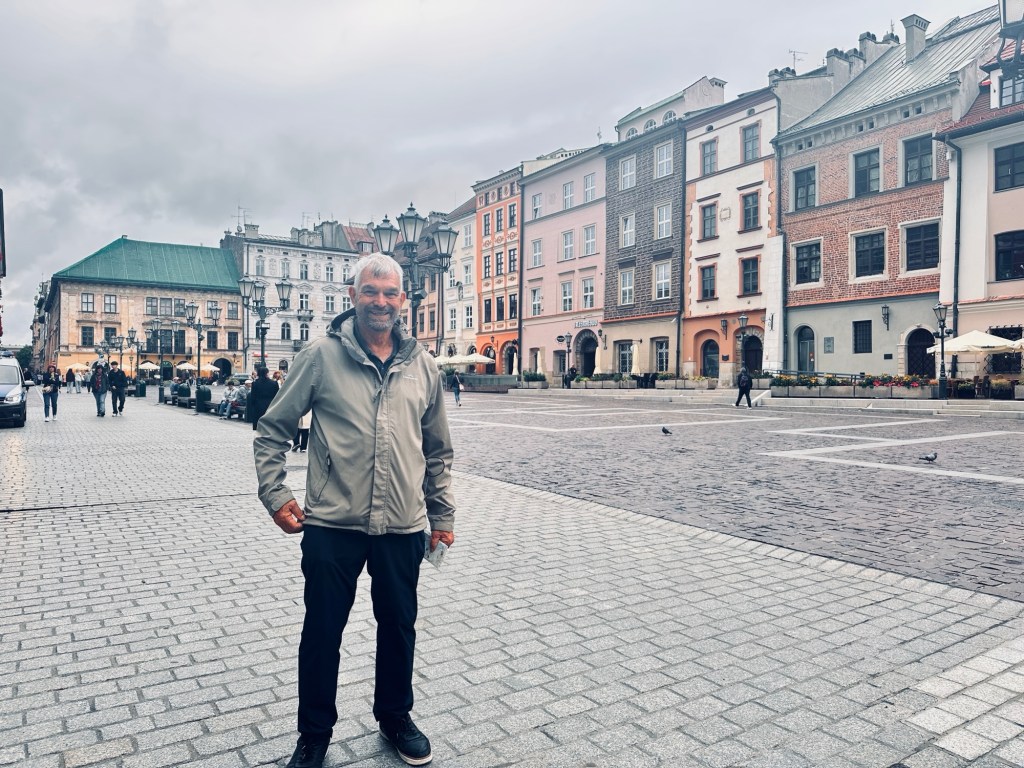
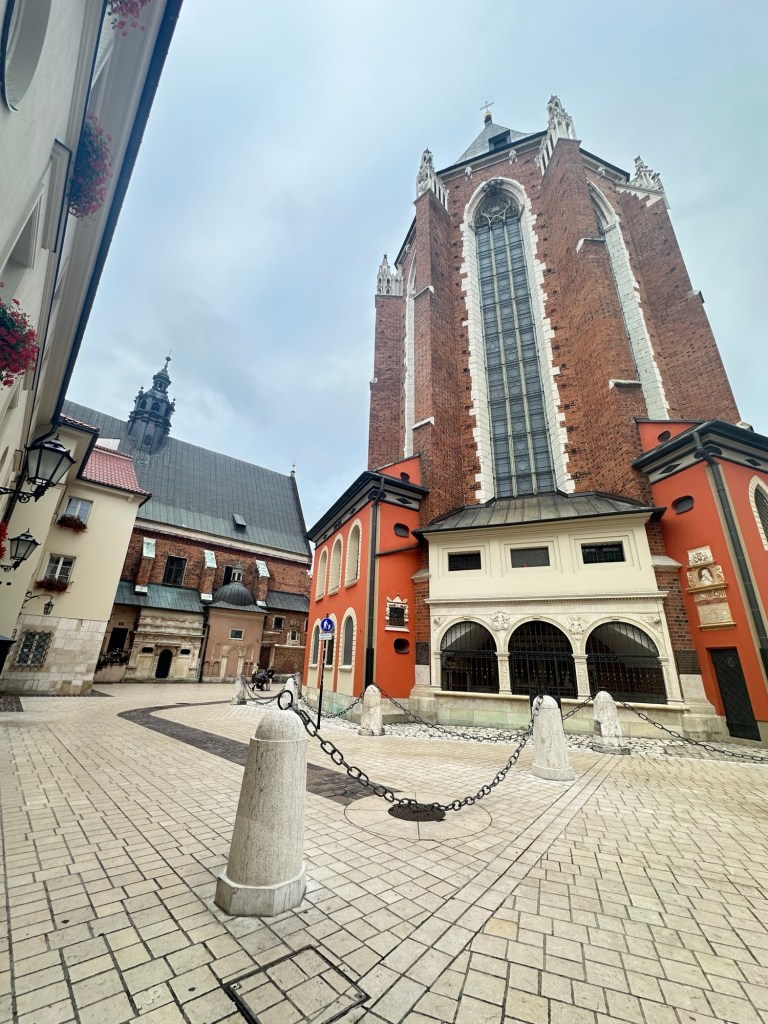
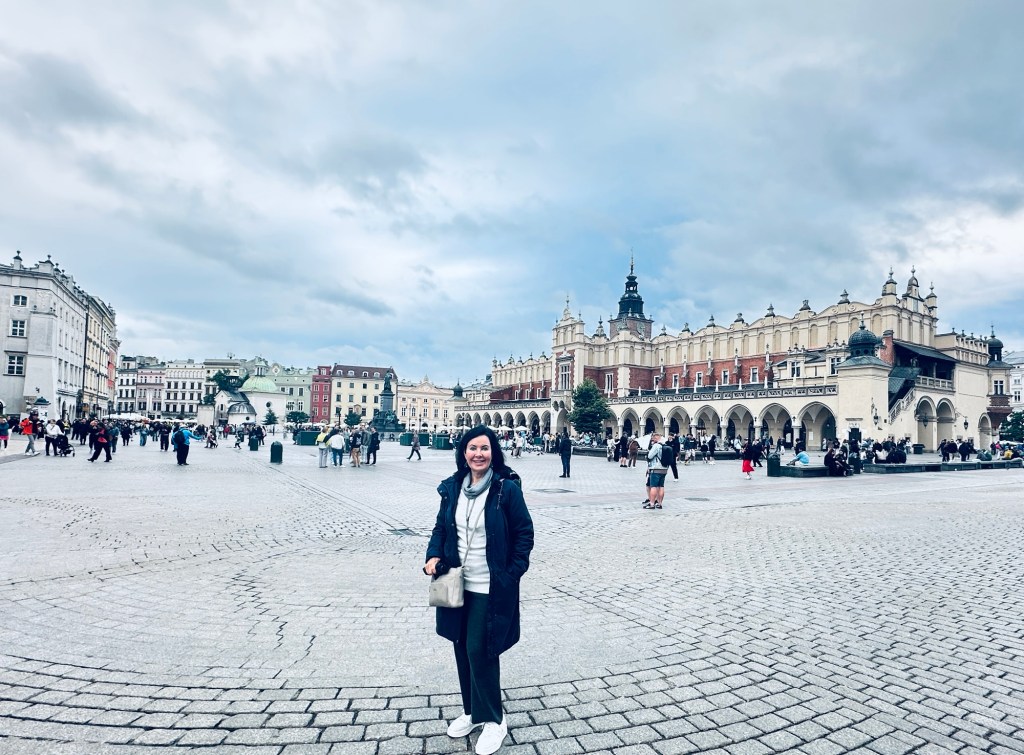
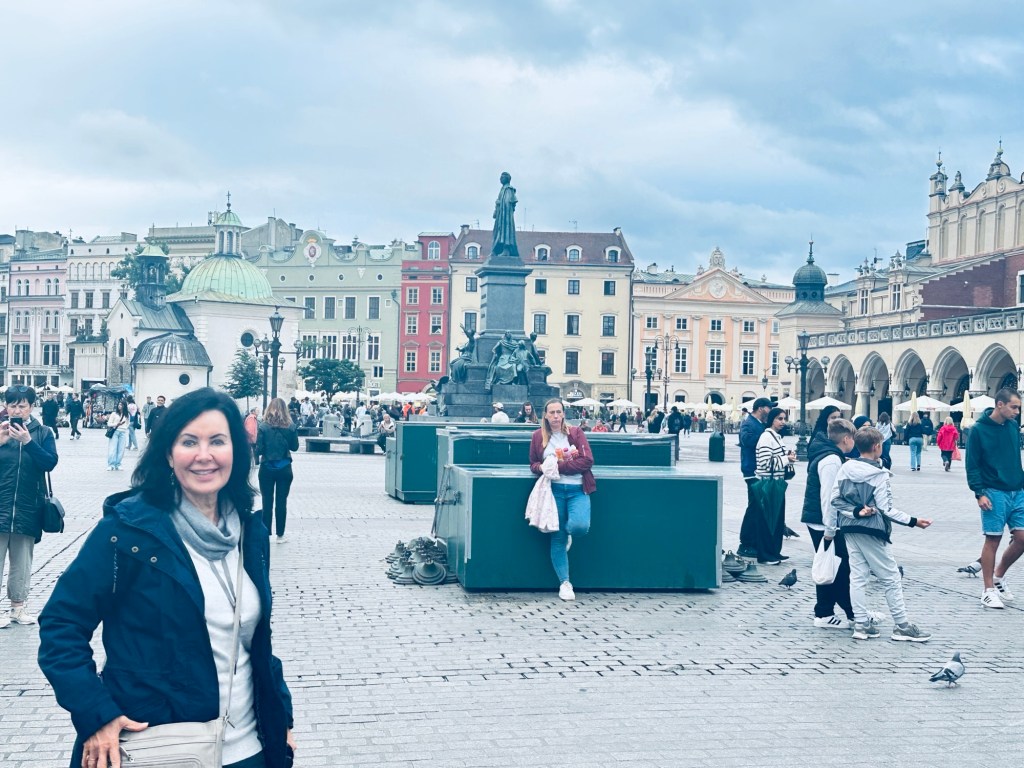
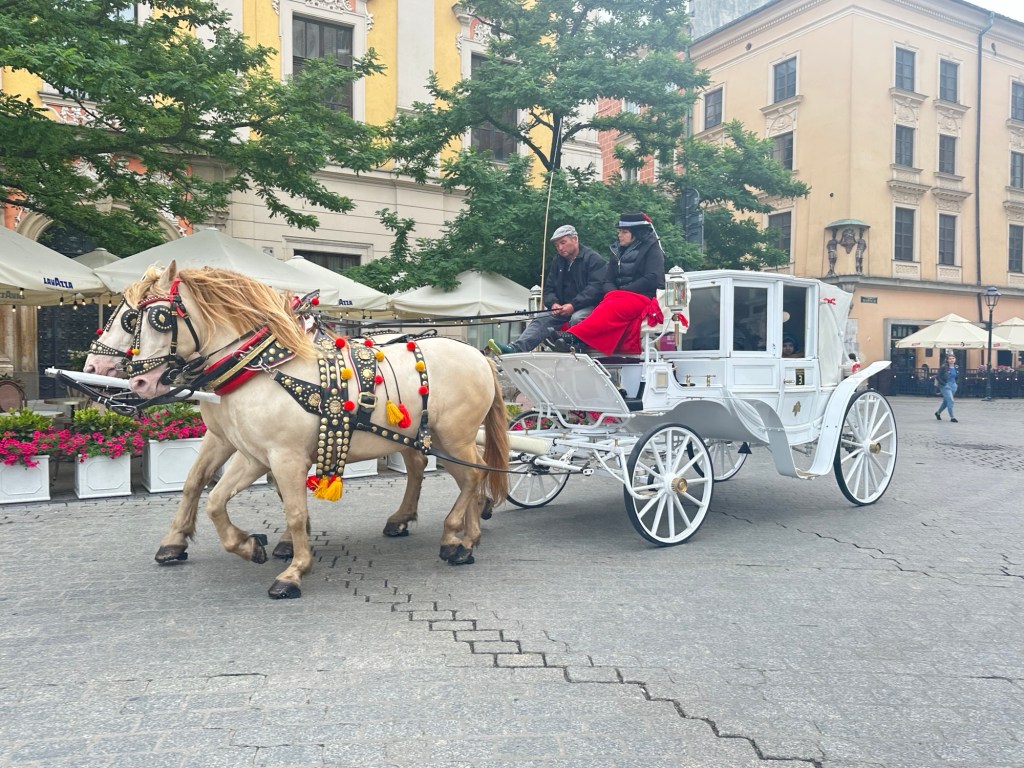
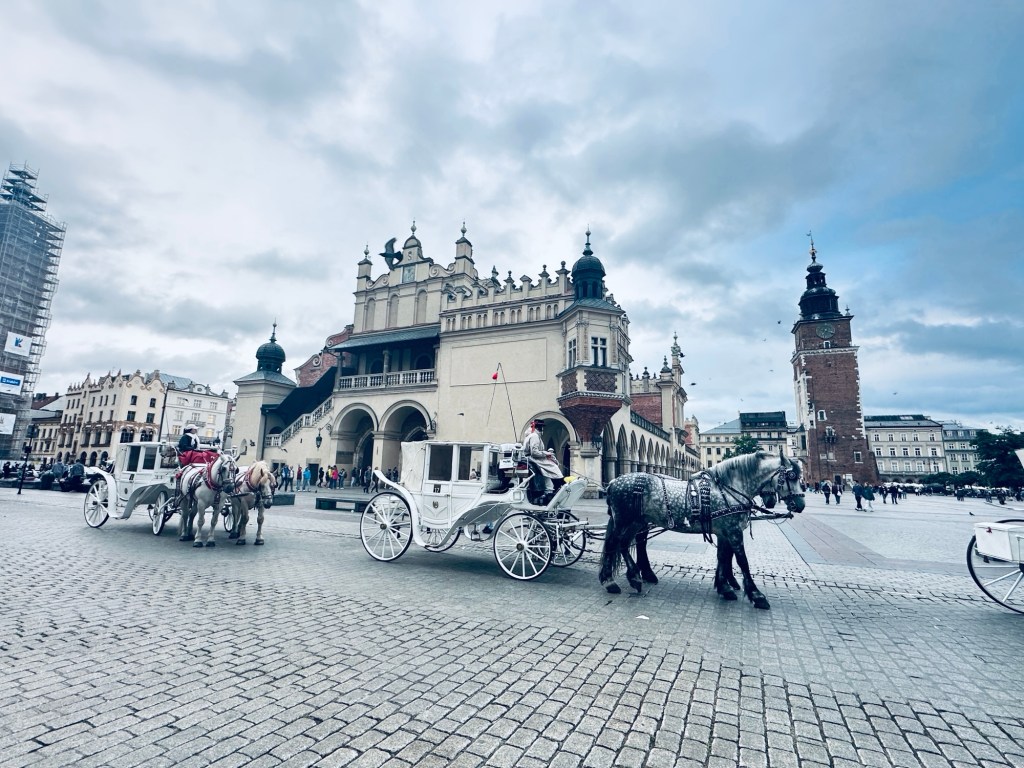


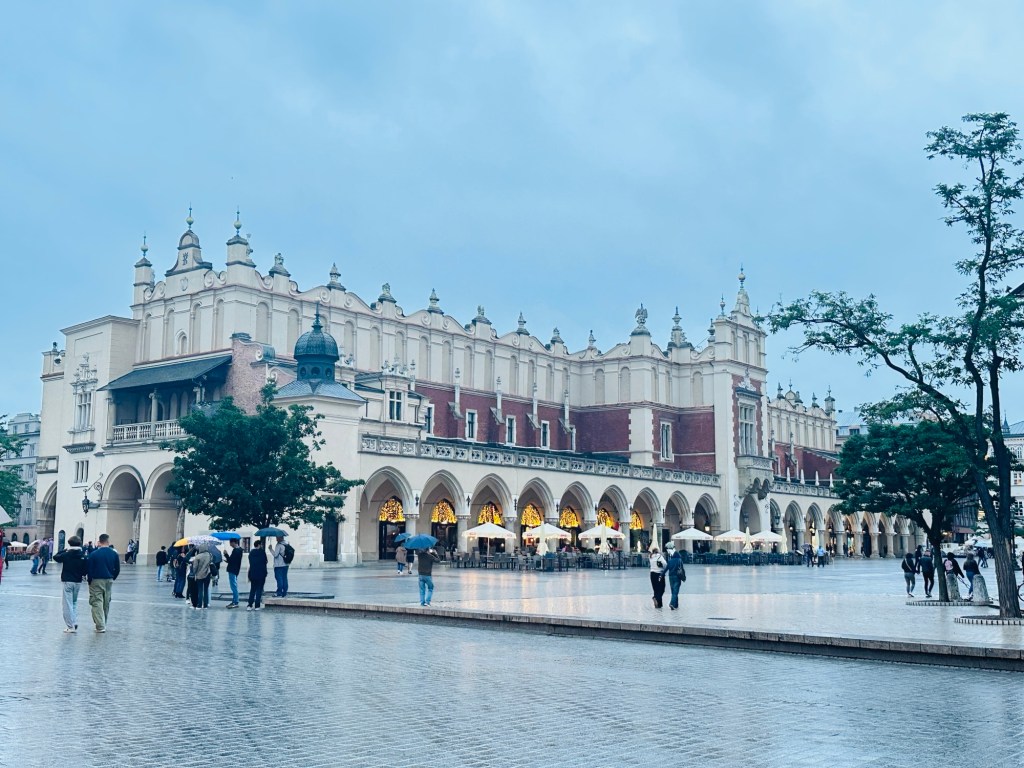
We had a lovely dinner in a 200 year old restaurant called Redelfi – it was lovely sitting looking out at Market Square, watching all the people walking, and the many horse and carriages taking tourists for a ride.
Day 52
Thursday 10th July
Krakow
14-18 degrees, drizzly
Very early start as our pickup was 5.40 am for our full day tour of the Auschwitz and Birkenau complexes, followed by the UNESCO listed salt mine of Wieliczka.
An hour and a half drive, and we were ready to go through the stringent security process of getting into Auschwitz concentration camp. Both Auschwitz and Birkenau Concentration and Extermination camps were developed and run by Nazi Germany during its occupation of Poland in 1939-1945. The Polish government has preserved the site as a research centre and in memory of the 1.1 million people who died there, including 960,000 Jews, during World War Il and the Holocaust. It became a World Heritage Site in 1979.
Our guide spent 90 minutes with us in Auschwitz I, where we learnt of the harrowing truths of this Nazi concentration camp complex. The two tonnes of human hair (which the Germans usually made blankets out of), the vast collection of shoes, including children’s, and the accommodation conditions in which they lived, left a clear visual of what happened behind the gate. These poor people went to the camps, with some hope, not knowing what their ultimate fate would be. A story that struck a chord with me, was hearing that an orchestra played each time the prisoners passed through the gates. Also the prisoners had a roll call twice a day – this could mean standing in adverse weather conditions 2-3 hours at a time, after working all day, and very little food to give adequate sustenance. The twisted minds of the Nazis.
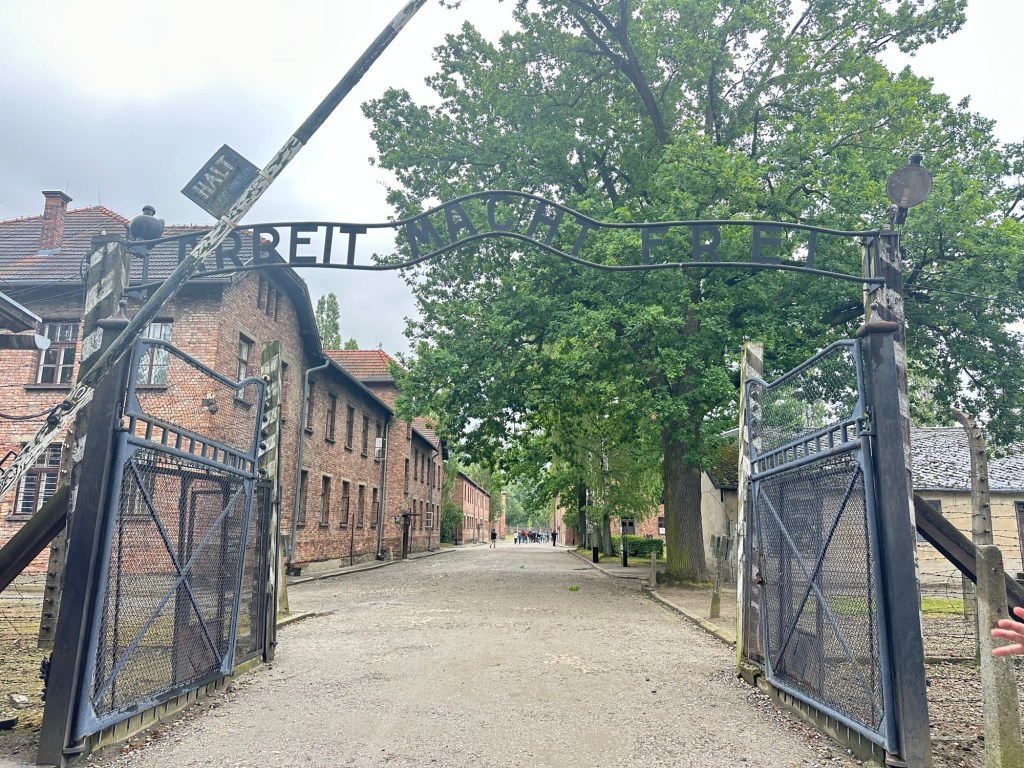


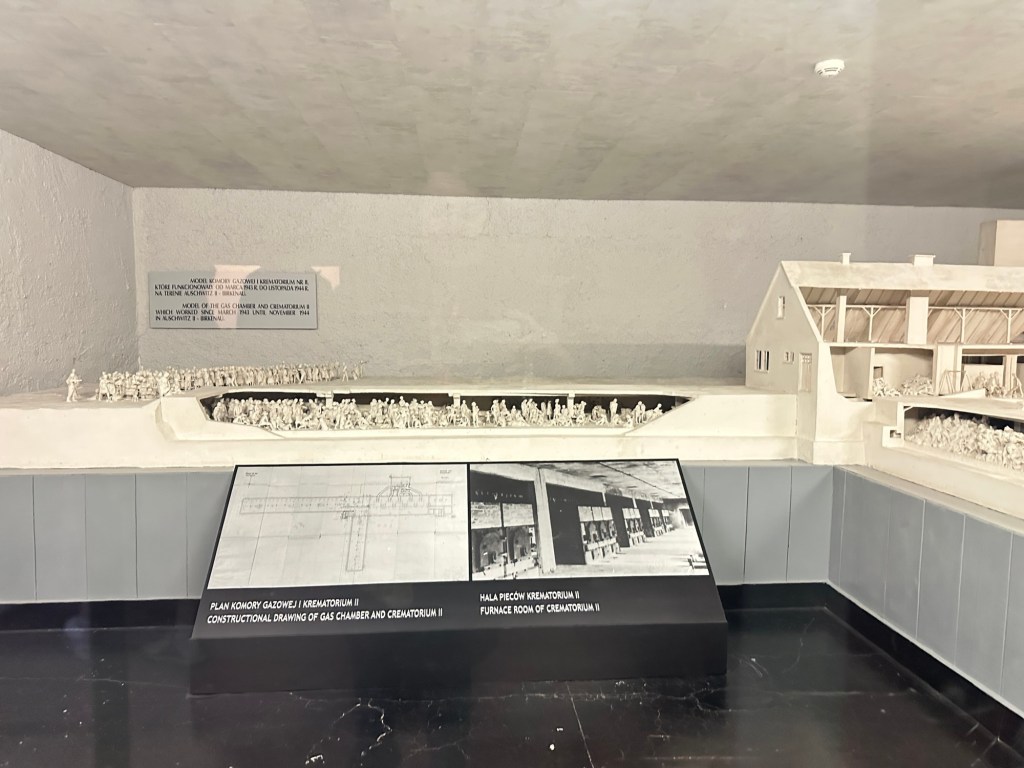
Auschwitz I was the largest Nazi German concentration camp and since 1942 also mass extermination centre for Jews. In the years 1940-45, the Nazis deported at least 1,300,000 people to Auschwitz. 1,100,000 of these people died there. Approximately 90% of the victims were Jews. The SS murdered the majority of them in the gas chambers.
Ten minutes away are the remains of the concentration and extermination camp at Auschwitz II-Birkenau. We had ninety minutes here as well. Again more shocking stories of how the prisoners were treated. Crematorium Il building, which included a gas chamber and furnaces for burning bodies. Several hundred thousand Jewish men, women, and children were murdered here with Zykion B and then incinerated. The bodies of prisoners who died in the concentration camp were also burned here. Gas chamber and crematorium Il operated from March 1943 to November 1944. On 23 Ortober 1943, a revolt erupted here when Jewish women brought from the Bergen-Belsen camp attempted to defend themselves against being killed in the gas chamber. Toward the end of the war, in November 1944, as part of the effort to erase evidence of their crimes, camp authorities ordered the demolition of the furnaces and the crematorium building. What was not removed in time was blown up by the SS around 20 January 1945. What moved me was then hearing the Germans used the ashes to build roads and other projects. So hard to comprehend the mentality. I took very few photos, feeling that it was insensitive and inappropriate.
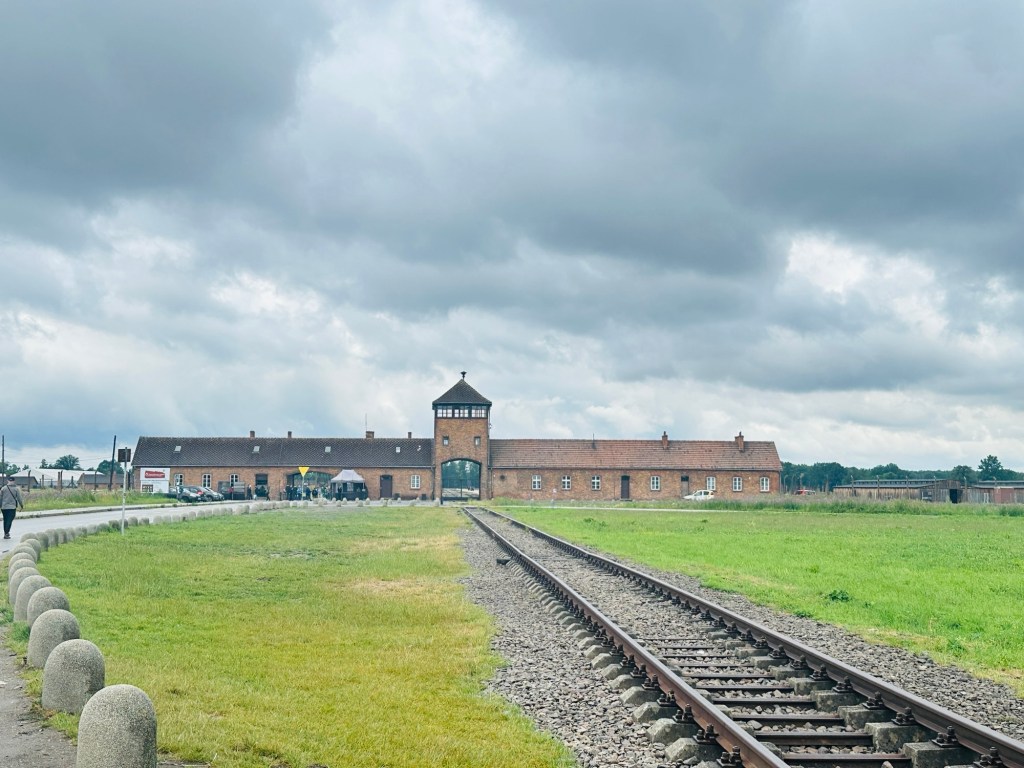
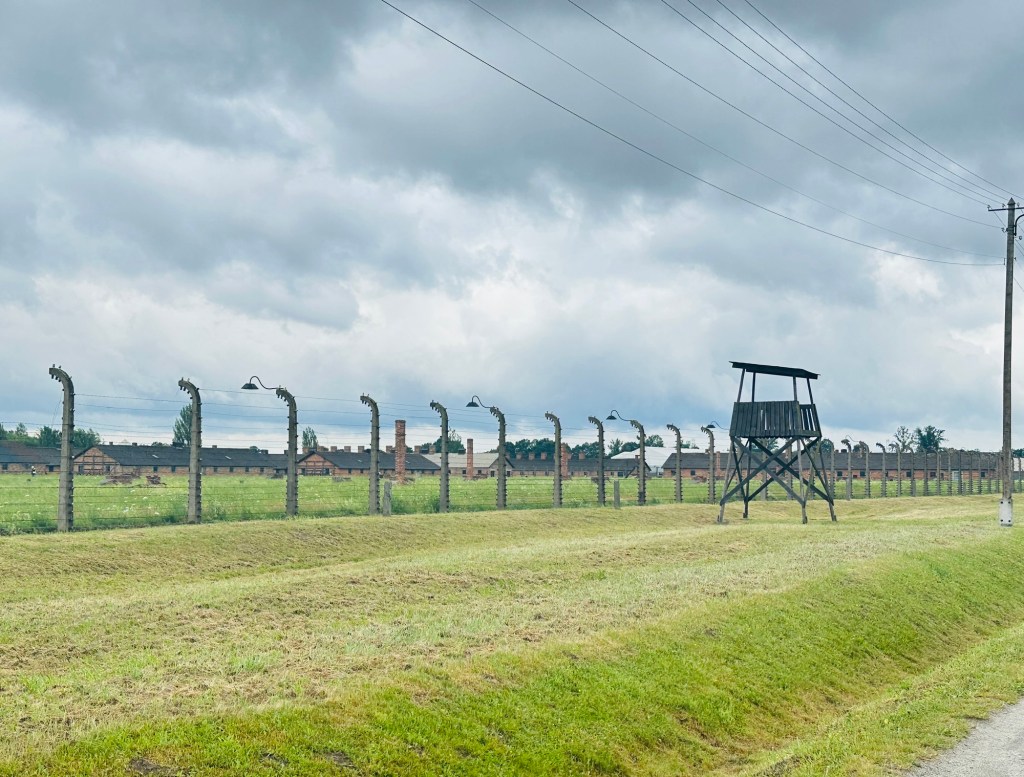

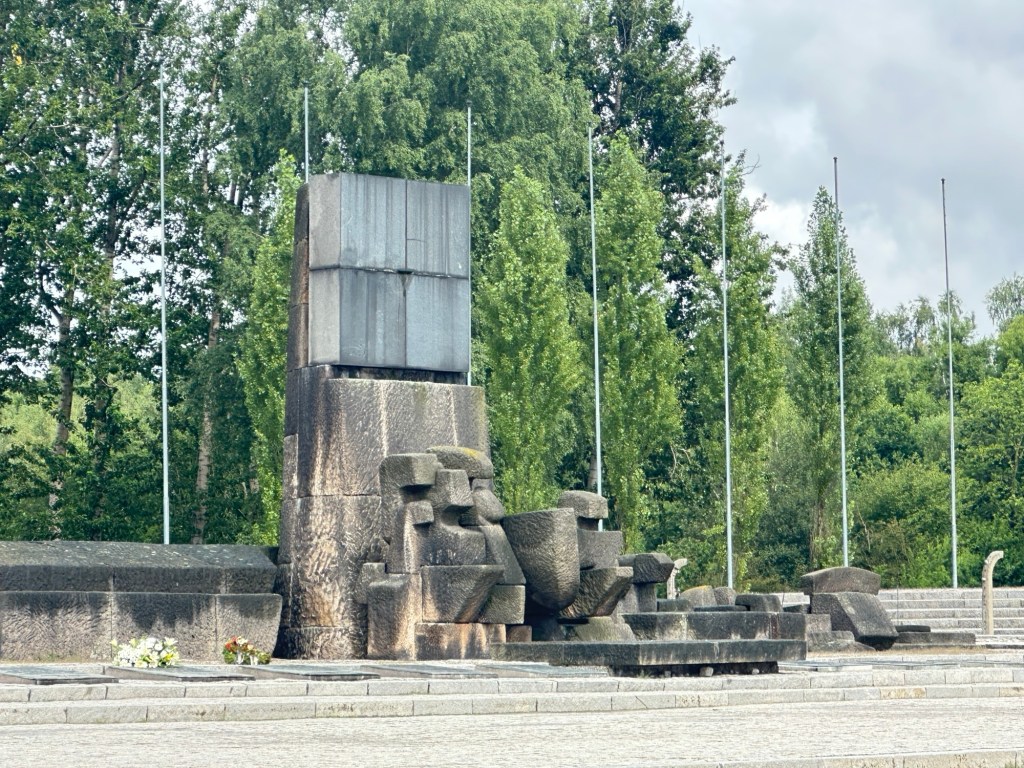
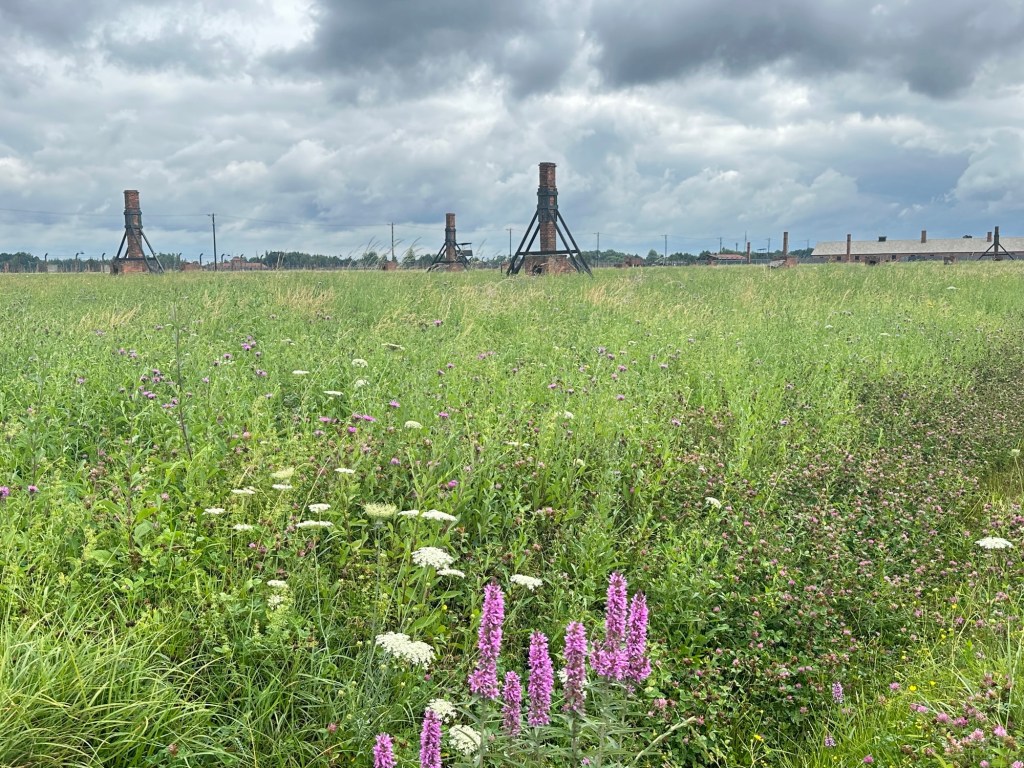

Lunch, and a time to reflect the atrocities we had just heard about. I am not sure how there are Holocaust deniers when there is so much evidence of what happened in those years.
An hour’s drive gets us to the UNESCO-listed Wieliczka mine, one of the world’s oldest salt mines. From Neolithic times, sodium chloride (table salt) was produced there from the upwelling brine. The Wieliczka salt mine, excavated from the 13th century, produced table salt continuously until 1996. Due to falling salt prices and mine flooding, commercial salt mining was discontinued in 1996.
We had two and a half hours transversing the tourist route through the mine, first walking down 40 flights of steps to 65 metres below the ground, eventually going down to 135 metres. Fortunately there was a double story four cage lift to take us back up to the surface. There are 230 kms tunnels underground – we walked only 2 kms! Underground there are many shafts, a labyrinth of passageways, displays of historic salt-mining technology, an underground lake, four chapels and numerous statues carved by miners out of the rock salt, and more recent sculptures by contemporary artists. It is a unique place to visit. One of the major benefits of visiting the Salt Mine is the health benefit of its special climate and its micro-element filled air. There is even a chamber on the third level where you sleep the night and take the special climate into your lungs.
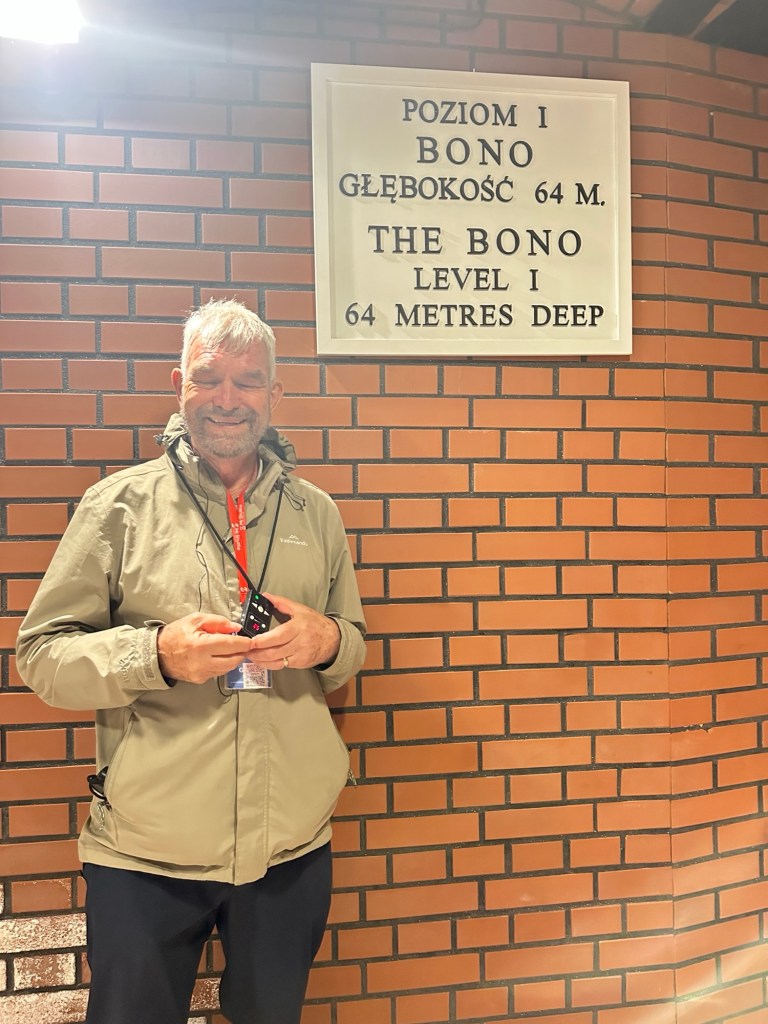
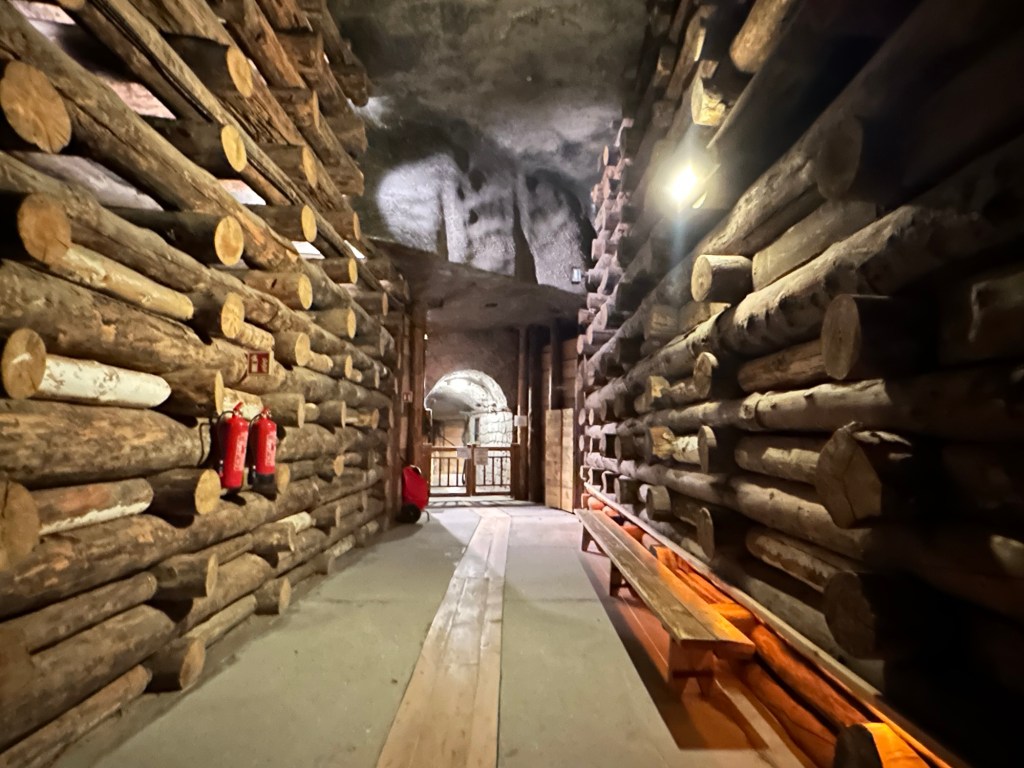
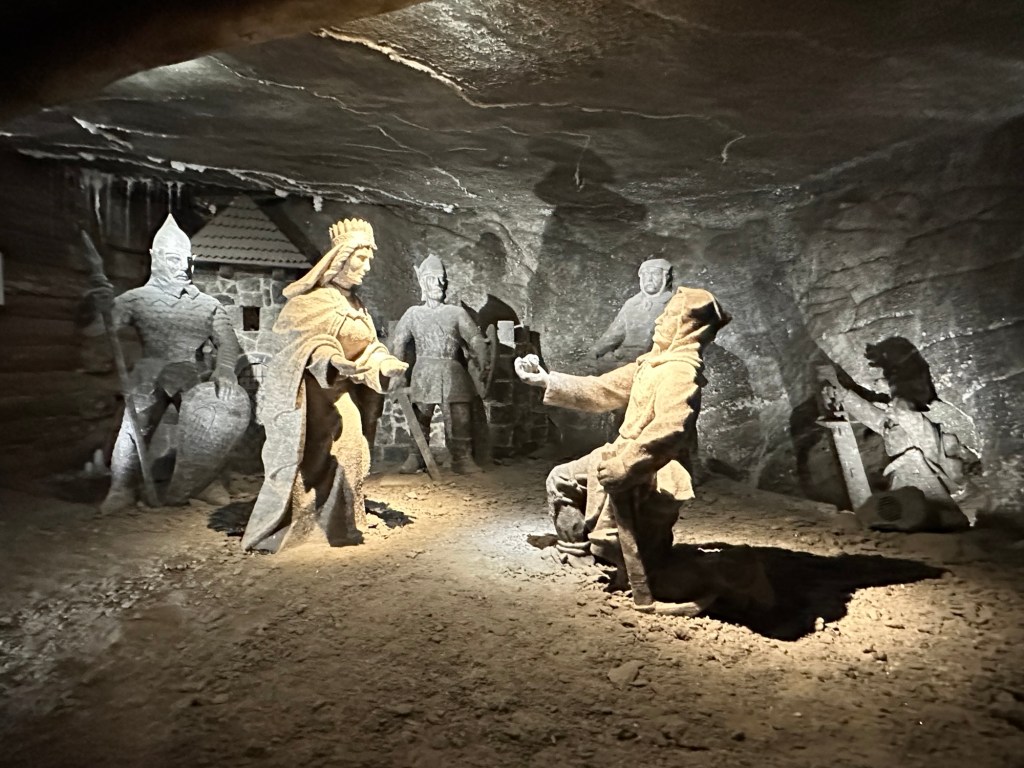
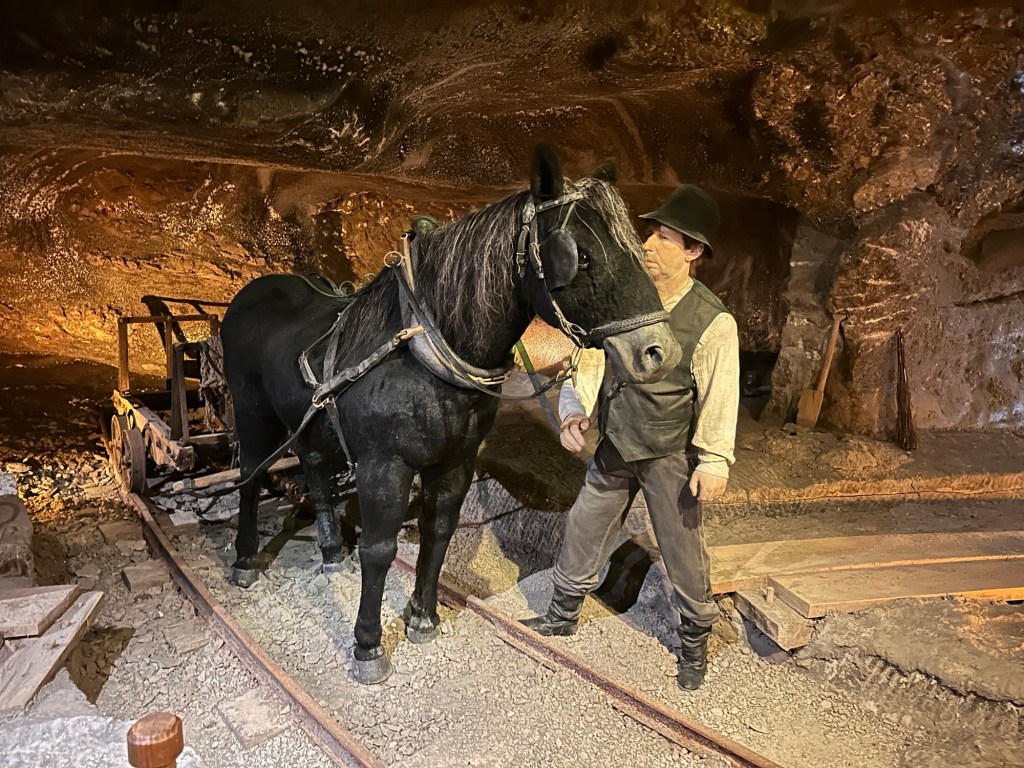

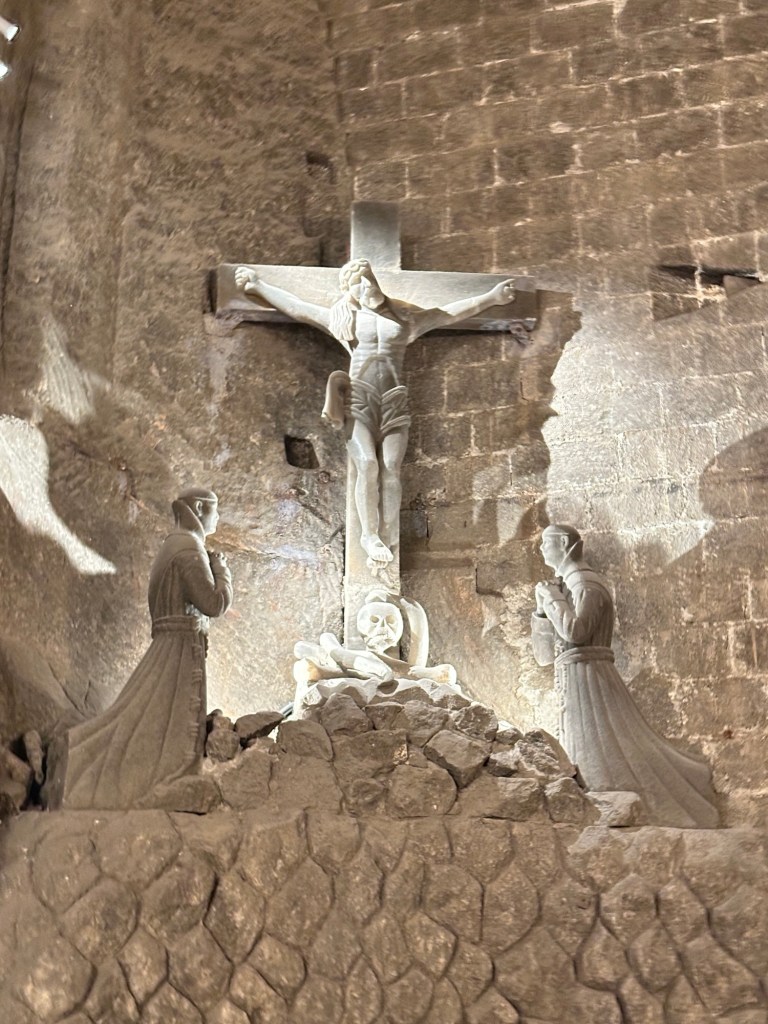
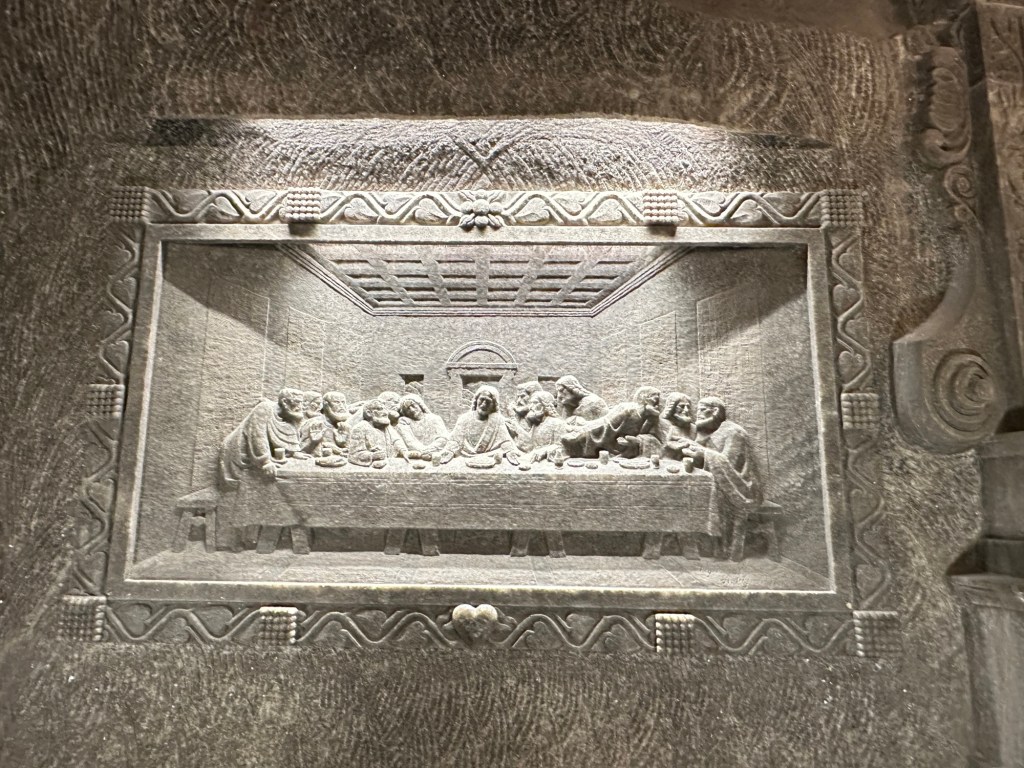
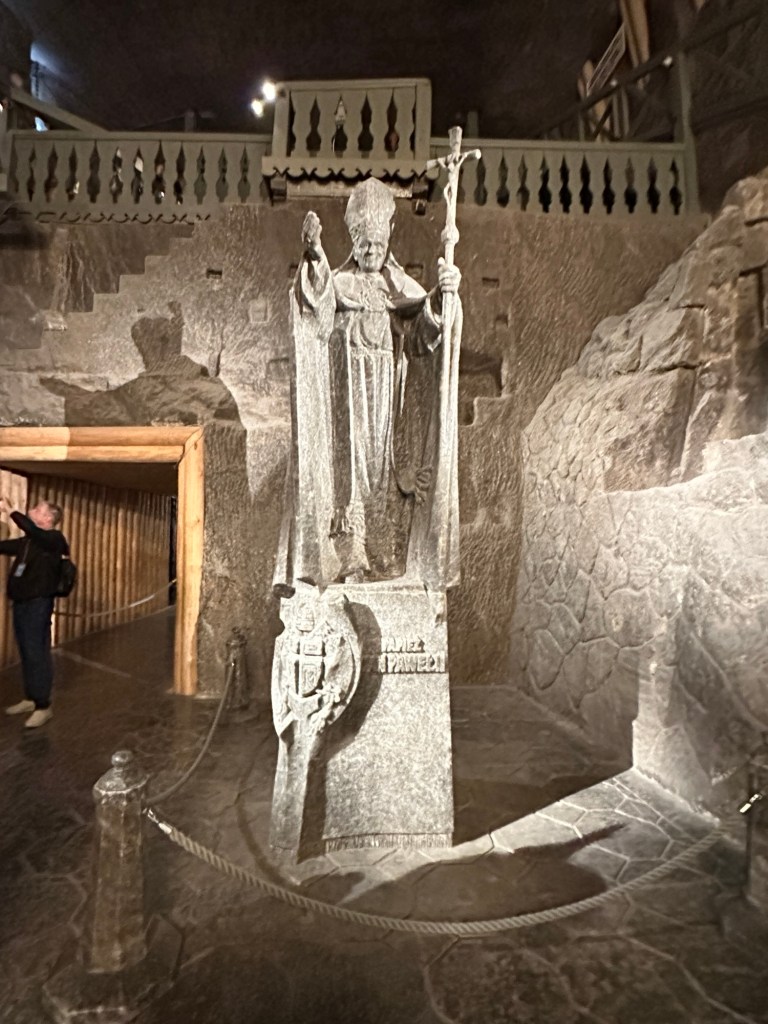
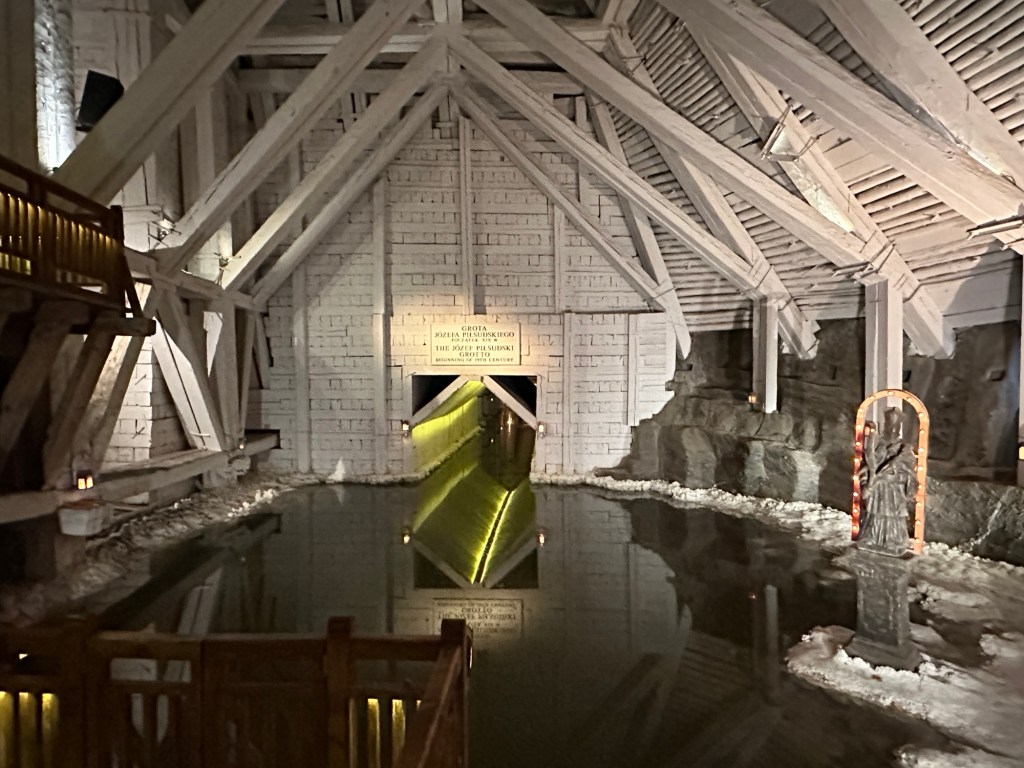
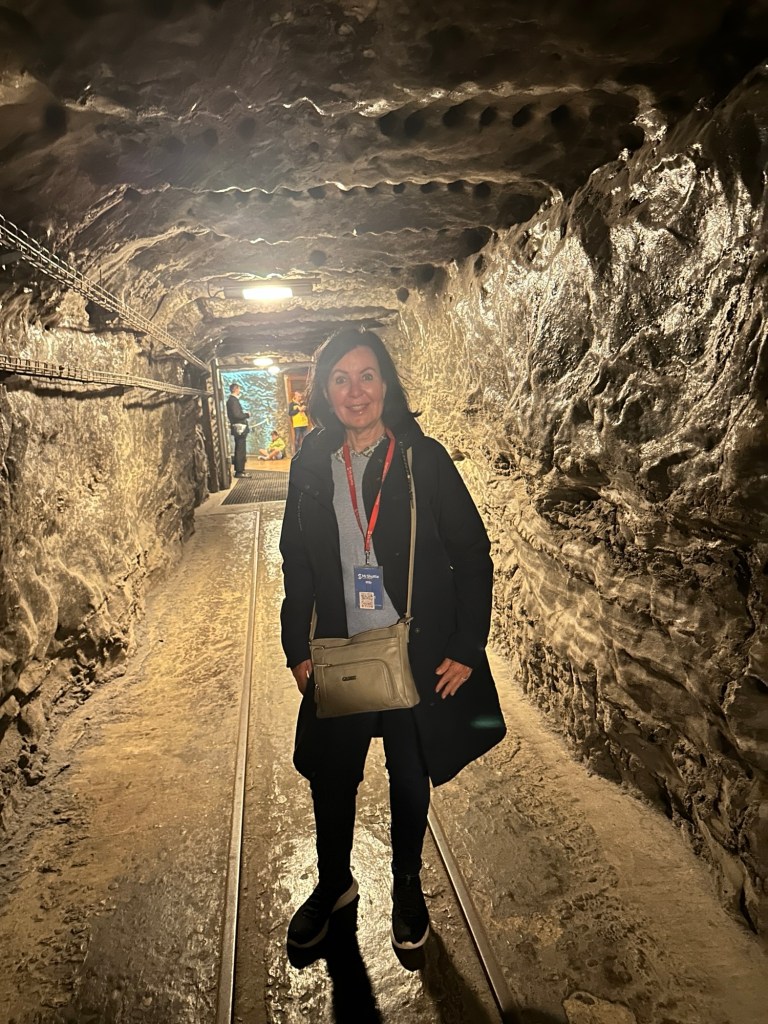
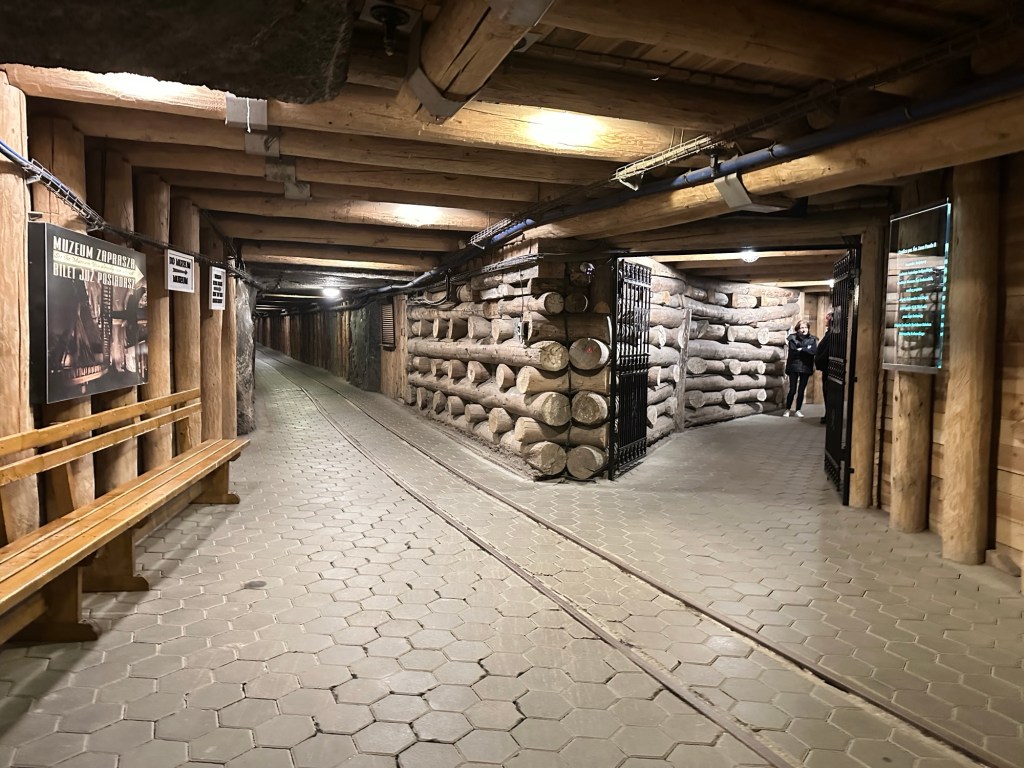
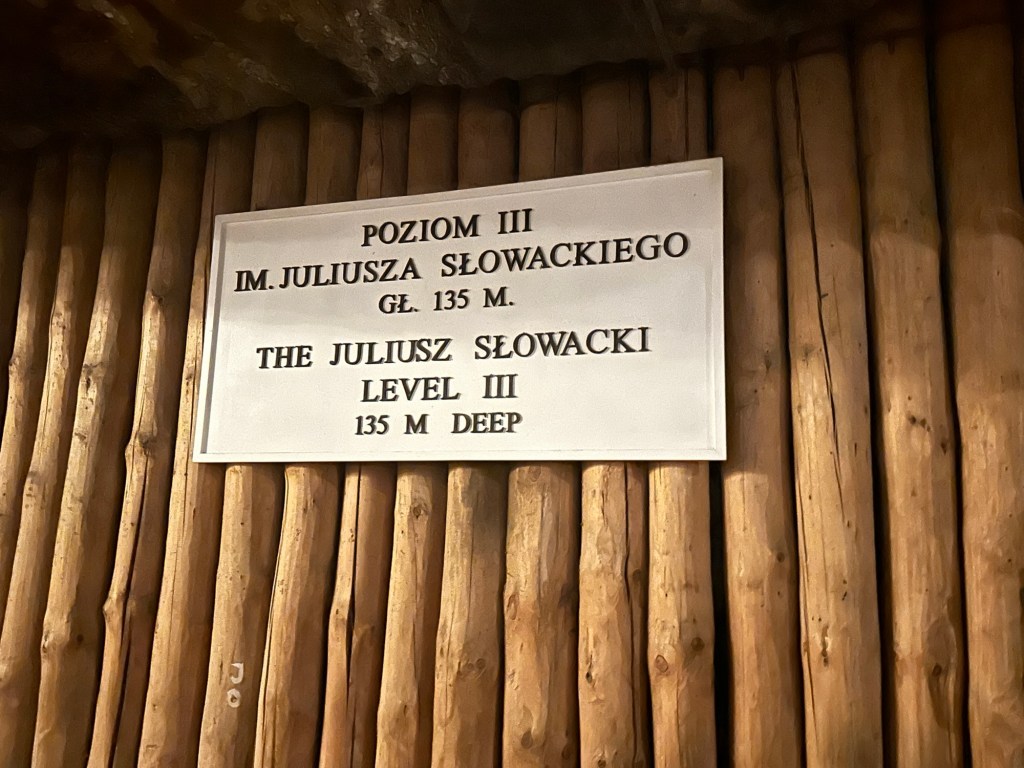
An hour’s drive and we were back in Krakow – just in time for dinner. We had a very enjoyable meal at a traditional Polish restaurant – duck for me, beef cheeks for Frank. Back at our apartment, we filled the spa bath and let the warm water relax our weary legs. Another 20,000 steps day.
Day 53
Friday 11th July
Krakow
13-18, fine
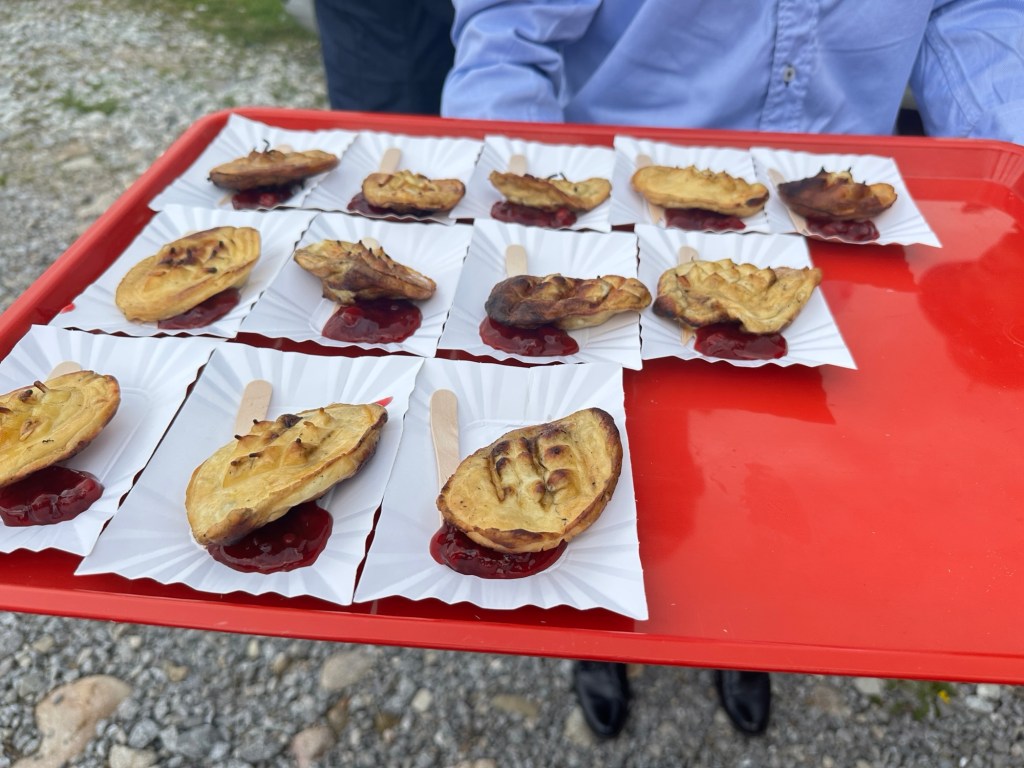
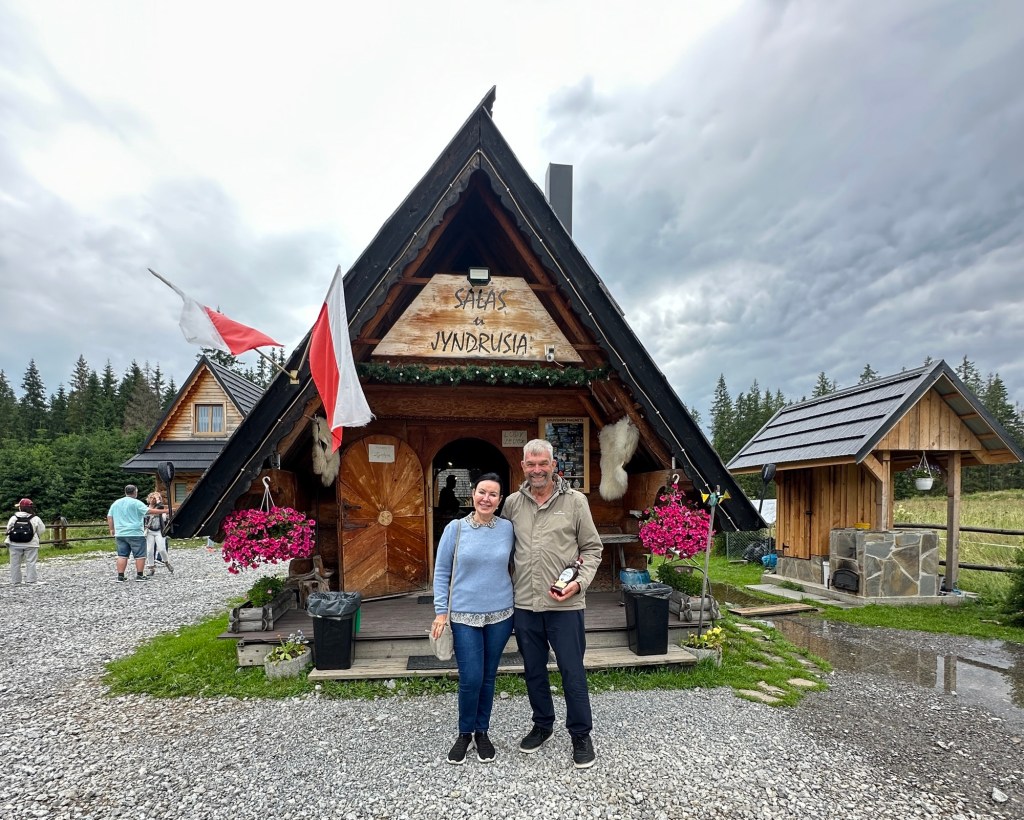
Another big day trip today, but not such an early start. We got picked up at 8.45am for the day trip to Zakopane. Ninety minutes later and we were in the Tatra Mountains, the highest mountain range in the Carpathian Mountains, and very close to Slovakia. We stopped at a traditional mountain hut and the guide, who was a bit of a character, had us trying the Highlander cheese plus sampling three flavours of vodka. He even had us wearing skirts and hats, and then a competition to do the Polish vodka drinking custom. Frank won that (mind you, he was the only participant), but he did walk away with a bottle of raspberry vodka for his effort! Not a bad start to the day! Oscypek is a traditional Polish scalded-smoked cheese, manufactured from raw sheep’s milk – it was delicious served with a cranberry relish.

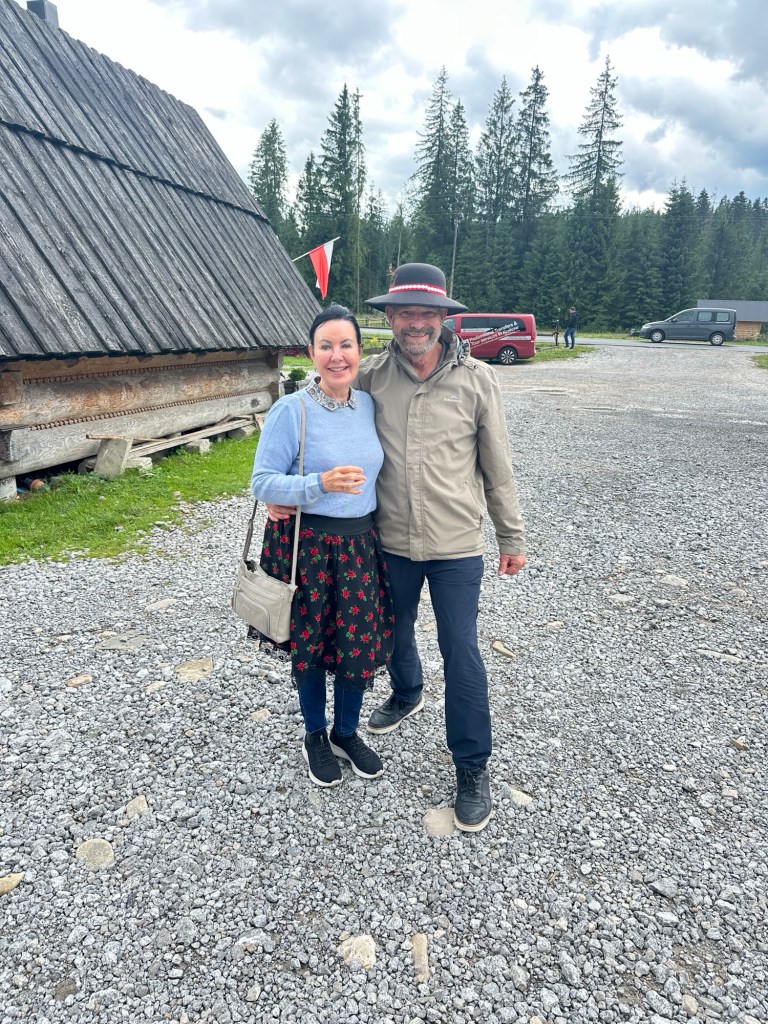
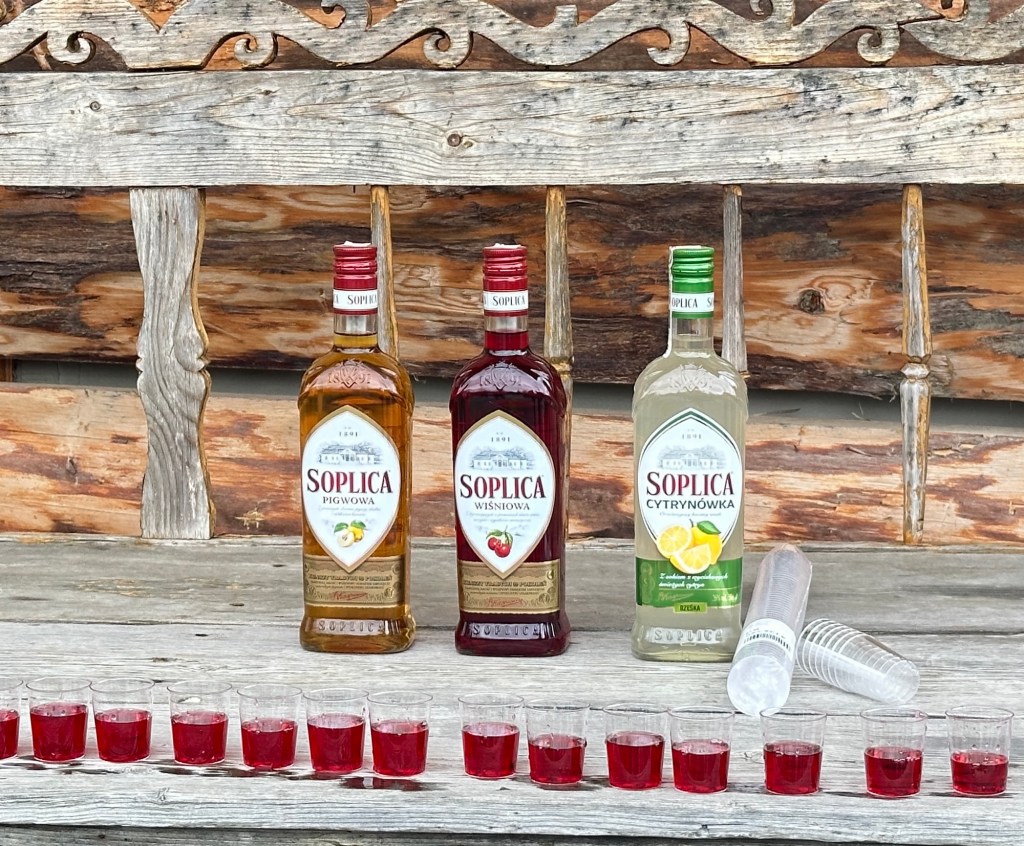

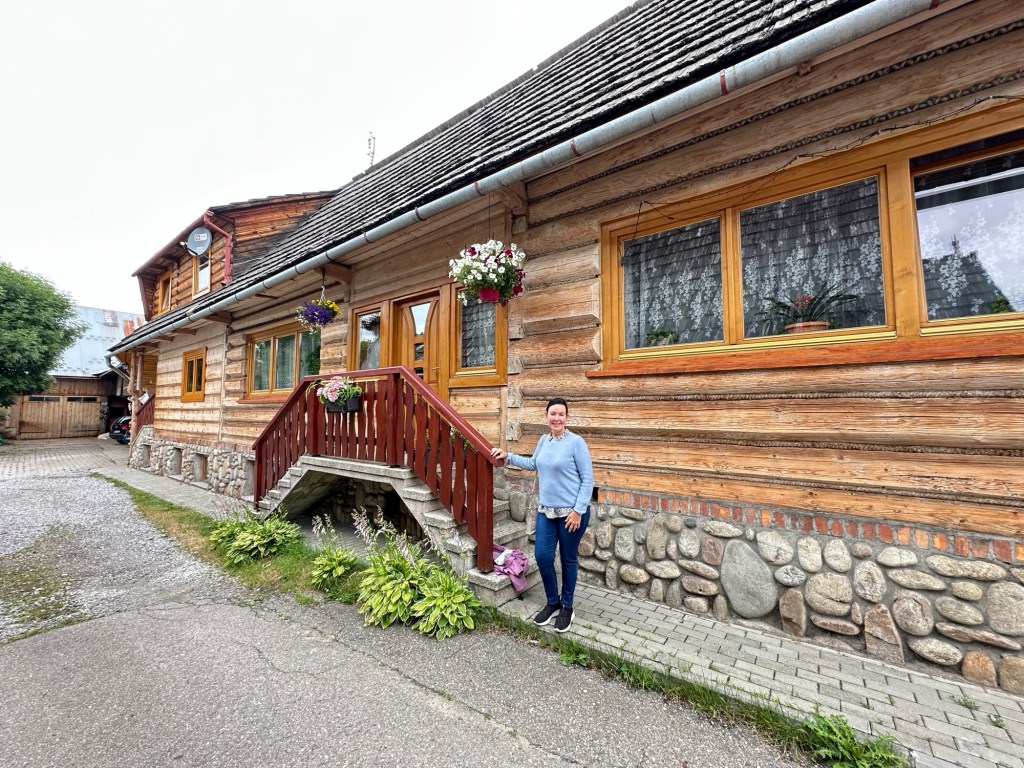
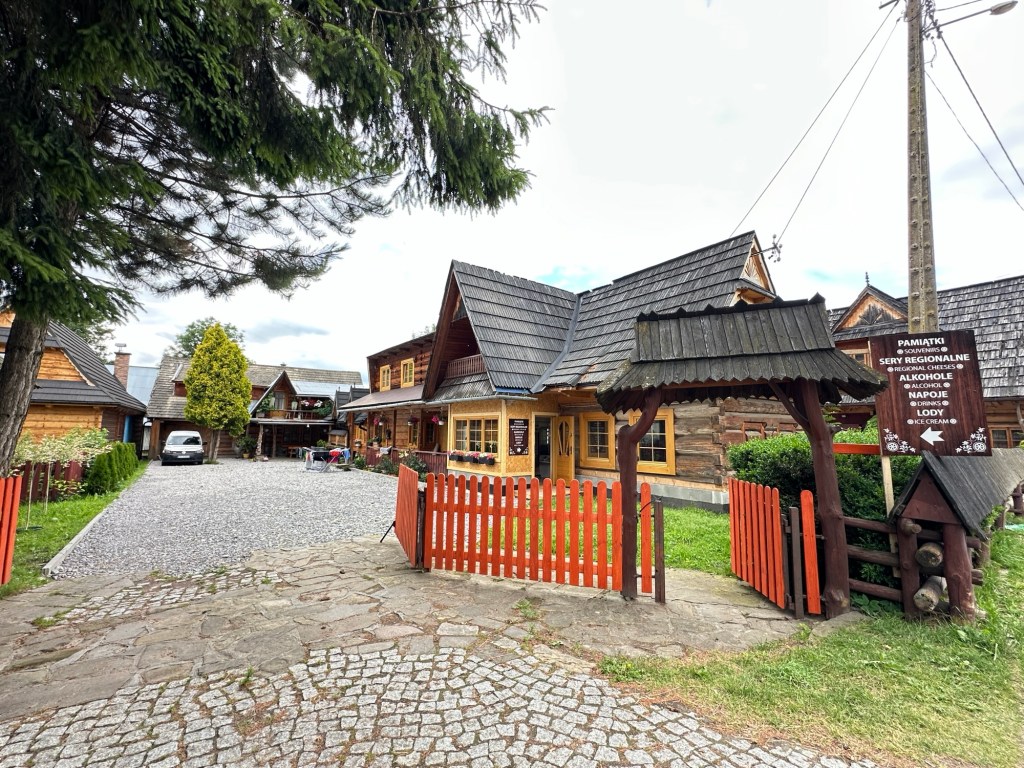
Also stopped at some traditional wooden homes – they were made entirely of cypress pine, even wood shaving were used to fill the gaps between the planks. Saw traditional clothes and handcrafts.
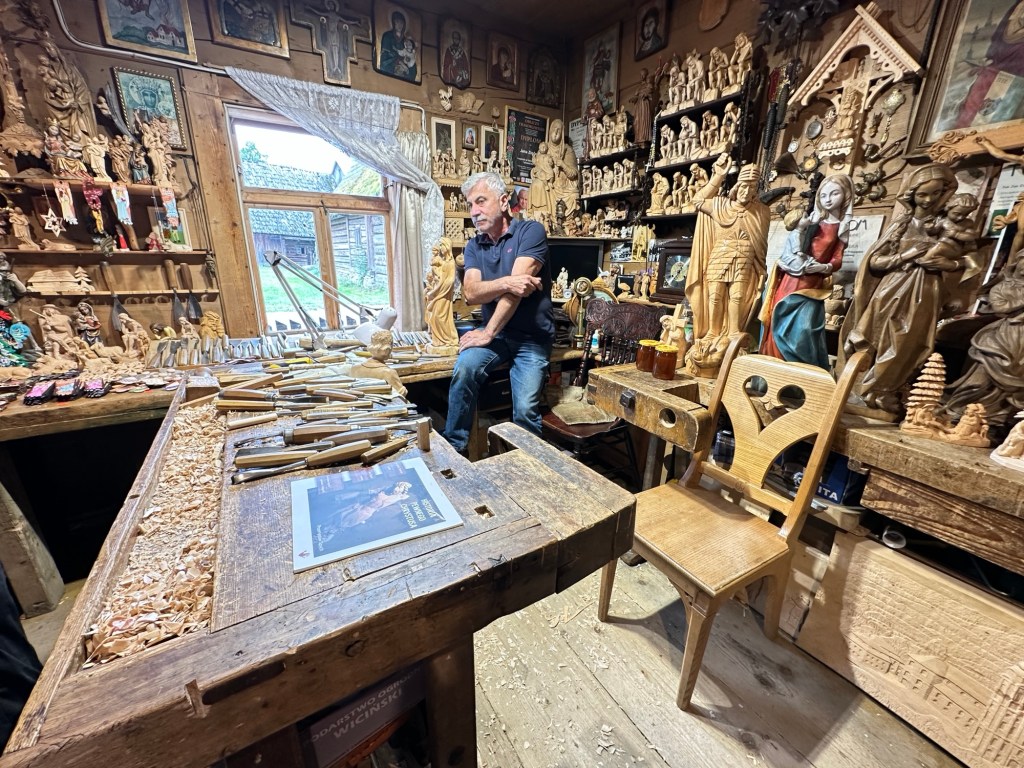
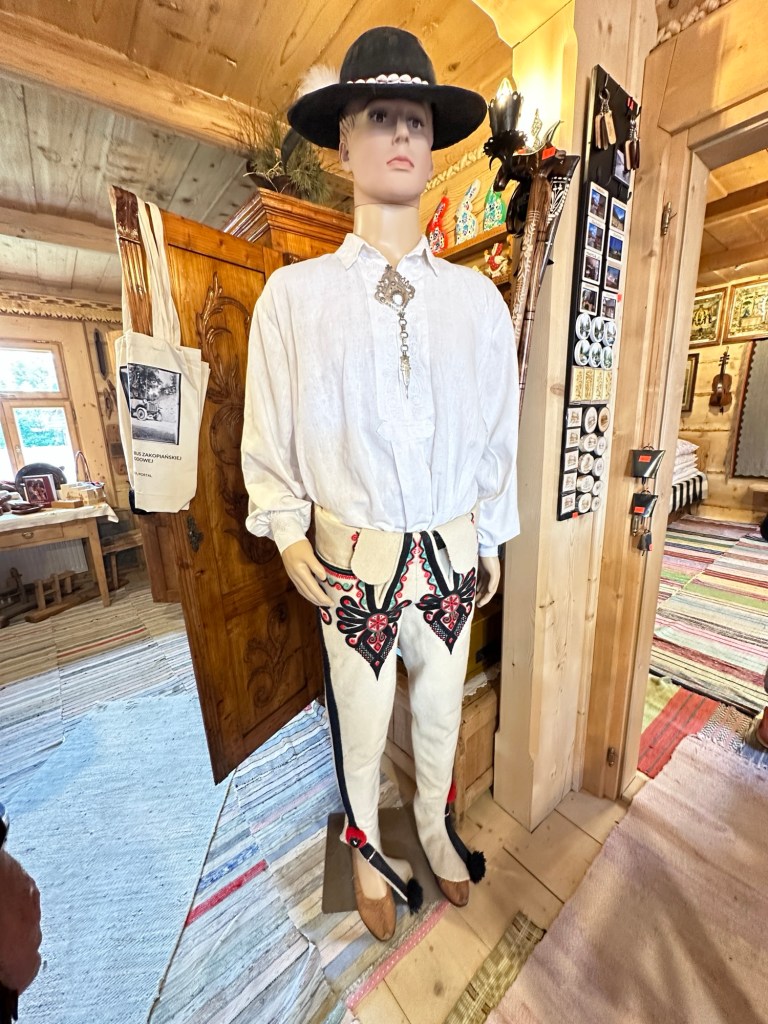

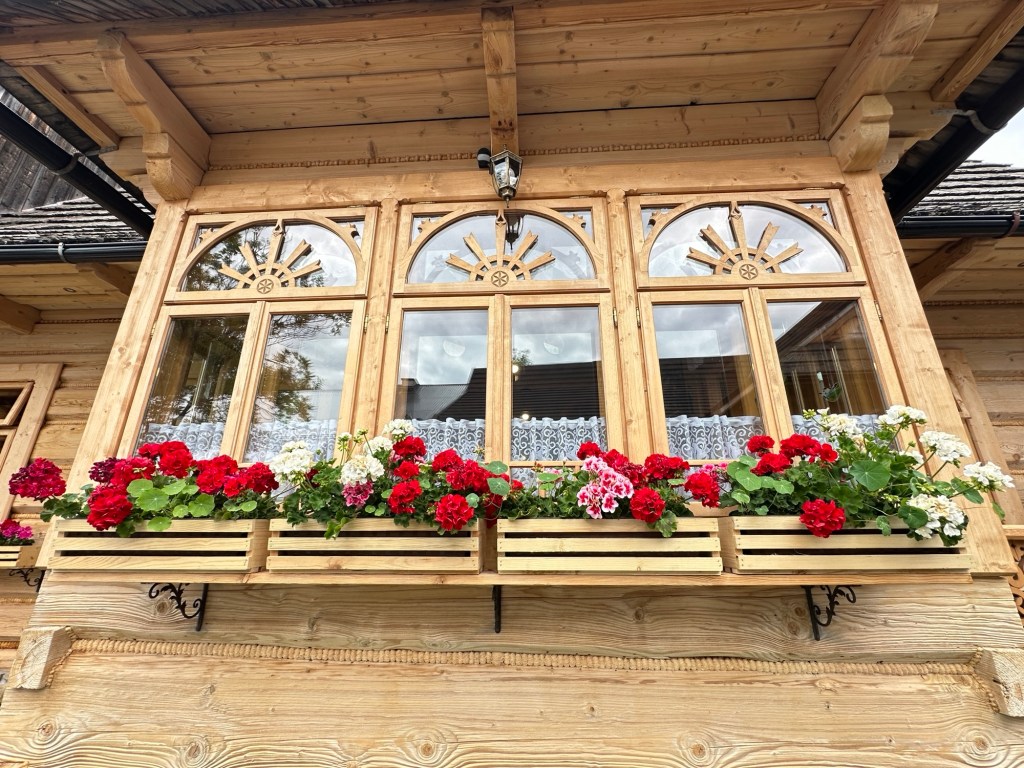
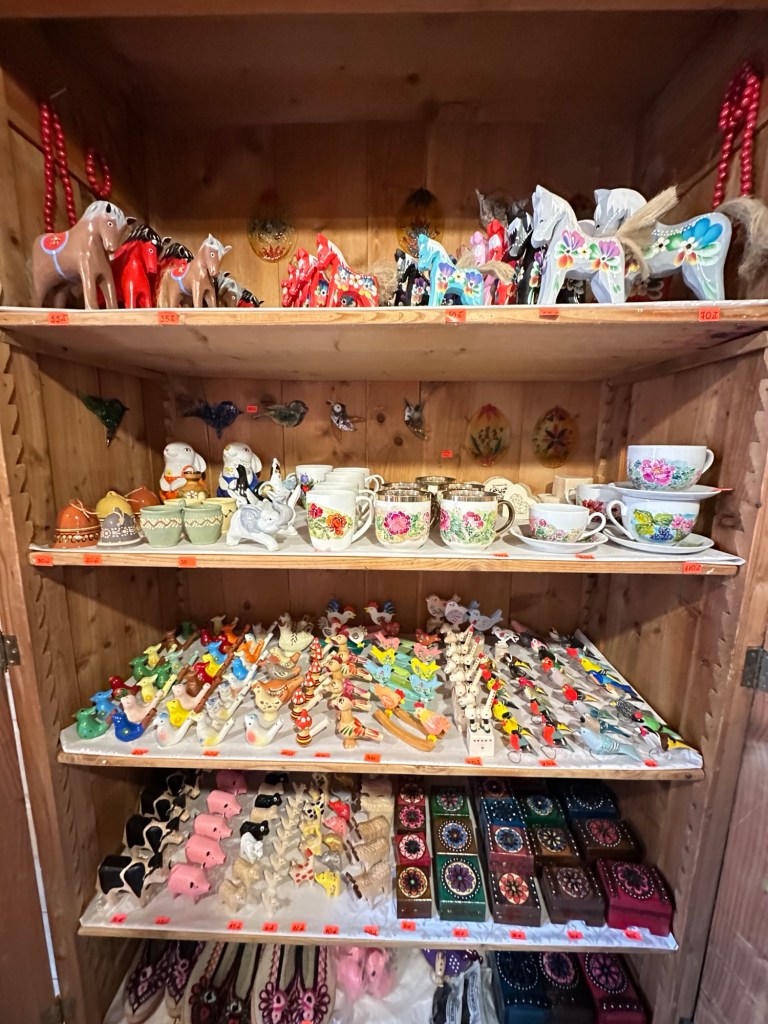
Twenty minutes later and we were in Zakopane, a popular resort town in southern Poland. It is popular with skiers in winter and with hikers and climbers year-round. A pretty little town. The Gubalowka Funicular took us to the summit at 1123 metres . Spectacular views of the alpine forests, ski jumps and township down below. We had lunch at a lovely restaurant overlooking the stunning countryside. I tried the Kwasnica which is sour cabbage soup with smoked pork rib – a nice tangy taste, and Frank had the traditional dumplings, pierogi, with a minced pork filling, served with mushroom and onion sauce.
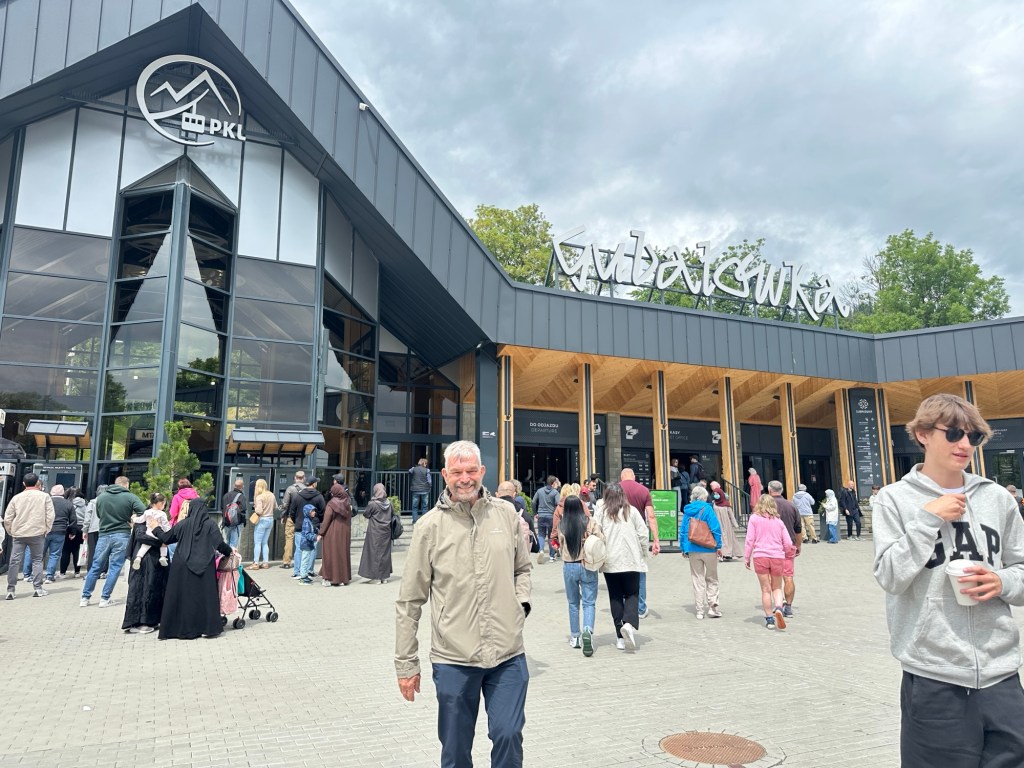
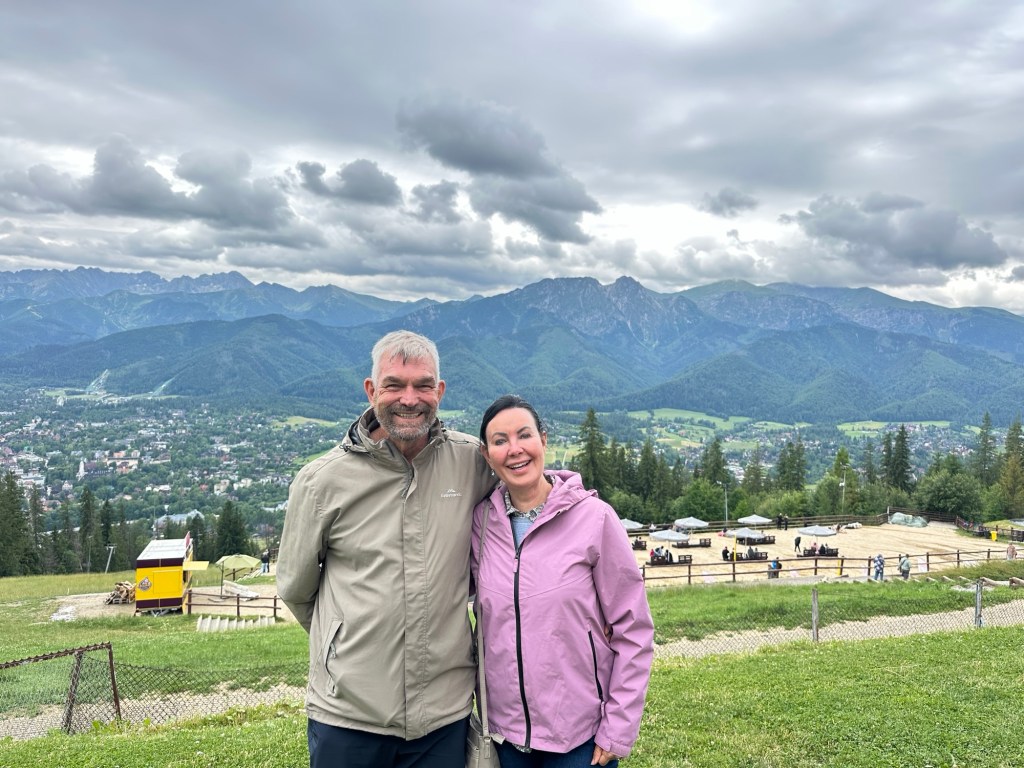
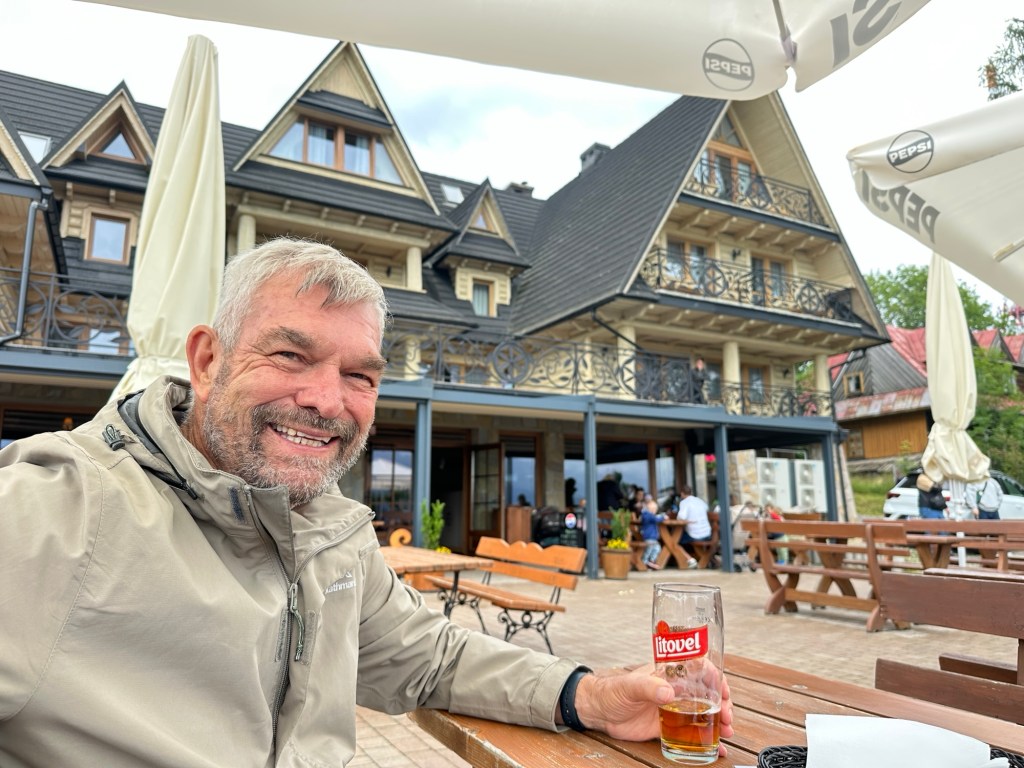
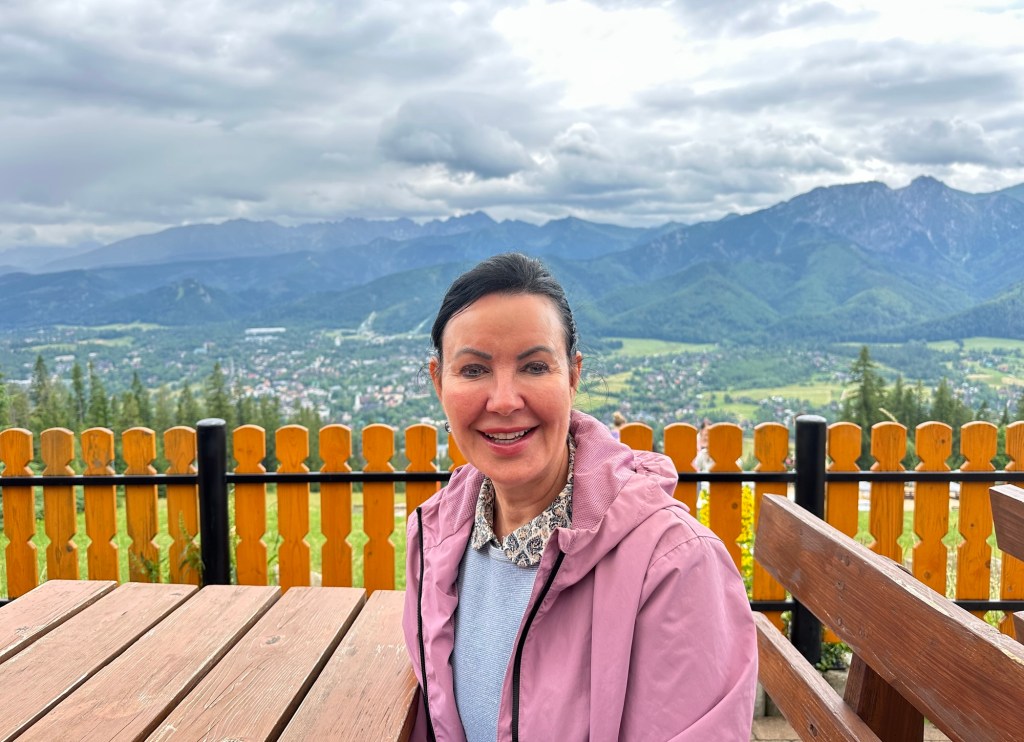
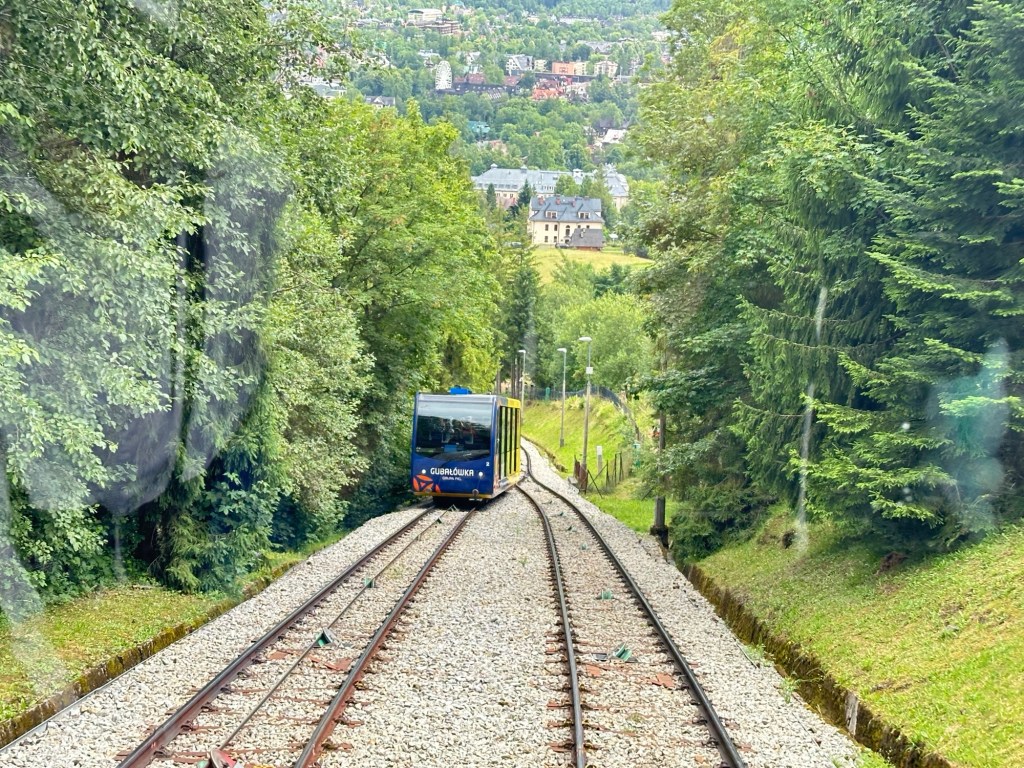
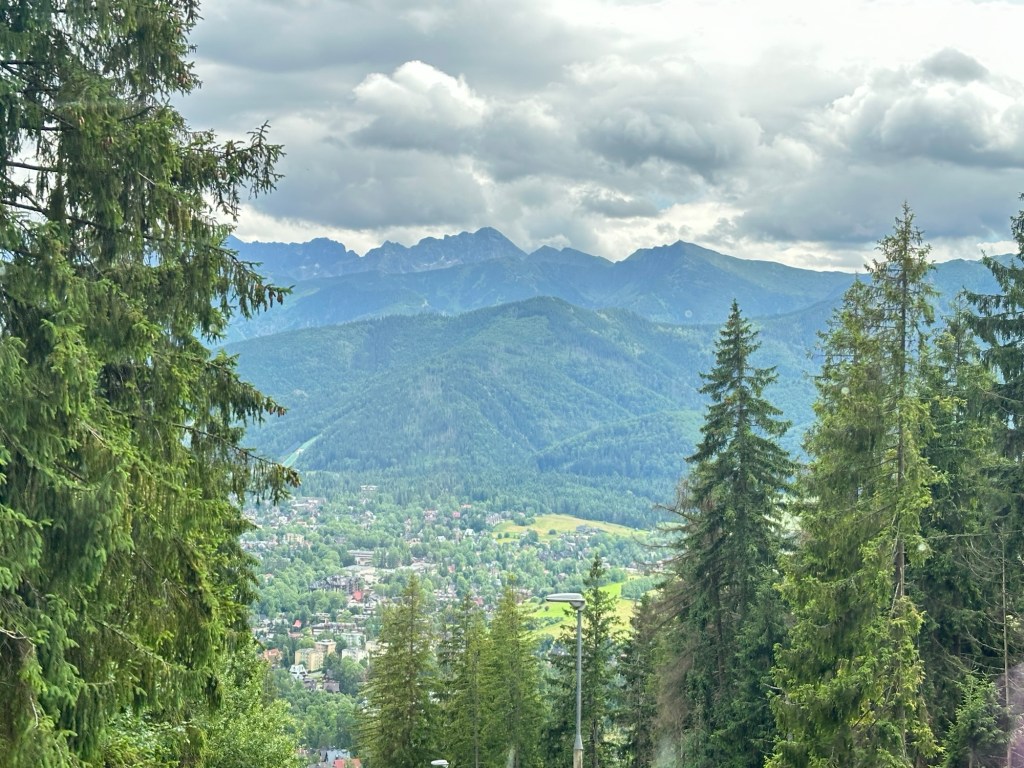
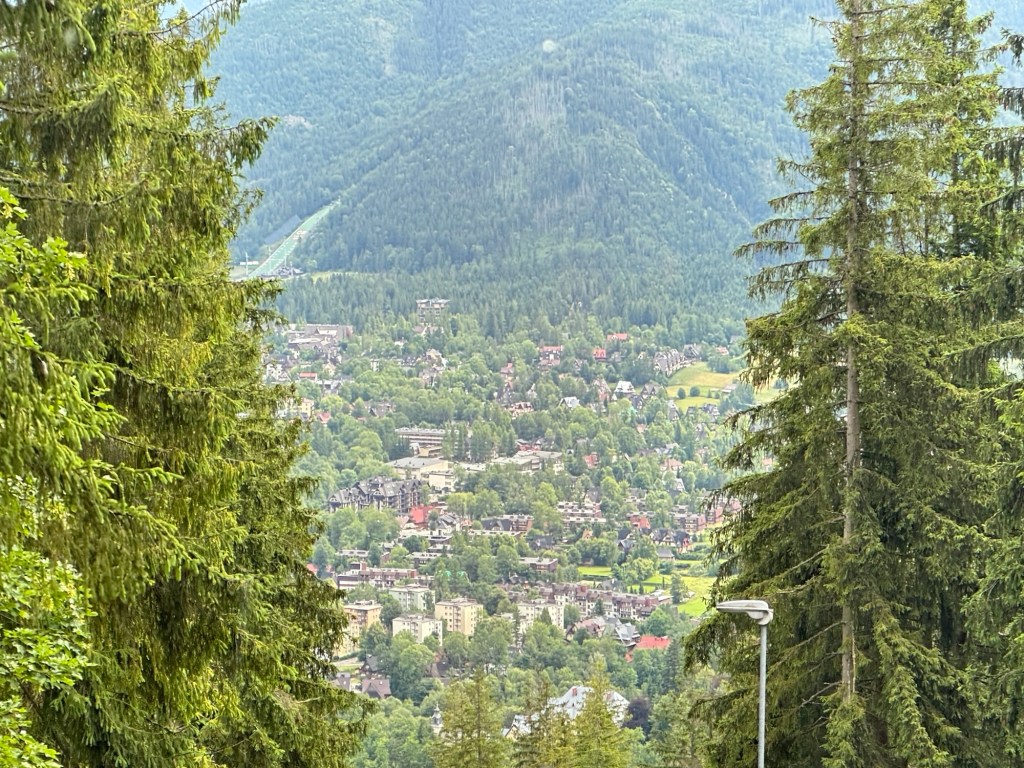

Markets at the top, and markets at the bottom. I have to own up to buying a stunning leather handbag with a fox flap. Even Frank had a spend up buying a pair of trousers.
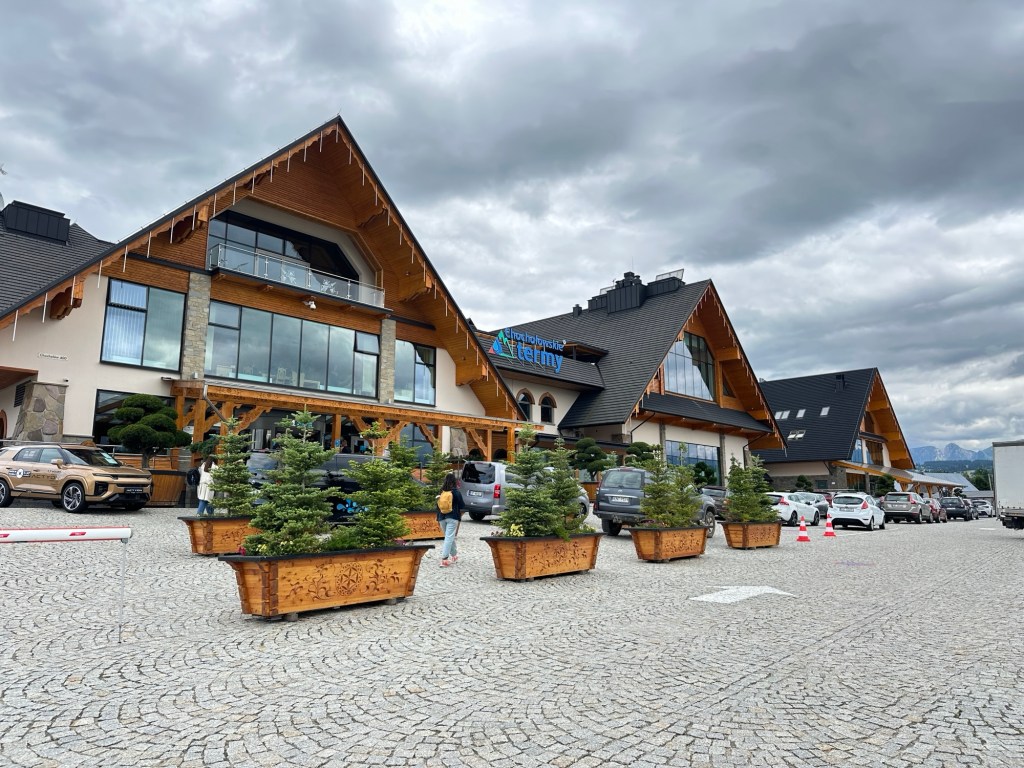
Next, three hours at the Chocholow Hot Bath Pools. This is a new centre, and offers a series of indoor and outdoor thermal pools ranging from 34-38 degrees, plus one at 12 degrees for the silly people – of which one was Frank! There was a sauna, a salt room, and play areas for the children. It was actually lovely and relaxing. Great way to spend the afternoon.
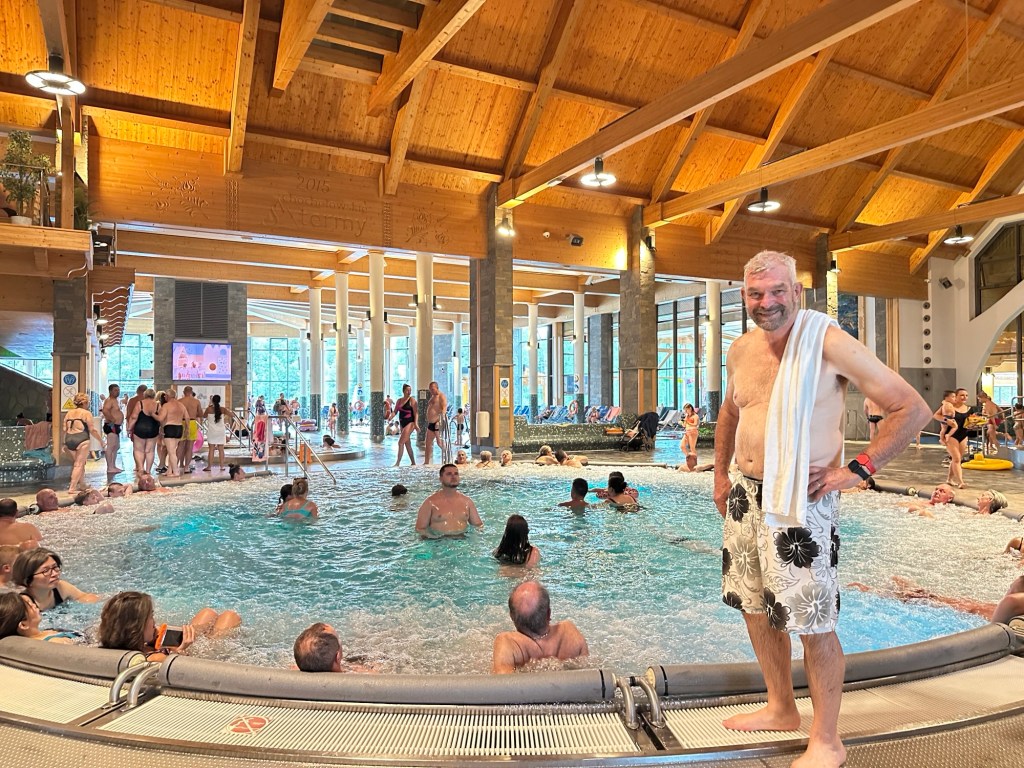
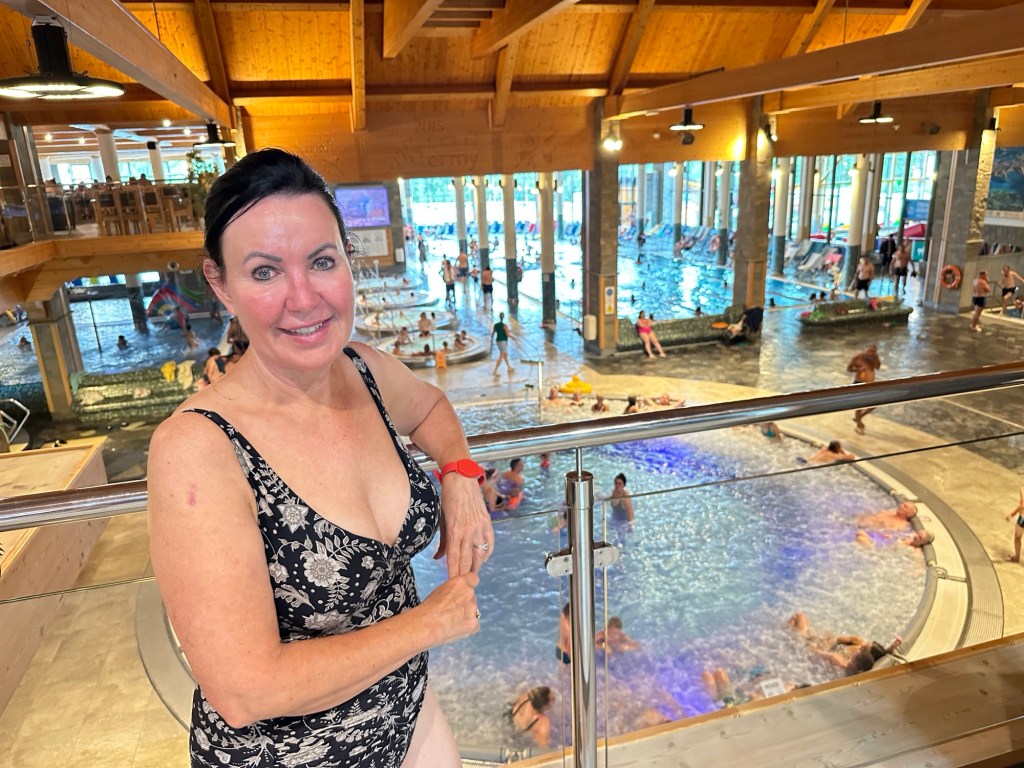
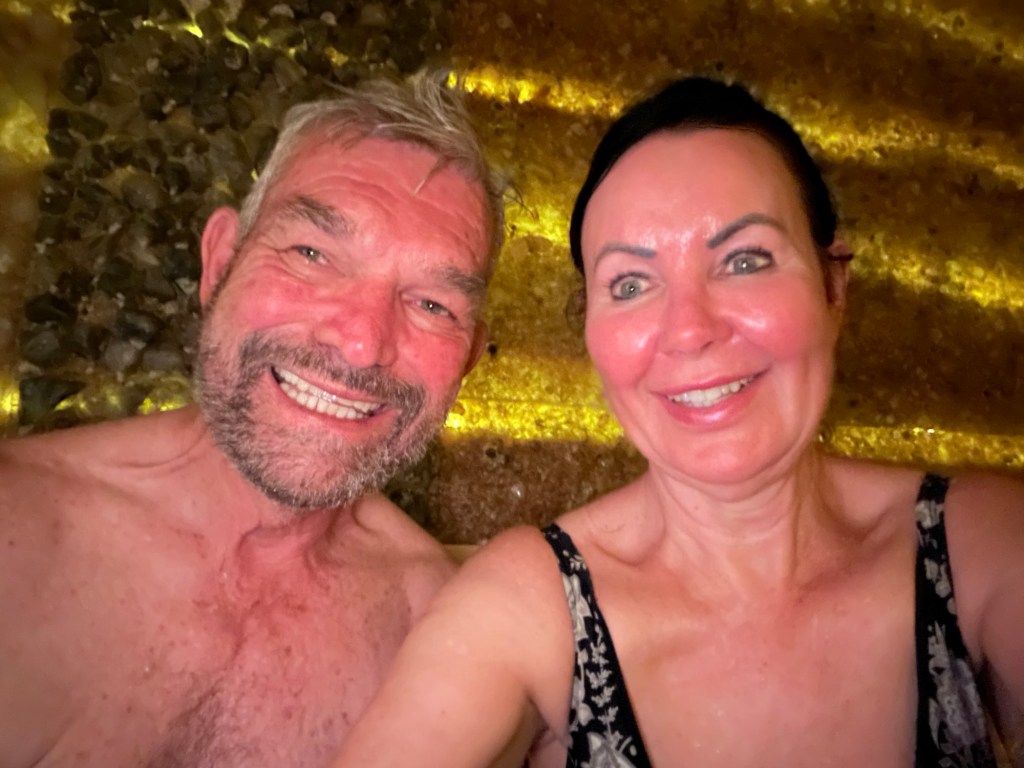
That of course meant there was a ninety minute drive back to Krakow – good opportunity for a power nap!
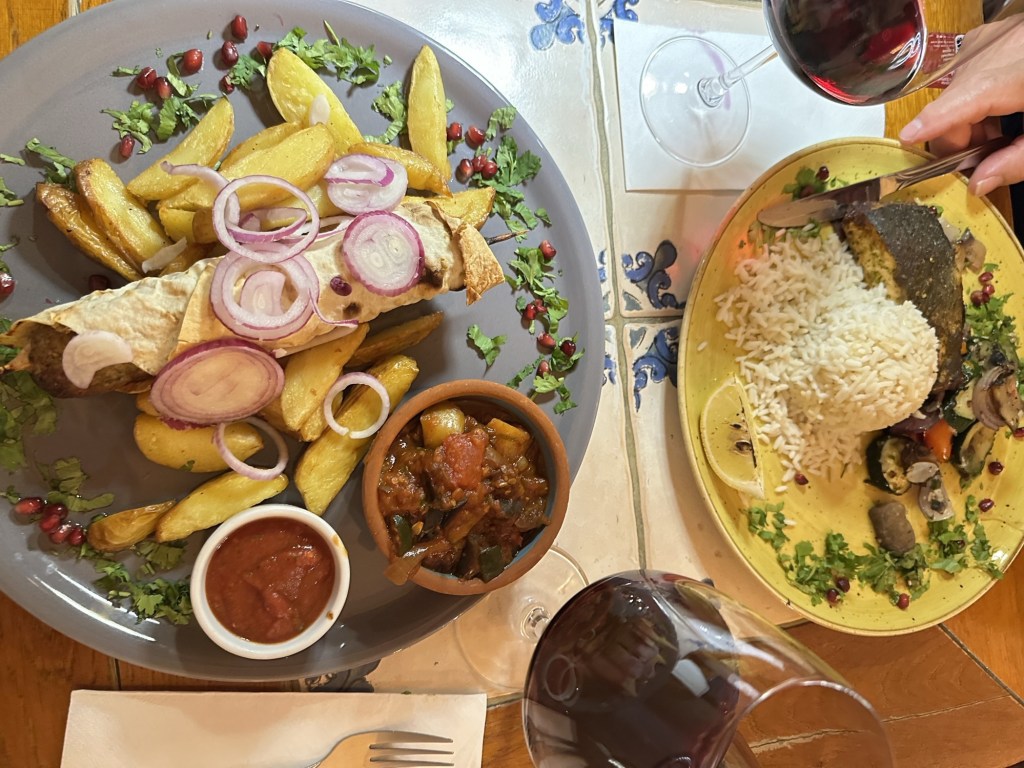
Quick turn around, and out to Market Square for dinner. We found a lovely little Georgian restaurant – we’re rather partial to Georgian food! Frank went for the salmon, I had the pork and lamb meat shaslick and ajapsandali (vegetables) – good choices all round.
Day 54
Saturday 12th July
Krakow
12-23 degrees, sunny, short shower in afternoon
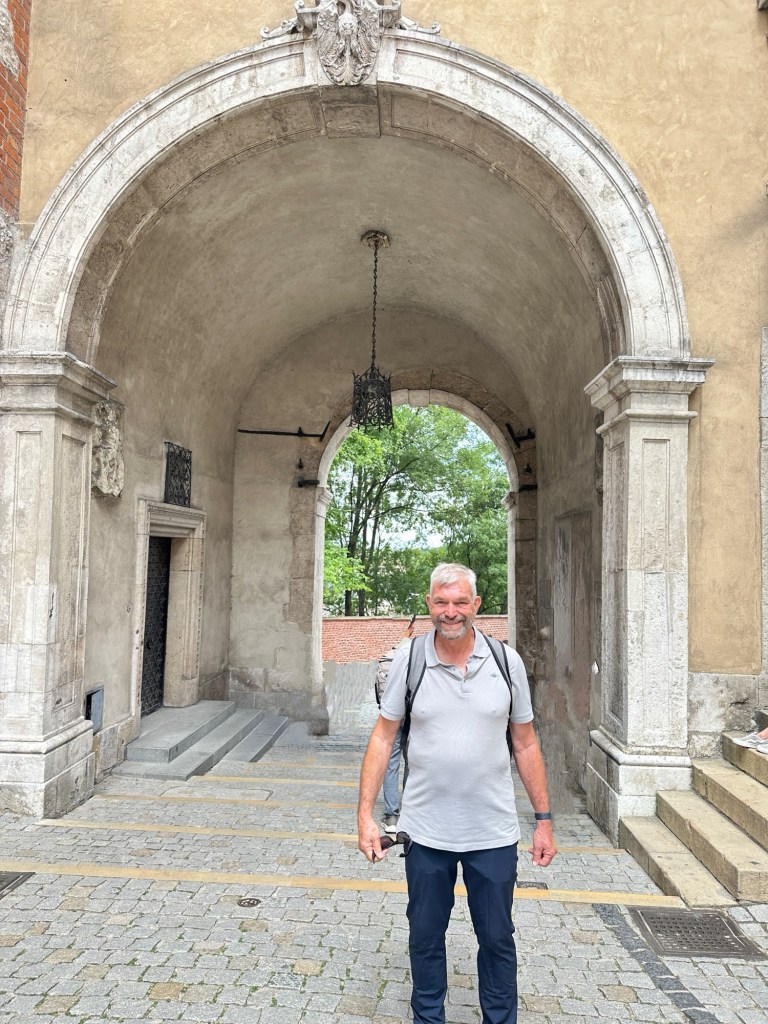
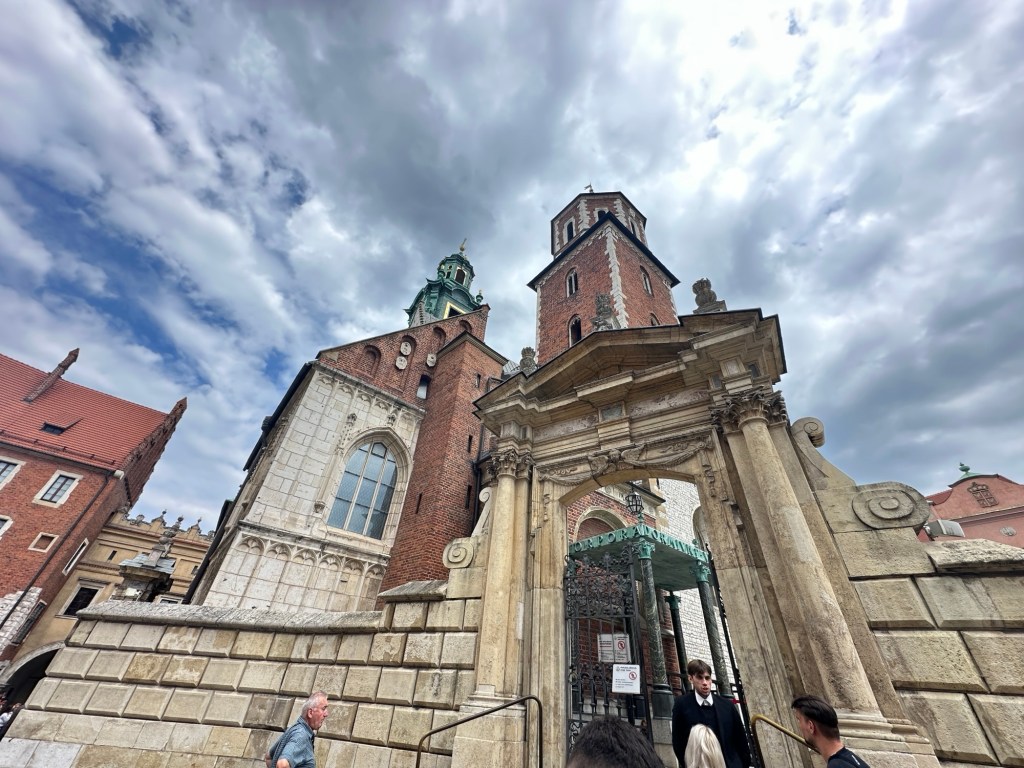
First on today’s itinerary was a visit to the castle – only a ten minute walk from where we were staying.
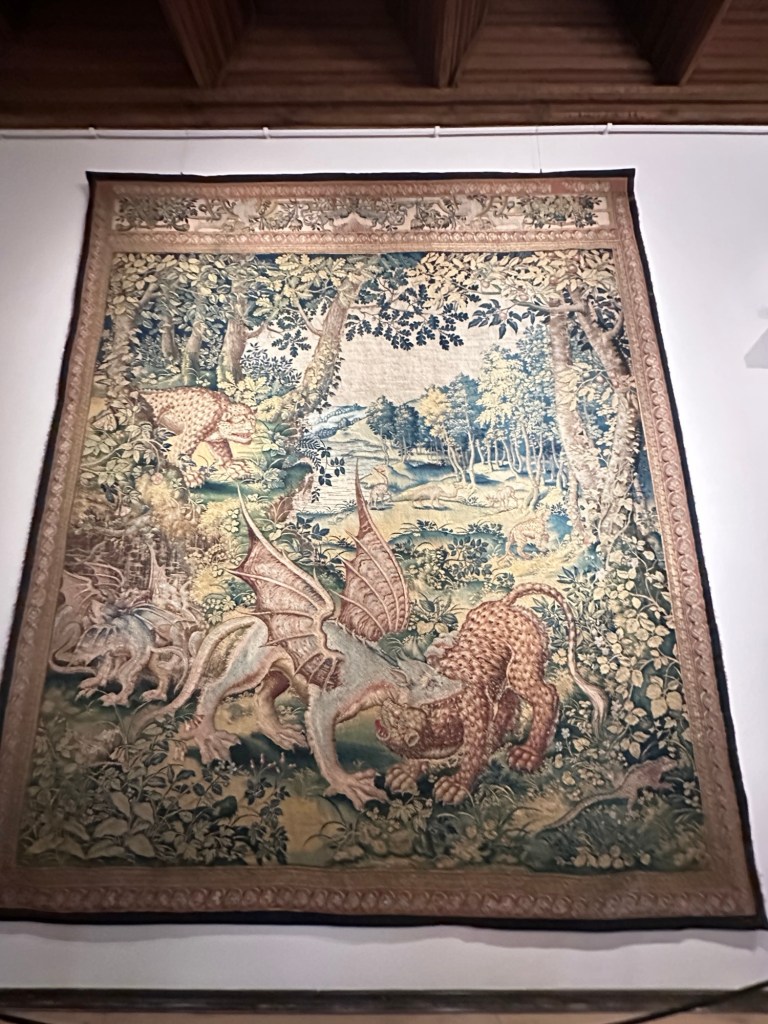
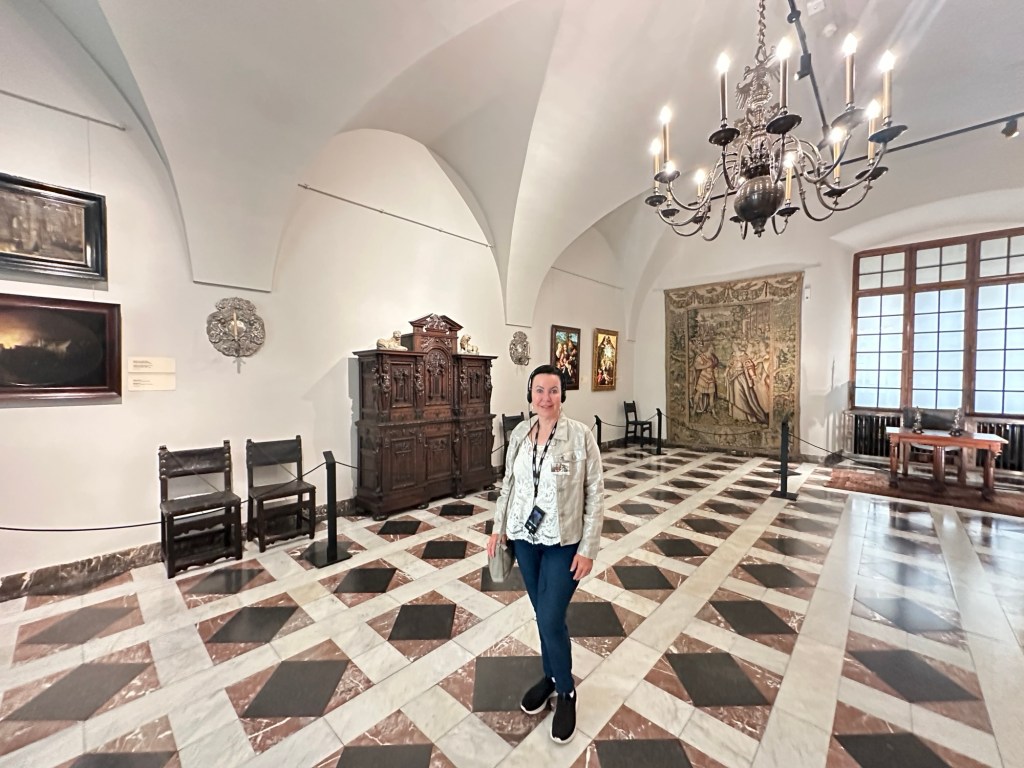
The Wawel Royal Palace, and the Wawel Hill on which it sits, constitutes the most historically and culturally significant site in Poland. Serving as a royal residence and the site where the country’s rulers governed Poland for five centuries (1038-1596), this fortified residency on the Vistula River is a symbol of the independent Polish state and today is one of the country’s premier art museums. A priceless collection of 16th-century Flemish tapestries, considered to be one of the largest in the world, is also housed there. There was also a temporary exhibition of an Ottoman Turkish Tent collection.
It was a bit confusing trying to work out what tickets to get, and obviously many others had the same problem as the ticket queue was lengthy and took a while to get through. The cathedral within the complex turned out to be a separate entity. We ended up getting tickets to Castle I and Castle II which gave us entry to all museums mentioned above, plus the Royal Gardens. We took the audio option which gave an excellent commentary and description.


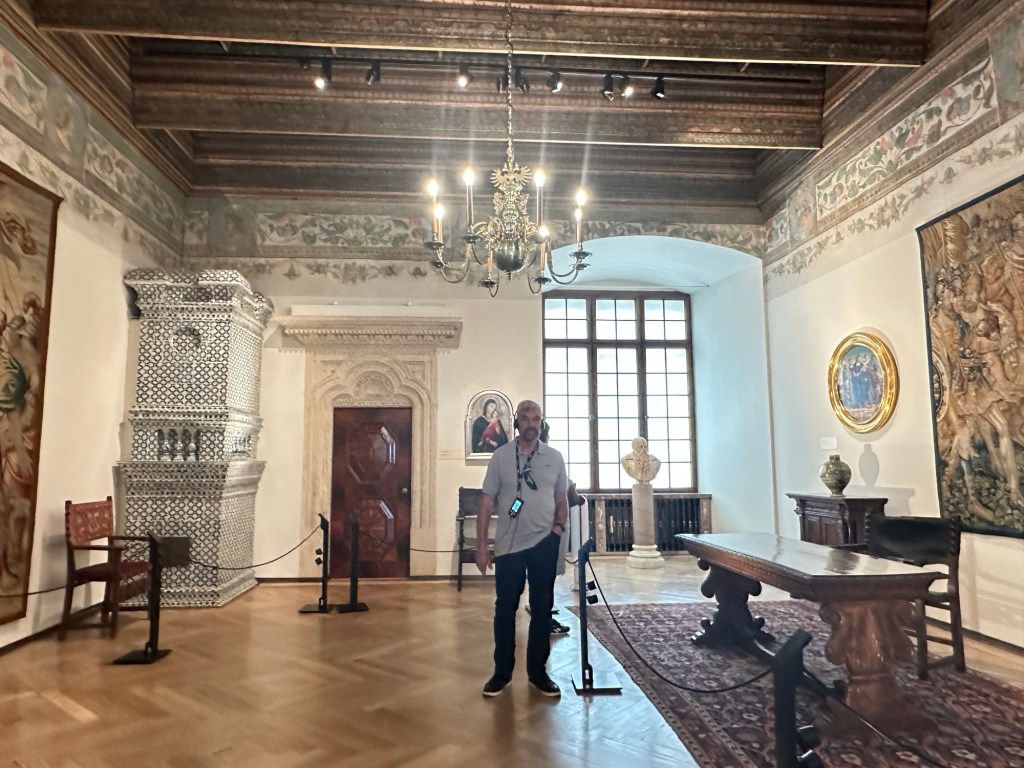

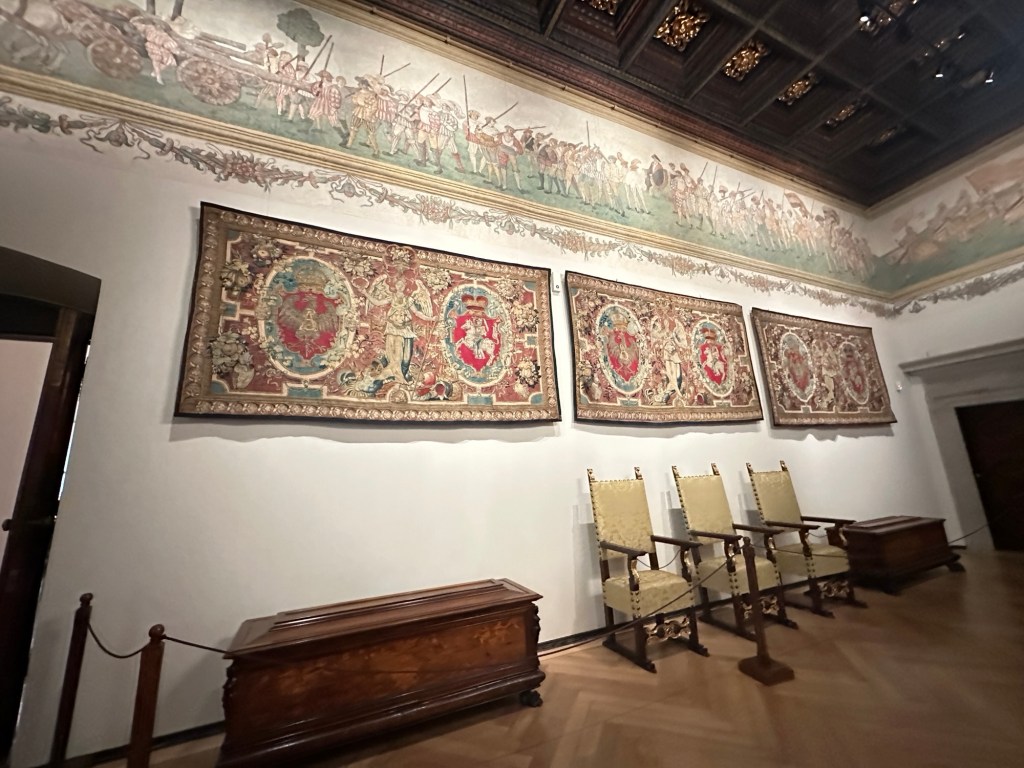
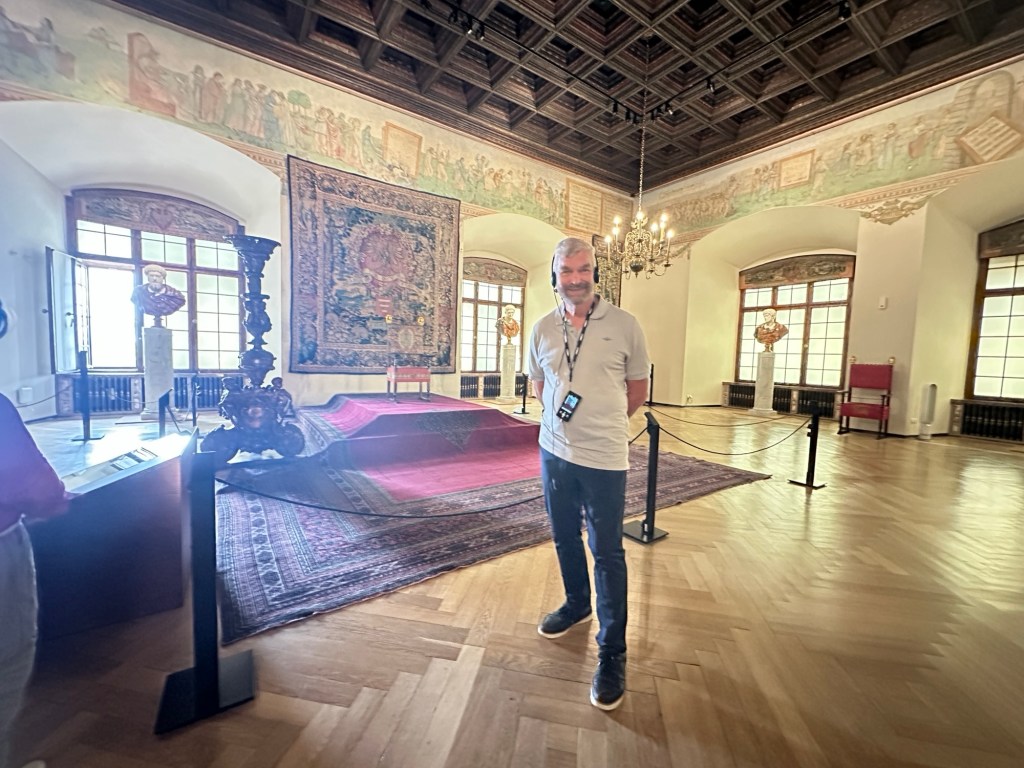
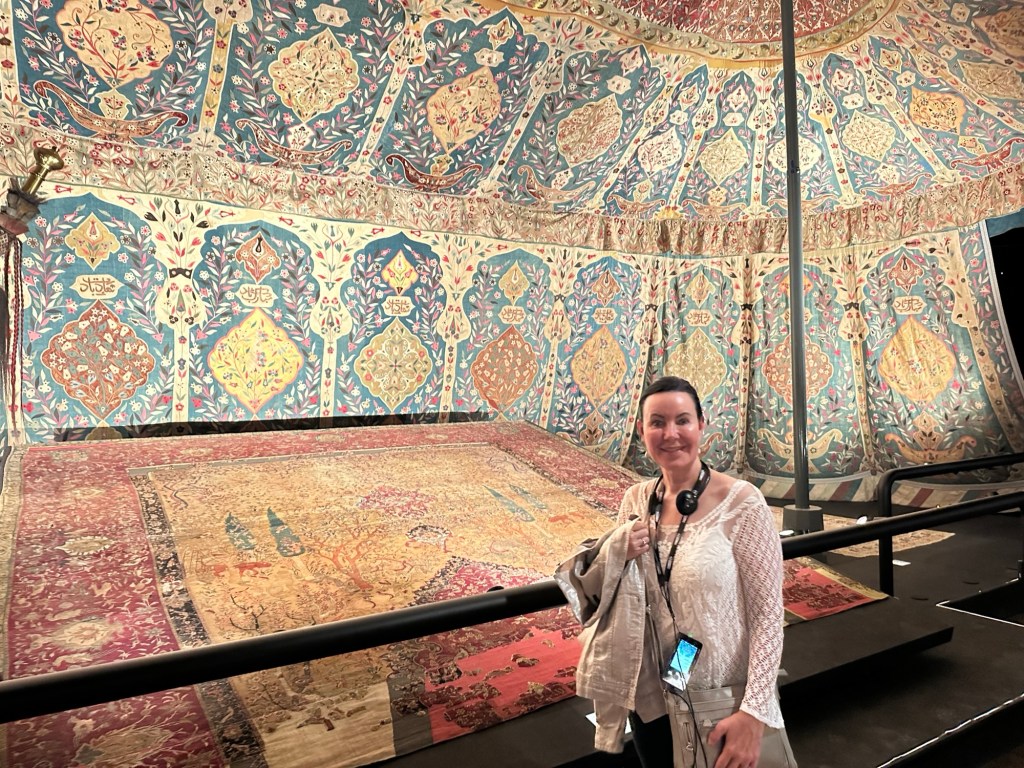

We had a quick turn around to get to Schindler’s Factory Museum – a Bolt ride did the job! We normally would have walked but had only 25 minutes to walk 2.6kms, and I have been suffering with a sore knee for some reason. Here we were booked onto a tour. Lucky we had booked, as the queue for tickets was 1.5 hours long.
Schindler’s Factory, a former metal item factory, is now a historical attraction with immense significance. It has been turned into a museum that showcases the wartime experiences in Krakow during World War II. Schindler’s List (1993 movie) is based on the true story of Oskar Schindler, a German businessman and Nazi party member, who rescued more than a thousand Jews from the concentration camps and execution during World War II. We saw his desk and office, the enamelware that was made, and a tribute wall to the survivors. Excellent tour, relayed with compassion, empathy and sincerity.


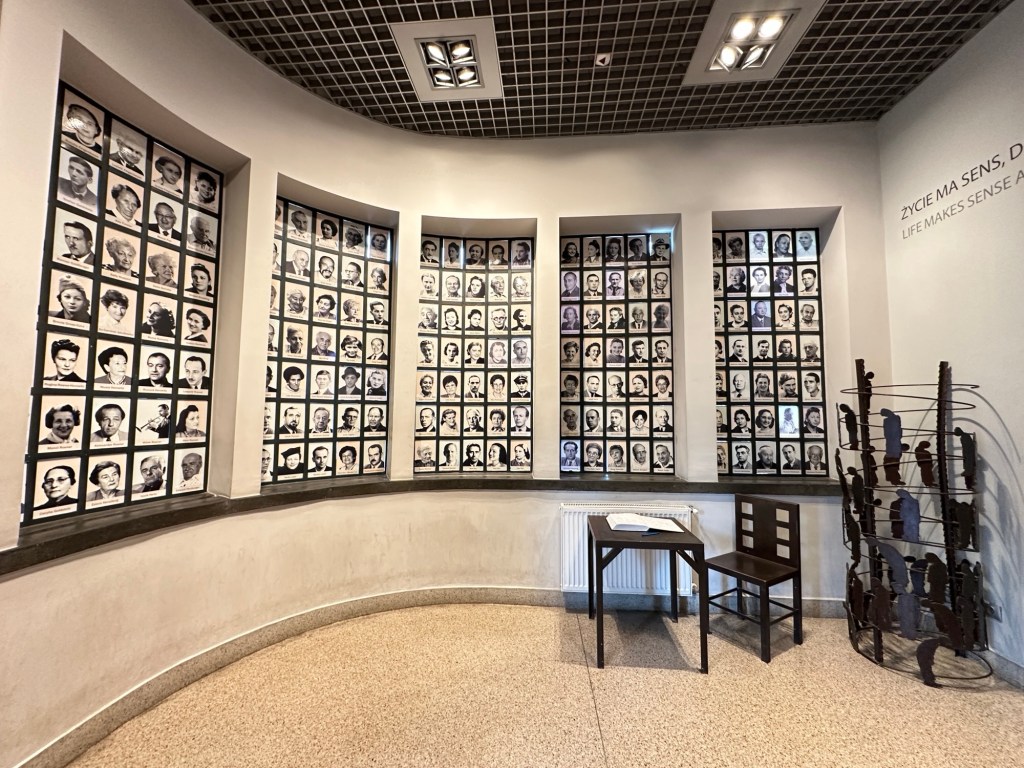
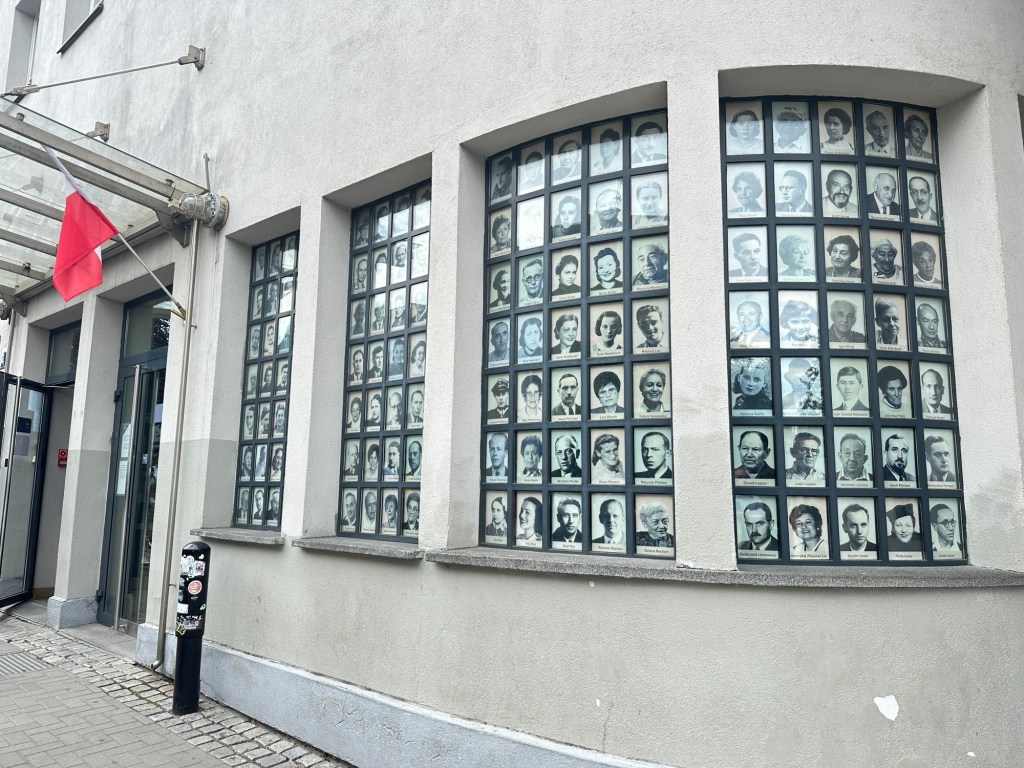

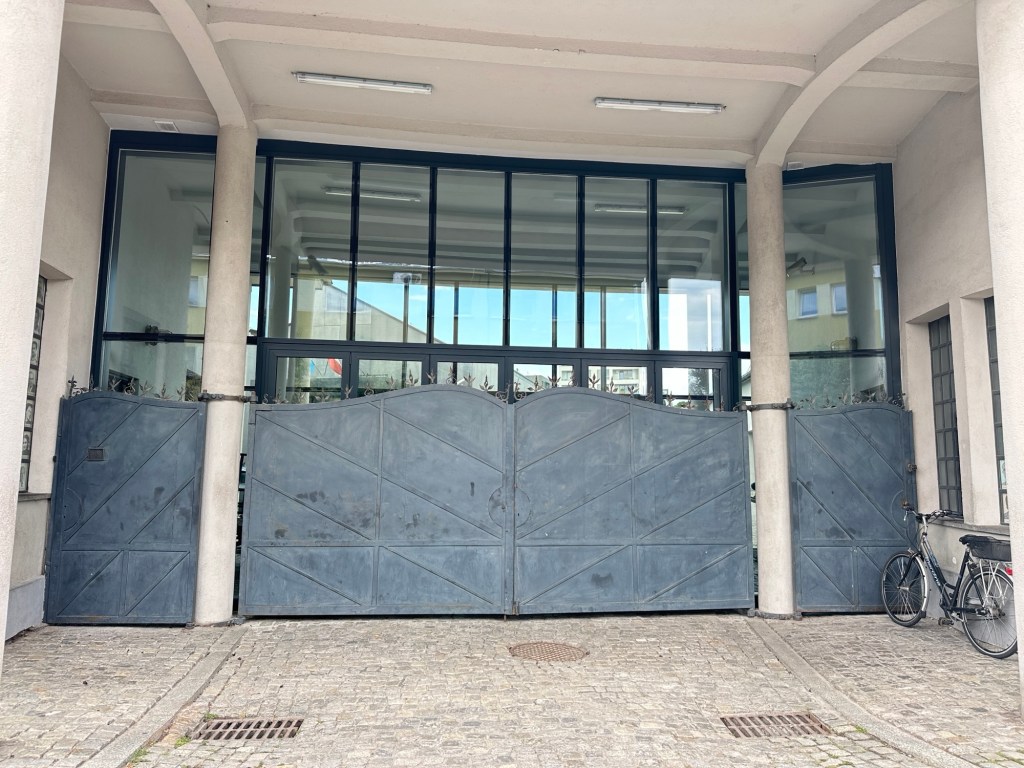
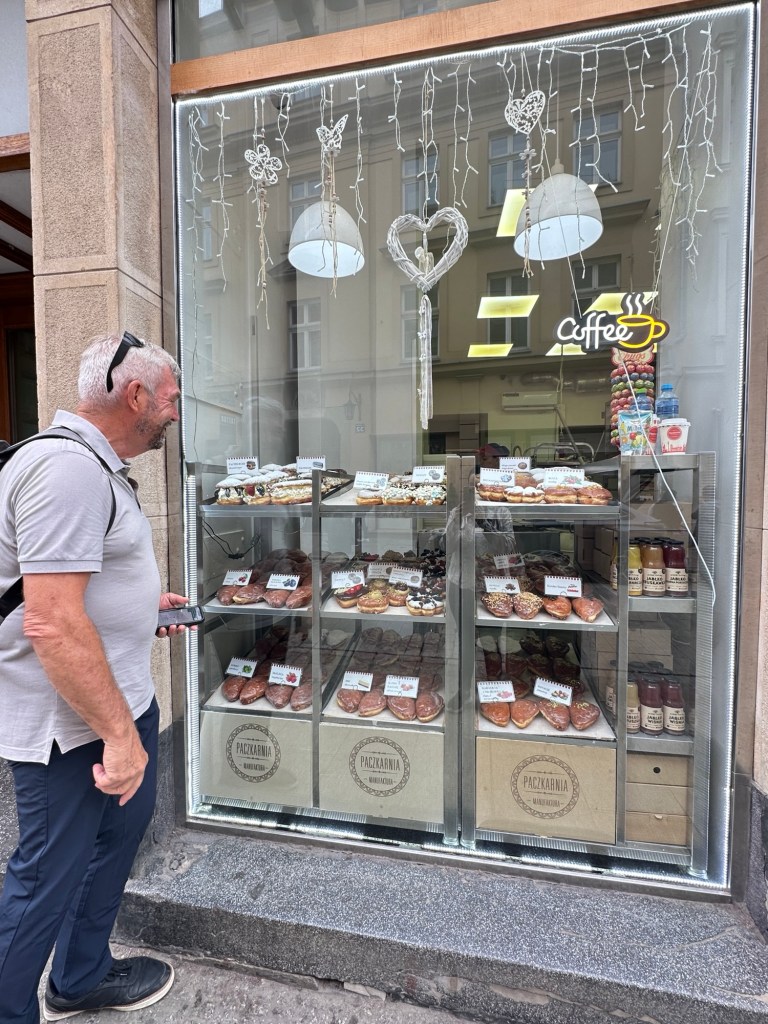
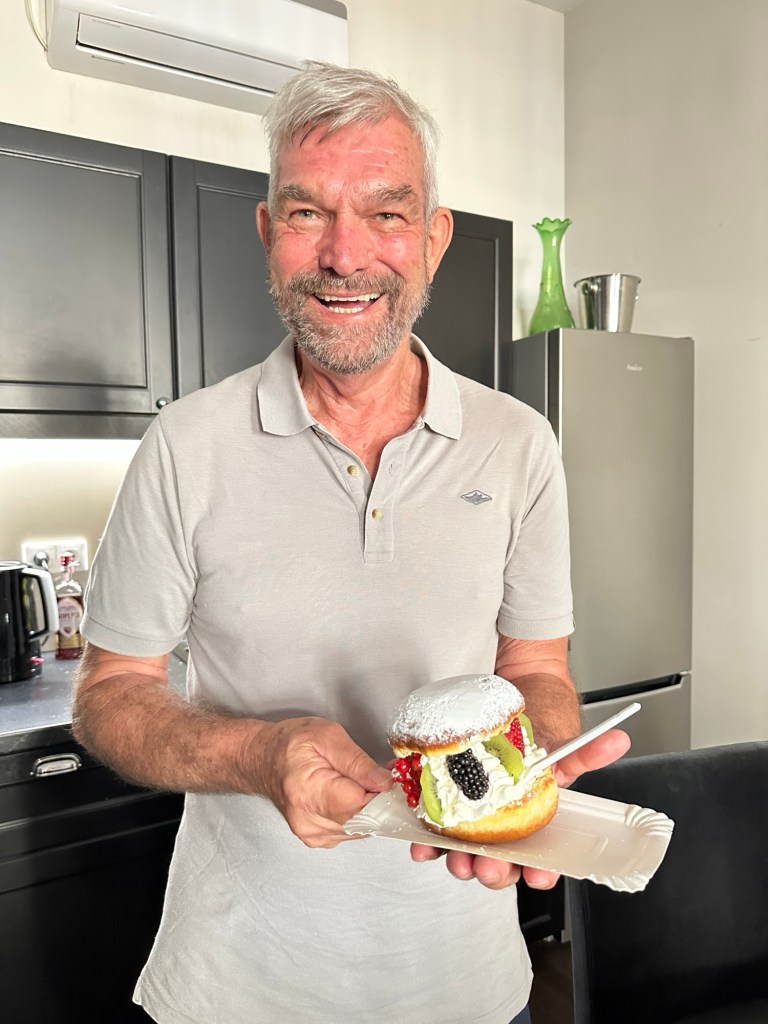
Back to the apartment, for a few minutes to gather our thoughts, and do our online check in for tomorrow. Someone needed a sweet treat – there is a donut shop below our apartment.
Back to Market Square and Cloth Hall – we only had a short time there the night we arrived. The Cloth Hall in the middle of Market Square originated in medieval times as a covered market. It was rebuilt after a fire in 1555, replacing an earlier Gothic trade hall from the 1300s, and then remodeled entirely in 1875 with arcades along the exterior that give it a Venetian look. Most of the stalls today sell souvenirs, plus there are many restaurants. Had a nice wander around the Hall – also timely as we kept dry when a sudden shower decided to make its appearance.

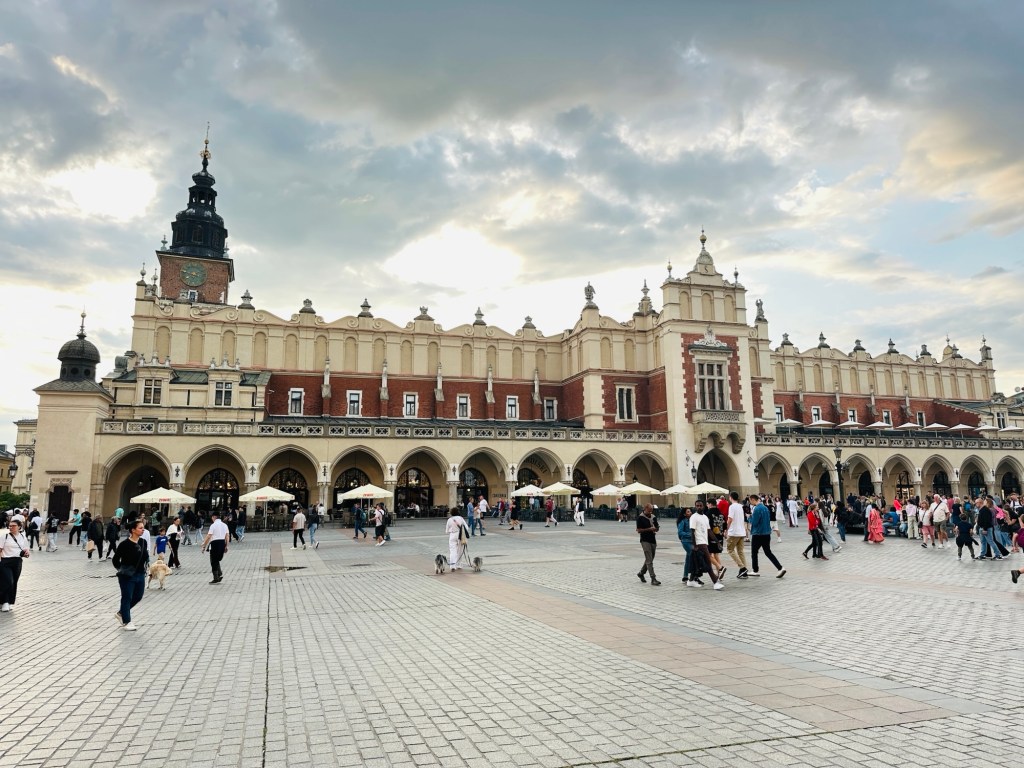
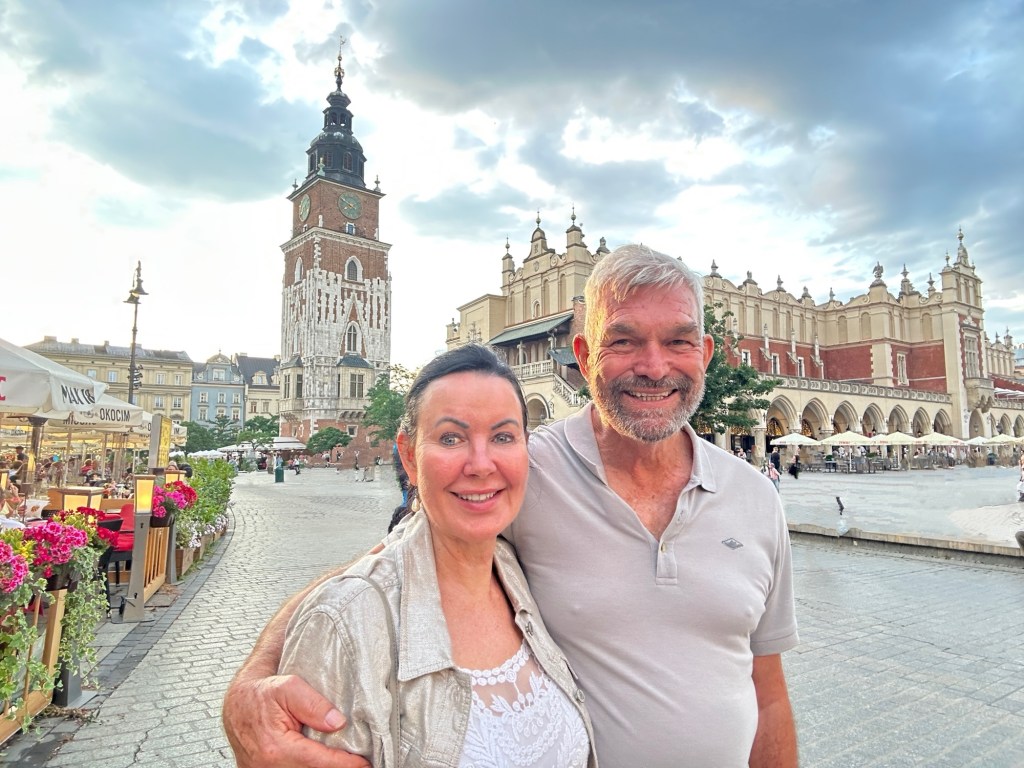
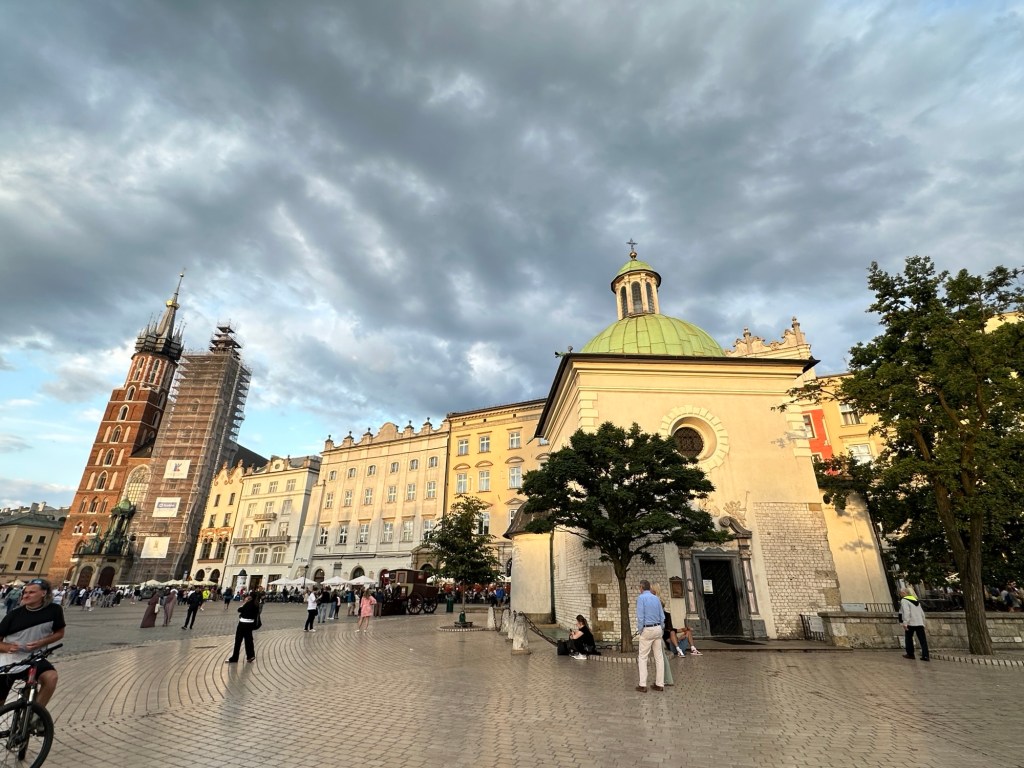


Market Square is said to be the largest town square in Europe. In summer, street cafés and restaurants remain open here until the early hours, with flower stalls, street musicians, and artists all adding to the lively atmosphere. Besides the Cloth Hall, two other notable buildings stand in the square: the green-domed church of St. Adalbert and the City Hall Tower, a relic of the original Gothic town hall.
St. Mary’s Basilica, with its two impressive Gothic towers, is set at an angle on the east side of Market Square. The left-hand tower is topped by a spire added in 1478. It served as the city’s watch tower and today a bugle call is still played every hour – which we heard while we were eating dinner. We had a look inside the church just as a wedding was finishing up. Nothing like sound of the wedding song ringing out on the church’s organ pipes, especially such an impressive church.
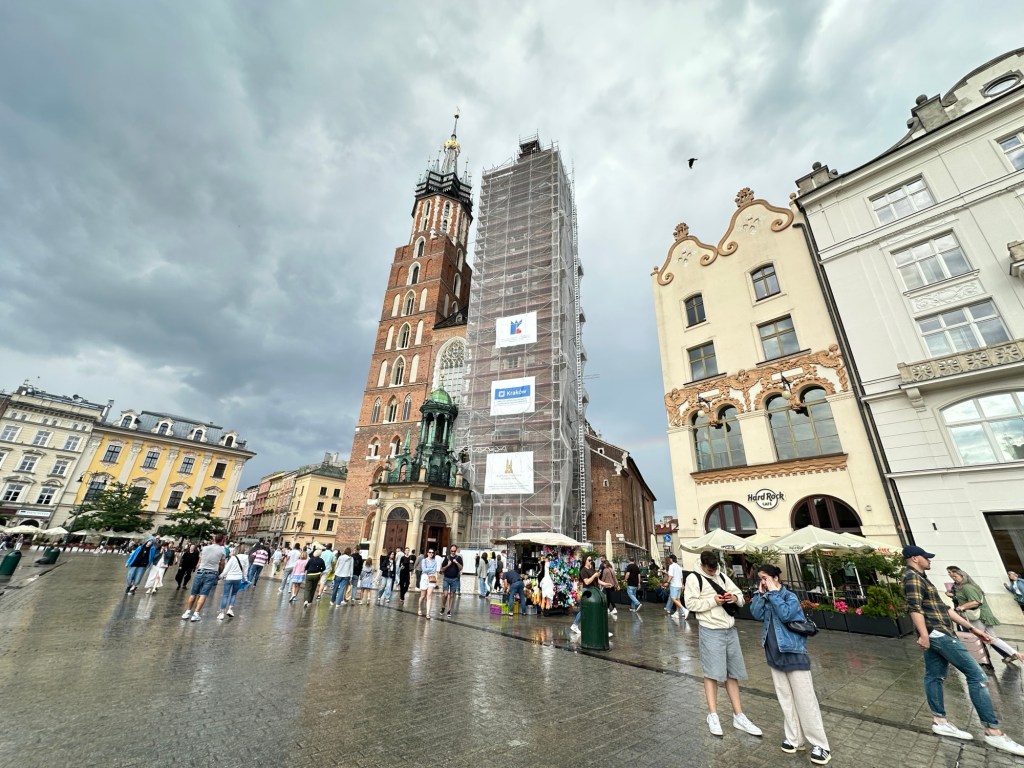

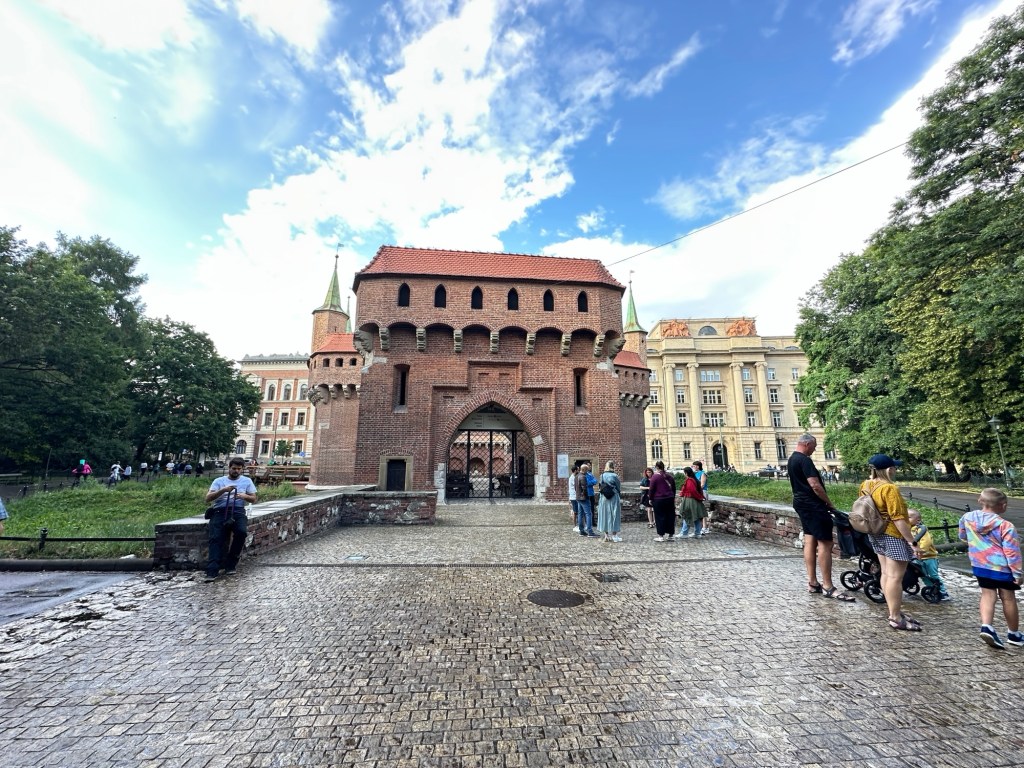
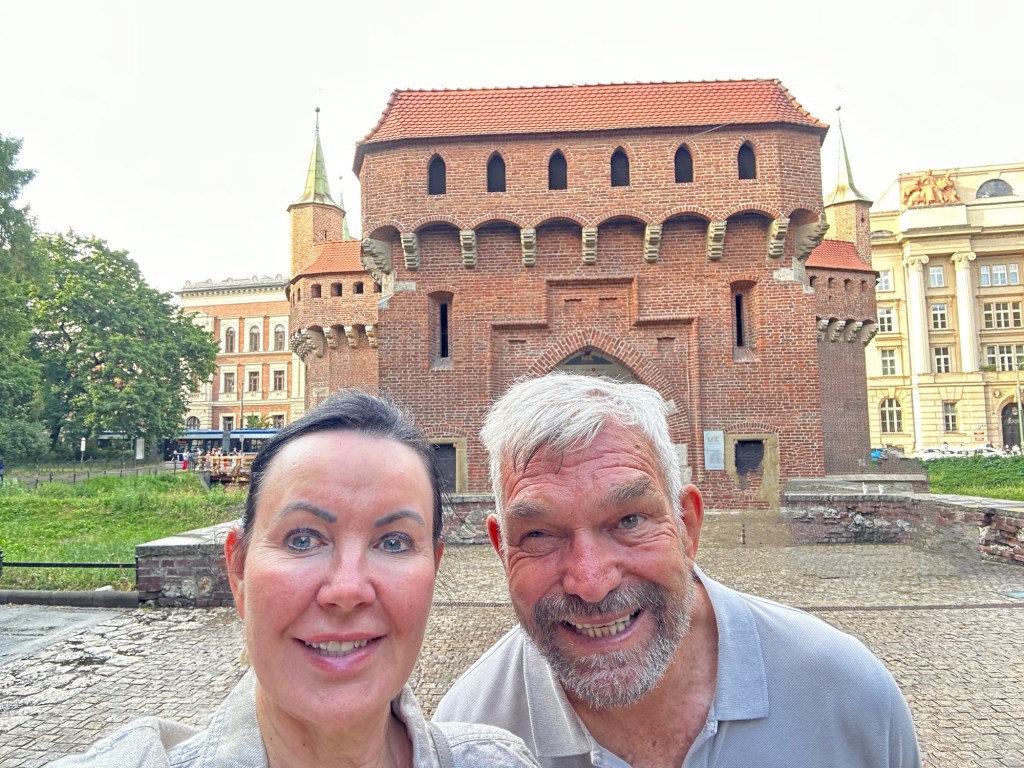
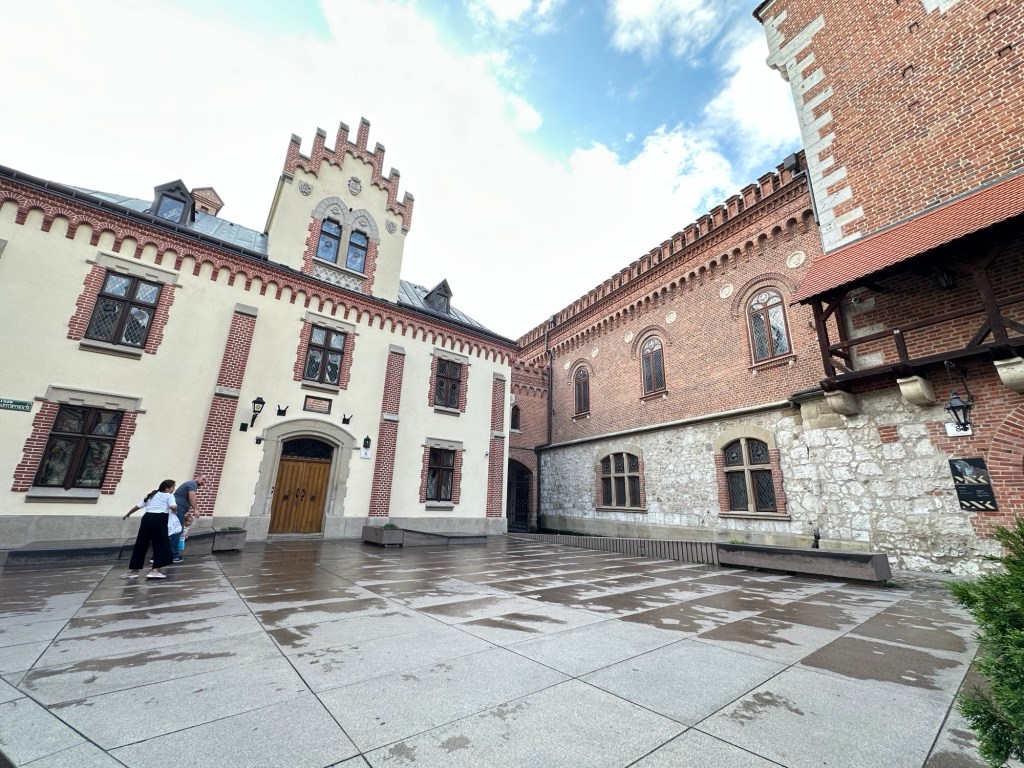
Continued to explore the Old Town, walking up to the remnants of the city walls, the three towers, the armoury and barbican – all interesting pieces of Gothic defensive architecture from the 15th Century. Many hotels, cafes, boutiques, shops and restaurants in gorgeous buildings, are tucked away in the little streets around the square. You could spend hours wandering. Of note, there was a lot of interest in the Wimbledon ladies’ final – first time a Polish woman, I Swiatek, had been in the finals, and she won!

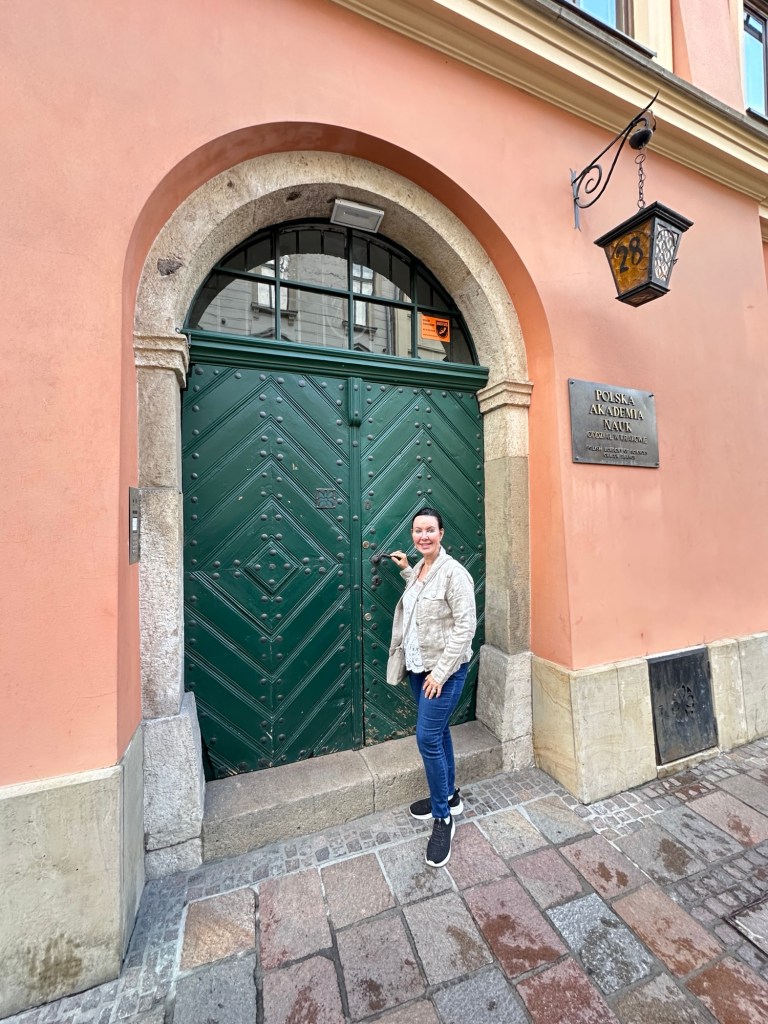
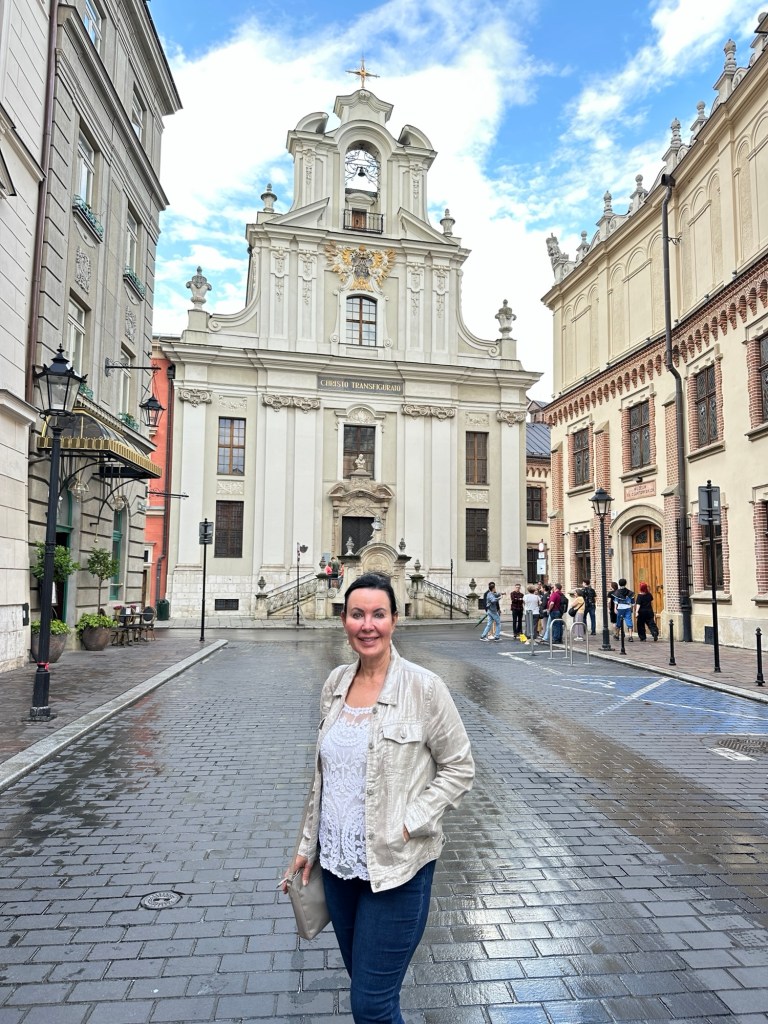
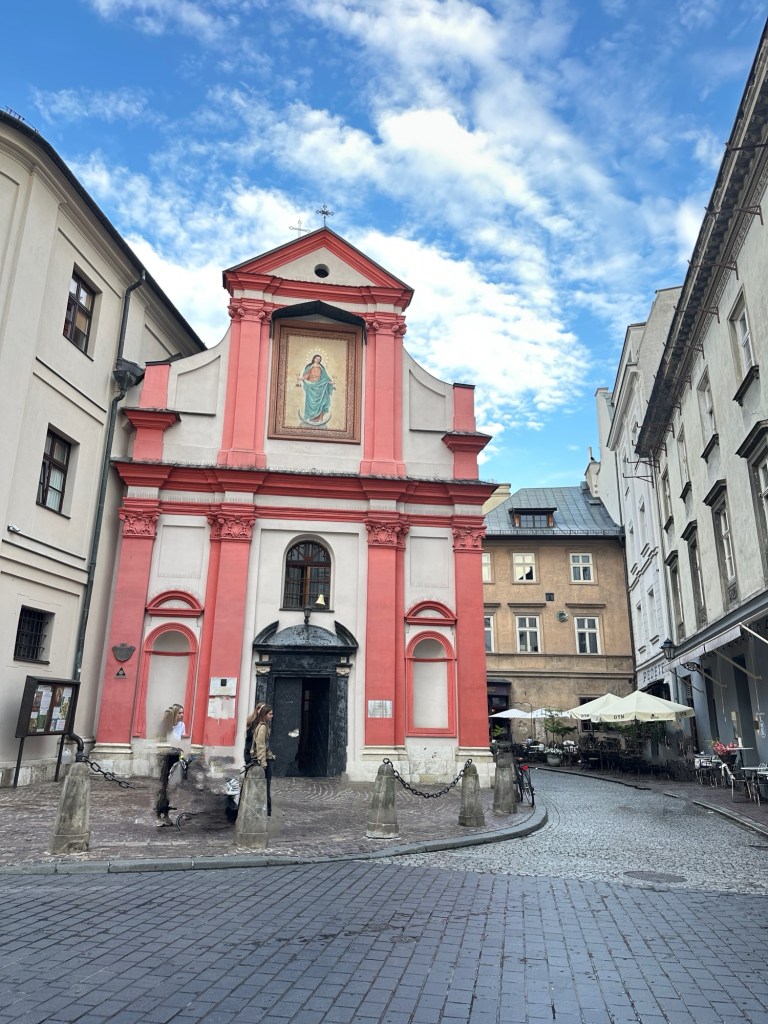

Dinner at one of the restaurants around Market Square – we went for traditional Polish food again. This time the Highlander meal to share – pork and chicken shashlick with highland cheese, and grilled vegetables. Have loved the Polish cuisine.

Day 55
Sunday 13th July
Krakow to Stockholm
14-23 degrees, sunny
We were picked up at 8.10am to get to the airport for our last small flight – this time to Stockholm. We had booked the Bolt driver we had yesterday – a lovely young Polish man who spoke great English (even though he didn’t think so!)
Norwegian Air flight today. A quick and efficient check in, unfortunately the flight was delayed 30 minutes, but once we were in the air, that was forgotten. One comment I will make … I do think it’s a bit much when you have to pay for water on the flight! As I always say, the joys of travelling!
 Glammy Goes Global