
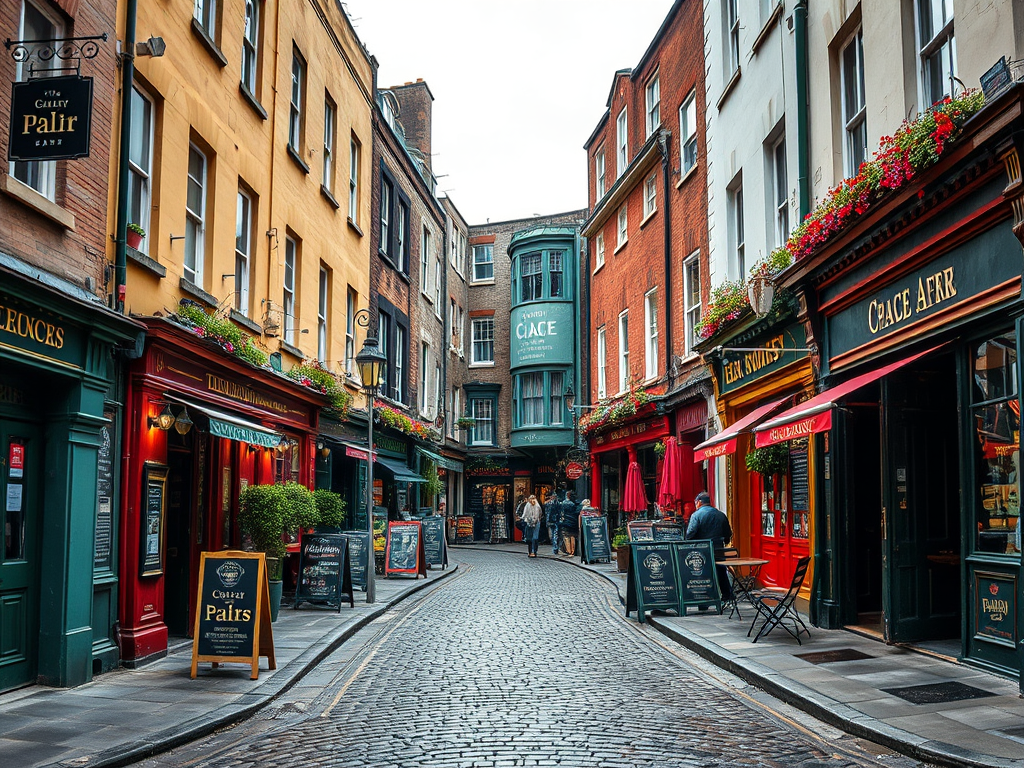
Day 1
Monday 19th May 2025
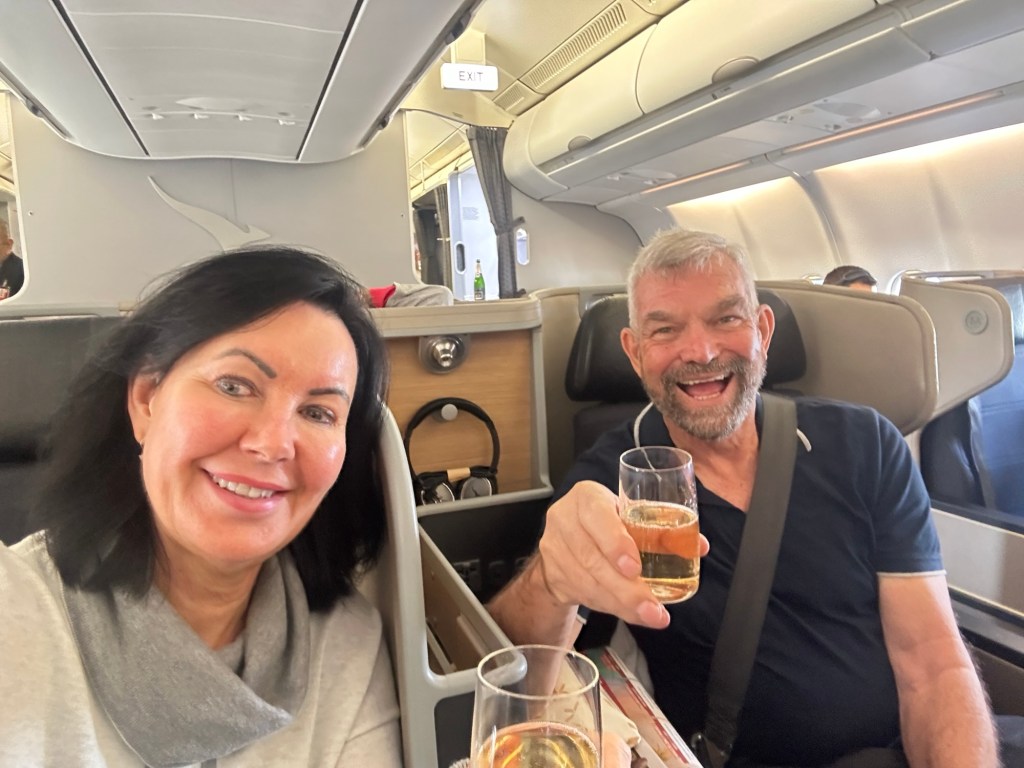
The long-anticipated ten-week adventure is finally about to begin! But first—those epic long-haul flights. This time, we were flying business class with Finnair, and for once, I was genuinely looking forward to the journey. There’s just something deeply satisfying about turning left instead of right as you board the plane—it instantly makes the whole experience feel more like a treat than a trial.
Our journey kicked off with a nine-hour Qantas flight from Brisbane to Tokyo (Narita), followed by a four-hour layover. Next came a thirteen-hour leg to Helsinki flying Finnair, and after a two-and-a-half-hour wait there, we were finally bound for Dublin.
Just before we left home, we received an email warning about possible industrial action affecting some Finnair flights—but thankfully, everything ran smoothly. Just no food served on the Helsinki to Dublin leg but we had been to the lounge prior to boarding so neither of us looked remotely like fading away!
Both long-haul flights were blissfully comfortable. We dined on beautifully presented meals, paired with excellent wines, all served with that effortless charm Finnish hospitality is known for. Honestly, if every flight felt like this, I’d never dread long-haul travel again.
Ireland
Tuesday 20th May
Dublin
8-18 degrees, cloudy, rain in evening
Touch down at 9am into Dublin airport. We’re here! A very quick transit through immigration. Only issue was that Frank’s suitcase had been damaged – a broken handle. So off to the baggage complaints counter and a claim lodged. Usually it’s my bag that takes a beating, but Frank’s was the target this time. He always says it’s because mine is overpacked , but his only weighed in at 22 kgs, so we can dispel that theory! It was a short uber ride, but still took 30 minutes because of the traffic, to our hotel, Staycity Aparthotels. It was too early to check in, so we left our bags, and set out to explore.
We found a little cafe and ate an early lunch. I can feel a diet coming on with the prices as they are. Really, it’s a conversion rate issue with our $ being so low. I had a delicious mushroom soup for 6 euros, which makes it $12. Not so bad. Frank had a ham and cheese panini, but that was the equivalent of $22.
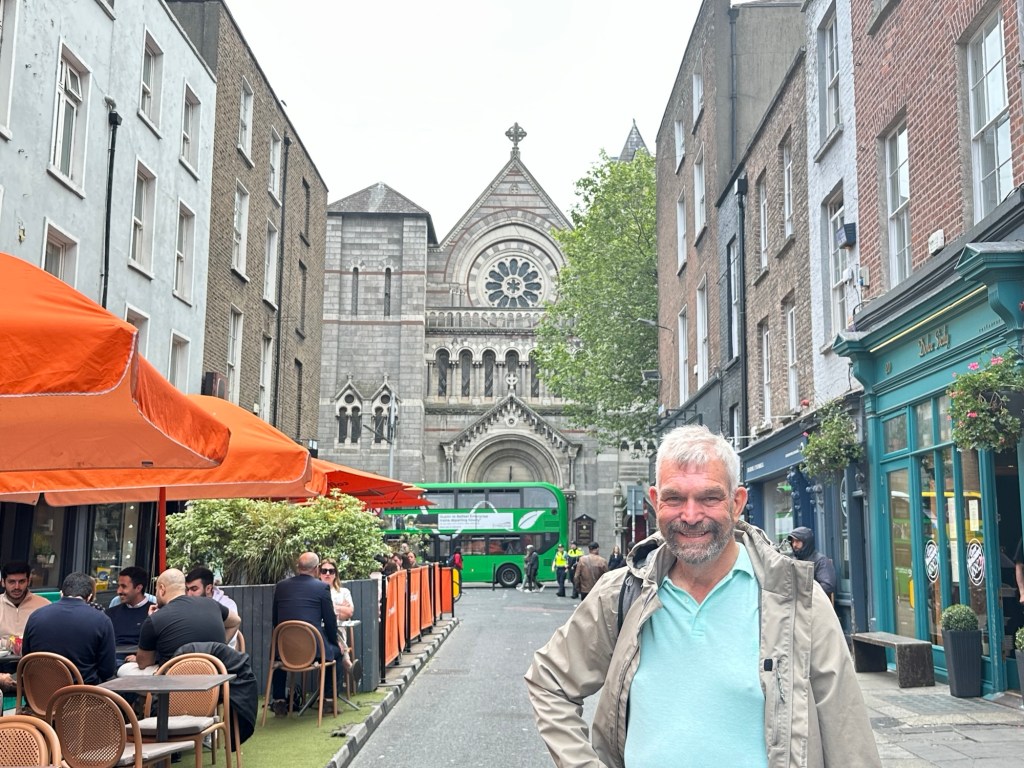
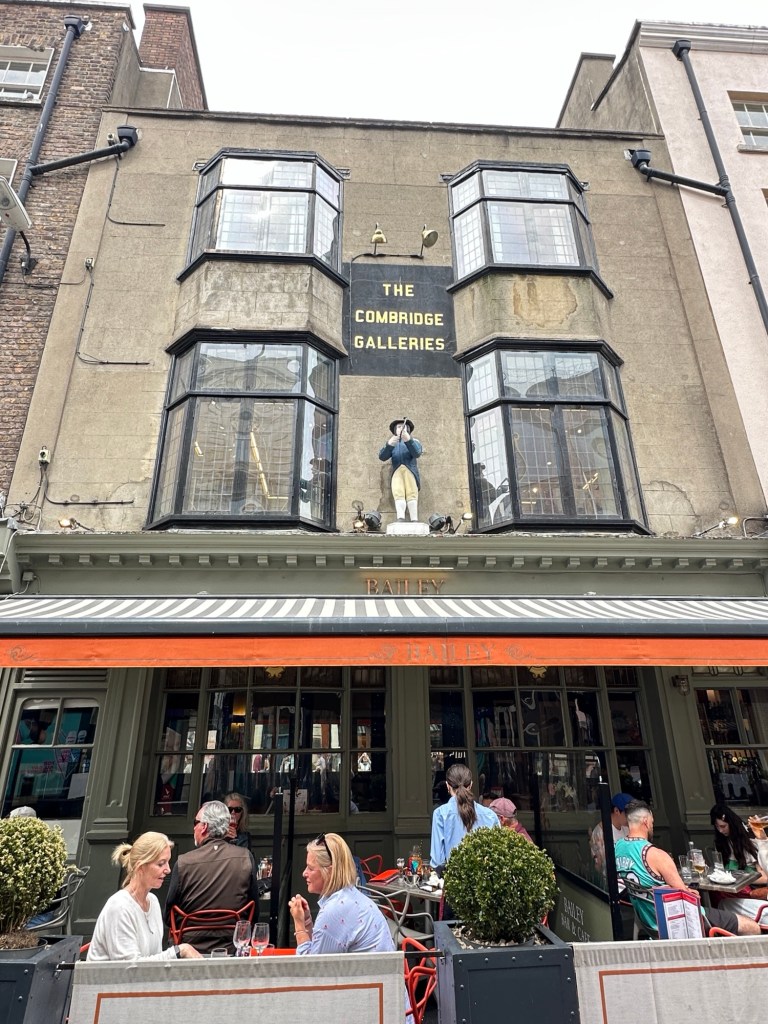
We found the Temple Bar area and had a little explore here. The area of cobbled streets between Dame Street and the Liffey River are named after Sir William Temple, who acquired the land in the early 1600s. The term “bar” meant a riverside path. In the 1800s, it was home to small businesses, but over the years went into decline. In the early 1960s, the land was bought up with plans for redevelopment. Artists and retailers took short-term leases, but stayed on when the plans were scrapped and Temple Bar prospered. Today, it is a lively place, with restaurants, bars, clubs, shops, and galleries.


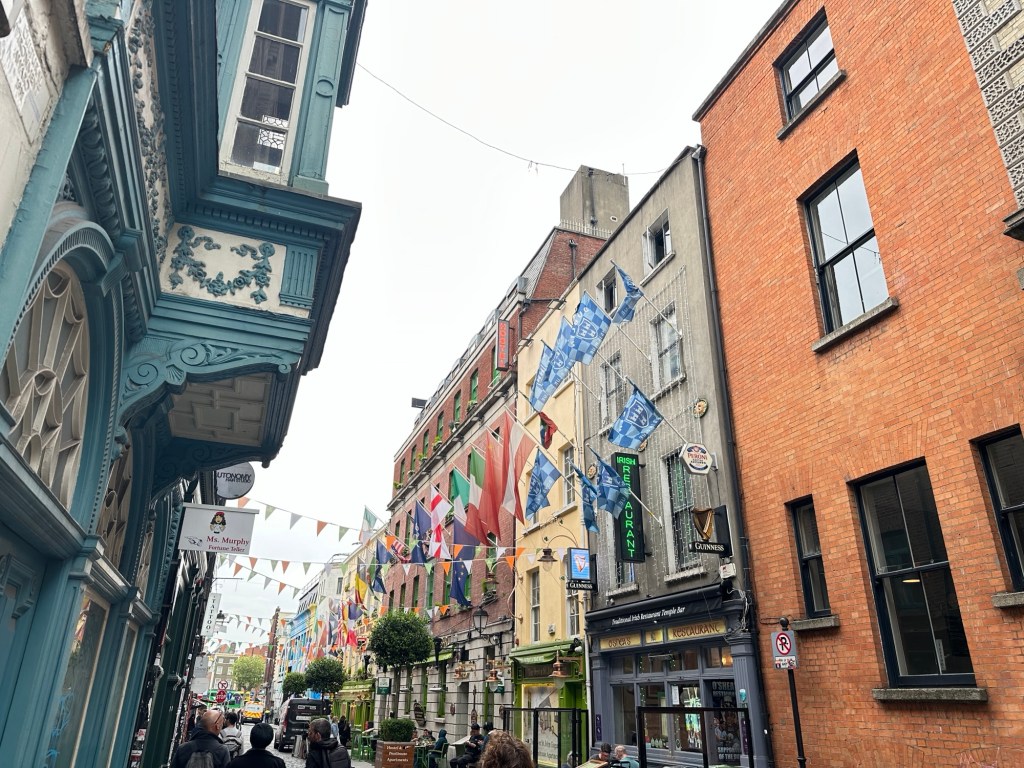
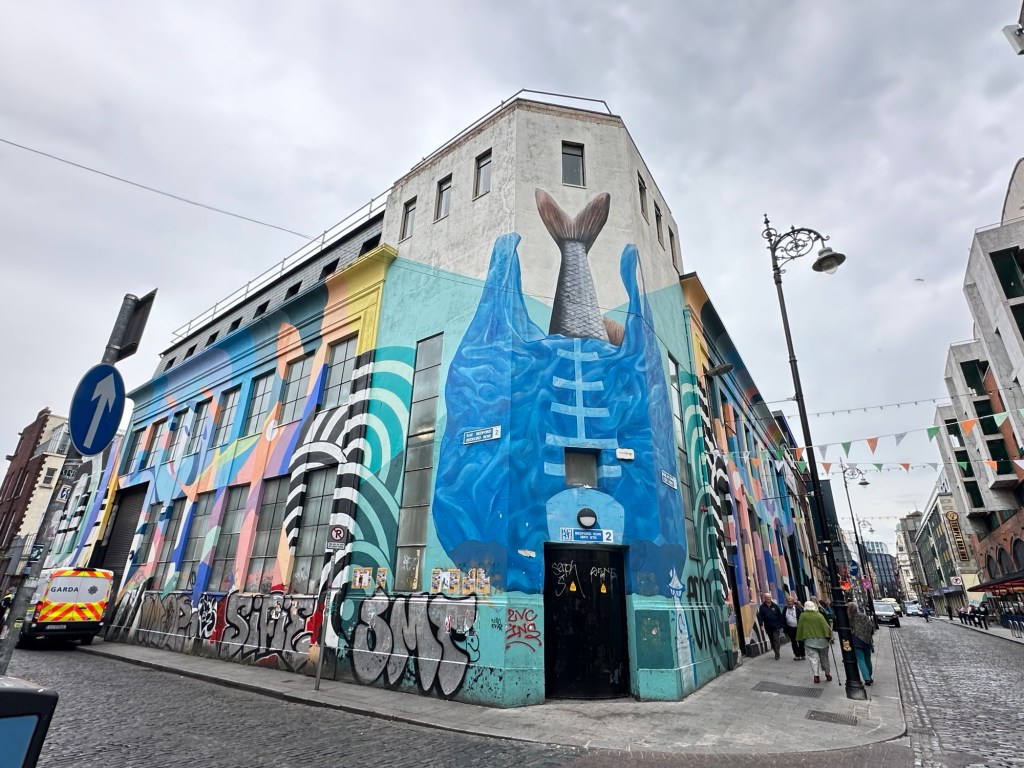
A coffee and some people watching – we were operating on half power after the flight – before we met our Guru Guide at 2pm for a walking tour of Dublin. The guide pepped us up with his very enthusiastic and entertaining commentary on 12,000 years of Dublin’s captivating and enthralling history. A brief version of Ireland’s history is as below…
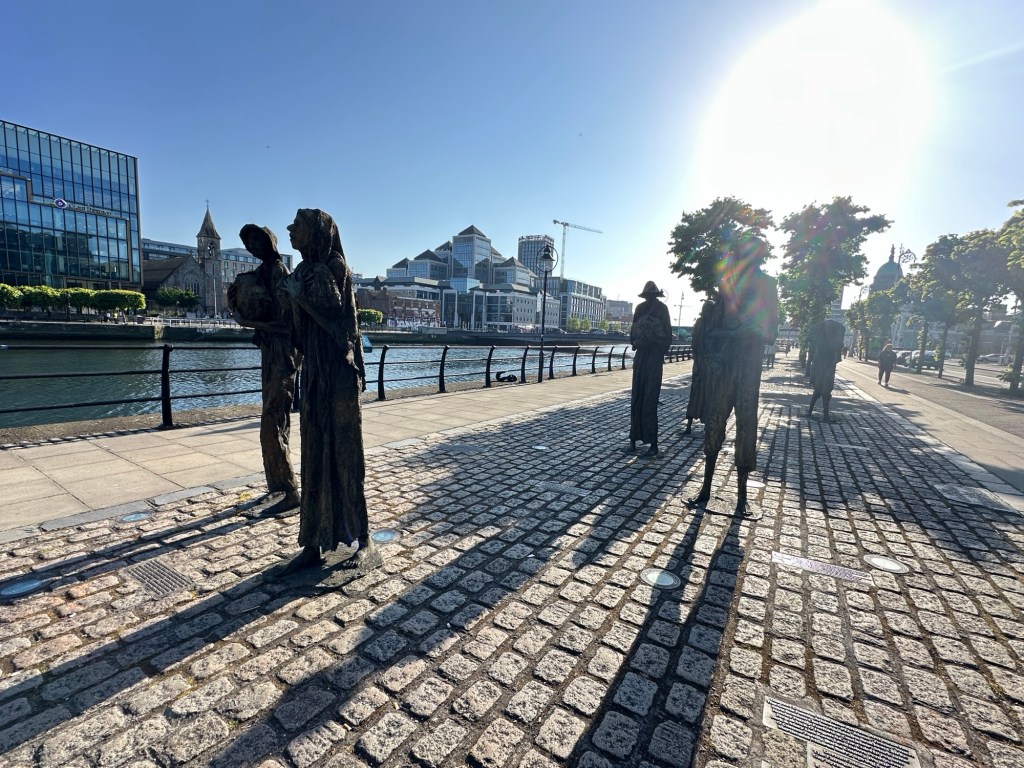
The earliest confirmed inhabitants of Ireland were Mesolithic hunter-gatherers, who arrived sometime around 7900 BC. Ireland was invaded by many tribes, including Celts, but surprisingly never by the Greeks or Romans. Viking rule was for around 300 years from 800AD until they were defeated by the British in the 1100s. The British ruled continuously until 1922 when they became a free state. During this period there were varying conflicts between the Catholics and the Protestants, with dominance depending on who was ruling in England. One of the most significant events in Ireland’s history was the Great Famine of the 1900s, when thousands of people either died or emigrated- this occurred under Protestant rule. The Republic of Ireland came about in 1949, when it separated from the north of Ireland.
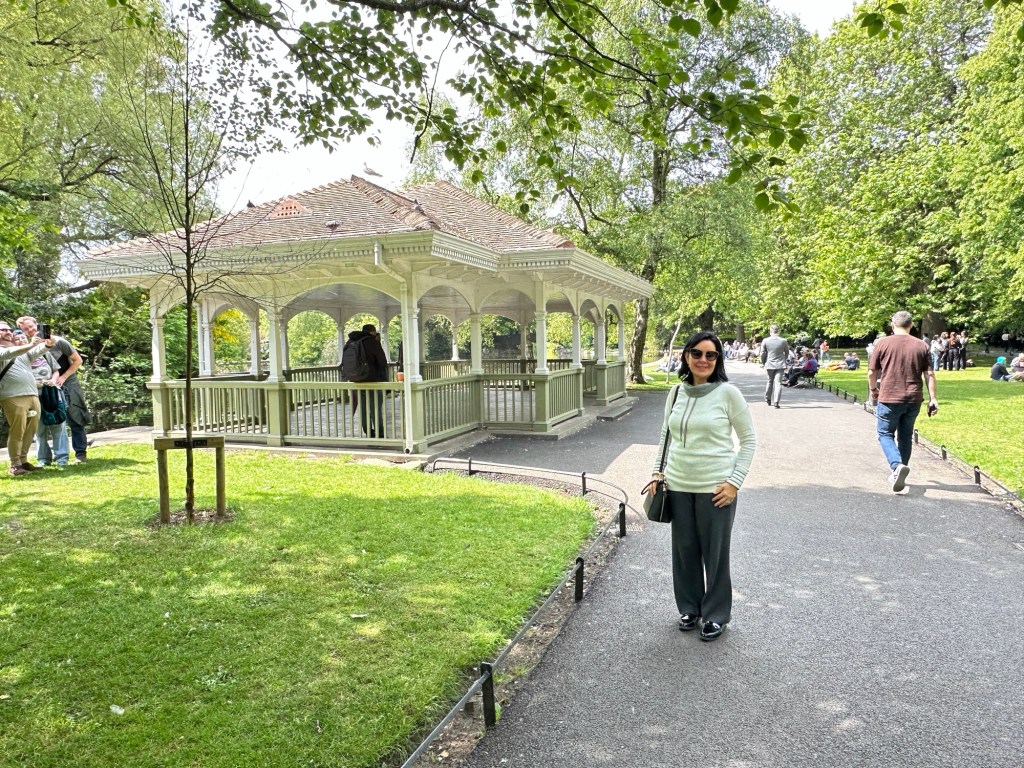
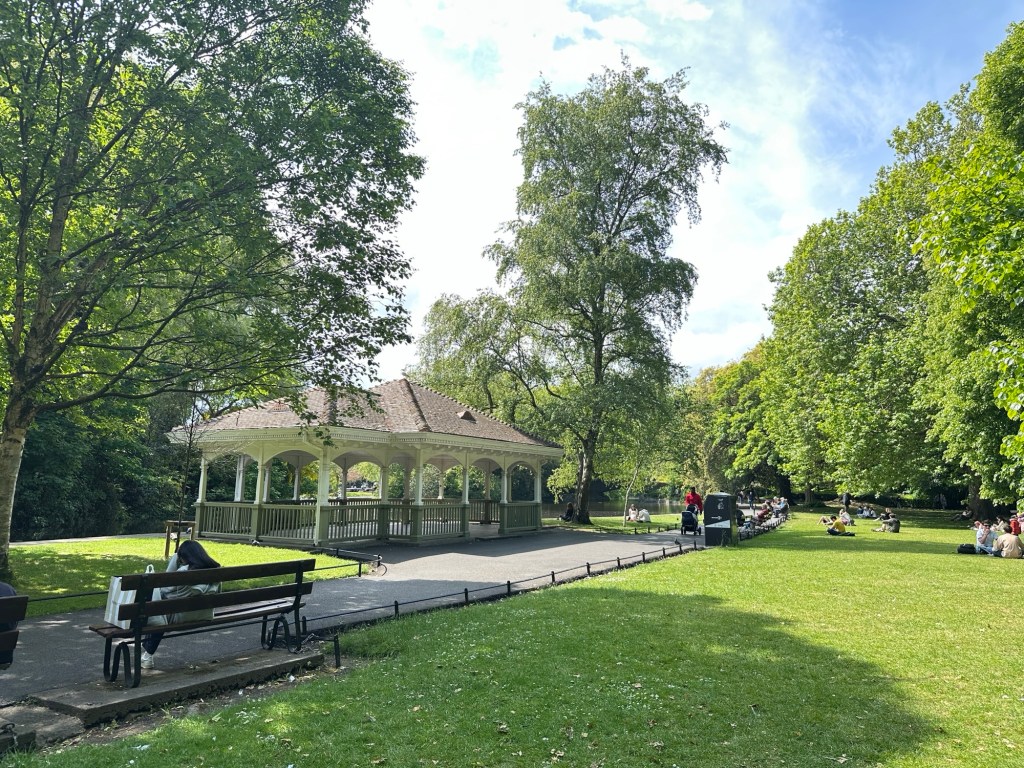
We had a quick look inside the very grand and luxurious Shelbourne Hotel – stunning interior design, before starting the walk at St Stephen’s Green. Until the 1770s, most of Dublin’s public executions took place on St. Stephen’s Green. This Park has played witness to many of the turbulent episodes of Irish history, with the most famous being the role it played in the 1916 Easter Rising.

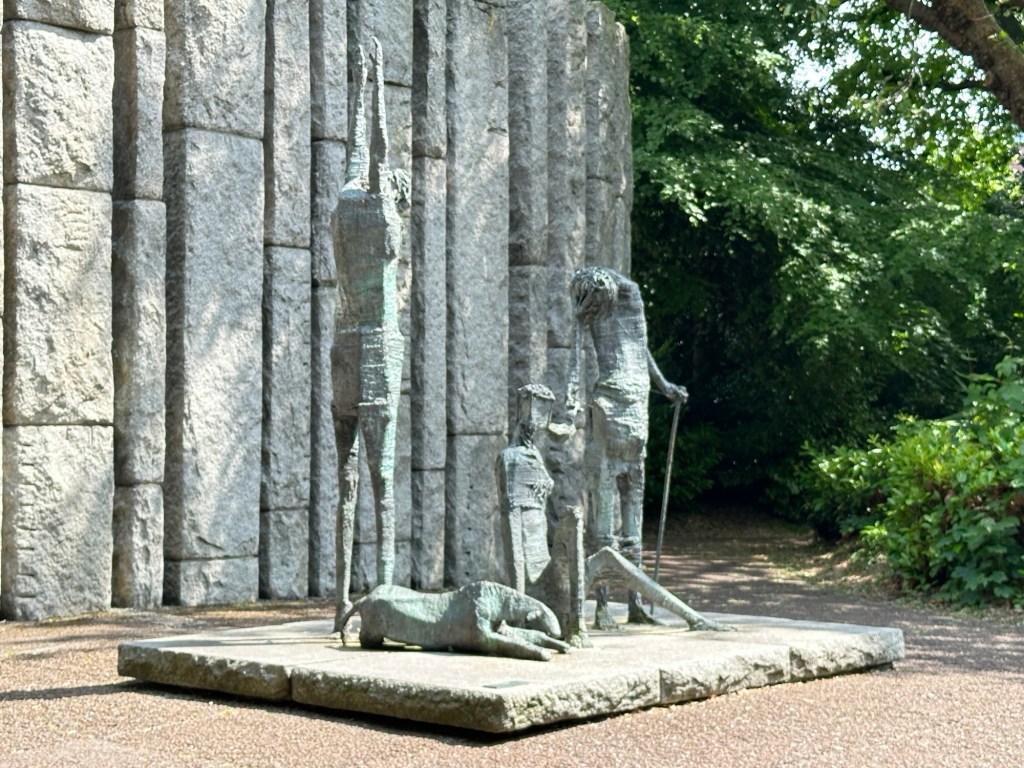
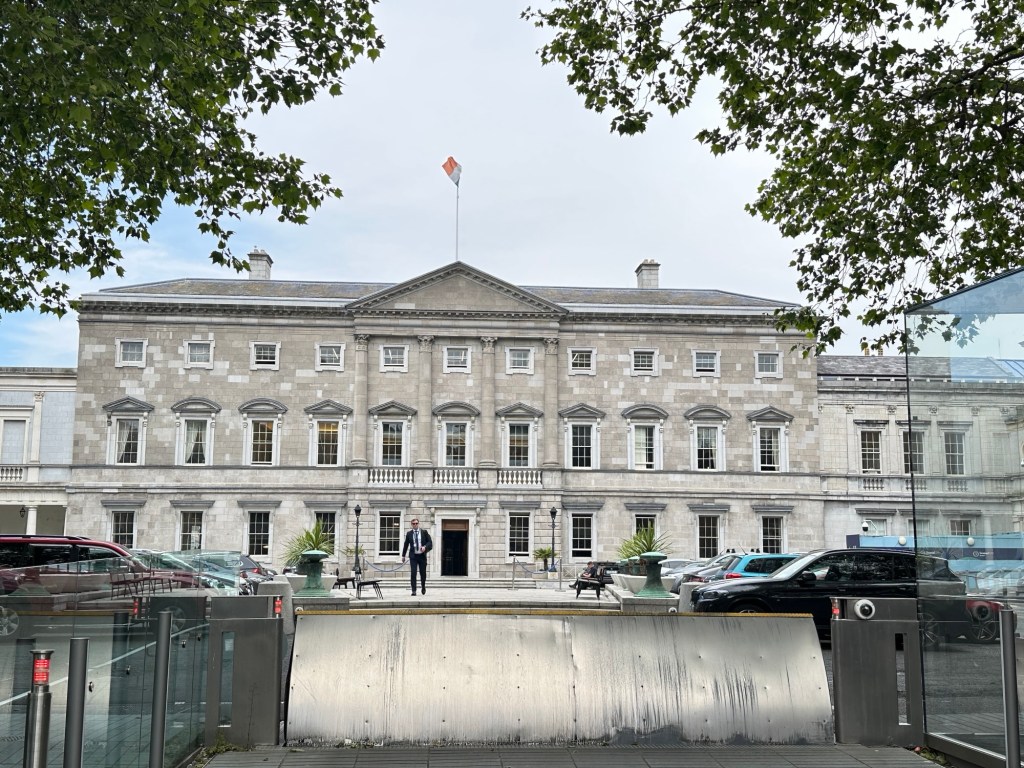
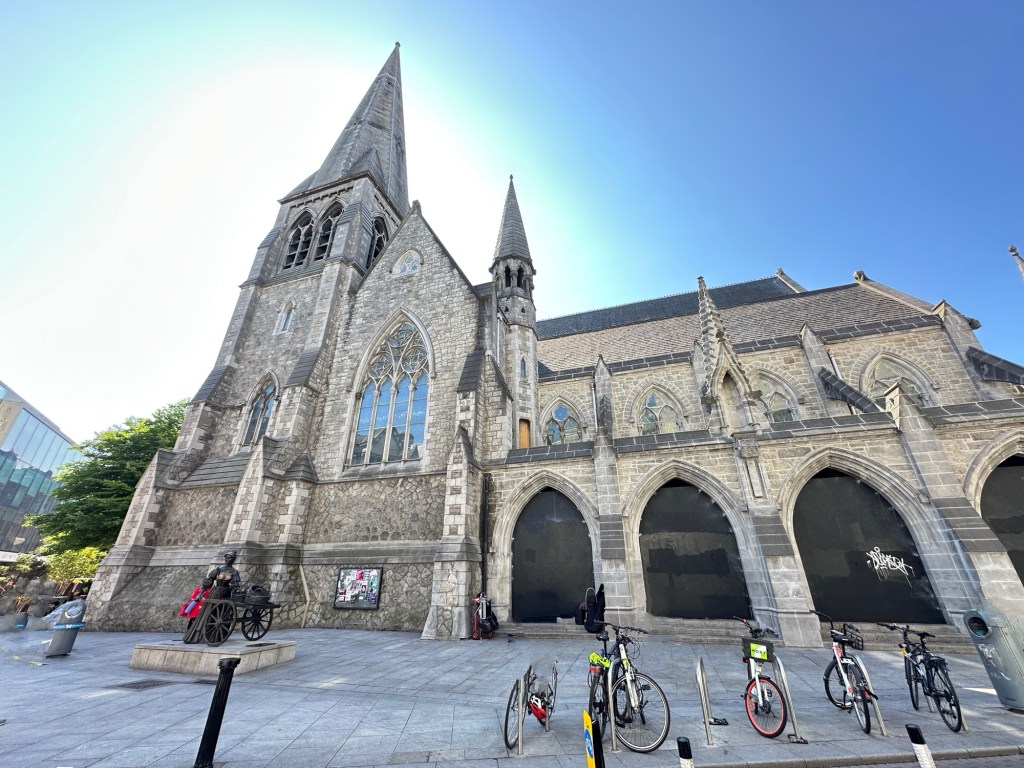
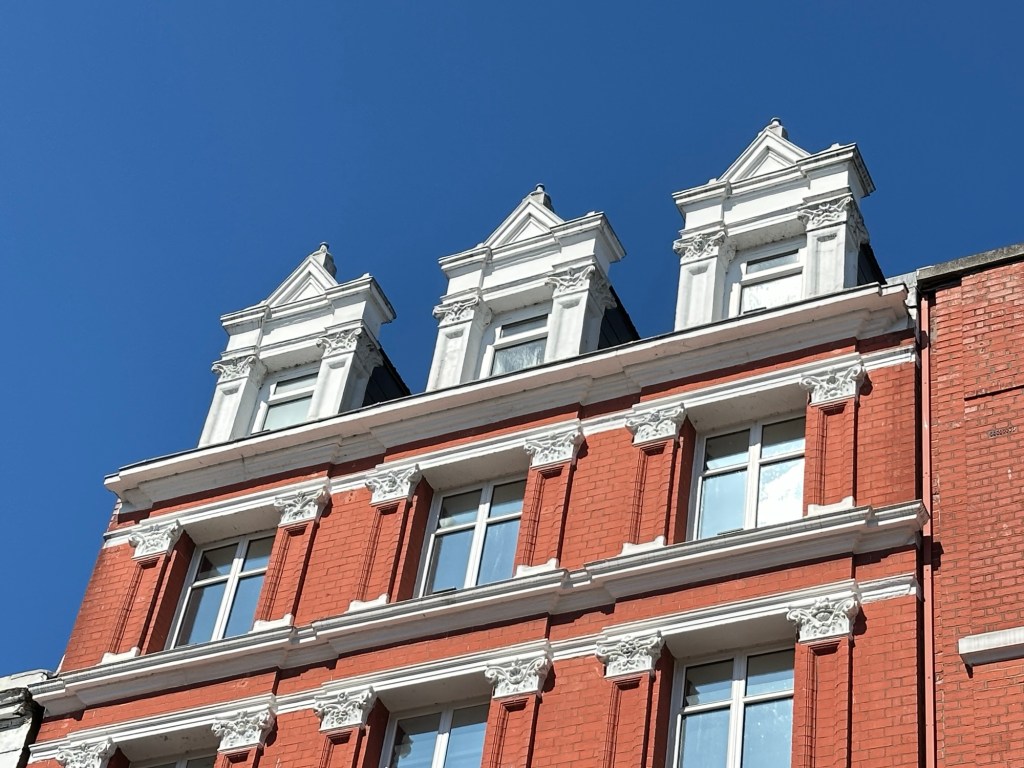
We walked past Parliament House, the Library, Trinity College, old House of Parliament, Molly Malone statue in front of St Andrew’s Church, plus various other buildings, enjoying the very beautiful Georgian style architecture – many red brick buildings with windows decreasing in size as they go up. The guide pointed out many more landmarks but we will make our way back to those in the next couple of days.



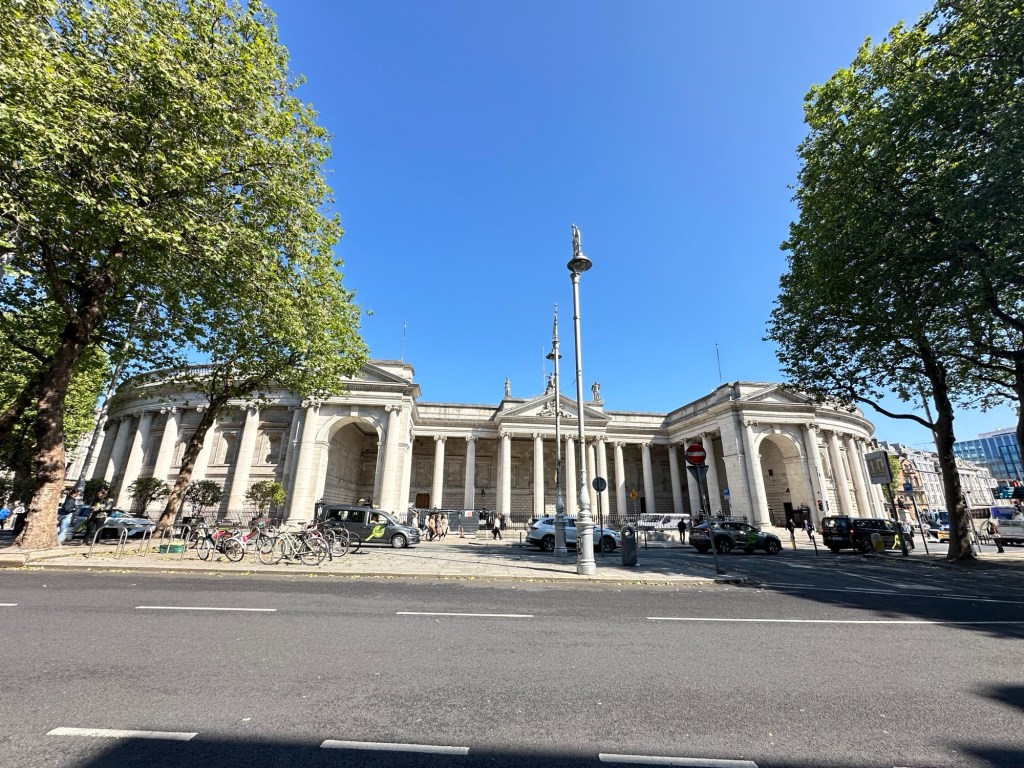
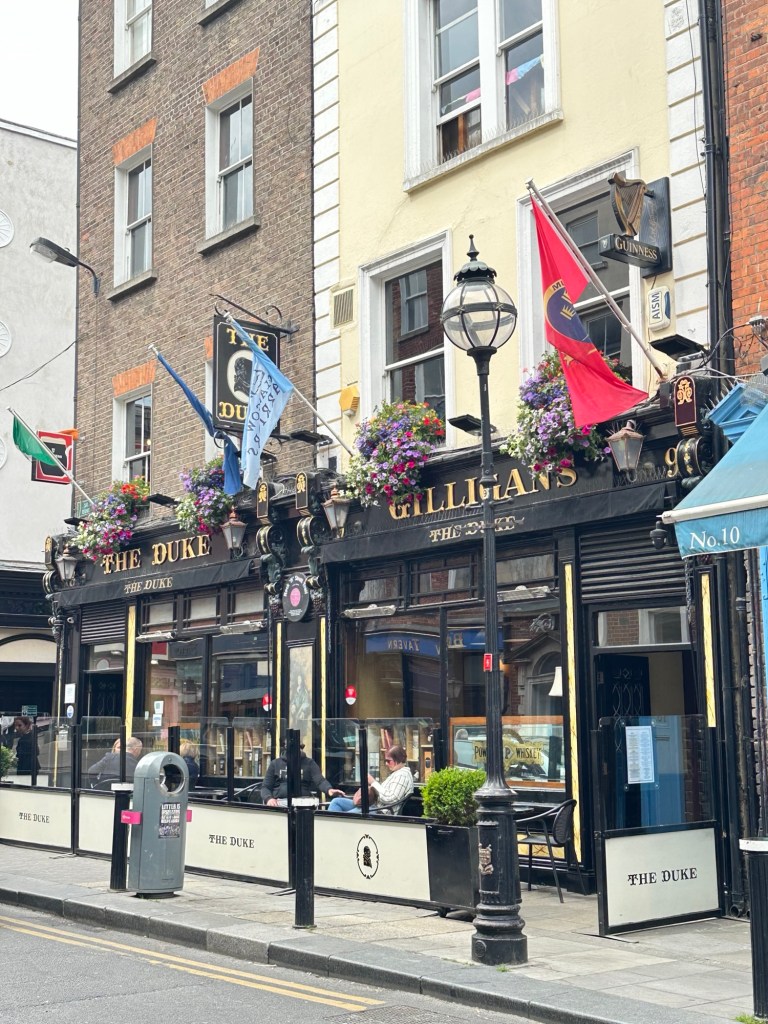
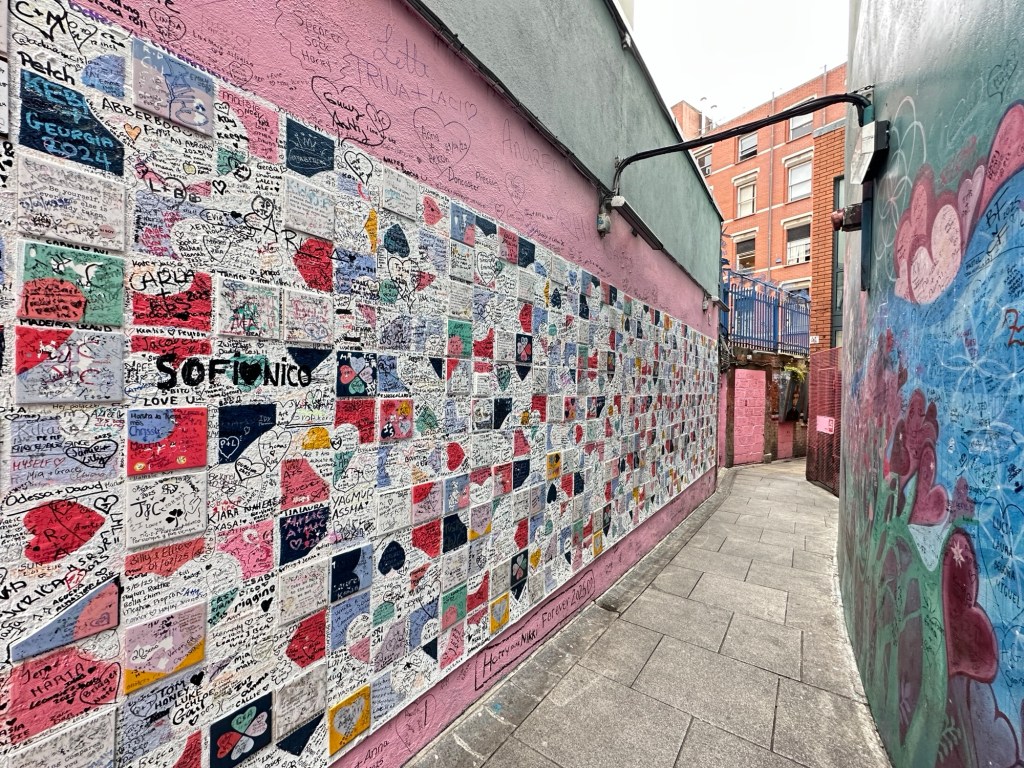
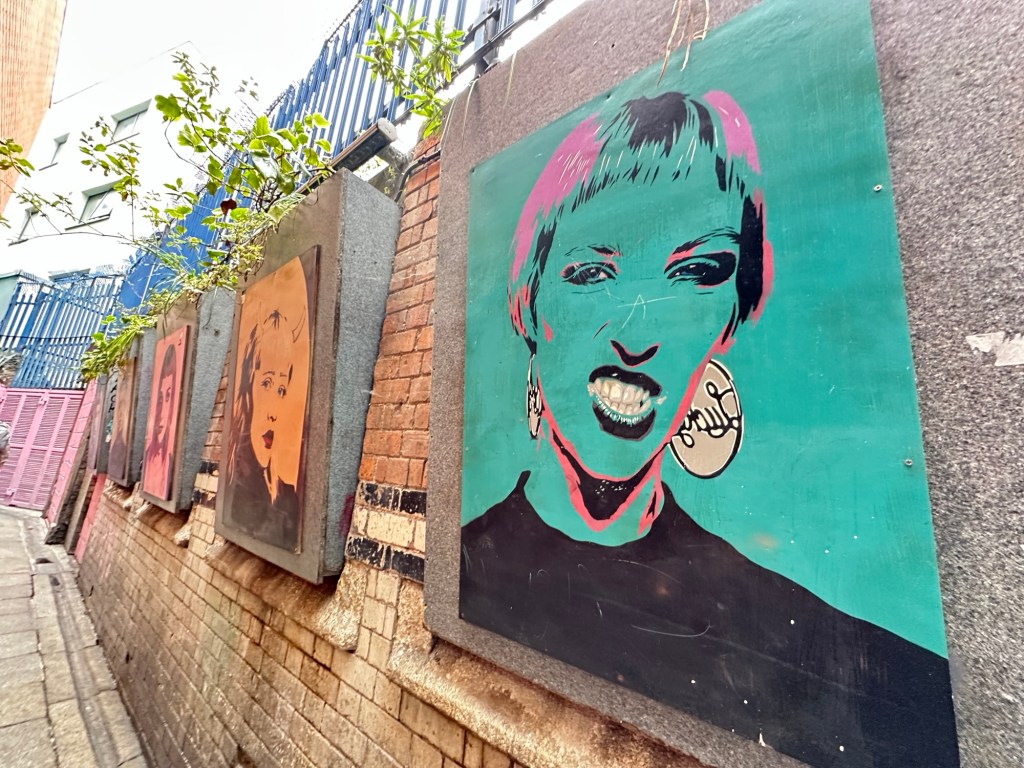
The tour concluded at 4.30 – our brains were overloaded! We walked backed to our hotel, grabbed Frank’s suitcase and took it to a shoe/bag repairer we had seen along the way. Handle repaired in 5 minutes! Job well done! Early dinner across the road at Slattery’s Bar, and in bed by 8pm. We were knackered!!!!
Day 3
Wednesday 21st May
Dublin
9-19 degrees, sunny
We slept right through until 6am, and woke up feeling very refreshed – ready to tackle more of the very vibrant city of Dublin!
We started our tour today by walking to Merrion Square – one of Dublin’s largest and grandest Georgian squares. Three sides of this handsome square are lined with lovely Georgian townhouses. Many have brightly painted doors and original features, such as wrought-iron balconies, ornate doorknockers, and fanlights.



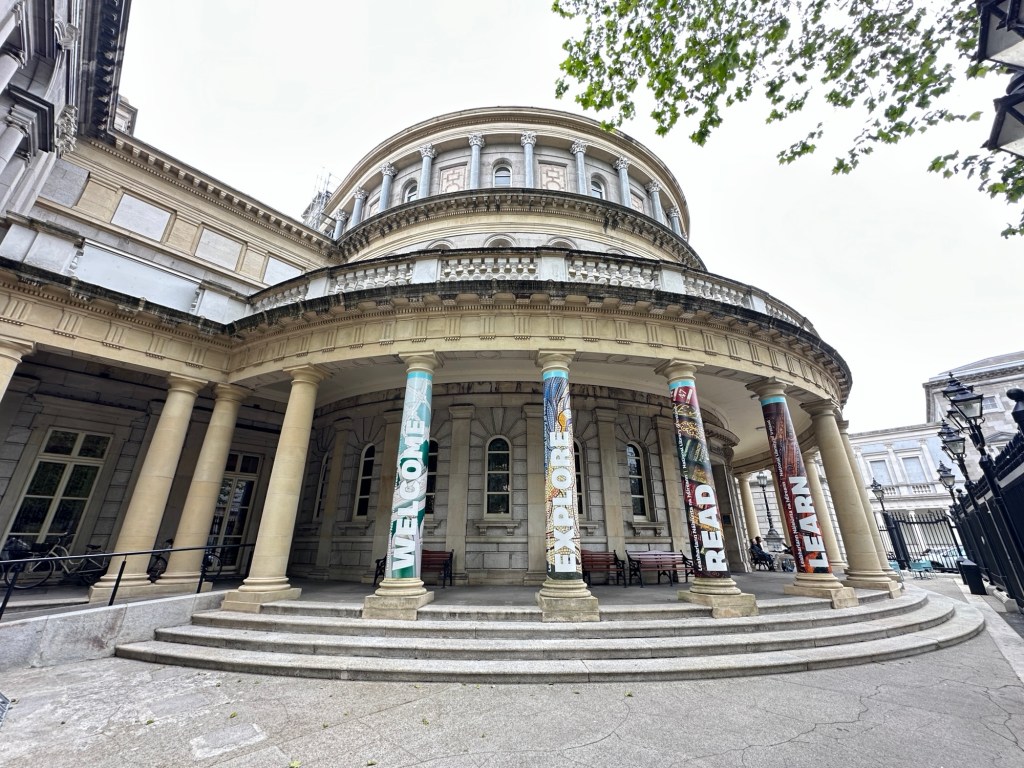
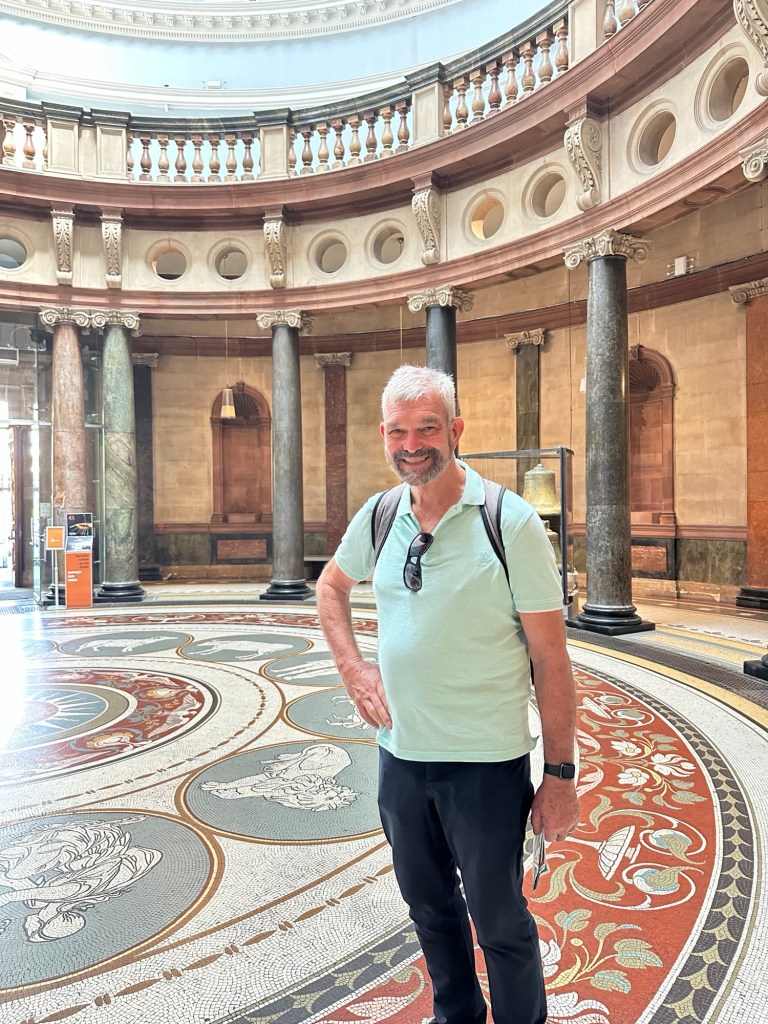
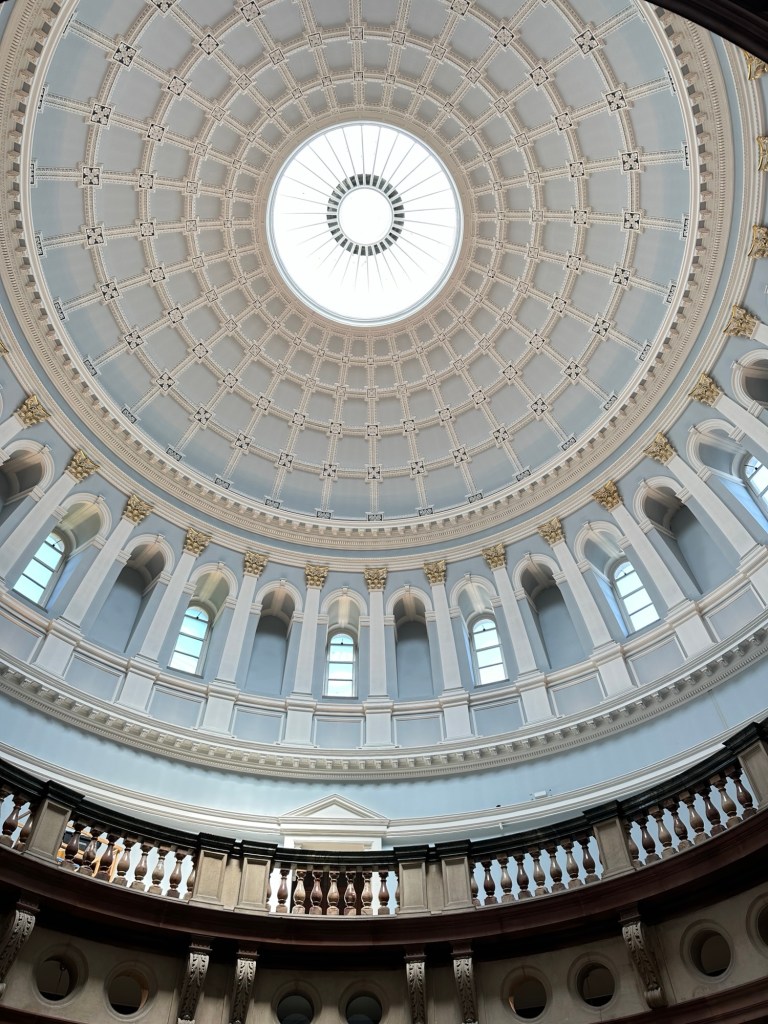
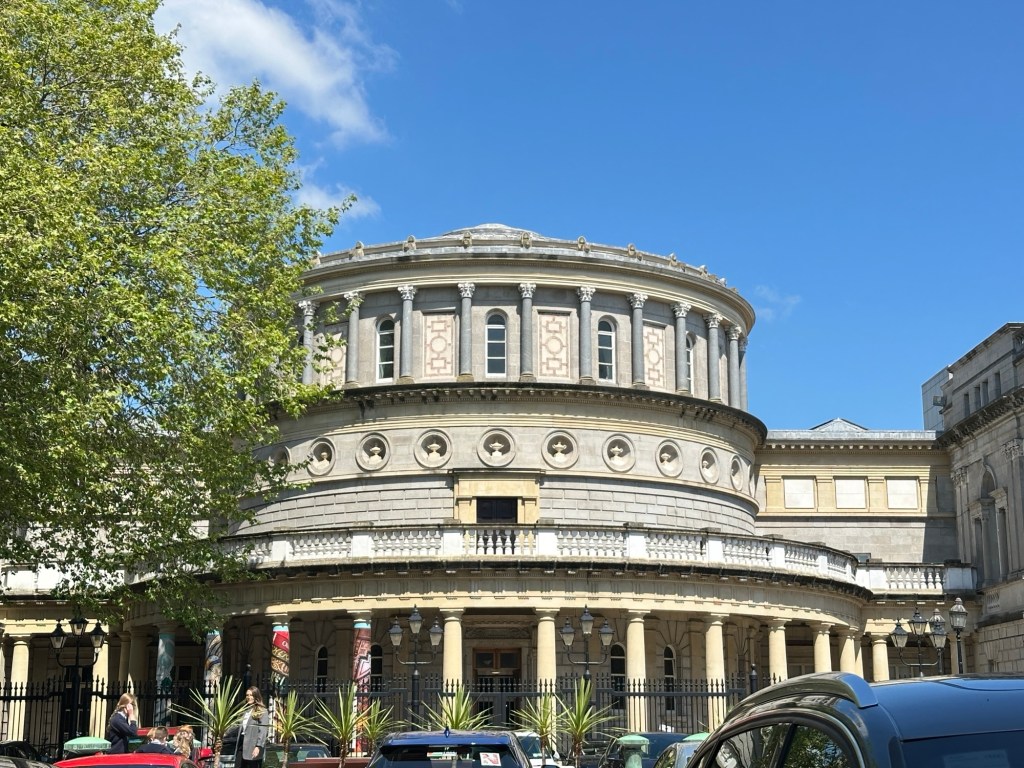
Onto the National Museum of Ireland – Archaeology was built in the 1880s to the plans of Cork architect Sir Thomas Deane. Its splendid domed rotunda, inspired by Palladian design, features marble pillars and an elegant mosaic floor decorated with the signs of the zodiac. Admission is free. Upstairs Viking and medieval artefacts are housed. Downstairs we saw four bog bodies – 1800 year old bodies discovered buried and preserved in peat.

Next, Trinity College Dublin, one of the oldest universities in Western Europe. Recognised internationally as Ireland’s premier university, TCD is committed to world-class research, scholarship and teaching. Trinity was founded in 1592 by Elizabeth I on the site of an Augustinian monastery as a bastion of Protestantism. It was not until the 1970s that Catholics started entering the university. Its cobbled quads and lawns still have a monastic feel, providing a pleasant haven in the heart of the city. We strolled around the grounds enjoying the beautiful buildings.


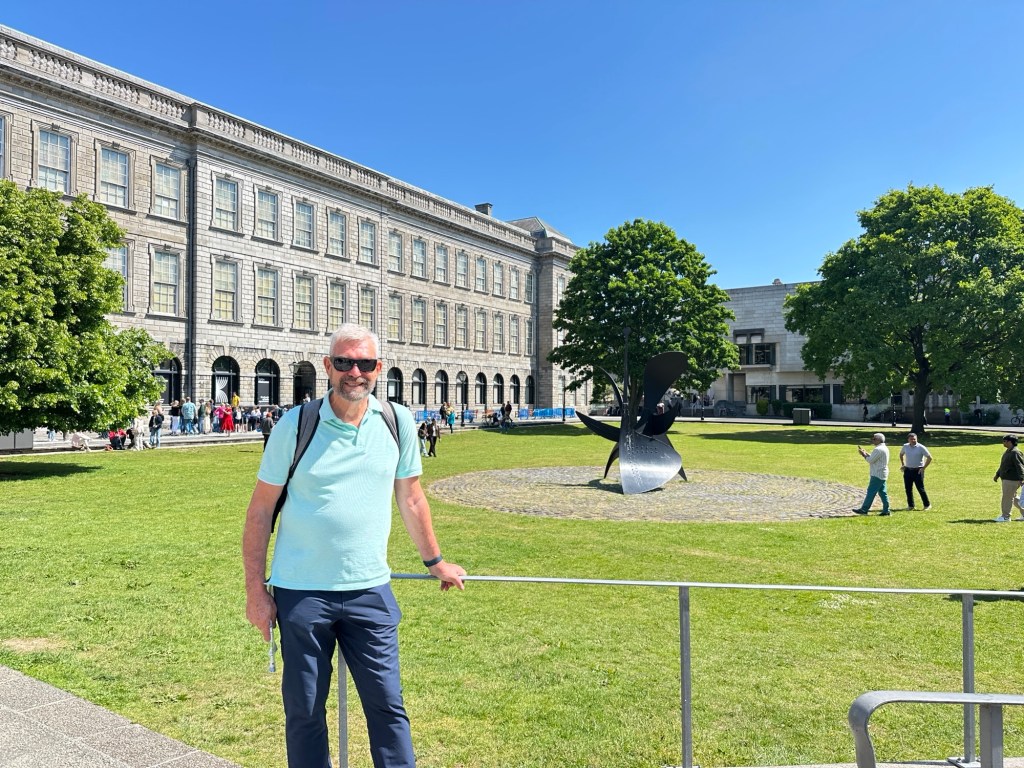
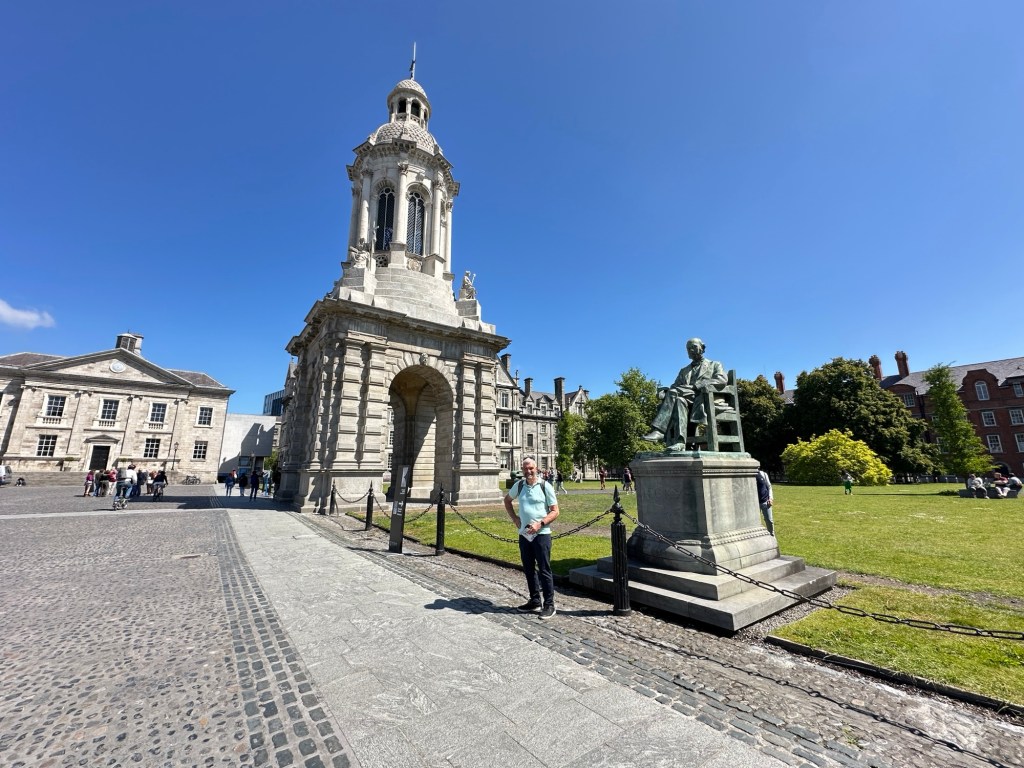
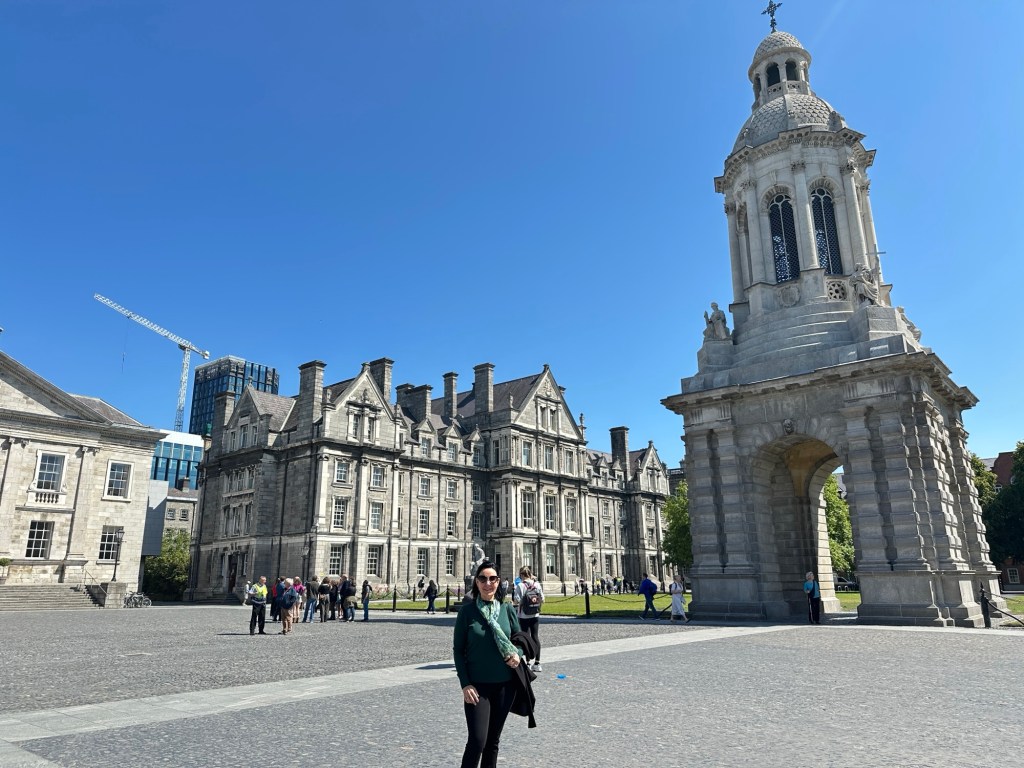

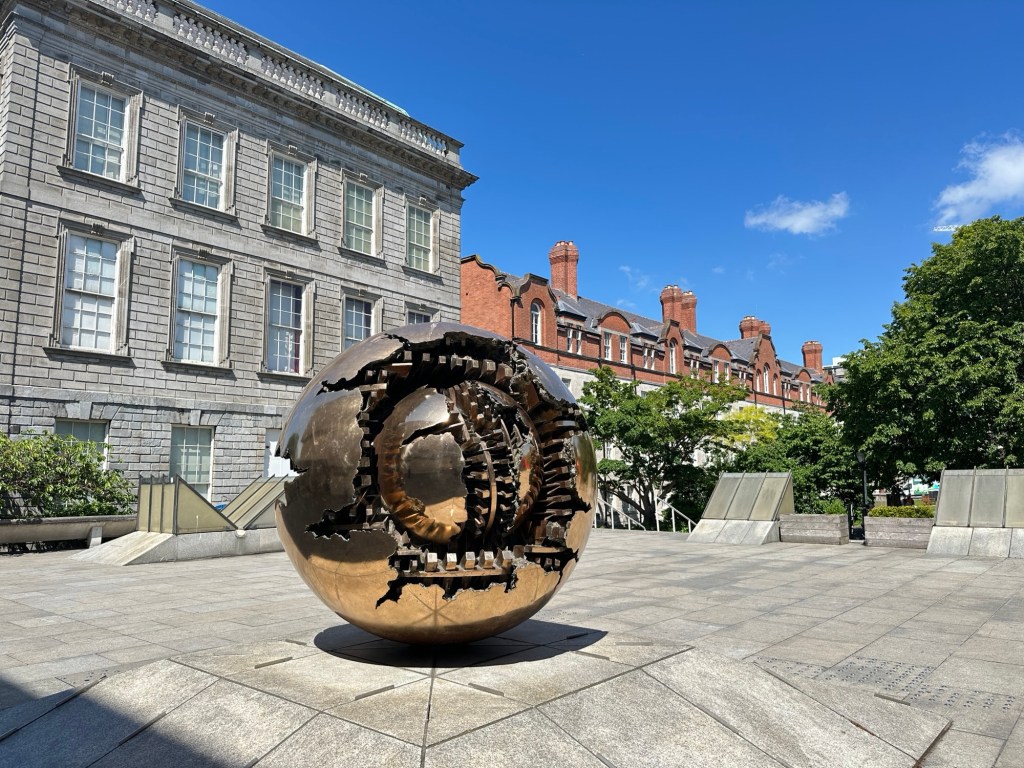
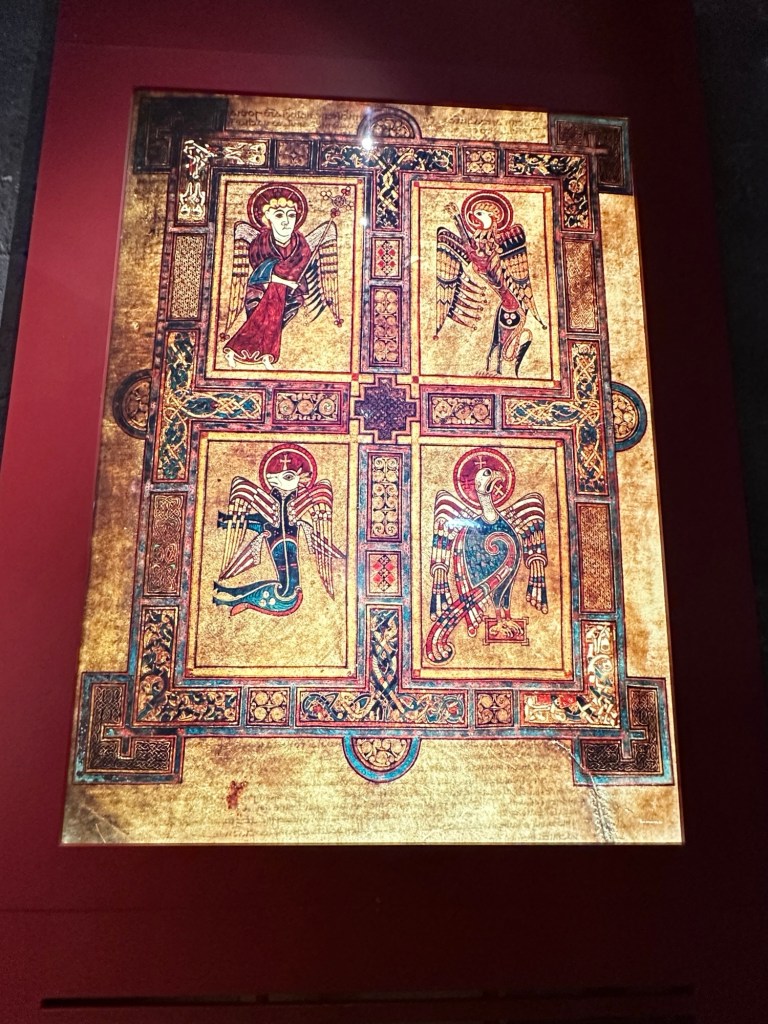
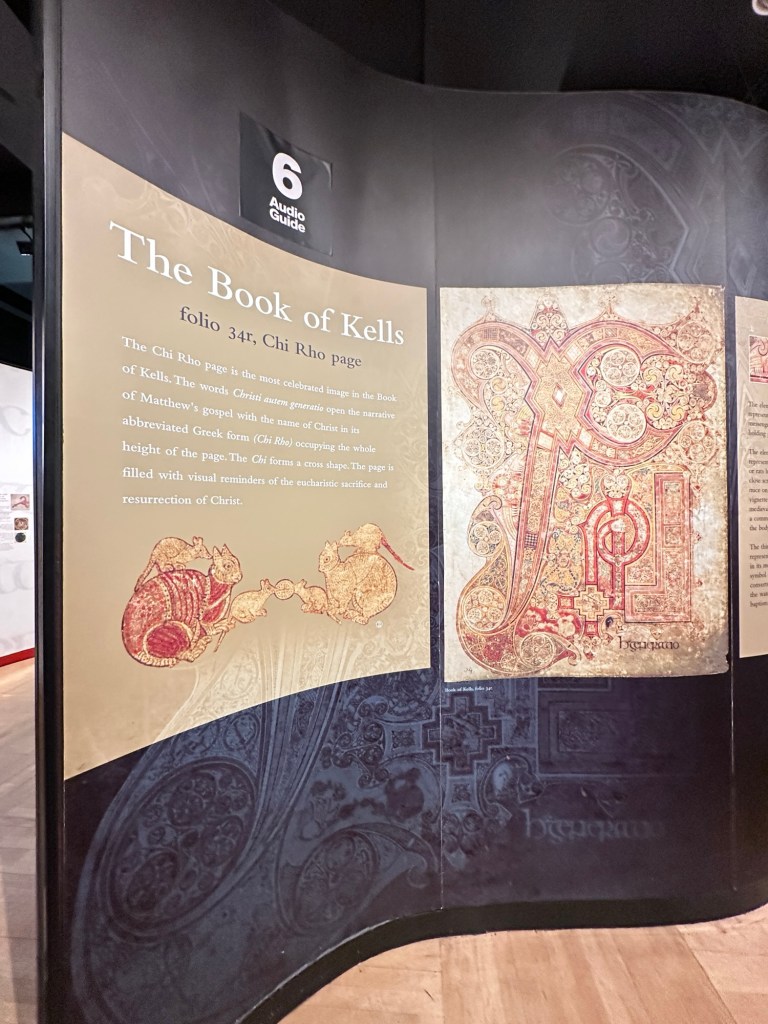
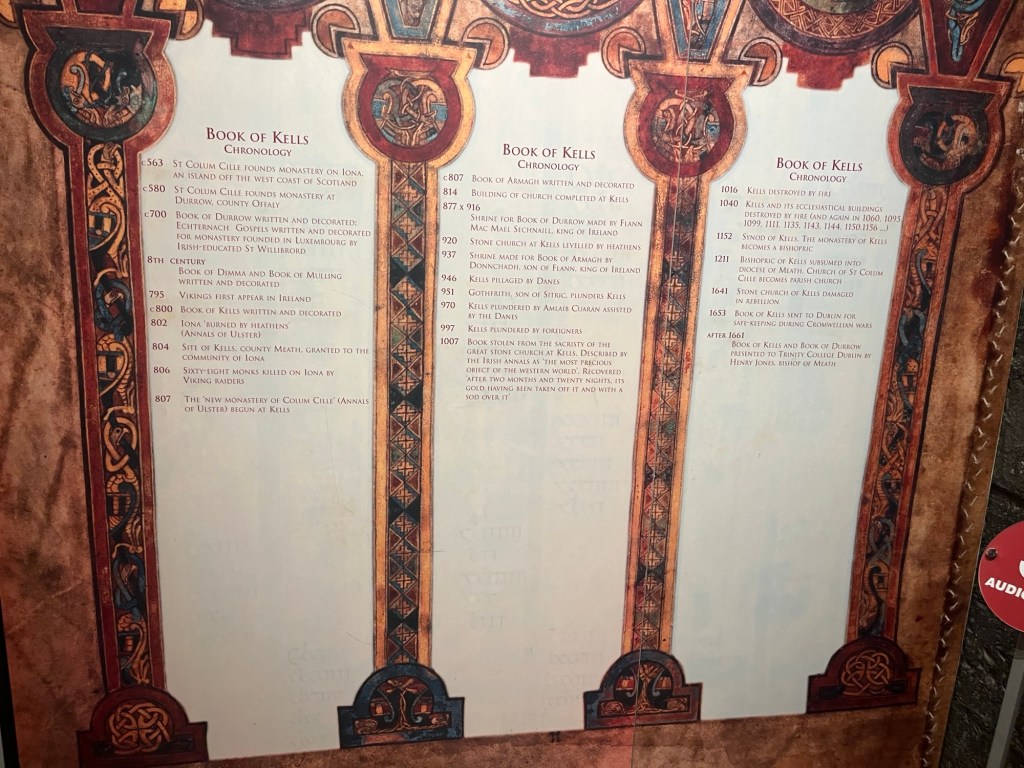
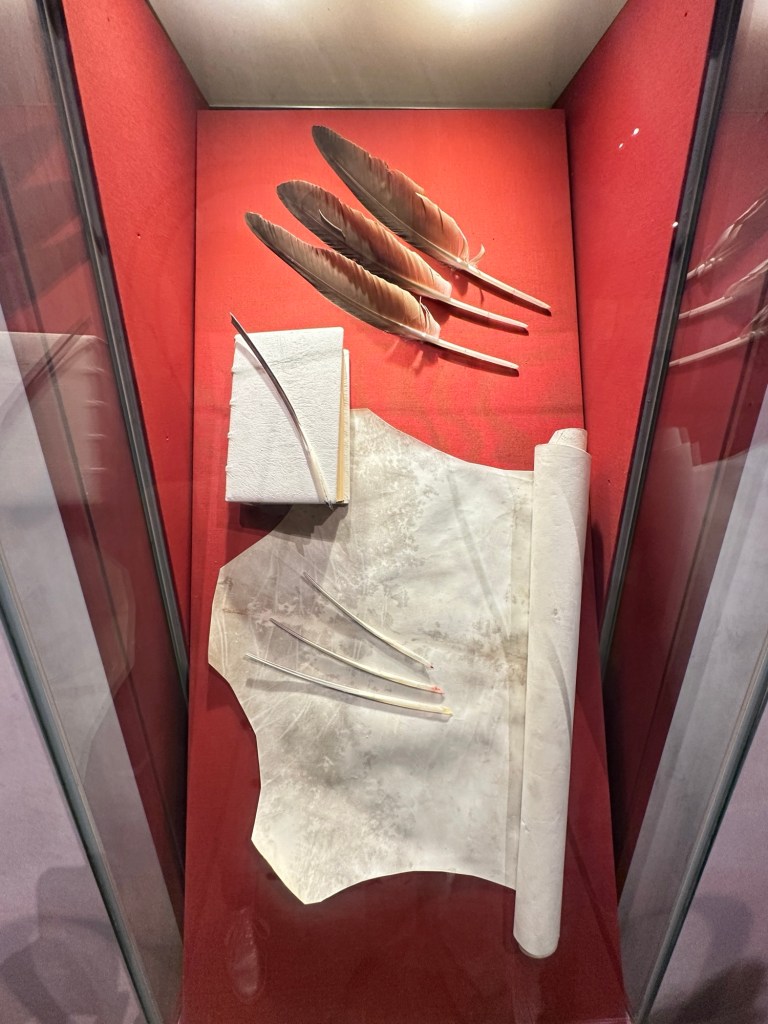
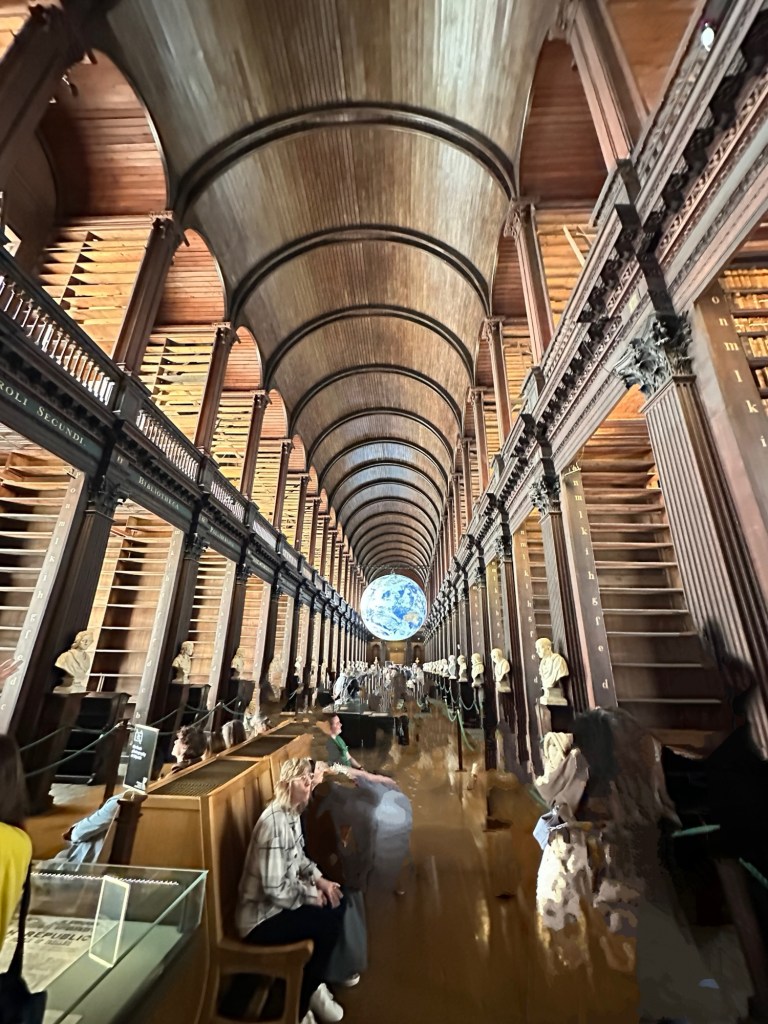
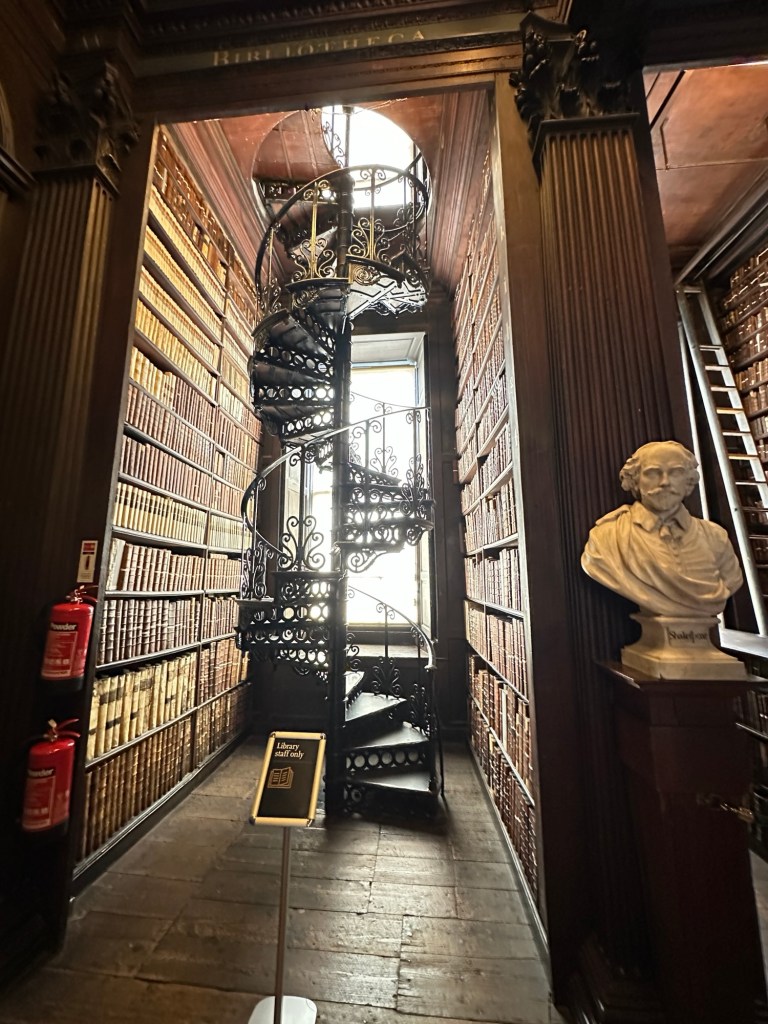
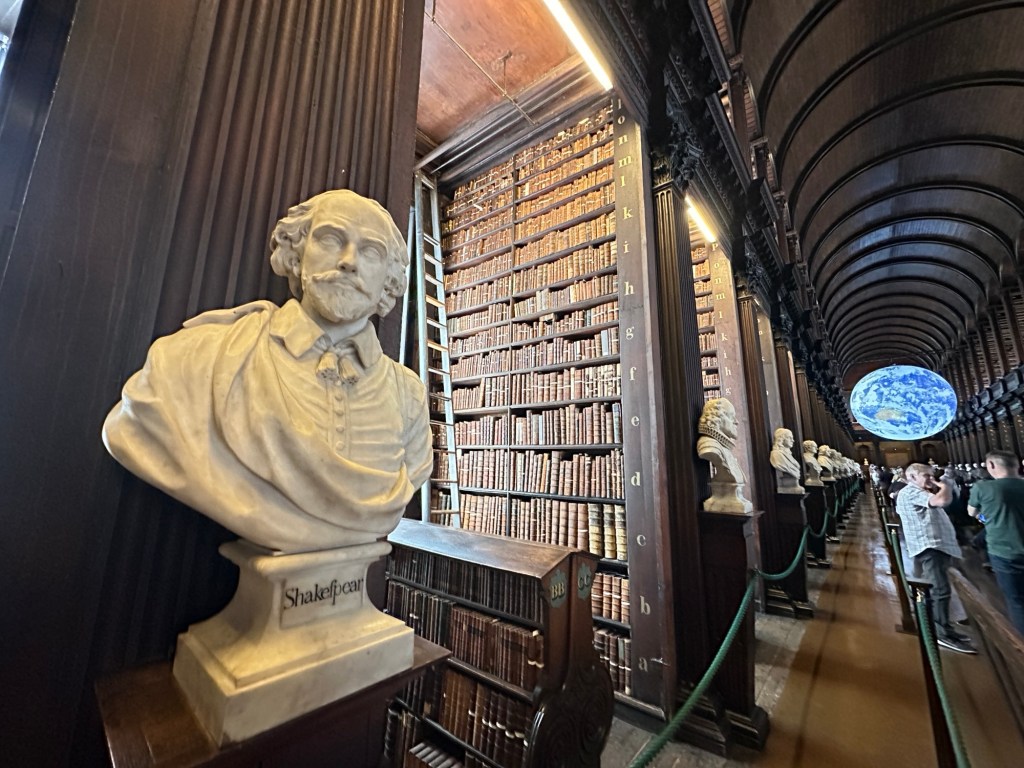
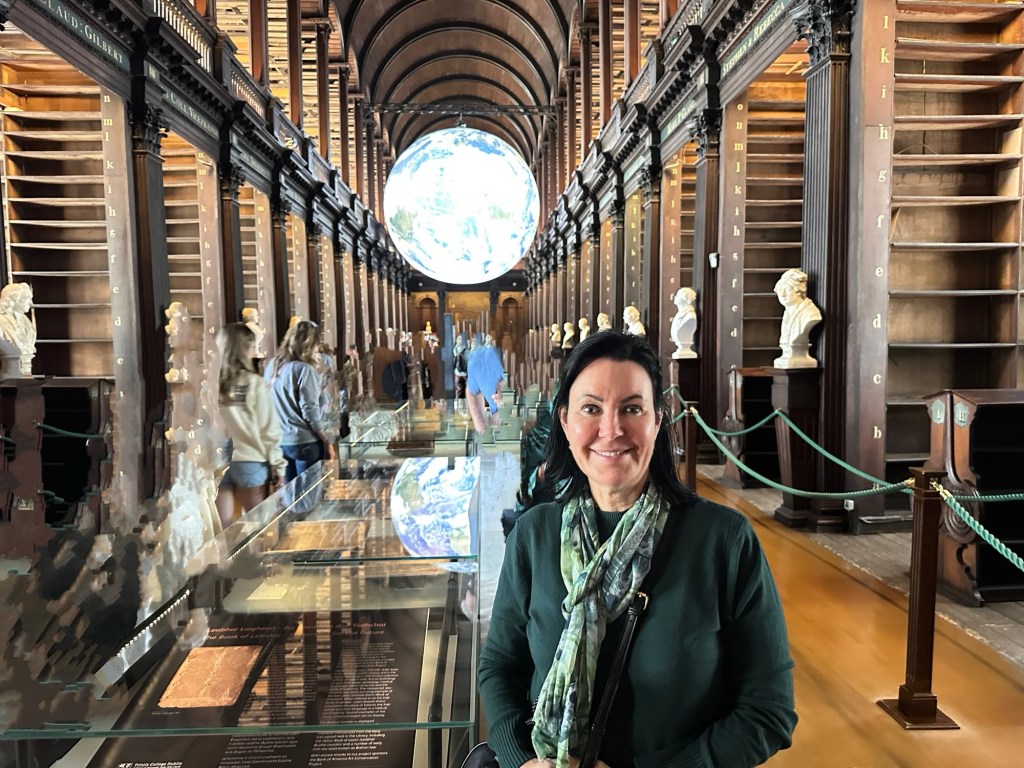
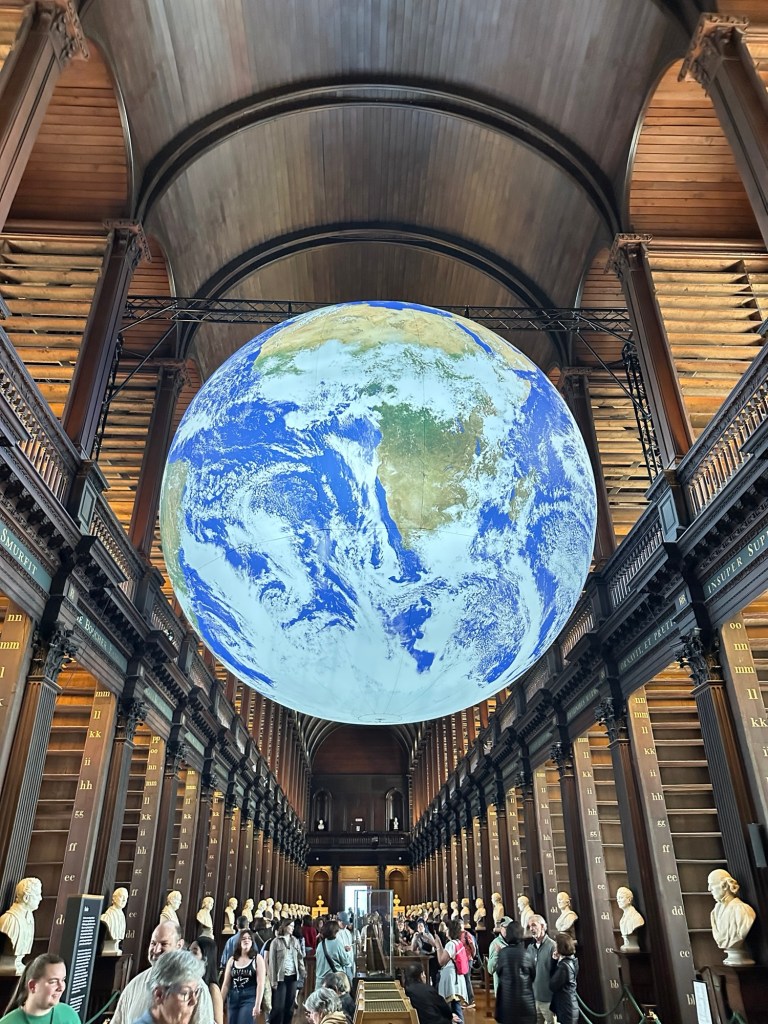
We had paid to go to The Book of Kells Experience. The Book of Kells is a masterpiece of medieval art. It is a superbly decorated, handwritten copy of the story of the life of Jesus Christ set out in the Gospels of Mathew, Mark, Luke and John. The Book of Kells was written on vellum (calfskin), in Latin, close to the year 800 AD. It was fascinating to see how this book was made all those years ago. The highlight was going upstairs to visit the Long Room which was designated as a legal deposit library entitled to a copy of every printed work published in the British Isles. Also there, was Gaia, an artwork by Luke Jerram, designed to highlight the beauty and the fragility of the earth.



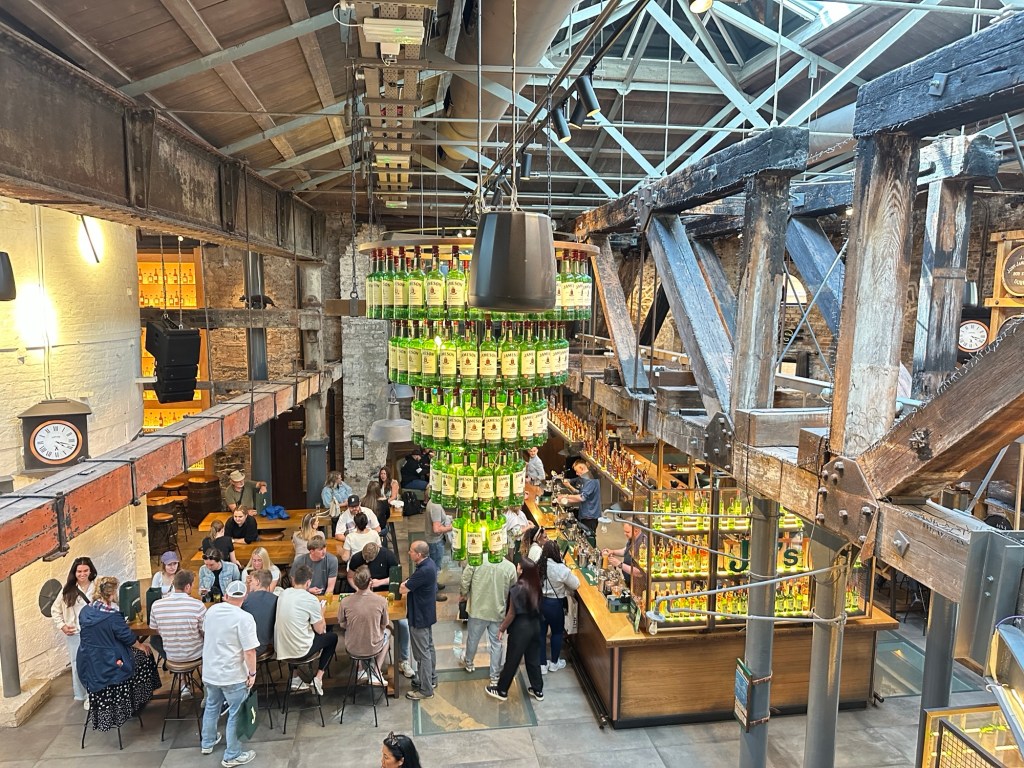
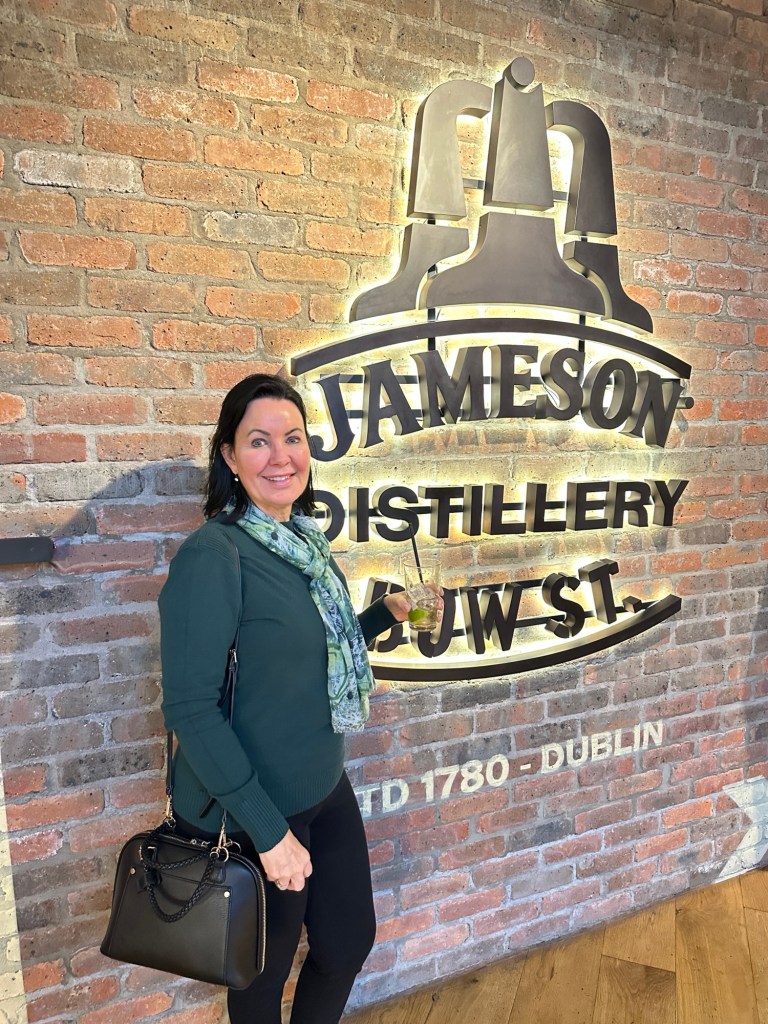
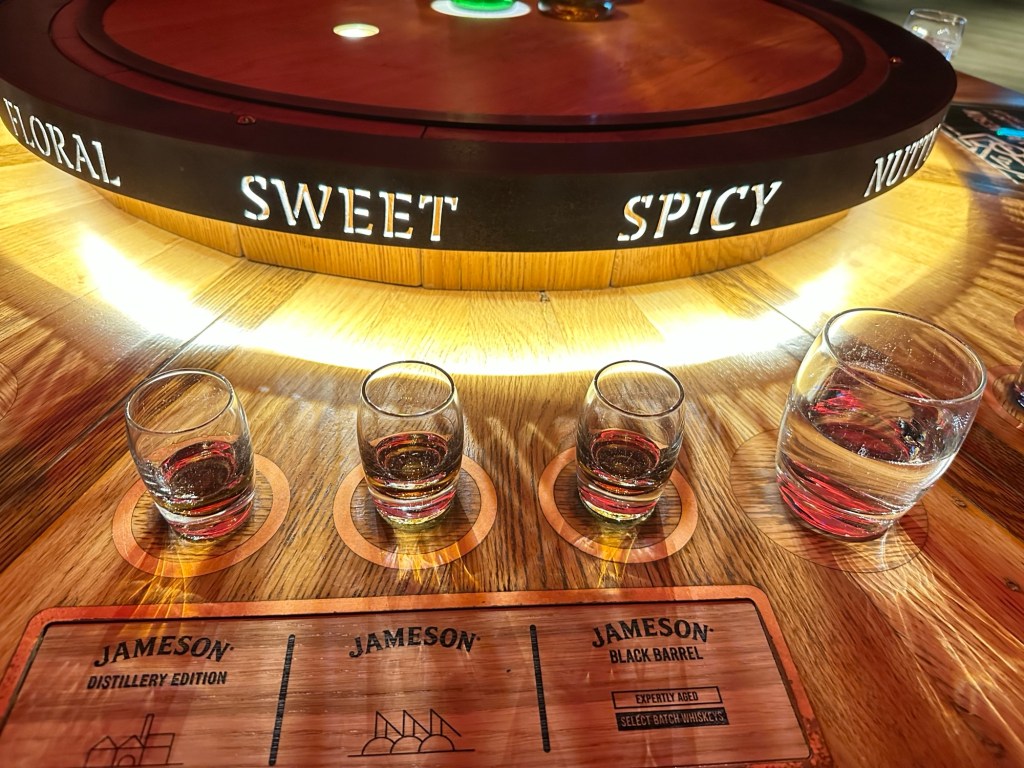
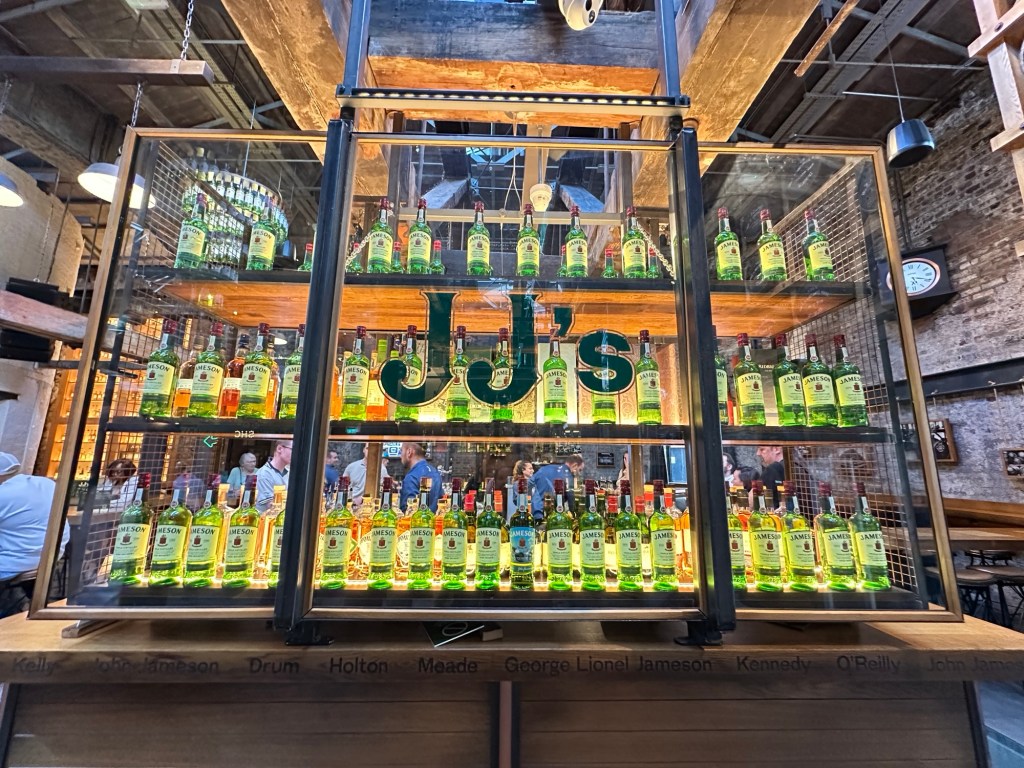
From here we crossed the Liffey River going back to the Southside, for a tasting tour at Jameson Irish Whiskey Distillery. We had a fun guided tour with whiskey tales and a comparative tasting of three Jameson whiskeys. Frank’s favourite was the Distillery Whisky, I liked the Black Barrel.




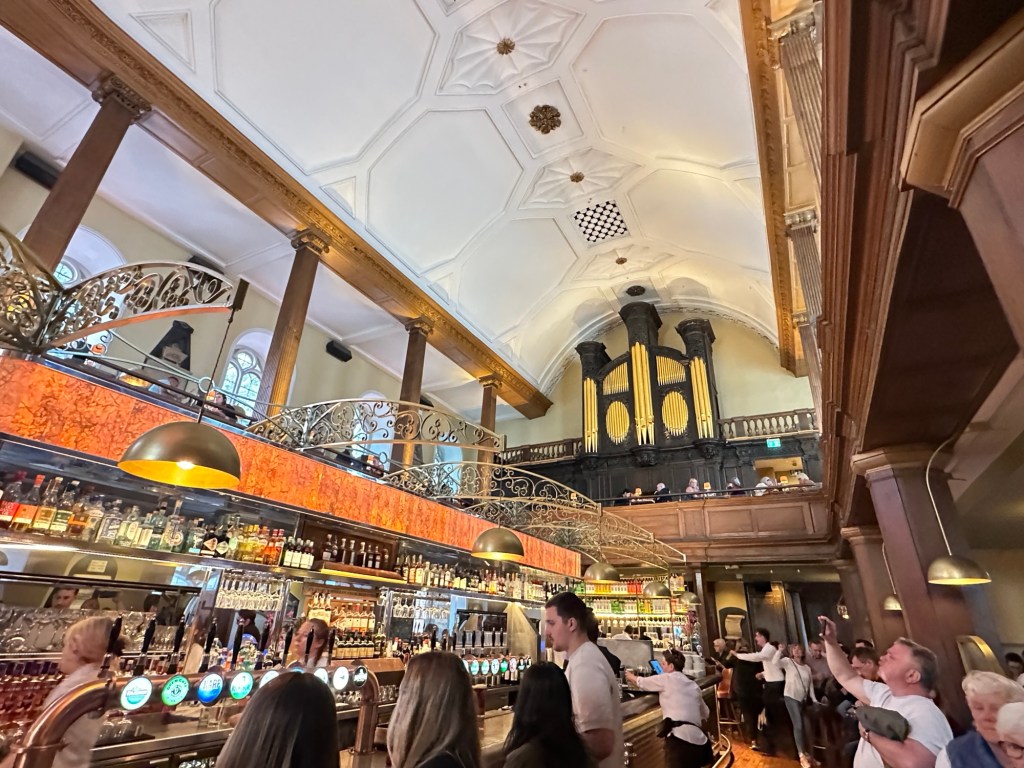
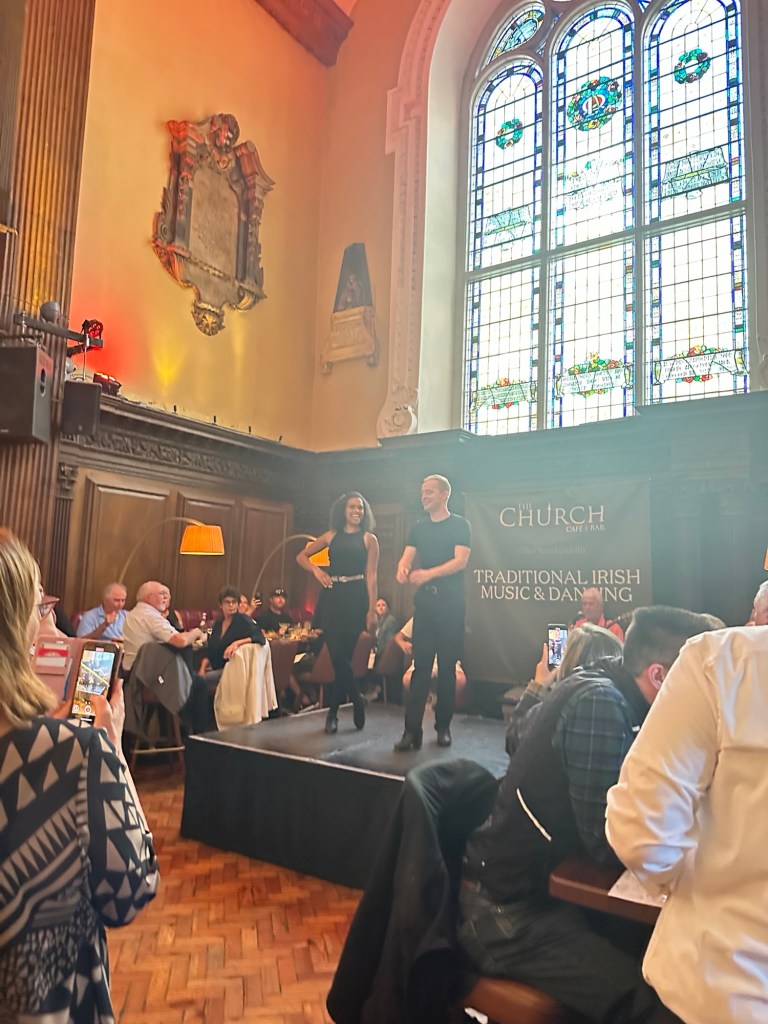
Dinner tonight at the Church Bar – a bar in an old church – great setting, complete with lead light windows and organ pipes. There was traditional Irish dancing and music to accompany our very nice meal. Unfortunately we were still suffering from jet lag, so another early night for us. Plus we had walked 17500 steps today, and 18000 steps yesterday. Our legs were weary! Still daylight when we went to bed at 9.30pm.

Day 4
Thursday 22nd May
Dublin
8-15 degrees, sunny
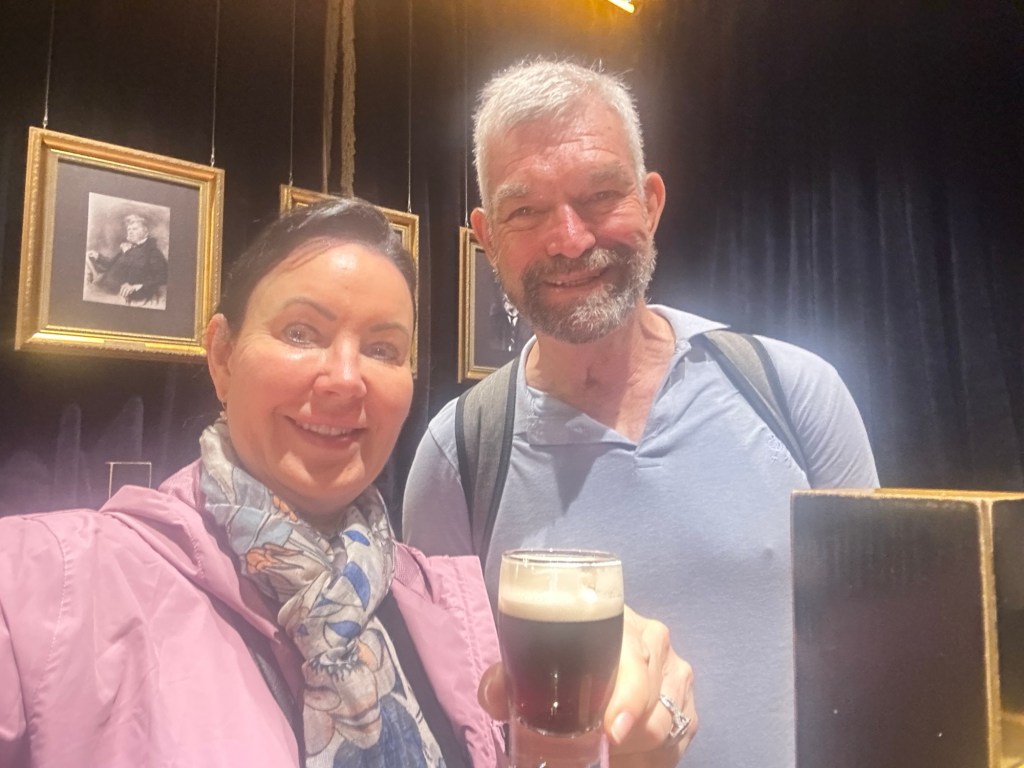
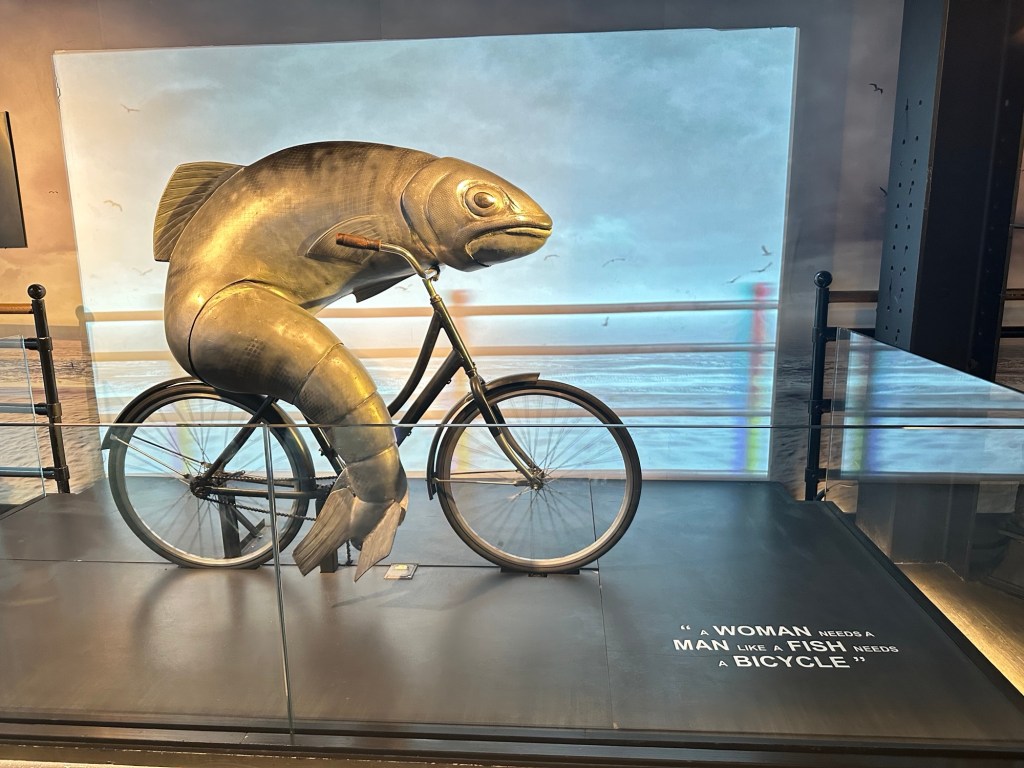
We had a 30 minute walk to get to the Guinness Storehouse for our 9.30 tour. Located at St James’s Gate in the heart of Dublin City is the home of Ireland’s most iconic beer. Arthur Guinness was just 34 years old when he signed the iconic 9,000-year Guinness lease, on a then-disused brewery site in 1759 for an annual rent of £45. It was here on this four-acre site where Arthur would hone his craft and build the global brand that Guinness is today. His signature is on every label. During the tour we savoured the sights, sounds, tastes, and aromas of Guinness. We journeyed through 7 floors, discovering the ingredients, history, and advertising of Guinness, ending up at one of Dublin’s highest points, the Gravity Bar. I enjoyed the Guinness Lager, whilst Frank preferred the stout (original) whilst looking out over Dublin’s iconic landmarks.
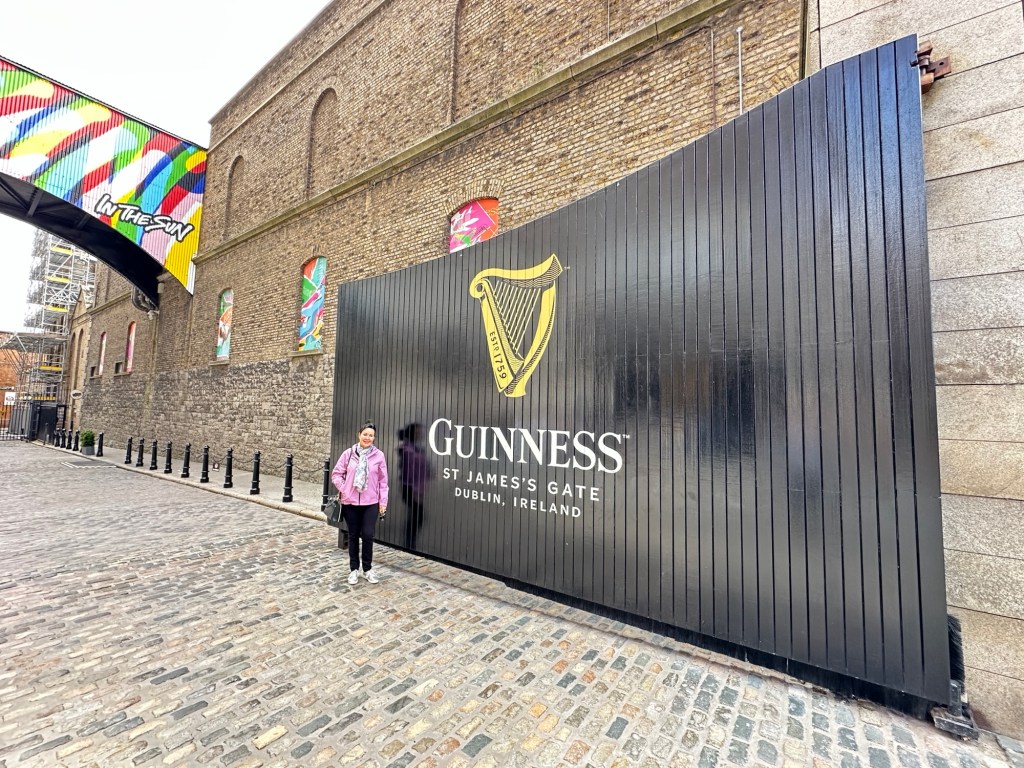


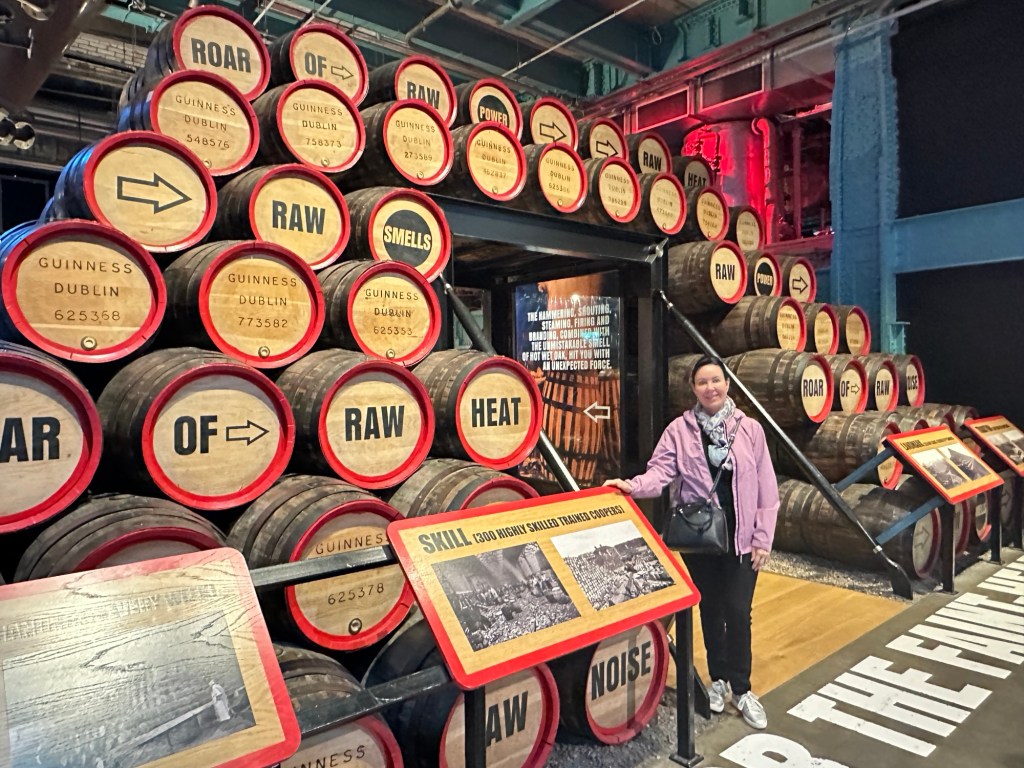


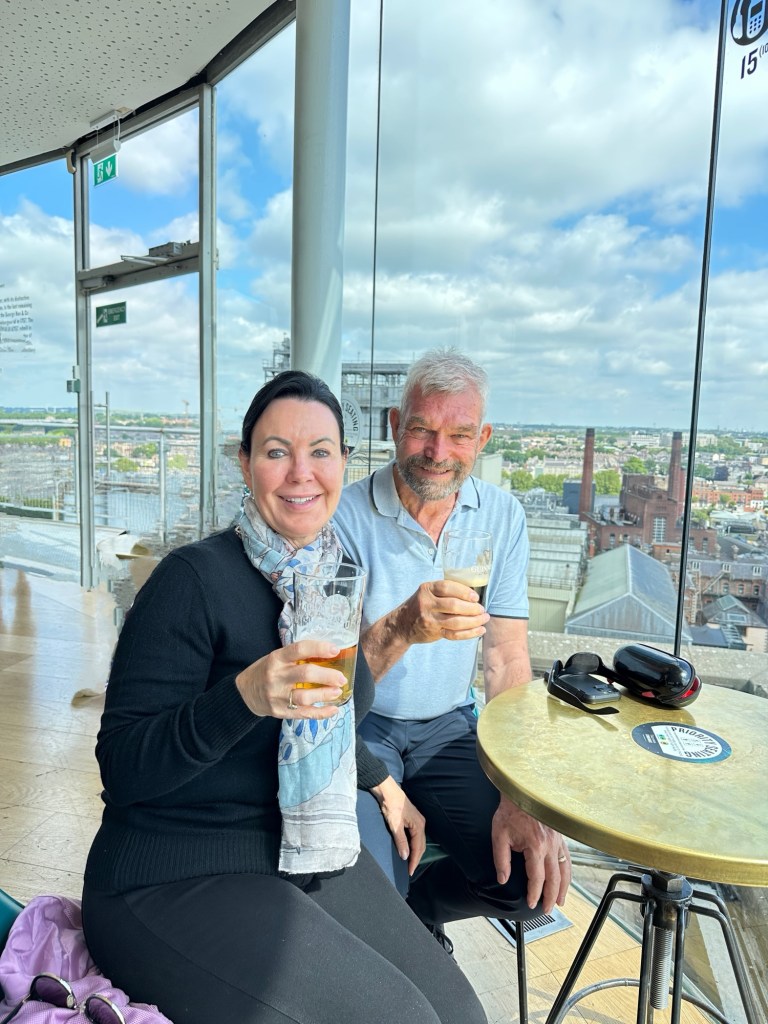
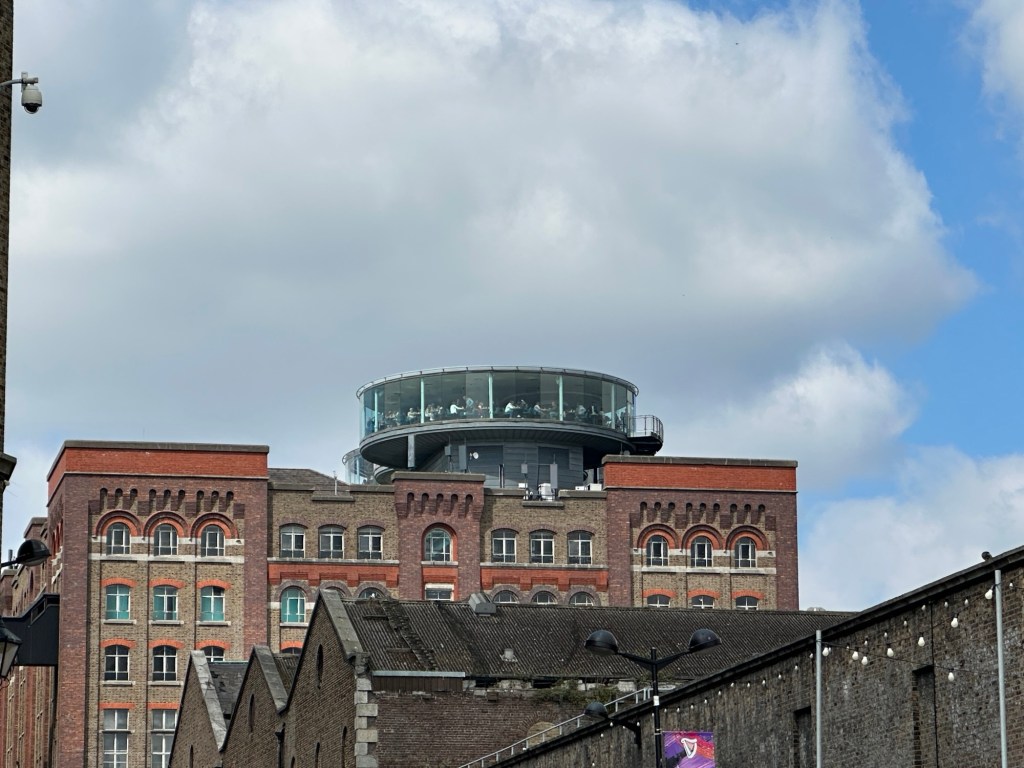
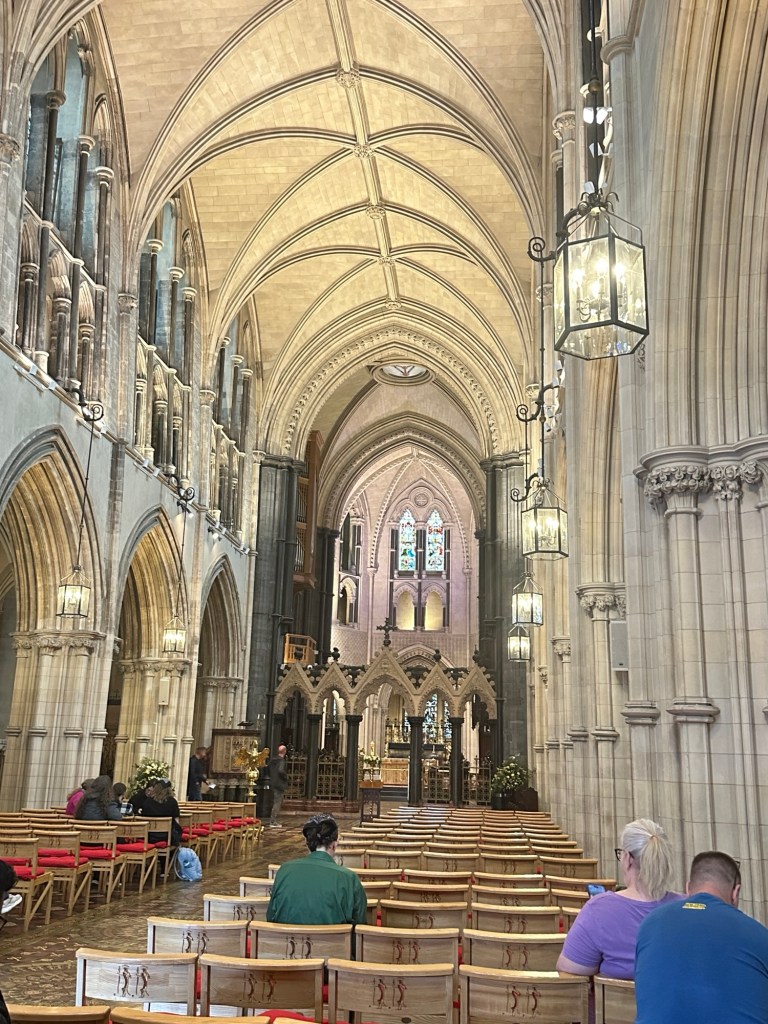
From the Storehouse we walked to Christ Church Cathedral which has stood at the heart of Dublin for almost 1000 years. Also stopped at St Auddens along the way. Both churches had beautiful gardens.
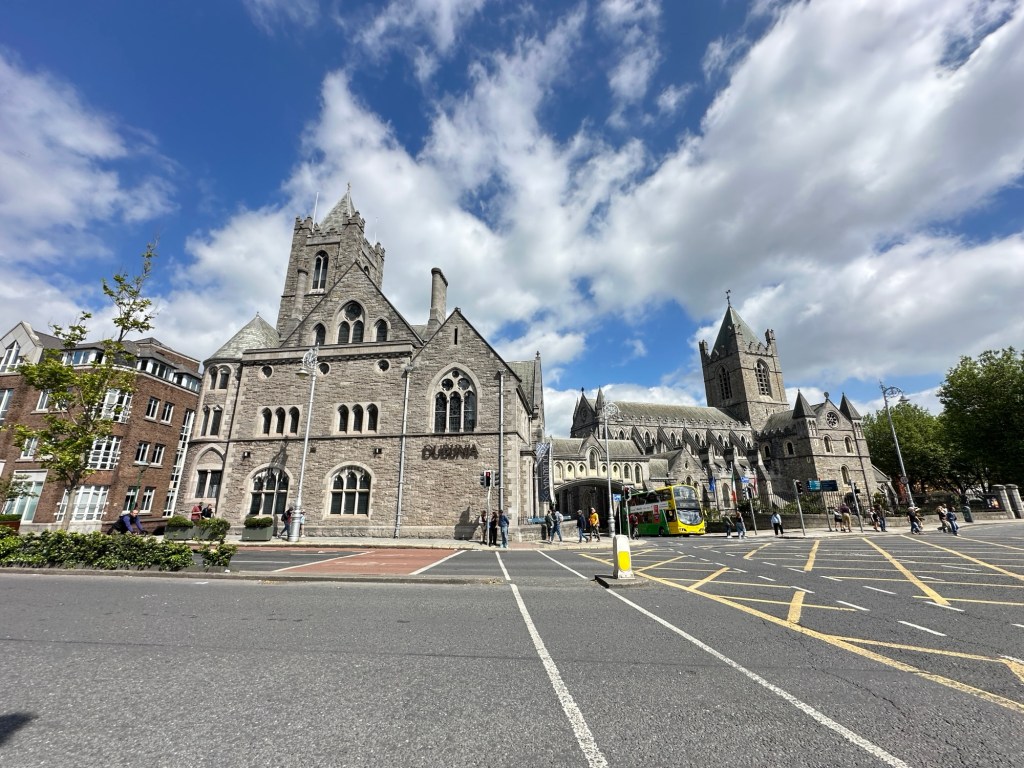

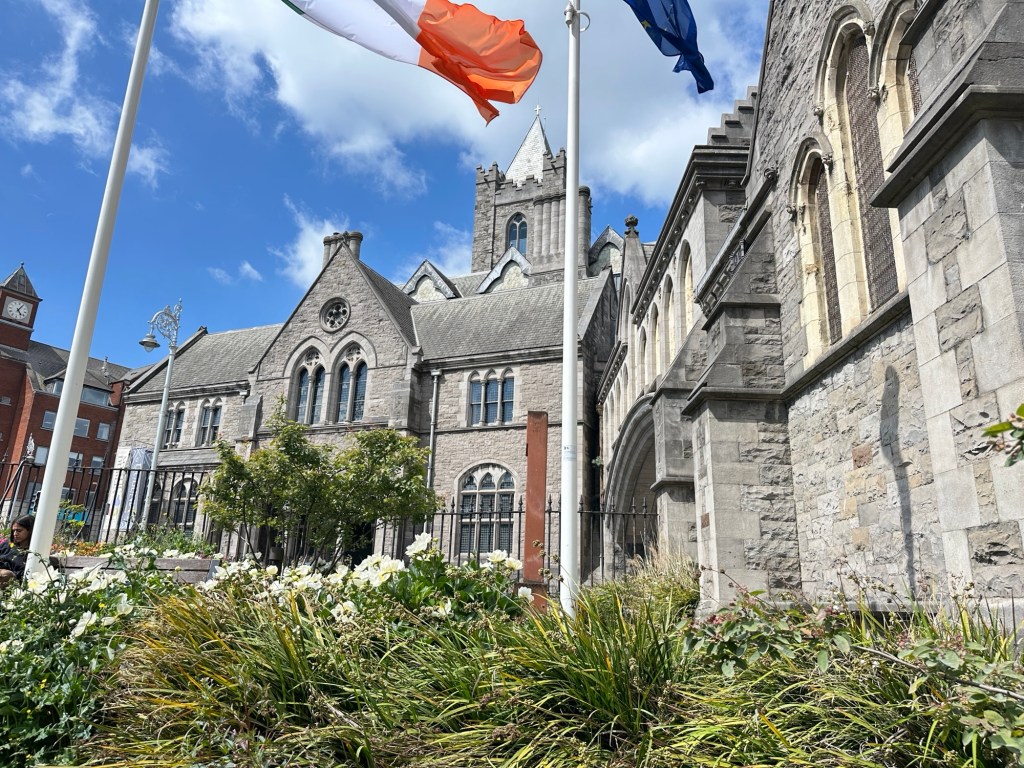
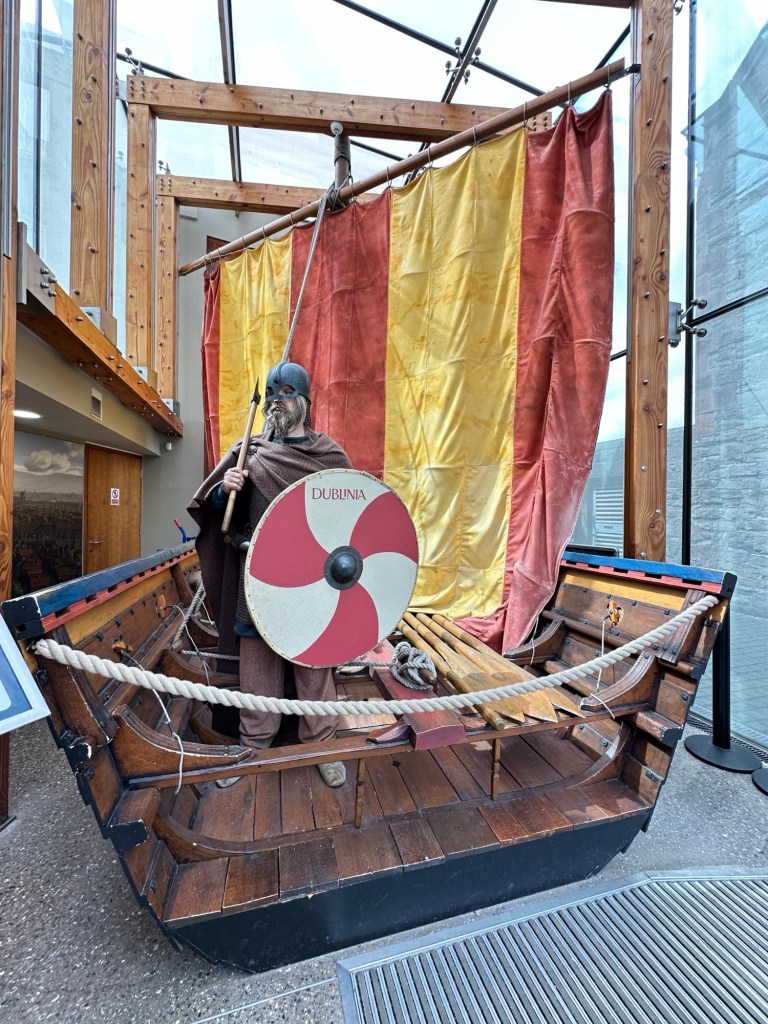
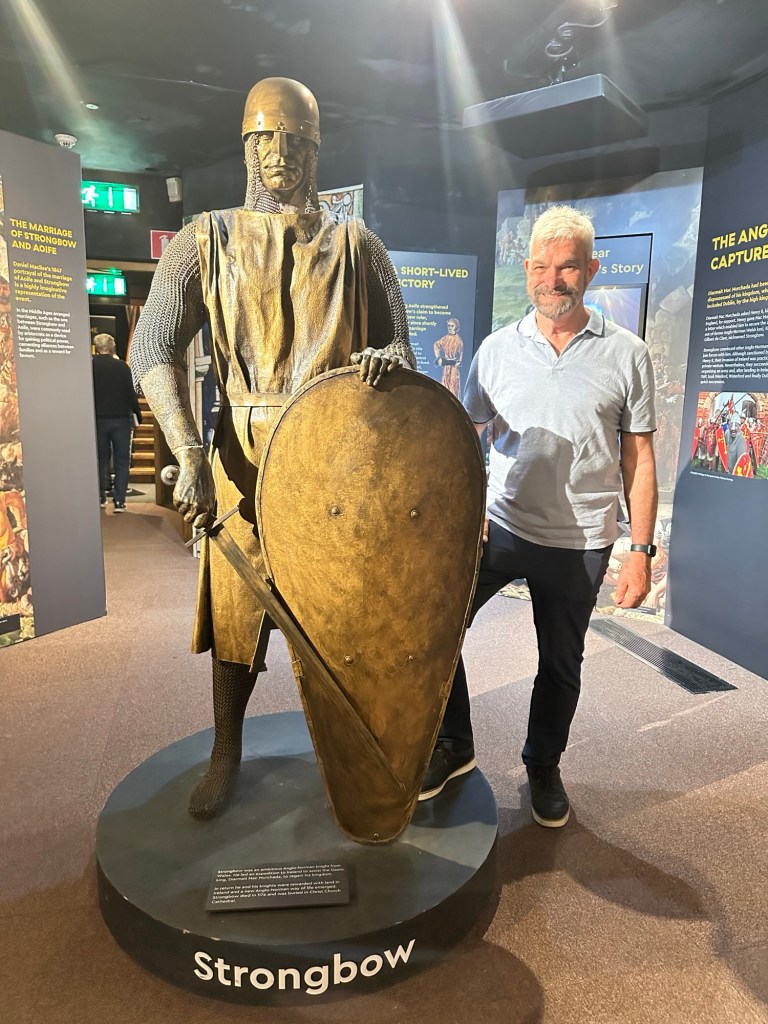
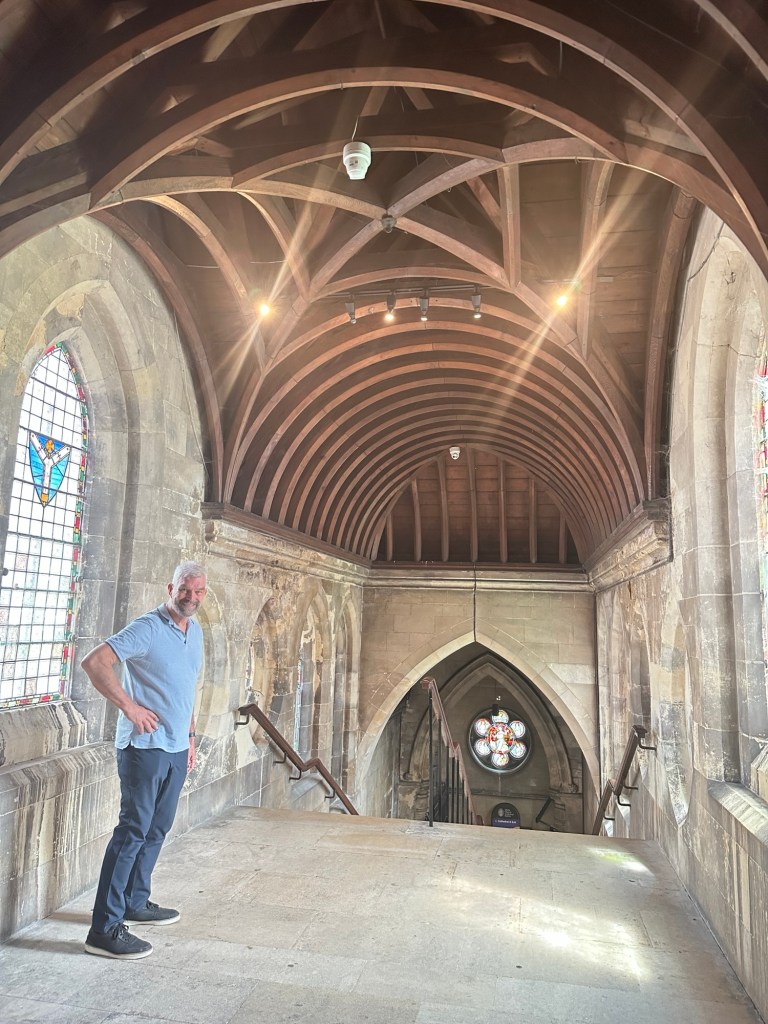
Next to Christ Church Cathedral was Dublinia, a museum that explores Viking and Medieval Dublin. The displays are well designed and engaging. It features lifesize reconstructions of the medieval city, plus a Viking warship and an interactive archaeology exhibition. We both really enjoyed it. Also walked up the 96 stairs the St Michael Tower for another fabulous view of Dublin.


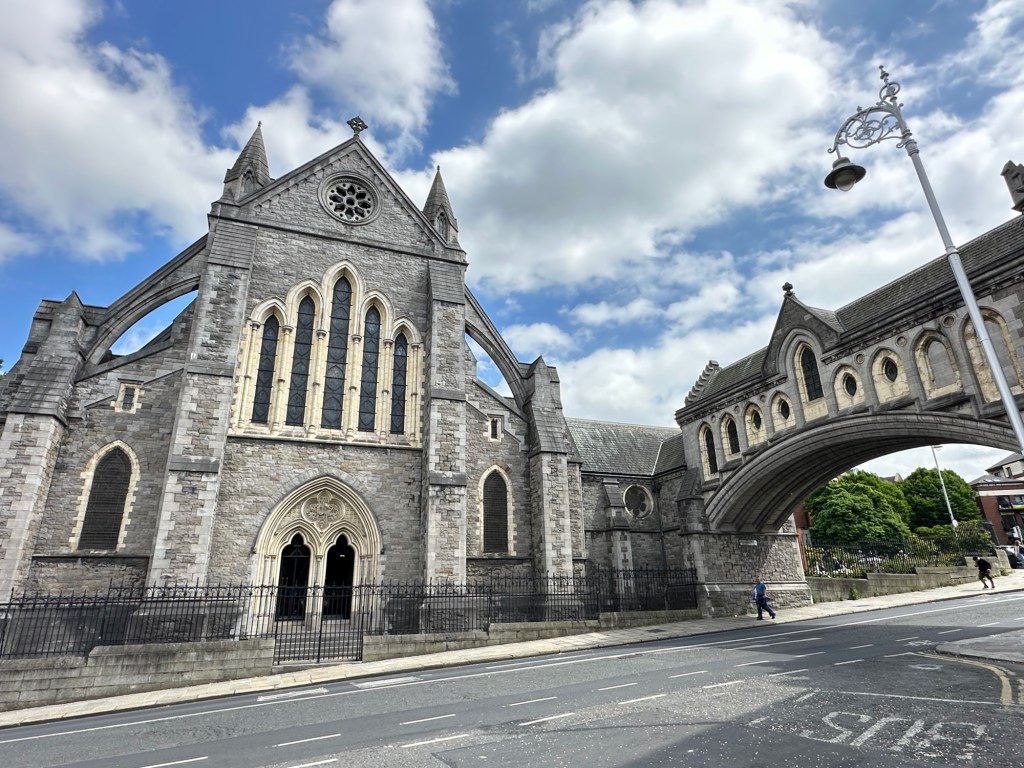
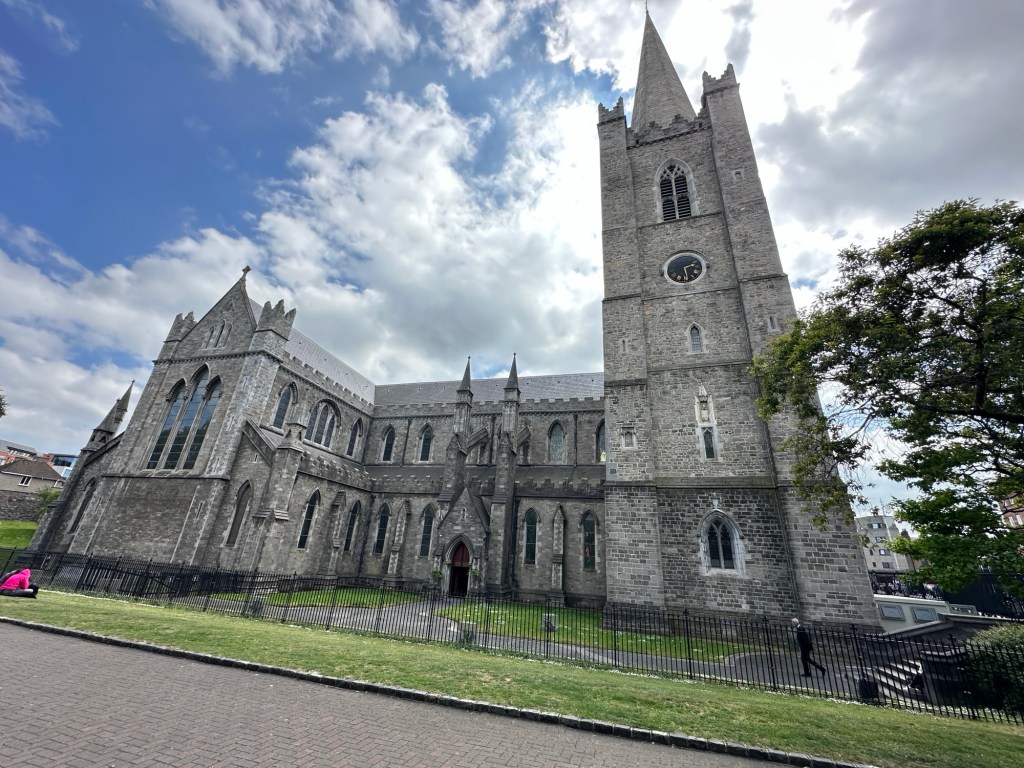
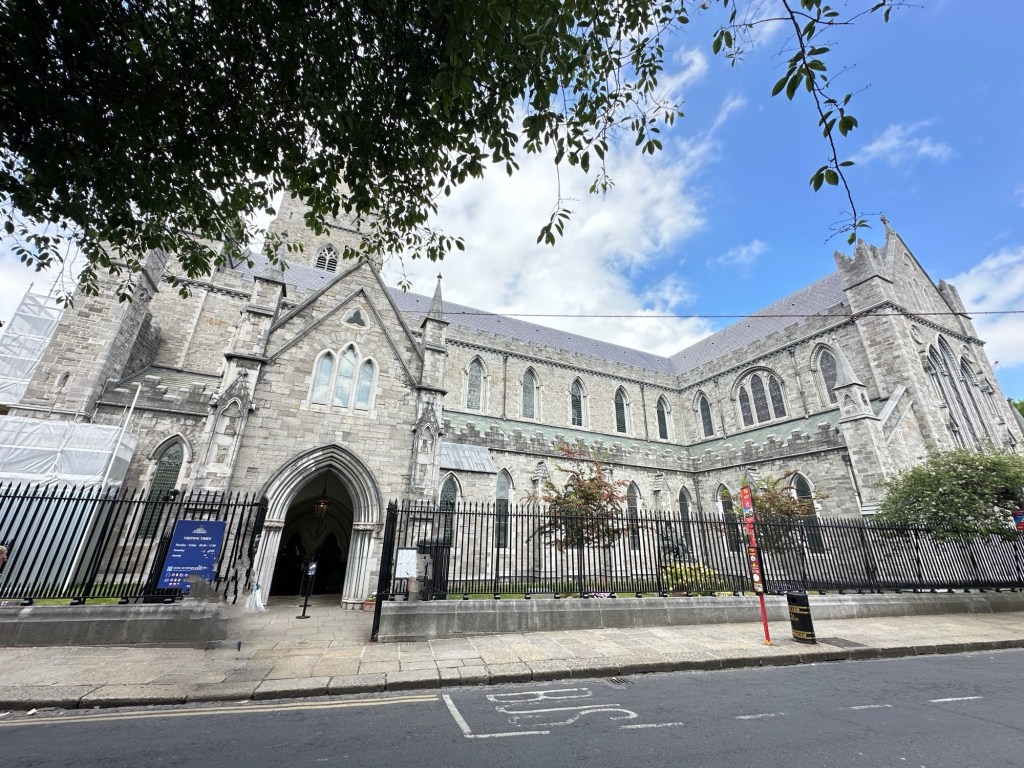
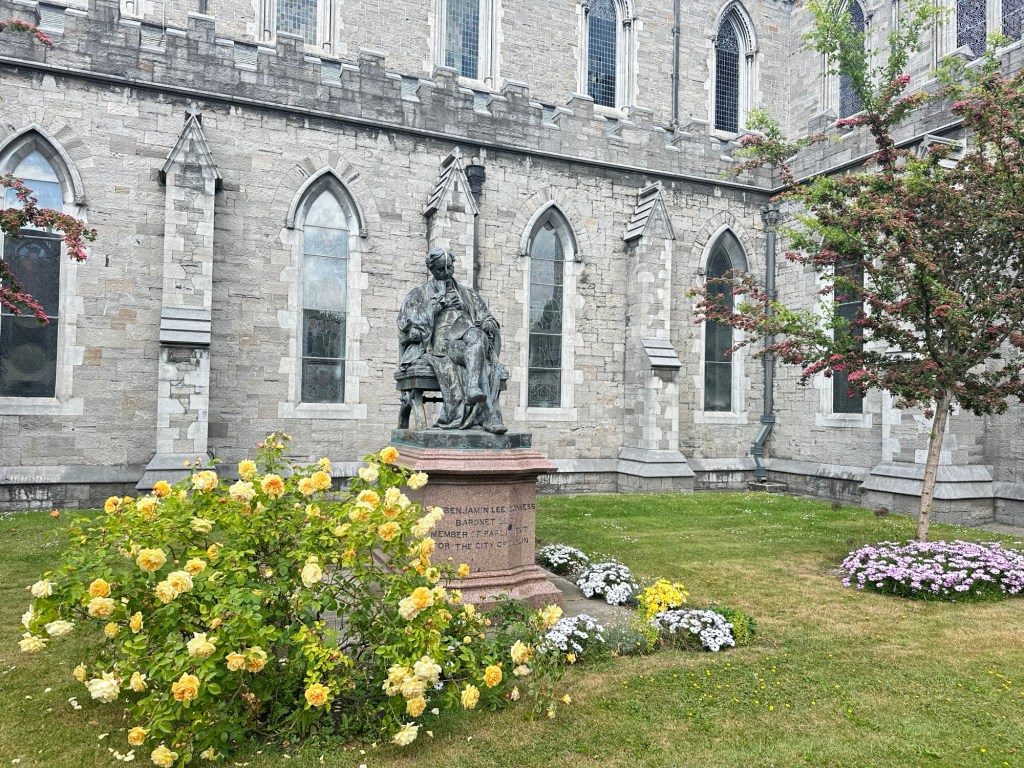
Close by was St Patrick’s Cathedral, founded in 1191 as a Roman Catholic cathedral, and is currently the national cathedral of the Church of Ireland. More beautiful gardens surround the beautiful building.

Next a walk around Dublin Castle. We walked around the grounds, enjoying the Dubh Linn Gardens. The castle was built by the dark pool (“Dubh Linn”) which gave Dublin its name. This pool lies on the lower course of the River Poddle before its confluence with the River Liffey; when the castle was built, the Liffey was much wider, and the castle was effectively defended by both rivers. The Poddle today runs under the complex.
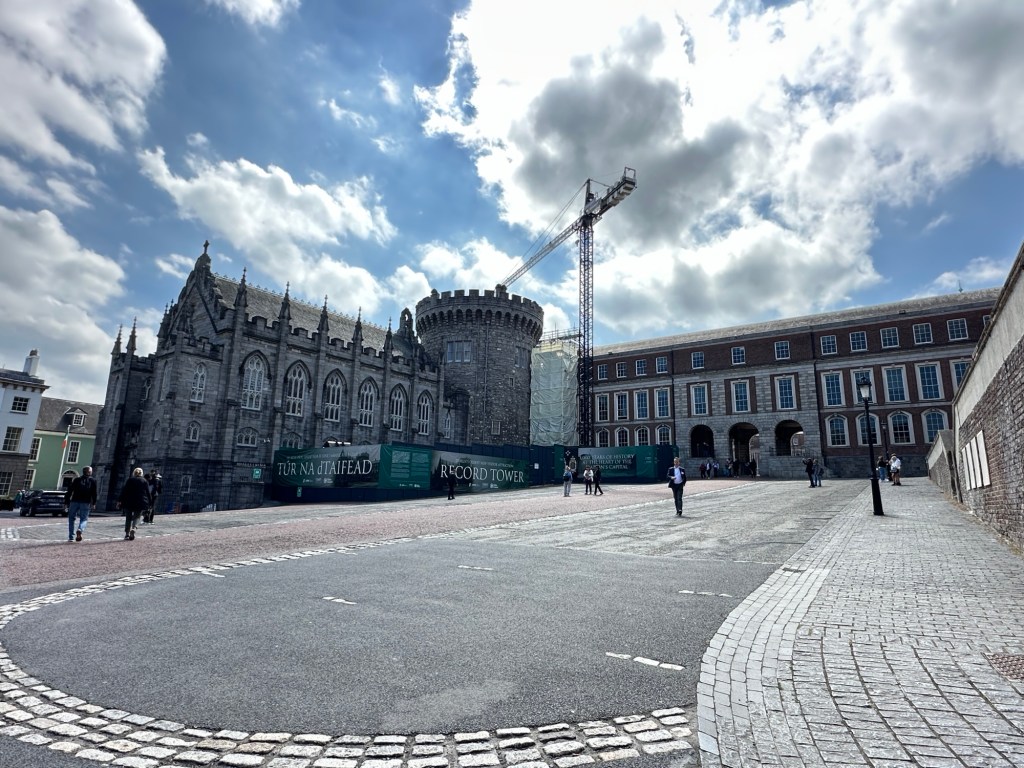

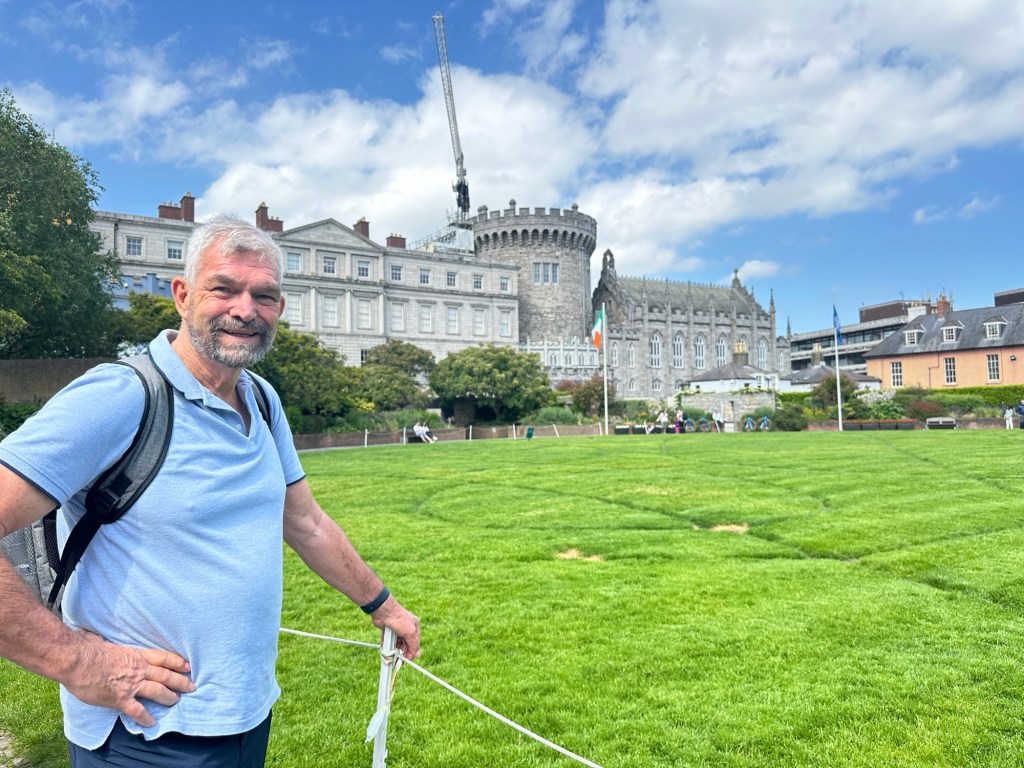
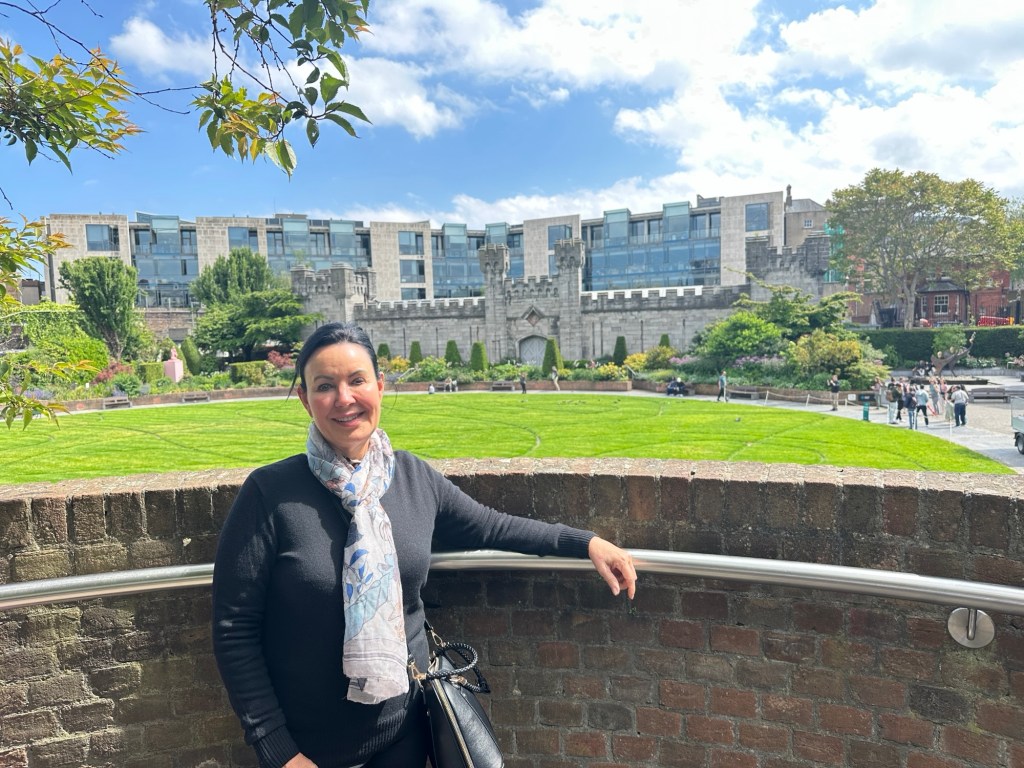

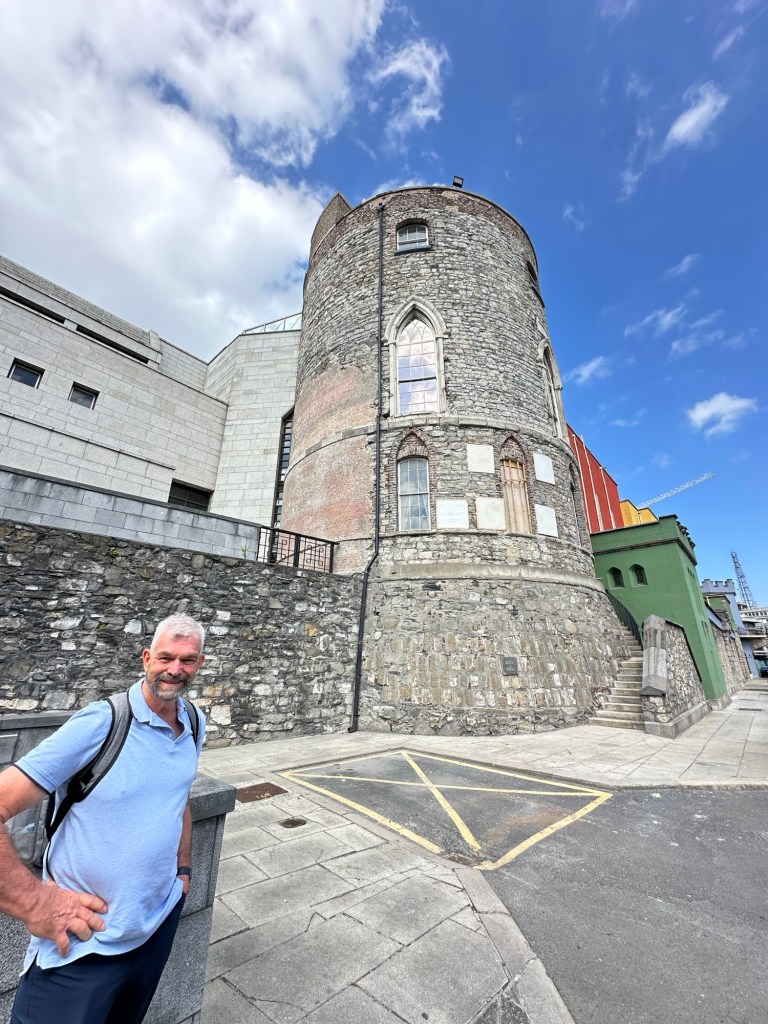
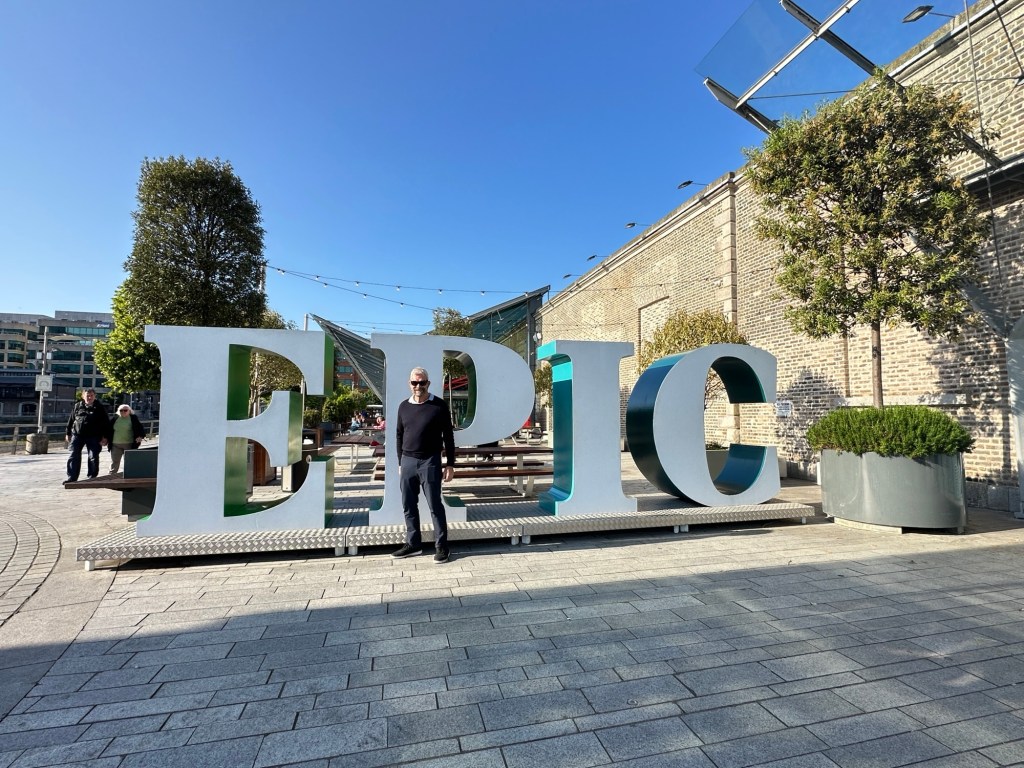
One last museum for the day , the EPIC Museum where we discovered why 10 million people left Ireland and the impact they had on the world. Again, very interesting. Could have spent more time there, but I seriously had a case of information overload by this time of the day.

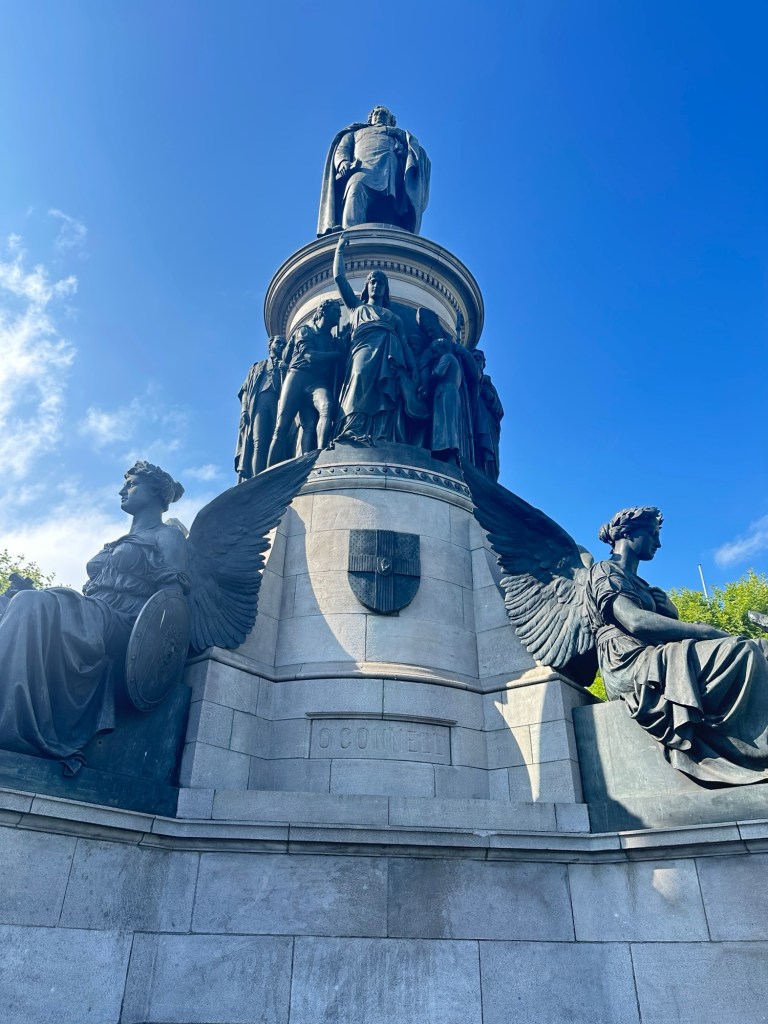
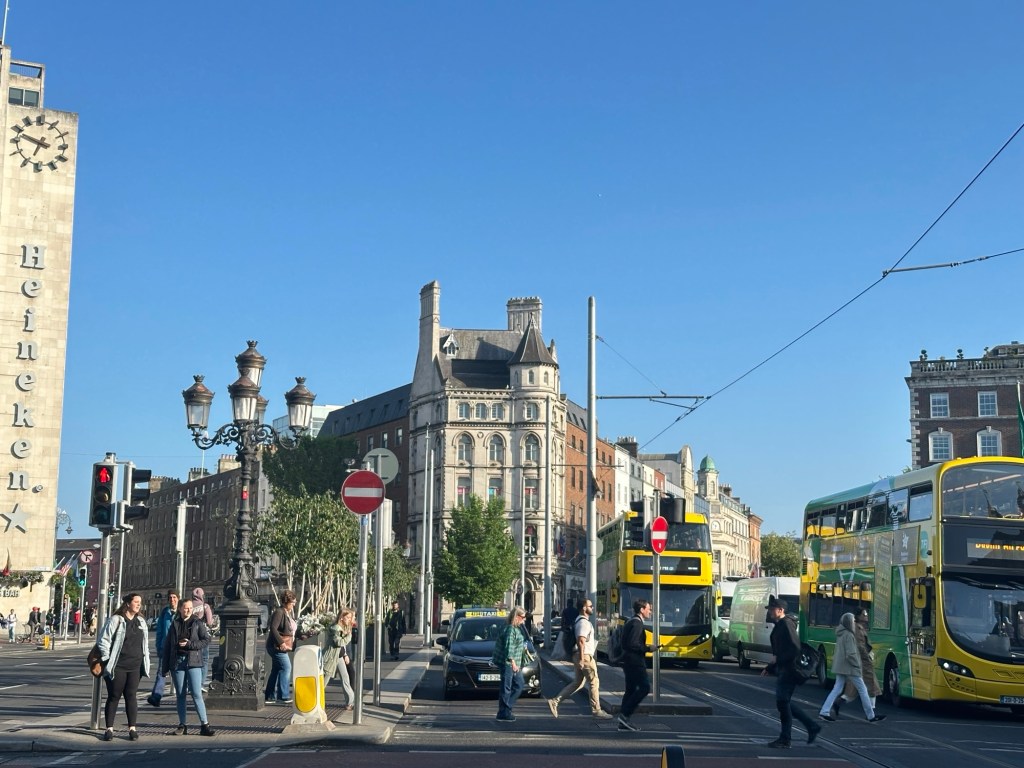
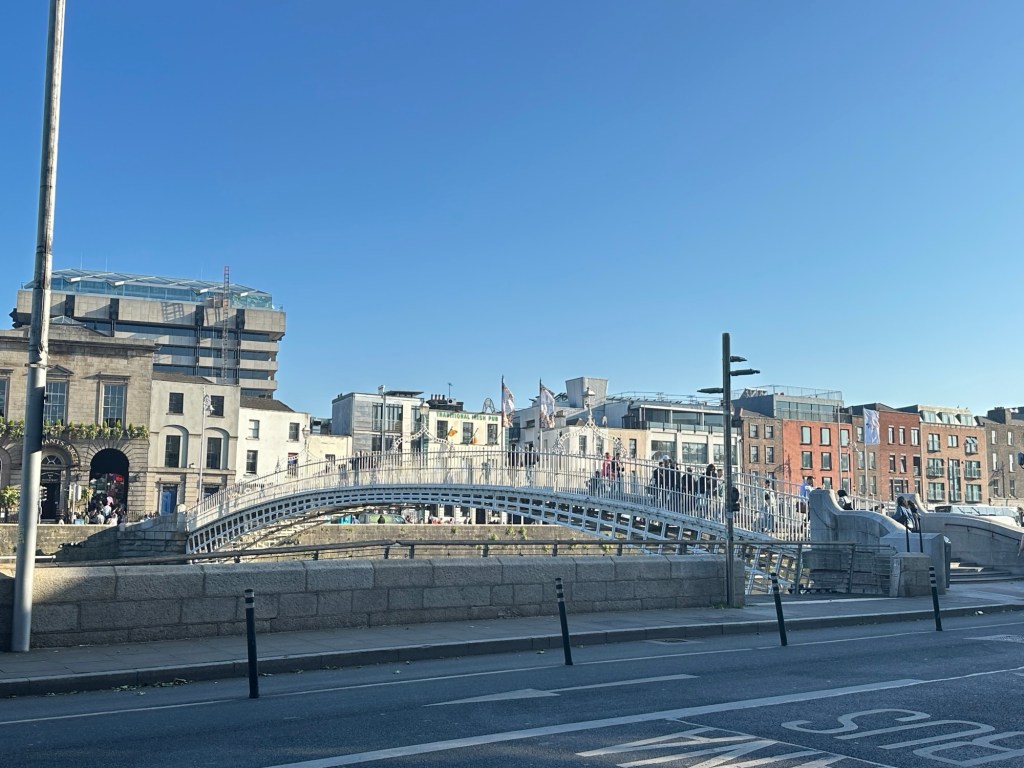
By this time it was 7pm. We found a little Turkish restaurant and had a very nice lamb and eggplant dish – I’m already over pub meals. On the way back to the hotel, we stopped at the Church Bar again for a drink, and another rendition of Irish music and dancing.
We leave Dublin tomorrow- we have thoroughly enjoyed the Dublin experience. It certainly is a vibrant and effervescent city. Very easy to get around – we walked everywhere, another 20,700 clicked up today. Music plays a big part in Irish culture – looking forward to experiencing more of that. Also can’t believe the number of bars, cafes and restaurants- so many, and of every genre possible.
Day 5
Friday 23rd May
Dublin to Fethard on Sea (near Waterford)
8-16 degrees, sunny most of the day, then cloudy
On the move today … time to say goodbye to Dublin and pick up our car ready for our self drive of Ireland. The Dublin Express bus, for 10 euro each, got us to the airport in 30 minutes. An hour later, our little grey Dacia Duster SUV (French/Romanian manufactured ) was soon packed up, and we were on our way.
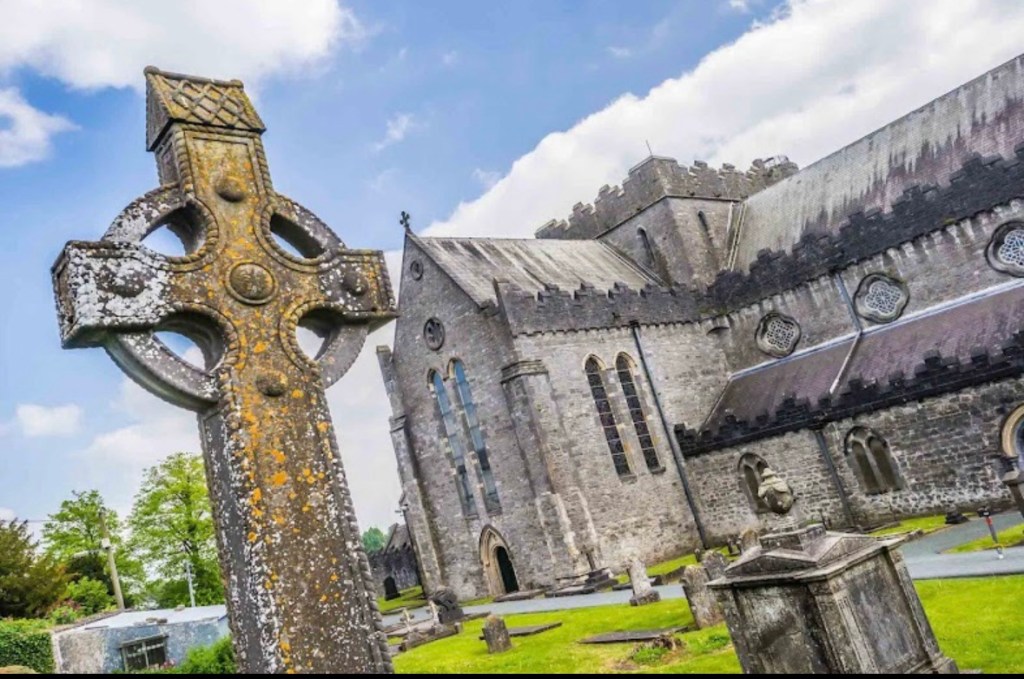
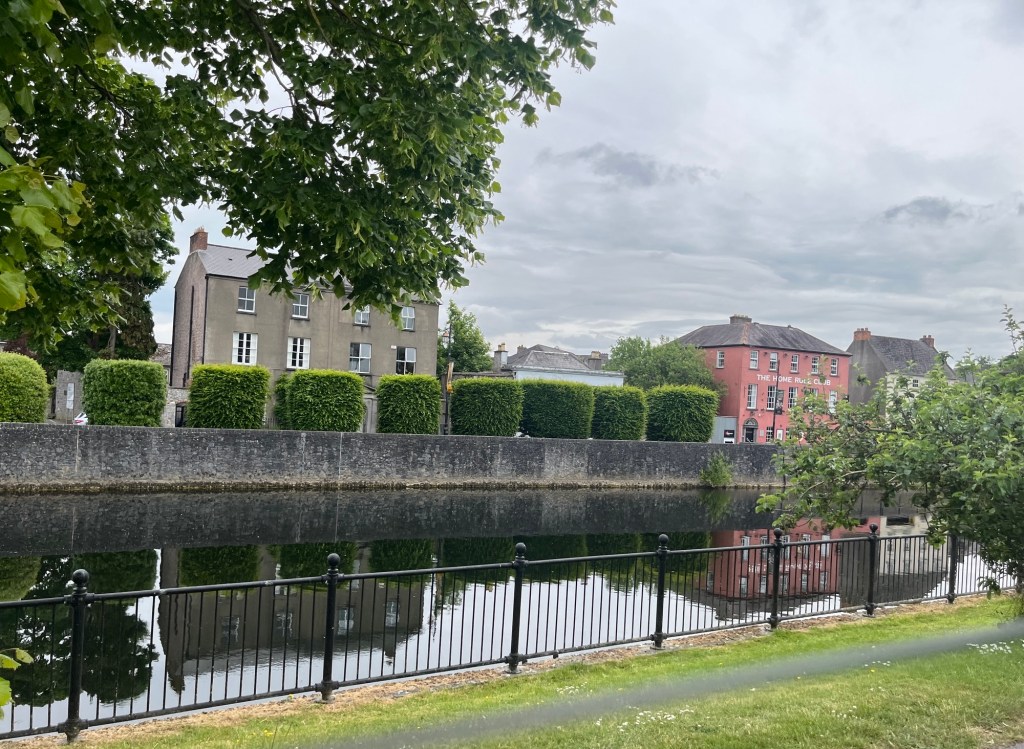
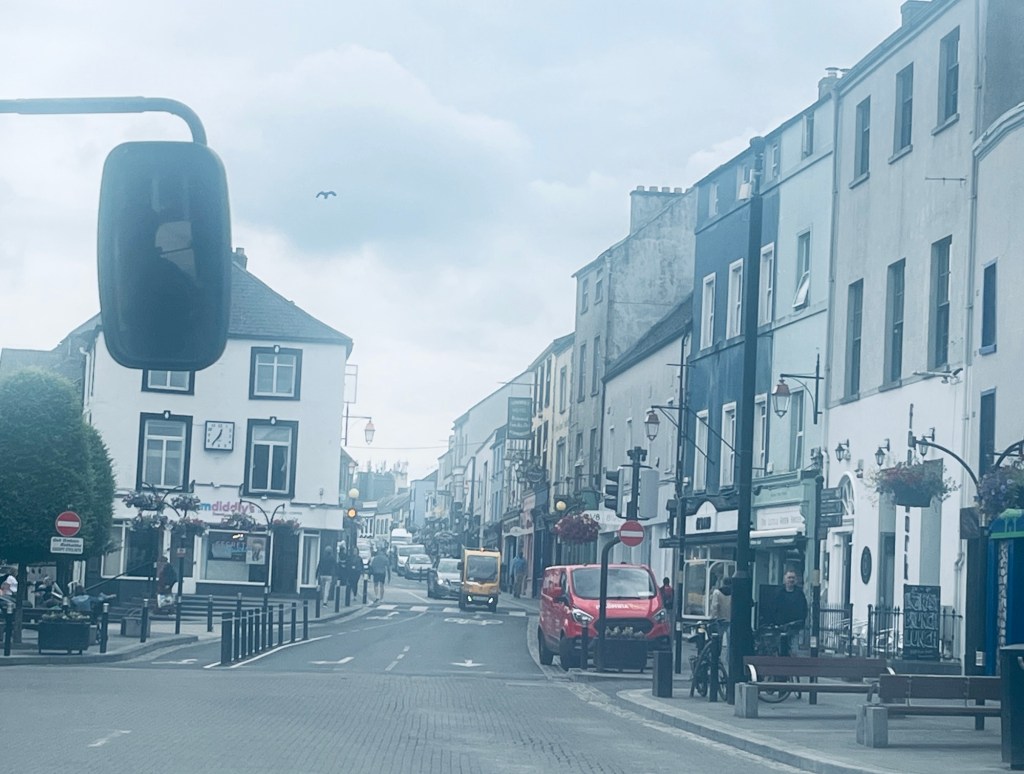
The freeways are in good condition, speed limit is up to 120kms/hr. It wasn’t long before we had vivid green countryside and farms to look out at. Two hours of driving and we made a stop at the medieval town of Kilkenny. Kilkenny sits in a lovely setting beside the Nore river, and many of its houses feature the local black limestone, known as Kilkenny marble. A brewery city, filled with atmospheric old pubs, it is also famous for its castle.
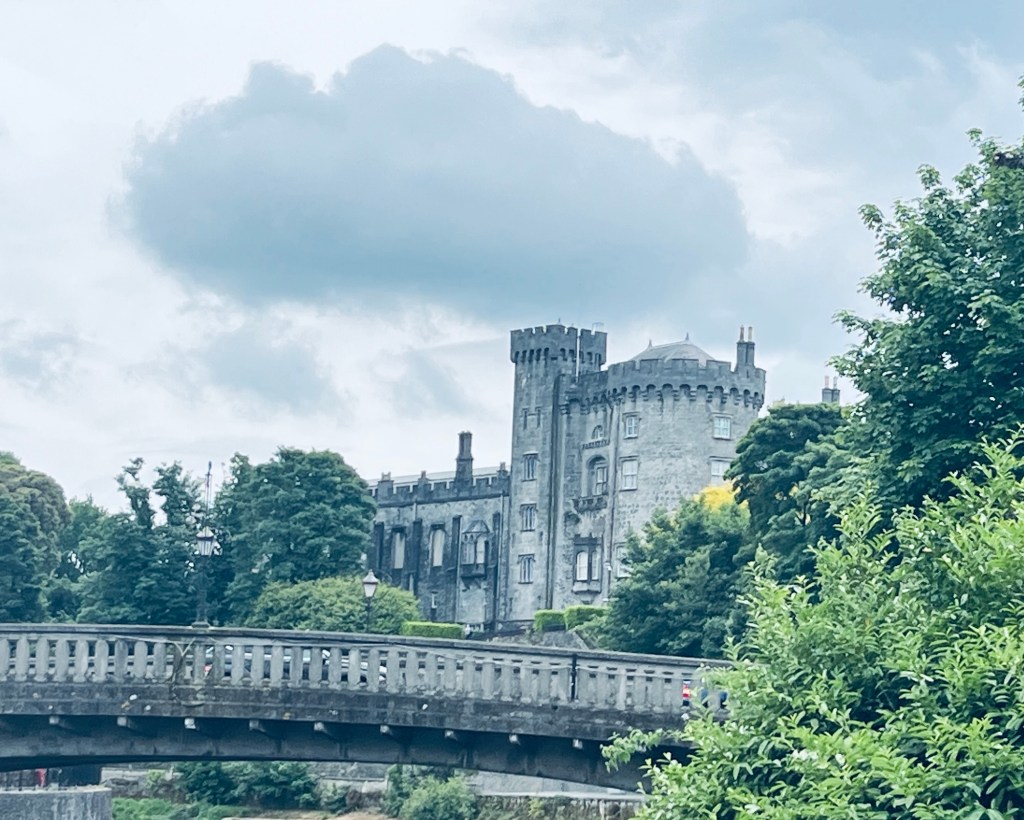
Built in the 12th century, Kilkenny Castle was remodeled in Victorian times. It is set in extensive parkland, and was the seat of the Butler family from around 1391 until 1967, when it was presented to the people of Kilkenny. We had a short walk through some of the grounds, then somehow found ourselves on a “road train” doing a tour of the city. Well we haven’t laughed so much in ages! Ivan the driver, entertained us with joke after joke, then proceeded to drive us around the city streets, continuing with all sorts of antics. Everyone knew him, and he seemed to command right of way at every turn! He would win any comedy festival hands down! We really needed a whole day in Kilkenny, but at least we have had a taste of it. The little streets and shops looked so quaint and interesting.
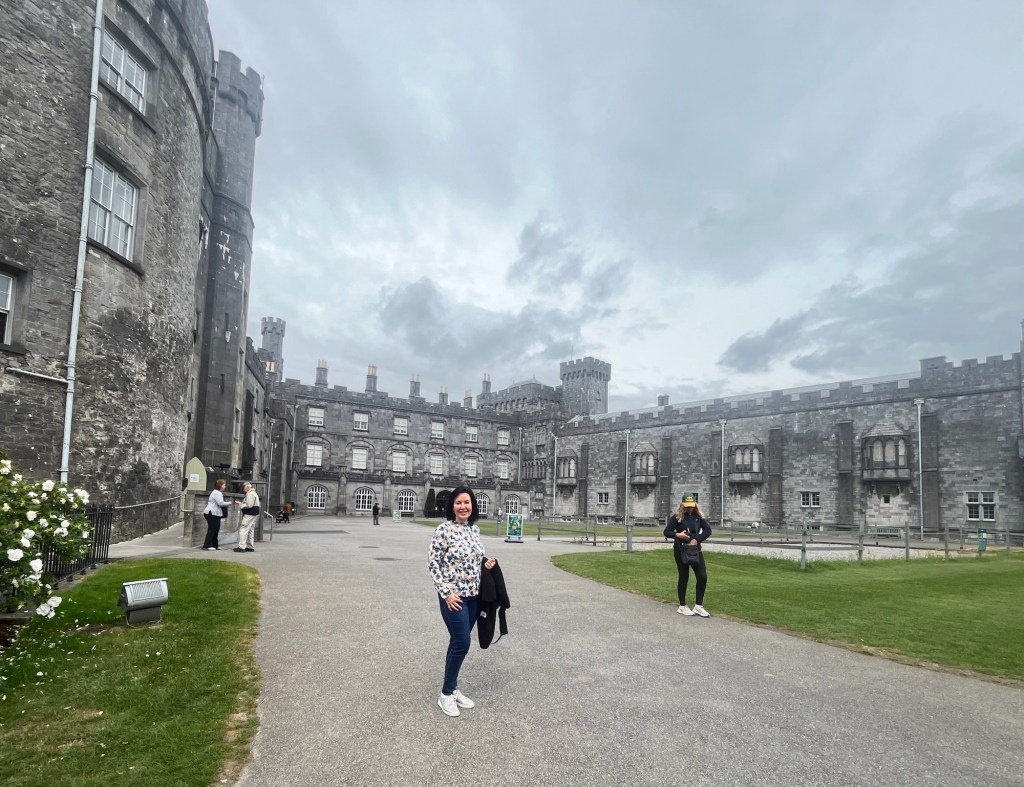
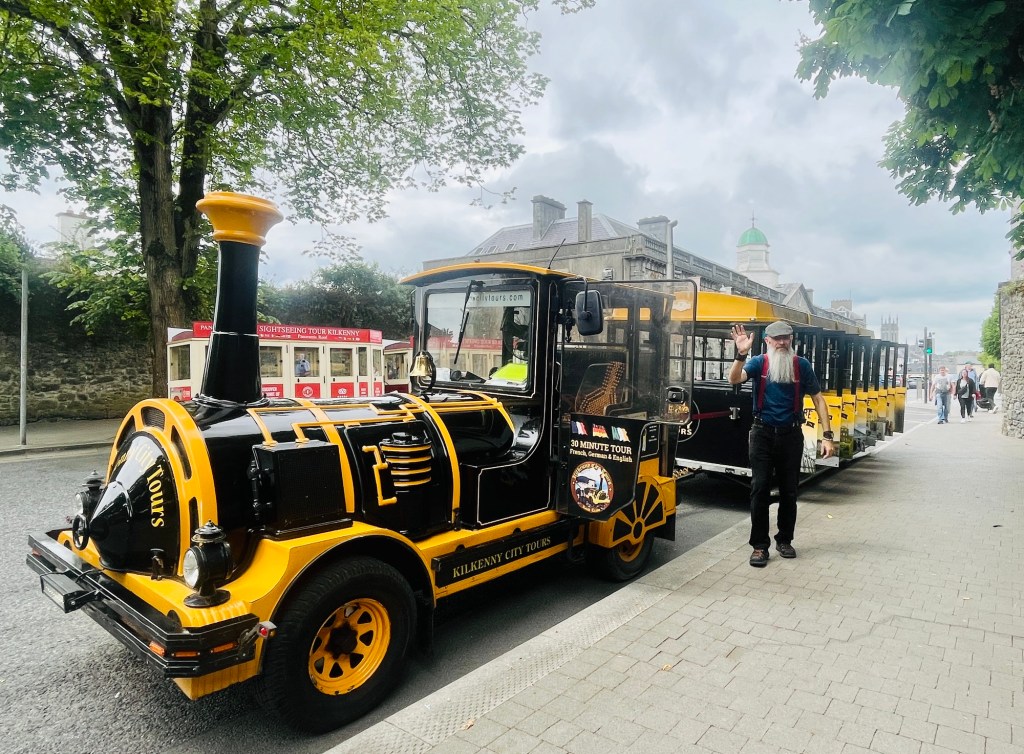
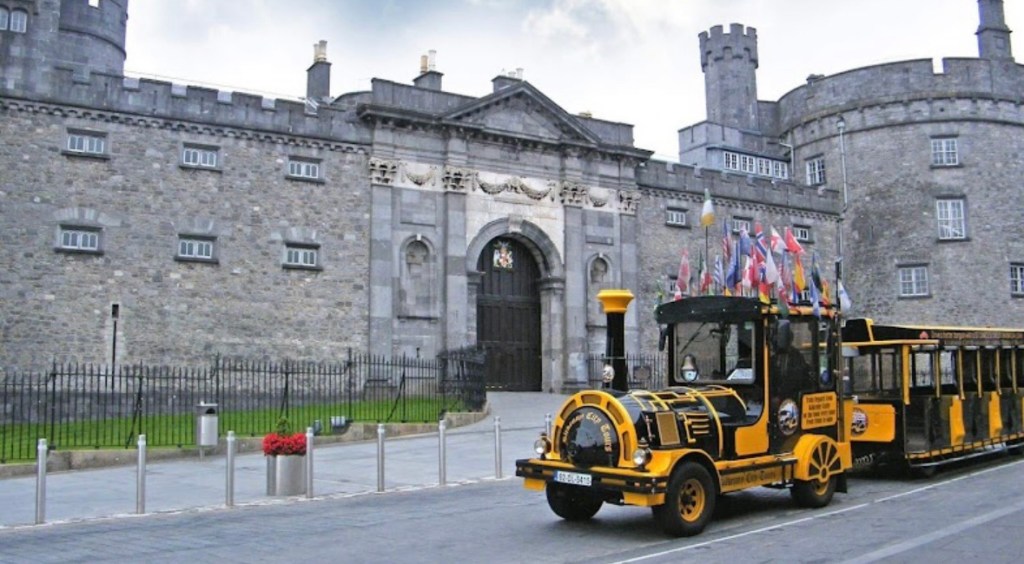

Forty five minutes later and we were in Waterford, Ireland’s oldest city. Waterford was founded by the Vikings in 914, and later extended by the Anglo-Normans. Its commanding position on the estuary of the Suir river made it southeast Ireland’s main port. The remains of the city walls define the area fortified by the Normans.


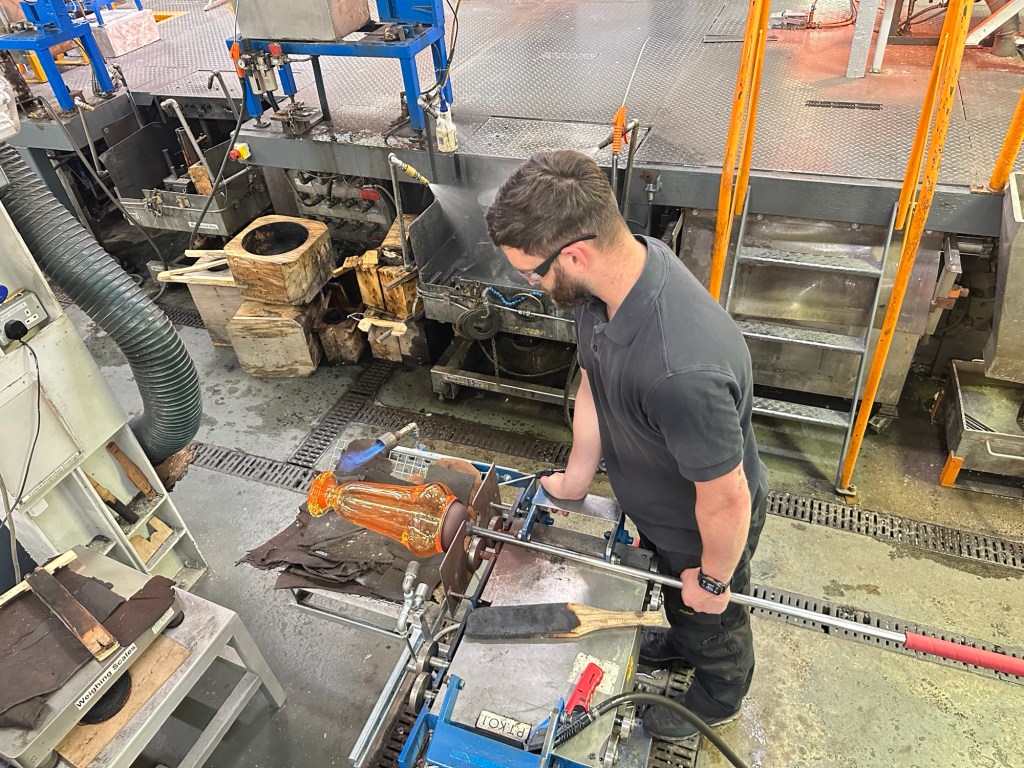
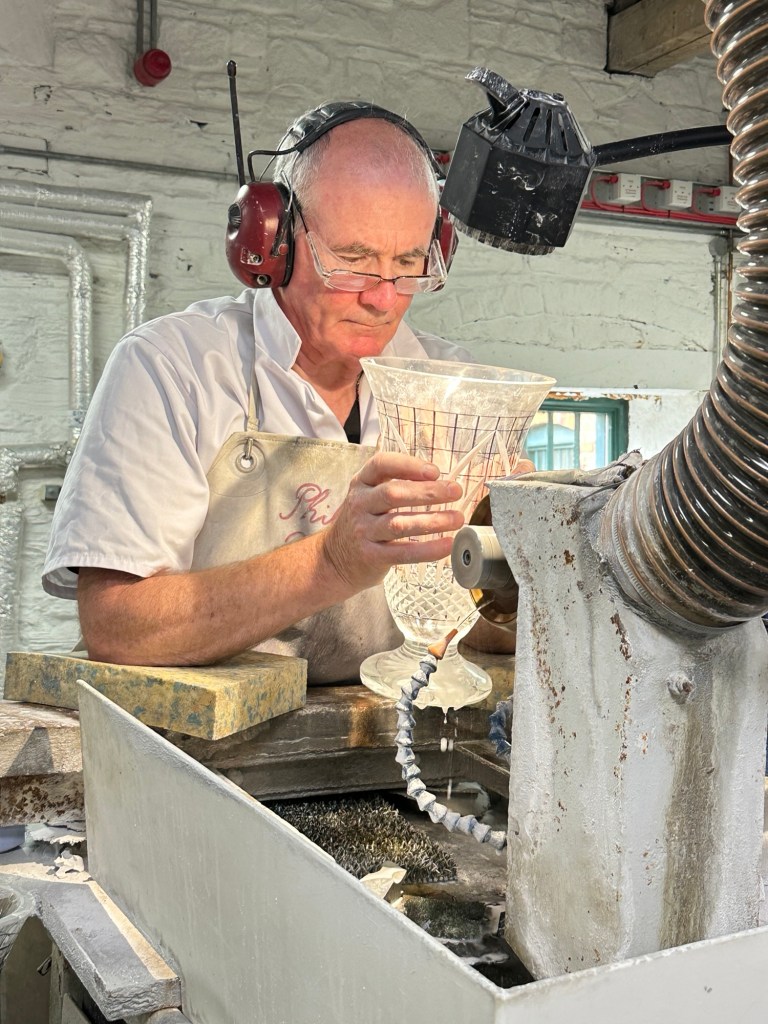
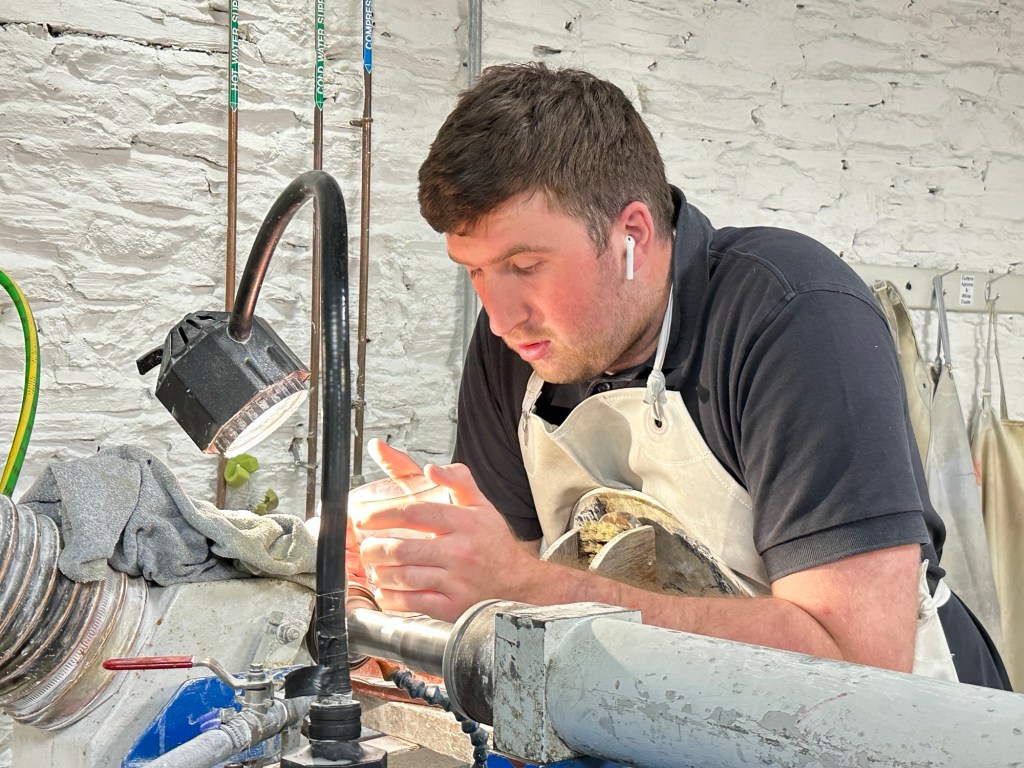
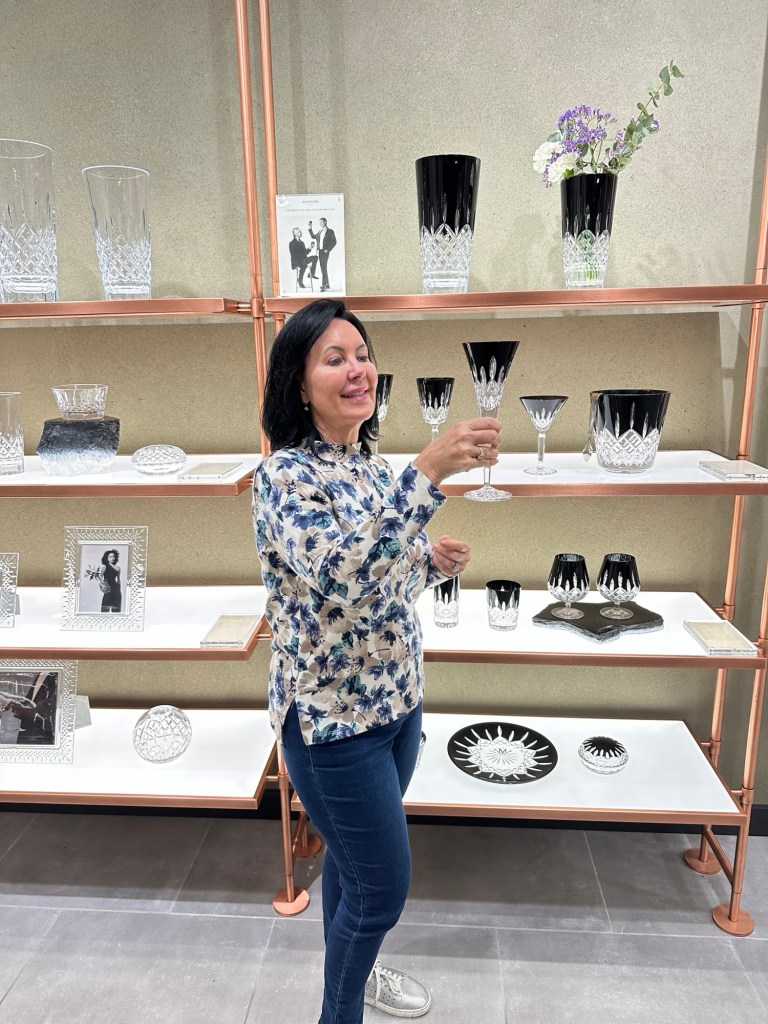
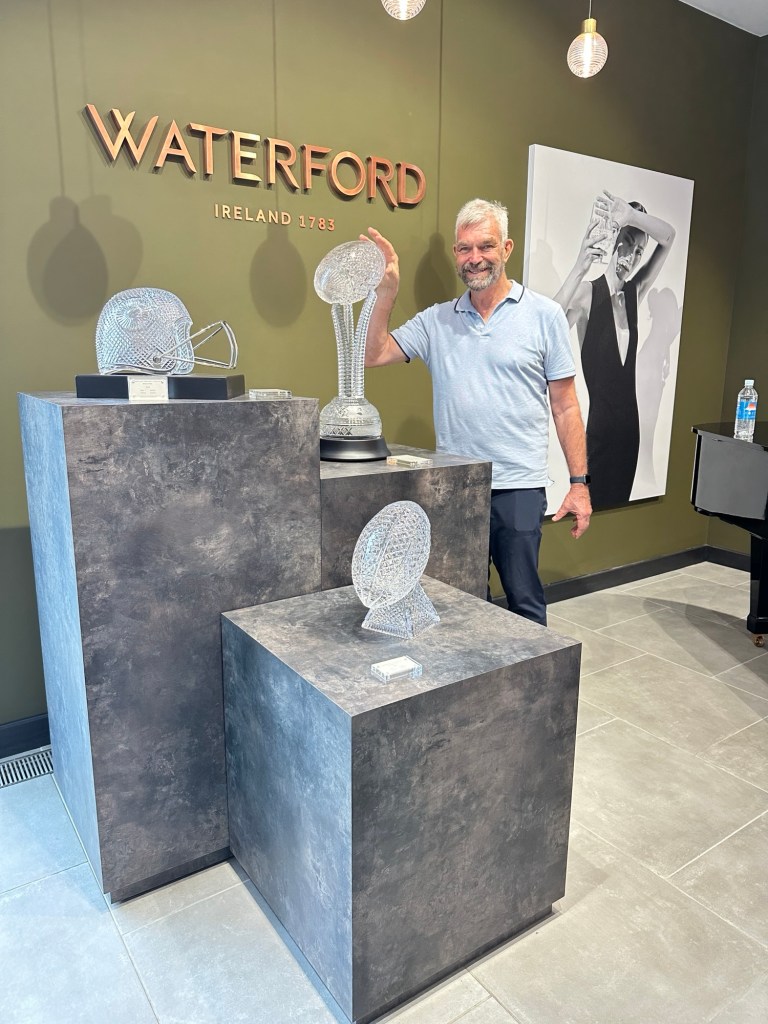
Waterford is home to the famous Waterford Crystal. Crystal was first produced in Waterford in the 18th century, but it wasn’t until after World War II that the company reemerged and once again produced the fine glass for which the name is so famous. On a tour we learnt about, and observed the process of, crystal-making. It was fascinating watching the master craftsmen at work. Also makes you appreciate why the crystal is the price it is.

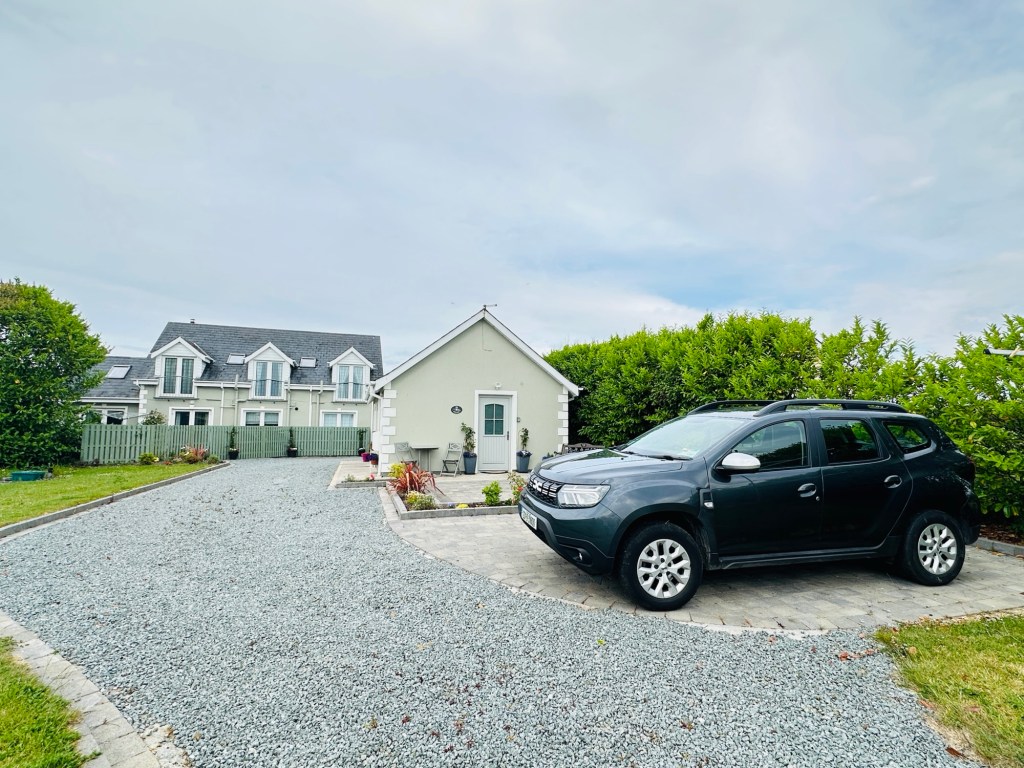
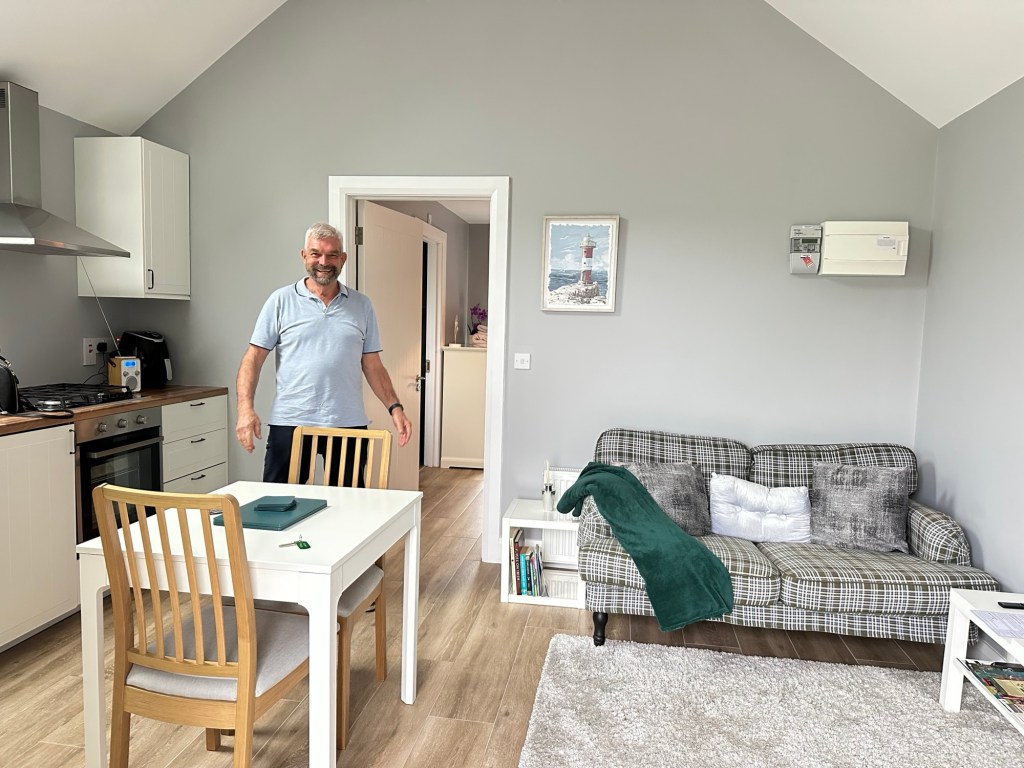
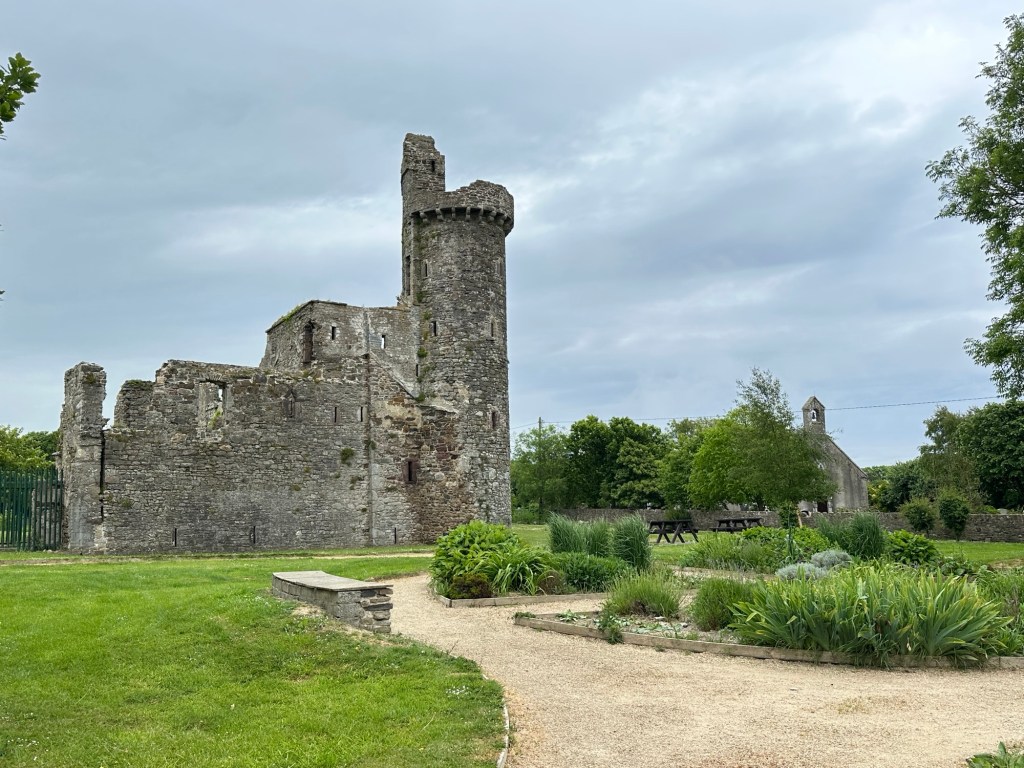
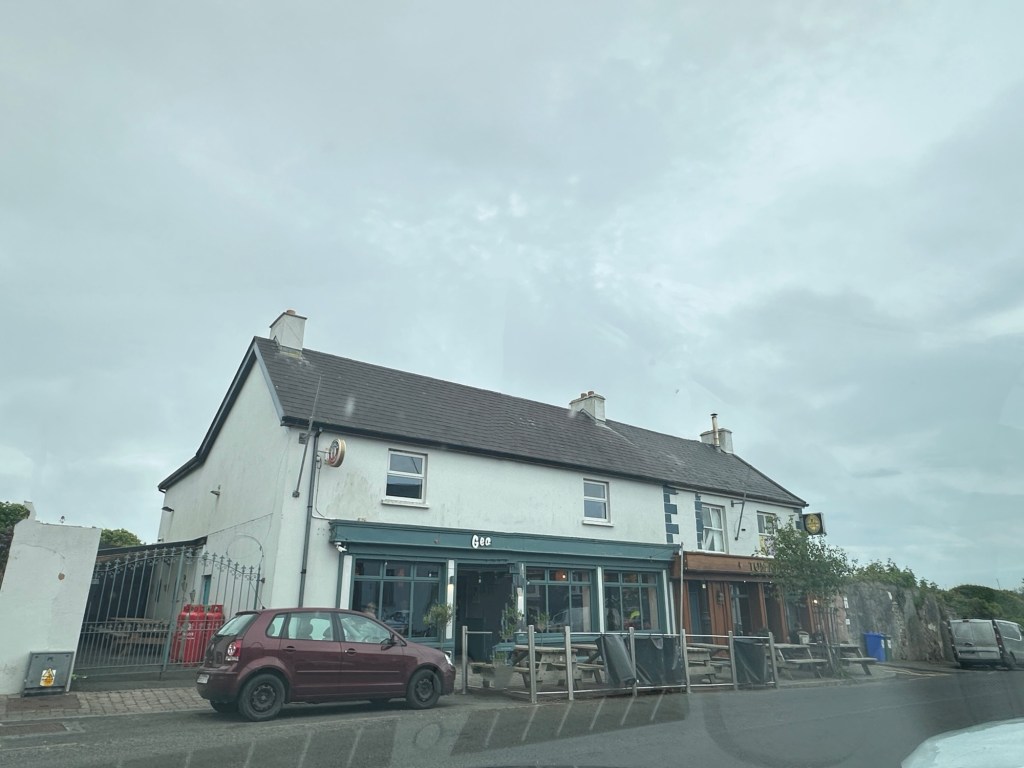
Another fifty minutes of driving along narrow (and I mean narrow) roads lined with hedges and stone walls until we reached our cute little Garden Cottage in Fethard on the Sea, in the county of Wexford. This cottage was a great find, pity we only had one night here. We had a walk around the little town, found the castle ruins, then enjoyed dinner at the local fine dining Greek restaurant – another great find. Then back to enjoy our little cottage.


Day 6
Saturday 24th May
to Lauragh
10-14 degrees, cloudy, drizzle, some heavy rain in the afternoon, then sunny
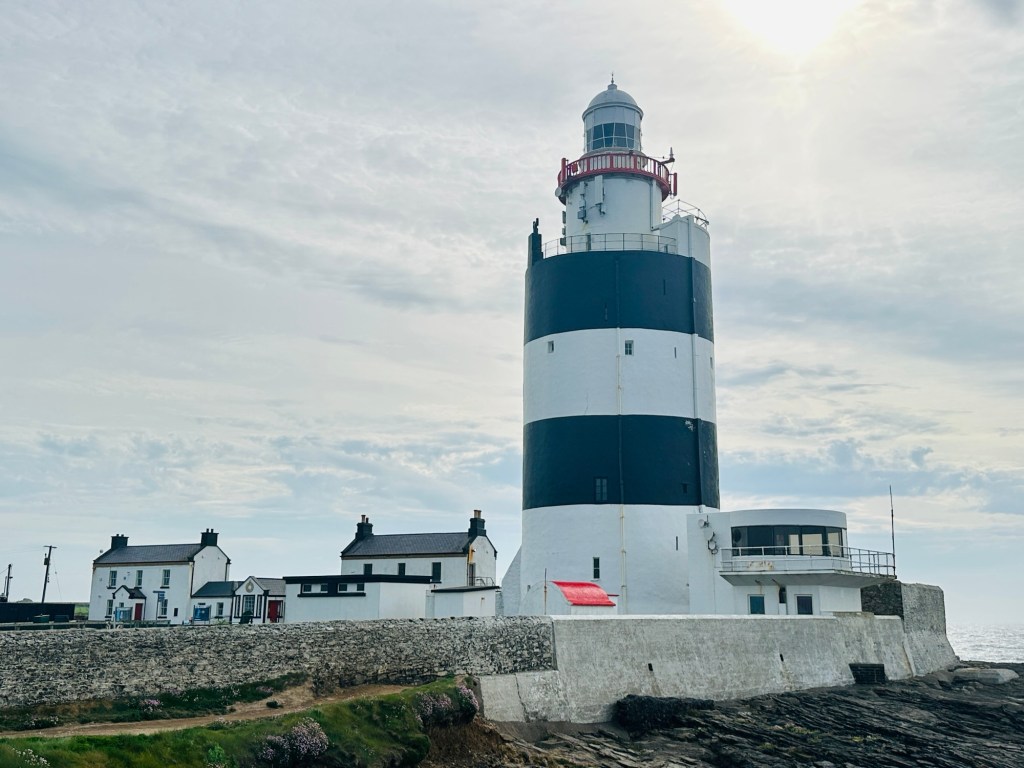
After saying goodbye to our lovely host, Anna, we did a little tourist drive of the local area ending up at the very southern point of the peninsula at Hook Lighthouse. It is oldest intact operational lighthouse in the world.
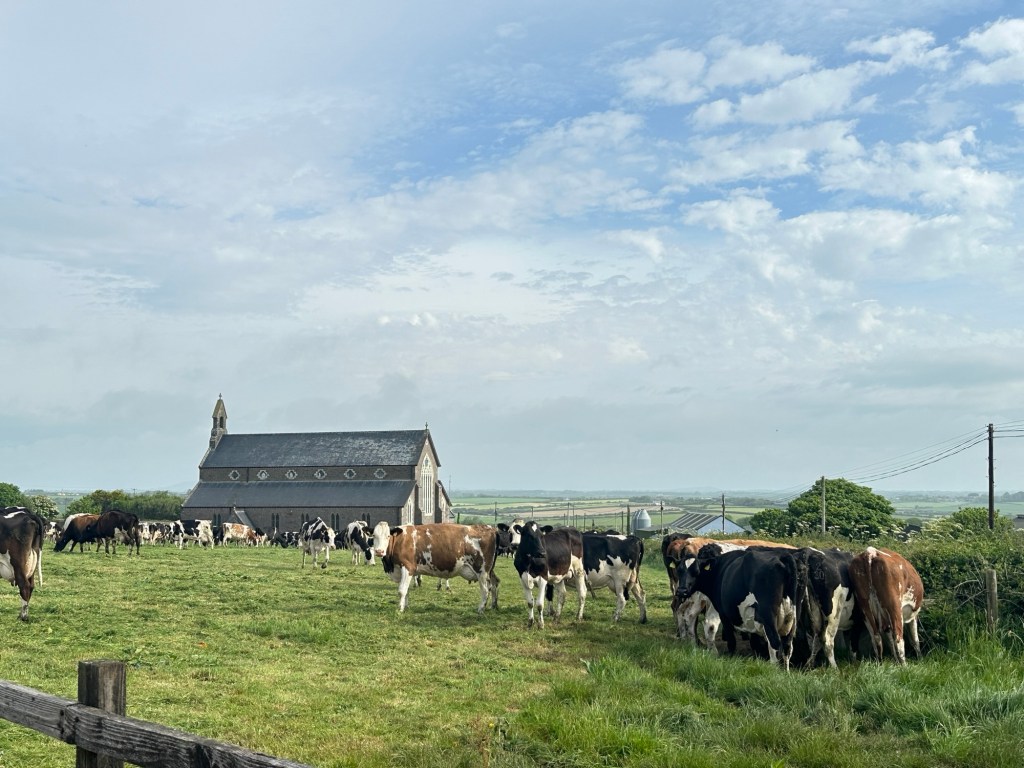
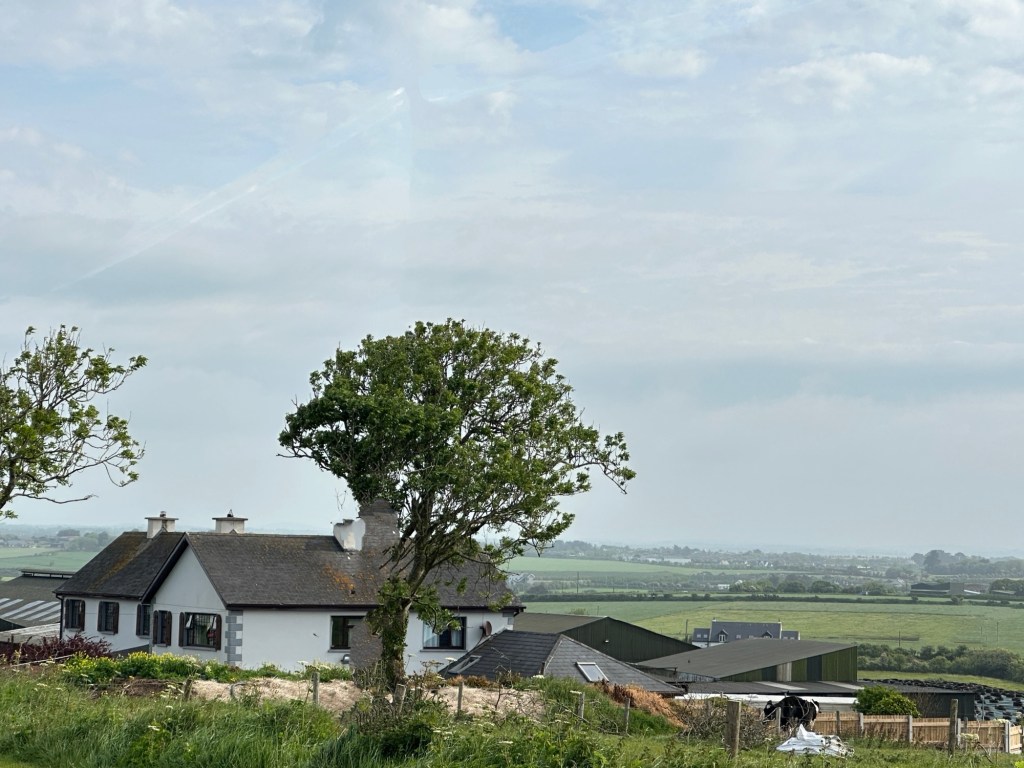

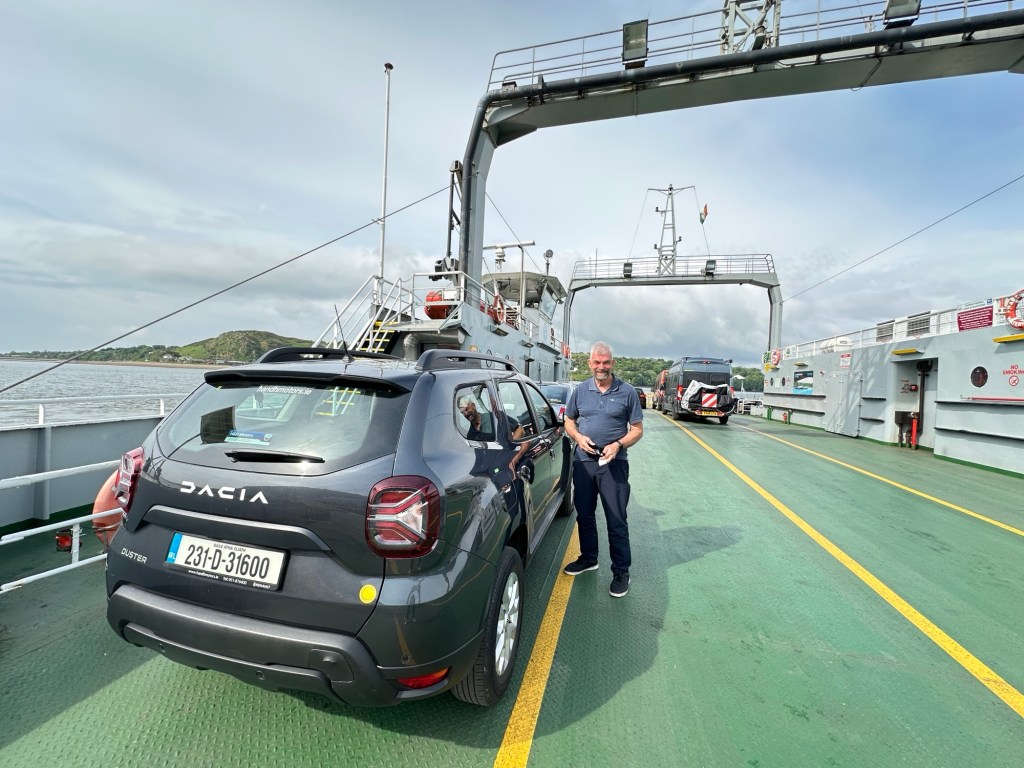
From here, we drove off the beaten track to the little village of Ballyhack. Anna had suggested we take the car ferry across to Passage East – avoiding the highway, which we’d already travelled anyway.

The Waterford Bypass took us away from the big city. We drove through some very pretty scenery through the county of Cork. Again we bypassed Cork city, and drove to Blarney Castle, 8 kms away.
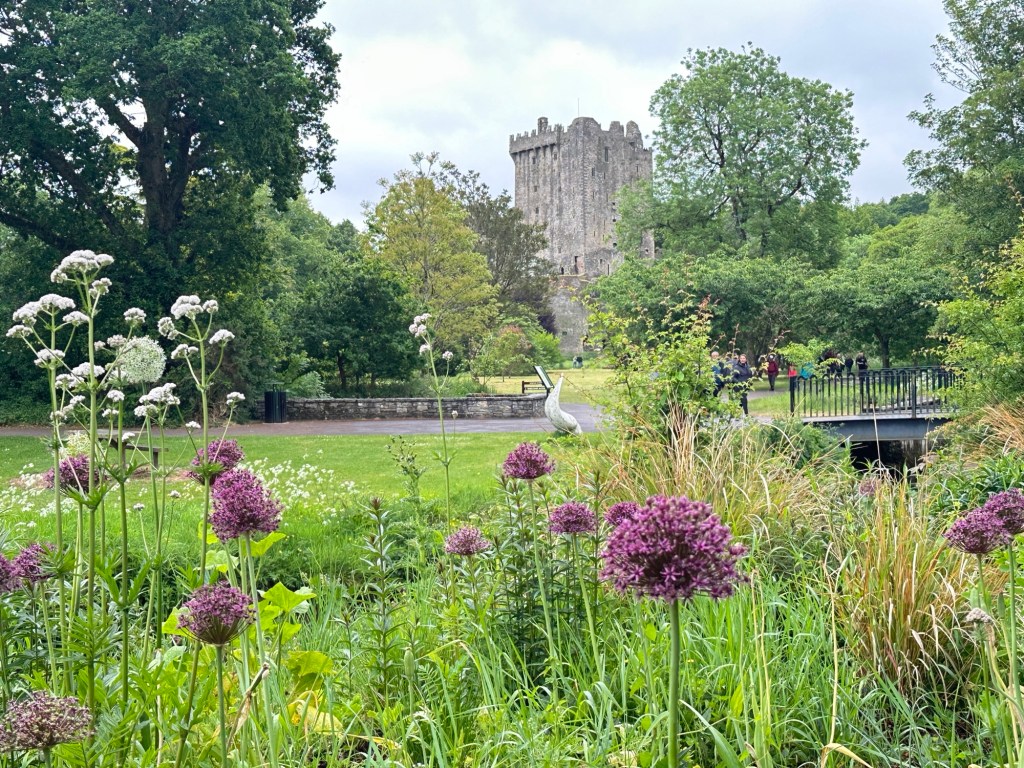

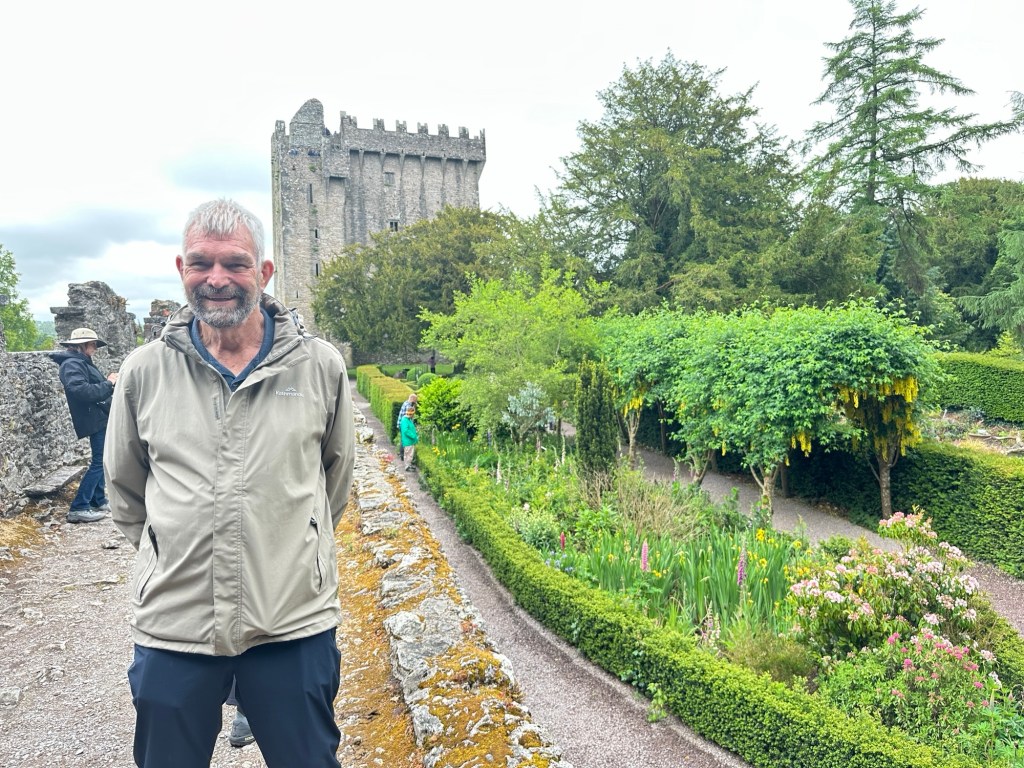
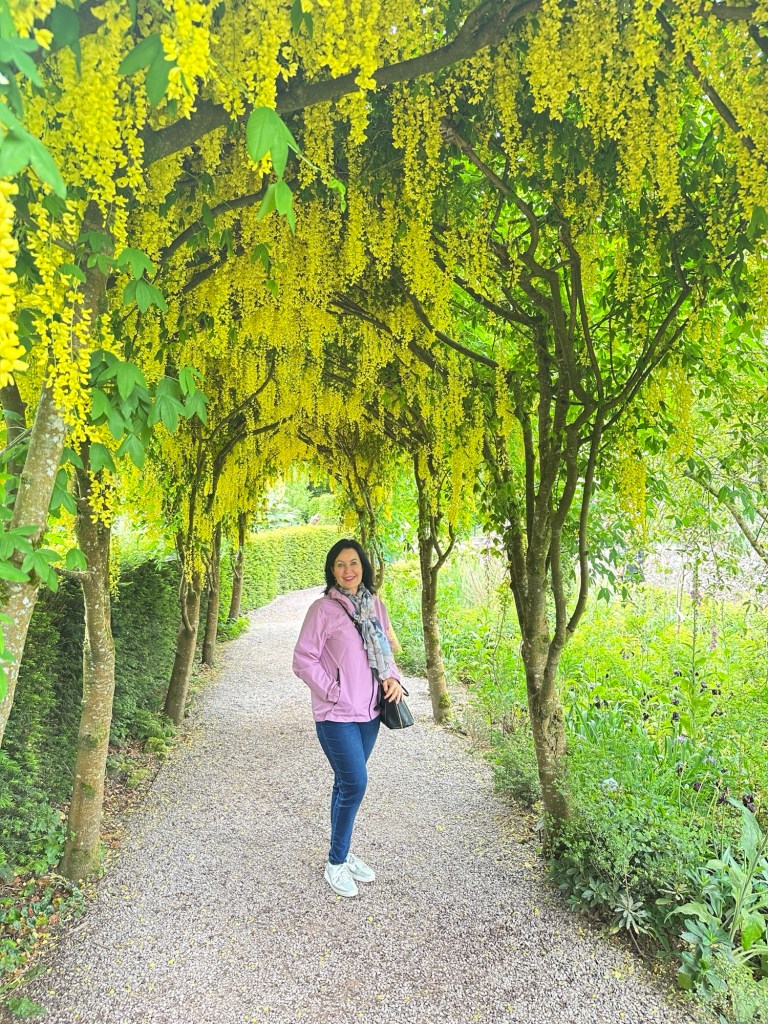


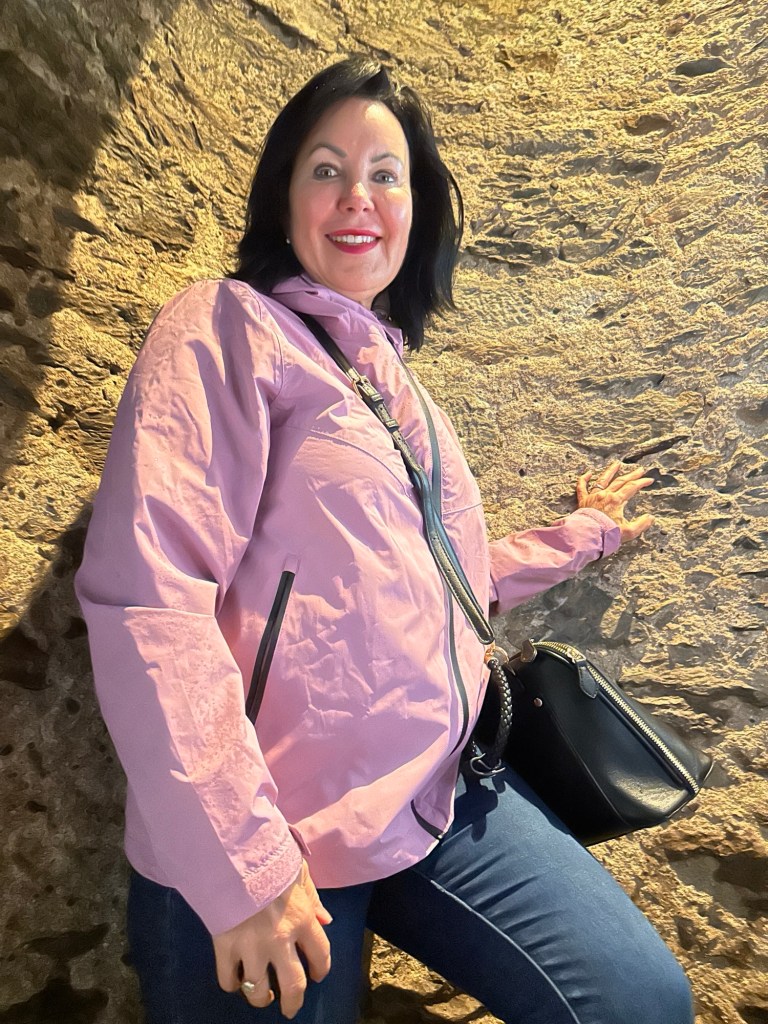
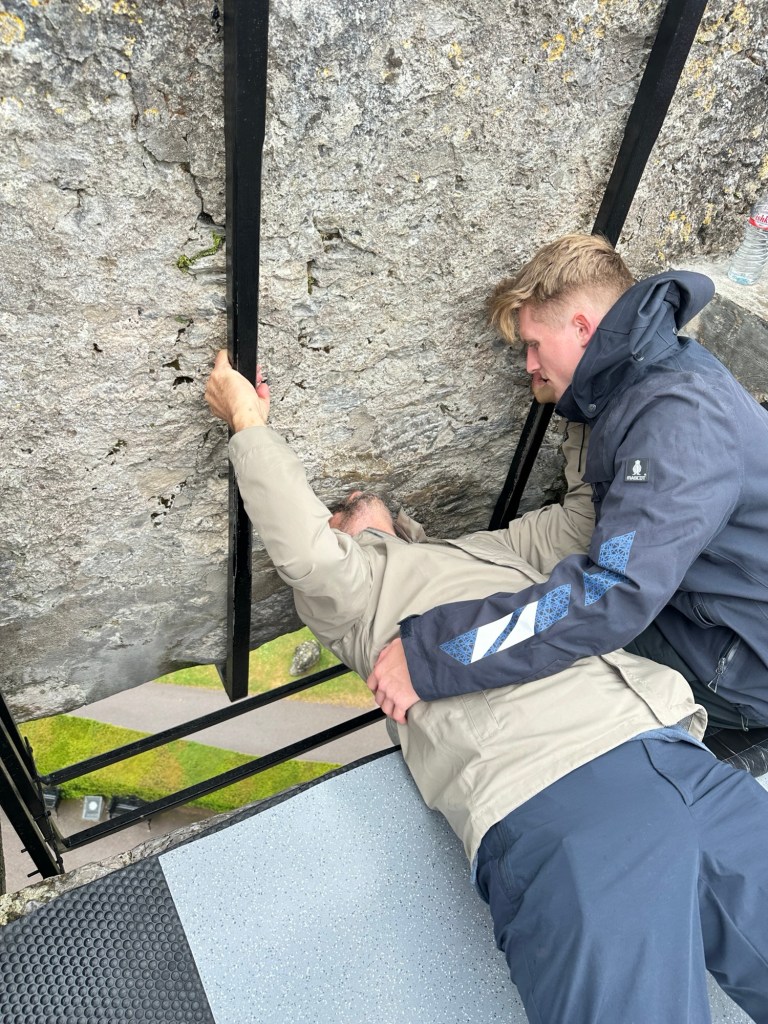
Of course we had to go and kiss the Blarney Stone – it is a block of Carboniferous limestone built into the battlements of the Castle. According to legend, kissing the stone endows the kisser with the gift of the gab. I did this once before many years ago – Frank said it worked! Having done it the second time, I am hoping I will communicate with more eloquence and wit!


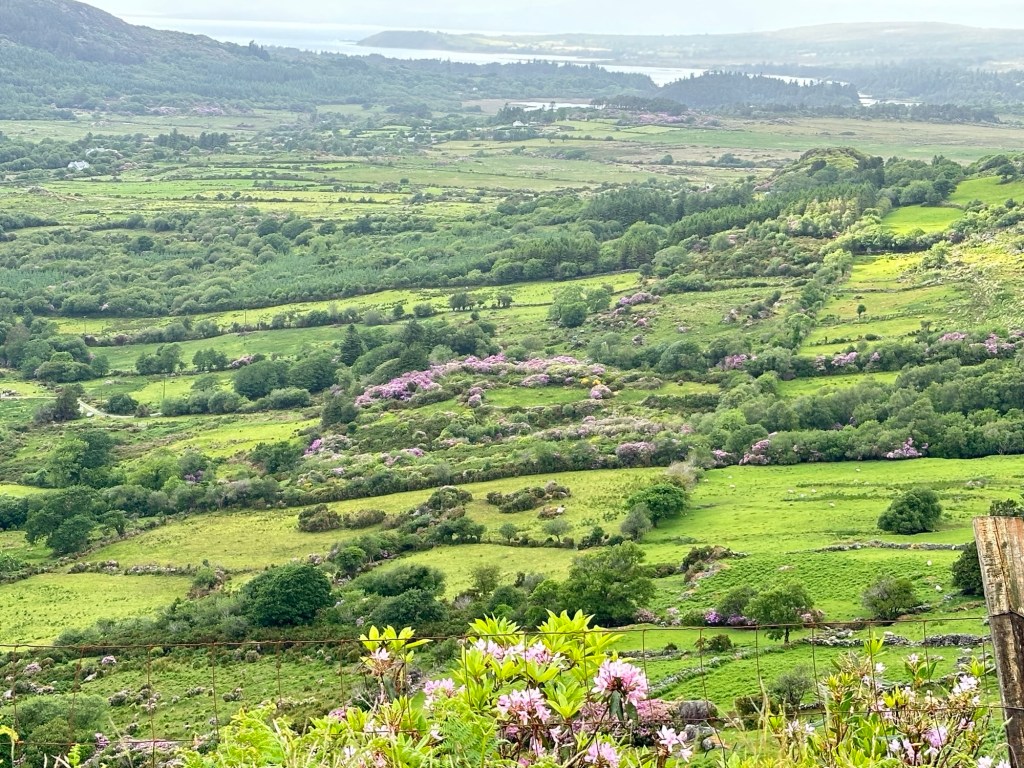
Ireland’s landscapes vary from the wild, storm lashed coastlines to the gently rolling green fields speckled with the flat silvery lakes. The Emerald Isle certainly lives up to its nickname – I think we have seen at least 50 shades of green so far!
The clouds decided to open up soon after we left the castle. We still had a two drive to our lodgings. We needed to get a few supplies as we had been told that our little studio was in a remote location. We did find a SPAR, and also a pub at Glengarriff where a bowl of vegetable soup warmed us up. It would have been lovely looking out at the sea if it hadn’t been raining!
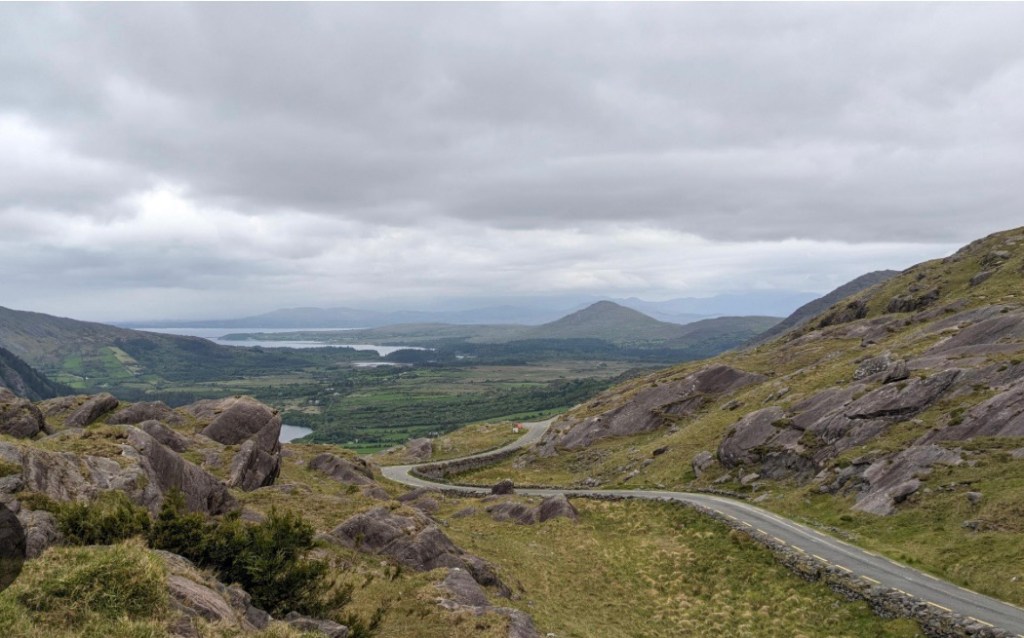
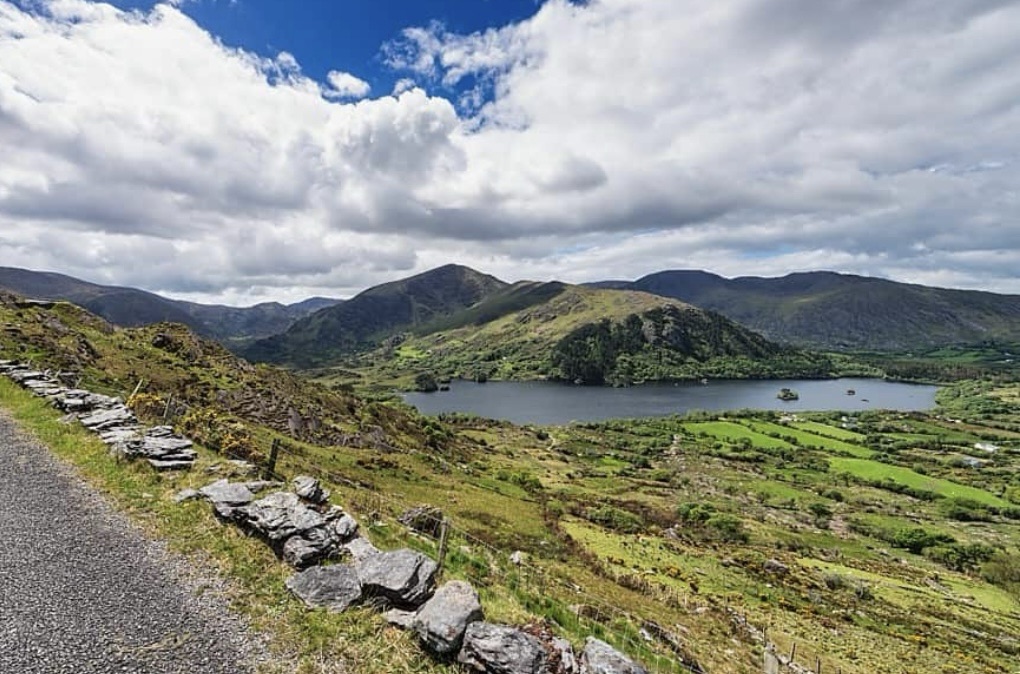
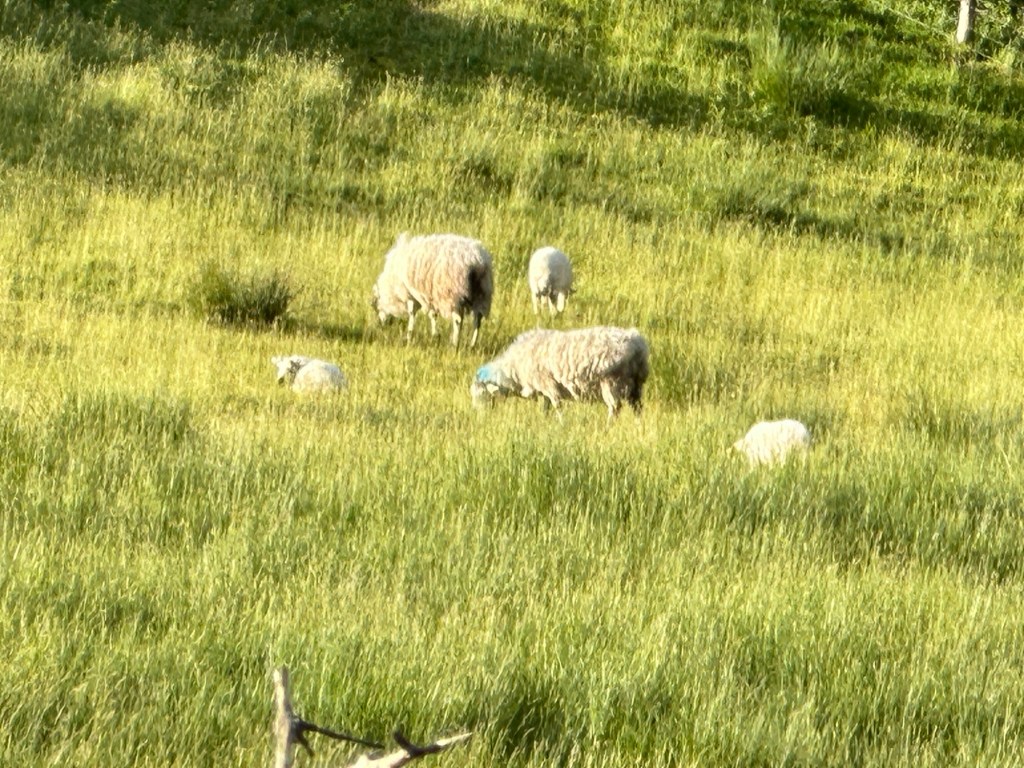
So then we came to Healy Pass, a 12 km road that wound its way through a rugged, out of this world landscape between two of the highest summits of the Caha mountain range. The hairpin bends in the rocky terrain, were scary at times, as was passing other vehicles, but all worth it for the spectacular scenery. The well fed sheep, and the cute spring lambs, dotted all over the hills, were oblivious to us travelling by.

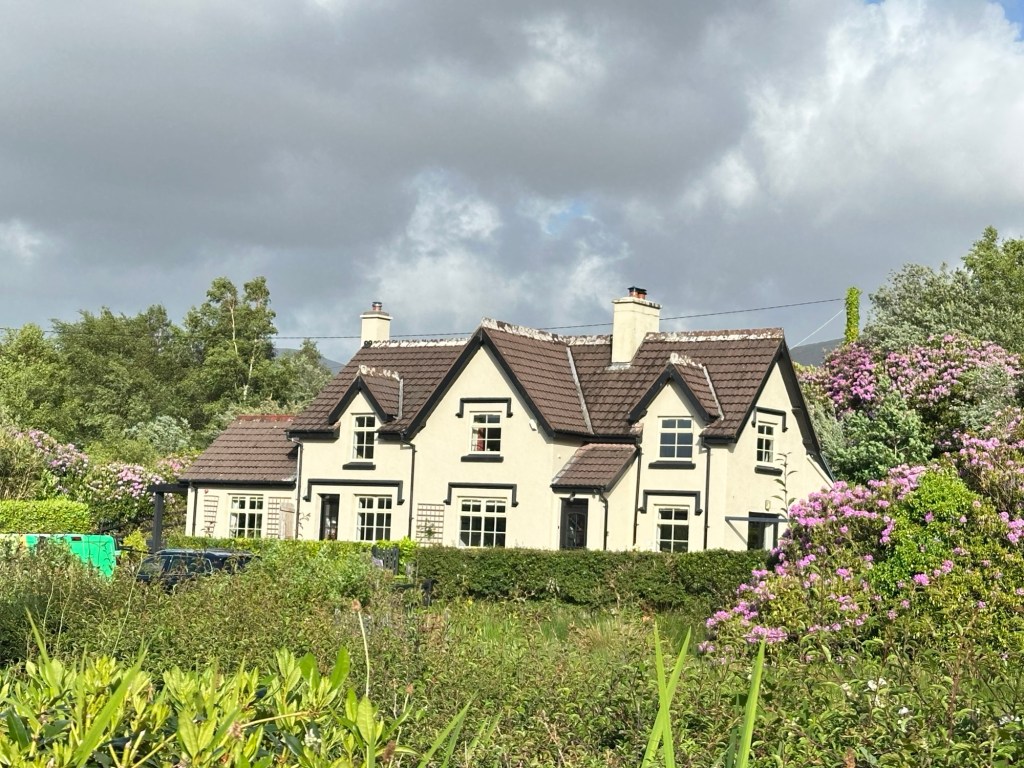
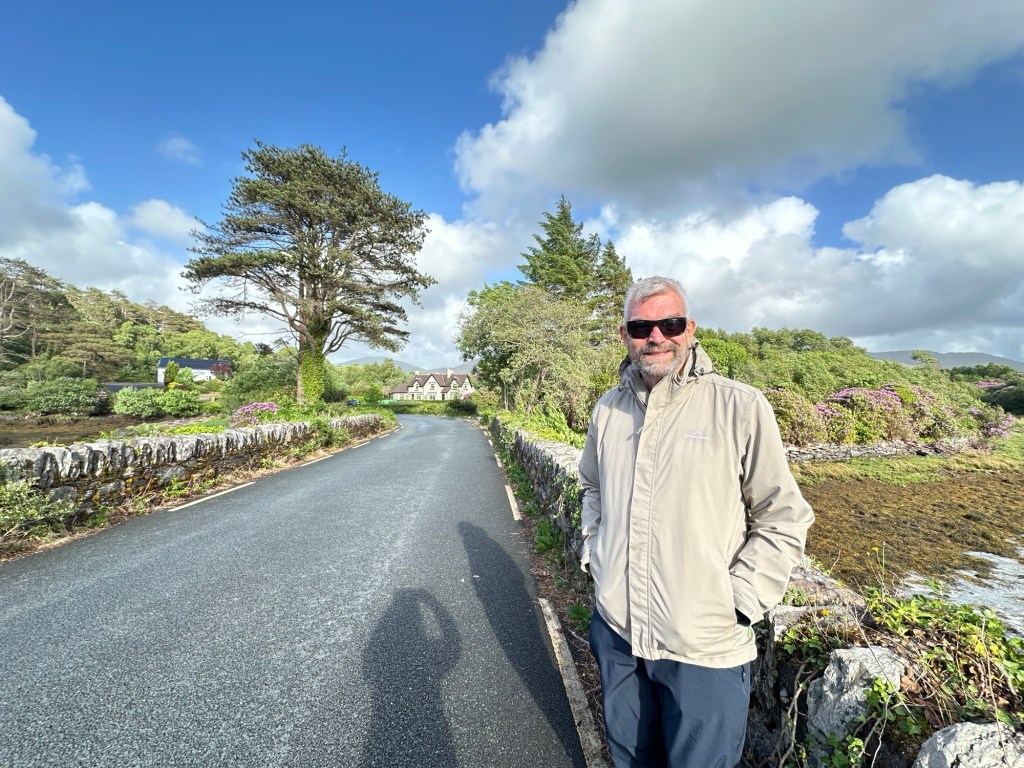
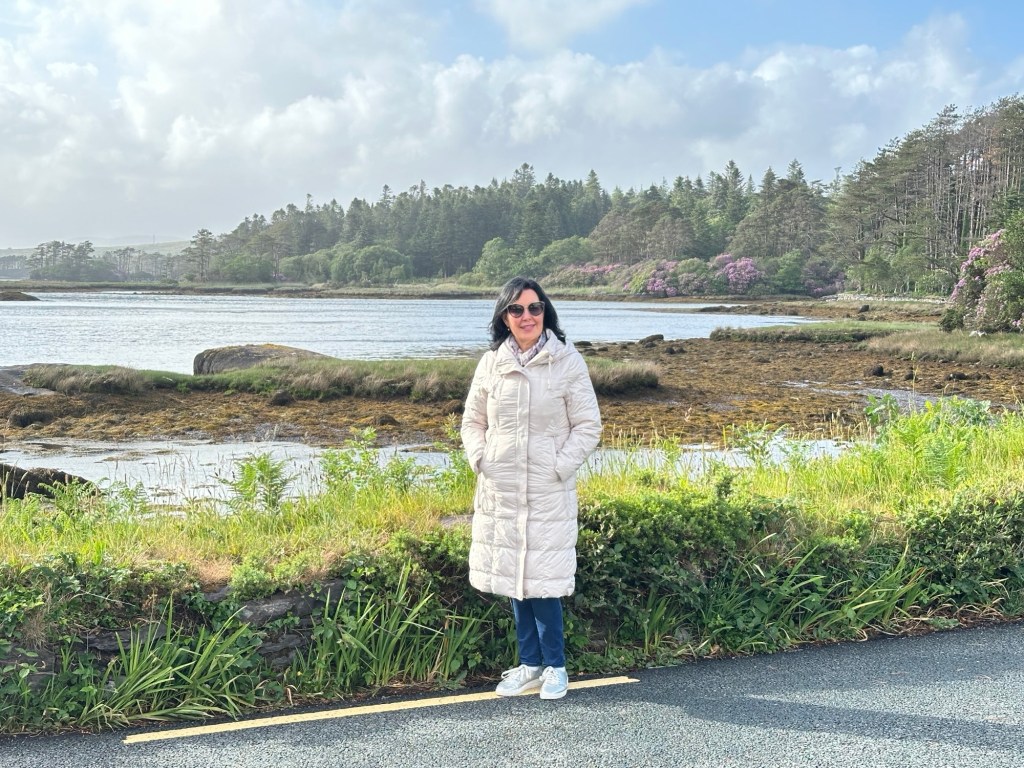
Finally made it to our Cosy studio apartment in Lauragh – and the sun had come out again. Again, this studio had everything we needed. It was a house, and originally had a post office and a cafe attached. The cafe had been converted into the studio apartment, and the post office added to the office. It was beautiful. We had sea views from our front window.

Day 6
Lauragh (south west Ireland )
10-13 degrees, mainly sunny, very windy, occasional quick showers
After much discussion on how to best fill the day, and to utilise the somewhat fine weather (well at least to start with) we decided to drive the Ring of Kerry loop.
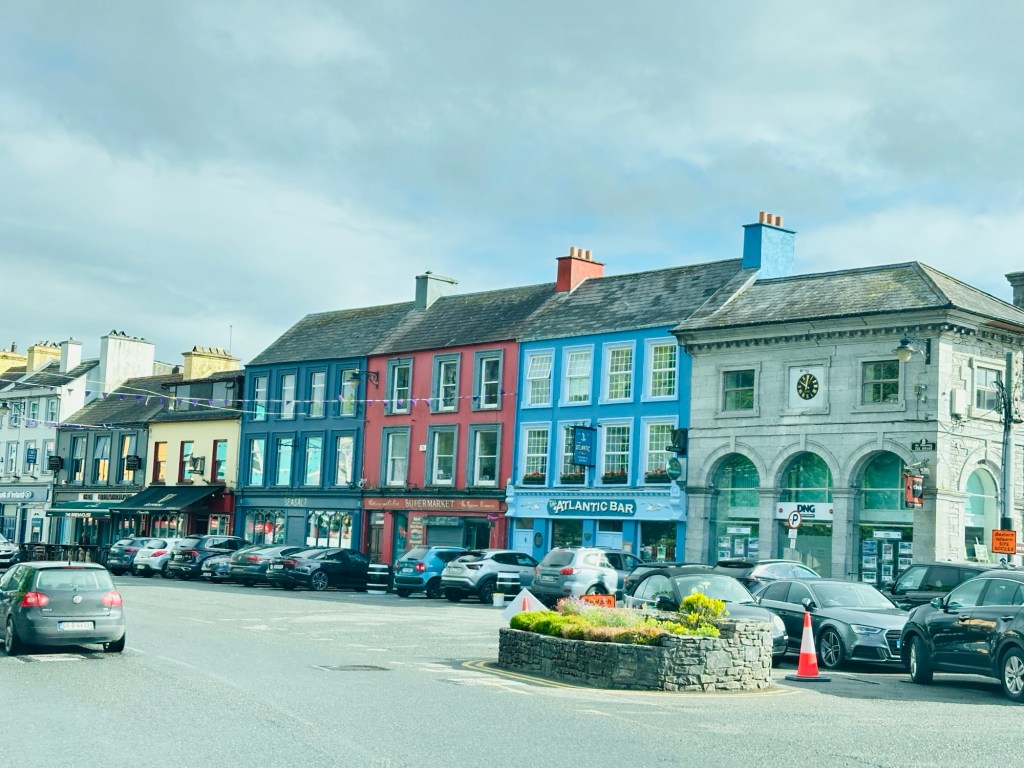
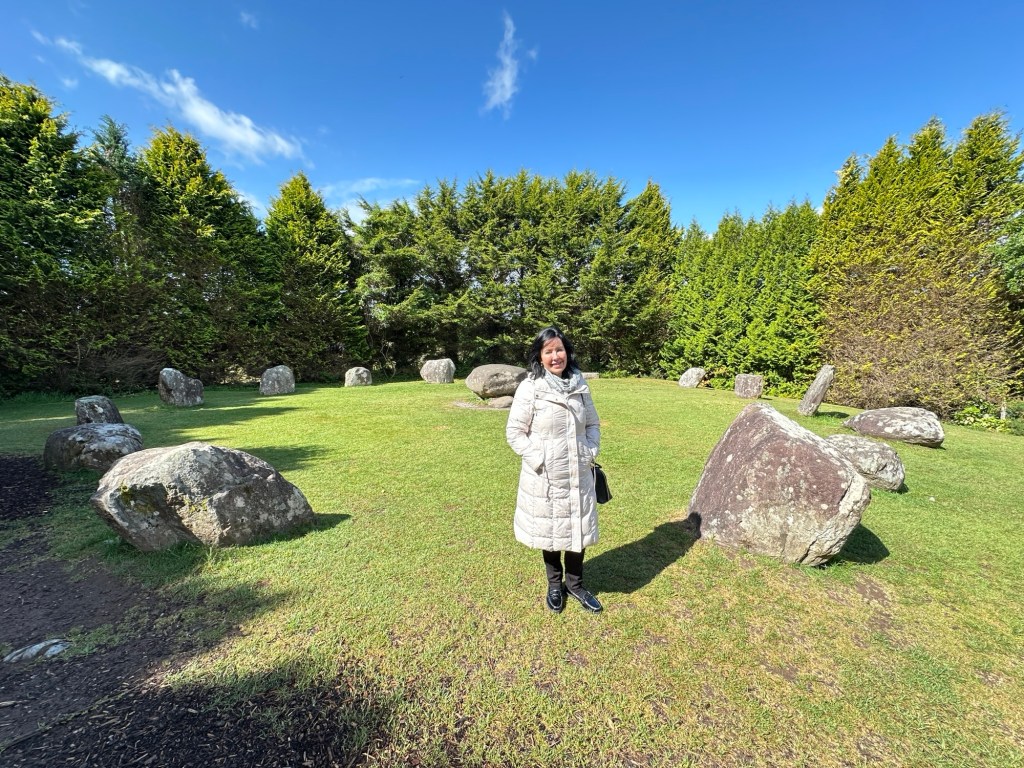
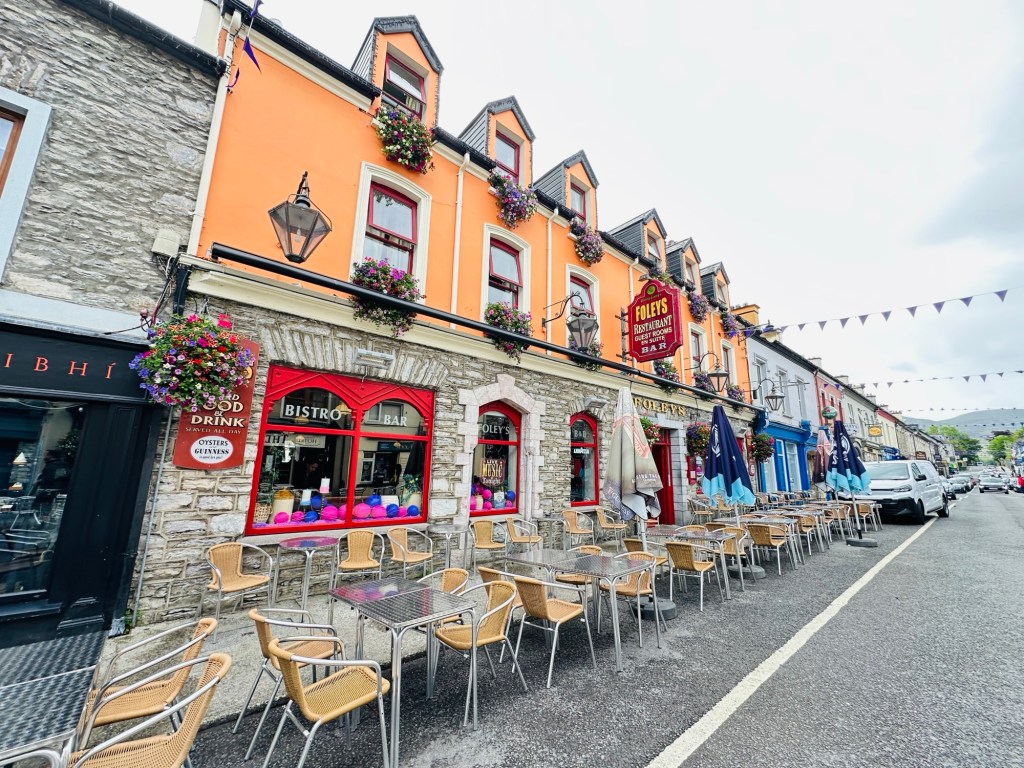
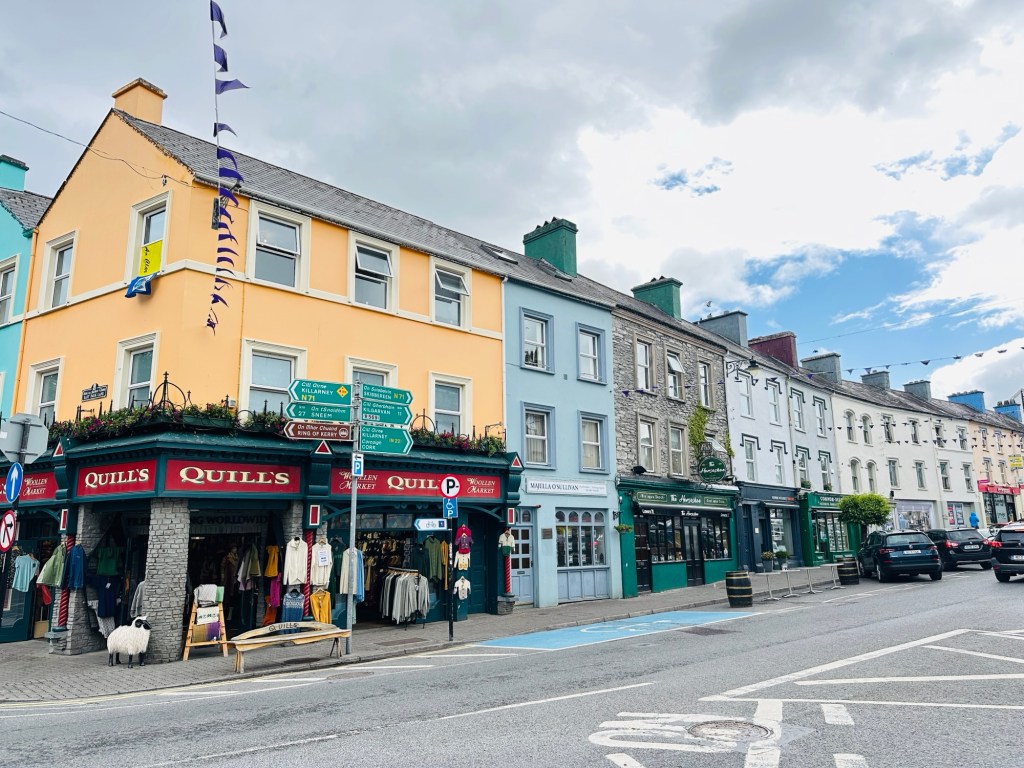
Kenmare, 24 kms from our little studio, was our starting point. This was a very quaint town with coloured buildings, and lots of activity – maybe it was meetup time after Sunday mass. We walked to the Stone Circle. Stone circles were built during the Bronze Age (2000 – 200 B.C.) and Kenmare Stone Circle is the biggest example of over 100 circles that exist in the south west of Ireland. They were believed to be built for ritual and ceremonial purposes and some studies have indicated that they were orientated on certain solar and lunar events such as the position of the sun on the horizon on a solstice.

Had a funny incident here – we stopped for a few minutes in Aldi to buy some fruit. Thought we would also pick up a bottle of wine. We got stopped at the self checkout – we first thought it was the over age 18 check buying alcohol, but no, you can’t buy alcohol until after 12.30pm on a Sunday (it’s after 10.30am the other days). They must have thought we were off to the park for a quick tipple!
We set off on the Wild Atlantic Way to enjoy the very spectacular coastline scenery – we had read a suggestion to go clockwise as the buses go anti clockwise and this avoids getting stuck behind them. This way you just have to pass them – not sure which is better!
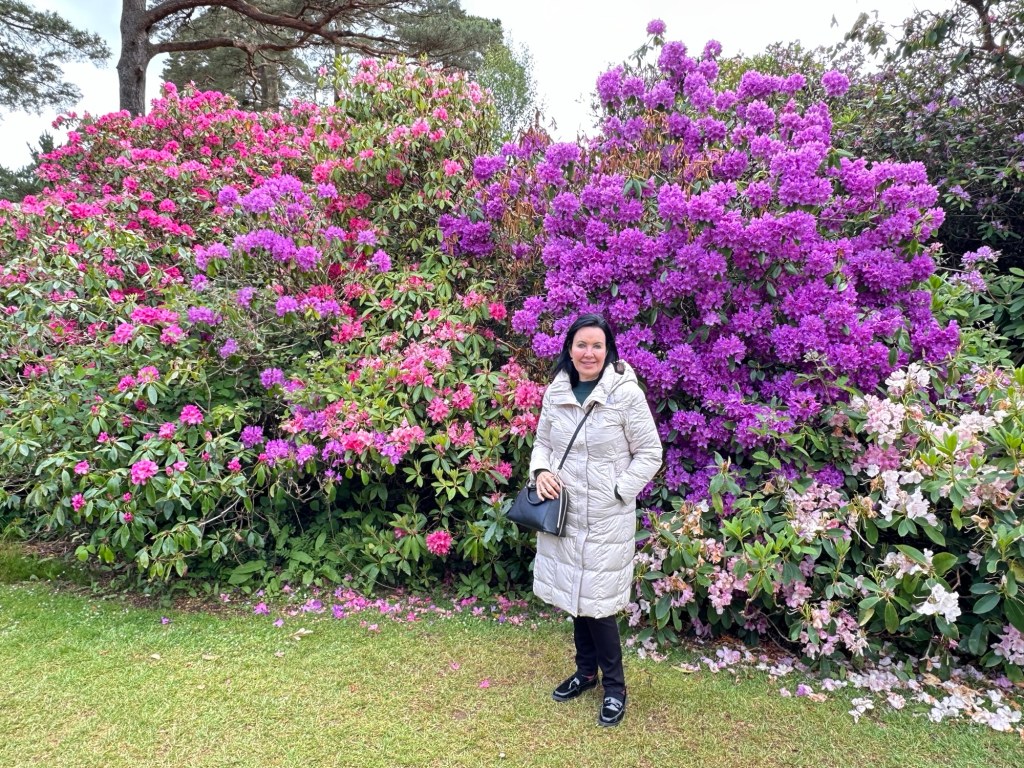
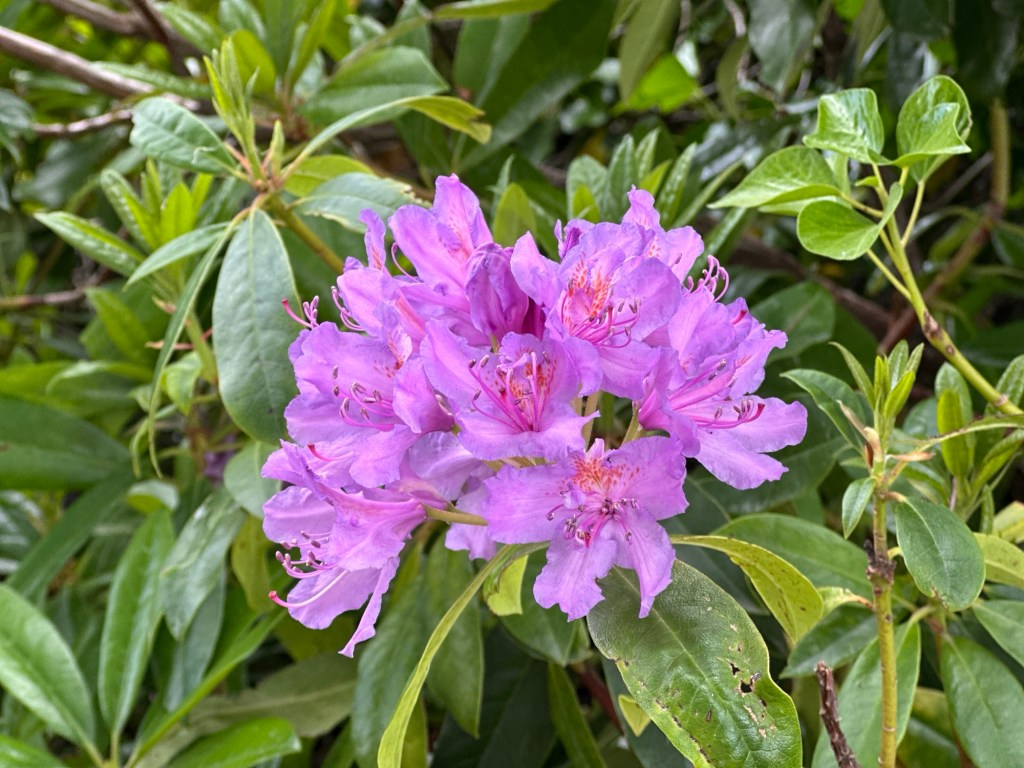
The rhododendrons are just a picture as you drive the roads. Vivid pinks and purples everywhere. Our host at Lauragh said they are actually a pest as they block tree regeneration.


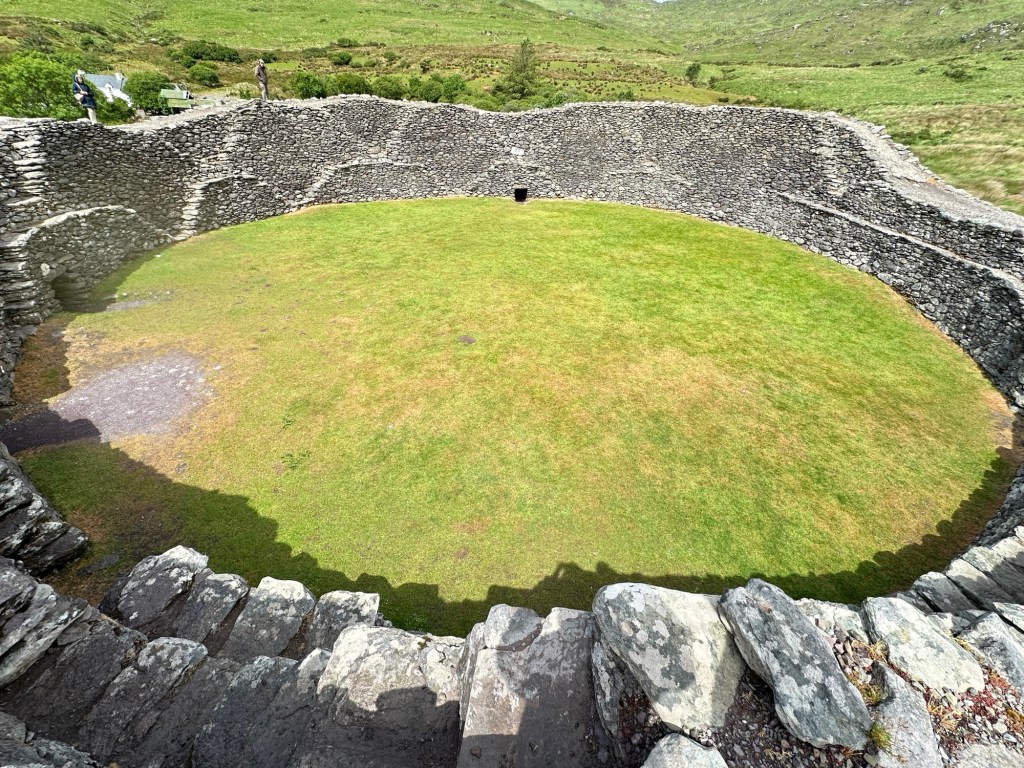
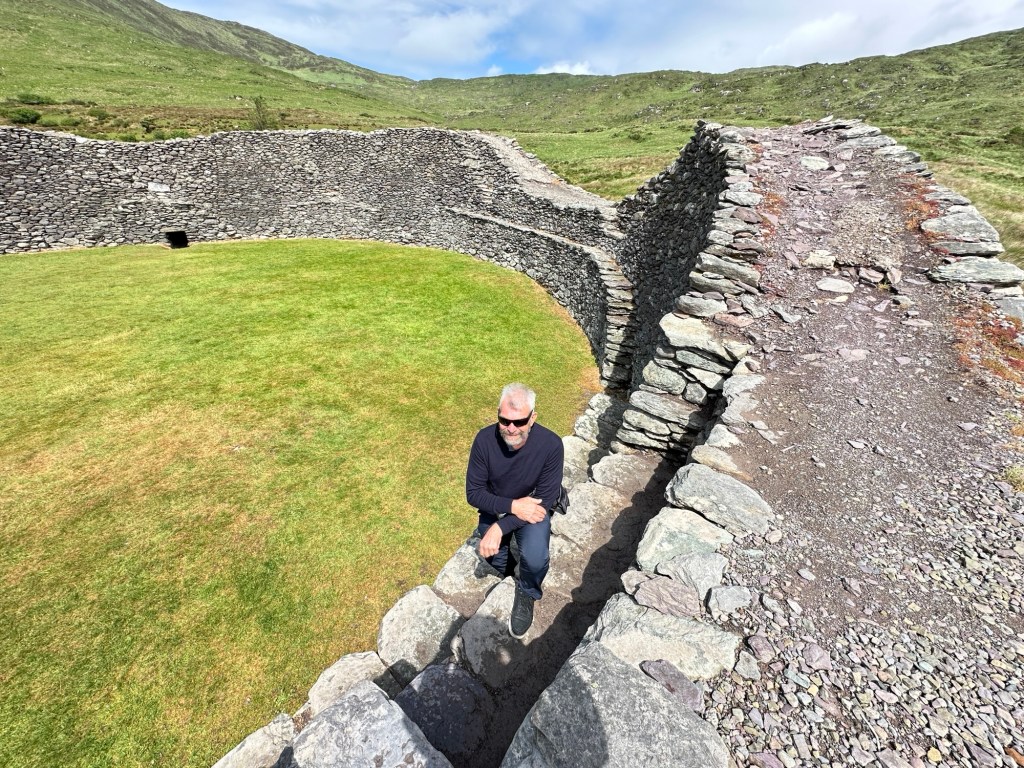
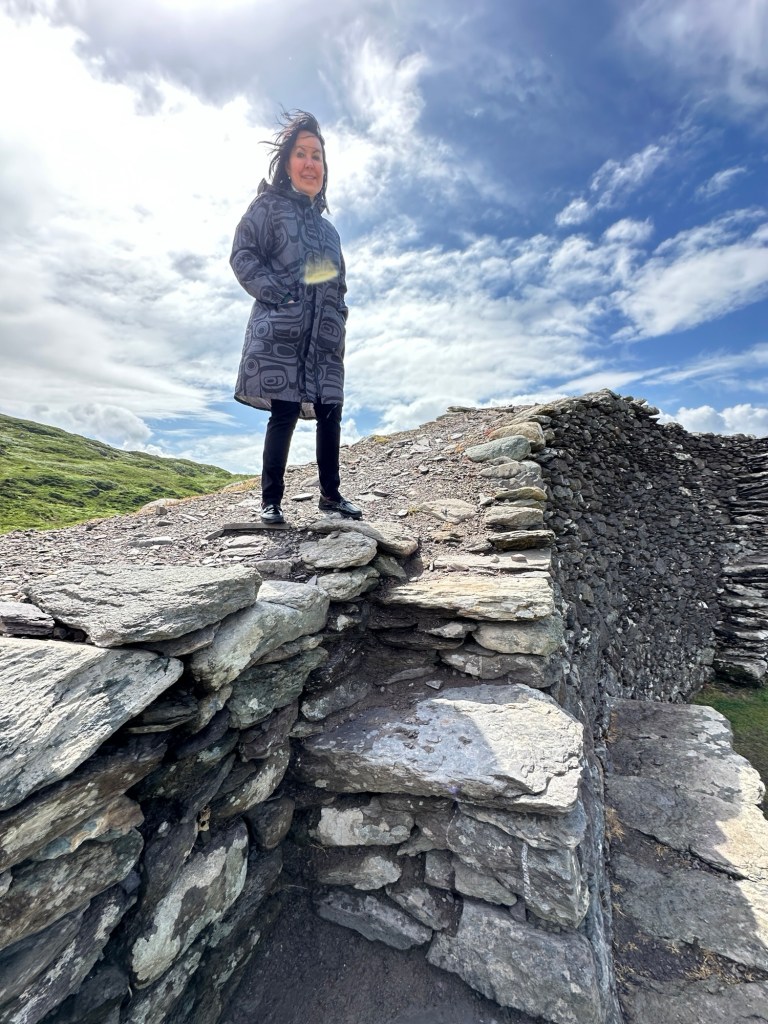
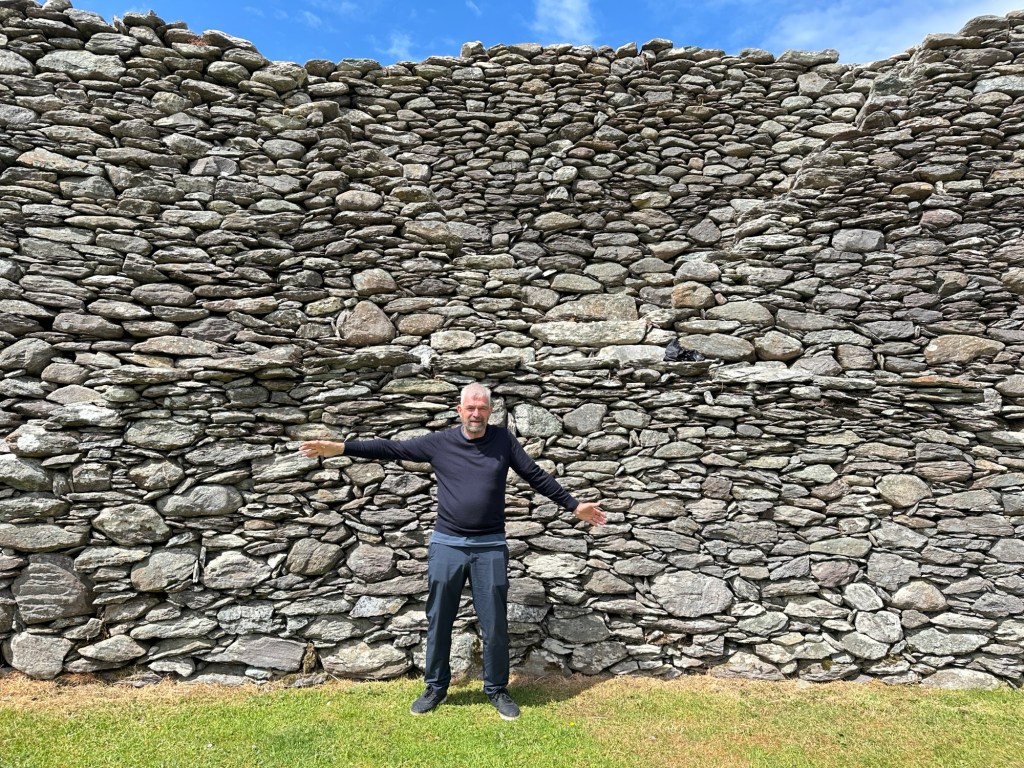
A very hairy drive on a narrow road took us up to Staigue Fort in Castlecove. It was thought to have been built during the late Iron Age somewhere between 300 and 400 AD. The local lord or king would have used it as a defensive stronghold. We tried to walk around the top of the fort, but were nearly blown off!
The rugged Kerry Cliffs at Foilnageragh on the Skellig ring stand over 1,00O ft in height, and offer a wonderful vista of the neighboring Puffin Islands.

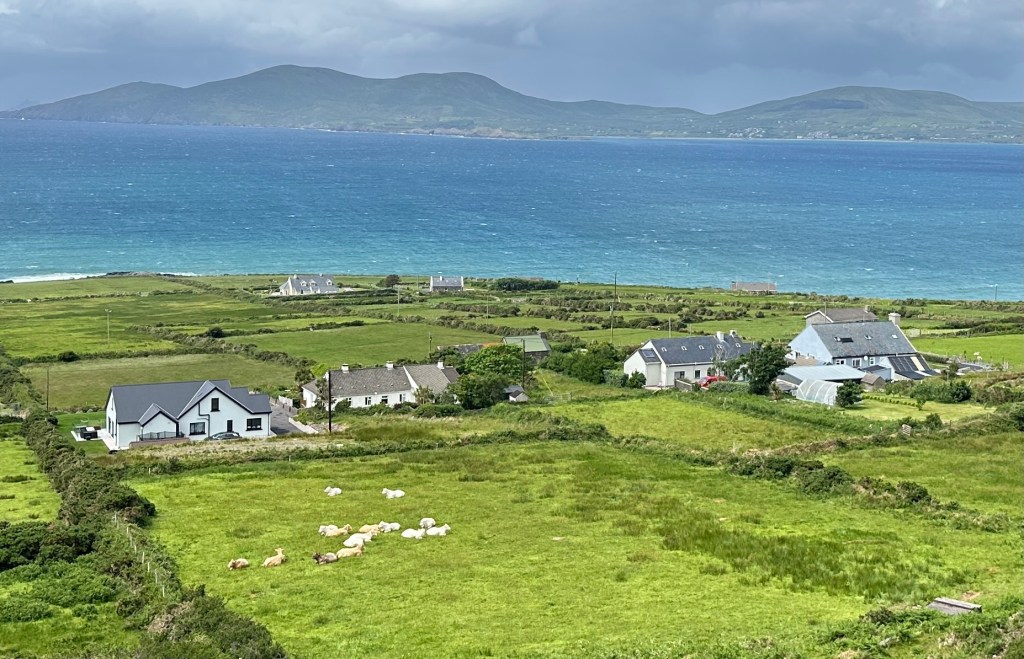
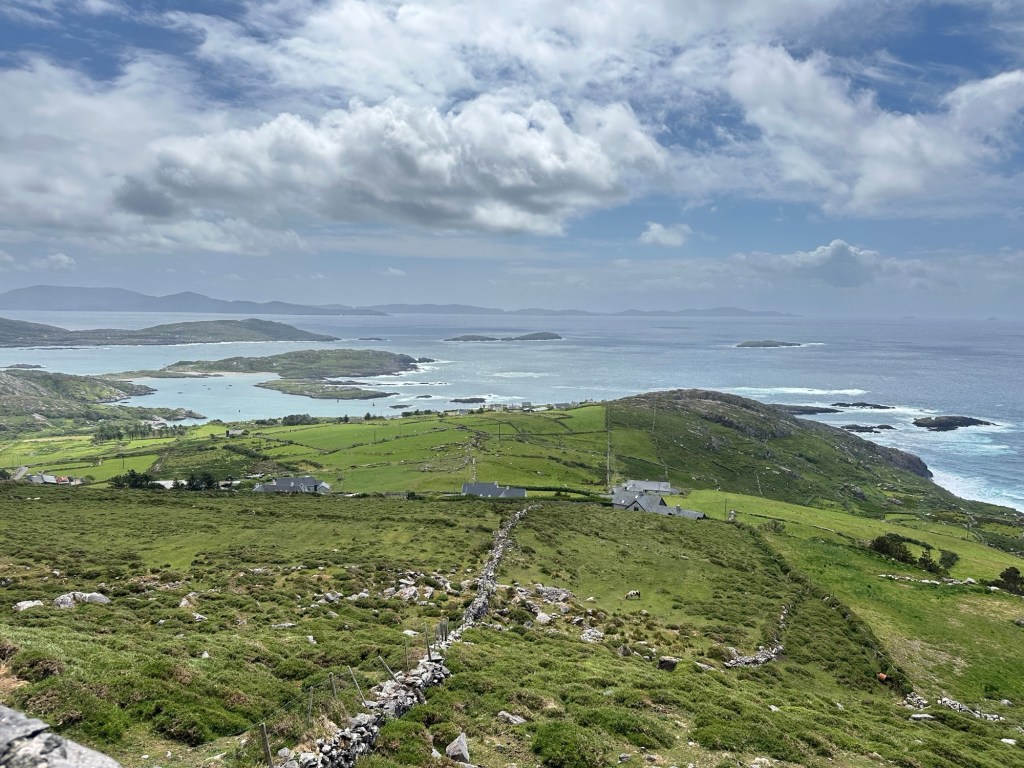
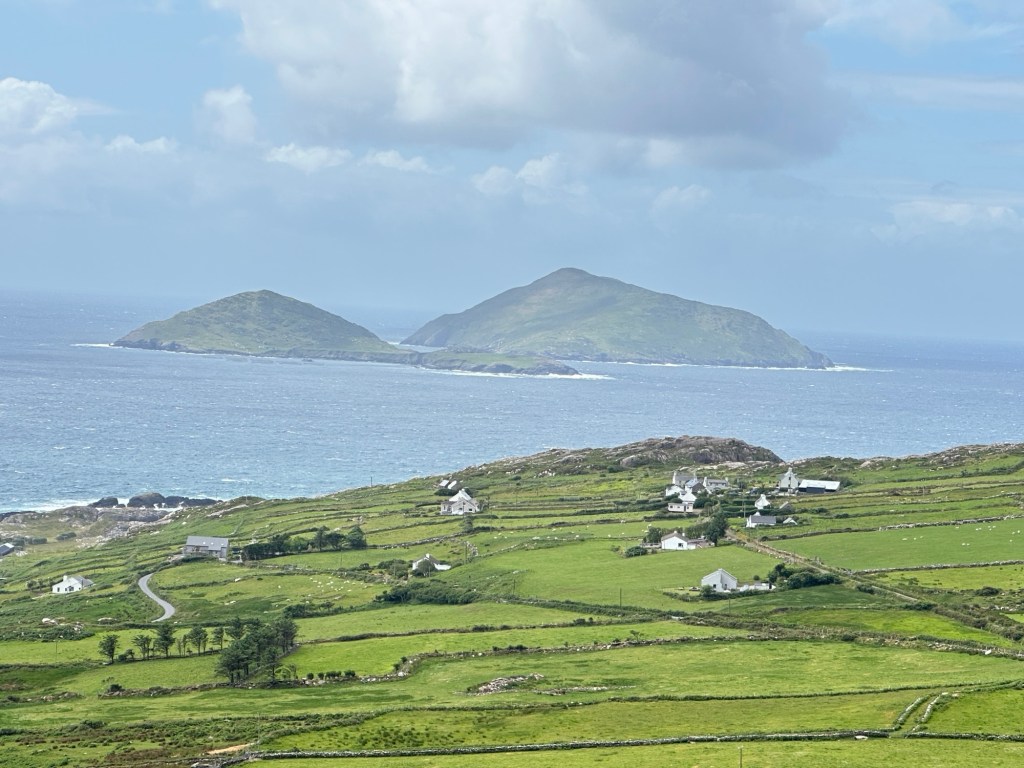
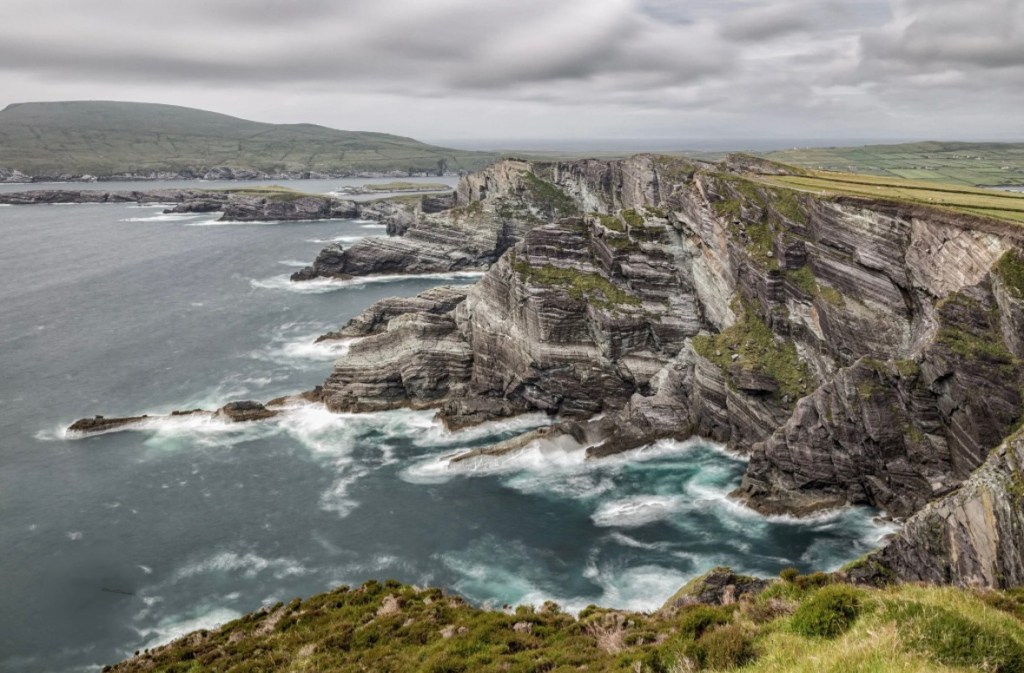
Continued on enjoying the scenery and many cute little villages. The colourful buildings are a standout. We made a short stop in Killarney then continued onto Killarney National Park.
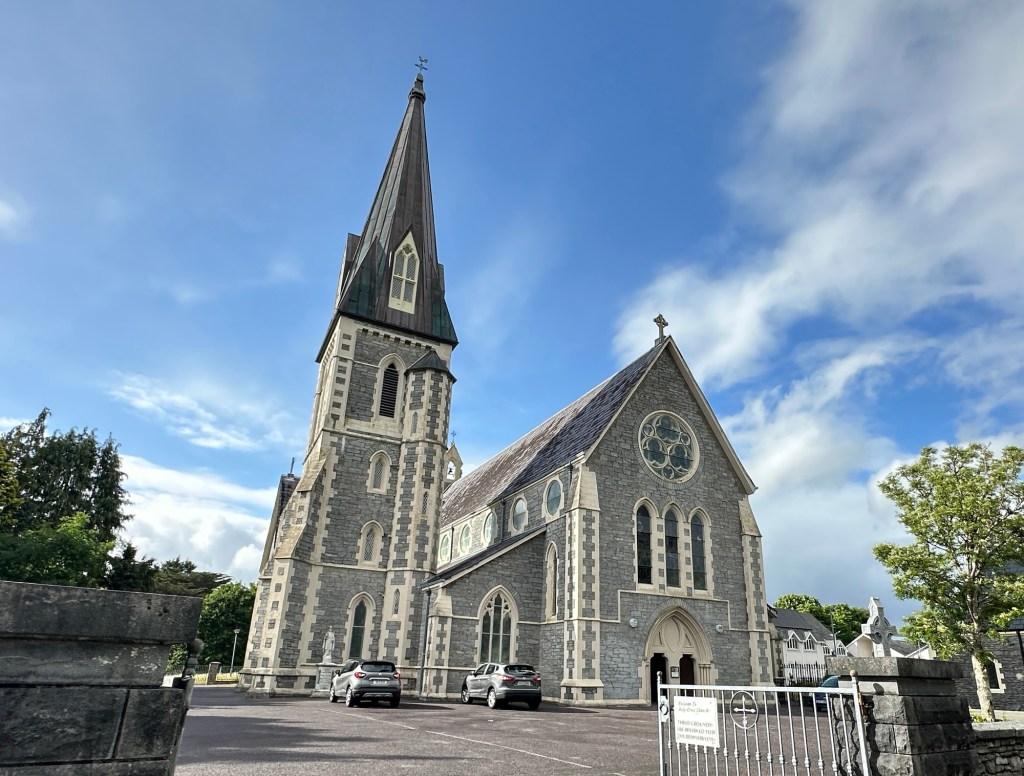
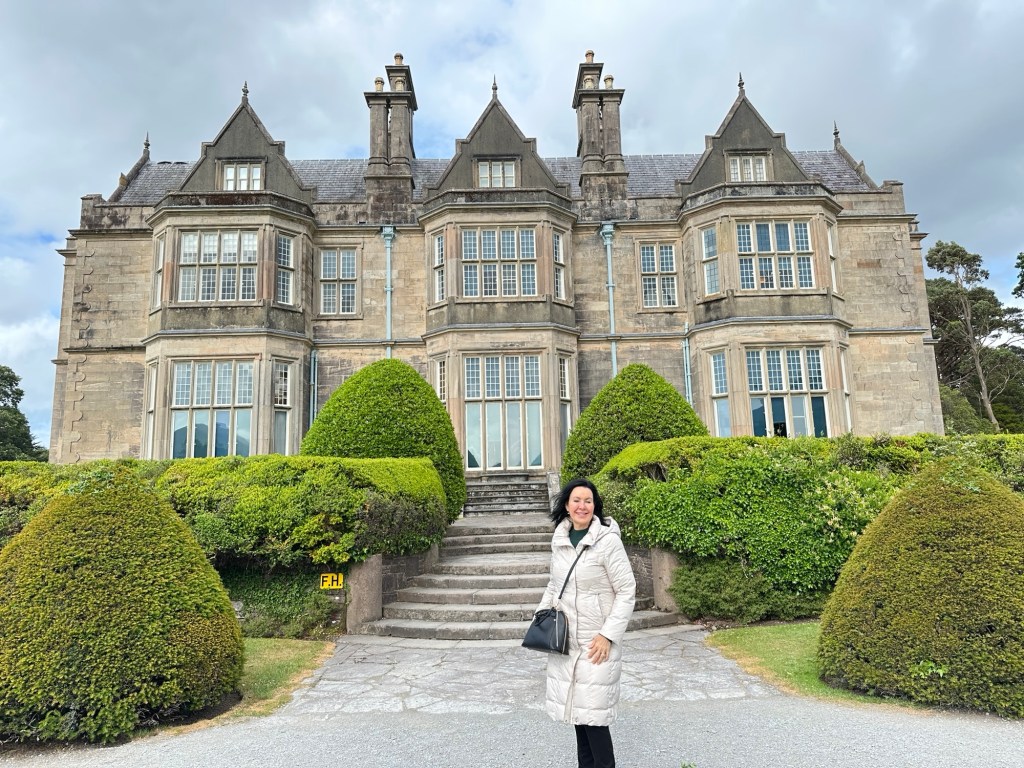
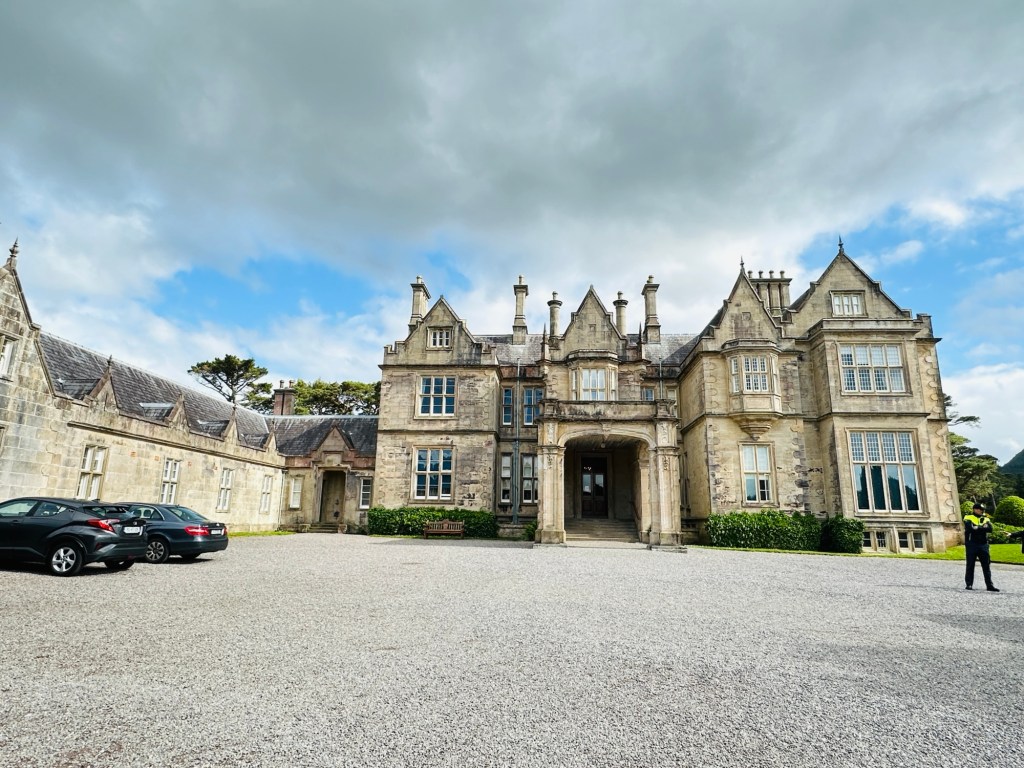
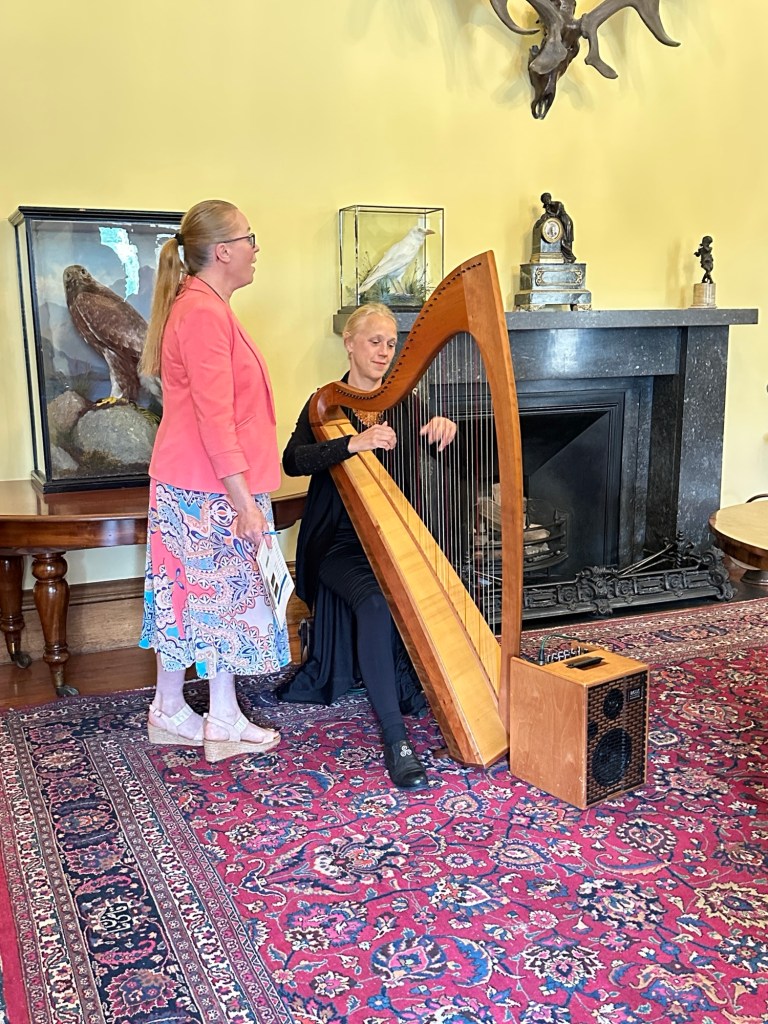
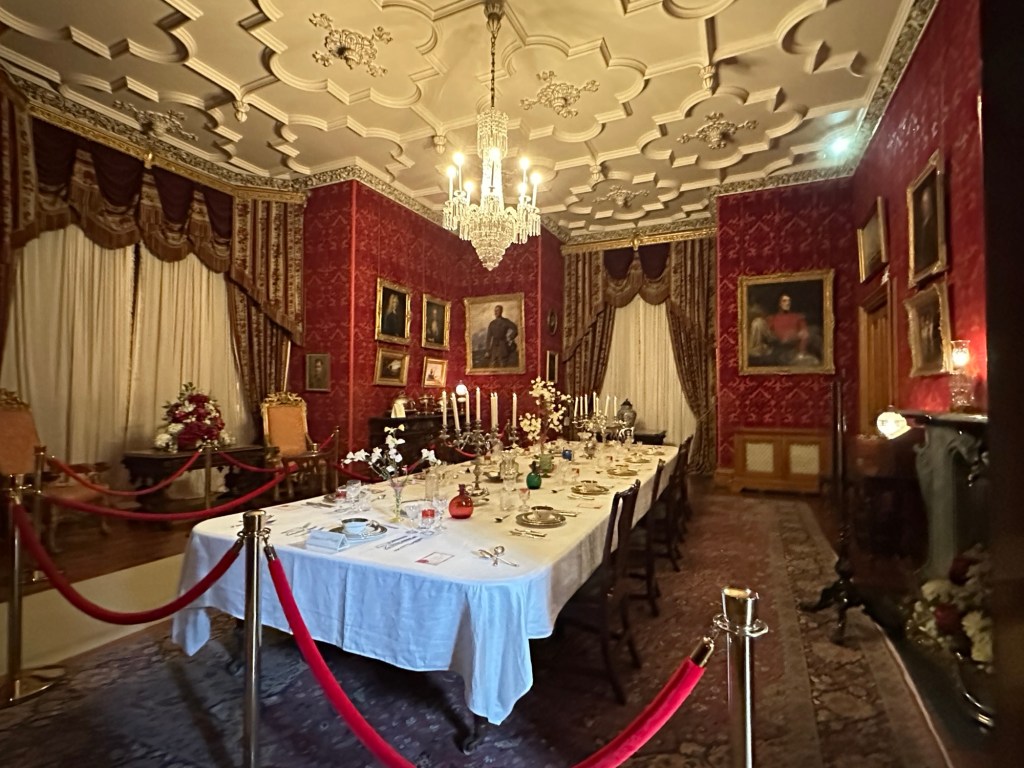
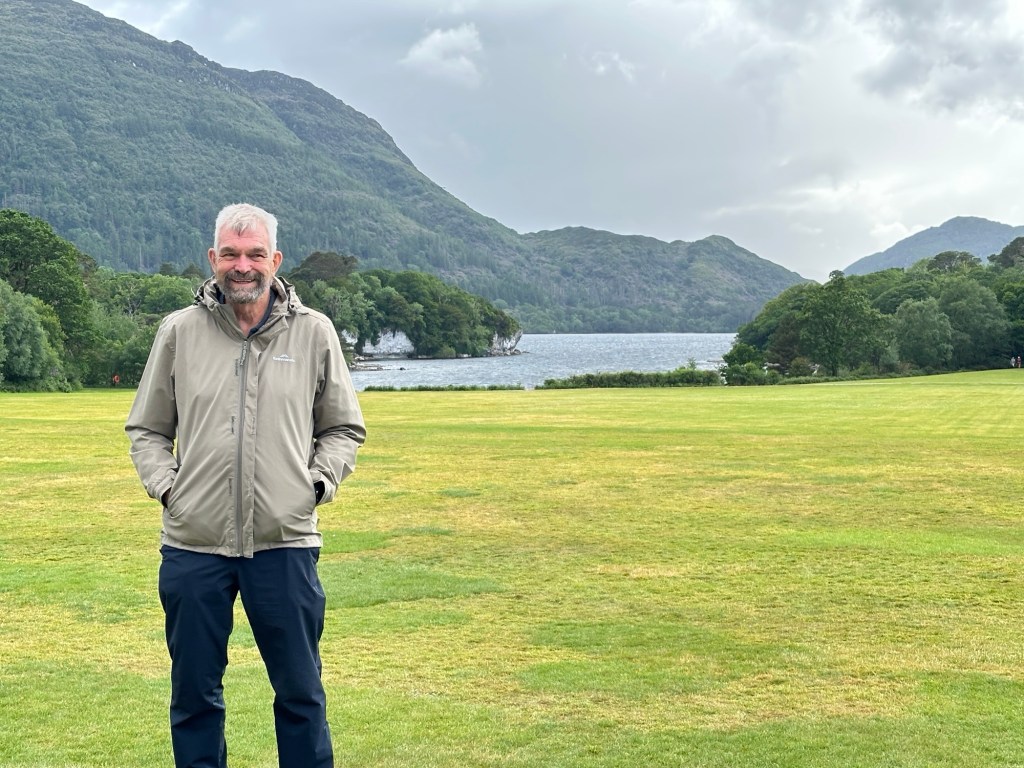
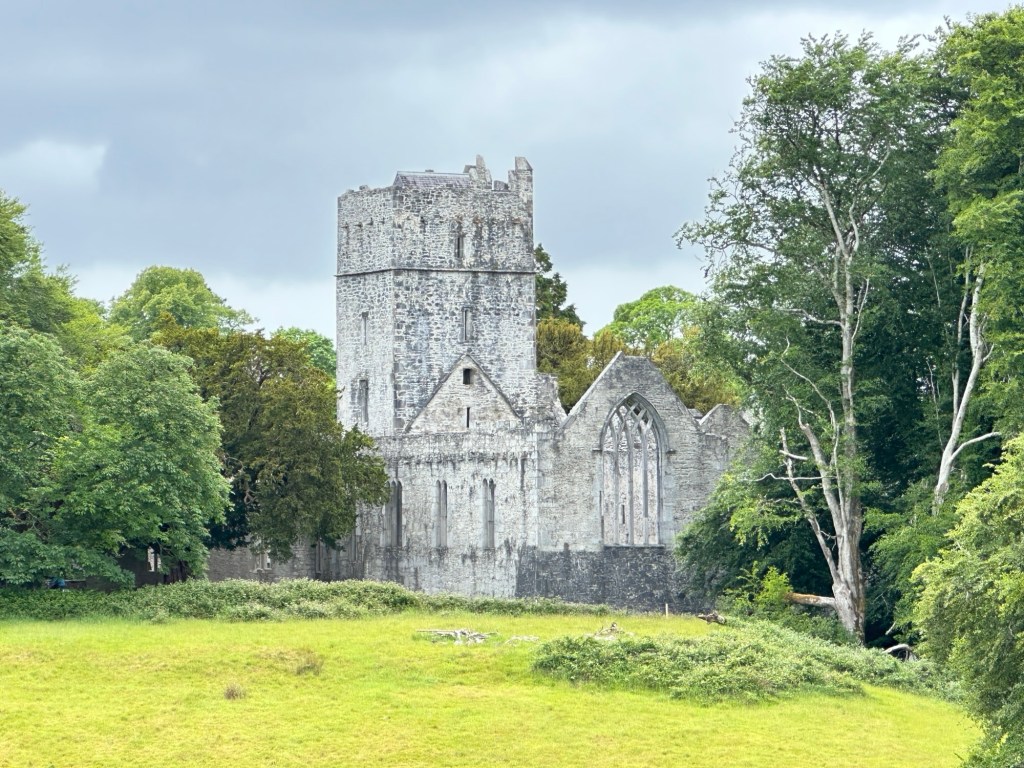
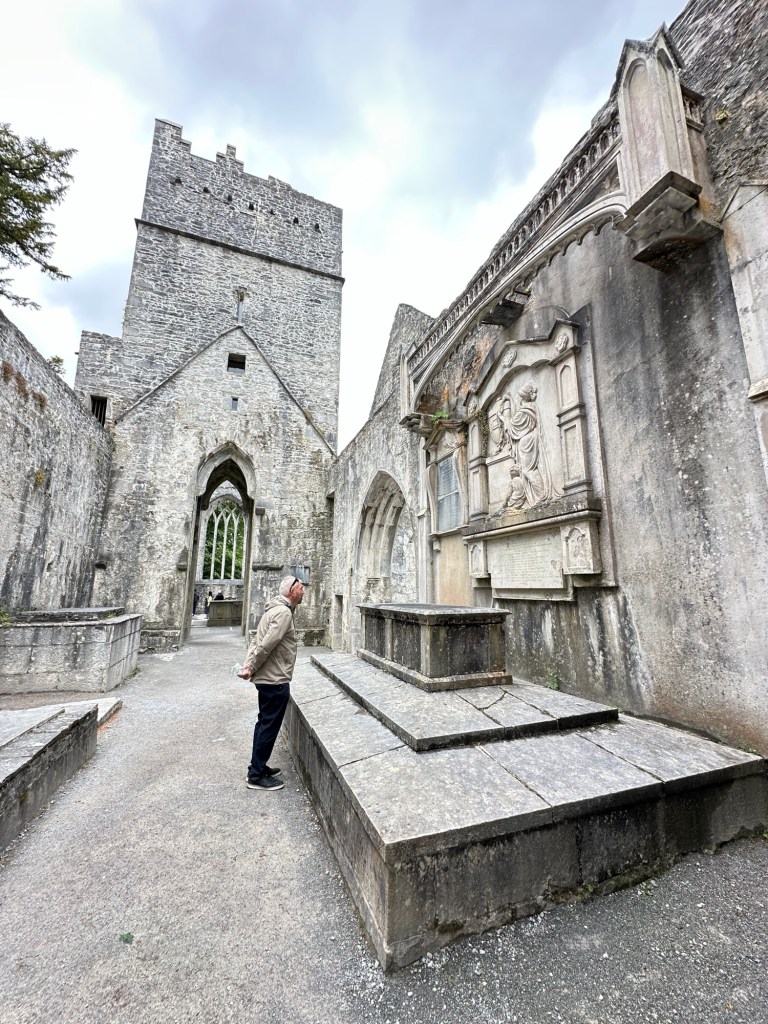
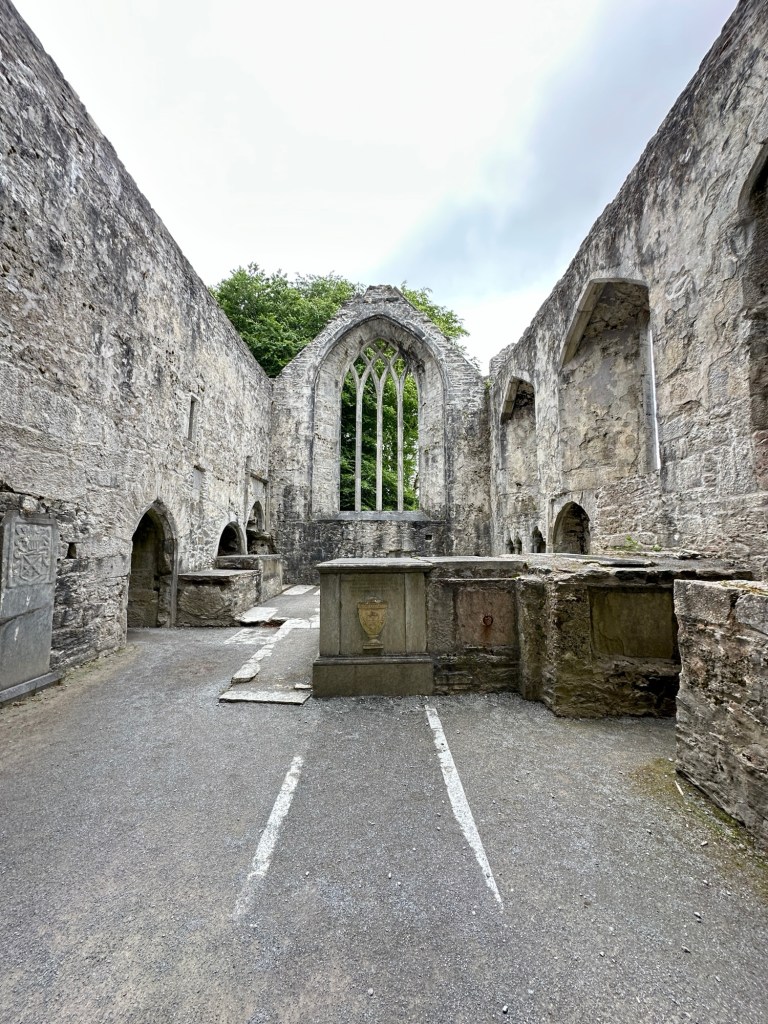
Muckross House, a Victorian mansion, one of Ireland’s leading stately homes, is situated amidst the spectacular scenery of Killarney National Park. The elegantly furnished rooms portray the lifestyles of the landed gentry, while downstairs in the basement we could experience the working conditions of the servants employed in the House back in the day. The house was magnificent. We also saw the Muckross Abbey – founded in 1448 as a Franciscan Friary. It had its own charm.


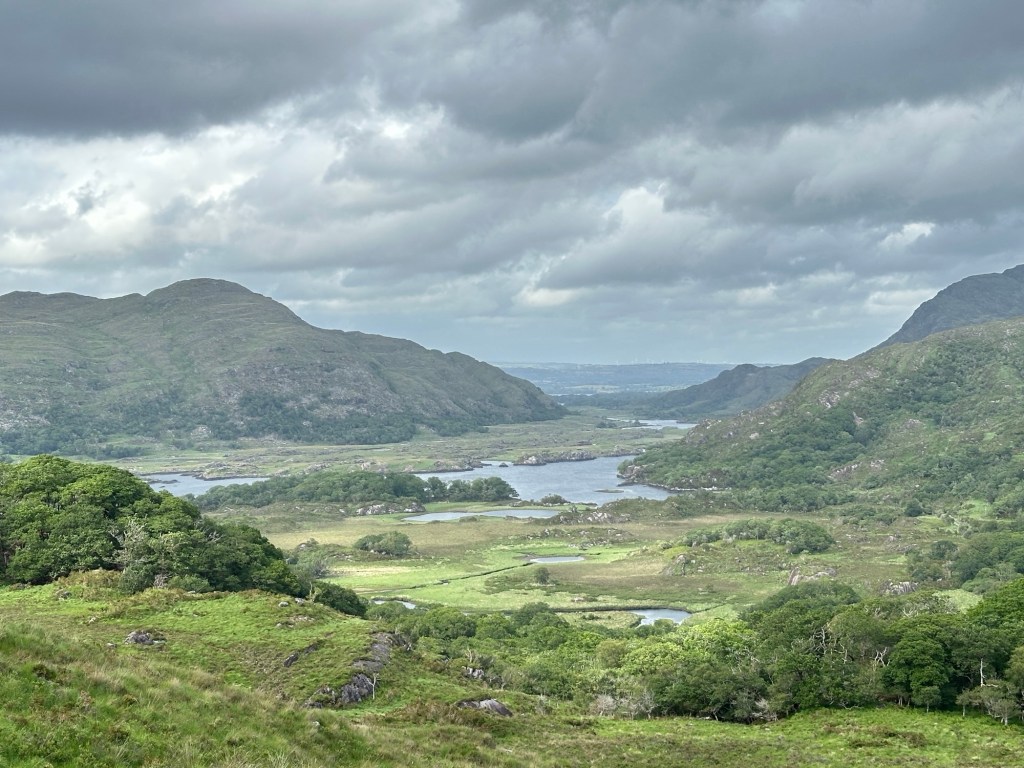
Recognised as one of the most photographed places in Ireland, Ladies View Lookout was named by a lady in waiting during Queen Victoria’s visit to Ireland in 1861. Sensational view.
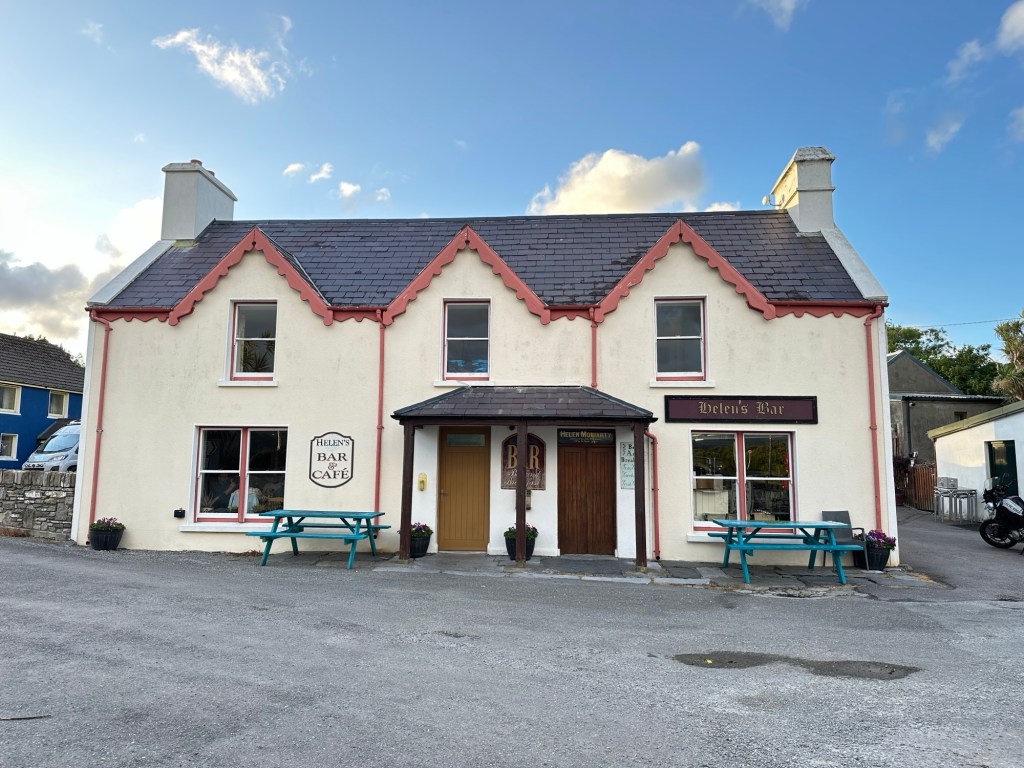
Up over Molls Gap and down into Kenmare. Our Ring of Kerry was complete. We completed the day with dinner at Helen’s Bar, only 3kms from where we were staying. Fish and chips were the order of the day. Great pub atmosphere overlooking the sea. They have majestic sunsets there, but we weren’t going to risk driving the extremely narrow road home in the dark at 10pm.

Day 7
Monday 26th May
Lauragh to Headford ( just north of Galway)
10-14 degrees, rain showers, to heavy rain, windy
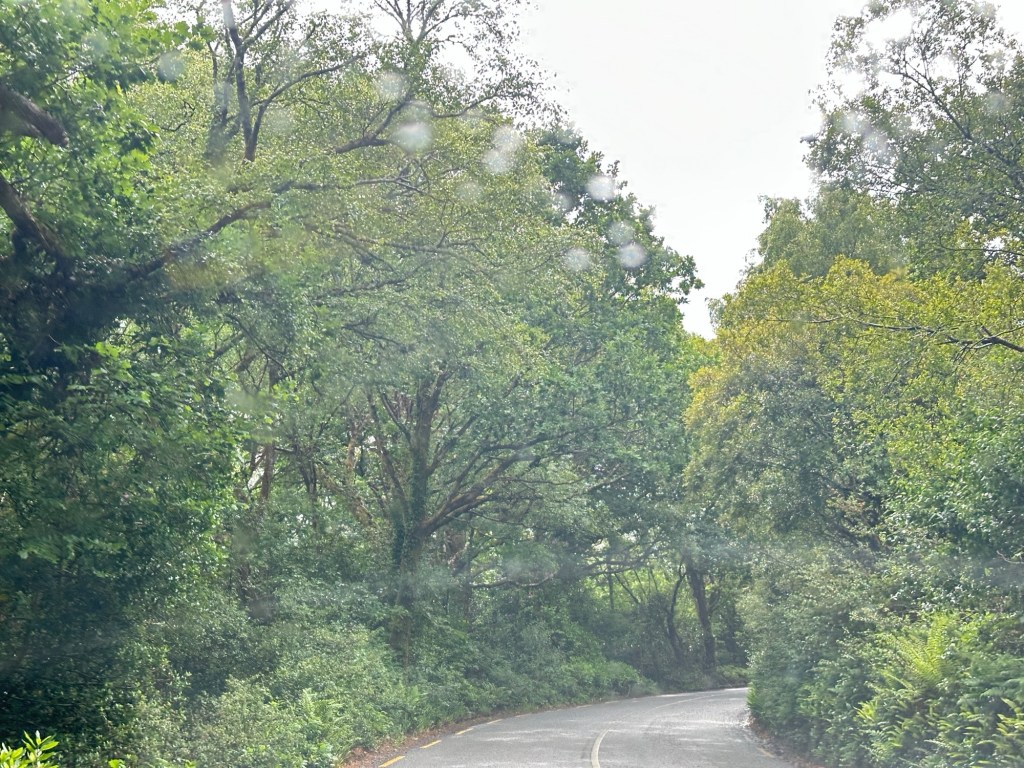
A very pleasant drive to Tralee bypassing Killarney this time. Getting used to the windy narrow roads, though we actually had a few stretches of highway driving. What amuses me is the groups of cyclists out for a ride, riding uphill on the narrow roads in the rain – maybe good for fitness but not my idea of fun! I will add, whilst the roads might be narrow, we have found them to be in good condition. Not sure how the hedges get trimmed when they are basically the edge of the road, and the cars go whizzing by – I don’t want that job!
Tralee was a short break , mainly a coffee stop. Quaint buildings. Tralee is a university town. The young girl who served us our coffee was so friendly, giving us instructions on how to best to get to the ferry. I have found all the Irish so helpful and chatty, and all seem to have a sense of humour.
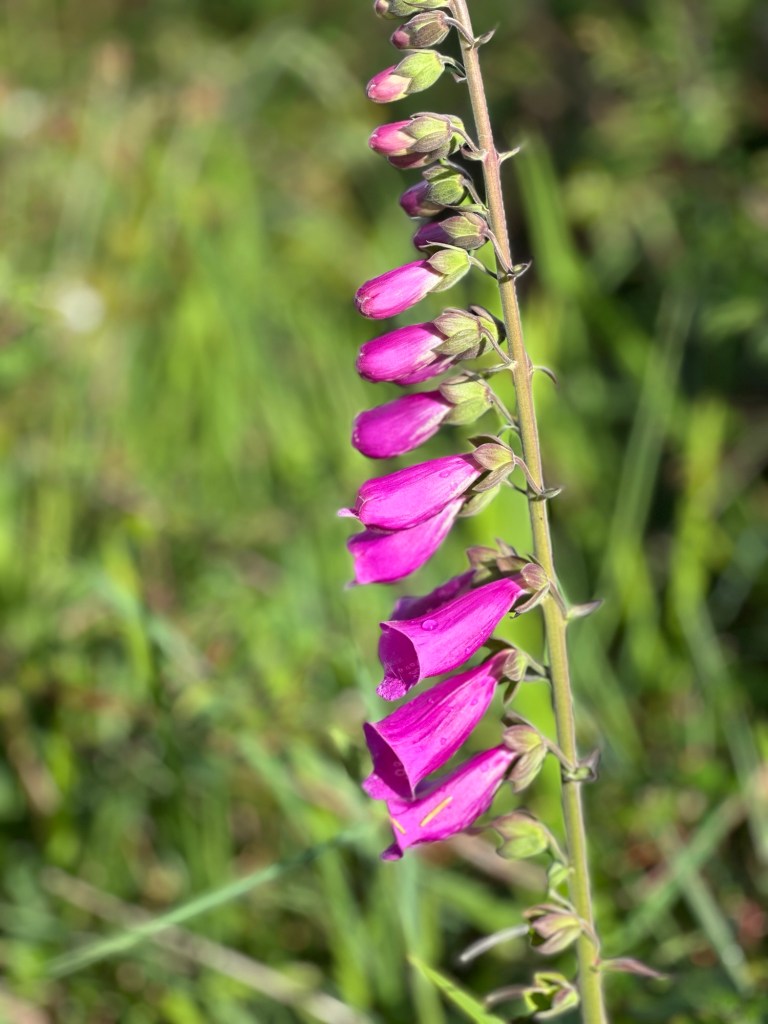
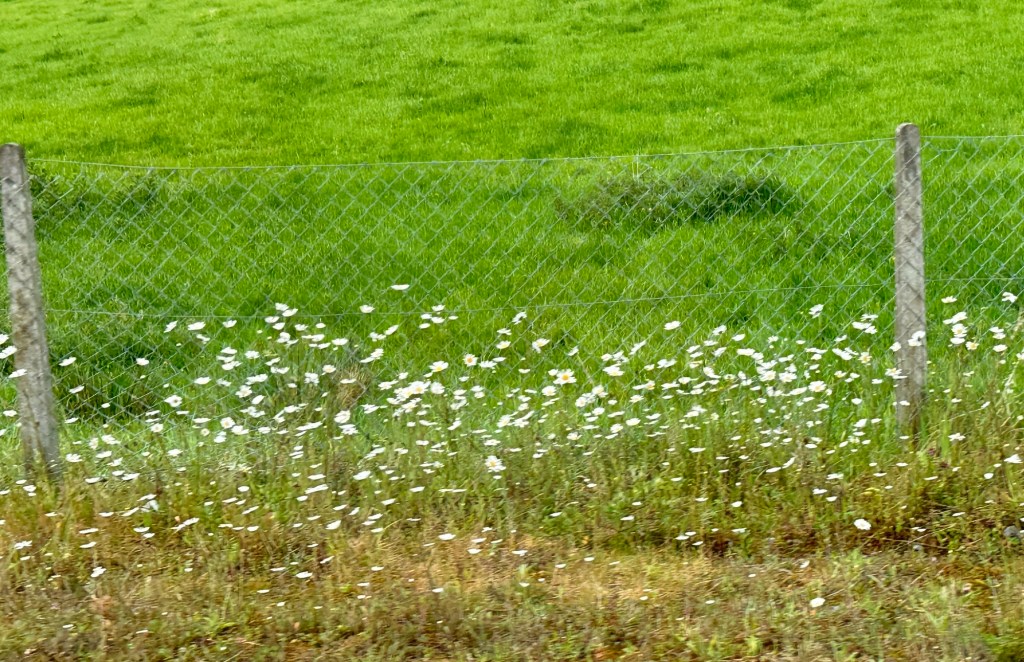
Heading north – more pretty countryside. The spring flowers have been just divine – besides the prolific rhododendrons, the foxgloves (although very pretty, they are highly poisonous ) are in flower, as are the roses (all seem to be strongly perfumed), arum lilies, and many more. The roads are lined with white paper daisies and purple heather. It’s all a picture. The striking ornamental plum trees look stunning in amongst all the greenery. Unfortunately the rain is starting to settle in.

On our back street tour of Ireland we go by car ferry for 25 euro from Tarbert to Killimer. This is a fifteen minute trip. The weather is no better on the other side of the estuary.
We reach the Cliffs of Moher as the heavens really open up. The weather is not our friend today. The Cliffs of Moher are sea cliffs located at the southwestern edge of the Burren region in County Clare. They run for about 14 kms. At their southern end, they rise 120 metres above the Atlantic Ocean and 8 kms to the north, they reach maximum height of 214 metres. Well lucky we read that – because it was raining, and extremely windy, and we just saw a blur!!! But we had come all this way to see the cliffs, so we continued on.
There was a great interactive exhibition to walk through before we faced the elements ( we were secretly hoping the rain would pass before we went outside to view the cliffs, so we looked at the display first). Unfortunately the wind had picked up , and we were nearly blown off the Cliffs of Moher! That would have been a talking point!
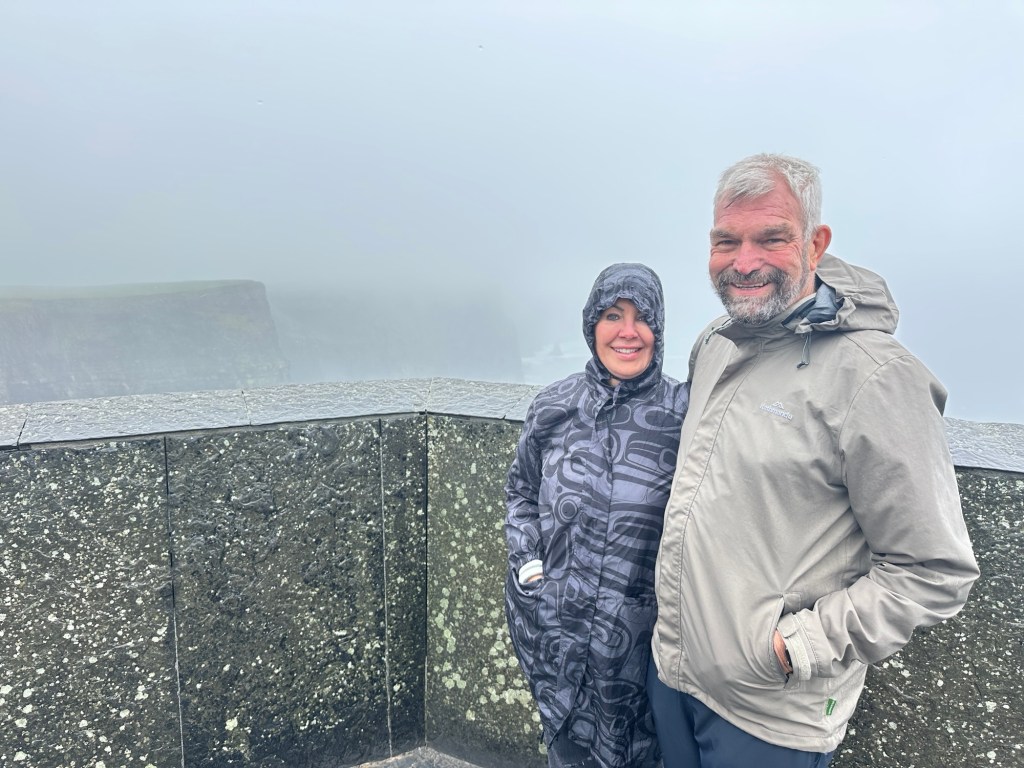

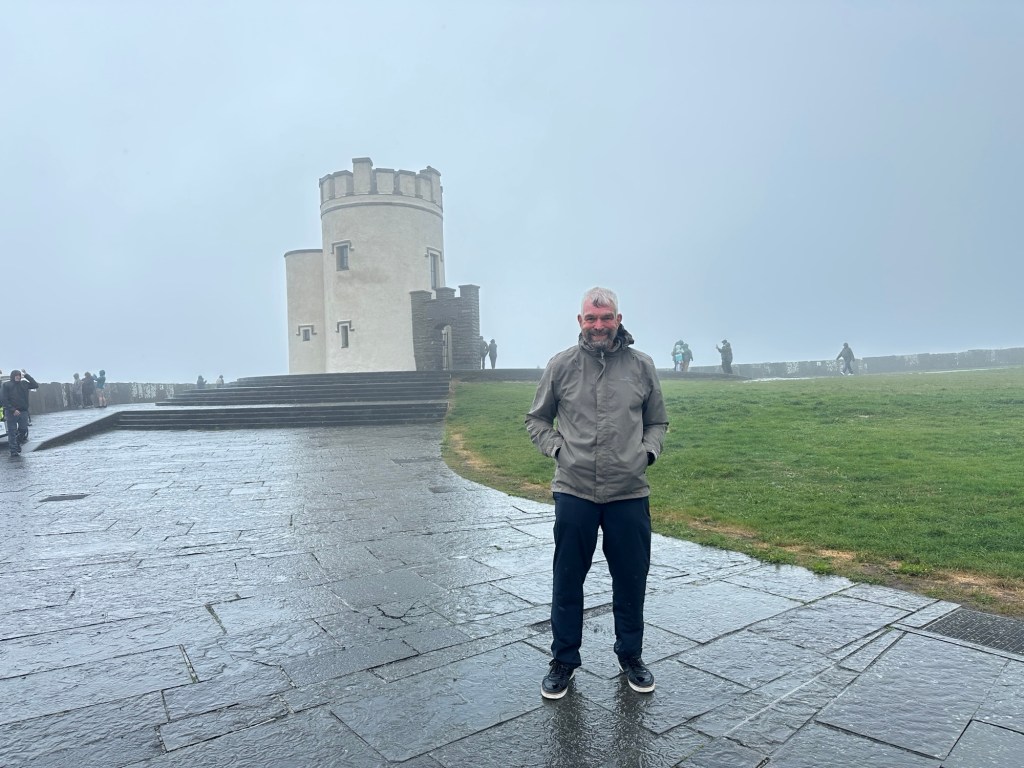

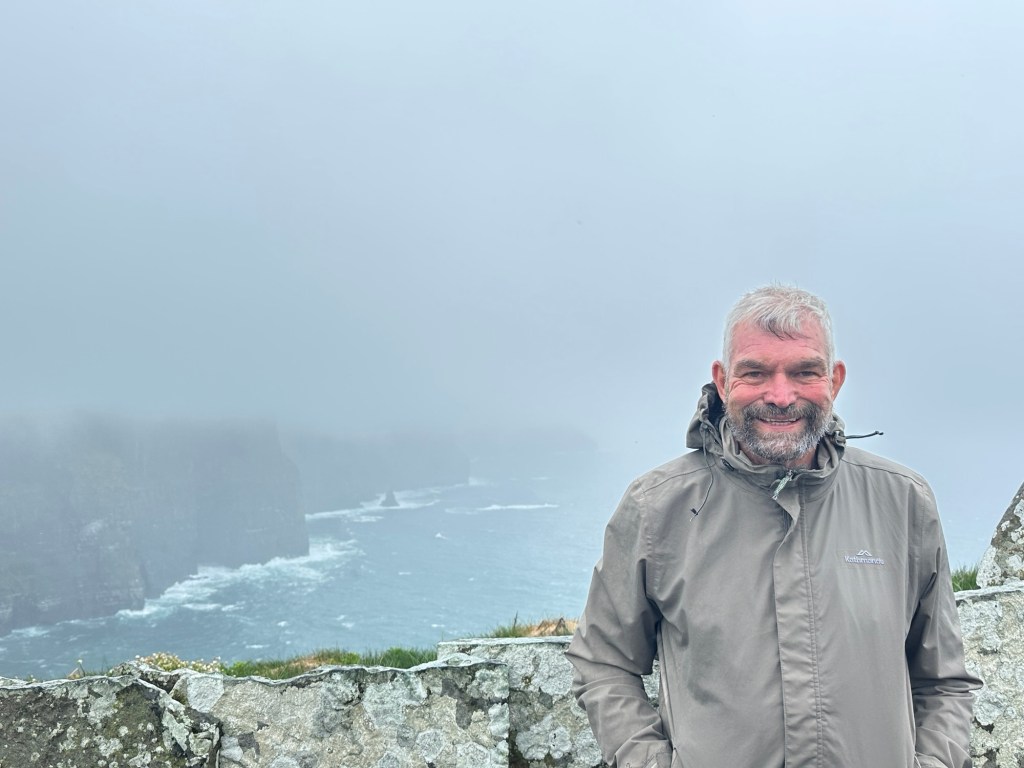
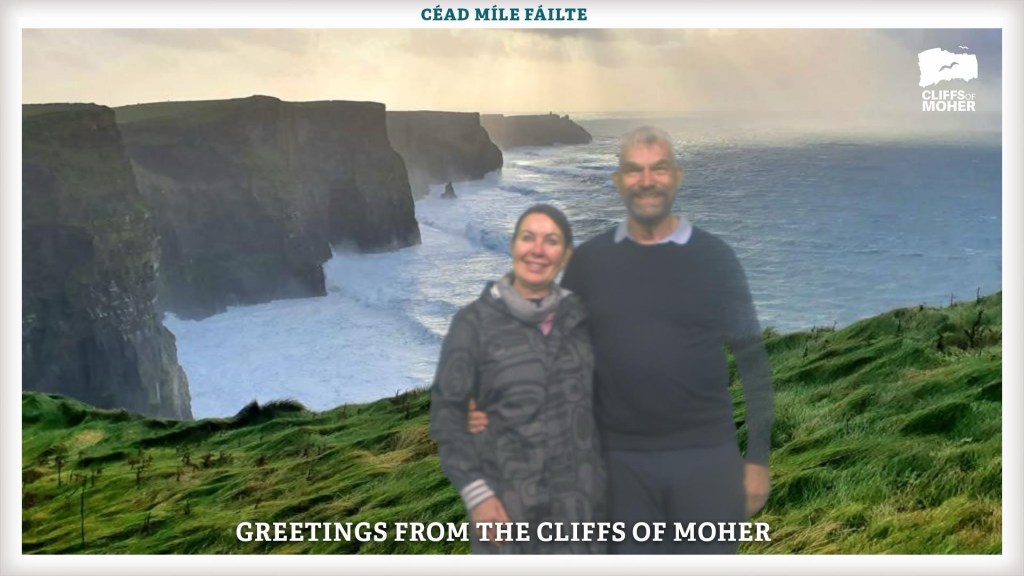
We came back to the visitor centre, where we did enjoy delicious seafood chowder for me, tomato soup and goats cheese quiche for Frank – still looking out at the cliffs, hoping for that clearing sky. Well that never eventuated! We were almost blown back to the car park!
Soon after we left the car park we saw an accident where a car had crashed into one of the side stone walls, with a big drop below. Everyone was ok, but I’d say it was because of the wet windy roads and the high winds. Very scary.
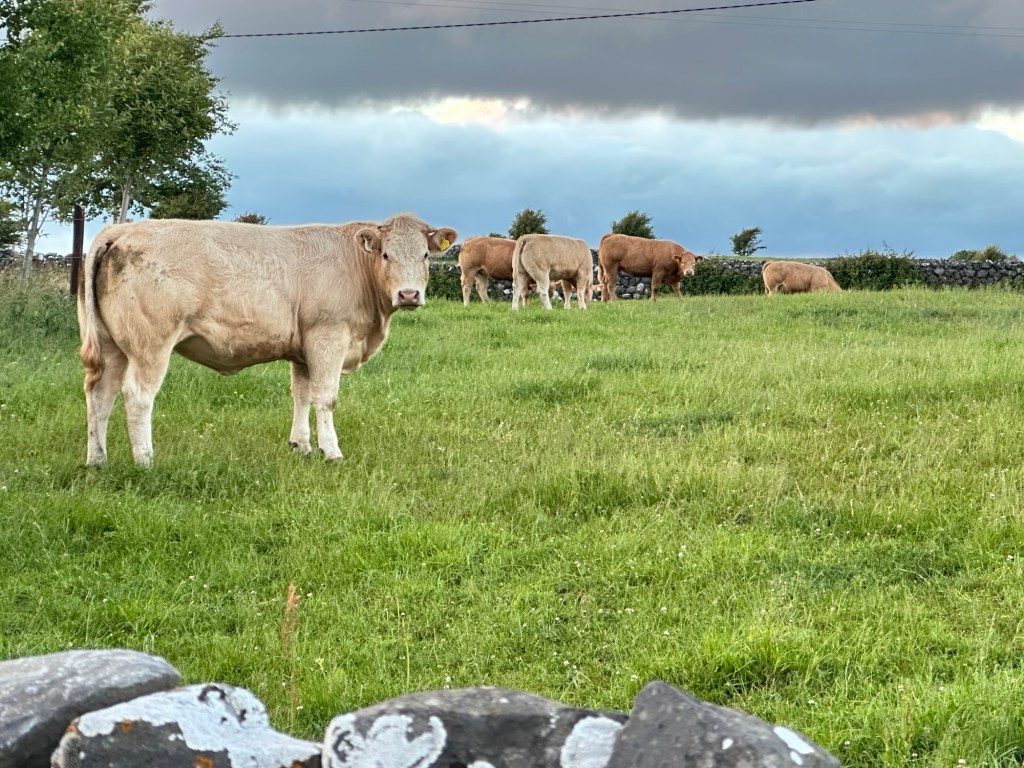
There are little stone walls everywhere bordering the roads, houses and farms. I love them. Have seen another fifty shades of green today. The cows and sheep all look so well fed- plenty of feed for them.
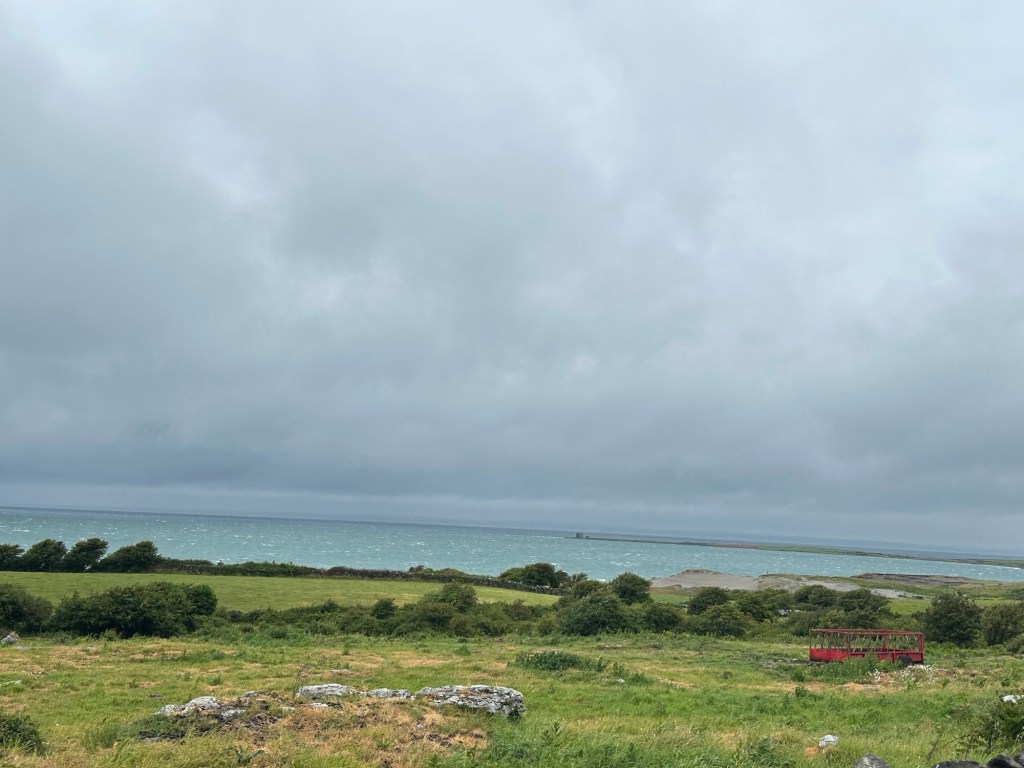
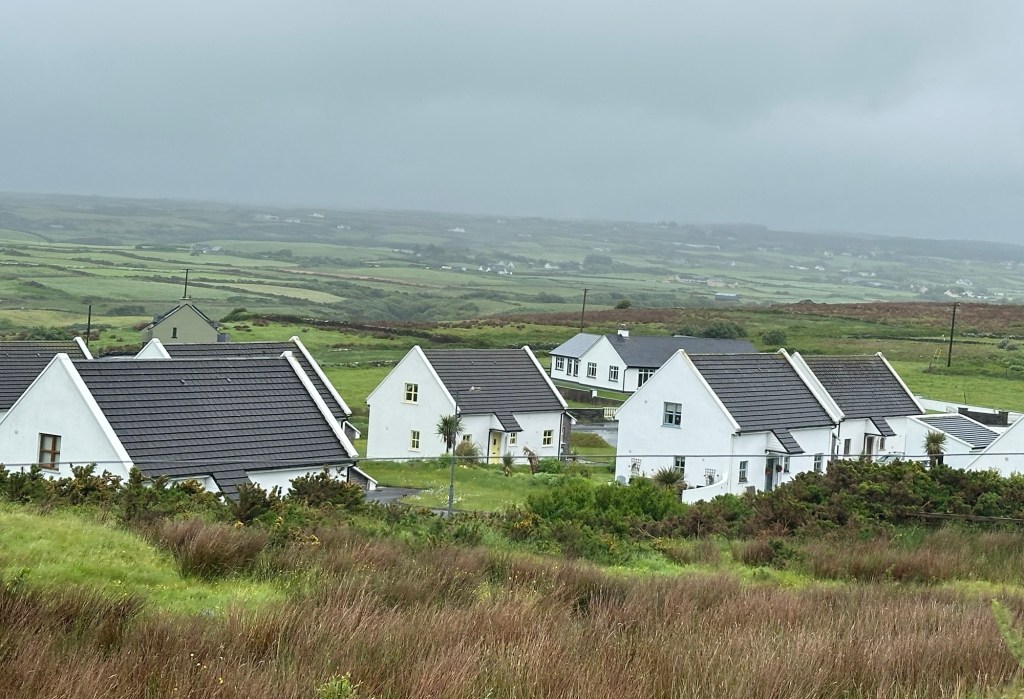


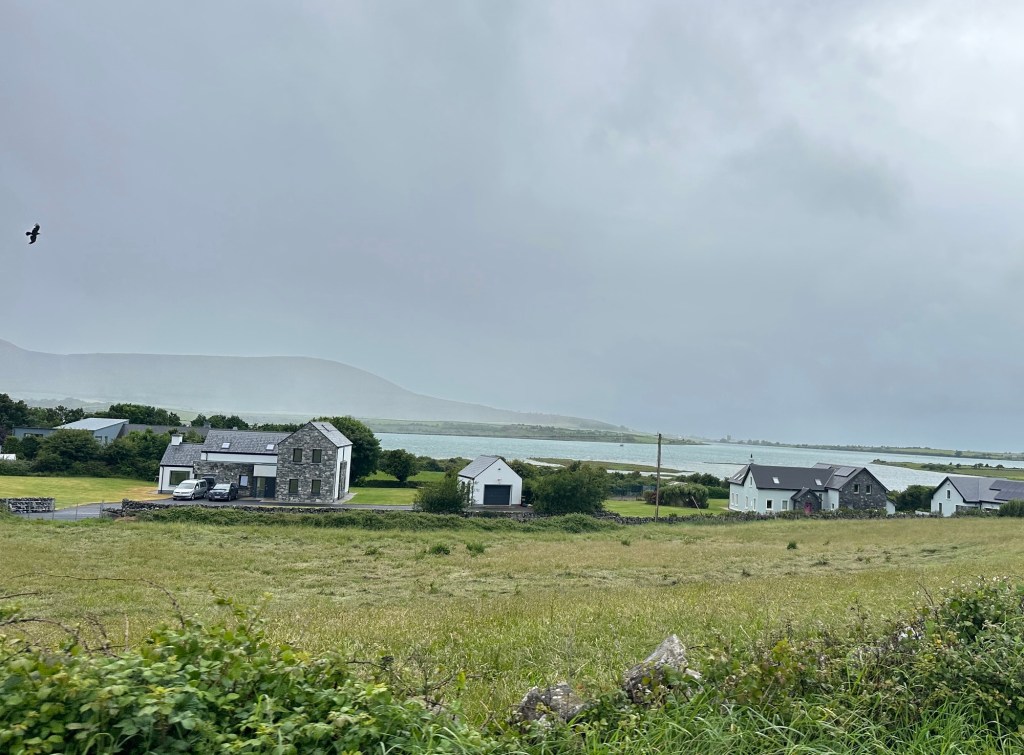
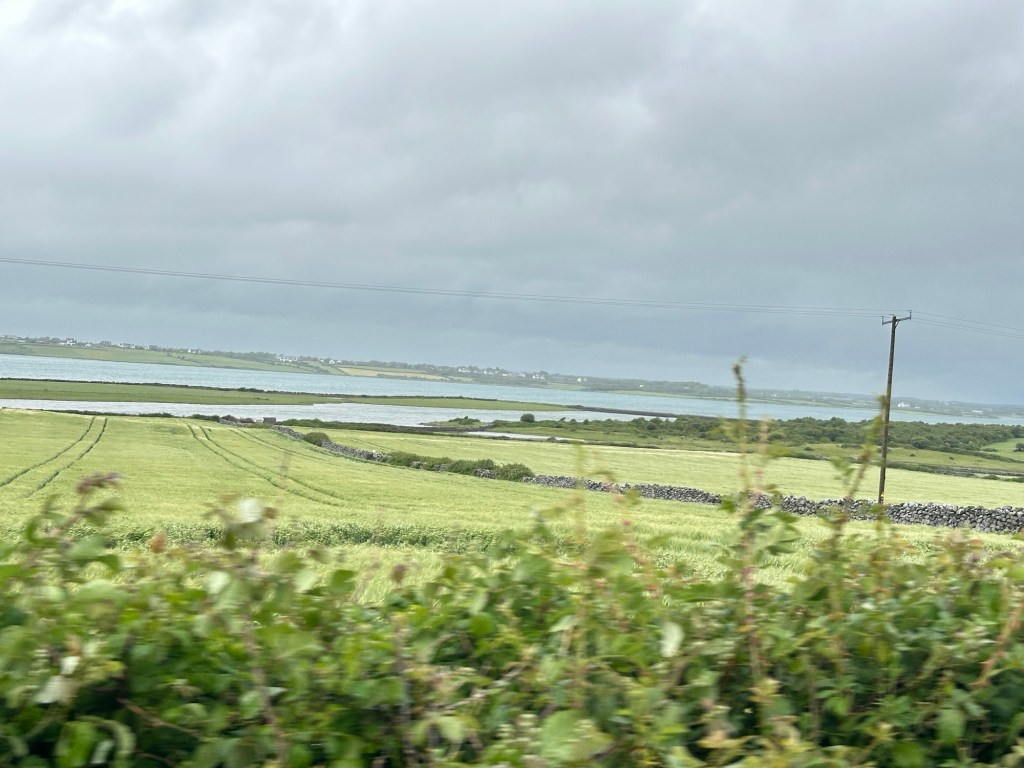
Another observation – the Irish are a hardy lot….. we have been past several golf courses, and even though it is raining, there are plenty of people playing golf. The rain is no deterrent here!
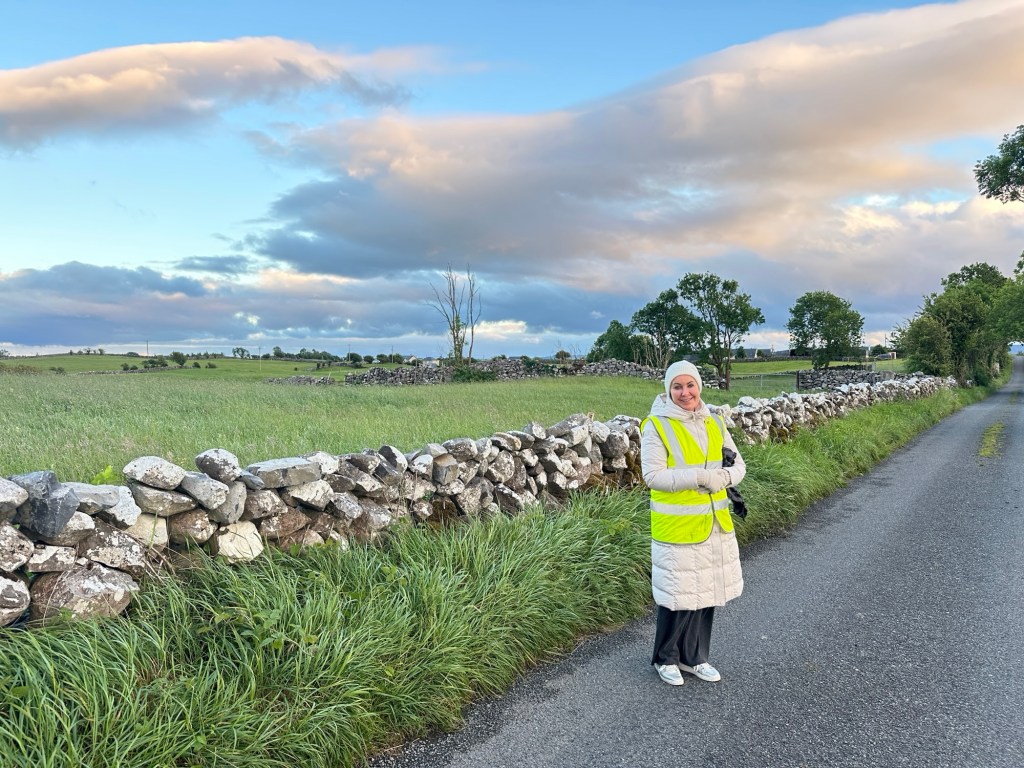
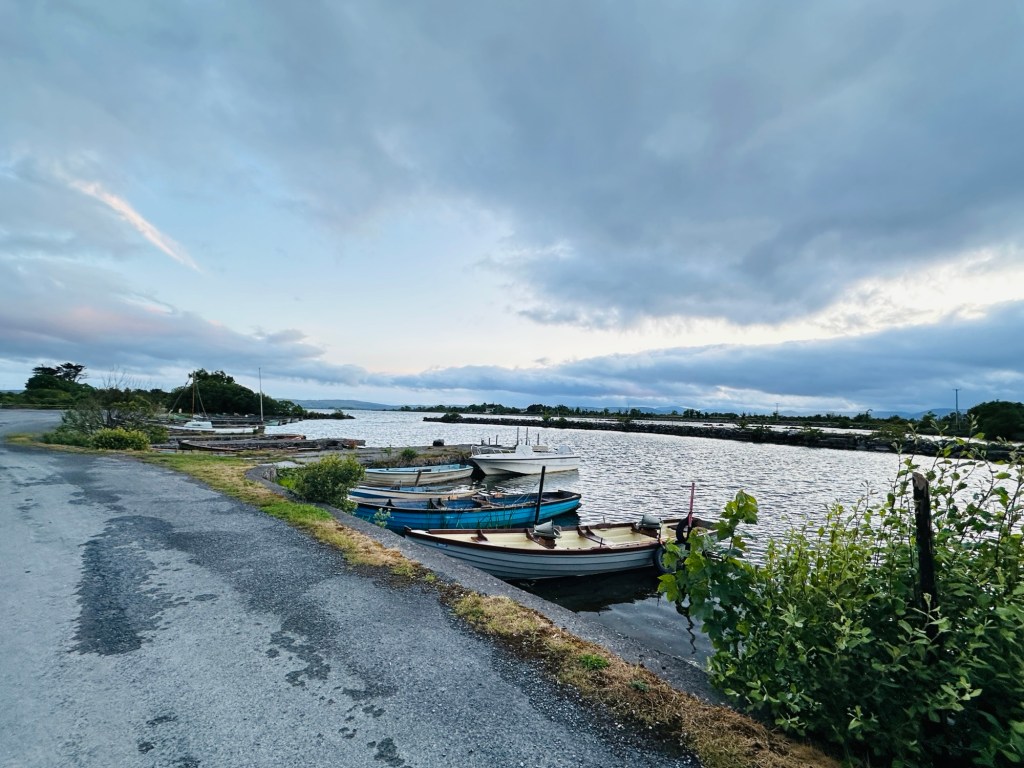
Another couple of hours of back roads and picturesque scenery and we arrive at Tara House in Headford, 25 kms northwest of Galway. Another studio apartment in a rural setting. Our host Stephanie was there to greet us. She suggested we go to Greenfields Lodge to enjoy the sunset. This we did – the rain had stopped! We walked the 2.5kms each way, enjoying stretching our legs and seeing how the locals lived. Stephanie gave us the high visibility vests to wear on our walk. The sun set at 9.50pm, then the twilight continued for a while, so we managed to make it back to our cottage by 10.20pm with enough light. Love these long days.



Day 8
Tuesday 27th May
Headford to Derry/Londonderry
8-13 degrees, more rain, and some sunshine
Onto Derry/Londonderry today, almost a 4 hour drive. We follow the Wild Atlantic Way on and off, with more lovely scenery . Lunch stop at Donegal. And the rain has stopped! for a short while.
Made it to Derry/ Londonderry (the Catholics call it Derry, the Protestants call it Londonderry ) , just in time to start the Derry City Troubles Bogside walking tour at 2pm. John, our guide, started with Derry’s history of the cause to fight for Civil Rights for Derry Catholics. Catholics were not allowed to live behind the walled city – they had to live in the Bogside, and were denied basic civil rights such as voting, housing and employment. This led to significant freedom marches, and unrest between the British Army and local Catholics.
Eventually on 30 January 1972 the ‘elite’ British 1st Parachute Regiment opened fire on a peaceful civil rights march along this street, killing 14 unarmed marchers and wounding 14 more. The dead and wounded were labelled gunmen and bombers by a partisan British judicial inquiry, and it was to be another 38 years before a second public inquiry forced the British government to admit what everyone else already knew, that all those killed and injured were innocent, and the shootings were “unjustified and unjustifiable.” Our guide’s brother was one of the 14 killed in this massacre, so his story was very poignant. He has attended all the court cases.
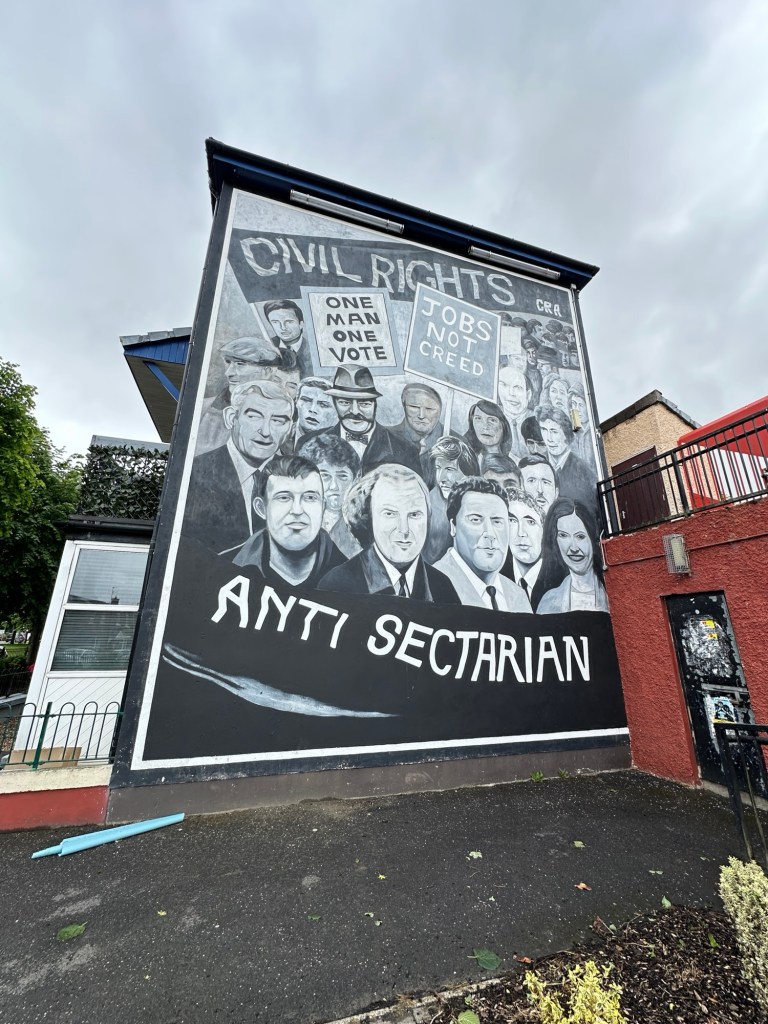
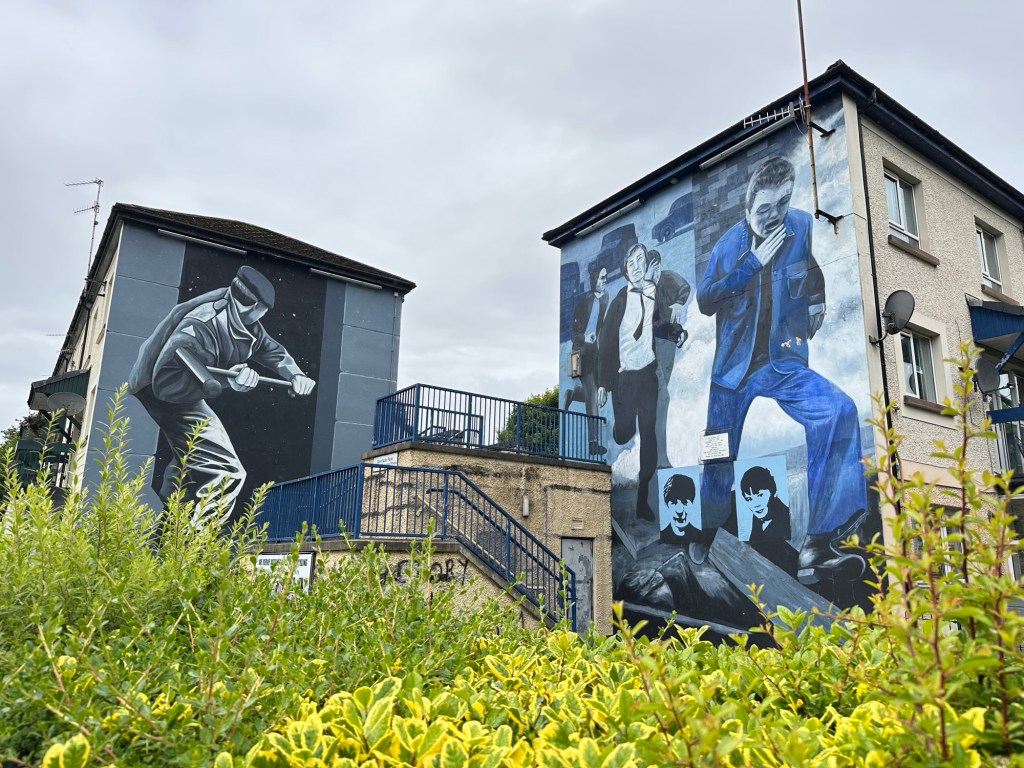
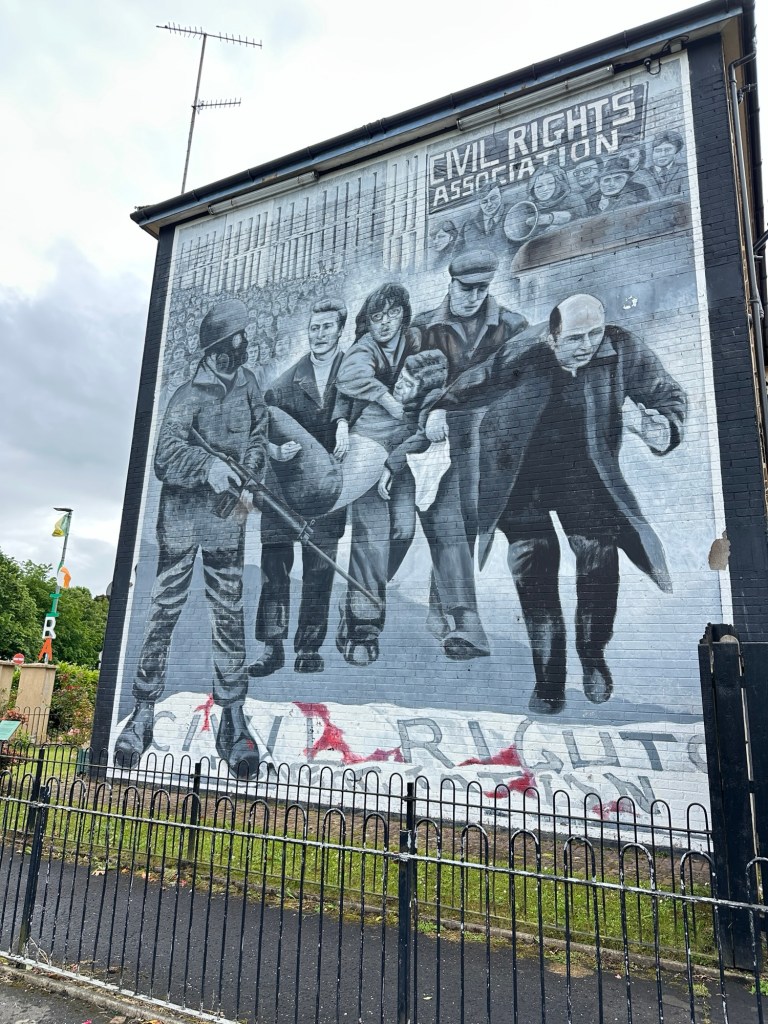
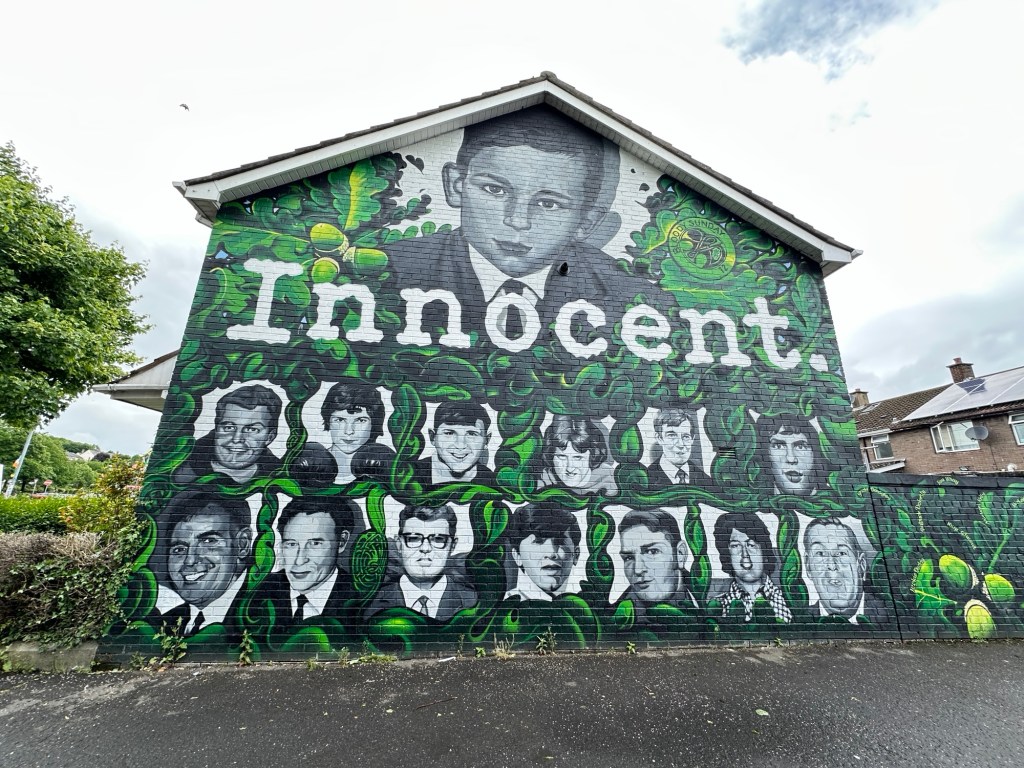
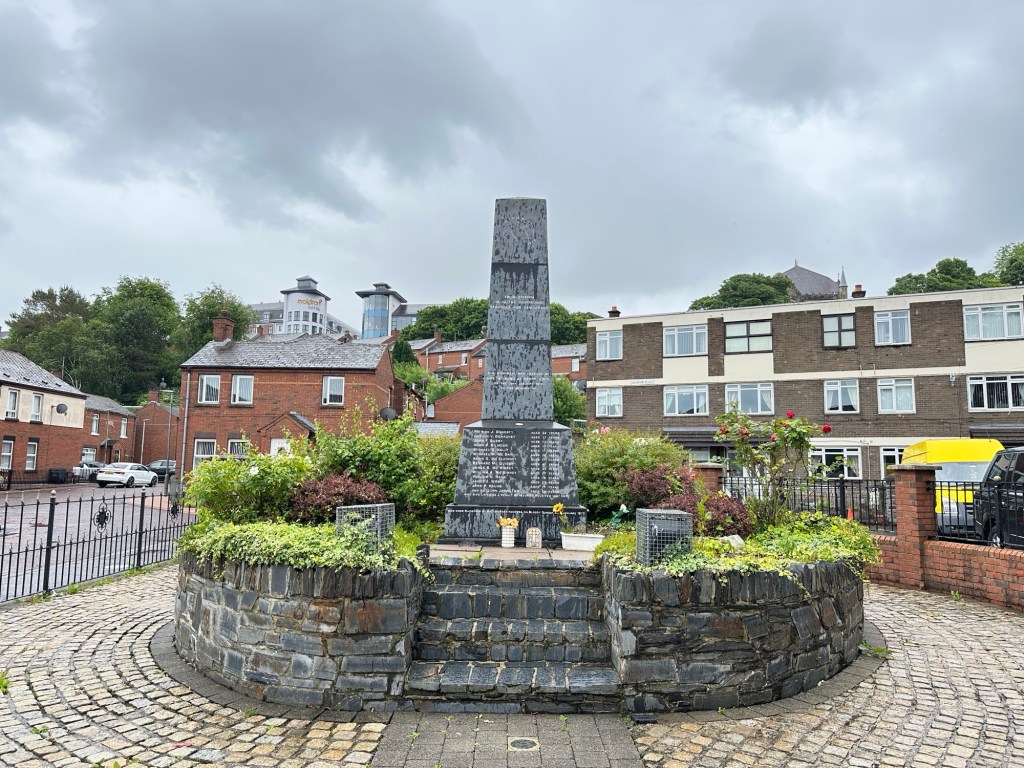
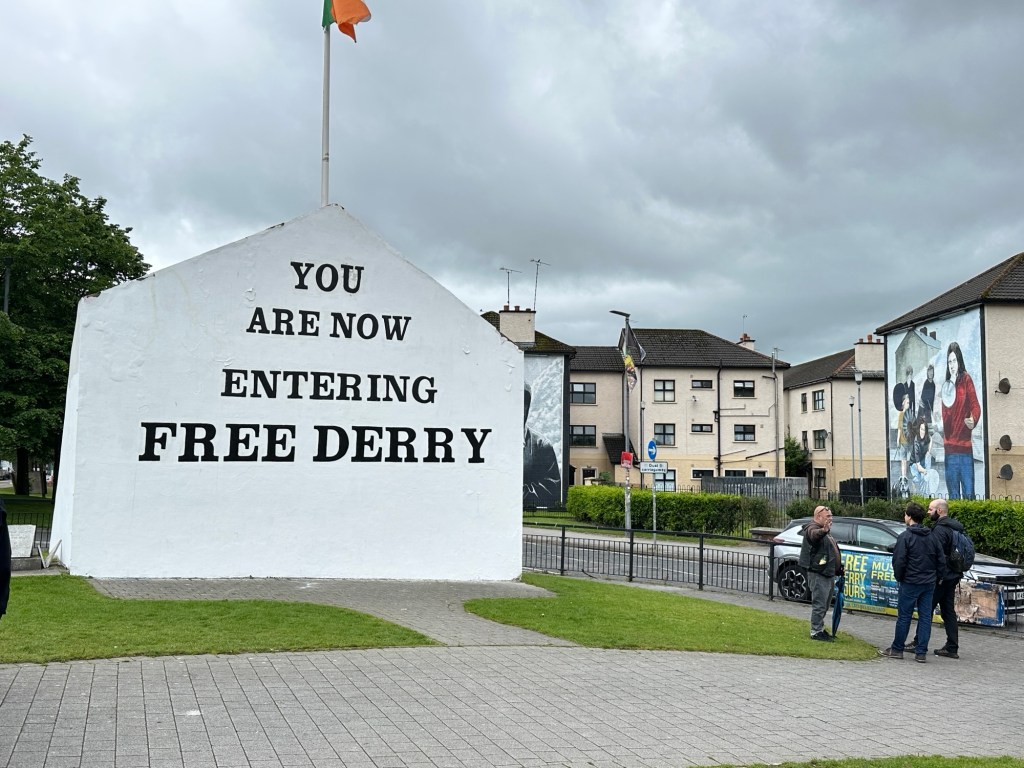
We also heard about the Free Derry Story, the Hunger Strike and the Irish Peace Process. After the walk finished (and by the way, it rained on and off during the walk), we went to the Free Derry Museum which helped consolidate what we had just learned. What I found most moving was hearing Britain’s Prime Minister deliver his apology speech to the world. On the same level, I found it equally disturbing, that the offending officers were not, and will not, be charged.
From here, and with information overload, we checked into our AirBnB at Ebrington Mews . Another very comfortable apartment. We settled in, and had a drink to help digest all the information we had learned.
A couple of minutes walk away was the Peace Bridge. This bridge is a symbol of peace connecting the two sides of the river Foyle. We headed out, the sun was shining, and walked across the Foyle River (via the bridge of course) and walked around the walled city of Derry, seeing the many city gates and the wall itself. It is the most complete walled city in Ireland.


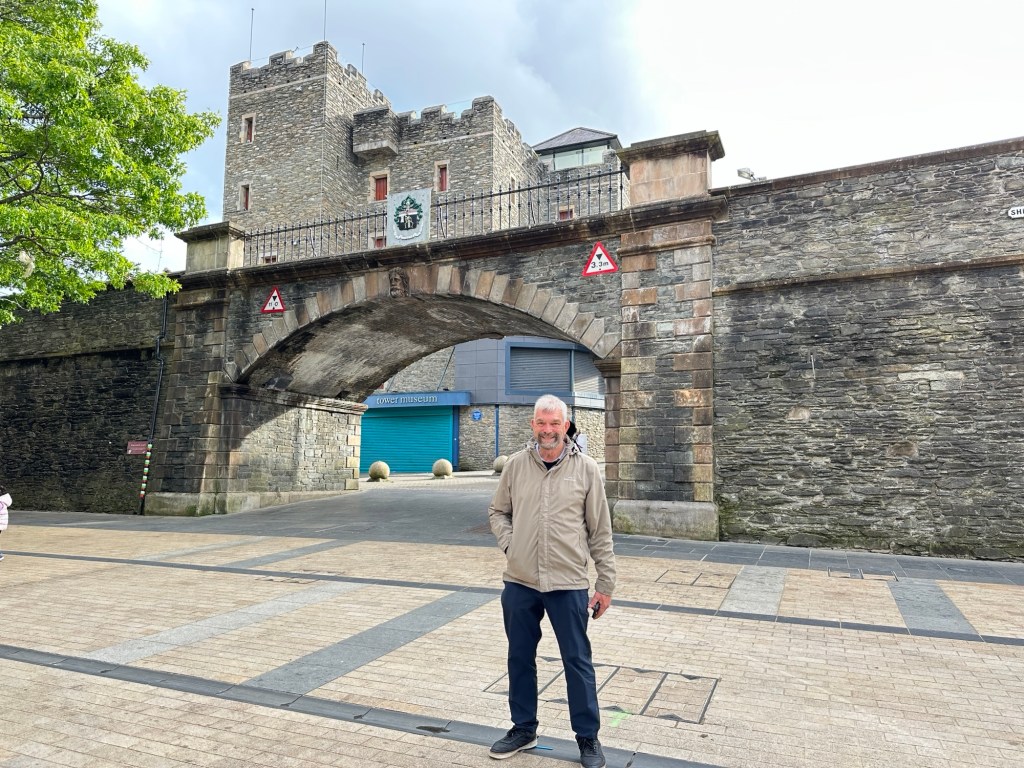
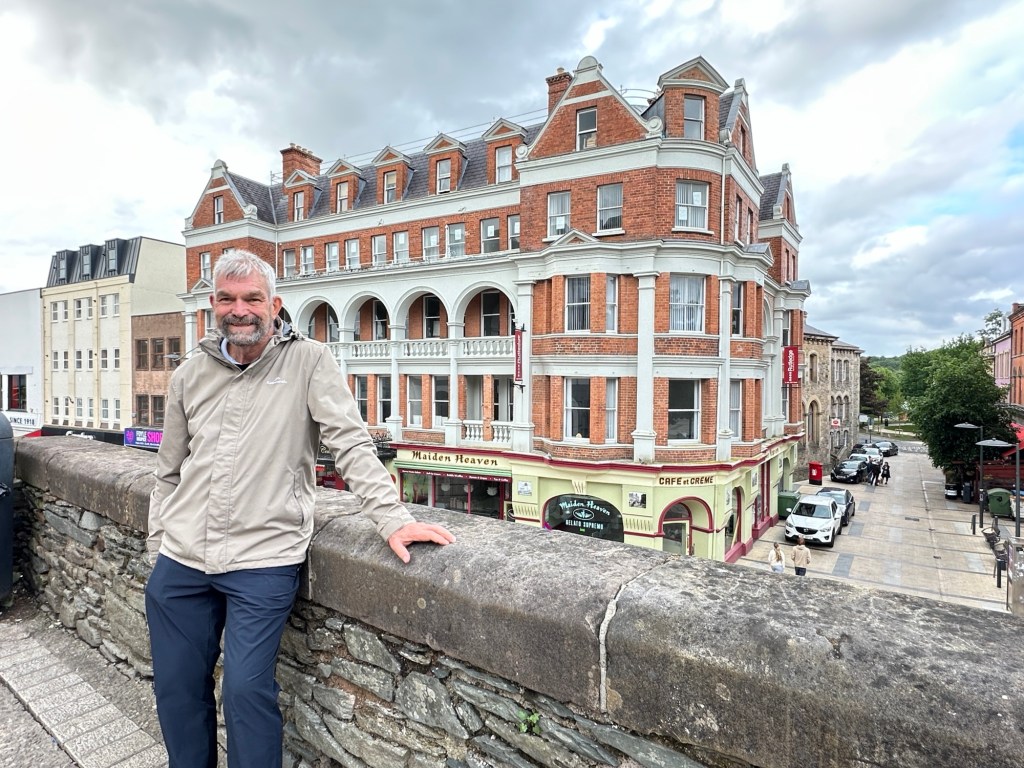
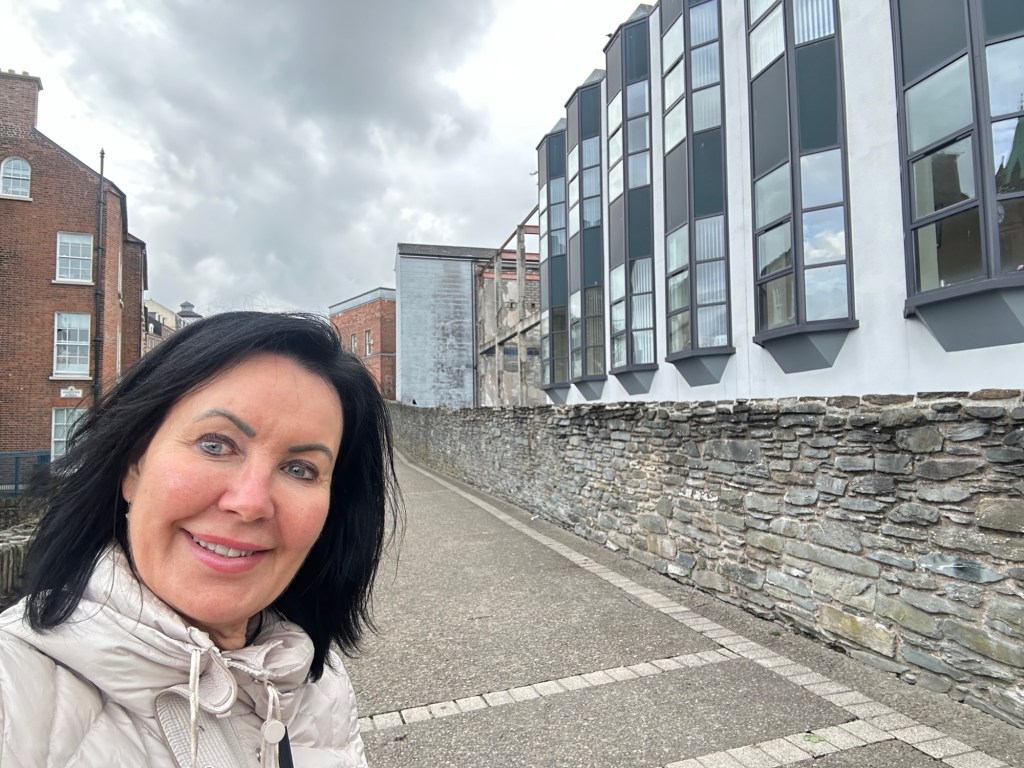

Not a lot happening in the city at 8pm. Found the Derry Girls mural , and a few other nice artworks. We eventually found a nice restaurant, The Exchange, where we enjoyed a nice meal.


Day 9
Wednesday 28th May
Derry to Belfast, via Giants Causeway
8-16 degrees, mostly sunny, some showers
Big decision… do we go to Belfast via the northeast coast as we had originally planned, or go straight to Belfast and do the coast in two days time? The decision was weather dependent… rain predicted! We thought we would give it a go, and if the weather was really bad, we’d head up the capital city, and try again two days later.
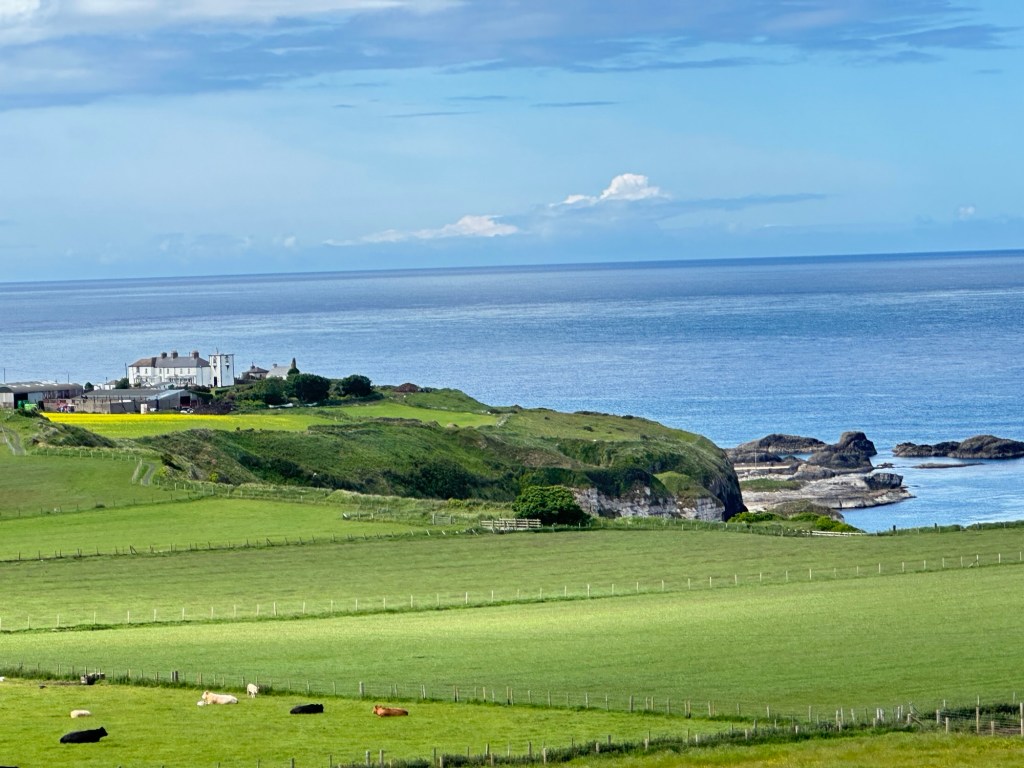
We left Derry and headed north. Our first stop was Dunluce Castle, home to the McQuillan family who built the fortress around 500 years ago. Because we had watched Game of Thrones, we recognised the castle as the House of Greyjoy. Dunluce Castle is located on top of cliffs that collapse into the North Atlantic below. Its dramatic history of violence, intrigue and rebellion is matched by the scandal and betrayal committed by the Greyjoys in Game of Thrones. We explored the romantic ruins, grounds, and surrounds before driving 15 minutes to the Giant Causeway.
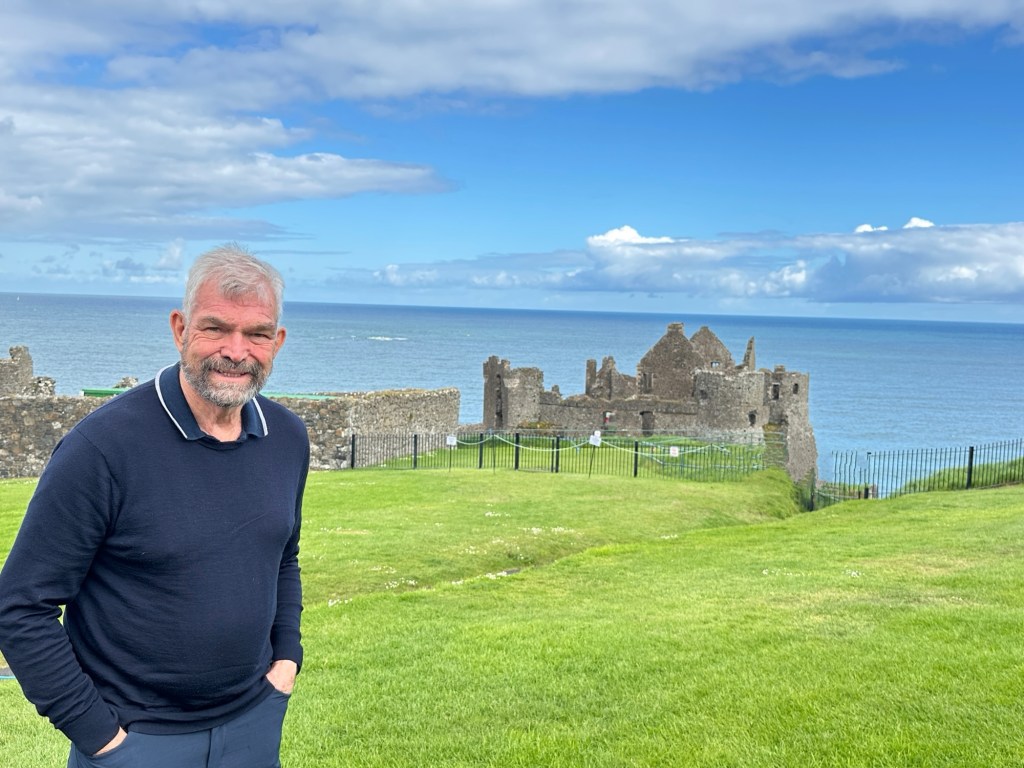
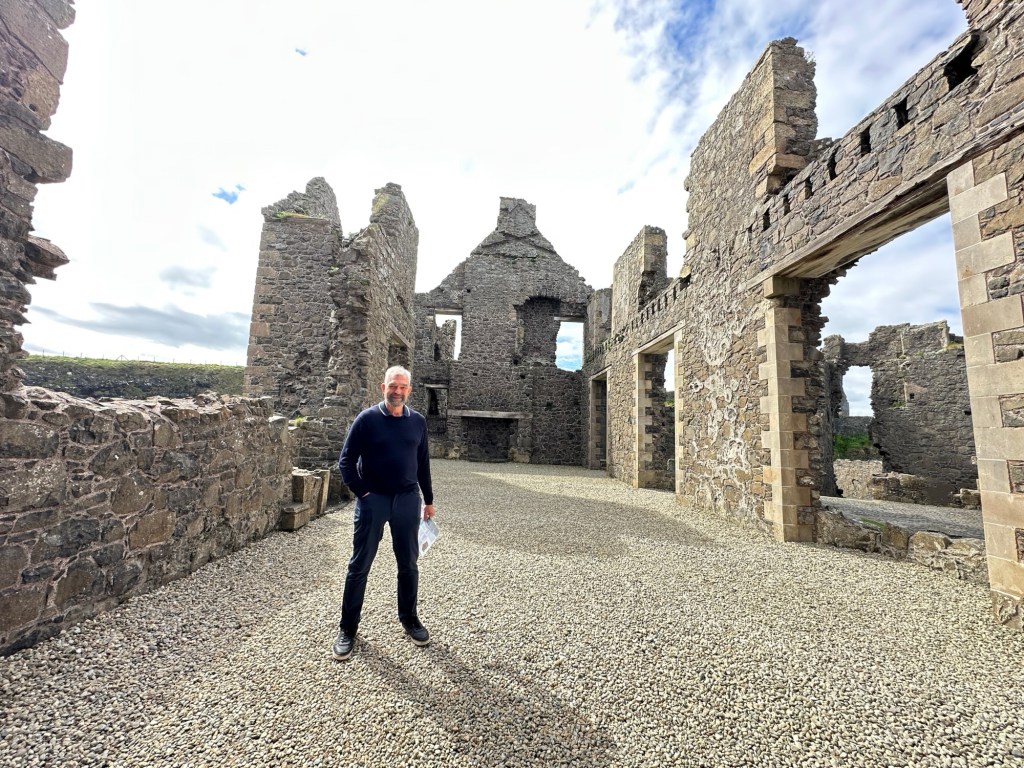
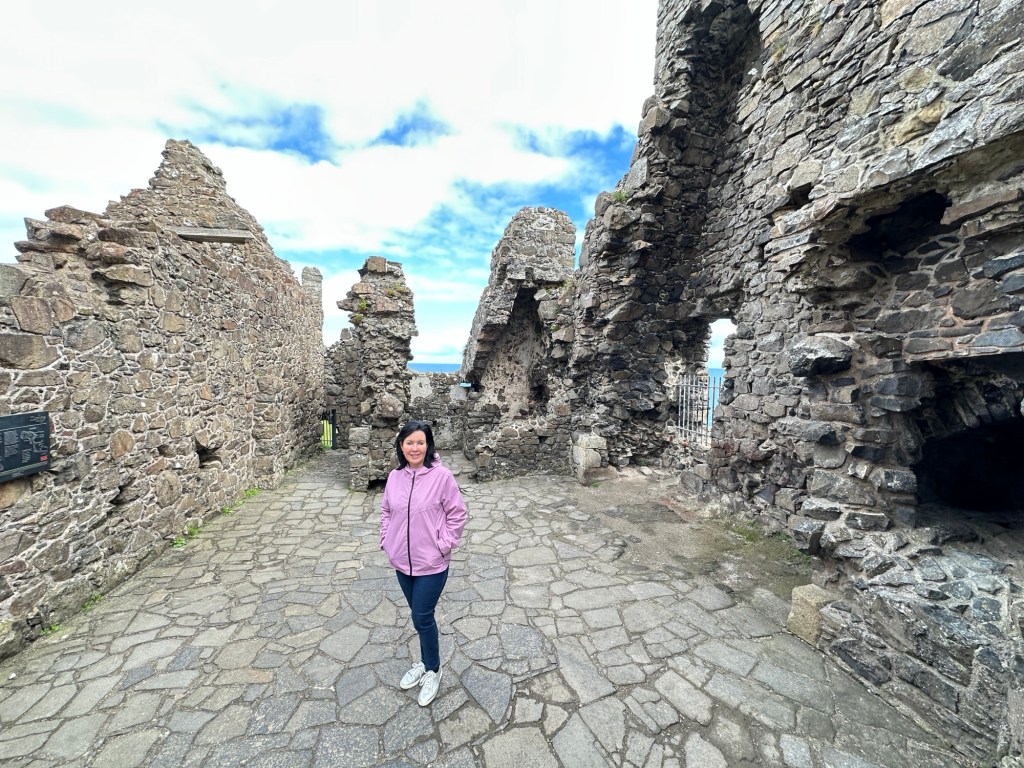
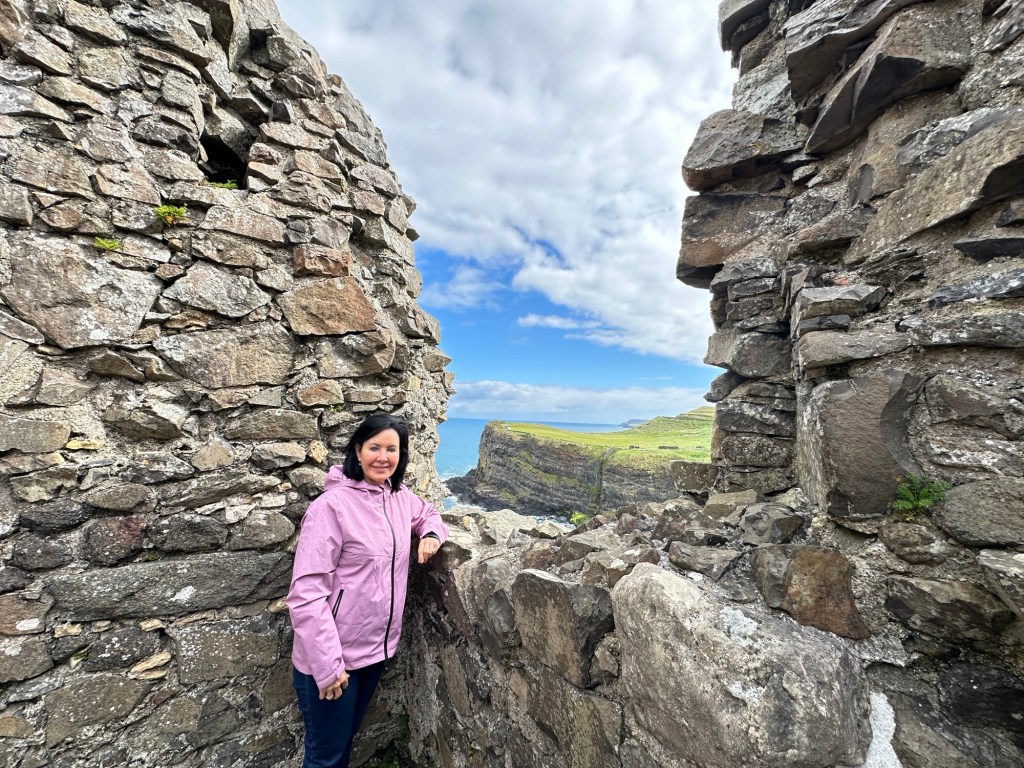
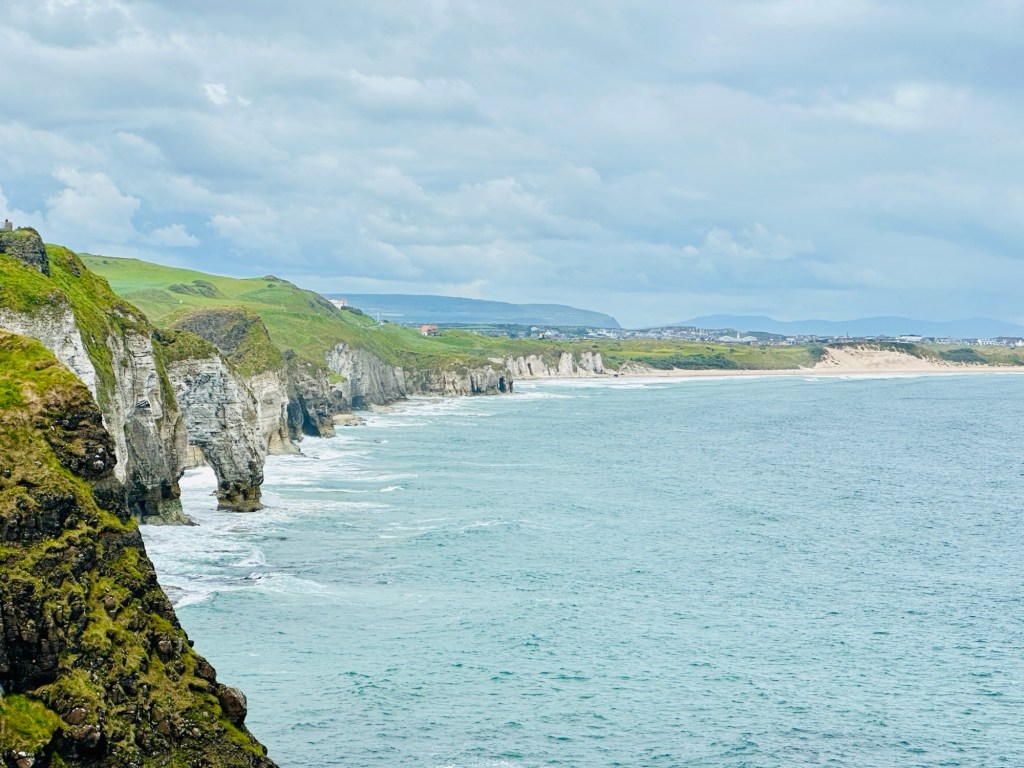
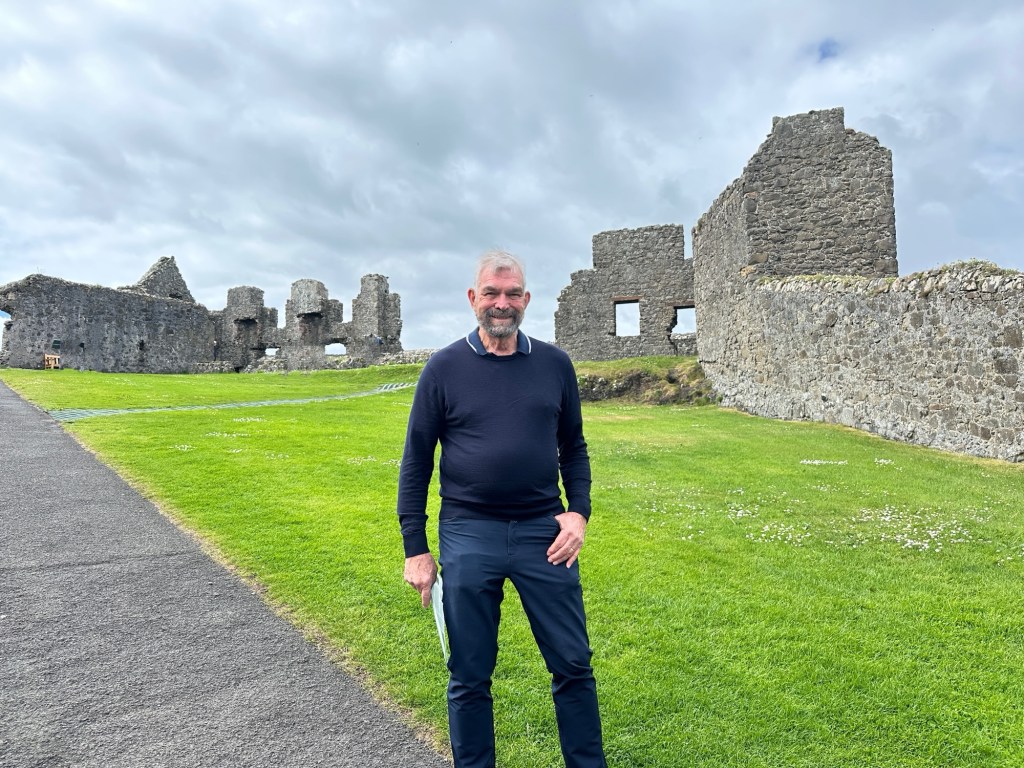
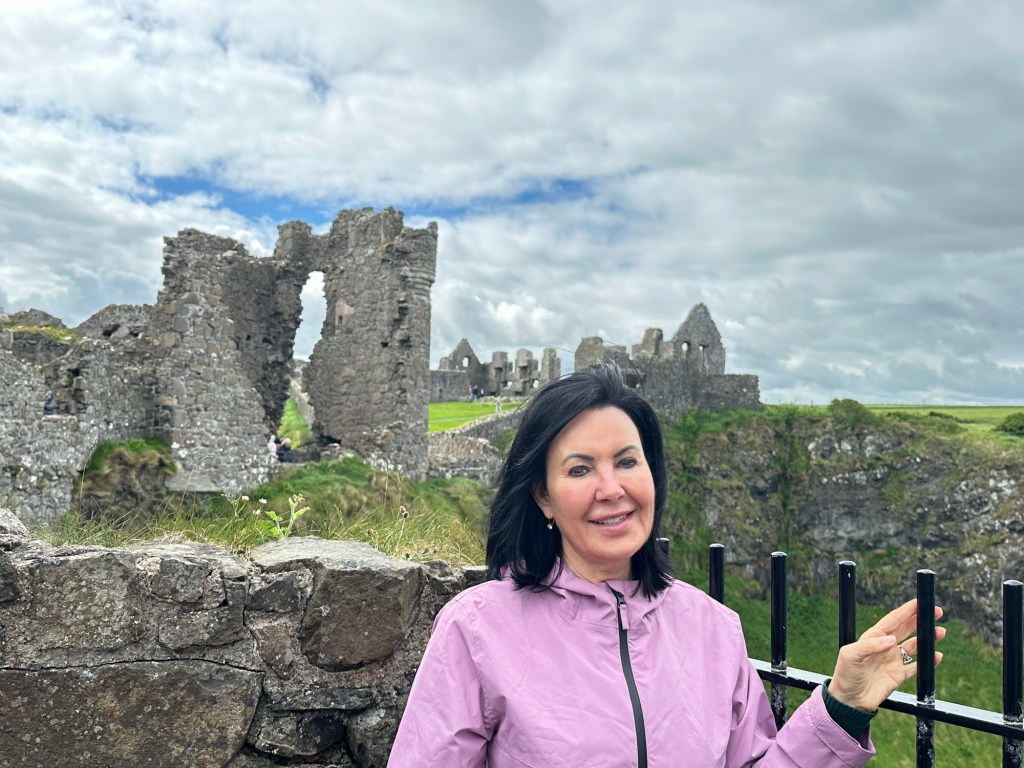
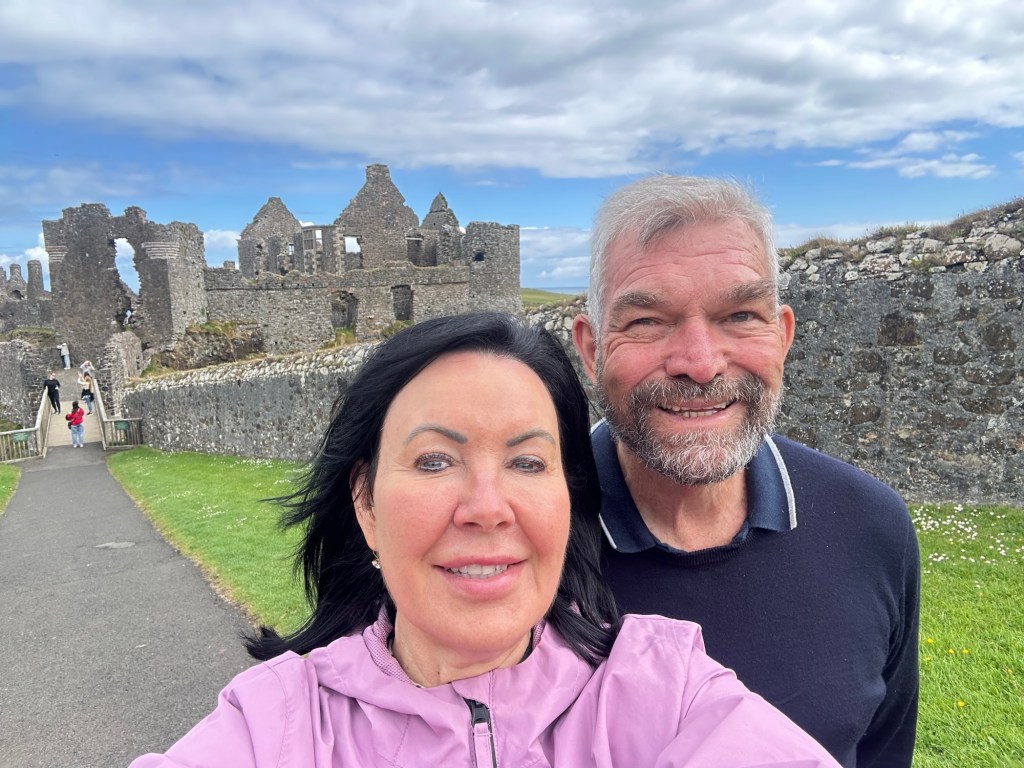
The weather was looking ok so far. But that changed 30 minutes later. We decided to have coffee and a bite to eat in the hope that the rain would clear. Not to be, so we started our tour of The Giant Causeway with our raincoats on.
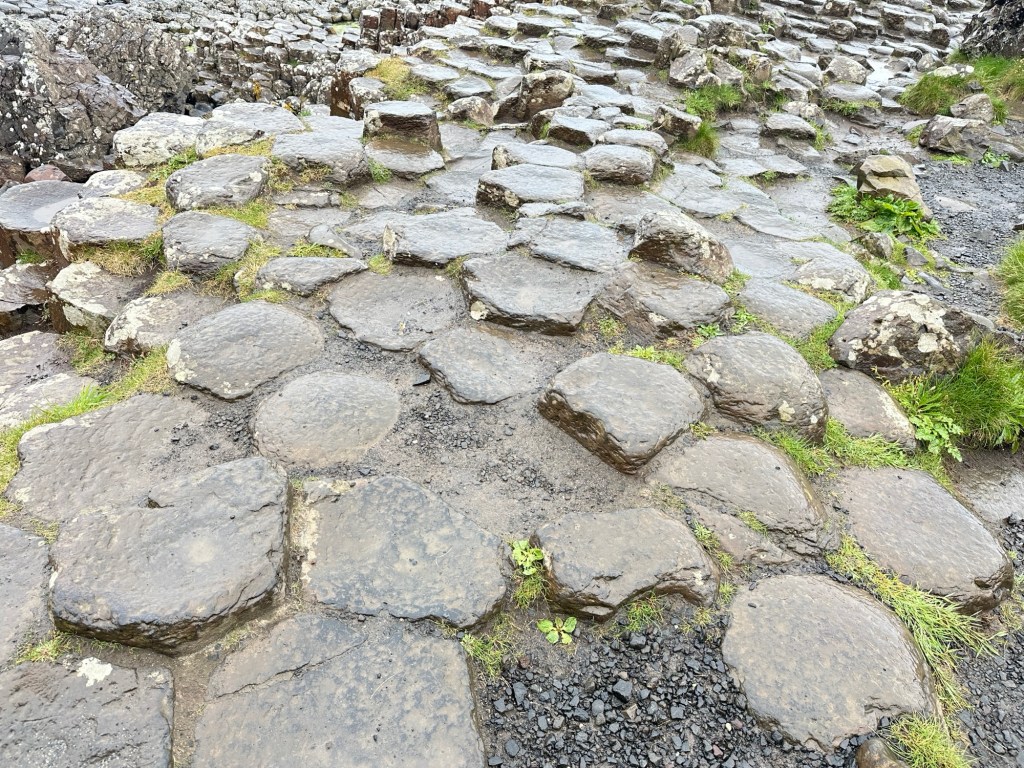
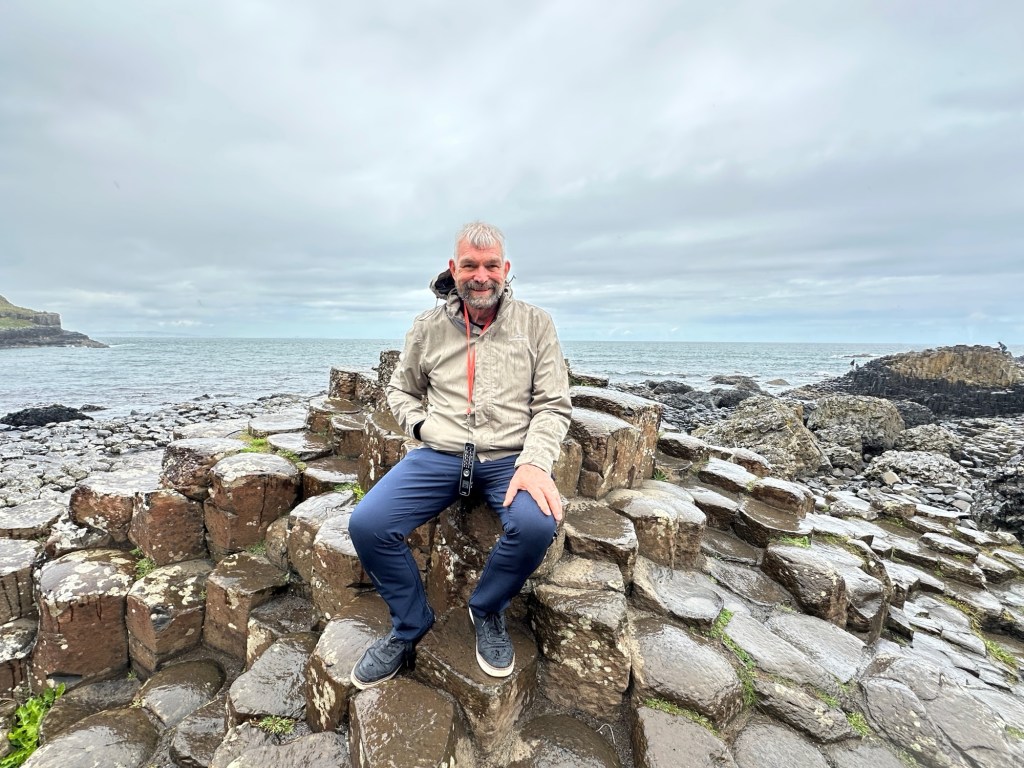
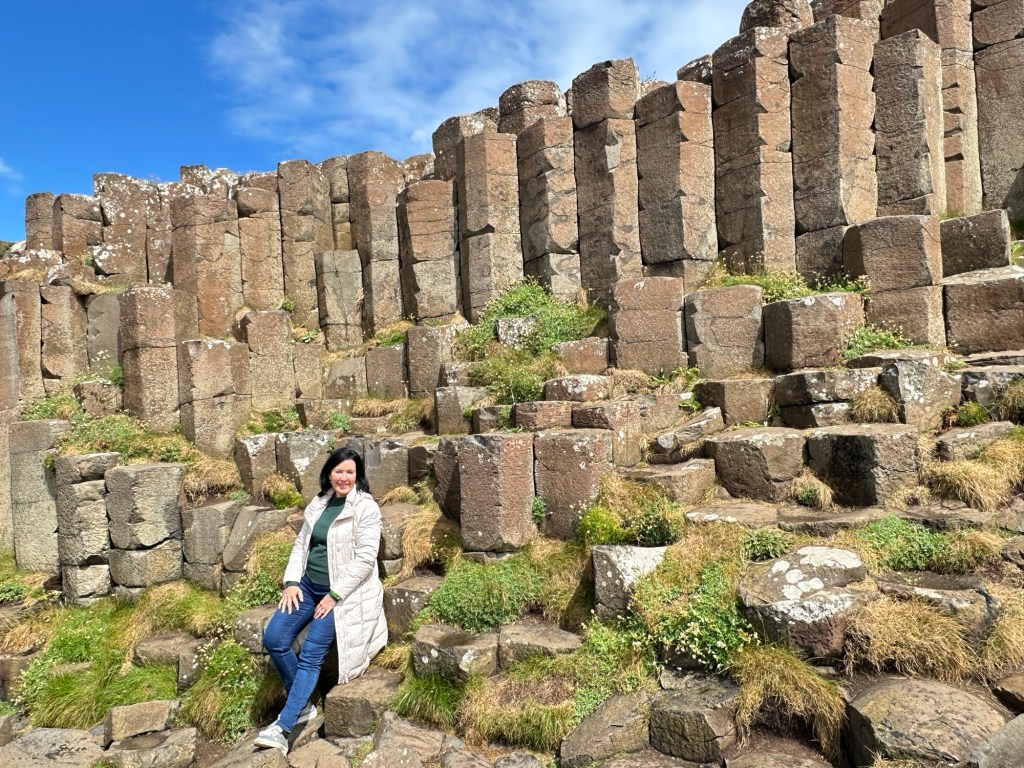
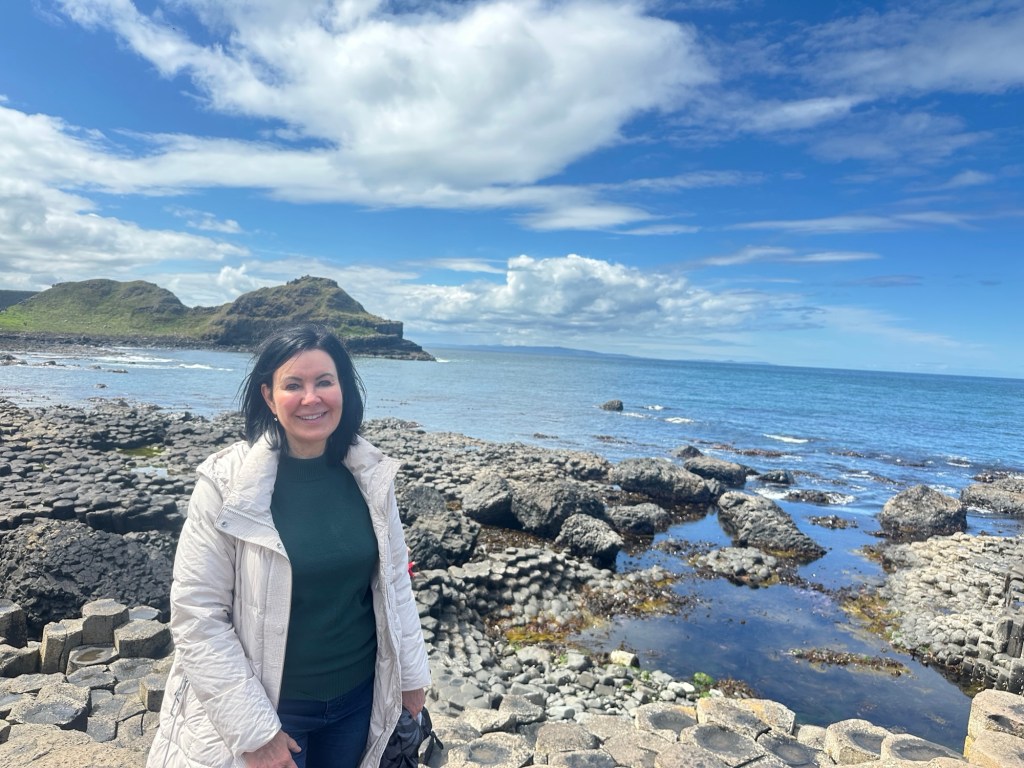
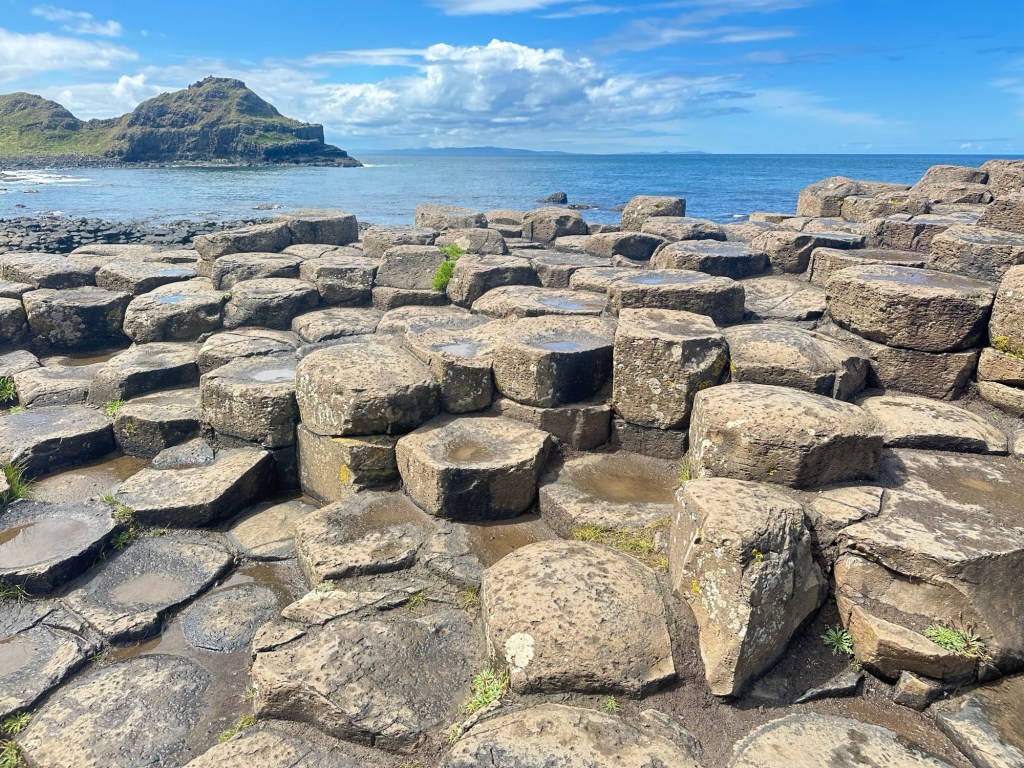
The Giant’s Causeway consists of around 40,000 hexagonal basalt columns formed during a volcano eruption 60 million years ago. This is one of the world’s great natural attractions although many Irish passionately believe the causeway was built by the Celtic warrior hero Finn McCool.
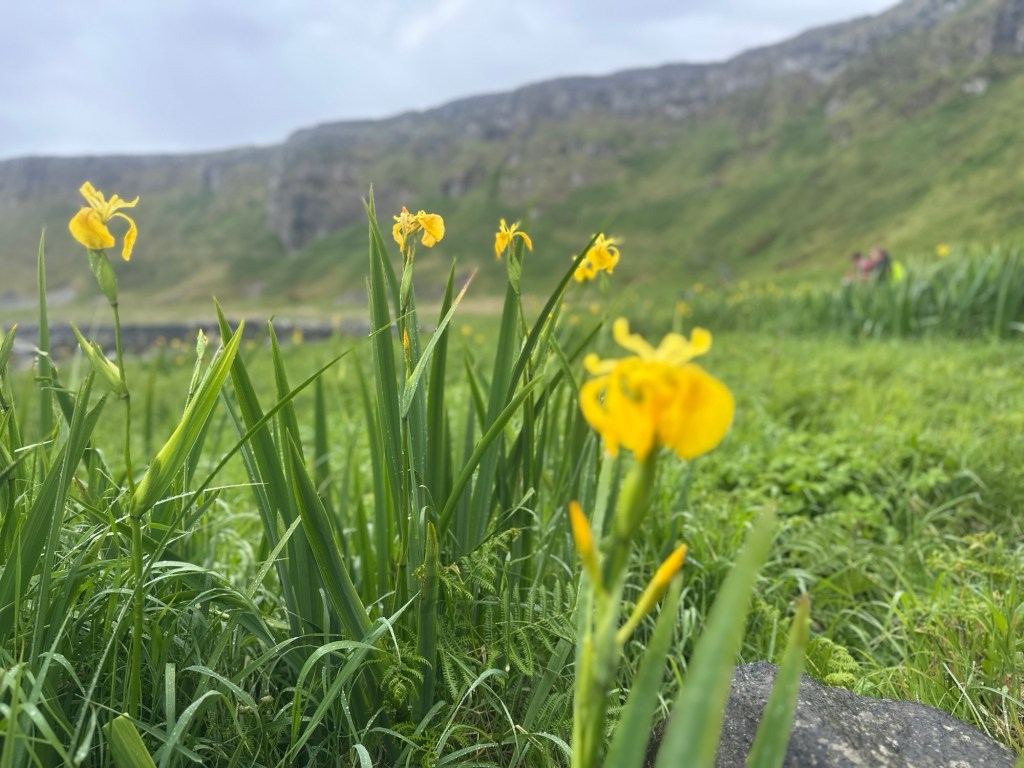
We paid £15 each to go into the Visitor Centre- you really don’t need to go there. It’s not that great, the food/drinks are over priced. The Giant’s Causeway itself is actually free to walk to. We walked the blue and red trails. Luckily, the rain cleared – the scenery was stunning. The stones were fascinating. The weather gods must have felt sorry for us after the Cliffs of Moher. We really enjoyed the Causeway, plus the surrounding countryside.

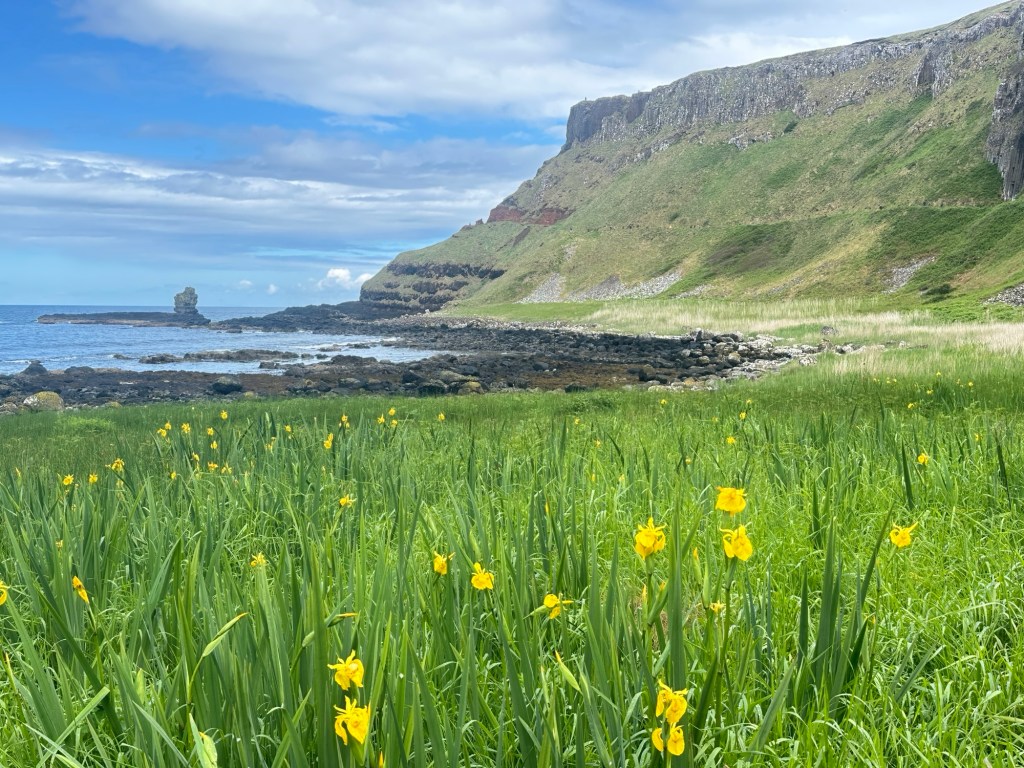
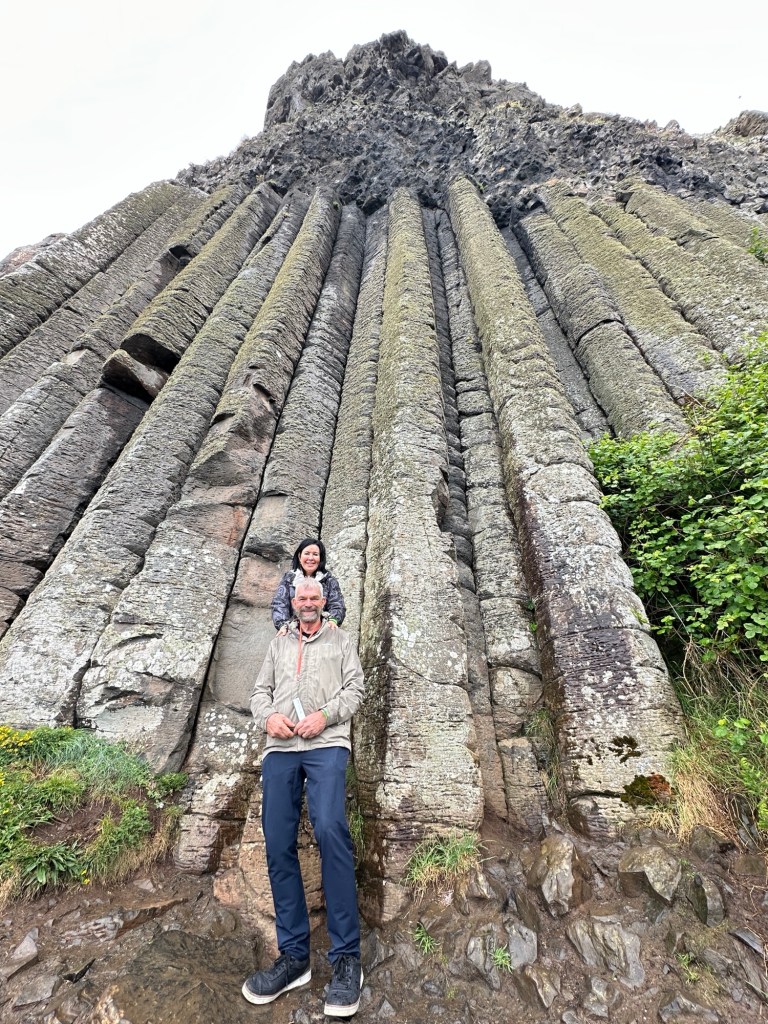
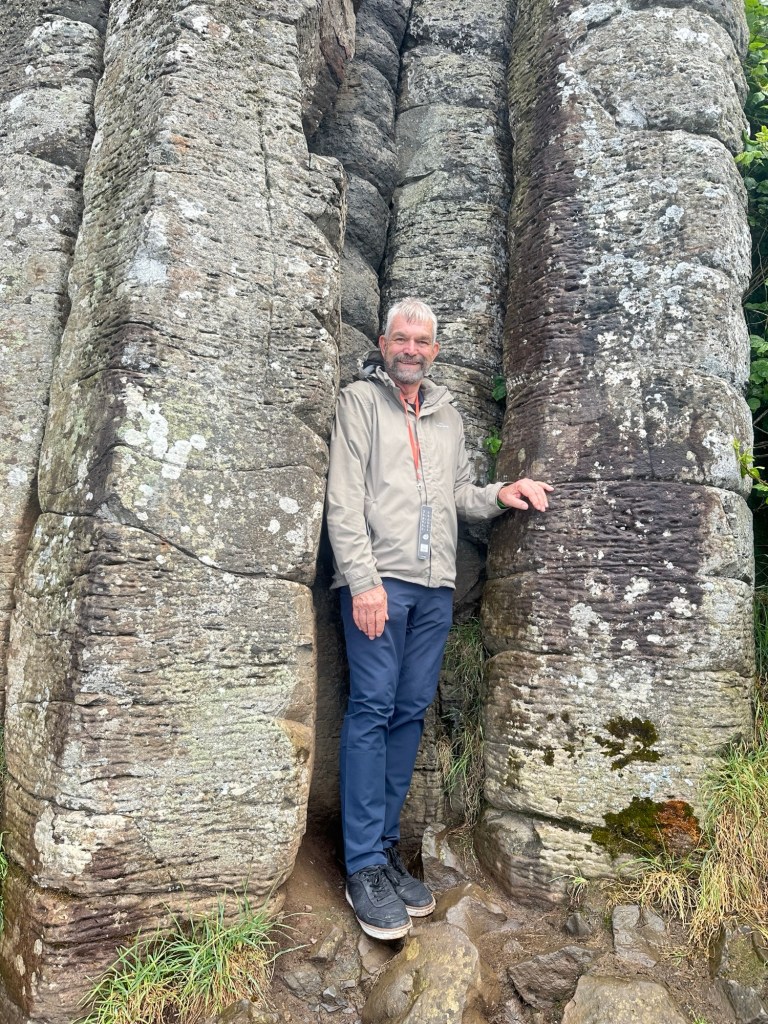
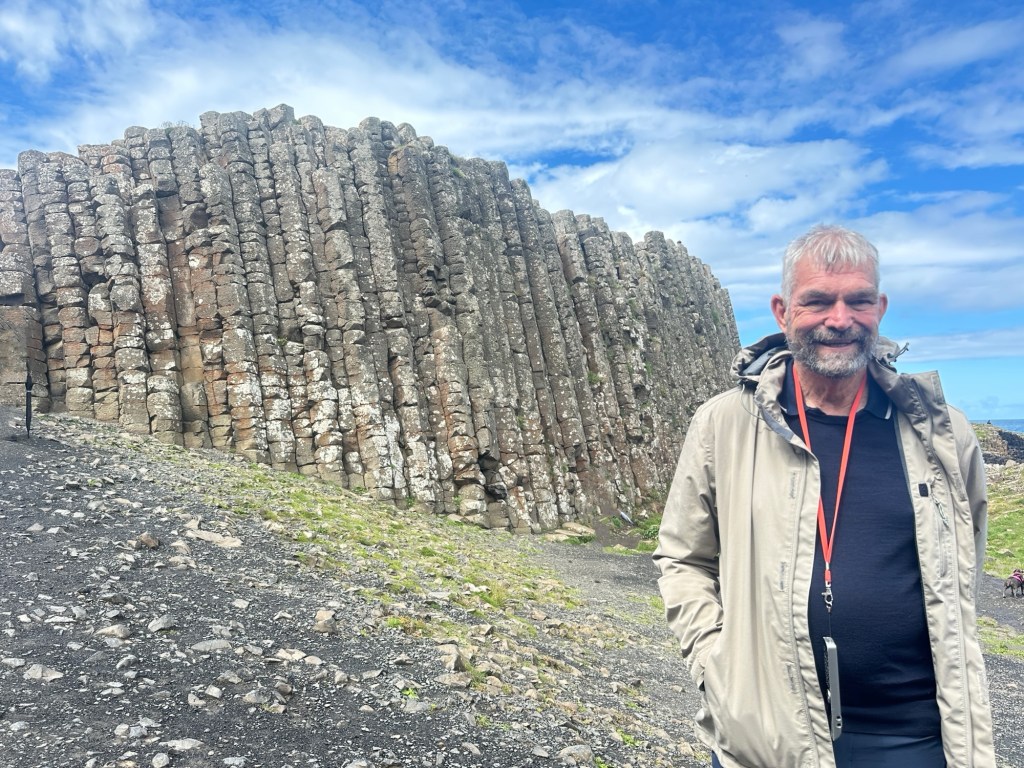

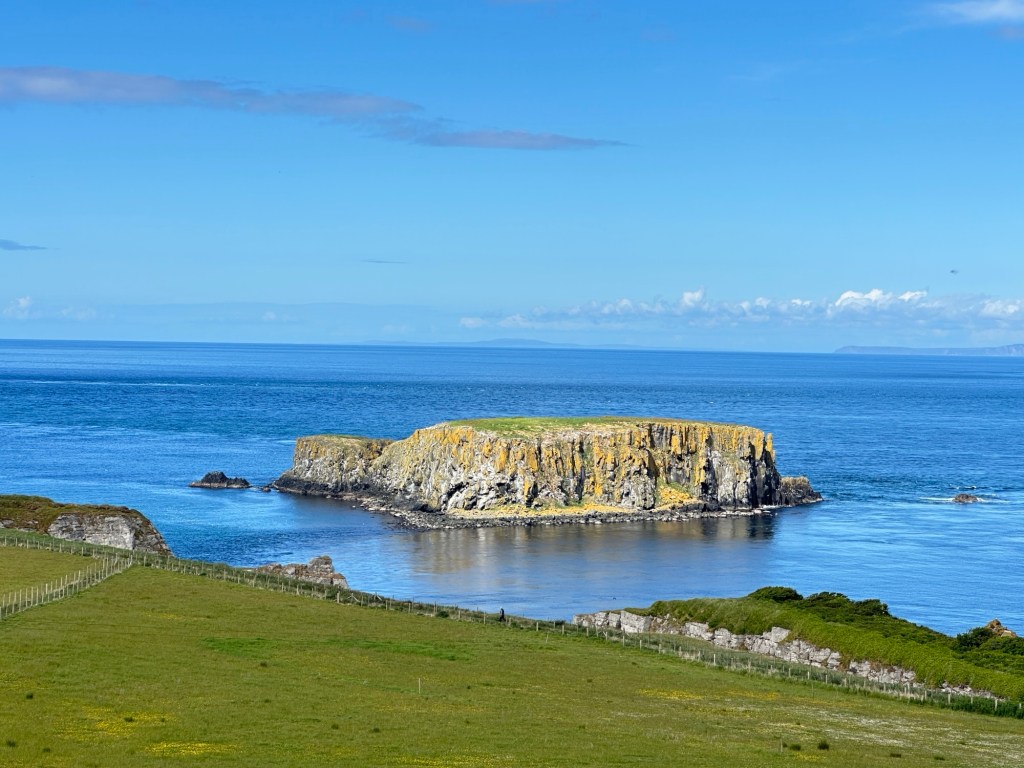
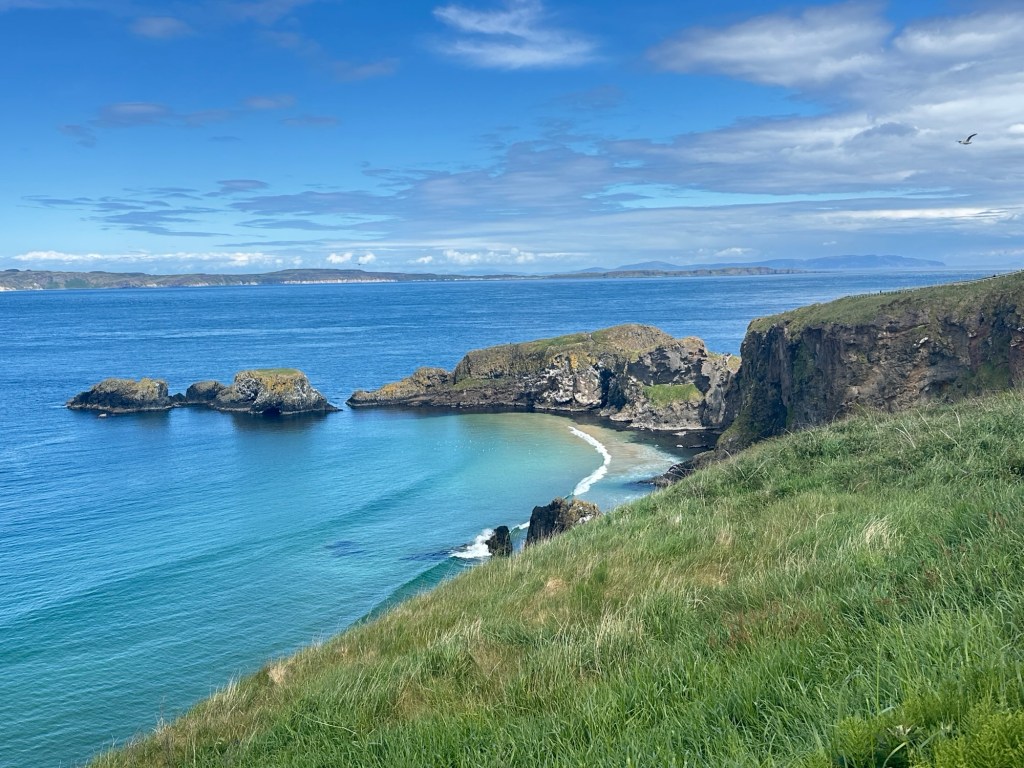
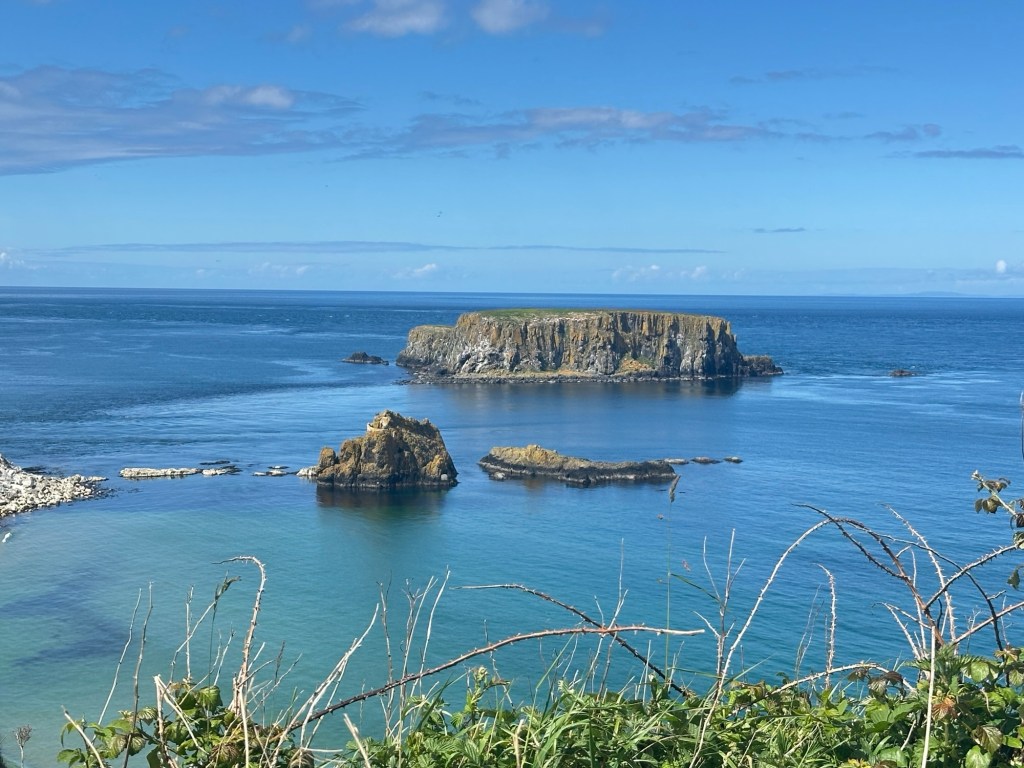
Fifteen minutes later did we were at another spectacular attraction, Carrick-a-Rede. Here we walked for 20 minutes, then came to the rope bridge. Traditionally, fishermen erected the bridge to Carrick-a-Rede Island over a chasm of 23m-deep and 20m-wide, to harvest salmon from their nets. In the distance we could see the Mull of Kintyre in Scotland. It’s a bit scary crossing the bridge, but nowhere near as bad as the one we crossed in Yukon, Alaska. More stunning scenery on the island. And best of all, no rain, just vibrant blue skies.
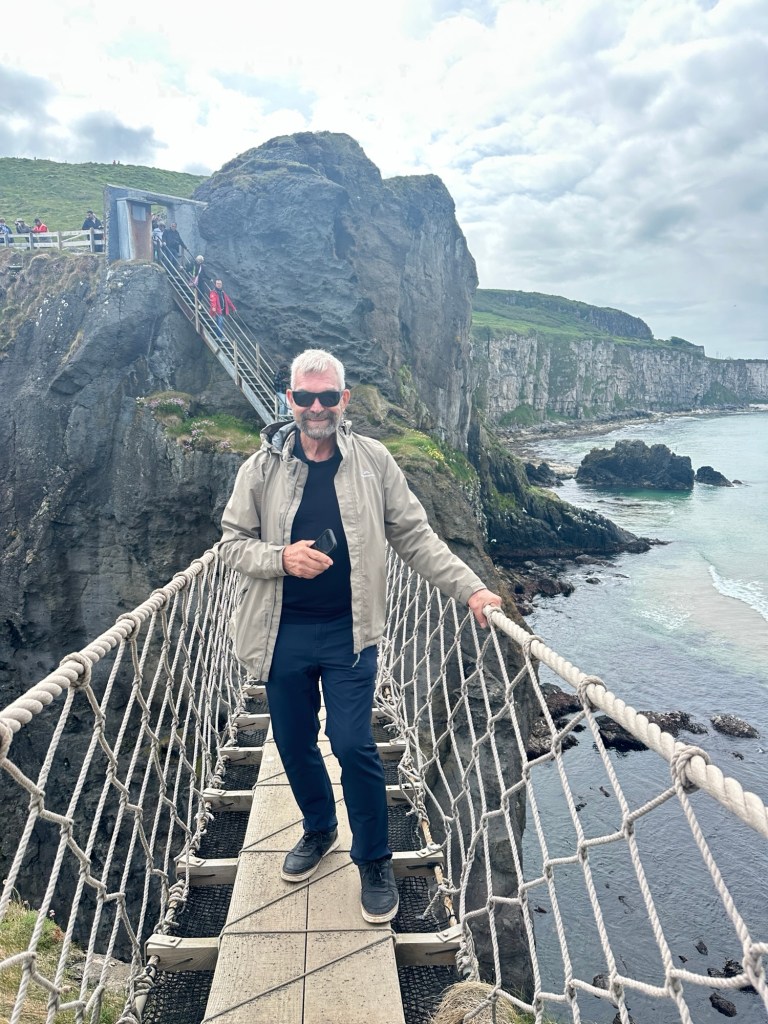

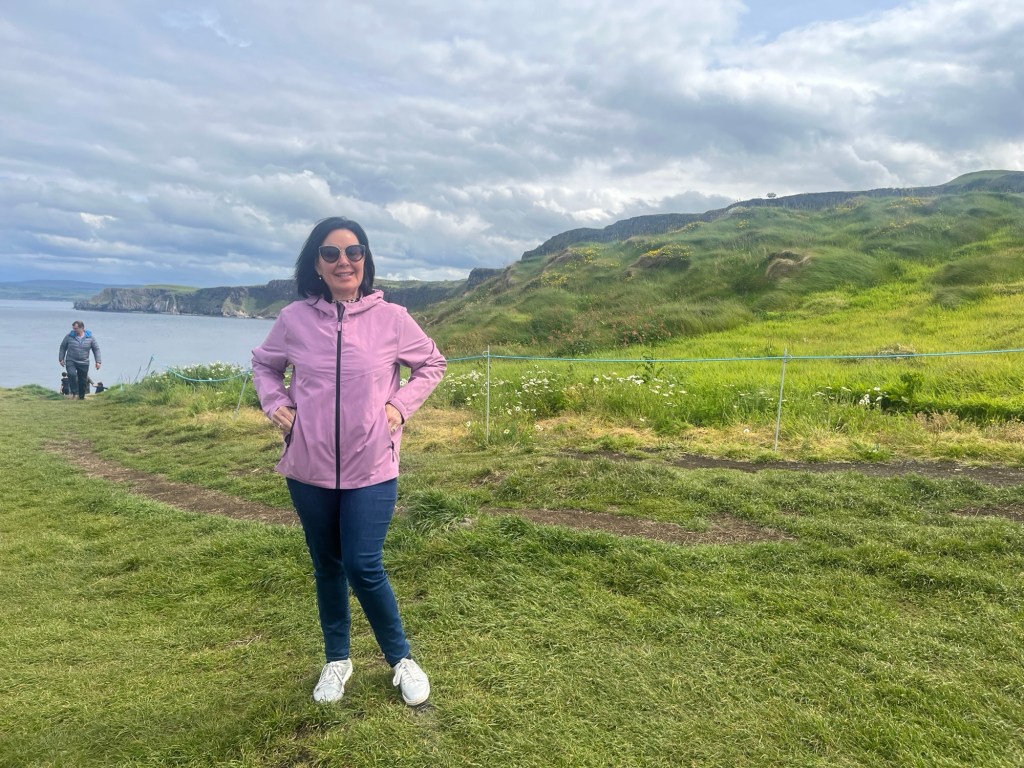
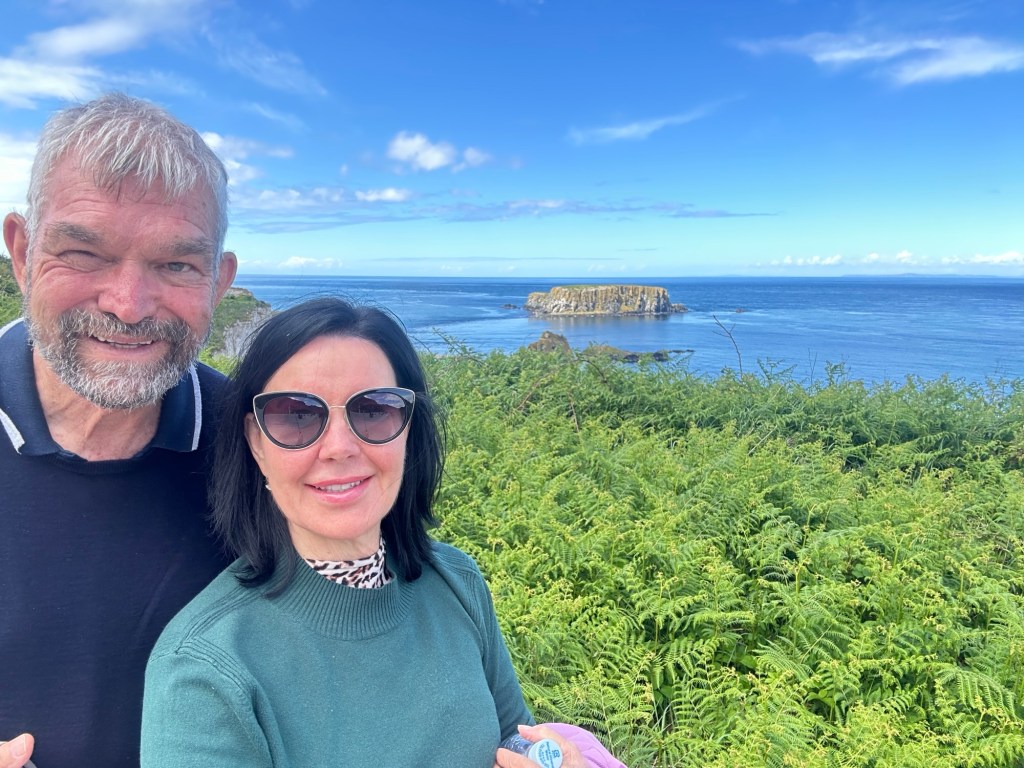
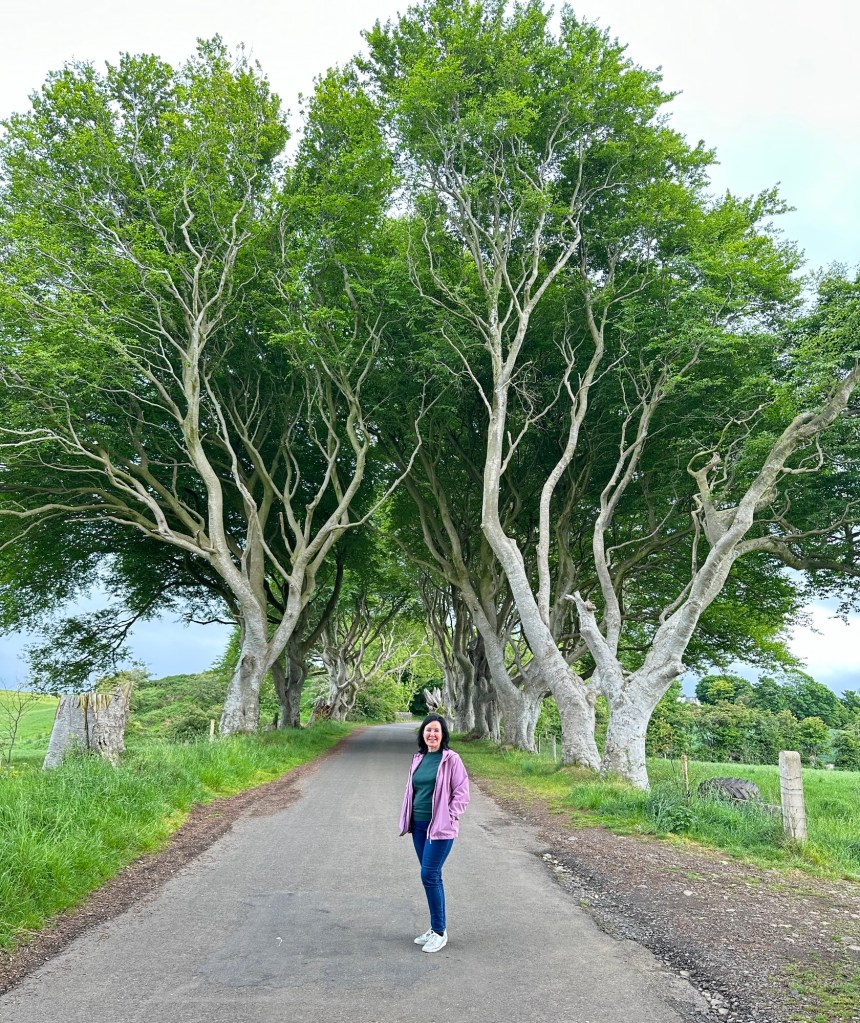
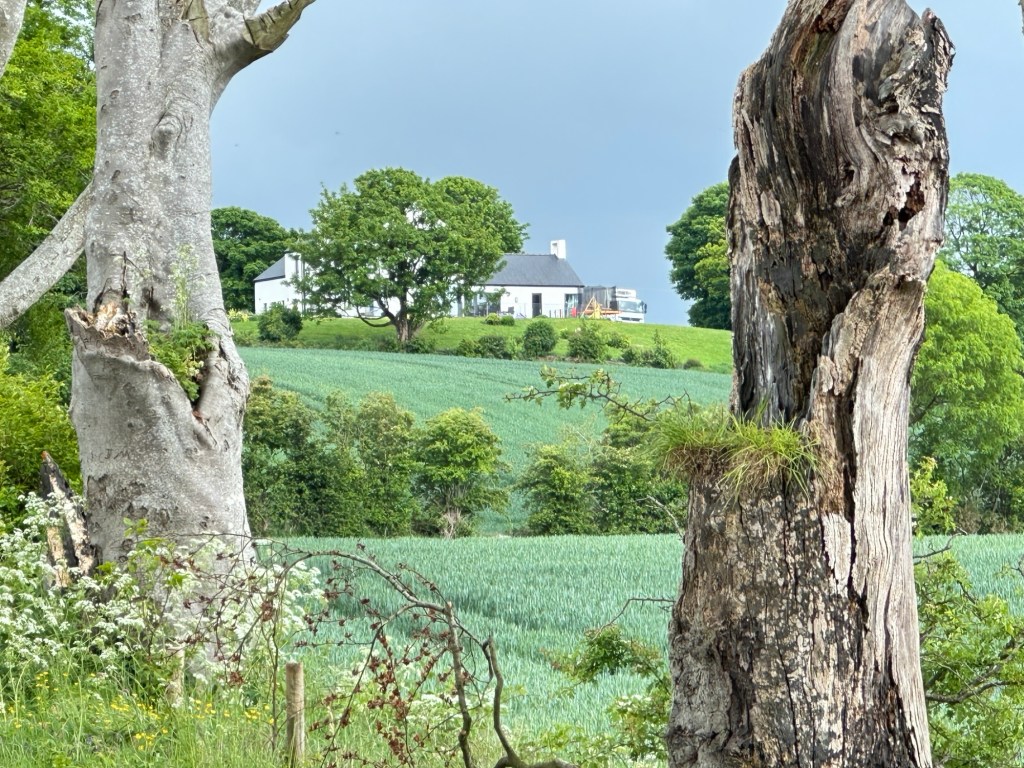
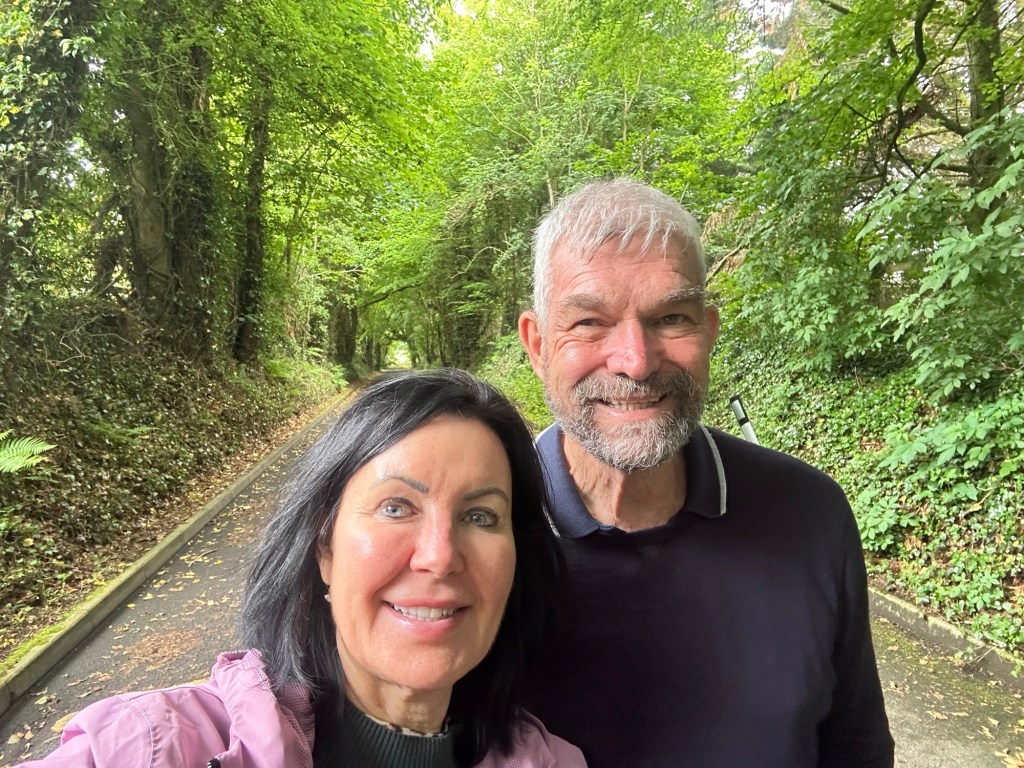
Last stop for the day, Dark Hedges, another sight recognisable from Game of Thrones (King’s Road). A series of beech trees were planted centuries ago by the Stuart family to make an impression upon guests visiting their estate. I loved the twisted trunks and branches- so much character.

An hour’s drive, half on the highway, and we were in Belfast. We found a car park, checked into the Ibis City Hotel, then went across the road to a Turkish restaurant for dinner. Have to say the food was just ok, and the restauranteur not the most friendly person – we are in Great Britain now, missing the super friendly Irish people. Or maybe it was just a case of an off night!
Day 10
Thursday 29th May
Belfast
12-19 degrees, cloudy, sunny, brief shower
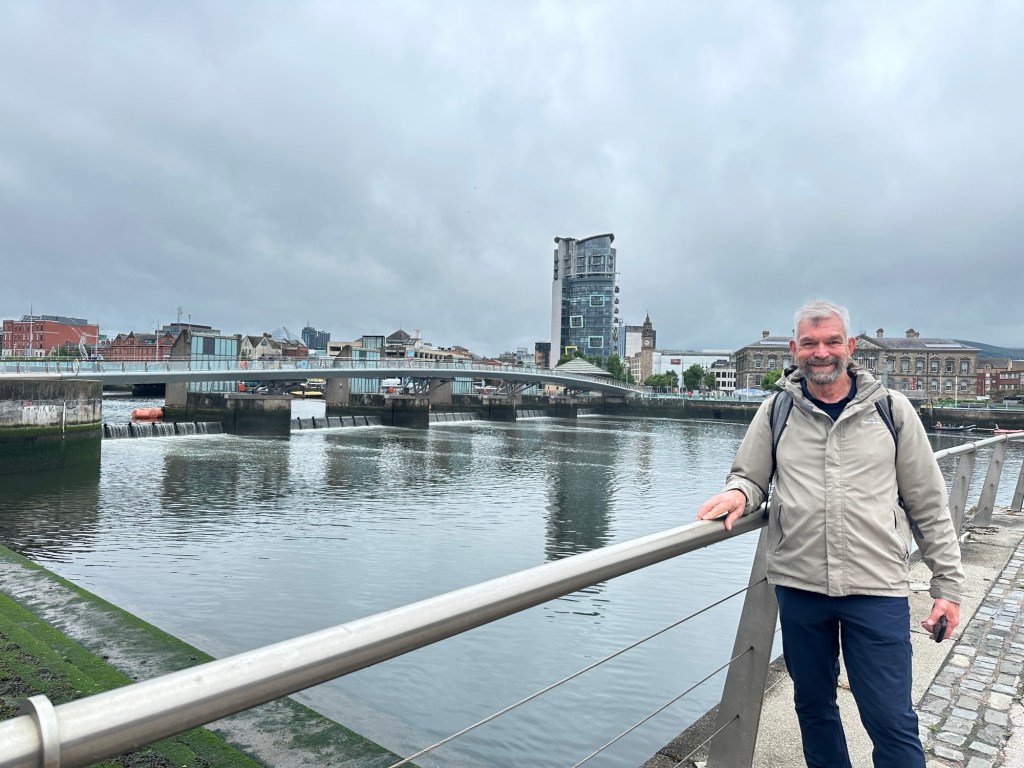
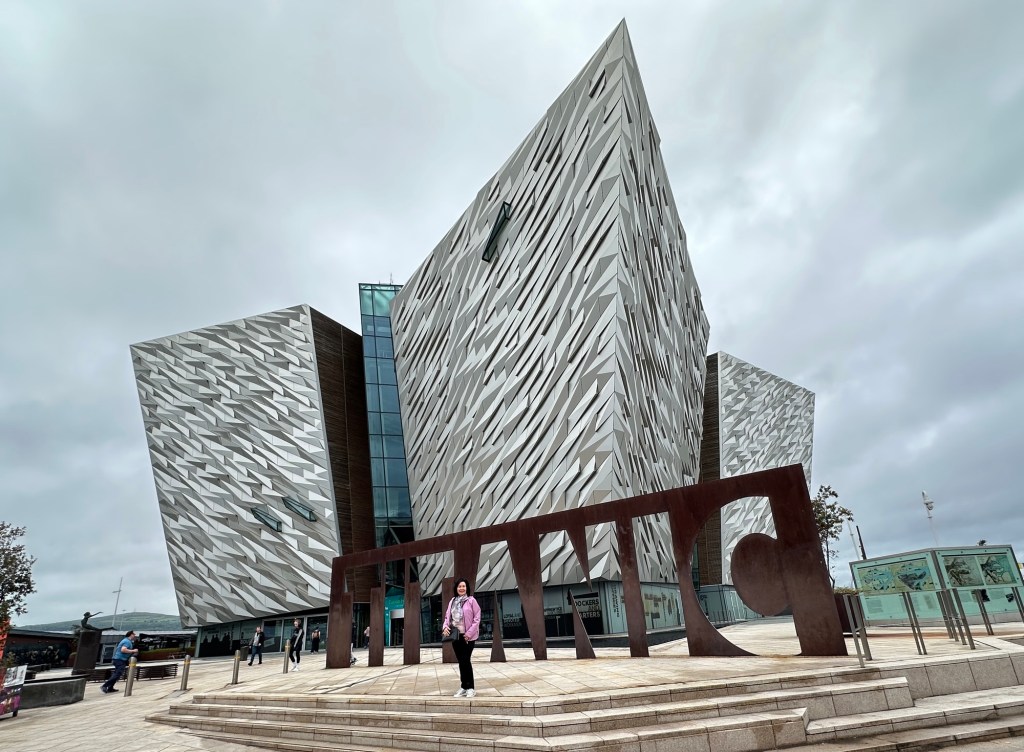
We had a 30 minute walk to the Docks Quarter where we were booked into the Belfast Titanic Museum. From the early 1600s Belfast had a port where the rivers Lagan and Farset met. The port became increasingly important for trade and by the early 1700s was the leading port in the north of Ireland.

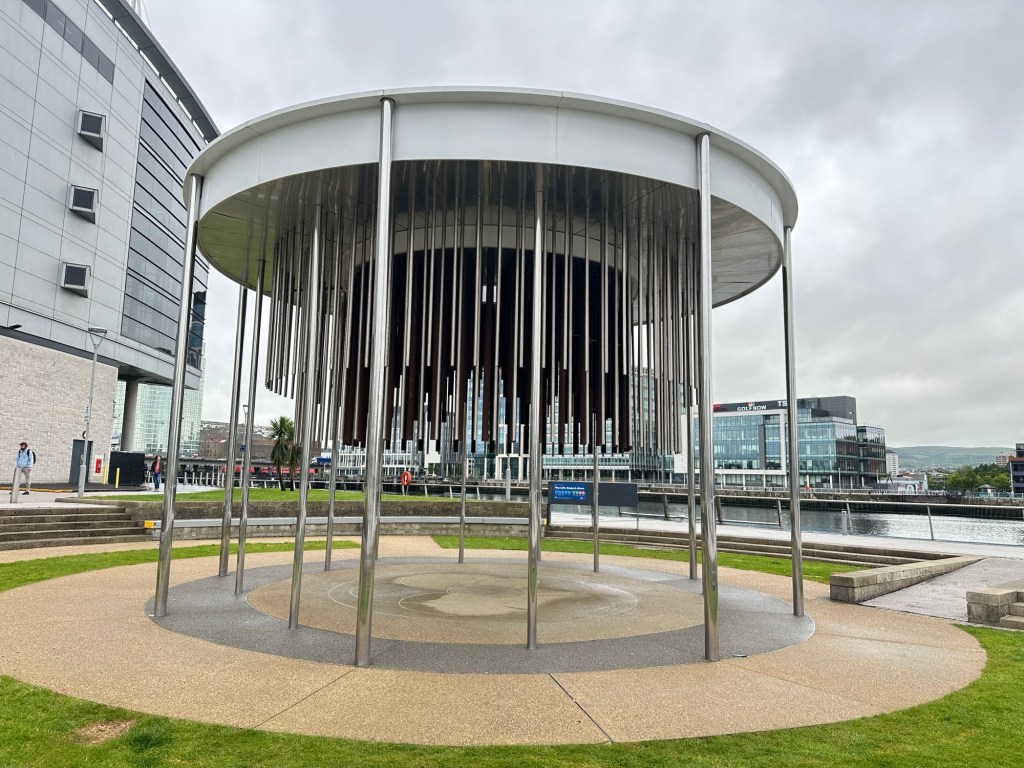
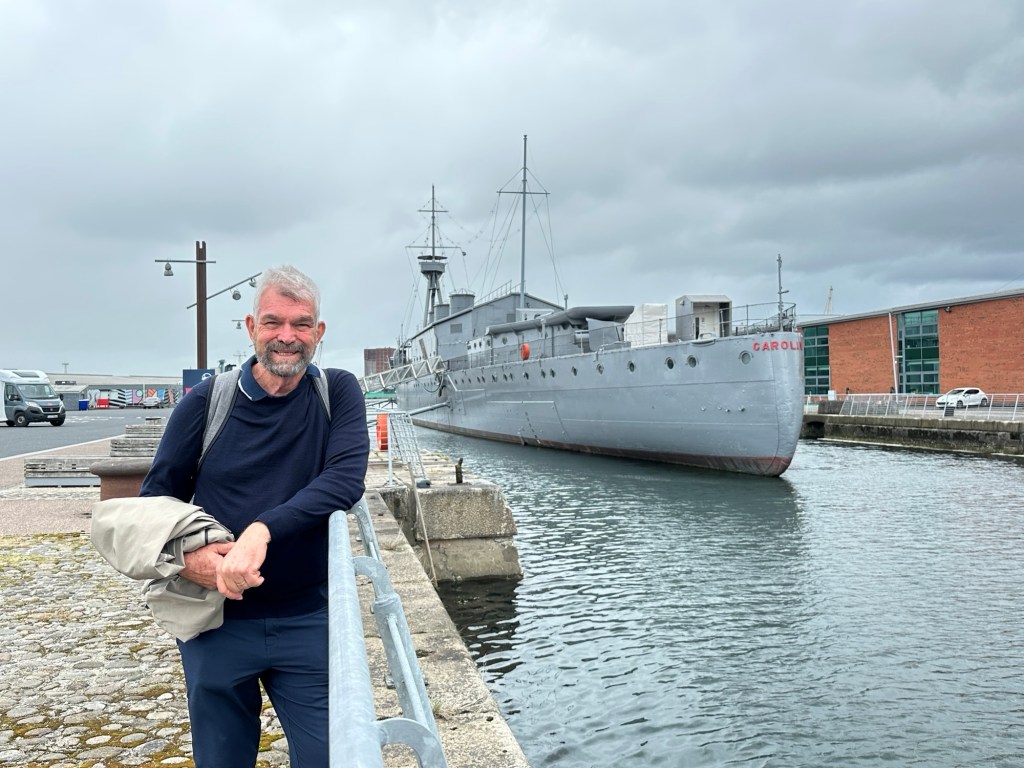
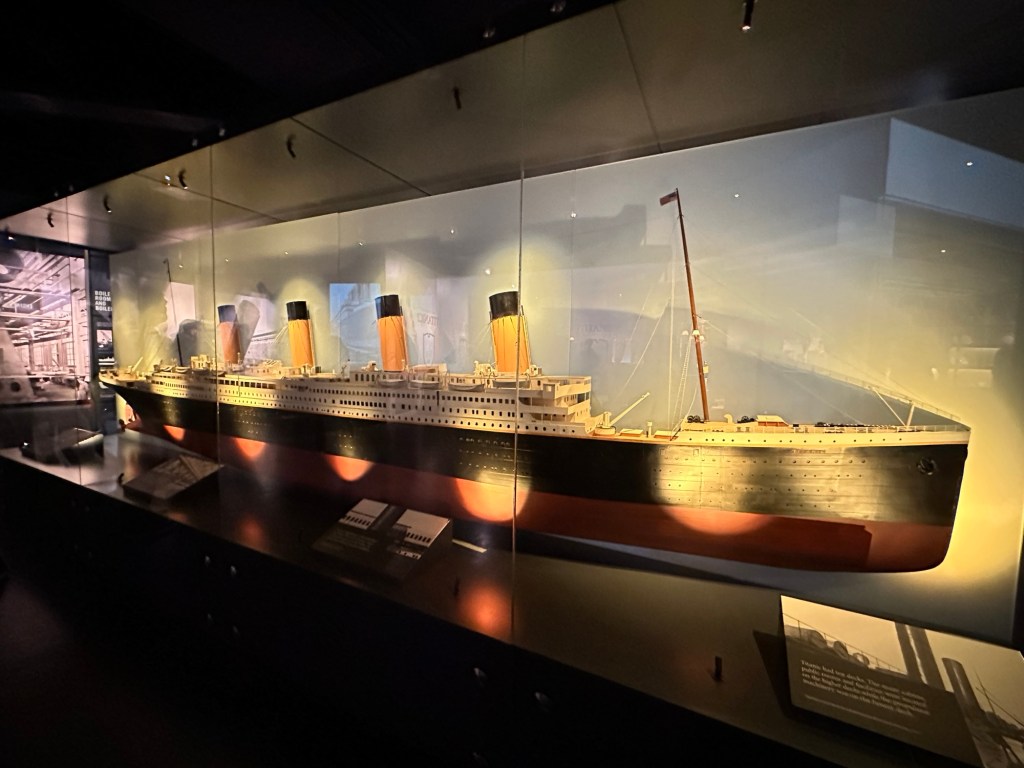
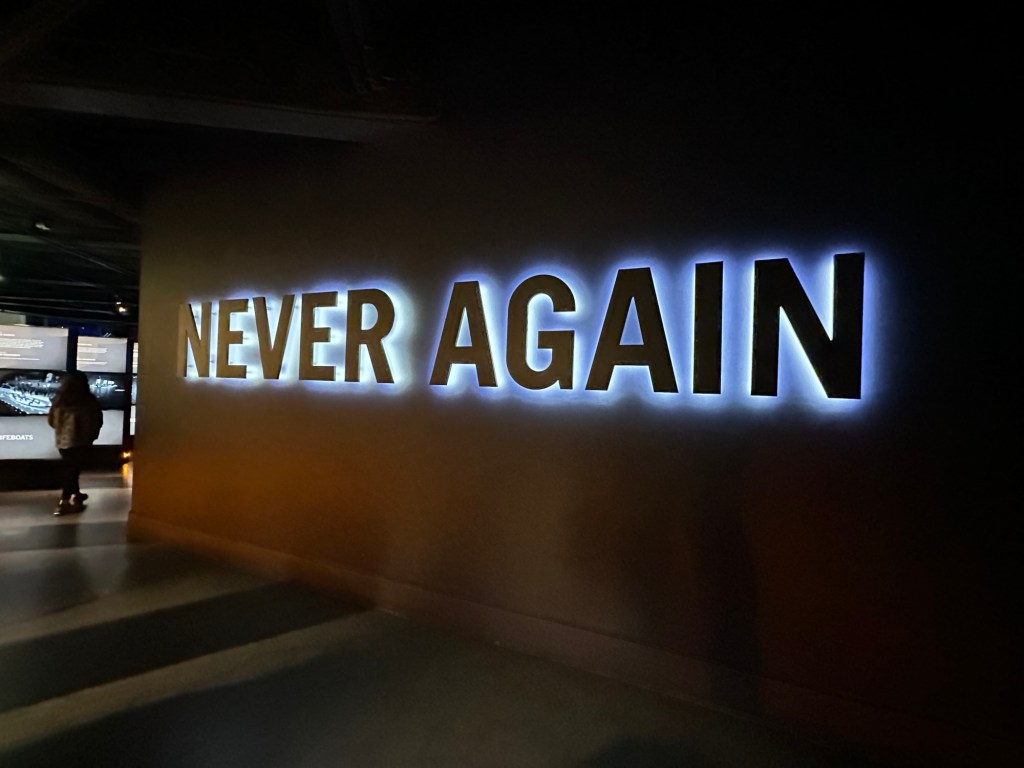
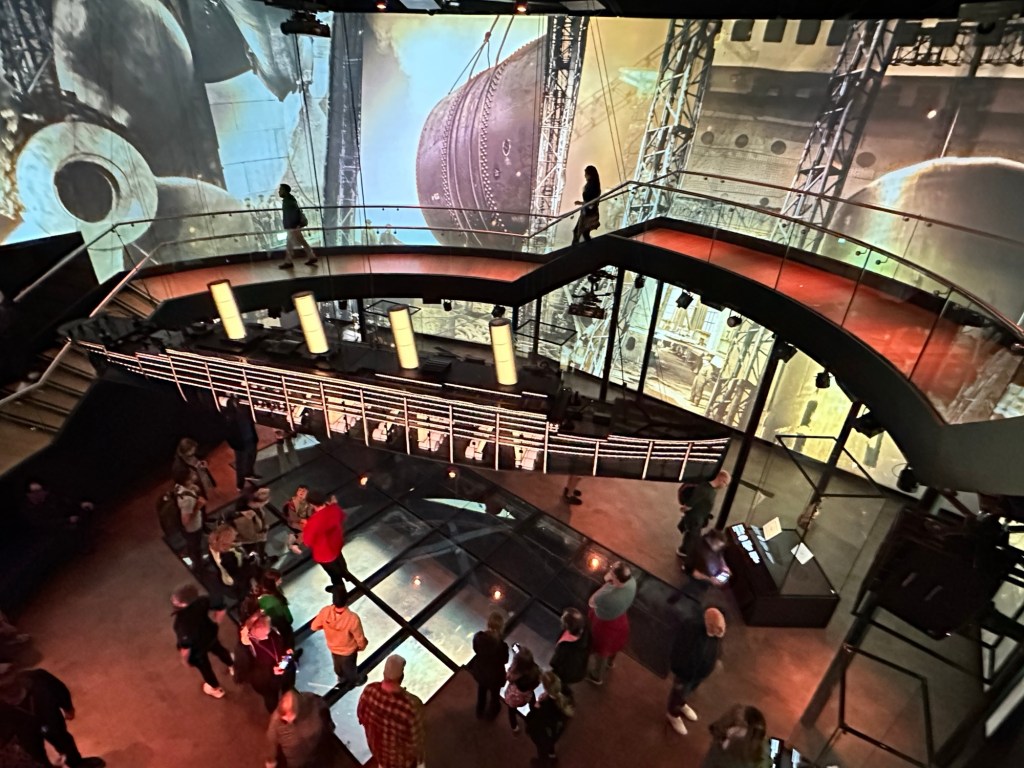
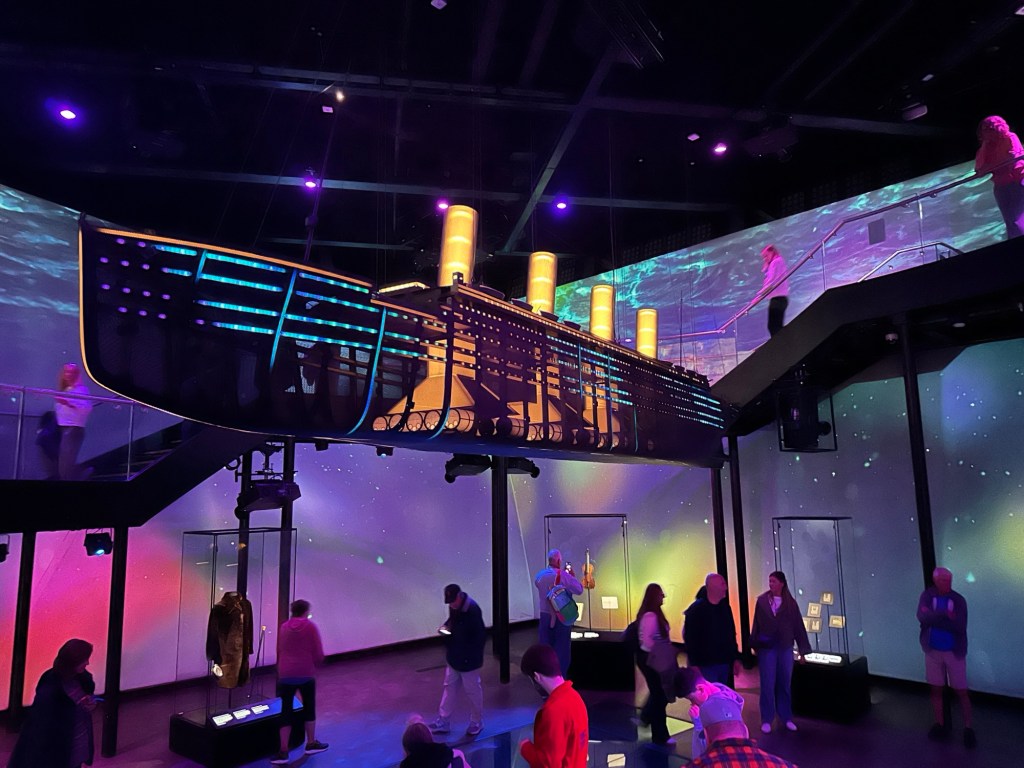
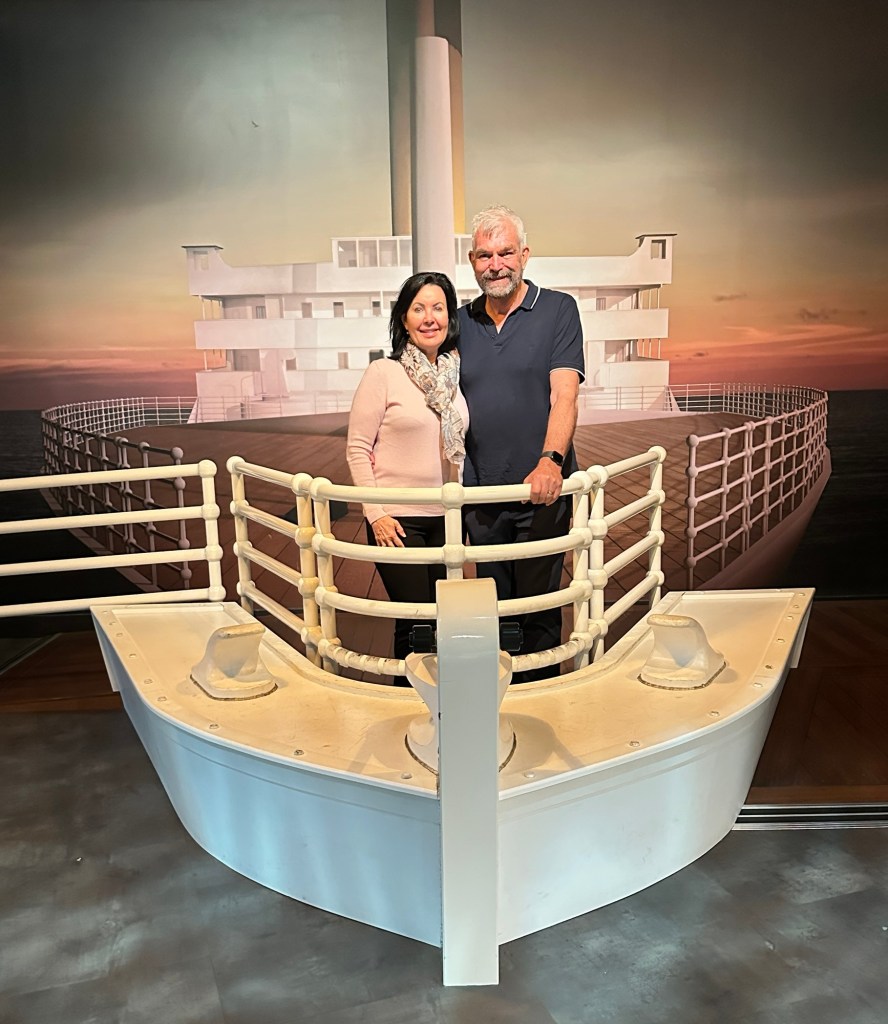
In the self-guided Titanic Experience we discovered the sights, sounds, smells and stories of the ship, as well as the people and city that made her. We journeyed through boomtown Belfast and the shipyard where the liners were built, to the launch, fit out and maiden voyage, before discovering more about the sinking, aftermath, the quest to find Titanic and her final resting place. All whilst exploring the hopes and dreams of those whose lives were impacted by the great ship and wondering at the collection of unique Titanic artefacts. Of the 2225 people on the Titanic, only 32% were saved – so sad . The three hours we spent at the museum went in no time – it was excellent. We also had entry to SS Nomadic, White Star Line’s last remaining ship in the world.
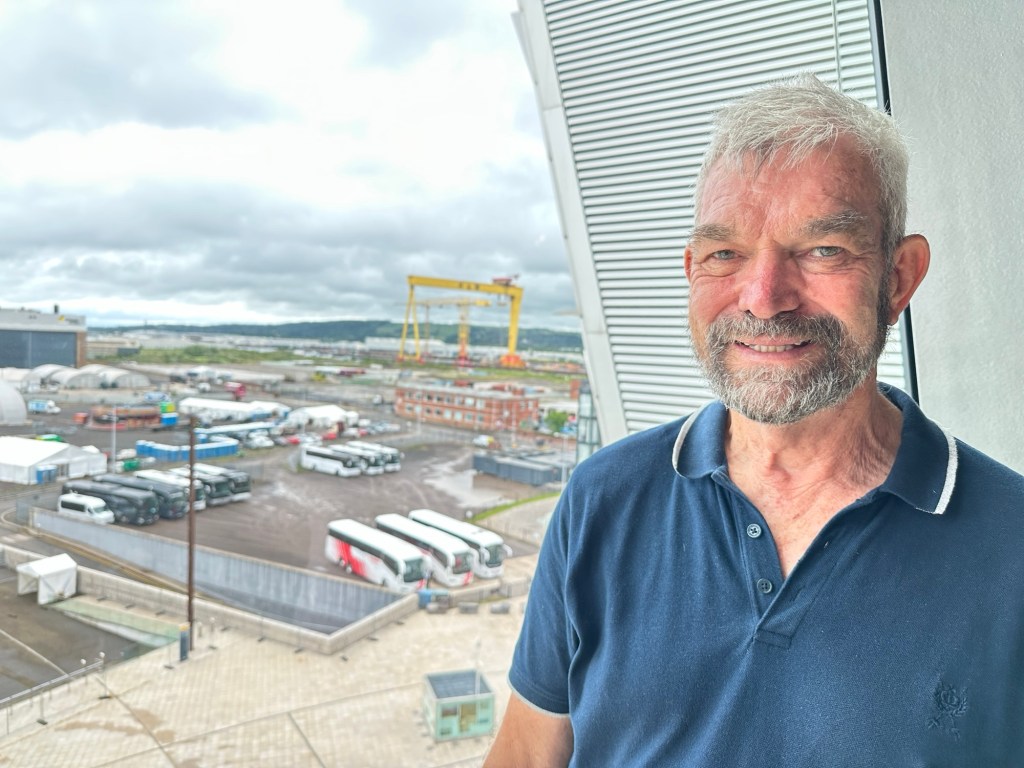
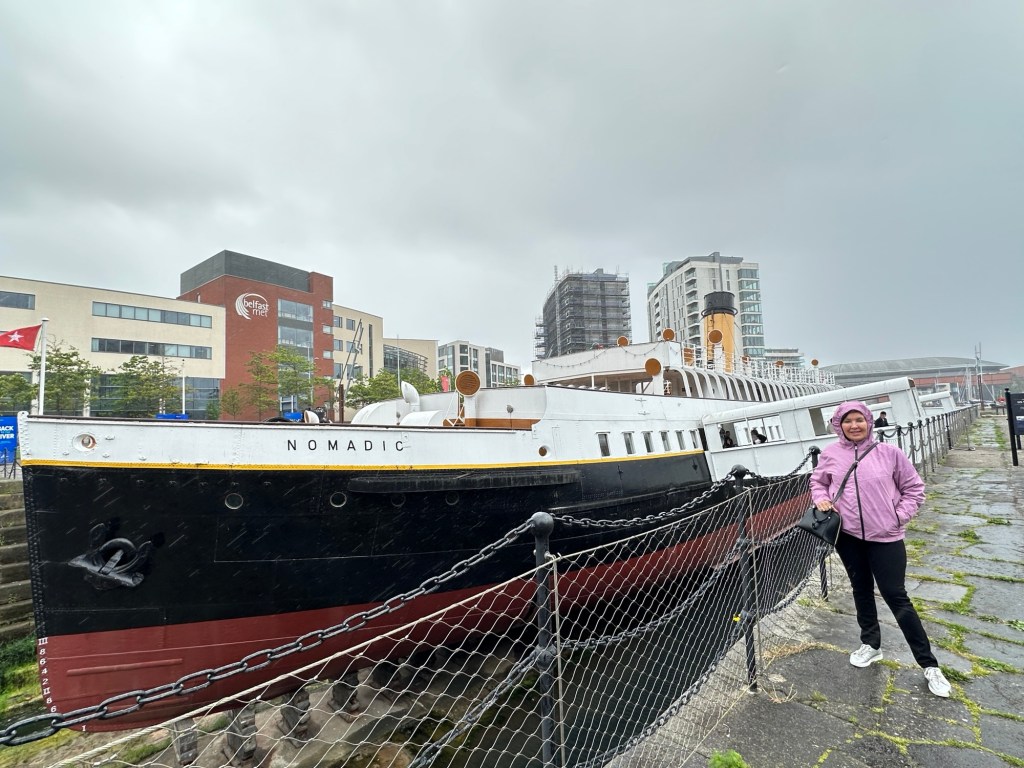
As well as ship making, Belfast’s other successful industries during that time were the tobacco, linen, rope making industries, and the distillery. It was quite the industrial city. After the Great Famine in 1845-8, Belfast’s population increased significantly due to the migration of people looking for work. That’s when all the troubles started.
At 2.30 pm we met our tour guide at the City Hall gates for a Belfast walking tour. He informed us more about the troubles! Civil rights protests in the 1960s initiated decades of unrest – known as the “Troubles” – in Northern Ireland, with bombing campaigns by both Loyalist and Republican groups. In 1998, the Good Friday Agreement led to the inauguration of the Northern Ireland Assembly, which has brought with it a sustained era of peace.
We walked past, and heard about, City Hall, Opera House, Europa Hotel (most bombed hotel in Belfast), Crown Hotel, The Linen Quarter ( where all the linen factories were), Ulster Hall, Albert Memorial Clock, The Big Fish, and much more.
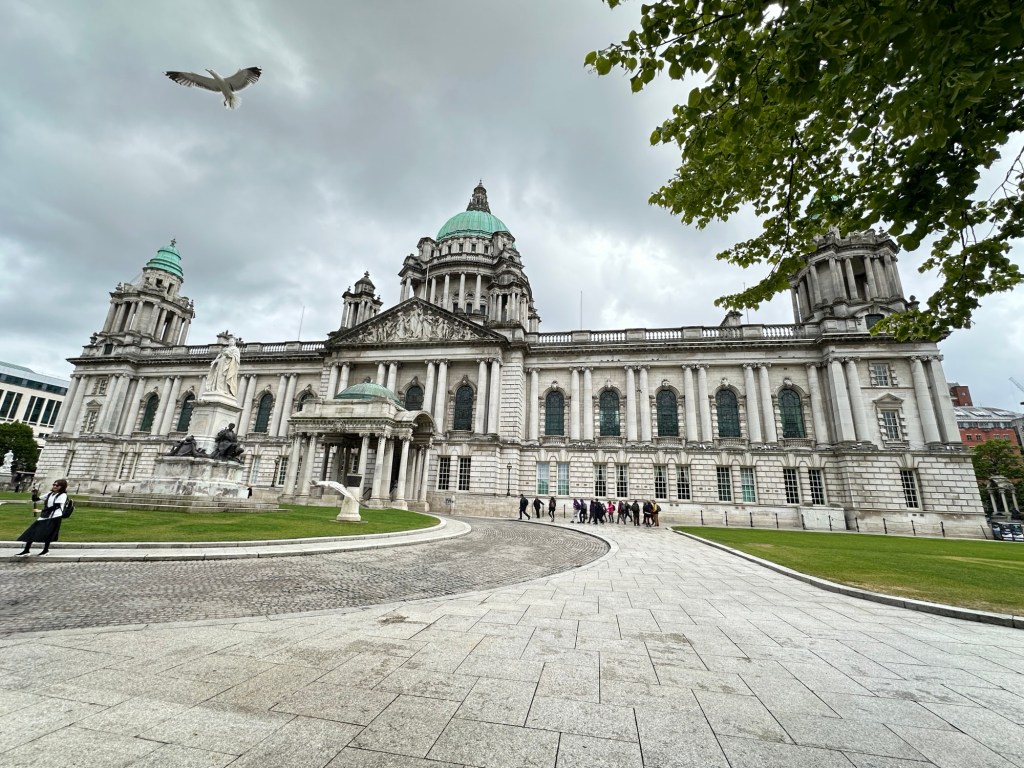
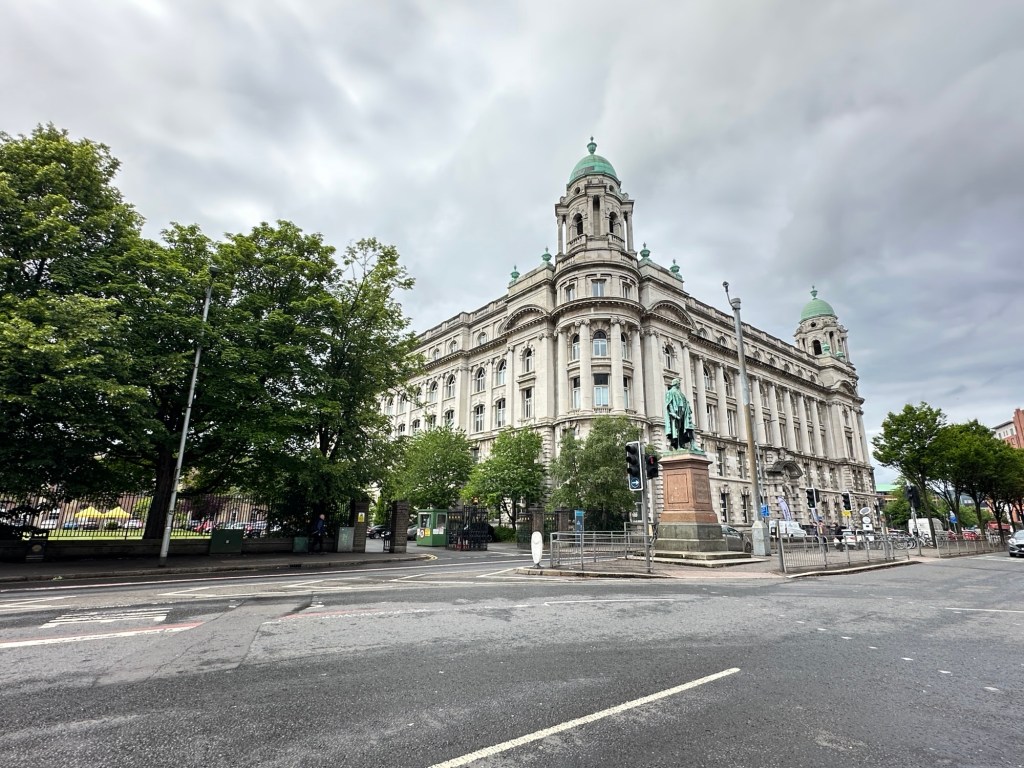
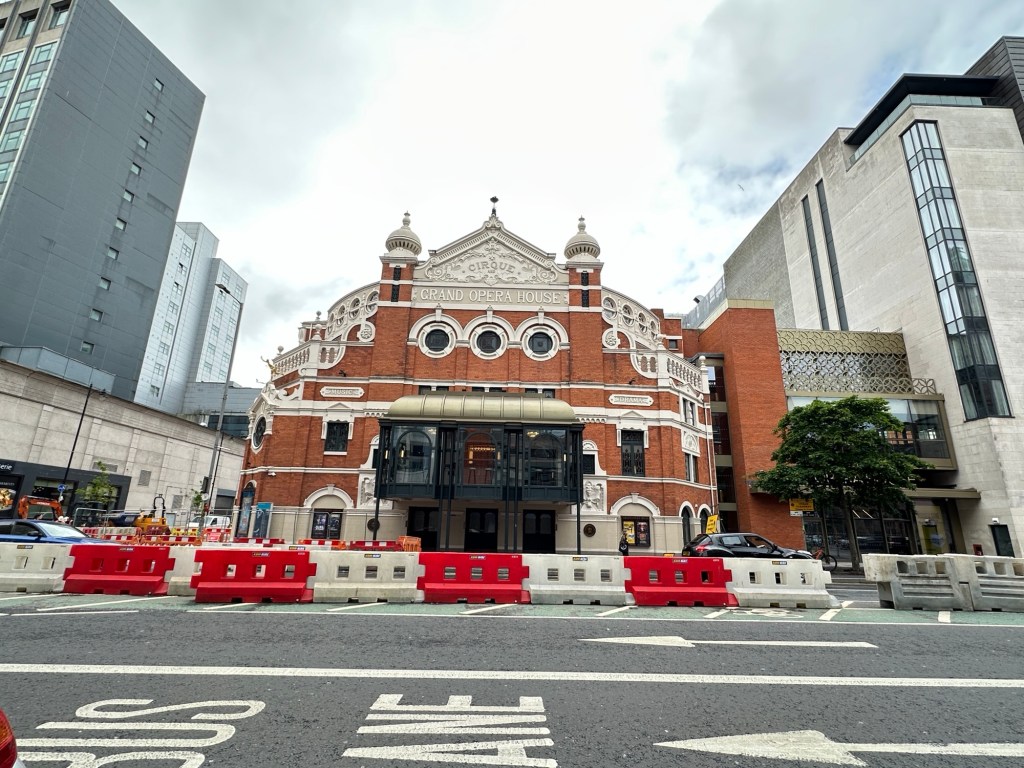


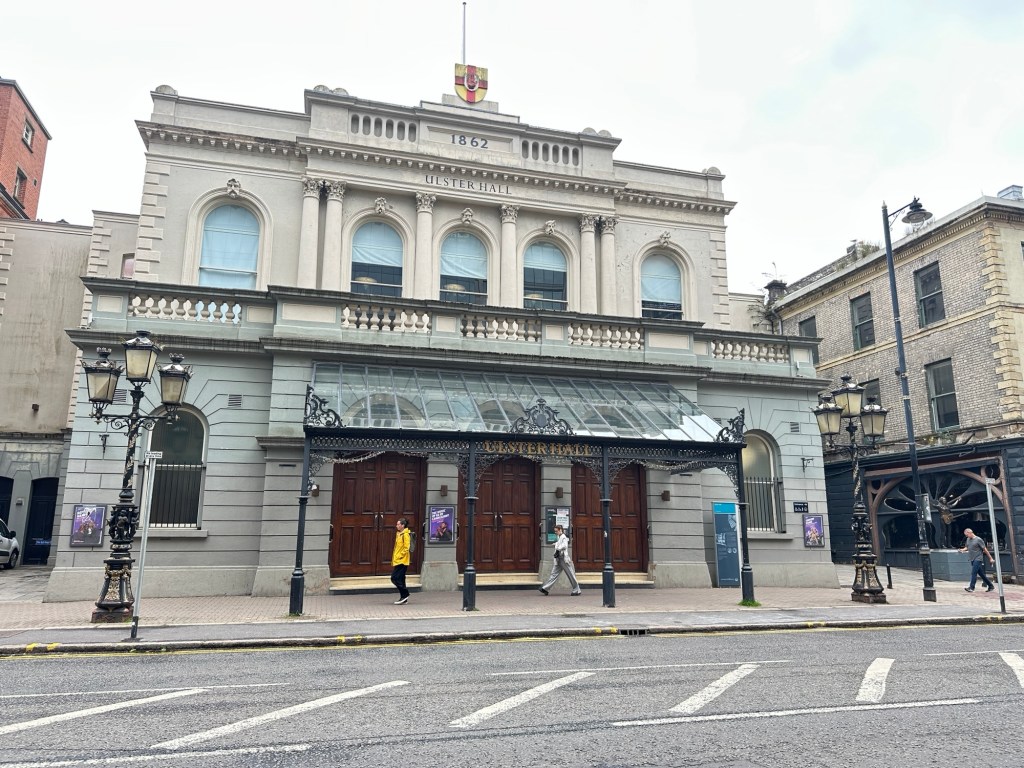
Brian left us at Cathedral Quarter (there are actually 8 quarters, with possibly a new one soon!), so we had a wander around this area- some interesting bars with quirky names (The Thirsty Goat and The Spicy Onion) plus many restaurants. Because we hadn’t really stopped for lunch, we had the early pre theatre dinner – at Forty-four restaurant. A delicious two course meal for £24. And very filling! This quarter had some great murals and artworks to look at. Time for some retail therapy before heading back to the hotel.
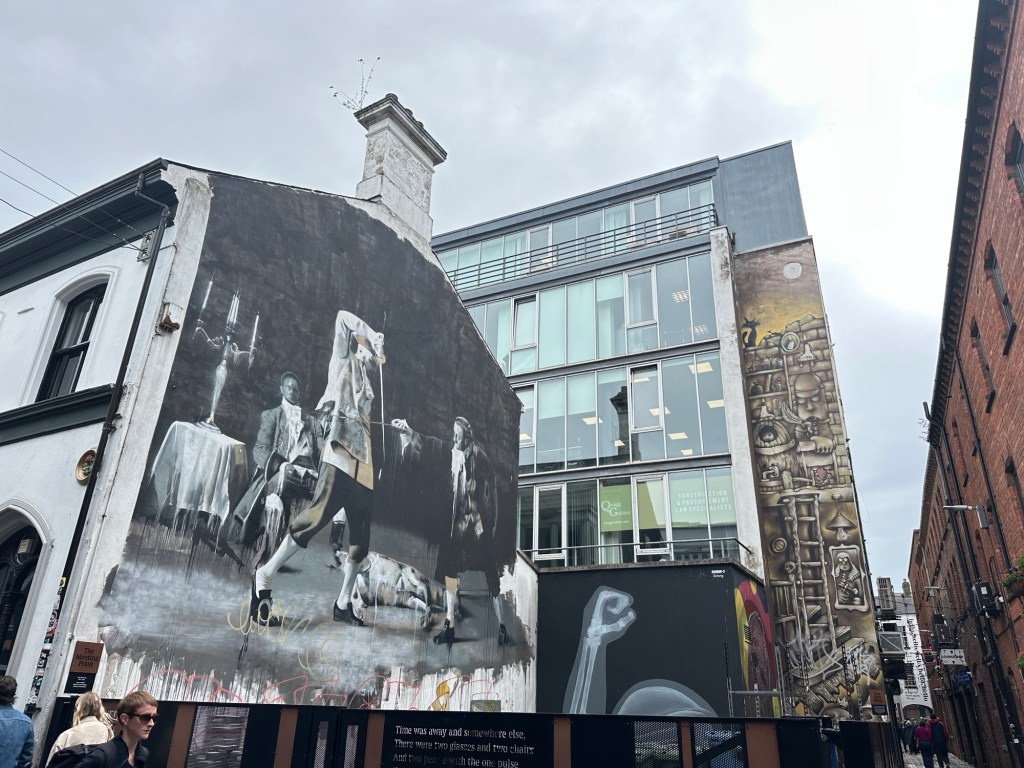
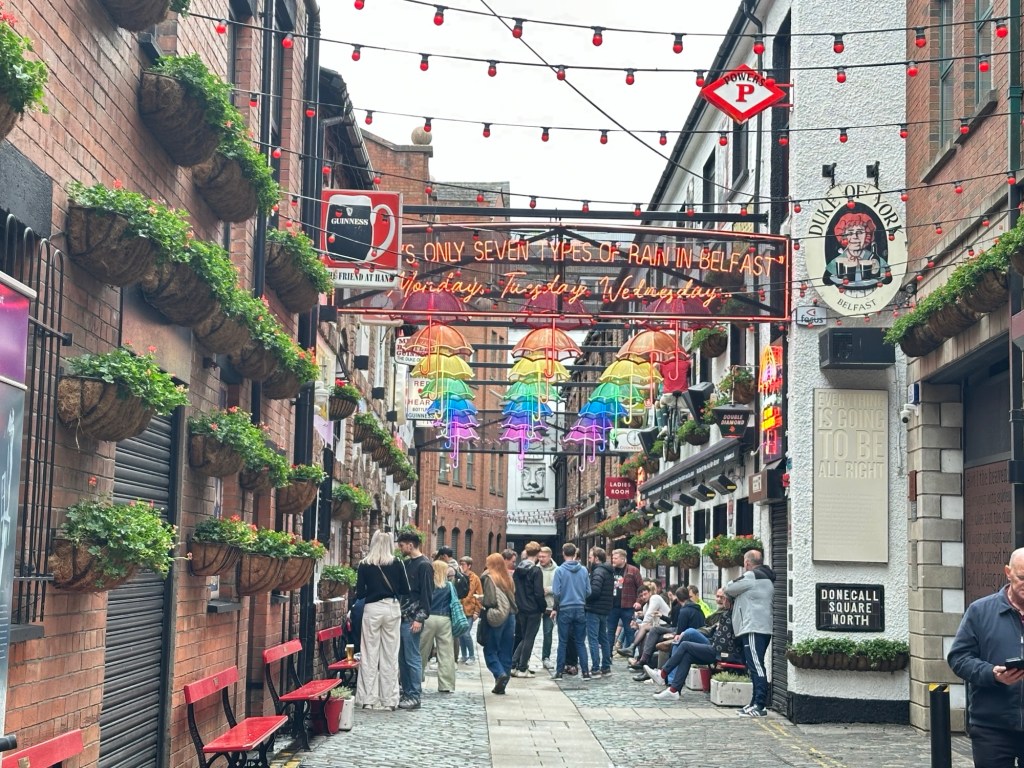


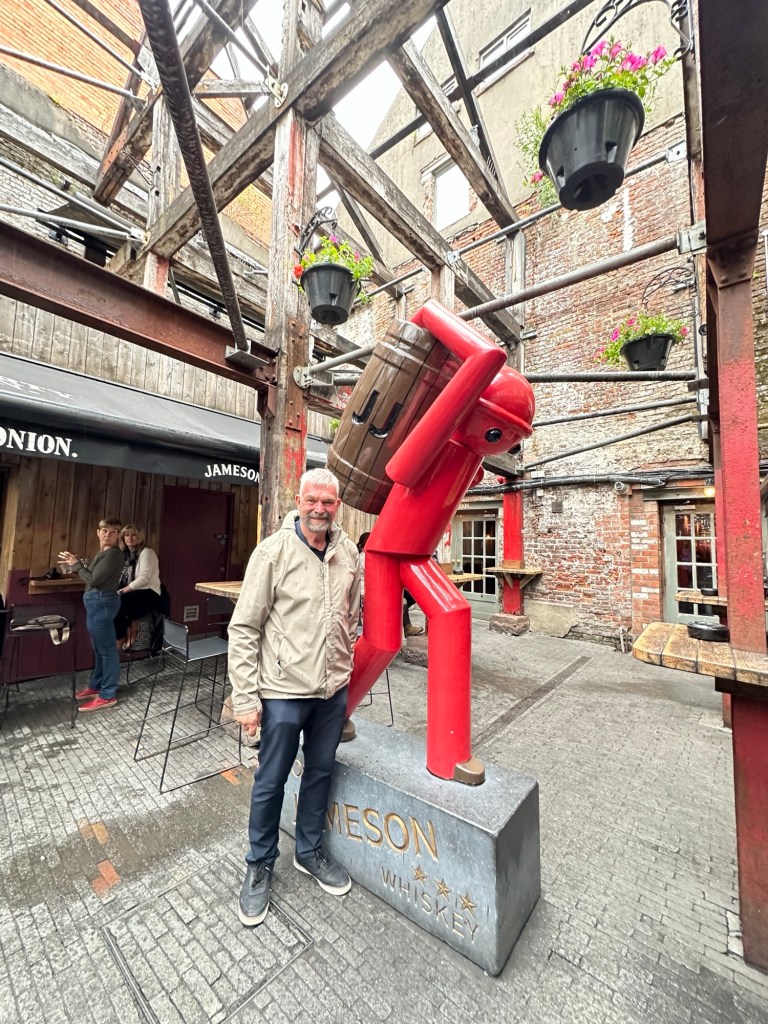
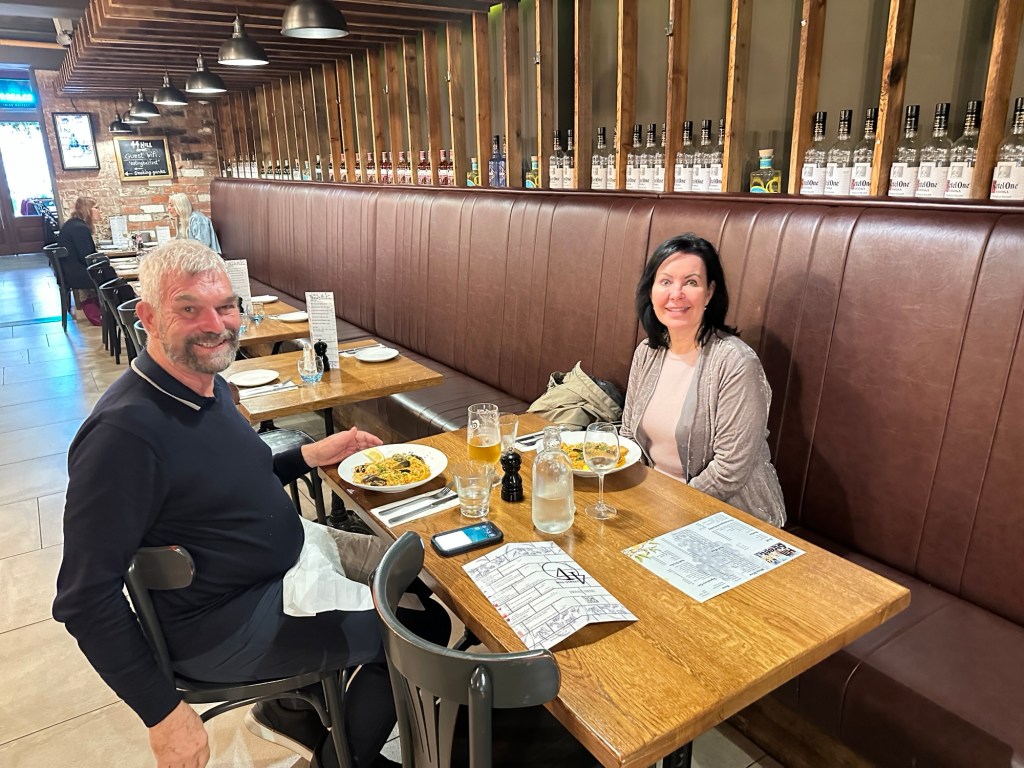
My feet were killing me – no wonder with 23,400 steps for the day!
Day 11
Friday 30th May
Belfast to Dublin
12-19 degrees
Bit of a slow start this morning – we had to rebook our accommodation in London as I had received an email overnight saying that our London digs had been overbooked – not sure why when they had taken full payment for it over three months earlier. A little bit frustrating as it takes valuable time researching and rebooking. Anyway, did that, and also booked a couple of tours for Edinburgh in two days time. The admin side of travelling!
From our hotel we walked to Bobby Sands mural. Bobby was a member of the Provisional Irish Republican Army who died on hunger strike while imprisoned at HM Prison Maze in Northern Ireland. His famous quote is “No part is too great or too small, no one is too old or too young to do something”.
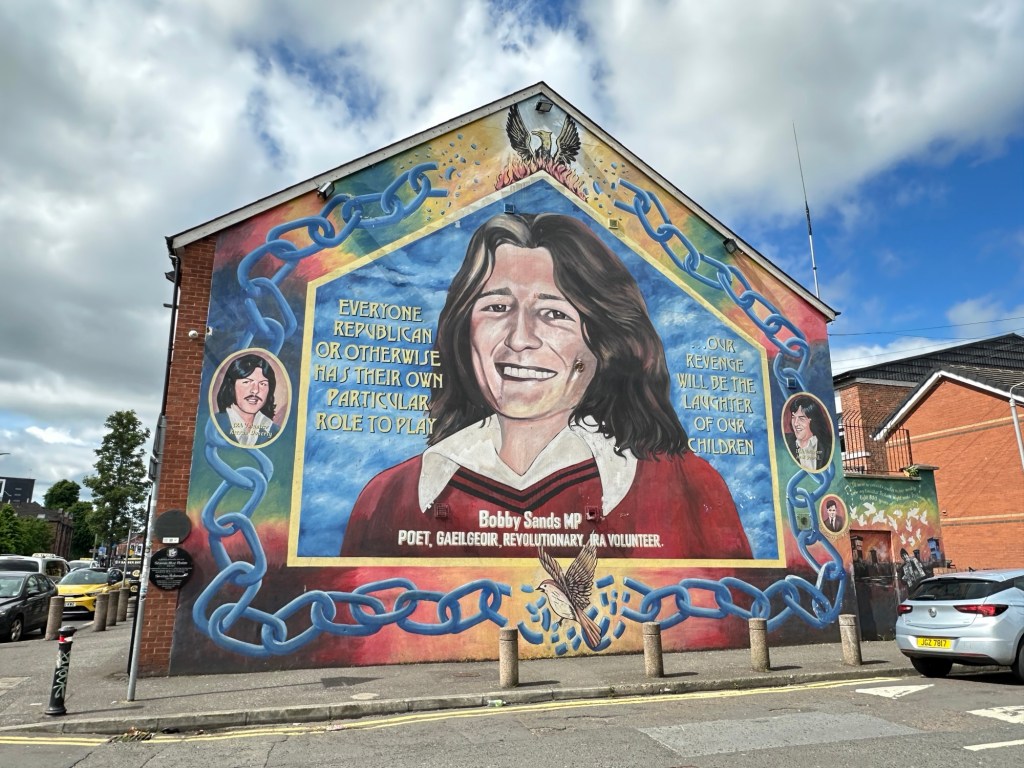
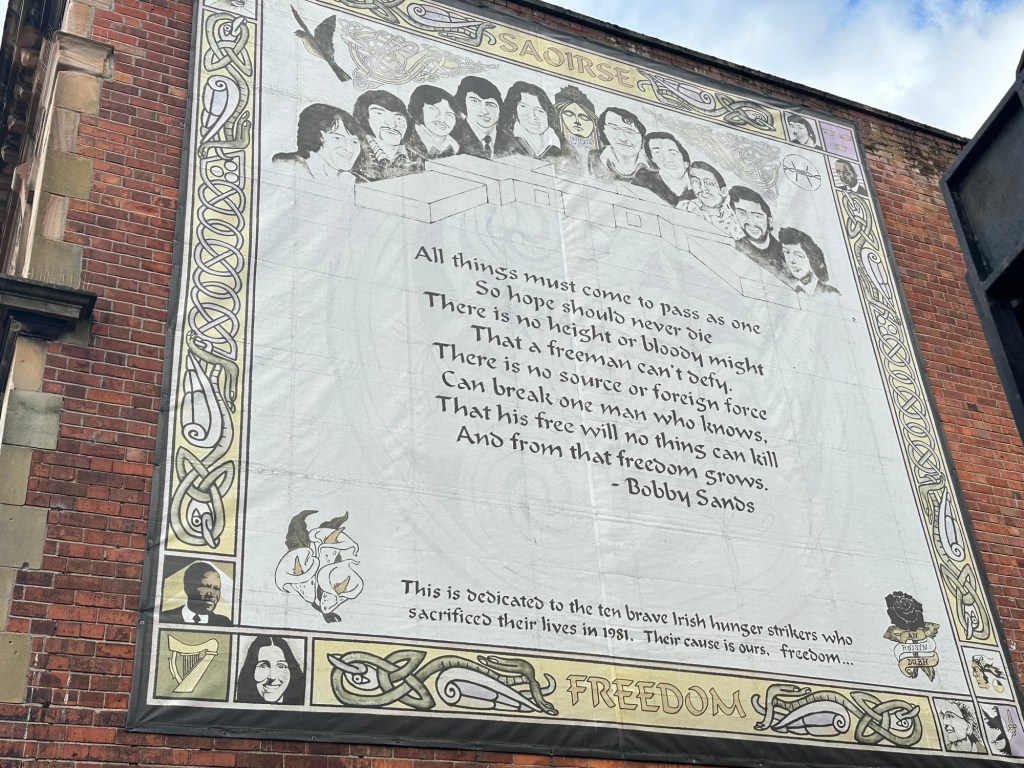
Nearby was the Irish Republican History Museum – that helped to consolidate some of the information Brian had told us yesterday. Not far on, was the peace Wall.
In 1969, the first Belfast peace walls were erected during the start of The Troubles.The initial set up of the peace walls was constructed by the British Army which was called in after intense street riots broke out in Belfast that same year. Originally few in number, over the years the number of peace walls had multiplied, with 100 in total around Northern Ireland and 60 of those located in Belfast as of 2023. In total, these walls stretch over 34 kilometres, with a majority being located in north and west Belfast. Over 3,500 people died during The Troubles with almost 70% of deaths happening within 500 metres of one of these walls.
One of the most famous peace walls in Belfast sits on the interface between the nationalist Falls Road and unionist Shankill Road. The Cupar way wall is one of the only walls with working roads running through it. Since there are roads that pass through the peacewall gates, the gates remain, and are closed at night still to this day. Very hard to believe! The visit was very thought provoking…. very hard for us to comprehend this is still happening.
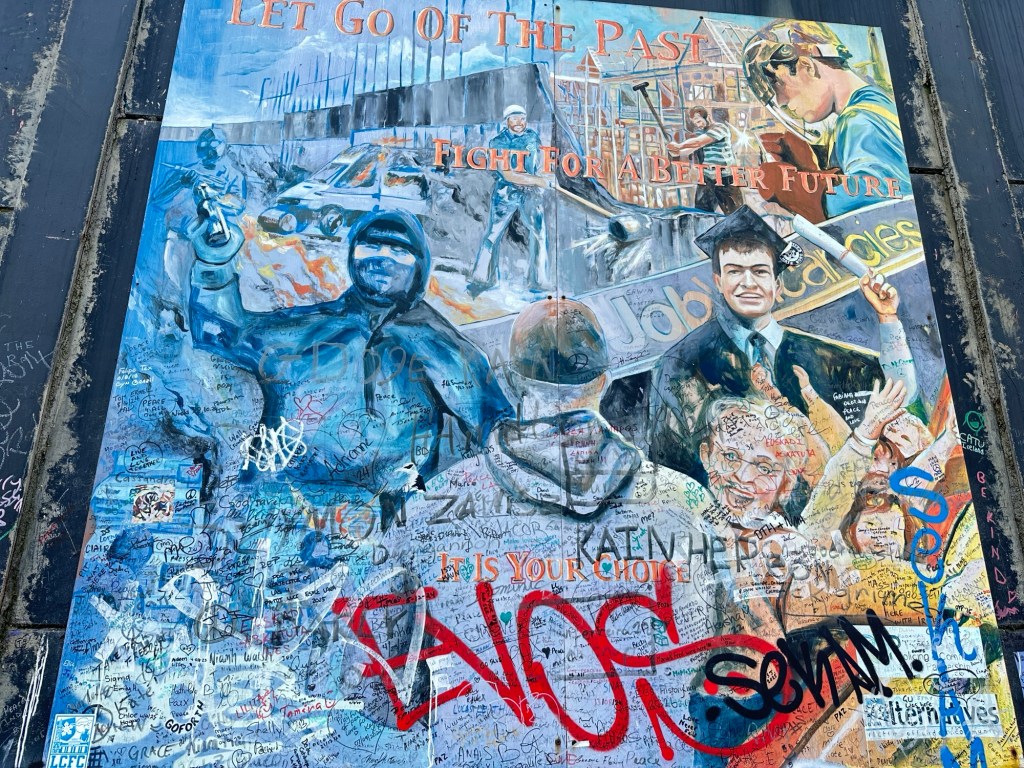
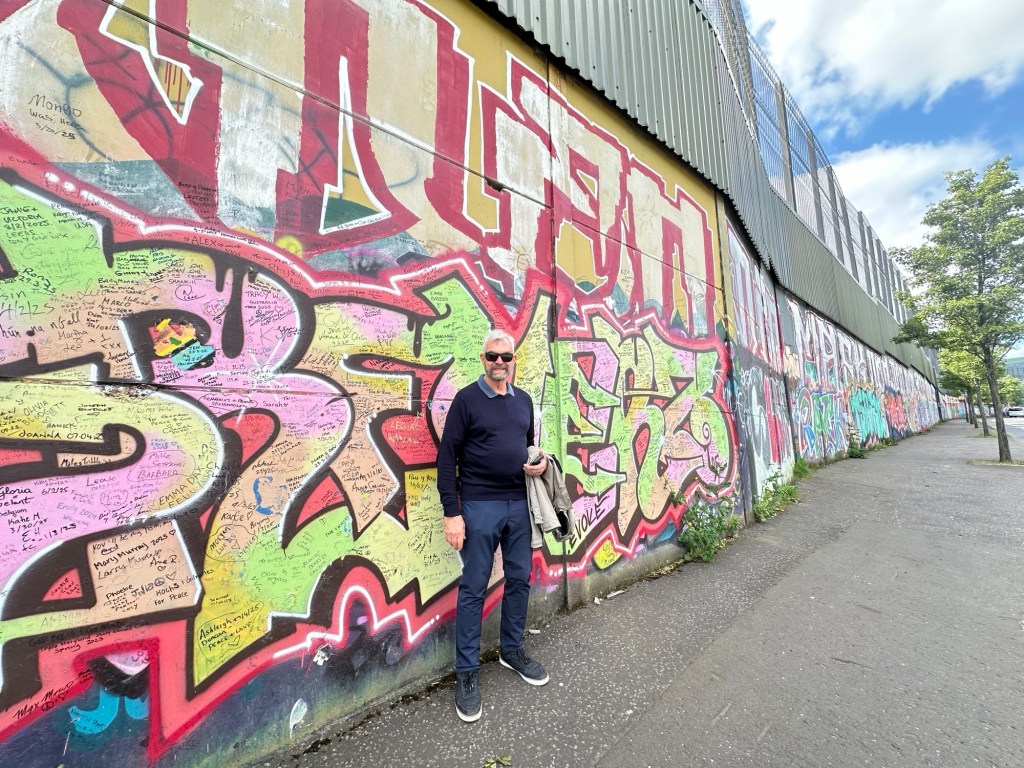

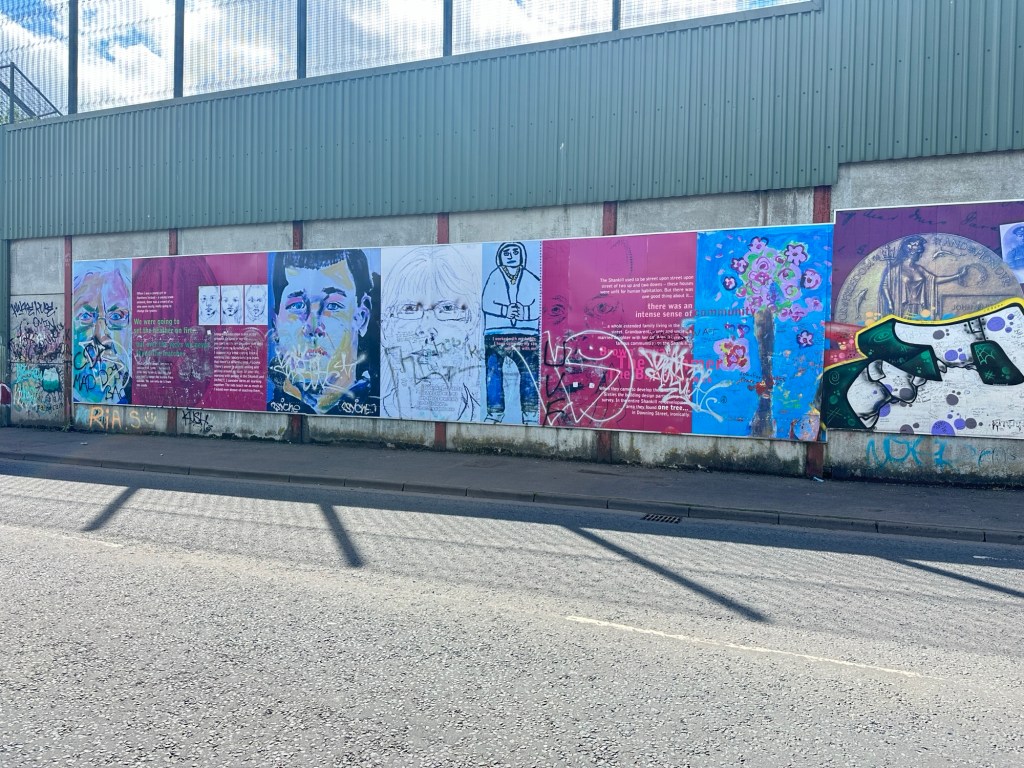
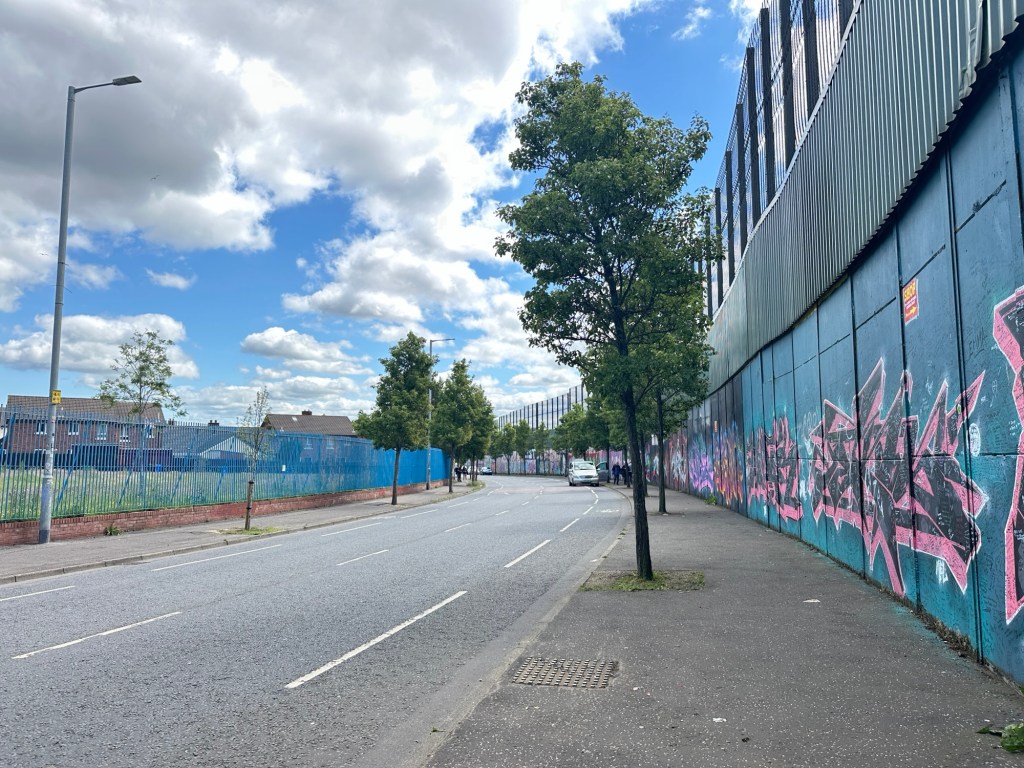


Once back in the city centre, we had a coffee and a bite to eat, to help digest all what we had seen. We had to drive next from Belfast back to Dublin. Because we had plenty of time, rather than go the motorway, we decided to go the back roads, and savour some last Irish country road scenery. I certainly won’t miss the narrow roads, but it will be sad to say goodbye to the absolutely gorgeous countryside.
We checked into the Dublin Airport Travelodge Hotel for our last night before we head to the airport in the morning.
In total we had driven 1740 kms around Ireland! We had had a couple of “discussions” re which road to take, how fast to go, and what distance you need to travel behind the vehicle ahead, but all in all, Frank did an excellent job, and I did an even better job of being the back seat driver!!!
Thoughts on Ireland – the people are just so friendly and helpful, and all seem to have a good sense of humour. We did have that one exception, but I have put that down to the fact the restaurant owner was probably Turkish and having a bad day. The scenery is just spectacular, the weather is not! But then we didn’t come to Ireland for the weather! Food – some good, some not so good, a lot of pub food. Plenty to drink though – drinking and music are a big part of the Irish culture. A lot of history to take in. Found it interesting that a lot of displays in museums read from right to left. Whilst there has been a lot of conflict in the past, it appears the people are moving on, and hopefully in a generation or two, there will be a lot more integration.
Definitely a great place to visit, wished we had more time, particularly in the south, and on the west coast.
 Glammy Goes Global