
Day 30
Friday 10th October
Karakol – Charyn Canyon – Saty
2-14 degrees, sunny
A very straight forward and short (only 50 metres) border crossing, and even more worth noting – smooth bitumen to pull the bags along!
Kazakhstan, the ninth-largest country in the world, covers an area greater than that of all the other Central Asian countries added together. Much of its territory is flat, arid steppe, but the southeast is home to forests and high mountains, which came within the sphere of influence of the main Silk Road settlements of modern-day Kyrgyzstan and Uzbekistan.
Like the Kyrgyz, Kazakhs have their roots in the Mongol tribes of southern Siberia. They first emerged as a distinct identity in the mid-15th century with the establishment of the Kazakh Khanate. Russian influence began in the 18th century, and in the 1820s the Kazakhs swore allegiance to the Tsar in order to receive protection from the Kokand Khanate to the south.
Kazakhstan has only really existed as a political entity since Soviet times; before that, it was a sparsely populated buffer zone between Russia and Central Asia. The exception was the far south.
Once we crossed the border, we had a short lunch stop, before driving to the dramatic Charyn canyon. Sculpted by the action of wind and the Charyn River flowing down from the Tian Shan, the sandstone cliffs and arches rise to several hundred metres. Charyn is also called the “little brother” of the Grand Canyon. We walked 2.5 kms inside the canyon to the Charyn River admiring the awesome cliffs, then enjoying the calming river flowing at the end of our walk.
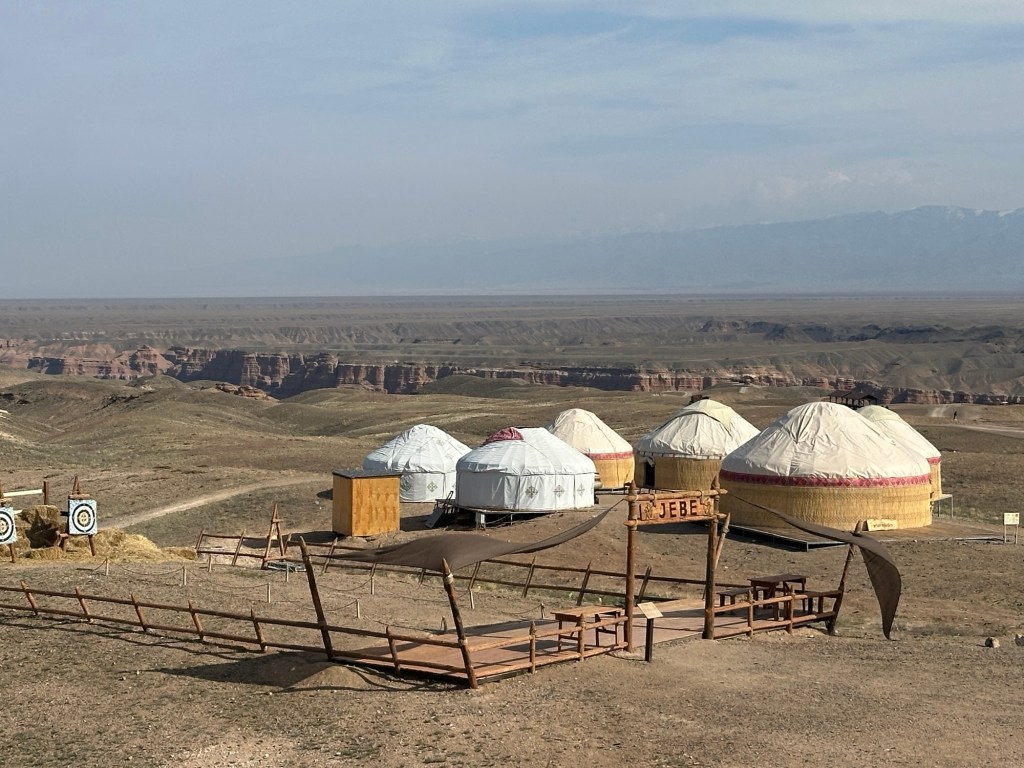
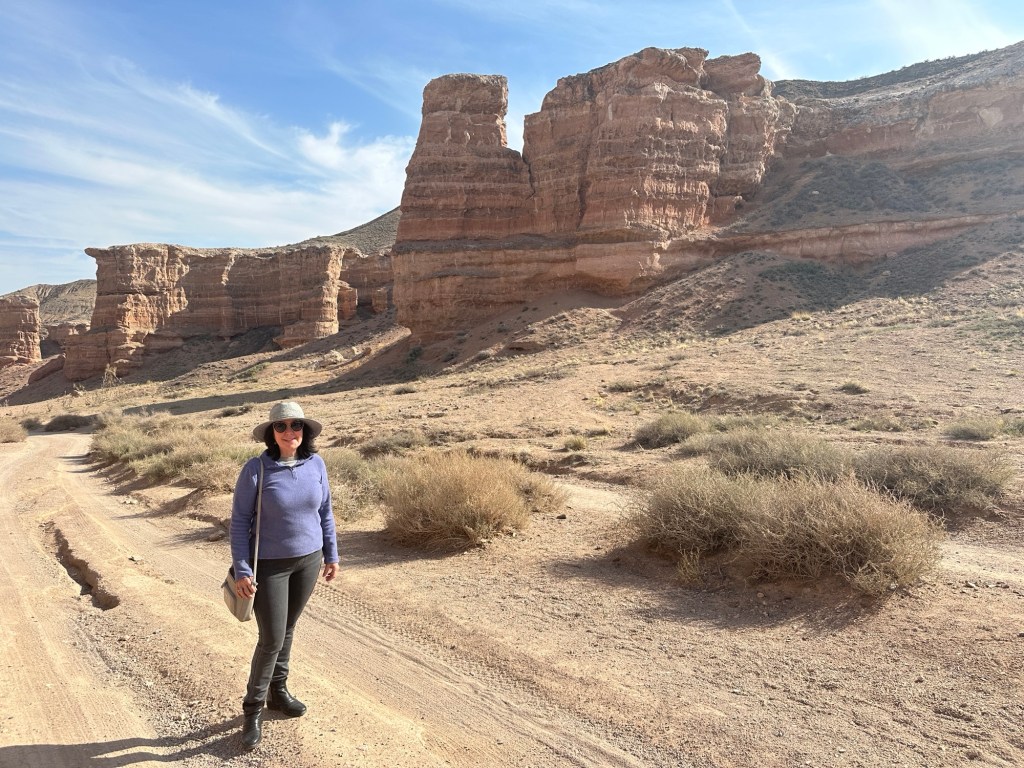
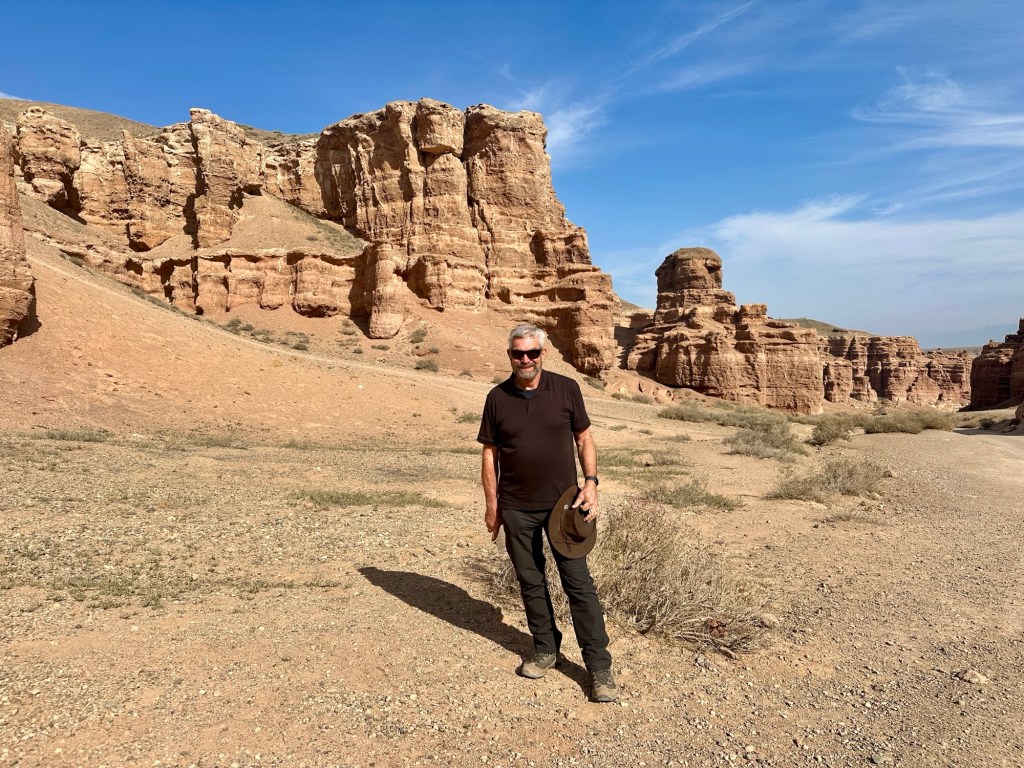
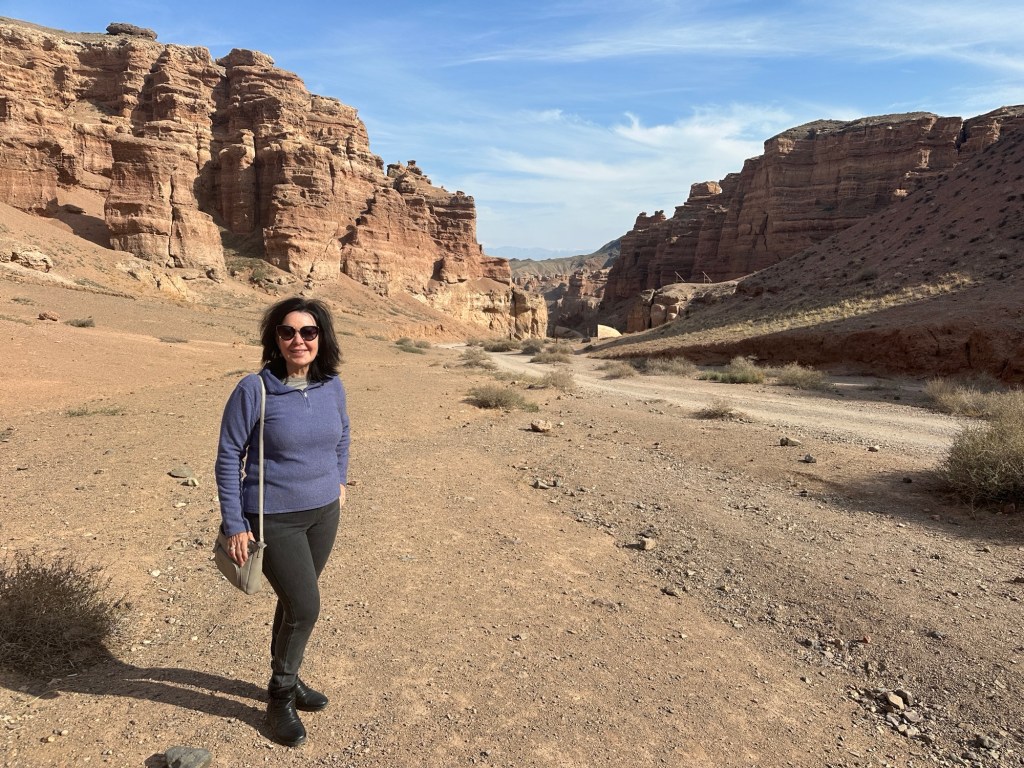
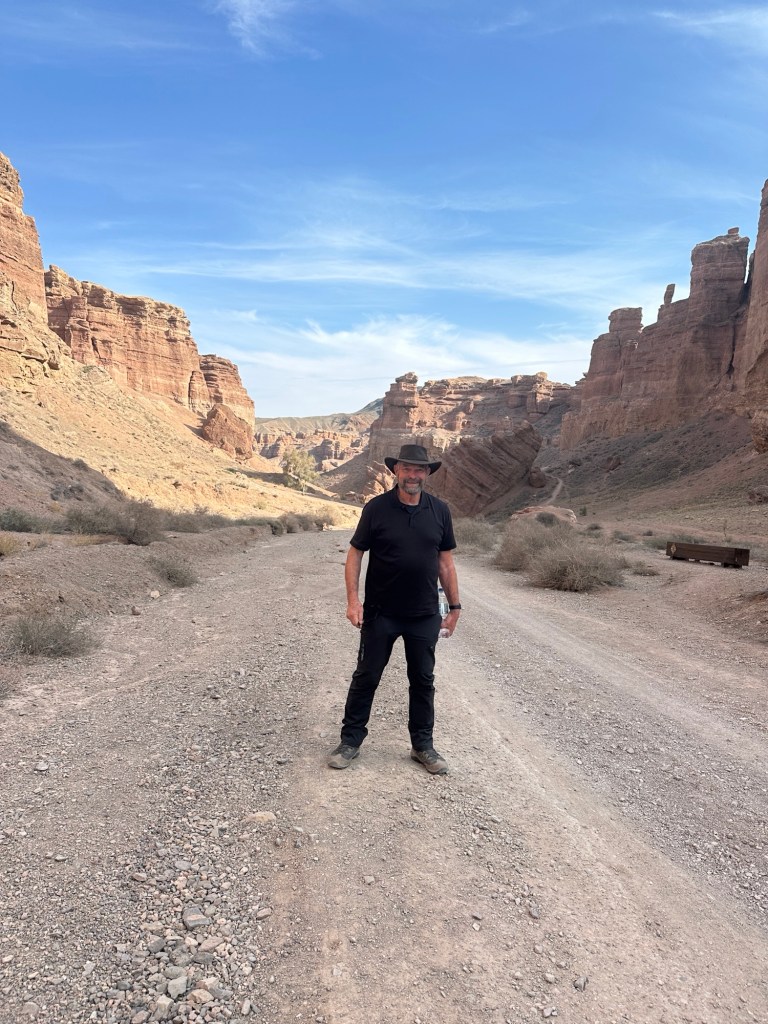
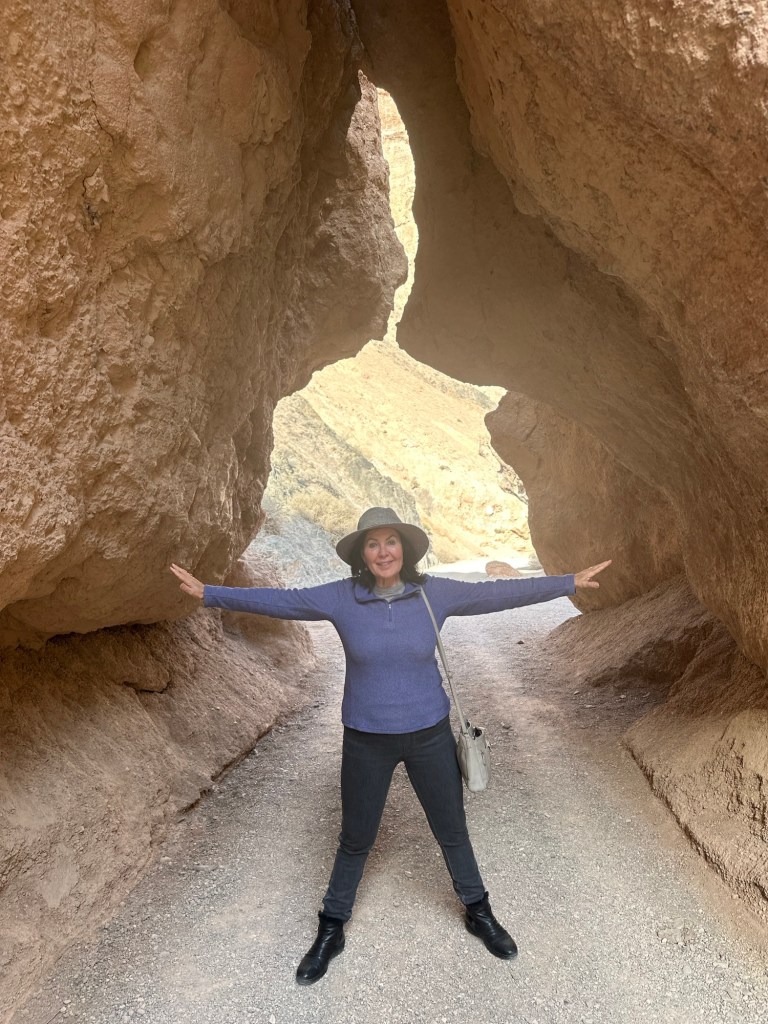
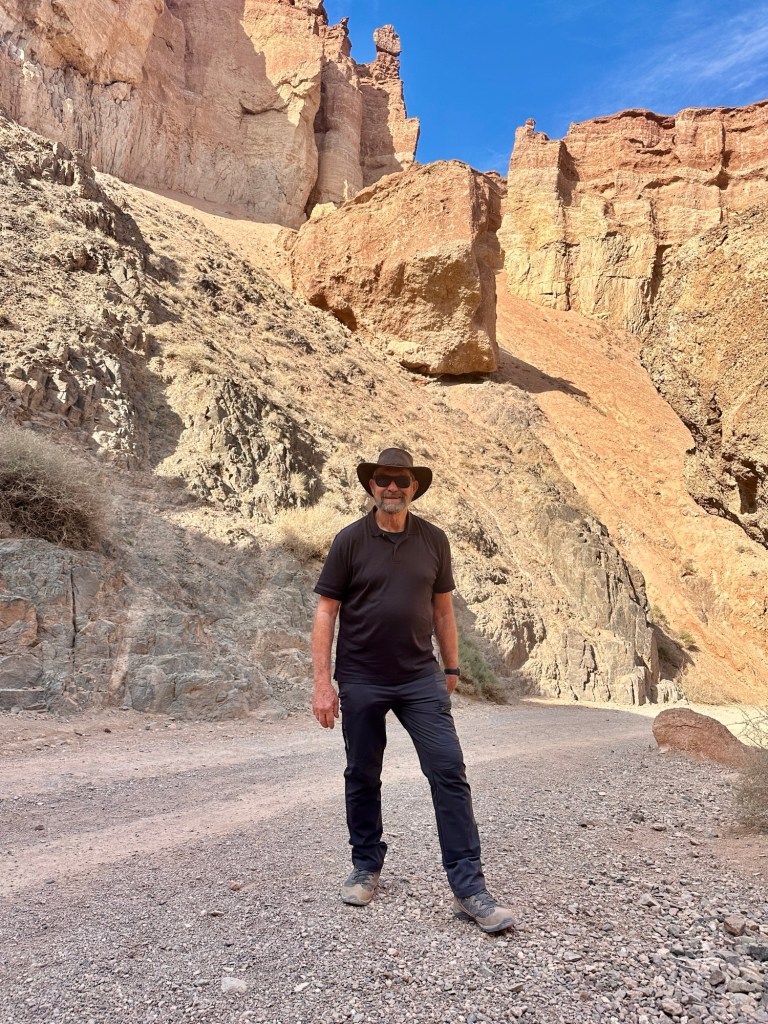
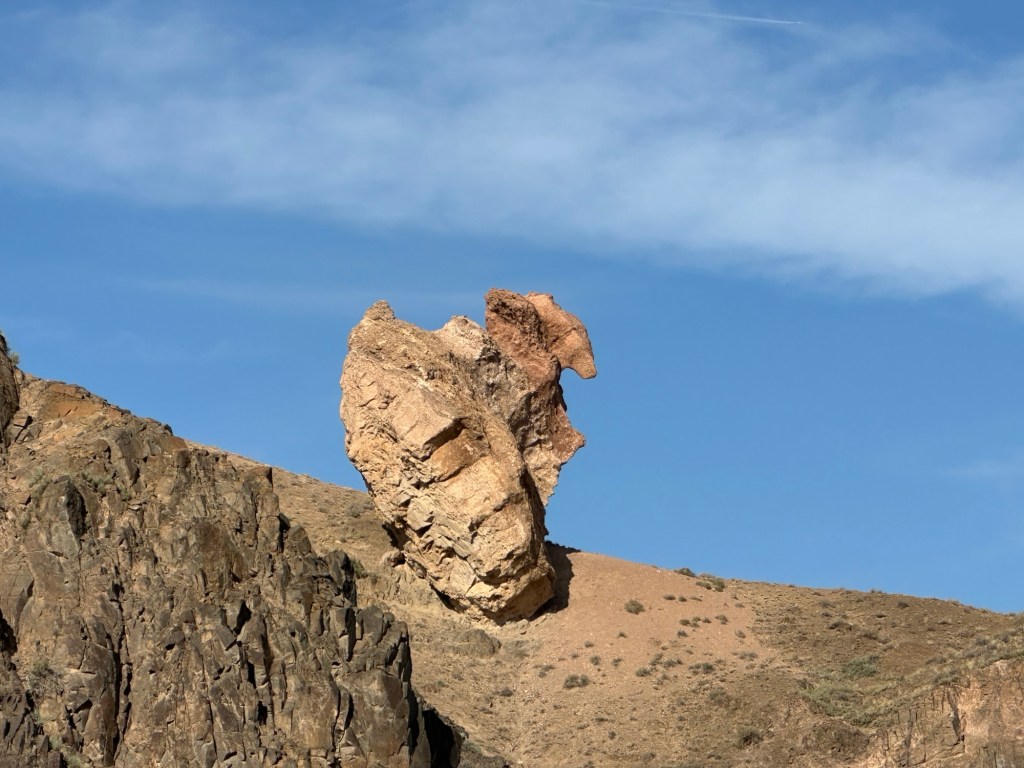
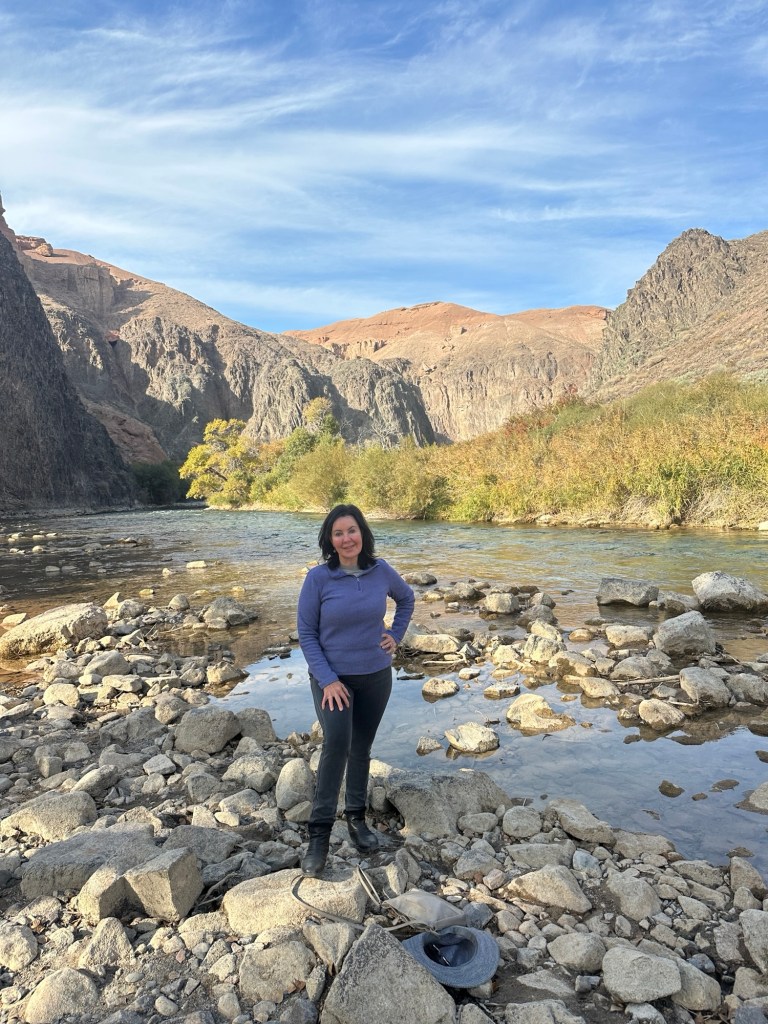
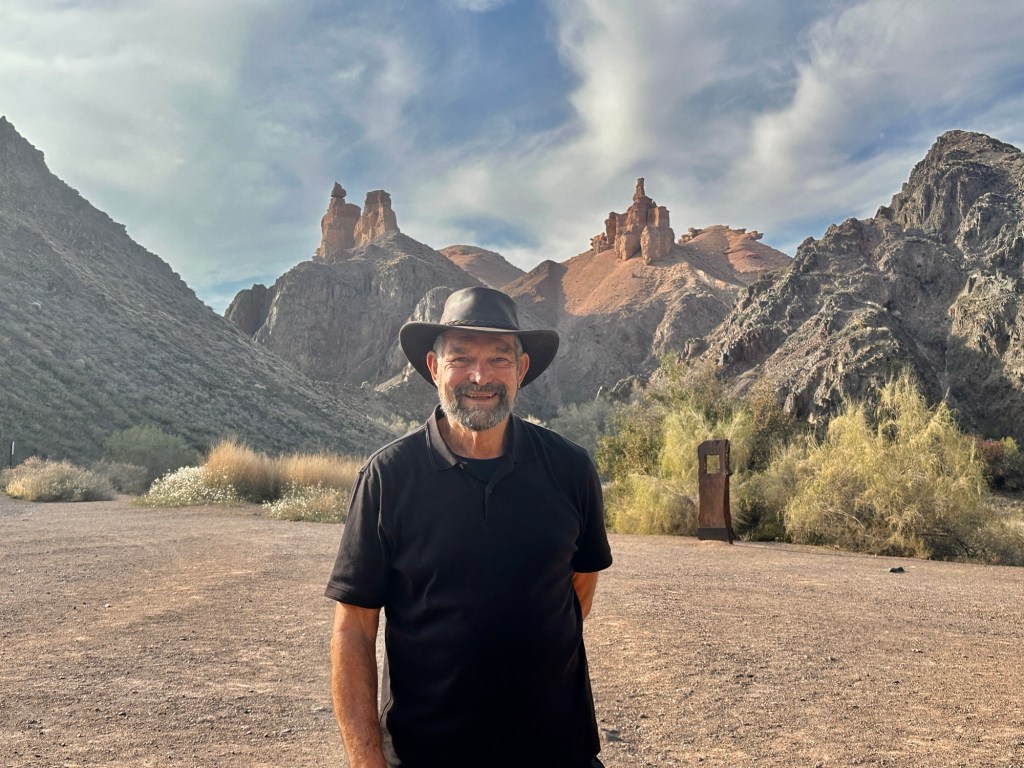
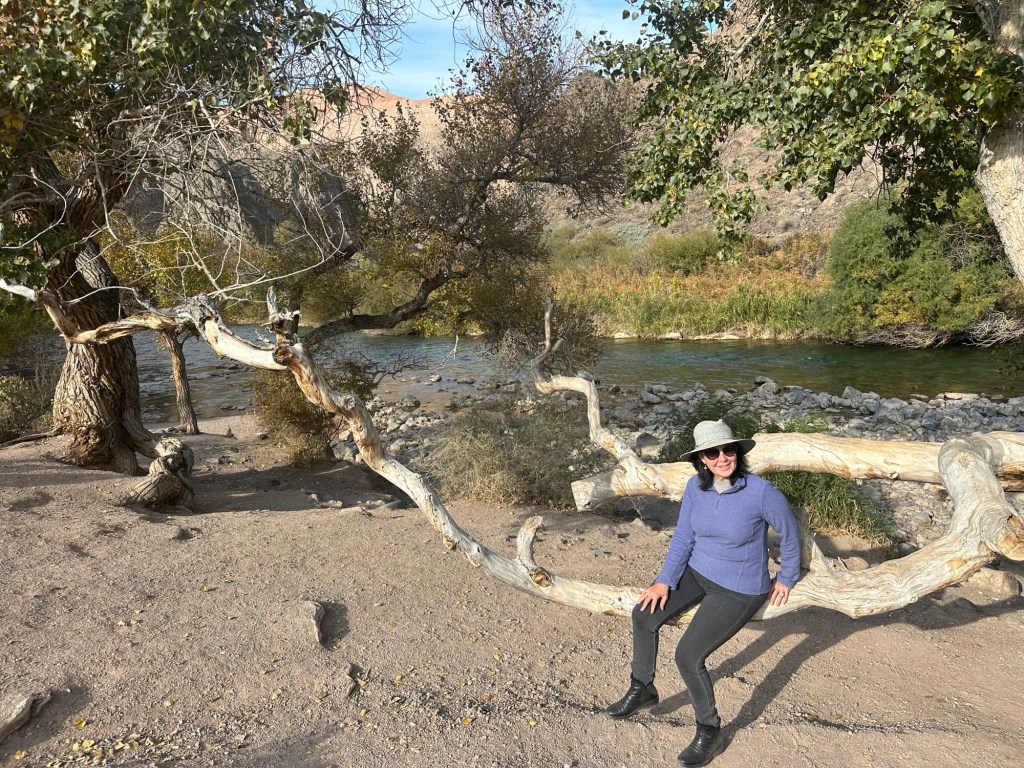
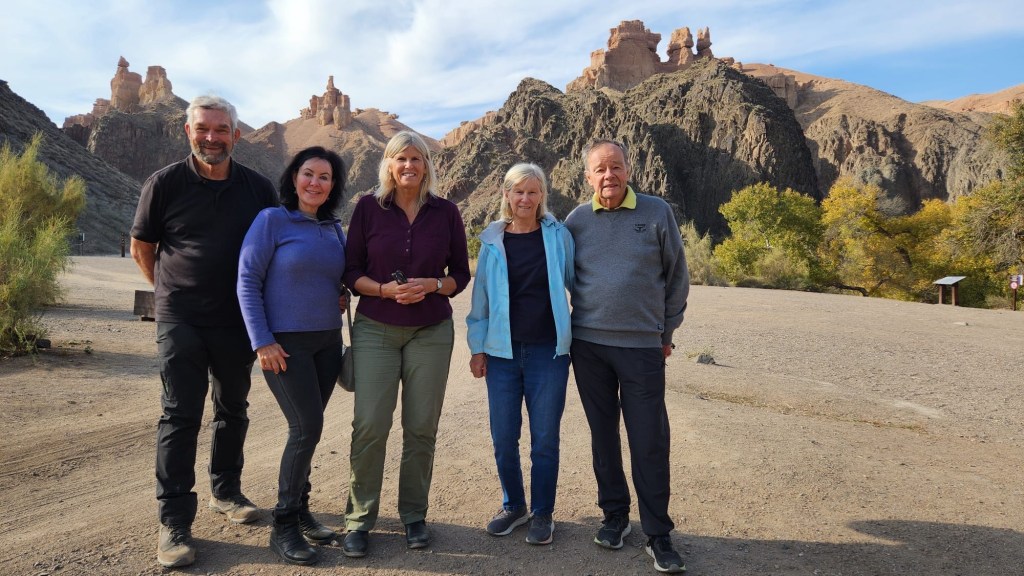
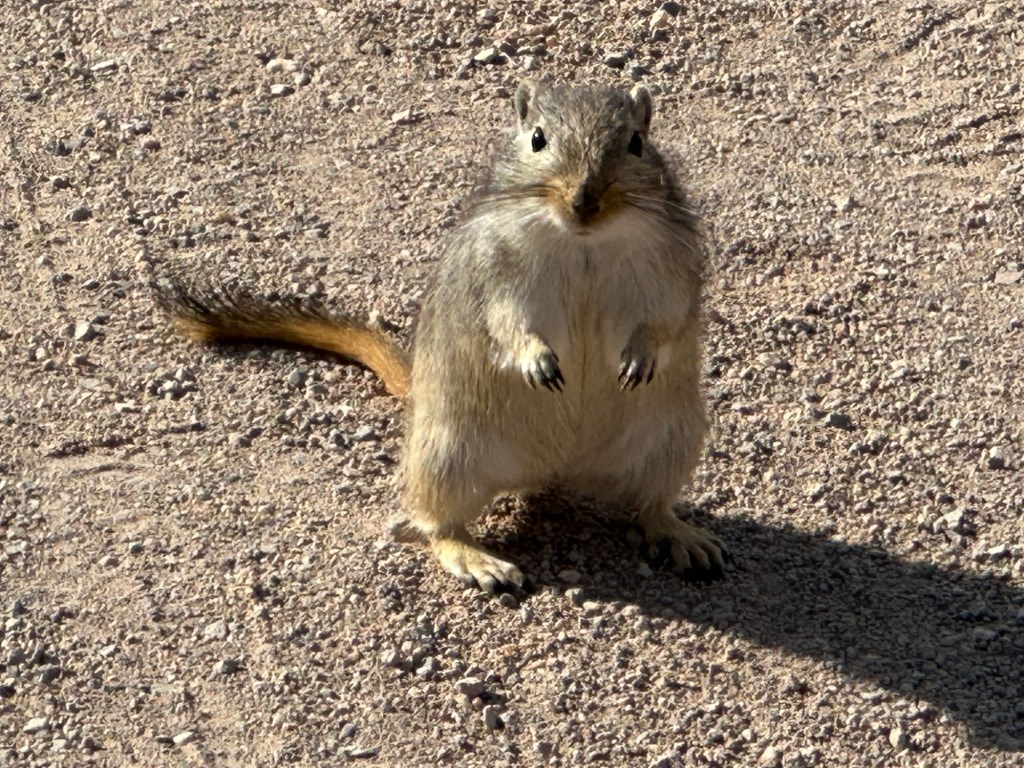
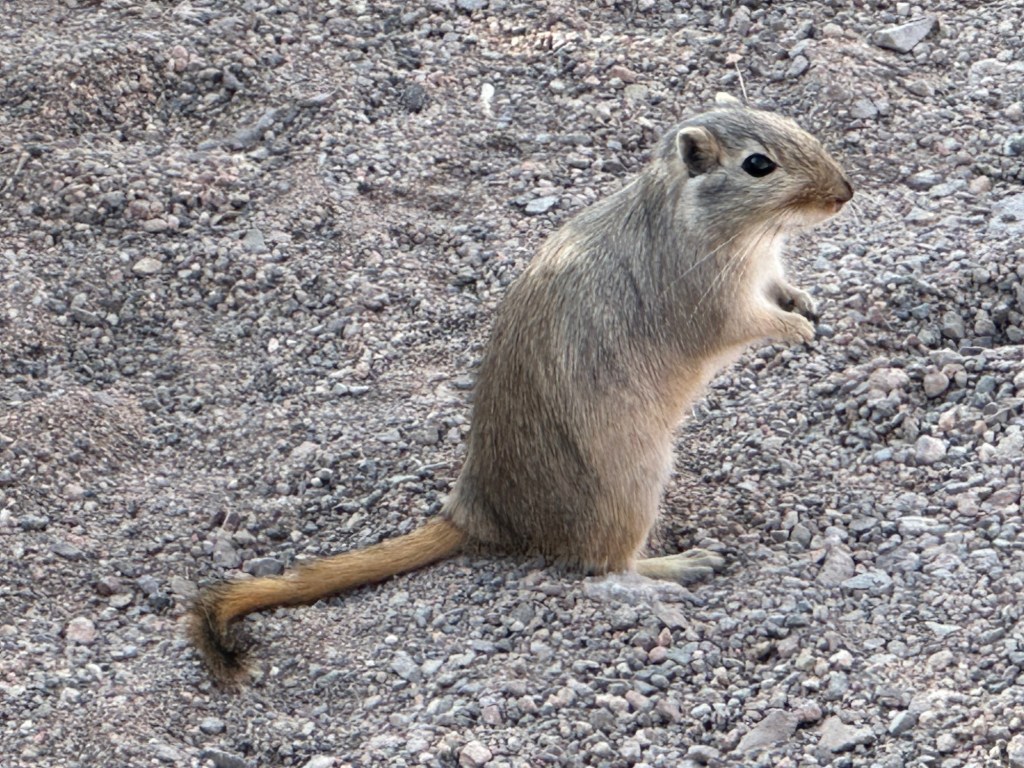
On the path were entertained for a while by what we think were Great gerbils. They darted here and there, then dived back into their burrows. From our research afterwards, it appears they are likely responsible for the Black Plague brought to Europe by the Mongols. They were very cute!
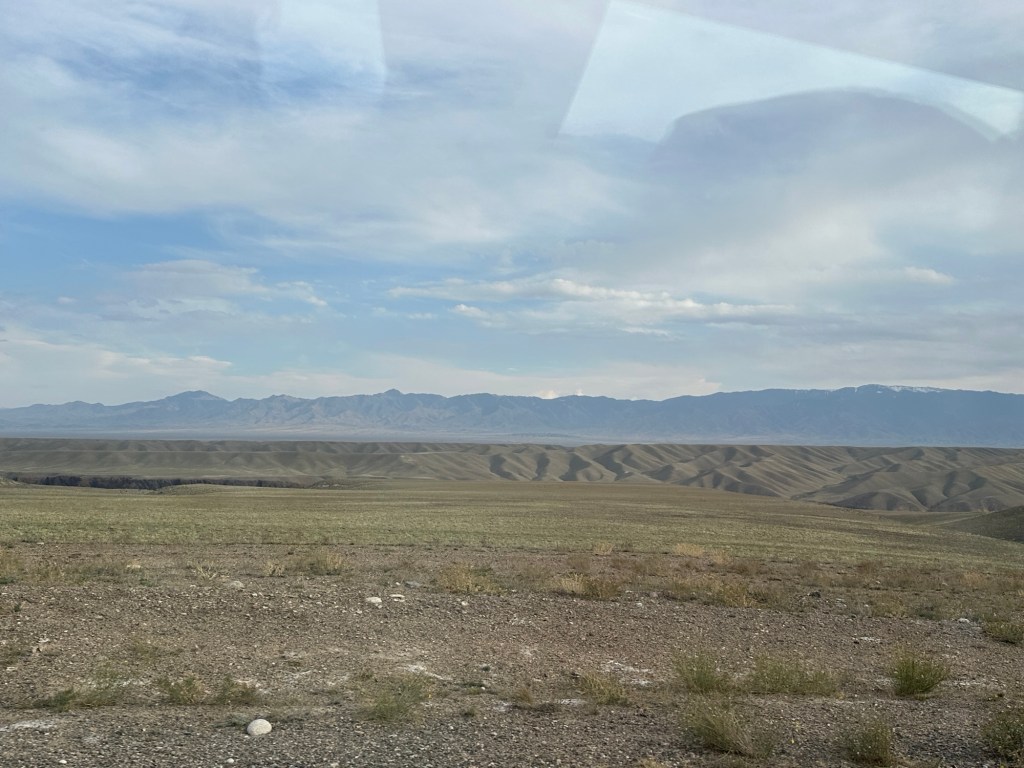
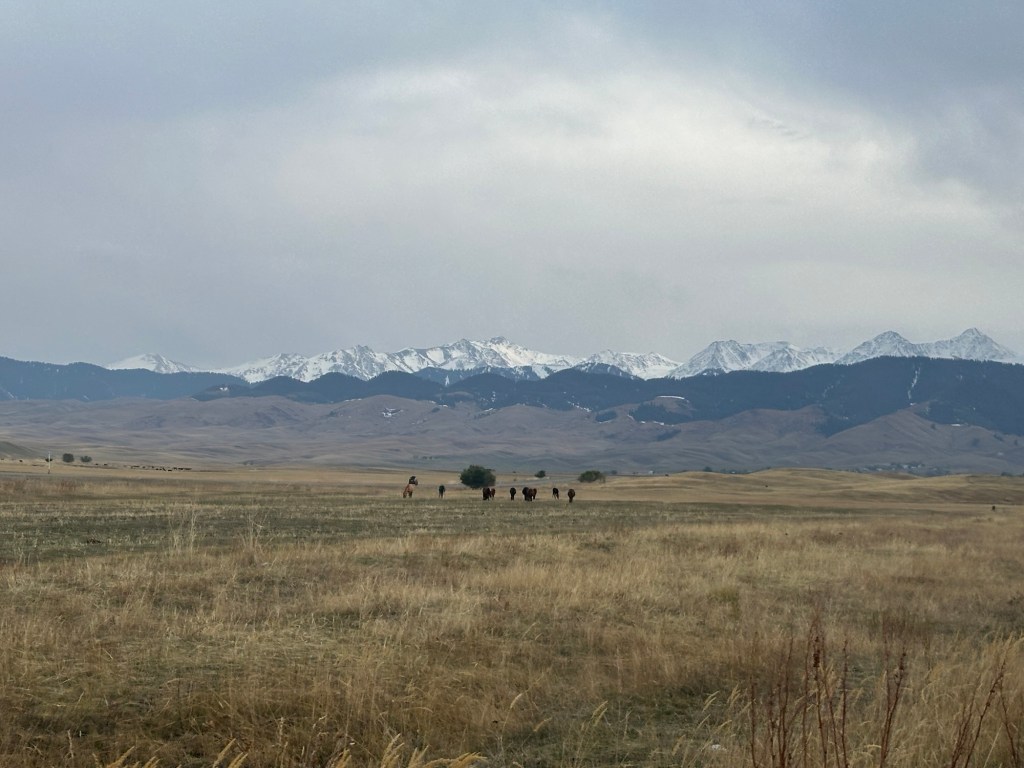
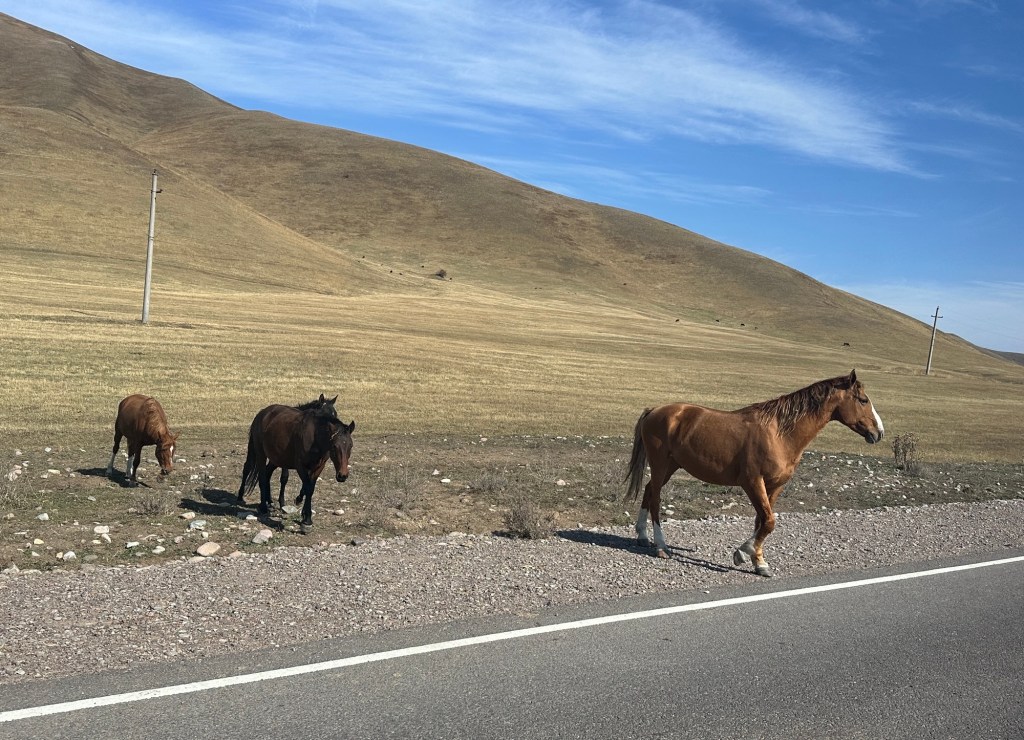
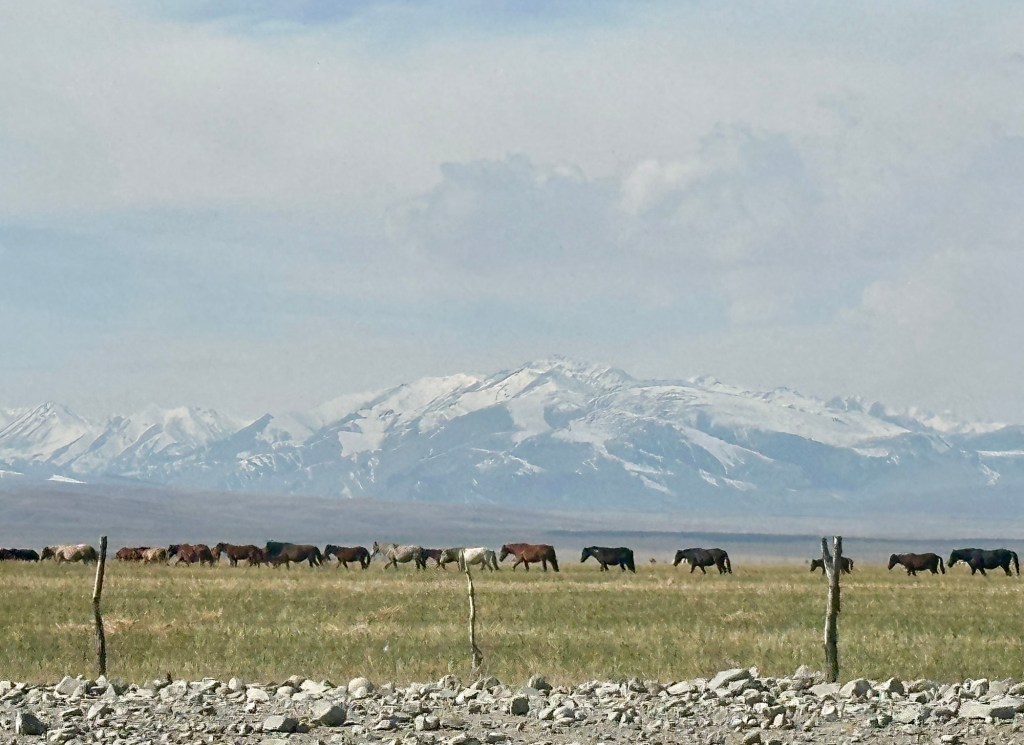
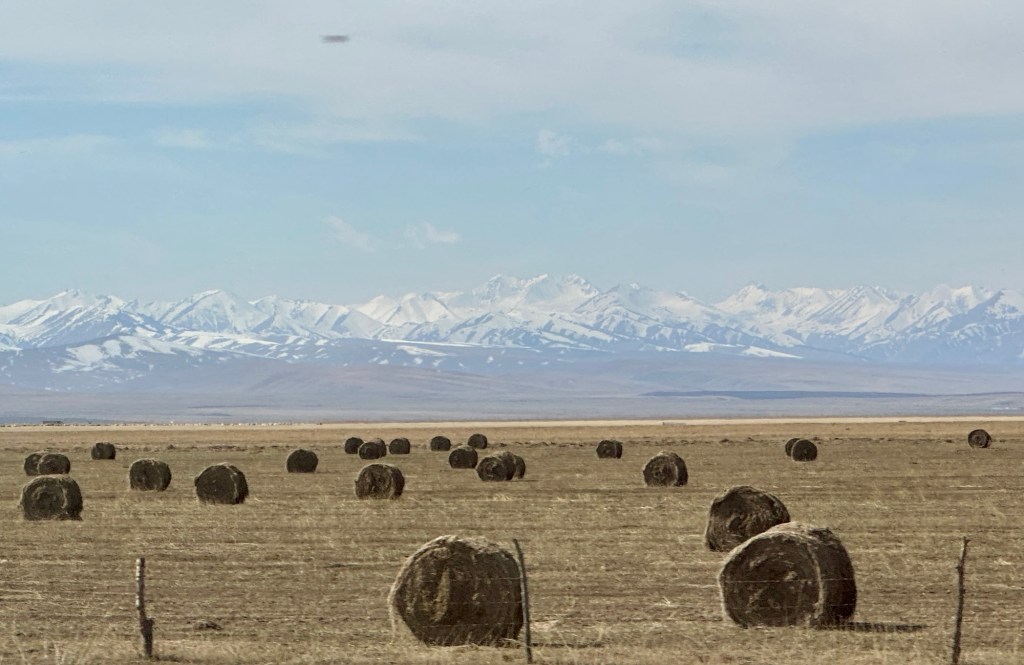
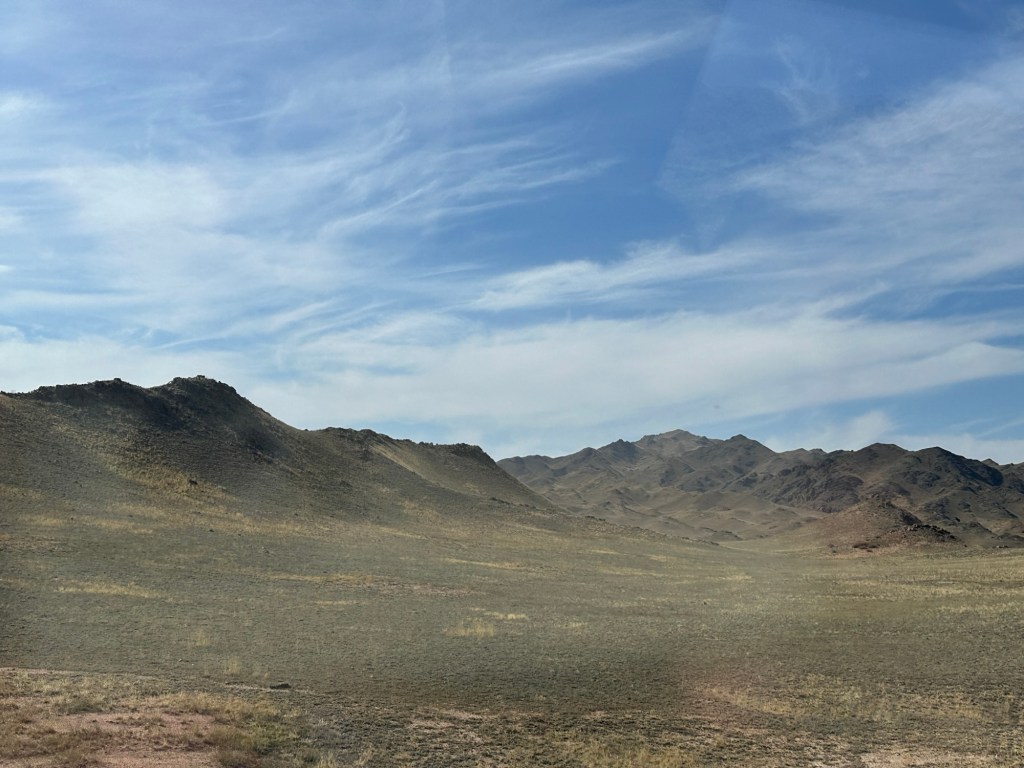
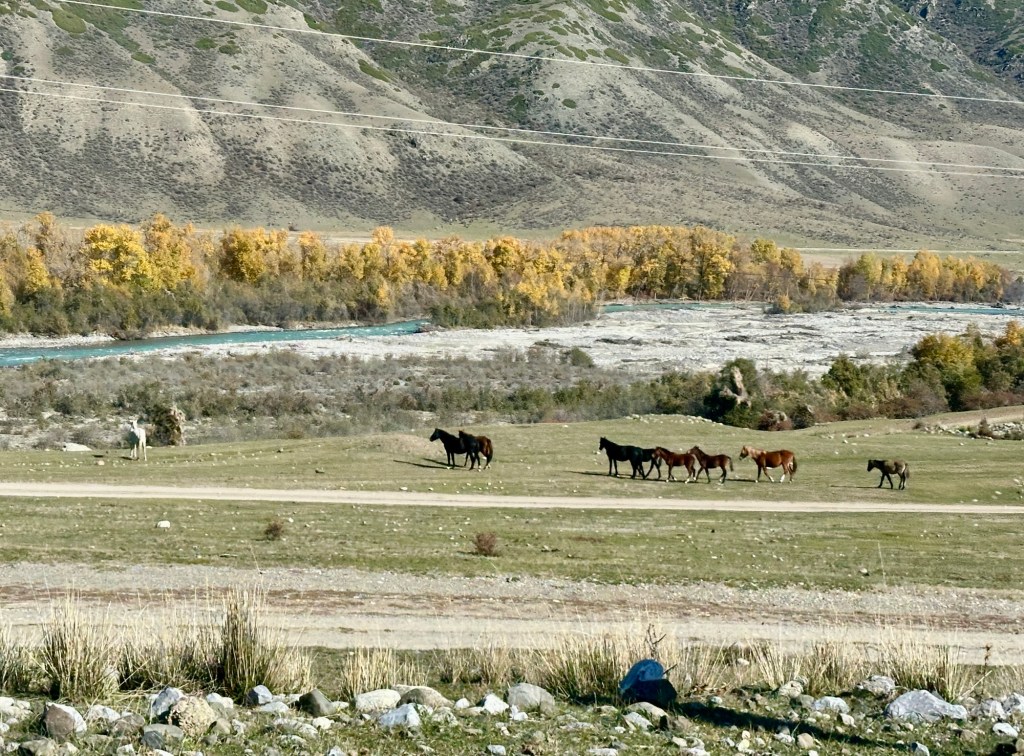
From Charyn we head to the village of Saty- such a scenic drive. The Tian Shan mountains have been our constant companion, their ice caps towering over the rolling green fields below. So many horses (even more than Kyrgyzstan), cows, sheep and donkeys. Barns are filled to overflowing with hay, preparing for the imminent winter.
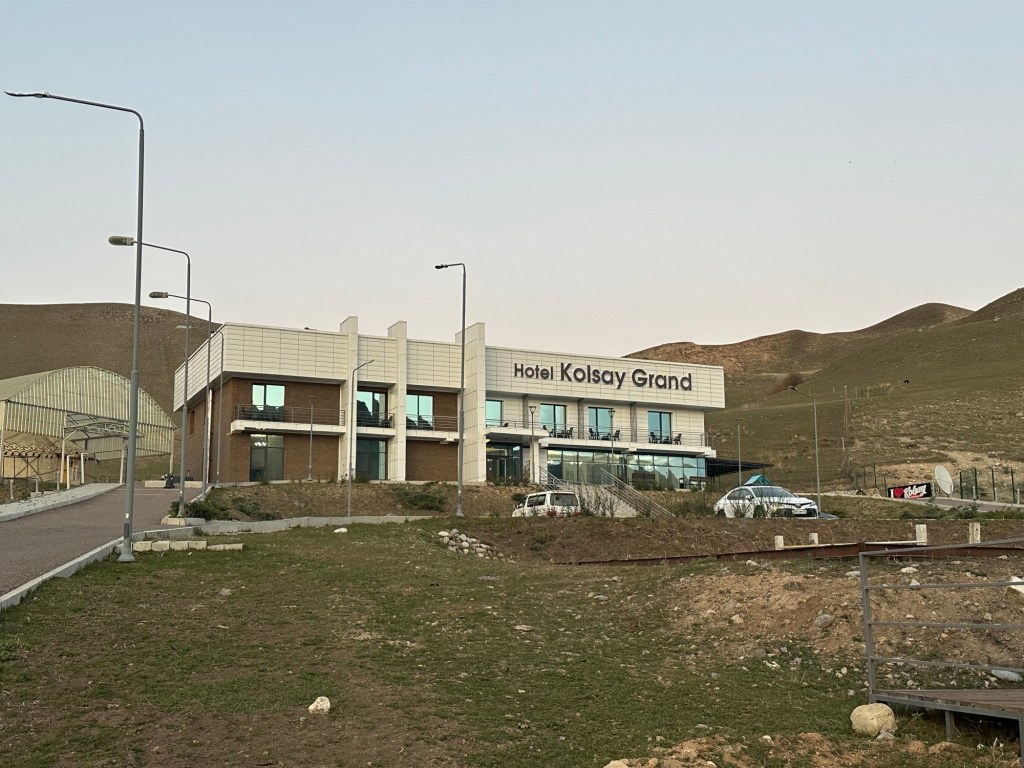
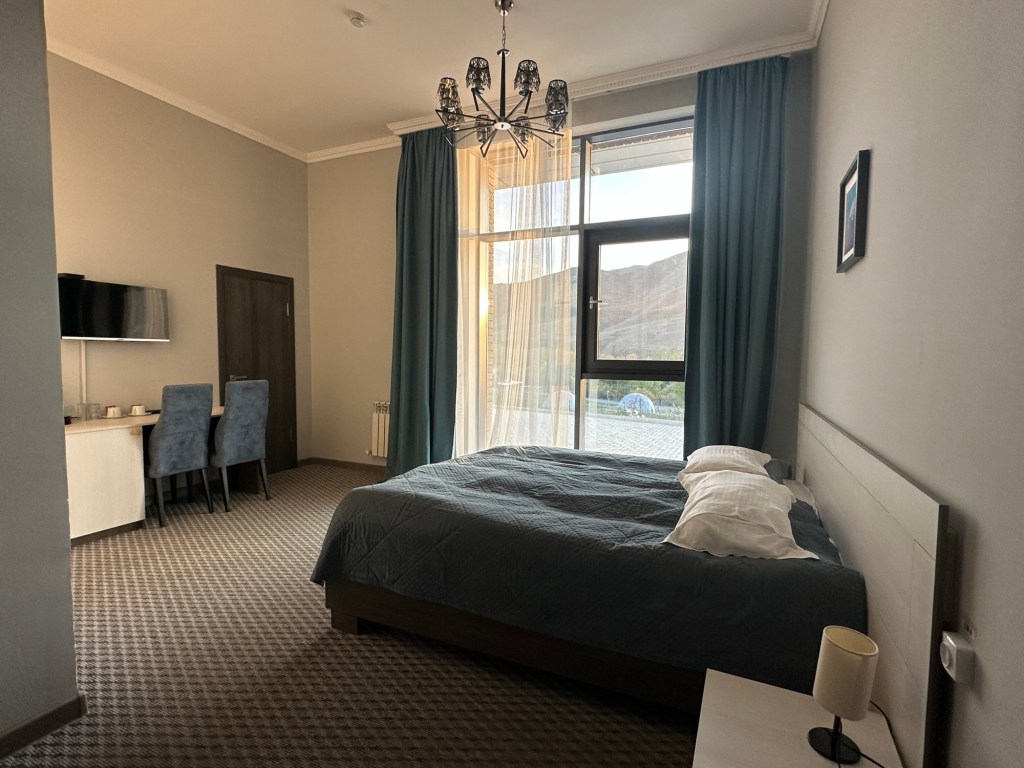
Our accommodation for the night is the Kolsay Grand Hotel – a fairly modest hotel but has everything we need. A nice meal from the local restaurant completes the night – a very simple way to celebrate our anniversary.
Day 31
Saturday 11th October
Saty – Altyn Emel National Park
1-13 degrees, sunny
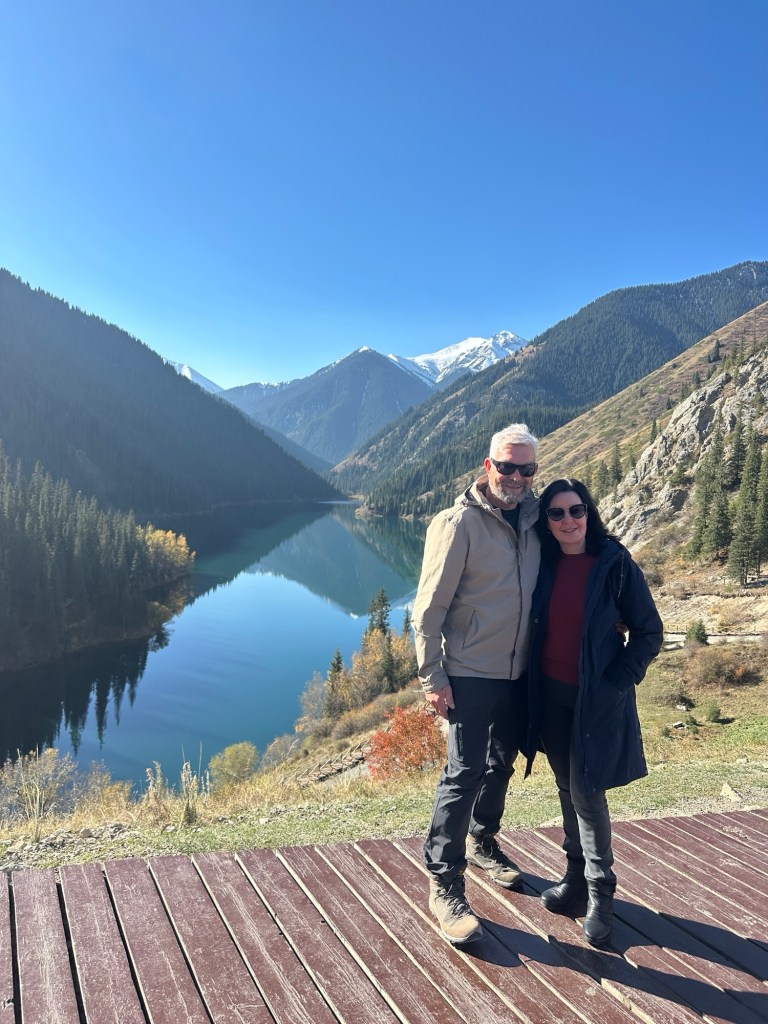
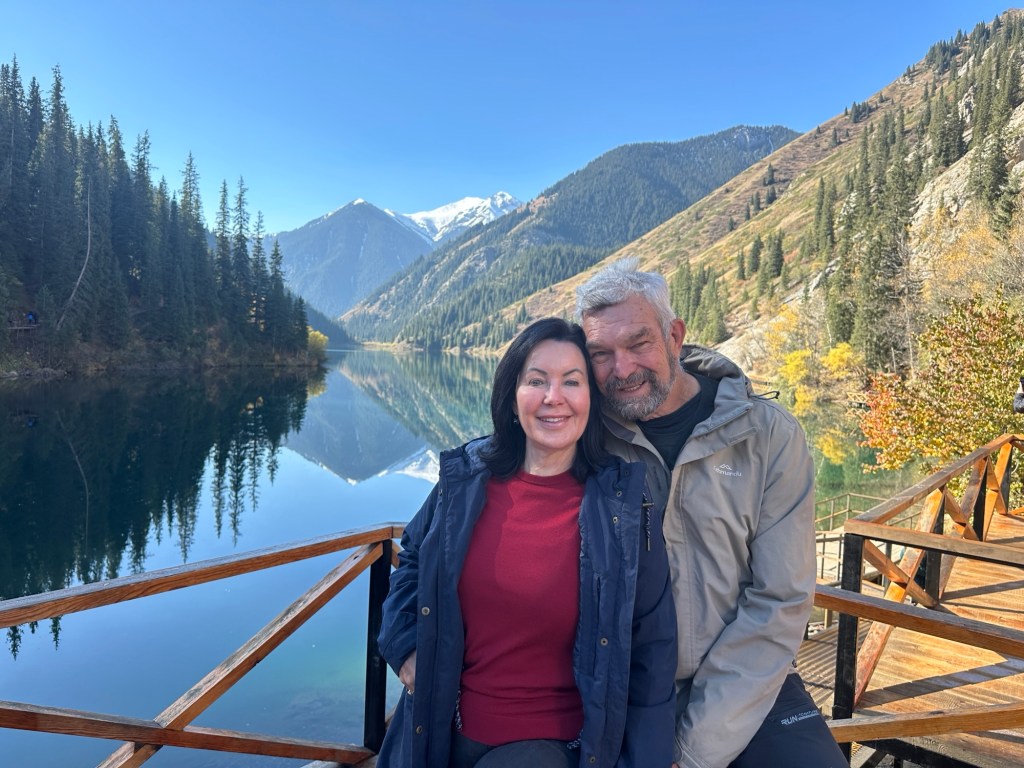
Today was dedicated to the lakes! The first one was the lower of the Kolsai Lakes. These freshwater lakes are located in a valley in the North Tien Shan mountains about 300 kilometers from Almaty. The three lakes – Upper, Mynzholki and Lower – are located at an altitude of 2,700, 2,250 and 1,800 meters above sea level respectively. It was a twenty minute steep descent to this picturesque lake, then of course the return climb.
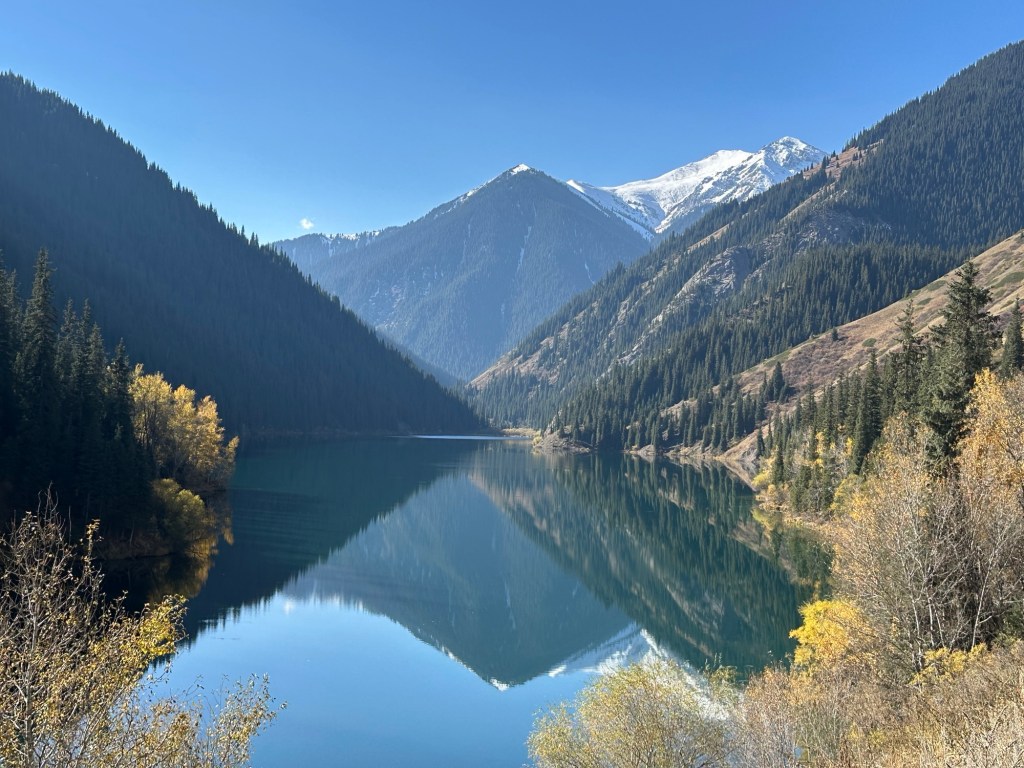
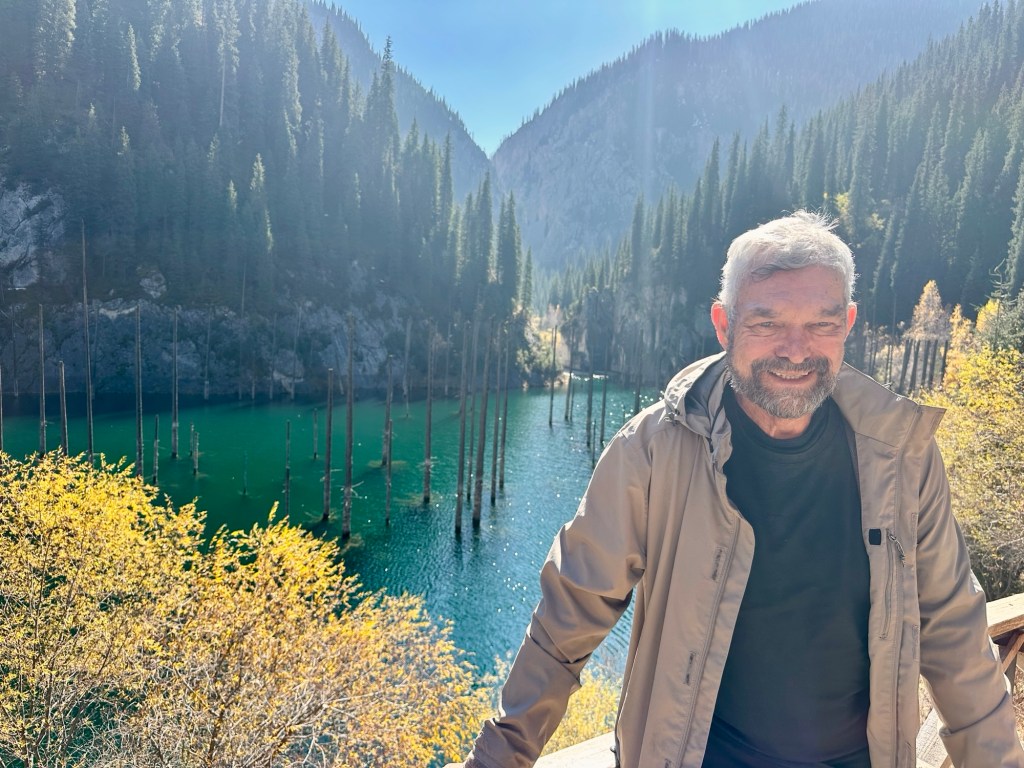
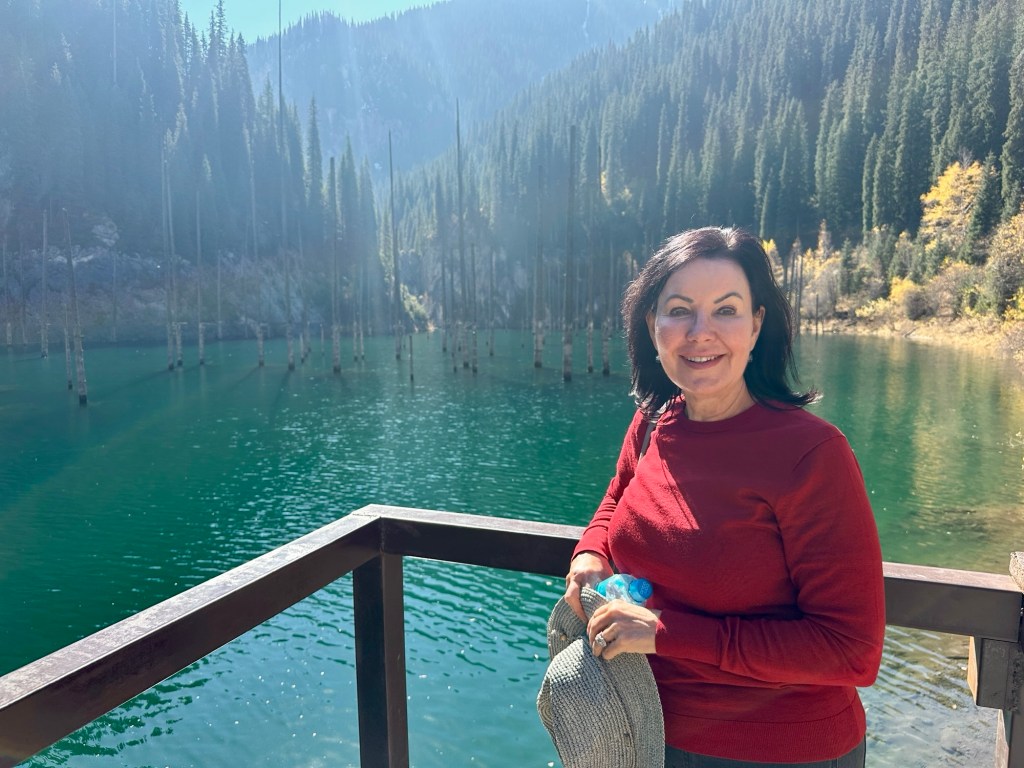
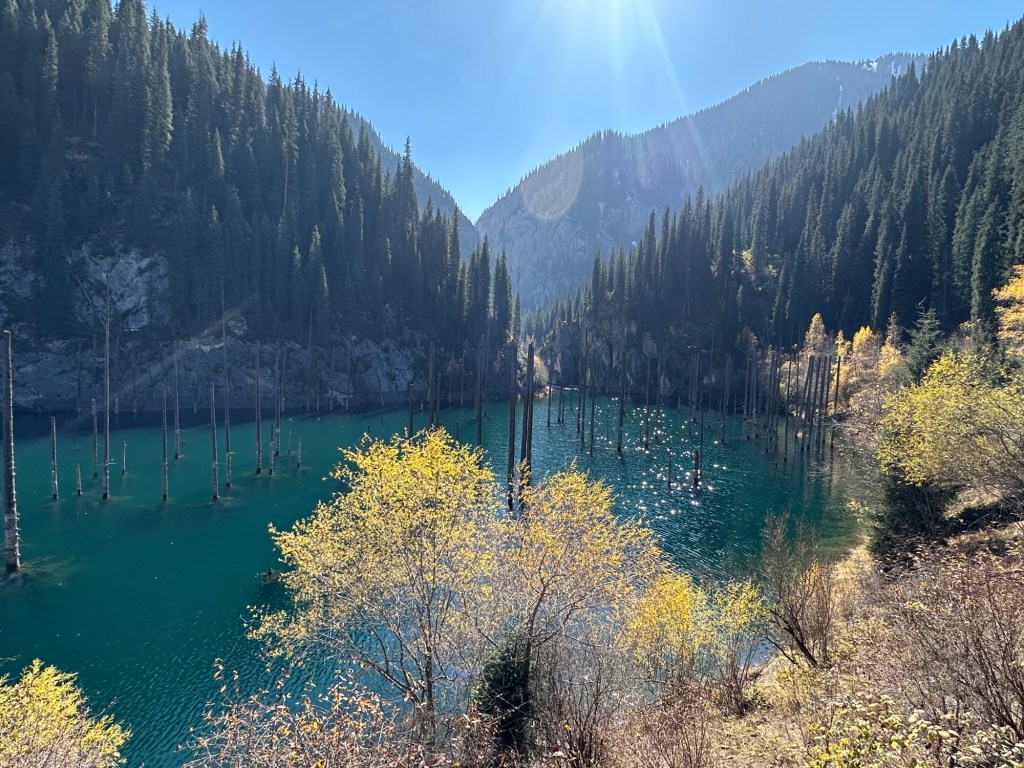
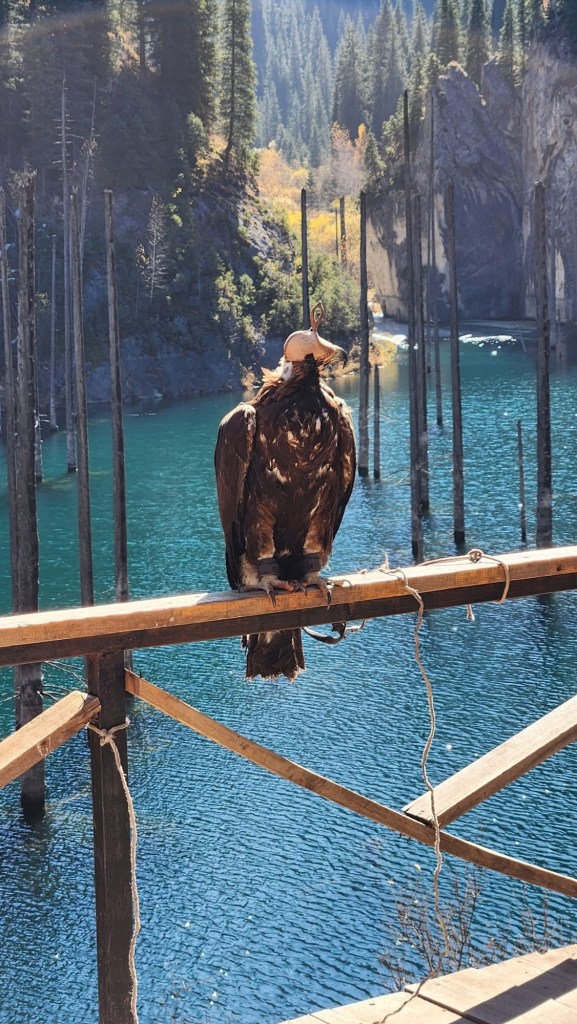
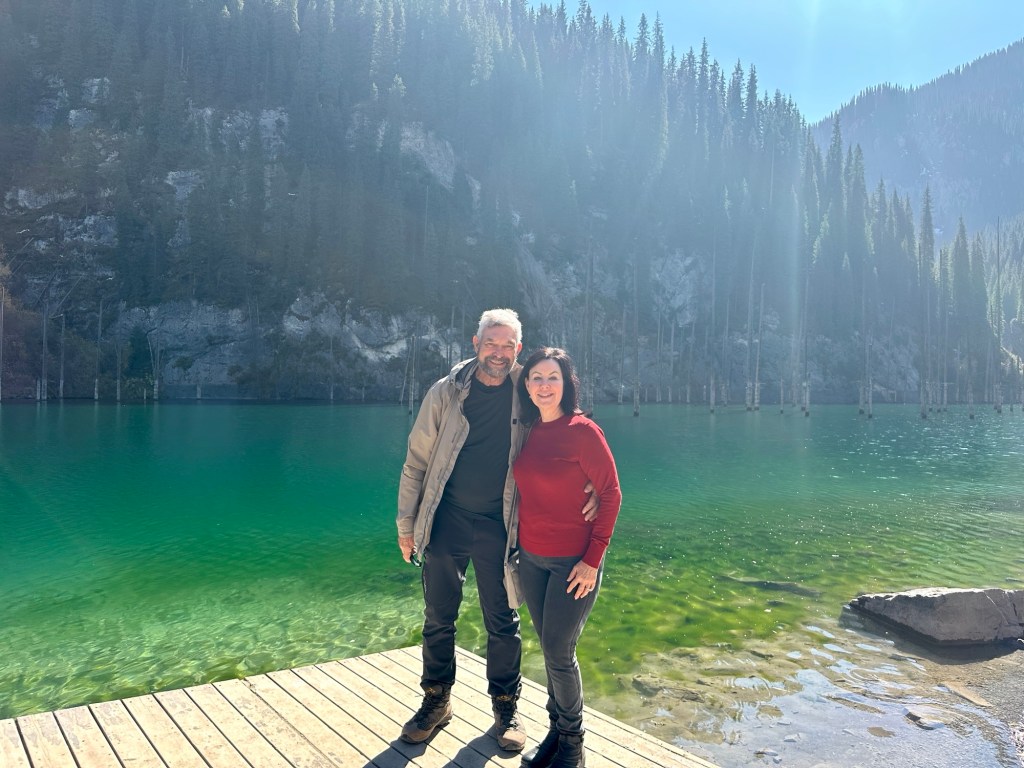
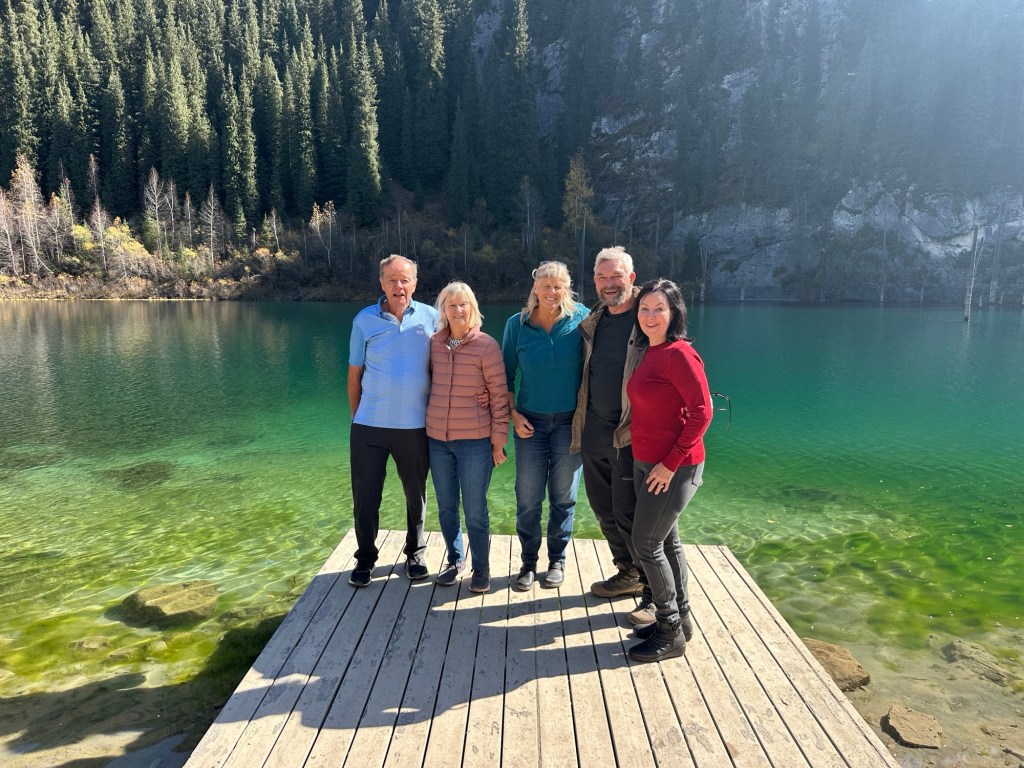
Kaindy Lake was not far away, but to get to this one we had to take a “taxi”, or rather, a beat up old combi van, for 50 minutes on bone shaking roads. They were rough! Then we had the twenty minute walk downhill. After an earthquake in 1911, a massive landslide blocked a gorge, forming a natural dam. Rainwater gradually filled the area, submerging a spruce forest and creating the surreal landscape seen today. This turquoise coloured lake is 2000 metres above sea level. Then of course there was the return trip. By the time we stopped for lunch we were shaken, rattled and rolled!
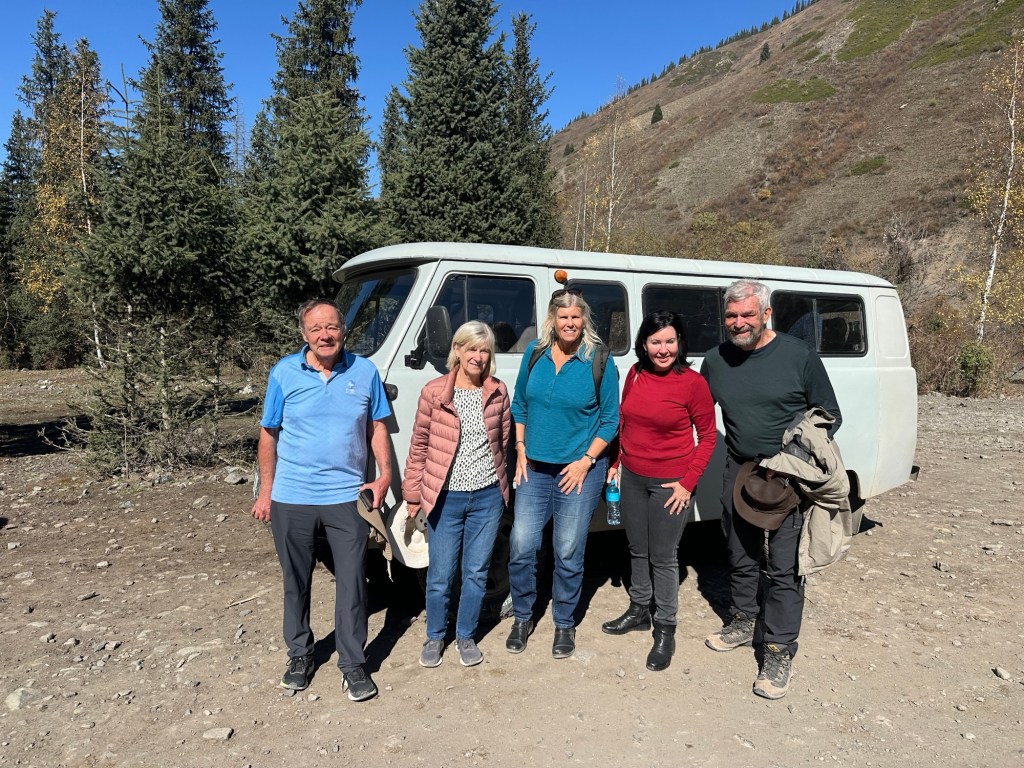
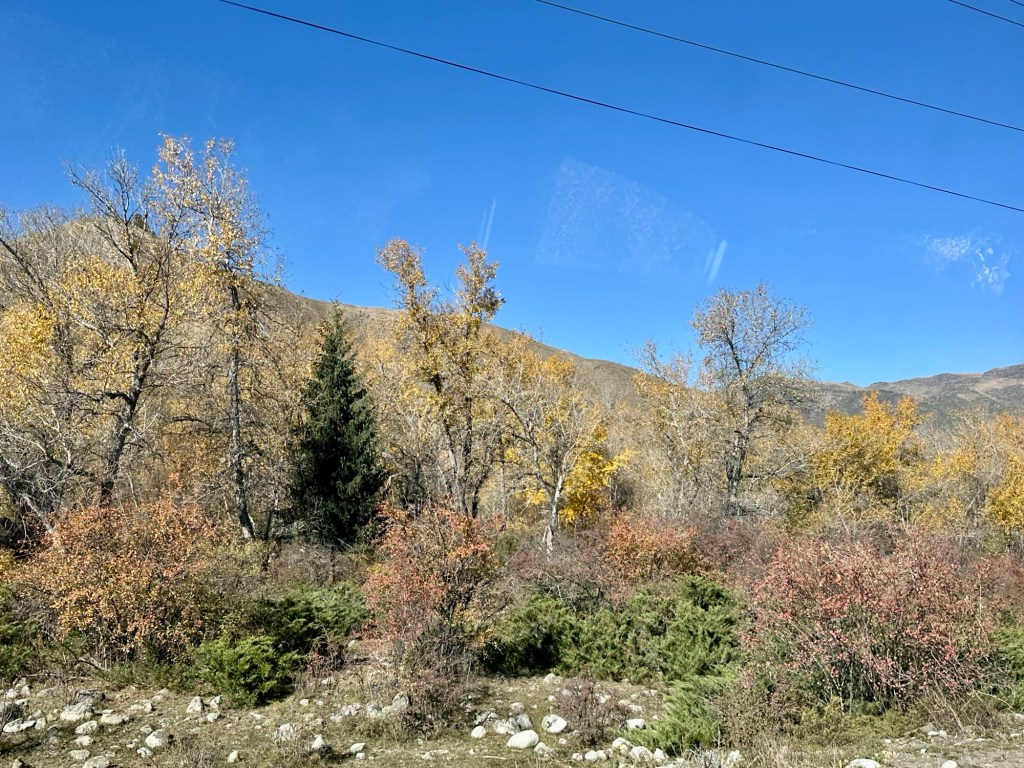
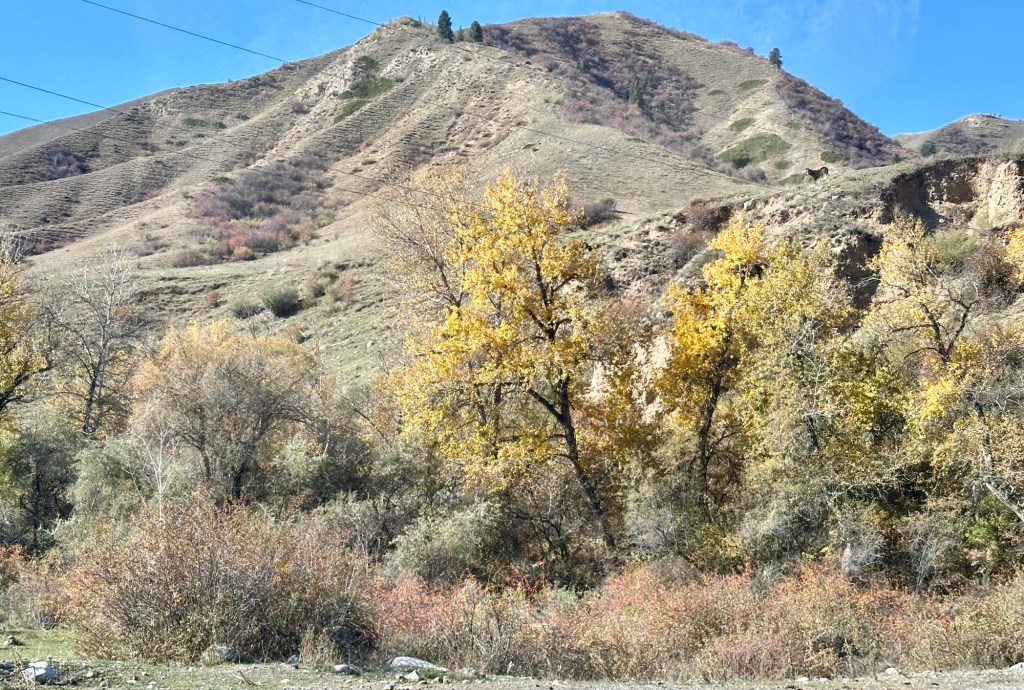
After five hours on the road, we finally reached Altyn Emel National Park. We knew this week would involve some serious driving, but honestly, it hasn’t been bad at all. Our van is surprisingly comfortable — plenty of space to stretch out and watch the world roll by. The scenery has been nothing short of magical, changing constantly like a moving painting. The only real challenge? The occasional bone-rattling stretch of road that keeps us literally on our seats!

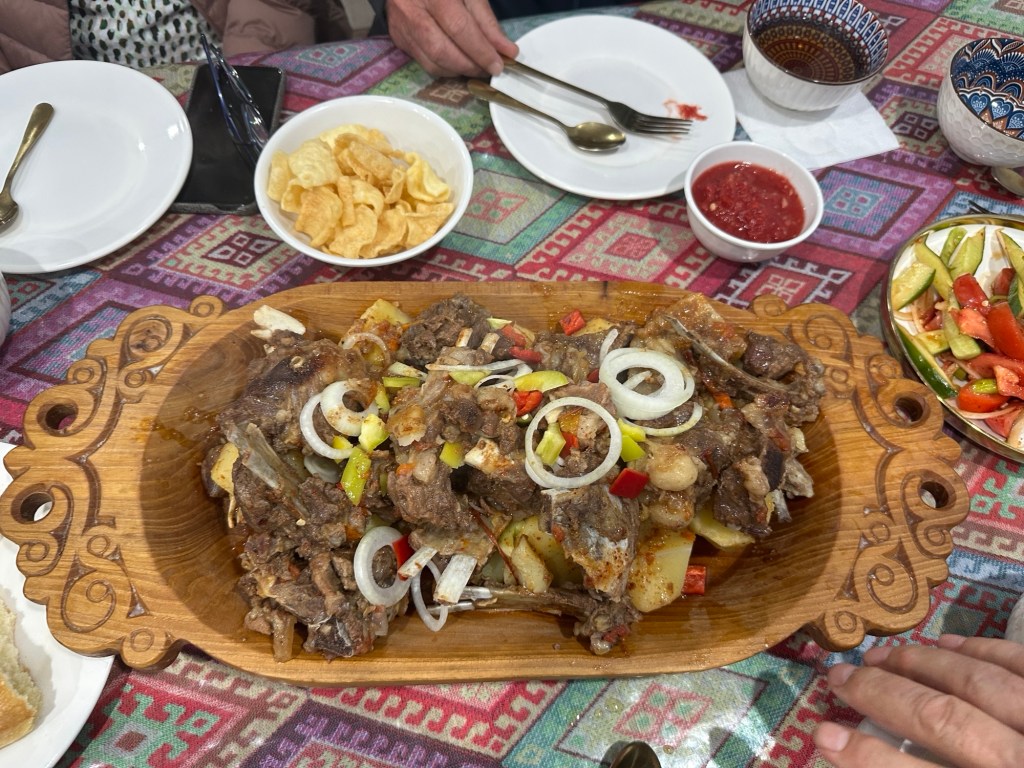
We arrived at Ardak Guesthouse around 6pm, just in time for another memorable dinner experience. The spread was the usual suspects — bread, those dangerously moreish fried pastries (I’ll admit, I do like them ), jam, salad, and the national dish – meat and potatoes. The beef arrived still clinging to the bone and tough enough to test anyone’s determination. Knives here are an optional luxury — whenever we ask for one, there is much rummaging and eventually a couple are triumphantly produced! Naturally, the meal was rounded off with the ever-present pot of tea. Yet another AFD chalked up!
Not a lot to do here, so off to bed at a ridiculously early hour!
Day 32
Sunday 12th October
Altyn Emel National Park – Almaty
3-16 degrees, sunny
After breakfast we drove for an hour through Altyn Emel national park. The park is a unique combination of diverse natural landscapes, from flat lands to high mountains, which determines the richness of its flora and fauna. We managed to see five golden eagles along the way, and a fox with the most bushy tail. This part of the park is very flat and barren.
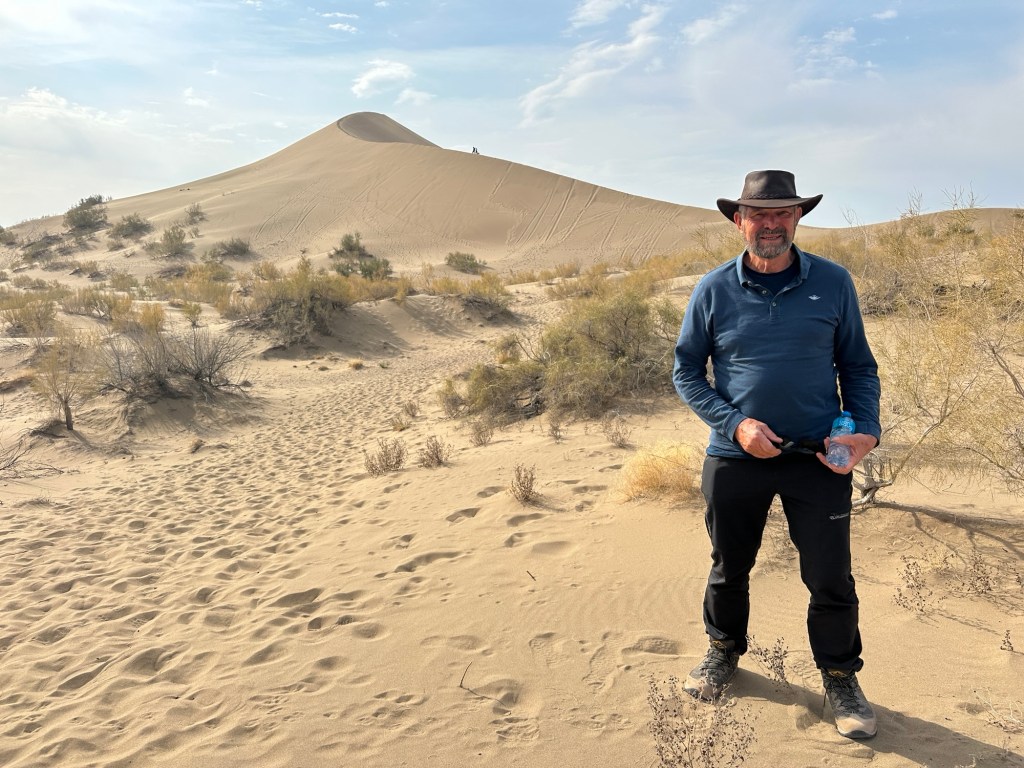
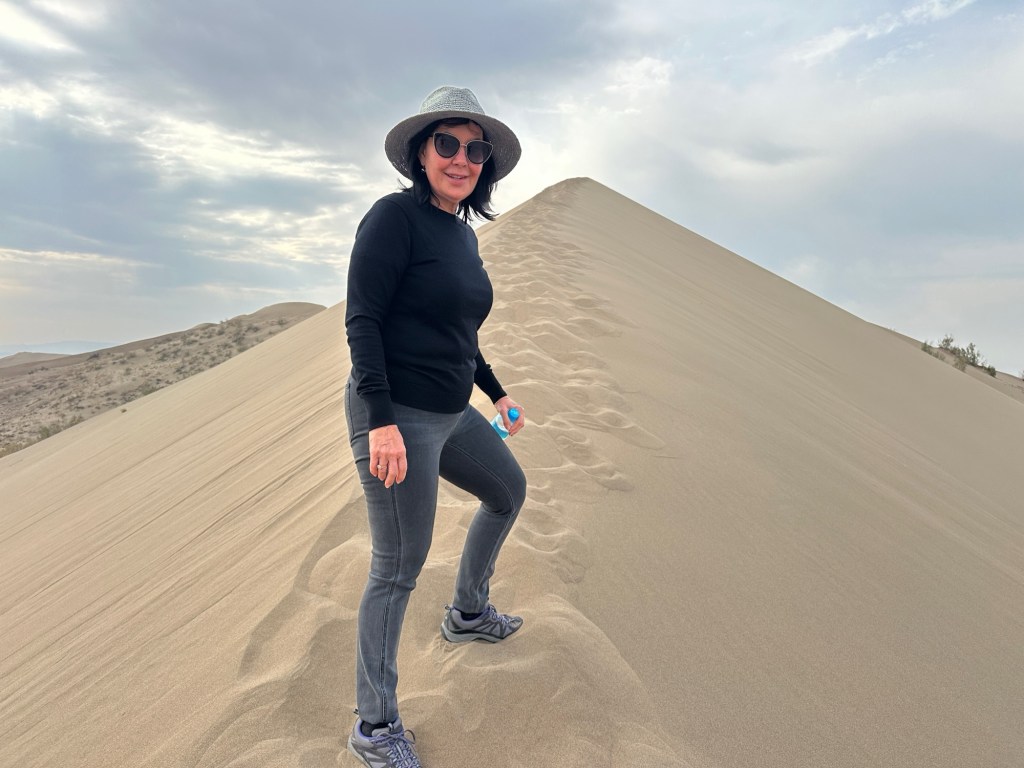
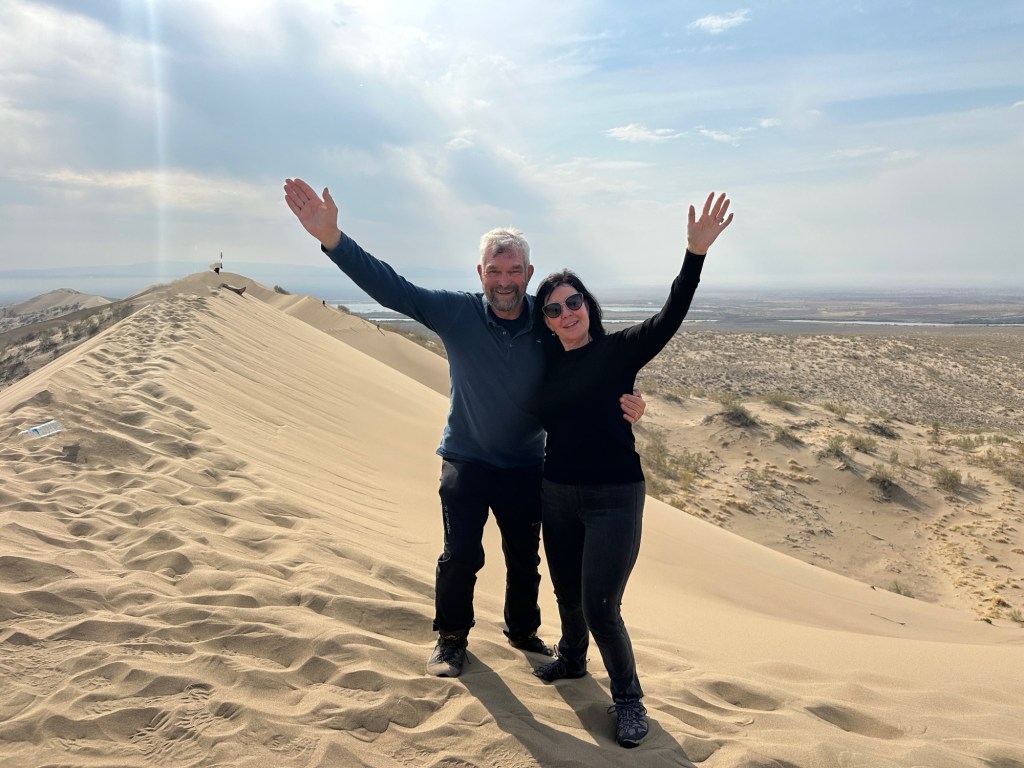
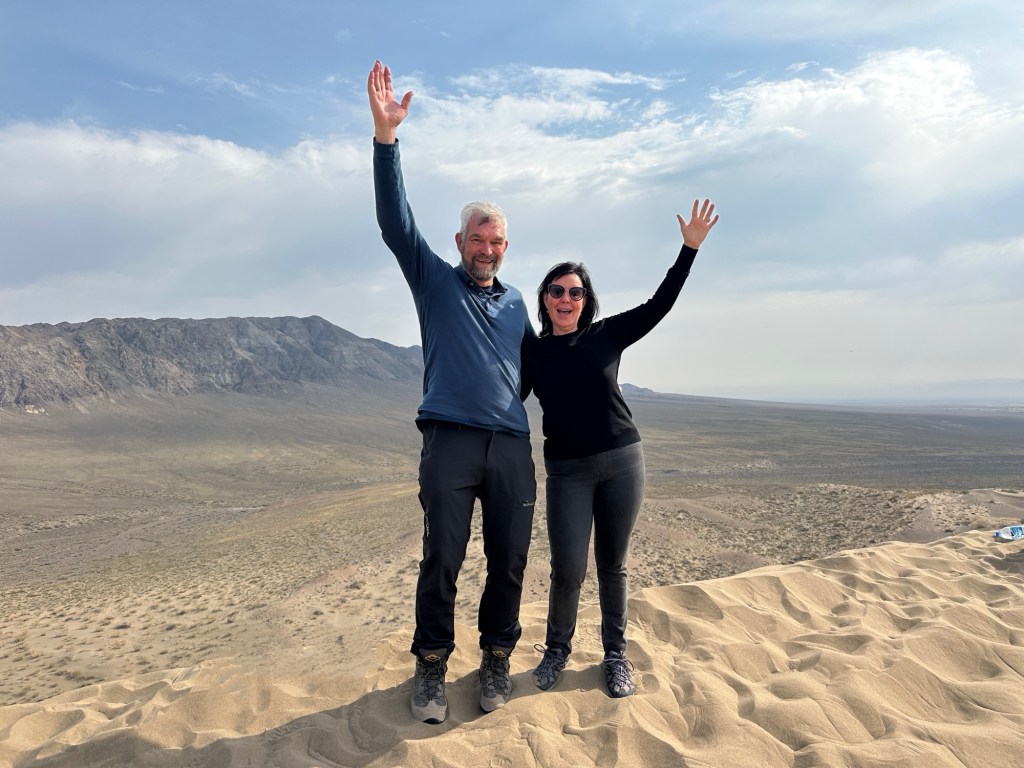
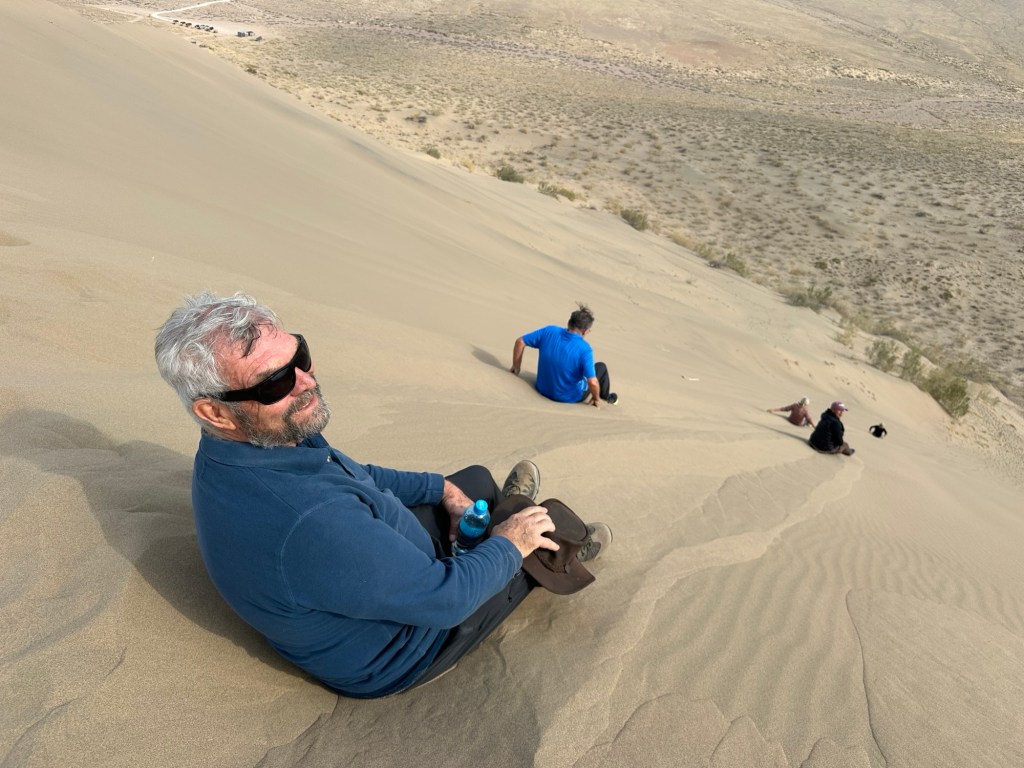
In the park we visited the Singing Dunes. “The Singing Barchan” is a small sandy ridge, of about 150 meters high, and more than three kilometers long. Its age is supposedly 3000-5000 years. It was another steep climb to the top. Great view at the top, China is only 70 kms away. The dunes supposedly make a singing sound, but we had to really use our imagination- apparently it does when it’s windy. We went down the dune on our bottoms – not as easy as we thought it was going to be, but definitely quicker!

An hour’s drive back to the guesthouse, changed back to our comfy van, then a four drive to Almaty, stopping for lunch at a cafe on the way. Crispy eggplant salad and kebabs filled the spot, as well as a crepe to finish with.
Almaty stands on the site of an old Silk Road settlement destroyed by Genghis Khan’s hordes, and the present-day city was established as a Russian outpost in 1854. Following the construction of the Turkestan–Siberia Railway, it became the capital of Soviet Kazakhstan in 1927. Even though Astana became the country’s capital city in the 1990s, Almaty remains Kazakhstan’s largest and most sophisticated city – a metropolis of wide boulevards and leafy parks from where the snow-capped peaks of the Zailiysky Alatau range loom tantalisingly close to the south.
Our hotel tonight is the KazZhol Park Hotel, a nice 4 star hotel in the centre of the city. We had a walk to a couple of nearby shopping centre, more to stretch our legs. Though Frank managed to find a barber and ended up with a very trendy haircut and beard trim.
We weren’t hungry after our big late lunch, so soup and a couple of drinks at the hotel sufficed for dinner tonight.
Day 33
Monday 13th October
Almaty
7-19 degrees, cloudy, sunny
Almaty city tour today- this city has a certain old-fashioned charm. It is celebrated for its green spaces, with numerous urban parks, tree-lined streets, and fountains, contributing to its reputation as one of the greenest cities in Central Asia. The changing autumn leaves add another layer of colour.
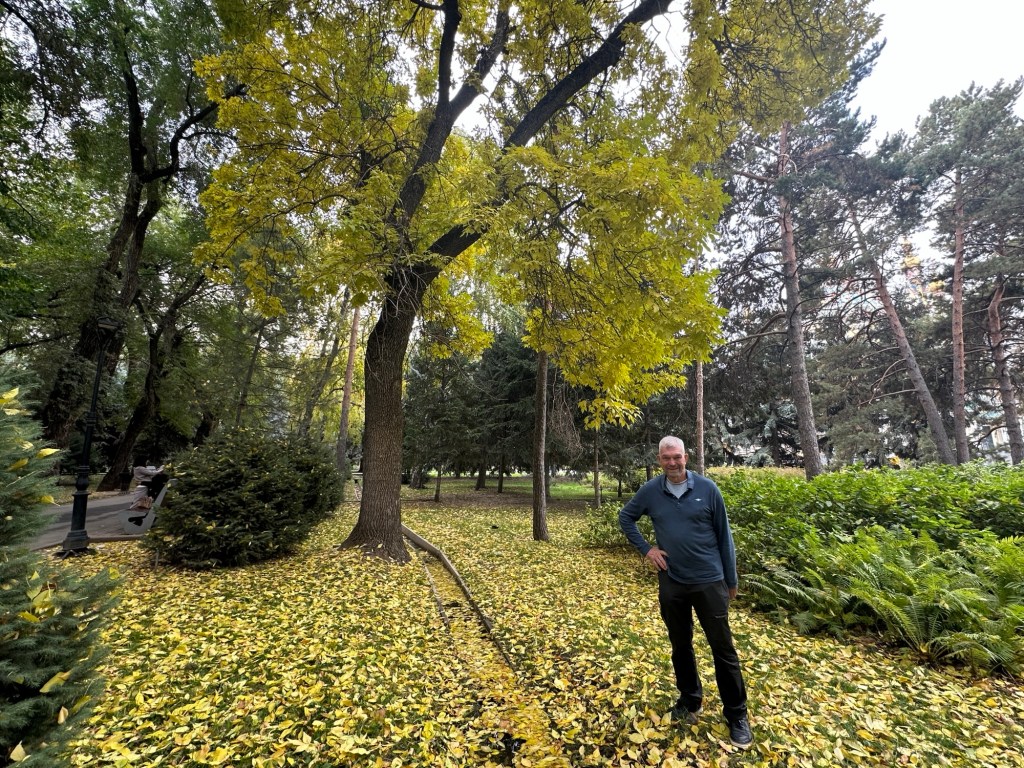
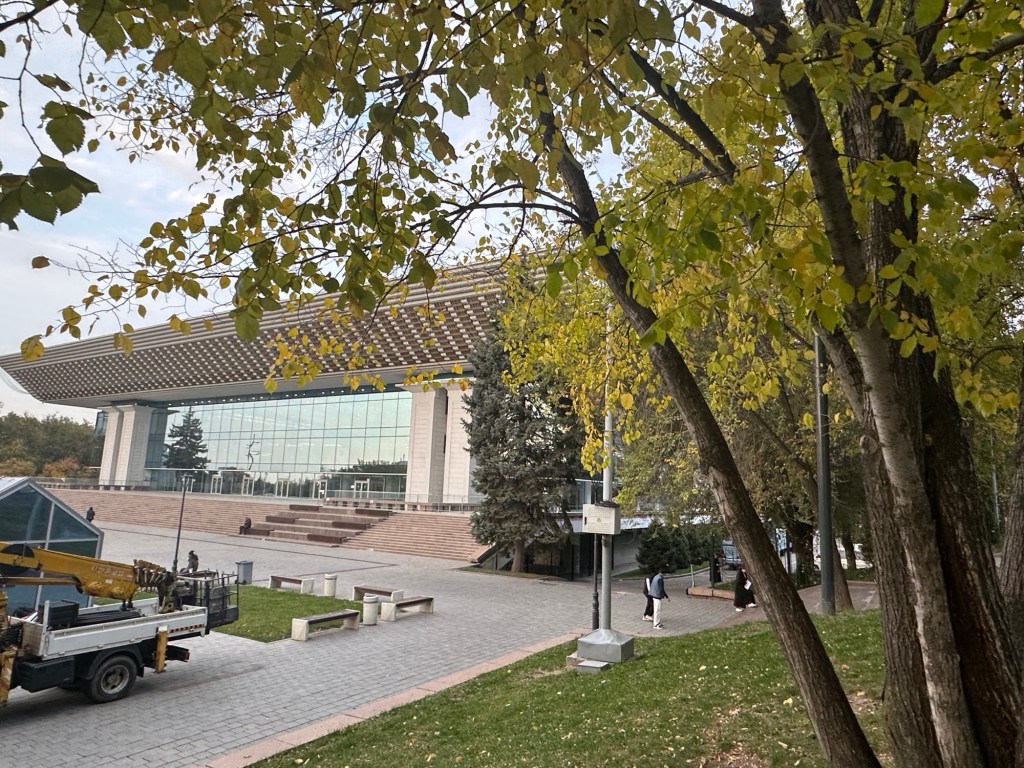
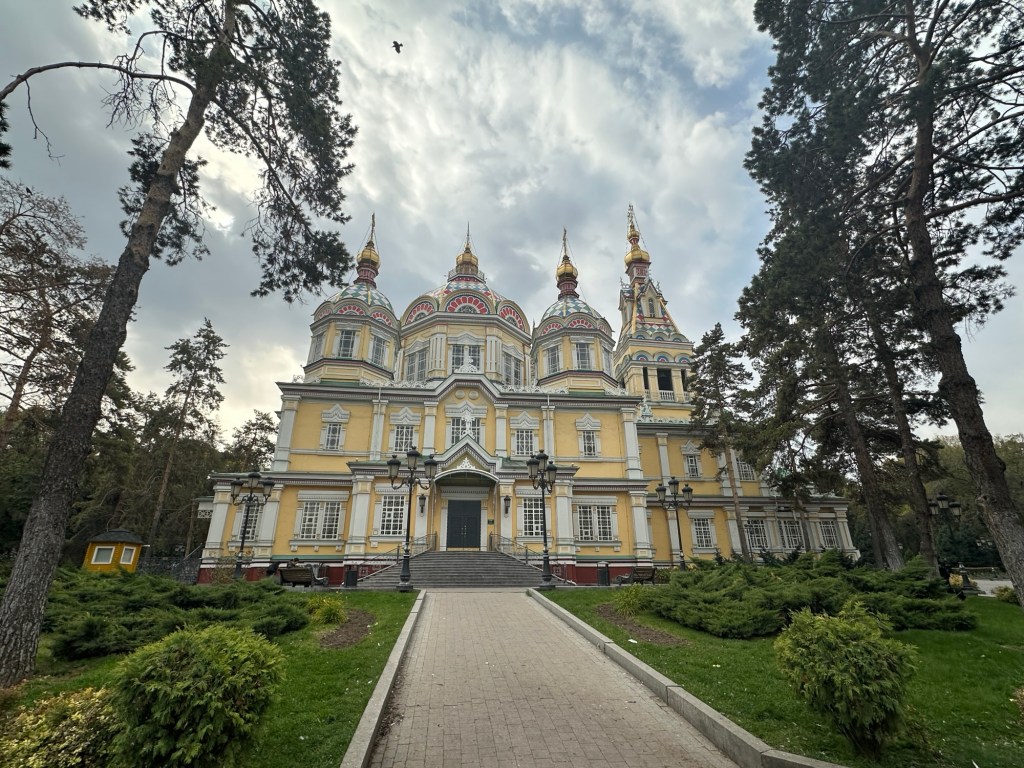
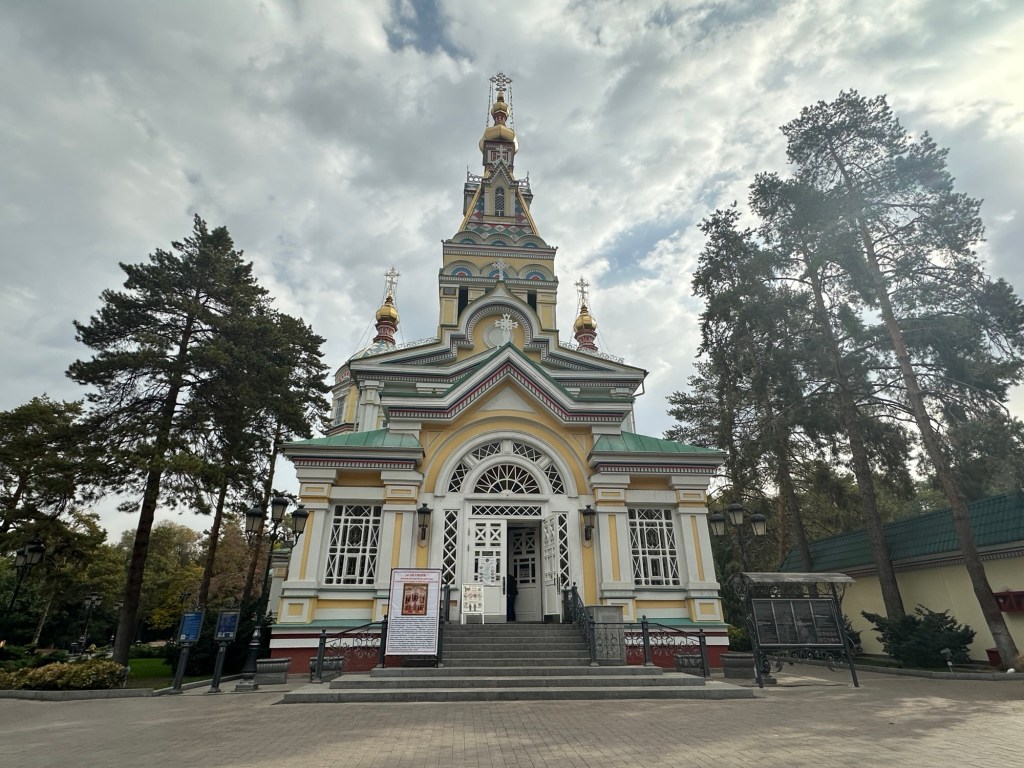
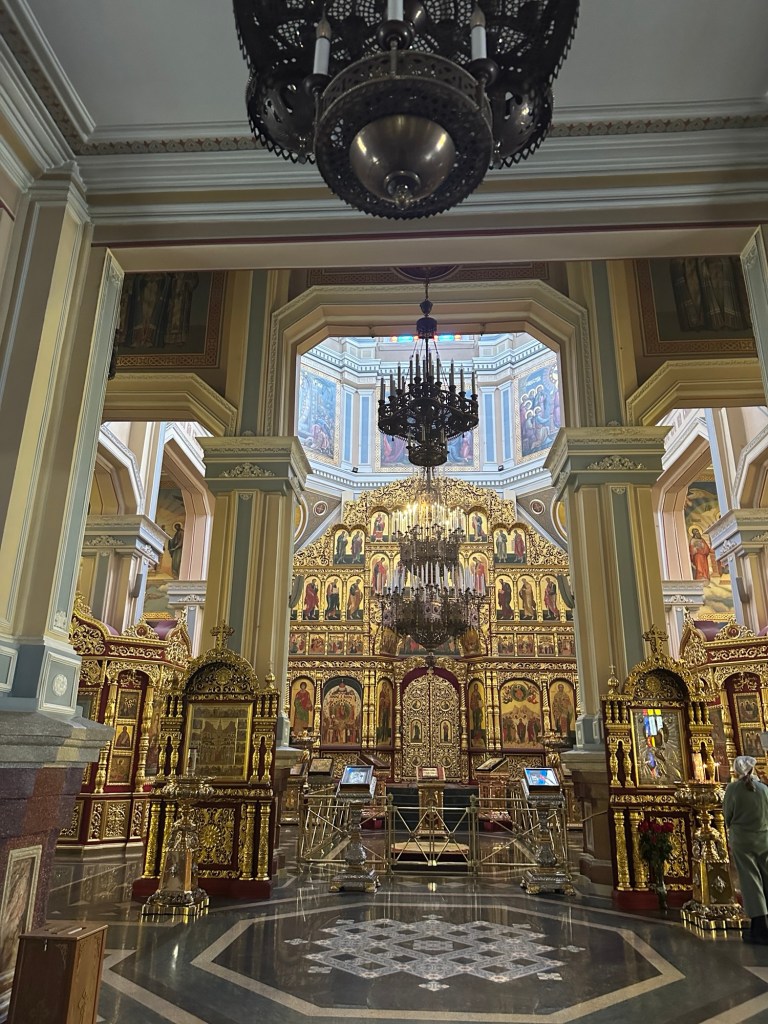
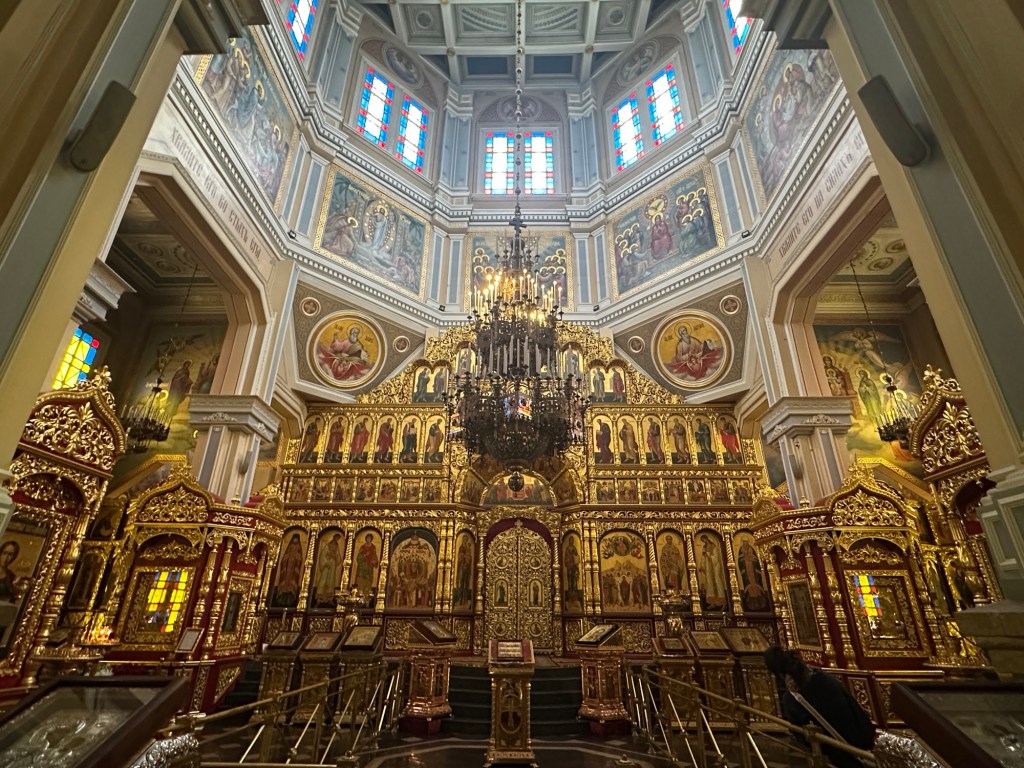
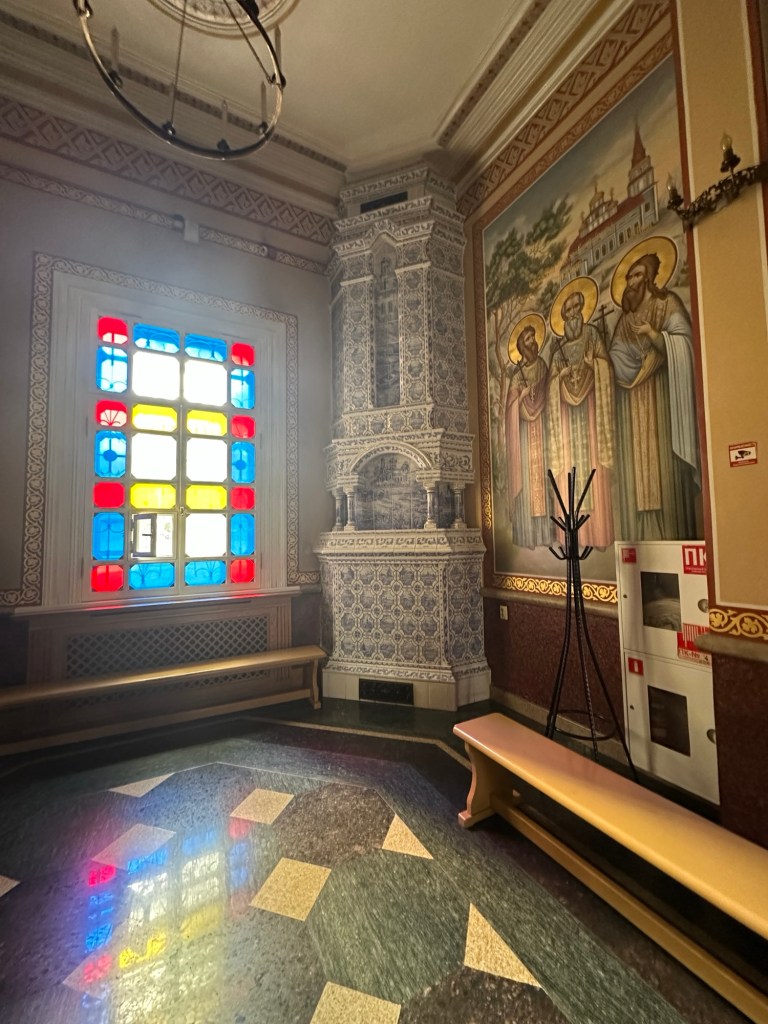
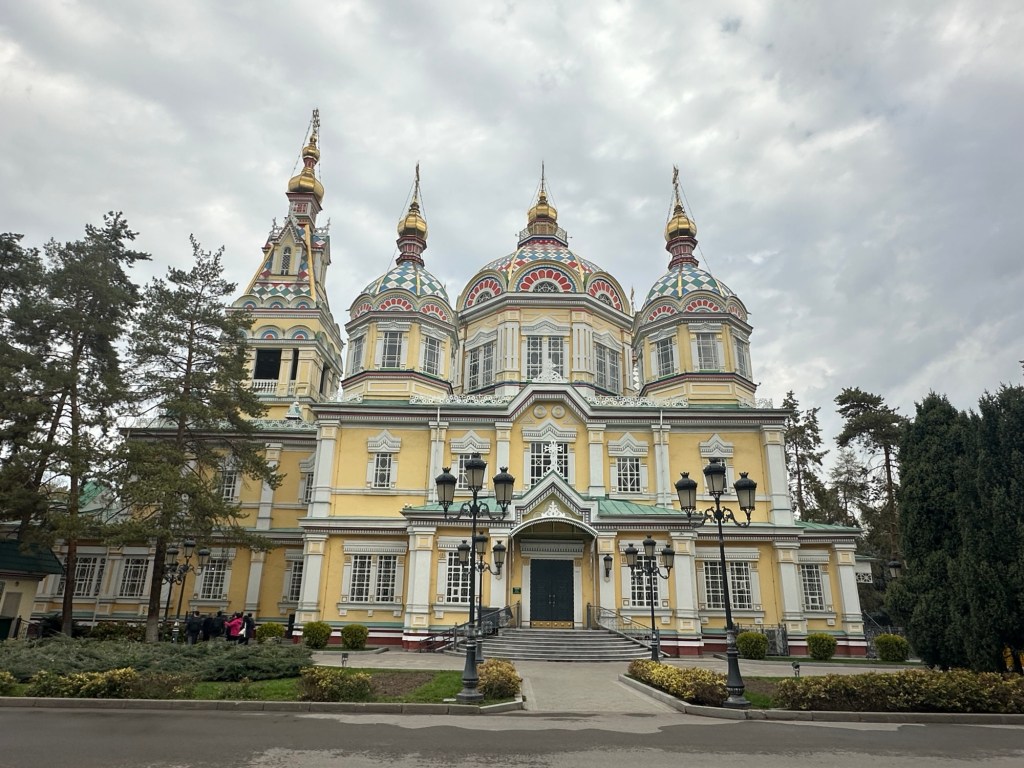
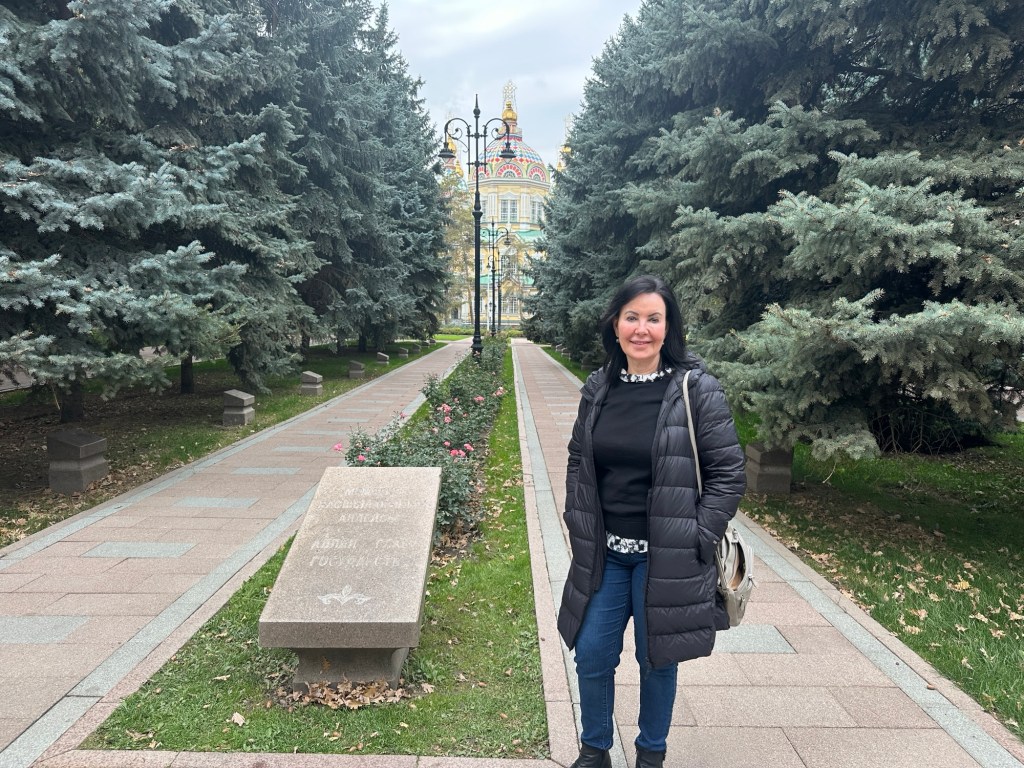
Our excursion started from Panfilov’s Park with Zenkov’s Orthodox Cathedral or the Ascension Cathedral of Almaty. It is one of the few Russian Orthodox churches in Almaty that survived the Soviet Union – in that time it was a museum. As soon as the Soviet Union broke down, the church opened its doors again. The cathedral is made of wood, and no nails were used in its construction.
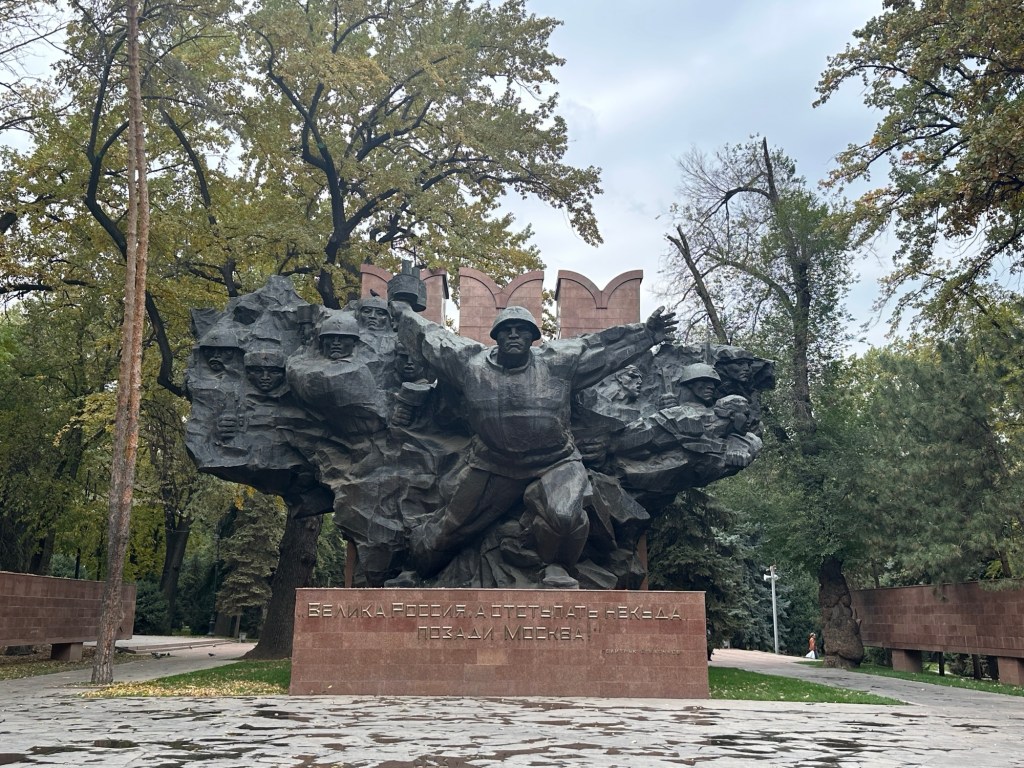
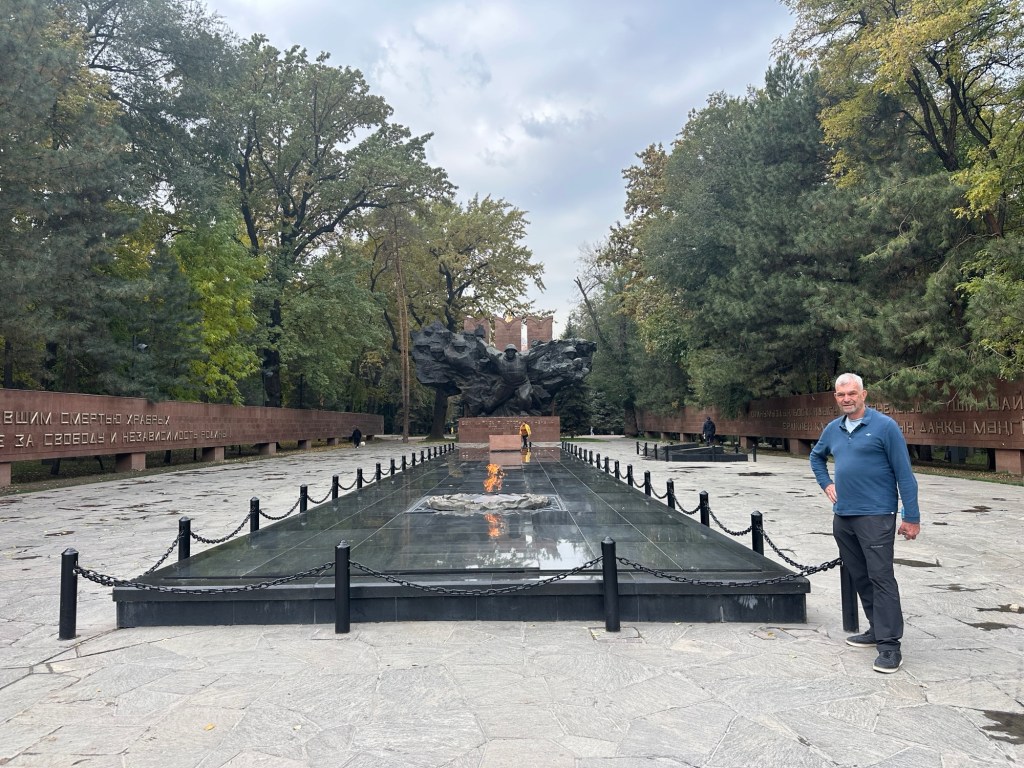
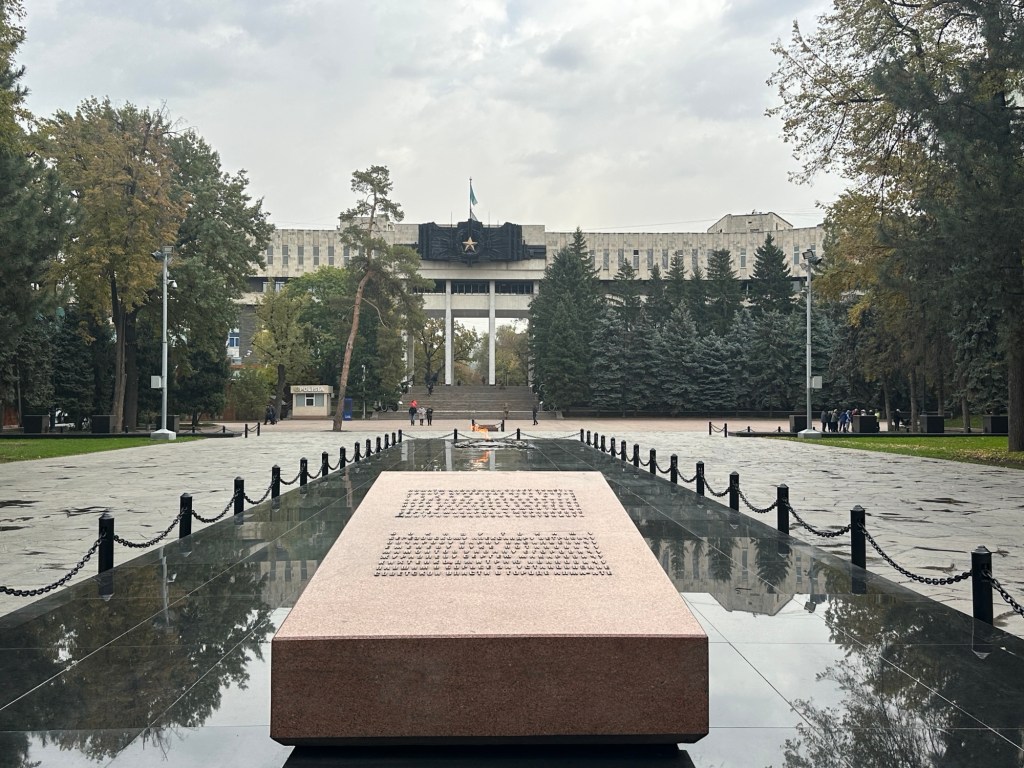
The Great Patriotic War Memorial in Panfilov’s Park is a memorial to all the Kazakh soldiers who died in the first and second world wars. Panfilov Park is named after the Panfilov heroes – 28 soldiers from Almaty who died fighting the Nazis outside of Moscow. General Panfilov managed to delay the advance of the enemy towards the capital, but his infantry did die in combat eventually. Nowadays the park is a popular green space in the city where couples stroll and children feed the pigeons. The Museum of Kazakh Folk Musical Instruments is also in the park but is closed on Mondays.
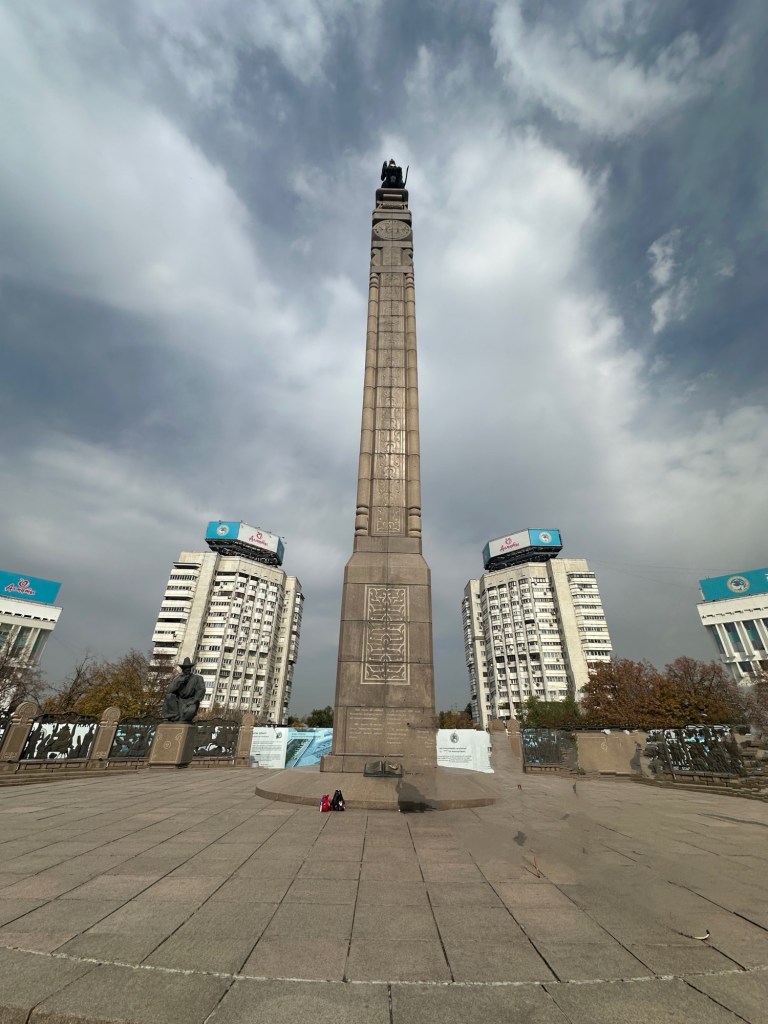
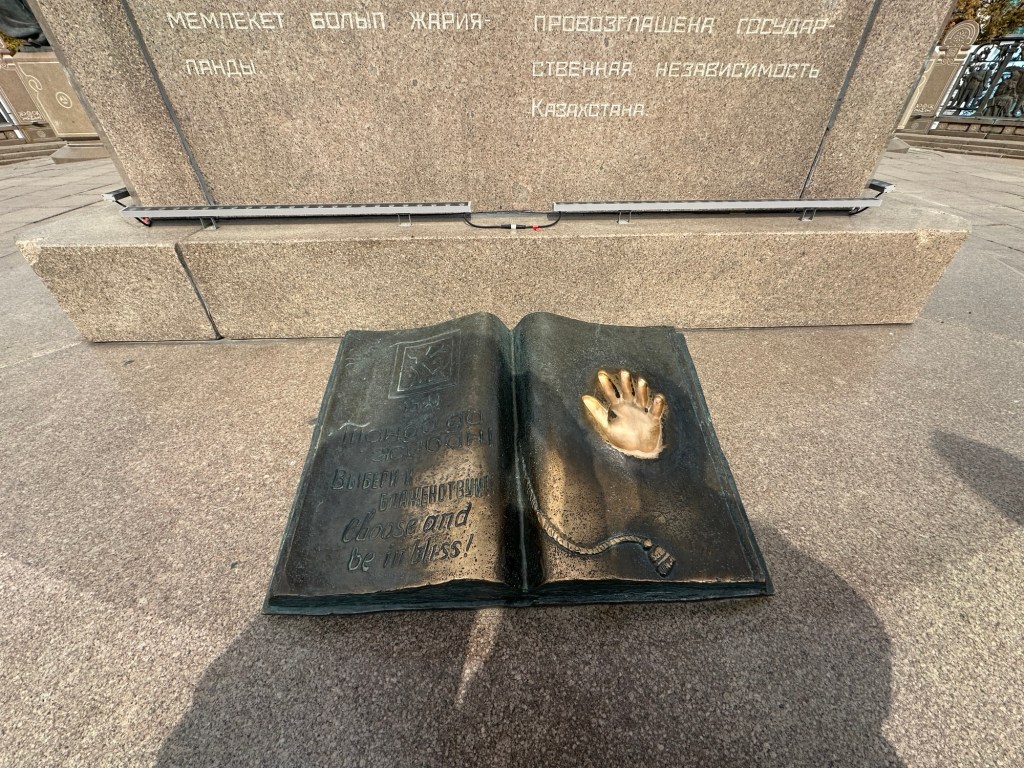
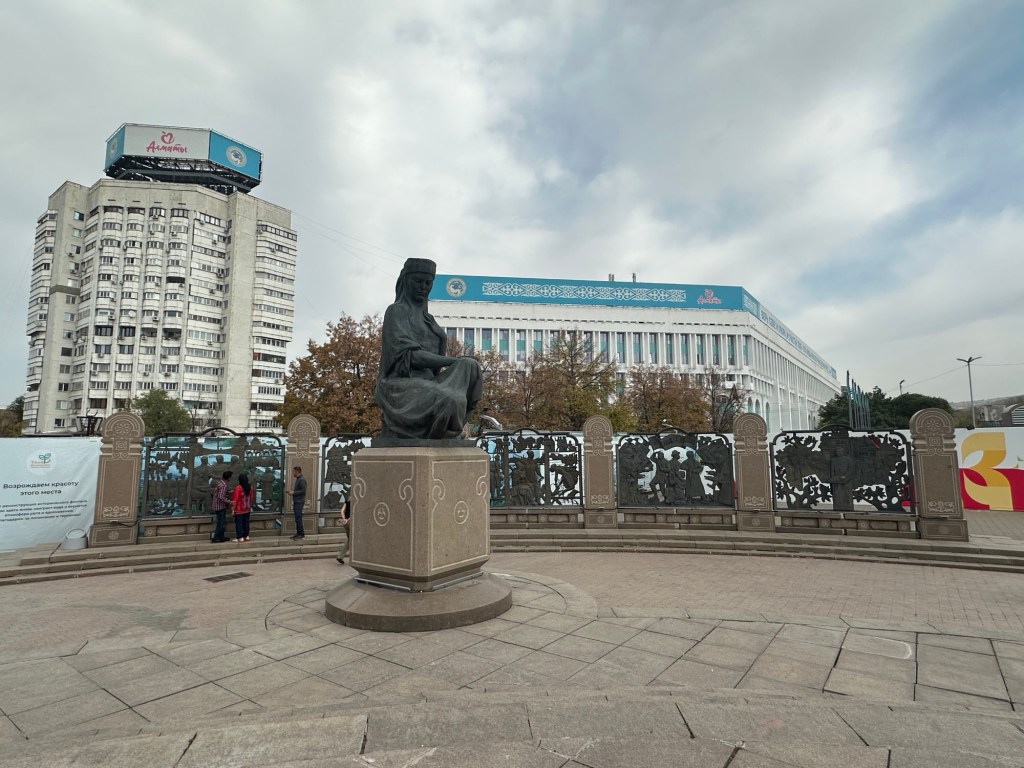
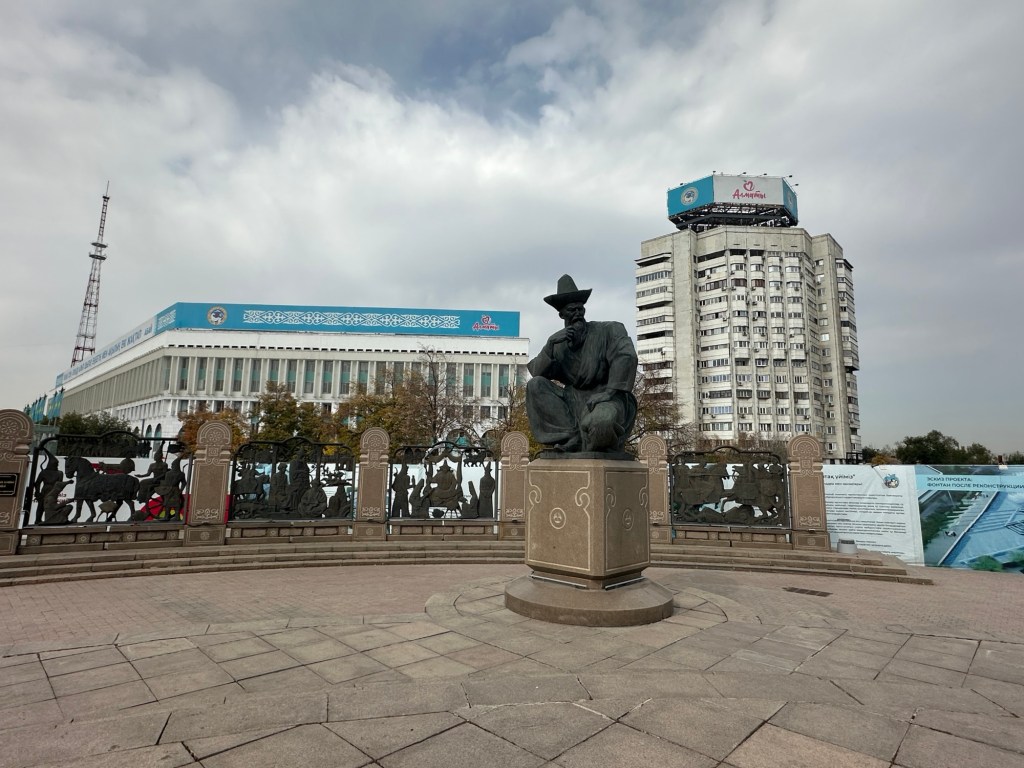
The Monument of Independence or the Golden Warrior Monument is located in the Republic Square of Almaty. It has become the main square of the capital of Kazakhstan and until the collapse of the Soviet Union it was a place for mass demonstrations, celebrations, festivals, military parades, rallies, and festivals.
Because we had a bit of spare time, we had an hour to look around a shopping mall – very modern with all western style clothes, but in a winter range. No good for us going back to an Australian summer! I did manage to find a nice skirt – where there’s a will there’s a way! It’s always nice to get something to remember Almaty by.
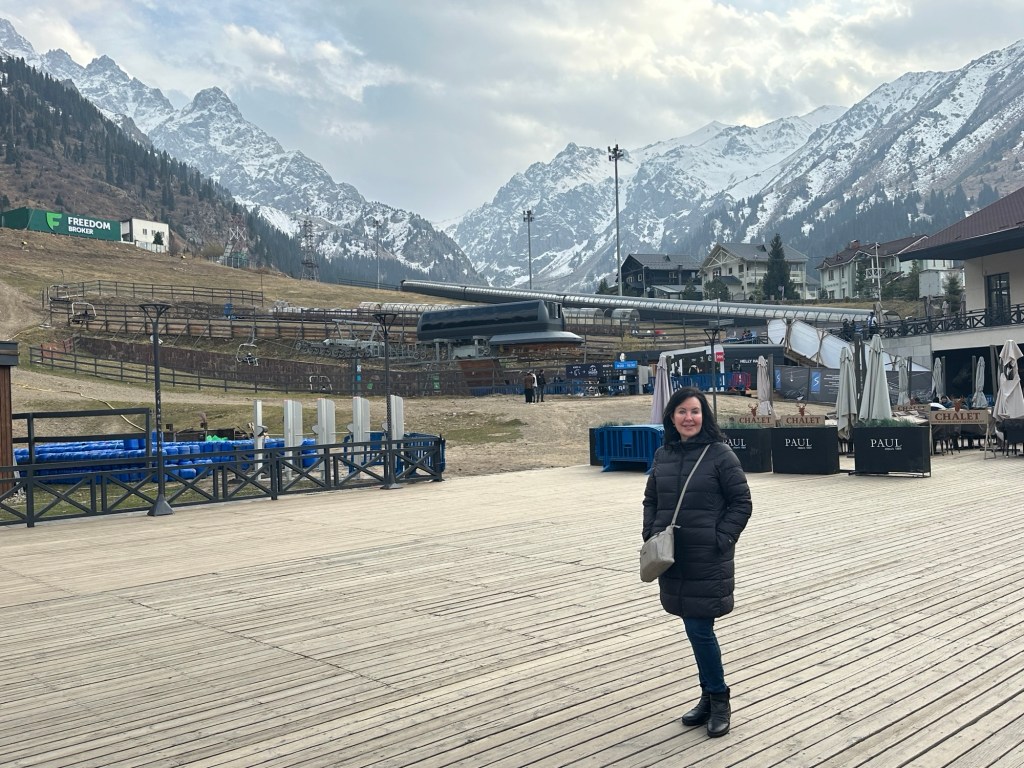
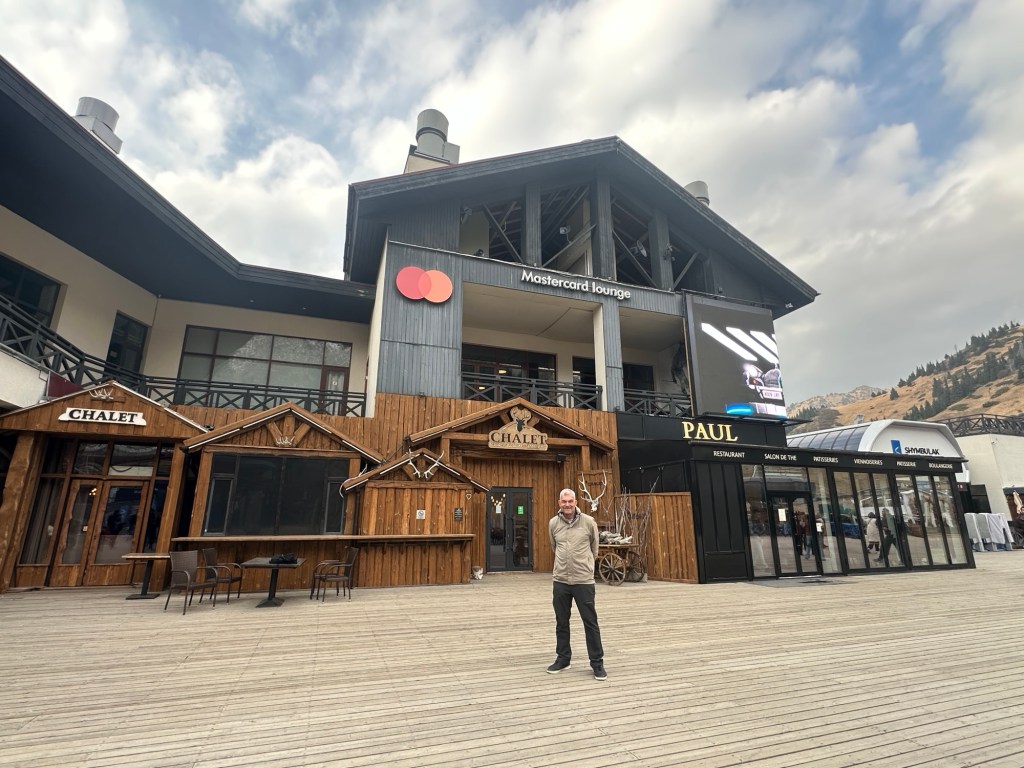
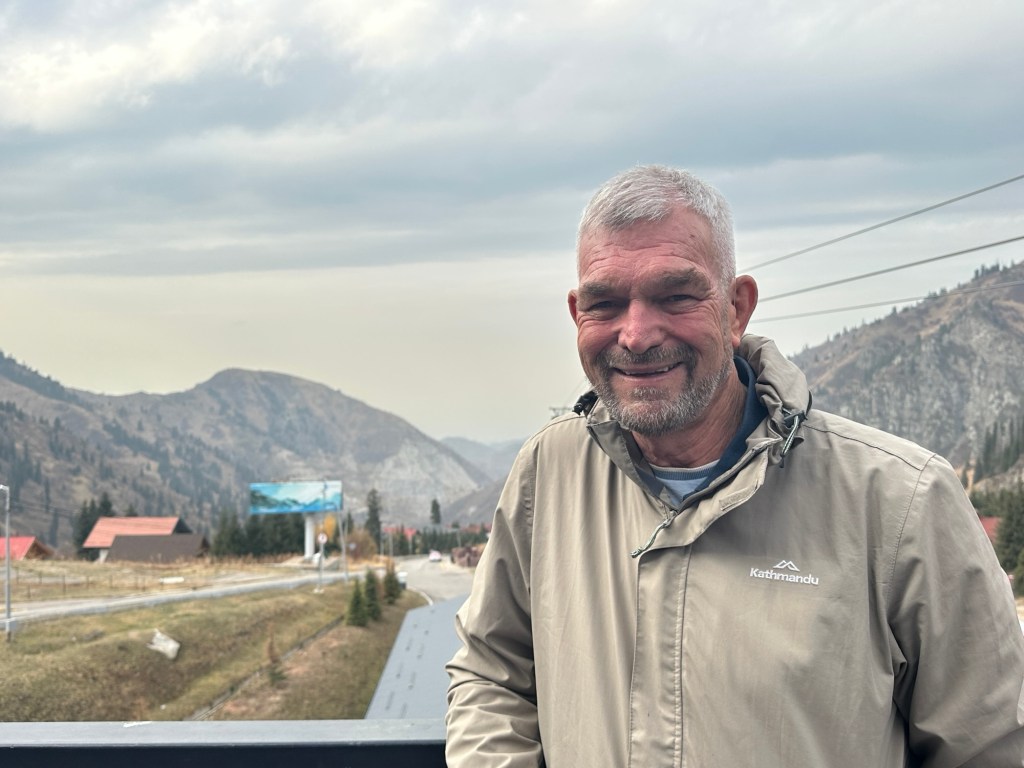
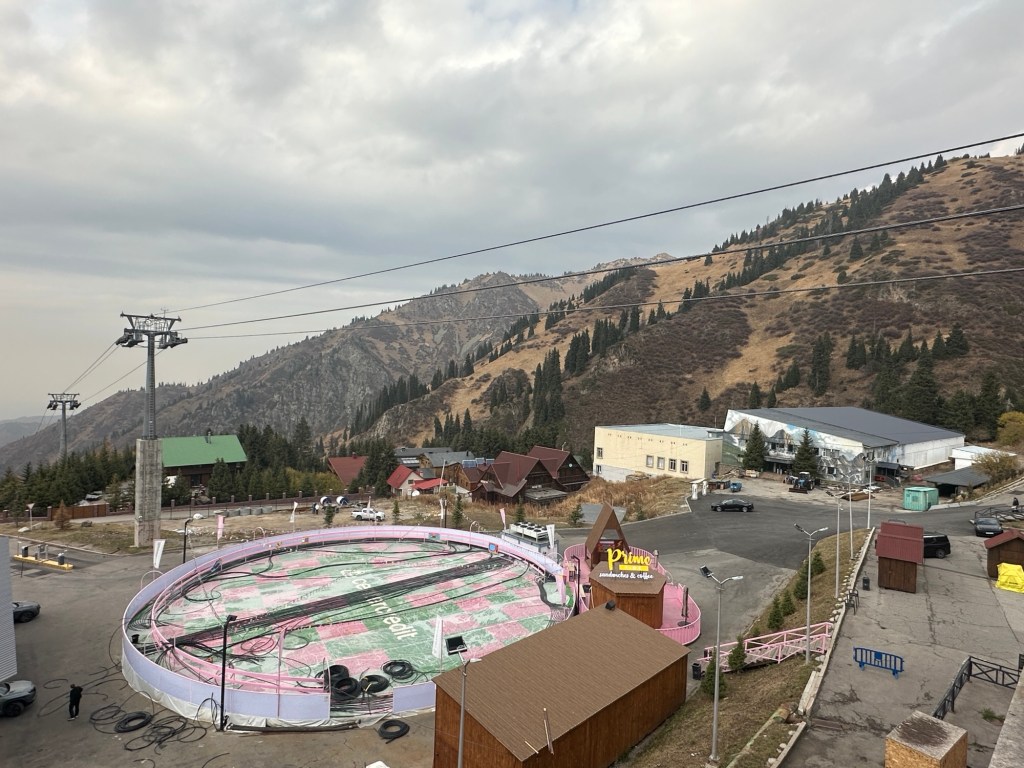
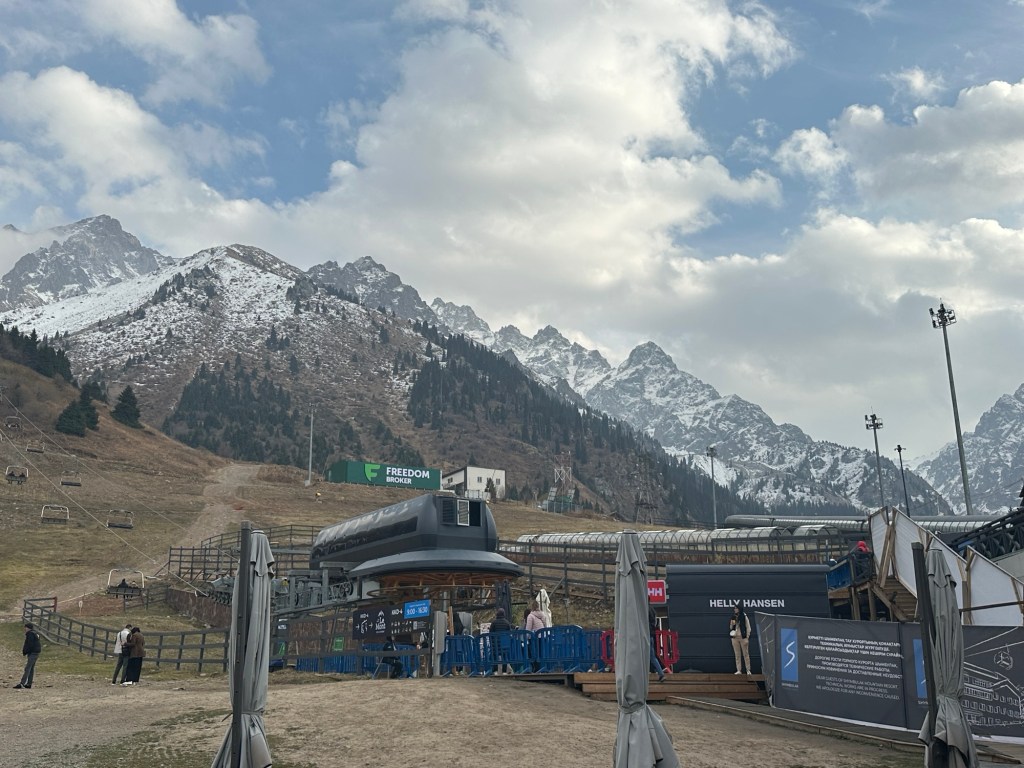
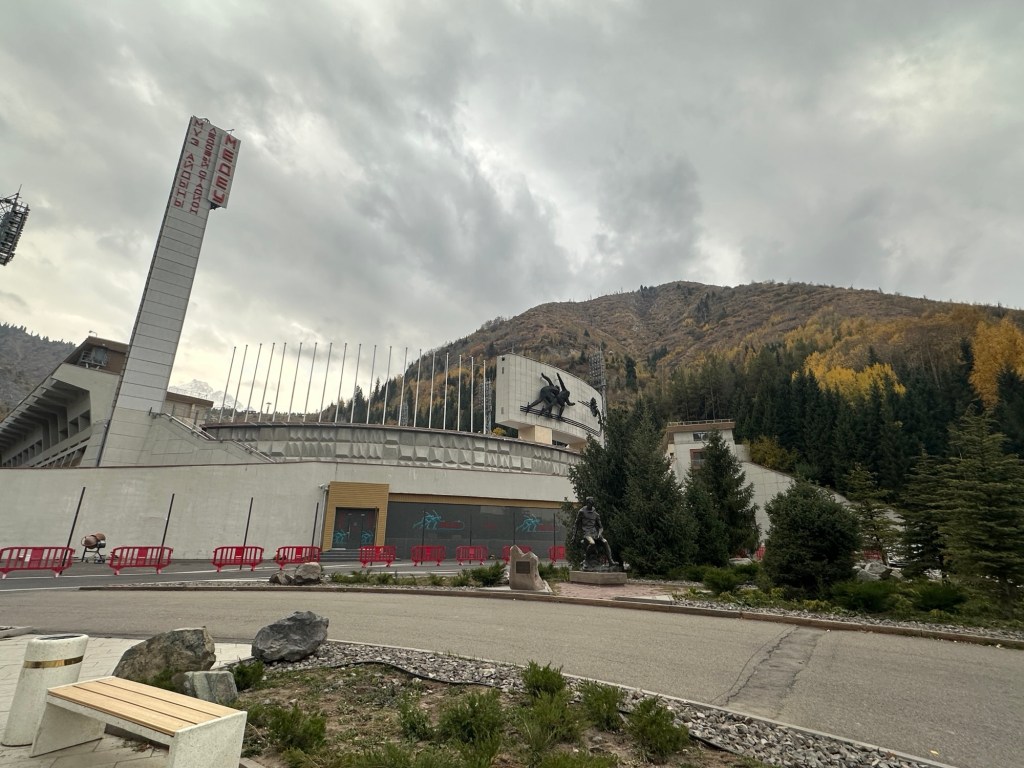
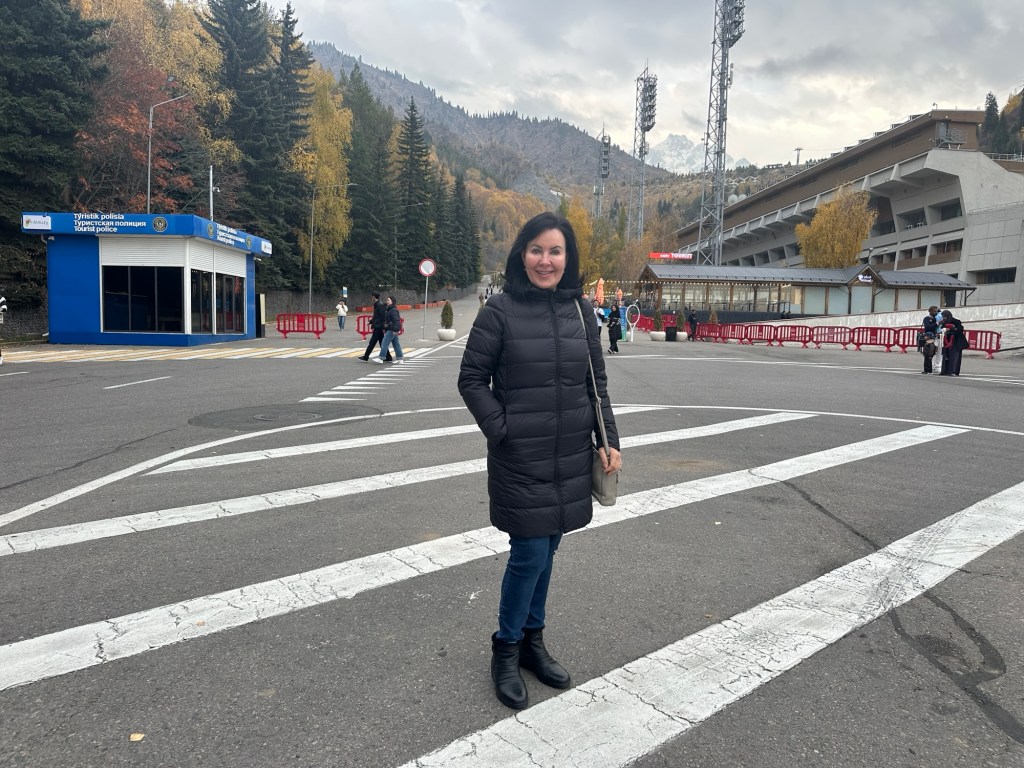
A nice lunch, then a short drive to Shymbulak, the largest ski resort in Central Asia. It is located in the upper part of the Medeu Valley in the Zaillisky Alatau mountain range, at an elevation of 2,200 metres above sea level. The chairlift wasn’t working, so we went by taxi to the top of the lift. Some lovely lodges there. A cool 8 degrees at the top! The Medeu skate rink is at the base of the mountain resort, but currently under renovation. It is the highest skating rink in the world.
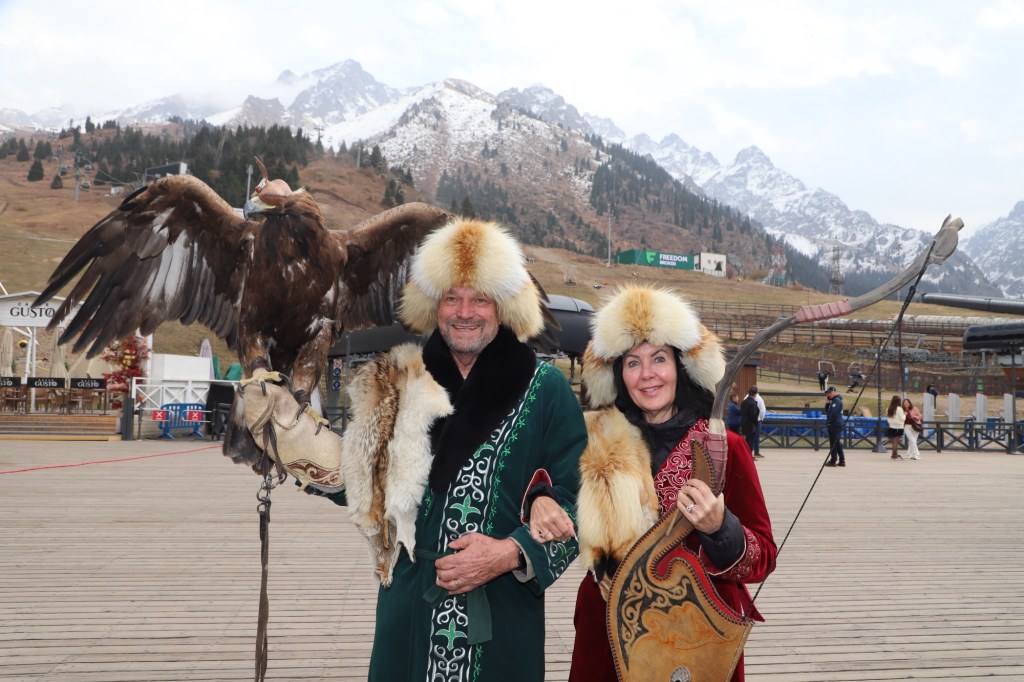
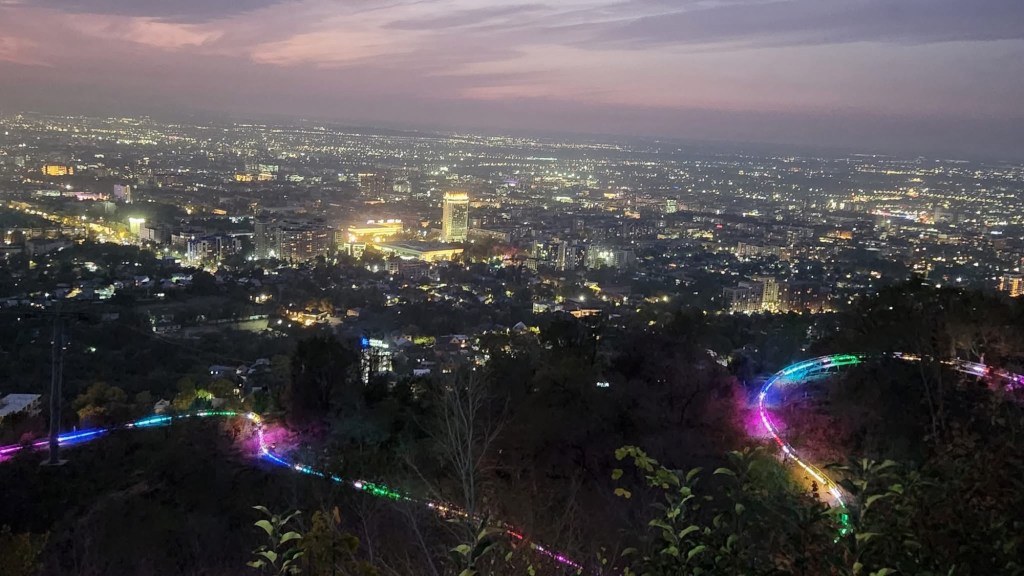
Onto our final stop for the day, was a cable car ride to Kok Tobe. It is the highest point in the city of Almaty standing on a 1100 m hill at the south-east edge of the city – a fabulous panoramic view of the city from the top. Some amusement rides to entertain the adventurous, plus sone souvenir shops for the shoppers.
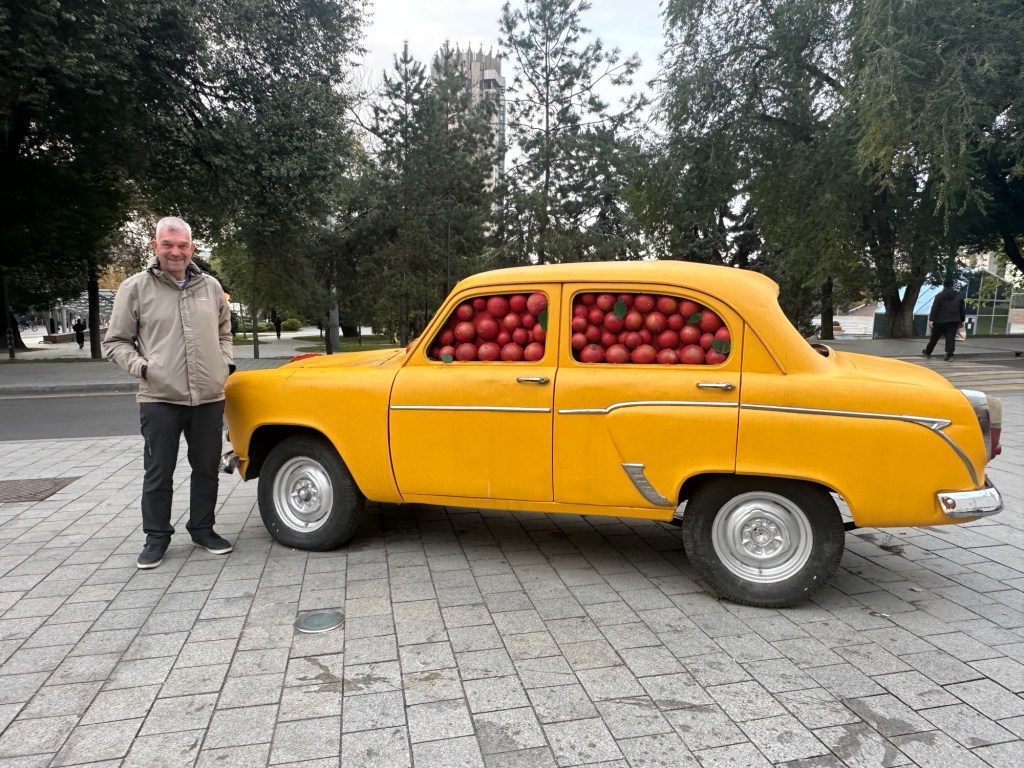
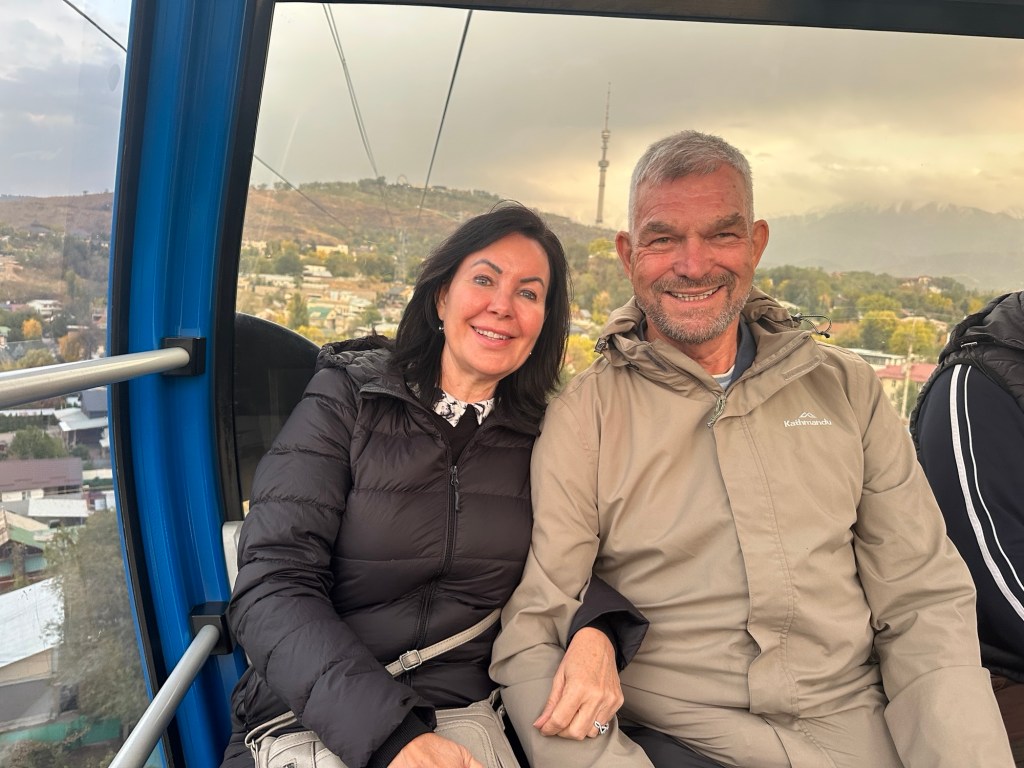
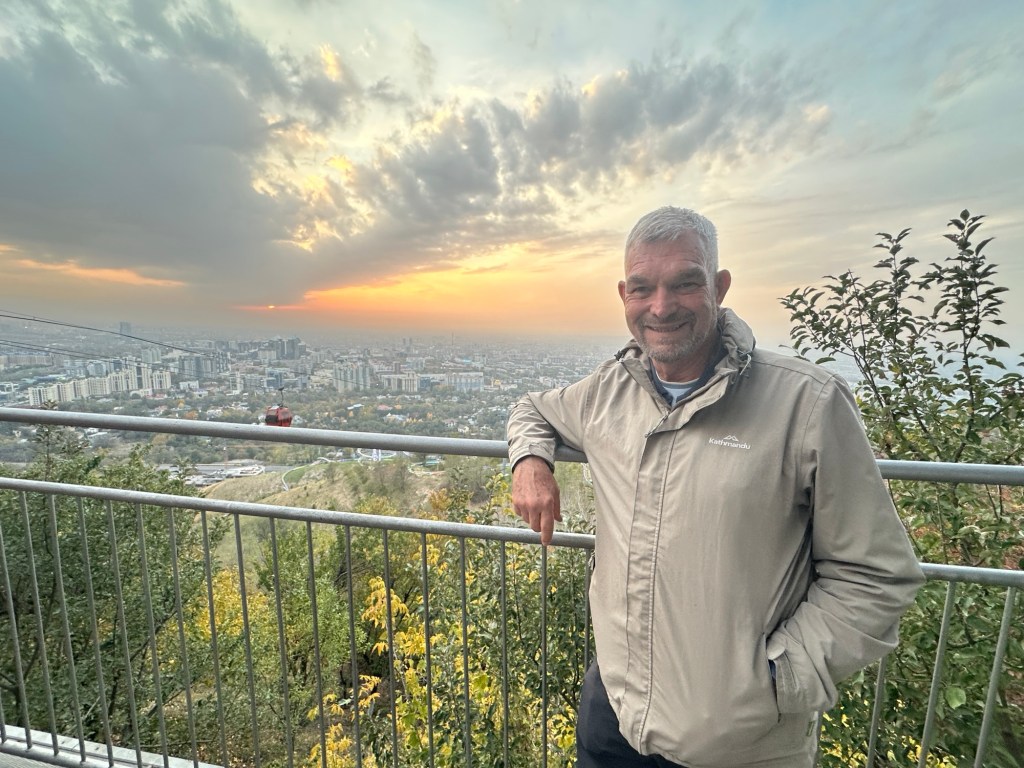

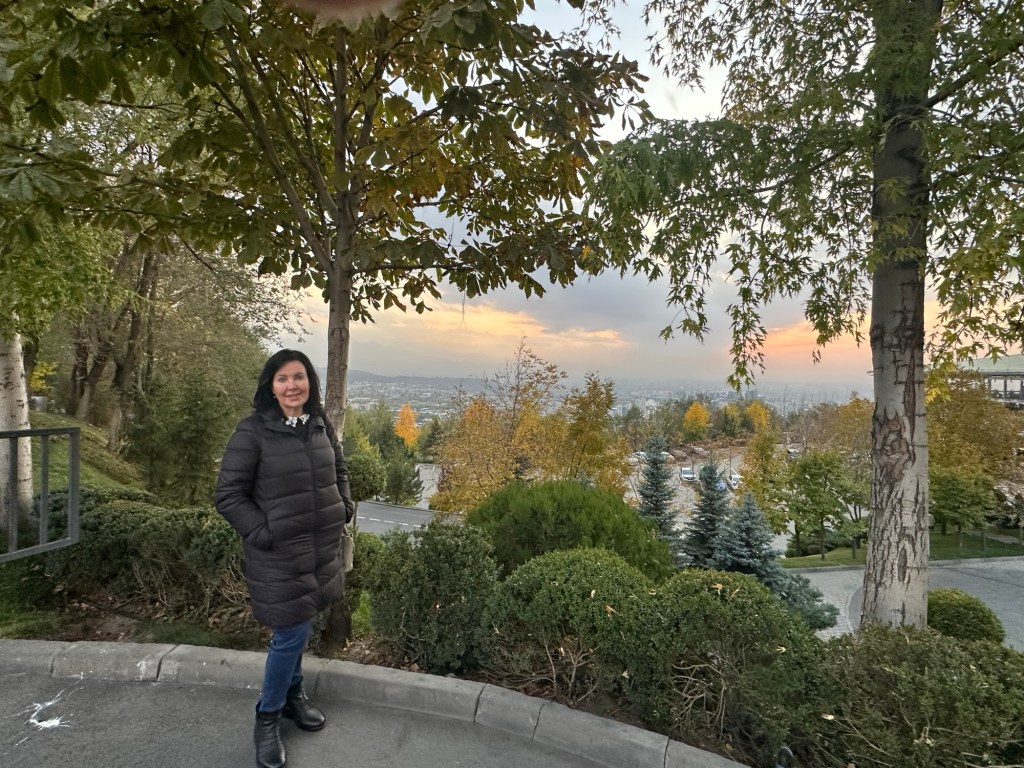
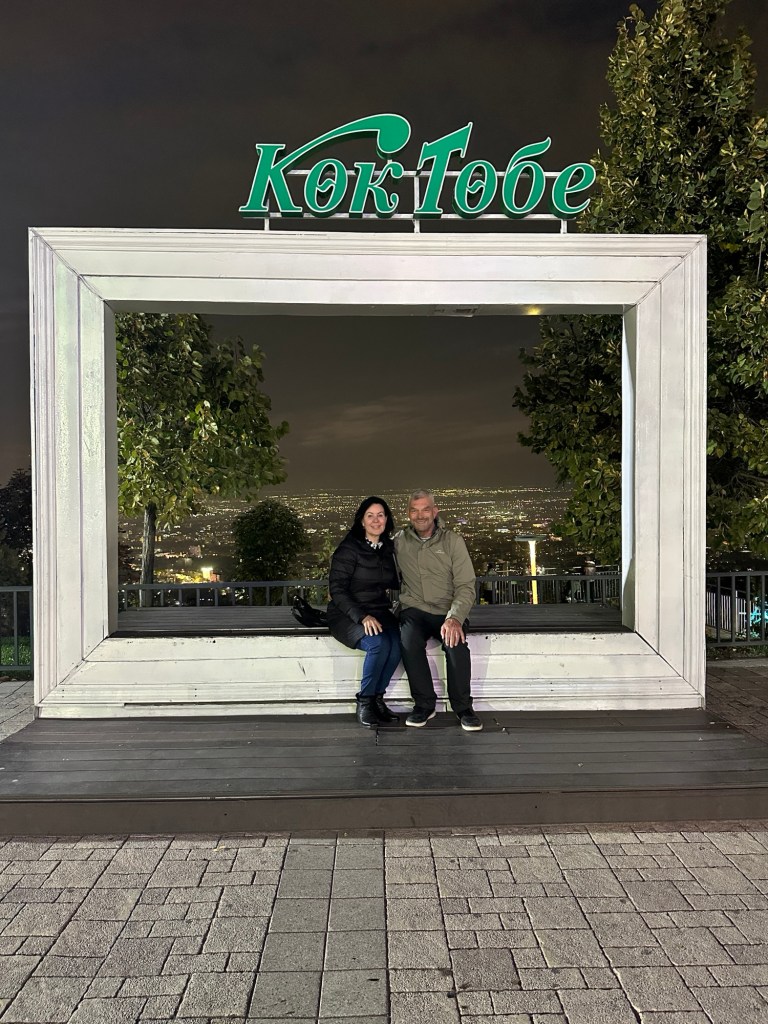
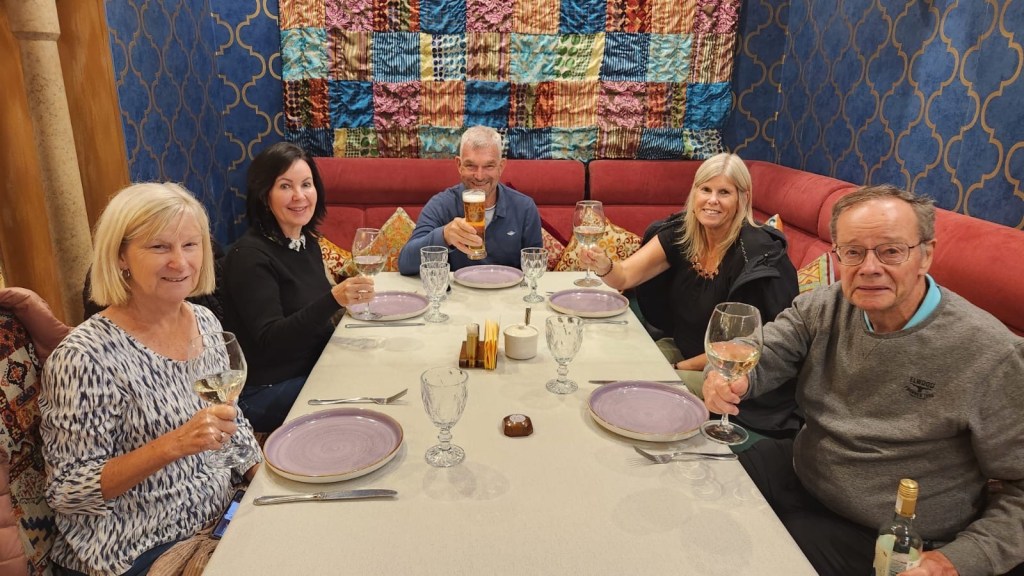
Once safely down, we enjoyed our last dinner with our travel companions. Ernist had chosen a lovely middle eastern restaurant where we enjoyed delicious meals. It was sad to say goodbye to Heidi, Robert and Leanne- we had shared some great experiences and many funny stories in the past 33 days.
Day 34
Tuesday 14th October
Almaty to Istanbul
5-15 degrees, sunny
Picked up at 6am to transfer to the airport, with a straight forward check in. Almaty is a small airport so easy to find your way around.
Interesting things about Kazakhstan
Population is 21 million
Religion- 70% Muslim, the remainder is a combination of Russian/Eastern Orthodox, and Korean. It is quite a multicultural country.
Currency is the tenget 349 to $1AUD
Cars – all sorts of cars available, a lot of Chinese cars
Food – plov continues to be popular, the Kazakhs eat a lot more meat ( beef and lamb). The meat on the bones, and potatoes dish, was on every menu. Alcohol more readily available in Almaty.
Our time on the Silk Road has come to an end – what an experience it has been! A trip definitely not for the faint hearted I would have to say. Whilst we stayed in some luxurious hotels, the yurts were very basic… but you couldn’t not stay in one of those whilst travelling this historic route. The drives on the roughest of roads were long- but we did get free back massages! The history we learnt of these ancient civilisations was fascinating. The food could be challenging at times, made more so because of the associated language barrier- but that always adds to the travel experience. Overwhelmingly, the people of Central Asia, have been friendly, so respectful to us and each other, and very kind. That to me is what has stood out the most.
 Glammy Goes Global