
Day 25
Sunday 5th October
Khujand to Margilan
12 – 22 degrees, sunny
The Tajikistan / Uzbekistan (Parar/Andarkhan) border was relatively easy to get through- much shorter walking distance. Ali, our new guide was waiting for us.
We are now in the Fergana Valley region of Uzbekistan. The valley played a key role in the opening of the Silk Road. Its famed “blood-sweating” horses (believed by the Chinese to be descended from dragons) were in such demand that China forced open the first transcontinental trade routes specifically to gain a supply of the steeds and thus a technical advantage over its marauding nomadic neighbours. The horse trade remained central to the Silk Road long after the secret of silk production had spread to the west.
We stop at Kokand in the west of the Fergana Valley region. The Khanate of Kokand was long Central Asia’s third regional centre of power, for centuries jostling for regional dominance with Bukhara and Khiva, until the arrival of the Russians forced the three khanates into irrelevance.
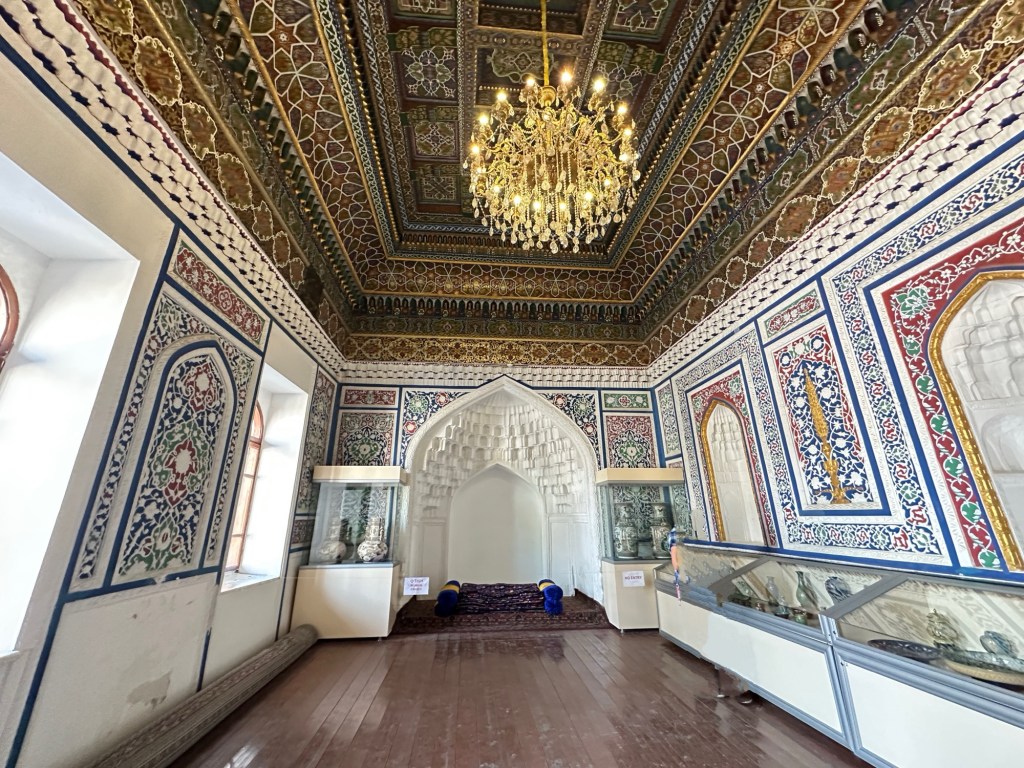
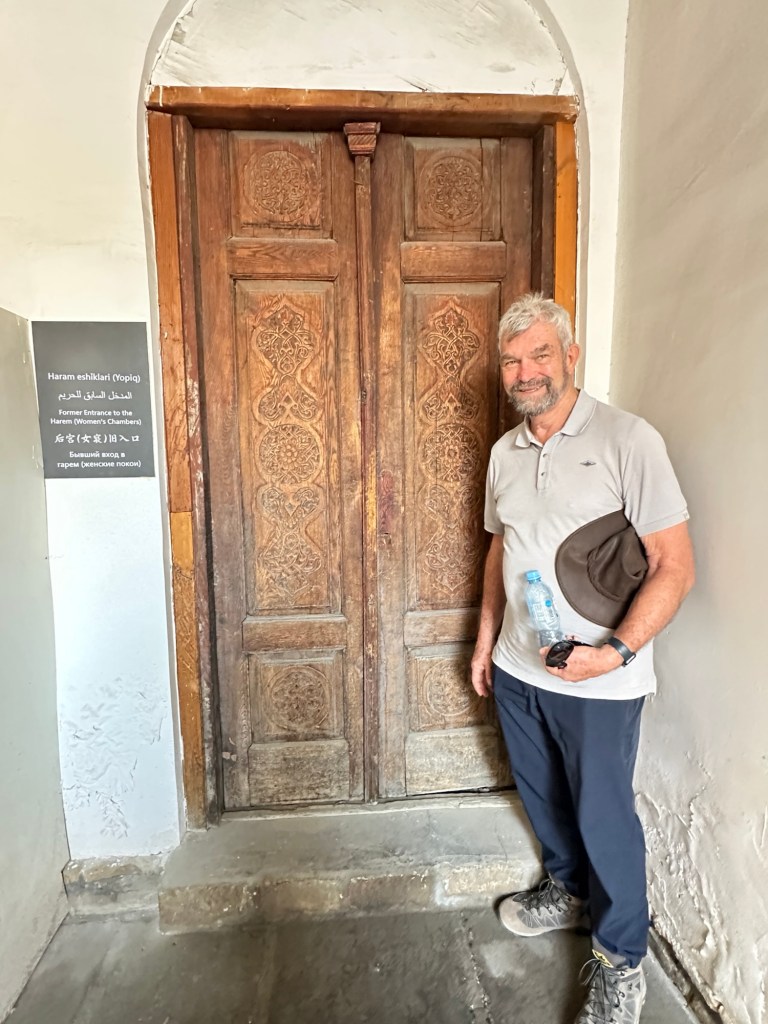
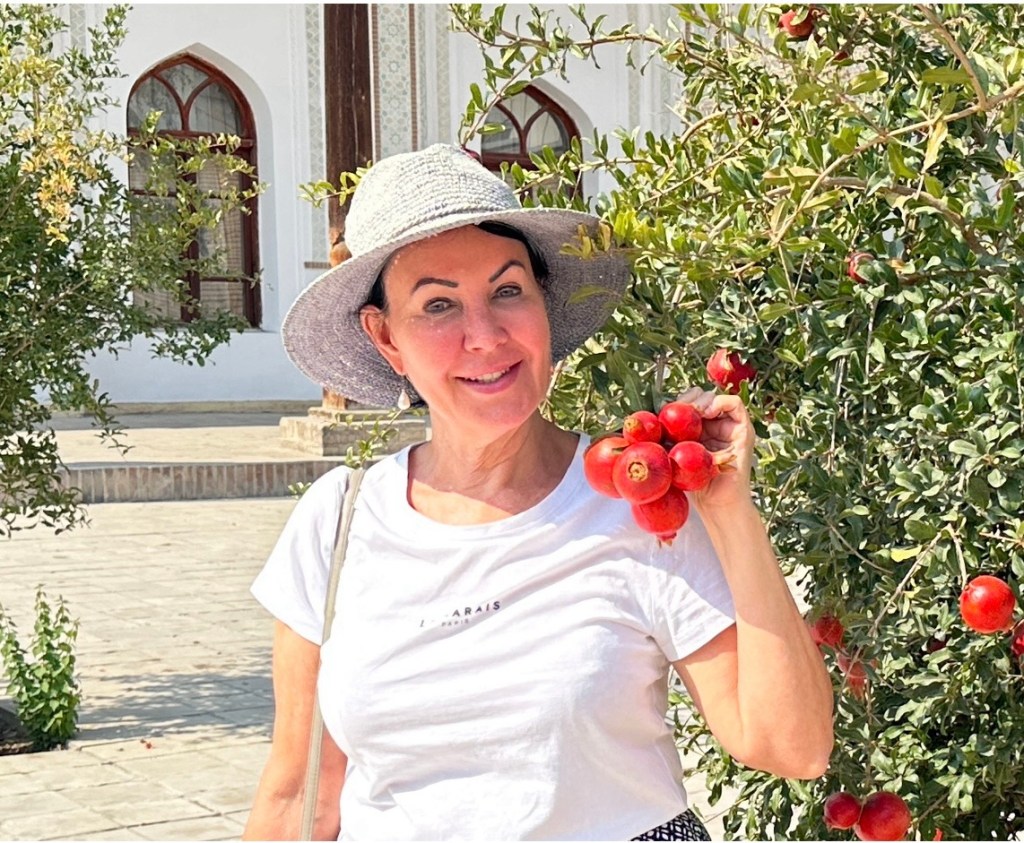
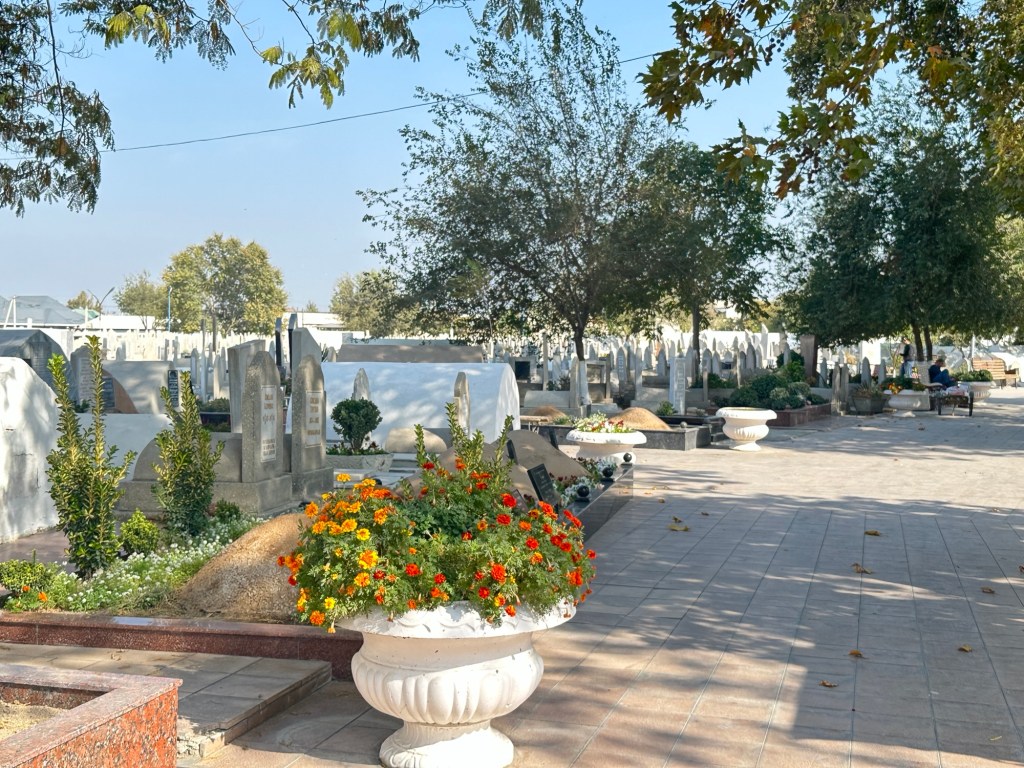
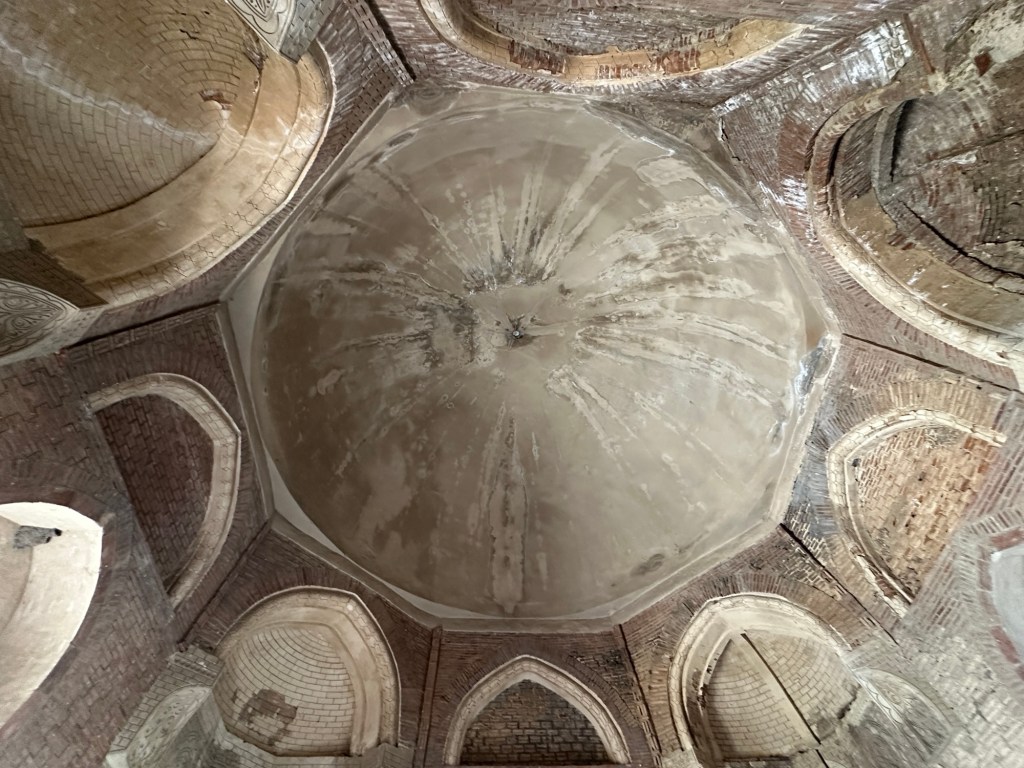
We stop at the Palace of Khudayar Khan (built 1862-72). Only 19 opulent rooms survive from the original 113 rooms- the Soviets burned the palace when they occupied Uzbekistan in 1918.
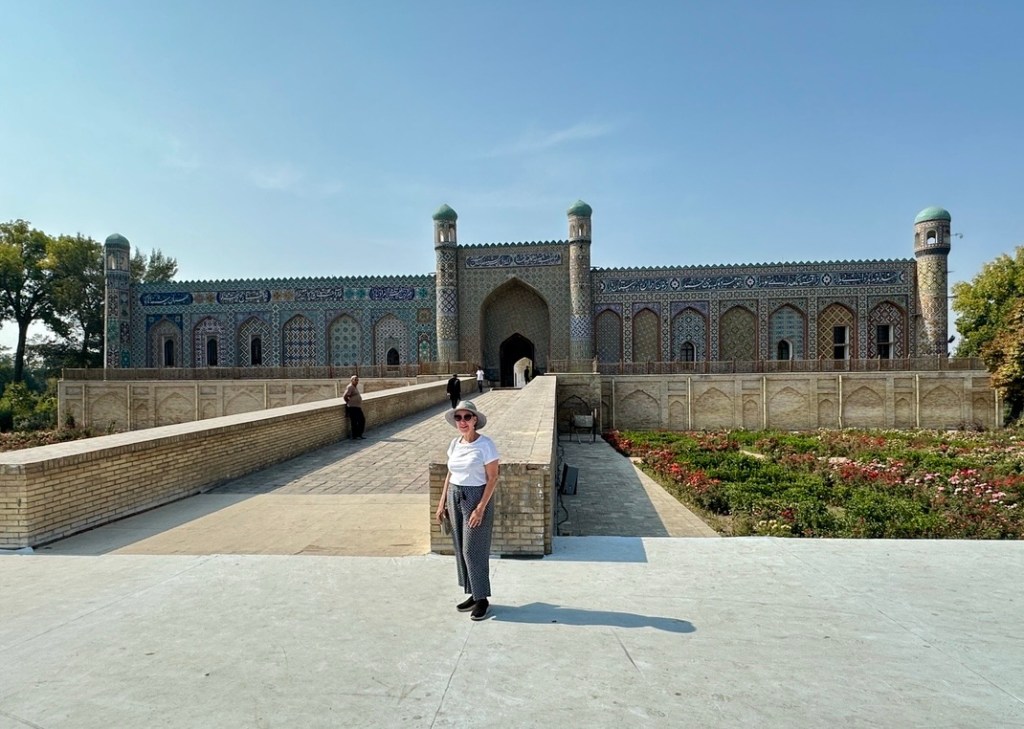
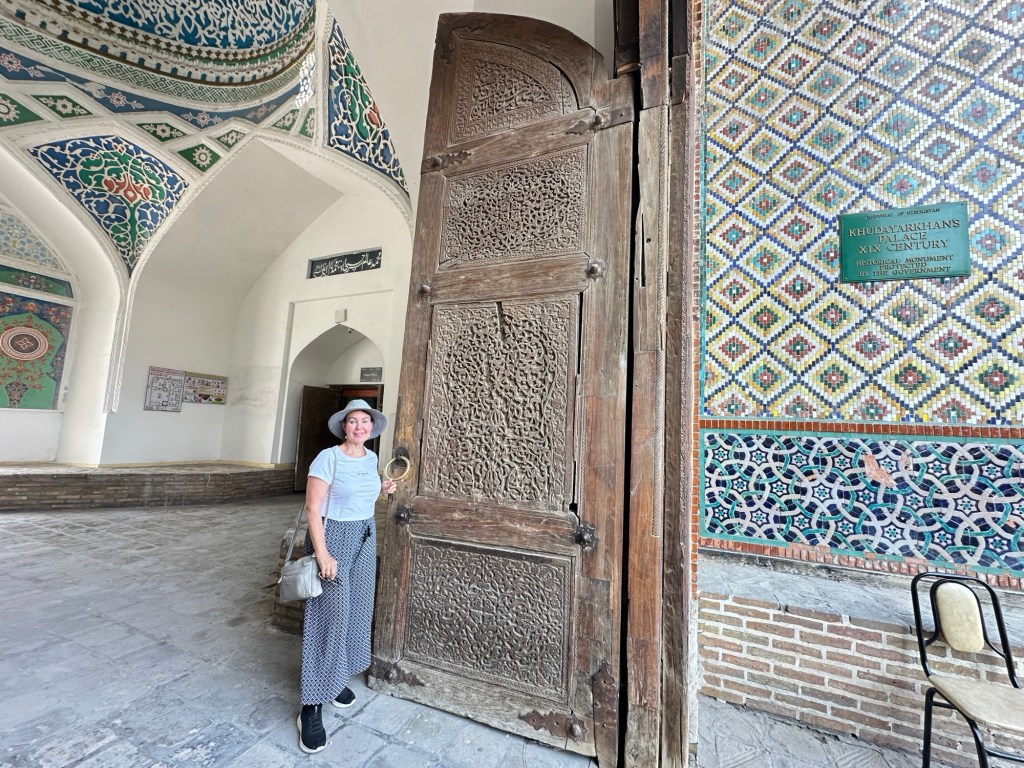
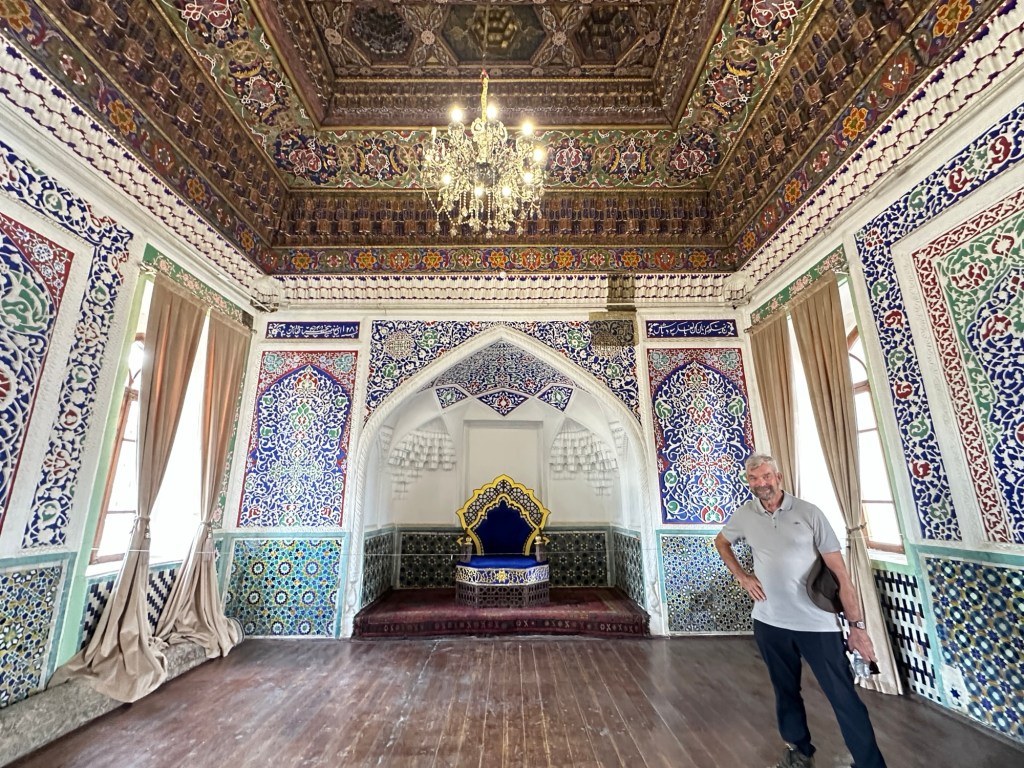
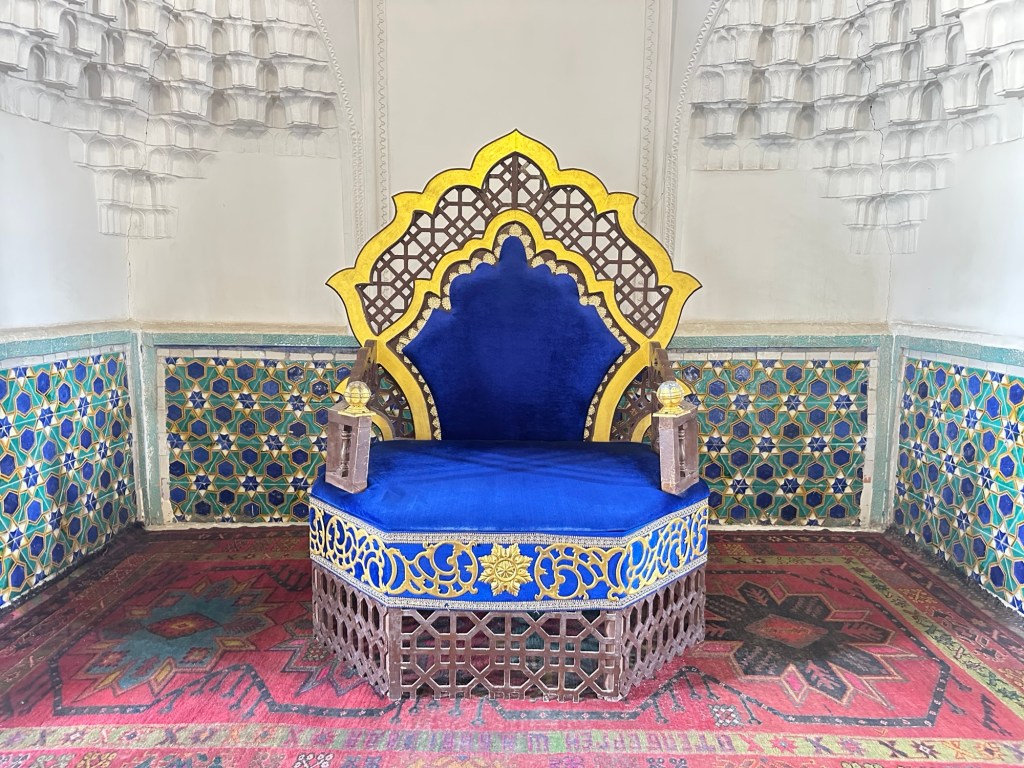

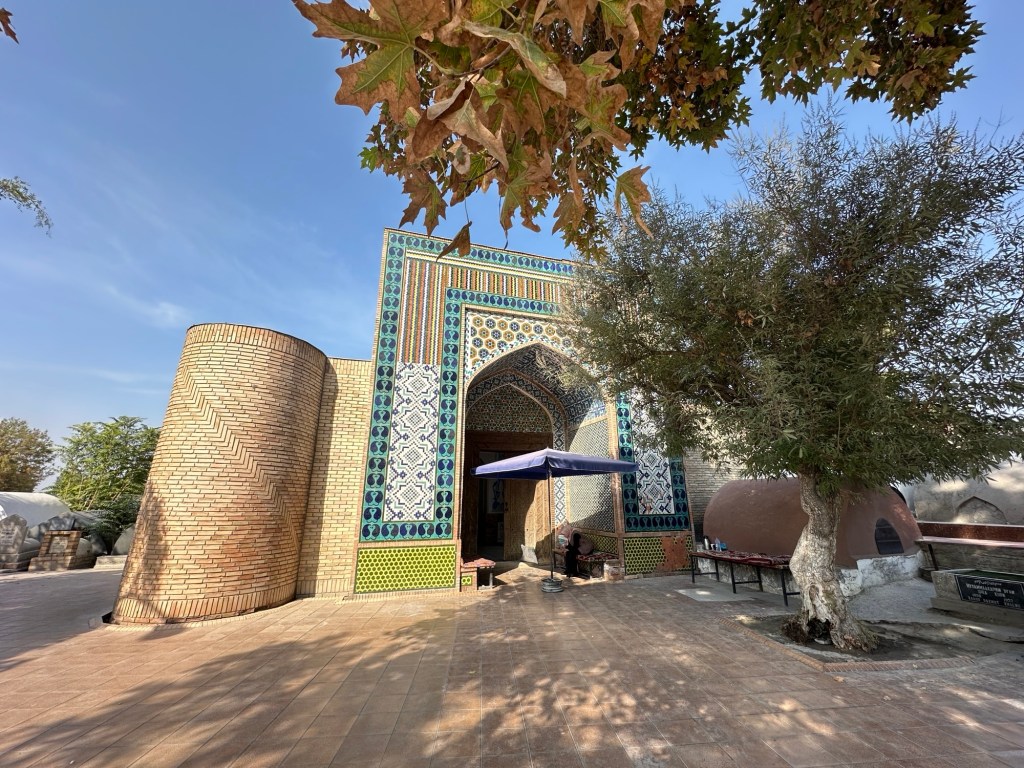
Another stop at Dahmai Shahon (Grave of Kings). Here are housed the tombs of Kokandi Khan Omar, his mother and his wife.
Lunch today was a delicious chickpea and vegetable soup with freshly baked bread.
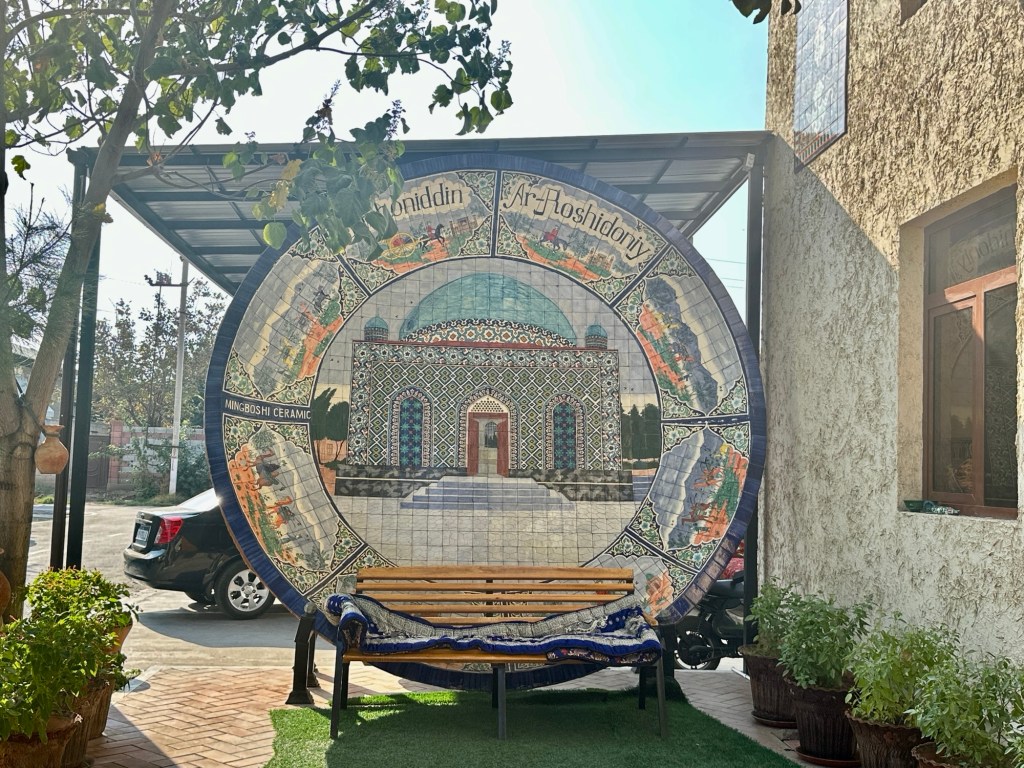
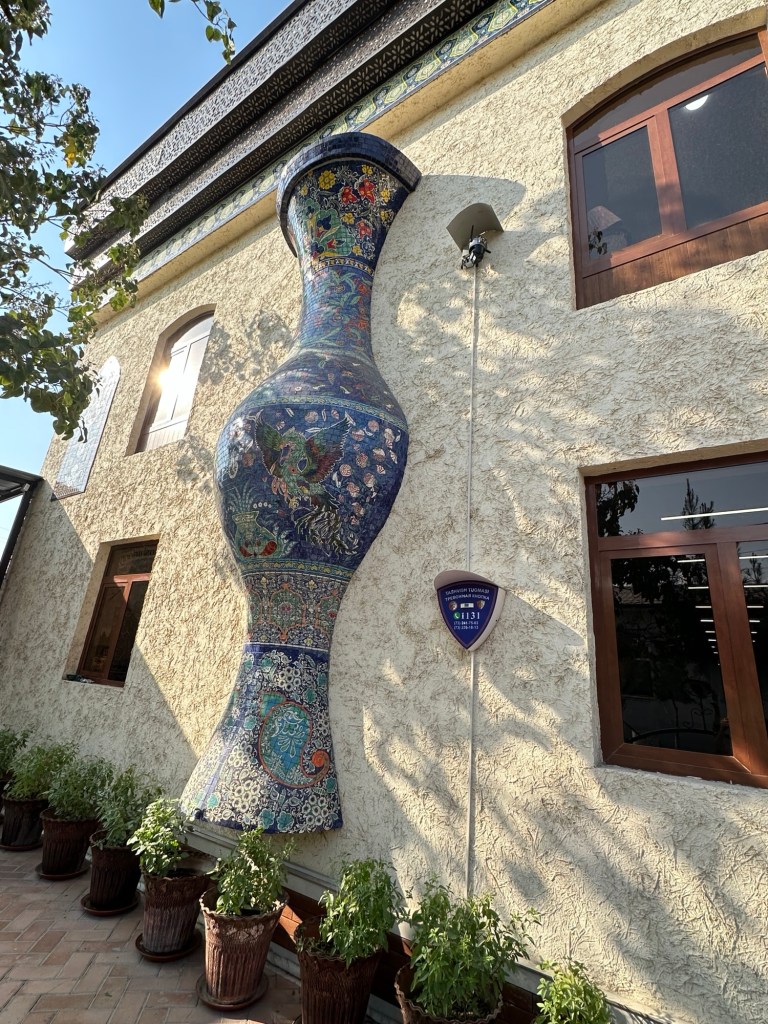
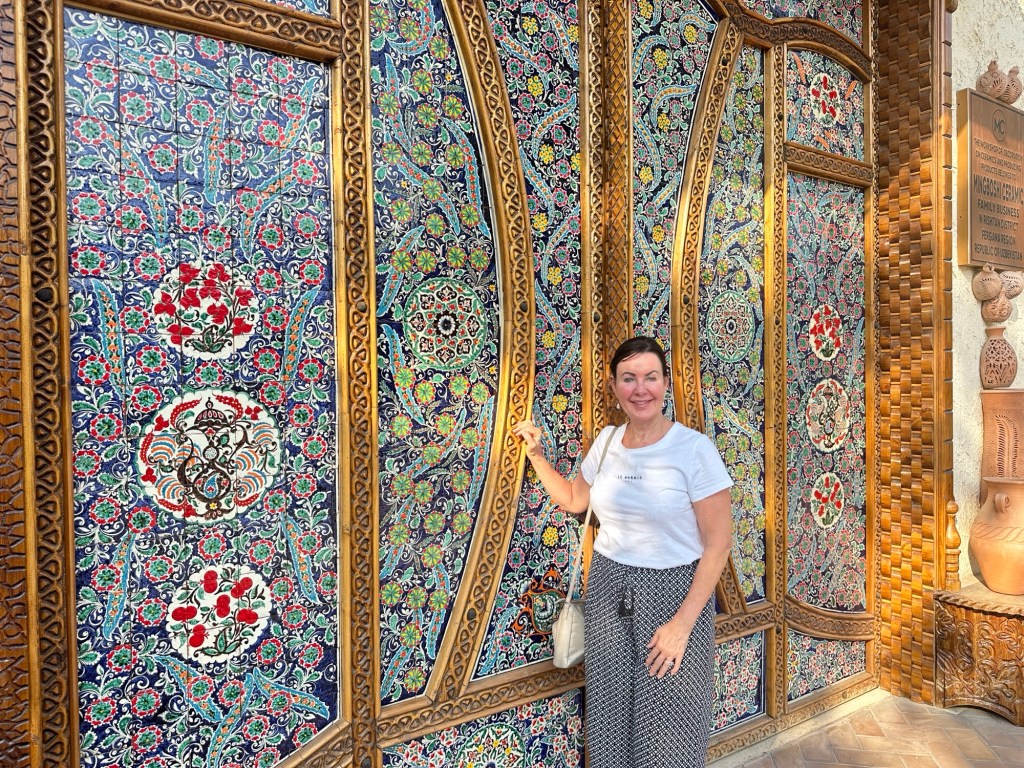
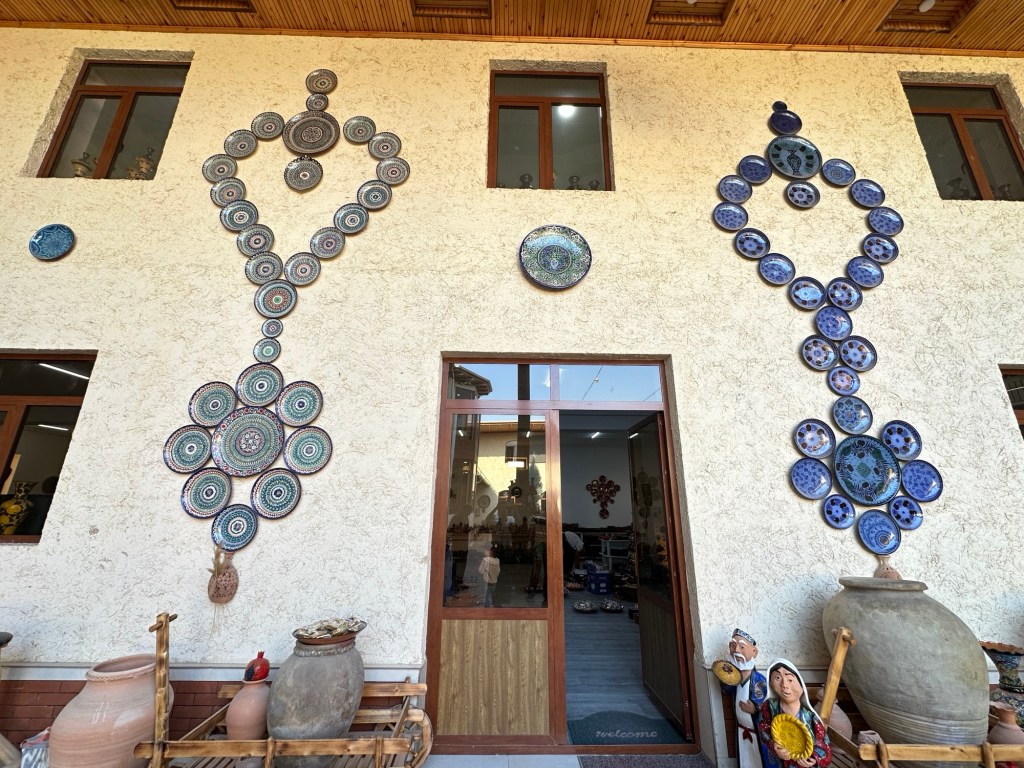
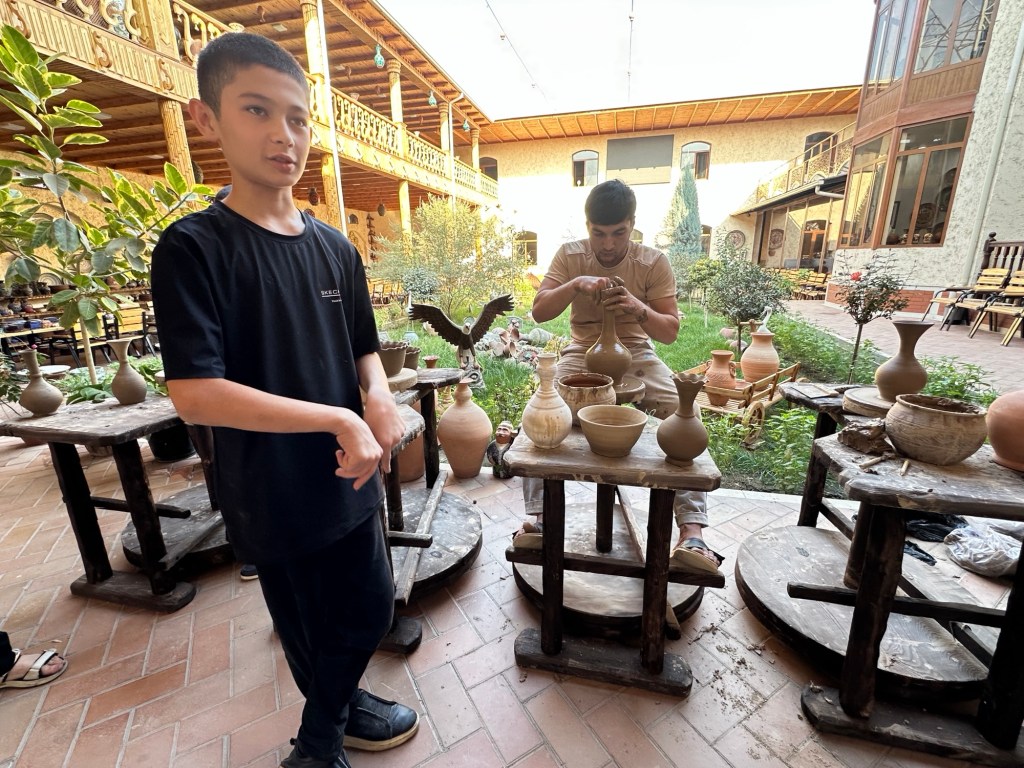
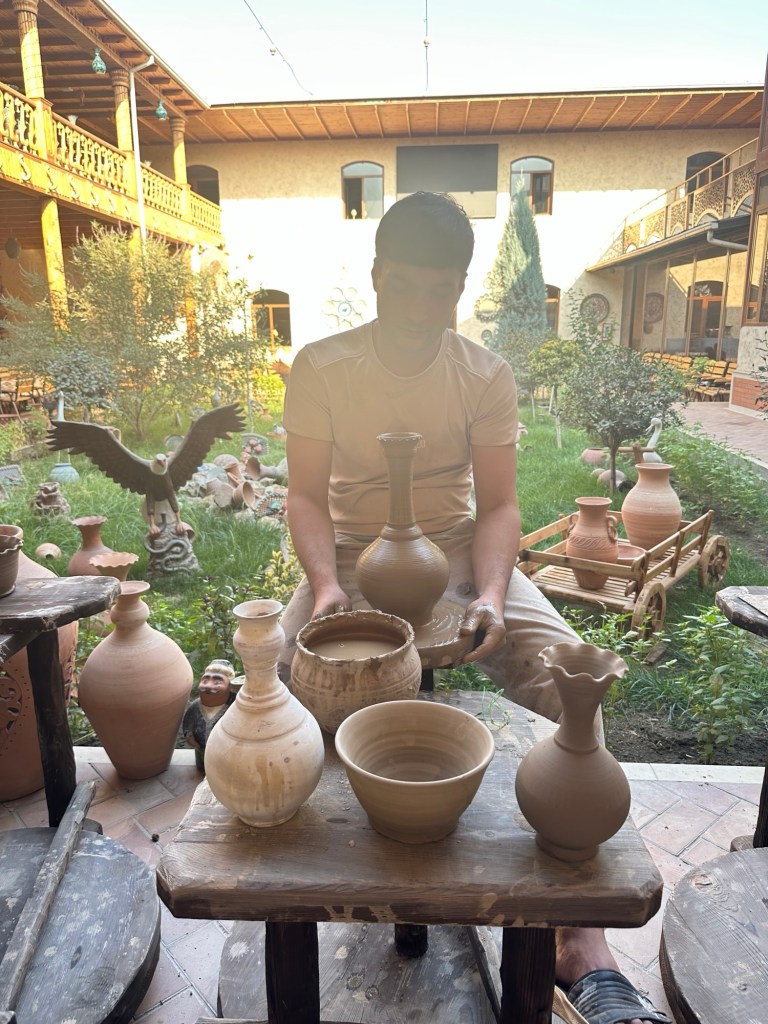
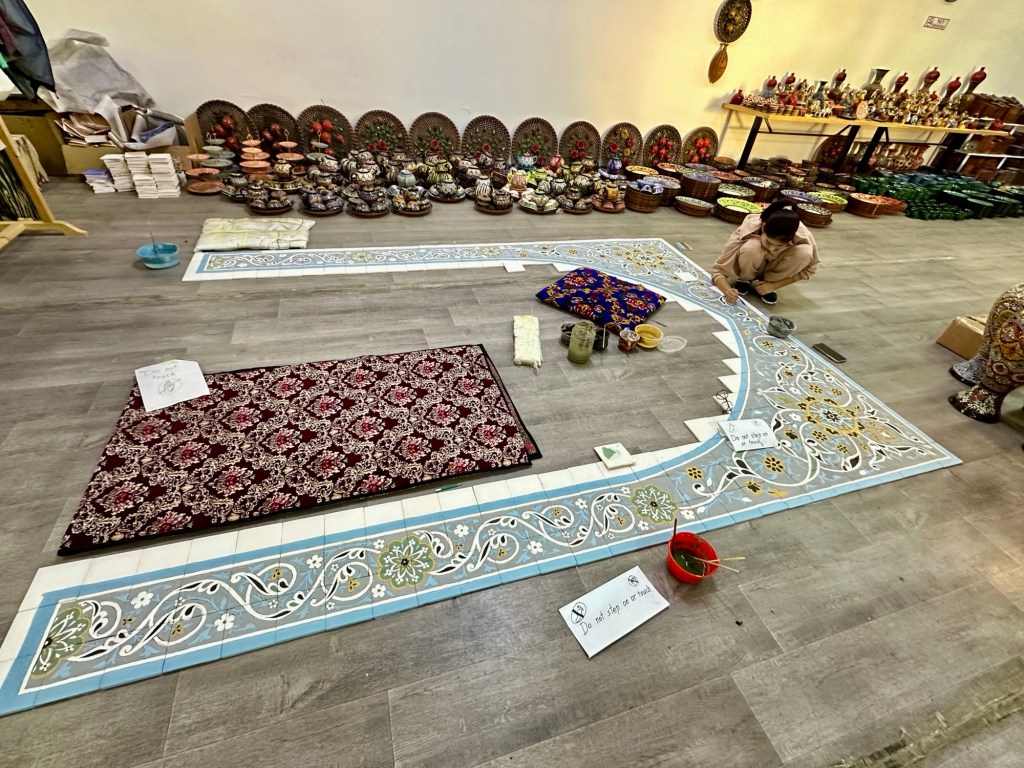
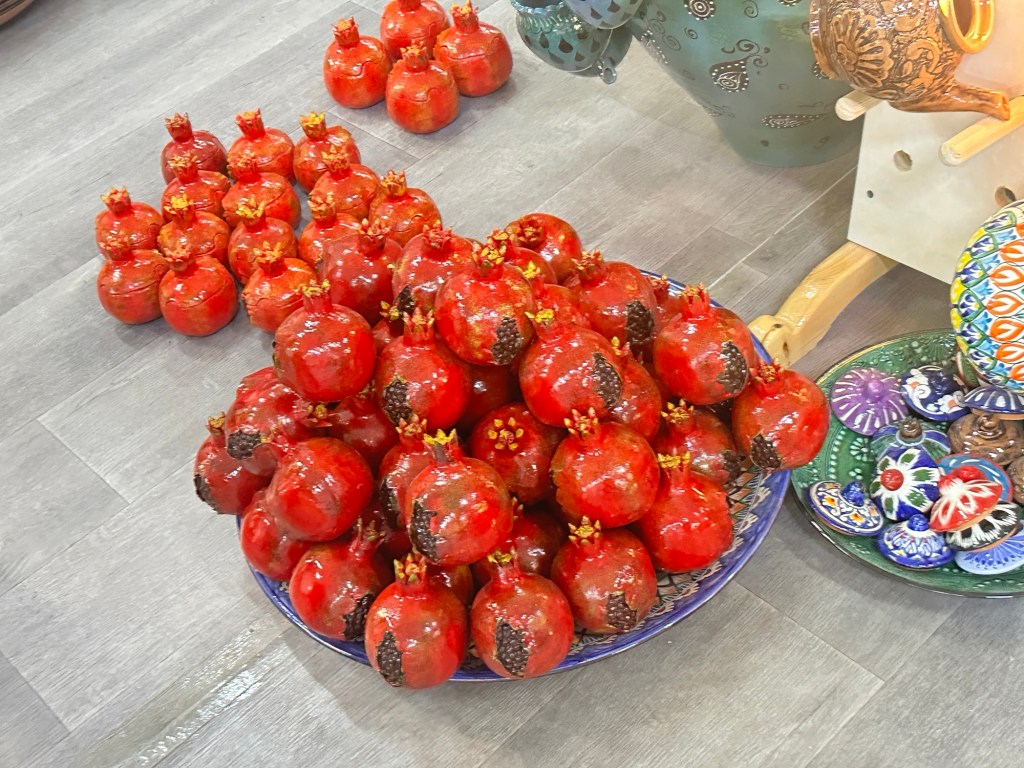
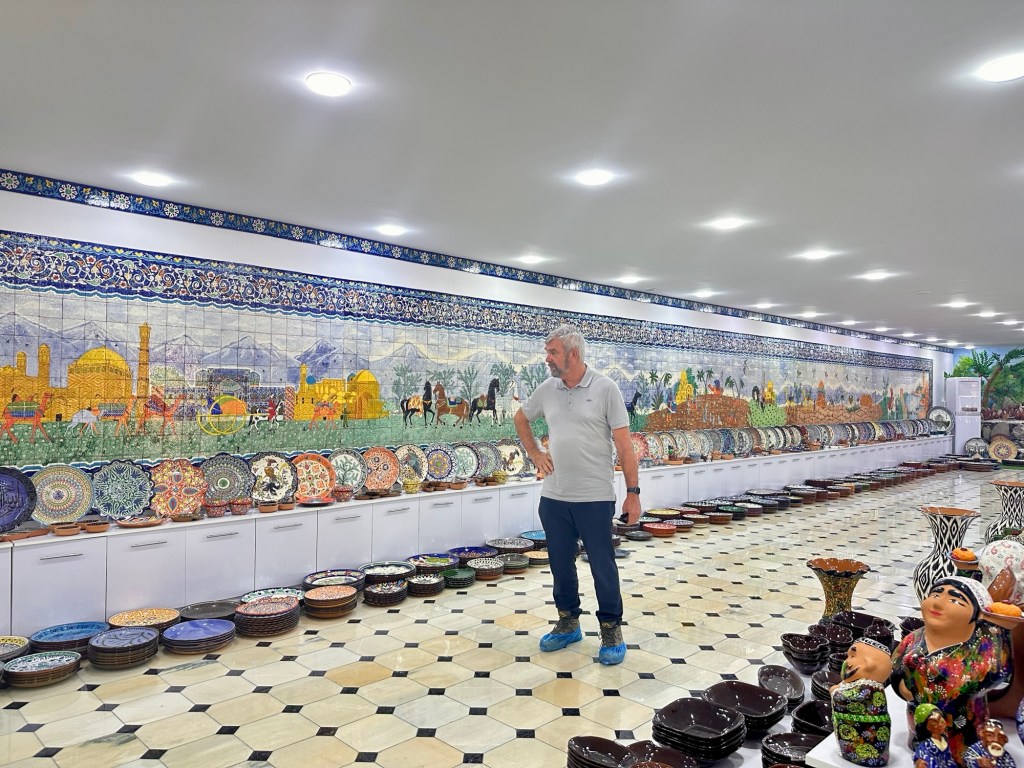
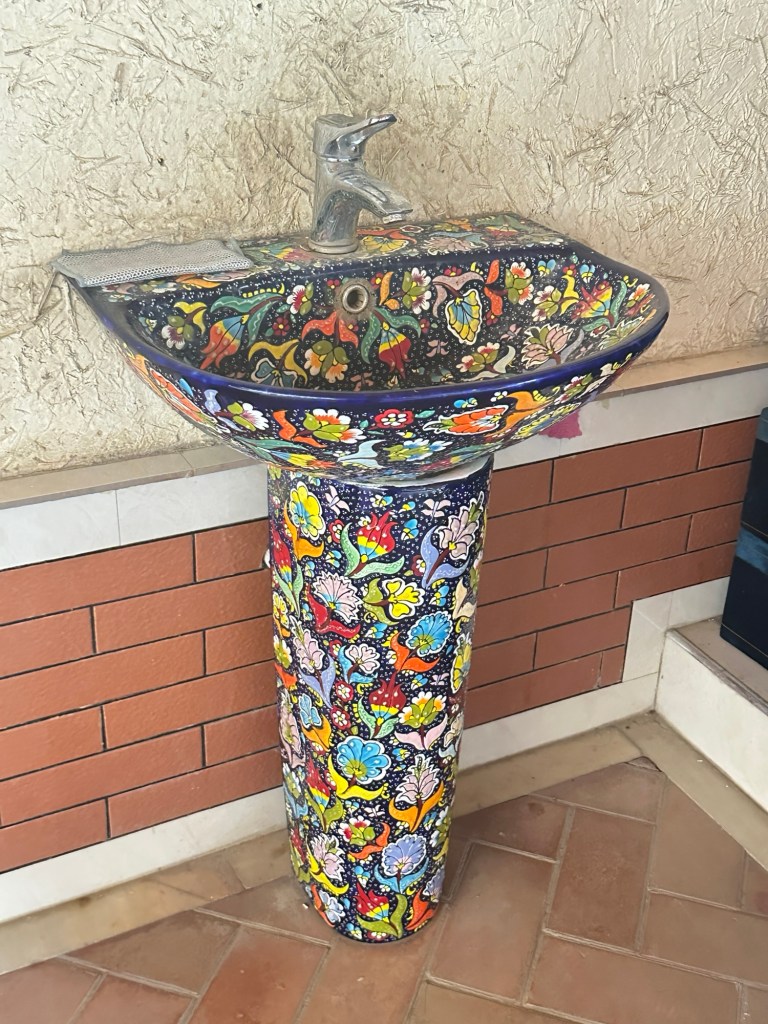
Next stop, Rishtan, where we visited a ceramist’s family workshop. We had a lovely presentation of the ceramic making process by the twelve year old son who wanted to practice his English – he was fourth generation. He did a fabulous job.
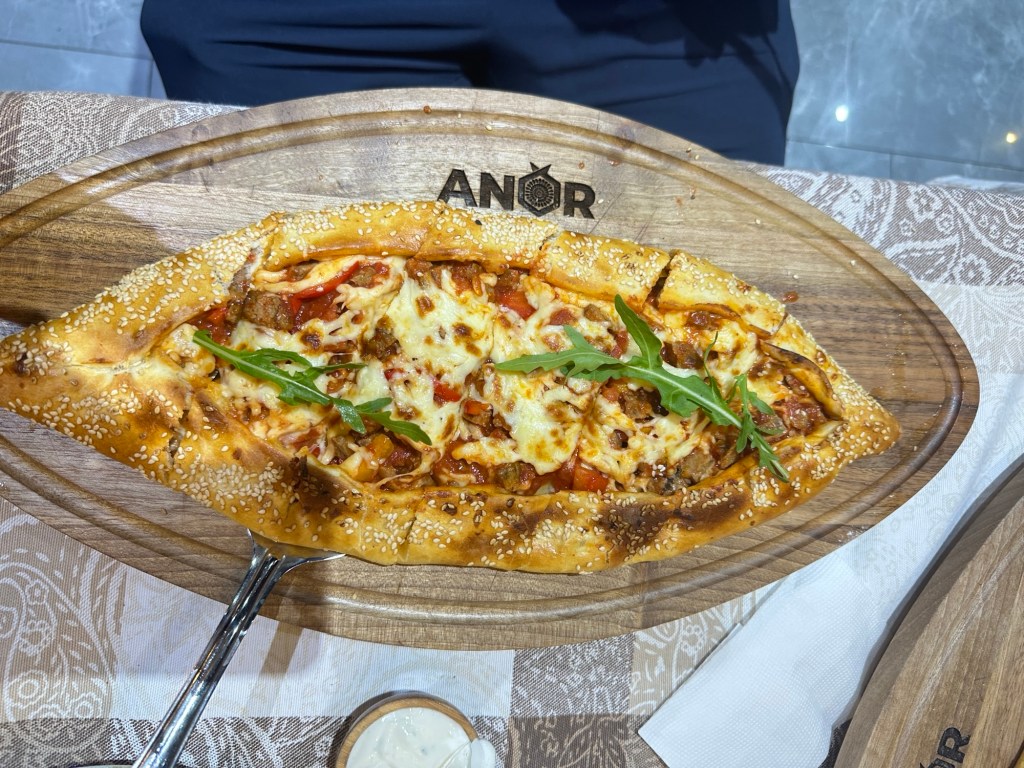
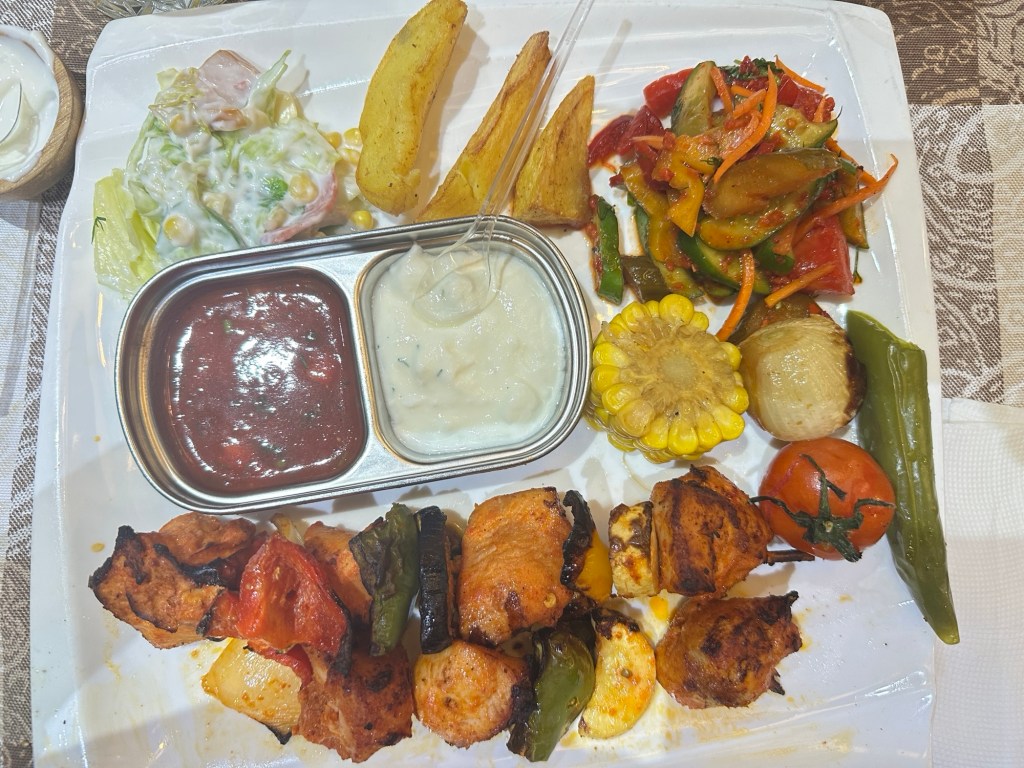
Another hour’s drive to Margilan where we had one night at the Atlas Hotel. Found a nice Turkish restaurant for dinner, after we’d walked for miles down one street that had 50 men’s shops! Had a yummy dinner.
Day 26
Monday 6th October
Margilan to Osh
12-22 degrees, sunny
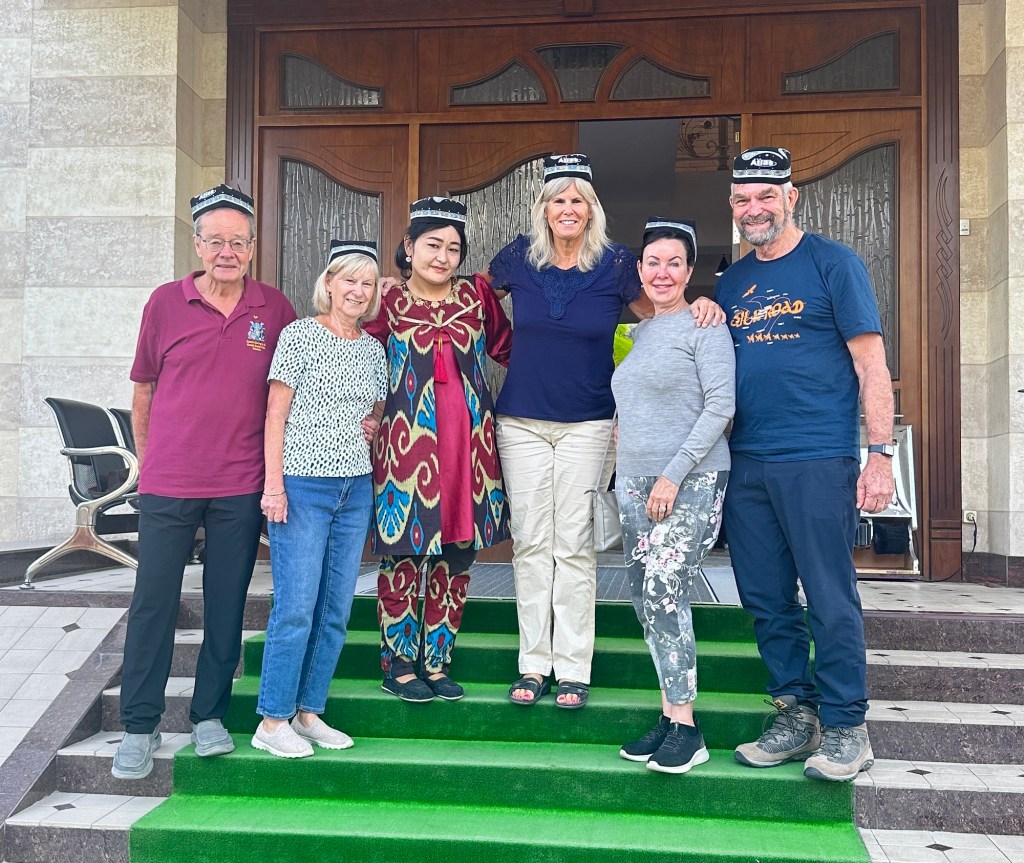
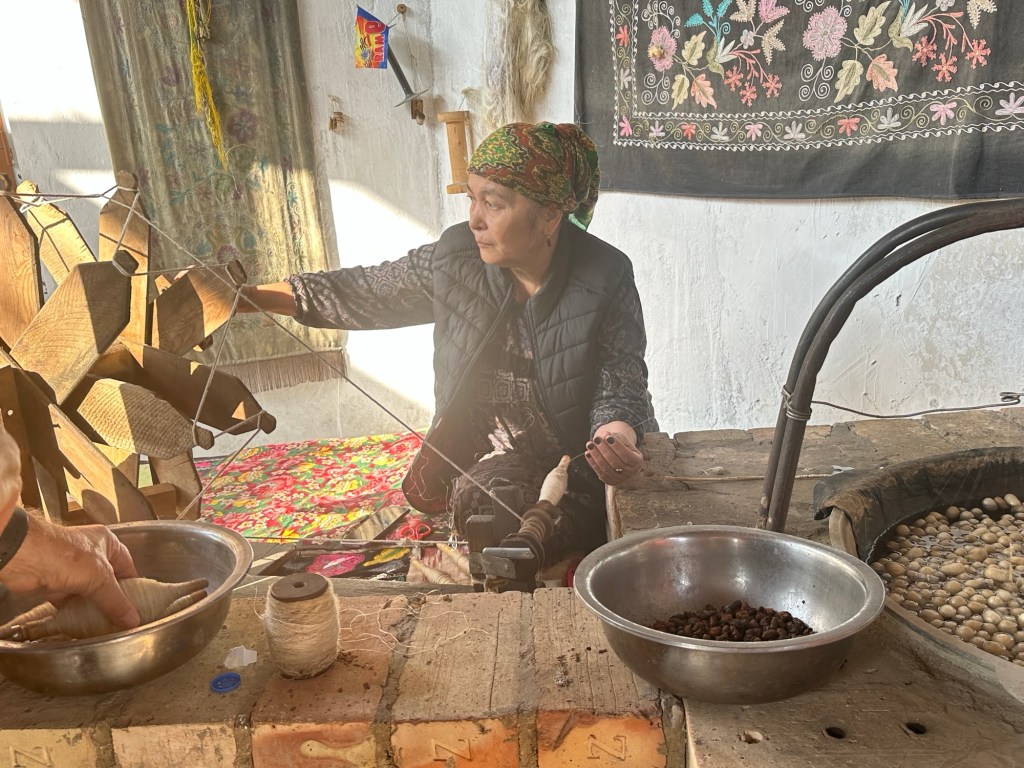
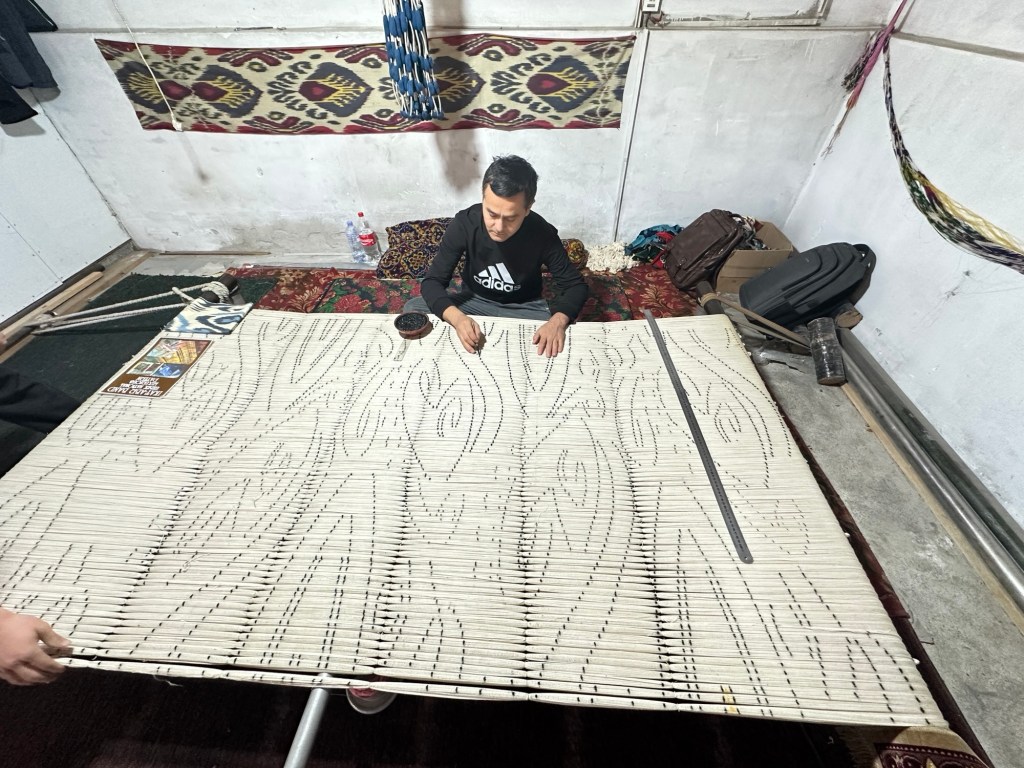
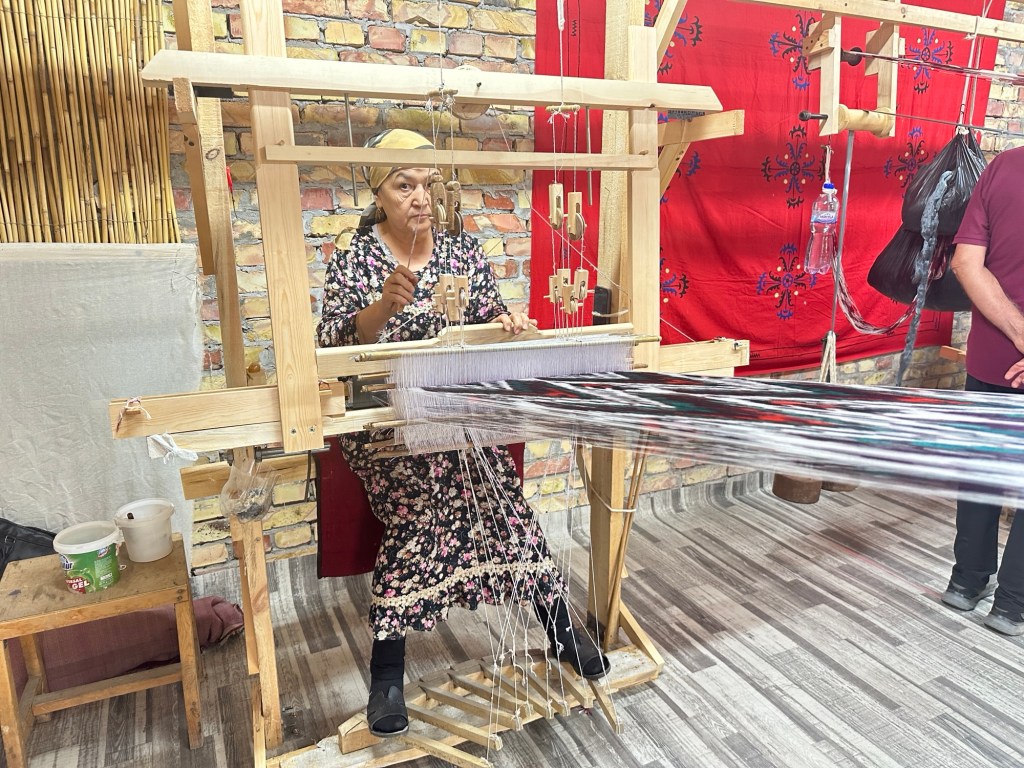
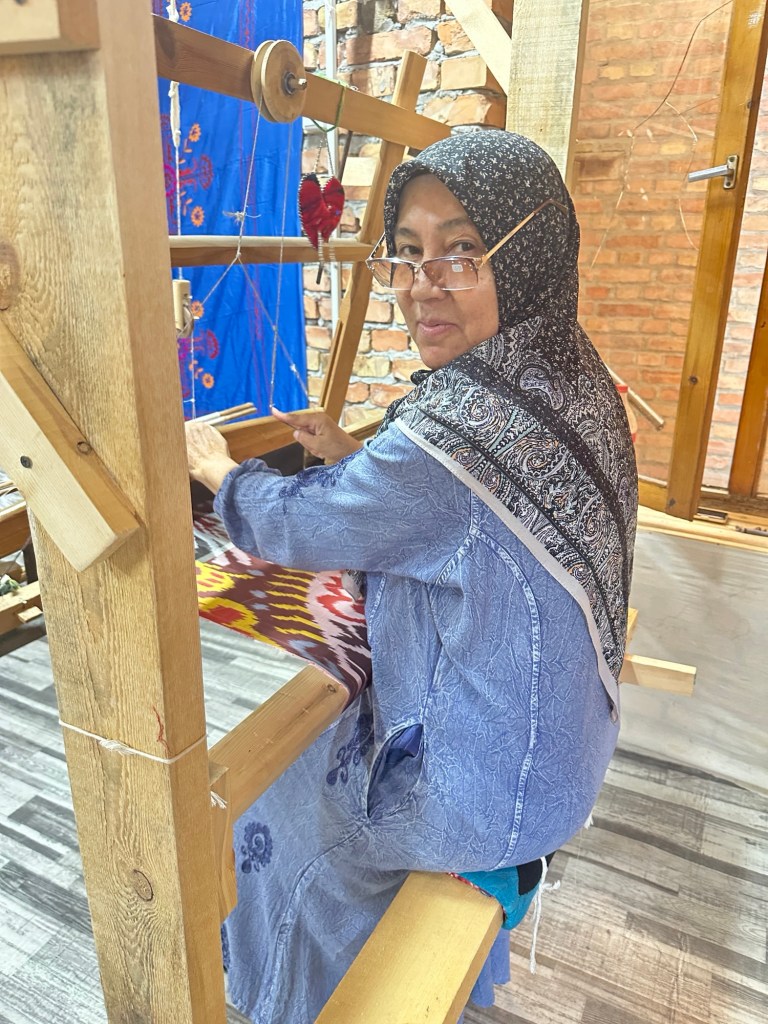
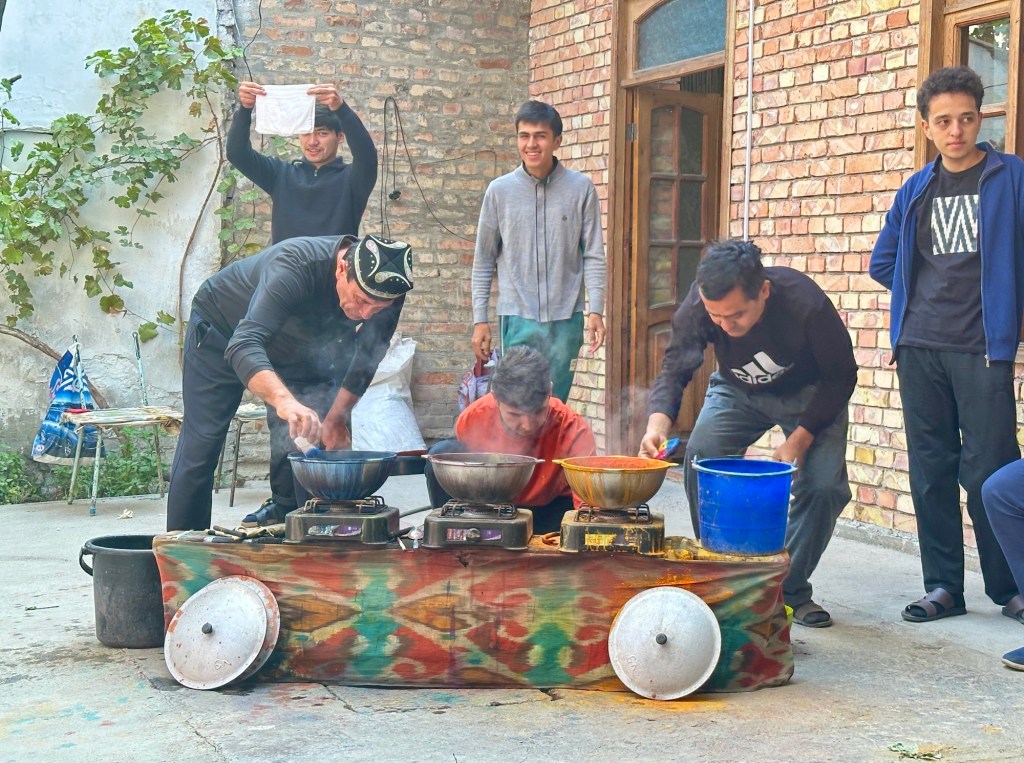
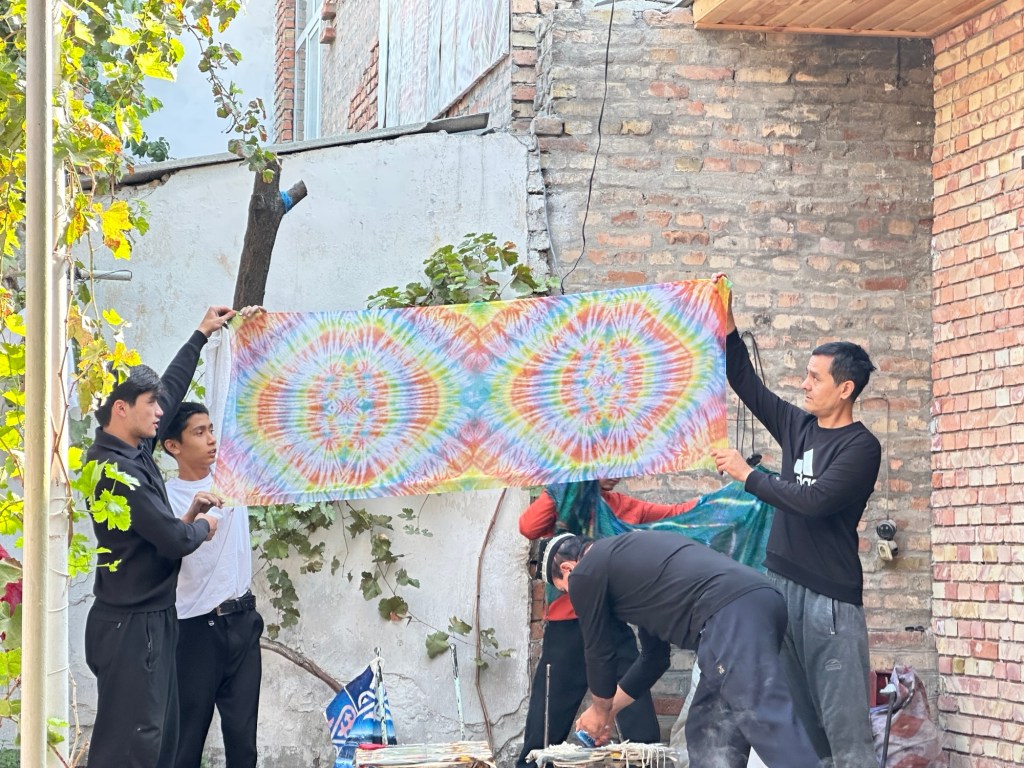
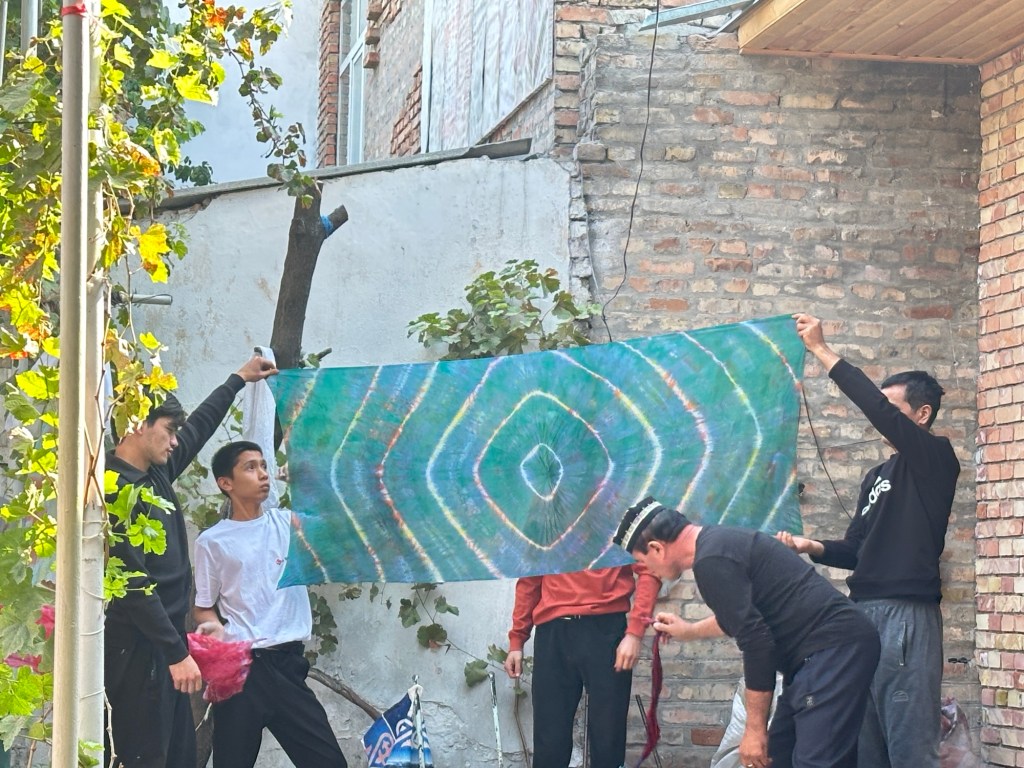
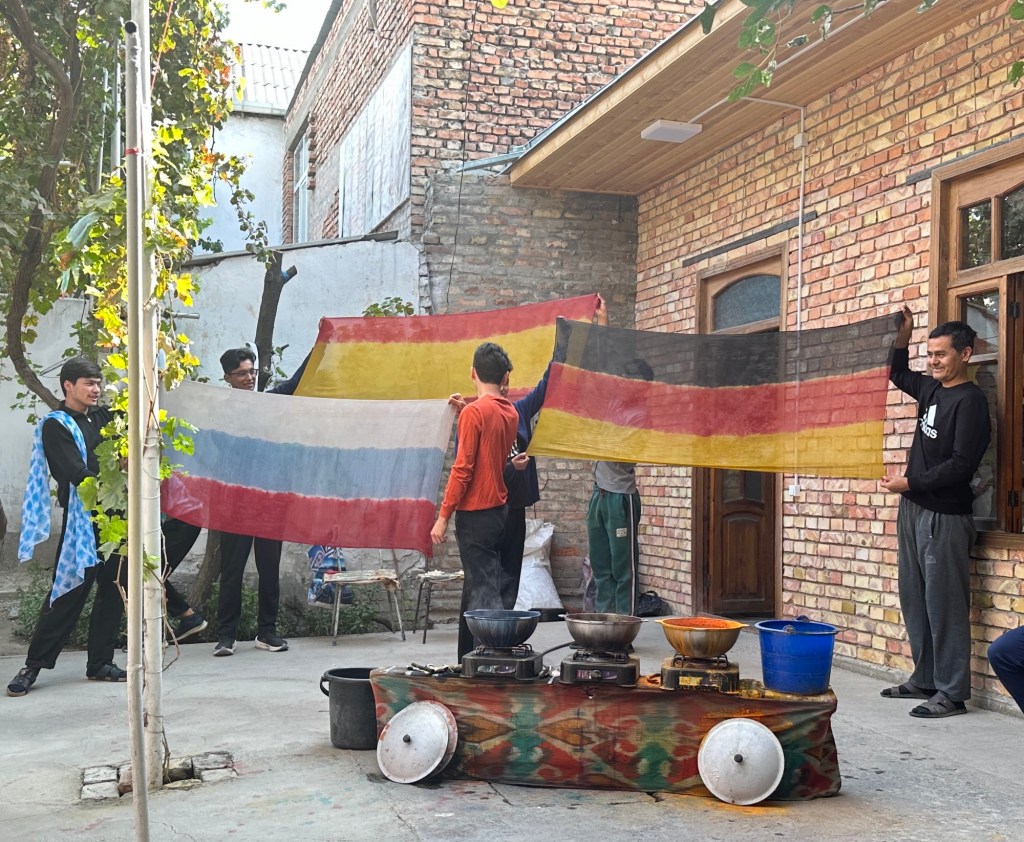
After breakfast our local guide took us to a silk weaving and dyeing family workshop functioning since 1810. Margilan was an important stop on the Silk Road. The local mulberry trees have fed silk production for centuries, and the economic life of the town is still dominated by the enormous Margilan silk industry.
The whole process of making silk fabric by hand was fascinating. Very laborious process – no wonder they have resorted to machines. The batik dyeing proved to be a very entertaining performance. Individual families raise the fussy silkworms on home-grown mulberry leaves, before the cocoons are taken to the factory to be steamed and unravelled and the silk woven into thread and then dyed.
Next, an hour’s drive to Andijan, the eastern gateway to the valley, not far from the Kyrgyz border near Osh.
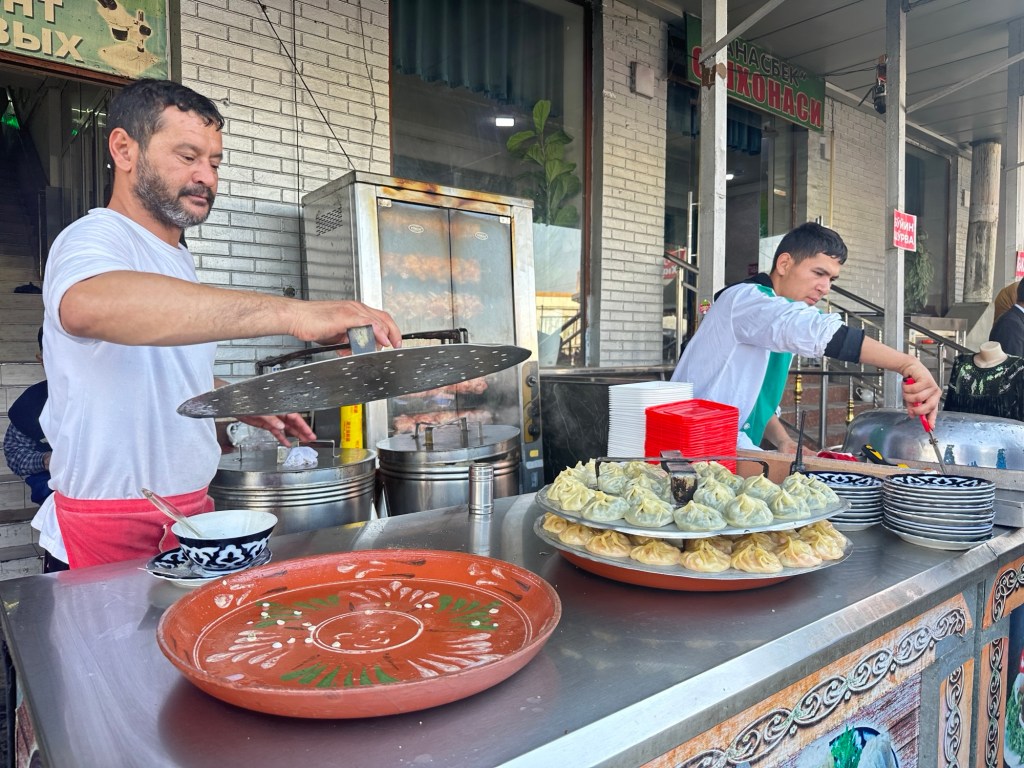
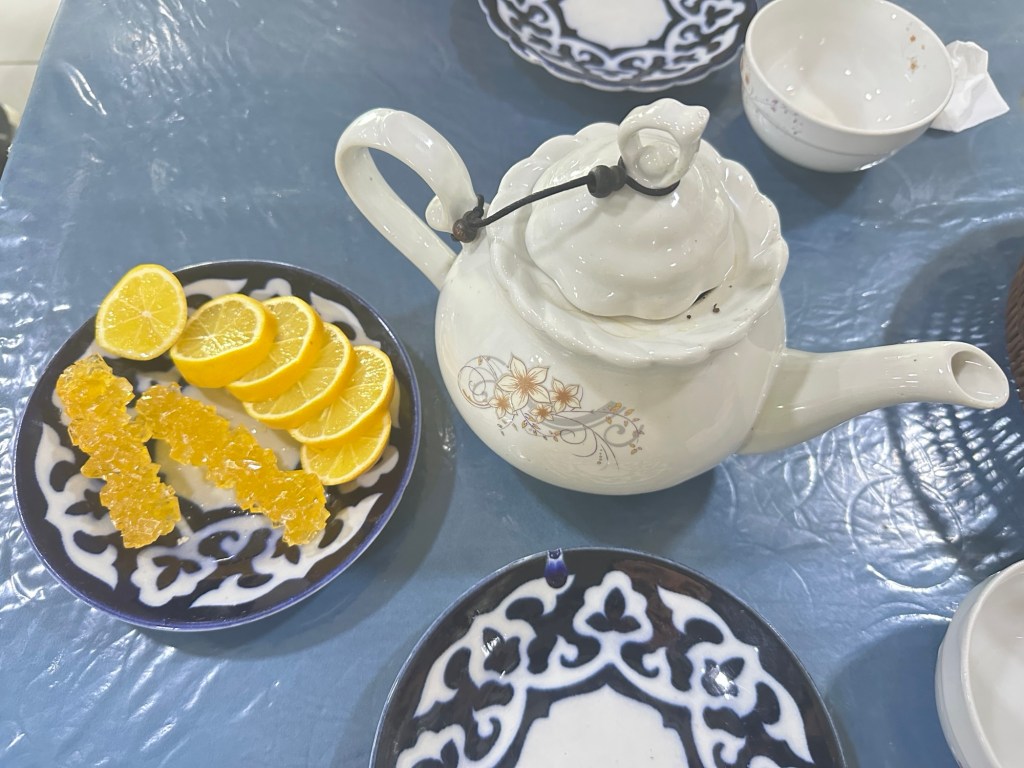
We head to the handcraft markets, stopping for dumplings at a local restaurant. Pumpkin, spinach and beef mince – of course accompanied by bread and tea. Very nice.
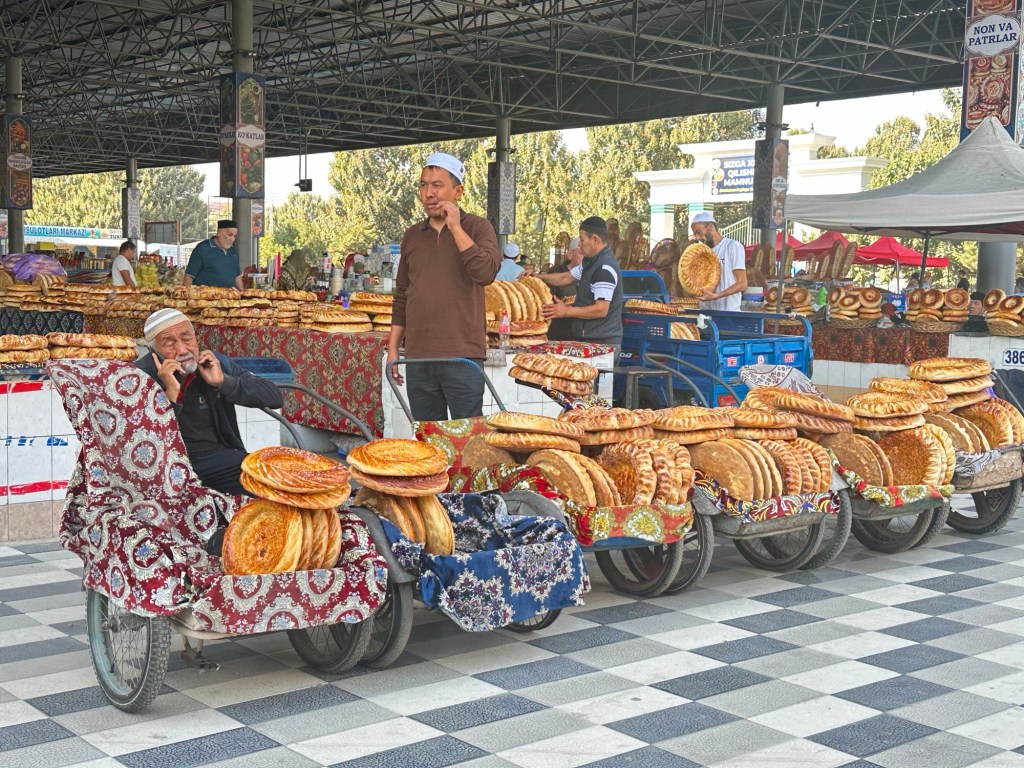
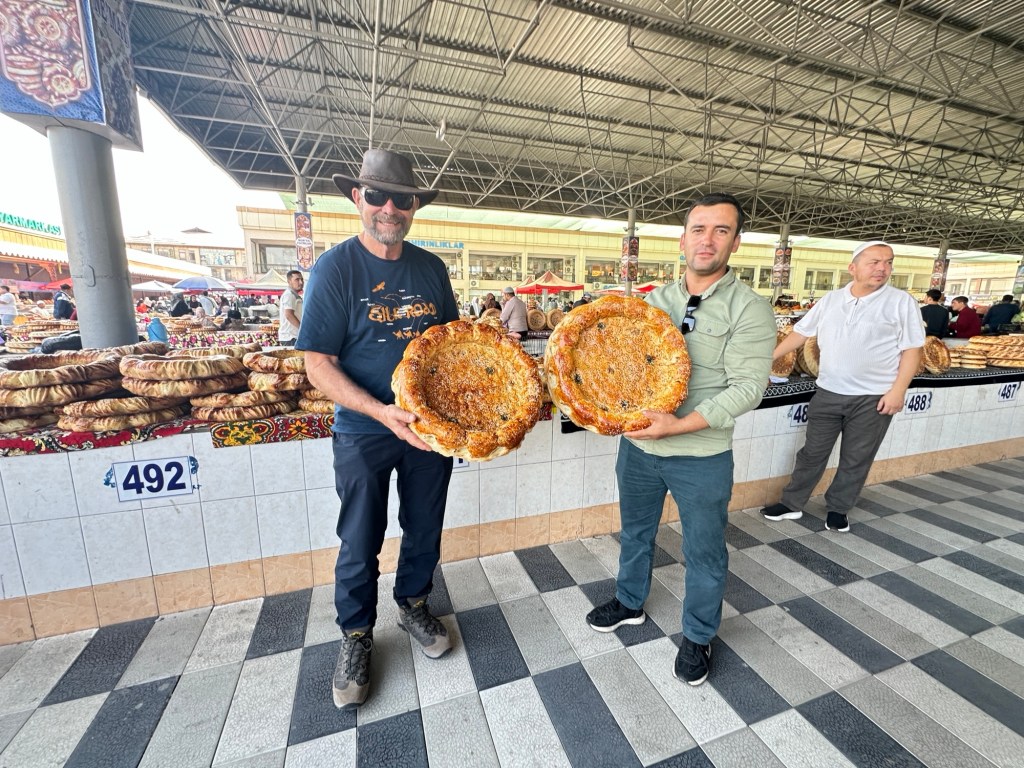
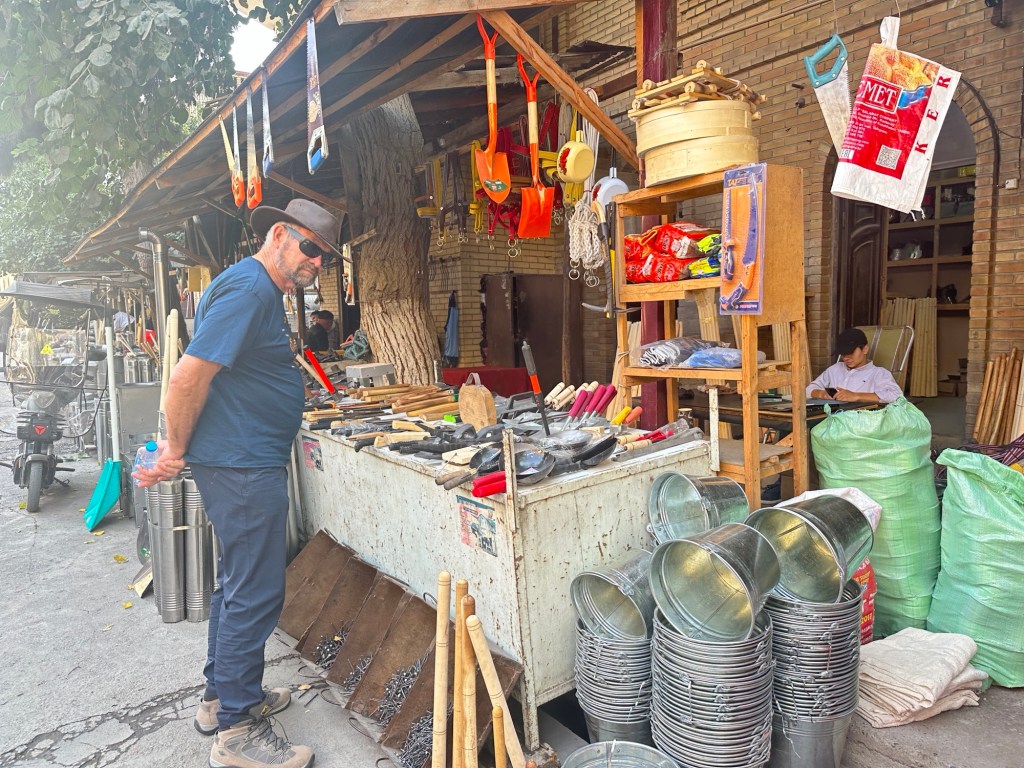
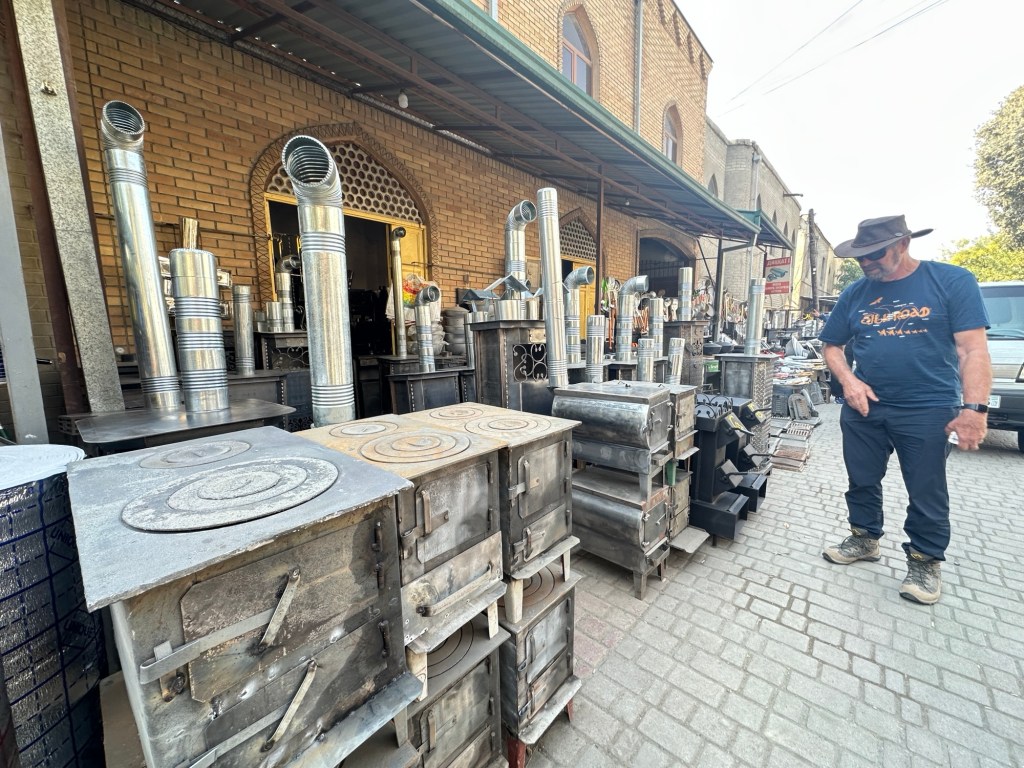
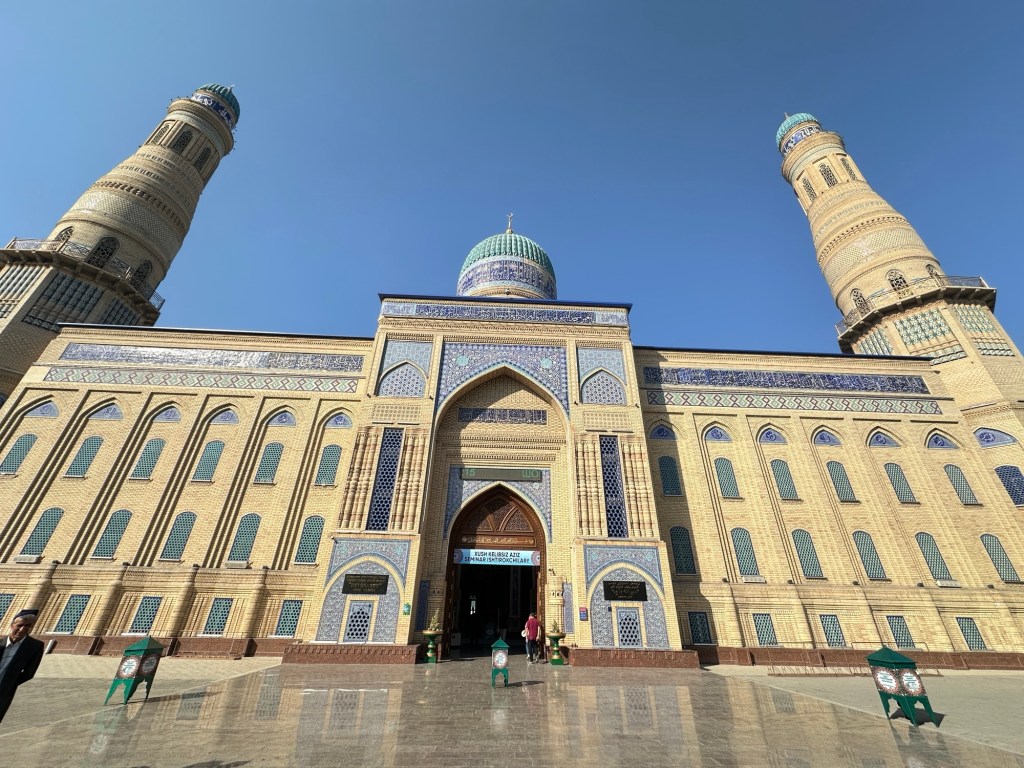
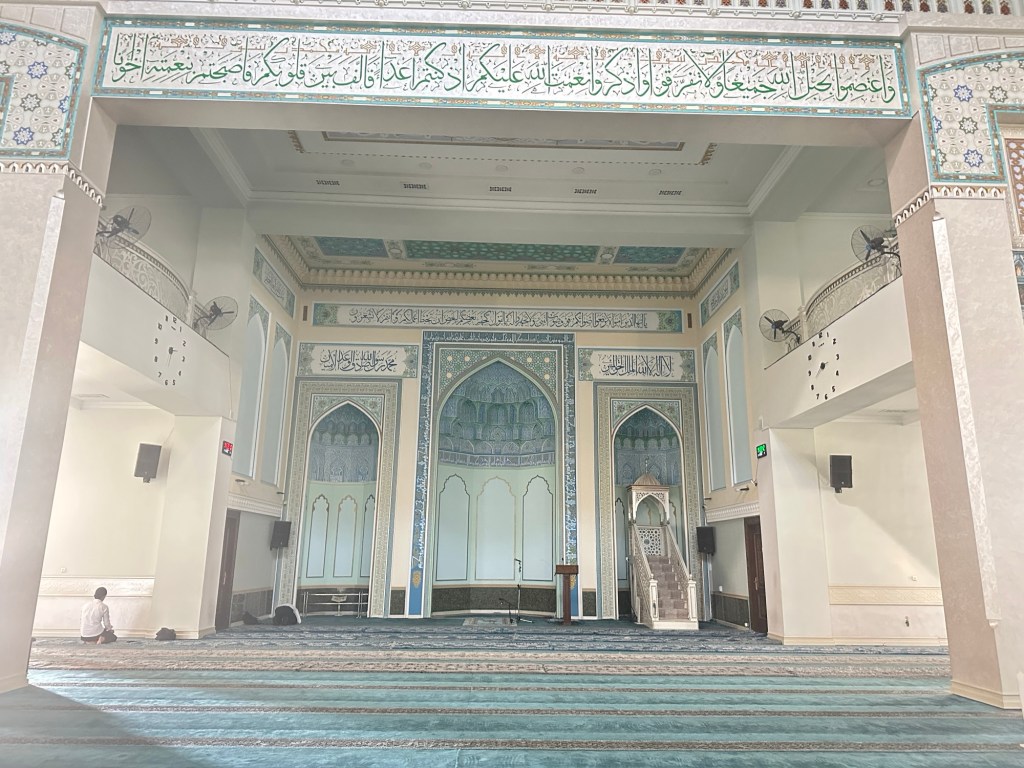
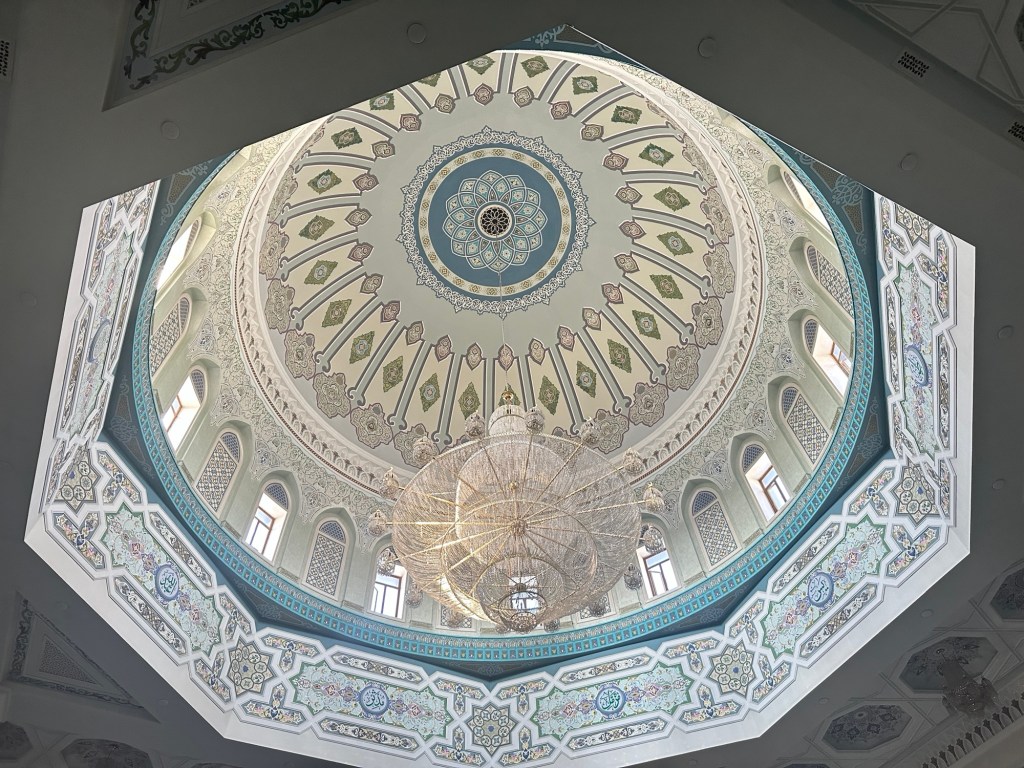
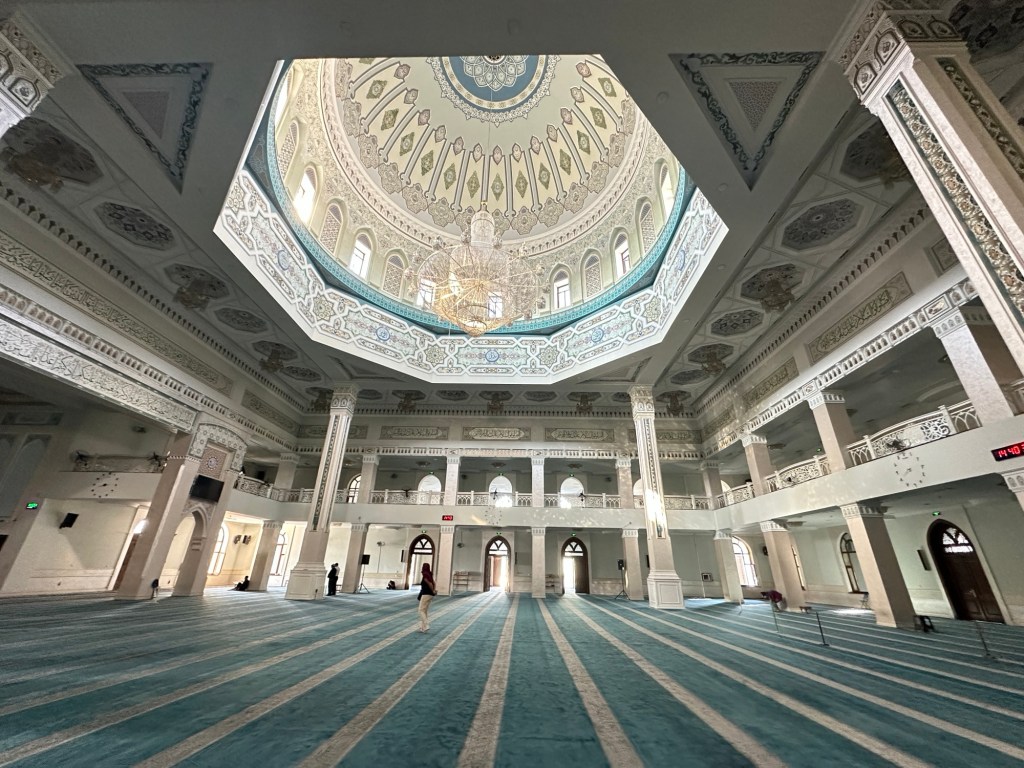
We continue walking through the markets, cross the road to Andijan Juma Mosque (a Friday mosque built in the 19th–20th centuries with a main facade that has 26 arch openings). The madrassa is now handcraft workshops.
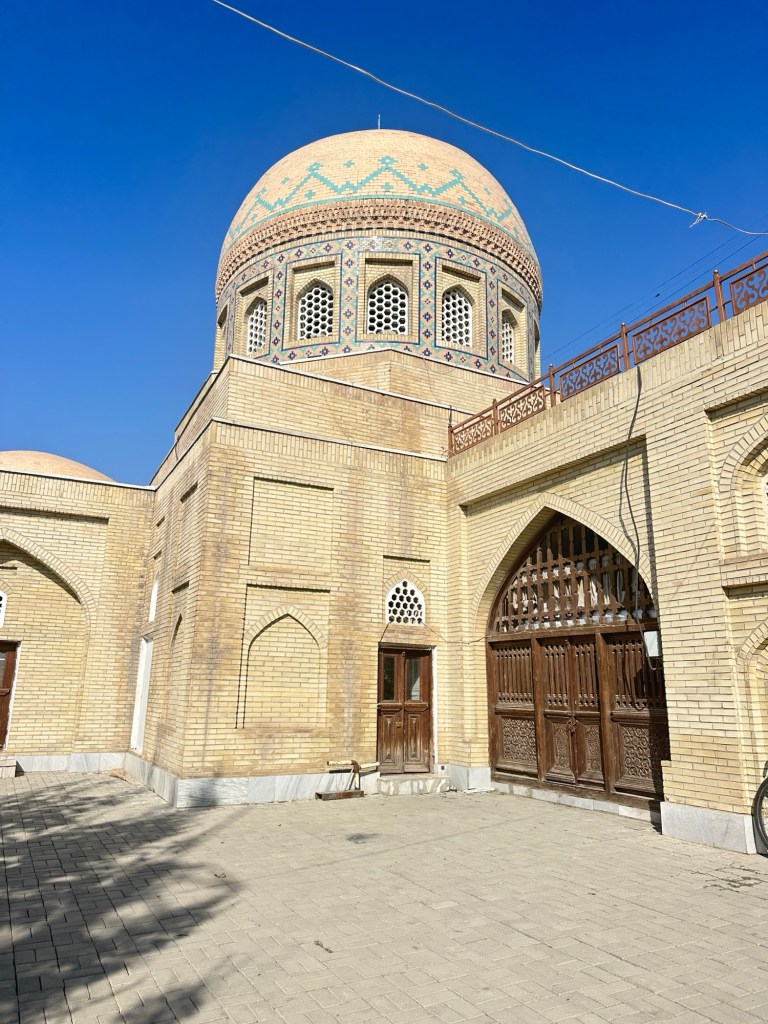
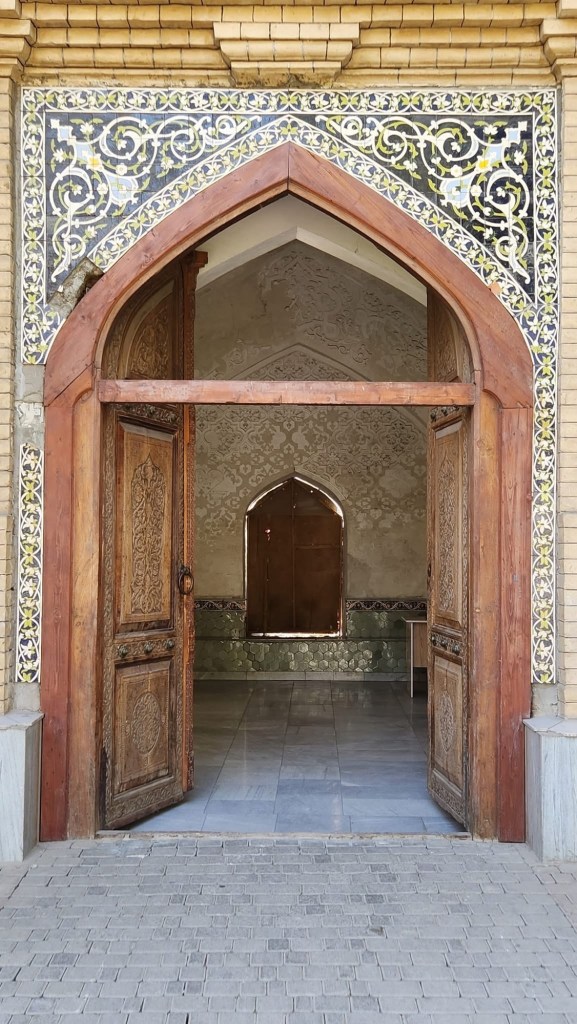
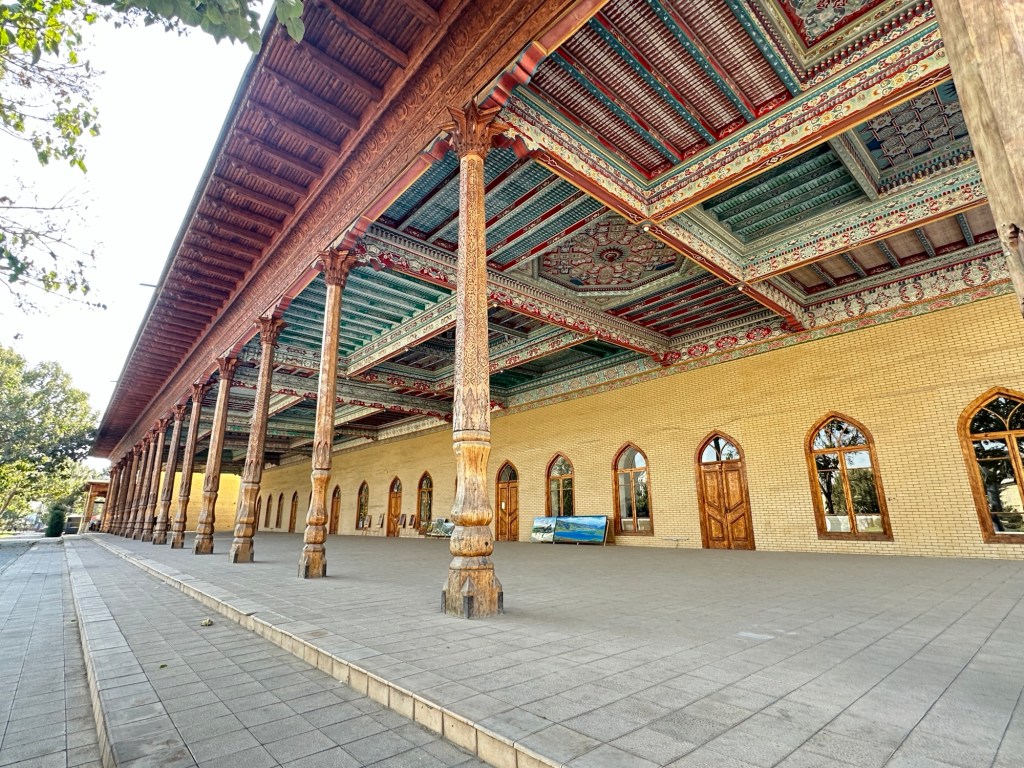
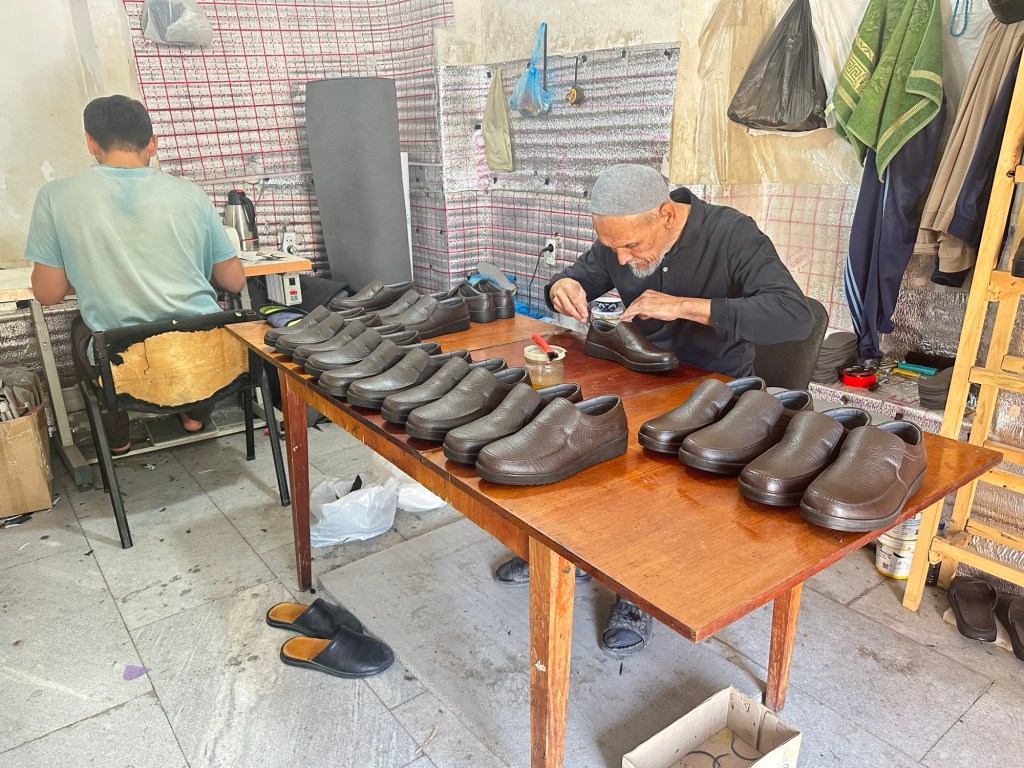
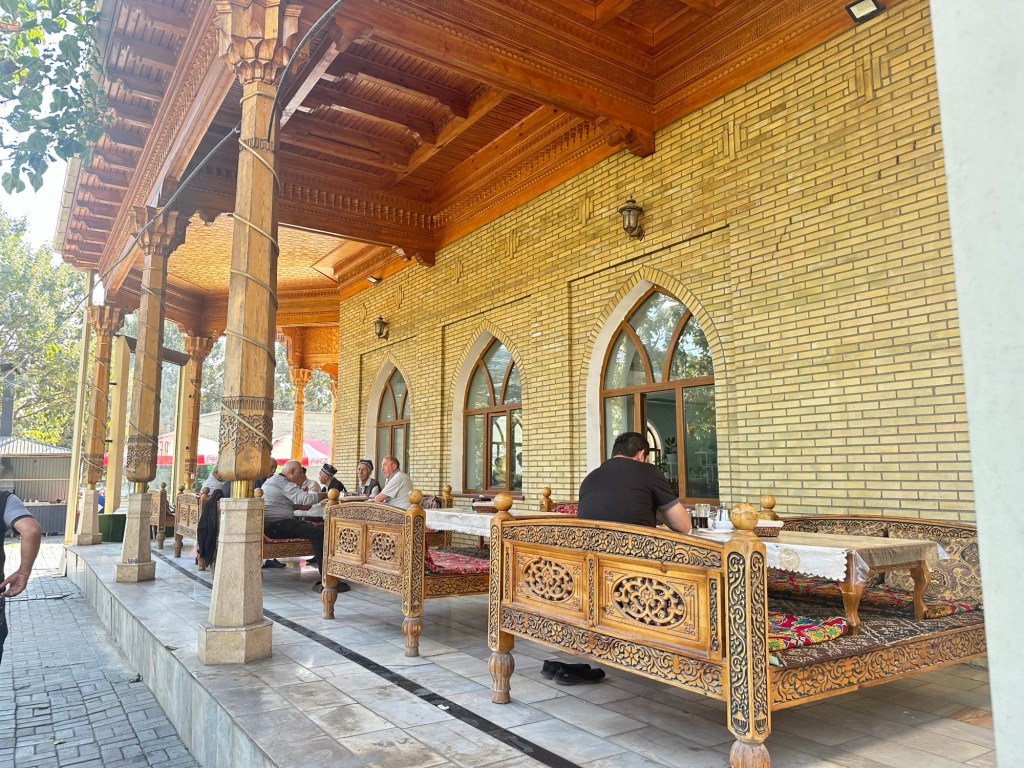
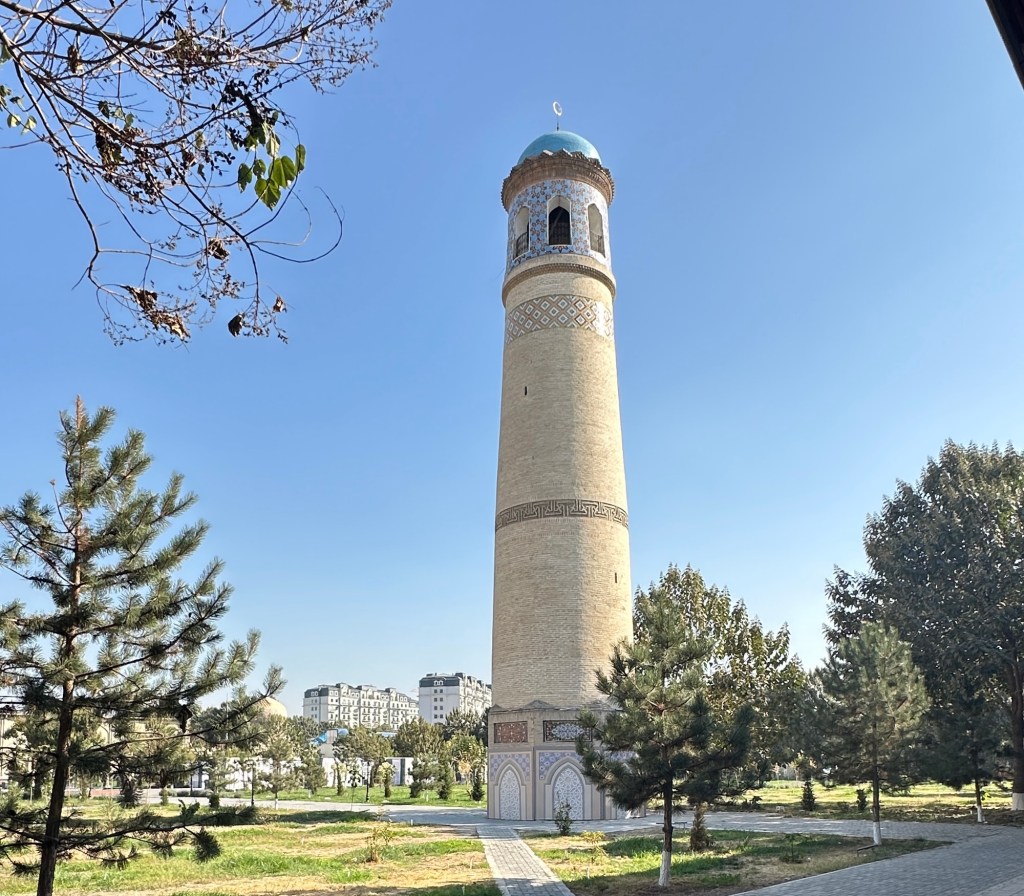
The Juma Mosque and Madrassa has long been a barometer of the shifting political tides, switching from Soviet-era museum to active madrassa and now back to secular museum. The new mosque was built in 1982.
Another hour’s drive to the border, where we passed the border formalities with minimal fuss- only 500 metre walk. Our Kyrgyz guide, Ernest and driver were there to meet us.
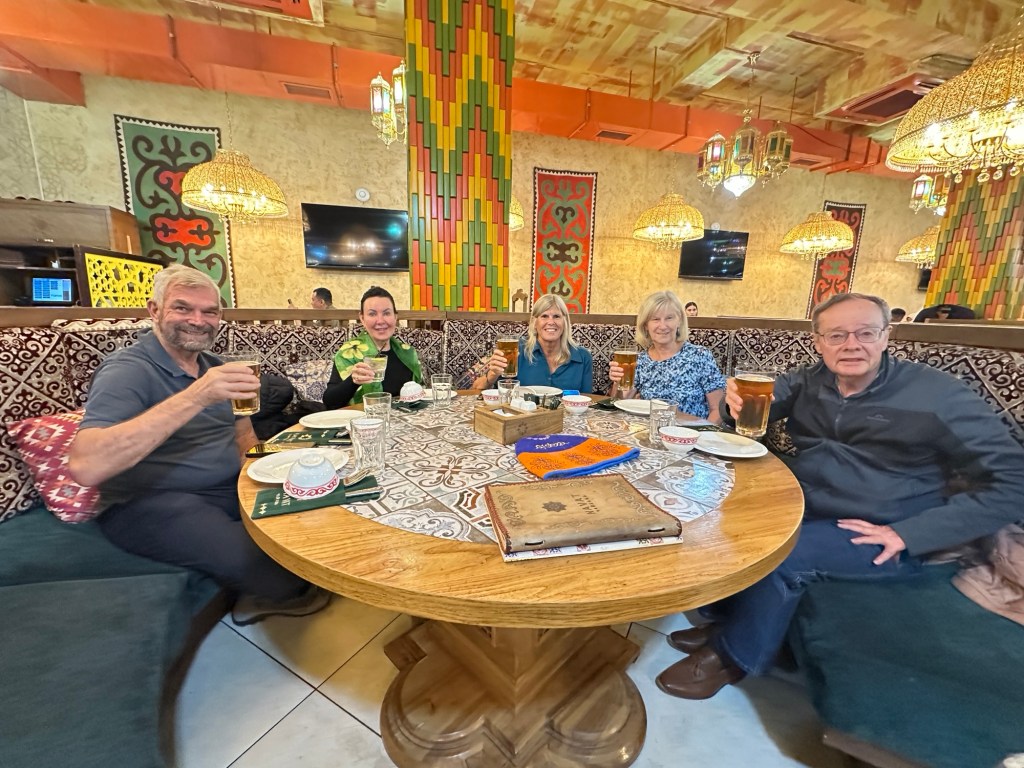
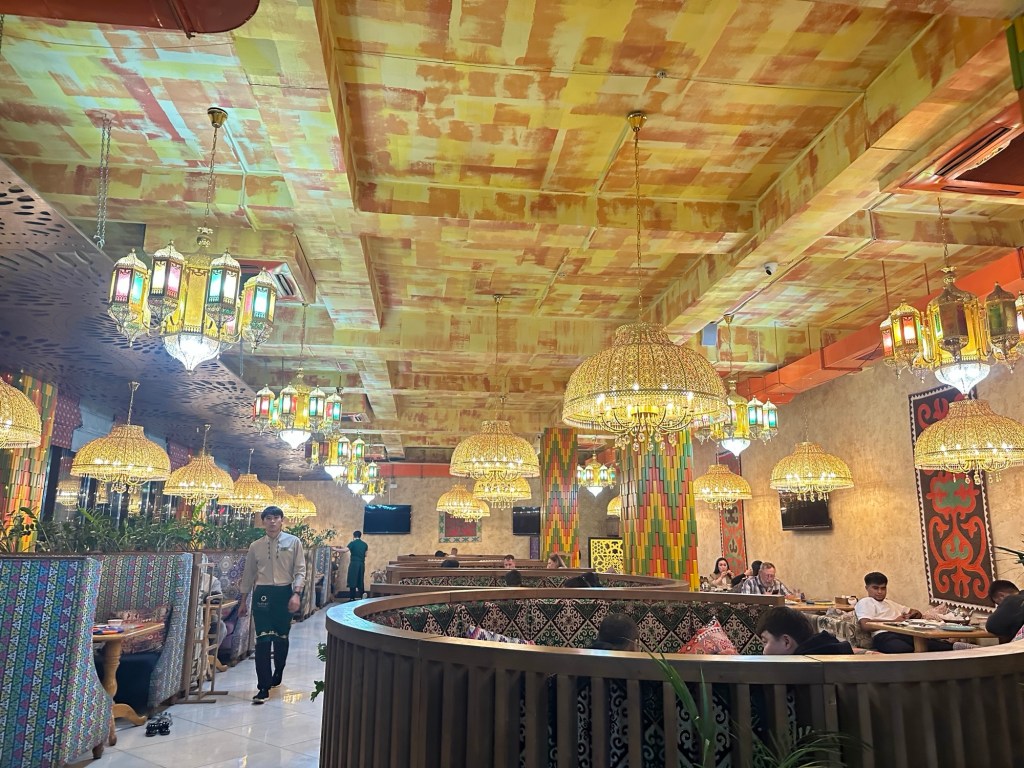
Just a short drive to Grand Chavo Hotel in Osh where we checked in, changed and headed out for dinner at a nice restaurant. Lot more modern here – we could scan the menu to get the English version, and pay our bill with credit card.
Day 27
Tuesday 7th October
Osh to Uzgen to Kazarman
10-22, down to 8 degrees, sunny
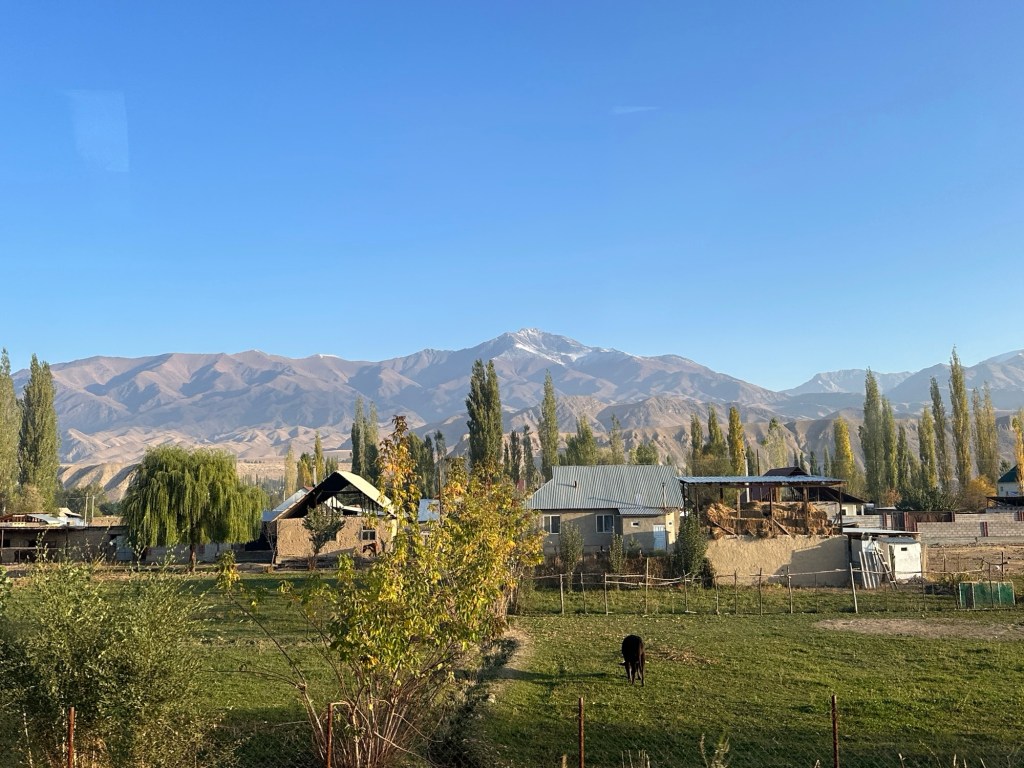
Kyrgyzstan is defined by its geography, specifically its mountains, which make up over 94 percent of the country. The north is dominated by the wild valleys of the Tian Shan – the “Heavenly Mountains”, whose valleys offer some of the world’s loveliest alpine scenery: a trekkers’ paradise of rushing streams, juniper forests and glaciated peaks. To the south, forming the southern wall of the Fergana Valley, are the remote towers of Turkestan and Pamir Alay, spurs of the great Pamirs. In between are the vast central highlands: rolling hills dotted with yurts and mountain lakes.
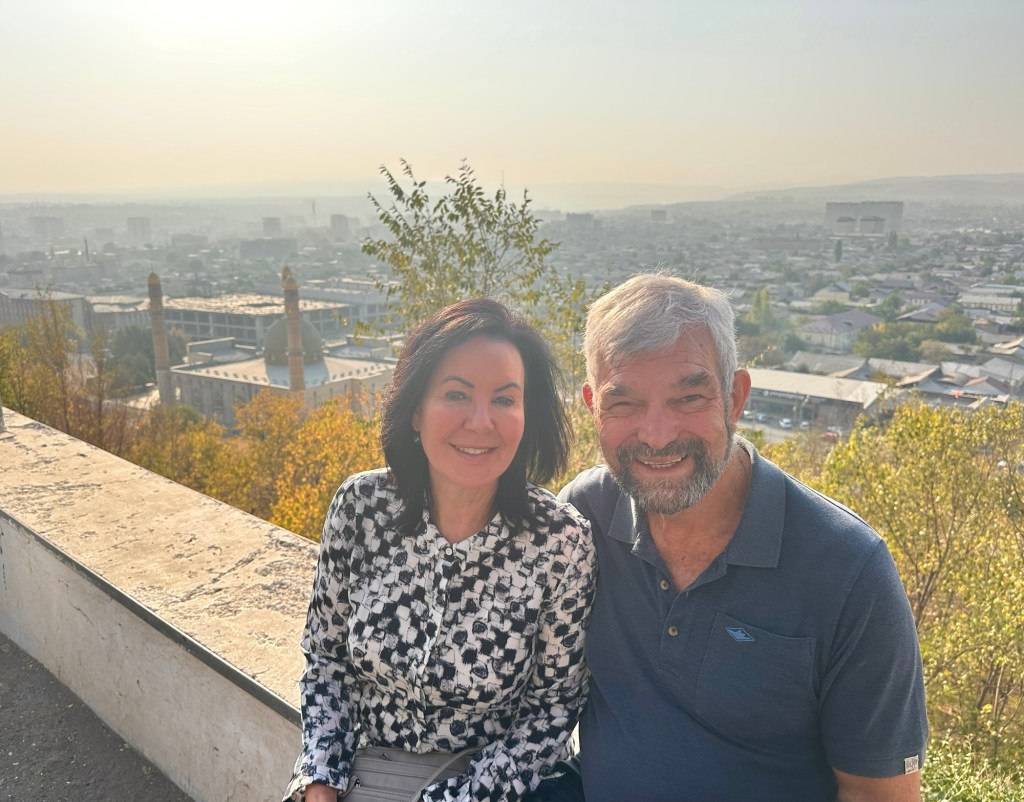
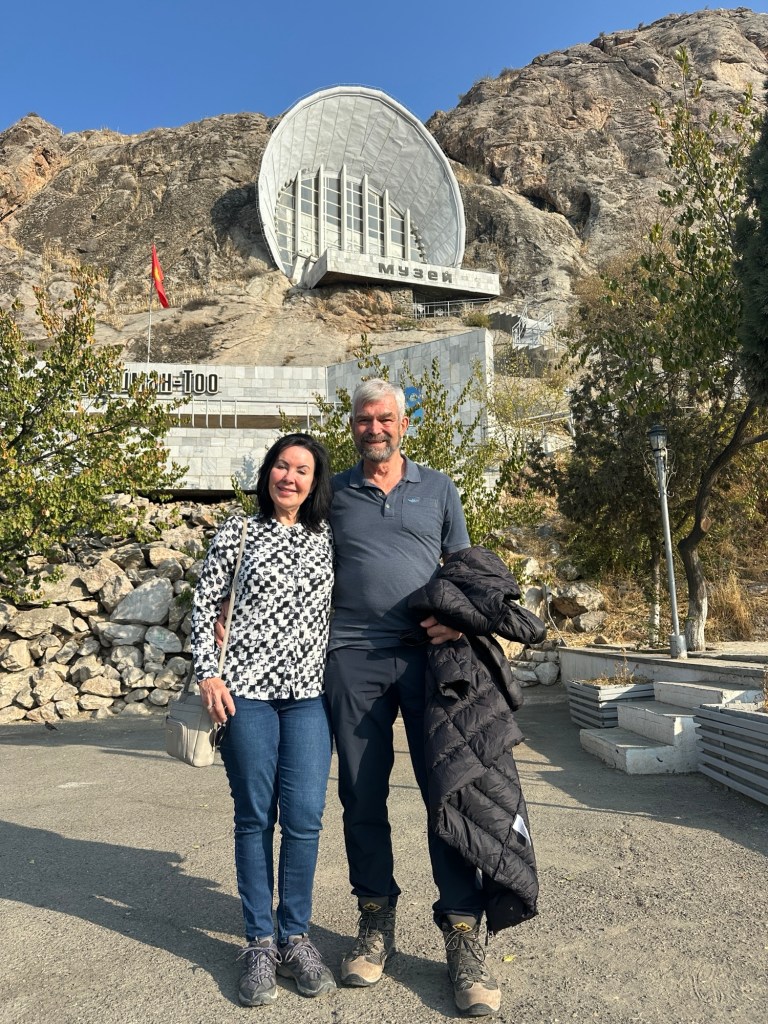
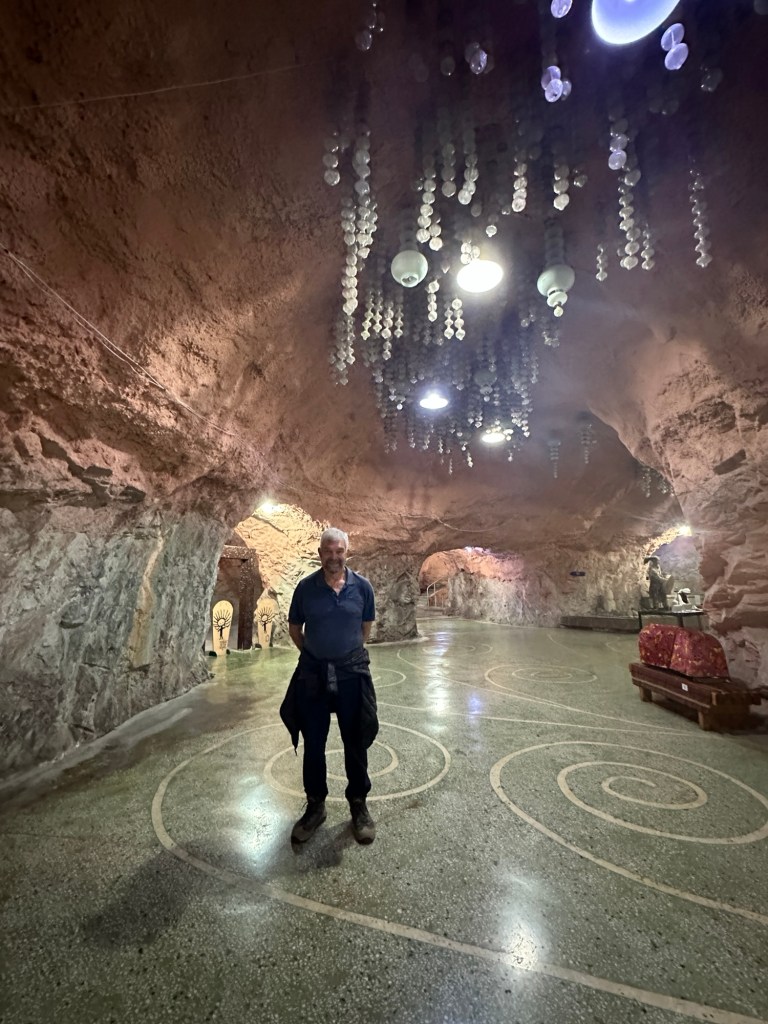
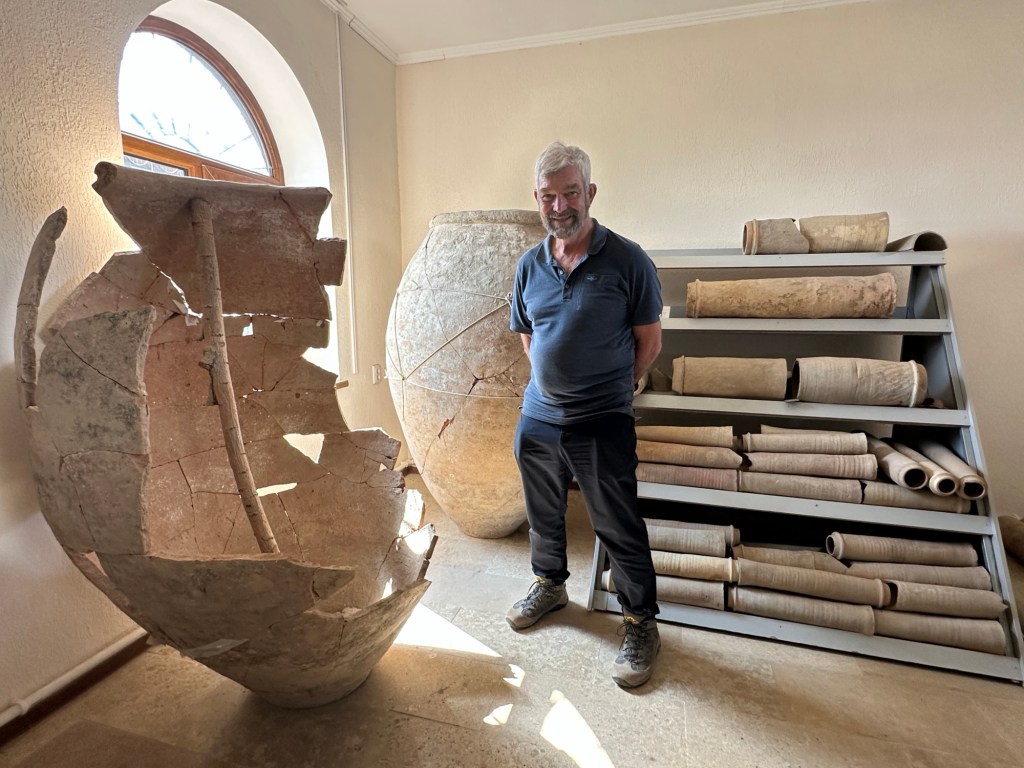
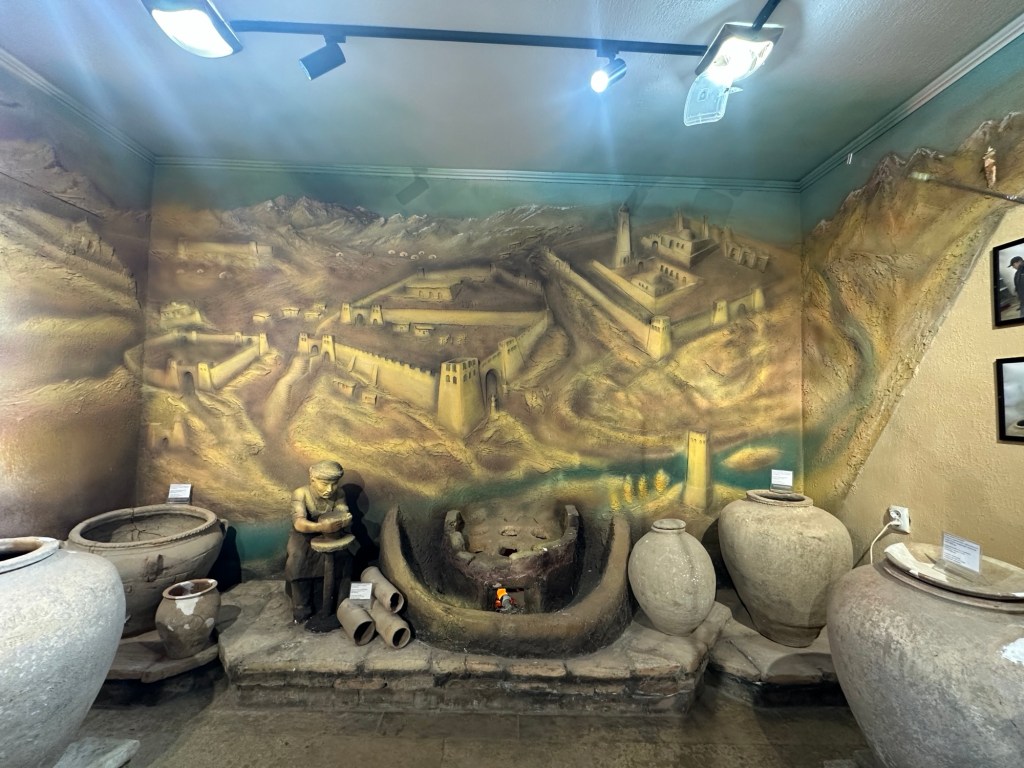
Osh was an important position on trading routes of the Silk Road. It nestles at the base of the Takht-i-Suleiman (Throne of Suleiman), a huge slice of rock that ranks amongst Central Asians as Islam’s third-holiest shrine, after Mecca and Medina, thanks to an early appearance by the prophet Suleiman (Solomon). Babur built a personal chillakhana (chamber for 40-day retreat) here in 1496, and the small shrine is still known as the Dom Babura (House of Babur). We hiked up the 1130metres hill, to get a panoramic view of Osh. Met a new best friend, Tanya, who invited us to Bishkek, over and over again. They love tourists. Half way up the hill was the National Museum of History and Archaeology – based on what has been uncovered, this settlement dates back to the end of the second millennium and by the beginning of the first millennium BC ( 3500 years old).
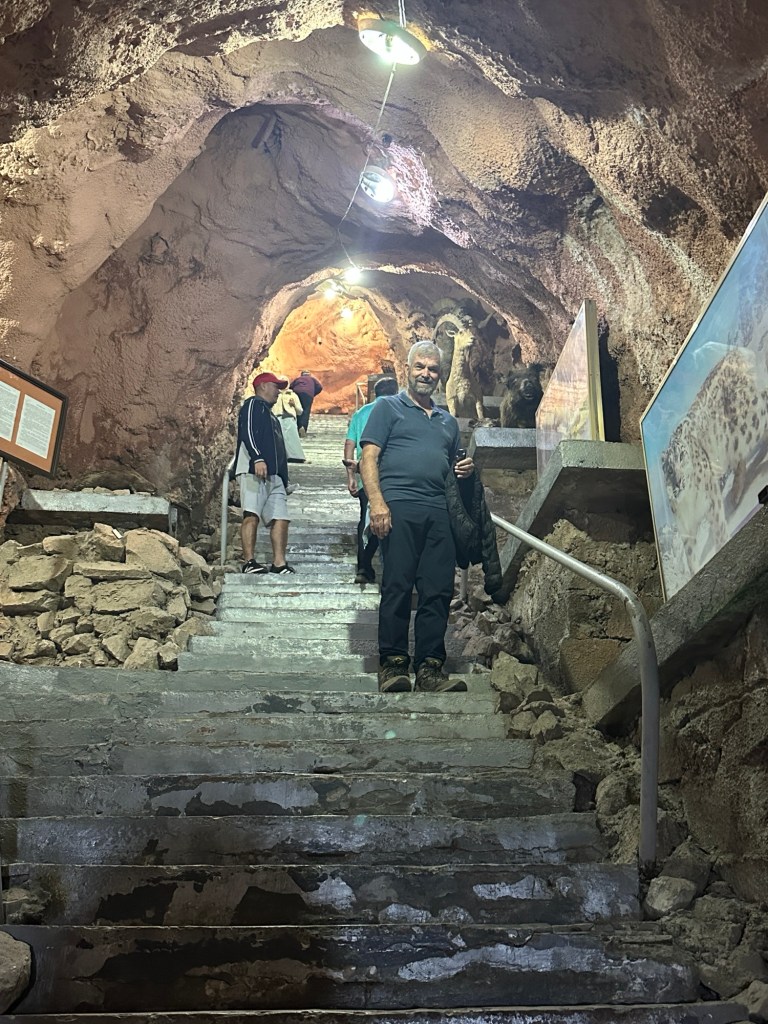
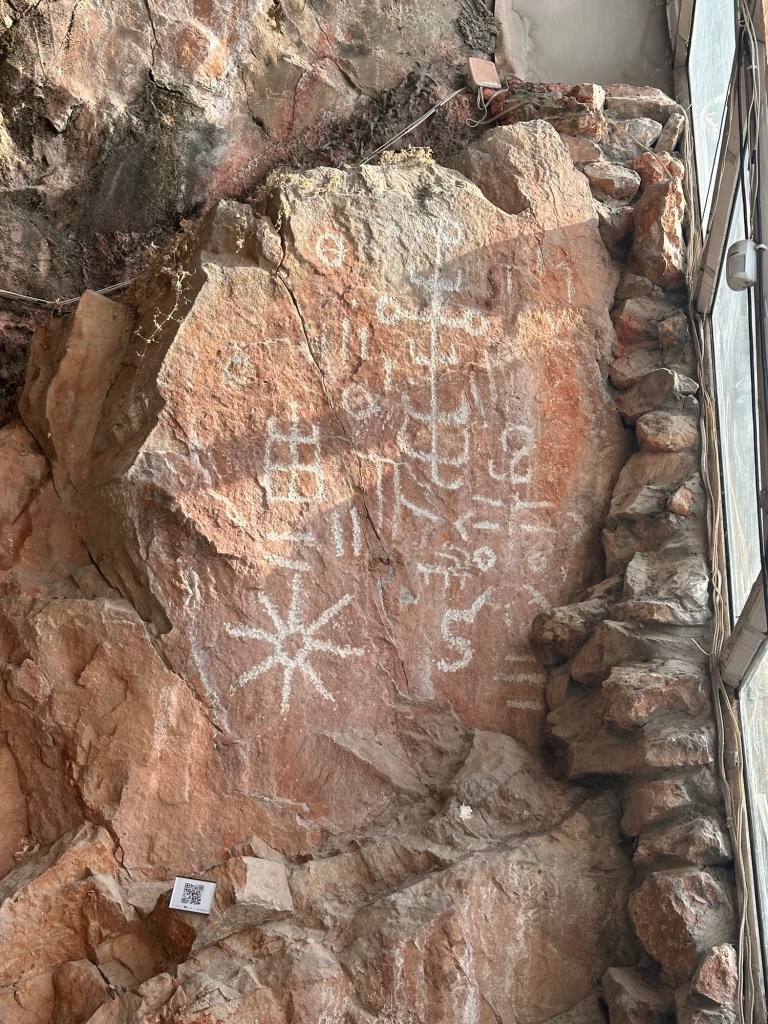
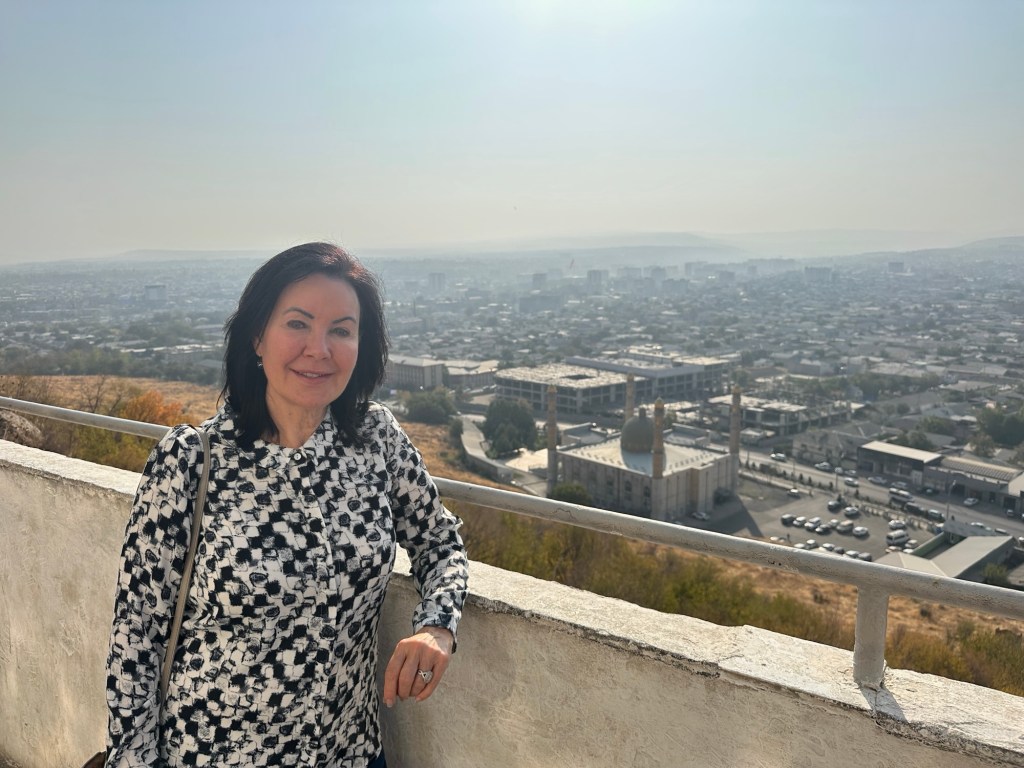
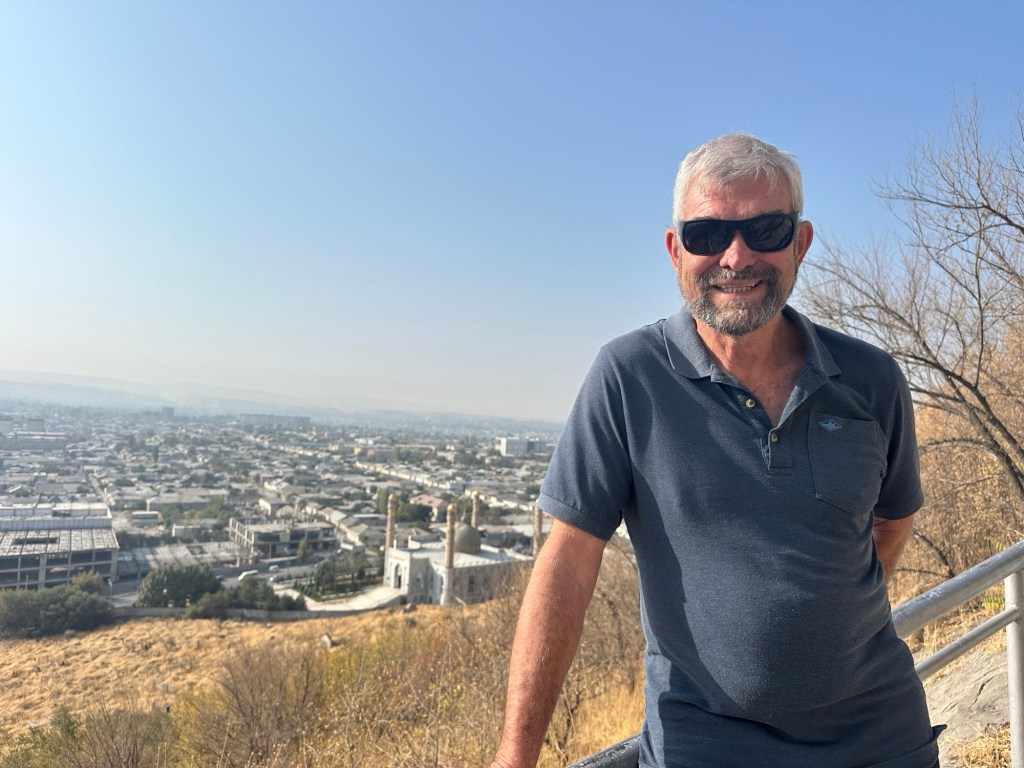
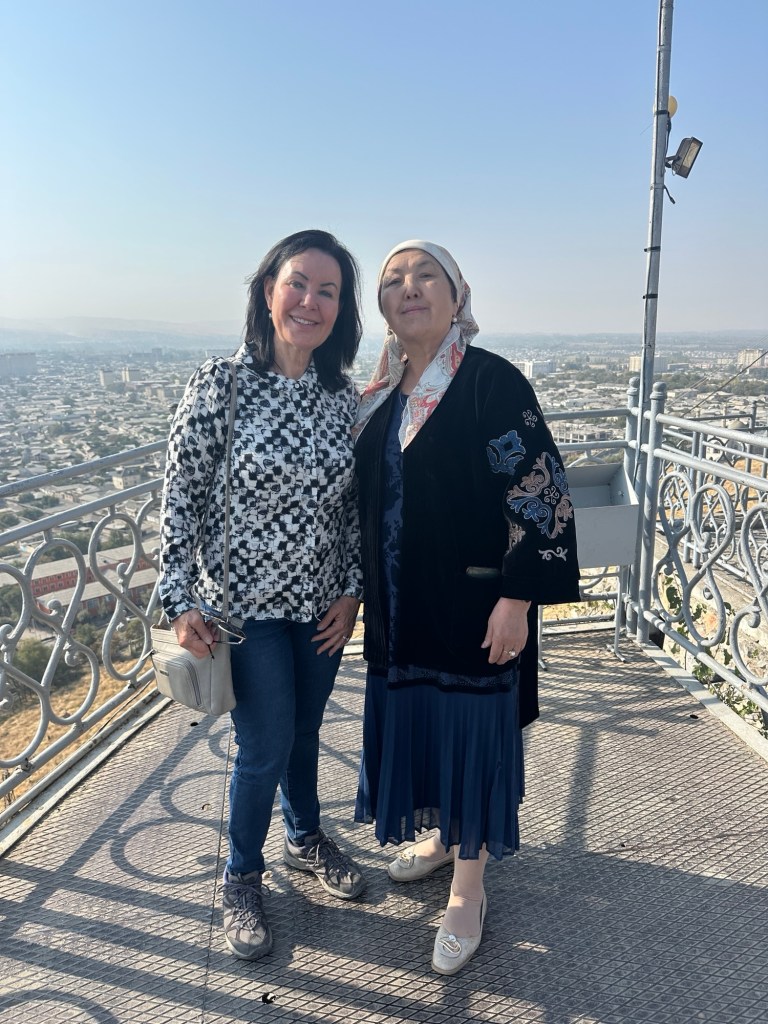
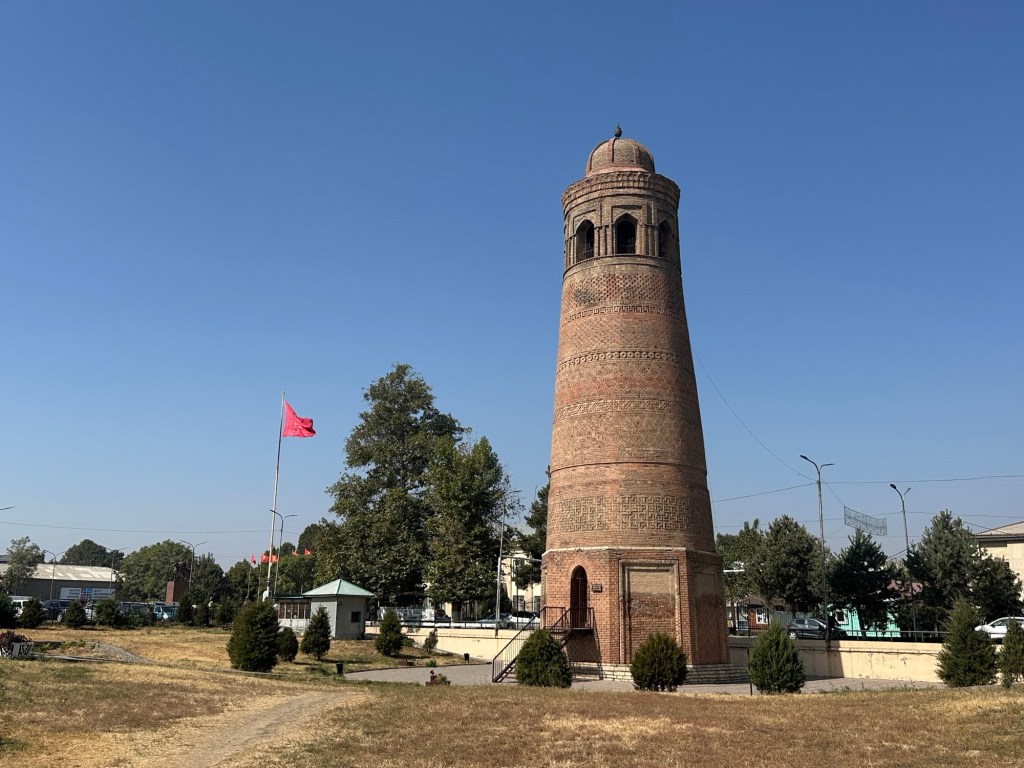
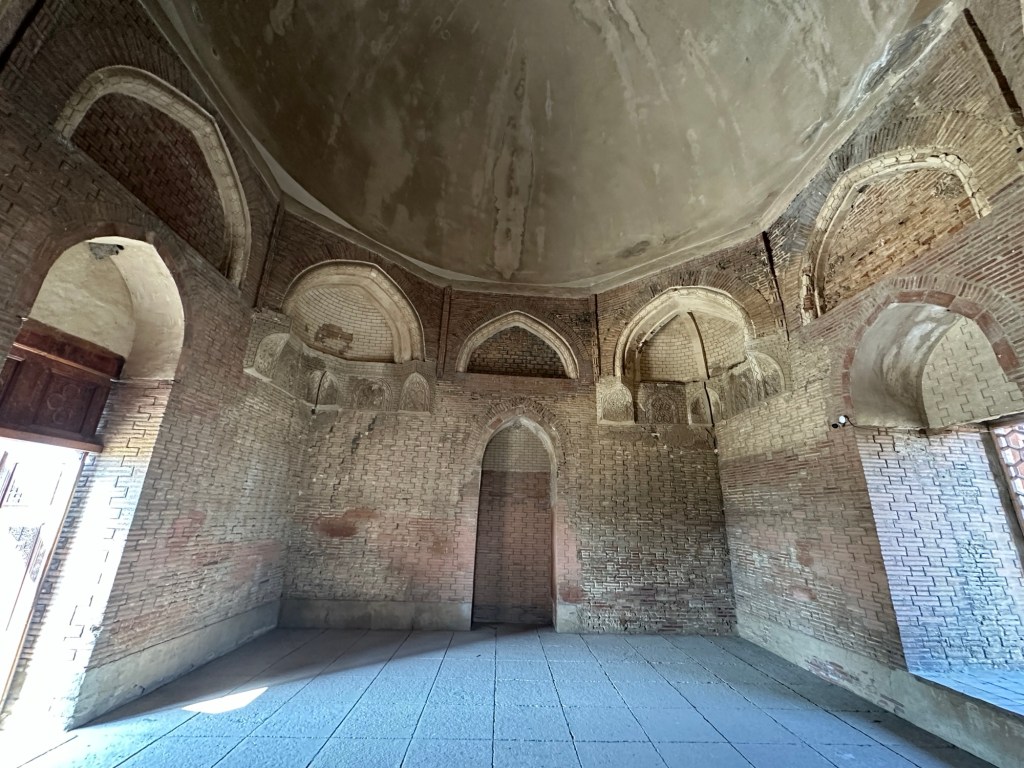
We leave Osh and drive ninety minutes to Uzgen Tower. Walnut trees are plentiful in this area. The tower/ minaret was built in 11th century by Karakhanids. It has been rebuilt several times. We climbed up – very steep stairs. There are also mausoleums that were used as burial places for the leaders. Uzgen is the most ancient city of Kyrgyzstan on the Silk Road.

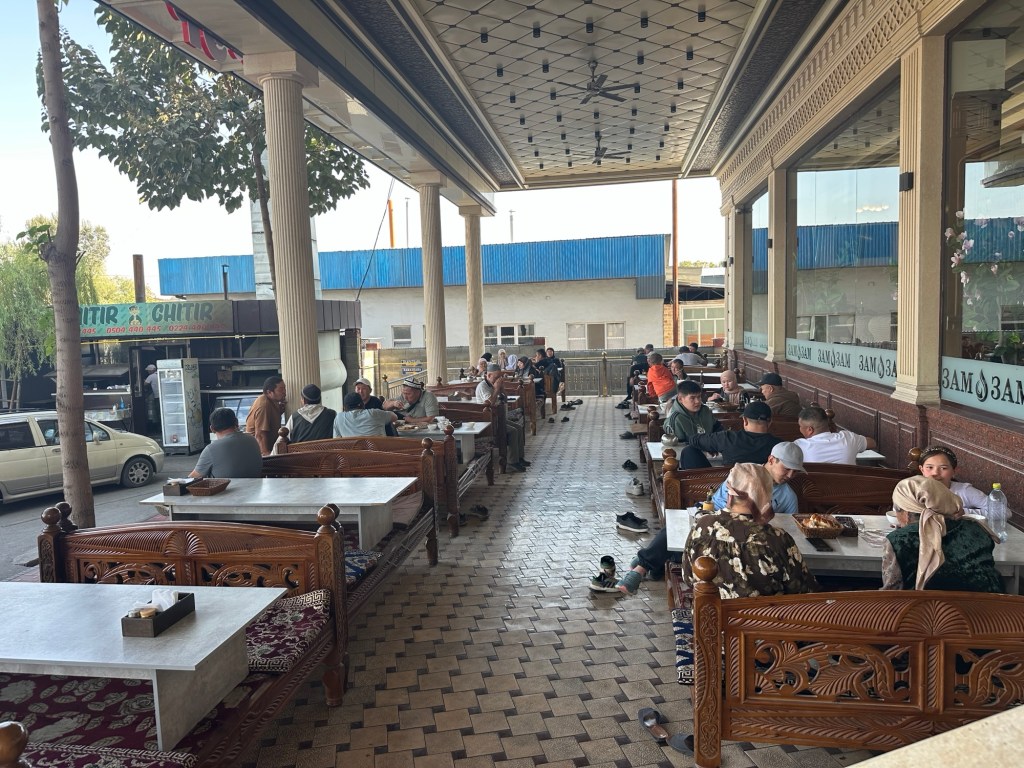
Lunch was at a local restaurant- our favourites, crunchy eggplant salad, and pumpkin samsas.
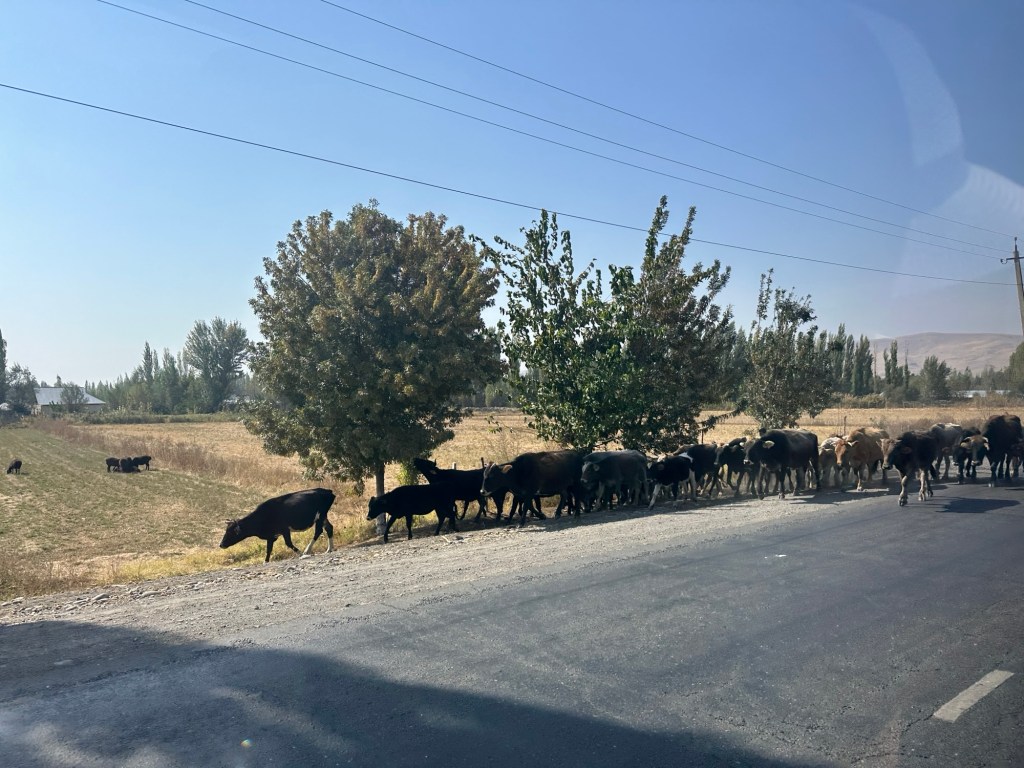
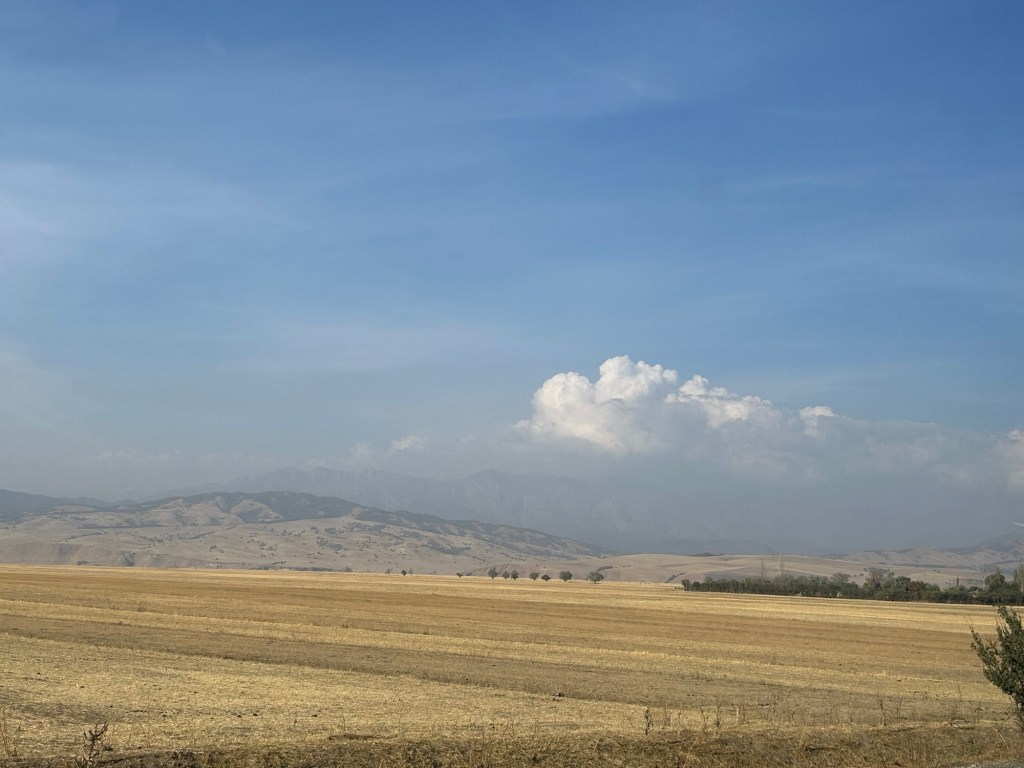
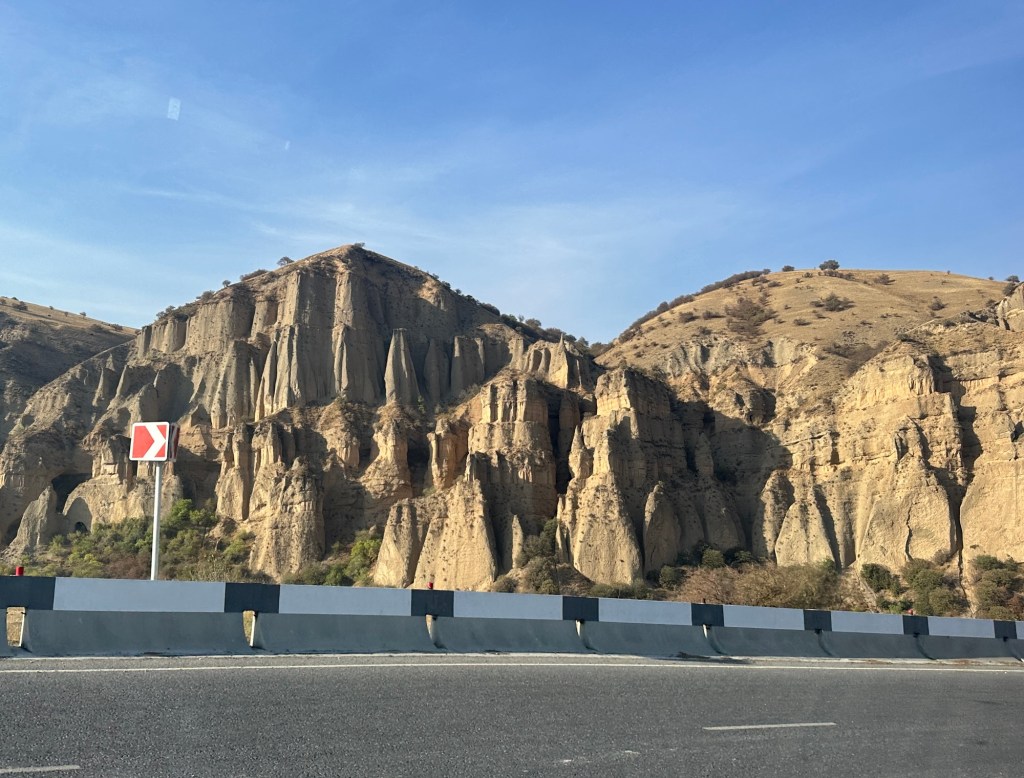
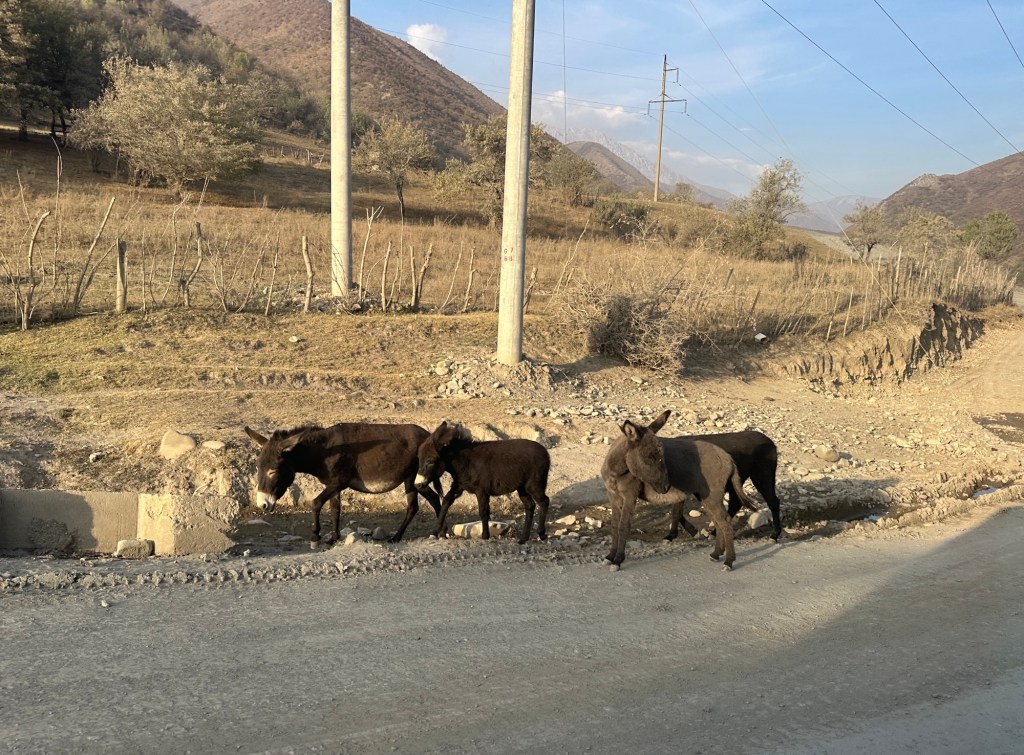
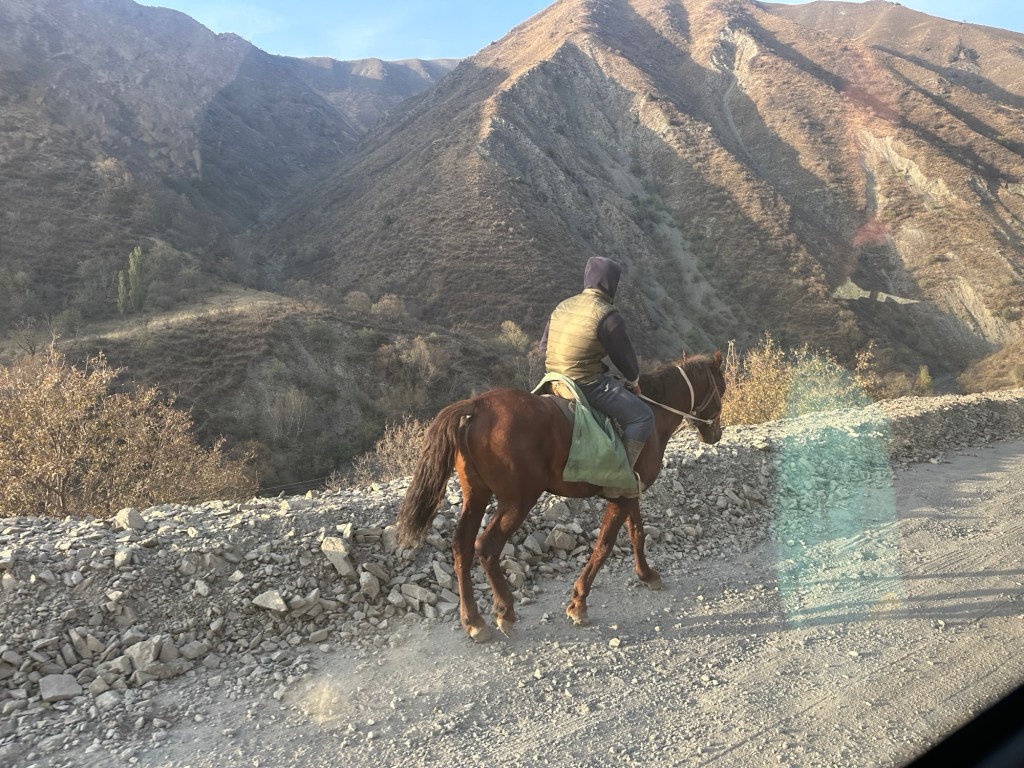
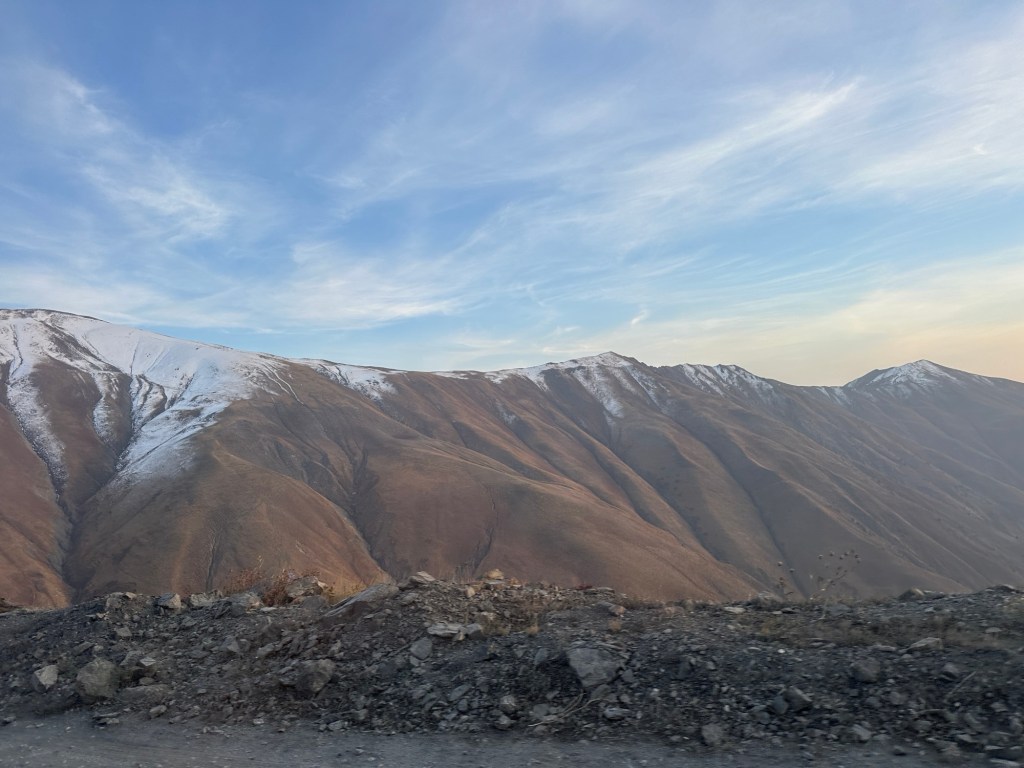
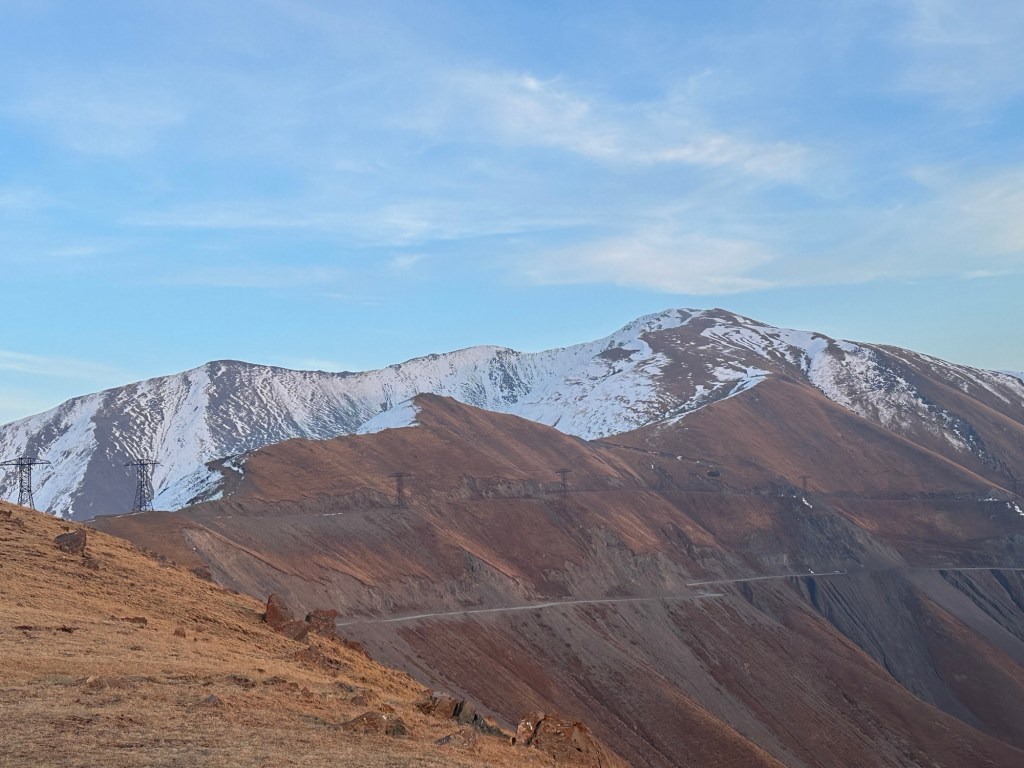
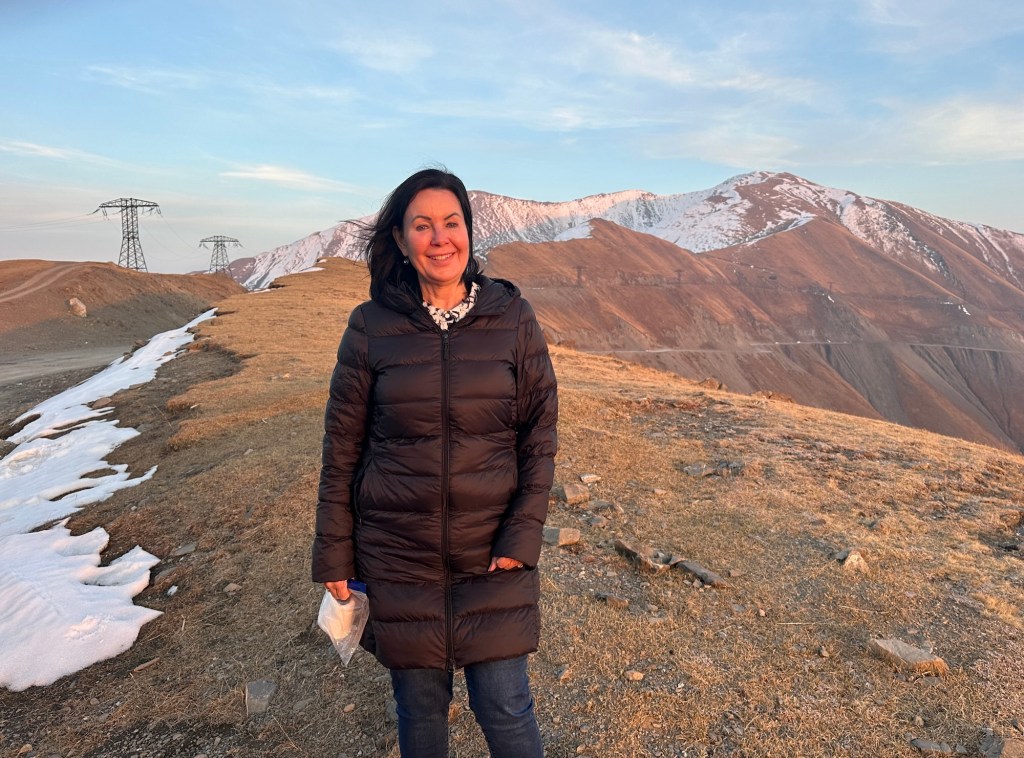
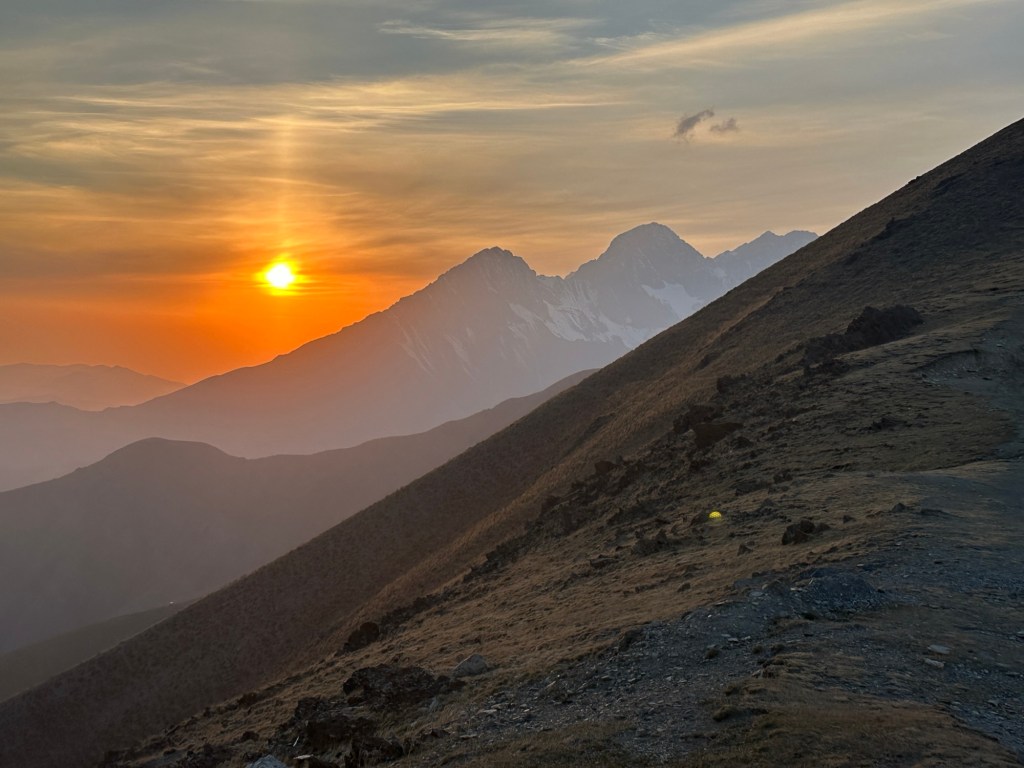
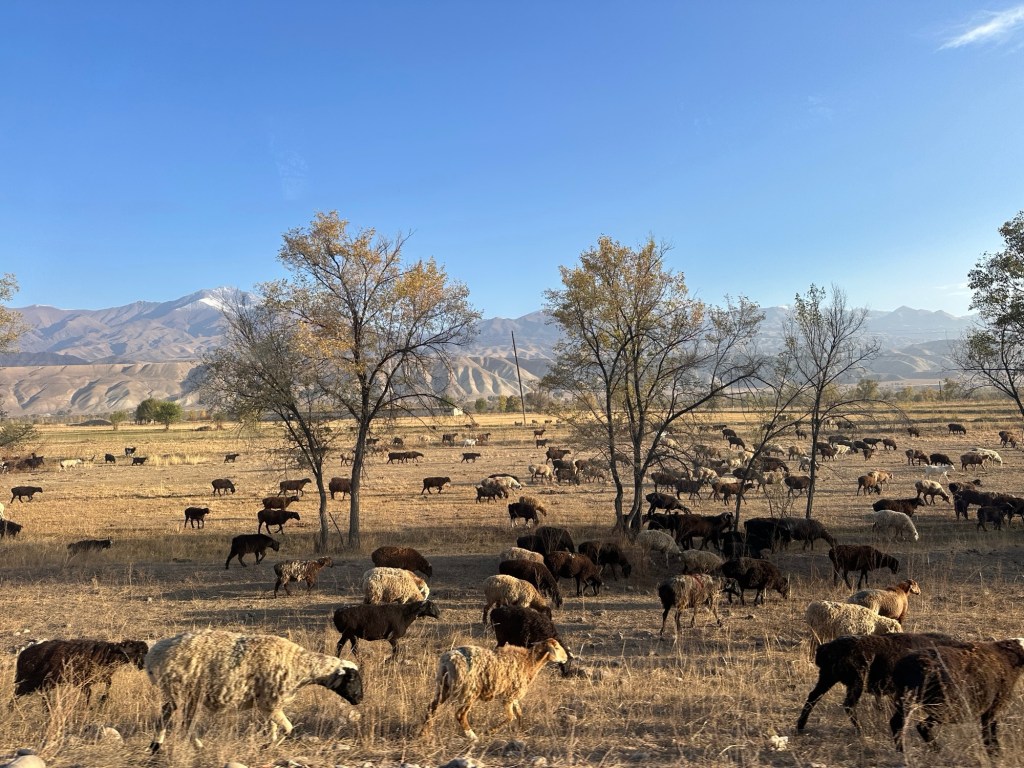
From there we had a four hour bone shaking drive on rough unsealed roads (originally we were told it would be five hours but we made good time… or Ernest was preparing us for the worst case scenario) to Kazarman village. We went through two mountain passes getting as high as 2980 metres above sea level – the scenery was spectacular with snow capped rugged peaks and steep valleys. Sheep and goats grazed on the side of the mountains, not sure how they stayed upright. We stopped at the peak for a photo of the sunset over the mountains- the temperature was down to a brisk 5 degrees. The last hour of driving was in the dark – a little bit scary I have to say.
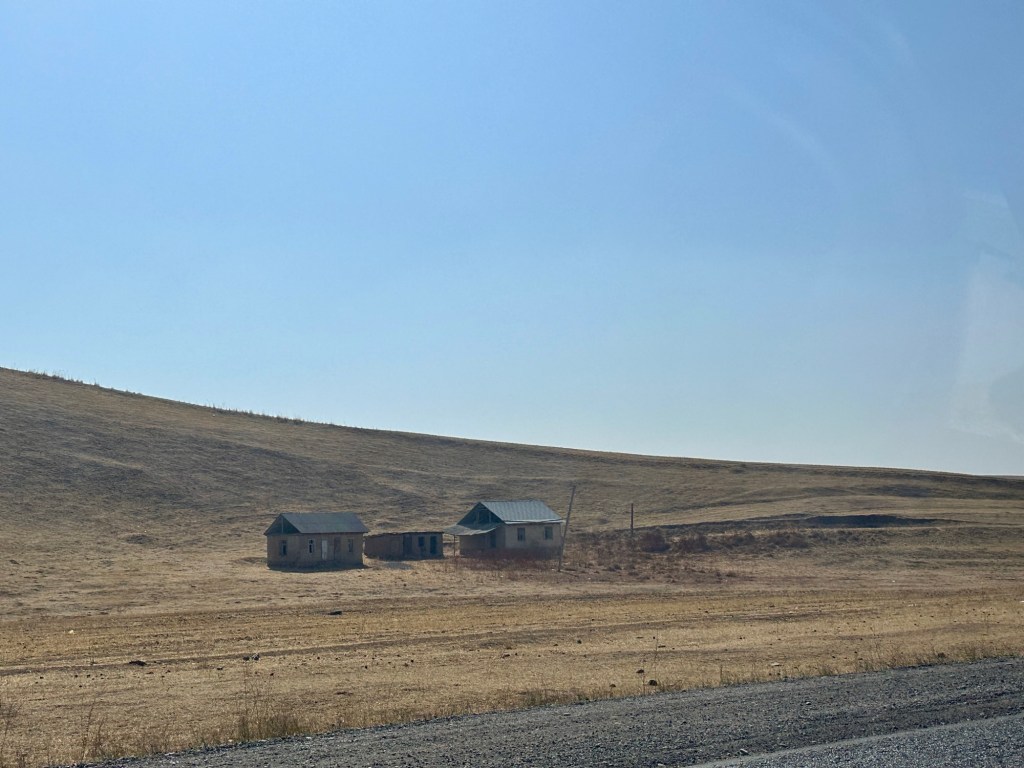
Finally we arrive at Baktygul Guesthouse – a local guesthouse. The Community-Based Tourism (CBT) organisation was established in 2003 with Swiss assistance to improve living conditions in remote mountain communities, by developing small-scale sustainable ecotourism initiatives. The family-based initiatives are not only sustainable but perfectly suited to the hospitality-rich but infrastructure-light nature of tourism in Kyrgyzstan. The CBT umbrella organisation provides training and marketing, but the bulk of the money (80–90 percent) goes directly to the service providers.
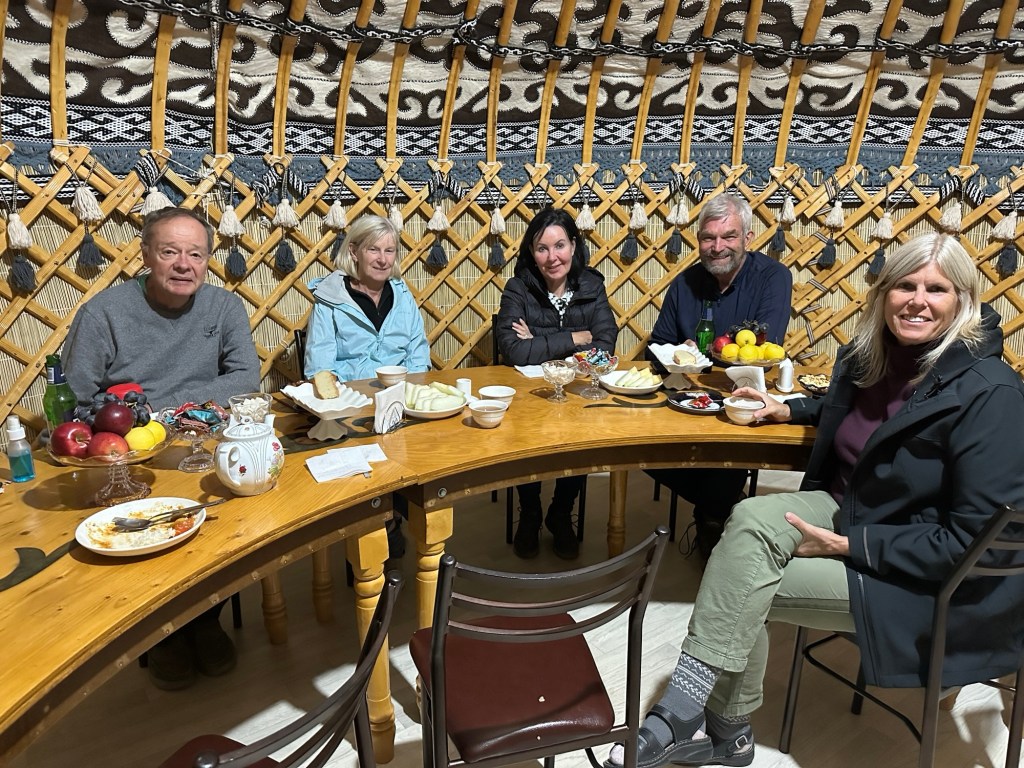
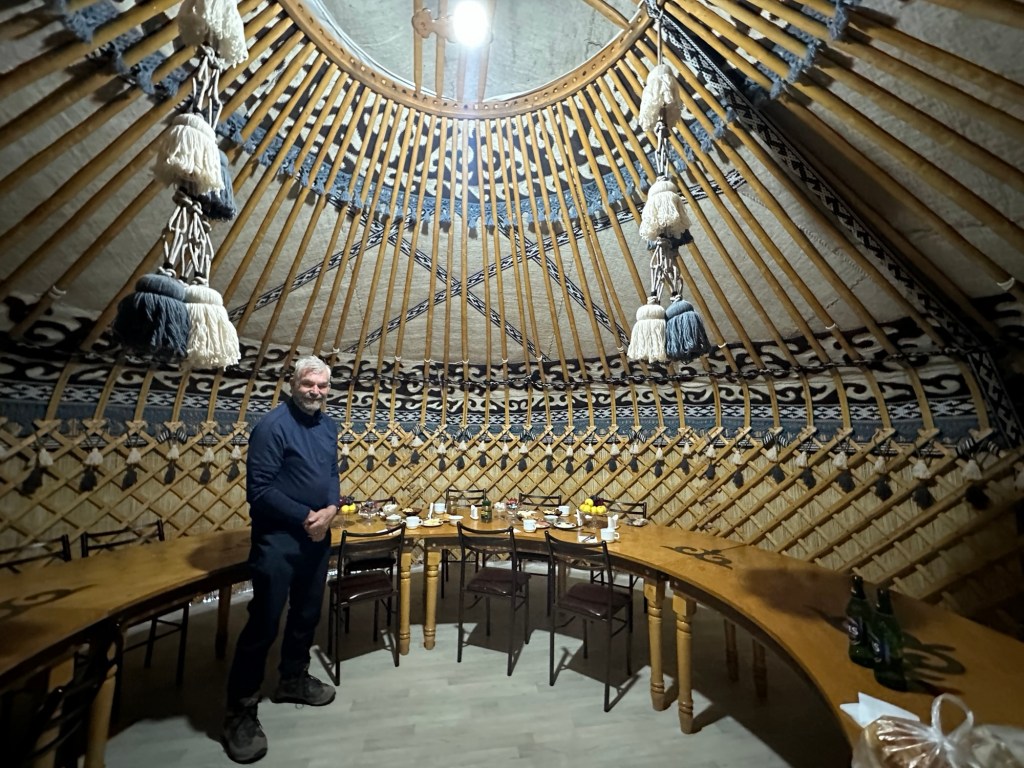
Our homestay was very comfortable, a basic room with two single beds and shared facilities. The dining area was in a yurt. Given that we only arrived at 8pm it was more than adequate. Our host had dinner ready for us, lentil soup and bread, followed by beef and vegetable stew with rice. The next morning we had an omelet, fruit, bread and buns. Our host was a teacher, so this gives her an extra income. A very pleasant stay.
Day 28
Wednesday 8th October
Kazarman to Sonkul Lake
10 – -1 degrees, sunny, with a few snowflakes
Early breakfast ready for our five hour drive to Son-Kul Lake. We had to traverse two mountain passes through the Tien Shan Mountains, all on unsealed roads, the first was 3280 metres, the second 3324 metres. Couldn’t stop taking photos of the spectacular alpine scenery.
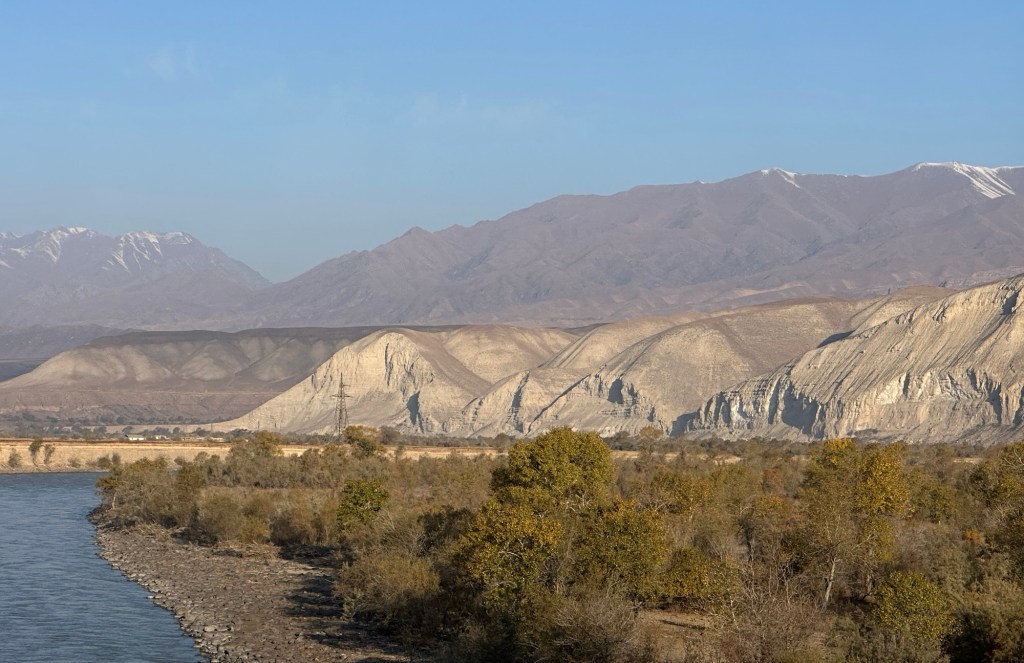
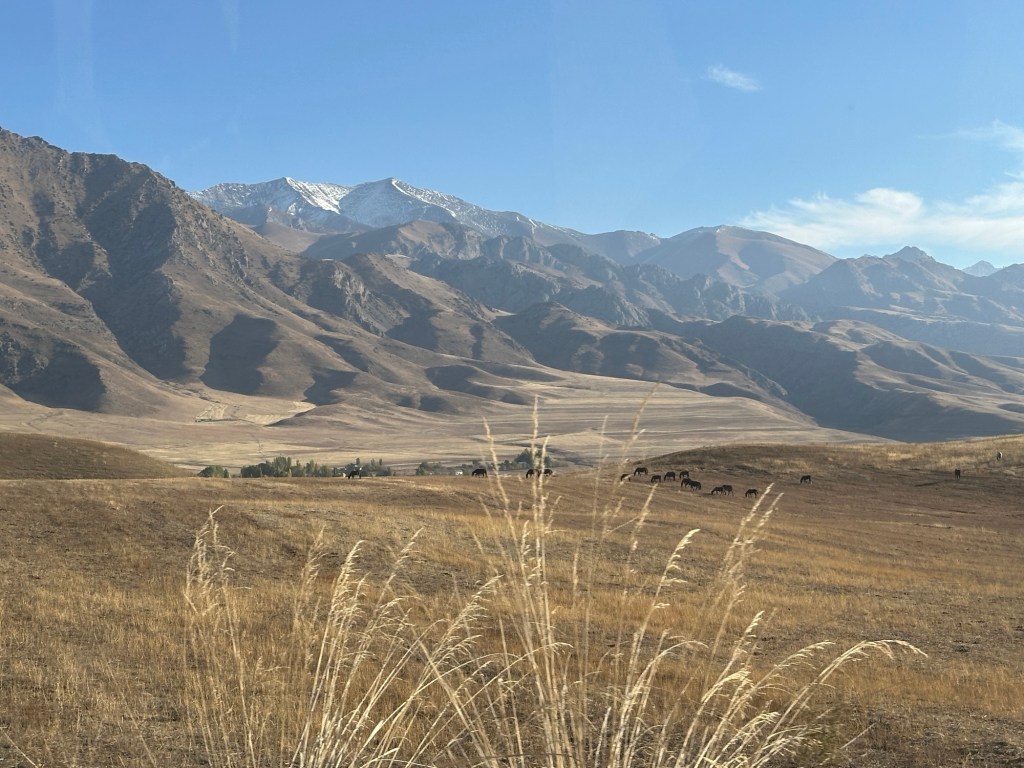
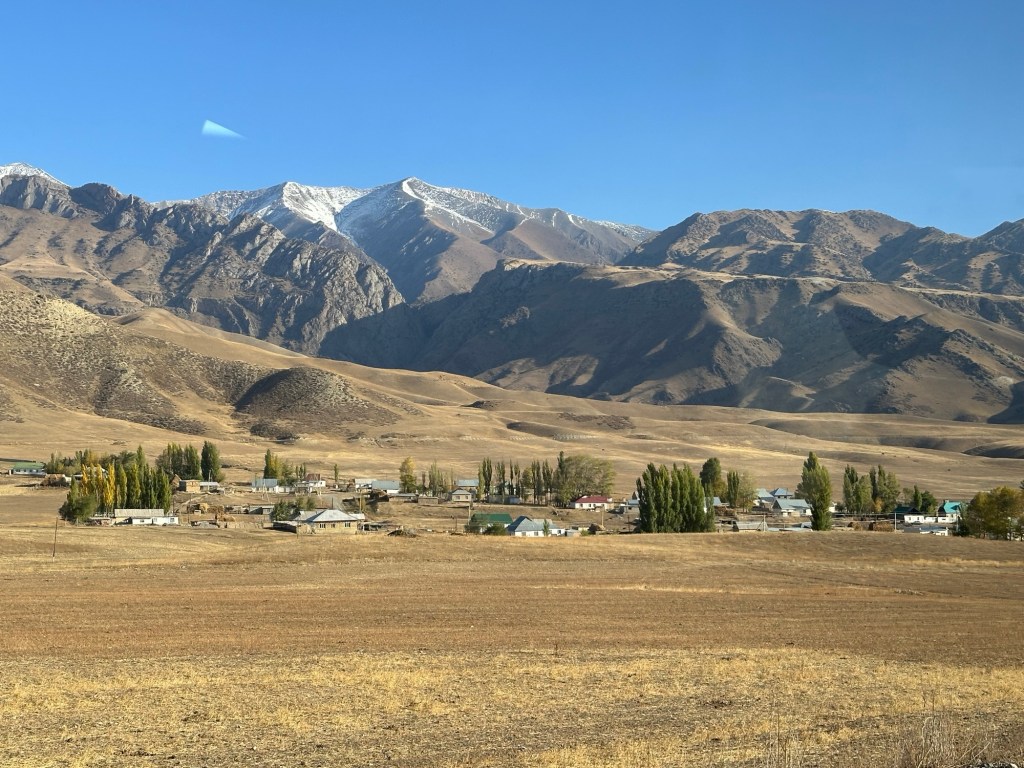
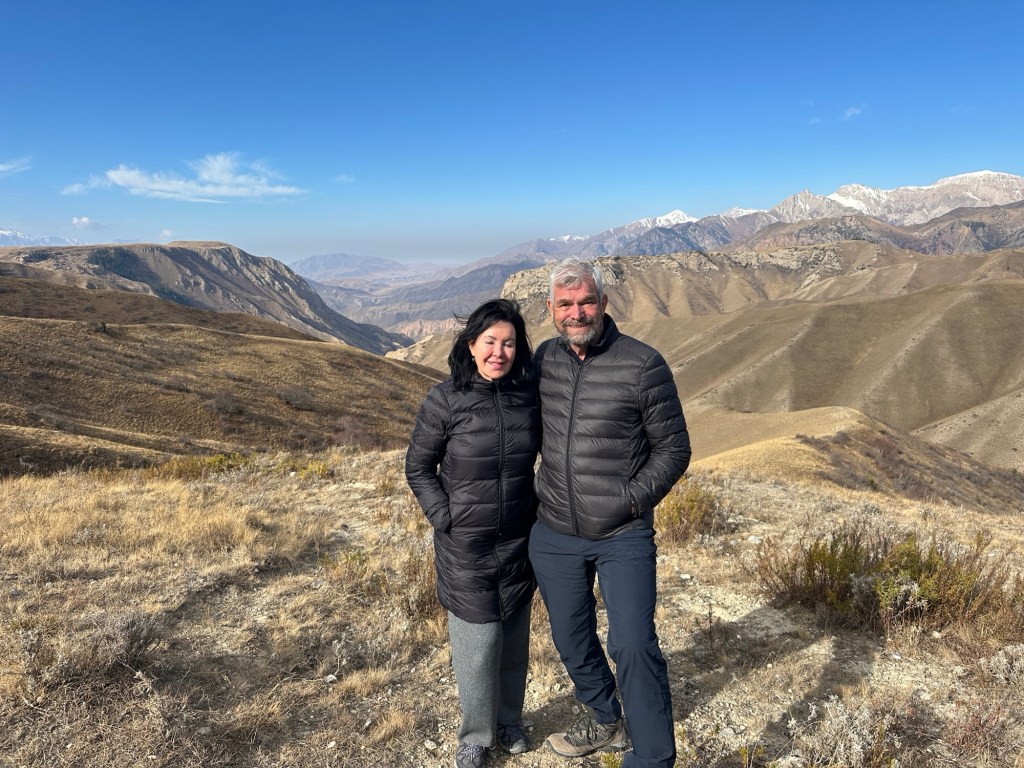
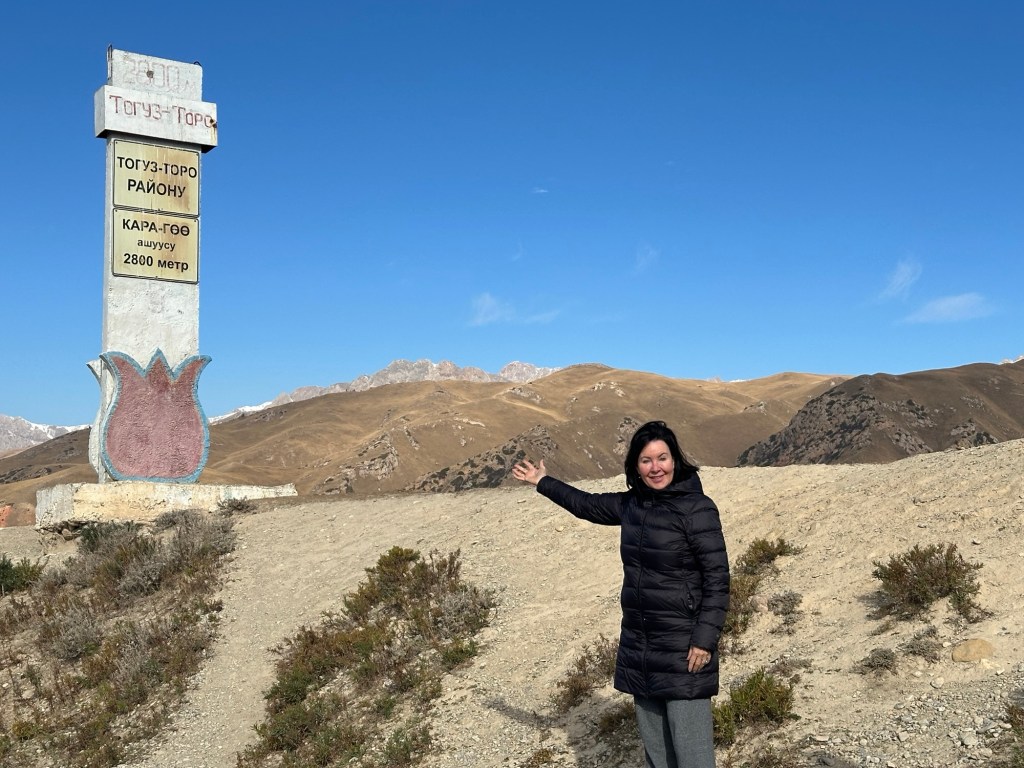
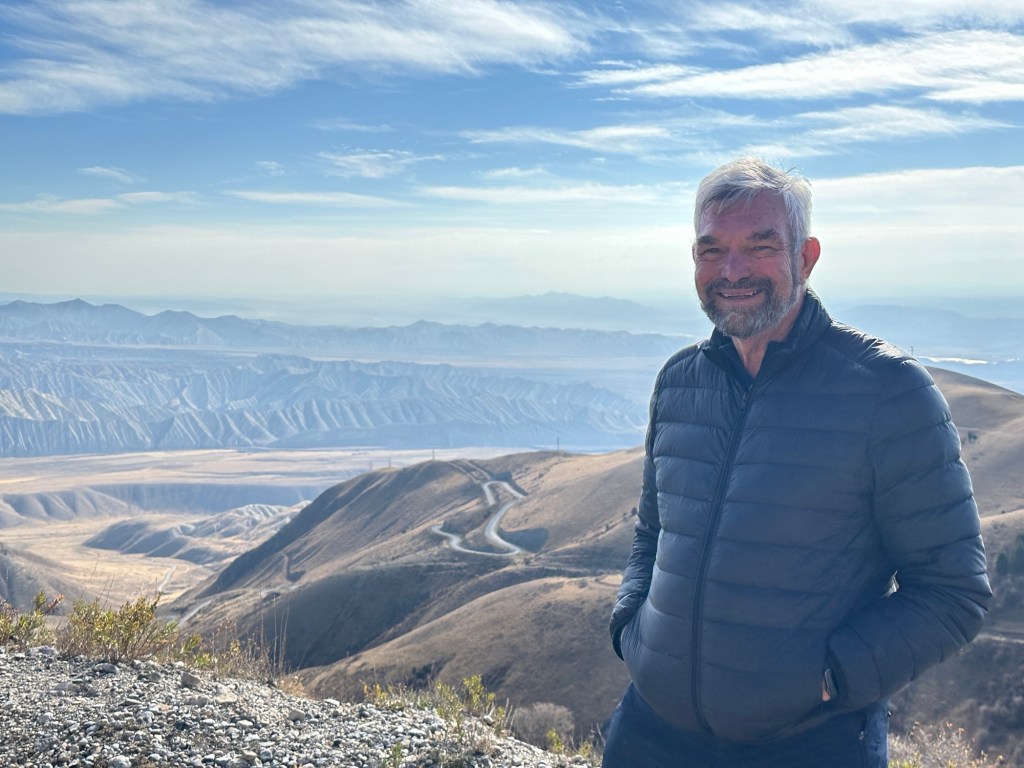
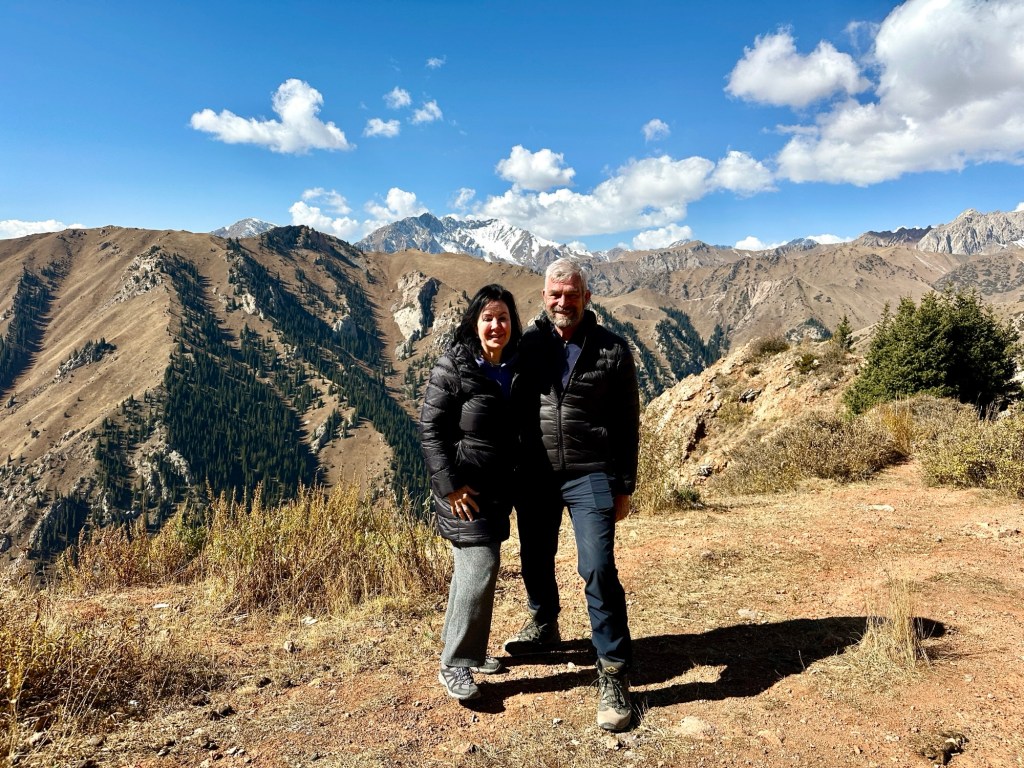
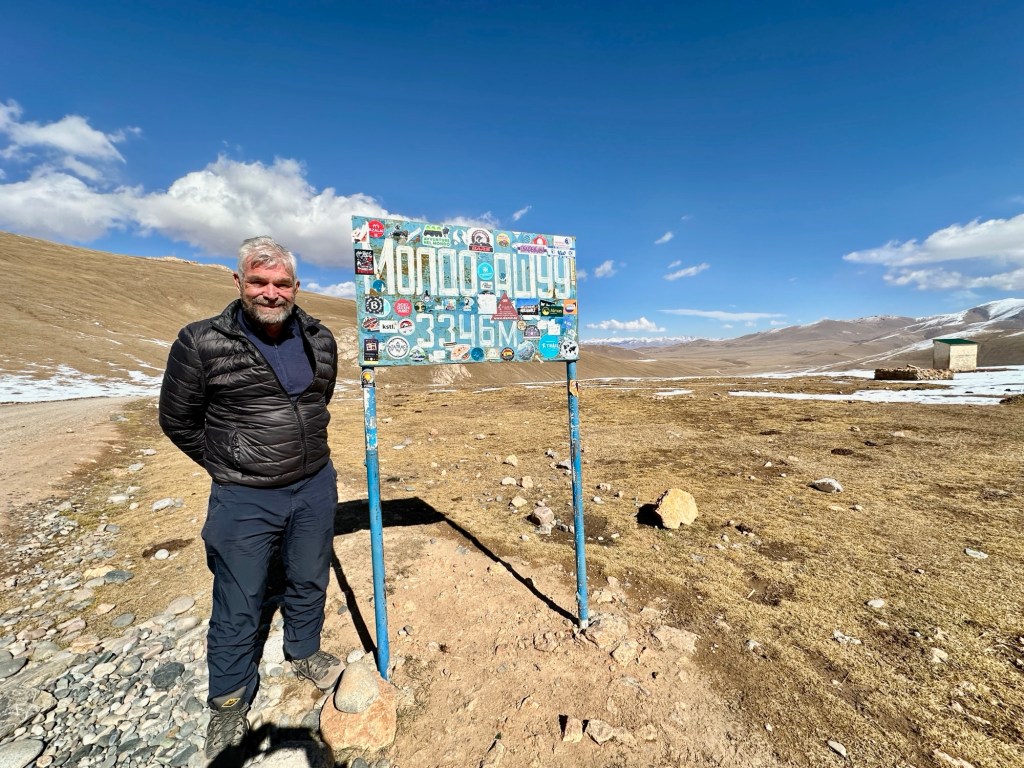
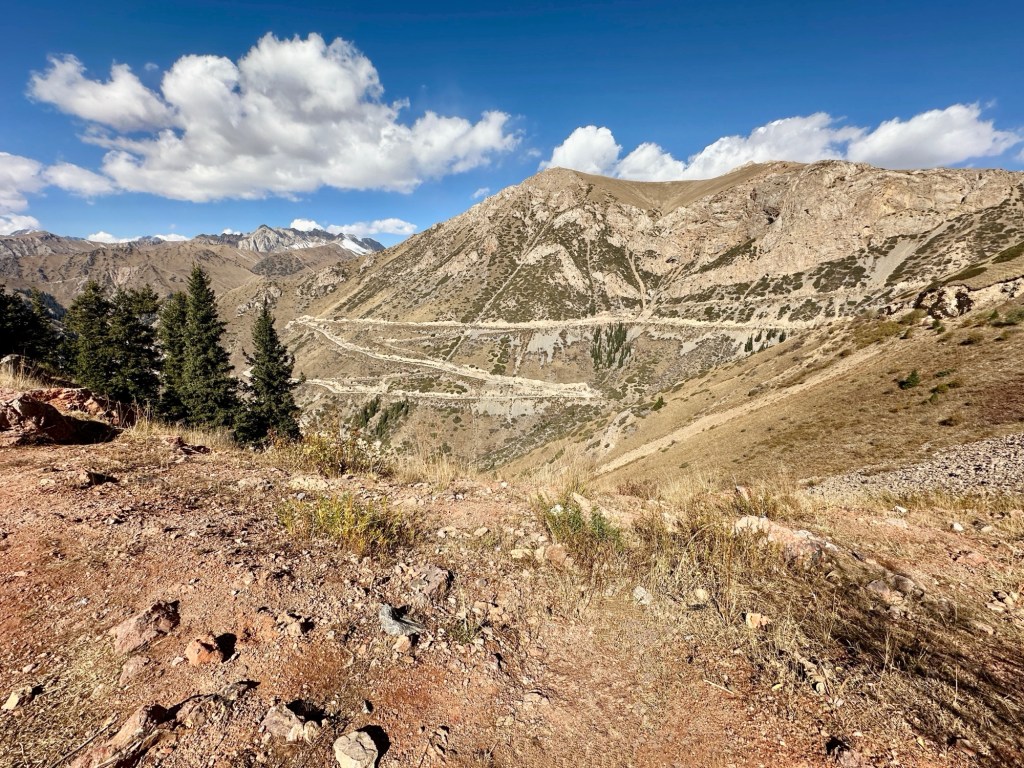
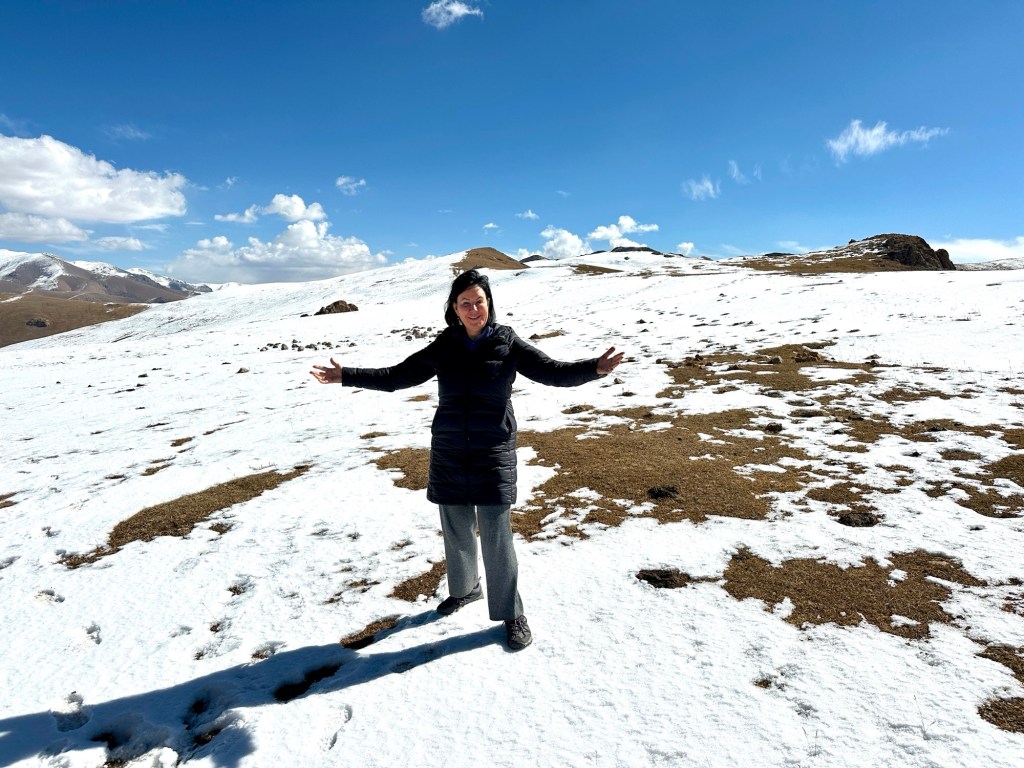
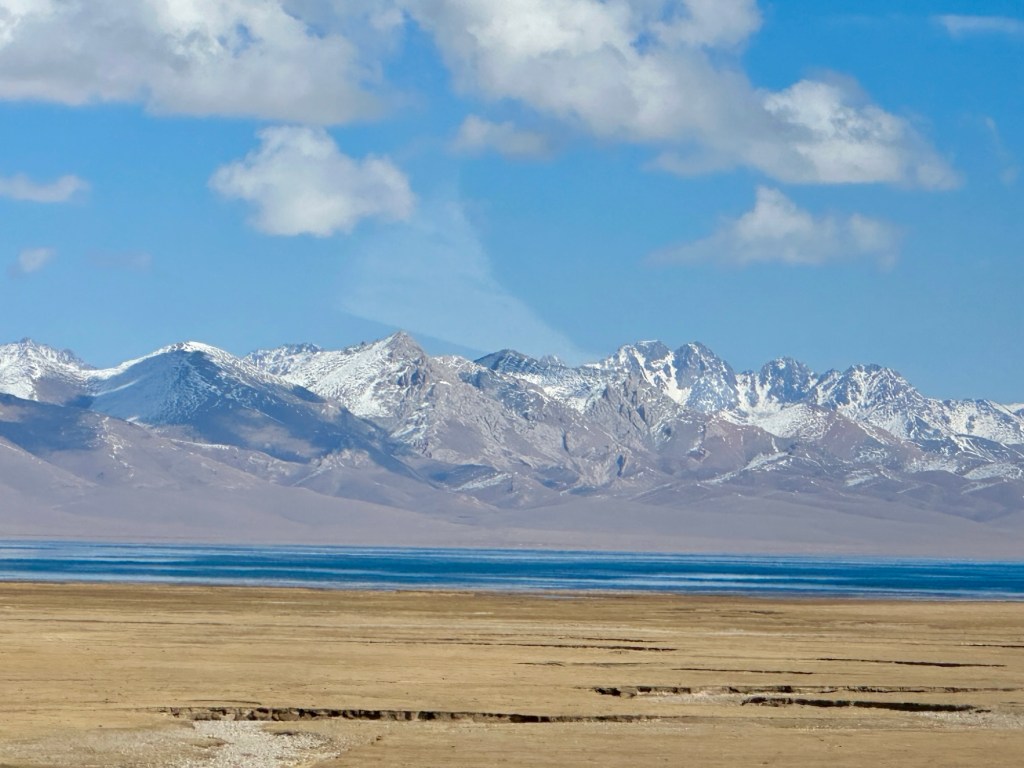
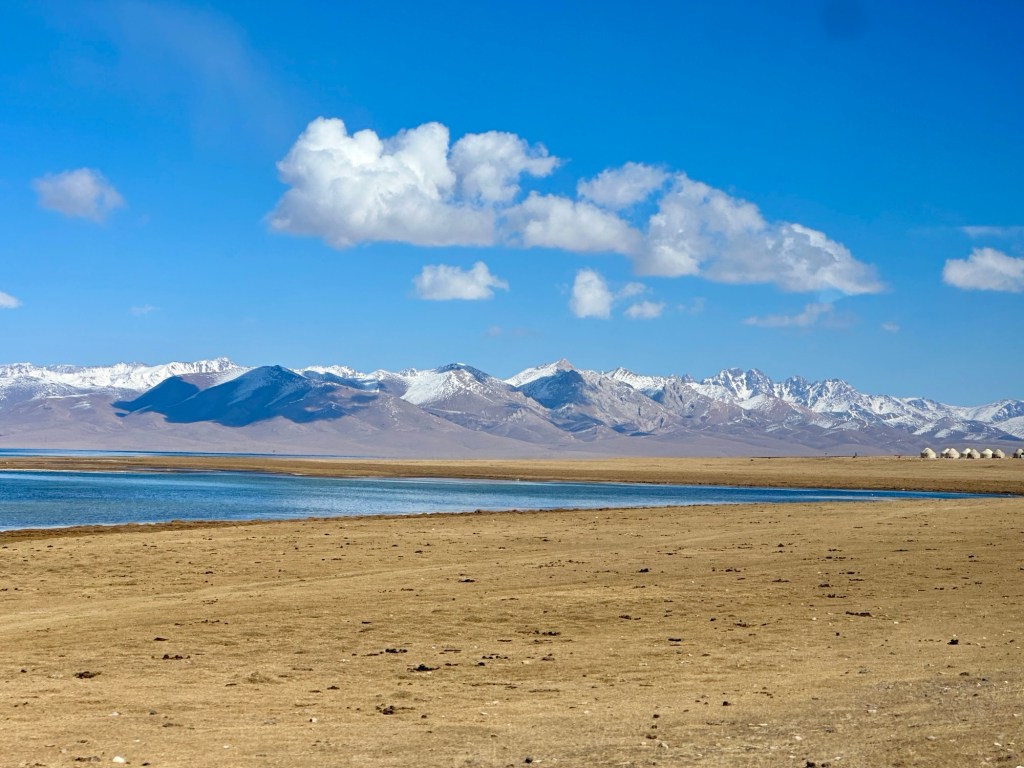
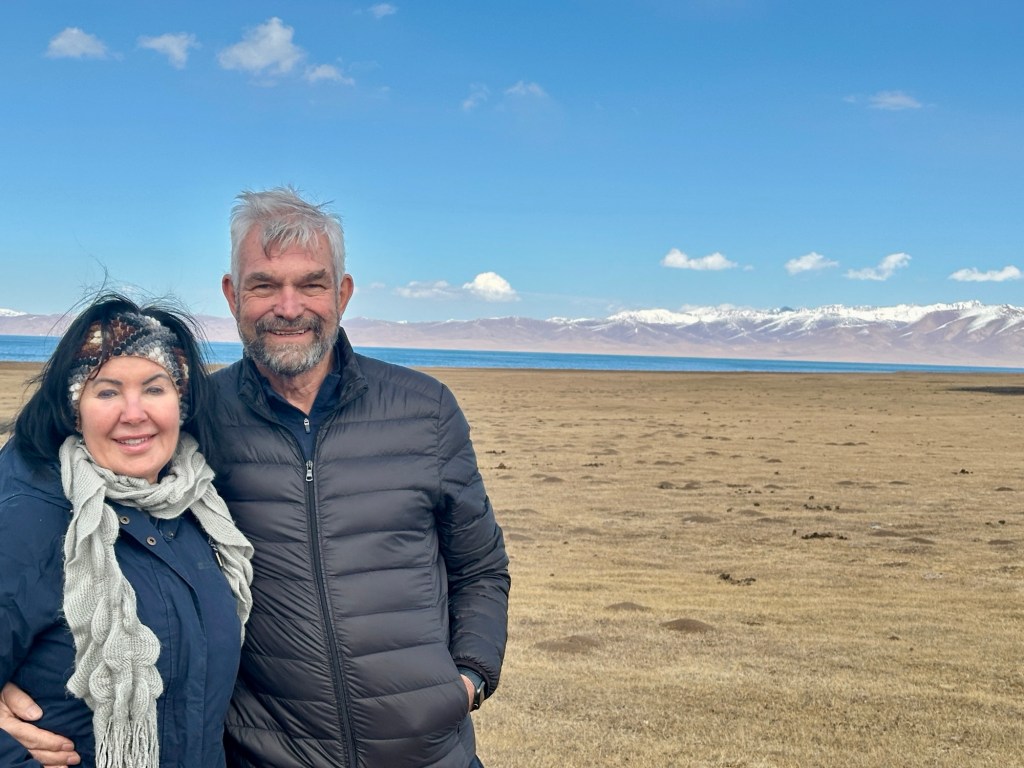
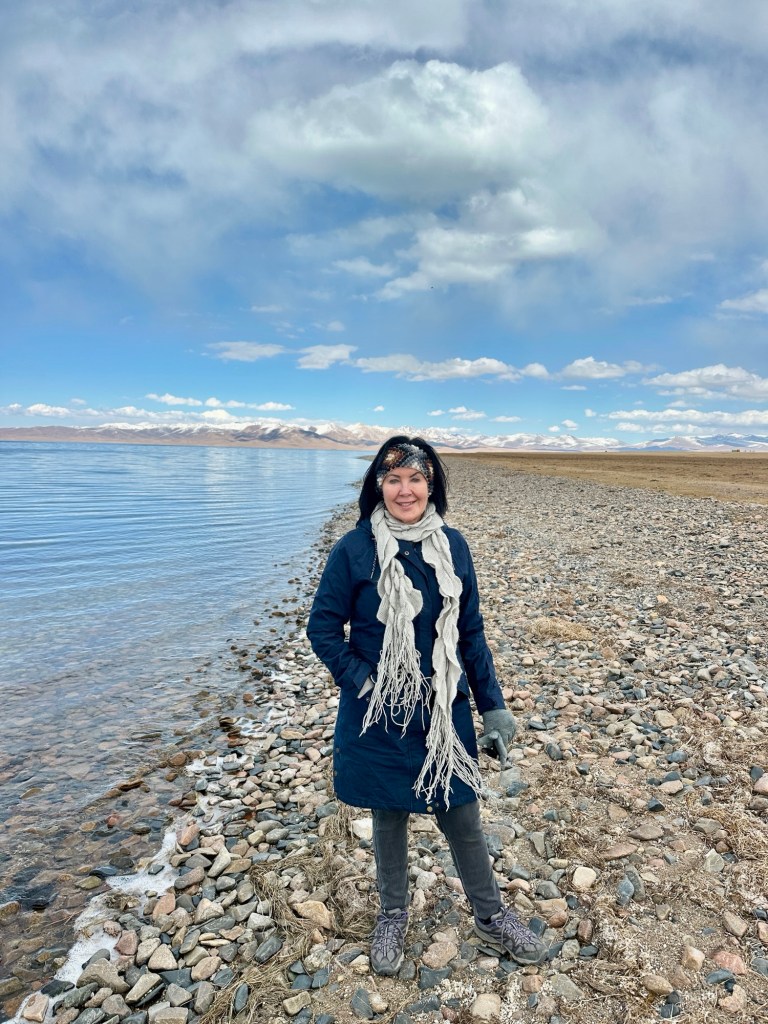
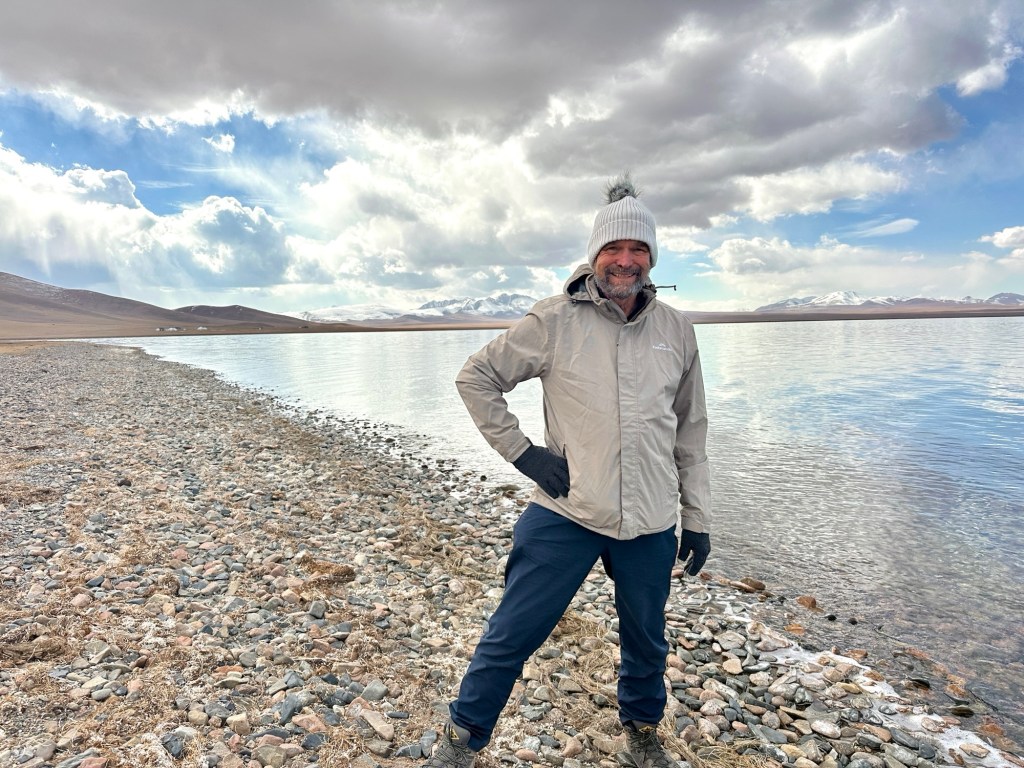
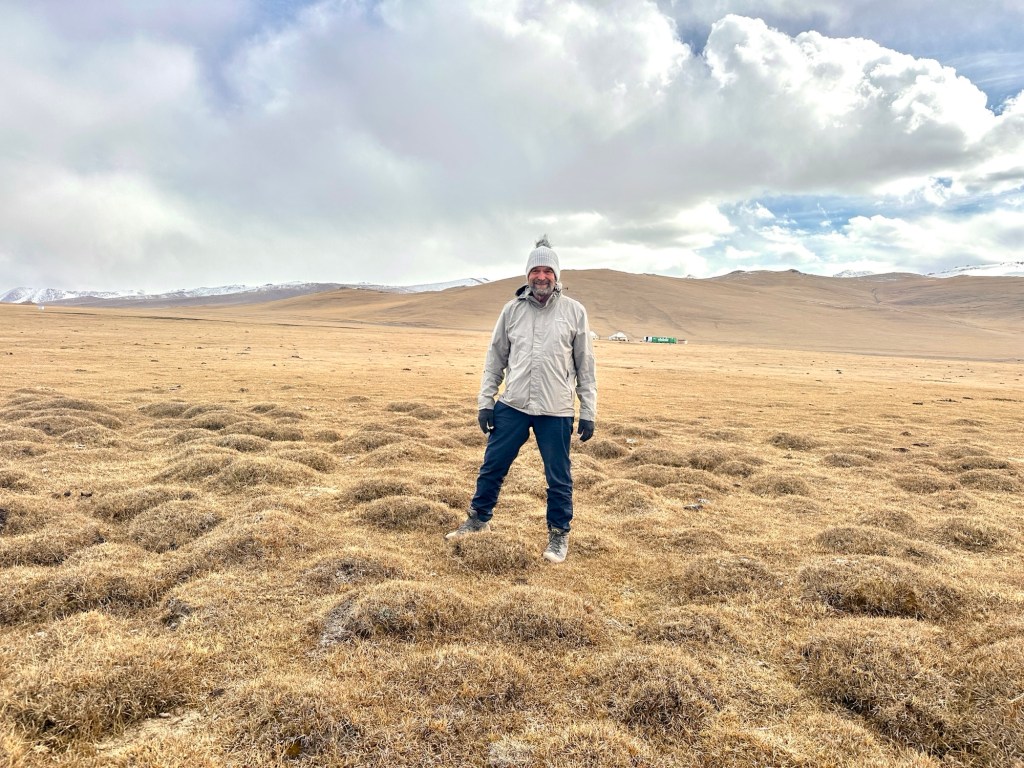
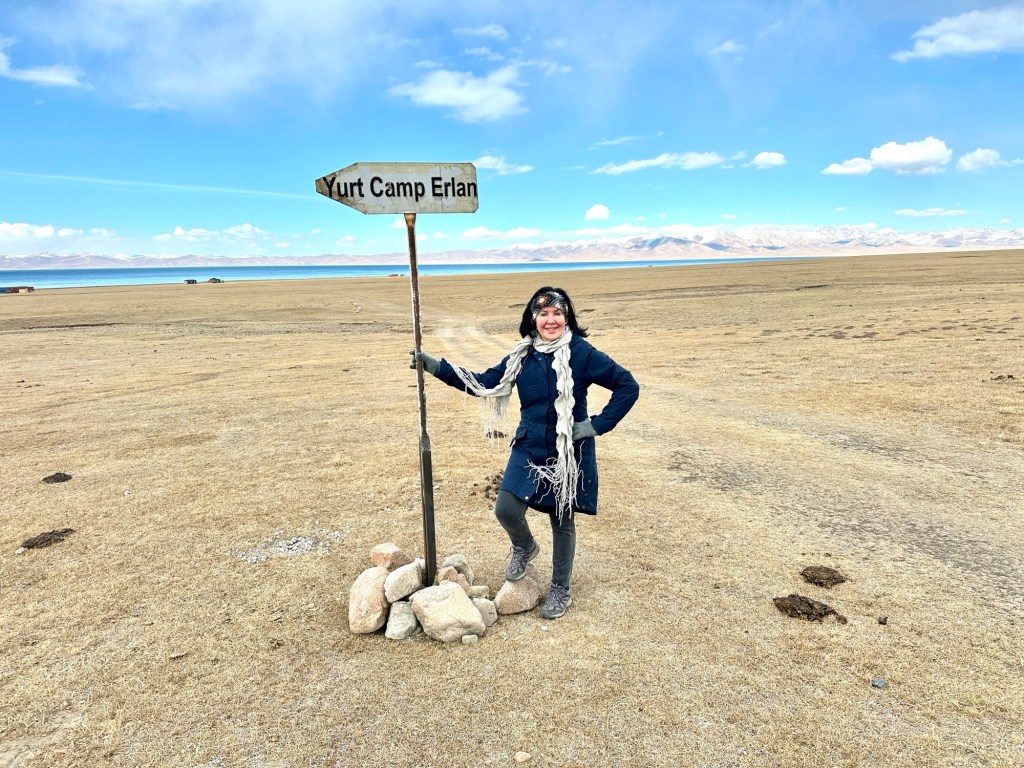
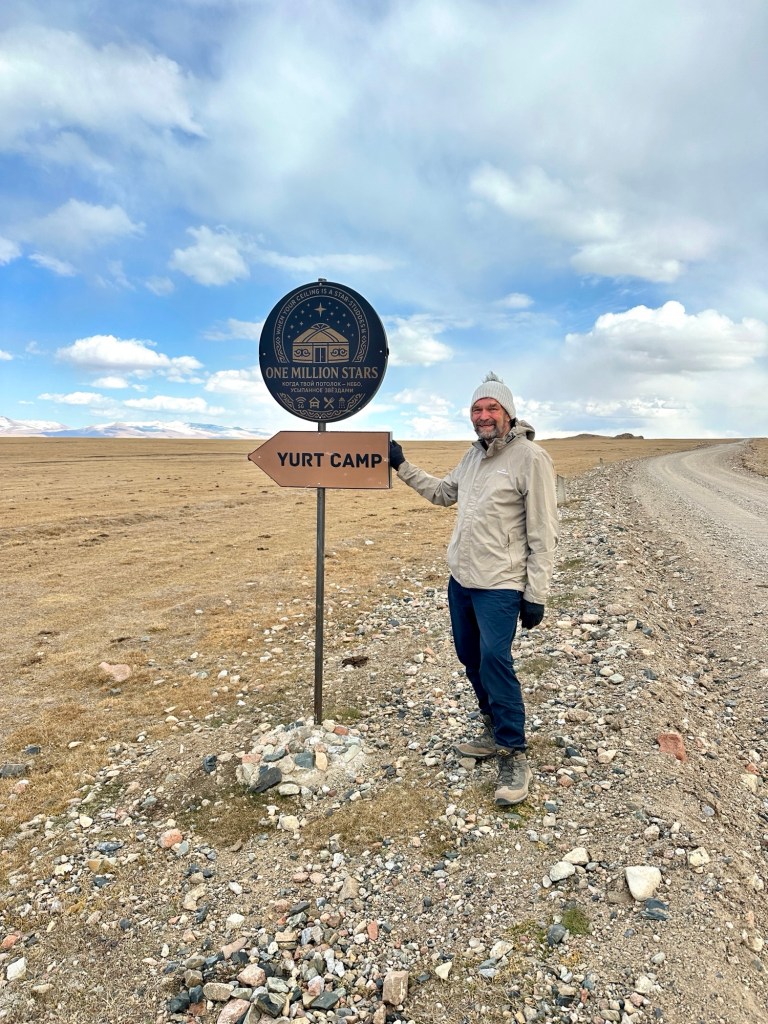
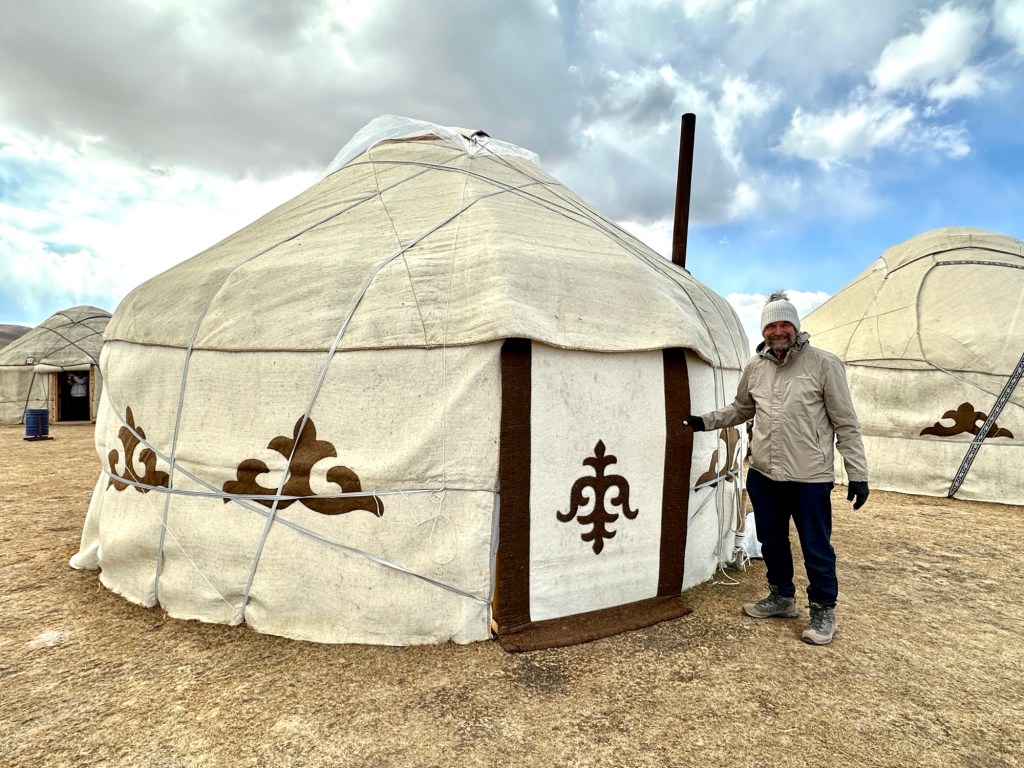
As we descended from the second pass we could see the turquoise gem sparkling ahead of us. Sonkul Lake is a remote mountain lake situated on a treeless, high mountain plateau (3016 m) where shepherds bring their livestock in the summertime, and establish a camp for living – setting up their yurts. There are also set up yurt camps for tourists – they do get disassembled at the end of tourist season which in this case will be 25th October. We stayed at Camp Erlan.
Relatively portable, warm and spacious and made from raw materials supplied by the herders’ own livestock, yurts can be constructed or taken down easily and quickly and carried away on the back of three camels, or more commonly nowadays, a truck. It’s no surprise then that yurts have been around for over a millennium. Genghis Khan reputedly had a yurt set on wheels and Tamerlane favoured the cosiness of his garden yurts to the cold grandeur of his stone palaces.
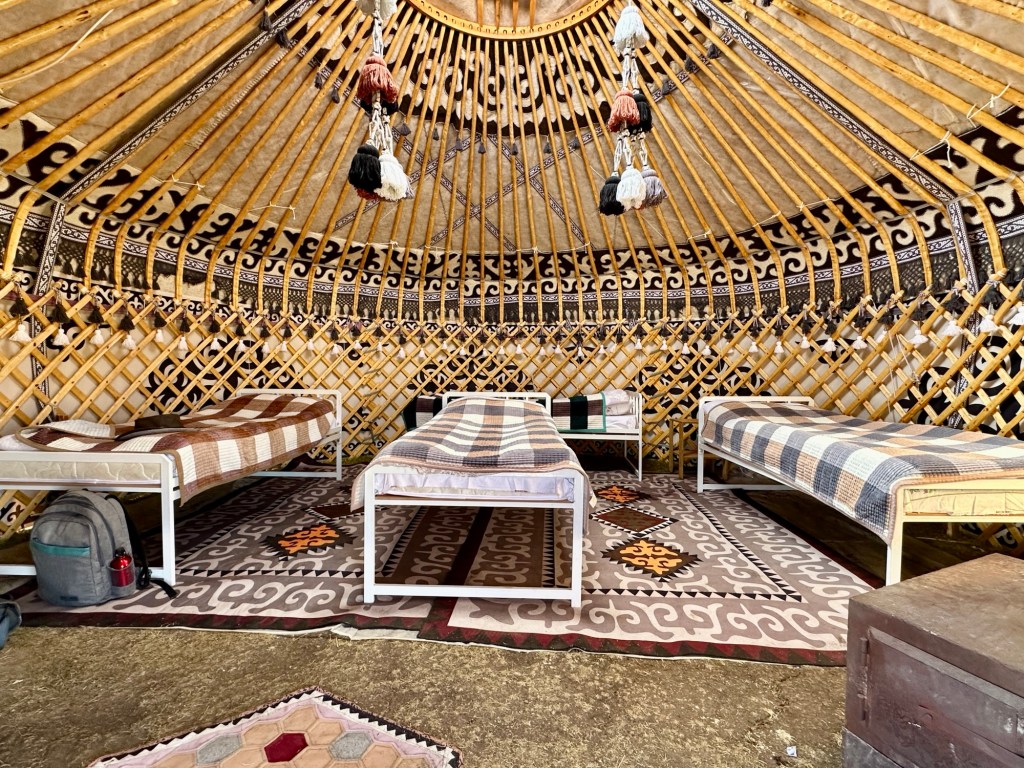
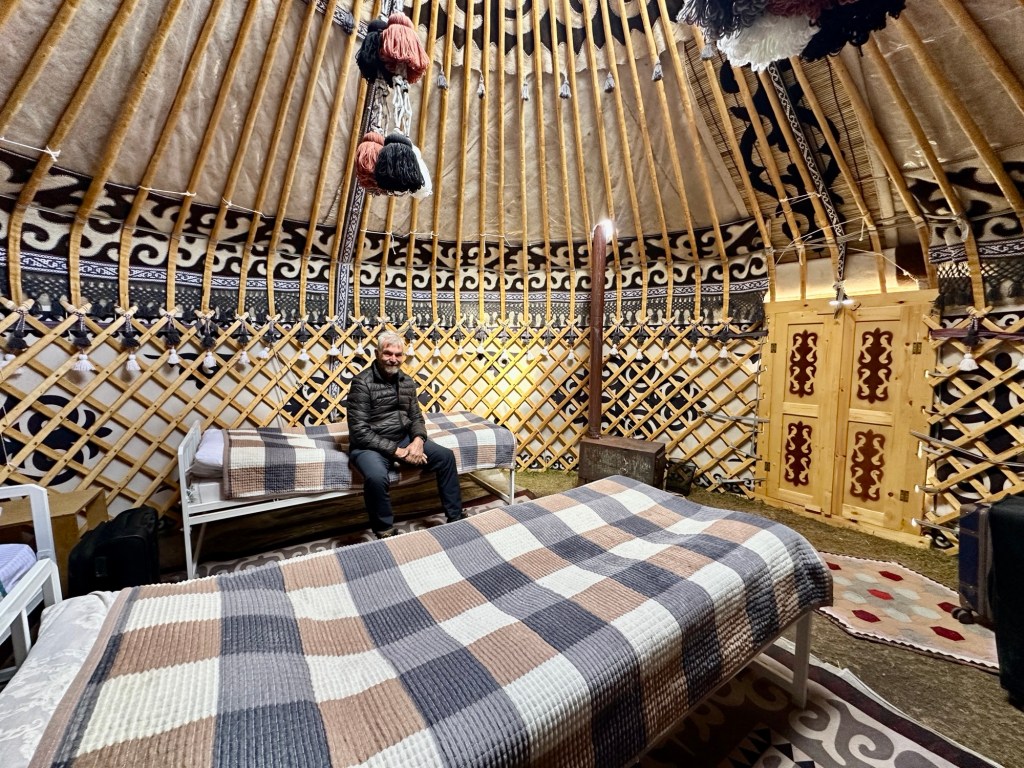
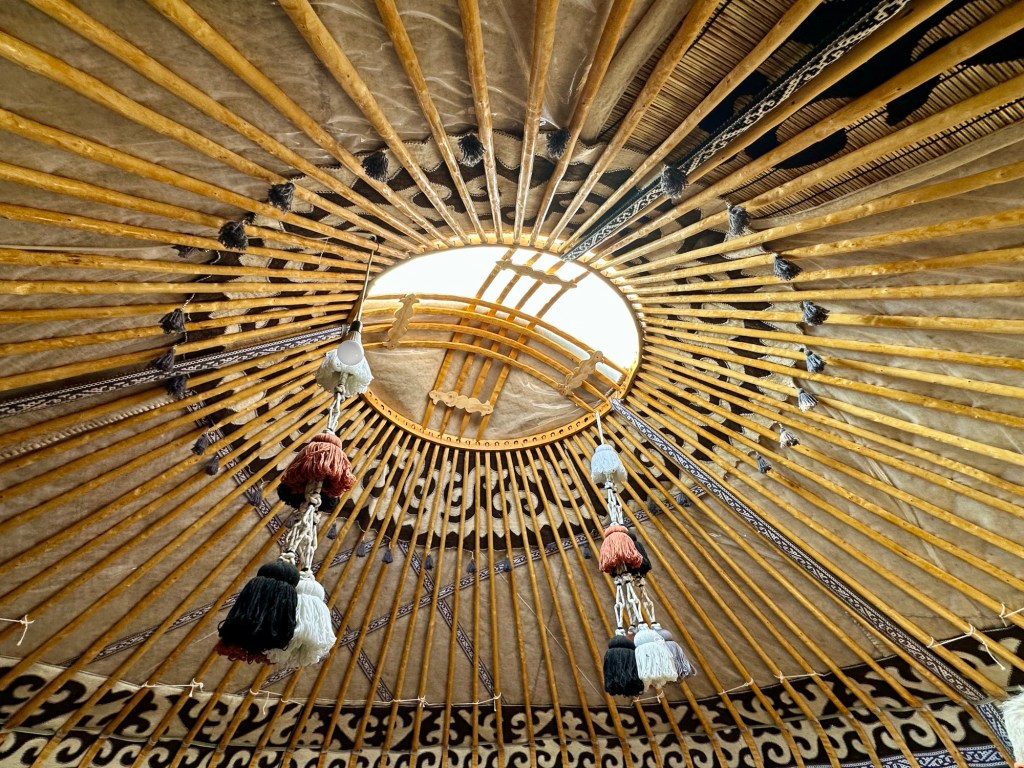
This yurt was more traditional than the one we had stayed in in Turkmenistan. The main wooden skeleton of roof poles supports a collapsible concertina-like wooden lattice that forms the inner wall of the yurt. Reed mats form a middle wall, and thick grey or white felt is placed on top and around the outside. The heaviest sections are the door frame and the circular skylight. The frame is tightened with woven strips and the floor is decorated with appliqué-felt carpets. The key to a yurt’s success is felt – warm in winter, cool in summer and surprisingly waterproof. Inside our yurt were four single beds and wood stove. There was a central light when they turned the generator on at 6pm, otherwise you could pull back the square felt piece over the whole in the roof to let in some light.
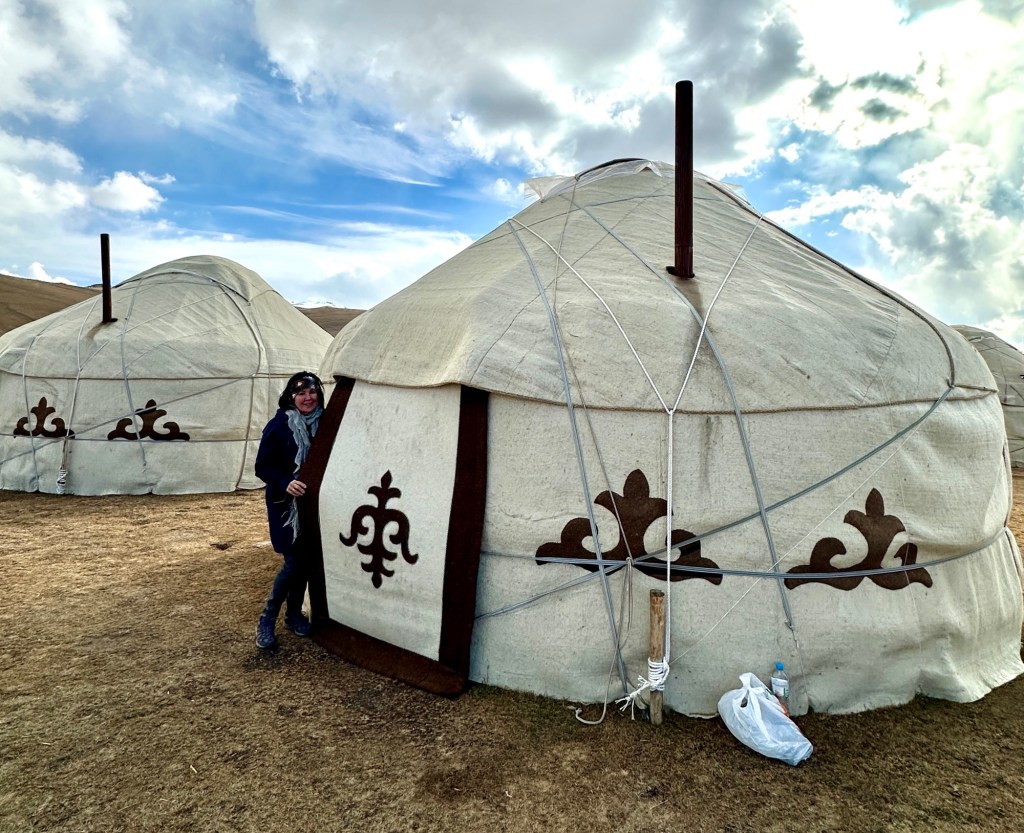
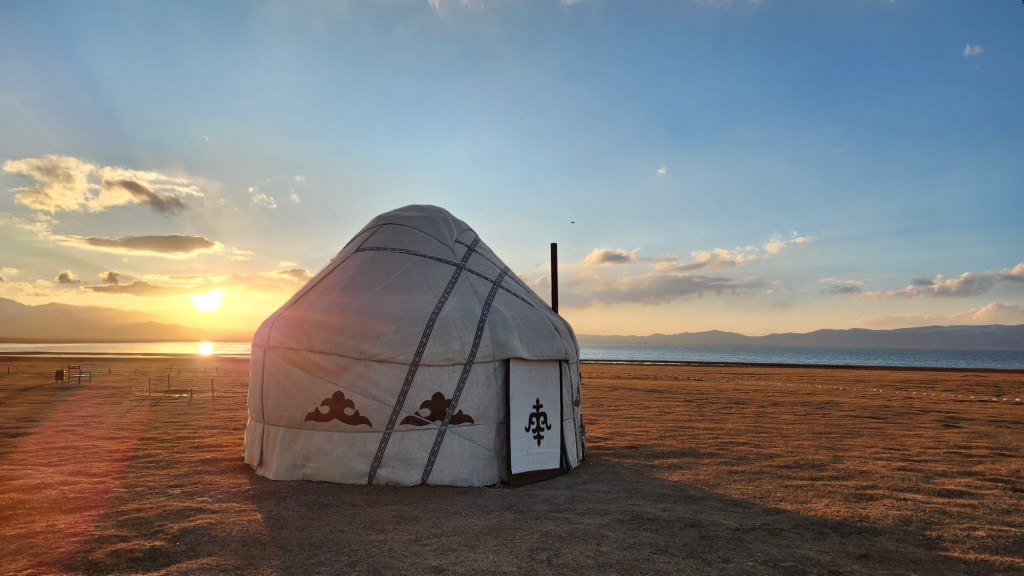
We arrived in time for a late lunch – vegetable soup with bread, salad, dried fruits, nuts, and of course plenty of tea. Ernest told us they put jam in the tea – we tried the raspberry jam, which made a nice change – particularly if you’re not a tea drinker.
We had a few hours free time, so Frank and I walked down to the lake – the water was freezing. It was about 5 degrees outside at this stage. Interesting vegetation, like tuffs of grasses for the last twenty metres towards the lake. We then walked up to the “panorama point” – a steep hill, 3170 metres above sea level . It was a very steep climb, in the high altitude, took quite a few “breathers” on the way up. Had a little sprinkling of snow while we were resting at the top.
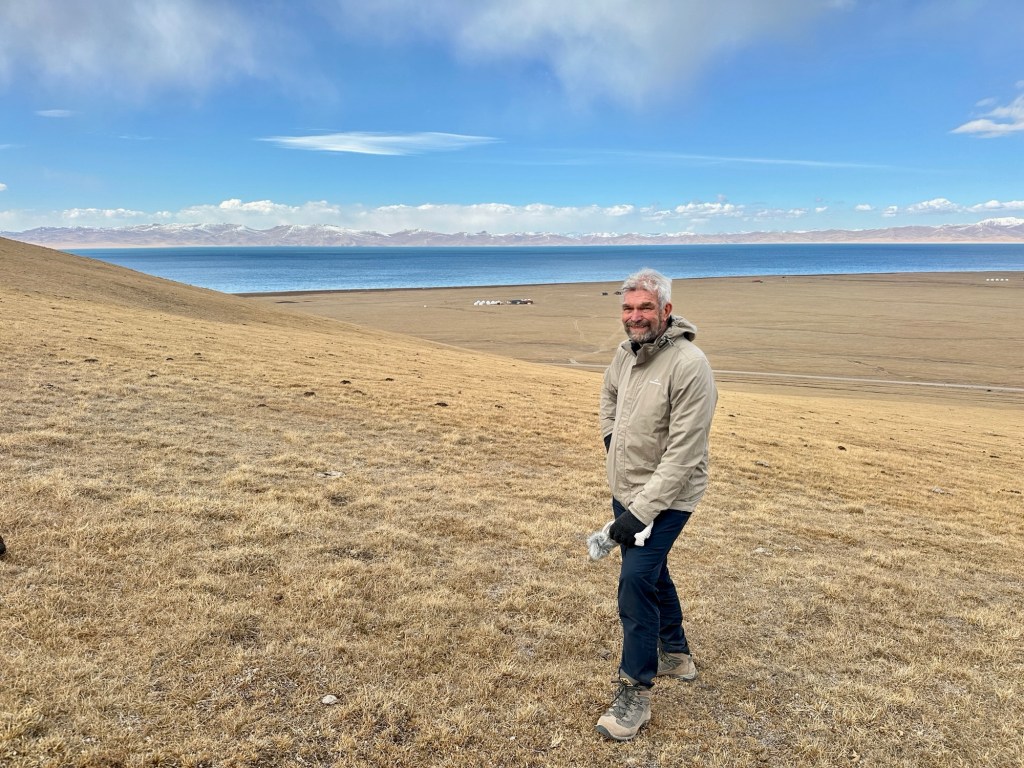
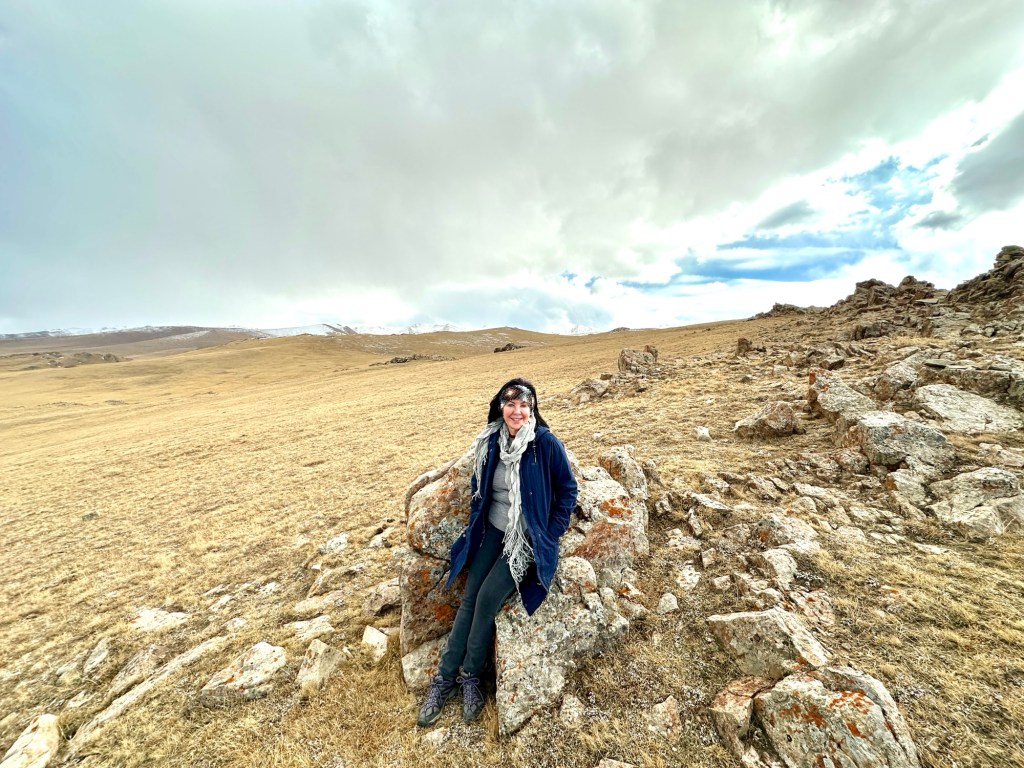
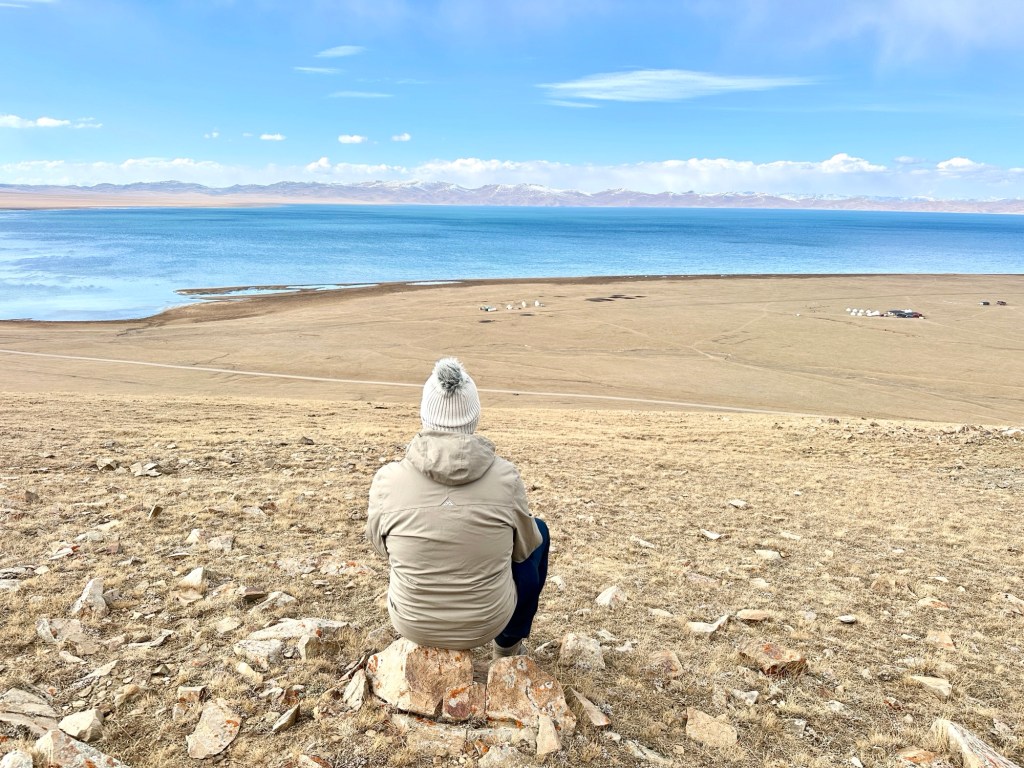
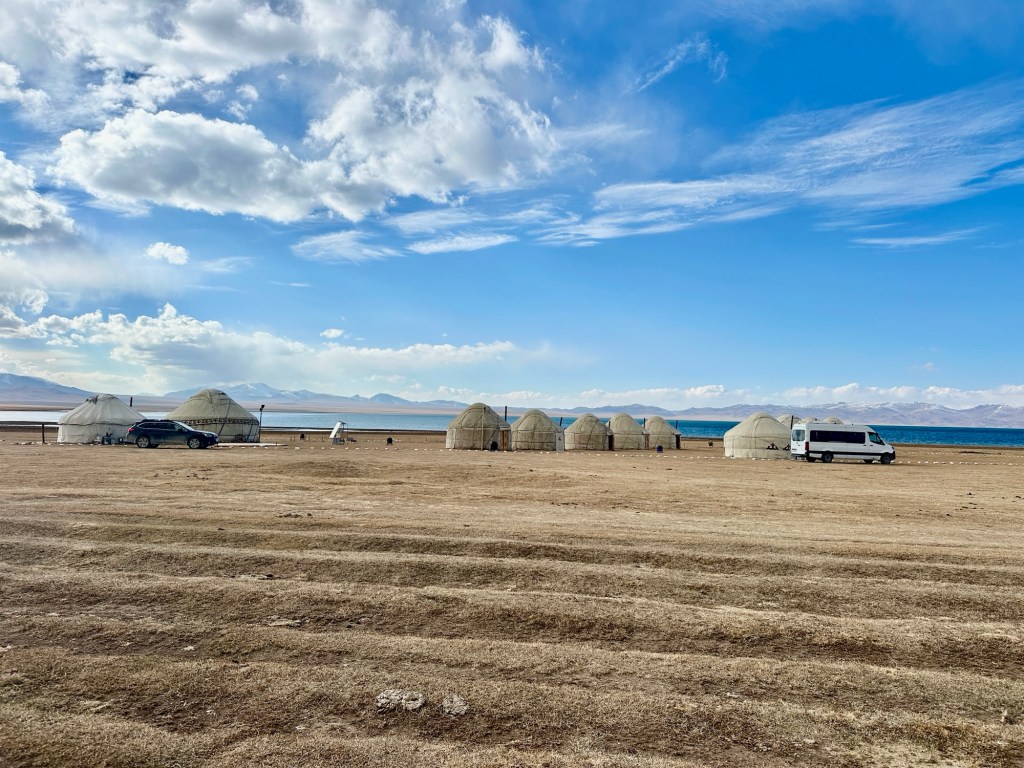
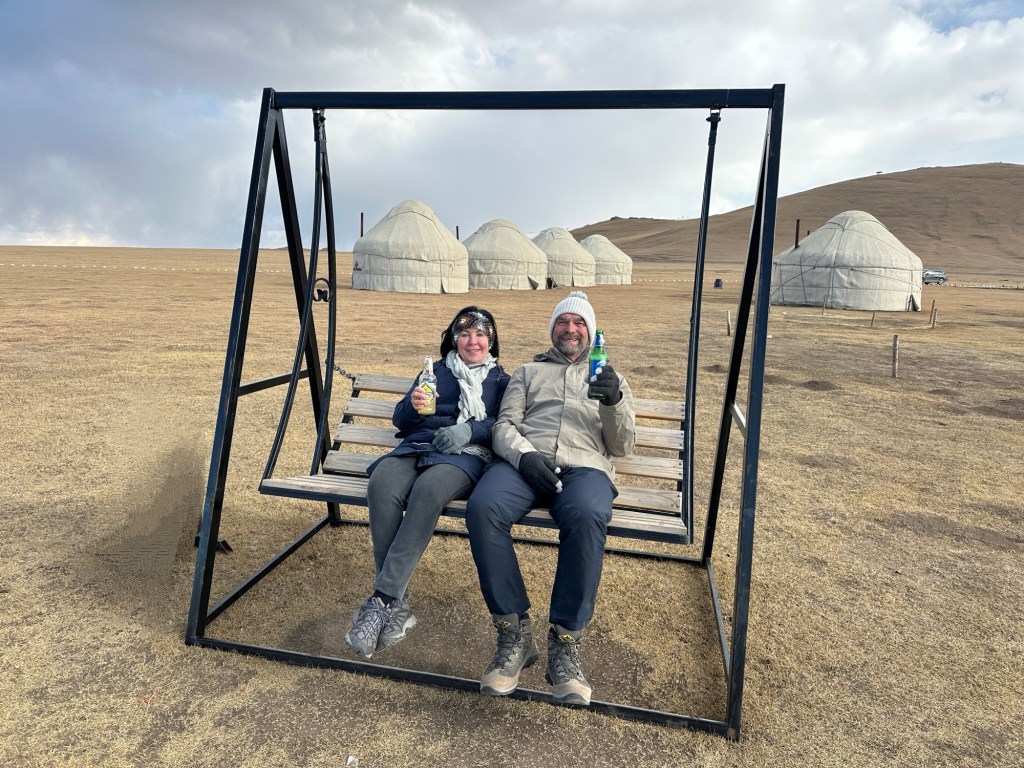
By the time we walked back down we had well and truly warmed up, so time for a refreshing ale relaxing on the swing overlooking the lake – the views of the lake and mountains are unparalleled. We cooled down very quickly and as it was a while to wait for dinner, we went and curled up in our beds for a nap. It was freezing inside the yurt – we kept wondering when they came to light our fire (it happened while we were having dinner).
No showers at the unit, just three combustible toilets, with outdoor hand basins.
Finally it was dinner time, we went to the dining yurt where it was toasty warm. We also had some beer and wine we had brought with us, so it wasn’t long until we warmed up. A beef soup to start with – the beef was very tough and difficult to get off the bone, followed by fish, rice and carrot salad. The fish was rather dry and bony- I had visions of being out in the wilderness with a fish bone stuck in throat! Our Georgian Saperavi wine though was very nice.
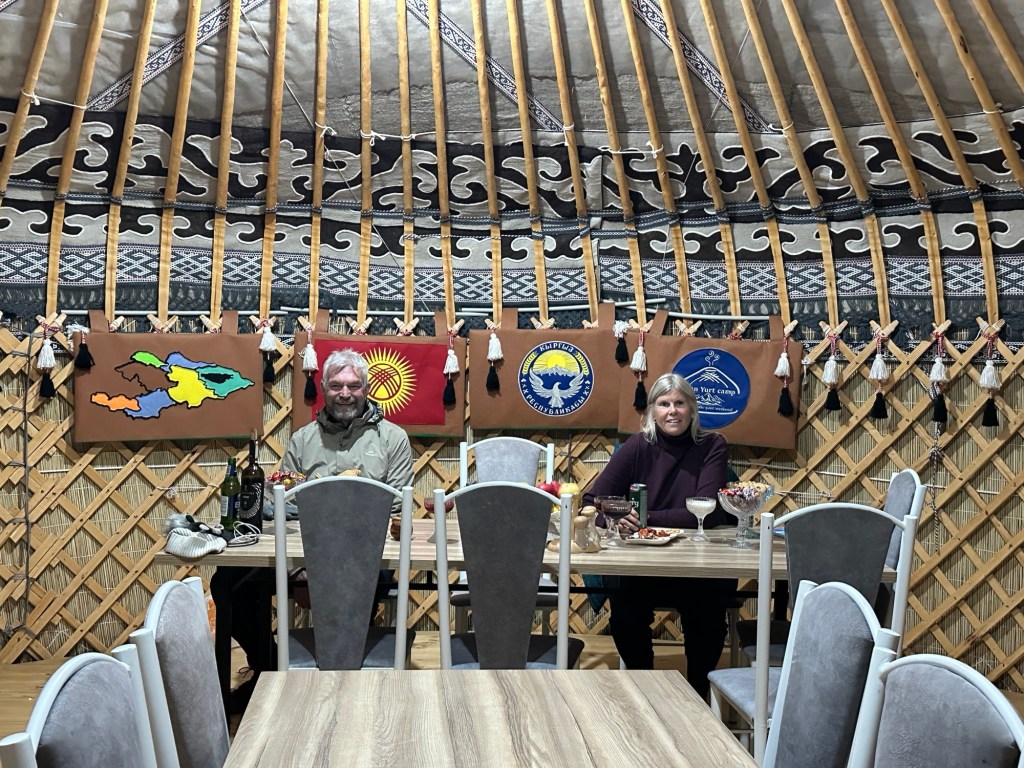
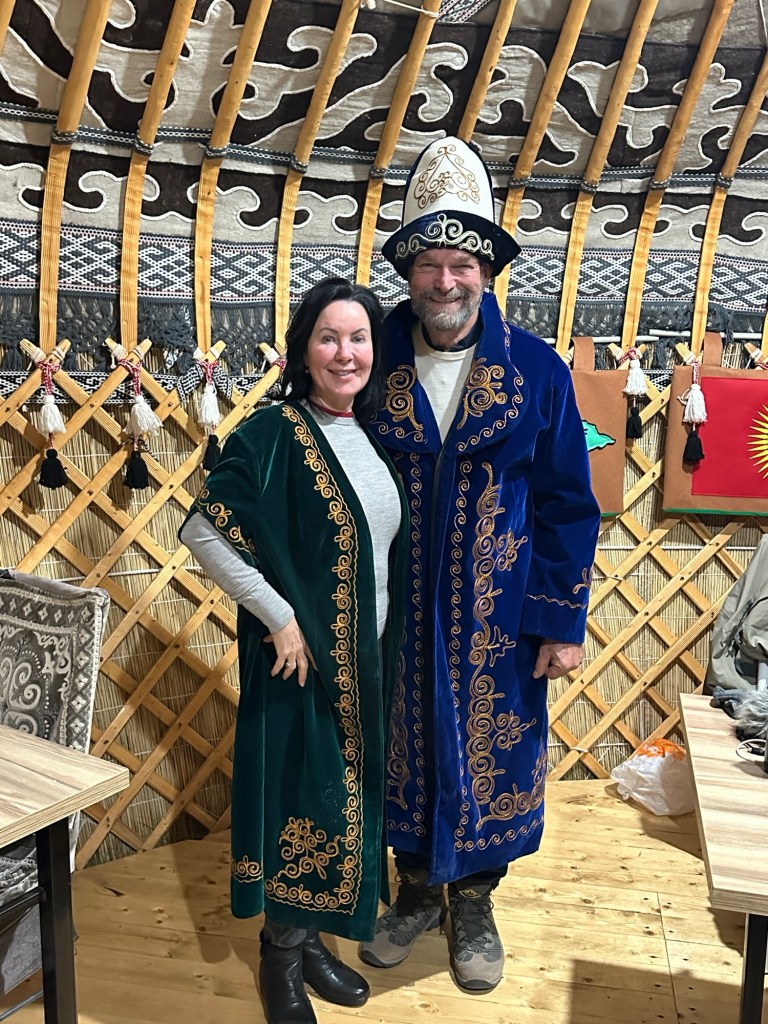
By the time we got back to the yurt it was nice and warm. Three coal bricks were left for us to top up the oven during the night. It was cosy under our duvets.
Day 29
Thursday 9th October
Sonkul – Kochkor – Karakol
-1 to 21 degrees, sunny
The temperature got down to -1 overnight… and our fire had gone out! Frank put the last coal bricks on, but to no avail. It was freezing inside and out! Even the water to the hand basins was frozen. We got dressed, though we were well covered anyway, and headed to the dining yurt to warm up. Breakfast was fresh crepes and pikelets accompanied with a myriad of home made jams, plus fried eggs and bread, even instant coffee!
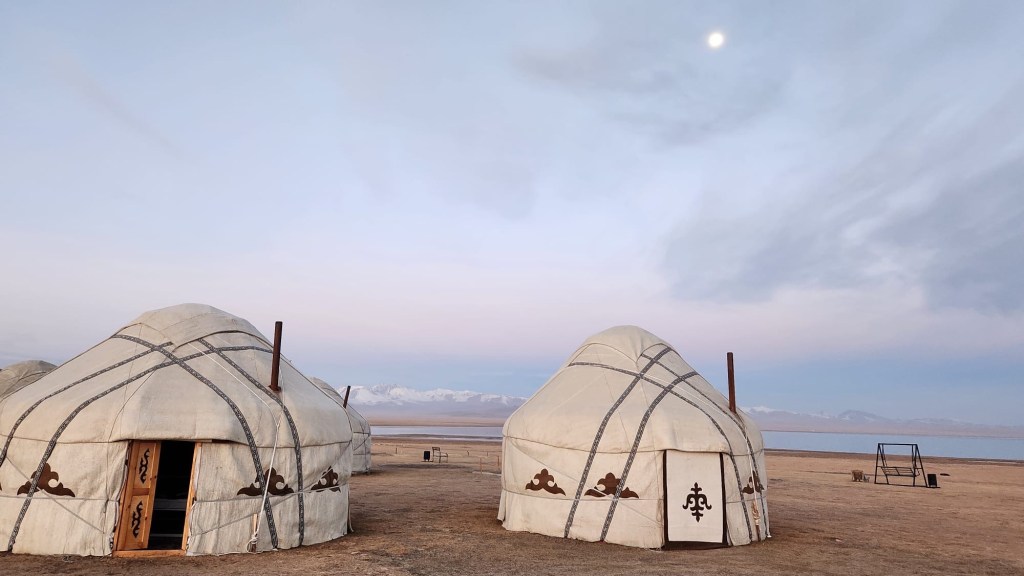
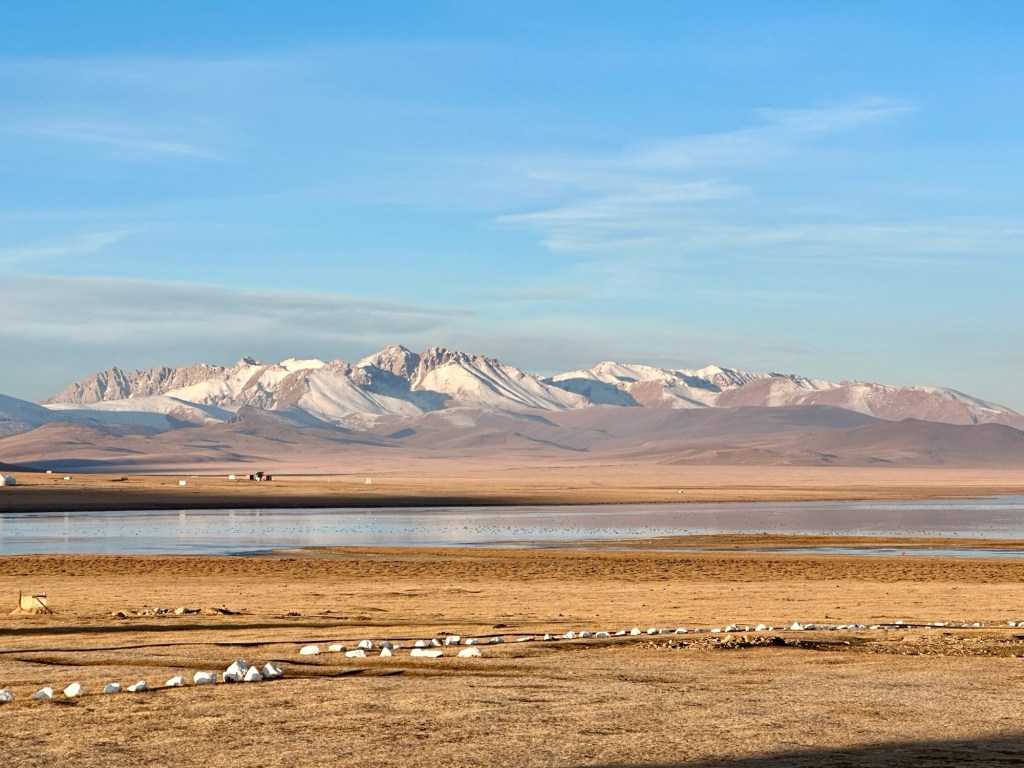
We were very relieved to be getting into our warm van and start the drive to Issyk-Kul along the south shore. We had another pass in the Tian Shan Mountains at 3460 metre. Surrounded by snow capped peaks, I felt we were in Switzerland. Snow and ice on the road called for a cautious descent.
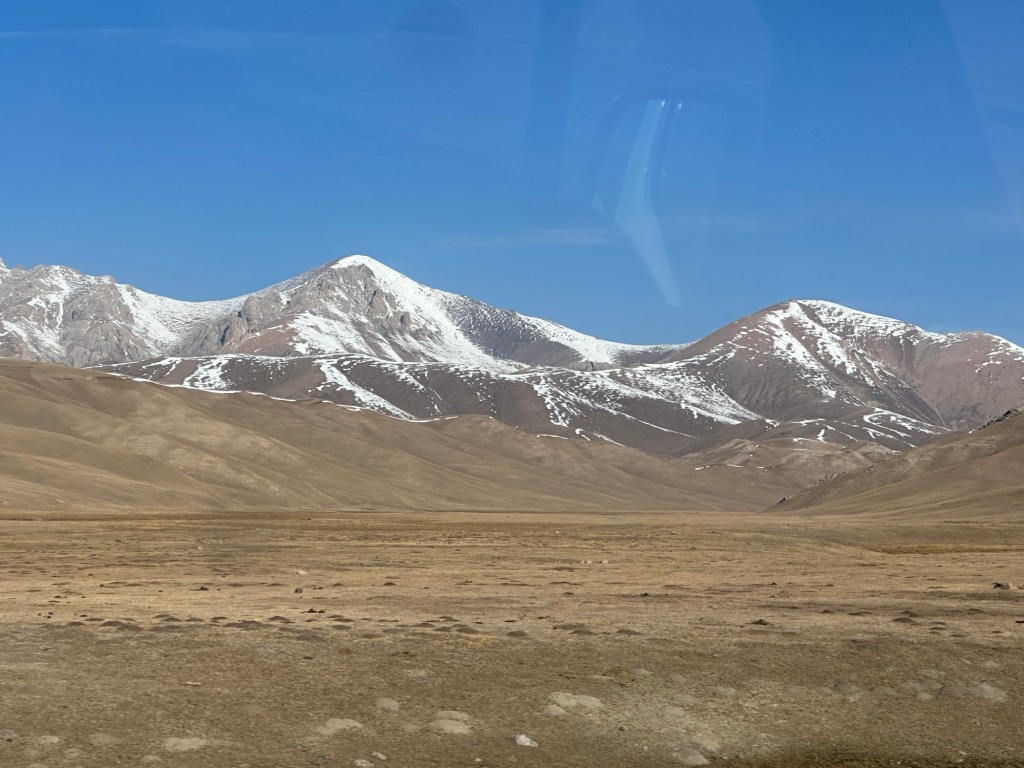

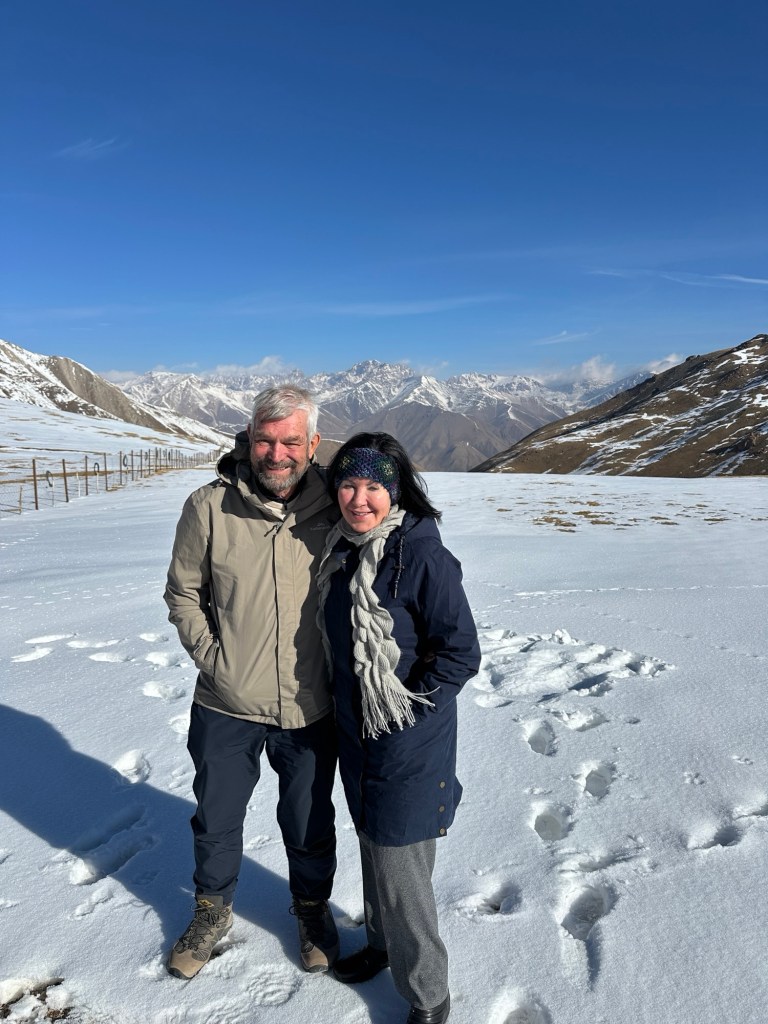
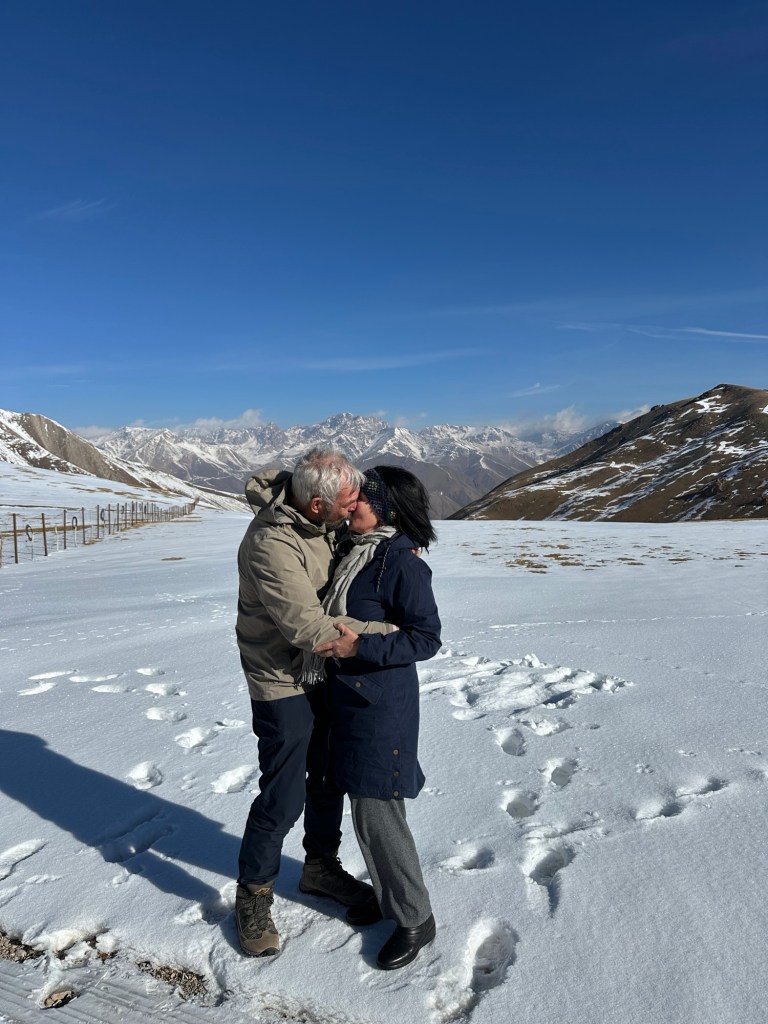
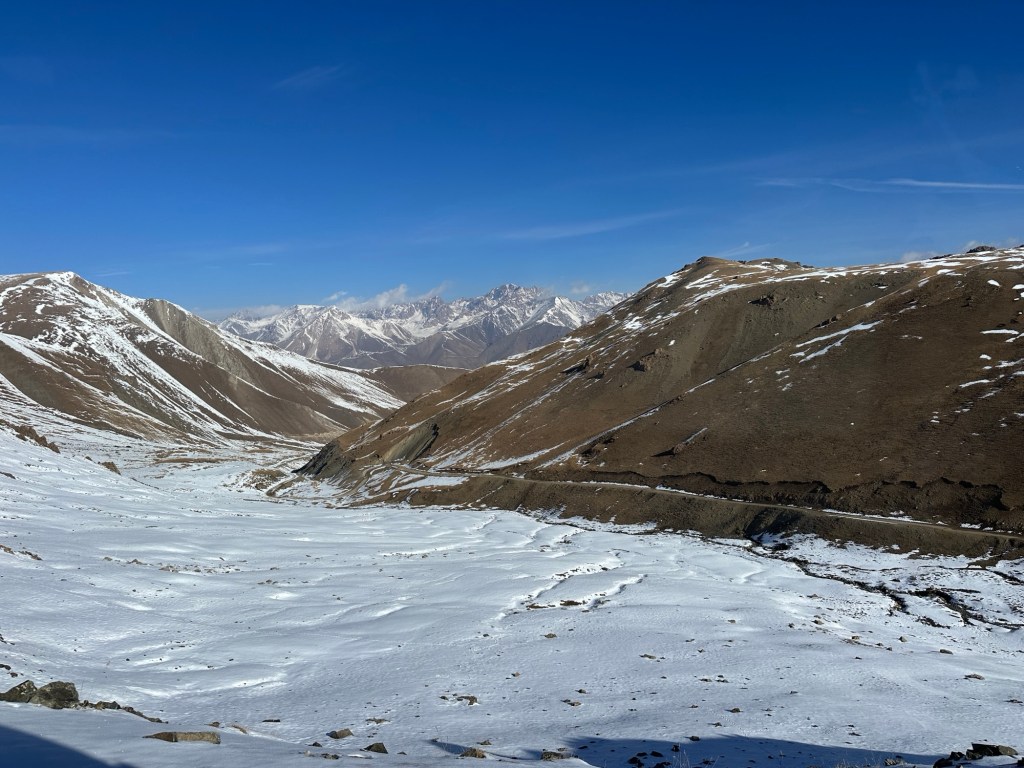
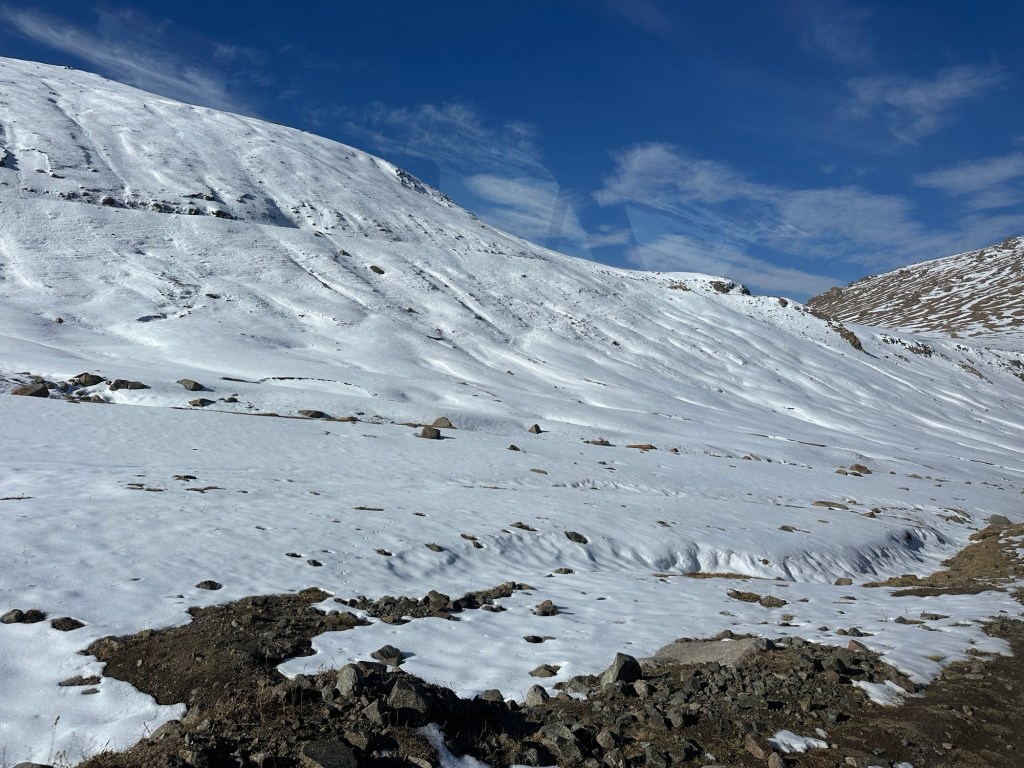
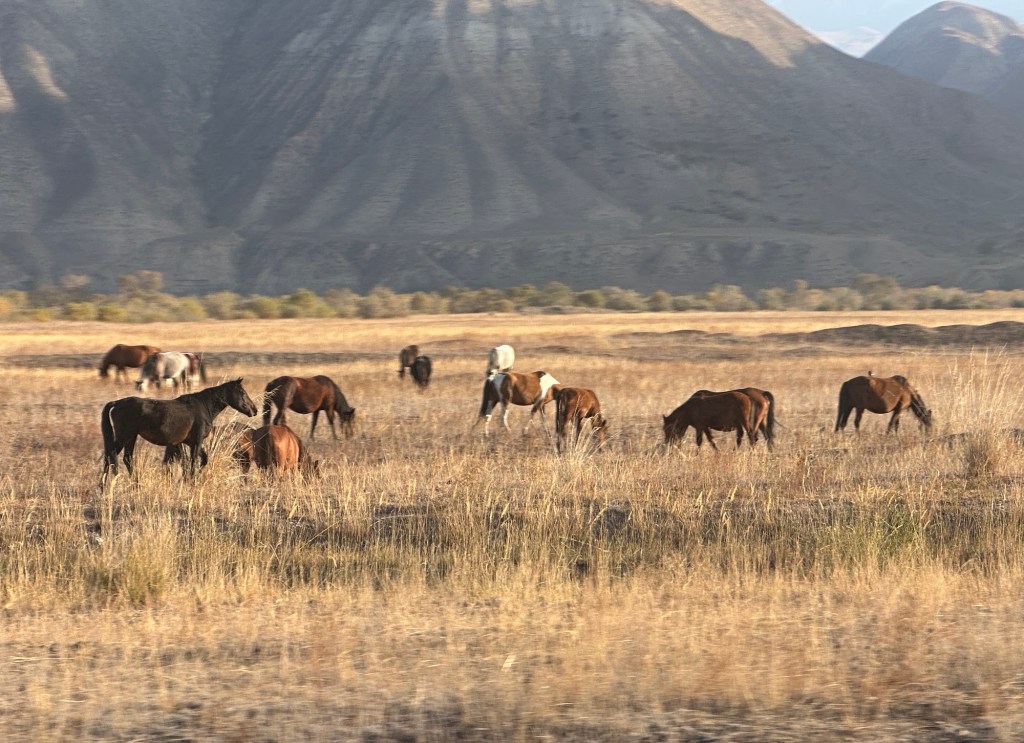
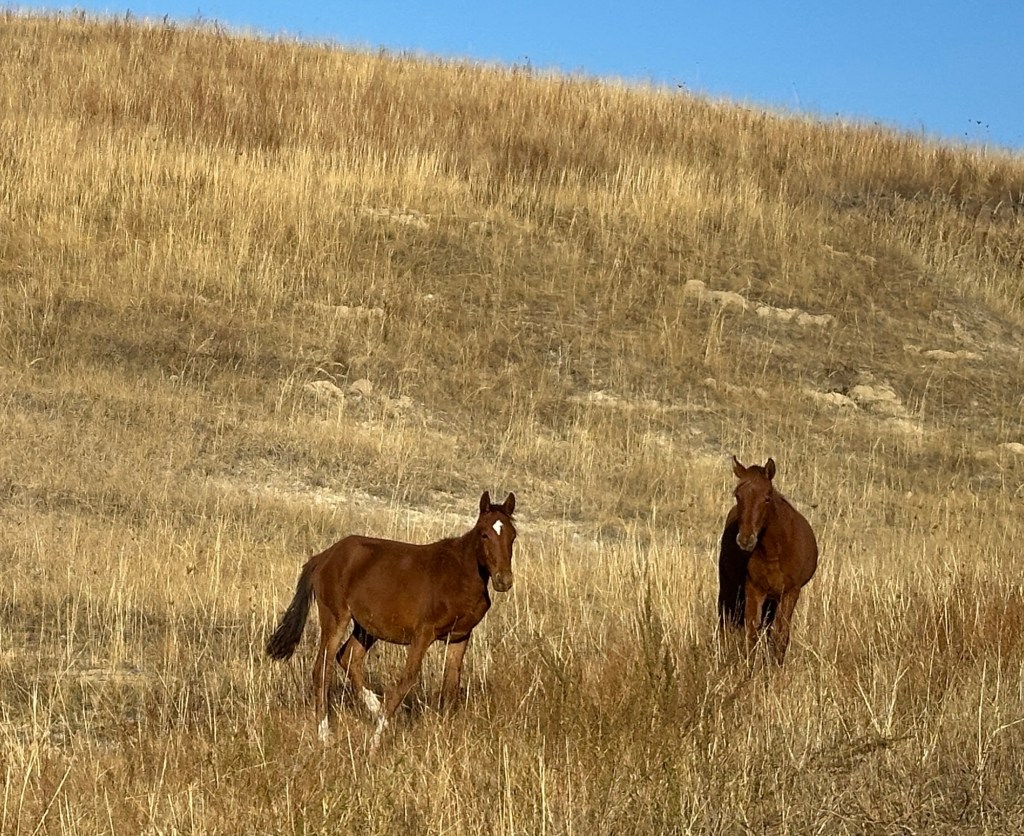
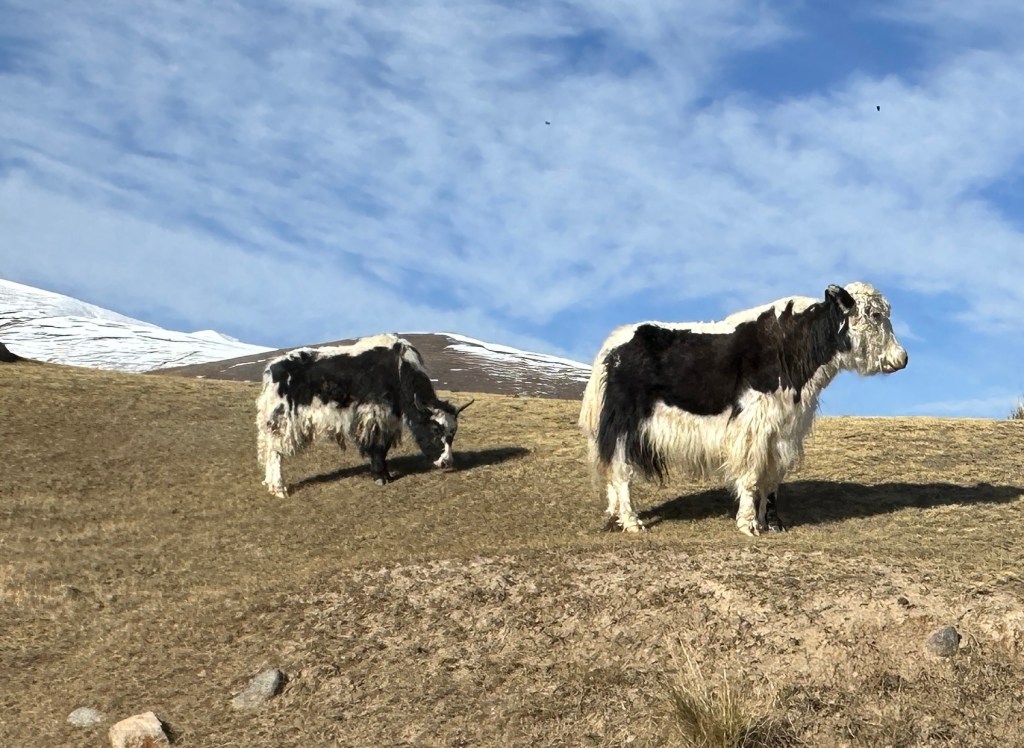
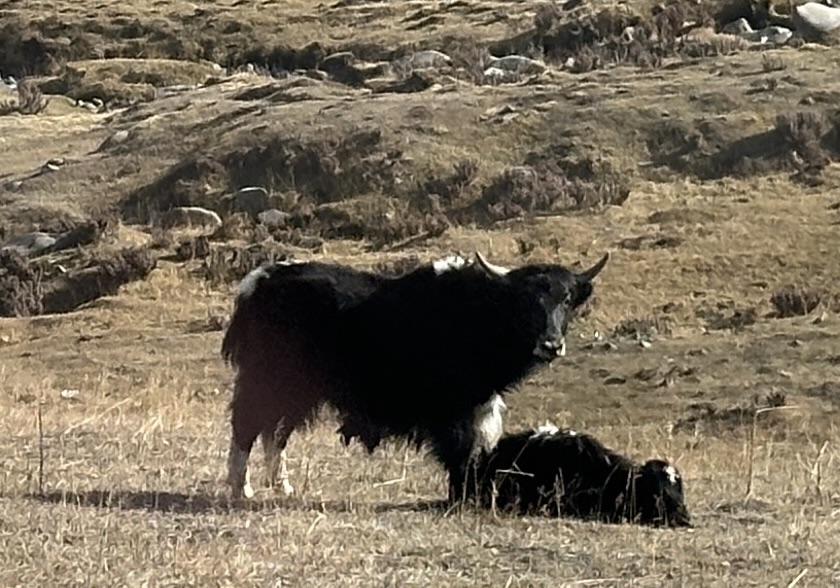
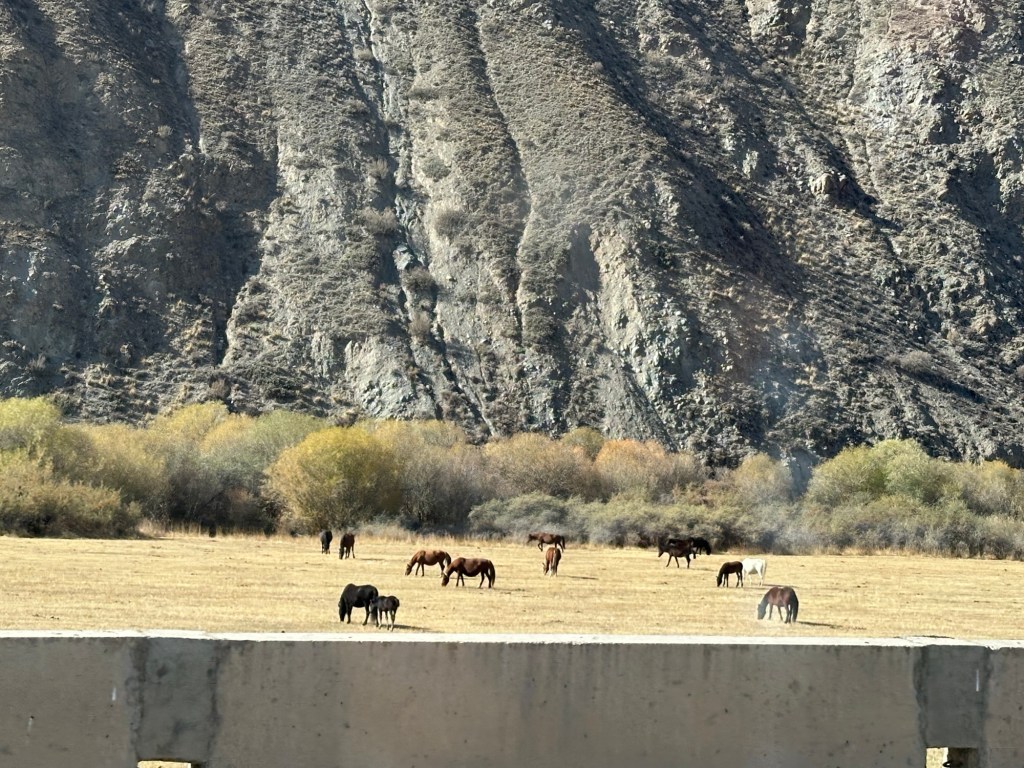
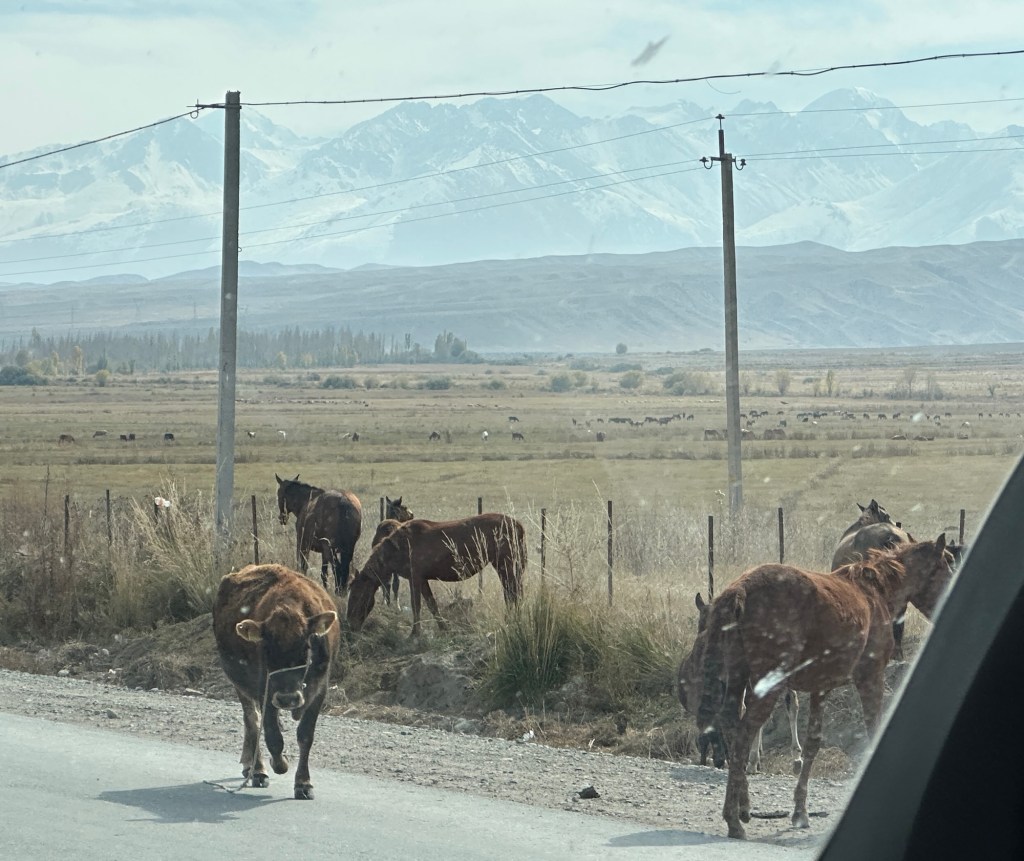
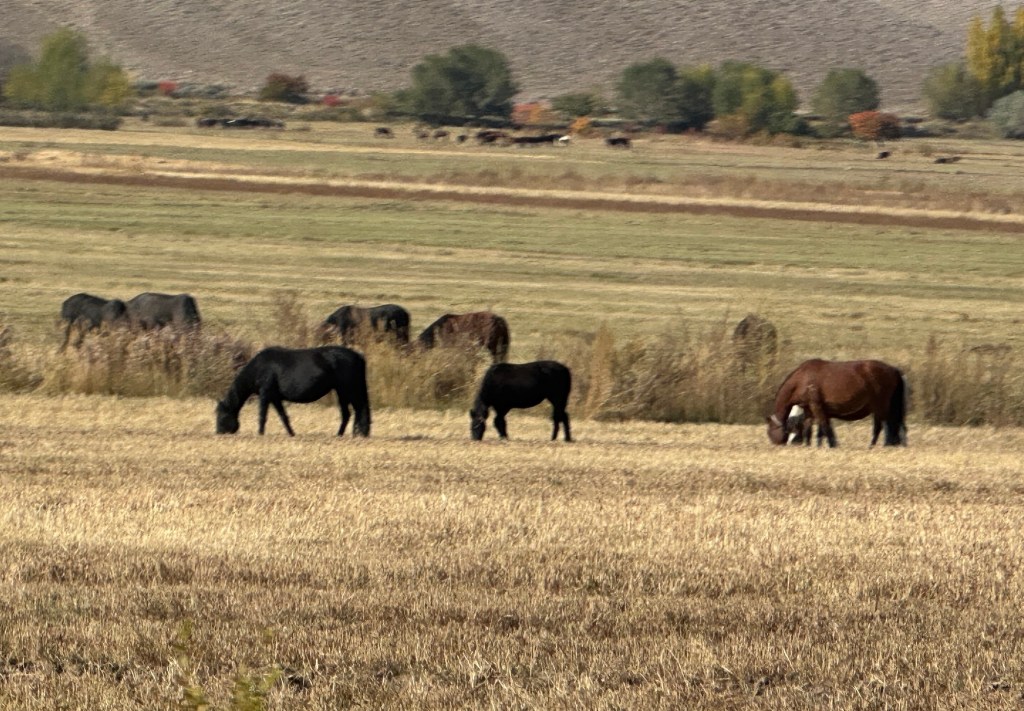
A brief coffee stop at Kochkor then a scenic drive on sealed and unsealed roads to Issyk-Kul – farms, villages, every type of livestock – sheep, donkeys, cattle, horses (so many horses), even yaks. Apricot trees are plentiful here. Currently a railway line is being constructed along the road – it will extend from China to Turkey, and then link up with the existing line going through Europe. It will really open up trade in Central Asia.
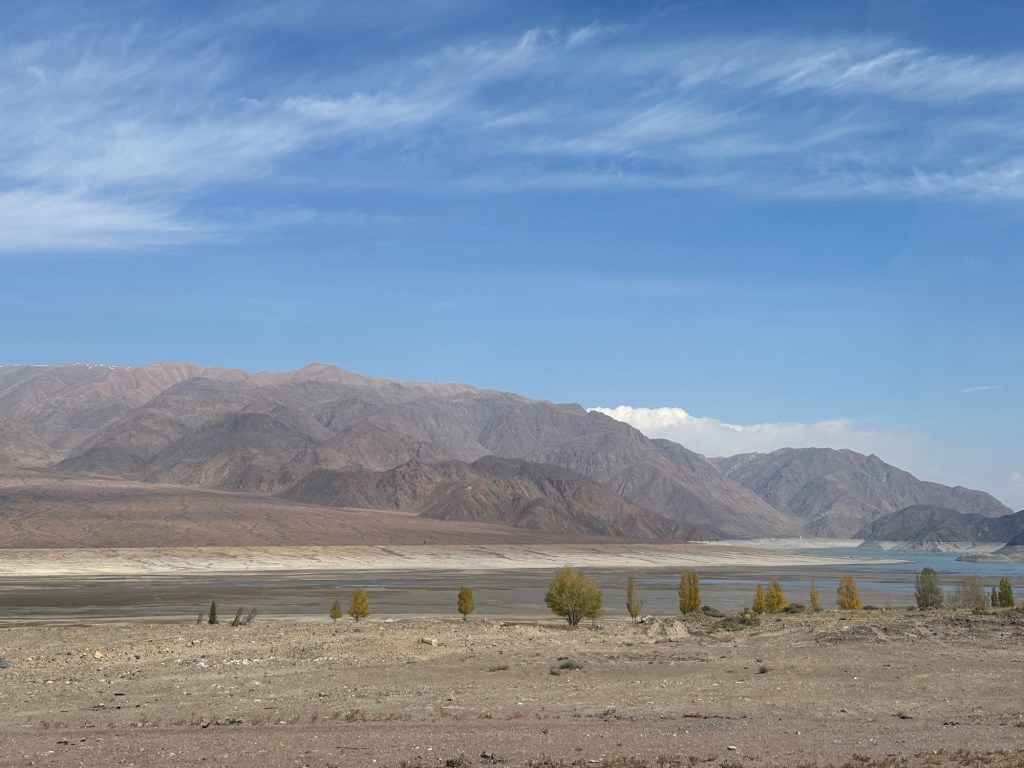
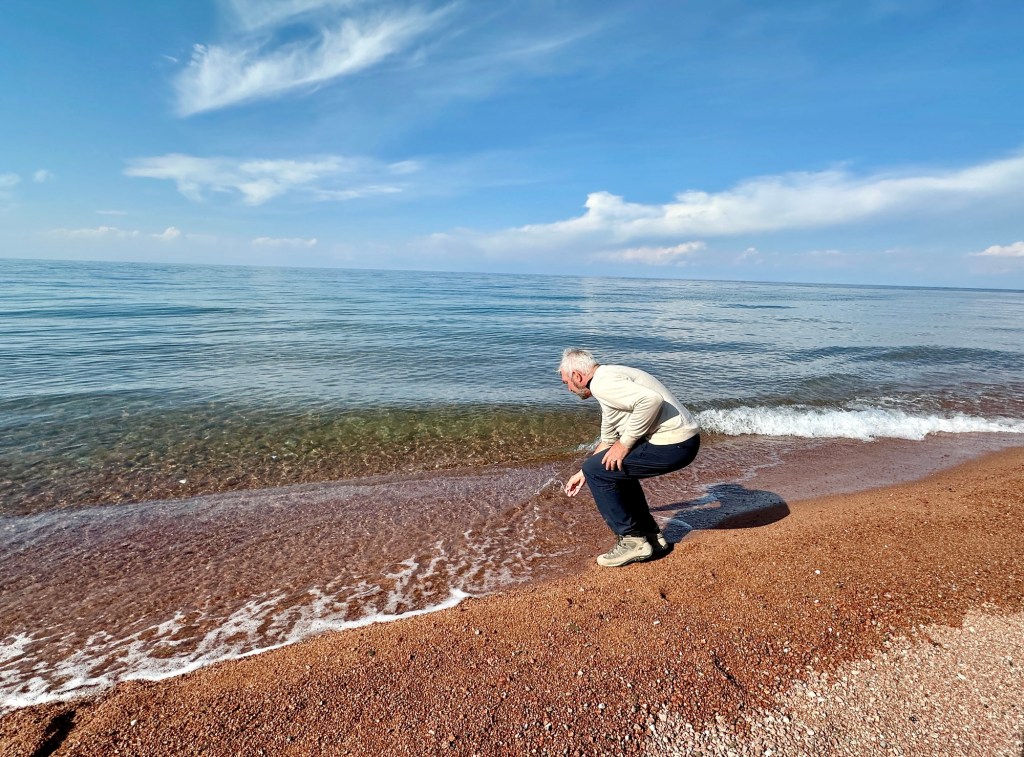
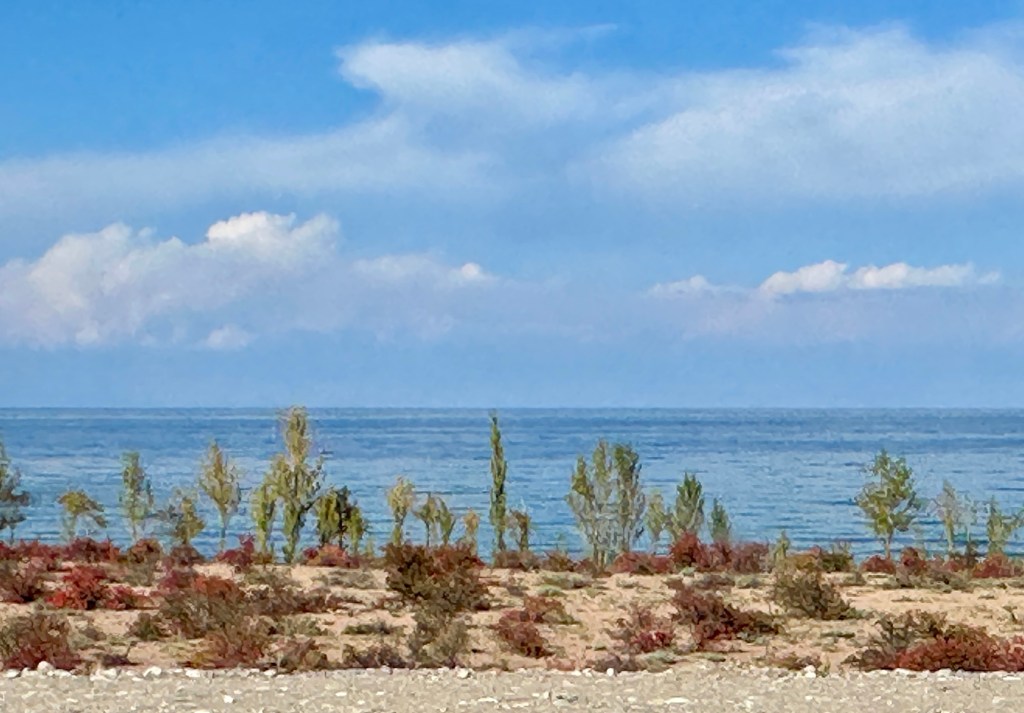
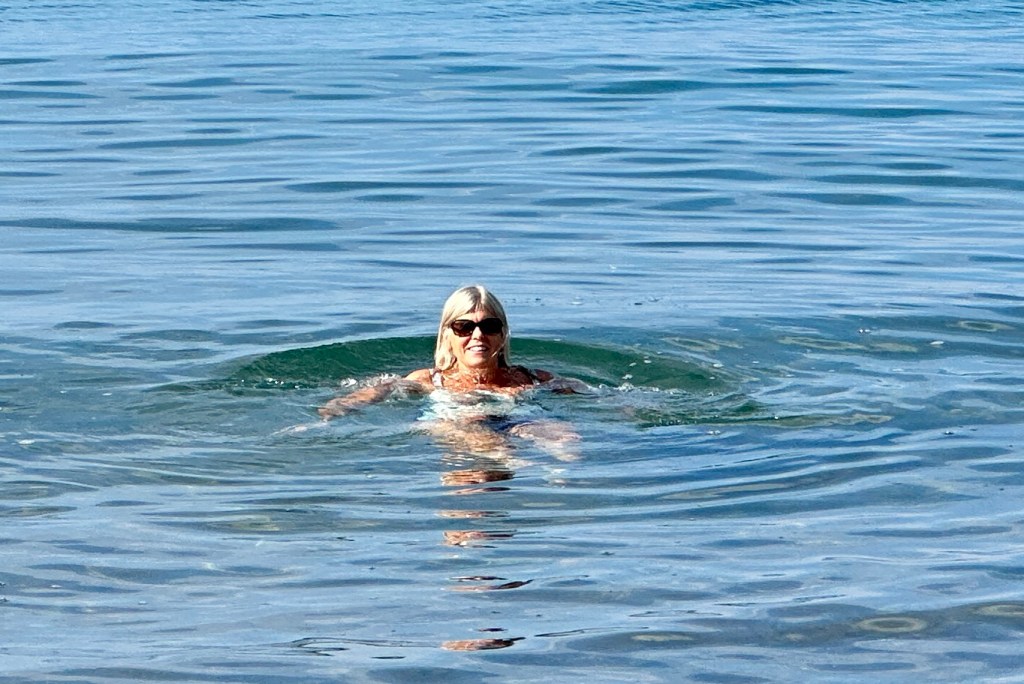
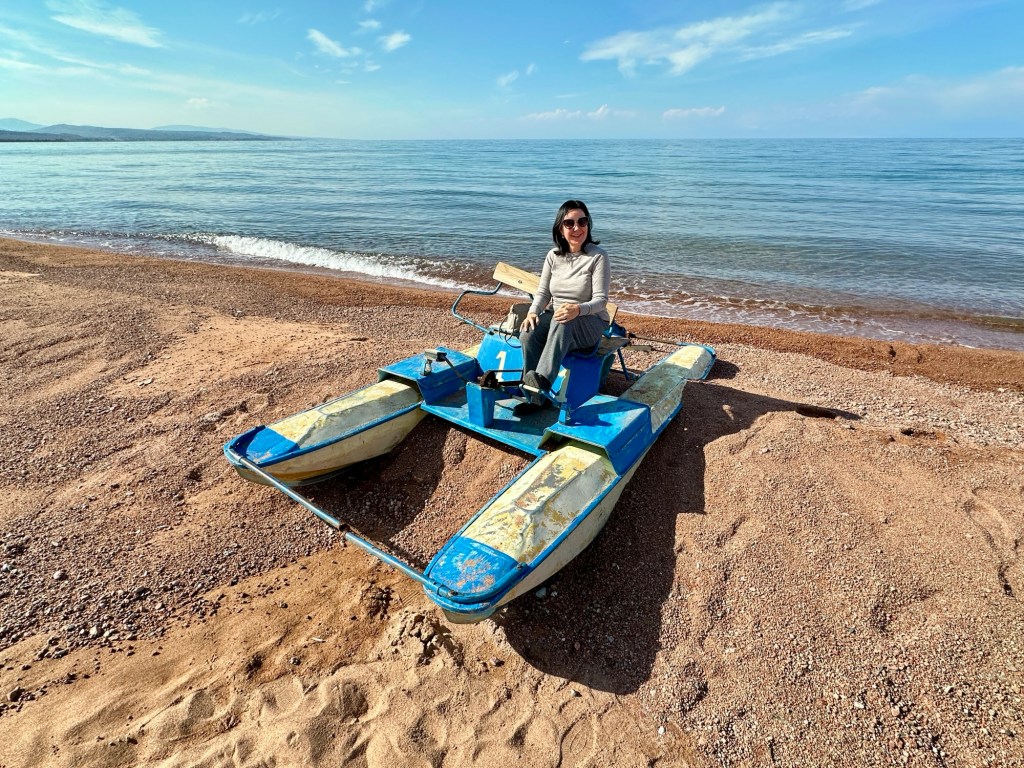
The pearl of the Tian Shan is Issyk-Kul, a great turquoise inland sea dusted with sandy shores and framed on both sides by snow-capped peaks. At 180km long, it is the world’s second-largest alpine lake, after Bolivia’s Lake Titicaca, and the second-largest saline lake after the Caspian Sea. The local Kyrgyz named it “Warm Lake” because, despite the altitude, it never freezes, due to its slight salinity. Unusually, over 60 streams flow into the lake but none flow out. Heidi braved it and had a quick dip!
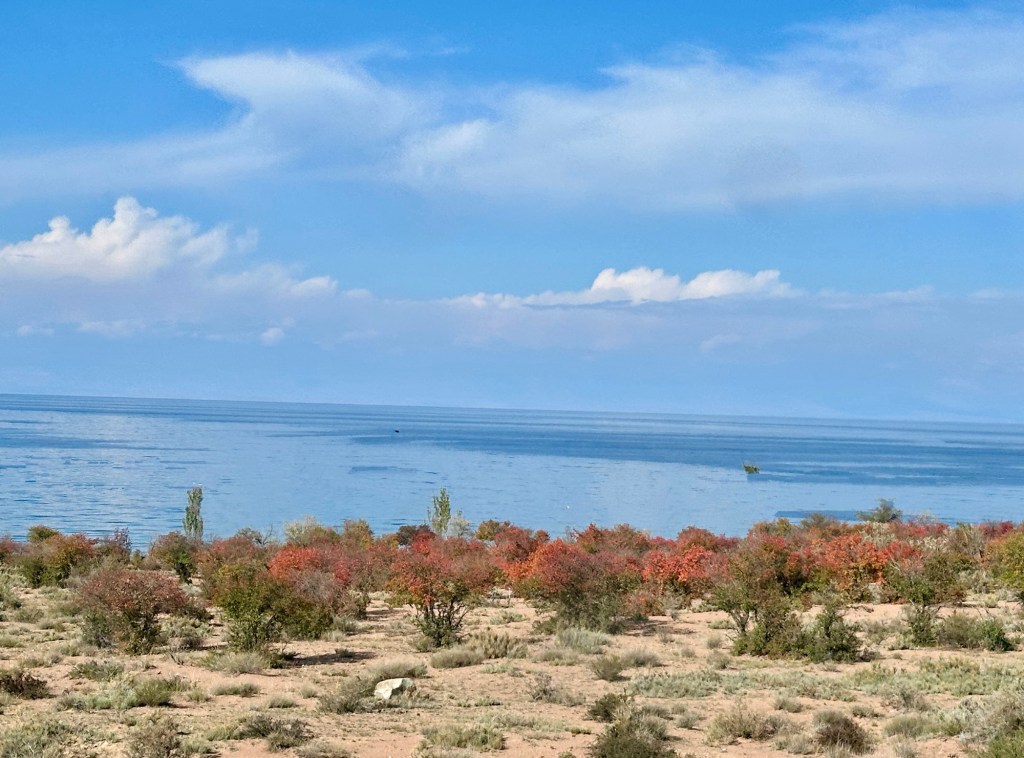

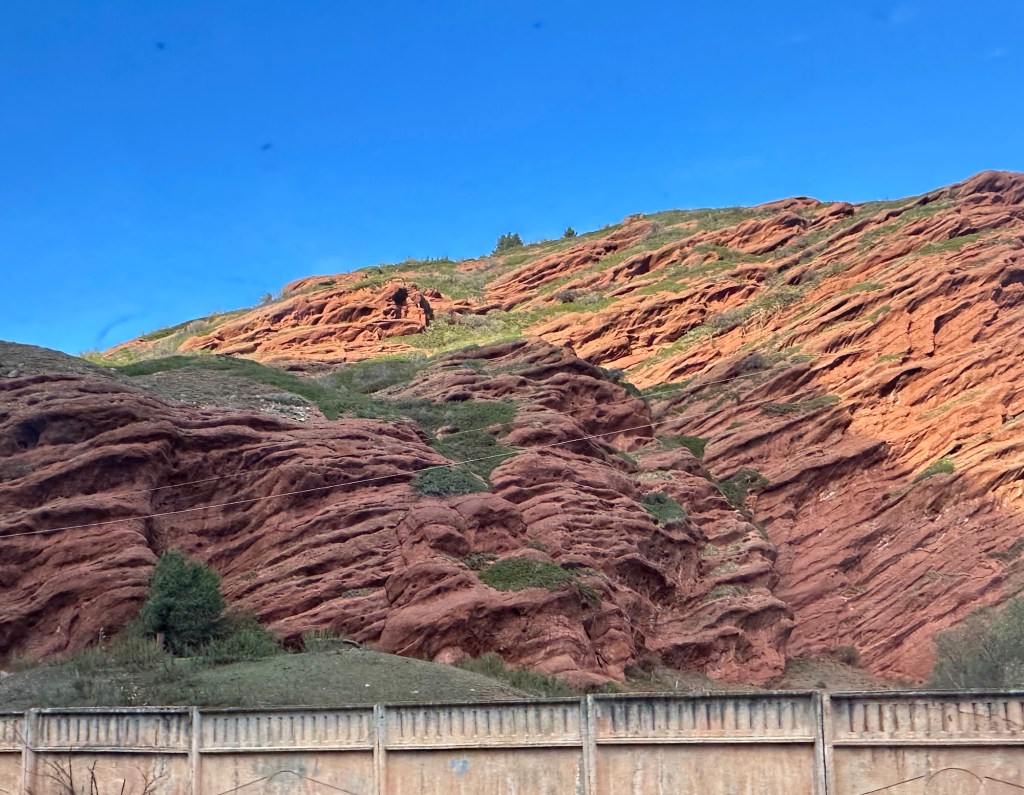
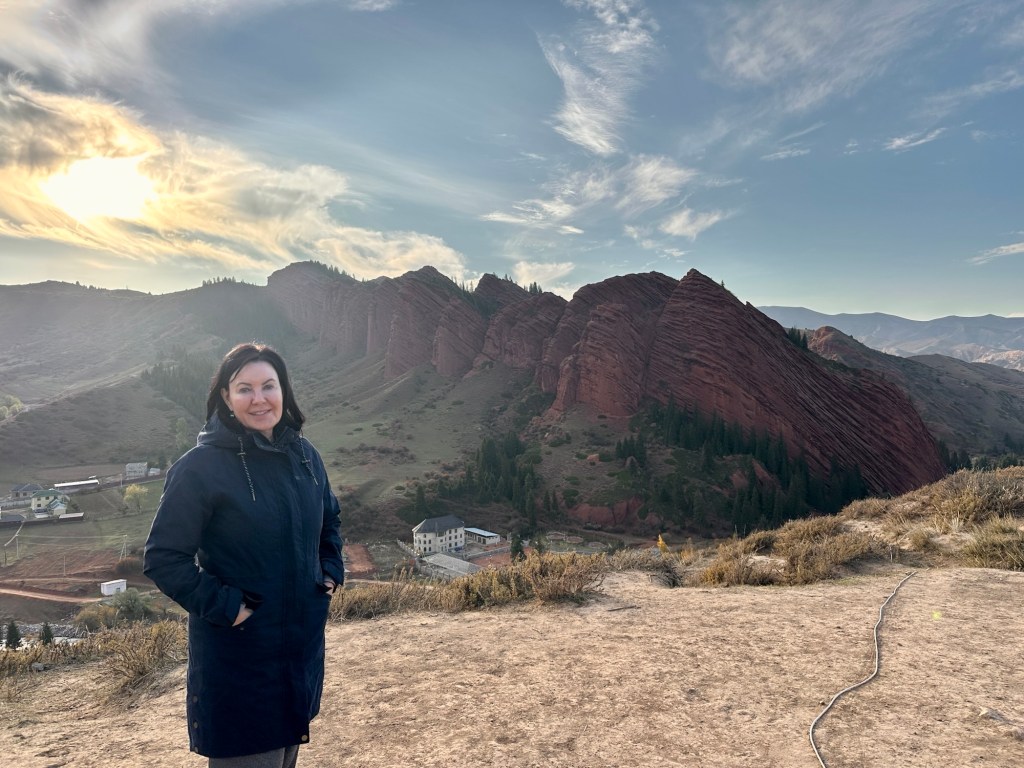
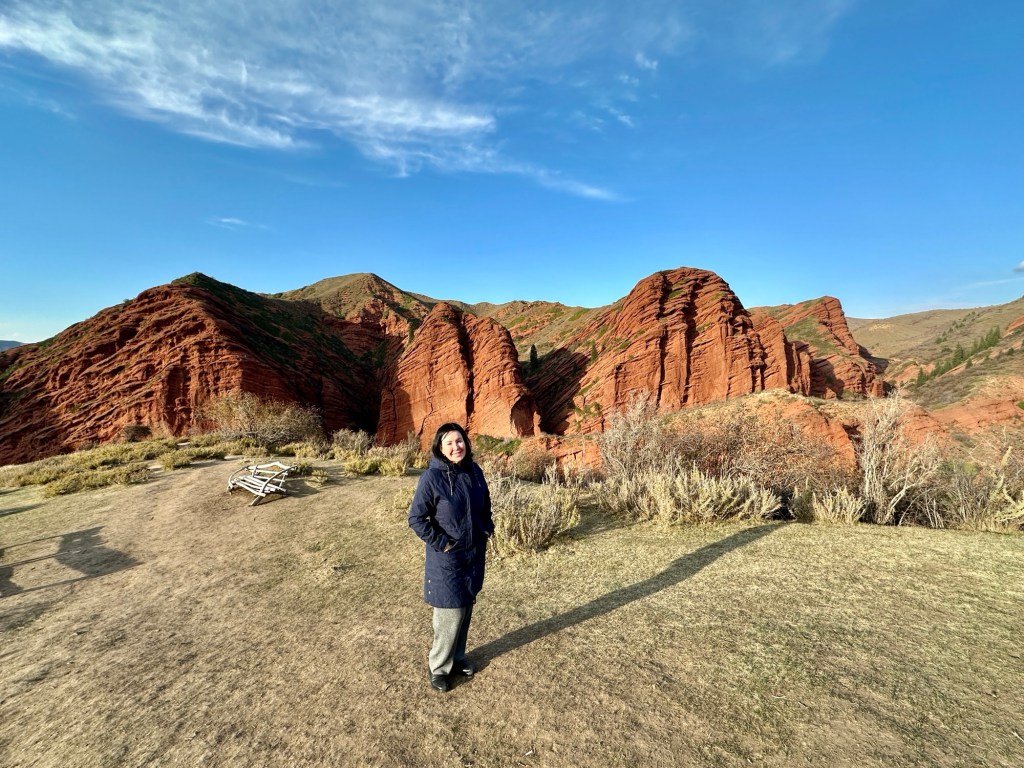
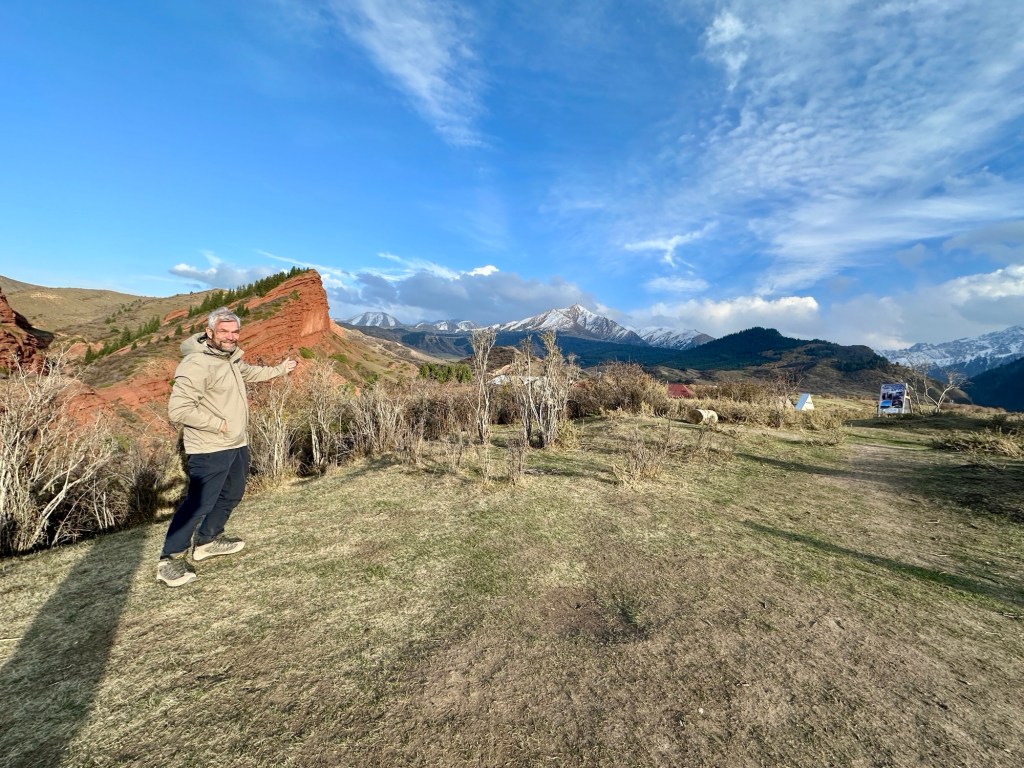
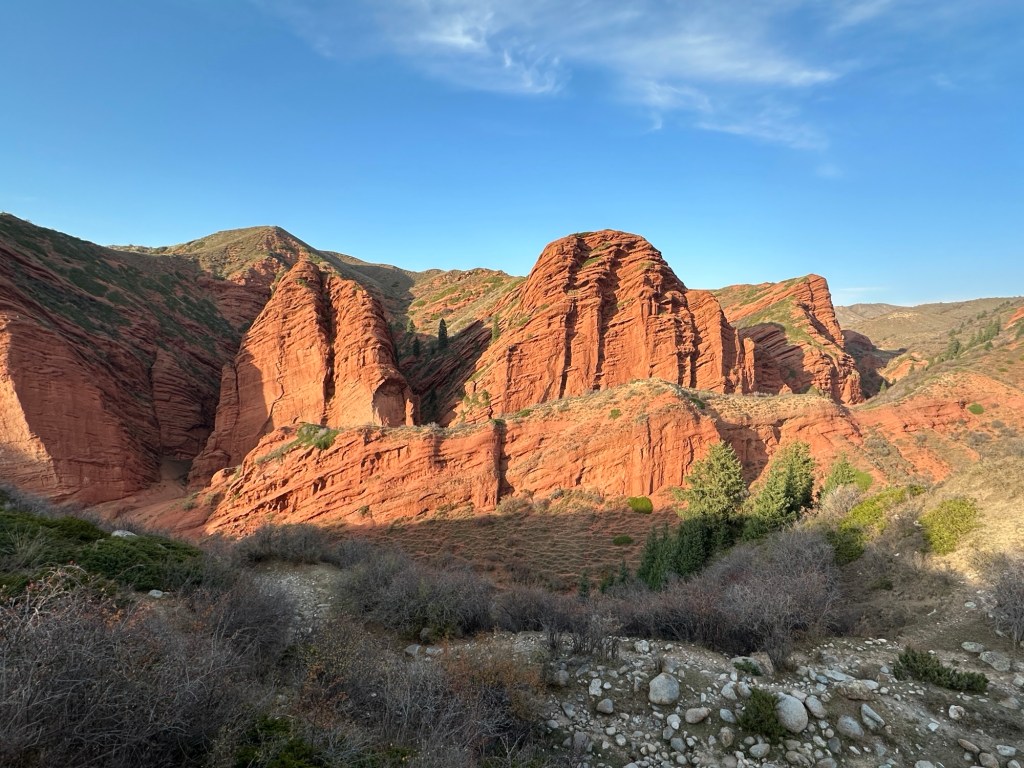
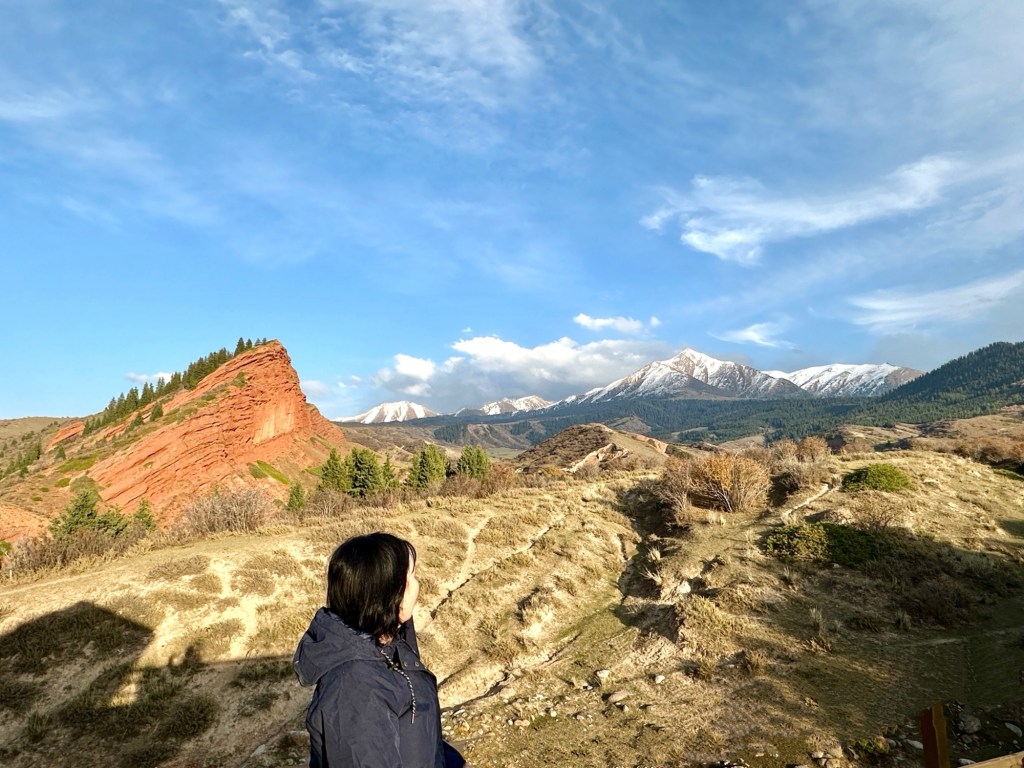
Another couple of hours drive to Jety Oguz gorge to observe Seven Bull rocks. The striking red eroded rock formations stand amidst the snow capped Tian Shan mountains. It’s a popular area for hiking and camping in summer.
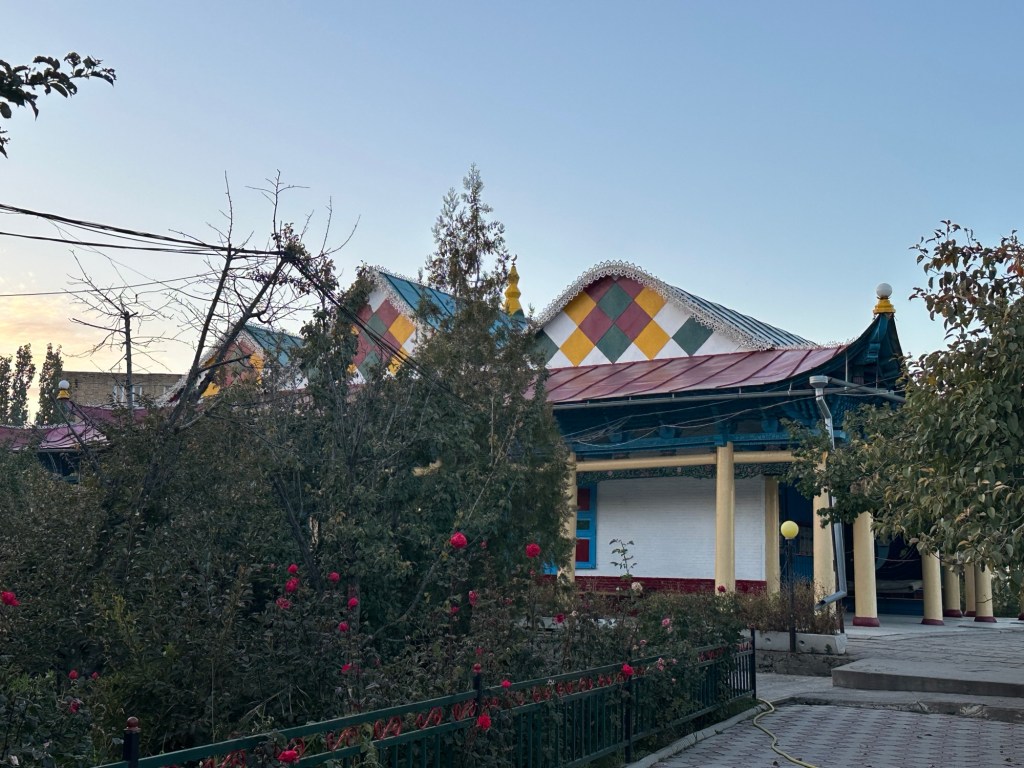
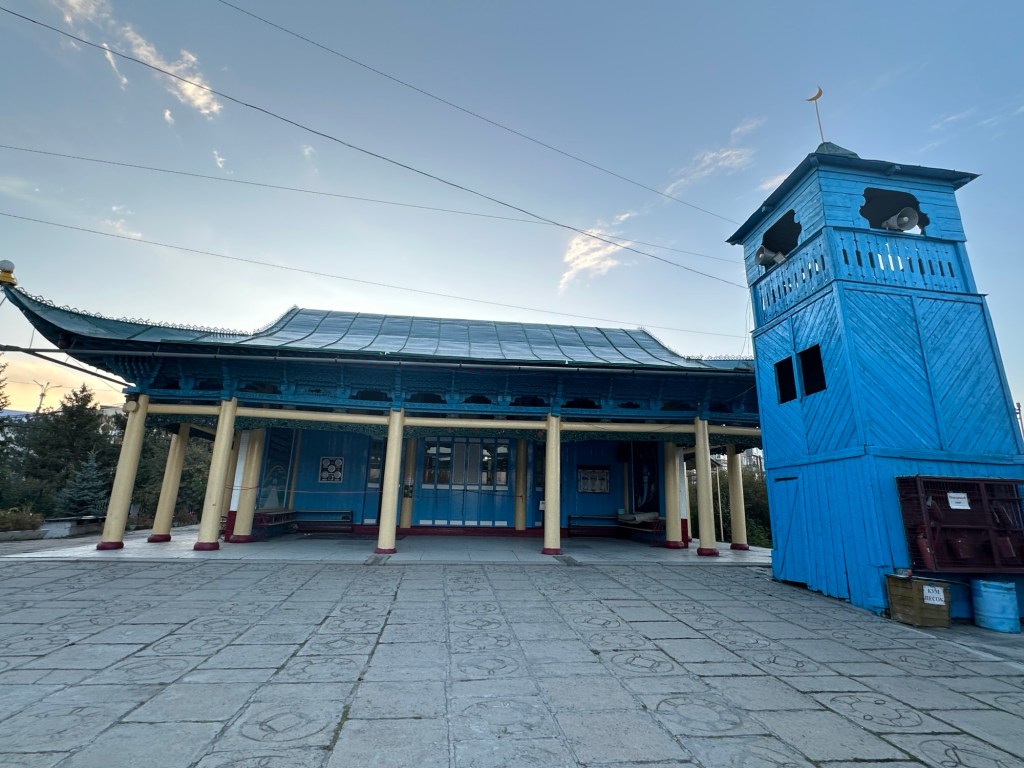
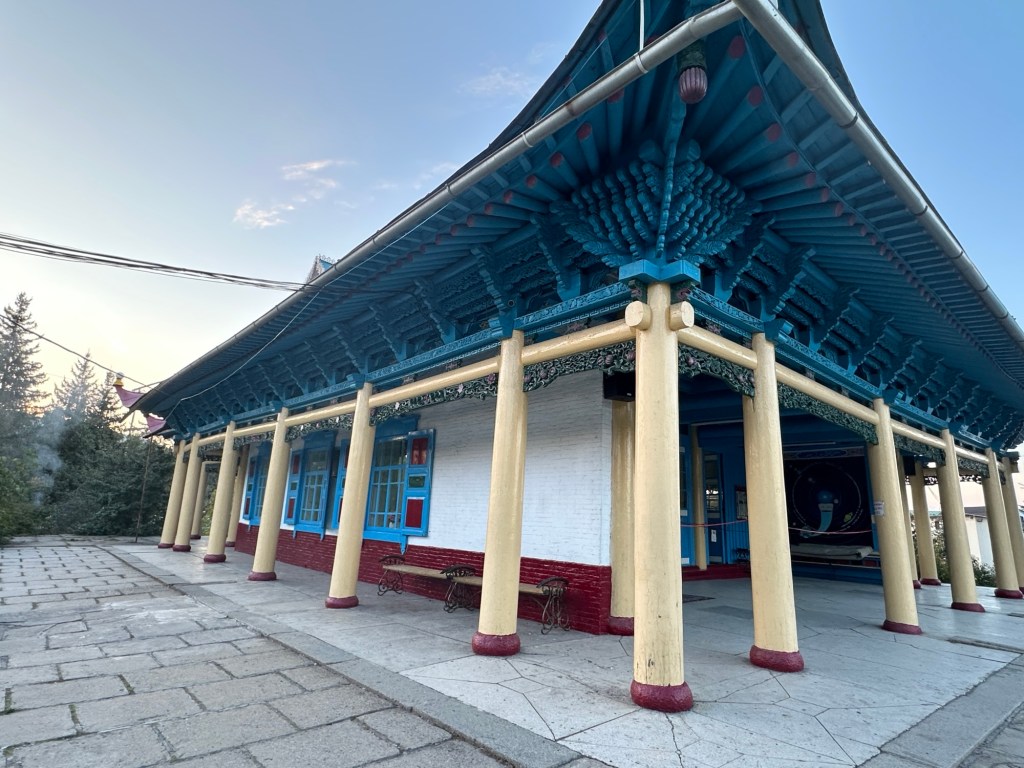
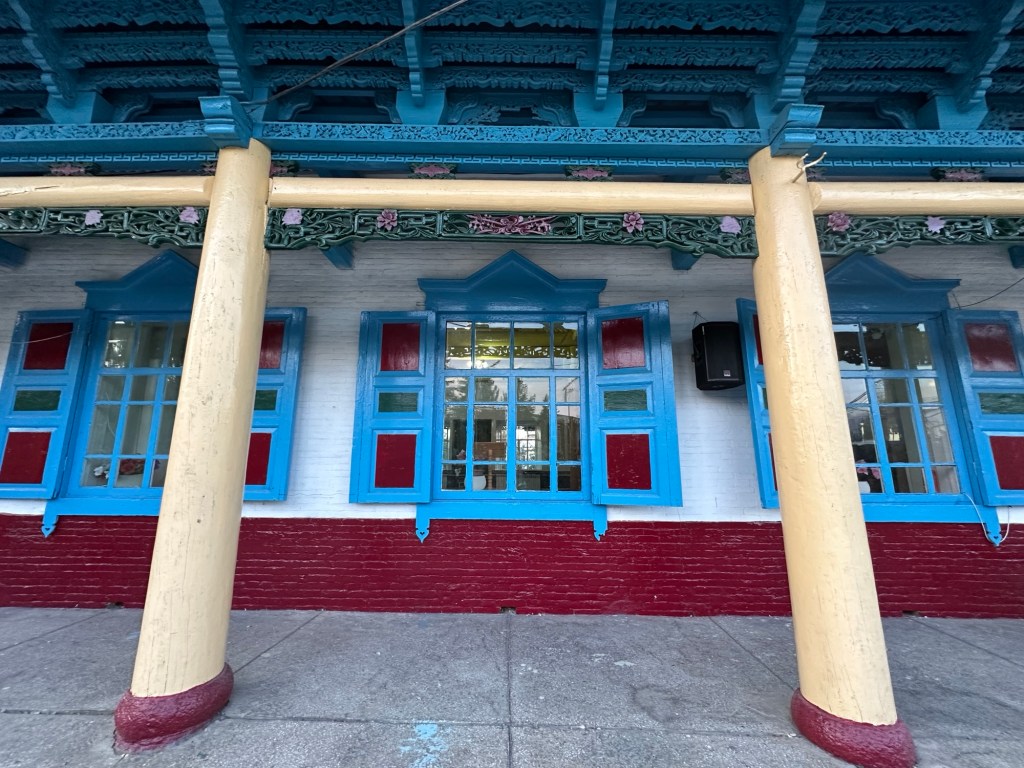
Another 40 minutes and we arrive in Karakol city. We do be a short stop at the Dungan mosque. This mosque was built in 1910 by the town’s community of Dungans – Muslim Chinese who crossed the border at the end of the 19th century.
We check into the Karagat Hotel, then do a quick turnaround to go out for dinner at a nice restaurant. I had a delicious chicken roll stuffed with spinach and served with a cheese sauce – the only issue was that it arrived after everyone else had finished their meal. Coordinating serving meals has not been a strong point in any of these countries. But who’s complaining!
Day 30
Friday 10th October
2 – 14 degrees, sunny
Karakol – Charyn Canyon – Saty
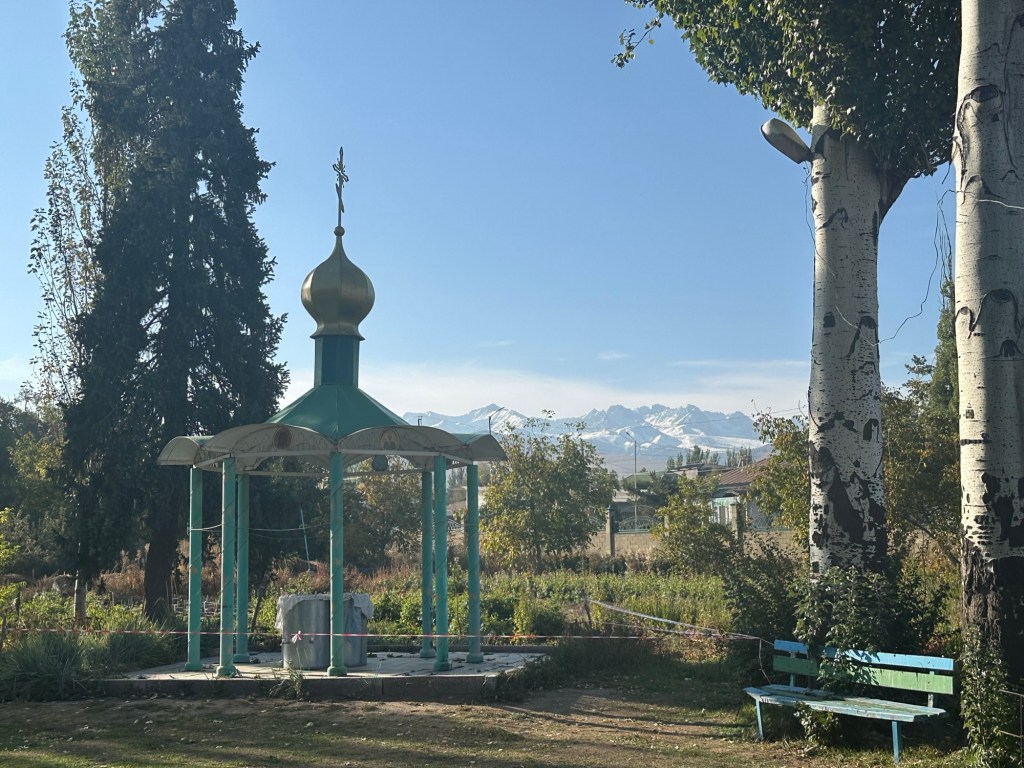
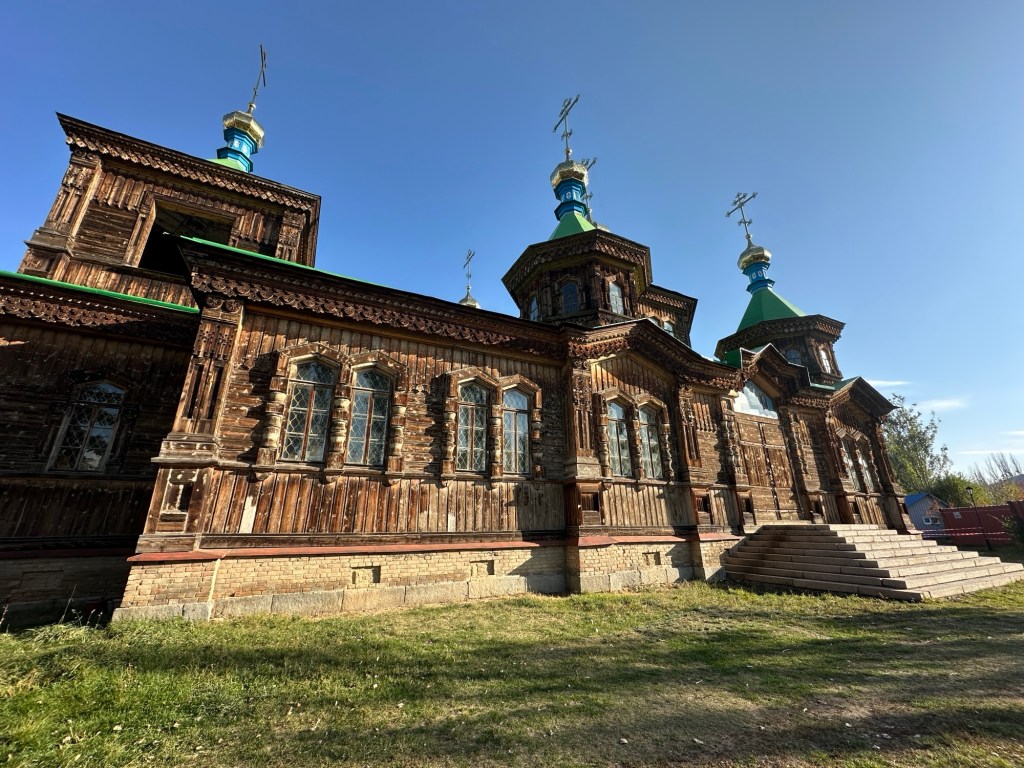
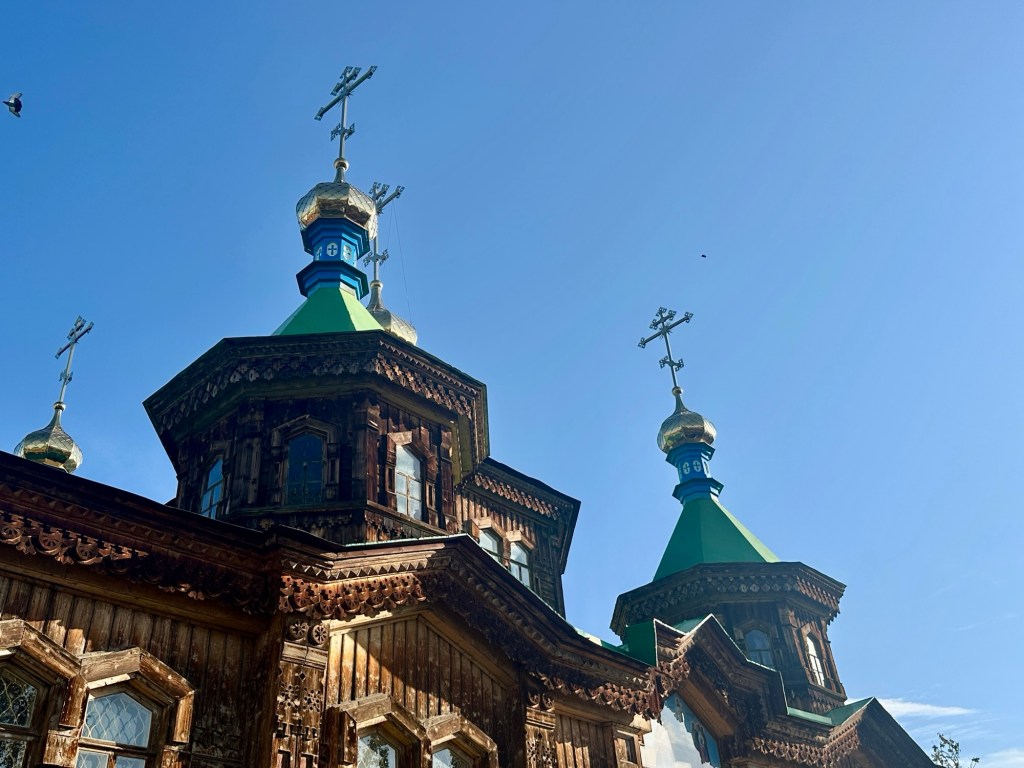
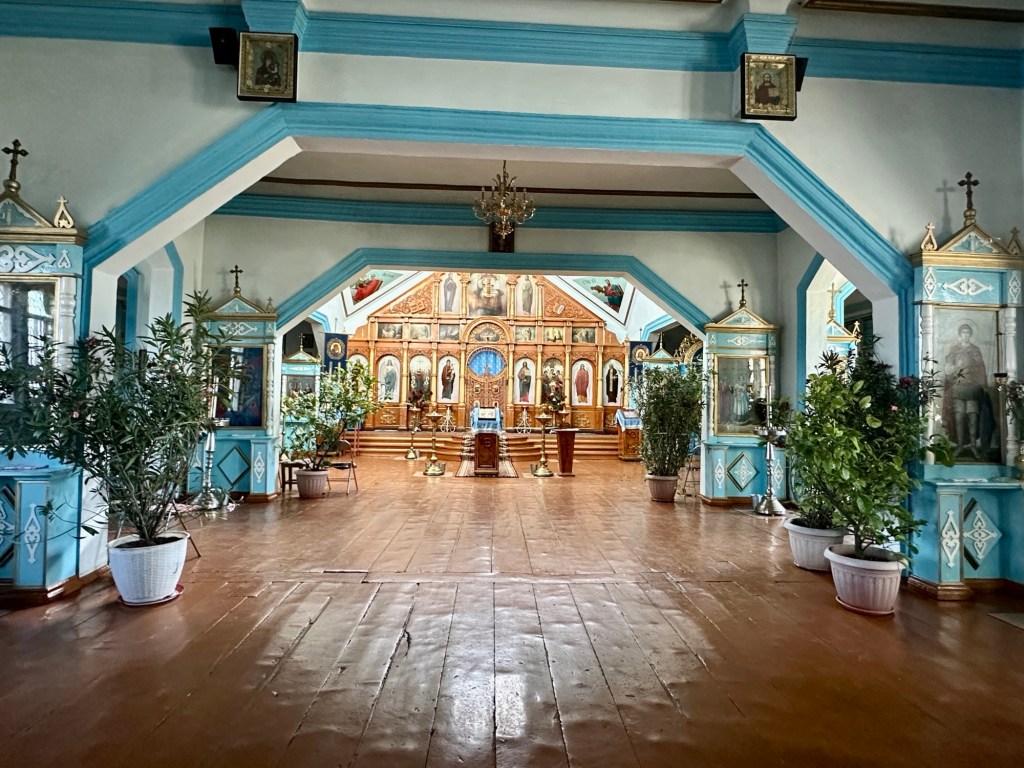
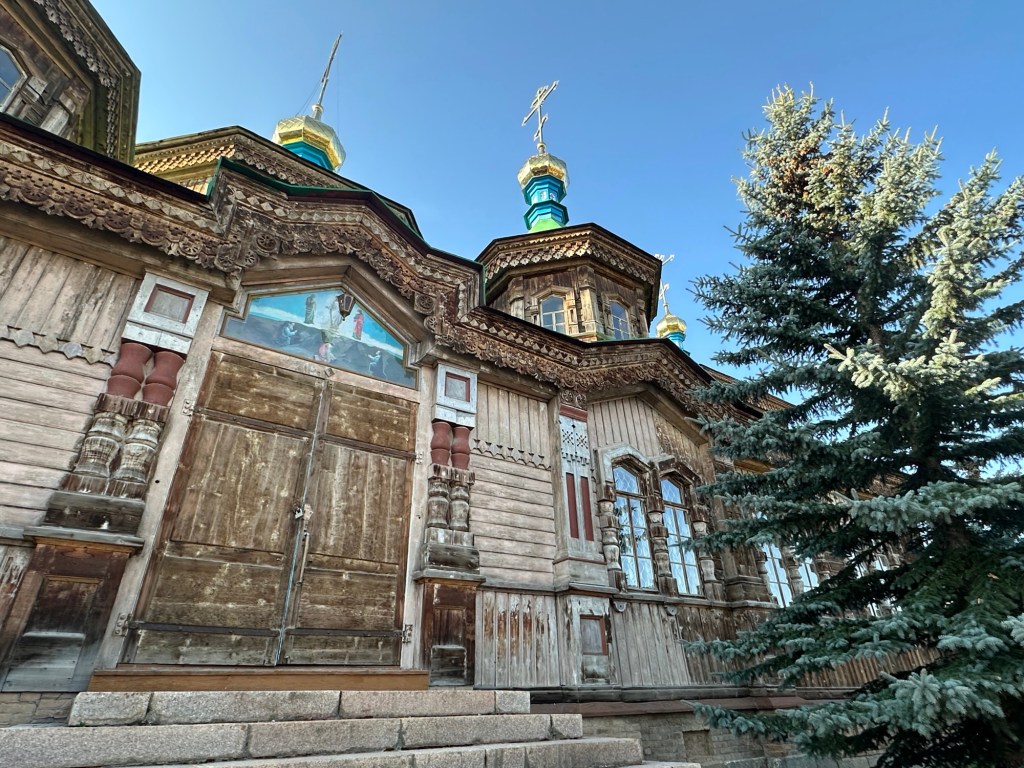
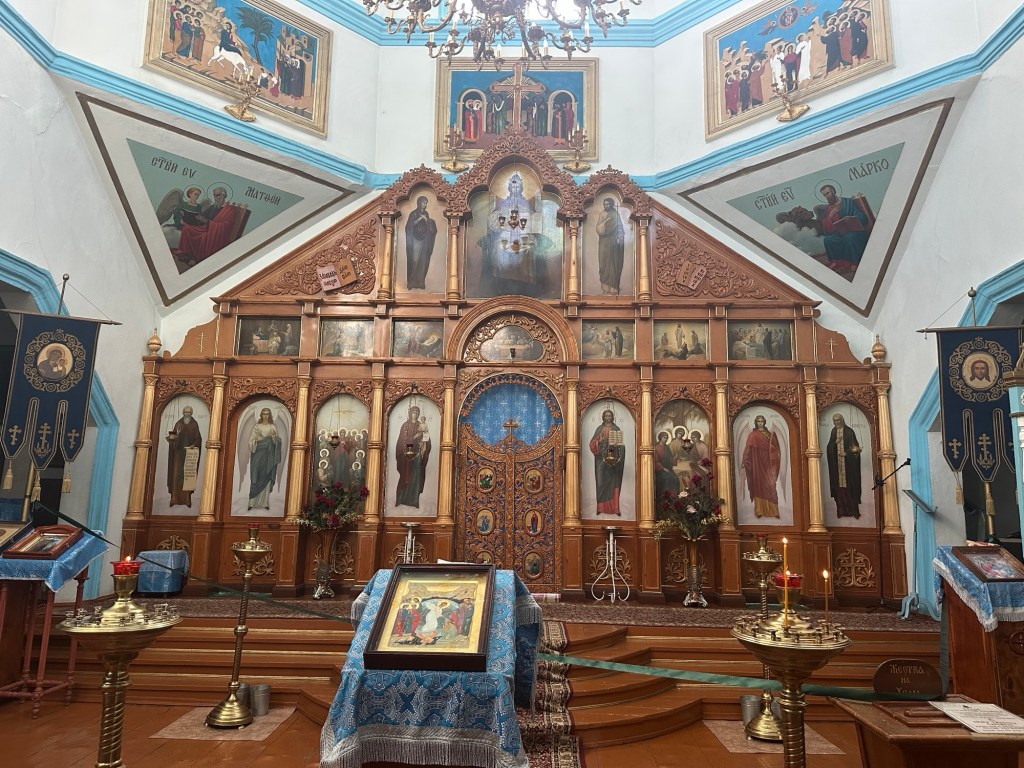
First stop, the Holy Trinity Orthodox Cathedral, built in the early XX century. This church was made of wood after it was renovated, quite simple inside compared to other Orthodox churches we’ve seen, also had many plants inside.
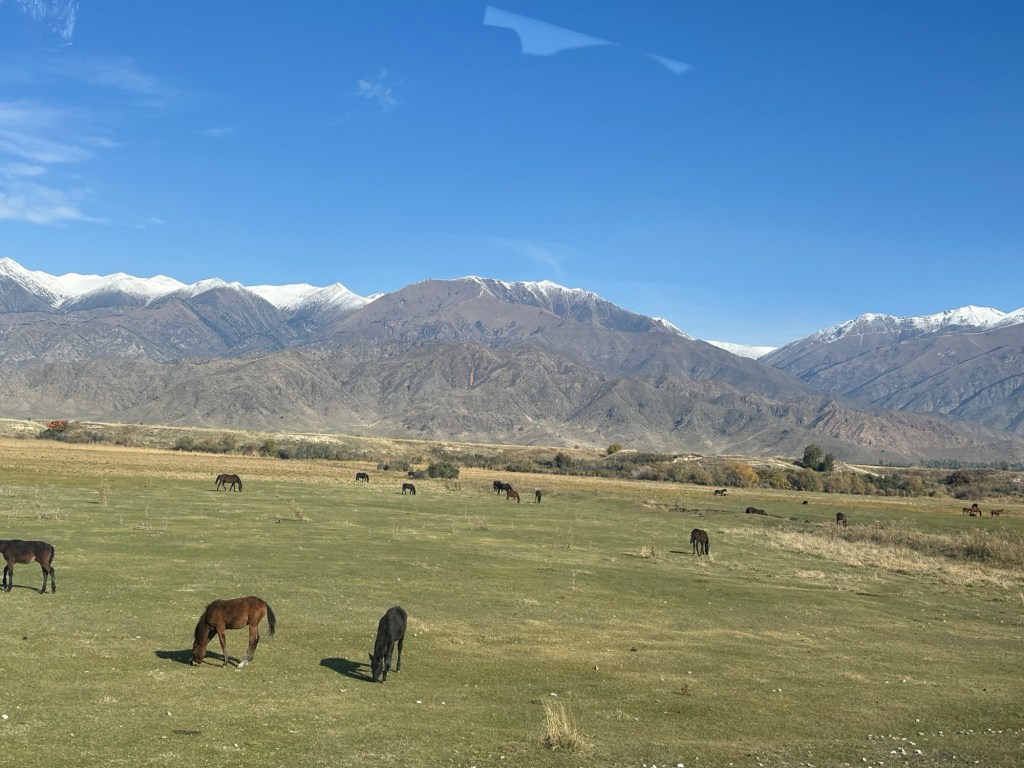
Ninety minutes of driving through picturesque green farmlands, and bordered by the stunning Tian Shan mountains, we arrived in the Karkyra Valley, where we completed our last border crossing- this time between Kyrgyzstan and Kazakhstan.
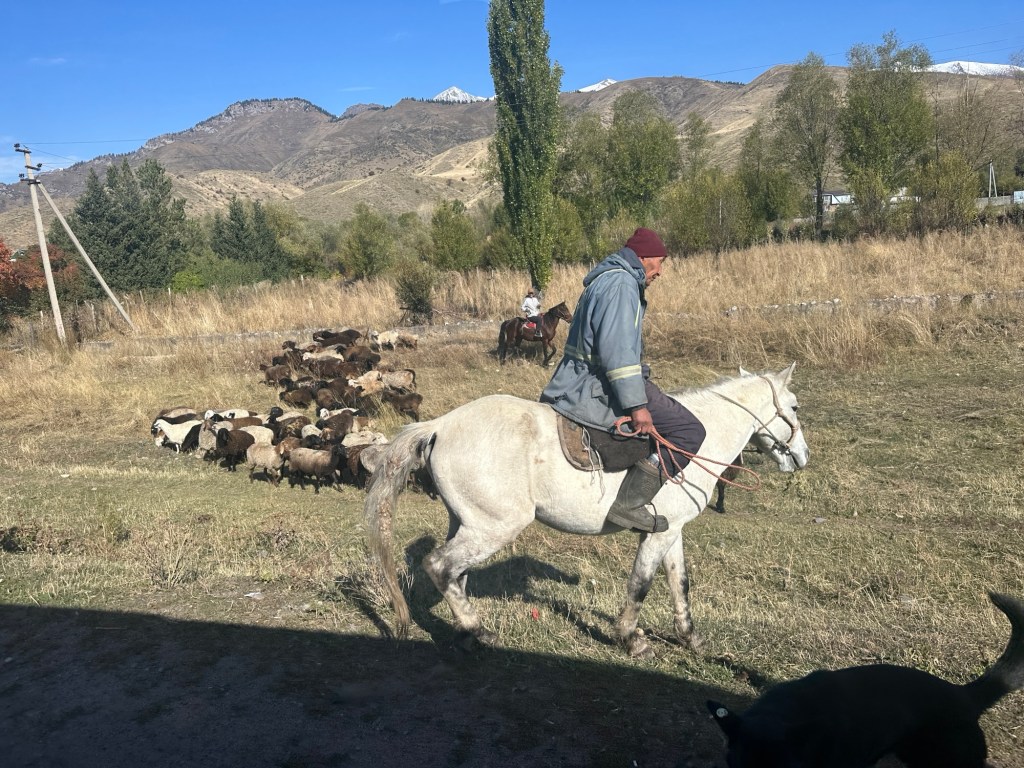
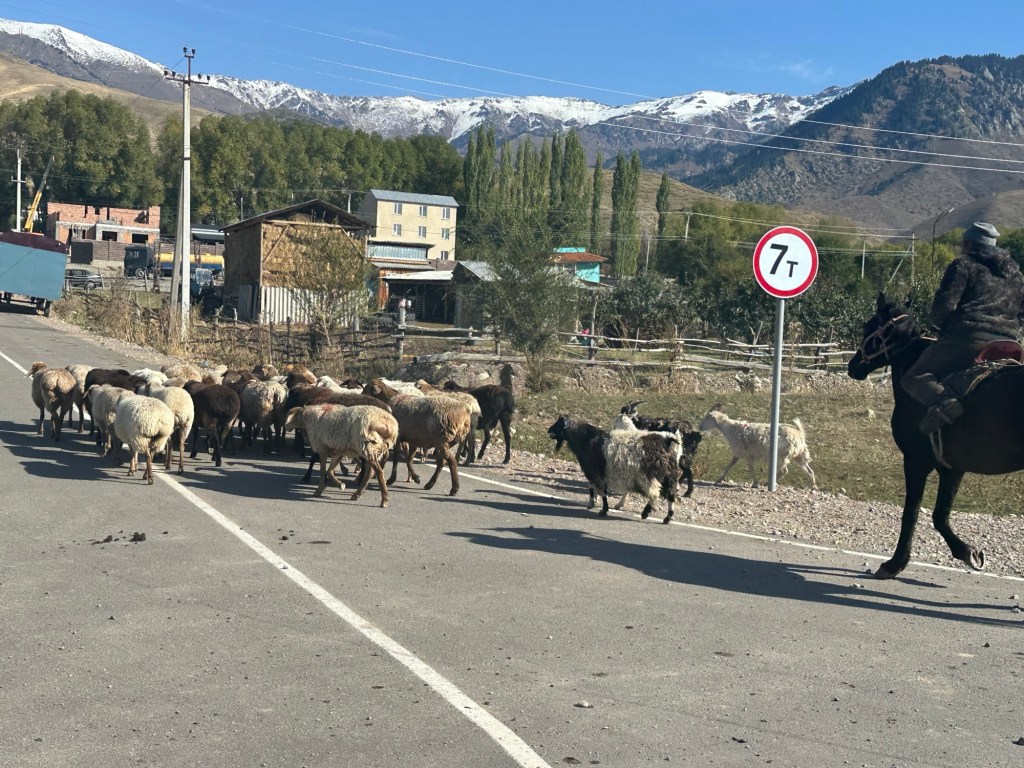
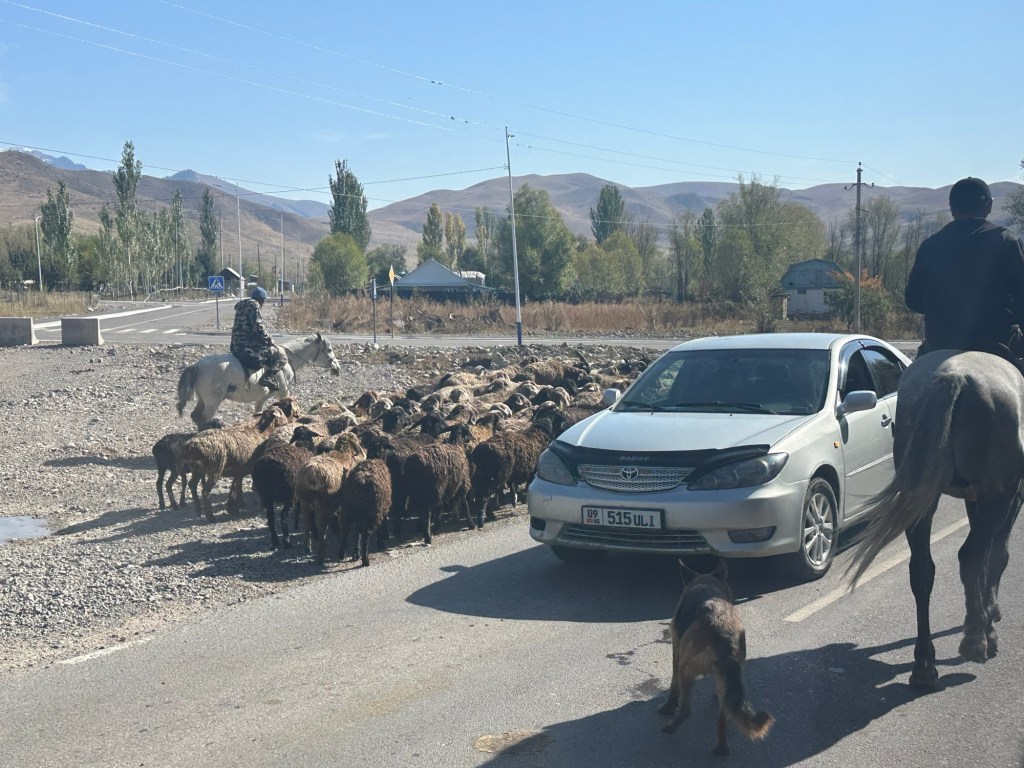
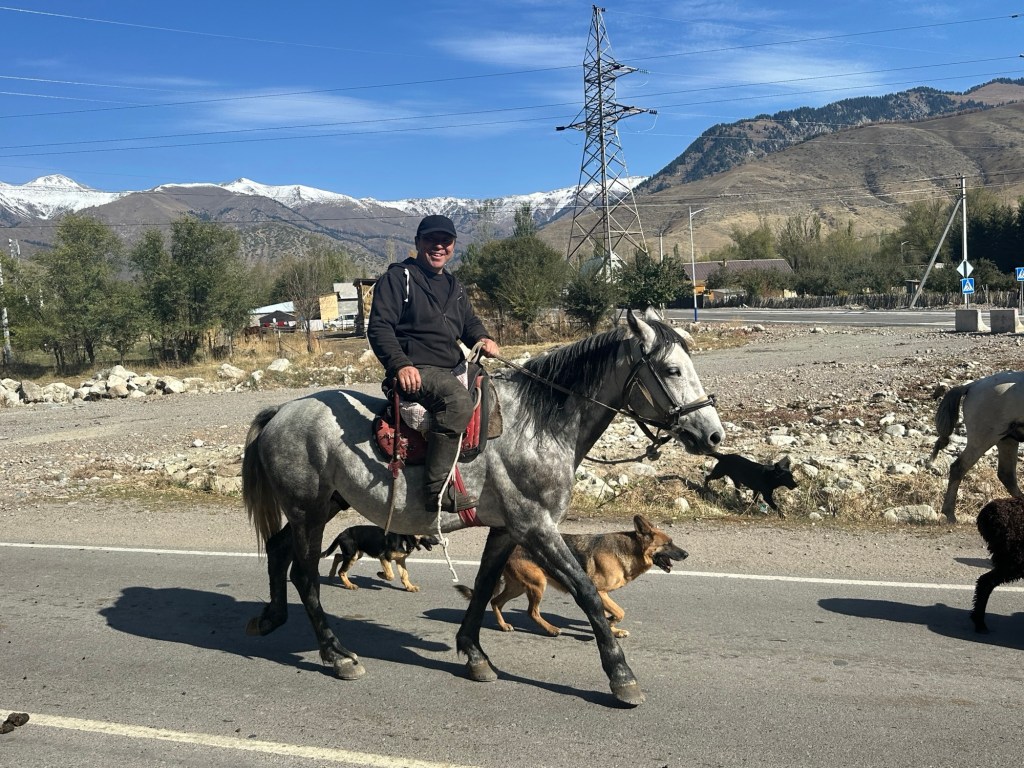
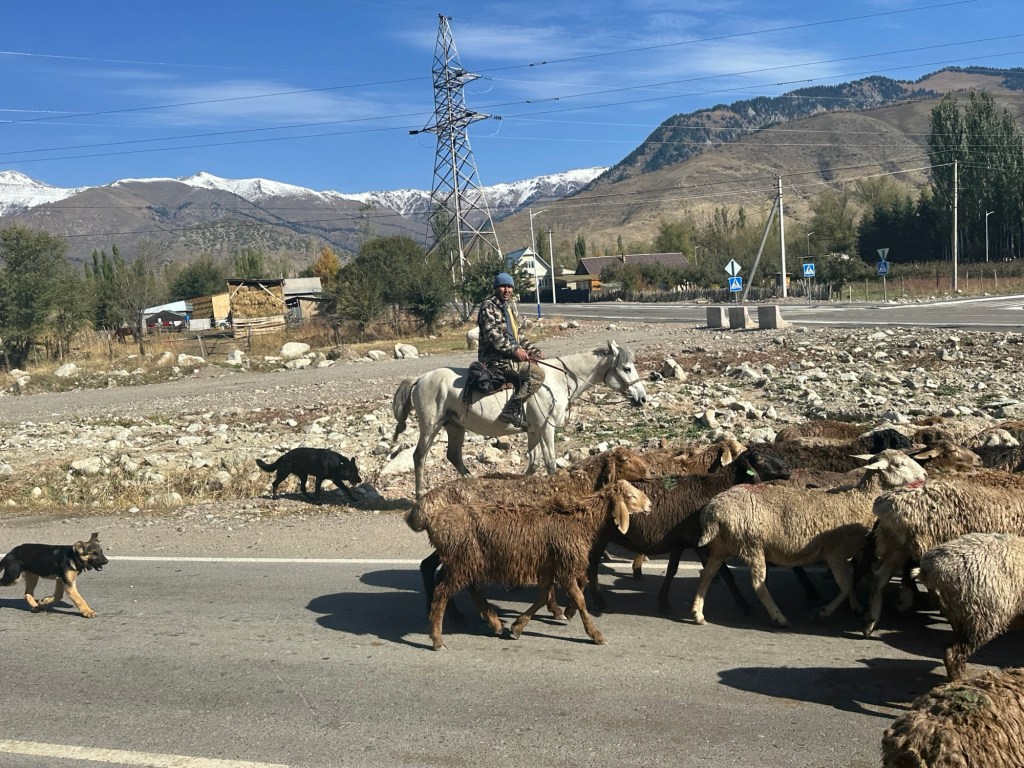
Interesting things about Kyrgyzstan
Population is 7 million, government is currently giving financial incentive for families to have more children.
Region – mainly Sunni Muslim
94% of the country is mountainous
Very rich in mineral – gold, silver, uranium, coal, iron ore, gas, oil
Seems to much more modern than Tajikistan – can use credit card, scan barcodes etc.
Big push by government to have all main roads sealed by 2027. Thousands of Chinese workers here working on the roads.
Currency is Som. 100 Som = $1.77AUD
Men wear the Kalpak hats – tall white felt hats with black trim.
 Glammy Goes Global