
Introduction
In the coming months, Tracey and Frank will be visiting some exotic destinations in Central America, the Caribbean and South America. We look forward to providing you with a visual and narrative experience of our travels. Feel free to share with your friends. We are looking forward to your joining us.Day 1 Friday 8th March
After much planning, the time had come for the long flight to San Jose on Costa Rica. Lucky for us, we got an upgrade to premium economy for the 14 hour #Qantas flight to Los Angeles. The food, and wine, were certainly were certainly a cut above the usual cattle class menu. Not to mention the extra leg room- maybe not a flat bed, but certainly more comfortable!
We managed to fill in 5 hours at LA airport, luckily we had Alaskan Airways lounge access – not much there, but at least it was quiet. Outside, it was very hectic in the terminal. Had the usual very slow American plane boarding – in groups. Security was very slow, as anticipated.
Five hours on a full 737 when you’re very tired is a long time, but we survived! Slow through immigration, but our welcome pick up was there to greet us. We arrived at our hotel, Park Inn by Raddison at 9.30pm (27 hours after leaving home!) Found out we were getting picked up at 7am, and best to take only what we needed for the next 2 nights, so a bit of juggling to sort out the bags. Discovered that my suitcase had arrived with a broken wheel – I swear it happens every time with my bag! Of course that led to the usual “discussion” that it is not meant to hold the weight I have in it!!! That’s it… bed time for Glammy!
Costa Rica
Costa Rica San Jose & Tortuguera National Park

9 March
Picked up at 7.15! Headed through Braulio
Carrillo National Park to get to Tortuguero National Park. A five bus trip over
some less than smooth roads, then a boat ride for the last 90 minutes- Tortuga
Lodge where we are staying is only accessible by boat or plane. It is on Costa
Rica’s northeast Caribbean coast.
We saw some beautiful lush countryside along the
way – steep hills which are really volcanoes, over 150 volcanoes in Costa Rica.
Volcanoes here are more gaseous than other parts of the world.

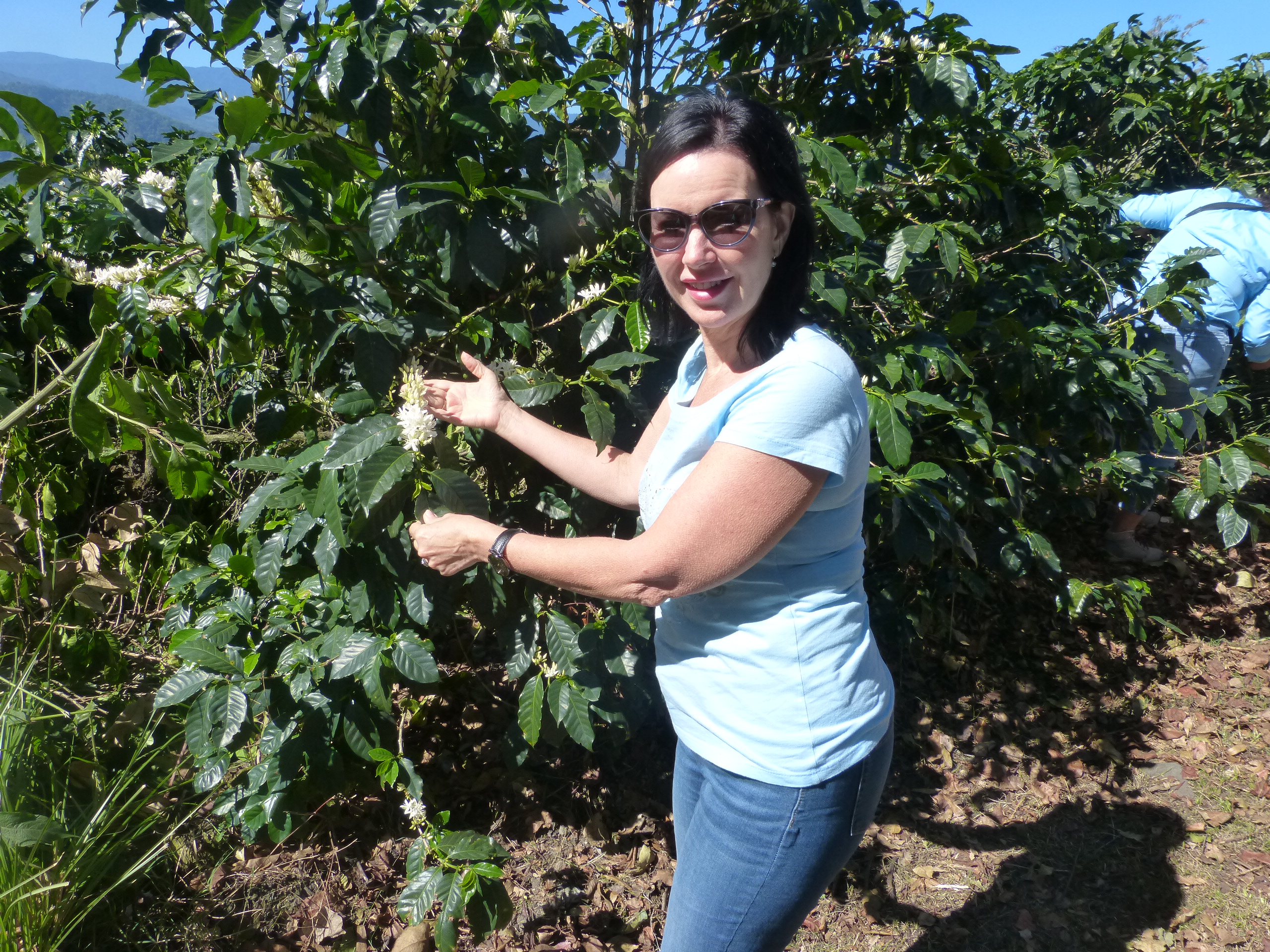
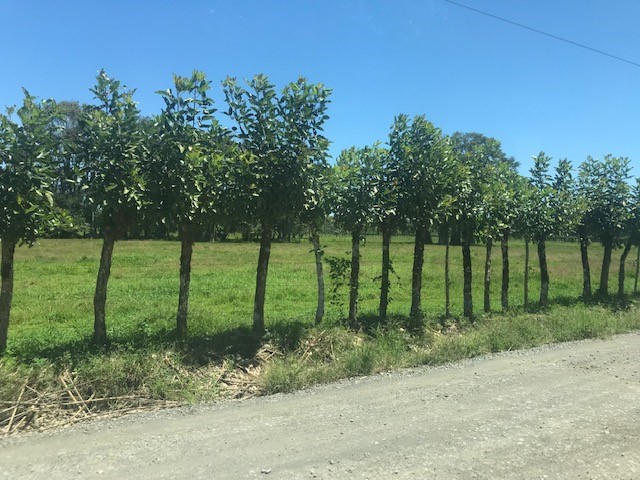
Coffee plantations in between banana and sugar
cane plantations- they are used as a wind break for the coffee. The white
flowers from the coffee plants have a beautiful scent.
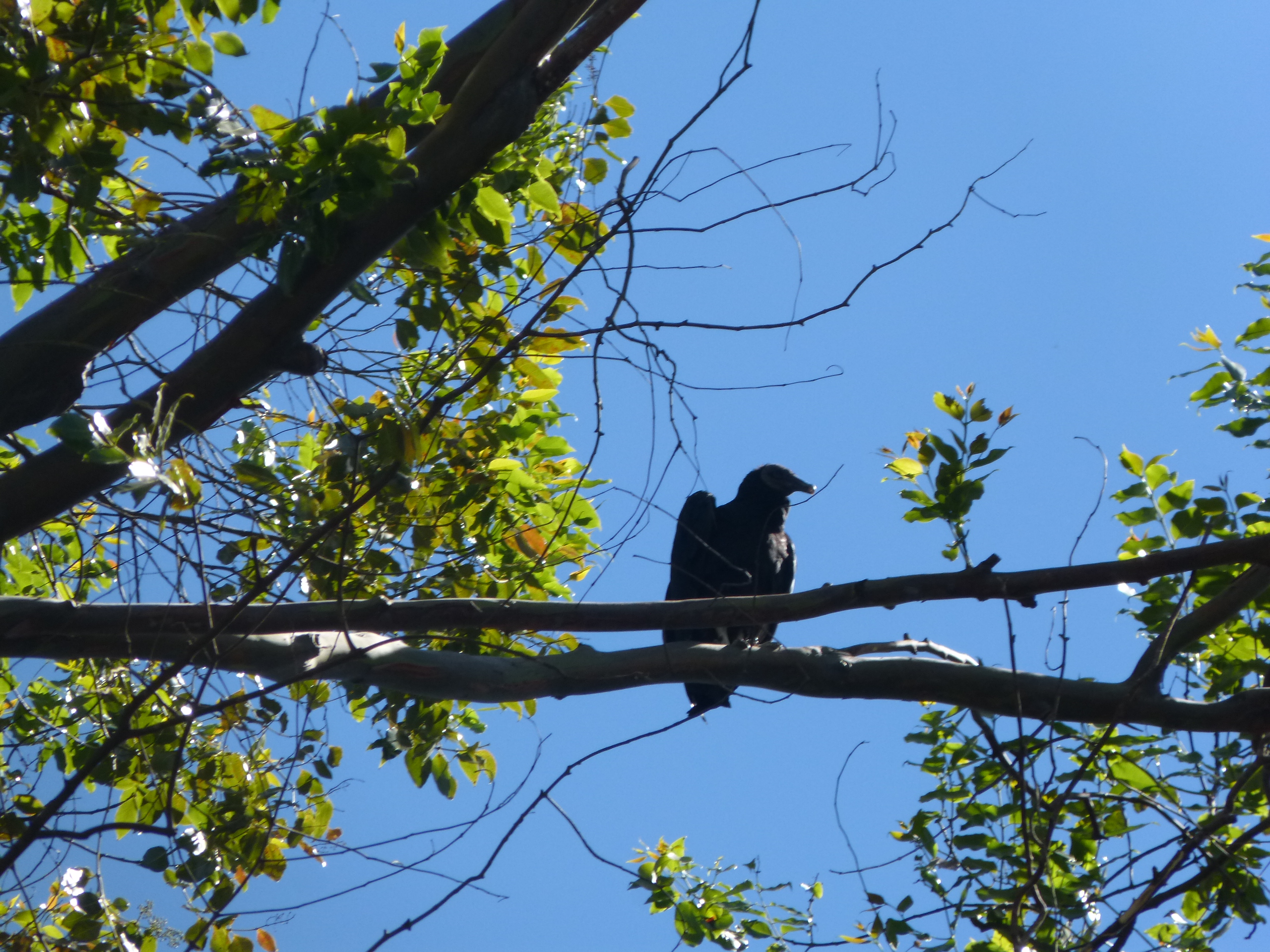
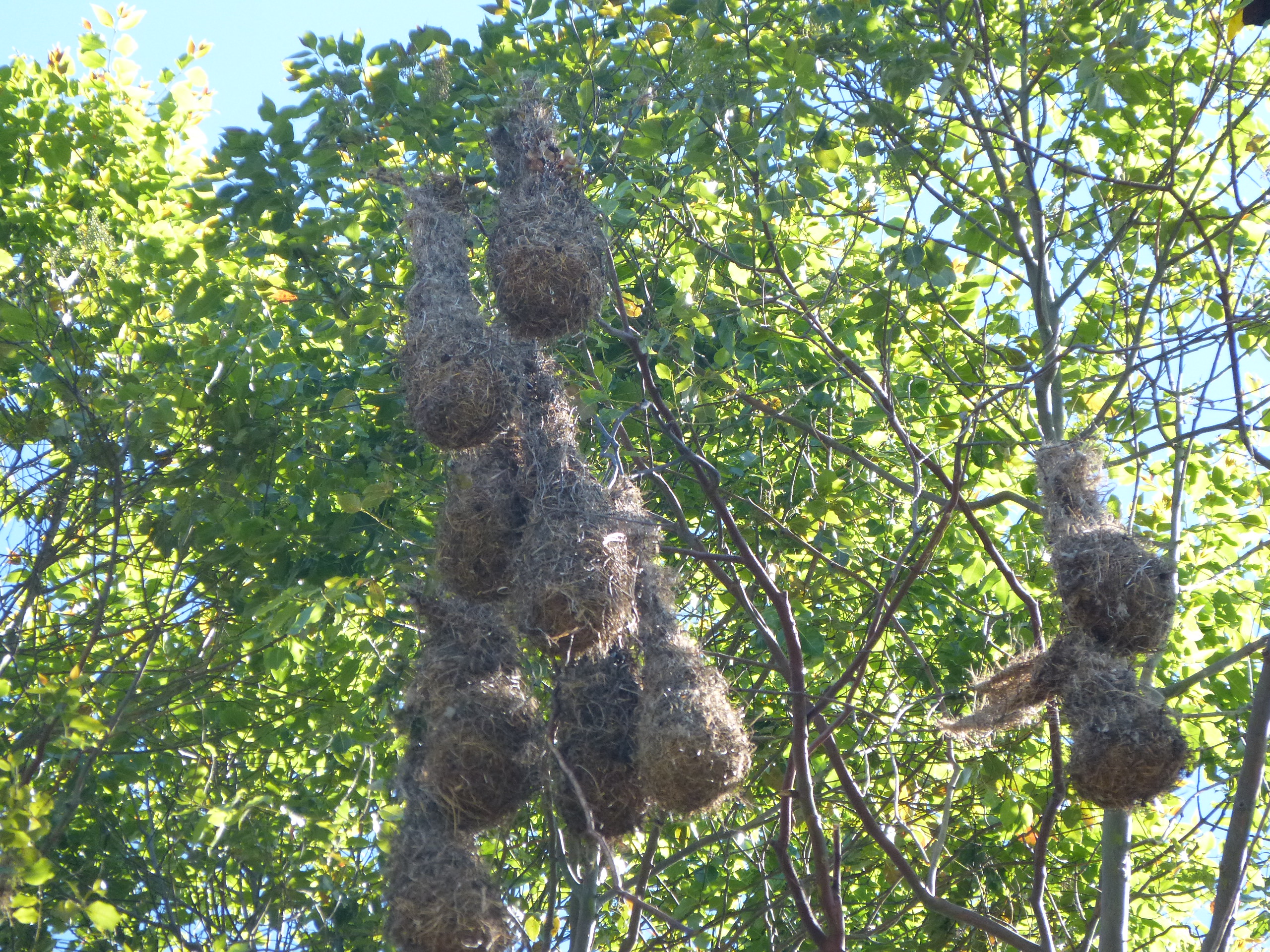
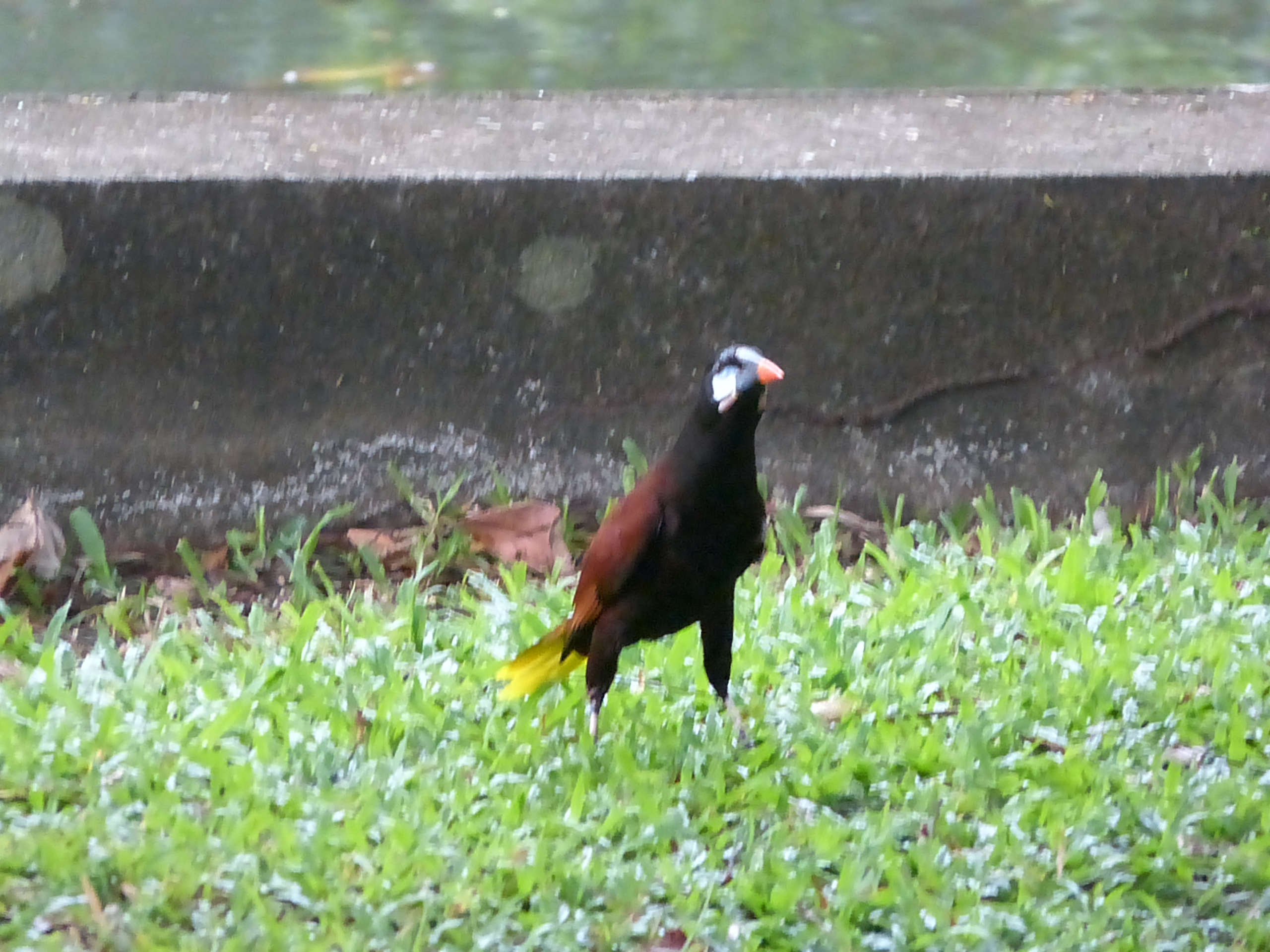
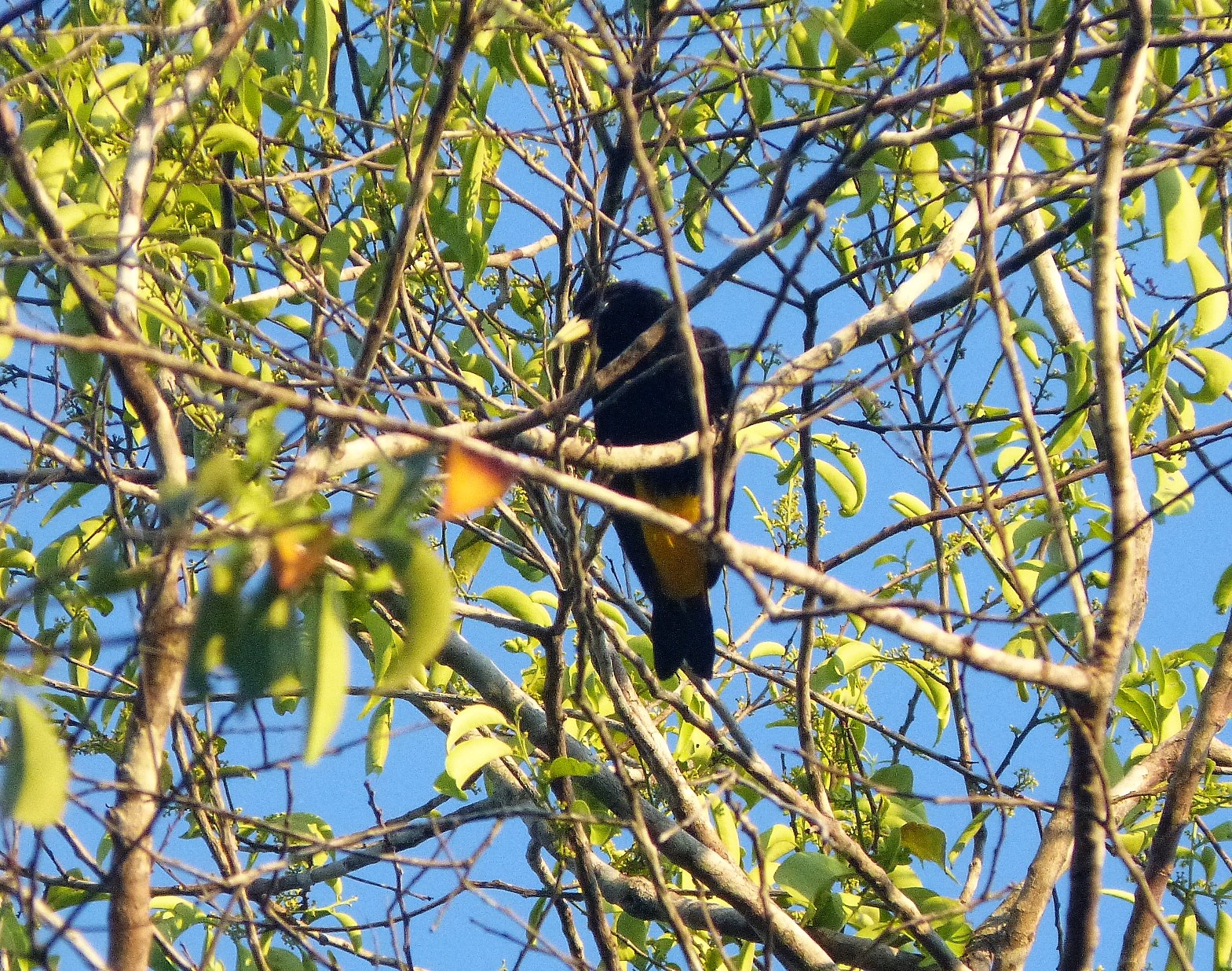
Saw Oropendola birds- black with golden tail, with a very musical sound. Nests hang down with eggs inside- a vulture was close by hoping to clean up the eggs! Turkey and black vouchers seen abundantly flying in groups.
Beautiful flowers in bloom- wisteria,
hydrangeas, bougainvillea, hibiscus, crepe myrtle,lilies. Trees- pink trumpet
and orange giant boro. Tiered fields of potatoes. Stag horns growing wild on
trees. Plentiful mango, coconut, palm trees.
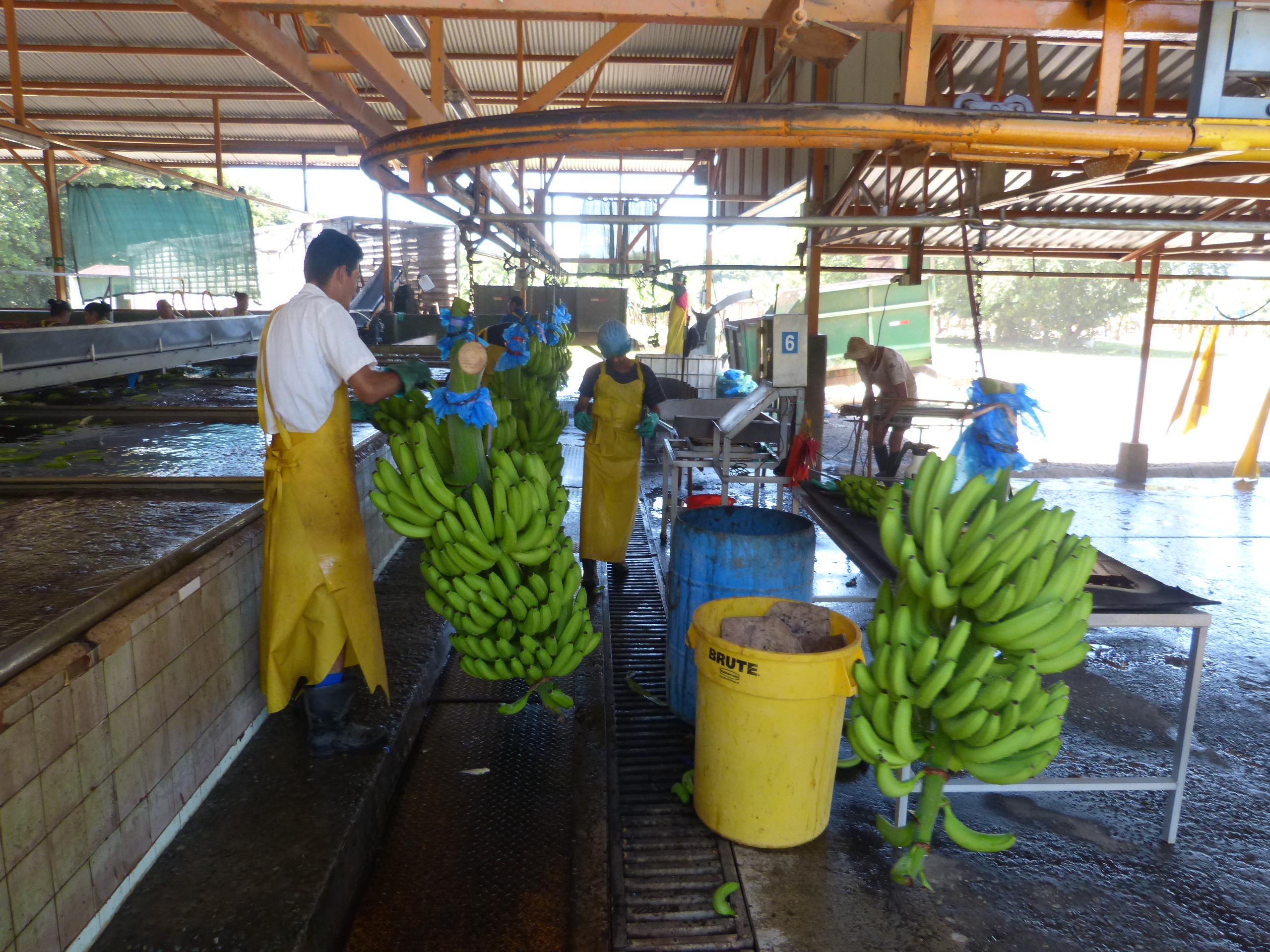
Banana plantations, 1000s of trees. They grow in
pairs, one tree is producing, the second is growing. We stopped to watch the
banana packing process – there is a Zip line for the bananas through the
plantation to get the bunches of bananas to the production shed. There they are
washed and packed The plantations are fertilised by light plane.

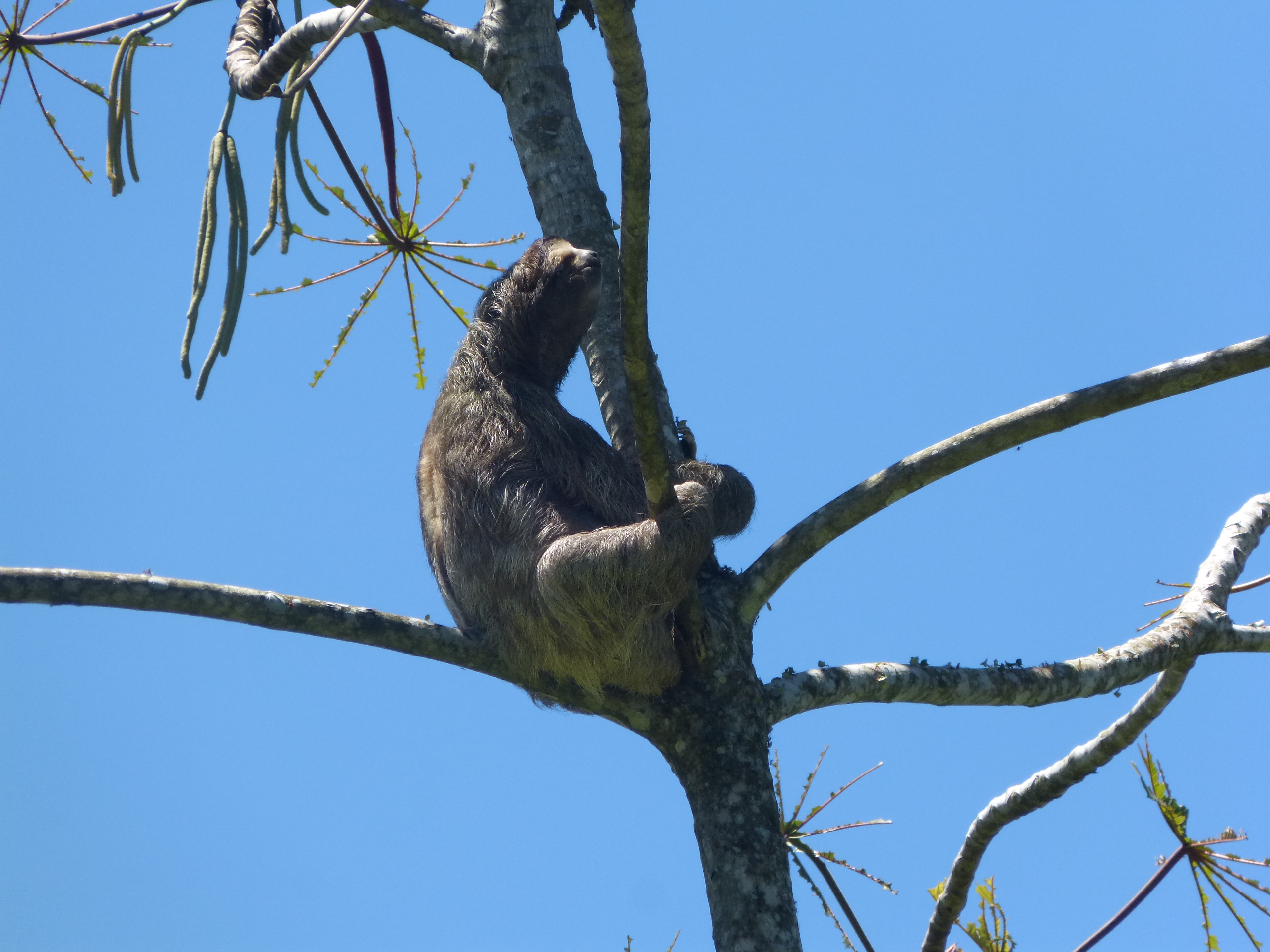
Three fingered sloth in a tree as we drove by- very slow moving. Two sloth species in CR, total of 7 in the world.
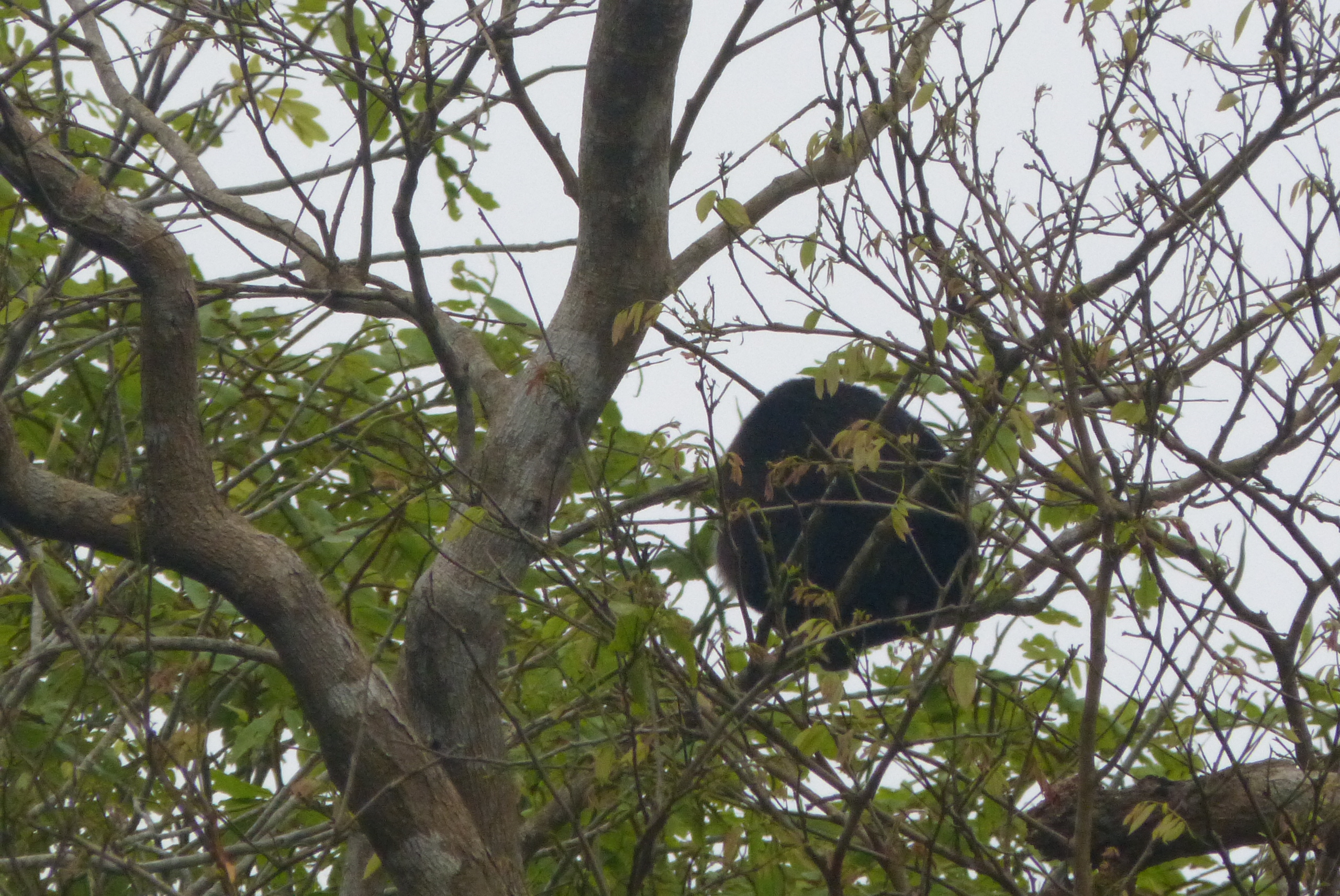
Saw Howler monkeys in the distance – loudest of the 4 species of monkeys found in CR. Travel in troops led by alpha male.
At Cano Blanca near Parismina, we transferred to a small boat to travel the last 90 minutes to our lodge. Much bird life along the way, including a Potoo (owl like bird).
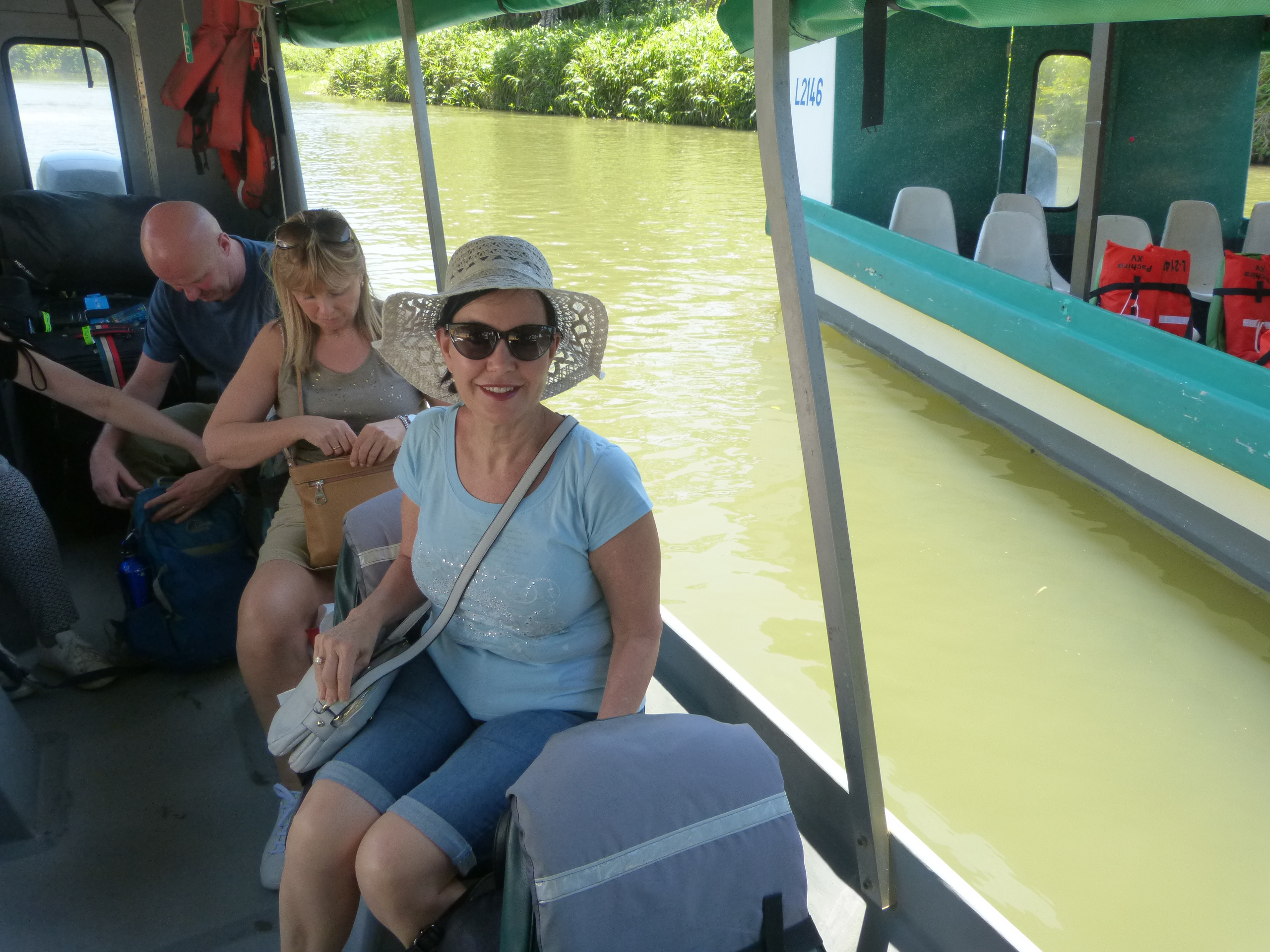
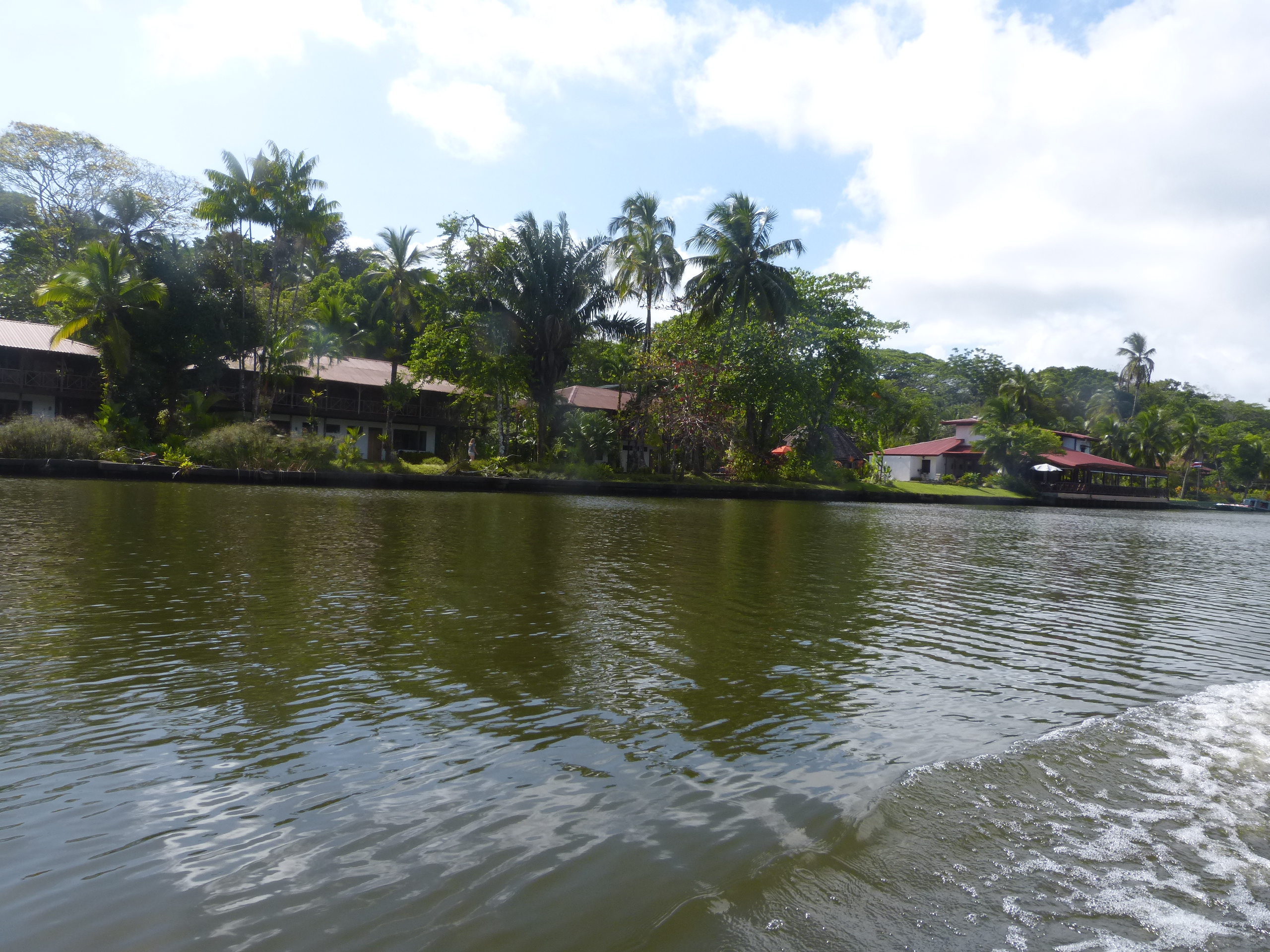
Arrived at our lodge, and went straight to the restaurant, for the most delicious lunch. #Plaintain (banana) feature a lot on the menu – the fried version is especially nice ( and no doubt laden with calories!)
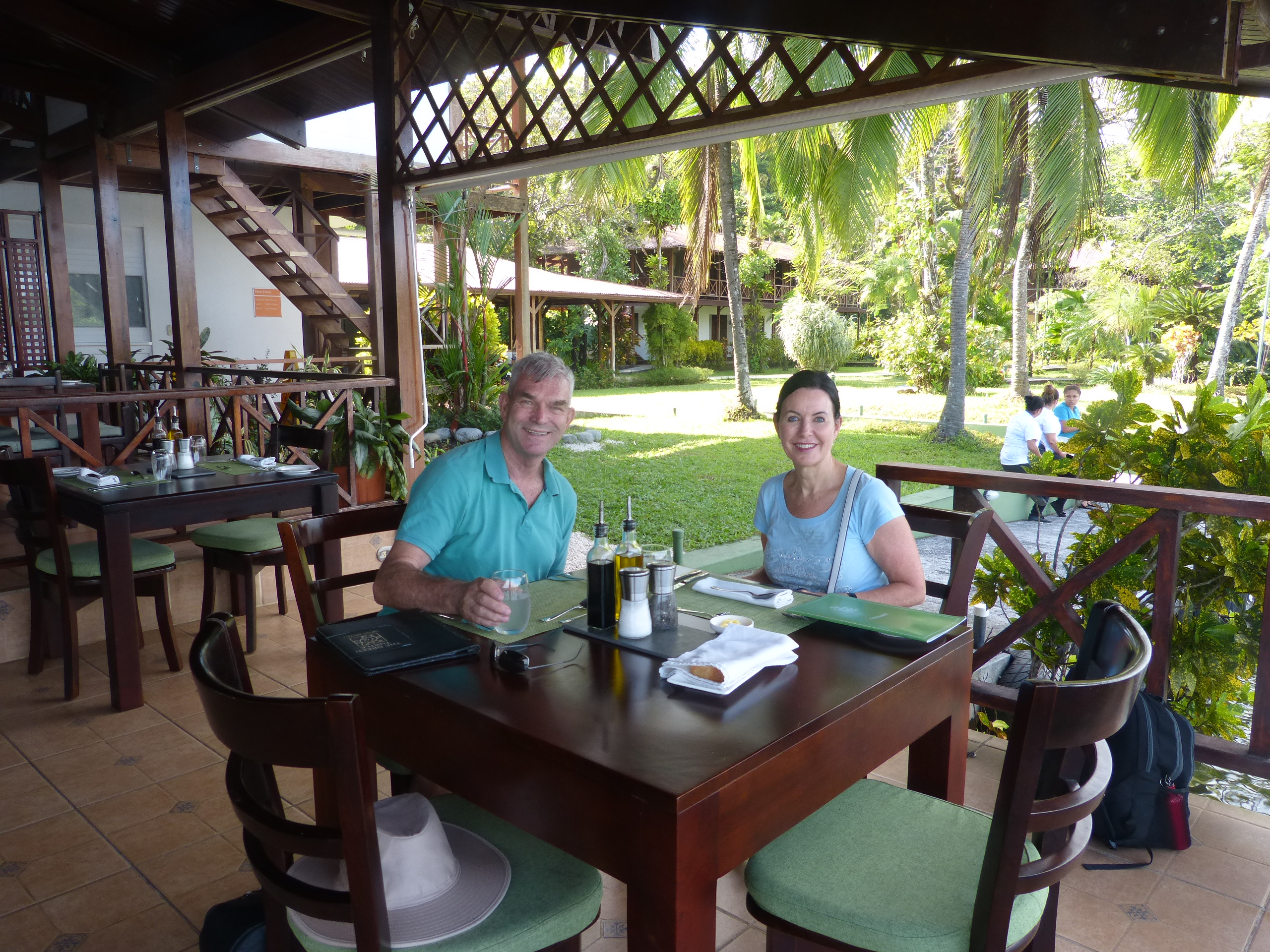
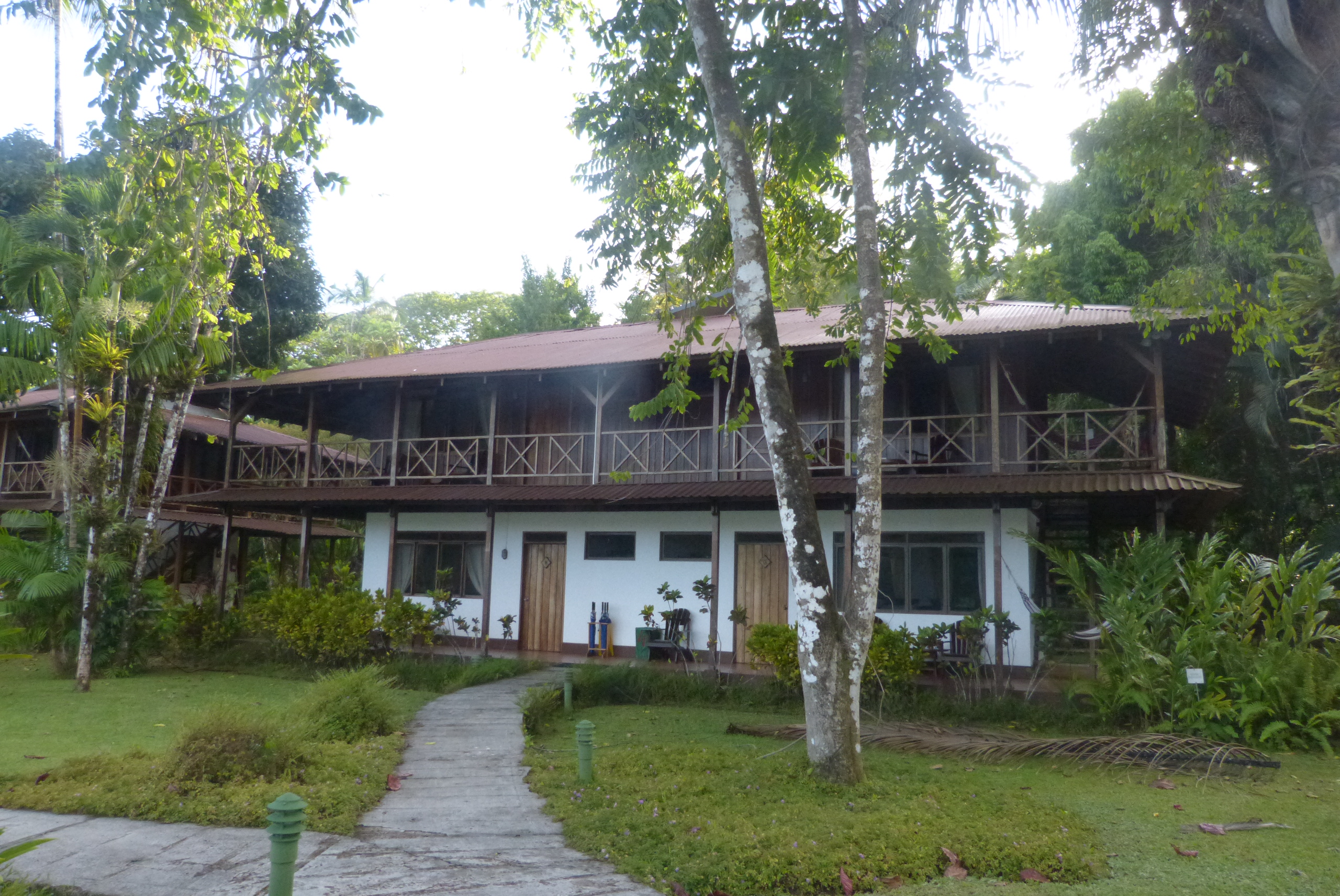

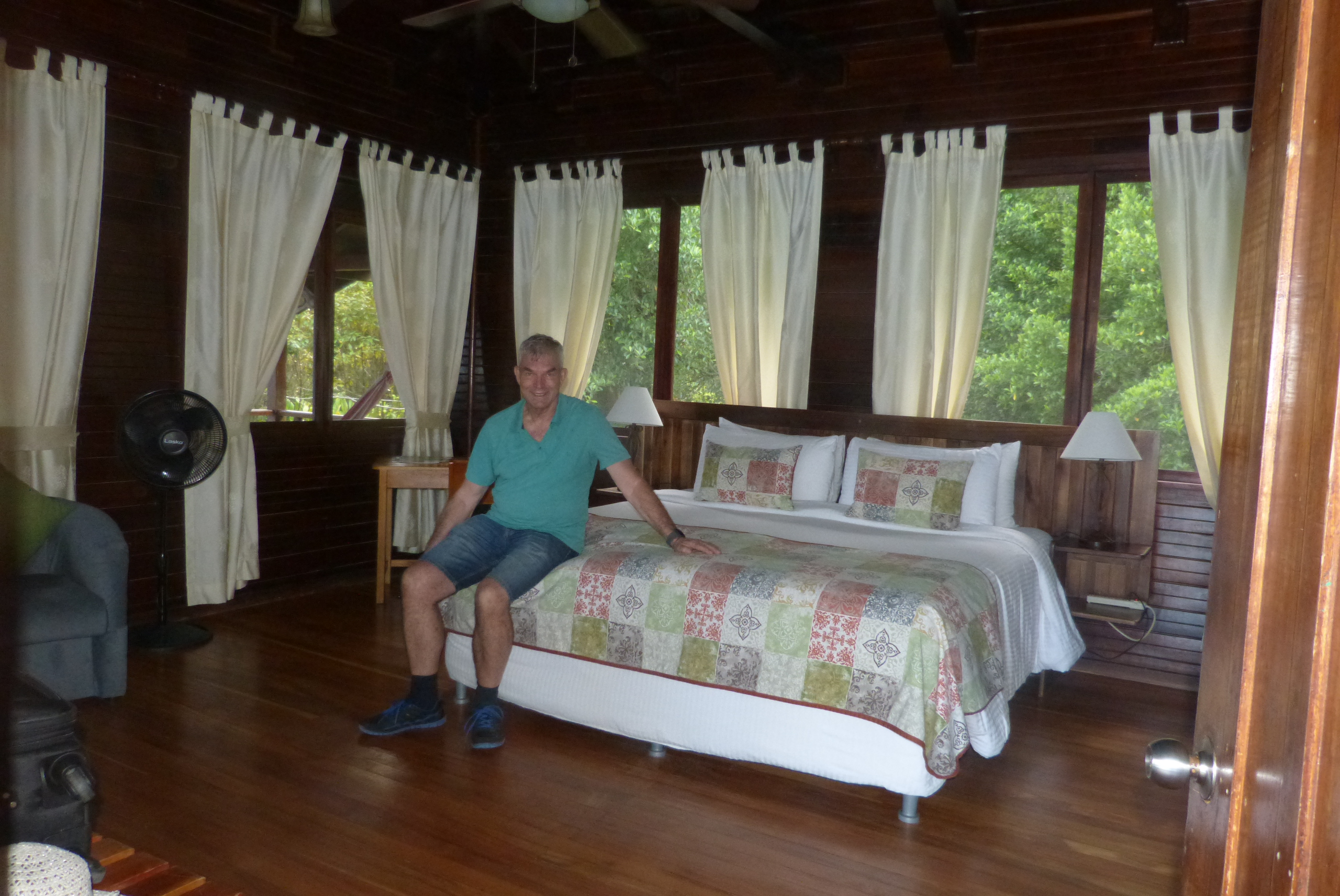
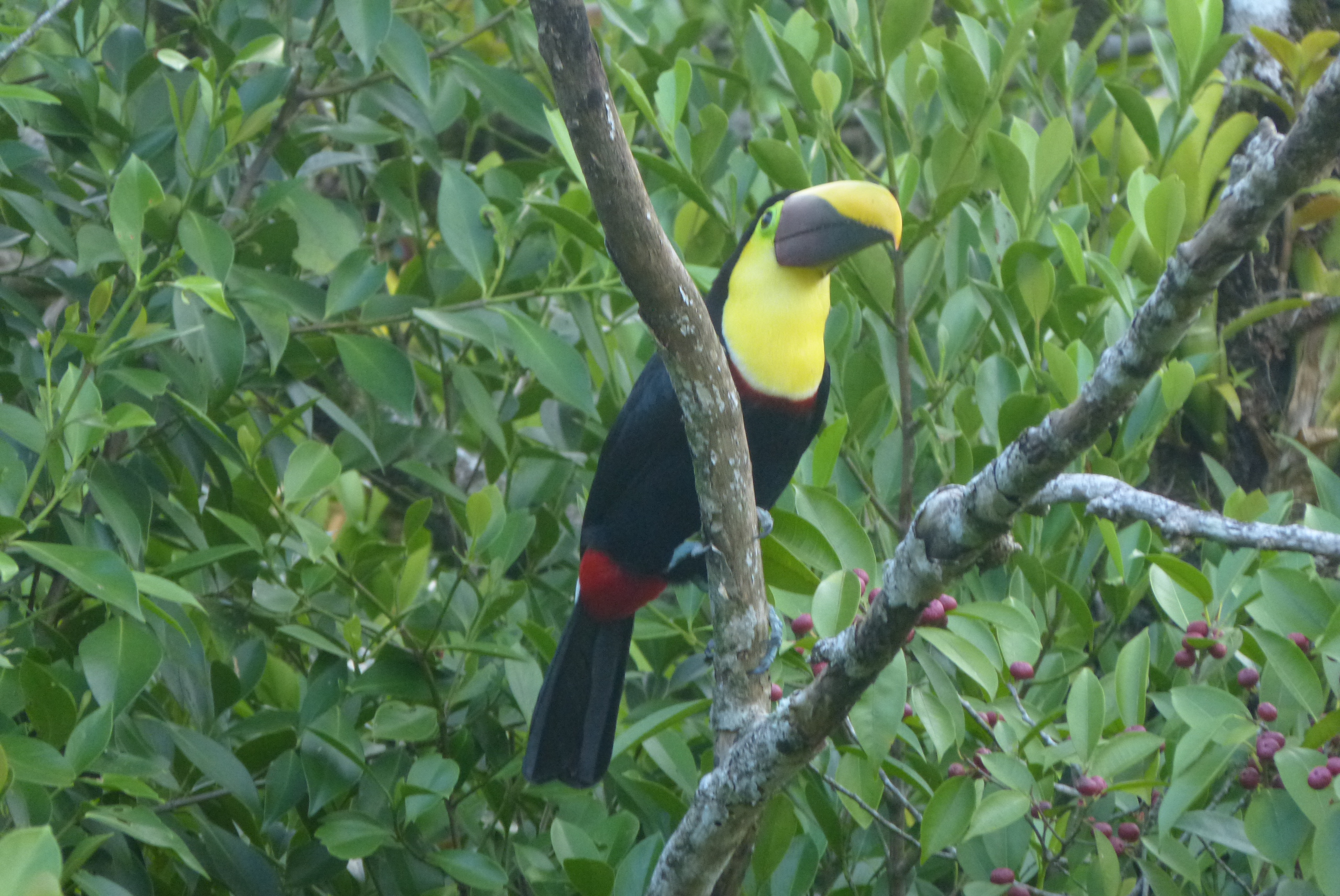
Our room was amazing, overlooking the river, surrounded by tropical trees, but most exciting of all… 3 toucans were right outside our bedroom window feeding on the tree berries! Glammy was excited!!!! Their colours are so vivid.


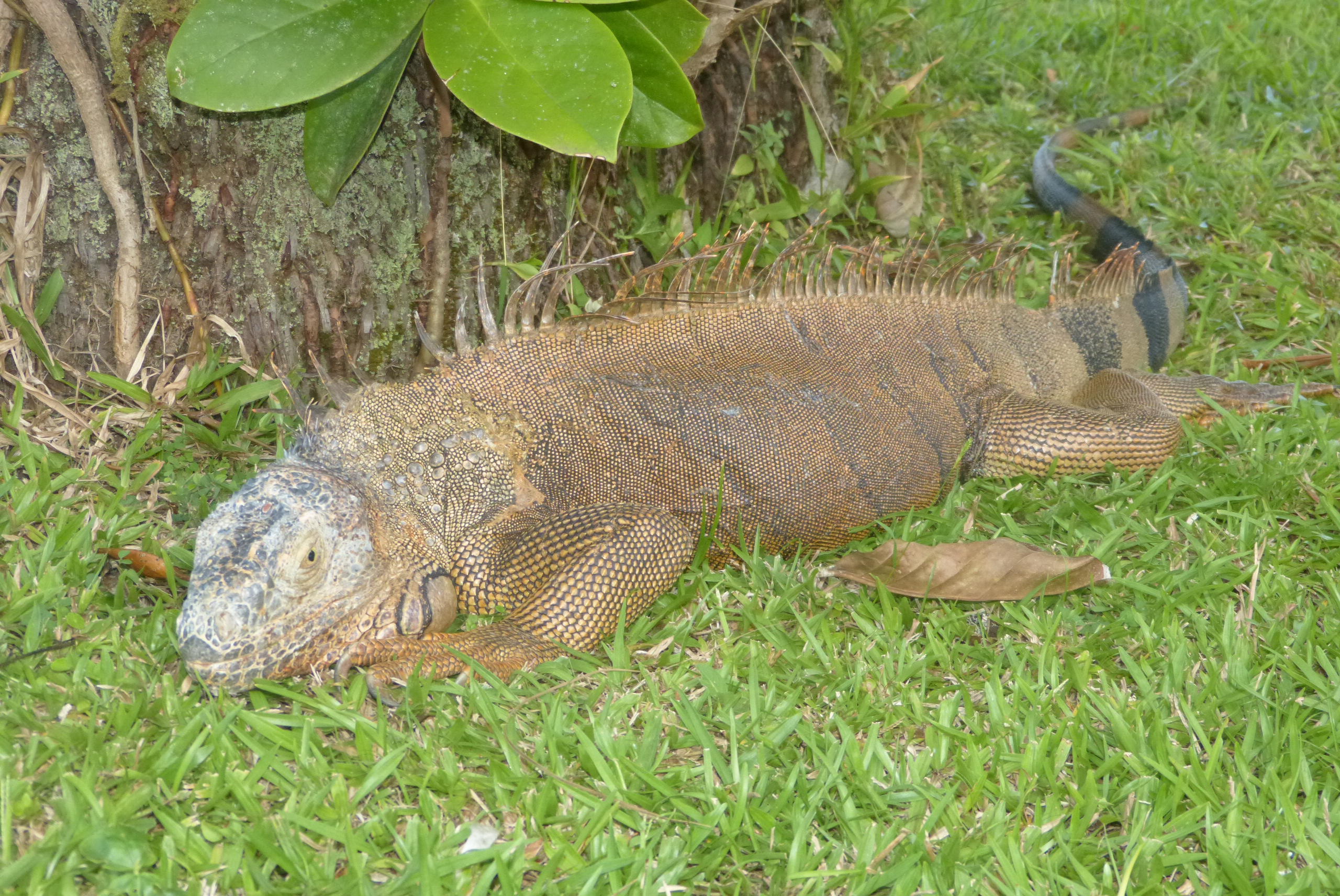
Once we had contained ourselves, we did a short nature walk, coming across a family of spider monkeys frolicking in the trees, a green iguana (which was brown) and a tiny Strawberry Poison Dart frog – it may be poisonous, but very pretty to look at.


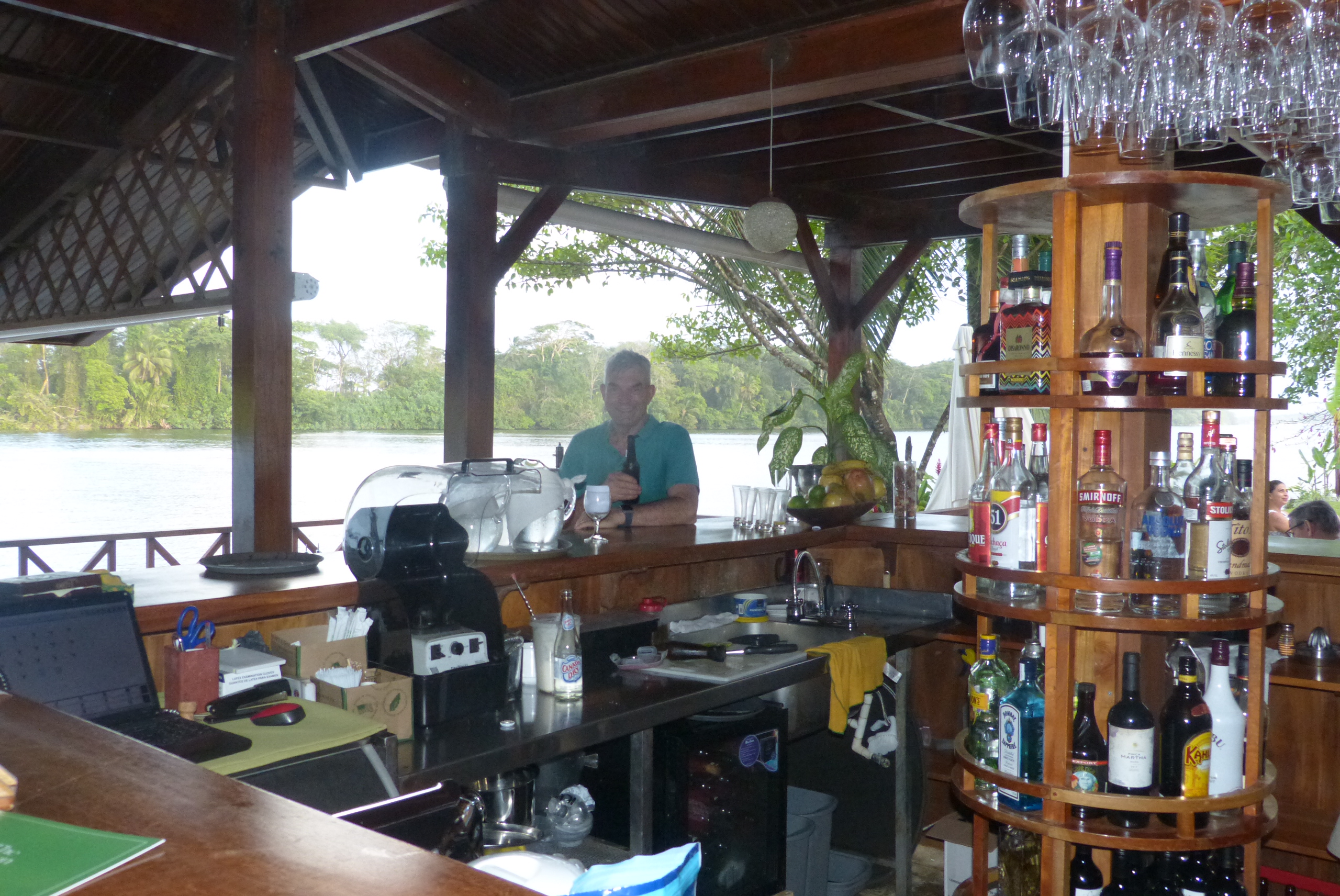
Dinner…overlooking the river sitting under plantations fans. Oh the food is first class here, so many choices, and fresh. Managed to find a bottle of our favourite Chilean Terra Vega Carmenere on the menu which certainly helped to ease us into the land of mod
Tortuguera National Park
Nine hours sleep… hopefully that will see us through the jet lag period! A little sleeping tablet for two nights after those awful long flights usually does the trick.
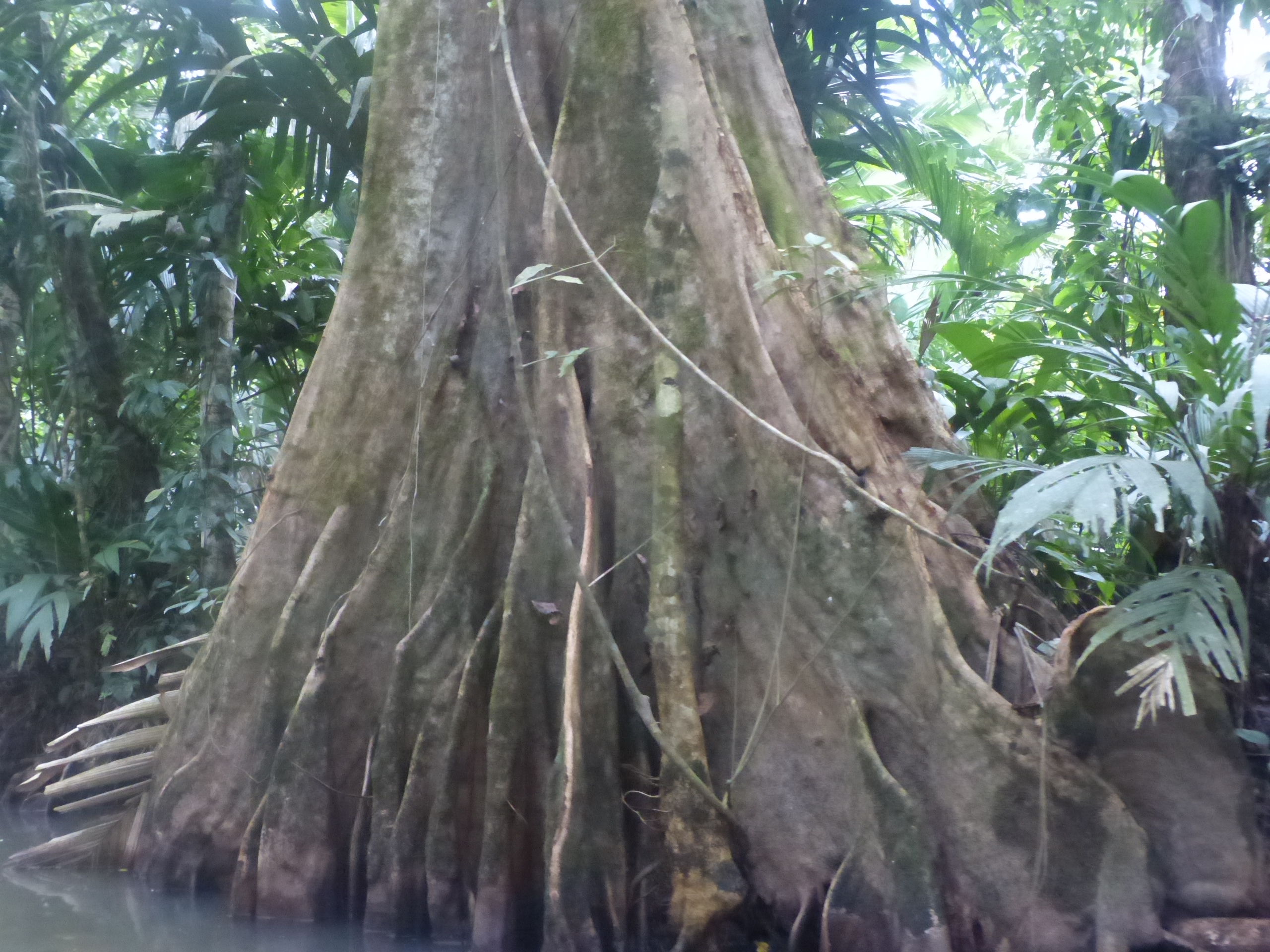
7.30 sees us on a small boat looking for wildlife with Norton the naturalist guide. We head up the canals in Tortuguero National Park, through the lush green rainforest canopy.
This is what we saw:
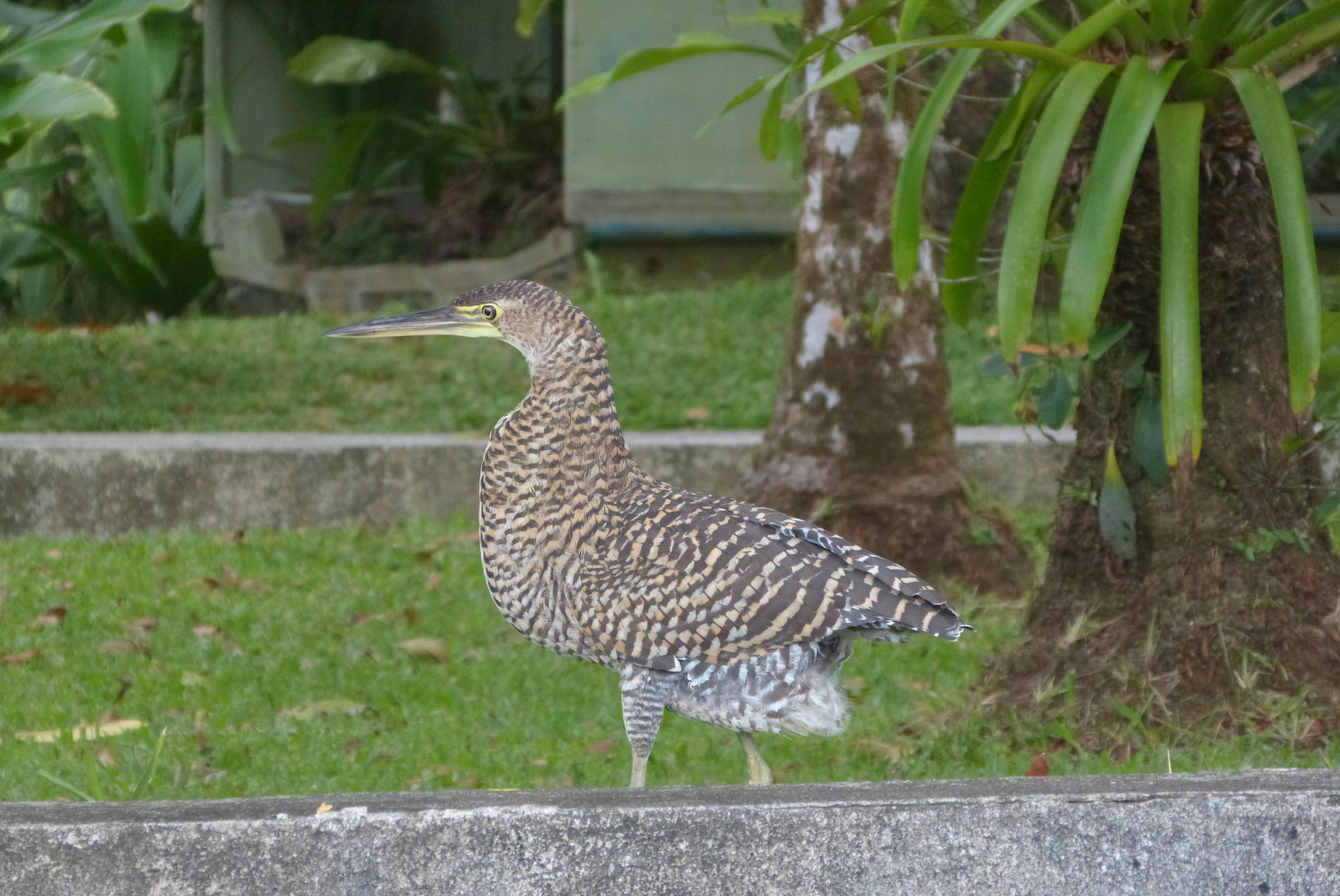
- Bare throated Tiger Heron – beautiful tiger like colourings
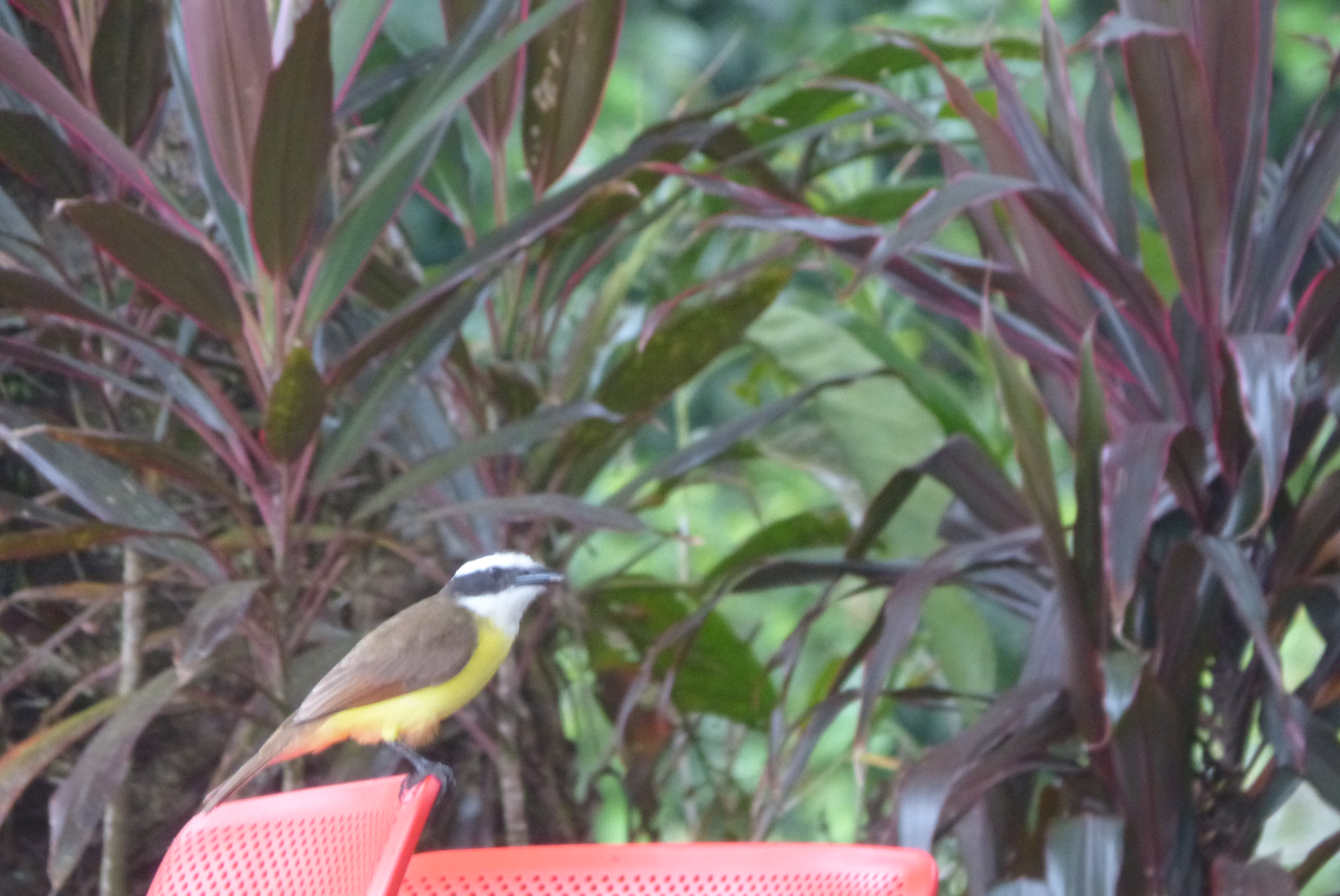
- Great Kiskadee
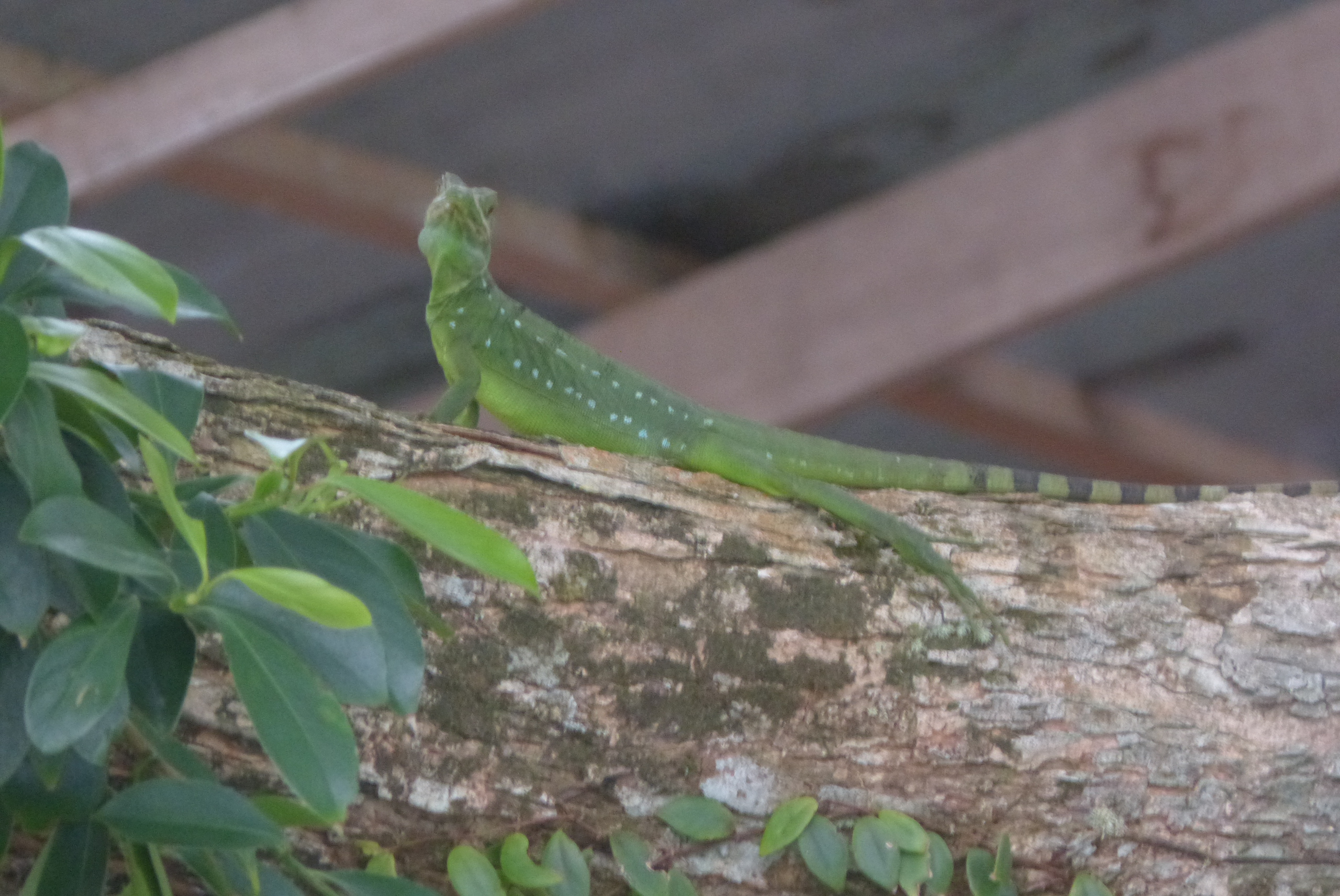
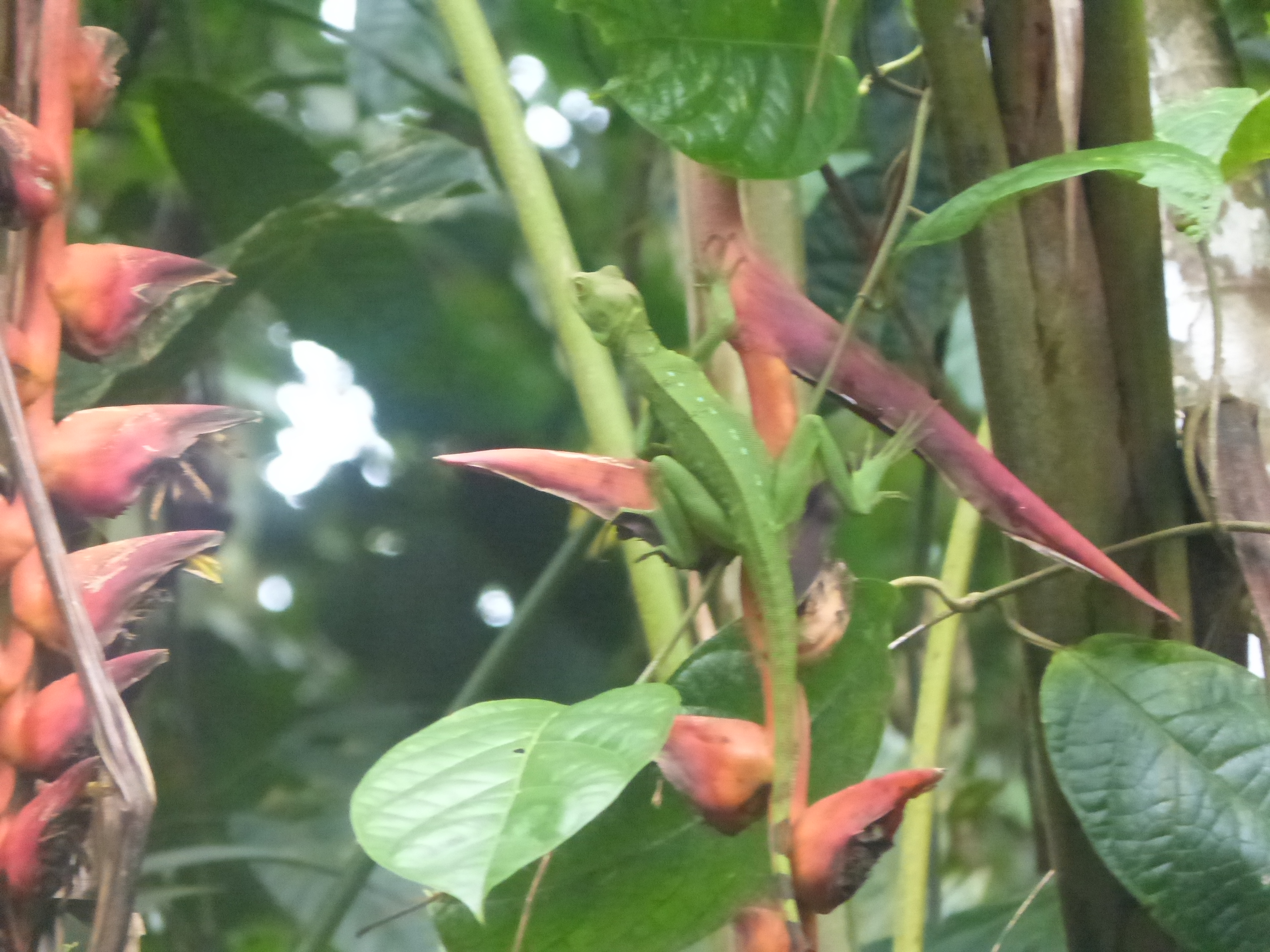
- Jesus Christ green lizard – called that because it walks on water
- Howler monkey – good to see them as they were guilty of waking us up this morning with their loud calls. They walk along the top of the branches.
- Three fingered Sloth – sound asleep. They go down to the ground once a week to go to the bathroom!
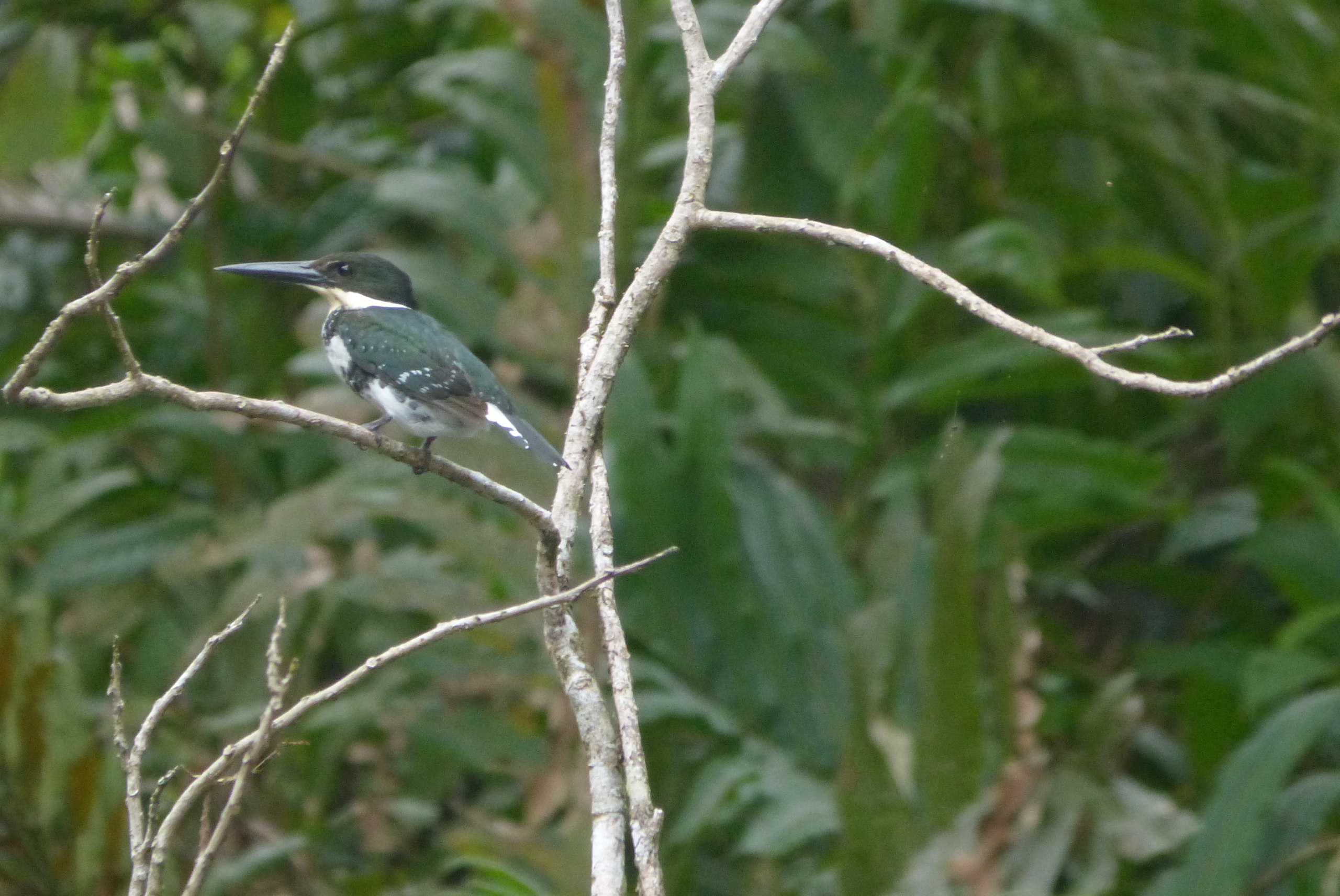
- Green Kingfisher -very pretty but shy, difficult to photograph
- Anhinger , called a snakebird – they love to show off their wings
- Granite woodrail
- Ring kingfisher – again shy
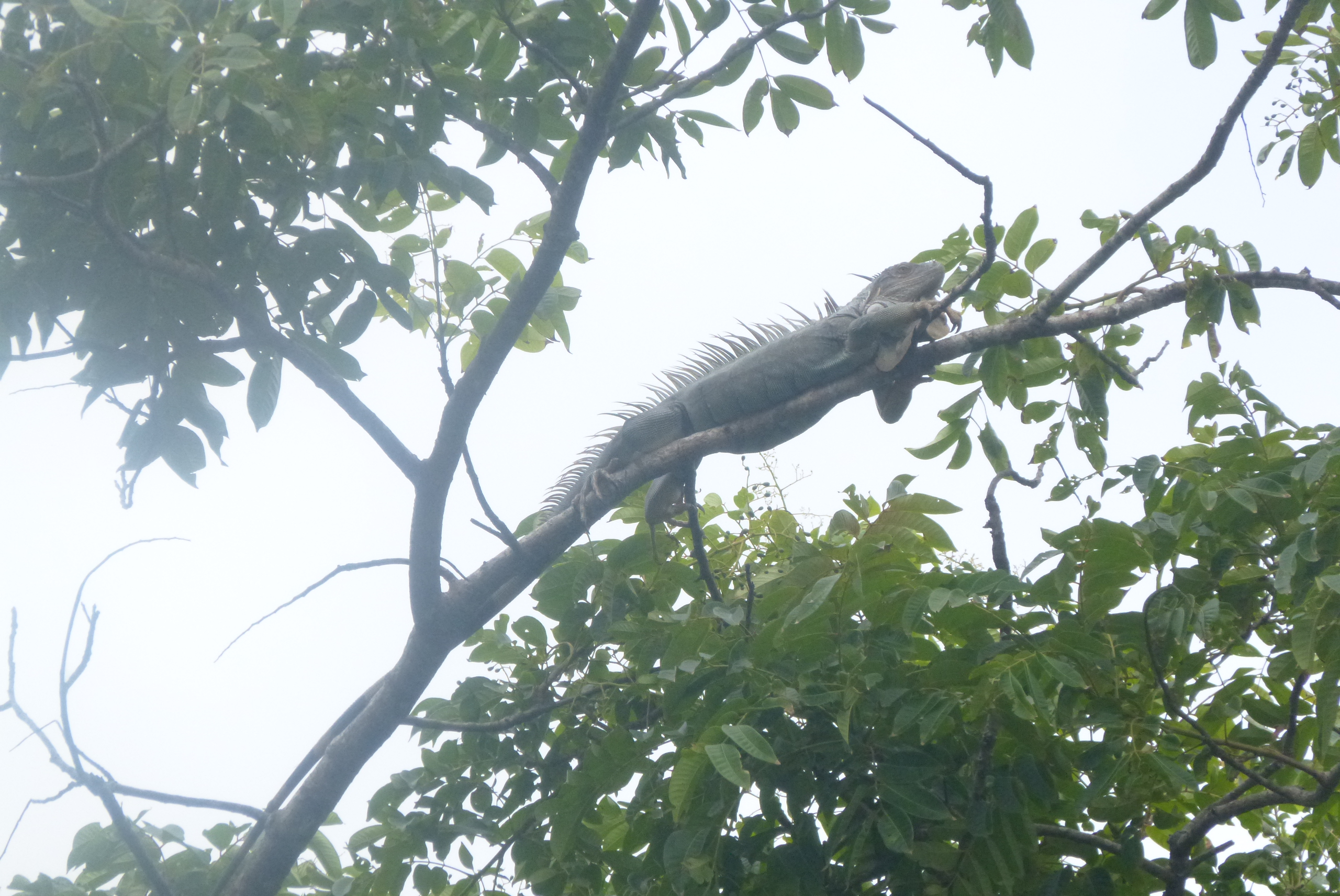
- Green iguana- lots of these – they love to sunbake way up in the tops of the trees
- Common black hawk
- Collared aracari toucan – this was quite small
- Yellow throated or chestnut mandibilled toucan
- Keel Billed toucan
- Spectacled Caiman – several of these. These are part of the alligator family. They are not dangerous – so Norton said, but I’m not chancing it! They like to hide in amongst the water hyacinth.
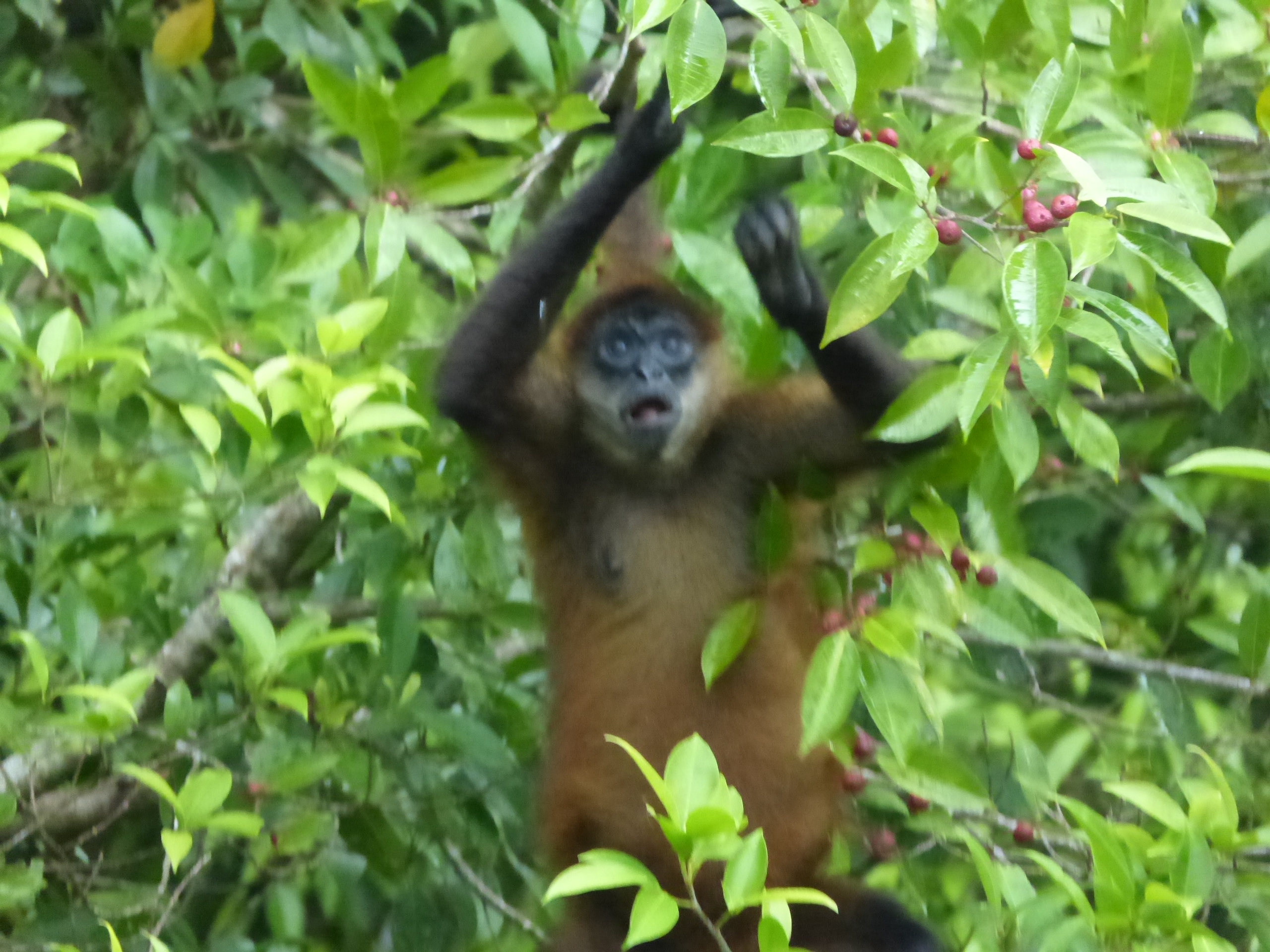
- Spider monkey – they have no thumbs, so pick up the while branch to eat berries. They swing under the branches
- Bill heron
- Picnic kingfisher
- Black river turtle – only a glimpse of his head
- Golden Orb spiders – the web is so strong you can use it as a fishing line!
- Russet-naped Wood-Rail
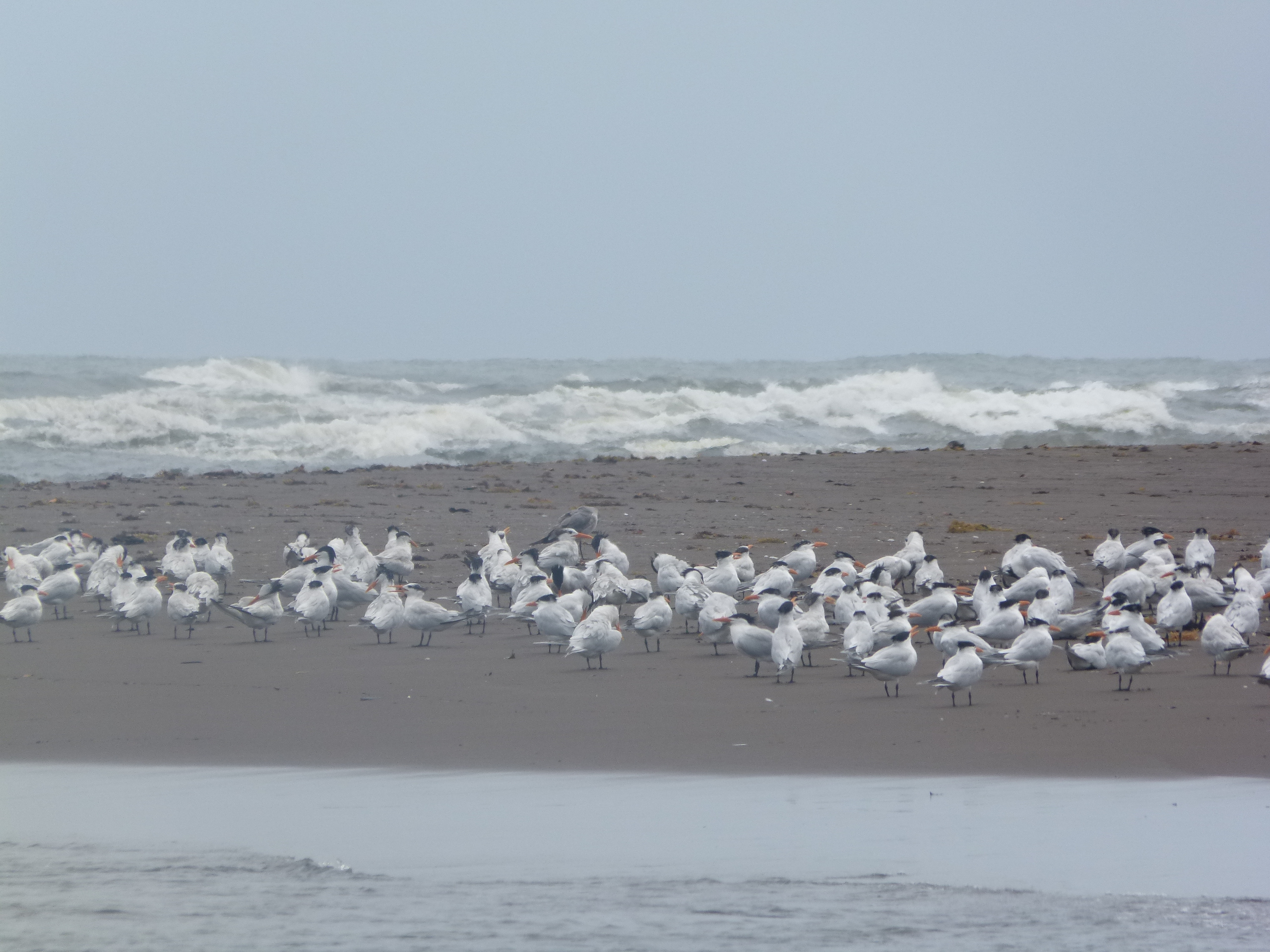
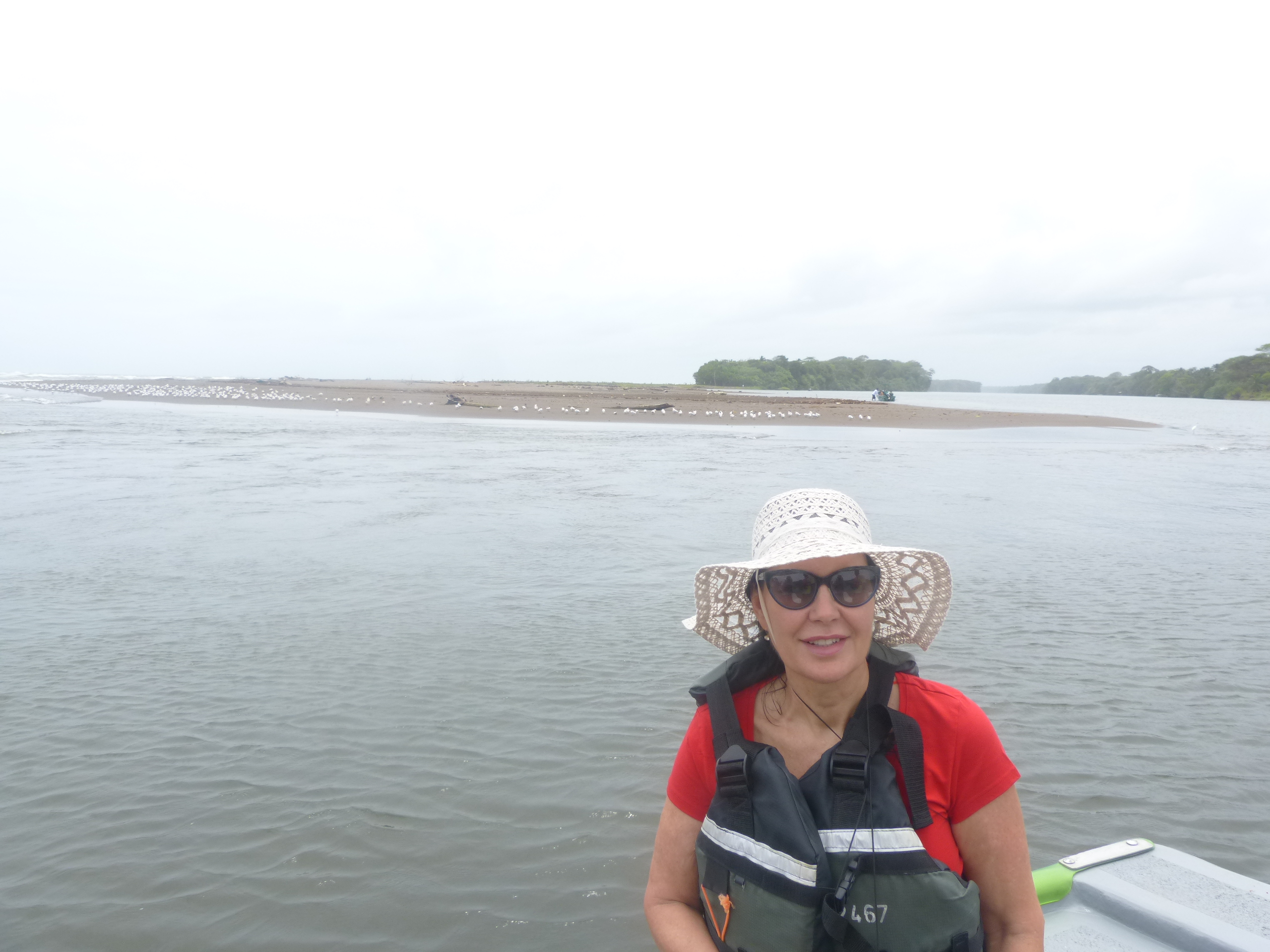
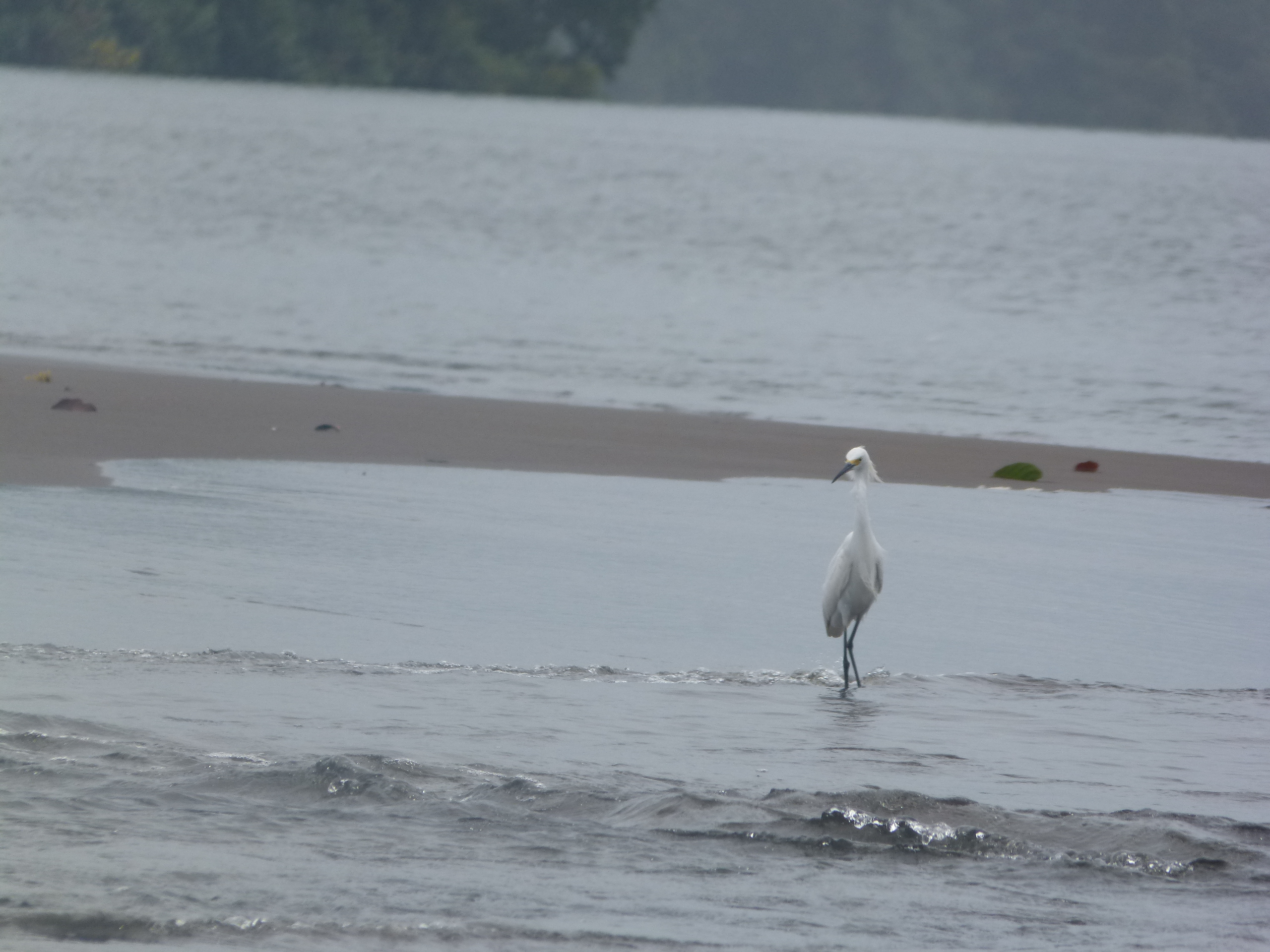
We went to the end of the canal, then all of a sudden we ran out of rainforest, and there was the Caribbean Sea, complete with waves, and black sand!! Saw Royal Terns and Snow Egrets
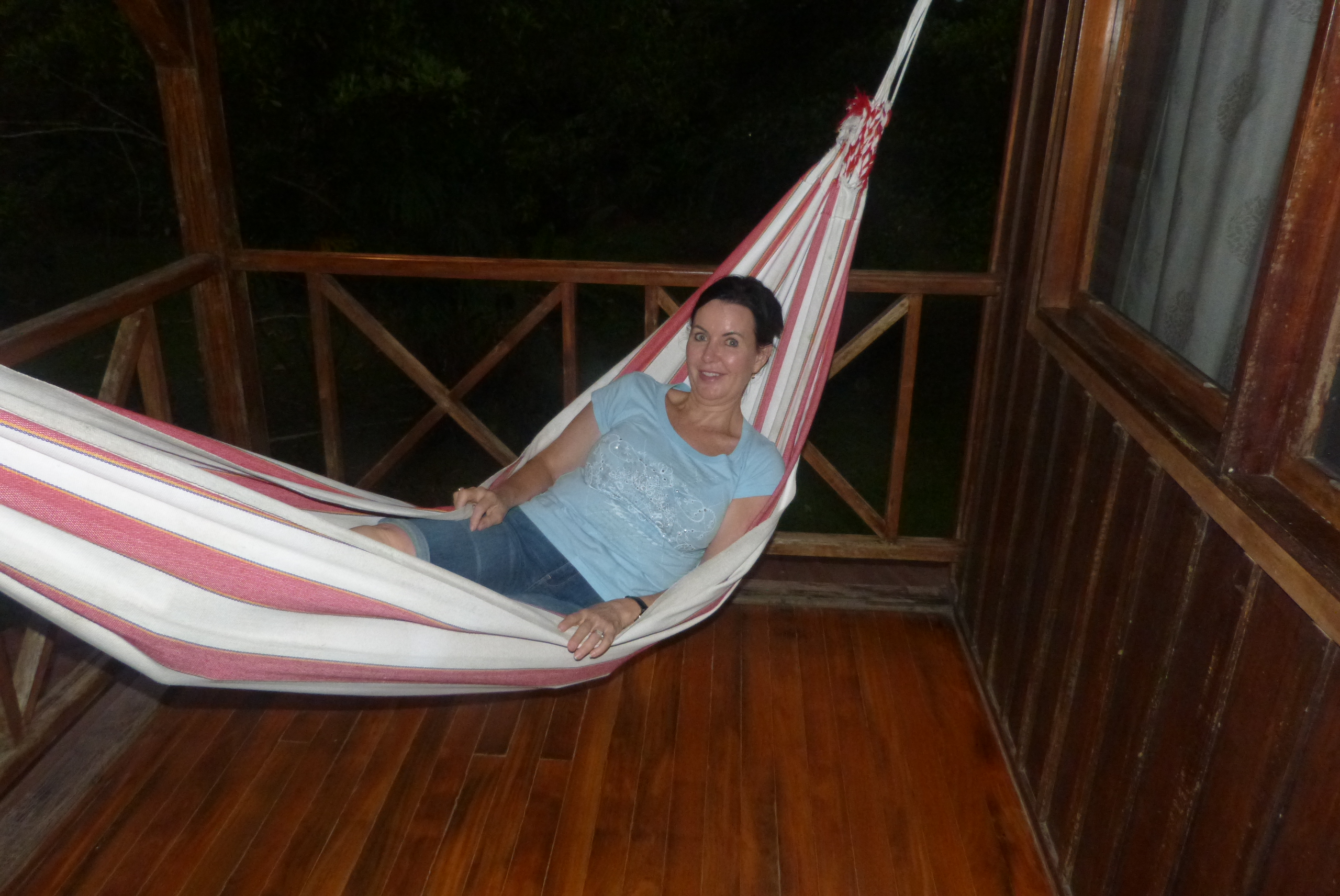
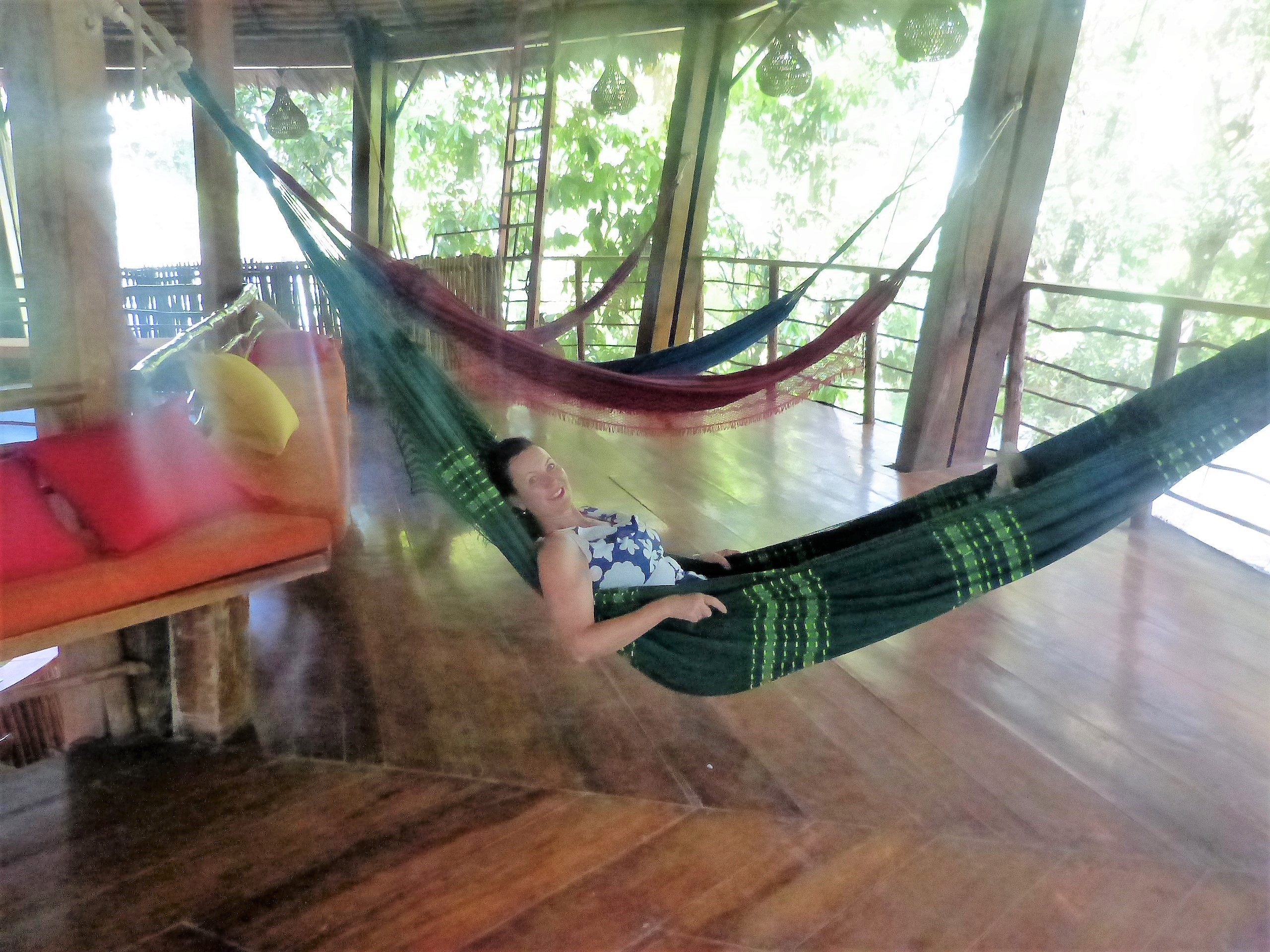
Greeted back at the Lodge with fresh papaya juice and some Green Iguanas. Another divine lunch. Had to test out the hammock – it works! Glammy nap time!





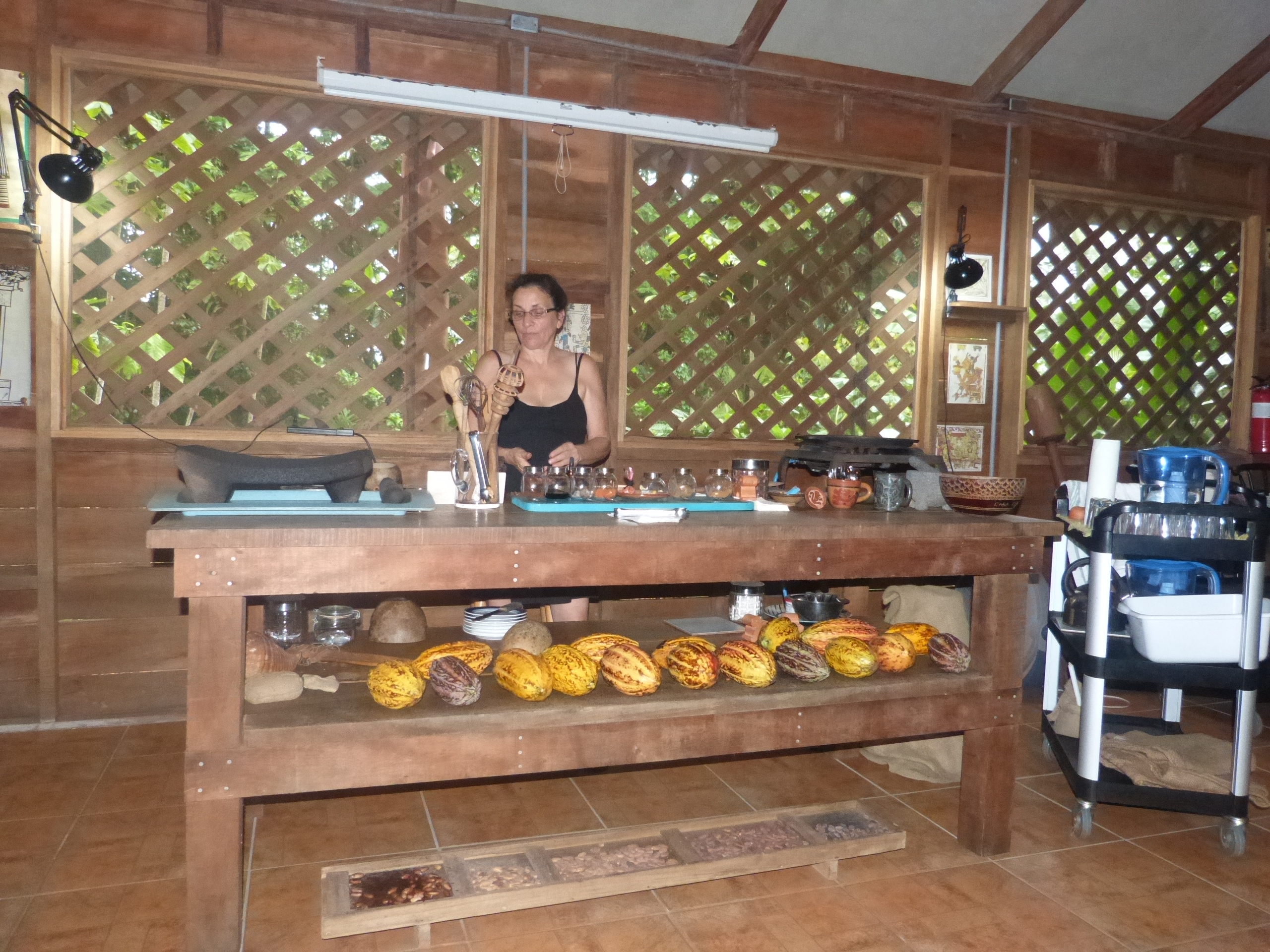
Our afternoon activity was to visit Tortegeuro Village, 7 minutes down the river by boat. The village has a population of 1500. First stop was to get educated re chocolate making as this area has many cacao plantations. We tried the actual seeds inside the cacao – you suck them and the white flesh around the bean actually tastes like lychee. The pulp covered seeds go through a fermenting process, then they are roasted and husked, next the nibs are crushed to make powder. Tried traditional Caribbean chocolate, also flavoured with chilli, cinnamon and vanilla.


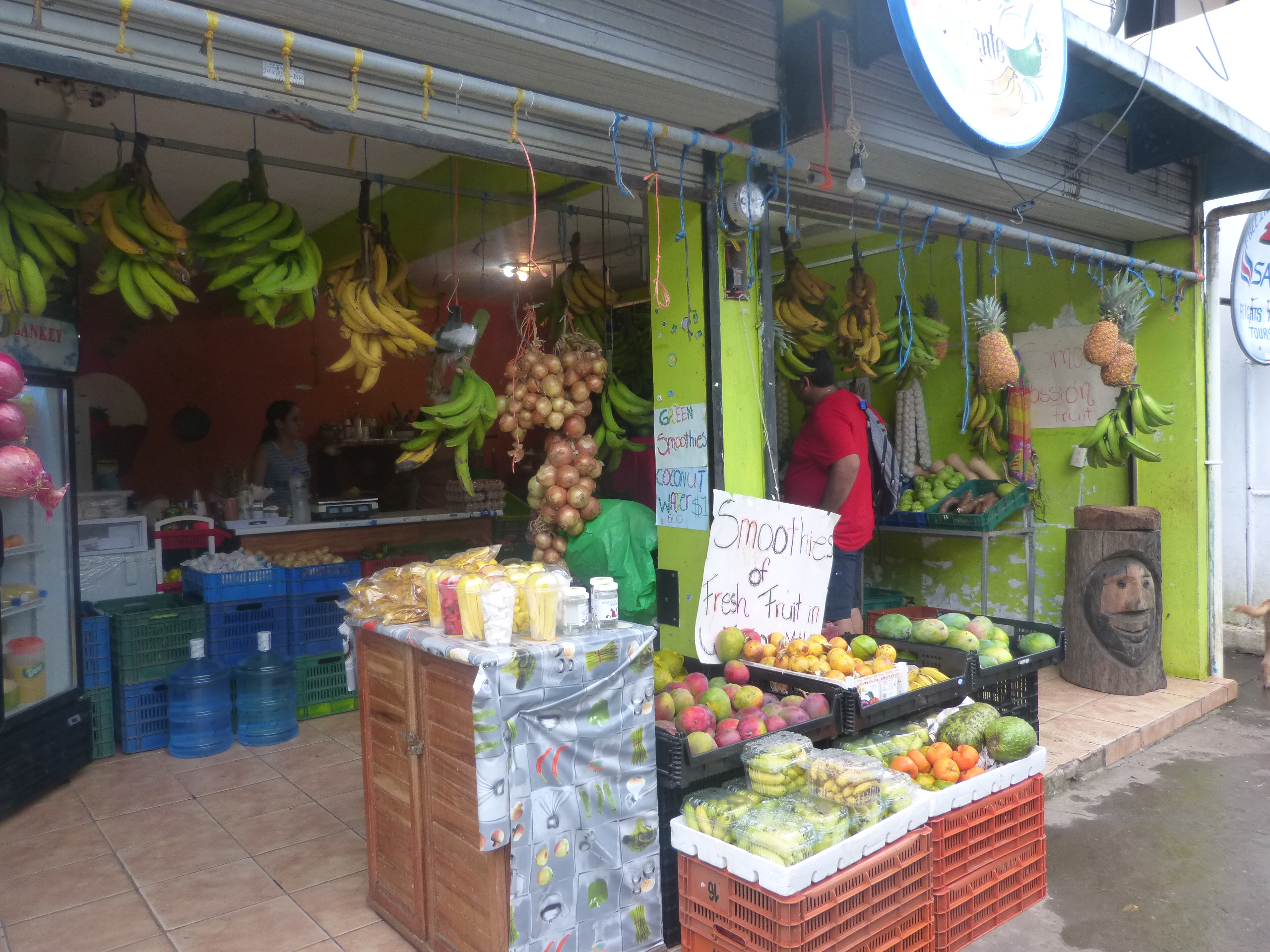
Had a walk around the village- it is situated on a narrow piece of land between the Tortugeuro River and the Caribbean Sea. Lots of little restaurants, bars, and of course tourist shops. Saw the school, soccer field and the beach. Locals use bicycles to get around – no cars here! Brightly coloured houses, artistic fence art, Caribbean music playing, all made this a delightful village to walk around.
Back to the Lodge, and time for a swim in the welcoming infinity pool, followed by sundowners. A few rain showers today which were warmly welcomed by the locals- it is dry season, but with climate change the rainfall has been low in the last year.
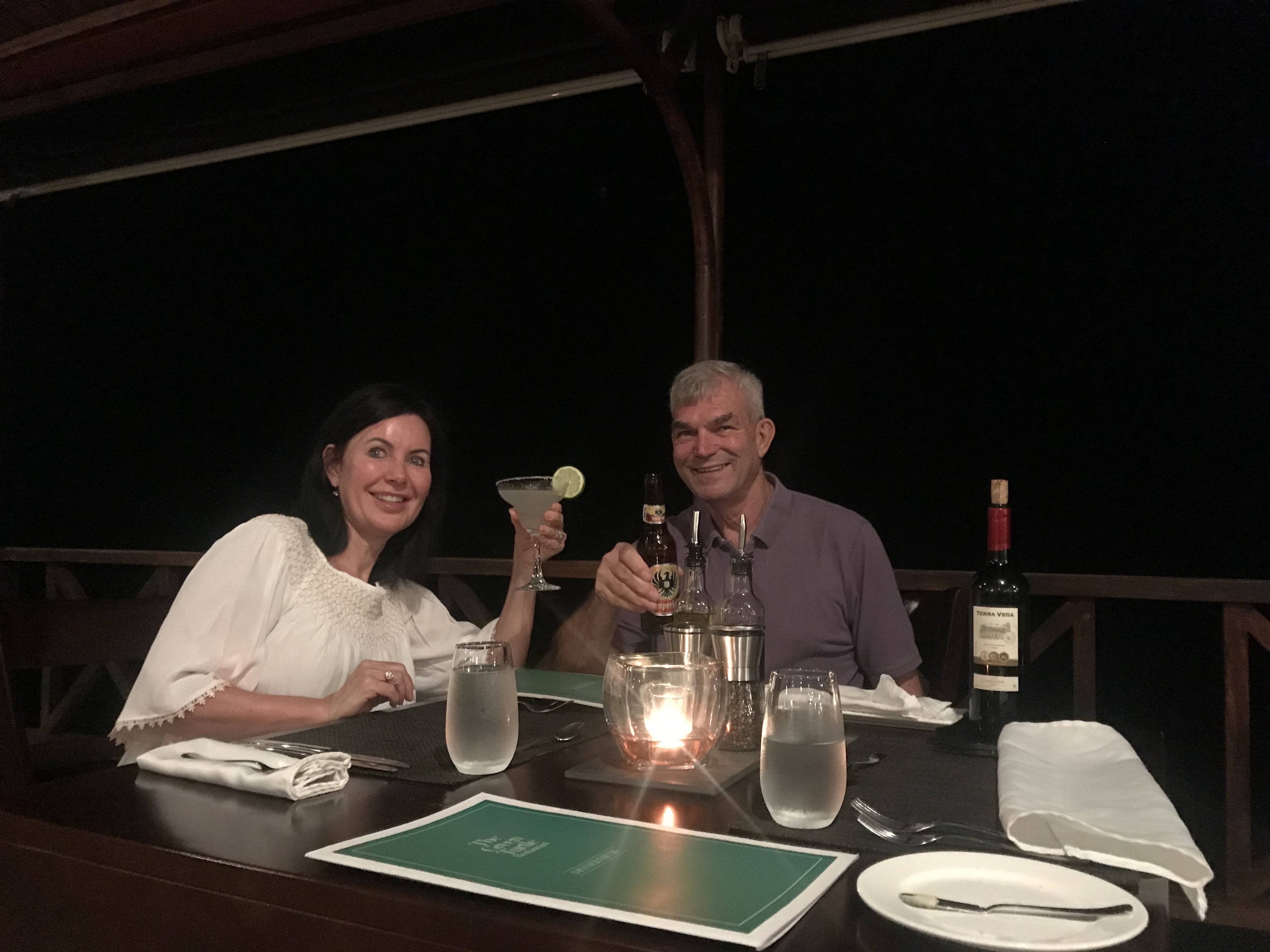
Dinner didn’t disappoint at the Green Turtle restaurant- ceviche is a specialty here – sea bass, sole and yellow fin tuna all on the menu. Plaintain pantaconnes also feature. Rebecca had organised a birthday cake for my special day tomorrow- it was delicious!
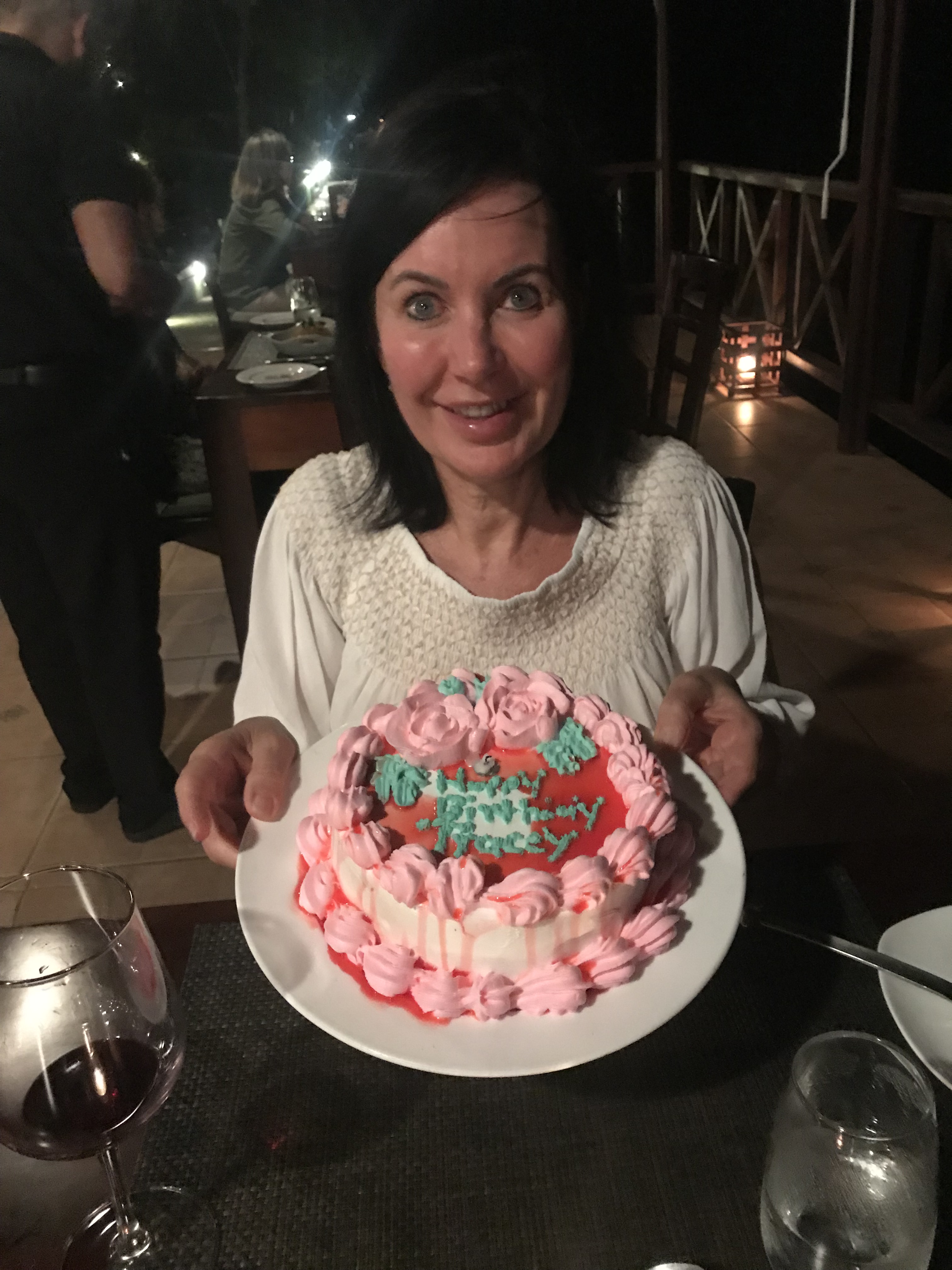
National Park – Day 3
Day 4 Monday 11th March – a very special day!!
Up early for the 6am nature walk – I was keen to spot more toucans, and so we we did… along with:
- Yellow crowned heron
- Slaty tailed Trogan – gorgeous crimson colour
- Oropendula- weaver birds. Also nest in single trees. Females make the nests, a new nest each year, but in the same tree.
- Emerald basset , otherwise known as Jesus Christ lizard
- Aracari toucan – the smaller toucans
- Yellow throated toucan or chestnut mandibles toucan – same same
- Keel billed toucan
- Jacana- vibrant
- Green kingfisher
- Bare throated tiger heron
- Long nose bats
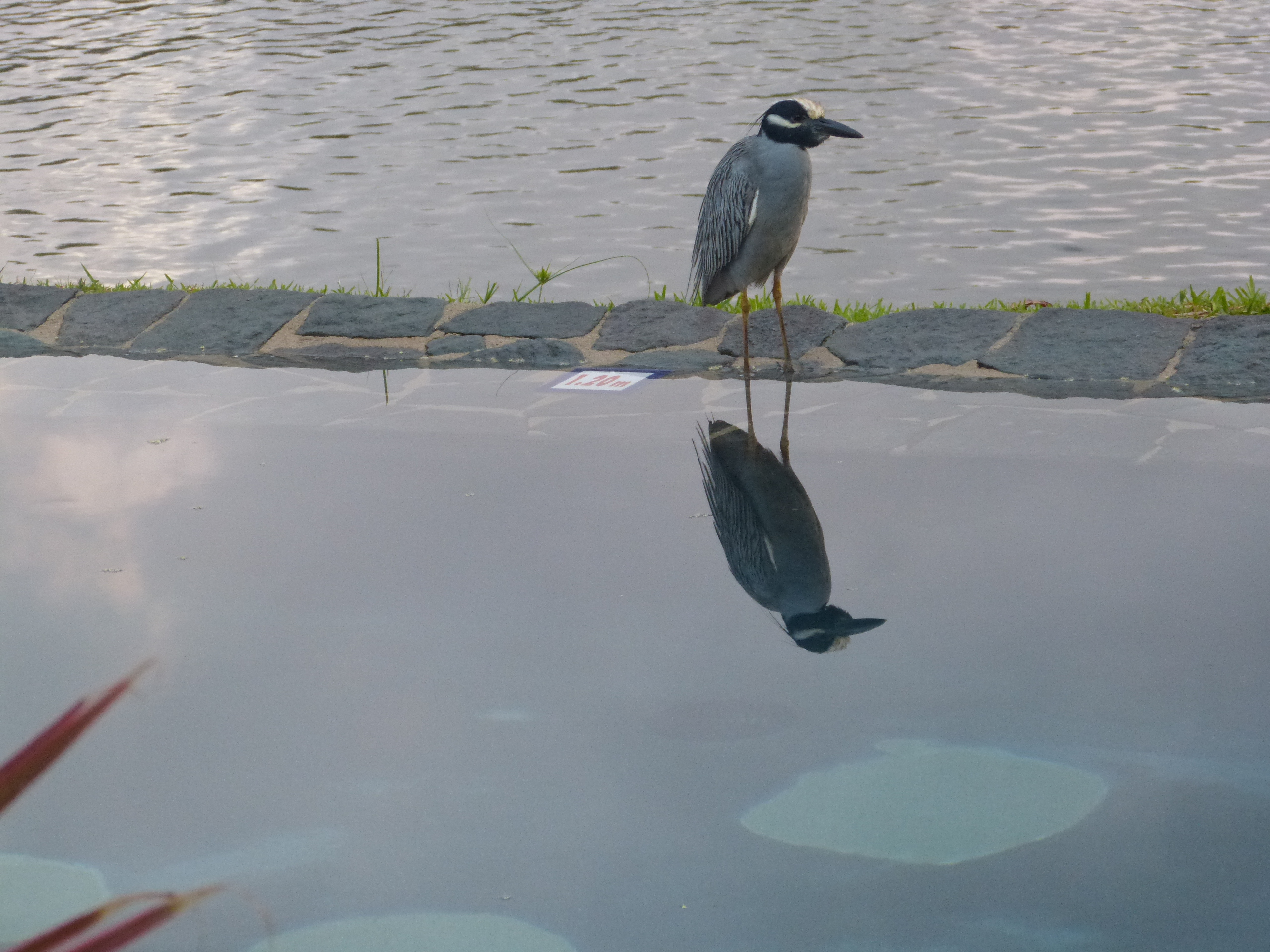
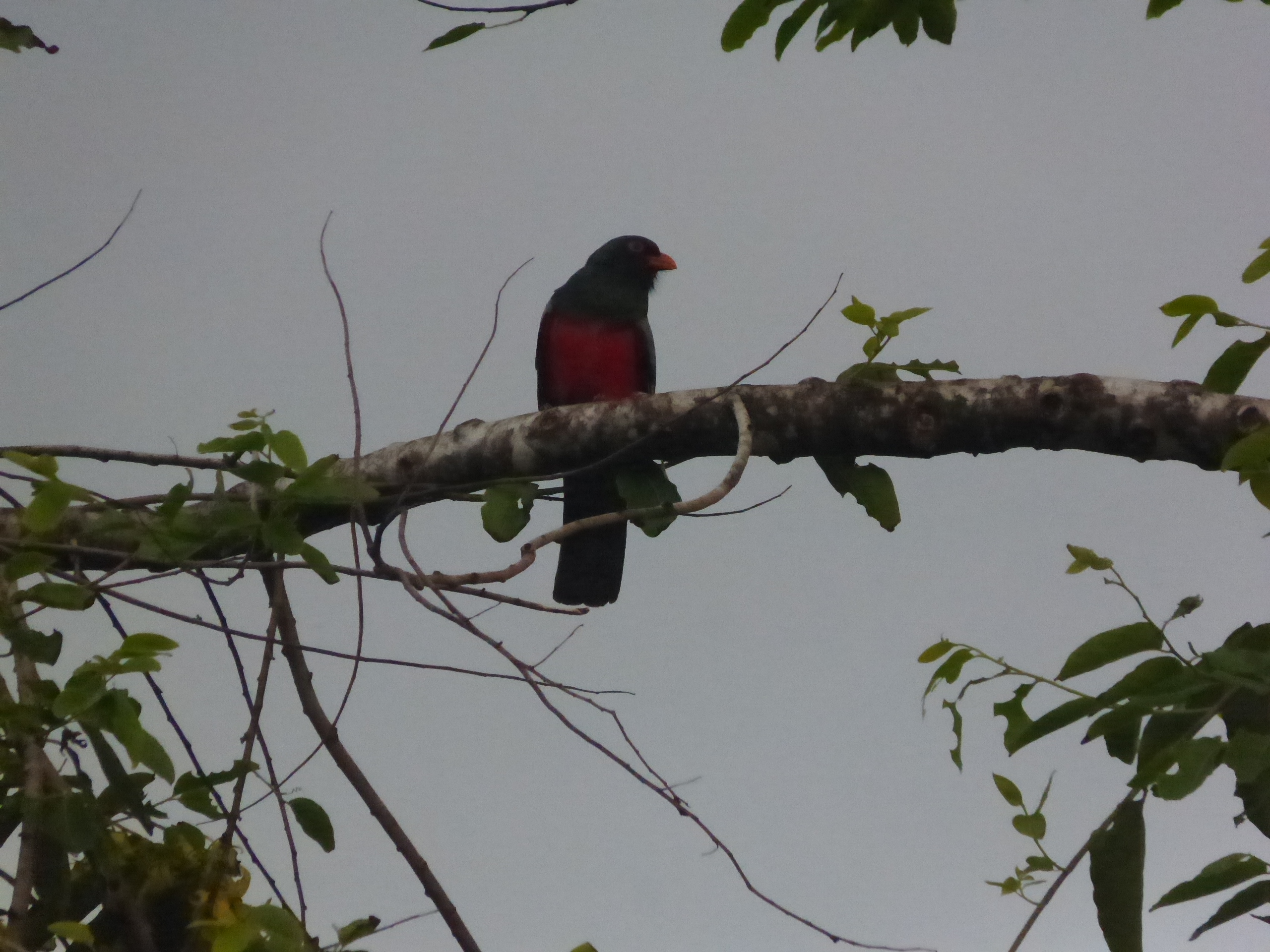

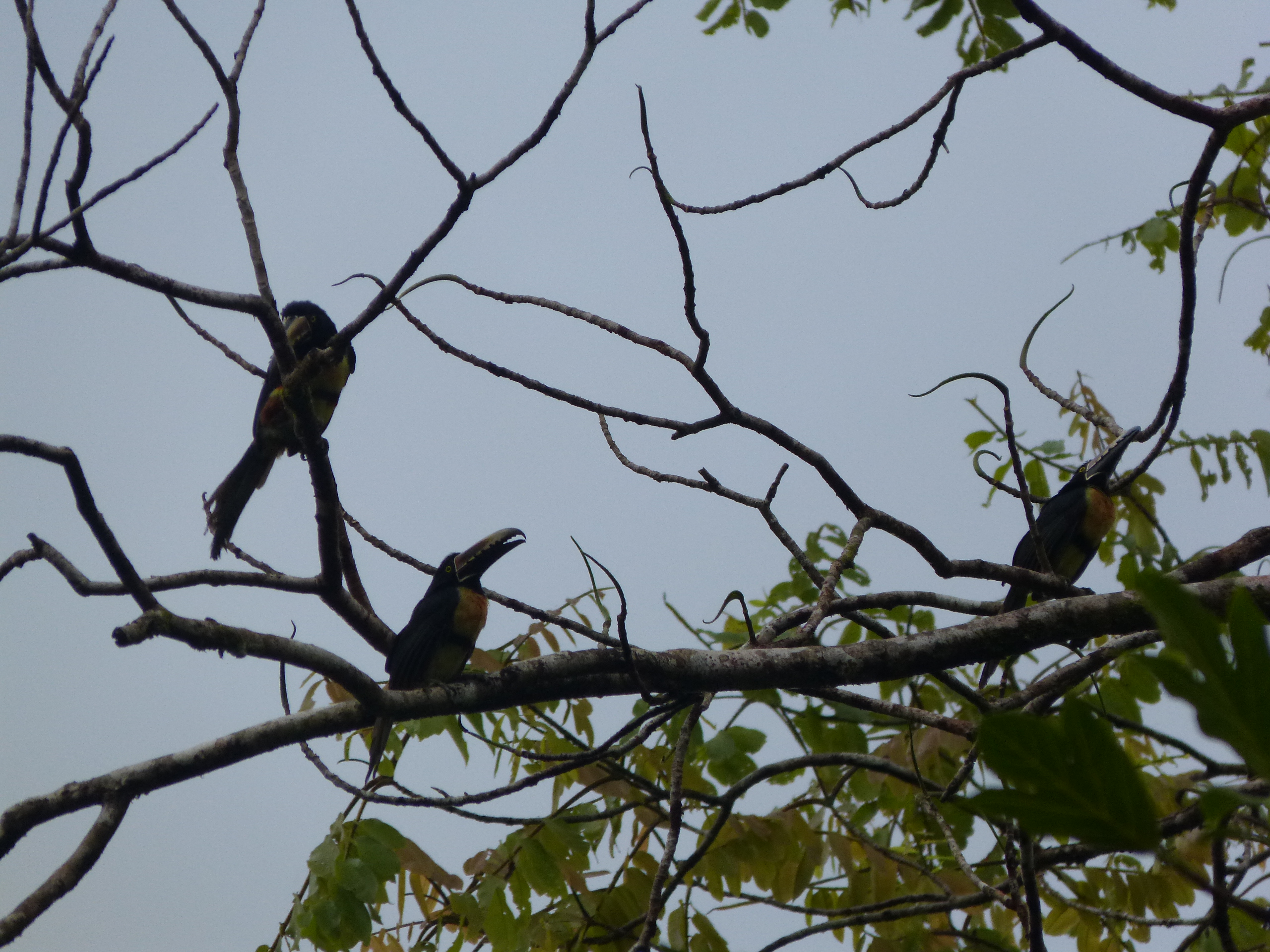


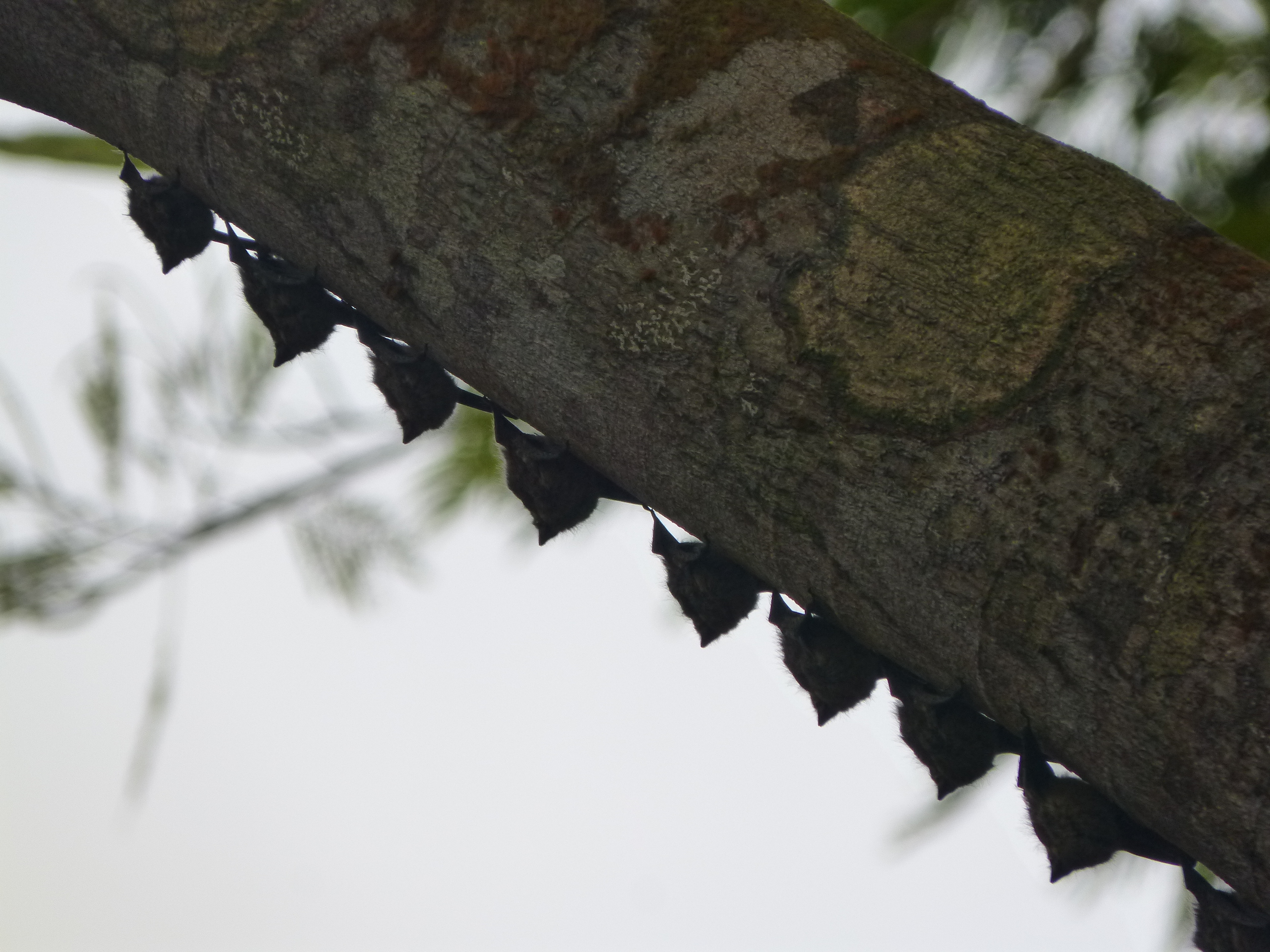
A relaxing breakfast when we returned, followed by a leisurely morning preparing for our return to San Jose.
Our parting gift was a troop of Spider Monkeys feeding in the tree outside our room, along with some more toucans. I just love those birds.
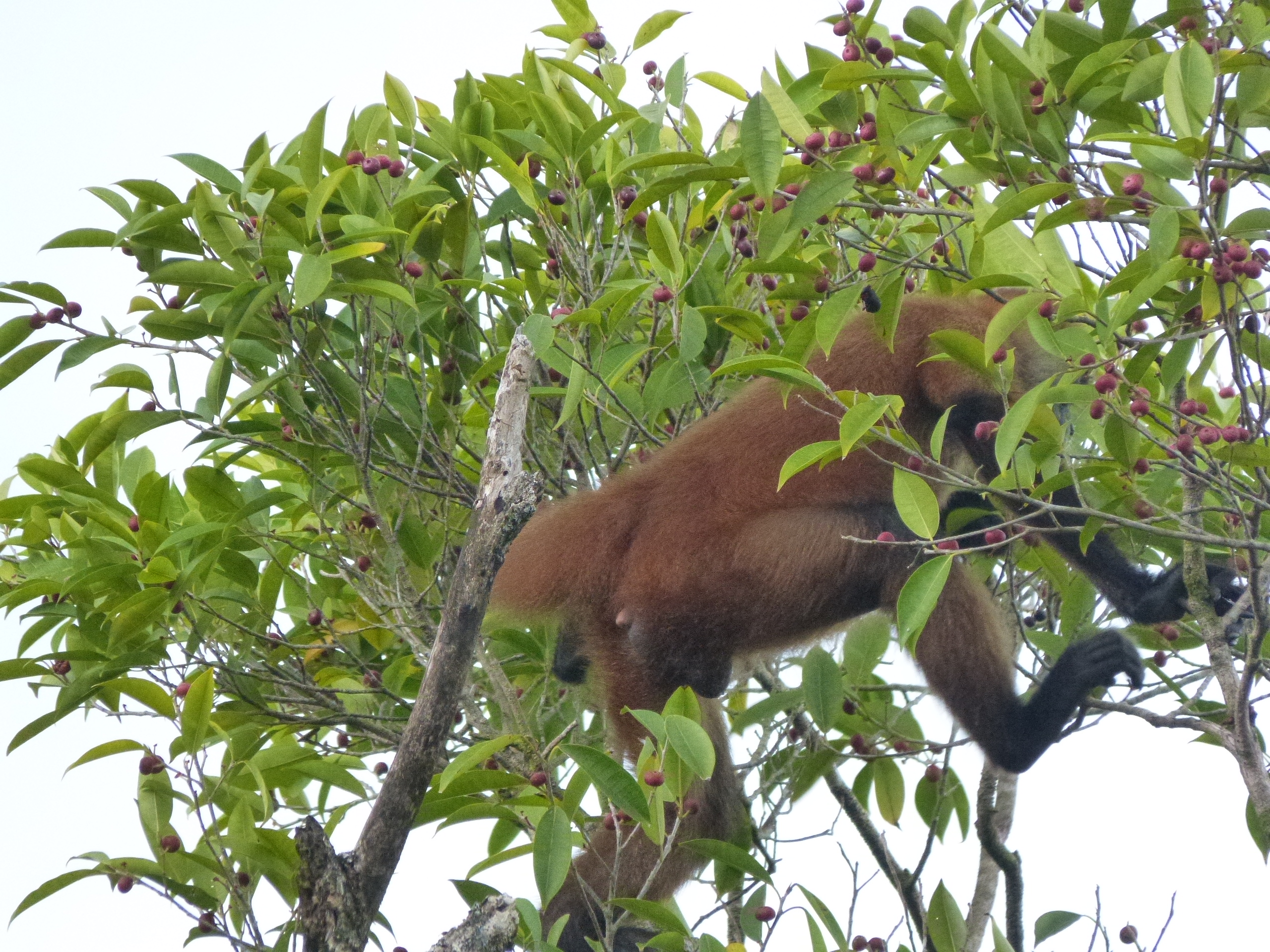
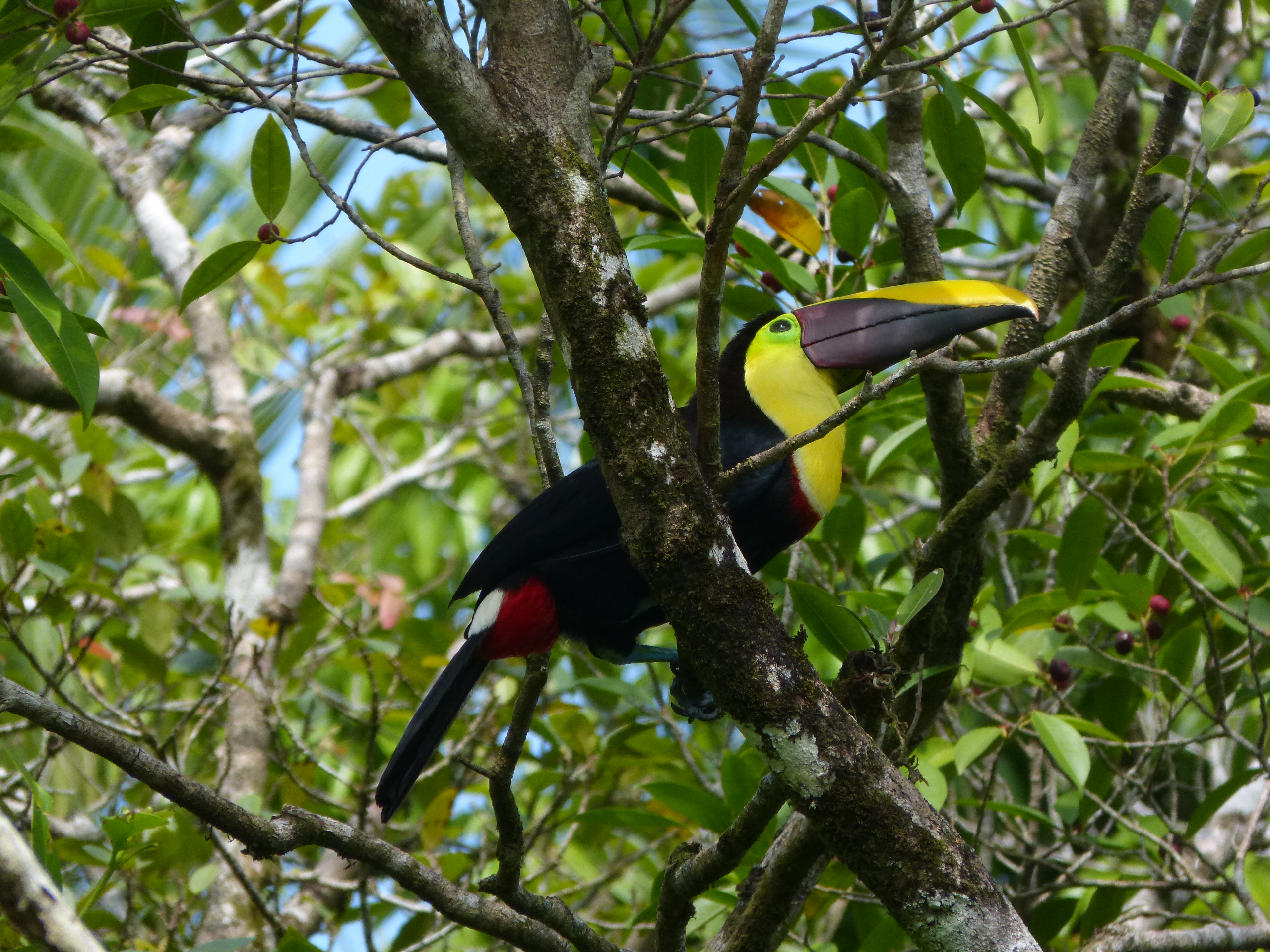

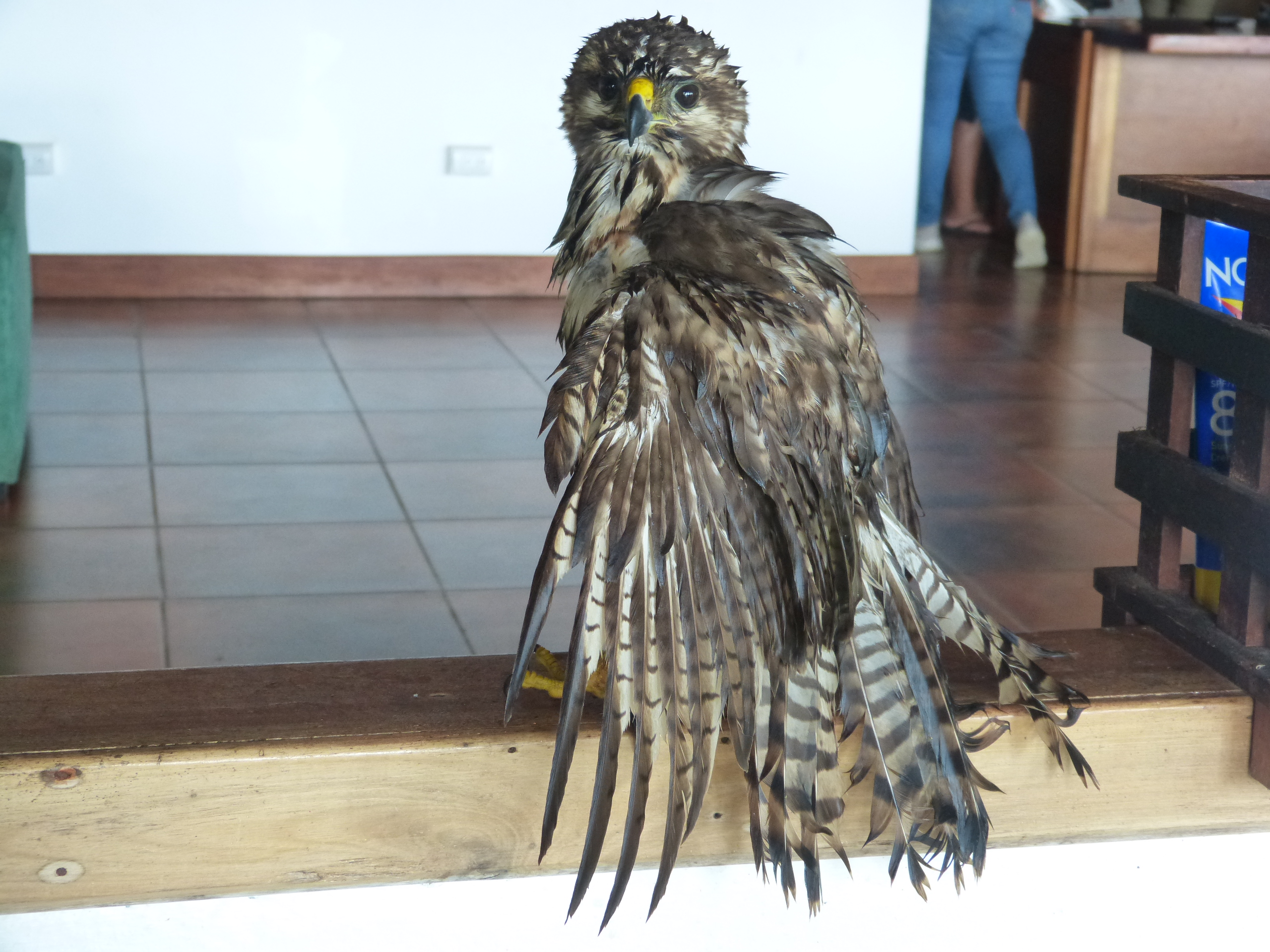
We farewell our tropical paradise and begin the return journey, 90 minutes by boat to Cano Blanco. Another special treat along the way- a group of Great Green Macaws high up in a tree.
From here we swap to the bus and begin the 5 hour trip back to San Jose. Rickety roads for half the journey, more rain showers. Temperature is very comfortable in this area 20-28.
Windstar Cruise – Costa Rica Coast
Cruise – 12 March
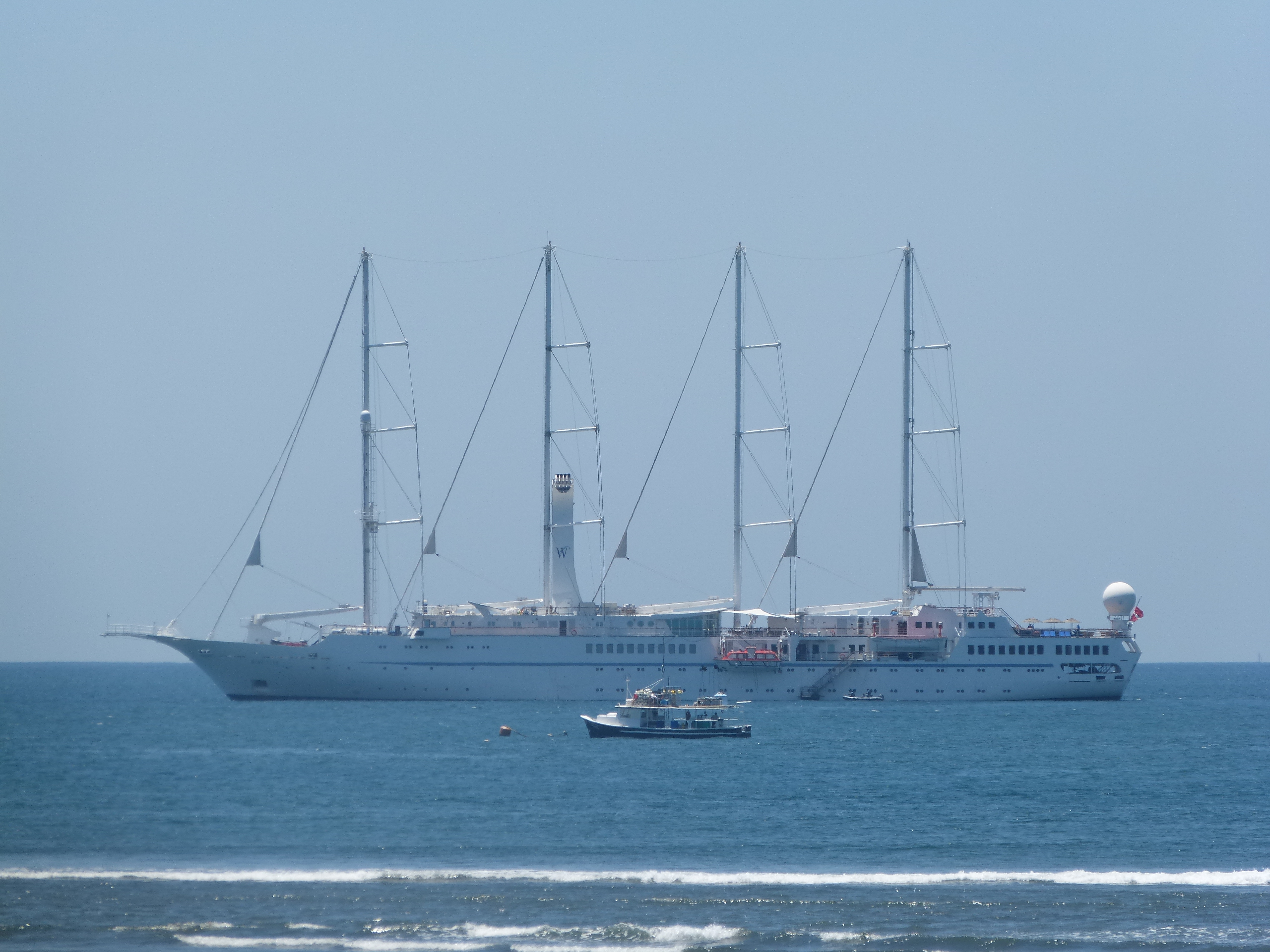
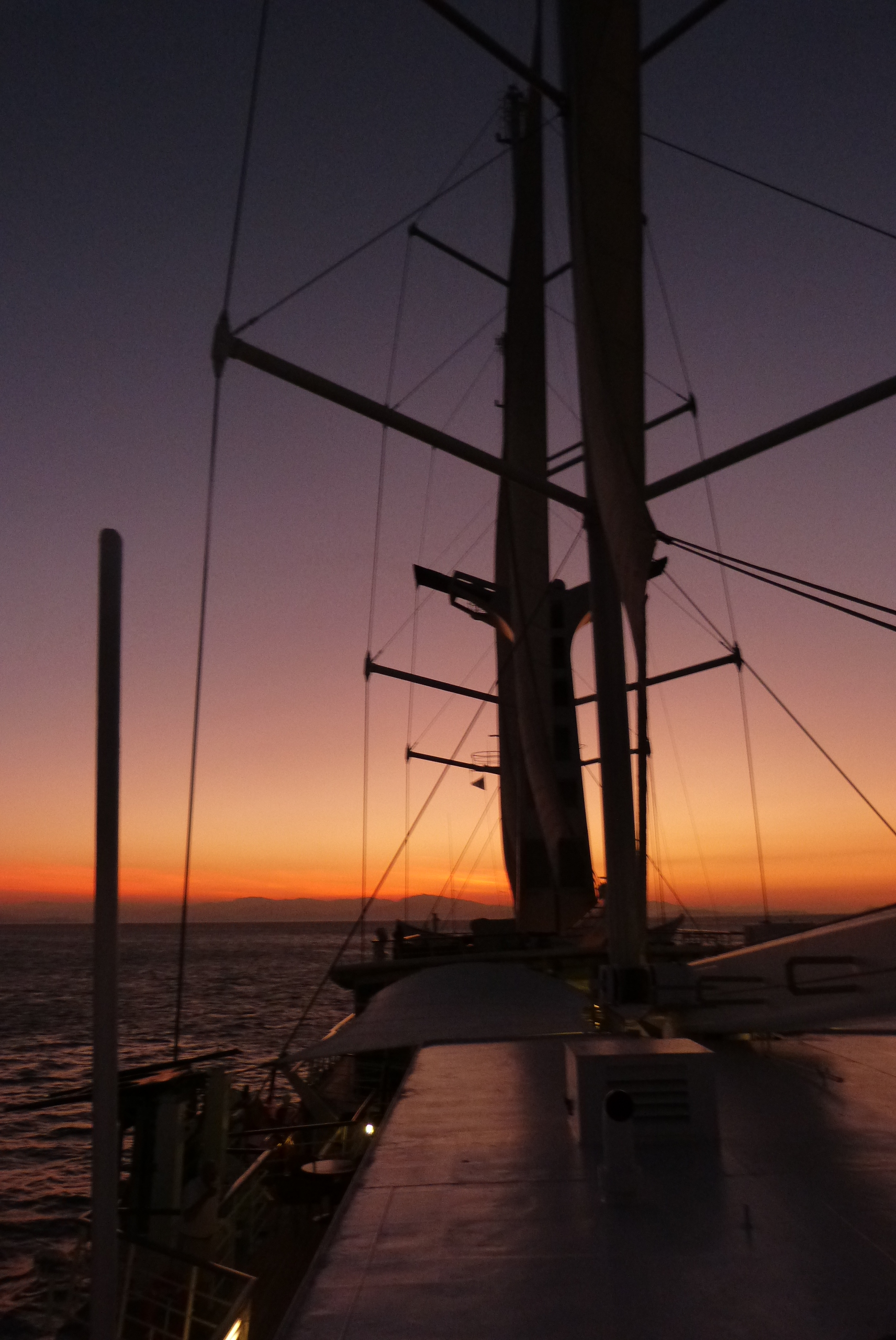
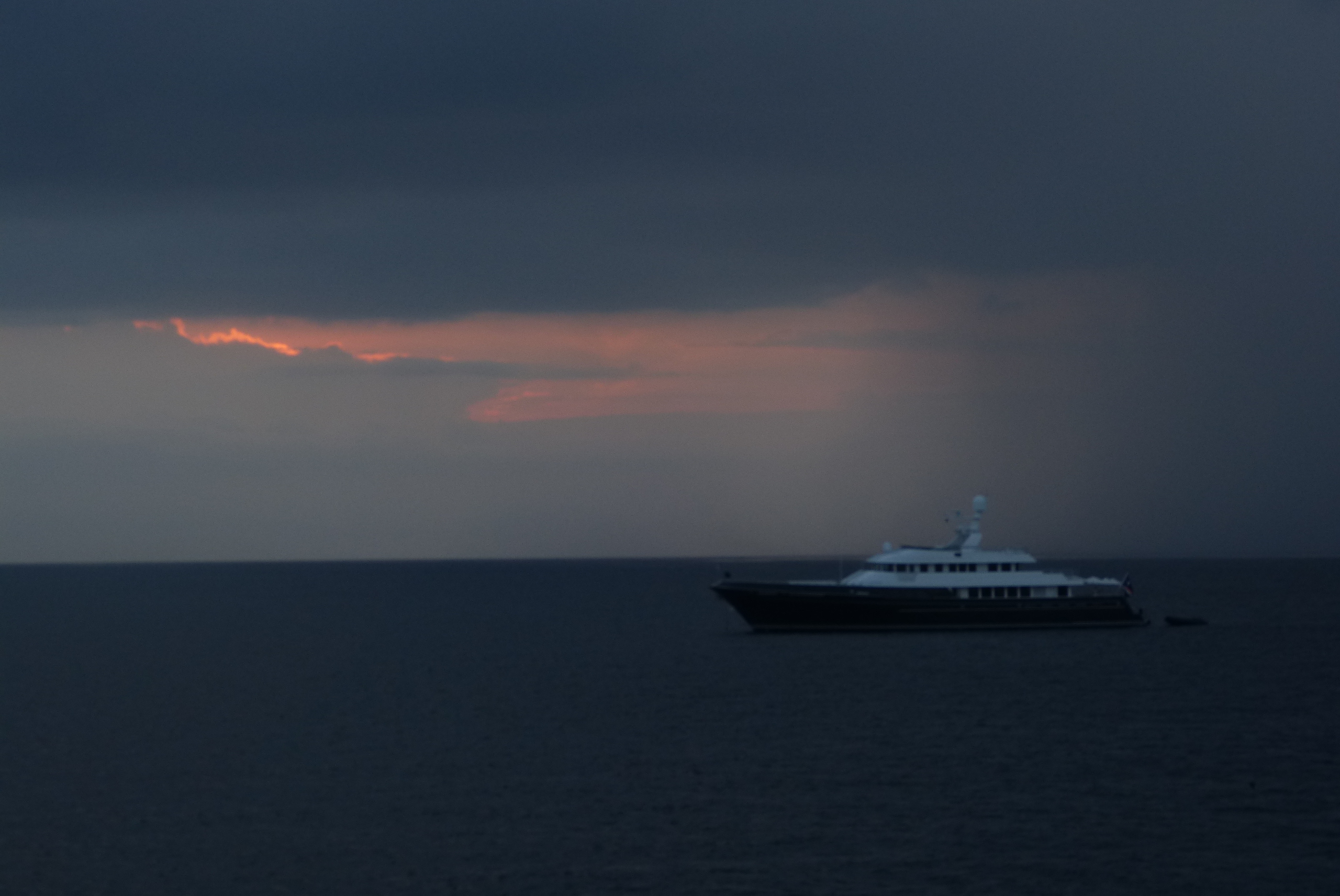
Boarded at 3pm. Slight mishap while checking in! We were given a welcome rum punch, then one of us – I say it was Frank, he is delusional and thinks it was me – knocked my glass over onto the check in computer! Oh dear! Things improved, our cabin was ready (204), and very nice it was. We settled in, then up to the deck for the sail away into the sunset! Before long the sails were out and we were on our way! A scrumptious 3 course meal with new found friends Elaine and David from New Jersey. 120 passengers on board, most of them from the US. We are the only Aussies!

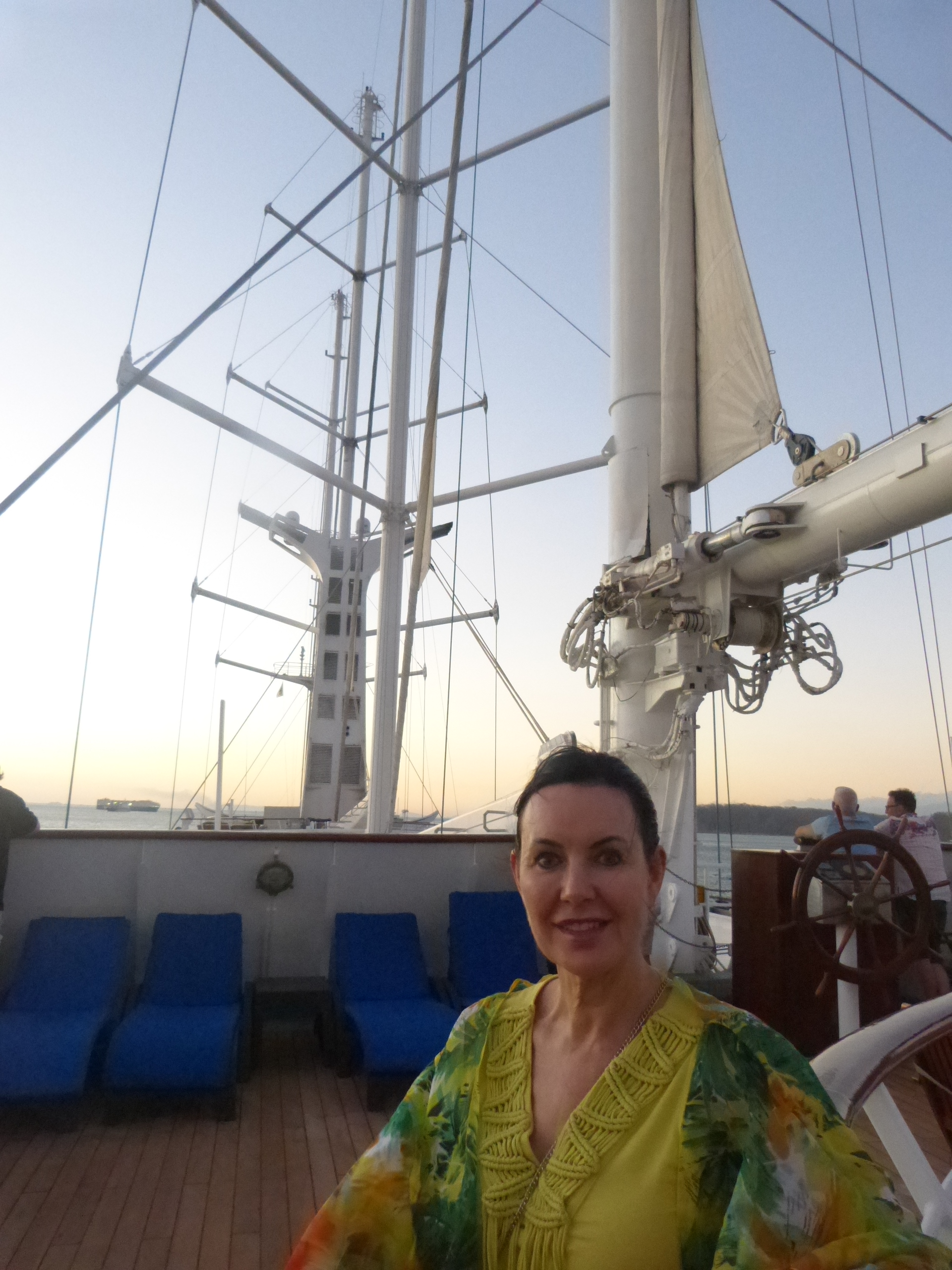
Day 6 13th March
First port of call – Quoepos, Costa Rica
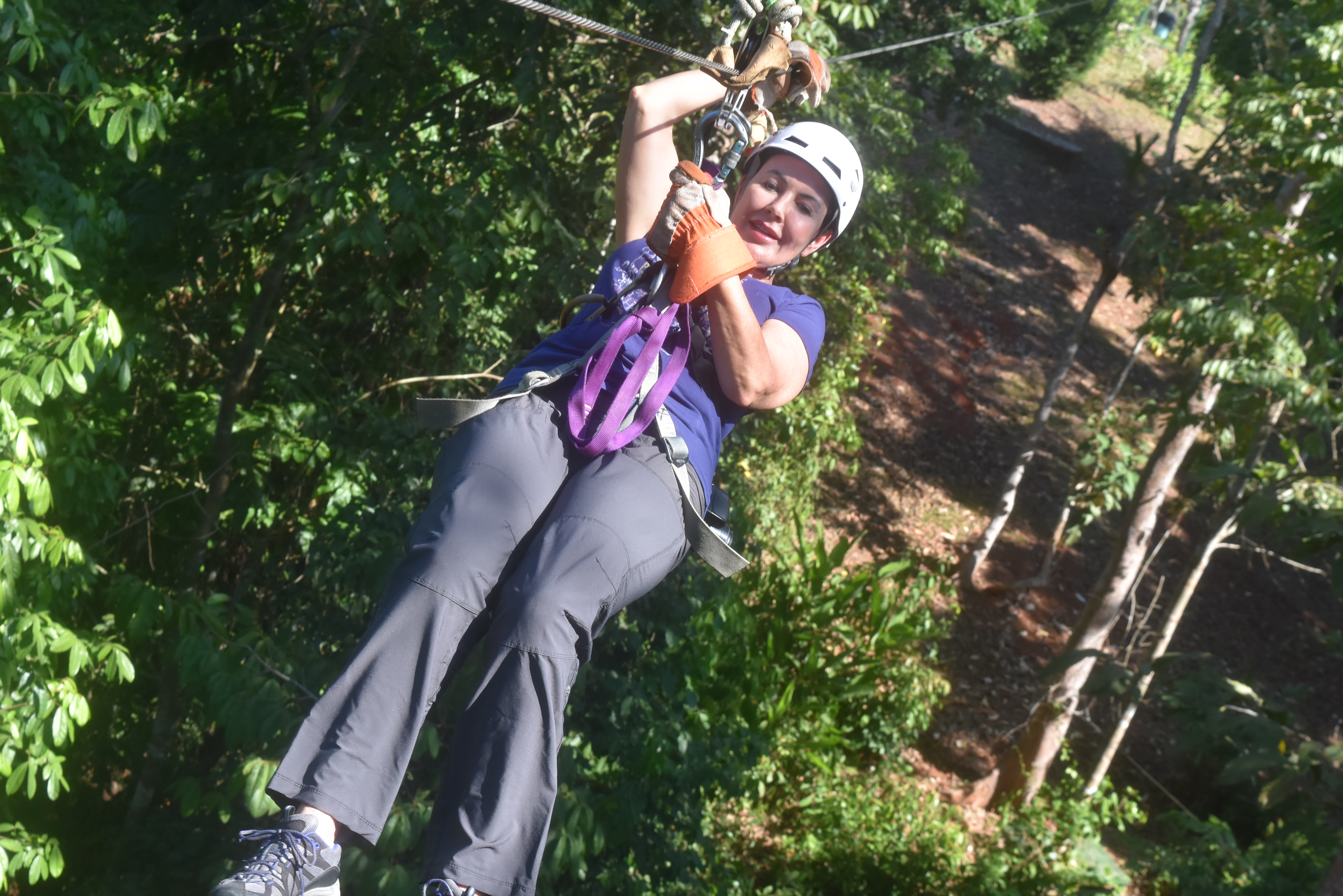
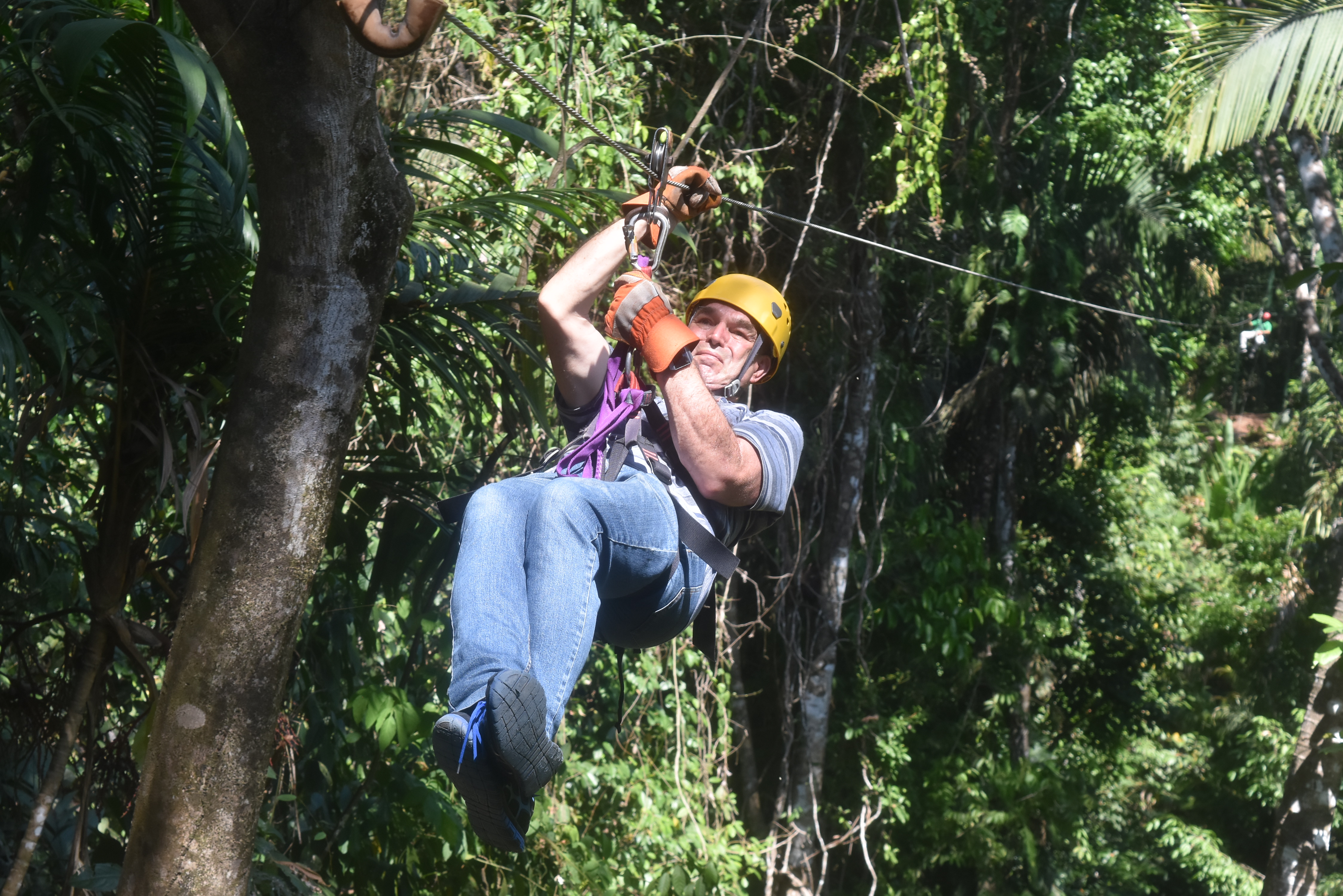
Early start to get ashore for the Titi Canopy tour – zip lining through some of the most beautiful flora and fauna in the Costa Rican rainforest! We flew over the jungle canopy via 10 zip lines, linked by short walks. Some of the platforms were 30metres high, nestled in trees that are centuries old. We saw a three toed sloth and some spider monkeys while we were playing in their space.
It was lots of fun, just had to coordinate where to put the hands, and to lift the legs! Very exhilarating! Also best not to be afraid of heights.
A little walk around Quepos – which didn’t take long! Managed to find a few souvenirs! Very hot, 33 degrees, and very humid. A couple of local Imperial beers hit the spot!
Back to the ship, in time for some entertainment by a Costa Rican music Group and local dancers. The costumes were very vibrant. They played the local instrument, the Marambi, which is similar to a xylophone.


Dinner tonight with Maureen from New York, and Elaine and David. An entertaining “ meet the crew” ceremony.

Day 7 14th March
Second port of call – Puerto Jimenez in Golfo Dulce, Costa Rica. Golfo Dulce is one of Costa Rica’s most biodiverse areas where both the jungle and sea brim with life. It is a very popular tourist destination. We did the ocean and canal kayaking tour- another early start as this tour is tide dependent.
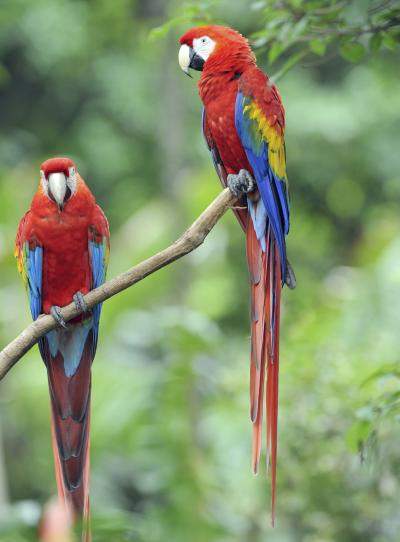
This was a wet tender landing, where we were greeted by a couple of squawking scarlet macaws.
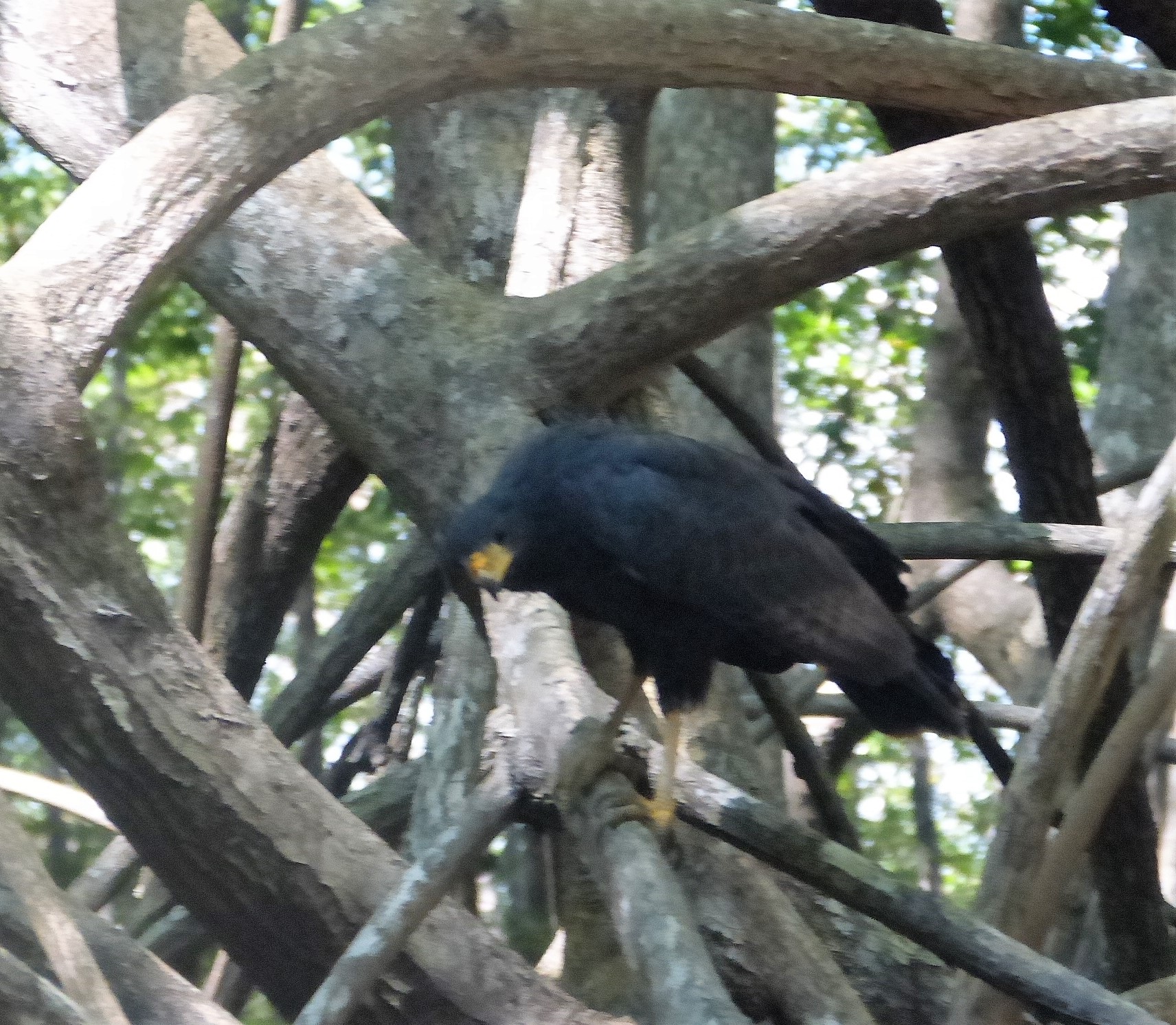
Here we paddled up the mangrove estuary with the rising tide until we could go no further. Had interesting commentary along the way from our guide explaining the ecosystem – we learned that the crab is the most important animal here as it cleans the roots of the mangrove trees, which in turn filters the water. Saw lots of bird life and butterflies along the way. Lucky enough to see a Black Mangrove Hawk’s nest with a pair of hawks sitting on it- then one flew down to the canal edge as if he was posing for us! The female lays 2 eggs, and discards one! The three birds then live in the nest together until the young adult finds their own partner.
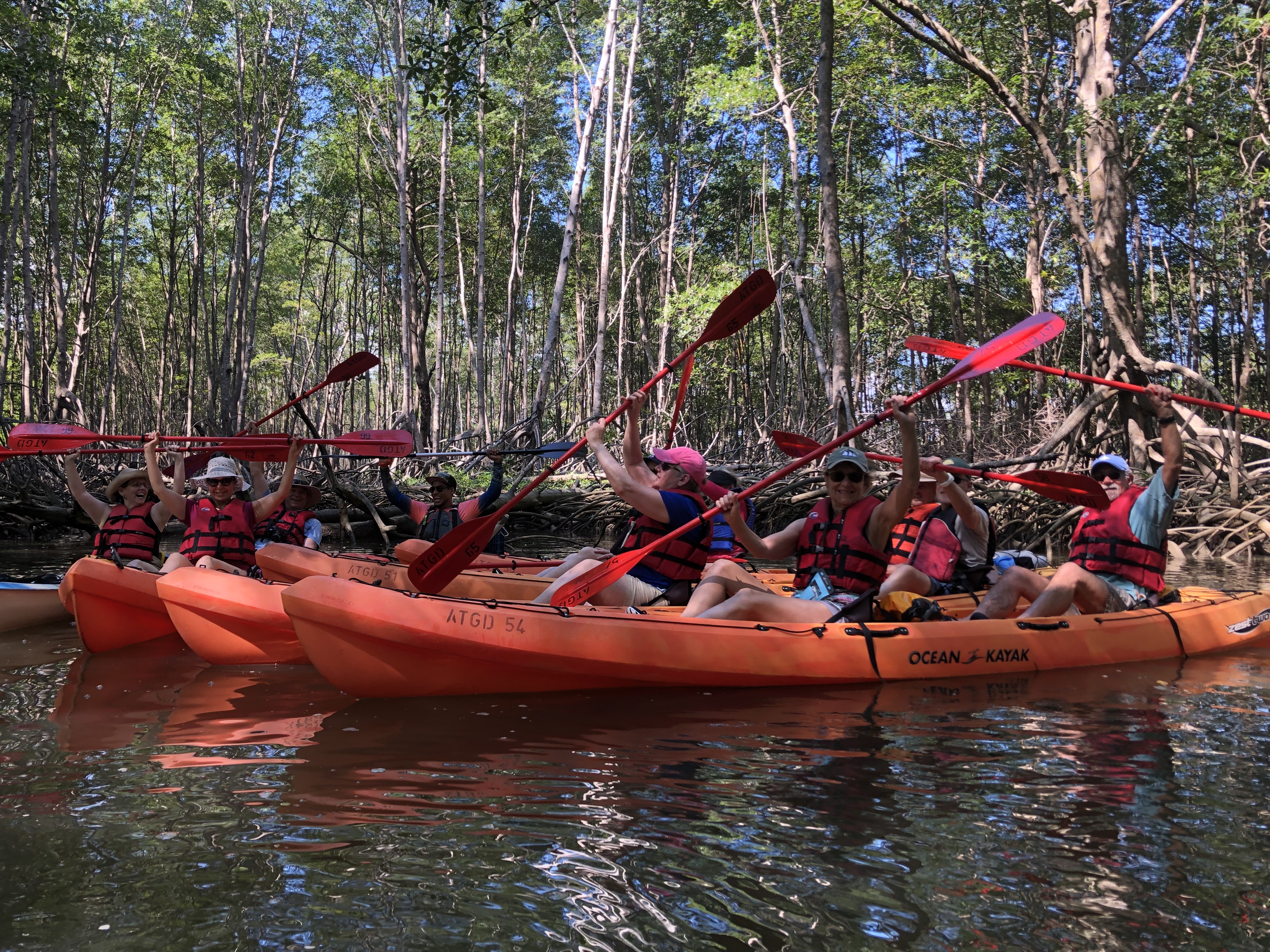
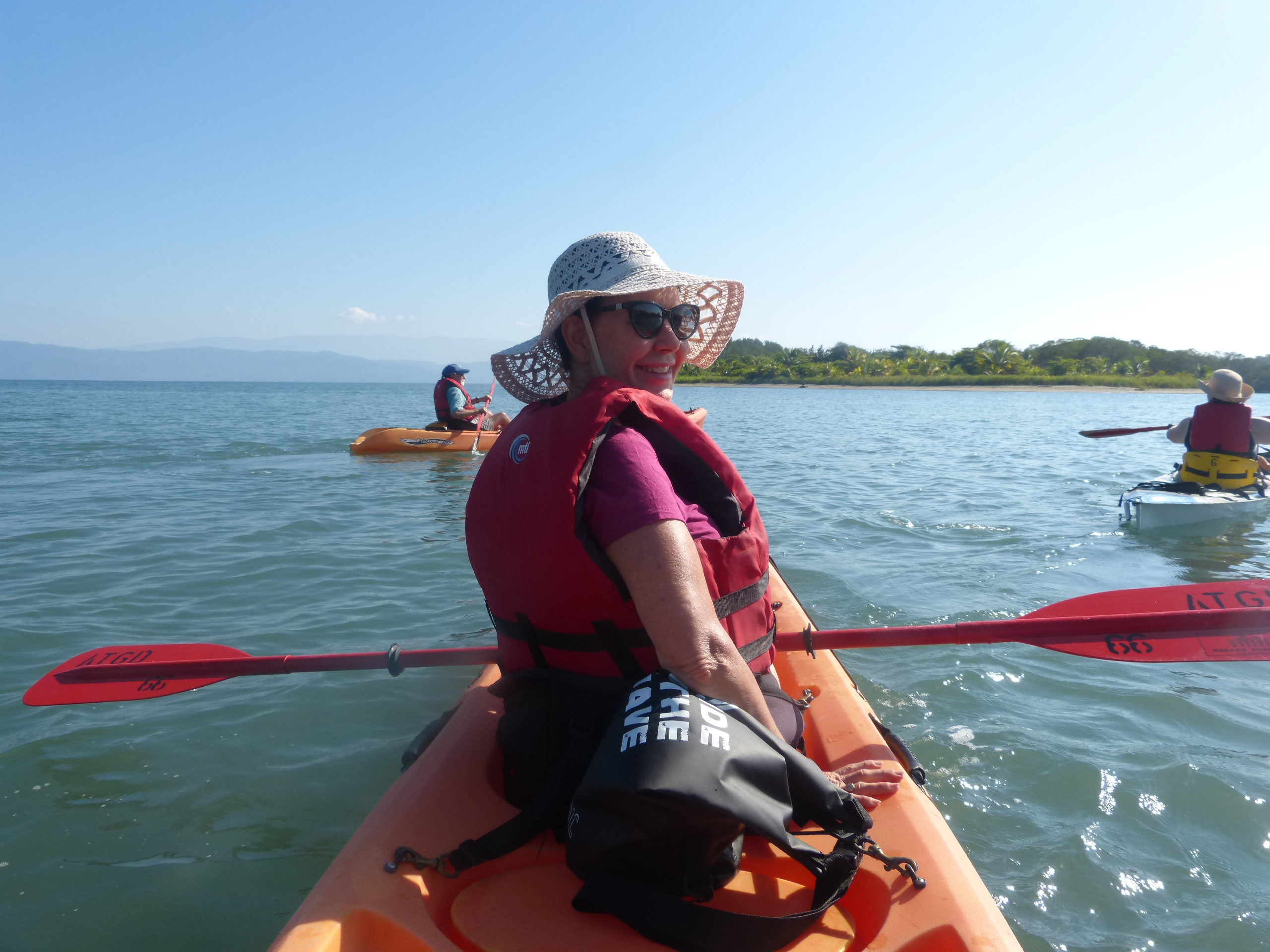
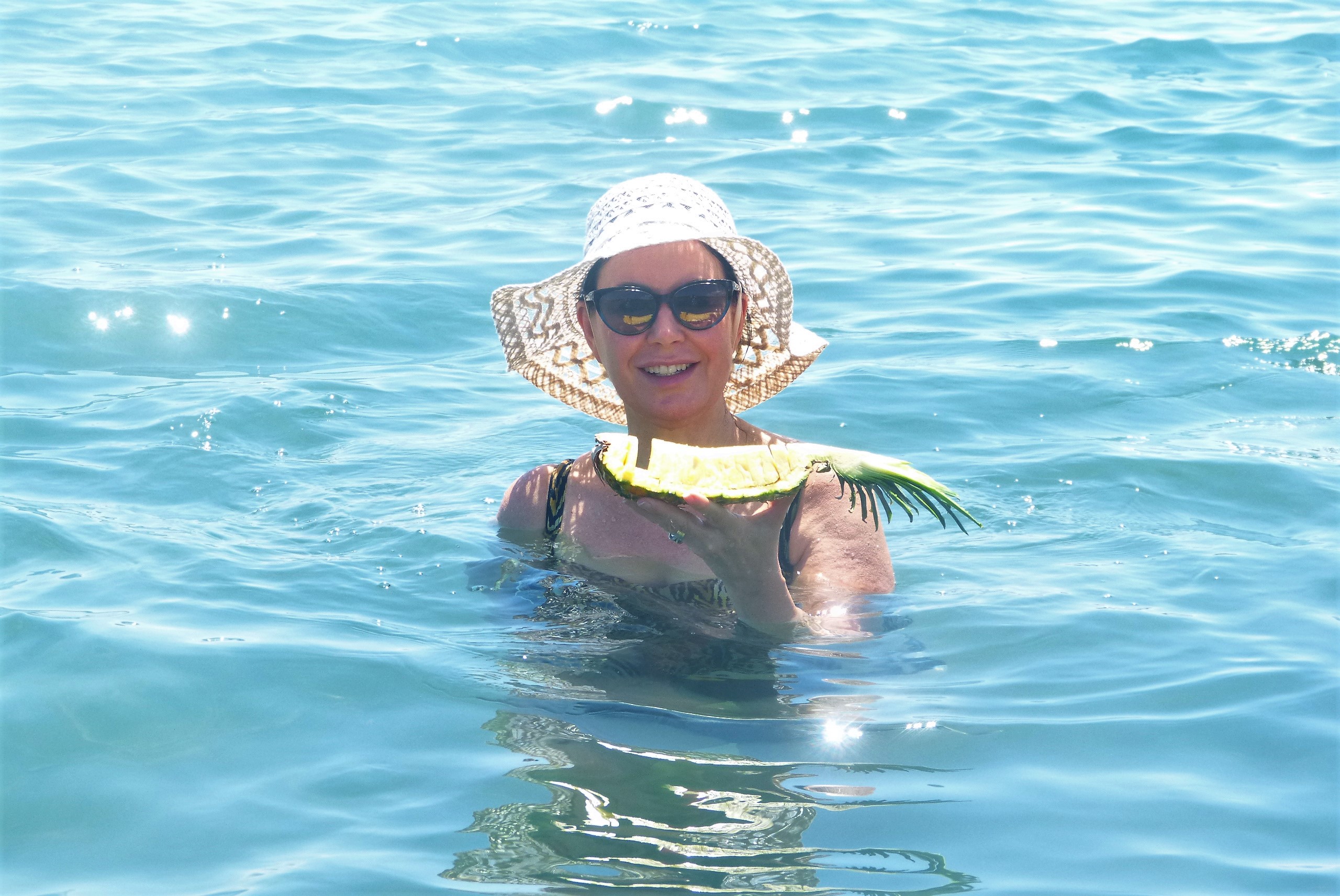
We paddled back down the canal, stopped at a spot where we could swim at a beach in Golfo Dulce, which was very welcoming – 33 degrees again today, and very humid. The water was beautiful. Our guide brought us cut up pineapple which we ate in the water. Then he demonstrated how to cut a coconut, and we sampled the fresh coconut milk.
Back to where we started – the men found a bar within minutes, whilst a small group of us ladies walked ten minutes into “town” to look at the shops. This did not take long as there really wasn’t much there. And it was hot!!!! I did have the important task of helping Jill from Laguna Beach spend her remaining colonnes as this would be her last chance – I do love spending other people’s money.
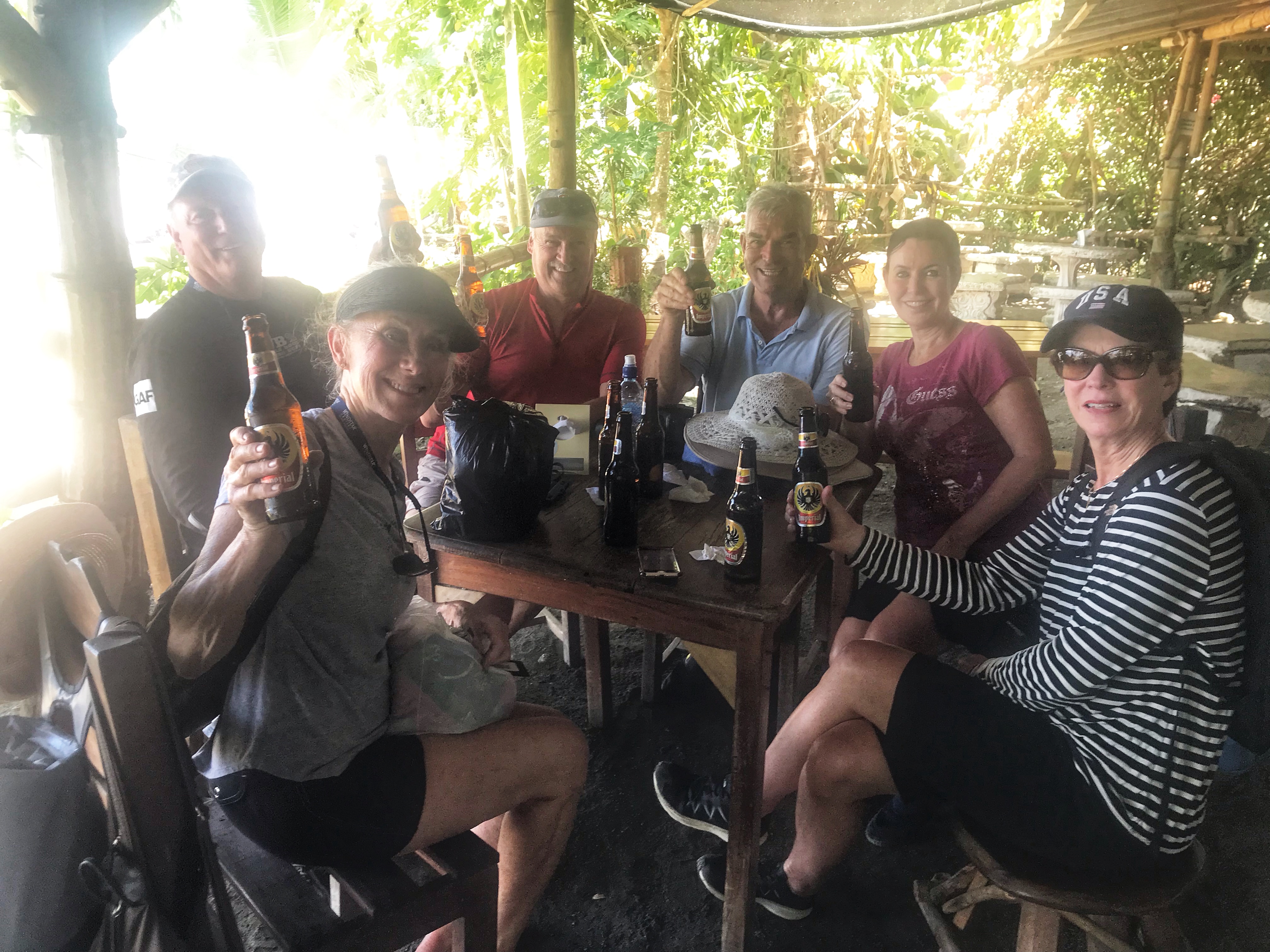
Walked back, the men were well and truly refreshed, and ready to get the zodiac back to the boat!
I will make a mention of the kayaking – Frank and I will be taking single kayaks from now on! He may be able to steer a warship, but he has no idea how to steer a kayak, and when he steered me into the mangroves for the tenth time…. I had a few words to say!!!! If he would only listen to me! We swapped positions on the way back, and we did so much better!
Editor’s note – not all true!
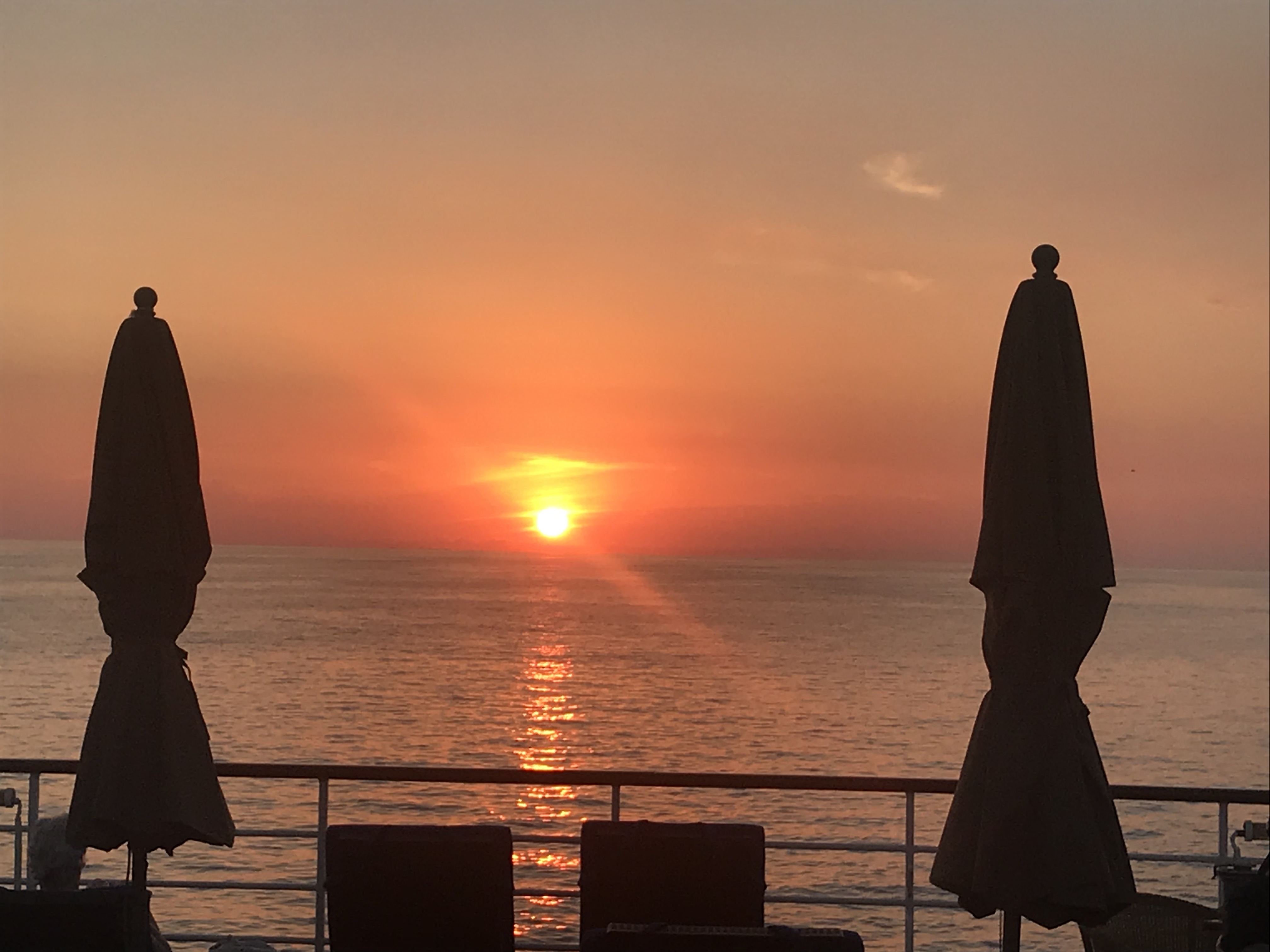
A relaxing afternoon, and another sail away into the sunset. Yet another splendid dinner, tonight with Jill and Mike, and Carol and Steve from Pittsburgh
Windstar Cruise – Panama
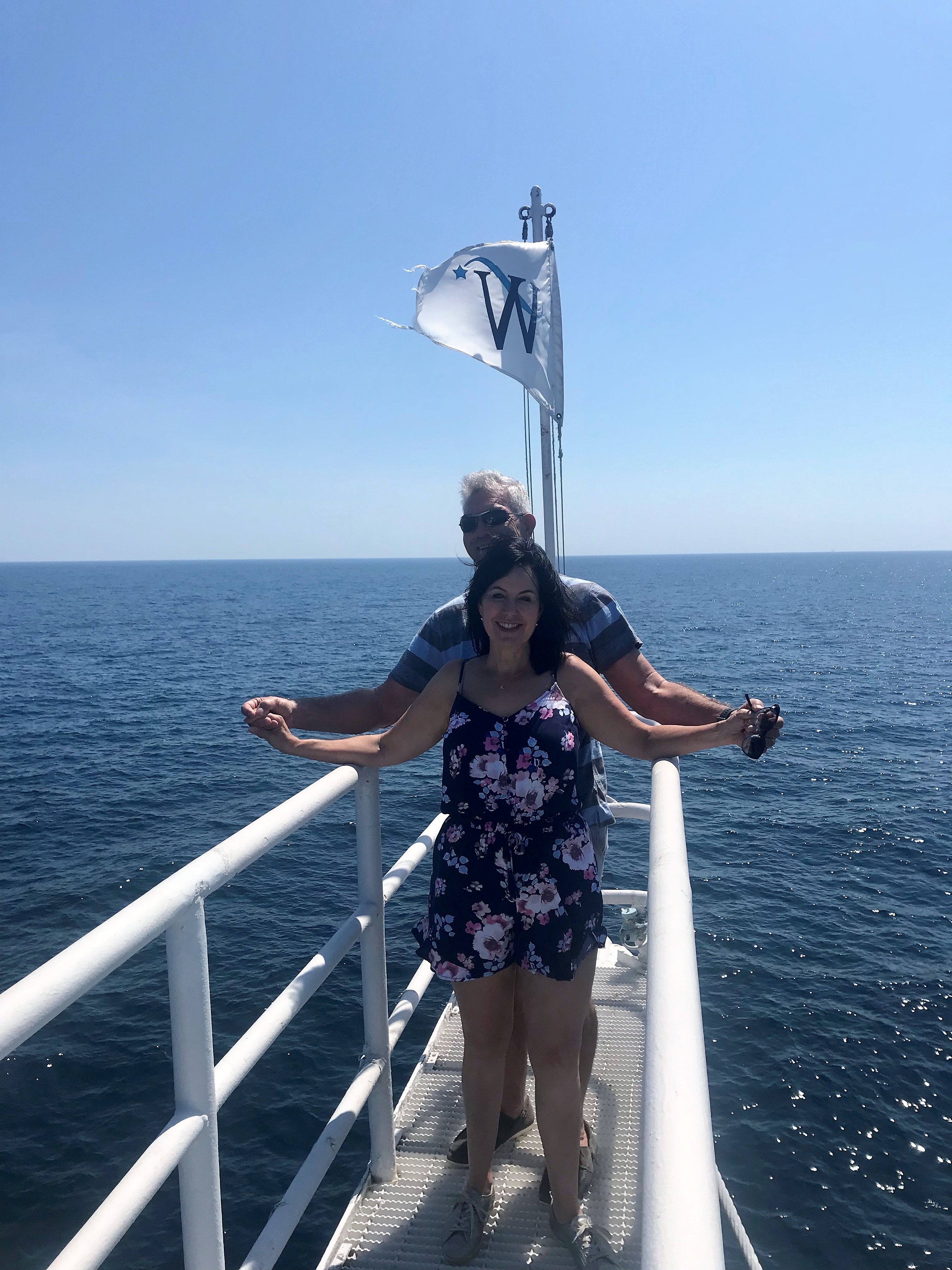
Day at sea – relaxing day. Started with Pilates on the top deck, a leisurely breakfast, then a very interesting tour through the galley. Everything is made fresh on this ship. A photo stop on the bowsprit- where we also managed to spy a pod of dolphins swimming along side us. Frank of course, wanted to pay a visit to the bridge- and interrogate the deck officers! They took in their stride, and explained all to us. A BBQ on deck was the speciality of the day.
A relaxing afternoon catching up with a book or two, and sorting through photos.
Dinner was with a nice group, Carol and Steve again, Maureen from New York, and Conrad and Karen from San Francisco. We hit the dance floor afterwards for some disco dancing!

Day 9 16th March
Balboa.
Balboa is a district of Panama City, located at the Pacific
entrance to the Panama Canal. The town was founded by the US during the
construction of the Panama Canal. It was named after Vasco Nunez de Balboa, the
Spanish conquistador credited with discovering the Pacific Ocean.
Tender to the wharf- motored through some very expensive
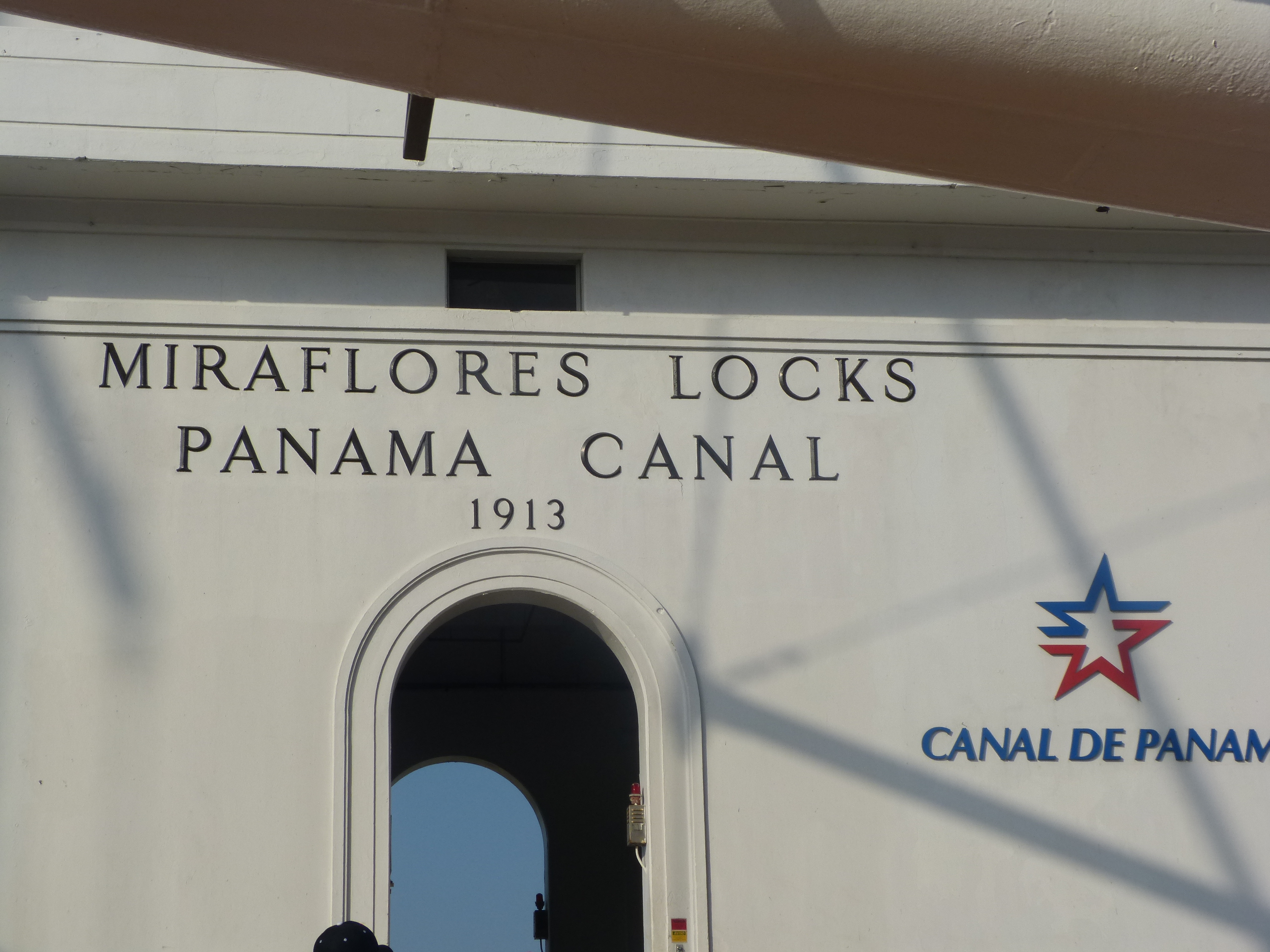
boats! Bus then to Miraflores Locks where we saw some ships get lifted and then
travel through the canal into Miraflores Lake. The museum was really
interesting- the construction of the canal was a master of engineering.
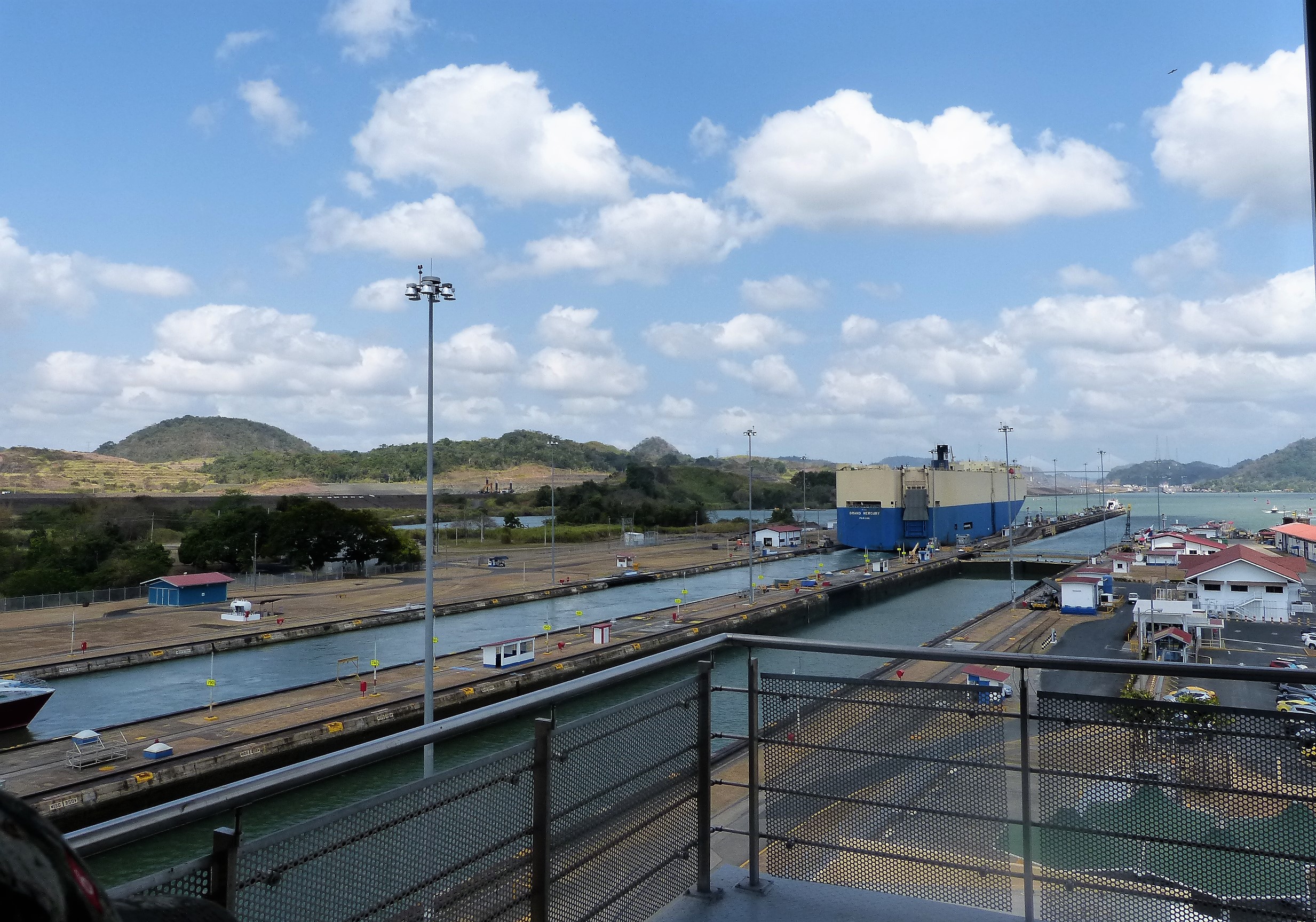


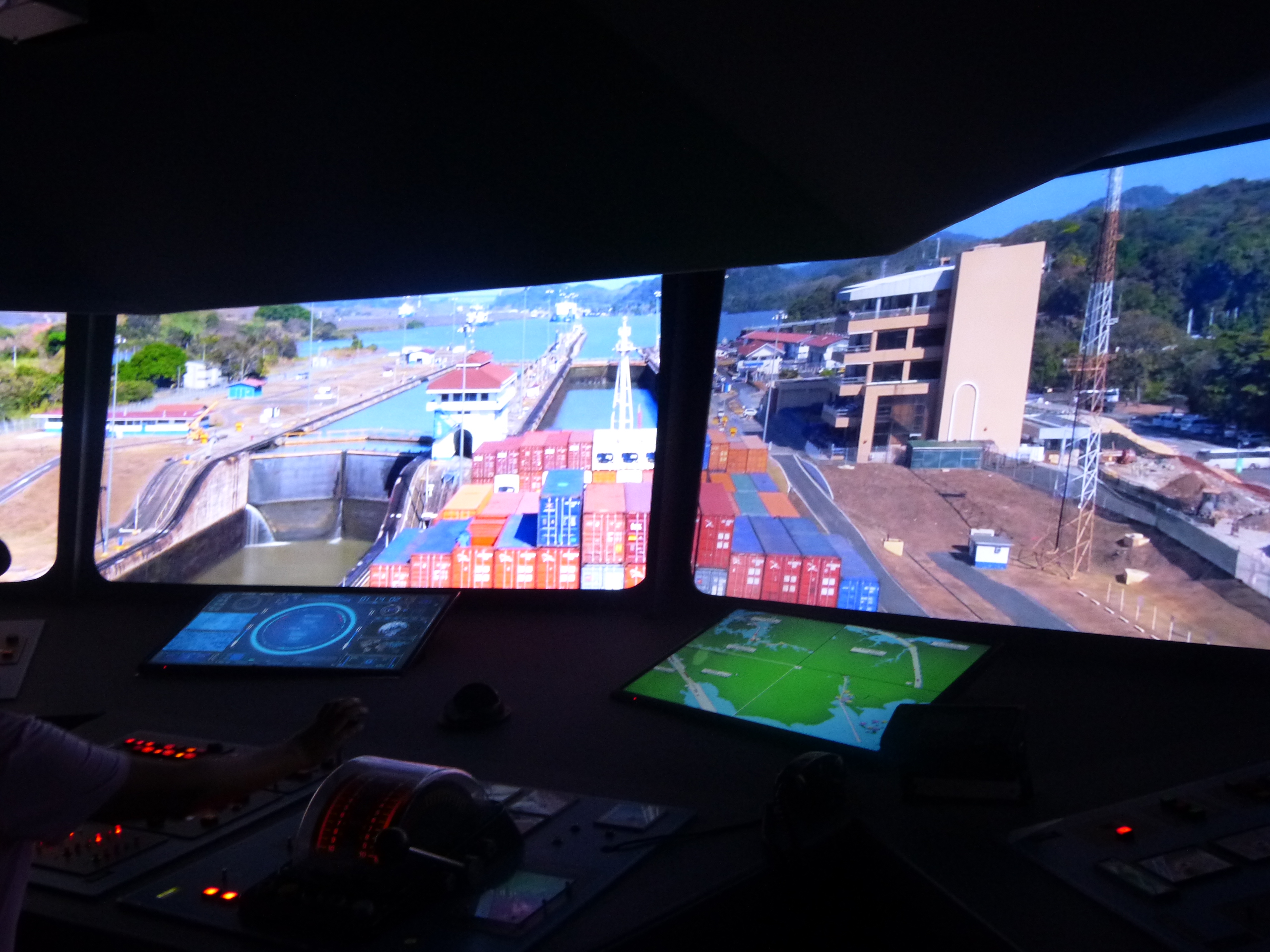
A view from the bridge simulator.
From there we went to the old city of
Panama-travelled through a lot of ghettos to get there, some very poor living
conditions. The old town was originally surrounded by a wall to protect the
people from pirates – remnants remain, as well as churches from the 17th
century. Some nice little craft shops, restaurants and boutiques. The heat was
overwhelming- 35 degrees, and hot! A nice breeze though, apparently it is the
same heat all year round but so much more humid in the wet season, and no
breeze!


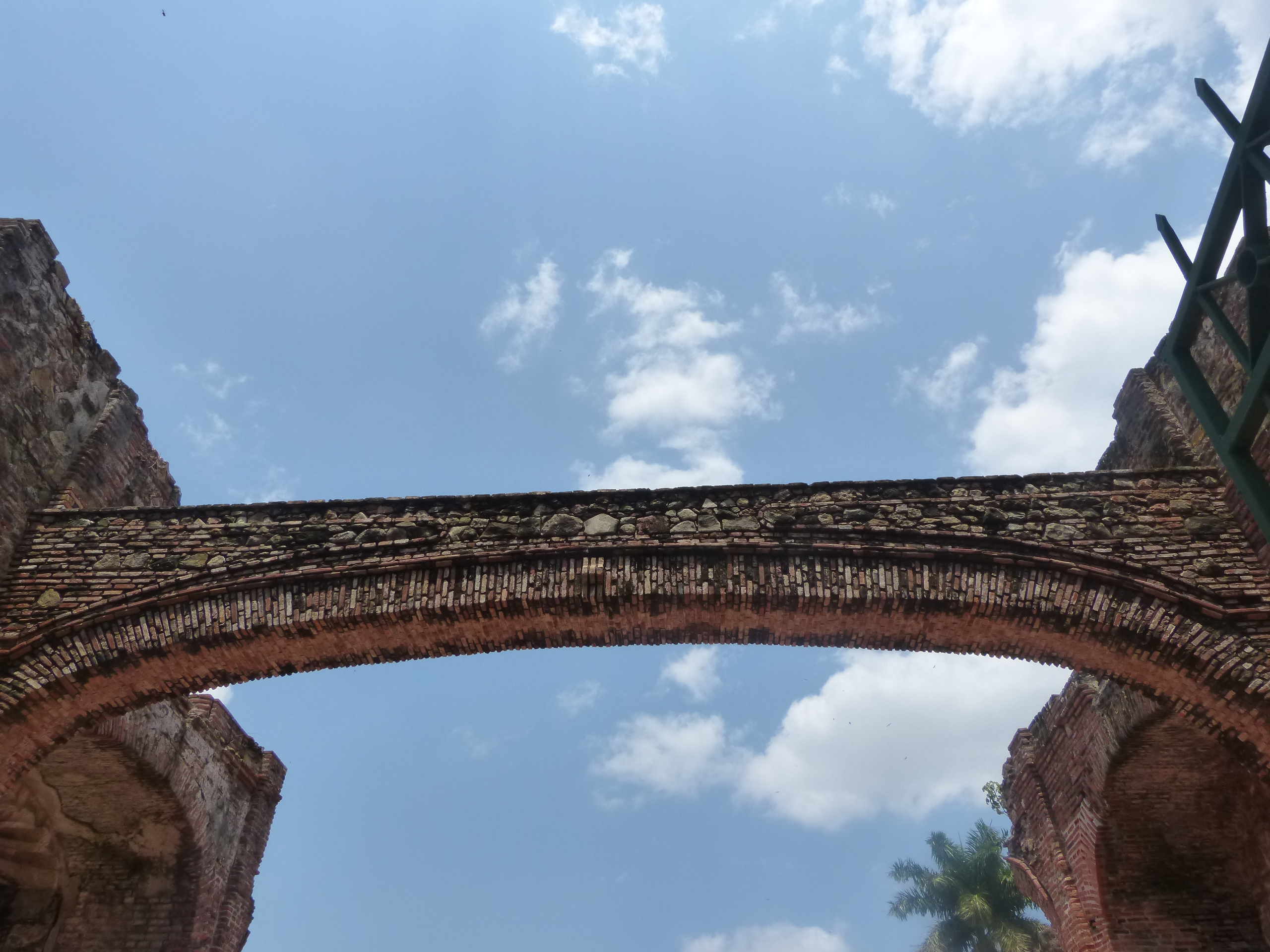


Bridge of the Americas – the first, and one of two bridges between North and South America – part of the Pan American Highway
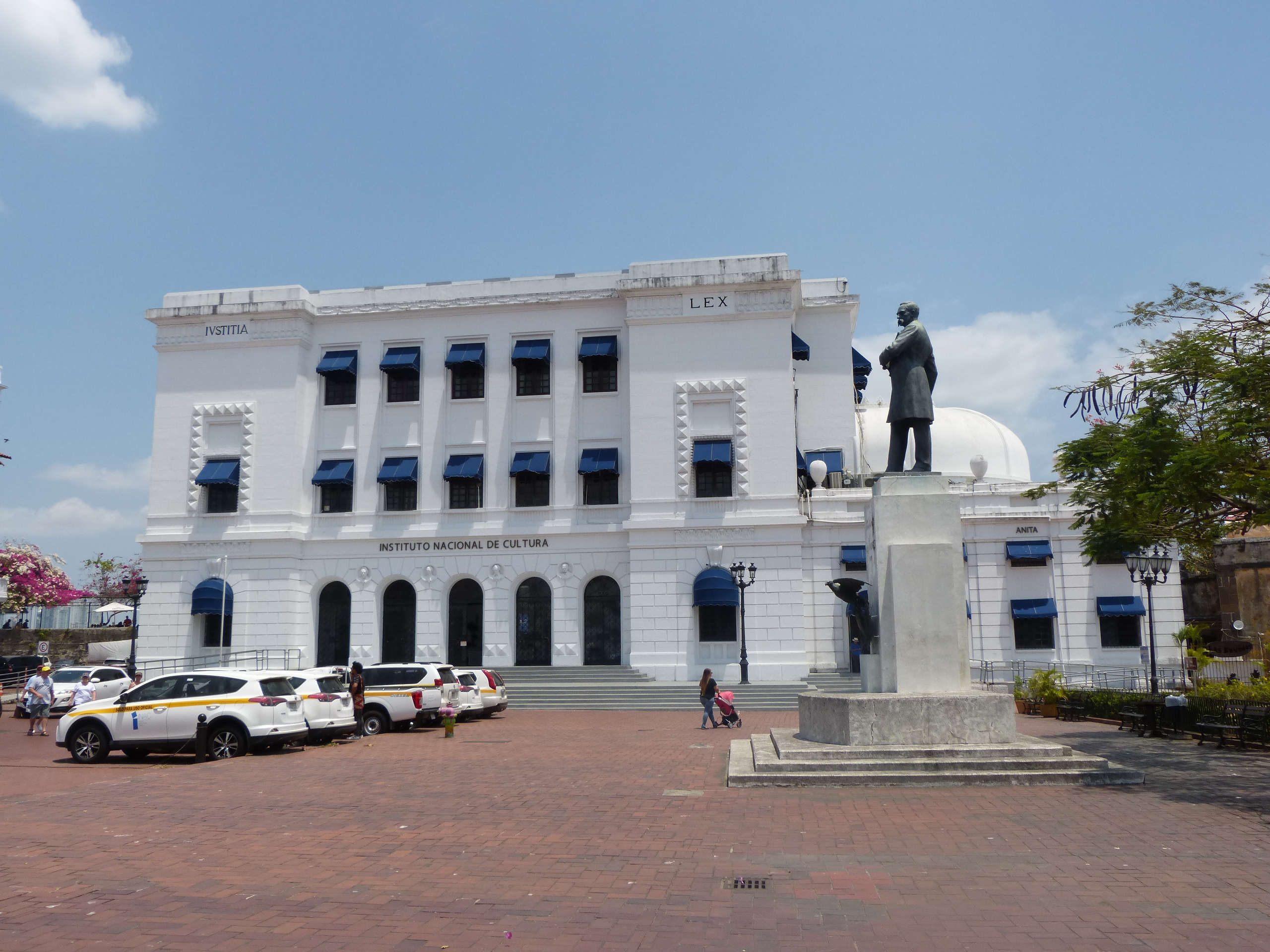
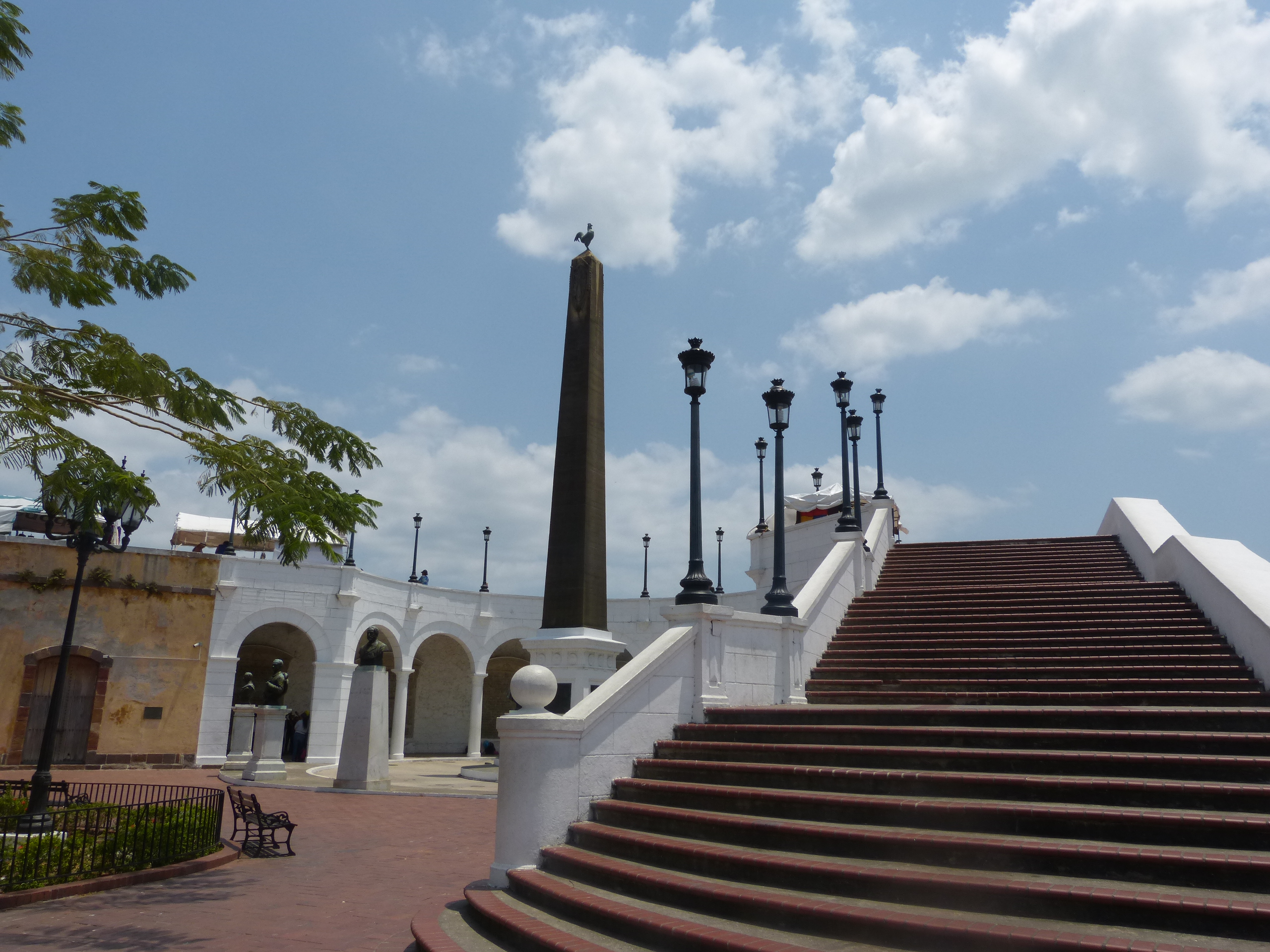

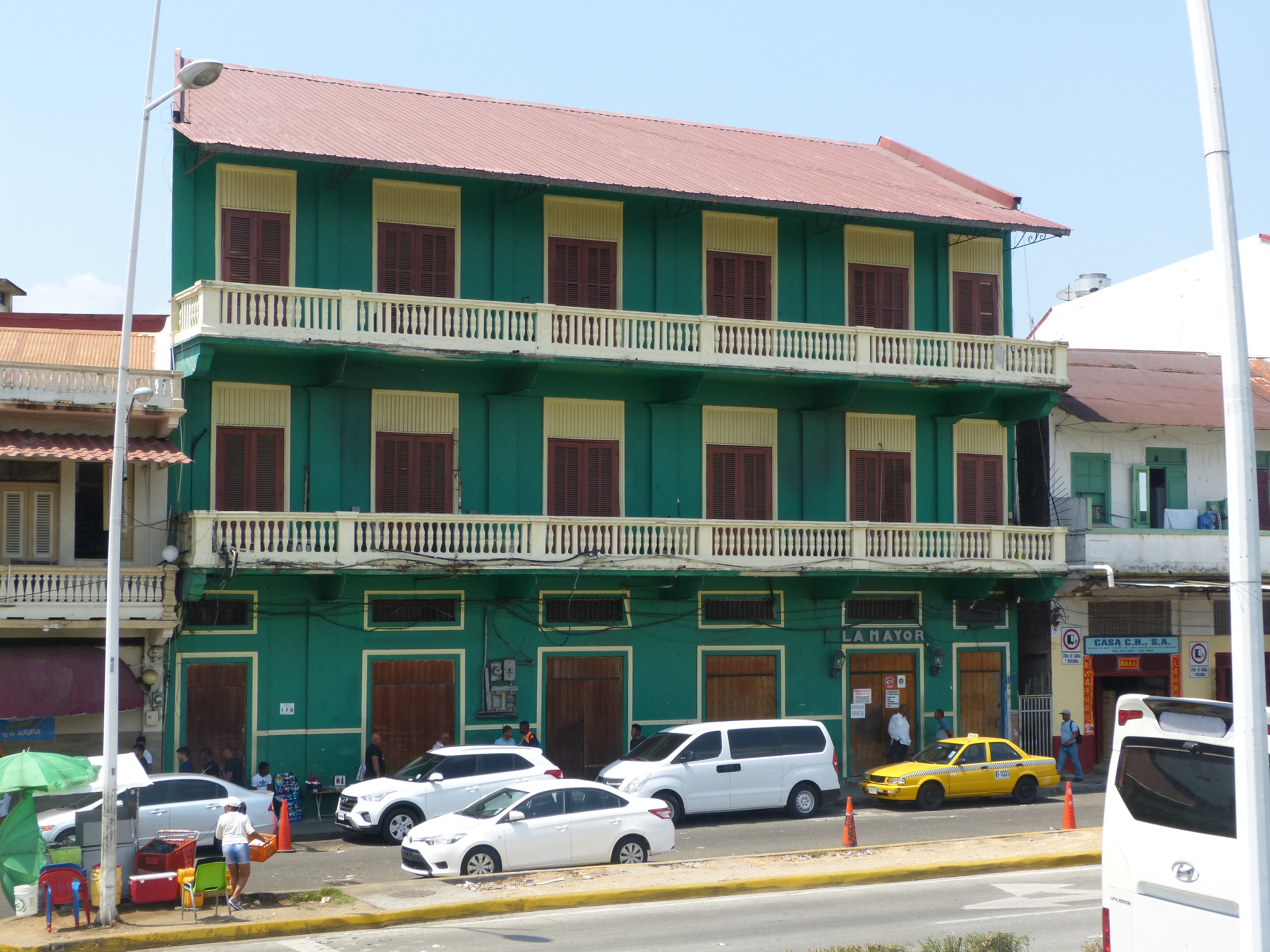
Drove through new Panama City- originated in
1978, but all the really tall buildings are from the last 15 years. It is a tax
haven for the rich. Main industries are banking and tourism, plus canal
transits.

Back to the ship, where we welcomed the aircon! Spent the afternoon recovering from the heat.
Dinner tonight at Candles- the small restaurant on the top deck out in the open. Beautiful and cool, had the company of Skip abs Marcia from Alaska. The Angus beef filet Mignon was to die for!
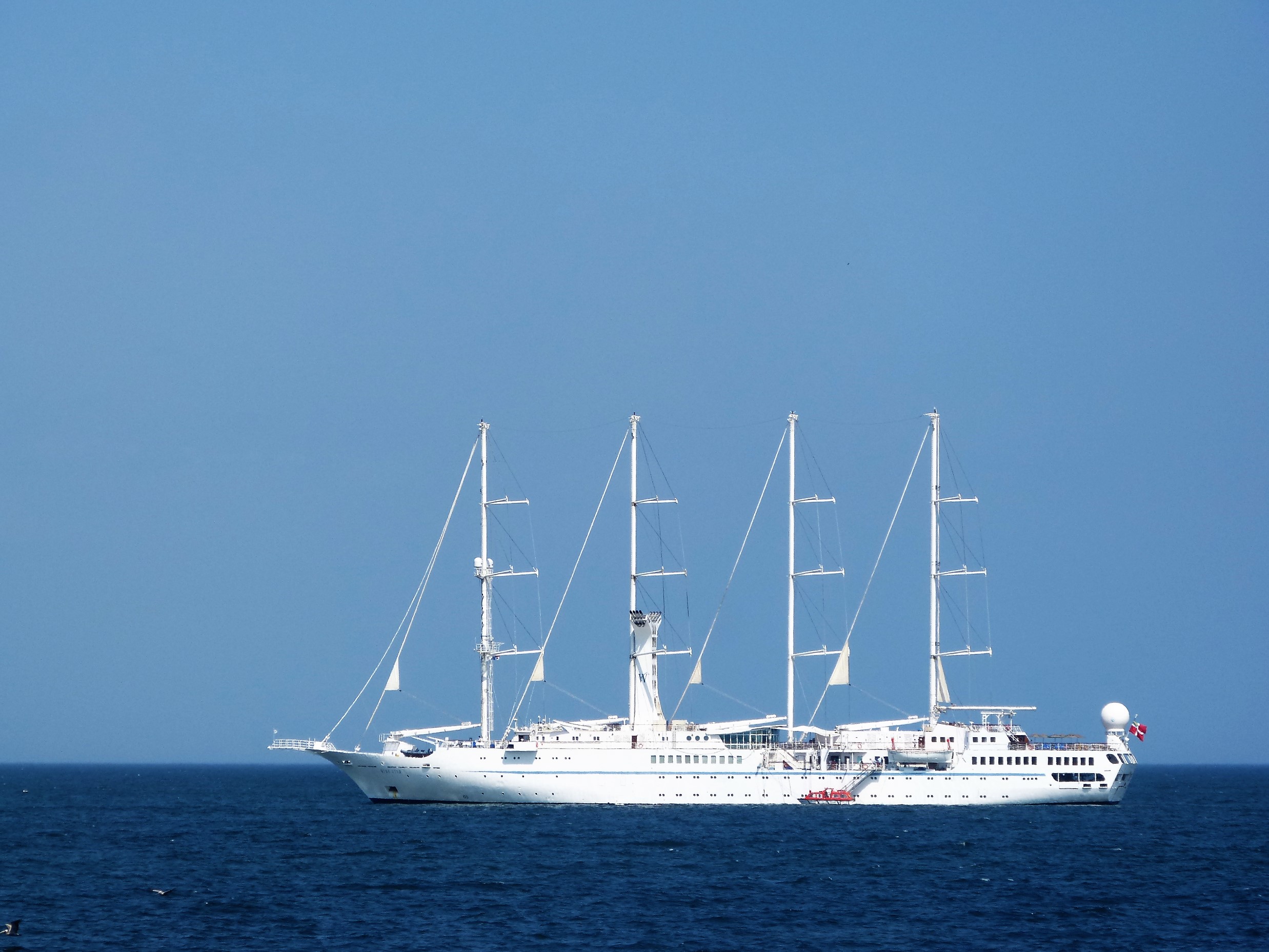
Day 10 17th March
Balboa.
We were on the Monkey watch tour today. Tender, bus, then an exhilarating ride in a speed boat alongside a huge ship in the heart of the Panama Canal. We slowed down as we entered the labyrinth of jungle covered islands of Lake Gatun. In the area the wildlife is protected. This is what we encountered
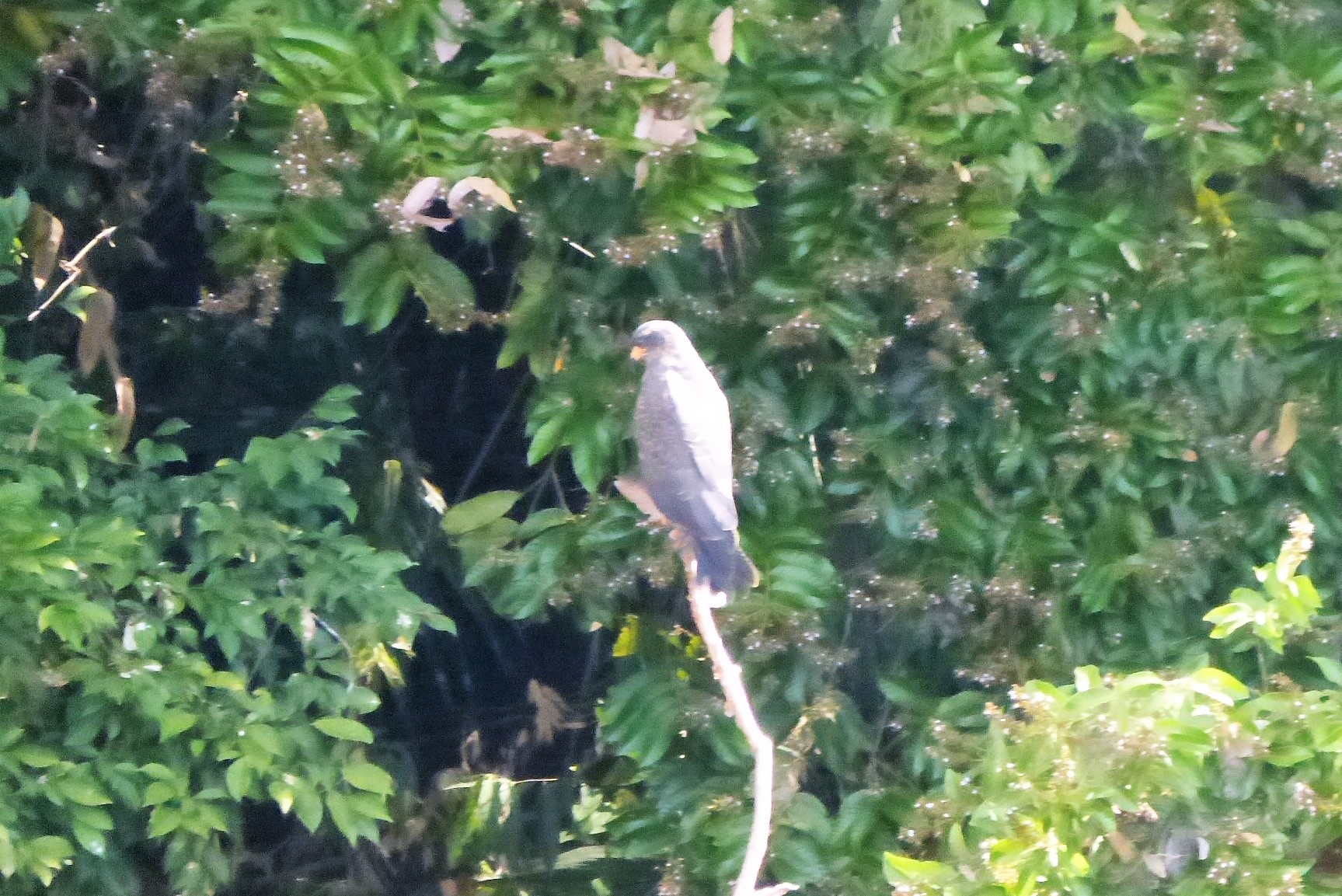
Snail kite
White face capuchin – very cheeky, but are known to be aggressive
Tamarind monkey – oh so cute and friendly
Turtle – sunbaking on a log in the water
Turkey vulture
Black vulture
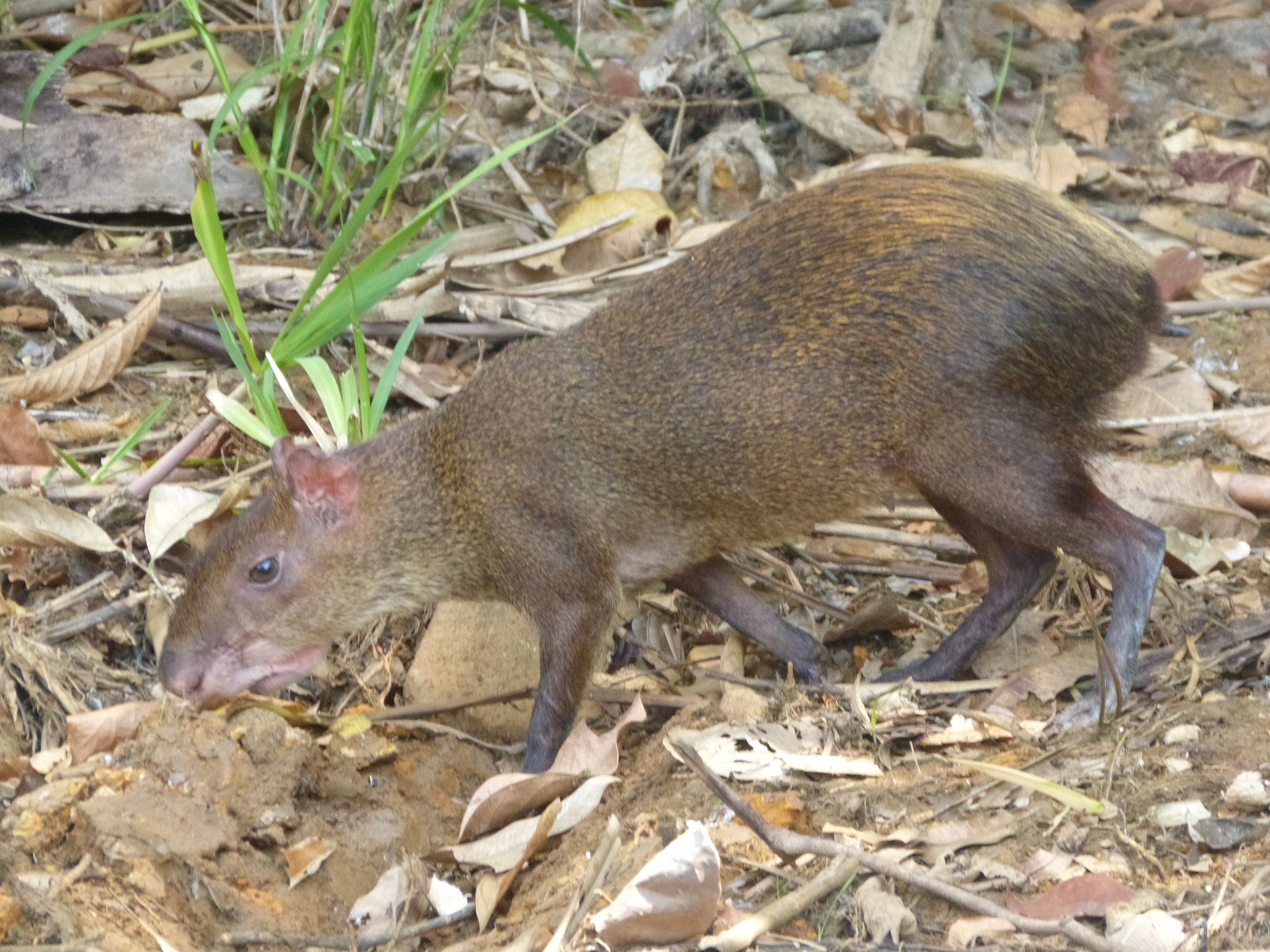
Agouti – cute rodent like animals
Great tailed Grackle – birds with blue black colourings
Crocodile – jumped into the water as our boat approached.
Iguana
Blue marvel butterflies- huge, and such a vivid blue colour.
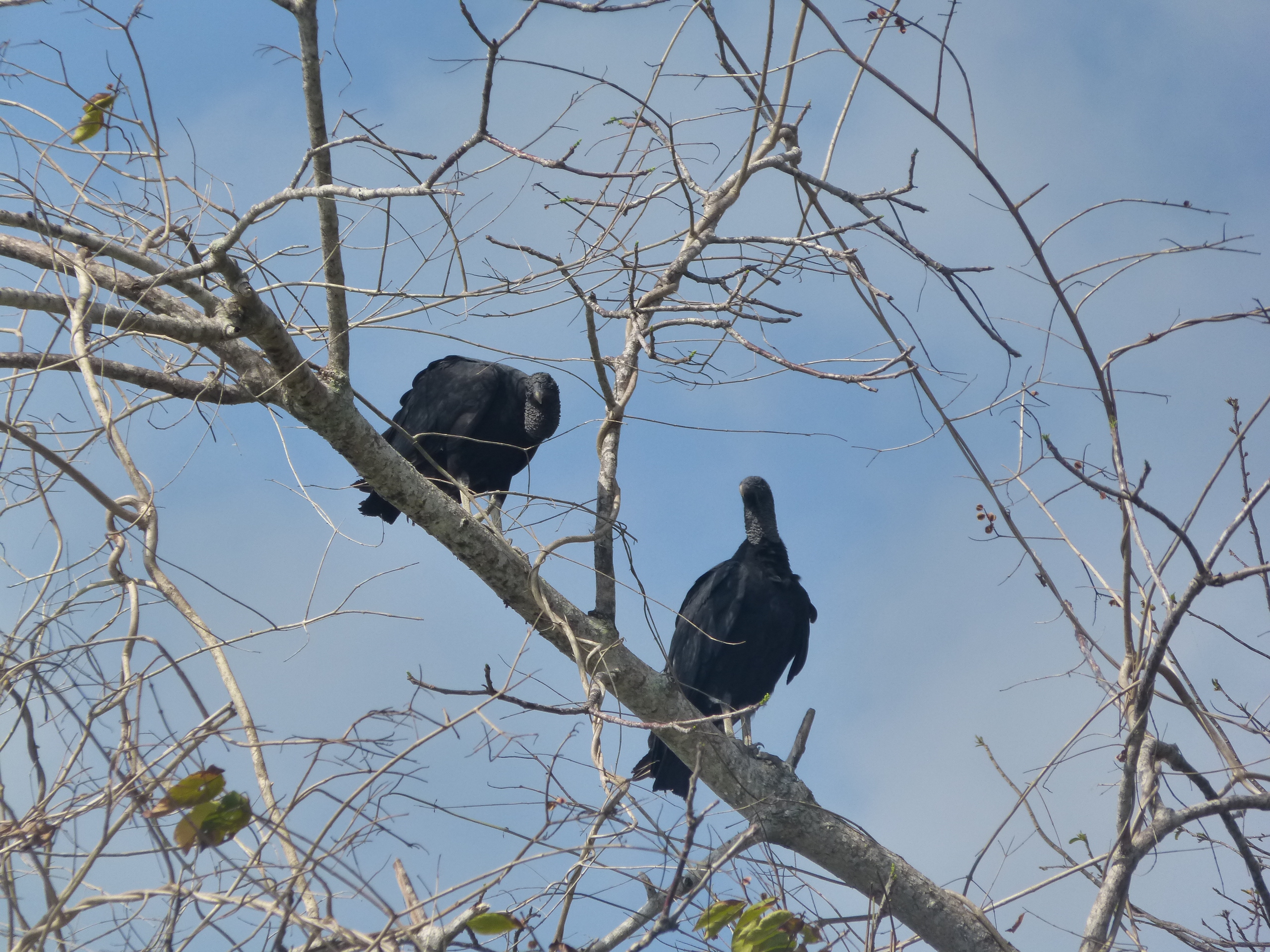
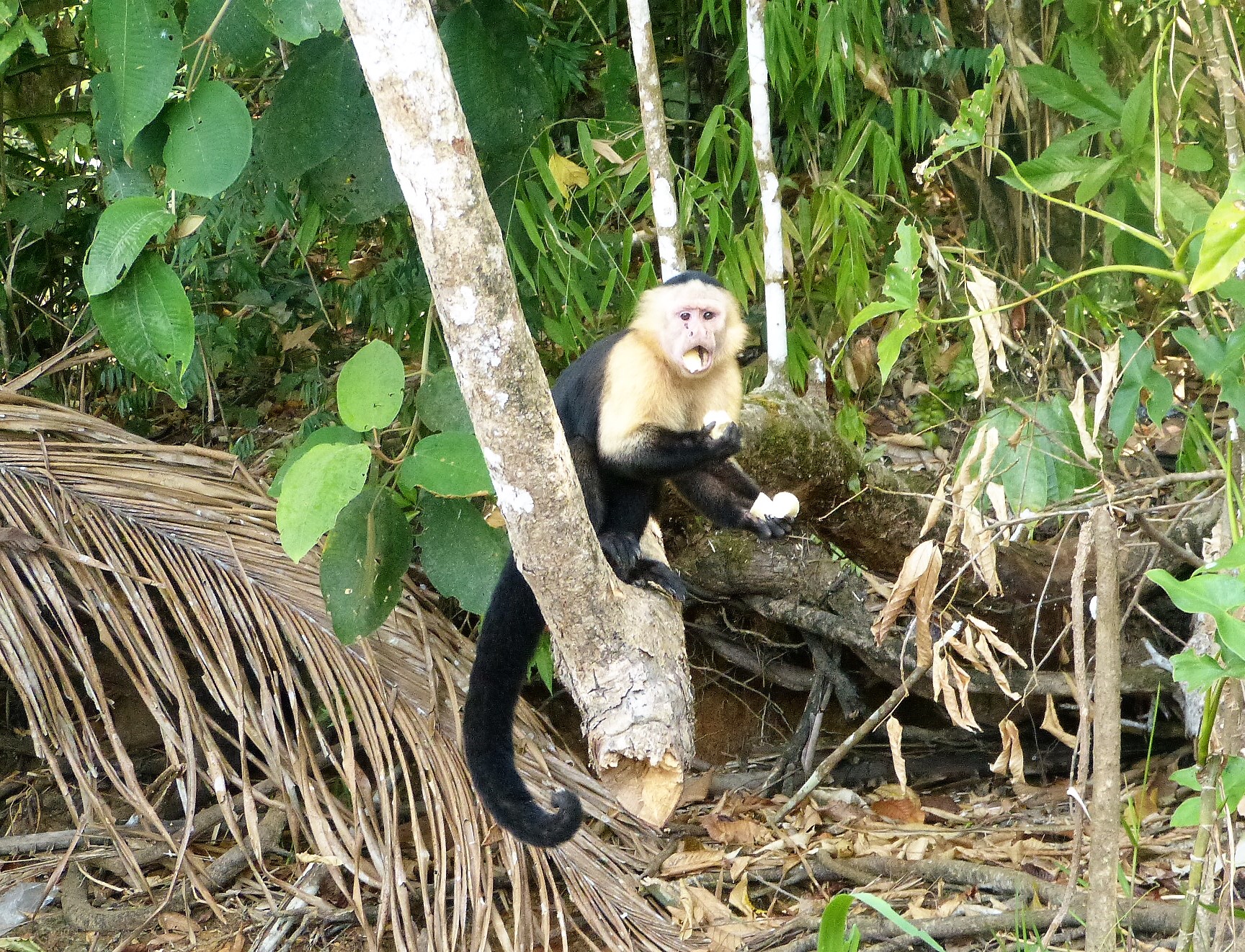


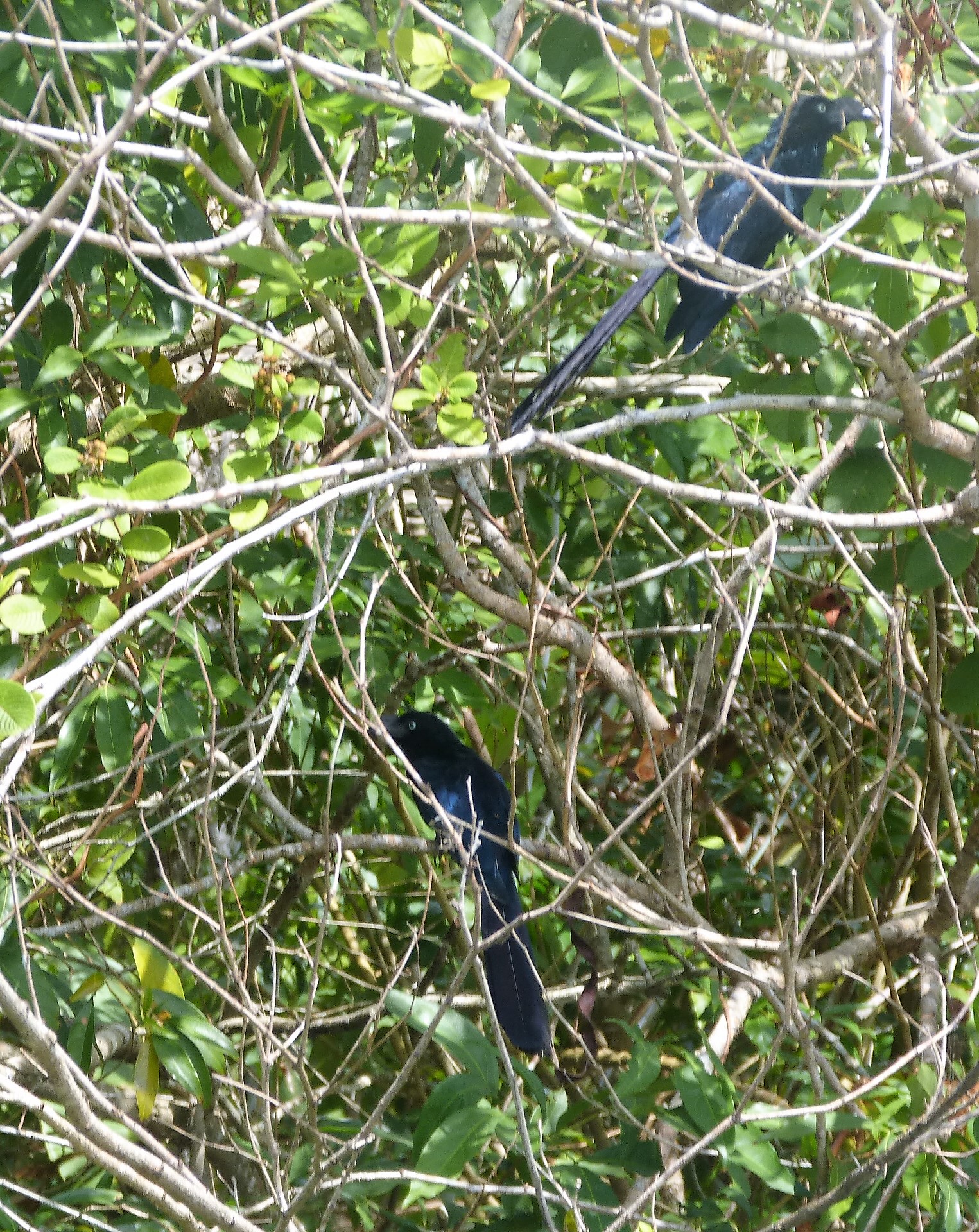
Great tailed Grackle
Frank and I left the bus at The old city of
Panama to have our own little wonder- enjoyed looking at the galleries and
boutiques, and a nice Panama coffee. Taxi back to the wharf, then back on board.
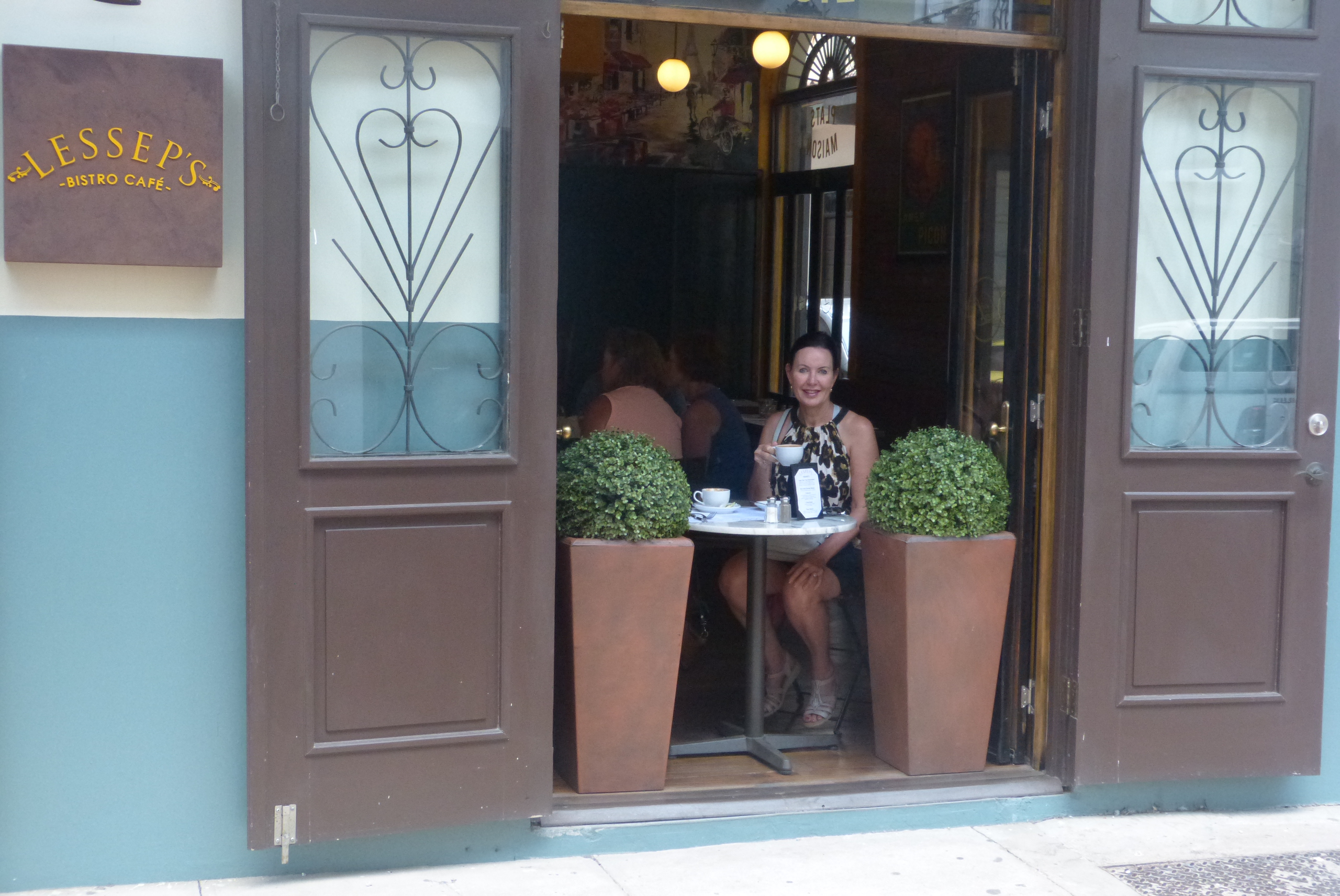
BBQ on deck tonight, with a St Paddy’s Day
influence. All the tables were set up on deck. The food was amazing- Angus
beef, pork suckling, chicken, and my favourite- grilled lobster. It was divine-
so juicy and sweet! I had three! The salads and desserts were all magnificent
as well.
The staff entertained us with some line dancing, then we all
danced the night away under the stars in the cool air.
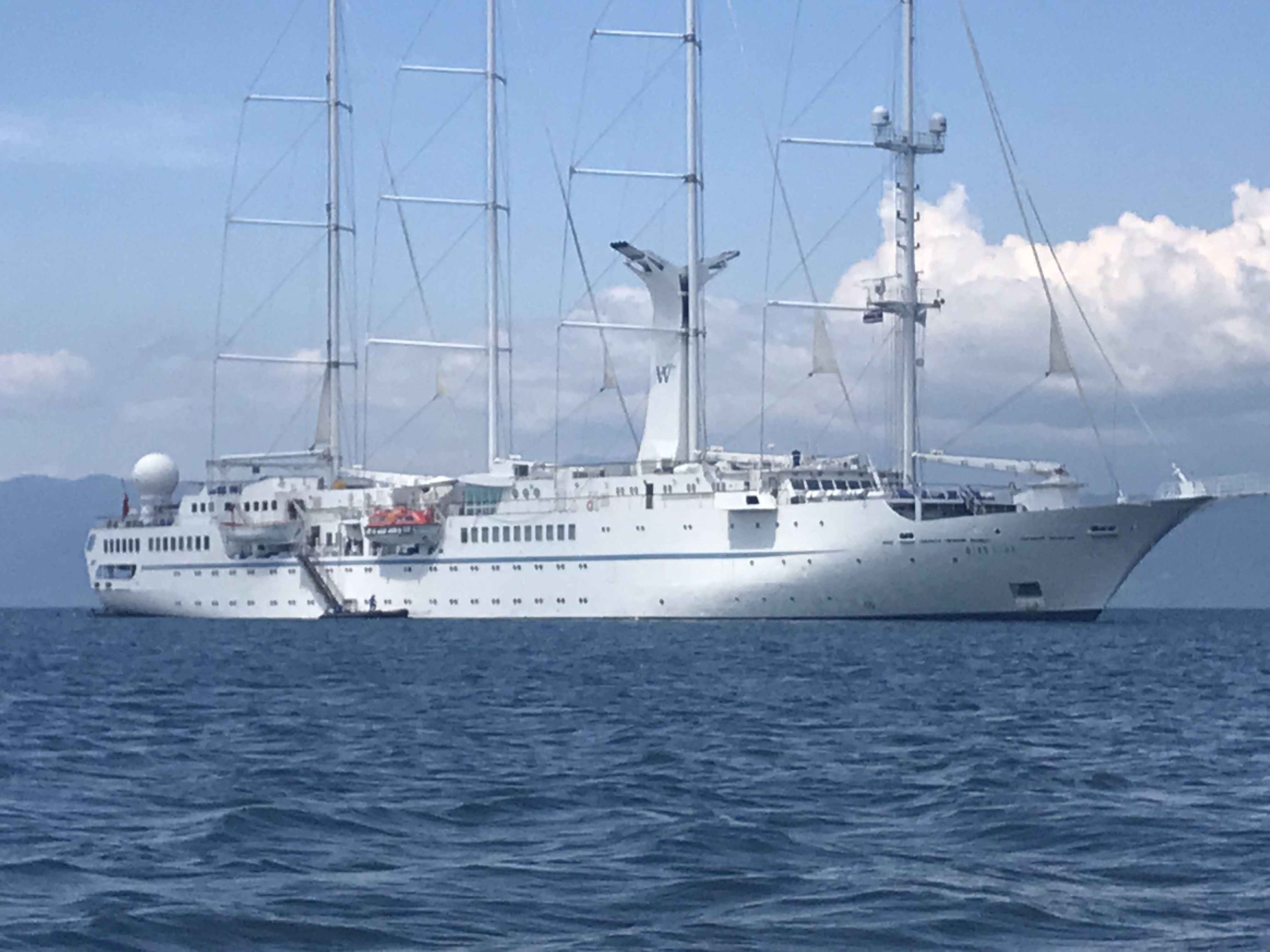
Windstar Cruise – Panama Canal Transit
Day 11 18th March
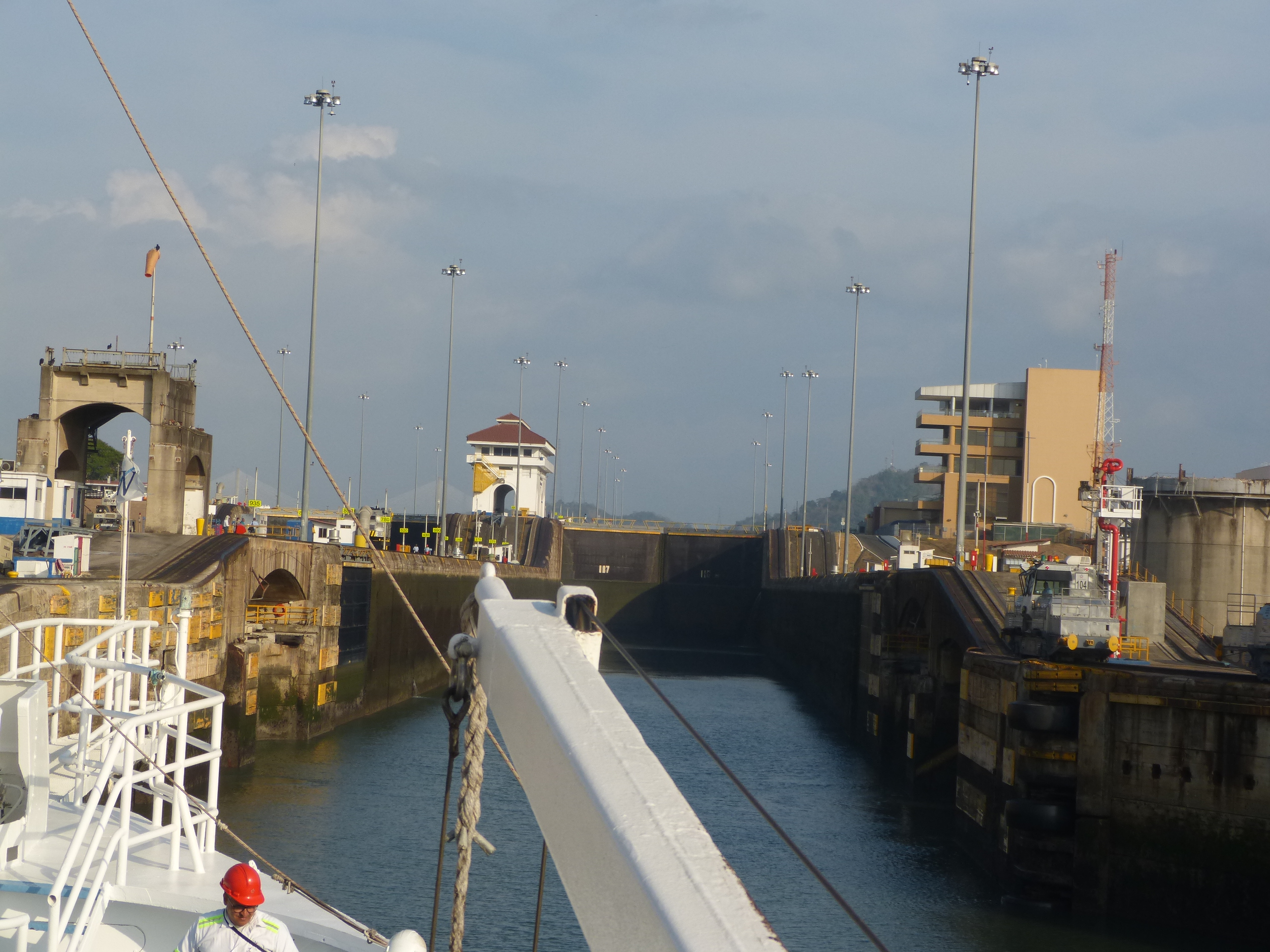
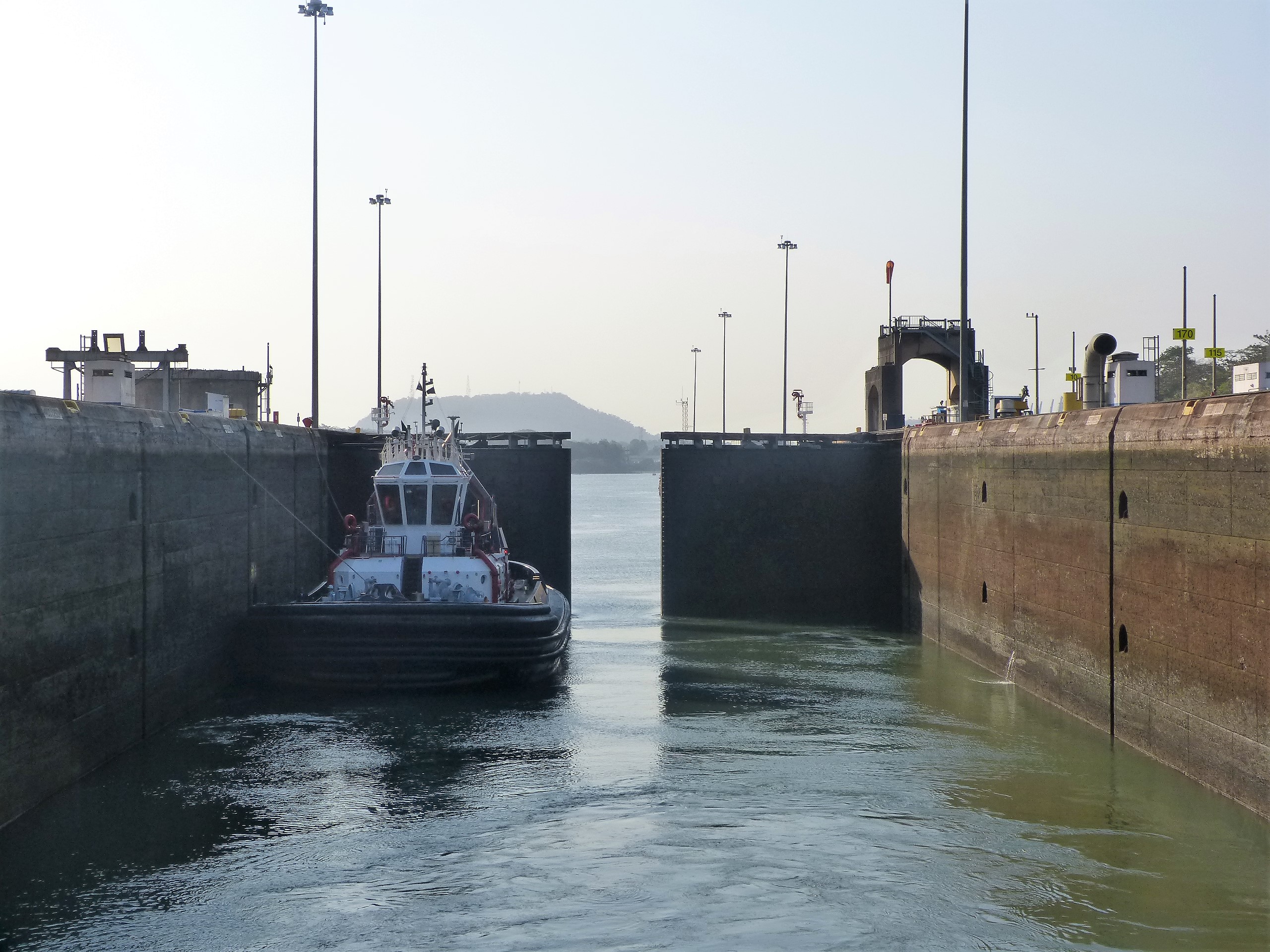
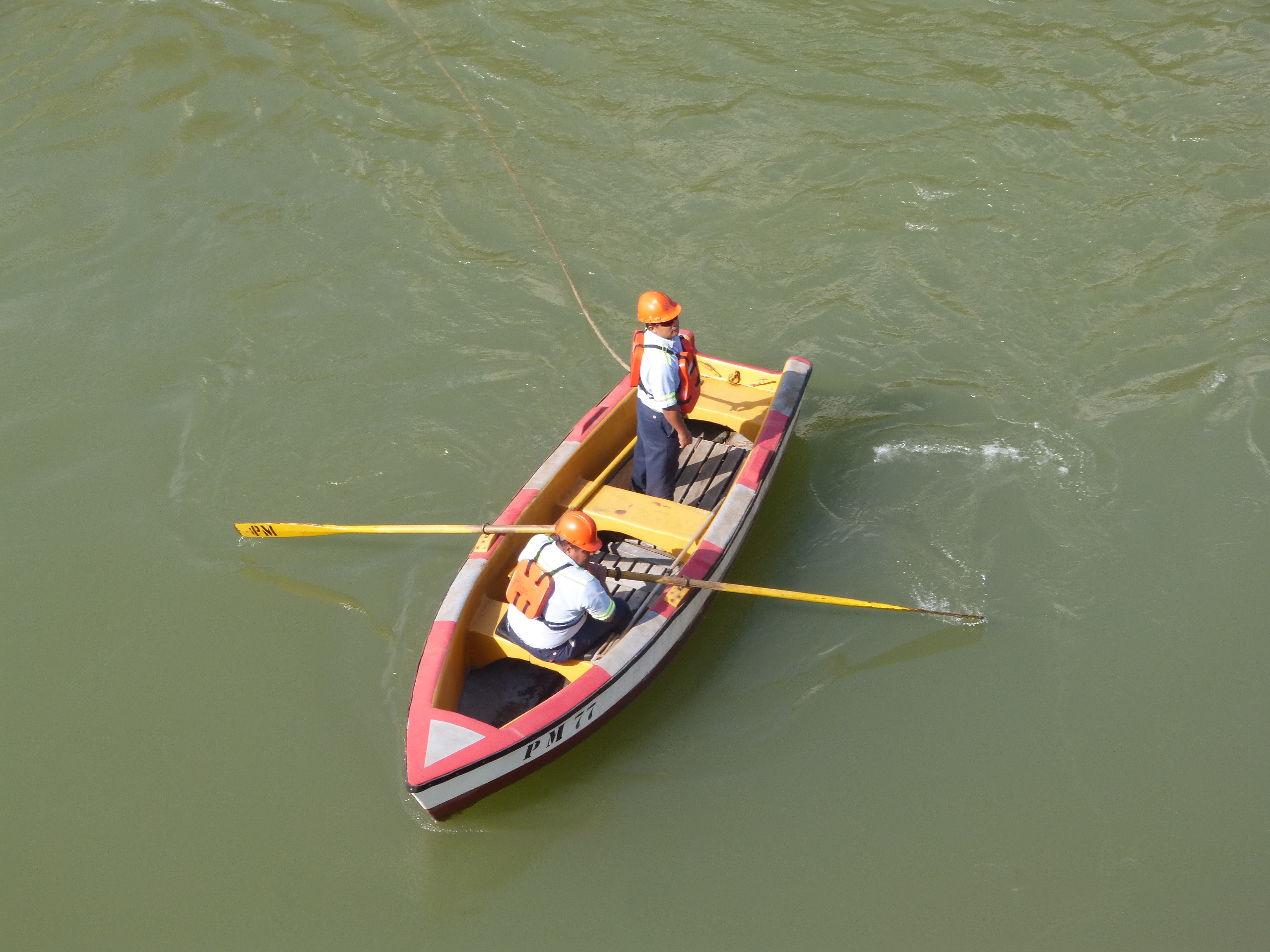
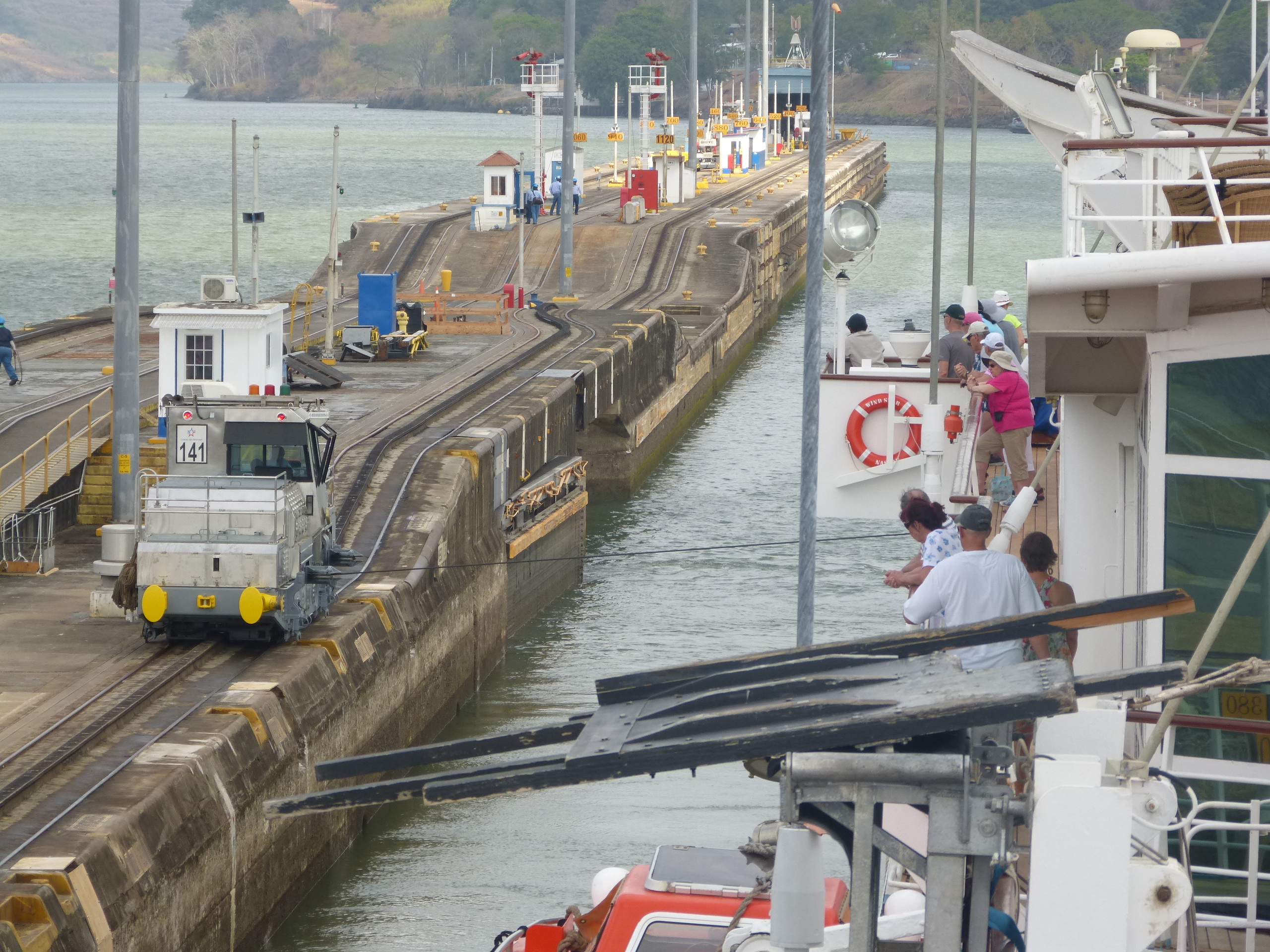
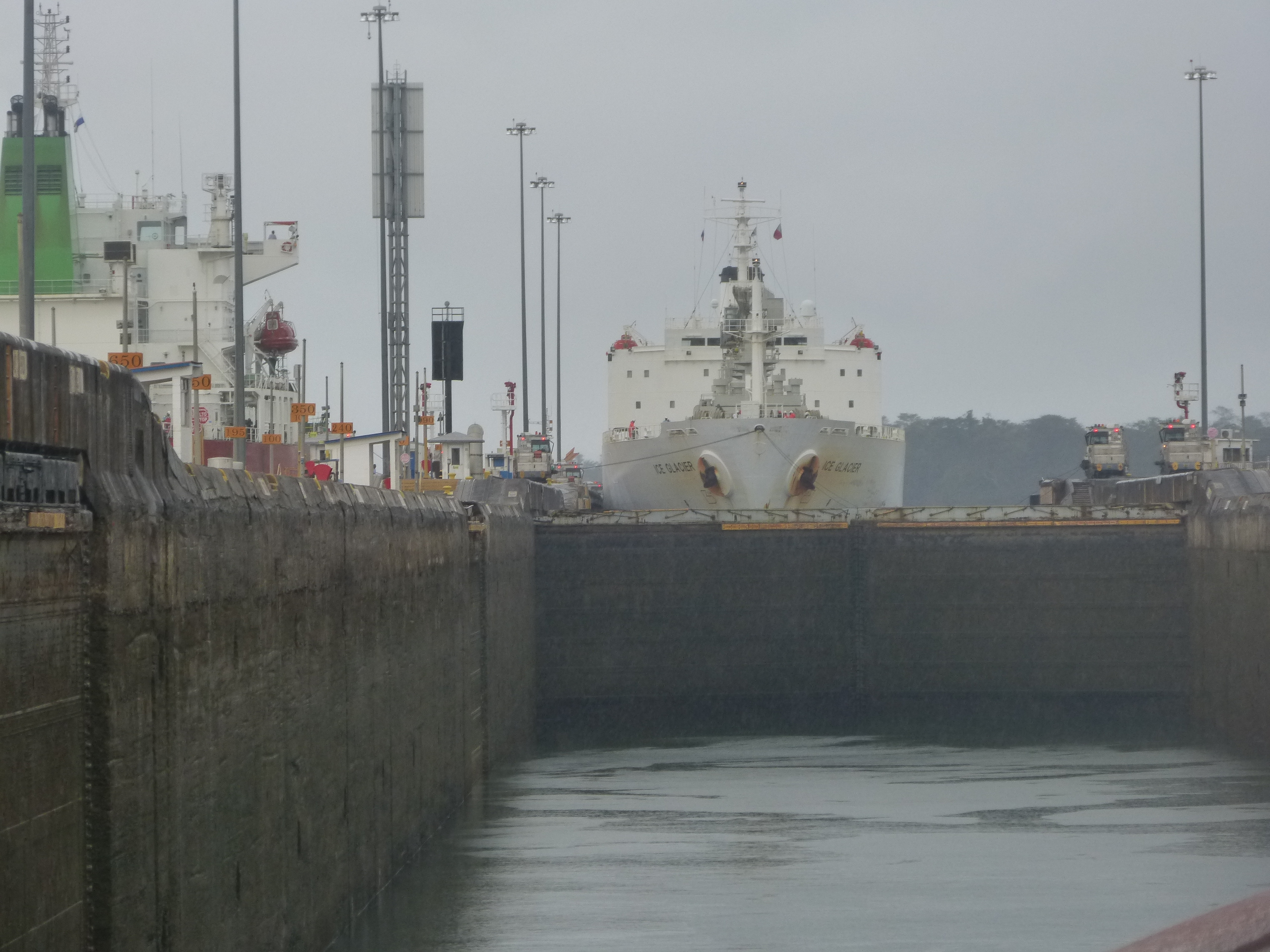
Our Panama Canal transit
The Panama Canal is an artificial 77 km waterway in Panama that connects the Atlantic Ocean with the Pacific Ocean. The canal cuts across the Isthmus of Panama- it is estimated it saves ships 10-14 days of perilous travel time if they have to go right around Cape Horn. It is a marine shortcut saving distance , time and costs in the transportation of all types of goods.
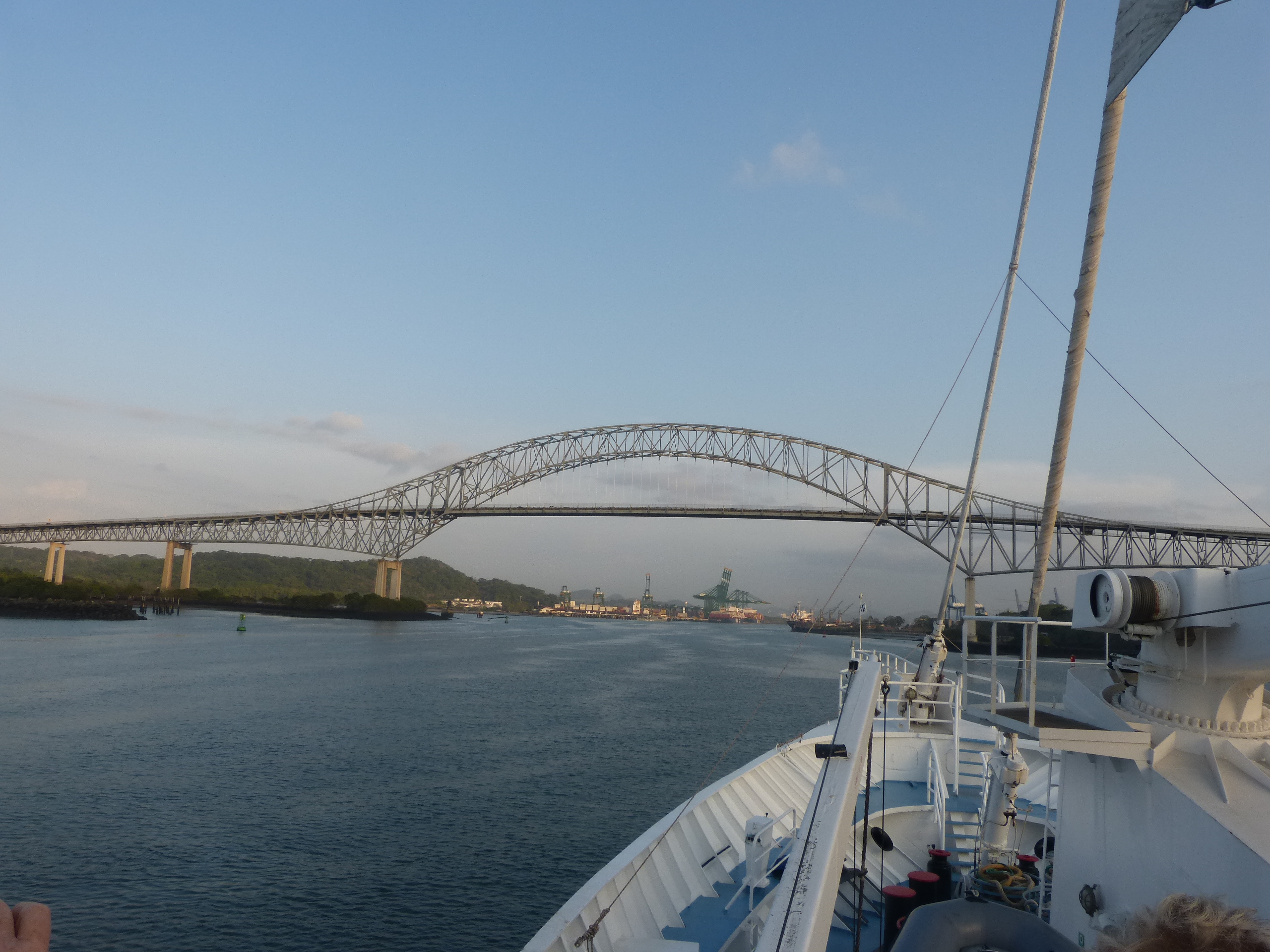
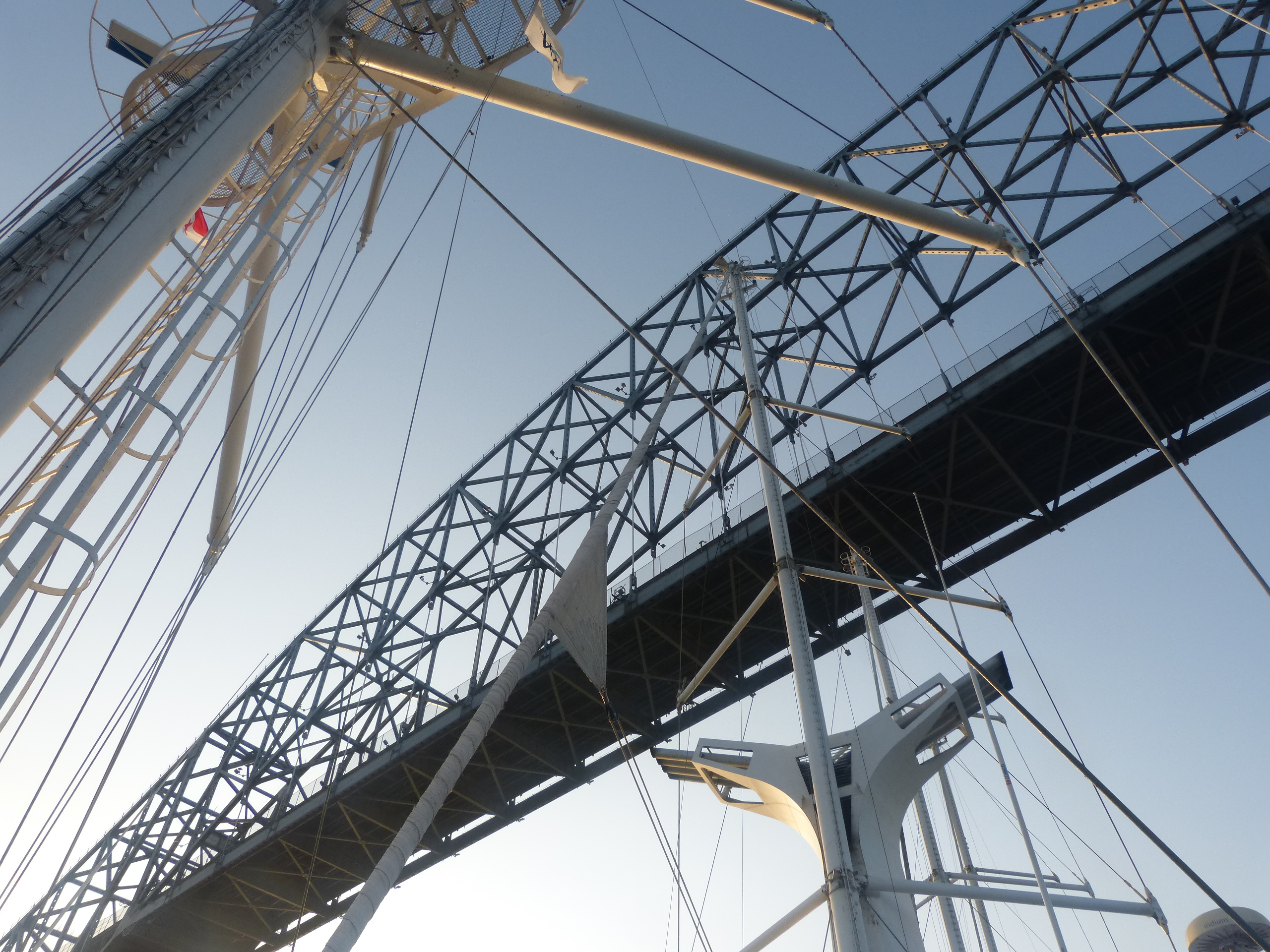
We were booked to start at 6am. A Panama Canal pilot boards the ship to start the process. The first point is when you go under the Bridge of Americas – this bridge links North to South America. Not all ships can go under the bridge- we had 5 feet clearance above the big mast.
We then went through Miraflores Locks – two locks which took us up 8.5 metres each, then we sailed through Miraflores Lake to Pedro Miguel Locks and up another 10 metres to a total of 27 metres above sea level. We went through Culebra Cut (the narrowest section) then across Lake Gatun – an artificial lake created to reduce the amount of excavation work required for the canal. From here, we go down via the three Gatun Locks and finally into the Caribbean Sea!
During this time we had a local historian on board providing commentary throughout the transit. Absolutely fascinating engineering feat- certainly one of the seven wonders of the modern world!
The original locks (2) are 34 metres wide, a third lock with a width of 55 metres was completed in 2016. Our ship’s cost to transit the canal was $35,500- that included the $5500 booking fee. The total time taken was approximately 8 hours. So that was the day gone! We had been kept very busy going from one side of the ship to the other, and going from front to back, to see the intricacies of the whole manoeuvre. It was totally fascinating!
We then docked at Colon for the night. Another delicious meal, and some light entertainment.



Winstar Cruise – Colon
Day 12 19th March
Colon is the capital of Colon Province in Panama. It sits on the Caribbean coast, at the entrance to the Panama Canal.
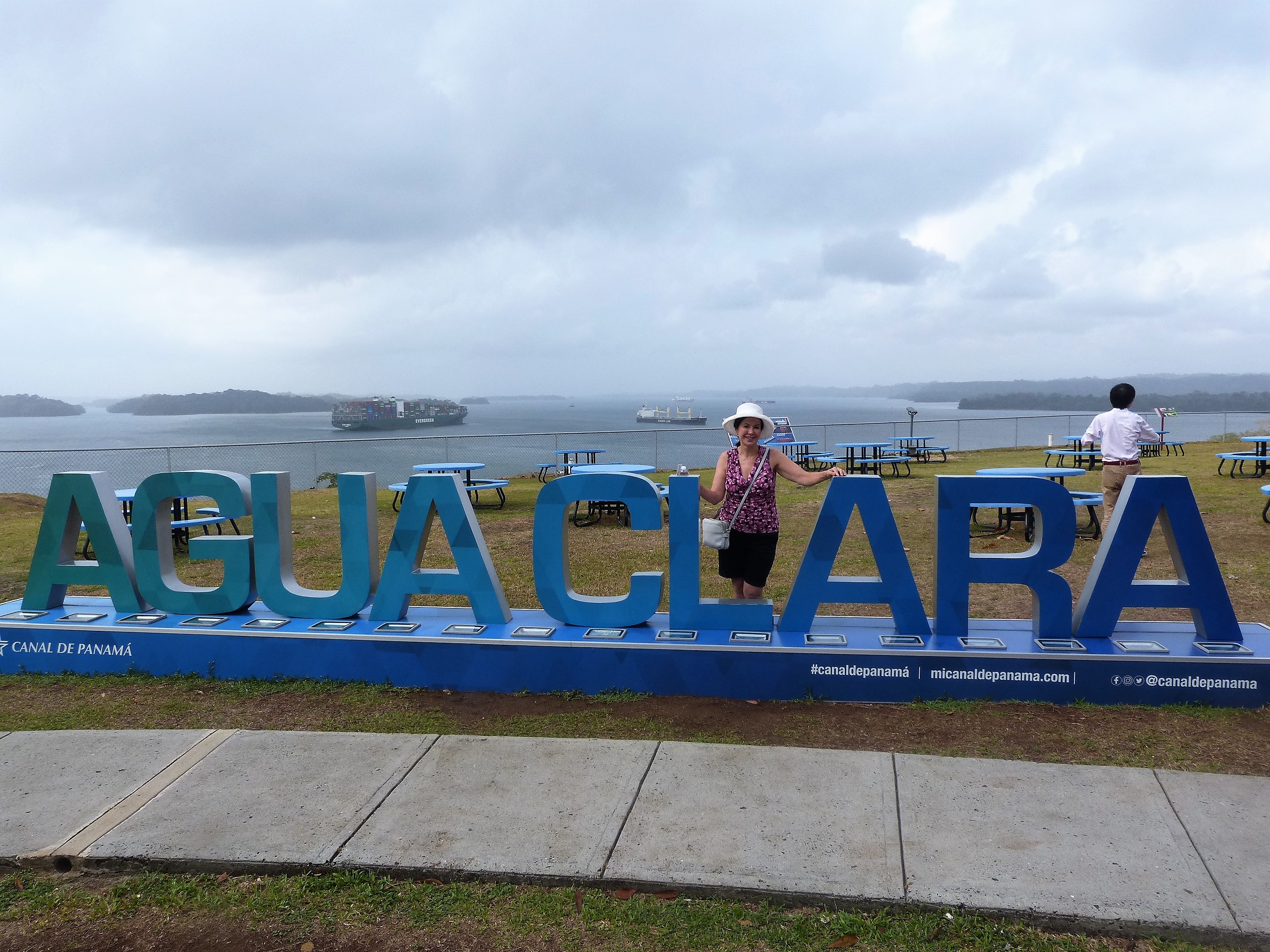
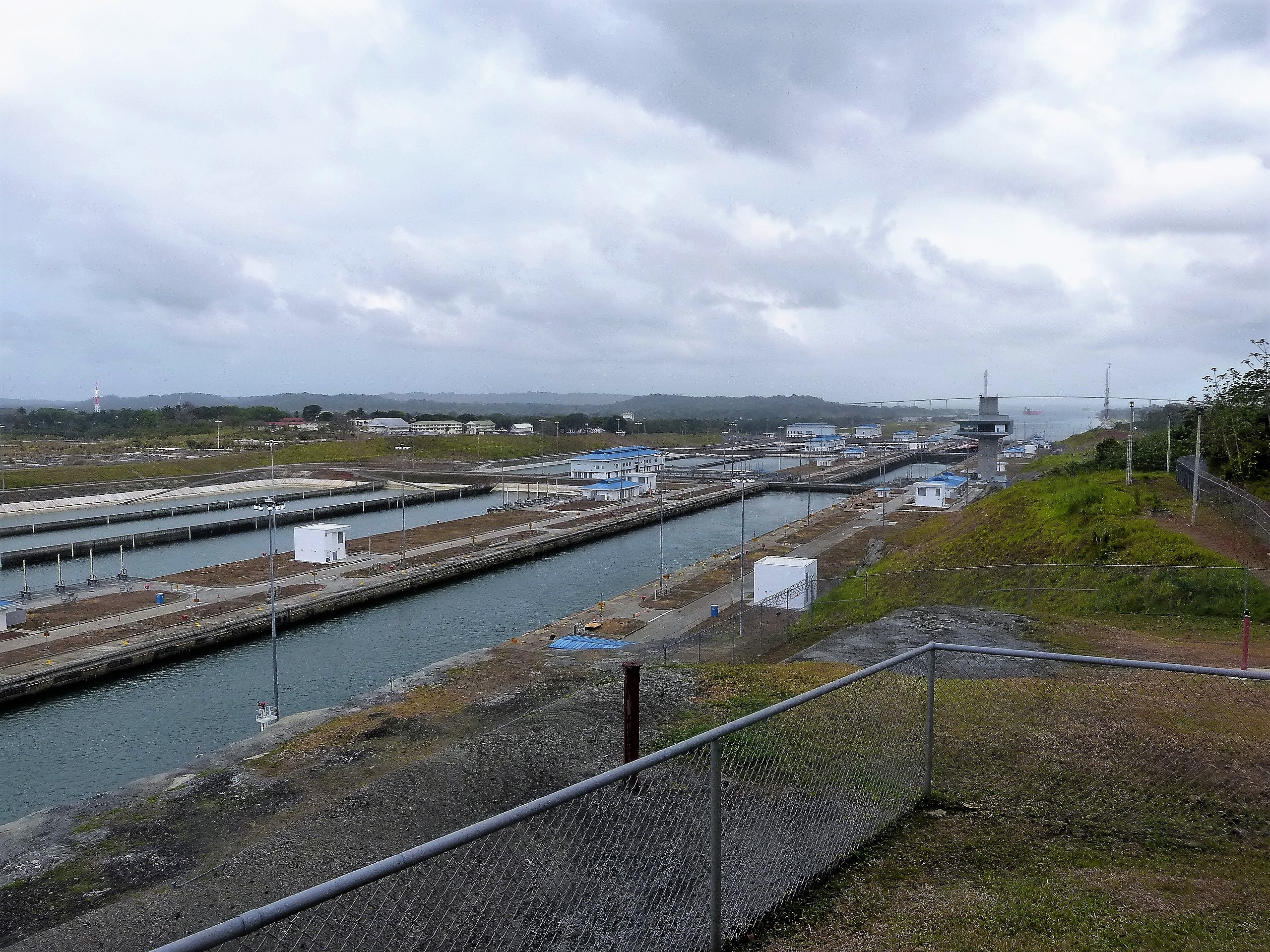
Today we went by bus to Agua Clara Expansion Centre – this set of Locks is at the Atlantic Ocean entrance, and doubles the canal’s capacity, and allows longer and wider vessels to transit. They also recycle 60% of the water here.
From here we travelled to Melia Panama Canal Resort, boarded a small boat, for an eco tour of Lake Gatun.
We saw
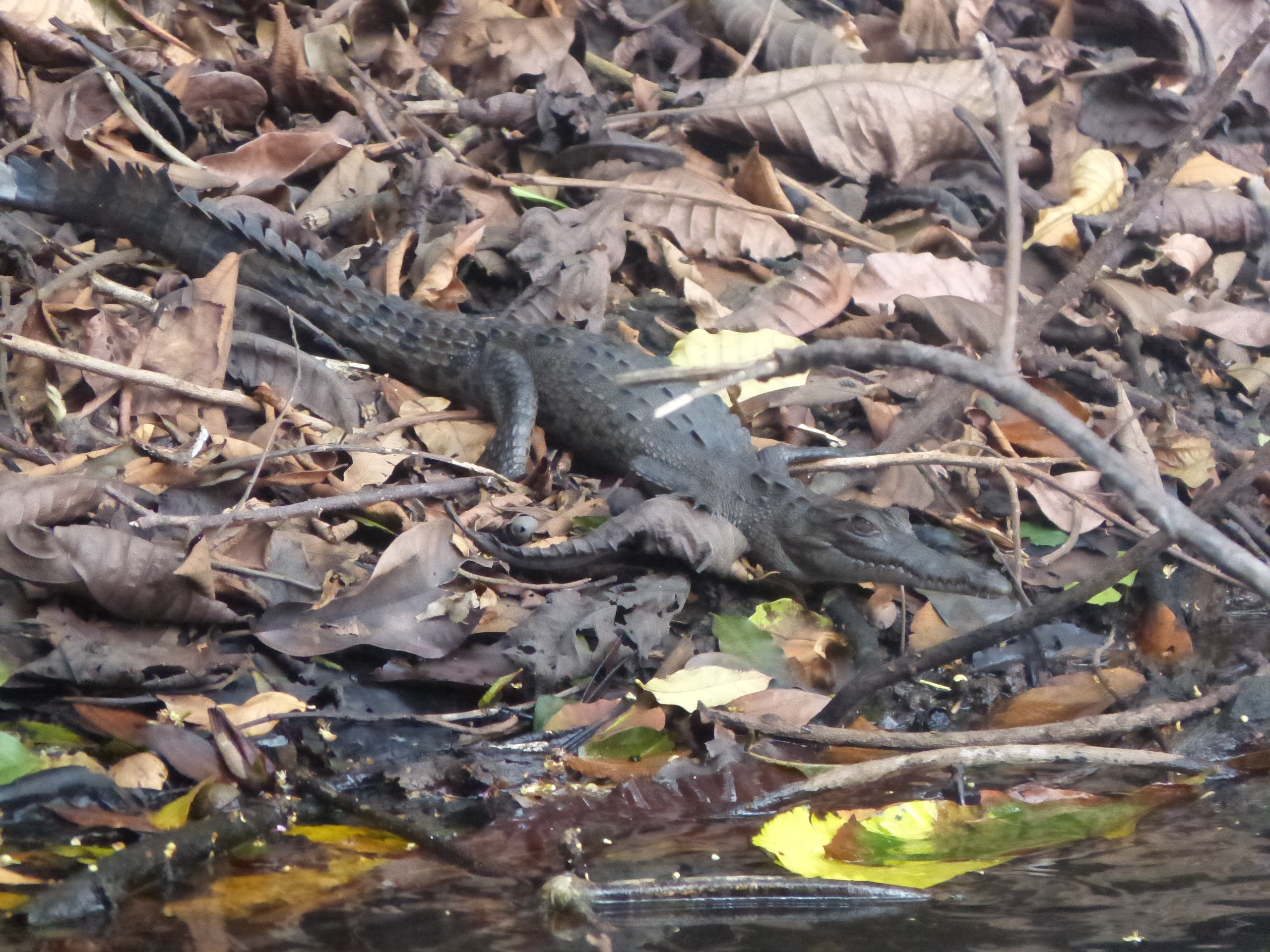
Crocodile – an adult and a small juvenile
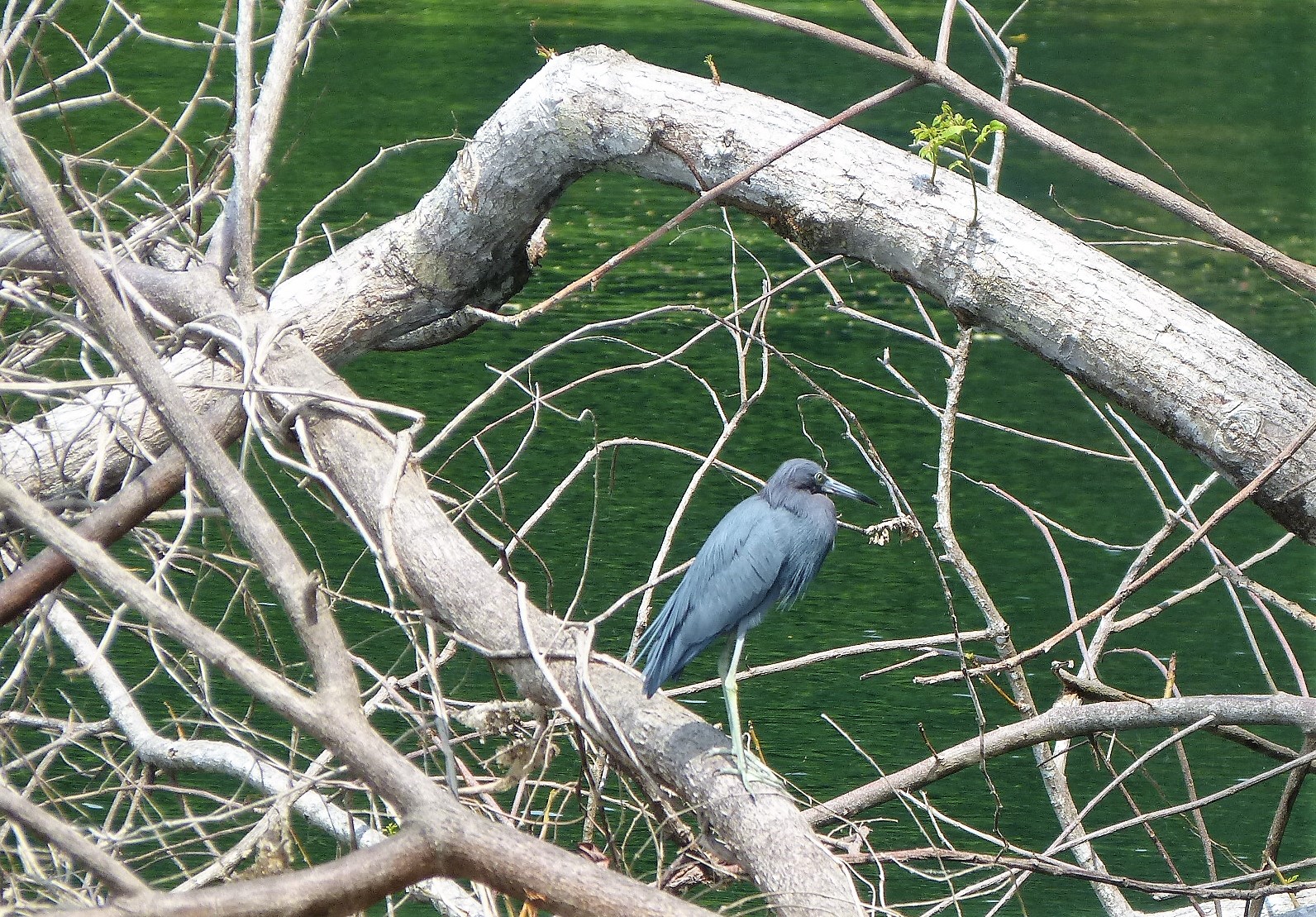
Blue heron
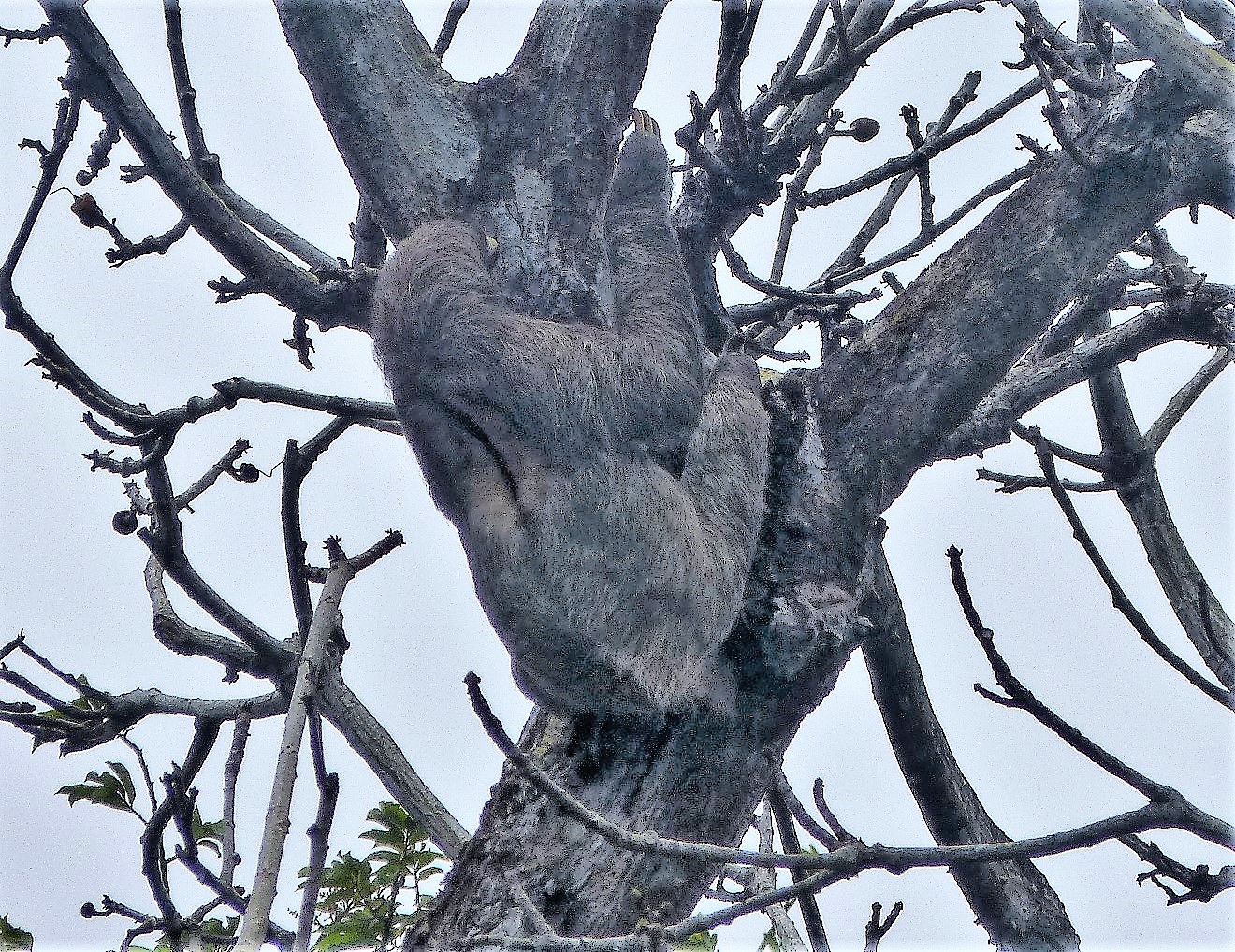
Three toed sloth- moving
Coati – too quick to capture in a photo!
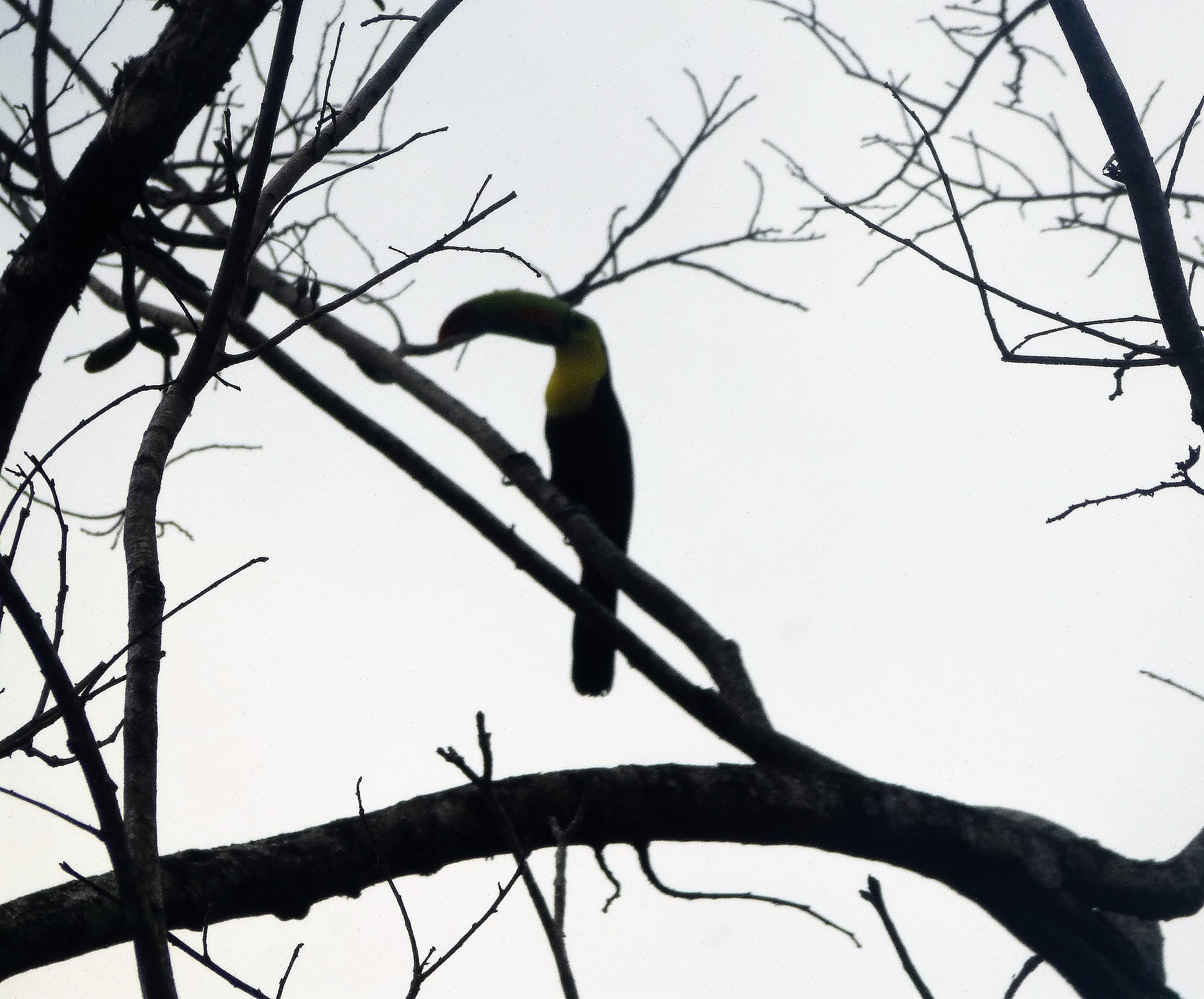
Rainbow toucan
Flycatcher

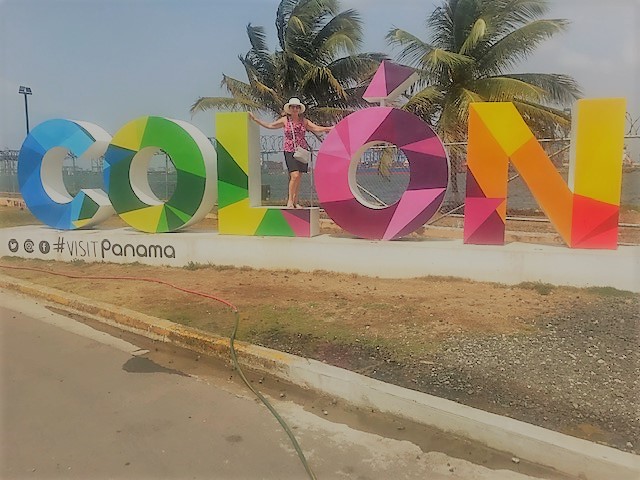
Back through Colon- a very run down dirty city, almost like a war zone. The government is trying to relocate the residents to new areas outside of the main city. It is not a very safe city, and we had been warned not to walk around. There was a small shopping centre at the terminal so had a quick look there, before we retreated back to the aircon on board the ship! Only 30 degrees today, but still hot. Sail away at 6pm- not such a brilliant sunset tonight. Winds predicted for the next couple of days. Our dinner group is getting larger- a table of 10 tonight ! Latin dancing tonight- fun, but especially with the sway of the ship!
Windstar Cruise – Sea Days Colon to Aruba
Day 13 20th March
Day at sea – very relaxing. Listened to nature talks, a bartender ‘s competition of making cocktails- with flair! Reading, eating, drinking! Becoming very accustomed to the scones with jam and cream for afternoon tea!
Day 14 21st March
Day at sea – more relaxation! This is too much for me! Had to do a gym session to start the day! More reading, enjoying the sunshine , eating, drinking. Had a cooking demonstration today – risotto- a very decadent variation. Nature talks, trivia- still the day goes too quickly.
Staff talent quest tonight! Lots of talent hidden below the decks! The “synchronised swimming” has to be the favourite.
Day 15 22nd March
Day at sea- more relaxation!! I have never been so relaxed… and overweight! Back to reality tomorrow. The cruise is nearly done, and we will be on the move.
Trivia- the final today- and of course we won! Carol and Steve from Orlando, Dora-Jane and Bob from Florida, and us, all knew more than everyone else about travel! Well so the results said!
The winds have died down so a lot smoother sailing. The scones still come out at afternoon tea to tempt me!
Some interesting facts… 129 passengers, and 99 crew.
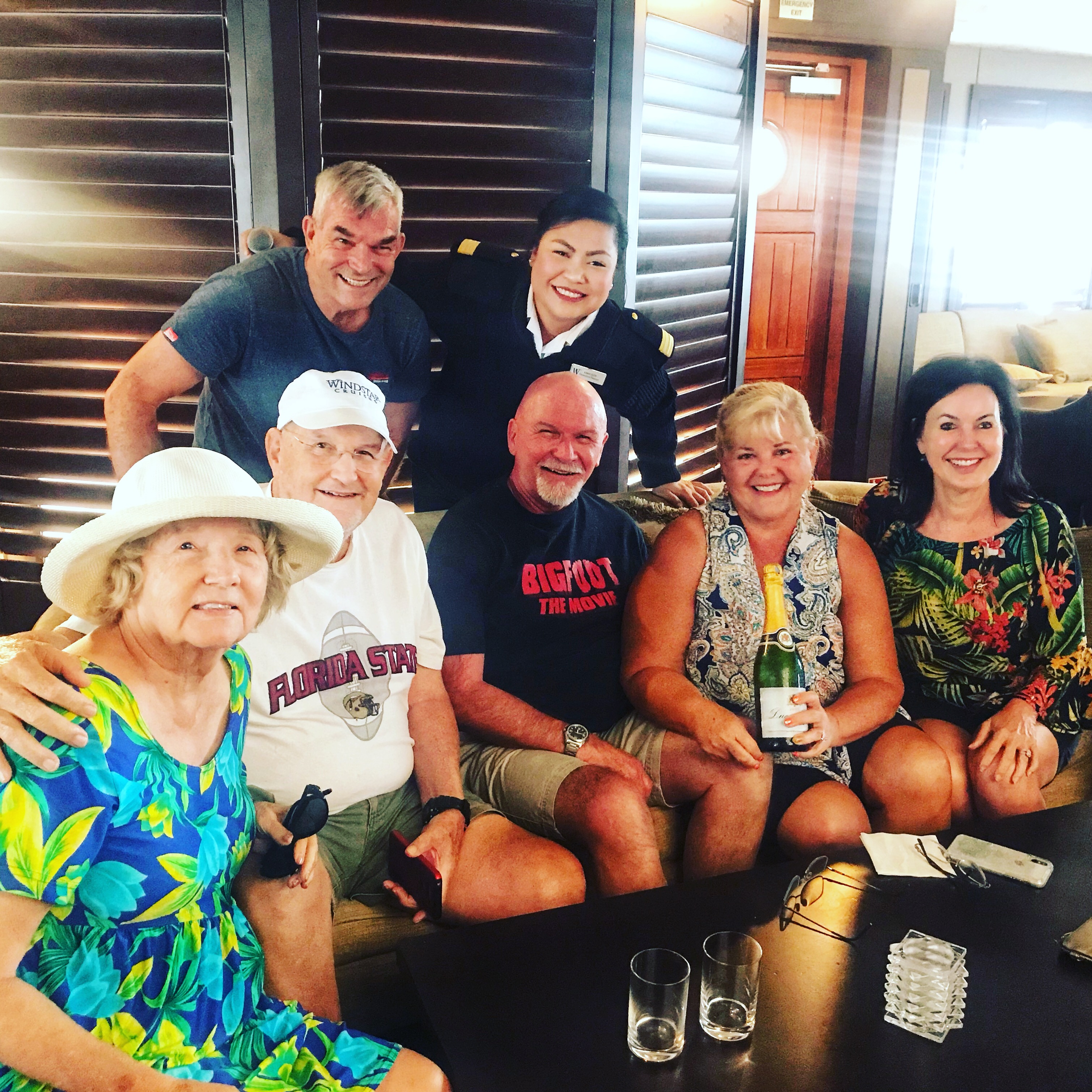
Our final dinner in Candles tonight. We had docked in Aruba by this stage so the wind factor at dinner was quite pleasant. Couldn’t go past the filet Mignon for our final dinner- it didn’t disappoint!
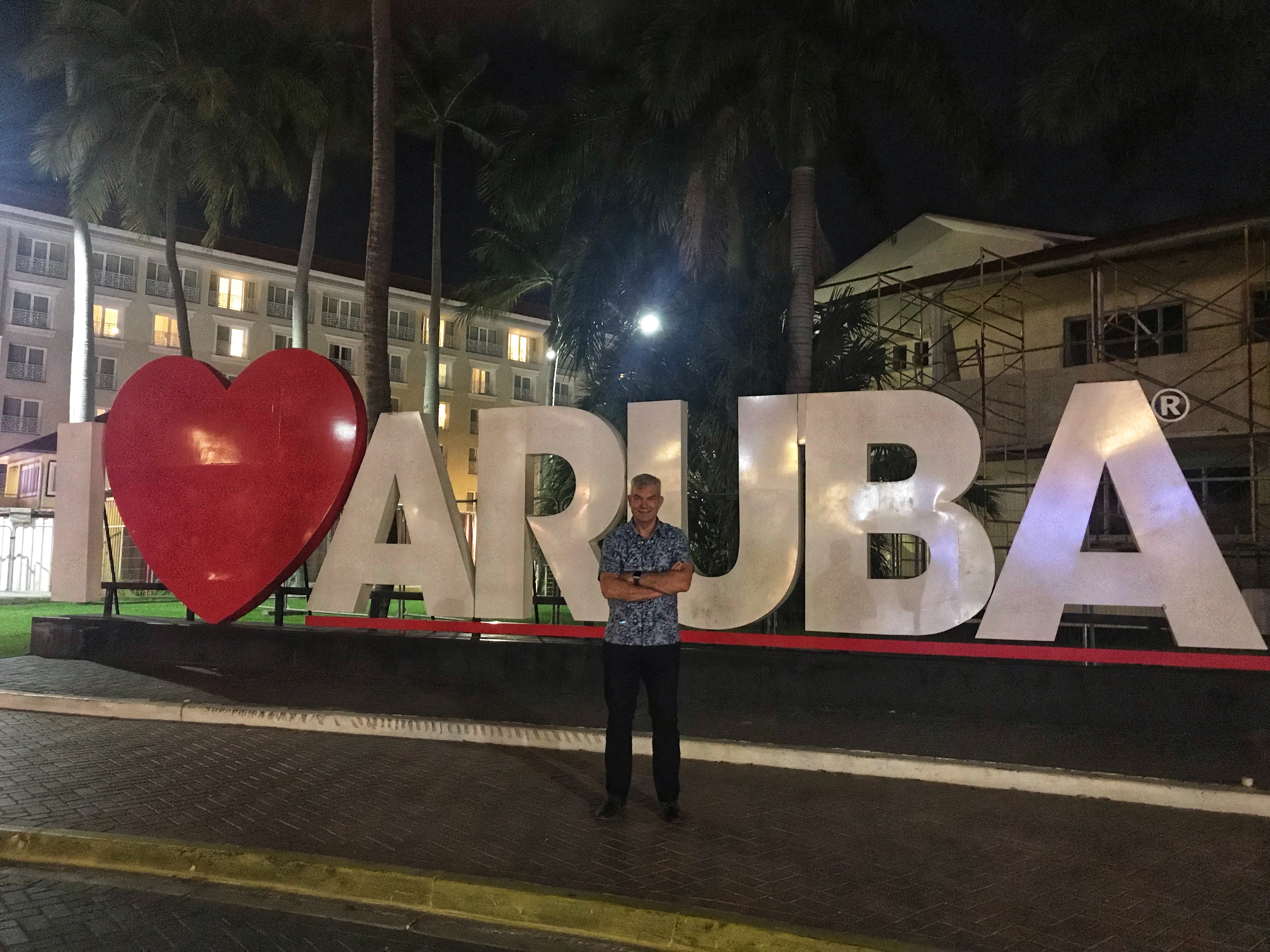
After dinner, we went ashore to have a look at Aruba- so. Any jewellery shops….and all closed. Found a bar, had a little dance – reggae. I feel the Bahamas coming on!
Day 16 23rd March
Travel Day
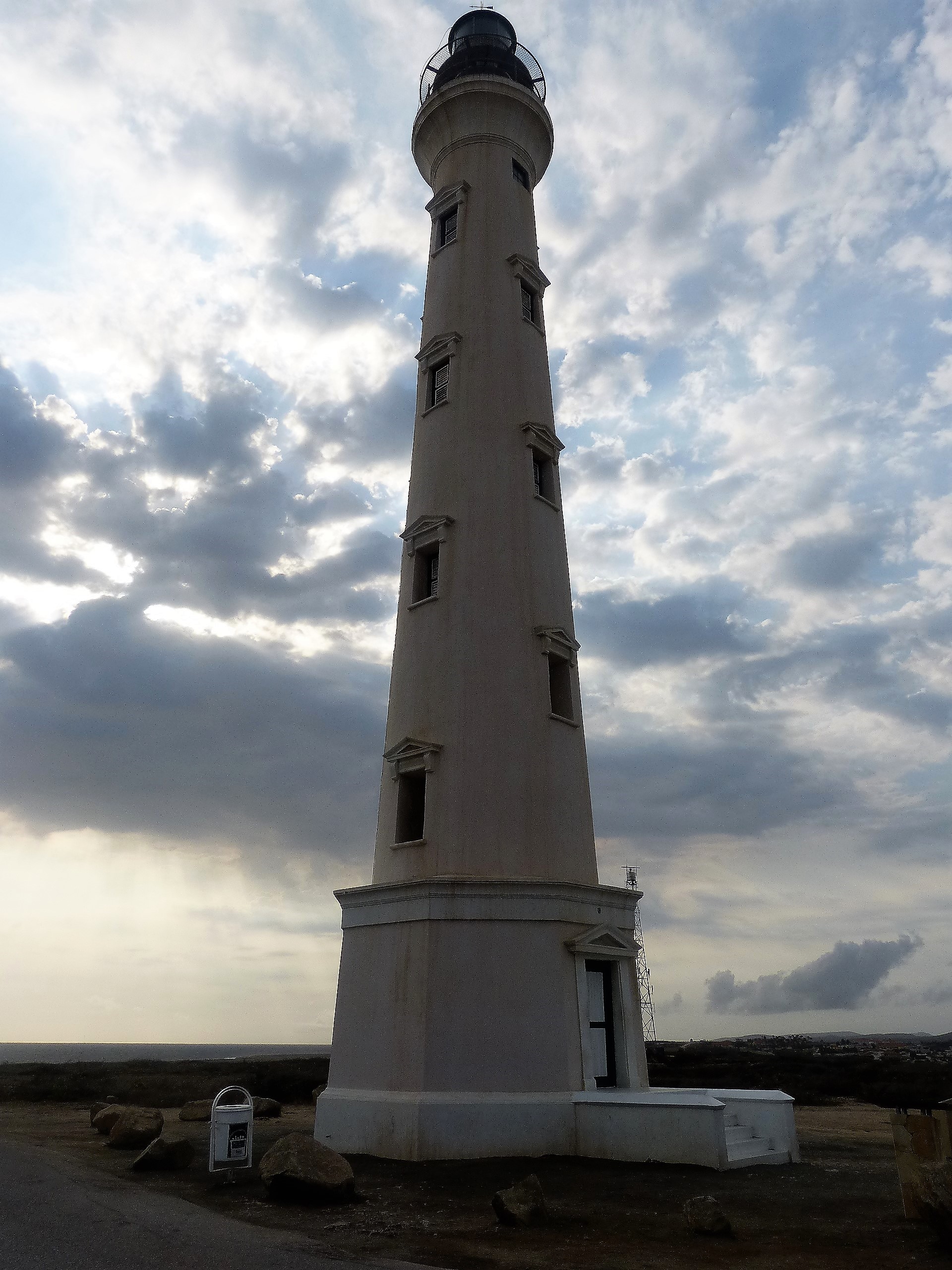
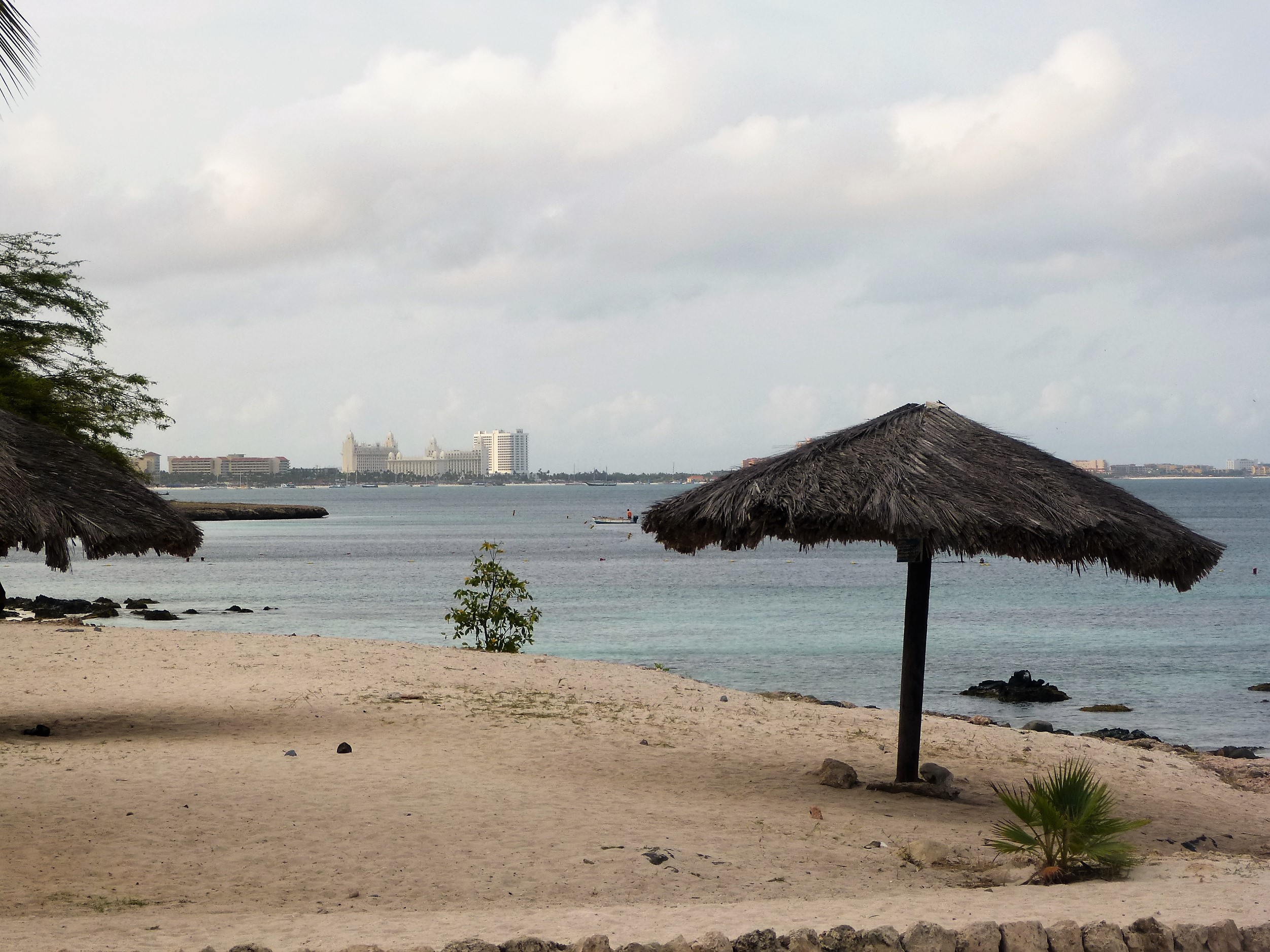
After disembarking at Aruba, we caught a taxi to go to the airport. Our driver gave us a little tour to the California Lighthouse which is an historic landmark. Also had a look at the beaches – very nice – but I still none as nice as ours! I may be a little biased of course!
Cuba – Havana
At Aruba airport we had a little wait to check in, flew Copa Airways to Panama City, and then a 30 minute turnaround for the next flight to Havana. Well that was an interesting flight! Everyone, except us, had huge carry on bags, and of course they didn’t fit in the overhead compartments! We were at least half an hour late leaving as there were a few standoffs between some of the passengers. We didn’t have a clue what they were actually saying as it was in very animated Spanish, but we certainly understood the context! The flight attendants took it in their stride rearranging lockers, and trying to keep the peace! Very entertaining to say the least.
Arrived in Cuba at 7pm. Here we were greeted by an airport staff member who escorted us to immigration, and through the priority queue. We then went to the VIP lounge for snacks and drinks while they collected our bags- felt a little bit important! Imagine how Charles and Camilla are going to be treated when they arrive tomorrow ( read they are coming in the newspaper!).
Our private car transfer took us to our accommodation – a very interesting 40 minute drive. Picture coloured rundown buildings, vintage cars, lots of people and music!
Our accommodation tonight is Santa Brigida- a boutique hotel run by nuns in the historical centre of town. We had to park 5 minutes walk away as we were we right in the centre of Havana and cars can’t go there. We had to wheel our bags across the cobblestones- a bit worried about my new case- heaven forbid if the wheels fell off so soon into its life! Our non English speaking driver rang the bell at the gate, then was going to take off- I did panic a bit. Luckily the non English speaking receptionist let us in and showed us to our room! Our room was large and comfortable, and right across the street from music bars! I can tell this is going to be a very interesting place to visit. So, no money, no one to ask questions of, it was bed for us! Looking forward to a hearty breakfast in the morning. A missed meal after all what we ate on the cruise won’t hurt us!

Day 17 24th March
Thank goodness for ear plugs! Needed them last night! The music, the late party goers singing all the way home, and then the street cleaners in the morning!
Breakfast from the nuns- small but substantial, although we didn’t get to be individually served as did the guest padre in residence!
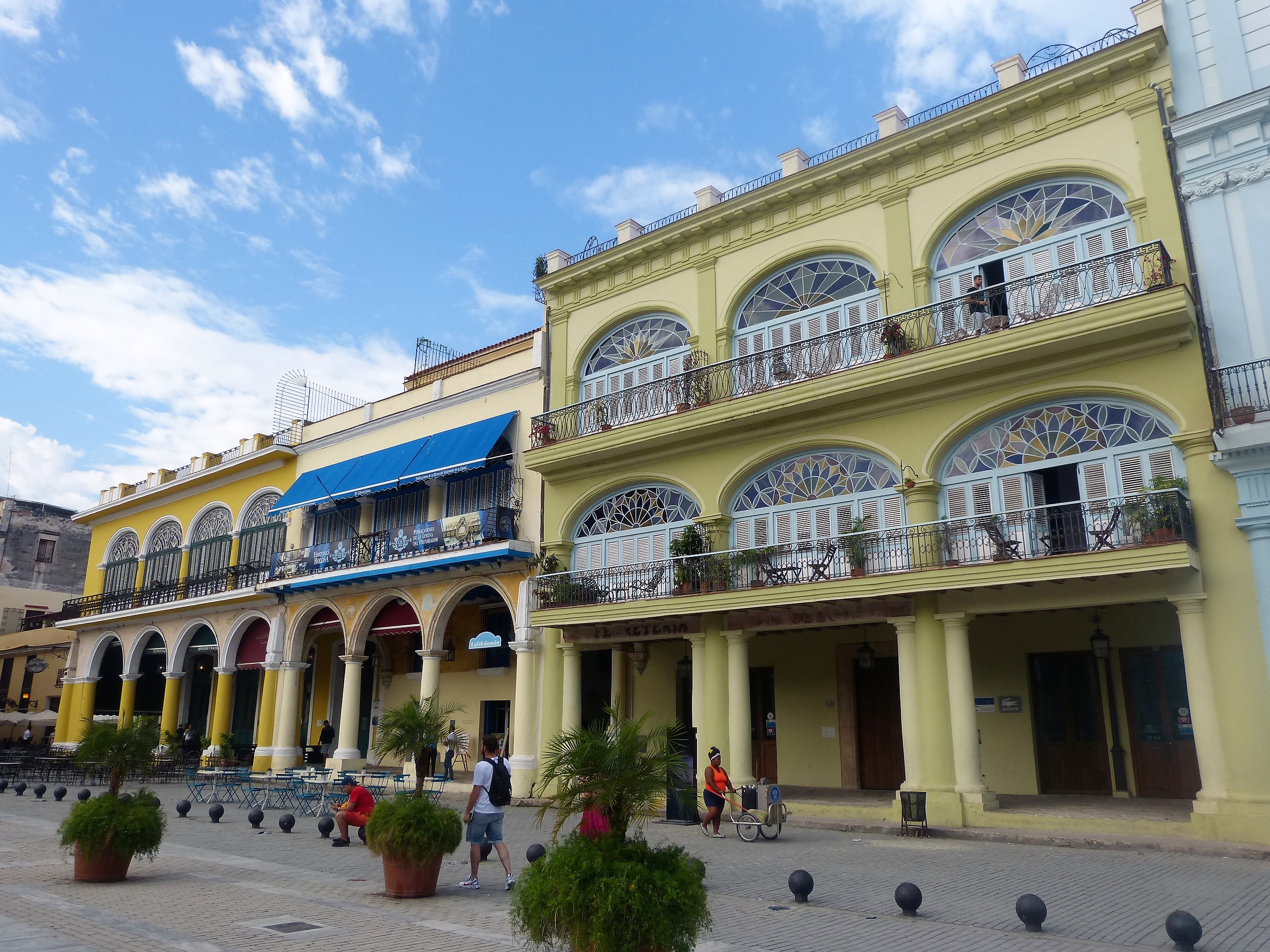
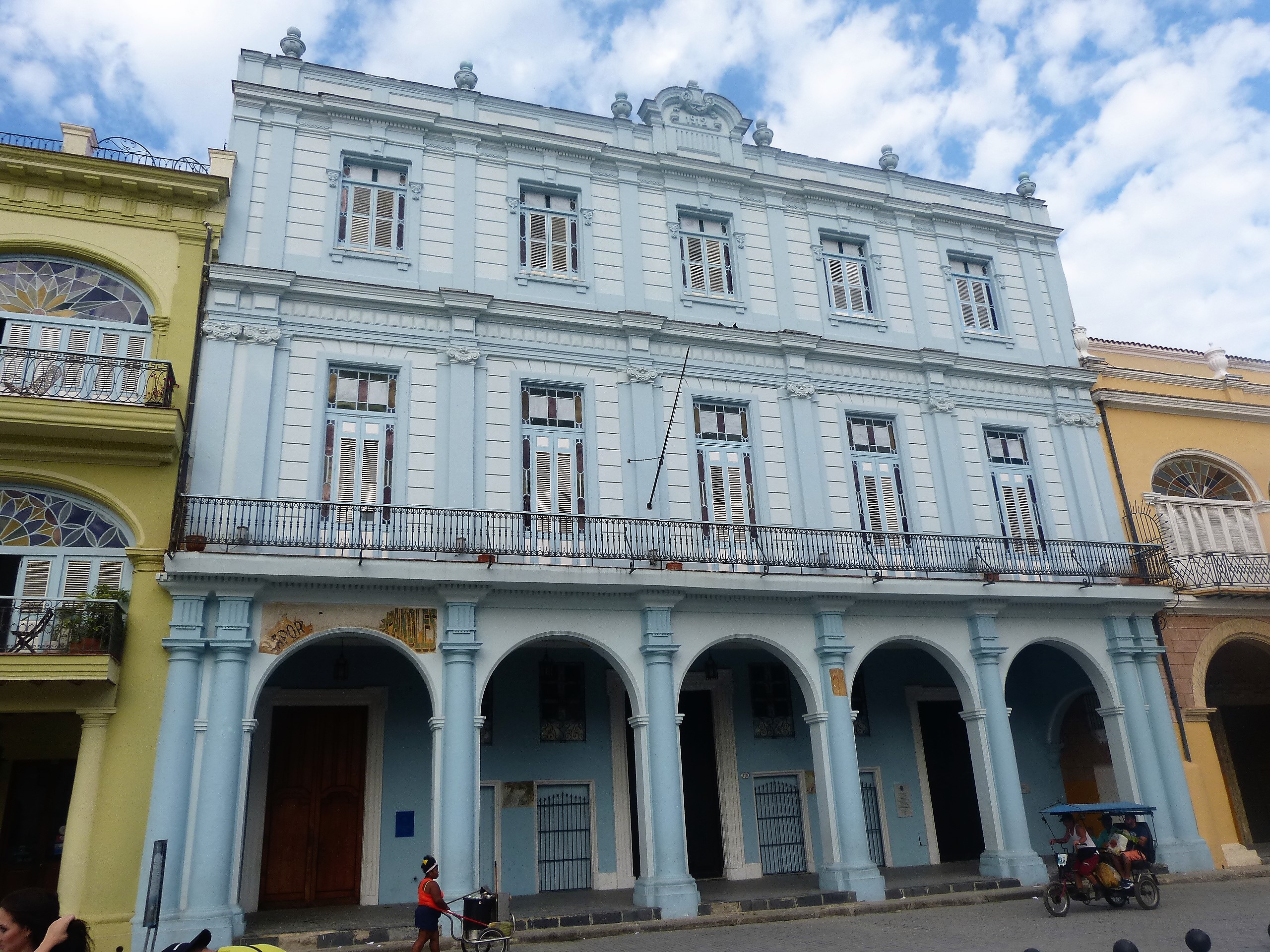
We then started on our walking tour of Old Havana with Ivan our guide. His English and history knowledge were amazing- didn’t take us long to realise Havana is one of the world’s most beautiful and charming cities, not to mention a photographer’s dream. We first went to Plaza Vieja, originally conceived in 1587. It has received a massive facelift from Unesco, and a beautiful marble fountain gleams in the centre- though barricaded off so the school children don’t swim in it! Ivan went to school here. One building was a palace, now an arts centre, also cafes and restaurants. The architecture is magnificent, plus they do leadlight extremely well.


Plaza de San Francisco – the plaza close to the port- a large cruise shop was in. Saw the Convento de San Francisco here, plus a very interesting are gallery. Numerous sculptures dotted everywhere- I had my photo taken with Chopin!
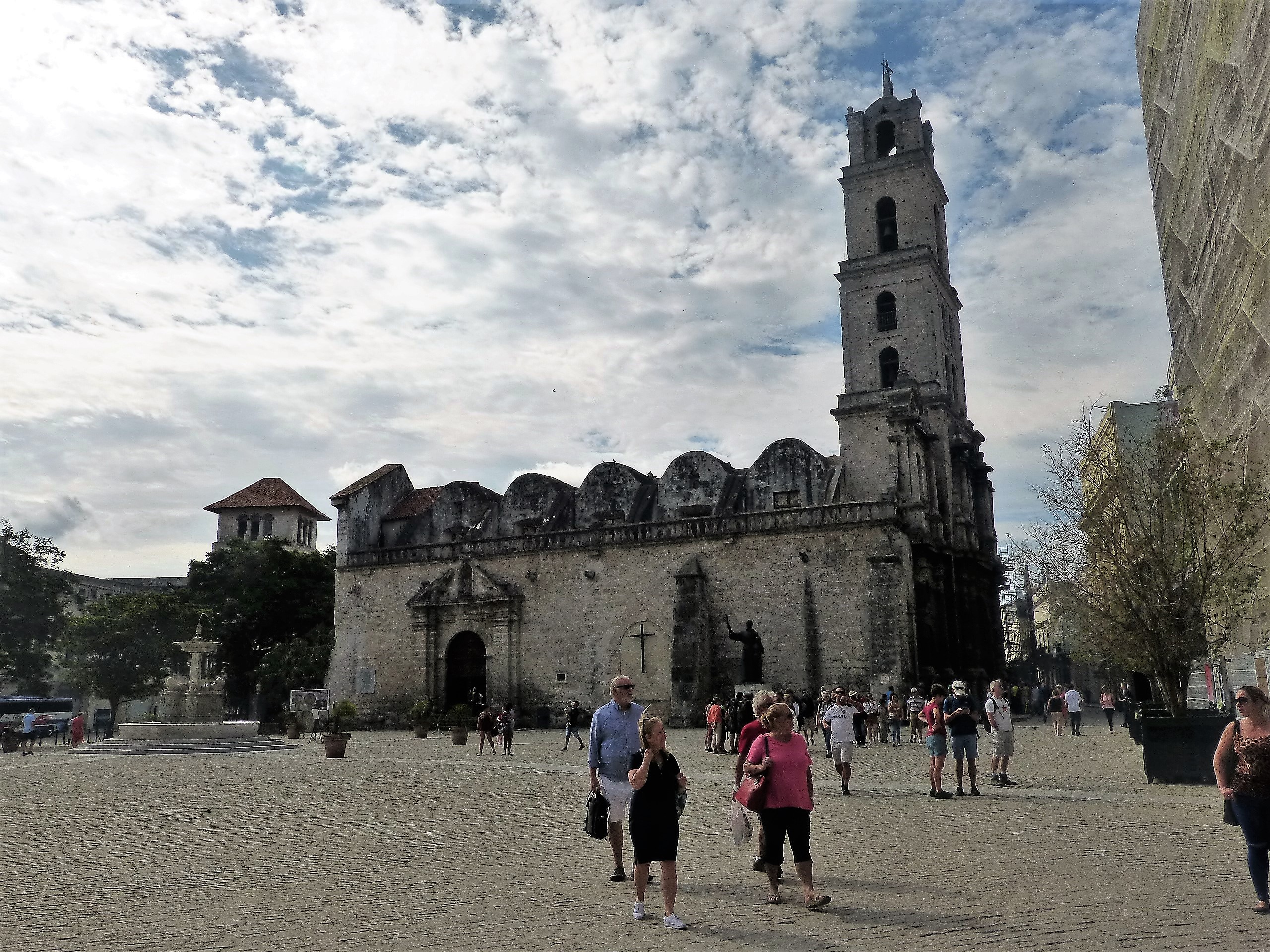
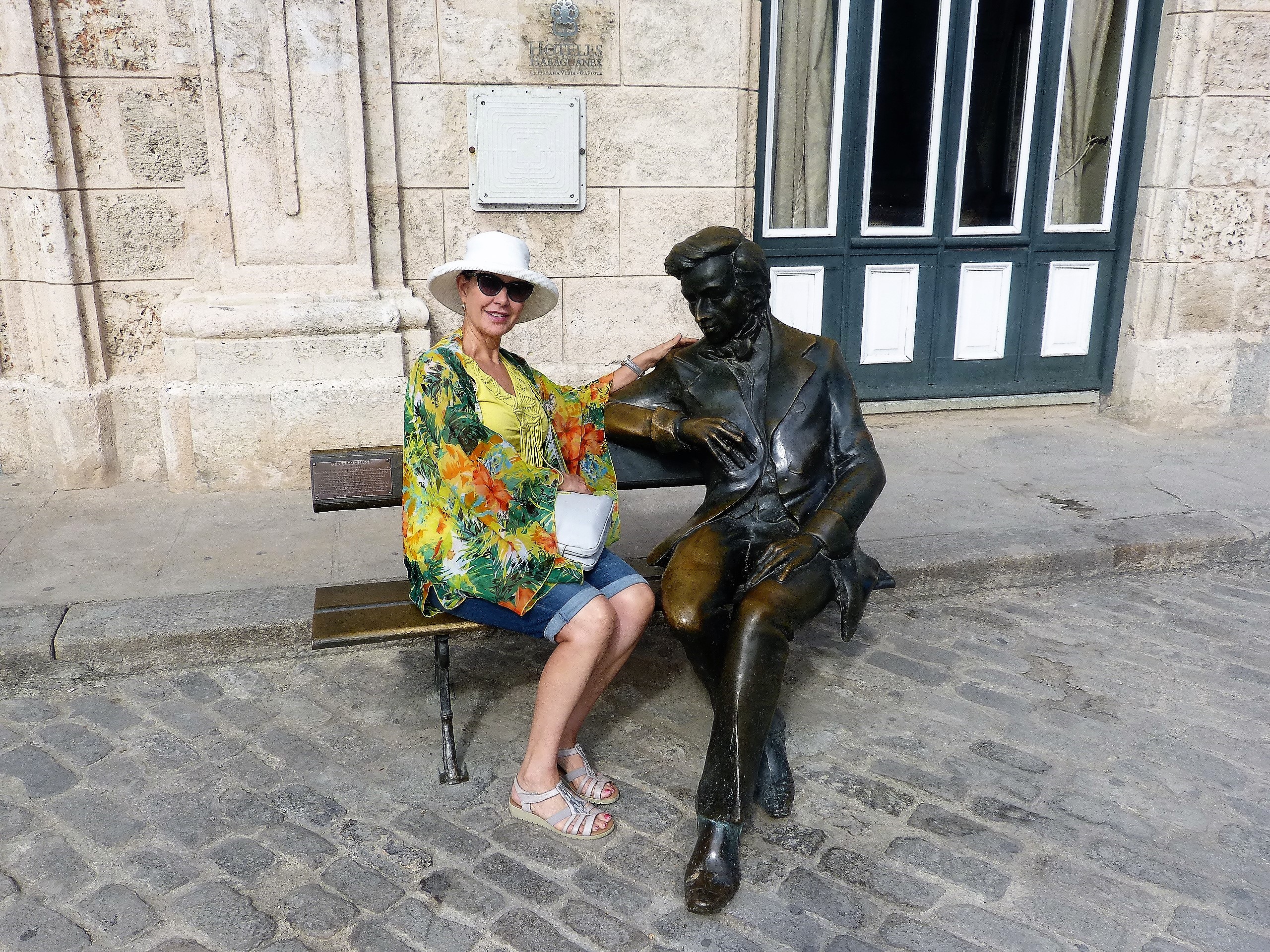
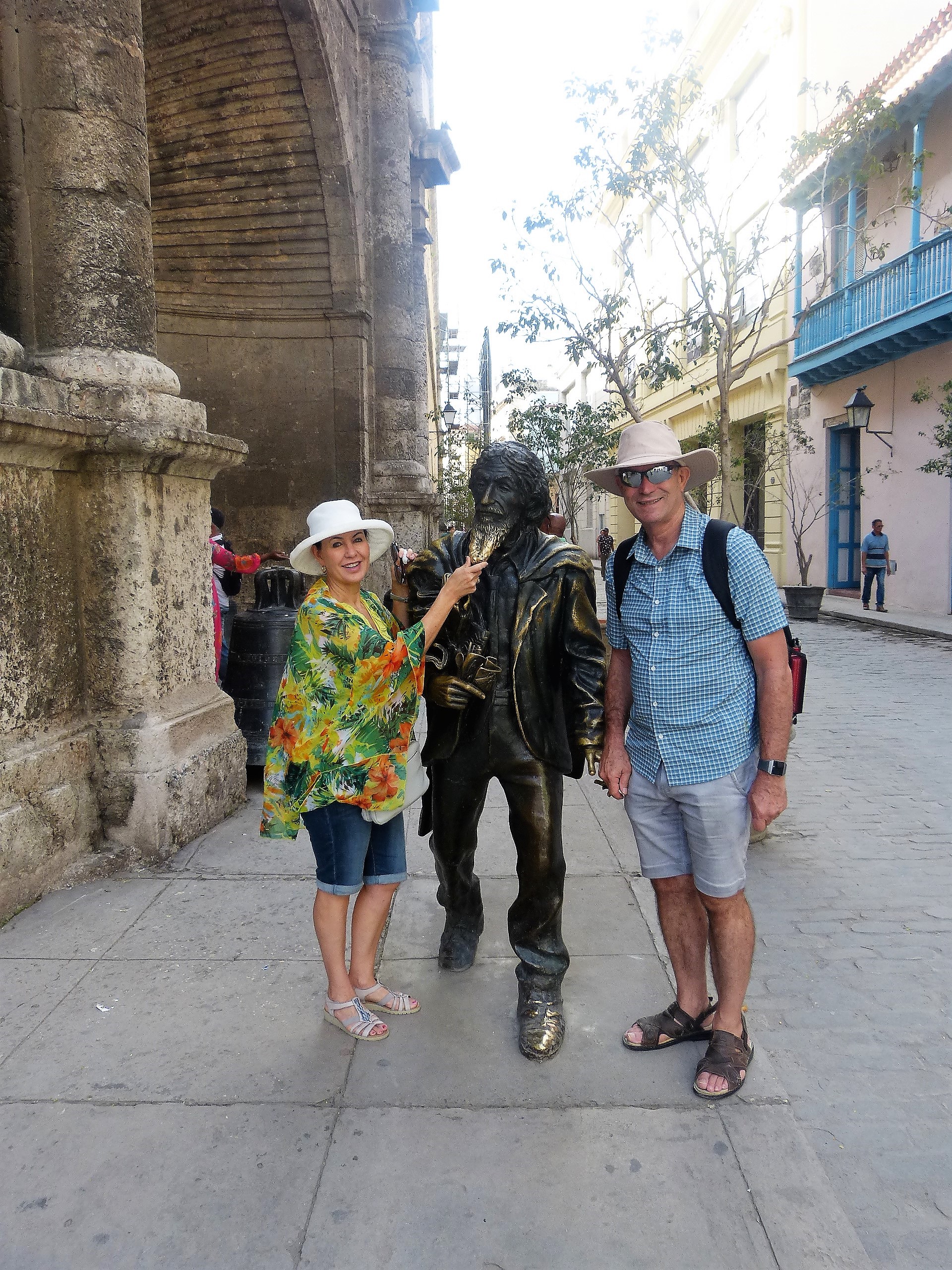
Tracey and Frank with a statue of a local travel guide
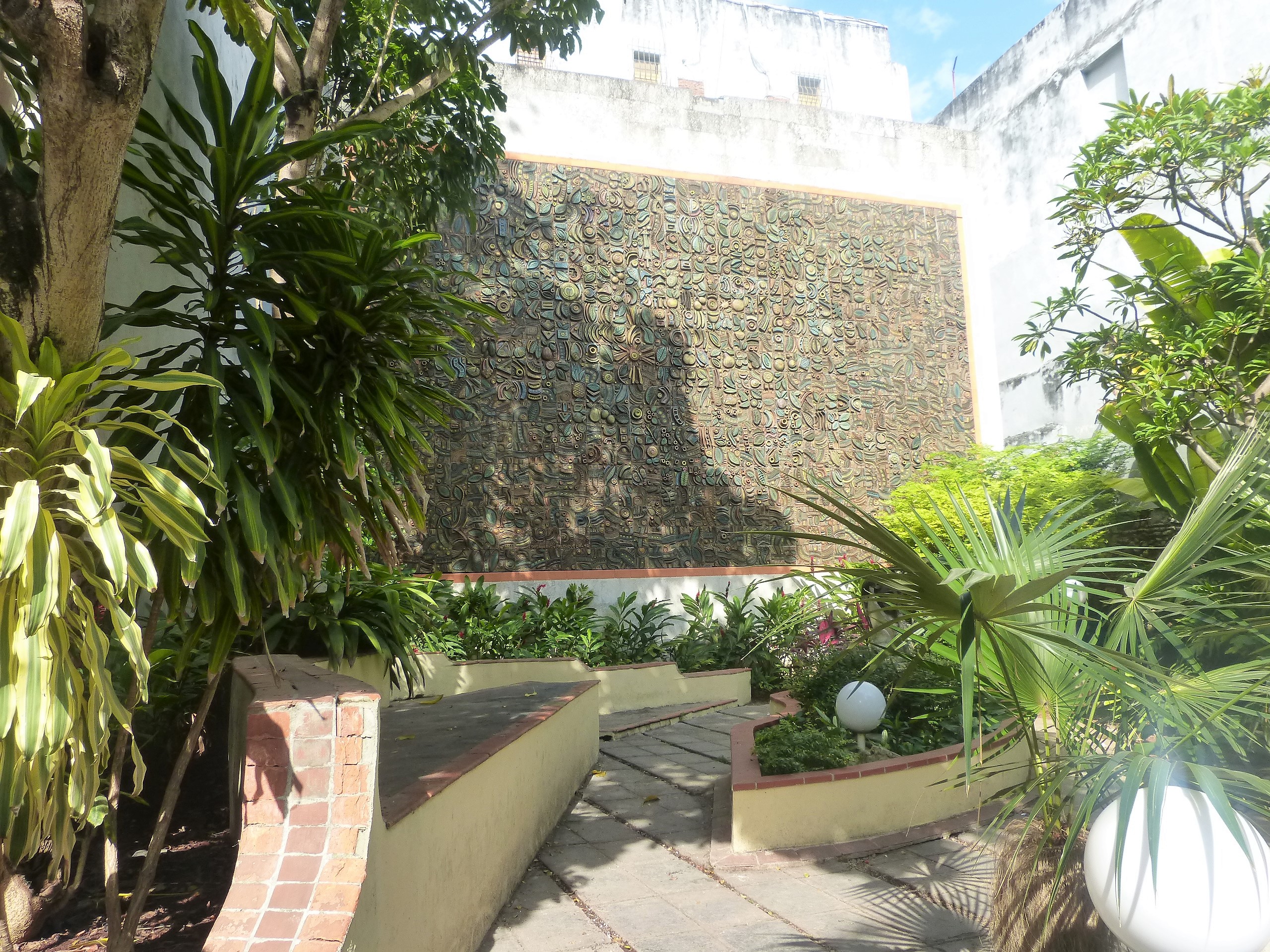
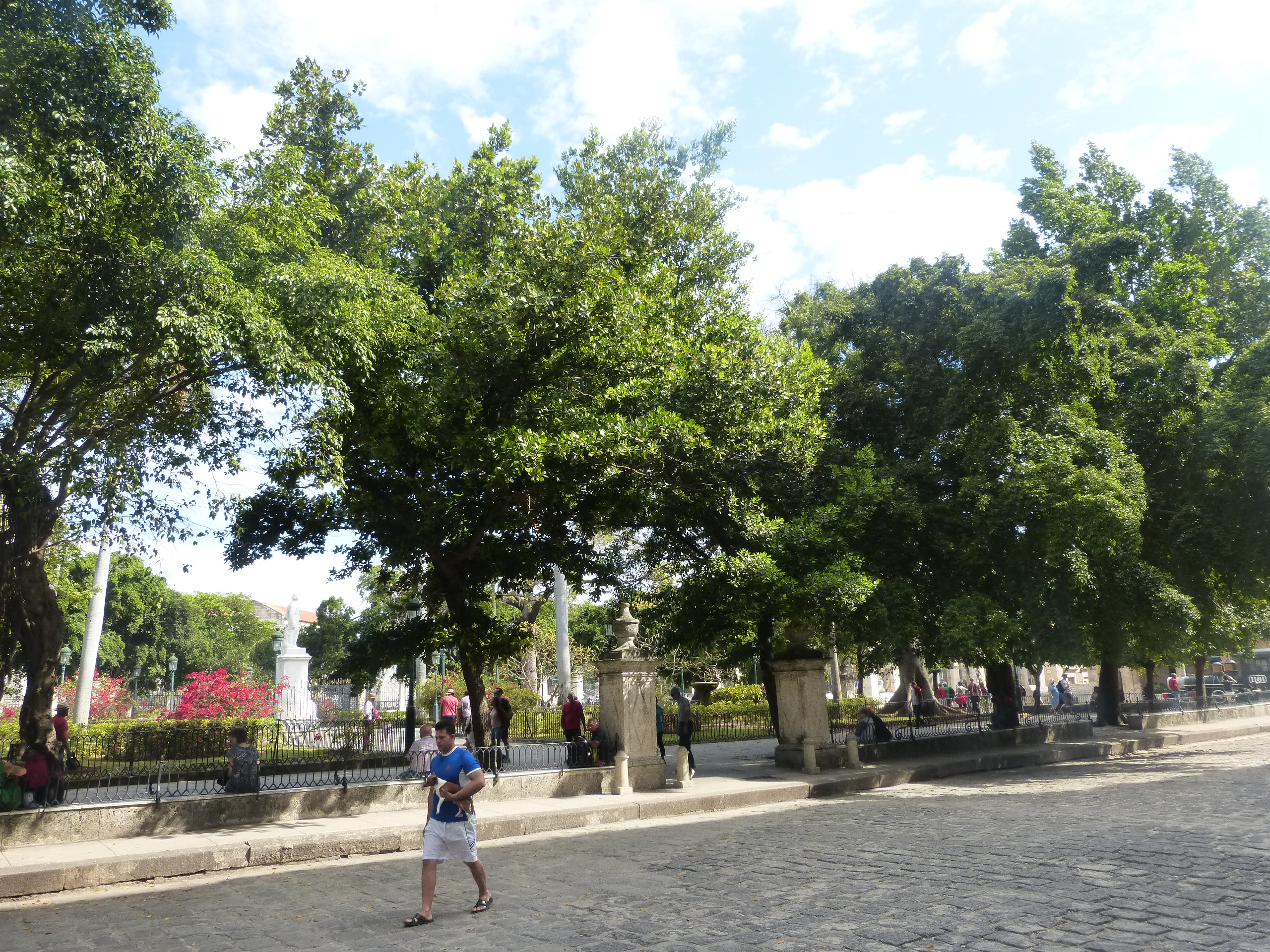
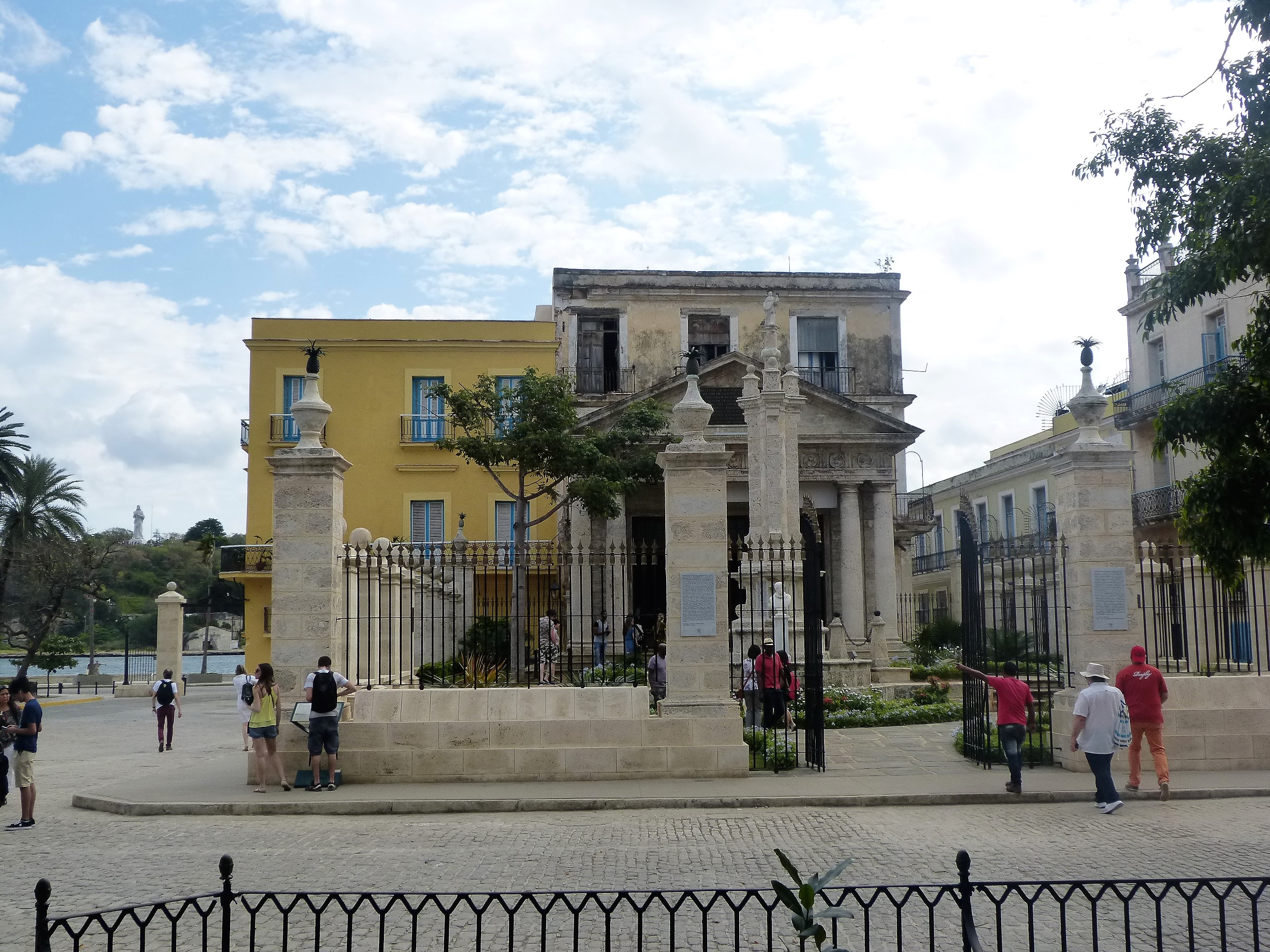
Plaza de Armas dates back to 1519- beautiful shady trees here with marble benches underneath. Opposite is El Template, a small neoclassical temple which was where the first Catholic mass was celebrated.
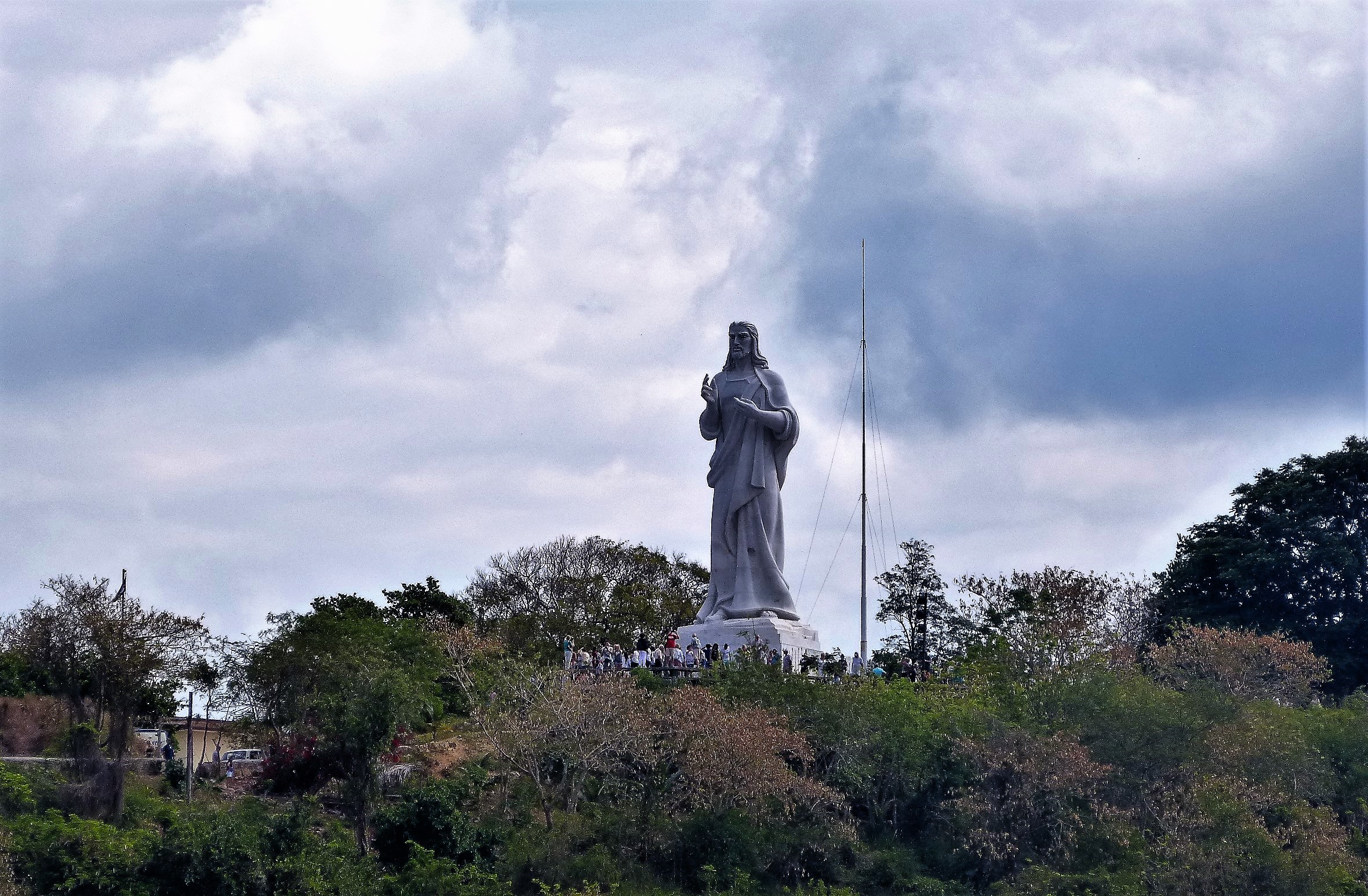
Plaza de la Catedral- the Baroque style cathedral was built in late 18th century by Jesuits. The religion in Cuba is catholic, however because the country is communist, religion is not encouraged. Also Afro- Cuban Santeria religion( saint worship) is practised – they dress in all white- saw quite a few of them as it was Sunday. This square was very busy – many outdoor cafes where patrons are sipping cafe or mojitos, and smoking cigars. The ladies in colourful dresses were busy posing for photos.
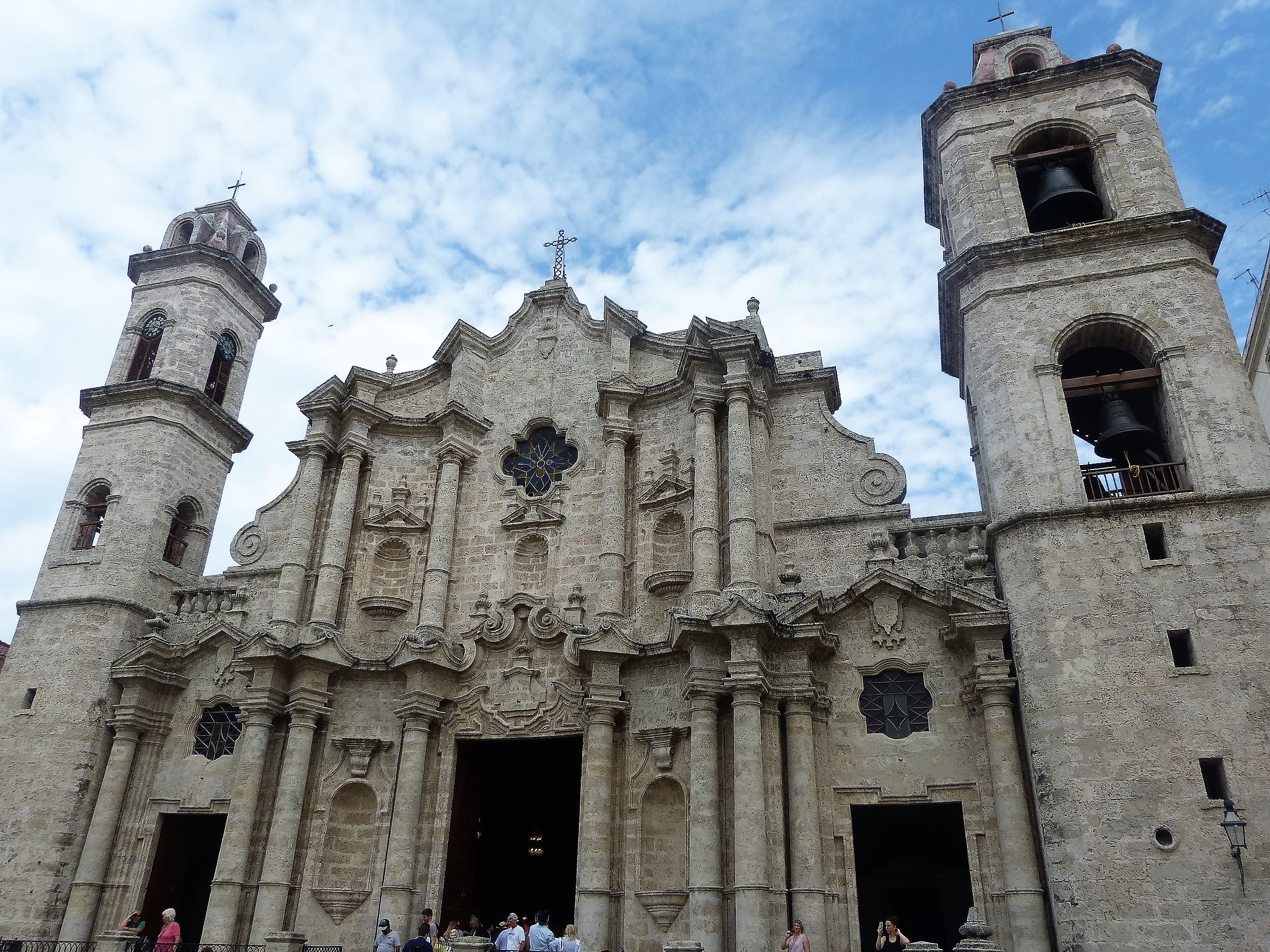

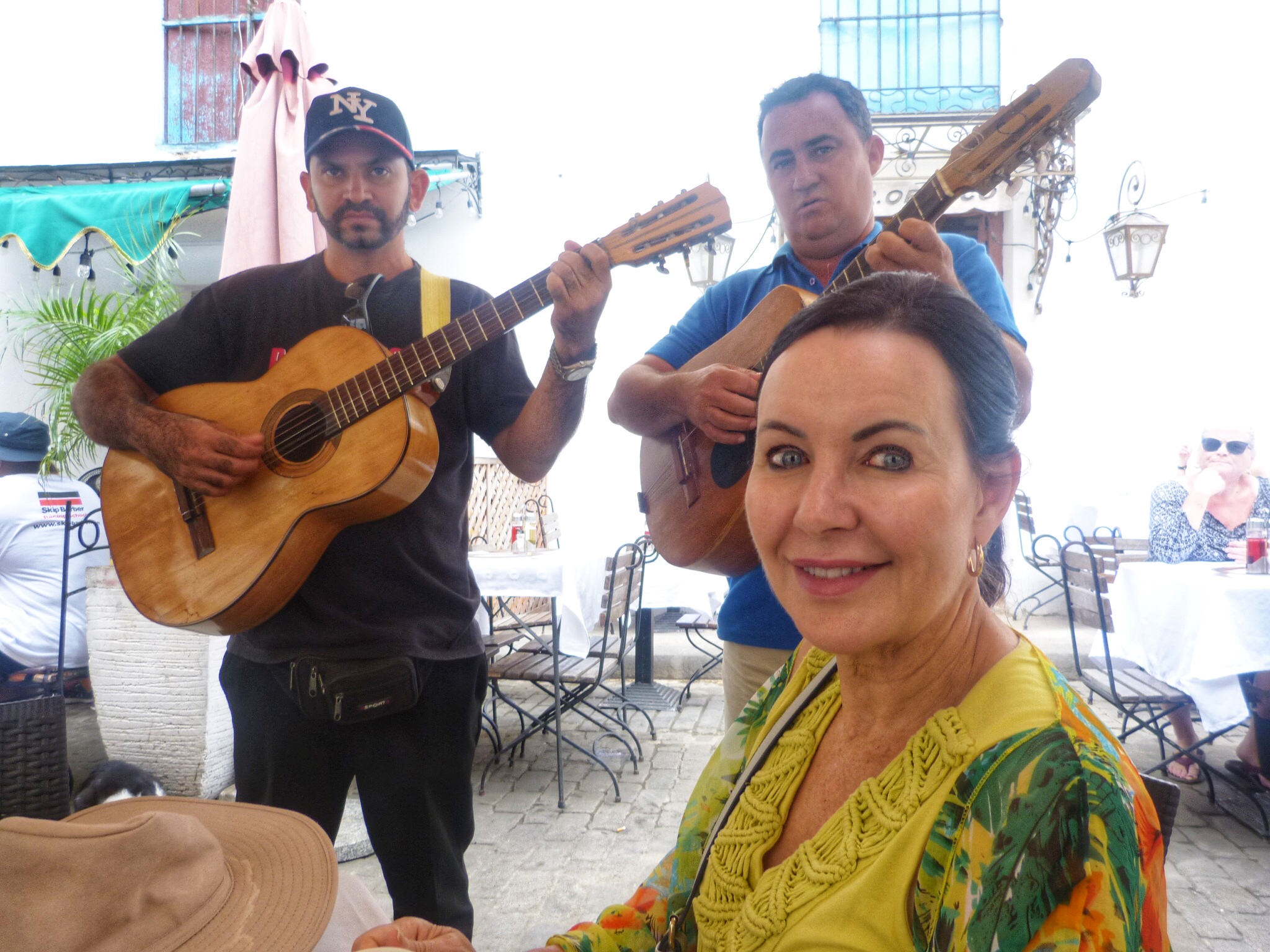
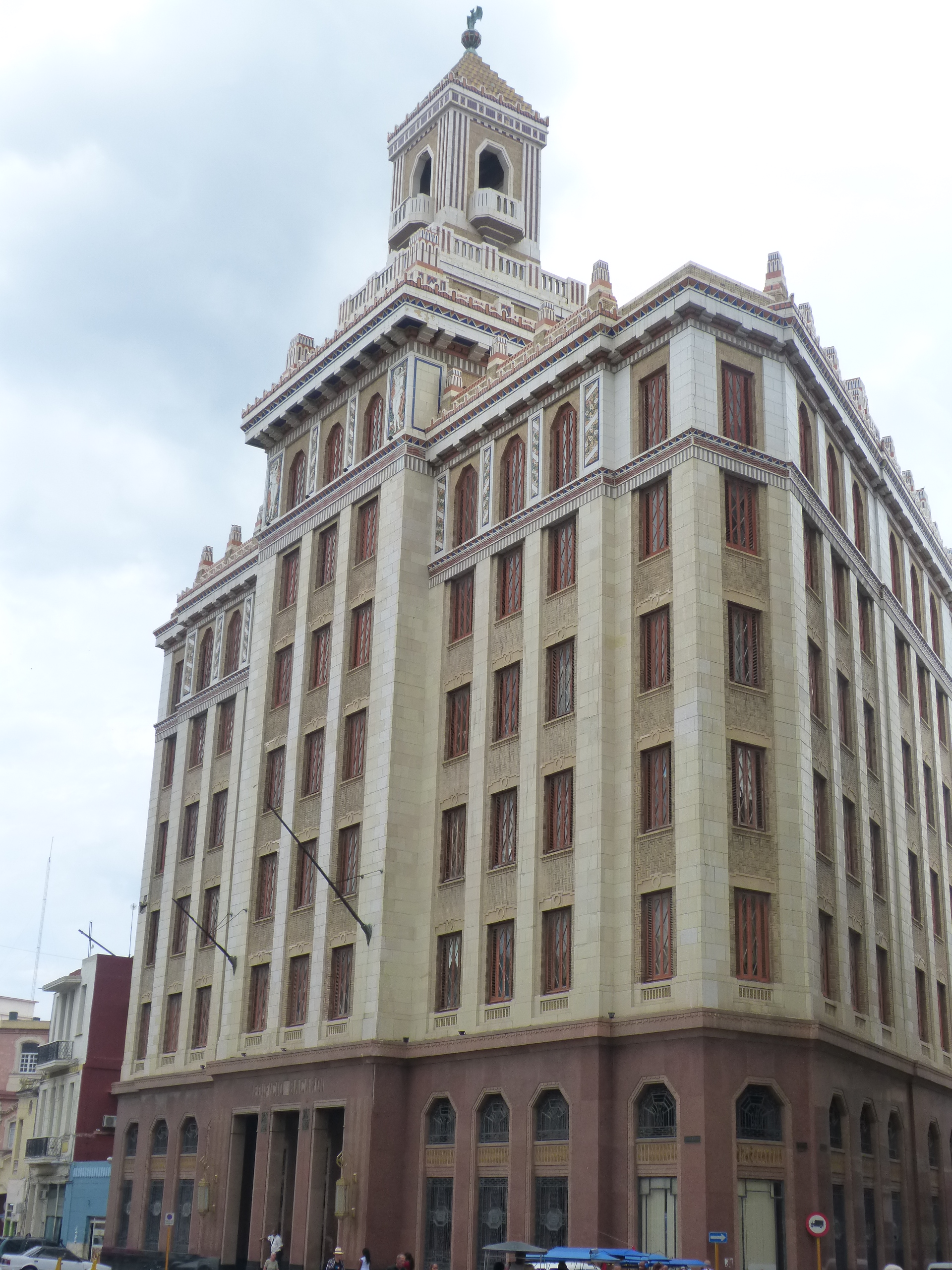
Old Havana has many architectural wonders, many are dilapidated and rundown, some are propped up by wooden pillars, many are waiting for their turn to be renovated-however there is no doubt about the grandeur of the past. Marble, tiles, chandeliers, leadlight, grand staircases are all common place.
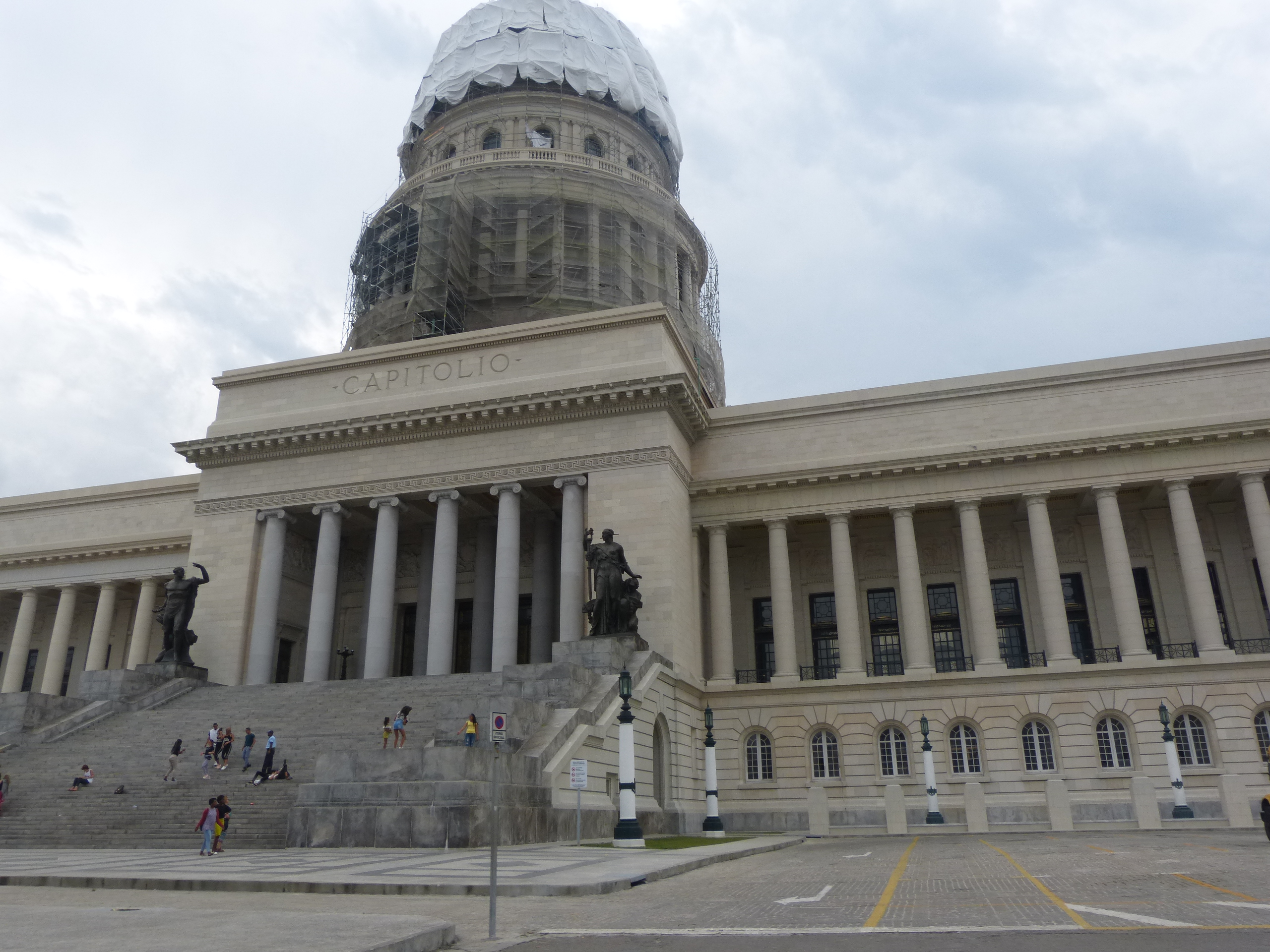
Walked the length of Calle Obispo – Old Havana’s most important thoroughfare- to emerge from the historical centre, to even more grand buildings- the Gran Teatro, Capitolia- replica of the US Capitol in Washington DC, the Prado and numerous other grand buildings, too many to mention.
Ivan took us to a local restaurant used by local Cubans where the food was said to be very good. He knew what he was talking about- we had lobster with salad for the equivalent of our $10, beer $1.50, mojitos $3!
Private salsa lesson next – 2 hours, just the two of us with two teachers. Here we got shamelessly into salsa. They rhythm of salsa pervades the streets of Old Havana. I think Frank has the hang of it at long last! 1,2,3..5,6,7… I went to sleep counting numbers!!!
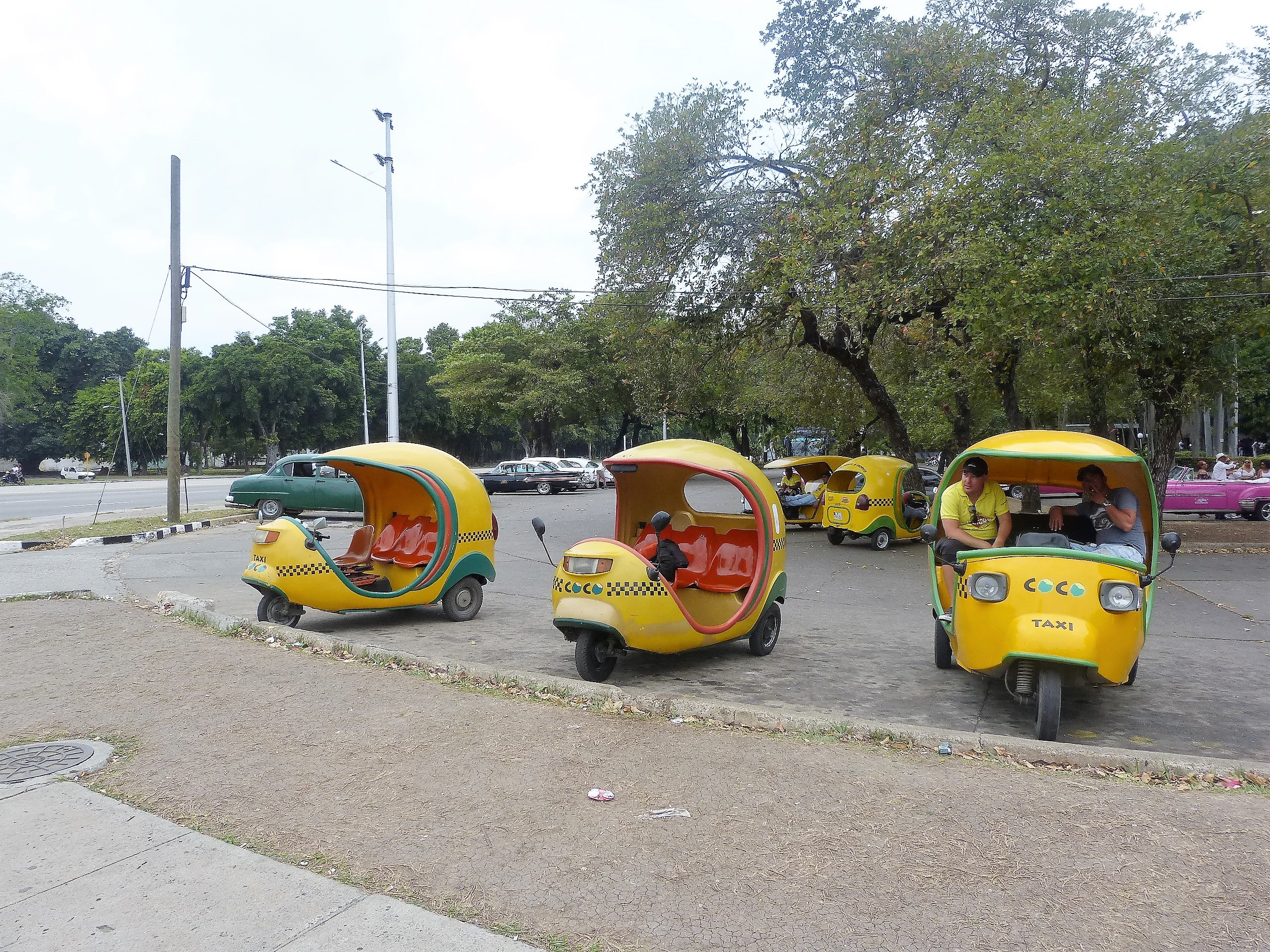
From here we walked to one of the streets which is like a living museum of chrome finned wondercars imported during Detroit’s heyday. We paid $30 for an hour’s drive in an orange 1952 Chevette convertible – so much fun! Brightly coloured cars everywhere, as well as the coconut taxis, bici taxis ( trishaws) We enjoyed the ride along the waterfront, plus a tour of the new Havana (which is still old), and also Revolution Square.
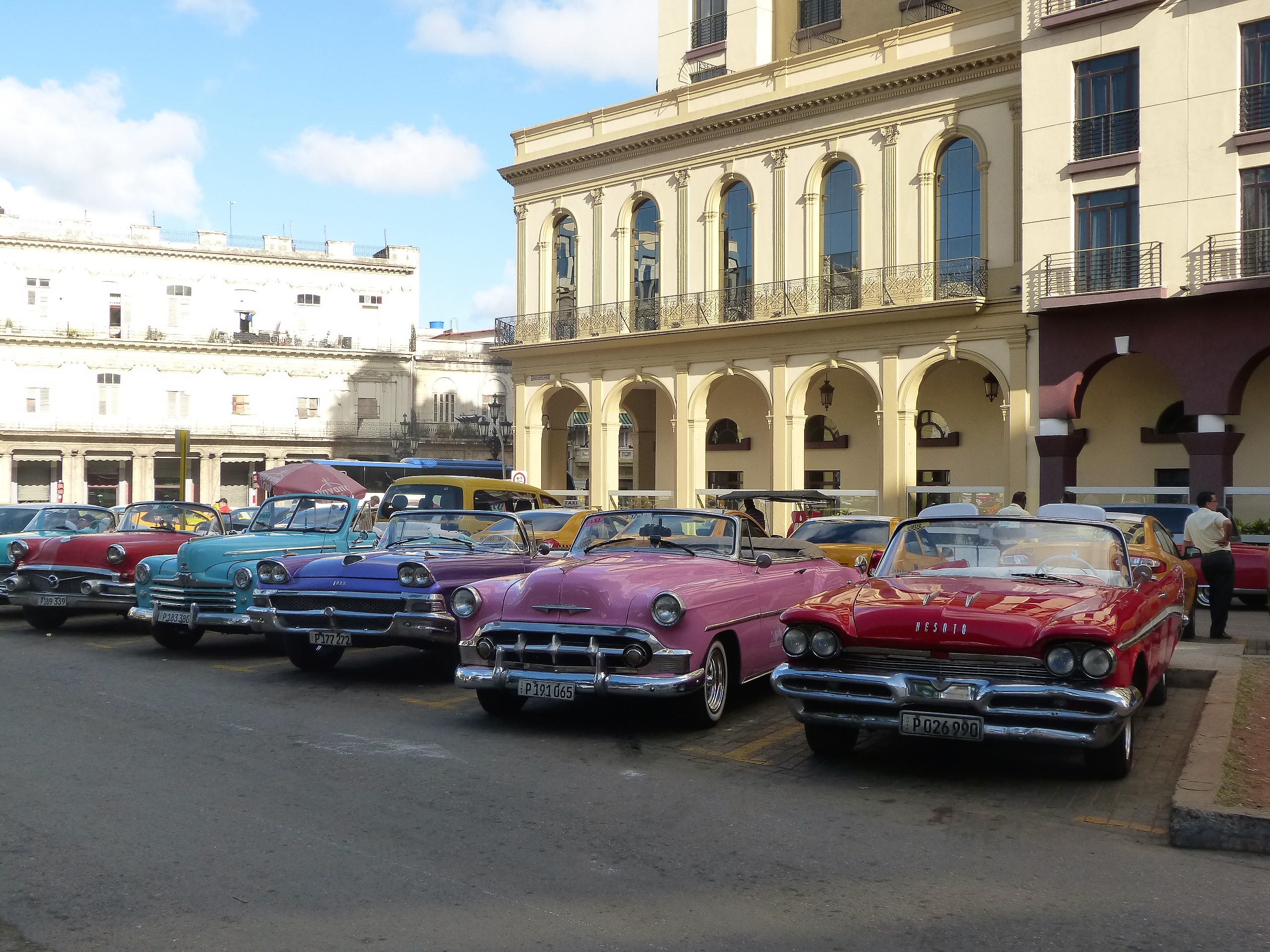

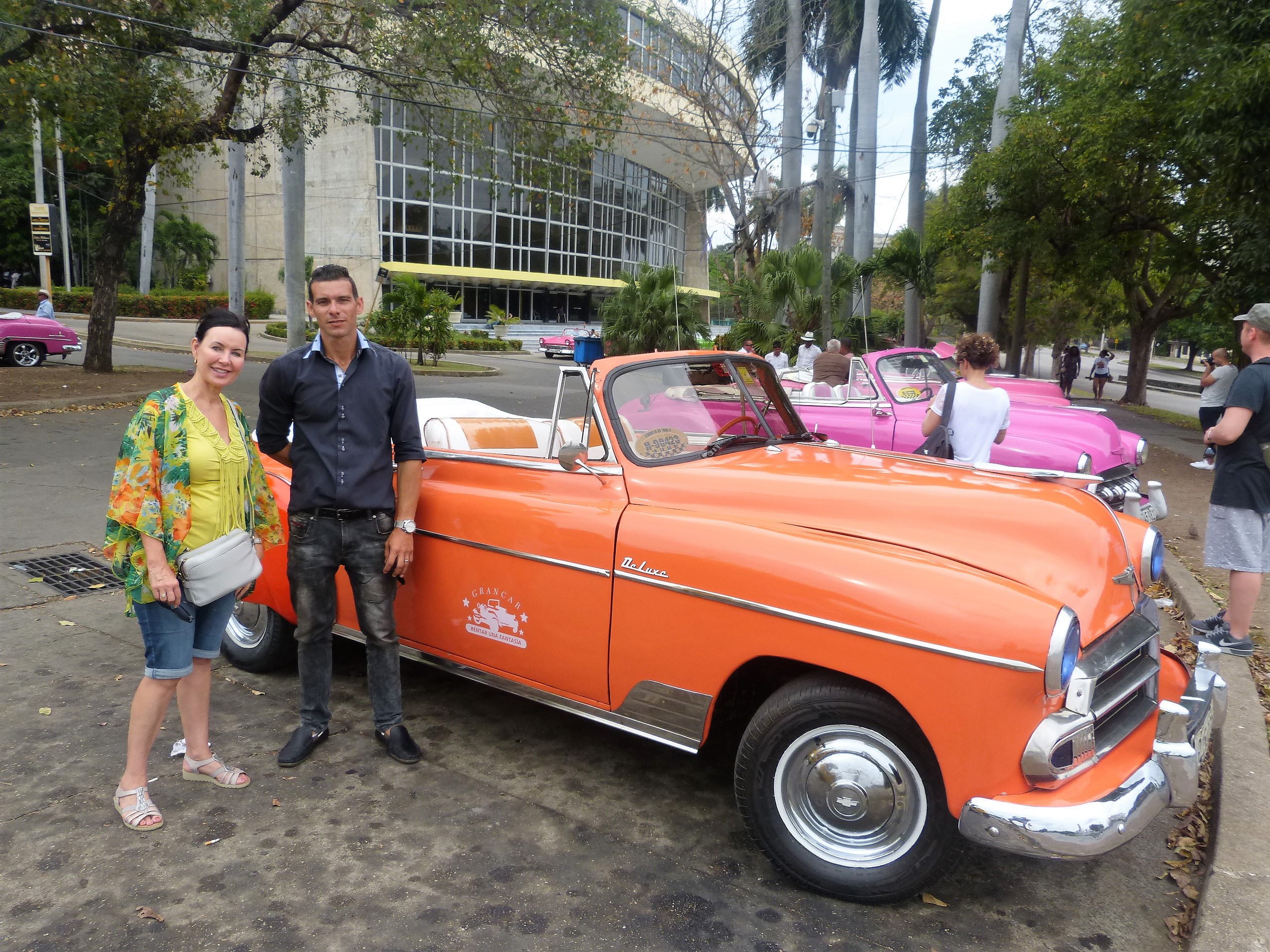


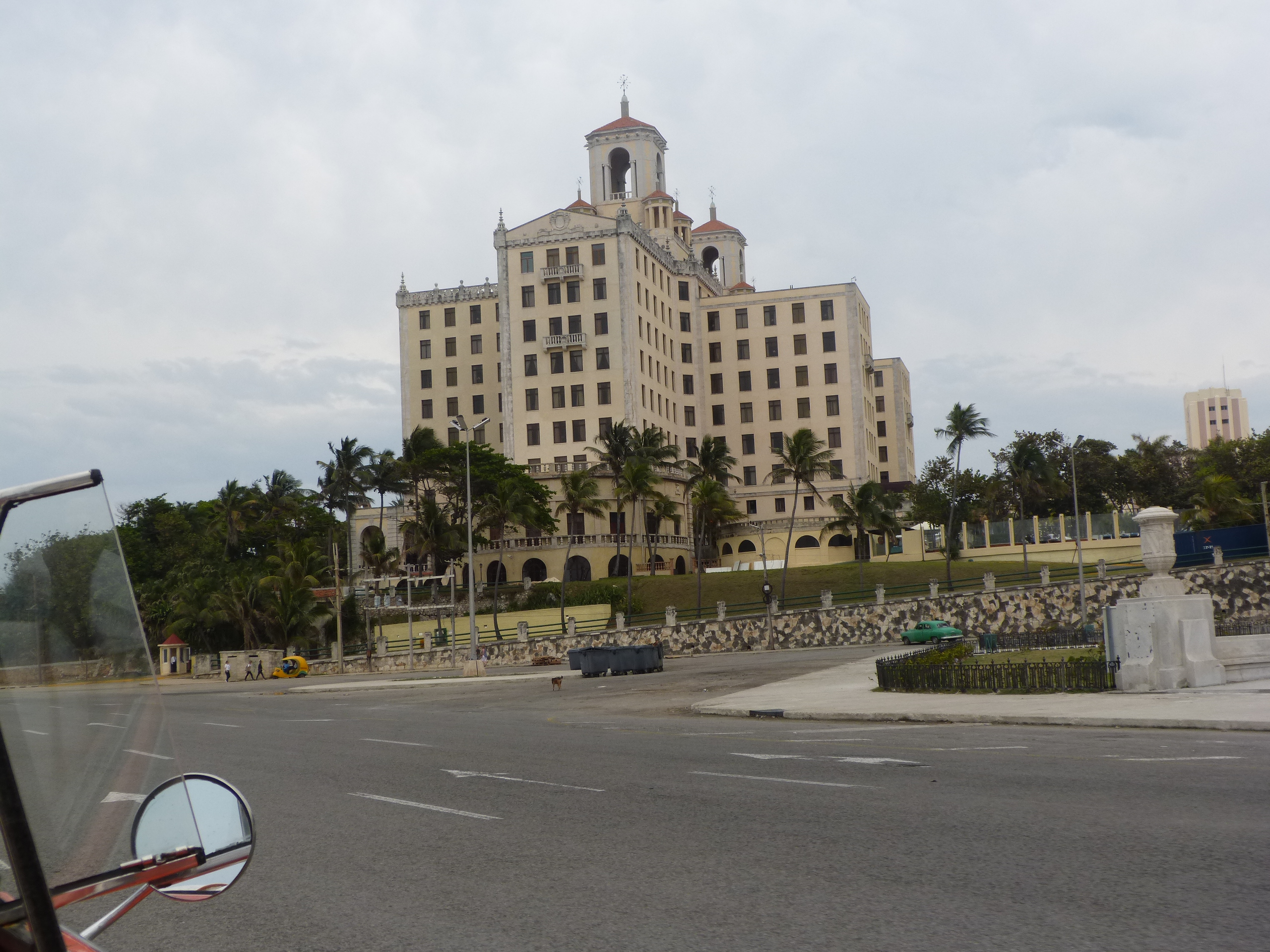

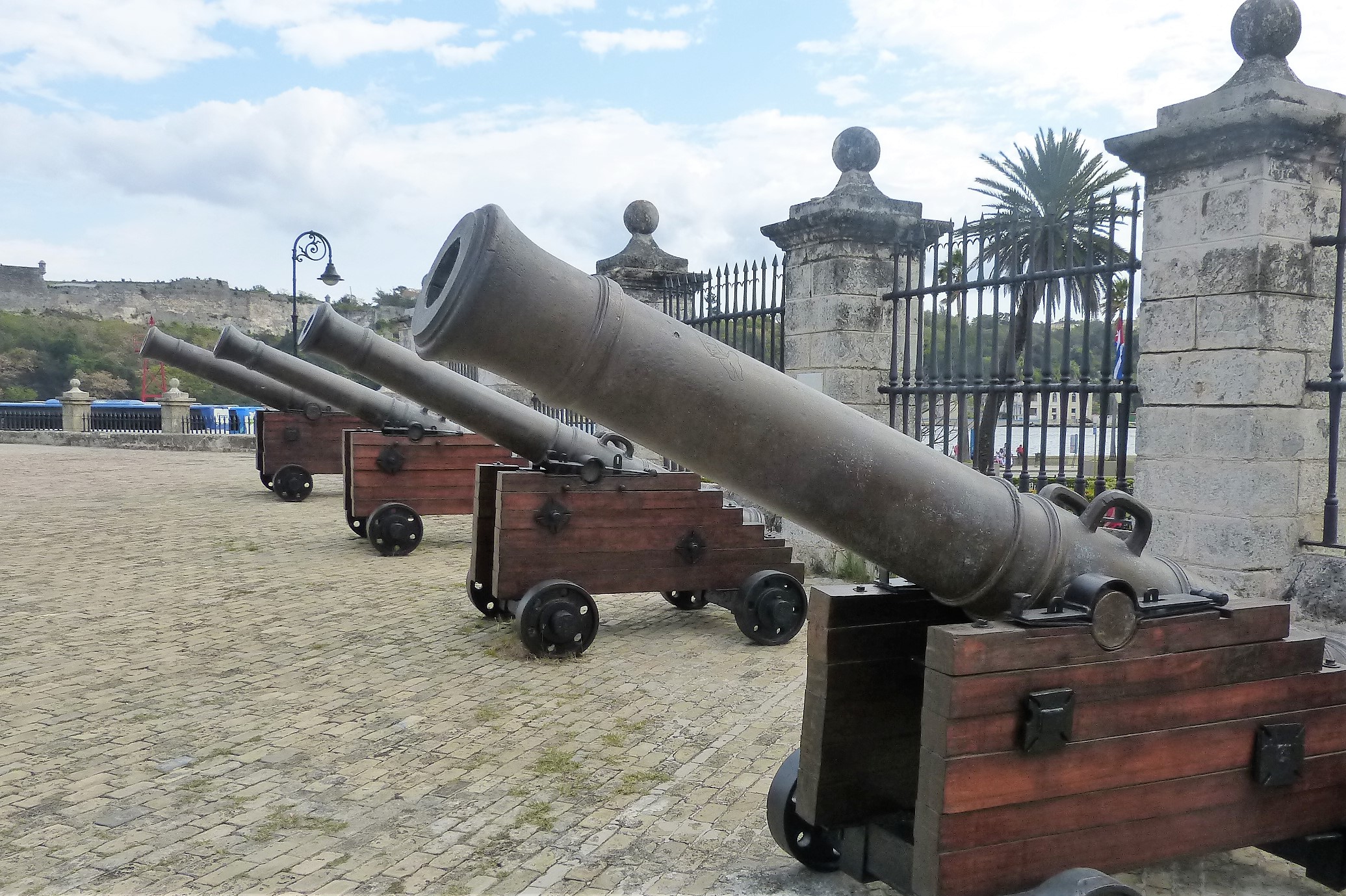
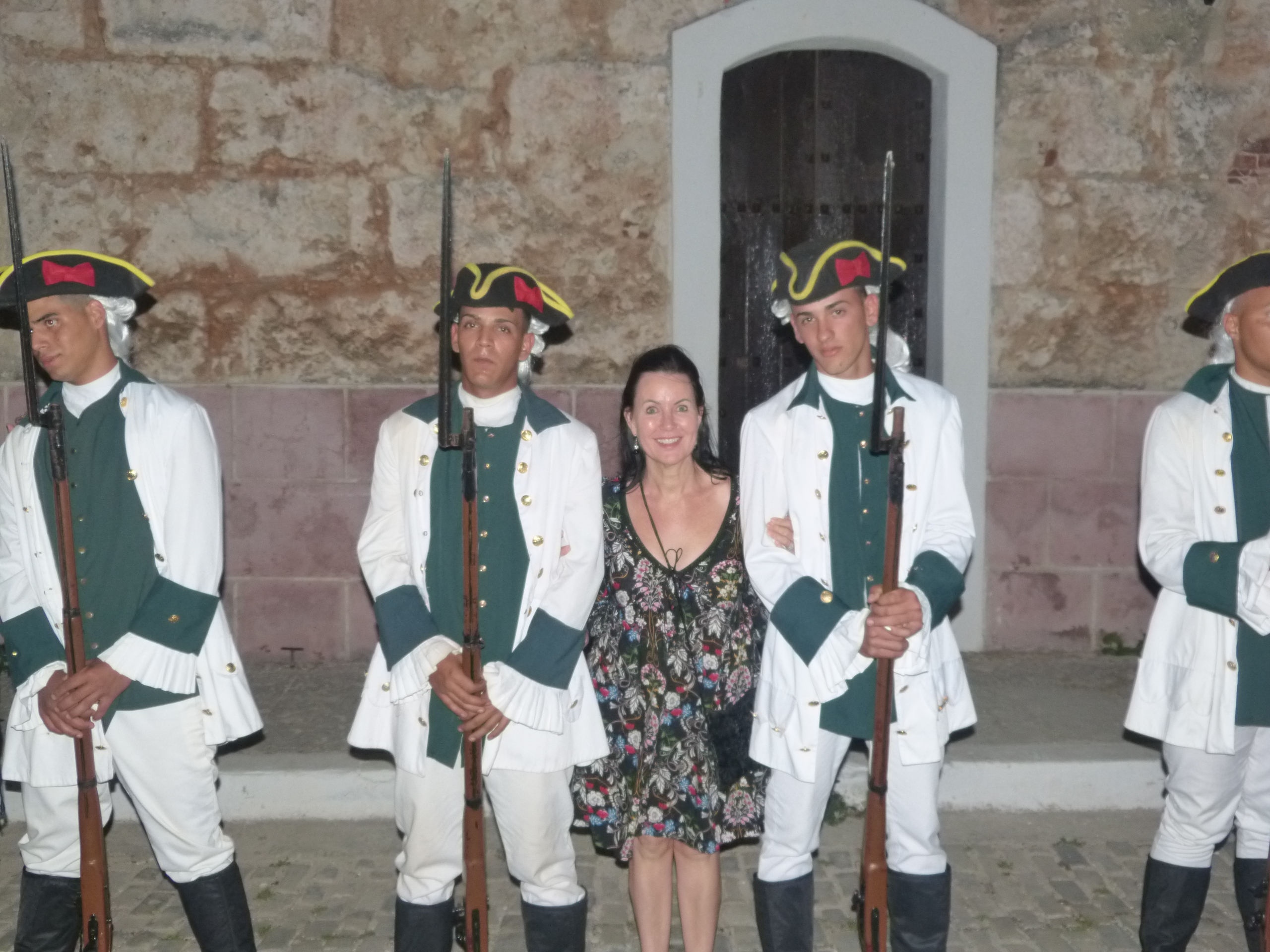
Picked up at 7.30pm by Ivan and Pedro in a pink 1947 Chrevolet for an evening drive along the water front and city. We then went to La Cabana Fortress to witness one of Havana’s traditions – Cannon Shot ceremony- this happens every evening st 9 pm and re- enacts the firing of the cannon that marked the closing of the city gates. Then an old Russian taxi, Moshvich, to take us to dinner in Old Havana- went to an old pharmacy now converted to a restaurant. The shredded beef was delicious, though the Cubans don’t like much spice. More mojitos of course!


Cuba – Cienfuegos
Day 18 25th March
Difficult to arrange an early breakfast with the nuns! So no time for coffee! Checked out, leaving our big cases behind, as coming back here for one night. Picked up at a nearby hotel where buses can get to. Three hour bus trip to Cienfuegos- one comfort stop on way, but no milk for coffee- this is Cuba! Passed past fertile farming land- sugarcane, bananas and pineapples.
Cienfuegos described as Pearl of the South- now has Unesco stays. This port city is the only French colonisation in Cuba, established in 1819. The French influence can be seen in the architecture , although there are several styles including neoclassical and Art Nouveau.
After lunch, and a much welcomed coffee with our new guide Luharki, we walked to Parque Jose Marti,a grand square, even has its own Arc de Triomphe. Saw Catedral de la Purisima Conception, City Hall and Teatro Tomas Terry, all magnificent buildings. Went to roof of Union Hotel for spectacular view over Cienfuegos and the bay. Had an interesting walk through the shopping mall going into local grocery shops- they have very limited supplies!!!! Also went to ration store to see what can be bought with the ration cards – if you like rice, beans, oil, salt, powdered milk, you’re ok! Very limited choices for locals.
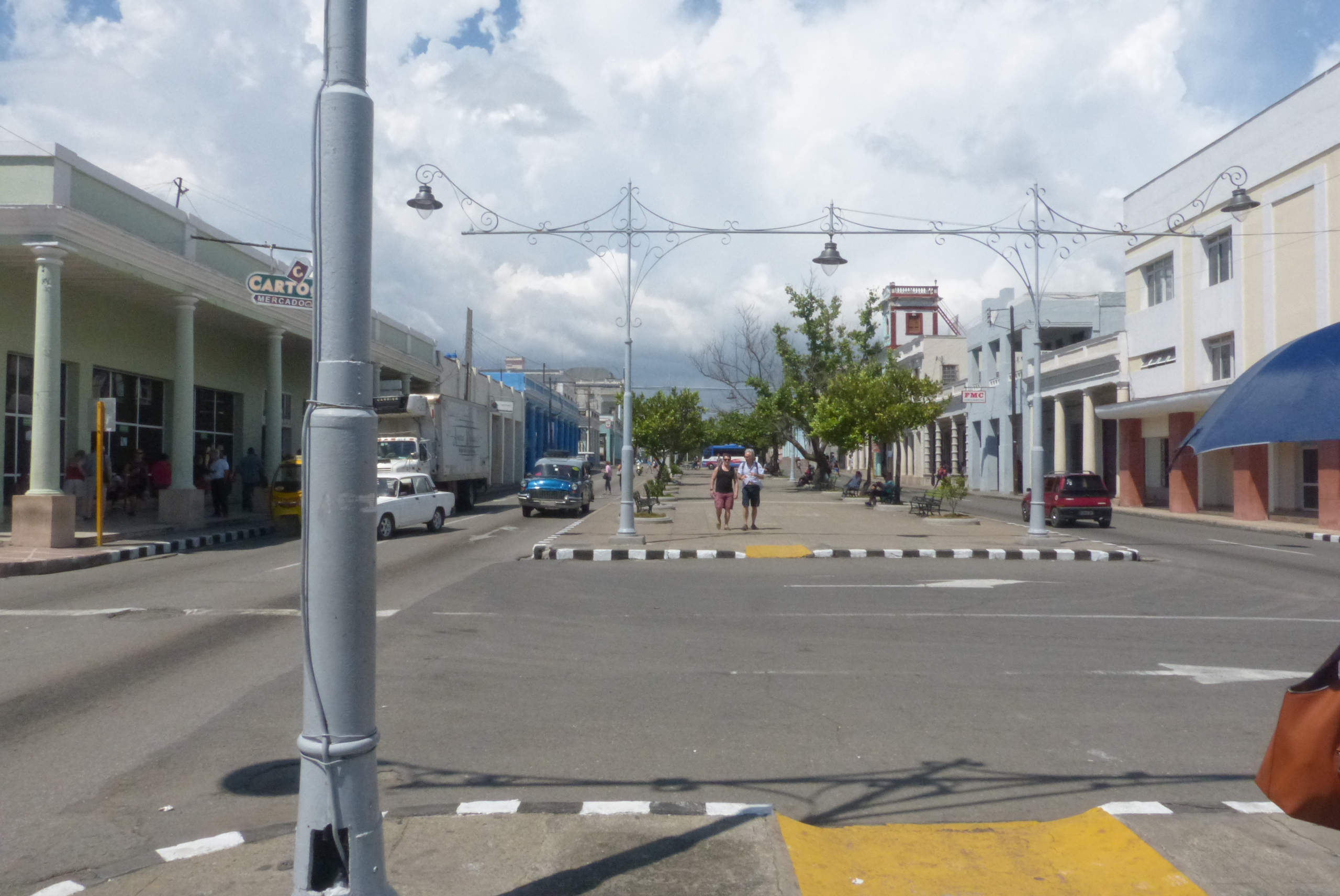
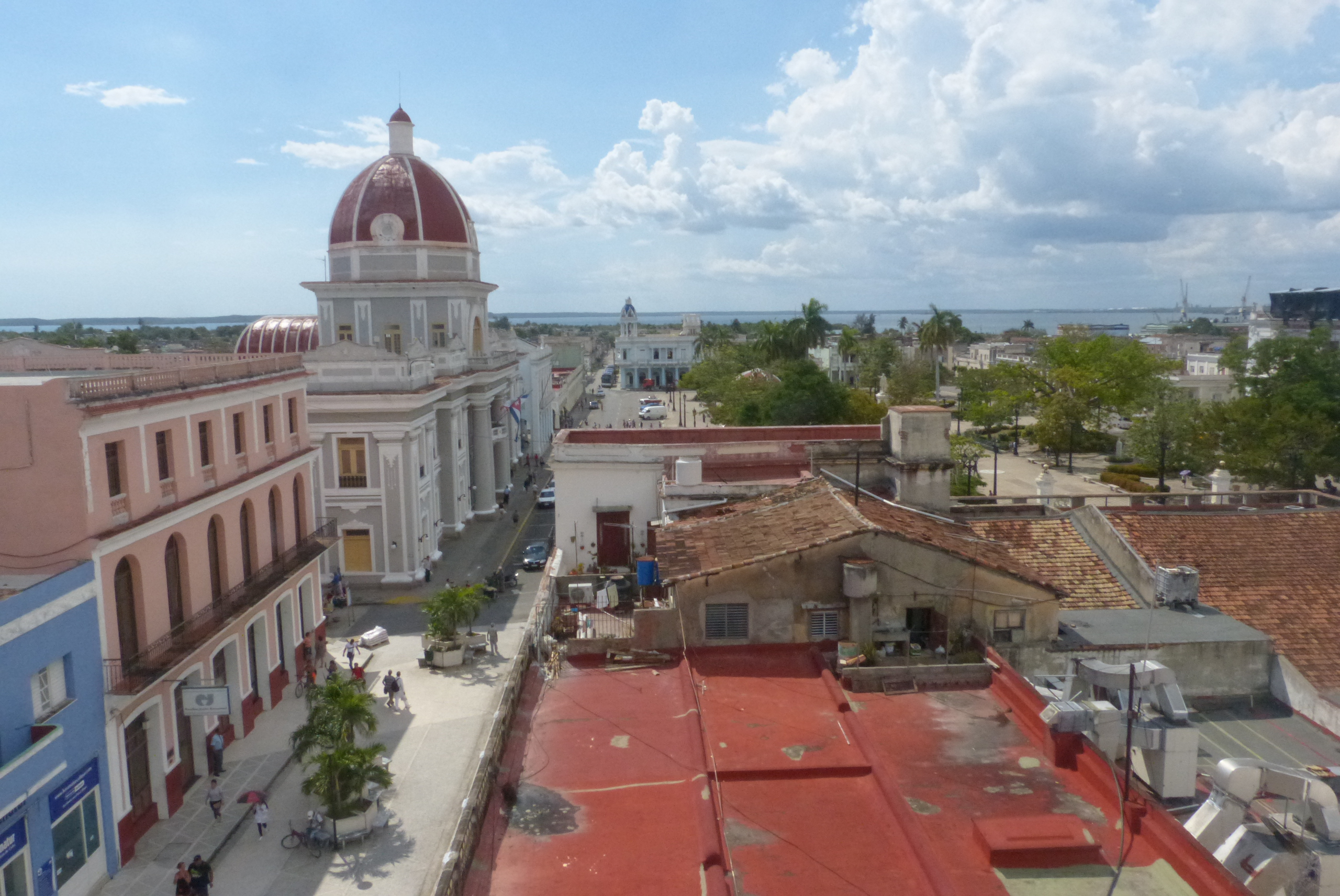
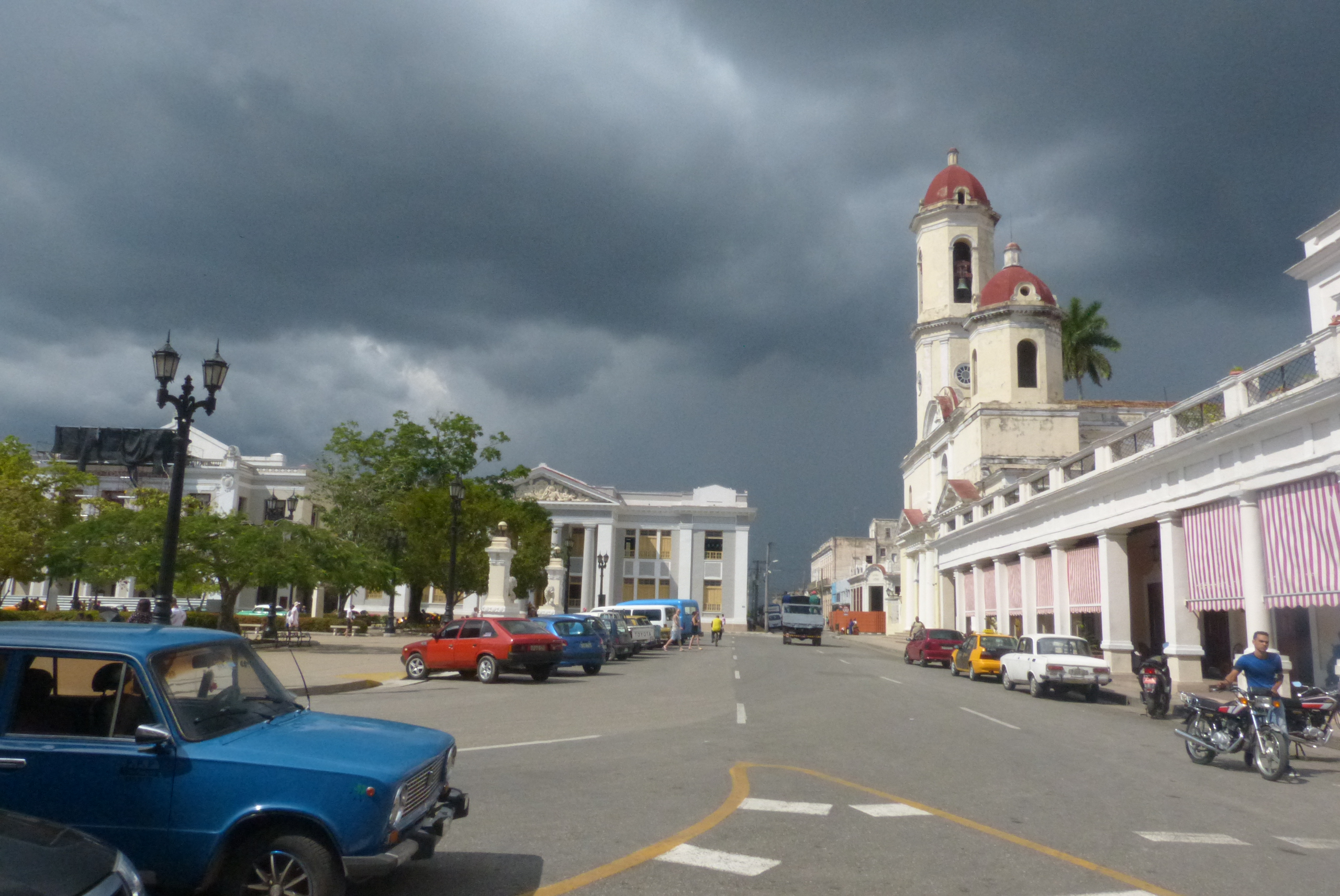
Short car drive to Punta Gorda on the bay, more a holiday destination. At the end of the road is Palacio del Valle- a kitsch Moorish revival style mansion, with a few other styles, now a well known restaurant.
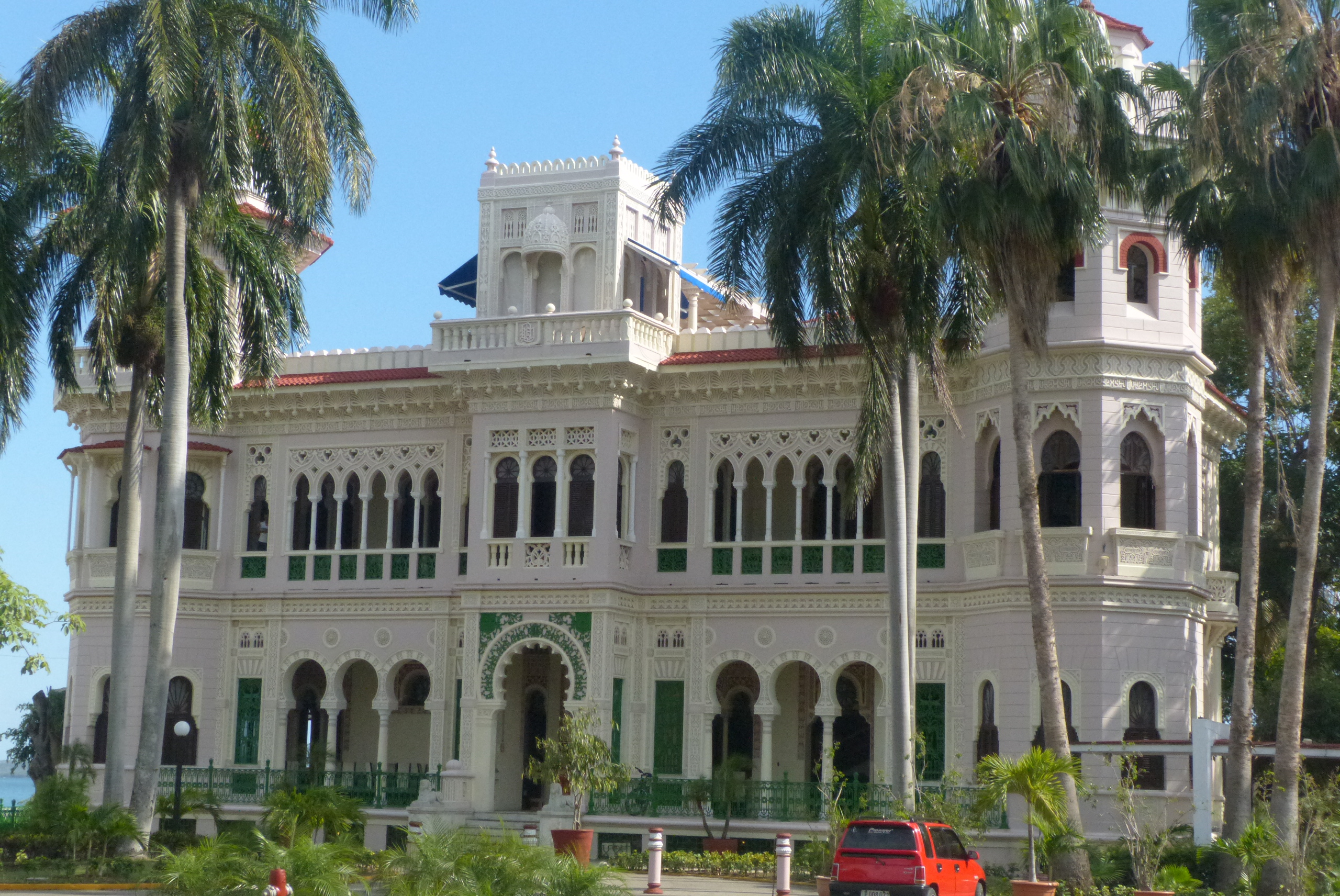
Cuba – Trinidad
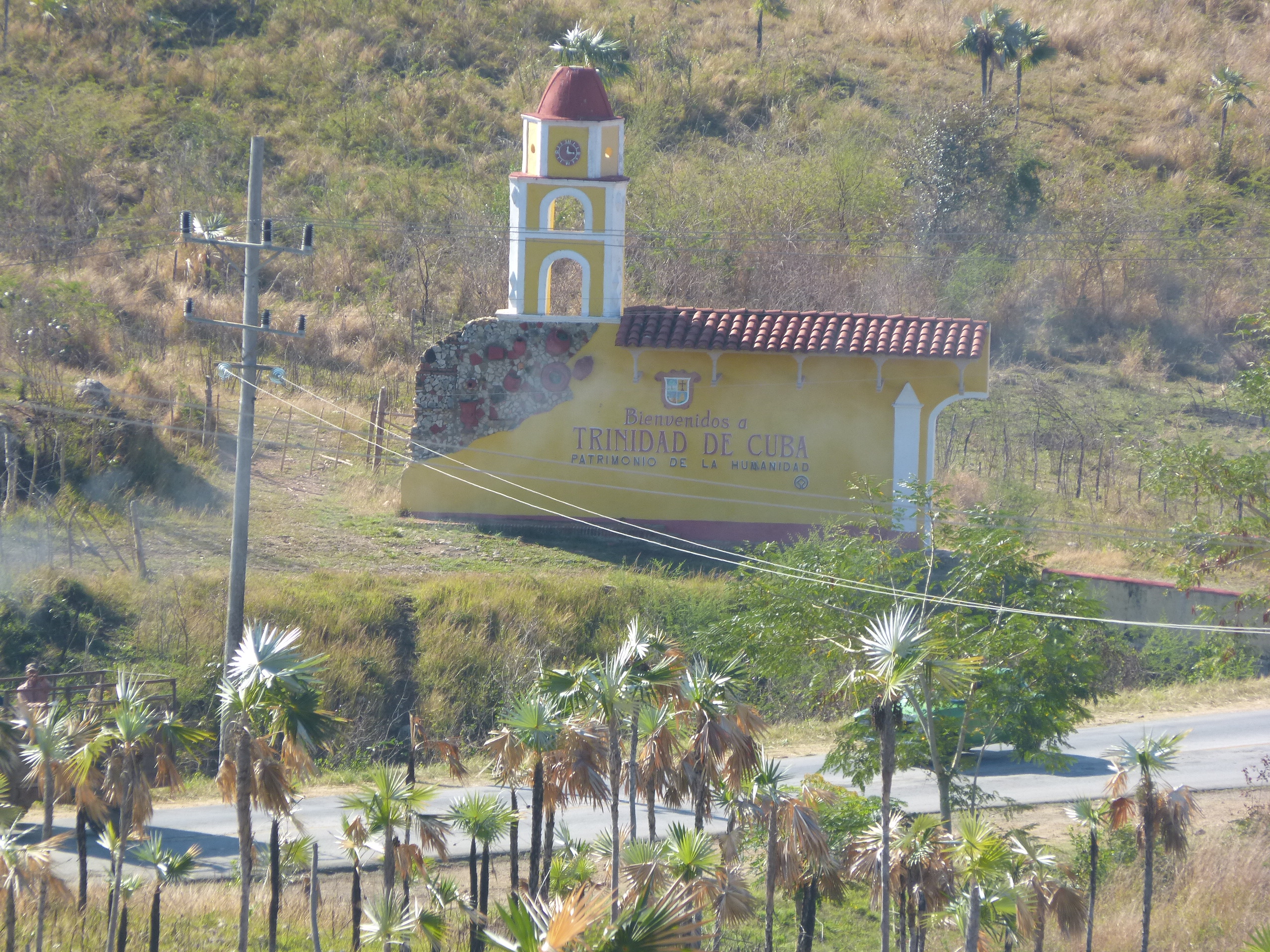
From Cienfuegos, a one hour drive through farmland and little fishing villages to Trinidad. Horse and carts in use in the countryside. Men cutting long grass by machete- they collect bags of grass to sell to town folk who have horses.
Arrived at our home stay in Trinidad- no English spoken here either! Another adventure! Out for a wander before dinner.
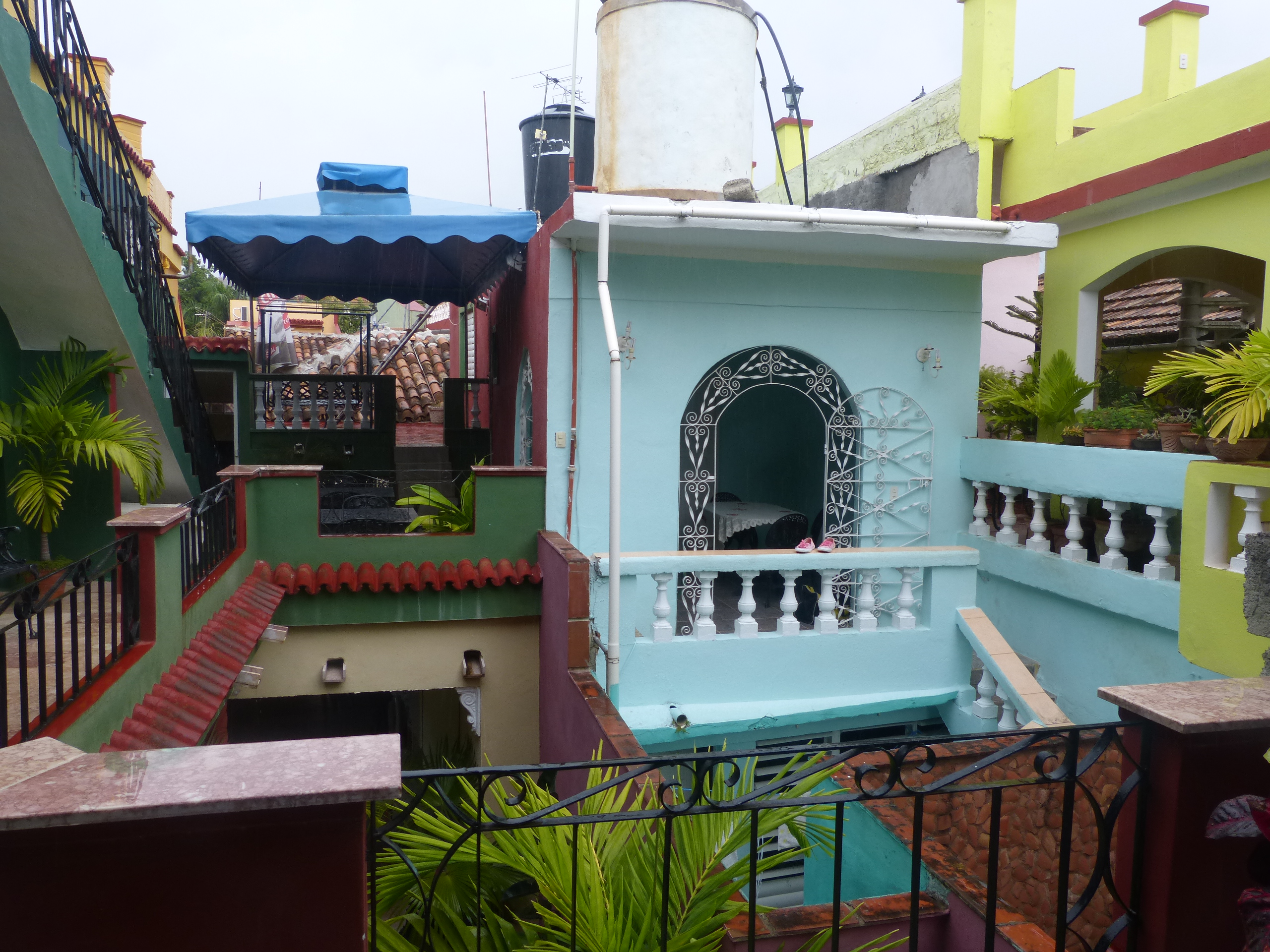
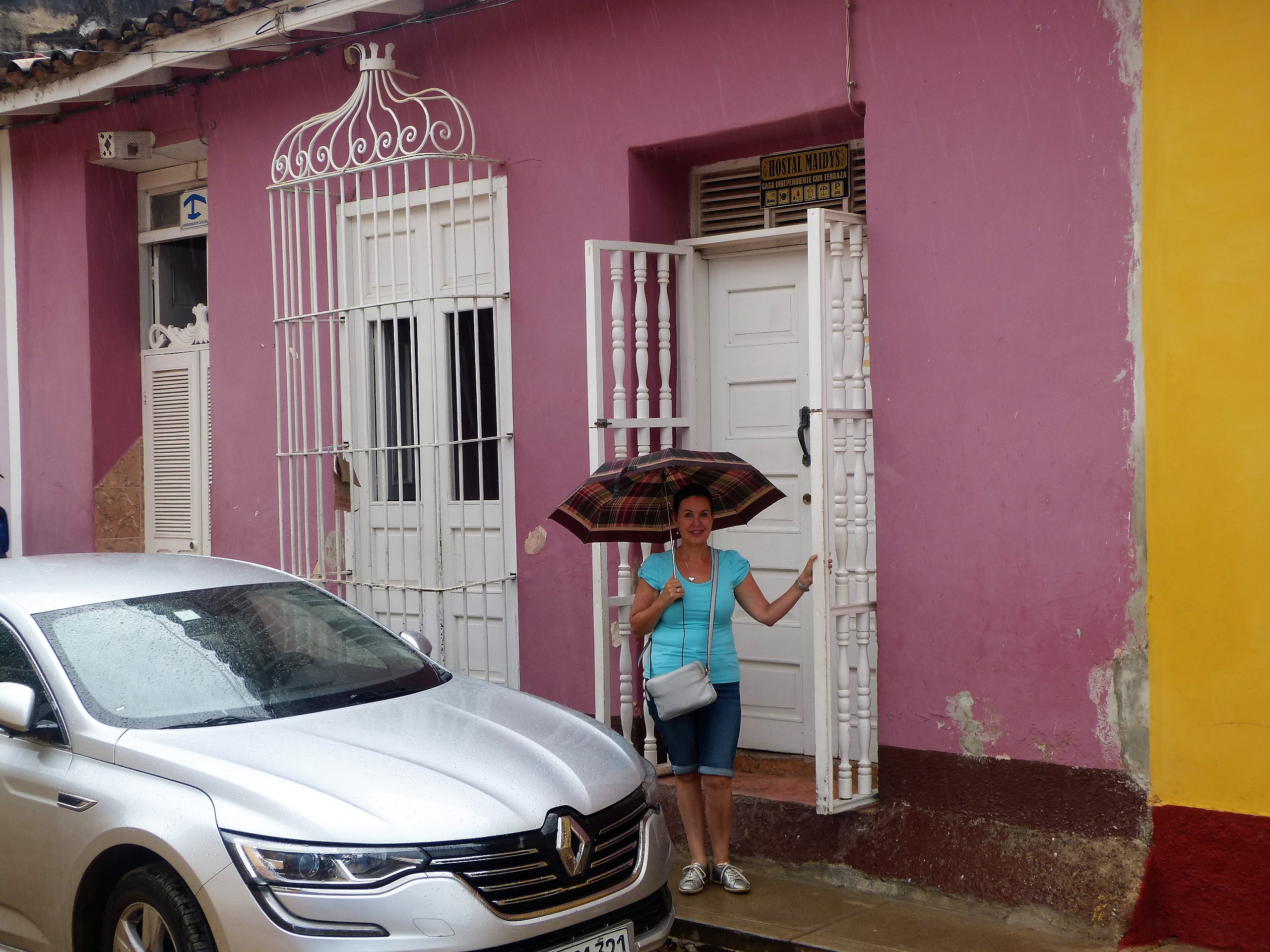
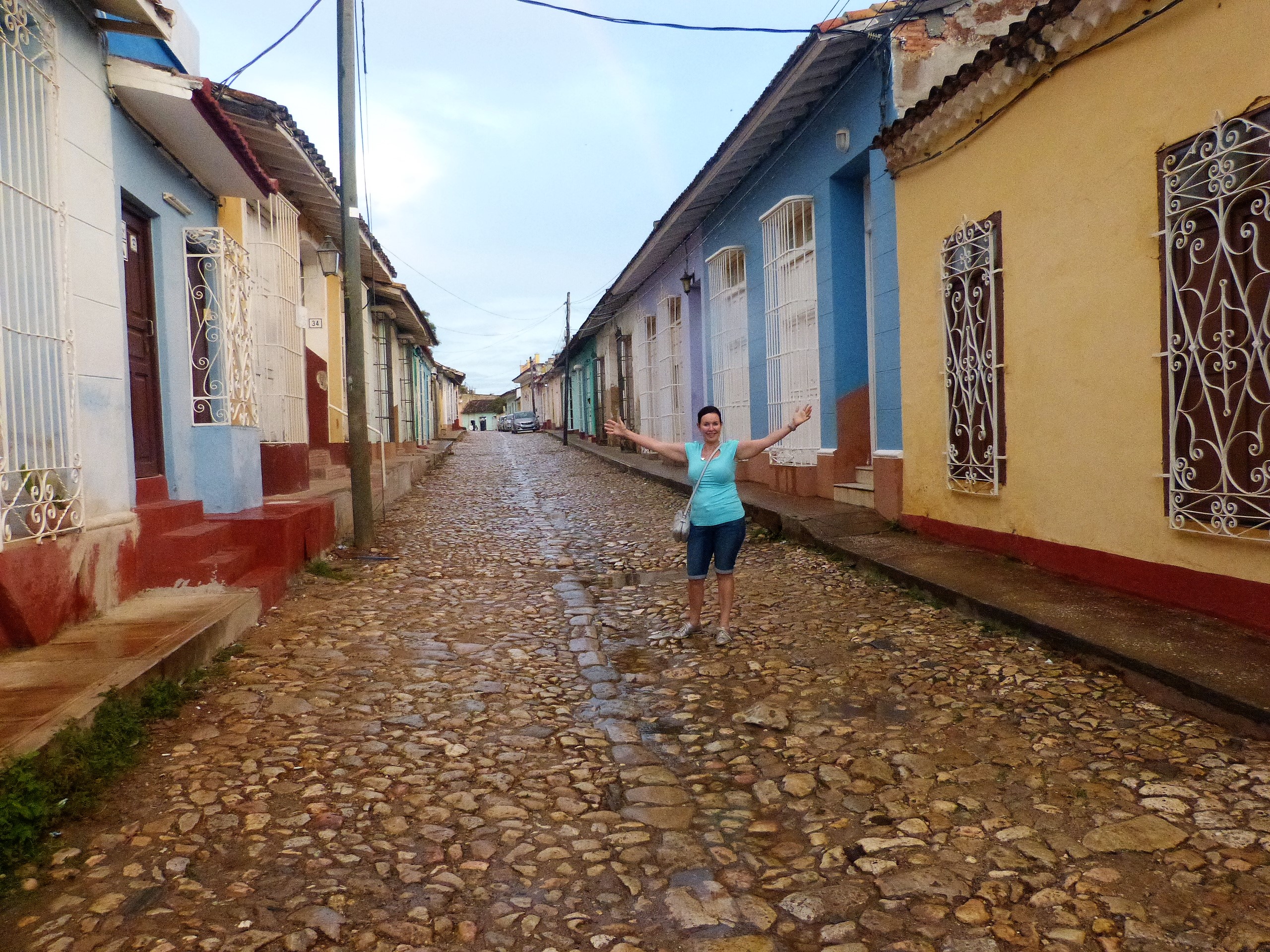
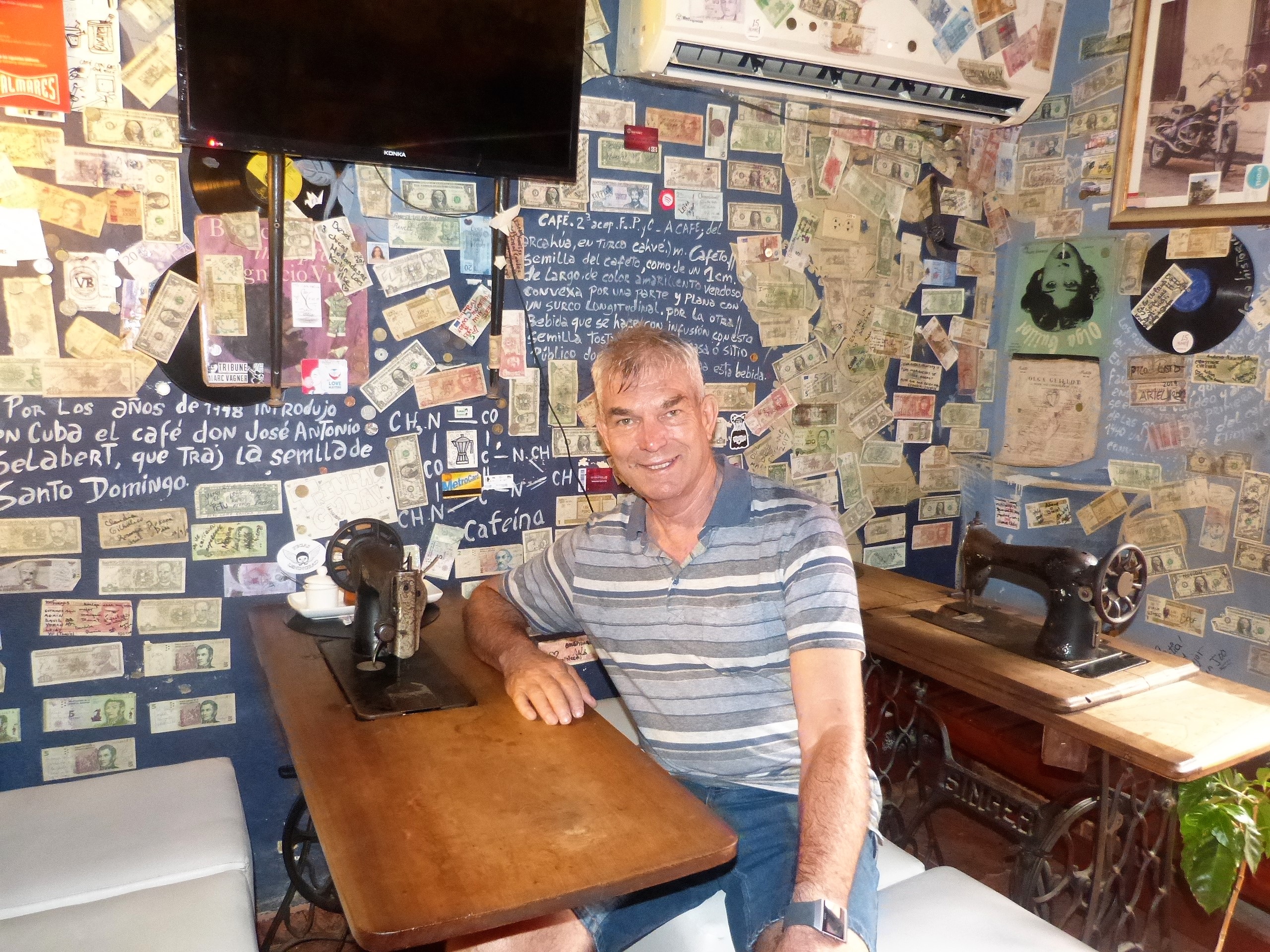
Trinidad is one of Cuba’s first towns founded by the Spanish. We had a little walk around, carefully manoeuvring the cobblestones. Found a tiny little bar, fascinating- money hanging from the ceiling, using old tvs and sewing machines as tables, and a bath as a seat! Unique to say the least. The atmosphere was so much fun. Many quirky places like this.

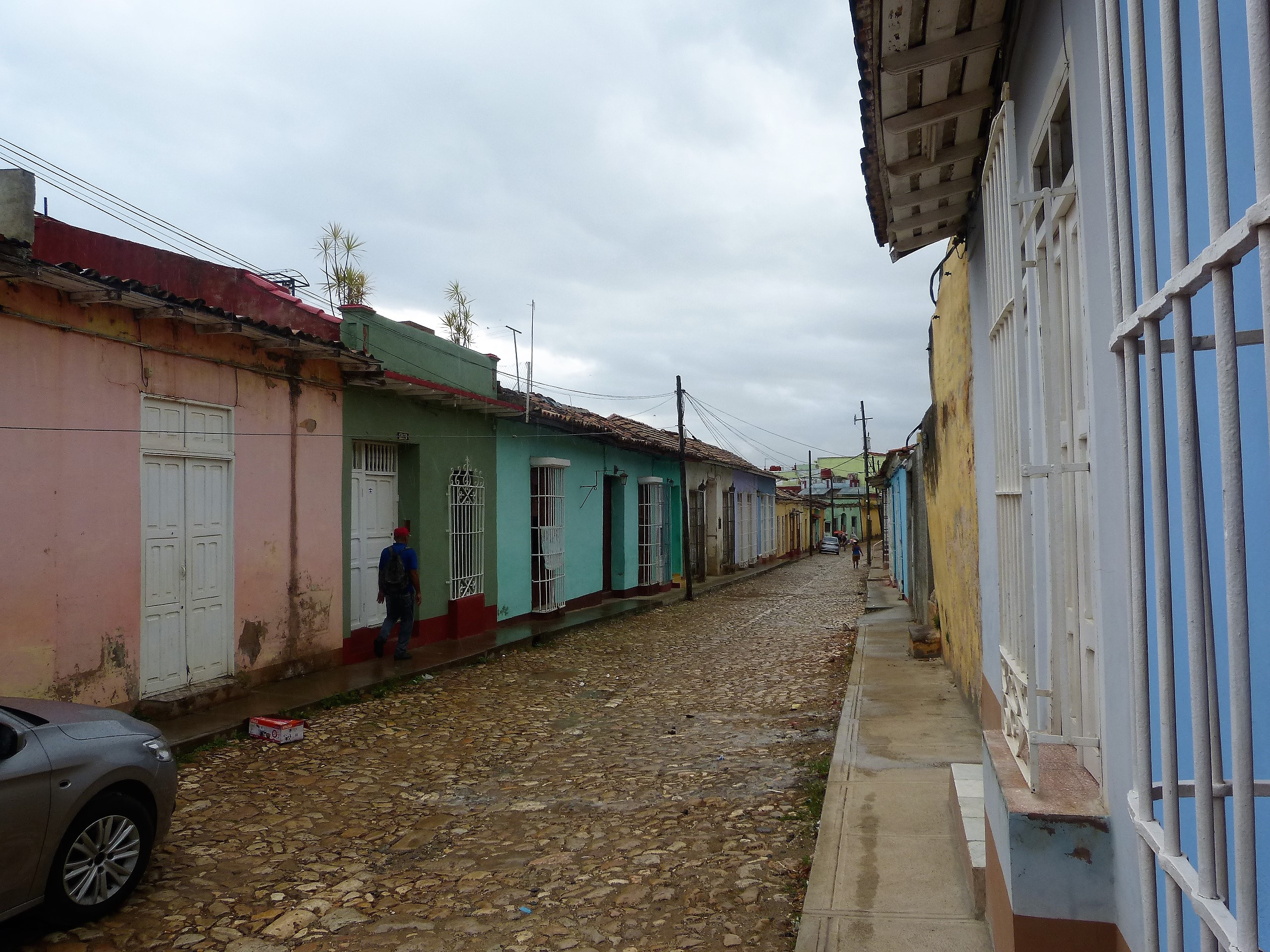
Streets of coloured houses – little doorways which hide away grand homes behind, like where we are staying – Casa Maydi. We have a lovely room on the first floor, had dinner on the terrace- very basic meal but tasty. Vegetable broth, chicken , rice ( always rice) and cabbage followed by coconut sorbet.
Drinks are amazingly cheap here- all cocktails equivalent of our $4, beer $2. Found another couple of bars, enjoyed the Cuban music, and some wifi – not so easy to get here, so a few minutes here and there! Off to bed, listening to the infectious Cuban music billowing in through bedroom window.

Day 19 26th March
Hot water? Yes! Shower and breakfast on the patio at our home stay. The mango juice is delicious, the omelette is very plain, but nice.
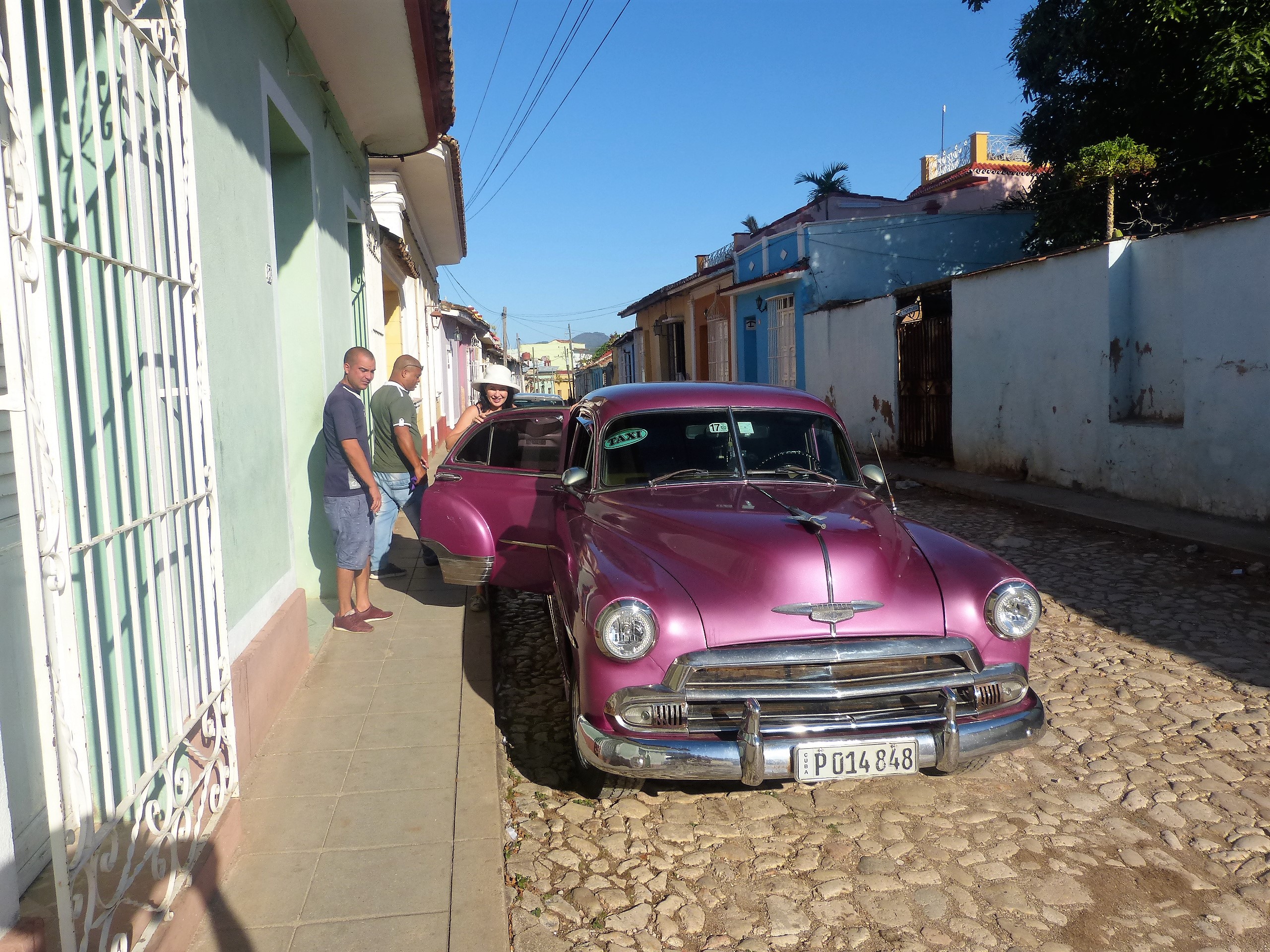
Luharki picked us up today in a pink 1951 Chevrolet, this time a sedan, with Fernando at the wheel. A bit rough over the cobblestones, but otherwise a smooth ride to the beautiful Valle de los Ingenios (Sugar Mill Valley)- during the 18th and 19th centuries this was one of the wealthiest regions of Cuba due to the sugar boom – this is where the African slaves came to work.
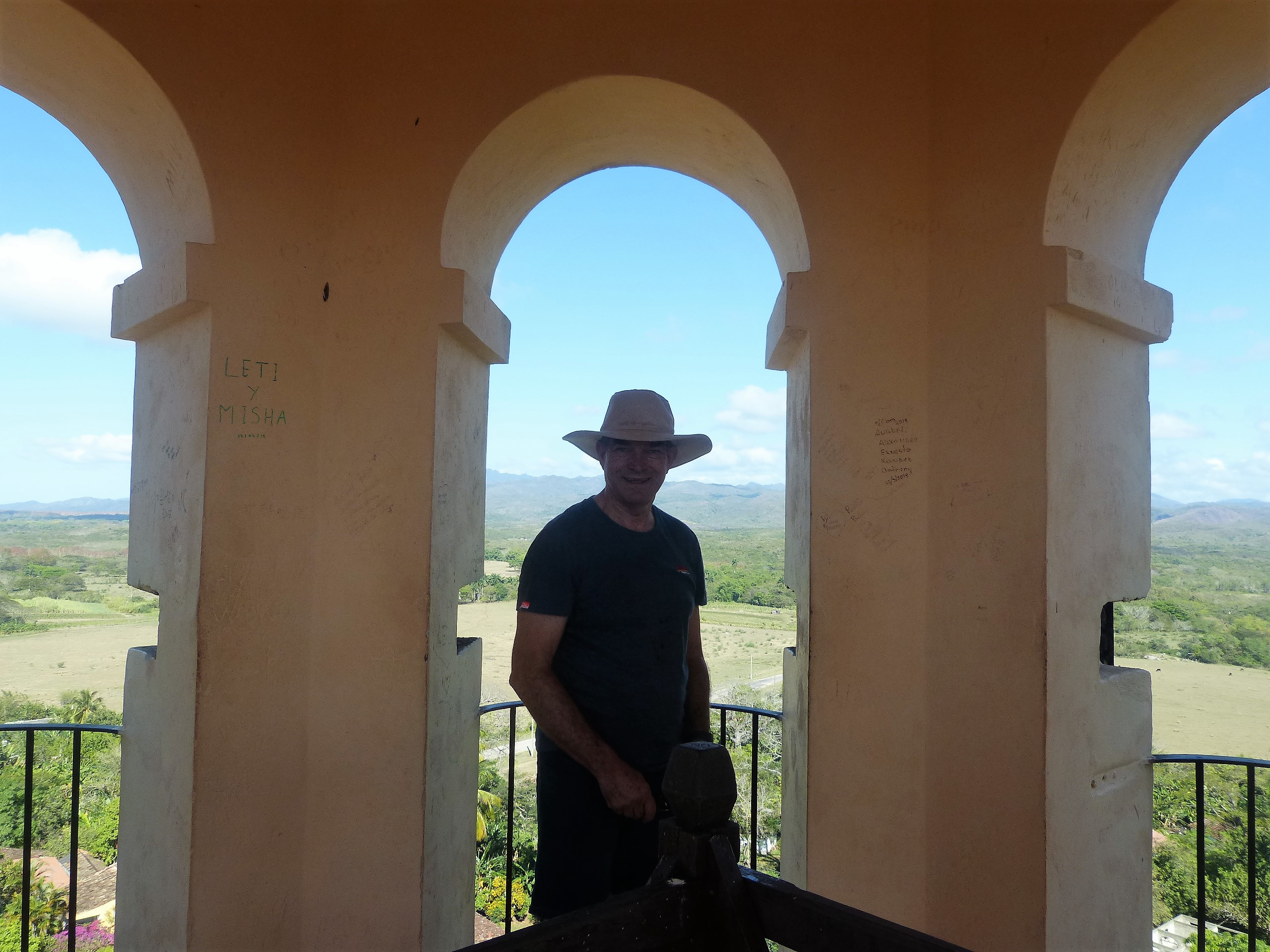
Next went to Manaca- Iznaga Colonial plantation house and tower- the bell in the tower was once used to signal the beginning and end of the work day. Also from here, the Iznaga family would keep watch over the slaves toiling in the fields. We climbed the narrow 137 steps to get a panoramic view of the area.
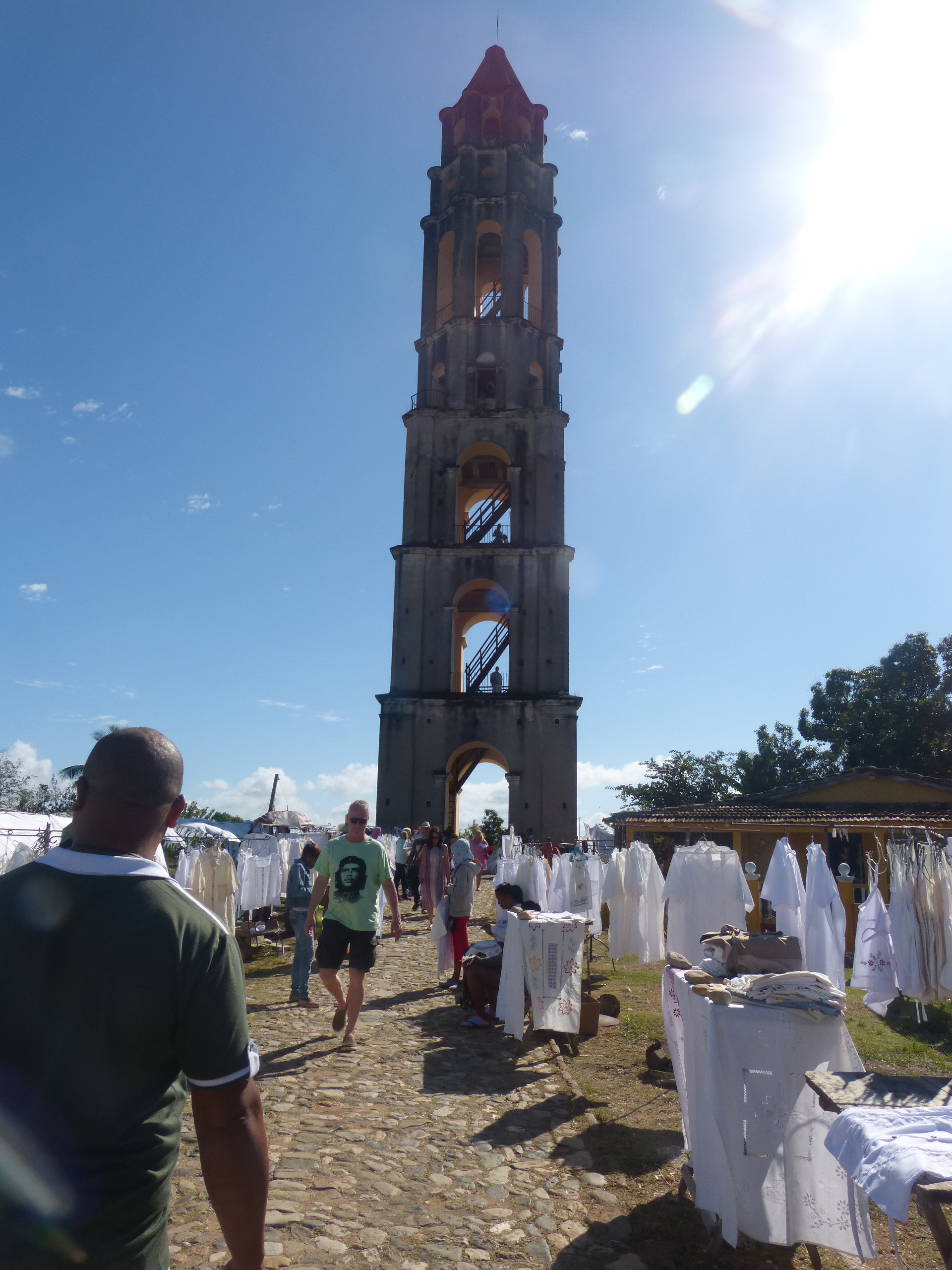
In this area is a market with beautiful embroidery and crotchet. So many lace runners and tablecloths.

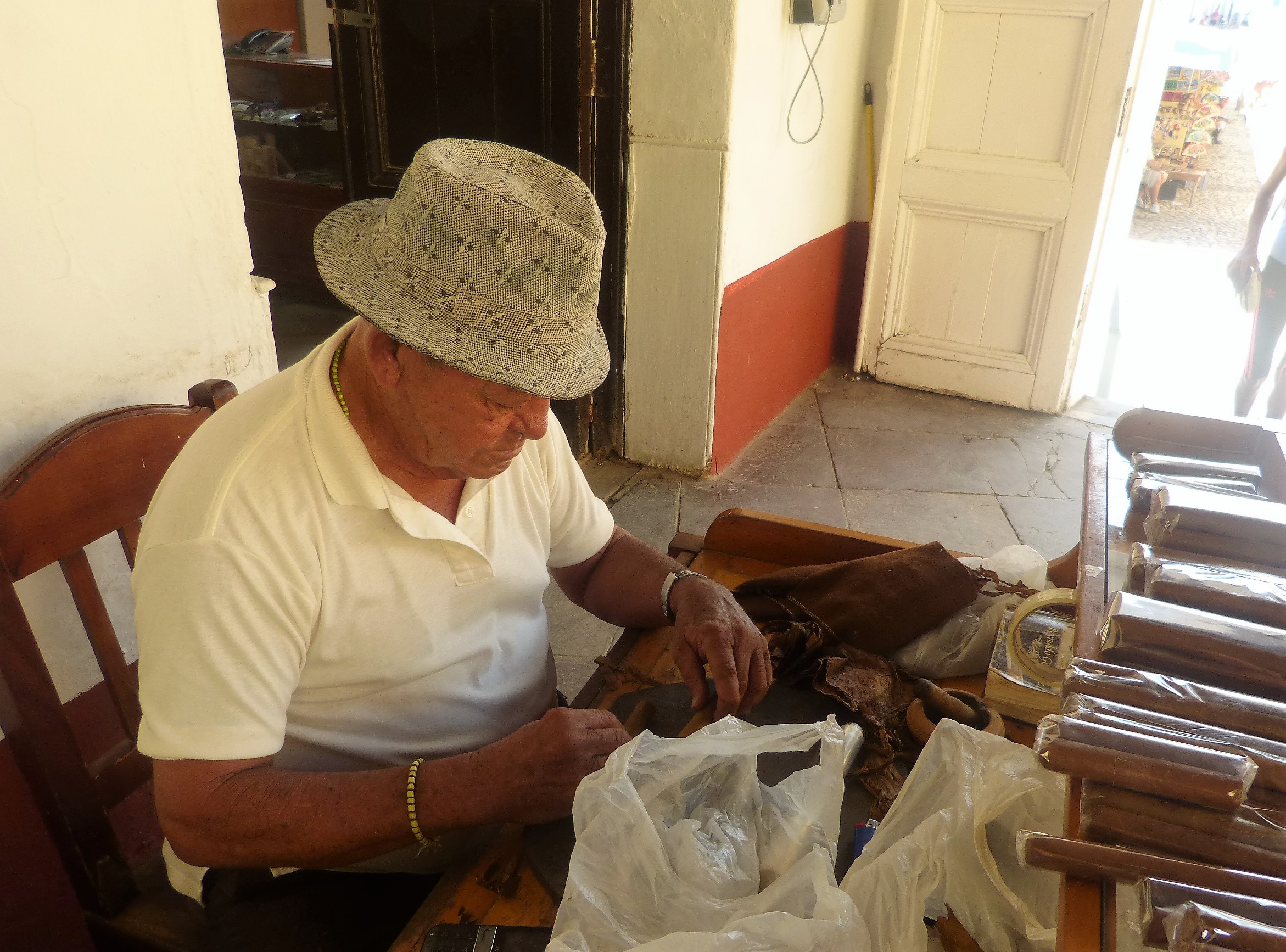
Back to Trinidad, for a walking tour – visited the Plaza Mayor, the cathedral and the Grand Hotel. Restored mansions are now museums and art galleries. Went to La Canchanchara where we tried the Canchanchara drink- rum, lemon, honey and ice- the honey sits at the bottom of the wooden cup and you stir to get the sweetness you desire. Quite refreshing. The local cigar maker ( a torcedore) rolled some cigars for us, which we diligently tried. When in Cuba….
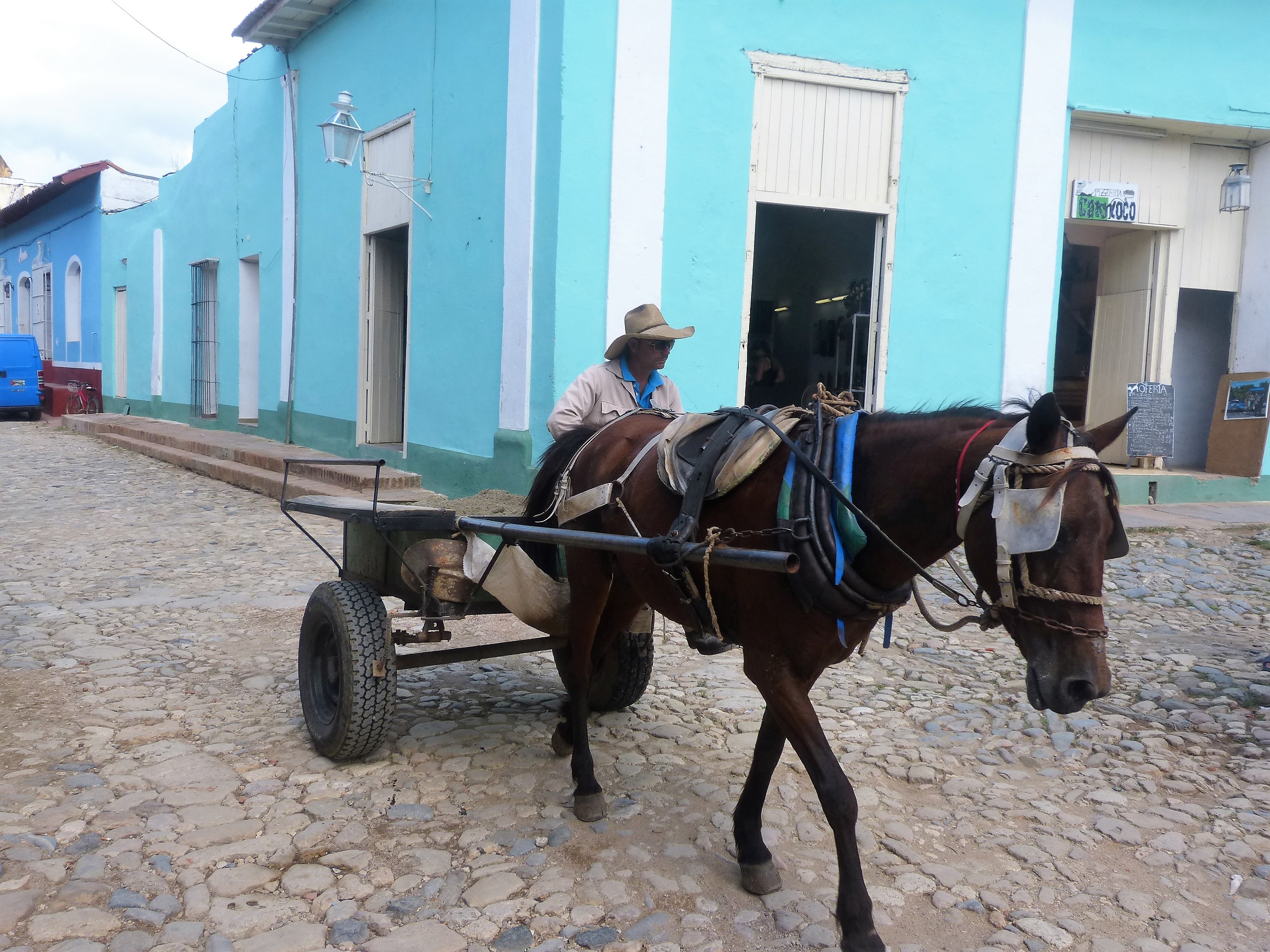



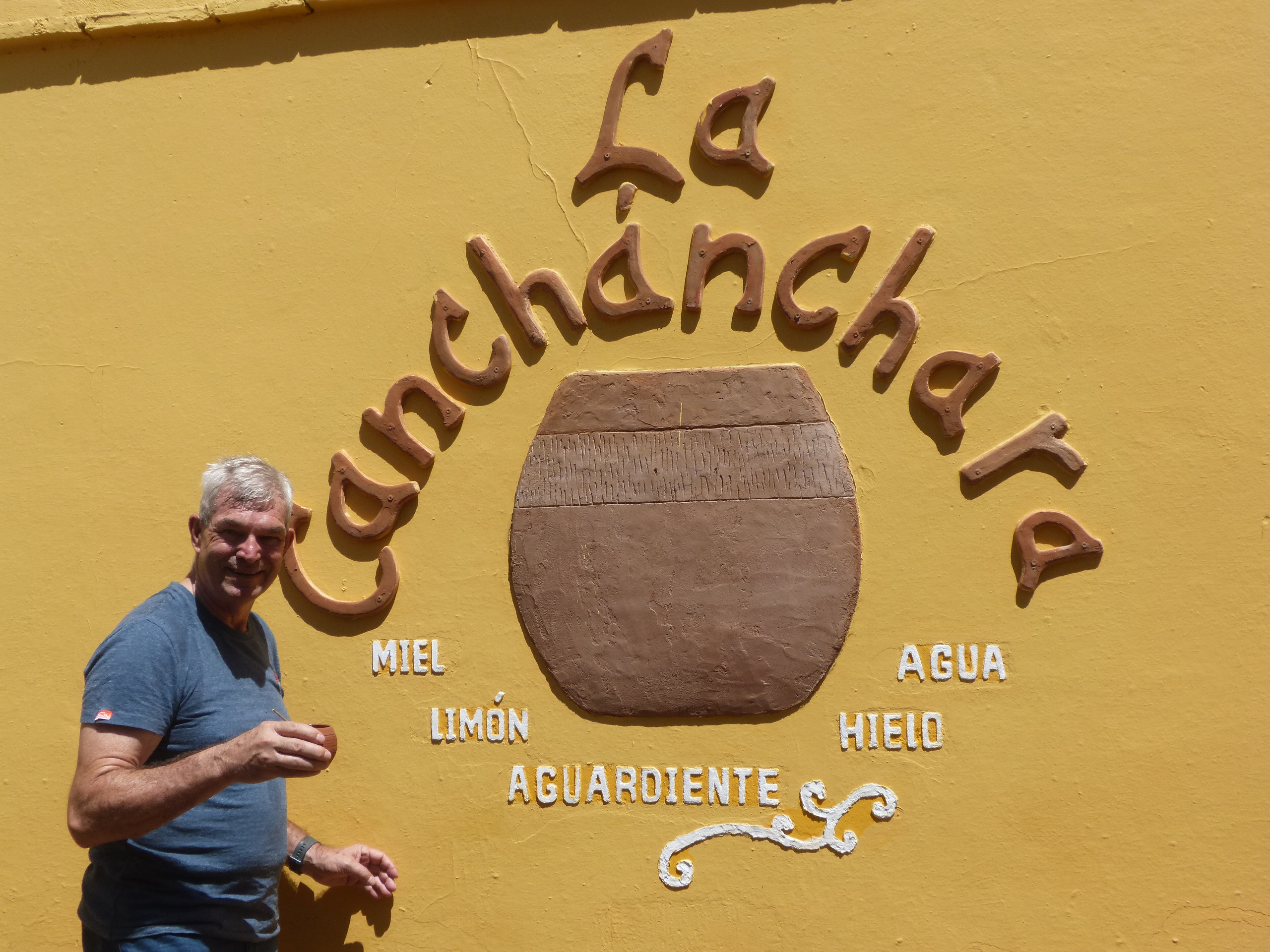

Lunch at local restaurant- fresh red snapper…. delicious, accompanied by local beer and Pino Colada. Guava ice cream to complete the meal. More walking, then we say goodbye to Luharki. Siesta time… it is very hot and humid, around 32.
Ventured out in the slightly cooler air, this place is a photographer’s dream! Love the coloured houses, and equally colourful Cuban people. Found a bar, looking for wifi which is dodgy to say the least, ordered another mojito, ready to enjoy some Cuban music, then the rain came!!! Headed for undercover, where we stood with our drinks, with many other wet bodies, lots of cigar smoke, and no wifi! After 20 minutes and our drinks done, we made a dash for it… and got drenched! Back to the casa for a shower and dry clothes.
Met by a new guide at 8.45 for a night out Cuban style… salsa at Casa de La Trova, mambo, bolero, son ( Cuba salsa- slower), and Cuban – African folklore dancing at Palenque de Congos Real. Drinks are very cheap, the music is intoxicating. Watching the good salsa dancers is mesmerising – that is not us, but at least we have a go! Have met some great people on our travels here- Germans, English, Swedish , Canadians.

Cuba – Santa Clara and Havana Farewell
Day 20 27th March
Farewell to Casa Maydi, and Luharki has us on our way to Santa Clara.
Fascinating drive through Manicaragua – horse cart town- so many of them, every model you can think of- convertibles, sedans etc etc! Saw a baby in a milk cart on the back of a motor bike- the baby was falling asleep !

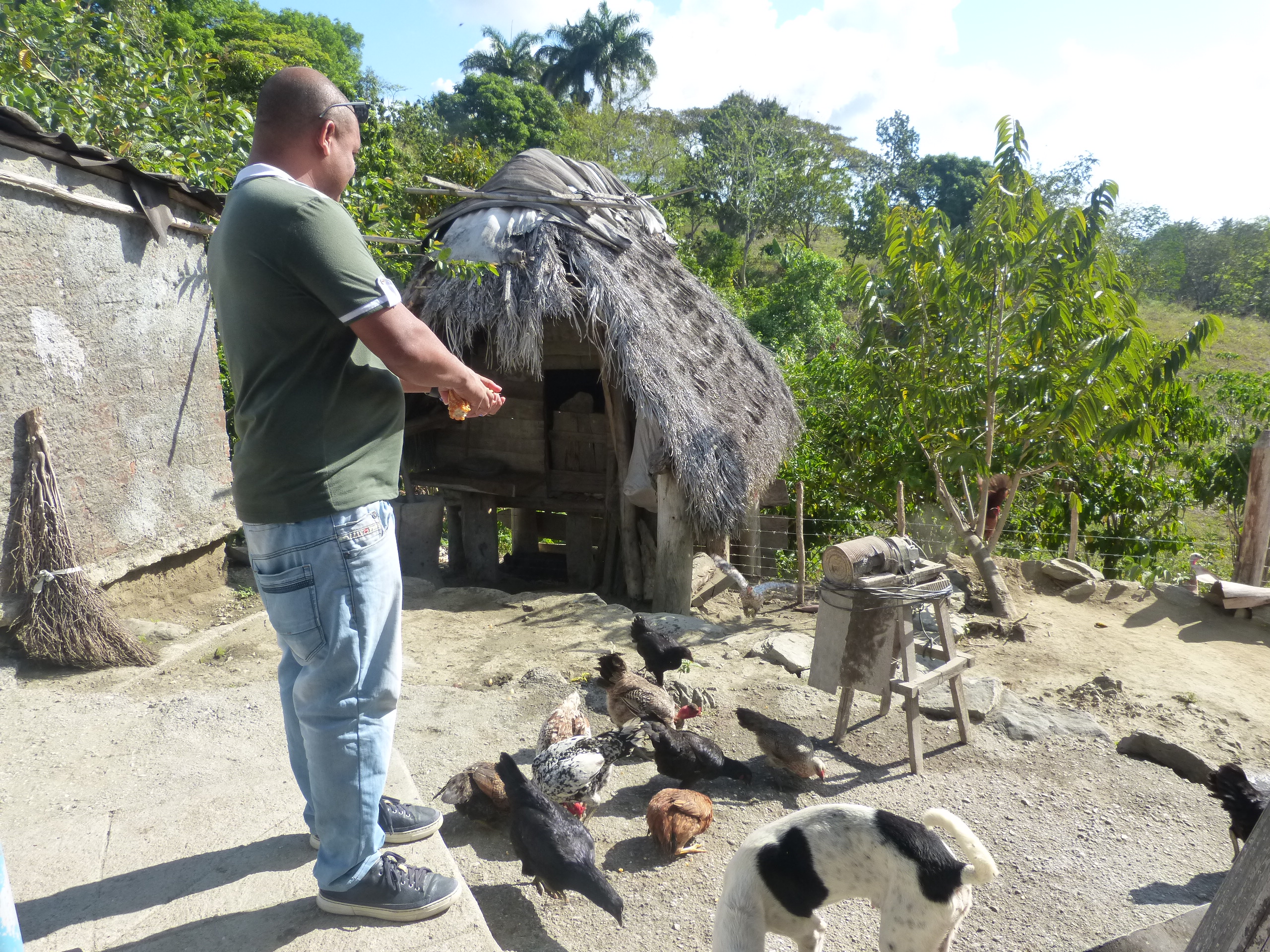
Drive through farmlands – pineapple, mangoes, bananas, cassava, coffee, tobacco- saw tobacco leaves drying. Oxen pulling the ploughs. Stopped at a little farmhouse- a friend of Luharki’s. Very primitive but positively spotless! Even got offered a cup of creole coffee. Wood stove, long drop toilet, no shower. Pigs, chickens and dogs greeted us, but like I said, so clean. And a rose bush at the front door!
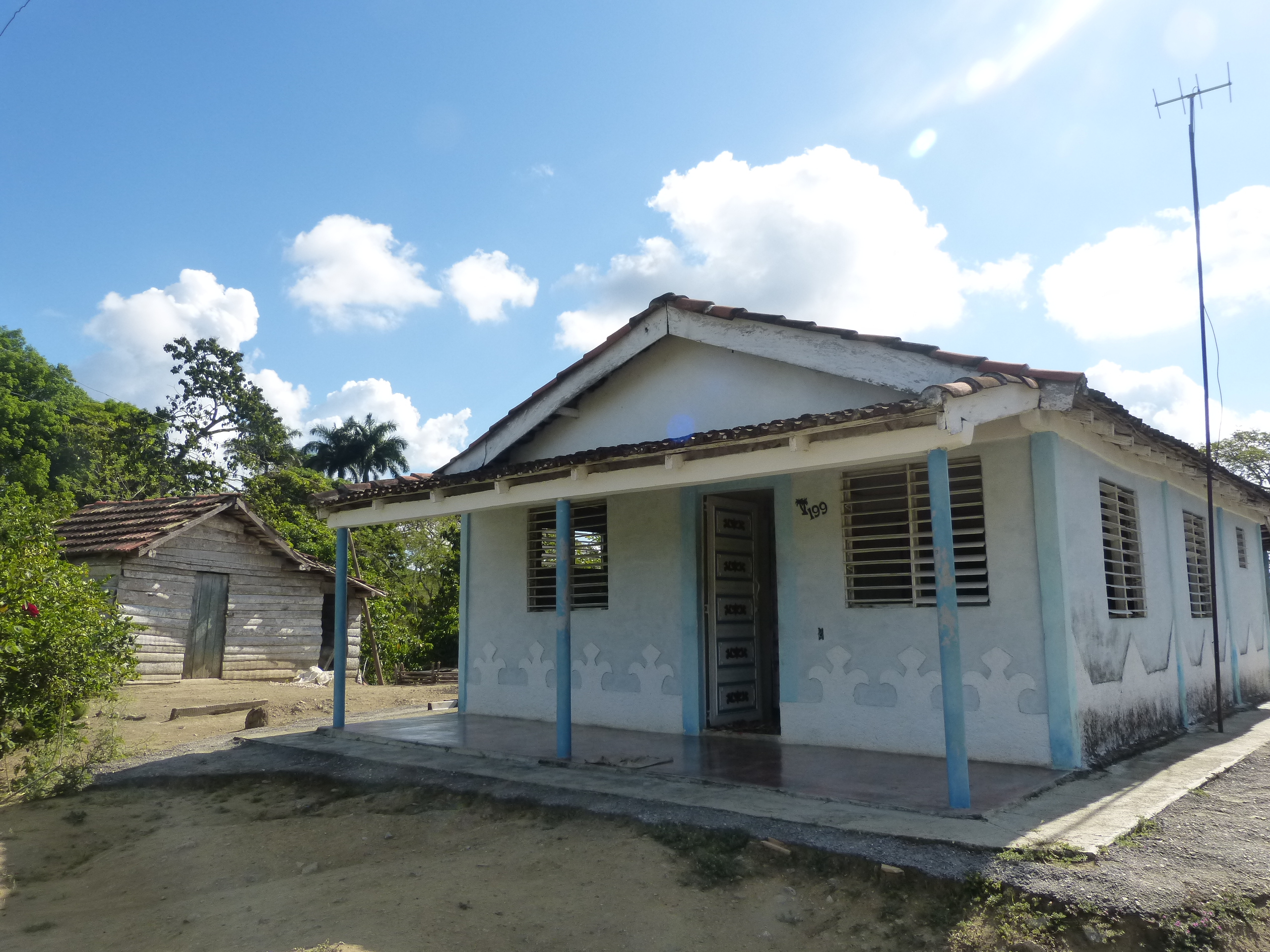

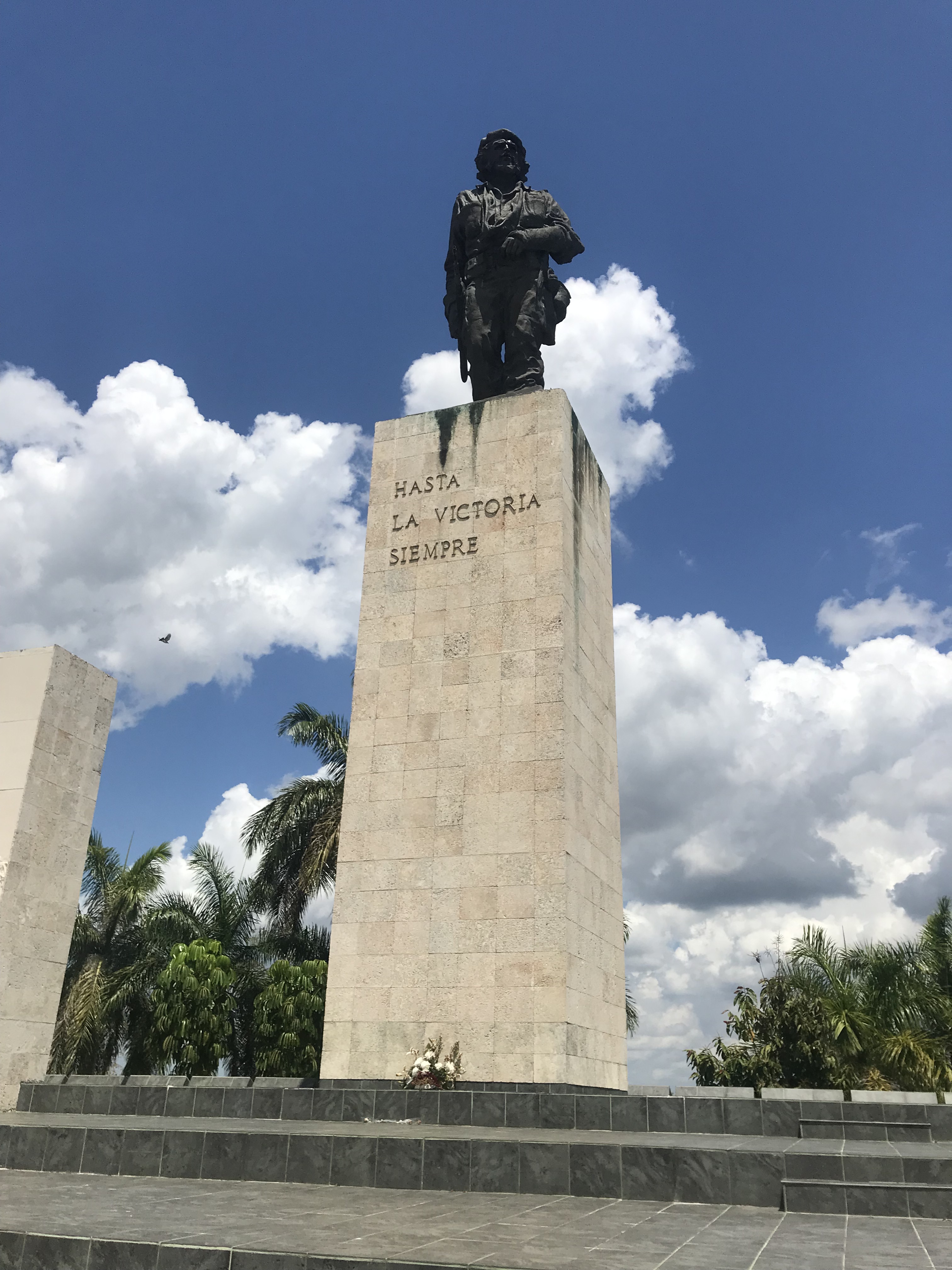
Next stop Santa Clara – the key battleground of the Cuban Revolution. Here we learned about Che Guevara- went to the Tren Blindado Museum and Monument created in memory of the events of 29th December 1958, plus went to Che’s memorial. Also went to Plaza Leoncio Vidal and the Boulevard de la Ciudad. Buffet lunch at a restaurant – too commercial, only eating place we haven’t liked in Cuba.

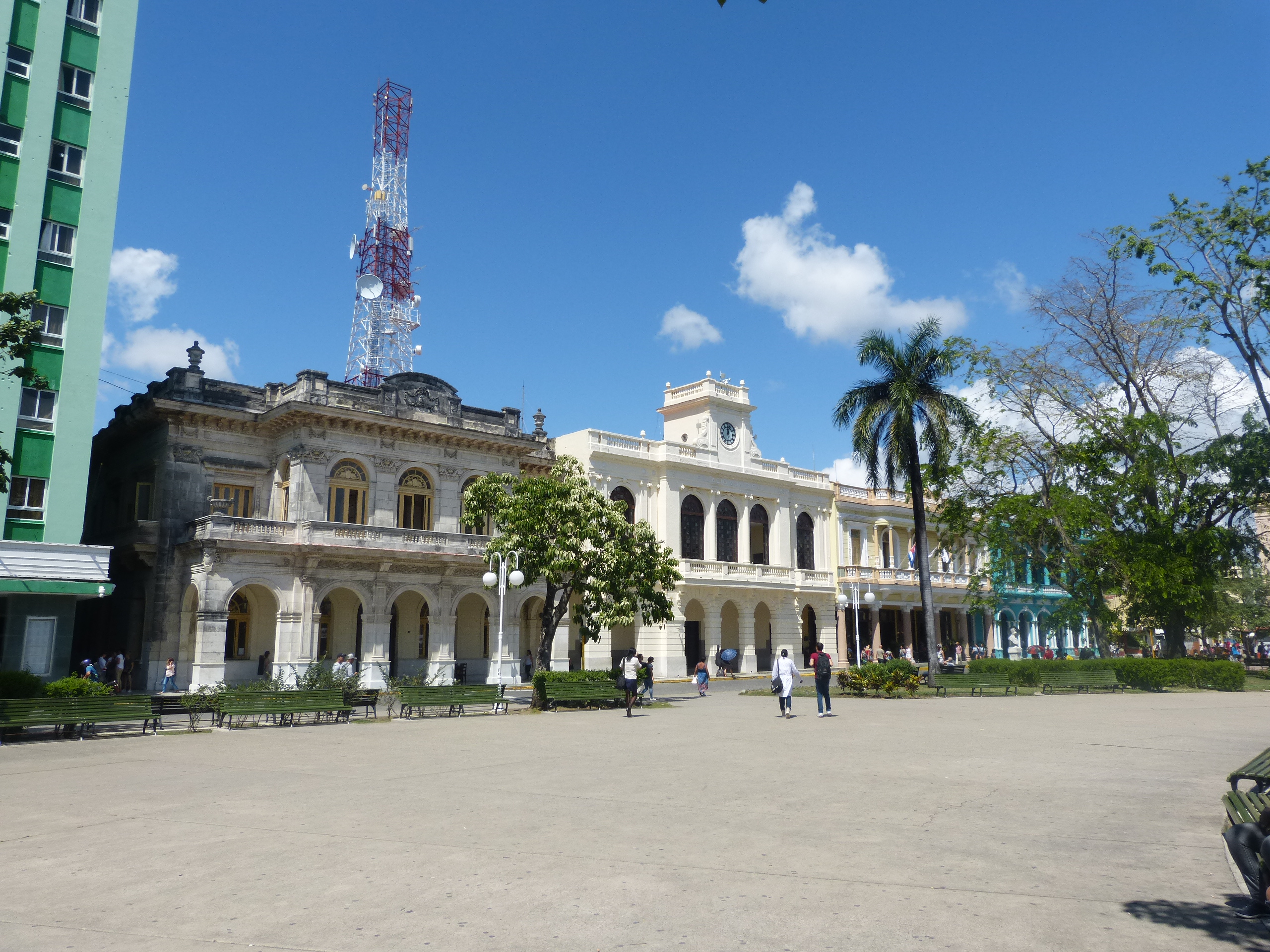

Goodbye to our lovely guide, and we travel 3 hours back to Havana, by taxi. One thing I will mention… tipping… everything is cheap here, but there is tipping for absolutely everything.
Back to Saint Brigida’s, same room, still no hot water! ( The nun told me everything is working- I obviously I need to learn how to sacrifice) Oh Cuba, we still love you!
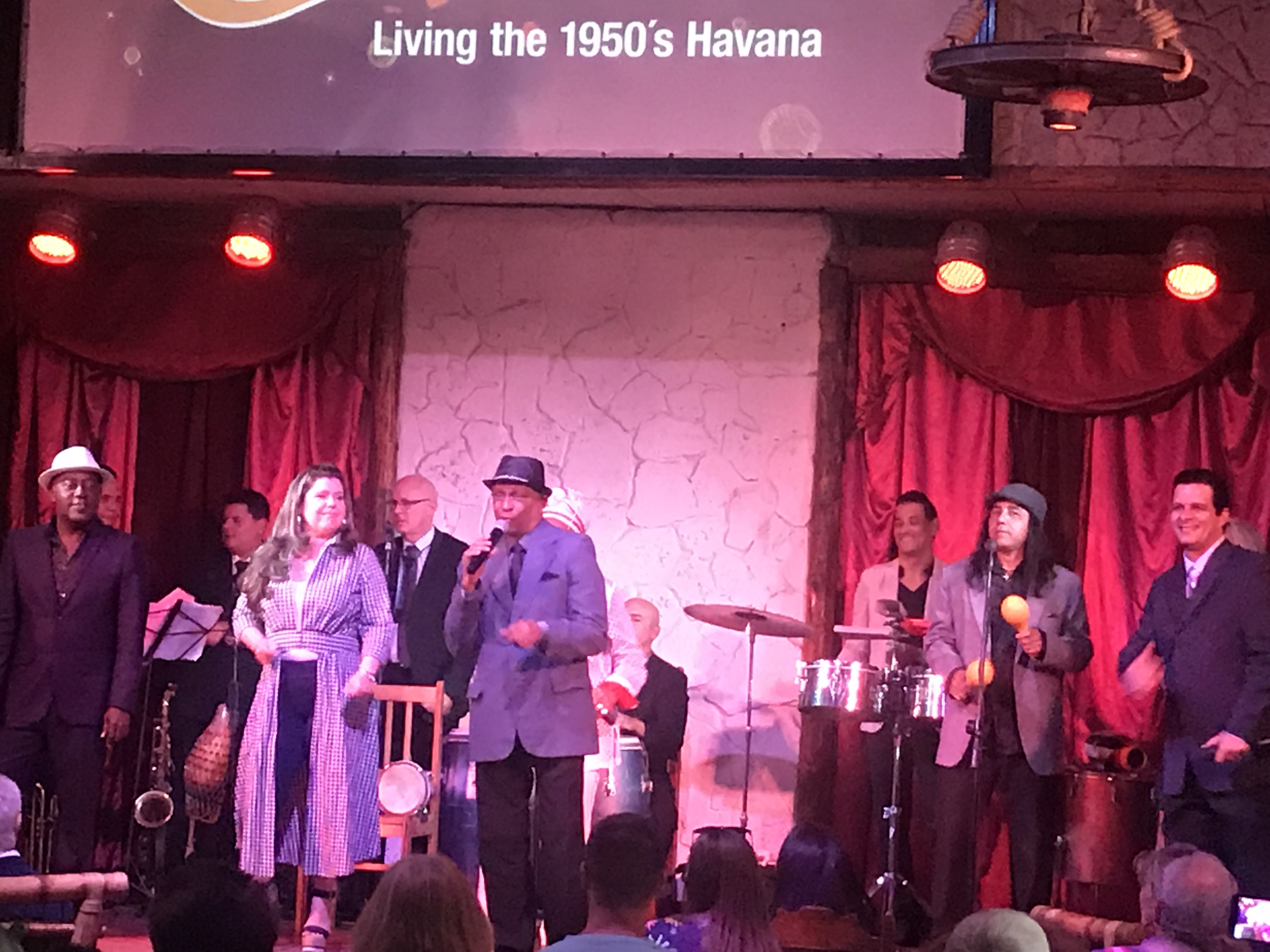
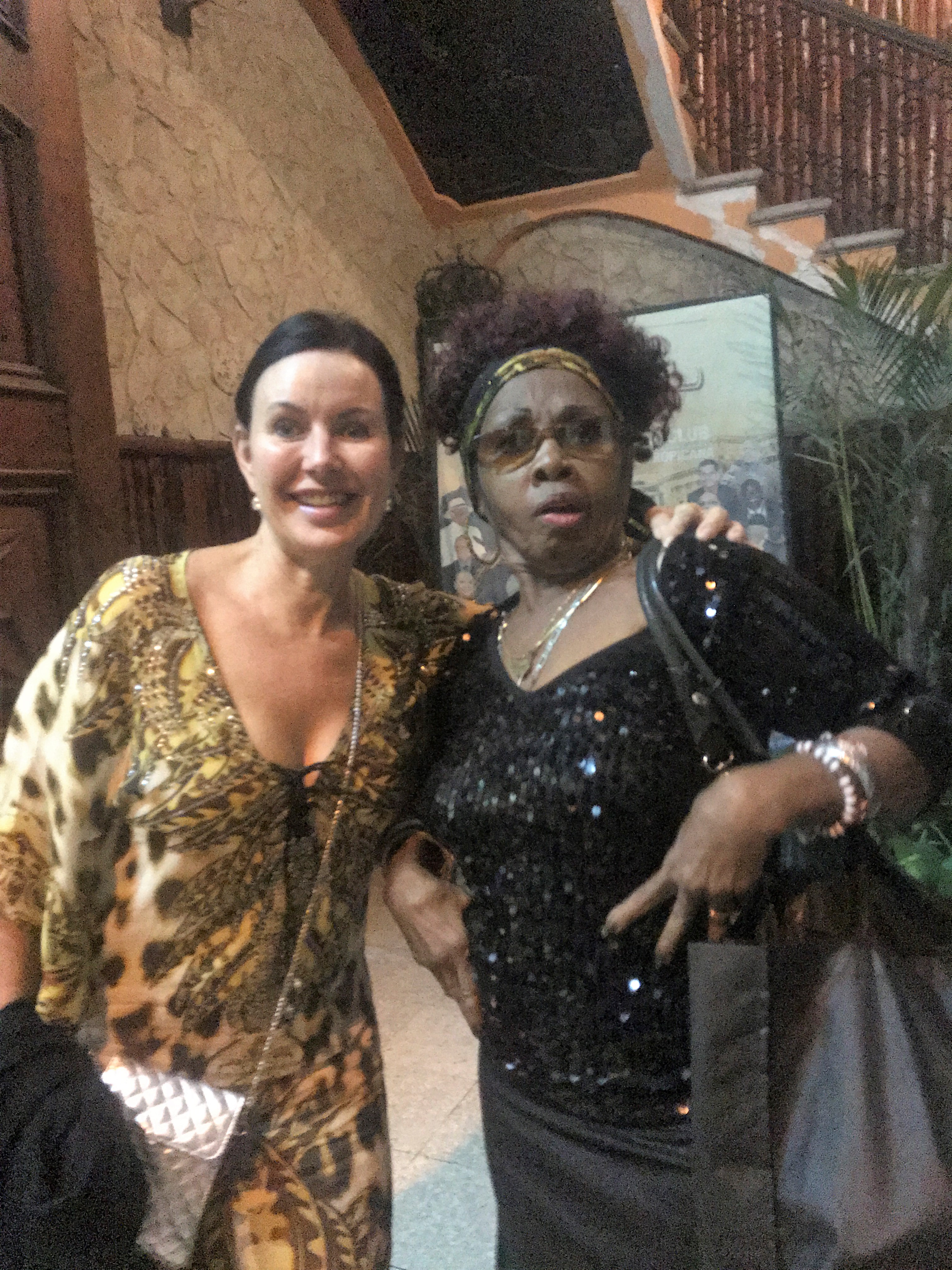
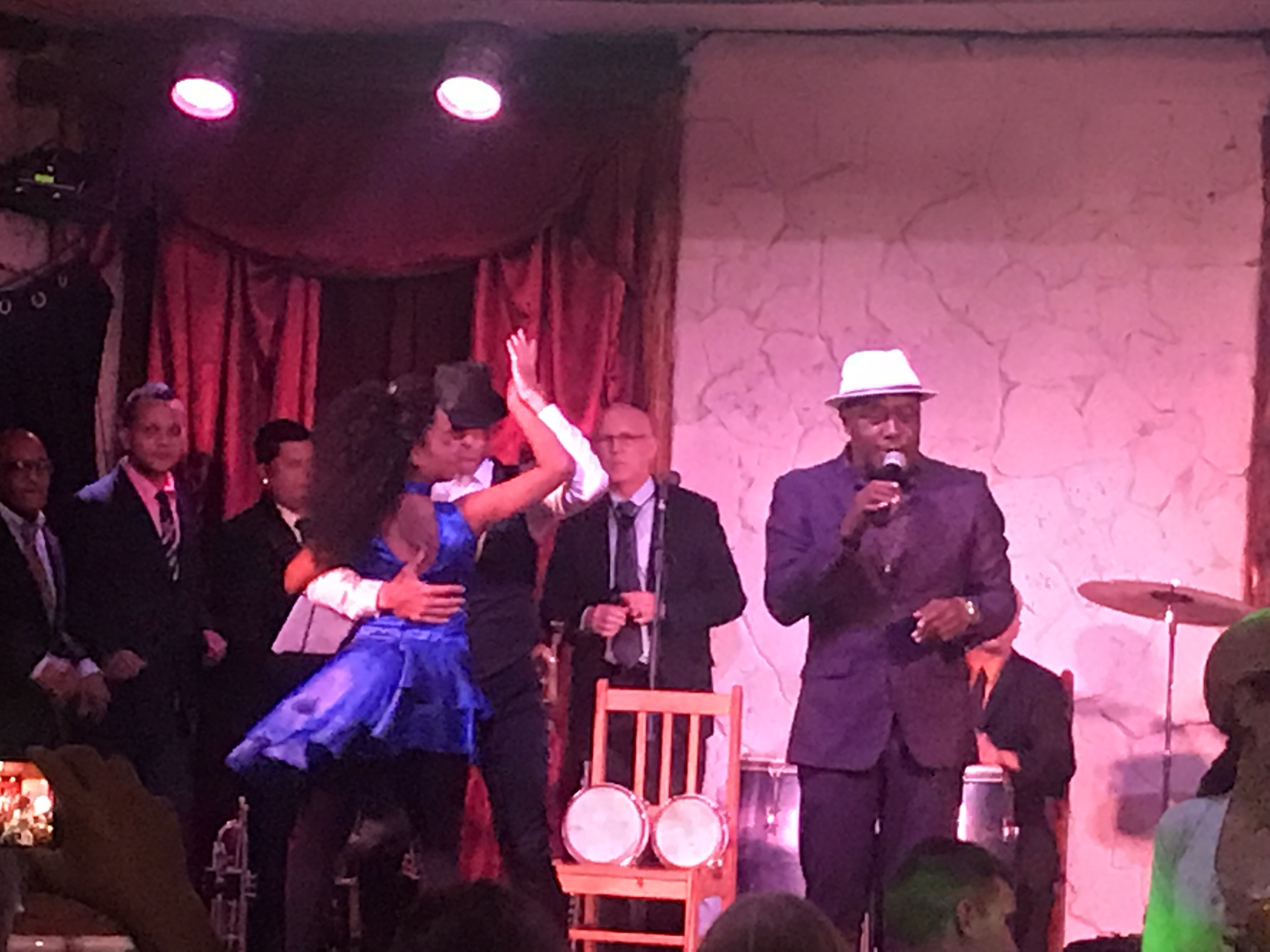
Our last night, and we go to Beuna Vista Social Club, dinner from 8.30, accompanied by a very entertaining all young female string quartet – they were fabulous. The “Havana in the 50’s” show started at 9.30 – absolutely wonderful- cabaret singers, musicians, dancers, and very interactive with the audience. Perfect finale for our Cuban stay! Finished off at a local bar for a nightcap, more music, and Frank could finish off his cigar from the other day.


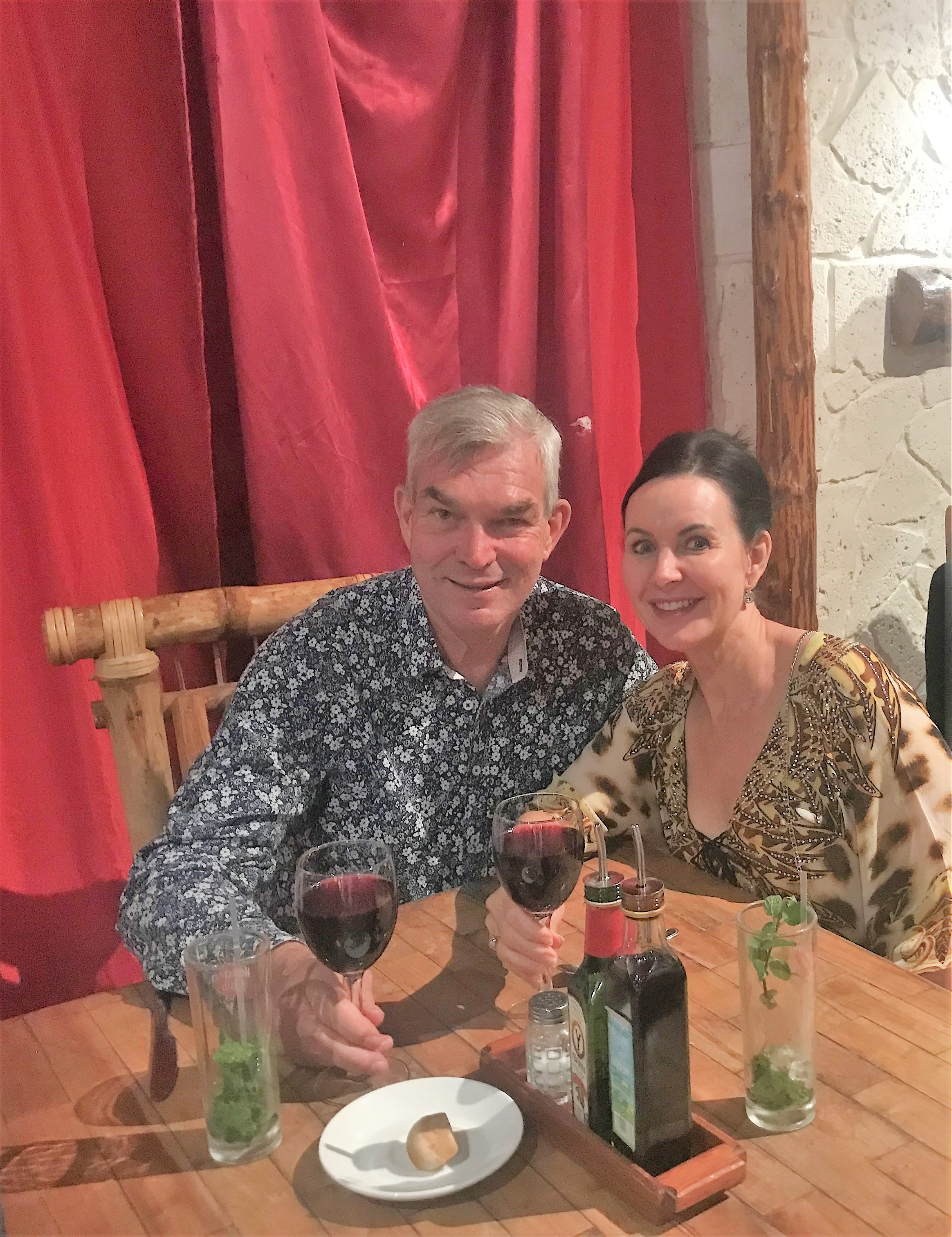
Day 21 28th March
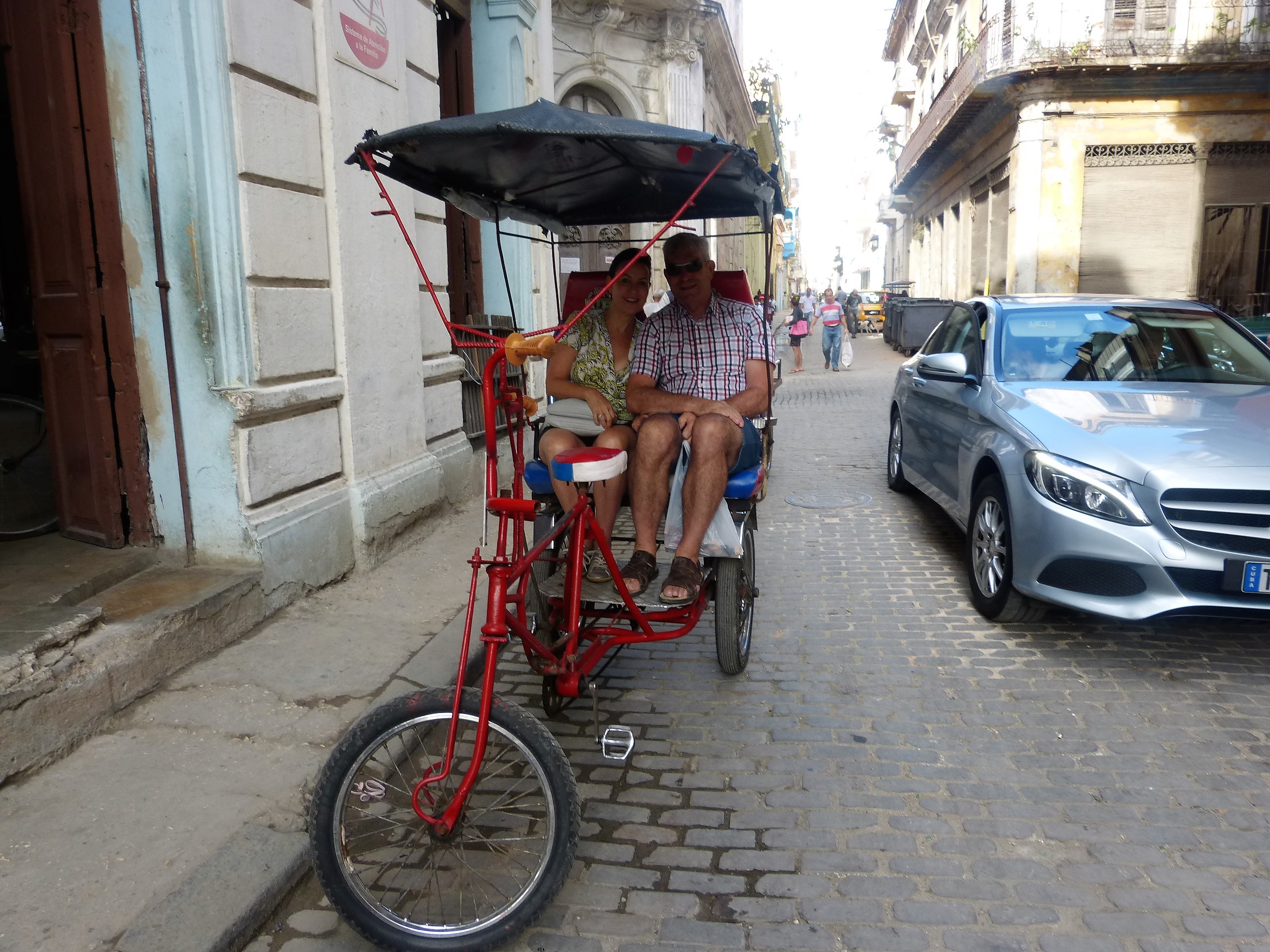
Had to have a last minute work around Old Havana before we went to the airport. I just love the buildings, the colours, the people, can’t get enough! Last minute photos of the cars on the streets. And then bici- taxi back to Plaza Veija- now I feel like I have experienced It all!
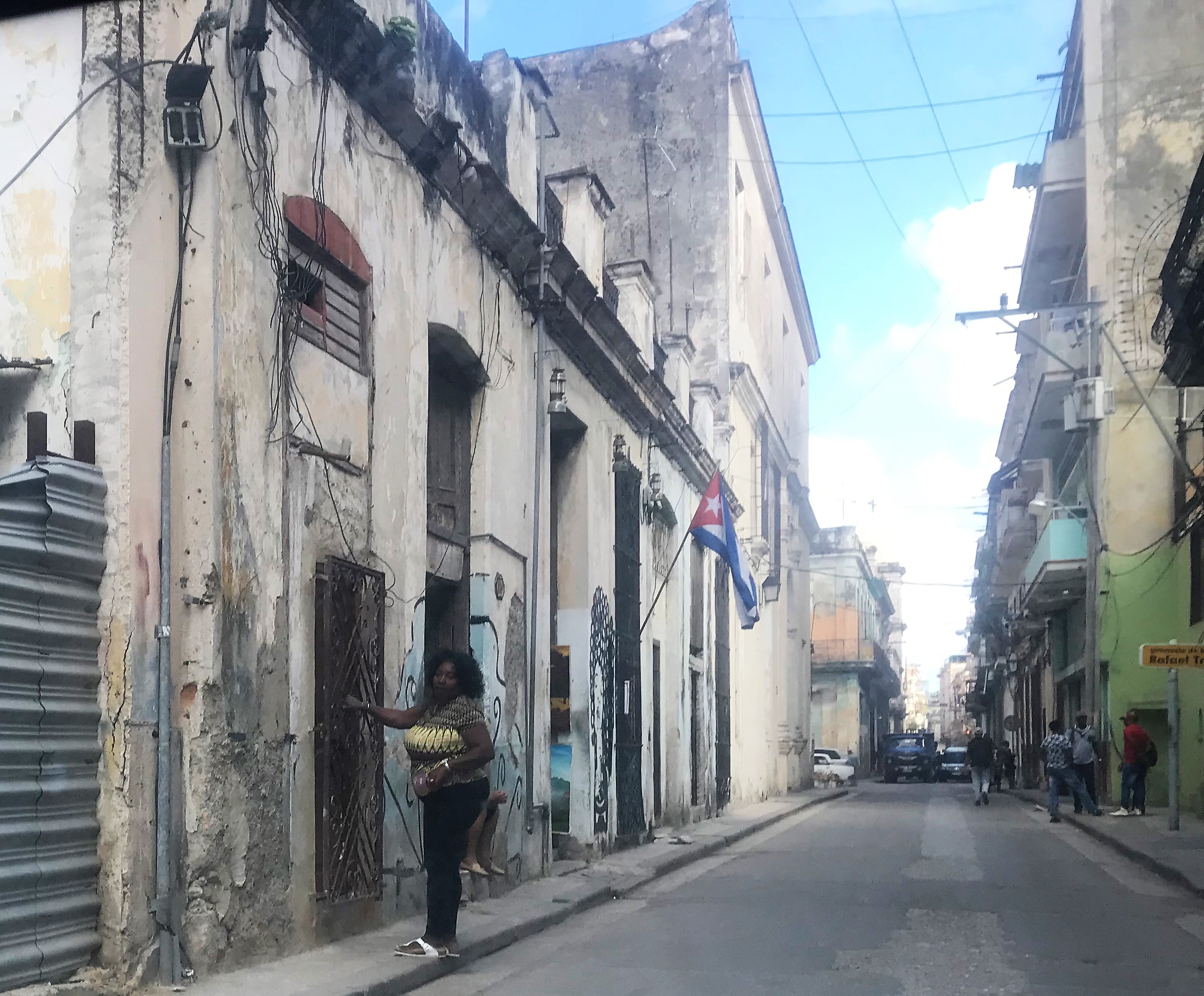
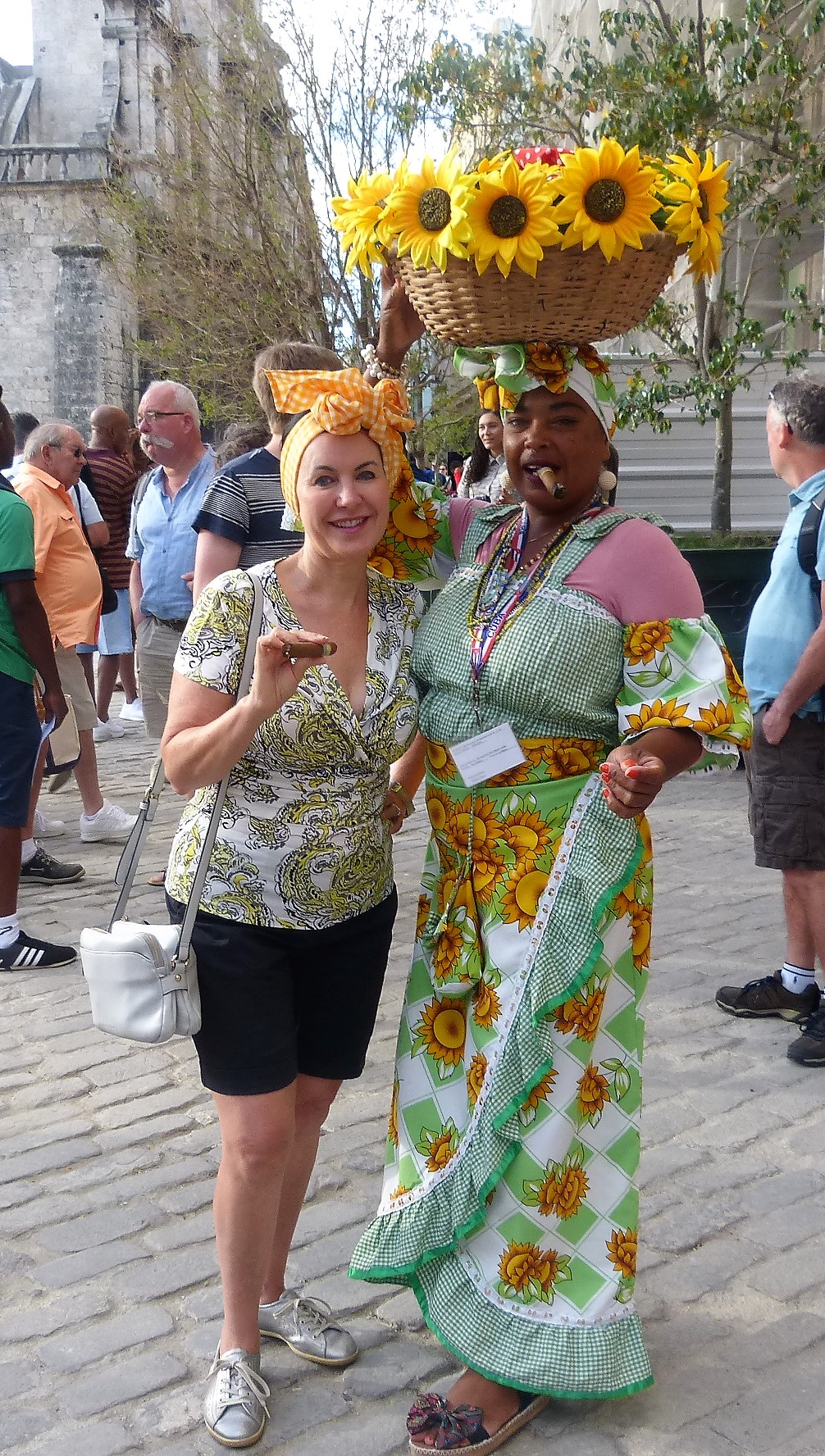
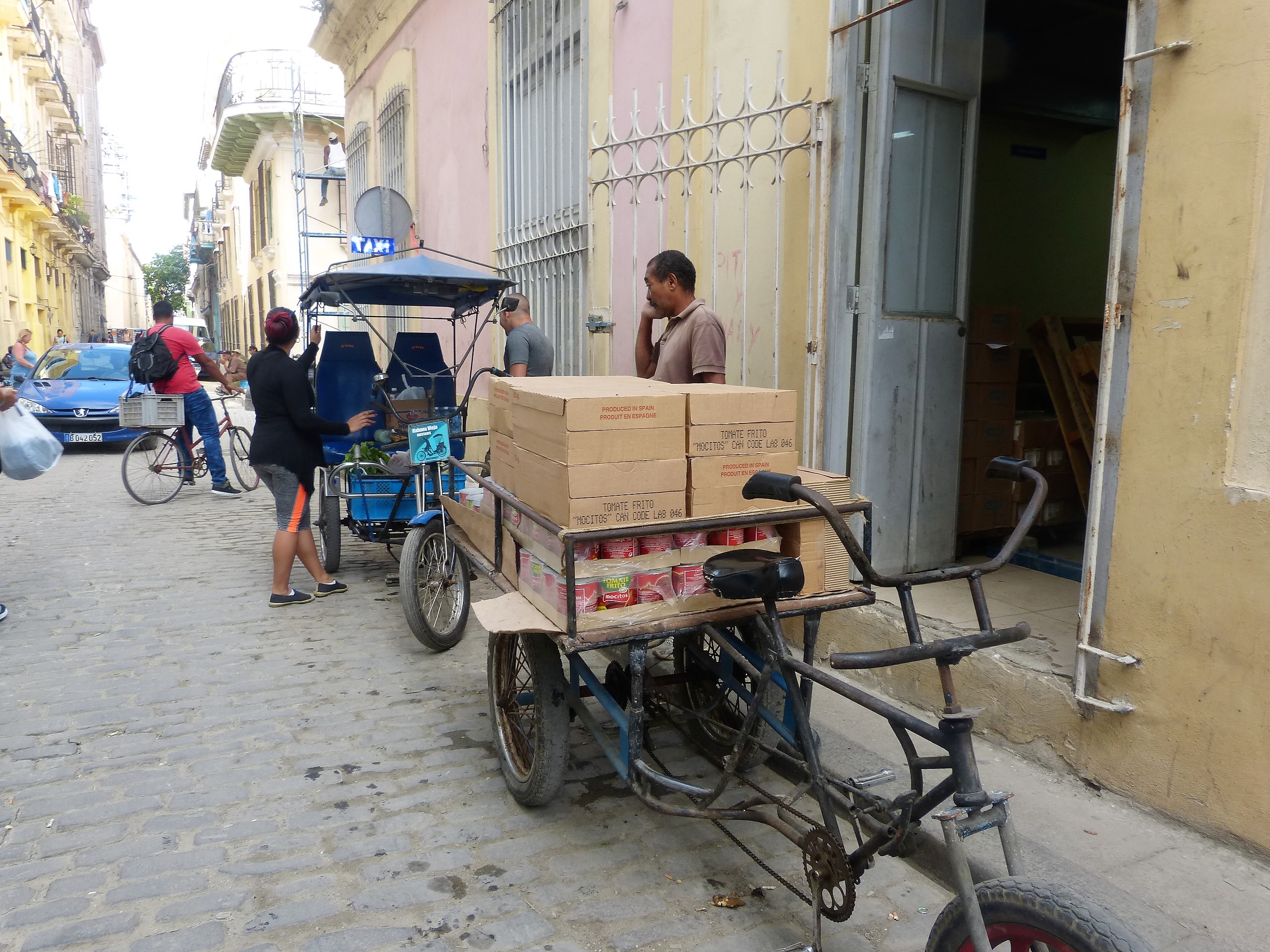
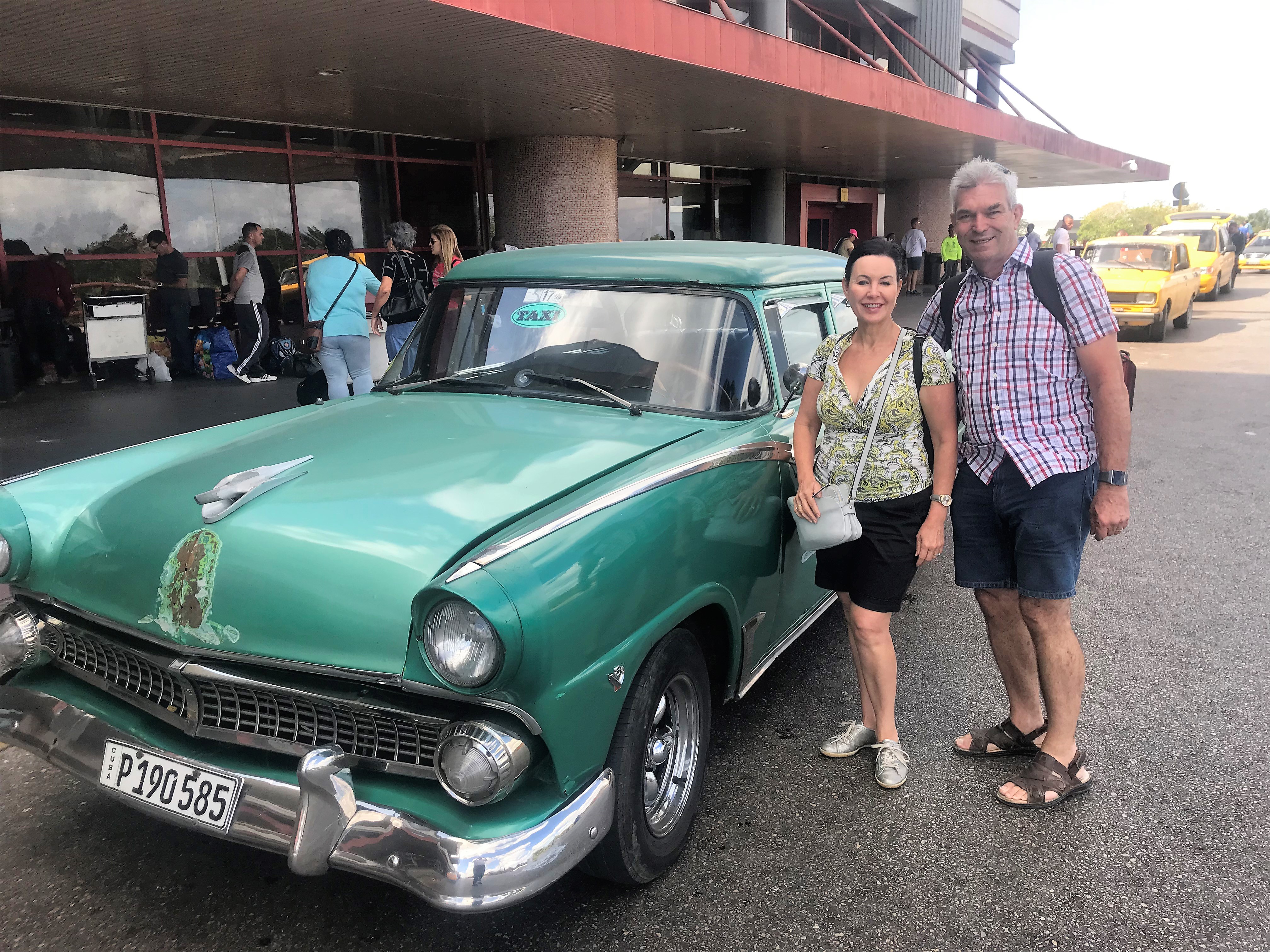
Picked up in a green 1958 Ford Fairlane to go to the airport! Cool. We leave Cuba with many fond memories… one I won’t forget, every time we said we were from Australia, the first comment we got was “ Skippy!” They all have watched and loved the show.
Mexico – Merida on the Yucatan Peninsula
Day 21 28th March
Short flight from Cuba to Merida on the Yucatan Peninsula, Mexico – less than 1 hour- however Immigration and Customs took nearly two! Only one person checking everyone through Customs!!
Picked up by Gabriel, our Merida guide. He took us to our hotel -La Mision de Fray Diego. It is an antique 17th century mansion attached to the monastery- now restored and converted into a charming boutique hotel. Great location- just a block and a half from the main square.
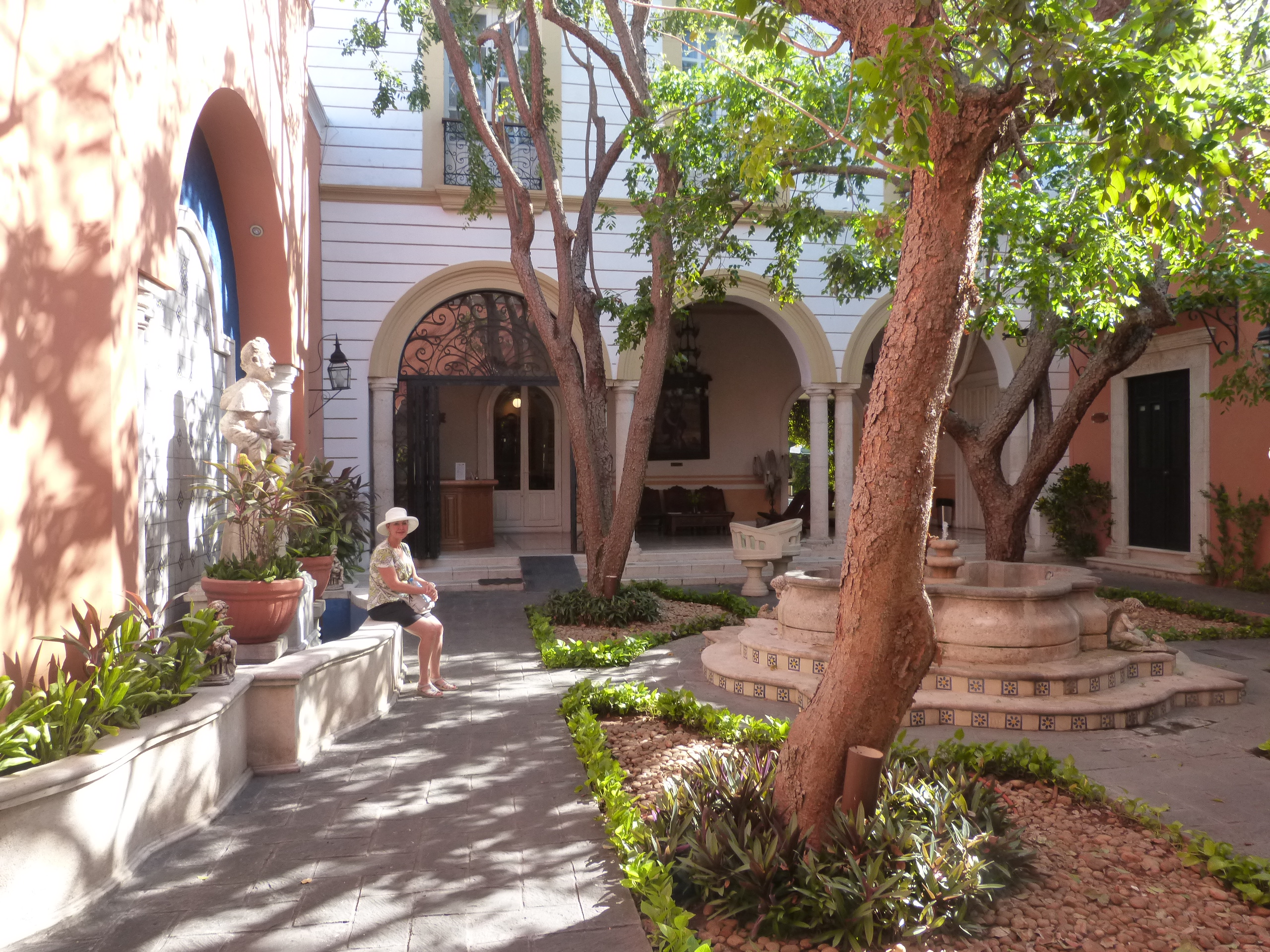
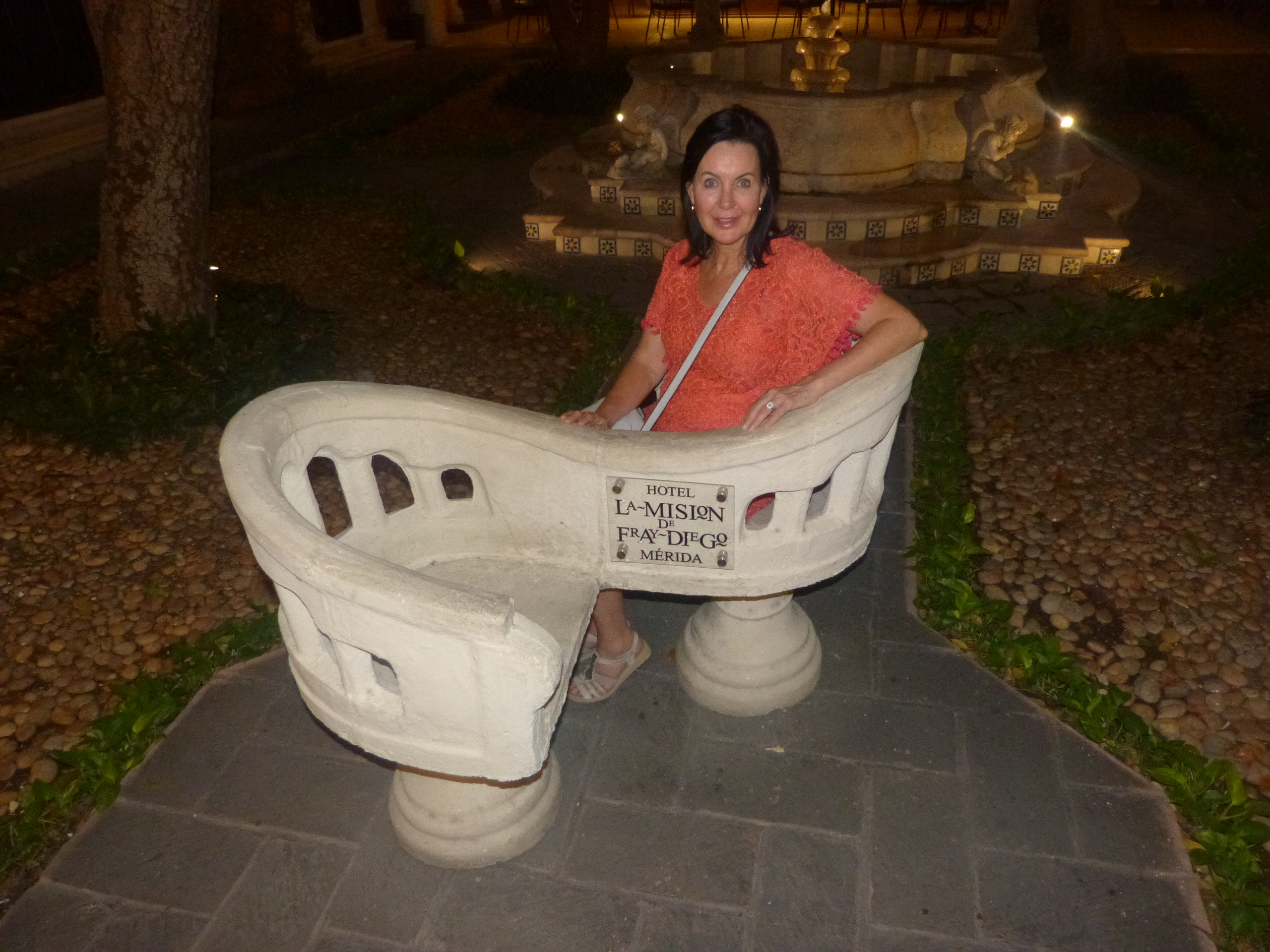
Hotel La Mision de Fray Diego
Out for a wander to get our bearings, change some money – Mexican pesos here, and eat. It was only 4pm, but would have been 6pm in Cuba, and as we had missed lunch we were starving! Quesadillas, nachos and guacamole filled the gap, and of course a margarita or two! Many bars and restaurants around the square. Musicians close by with their guitars.
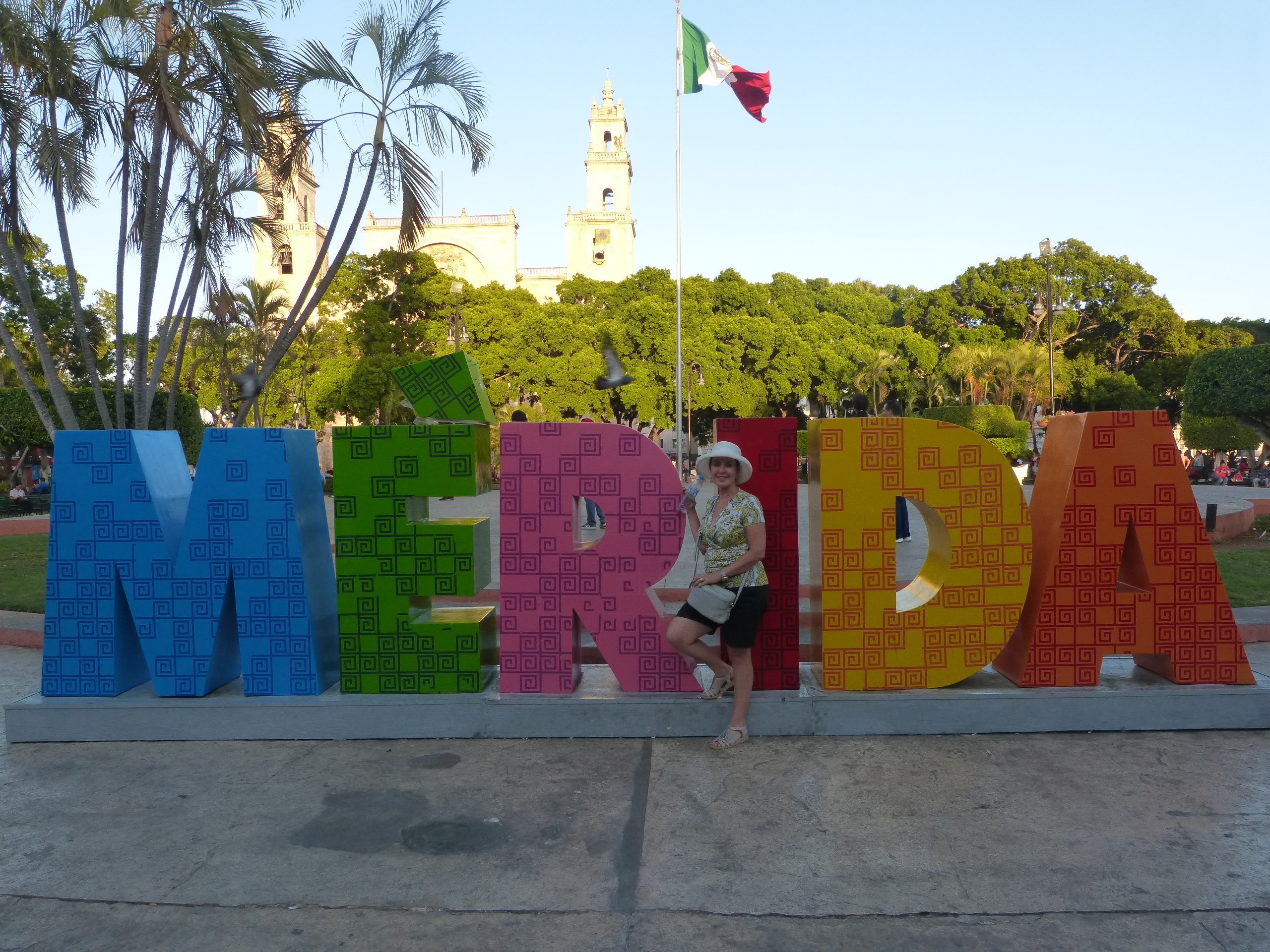
Merida was founded in 1542, upon the ruins of an ancient Maya settlement. We explored Plaza Mayor- actually built over a Mayan temple, the Cathedral and surrounding buildings, more grand buildings, some French influence as well. Walked to Santa Lucia, another popular square with many restaurants, where they do a free show every Thursday night. It is called the Yucatan Serenade, originated in 1965- locals perform music, poetry, and dance, all in their traditional Mayan embroidered white dresses/shirts/trousers.

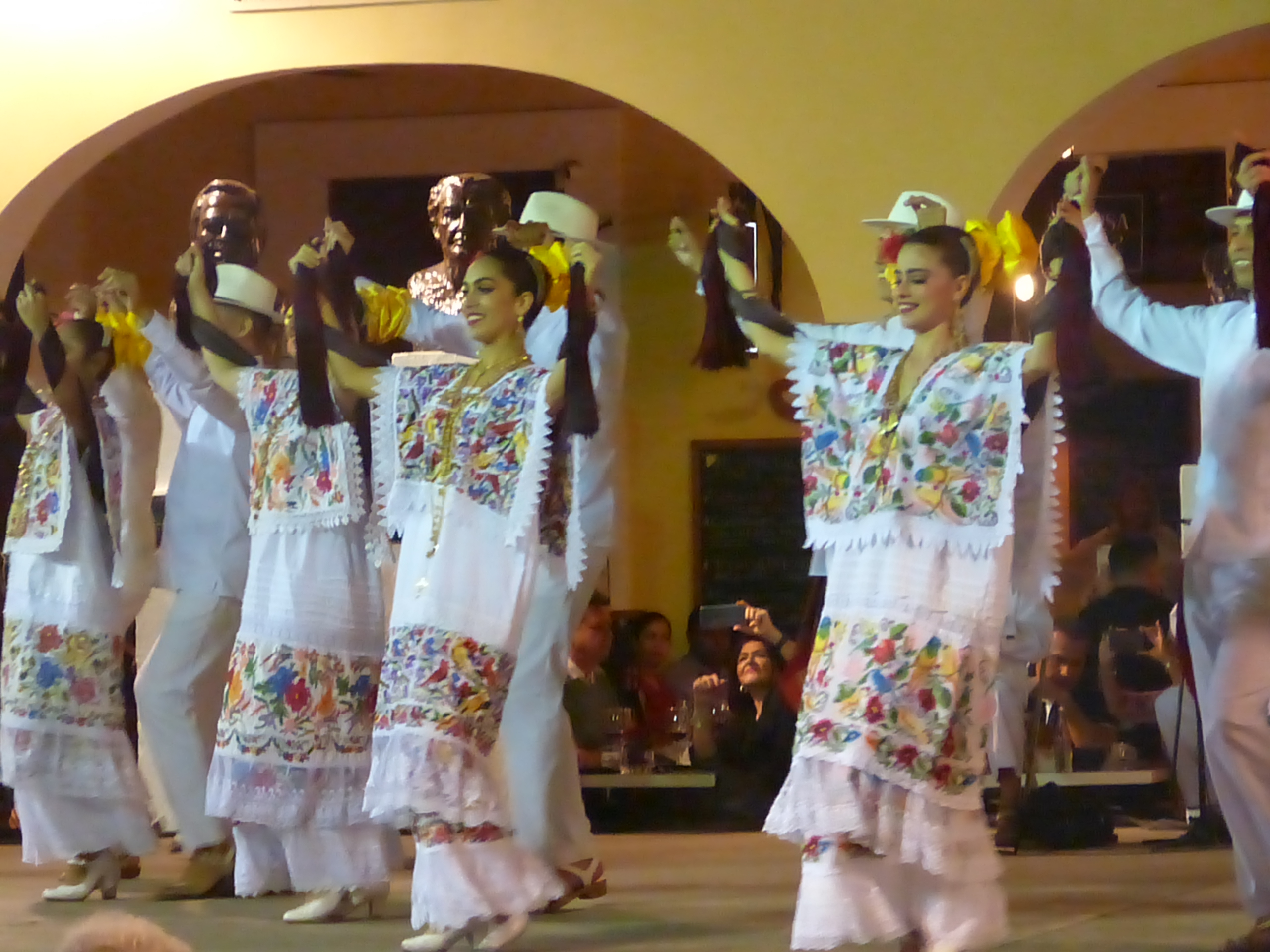
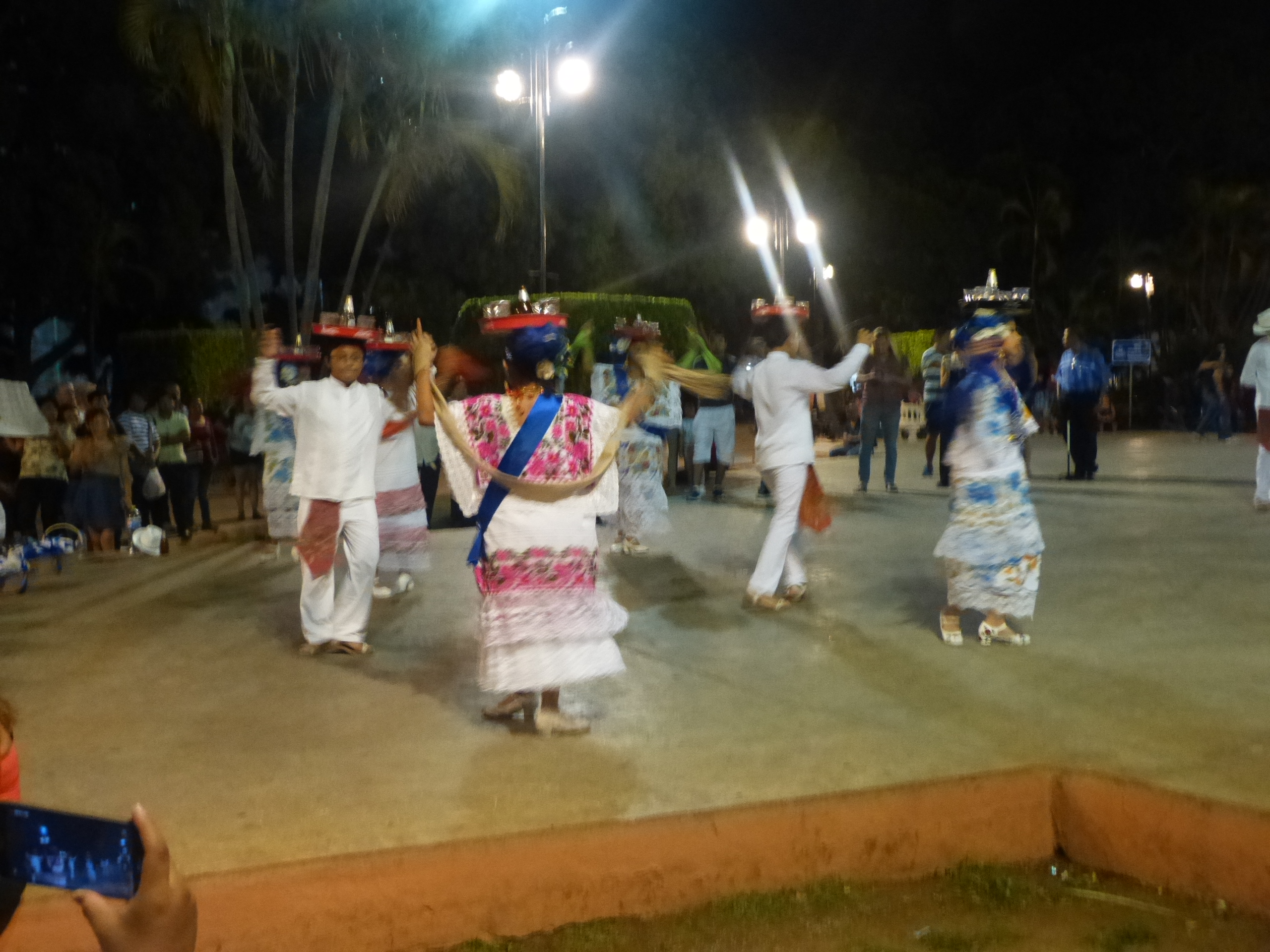
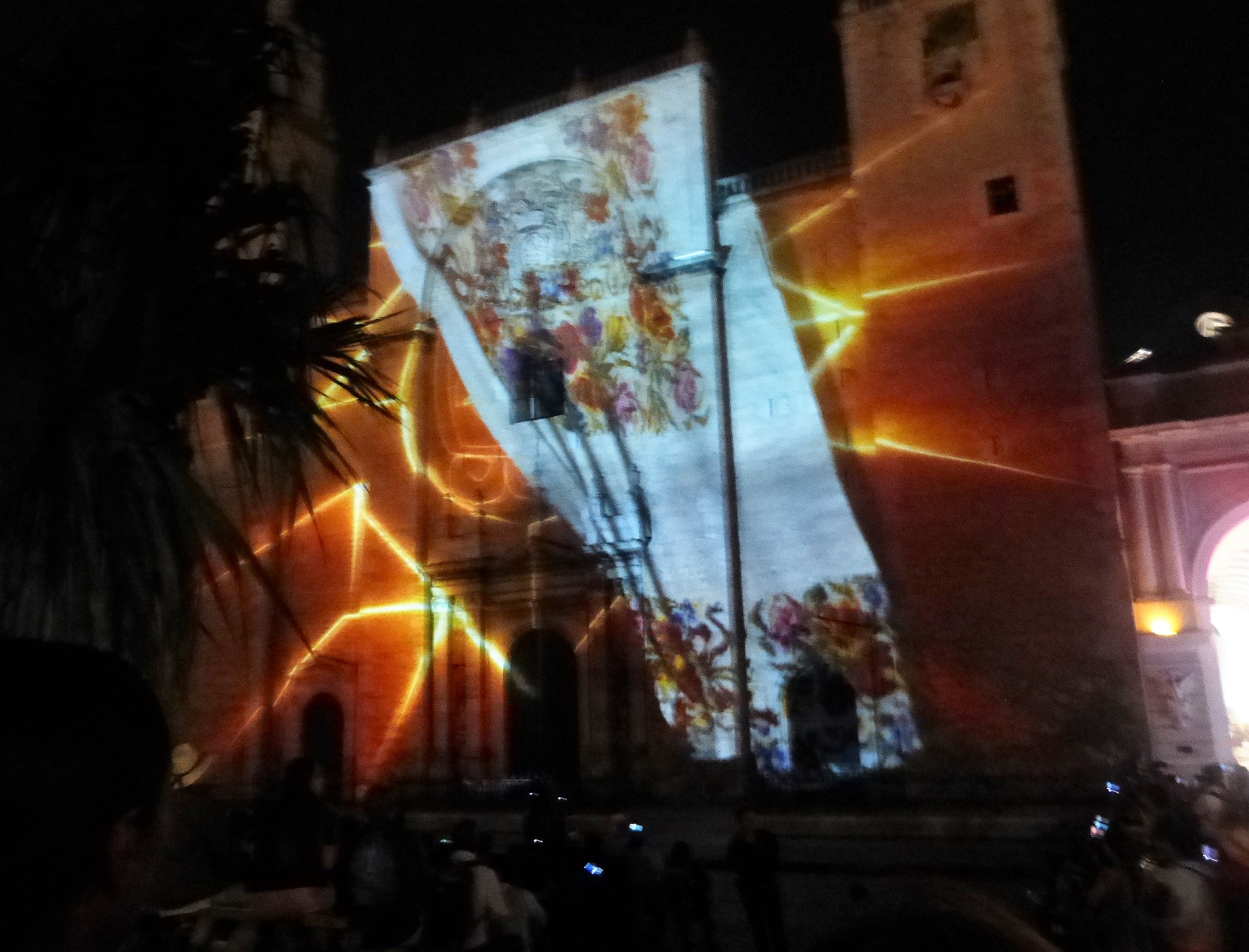
The second night in Merida had another free show- folk dancing in the square, performed by children, so cute, then laser light show on the cathedral wall- lovely, only we didn’t understand the story! Dinner alfresco, enjoying the Mexican food and street activities – markets, music.
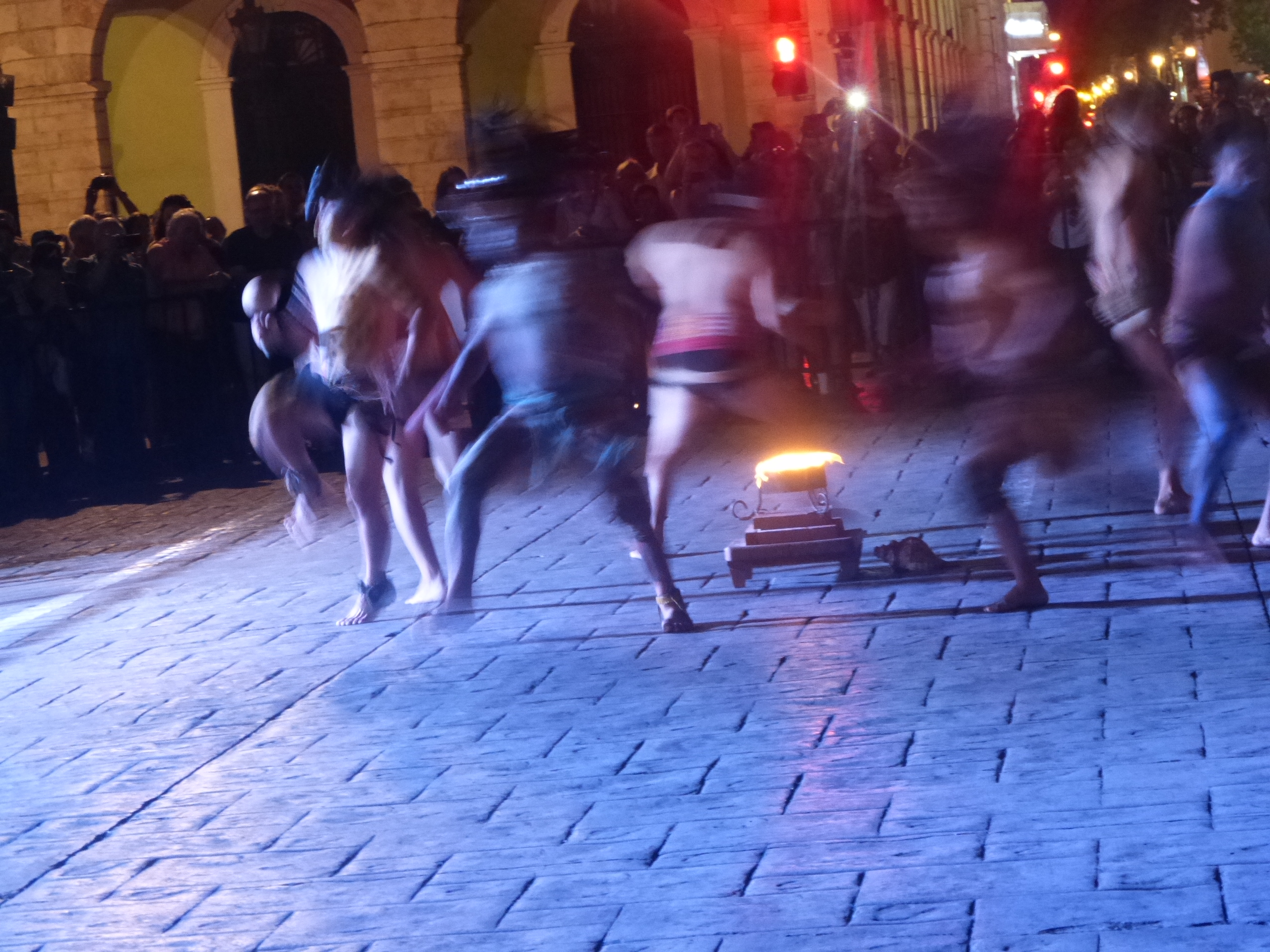
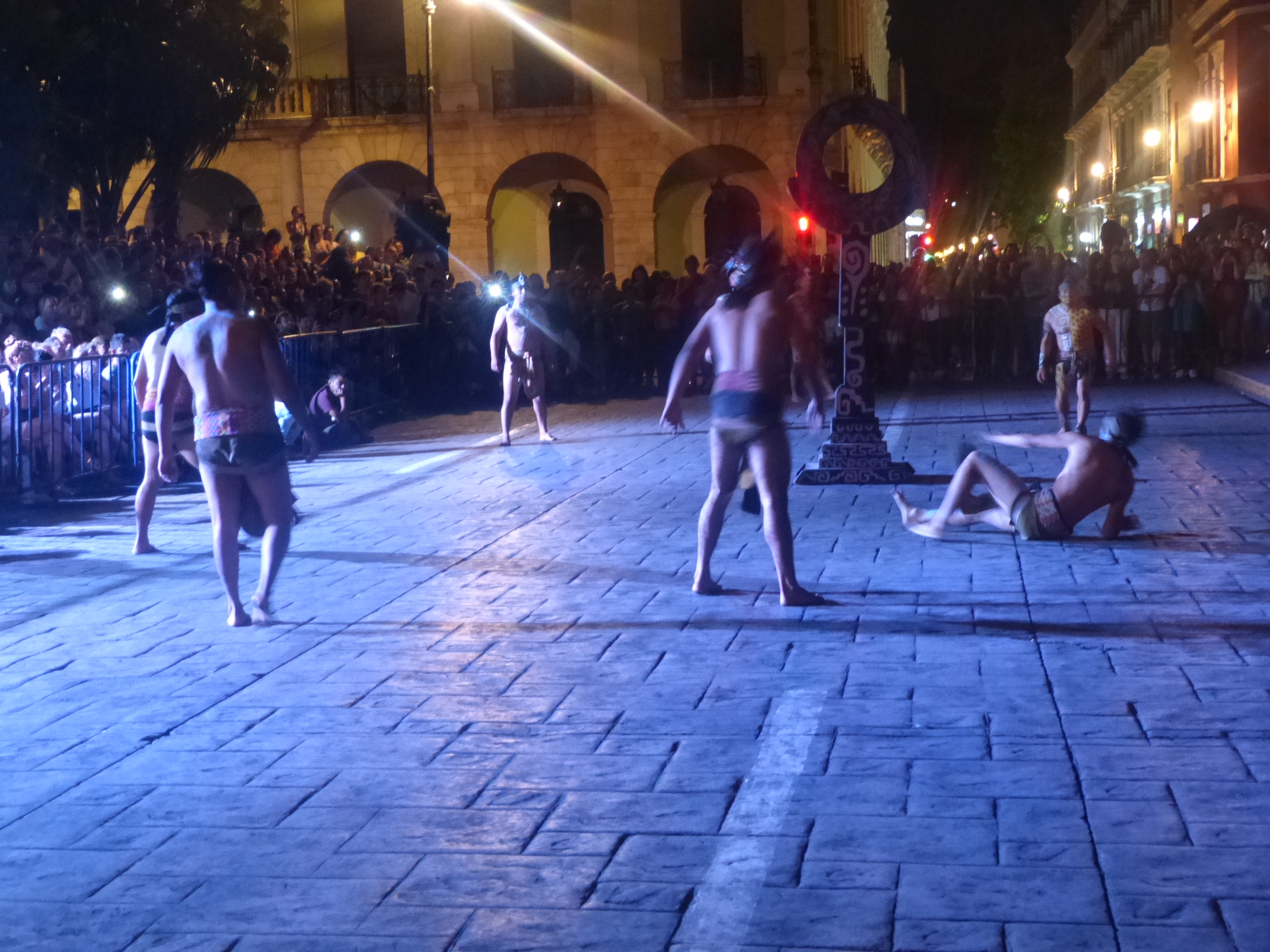
On the third night, another activity in the square – a football game, not like we know though! It was a recreation of the traditional pok de pok which was played during Mayan times. Played with a rubber ball weighing 2 kgs, and can only be touched by the body, elbow or knee, the ball has to go through a ring attached to the wall on either side of the court (the captain was sacrificed if the team won! – that’s in the past!) Lot of ceremony before they got started, but so wonderful to see they are keeping the tradition alive! Well patronised by tourists and locals.
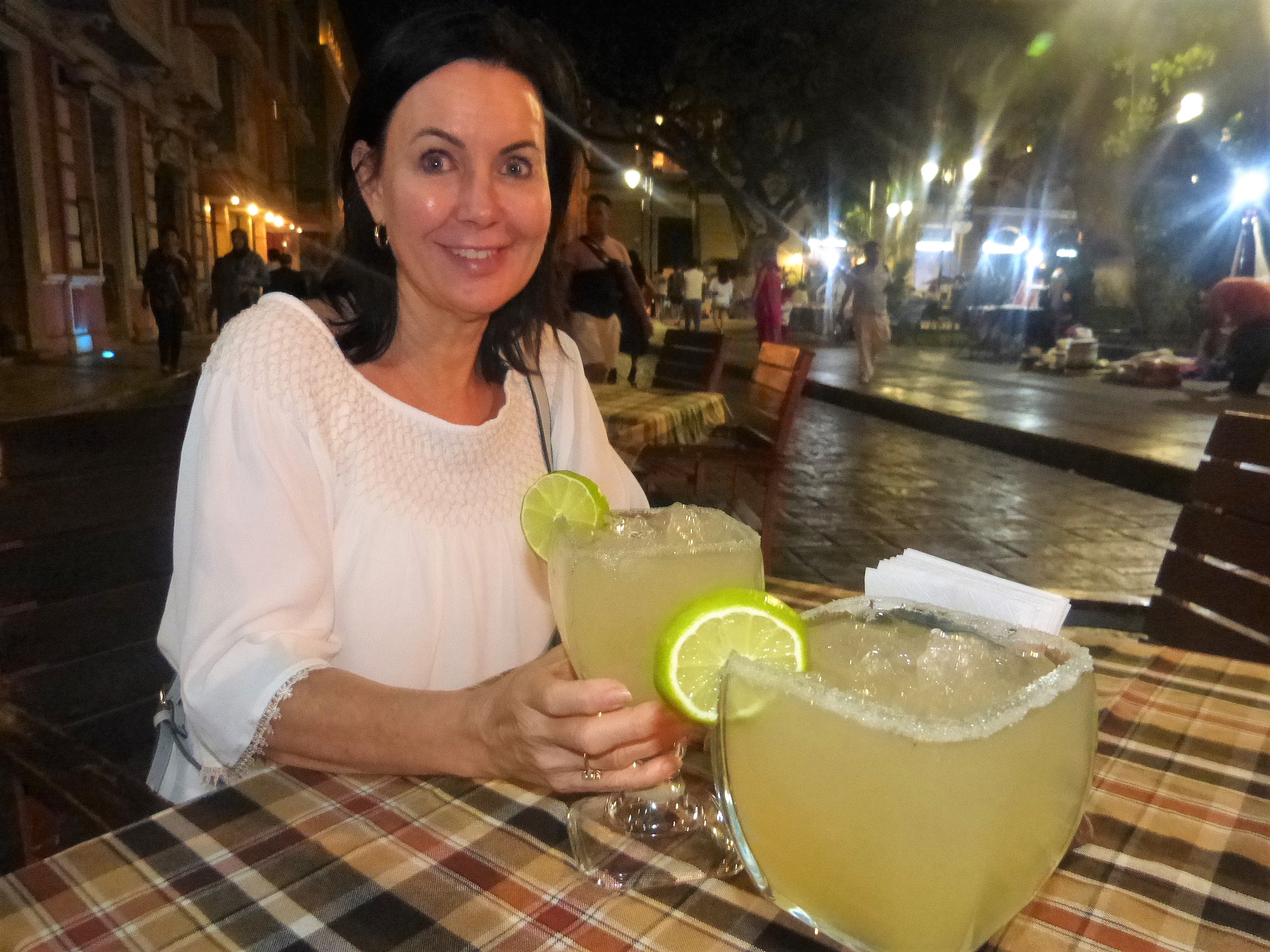
Next dinner, great little restaurant, Coyote
Mayan, opposite one of the churches- saw a wedding. Food was fantastic, lime
soup for me, fajitas for Frank – which he didn’t stop raving about, and the
biggest margarita I’ve ever seen- needed 2 hands to pick it up! Great live
salsa music to enjoy as we ate.
Markets everywhere, hawkers everywhere, girls
carrying half a shop of clothes to sell- never saw a sale! We did help out
there- and bought a hammock! $20 – bargain! Heaven only knows where that is
going- maybe we’ll sell our bed! You do amazing things when you’ve had an extra
large margarita!
Mexico – Mayan Ruins Uxmal
Day 22 29th March
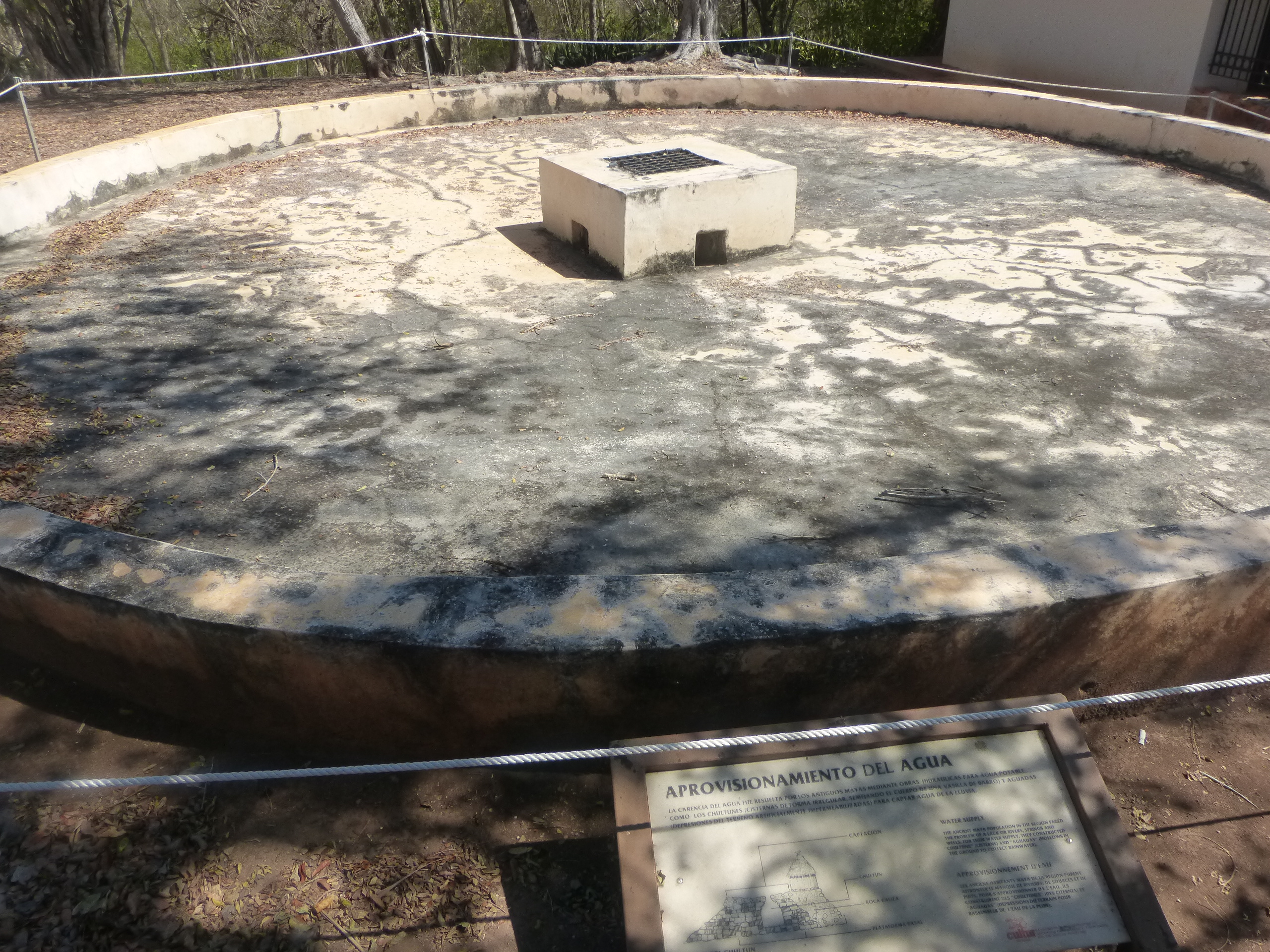
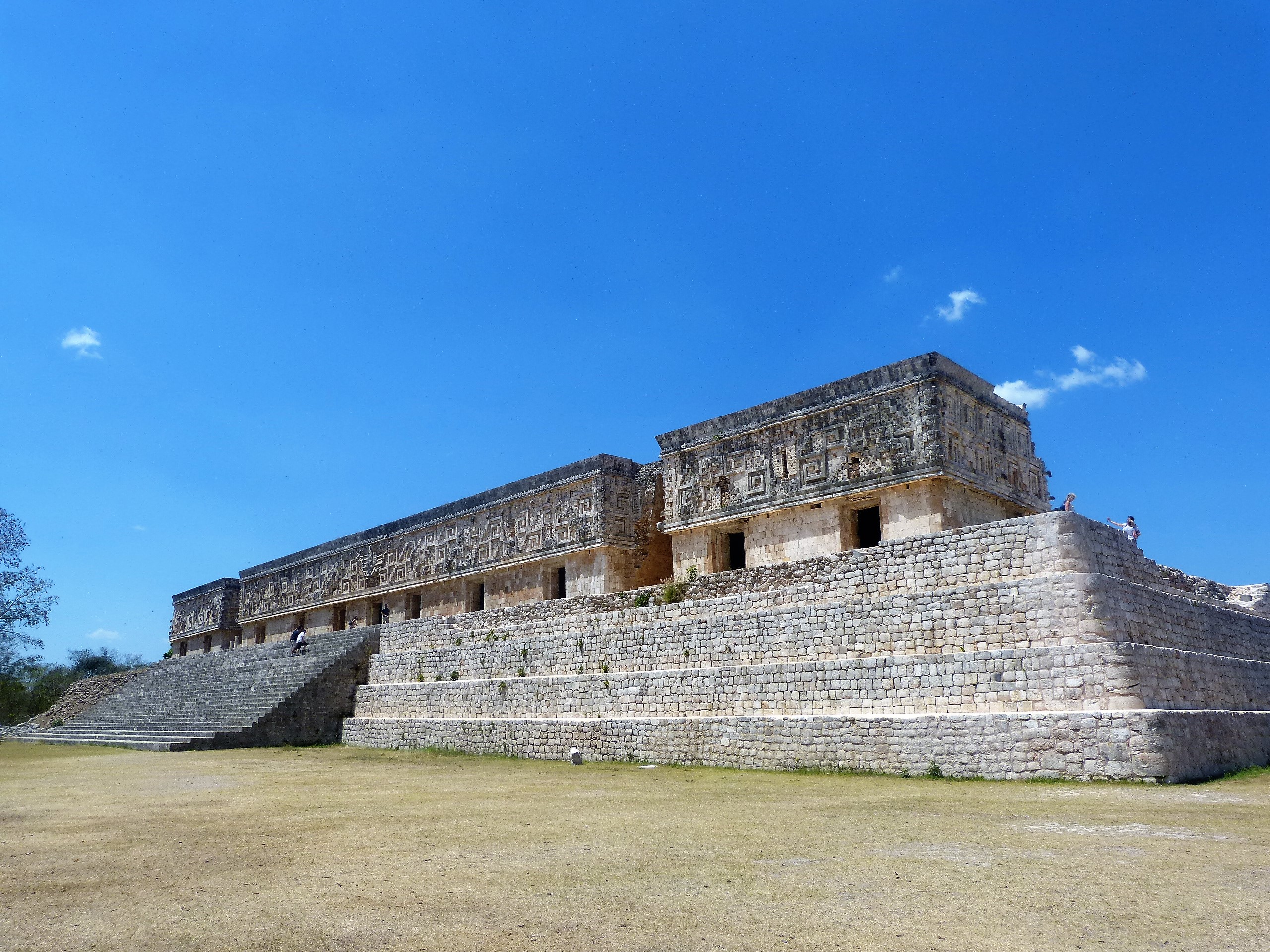
Day trip to archaeological site of Uxmal, 80 kms south of Merida, with Gabriel today. Uxmal was amazing! This is a Mayan ruin site which was discovered originally in 1904, although some parts were only discovered 3 and 5 years ago! And there are many more sites, including pyramids that are yet to be uncovered! Inhabited in 600-900 AD at the height of the Mayan Empire. Aqua duct system in place way back then, with many chultunes (wells) clearly visible. The only thing they missed was sanitation, so after a while people started dying from disease – so that is why they moved onto another site, and rebuilt!
Architecture is characterised by low horizontal palaces set around courtyards, decorated with a profusion of symbolic motifs and sculptures depicting the long nosed rain god Chaac. The Pyramid of Magicians was 38 metres high, and dominates the site. Explored also the Nunnery, House of Turtles, then climbed the steps of the Great Pyramid which was 25 metres. Extremely steep, and hot ( got to 36 today) , very nerve wrecking going down as so steep. And what was most amazing, was because it is a more recent find, there were relatively few people there- compared to other ruins, we felt we had the place to ourselves! Couldn’t stop commenting on how lucky we were! The restoration has been extremely well done.


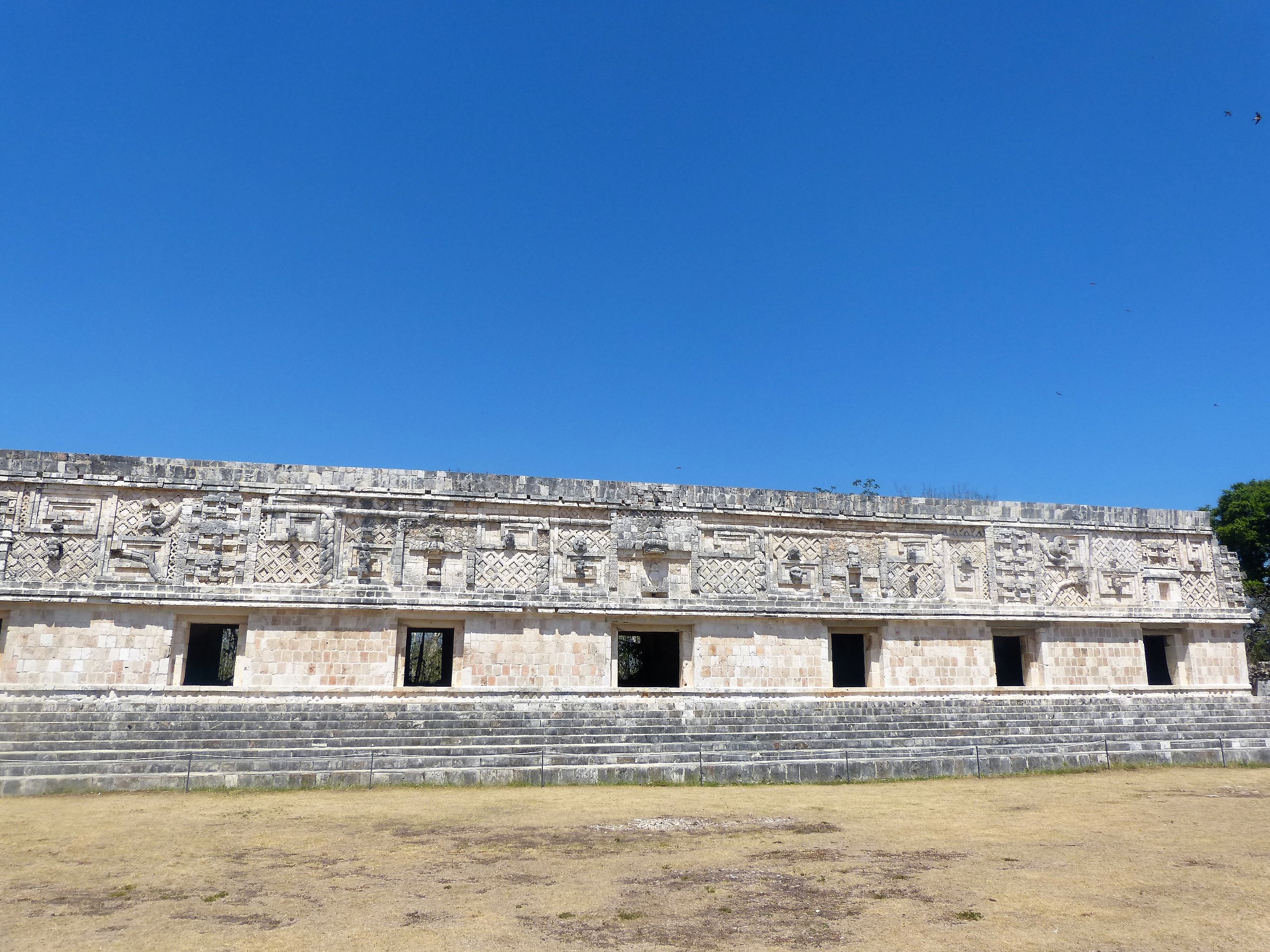
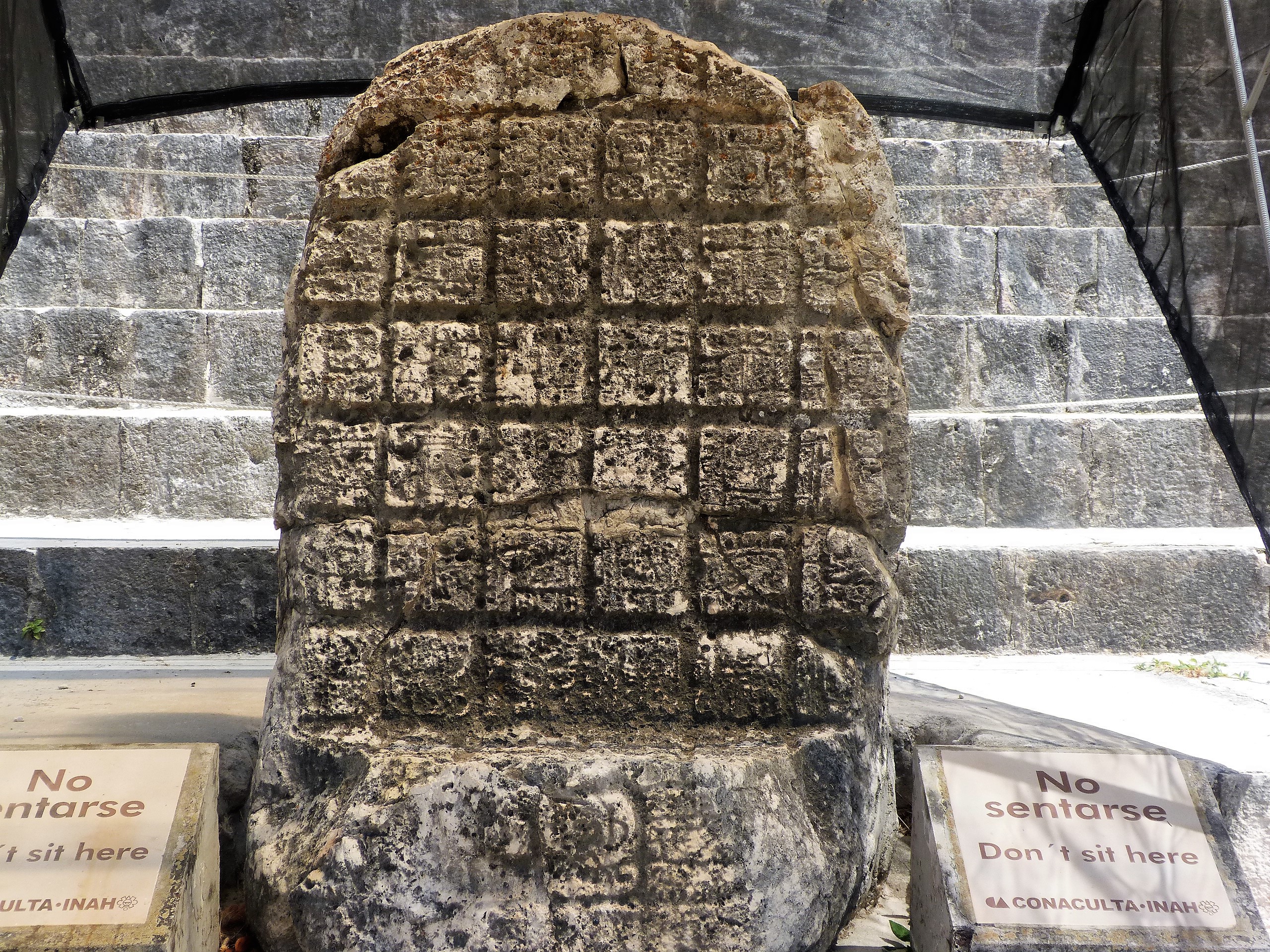

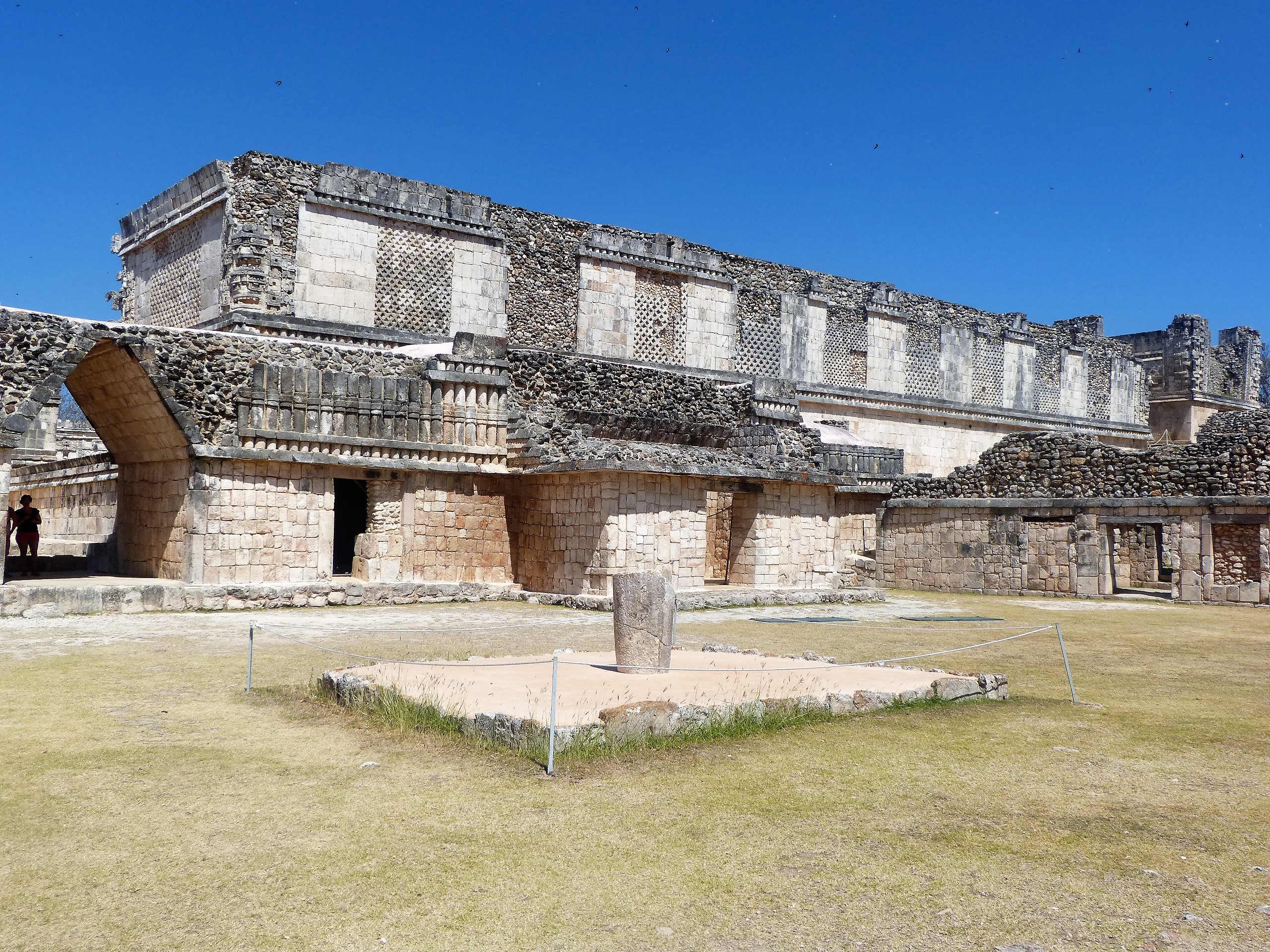
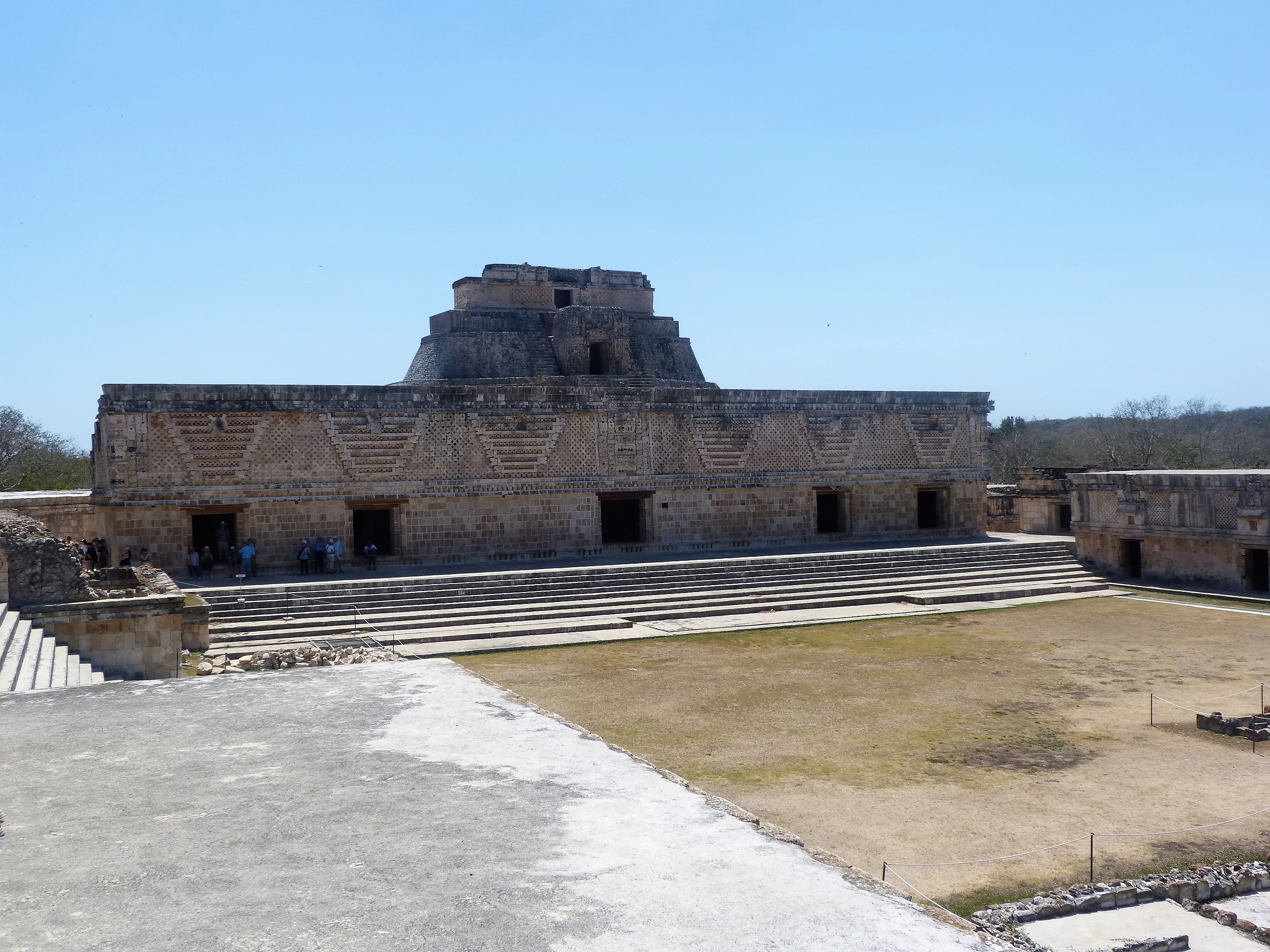


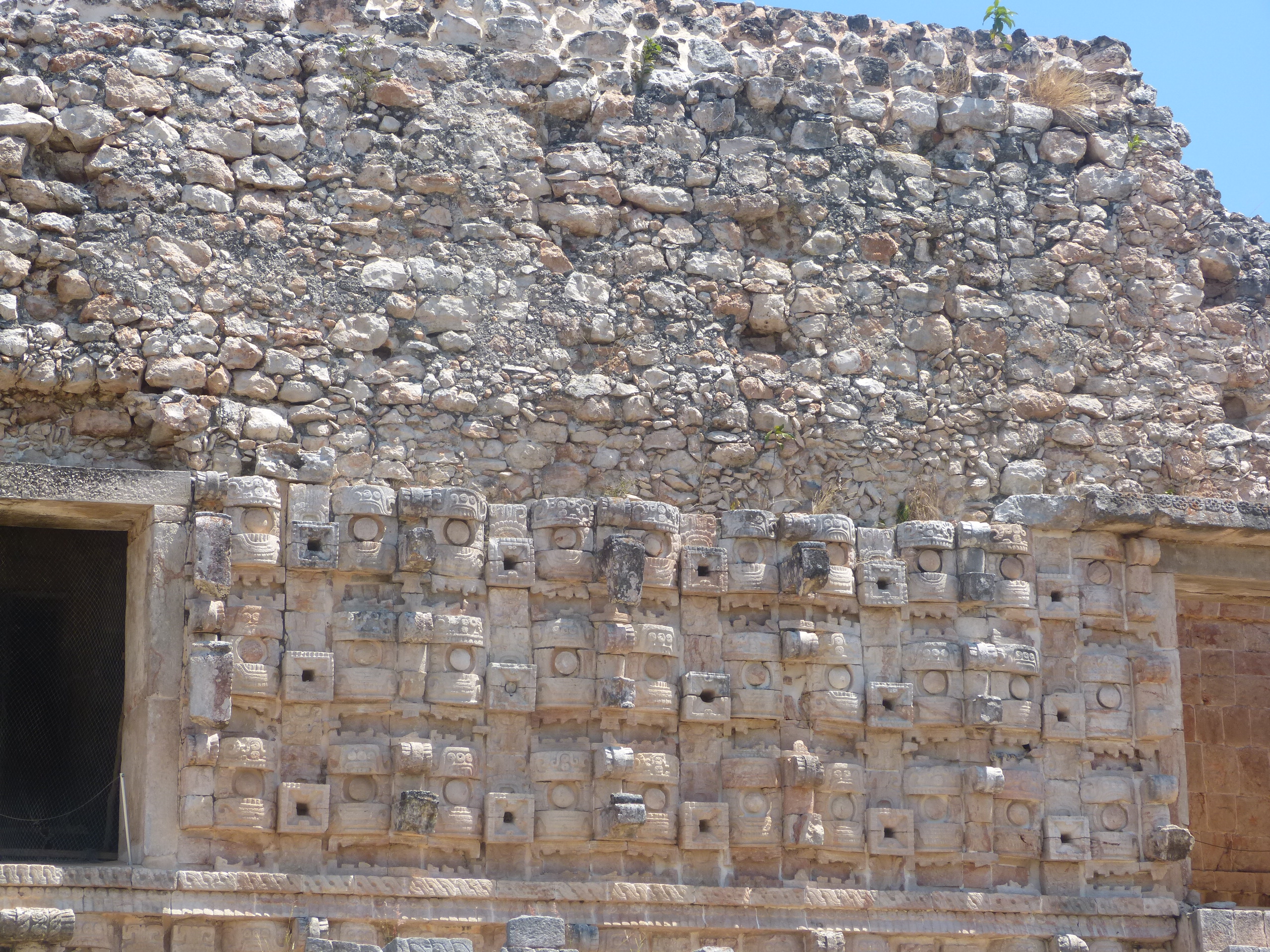
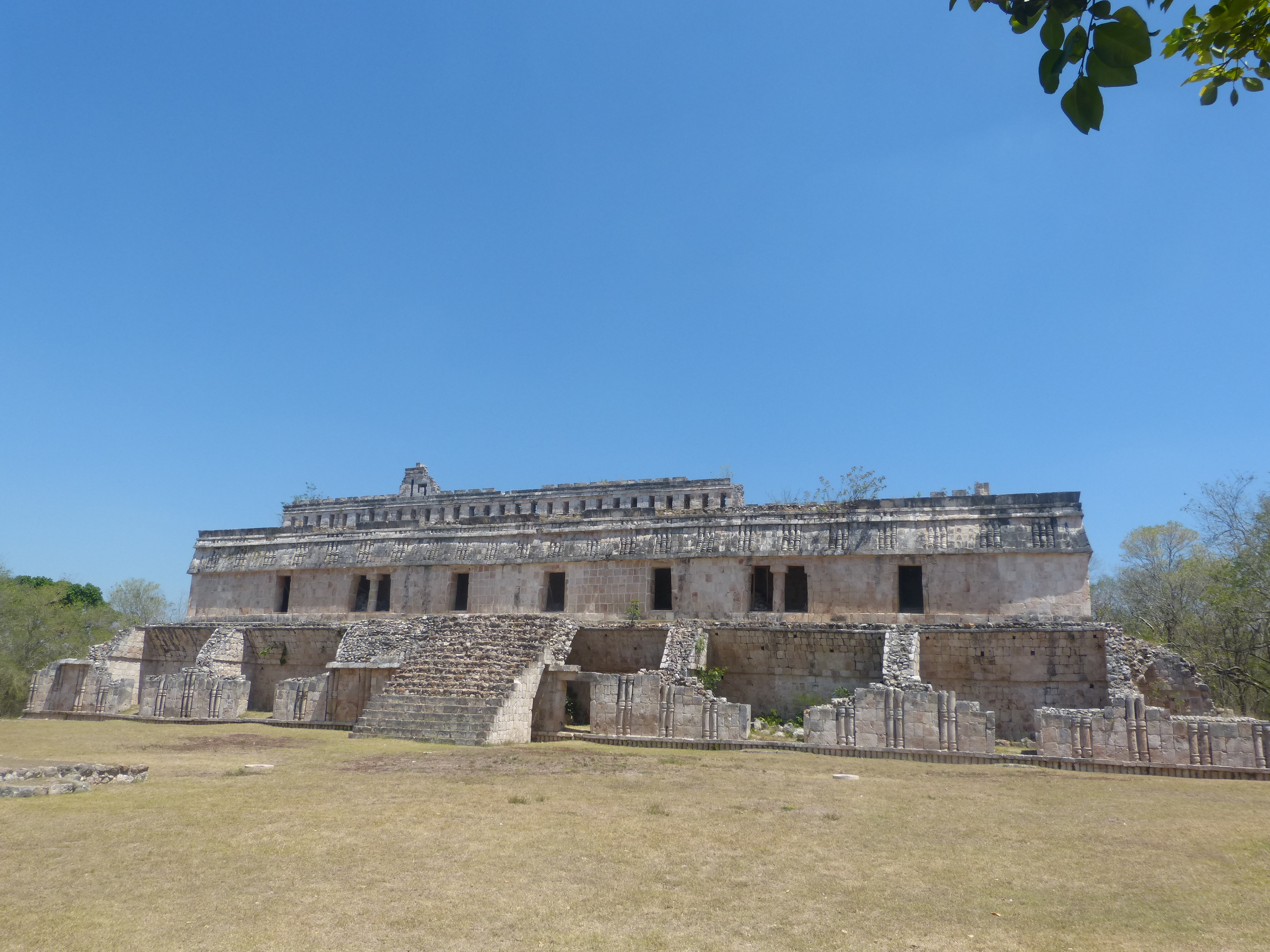
Twenty minute drive then to Kabah, another site, with its amazing Palace of the Masks, covered in nearly 300 masks of Chaac. This is where we drove right beside 2 uncovered pyramids – they just look like hills! Absolutely fascinating, and again we had the place to ourselves!
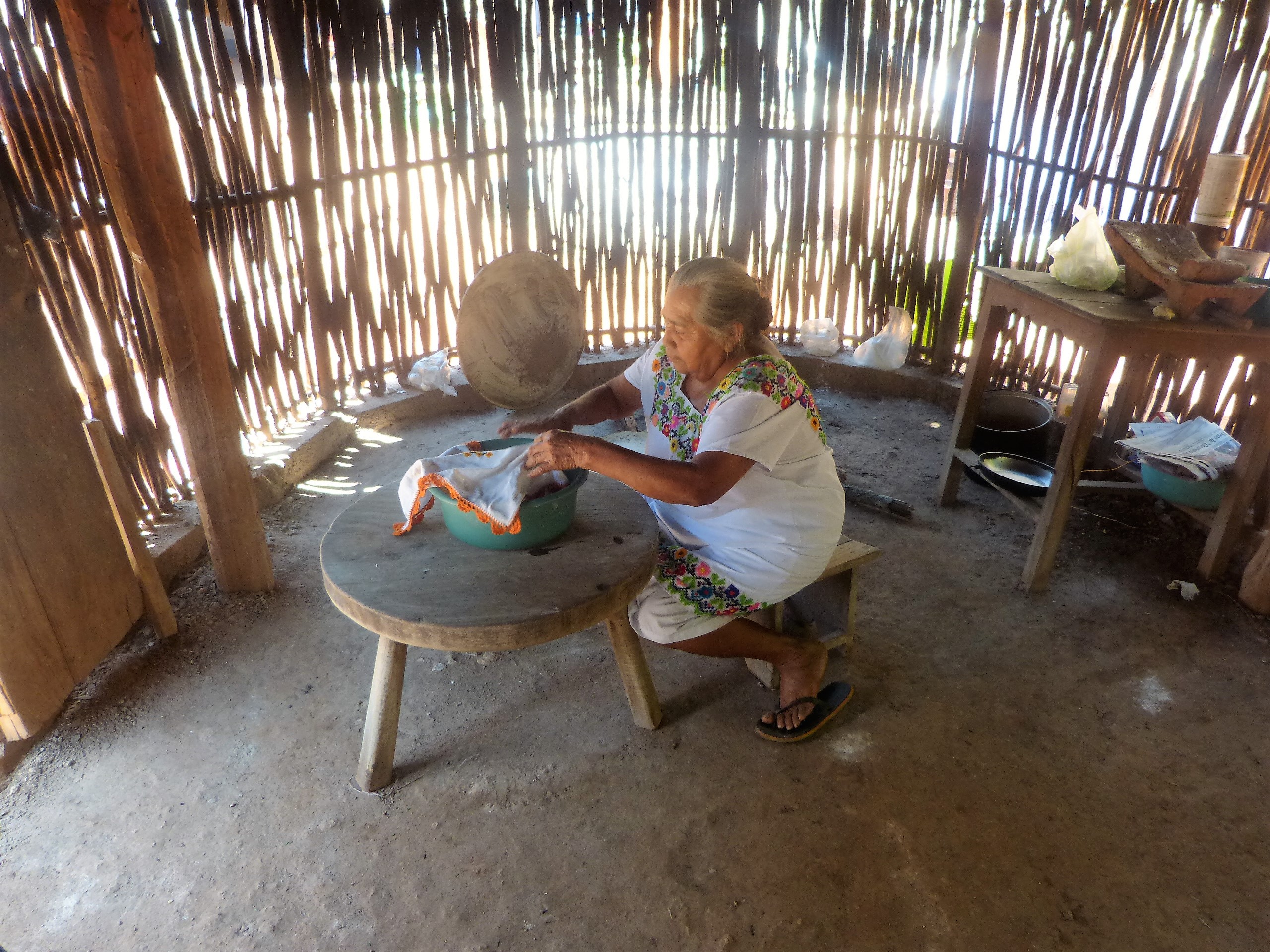
Gabriel then took us into the rural town of Santa Elena, where we visited a traditional Mayan family home (10% of Mayans still live this way). The owner, Elnud, aged 78, took great delight in showing us his family home, even giving us a demonstration of how to get into the double hammock! His wife cooked us some tortillas on the open fire, which we seasoned with dry squash, salt, and chilli- yum. Walked around their gardens, very self sufficient. Had indoor and outdoor altars for Mayan ceremonies. Endur showed us how he makes rope from agave (sisal- lots of agave farms here). Lovely welcoming people.



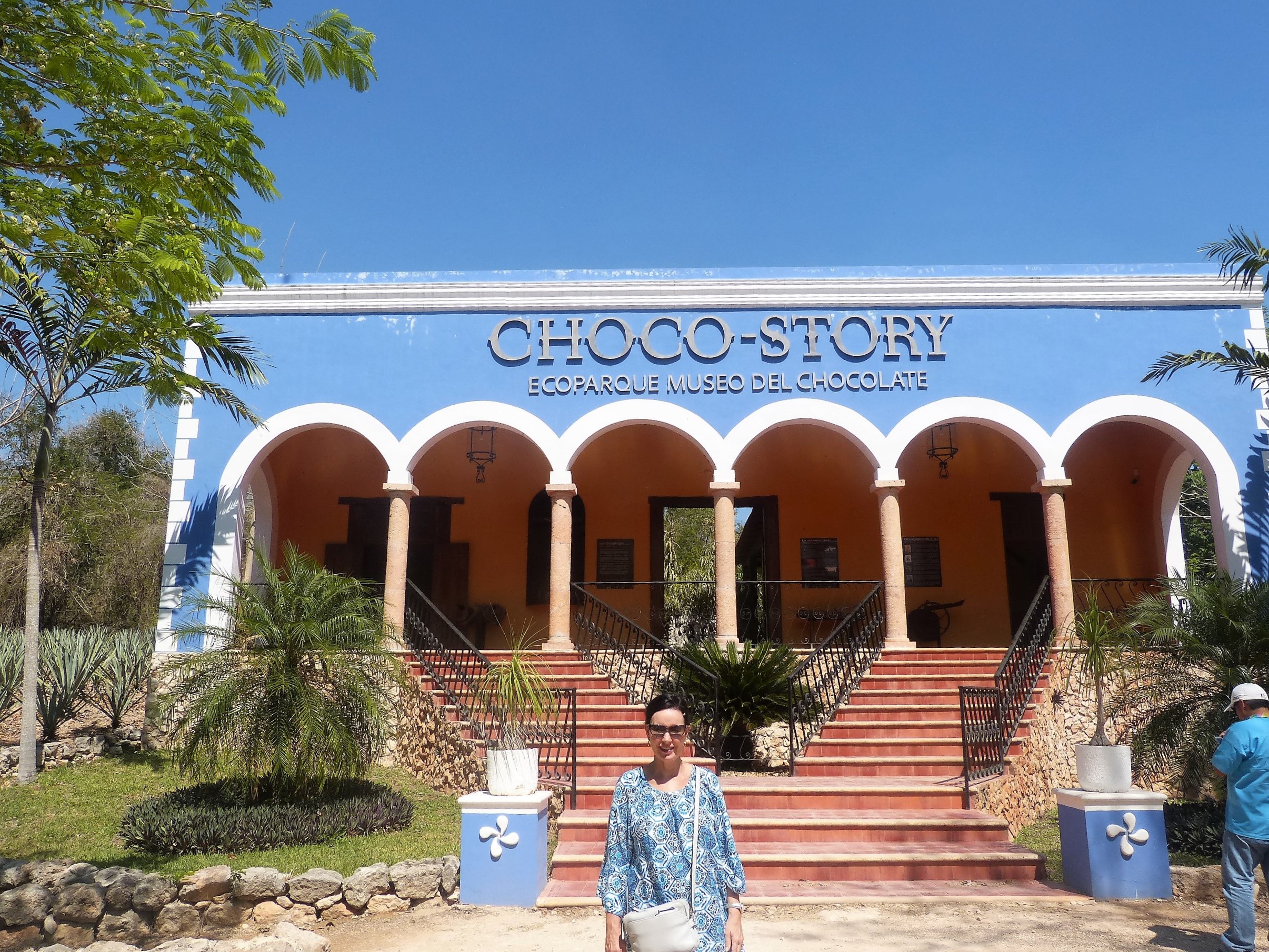
Next, the Eco Museum of Cacao- chocolate and coin were important trading currency in the Mayan times, so chocolate is a big part of the history. Had chocolate drink to try- very bitter – sugar wasn’t added until 19th century when Europeans arrived. Now, the cocoa paste is imported to Belgian factory.
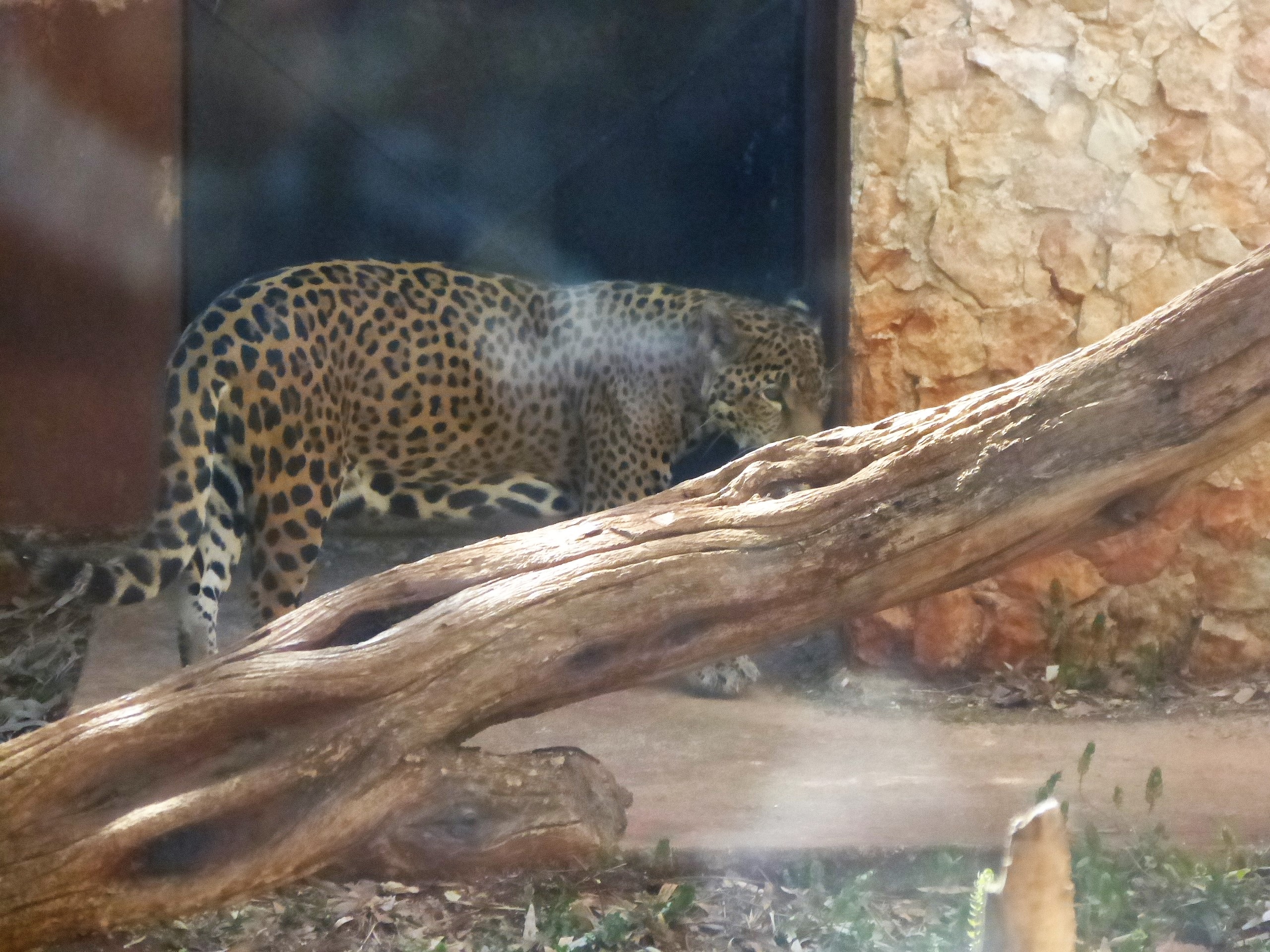
They had beautiful gardens there, plus was a refuge for rescue animals- a male and female jaguar, spider monkeys, and white tailed deer which are in risk of extinction, now protected.

Next, a much welcomed lunch- it was now nearly 4pm, and we were starving, and, in need of a beer because it was so hot! Any excuse really! Enjoyed Montejo local beer, plus traditional cfood – Lime soup, panuchos(small tortillas with pork/chicken/turkey and salsa on top), conchinita(pork cooked in a banana leaf in an underground pit, flavoured with four orange, and mashed beans on the side – this would be eaten as a family meal every Sunday) candied papaya- all delicious!

Mexico – Yucatan Peninsula – Celestun
Day 23 30th March
Dropped off 3 kgs washing at Lavanderie next to our hotel – $2.50! Bargain!
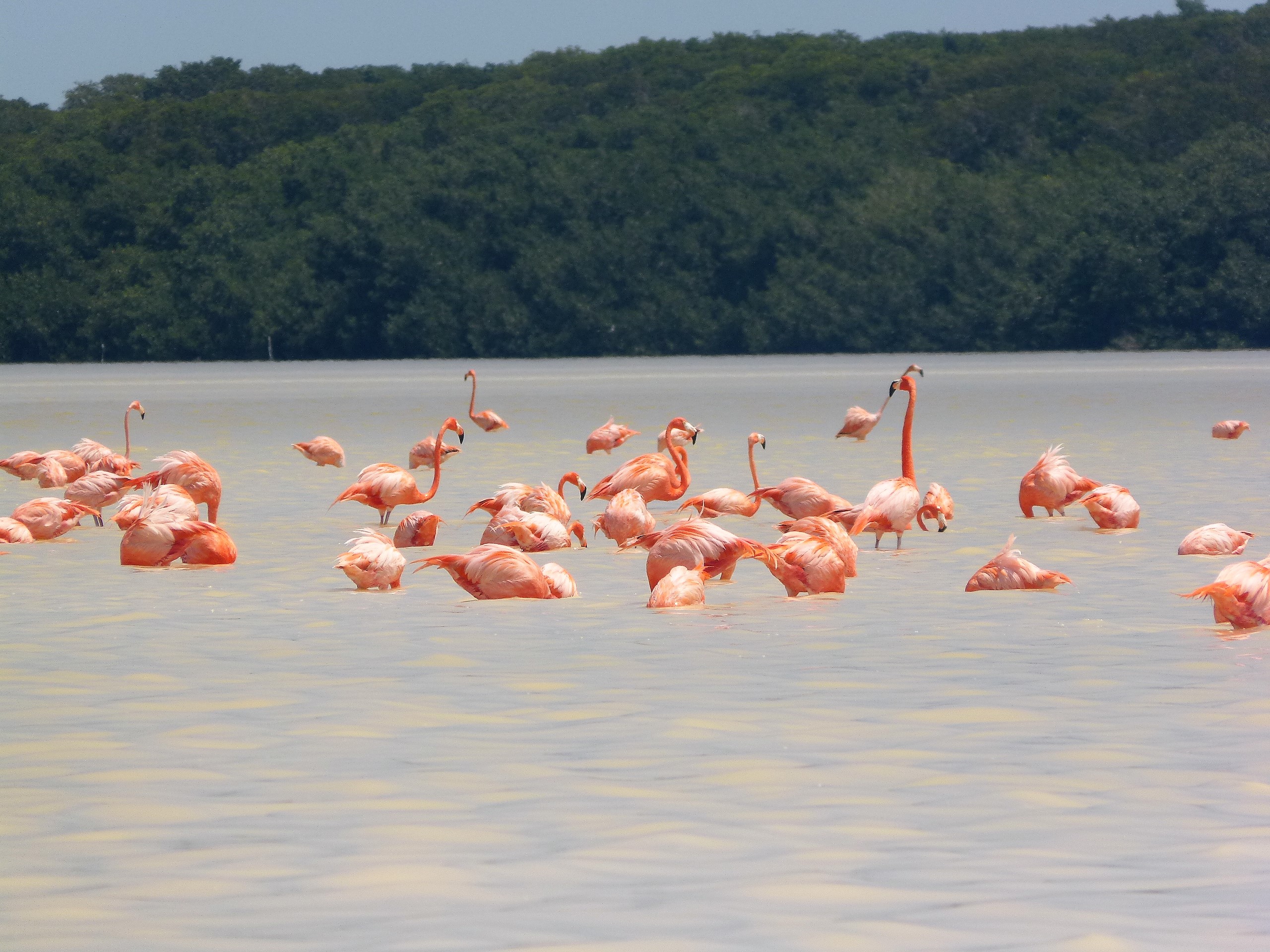
Day trip to Celestún , a small fishing village 100km west of Merida on the Mexican Golf coastline. We then went out in small boats for 15 minutes to see flamingoes in the wild, 5000 of them- during the months of November to February, there can be as many as 45,000! Then after April they migrate. They congregate where the salt water meets the fresh(sweet)water of the spring water coming from the underground. There was a strip of pink in the ocean! These are the largest and pinkest of the six species of flamingoes, the American flamingoes. The young ones are white. The flamingoes obtain their colour from the colour of the worms they feed on. The group of them were very noisy.


Also saw double crested cormorant, frigates, ospreys and pelicans. Also went through the mangroves, then stopped and walked 50 metres to an area where there was a cenote- the Ojo de Agua ( a natural Rockpool where it is fed by an underground spring)- the water was aqua blue and crystal clear. Catfish and telopea fish swimming there, as well as an alligator! I was going to have a swim there, but had a sudden change of mind. Gabrielle assures me the alligators are harmless, but I am certainly not taking any chances! A beautiful pair of tiger egrets were also looking for a meal.

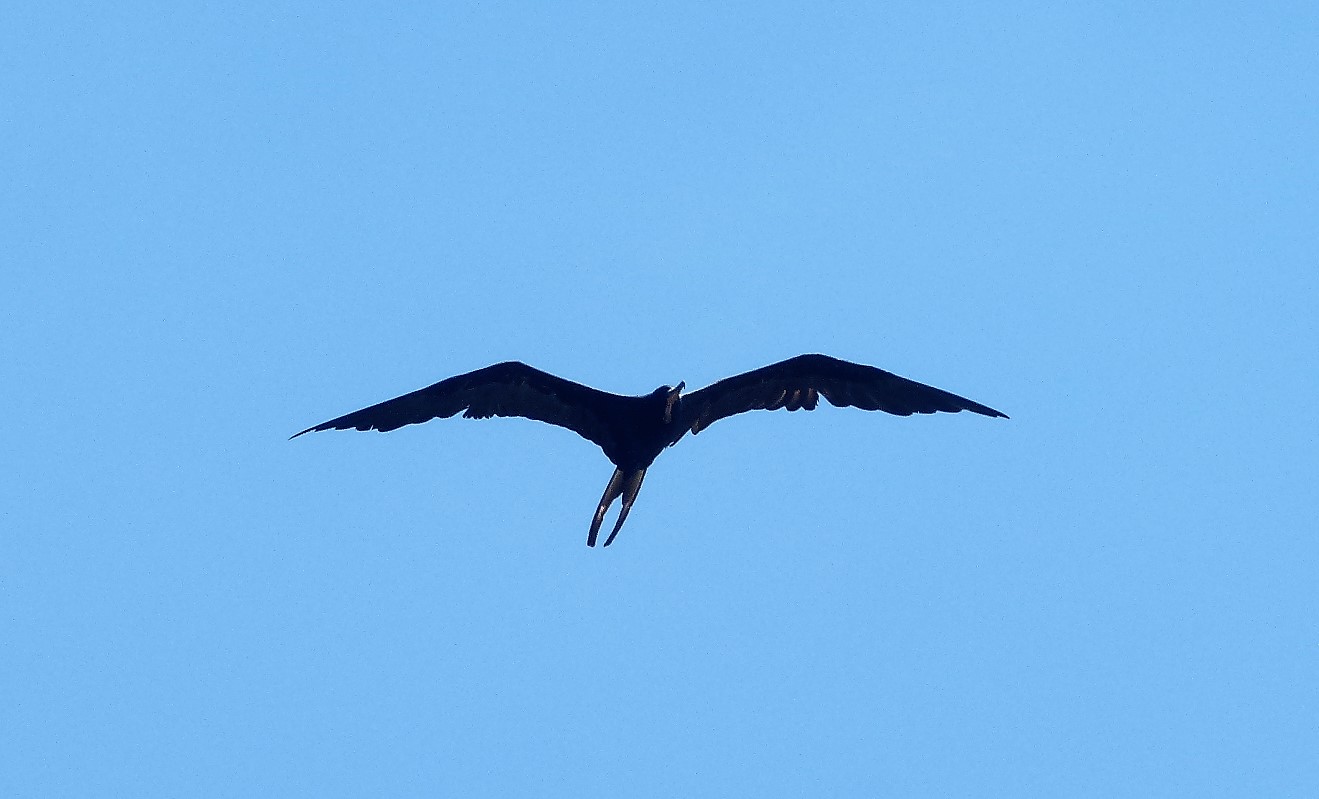

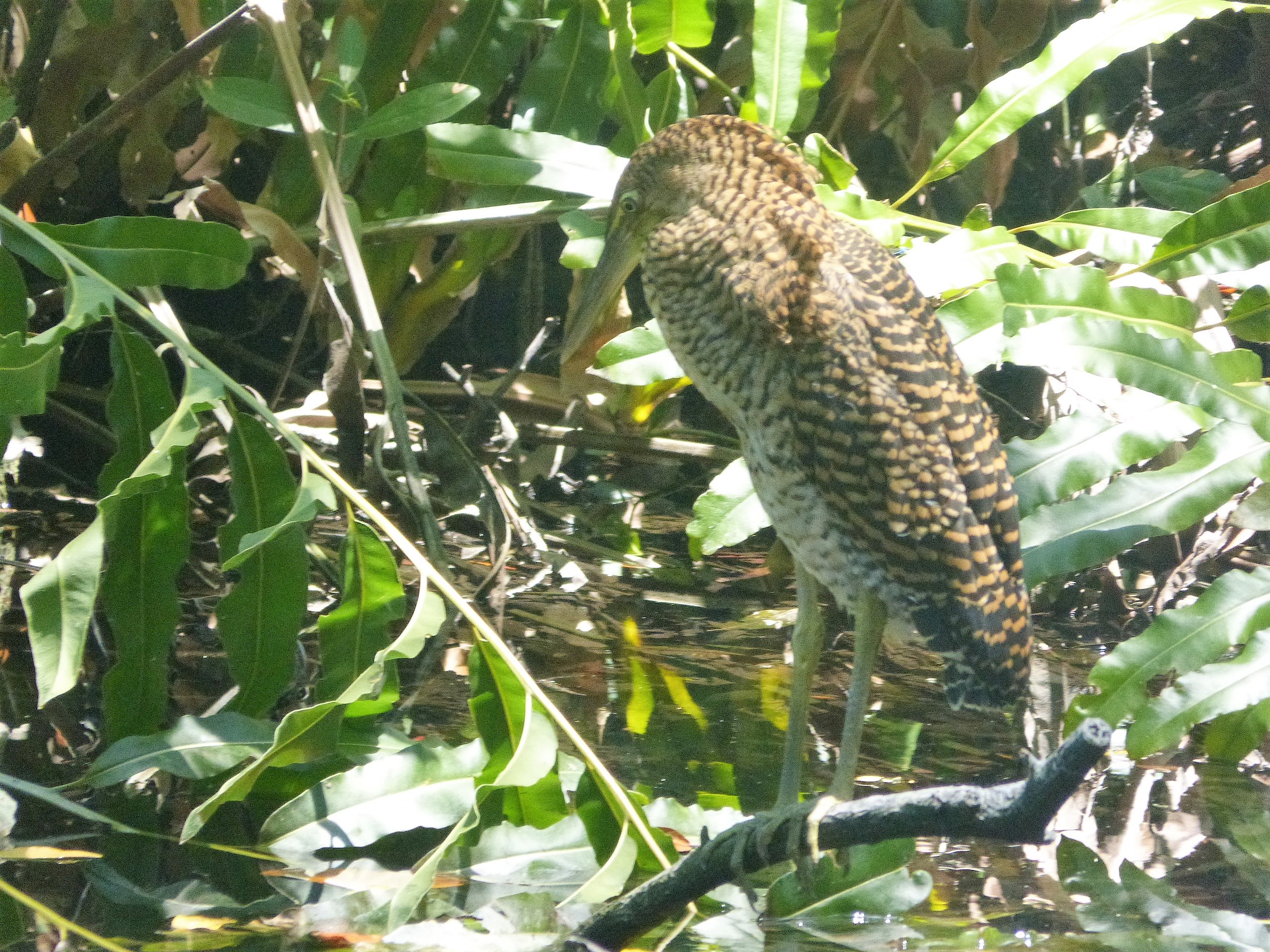

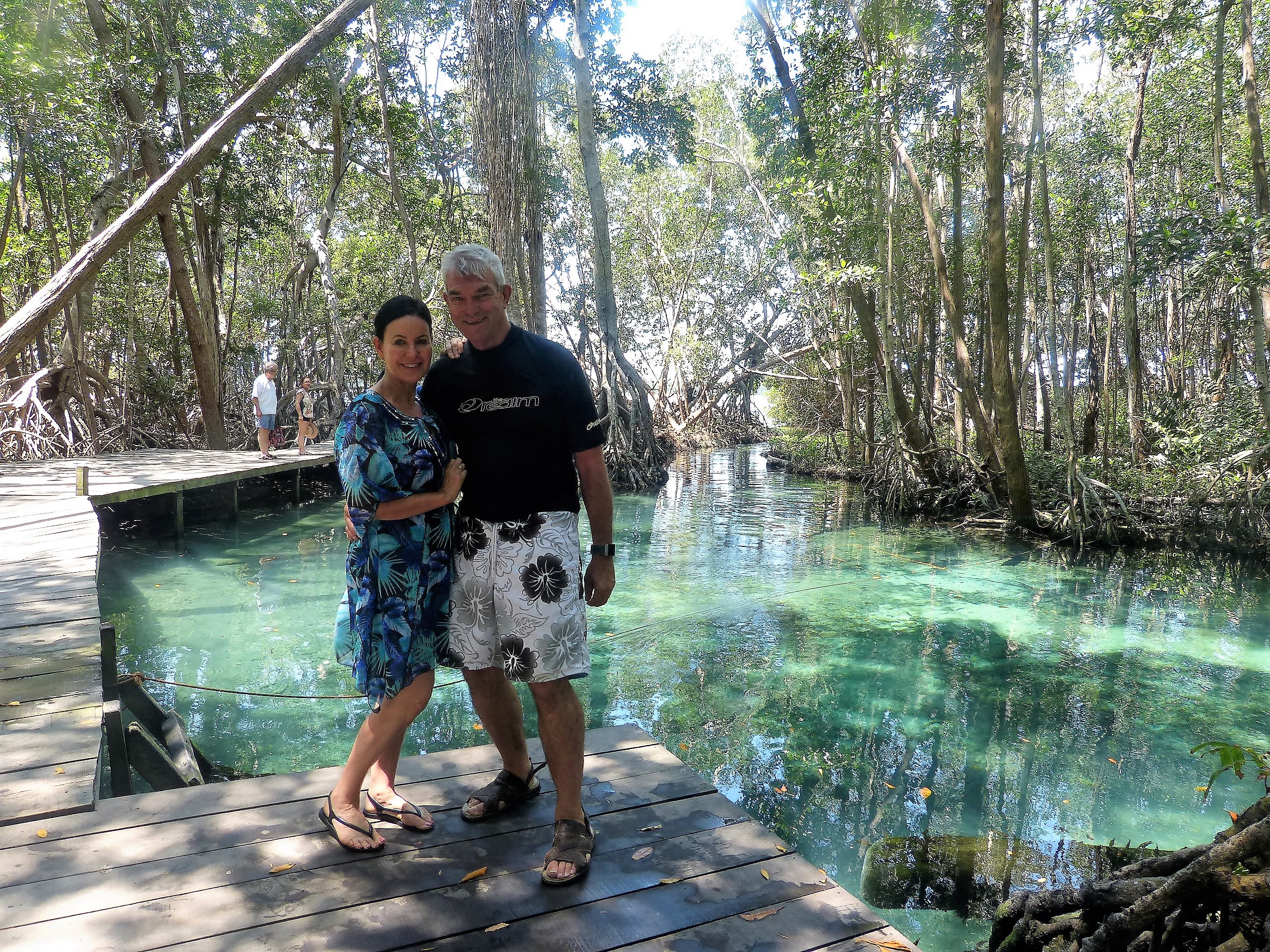
Back to the jetty, then went to the beach area of Celuston, where we went to a hotel for lunch. Sitting on the beach under an umbrella, eating ceviche, local fish ( grouper) washed down with beer and a mojito- what more could you ask for! A swim in the Golf of Mexico! So we did.
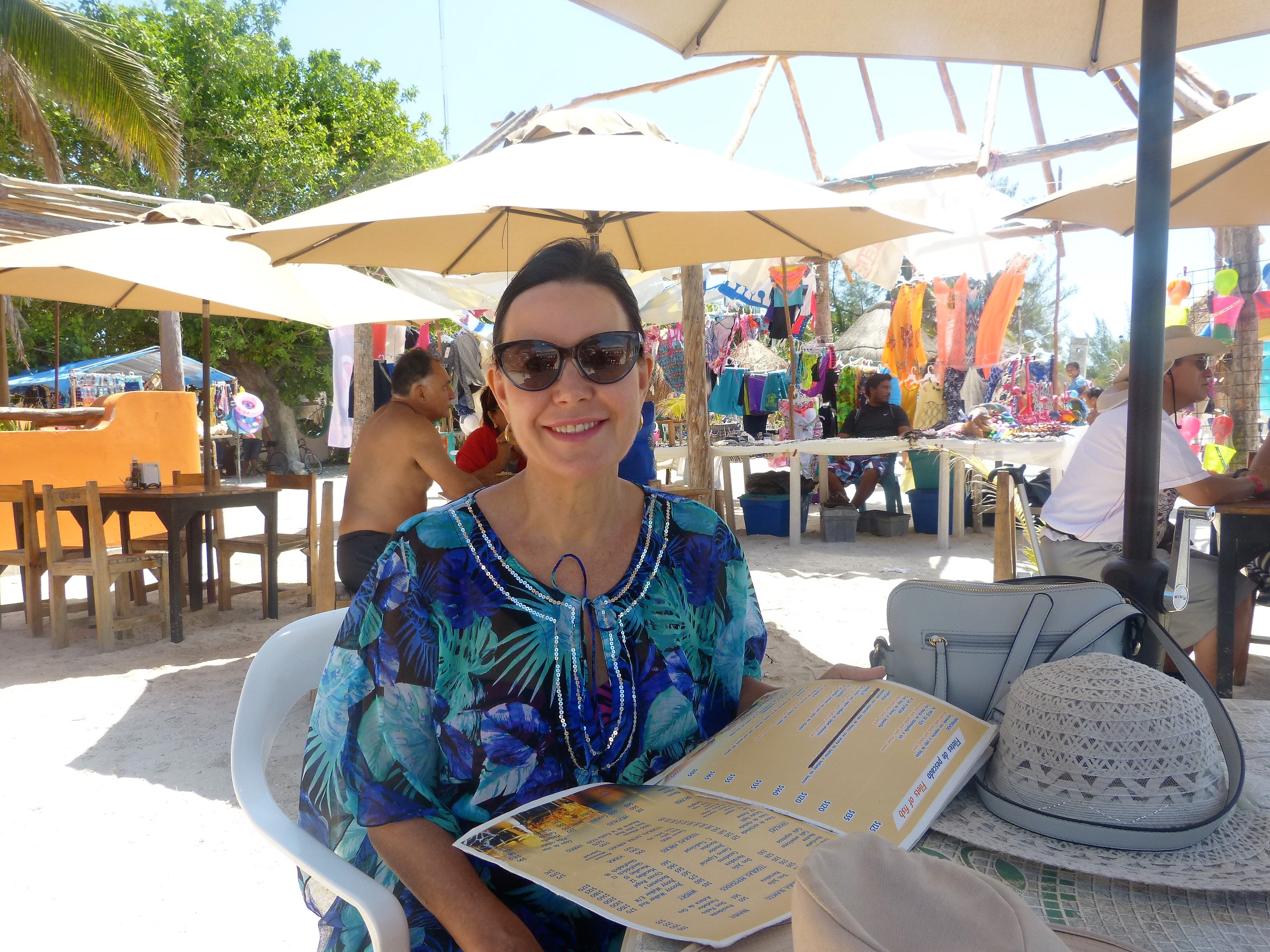
Back to the hotel by 5pm, collected the washing, reorganised the bags, then out for the evening. Frank had a haircut – $5 with the tip!
Mexico – Mayan Ruins Chichen-Itza
Day 24 31st March
8am and we are travelling east from Merida 120 kms to the epicentre of Mayan civilisation – Chichen Itza – one of the new seven wonders of world. Inhabitated in 900-1200 AD , discovered in 1904, and temple discovered 20 years ago. The Pyramid of Kukulcan stands 24m high, beautifully restored on 2 sides. There is actually another pyramid inside, totally free standing, not supporting the outside pyramid at all- now that is amazing! Carvings inside, entrance now closed off to public. Also saw the Great Ball Court, the House of Warriors is 30m high, the Kings Pyramid and other structures. Again, we were in awe. Many people here, and very hot- 36 degrees again.
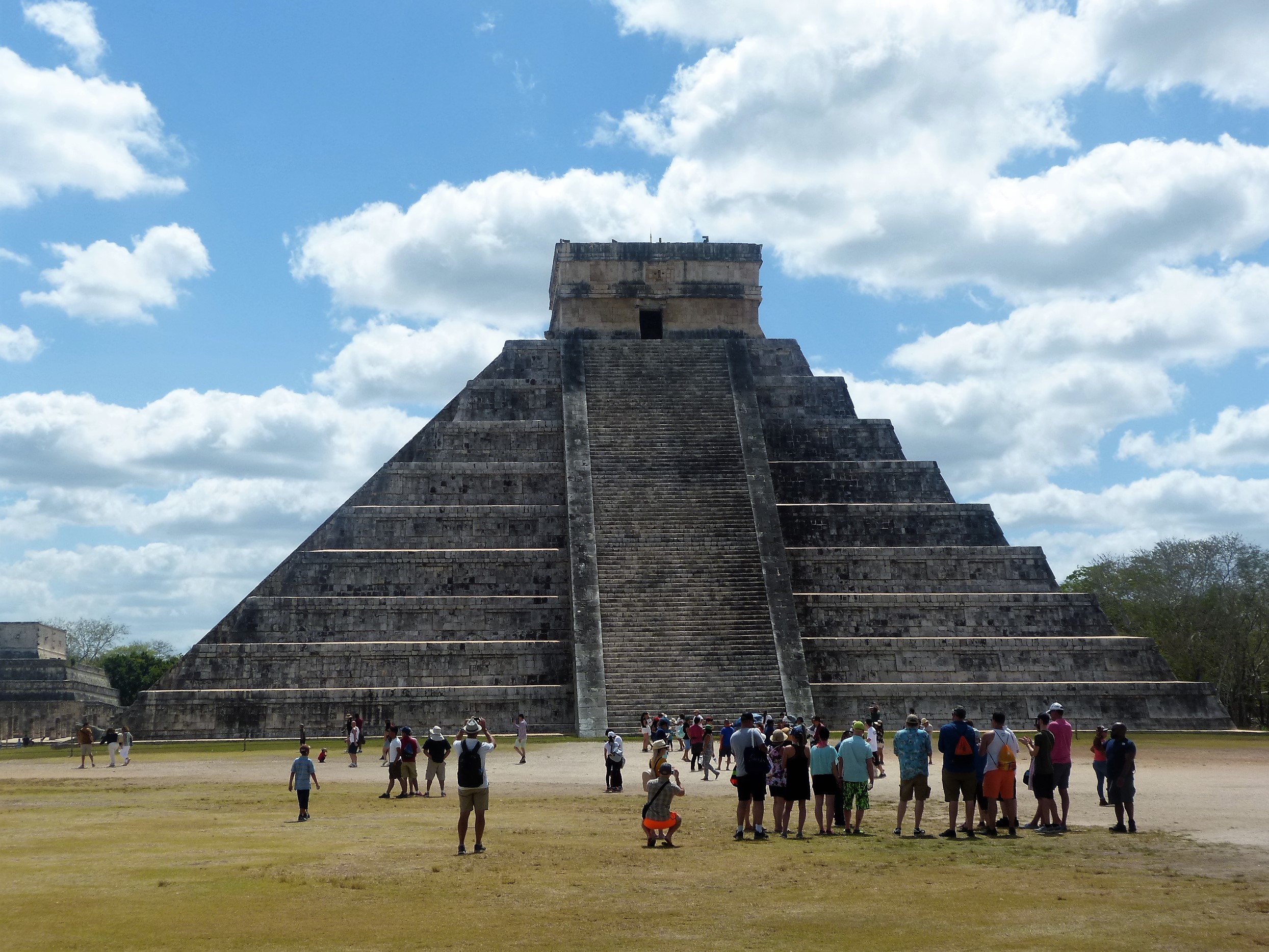
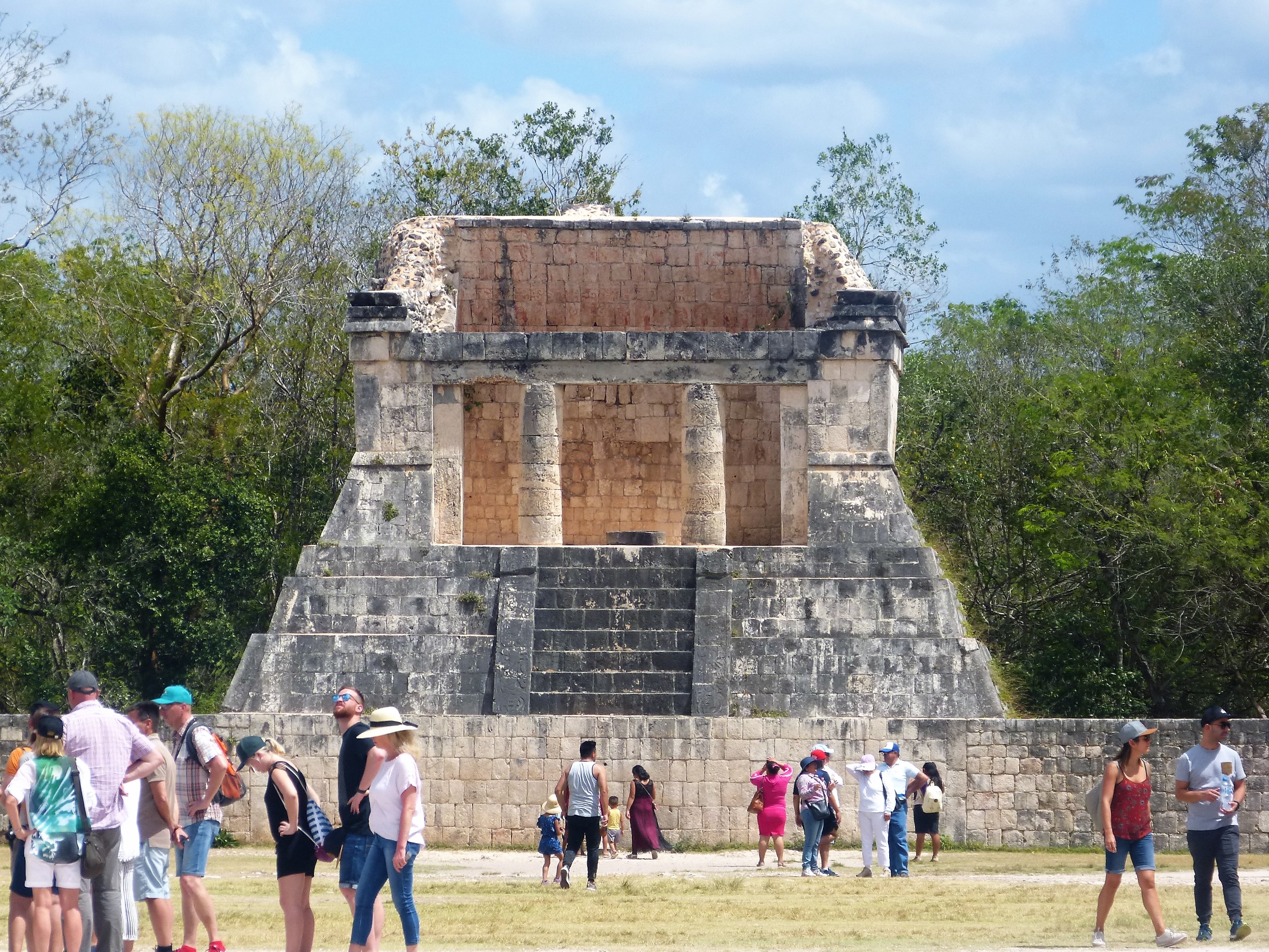

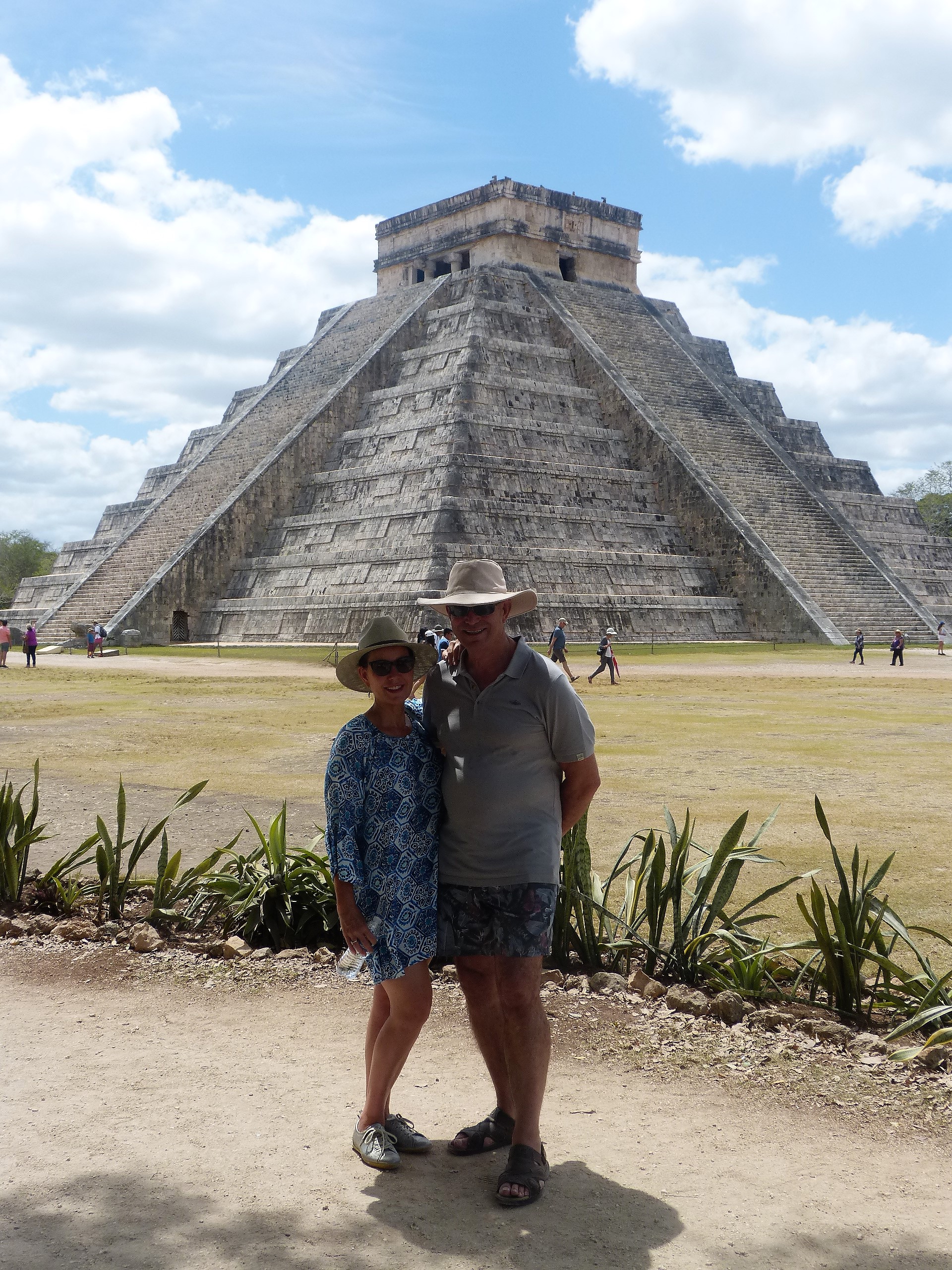

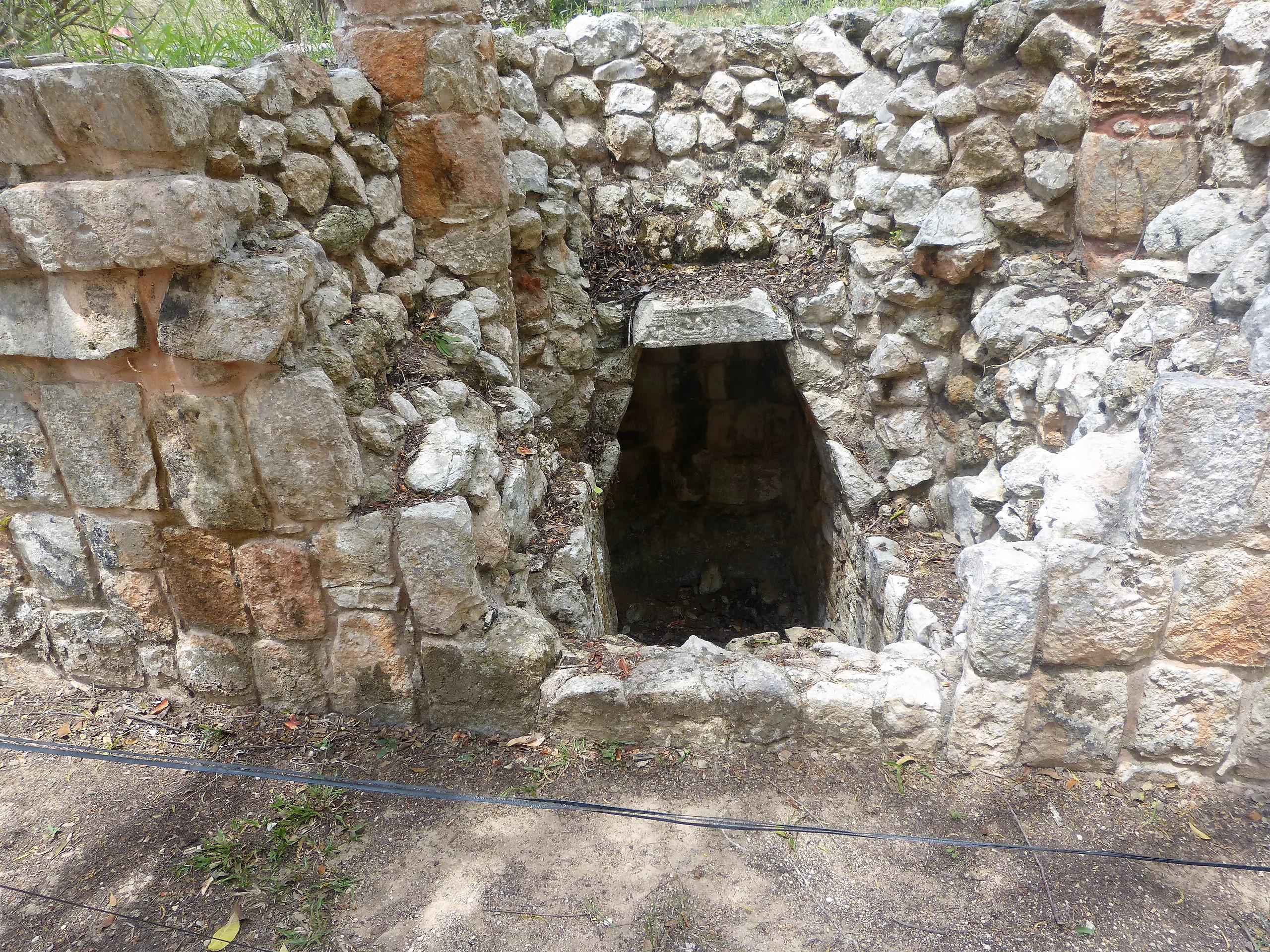
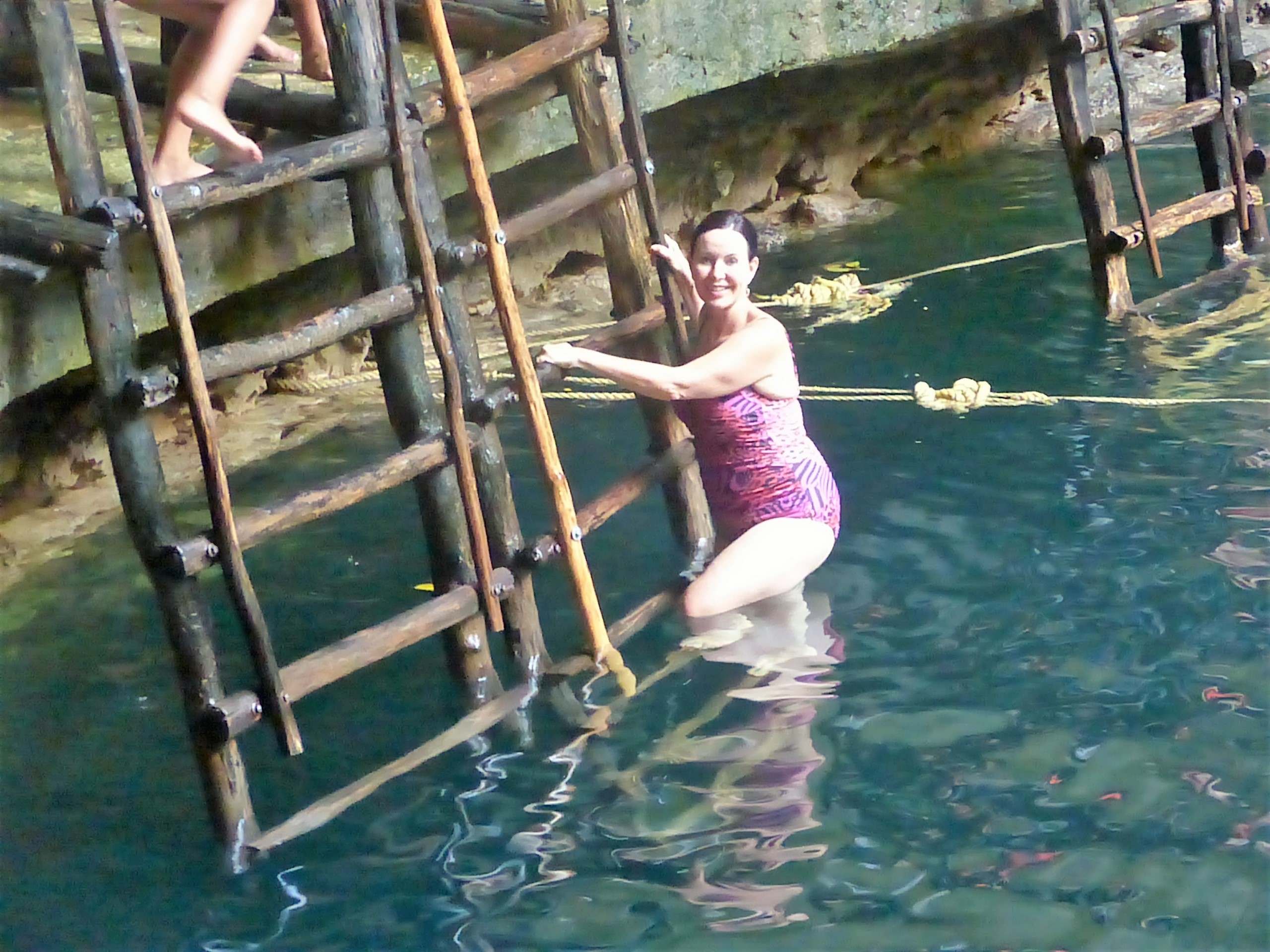
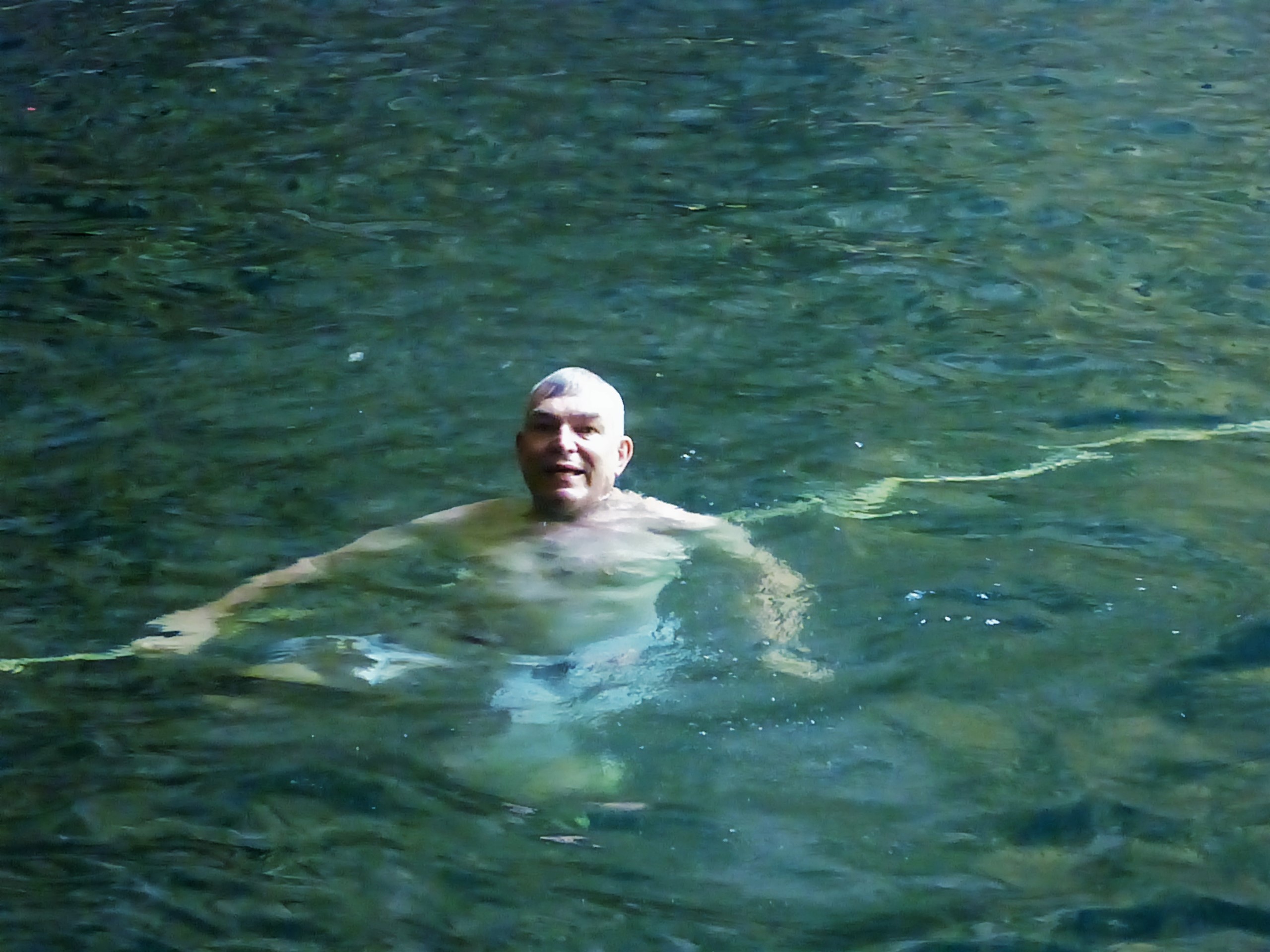
Next to Ik Kil Cenote. Cenotes(sinkholes) are natural wonders of the Yucatan Peninsula – 6000 of them. They are magical, enigmatic and unique, the only source of fresh, sweet water in the jungle. They can be completely underground, semi underground, at land level, or open wells. This one was 50 metres deep, the water so clear. Frank jumped straight in- so cool and refreshing – he loved it. I was a bit put off by the cat fish, so only got my legs wet ( not unusual for me). Lunch afterwards, and we were ready for the 1 3/4 hour drive to Tulum. Travelled through many rural villages, so many vendors and handicrafts along the way.


Mexico – Yucatan Peninsula – Tulum
Day 24 – 31 March
Arrived at Hip Hotel at 5.30- absolutely stunning hotel resort right on the beach front! The area of Tulum where we are staying has a strip approximately 10 kms long of resorts along the beach front. Very touristy, especially after where we had just come from, but apparently not as touristy as Cancun.
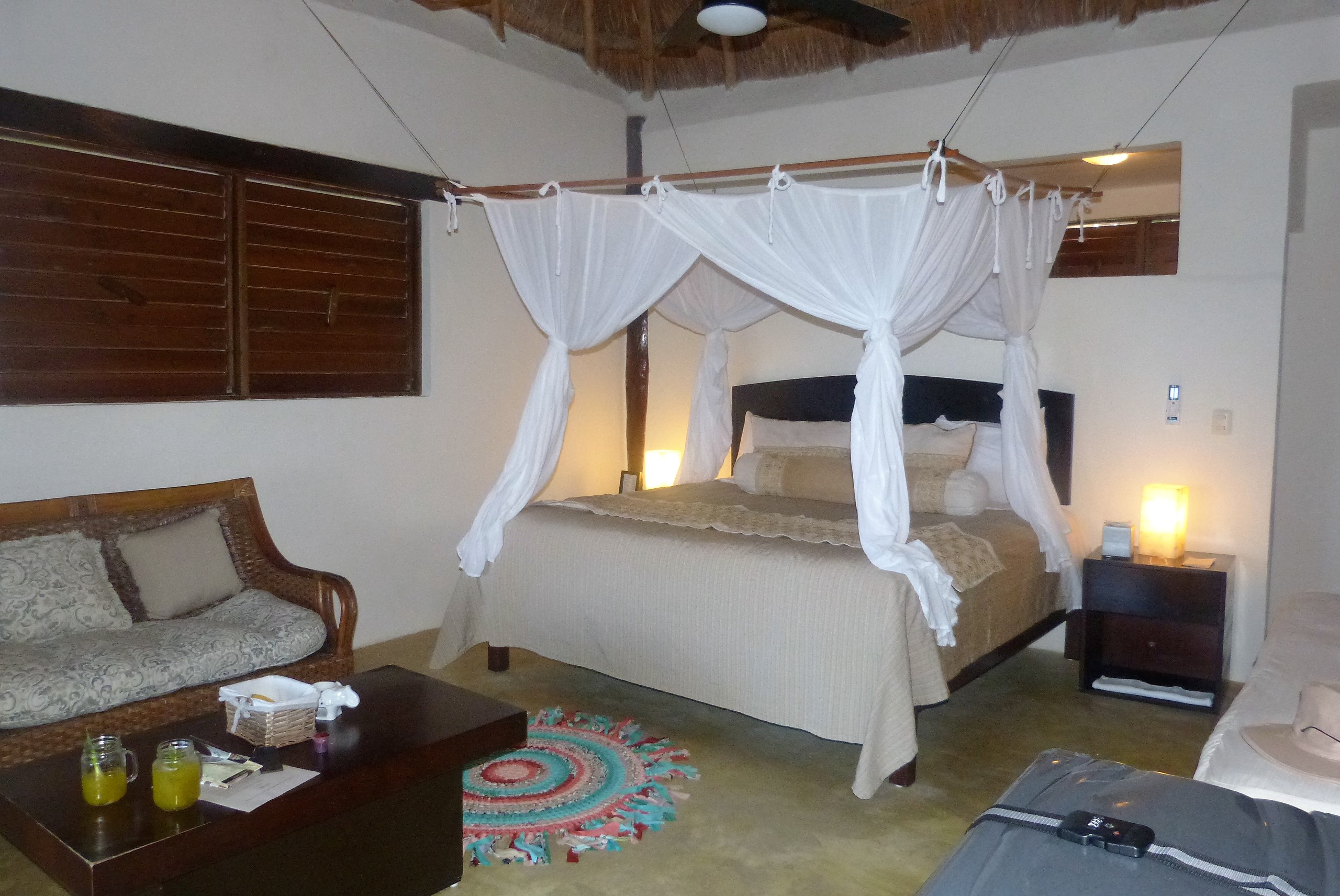
Our thatched roof bungalow was literally 10 metres from the beach, hammock out the front, four poster bed, and double shower inside. The beach had thatched umbrellas with sun lounges, plus beds to recline on. Too many luxuries to mention here- it’s all in my memory bank!
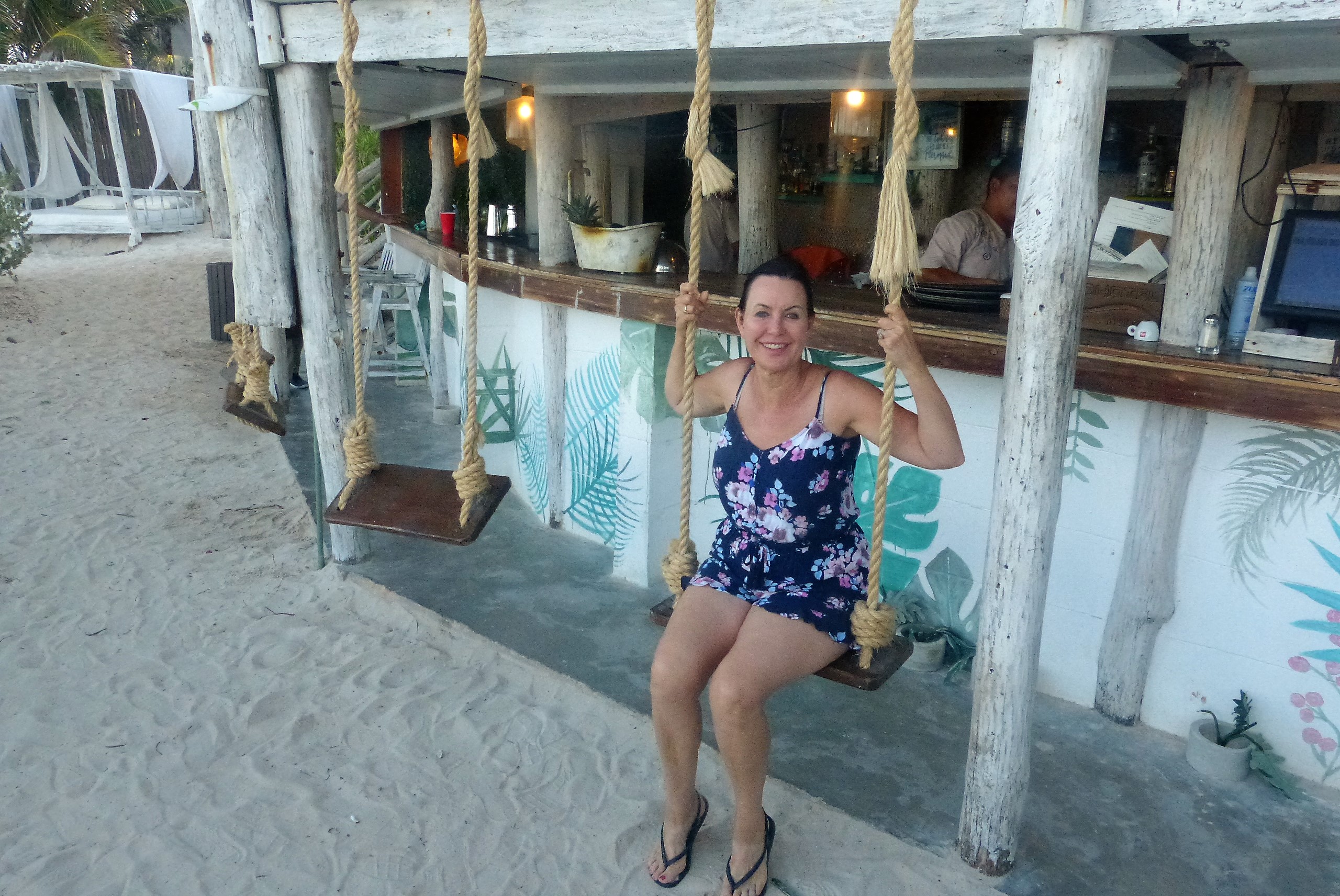
Had a little walk along the roadway to see what restaurants , bars and boutiques were nearby. Sampled the local tequila- Mescal margarita- has chilli around the edge of the glass inside of the salt. Nice! The tequila was stronger! Did notice a change in the price of things here- obviously cater for the tourists. Don’t think I’ll be buying too many clothes here- not that I have room in the suitcase as Frank constantly reminds me.
So much to see, and we only have 2 nights here. Decided to eat at the restaurant at our hotel, table right on the beach. Live music on the beach – salsa, mambo, rumba. Listening to the waves as we settled off to sleep was just bliss.


Day 25 1st April
Breakfast on the beach front, the sun over the
Caribbean. Absolutely stunning! Ready for Berto at 9am, we didn’t have any
information as to what we had planned for today, except that we were going to
an underground centre.
Well what an adventure packed day it turned out
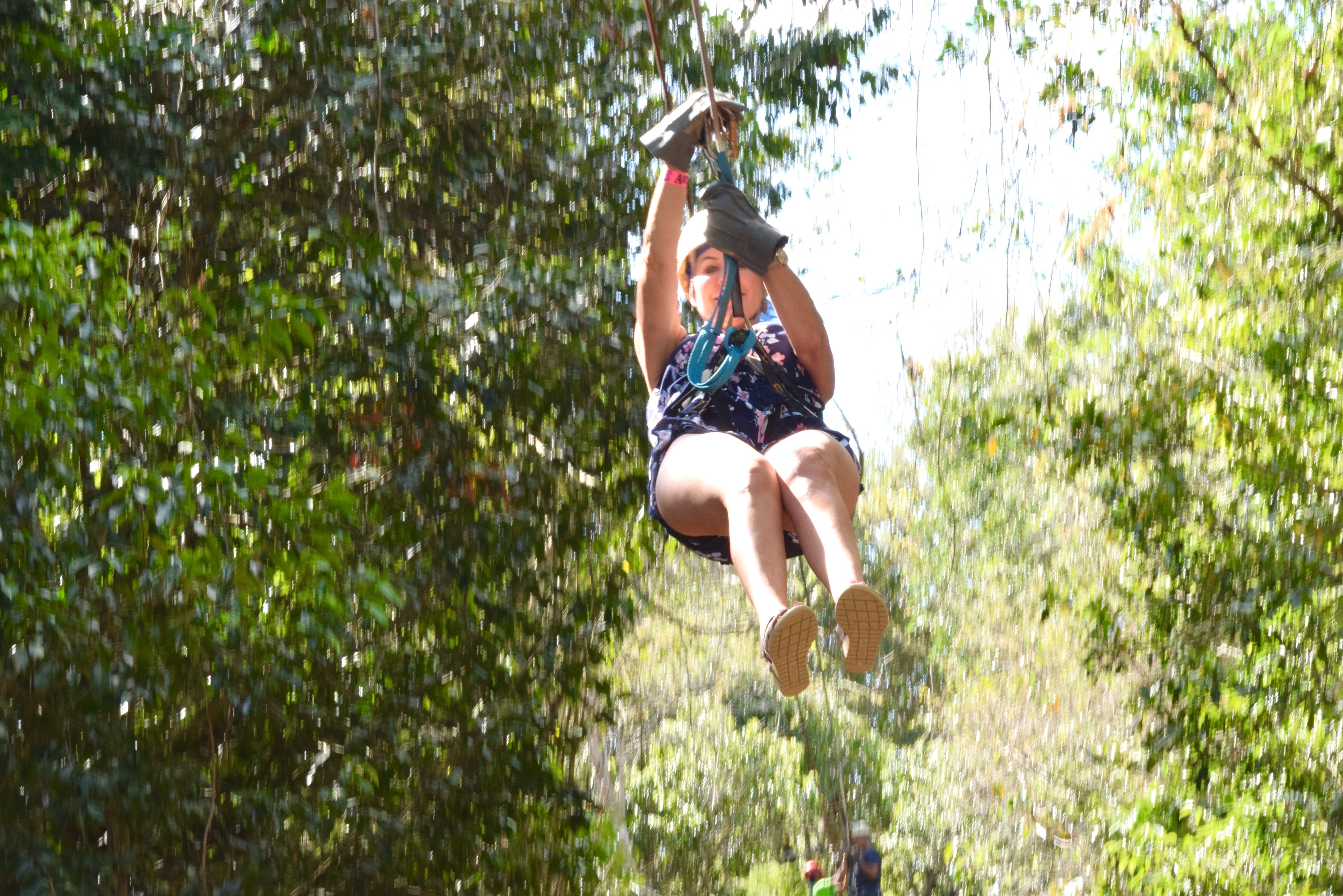
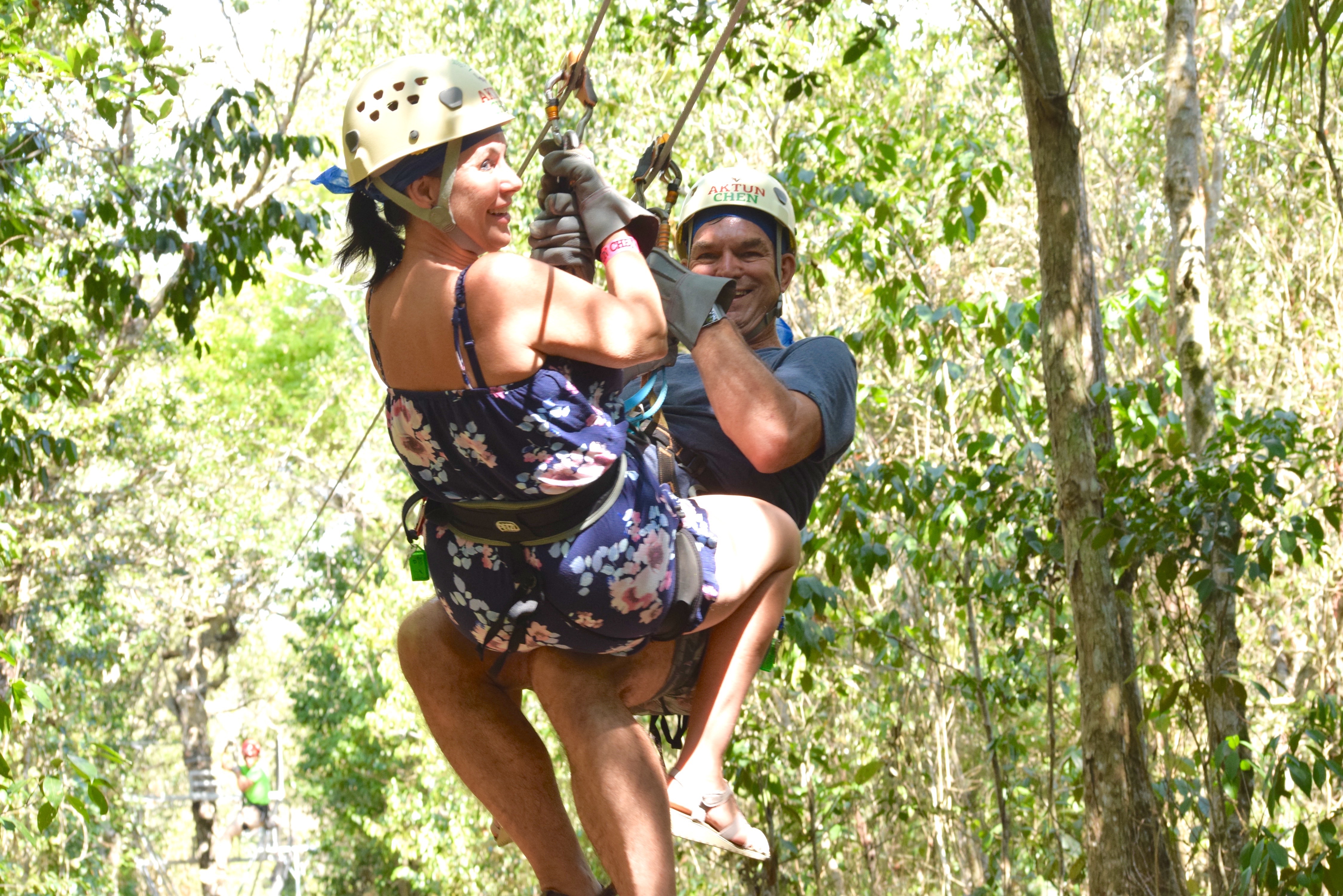
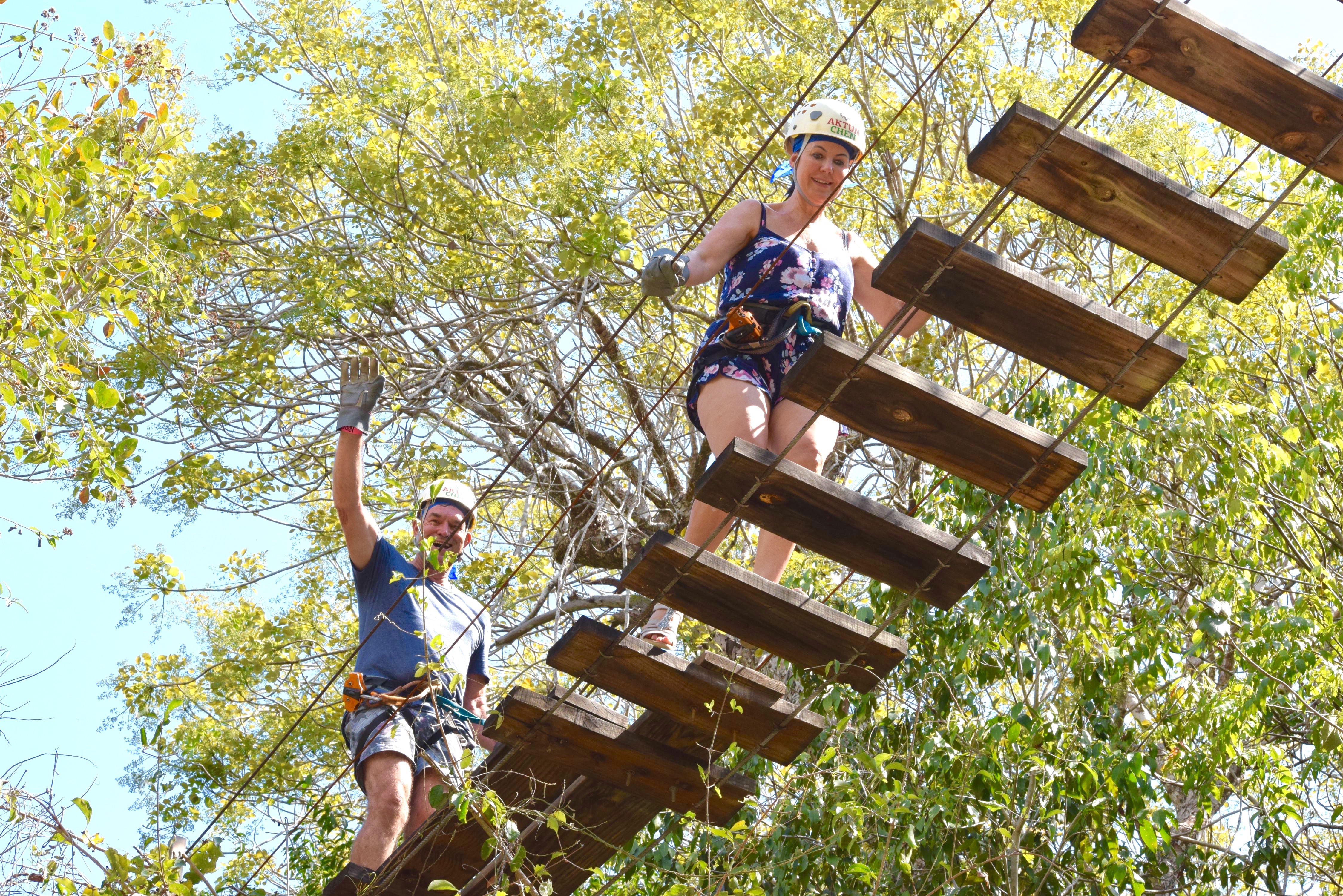
the be! A visit to Atkun Chen Natural Park. First we ziplined through the
jungle, 10 lines with just us and the 2 experts. This is such fun- Frank is
hooked now, even hanging upside down for one line! I got as close both hands
off the ropes, but not upside down.


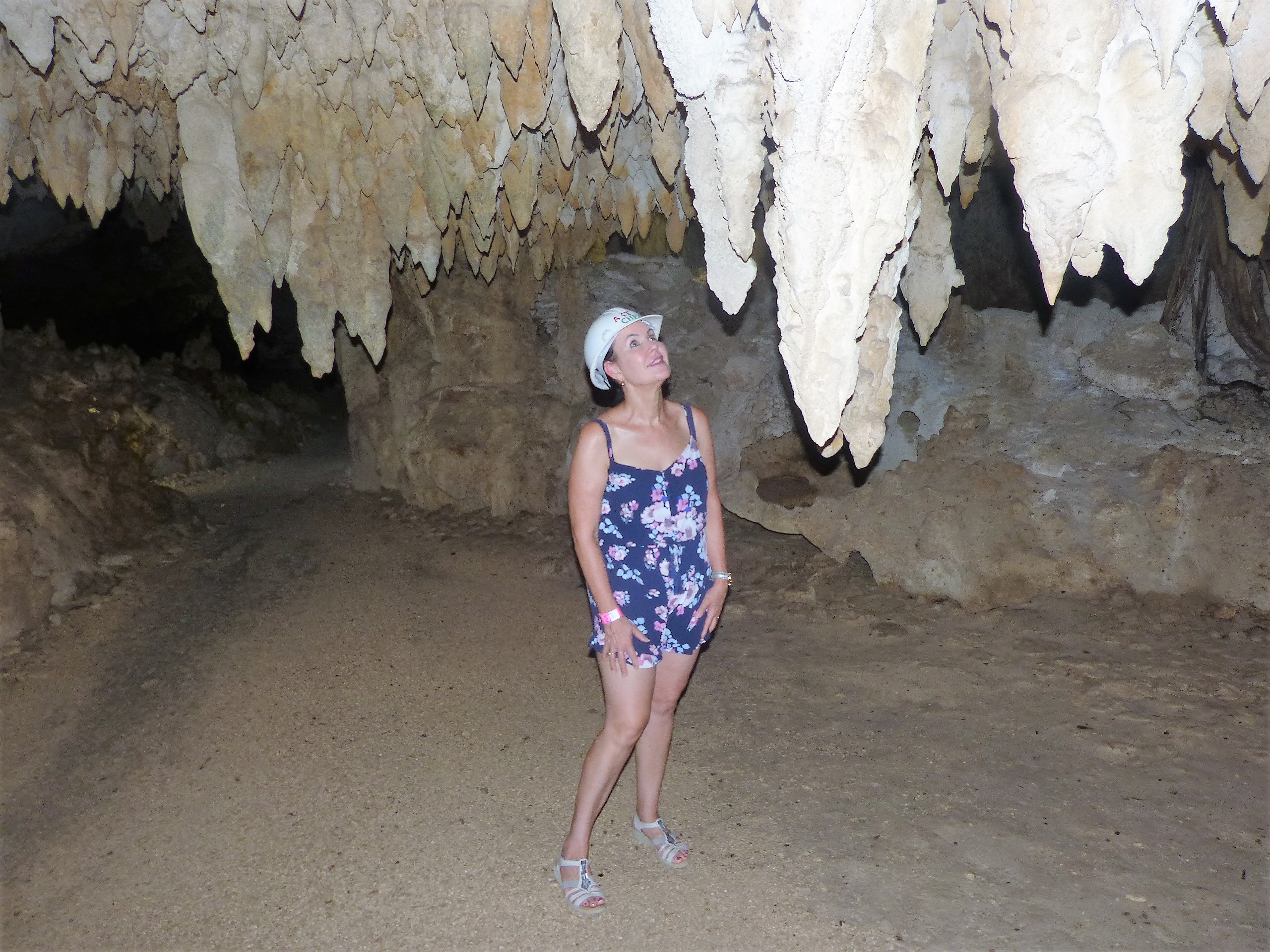
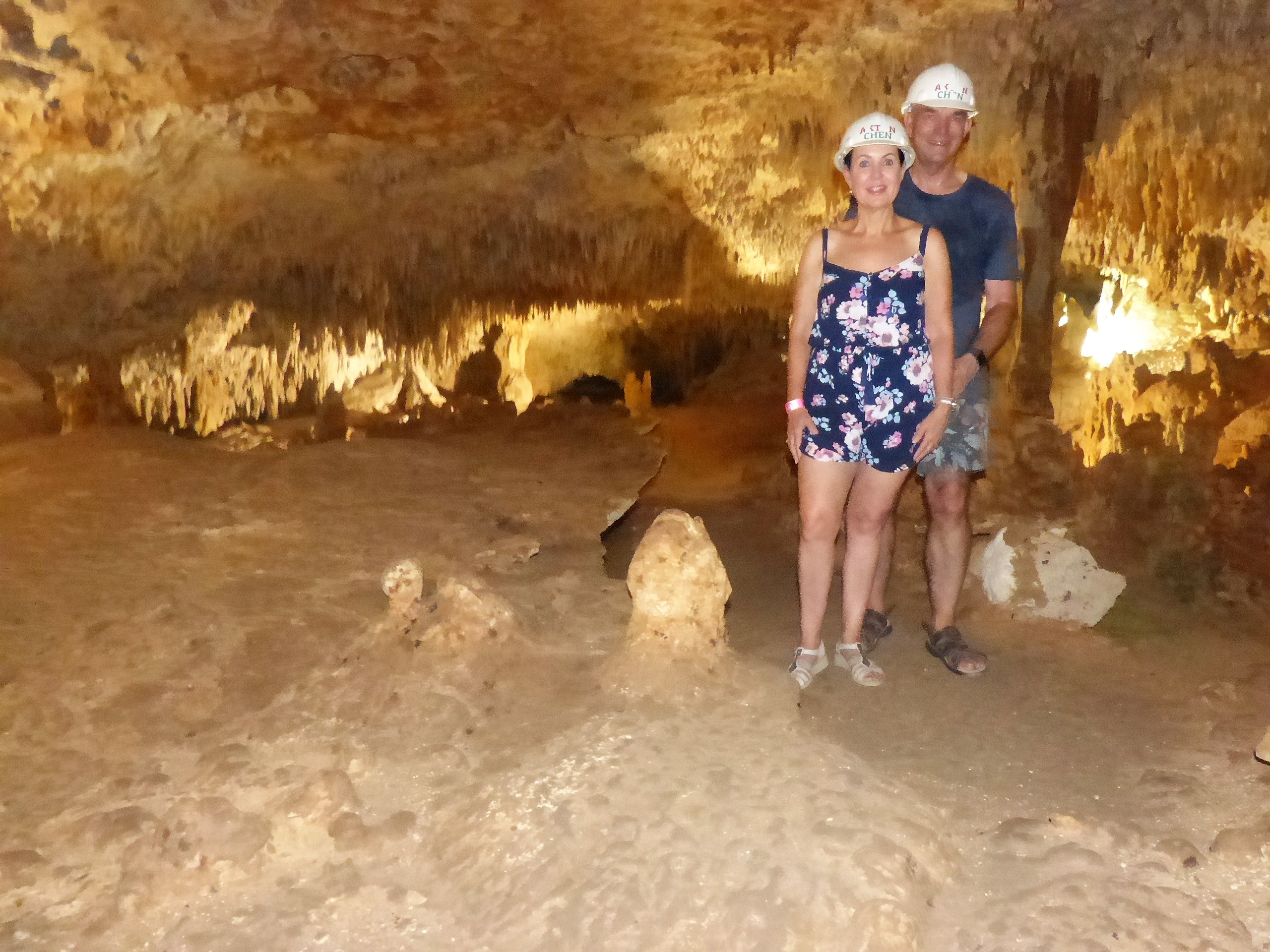
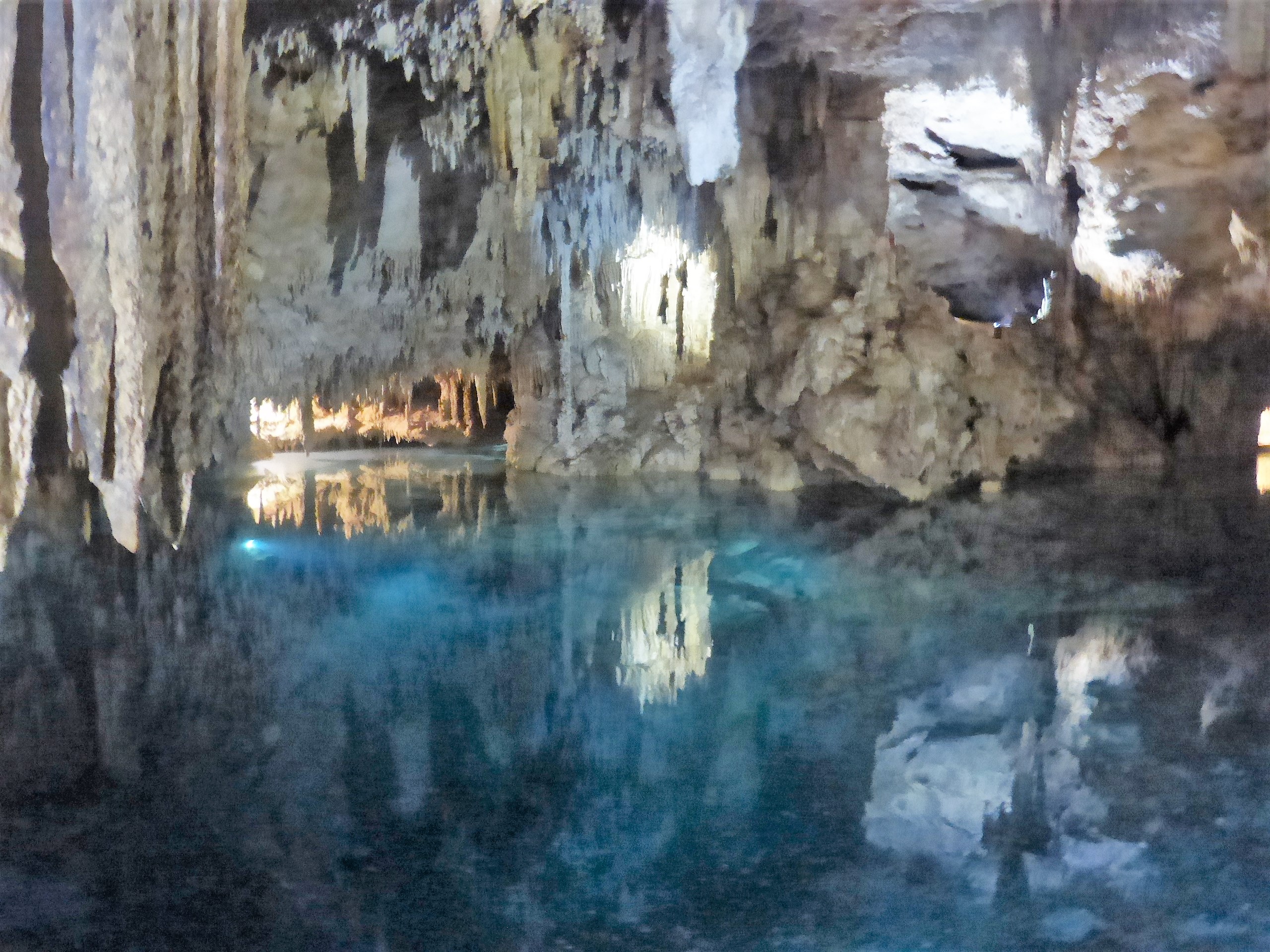
Next we had another guide take us through a dry cave – saw lots of stalactites and stalagmites, bats, and a beautiful underground cenote. It ranged from 1-14 metres deep, and the water was crystal clear. The reflections of the stalactites above were so sharp.
Mexican lunch (tacos and frajitas) at the restaurant with the obvious Corona beers to go with it.

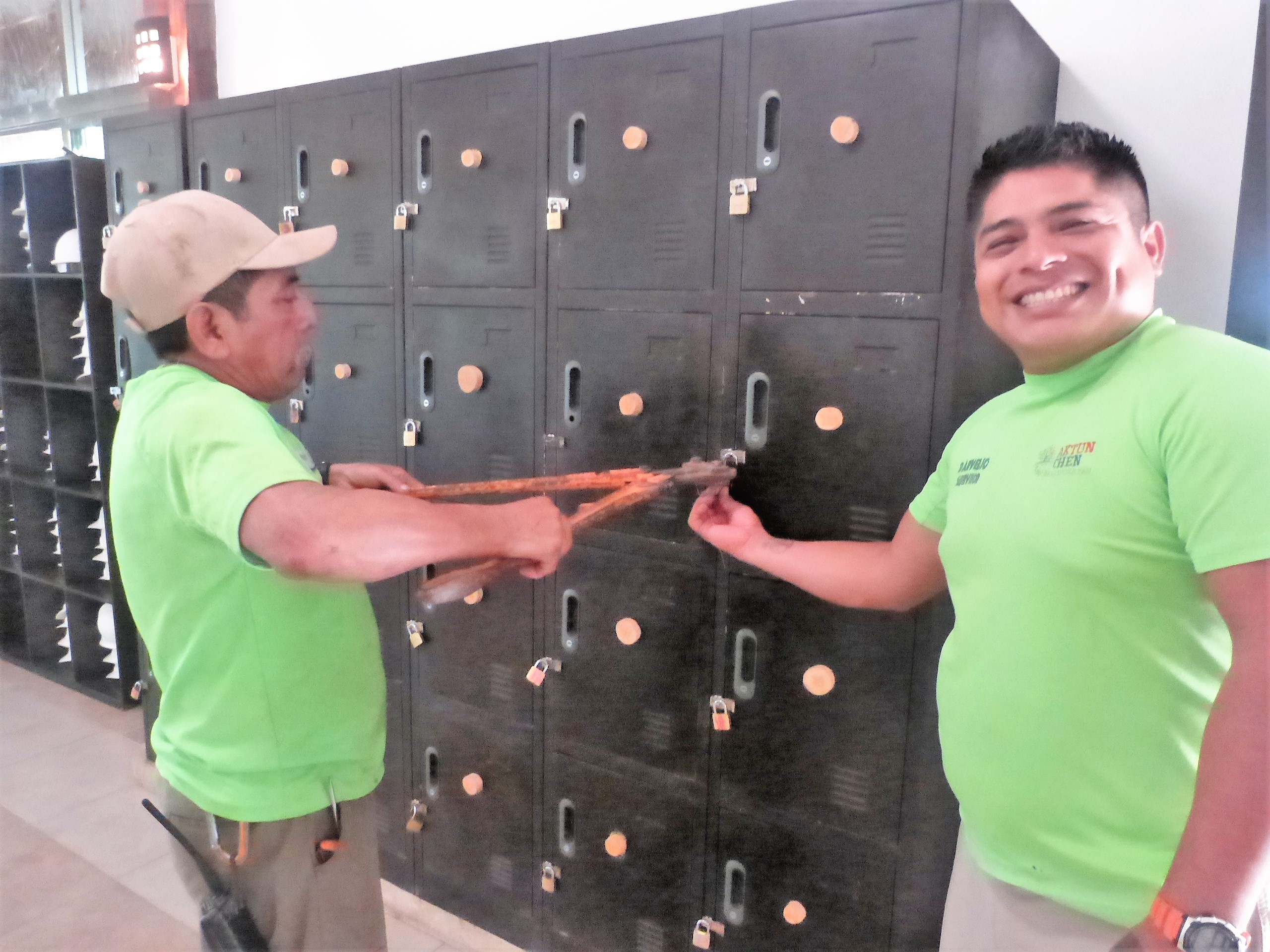
Little hiccup next- Frank had lost the key to the locker we had been given- I was completely innocent! Out came the bolt cutters… and a $5US fee!
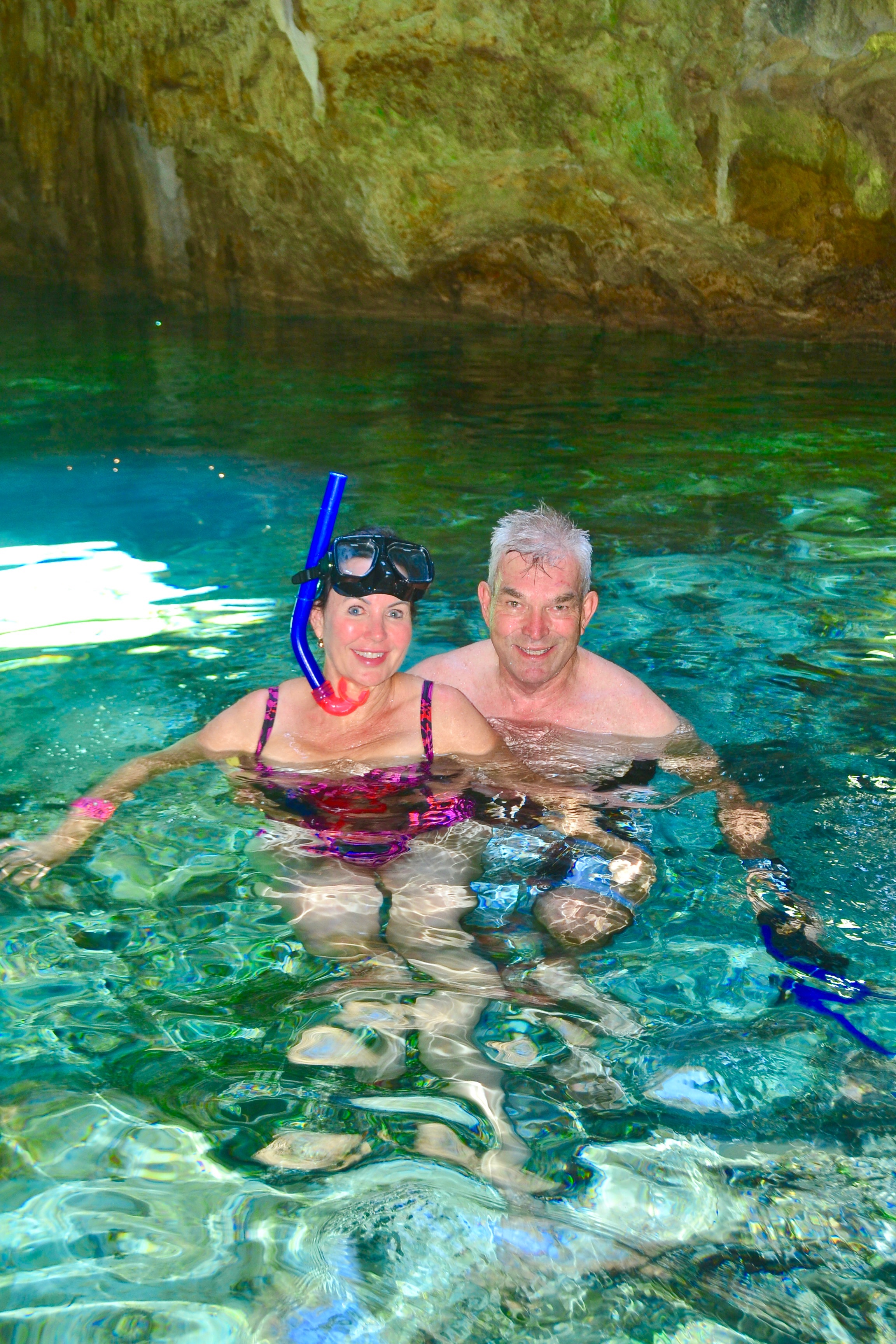
Back to business, and the best for last…. snorkelling in the underground river! The underground cavern that was accessible in the underground river was approximately 30x 50 metres, and the water was crystal clear. So this is where I am completely out of my comfort zone… the water was cool, Frank doesn’t necessarily agree with that comment, and there were 1000s of whiskered black catfish at the entry point! They are blind, but that doesn’t make it any easier for me. Anyway, I did it, and it was fantastic… the catfish weren’t that interested in me, the water was so refreshing, and the snorkelling was awesome. Here we were, again, we had the place to ourselves, stalactites above us, the purest of water, I can’t explain how surreal it was! Such an exotic experience.
Back for a walk along the beach, found a beach bar at happy hour, 2 for 1 cocktails. Yay! Enjoyed the sunset, reclining on the beach lounges, sipping our margaritas. Pura Vida- life is good.
Dinner at La Corriente, where we had margaritas last night. Seafood is their specialty, and it was exquisite- Frank had Matzalan fish – fish fillet stuffed with marlin, and I had tuna with a chilli crust that was to die for, along with a baked cauliflower and aoili sauce. Finished with an excellent Italian merlot. Have loved the spices and flavours here in Mexico.

Cancun to Guayaquil
Early start, picked up at 6.30 to drive one and a half hours to Cancun airport. Farewell Mexico, we loved Yucatan Peninsula.
One and a half drive to Cancun airport. Two hour flight to Panama City, then a quick turn around for a 2 hour flight to Guayacill. Well we had the same show as when we left Panama City last time- turns out that many Latinos go to Panama City for shopping, so obviously when they return home they are bulging at the seams with hand luggage! So a late departure due to the comical juggle of the carry on luggage into the overhead compartments!! Getting used to this now- makes us feel good as we only carry on small backpacks (oh where is my halo!)
Short drive to our hotel after clearing customs- last through again! Hotel Wyndham, great location on the boardwalk with all the restaurants. Chose wisely for dinner, met a lovely family from Galapagos who gave us some helpful information for our upcoming cruise In Galapagos.
Ceviche- so love this dish, and filet Mignon for dinner. Sangria cocktails seem to to be a speciality here.
Went for a walk along the Malecon after dinner,
alongside the Rio Guayas which was very full after recent rain, through the
colonial houses, up to the big wheel which we went on – great view over
Guayacill at night. Would love to have had a day here to enjoy the coloured
houses on Santa Ana Hill, which was right opposite our hotel – a photo will
have to do!

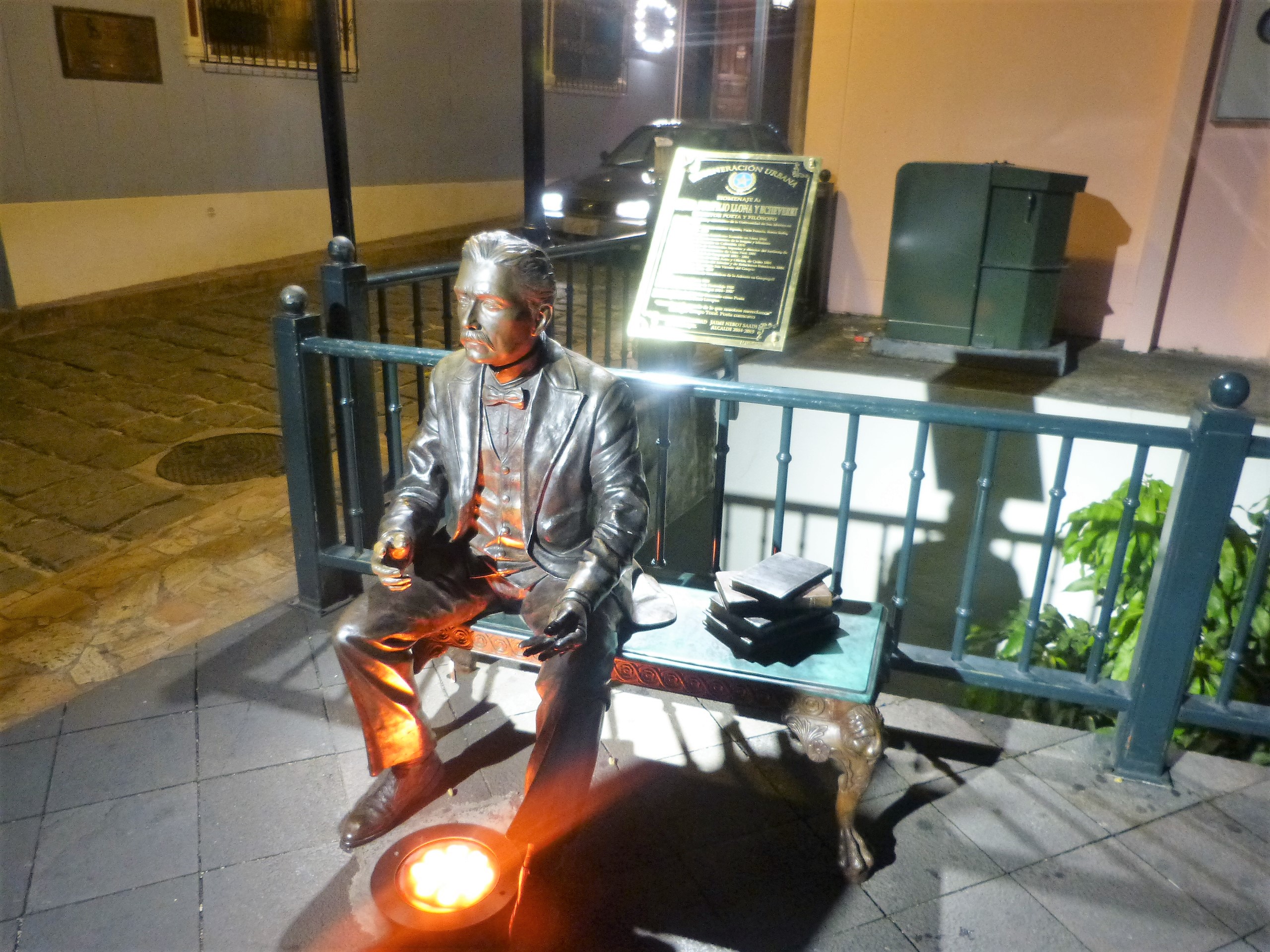
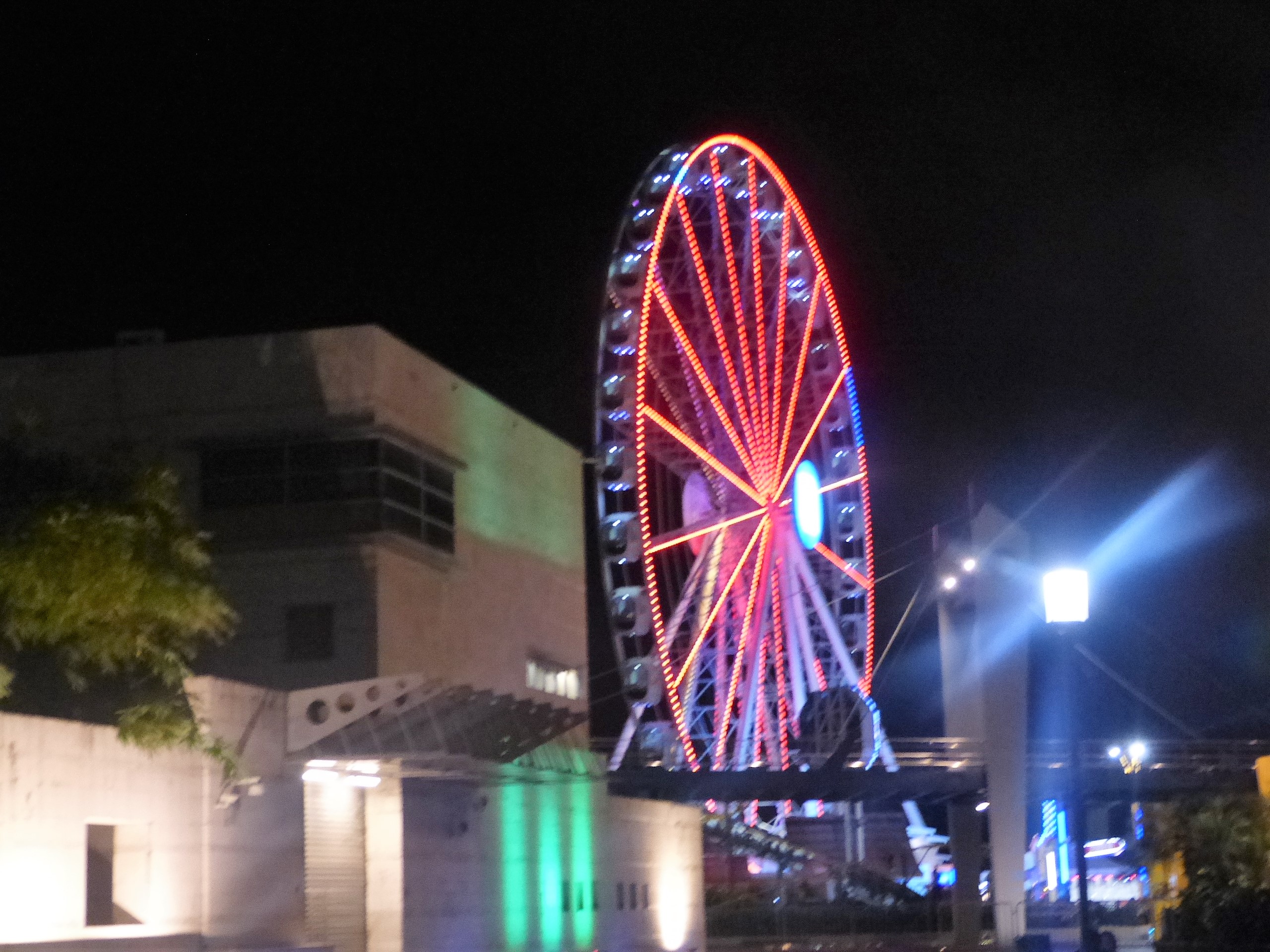


Galapagos Islands
Day 27 3rd April
7am pickup to get to the airport – 2 hour flight to the island of Baltra in the Galápagos Islands. After a very strict customs check (dogs run back and forth across a row of bags)- they do not want any anything foreign introduced to the islands- the entire Galápagos Islands are now national parks (since 1959). There are 13 islands, formed 3 million years ago, discovered in 1535. Charles Darwin arrived in 1835.
Ten minute bus ride, then we are taken to our new home for the next 5 days… the Coral 1 ship, 34 passengers in total. Had introduction, emergency drill and lunch.
One drama …. my suitcase, yes the new one… broken lock, and bent in wheel, plus broken casing. Couldn’t believe it- had to get a screwdriver to wedge open the lock so I could get it opened!


Anyway, move on… we go by zodiac to Santa Cruz Island ( the main island)- this was our greeting! A case of dodge the sea lion!

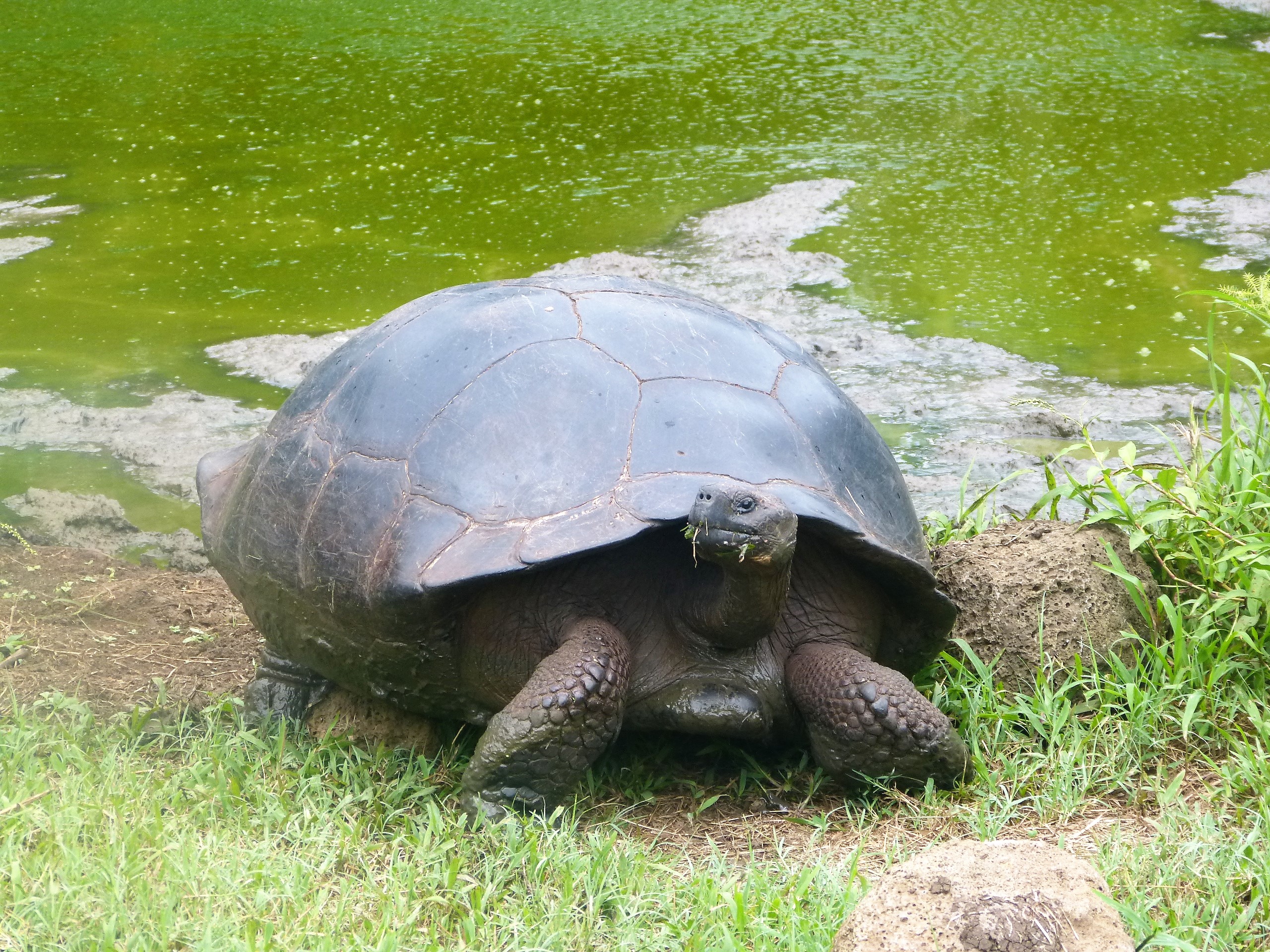
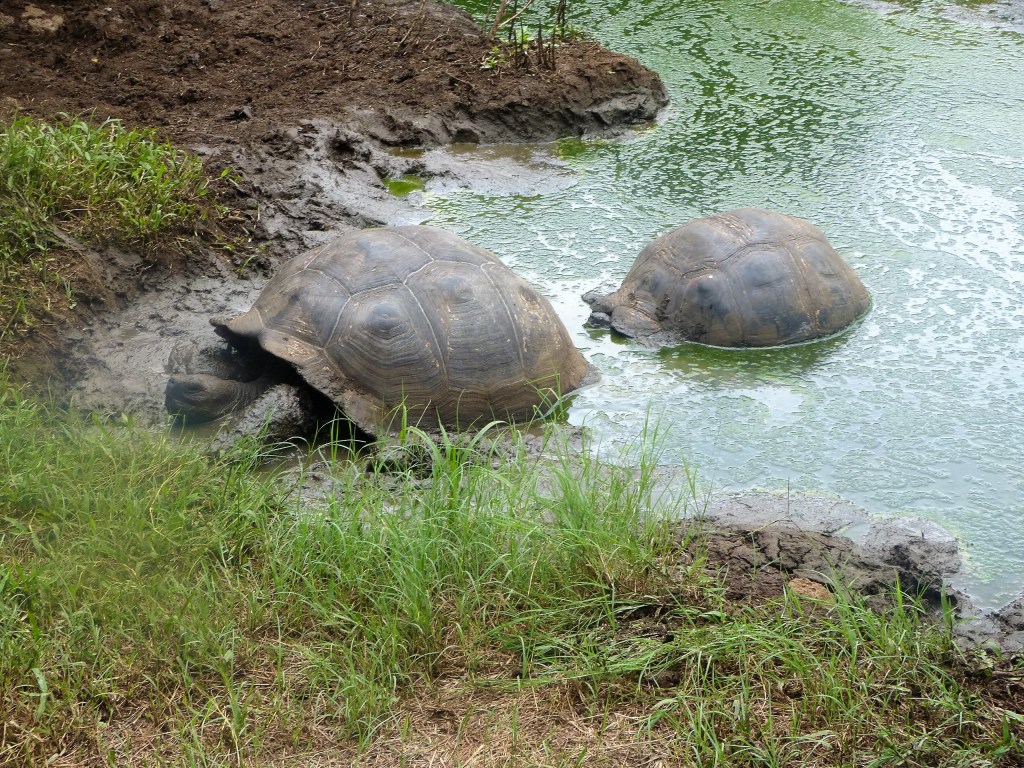
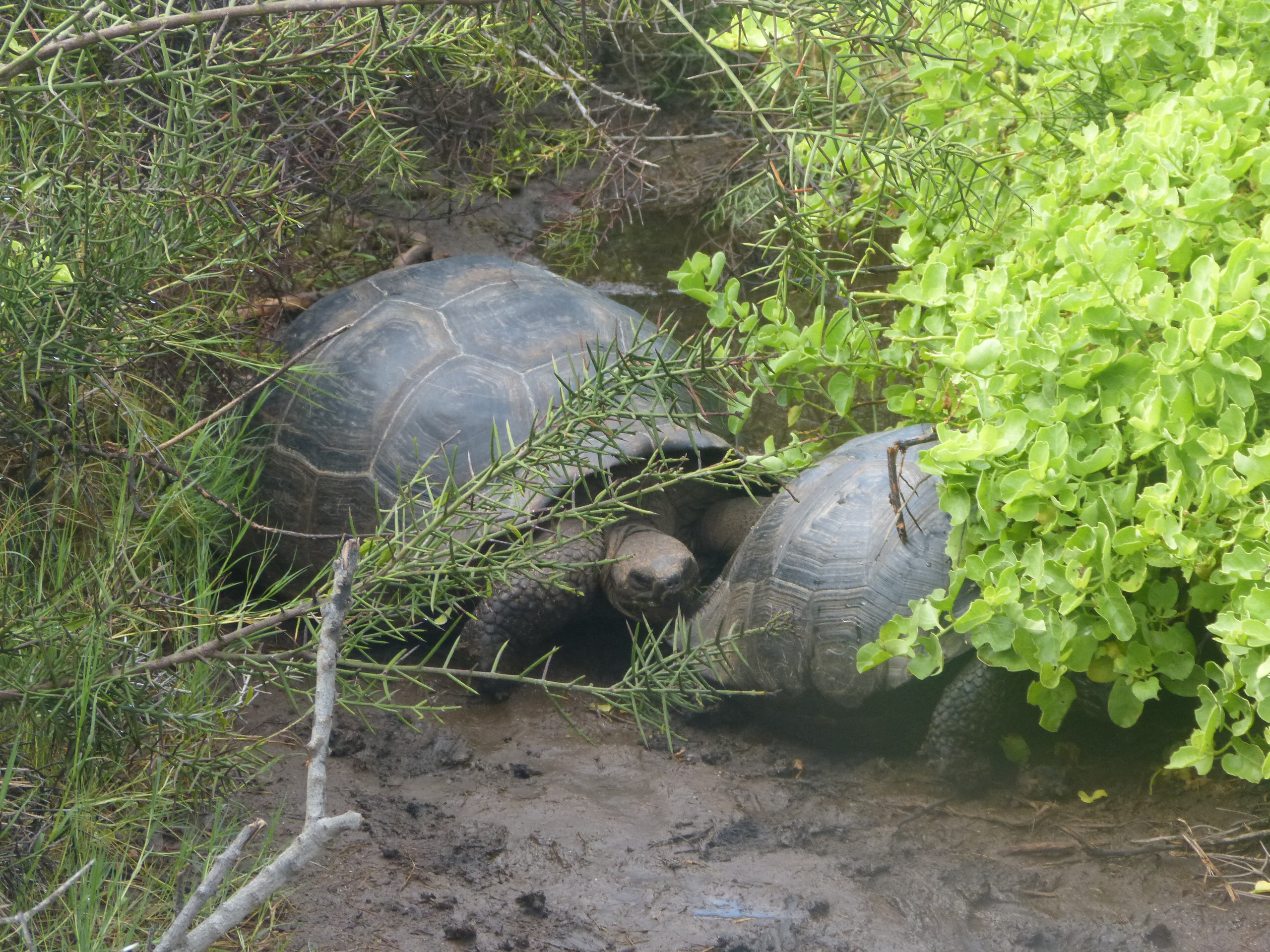
A short bus drive where we see a dramatic change in vegetation- green and lush – to El Chato 2 Ranch park, where we see heaps of Galápagos Giant Tortoises in their natural habitat ) Babies, teenagers, and adults! They do not reach sexual maturity until around age 40. Not exactly sure of average age of a Galapagos Tortoise as they far outlive humans- possibly 200 years. The rings on the shell give an indication of age – the rings smooth out as they age. Galapagos Giant Tortoises are known for their water storage abilities- they can survive a year without drinking or eating ( they are vegetarian) – can metabolise fat stored in their tissues which leads to water production- amazing! The carapaces can be saddle backed or dome shaped, and thought to have evolved as they have adapted to different environments if the various islands. Fascinating to watch. What a shame they were used for meat, and numbers have decreased from 250,000 to approximately 15,000 today.
Also saw birds
Cattle Egret – in action, cleaning the tortoise from ticks and fleas
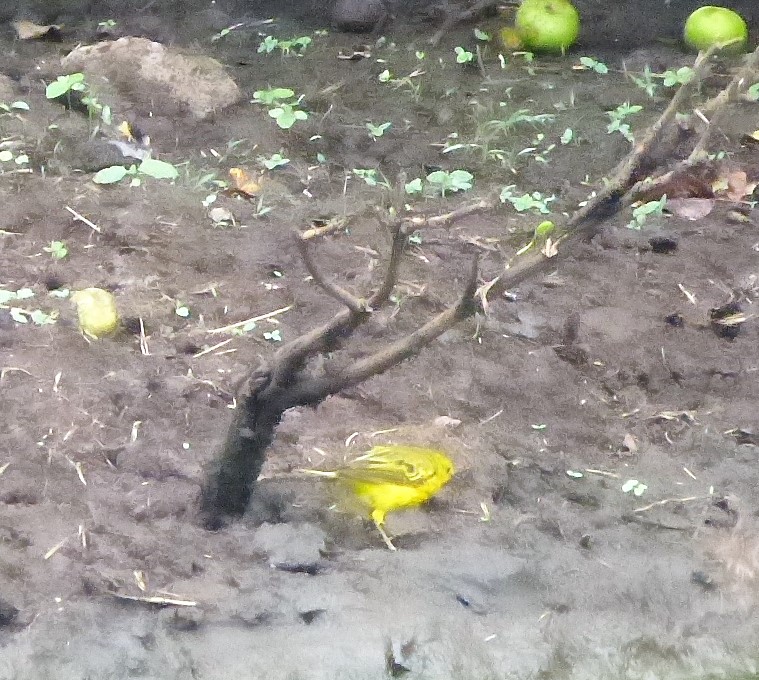
Yellow Warbler
Brown Finch
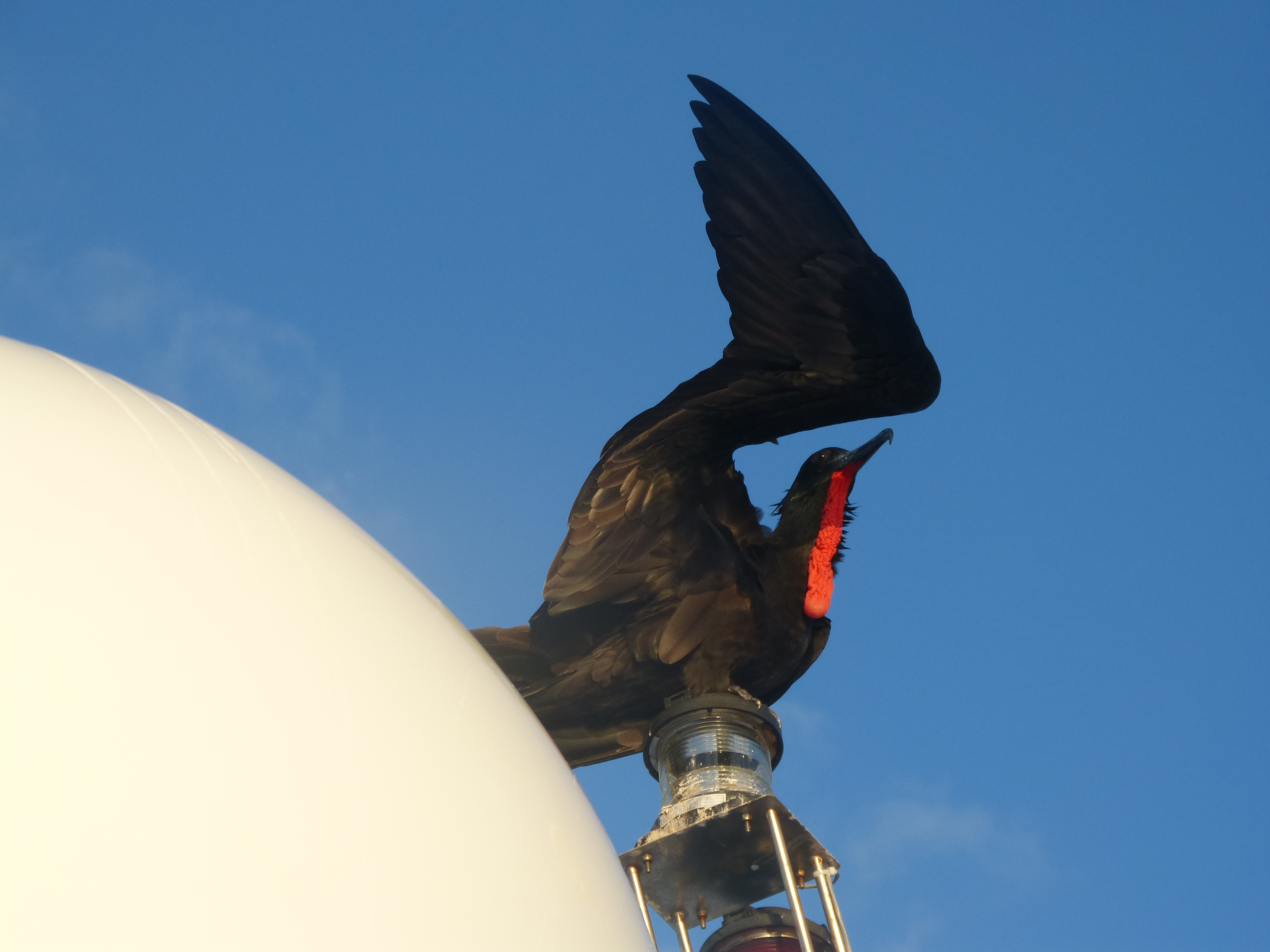
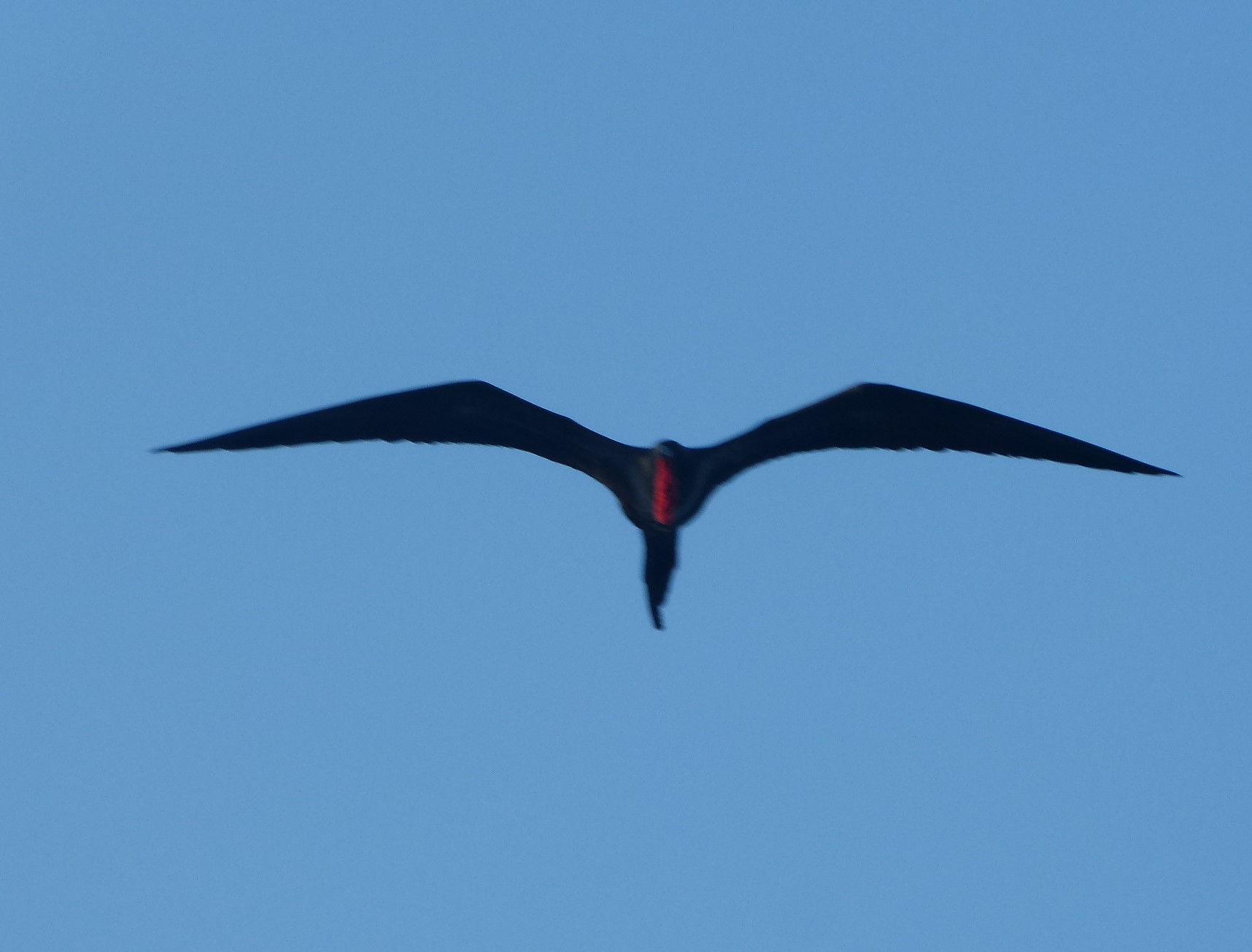
Frigate
Blue footed Booby
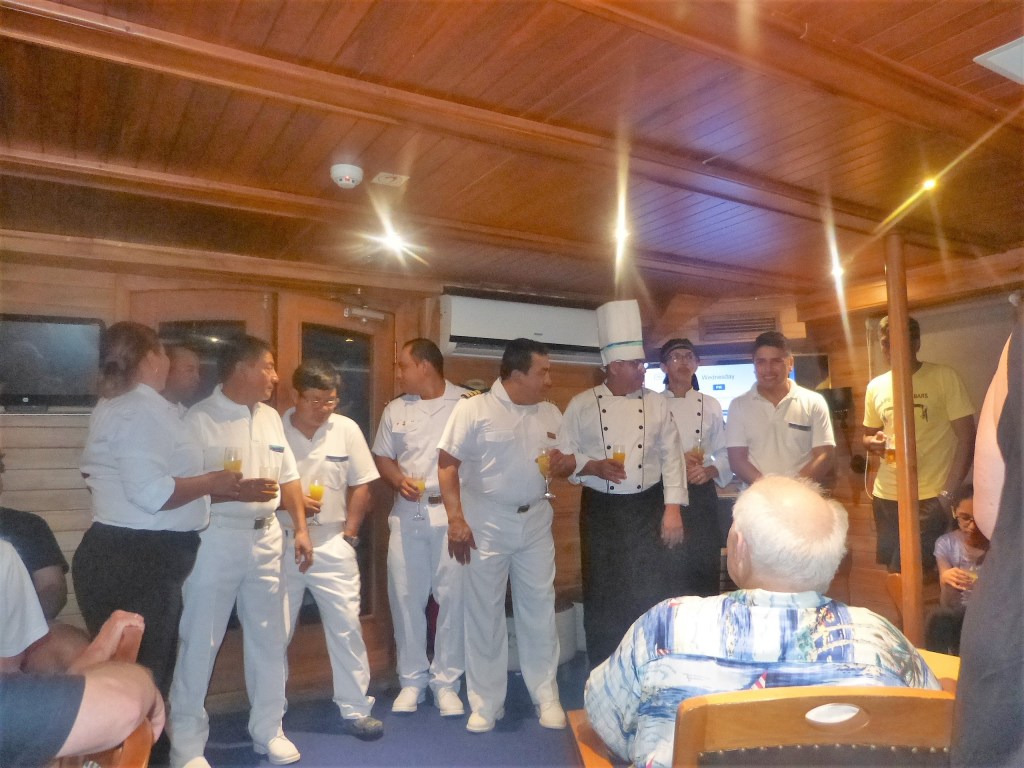
Back to the ship for a welcome cocktail and meet the Captain reception followed by dinner, and then an explanation of tomorrow’s activities! Very exciting… I am going to be snorkelling!



Day 28 4th April
Overnight we had travelled to Isabela Island – Vicente Roca. Up for sunrise. Then a dinghy ride along the coast to observe the following.
Blue footed Booby- love the blue feet
Nascar Booby-yellow beak
Flightless Cormorant
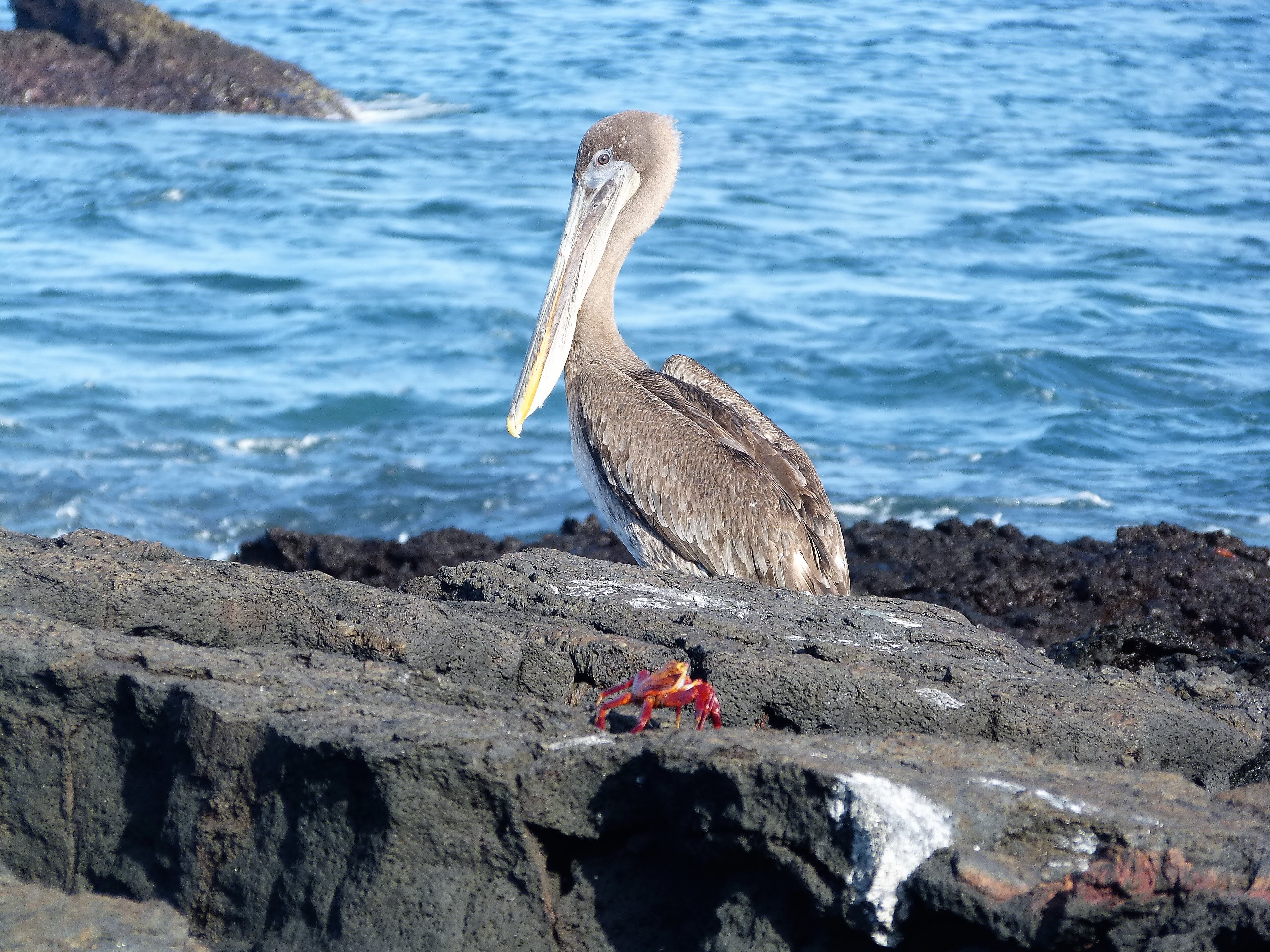
Brown pelicans – much smaller than our white ones
Galápagos penguins
Green turtles
Sea Lions
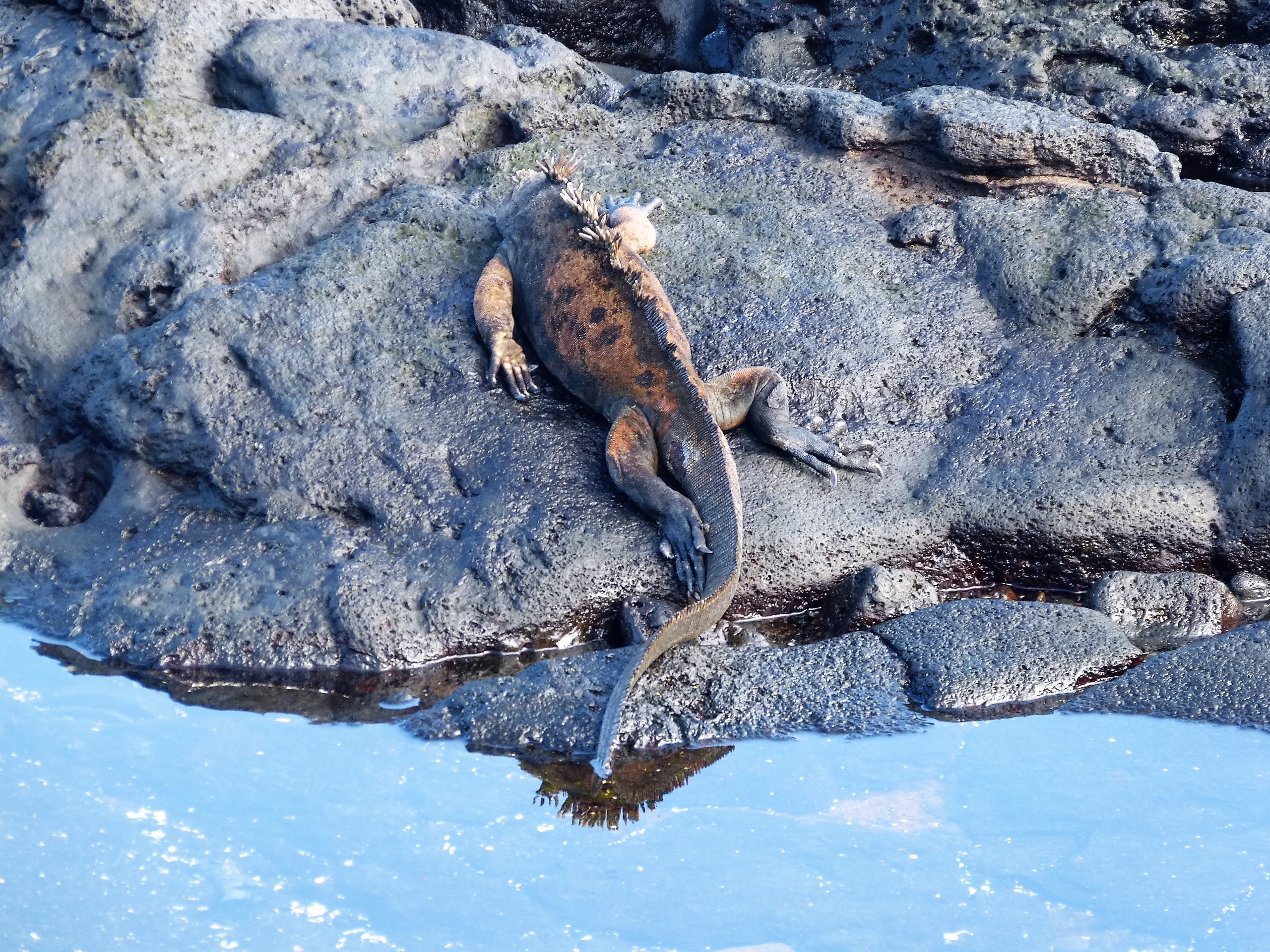
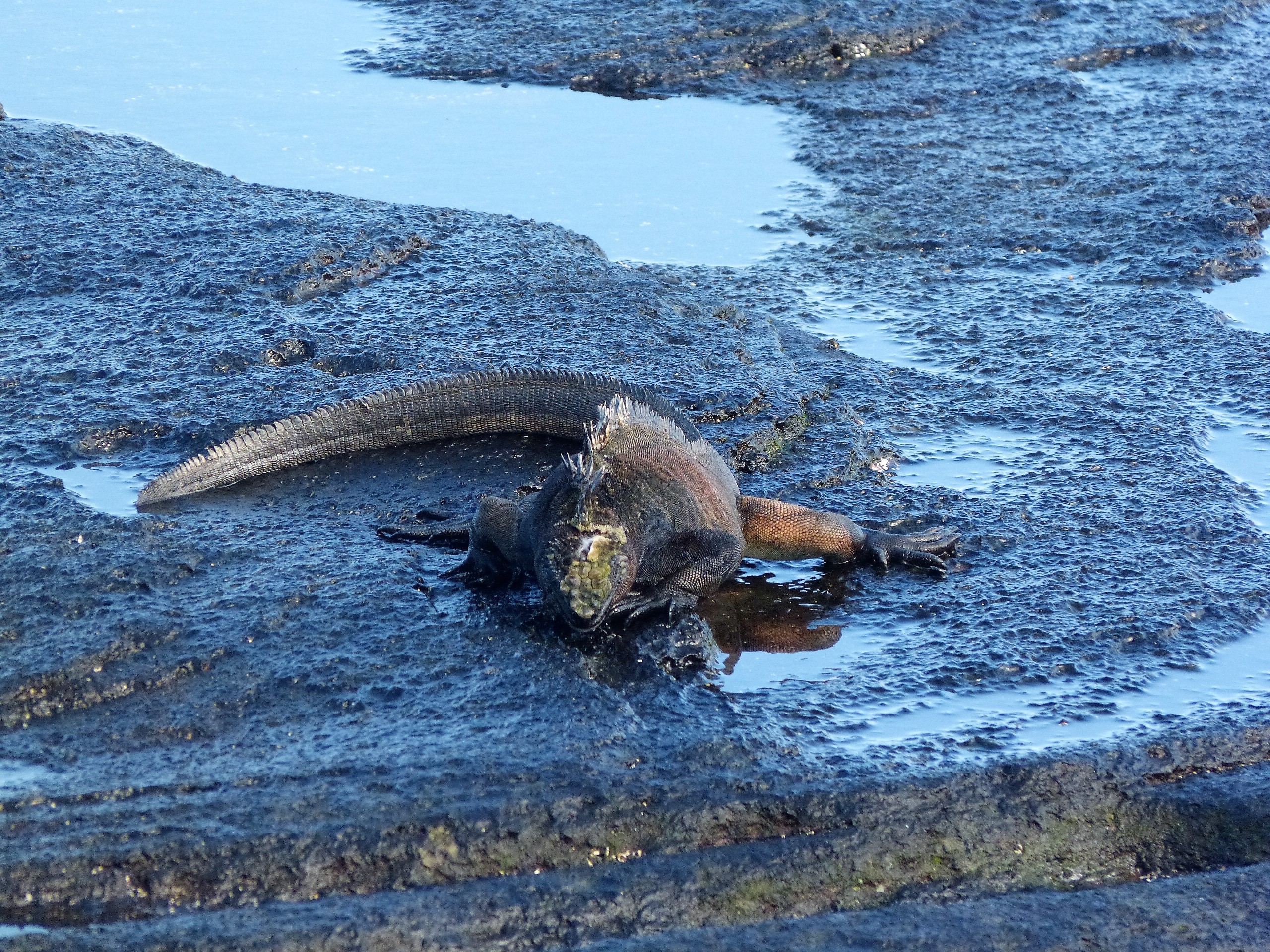
Marine Iguanas
Galapagos shark
Steep geological formations are impressive and provide a beautiful backdrop for numerous nesting birds.
Then we snorkelled for an hour – and I have got it mastered, and loved it. The marine life was amazing.
Lunch- accompanied by a pod of approximately 50 dolphins swimming alongside us.

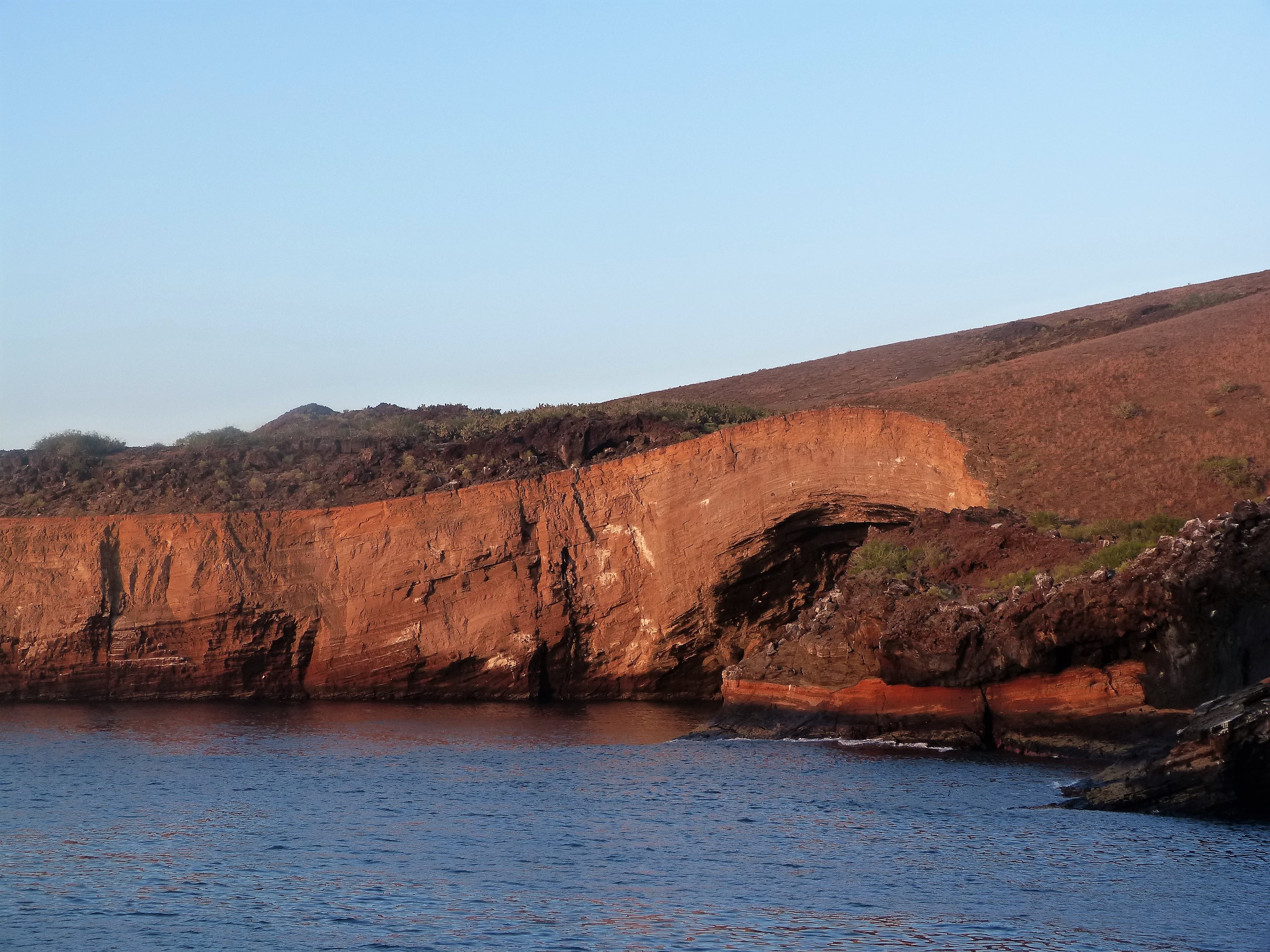

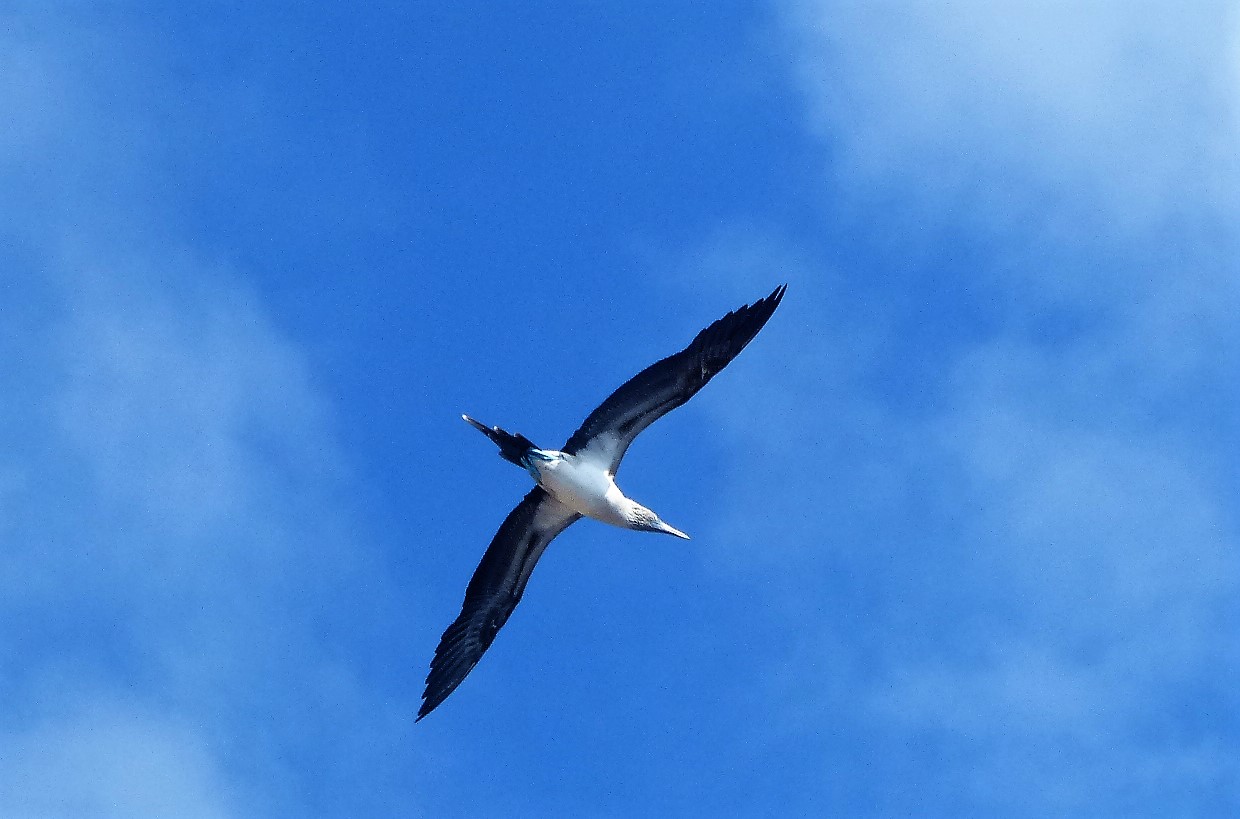
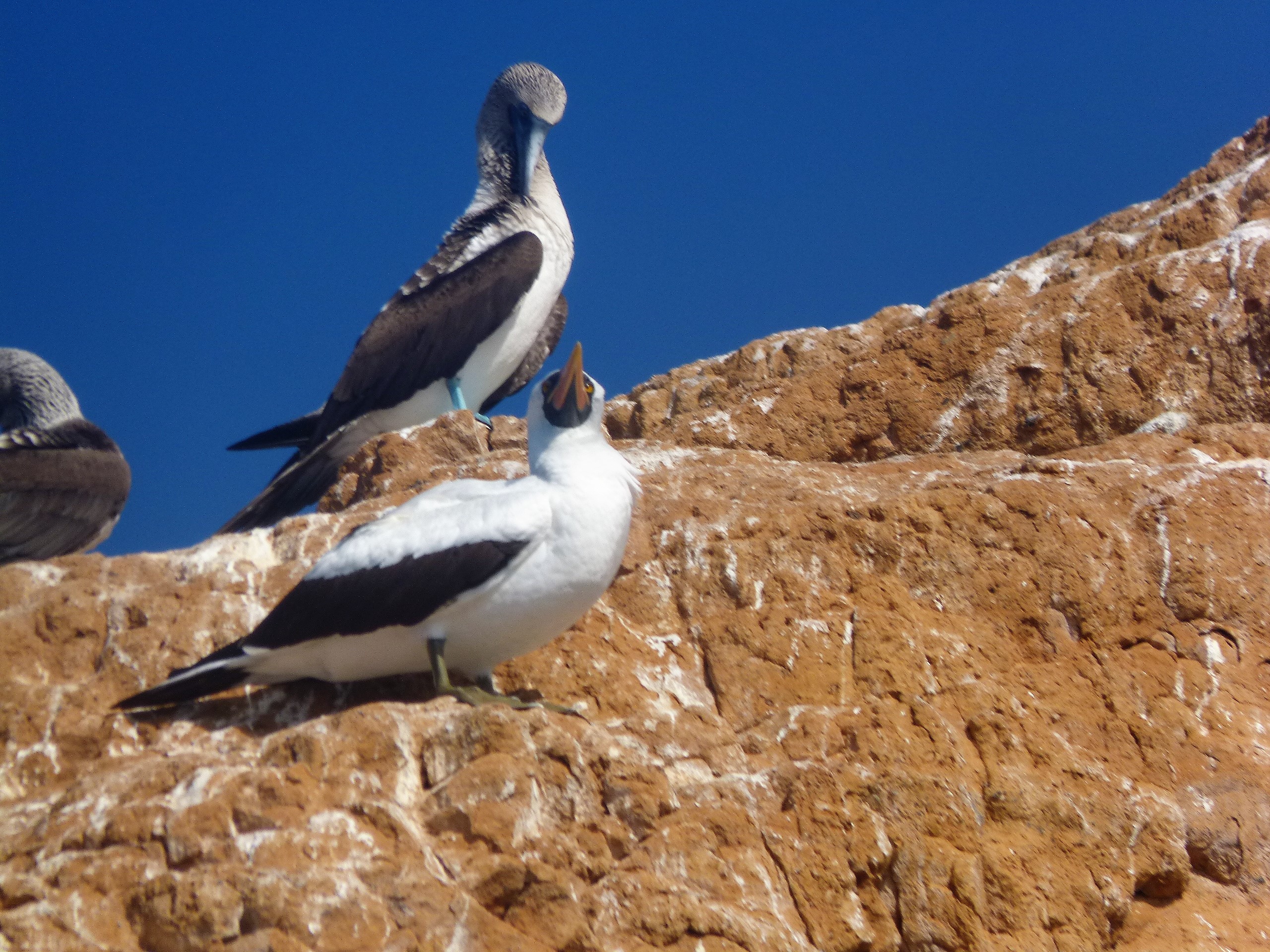


Afternoon, we went to Fernandina Island – Espinosa Point. This is the youngest Island, and considered the best preserved and pristine island in the world – this is the only piece of land in the world that doesn’t have any man introduced species- plant or animal! We had a dry landing, walked through the mangroves and enjoyed the folllowing
Marine iguanas, by the millions! They sneeze out saline water to get rid of the excess salt ( the water in Galapagos is saltier than anywhere else in the world
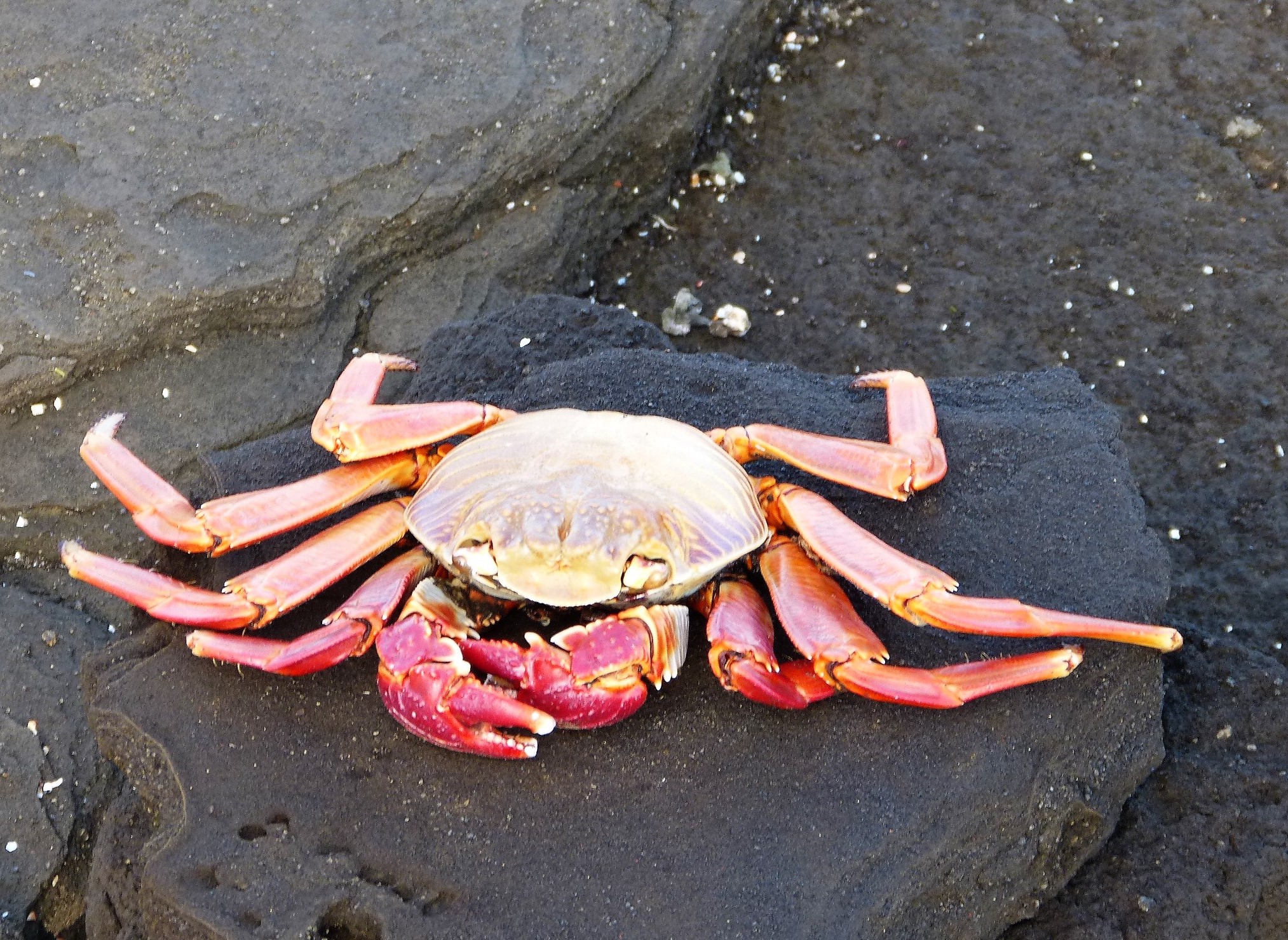
Red and turquoise blue Zayapas ( Sally Lightfoot crabs)
More flightless cormorants, brown pelican, frigates
Lava Heron
Galapagos hawk- male and female
Sunbaking Galápagos sea lions, including a baby suckling from its mother…. so cute.
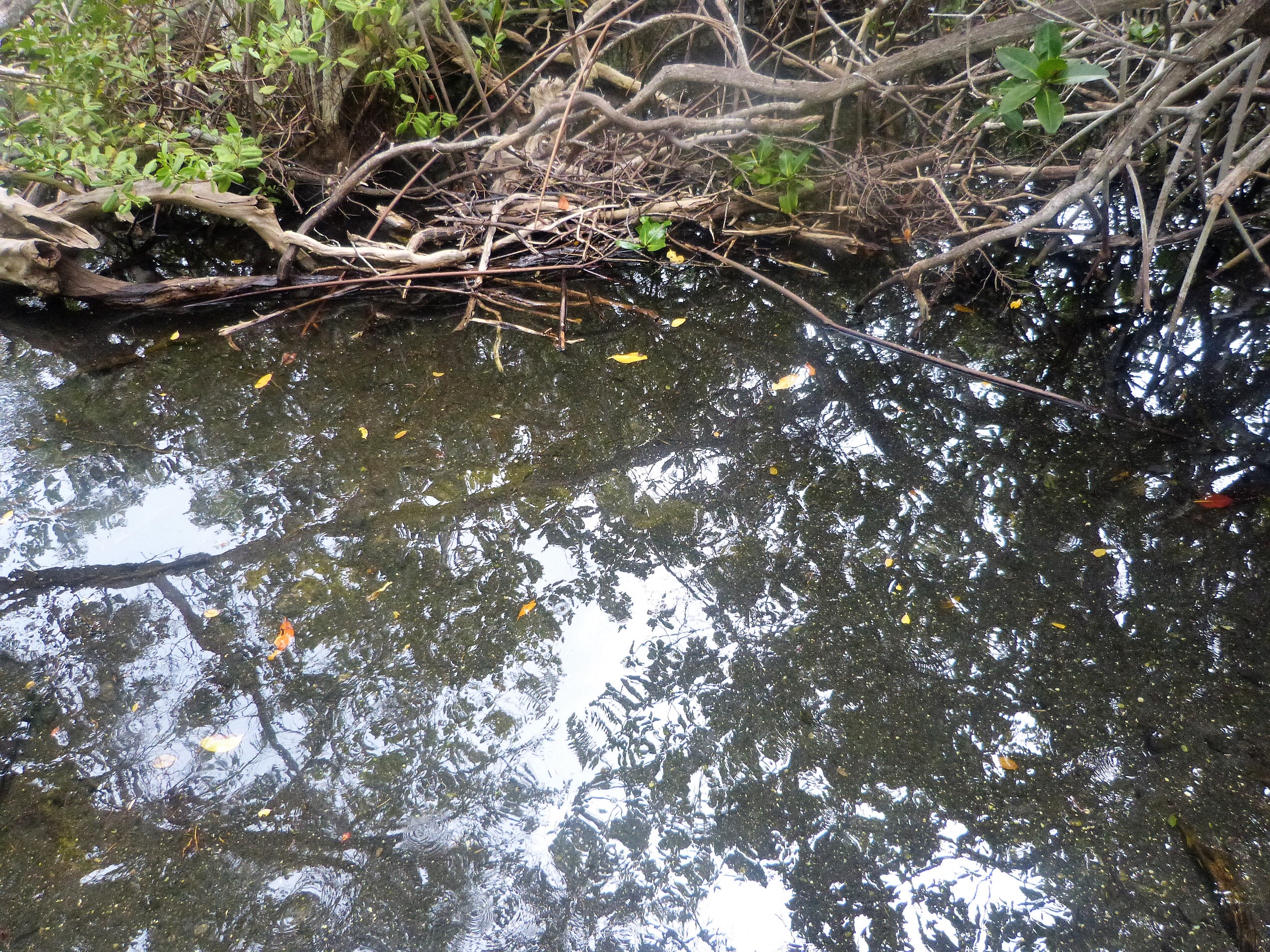
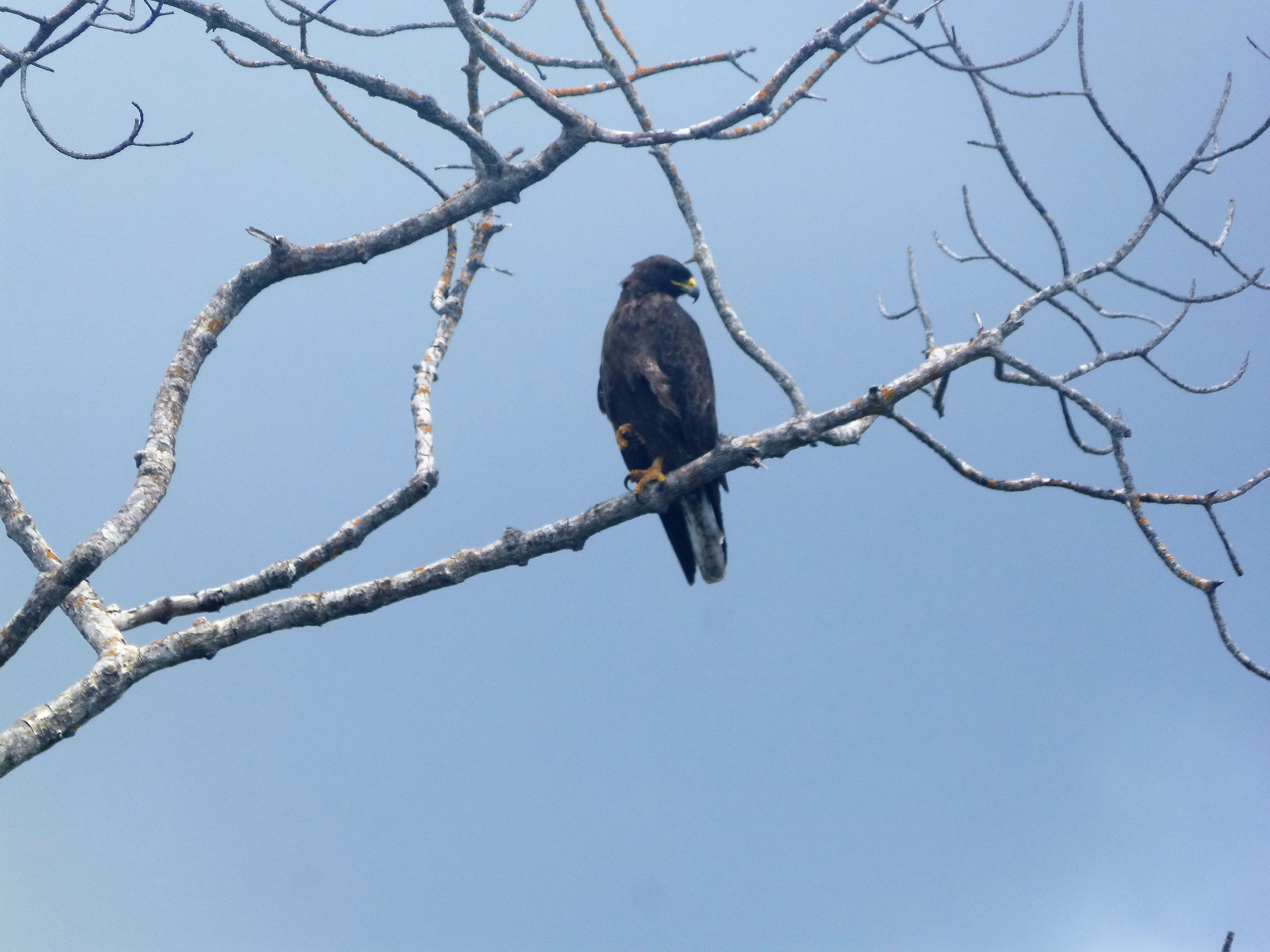


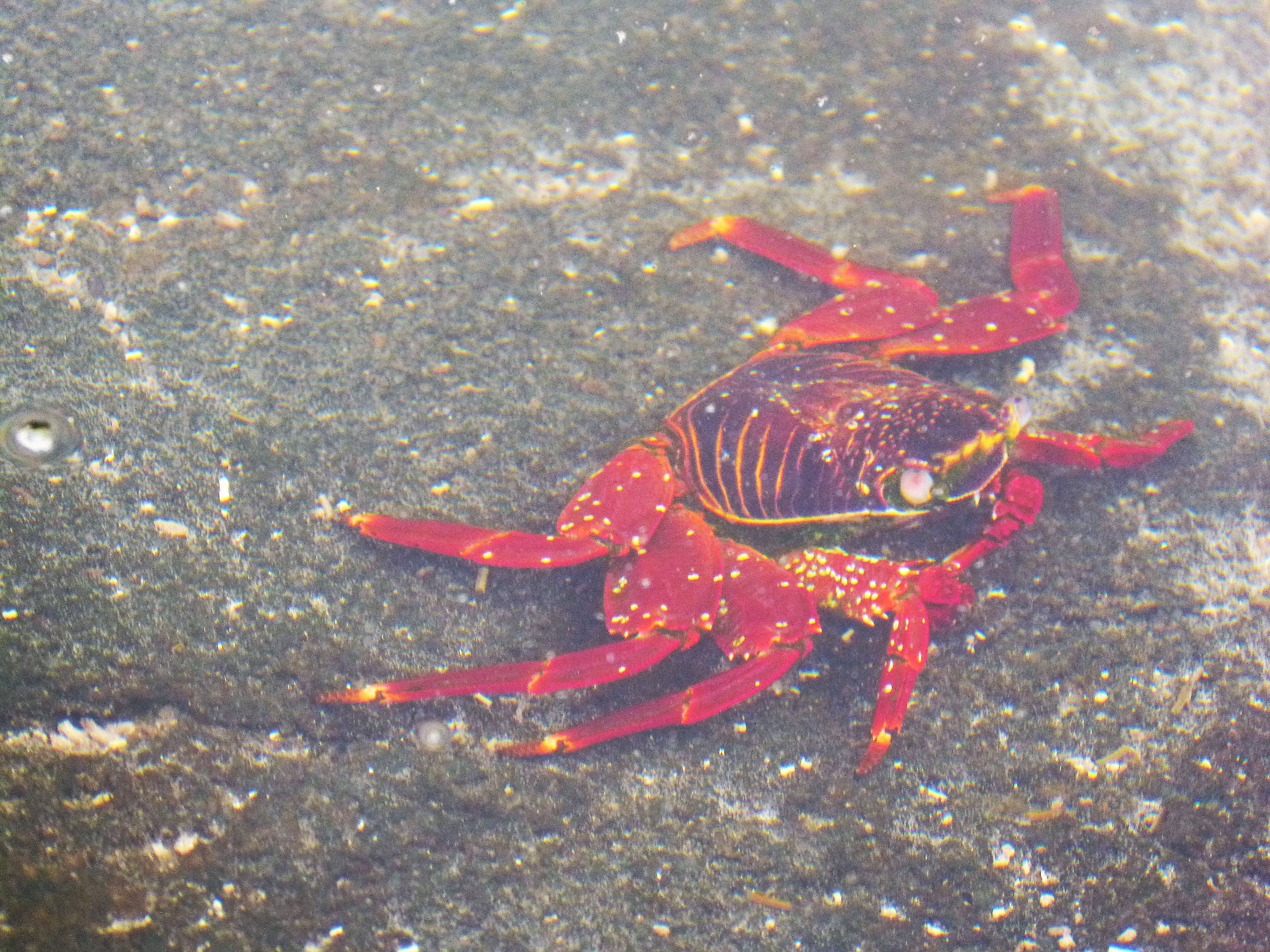

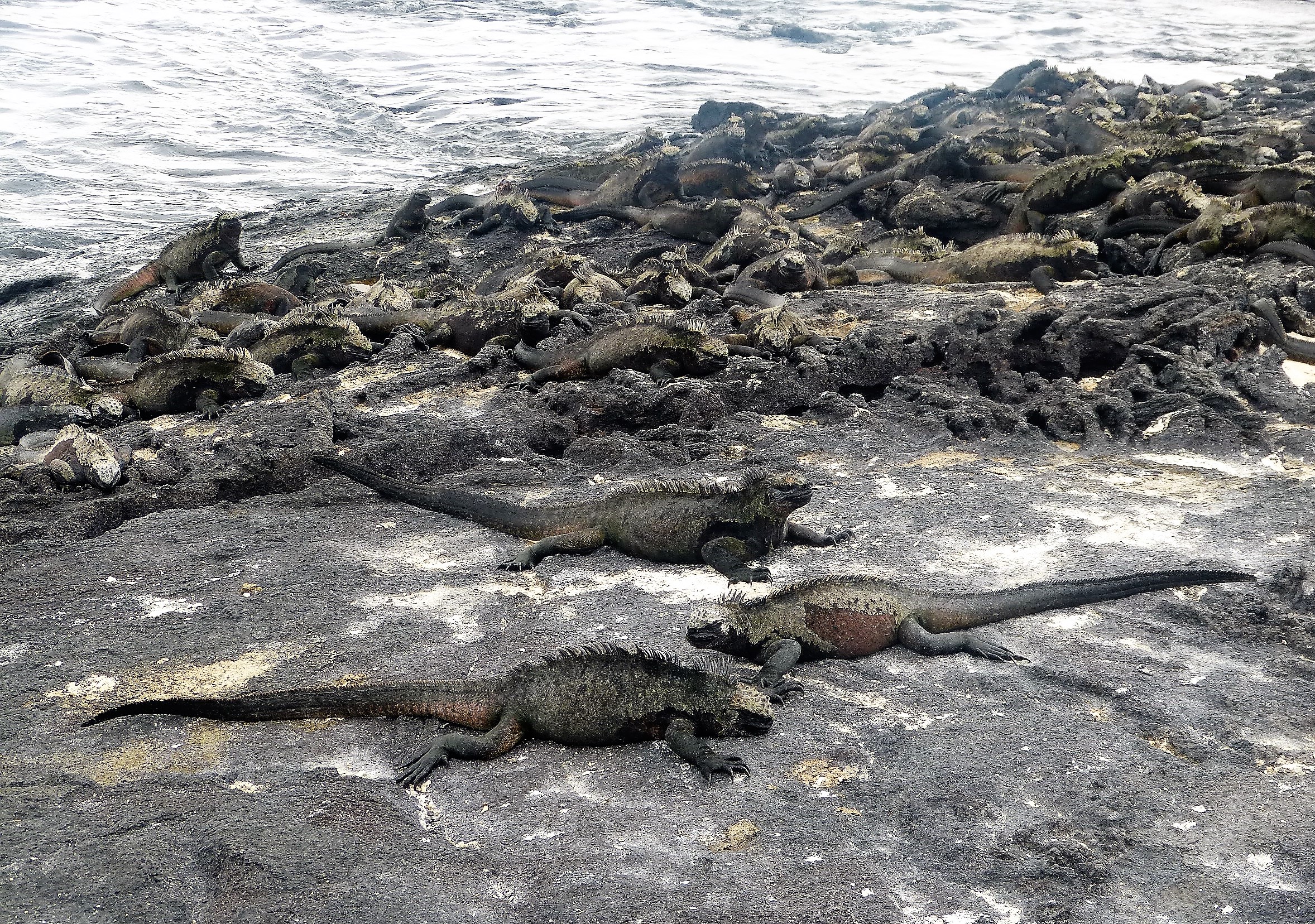

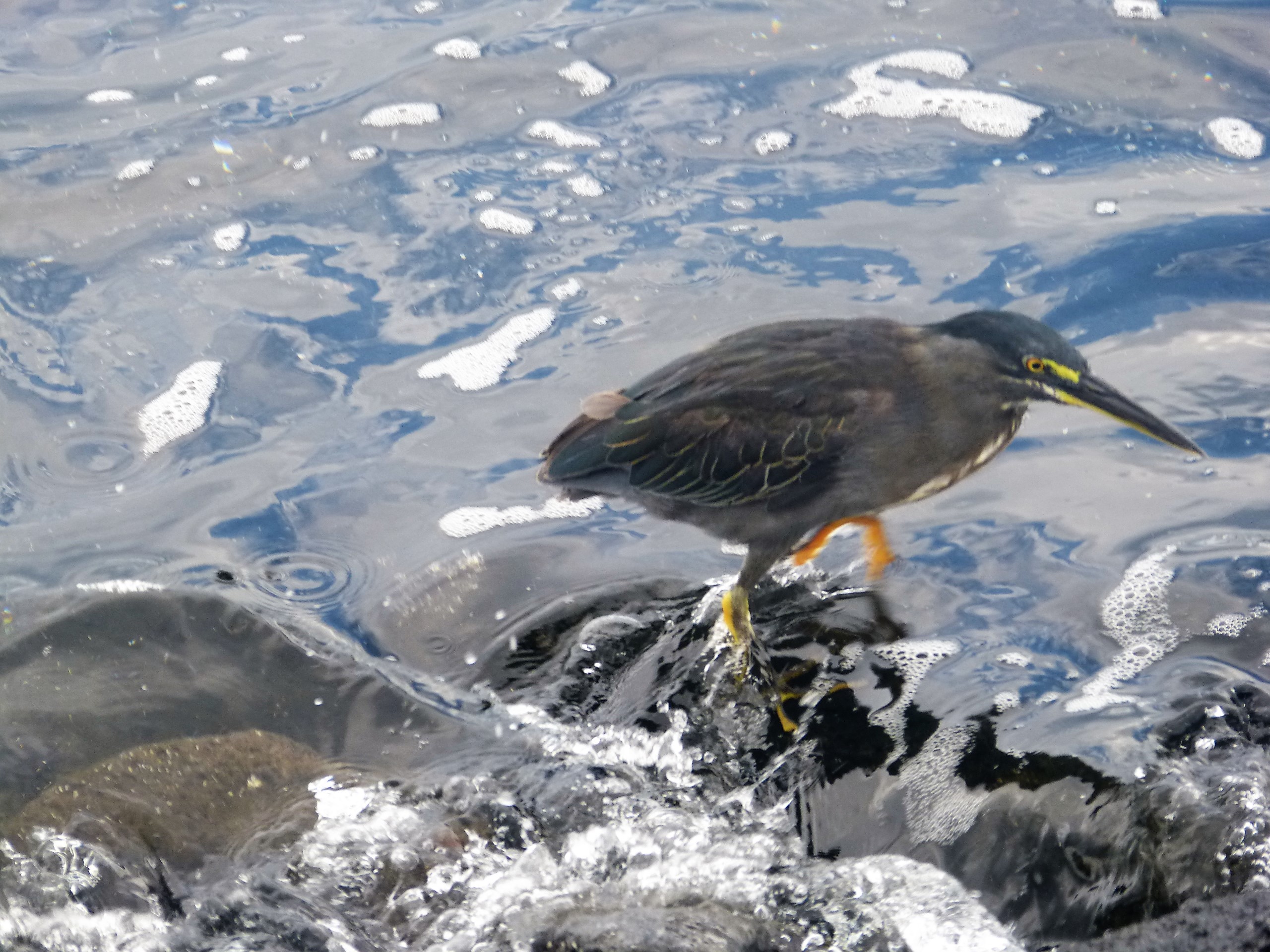


Back to the ship, then out for deep water snorkel. Some of the fish we saw – the colours are amazing.
Yellow tailed surgeon fish- silver with bright yellow tail
Cornet fish
King angelfish -purple and orange
Moorish Angelfish
Blue chin parrotfish – turquoise and purple
Giant damselfish
Sargent Major – yellow and black
Bump head parrotfish
White tipped Reef shark
And, 7 green turtles and sea lions darting around us! Yes, I have now swum with sea lions and turtles… who would think! I’m hooked!
Dinner – a BBQ on the top deck whilst enjoying the sunset. Trivia quiz afterwards – all Galapagos questions.
Day 29 5th April

Breakfast on deck watching tuna jumping as they follow schools of mullet.
We have travelled back to Isabela Island – Urbana Bay. Wet landing this time, then a walk inland to see land iguanas in their natural habitat – these are a yellow/ orange colour. We see where they nest, and rest.
Also see Giant Tortoises, you get younger ones here. It is nesting season, so see where they nest. They migrate to higher ground for mating season.
Back to the beach where we landed, avoiding where the sea turtles nest, then more snorkelling. Sea turtles and fish, with a couple of sea lions swimming around us. It’s like they are playing with you… they swim straight at you, then dart off a metre before they get to you! So cute! Frank managed to get the snorkelling right this time!

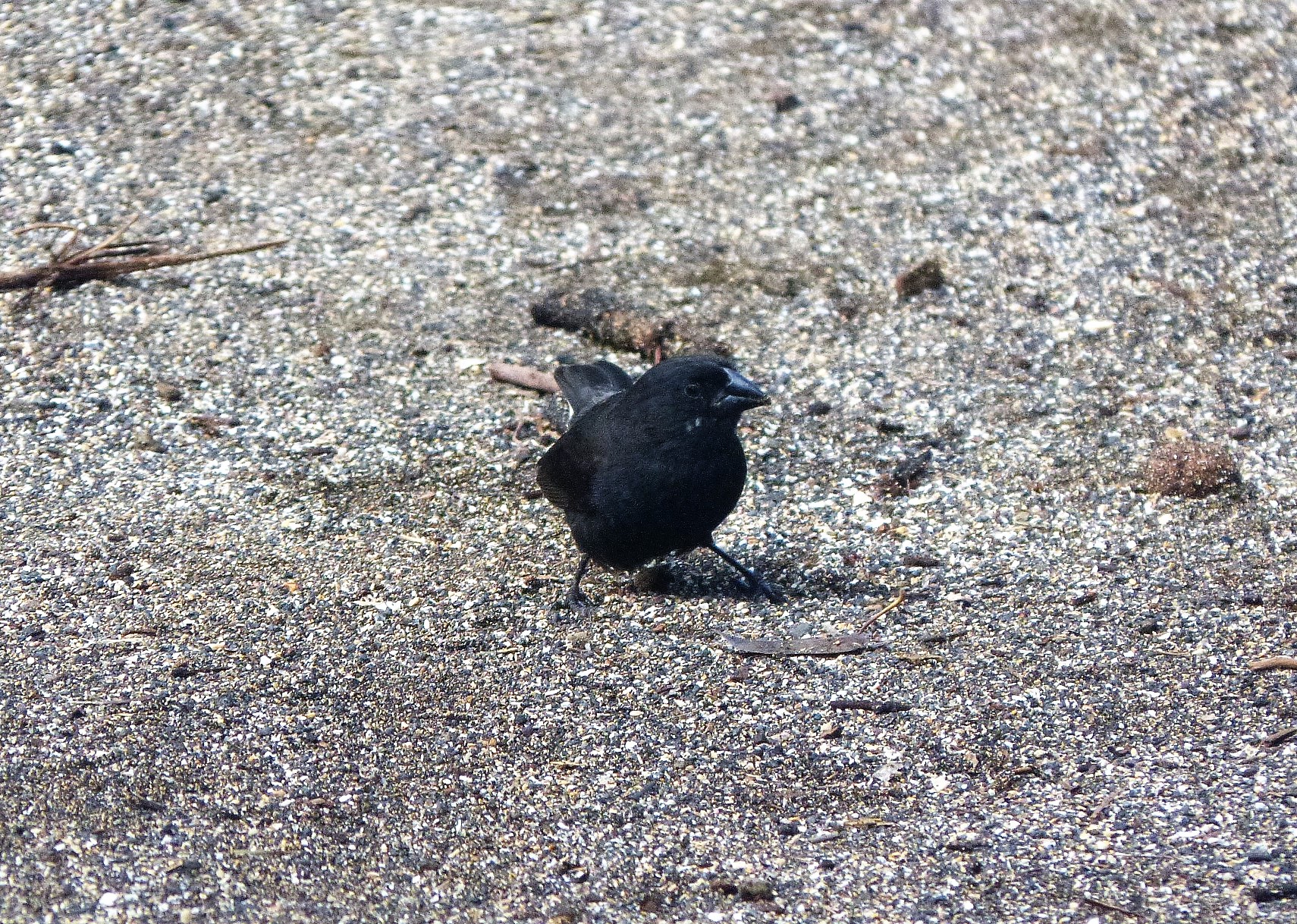
New birds ..
Darwin’s Finches
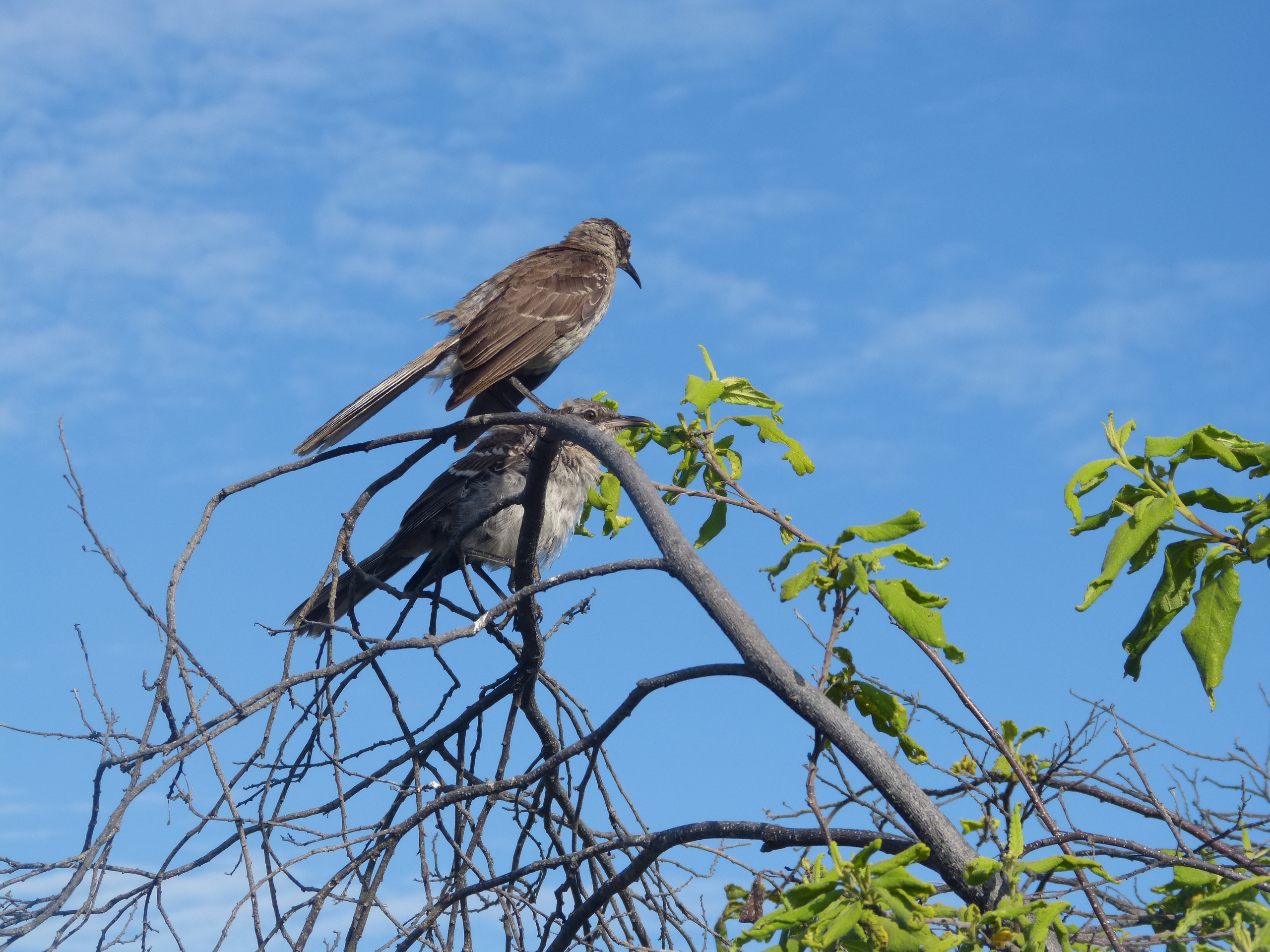
Galapagos mockingbird

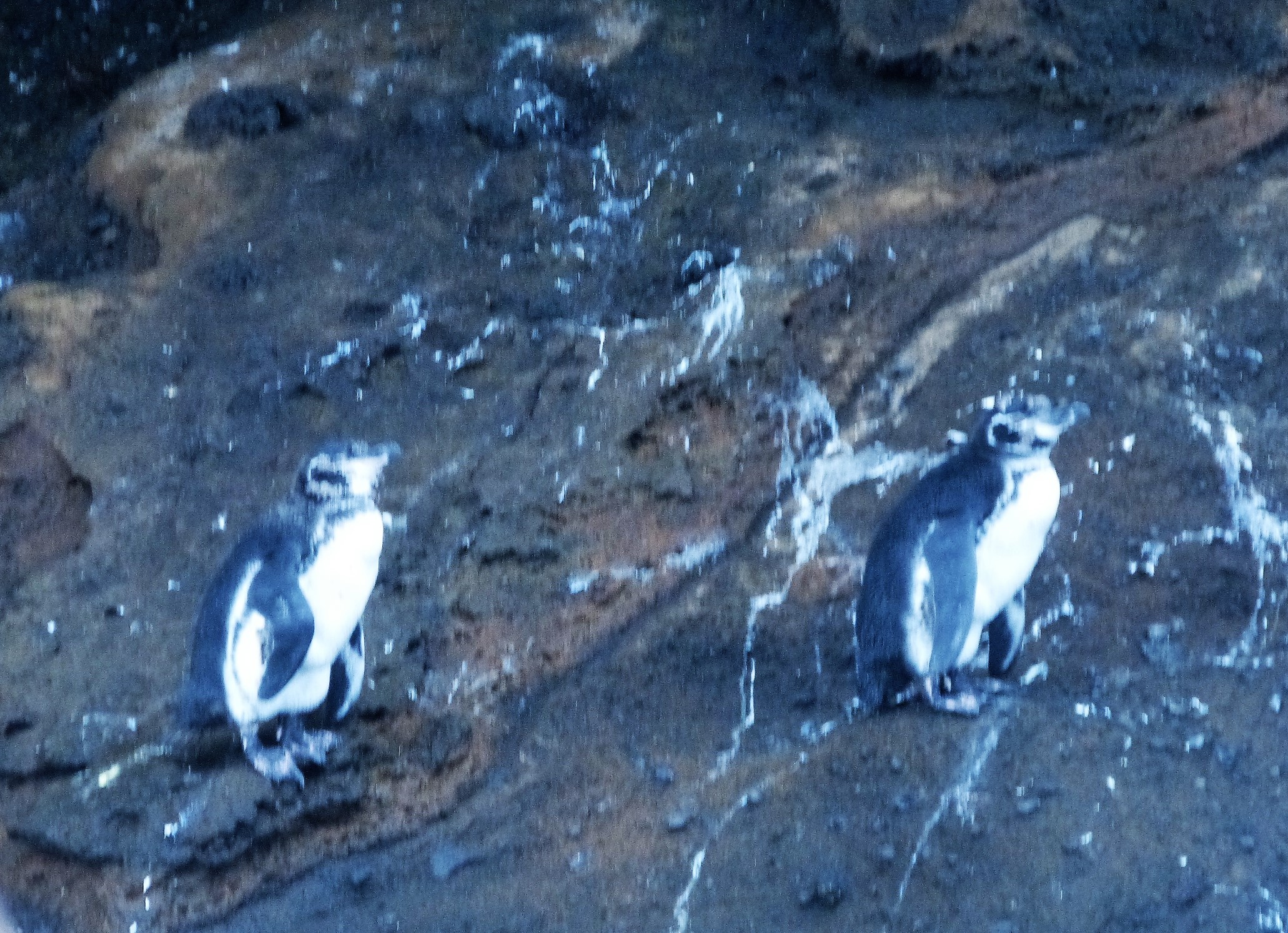
This afternoon, we have a dry landing at at Targus Cove on Isabela Island. Well, we might have had a dry landing but it was raining cats and dogs within a couple of metres of getting into the panga. Ten minutes in the panga to get to shore, and we were absolutely soaked! And this was the first time, we didn’t take our rain jackets! Decided to abort the walk – the paths were muddy and slippery, we cold see the water cascading down the path. An hour later, the rain was all gone, and we were off on a snorkel – saw more beautiful fish, and a couple of reef sharks! On the way back to the ship, we diverted to a rock cave to see the Galápagos penguin. These are much the same size as our fairy penguins. They were swimming in, then climbing the rock wall, getting ready to settle for the night.
Dinner, next day briefing, and bed- the snorkelling is actually quite tiring.

Day 30 6th April
This morning was a wet landing on the black sand on Santiago Island -Egas Port. A lot of volcanic ash and basaltic rock here, with spectacular scenery – the black rock in the foreground of the aqua blue ocean was very striking.
Quite a few birds along the way in our walk
Yellow crowned night heron
Whimbrel
Galapagos mockingbird
Galapagos flycatcher
Brown pelican
Also Sally Lightfoot crabs, Lava lizards and marine iguanas ( with a reddish tinge to the black) sunbaking on the volcanic rock.
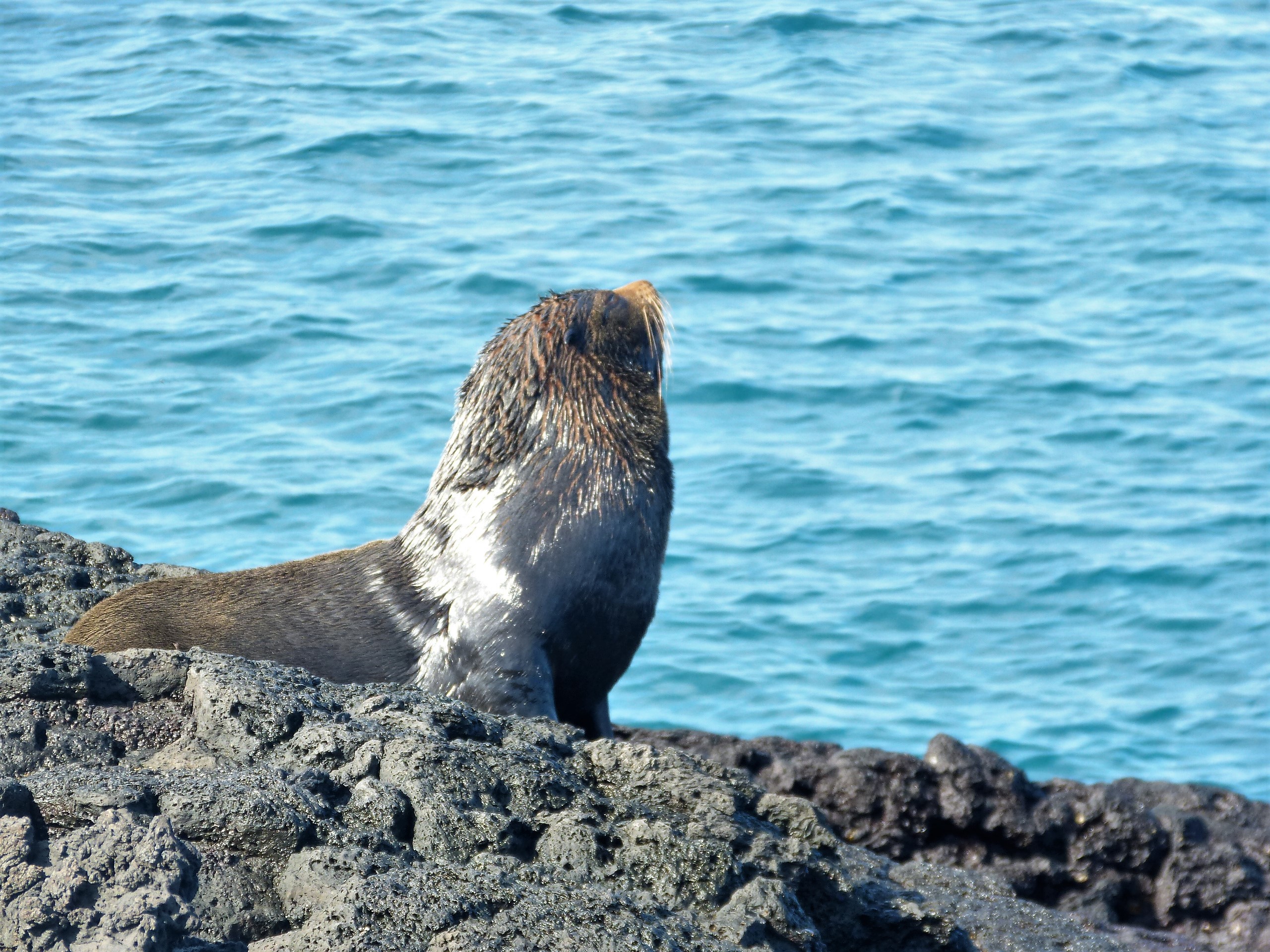
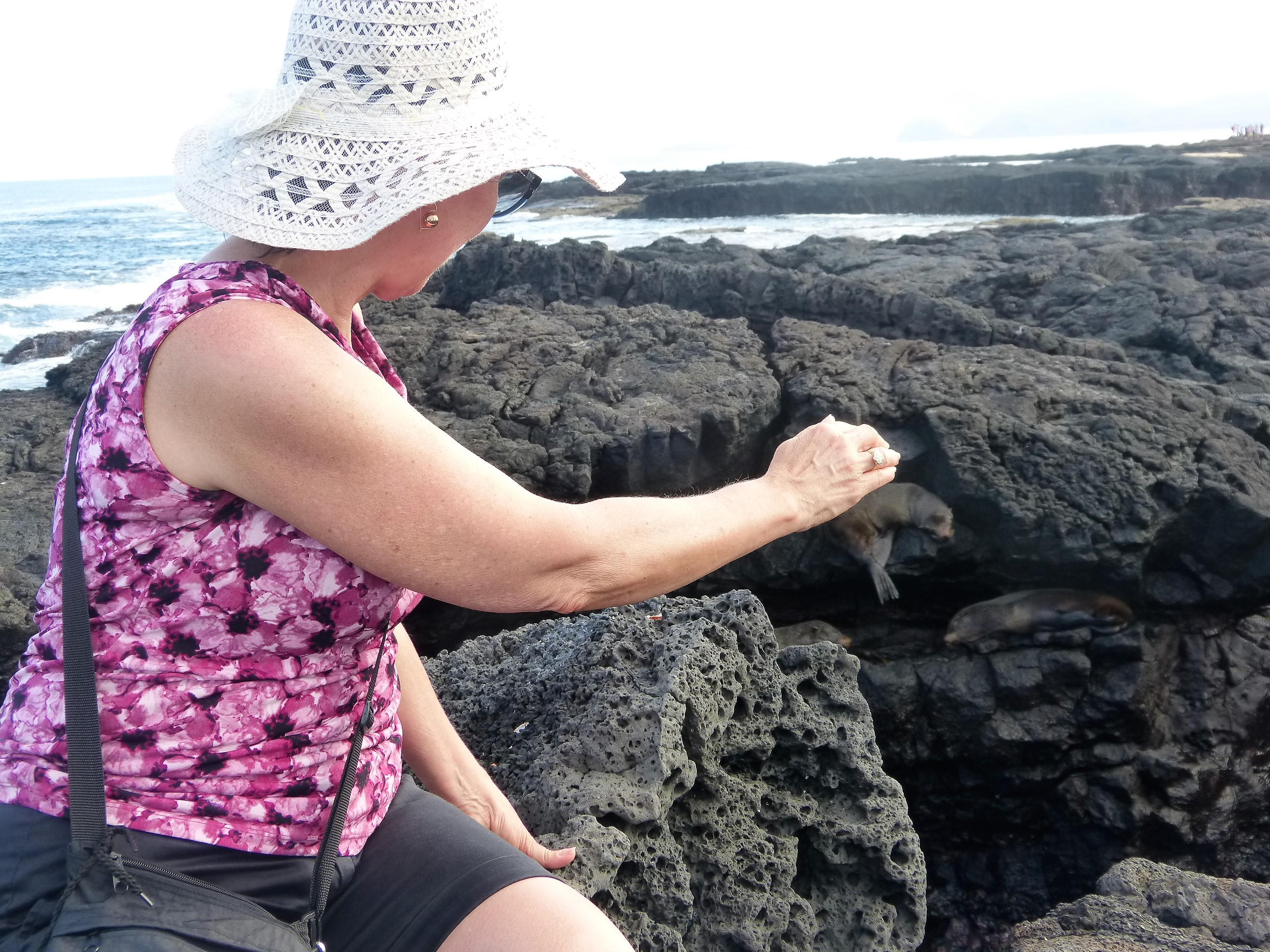
The highlight was seeing a group of Galapagos fur sea lions resting on the rocks- they prefer cool spots. Some were lying on ledges, others we wedged in the cracks of rocks- none seemed to mind that we were wandering so close to them.
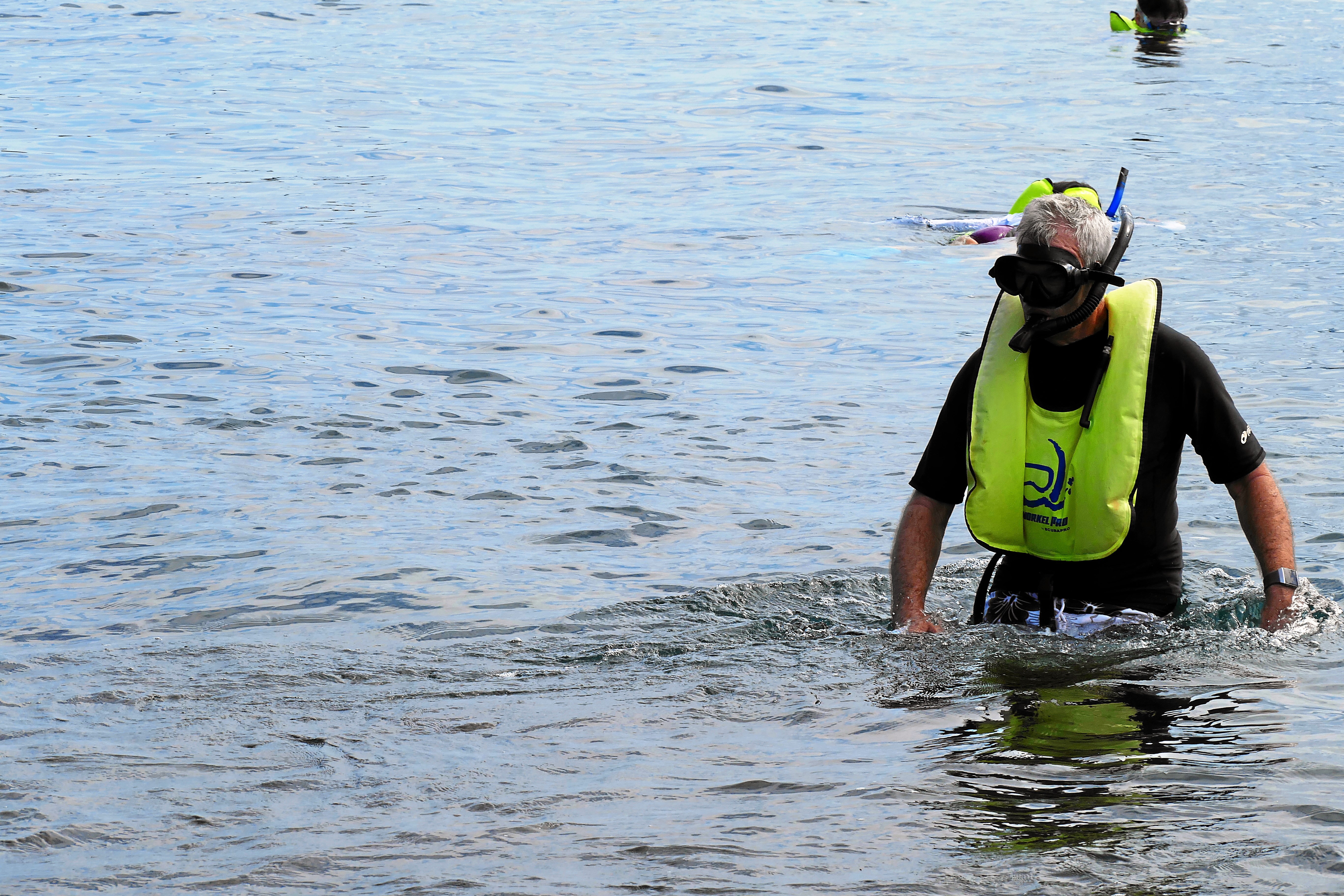
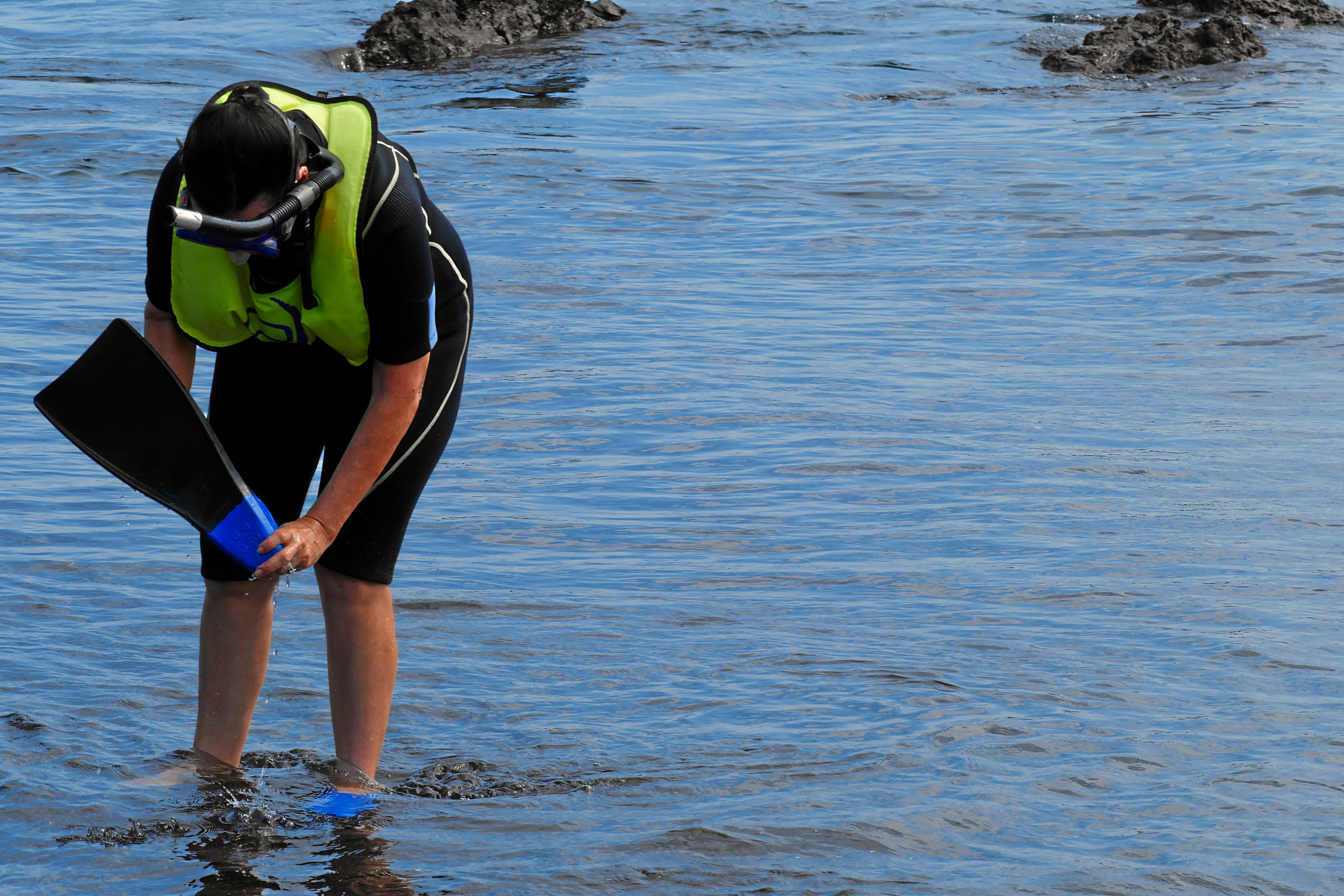
Back to the beach, more snorkelling- again, more bright coloured fish.

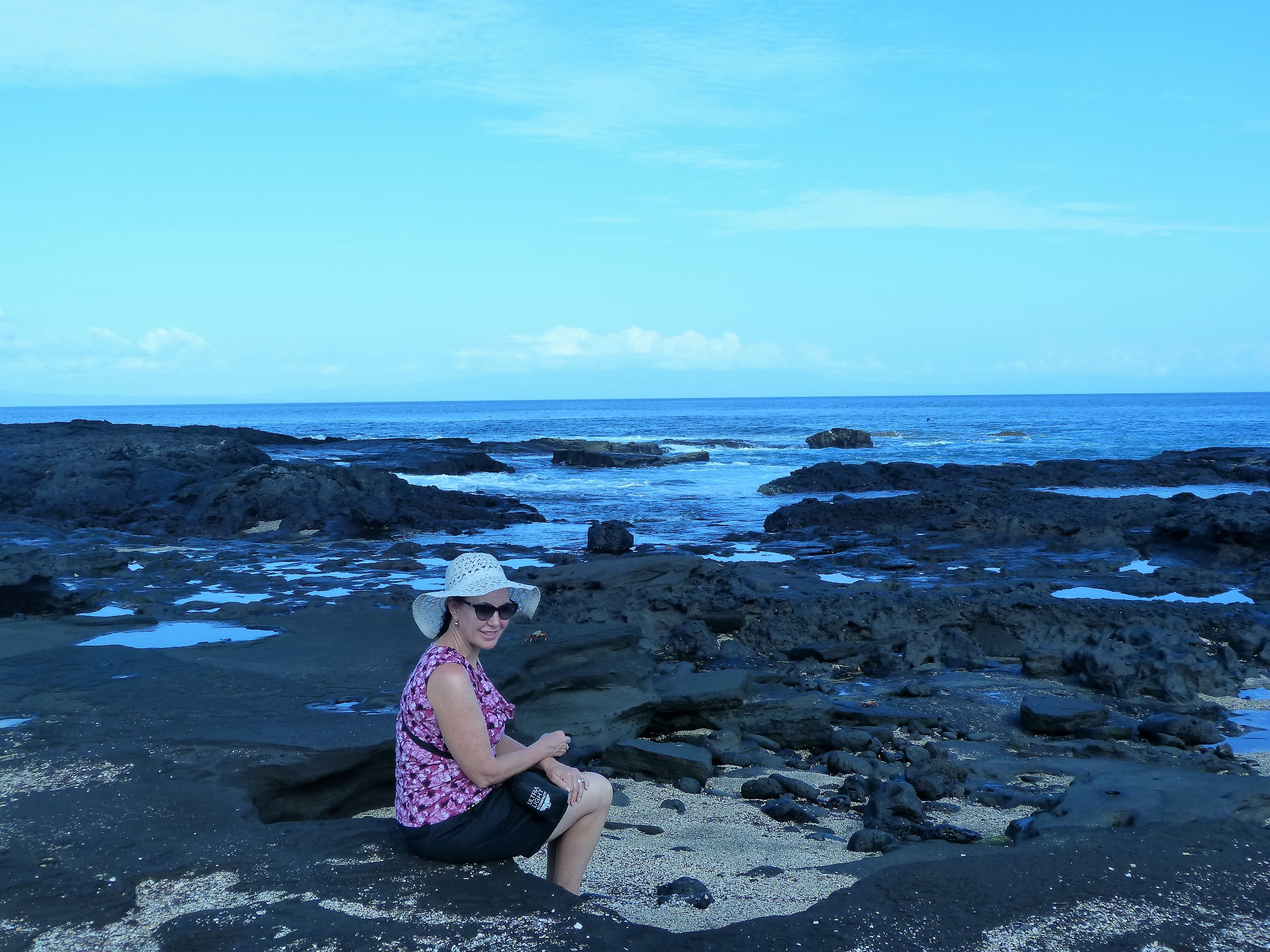
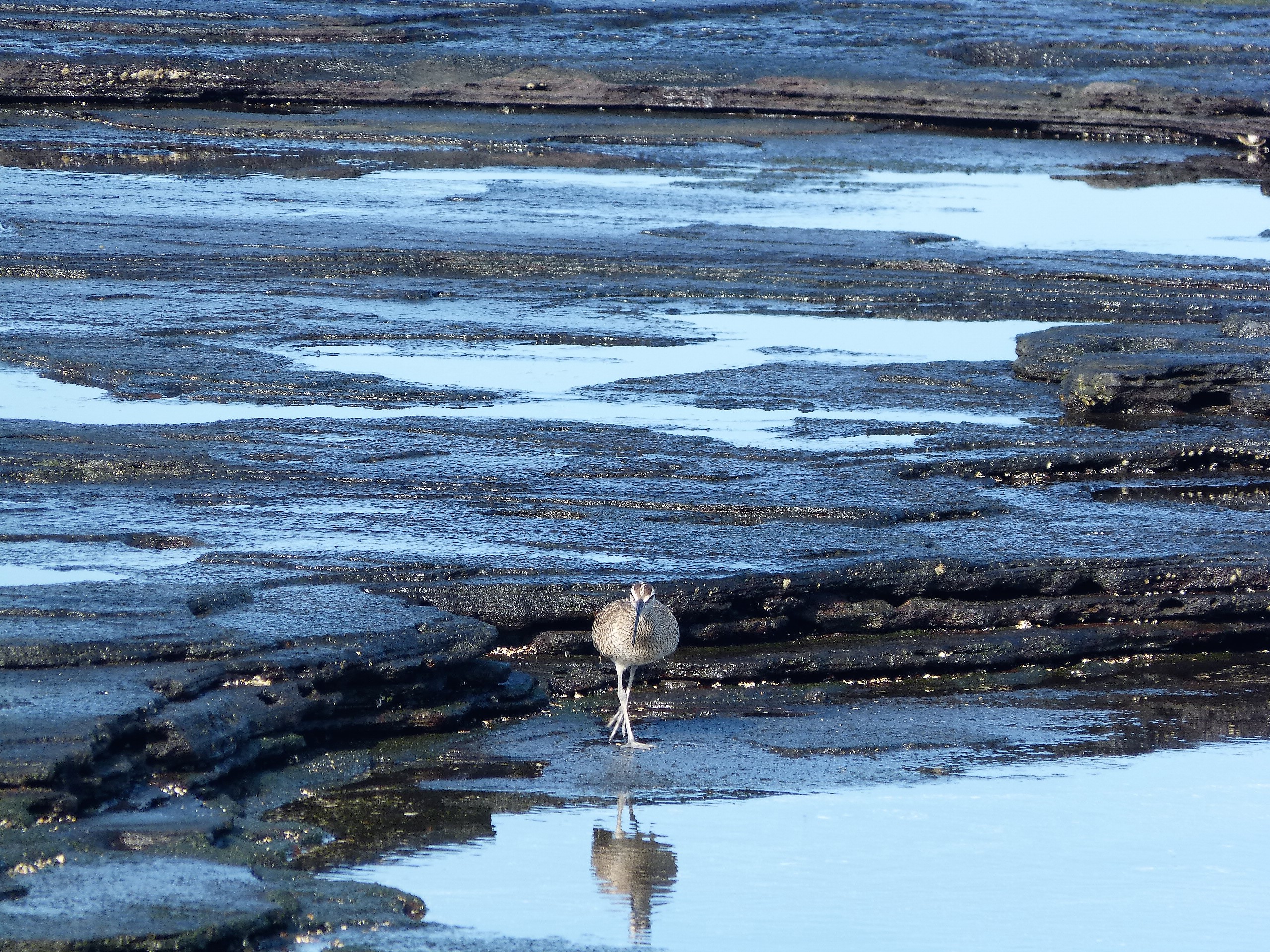
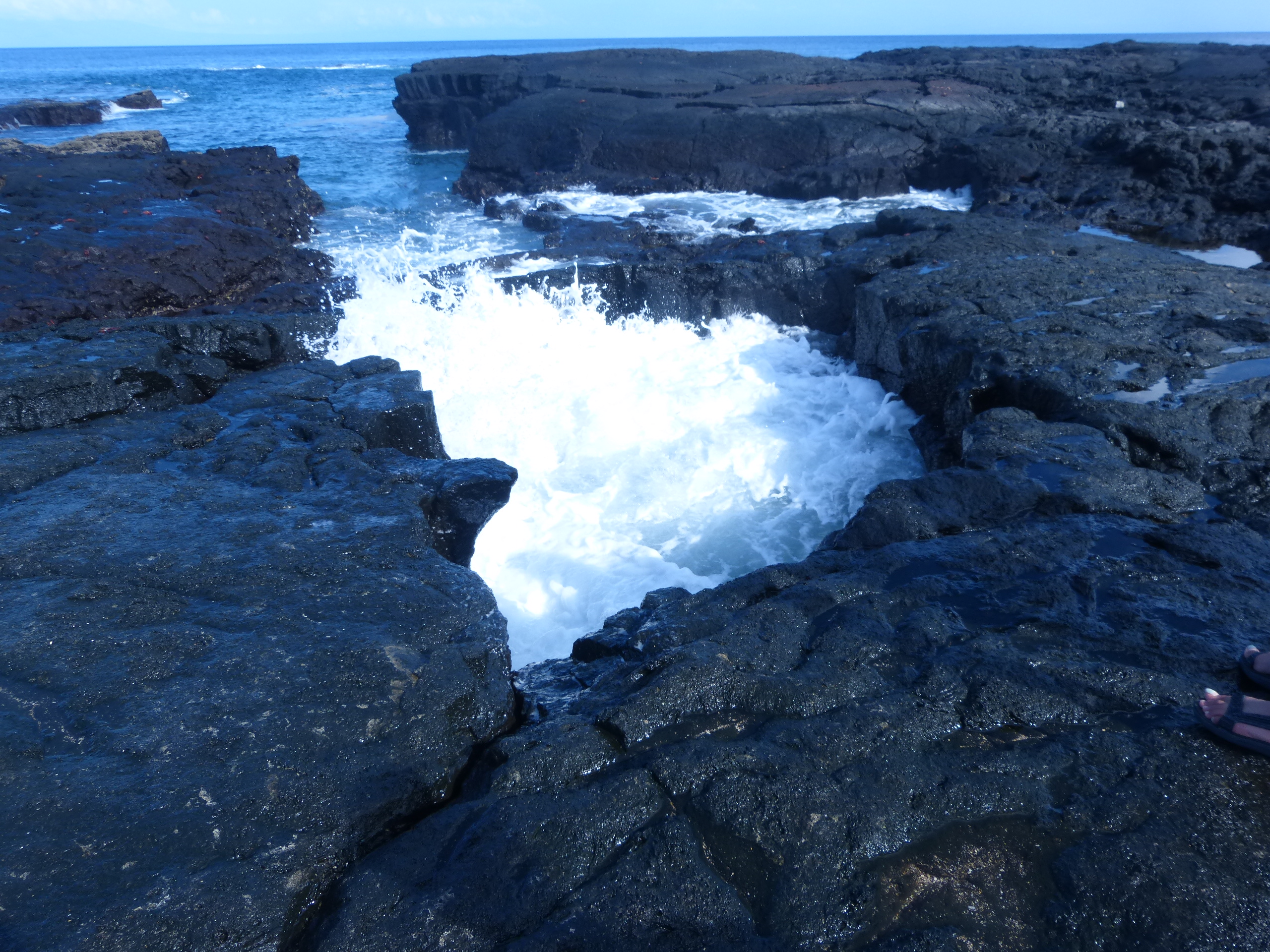

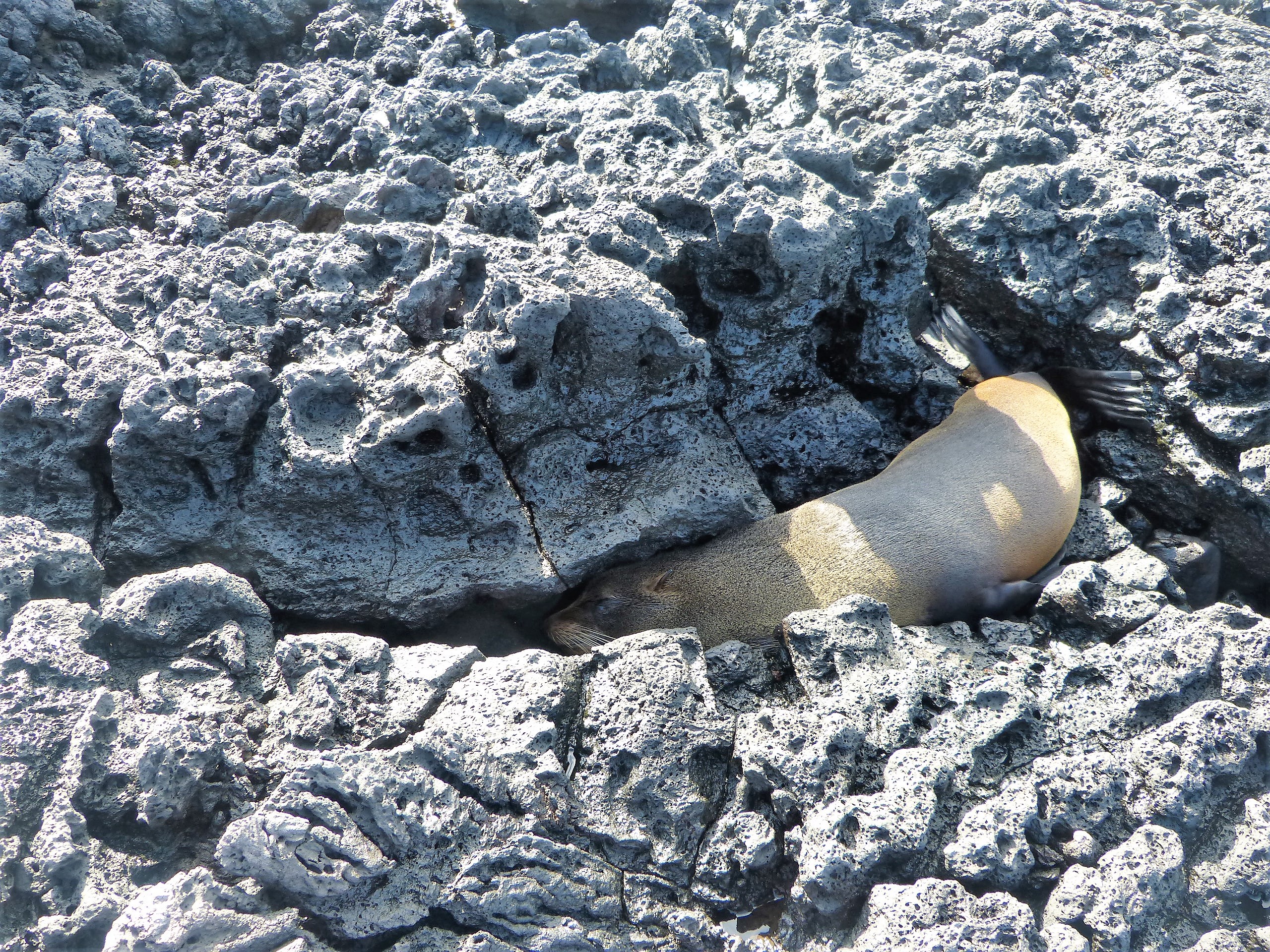


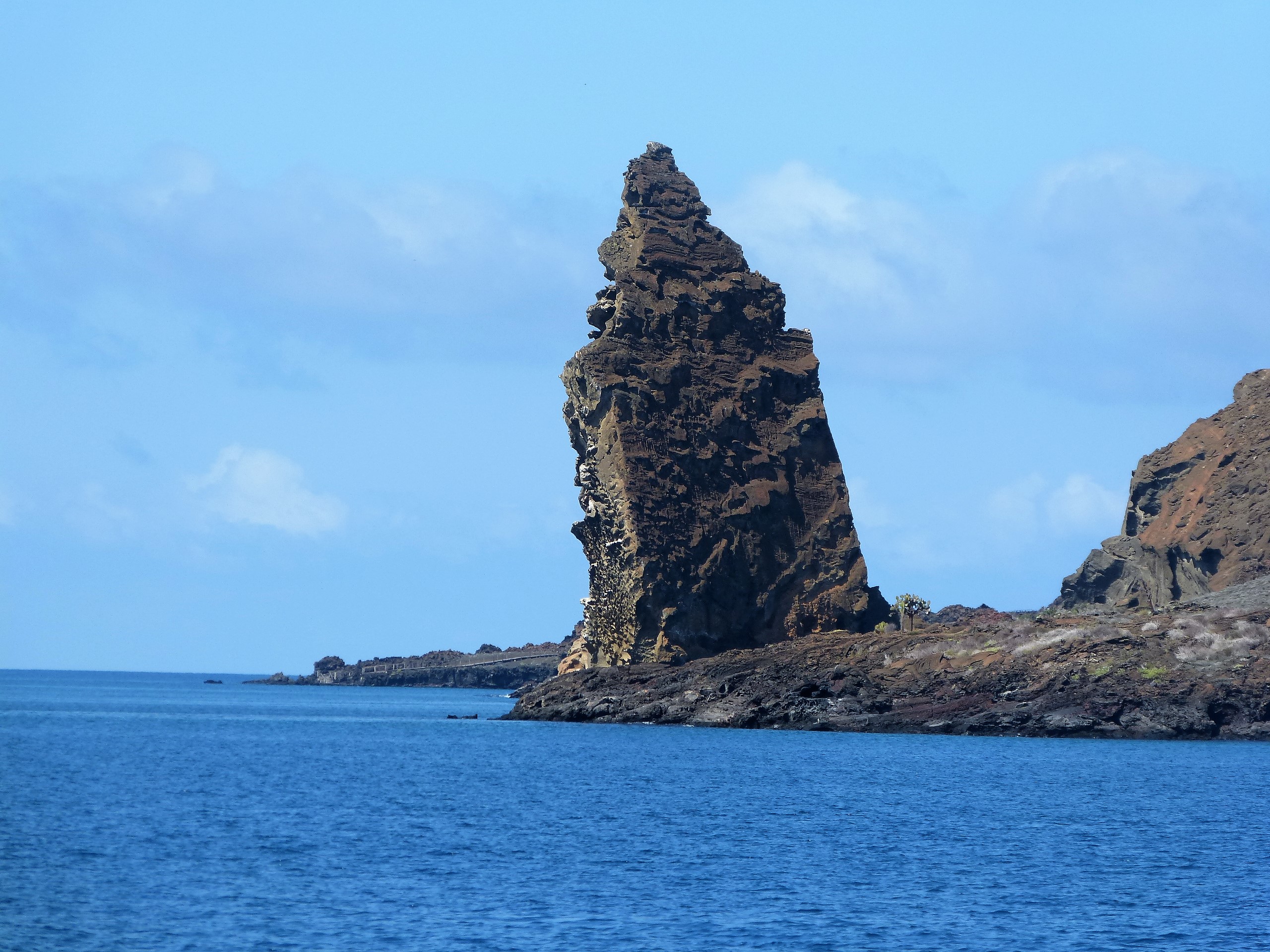
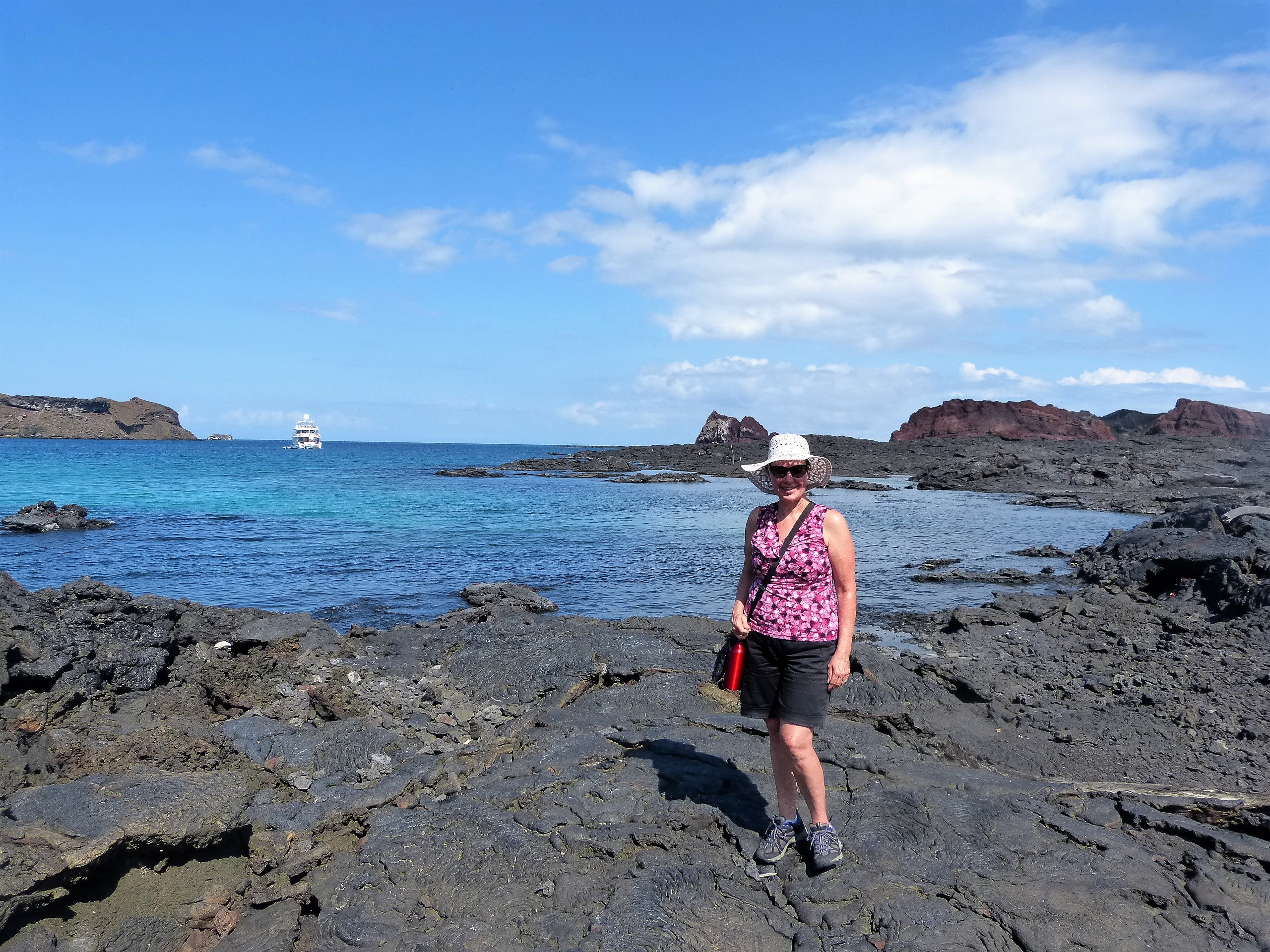
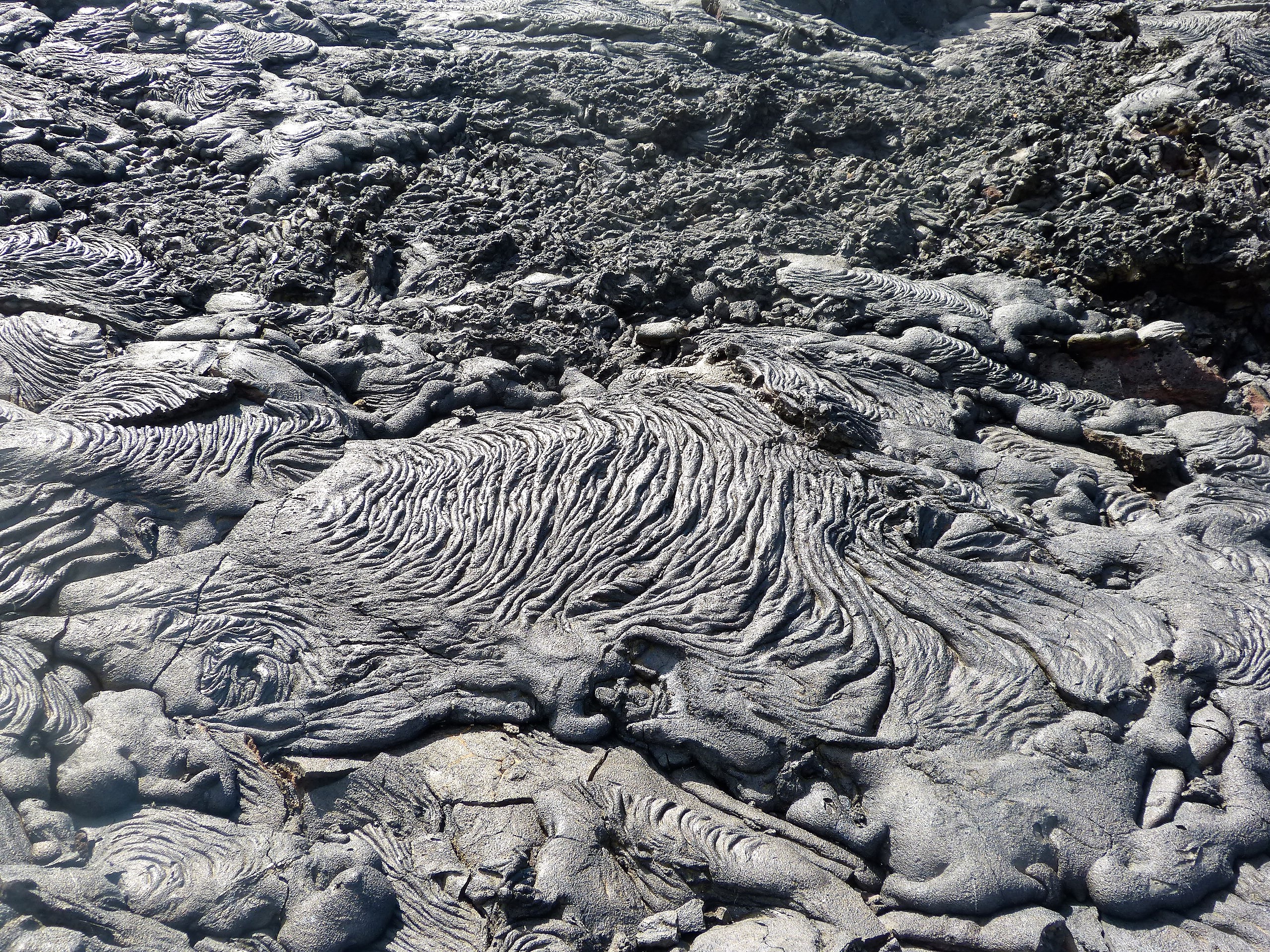
Lunch, a rest, then out to Sullivan Bay in Santiago Island to see the newest lava in the Galápagos Islands. Wow! The area is covered by Pahoehoe lava flows – this lava is rare to the rest of the world, only in Galapagos and Hawaii. It was like walking on the moon. A little accident, I slipped on a loose rock, and fell twisting one ankle and grazing the other knee – very painful, but like a true trooper I soldiered on! The colours of the rocks were amazing.
Our last snorkel at the beautiful beach, white sand. Colourful reef fish, and a few white pointer sharks! Tried to stay well clear of them! Also a baby stingray.
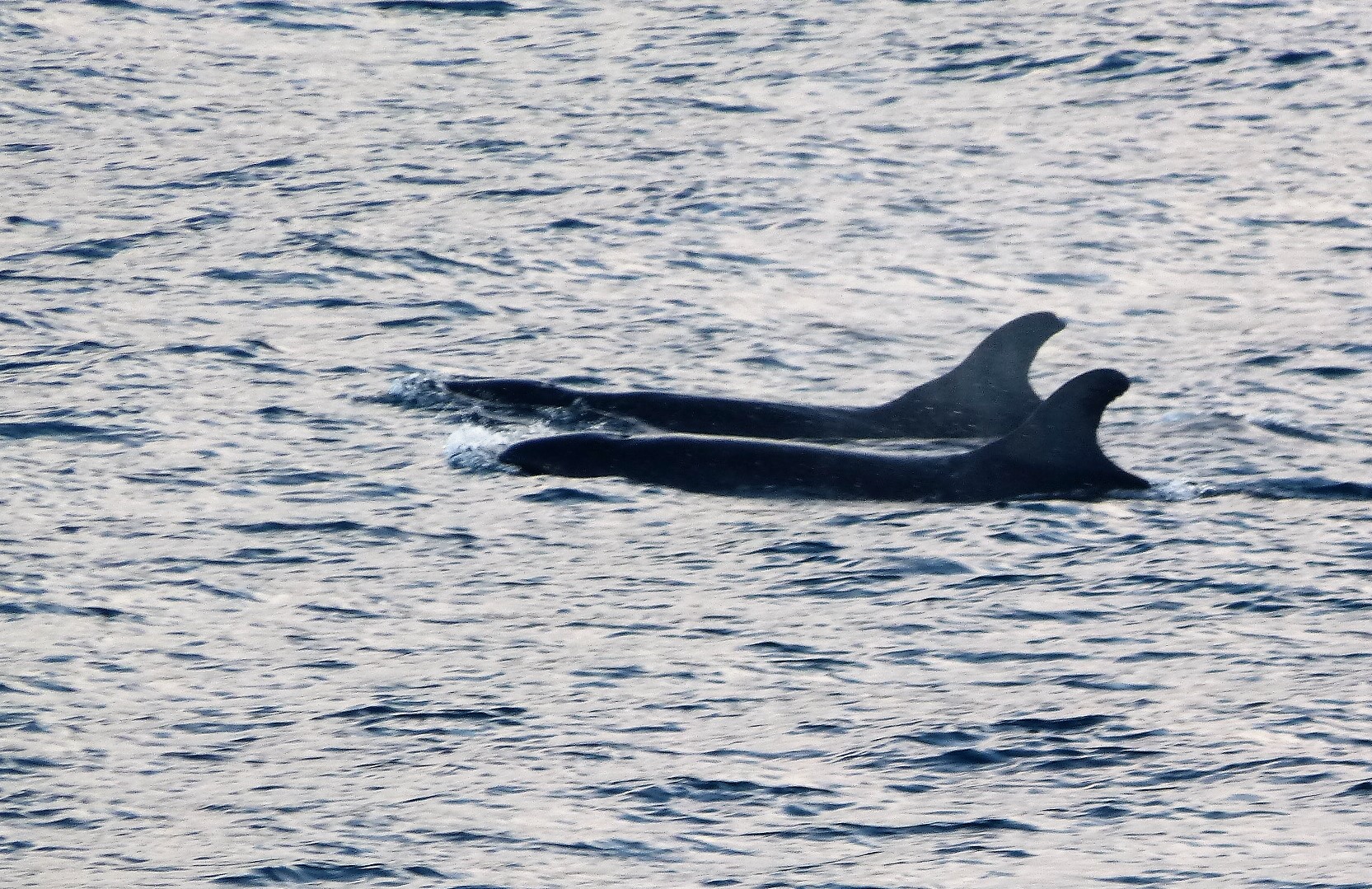
Back to the ship, anchors up, and we were escorted by a group of pilot whales. Wow! What more can we ask for as a farewell.
Last dinner, and a few farewell drinks. Bags organised for the morning.


Day 31 7th April
Bags packed and ready for collection.
Last excursion, panga ride to Bachas Beach, wet landing and a walk along the beach. The beach is named for some wrecked World War 11 barges whose ribs can be seen on the beach. The beach is a favourite nesting site for Green Turtles.
Cast of Sally Lighfoot crabs ( saw the crabs emitting froth as they are getting ready to lose their shells- they do this a couple of times a year)
Stingrays riding the waves, Sand Groper birds,
Great Blue Heron
A lone American flamingo feeding in a lagoon – vivid pink in colour
Also a marine iguana taking an early morning swim
More brown pelicans and Blue footed Booby
Time to say goodbye to Galápagos Islands and we head to the airport for our flight to Guayaquil.


Peru – Amazon Treehouse Lodge
Day 32 8th April
A very short walk across to the terminal in the morning, then a 2 hour flight to Iquitos. We are met at the terminal by the guide from Treehouse Lodge. There is a one hour drive by car, and then a one hour riverboat transfer – first down the Maranon River, across the mighty Amazon River, and then up to the Ycayali River before connecting to the Yarapa River where Treehouse Lodge sits. The rivers are huge! Of course the Amazon is the largest. Frank couldn’t stop commenting on the expanse of water, and the rate at which it was flowing. Peru had had a lot of recent rains, and many villages are flooded- this happens every year however.

Now how can I explain this once in a lifetime experience in the Peruvian Amazon? We arrive at the Lodge which is right on the serene river, we even get in further than usual as there is so much water in the river. We are greeted with a glass of fresh homemade yellow tomato juice, and given an introduction to the Lodge. Our guide then takes us to our Treehouse – our bags had already gone before us( thank goodness). Our Treehouse is one of the closer ones to the main lodge- number 4. Up 50 very steep stairs, to our home for the next 3 nights, and 12 metres up in amongst the jungle canopy. It was breathtaking! We have no walls ( there is gauze) a king bed with a mosquito net)and a couple of day beds, also flushing toilet, and shower ( although cold, and very cold at that!) It is breath taking!

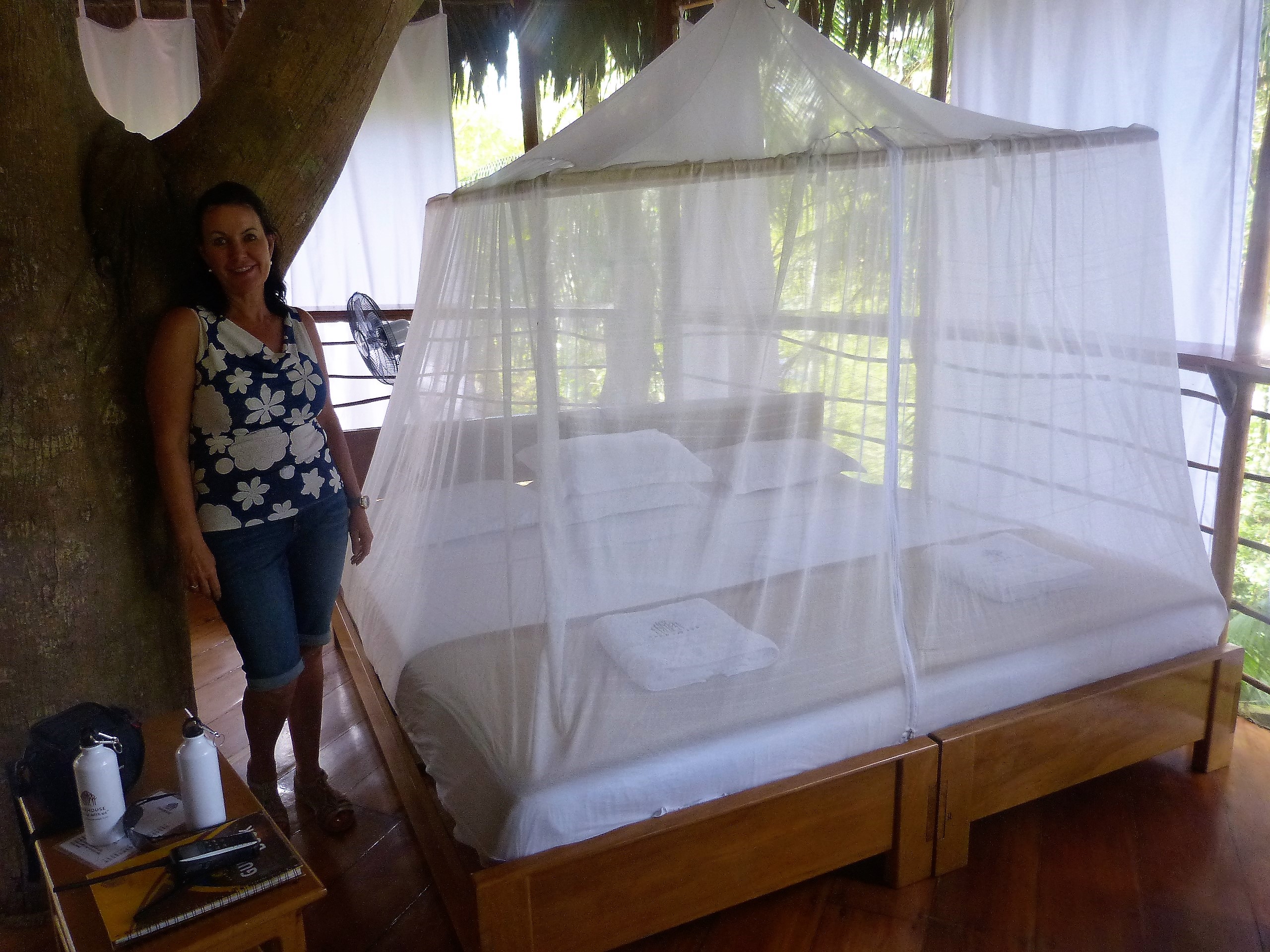

A quick settle in, then out to explore the lodge grounds. There are a total of 9 lodges – it is the brainchild of American businessman Vance Cook in 2012. A very interesting story of how he chose the jungle, and then got the local villagers to help build his dream, and continue to work here. There was a conflict between the two closet villages, and he had to chose one to work for him- almost blackmailed as they threatened to block the river, and supplies, if he didn’t choose them! It has all seemed to work out in the end.
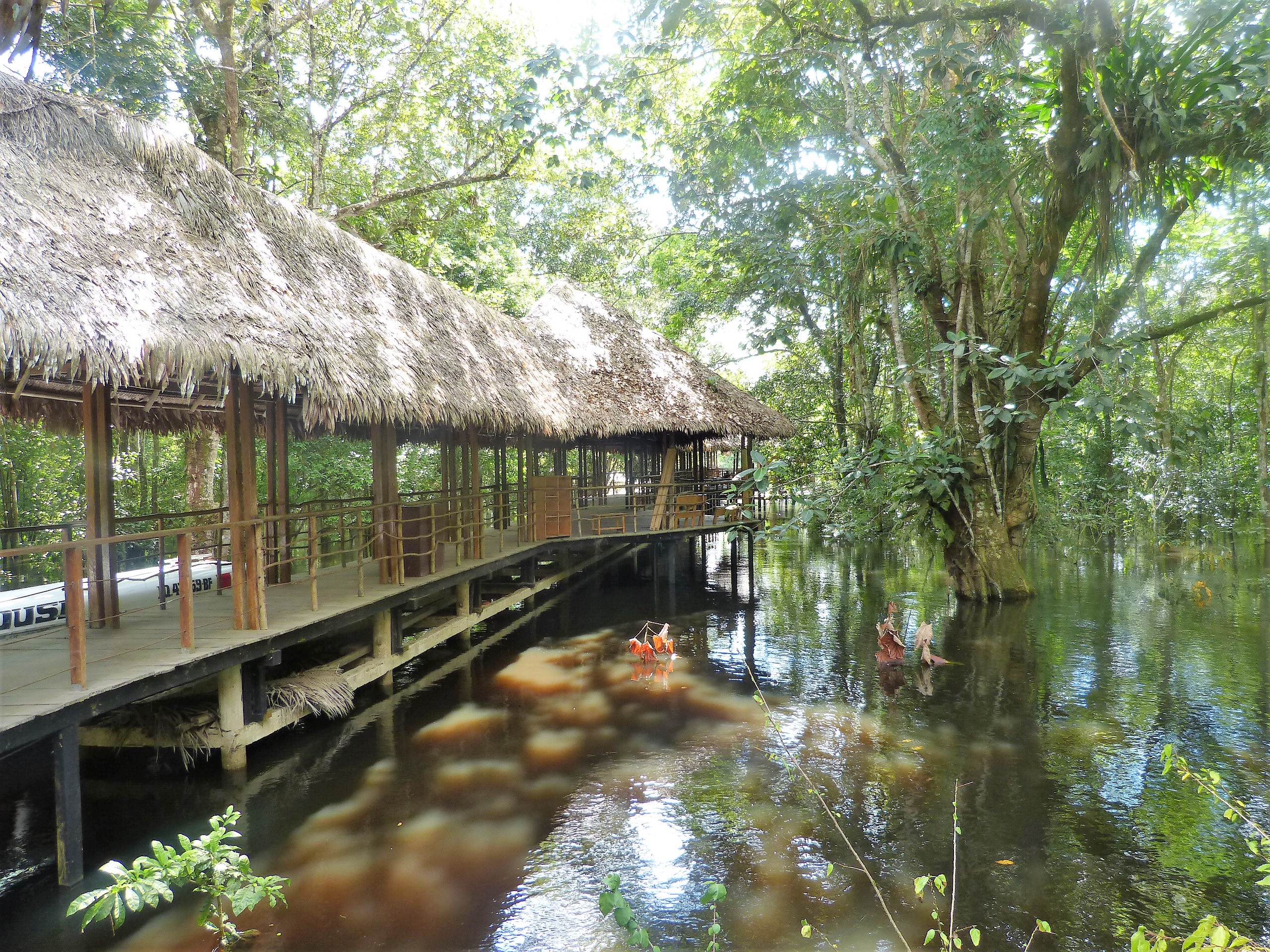
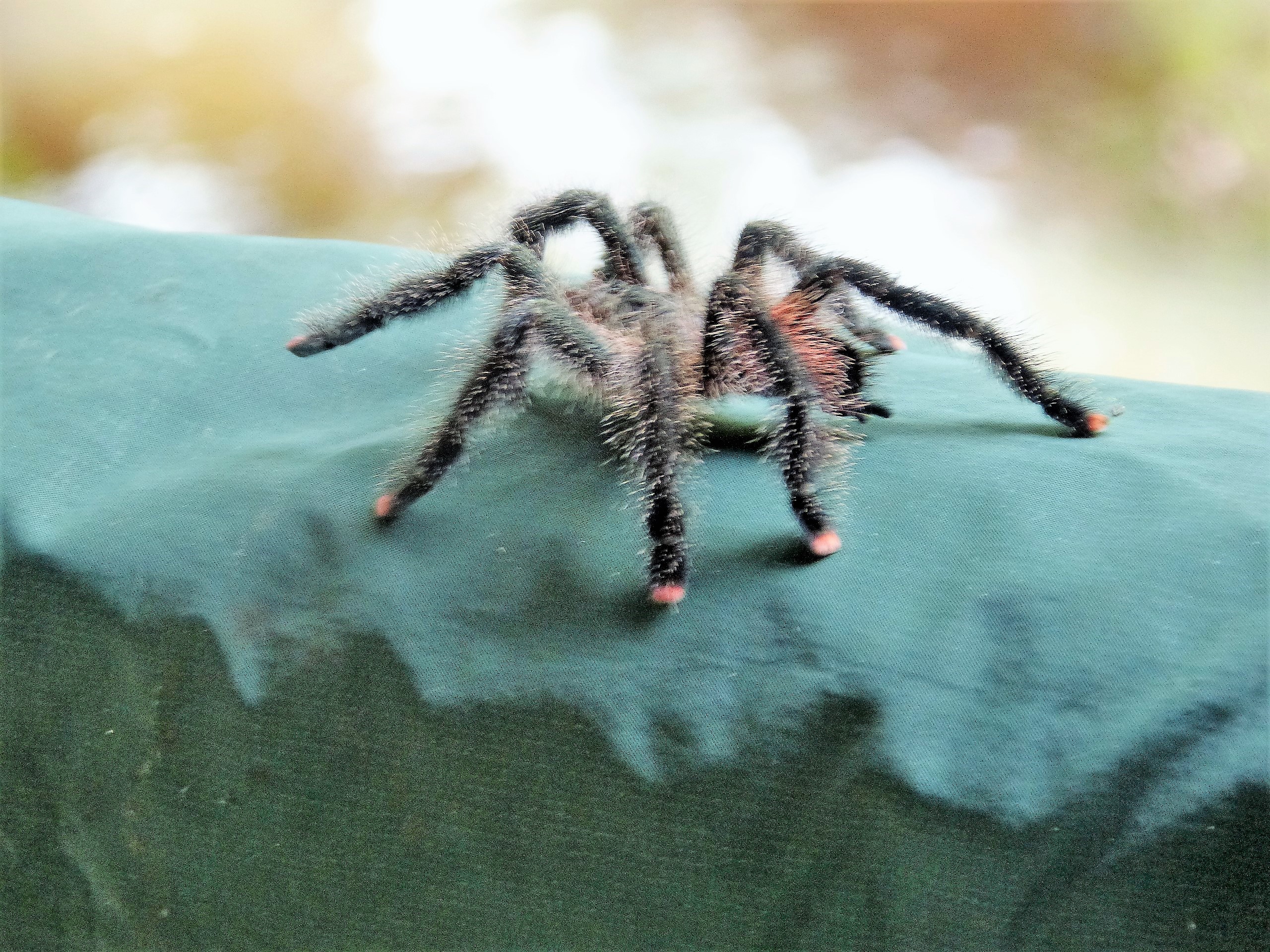
We head out in one of the many little boats to view the world famous Pink and Gray dolphins which are found only in the fresh waters of the Amazon. And yes, the pink ones are pink! They are a little shy and definitely don’t like having their photos taken, but it was wonderful watching them jump and swim in the river.

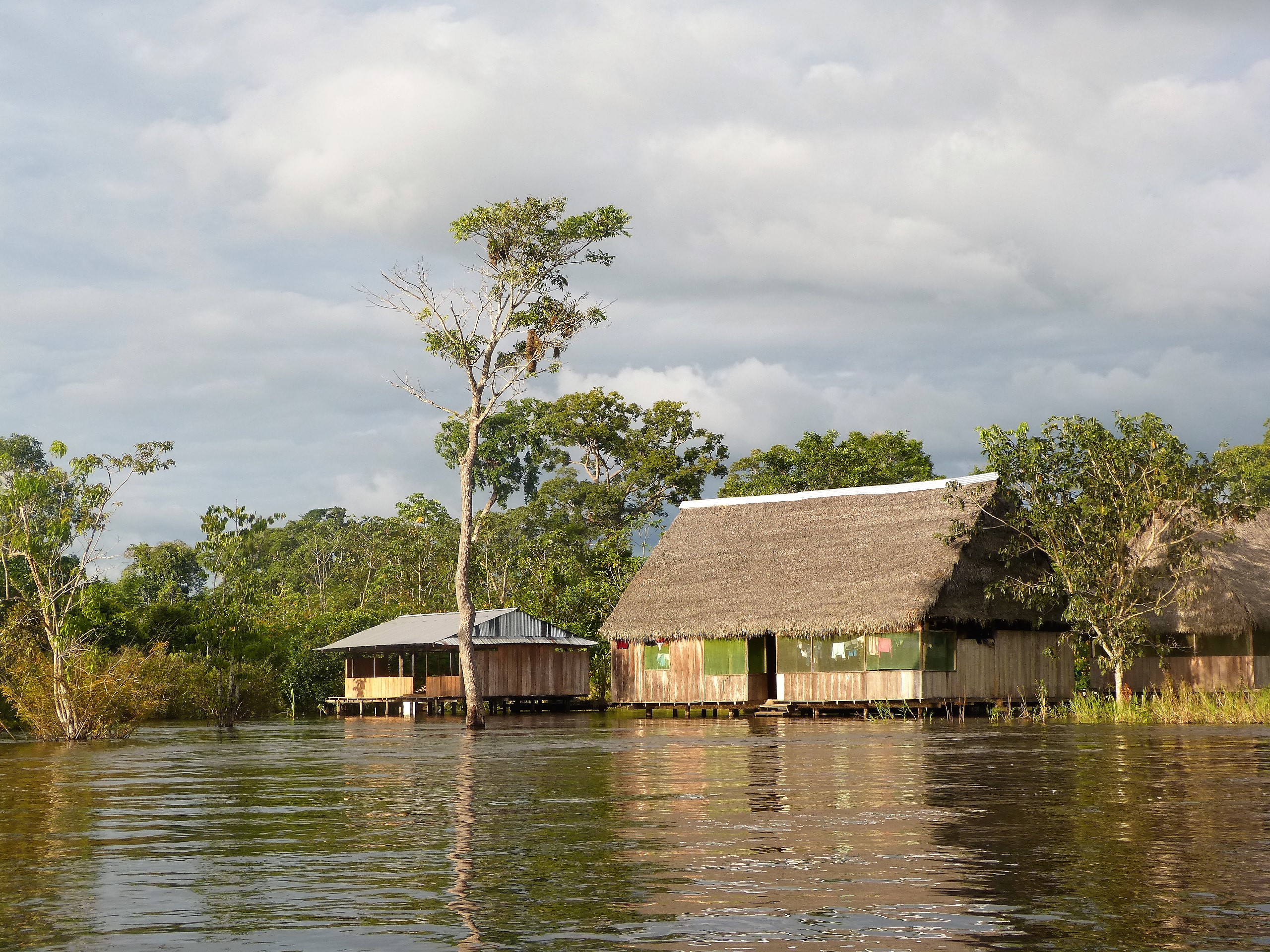
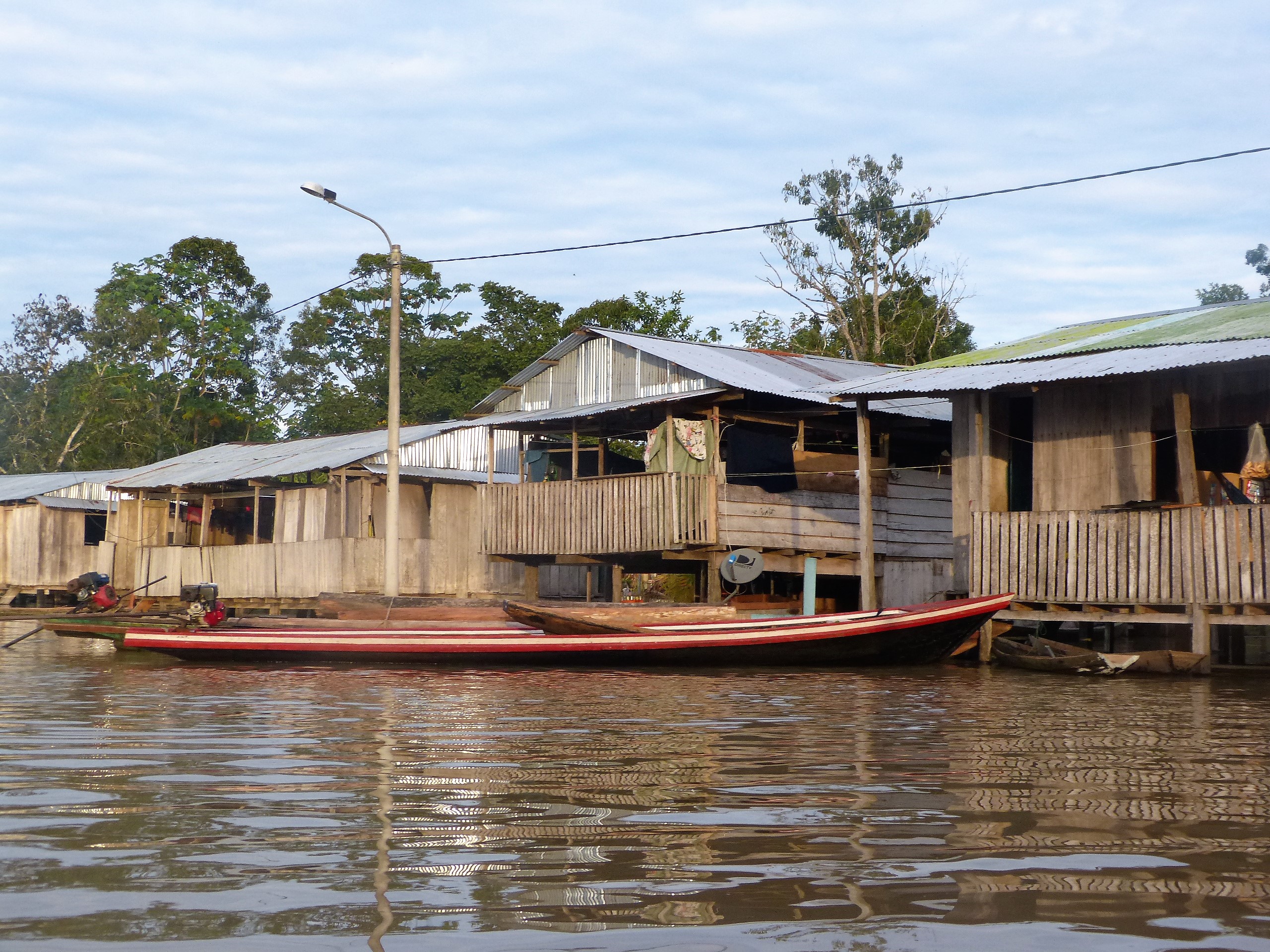
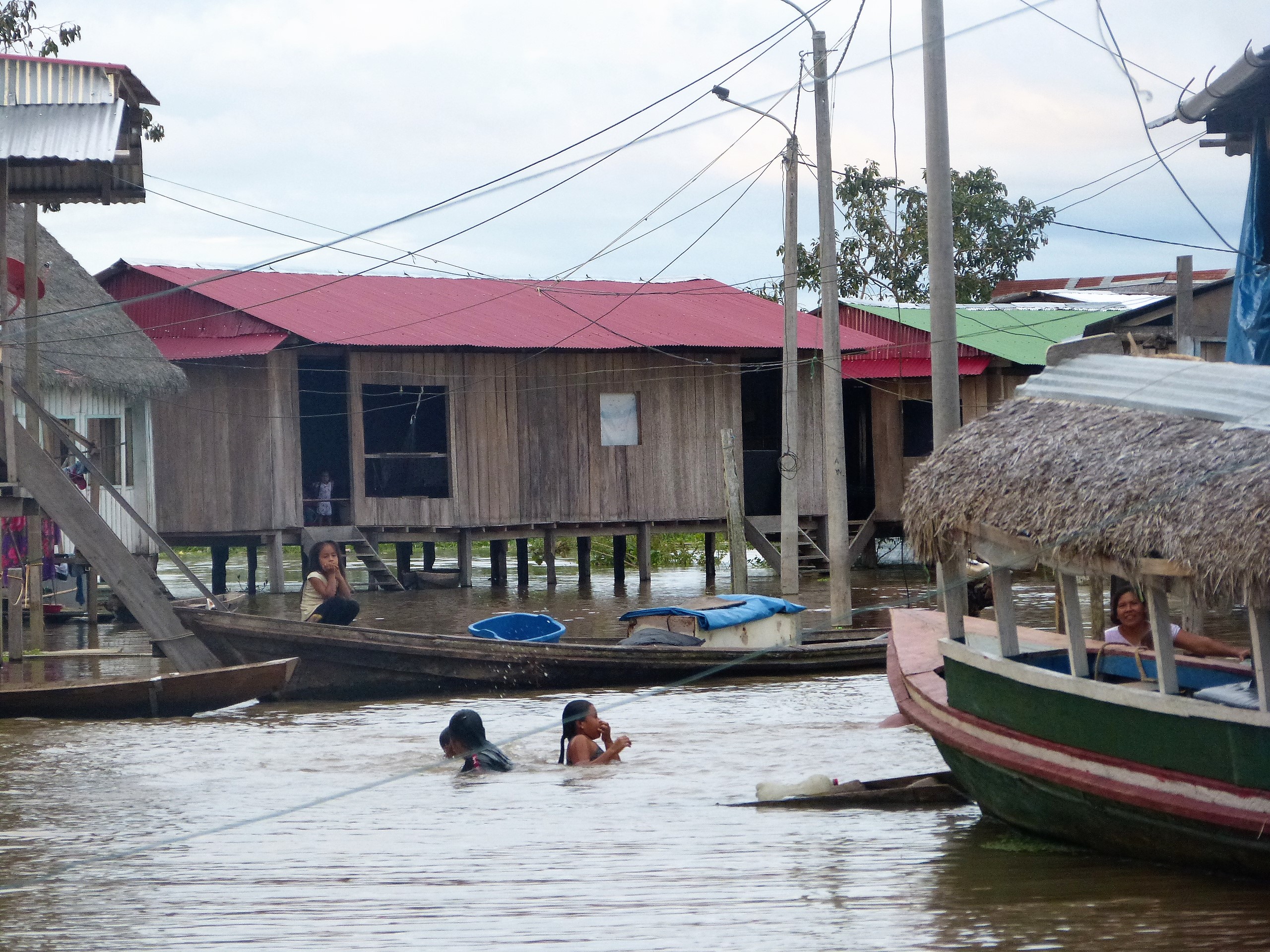
Ten minutes down the river, we visit the local village – which is flooded! This is normal for three months of the year. All the wooden thatched houses are sitting just above the water line- normally this is 1.5 metres lower. So we go in by boat, over the flooded village square. Everyone else is out paddling in their canoes, even children as young as 5. They need a canoe to go anywhere. Whole families were swimming ( and bathing) outside their houses – and having heaps of fun. Chickens have their own little houses. This is the normal way of life for 3 months of the year.

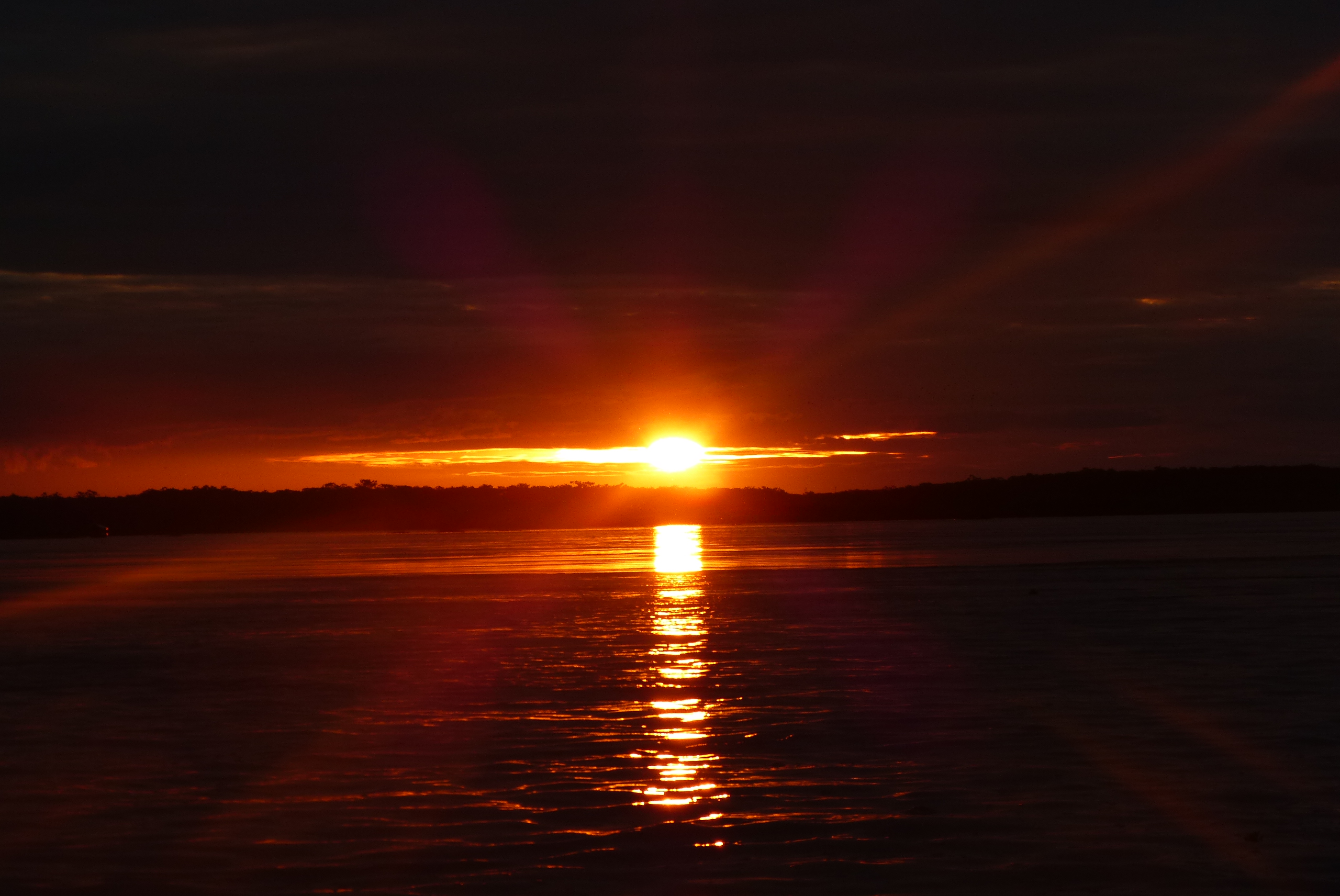
We then motor out, right into the middle of the Amazon river, facing west, to watch the sunset. The colours were magnificent.
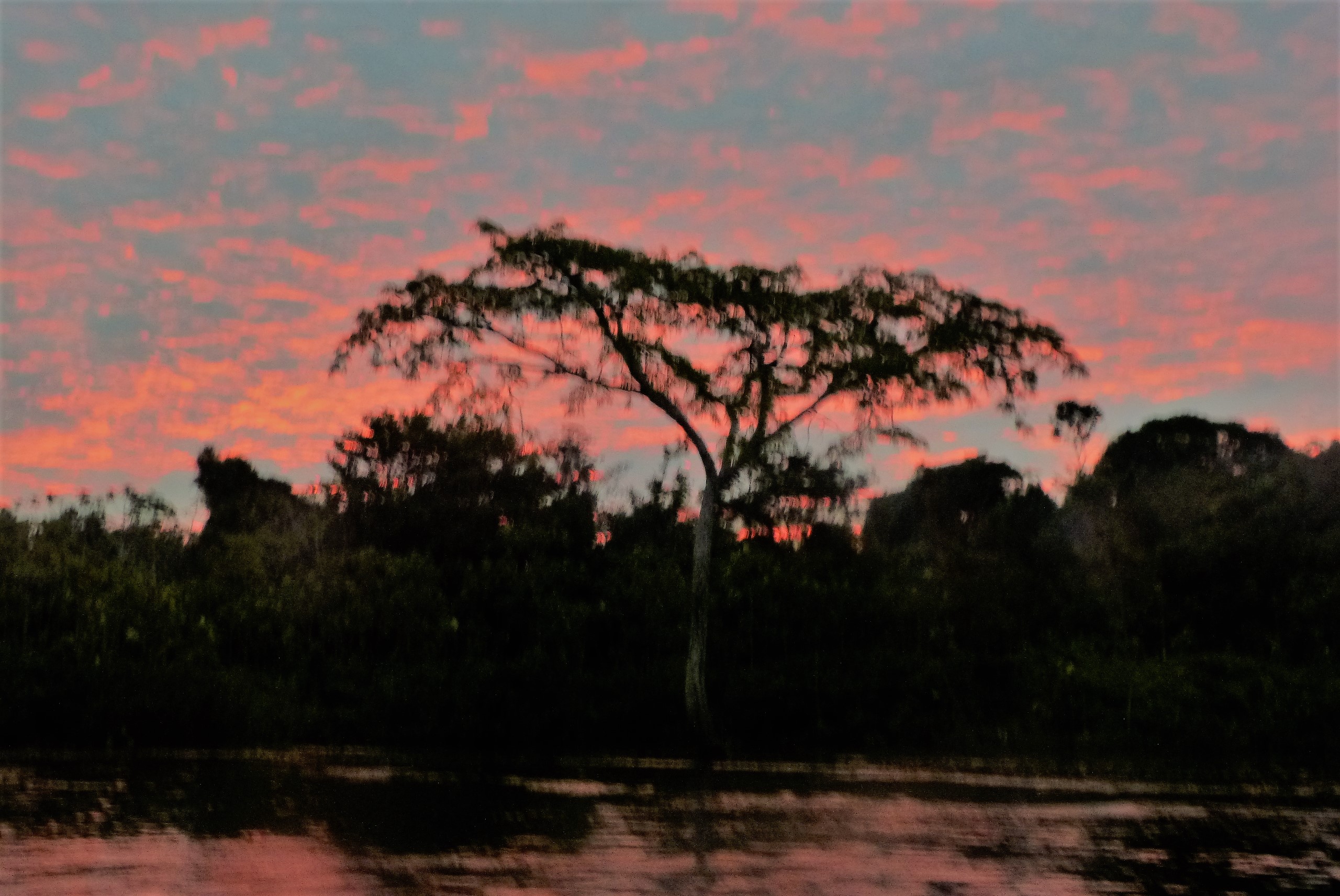
Back for a shower ( did I mention the shower is cold! ), and then dinner at the restaurant. First a Pisco Sour- as you do. We were promised delicious food, and we weren’t disappointed- squash soup(pumpkin) with coriander, locally caught catfish ( they are 2 metres long here) with plaintain and vegetables, followed by plaintain with a soft gooey meringue and maraschino cherries – all locally grown. Yum!

Out for an adventure tonight – can’t believe what we did! If we told people we went caiman hunting, in total darkness, on a wobbly motorised dugout canoe, on a tributary of the Amazon River, you’d say we were crazy! Little did we realise our guide, Carlos, was actually going to try and catch a caiman! So we were looking for red eyes… the first pair we saw were those of an Esmeralda Python, high up in a tree branch. Next was a Nightjar ( bird) and a Black crowned Heron. We were then in the lagoon with the fireflies, dodging all the poisonous trees and plants as we motored through. The red eyes were there… caiman. Had several attempts at catching the caiman. What the guides do is steer the boat straight into the trees then cut the motor, while the guide is lying out the front of the boat getting ready to grab the head of the caiman. No luck tonight … just a bite on Carlos’ hand! ( he assured me that is very rare). And some night wasps that were disturbed during one of the attempts. Carlos is determined we are trying again another night – he and the boat driver seemed to love the thrill of the caiman chase. It was rather exciting I must admit!


Back to the Treehouse – ready for bed. It was pitch dark. And the noise… the jungle is not quite! There is so much going on, monkeys out and about, branches creaking, splashing in the water, some lizards jumping into the water. I lay awake for a while really trying to concentrate on what each noise was… it really is an amazing experience.
Day 33 9th April
The sun came up at 5.45 – the birds start their calls. Breakfast, and then we are out and on our way… a morning exploration of the river and lagoon. We see many many birds, as well as the noisy night monkeys:
Red capped a cardinal- a pair- they mate for life
Kiskadee Flycatcher
Fork tailed swallow
Amazon kingfisher
Green kingfisher
Oropendula – the beautiful yellow tails
Yellow rumped cacique
Yellow hooded black bird
Masked crimson tanager
Jacana, a pair, and their nest on the lily pad
Black collared hawk
Great white egret
Snowy egret


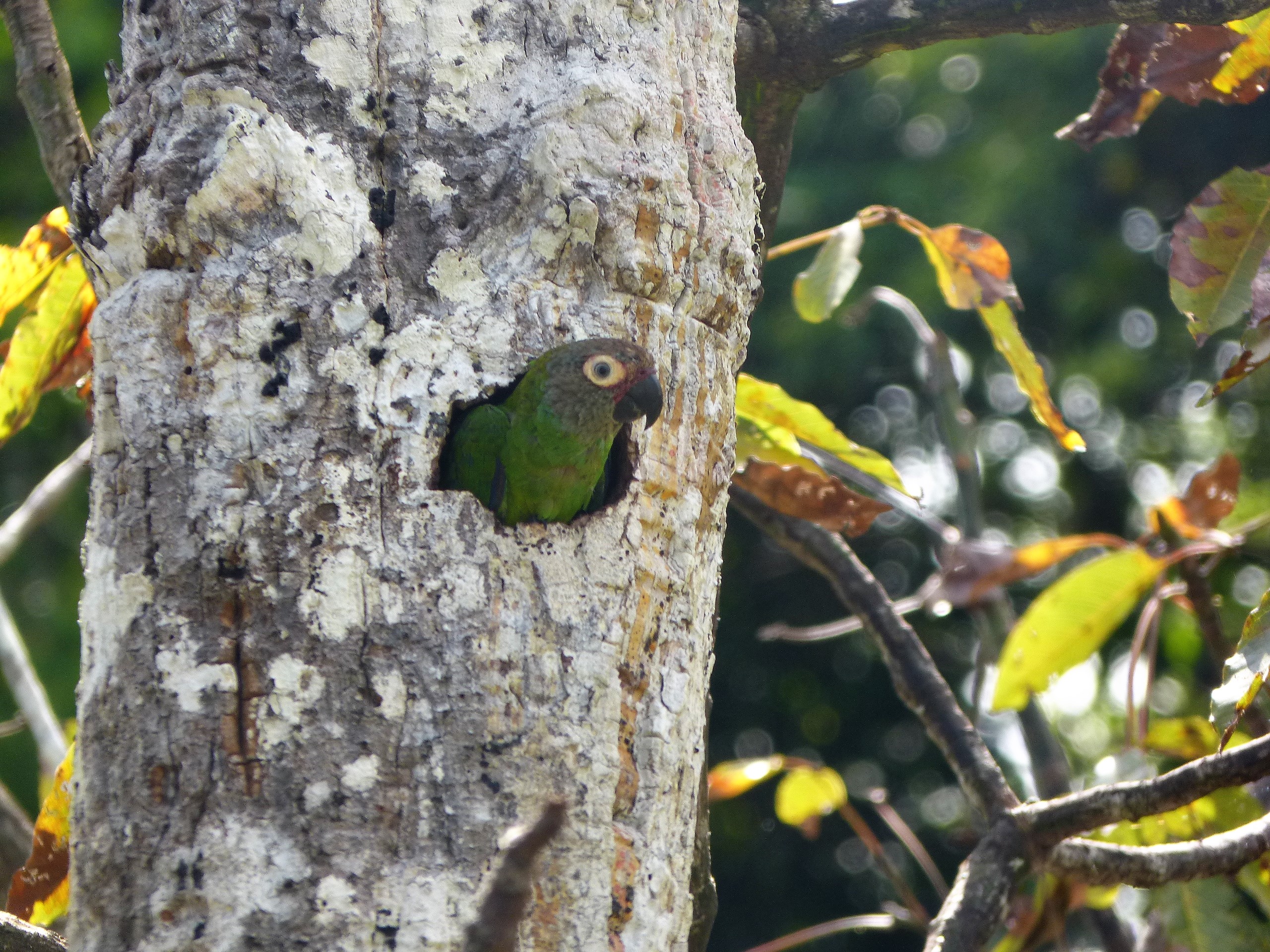
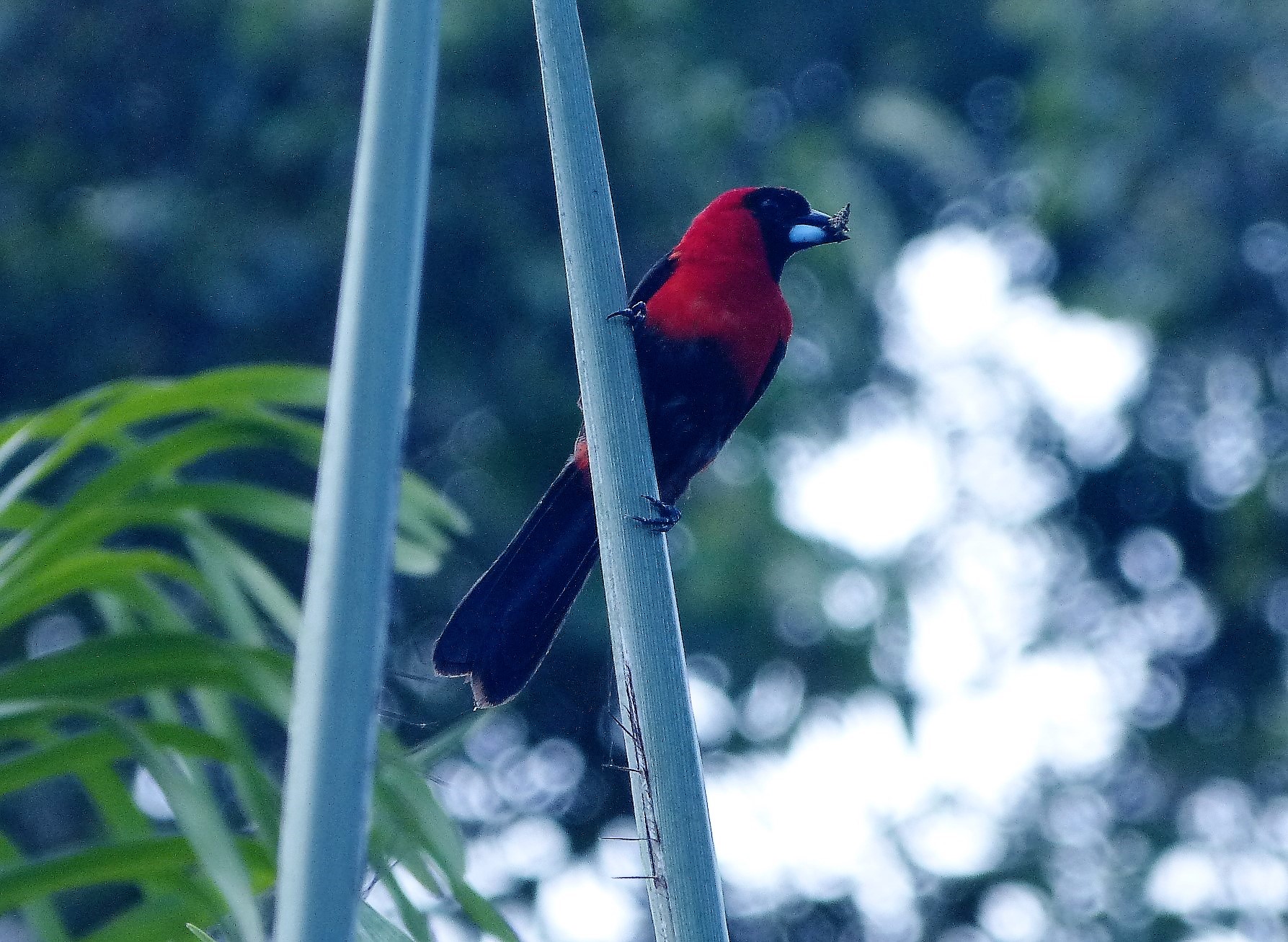
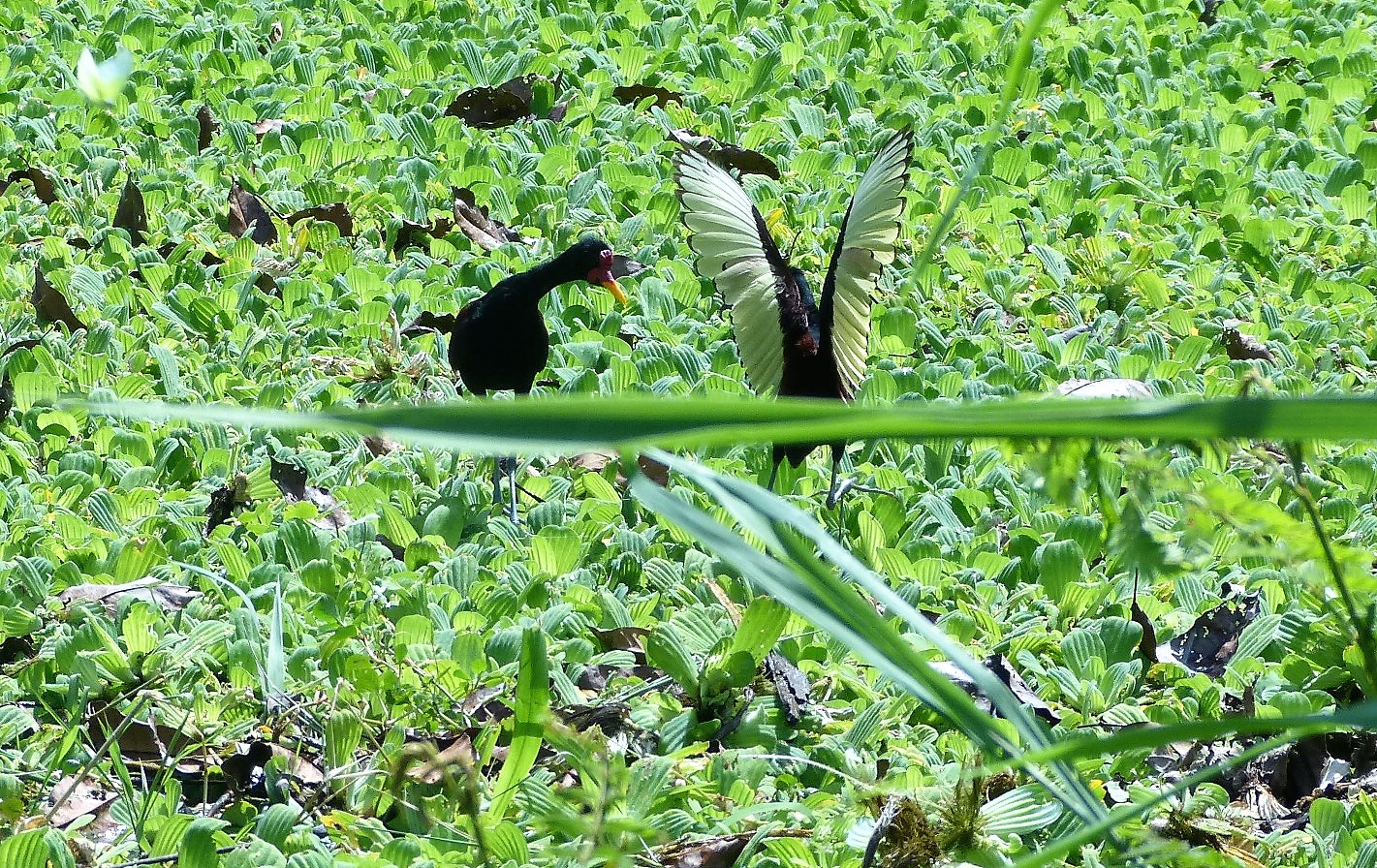

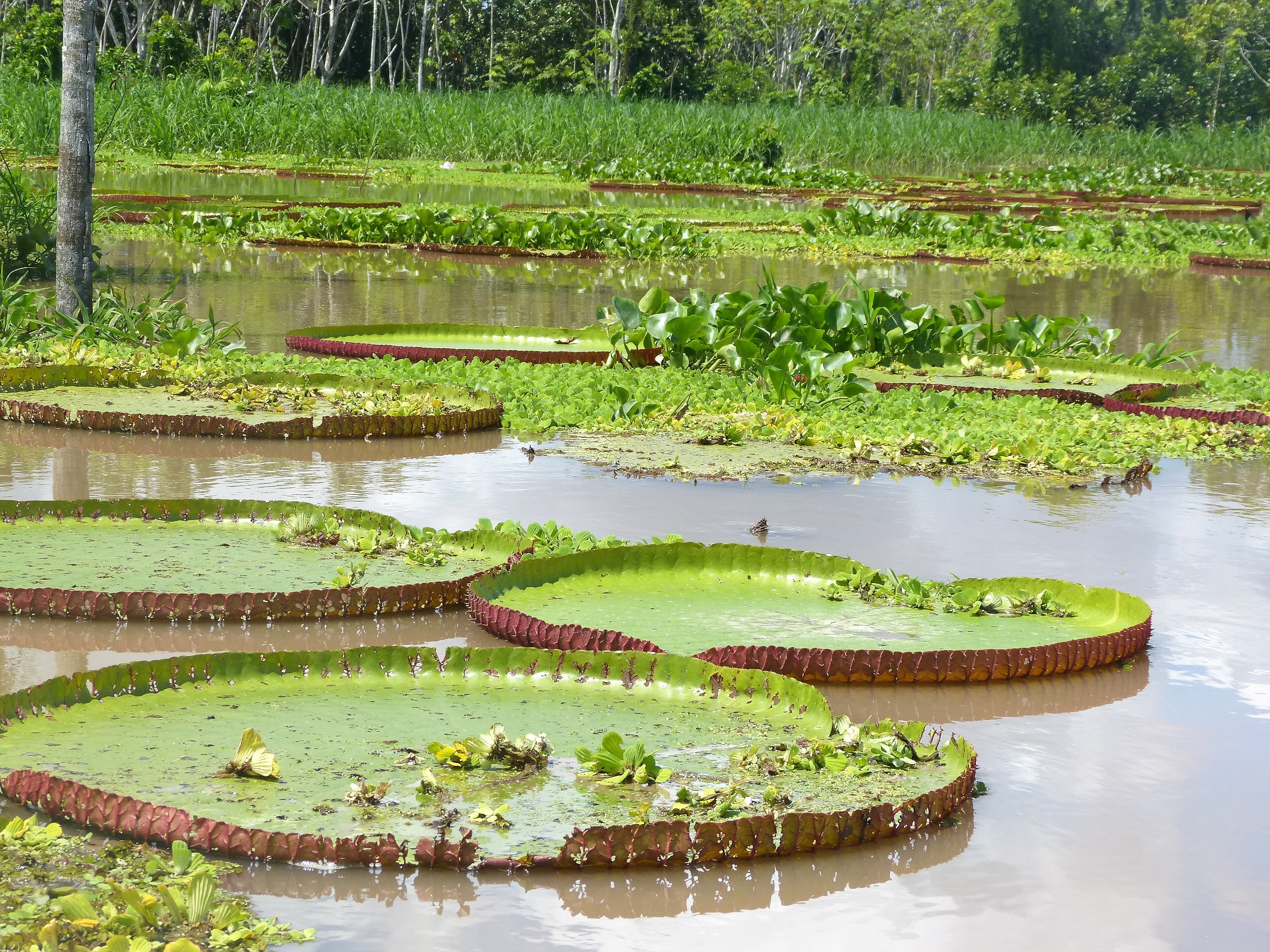
Saw the Giant lily pads – they are the largest lily pads on the world – they are huge, and have big thorns on the edge of each leaf. Pretty white flower. Lots of water lettuce as well in the lagoons.
We get back to the Lodge at 1130, so decide to walk between all the treehouses amongst the jungle canopy. Two are 20 metres up (100 steps)in the jungle with several suspension bridges between them . I am quite glad ours is one of the lower ones, especially when we do the climb at night.
A delicious lunch and a siesta. The temperature was approximately 36, and very humid, which does zap your energy! Everything takes a long time to dry. The workers play soccer – in the heat.
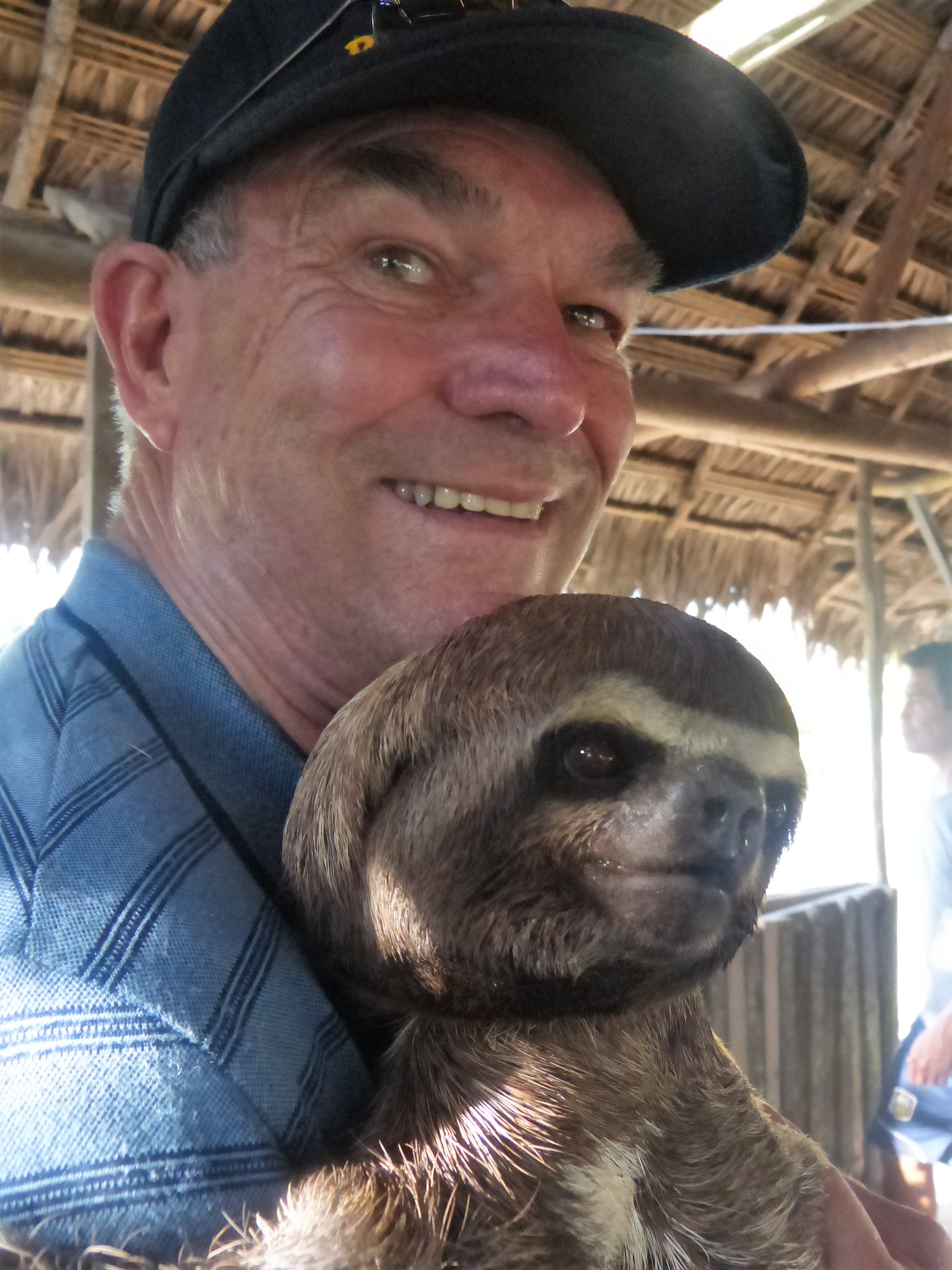
4pm and we are off for next adventure – into the boat and we visit another village, Carlos used to live here. First went to his relative’s house who rescues 3 toed sloths- they have 5 sloths literally hanging about inside their house. Frank had a cuddle of one, their hair was very course . The sloth really had a tight grip of him. Then he climbed up to the ceiling and just hung from there. The baby just hung off a rope the entire time we were there, didn’t move.

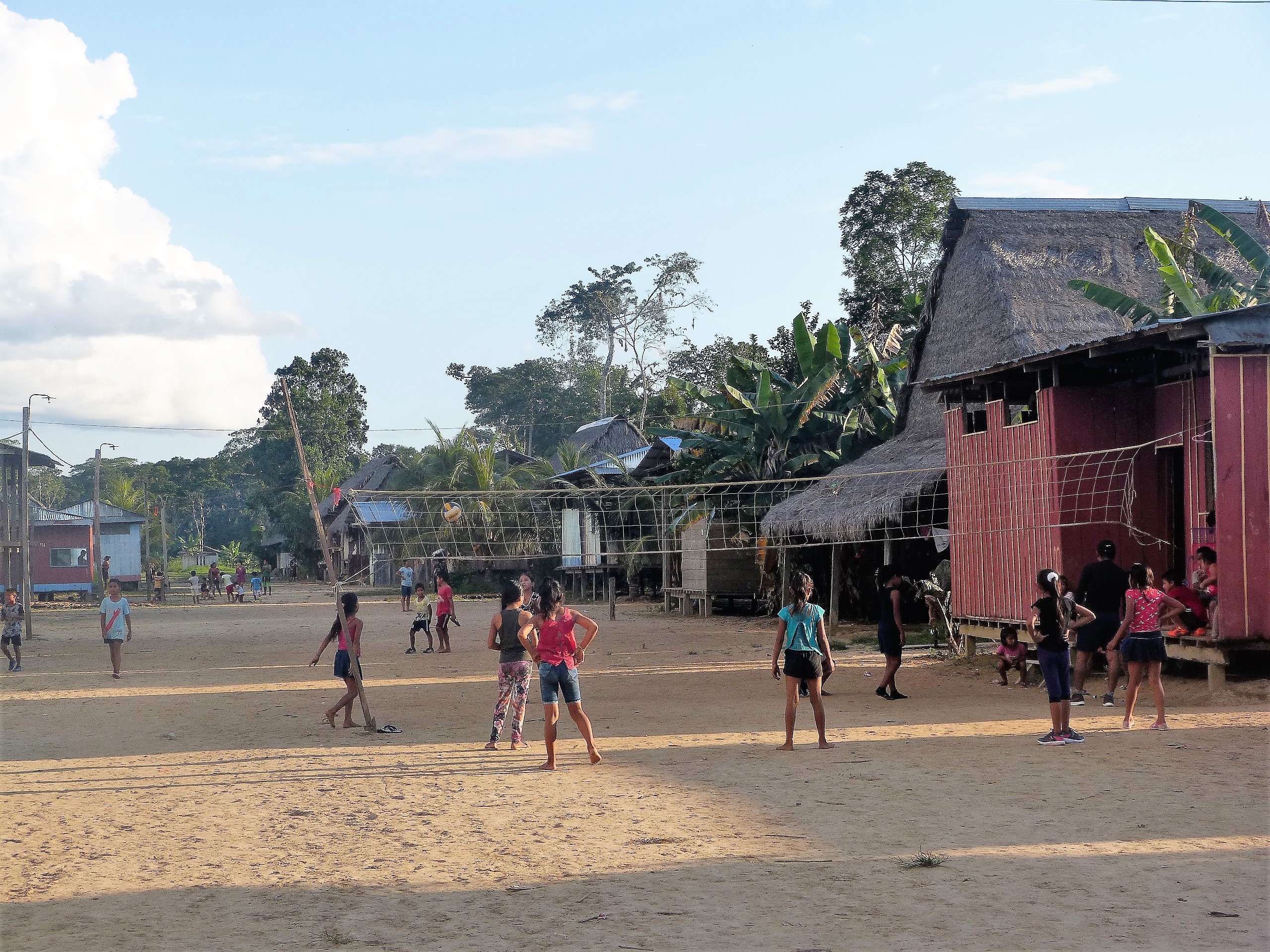
Crossed the river, to the main part of the village. We could walk around here. They keep the centre square area free of grass to avoid snakes going there. Lovely clean village, the children were all out in the Main Street playing volleyball, or just catching up. Everyone was very happy and friendly.
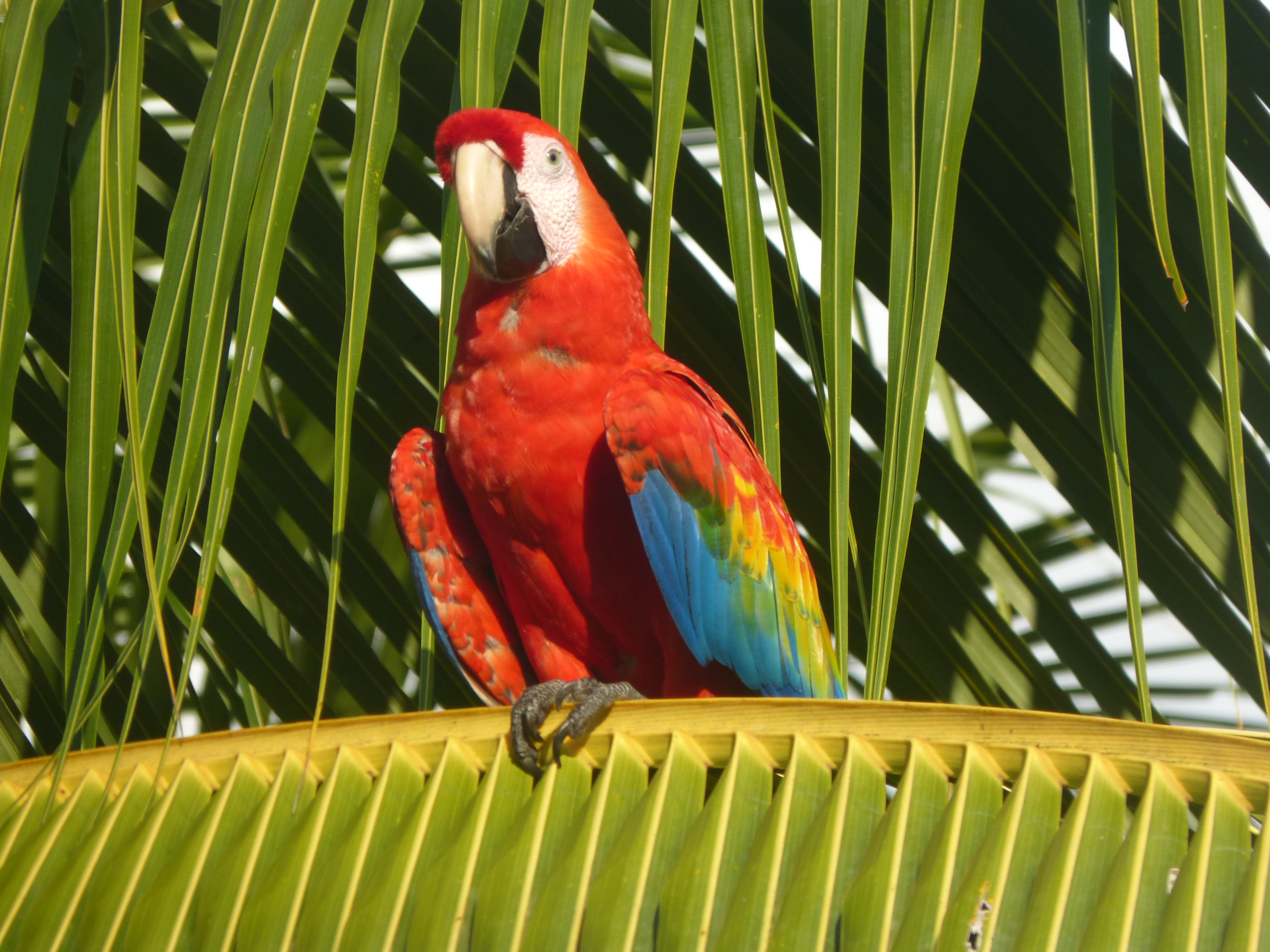
Had a lovely surprise as two Macaws flew in from the jungle while we there, one of the blue and yellow, and the scarlet one – spectacular. They are from the jungle but occasionally look for food in the village.

Back to the boat, and headed to another area on the Amazon.. oh oh, boat trouble! Had to call in the rescue party! All good, we swapped boats, then went to a spot where many birds sleep for the night. Another gorgeous sunset, then back to the Lodge for dinner. Palm heart salad – love this dish, had it a few times over here. Peruvian beef.. yum, and a pear and meringue dessert. A swing in the hammock upstairs to write my notes, listening to the music of the jungle.


Day 34 10th April
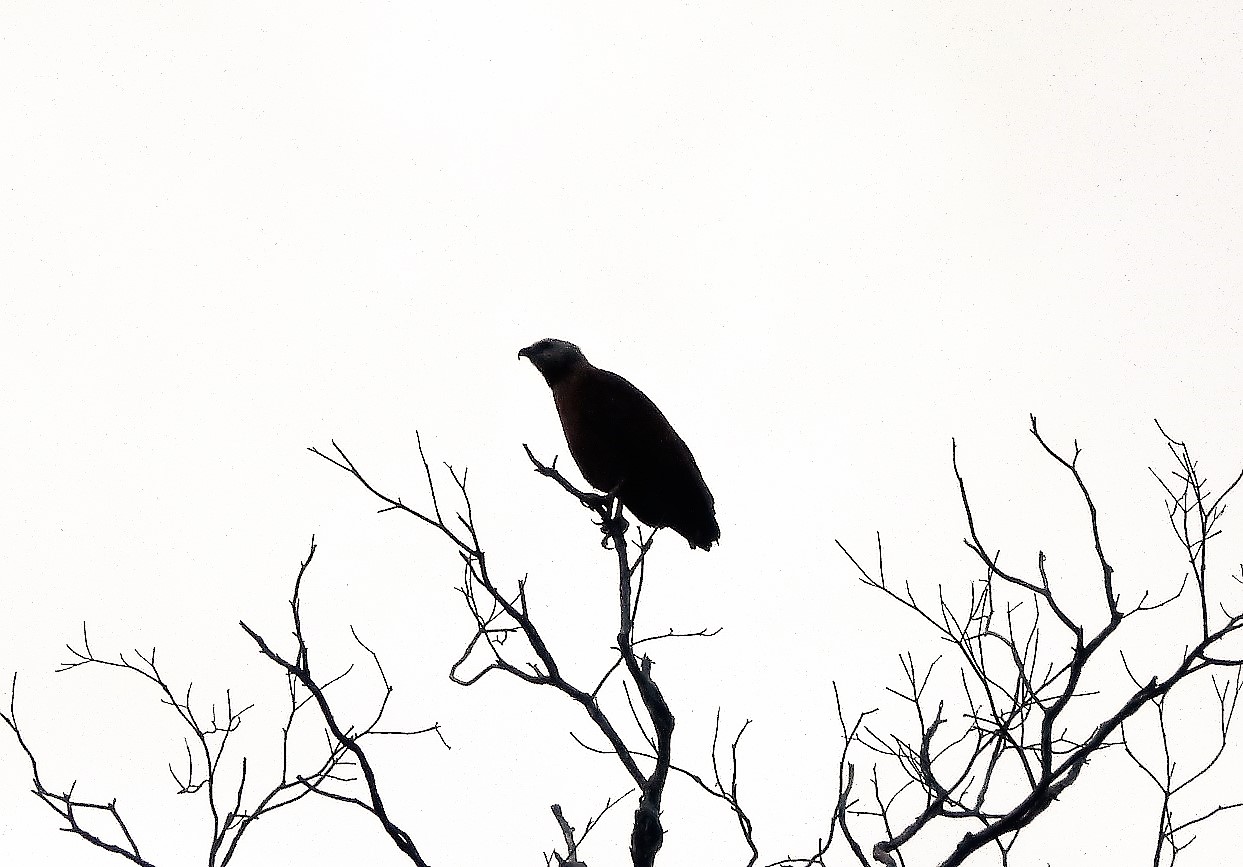
Other birds- ones I didn’t list yesterday
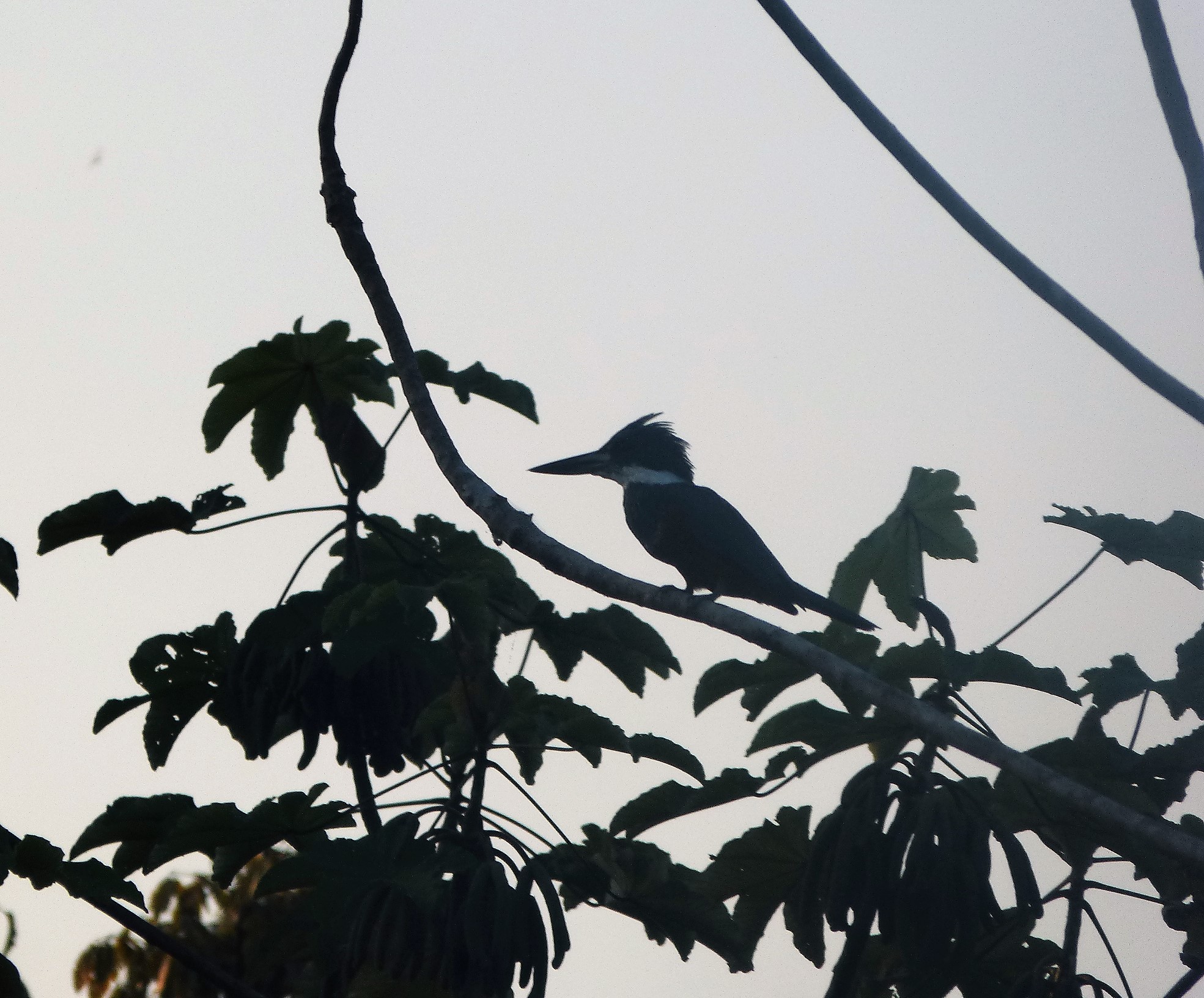
Ringed Kingfisher
Roadside Hawk- interesting call, tends to eat chickens from the villages, so the villagers don’t like them.
Greater Ani – Blue/black birds in a flock inside the jungle – they follow the monkeys.
White throated toucan – from a distance
Blue and yellow Macaw – in the wild
Looked for Pygmy Marmoset monkeys in a couple of known places, but no luck.
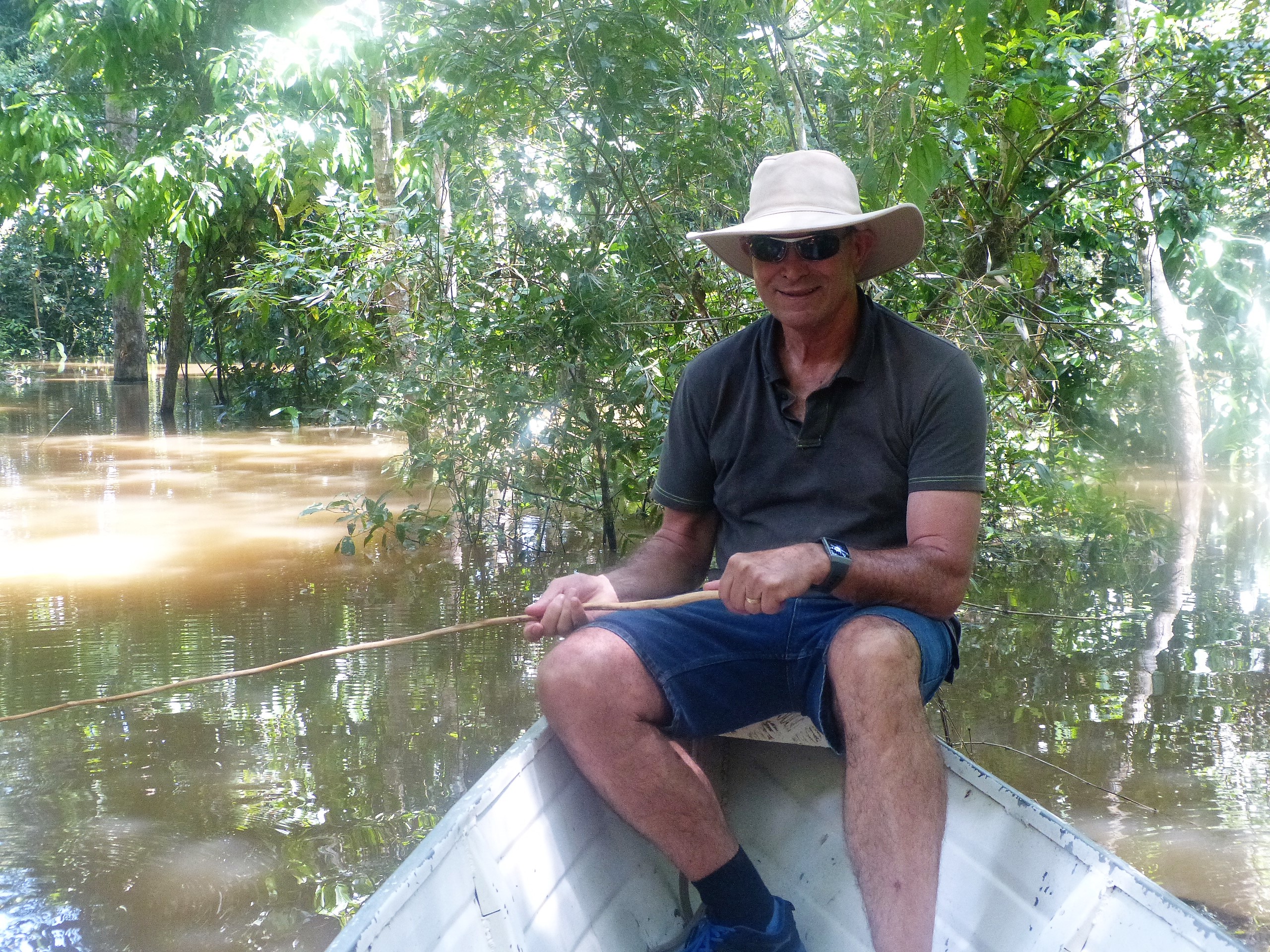
Next adventure – fishing for Piranhas. We caught 5 red bellied piranhas between us. You put meat on a hook ( the guide joked he brought half a cow to make sure we didn’t run out of bait!), drop the line, rustle the top of the water, wait for the nibbles, then pull up the line. As simple as that! It did take a few attempts, but at least we were successful, and in the shade. It is a little harder to catch the fish when the rivers are so full. Apparently, when it is dry season they eat each other! Had a close look at their teeth – wow, you wouldn’t want them to come in contact with you. Very sharp!


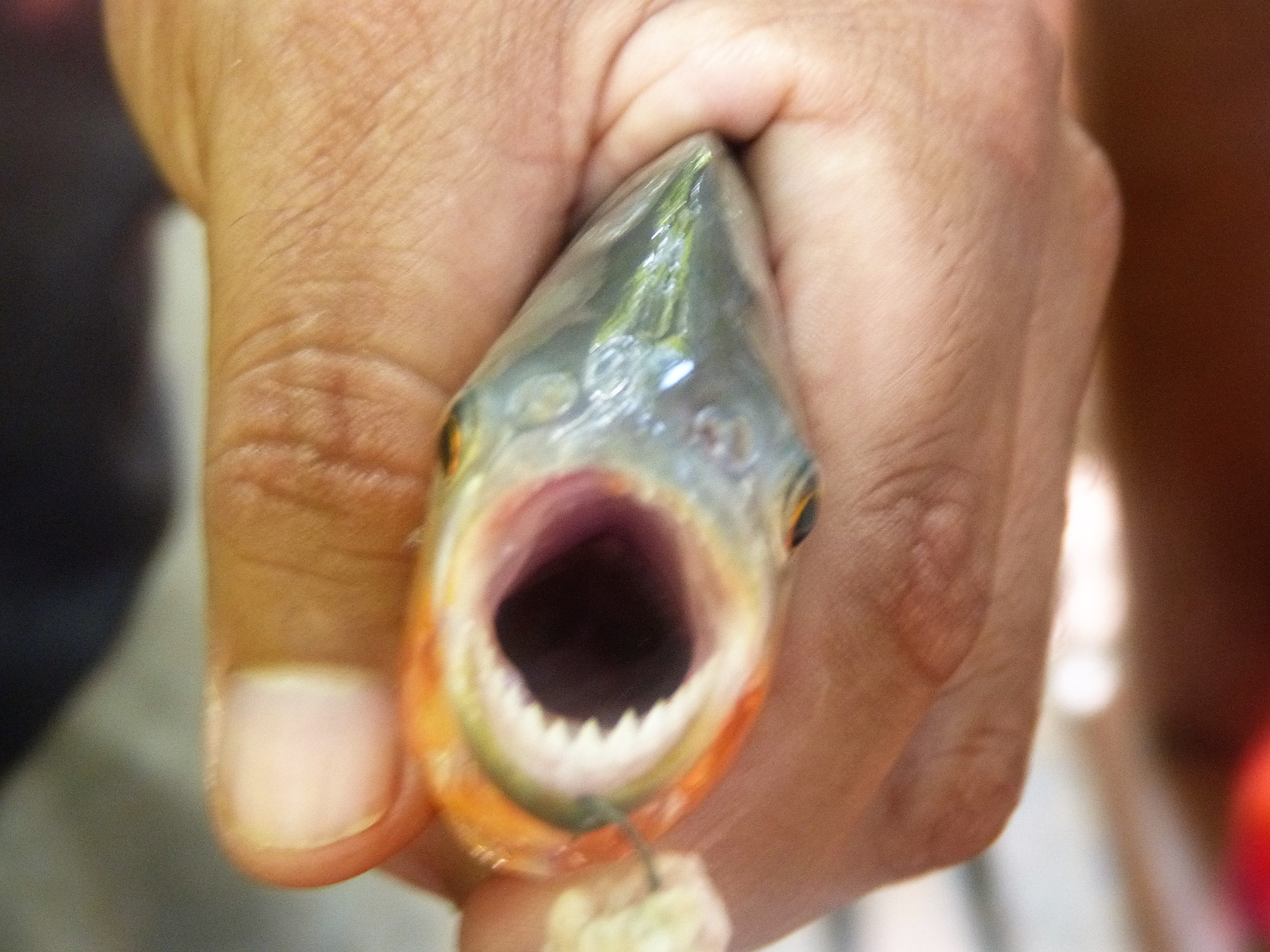
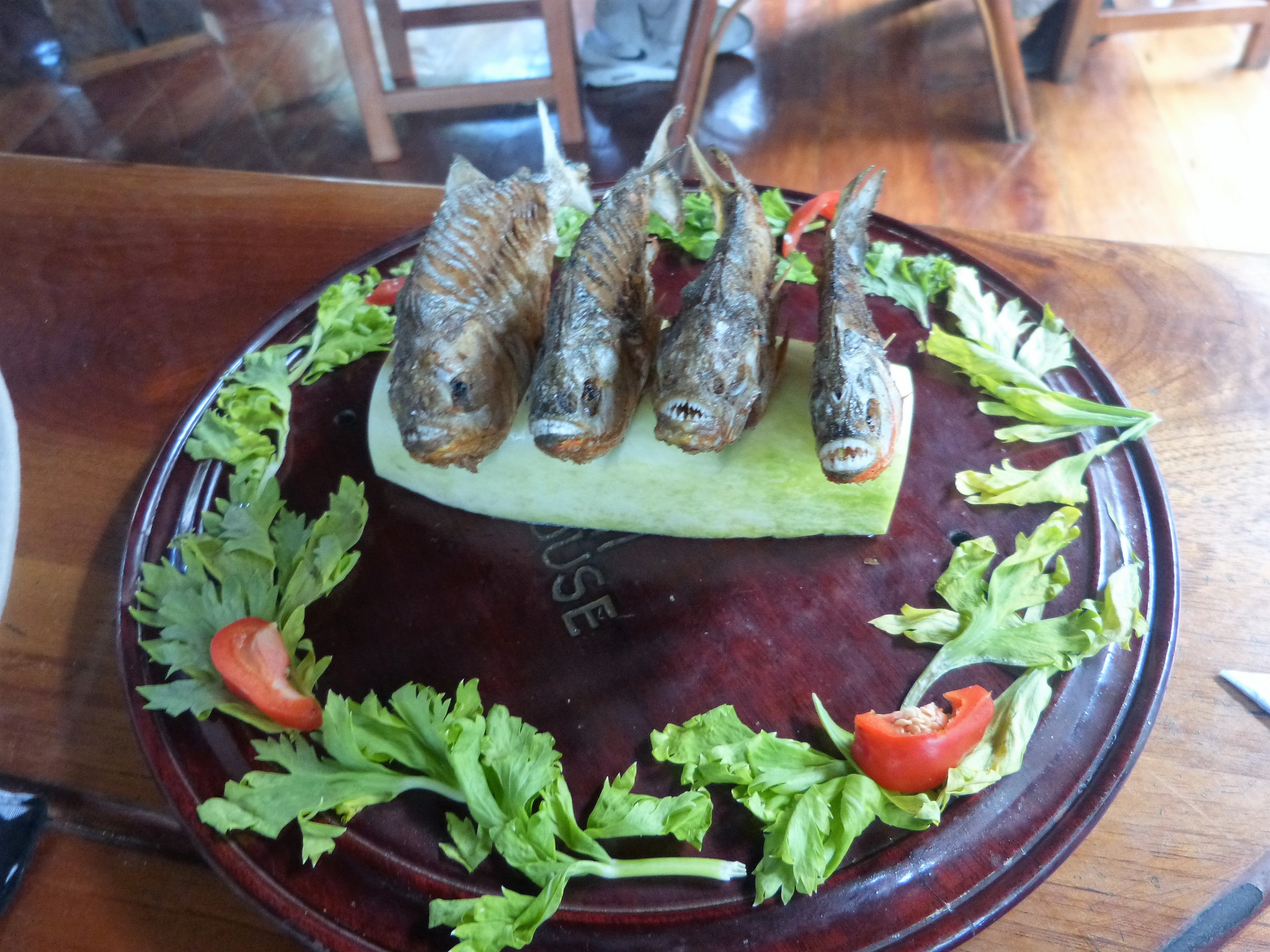
Back for lunch, another local delicacy… catfish cooked in a banana leaf with tomato, and cilantro sauce. Plus, our piranha arrived, beautiful presented on another platter… from river to plate! Can’t say I was a fan of the piranha- too many bones( the locals love them) , and not a lot of flesh.
Getting very hot now… a siesta is the way to go! Not the workers though – they have their game of soccer. If you don’t play, you watch. A couple of the tourists join in. It is obvious how much they enjoy it.
Out for our afternoon adventure, this time we go further into the jungle. Along the way we see more wildlife …
New birds and animals
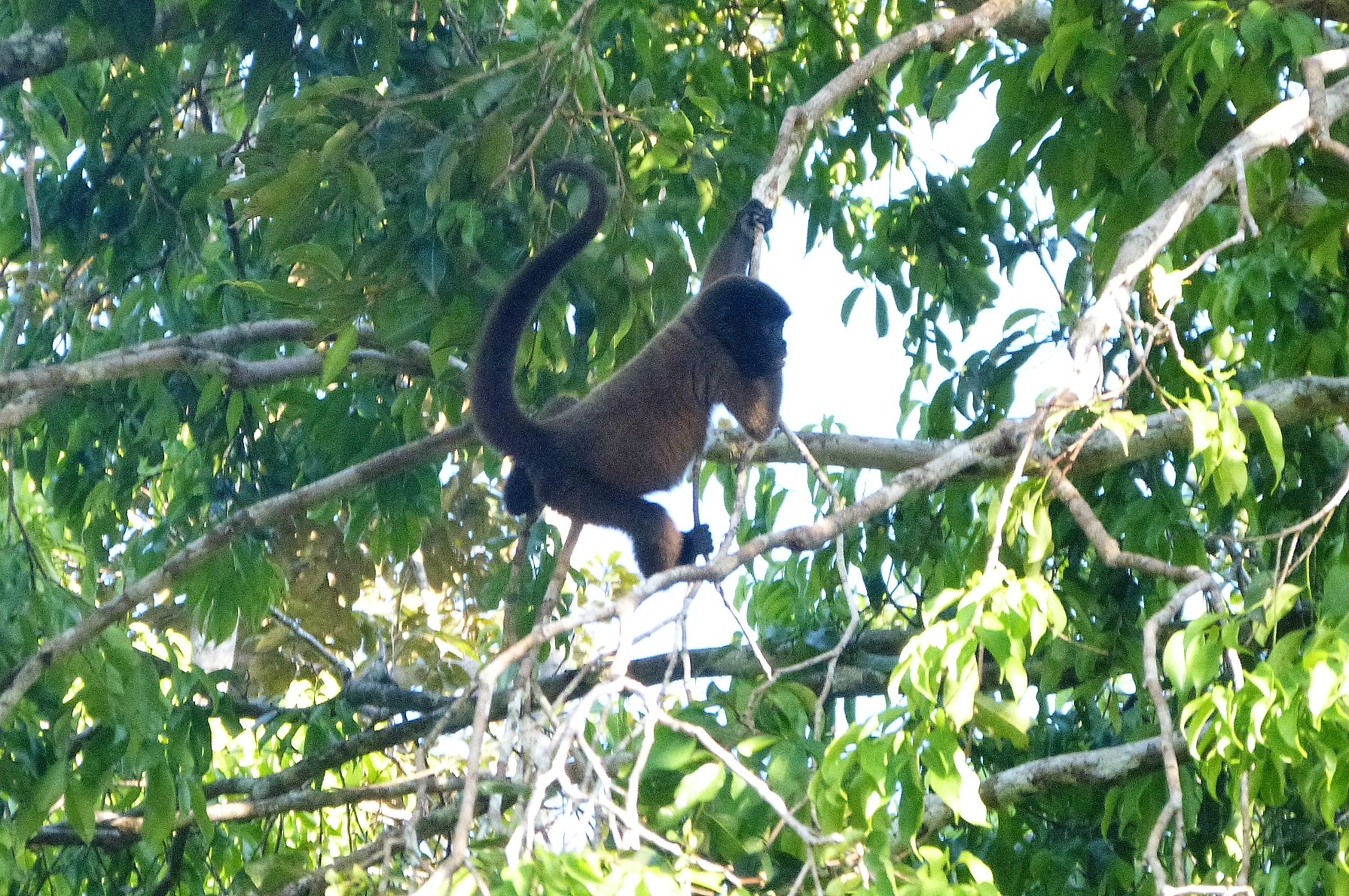
Woolly monkeys in action
Coati
Squirrel monkeys, lots of them jumping between the trees
Black caracara – orange head
Black nun bird – orange beak
Smooth bill Ani
Cocoy Heron – largest heron
Horn screamer – known as Donkey bird – has a horn and sounds like a donkey. Two of them standing on the water lettuce, huge birds. I won’t mention how we missed the photo shot!


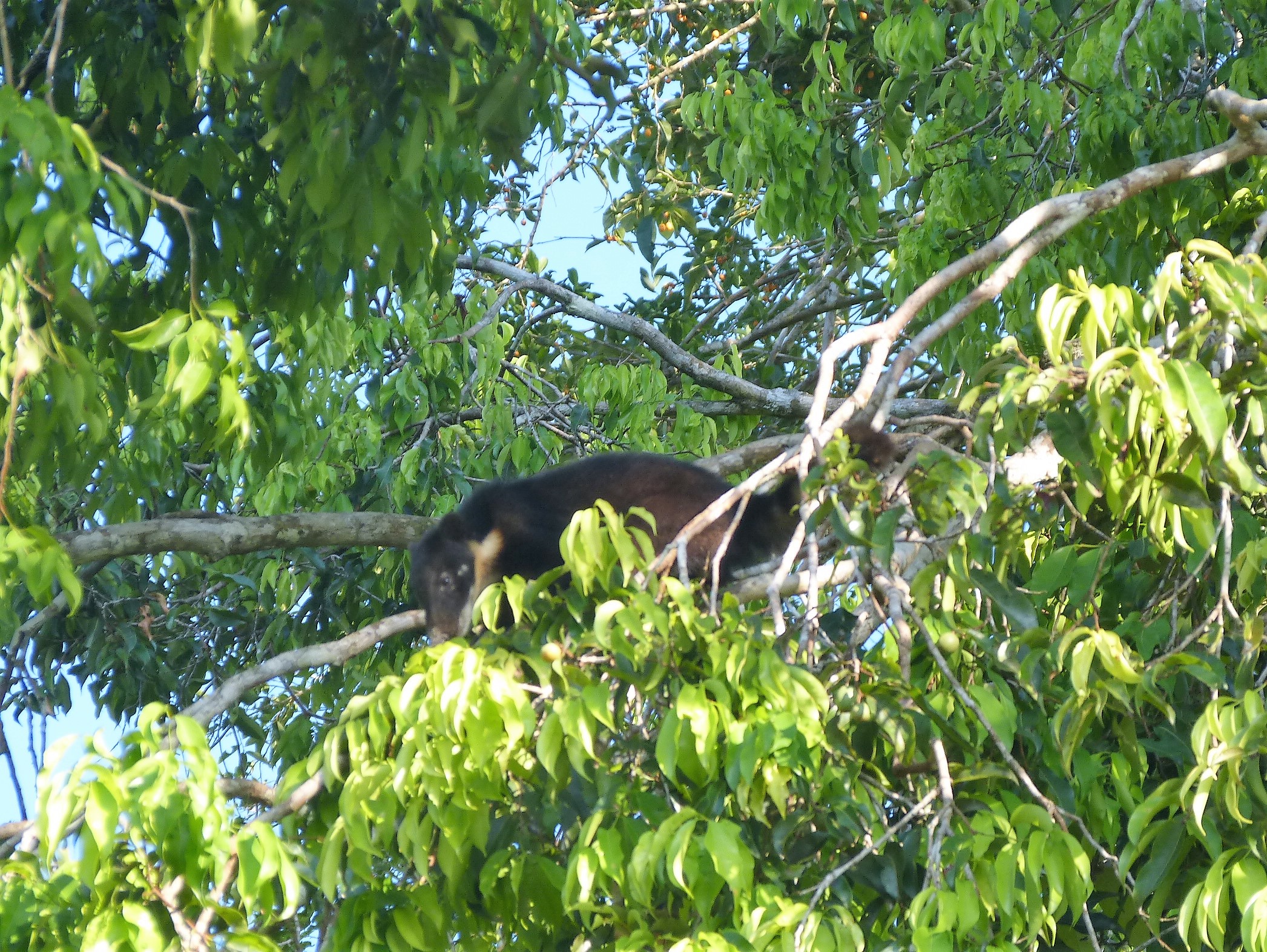
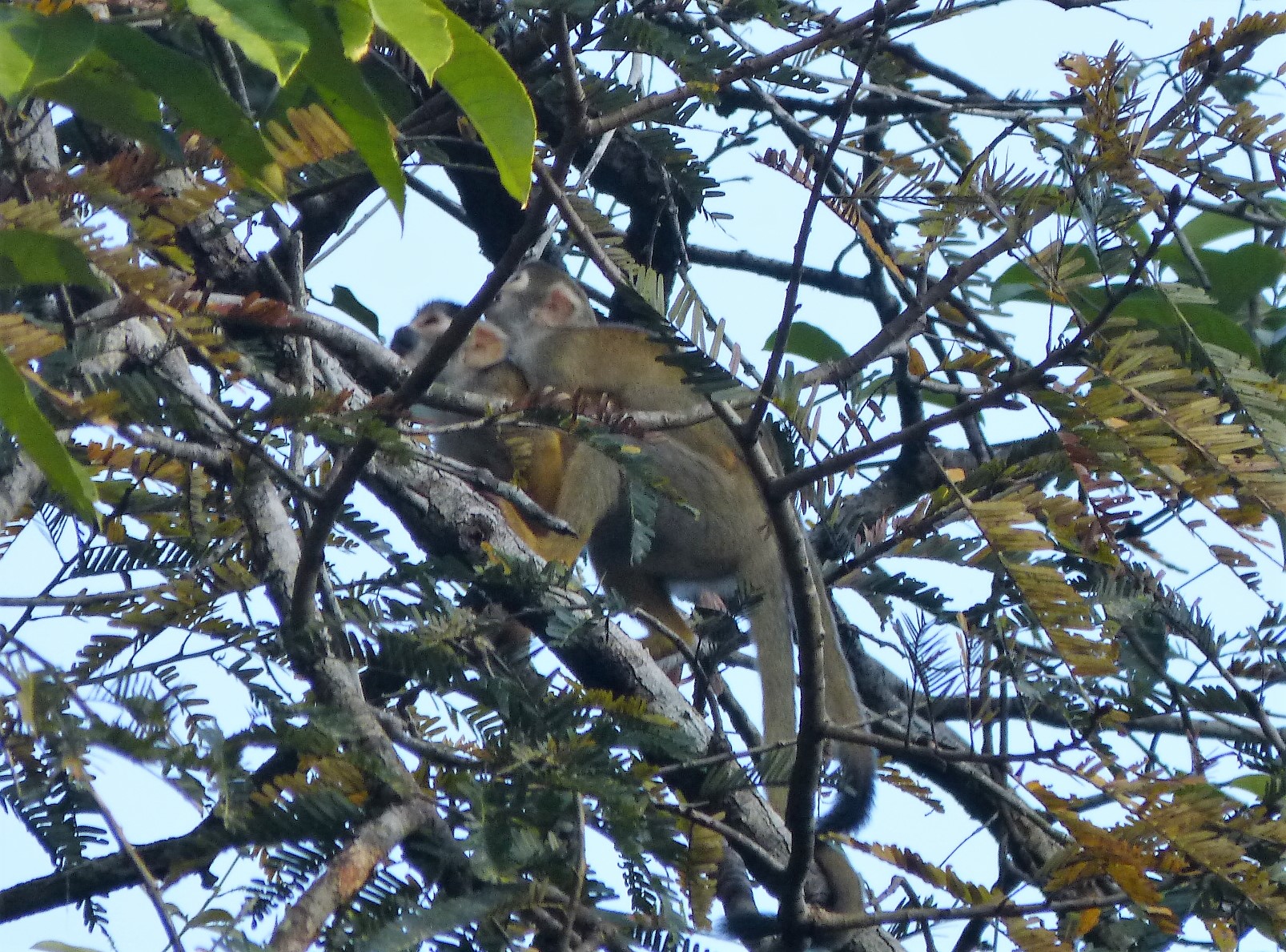
We end up at a huge lake – it was massive. Went to the middle, turned the engine off to enjoy the serenity and the sunset. Then Carlos told us why you wouldn’t swim here … beside the piranhas, anacondas, electric eels (they give you an electric shock which kills), and poisonous catfish swim below. It was getting dark, and I was thinking it’s time to go!!! I may now be an experienced snorkeler, but swimmer with dangerous creatures, I’m not!
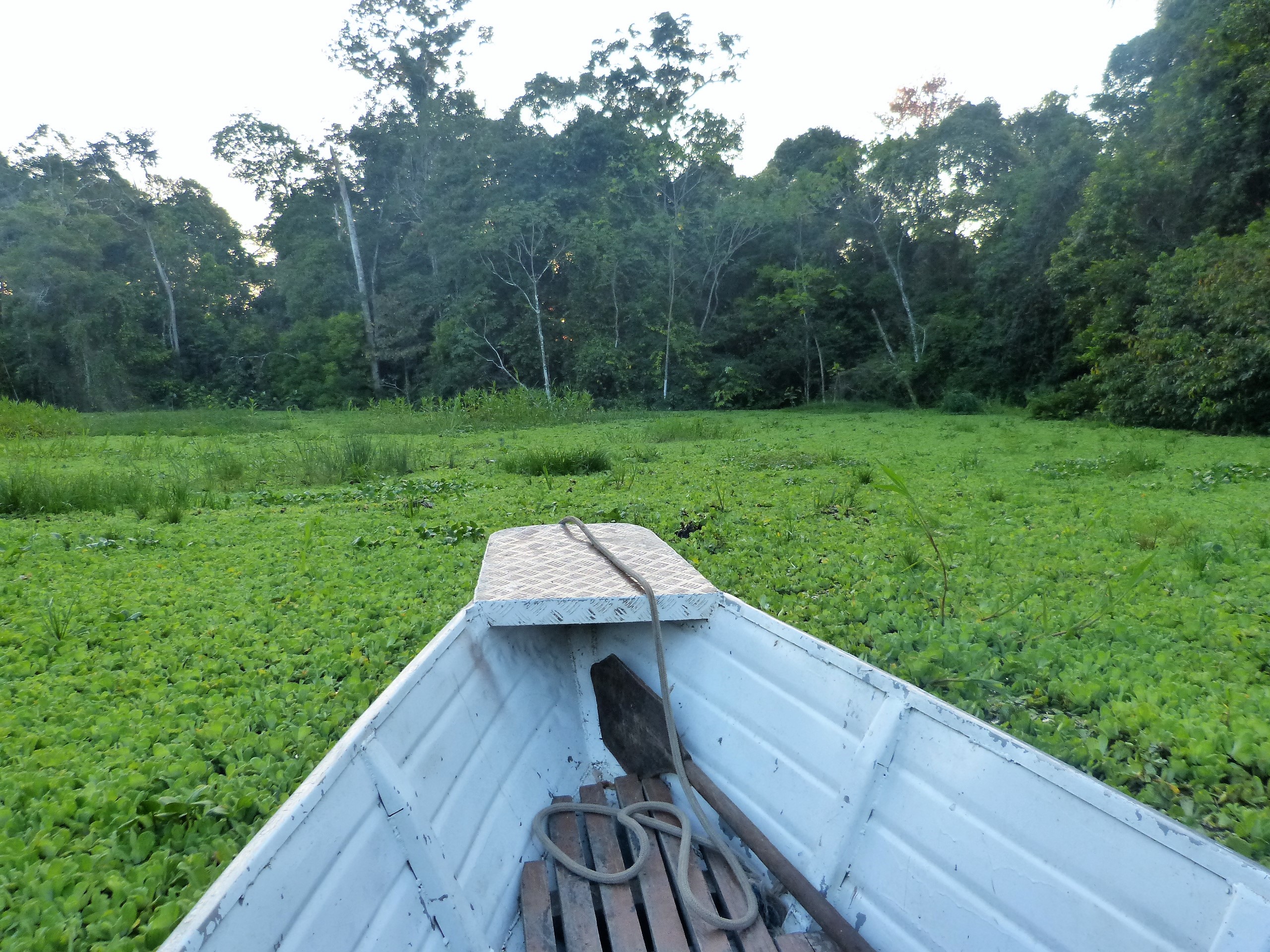

So we make our way back to “civilisation”, all the night bugs flying in our faces! Found a solution – my scarf across my face! Of course we had to make a stop at another lagoon – Carlos was determined to catch a caiman for us! Unfortunately (for him), the moon was too bright, so the hunting was no good. We had to convince Carlos that we were ok if he didn’t catch a caiman. He was deflated but took us home in time for dinner. Who knows what time we would have got back otherwise!
Another scrumptious meal, then up the 50 stairs to our Treehouse to pack up our bags ready to leave in the morning. What a unique experience this has been. We couldn’t fault our guide, the service, or the experience we have had.
Day 35 11th April
7am breakfast, then into the boat for the hour river ride. We then transfer to the van for the hour and a half journey back to Iquitos airport. Beautiful scenery along the way, this trip did not disappoint.
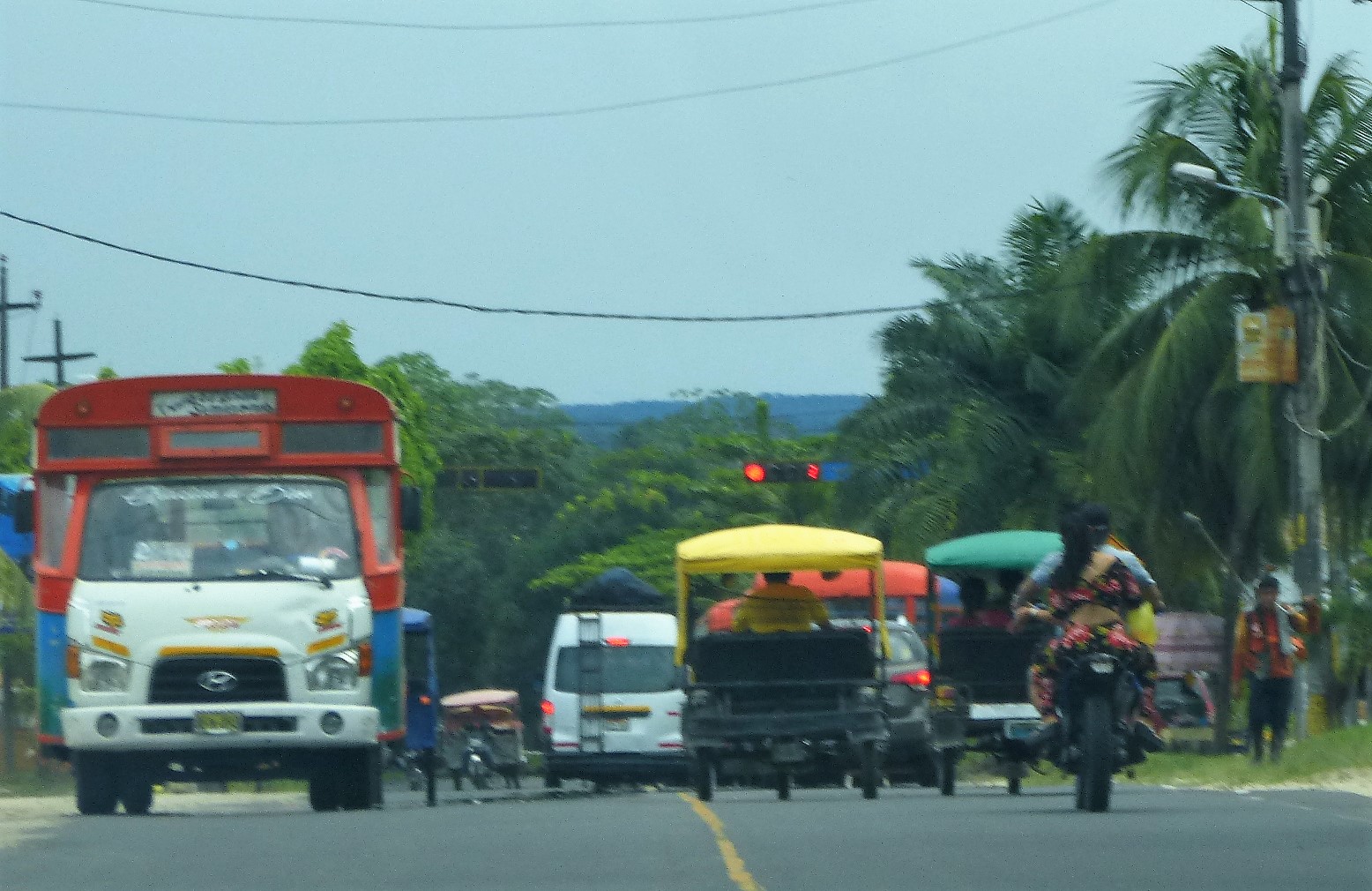
Peru – Sacred Valley
Day 35 – 11th April
Arrive at Iquitos airport, 1 3/4 hour flight to Lima, then had to go through security again ( which was a pain as we only had a quick turn around), then an hour flight to Cusco. Met by Dante, and next is the 1 1/2 drive to Sacred Valley. What stuck out to me was that Cusco has a lot of red square houses/ buildings that were unfinished. Apparently you don’t have to pay taxes if the buildings are not completed.
Cusco is 3400m above sea level, surrounded by the Andes Mountains. We drive uphill to Chinchero which is 3800 metres above sea level. We stop at a handicraft centre where we have a demonstration on the alpaca wool washing, spinning, dying and weaving process. The girls were so lovely, all in their Peruvian dress complete with their black hats ( Each area has their own colour hat – Chinchero ladies have black). Their work is beautiful, the baby alpaca products were incredibly soft. Of course I couldn’t resist and bought the most gorgeous royal blue wrap- managed to use my best negotiation skills and move the price from $200 down to $120. ( Frank thinks the shopping days are over now … little does he know!)
In Peru there are 3 varieties of camelets, llamas, alpacas, and vicunhas – these are wild.
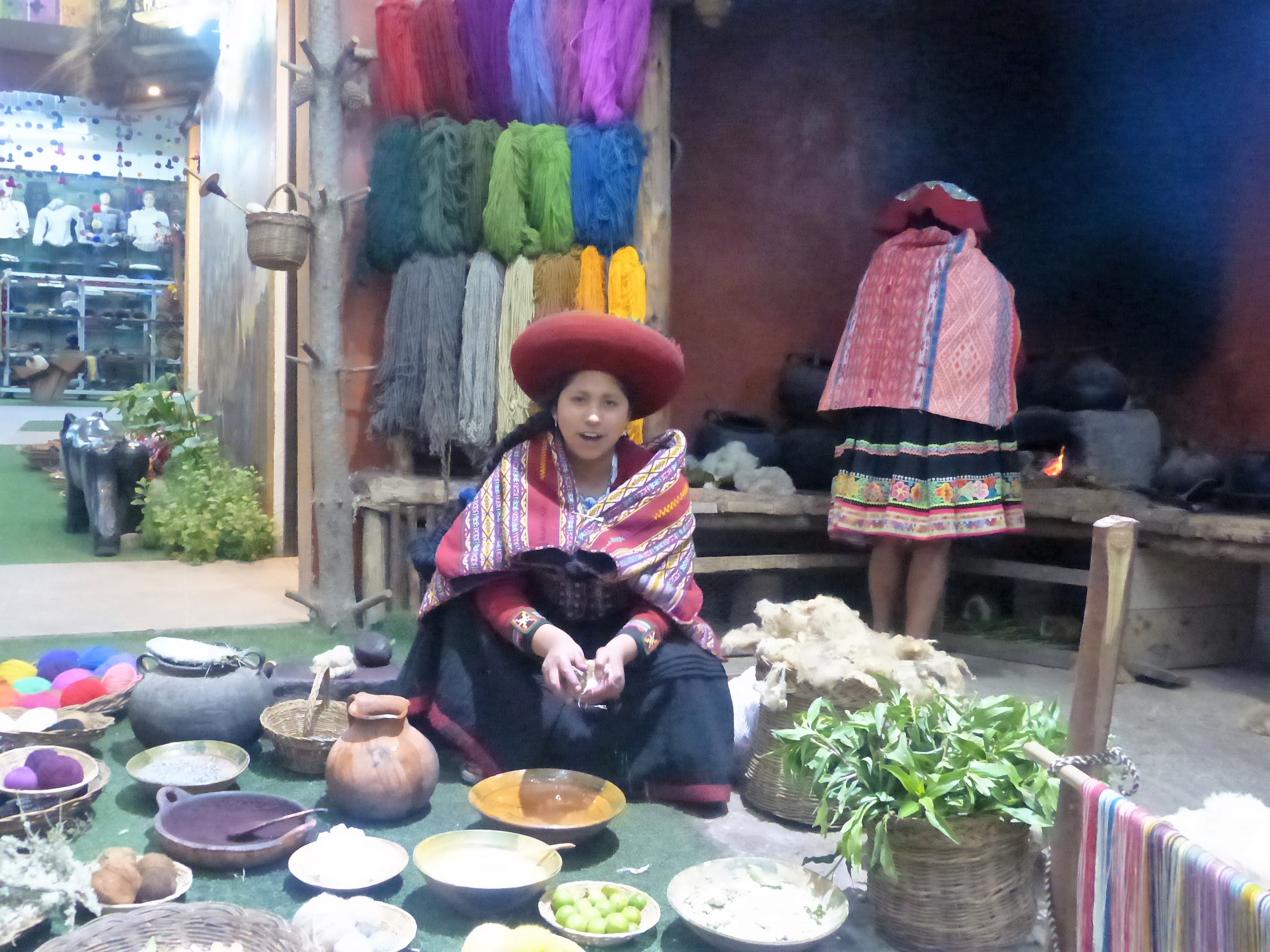
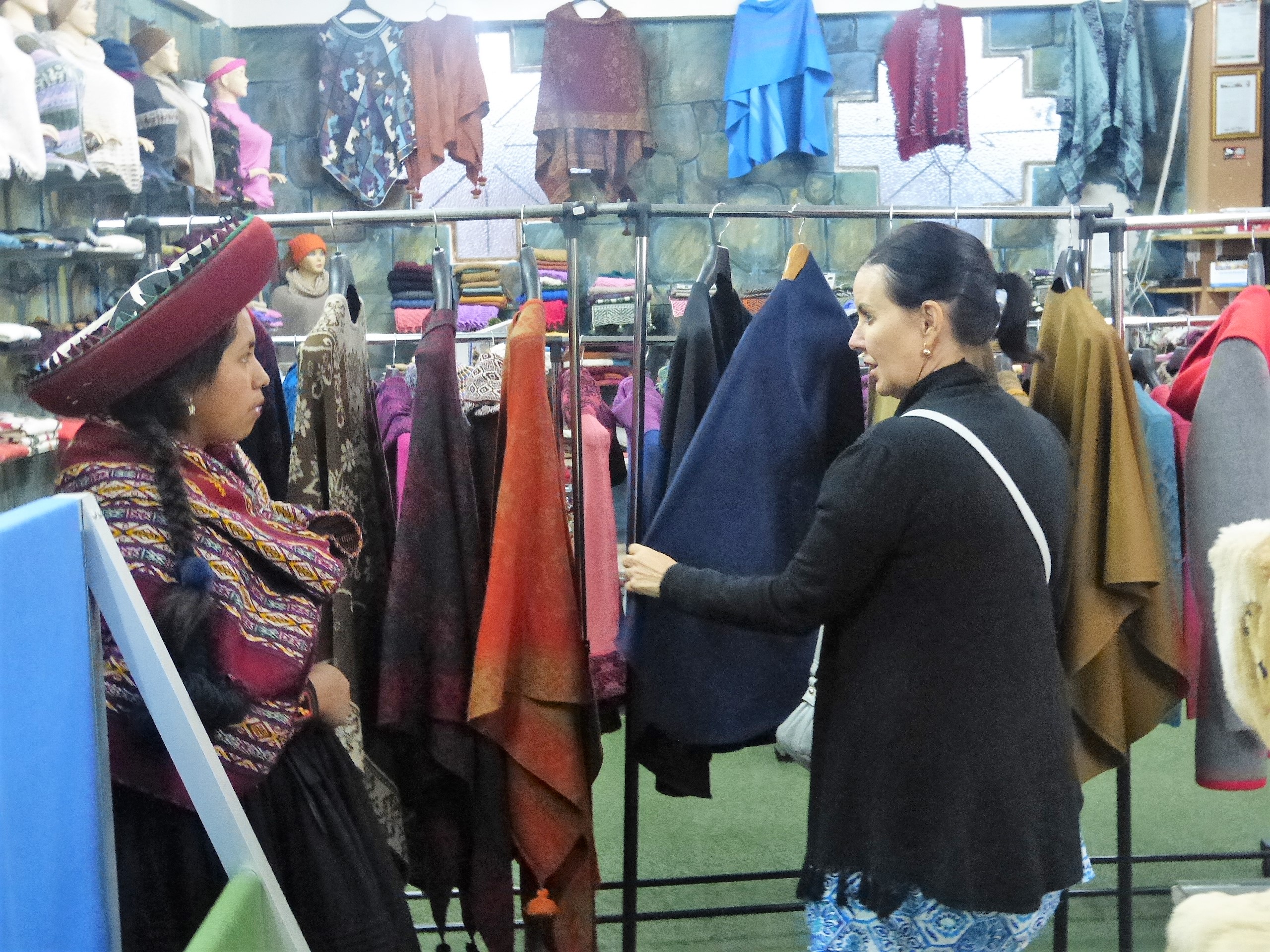

See some spectacular scenery on our way to Ollantaytambo- we are right beside the Andes Mountains. Some peaks are snow covered. Arrive in Ollantaytambo after dark – it looks so interesting, I can’t wait to explore- I have been waiting for Perú for a long time. 2700 metres above sea level. We both seem to feel ok, no effects of altitude sickness, but we are taking Diamox.
Check into Pakaritampu Hotel, lovely gardens, and can walk everywhere from here. A long awaited hot shower, into long pants and the puffer jackets, and out for dinner. Found a restaurant, serving local foods – we both had delicious Peruvian soups, followed by Alpaca. Very lean, probably a little like lamb, very tasty. Not supposed to have alcohol the first night to help minimise the altitude issues – I was good, someone else was not! ( he likes the local Cusquena cerveza)
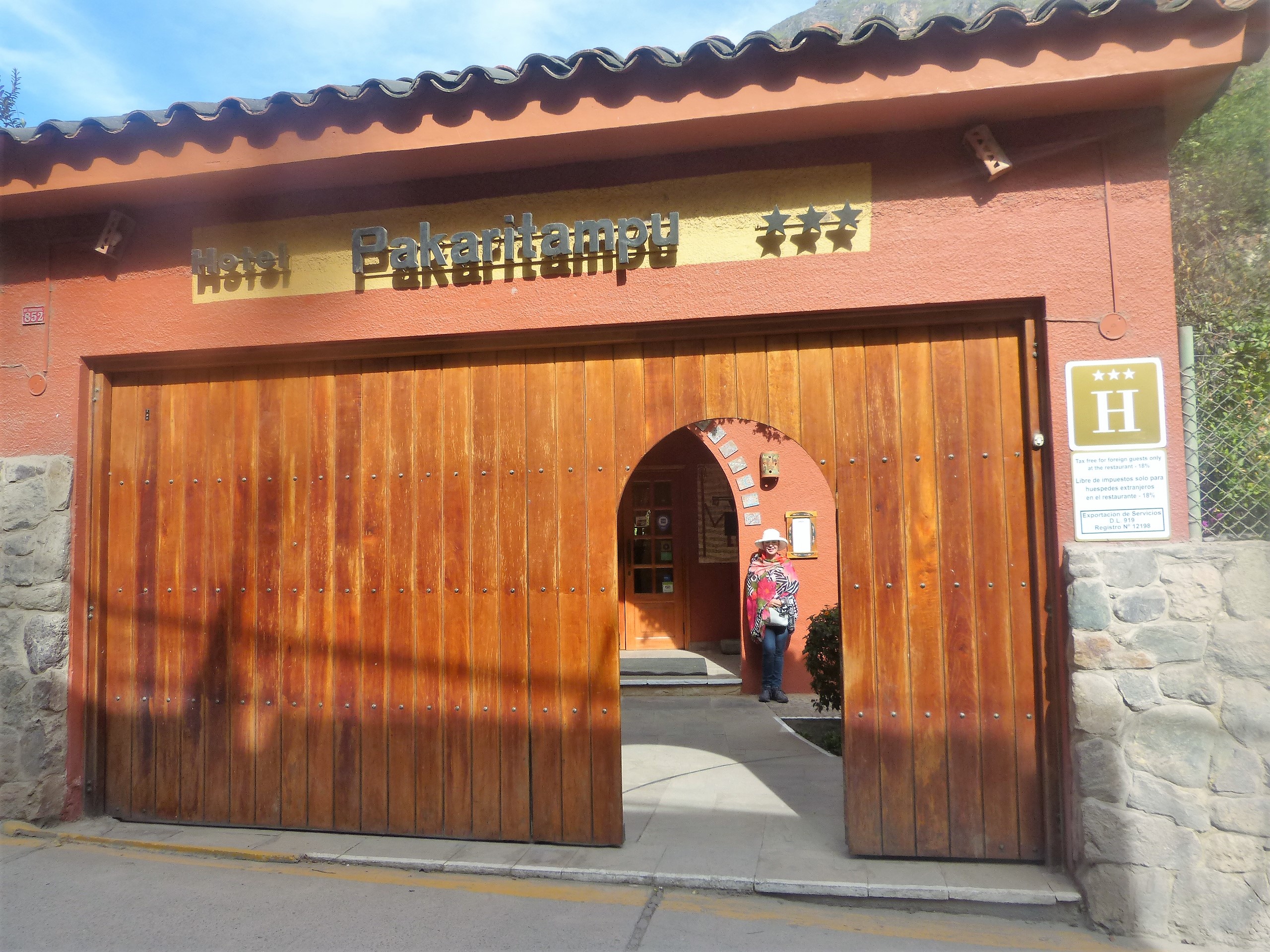
Pakaritampu Hotel
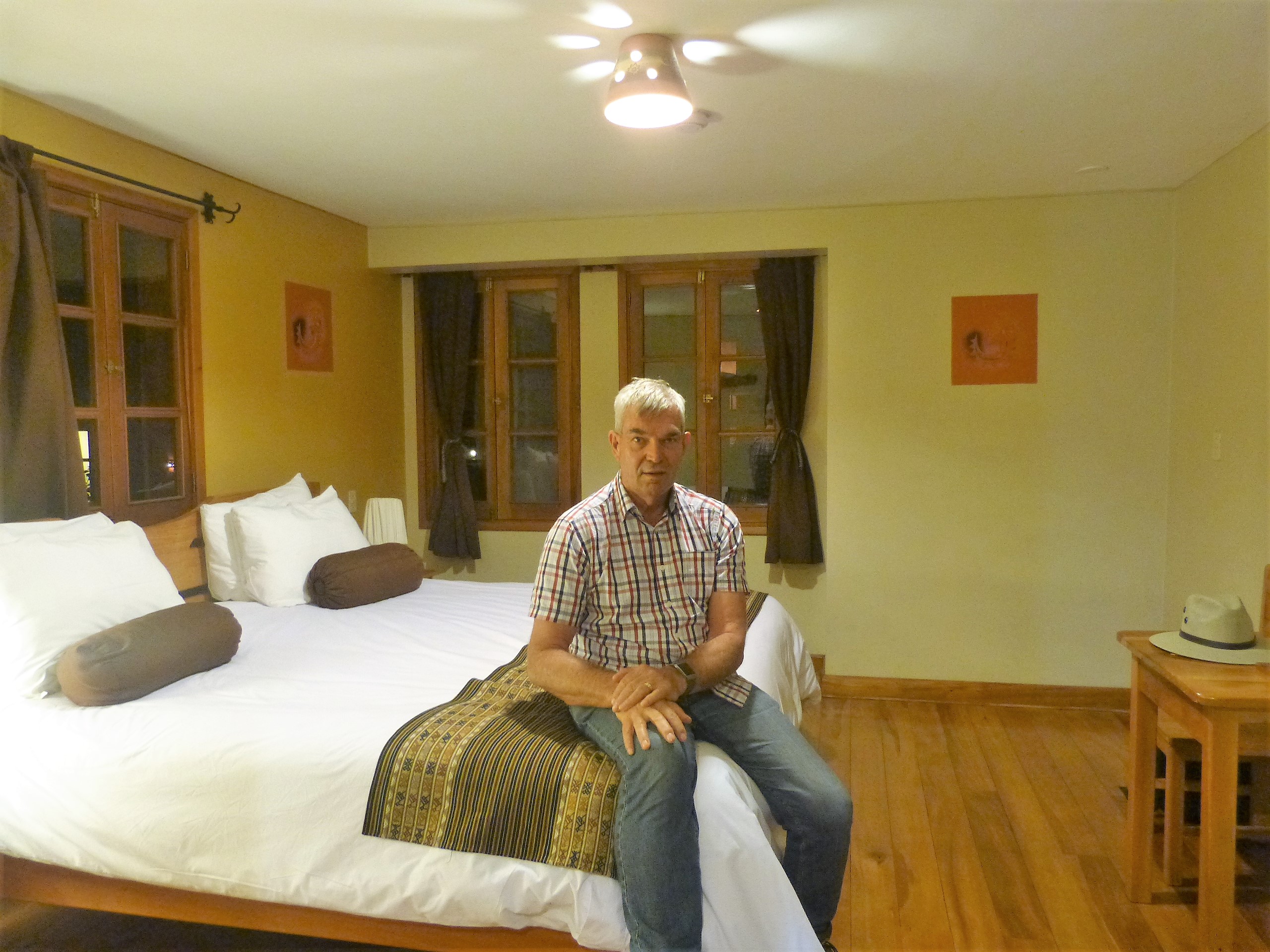
Day 36 12th April
Picked up at 9am for today’s tour with our guide. A drive over some rough roads through the Sacred Valley – could do with a little work on the them. Everywhere you look there are mountains, plus fields of crops – corn, barley, wheat, quinoa, maize,potato, agarve, fruit etc, all worked by hand and donkey. The Sacred Valley was a key settlement area to the Incas- it’s agreeable climate and fertile plains make a rare and fruitful combination for the high Andes.
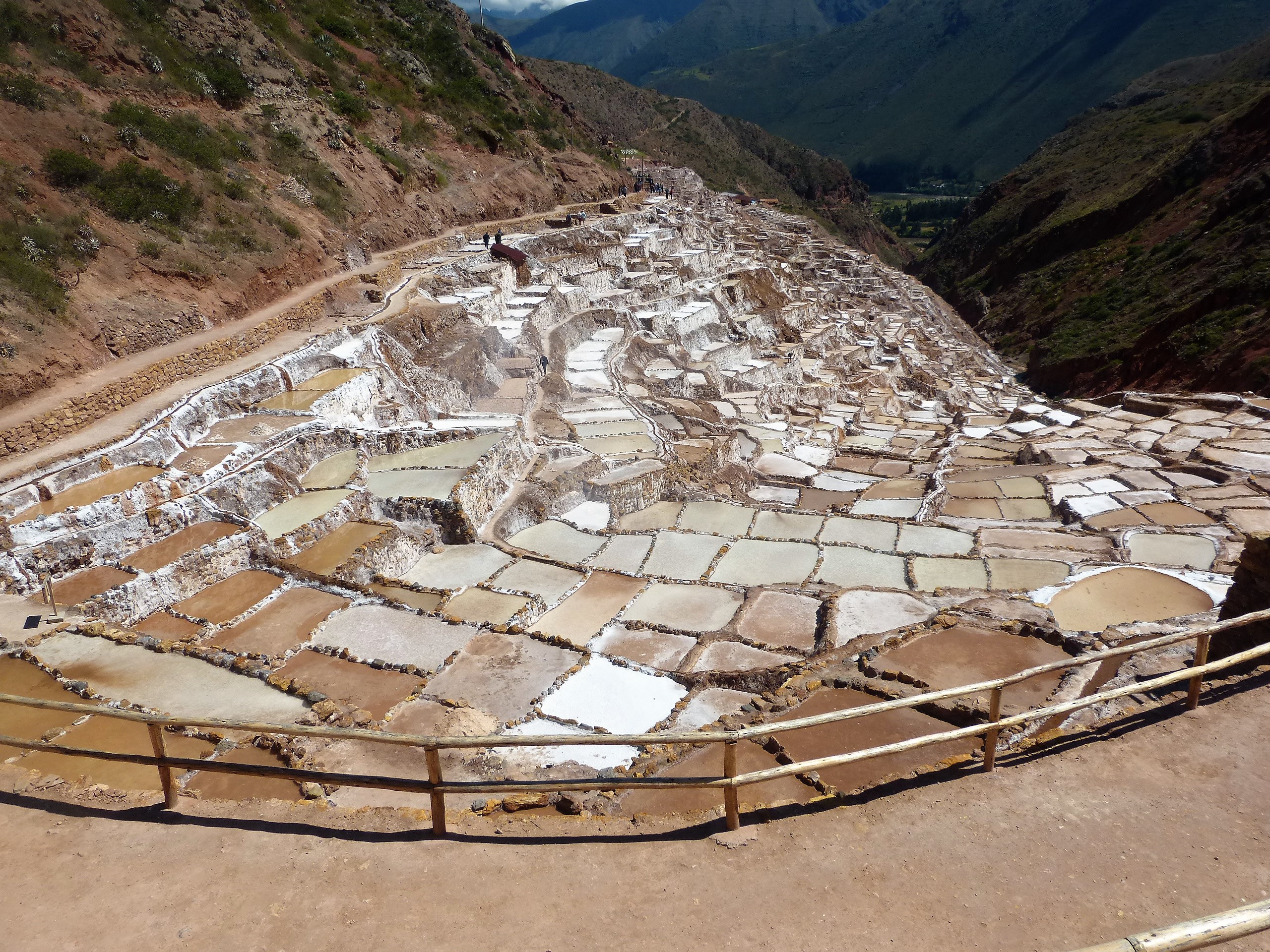
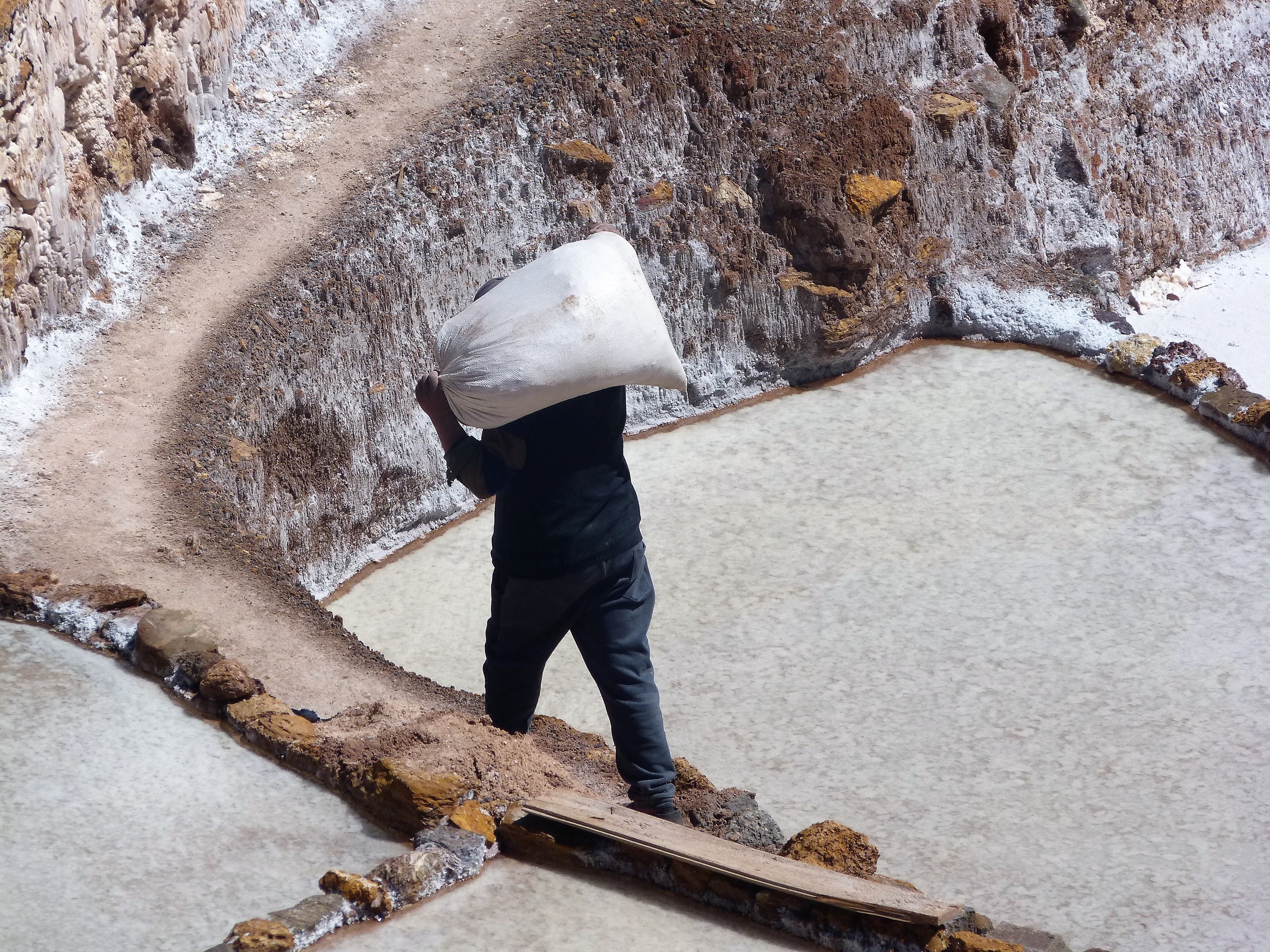
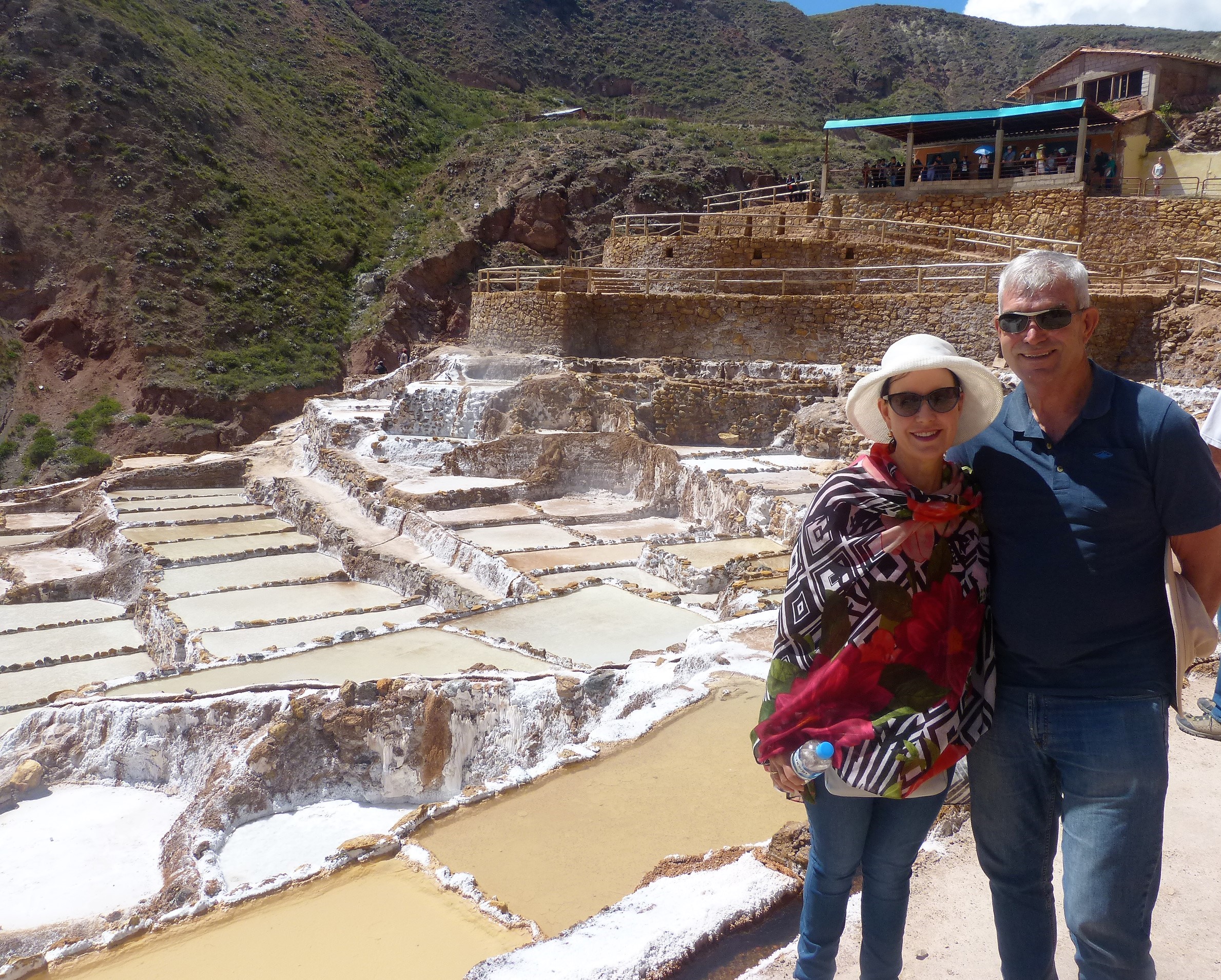
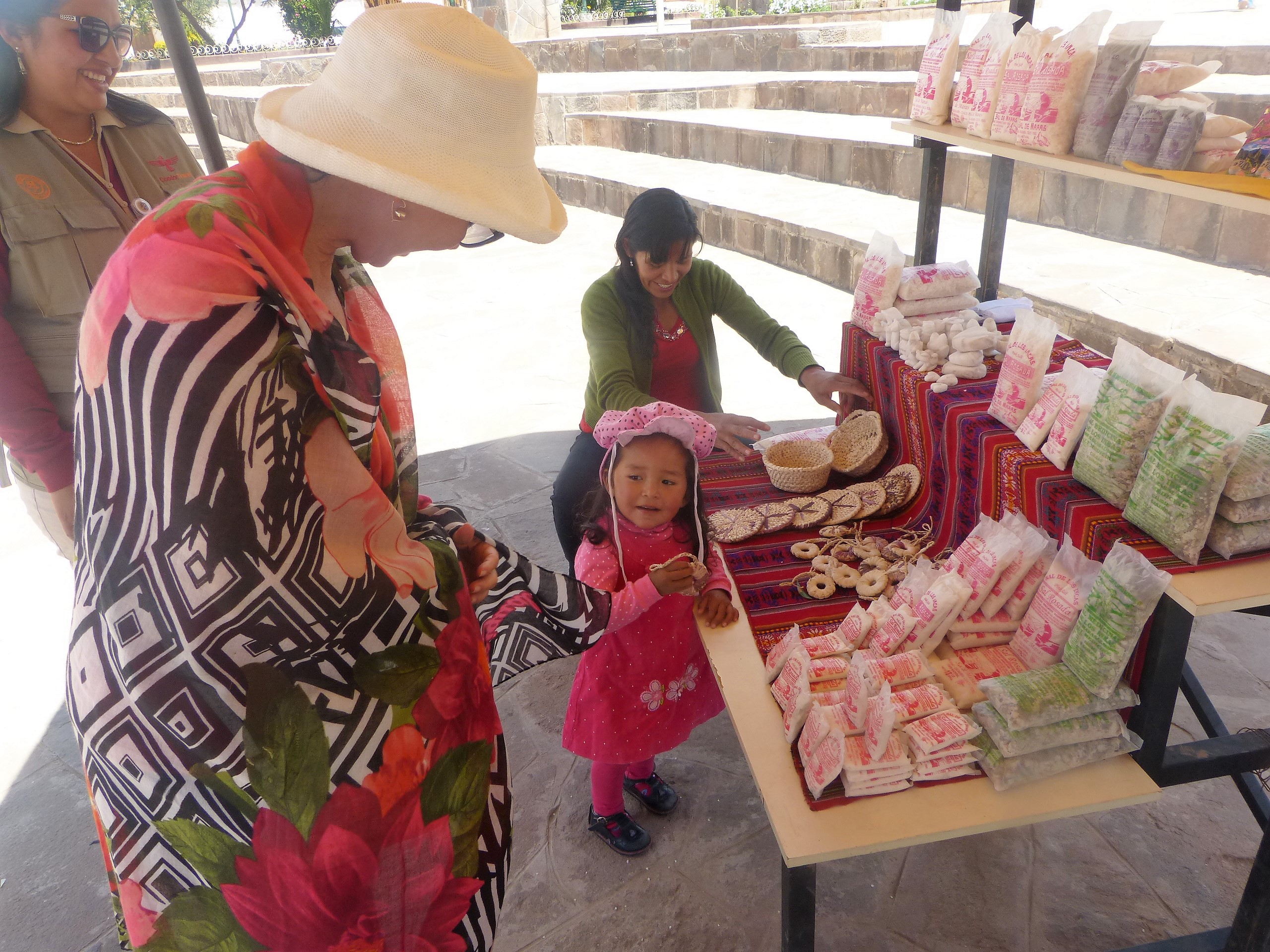
First stop was the salt terraces at Maras. Since pre Inca times (1300’s), salt has been obtained in Maras by evaporating salty water which comes from an underground stream. The water emerges at a natural spring, where the flow is directed into tiny intricate channels constructed so that the water runs naturally down into the several hundred ancient terraced ponds. Once the ponds evaporate, the salt is collected and packed. The ponds are owned by different families. This salt is now being exported, only in the last 10 years, and supposed to have great health benefits- one of which is to lower blood pressure! It was fascinating!


Next a look at Maras town, very cute – the centre square with the city hall, Catholic Church and police station- typical for all Latin American towns. Lovely monument on the centre of the square. The ladies where white hats here.

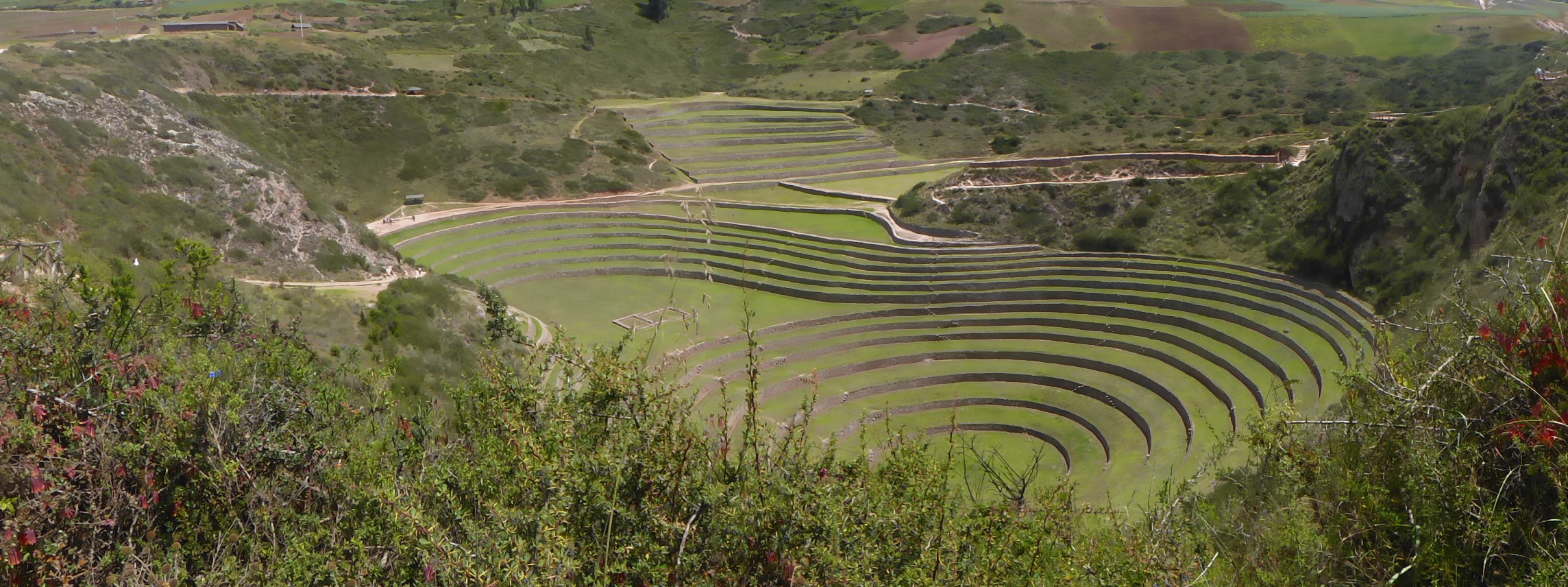
Onto Moray, where we see three of the four gigantic circular terrace formations. Built approximately 1440, now a UNESCO site. The largest had been restored except for one area where there was a landslide. I will never cease to be amazed as to what was built all those years ago, by hand! Two theories as to why they were built – the first was that it was for experimental agriculture research, the second that it was for ceremonies.


Back through the windy rough roads to our hotel. Thoroughly enjoying the scenery and sights.
Now our to explore Ollantaytambo- describes as a living Inca town. Picture cobblestone streets from 13th century, ladies in their heavy embroidered dresses and white hats walking around spinning wool at the same time, otherwise they’re sitting embroidering etc. Markets everywhere. In the fields, the residents strive to maintain ancient traditions such as tilling fields with foot ploughs.

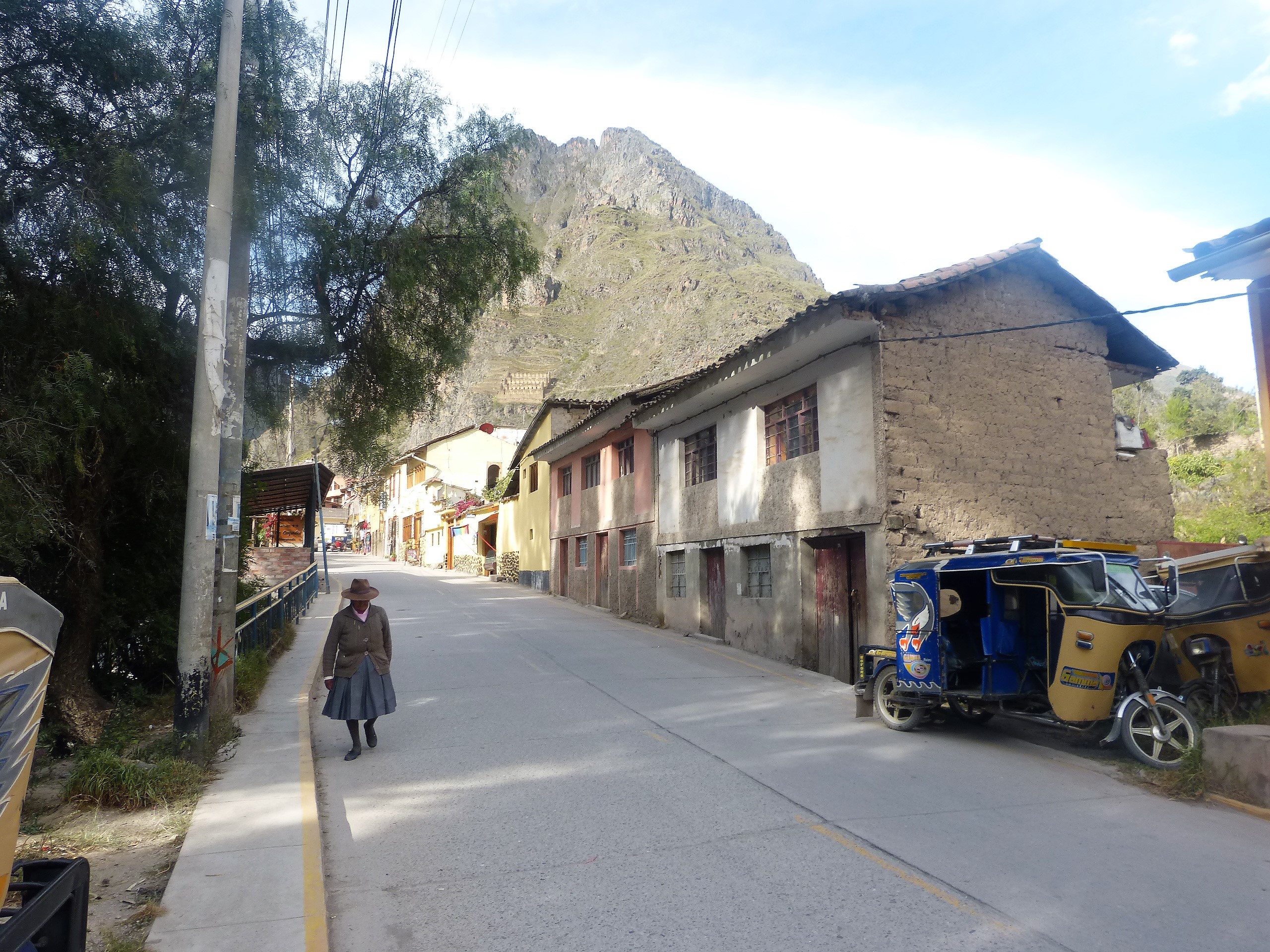

We walked up to the ruins – fortress Araqama Ayllu – built late 13th century. A series of carved stone terraces built to protect the valley from invaders, lead up the hillside to the fortress. The Spaniards invaded in 1537, the Incas won, but the Spaniards came back a few years later and of course destroyed a lot of the buildings. It was a very steep climb up uneven steps but we figured it is getting us ready for tomorrow’s trek. Little did we know that this would be a walk in the park!
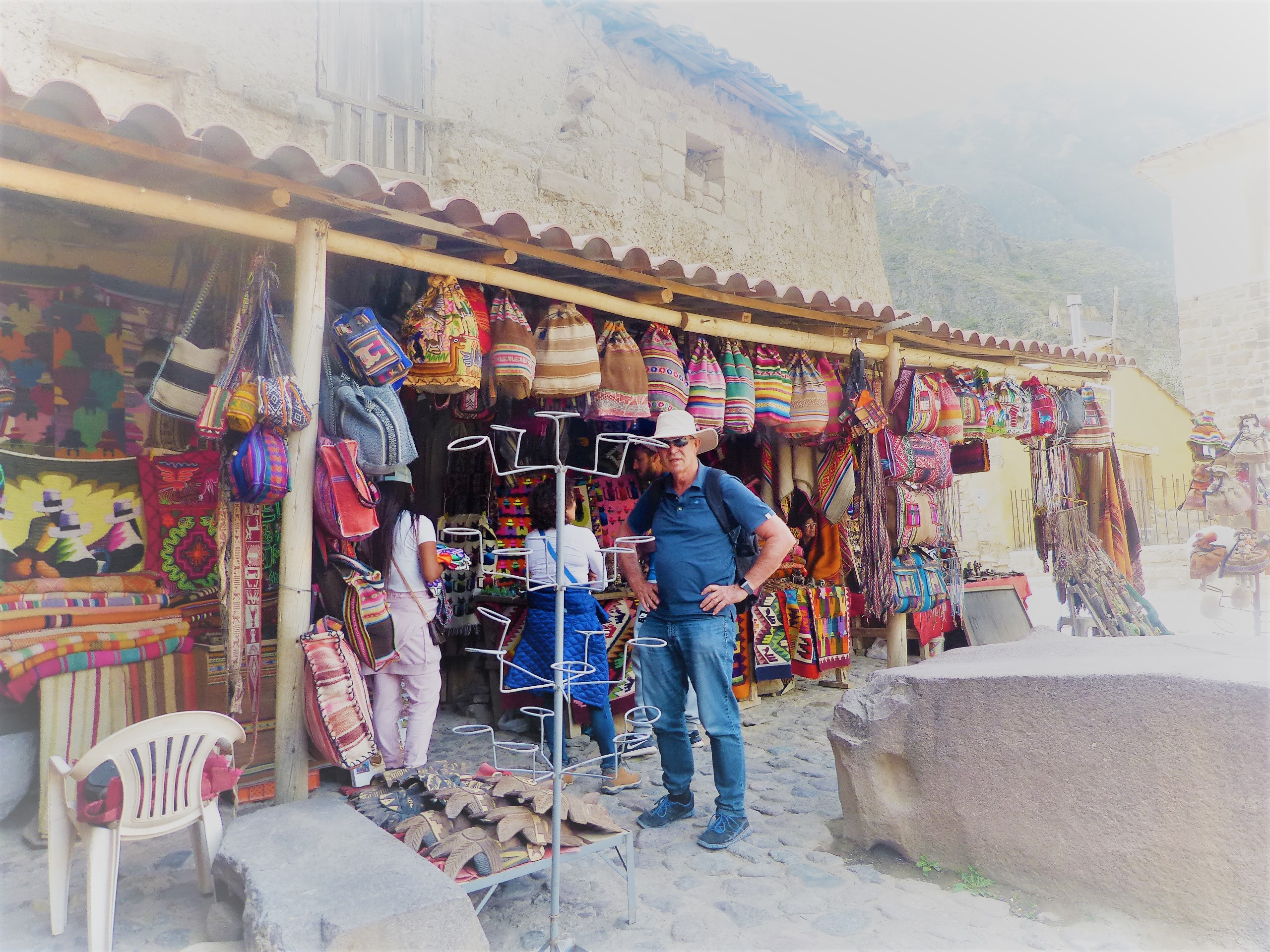
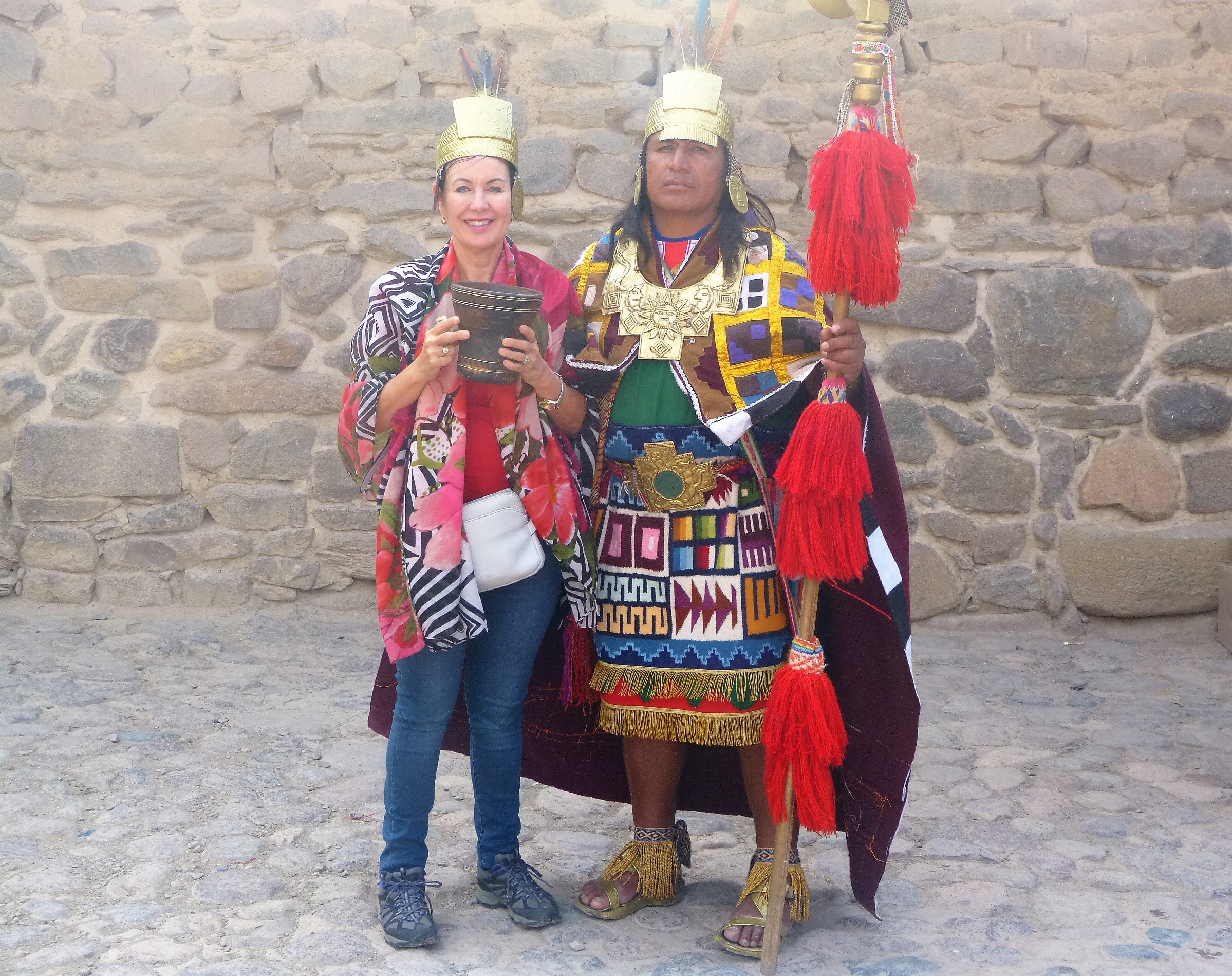
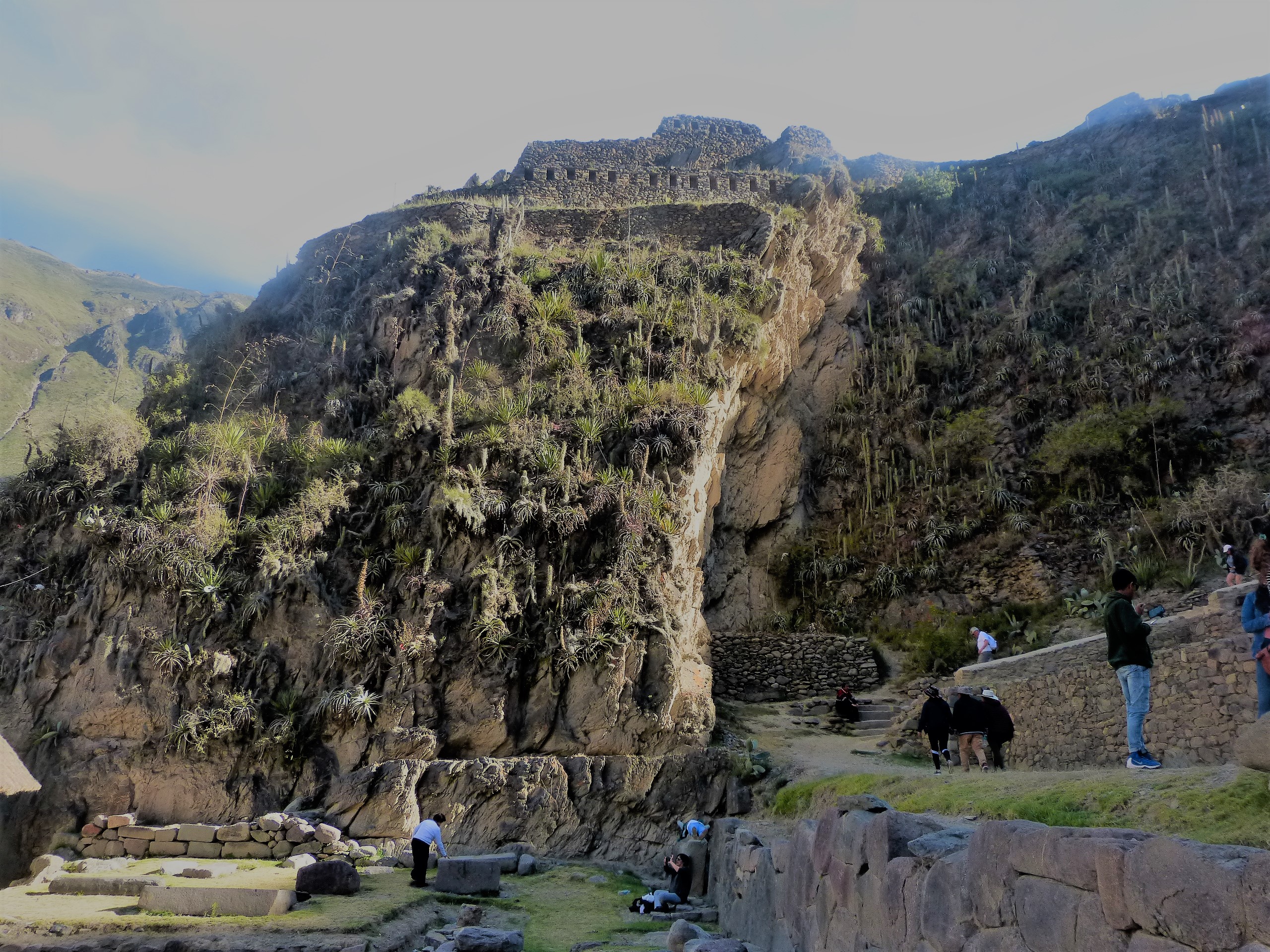

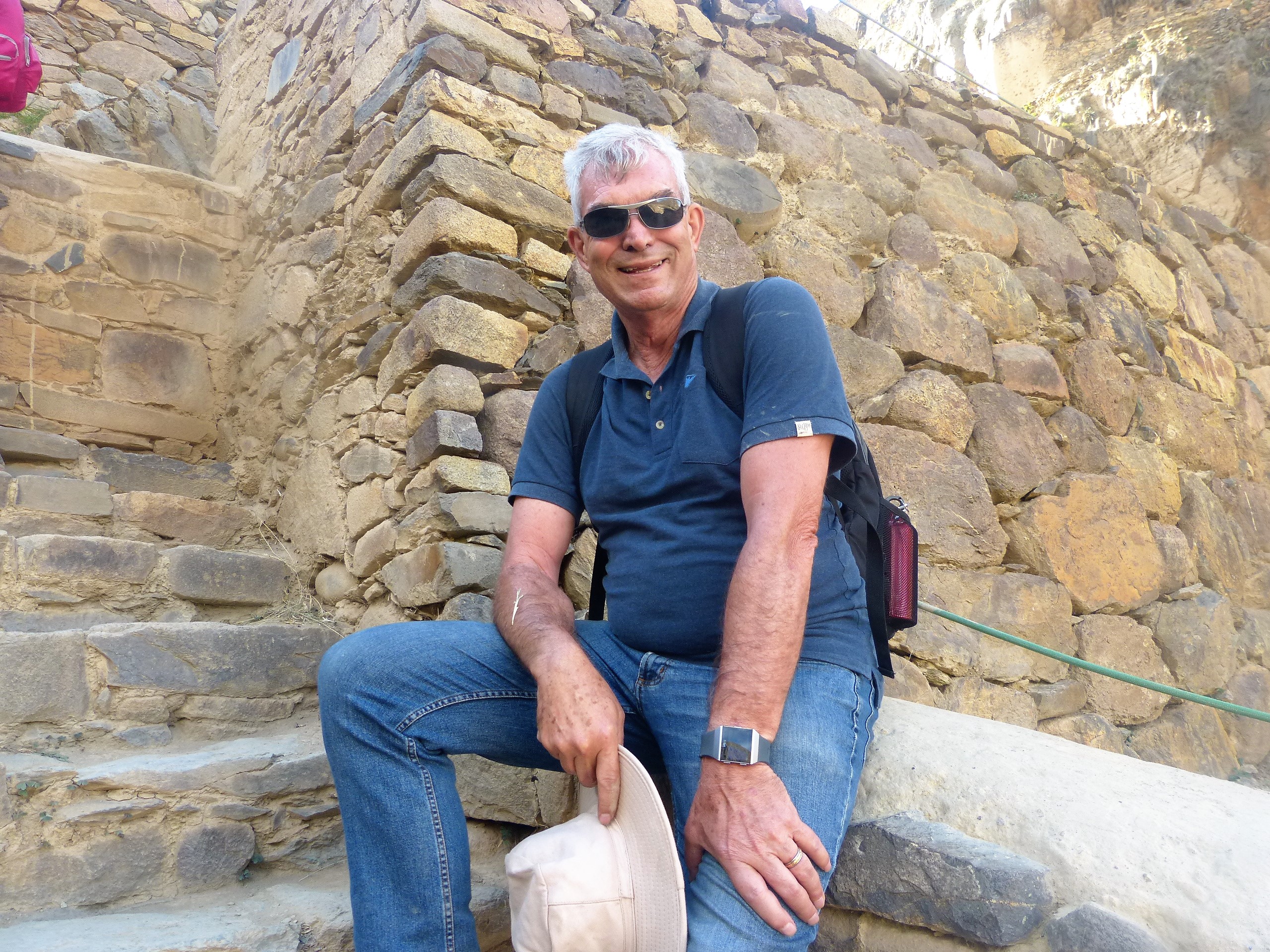
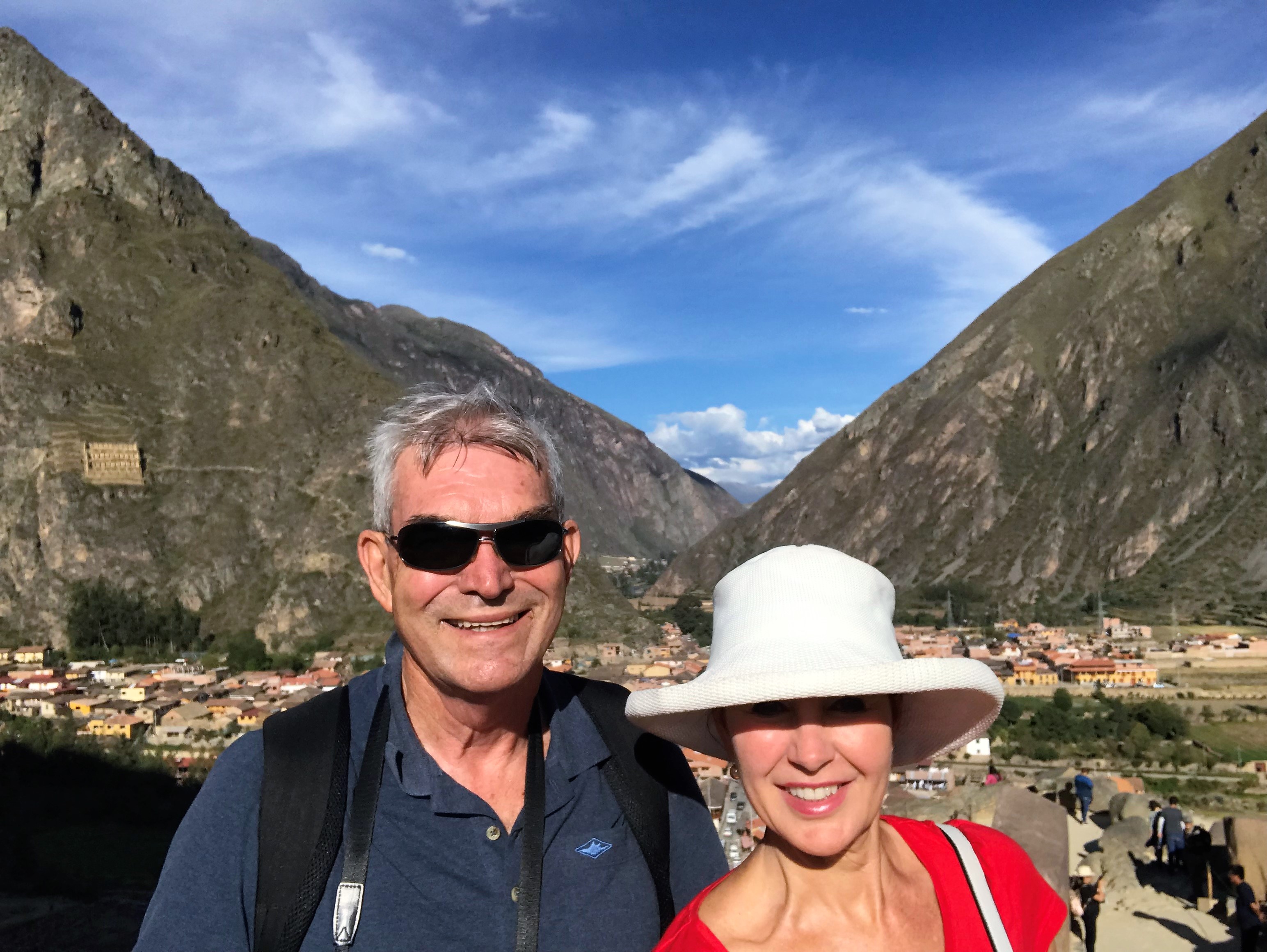


Markets at the bottom, of course! The knitwear is so lovely, and cheap! I did go a bit crazy and bought some jumpers and wraps. Talked Frank into buying a jumper – that way I can say he is taking up some of our luggage space!

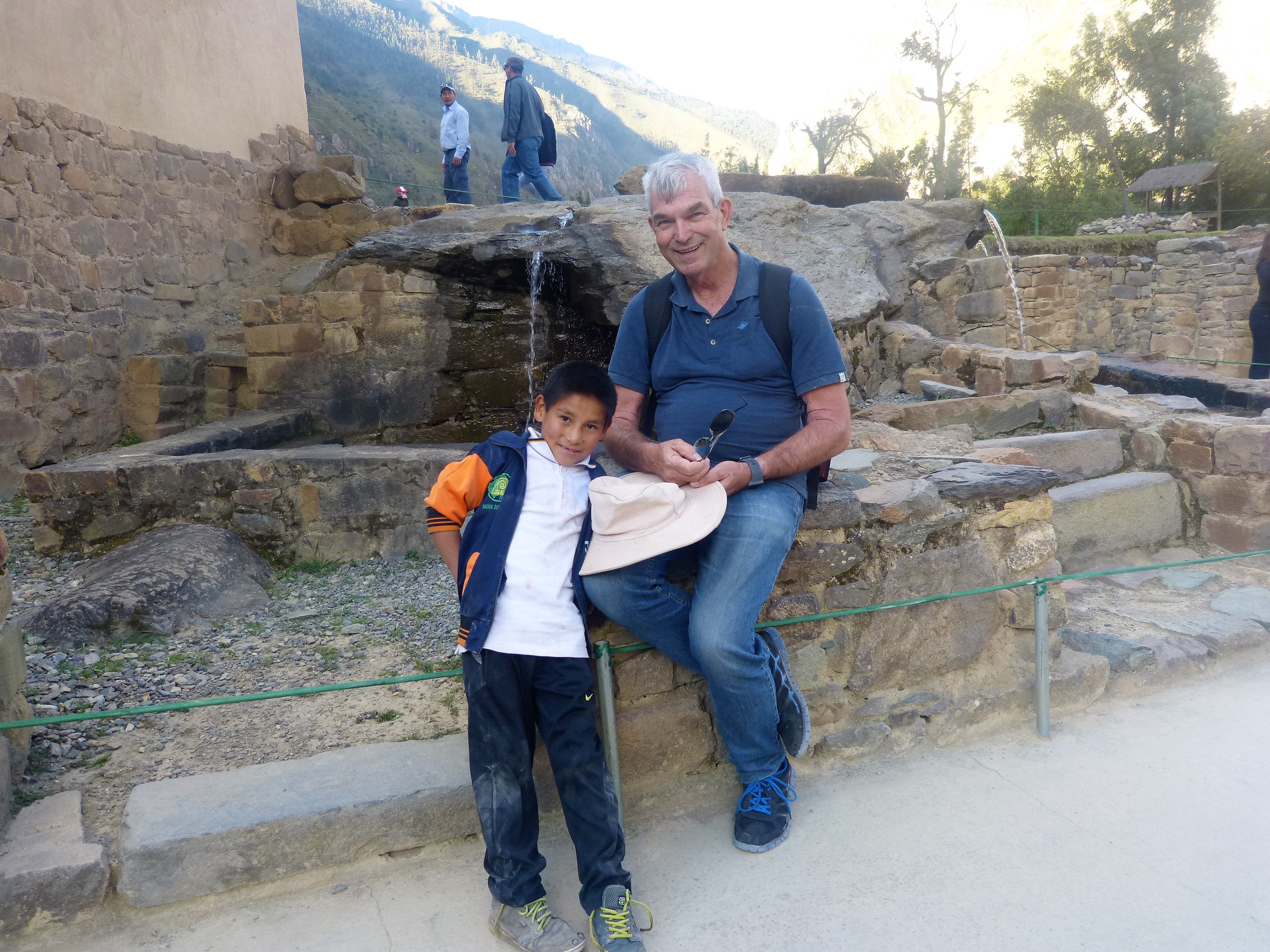


Had to repack our bags as we are doing the trek tomorrow- it was a stressful exercise getting everything in. Had to pack a suitcase to go to Cusco, a smaller bag to go Aguas Callientes, then our backpack for the trek.
Tonight we meet up with Tim and Jane – it was wonderful to see them, they are staying in our hotel. We walk uptown to find a restaurant- tonight we try guinea pig ( cuy). Can’t say we liked it that much, however it was the fried version- not what we were expecting( bit of a gap in the communication!). Local beer is Cusquena. We all then went for a night walk around the old streets of Ollantaytambo- houses are built on top of the ruins – I just loved the area. The people are so lovely.
Bed…. getting picked up at 6.30 in the morning for the big hike!
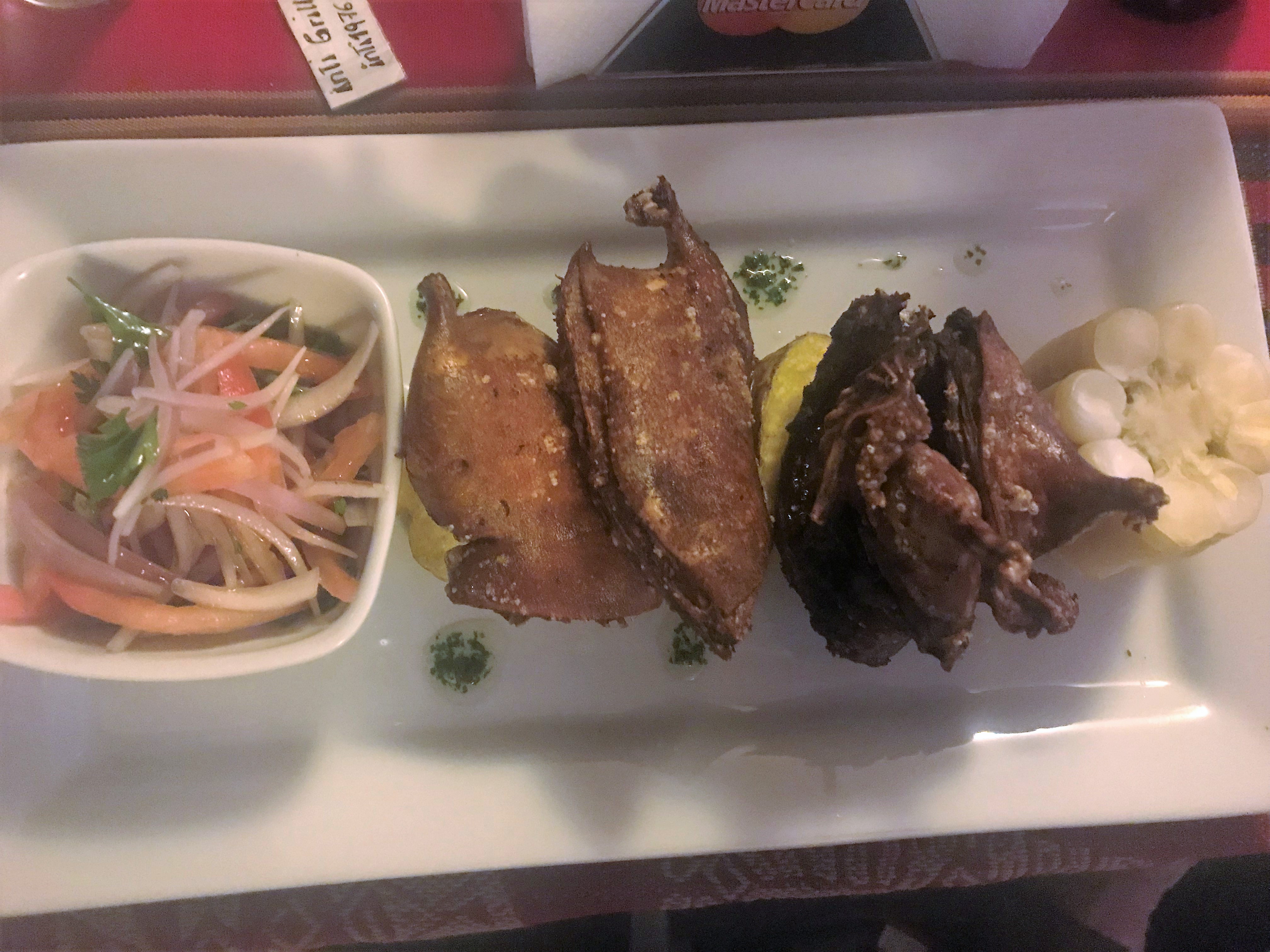
Cuy – from pen to plate
Peru – Machu Picchu
Day 37 13th April
We’re ready! We start at the train station, all aboard the Vistadome train bound for Agua Callientes. We are a party of five- two other Australian ladies have joined us, plus Patricia our guide.
Stunning scenery of the Andes mountains, some capped with snow- the train has a glass roof. We travel alongside the river and little Peruvian villages. Beautiful.

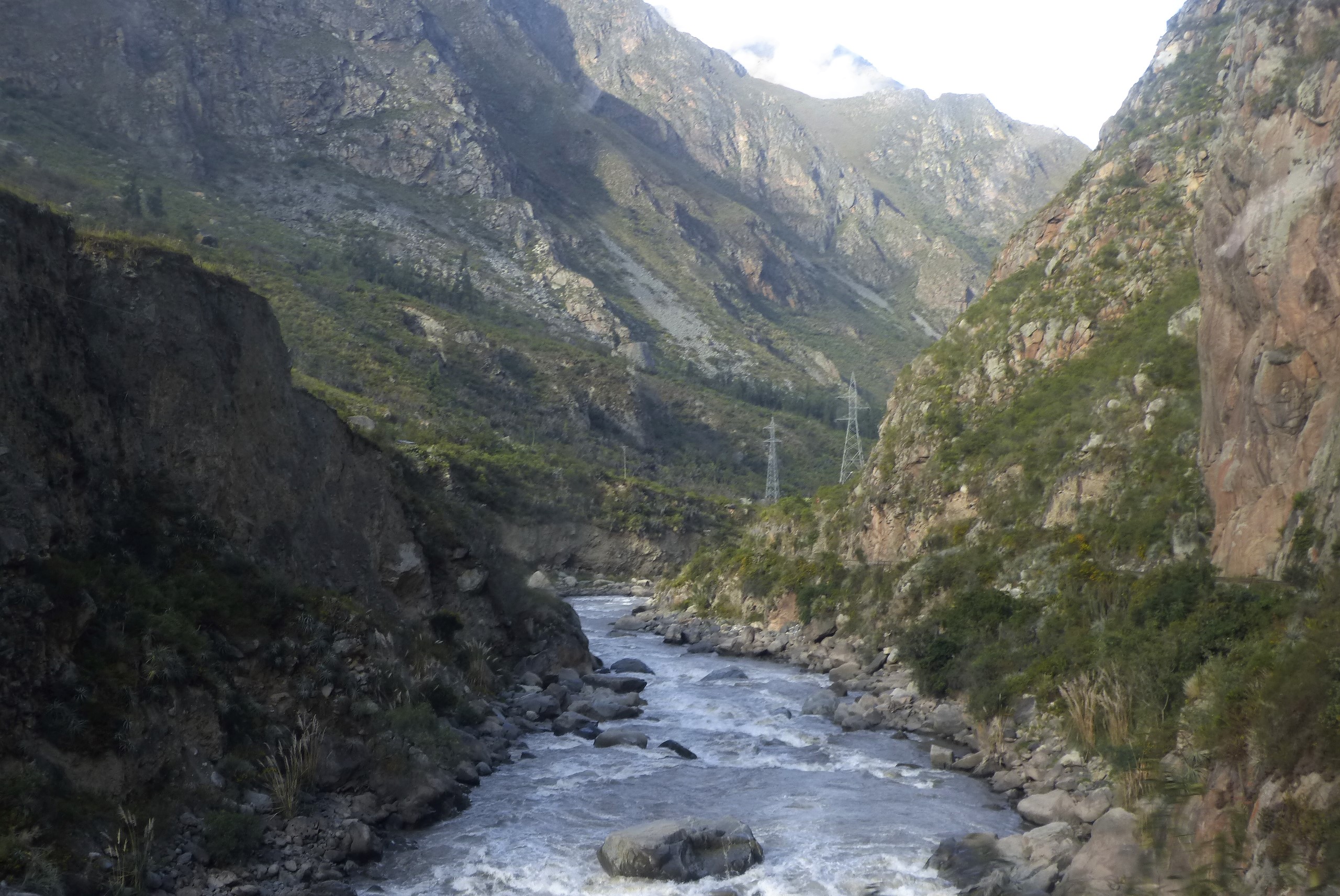
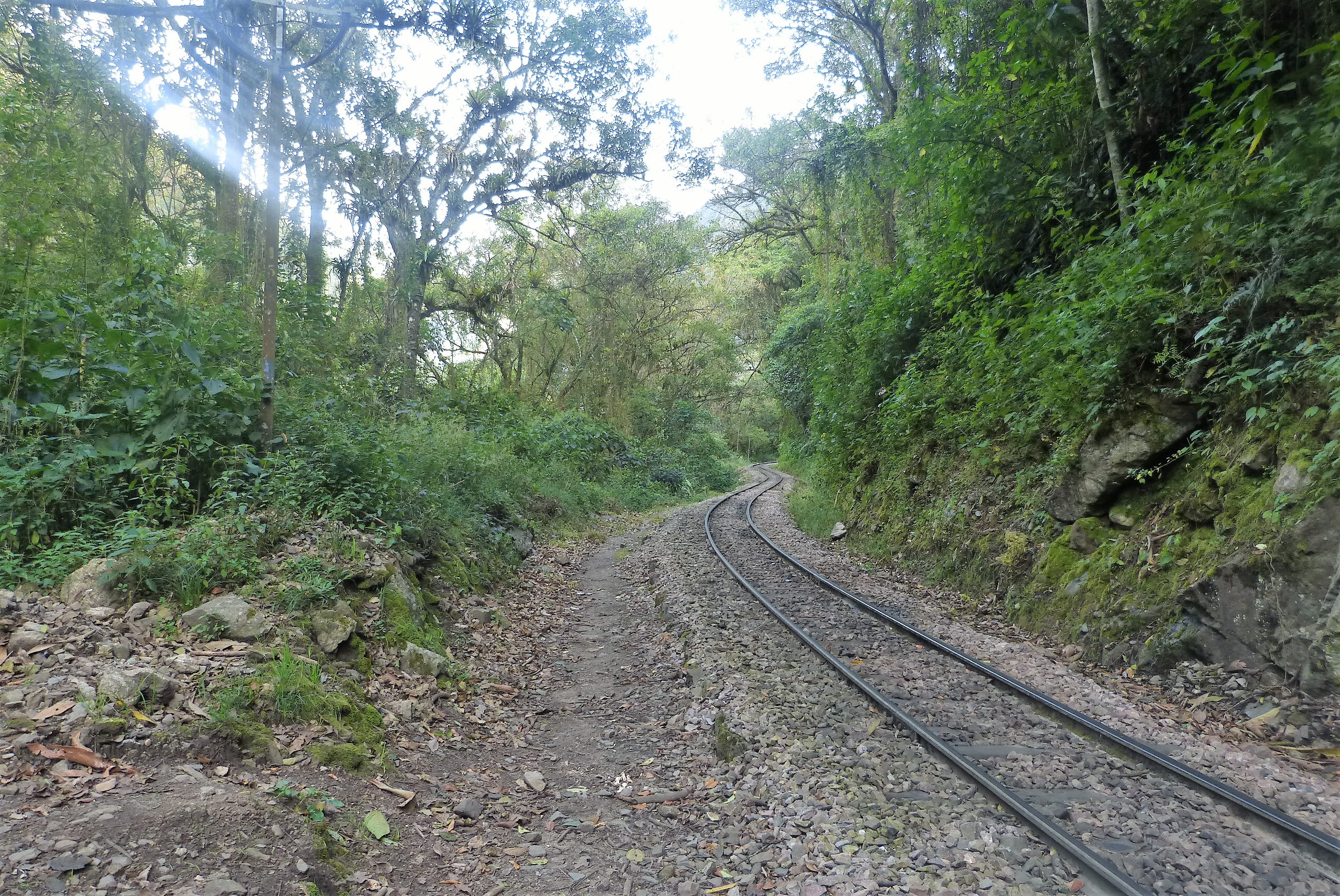
We get off after 1 hour at KM 104, walk across the bridge, passed the check point, and our walk starts. It is 8.30am, and we are at 2250 metres above sea level. We are doing the one day Express walk which is 12km long. The true Inca Trail takes 4 days. We link up with the Inca Trail at Winay Wayna, 3/4 of the way into our walk.
Not long into the walk we saw our archeological complex on Chachabamba- this was a small village in Inca times. Saw remnants of houses, and the temple, water channels and fountains. Built in the 1400’s.

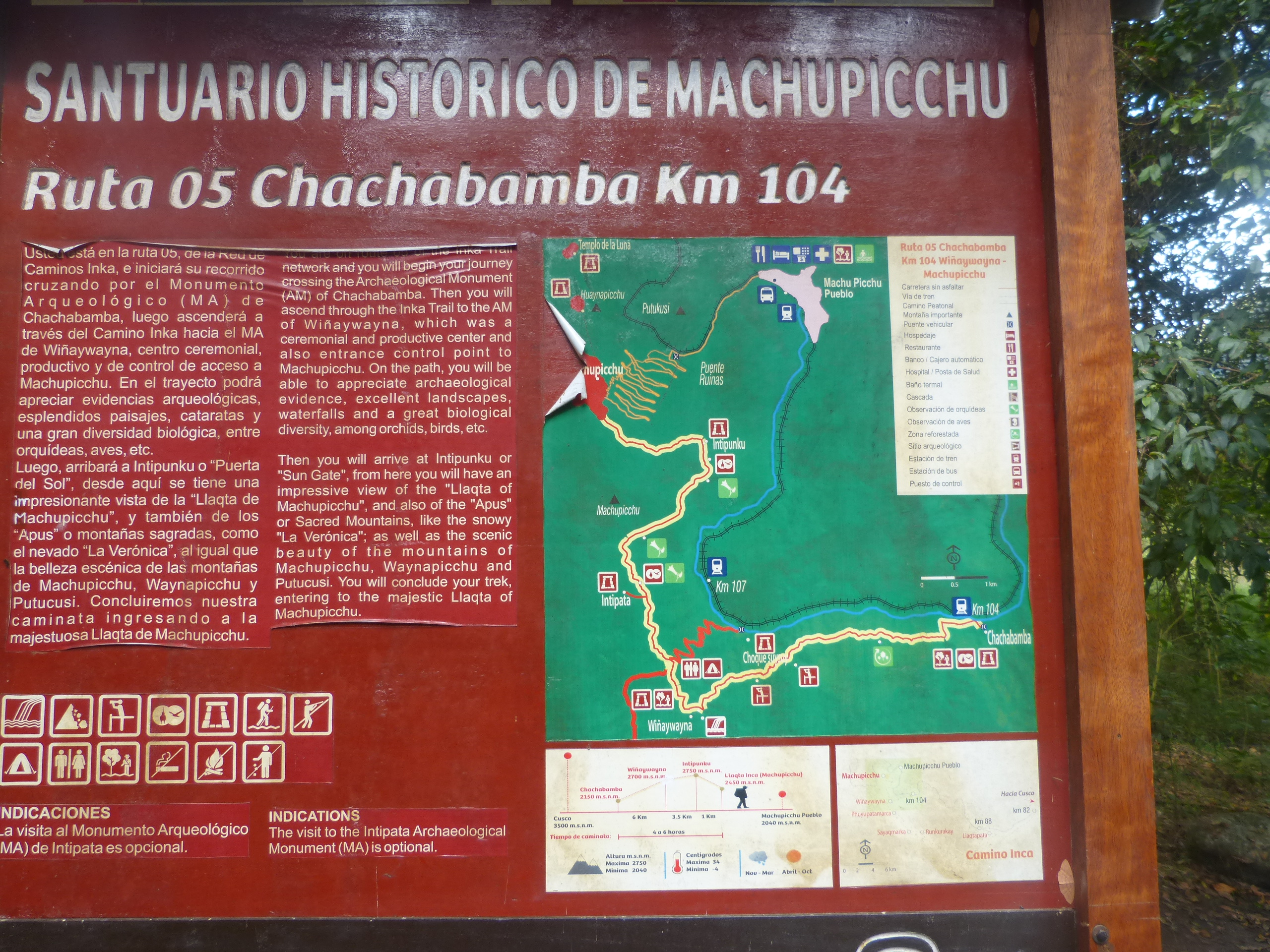

So now we start walking in earnest, up, up and up, around three mountains. It was hot, as we were in the sun for a couple of hours to start with. A four hour steady ascent giving sensational views of Urubamba Valley below. It was somewhat cooler just before we reached the waterfall, as we began walking through the forest. Beautiful trees and vegetation – many native flowers – orchids, fuschias, begonias, lilies. Many ferns.The rocks on the path were granite and serpentine- this is a beautiful blue stone which comes from Mt Machu Picchu
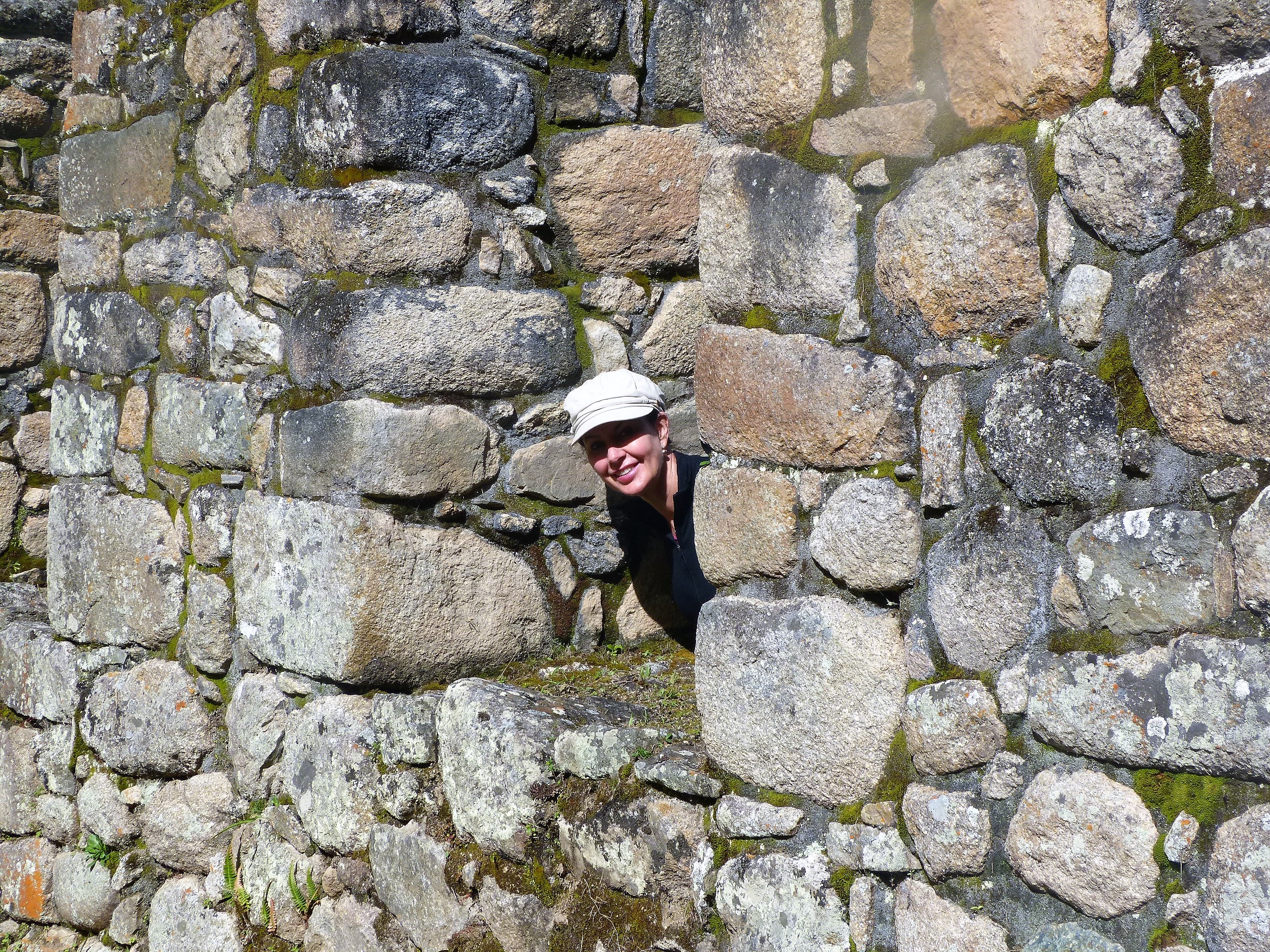
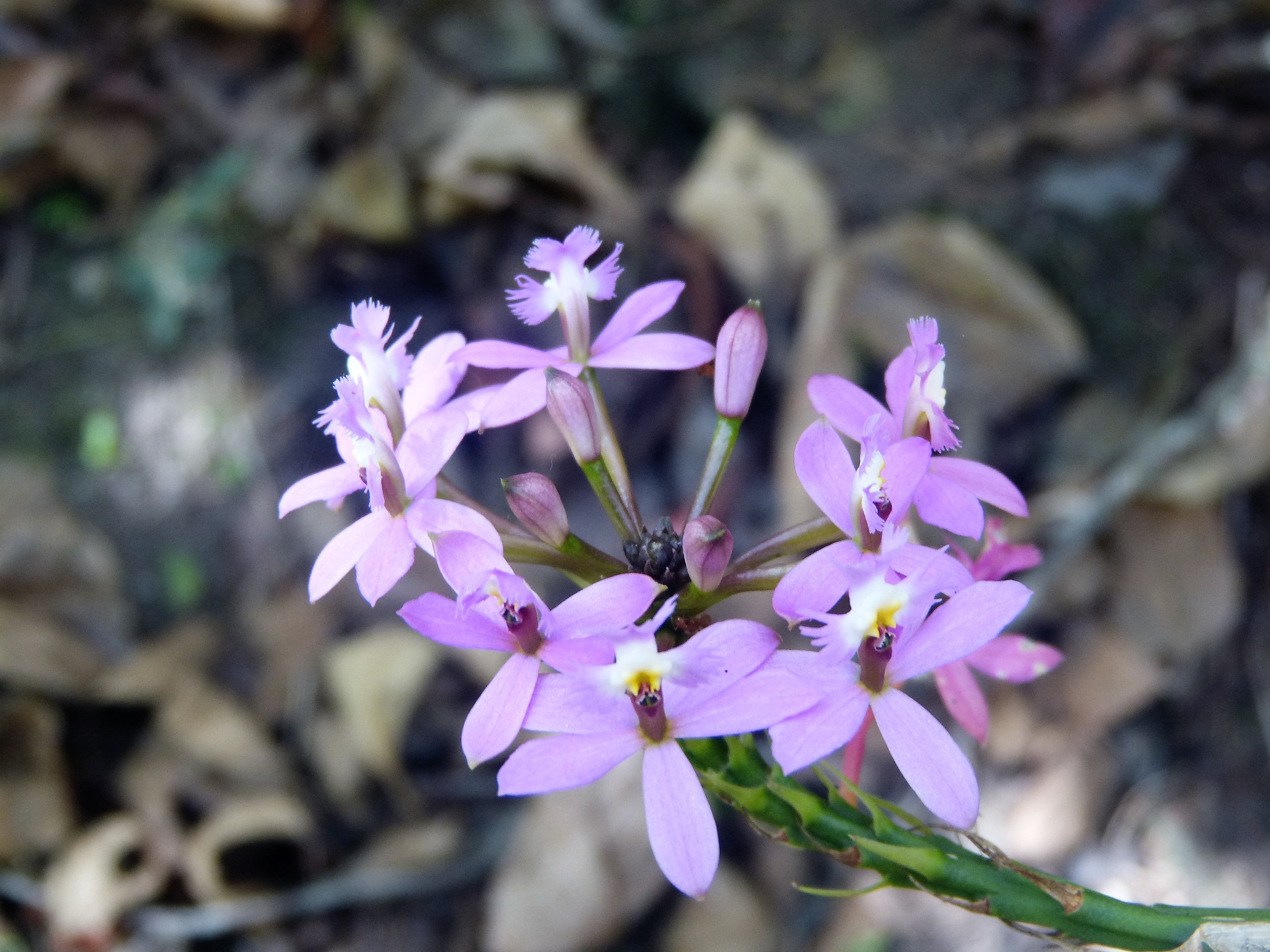

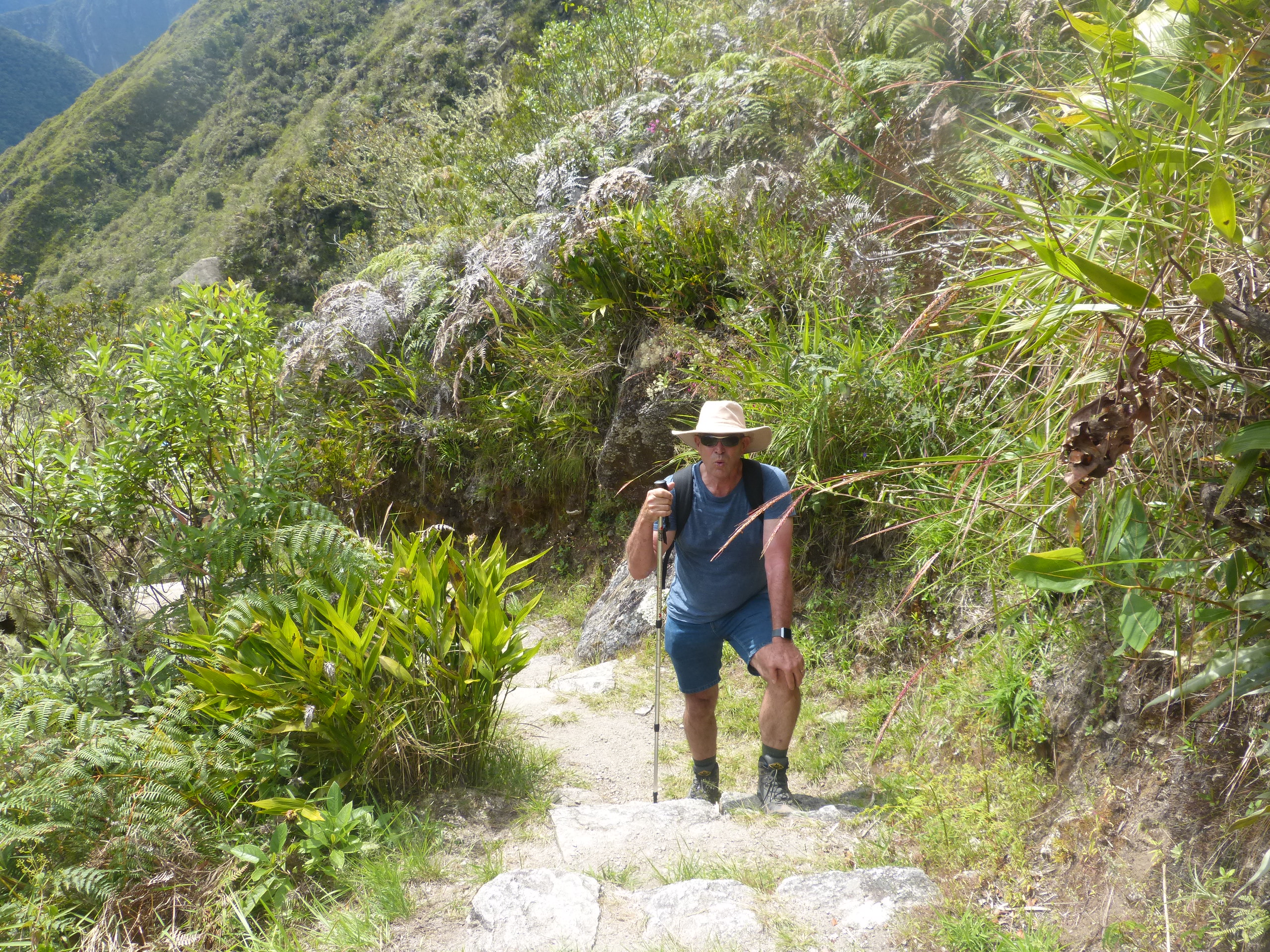
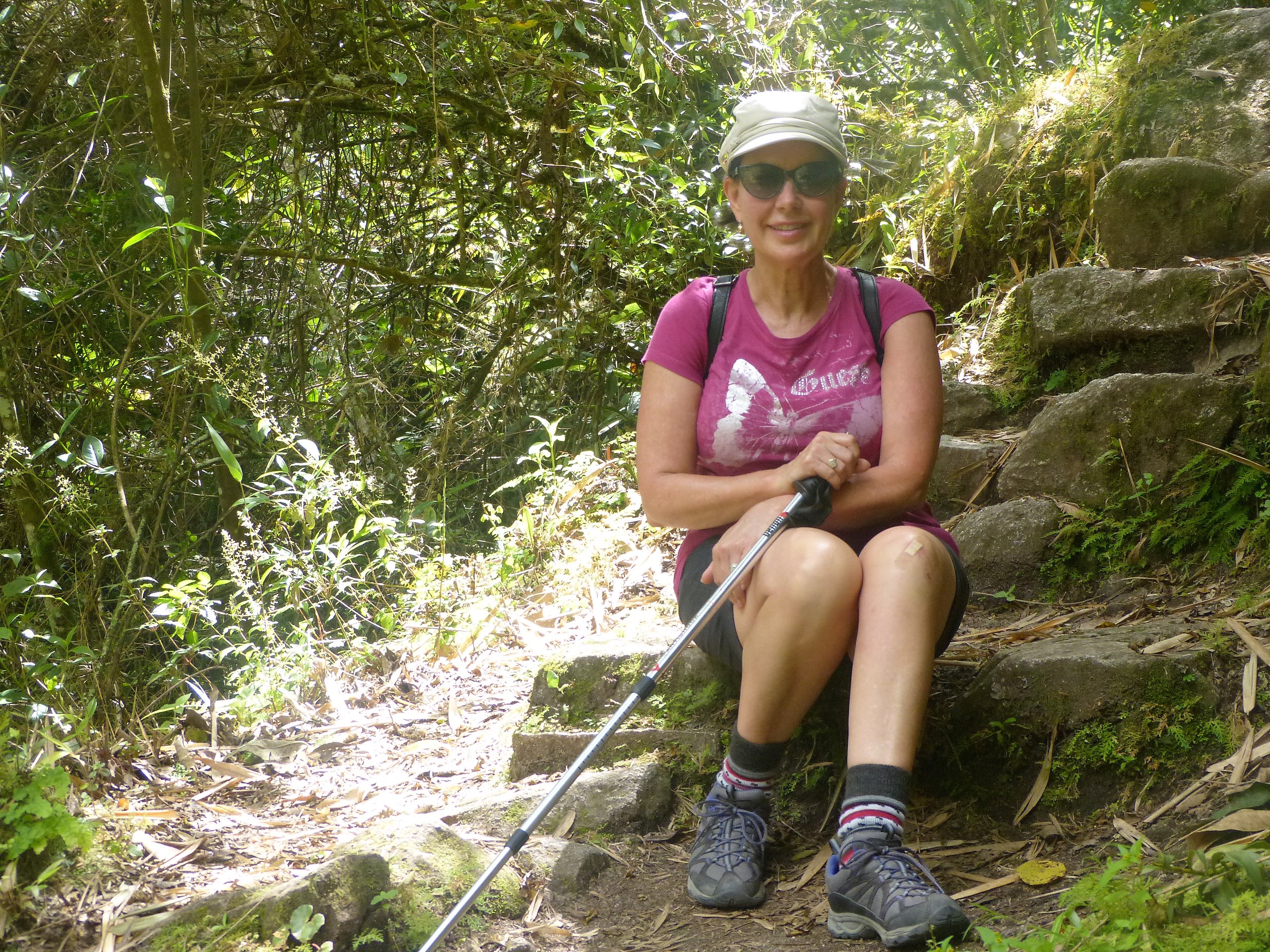

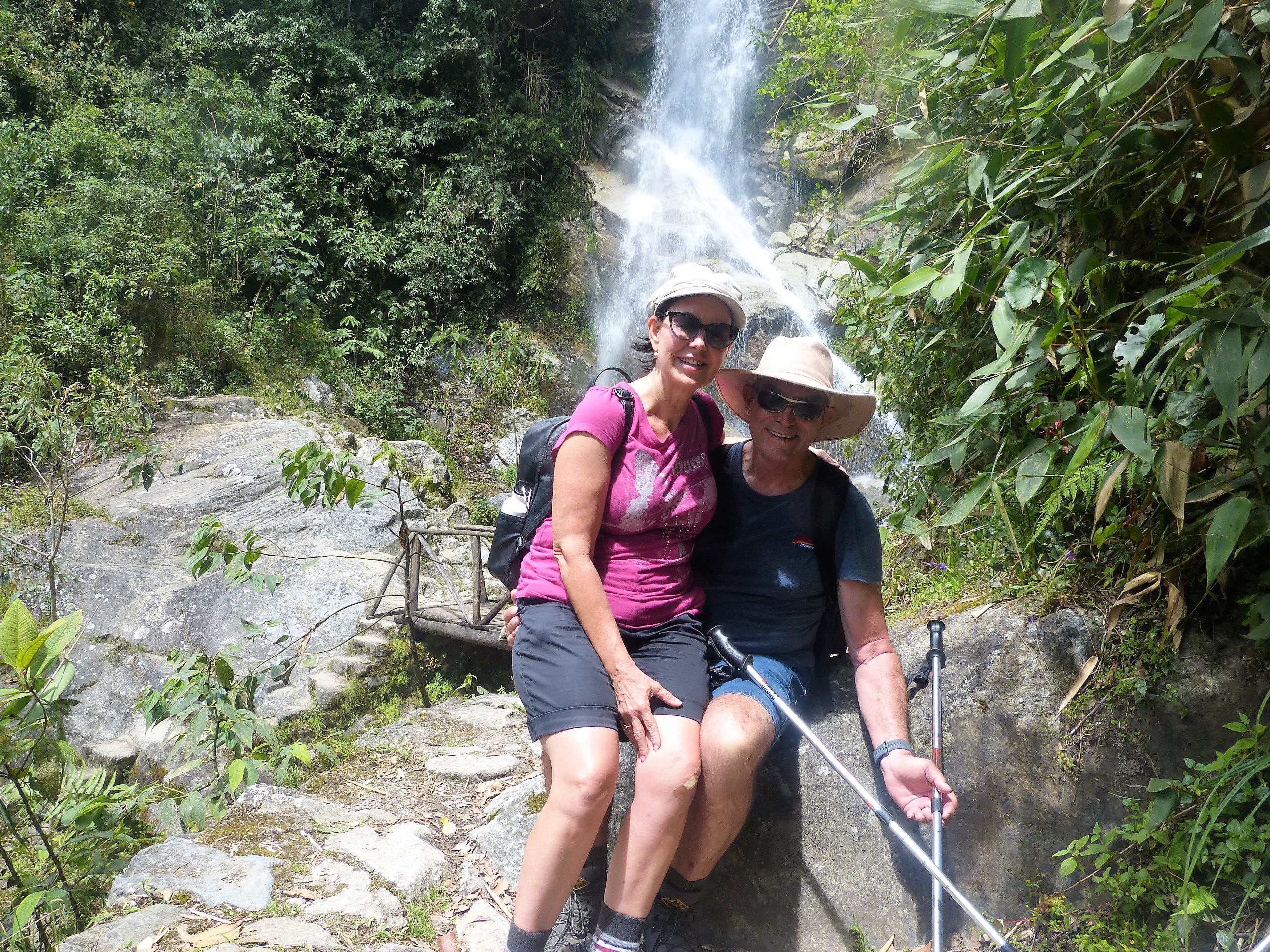
We stopped every hour or so for a short break – it was quite hard going. We had been given a lunch box at the start- a stack of food – but very nice. Ham and cheese croissant, chicken rolled with ham inside with vegetables, plus many snacks- cake, fruit, biscuits, chocolate and more – we did have to carry it though!
Around 11am we reached the Winay Wayna ( Forever Young) site. We were 2700 metres high by now. Built around 1400, this was a village. It was discovered in 1941. Going on the number of houses probably 100 people once lived here, plus others probably came to work the fields. Walked through the urban area, the religious area, the tower area, and the agriculture area. Well laid out water channels and ten fountains. Amazing, what was built, and in very good condition. It was fabulous to be able to walk around this site with only a handful of tourists
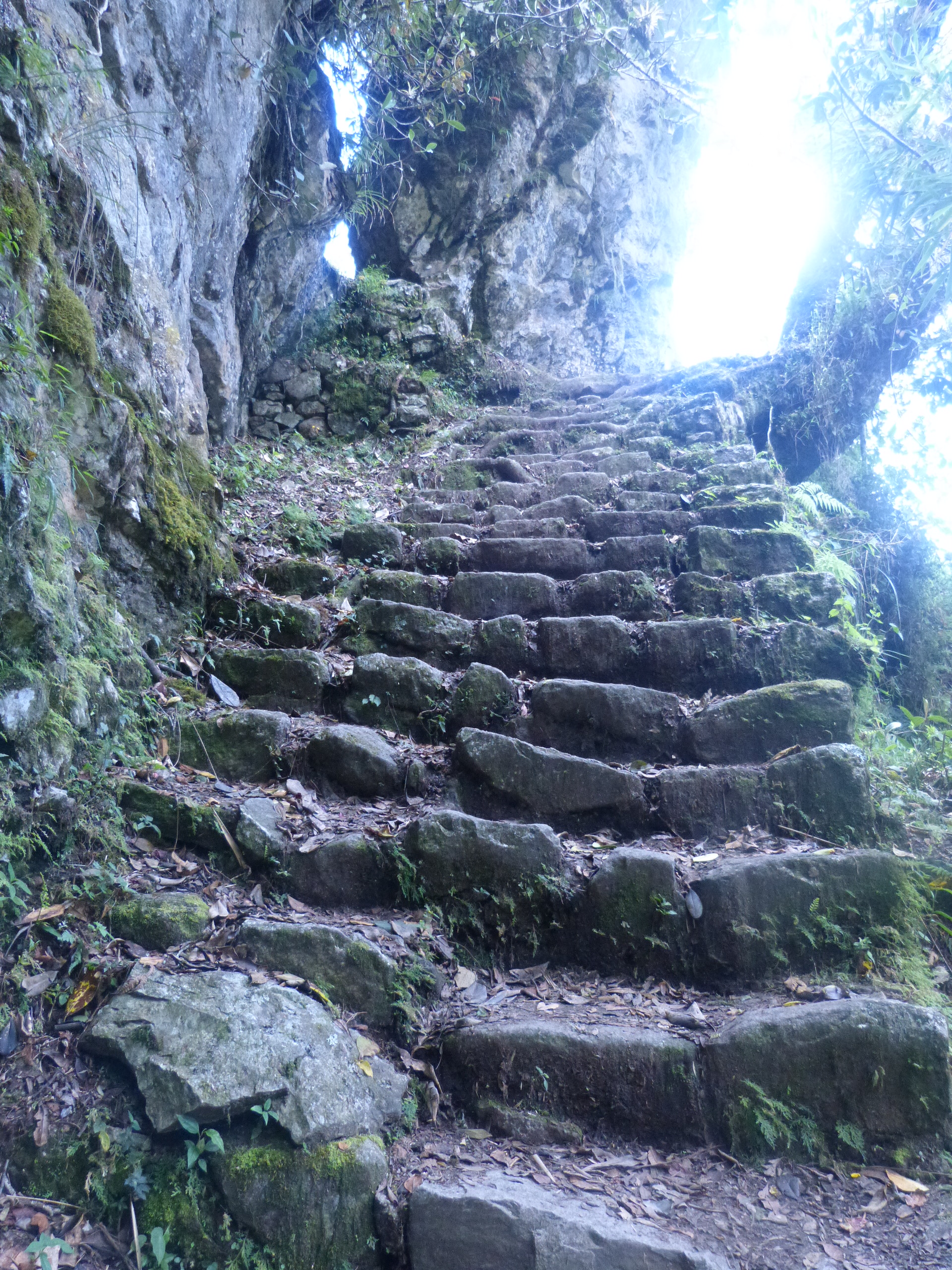
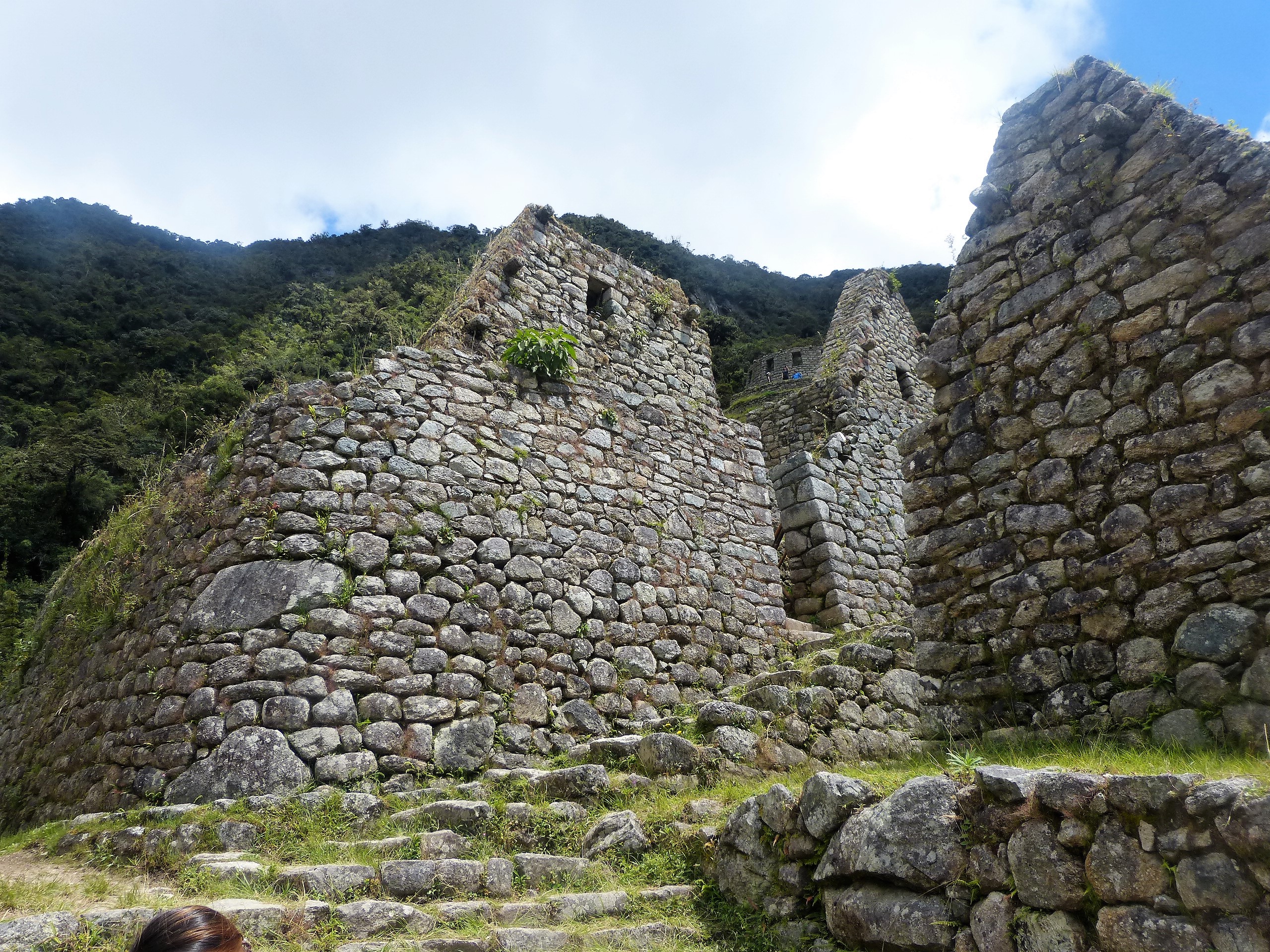

The lunch stop was ten minutes away- it was actually the campsite for night 3 of the true Inca trail. Saw the tents set up, and the early arrivals collapsed inside – I was not at all jealous!!!
A couple more hours of walking uphill, more spectacular scenery. We get to what is nick named the Killer Gringo stairs – each step was 40-50 cms high. They were a killer! How on earth the Incas walked these trails carrying bags of food, building supplies, bedding, whatever, I’ll never know. I am in awe.
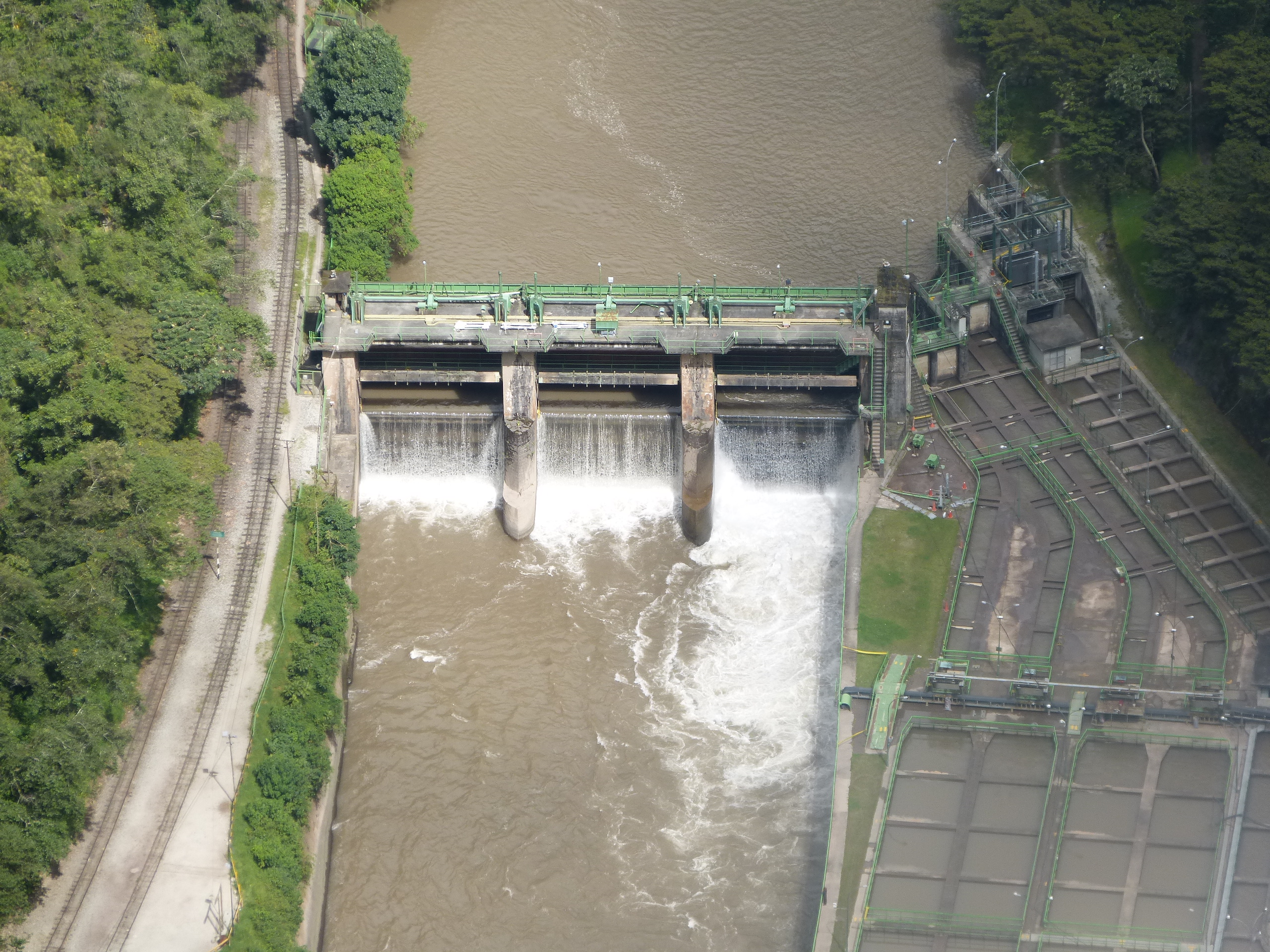
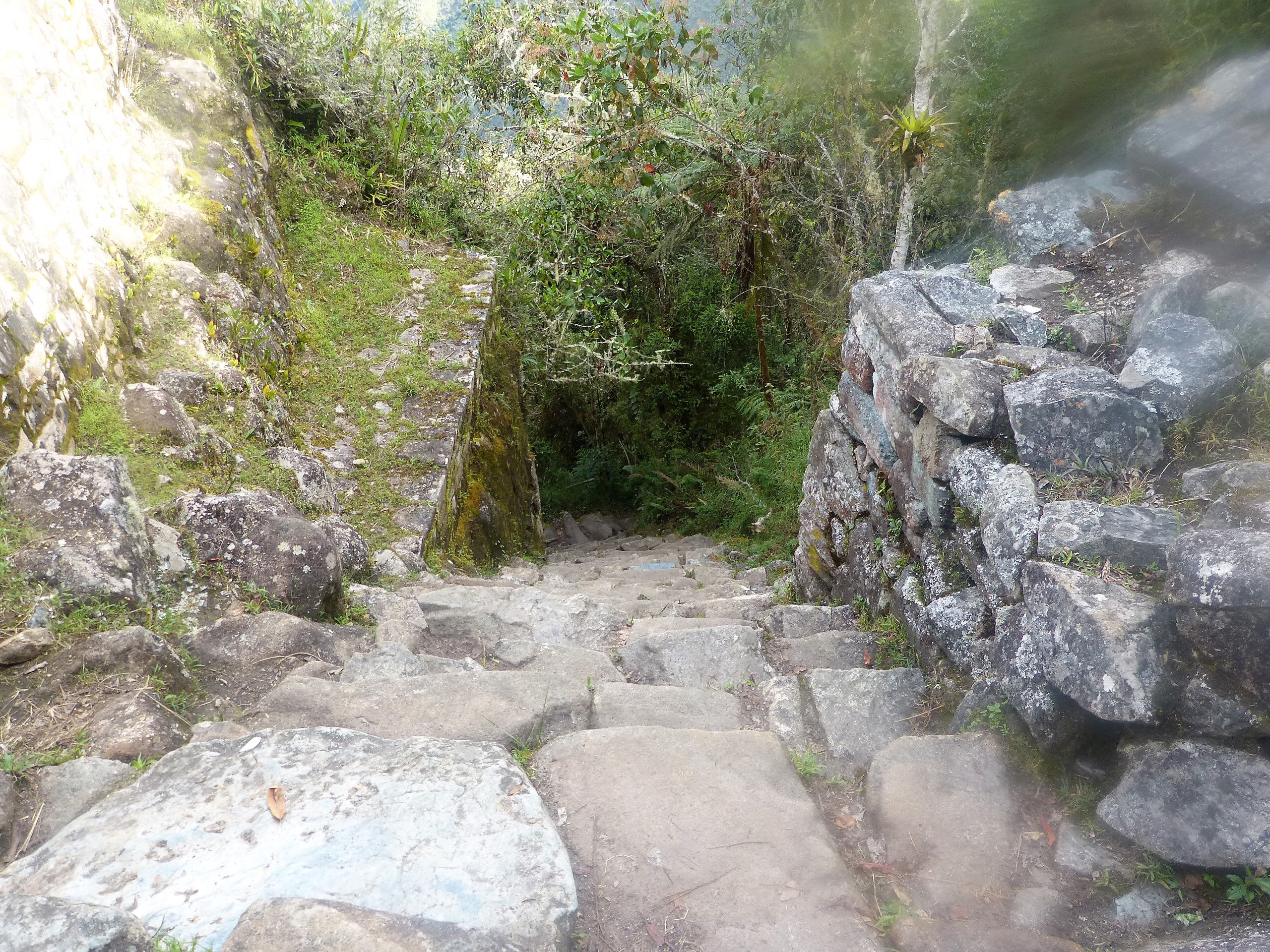
Fifteen minutes on later and we suddenly cross over the stone threshold of the Sun Gate (Intipunku). Before my eyes is something I have been waiting a lifetime to see…. my dream to go to Machu Picchu, and here it is ahead of me. A sight to behold. The unforgettable sweep of natural beauty and human artistry, with a backdrop of twisting gorge and forested peaks framing the magical citadel of Machu Picchu.
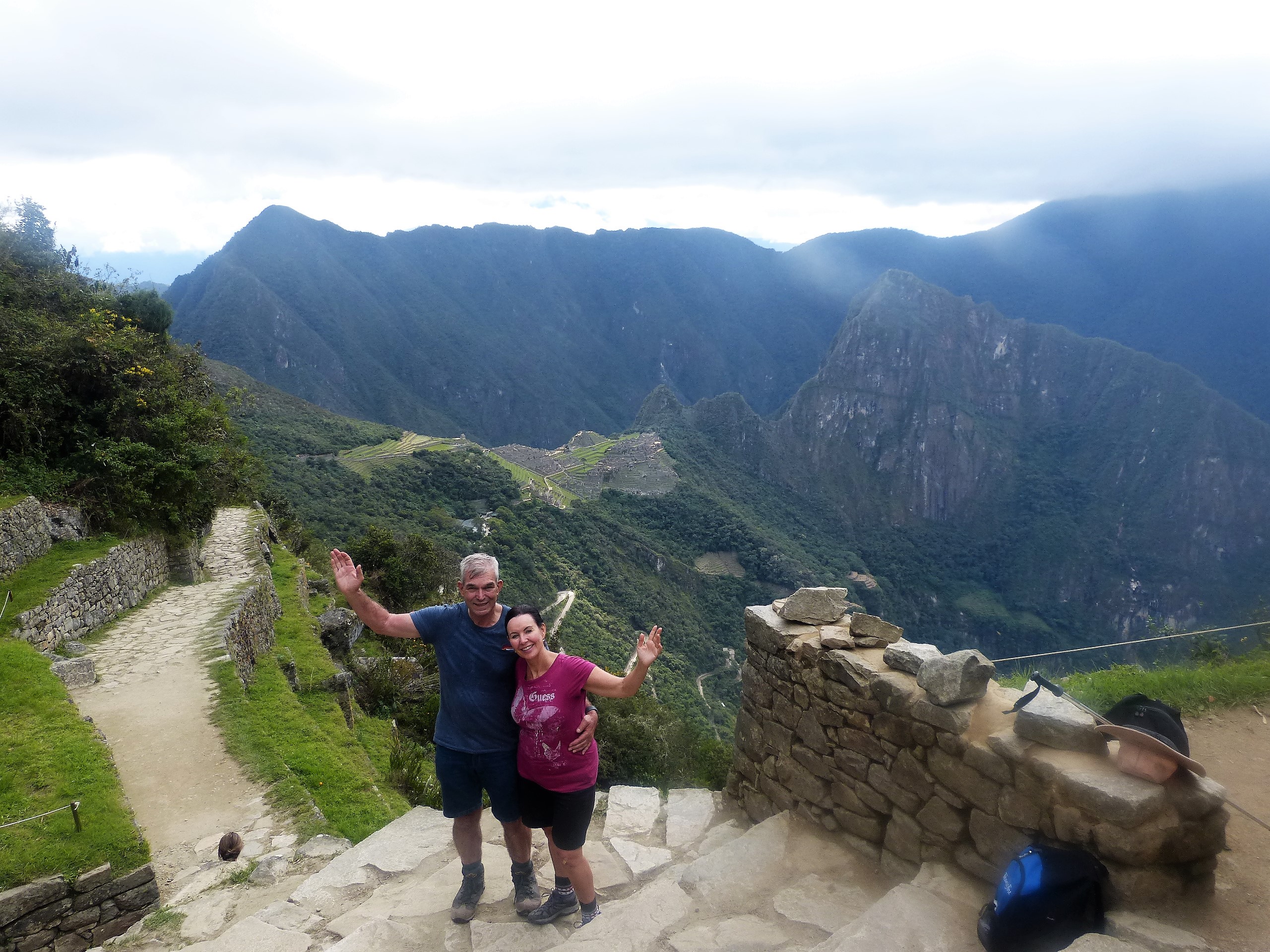
We still have another hour to walk, descending along the royal flagstone path to get to the heart of Machu Picchu itself. It has taken us 7 hours to walk the 12 kms- and don’t our legs know it! We have an hour walking around the top section which was part of the terraces where they grew their crops, looking down on the ruins while Patricia explained some of the history. Also took a few photos while they were relatively few tourists around.
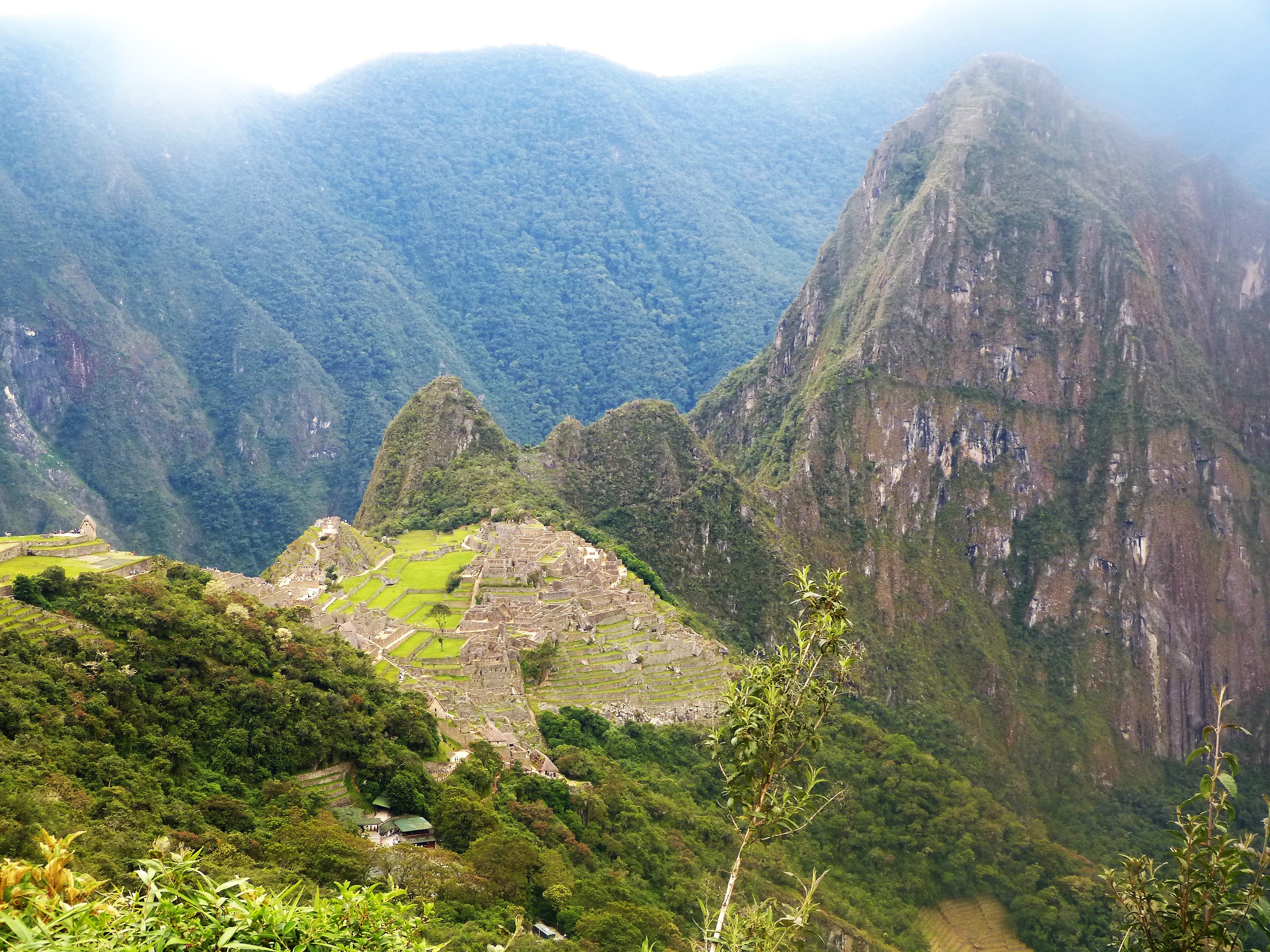

Caught the bus down to Aguas Callientes- approximately 20 hairpin bends taking 20 minutes. Five minute walk to Hotel El Mapi by Inkaterra. So enjoyed a hot shower seconds after we get to our room. Dinner was included at the hotel, had the early sitting so we could have some time to explore the town. It was only built in 1976 after Machu Picchu was discovered – essentially built for the tourists. It had a great vibe about it, lots of hotels, bars, restaurants, markets, shops, and hot baths. We didn’t get too far as we were exhausted. However, we did have a foot massage – 30 minutes for US$7.50. It was heaven. Straight to bed then, and slept like a baby.

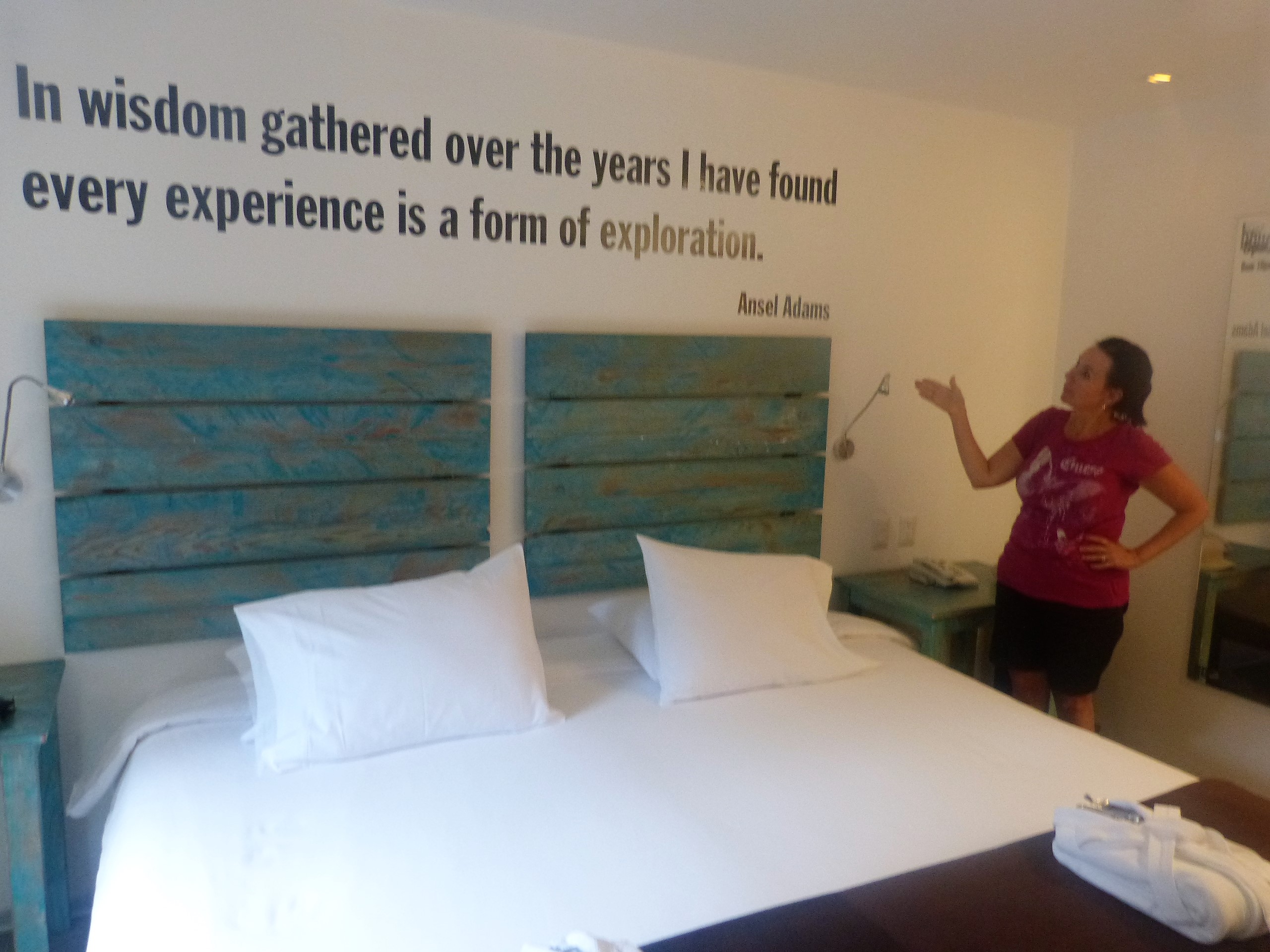
Day 38 14th April
6.30 start to get the bus to get up to Machu Picchu early – along with the other 6000 visitors! That is the daily cap – but most go in the morning. This morning we had a more thorough walk around the archeological site itself.
The lost city of Machu Picchu is built of rock at an altitude of 2400 metres above sea level. The UNESCO World Heritage listed collection of temples, terraced hills and plazas was once the mountaintop citadel of the ancient empire under Pachacutec and Tupac Yupanqui. The spectacular remains are thought to date from around 1450. The Spanish failed to find Machu Picchu ( and destroy it like they did with all other Inca settlements)- instead it was simply abandoned and left to nature to reclaim. Experts speculate it served as a place of worship, a site for tracing stars, and the ninth Inca emperor’s country hacienda. Going on the number of houses, it is estimated 500 people lived there. It was discovered in 1911 by Hiram Bingham.
This Inca city comprises of an upper and lower section, with houses, temples, fountains, and agricultural terraces, clings to a mountain edge, linked by pathways and steps ( lots of them), and watered by natural springs. The Temple of the Sun, believed to be an astrological observatory, has a window where the sun rays enter at the summer and winter solstices.
We could not believe the Inca stonework – cut with stone or bronze tools, the edges of the rocks were rubbed smooth until they merged together perfectly like a jigsaw. And no mortar! They used a locking system inside the rock blocks. As to how they lifted them into place, is another amazing feat. We were truly in awe of this masterpiece.
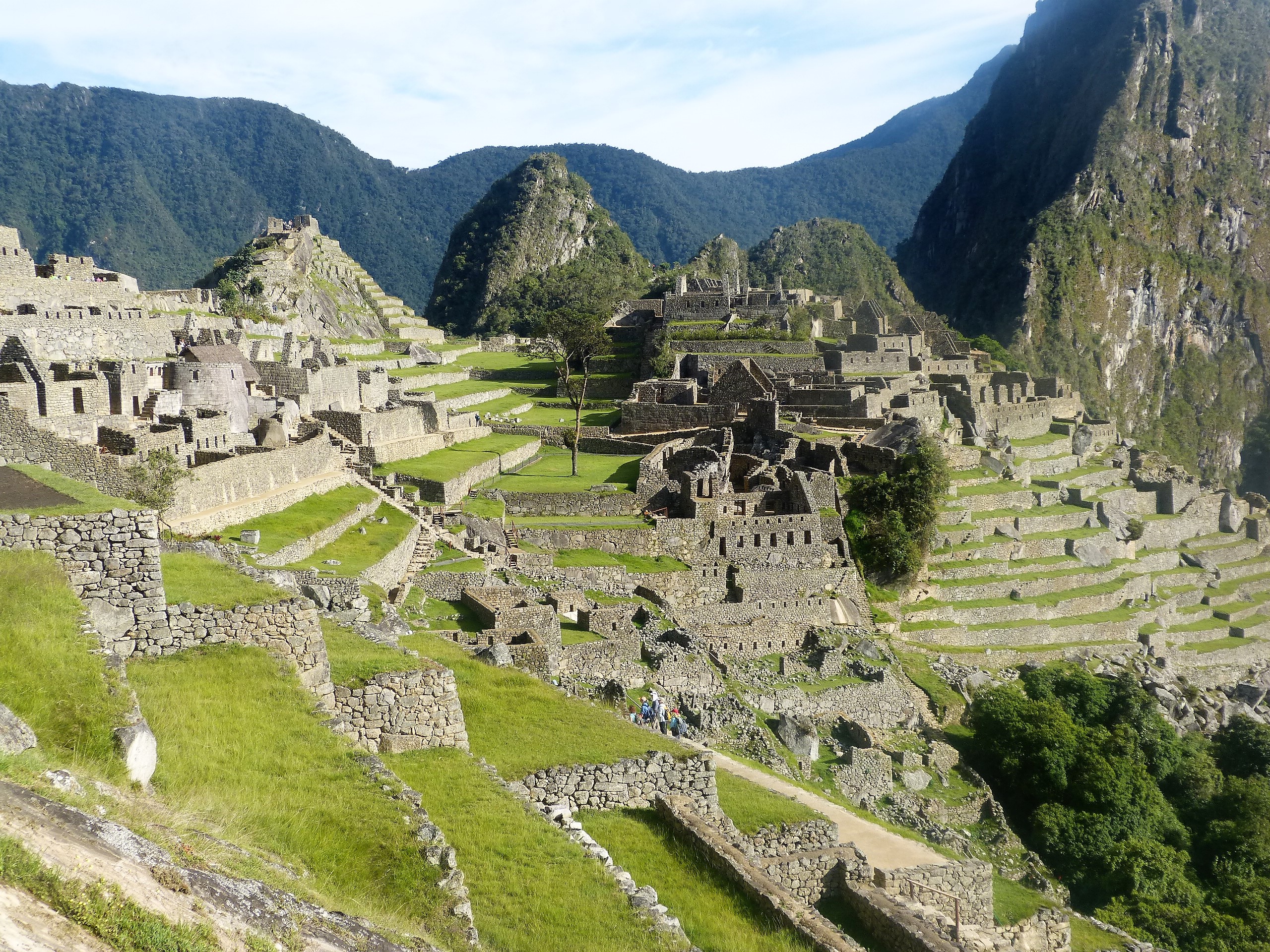
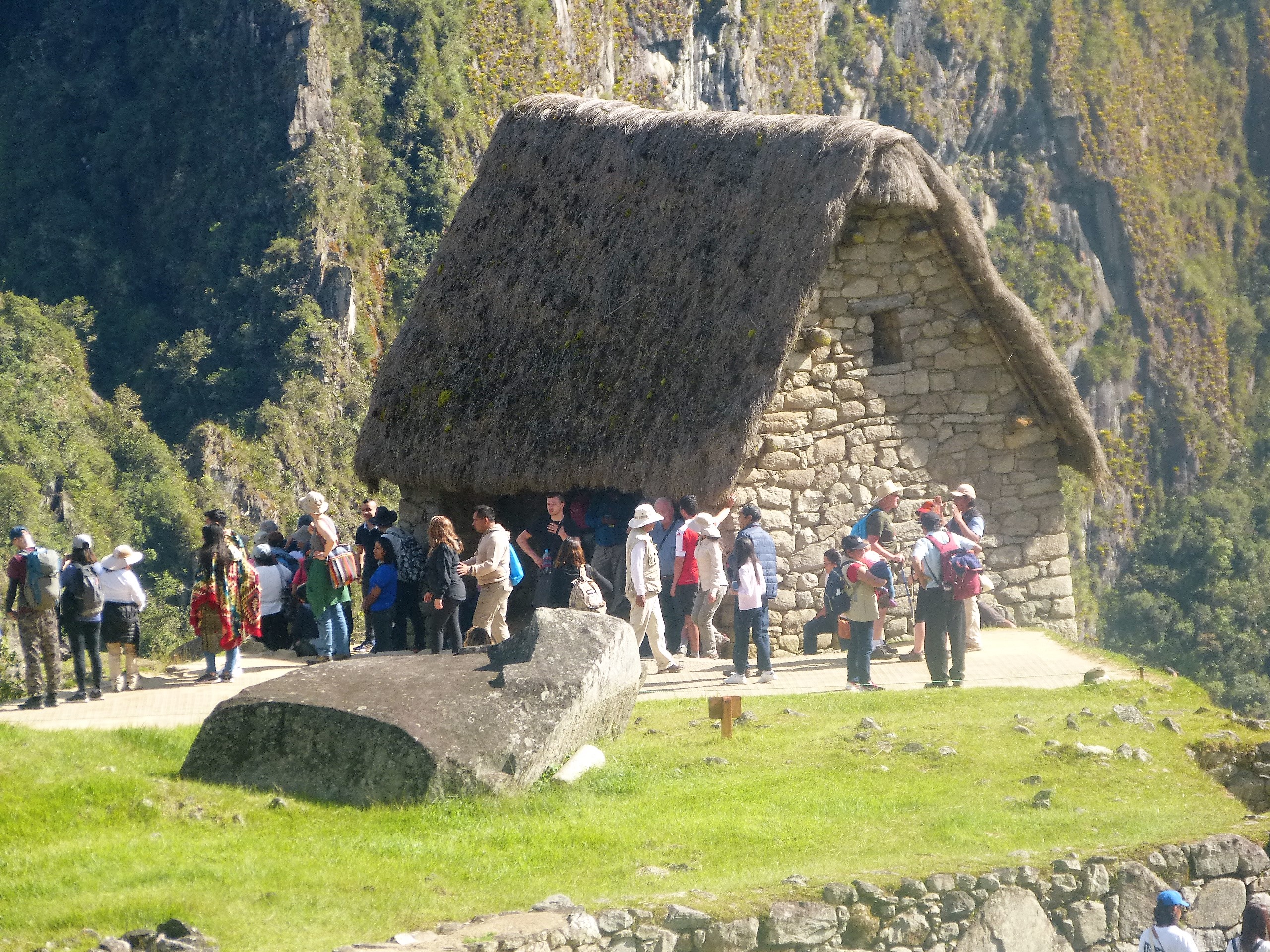
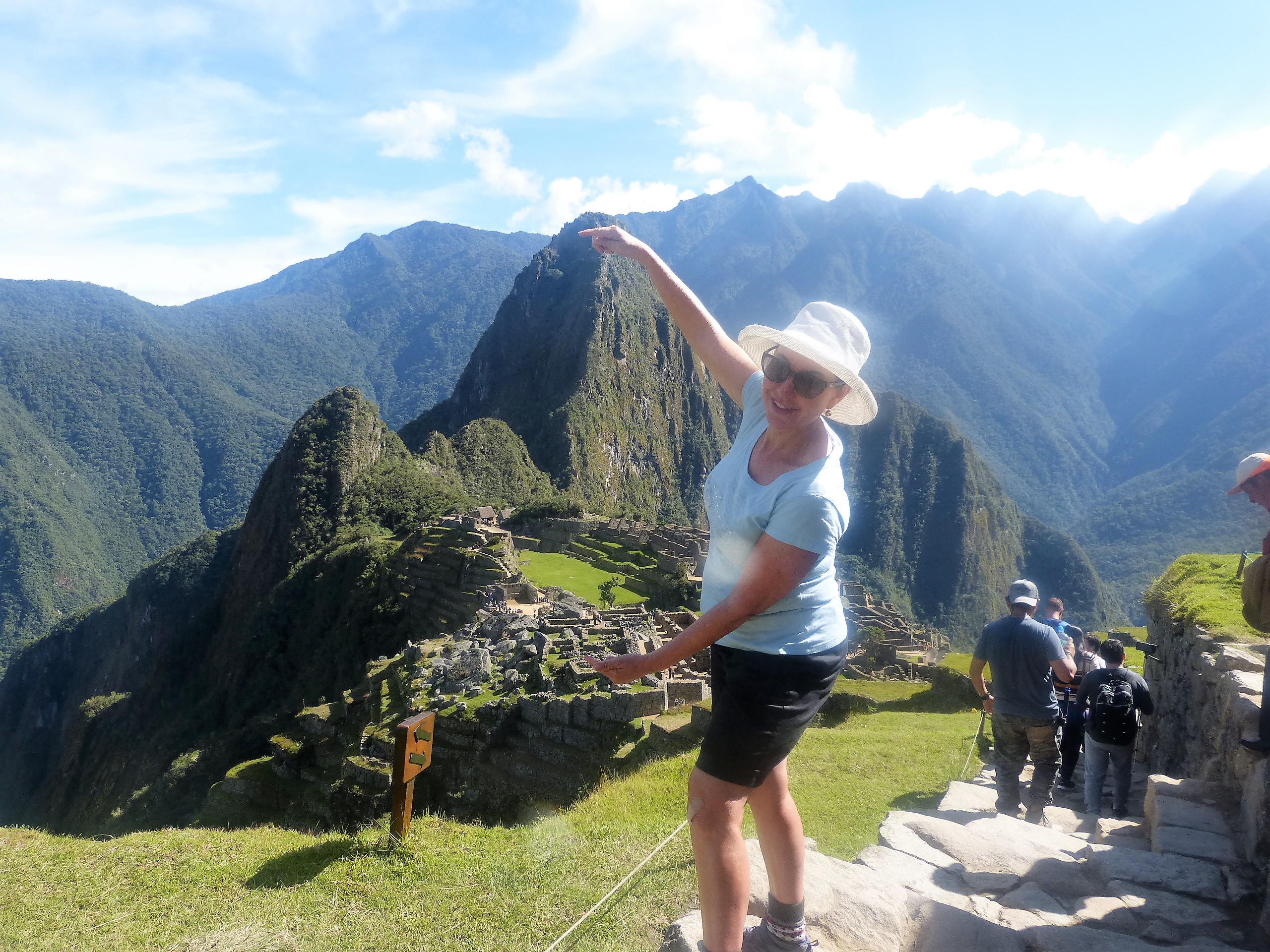
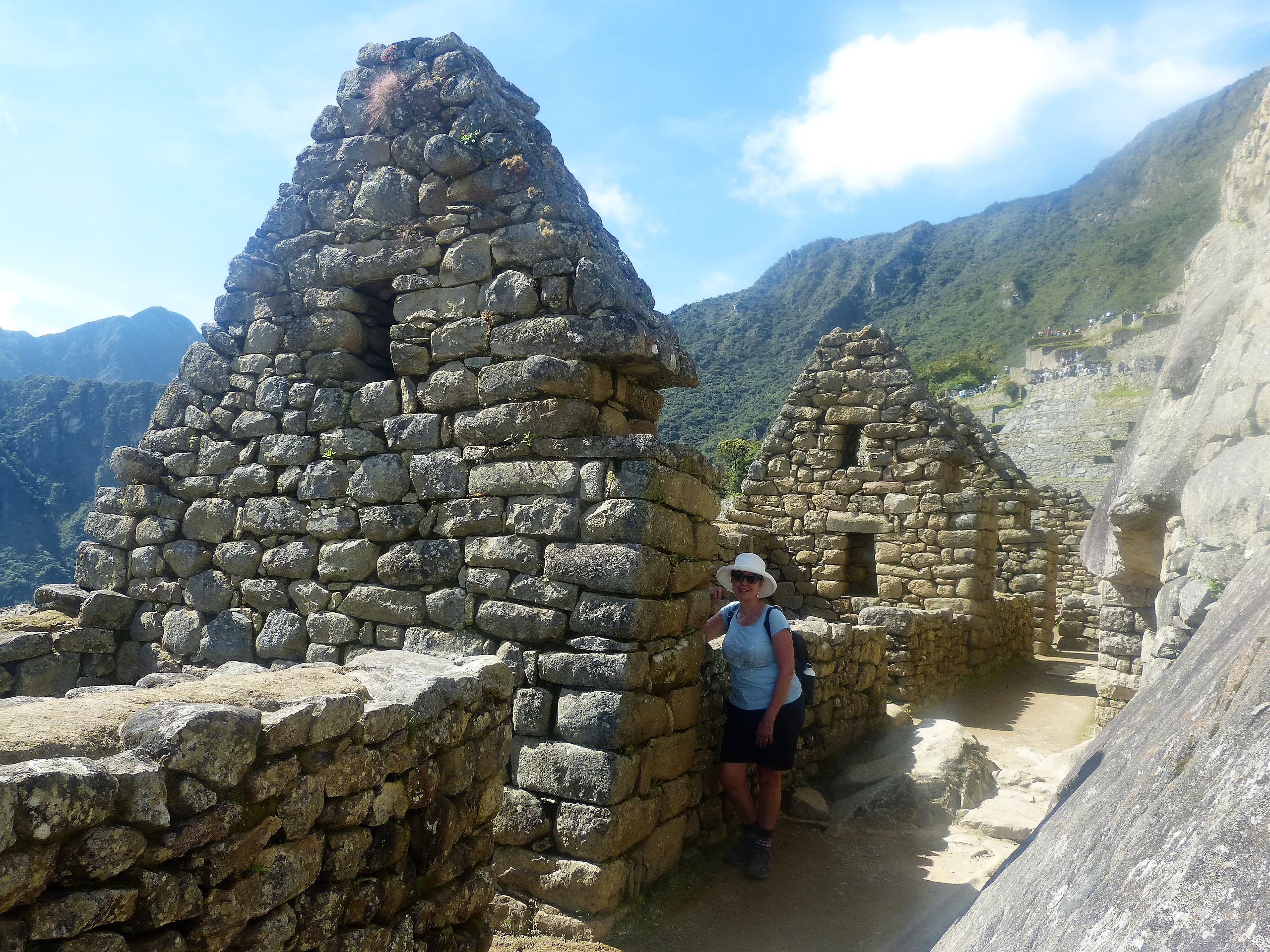
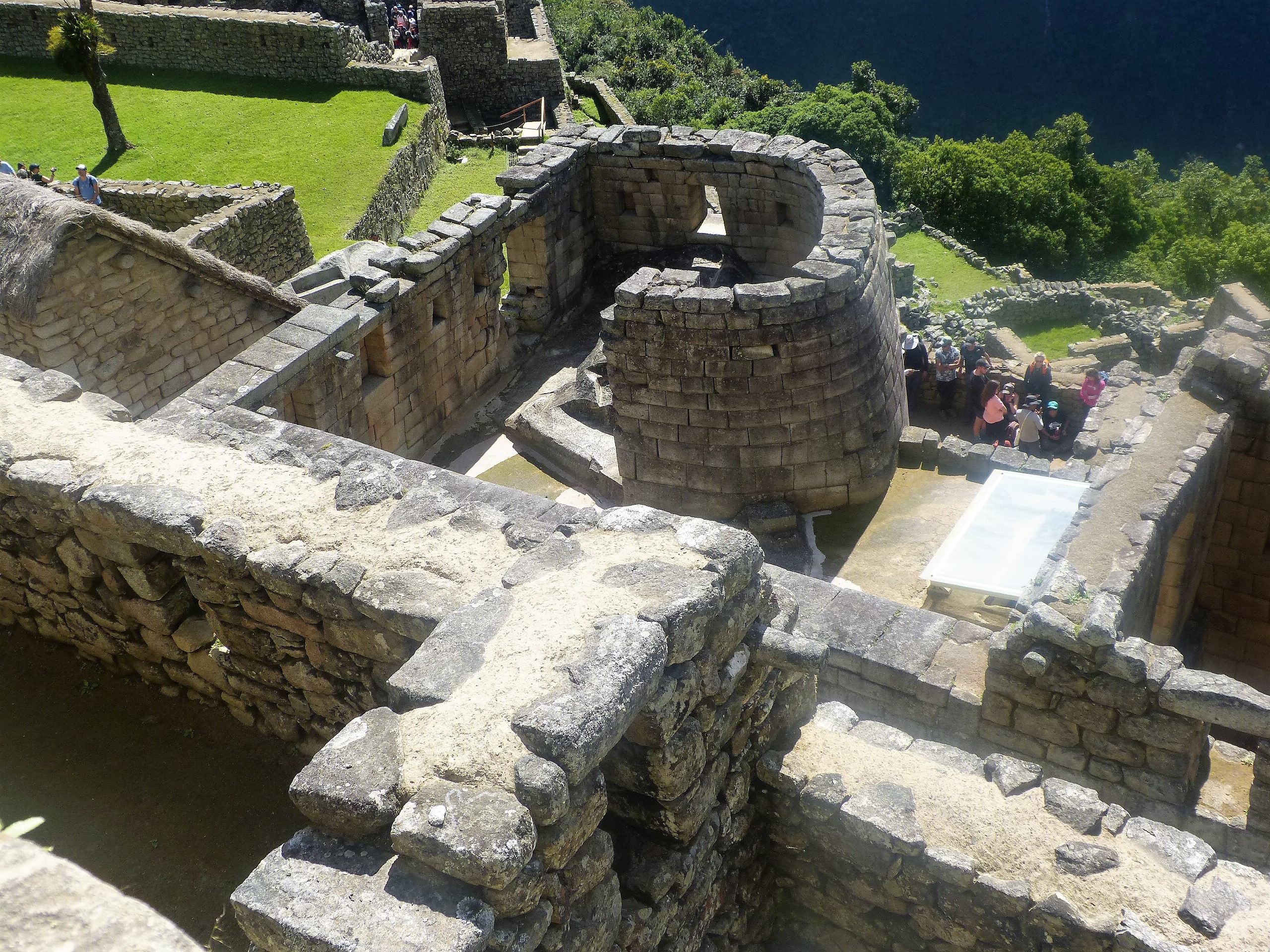
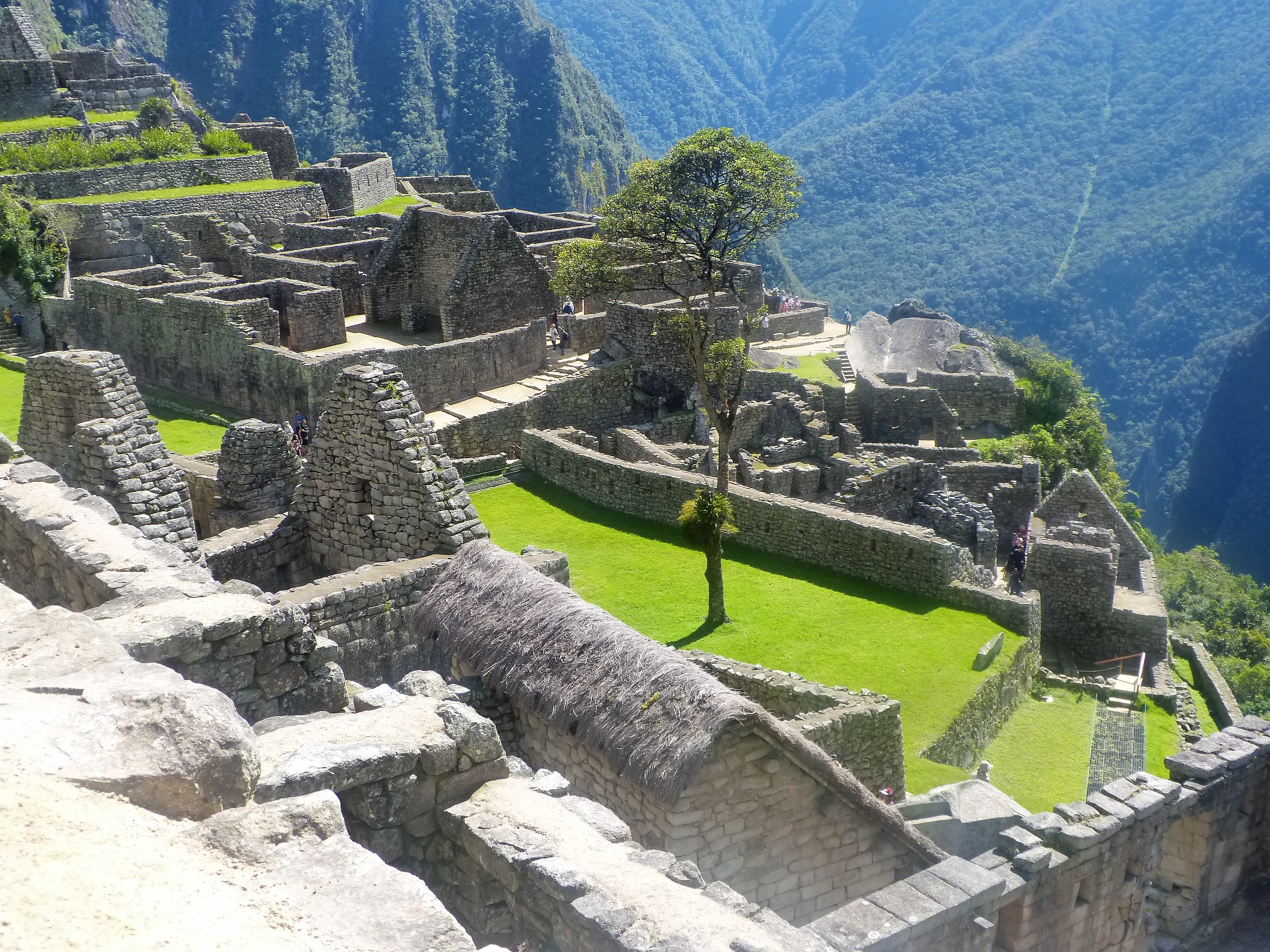
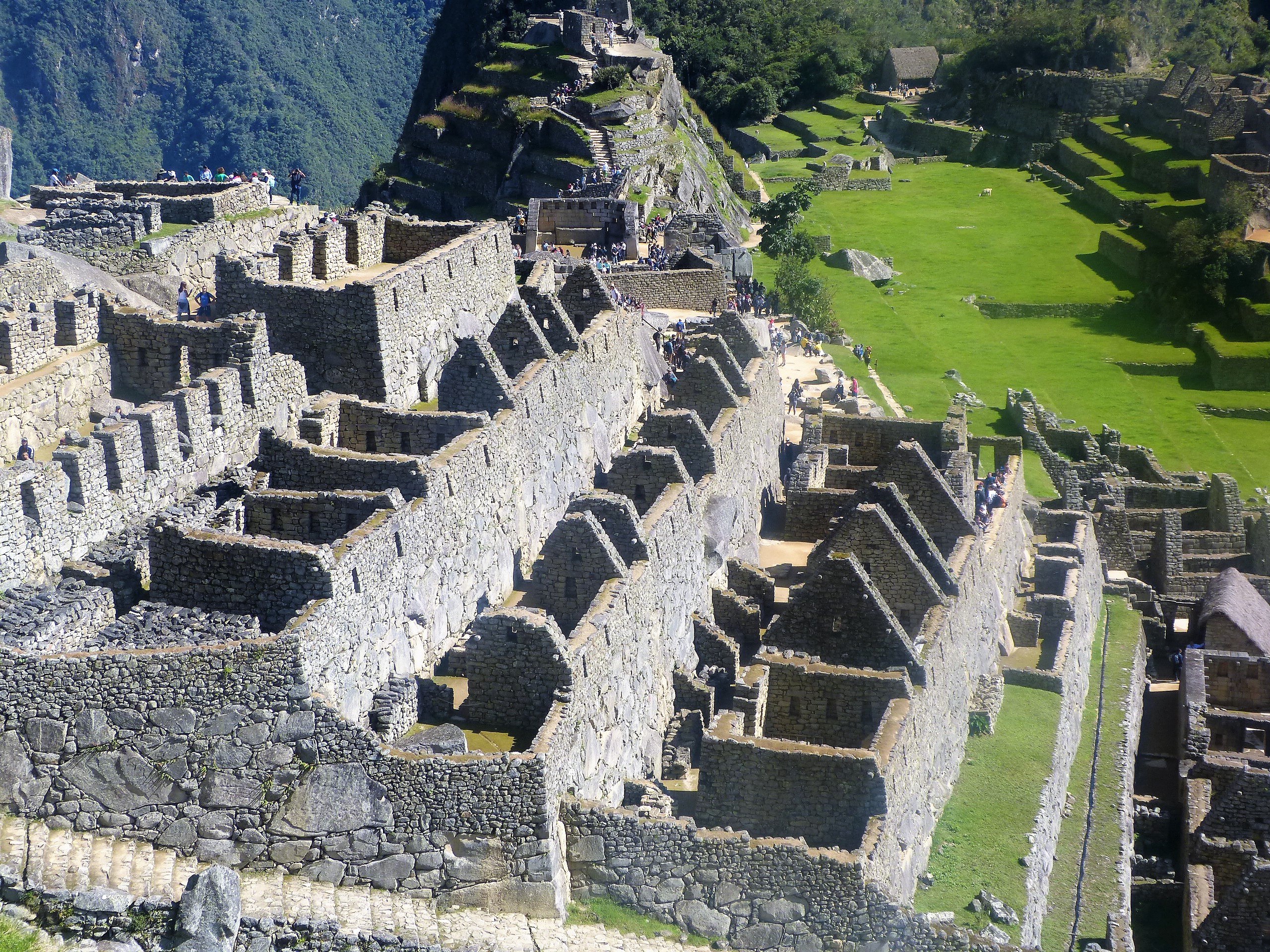
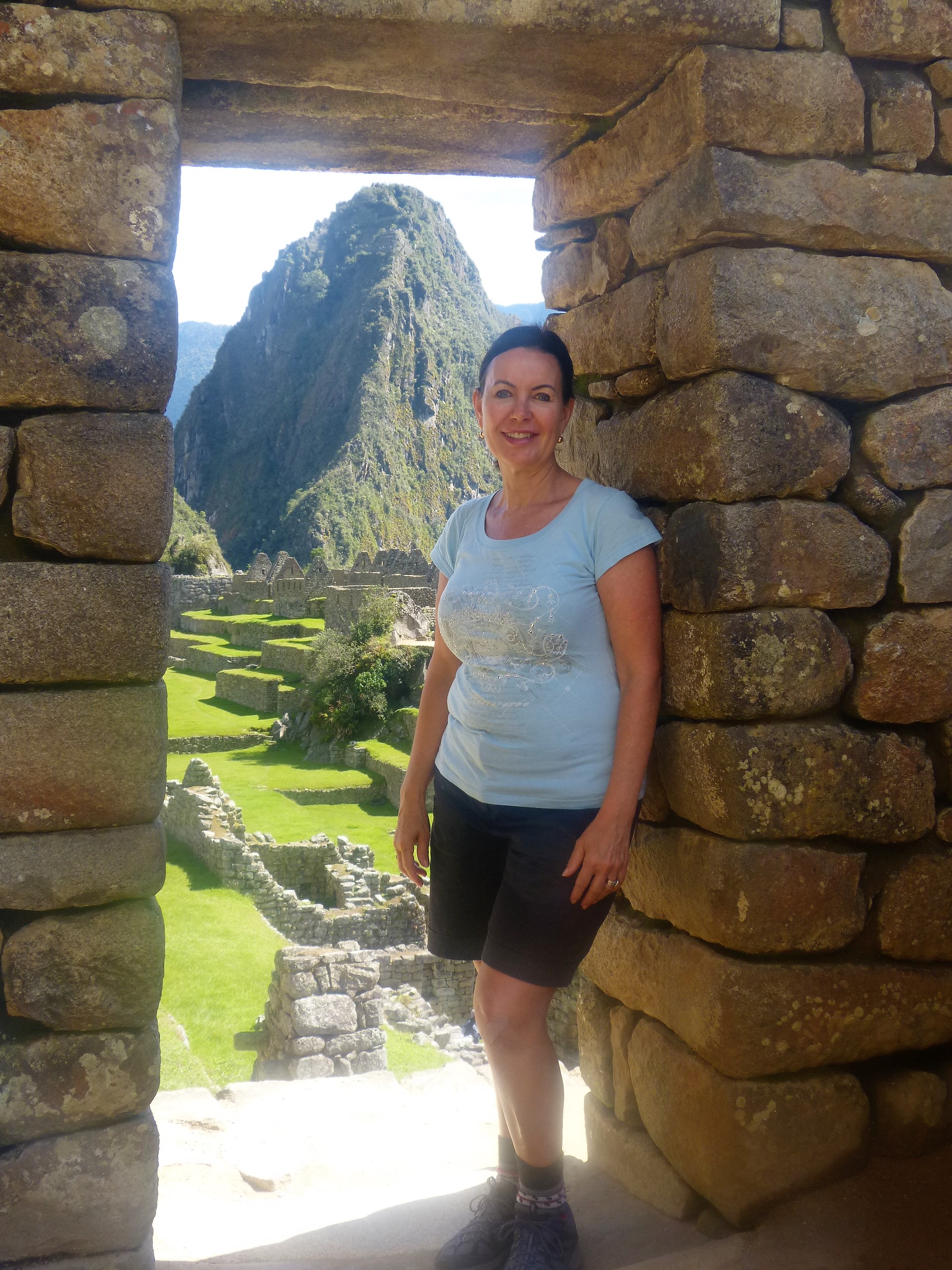

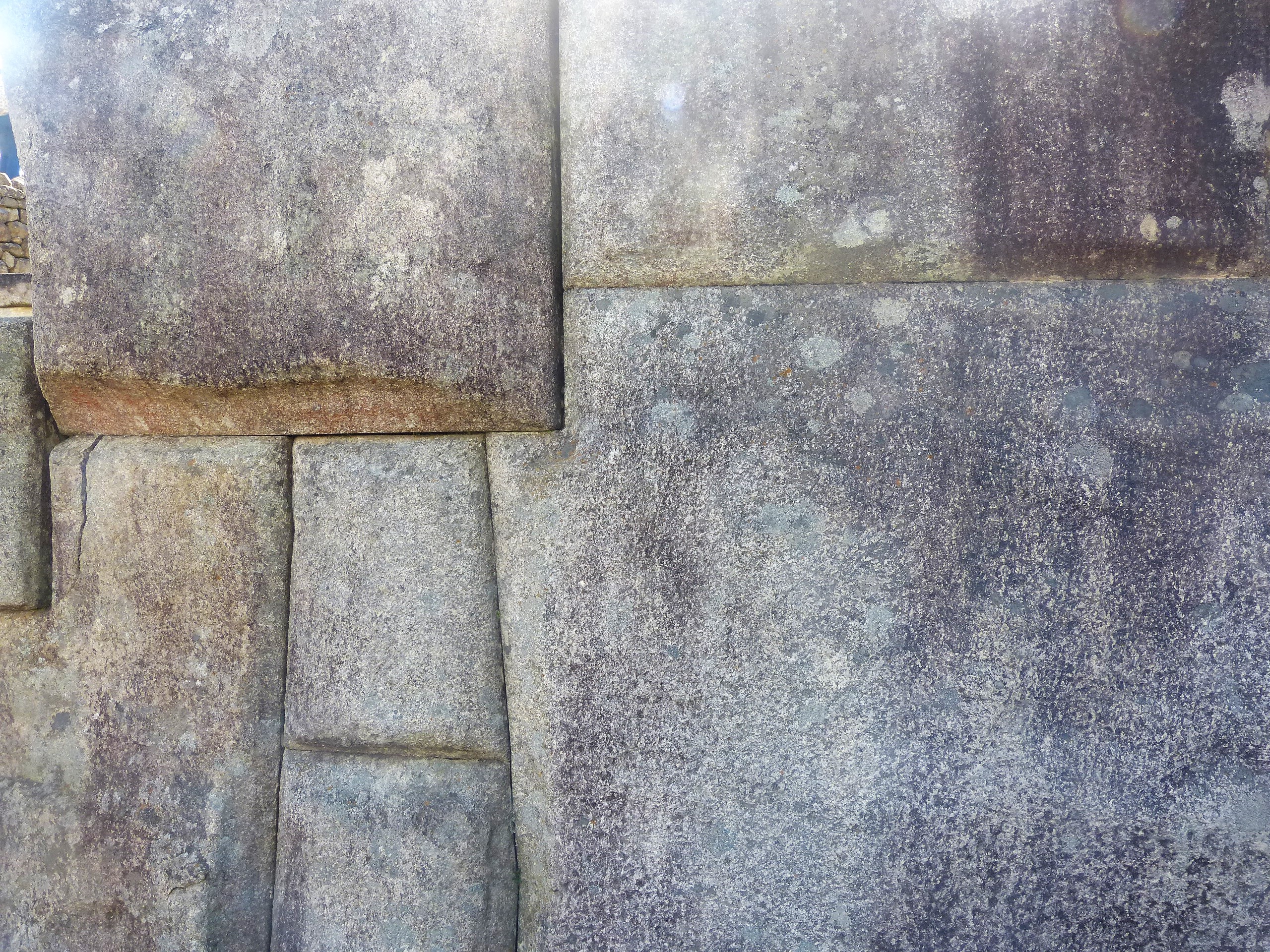
In between looking at the citadel, we had tickets to climb Huayna Picchu- this mountain forms the backdrop of Machu Picchu. We had no idea what we were in for – our agent ( thanks Rebecca) has booked this for us, and obviously we had not looked into it! It was a 1 1/2 hour climb straight up the front of the mountain! The walk yesterday was like a stroll in the park! We had so many steep uneven stairs, some handrails provided to climb up. Close to the top there were Inca terraces and another small site. Here we were climbing the stairs on our hands and feet – it was scary. And as to how the Incas walked up these carrying their bags of potatoes, and more, I’ll never know. We reached the summit, 2700 metres above sea level, balanced precariously on a rock for a photo – yes the view over Machu Picchu and the road the bus goes on was spectacular if you managed to overcome your fears and look down – but all you wanted to do was get down. This involved going down on your bottom at some points, through a very narrow cave where Frank almost got stuck as he had his backpack on, and there definitely wasn’t a lot of space! We got down in a an hour, but it was hard going on our knees! I don’t know if it was worth it, probably after a day or two I will have forgotten the pain of it all ! Maybe if we were 20 years younger, it would have been a lot easier – you had to sign in as you entered with your age, we were definitely on the older side of the age group signed up.
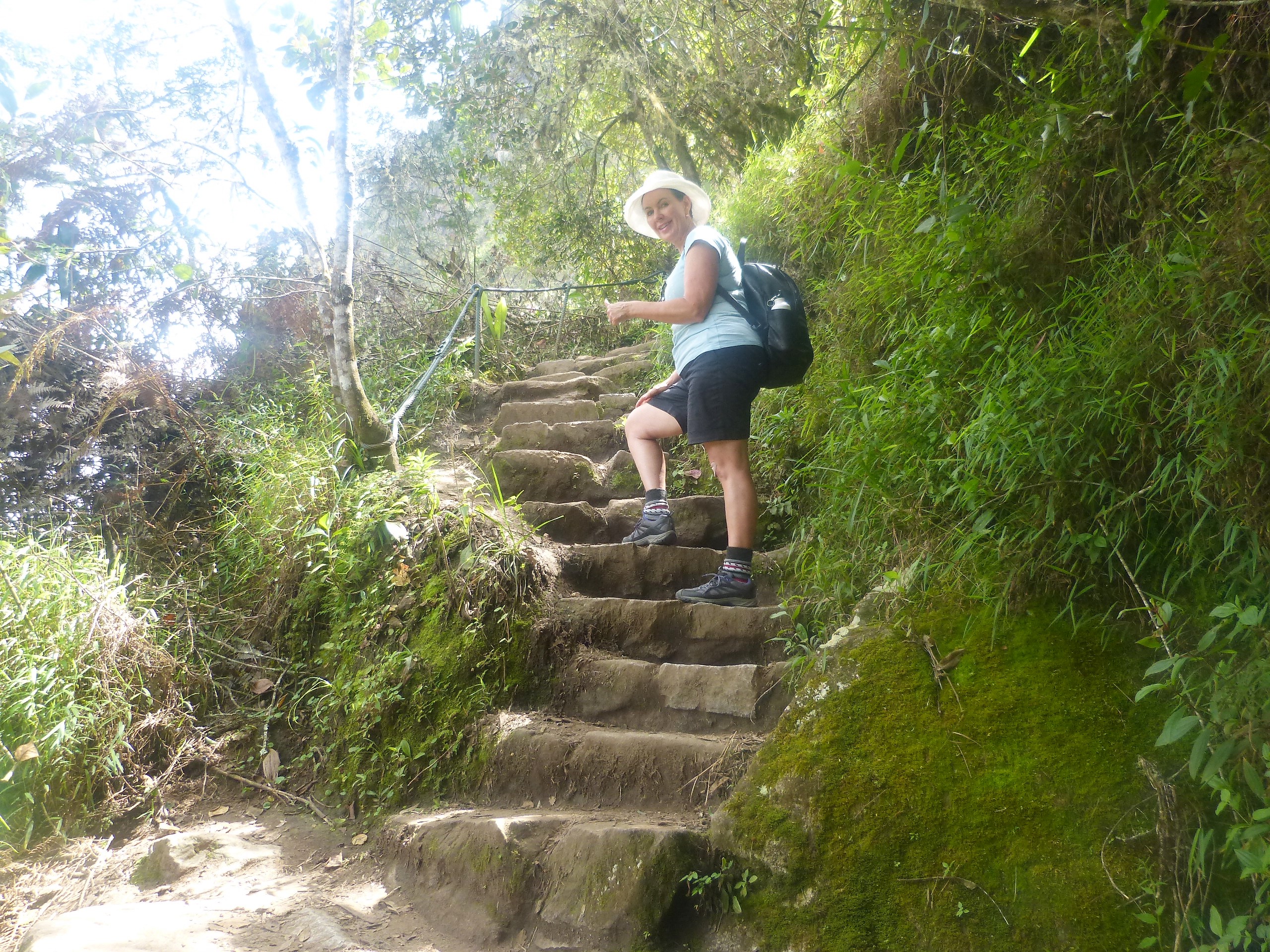
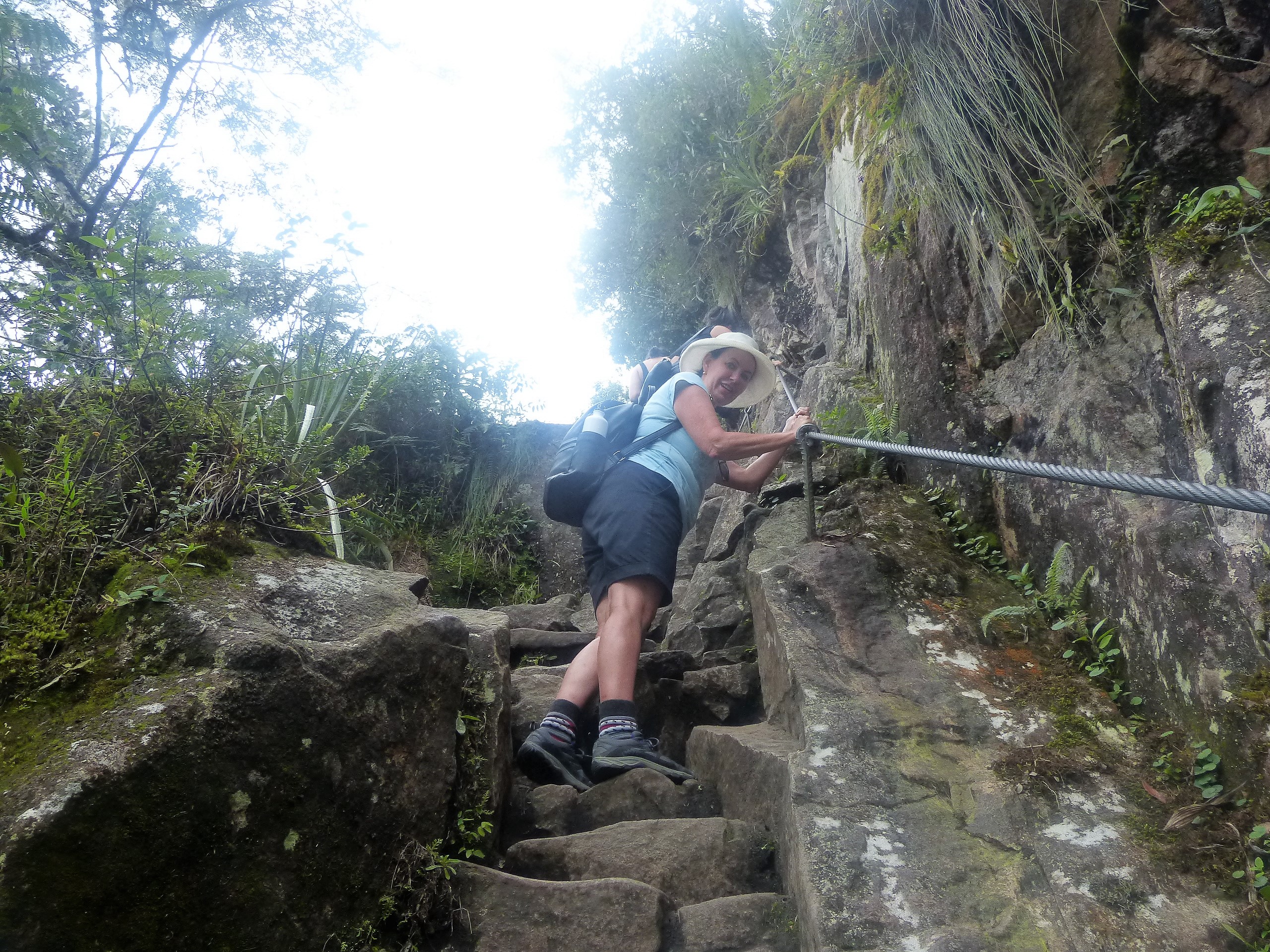
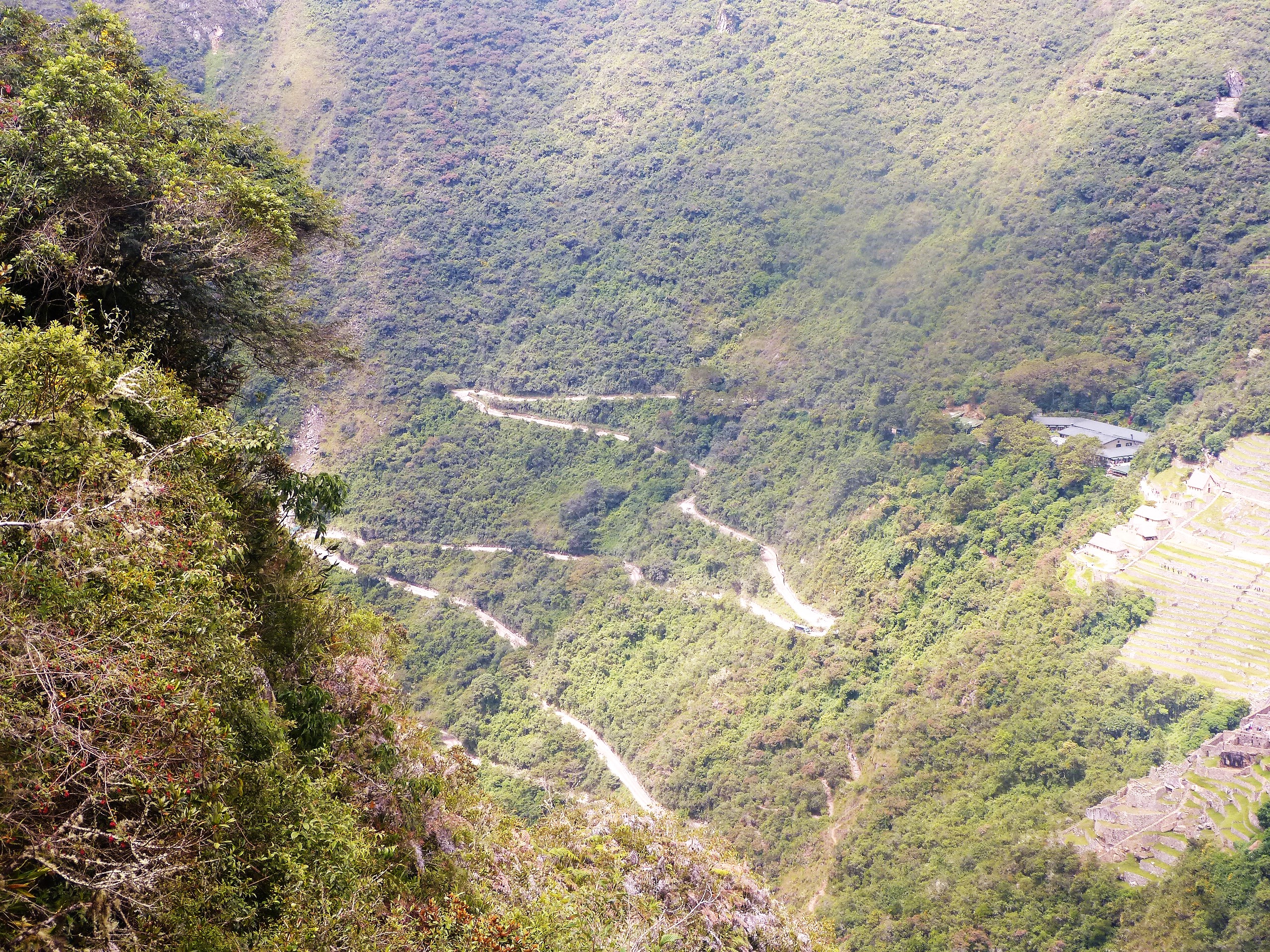
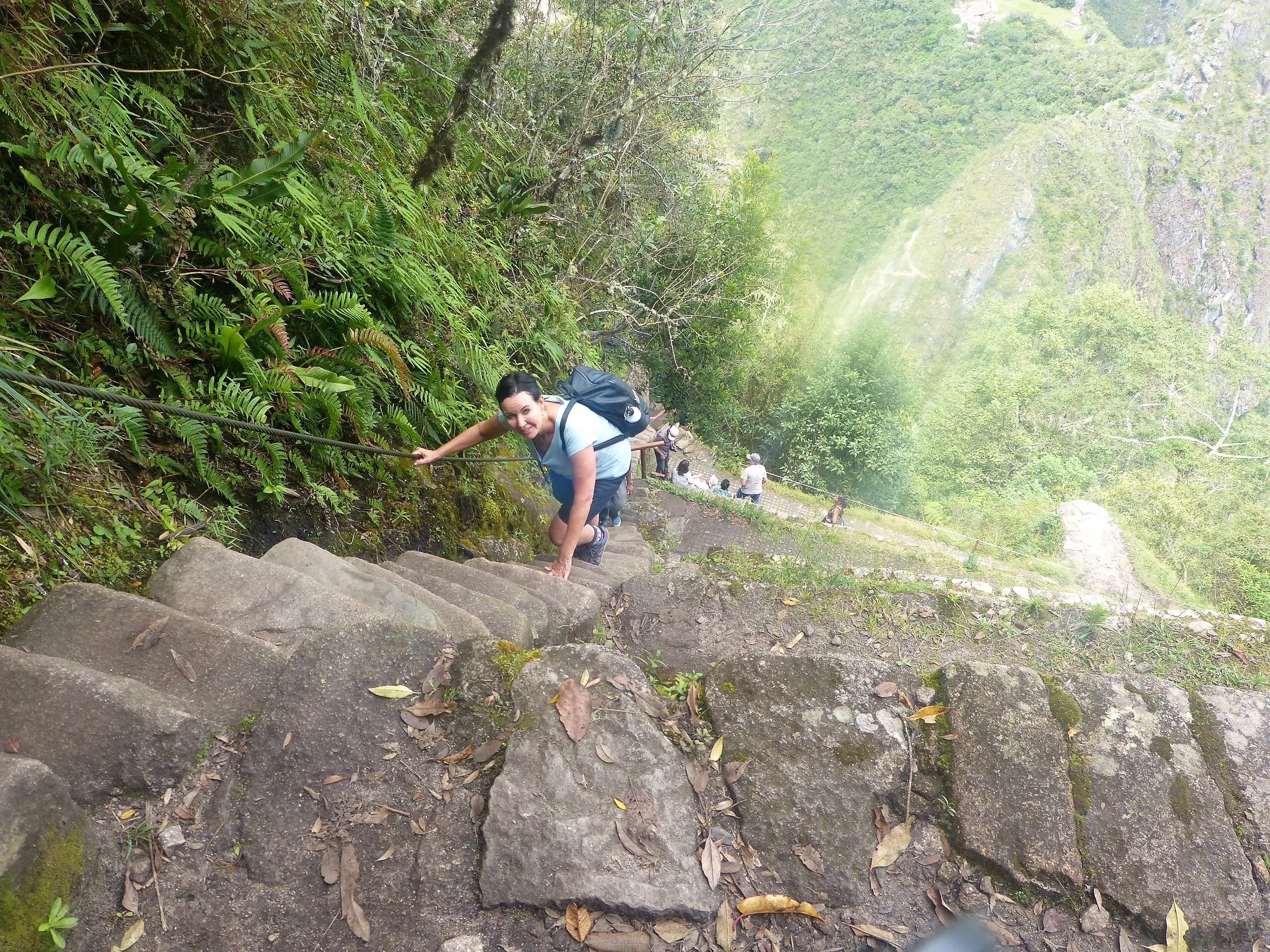
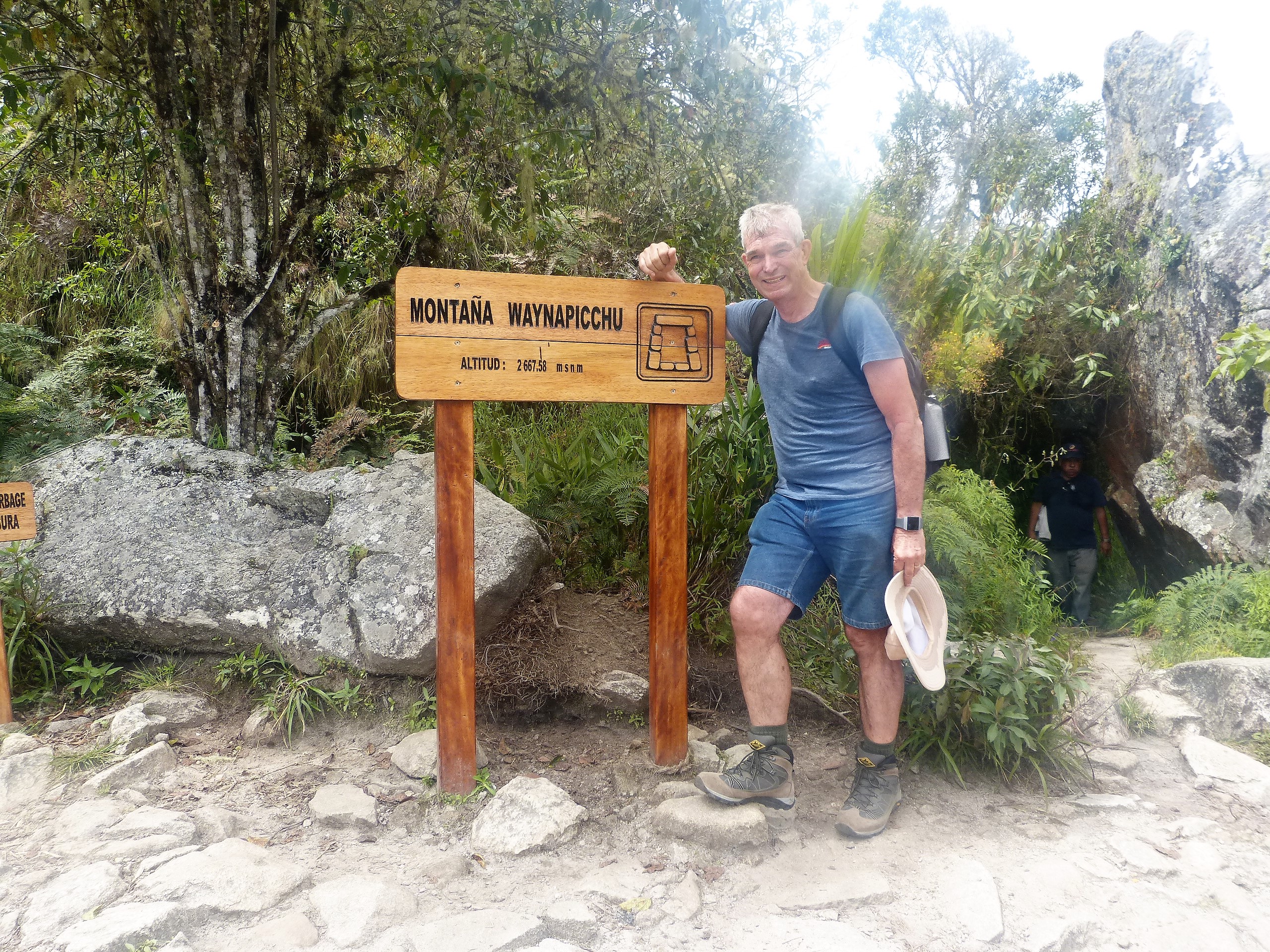
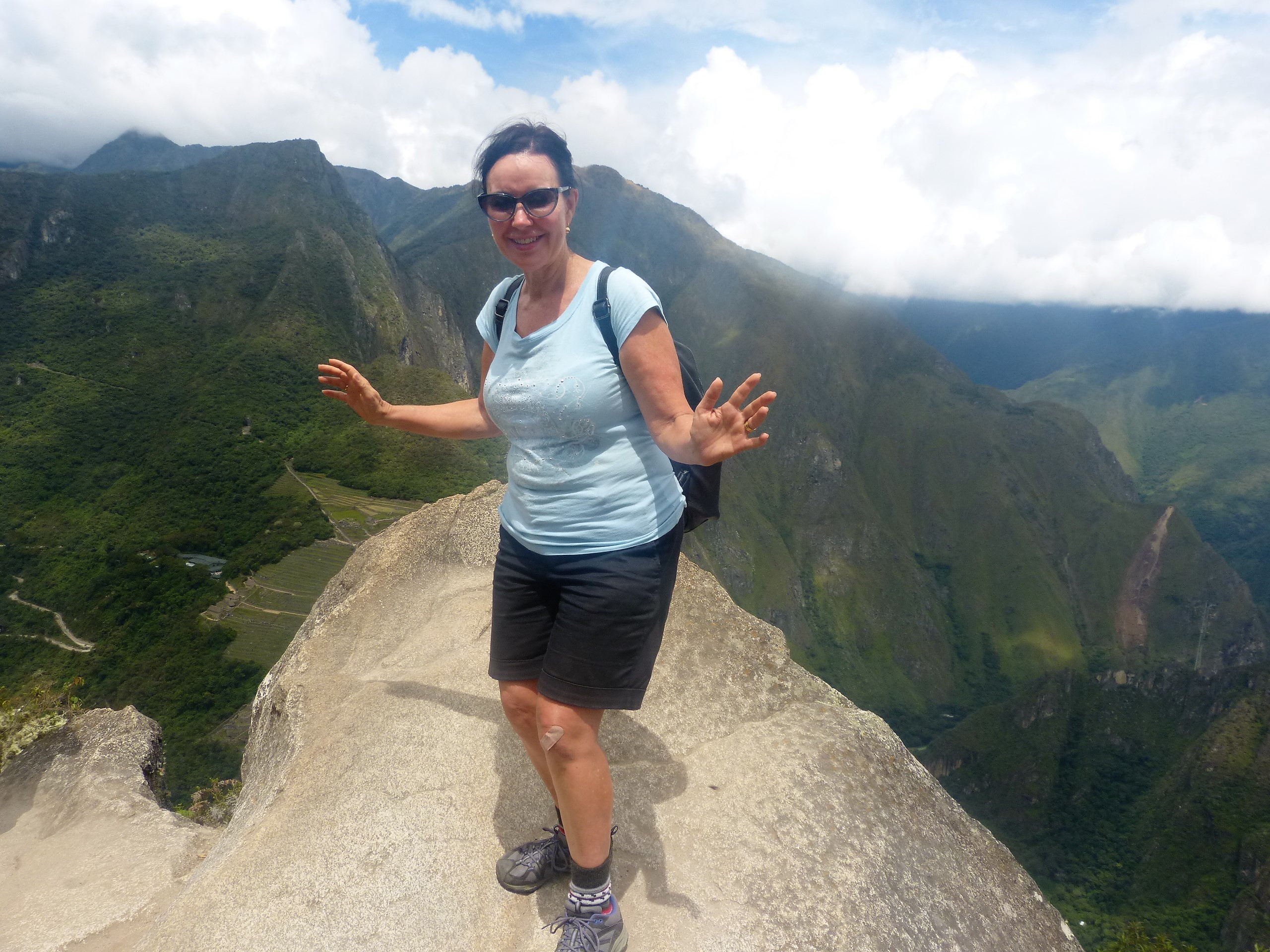
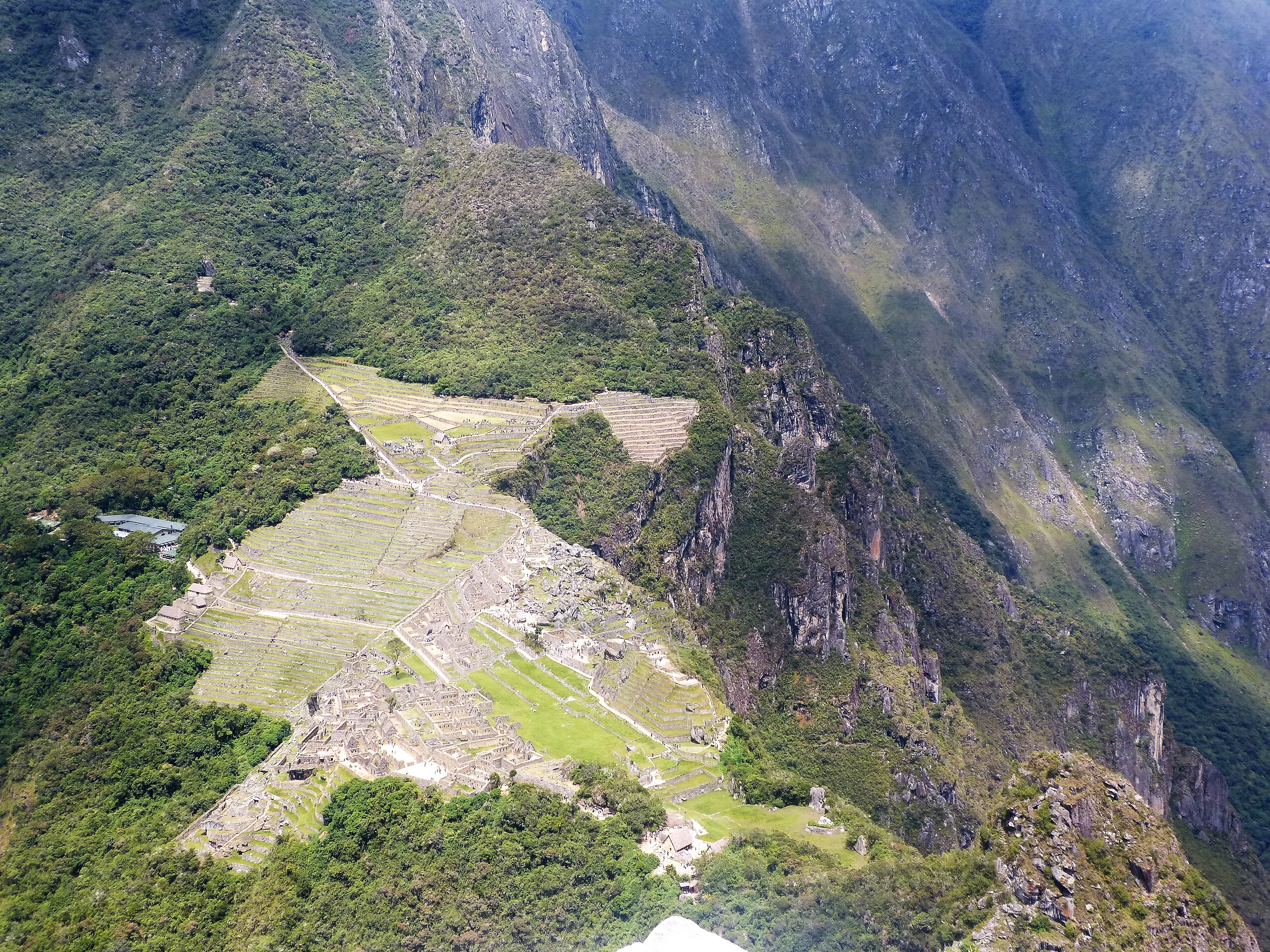
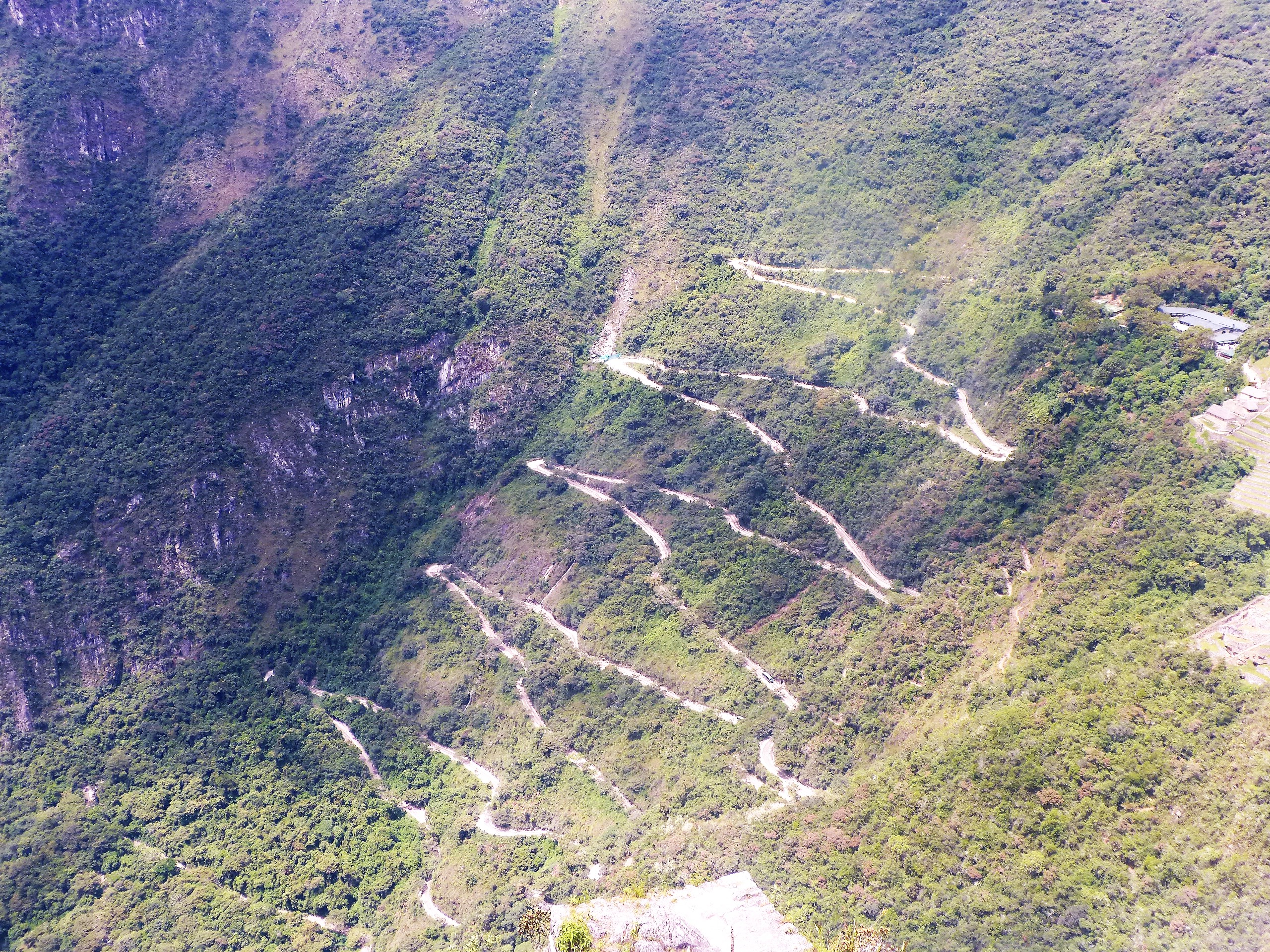
A short recovery, then explored a more of the buildings on the lower side of the site. Machu Picchu was absolutely fascinating and I feel so privileged to have had the opportunity to see it. It did not disappoint in any way.

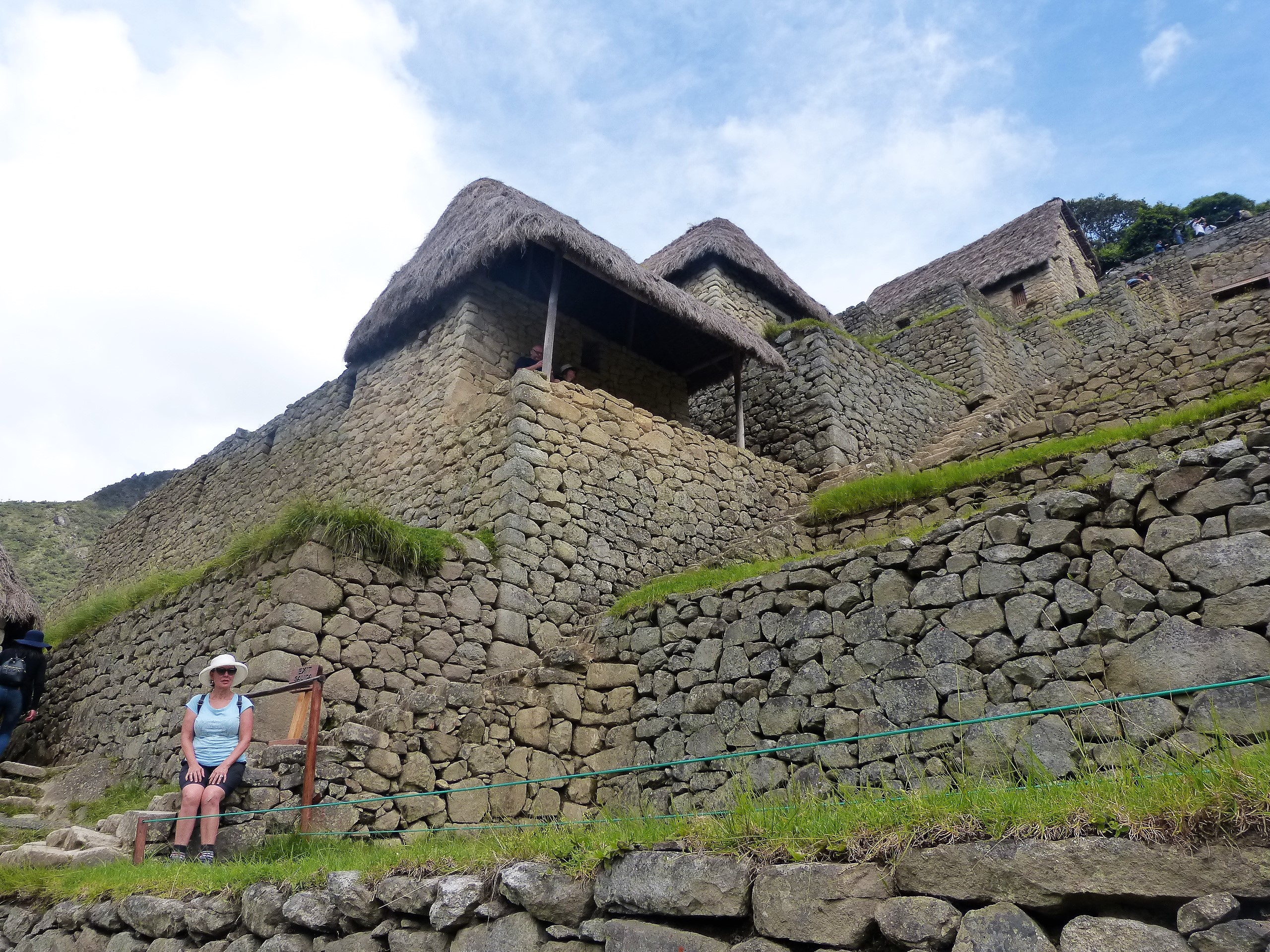
Now for the bus ride down to Agua Callientes, a change of shirt ( we really needed a shower), time for a late lunch – which we chose really well at Indo Feliz next door to the hotel – the trout ceviche is a local specialty.
Next it’s the Vistadome train down to Ollantaytambo – 1 1/2 hours to enjoy the spectacular scenery. Also a fashion parade on board ( all alpaca products) which was a bit of fun.
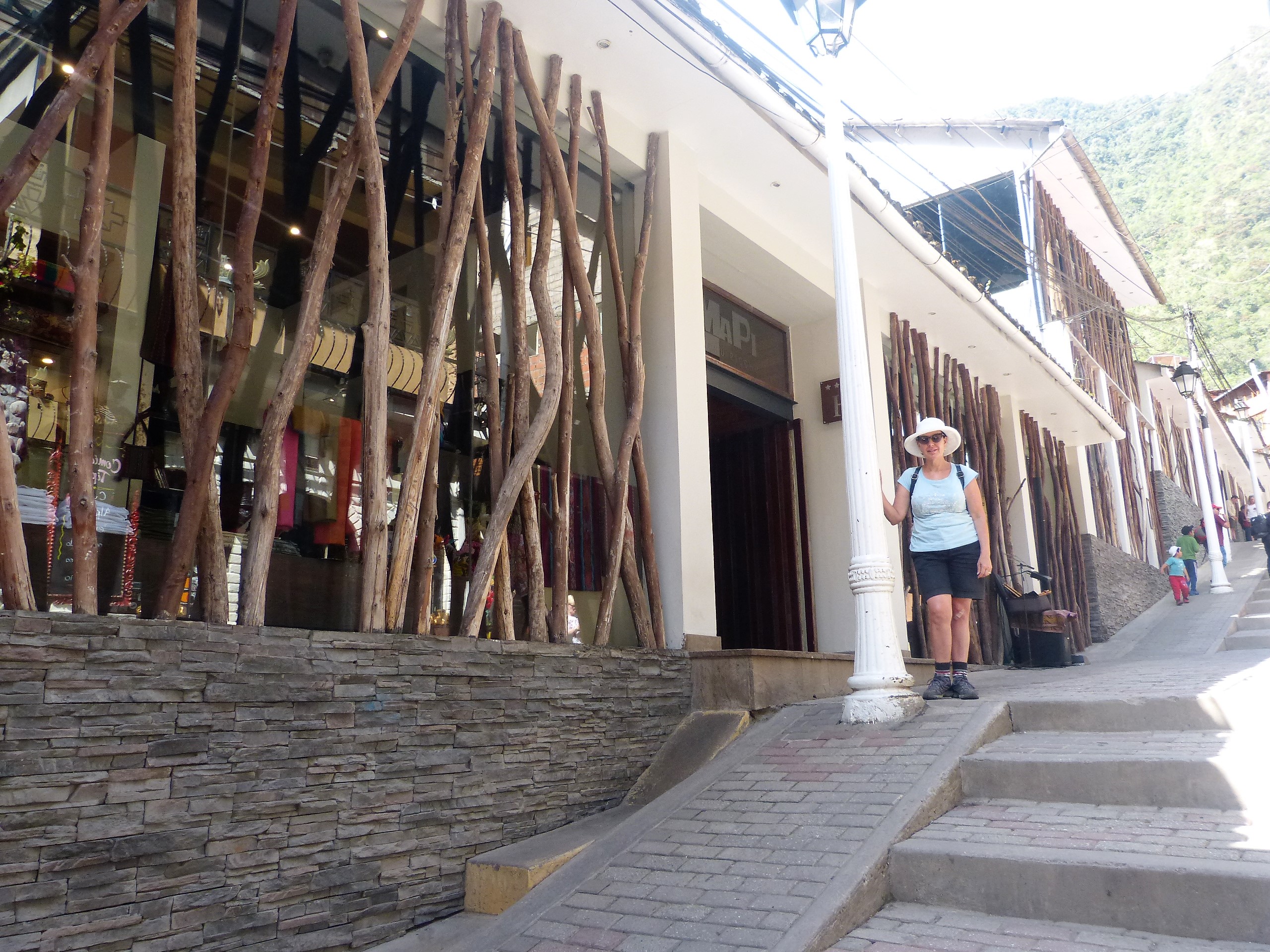
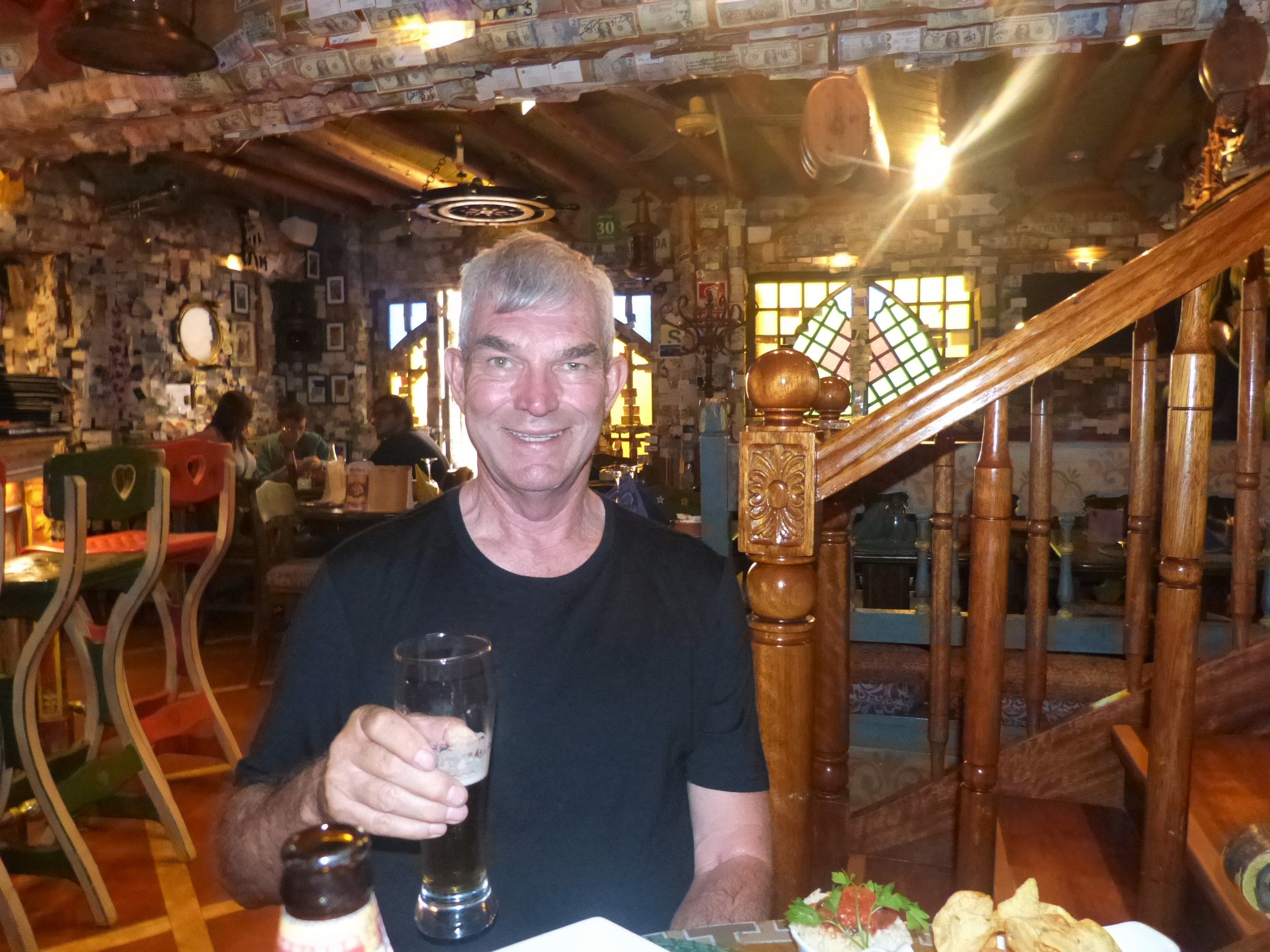

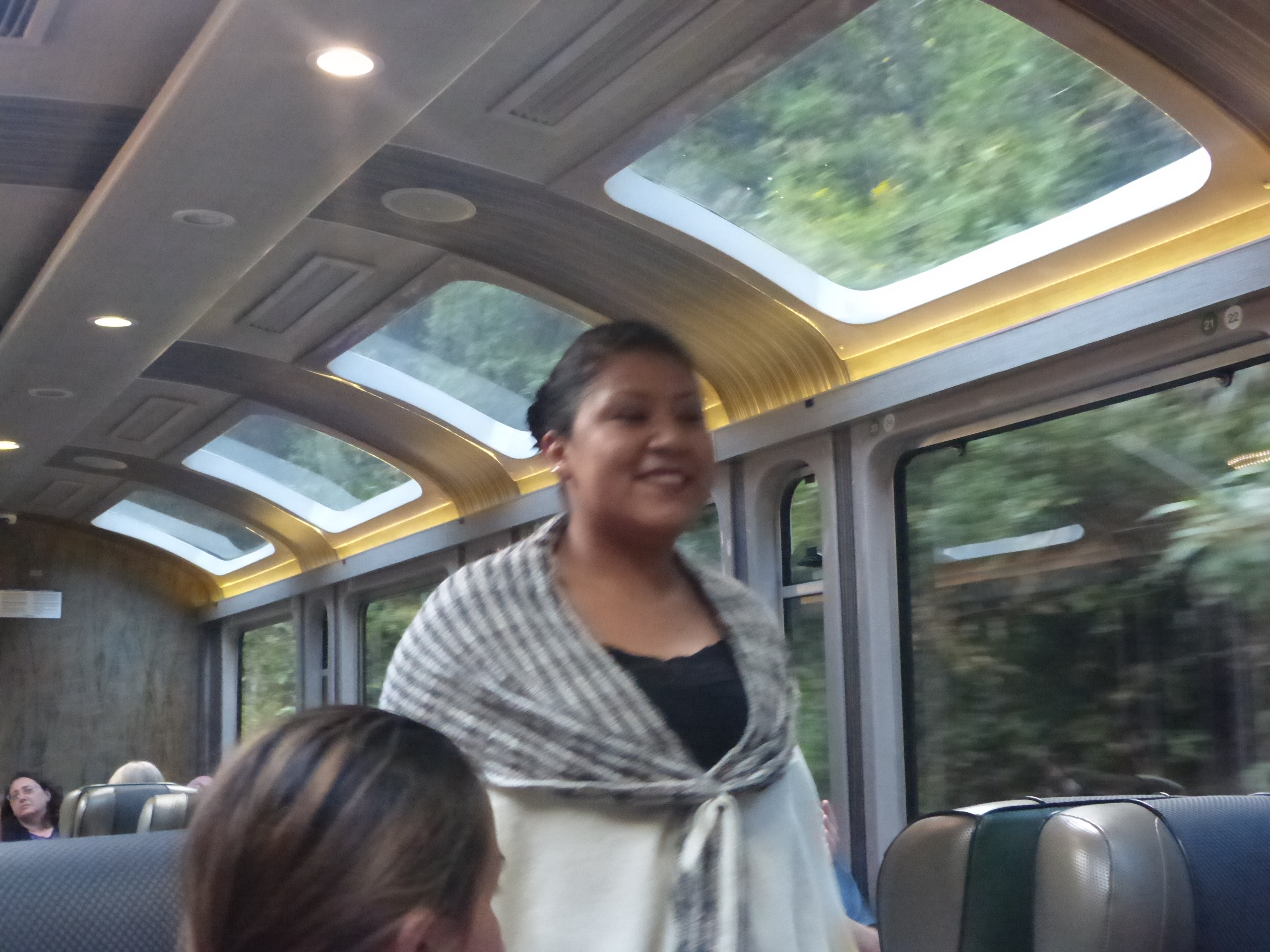
Picked up by our driver, and then a 2 hour drive to Cusco, to the Terra Andina hotel. We were absolutely exhausted after our big day, so just went straight to bed.
Peru – Cusco
Day 39 15th April
Bit of a mix up – we were booked to go on a 9am city tour, but the guide failed to show. After a wasted hour of reorganising with Condor travel agency, we were going to do the tour at 1pm. So had a bit of free time for exploring the streets ourselves. Where we were staying was very close to the markets and main square, so had no trouble in filling in the time. Found a potential suitcase to replace the damaged one!

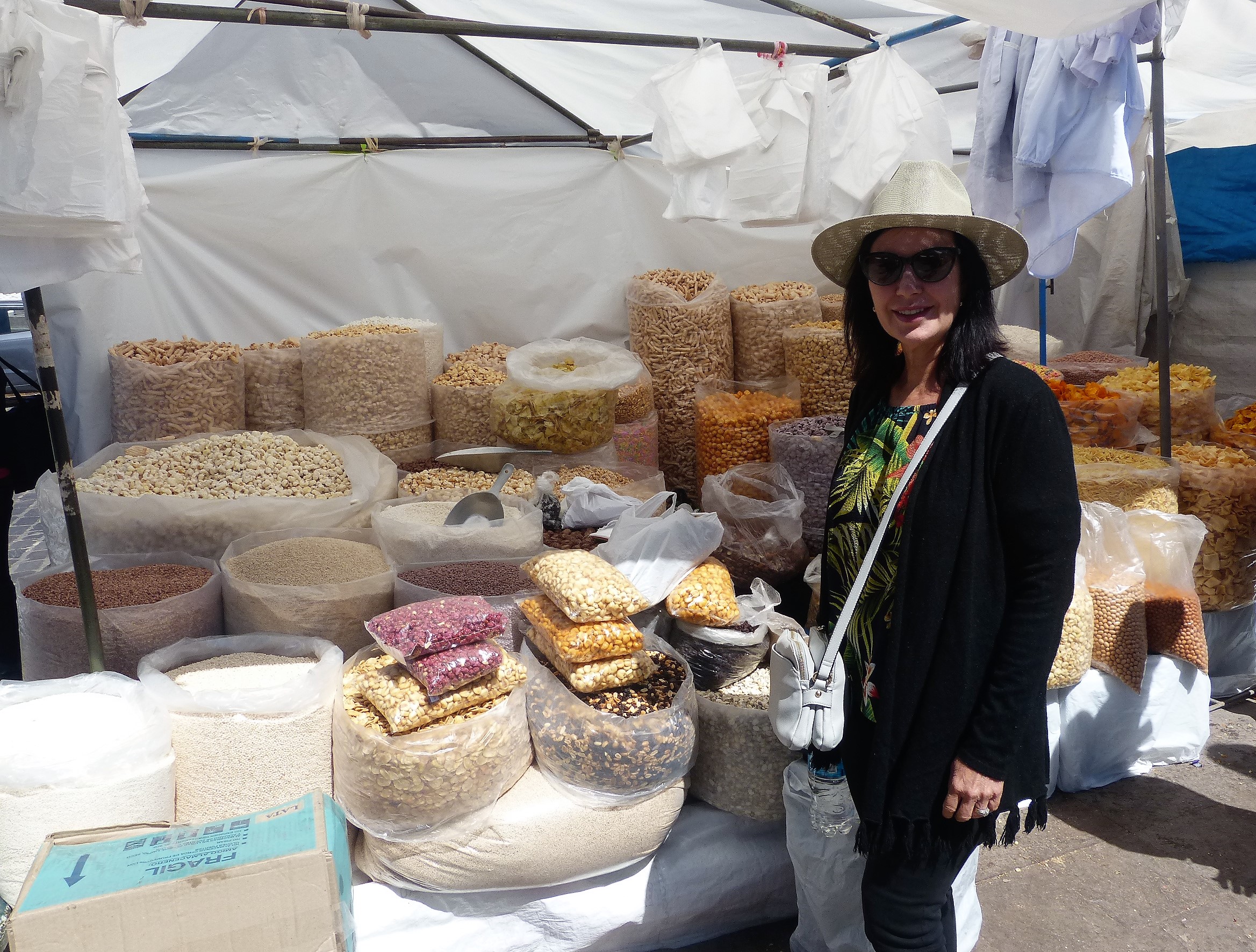
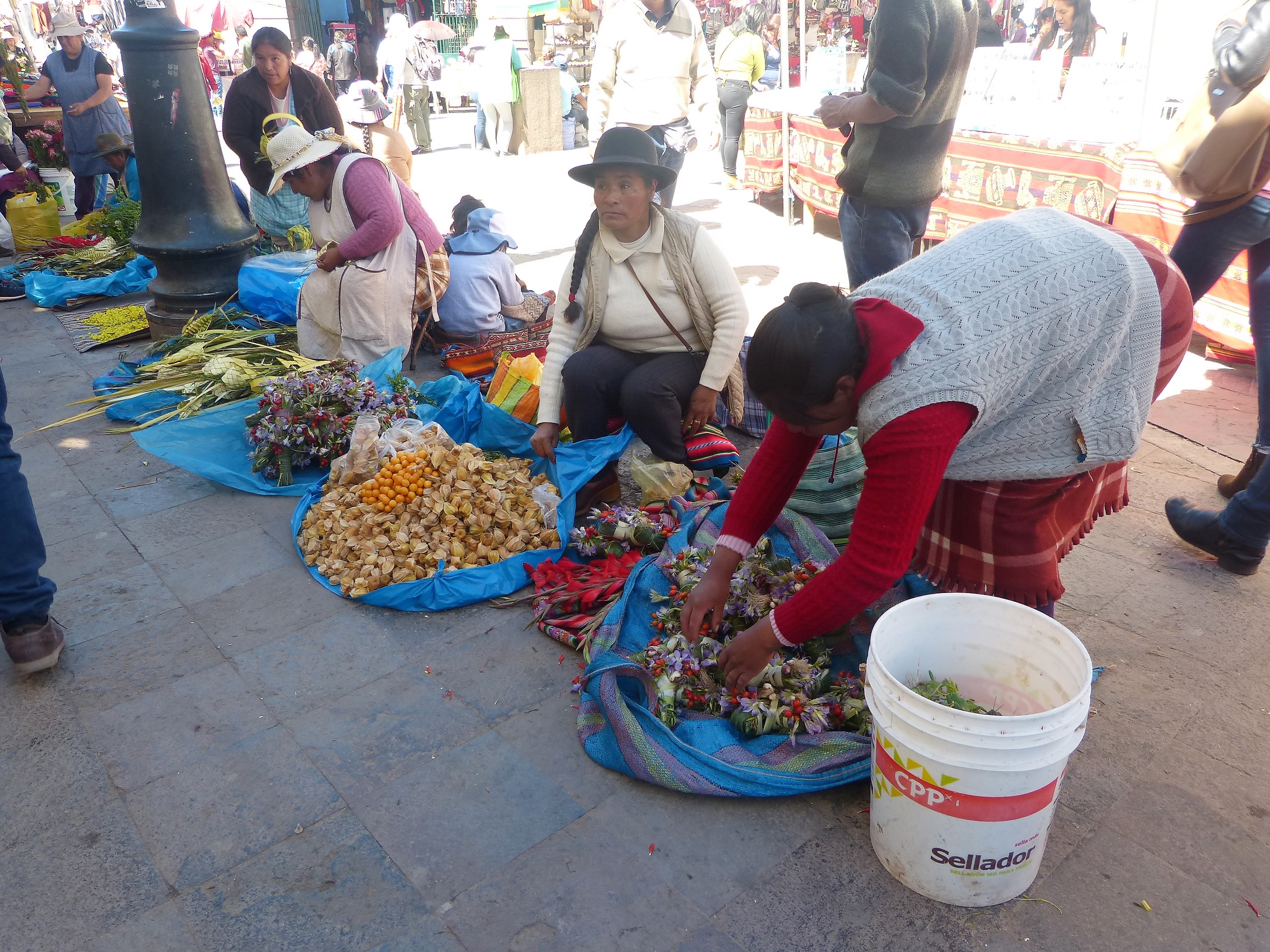
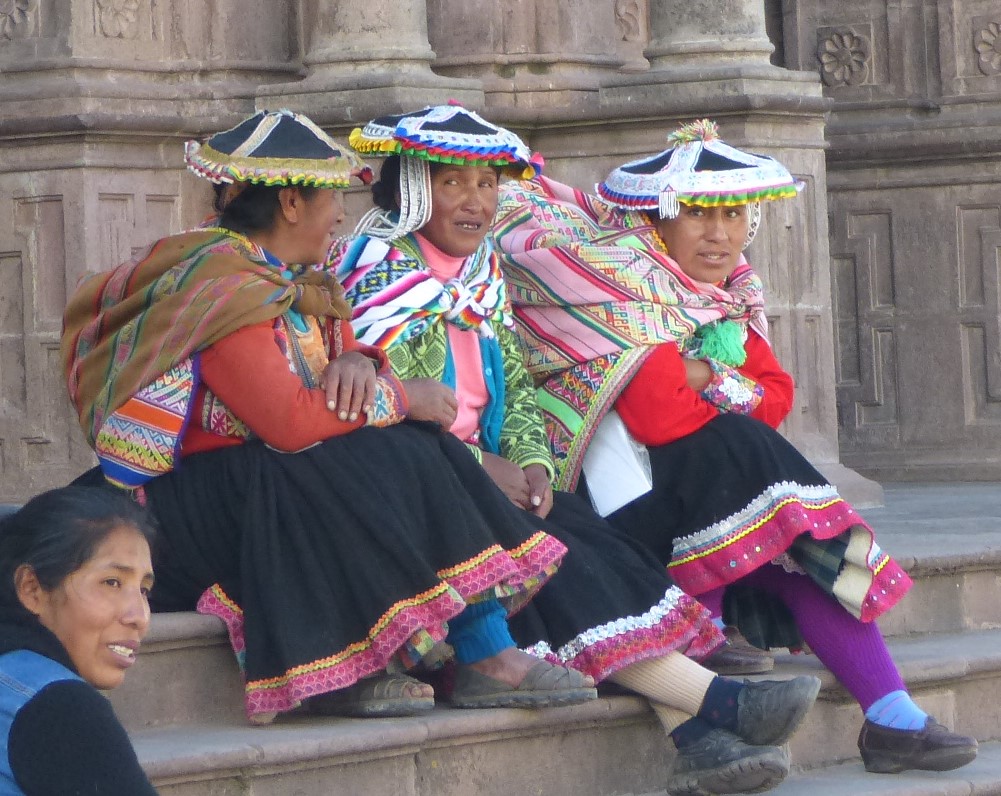


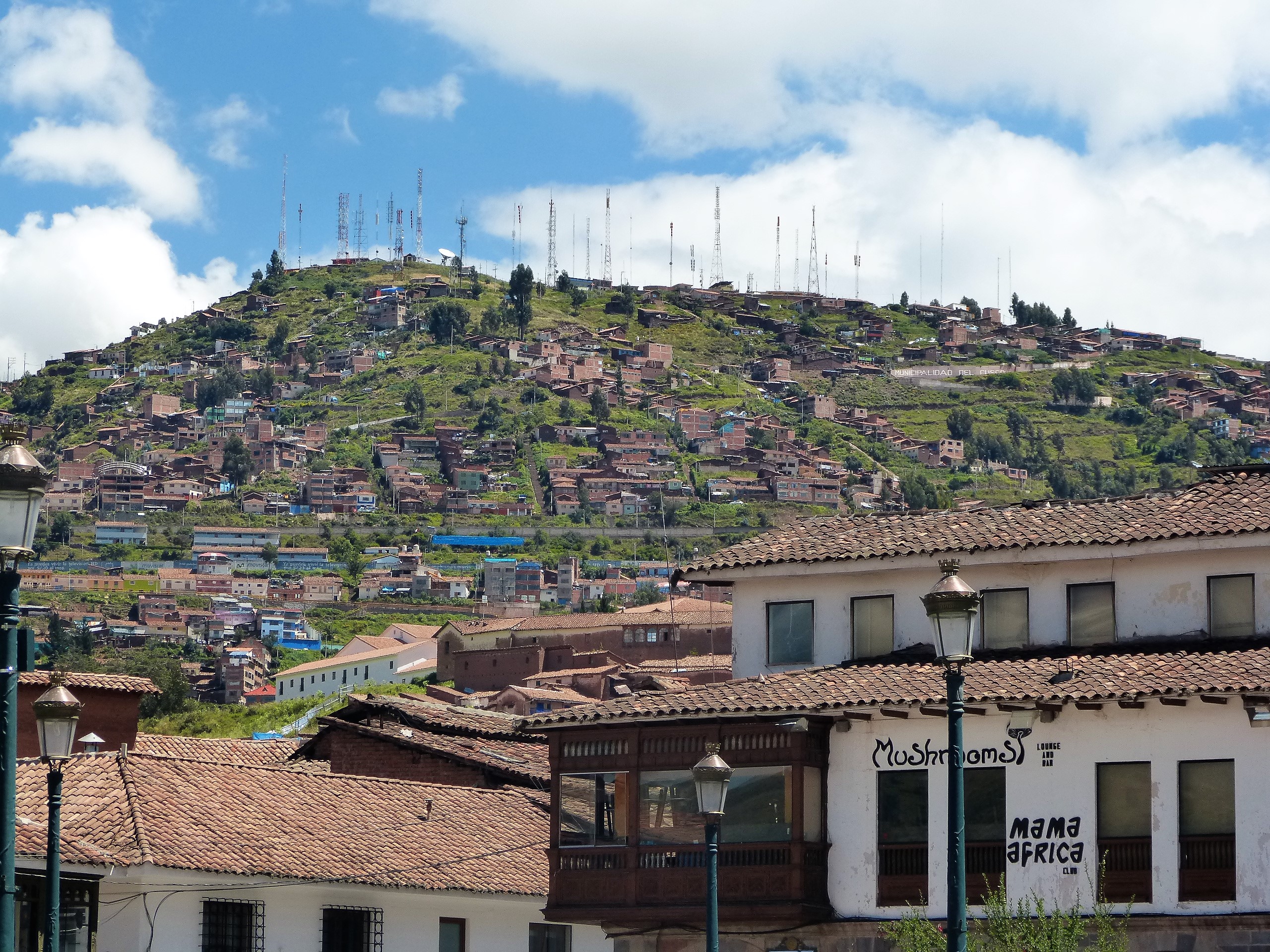
1pm, and Roddy arrived. Santo Domingo was first on our list. The church and convent were built on top of Koricancha, the richest Inca temple ( Temple of the Sun- it had gold plated walls flecked with precious stones, however the Spaniards drained all the treasures soon after their arrival). The remains of the Temple of the Moon and the Temple of the Rainbow, are fascinating. The perfectly cut stones are put together with no mortar – they used a locking system. Examples of these stones can be seen, also some with drains and holes for fountains – how they cut them so perfectly is mind blowing. One example of a single stone had 22 corners around a doorway – those Incas were very clever people. The windows are always trapezoid in shape, as are the niches, and all buildings lean in a certain way so they can stand up to earthquakes. Interestingly, in this church, the newer Spanish extension has had to be rebuilt several times due to earthquakes, whereas the Inca section is still standing.


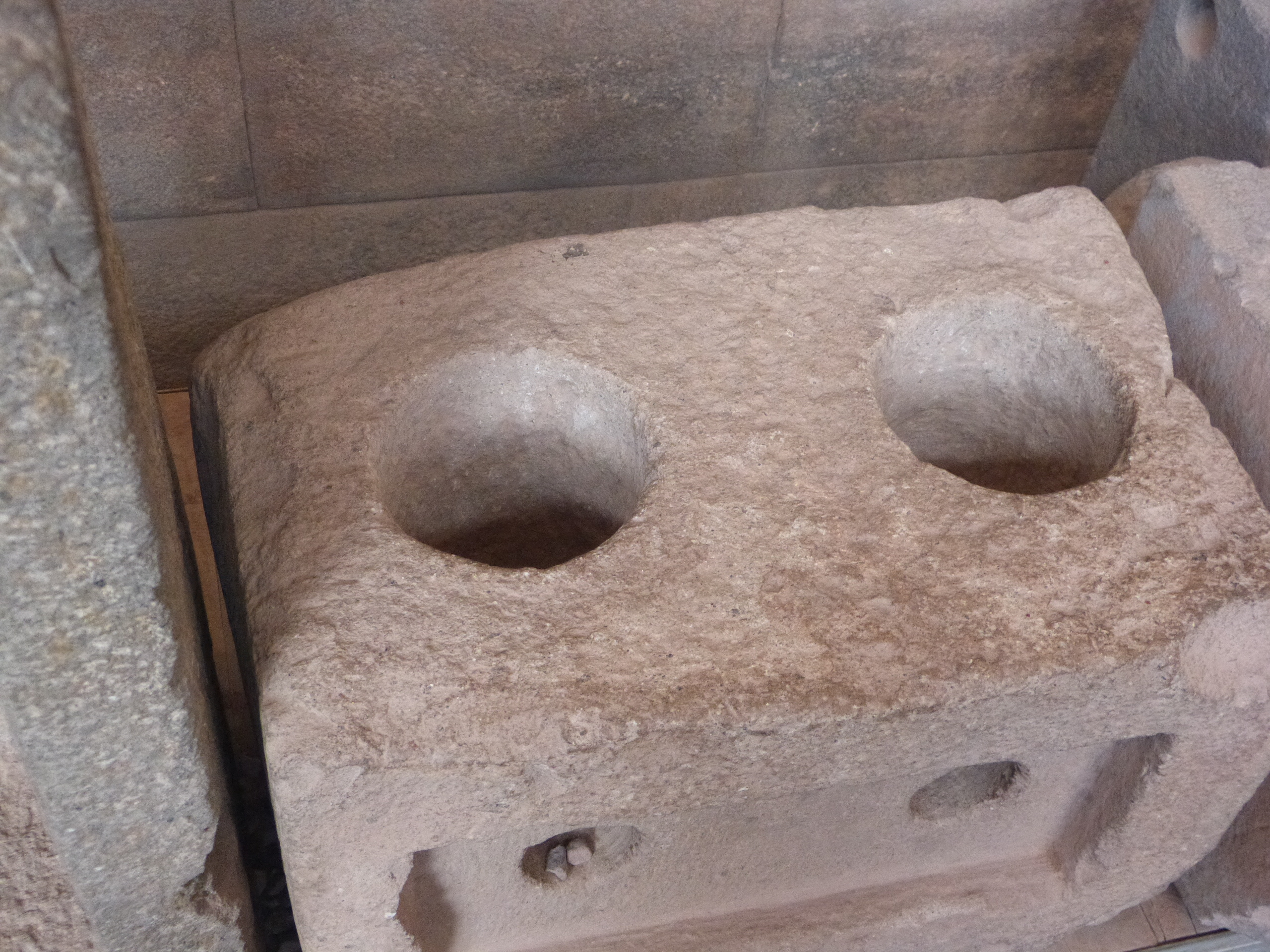

There are over 300 Inca ruin sites in Cusco – we went to 3 of them. Quechua- this may have been a lookout or military post. This complex contains rooms, plazas, paths, and aqueducts.
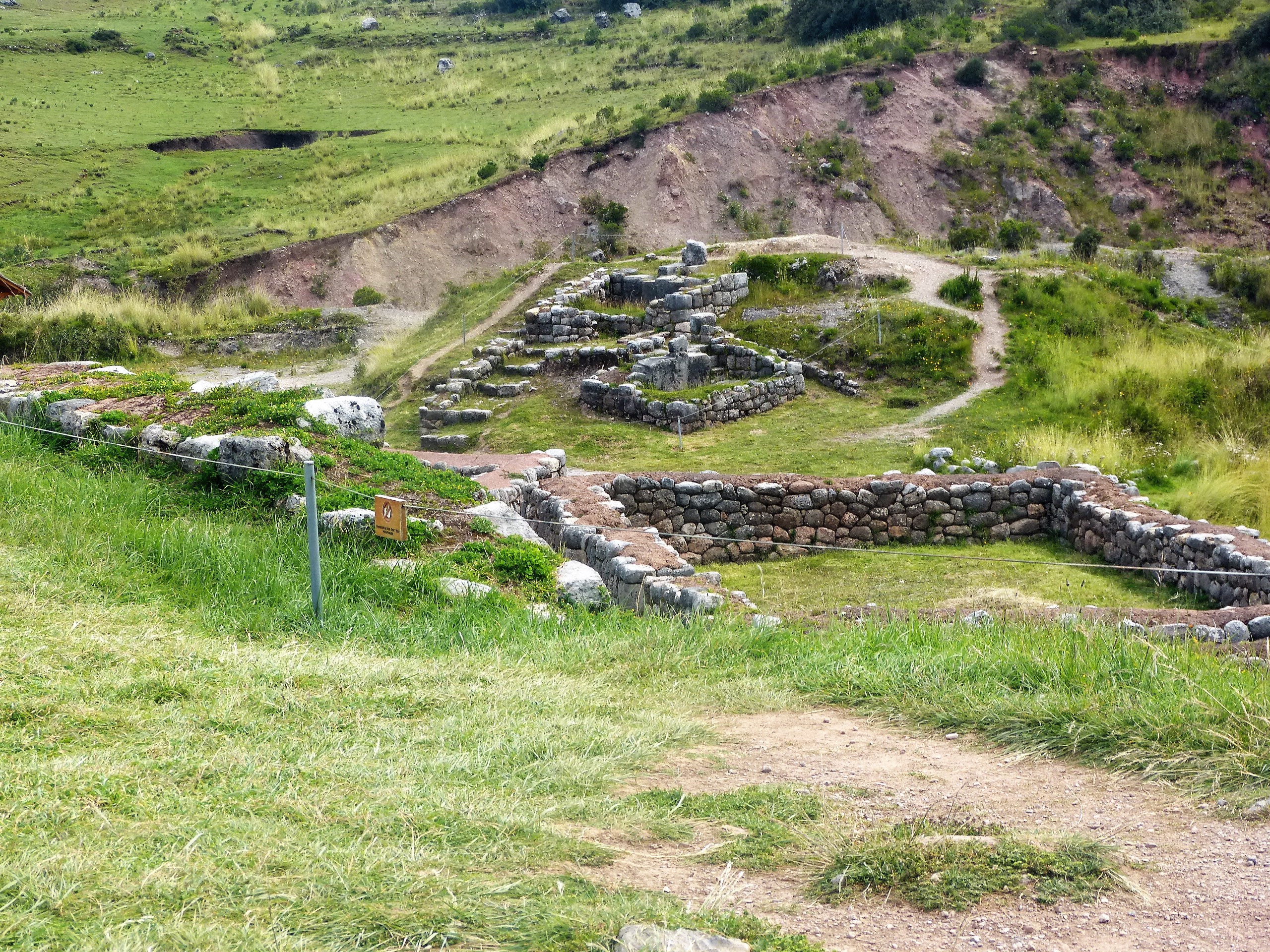
The next, shows a work under progress. You could see where some stones had been cut, and an altar cut out in a cave. Great view back over the city of Cusco.

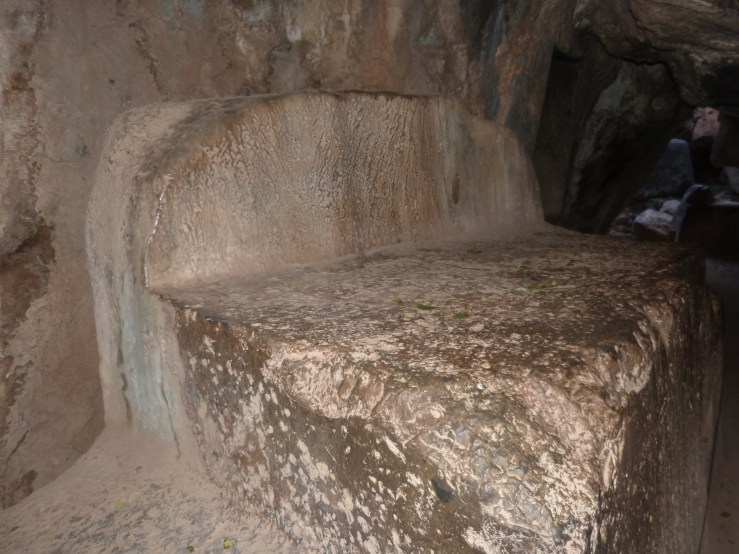
Sacsayhuaman is an impressive example of Inca military architecture. It is made up of three large terraces which overlap in a zigzag fashion – we were told this is the Temple of Thunder and Lightning – very appropriate as it started thundering just as we arrived. The enormous granite ramparts stretch for 300 metres with stones as high as 5 metres, some weighing as much as 350 tonnes. Again no mortar, and you would have trouble getting a fine knife to penetrate the joints.
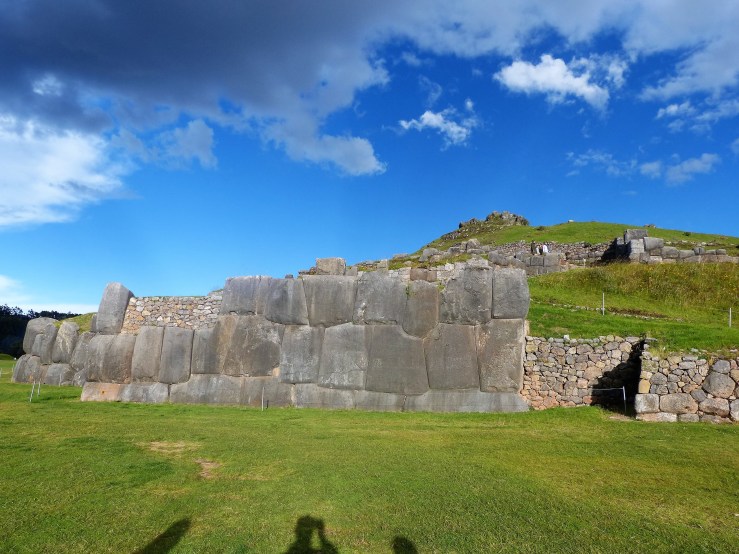
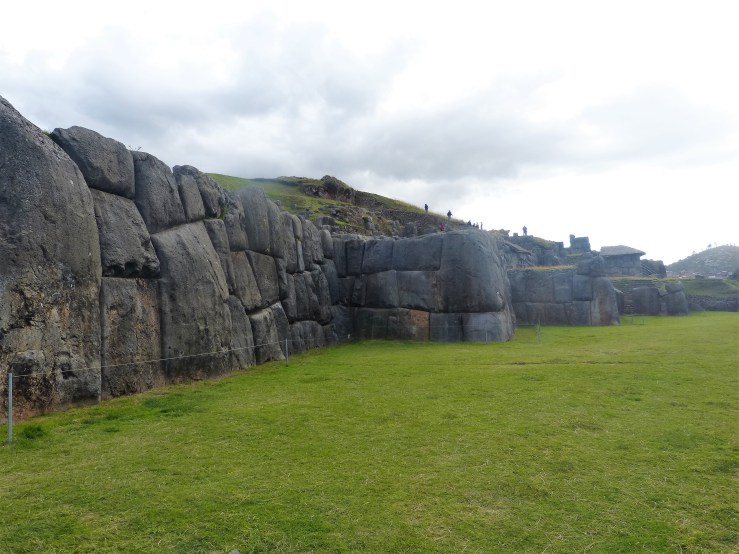
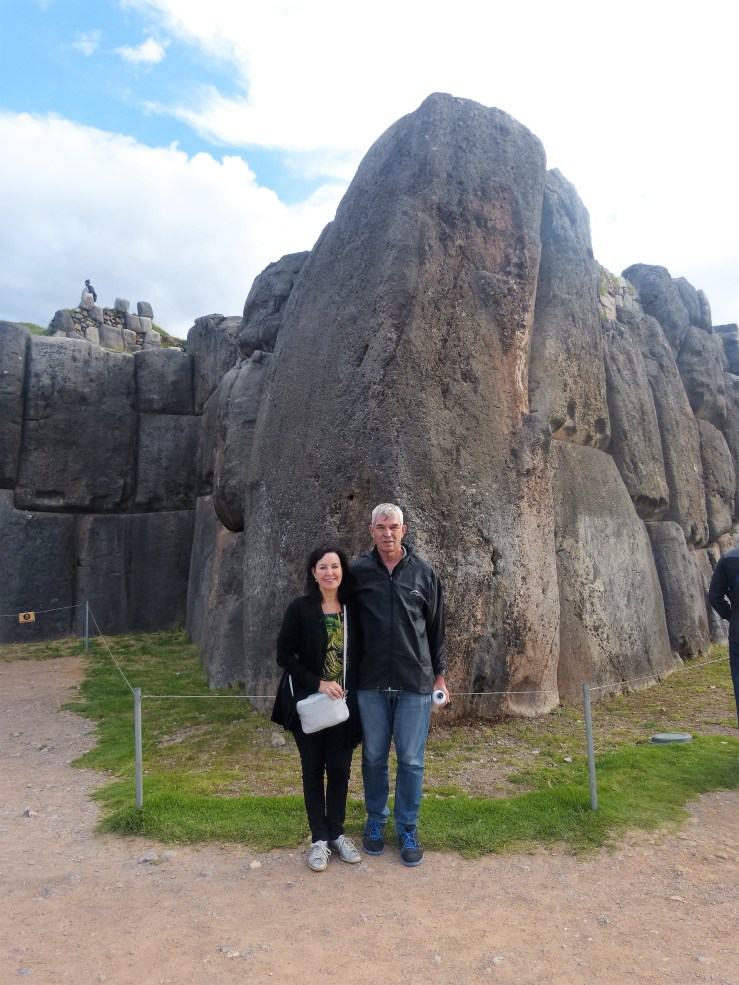
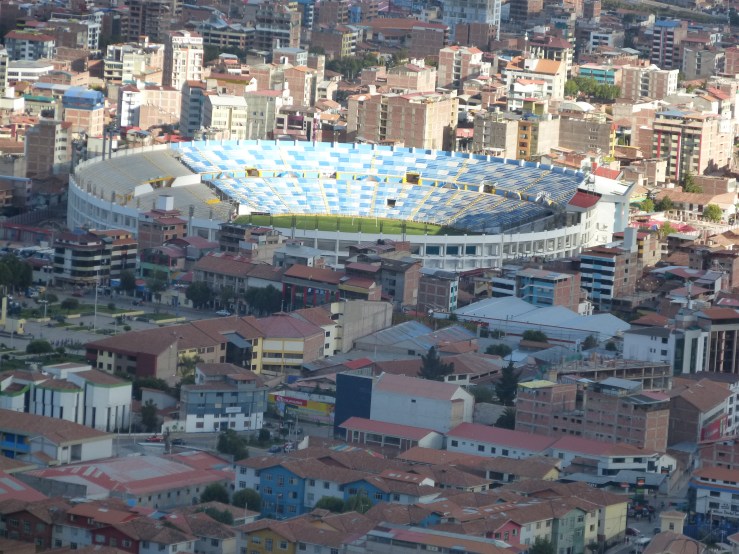
Roddy then left us as at the square as the traffic was horrendous – the afternoon was a holiday to celebrate the Lord of the Earthquakes. People everywhere. We stopped at the suitcase shop, and walked away with a new suitcase …. right out into the crowded streets! It was bedlam by this stage. The street we needed to go down was blocked with people, and there was no way we could get through especially with the new blue bag! Had to go the long way round, dodging people left right and centre!
Made it back to the hotel, phew! Out for dinner with Tim and Jane who were also in Cusco – in the opposite direction of the crowds!
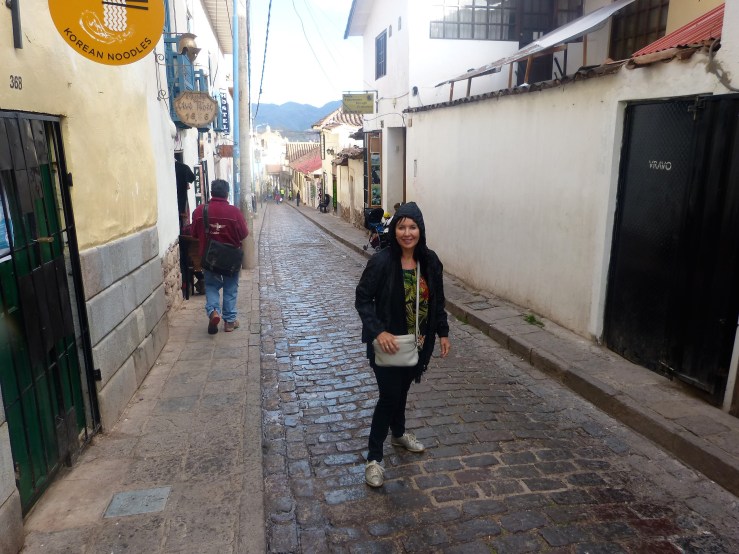
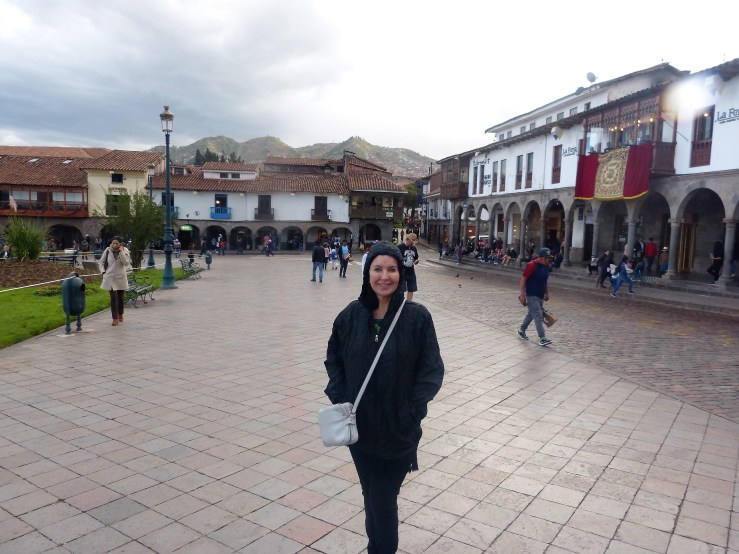


Day 40 16th April
Free day – yay!! No alarm! Woke at 7.15 anyway. Anyway, it was nice to enjoy a leisurely breakfast before setting off to explore Cusco on our own. Put in a bag of washing to local laundry – approximately $10. Thought it was a bargain, until we got it back minus one of my socks and my nightie! Oh, the incidental expenses of travelling!
Went to San Pedro markets – fascinating seeing all the local food for sale – fish, pigs( whole heads even), chickens, alpacas, fruit, vegetables, cheese, chocolate, flowers – absolutely everything! Mainly women working here- they slice up the meat, dehusk the corn, not to mention they are always knitting or spinning in between!
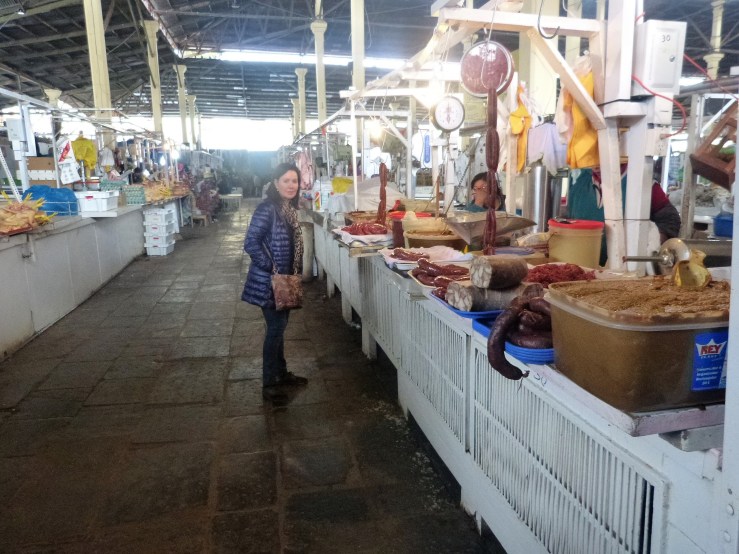


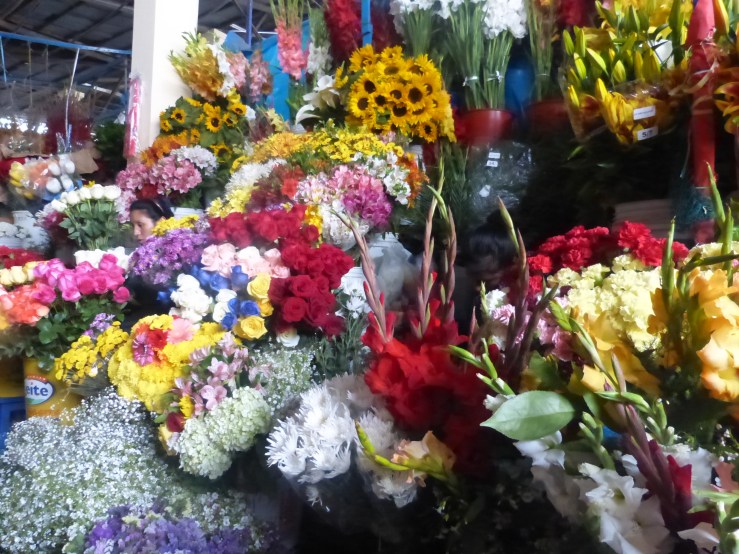

Walked down to the Plaza de Armas – the square was mainly used for ceremonial purposes. Couldn’t go into La Catedral as there was a mass in progress. Went inside the Jesuit church of La Compania – this church is often mistaken for the more famous cathedral due to its elaborate facade. Enjoyed strolling around the square.
Then walked to San Blas District, known as the craftsman district. Once the domain of Quecha nobility, it’s narrow streets with colonial houses featuring Inca stone walls, are now home to the workshops of Cusquena artists who practice metalwork, stone and woodcarving. Of course all the handicraft shops are there as well – more upmarket wool garments ( of course I managed to find a poncho I couldn’t resist!). Beautiful square here with waterfall under the stairs. Enjoyed lunch – quinoa vegetable soup in a lovely little restaurant near the square – great atmosphere!
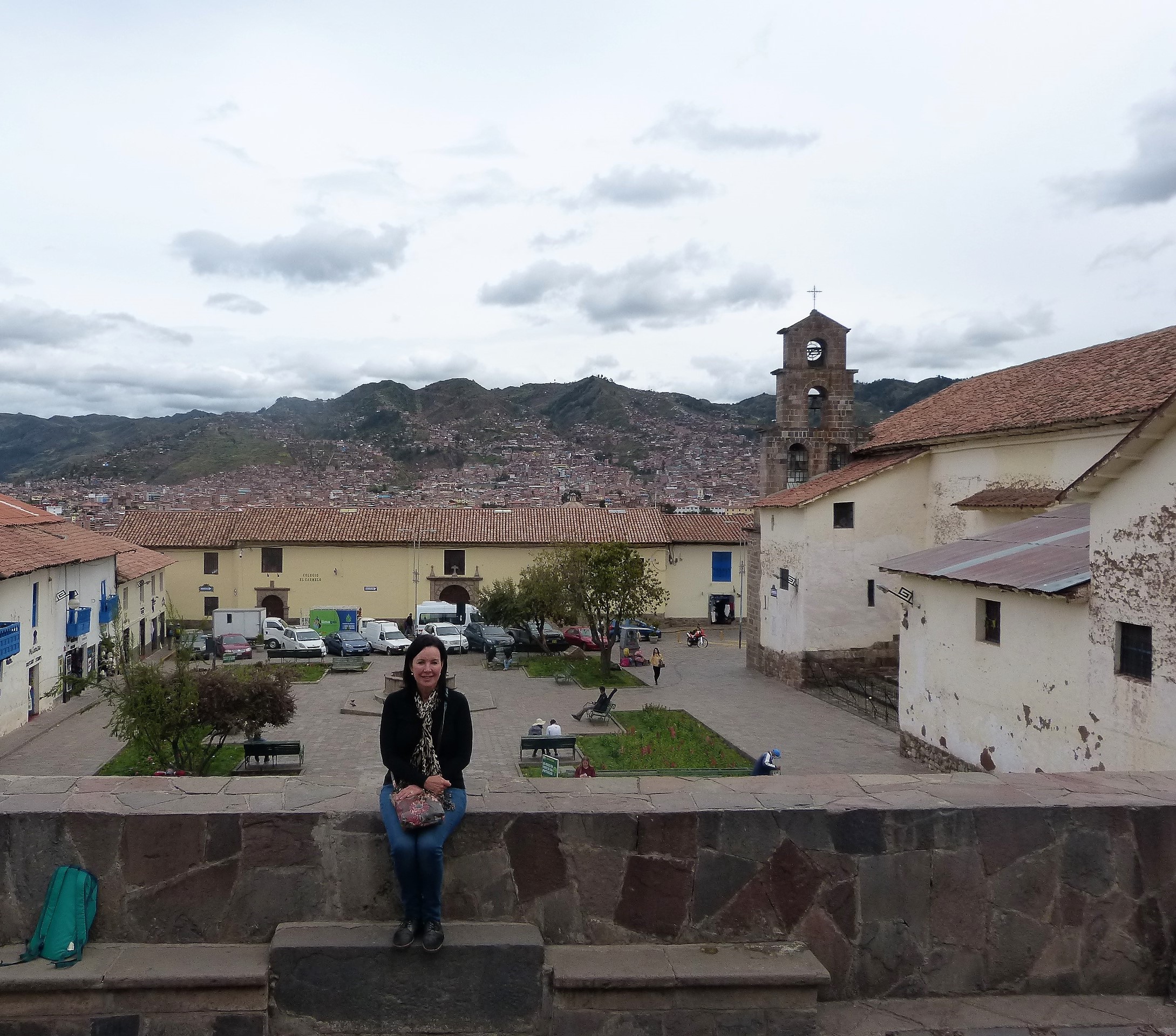

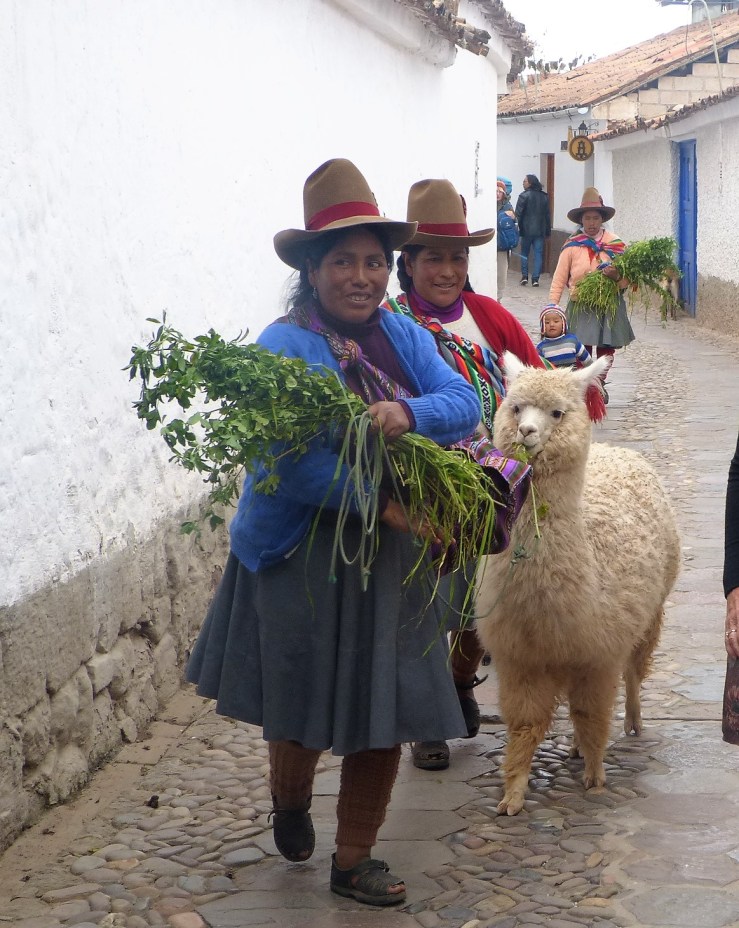
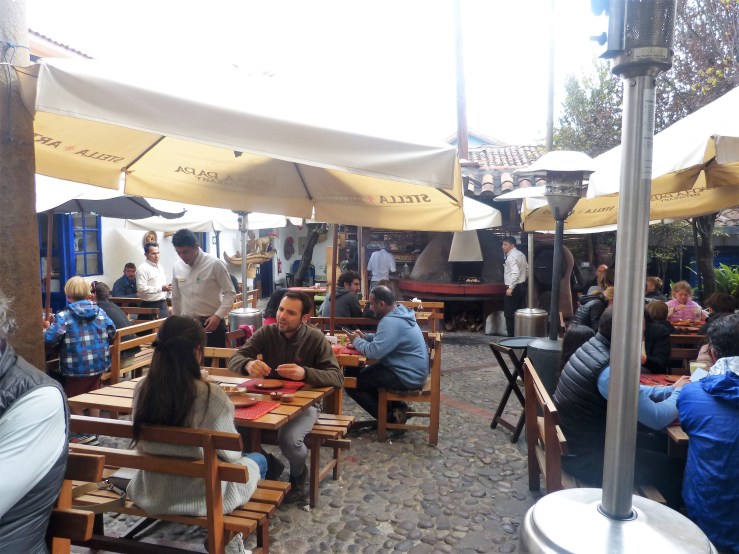
Back to Plaza de Armas, up a side street where we had a massage each – it was just what we needed after all the walking we had done in the past week. And a bargain – $20 each for an hour! Felt so good afterwards.
Back to our hotel for our briefing re the trek we are doing tomorrow. Lucky we did get a briefing – I was thinking it would be hot, however quite the opposite – it could even snow! Don’t think the shorts I was thinking of wearing would cut it!
Dinner out with Tim and Jane – my alpaca skewers were delicious. Time to say goodbye to them as they head to Guayaquil in the morning.
Peru – Rainbow Mountain
Day 41 17th April
Picked up at 5.30! Early! And cold. Rainbow Mountain today. This is a new “attraction” as it was only discovered 7 years ago. Had to pick up a few other guests along the way, then a 2 1/2 drive to Phulawasipata – pass through farming communities, where you see mum, dad, and the children working in the fields. Lots of potato and corn grown here. We start to ascent after an hour travelling in very windy dirt bumpy roads. Interestingly, we saw the women on the road gangs – they fill in the holes and then the bus drives over the newly filled hole to compact it. The villages have brick houses rendered with mud, rock walls to keep their animals in. Children pass us as they walk to school- they walk amazing distances.

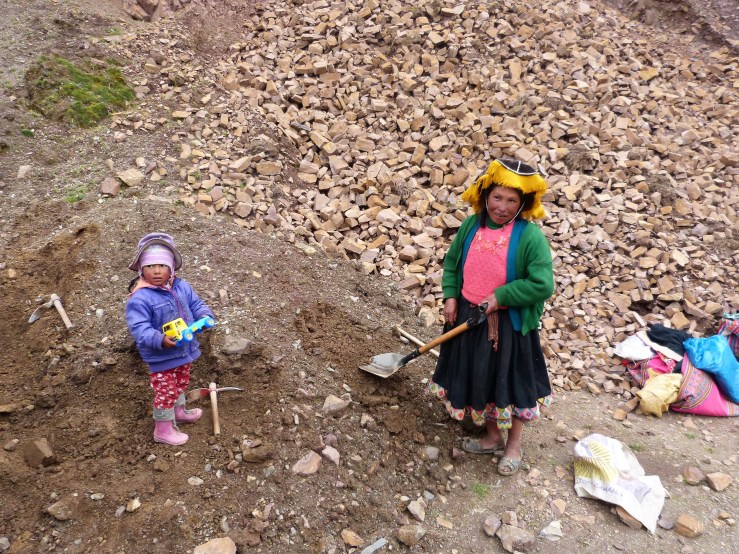
The scenery changes dramatically- rugged mountains with grass Andean alpacas and llamas grazing, to snow capped peaks. The highest peak in the area is Apu Ausangate. We get out, ready for the big climb. We are starting at 4626 metres. One of the guides gave us coca leaves to chew on to help the altitude sickness- I felt like I wanted to gag, so spat them out after a minute. Sucked on coca lollies instead. The guides carried oxygen should anyone need it.

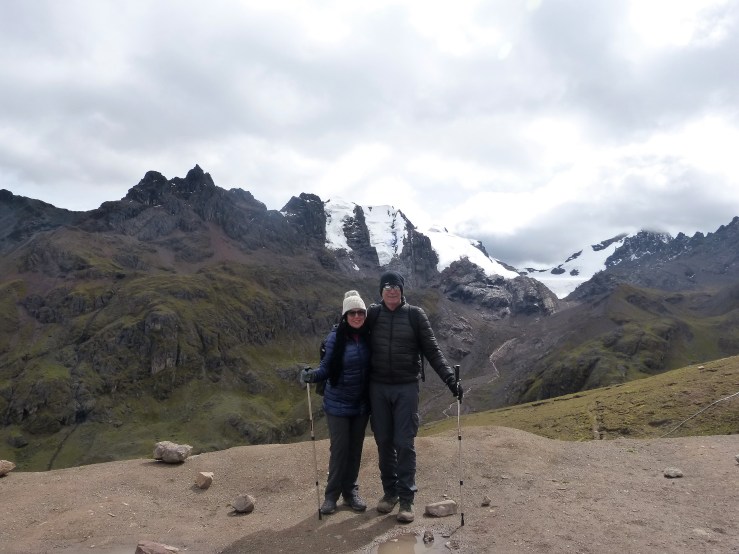
We walked two hours to get to the top of Vinicunca – the mountain of colours – 5020 metres above sea level. It wasn’t a long walk but it was very tough ascending in that sort of altitude. You needed to walk slowly, have plenty of water, and sugar. The guide kept telling us to eat chocolate – I liked that idea! I have to say I did struggle getting my breath – there were horses going up as well, so I did get a horse for 10 minutes which helped me to recover. Frank was fine – he had no problems. The horses were interesting to watch- the ladies in their dresses and flat hats lead the horses up to a certain point. Then they would run down and pick up someone else – all in their sandals – they were obviously used to the altitude and cold. It was about 2 degrees when we were ascending.
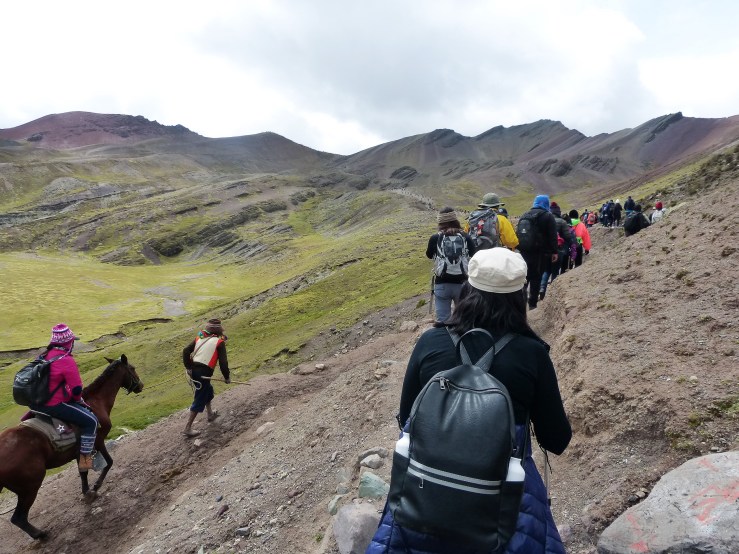
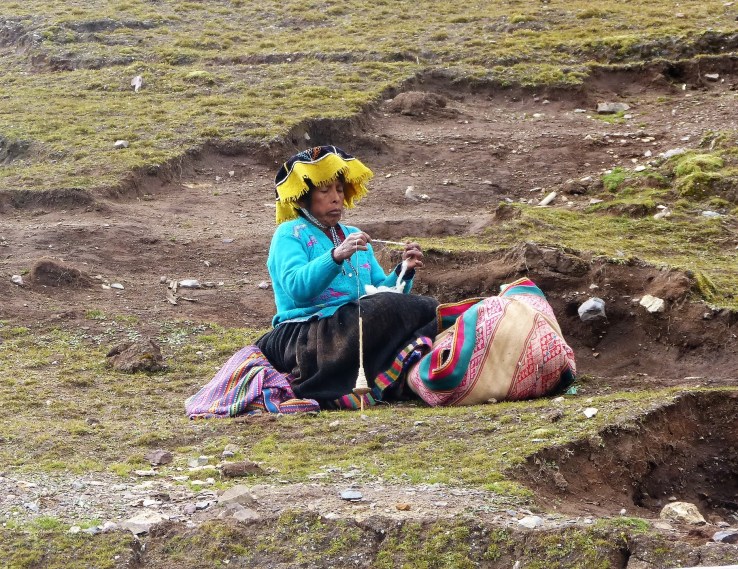
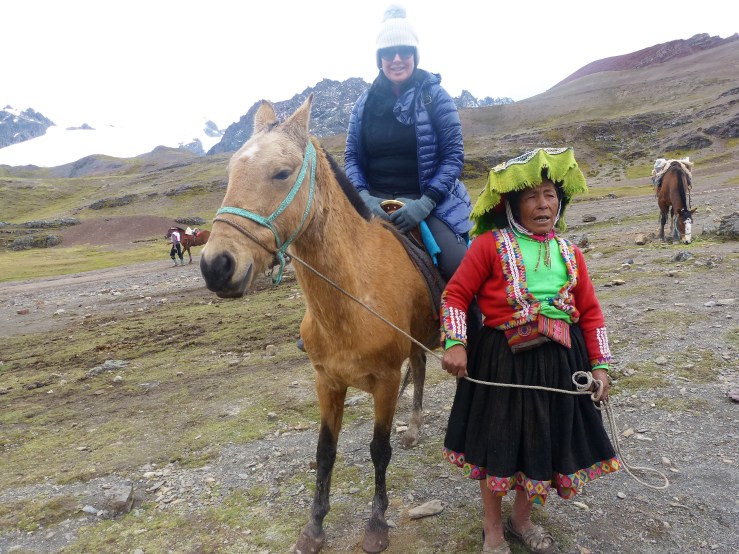
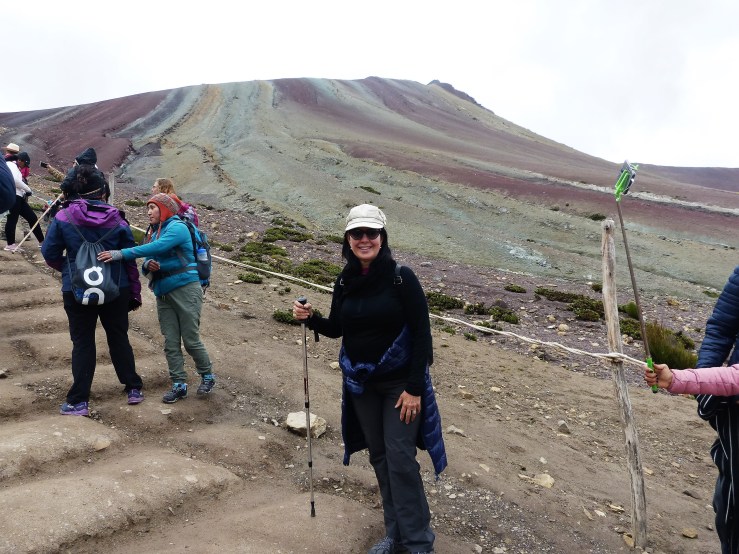
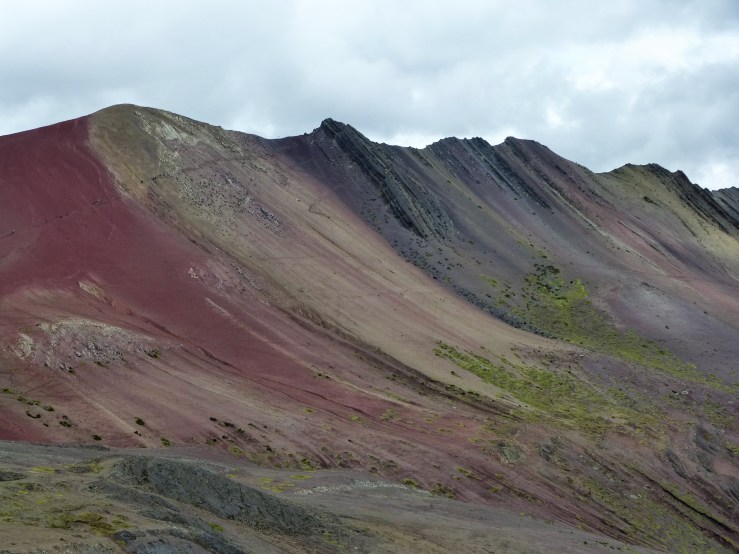
At the top we had spectacular views of Rainbow Mountain, plus the valleys either side. It really was a sight to behold. Of course we had to take some photos, and appreciate the views. Glaciers on the background. Then it started snowing – yes it was cold!
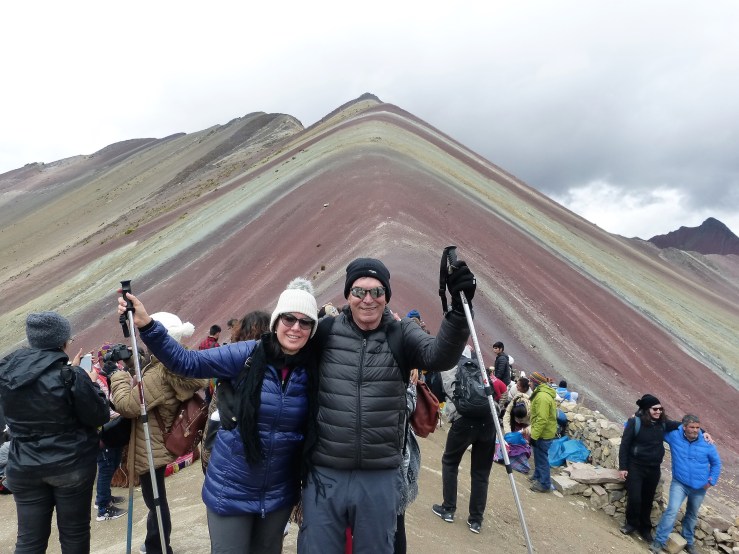
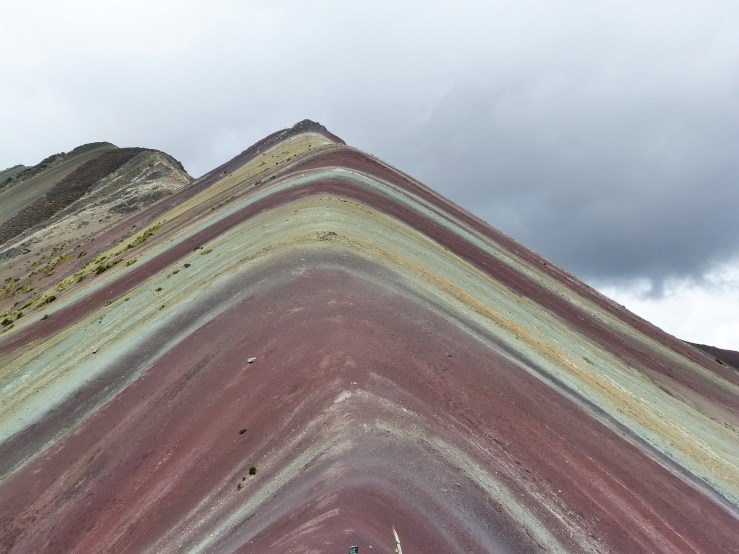

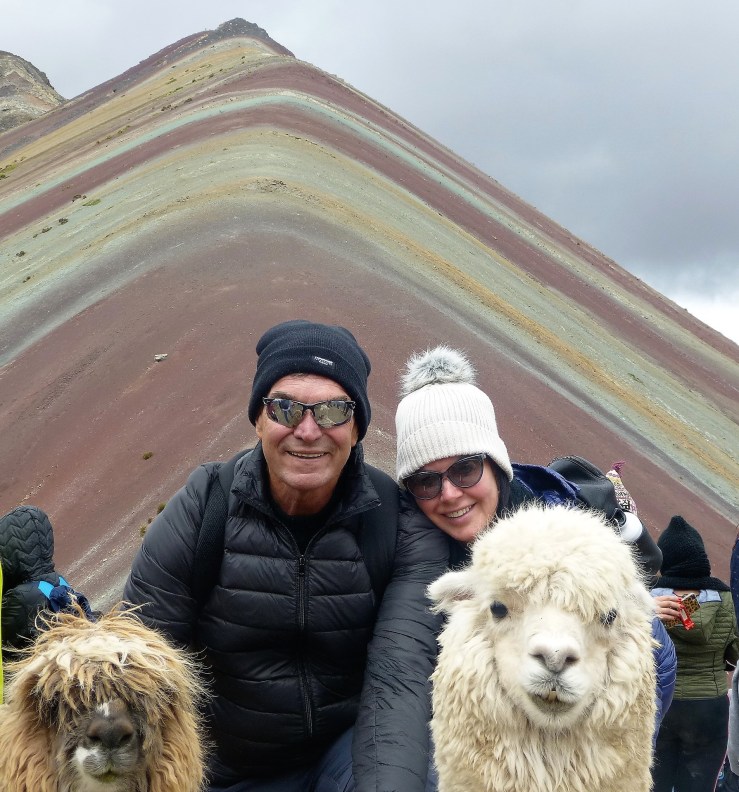

It was time to descend – it was very steep, but so much easier on the lungs going down. 1 1/2 hours to go down. Ten minutes after we left the top, mist and a cloud came in, obscuring all views – we were so lucky with the timing. Felt sorry for all the walkers huffing and puffing still on their way up! Our snow turned into sleet , then light rain on the way down – we didn’t get too wet though. Fabulous experience – it was worth the pain. Apparently, the locals have known about Rainbow Mountain for years, but because they live in such a remote place without communication, the word never got out until 7 years ago. Now it brings in a lot of revenue to the local community.
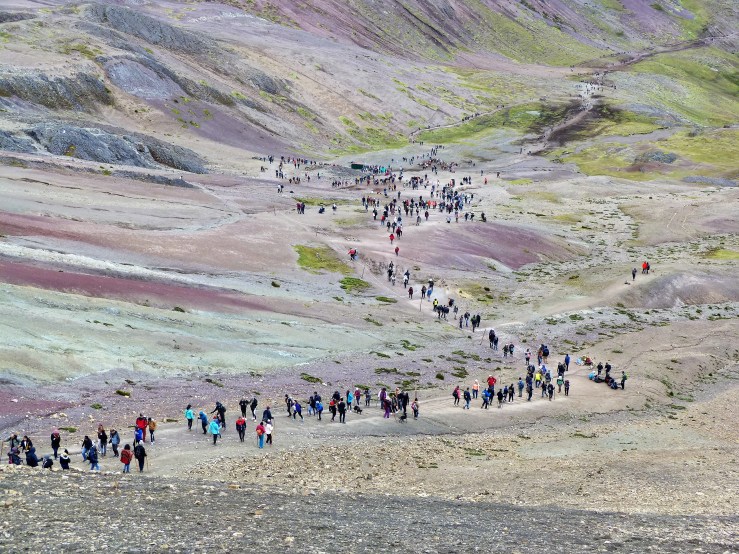

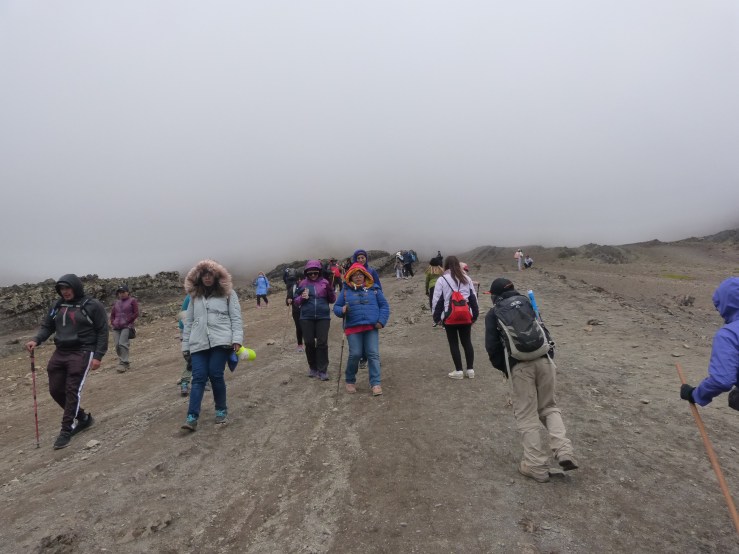
Down the windy roads, stopping at a little town, Cusipata , for lunch at a local restaurant. Tried the Chicha drink ( this one is non alcoholic, it becomes alcoholic after it ferments for a while) – comes from purple corn – not sure I will be rushing back for more!
Another hour’s drive back to Cusco- long day as we don’t get back there until 6.30pm. Had a little look through the San Pedro markets – bought a few last minute gifts, dinner, back to repack the suitcases ( by the way, the new one holds so much extra!),and bed… to rest the weary legs!
Peru – Cusco to Puno
Day 42 18th April
5.45am pickup today – bus trip to Puno today. A very comfy bus with wifi! As well as getting us to our destination, we had a few stops along the way.
The first was the village of Andahuaylillas where we saw a church built in the 1600s – Moorish and Incan influence. Very elaborate.
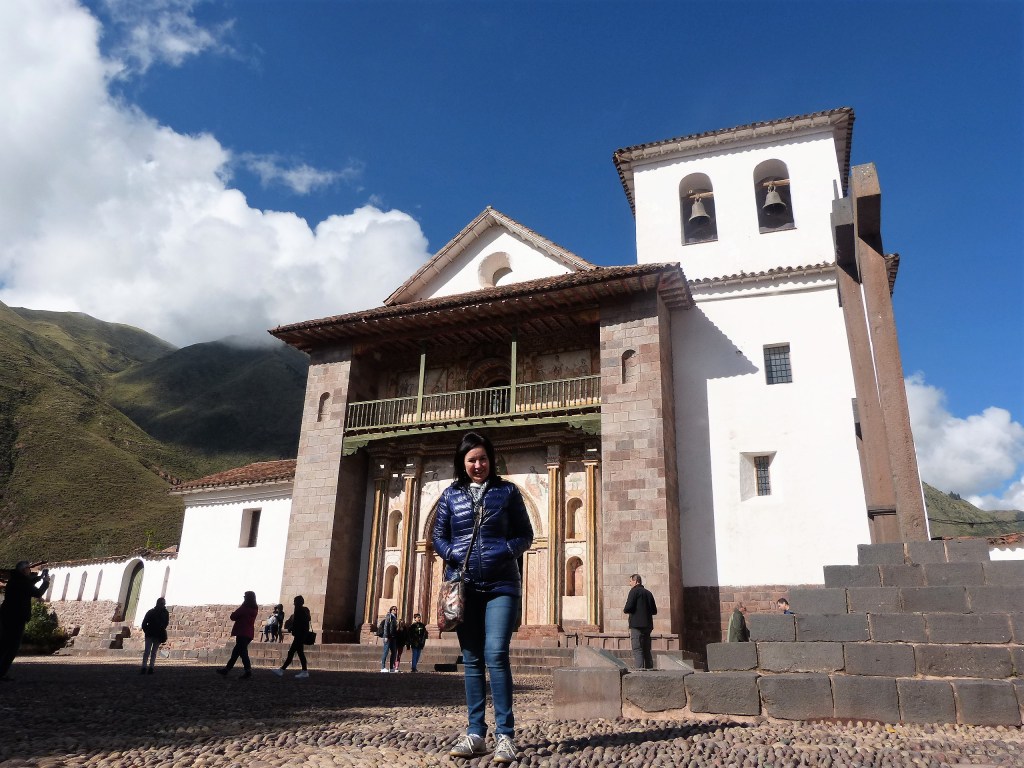
Next we stopped at Raqchi, a 14th century stone and mud temple. We noted some round columns which indicated the pre Incan influence. In the complex are 12 priest family homes, houses, and circular silos that stored grain for when it was a wet season ( El Niño occurs every 7-10 years. The village had a wall surrounding it, 80 kms in length. The stones for the village come from the mountains beyond the wall – a feat in itself moving the rocks!
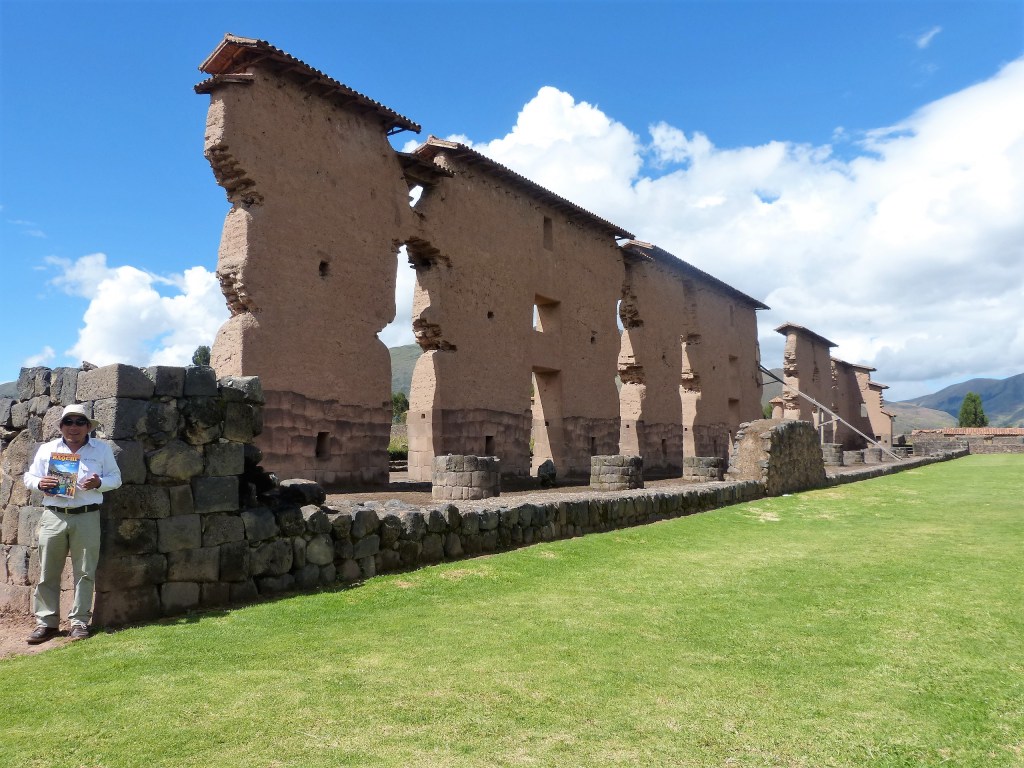

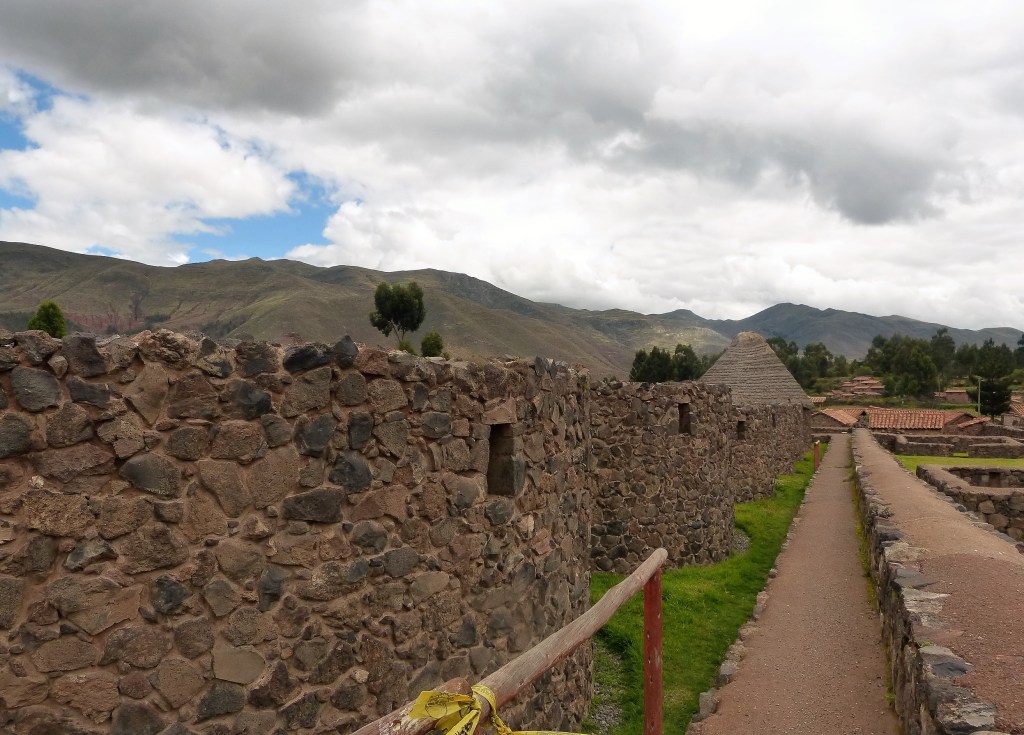
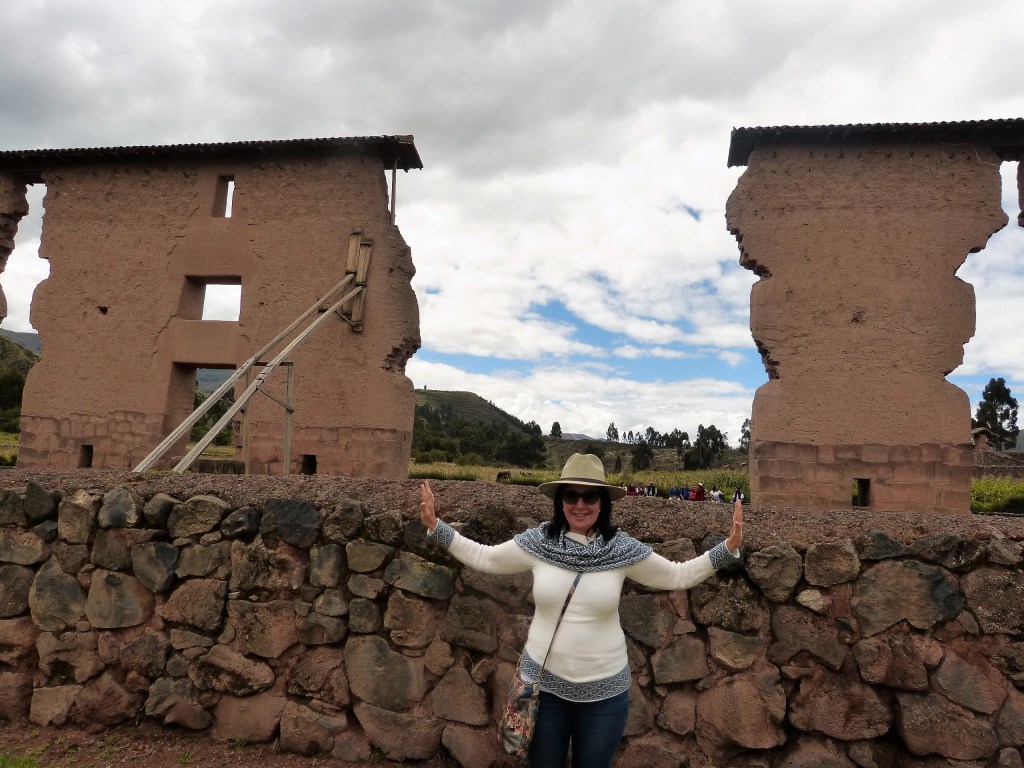
The buffet lunch was a welcome stop – healthy Andean food. Drank a couple of cups of coco tea – next stop is La Raya 4335 metres above sea level. We can see here where the Amazon River starts.
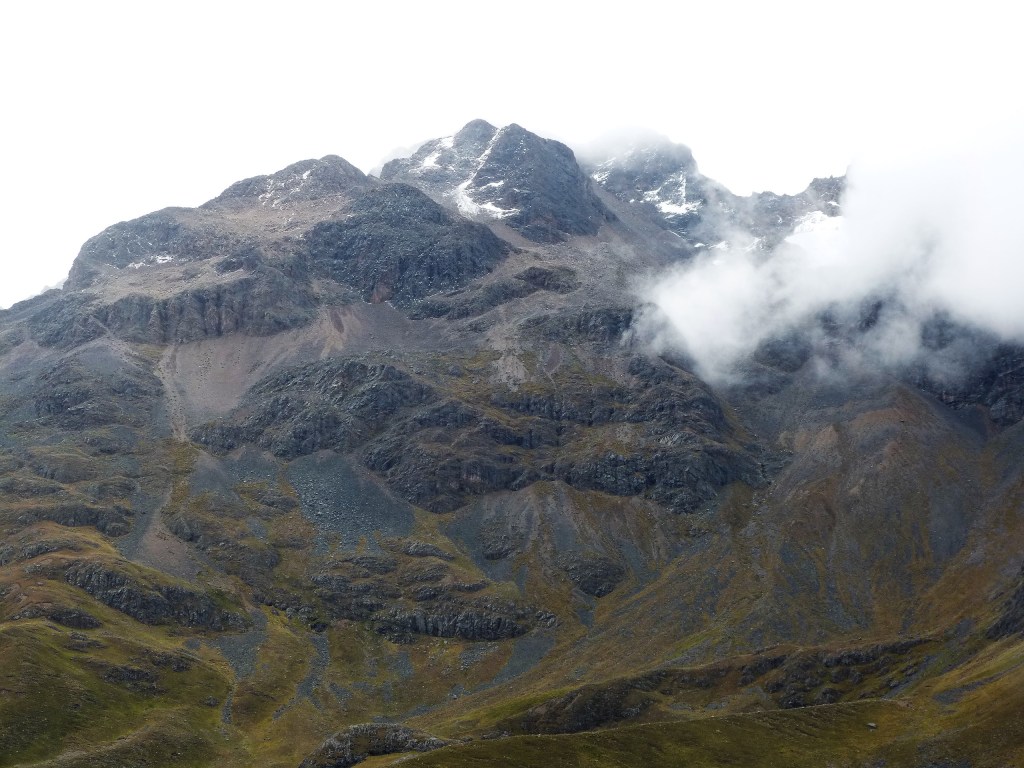
Last stop before Puno was Pukara – first for coffee. This area of Peru is famous for coffee, Tunki (organic), and Unikari ( this one the the coatis eat the beans and excrete them – voted best coffee in the world for 3 years). The tunki coffee was delicious. Also a museum here – statues from pre Inca times 200BC. We noticed a similarity with the Mayan works in some of the artwork.
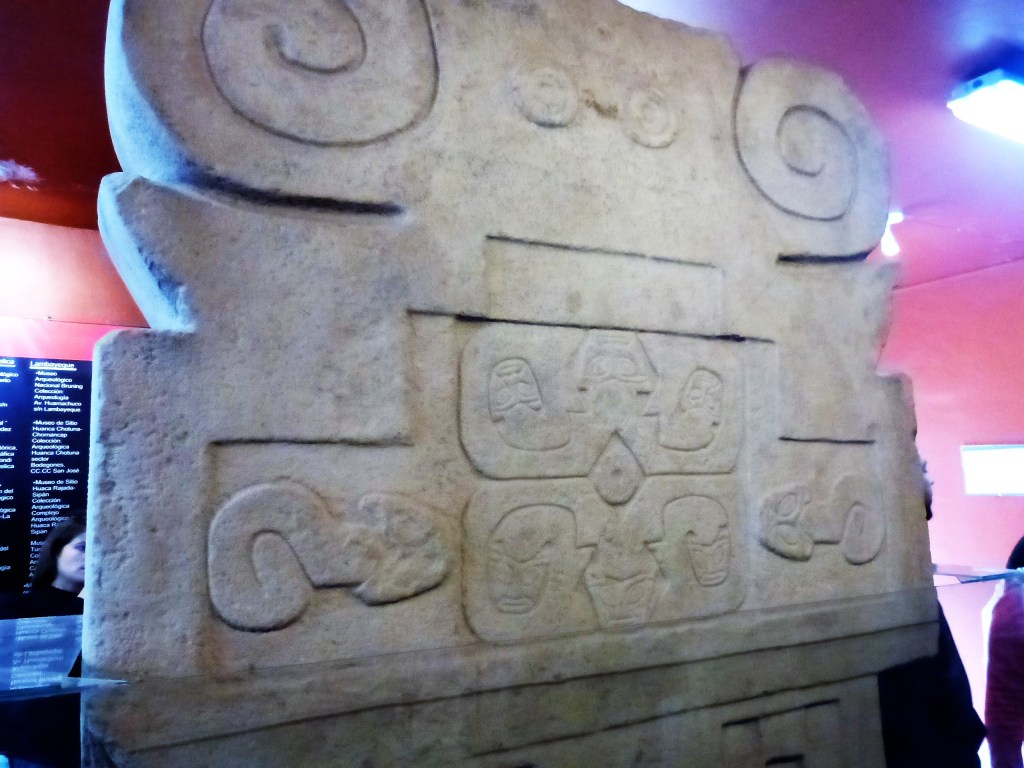
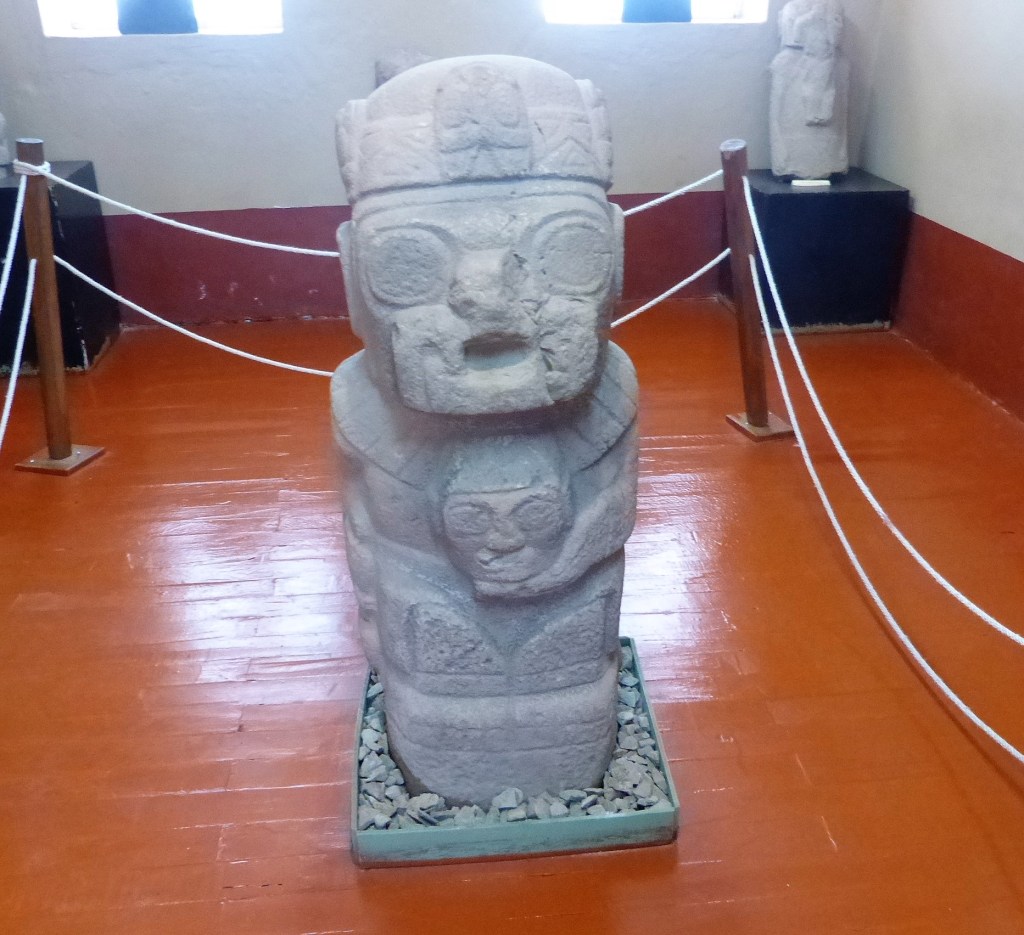
Arrive in Puno at 5.15pm. It was a long day but the stops along the way made the trip very interesting, and the scenery was very picturesque- farmland and mountains.
Puno sits at 3800 metres above sea level on the western side of Lake Titicaca. Founded in 1668, Puno melds the two ancient civilisations of the Aymara from the south and the Quechua from the north with colonial influences. Both these languages are spoken, plus Spanish. Only have the night here – saw the Plaza de Amas and the Catedral de Puno.
Walked down Lima St where all the action was. More craft markets – surprise surprise! Found a very cosy restaurant with a fireplace (7 degrees outside), and both had another delicious alpaca meal. I had the Vino Pique to go with it – hot red wine with annisette in it ( aniseed flavour) – loved it, and very warming.
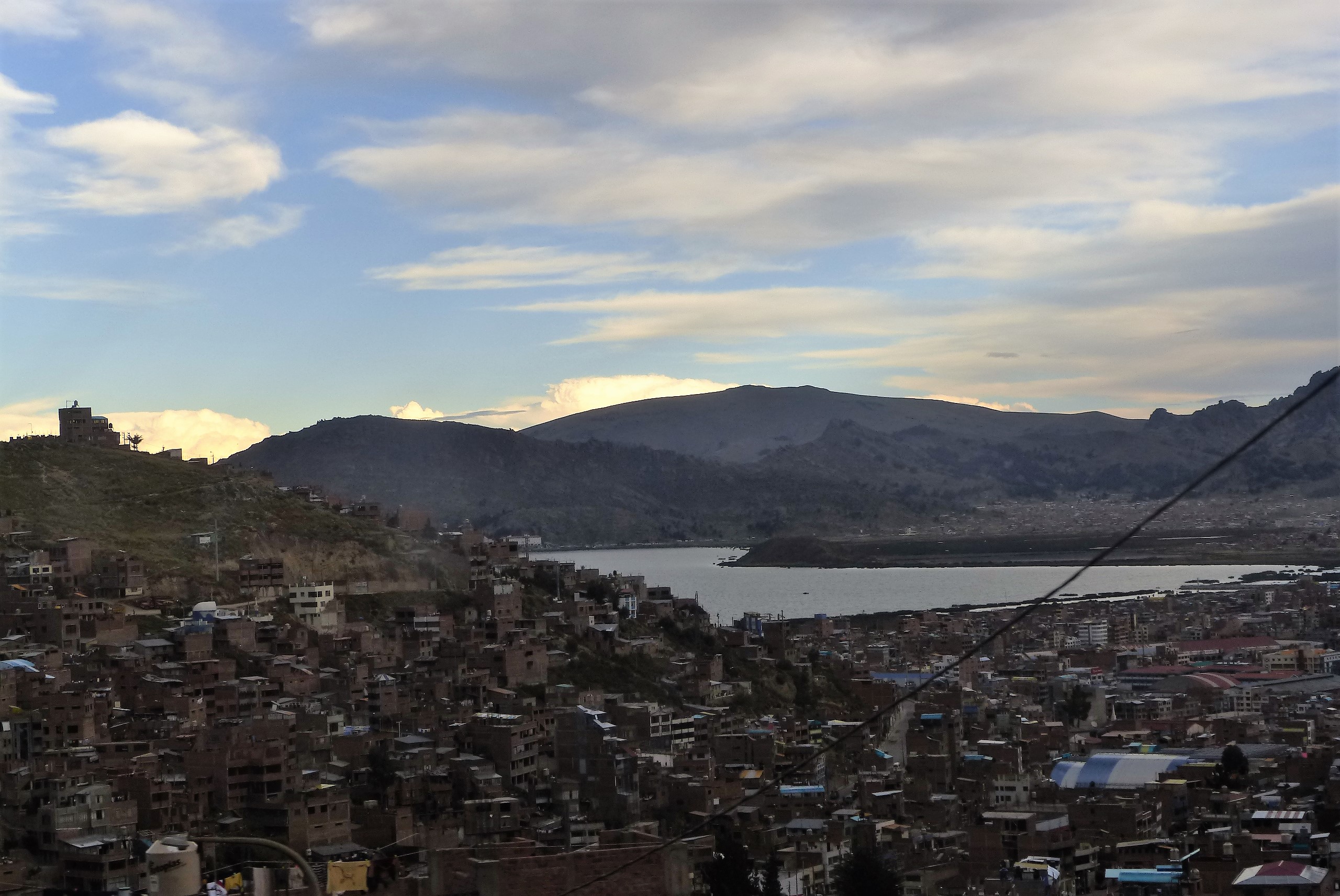
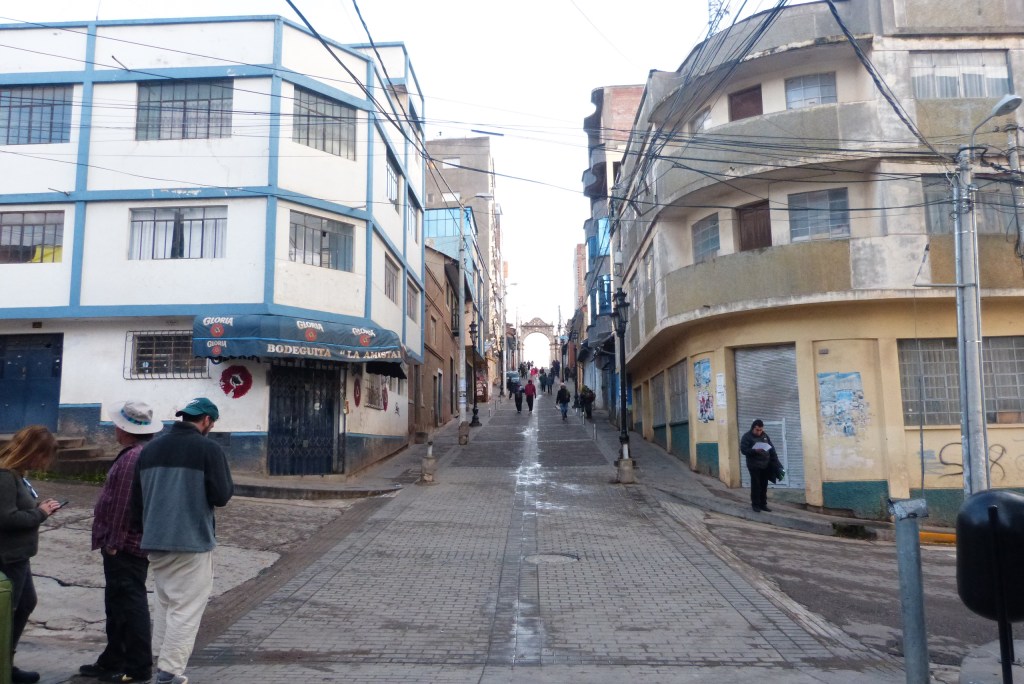
Bolivia – Lake Titicaca
Day 43 19th April
6.25am pick up today. Minivan to Copacabana in Bolivia skirting the lake and looking at farms with potatoes (3000 varieties), corn, quinoa and mains. Also trout farms. At 3800m, Lake Titicaca is the highest lake of its size in the world – it covers 8300 sq kms. Water levels fluctuate according to the season. Numerous islands are sprinkled across the lake and the inhabitants cling to a traditional way of life centred around fishing, farming and weaving. They describe their buoyant lifestyle as living between water and heaven.


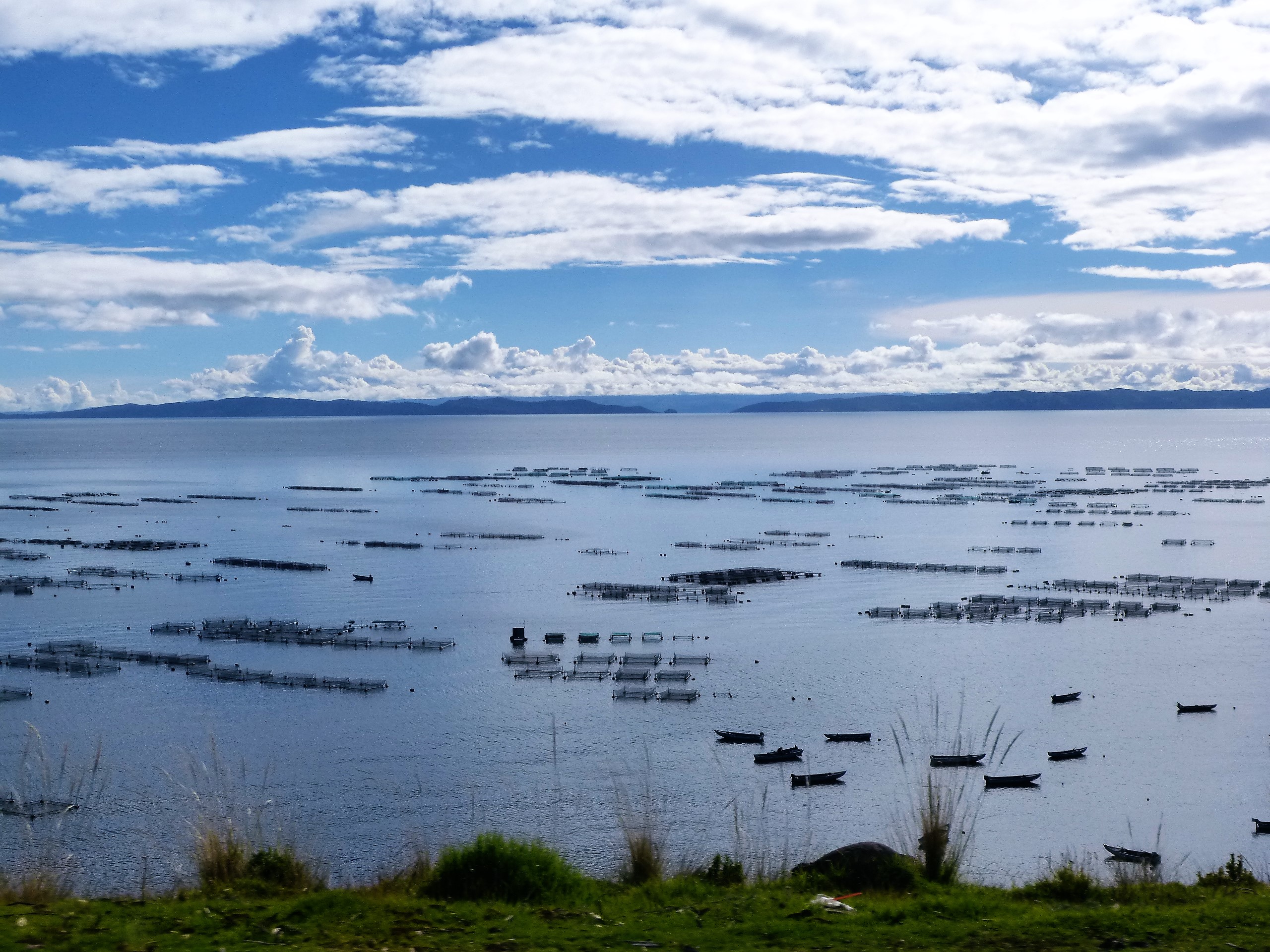
Had the biggest disappointment half way to Copacabana – we thought we were going to one one of the floating reed islands – but we weren’t! We were going to Isla del Sol instead – where there are no reed islands. I was so disappointed to say the least. Actually, I was angry – I have always wanted to see those islands. Obviously a break down in communication somewhere.
Walked through the Peru/ Bolivia border, through Immigration. Farewell Peru – it’s been fabulous!
Isla del Sol is located in Bolivian waters and according to legend it is the birthplace of the sun, and his son, the first Inca, Manco Capac. We had to walk through a market place near the wharf – everyone was having a great time because it was the Easter Holiday. Went into a famous church ( I was not in a mood for a church after our huge disappointment, so didn’t take a lot of notice) – people were queuing to lay flowers for Good Friday, some had walked from La Paz, Bolivia’s capital to make the pilgrimage.
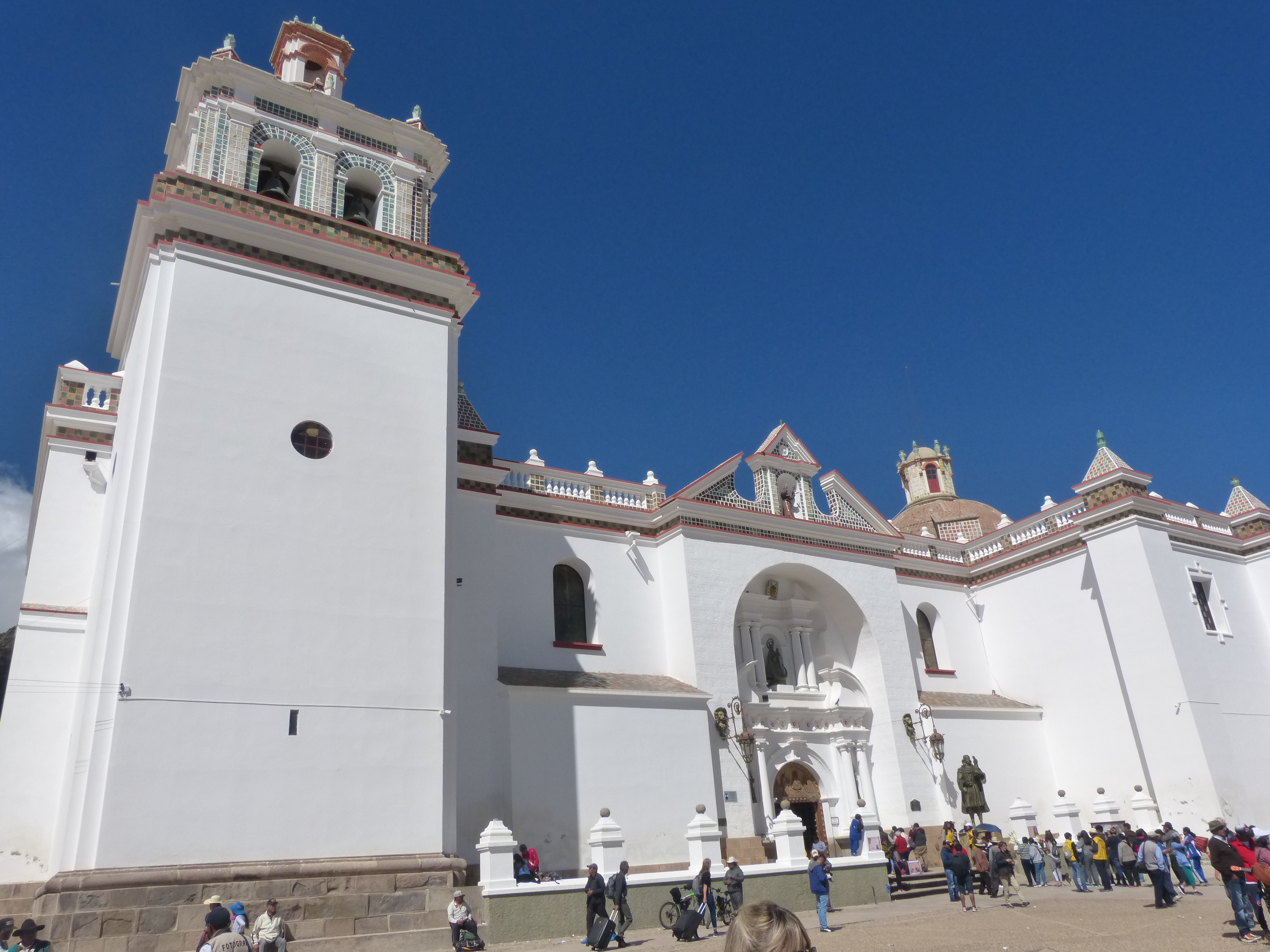
Boarded a catamaran which took us to Isle del Sol. Once there, we walked up 120 steep steps, where we reached the fountain of Youth – we were very liberal with our splashing! More steps, and we then visited the Inti Wata Cultural Complex where we went to an underground museum which had pre Incan artefacts, saw how they made reed ships and the Pachamama agricultural Inca terraces, and had a ceremony with a Shaman. Walked back down the steps, had a short ride in a Titikaka reed vessel- that’s as close as it gets to my floating reed islands. The whole experience I found totally underwhelming I have to say.

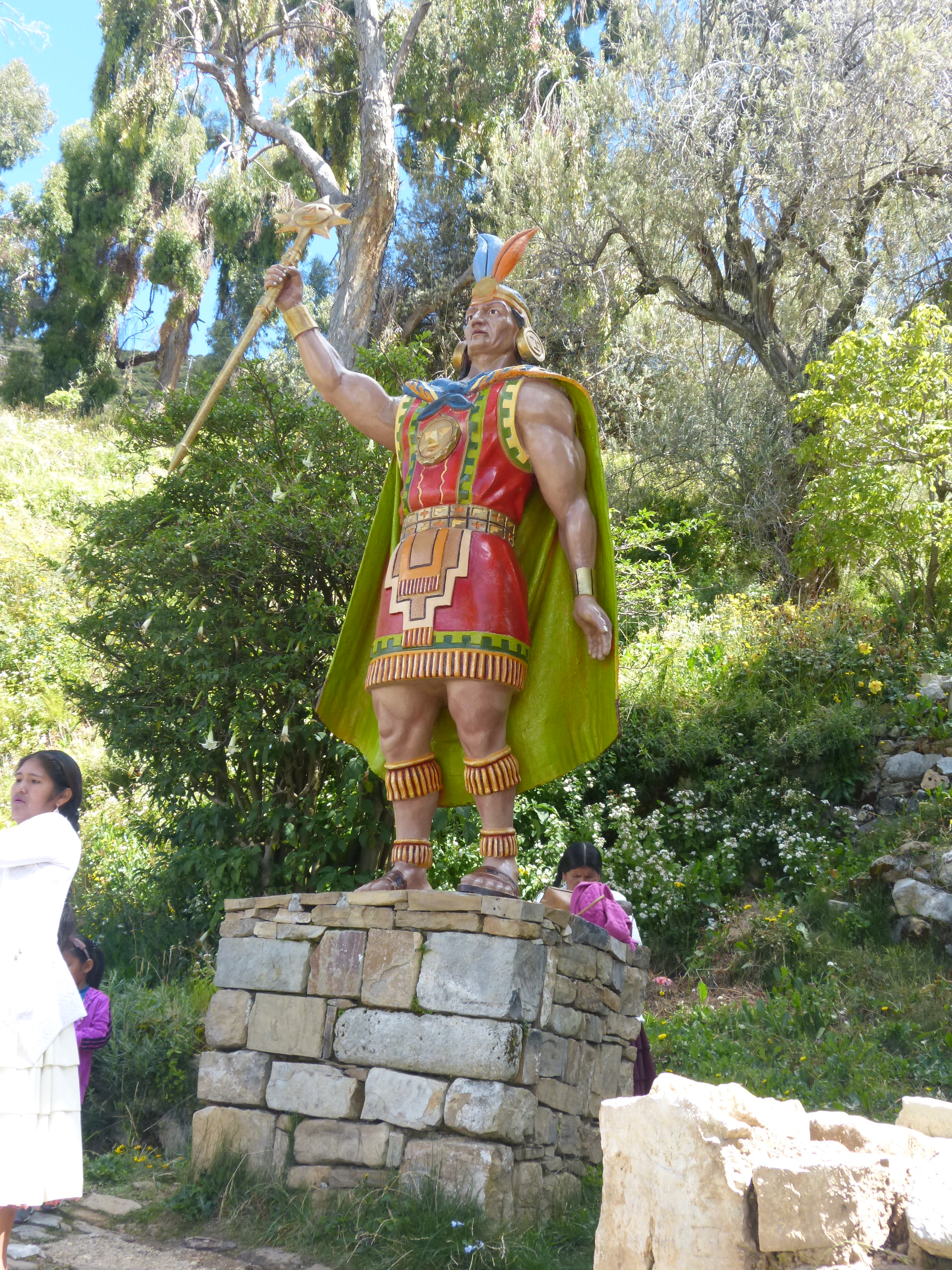

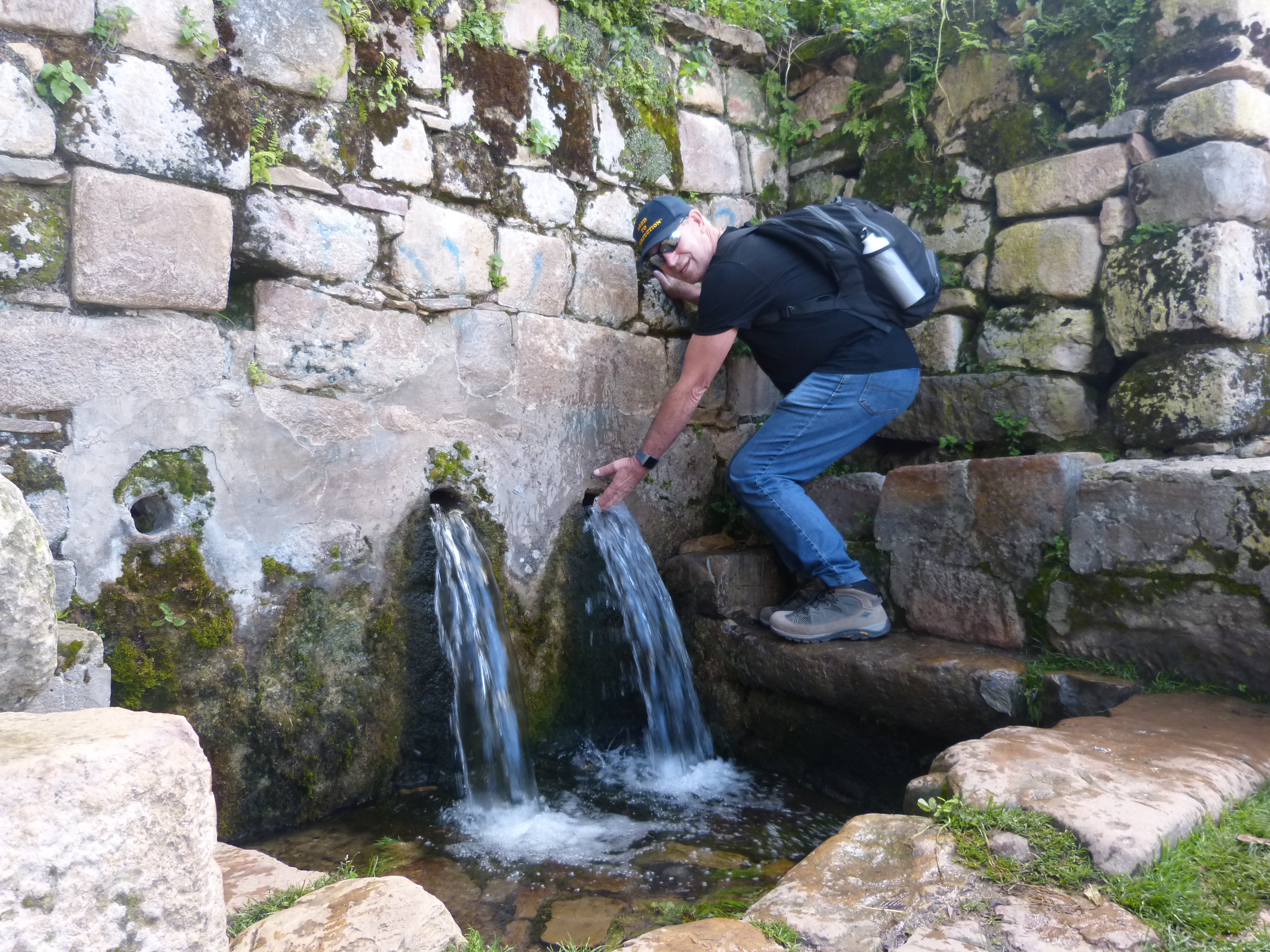
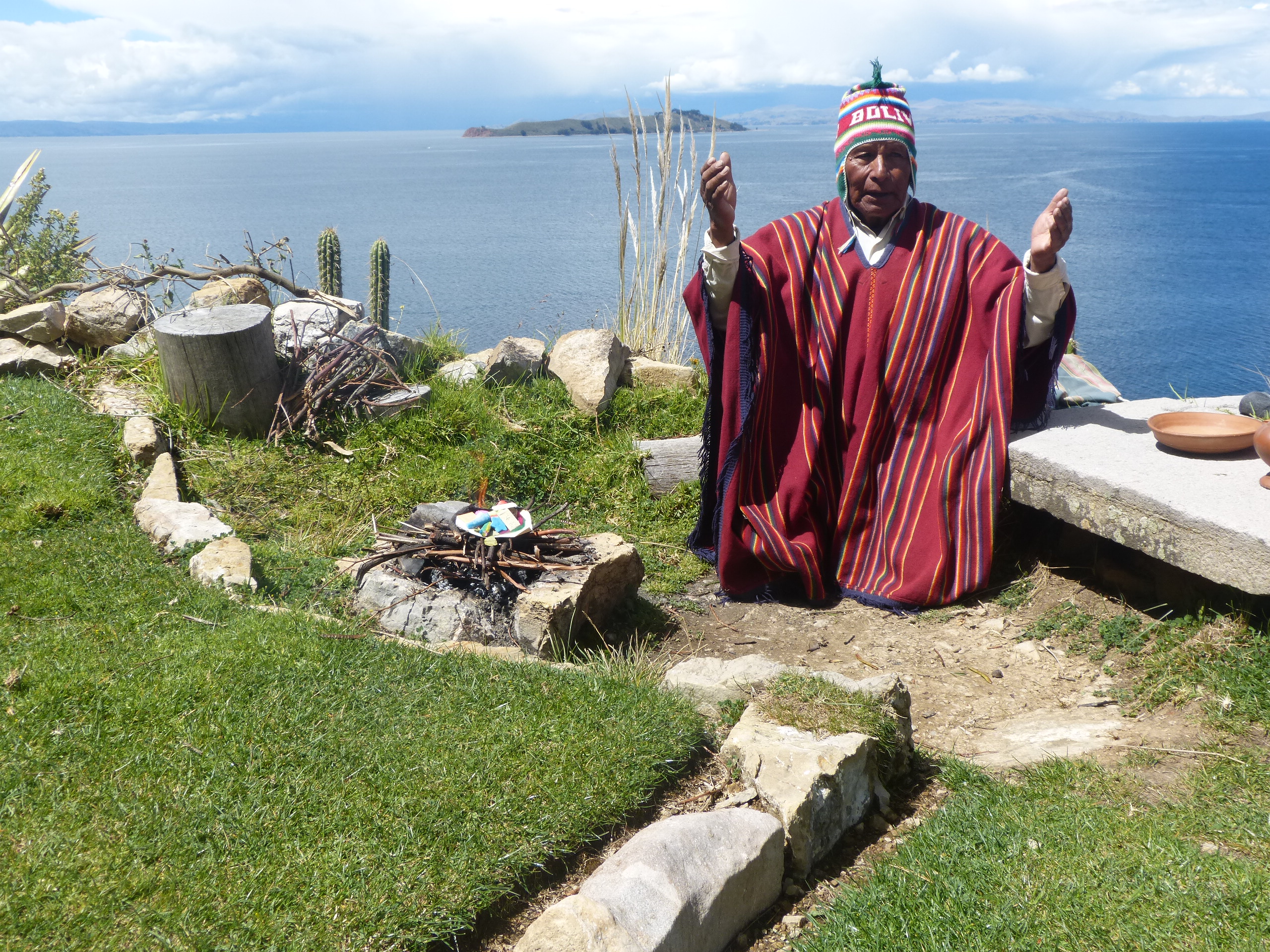
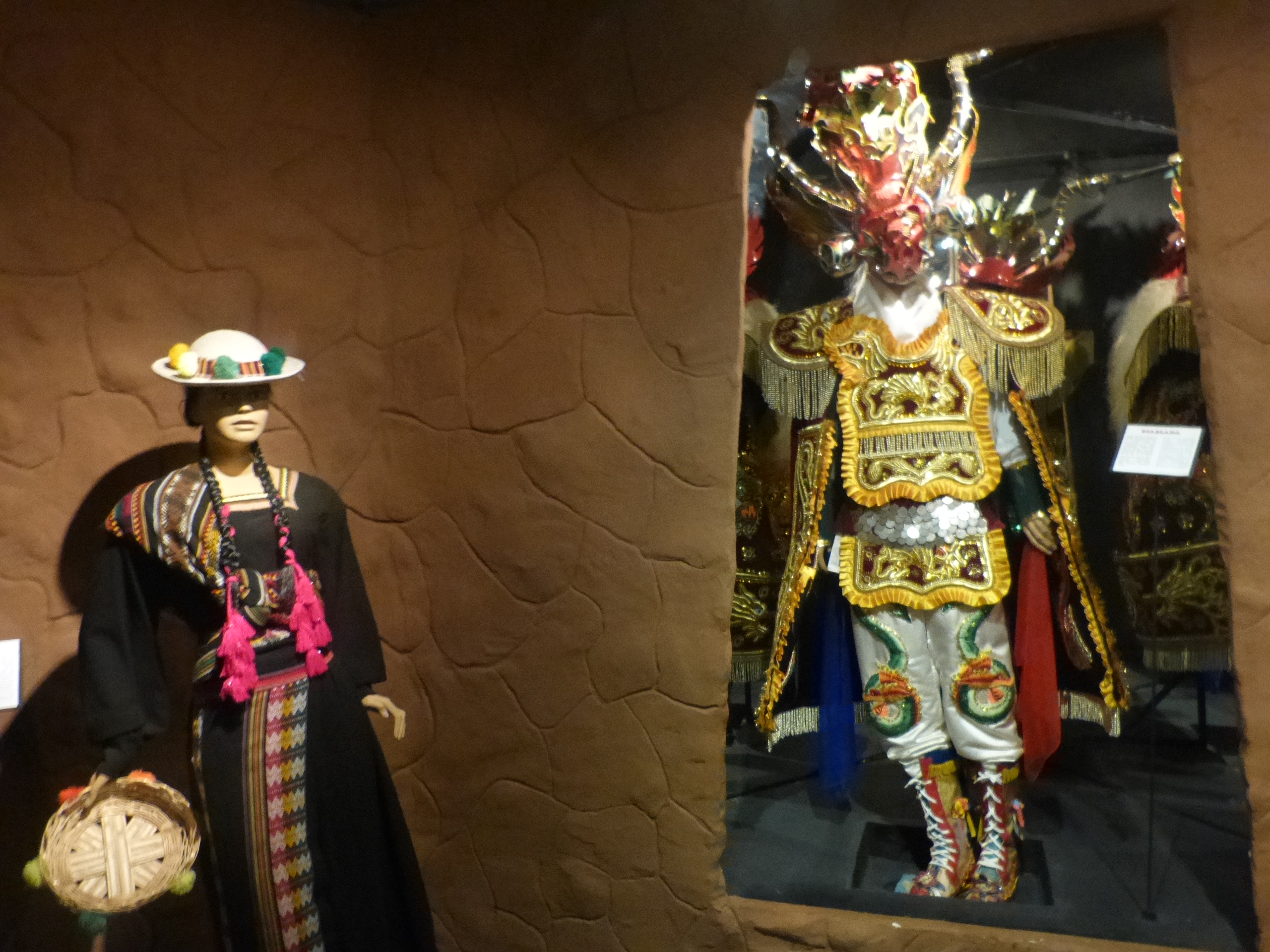
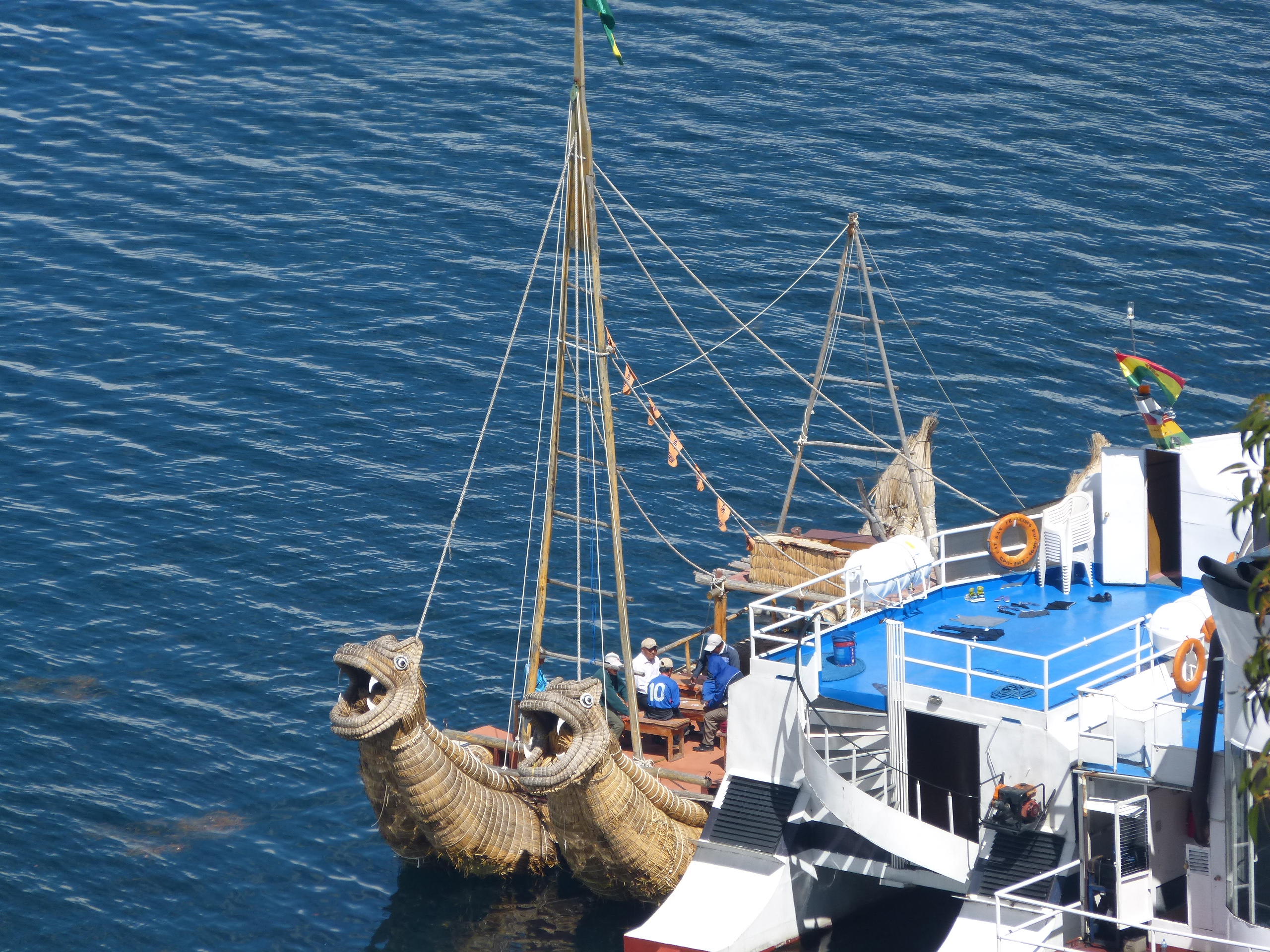
Back to the catamaran for a traditional Bolivian lunch, and a 2 hour trip to the bus. The lake is quite picturesque, but not a lot of activity happening to look at – lots of water!
Another 2 hours in the bus, enjoying some beautiful snow capped mountains, and getting up to 4100 metres, we then came down to La Paz, the highest capital city in the world at 3630 metres. It is really the administrative capital, but everyone refers to it as the capital. Sucre is the capital city. Local women wear traditional clothing – colourful multi layered petticoats, fringed shawls, lace aprons, and bowler hats – not quite sure how they stay on!
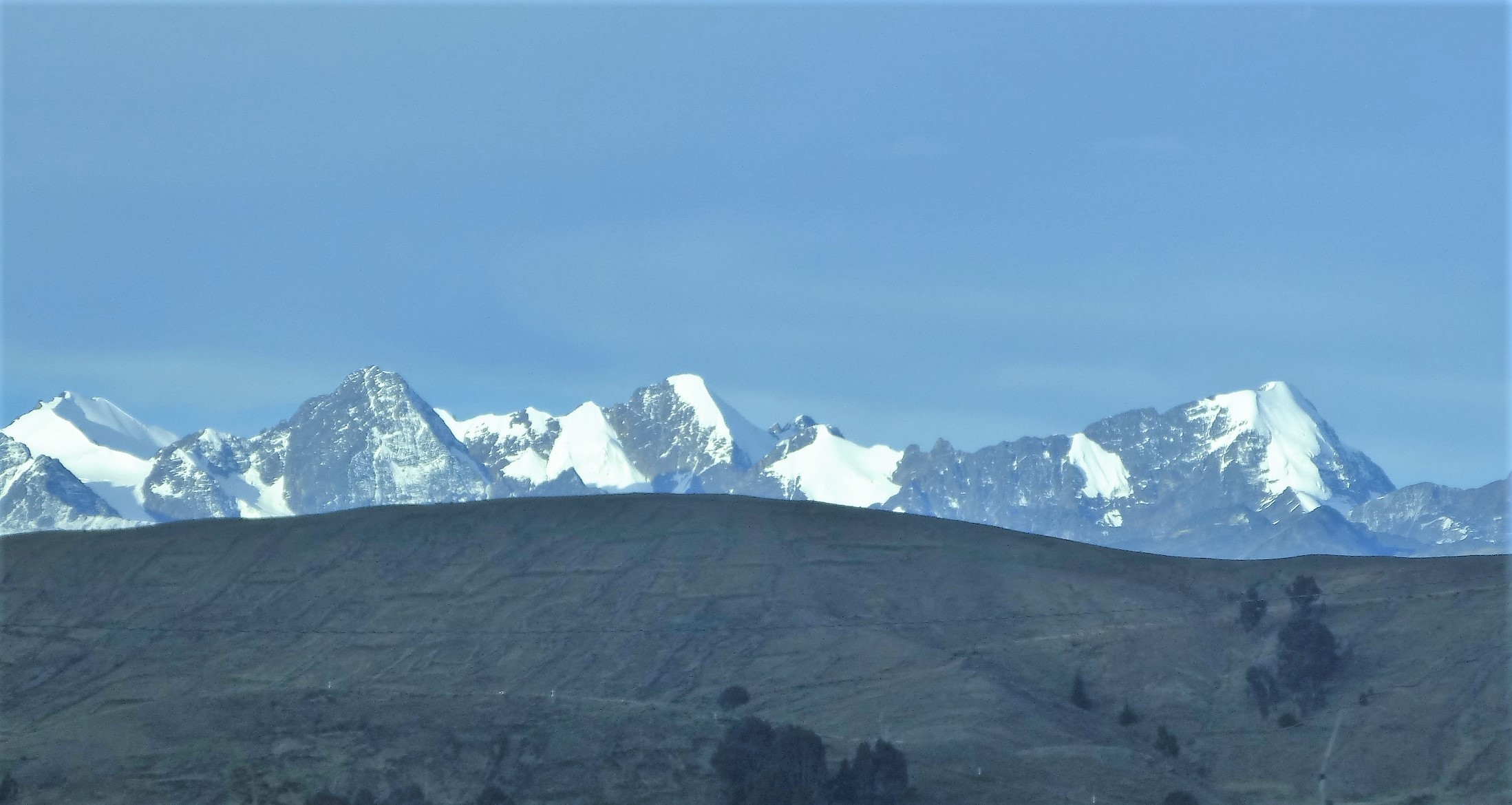
Stayed at Hotel Rosario, an expression of Andean architecture, where we had a briefing from our next guide as to what lay ahead for the next 3 days. It had been a very long day- 13 hours of travelling, with not the result we had hoped for, so we ate at the hotel and just went to bed. Moods were low, and we had a 5am pickup in the morning!
Bolivia – Uyuni to Chilean Border
Day 44 20th April
5am pickup as promised – 2 degrees outside! We finally succumbed to having to pay excess baggage – 60 Boliviano (local currency) for 6 kg – approximately $14 our money so can’t complain. We knew this was a small plane, Bombardier 100, and only allowed 20 kg checked luggage, and 5 kg hand luggage – we had at least 10kg each, so couldn’t complain!
Picked up in Uyuni by our guide for the next few days, Freddy, and our driver Edwin. We are at 3600 metres above sea level. Around 5 degrees.
First we went to the train cemetery- I had no idea what that was about! Because there was so much mining in Bolivia – silver, zinc and tin- trains were needed to move the minerals. Unfortunately, they were using trains designed for sea level areas, and the high altitude gave an imbalance between the internal steam pressure and the outside thin air causing the boilers to explode. Over time they worked out what to do, but in the mean time, they went through a lot of trains! Hence the train cemetery.
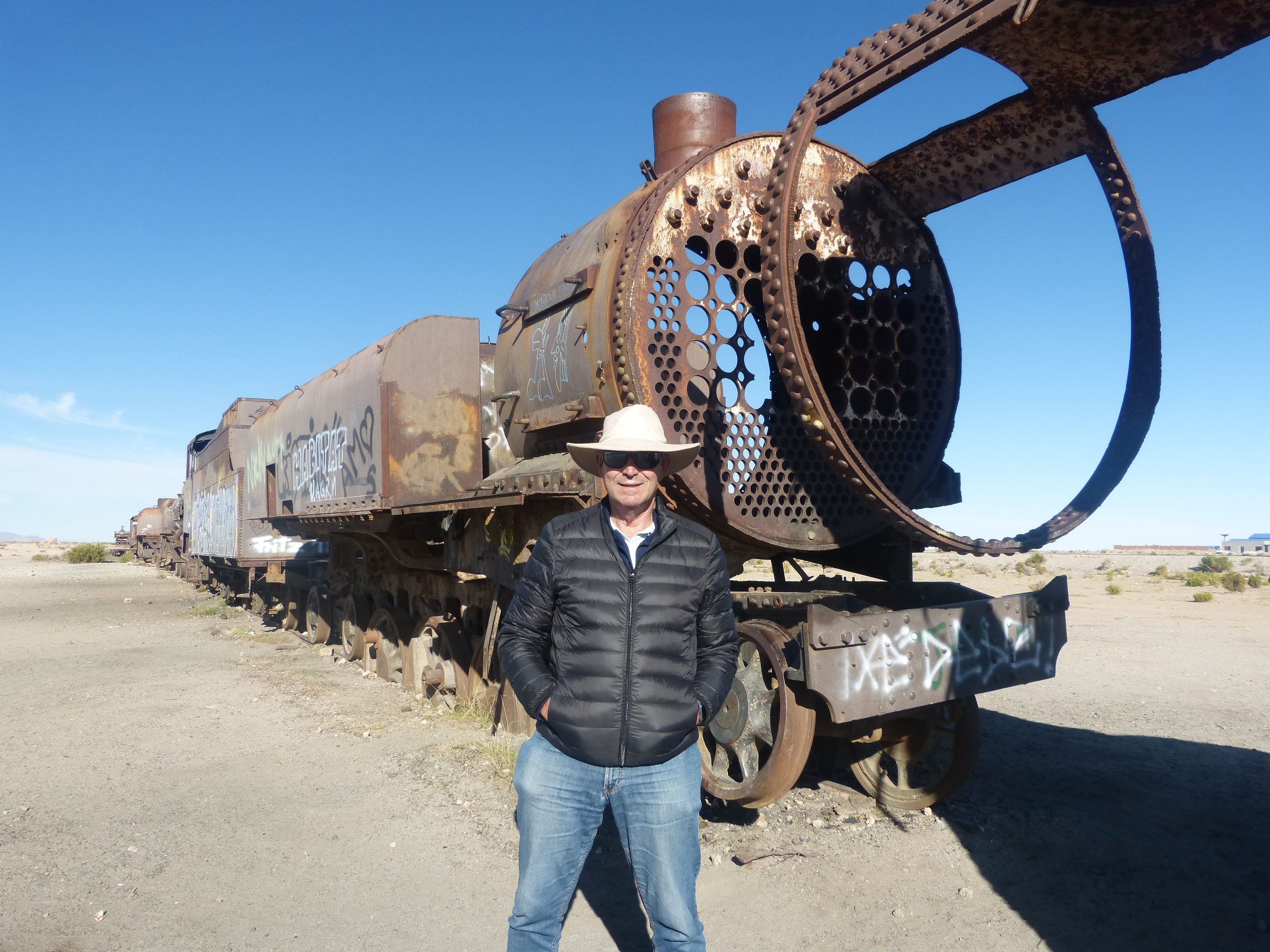
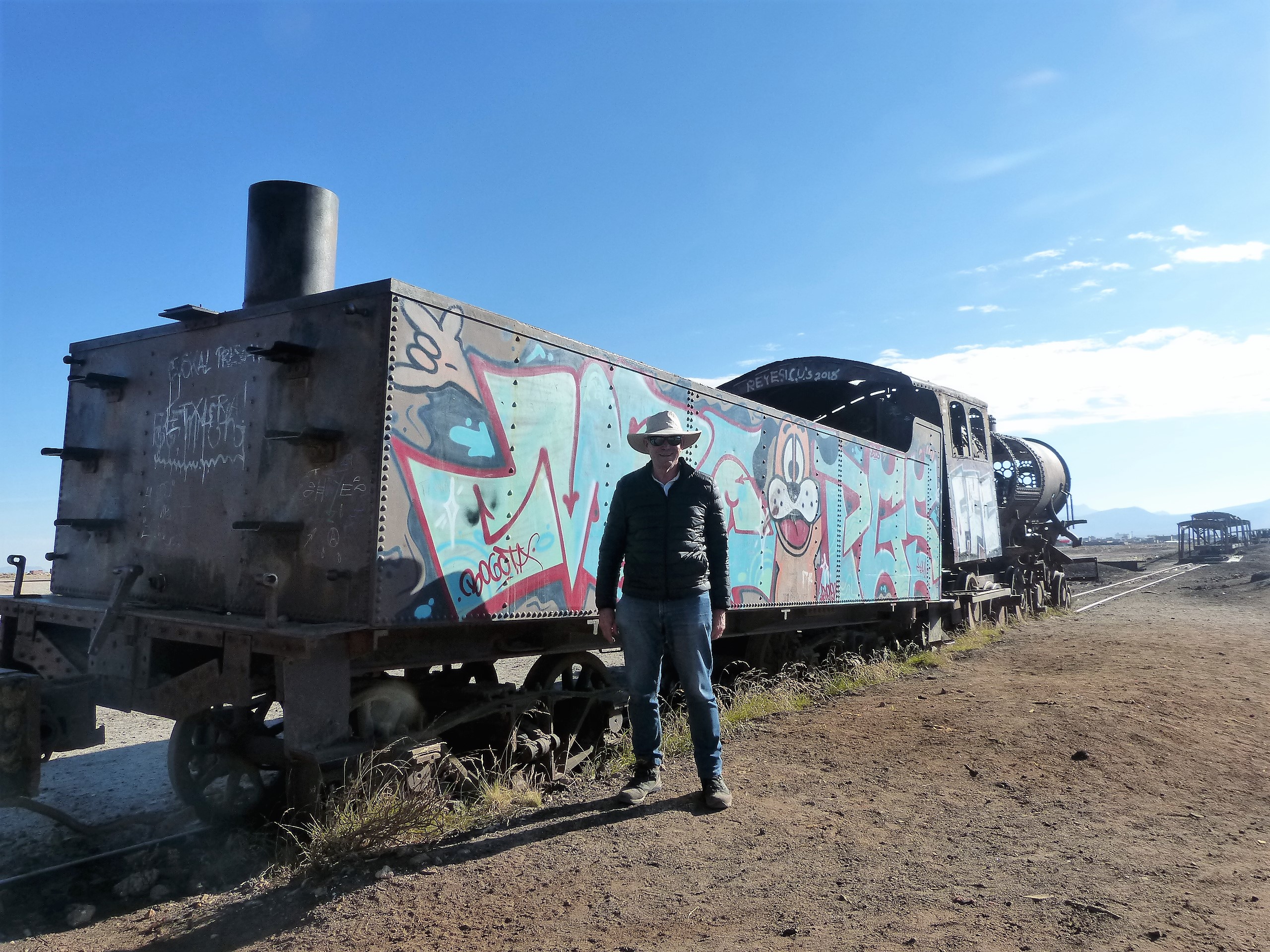

A short walk around Uyuni – that took about 5 minutes! A nice hot coffee – here is an altitude fact – water boils at 90 degrees, so often the coffee is not very hot. Another altitude fact, La Paz only has 4 fire engines, and very fat firemen because there are such few fires in high altitudes.

Now we head to the Salar de Uyuni – the salt flats, only half an hour away. See wild vicuña and wild camelids. Drive through the little village Colchani , 3660 metres, dirt roads, buildings made of mud bricks, lots of dust! Went into a little workshop where we see how the salt is pulverised, iodised and put into bags.
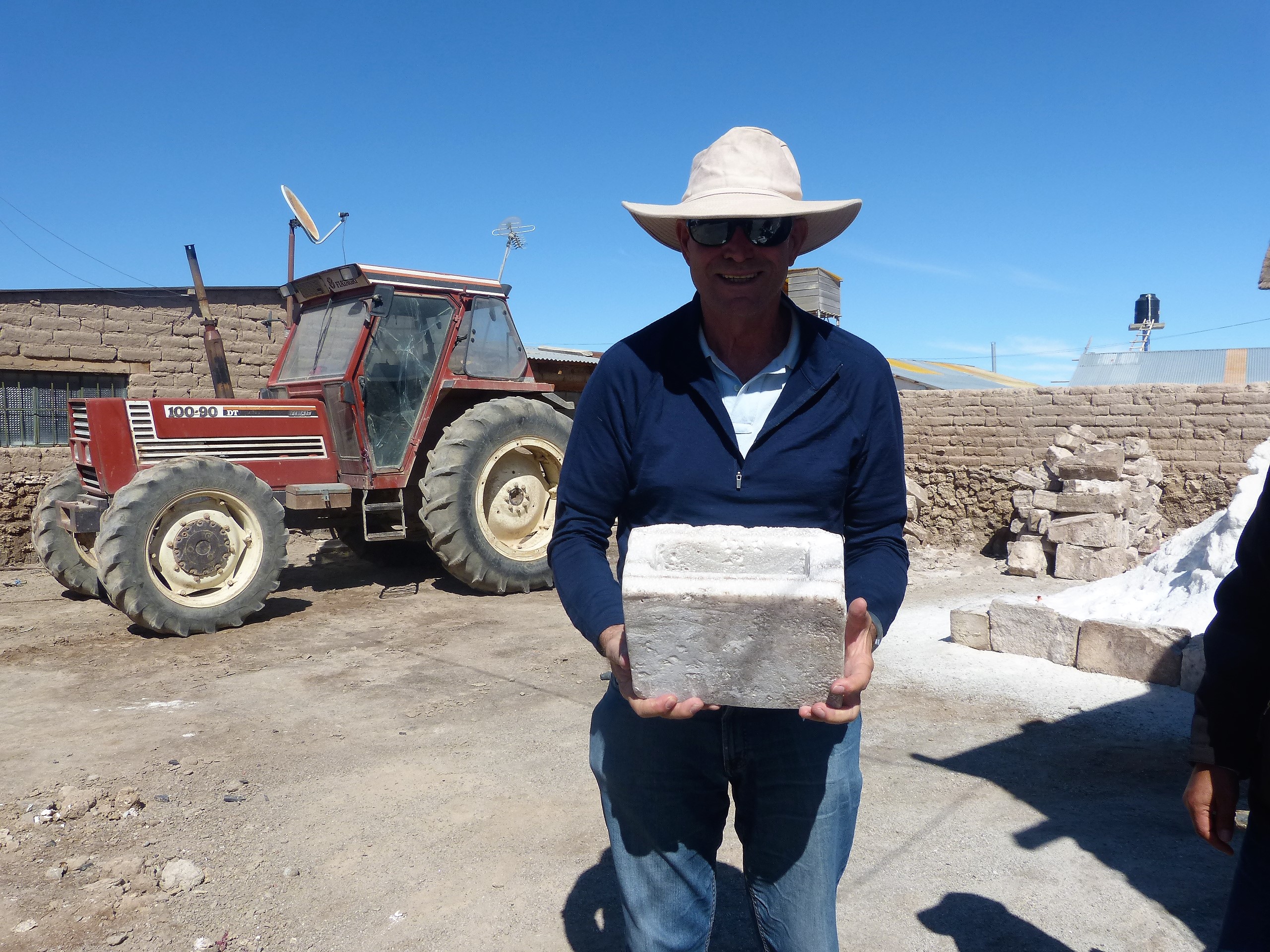
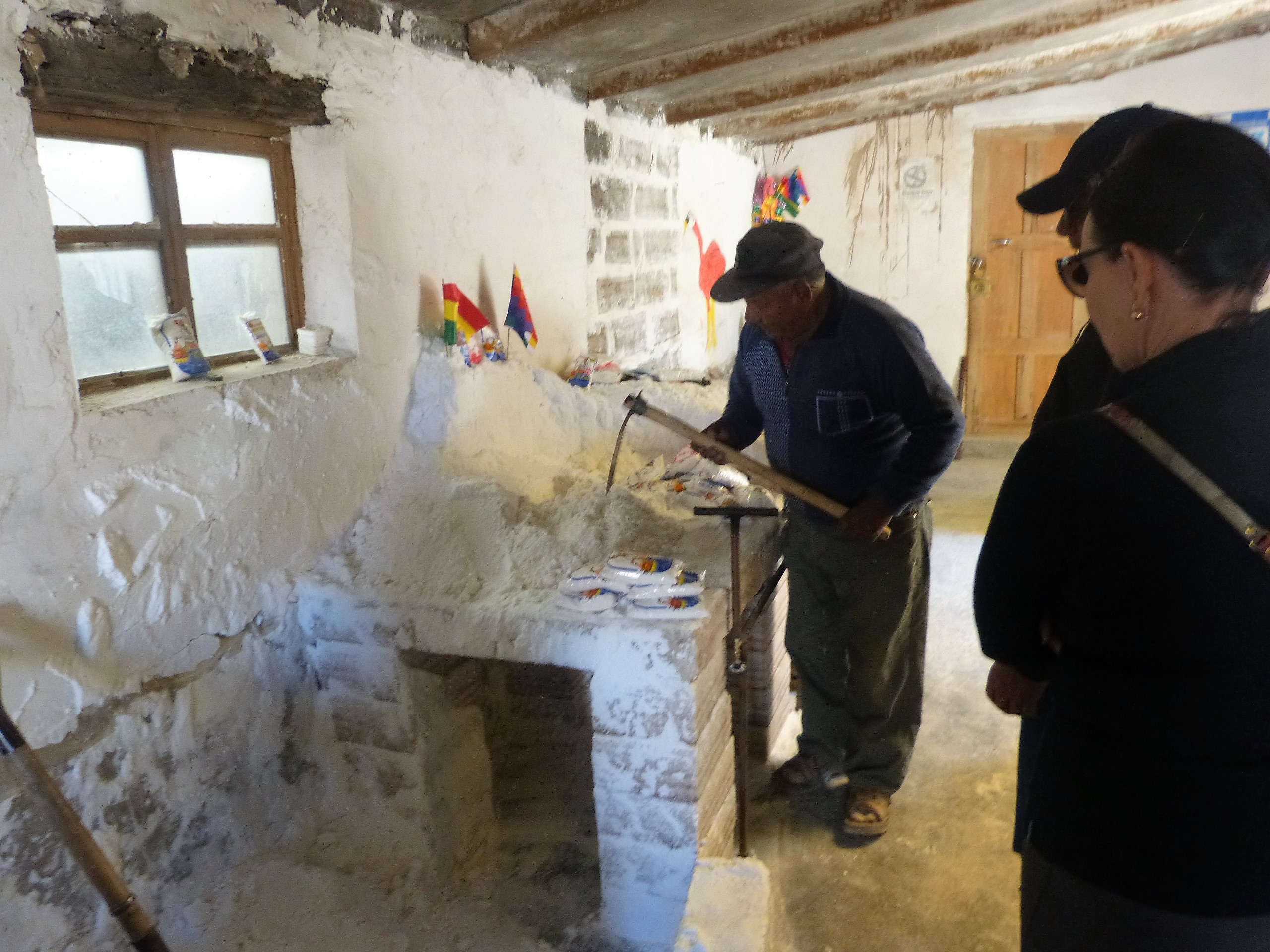
Onto the salt flats – ahead we see a sea of white- anyone would think we are at the beach. The salt flats are 10,000 sq kms, formed many years ago when there was an inland sea. The area is like a downward facing pyramid. The top half being salt which is 120-140 metres thick. Below is water which has a high concentration of lithium – there are areas in the salt flats where you can see water bubbling to the surface. The lithium is collected and used for batteries and drugs. Cool still on the salt, as it doesn’t absorb any heat.


Saw the Dakar Rally monument which recognised the Dakar Rally held here a few years ago. Also a building made of salt which was once a hotel, now used as a picnic area. Everything made of salt – walls, tables,chairs, bar etc.


Drove 70 kms across the salt to a Incahuasi Island (a rock island in the middle of the salt flats)there are quite a few of them, formed by volcanic activity many years ago. There are super sized cactuses growing on the island – they grow at 1 cm a year. We had a walk around the island – there were more stairs involved – amazing view point at the top. Here we were on a cactus island, surrounded by white salt,and the gorgeous Andes mountains in the background. Spectacular!
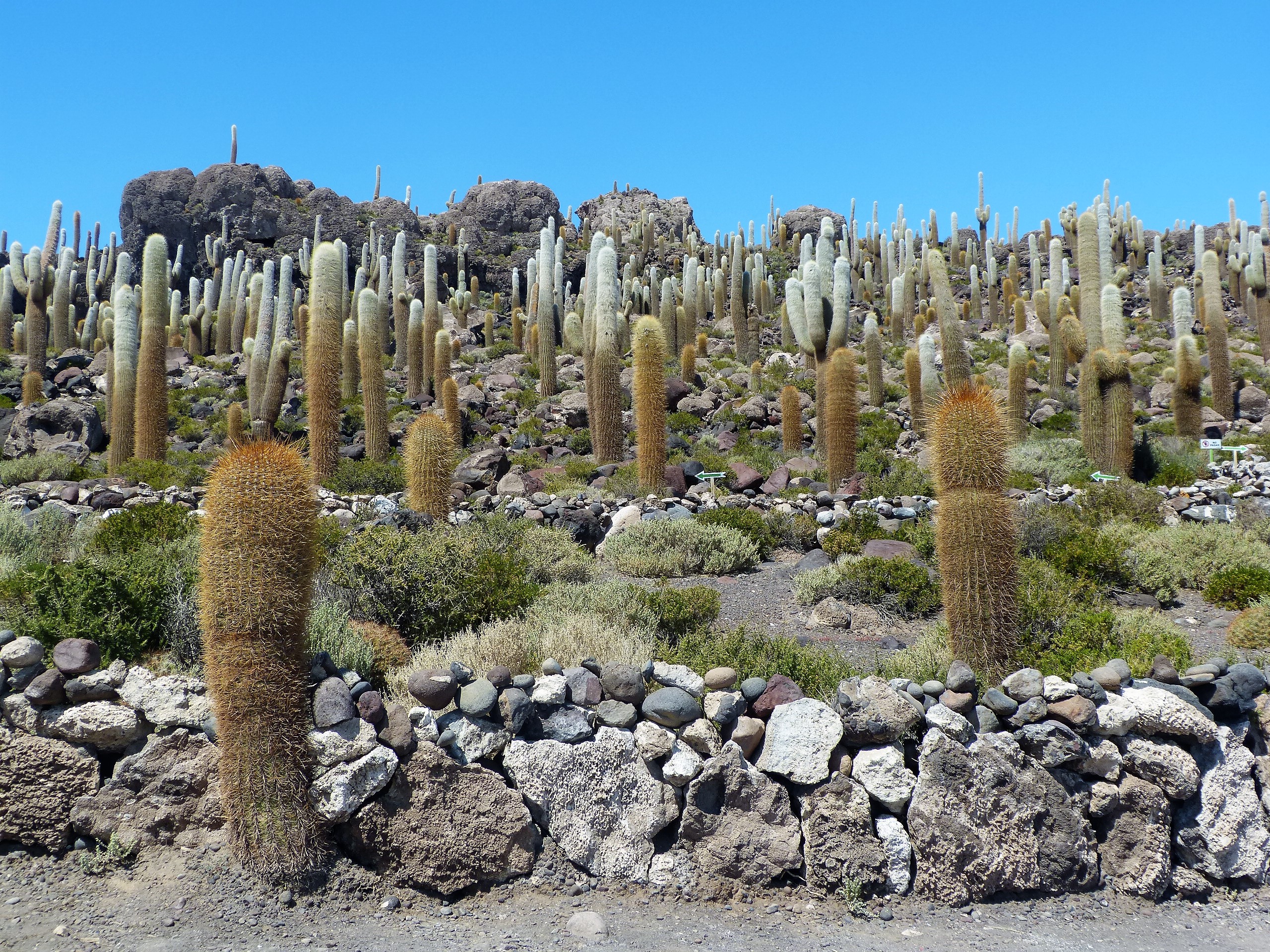
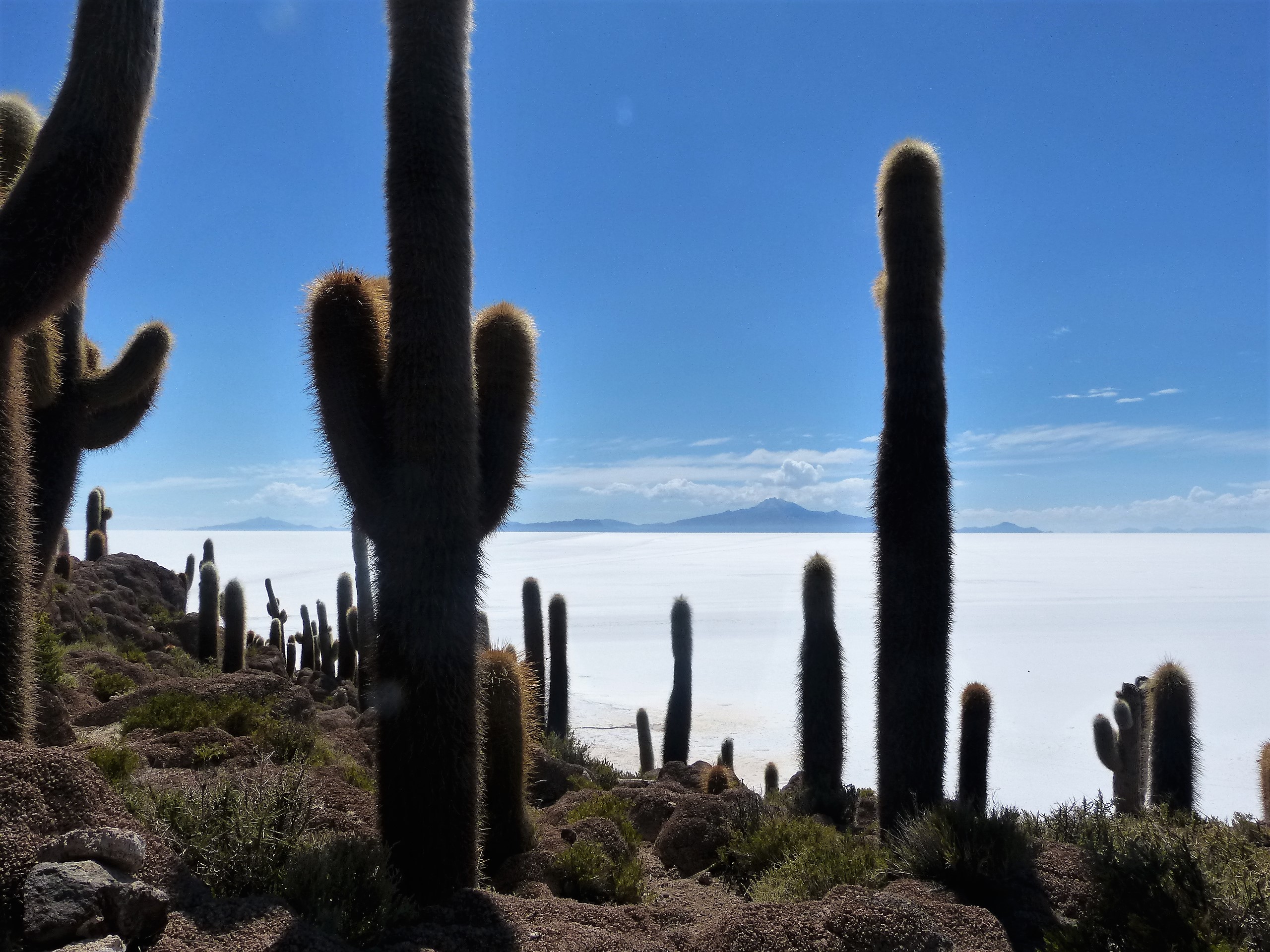
Down we go, then walked across the salt 300 metres to our car. Edwin, our driver, has a table and chairs set up, under an umbrella, a gourmet chicken and salad prepared, complete with a bottle of red wine to wash it down. So surreal. It was magical.

Then we had a little walk across the salt flats to do a little trick photography – Freddy had all the good ideas! It was a bit of fun!


Drive back across the salt flats and straight to our hotel which is on the edge of the salt flats – Palacio de Sal Hotel – it is unique for being entirely built of salt – walls, floors, ceiling, furniture, sculptures – absolutely stunning! We kept ogling at everything. For dinner we tried the llama- slightly tougher than the alpaca, but still nice. Also had lamb which was divine.
Tried the national drink Singani – very nice, also a Chuflay classic which is also made from Singani. Bolivian beer is Huari.
So now for a big night’s sleep!
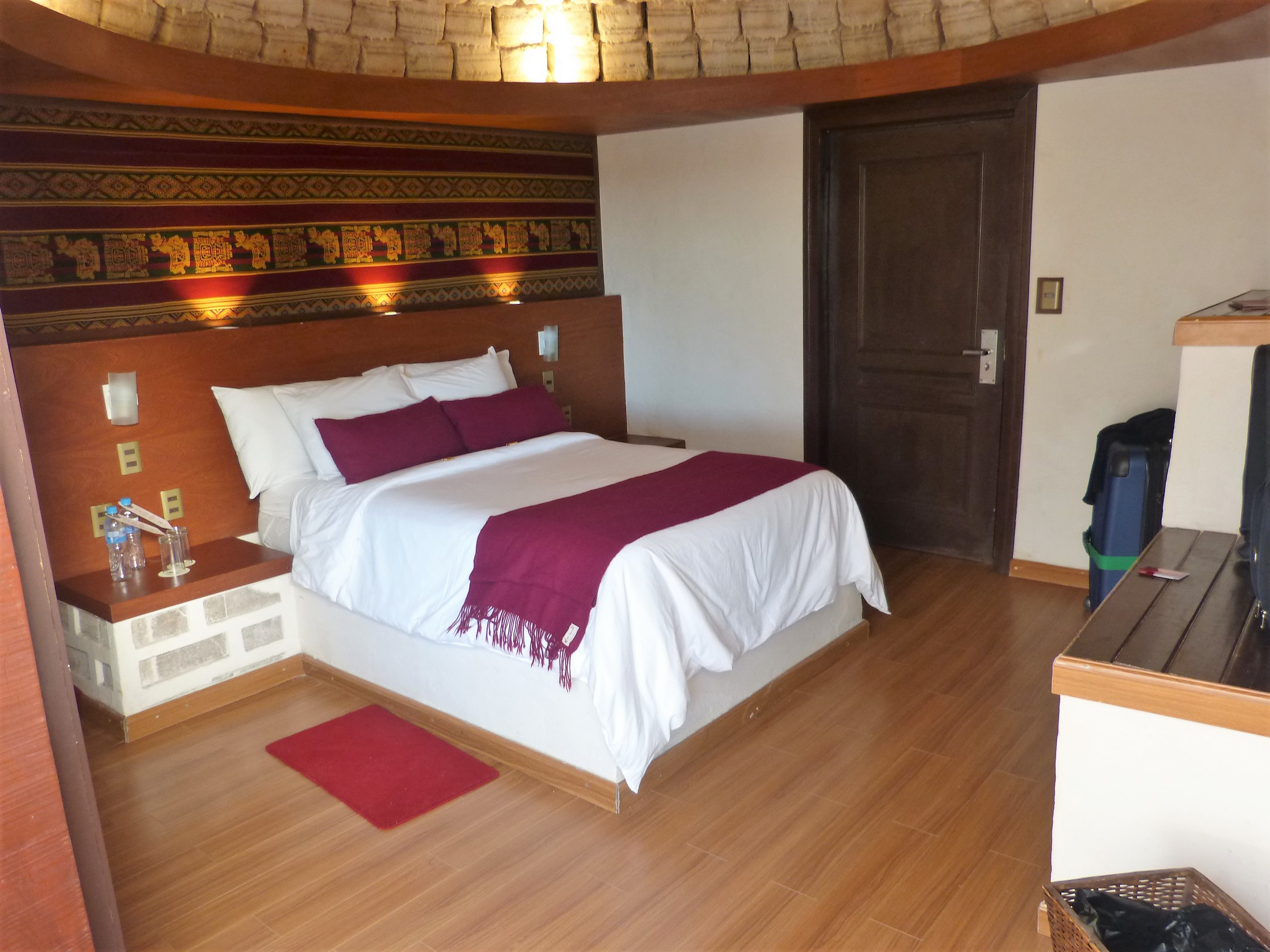

Day 45 21st April
No alarm- bliss! Pickup at 10am. Heading south west today. The scenery changed every 15 minutes or so. Fascinating. So many colours – another small salt flat, red soil, an area where borax is collected, green areas, all the time surrounded by mountains. A lot of open cut mines were visible – mining for silver, tin and other minerals. This is the altiplano region which is between the tectonic Andes and the volcanic Andes.
Came to San Cristobal, a mining village, where we had an early lunch. Edwin’s wife had prepared some lovely beef, quinoa and salad for us.
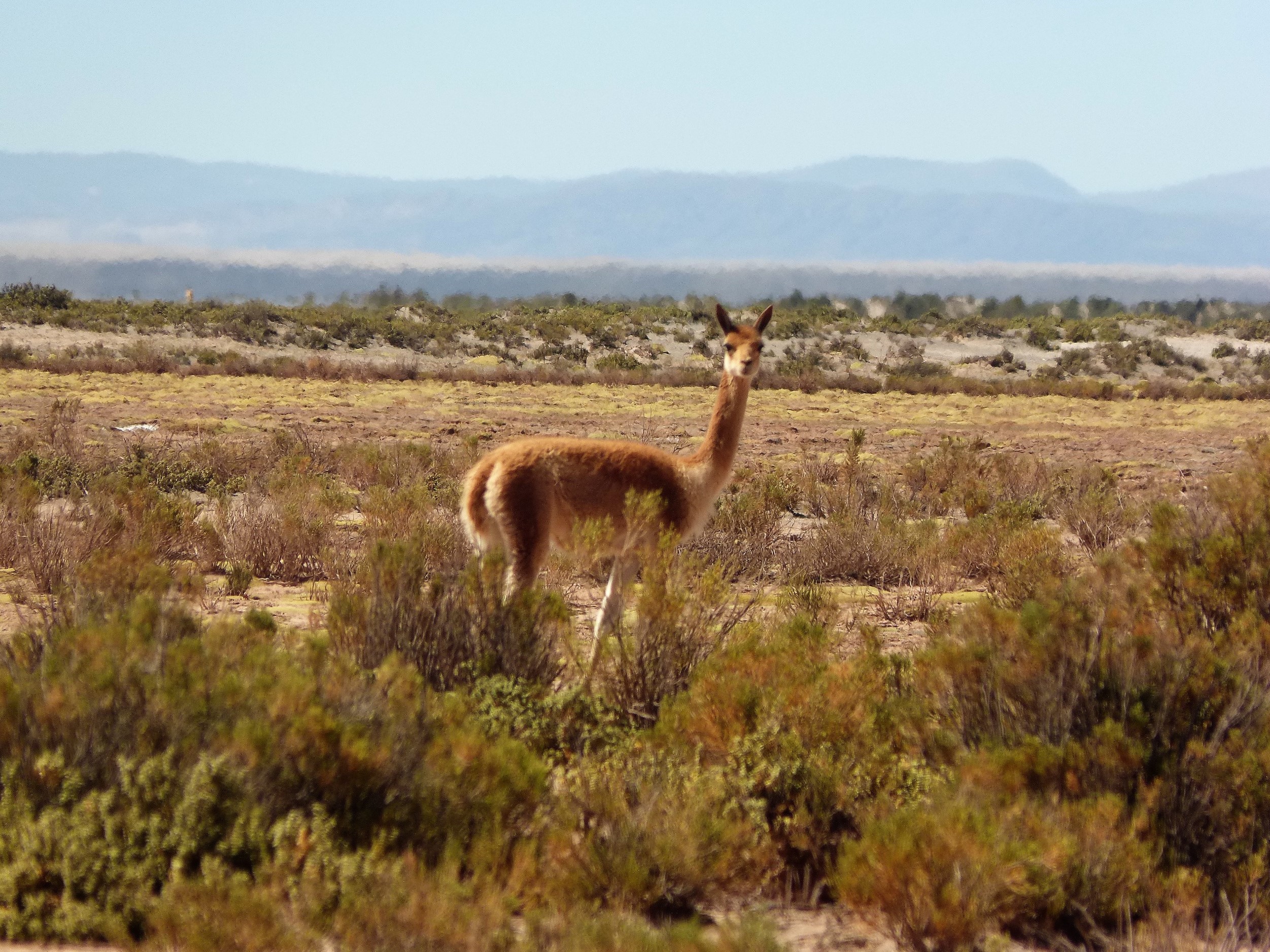


Little stop at a lake, some birds here, James flamingos – live up to 4000metres above sea level. Also saw Andean geeseA, Andean gulls and Ducks
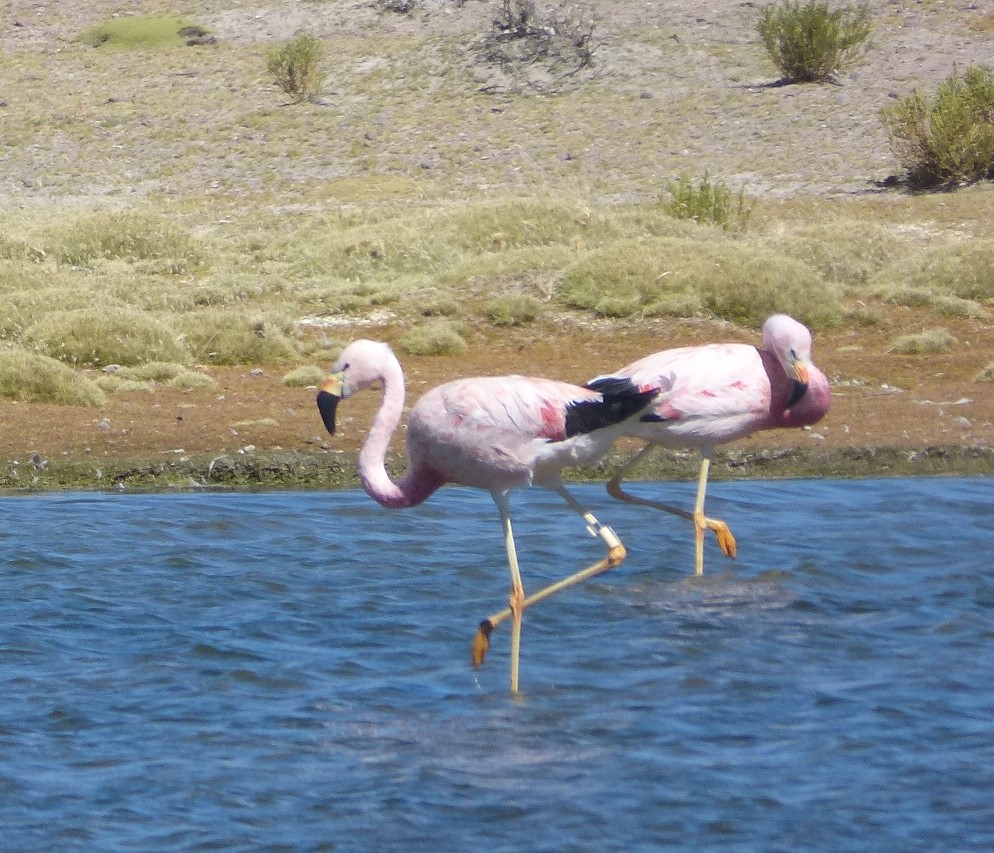
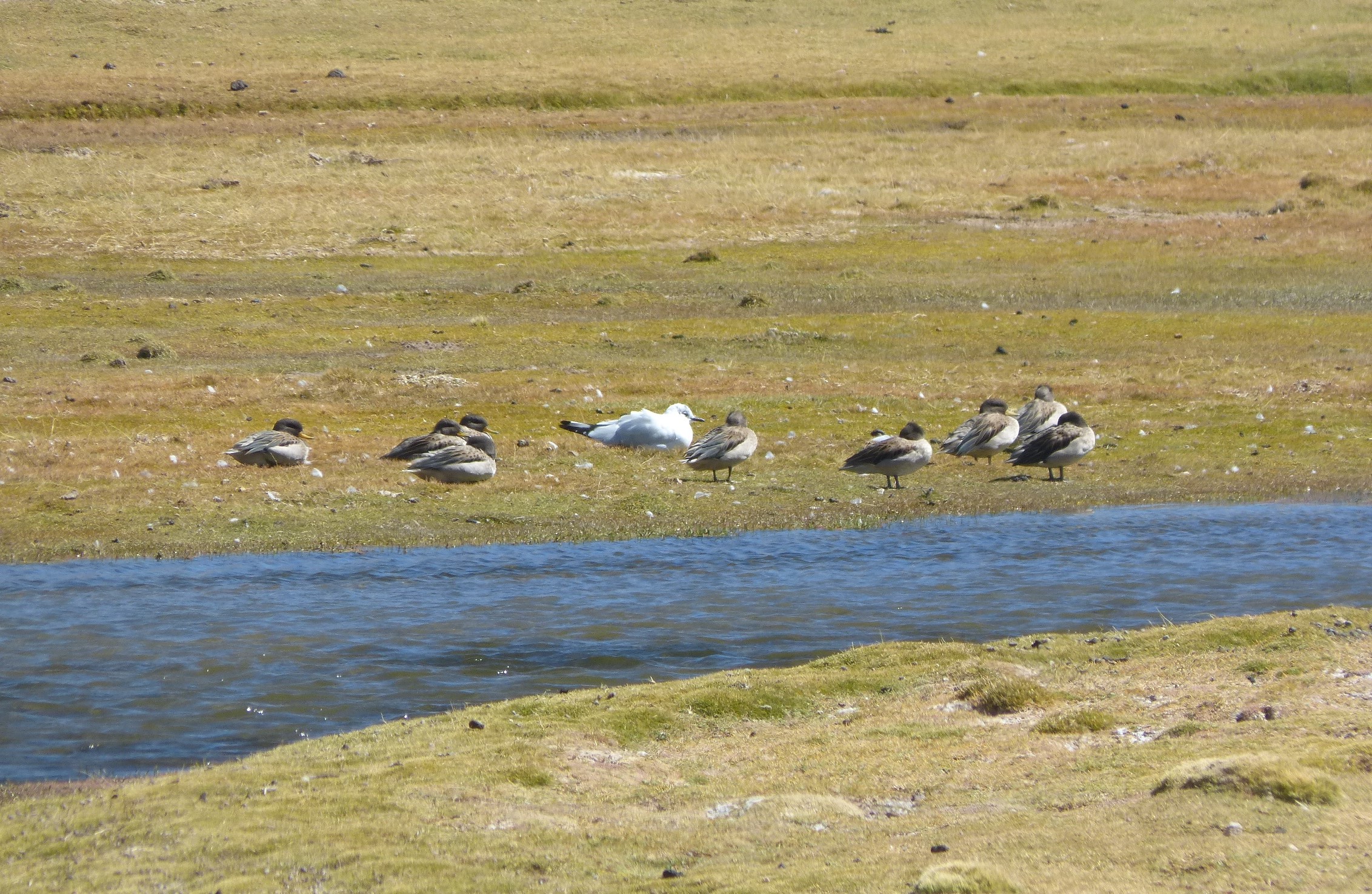

Stopped at the Valley of the Rocks, or as the tourists call it -Anaconda Canyon- because of the river winding through down below. Amazing rugged rock formations surrounding a deep gorge, formed by volcanic activity in the past.
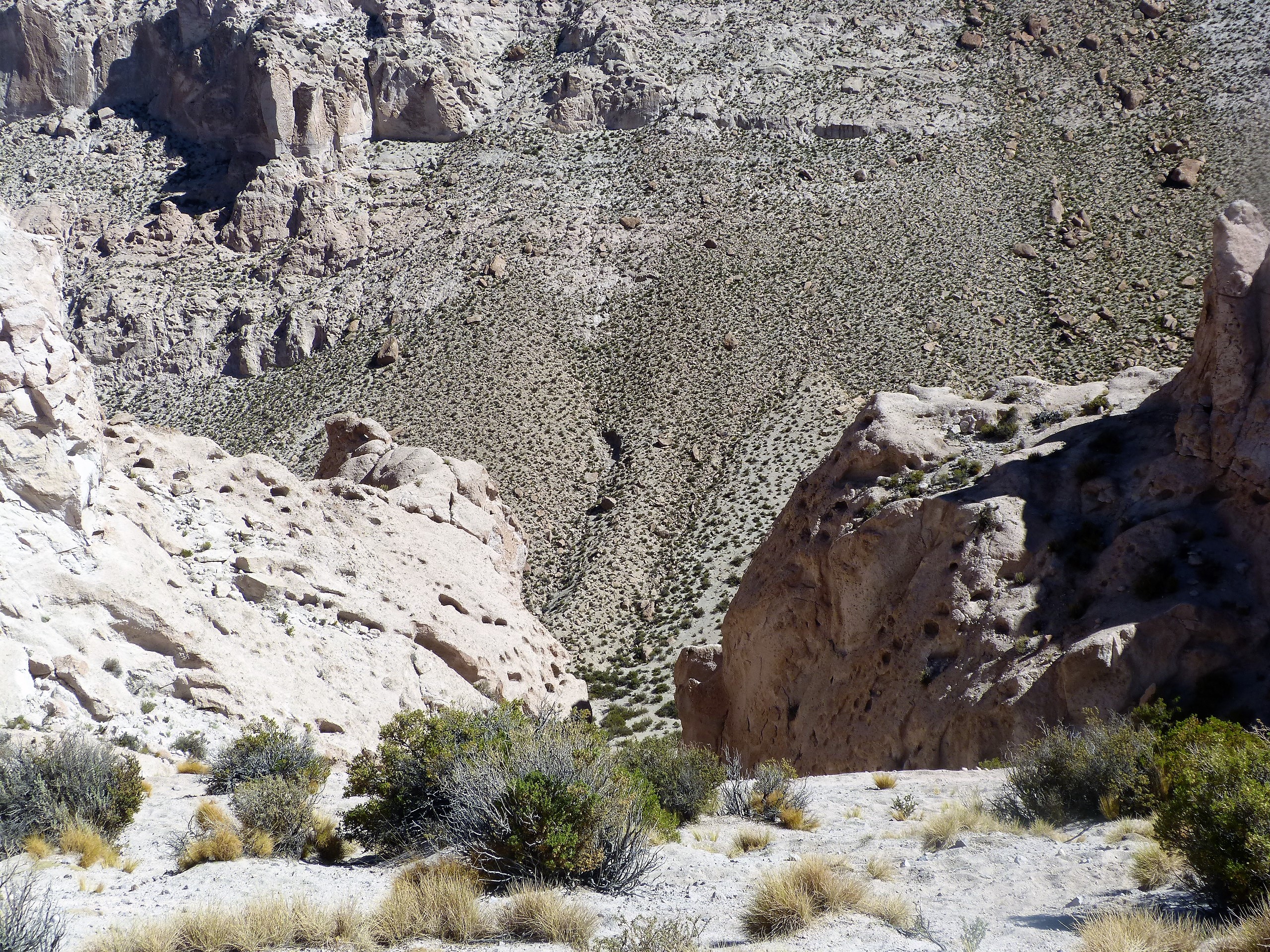

Quinoa growing up at this altitude, being harvested at the moment, and drying in the sun. Lots of llamas here, more llamas than people – used for meat. They survive up to 4000m. There is always an older dominant male in each pack- all the other llamas follow that male – easy way to round them up.
Saw wild vicuñas on the side of the road- they can live at 5000m- they are the fastest high altitude animal. They don’t have a lot of wool, but do have a thick fat layer, and large red blood cells to help them survive the cold and the altitude.
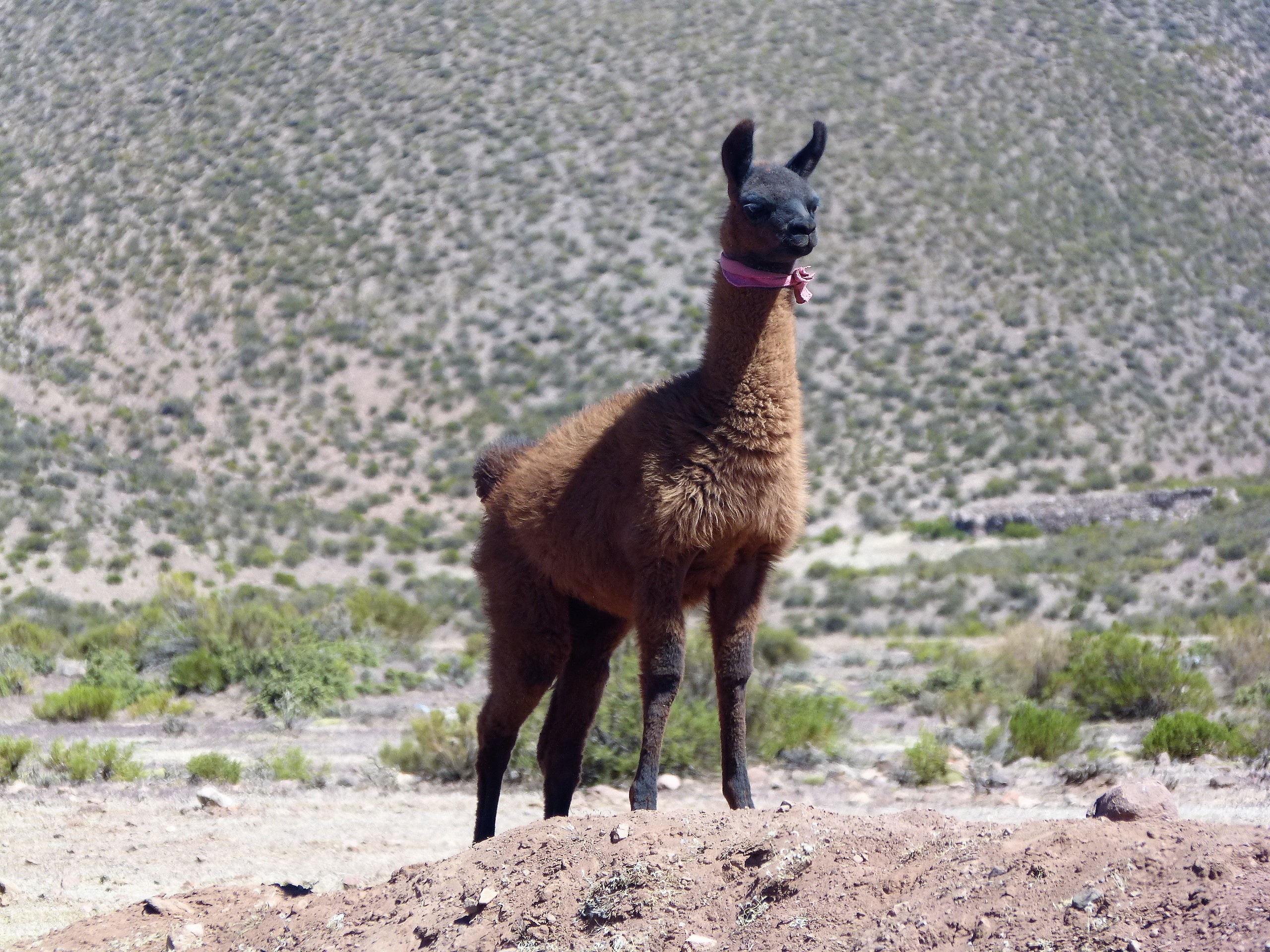

Another stop for free standing rock formations, caused by wind and rain. Frank had great delight in picking out animals which the rocks resembled.
Another lagoon, pretty walk through a valley with llamas grazing all around us. The grass was like a spongy moss. Came to the lake, very tranquil, surrounded by the moss or green reeds. Saw a pair of Follicula cornuta- the male was busy making a nest for his female.


5pm arrived at our hotel for the night, Jardines de Mallku Cueva, in a tiny town called Villamar. We are now at 3800 metres. This hotel is built into a rock formation in the middle of a flat plain. The architecture takes inspiration from Andean and regional traditions. The fires are on- it certainly cools down once the sun sets! Down to -6 degrees tonight.
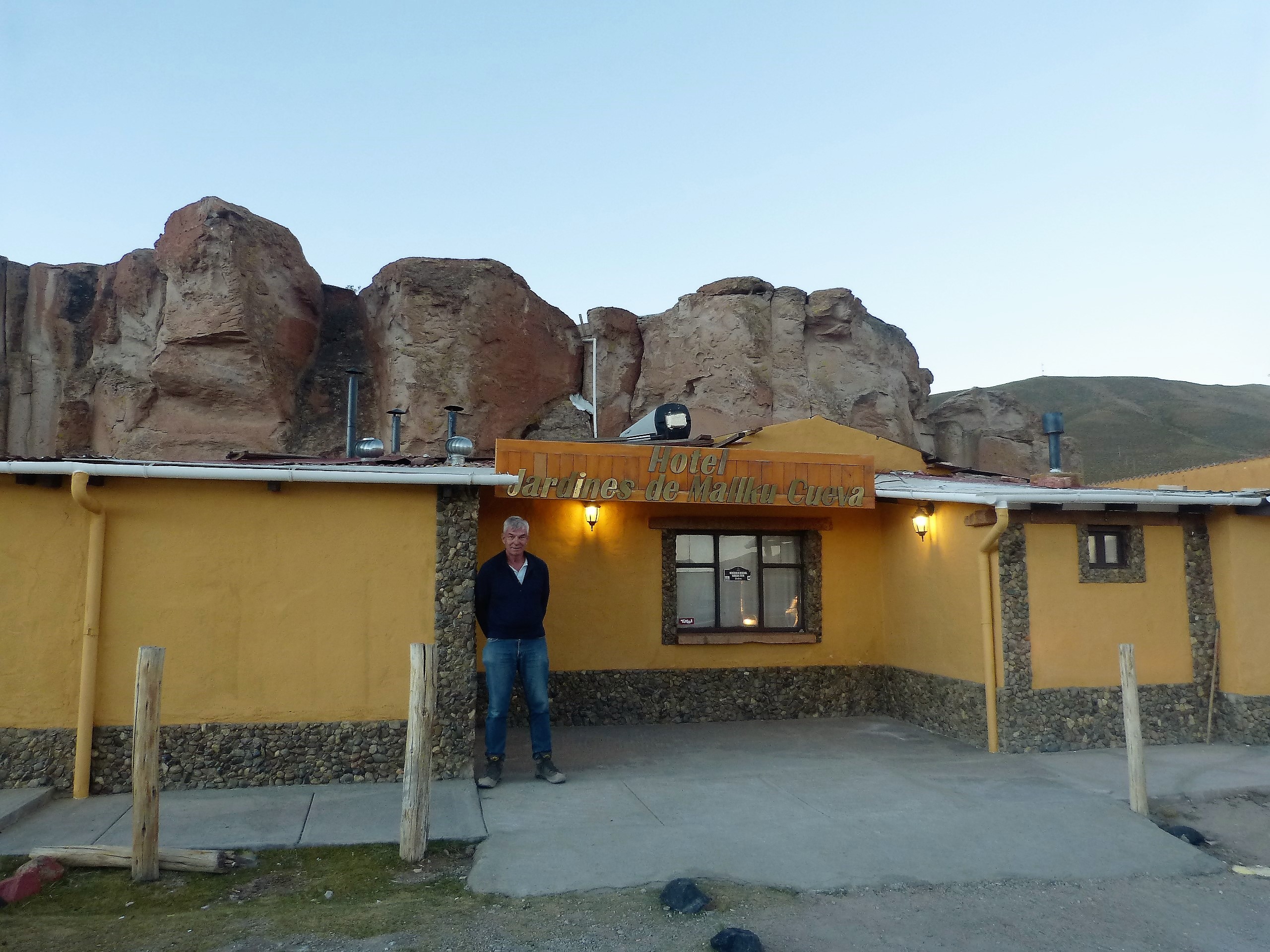
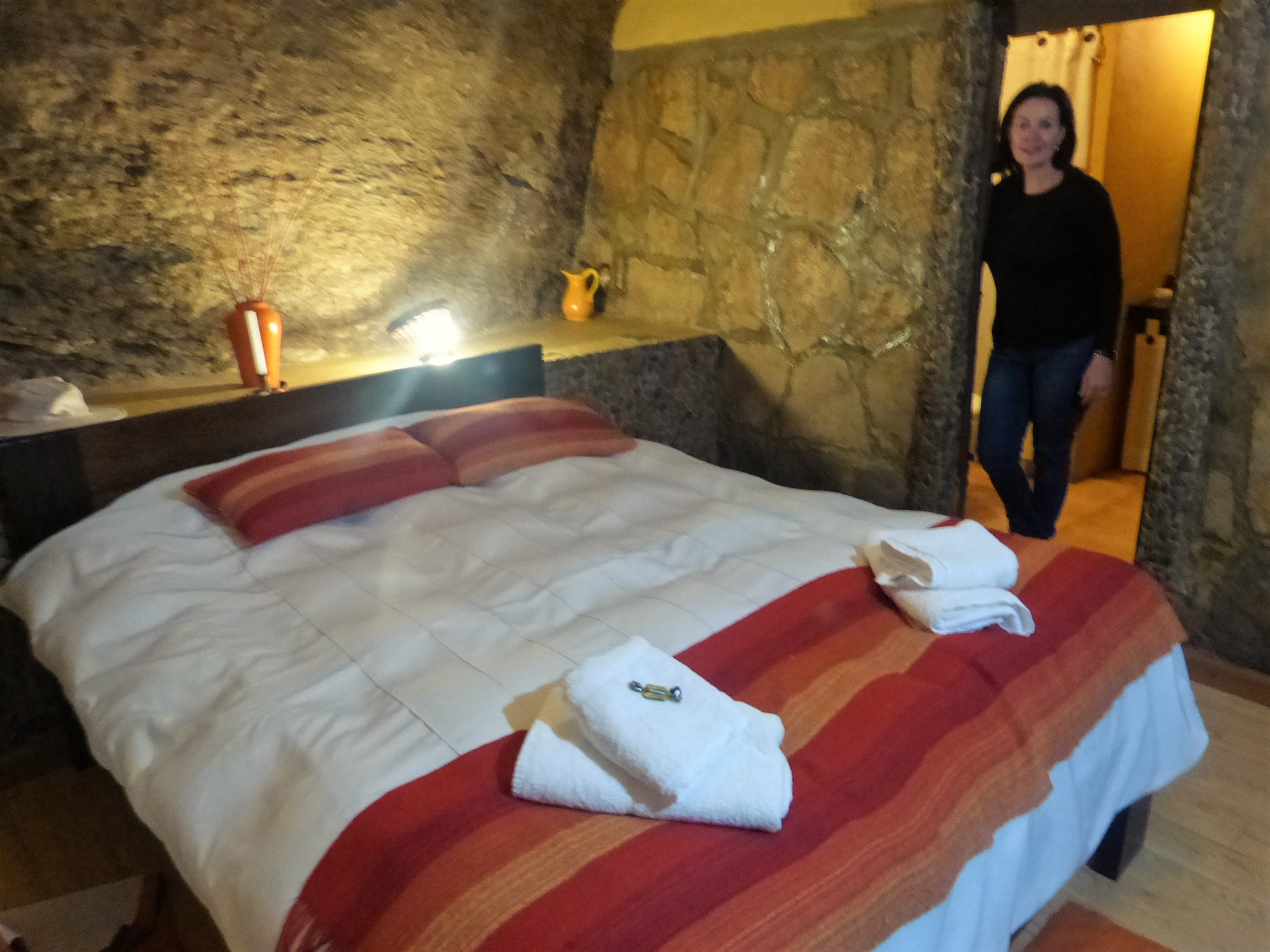
Day 46 22nd April
On the road at 6.30am, -5 degrees tonight. Glorious sunrise not long after we start. The reds and greens in the mountains look sensational. Drive past what looks to be a salt flat but it is Borax- great export product.
We enter the Eduardo Avaroa National Park, and go to Laguna Colorado – this lake is 65 sq km but very shallow, and 4300metres above sea level. It is surrounded by mountains and volcanoes ( 500 volcanoes in this region). The lake is red in colour because of the algae, and some occasional white patches because of the borax. Even though this is the coldest area of Bolivia, the water is warm because of the volcanic springs. Perfect nesting place for flamingos – 3 varieties- Andean, which are greyish in colour, the James are pale pink, and the Chilean which are almost red. Beautiful to observe. Llamas to greet us as well.
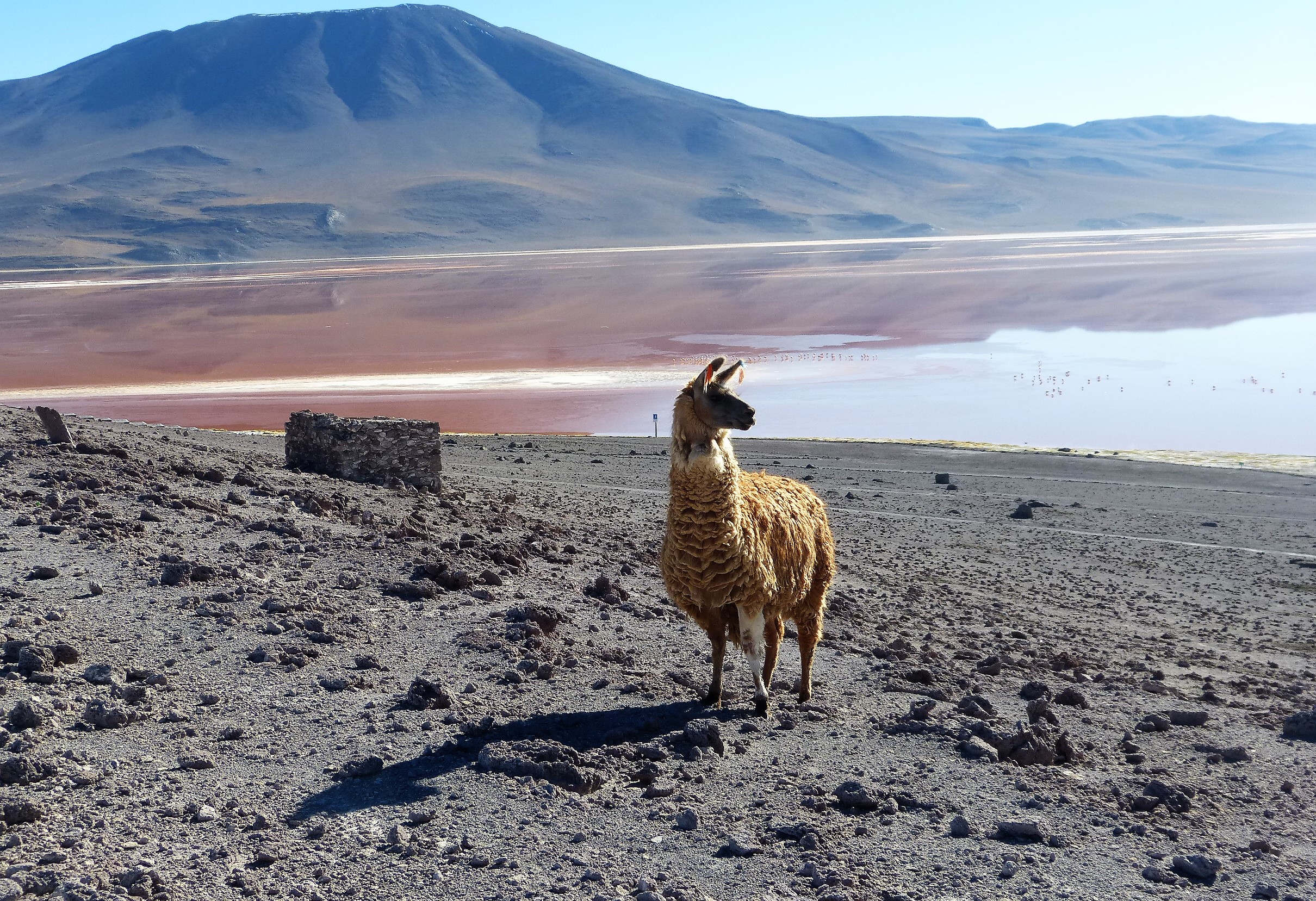
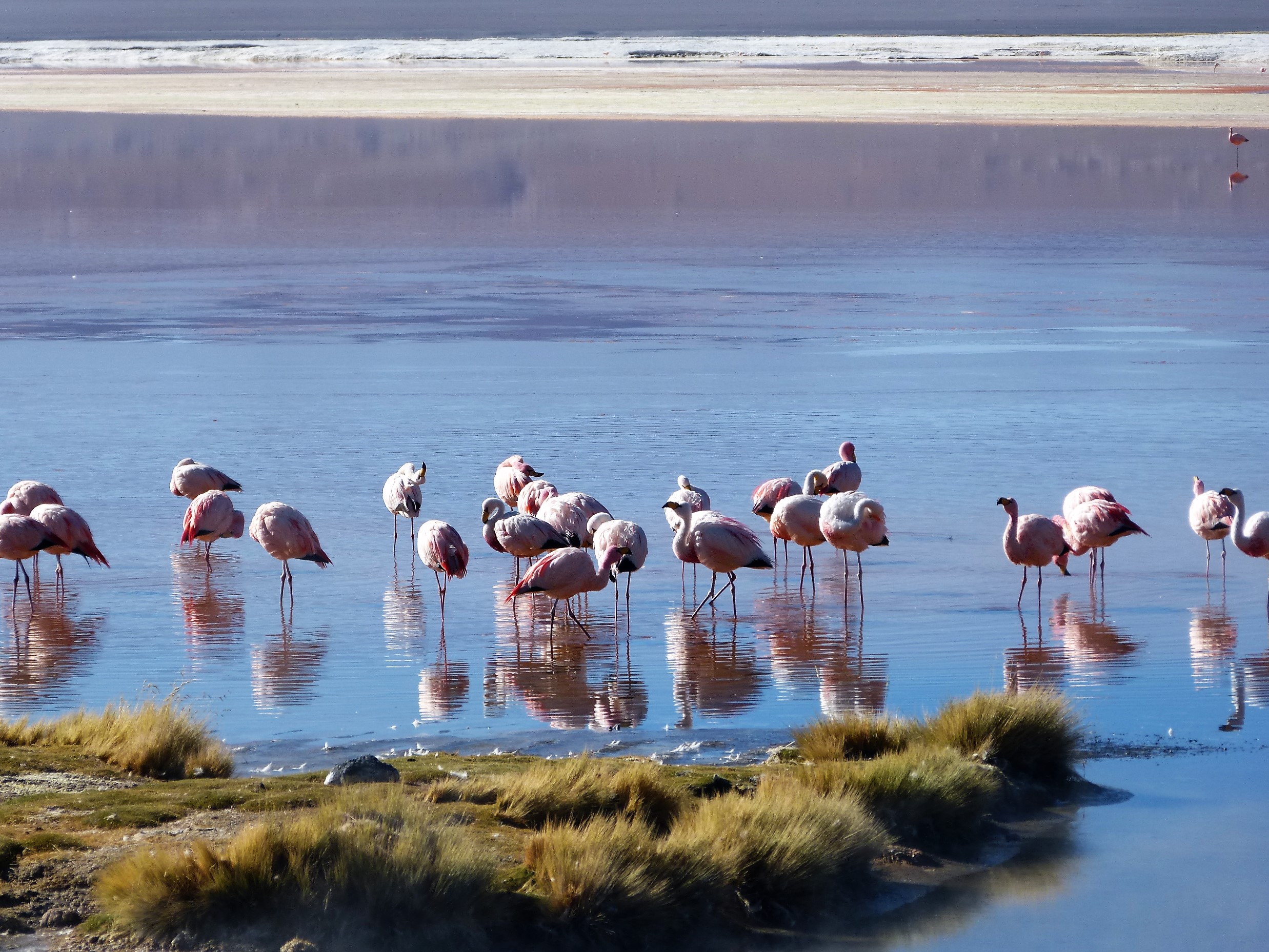


Now driving through the Andean Desert, not a lot of vegetation, only the vicuñas can survive here. The highest we get to is 5040m. Down we come and very shortly come to a volcanic crater where we see all sorts of geysers and bubbling mud.
Like Freddy said, Bolivia is like a living chemical laboratory – and it is so true. The natural colourings of the area are a sight to behold.


Start descending and reach Laguna Salada, a beautiful bluey green coloured lake – high content of magnesium gives it this colour. Next to it are some thermal springs- the water was deliciously warm. We had our bathers but no towels, and it was freezing cold outside. I dipped my feet in- so deliciously warm.
Lunch was next -prepared by Edwin- yummy layered beef, onions, potatoes, sausage, eggs, tomatoes and capsicum. Delicious! I want an Edwin at home!
We drive through some magnificent scenery- volcanoes and mountains of alcohols – and arrive at Laguna Verde, approximately 17sq kms at 4500metres above sea level. Magnificent aqua/turquoise colour due to the high content of arsenic and copper. Complimented by the imposing presence of Lincancabur volcanoin the background- part of the volcanic Andes. Absolutely freezing outside.
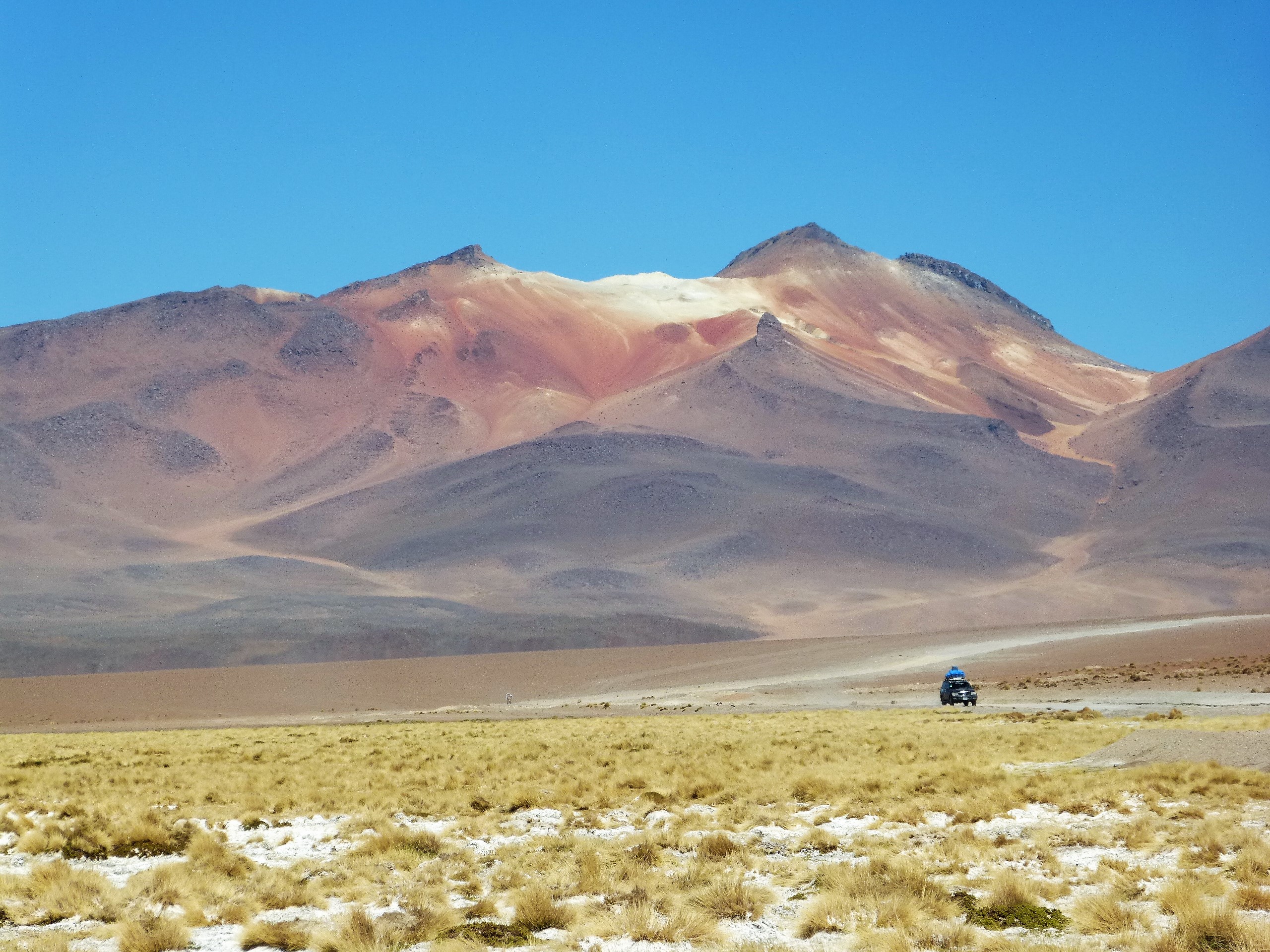
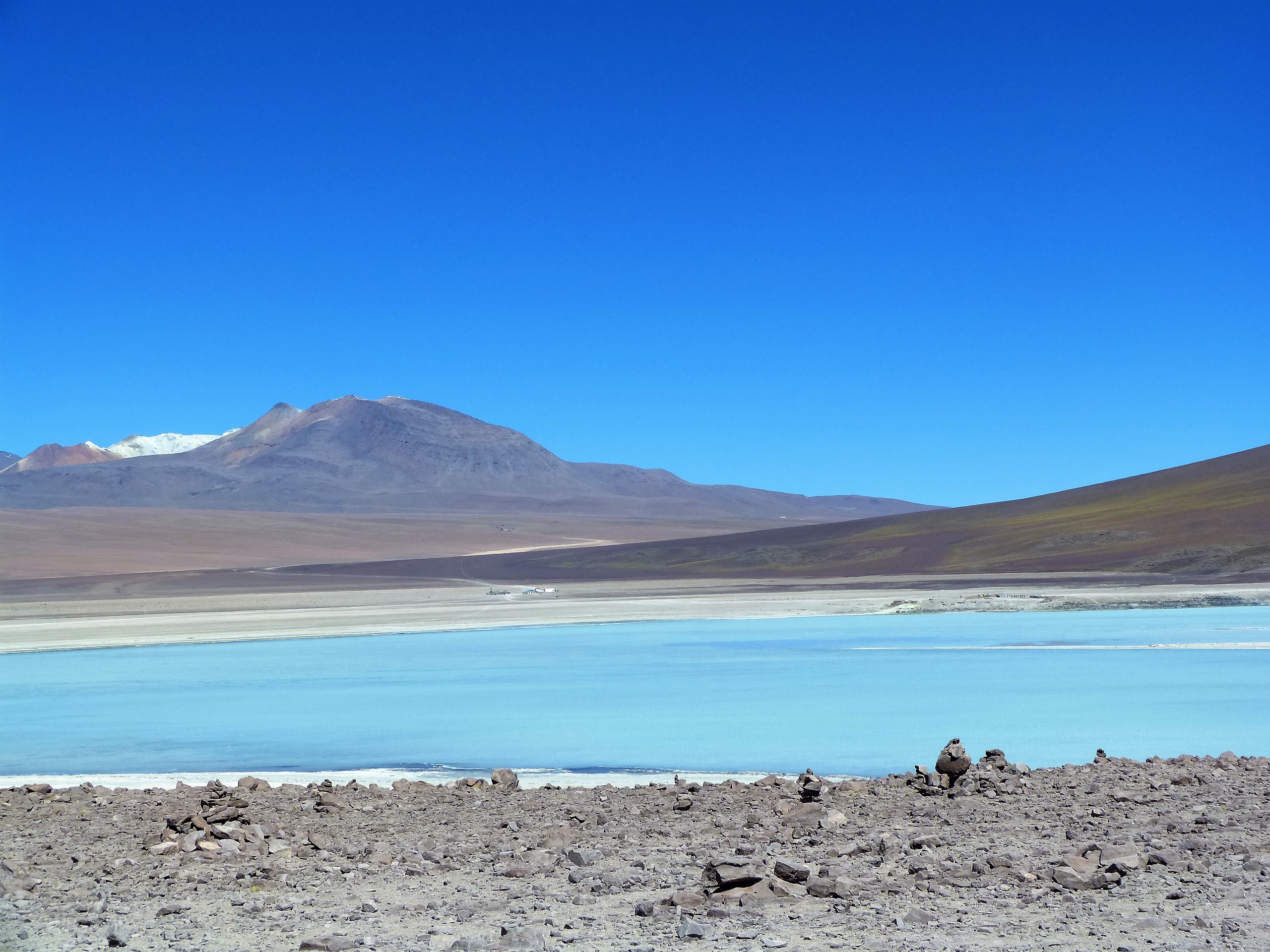
Five minutes later, in the middle of nowhere we are at the Chilean / Bolivian border. Immigration in a tiny hut. Here we say goodbye to Freddy and Edwin, and Israel from Chile becomes our new driver to take us to San Pedro. After another five minutes later and we have to go through customs. At least this was a shed we could drive into- it was so cold!!A very jolly customs officer checked through all our bags. We gave him a toy koala- he was ecstatic! Probably the only people he had through all day.
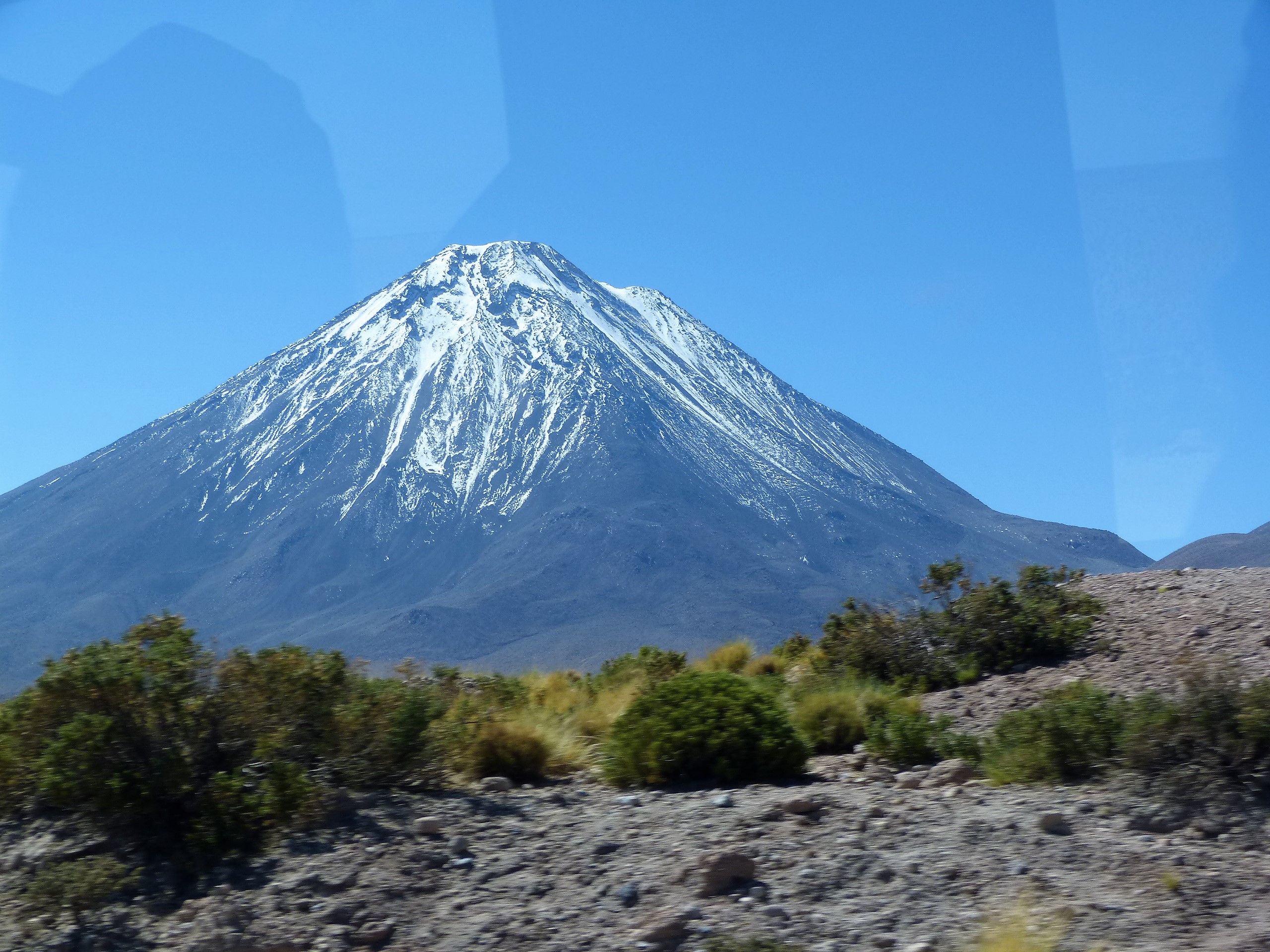
Chile – Atacam Desert – Santiago
From the Bolivian border, we started descending – in one hour we went from 4500 metres to 2400 metres at San Pedro! Cute little hotel – Terrantal. It was so good to arrive at a reasonable hour- had time to walk around town, and book a tour in the Atacama Desert tomorrow.
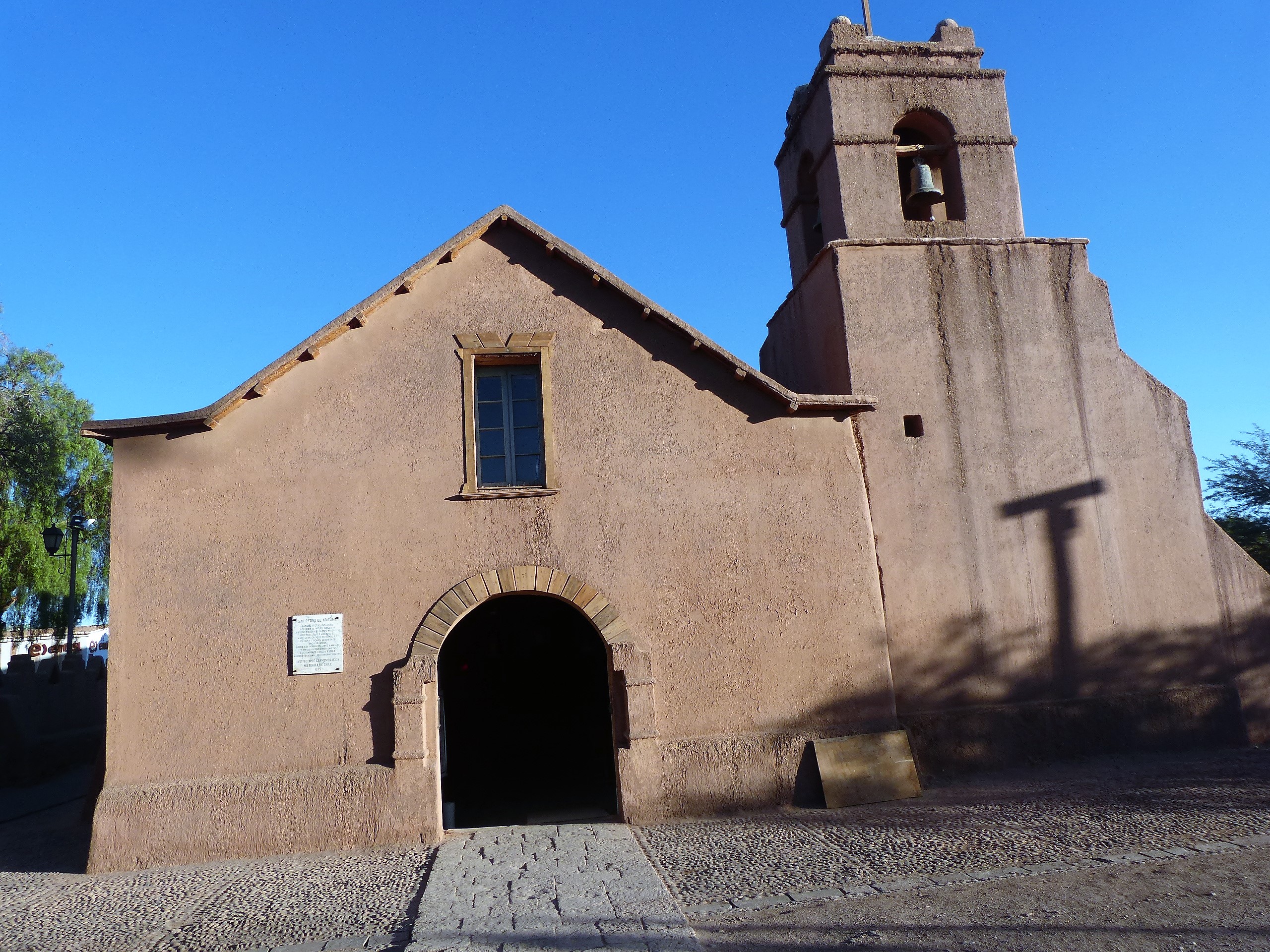

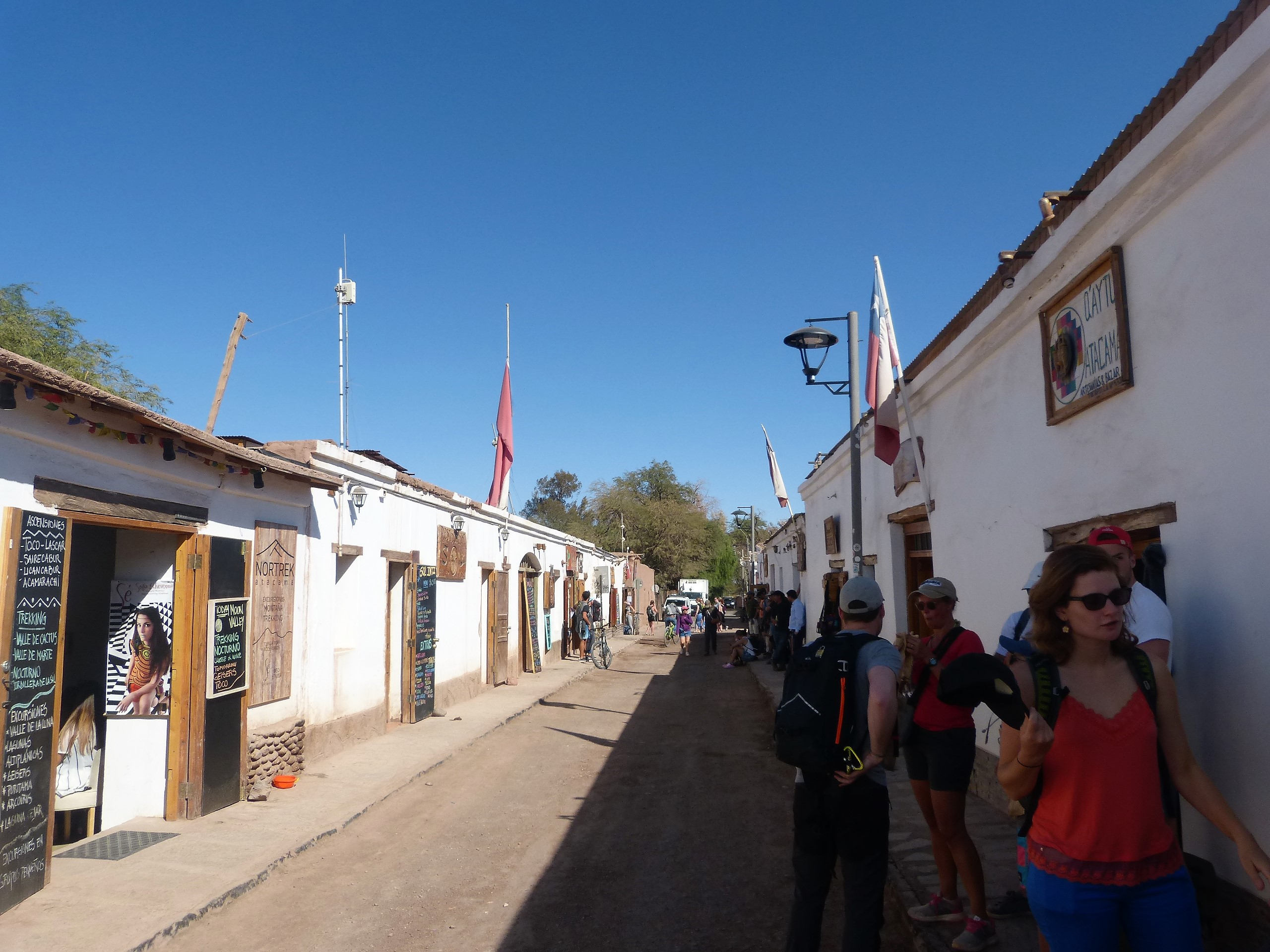
San Pedro is a town set on an arid high plateau in the Andes mountains of northeastern Chili. Its dramatic surrounding landscape includes deserts, salt flats, geysers, and hot springs.
The hotel had wine and cheese tasting from 6pm, and very generous with their tastings I might add! Met some lovely people while were “tasting “ the Chilean Carmenere. Dinner afterwards, at a restaurant a few doors down- yummy salmon. A bit sad, tomorrow is our last day.
Day 47 23rd April
No alarm! Breakfast and repacked the bags ready for tomorrow. Had a little walk around town – not that that takes long. Empernados for lunch. Then we are ready for our afternoon tour.
We go to Salar de Atacama, 2600 metres above sea level – the scenery is spectacular in its starkness. Andes mountains on one side and Chilean coastal mountains on the other. A transverse range also separates the two driest regions.
Head into the Valle de la Lunar in the Los Flamencos National Reserve – it has lunar like depressions with unusual rock formations, huge sand dunes and pink streaked mountains. We see the Three Marias – one of the many rock formations, also a large expanse of salt. Only 3 colours here – red, brown and white.
Then we walk up a hill, on a very dark brown sandy track to Mirador de Achaches – fabulous view over Valle de la Luna. It was very dry, though they did have about 200 mls this year- normally have 1.2 mls!

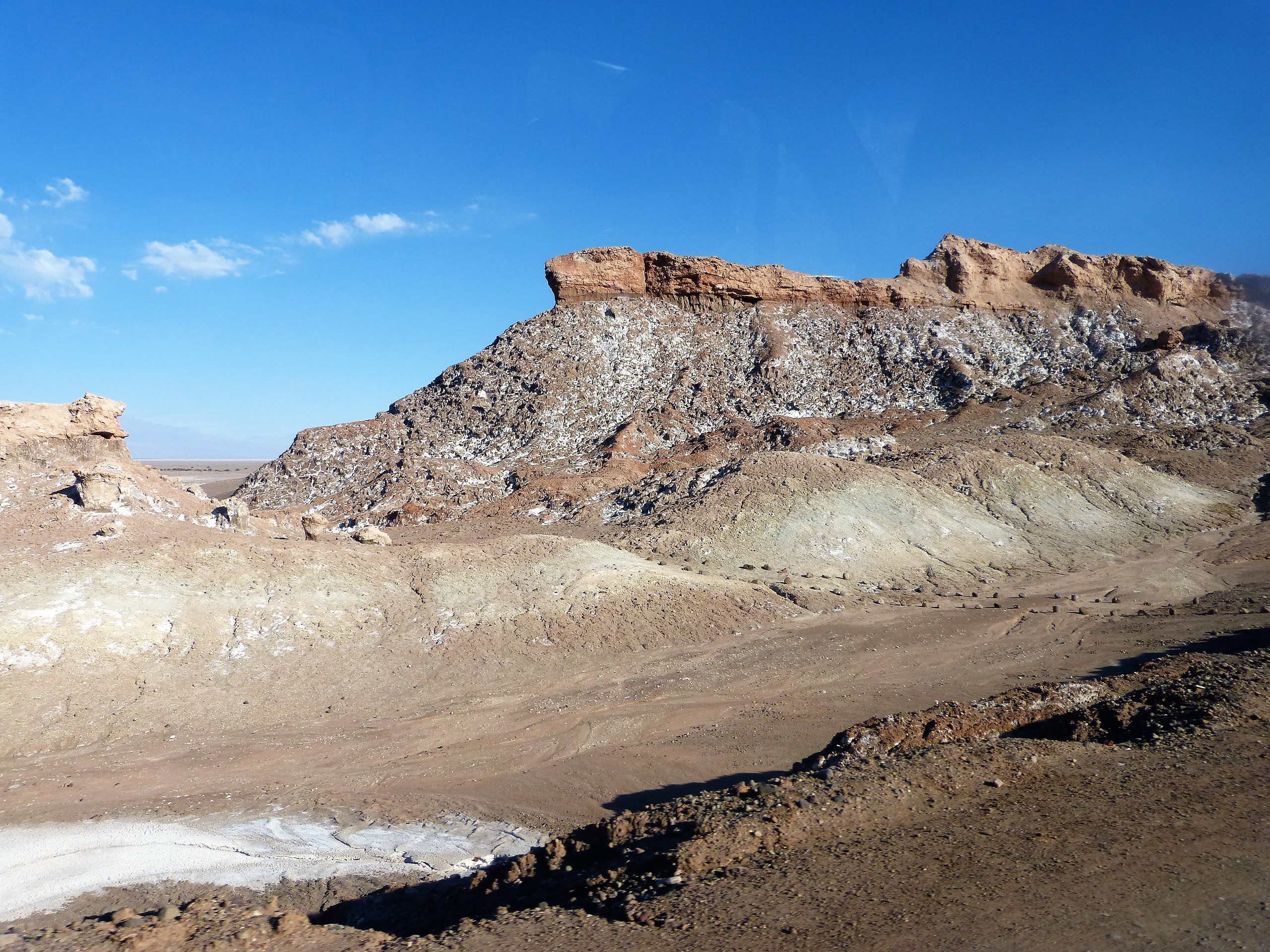

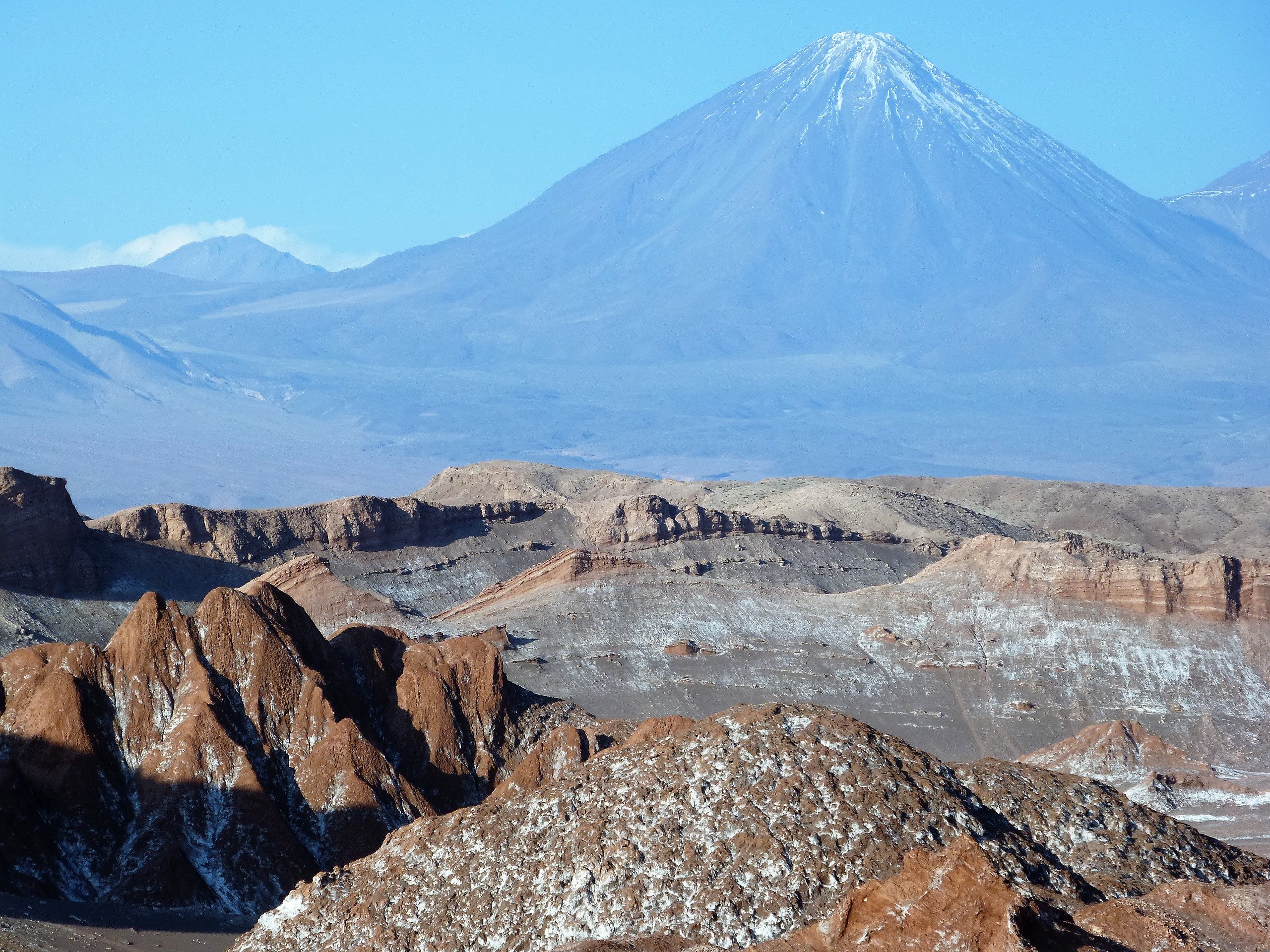
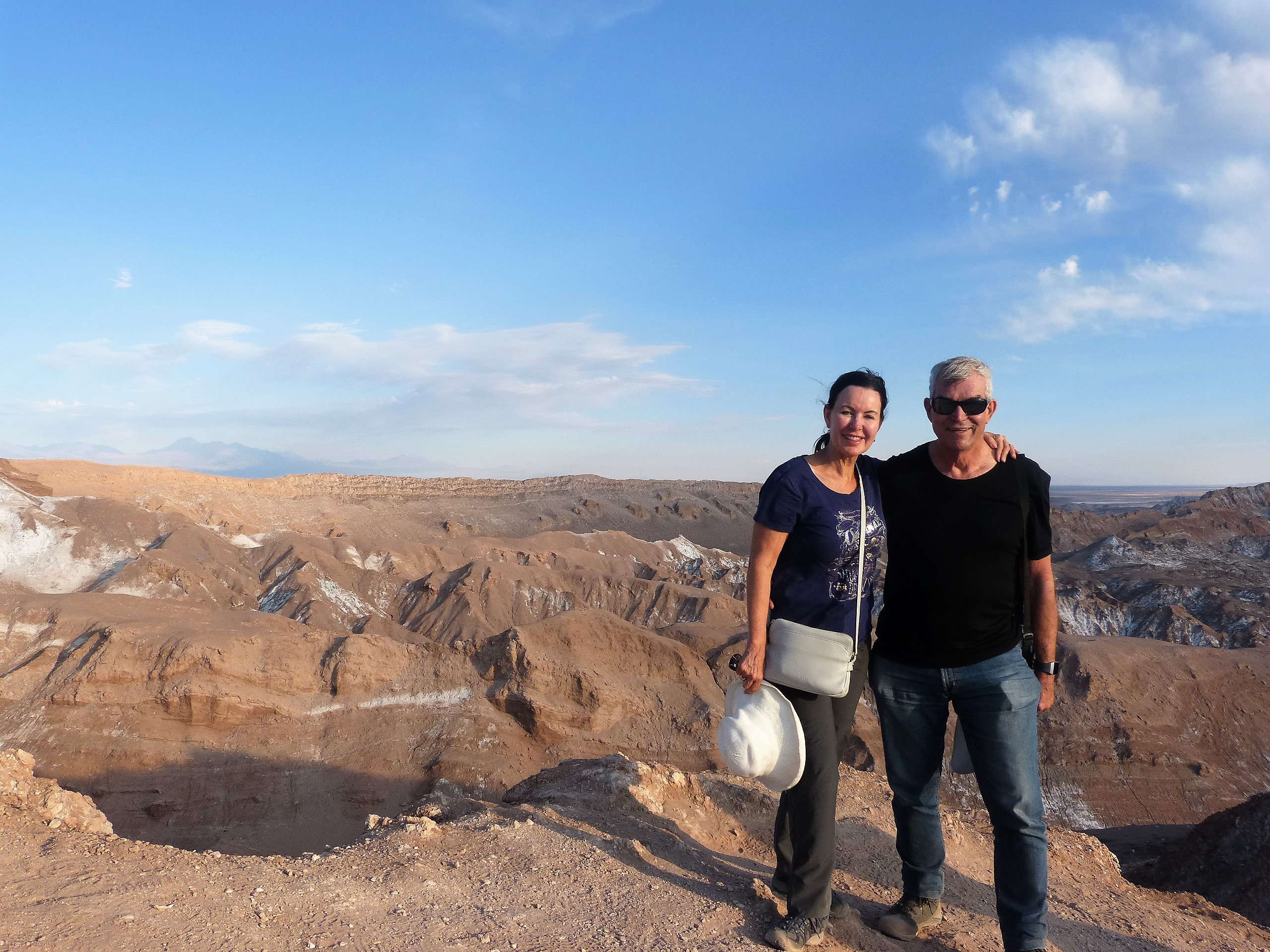

Our last stop was a walk up another hill, another sandy path, to our viewing spot for sunset over the Atacama Desert. The skies were clear, and the colours went from yellow to orange to pink to purple to red. Brilliant! And a perfect ending to our holiday.
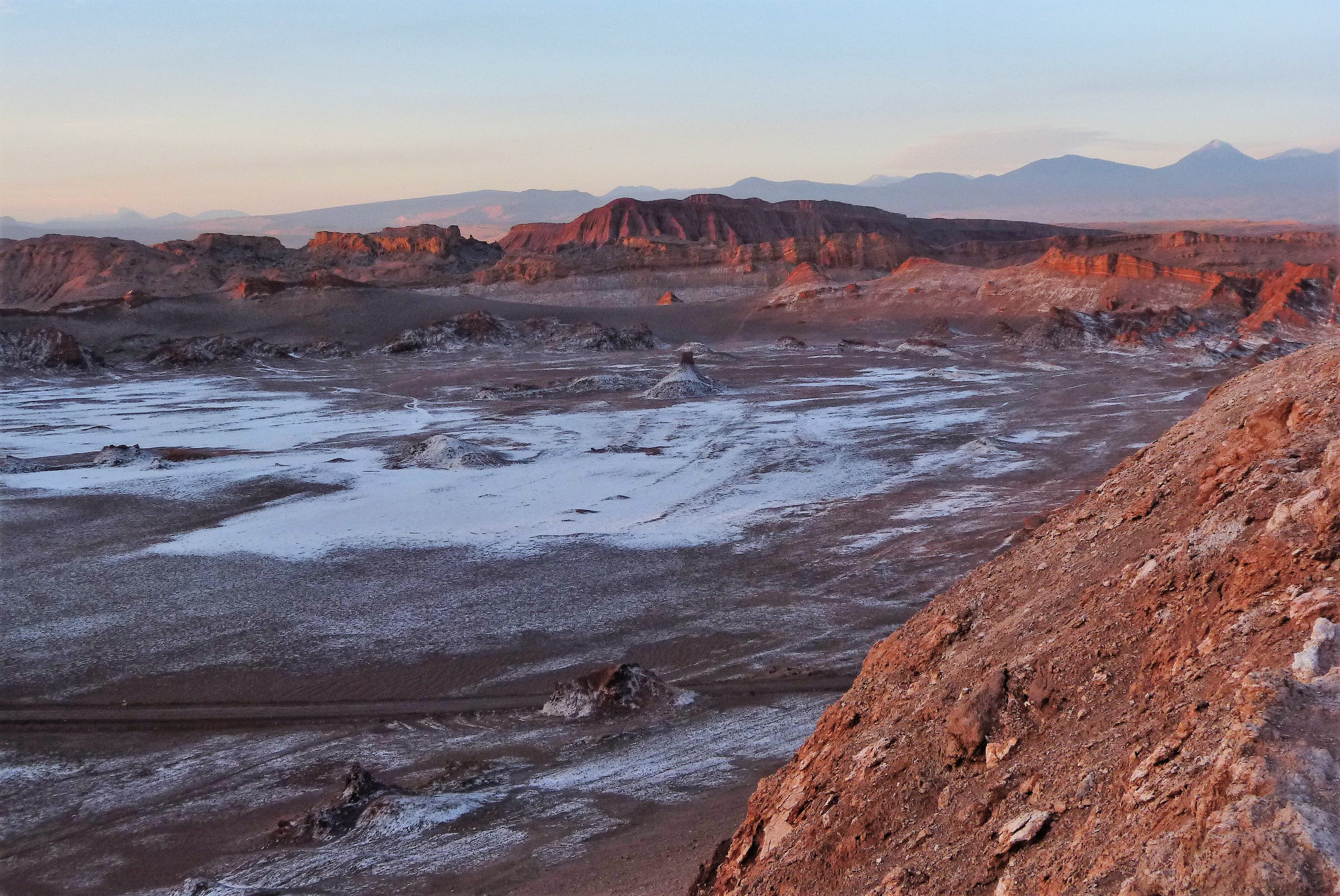
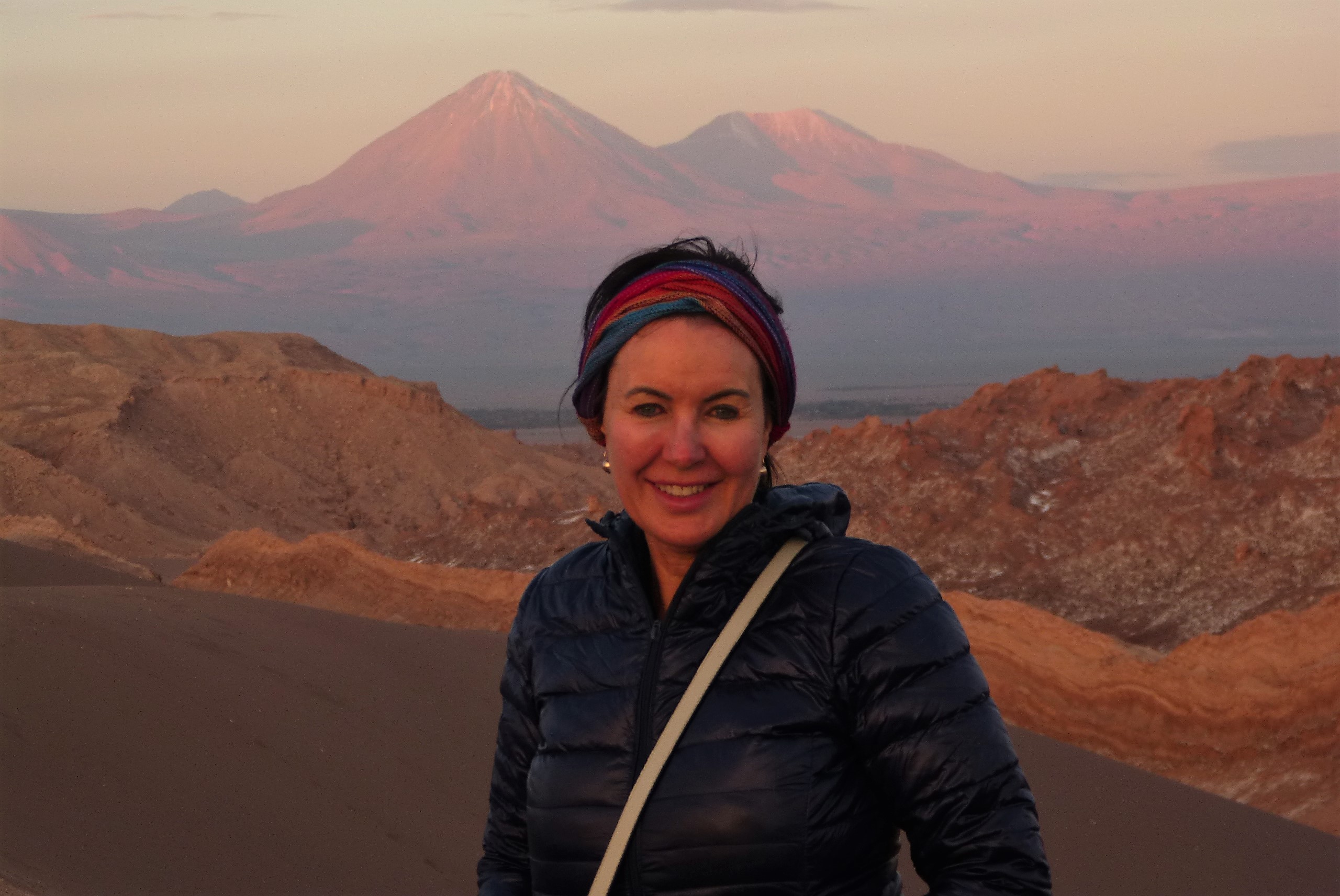
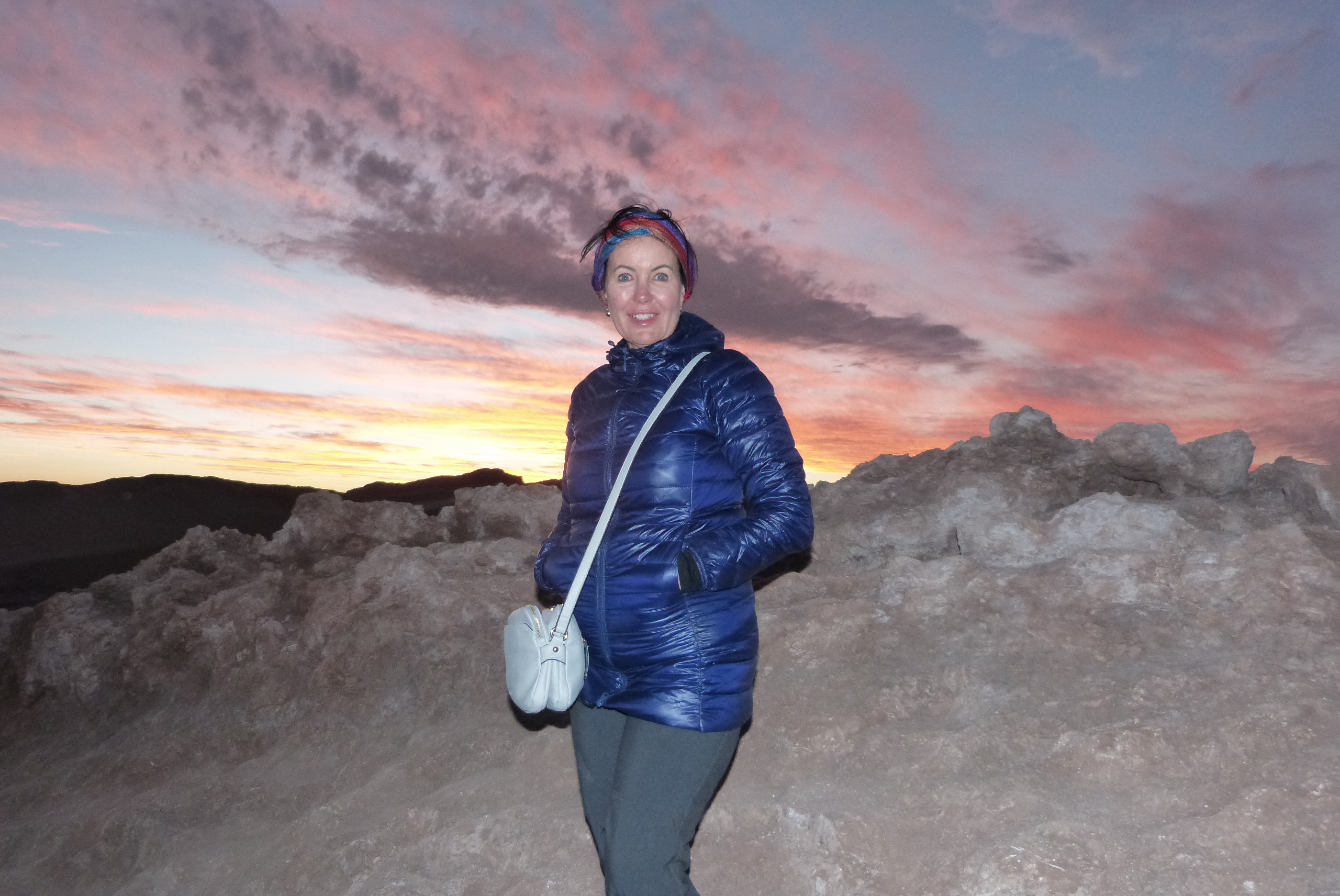
It cooled down very quickly once the sun went down. Back to the hotel, and there was wine and cheese tasting- we couldn’t say no! Even though we were covered from head to toe with dust! Time for a shower, the out for dinner. Found a nice restaurant – heaps to pick from within 10 minute walking range from the hotel- had an open air area, and a very inviting open fire below. A nice hearty bowl of tomato soup followed by chili con carne warmed us up.
Day 48 24th April
Pick up at 6.30am. Two hour trip to Calama.
Flight to Santiago where we connect with our Qantas flight to Sydney and then a short flight to Brisbane. Business class is always better! But wait – we pick up our bags in Sydney – my small bag is missing a wheel!! Three wrecked bags on this trip- has to be a record! Oh the incidental costs of travel! But what a great trip we have had – it has been wonderful. South America, we will be back!

 Glammy Goes Global