
Day 1
Thursday 5th September 2024
Brisbane to Seoul
4am start to get to the airport for our 6am Qantas flight to Sydney. That was fairly uneventful. What was frustrating was the 45 minute wait for a bus at the transfer gate in Sydney to get to the International Airport. We were there in plenty of time, but we kept getting pushed back to allow passengers through who were rushed to get their connecting flights. Just annoying as we then had limited time to eat breakfast in the lounge, and do our duty free shopping. First world problems I know!
It was close to a 10 hour flight on a Qantas Airbus A330 to Seoul. I like the A330 configuration – 2,4,2. Whatever configuration it is, it’s still a long time to sit – I think I got through 5 movies. One little hiccup – Frank’s wallet had fallen out of his pocket when he went to the toilet. He only realised five minutes before the crew made an announcement that the wallet had been handed in. Luckily only a short period of panic mode!
A very long wait to get through the queue at customs – I was surprised, I thought they would be much more efficient. Over an hour to get through to baggage pickup. Our bags were there patiently waiting for us.
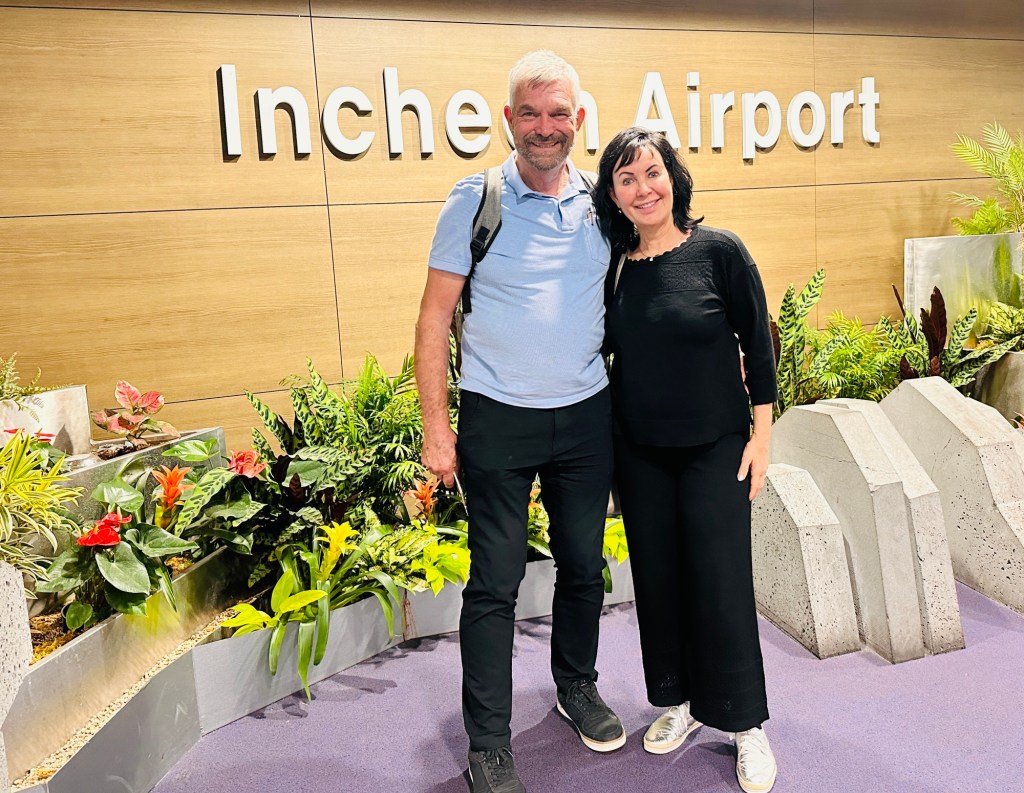
We found our Tripadeal guide, Julie, and 29 other fellow travel companions. It was then an hours’ bus ride to the Ibis Ambassador Hotel in Seoul. It was after midnight by the time we got to bed. Seoul is only one hour behind us in Brisbane so shouldn’t be too much jet lag!
Day 2
Friday 6th September 2024
Seoul
21 – 29 degrees, slightly humid, and drizzly rain
Population Seoul 10 million
Population South Korea 50 million
Currency won (900 won to AUD$)
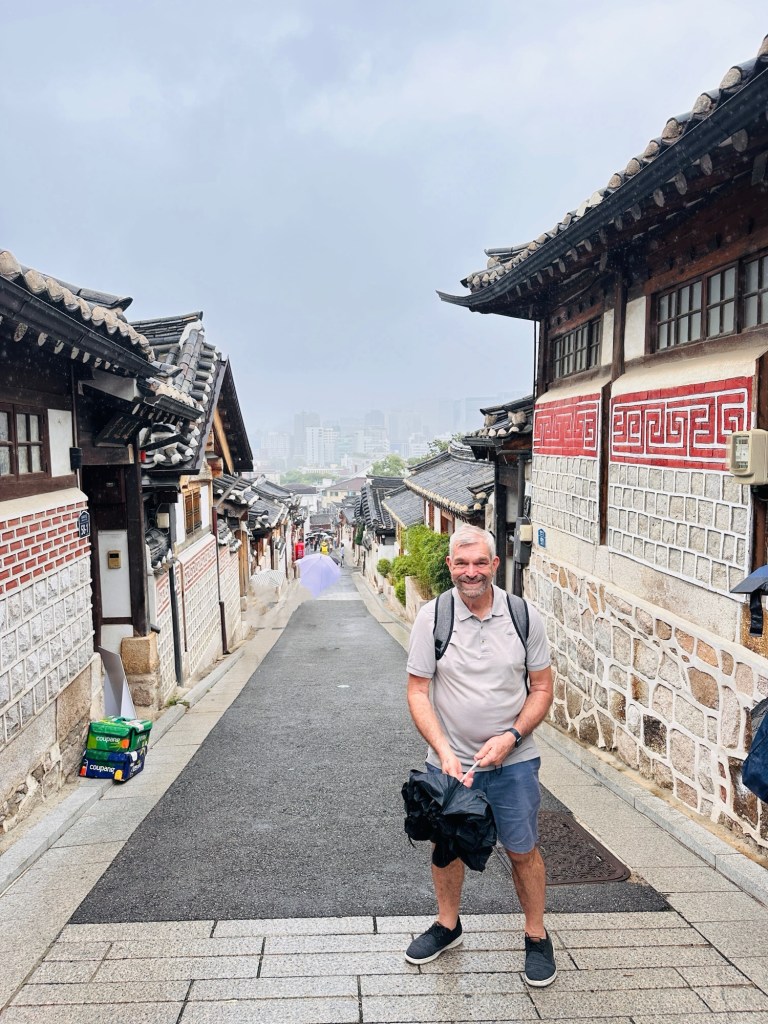
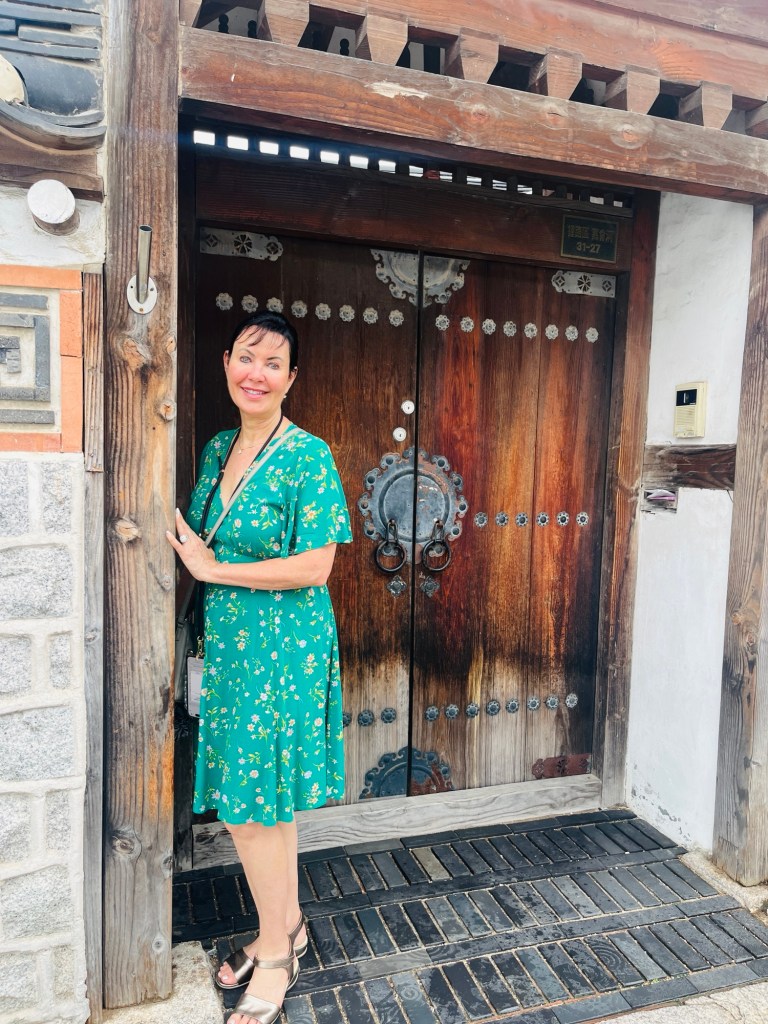
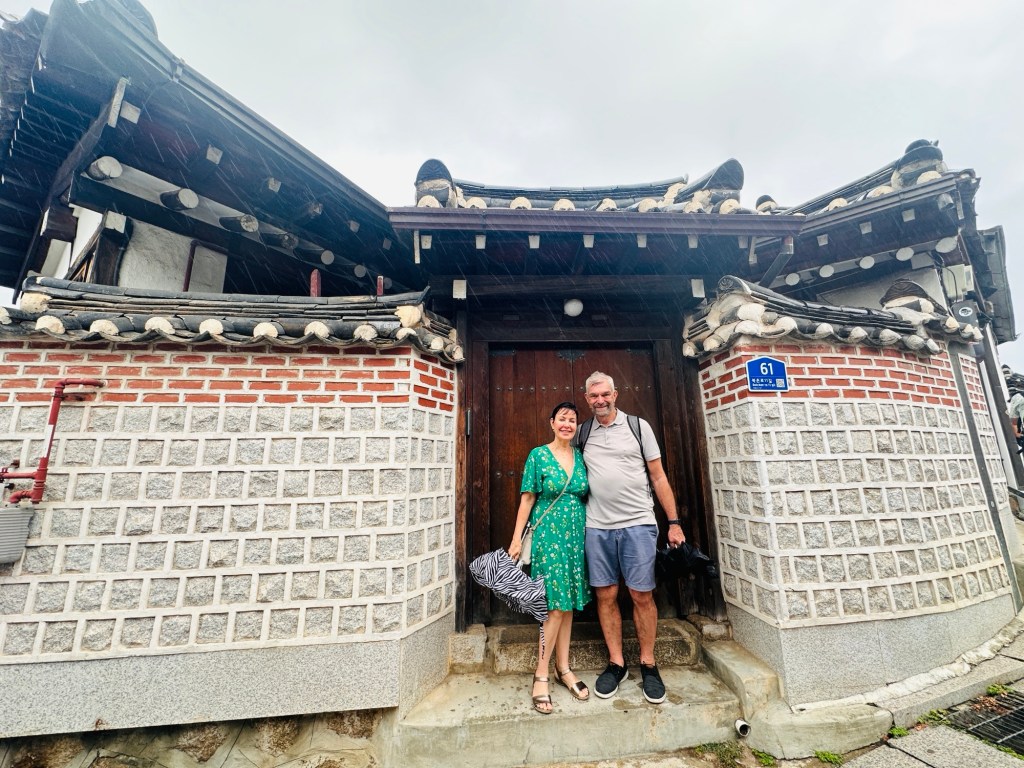
Our day started with a visit to Bukchon Hanok Village, a traditional Korean village in Seoul with a long history. It is located on the top of a hill (the higher you were indicated higher prestige) between Gyeongbok Palace, Changdeok Palace and Jongmyo Royal Shrine. The traditional village is composed of many alleys and hanoks (traditional Korean homes) preserved to show a 600 year-old urban environment. We enjoyed looking at the beautiful traditional buildings. People still live here – there were signs to be quiet as the residents complain about the noisy tourists. Lots of renovations going on – I guess that’s necessary with 600 year old buildings.
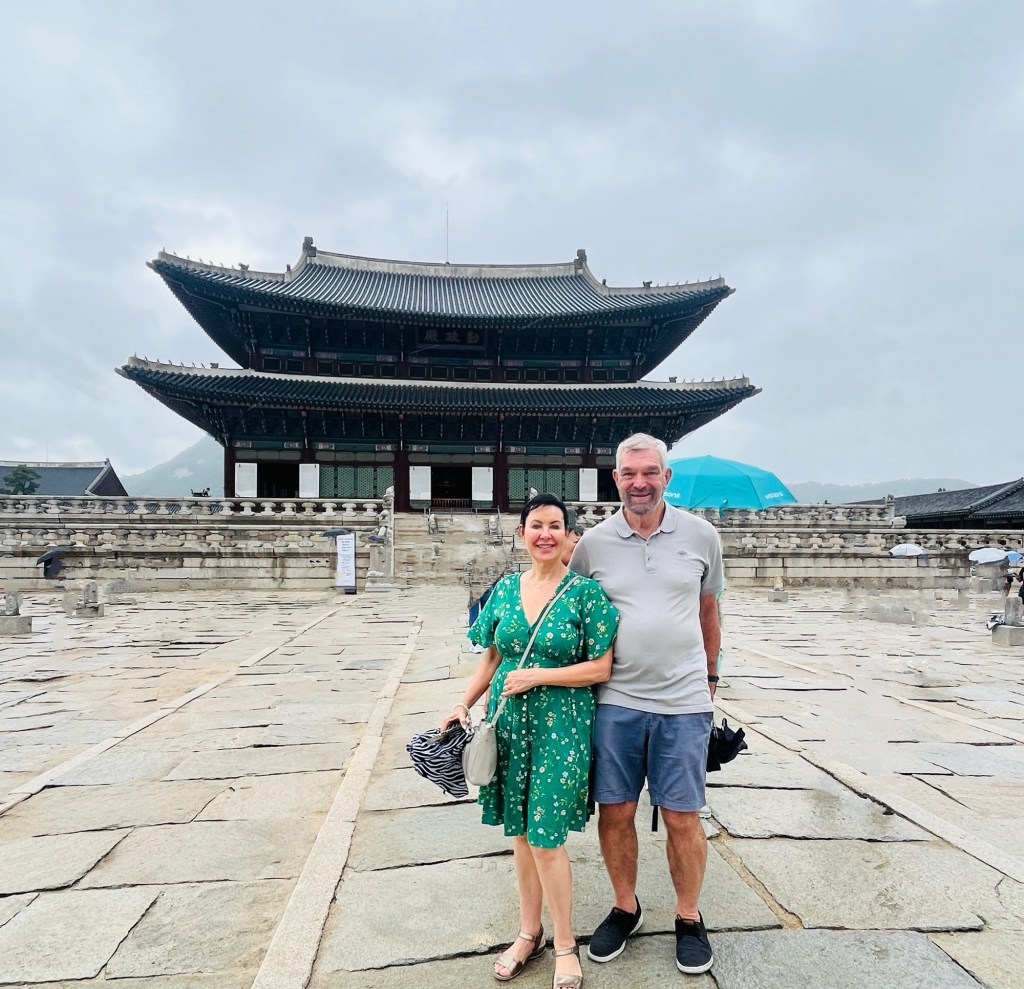
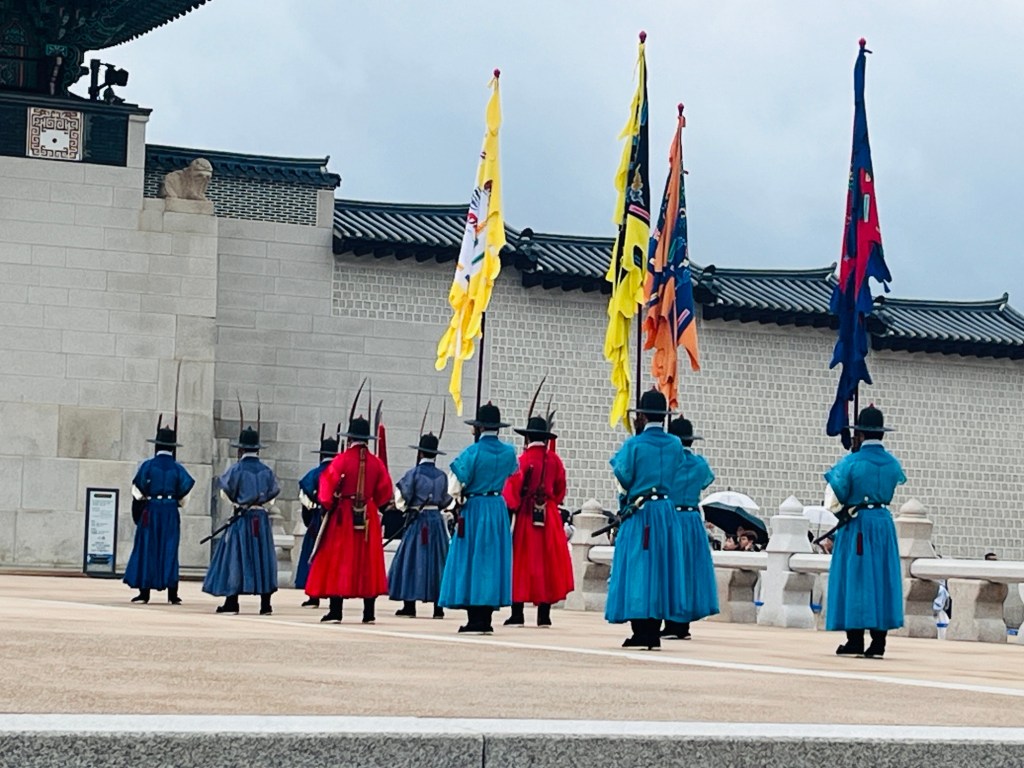
Next a visit to Gyeongbokgung Palace, the largest palace from the Joseon Dynasty (more than 500 years old). We arrived in time (11am) to see the traditional Royal Changing of the Guard. Great pomp and ceremony, all in traditional costume, and narrated so we could understand.
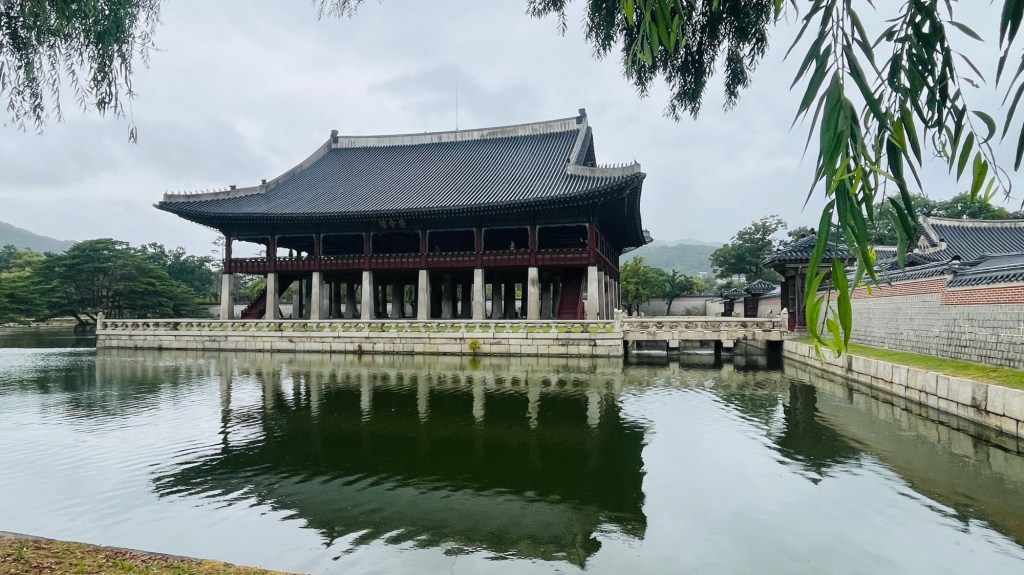
Gyeongbokgung Palace was built in 1395 as the official palace of the Joseon dynasty by Yi Seong-gye, the future King Taejo and founder of the new regime. Gyeongbokgung Palace is commonly referred to as the Northern Palace because of its location to the north, comparied to Changdeokgung Palace in the east and Gyeonghuigung Palace in the west.Gyeongbokgung Palace is arguably the most beautiful and is the largest of all five palaces. Many Joseon kings were crowned here. The premises were once destroyed by fire during the Imjin War (1592-1598).However, all of the palace buildings were later restored under the leadership of Heungseondaewongun during the reign of King Gojong.
Julie, our guide, told us many entertaining stories about Royal life – being a King wasn’t as wonderful as we might think. He was only allowed one night a month with his Queen, even though her primary role was to produce a male heir. The king’s other nights were filled with visits from his other wives and concubines. it made me think we need to relish our humble lives more.
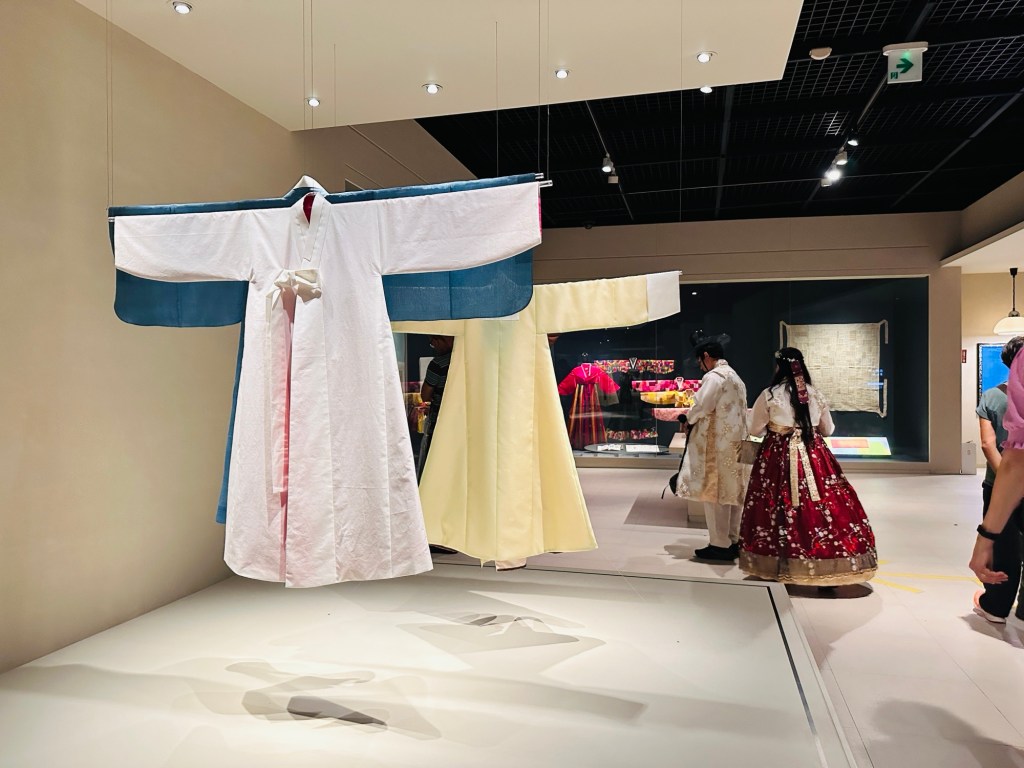
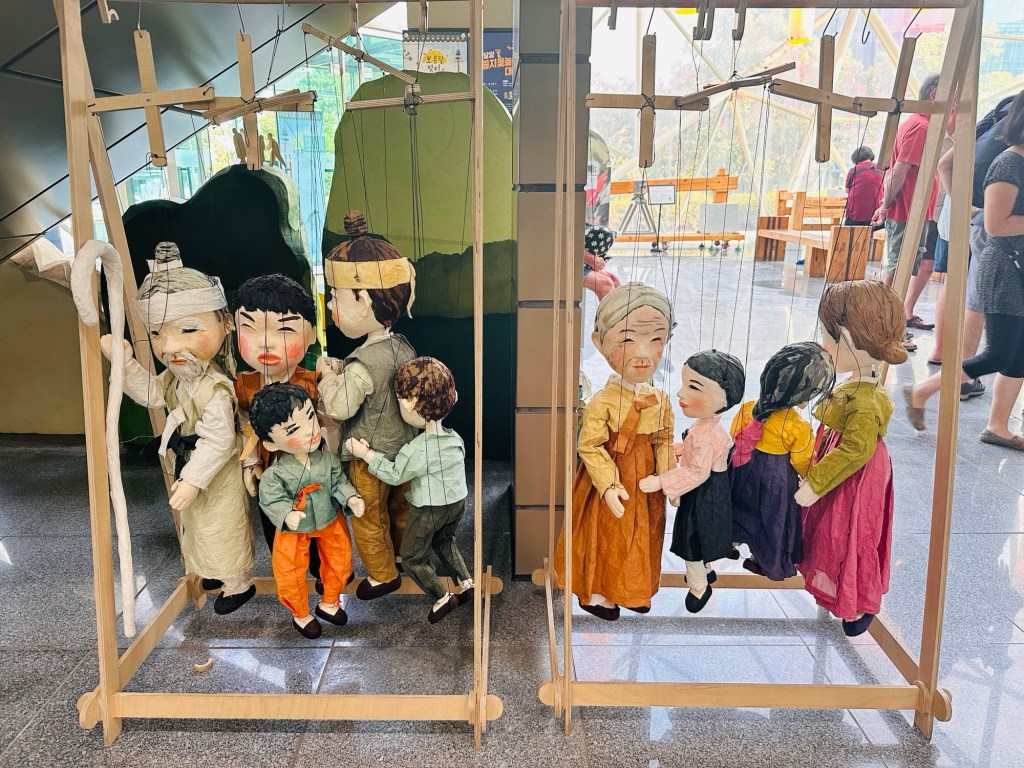
A visit to the National Folk Museum afterwards was a fabulous insight as to Korea’s unique culture and how Koreans lived in days gone by. A great display.
We finished our guided tour at Dongdaemun, a large commercial district of traditional markets and shopping centres that covers the entire area around Dongdaemun Gate, a prominent landmark in Korea. It is Korea’s largest wholesale and retail shopping district, featuring 26 shopping malls, 30,000 specialty shops and 50,000 manufacturers. Once we found the Open Market, I was in seventh heaven – where to start! There were lanes and lanes of little shops.
We had decided to walk back to the hotel, it was about a 40 minute walk, but took us two hours as we enjoyed exploring the area. There seemed to be a precinct of leather shops, then the clothes shops, followed by the garden/plant shops, ending up with the jewellery shops hundreds of them) – typical of many Asian countries. We had a great time poking around – needless to say I managed to find a nice top, and Frank got talked into a pair of trousers ( next zippered pockets to avoid any more wallet losing incidents!)
Back at the hotel, we put our feet up for half an hour, while we thought about dinner. Thought we would explore the restaurant precinct across the road from the hotel – the area is called Insadong. It was amazing! It didn’t look much by day, but once night came it turned into a fairy wonderland with the little lanes lit up with a myriad of lanterns, and it became a labyrinth of small restaurants and eating houses.
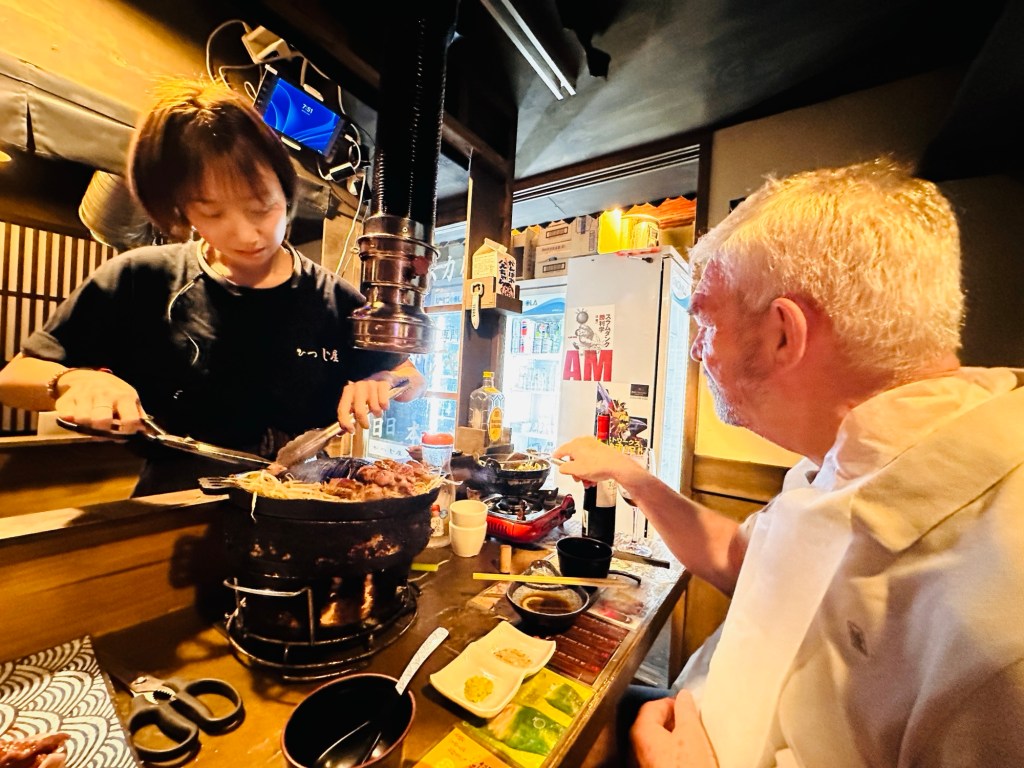
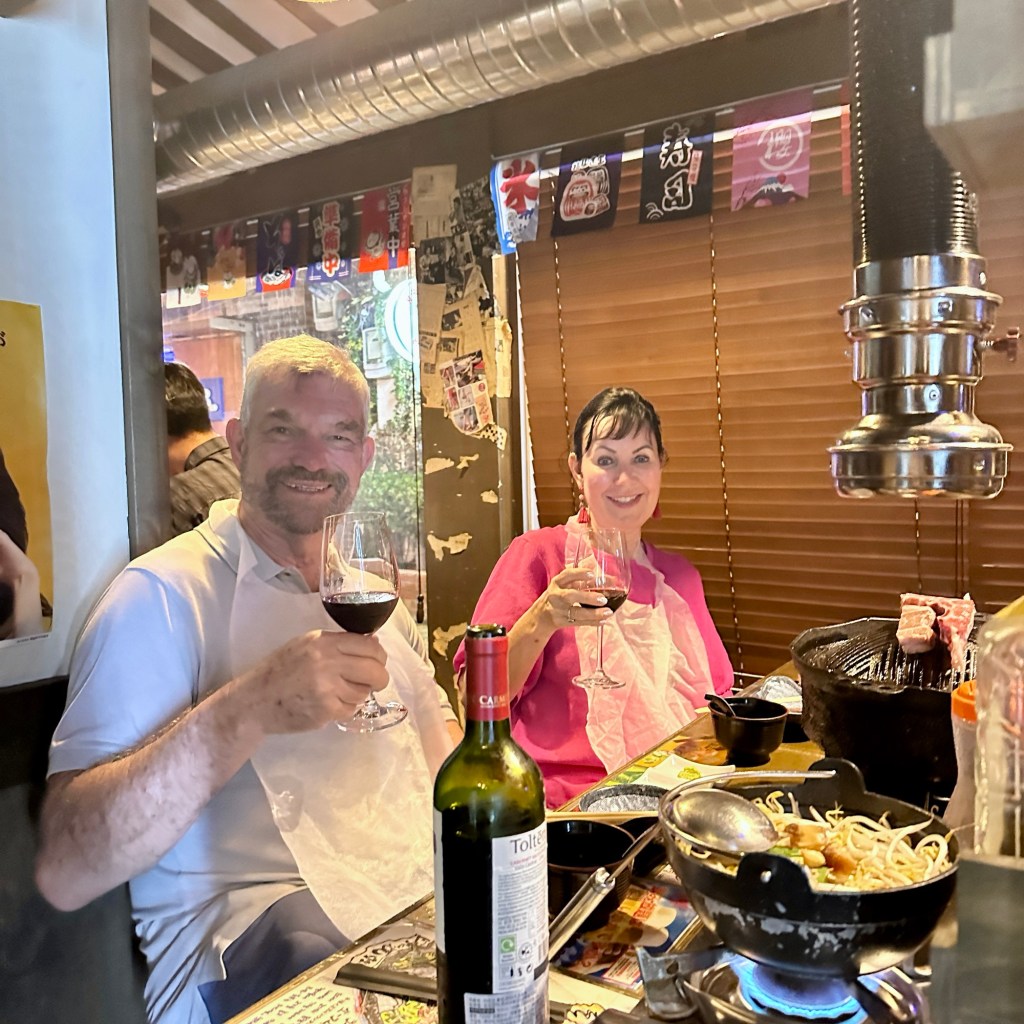
We found the loveliest Korean bbq restaurant which only serves lamb ( it seems they specialise in one food only). We had the sweetest host who cooked the lamb and vegetables for us, and also explained the accompanying condiments and sauces, and how to eat everything. Heaps to eat, and a bottle of Chilean Cabernet Sauvignon set us back $65. What a lovely end to our first full day in Seoul.
Day 3
Saturday 7th September 2024
Seoul
22-31 , very hot and humid
Timeline
1910-45 Japanese occupation
1945-50 North Korea under Russian control, South Korea under US control
1950-53 Korean War
1953 onwards – separate countries under UN sanction truce
1970s and 1980s – South Korea experienced heavy industrialisation and rapid economic growth. In the same years, North Korea continued to go backwards
Today we drove an hour north to no-man’s-land, known as the Korean Demilitarized Zone, or DMZ. Located on each side of the 38th parallel, this infamous border was established at the end of the Korean war in 1953 at the signing of Panmunjom’s armistice in order to separate North and South Korea. On 27th July 1953, the Korean War ended with a cease fire and the limit lines were created as each side moved their troops back 2 kms from the Military Demarcation Line.
Today the this land has become a de facto nature preserve. Once farmland and subsequently a devastated battleground, the DMZ has lain almost untouched since the end of hostilities in 1953 and has reverted to nature to a large extent, making it one of the most pristine undeveloped areas in Asia.
To understand the history we toured Imjingak, a symbolic tour spot which has various war-related artifacts. Here the Freedom Bridge and Imjingang rail bridge from the Korean War are preserved to remind people of the past. Also here is a Memorial Hall, memorial monuments, the Bell of Unification, the Last Train Out, The Bridge of No Return, and Dokgae Bridge all symbolising the pains of war and separation.


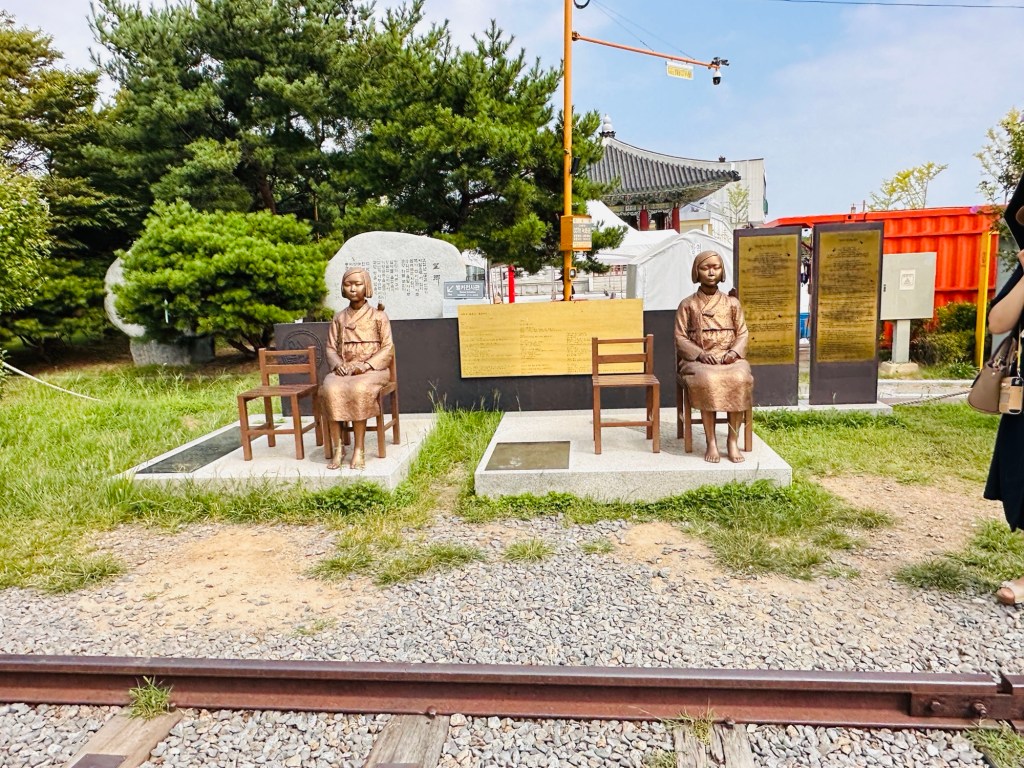
The Statue of Peace I found very poignant was the memorial to the Comfort Girls. During the Japanese occupation from 1910-1945, thousands of teenage girls were brought to Korea to “comfort” the Japanese soldiers. They thought they were coming to work in factories, instead it was sexual slavery. How sad for them. Even worse, they returned home and no one spoke about it, no one wanted to hear. It was only in the late 1990s it was brought to light and a movement was started.
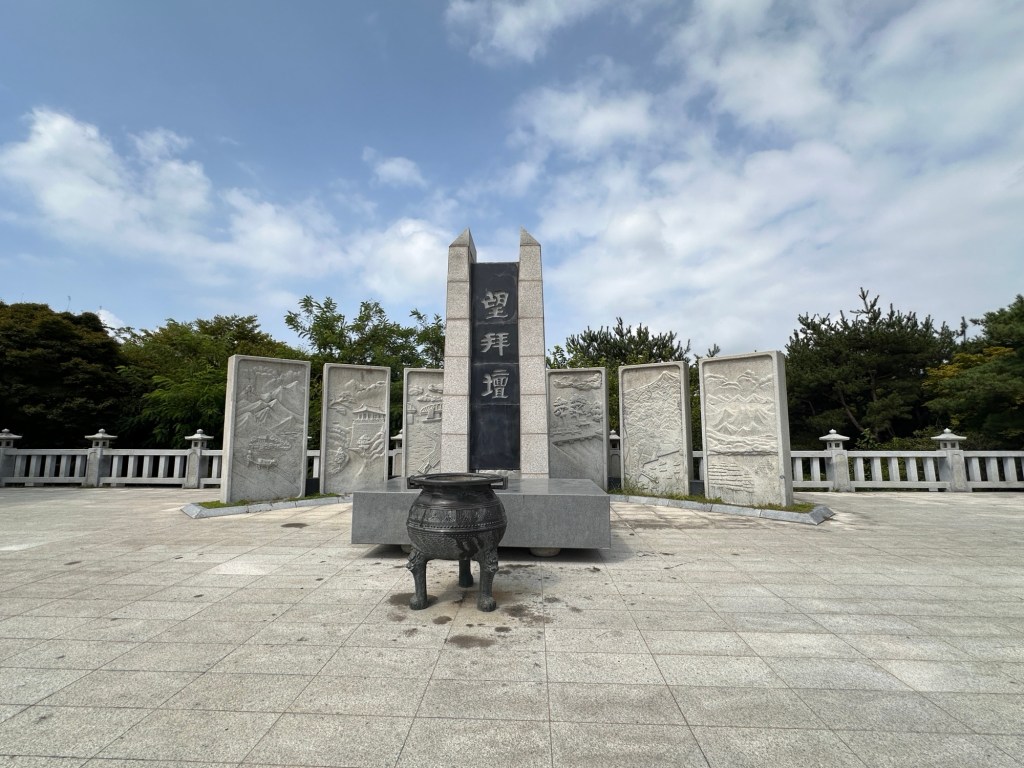
The other was the Mangbaedan Pagoda representing the earnest longing for the reunification of the country. After 36 years of Japanese colonial era rule, Korea was liberated on August 15, 1945. Before celebration could break out, Korea was arbitrarily divided into north and south according to a unilateral decision of the powerful nations, regardless of the desire of the people. Mangbaedan is a permanent alter overlooking the lands of North Korea. Five million people left their home in the north, where they had lived for generations, to avoid the Soviet army and the North Korea Communist Party’s persecution and brutalities. The refugees built a temporary altar at Imjingak and on every Chuseok (Korean Thanks giving day), hold an event to honor their ancestor and parents who they had left behind in North Korea.
We then went down to Bunker Beat 131, a military underground bunker constructed during the Korean War, and is now a unique exhibition space. You can feel the atmosphere of a military facility from the entrance. The shape of an anti-tank mine on the stairs down to the basement instantly gives you a foreboding feel.
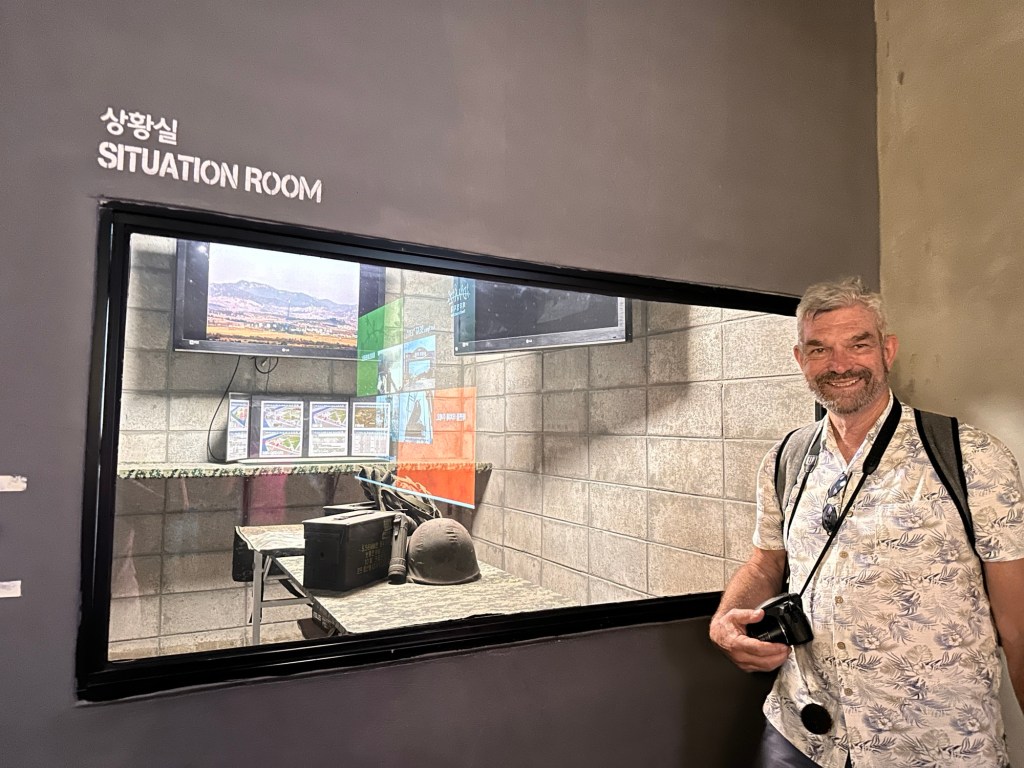
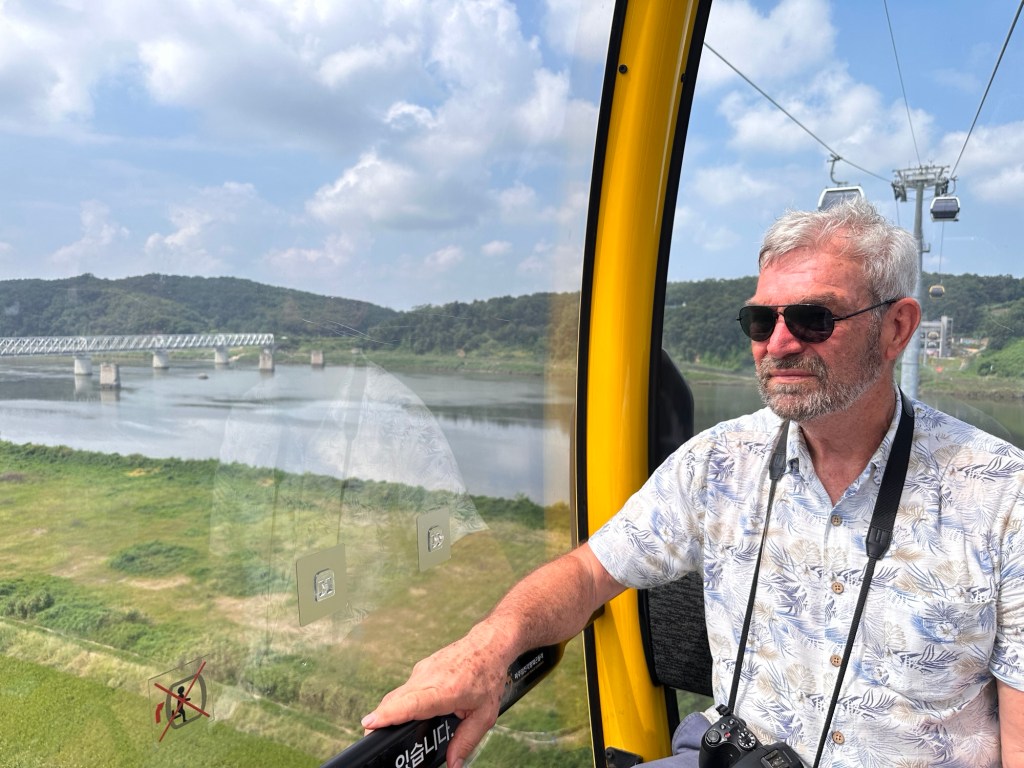
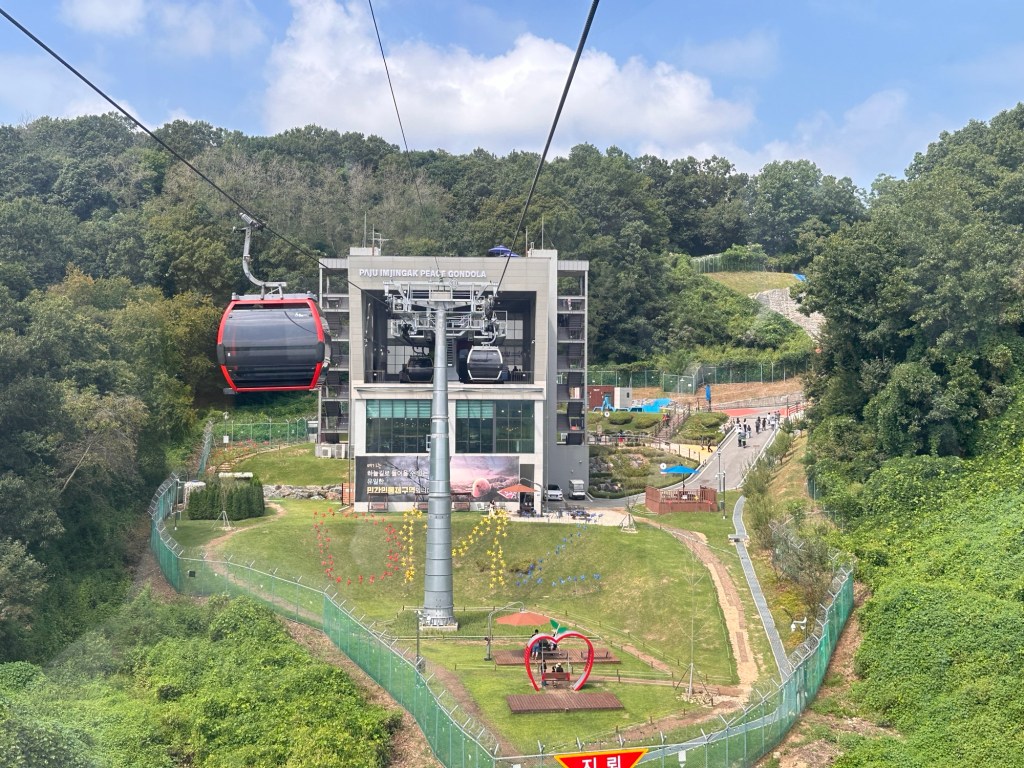
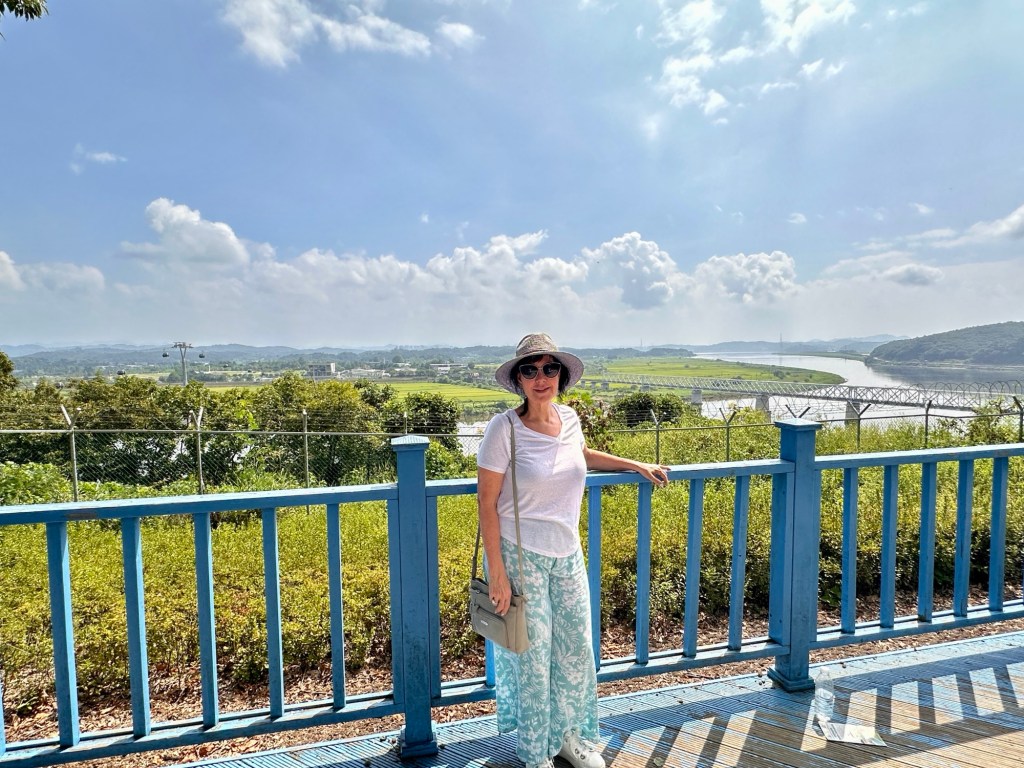
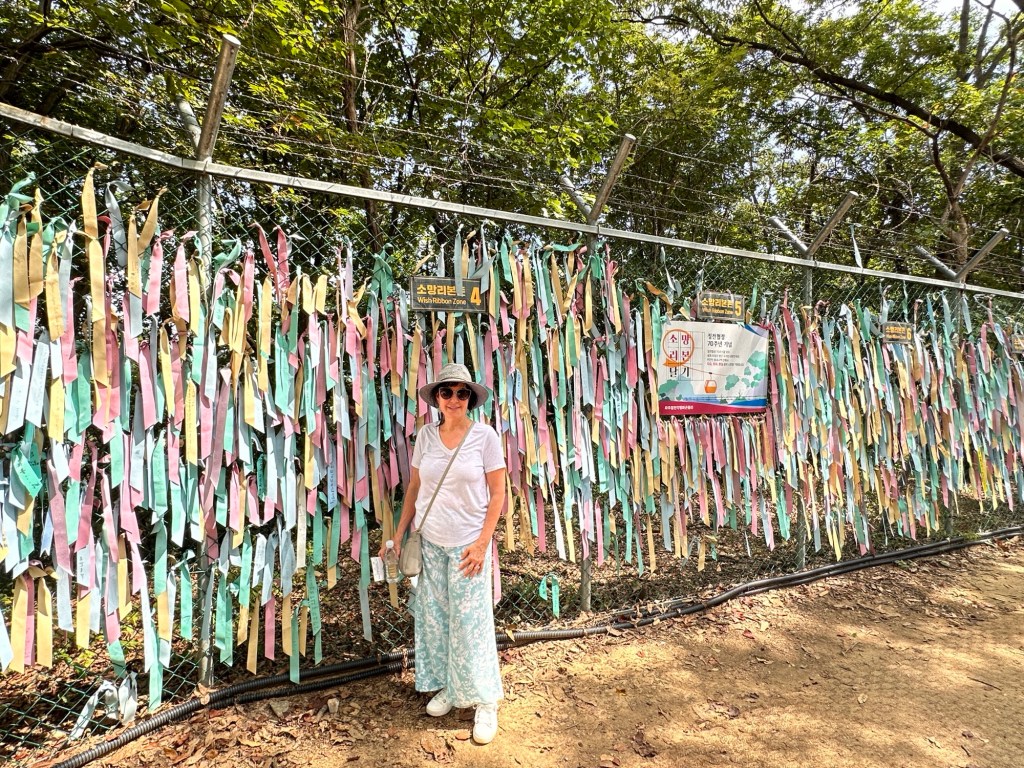
Next we went on the DMZ Peace Gondola which travels the Civilian Control Zone. On the gondola, we could see rice paddies alongside the Imjingang River below – the farmland is looked after by residents of the Unification Village. Once on the Northside, we walked up a very steep hill to the Imjingang observatory and looked back to the Freedom Bridge and Dolce Bridge. The Wish Ribbon Zone was very sobering.
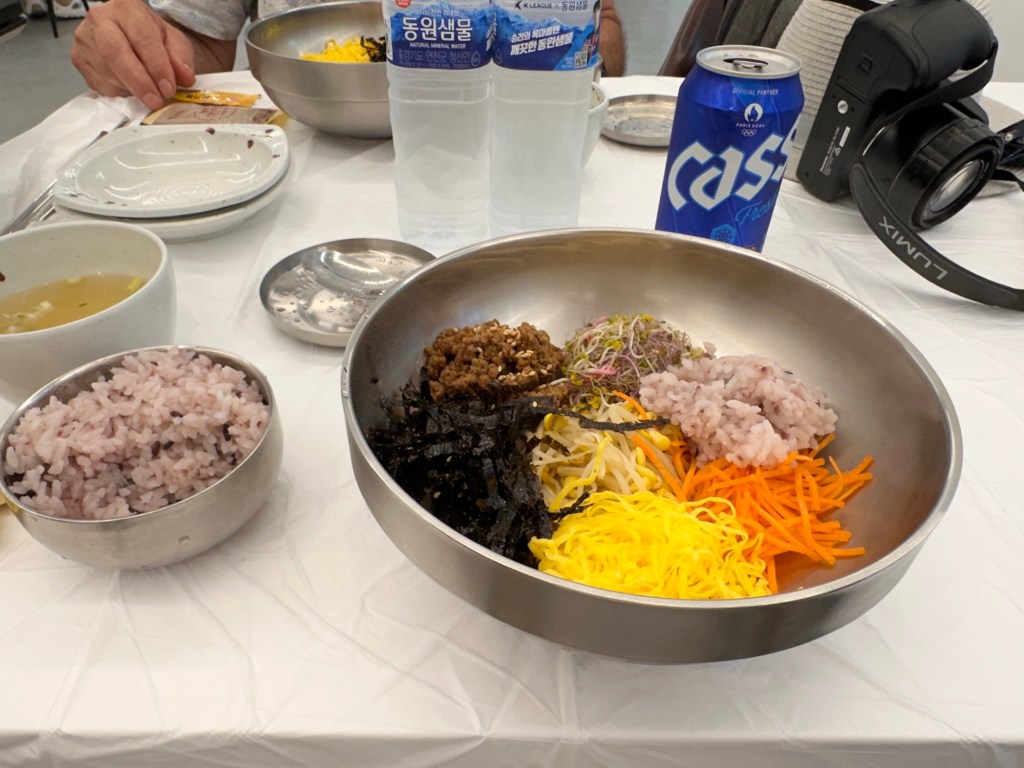
Lunch, back on the Southside, was a welcome break after all the emotional history we had just heard. We found a traditional Korean restaurant at the Visitor Centre, and tried the Bibambap – it was delicious! A large bowl with minced beef and fresh salad, to which you add rice and a spicy sauce – perfect to refresh us as it was so hot outside.
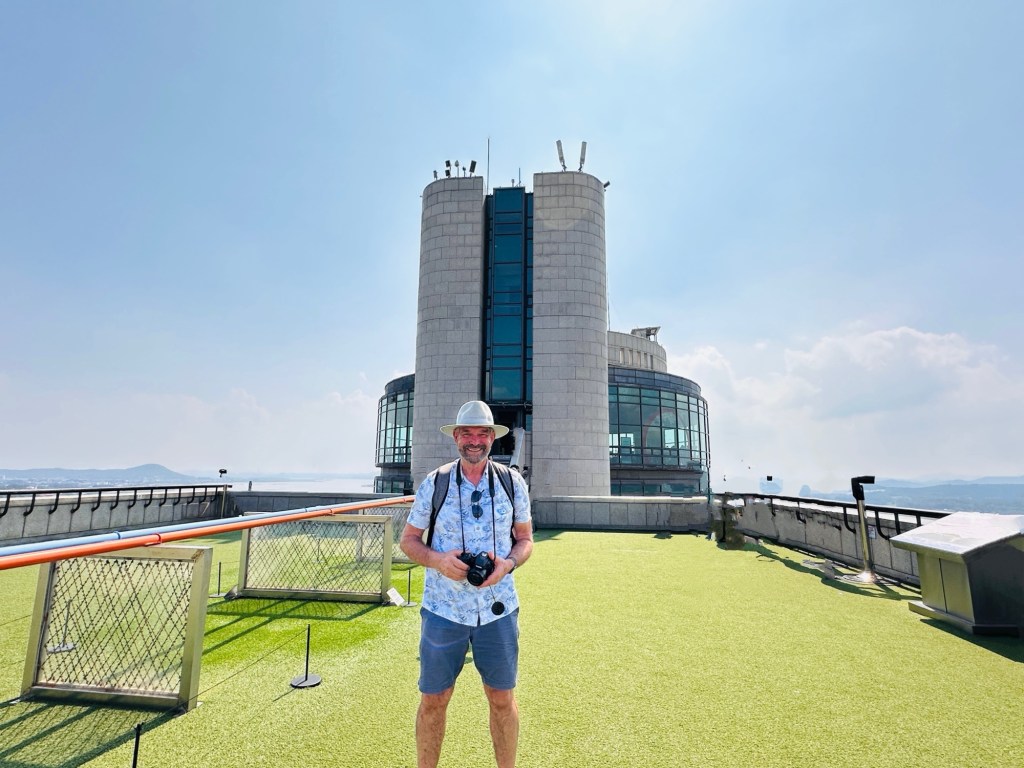
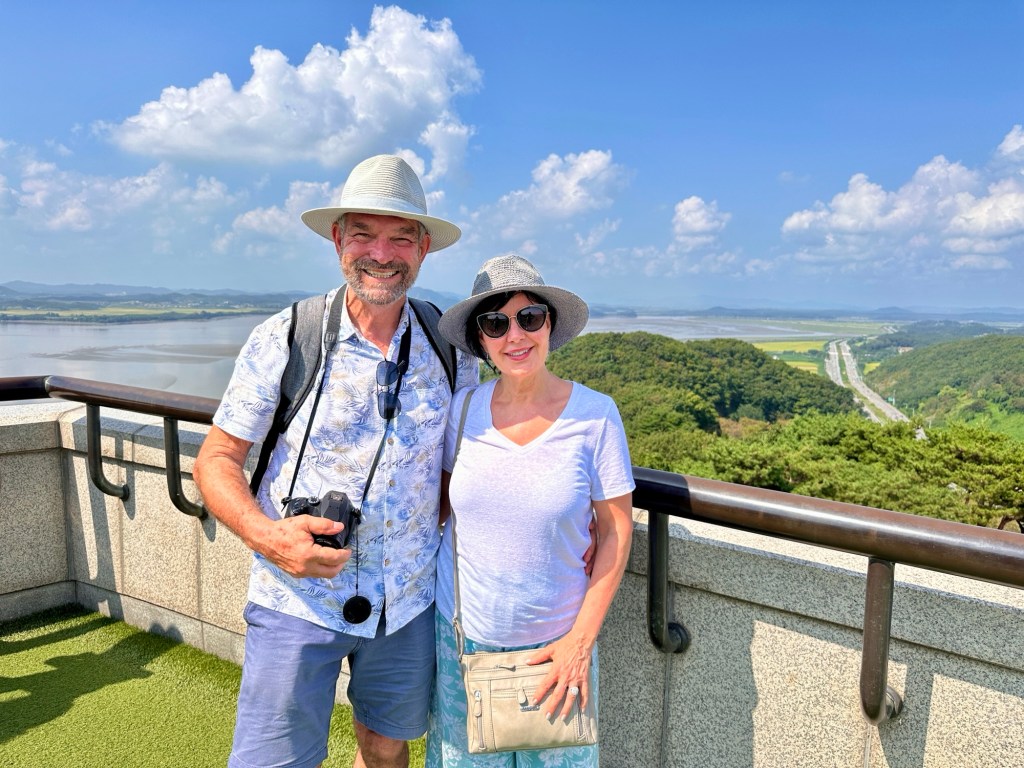
Our final destination for the tour was the Odusan Unification Observatory. Here, with the aid of the telescopes situated around the observatory, we could vividly see the North Korean villages, people working, and their daily lives. There were some very confronting displays, with information provided by 6351 defectors. I think it would be a terribly sad life for those living in North Korea, and even worse if you’ve never seen your relatives in all those years .
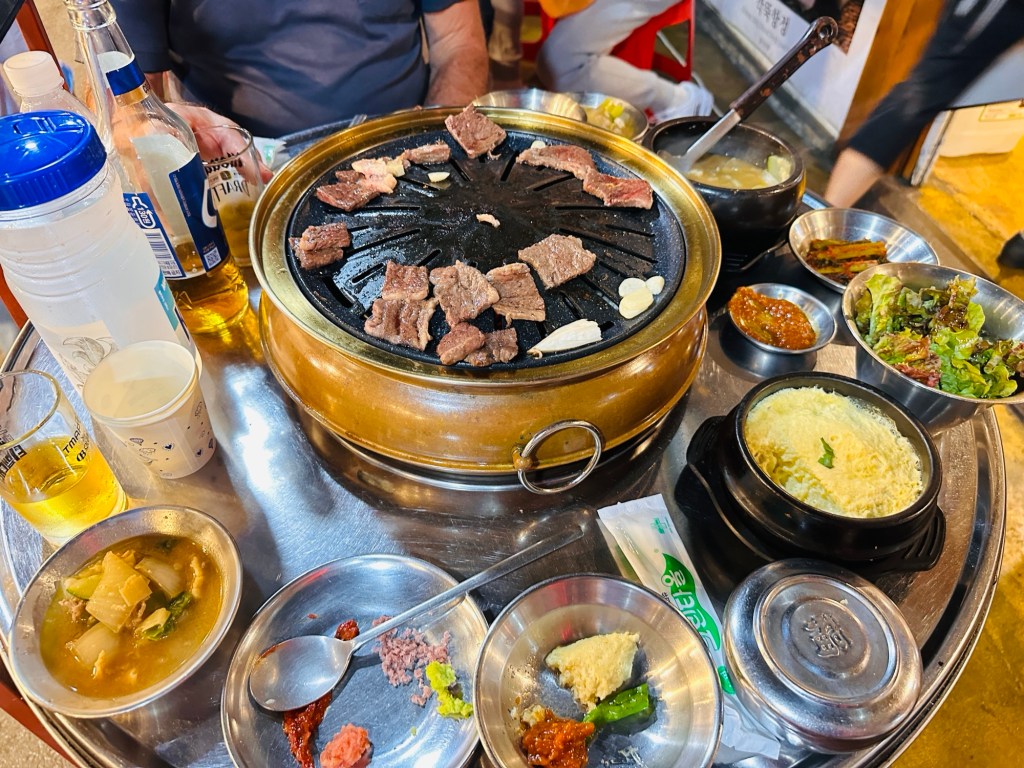
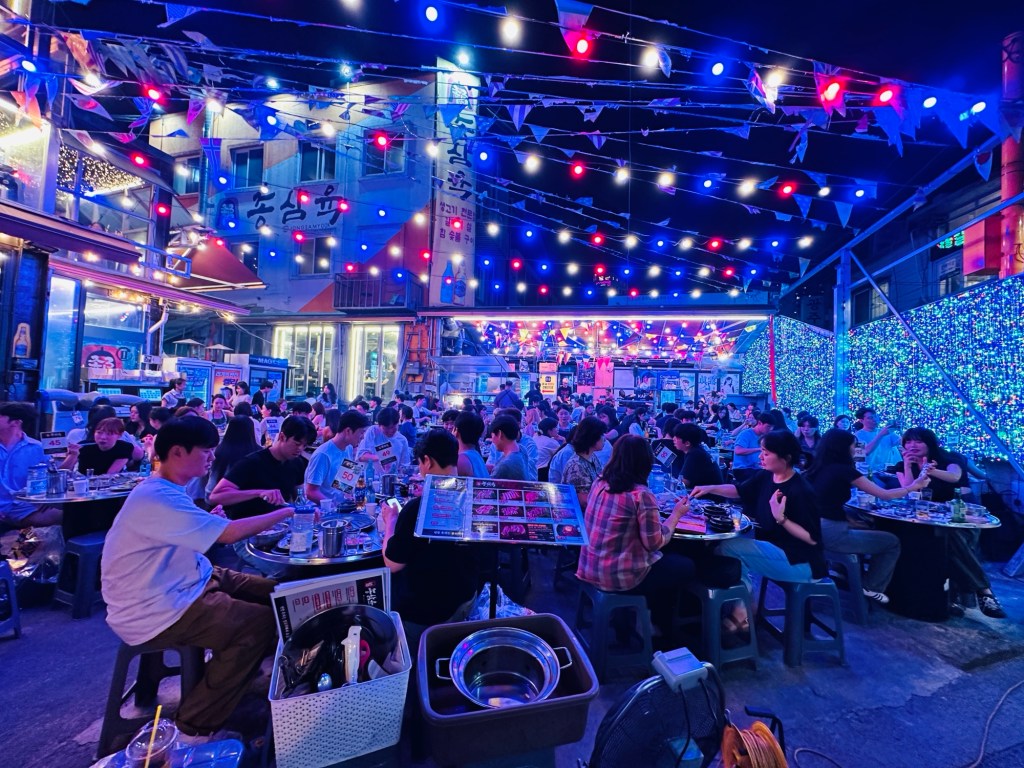
Some time left back in Seoul to explore more of the little alleyways – they just go on and on for miles ! Where to have dinner tonight …. so many choices!!! We ended up in a little laneway ( one of thousands), this time having the beef Korean Bbq. Our host did not speak any English ( and we didn’t speak any Korean), but we muddled through with lots of sign language! Yummy sauces, and fresh salad and kimchi to accompany the beef. A little more lane exploring – so many people eating out. Found a lovely little bar to enjoy a cocktail before heading back to the hotel, then a nightcap on the rooftop to complete the day.
Day 4
Sunday 8th September 2024
Seoul to Jeonju
21-31 degrees
Today was a 190 km drive to the popular village of Jeonju, an important tourist centre, famous for TV its Korean food and historic traditional buildings.
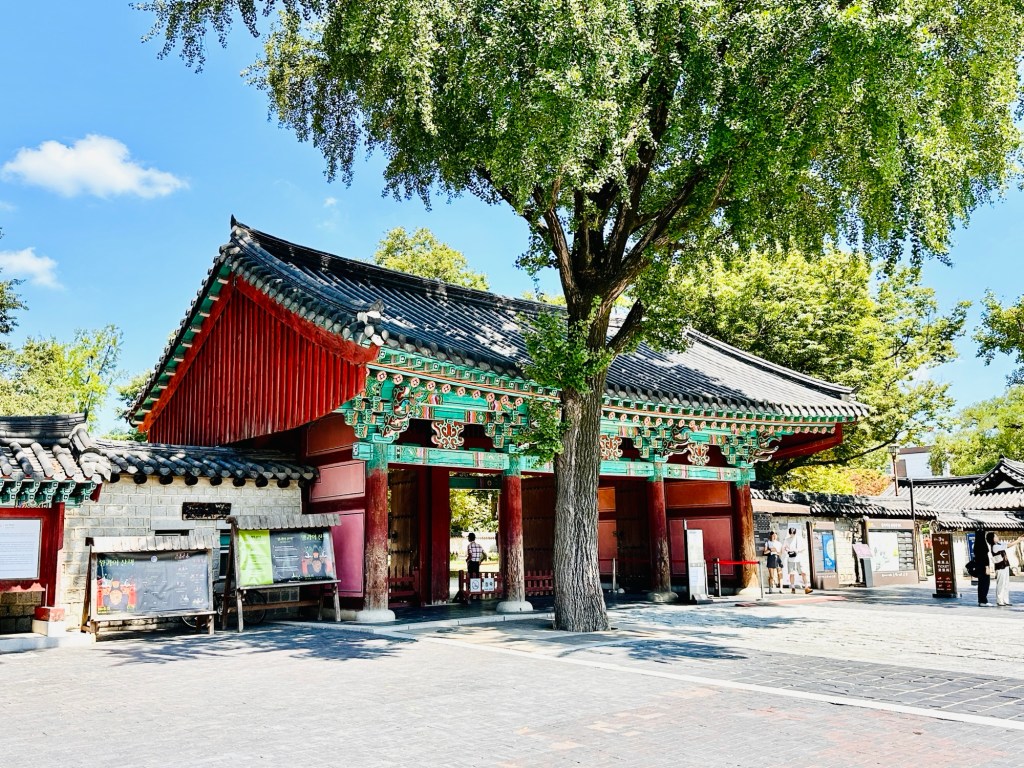
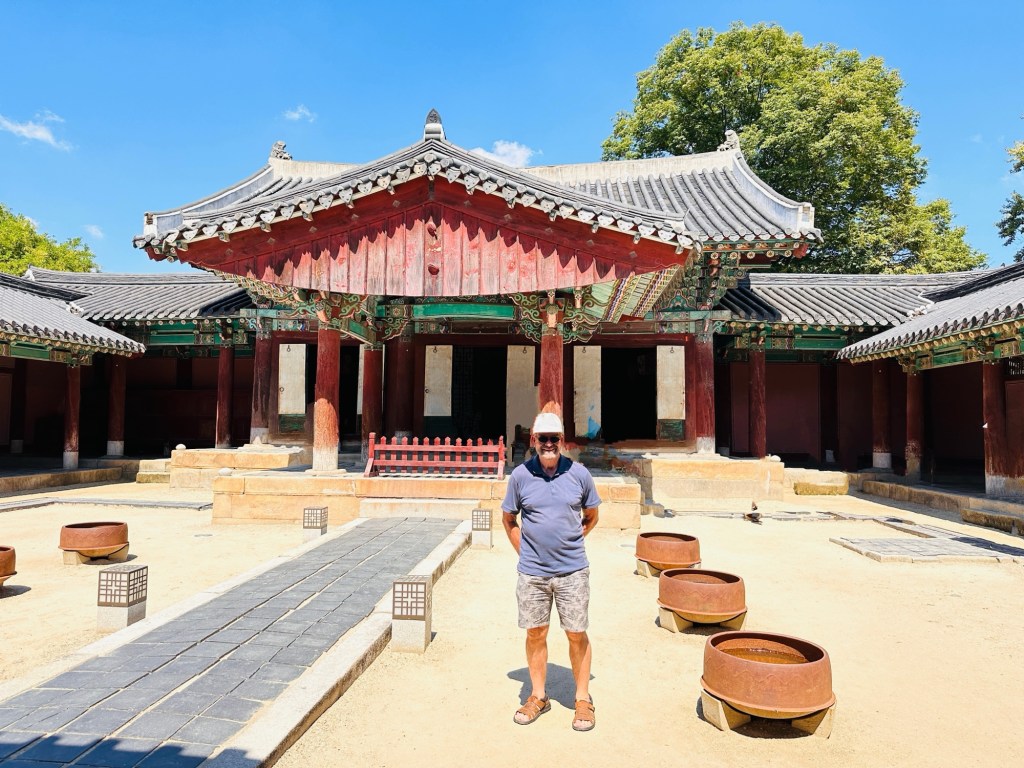
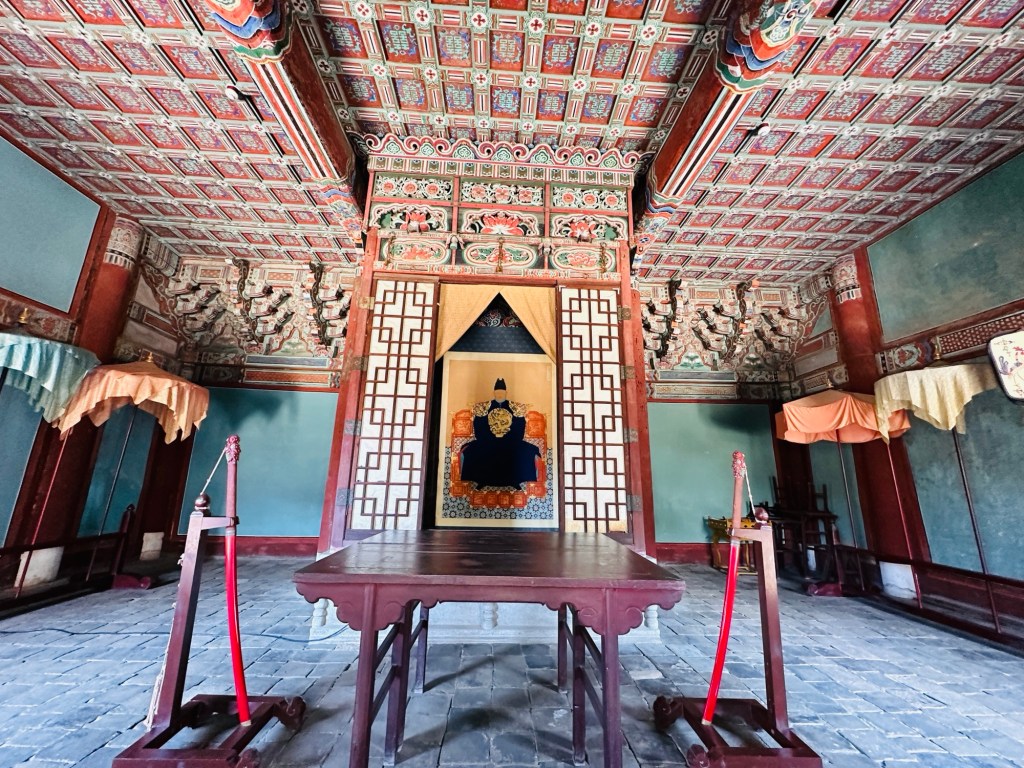
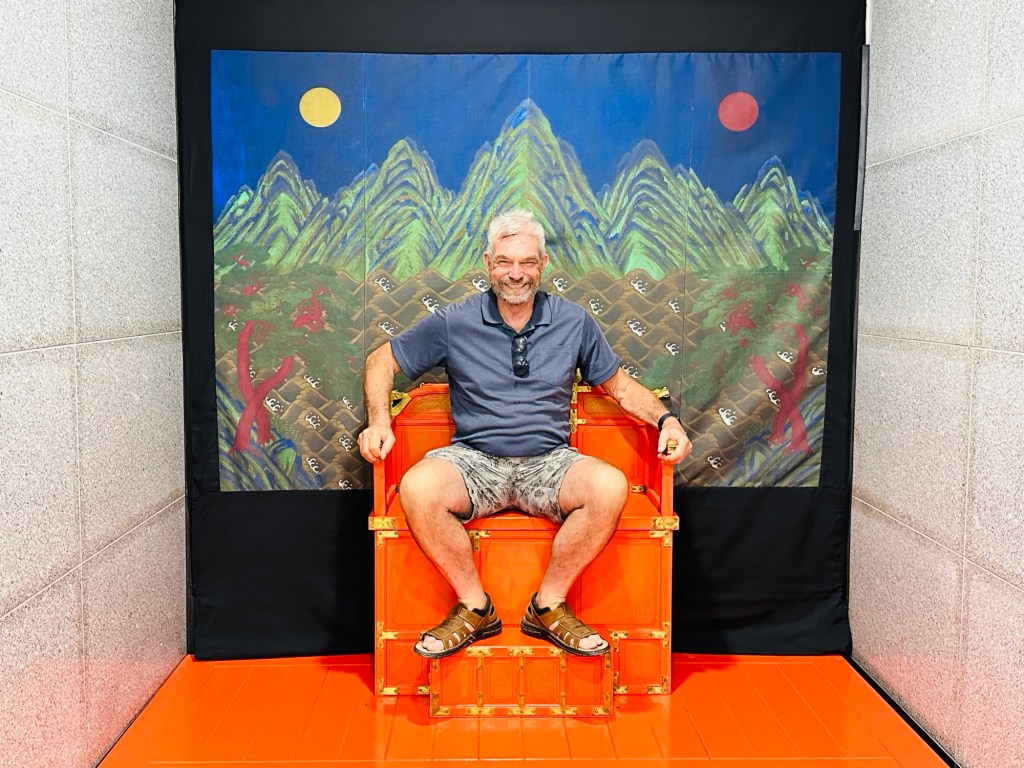
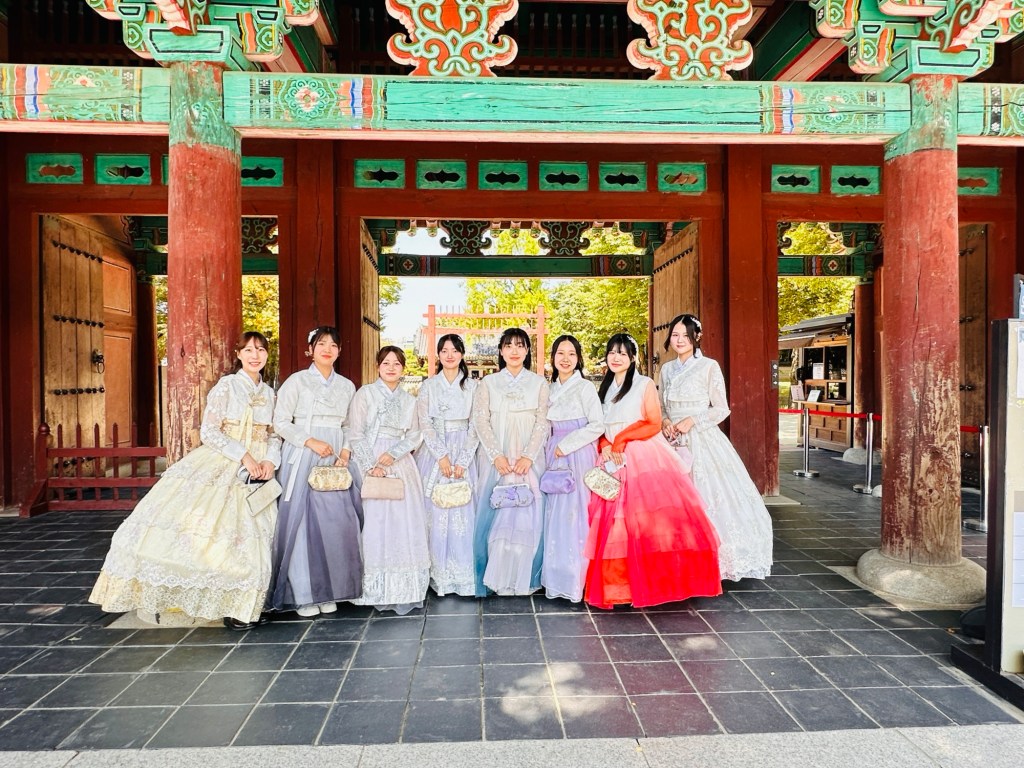
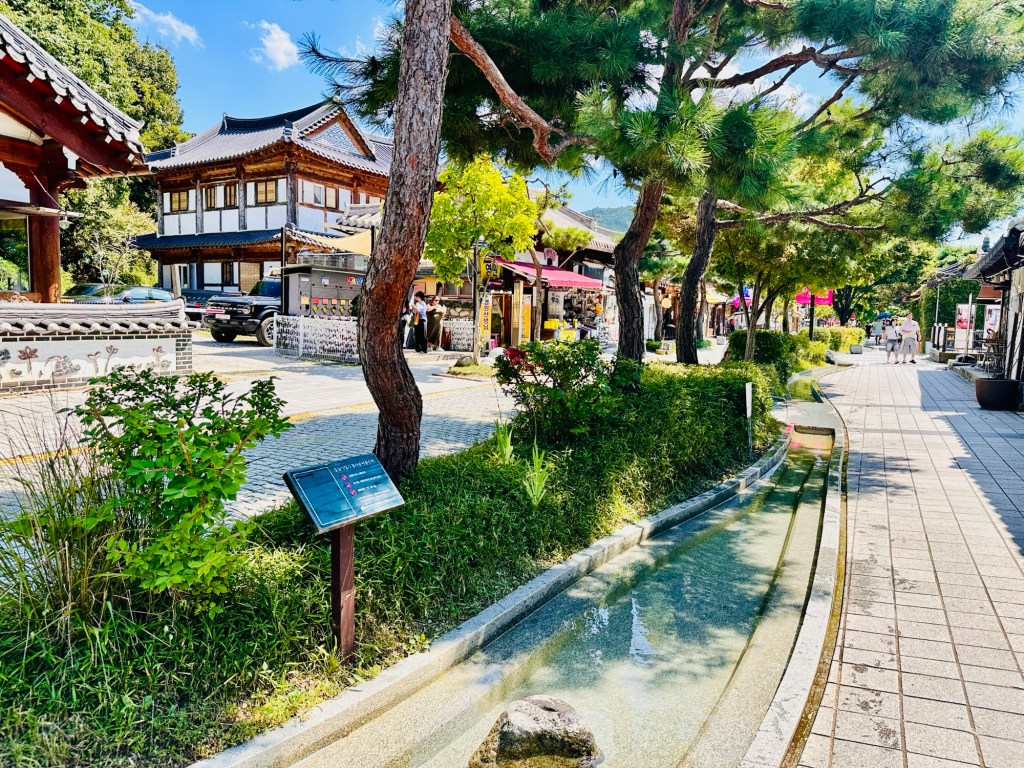
First was a tour of Jeonju Hanok Village, a large traditional Korean Village – it is a symbol of Korean resistance during the Japanese occupation, and now where traditional Korean spirit is vibrantly alive. The Gyeonggijeon Shrine was erected in 1410 and holds the portrait of King Tae-jo, the founder of the Joseon dynasty. Many visitors, both local and foreign, hire traditional hanpoks to wear for their visit. They looked beautiful- but they would have been very hot! There were many Korean craft shops and eating places to enjoy in the streets outside the Hanok village.
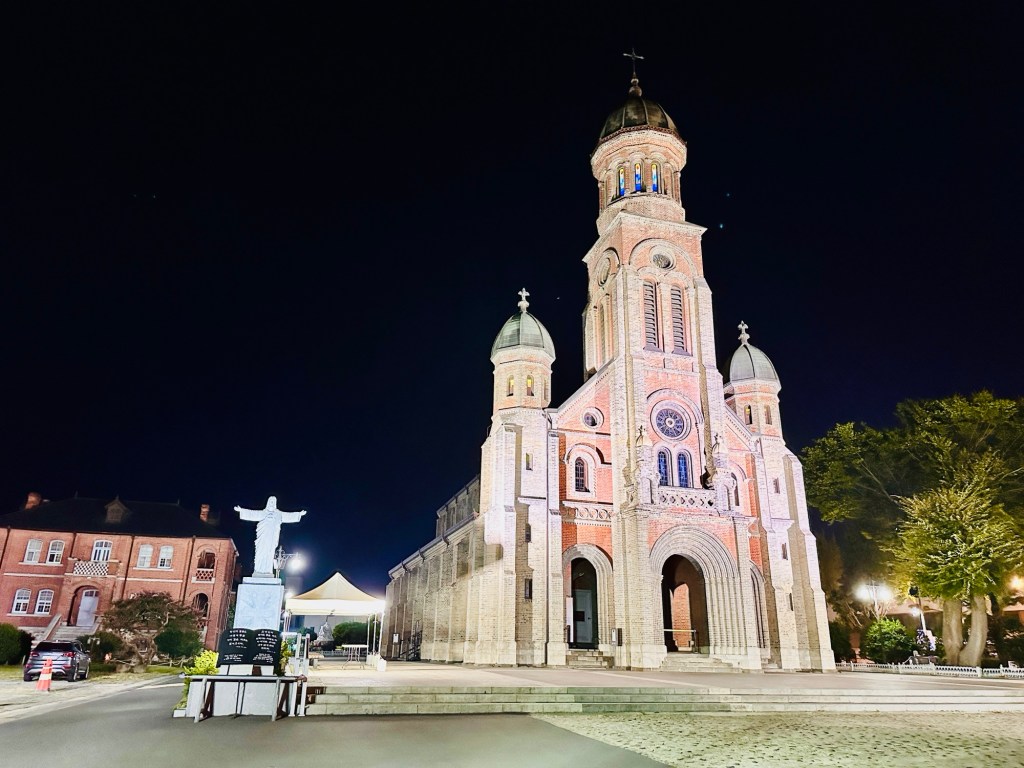
A large Catholic Church was nearby. Koreans are 30% Christian, 30% Buddhist, and 40% no religion. There are no religious conflicts here.
We checked into the hotel, a Best Western but quite upmarket. The air conditioning was a welcome relief from the intense heat outside. Unfortunately the pool was empty – not sure why in this temperature!
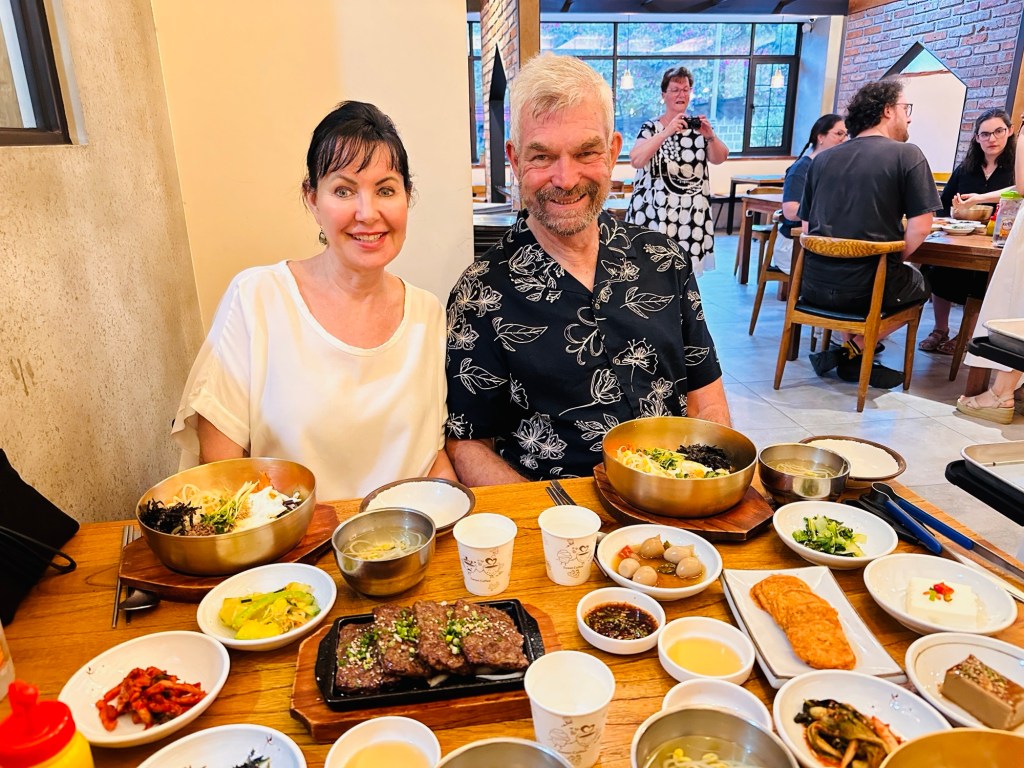
This evening we experienced a traditional Jeonju Bibimbap meal.
Jeonju is the birthplace of the famous Korean dish Bibimbap (rice with vegetables & meat). There were so many side dishes and condiments – it was like a banquet. Delicious fresh and flavoursome food. A fifteen minute walk back to the hotel, no sign of a bar on the way, so it was an early night after enjoying a glass of wine from the 7/11 in the room.
Day 5
Monday 9th September 2024
Jeonju to Busan
21-32 degrees hot +++
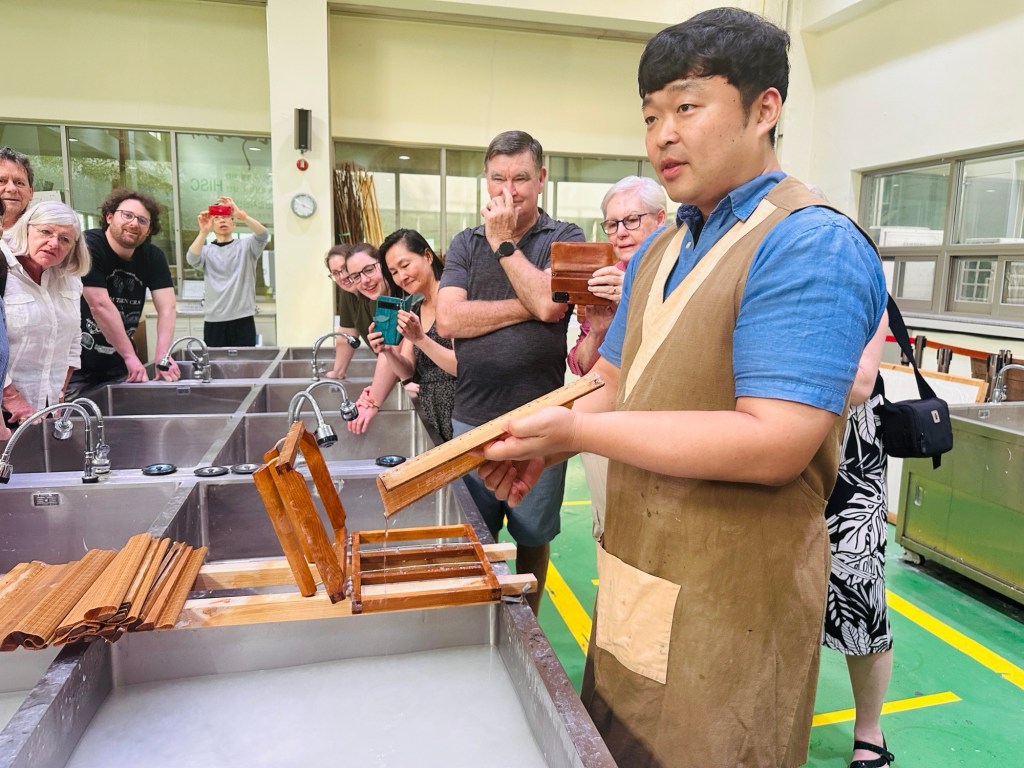
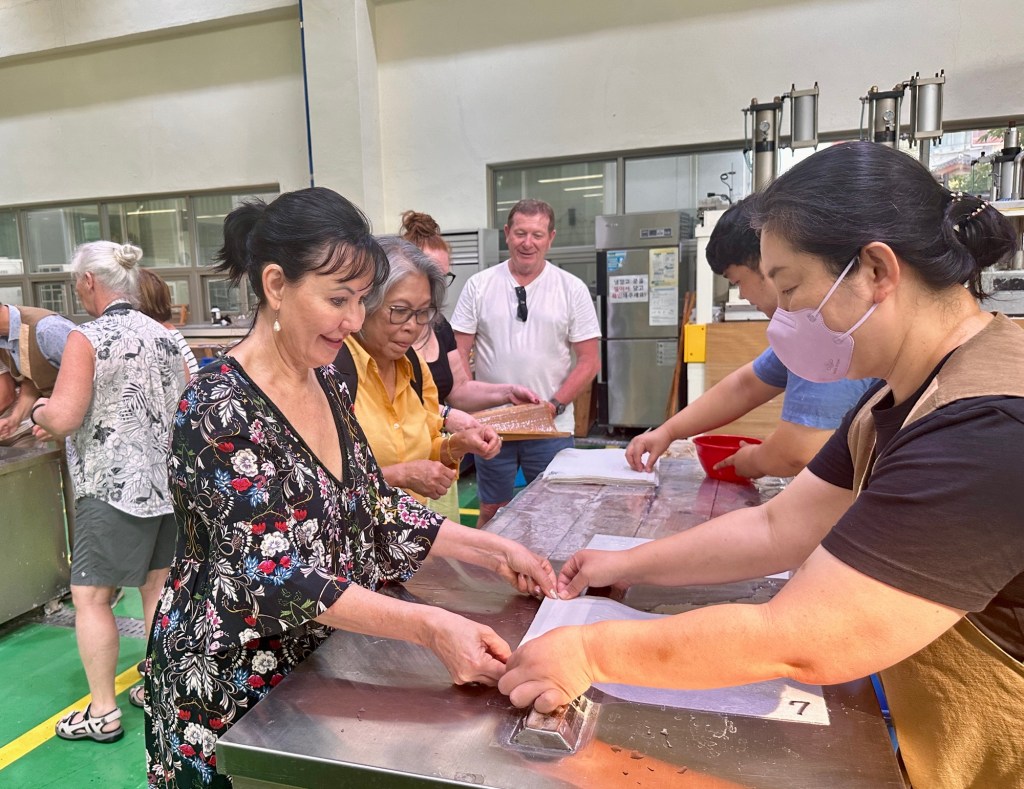
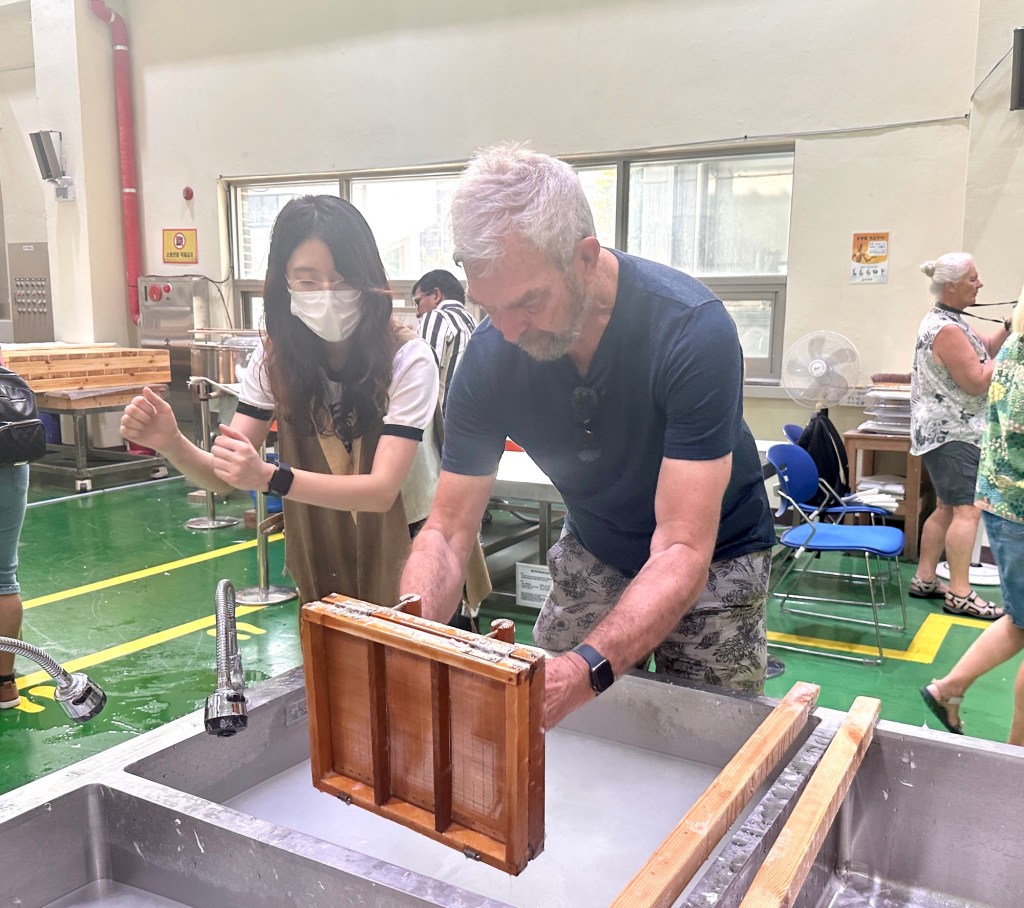
First adventure today was a visit to Hanji Centre (Korean Traditional Mulberry paper), Korea’s first centre specializing in paper. It has an extensive collection of 3000 artifacts and a database documenting the long history and superiority of Hanji (Korean paper). We had the opportunity to make our very own Korean paper – it was a lot of fun!
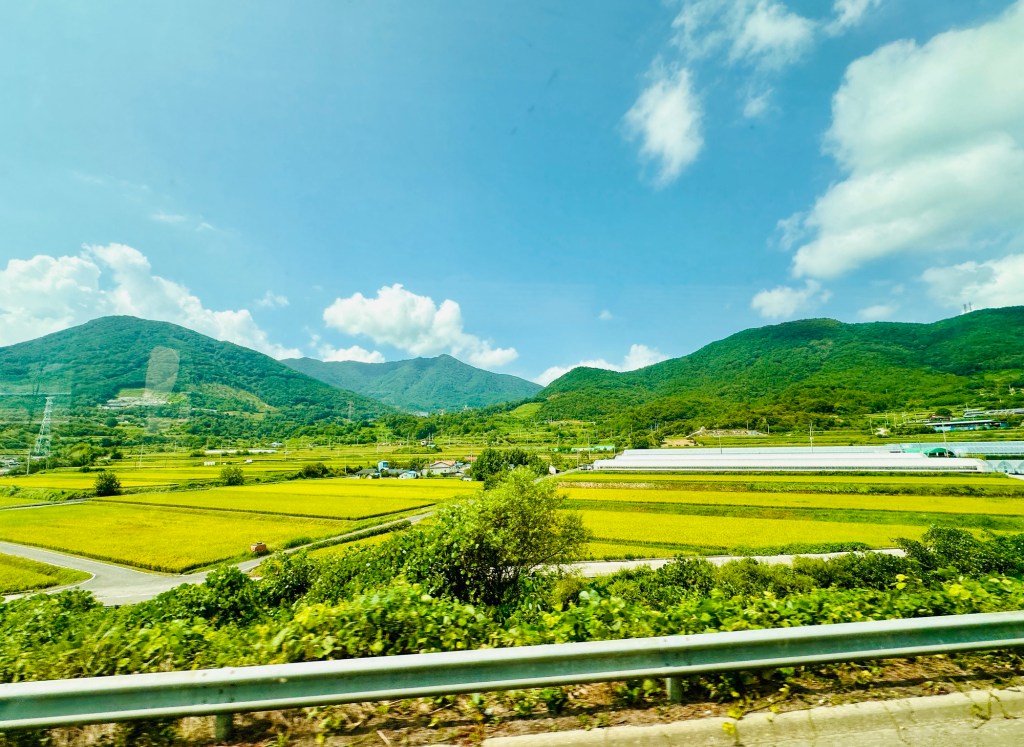
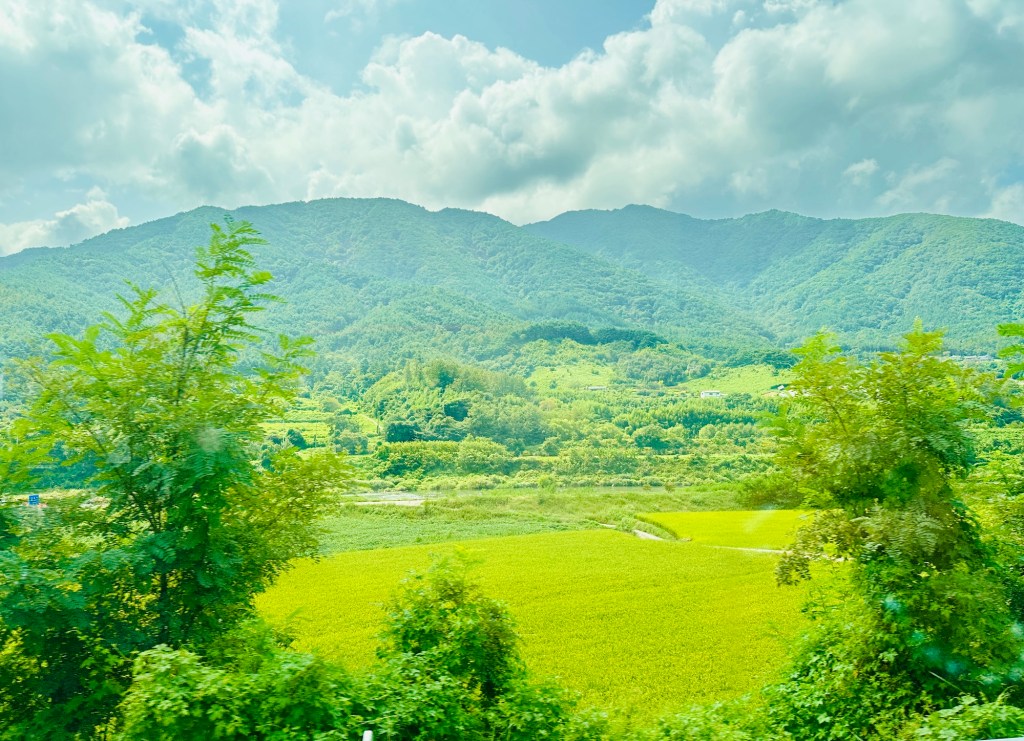
Next a 190 km drive to Busan, the hub of Asia. Population 3.5 million. Busan has a huge port – remembering all goods need to go in and out of Korea by ship – they can’t go north as there is no rail or road access.
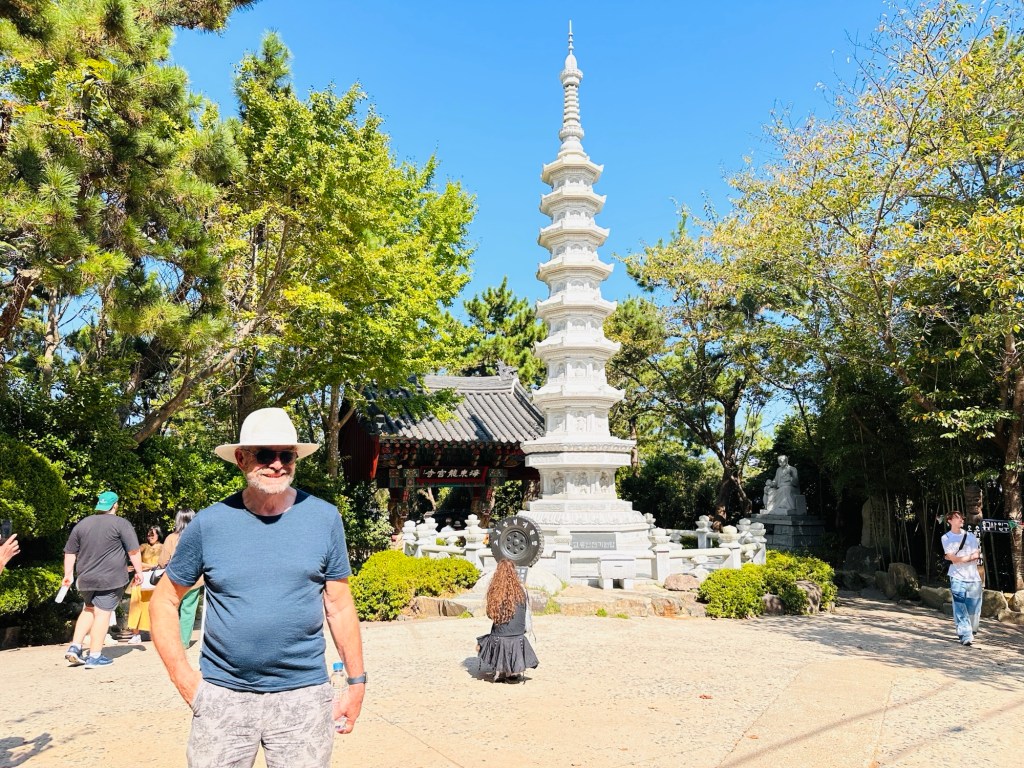
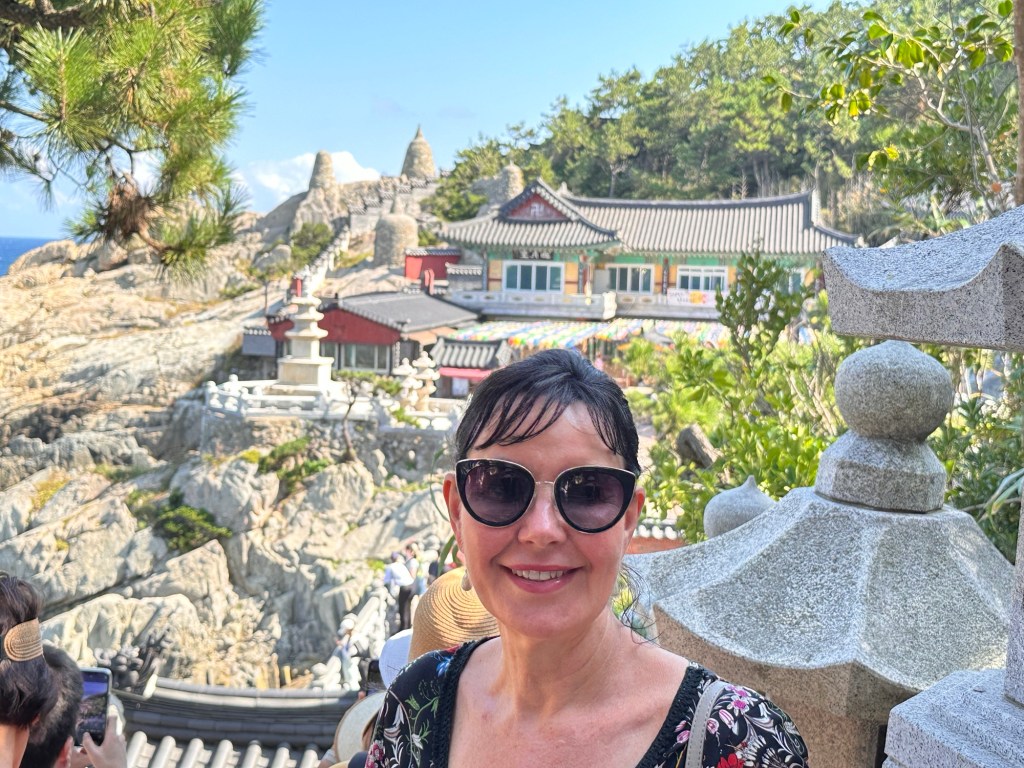
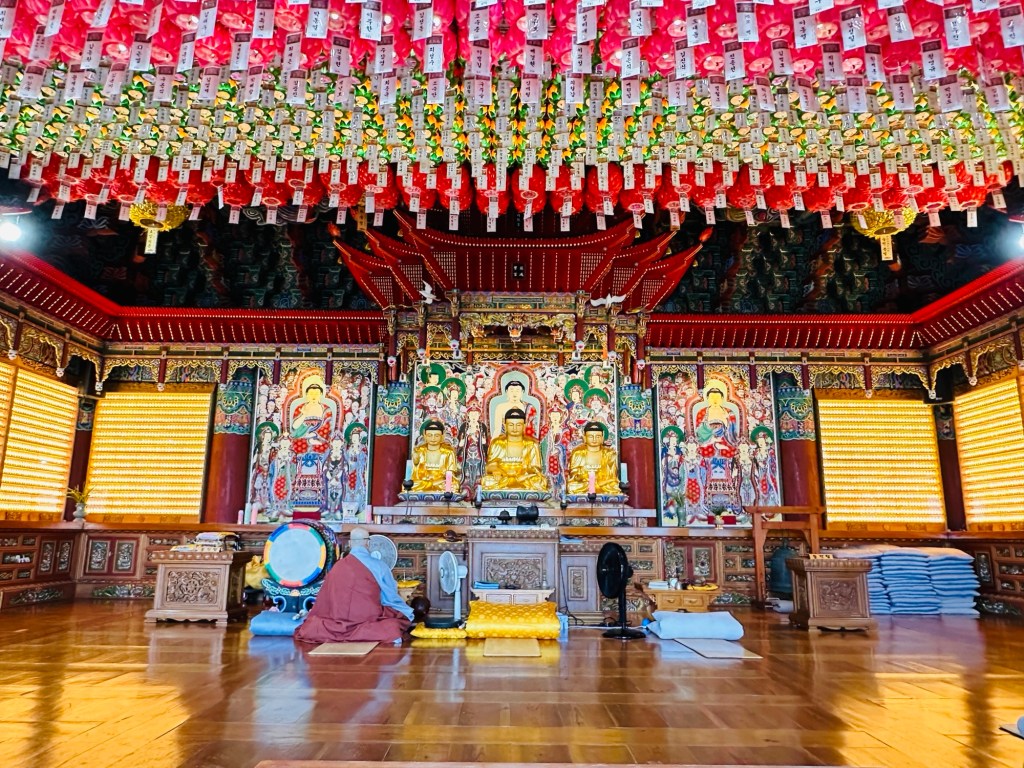
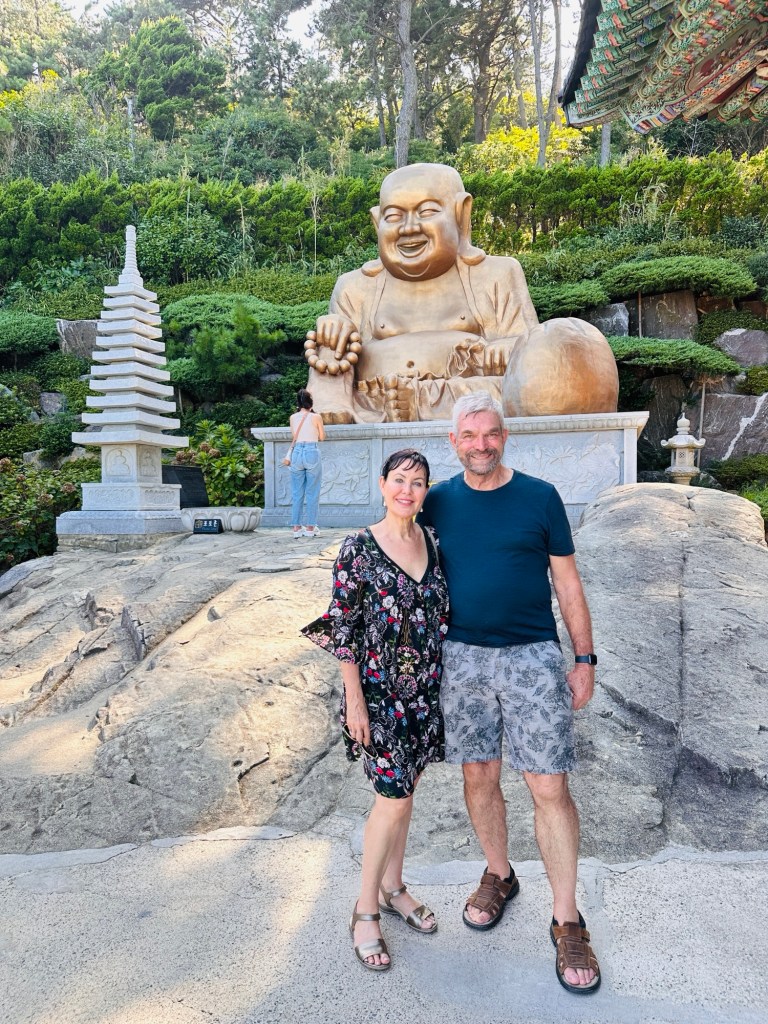
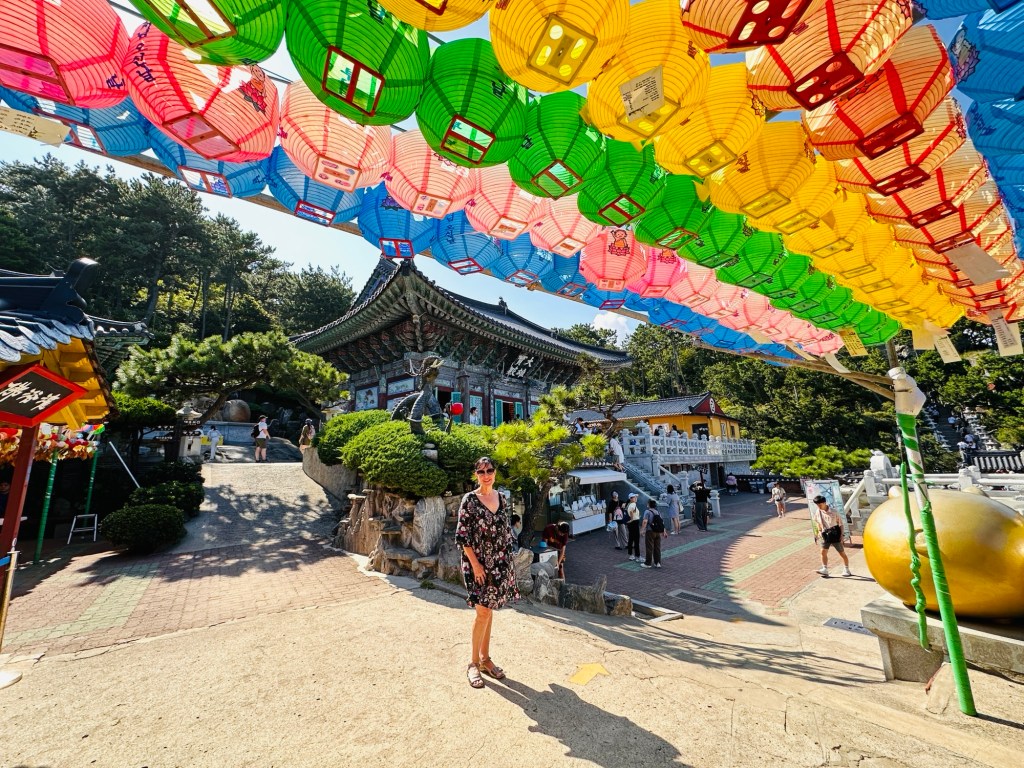
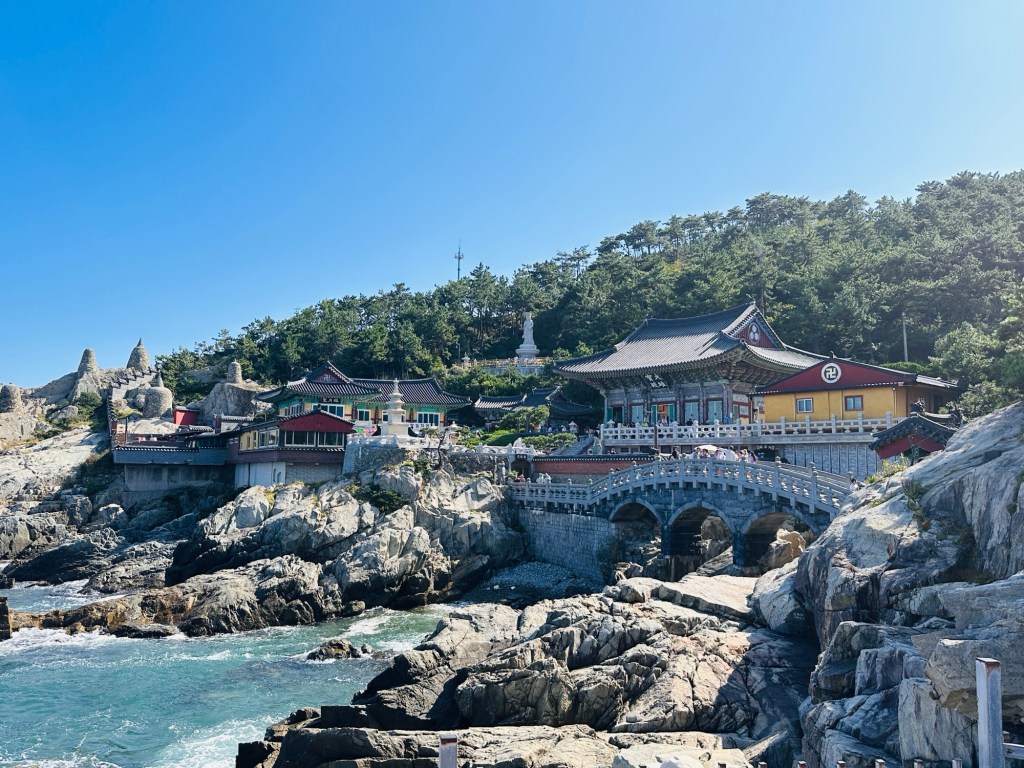
Our first stop was a visit to Haedong Yonggungsa Temple which is situated on the coast of the northeastern area of Busan. This beautiful Buddhist temple on the shoreline is unusual as most temples in Korea are located in the mountains. It was extremely hot, so the sea breeze was a welcome relief.
We then drove 80 minutes in heavy traffic ( getting through the traffic is a feat in itself – we passed three accidents on the way), to get to Gamcheon Culture Village. The village is formed by houses built in staircase fashion on the foothills of a coastal mountain – locals nickname this village “Machu Picchu of Busan”, however it was nothing like it. Possibly more like the favelas in Rio de Janairo, or possibly the Cinque Terre. Someone had a vivid imagination!
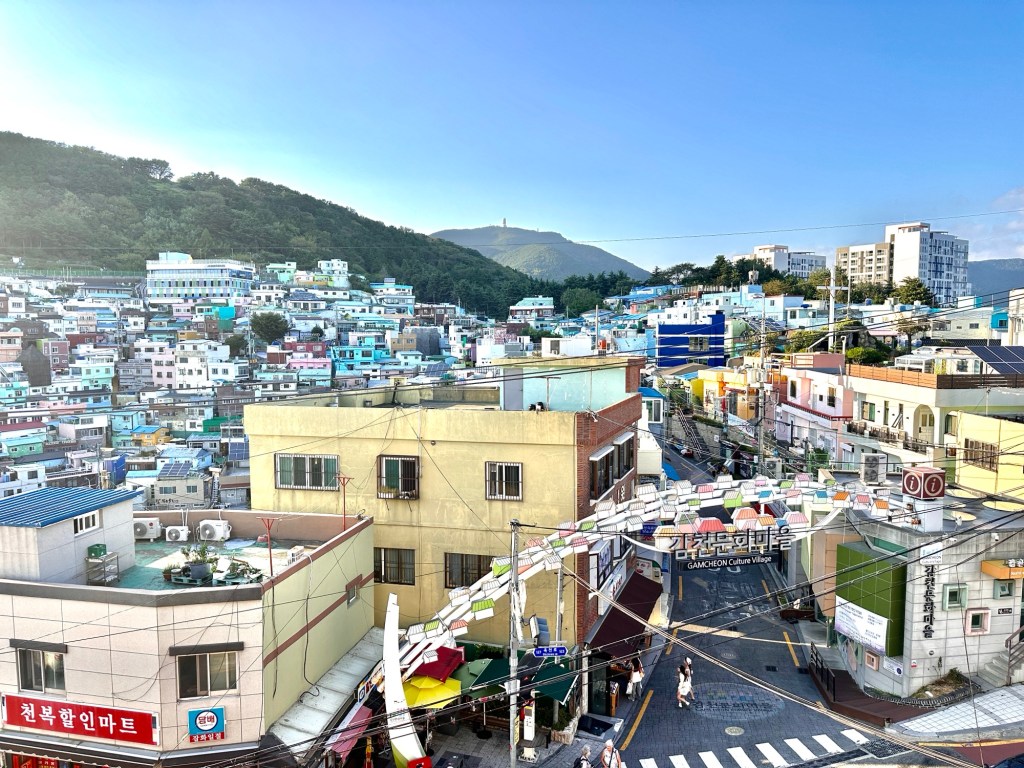
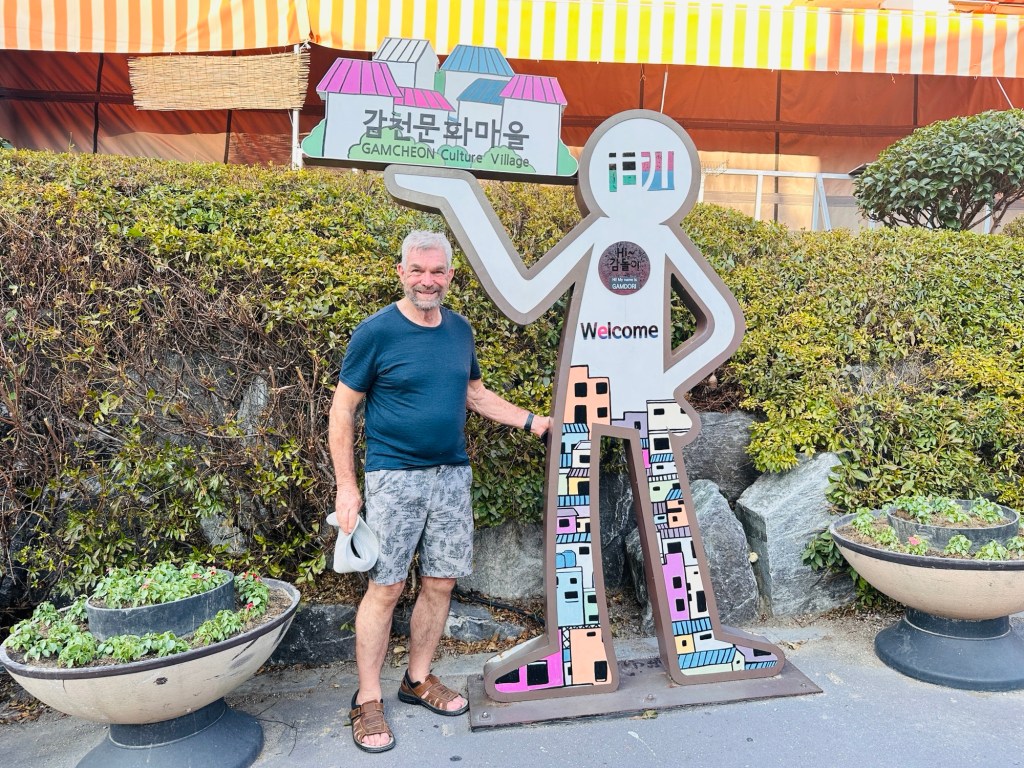
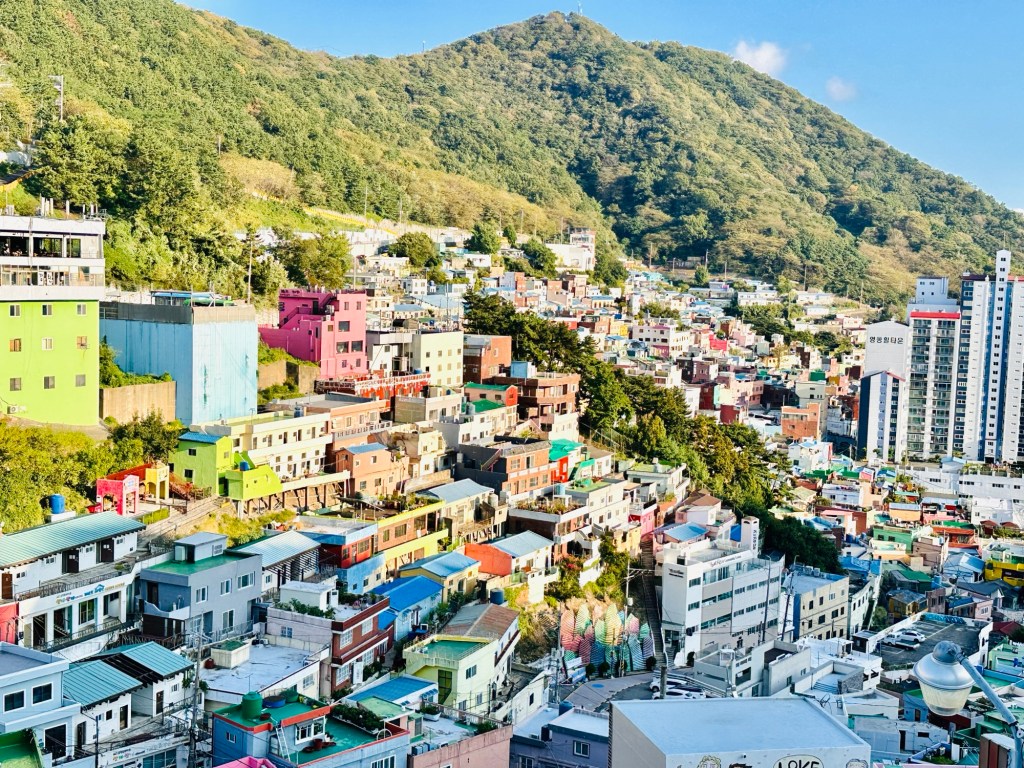
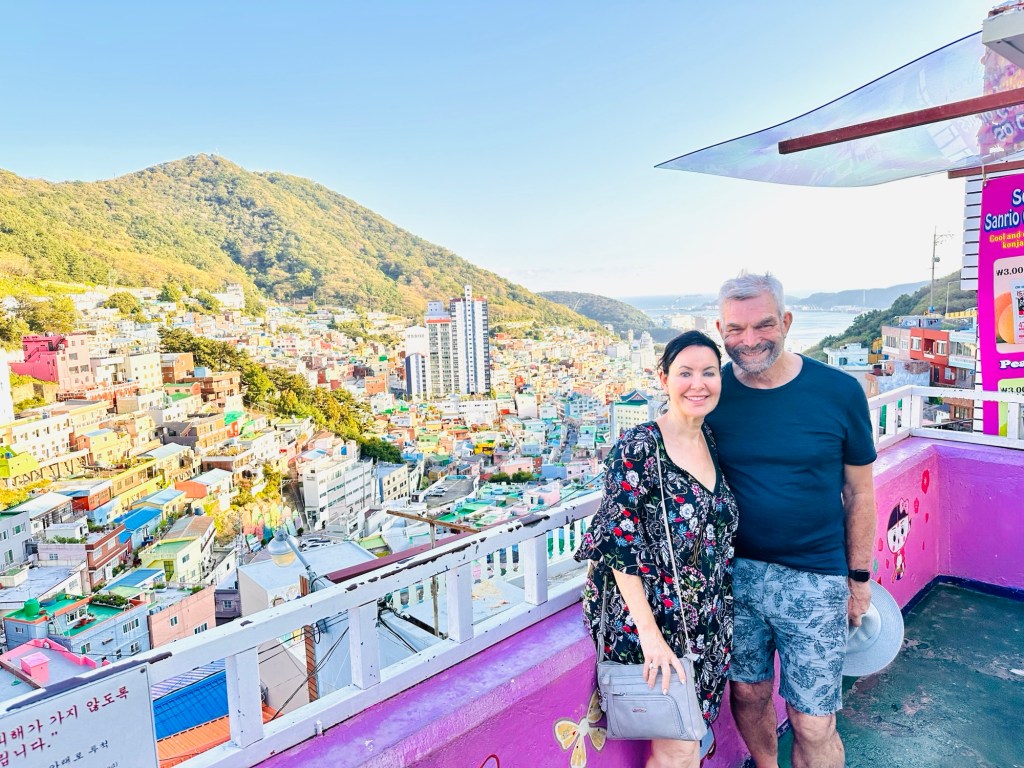

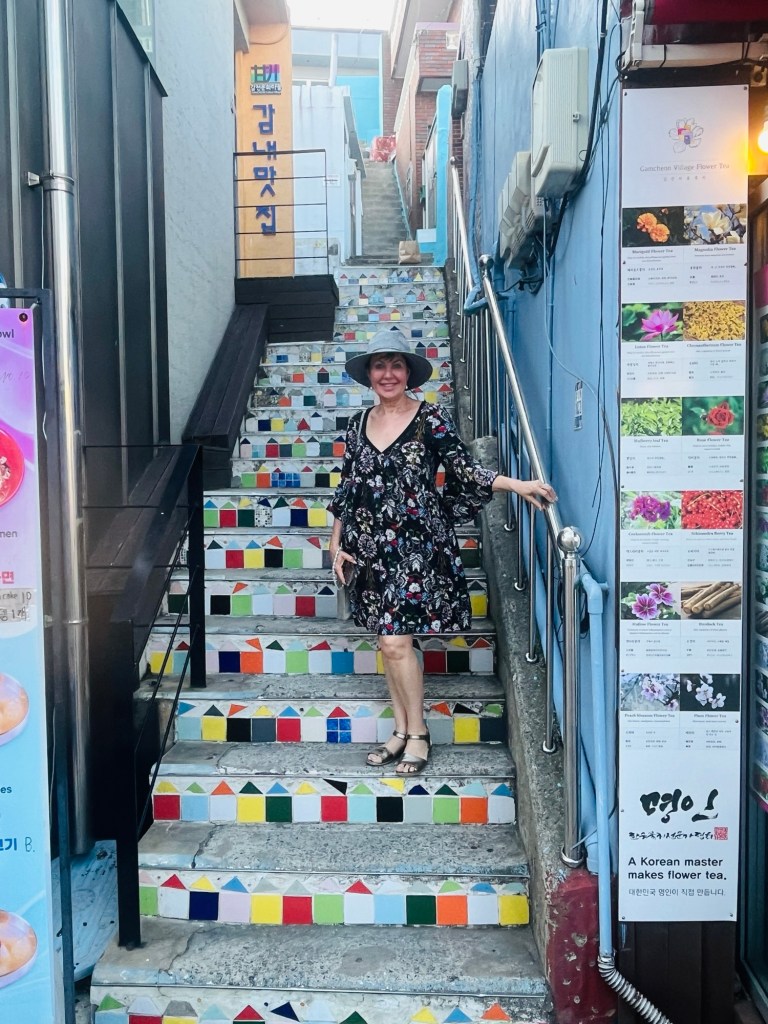
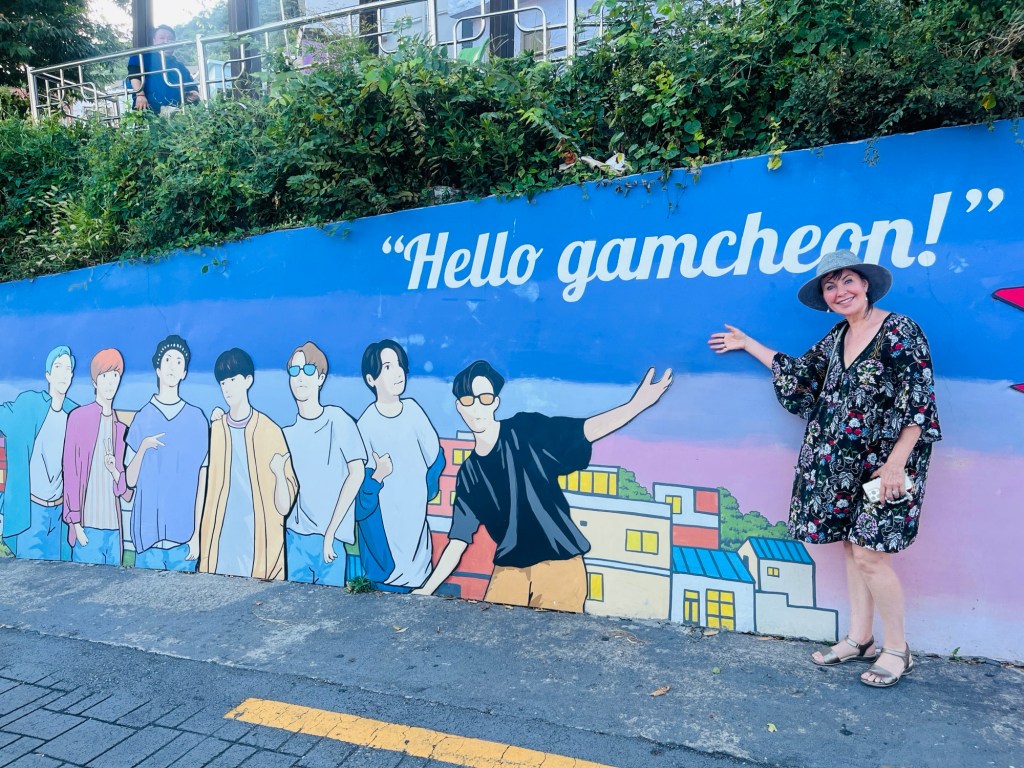
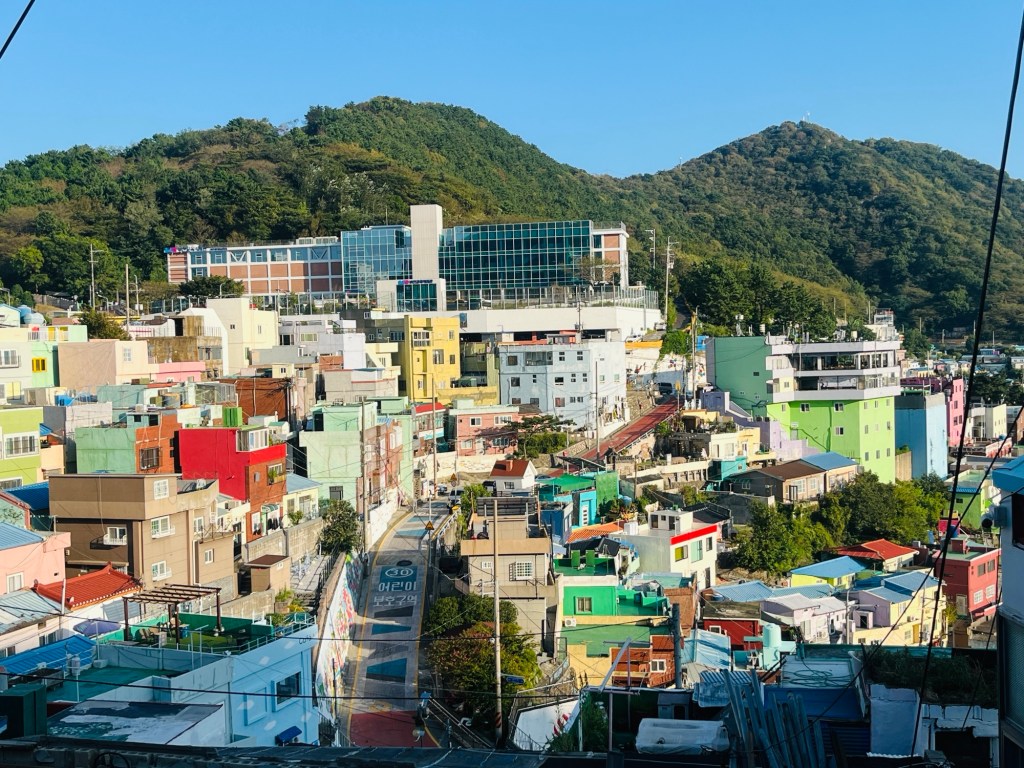
The town however is actually a part of the painful history of Busan. Refugees settled in Gamcheon Village during the Korean War and cultivated the mountainous region to make a living. In 2009, students, artists, and residents decorated the village as a part of the Village Art Project, and the town grew into a leading tourist attraction of Busan since then. I loved it. So much to see, the artwork was so vibrant and colourful – I could easily have spent a few hours there exploring.
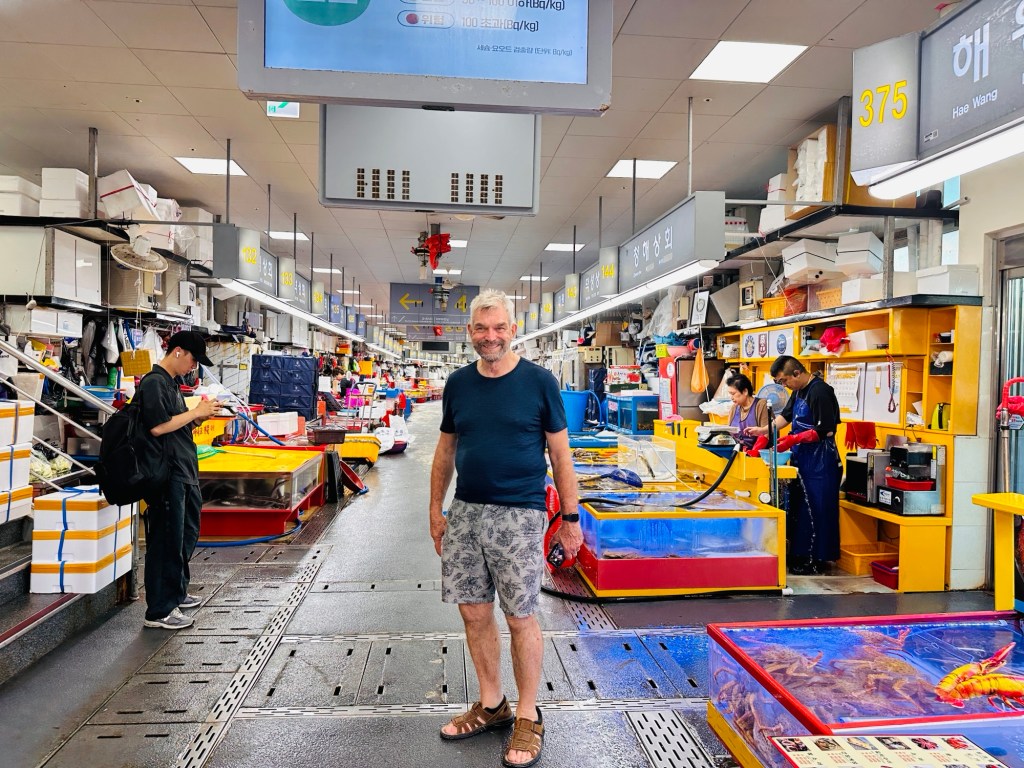
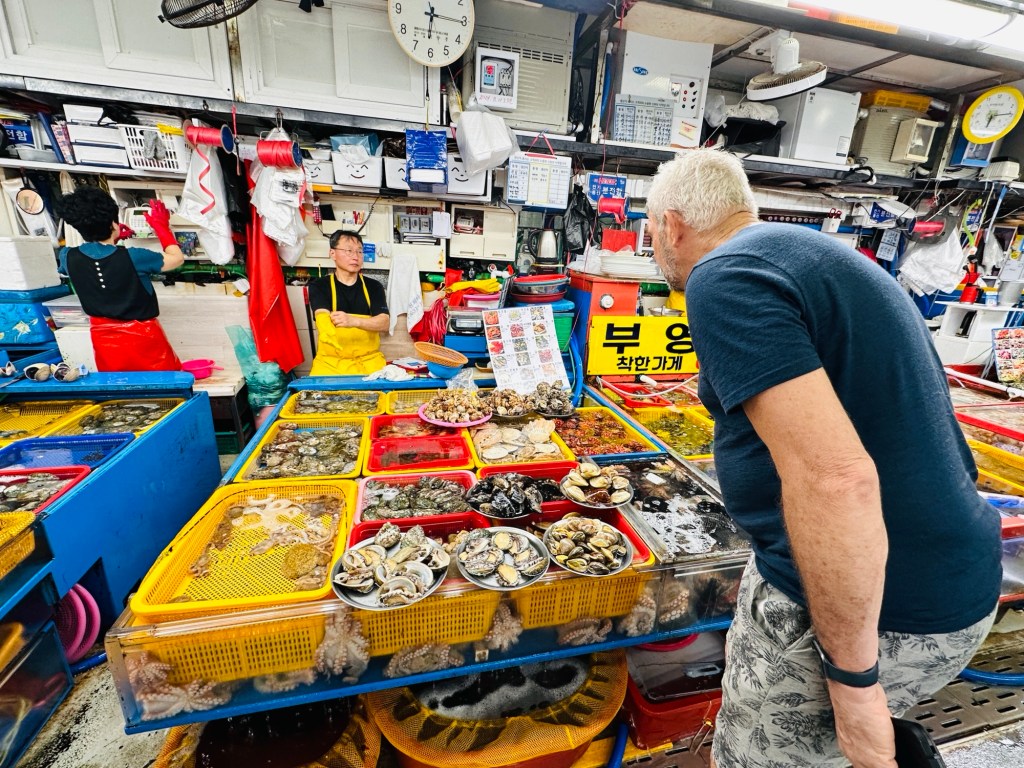
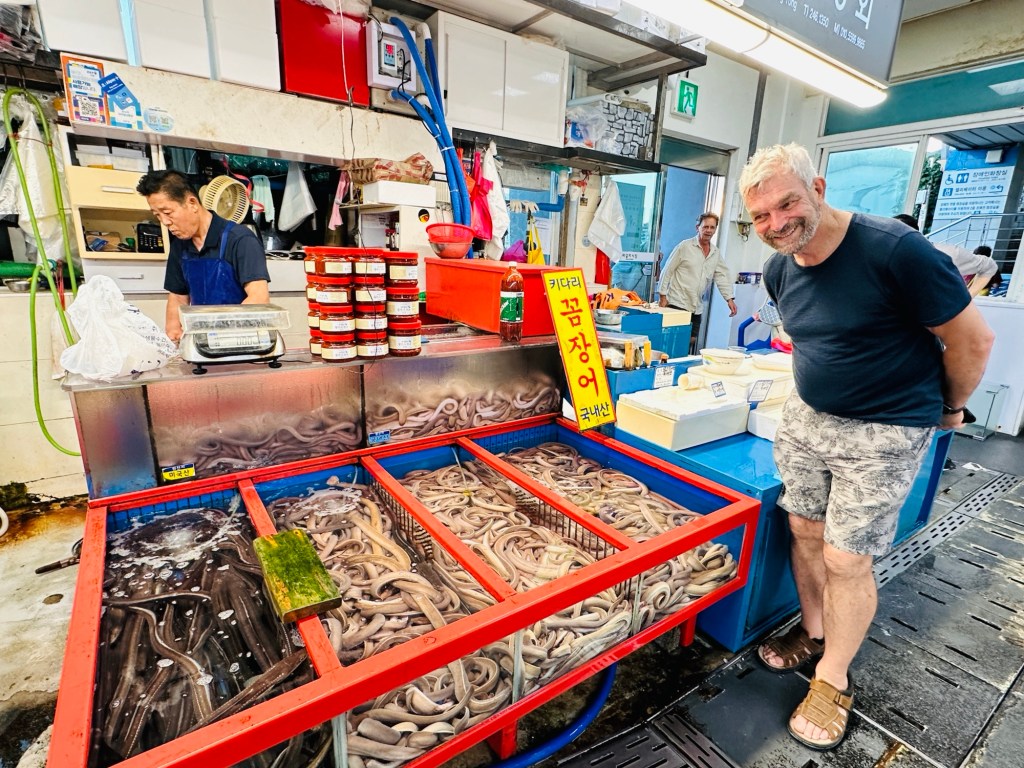
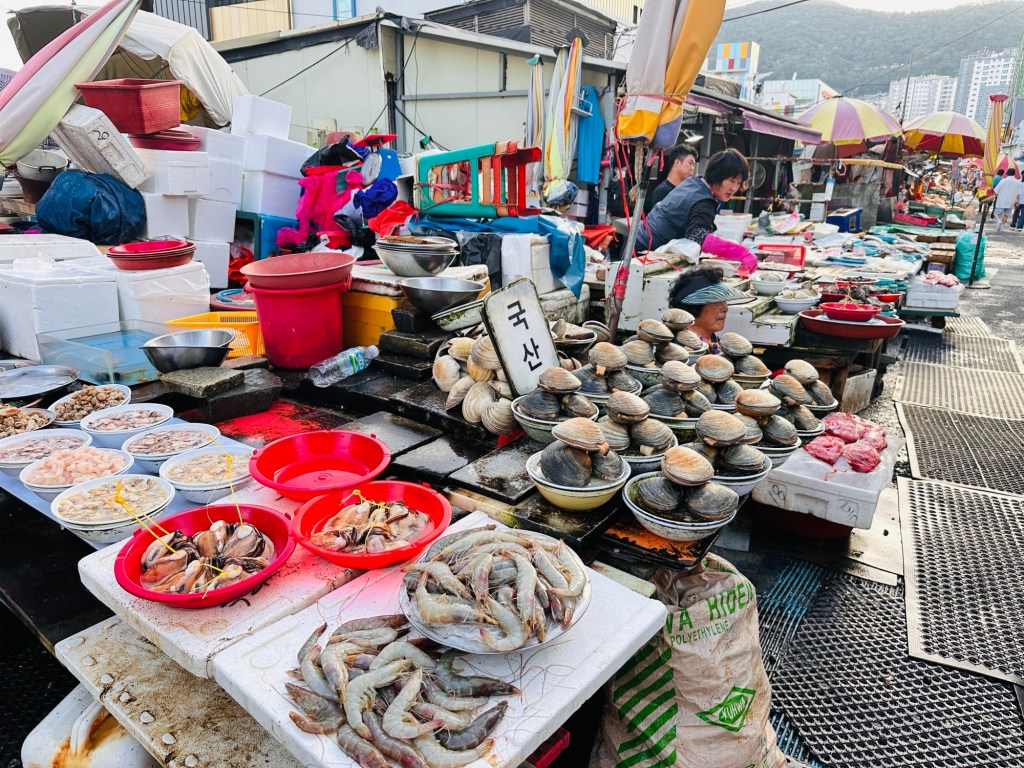
The Jagalchi Fish Market was an interesting stop -it is the largest fish market in Korea. There was an amazing variety of sea food, everything you could possibly imagine – from sea urchins to every fish possible to stingrays. As you imagine the smells associated with a fish market were quite pungent!
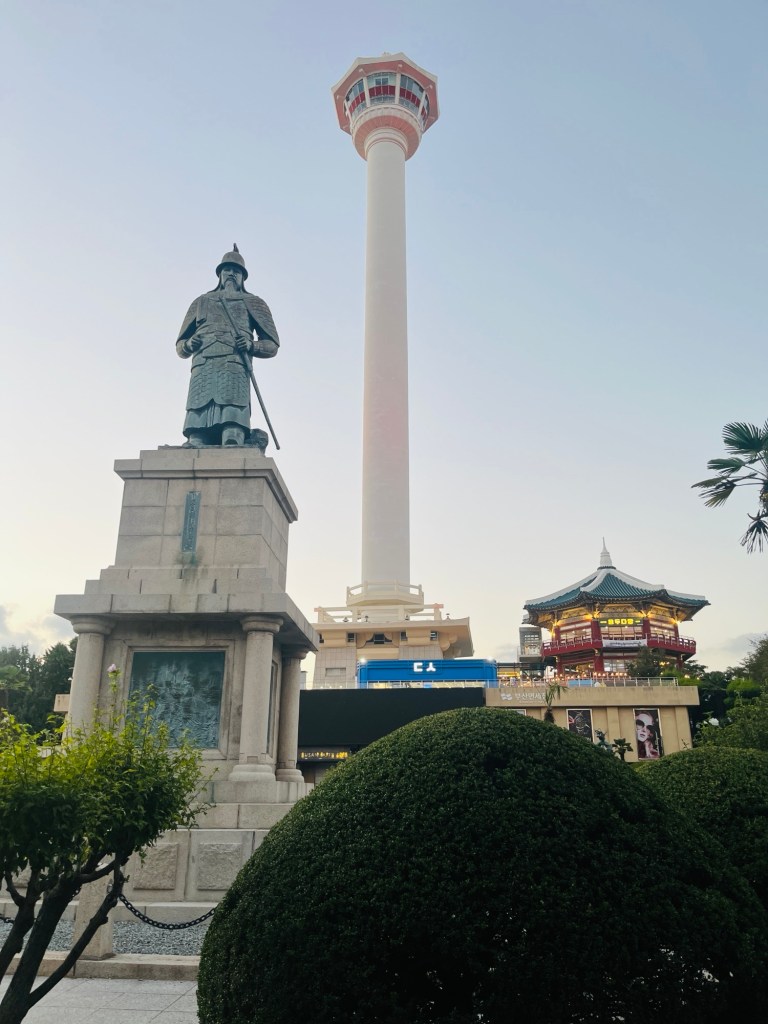
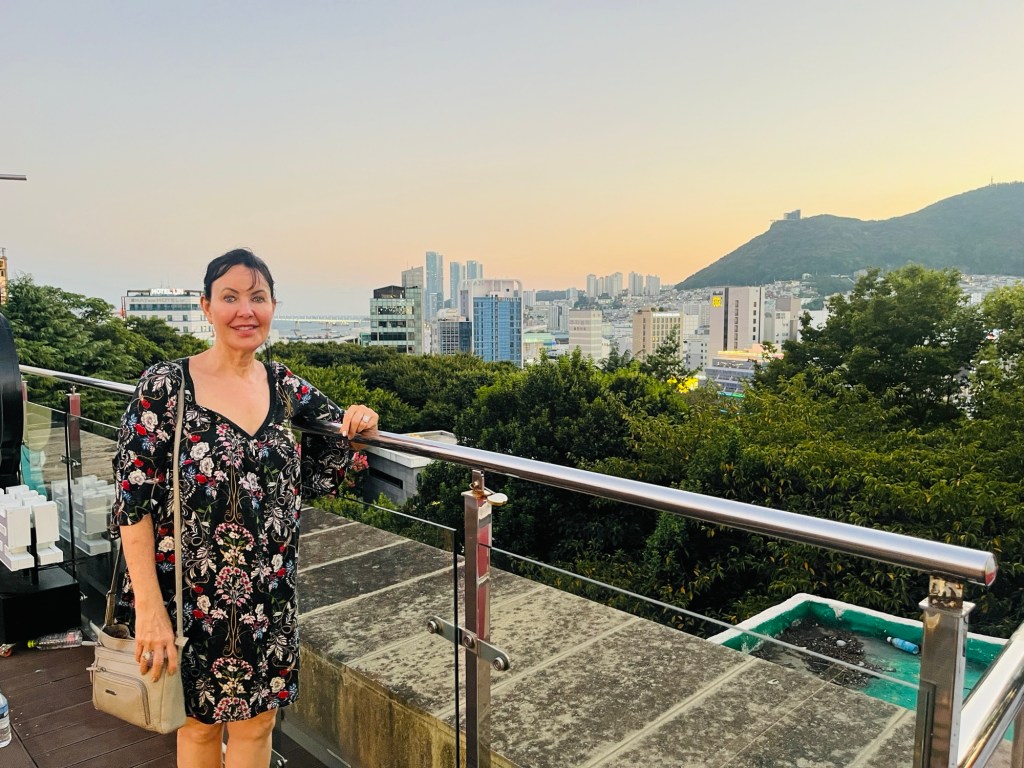
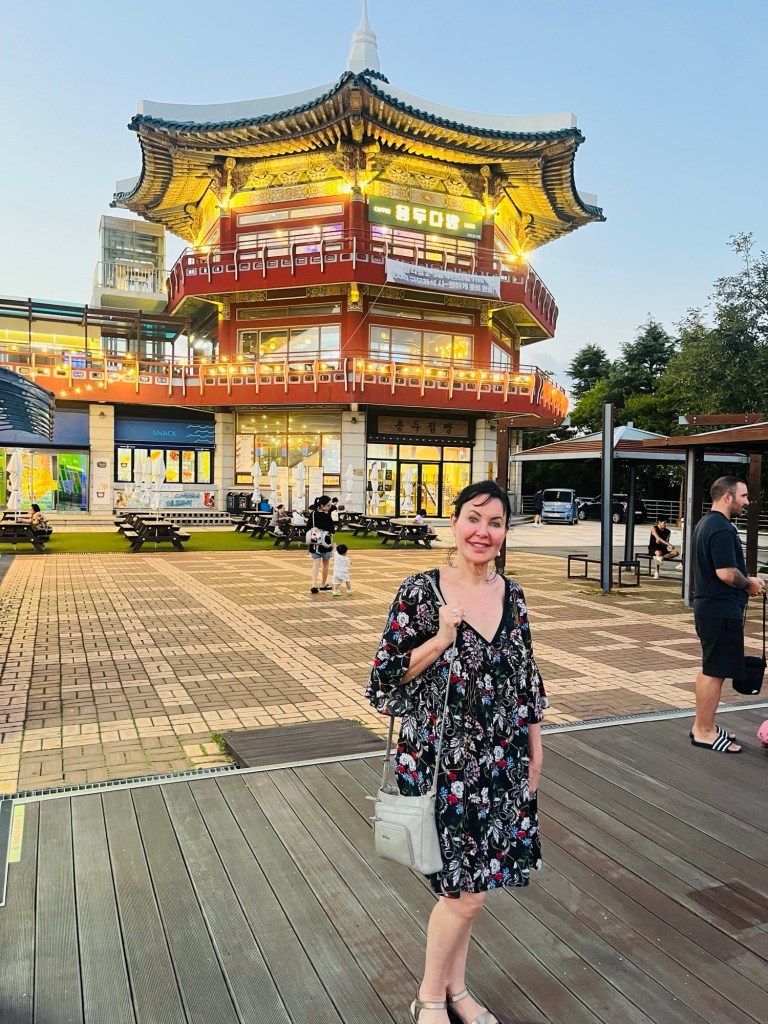
Last stop for the day was the Yongdusan Dragon Head Park – it is called Yongdusan because the shape of the mountain resembles a dragon’s head emerging from the sea.The 120-metre-high Busan Tower is also located in the middle of the park. It provides a stunning bird’s-eye view of the entire city, including islands and ships dotted in the distant seas. A statue of General Lee stands at the entrance to the park – he invented iron clad warships in the 1500’s.
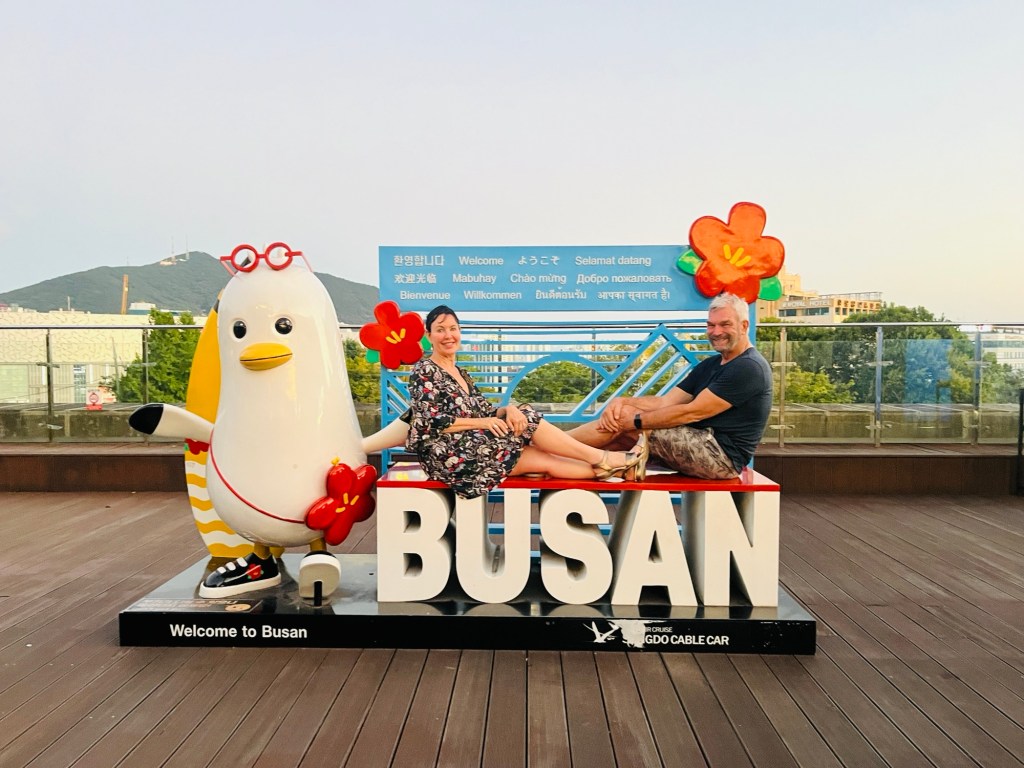
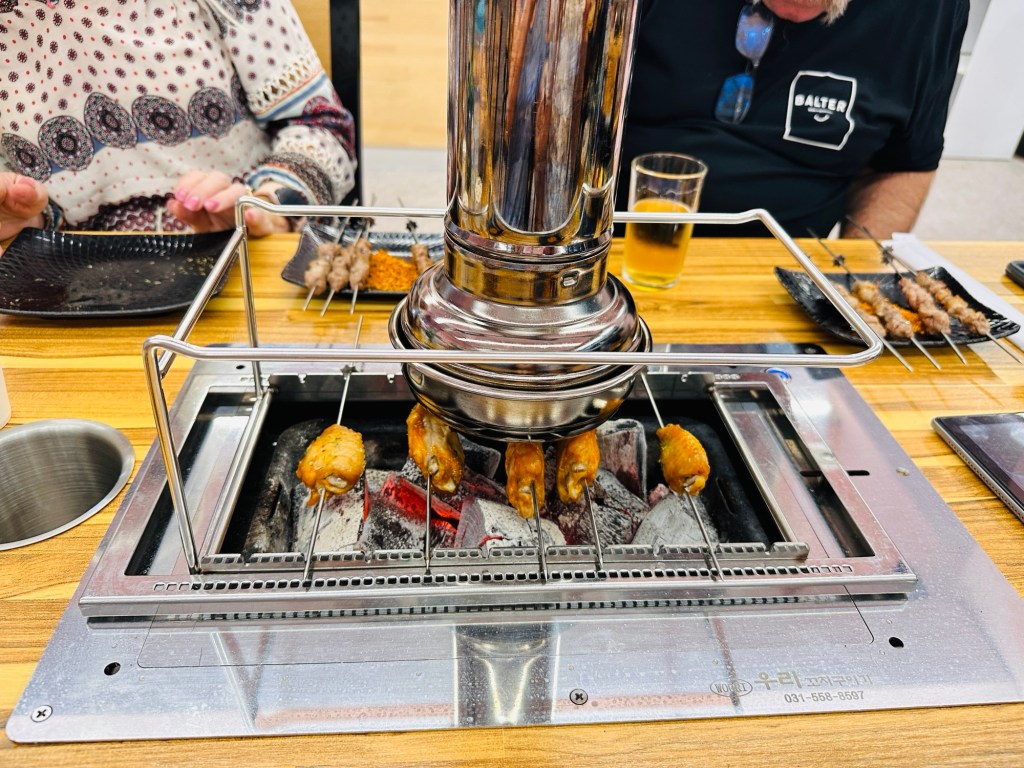
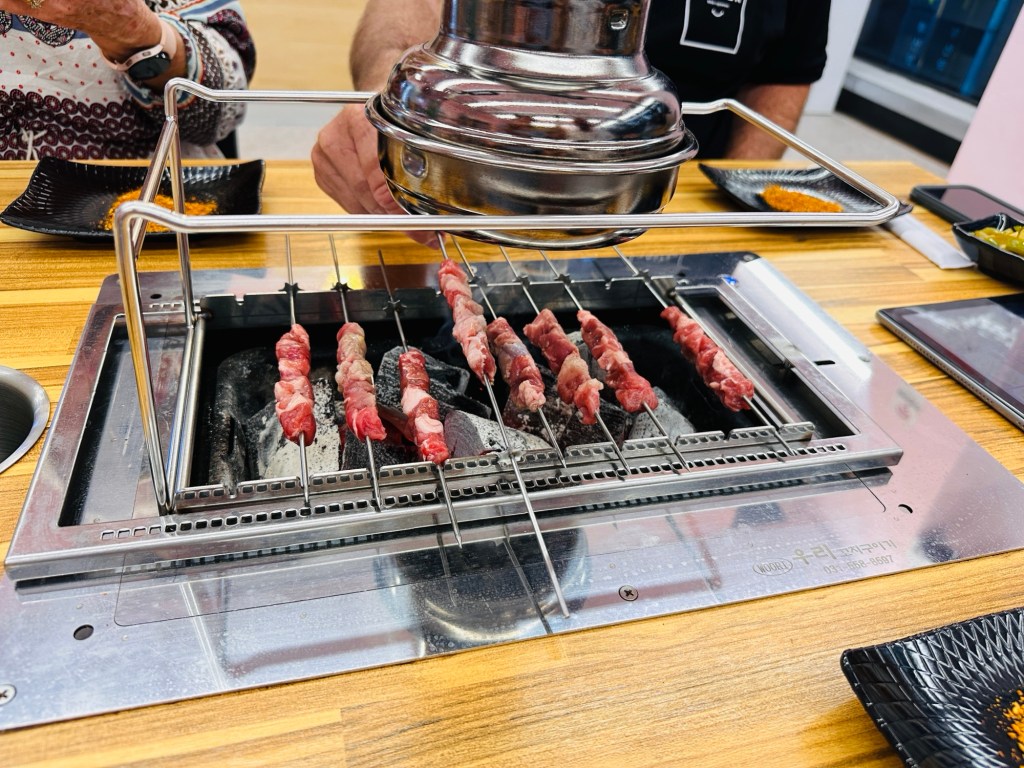
It had been a big day, finally got to the Asti Hotel (very nice) just after 7.30pm. We found a little Korean restaurant for dinner – tonight was lamb and chicken kebabs on the bbq (they rolled on the cogs up and down the bbq) plus stir fried eggplant and pork ( that was divine!). We also ordered shrimp – it came crumbed – prawn shell, eyes and all. I found the shells a bit much. The Cass beer is very refreshing in the hot weather, and the soju (rice wine) was quite nice – just need to go slow with it!
Day 6
Tuesday 10th September 2024
Busan
25-32 degrees, hot +++
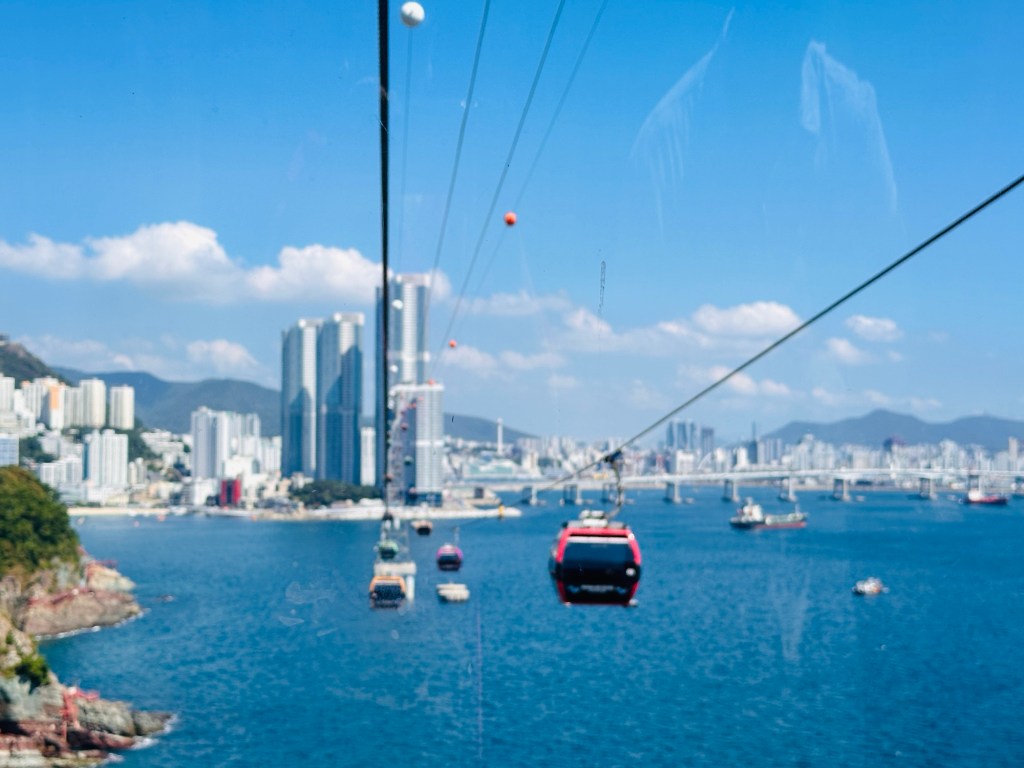
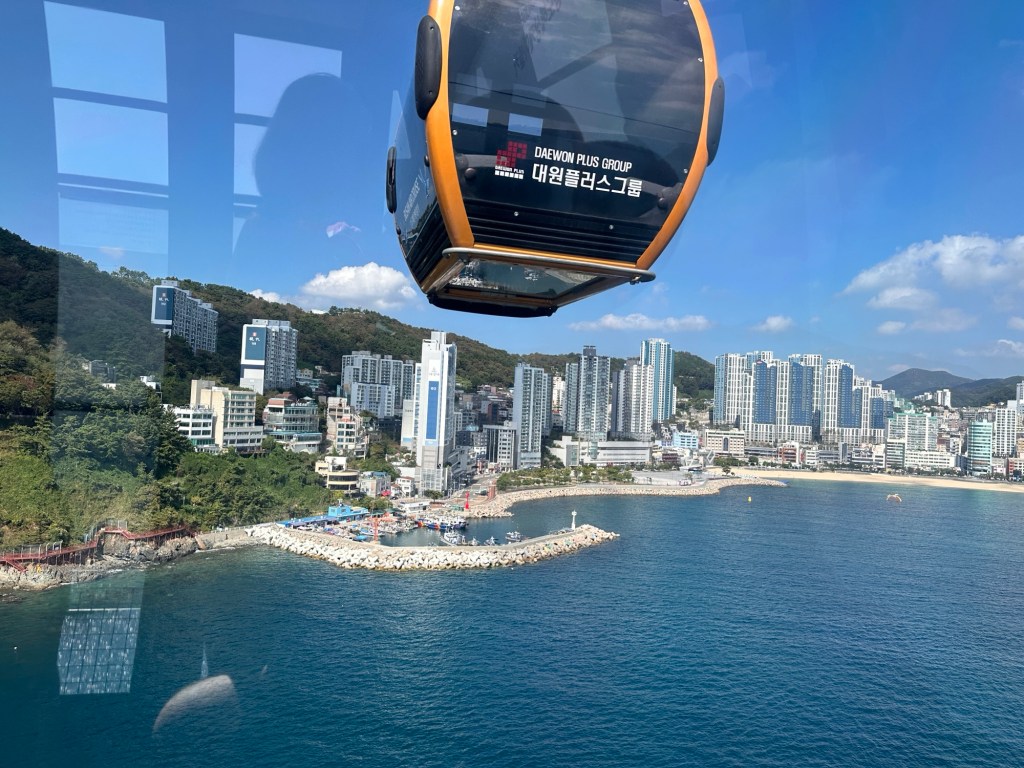
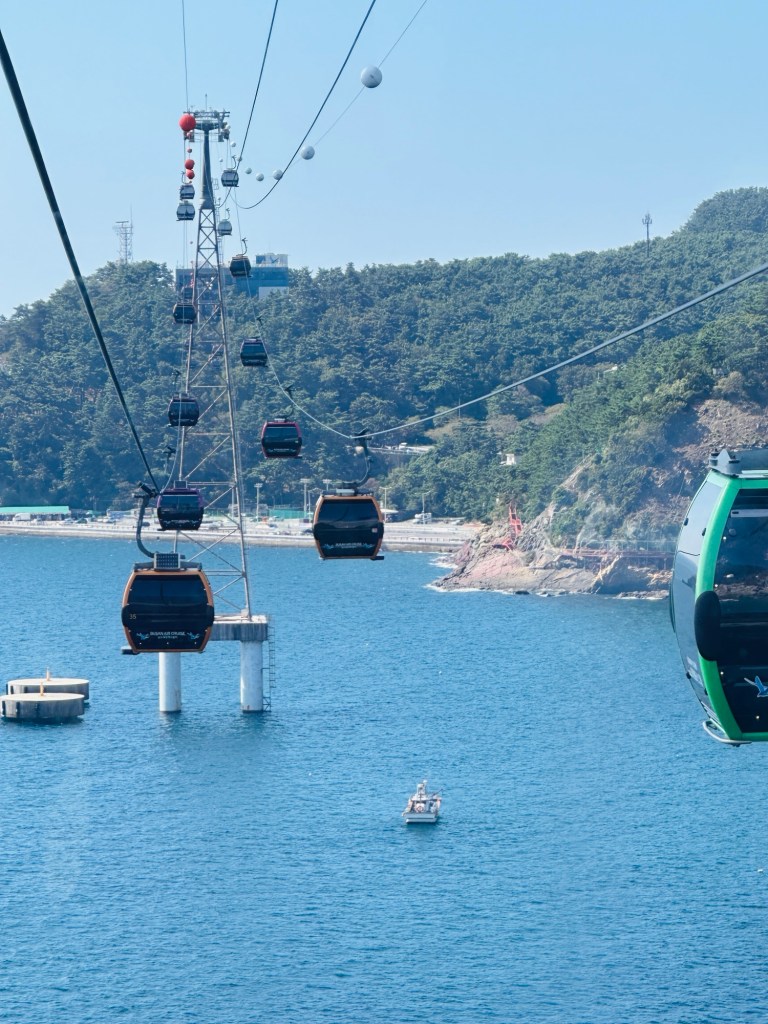
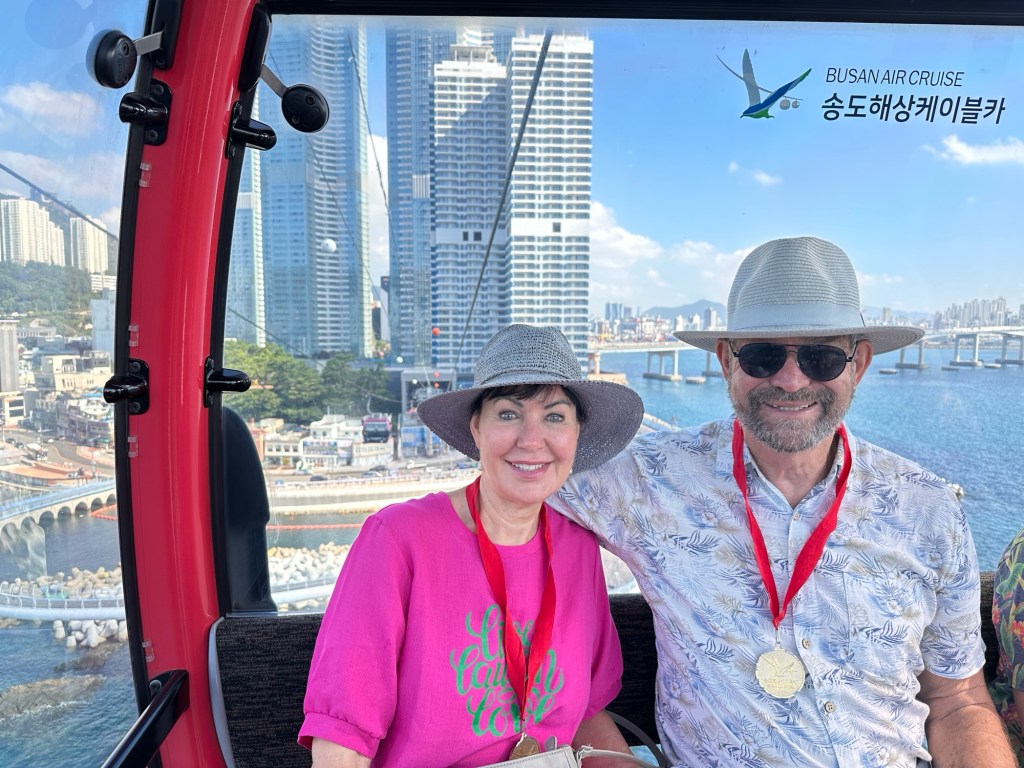
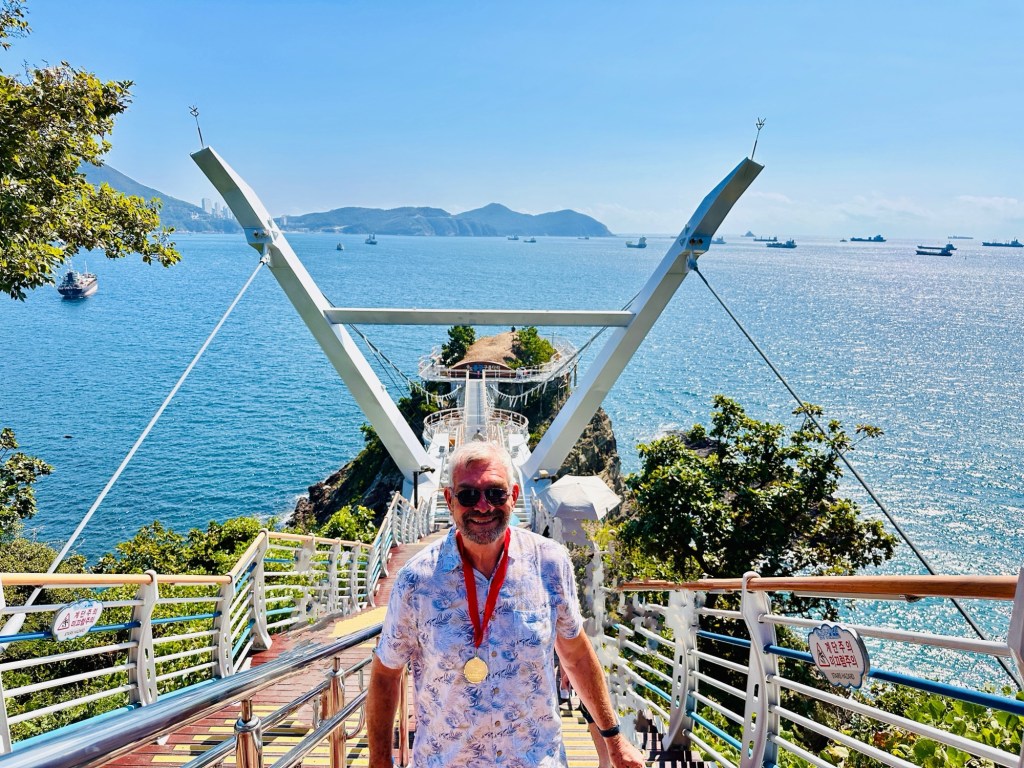
Our first stop for the day was Songdo Beach where we took the famous cable car to ride over the bay. The views from the cable car were spectacular. We then walked on the Sky Harbor Suspension Bridge and Observatory Platform which offered more beautiful views of the Songdo Sea and cable cars. Back to Songdo Beach via the same cable car, and on our way to the next stop.
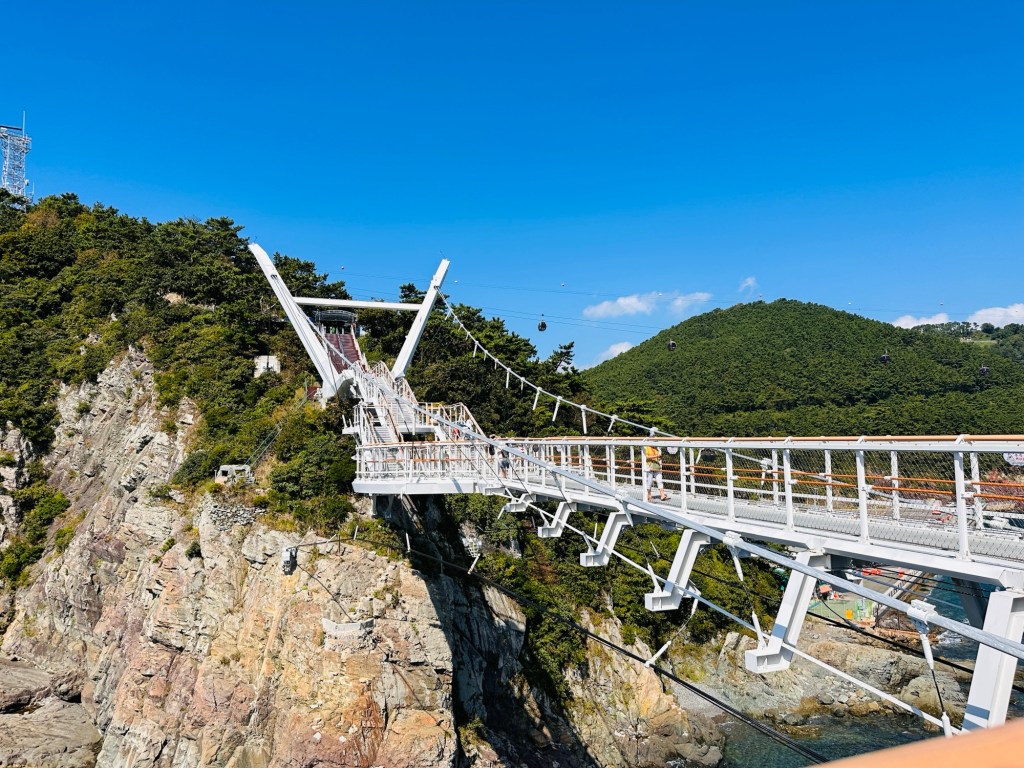
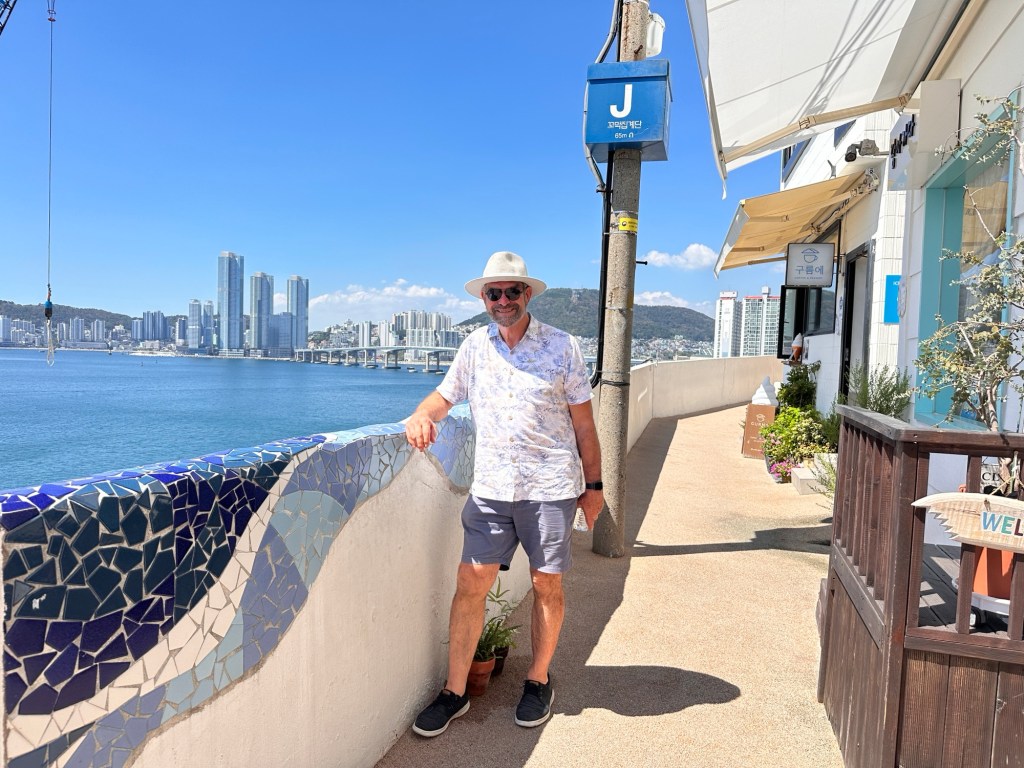
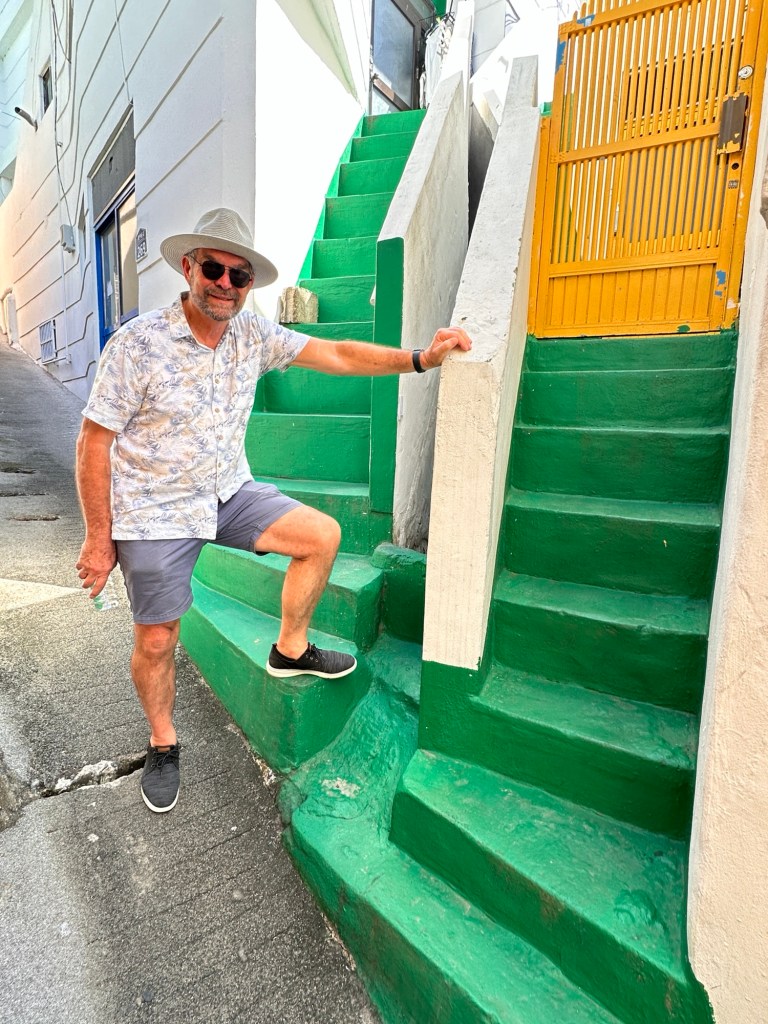
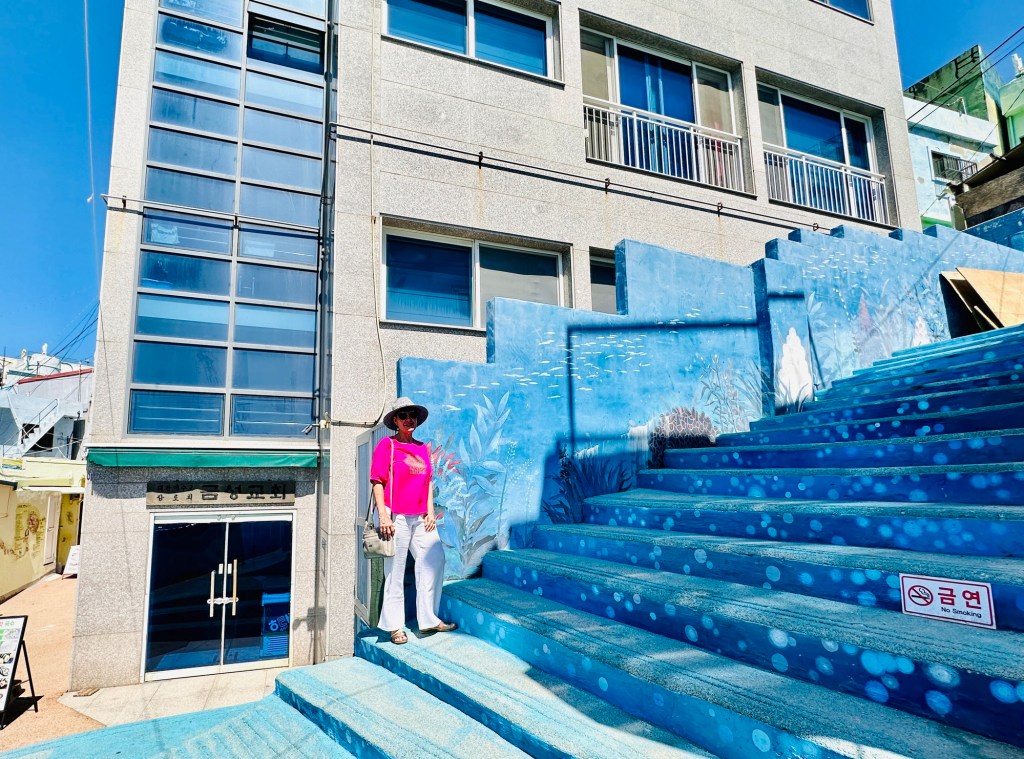
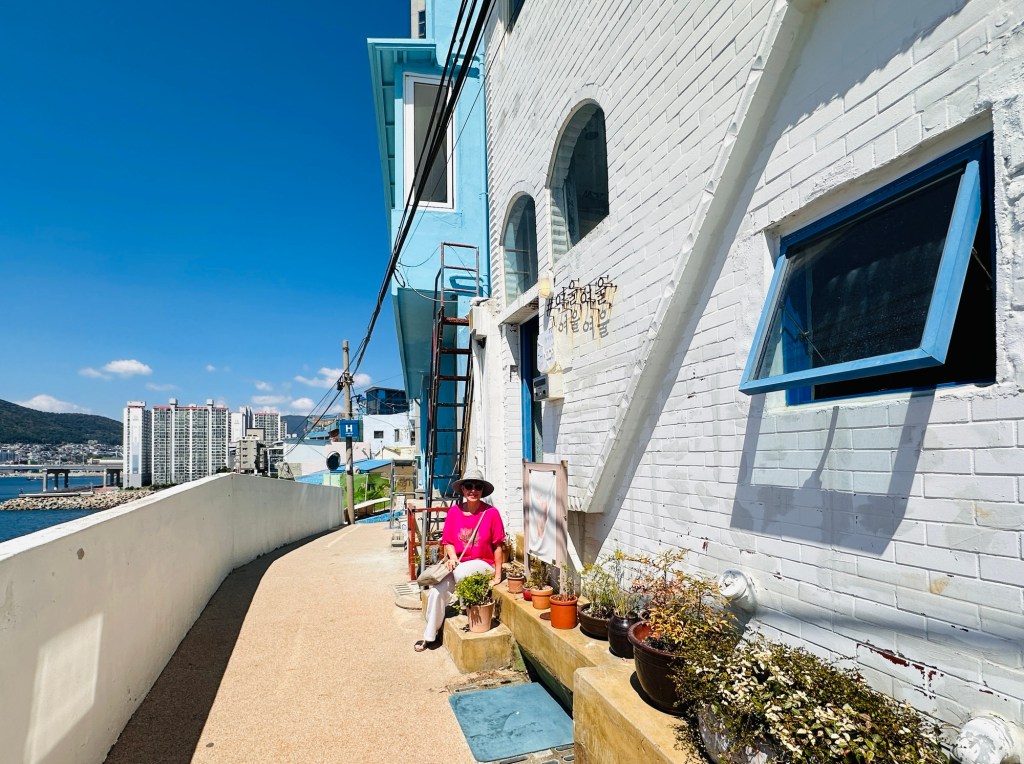
Huinnyeoul Culture Village, a charming coastal village is located on the sloping cliff of Yeongdo in Busan. In December 2011, the old houses of the area were remodelled and the area was reborn as a unique culture and art village where you can walk through and visit cafes and galleries while enjoying the sweeping views of Busan and the ocean. The local description of this village was that it resembled Santorini – again, not quite accurate in my opinion! Maybe the blue and white paint is what the connection was! Not as nice as the village we visited yesterday, but still enjoyable. The heat was very taxing, but a mango ice cream did help to cool us down.
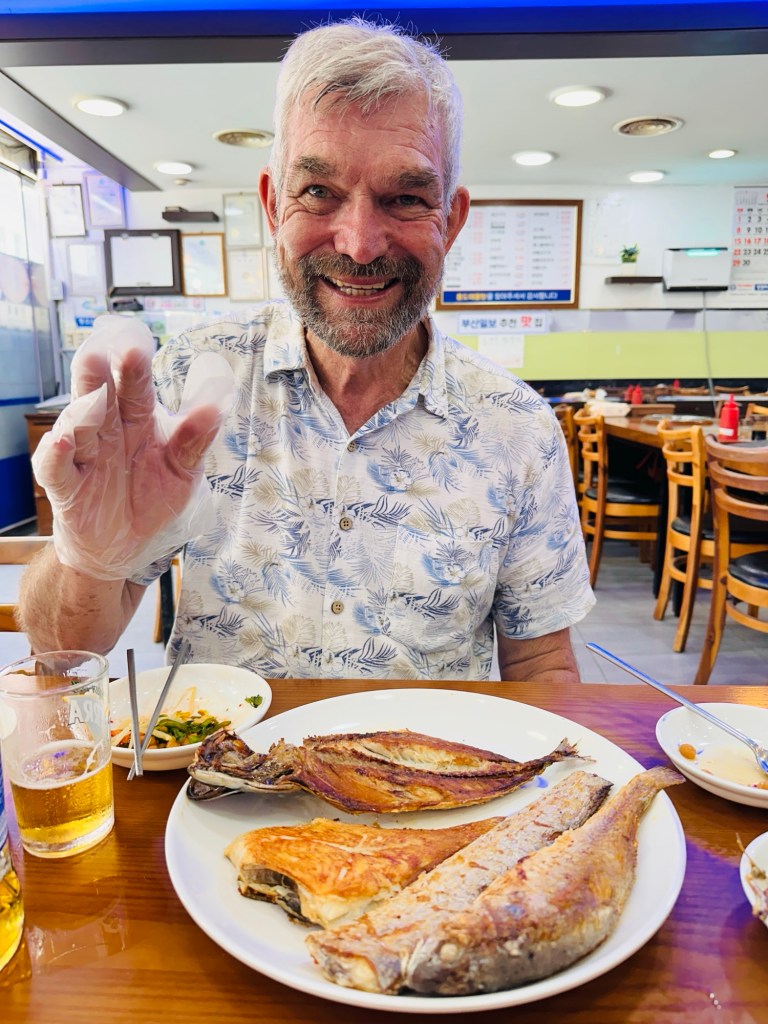
Lunch stop, and we managed to find a small restaurant that had grilled fish. We were the only customers, and the owner spoke no English. We muddled through, and ended up with four different fish on a plate – all whole. We managed to sort through the bones, and enjoyed the fish with the accompanying kimchi and other condiments.
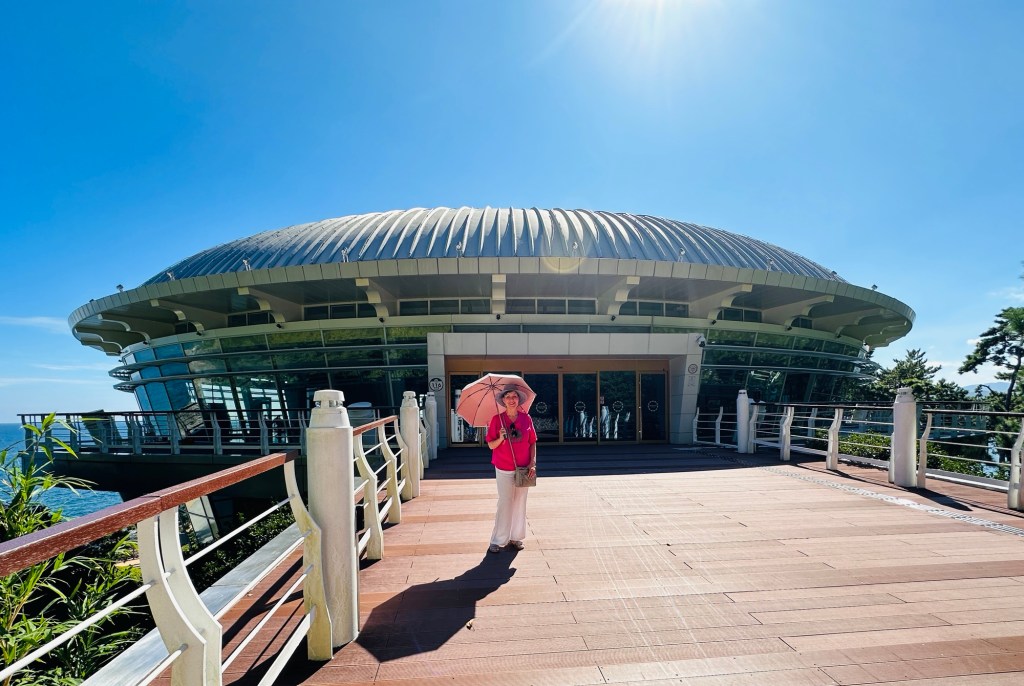
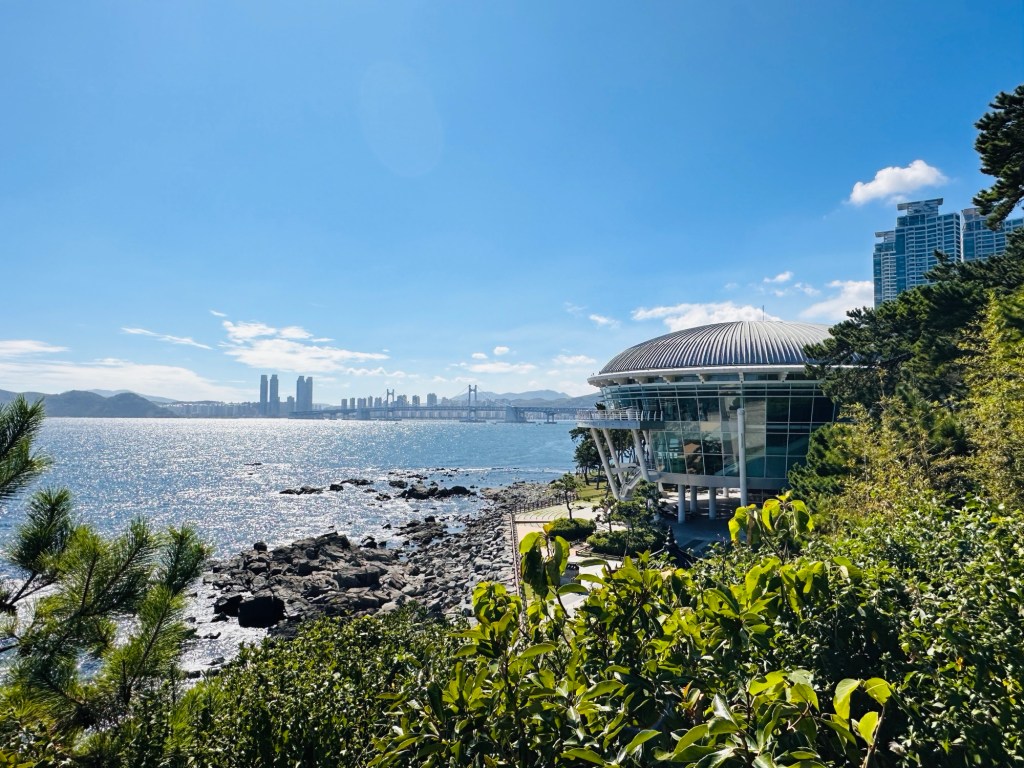
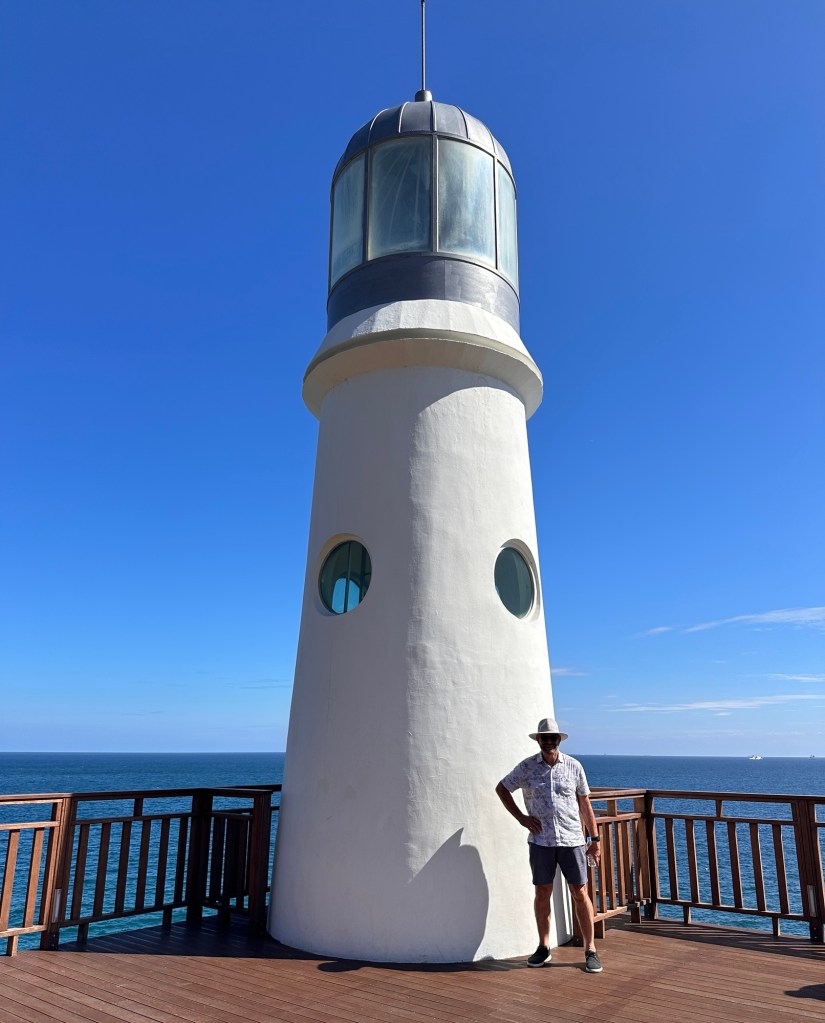
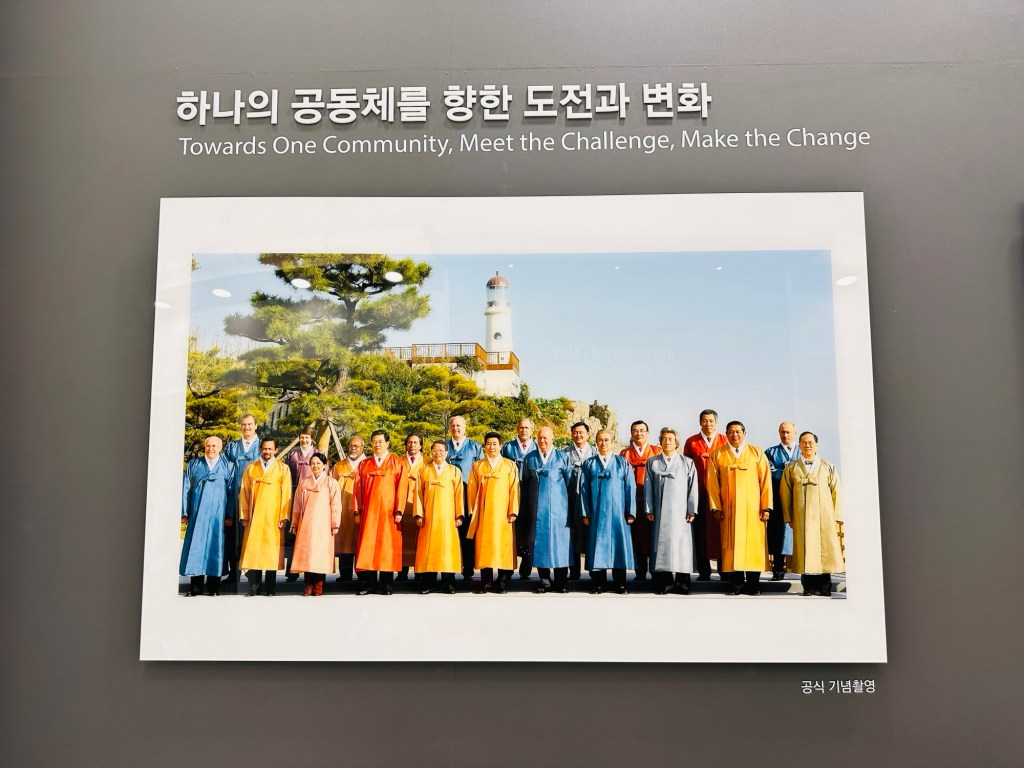
Next the Nurimaru APEC House, built to host the 2005 APEC Summit meeting at the tip of Dongbaek Island which stands near Haeundae Beach. This eye-catching glass building has been one of Busan’s symbolic places ever since. More spectacular views. Walked through the building and saw where all the country leaders sat.
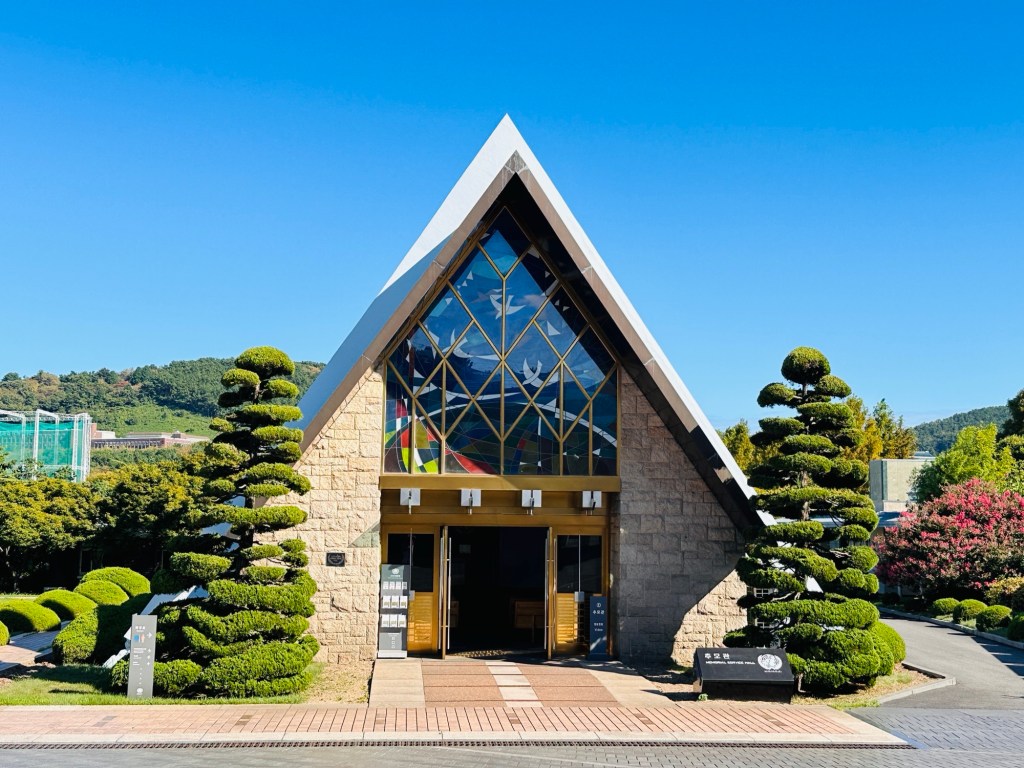
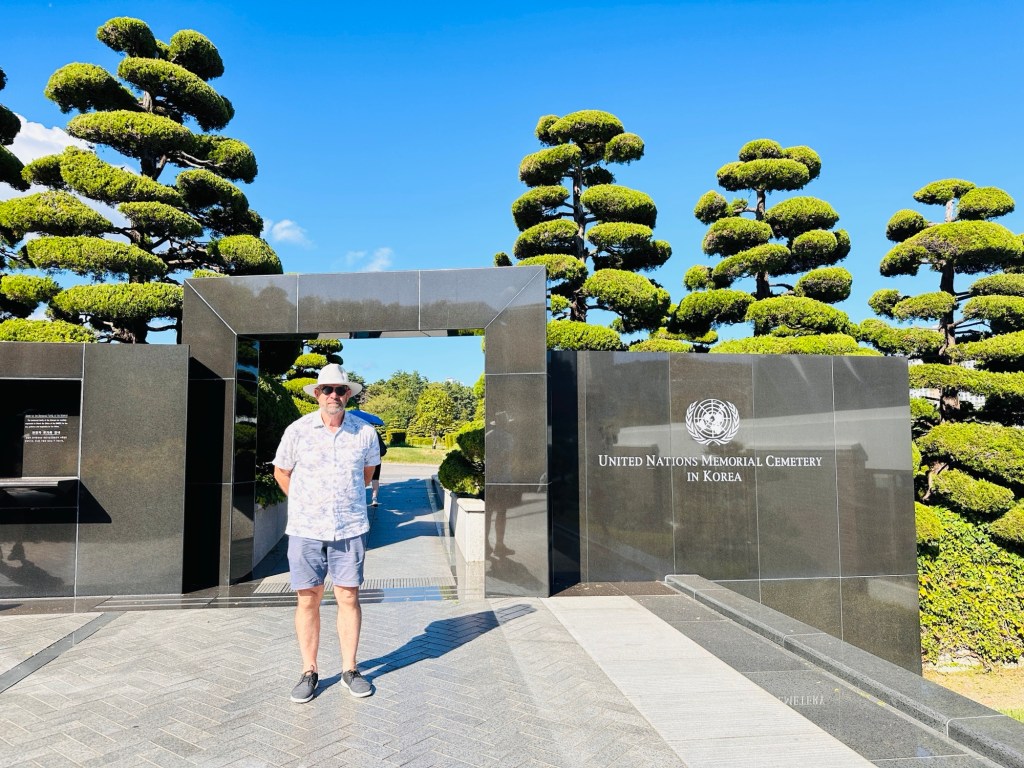
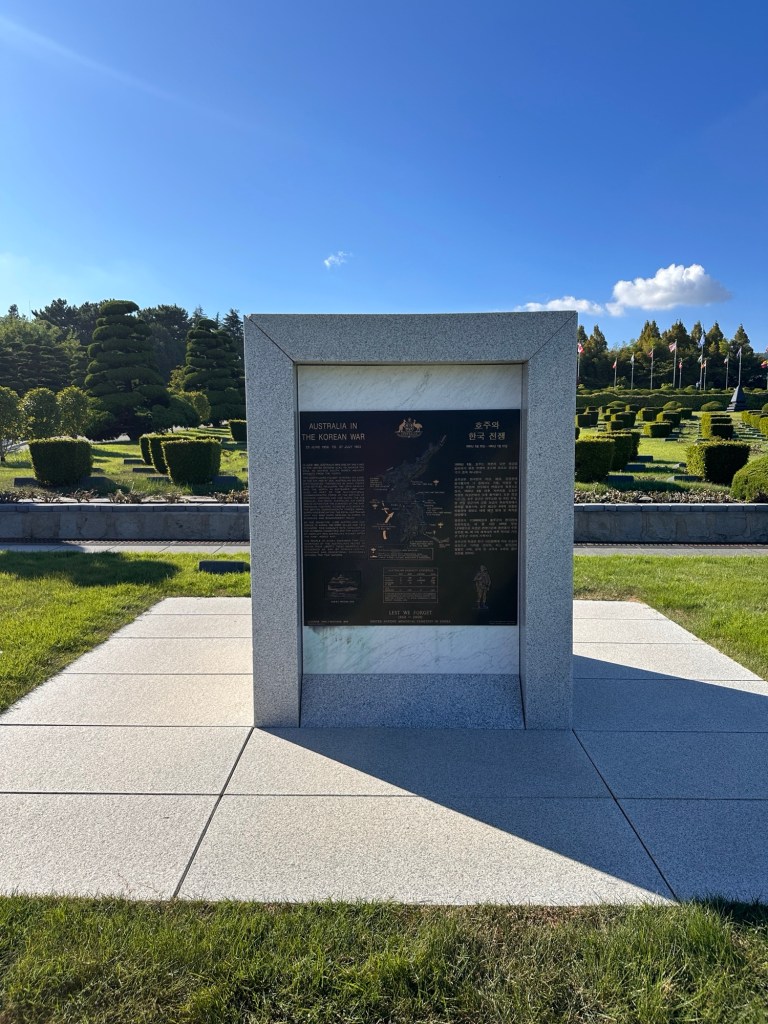
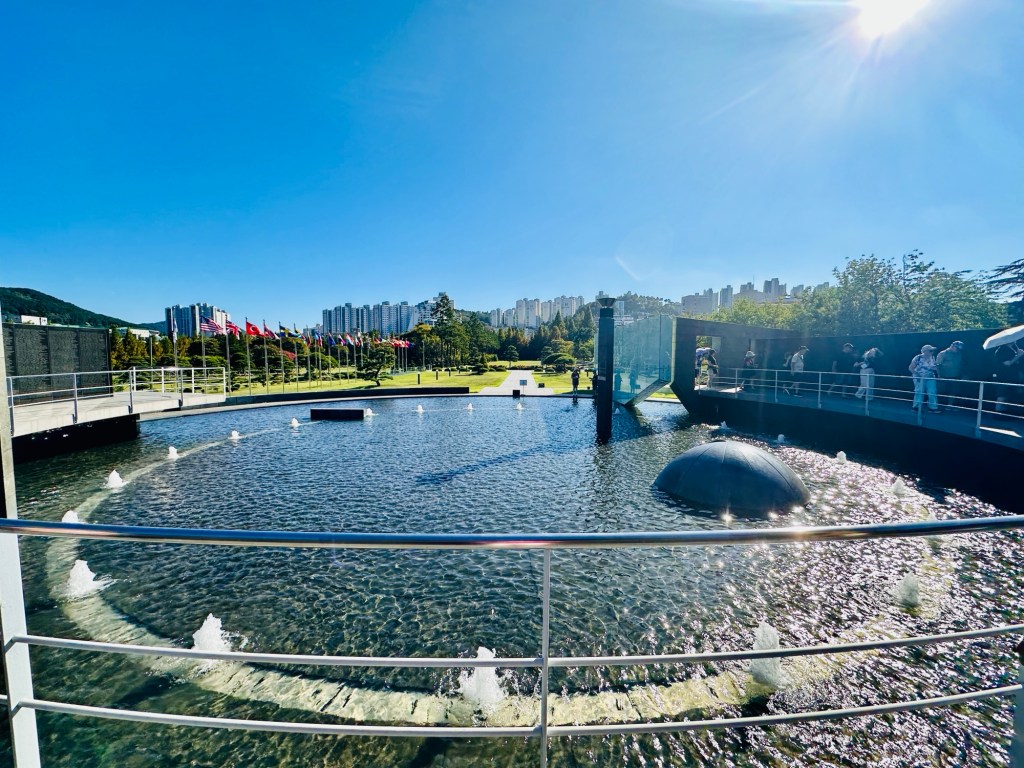
After driving over the 7.4-kilometre Gwangandaegyo Bridge, the longest bi-level bridge over the ocean in Korea, we arrived at the UN Memorial Cemetery – the only one in the world. It is the final resting place of UN Forces who served during the Korean War. 21 nations assisted Korea. 281 of the fallen 346 Australian soldiers are buried here. A very sobering tour, but comforting to know that Korea appreciates the soldier’s efforts.
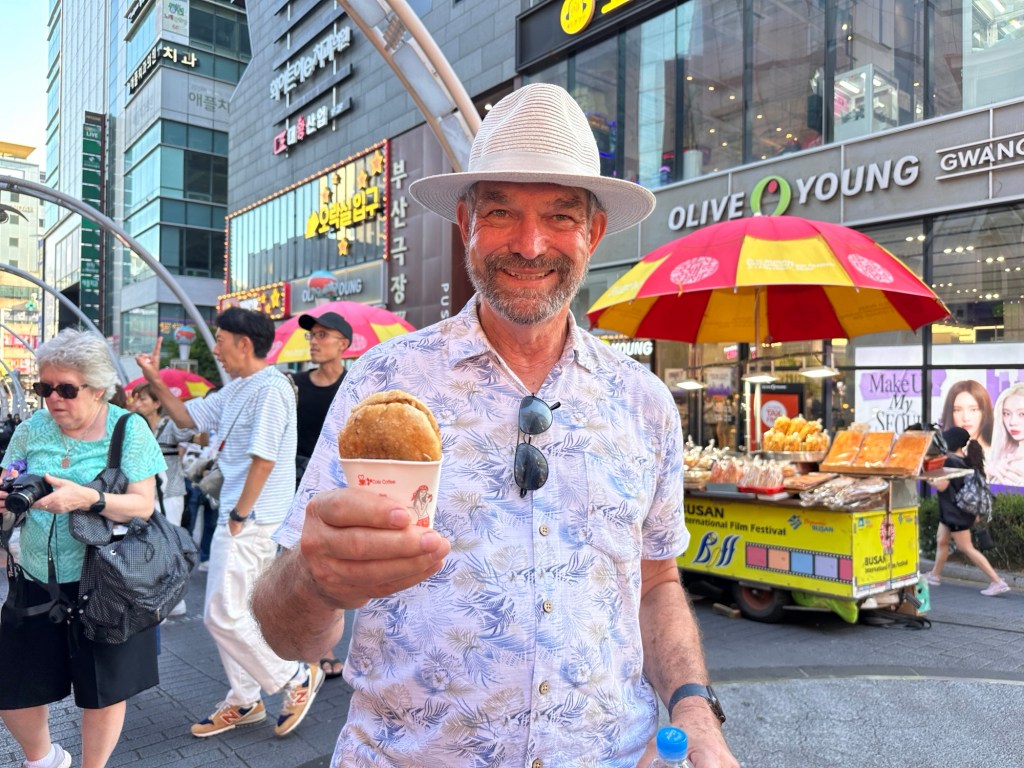
On the way back to the hotel, our last stop was Nampodong International Markets, one of Korea’s largest markets. We didn’t have a lot of time there, but managed to sample some of the street food, and I also found a cosmetic store with Korean snail mucus and collagen products! Koreans are very fixated with their skin regime… and the results show it’s worth it. They must know something!
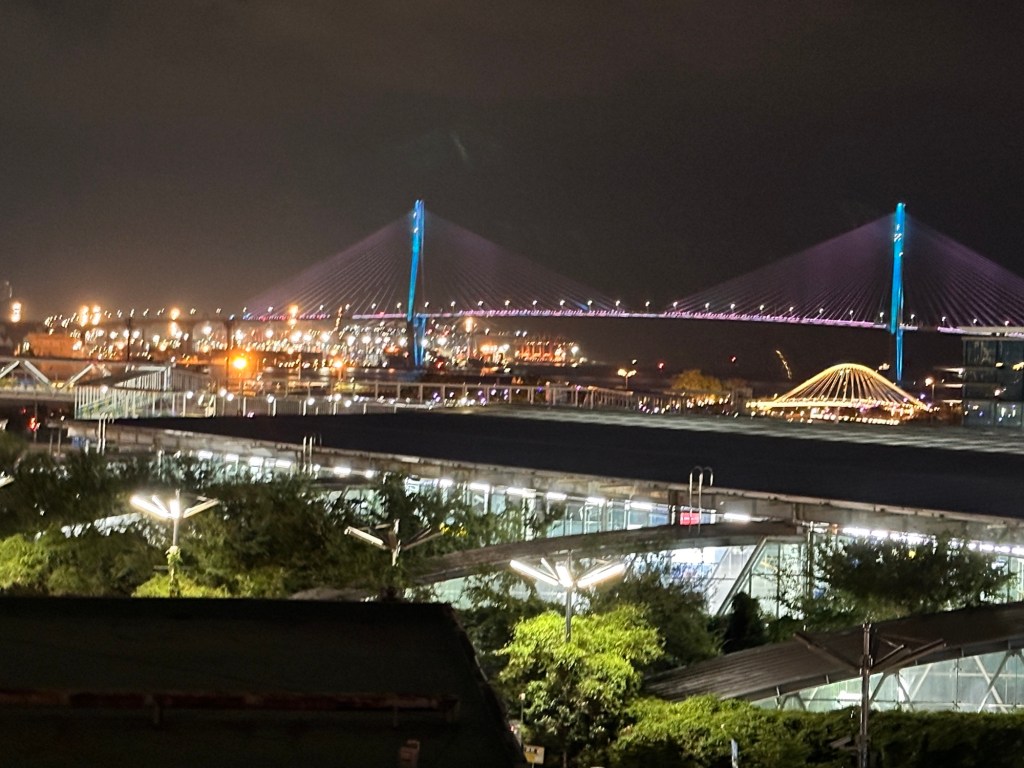
Back to the hotel to shower and cool off. We didn’t feel like dinner, instead enjoyed a cocktail on the 21st floor of the hotel looking over the bay and all the pretty lights. A short walk around the hotel precinct was unproductive – it was still so hot. In the end we bought a half bottle of wine and enjoyed the aircon in the room. The weather is looking to be hot again tomorrow.
Day 7
Wednesday 11th September 2024
Busan to Seoul
26-34 degrees, humid, hot +++
Today we travelled by KTX train (Bullet Train) back to Seoul. The 325 km journey only took two and a half hours, as the KTX train operates at a speed of up to 320 km/hr. Lovely smooth ride, very similar to the bullet train in Japan.

Our driver was waiting for us at the station (with our bags) to take us back to the Ibis Hotel. We couldn’t check in until 2pm, so we had an hour to kill – a nice coffee in the laneways opposite was just what we needed. Then it was check in, and a rest! It was so hot!
We were booked in to do a walking food tour of Seoul at 6.30pm. We headed off at 4.30 to make our way to the meeting point- had allowed some shopping/looking time, however we did get waylaid by a minor traffic accident in the narrow one way street on the way. The car was blocking the street and no one could get past – plenty of instructions from all the passer byes as how to move the damaged car, as well as the illegally parked cars just up ahead. Very entertaining! Of course Frank had his opinion as well!
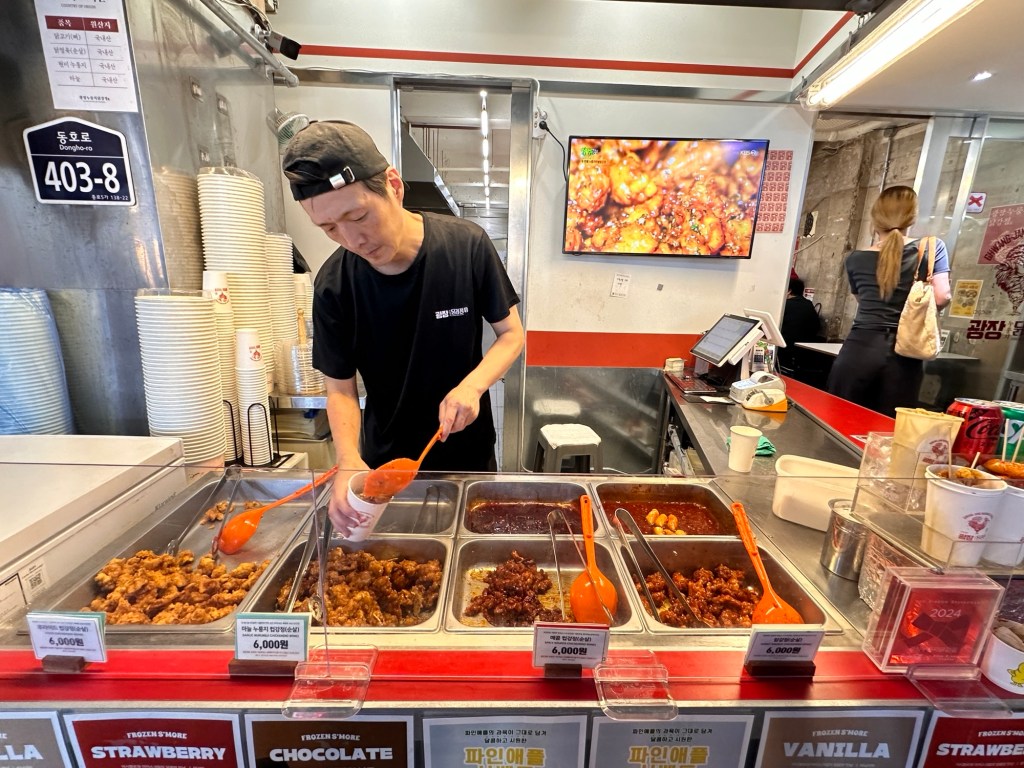
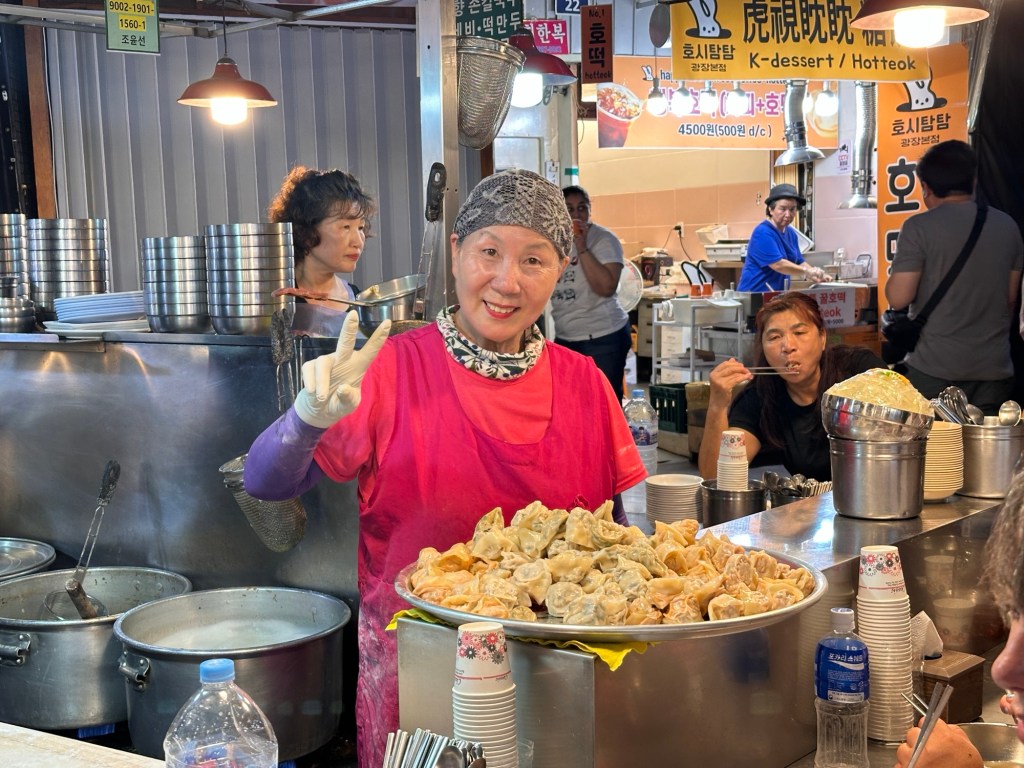
Our gorgeous young tour guide, Suha, met us at the specified time, and we headed into the Gwangchang Market – lucky we had come hungry! We spent an hour here sampling local Korean street food. Mung bean pancake was a favourite,( and among the locals), also the Pork, Shrimp and Kimchi dumplings. We saw the chef from Netflix Soul Food – Seoul episode. Also tried Garlic and Sweet chilly chicken with beer and soju, Tteokboki and Kimbap Walnut shaped bread, and Cheong gye cannel.
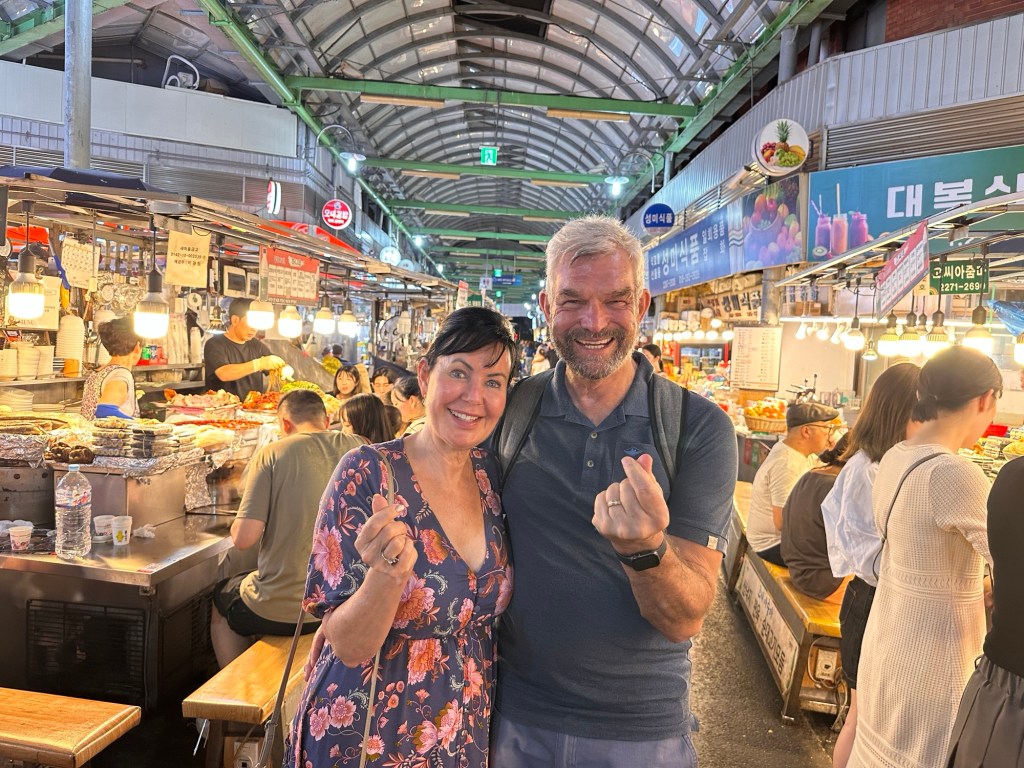
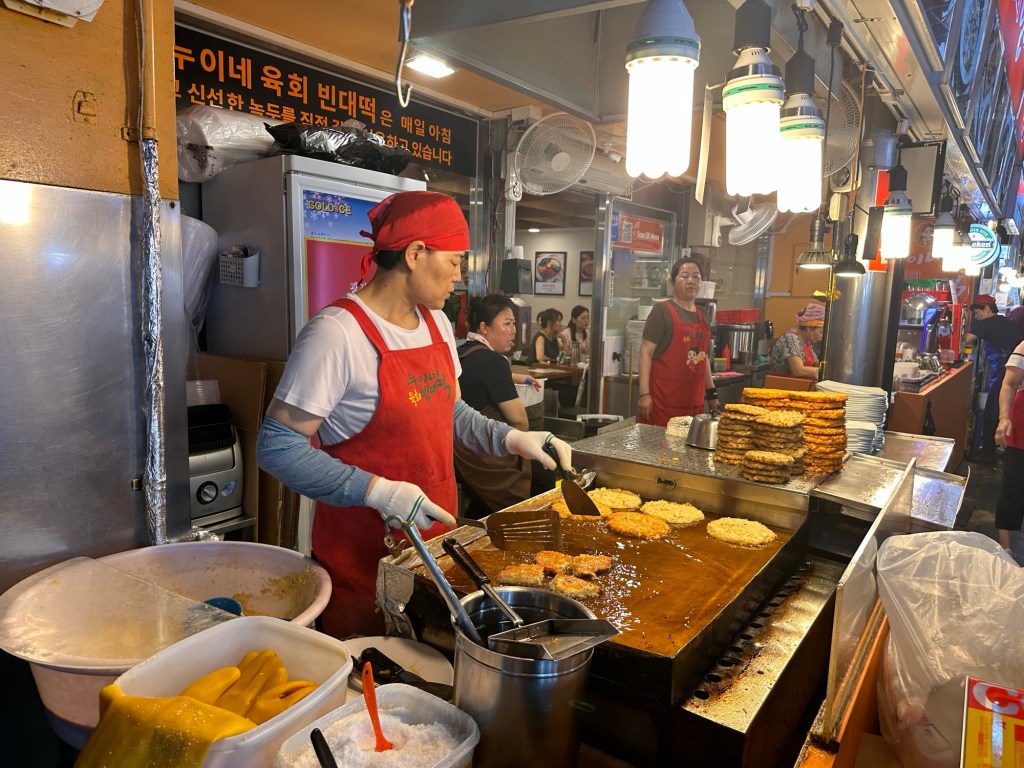
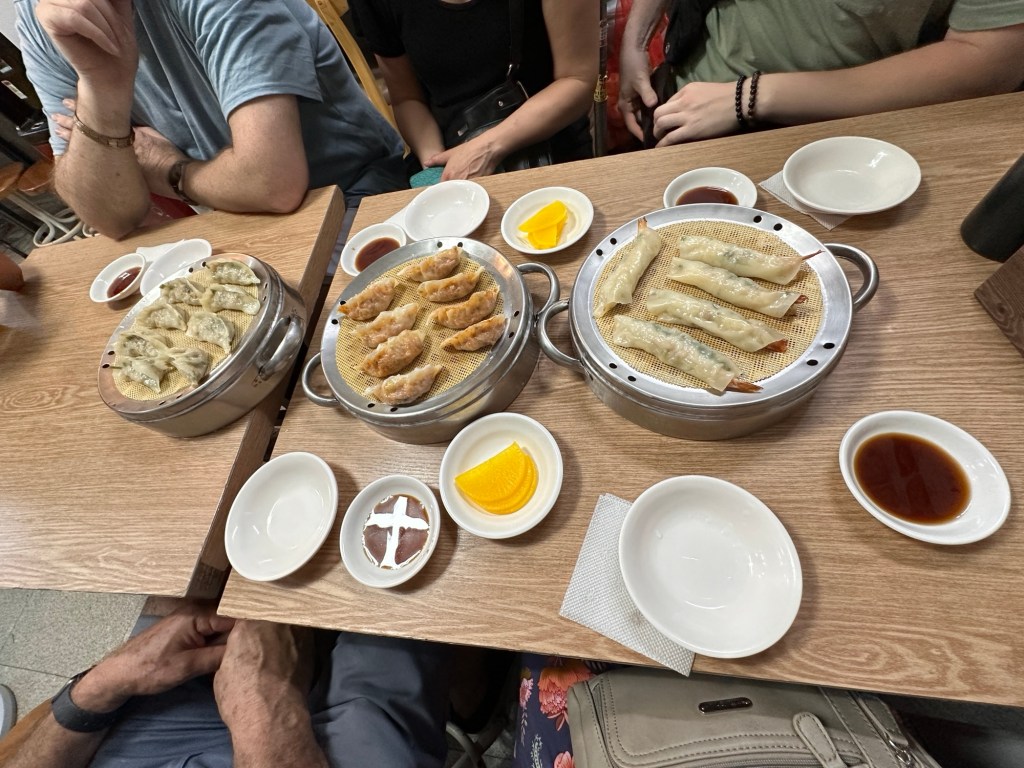
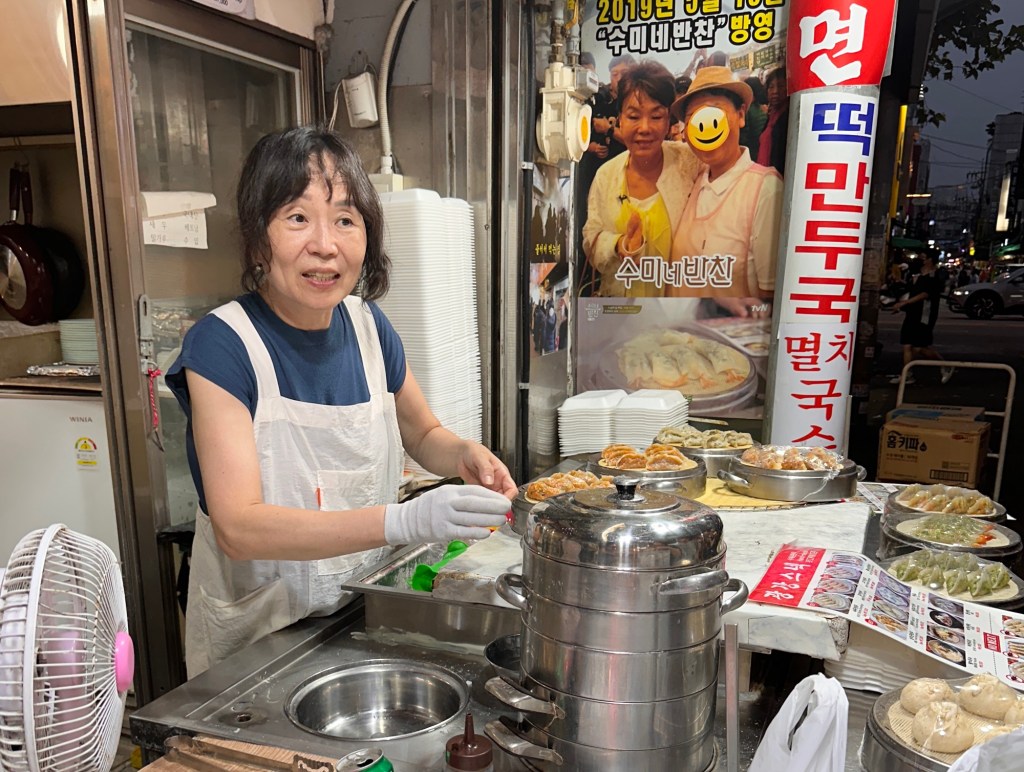
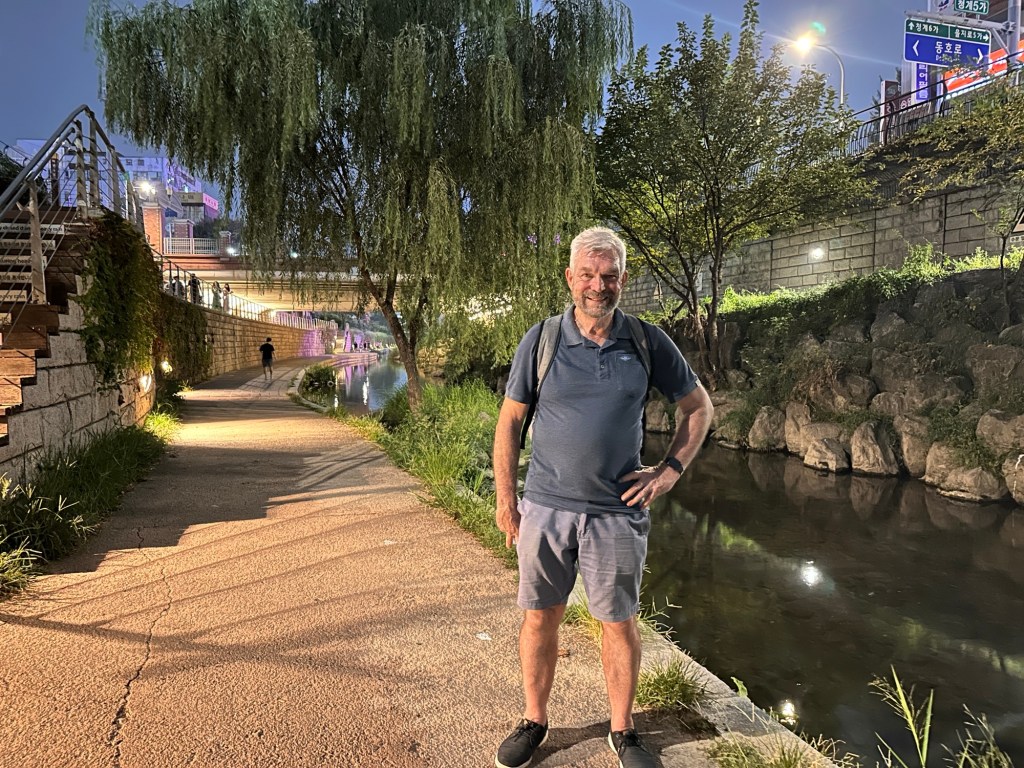
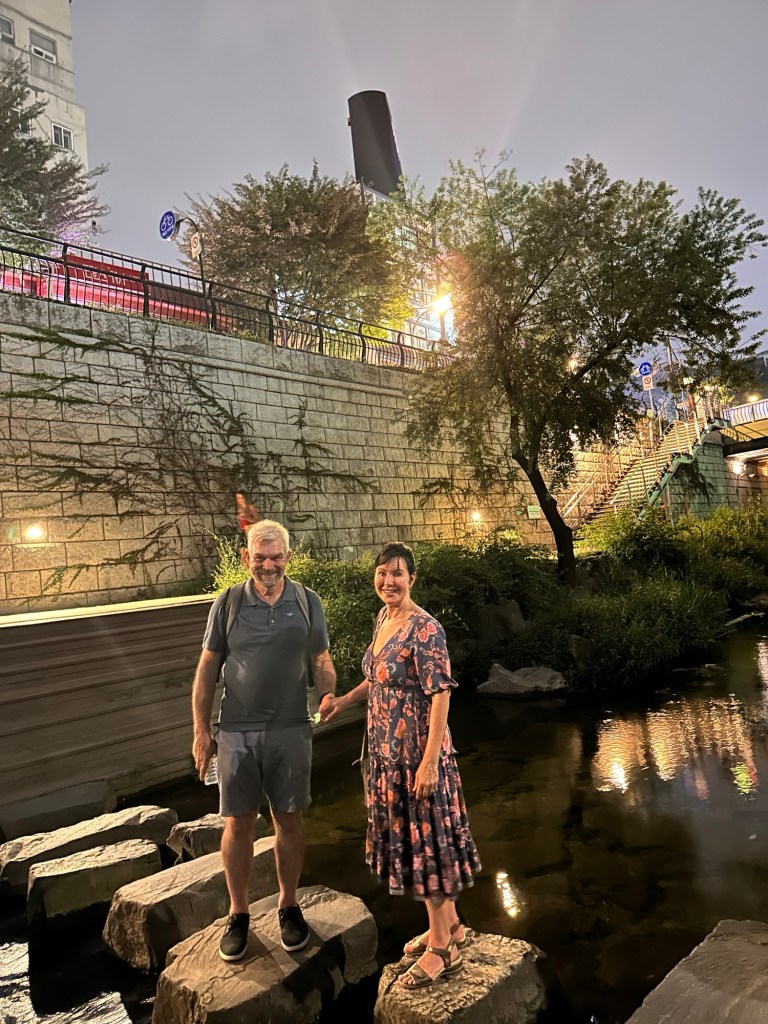
A little break was required after all that food tasting, so we took a walk alongside Cheonggyecheon Stream – a natural stream sourced from the Suseongdong Valley in Inwangsan. It was historically maintained as part of Seoul’s early sewerage until the mid-20th century, when post-Korean War rapid economic development and deteriorating conditions prompted the filling of the stream with concrete and the construction of an elevated freeway. the Cheonggye Expressway, in its place. In 2003, the city government began an urban renewal programme, and now the steam is a beautiful green area to escape to. It is beautifully lit up at night, the water is so clear, and it is a very safe area to walk along.
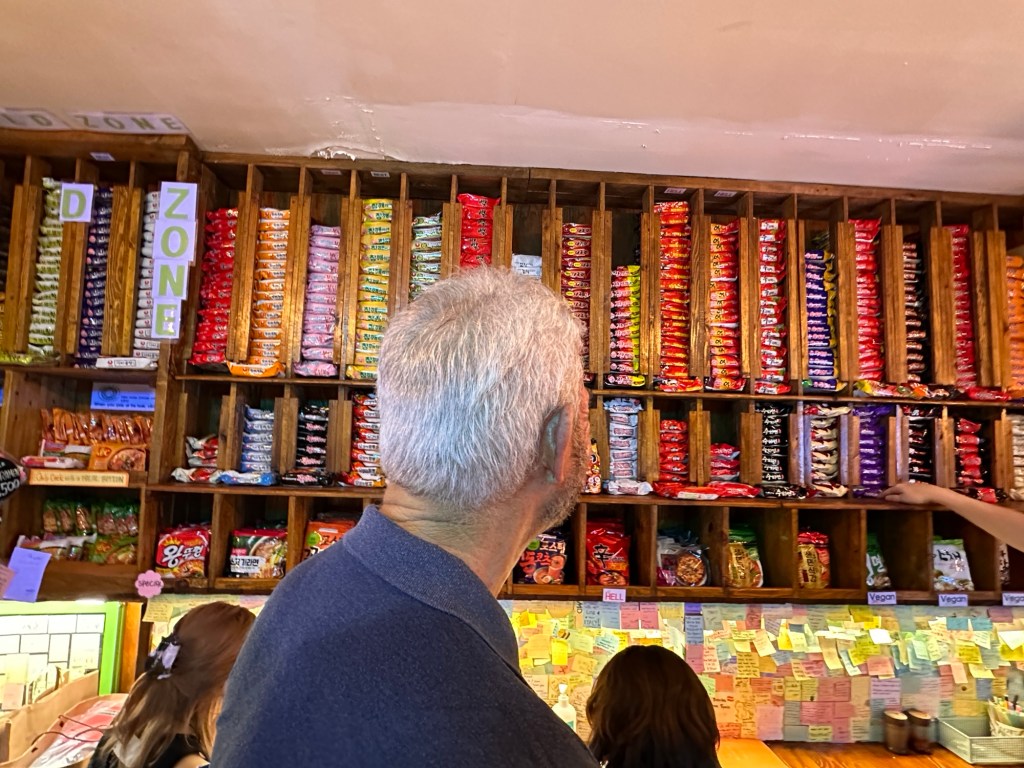
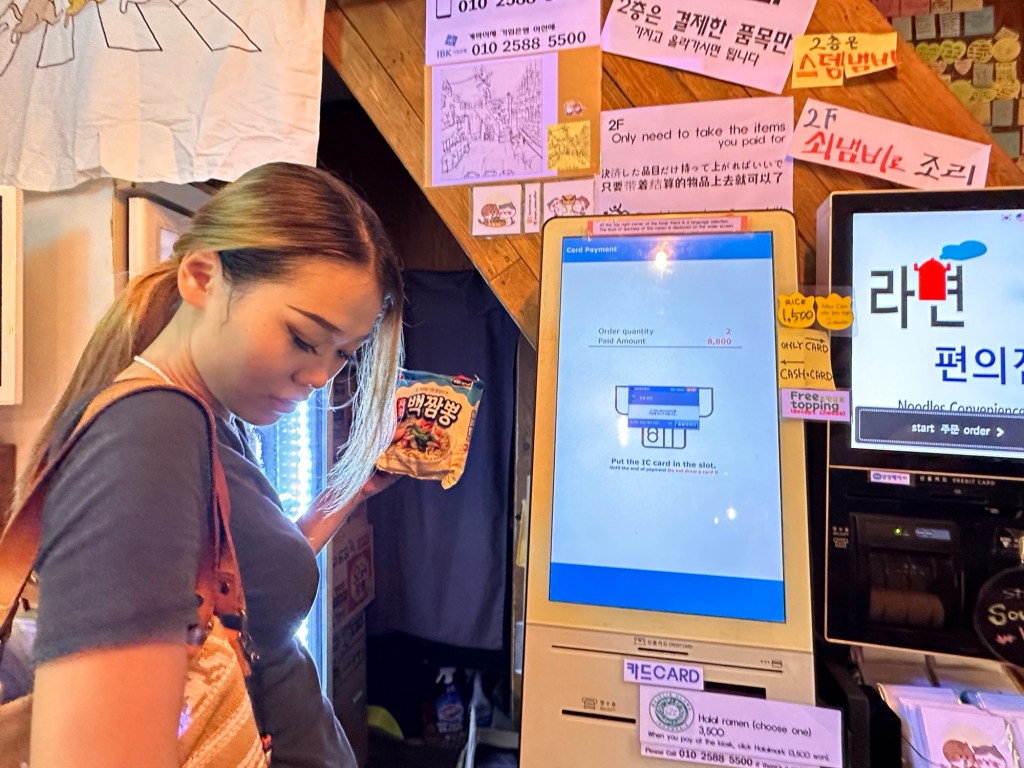
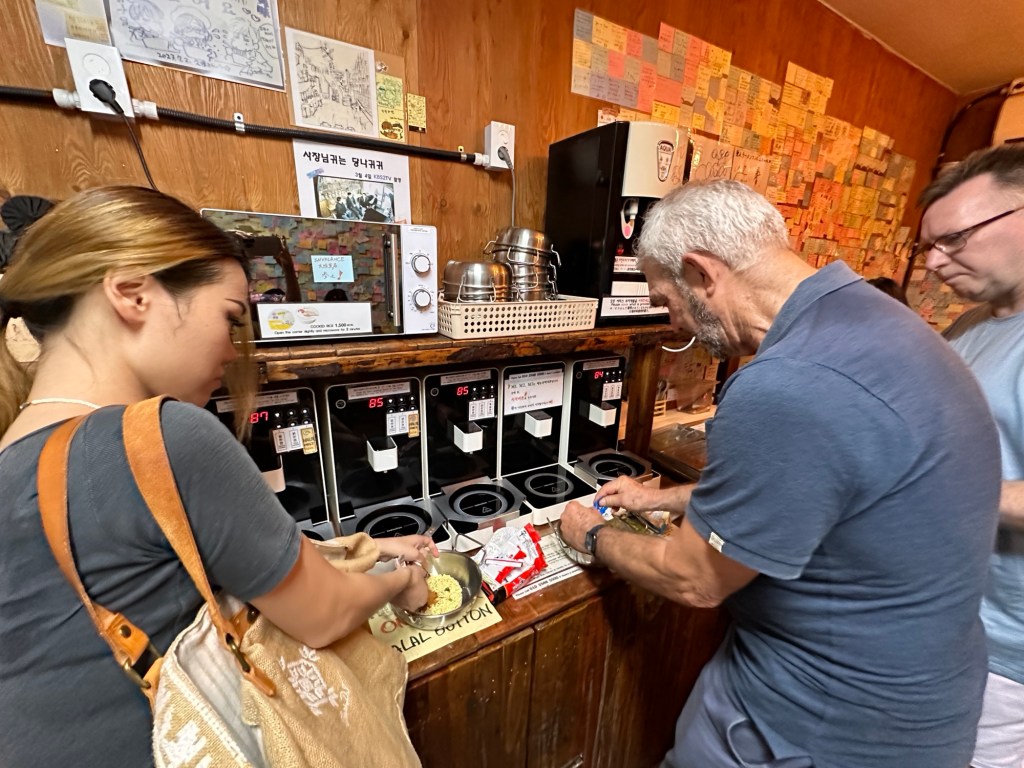
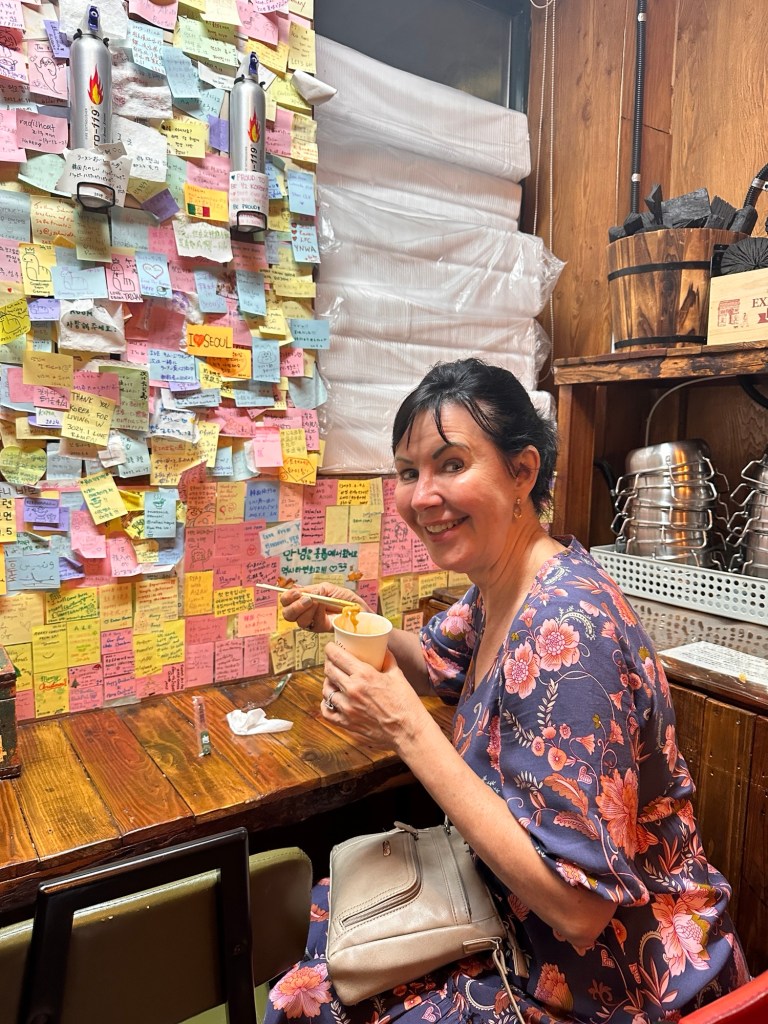
Next stop, the ramen store where you make your own ramen ( a glorified noodles in a packet store!) . We tried Sin and Seafood ramen- slightly better than the Coles/Woolies version as there were accompanying pickled radishes!
Onto Ikseon – which turned out to be the labyrinth of laneways opposite our hotel! No worries about repeating where we had been already.. there were hundreds of other laneways/eating places/shops we hadn’t seen. Some gorgeous little eating areas. Ikseon-dong is an upcoming, trendy hip area among Koreans. The harmony of alleys and Hanok houses exude beautiful charm. It’s a Hanok village that is yet to be as well-recognised as other Hanok villages. We slurped on Blue berry & Raspberry ice-cream while we viewed the gorgeous little eating areas. I just love this area.
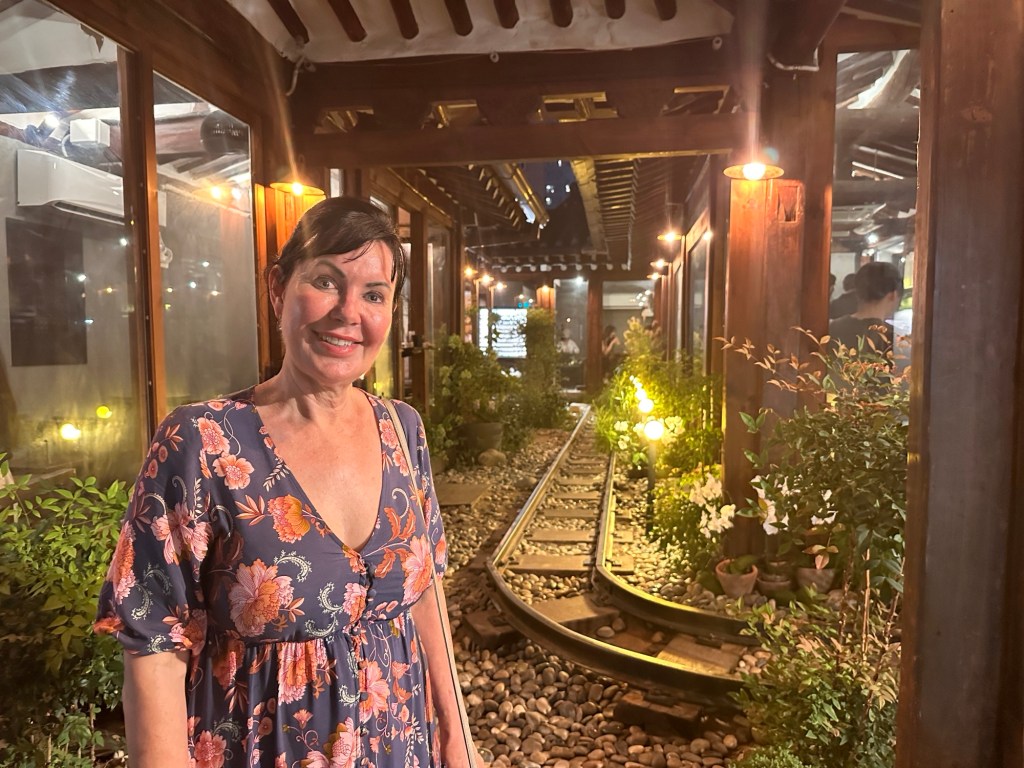
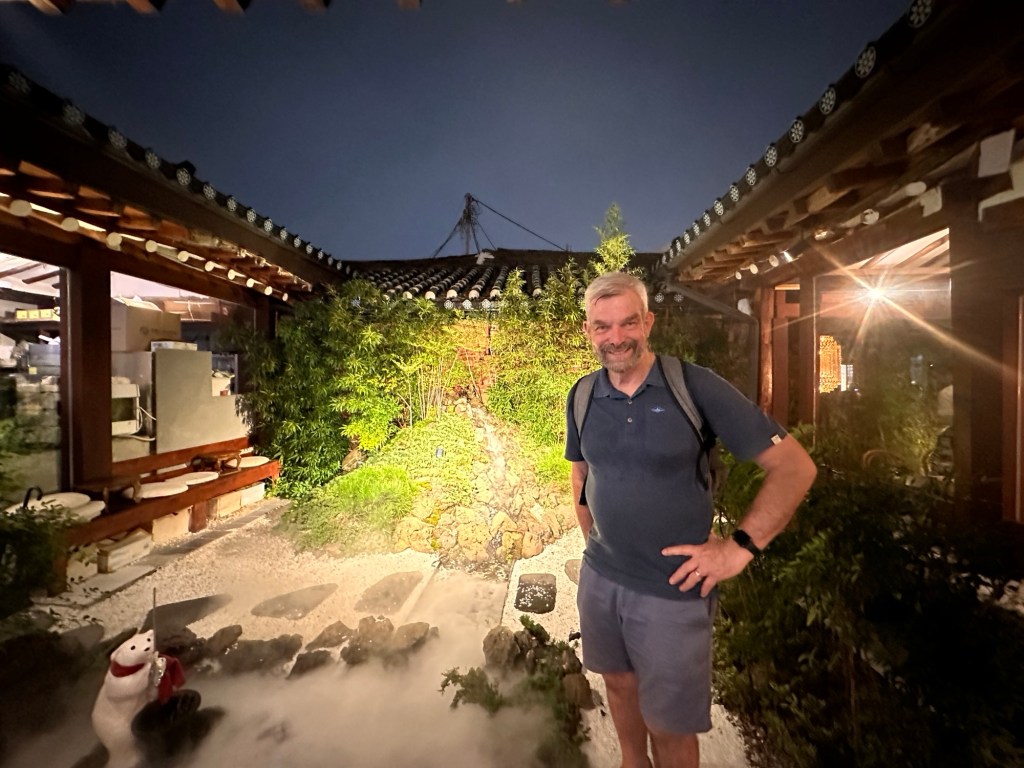
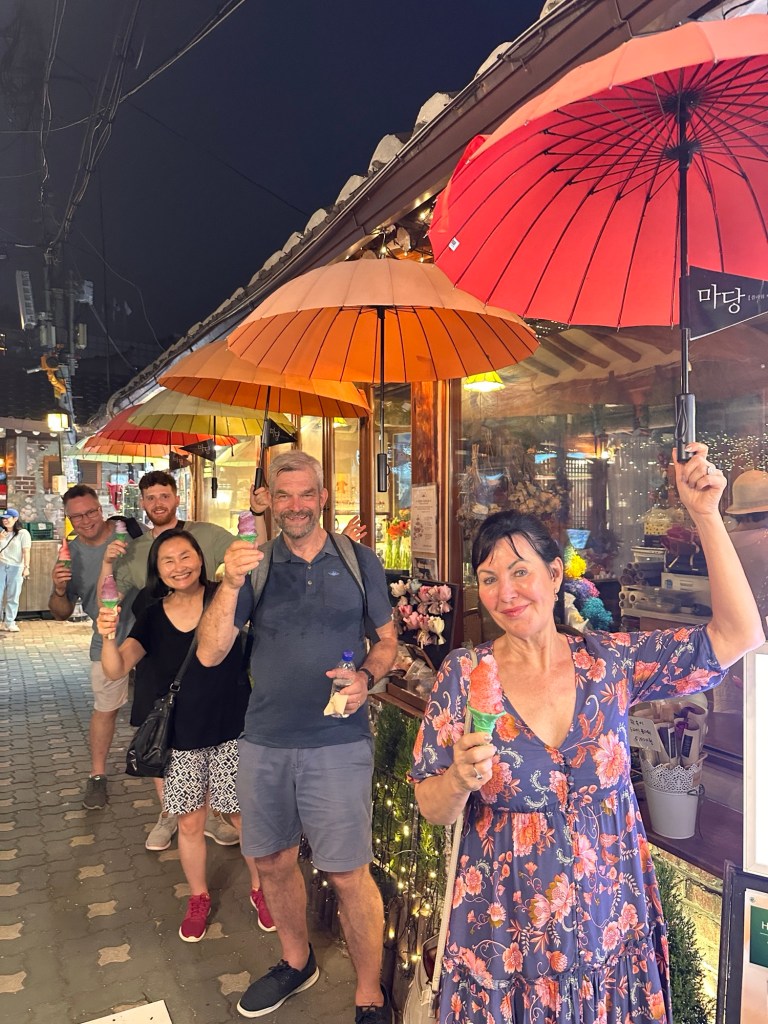
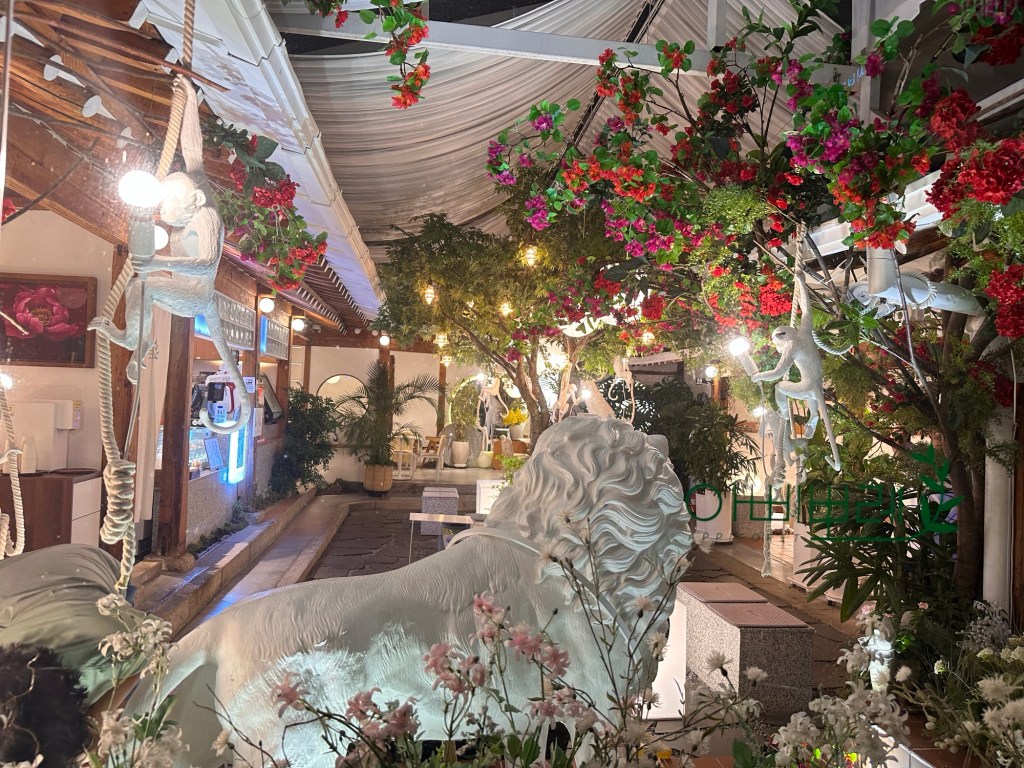
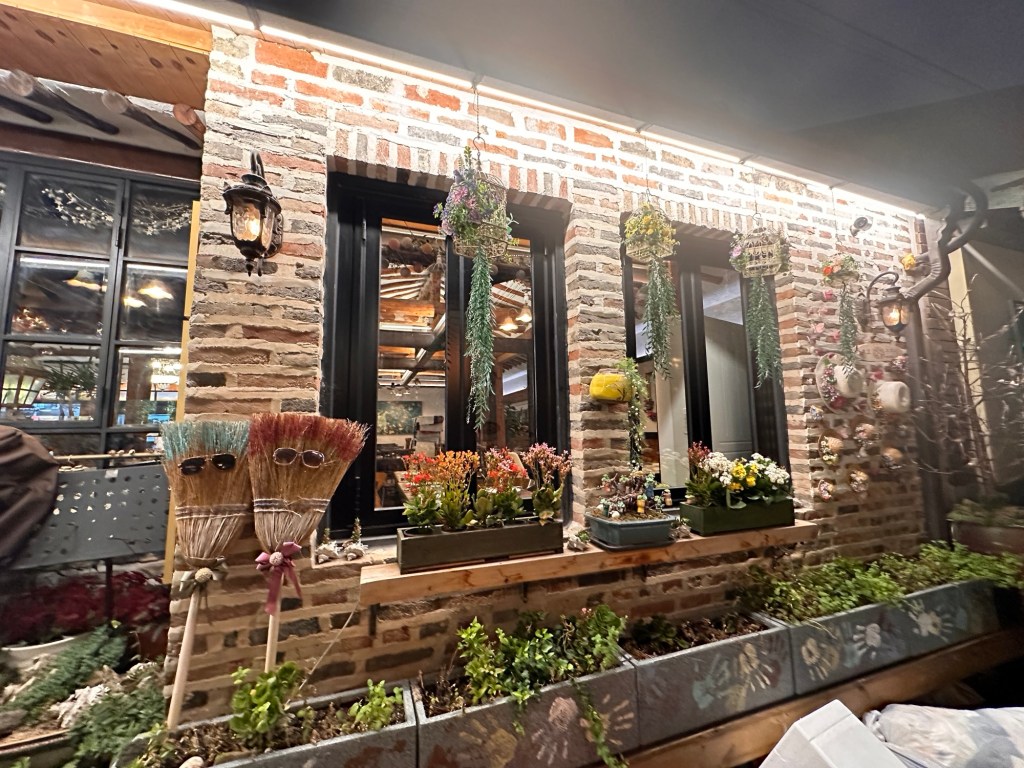
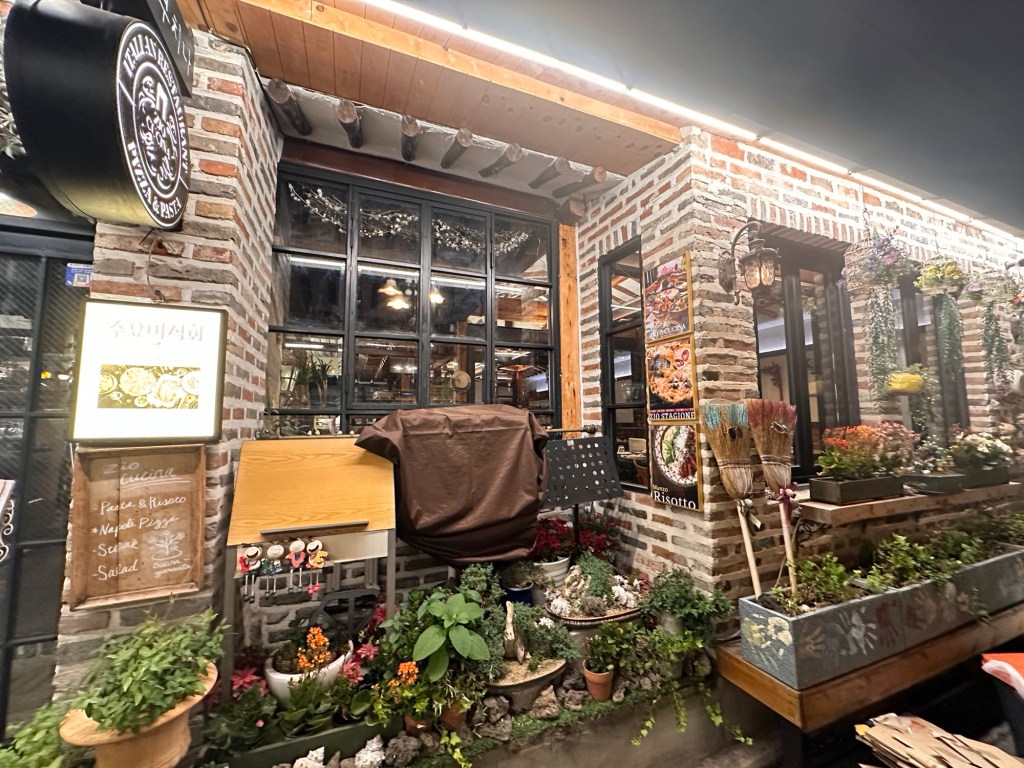
Not only did we try all different delicious foods, but we also learnt more about the culture, language, history of Korea while having an amazing time.
Day 8
Thursday 12th September 2024
Seoul
23-28 degrees, humid, rain on and off
Our last day! Not the best weather – cloudy, rainy…and free time! The North Tower and the Lotte Tower excursions were ruled out, so our plan was to navigate our way with public transport to the Gangnam style statue (Gangnam actually refers to the area of Seoul south of the Han Rivet – the new modern upcoming area of Seoul). We had to go by train, then swap to bus, which all went to plan, and then we landed right outside the statue. The horse dance in Psy’s music video for ‘Gangnam Style’ has been iconified as a giant pair of bronze hands on a stage on the east side outside COEX Mall. Of course we had to have a photo!
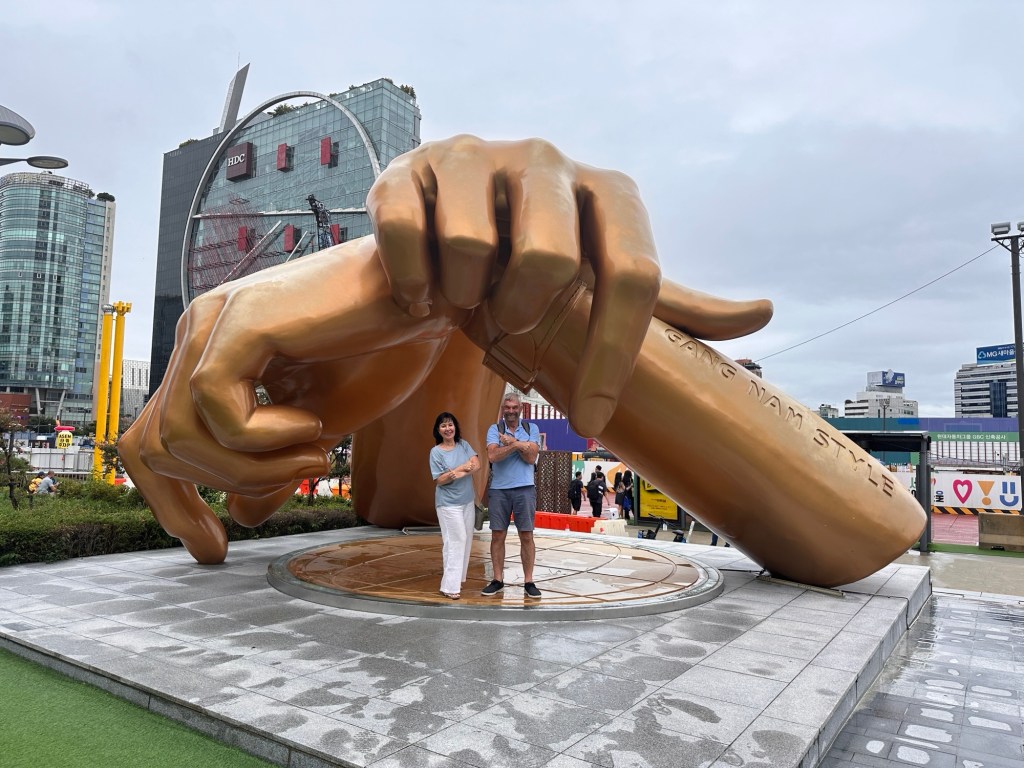
The Coex mall was a very modern shopping centre, complete with Library and Aquarium. Next door is the Korean Works Trade Centre.
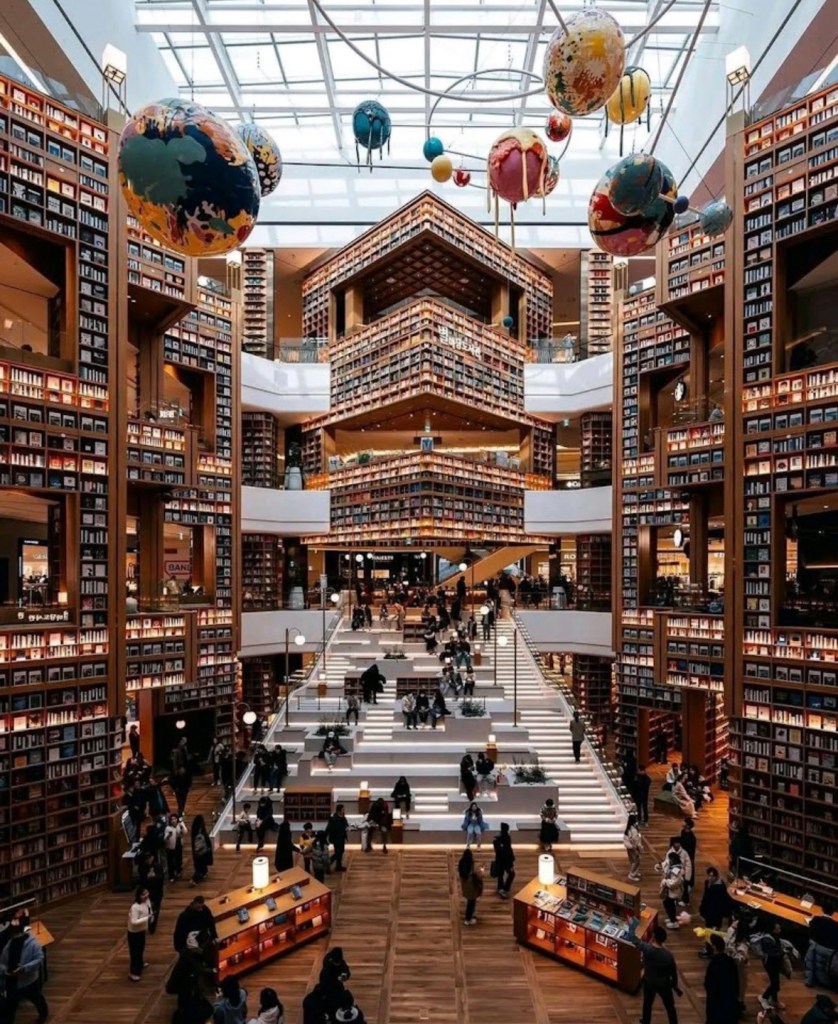
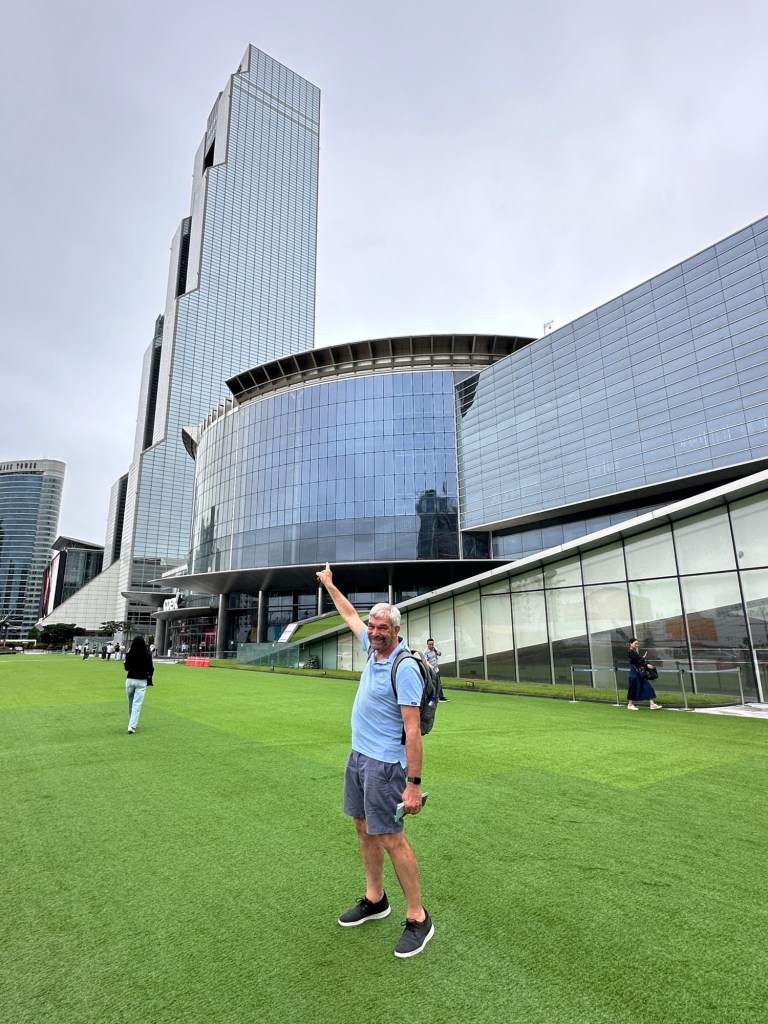
We then caught the train from the mall to the river – we had planned to do a river cruise, but all of a sudden the heavens opened up! A nice lunch sounded like a better option! Afterwards we trained it back to the hotel, some last minute shopping in the markets, before boarding the bus for a 90 minute trip to the airport. It was still a great day despite the weather, and change to our initial ideas. Another long wait to get through customs and immigration, but eventually we got to the Qantas Lounge for a much anticipated shower and bite to eat. Our flight was at 2210. Onto Sydney, then a 1315 flight to Brisbane.
And just like that, the holiday in South Korea was over!
Highlights of the trip
A very interest history, but also another reminder of the tragedies of war – again, so many solders paying for other people’s mistakes and search for power.
South Korea seems to be a very safe country. Also very clean, despite the lack of rubbish bins – we were always looking for a bin!
The people are lovely, always willing to help out if we asked where to go etc. The concierges went out of their way to assist. Most spoke a little English.
The people are very conscious of their looks, a hint of vanity – noticed so many cosmetic surgeries/ dental clinics. The girls seem to spend a bit of time with their makeup.
Korean food is sensational, and generally very healthy and fresh. Lots of flavour. Street food safe to eat.
So many Hyundais on the road! Also BMWs, and all new cars – no old bombs that we could see.
 Glammy Goes Global