
Day 19
Monday 29th September
Termez to Dushanbe
15-29 degrees, sunny
Once we passed the border formalities, our Tajik guide, Nuros, and driver were there to greet us. Well Nuros was a laugh a minute… or so he thought. He loved to tell jokes! We were a bit worried – he was with us for six days!
So now we are in Tajikistan. Tajikistan has a very long history. Its Persian heritage gives it close ties to Iran, but also Afghanistan, Uzbekistan and Kyrgistan. Soon after gaining independence in 1992, Tajikistan imploded into civil war following the collapse of the USSR. During the course of the conflict, which lasted from 1992 until 1997, over 70,000 Tajiks were killed. Since the end of the war, the country has been ruled by President Emomali Rahmon, who has been consistently re-elected in a series of elections that have not been considered free and fair.
An hour’s drive from the border we stopped at Hissar Fortress. Hissar was originally built in 500-600 BC and has been attacked many times. The eroded walls and giant mound of the fort remain, accessed through a restored gate. The fort was occupied by the Basmachi leader Ibrahim Beg until the Red Army destroyed it in 1921. Opposite are two madrassas and the foundations of a 19th-century caravanserai.


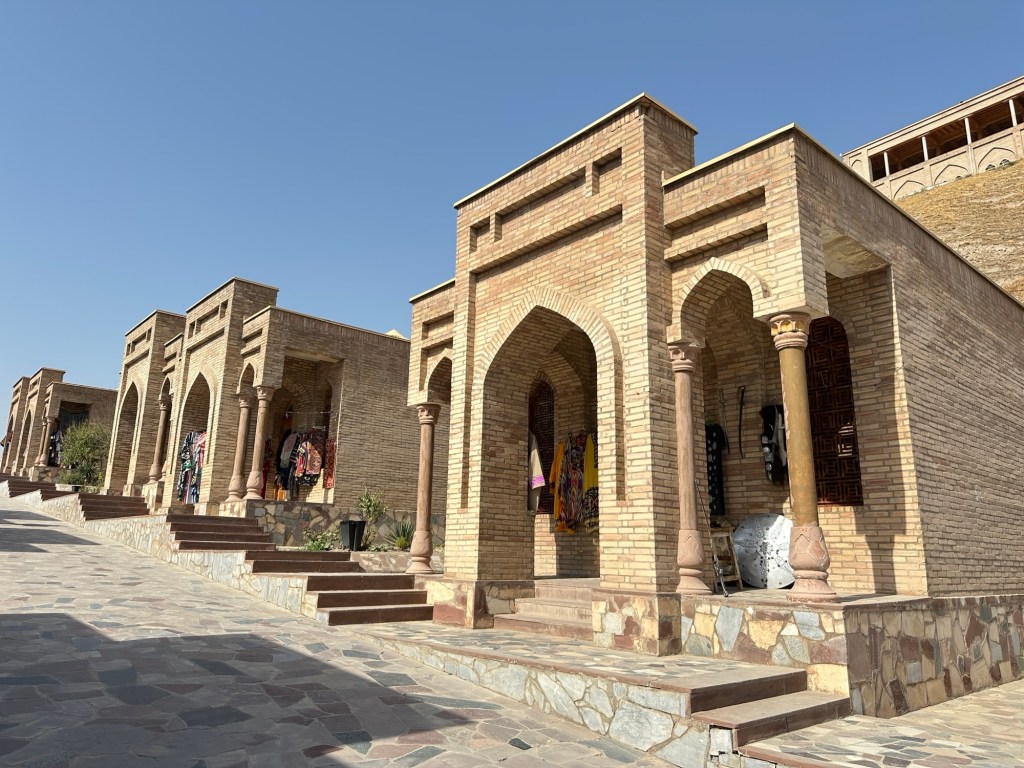

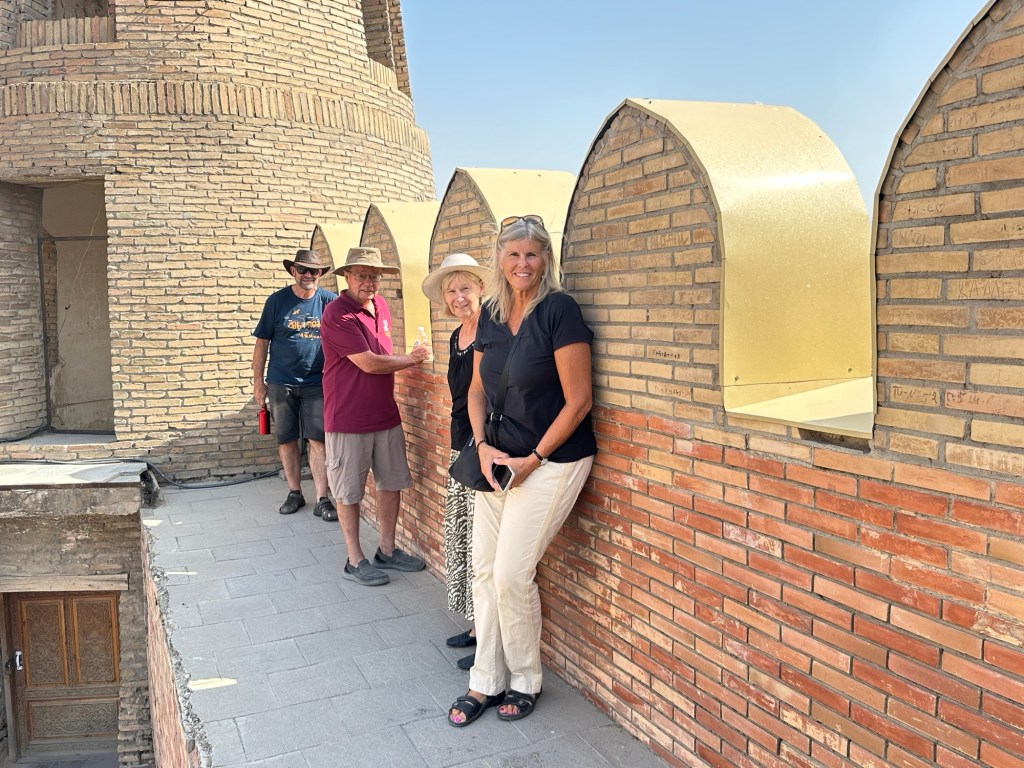

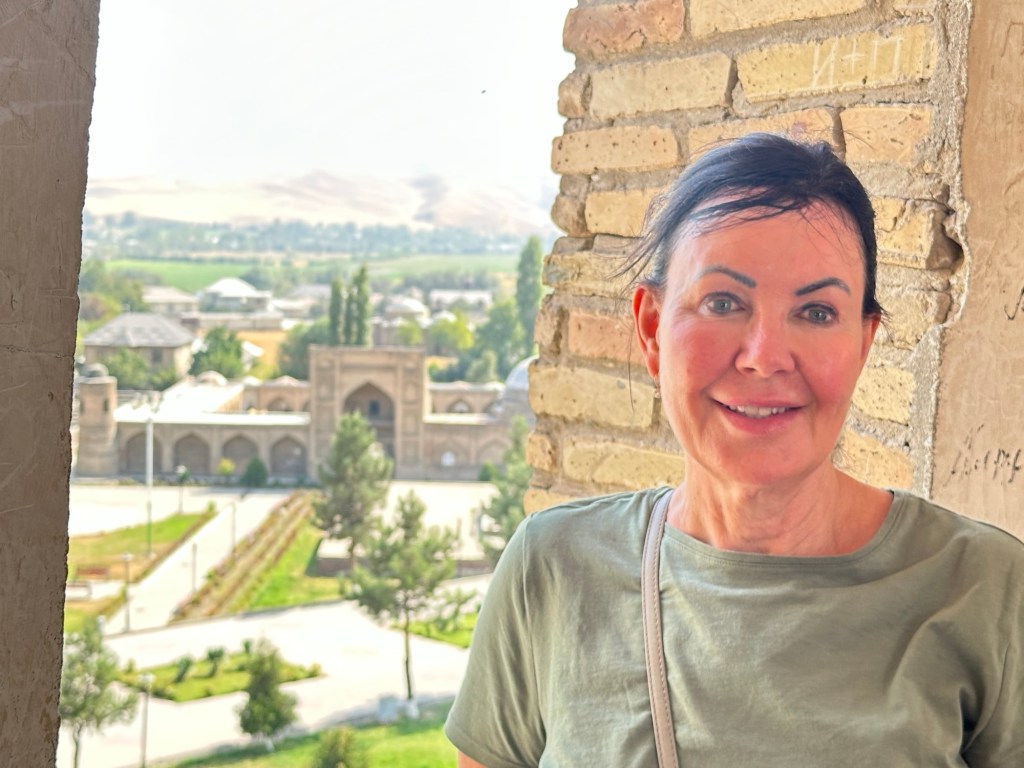
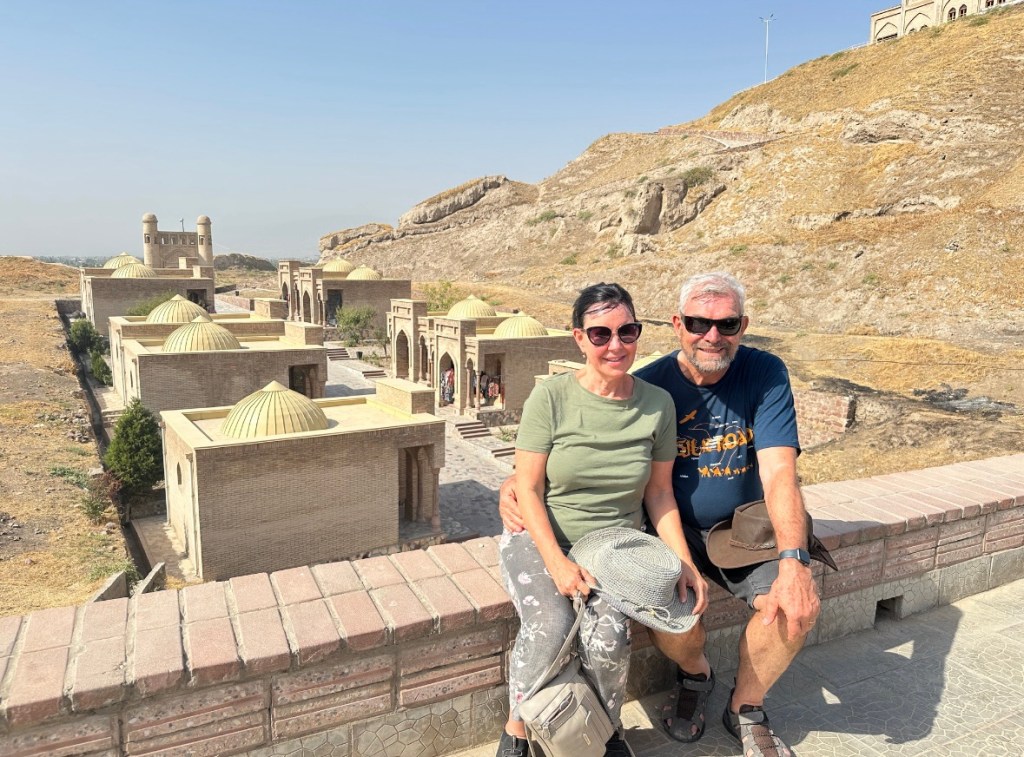
From here we drive to Dushanbe, the capital of Tajikistan. The emir of Bukhara stopped here briefly in 1920 en route to exile in Afghanistan, and the Turk Enver Pasha captured the town in 1922 as part of his attempts to raise a rebellion against Soviet rule.
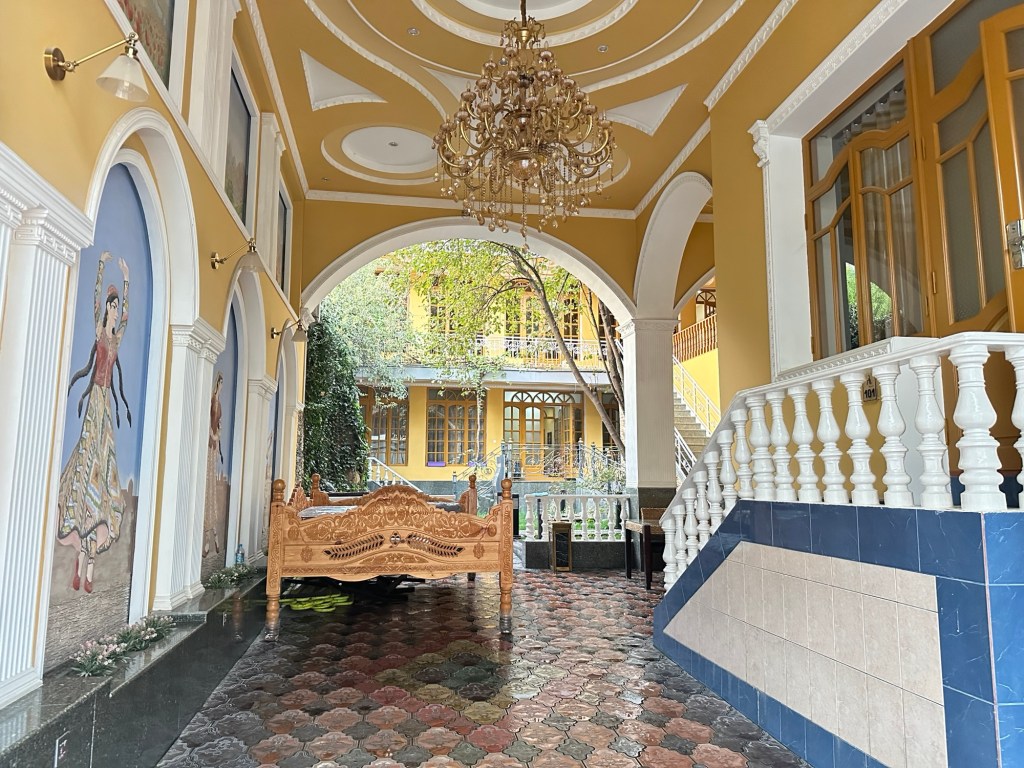
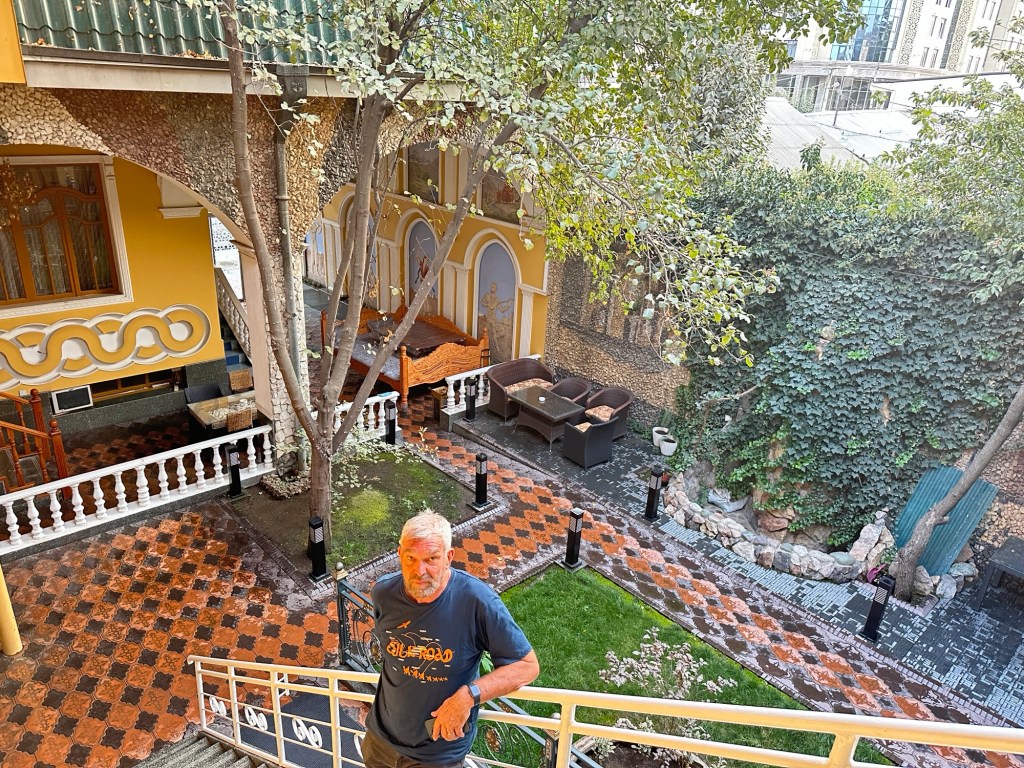
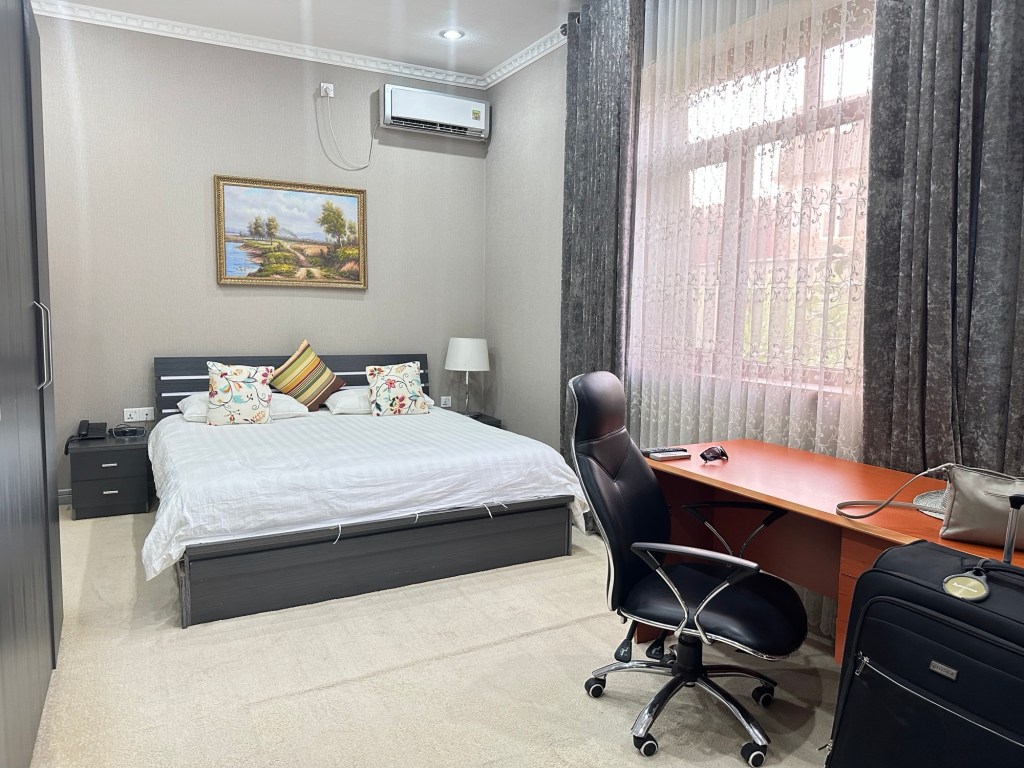
Dushanbe is a very attractive city – with flower beds and tree lined streets everywhere. We drove through the city with our guide pointing out significant buildings and highlights along the way. We soon arrived at the Atlas hotel, but alas it was the wrong Atlas hotel – we were staying at the Atlas Guesthouse. Luckily it was around the cornier. Upon arriving there, we found there was a discrepancy with the booking- not sure what. But we were given afternoon tea of an assortment of cakes and pastries while they sorted it out. The guesthouse was really lovely.

Next, we wanted money changed – we had been asking Nuros all afternoon for same – guess what – by this time the banks were closed! It was like a comedy of errors. So off we go to an ATM – Frank withdrew his cash, but that seemed to drain the coffers. Plan B, the Hilton Hotel to use their ATM. We got there eventually.
By this time, we had decided we didn’t need dinner – just a drink! Well that was a 23 minute walk away, just to get beer or vodka. Anyway we enjoyed the walk, gave us a chance to stretch our legs, and the beer went down well when we got back! Along with some more desserts from the guesthouse! The things you do on holidays!
Day 20
Tuesday 30th September
Dushanbe to Sarigat
16-28 degrees, sunny
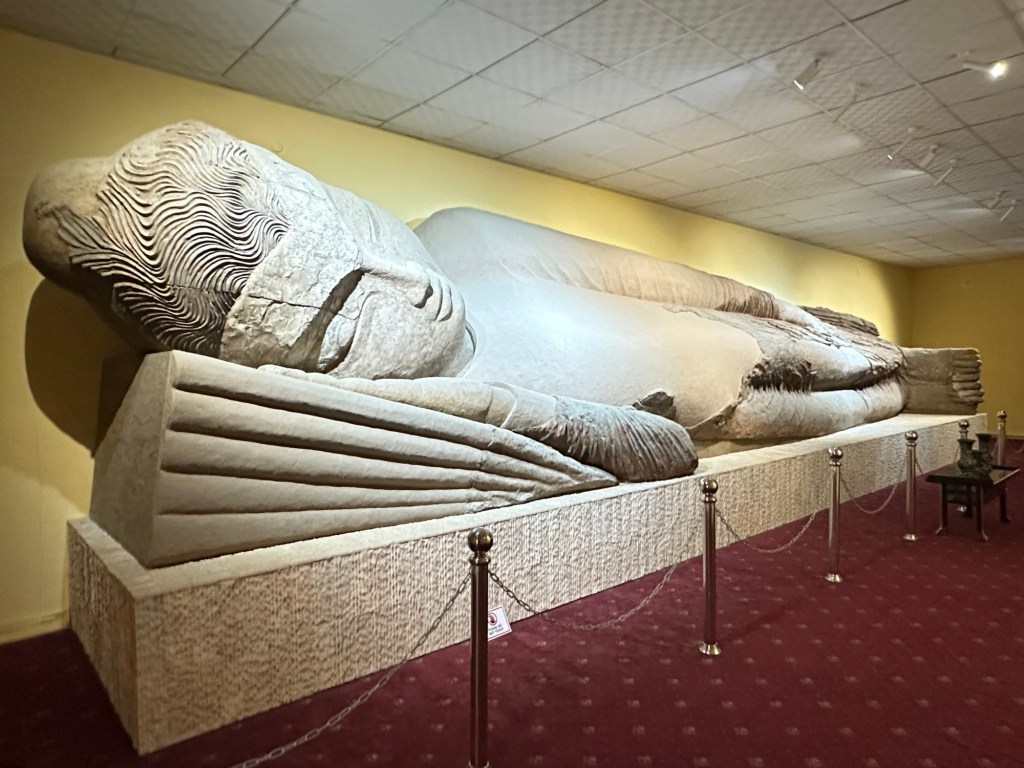
First off a visit to the Museum of National Antiquities. The star exhibit here is the 12 metre long Buddha excavated in 1966 from Adjina Tepe in southern Tajikistan. The 1,600-year-old statue is considered the largest intact Buddha in Central Asia. Many other great exhibits from ancient civilisations here.


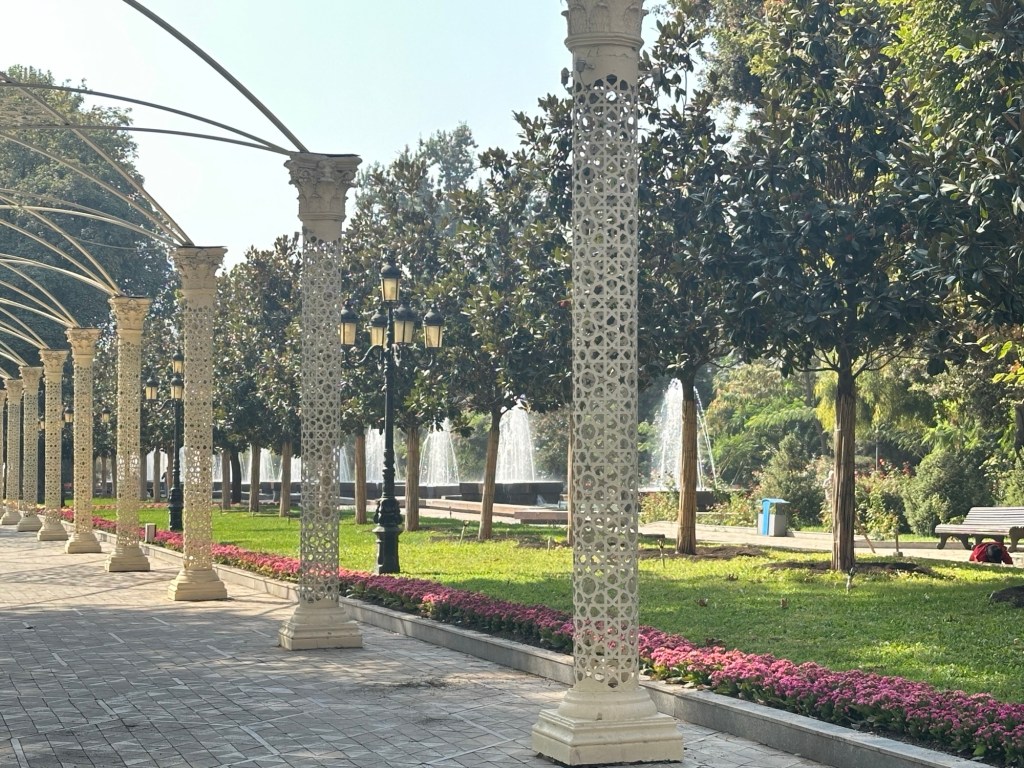
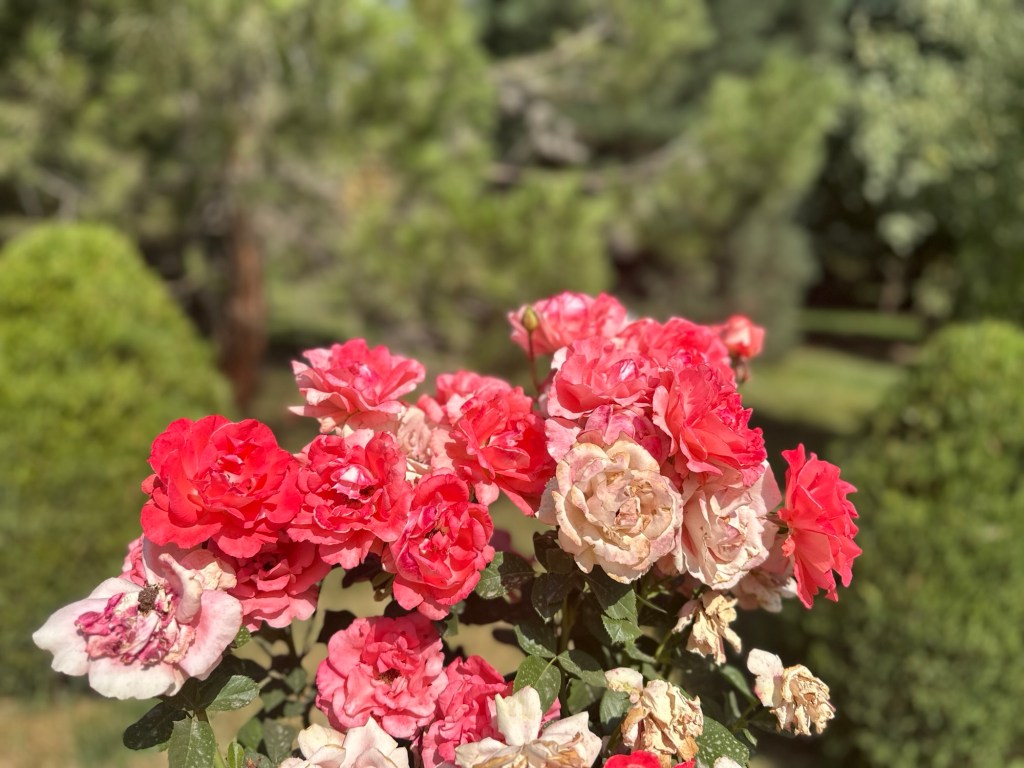
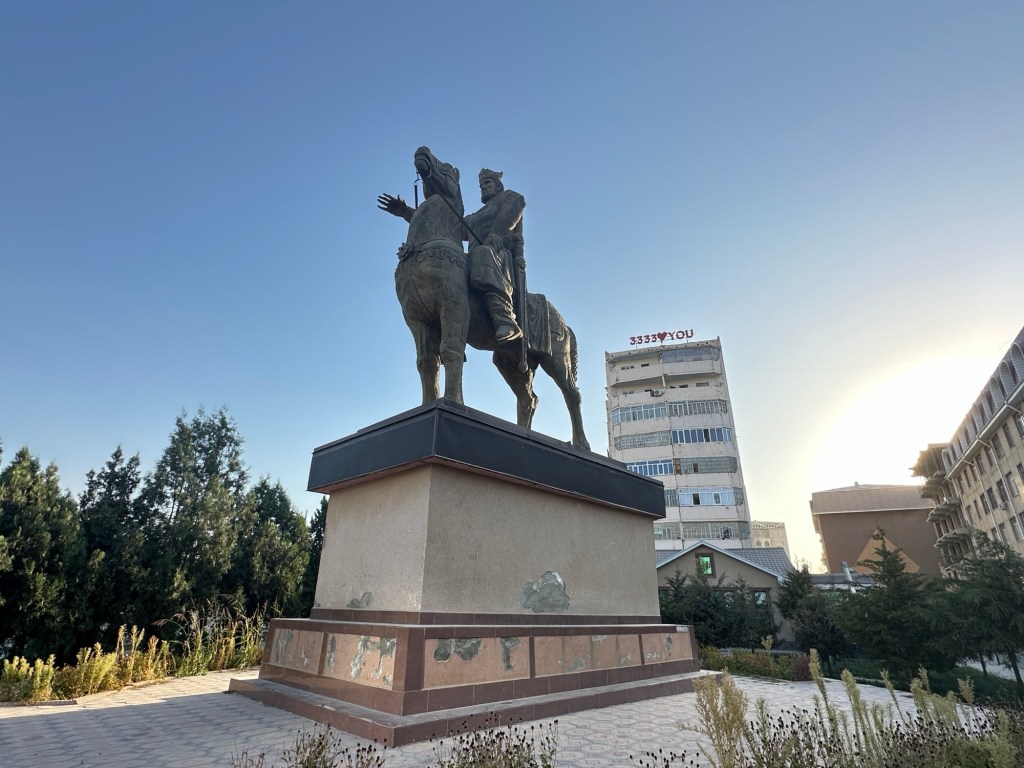
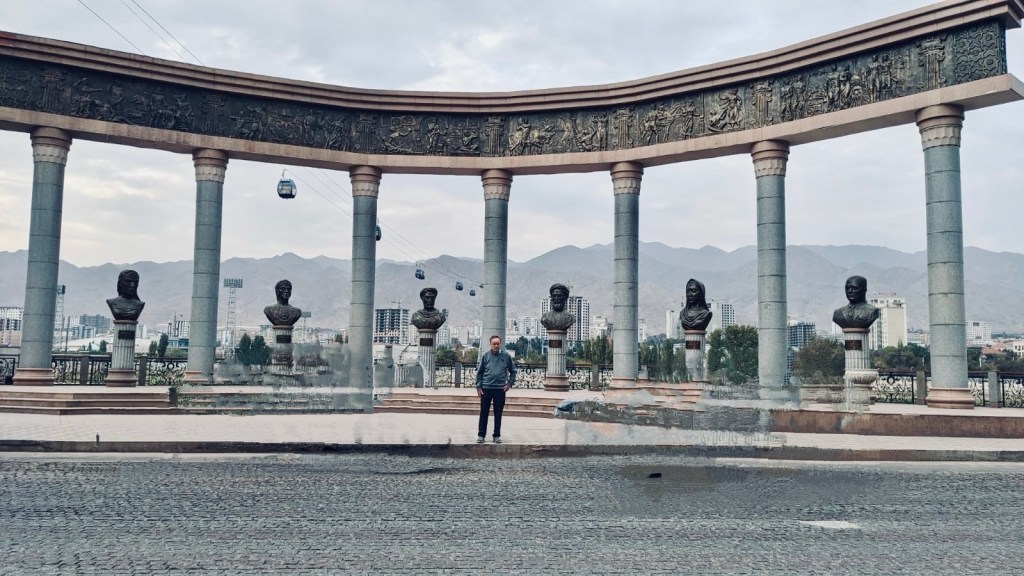
Next, the impressive statue of Ismail Samani, the 10th-century Persian-speaking leader of the cultured Samanid dynasty, stands in the plinth that once housed the state of Lenin. In this square is also the National Library, a street of fountains, and the most magnificent flower gardens.
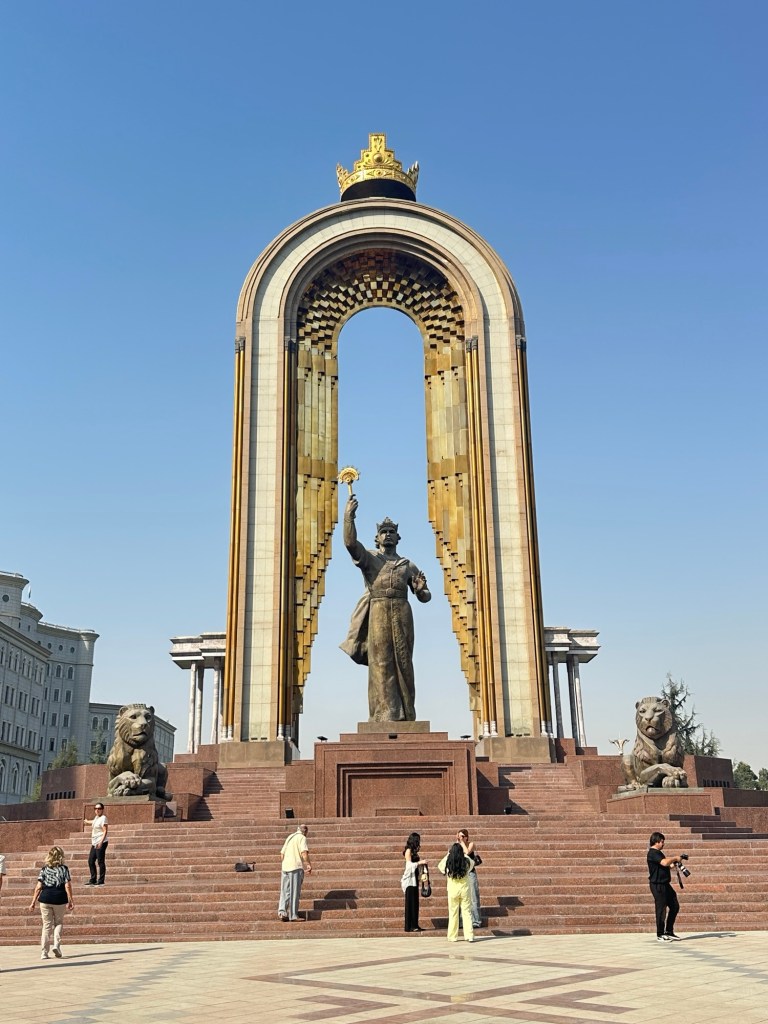
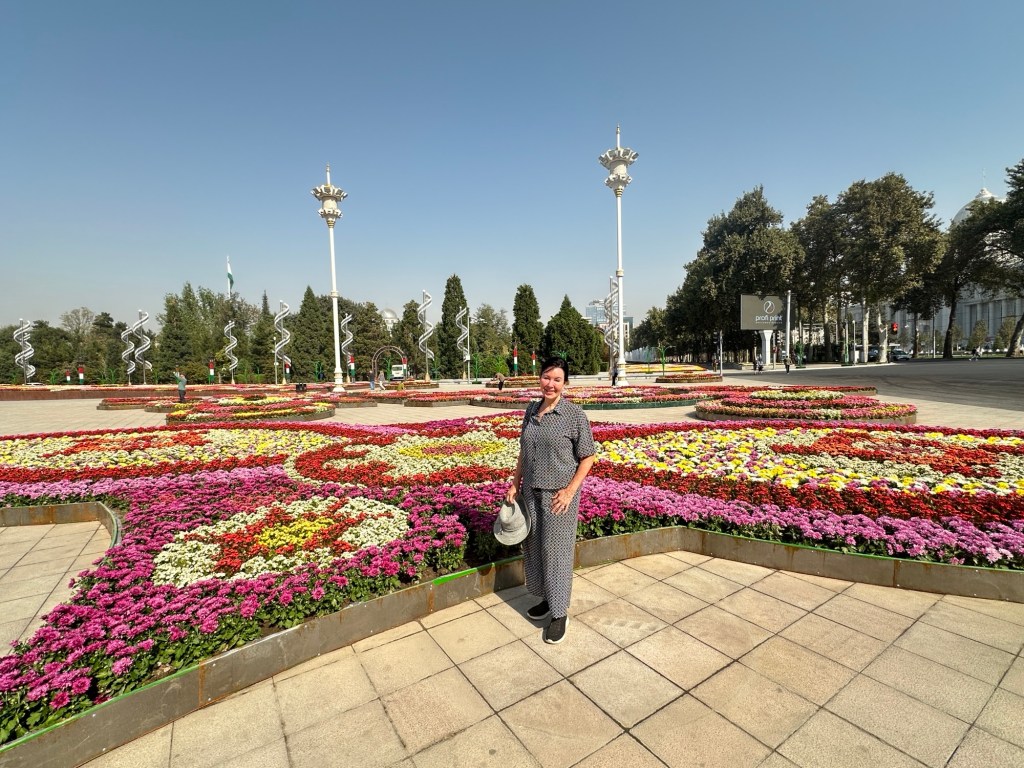
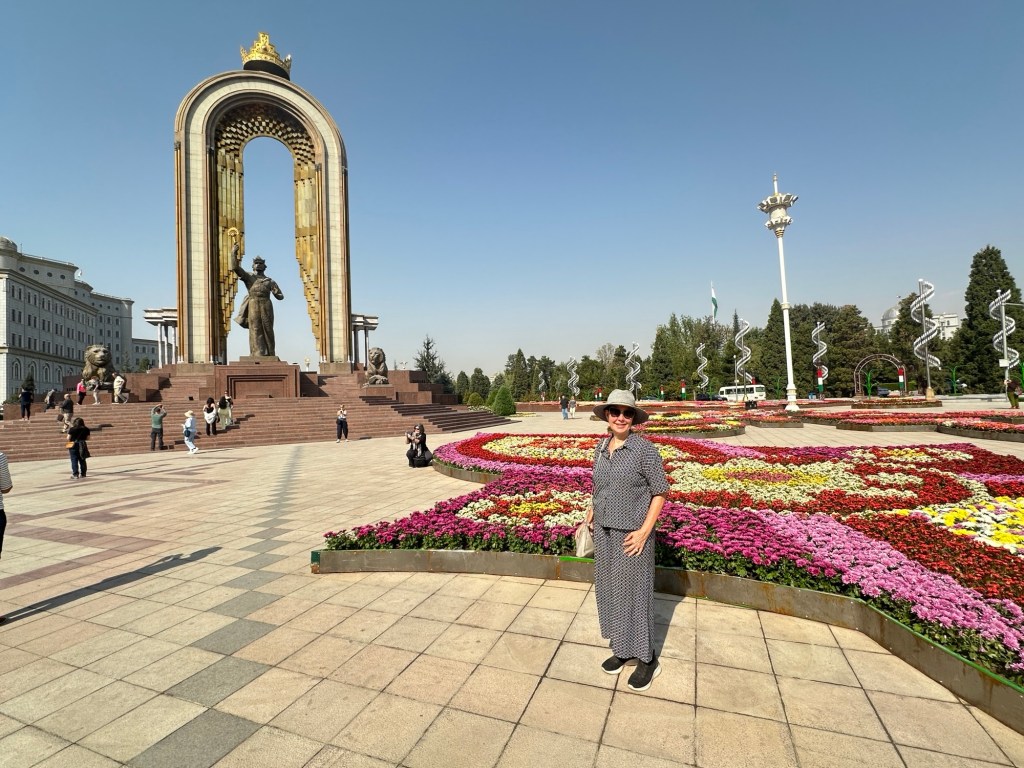

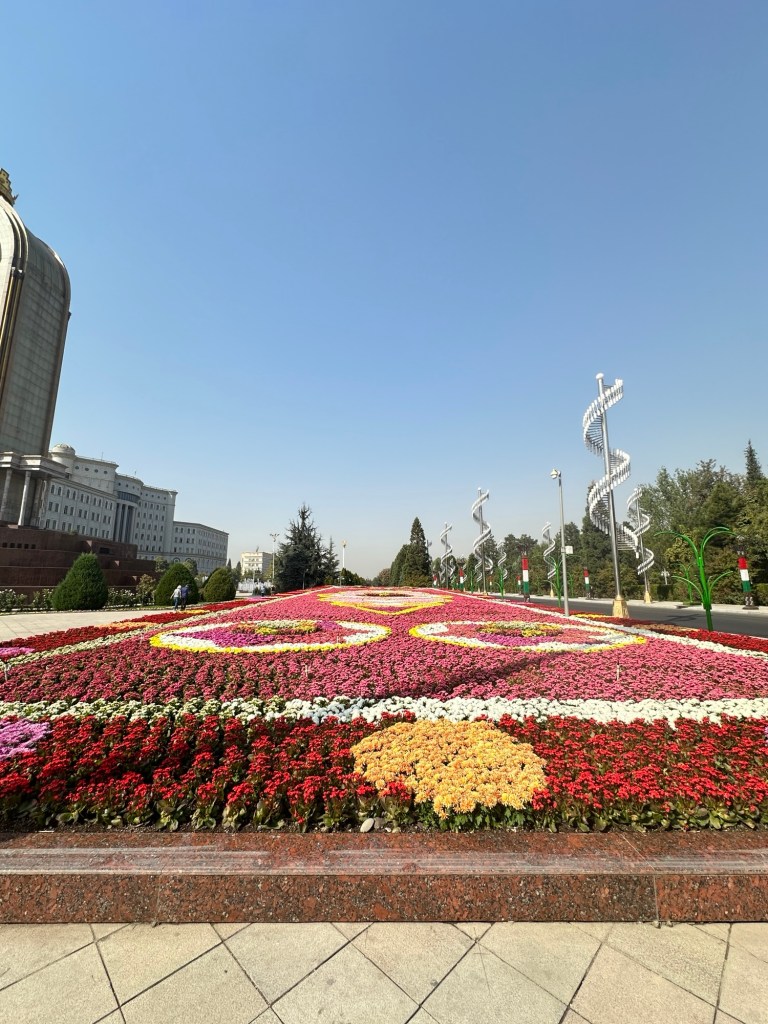
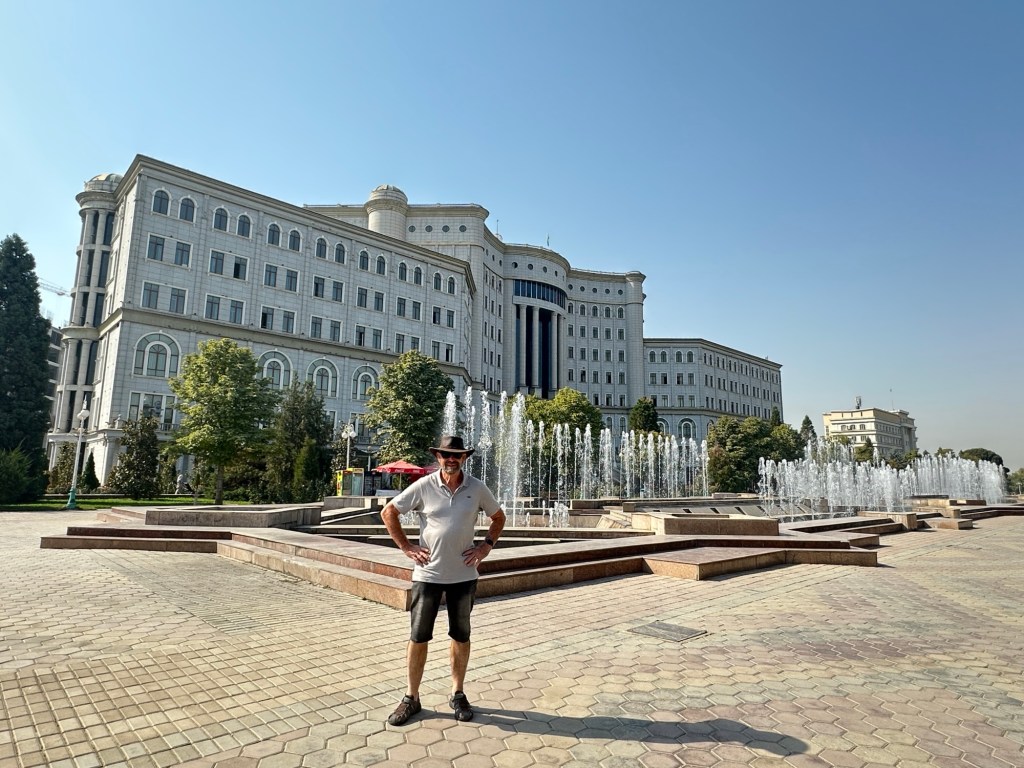
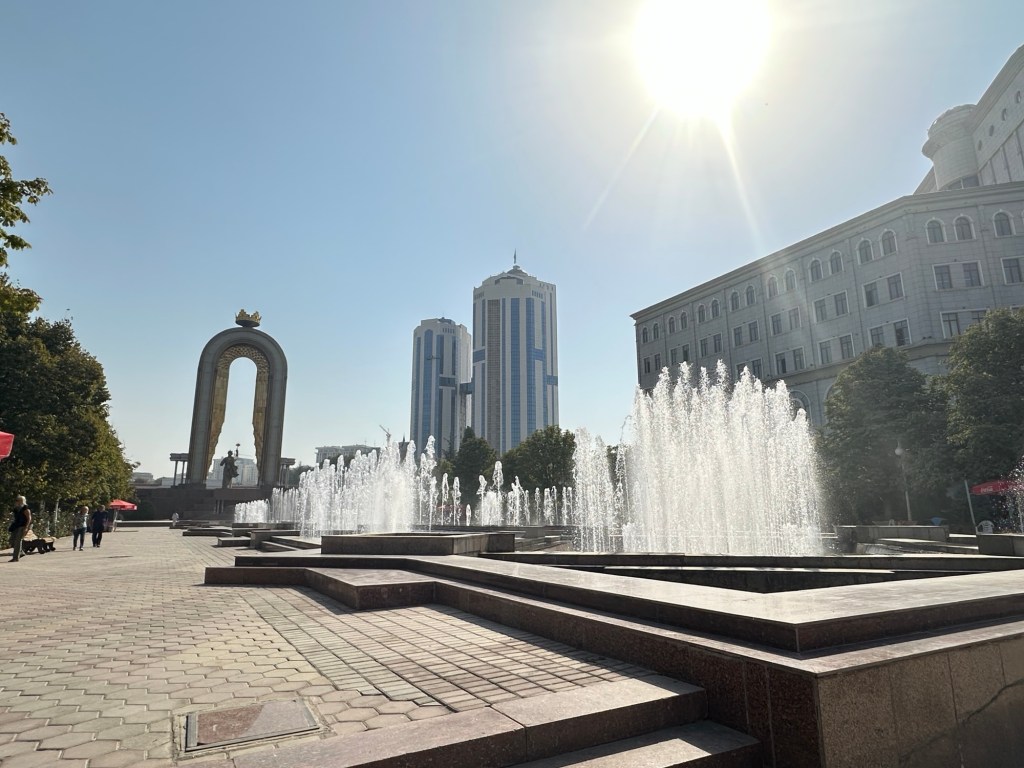
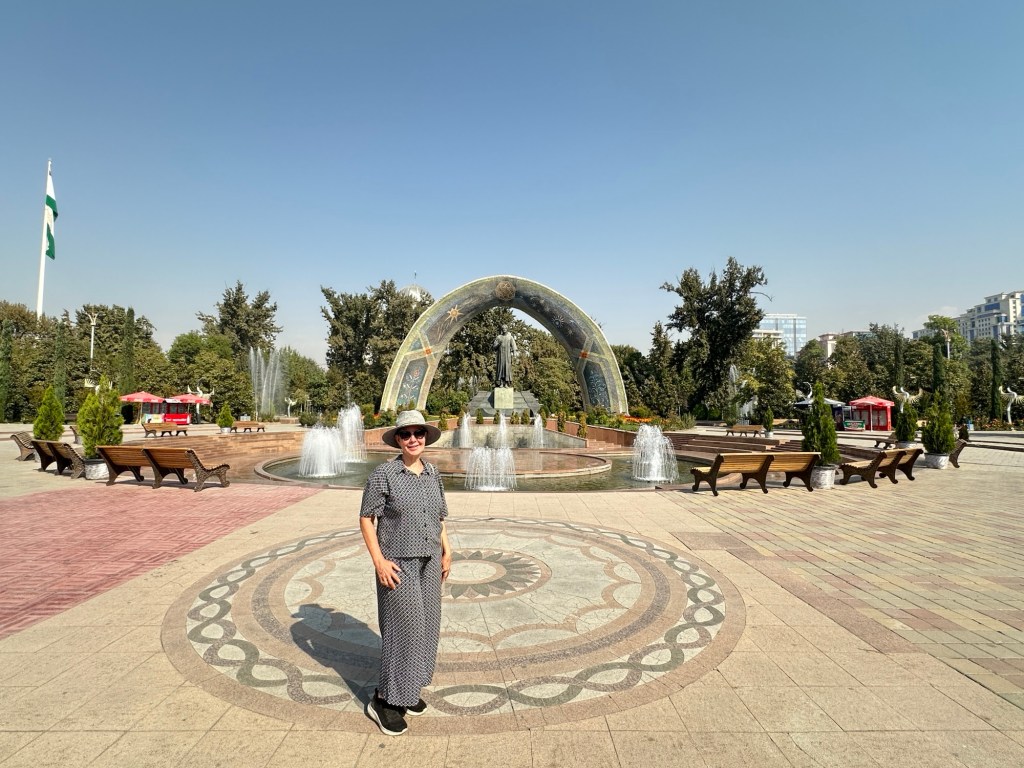
Across the road is the very leafy Rudenki Park, named after the Persian poet that Tajikistan (along with Iran) claims as its favourite son. More fountains, trees and flowers.
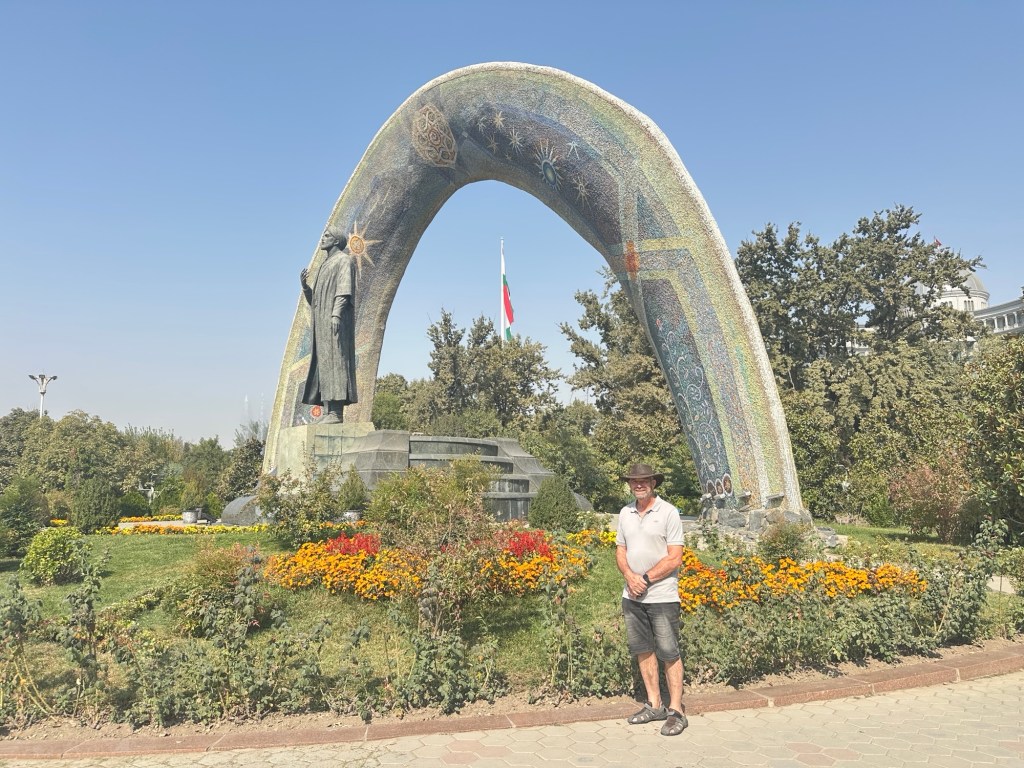
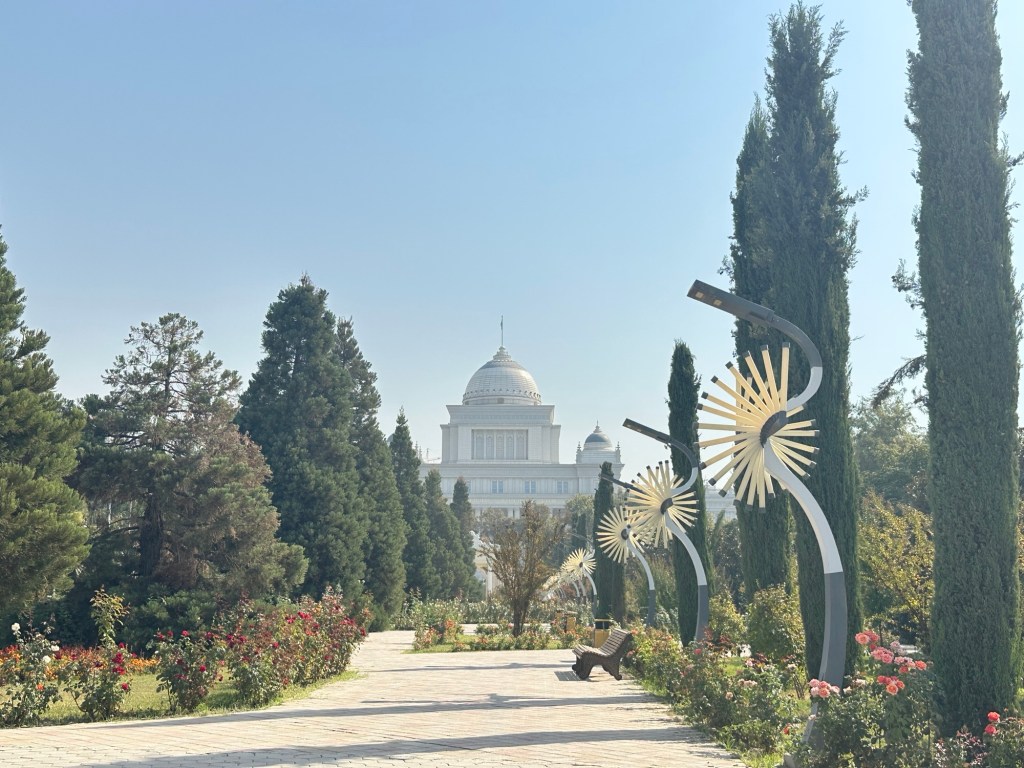
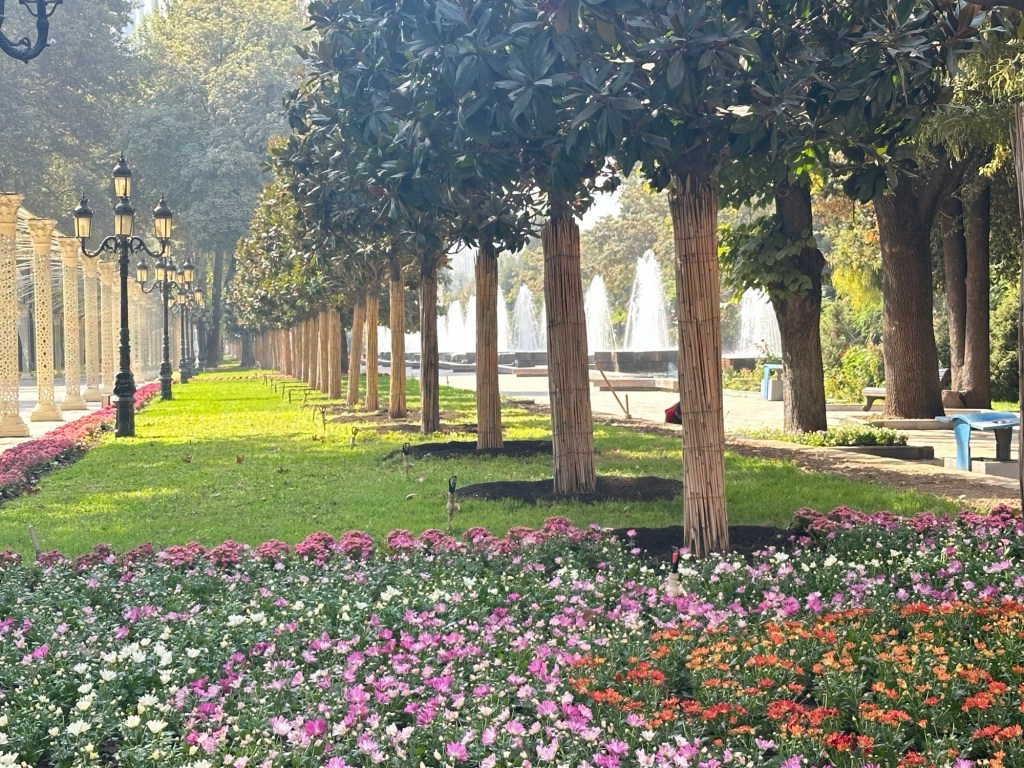
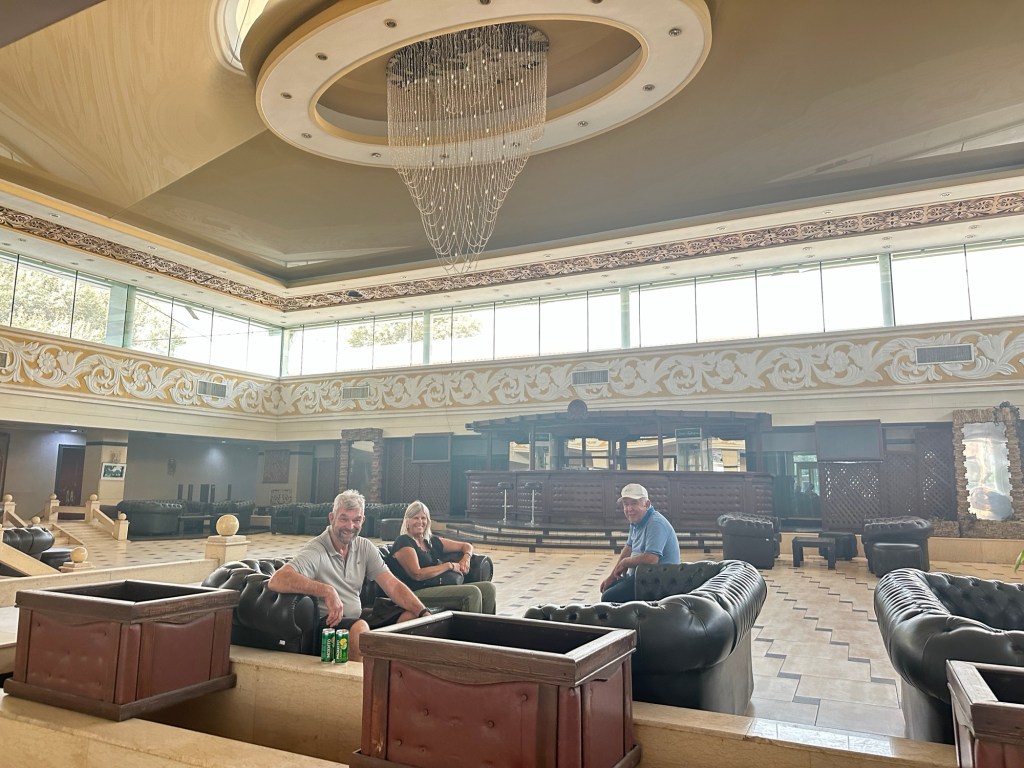
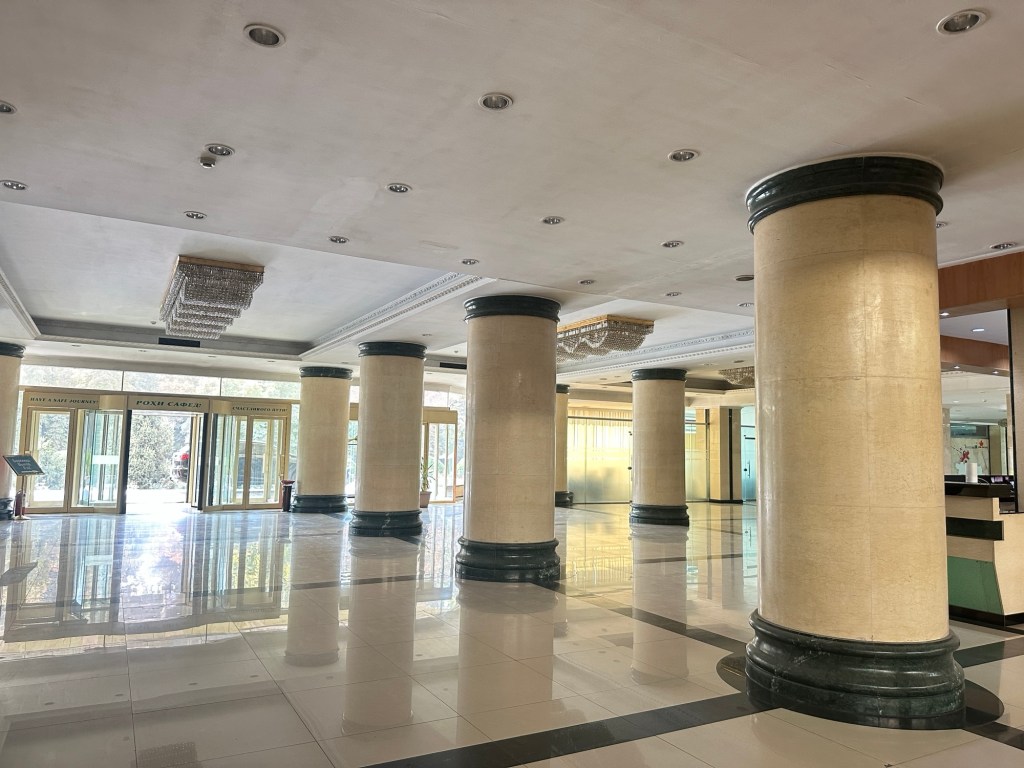
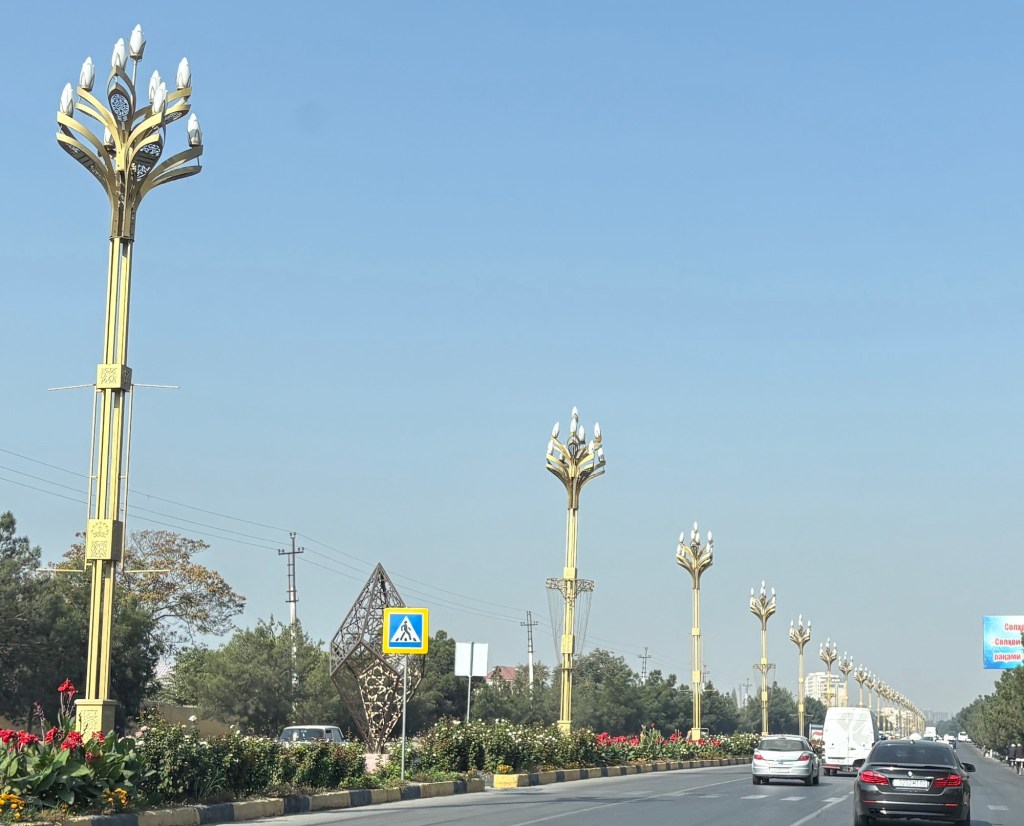
We had a quick stop at the Tajikistan Hotel, built in 1975, some interesting light fittings.

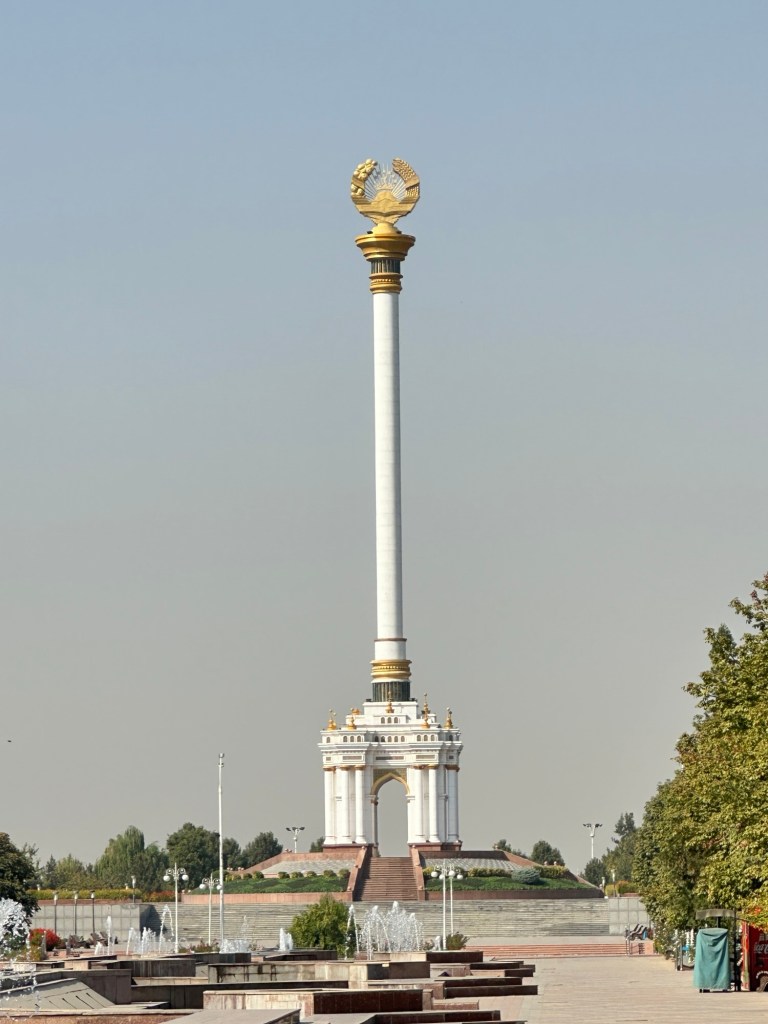
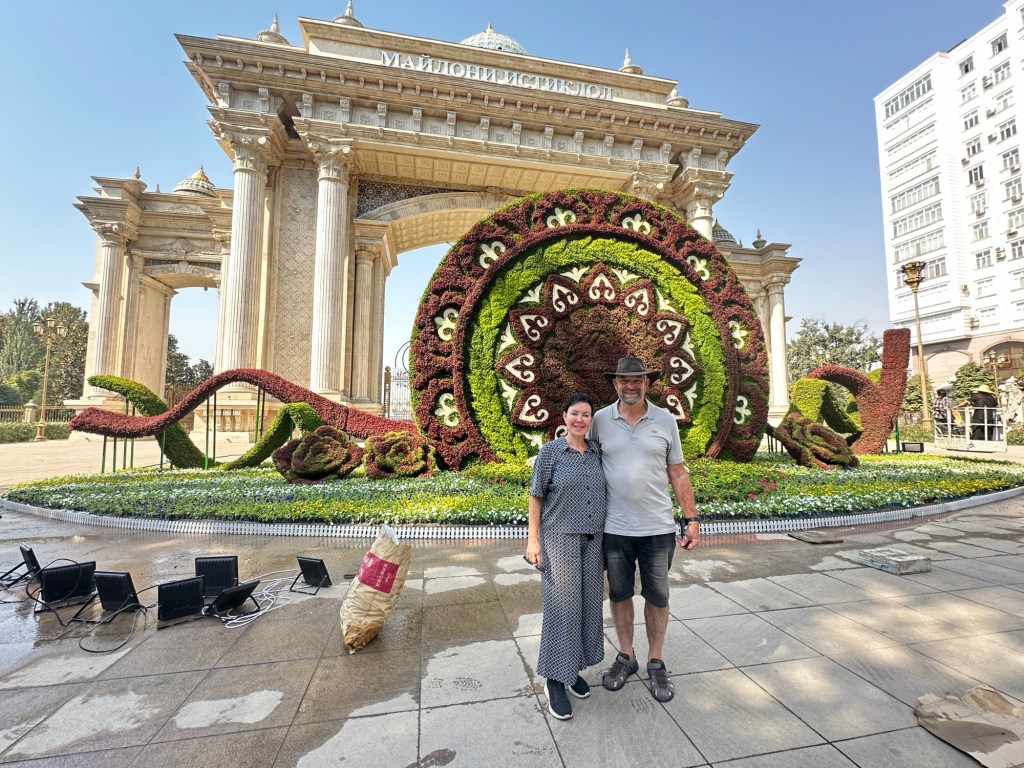
Independence Square was another magnificent plaza and monument. A beautiful sculptured green arrangement adorned the entrance.

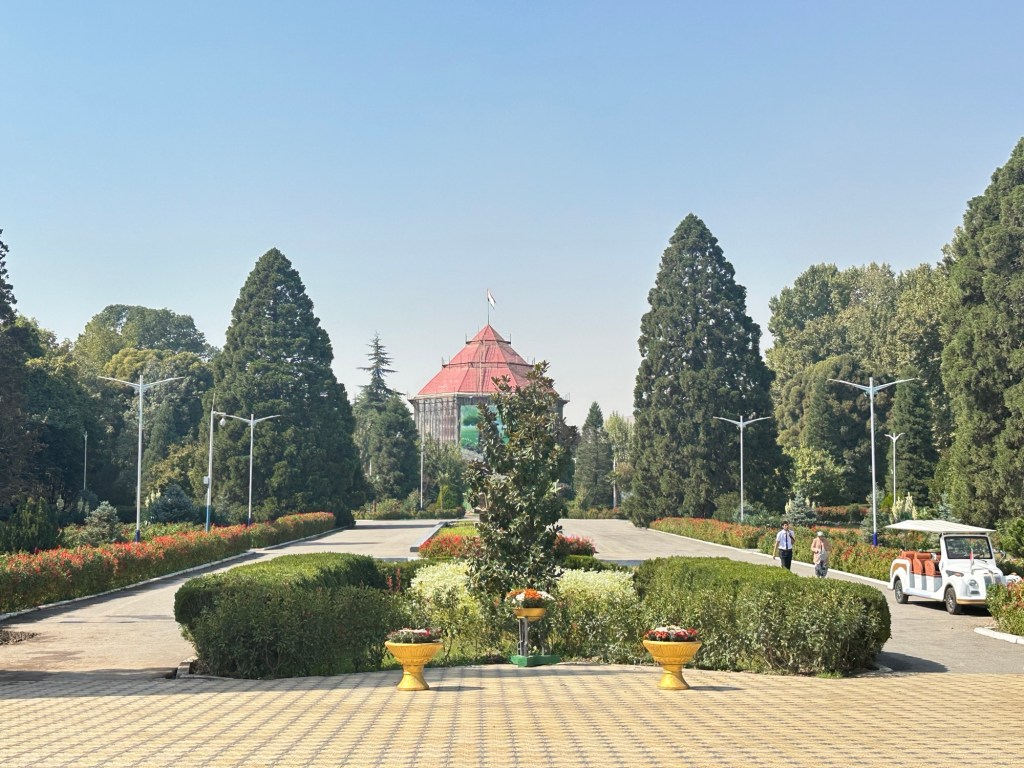
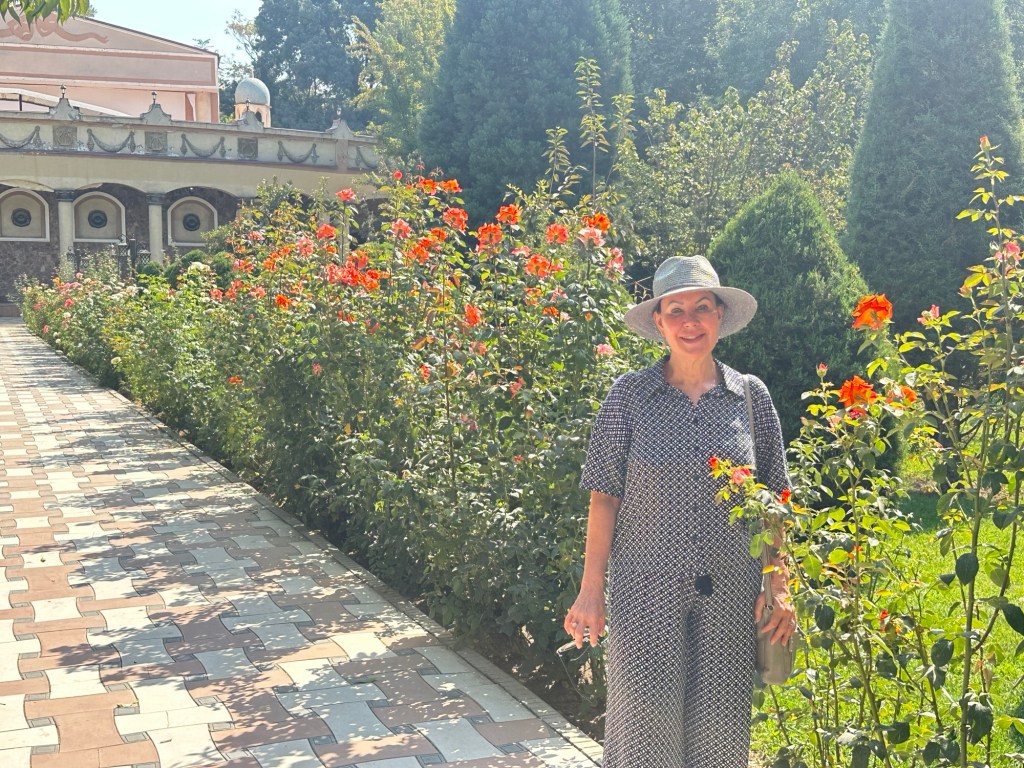
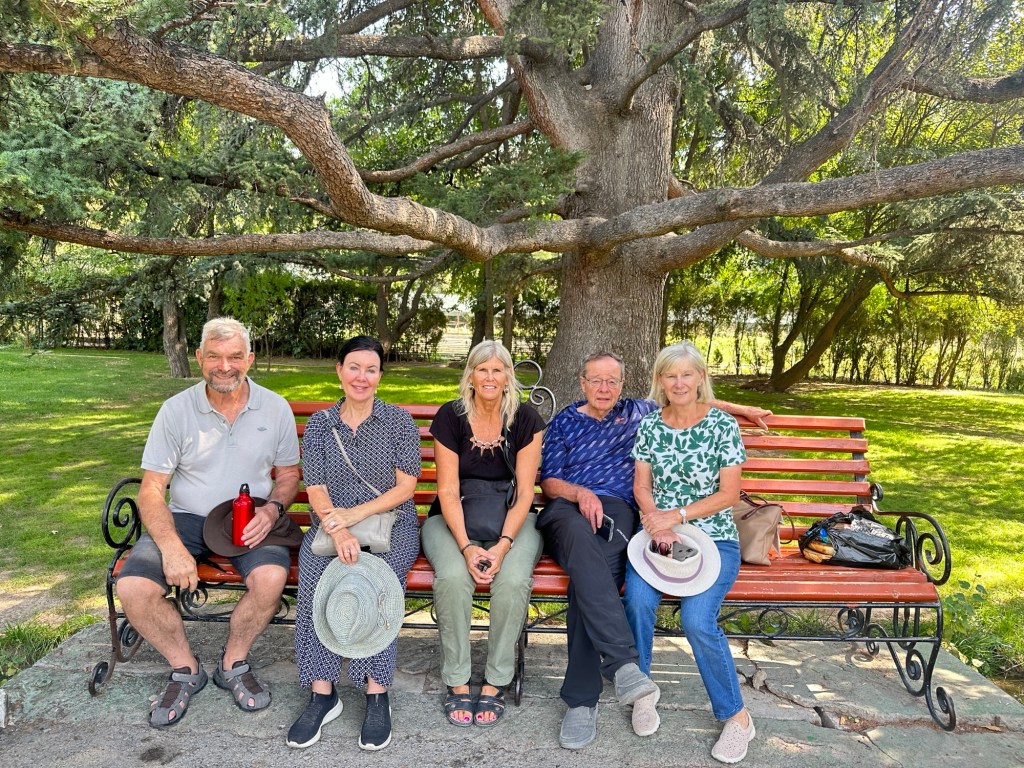
A walk through the Botanical Gardens with its many old trees was a fitting finale to our time in Dushanbe. We embraced the “energy” and “happiness” trees. Waiting for the results!


Time to head north. The main M34 climbs north from Dushanbe past roadside chaikhanas where we had our lunch stop – chicken and salad, with of course bread and tea.
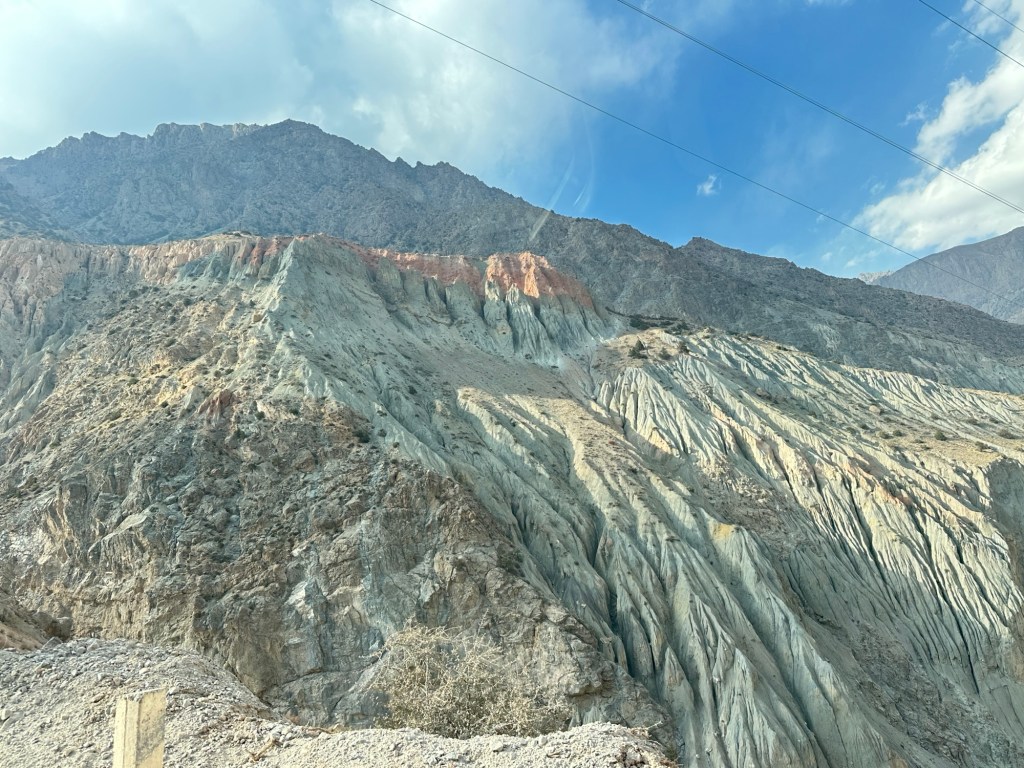
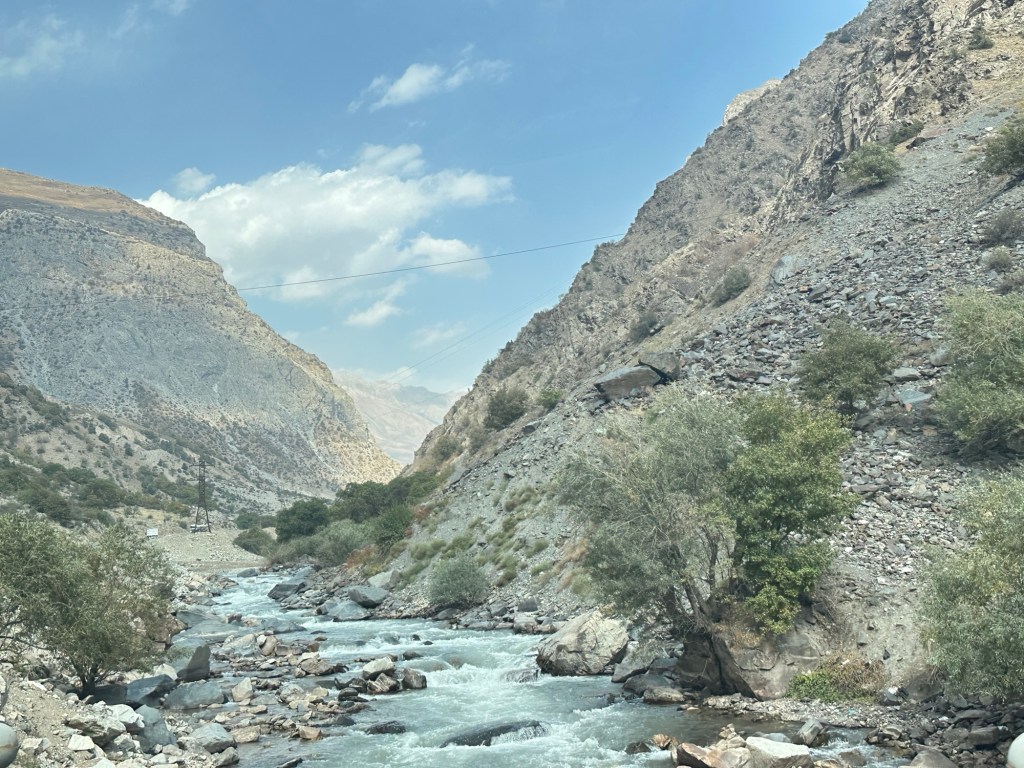
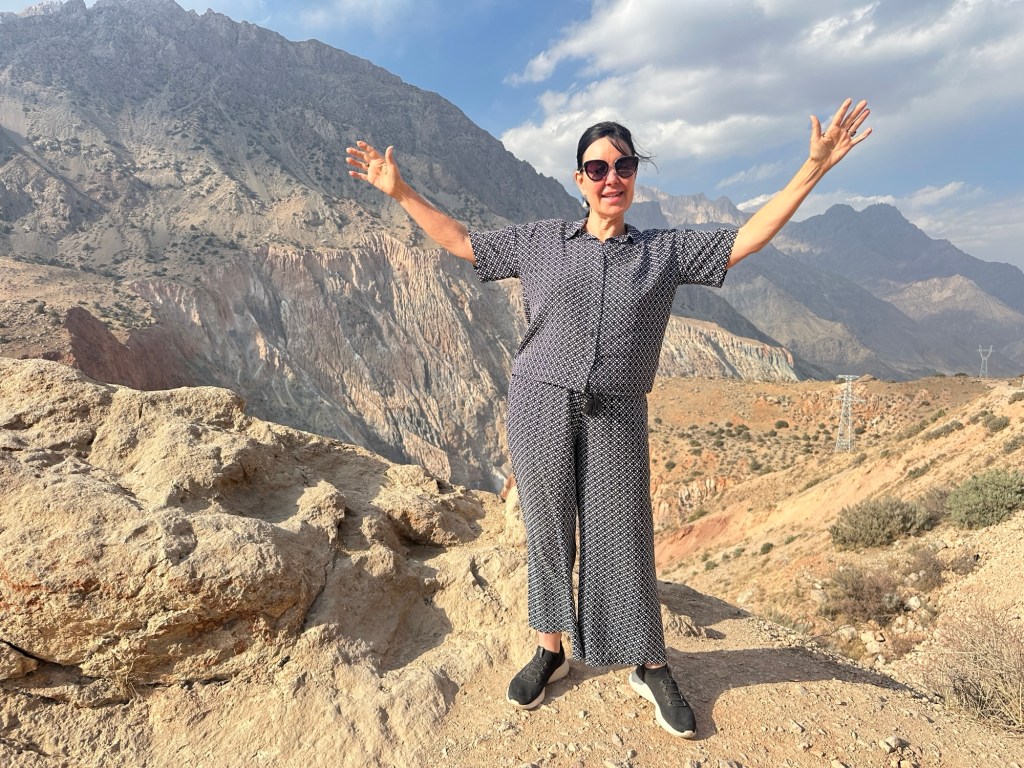
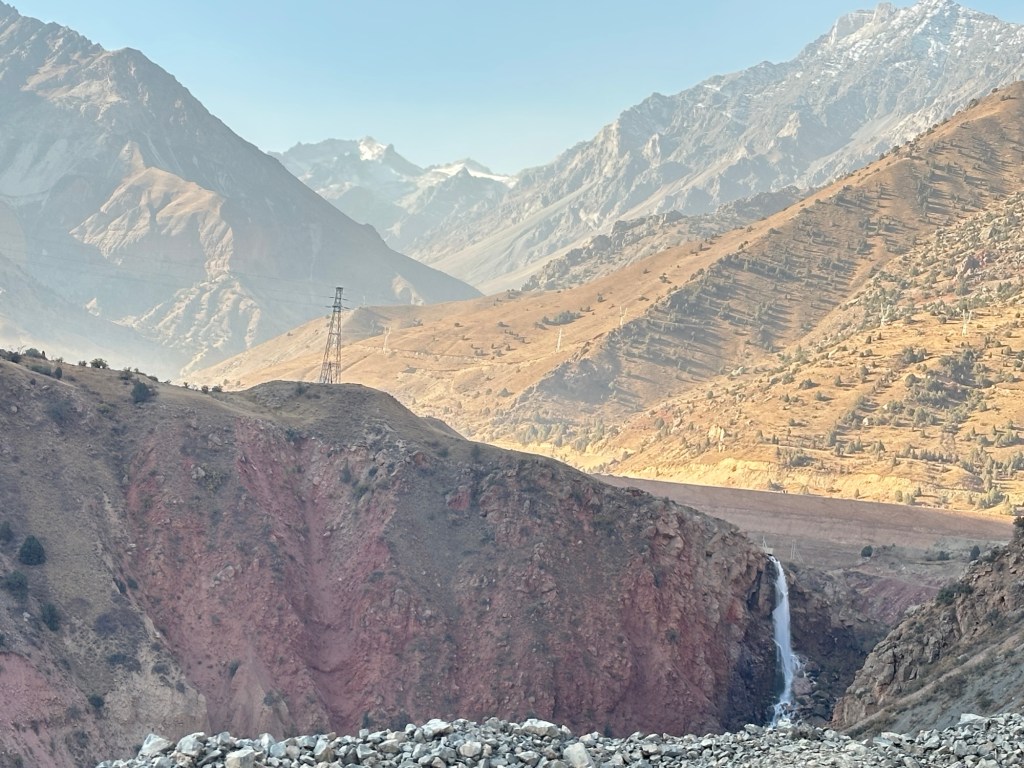
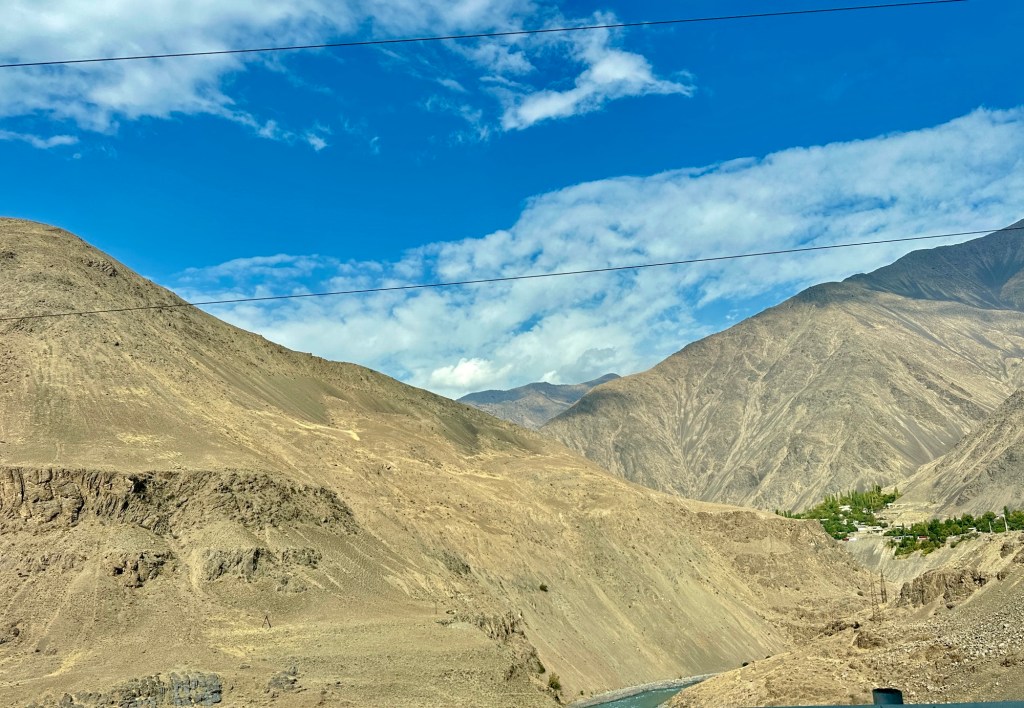
As the canyon narrows, side valleys open to offer great hiking, waterfalls, hot springs and even a ski resort at Takob. The route formerly involved a winding ascent to the 3,372-metre Anzob Pass, but a 6km long Iranian-financed tunnel offers a shortcut through the Zerafshan range in what is viewed as a major attempt to tie the two halves of the country together. Tajikistan embraces the widest range of scenery of all the Central Asian republics. Most of it is defined by mountains, 93% is mountains, and that is exactly what we saw today. Spectacular!



We stopped briefly to view the scenic Iskander-Kul (we come back here tomorrow), a milky-blue mountain lake backed by a sleepy turbaza (Soviet holiday camp) and a dacha belonging to the president. The turquoise colour of the lake was stunning.
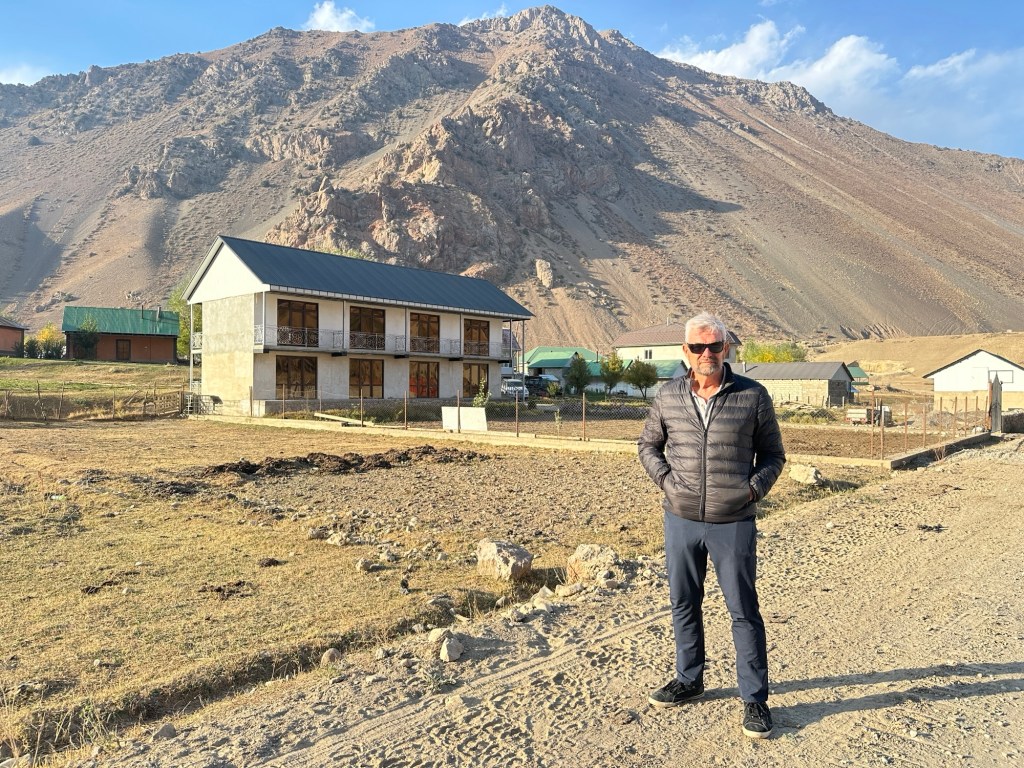
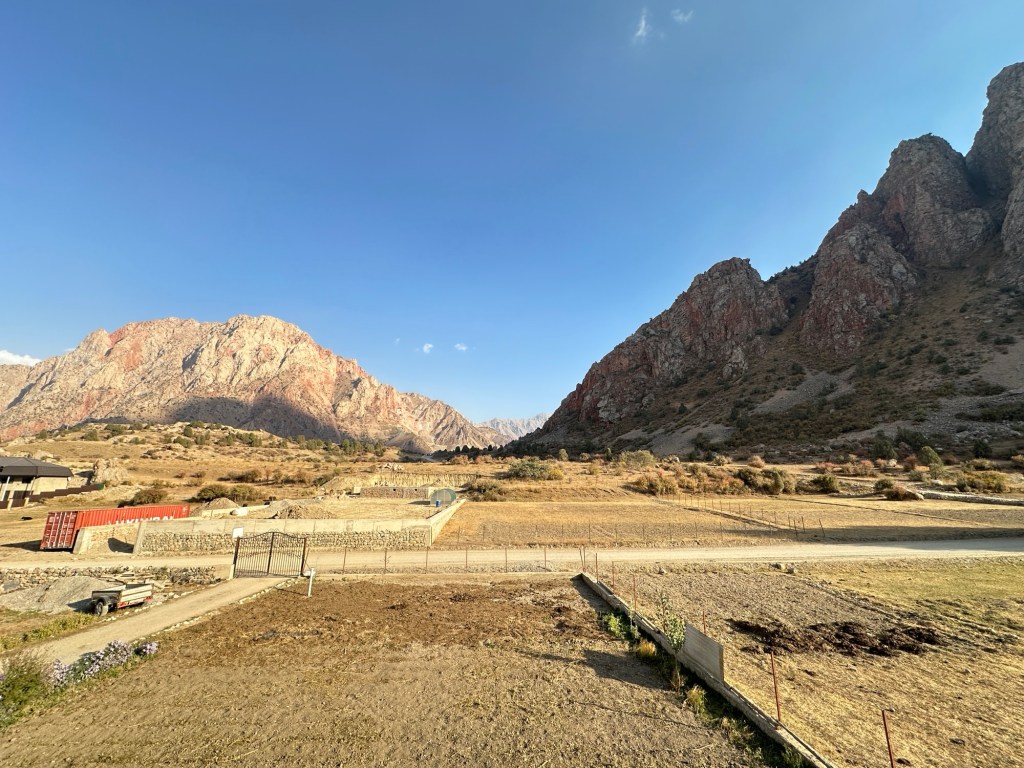
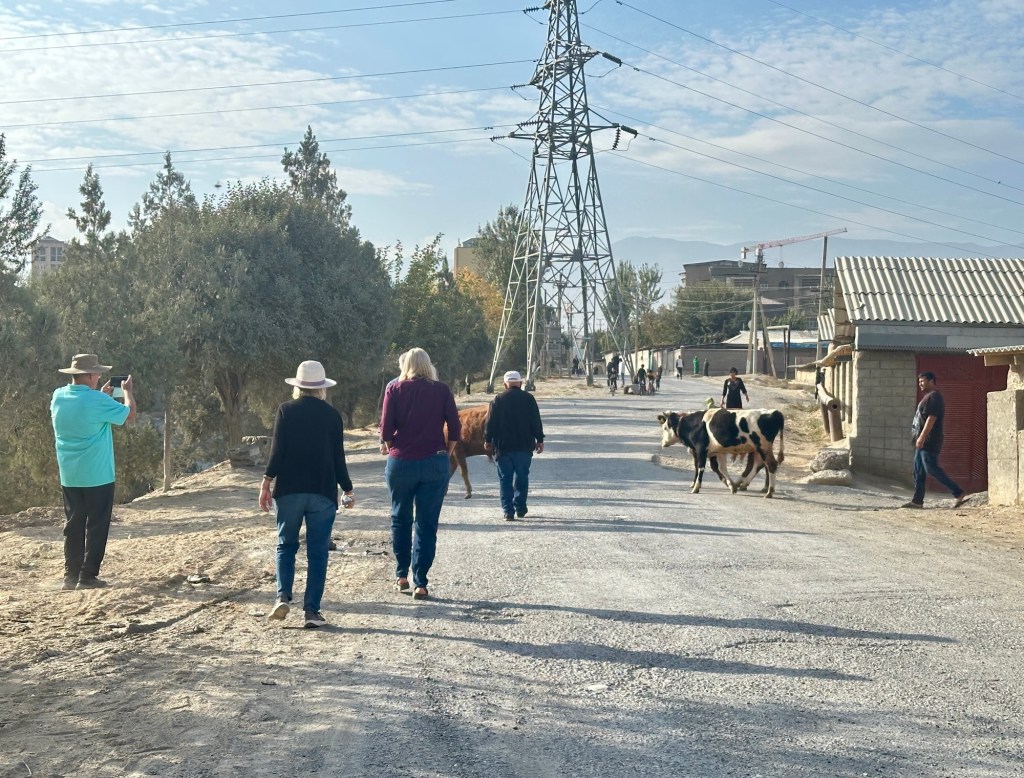
After thirty kms of very rough roads, we arrived at Saritag village and checked into our family run homestay accommodation. It was a basic room but the view out our glass doors straight to the mountains was sensational! We had a walk around the village dodging the roaming cows and waving at all the children. We are 2200 metres above sea level here.

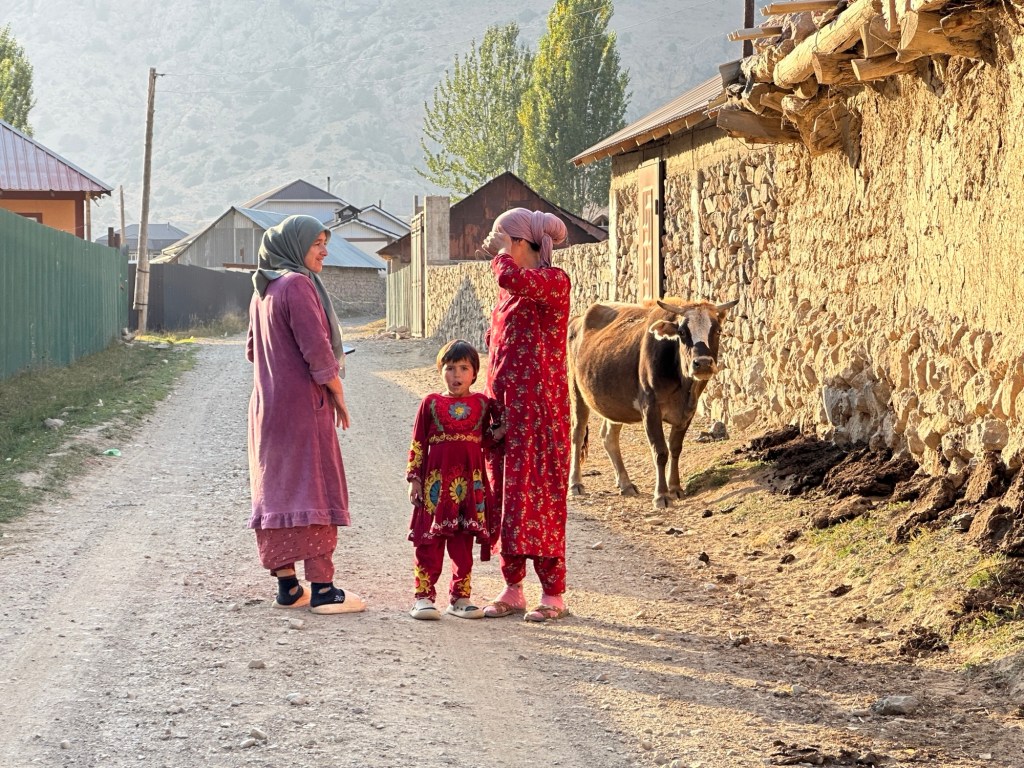
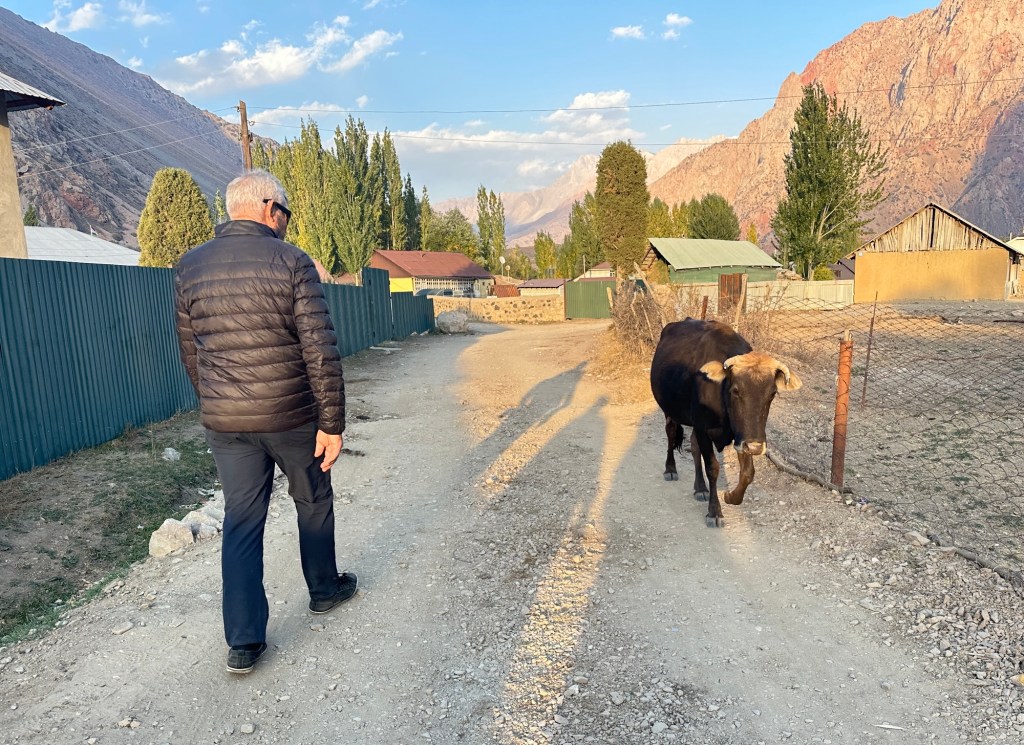
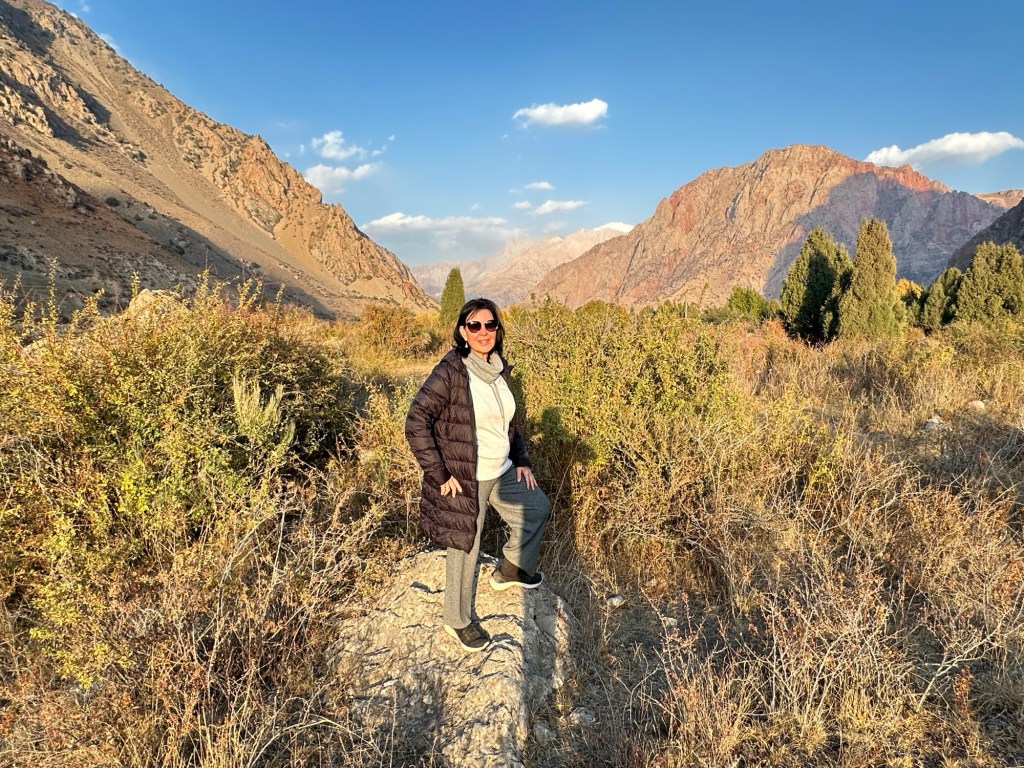
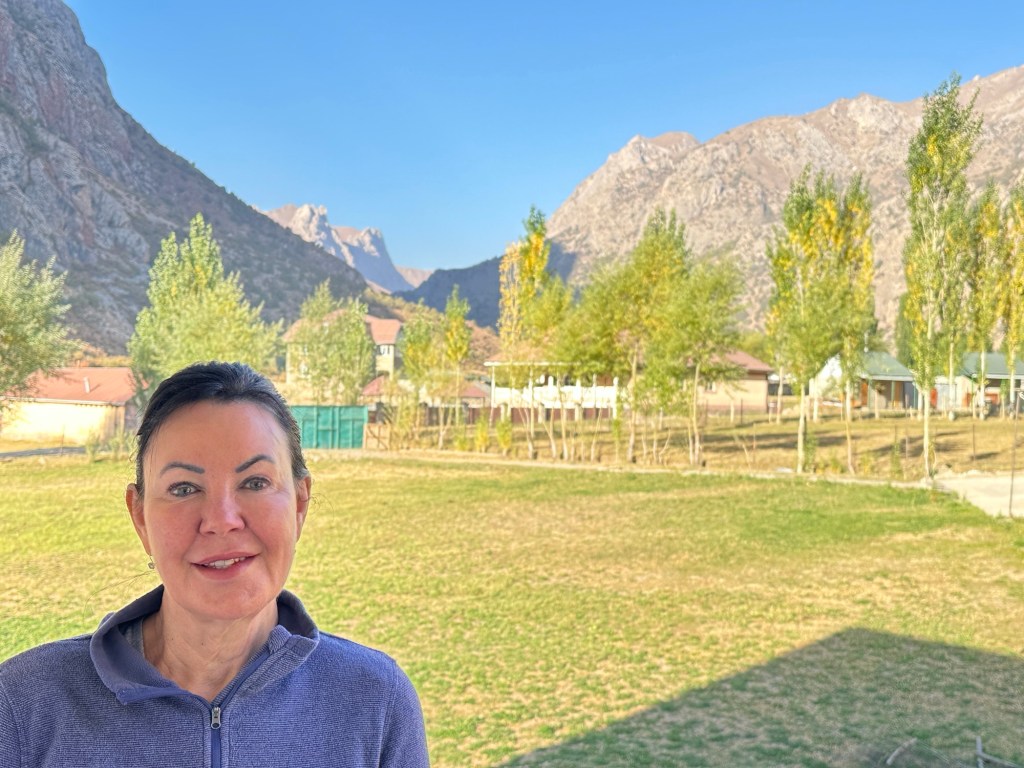
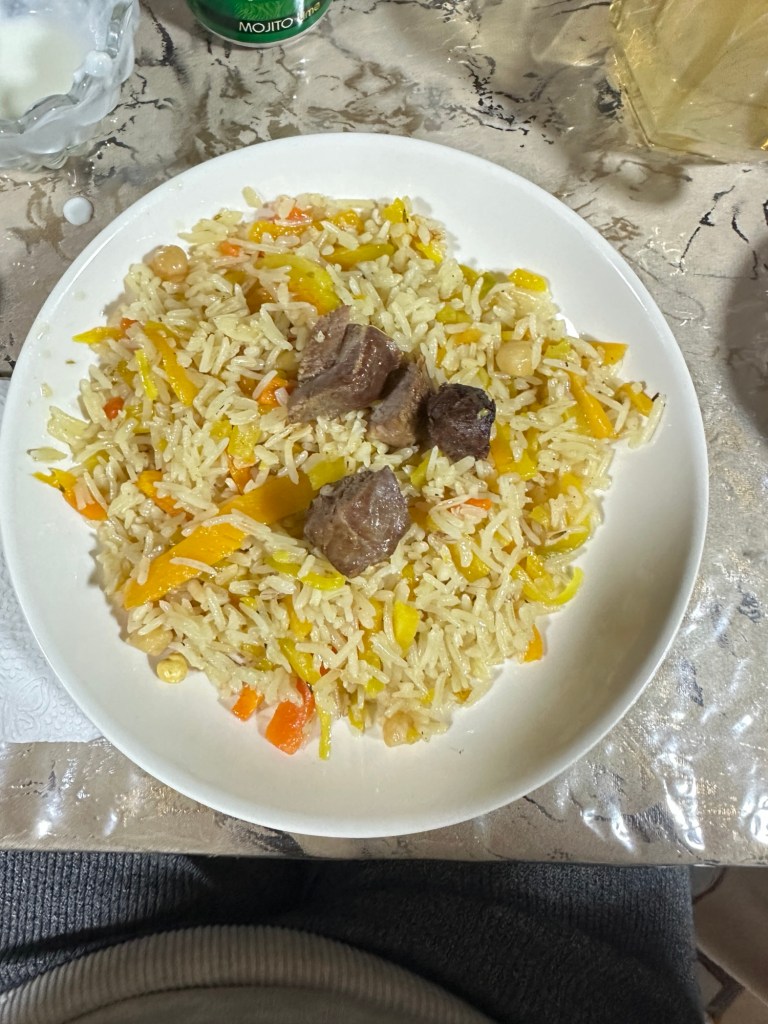
Dinner was a traditional meal catered for by the family – a vegetable soup to start with, with bread of course, then pilaf with beef, and a delicious salad. Also had some of their homemade yoghurt, and fruit and chocolate to finish off with. All very nice. There were some other guests who we had a chat with – one group of guys were cycling through the mountains! Electricity was a bit sporadic, no tv or internet, so it was an early night for us.

Day 21
Wednesday 1st October
Sarigat to Penjikent
11-23 degrees, sunny
We say goodbye to our homestay family and commence our drive to Penjikent via Iskanderkul, known as the lake of Alexander the Great, which was established in 1969. The area of the lake is 30000 ha. According to the legend, the Iskanderkul Lake was named after Alexander the Great, known as Iskander in the East. People say that Alexander the Great’s path to Central Asia from India laid through this lake. We explored the surroundings of the lake: five springs, Zmeinoe lake (Snake lake), and walked to the 38m high waterfall which is called “Fan Niagara“.
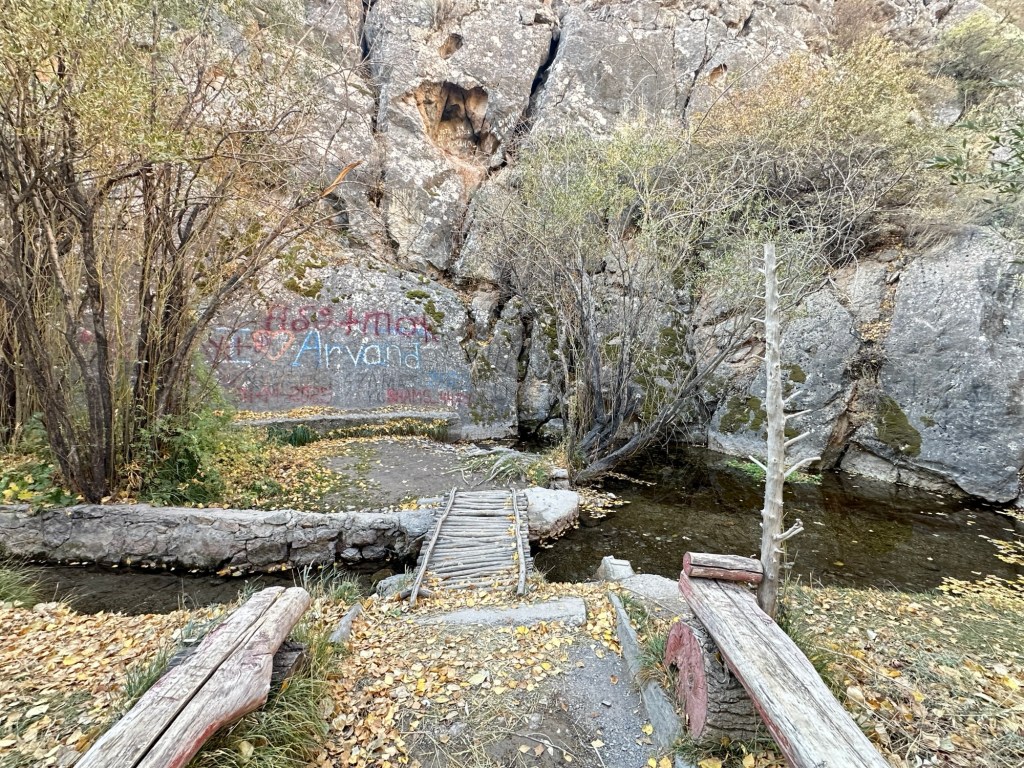
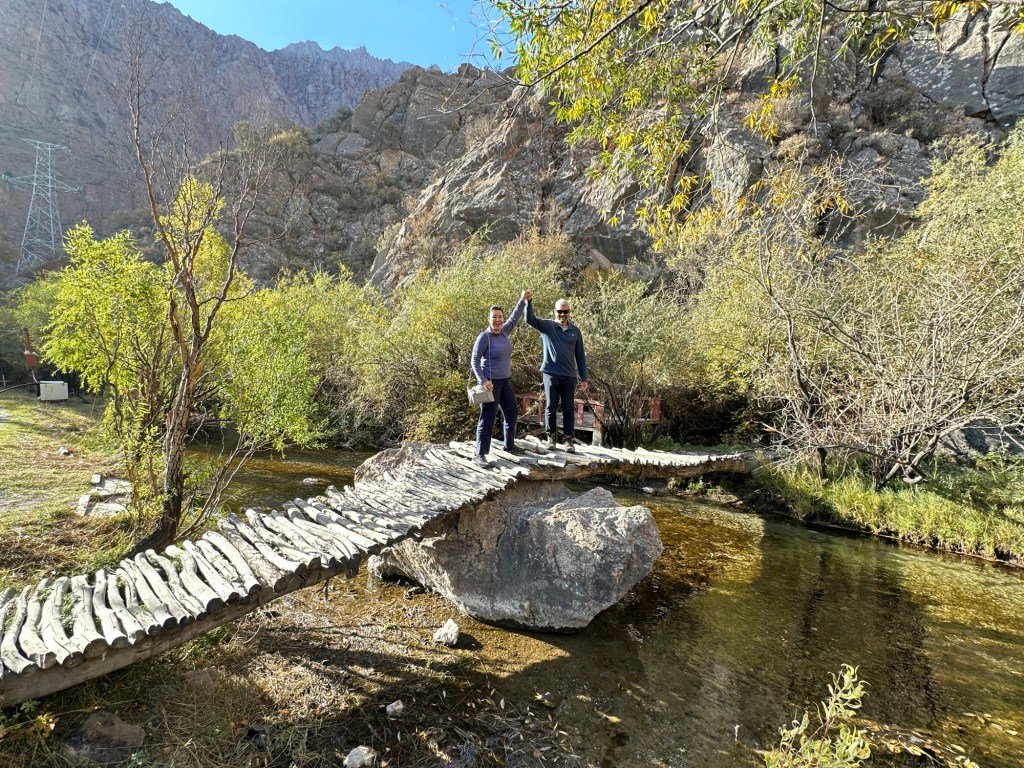


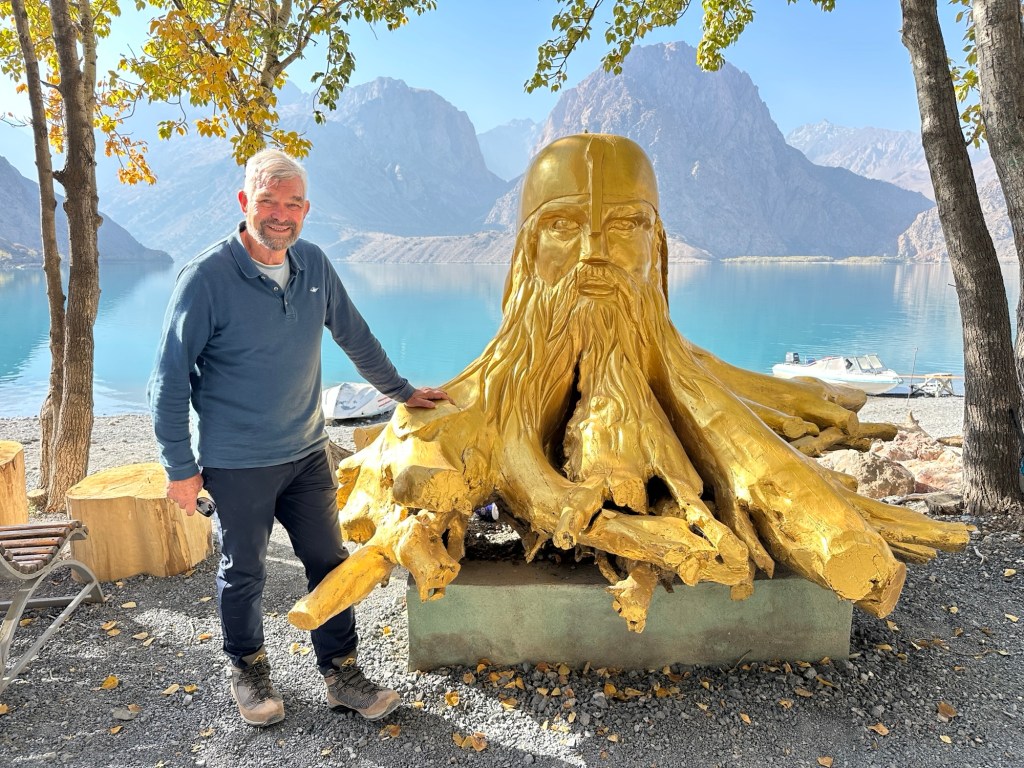
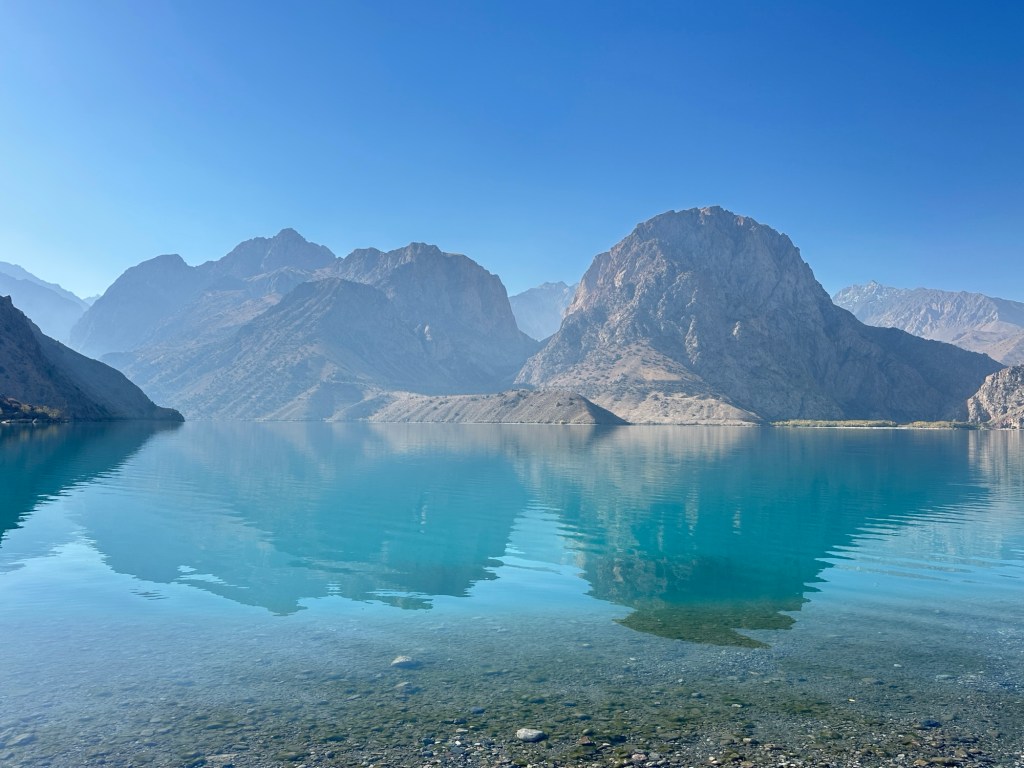
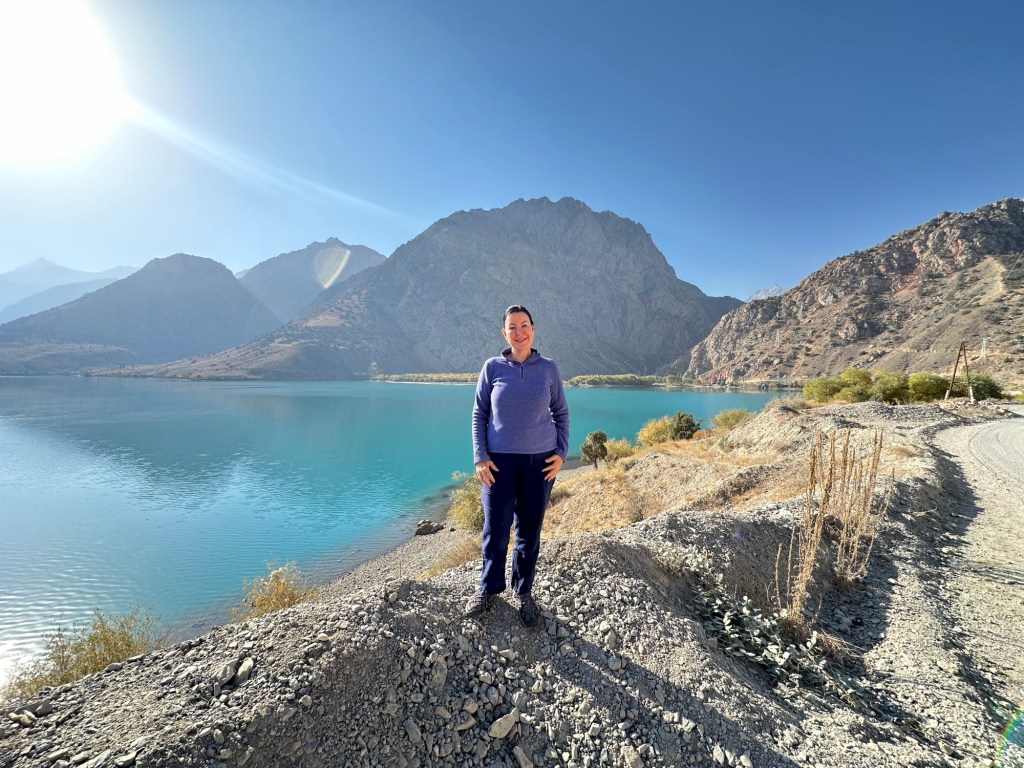

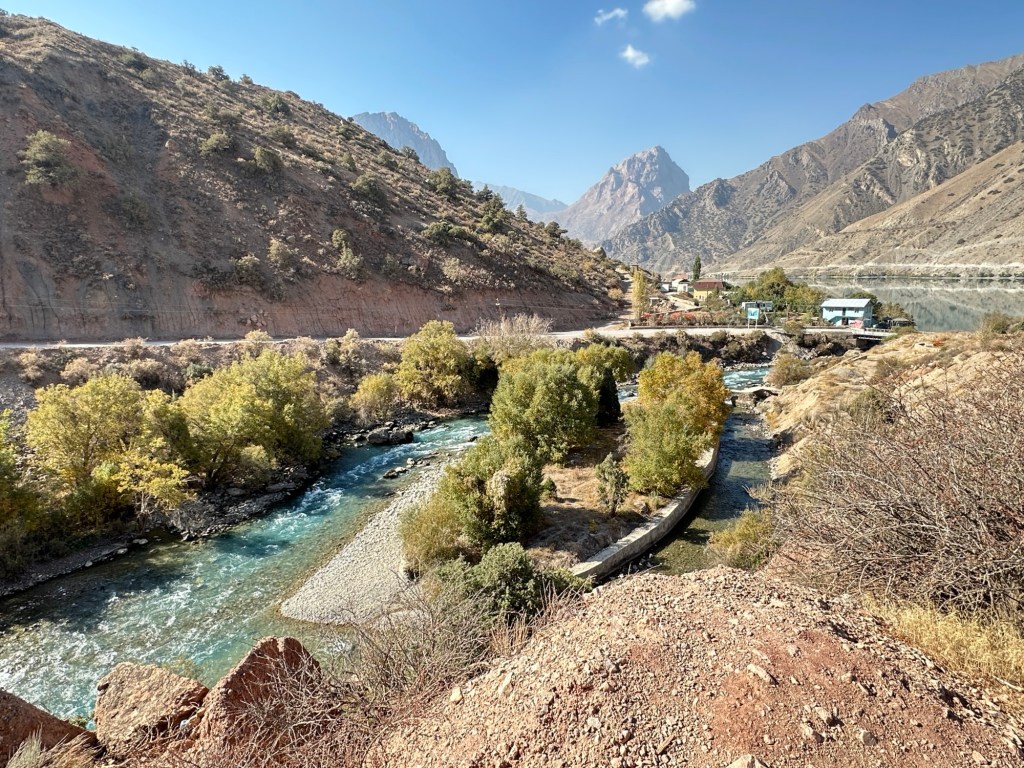
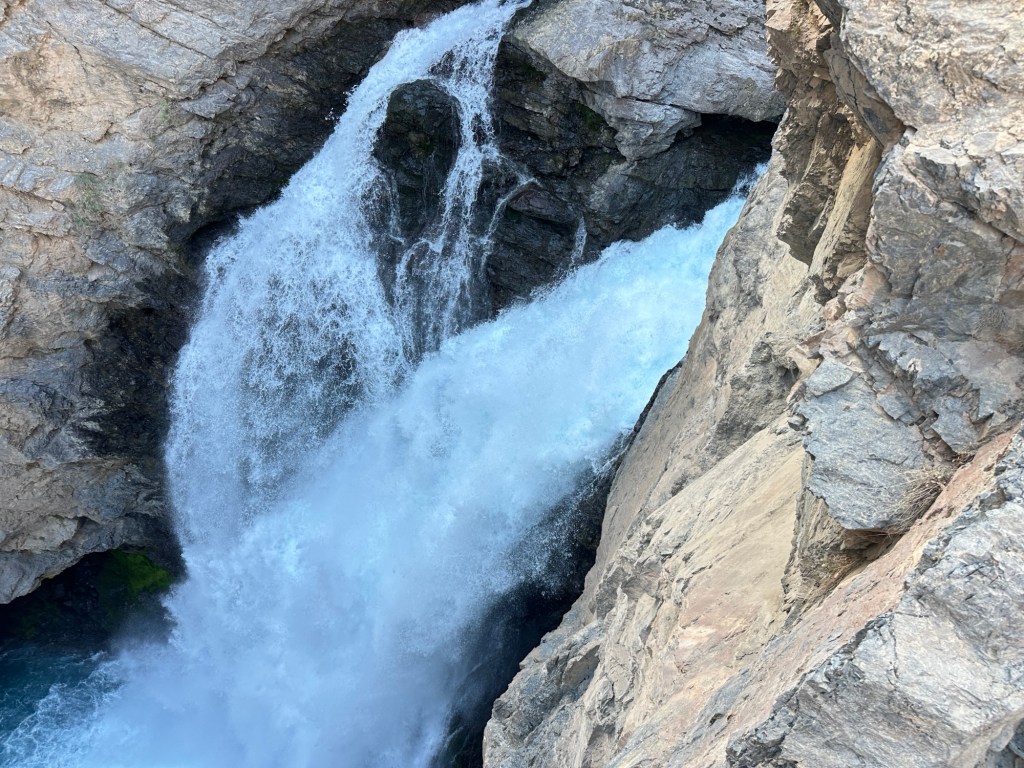
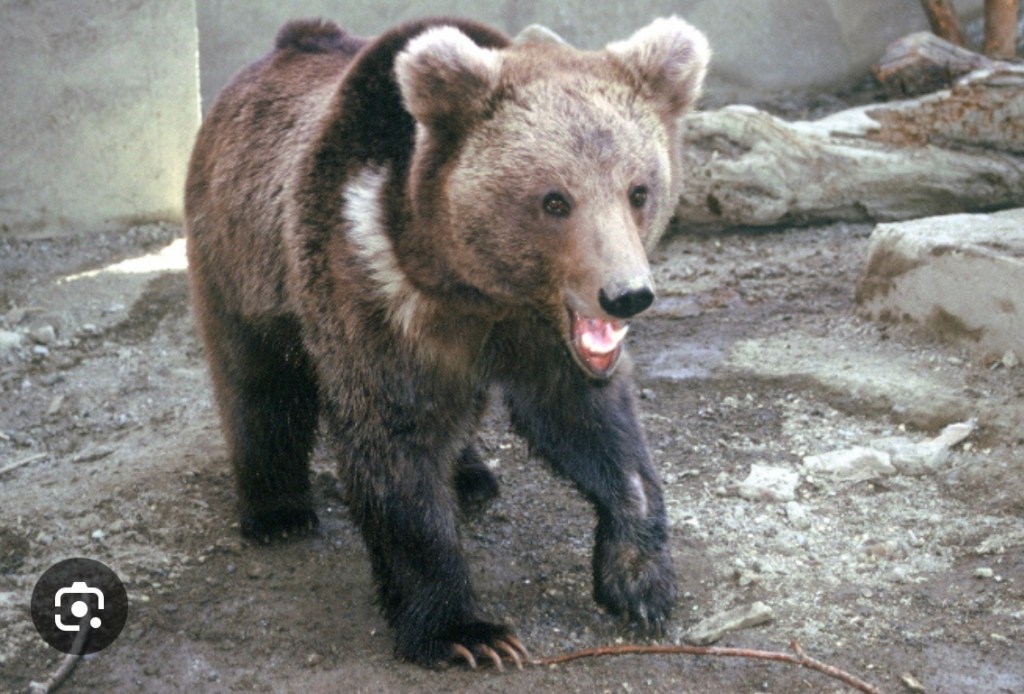
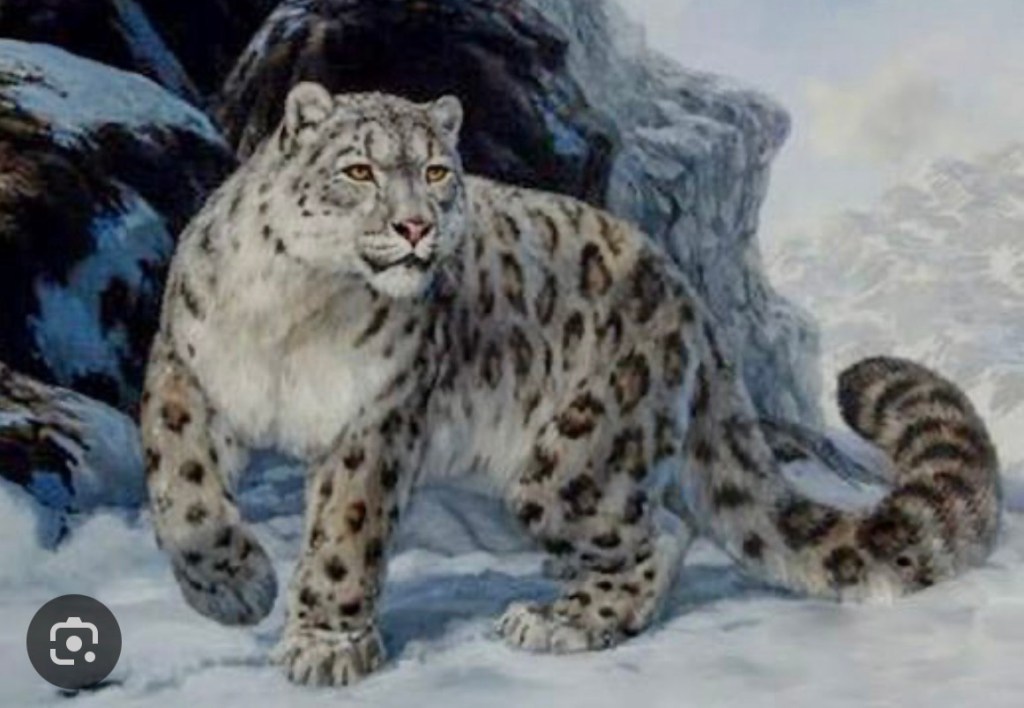
Saw a lot of bear droppings on our walk – apparently there are many small brown bears in the area. They hibernate for only 40 days in winter. Also about 500 snow leopards in the area – farmers are encouraged not to shoot them if they take their stock. Instead the government will replace any stock taken by the leopards.
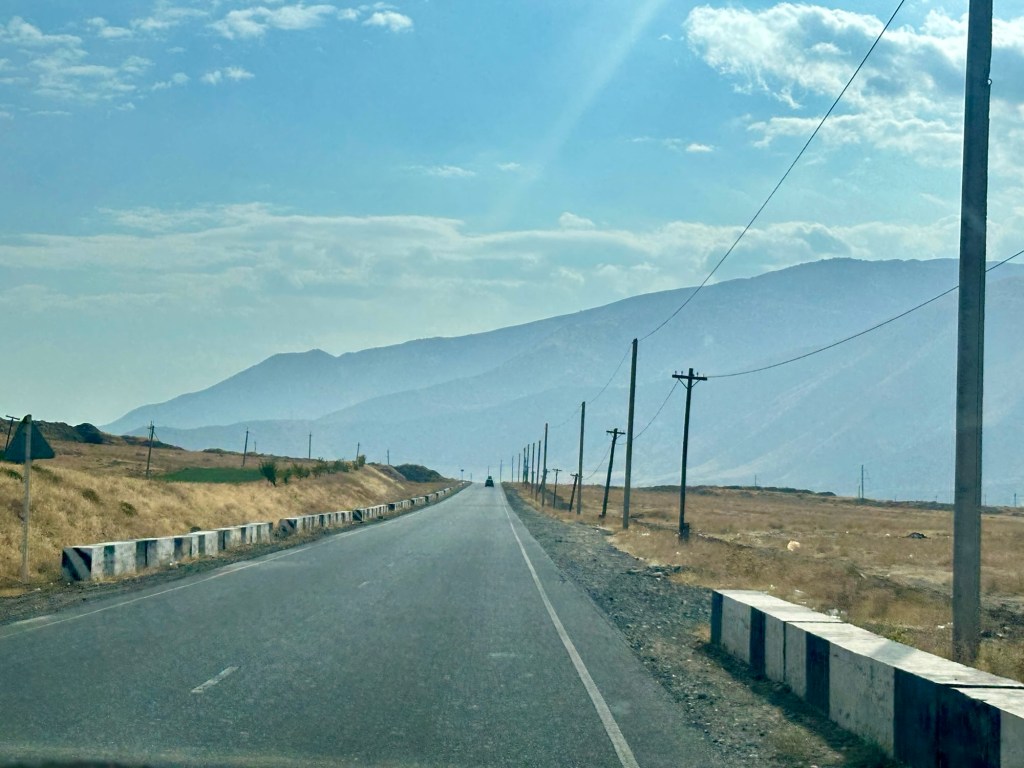
We back tracked on the very rough road, then eventually got to the main road which led to Penjikent. It was a much better road surface but very steep and winding through the gorges. Our driver handled it with ease – one or two hairy overtakes!
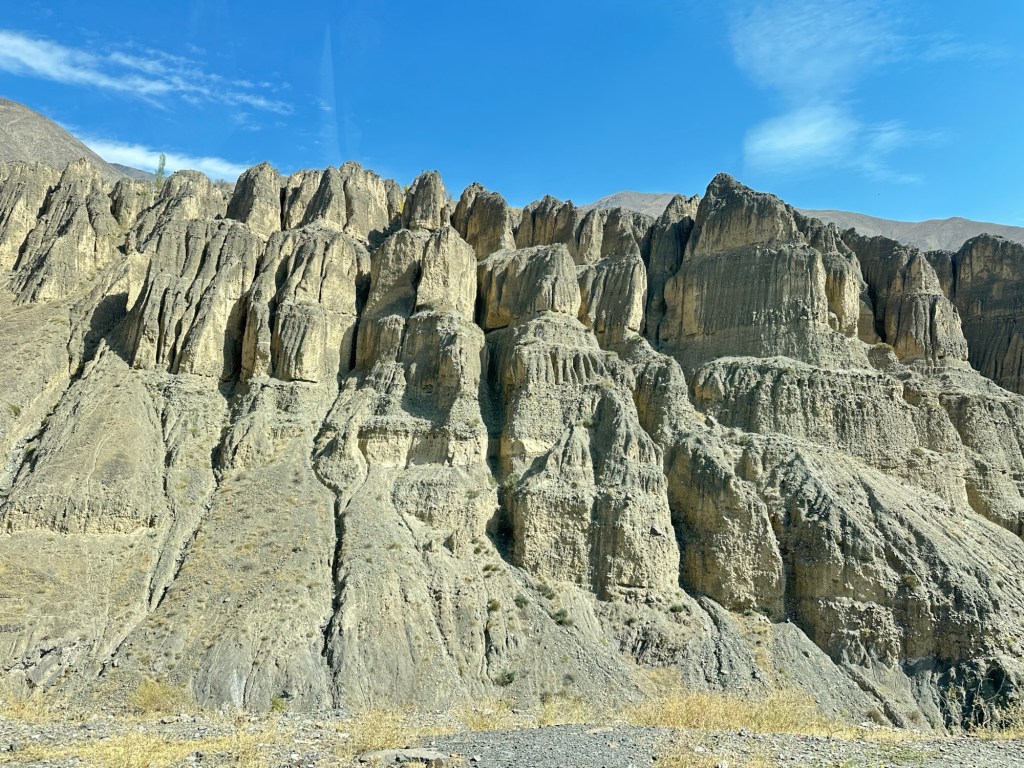
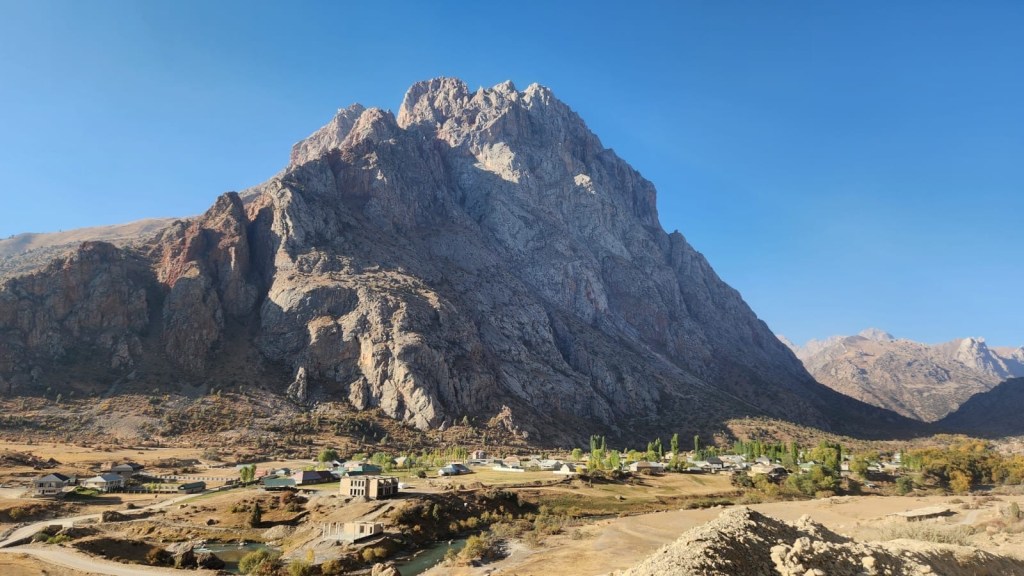
The mountains are rich with minerals – gold, aluminium, coal, and iron ore are all mined here, so many heavy vehicles on the road.
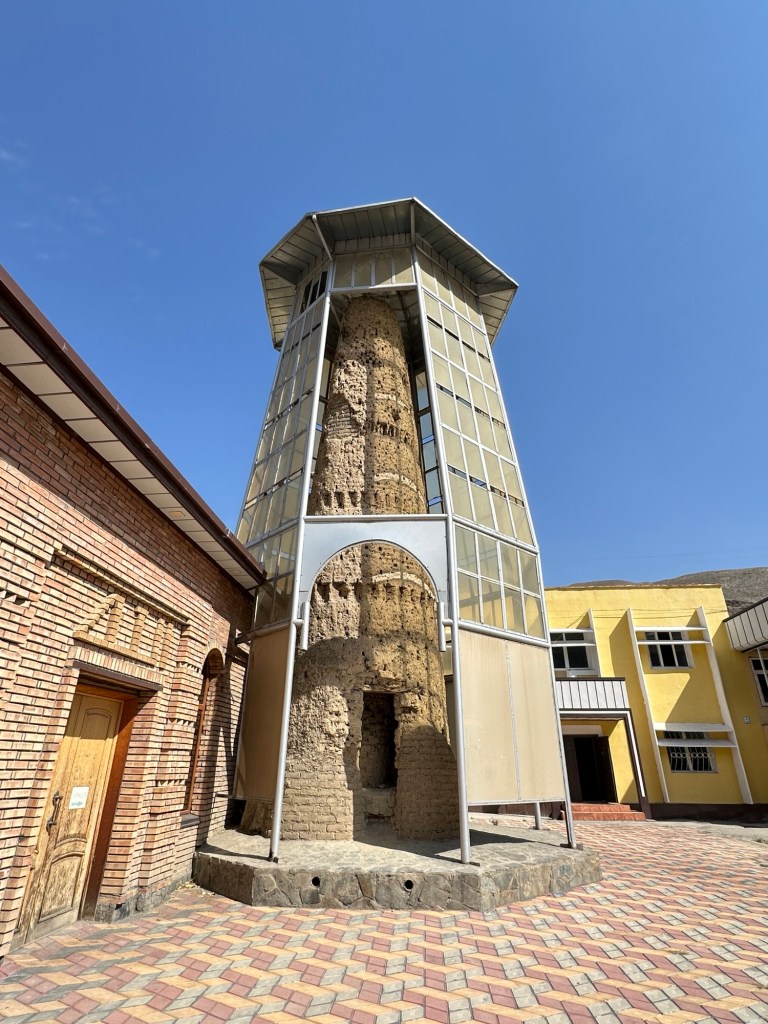
The main road follows the rushing river to Ayni, home to the heavily eroded 10th-century Varz-i-Minor Minaret. We made a brief photo stop here.
By the time we rolled into Penjikent it was well past lunchtime, so we stopped at a local self-service restaurant. Just as we were trying to decipher what was on offer, Nuros—our usually reliable guide—vanished, leaving us completely at sea. With no idea what we were pointing at, we took a gamble: I ended up with a steaming bowl of barley and vegetable soup, while Frank settled on beef and rice. To our relief, both dishes turned out to be ok —proof that sometimes blind guessing pays off!
Panjakent is in the Zerafshan valley and was an essential town on the Silk Road, along with Samarkand and Bukhara. The modern Panjakent is a typical Soviet made town with wide streets, and some civic buildings. The surrounding green Zerafshan river valley is filled with vineyards, fields and orchards.
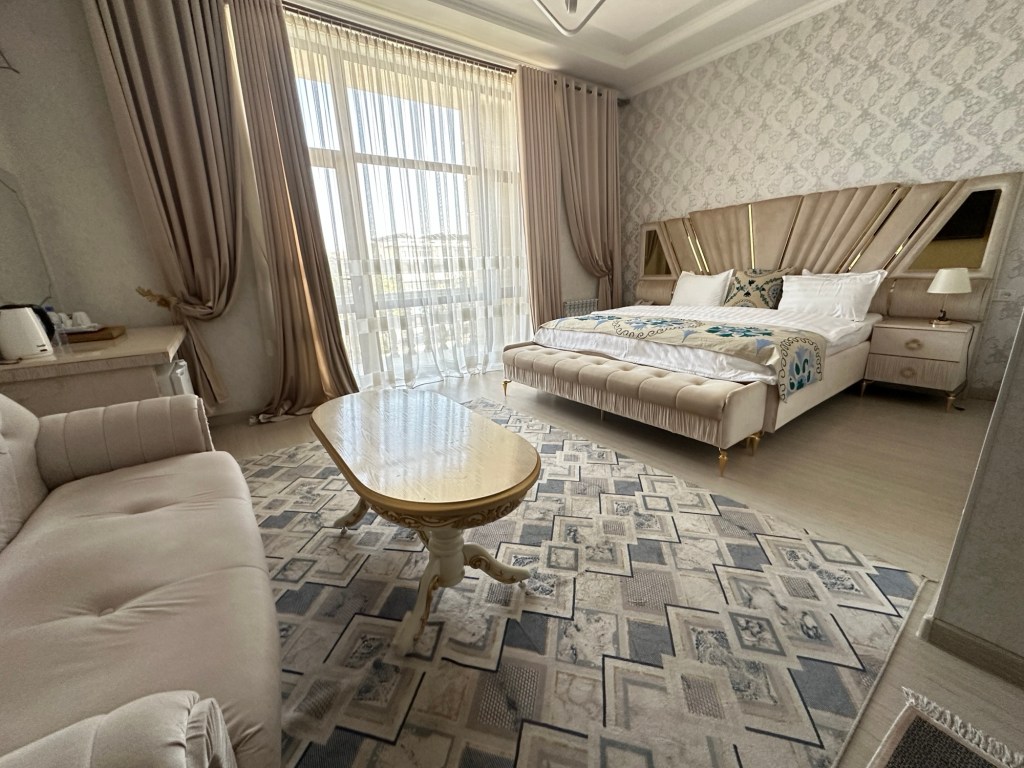
The Penjikent Plaza Hotel was our base for the next two nights. Nuros proudly told us it had opened in 2020 with much fanfare—complete with the President himself cutting the ribbon. He also made quite a fuss about the hotel having a lift, though it seemed to have a mind of its own and only worked when it felt like it. Our suite was wonderfully spacious and looked rather impressive at first glance, but the glamour faded quickly with patchy internet, fickle lighting, and temperamental power points. Still, this is Tajikistan, and such quirks are all part of the adventure.

Frank and I wandered up the street in search of dinner—not that there was much on offer. After a bit of scouting, we stumbled upon a little restaurant and settled in for chicken Kievs with salad, washed down with cold beers. The bill? A mere $25 AUD for the two of us—bargain! The real entertainment, though, was in the service. Clearly, the place didn’t actually stock beer; whenever someone ordered one, a waiter would hop on his scooter, disappear down the road, and reappear minutes later triumphantly clutching a few bottles. It quickly became obvious that hardly anyone here drinks alcohol—except, of course, the tourists.
Day 22
Thursday 2nd October
Penjikent
10-20 degrees, sunny
Breakfast at the hotel was a bit of a fiasco- the large German group beat us to it, and cleaned out all the cups and plates, not to mention the limited range of food. The wifi continues to be limited but hey, we are essentially in a third world country.
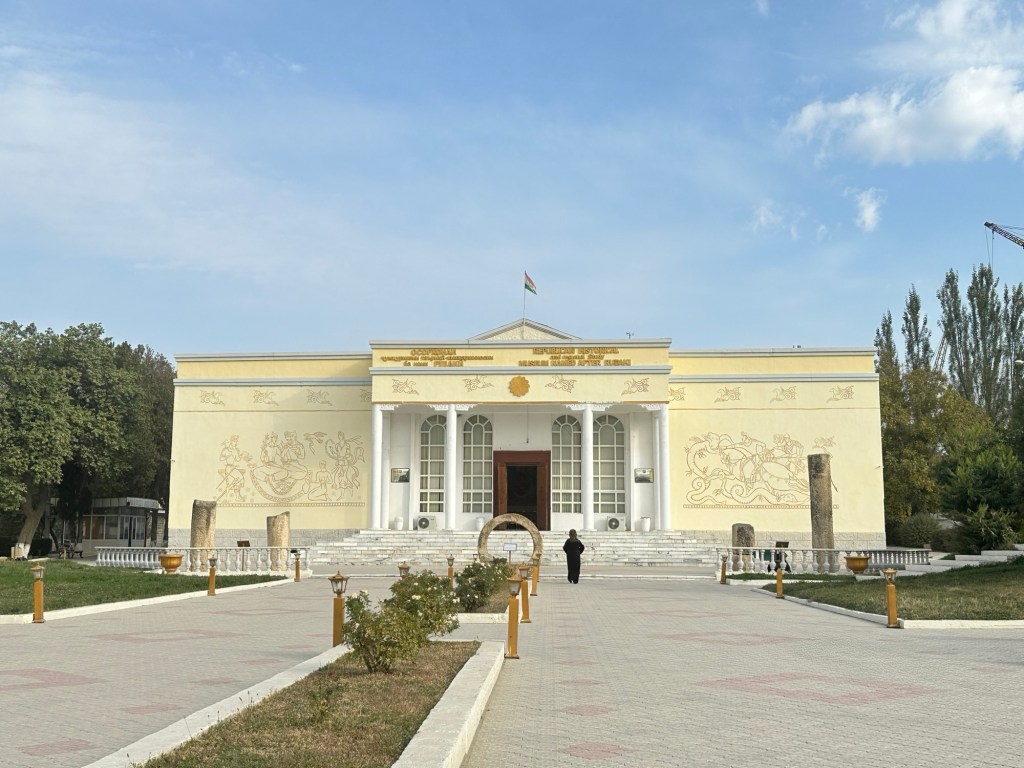
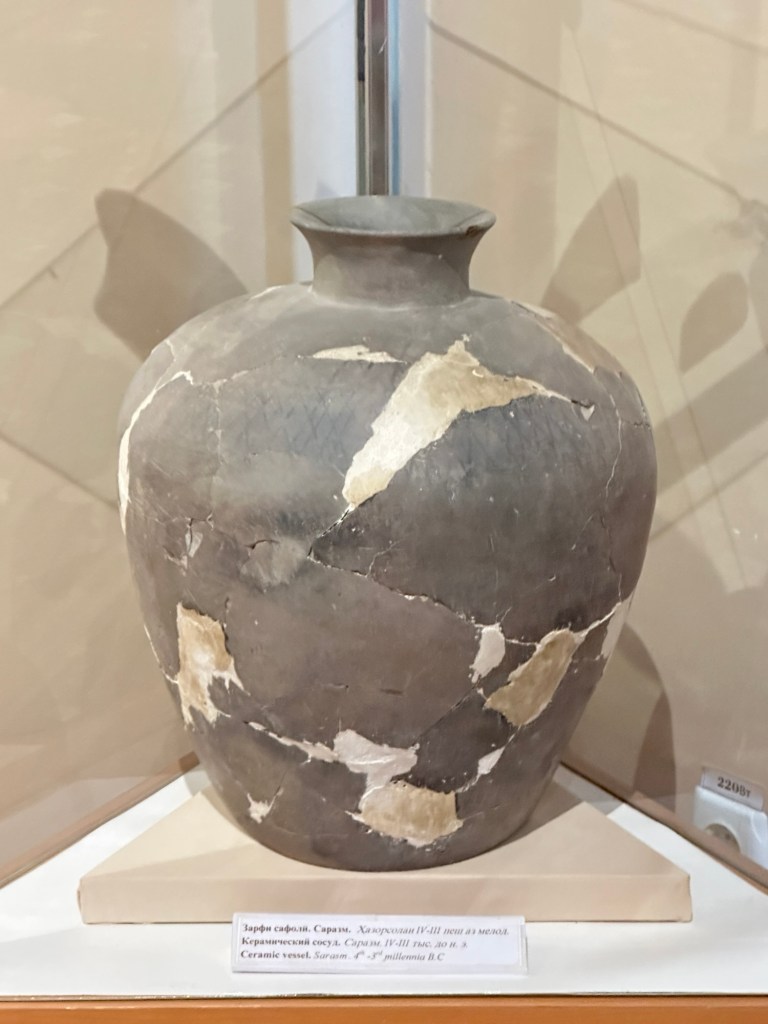
First stop was Rudaki Museum with a good display of relics from the old city.
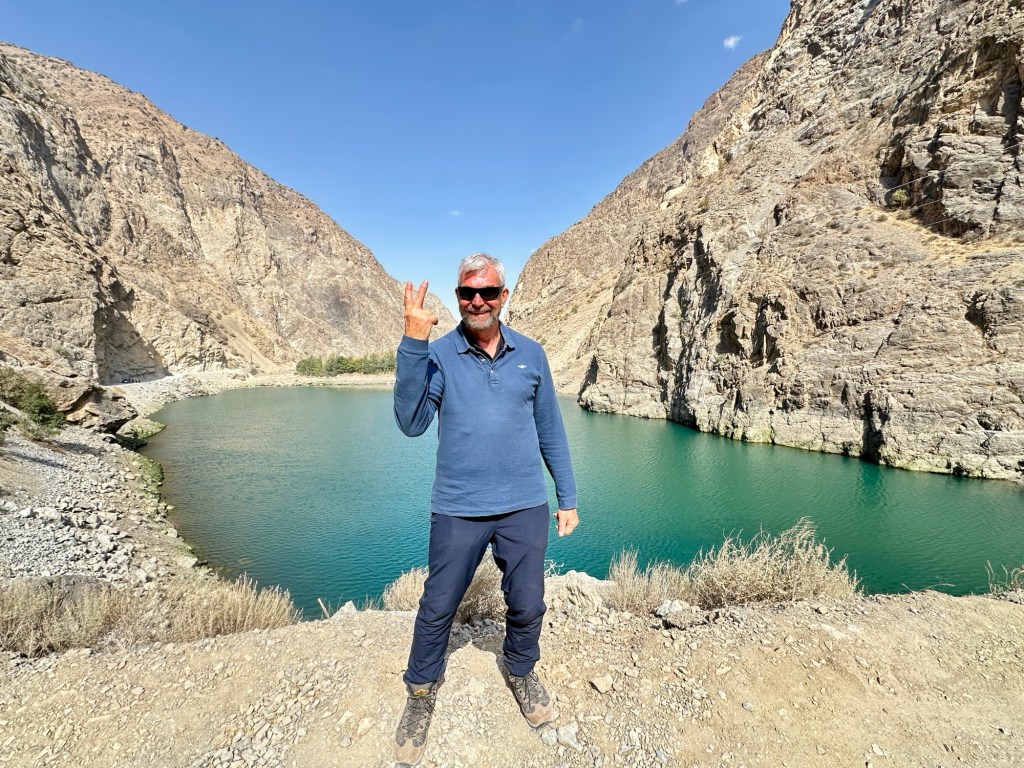
Next we drove to Seven Lakes which are located in the west of Fann mountains. It was 70 kms each way, and if we thought the roads were rough before, we soon realised that was nothing until today. Not only were they rough, the roads were narrow and followed the curves of the mountains. There were some very close calls when we passed other vehicles on the single lane roads. The landscape is very barren, and dusty. The wind came up at one stage, and dirt was blowing everywhere. There are some small green patches, obviously irrigation happening, and areas with fruit trees plus deciduous trees which were starting to change colours. A couple of ice patches on the mountains peaks.
Each of the lakes has its own colour which varies from calming turquoise to mesmerizing purple. The first Lake is 1570 metres above sea level. The elevation continues to rise until the seventh lake at 2400 metres. Amazing scenery.

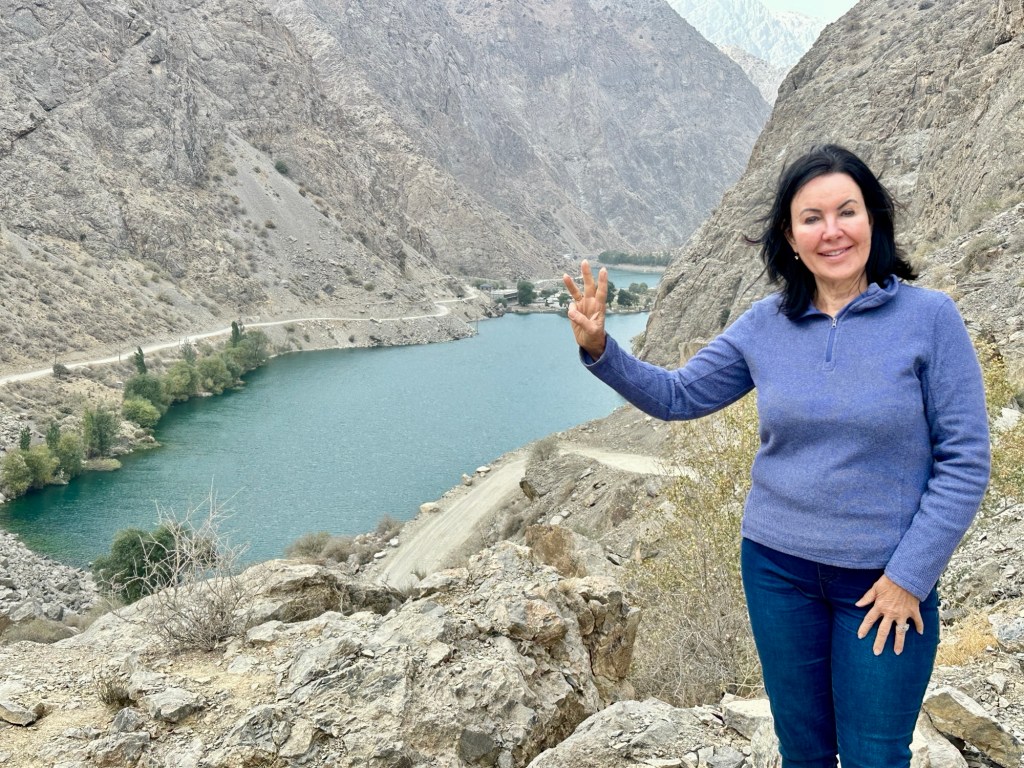

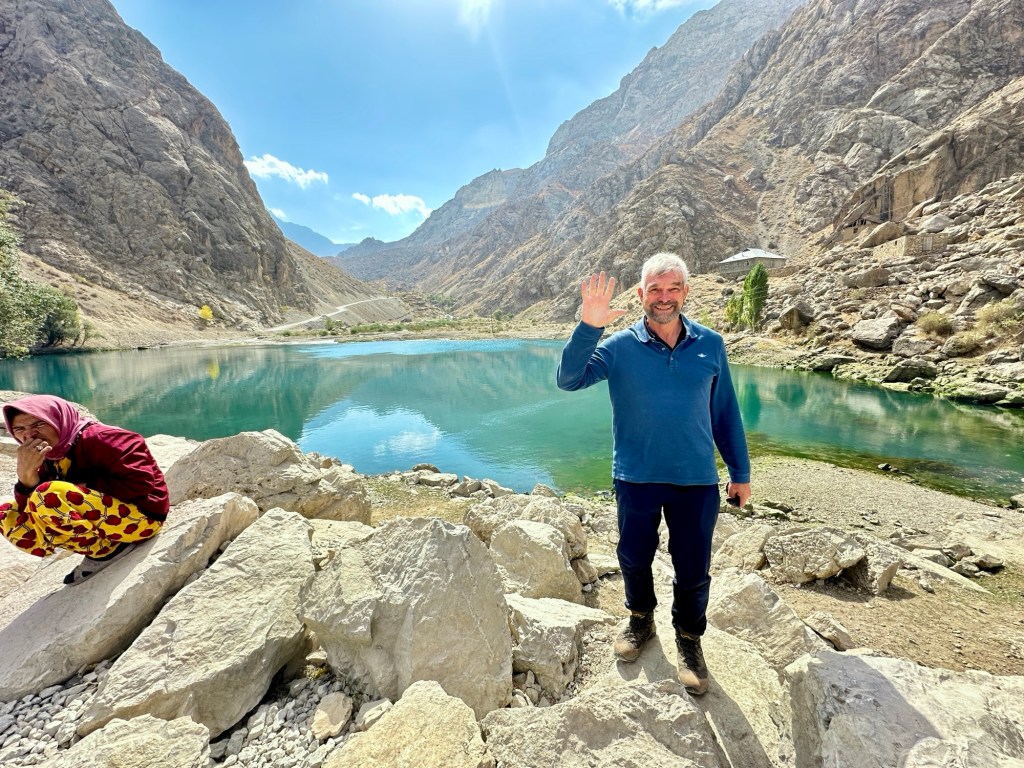
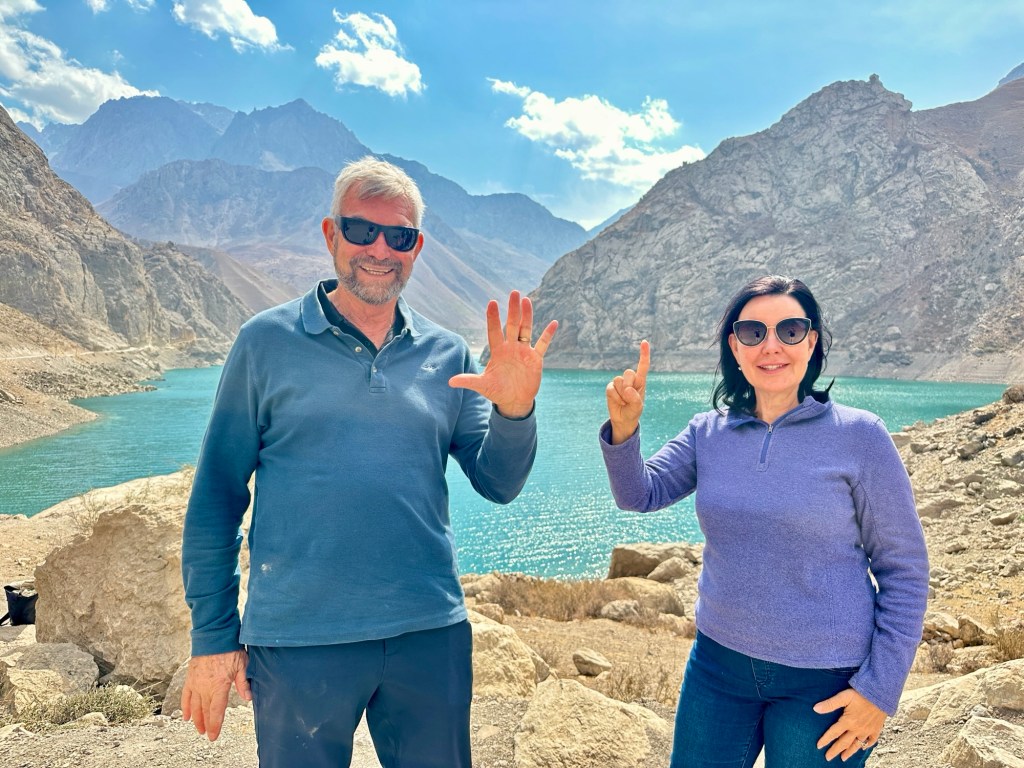
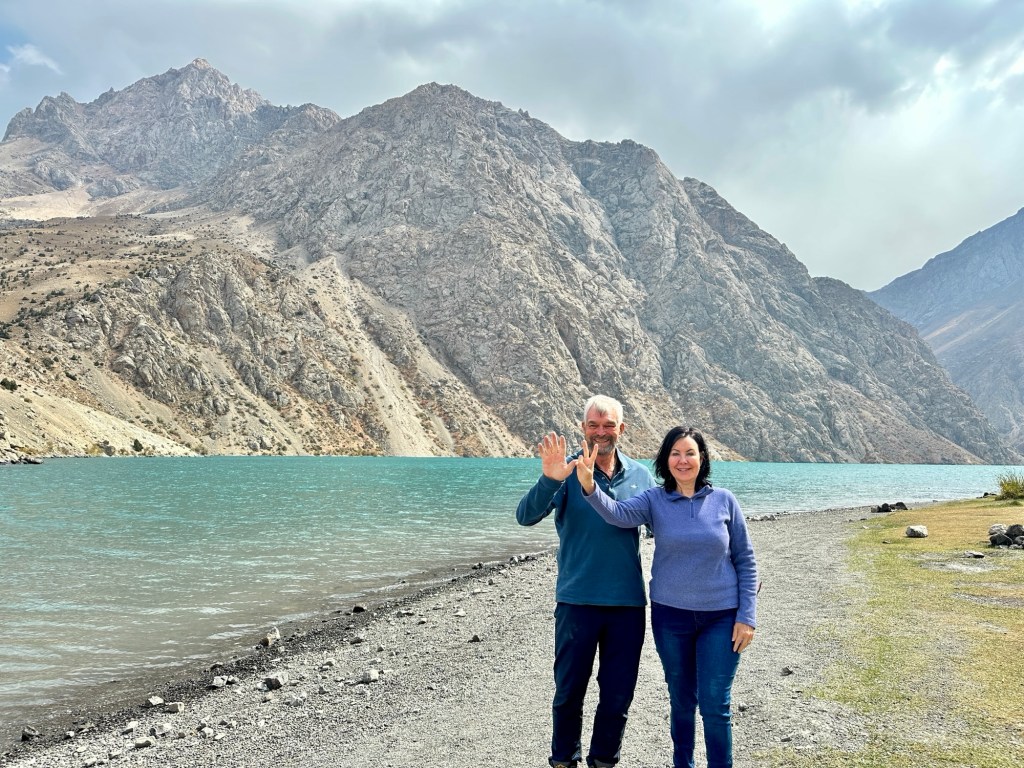
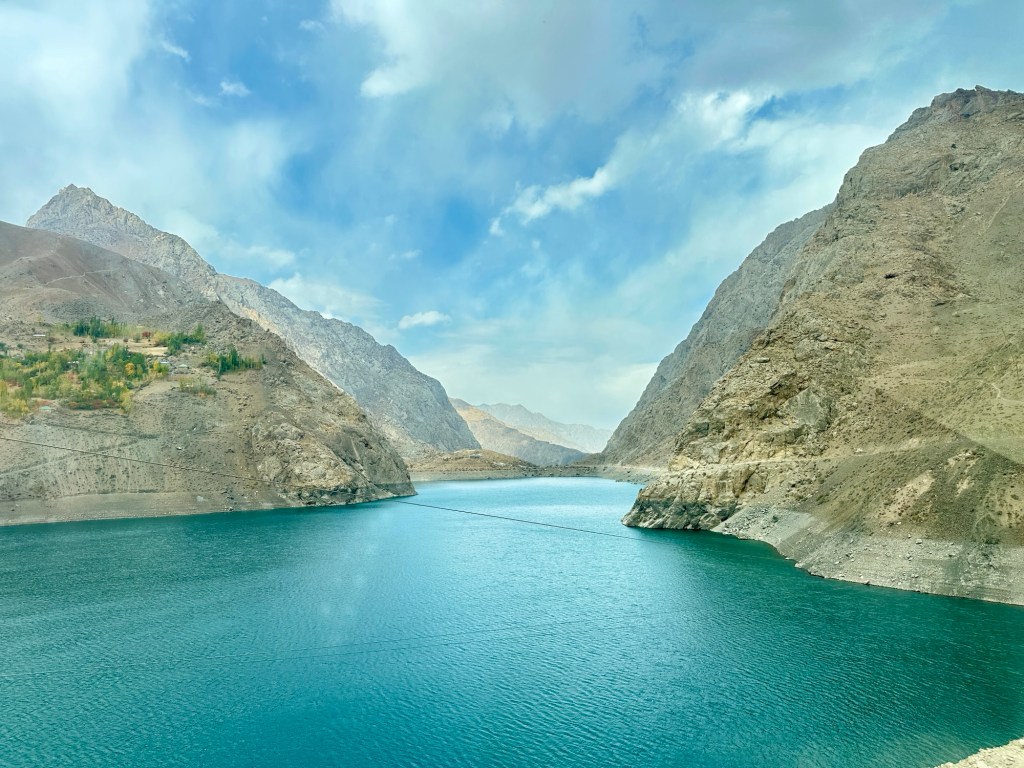

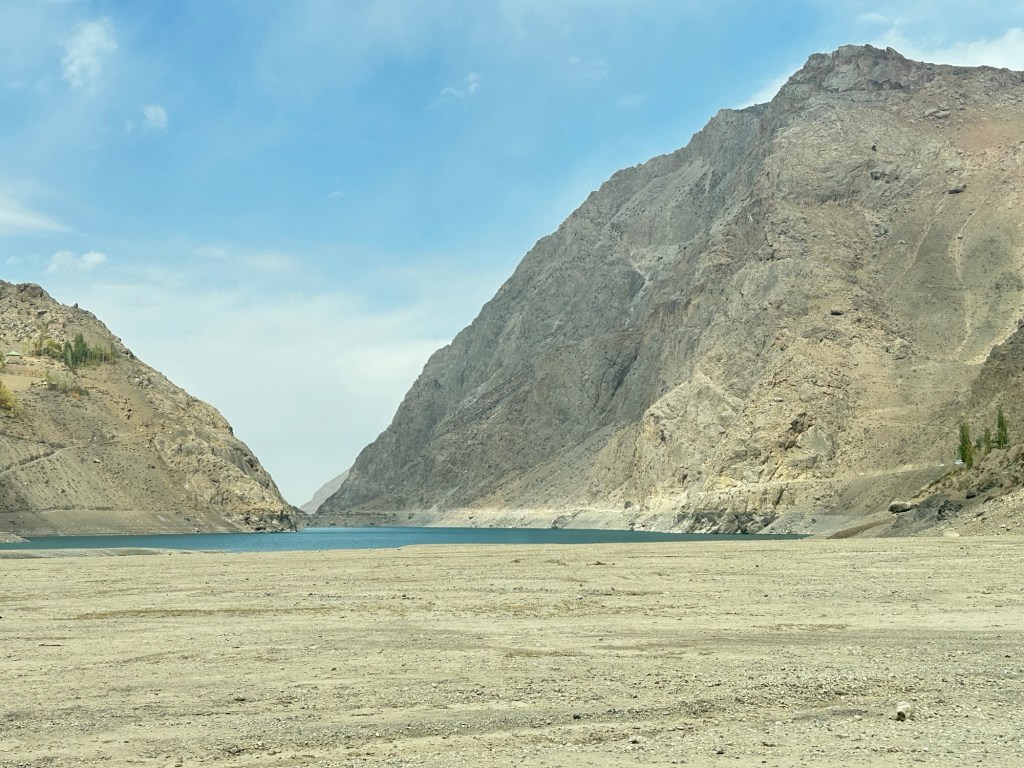
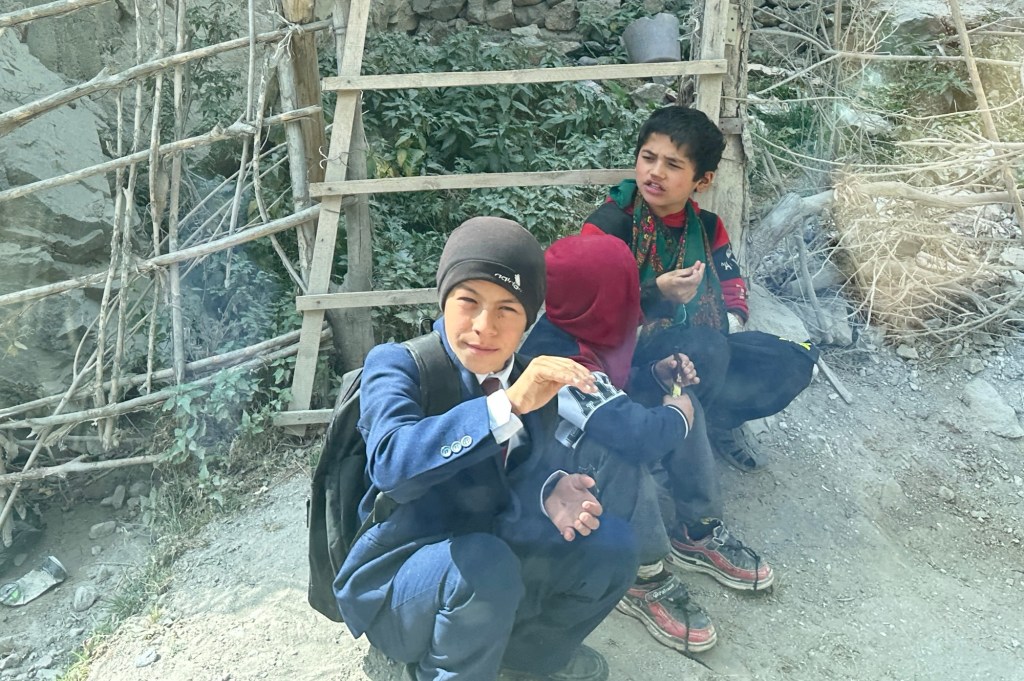
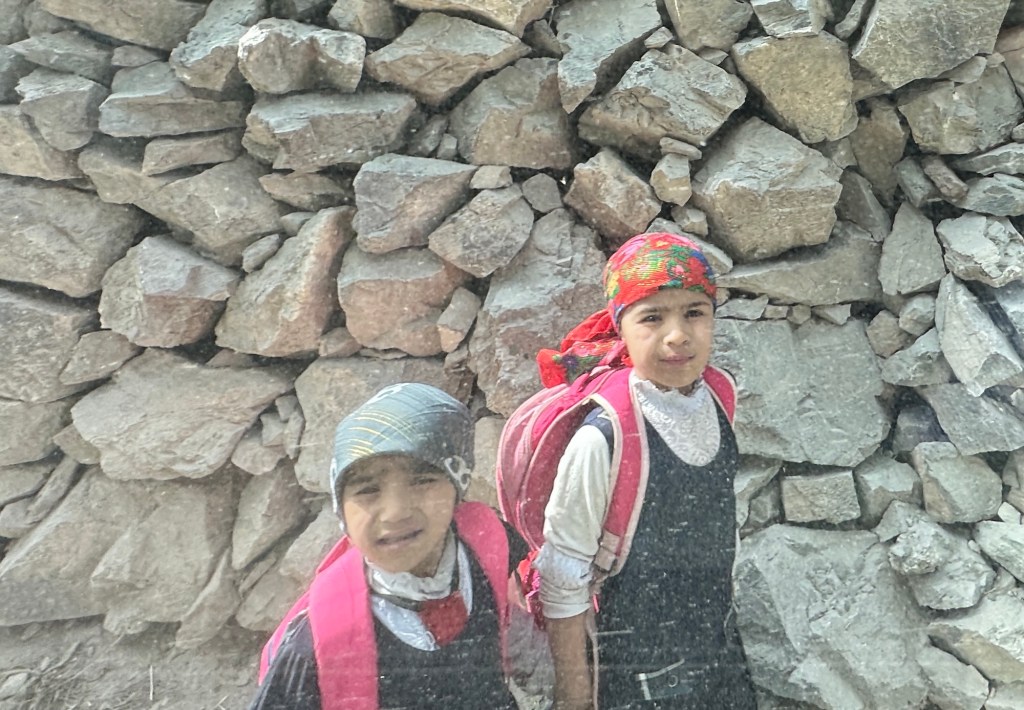
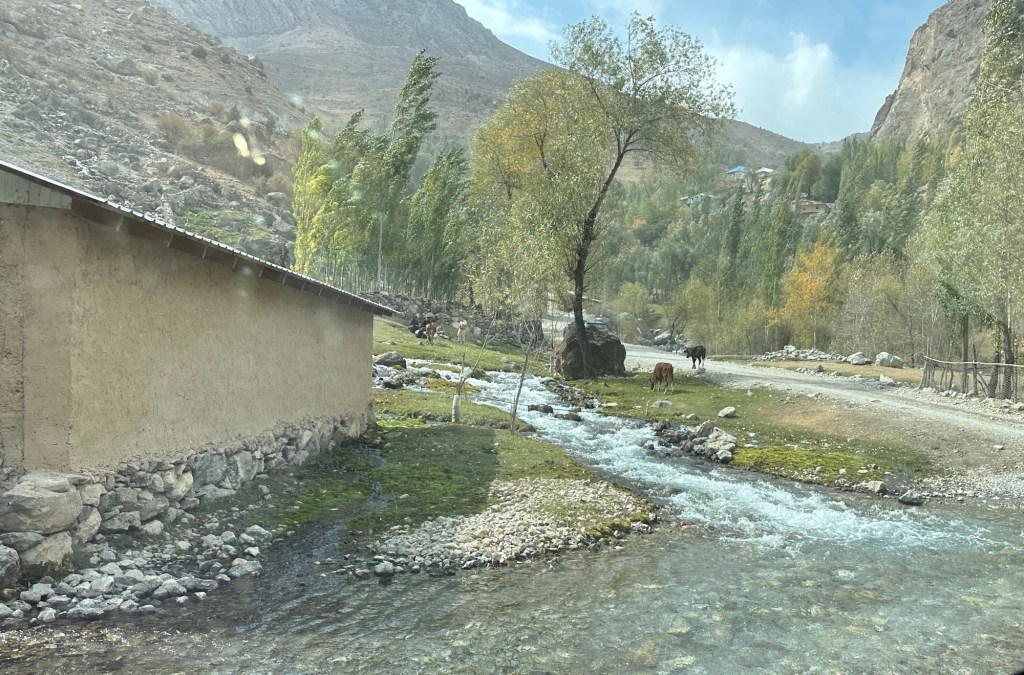
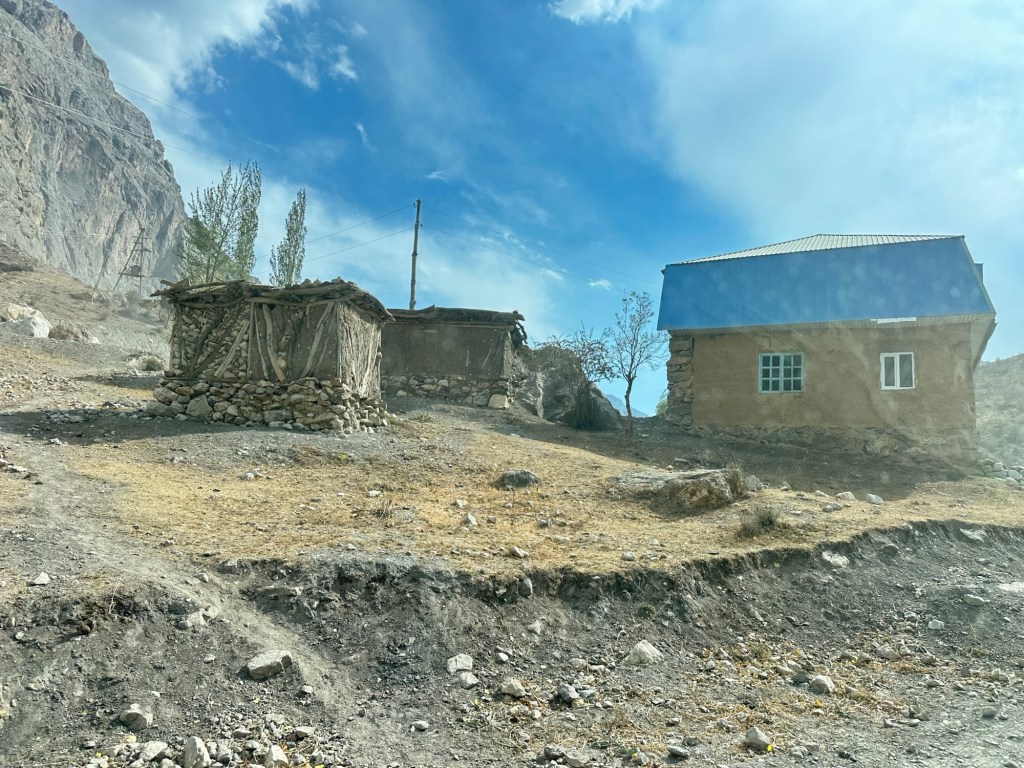
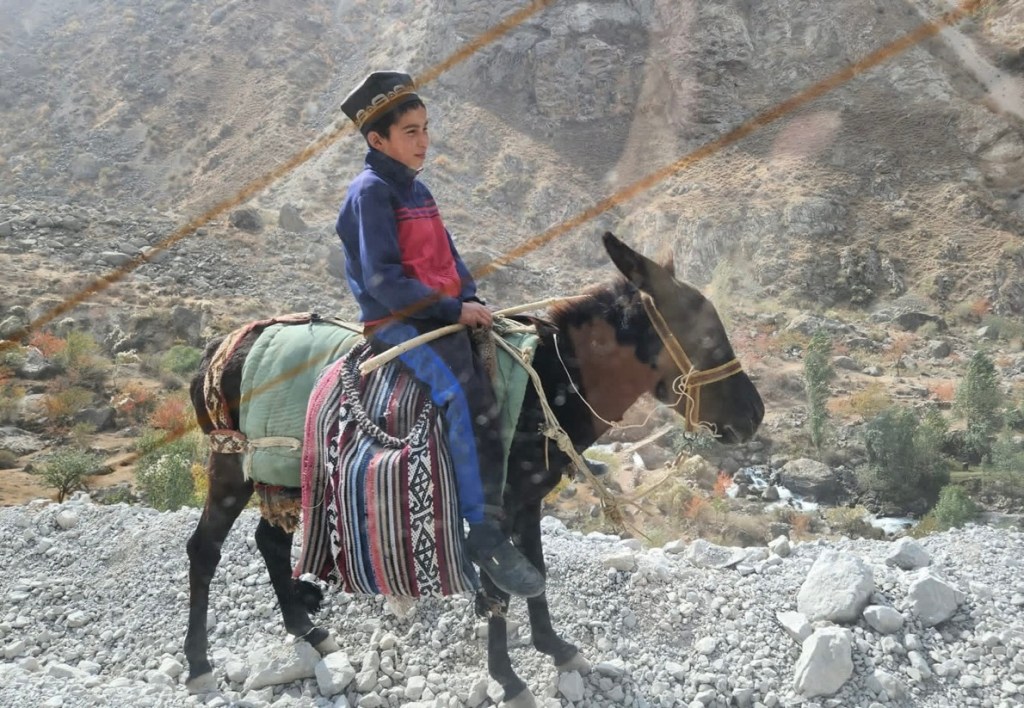
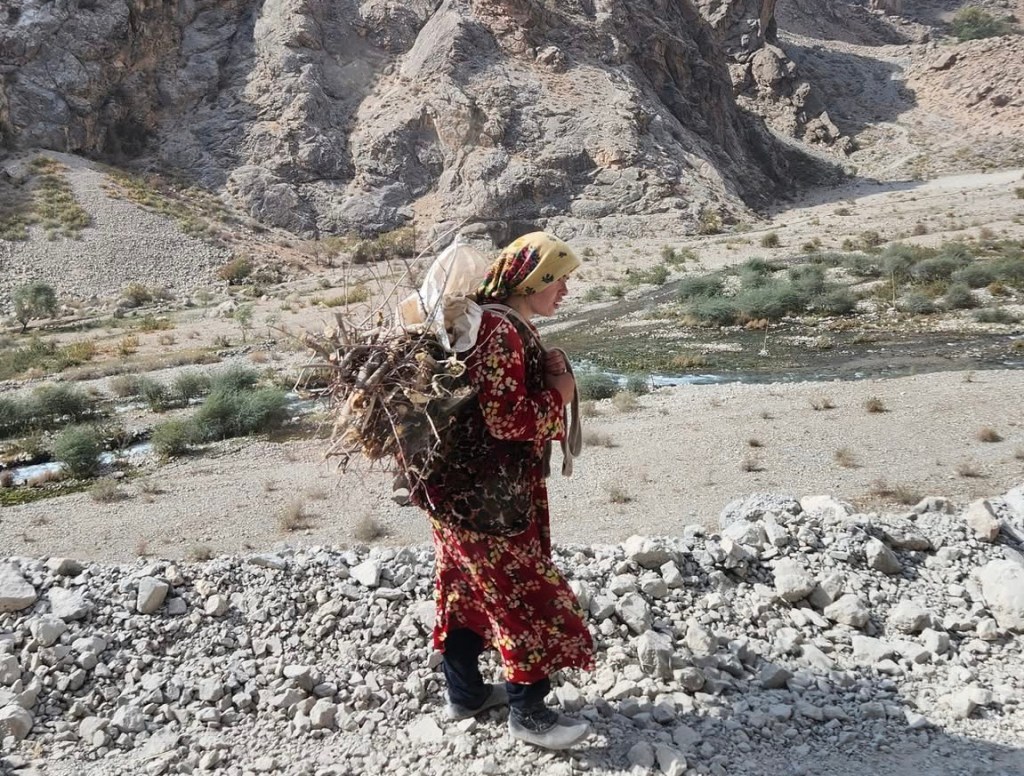
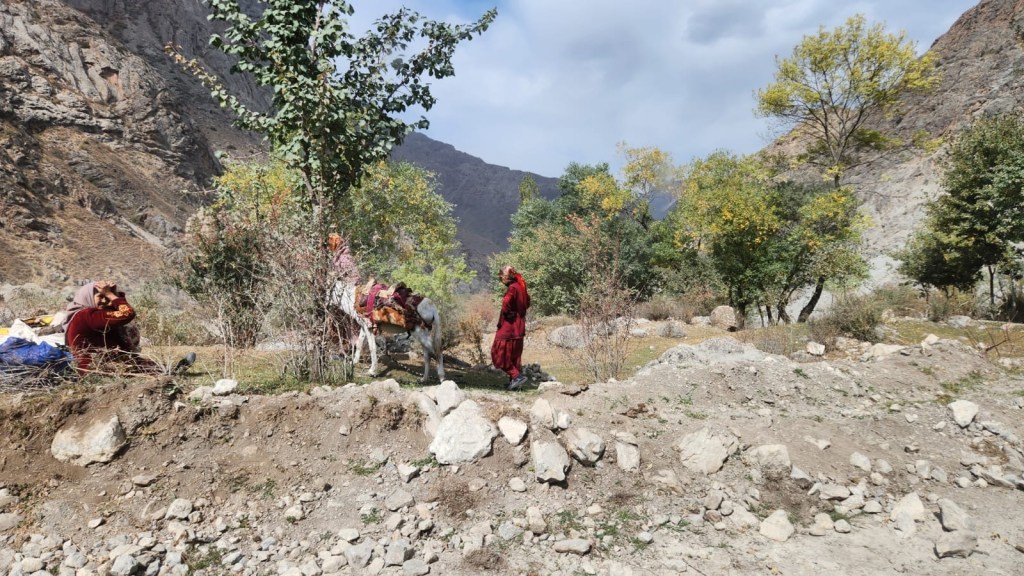
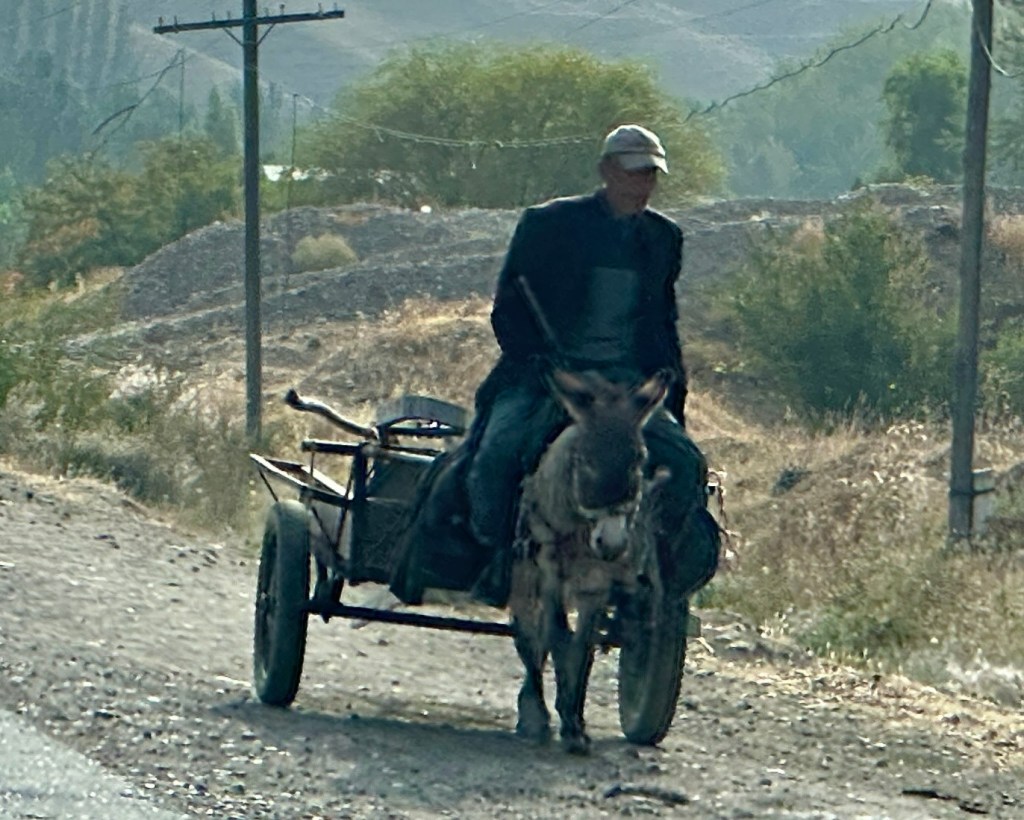
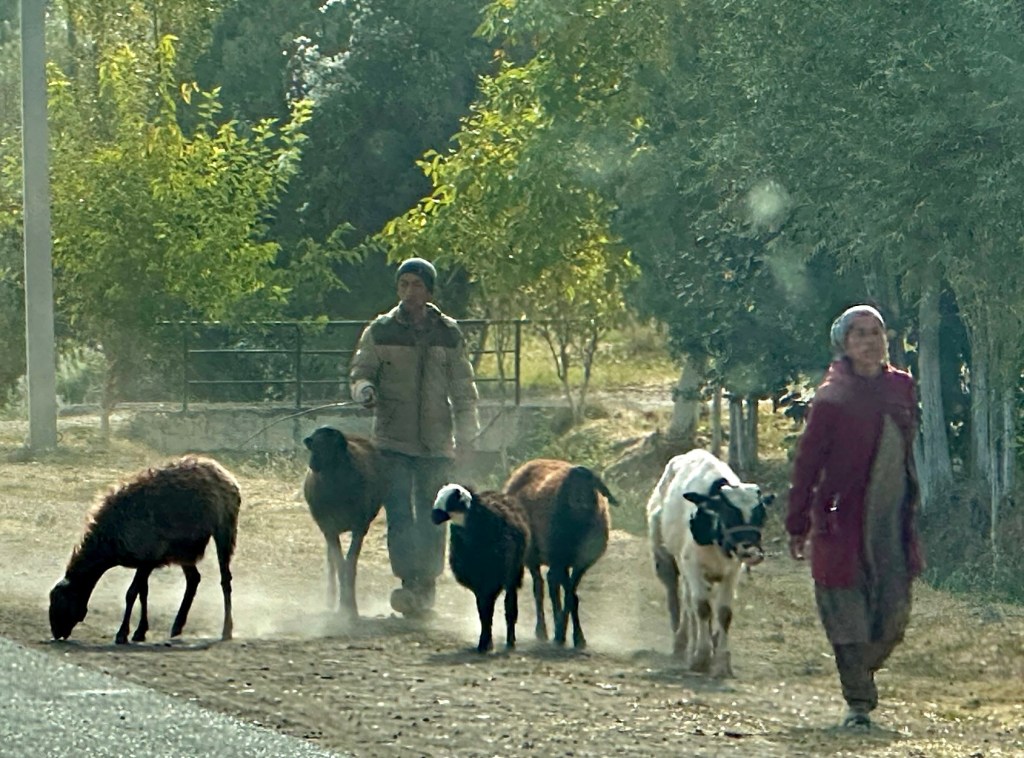
There were little villages along the road – the houses made of mud bricks and wood. It was common to see the village people tending to their crops in the valley areas, using donkeys for transportation, and the women doing their washing in the cold river flowing through each village. The children waved as we passed by, calling out hello. The village at the seventh lake has no electricity.



At the last lake, Heidi braved the icy cold waters and took a polar plunge! Very refreshing she said. Us Aussies stood whimpering on the sidelines. Retracing our path, we descended to the third lake where we enjoyed a traditional Tajik lunch overlooking the vivid blue waters.

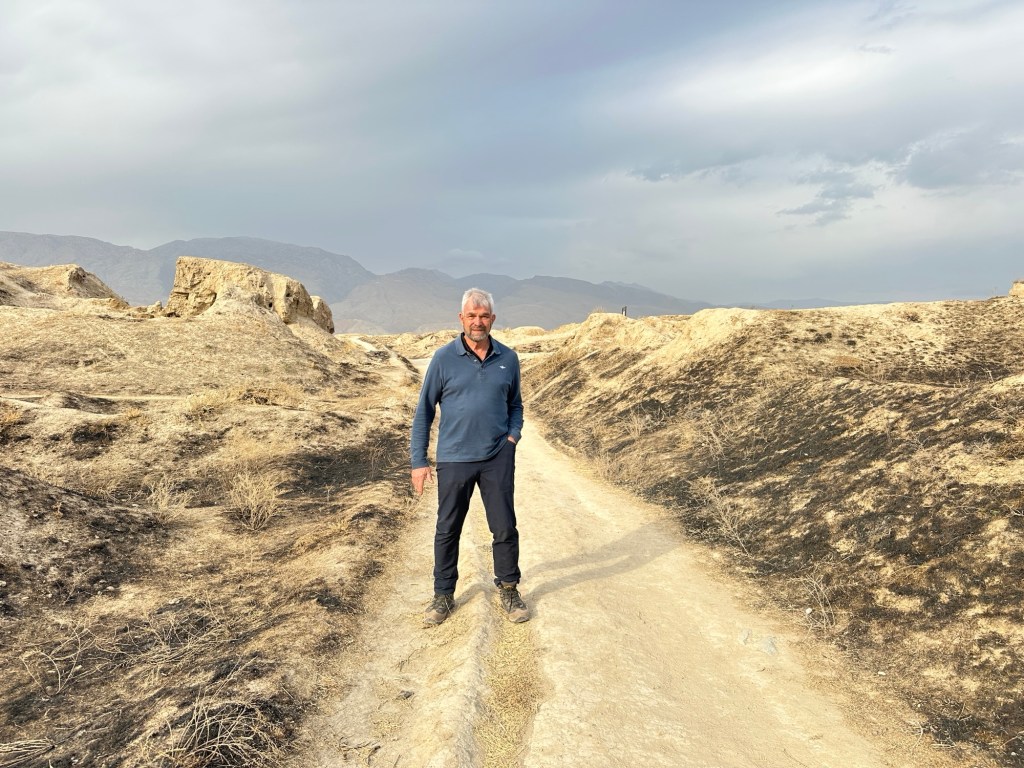
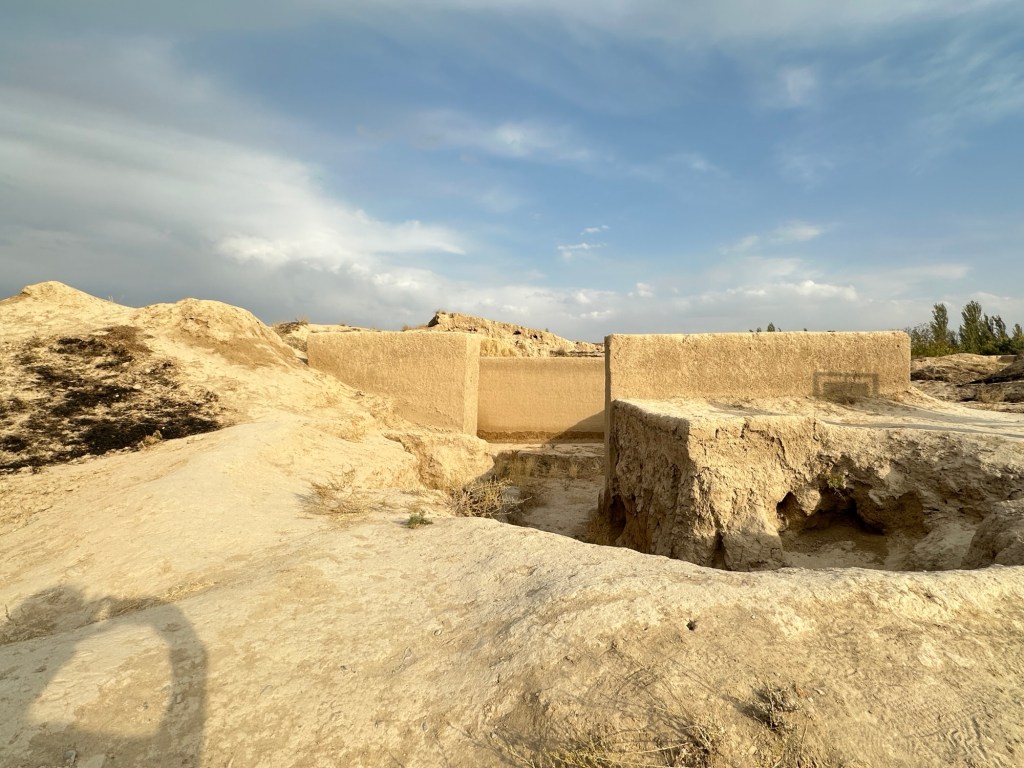
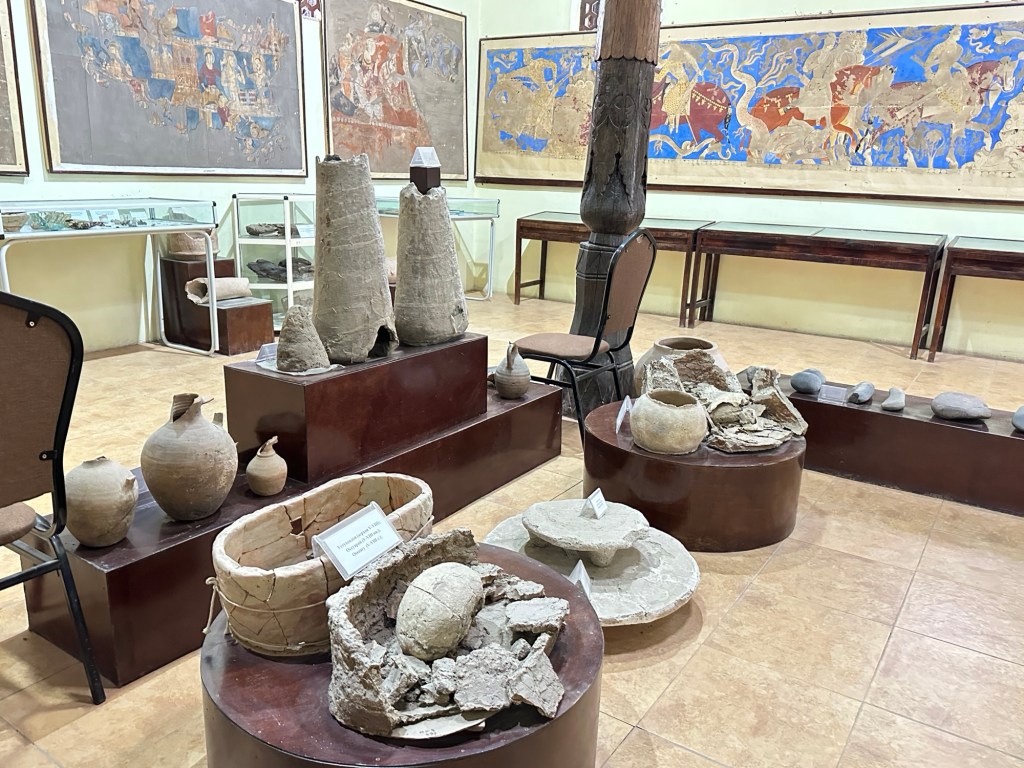
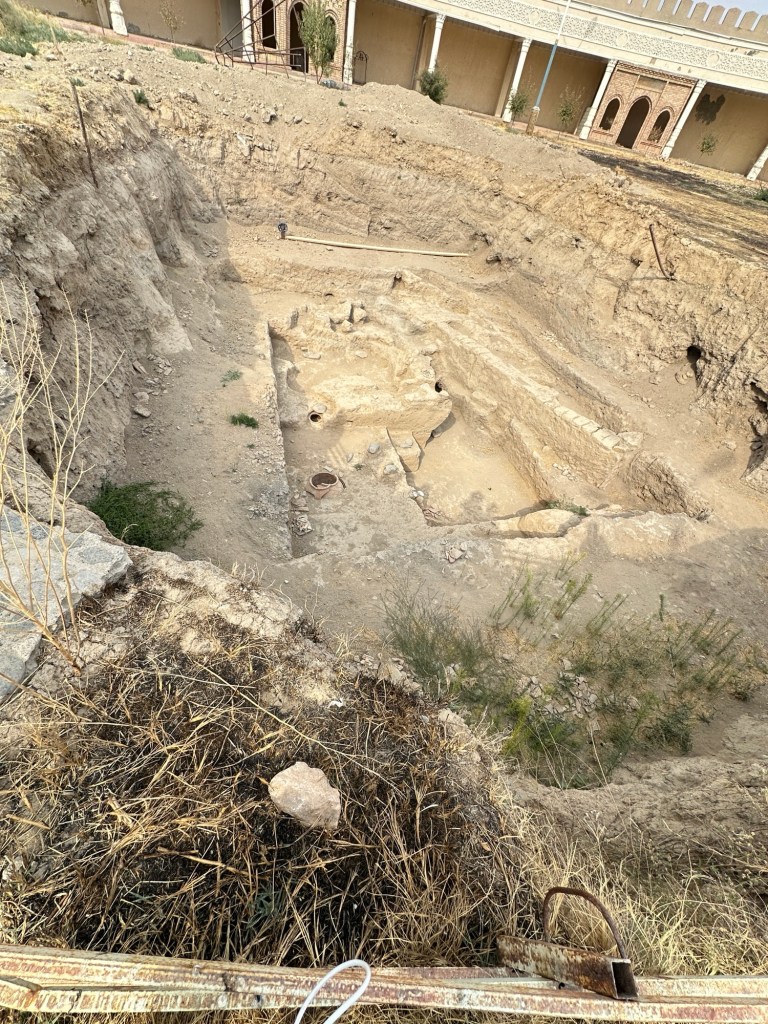
After lunch we drove back to Penjikent to visit the ancient city located within 5 minutes drive from modern Penjikent. The city was a major Sogdian city dating back to the 6th century BC reaching its peak in 5th century AD, and was eventually destroyed by Arab invaders in 722. Silk cocoons were unearthed at the site during excavations. There were remnants of a Zoroastrian temple, bazaar, citadel, an inner walled city, or shakhristan, which included a palace, temple platforms, streets of shops and workshops, and a necropolis there. The museum displays several ossuaries, pots used to store the bones of the deceased after their corpses were eaten by birds, in accordance with Zoroastrian tradition.



Last on the programme today was a stop at the bustling Bazaar where you could find everything from your local butcher to fresh fruit and vegetables, pots and pans, dinnerware, clothes and blingy underwear. The women love bling here.
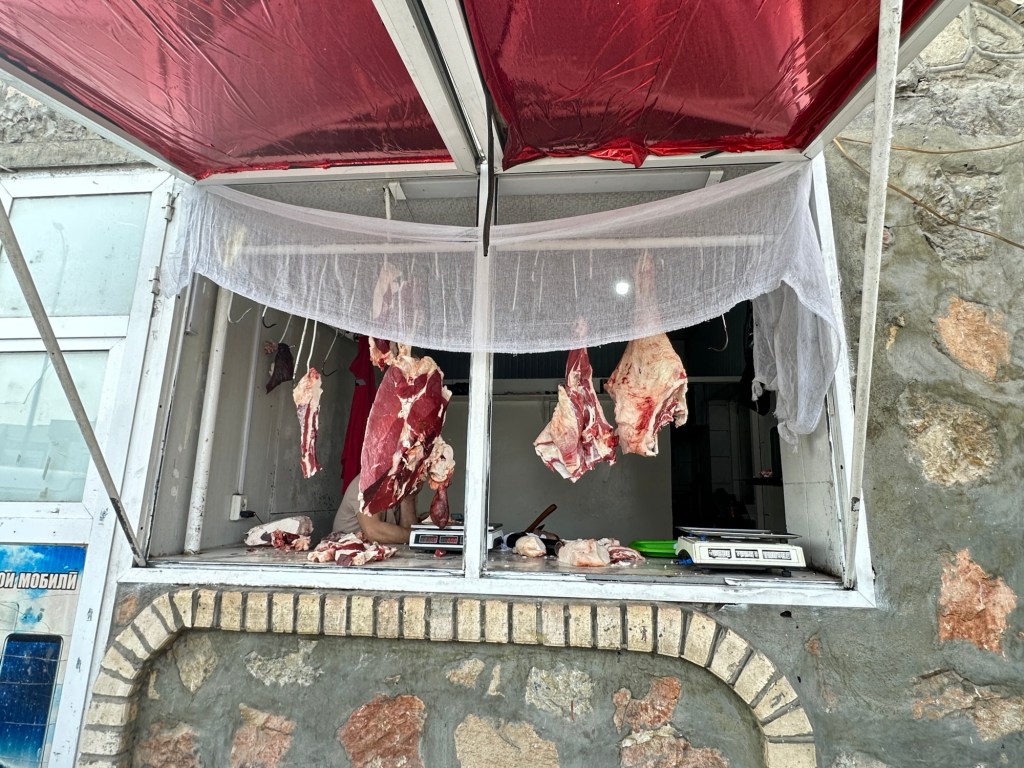
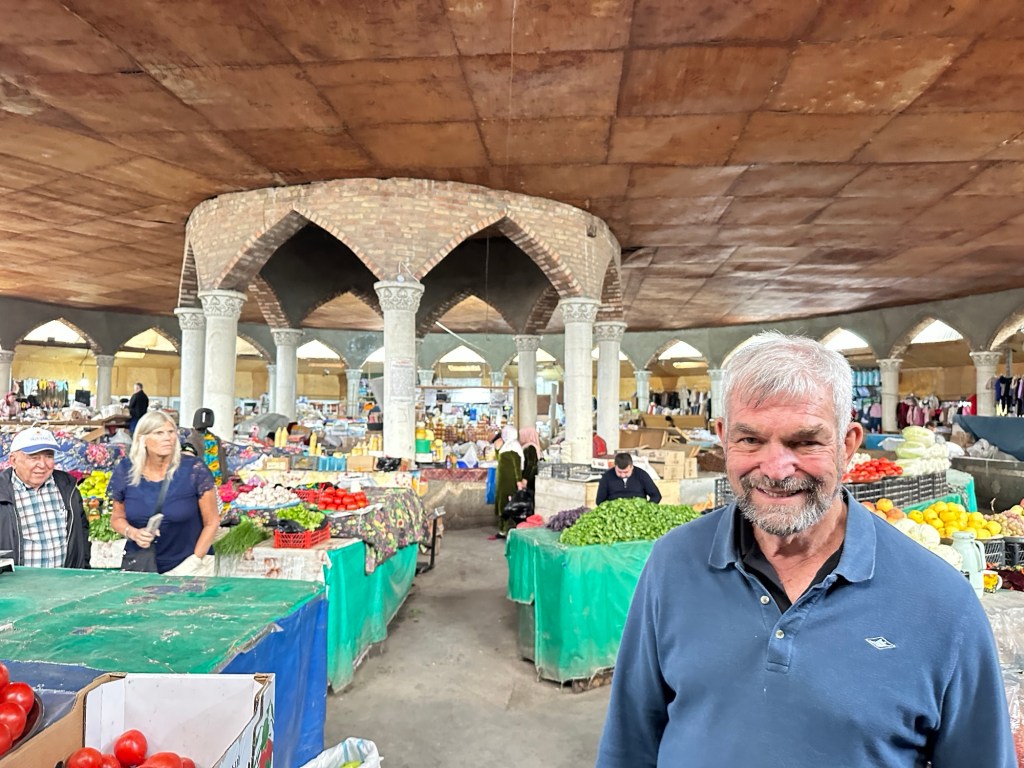

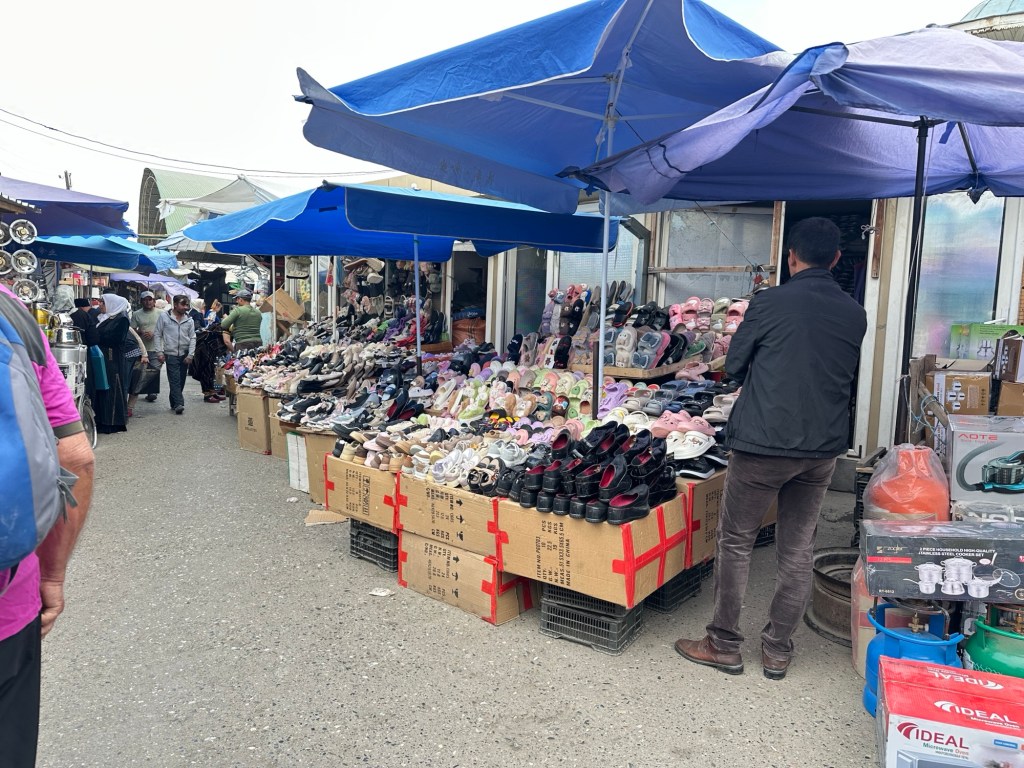
Back to the hotel to cleanse ourselves from all the dirt, then a walk to the restaurant we went the night before. Once again we felt like celebraties, as everyone we passed on our walk wanted to say hello, ask us name, and our age! They liked practising their English. At the restaurant we met up with a young German guy who we had previously chatted to at the homestay accommodation. He was solo travelling and keen to talk to English speaking tourists. This time at dinner we had a twelve year old boy scootering off to buy the beers.
Day 23
Friday 3rd October
Penjikent to Khujand
10-22 degrees, sunny Breakfast
After breakfast we had a short walk around the Gypsy village – apparently the men sit around all day while the women go out and beg for morning. It was a very clean village.
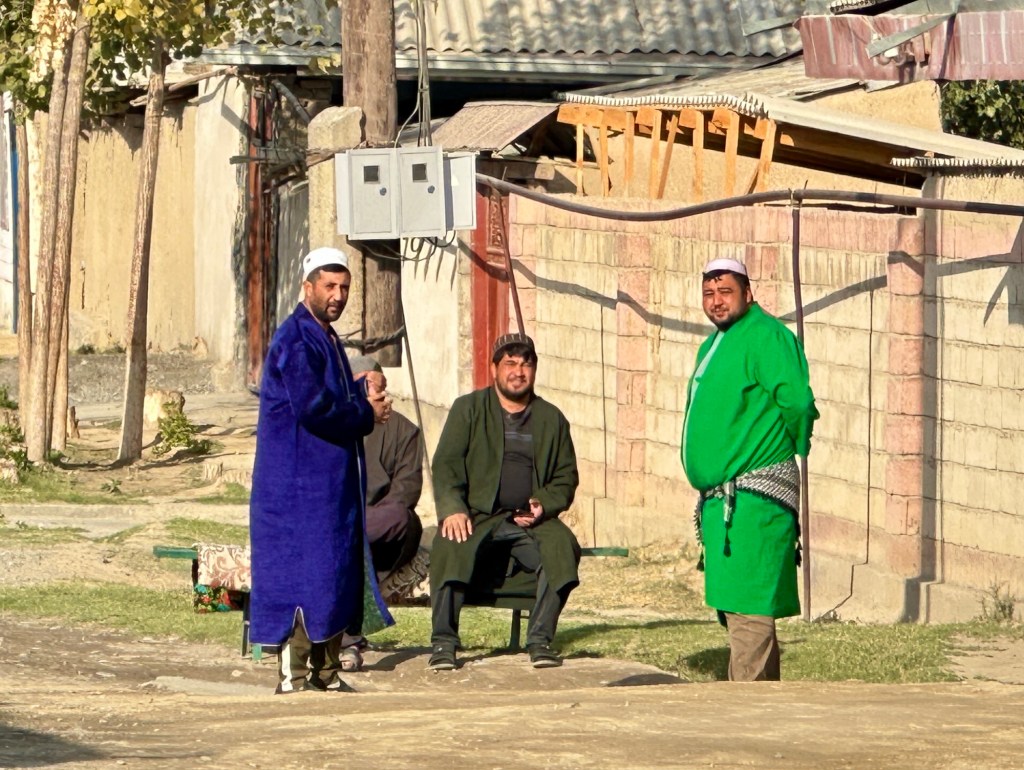
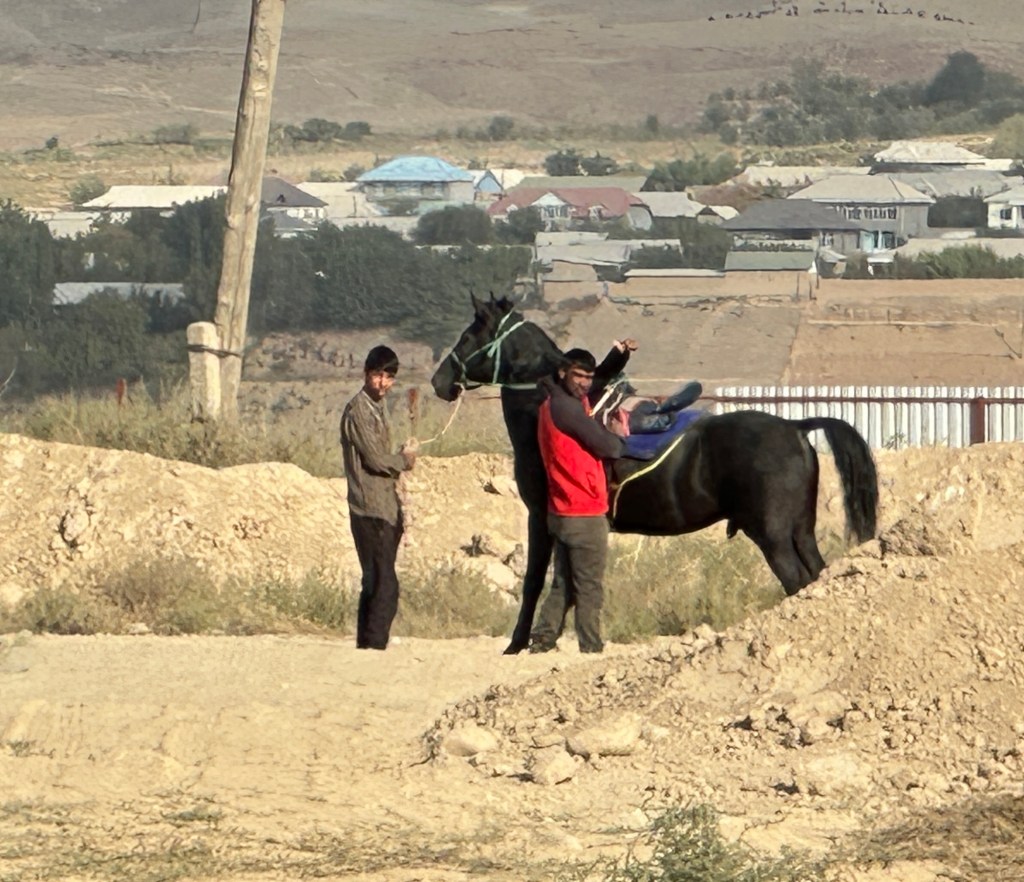
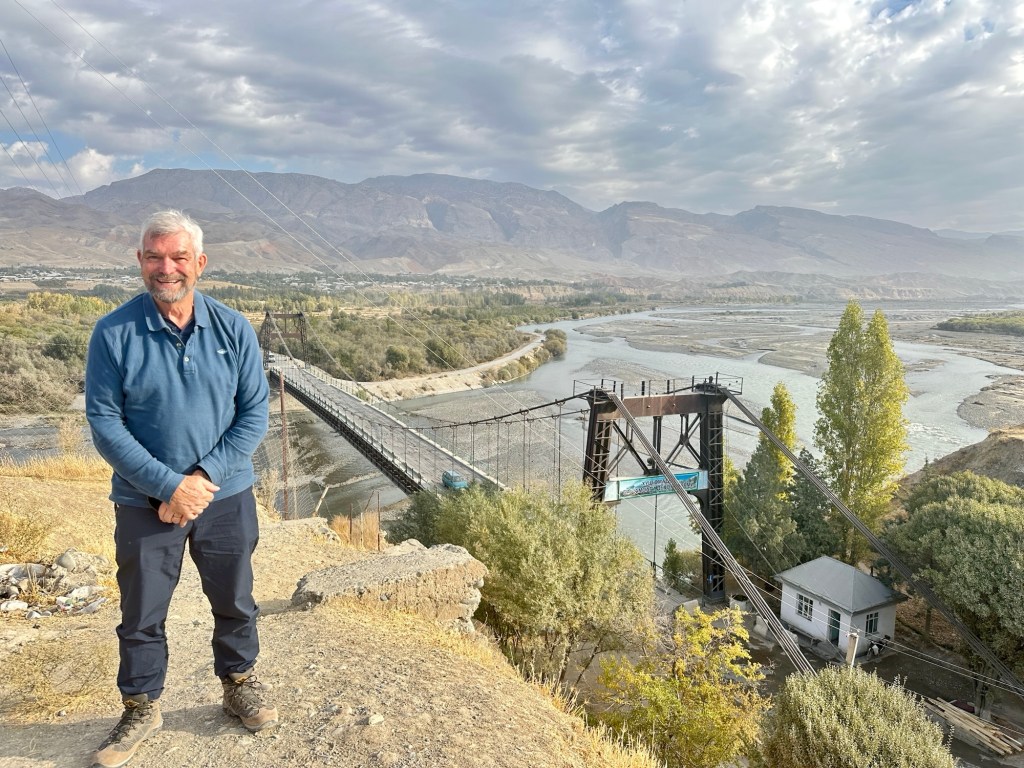
Then we started our drive to Khujand through the Turkistan Mountains via Shariston Pass at 2600 metres above sea level. This time there was a 4.4 kms tunnel. More spectacular mountain scenery, and corresponding windy roads.



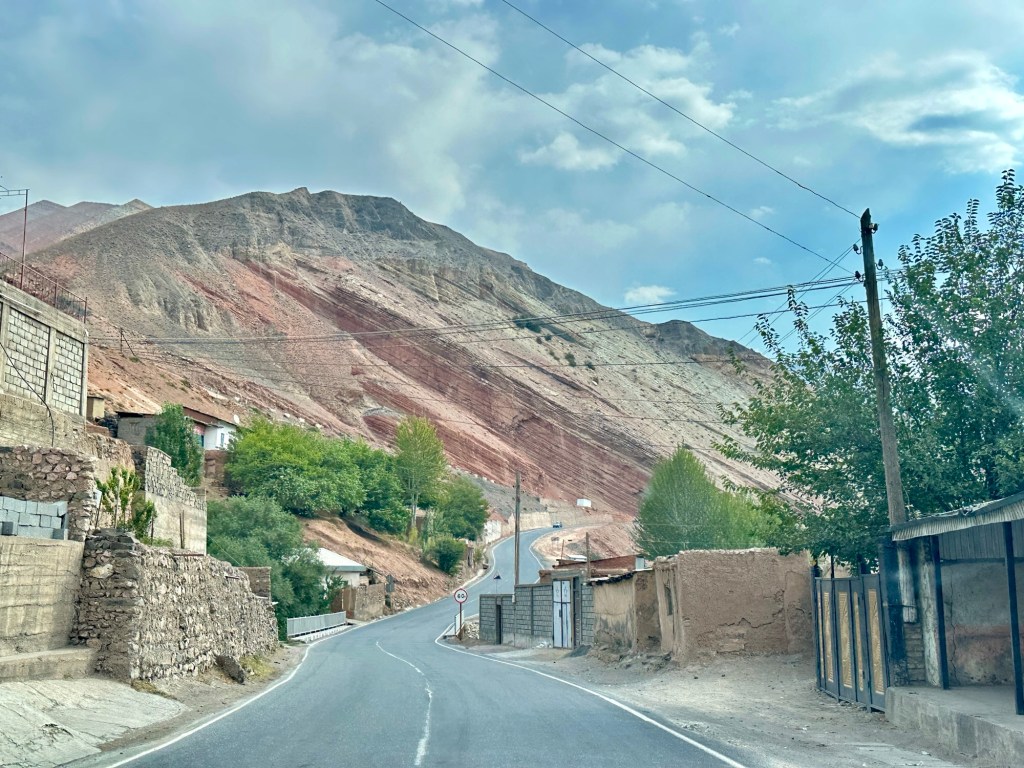
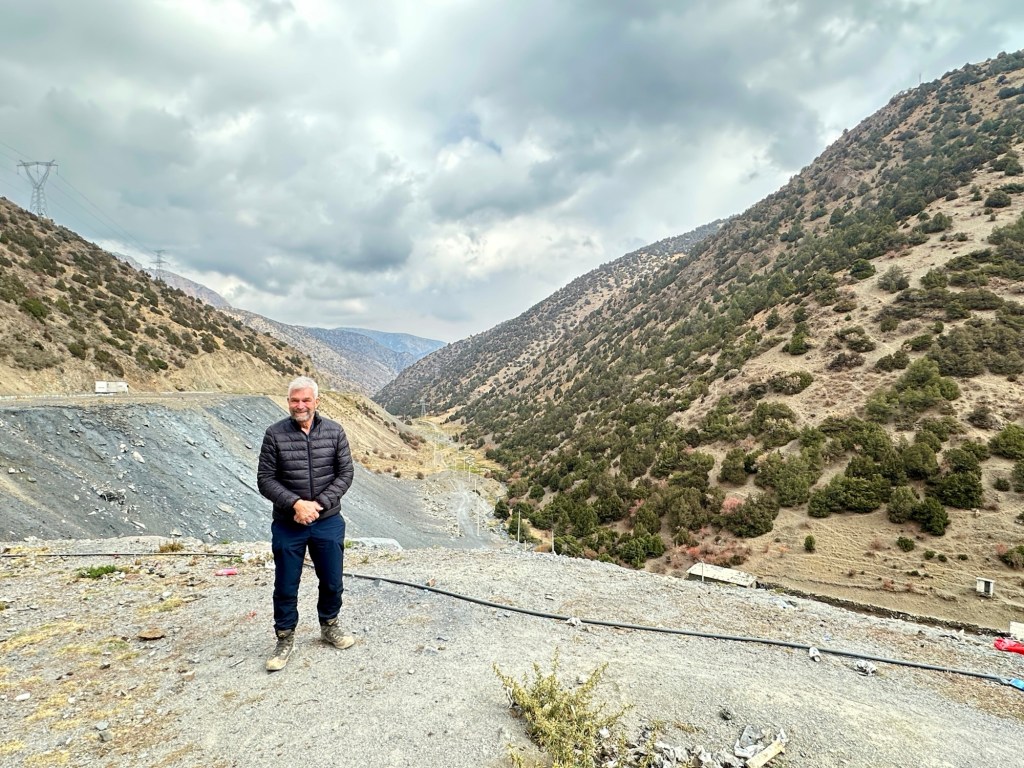
In Istaravshan we visited a local bazaar, then drove through it – well that was an experience! No road rules here – people walking in all directions, carrying and transporting all sorts of goods.


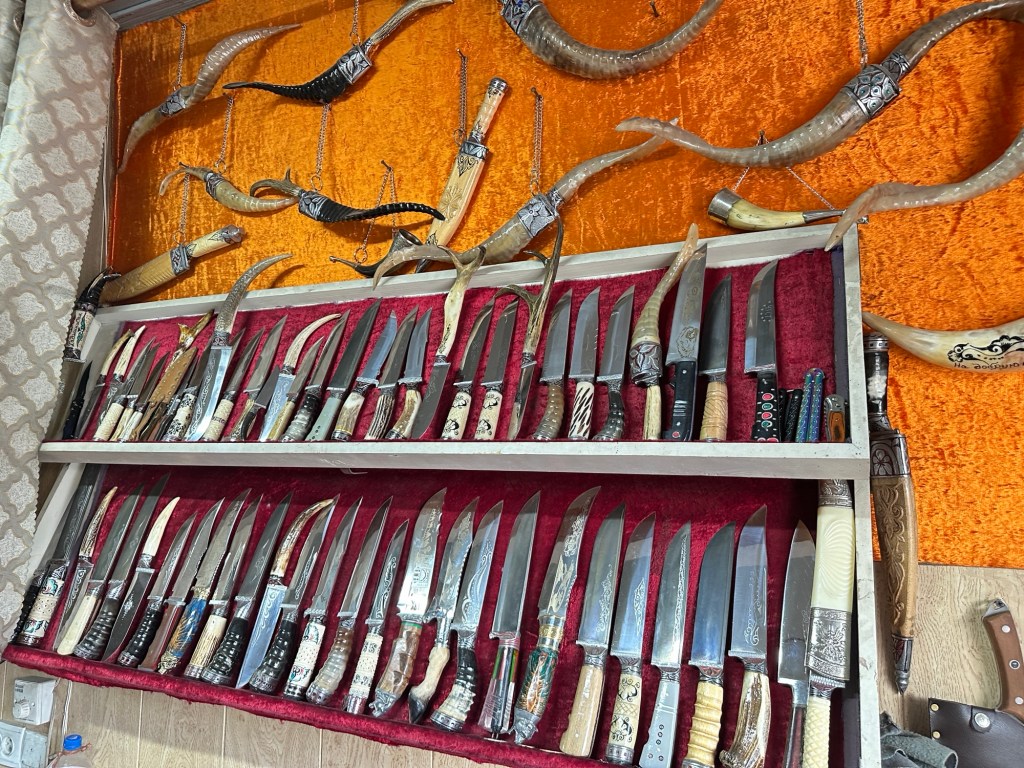
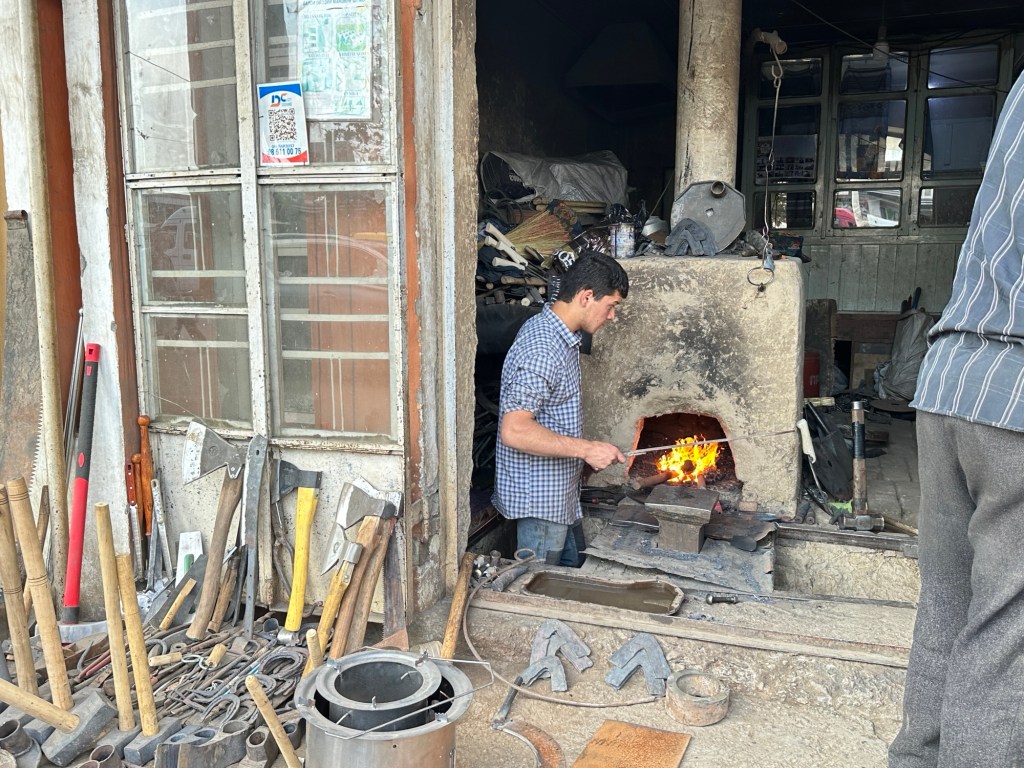
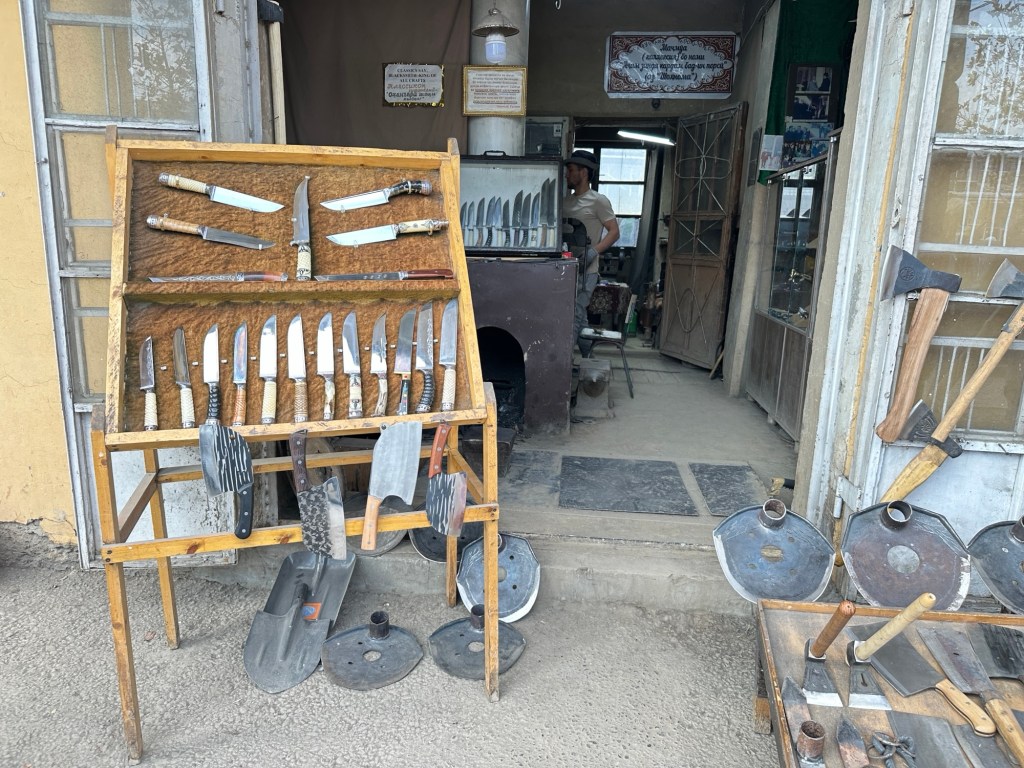
We saw the Hazrat Shah architectural complex from afar. It consists of Hazrat Shah Mausoleum, Khudayar Valami Mausoleum, and Namazgah Mosque dating back to 19th Century. We couldn’t go in as it was Friday prayer day, thousands of men going in to pray.

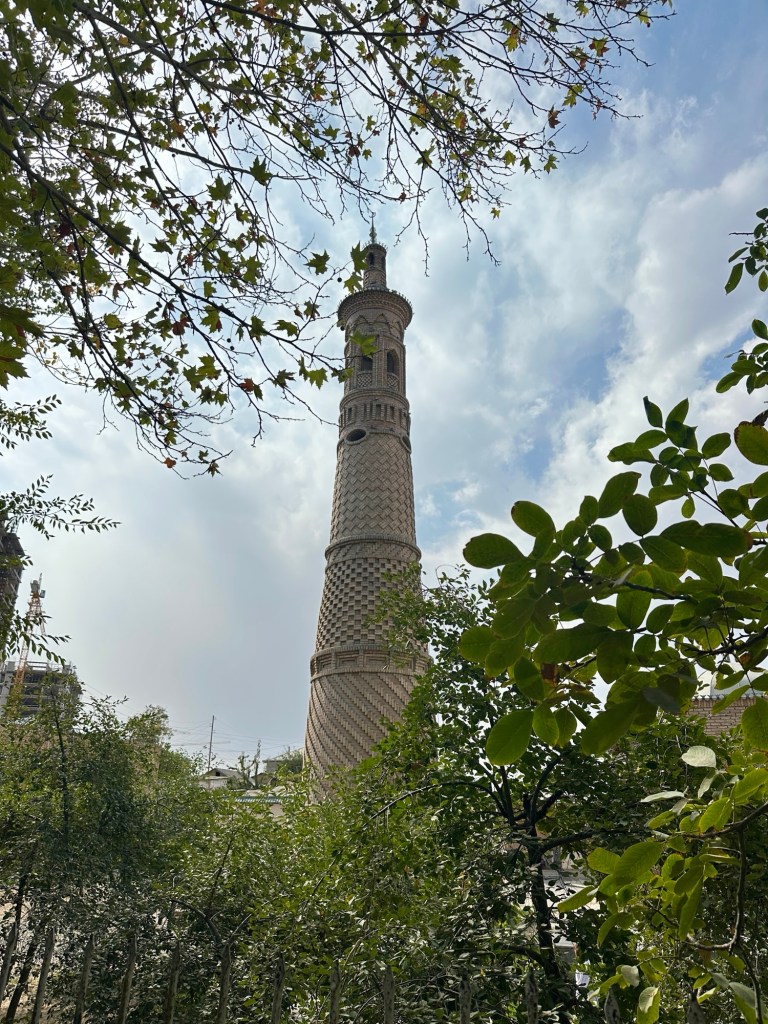
Lunch at another self serve restaurant – great variety of food, so fresh. The pumpkin samsas were a big hit all round.
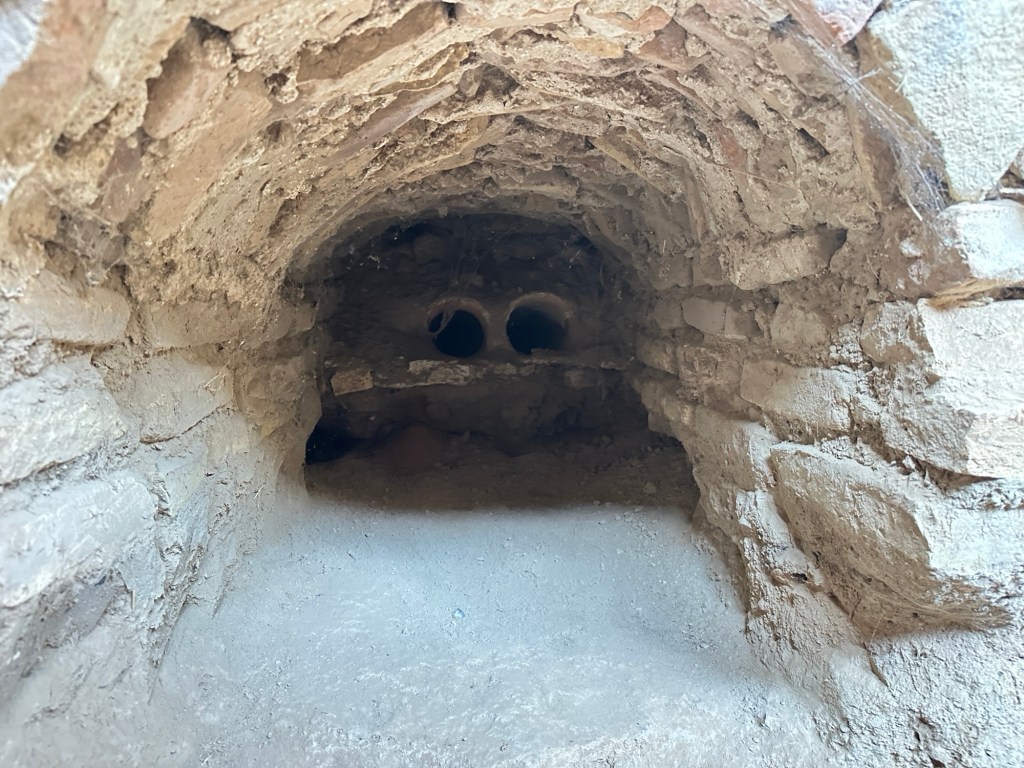
Next, to Mug Teppe, one of the ancient settlements located in Istaravshan. The city is believed to be founded by King Cyrus in the North-East boundary of his empire. Artifacts found here date back to the Stone Age. Unfortunately, the previous mayor (who is currently in jail on corruption charges) built an amphitheater inside the walls, effectively eliminating any potential for further excavation at the site. The seven year old amphitheater is already crumbling.
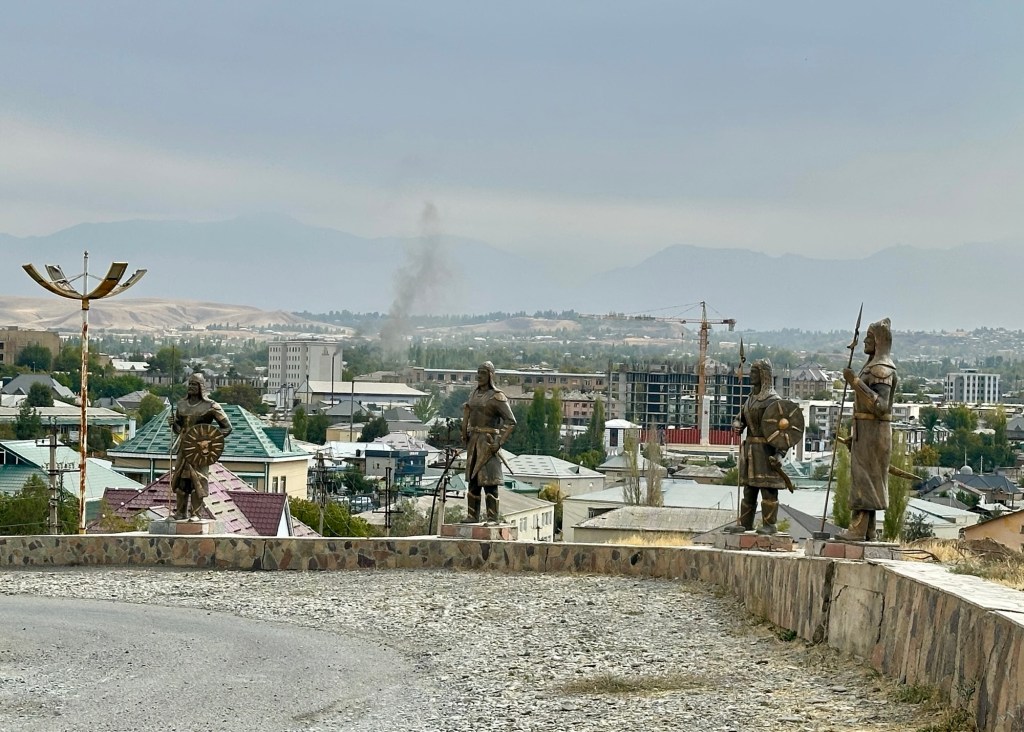
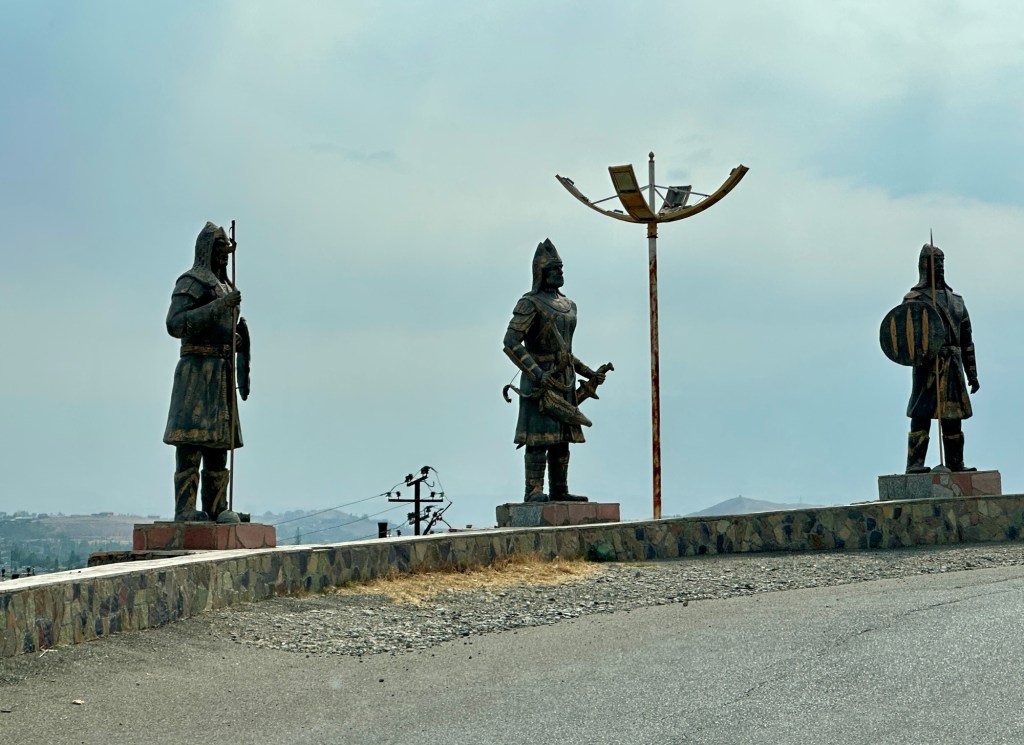
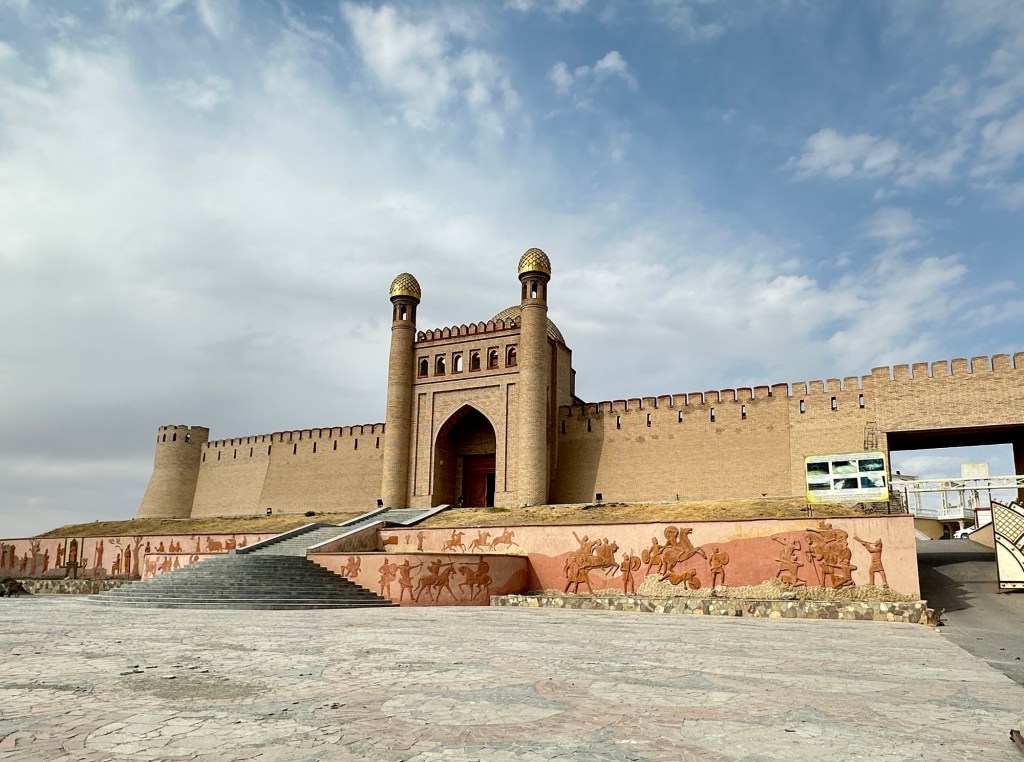
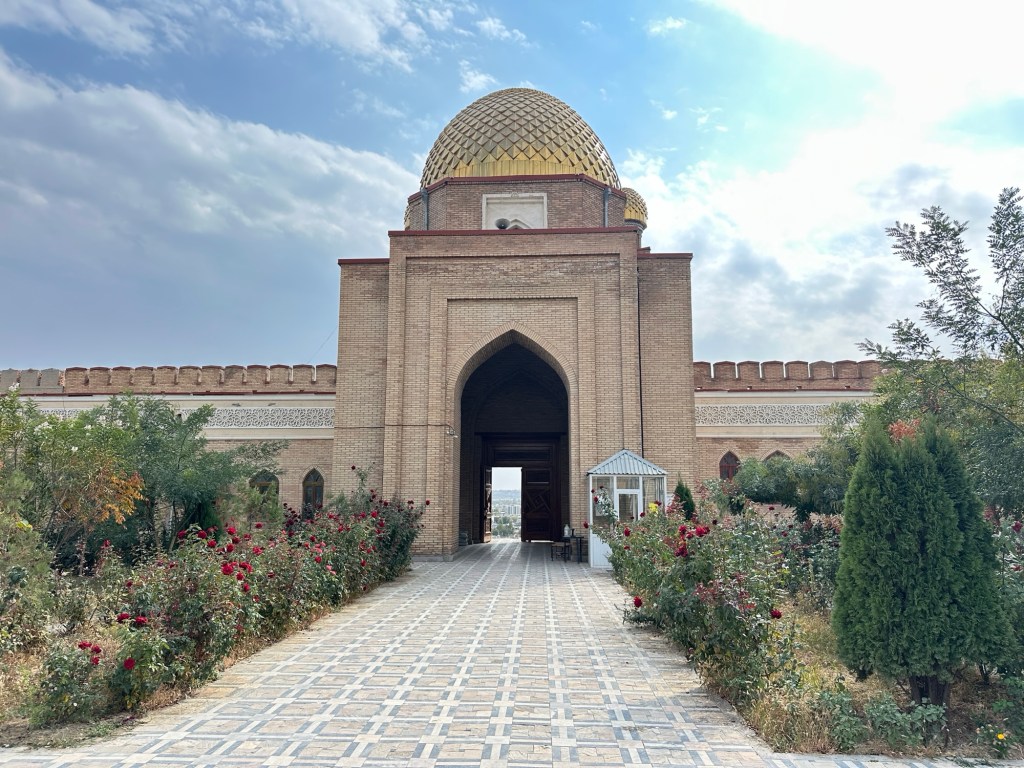
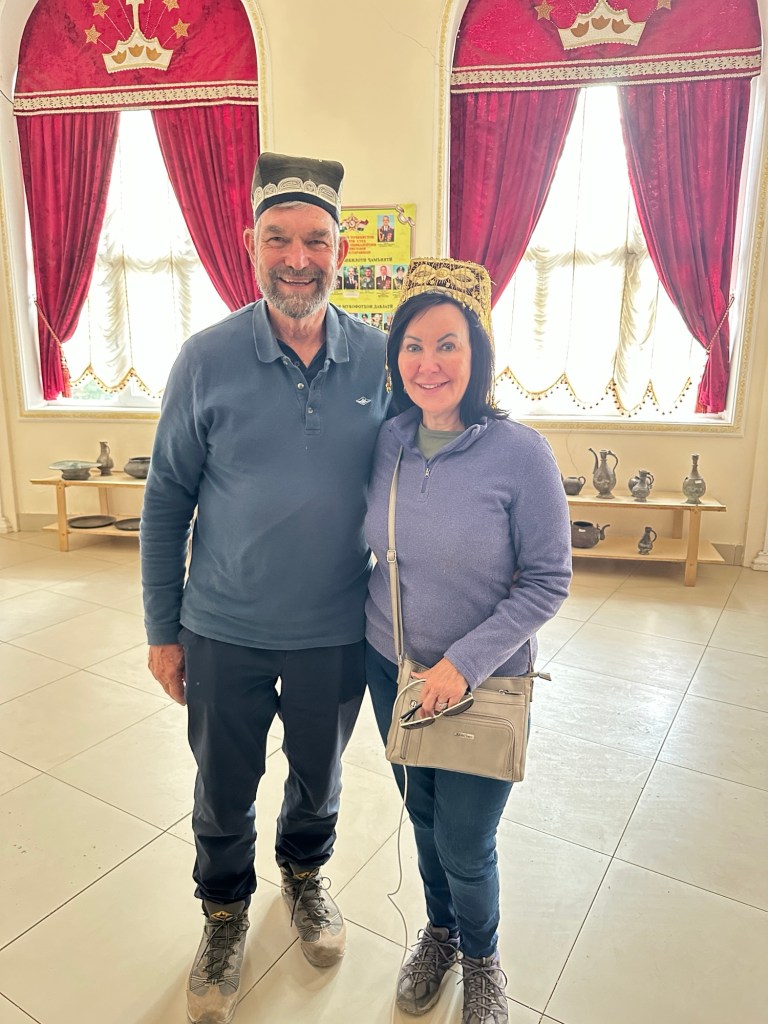

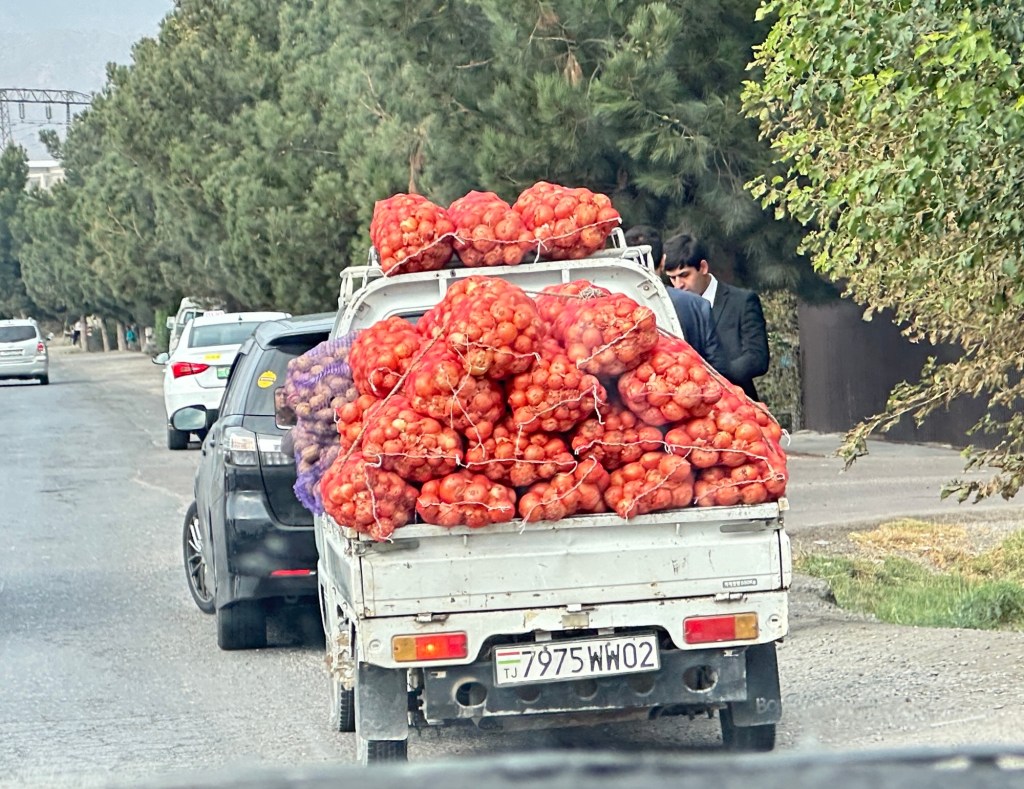
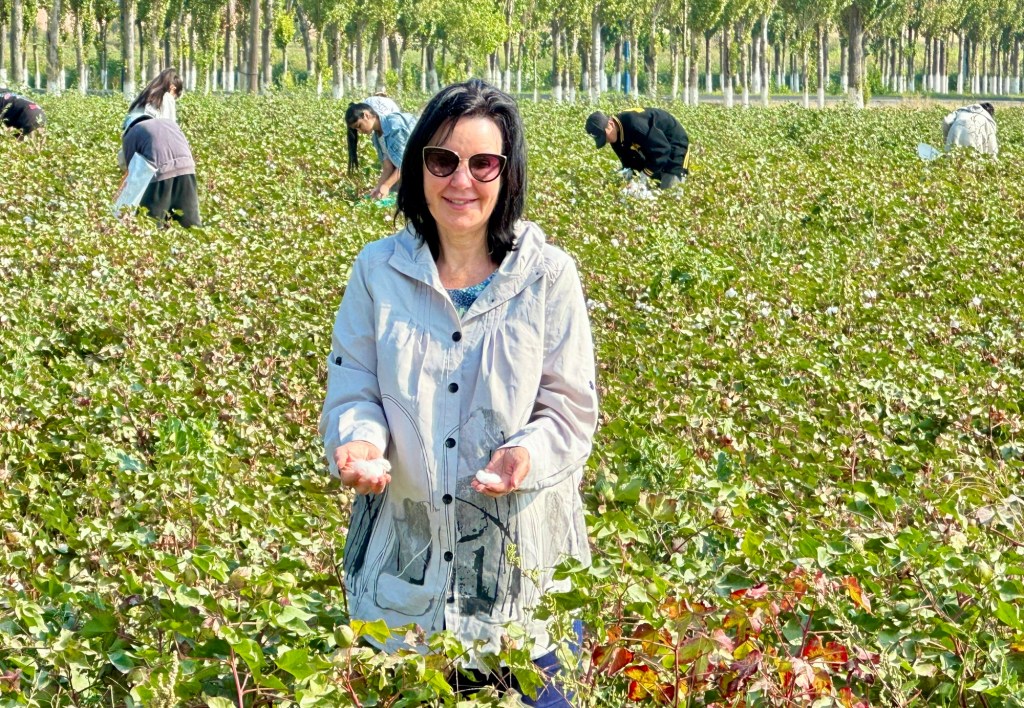
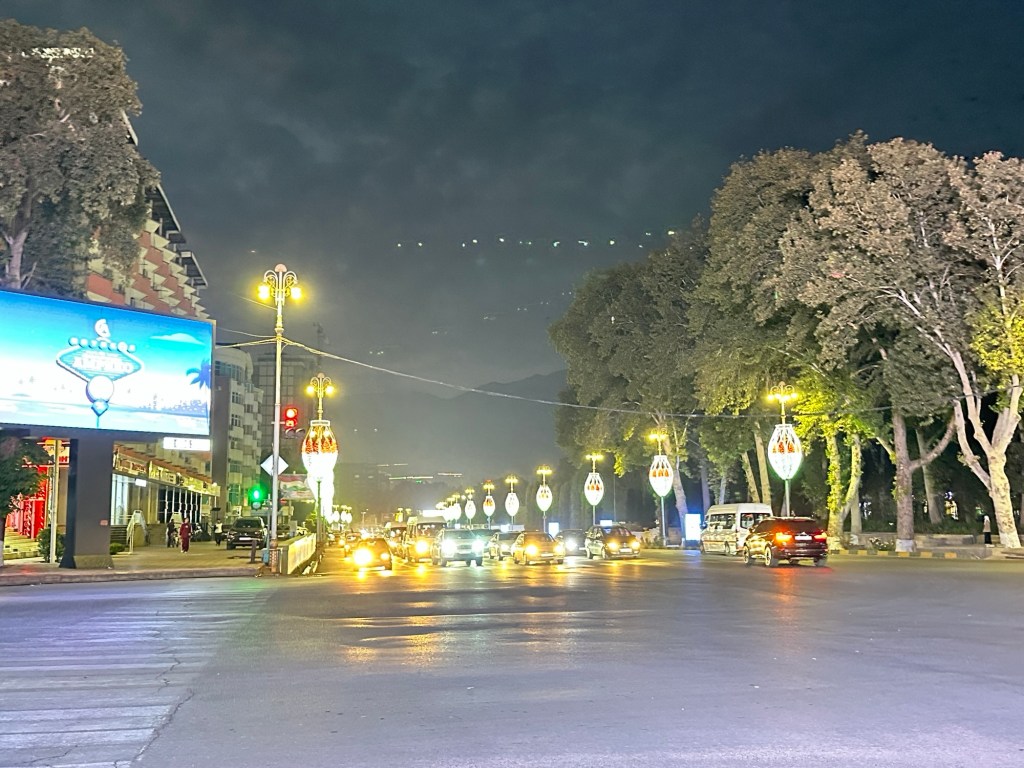
Ninety minutes later, after driving through fields of small crops, rice and cotton farms, we arrive in Khojund. Khojand is one of the oldest cities in Central Asia. Alexander the Great founded his ninth city, Alexandria-Eskhate (Alexandria the Furthest), here on the banks of the Syr Darya. The town was an important Silk Road depot, guarding and taxing the mouth of the Fergana Valley. It was destroyed in 1220 by the Mongols, after a long siege. Today, the modern city is the second-largest in Tajikistan, and has more in common with the Uzbek cities of the Fergana Valley.


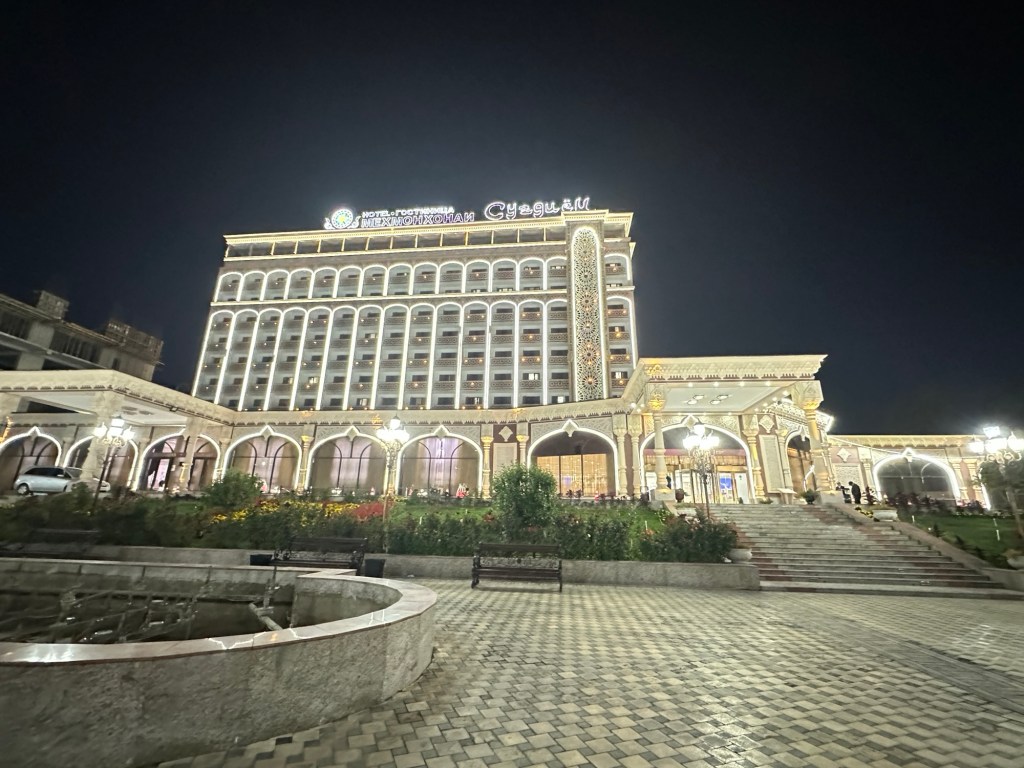
We checked into the Sugdion Hotel. Frank and I then walked to the Panchshanbe Bazaar which was built in the 1950s as one of the largest in Central Asia. It was starting to close so we didn’t see everything – not that you possibly could! Frank was keen to buy a pair of shoes but alas the shoes only went to size 44- Frank with his big feet needed a 46!
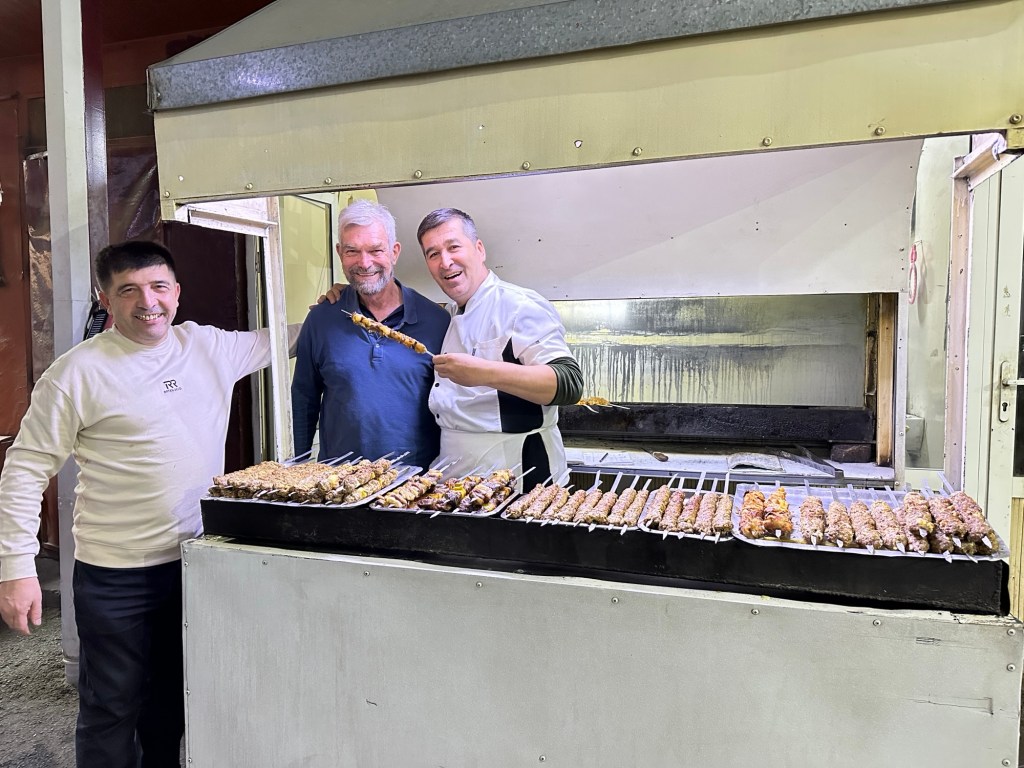
Dinner next at the Grand Hotel. What a night. When looking at the drink list, they actually had a couple of wines – we weren’t sure if you could get a glass only. Frank approached a neighbouring table of 5 men who appeared to be out for a good night, and asked them what red wine they were drinking, and if they recommended it. It was a Georgian red wine, but you could only buy a bottle. Wanting only a glass each, we ordered a beer and a mineral water instead. Soon we noticed the men had ordered another bottle of red and the hotel staff were in the process of opening it. A few moments later we were presented with two extra large glasses of wine. “Welcome to Tajikistan” the men said – “you are our guests”. It was so humbling. How special a moment was that.
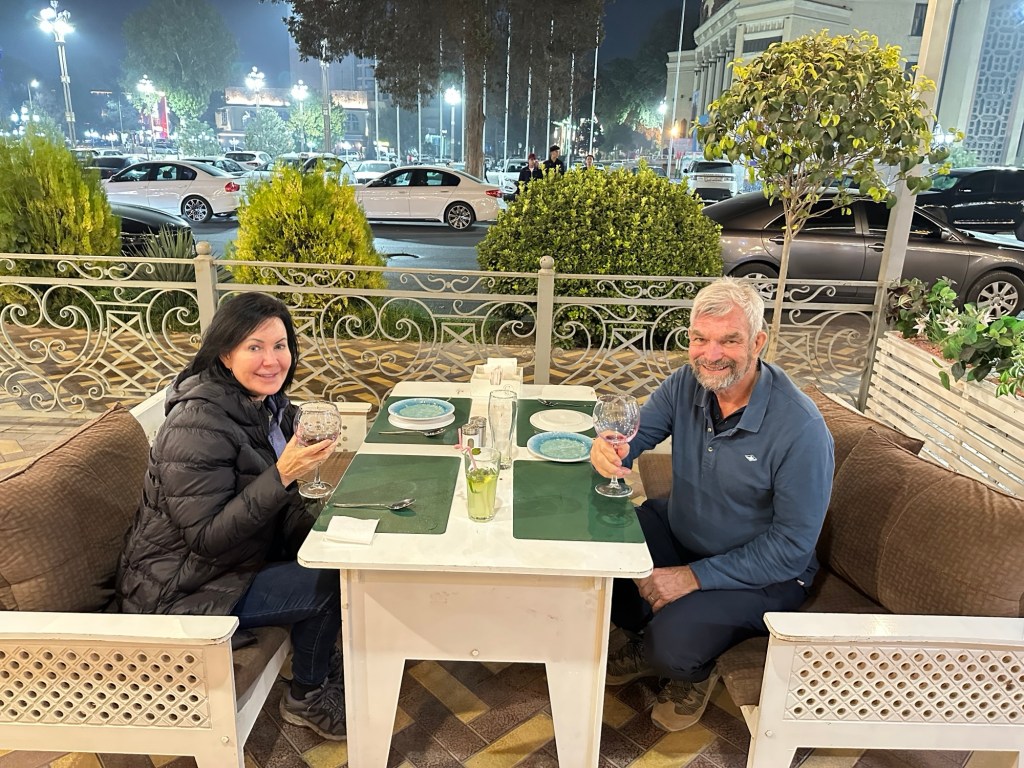
We enjoyed our meals, asked for the bill, then the next minute one of the men was giving us more wine. We conceded to a small drop each then said we’d had enough. Again, it was “you are our guest”. A night we won’t forget!
Day 24
Saturday 4th October
Khujand
24-25 degrees, sunny
A sightseeing tour of Khujand today starting 20 kms away at the Kayrakkum reservoir. This artificial lake was created in the 1950s to install a hydroelectric power station and regulate the flow of the Syr Darya. Residents of a country that does not have access to the world ocean often call it the “Tajik Sea”.

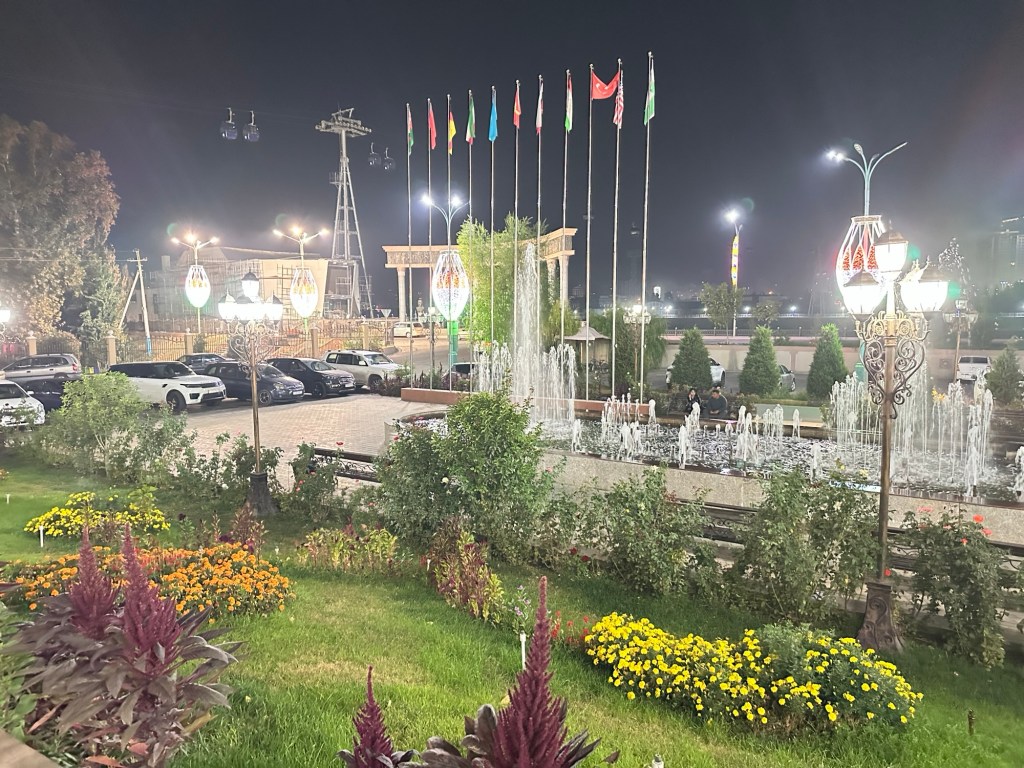
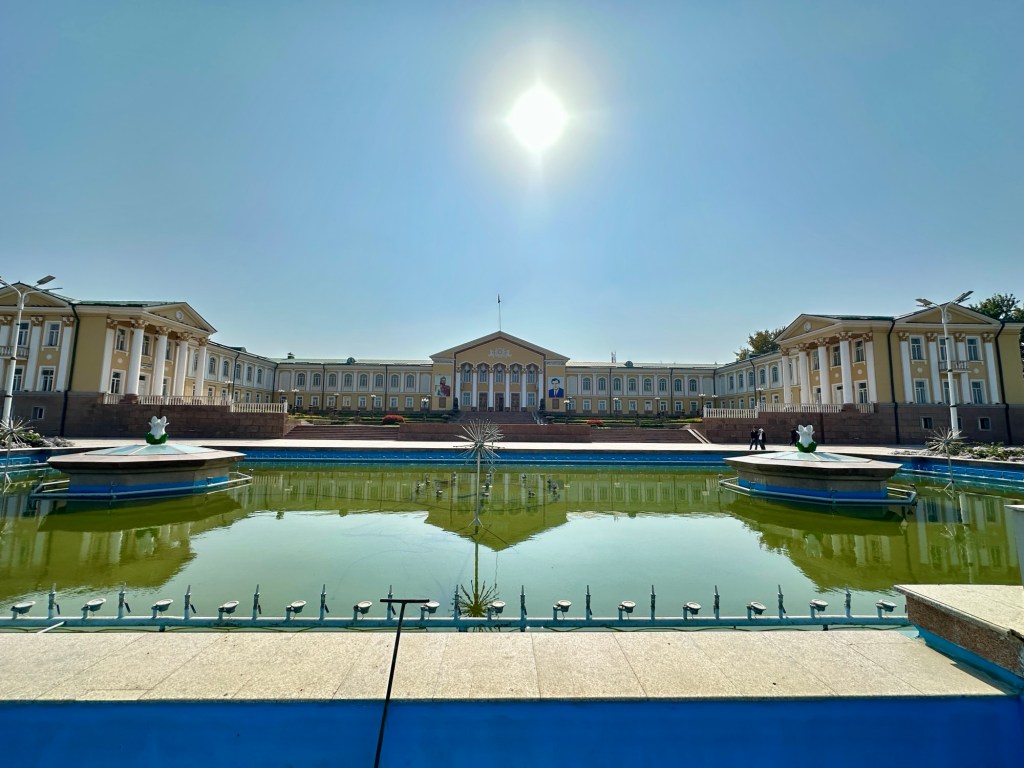
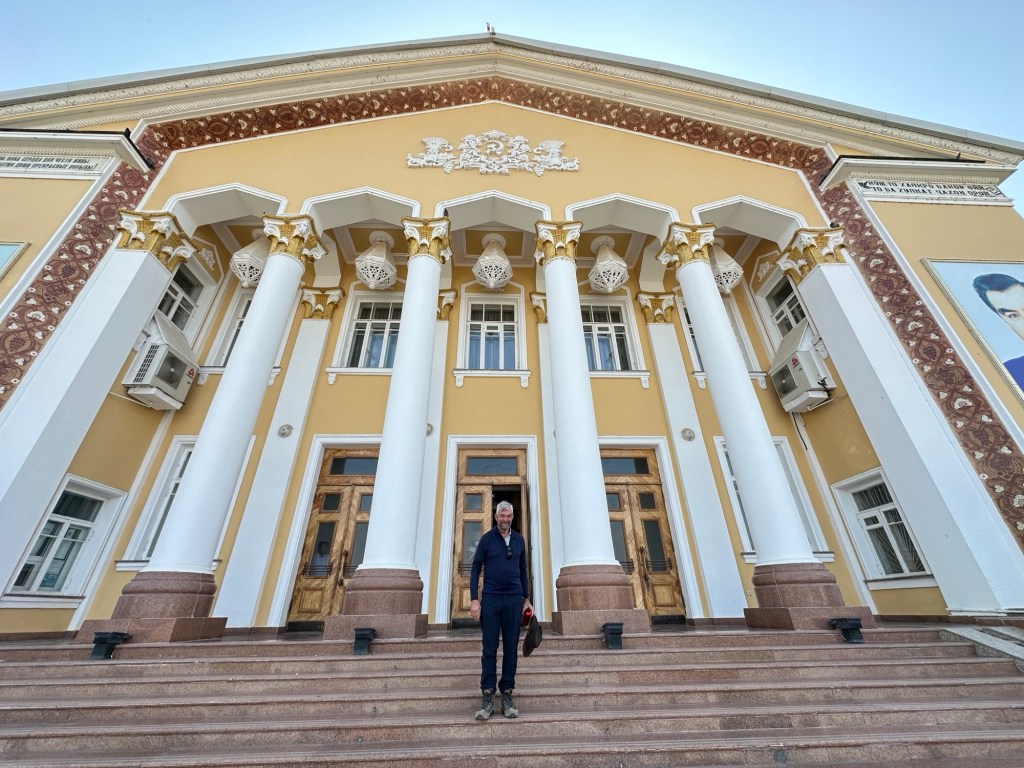
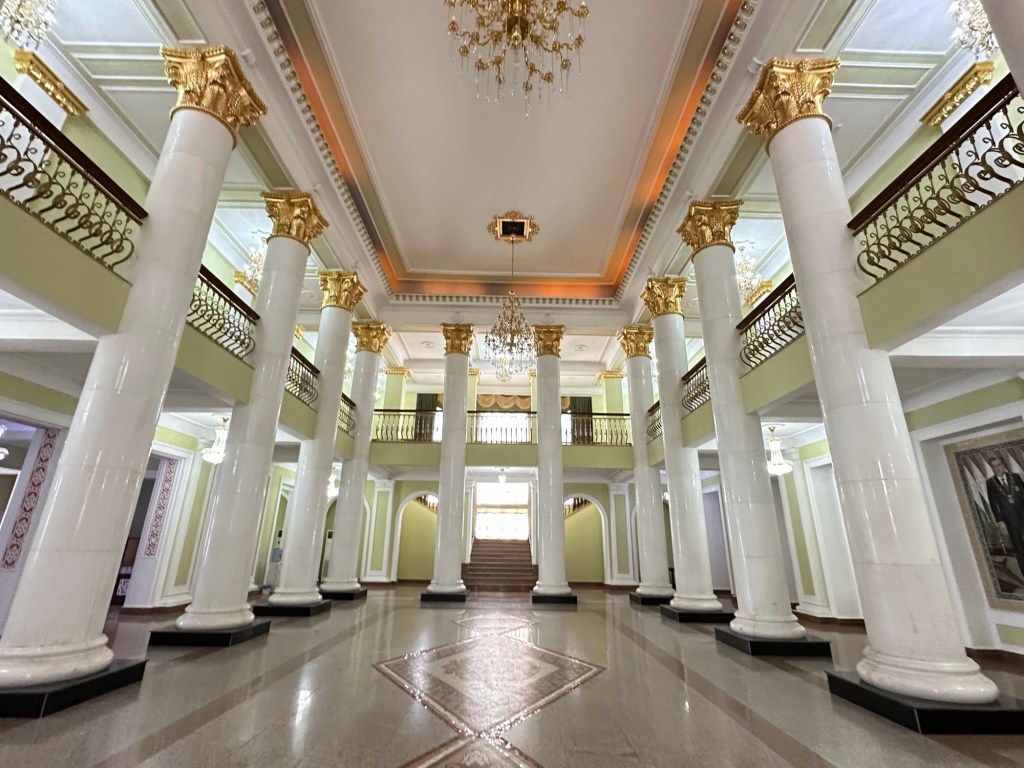
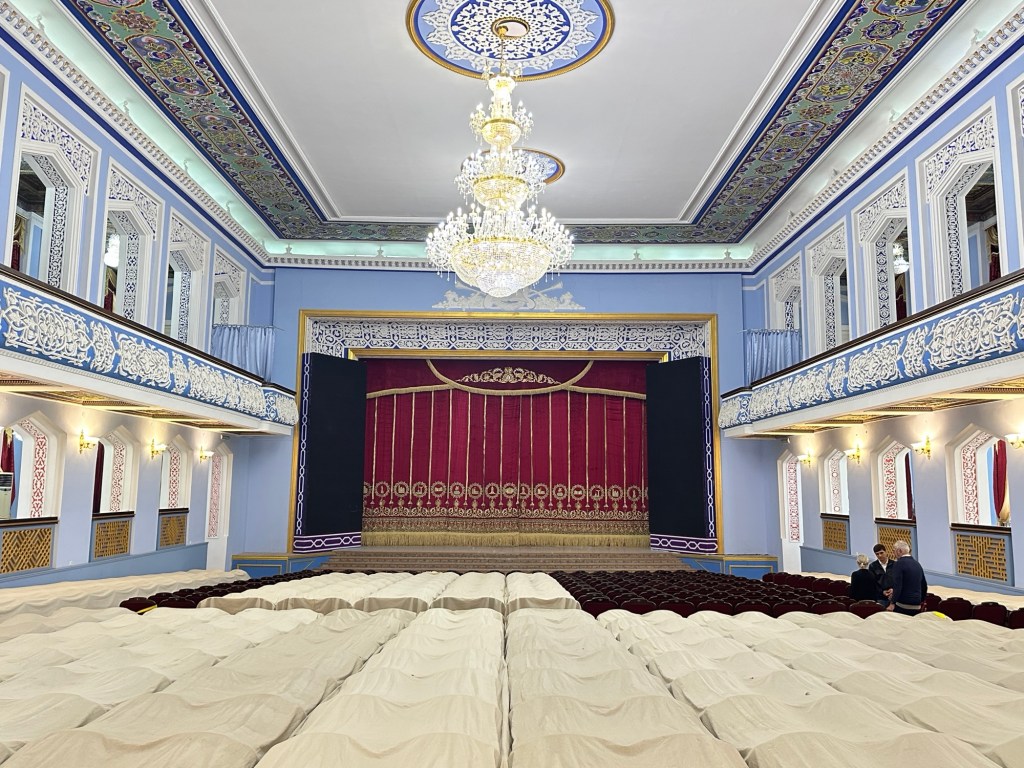
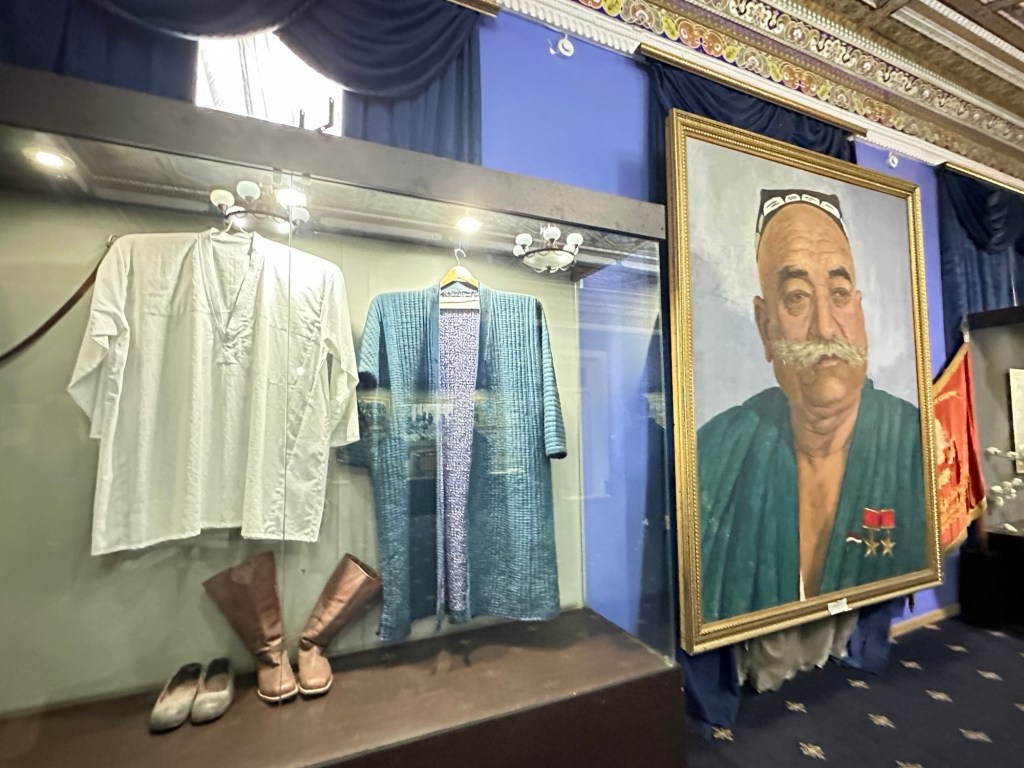
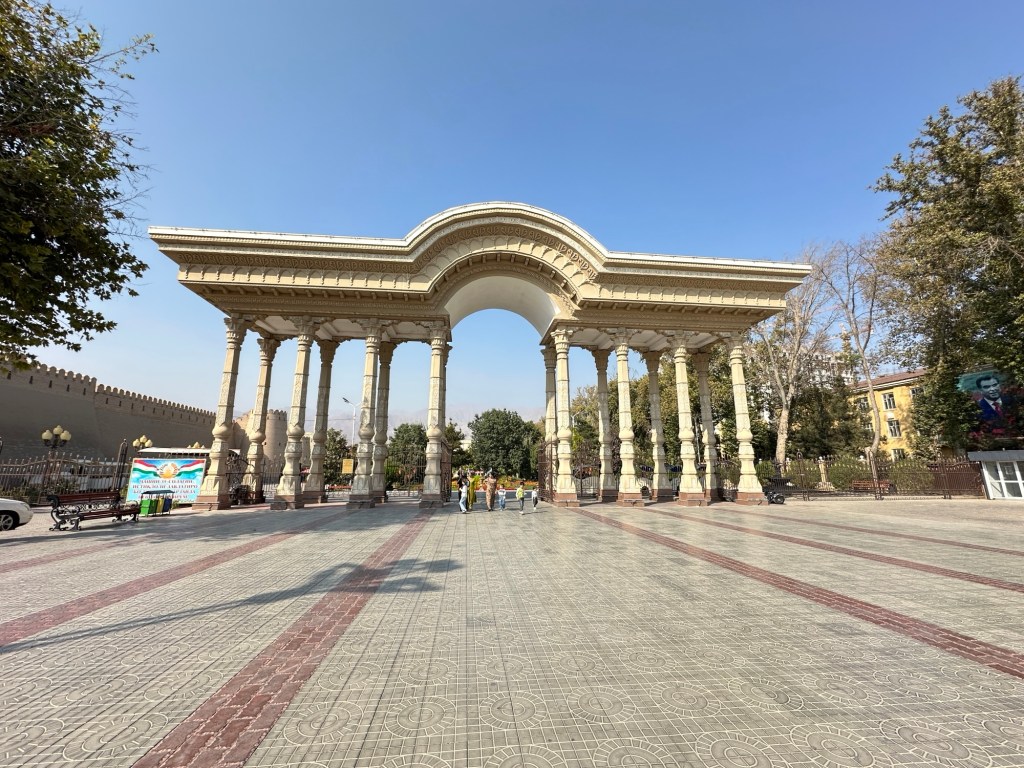
Next, the ‘palace of the people’ was completed in 1958 and gives an interesting insight into the way the Soviet government viewed their own prestige. It is hard to imagine as you enter this estate filled with fountains and gardens facing the Russian style palace buildings that this was actually built on specification by the local Collective director, Urunkojaev (Big Man). He managed to put together a little empire here devoted to promoting and improving collective productivity in a most luxurious setting. Arbob Cultural Palace is now used for government purposes. The government’s key players met there for 16 days prior to the civil war ending. Interesting museum.



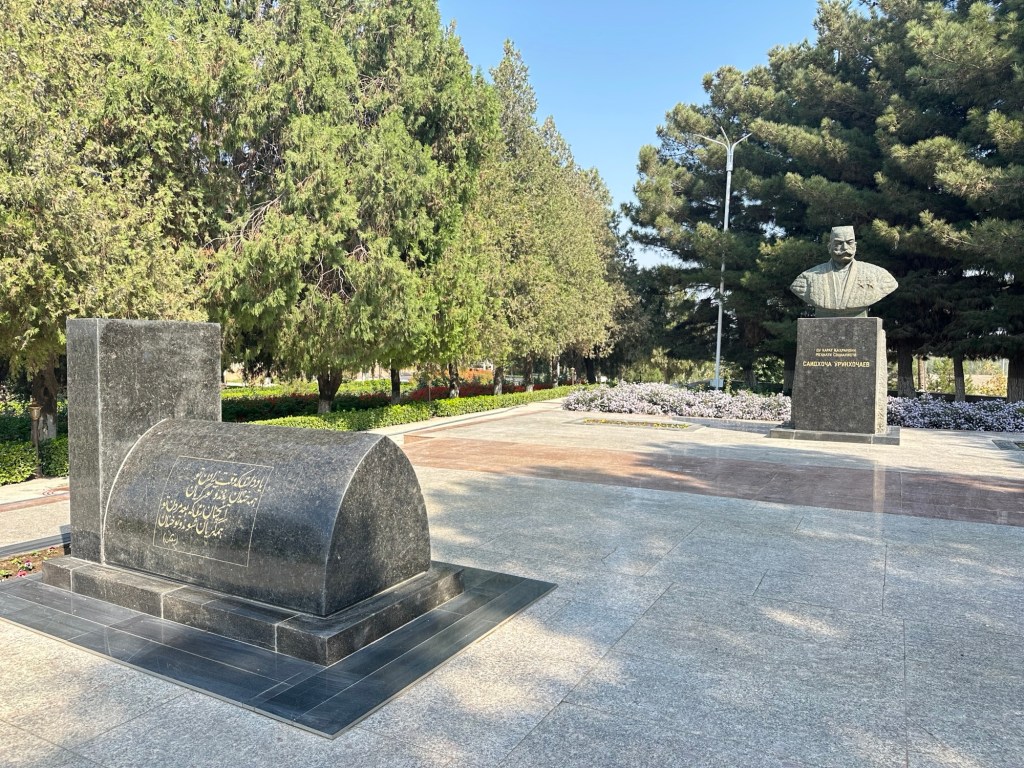

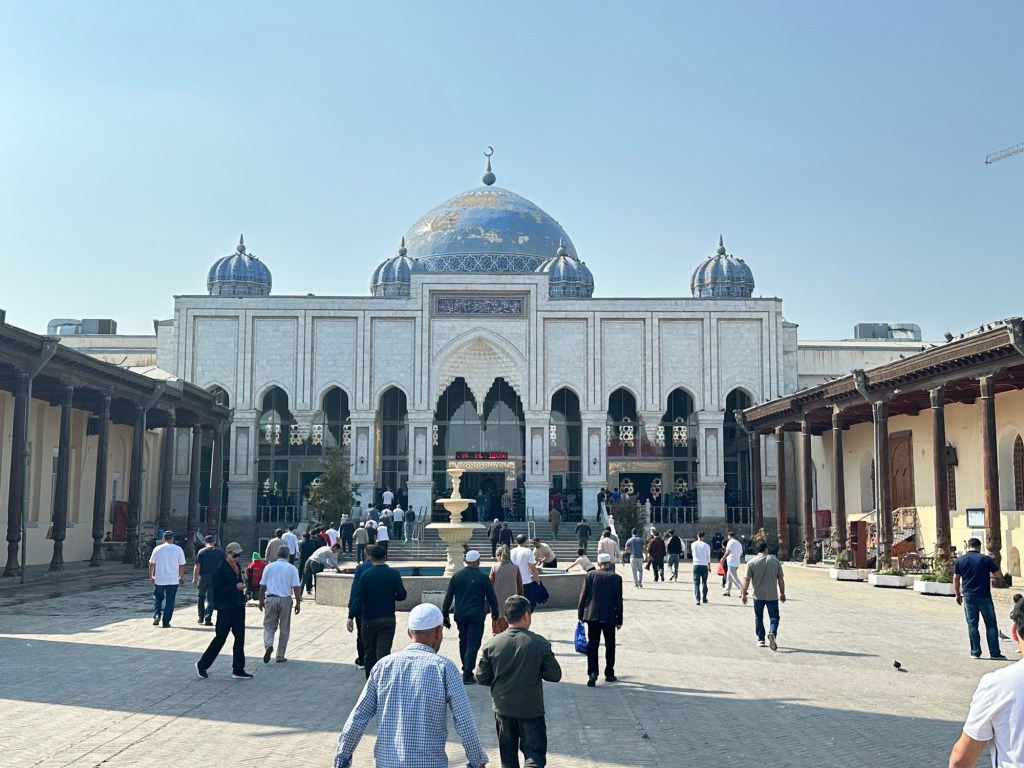
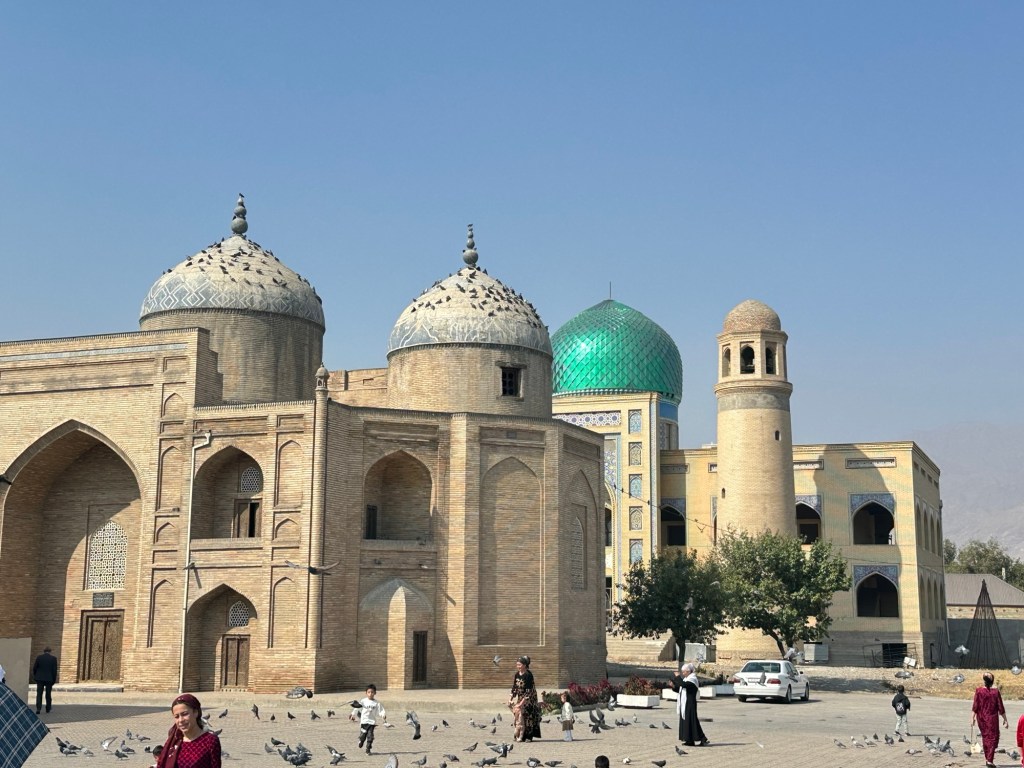
Back to the huge Panchshanbe Bazaar. Nuros gave us a guided tour – so much activity going on. It was quite overwhelming. Across the plaza was the understated tomb-and-mosque complex of Sheikh Muslihiddin, built 1394. We couldn’t go in as it was prayer time. Hundreds of men entering the mosque to pray.

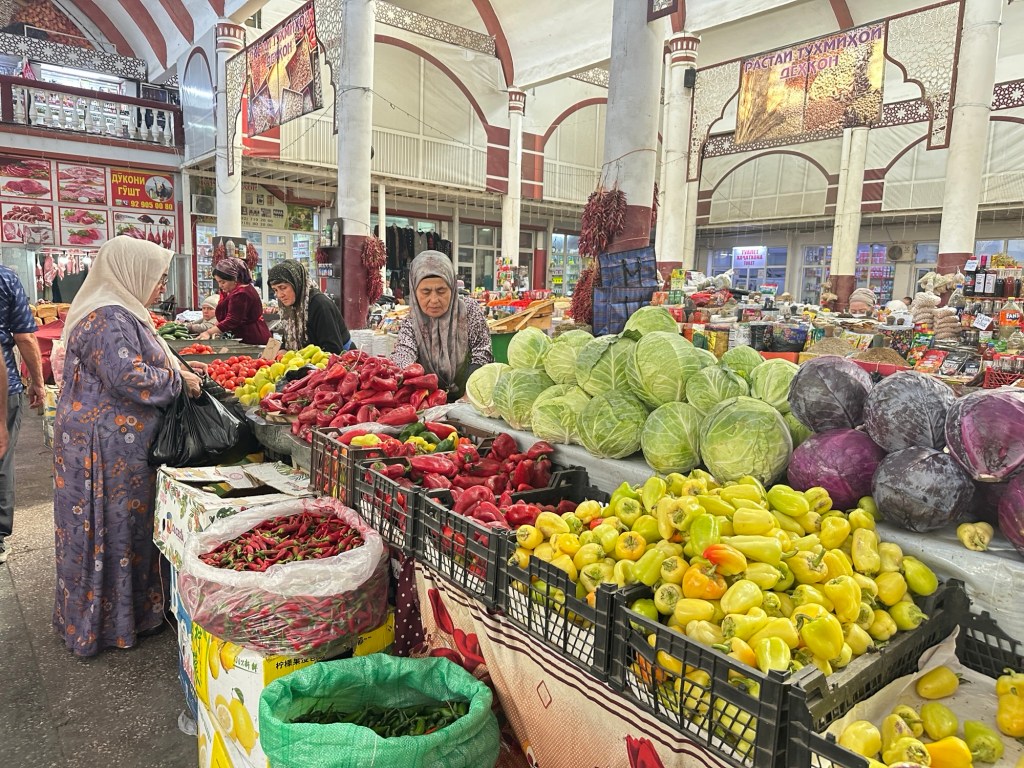
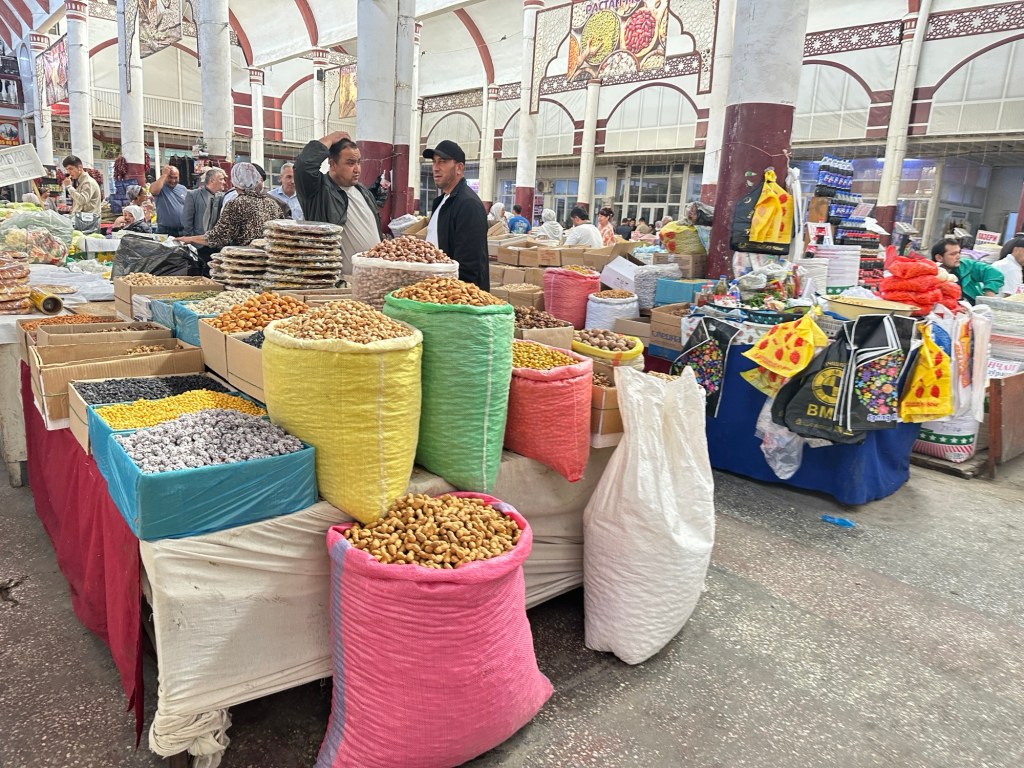

Lunchtime, and another self service meal. Not as much choice as yesterday, but we ended up with a nice beef and vegetable dish.
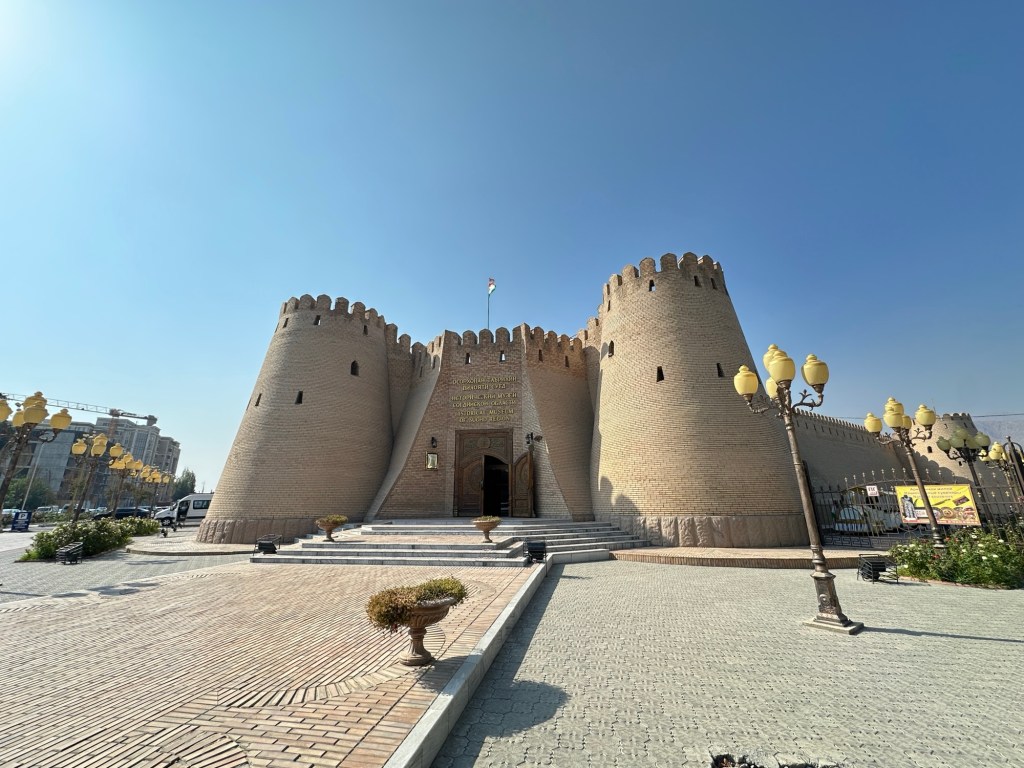
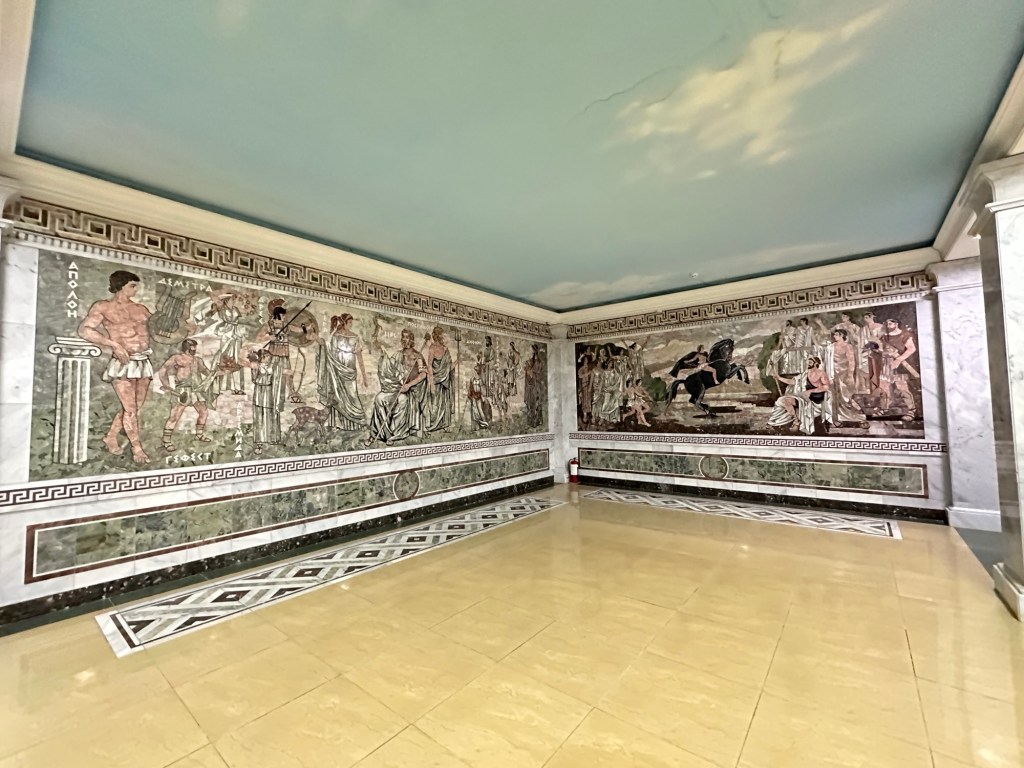
After lunch we visited the Museum of Archeology and Fortification- a great display of Alexander the Great information.
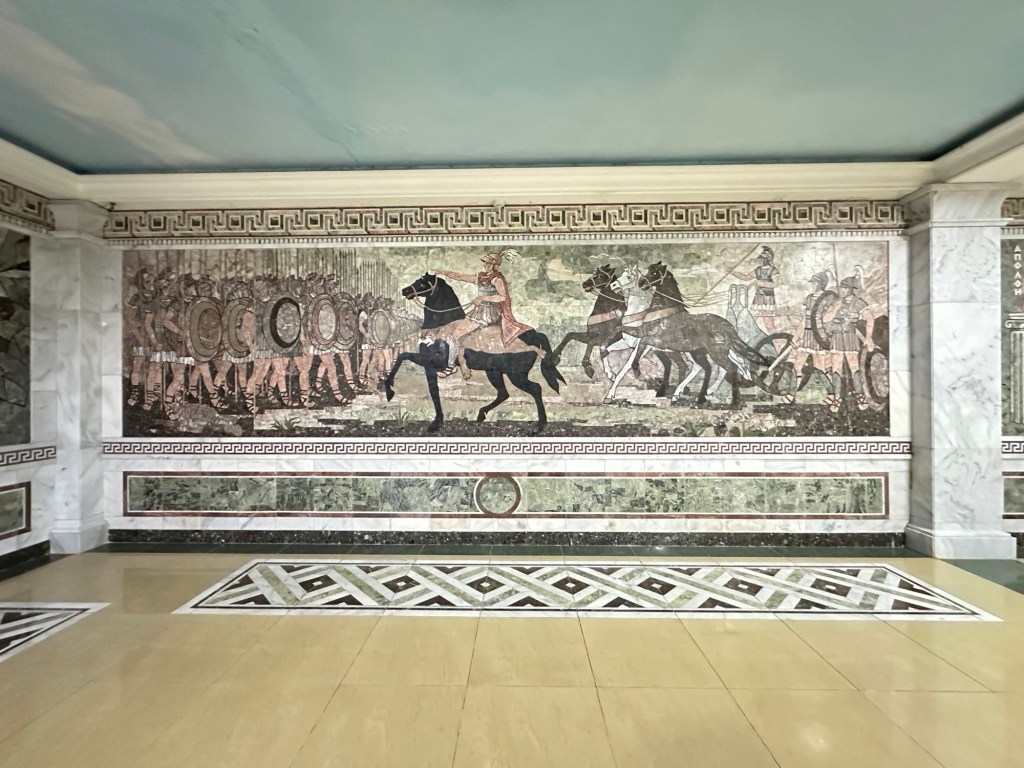
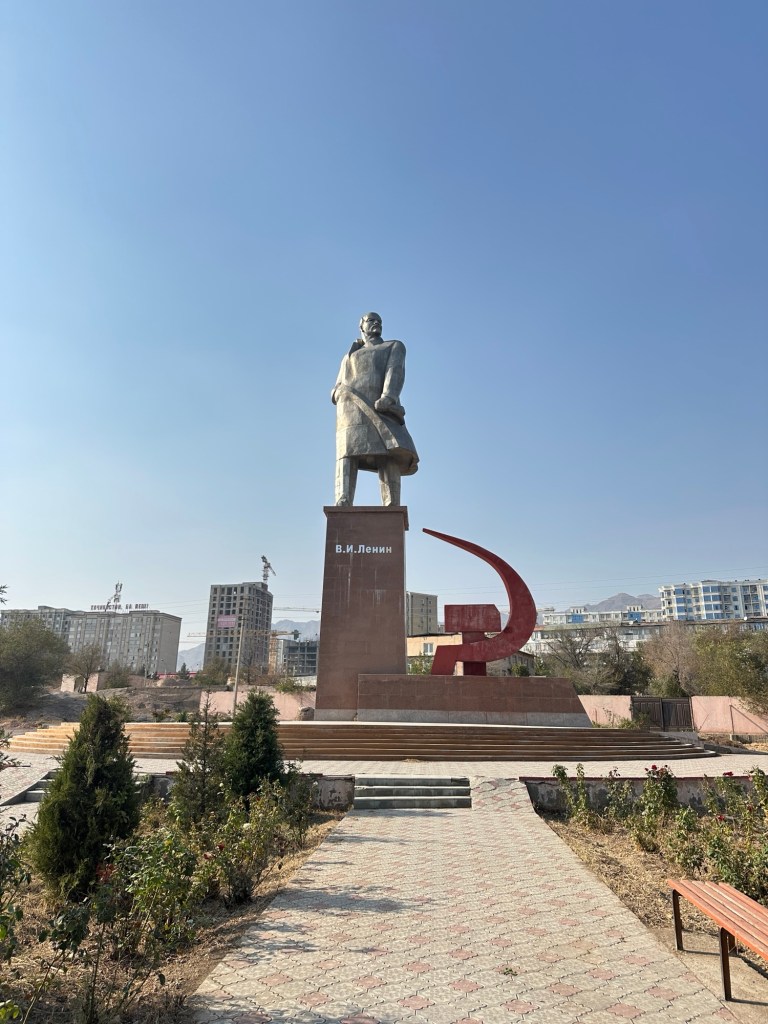
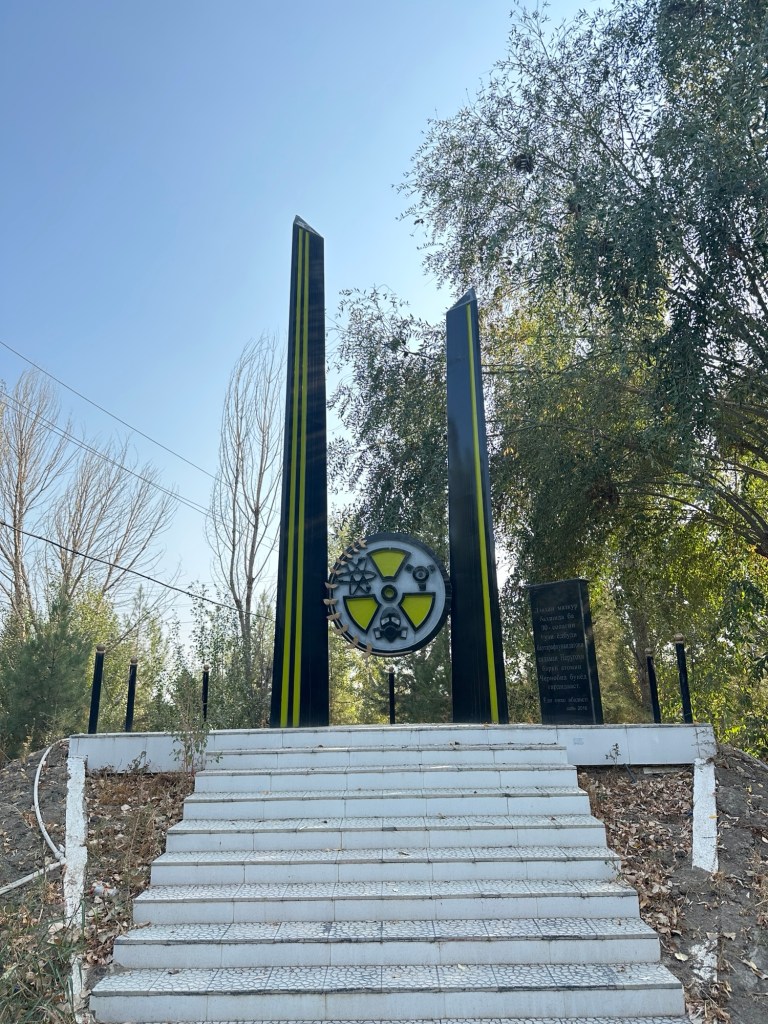
Khojand still has several Soviet era monuments, including one of the largest Lenin statues left in the former USSR, in Victory Park on the north side of the Syr Darya. He’s accompanied by a huge red hammer and sickle, and was unceremoniously moved to this rather out-of-the-way spot in the middle of the night during May 2011. His former plinth, in Somani Park, is now occupied by a gargantuan statue of Ismail Samani. Also a Chernobyl monument and Afghanistan War Memorial.

Dinner tonight at a different local restaurant, nice meal, and we even managed to get another bottle of the wine we’d had the night before .
Day 25
Sunday 5th October
Khujand to Margilan
12 – 22 degrees, sunny
We set off today to the beat of the trumpet today – there was a wedding breakfast at our hotel.
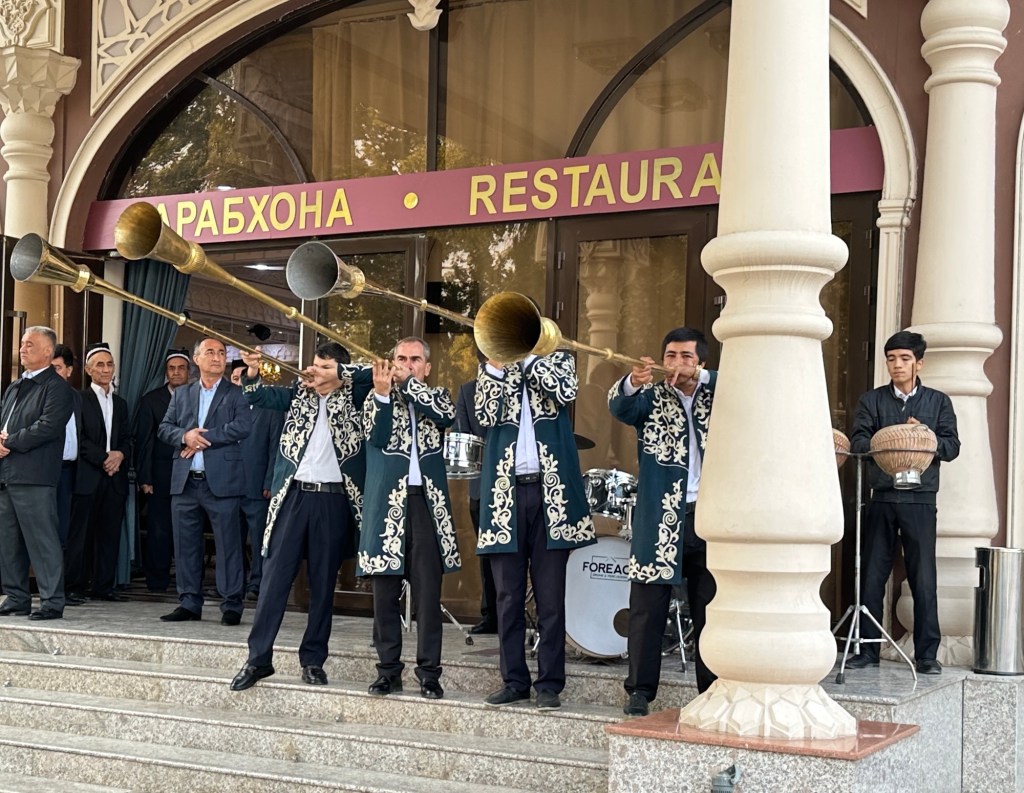
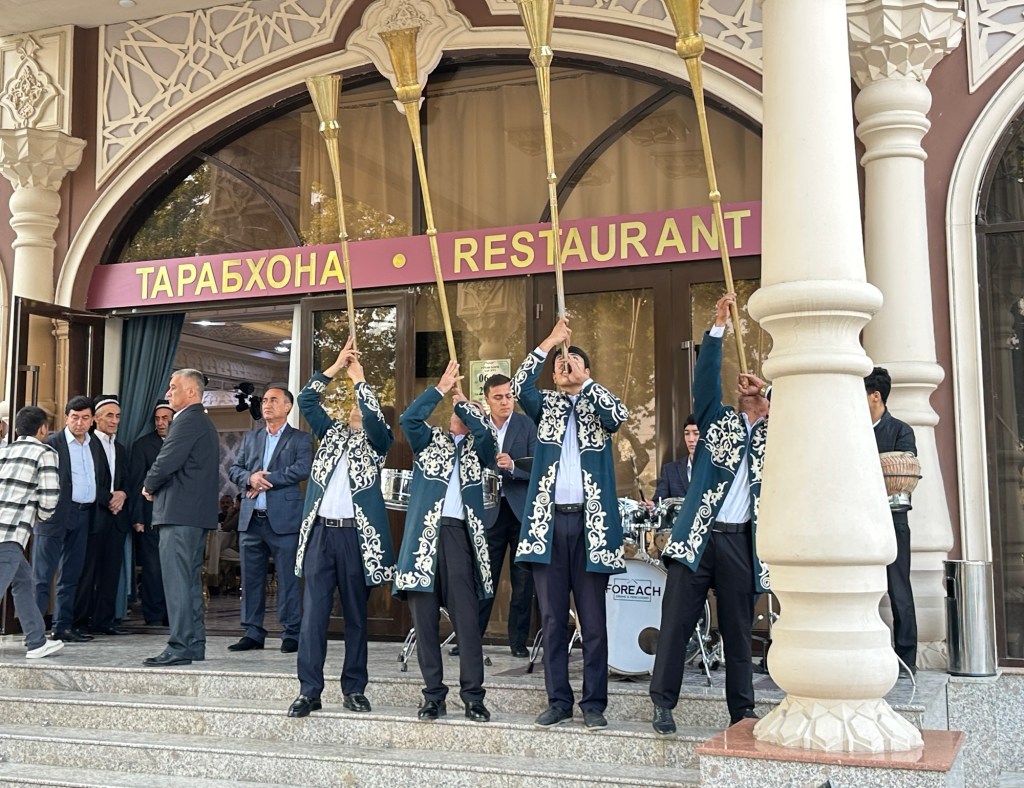
Two hours of rough roads to the Parar/Andarkhan Border where we meet our Usbek guide.
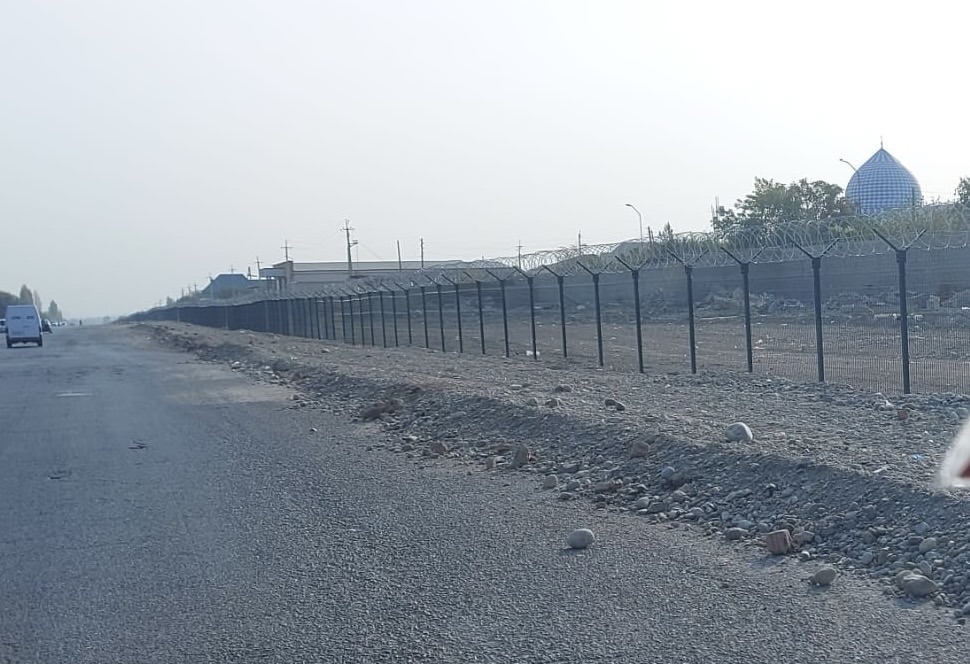
Part of our drive was right up against the Kyrgyzstan border.
Interesting facts about Tajikistan
Population 10 million
Religion- 85% Sunni, 5% Shia, and 10% Christian
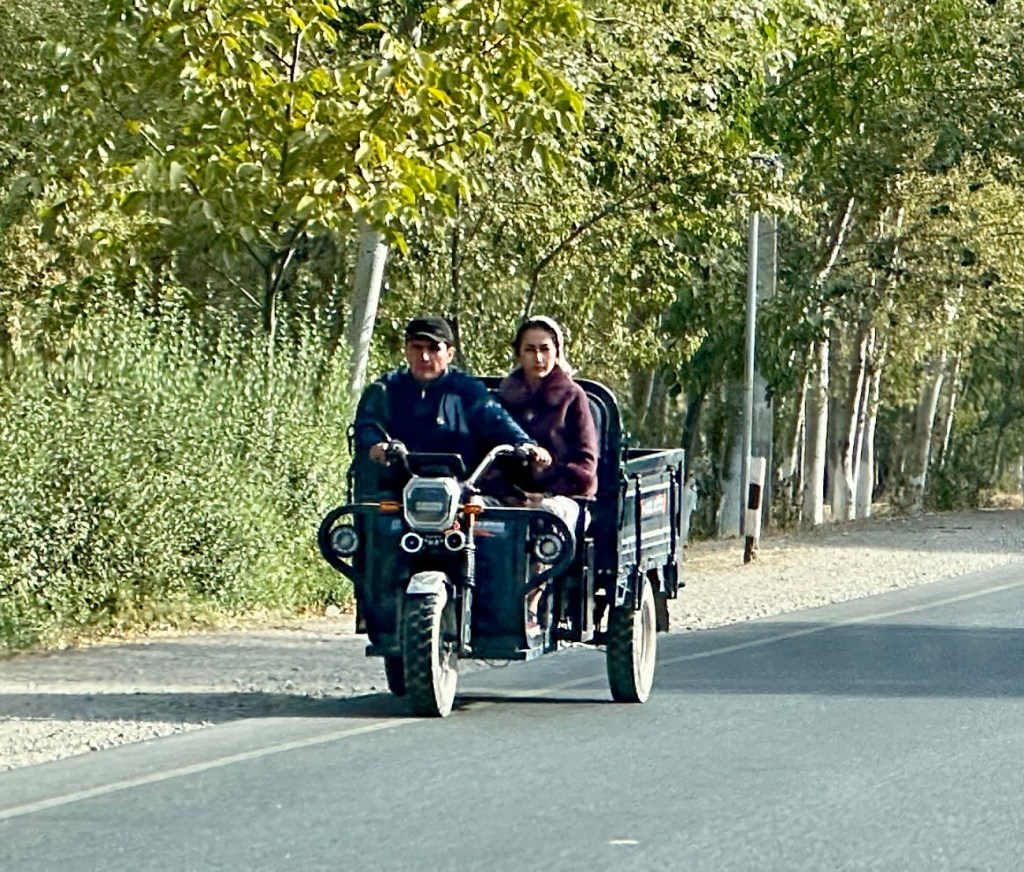
Big Soviet influence, still a lot of Russian cars, typically Ladas.
Very few people drink alcohol, difficult to find alcohol stores and even if you do find one, they only sell beer or vodka (hundreds of varieties).
The people are very friendly and respectful. The young ones love to practice speaking English with us.
Food – bread with every meal, sweets for breakfast, beef, lamb and chicken shaslicks are popular, lots of fresh salads and vegetables available, and pilaf (plov) remains the national dish.
Clothes – most men wear the traditional hat (dotti), women are very conservative wearing 3/4 dress and matching pants (Indian style) with lots of bling, also a blingy head scarf.
Hotels fall into three categories: Soviet-period hotels whose designated star-rating may demand something of a leap of faith; modern, international-style hotels with standards similar to those anywhere else in the world; and smaller boutique hotels that offer character and a more personal touch. Tajikistan is probably the least geared up of the Stan’s for visitors, with mostly run-down Soviet-period accommodation. They fulfil all the stereotypes of the former USSR, with bleak, anonymous rooms. Most hotels in this category follow the Soviet system of having a woman (dezhurnaya) responsible for each floor.
We felt very safe in Tajikistan at all times
 Glammy Goes Global