
Thursday 11th September 2025
Finally, the day had arrived for what must be our most carefully plotted and long-awaited adventure yet. The plan originally called for seven of us to roam the storied lands of Central Asia, but life had other ideas—our dear friends Kaye and Ross had to bow out at the last moment for health reasons. So it’s now five of us – Leanne and Robert from Brisbane, Heidi flying in from Canada, plus ourselves, all bound for the fabled “Five Stans,” a region steeped in Silk Road legends and mystery.
The journey began in style with a 2am lift-off from Brisbane. Emirates made sure we felt every inch the pampered traveller—chauffeured limousine to the airport, a serene lounge to shake off the midnight yawns, then fourteen blissful hours of business-class indulgence to Dubai. Think linen-draped tables, champagne flutes that never ran dry, and a menu that rivalled fine dining on the ground. After a leisurely four-hour layover in the Dubai lounge, we floated on to Istanbul in equal luxury for the next four and a half hours. This, we decided, is absolutely the way to travel.
Reality re-asserted itself on the final leg – a three and a half hour hop, in the back of the plane from Istanbul to Ashgabat, Turkmenistan, on Turkish Airlines. Our feast of fine dining and French Bordeaux gave way to a single option of tepid pasta and a humble glass of Turkish red. A gentle reminder, perhaps, that the real adventure was about to begin—and that our “first-world problems” were best left at 30,000 feet.
Touchdown in Ashgabat came just after midnight, when the airport was hushed but far from simple. We already had our precious Letter of Invitation (which you need just to get on the plane), yet the real fun was only beginning. Turkmenistan requires a visa on arrival— a crisp $85 USD, cash only— and, for good measure, a $33 USD PCR test. Easy enough on paper.
First challenge: no signs, no instructions. We eventually deciphered the system – if you can call it that. Step one: join a slow-moving queue for about 30 minutes to apply for the visa. Step two: surrender passports and shuffle to another line – 50 minutes this time – to actually pay for the visa. Step three: back to the first counter to reclaim said passports.
Meanwhile, a side quest: the PCR test. One at a time we ducked out, scribbled our names on a lonely clipboard, and faced a man in a white coat who swabbed (or should I say waved the swab around) with casual indifference. Whether the sample ever matched the name was anyone’s guess. Results? Not a word. We began to suspect the whole exercise was less about public health and more about a tidy little revenue stream from jet lagged travellers.
But hey – we were officially in Ashgabat, the capital of Turkmenistan—and our adventure has started.
Turkmenistan is located in the southwest of the Central Asia region. It is bordered by Kazakhstan to the northwest, Uzbekistan to the north and east, Afghanistan to the southeast, Iran to the south, and the Caspian Sea to the west. Though Turkmenistan is the second largest country in Central Asia in terms of land area, most of the land consists of oases scattered amid otherwise uninhabitable desert. The economy is largely based on oil and natural gas from the Caspian Sea. Turkmenistan is known for archaeological ruins including those at Nisa and Merv, major stops along the ancient trade route the Silk Road.
One positive after all this excitement – our luggage was there waiting for us. Mr Bahtiyar was also waiting – he had been there for 2 hours while we had been jumping through all the bureaucratic hoops. Turkmenistan maintains tightly controlled borders and strict visa regulations which we had already discovered, but it also requires that all foreign visitors have an official minder,
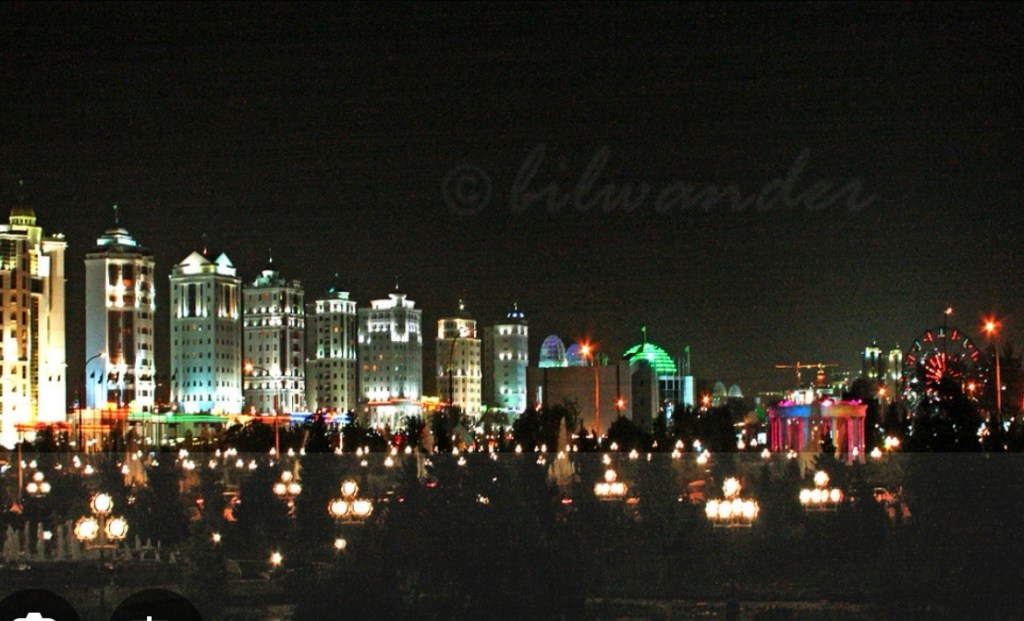
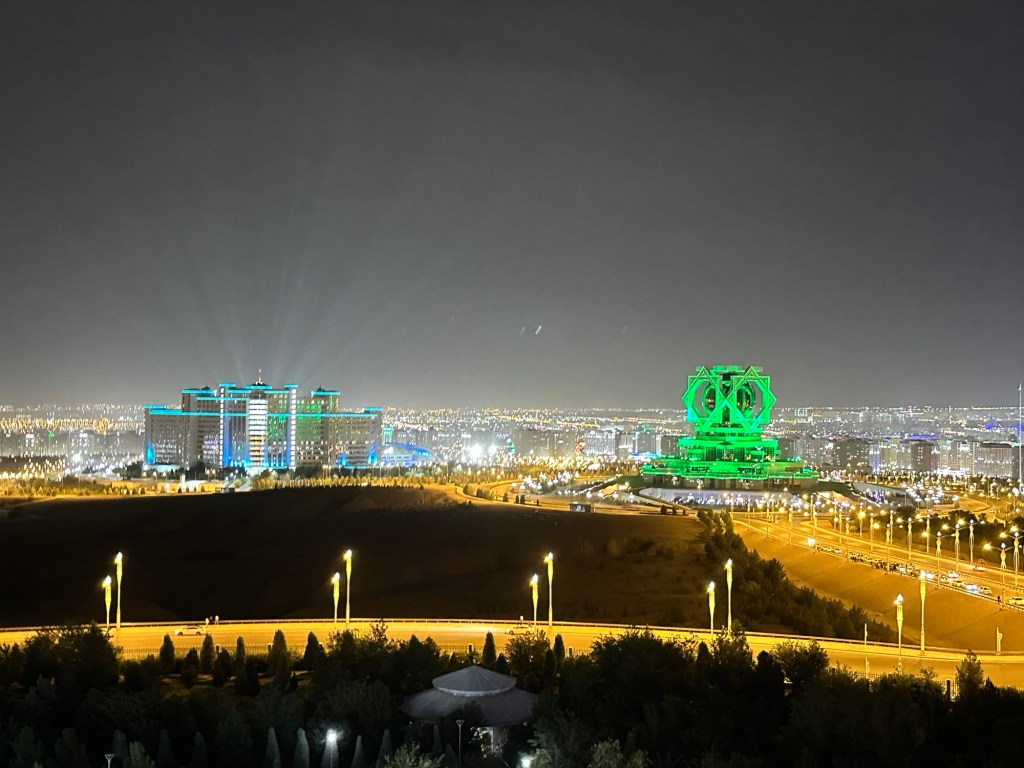
Bahtiyar whisked us away through Ashgabat’s midnight glow, and suddenly the city felt like a giant neon playground. Stadiums, shopping malls, and even the most solemn government buildings blazed with colour—an electric skyline that could have been Vegas or Dubai on a caffeine high.


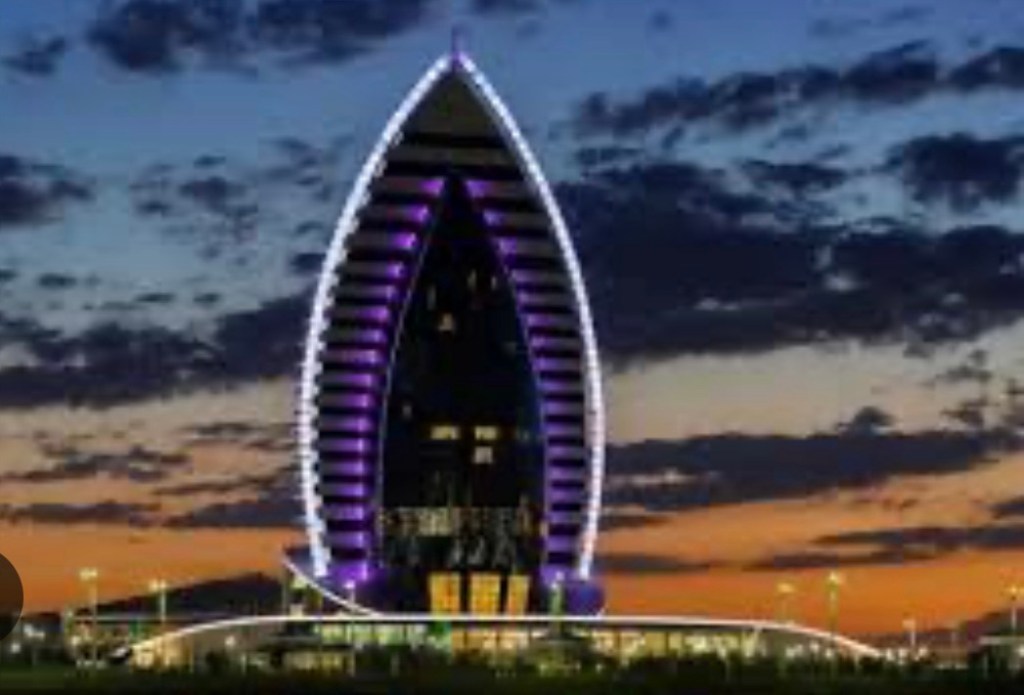
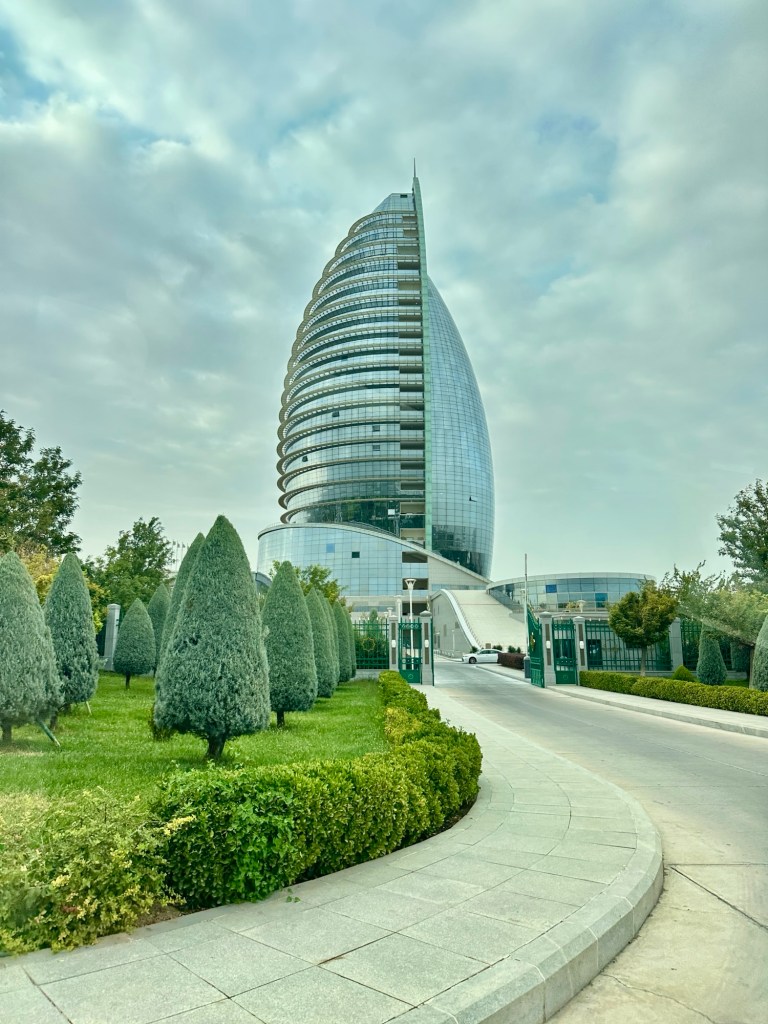
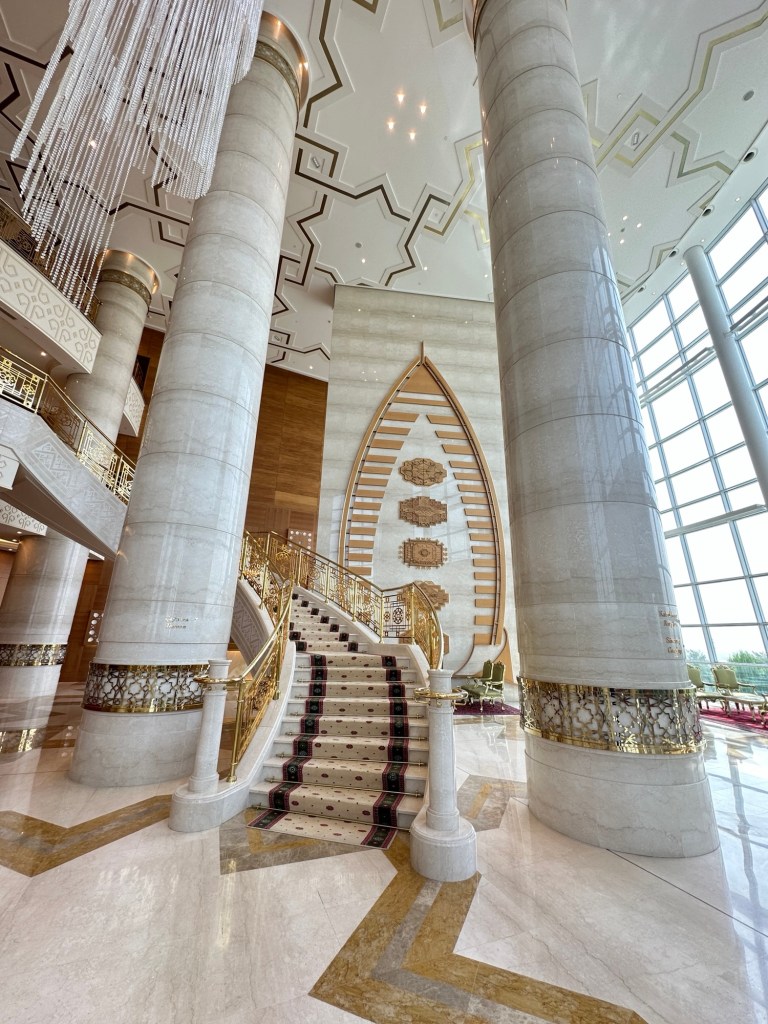
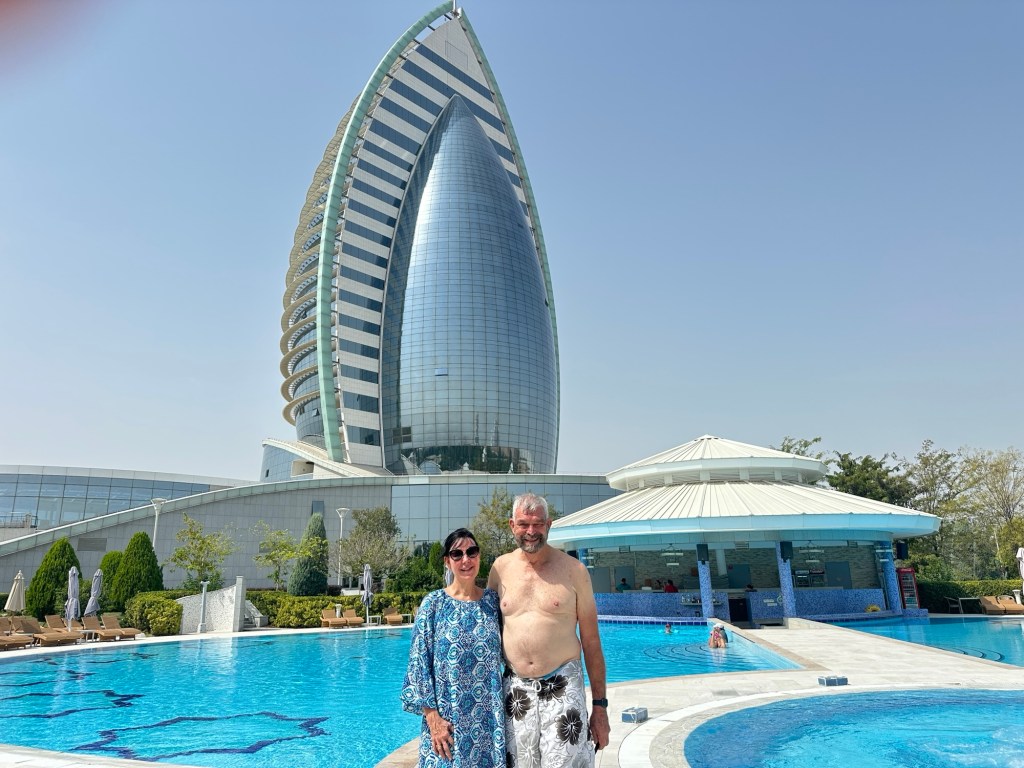
Then we rounded a bend and wow—the Yyldyz Hotel soared above the city like a crystal starship. Shaped like a futuristic pyramid, this five-star hotel reminded me of the Flame Towers in Baku, Azerbaijan This was our home for the next three nights. I couldn’t believe we were staying in one of Turkmenistan’s finest hotels. Perched in the foothills of the Kopetdag Mountains with sweeping views across the entire capital, the hotel’s gleaming profile is visible from anywhere in Ashgabat (Yyldyz means “Star” in Turkmen).
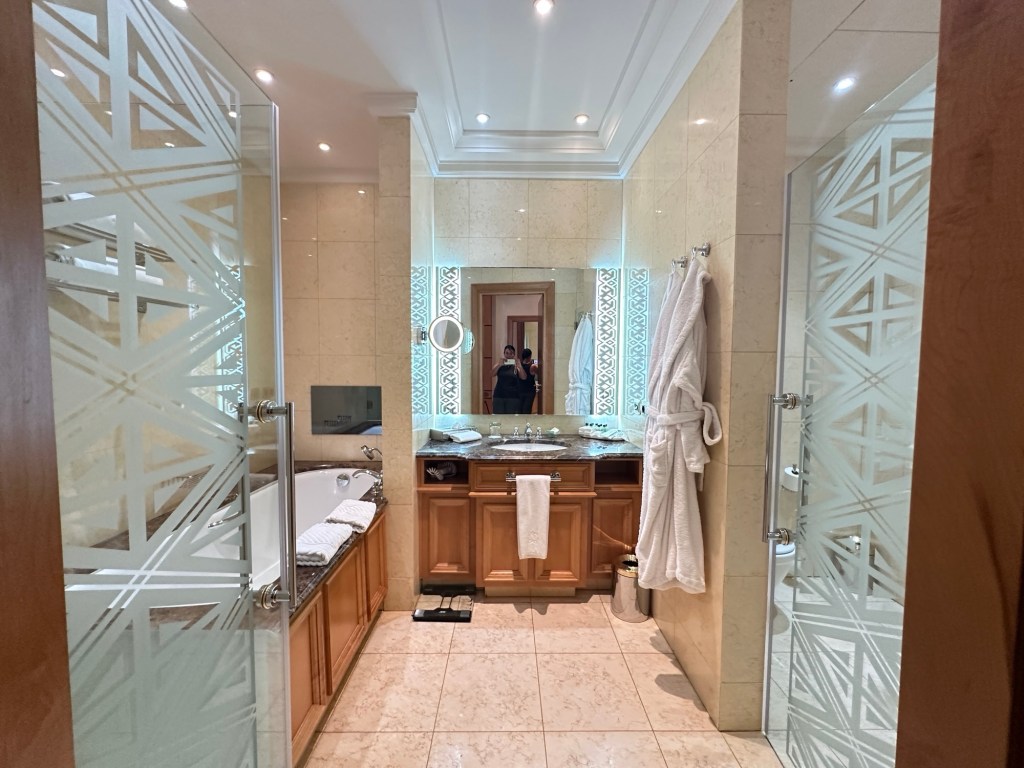
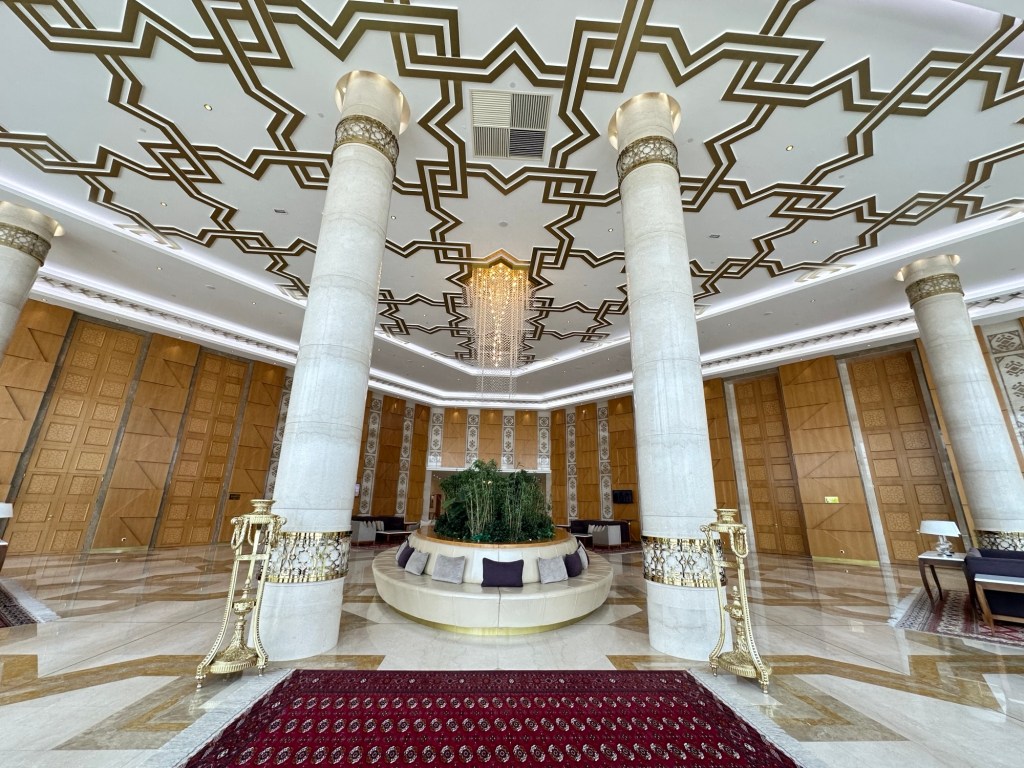
Inside, the opulence dialled up another notch. Our suite felt bigger than our apartment back home—high ceilings, plush carpets, and a view that made us want to stay awake forever. The bathroom floor was heated even though it was 30 degrees outside. But at 4 a.m., even starry-eyed travellers need sleep. Time to explore more tomorrow.


Day 2
Friday 12th September
Ashgabat
23-31 degrees, cloudy
Rudely woken by the alarm at 9am, we trundled down to breakfast before they closed up. For those who know Frank, if there is a meal on offer it can’t be missed!
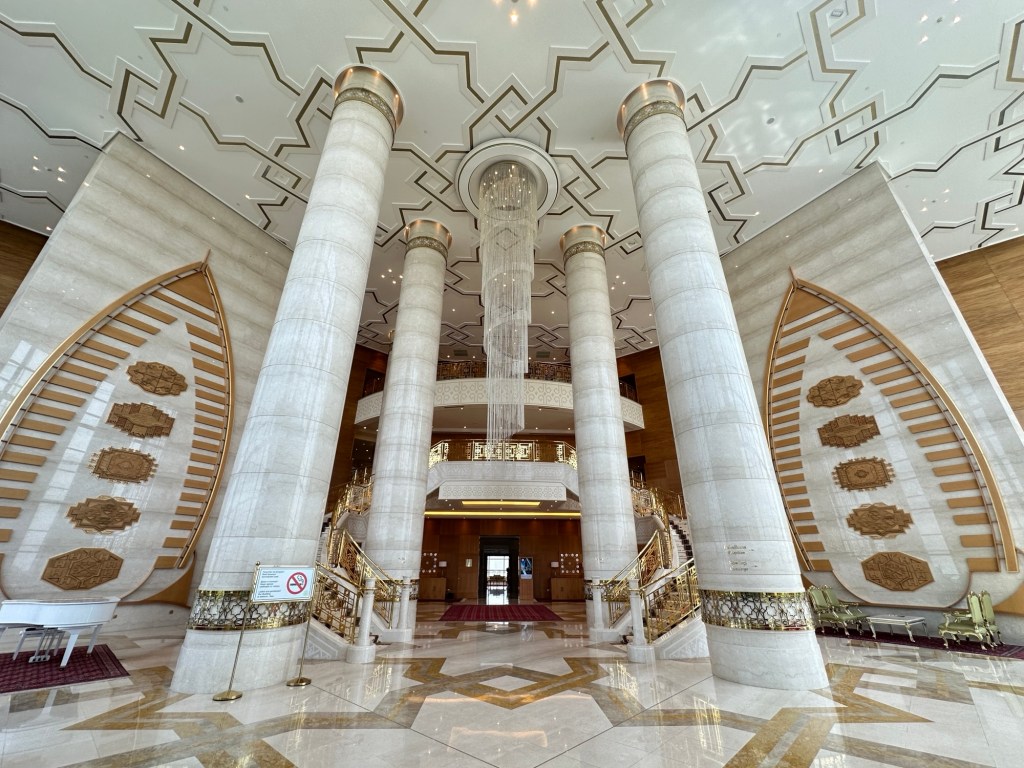
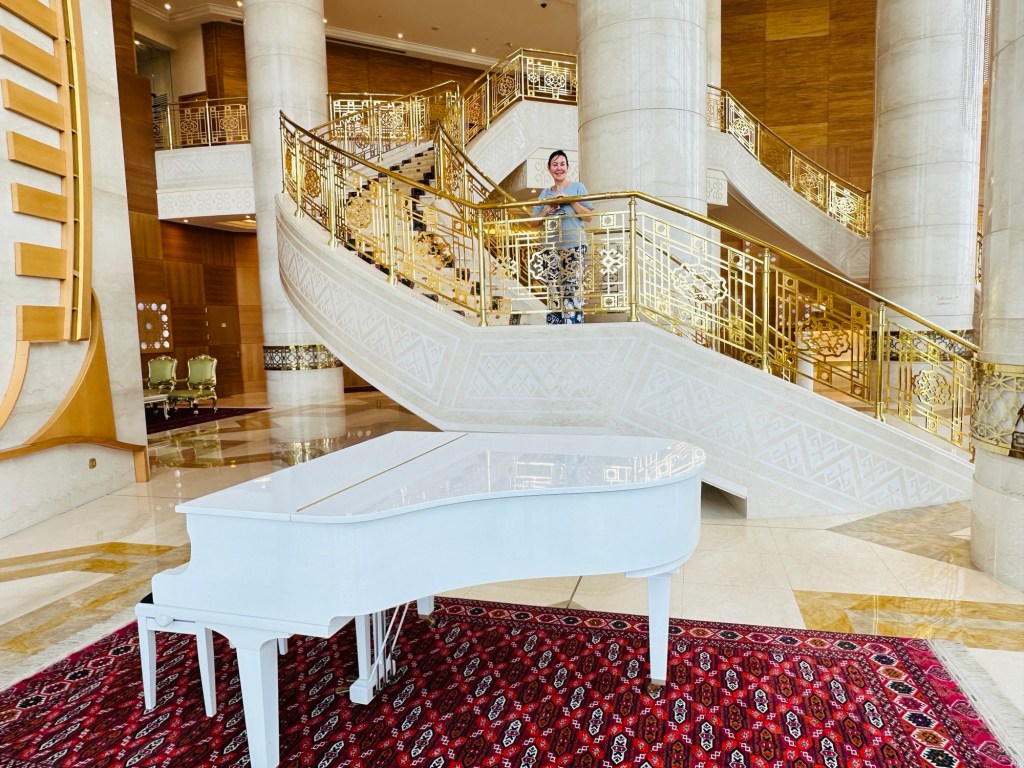
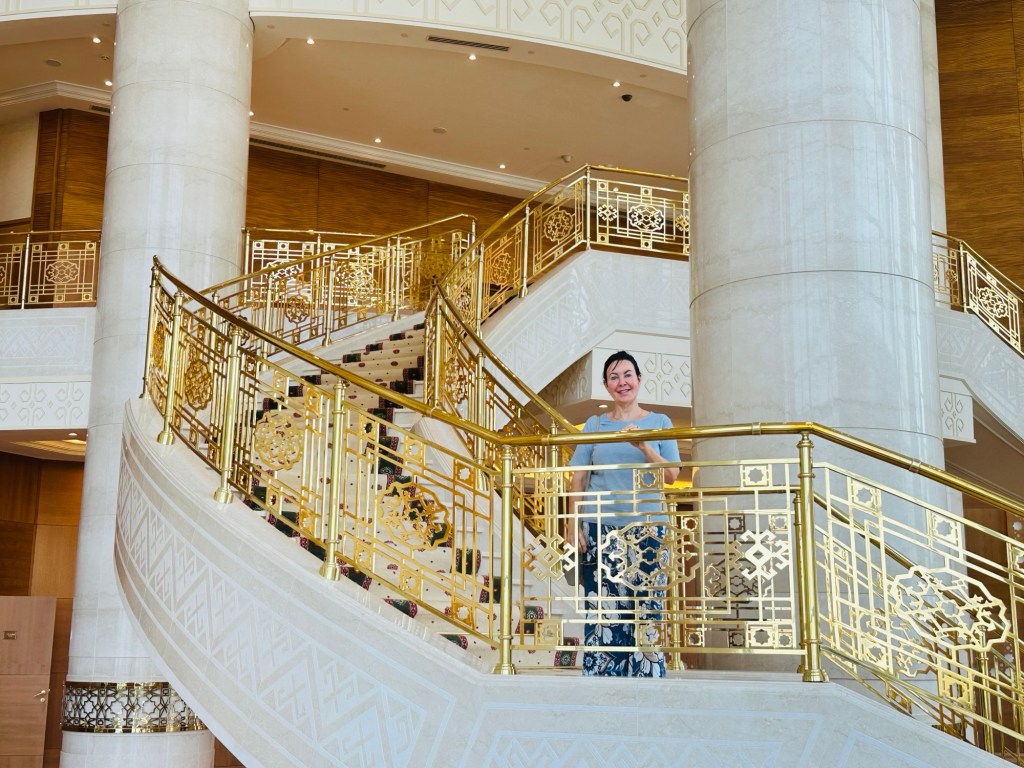
With free time until 3pm, we set off to explore the hotel’s opulent corners. The sweeping staircases lined with gleaming Italian marble and gold accents caught every beam of morning light. This place is very extravagant!
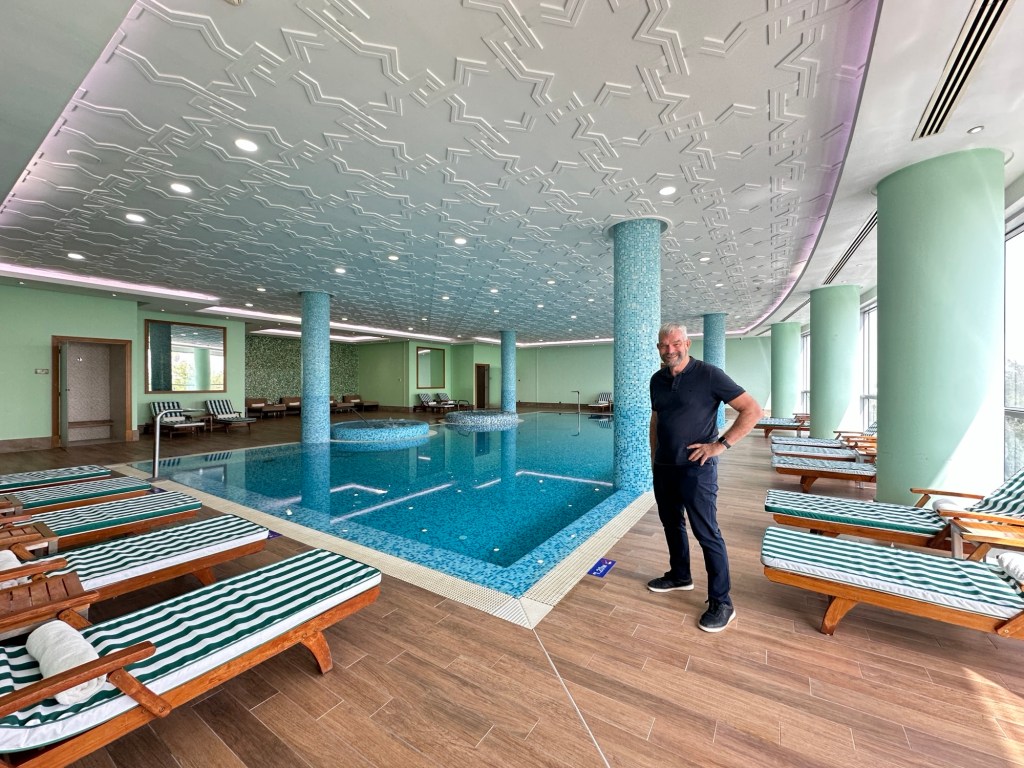
The outdoor pool glittered like a turquoise gem, and we couldn’t resist a dip. Blissful—except for the thumping soundtrack that made us wonder if we’d officially crossed into “too old for this” territory. We retreated inside for a quieter indulgence – a quick sauna, then a leisurely dip in one of the two serene indoor pools. Utterly rejuvenated, we were ready for whatever the afternoon promised.


Bahtiyar picked us up at 3pm, and entertained us for a few hours. This was an ad lib tour to fill in a few hours. Earlier he had mentioned that we shouldn’t venture out without him as we could be taken advantage of. This became evident as we first stopped to exchange money, US $ to Turkmen Manat…. the official conversion rate at the bank was 3.5 to one US dollar, Bahtiyar got us a rate of 19. This meant instead of a 1200 Manat meal costing $512 AUS, it became $100 AUS. Big difference! Robert and Leanne had bought two coffees earlier at the hotel which set them back $35 US! I don’t think we will ever hear the end of that story!!!
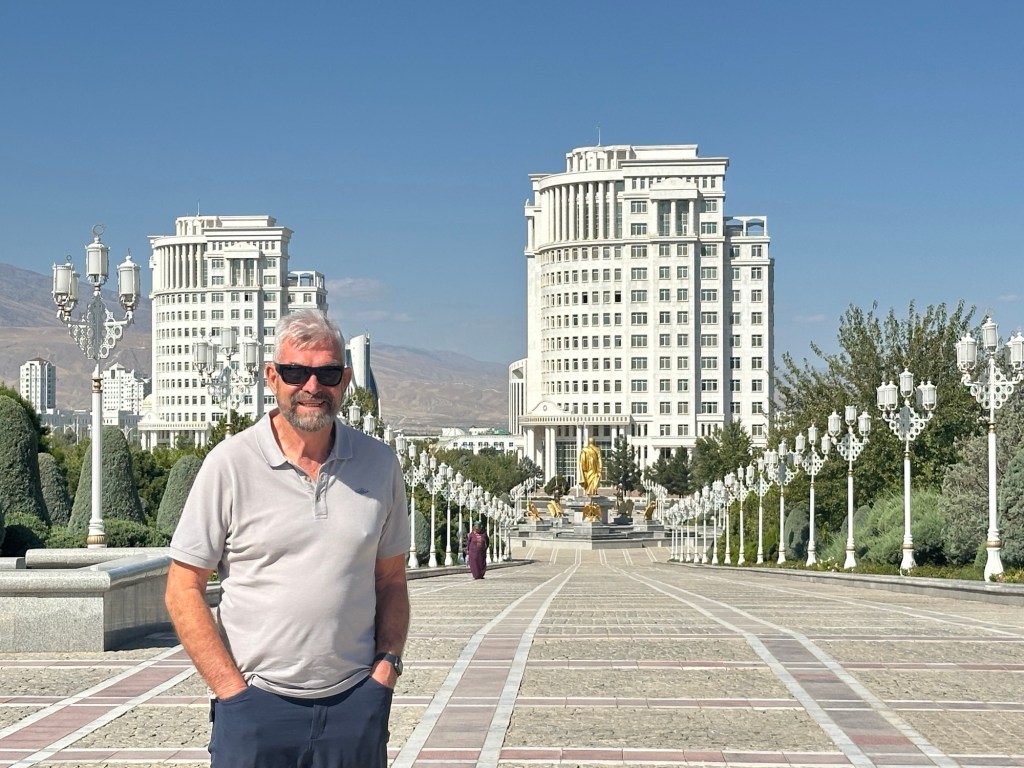
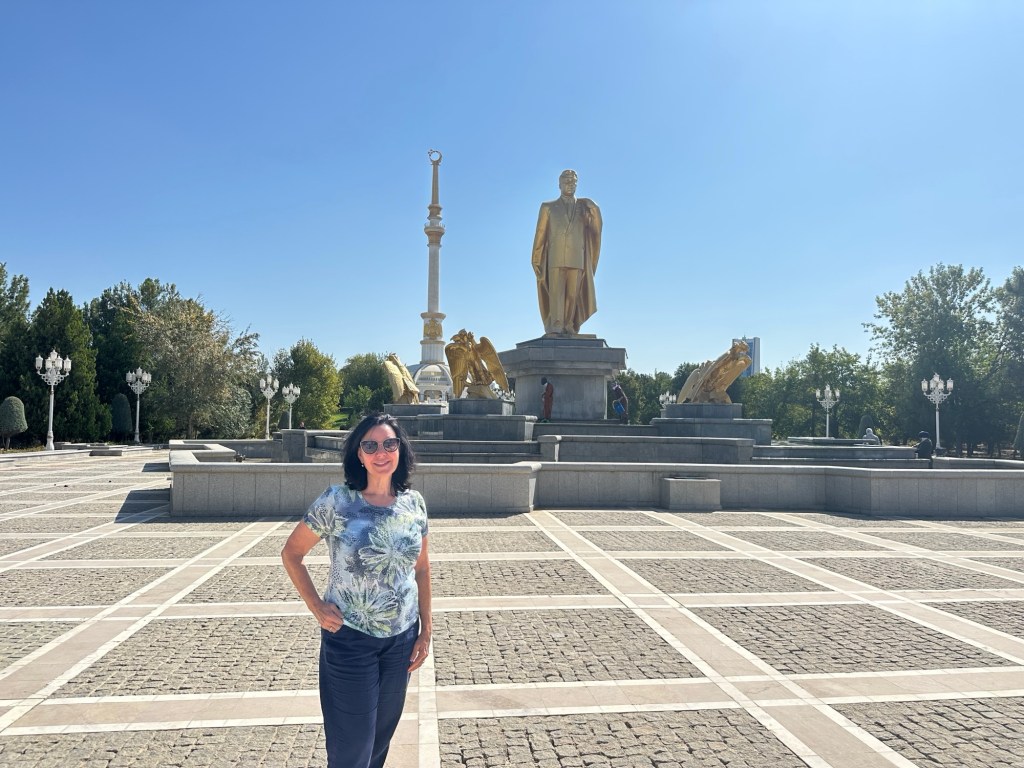
Ashgabat is a fascinating city. It was rebuilt in Soviet style in the mid-20th century after a massive earthquake levelled the city in 1948. It is famous for its white marble buildings – it has recently been noted by the Guinness Book of World Records as having more white marble buildings than any other city in the world. Ashgabat is also noted for its grandiose monuments honouring former president Saparmurat Niyazov. Independence from the Soviet Union was on 27th October 1991. Niyazov moved seamlessly from being Chairman of the Turkmen Soviet Socialist Republic to President of Turkmenistan, taking the name Turkmenbashi (Father of all Turkmen) and declaring himself President for Life in 1999.
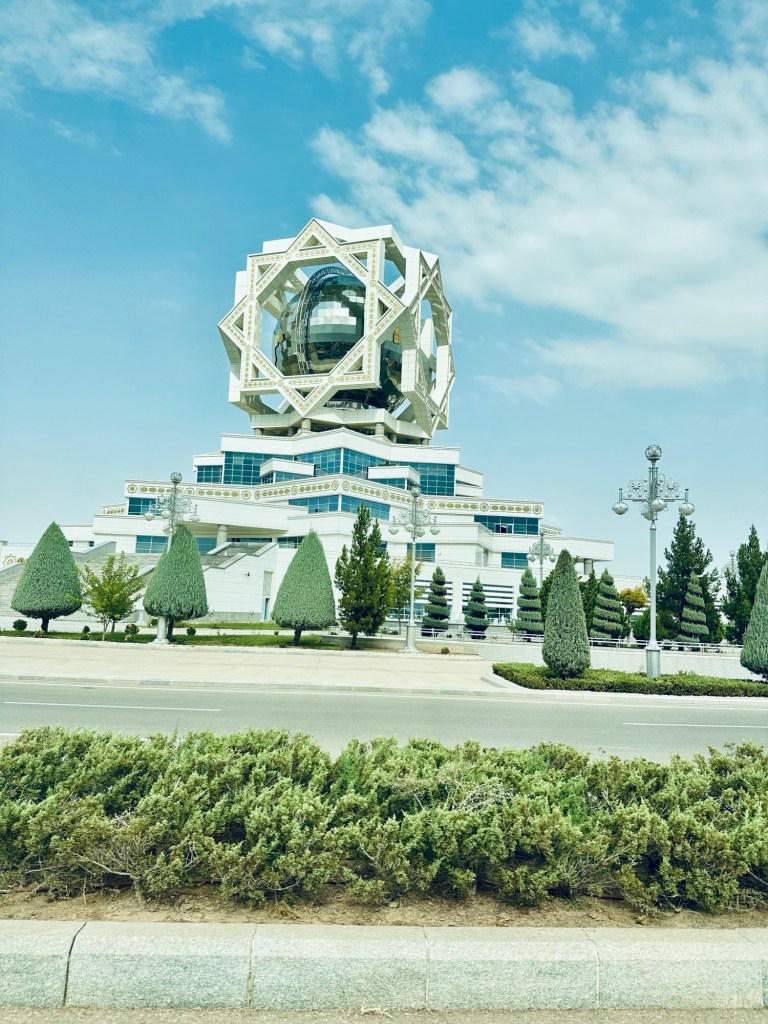


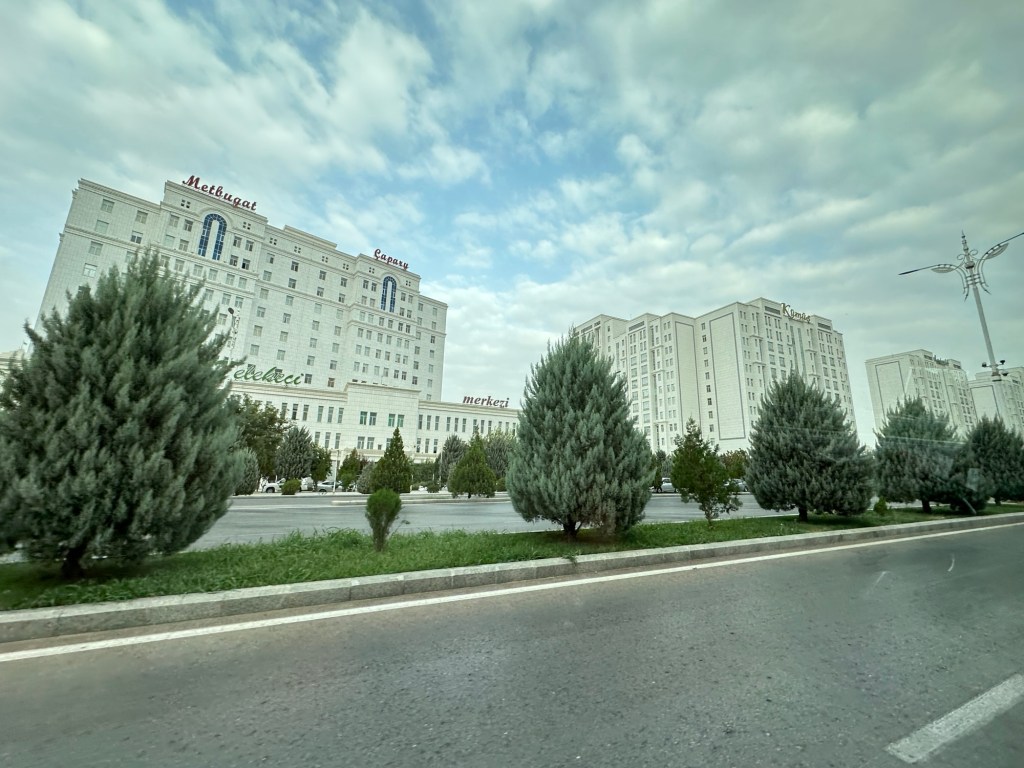
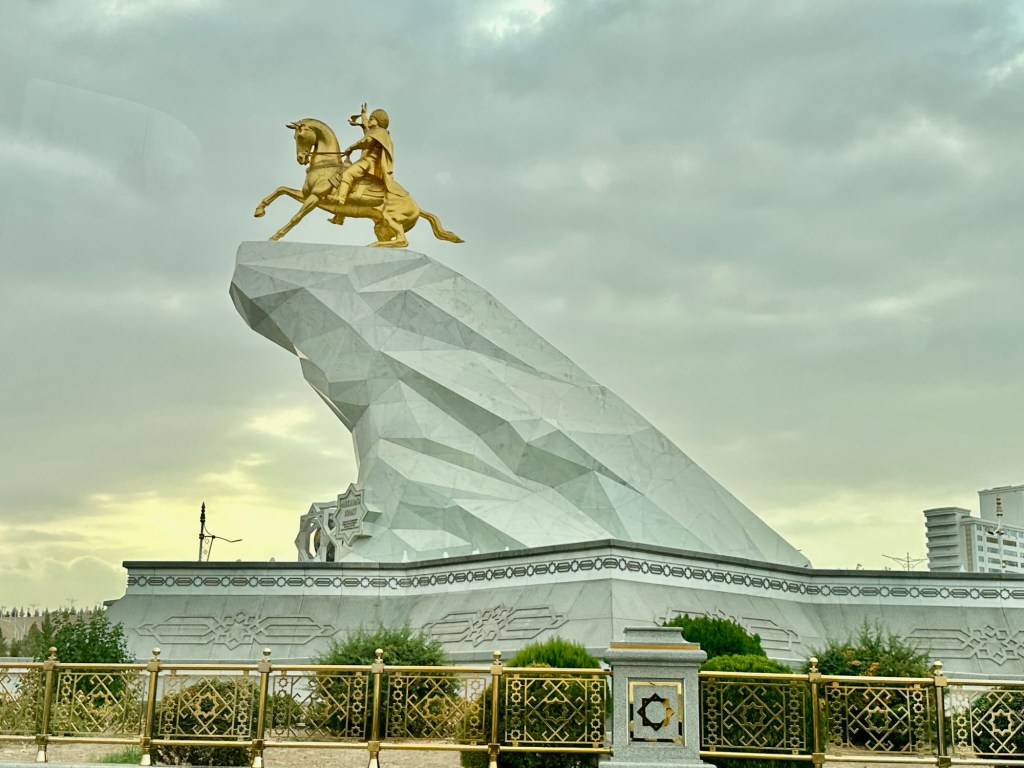
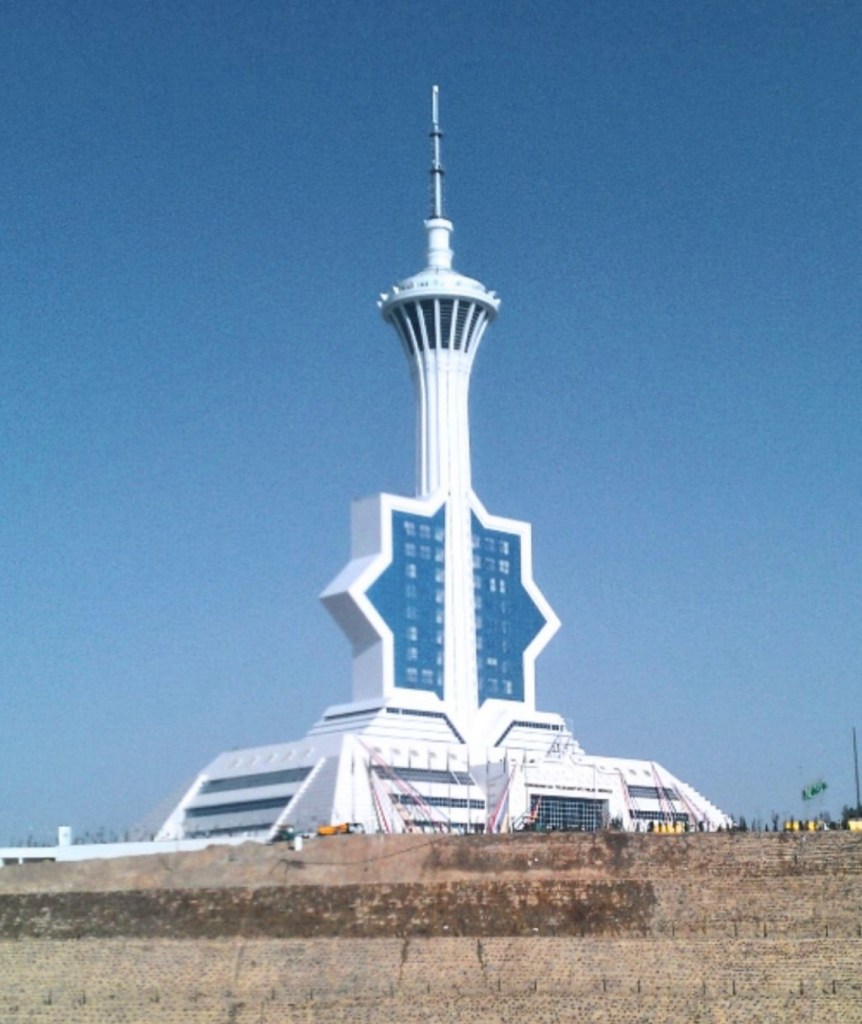
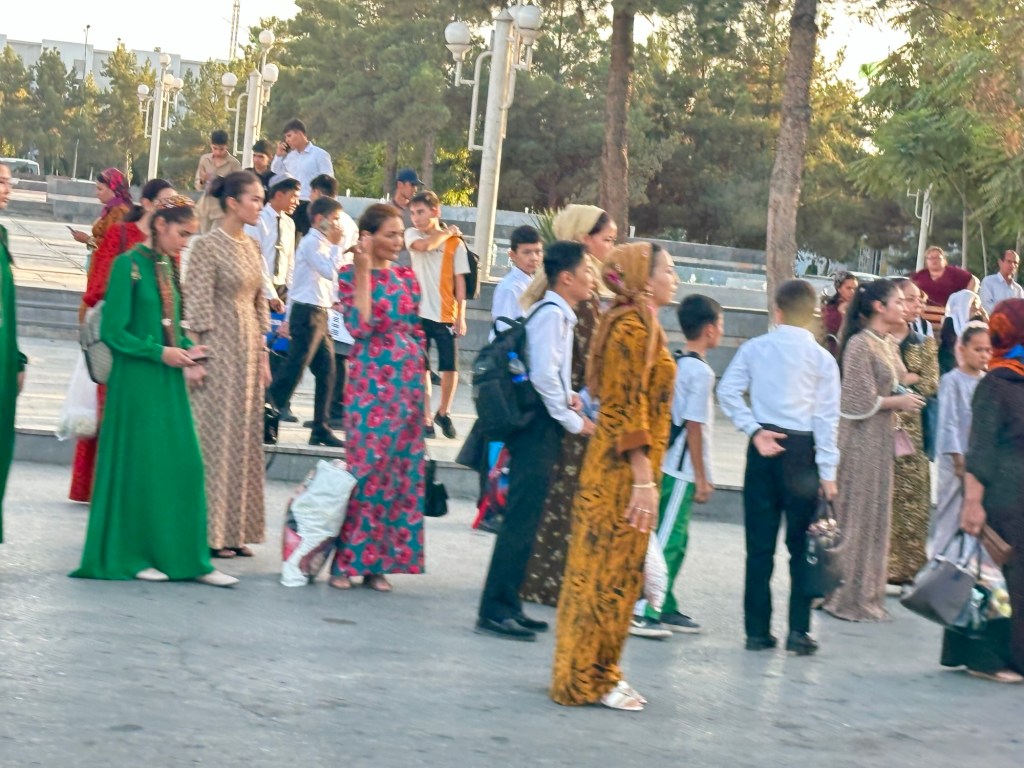
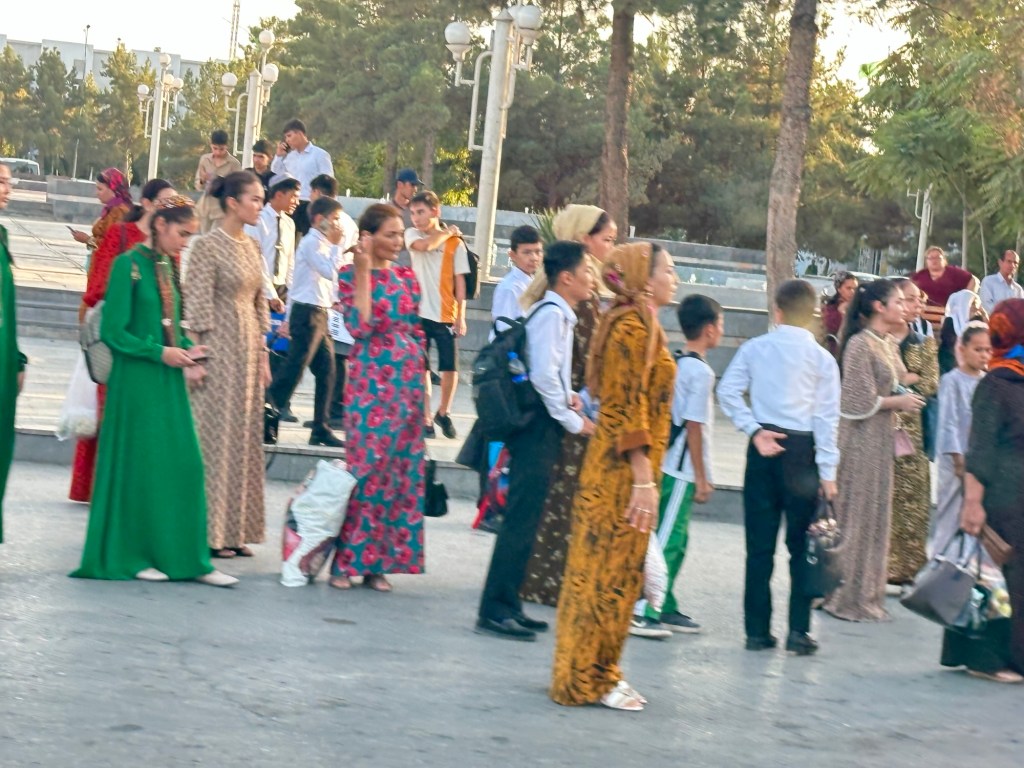
All the cars in Ashgabat are white, with an occasional silver or light gold vehicle. Even though Ashgabat is in a desert, there are tree lined streets and manicured parks every few kilometres. Population is 1.1 million. The women wear elegant long dresses, the married ones wear headscarves. They look just gorgeous!
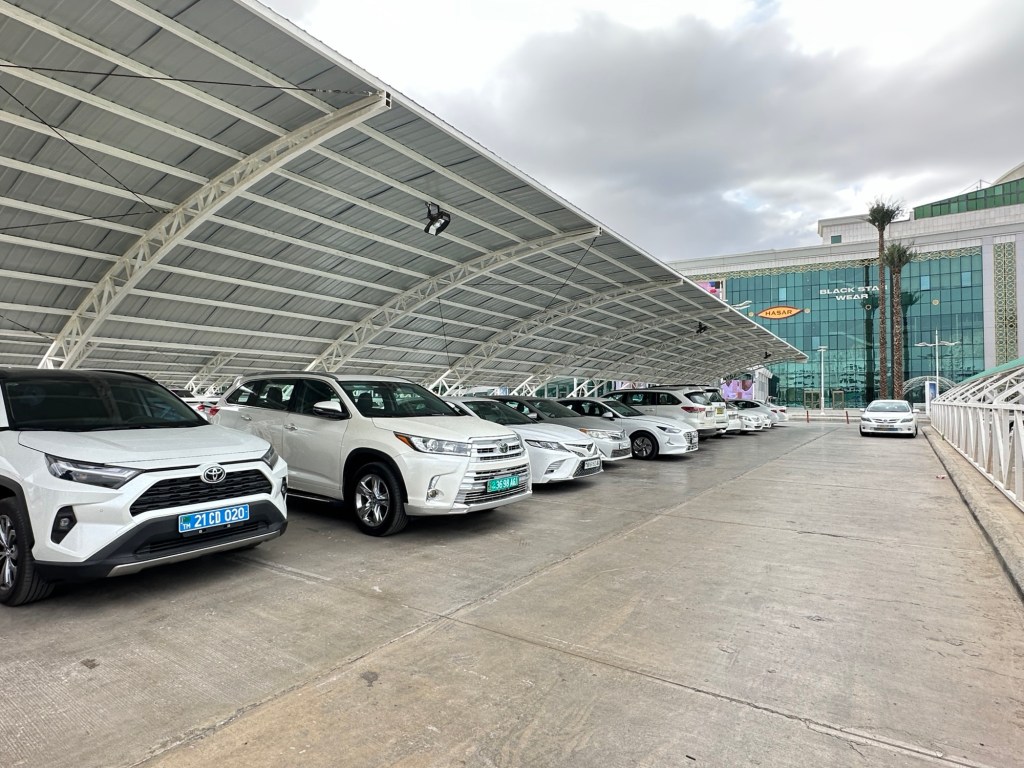
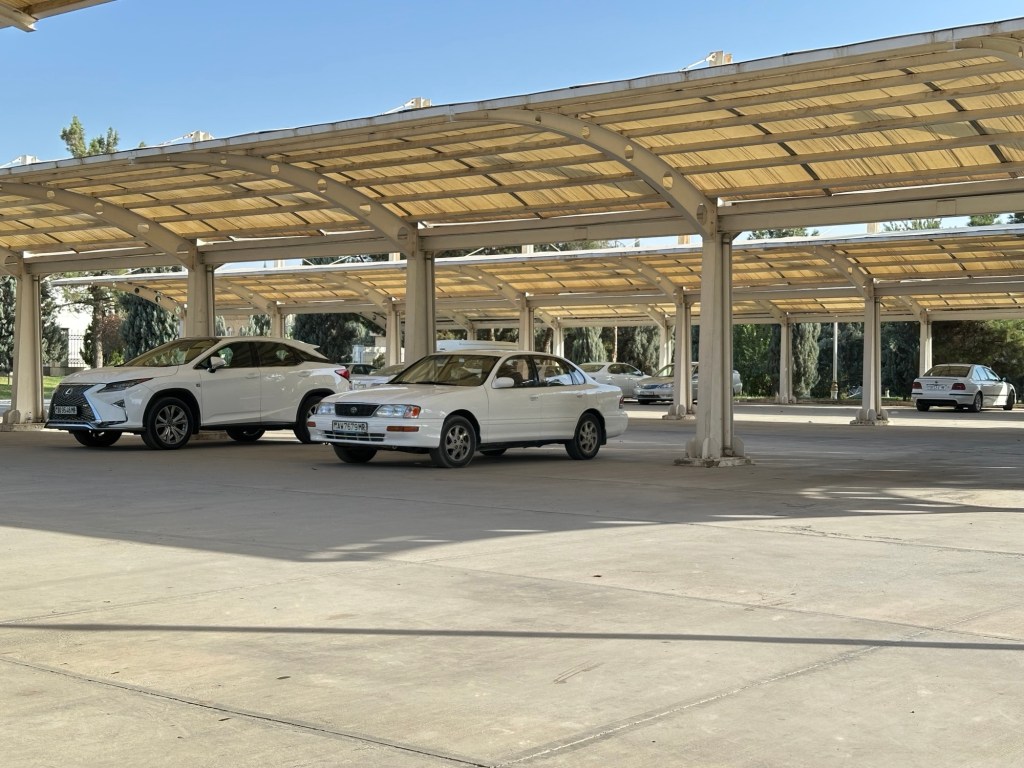
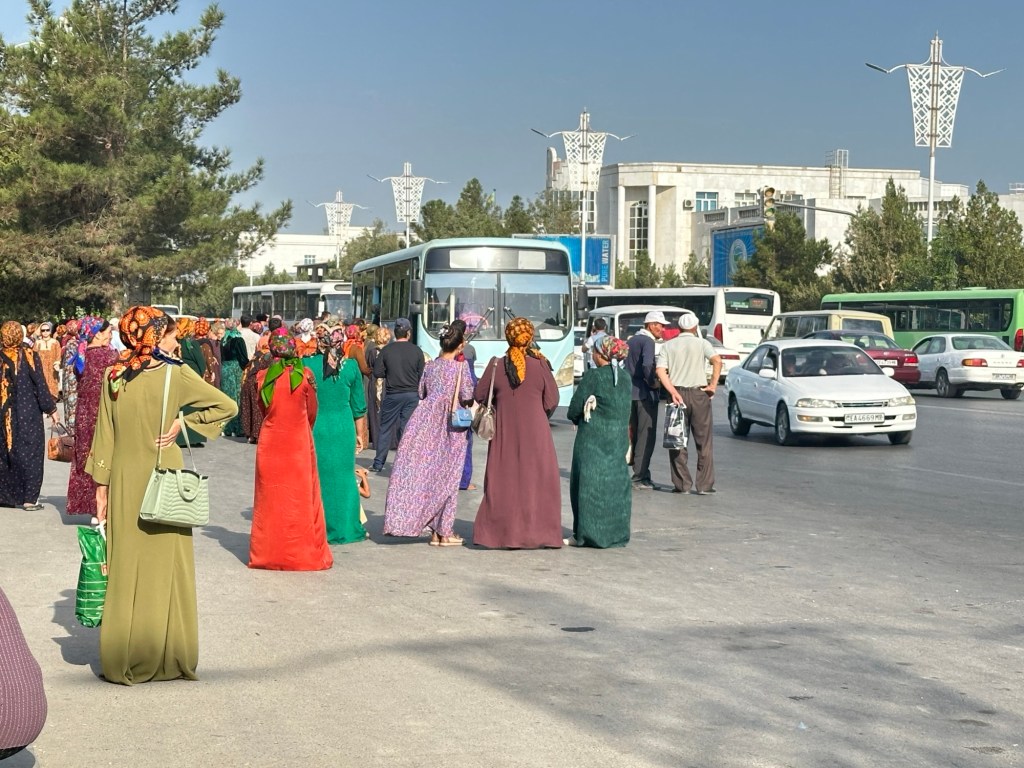
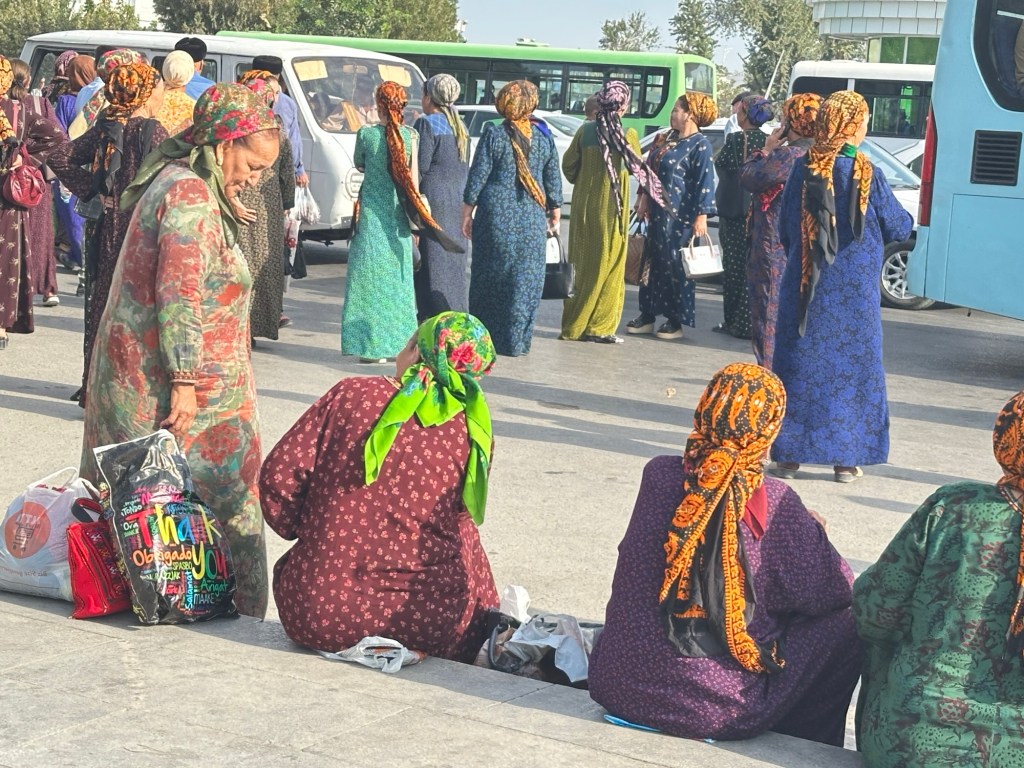
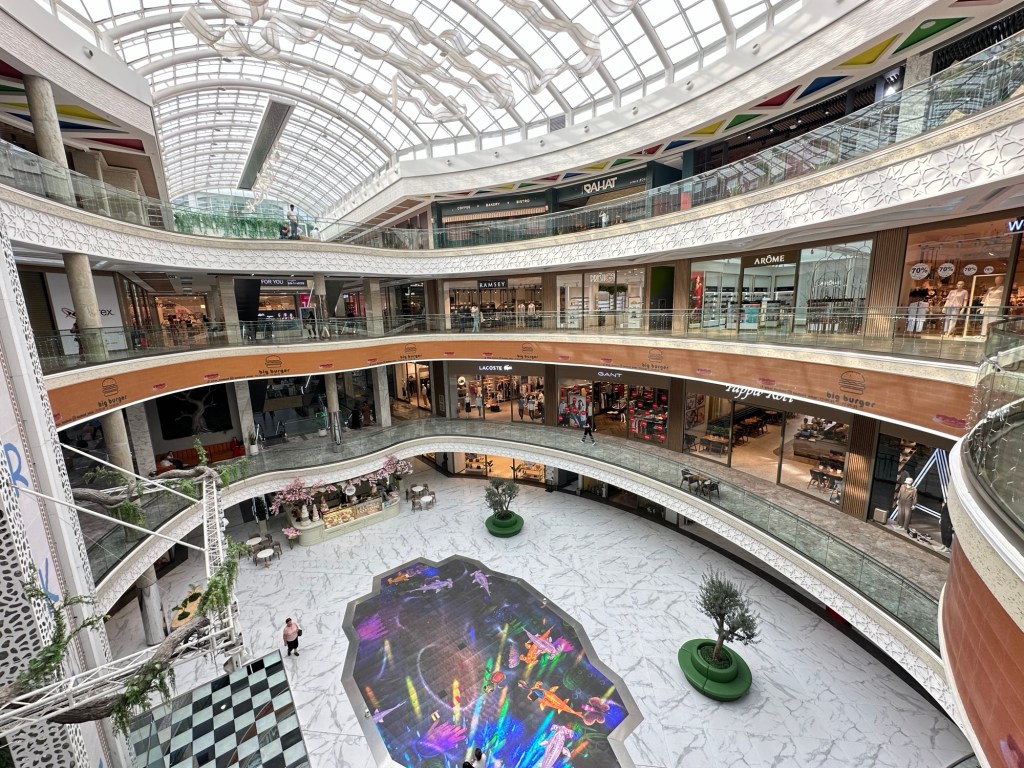
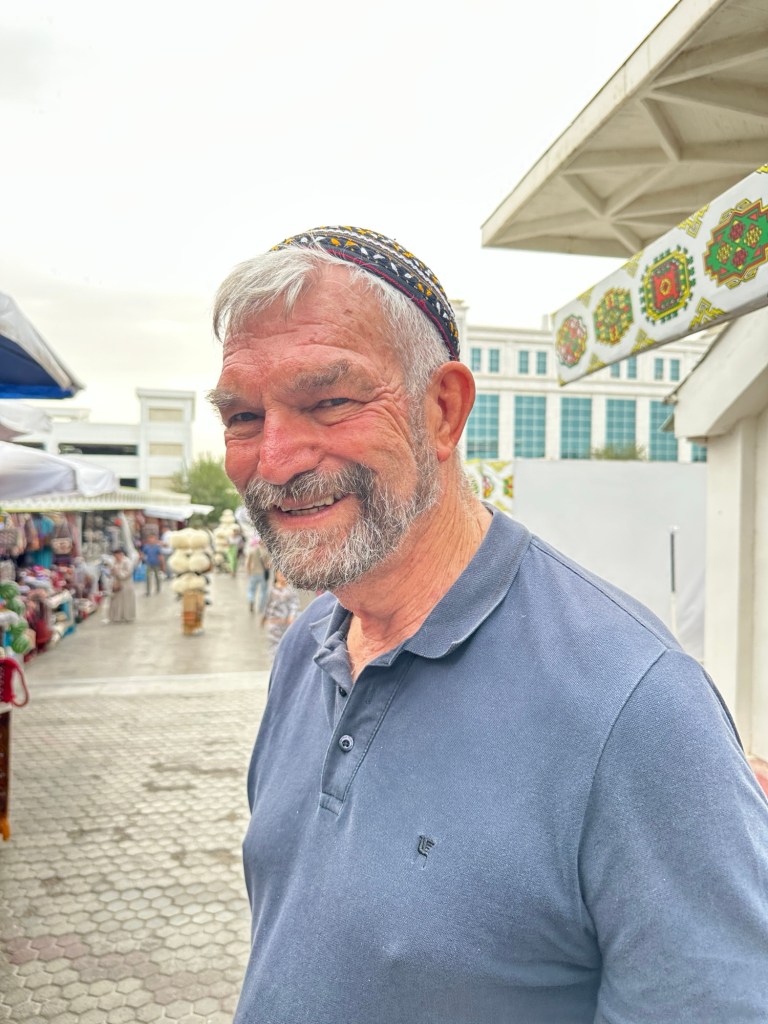
Bahtiyar kicked off our afternoon with a whirl through the city’s contrasts. First stop: a sleek modern shopping mall, all polished glass and polished locals. Then we plunged into the lively Russian Market, a treasure trove of Turkmen culture—hand-knotted rugs in deep jewel tones, fragrant stacks of spices and dried fruit, garments spun from soft camel hair, and quirky woollen hats that begged to be tried on. Of course Frank had to try one on!


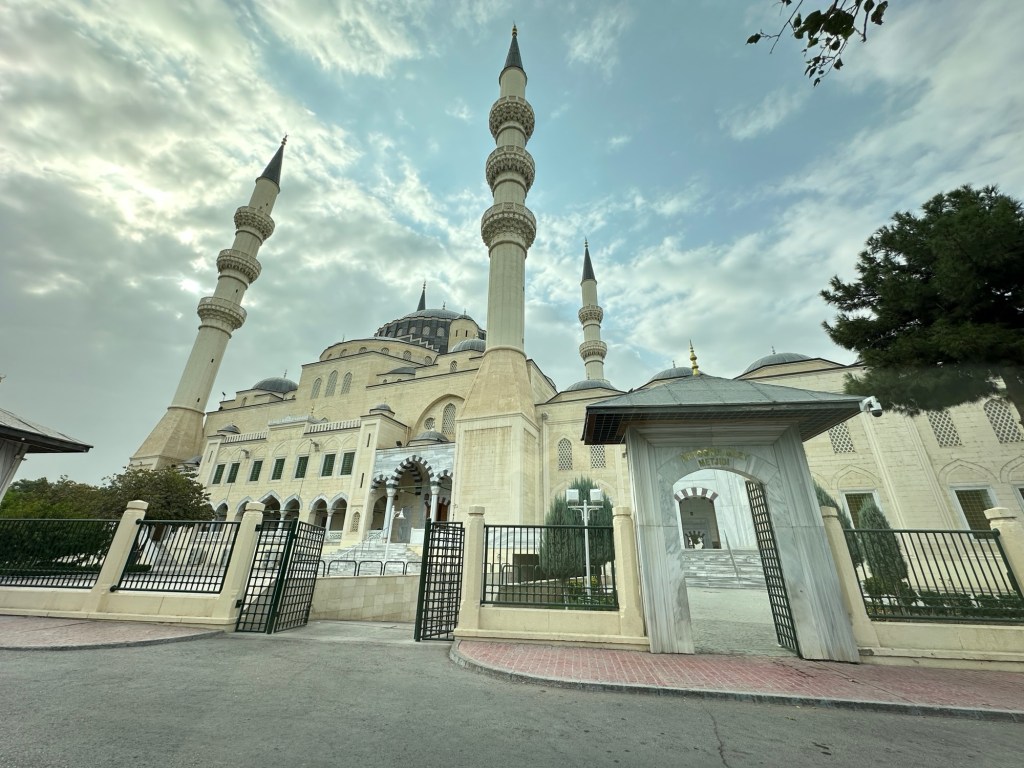
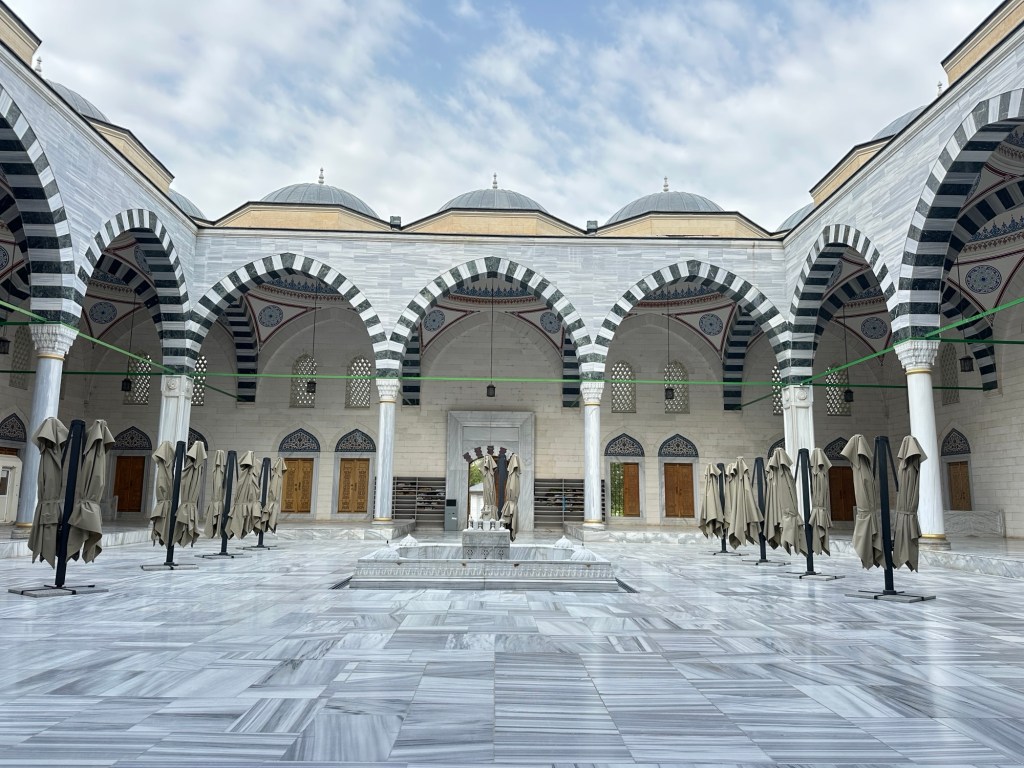
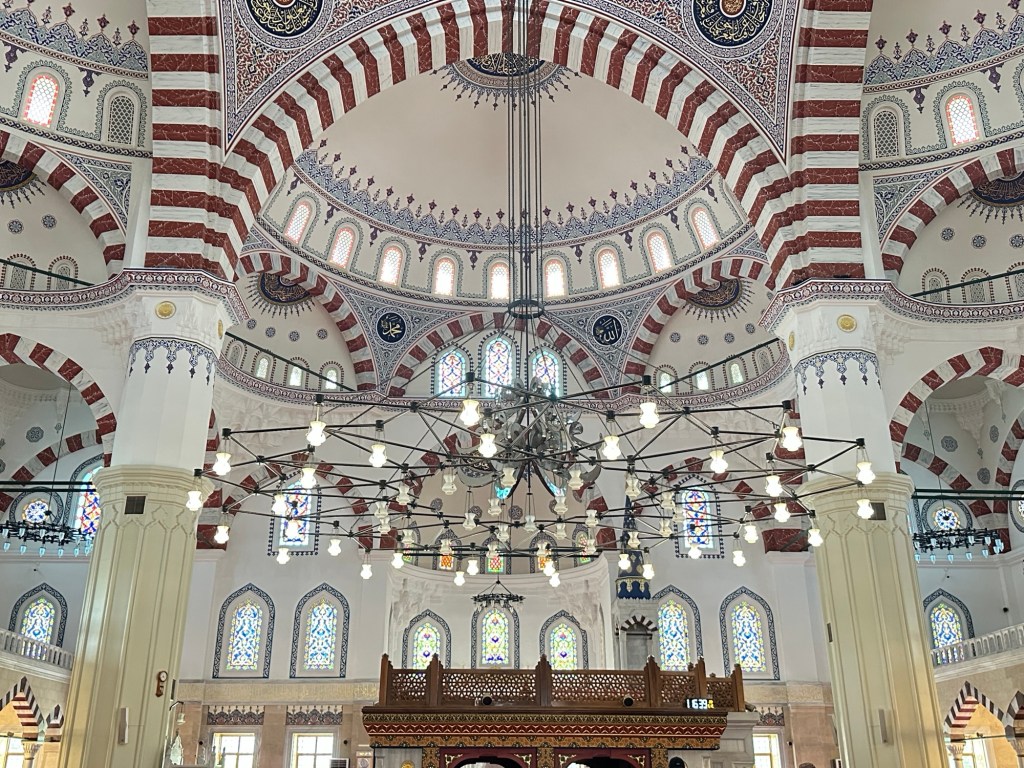
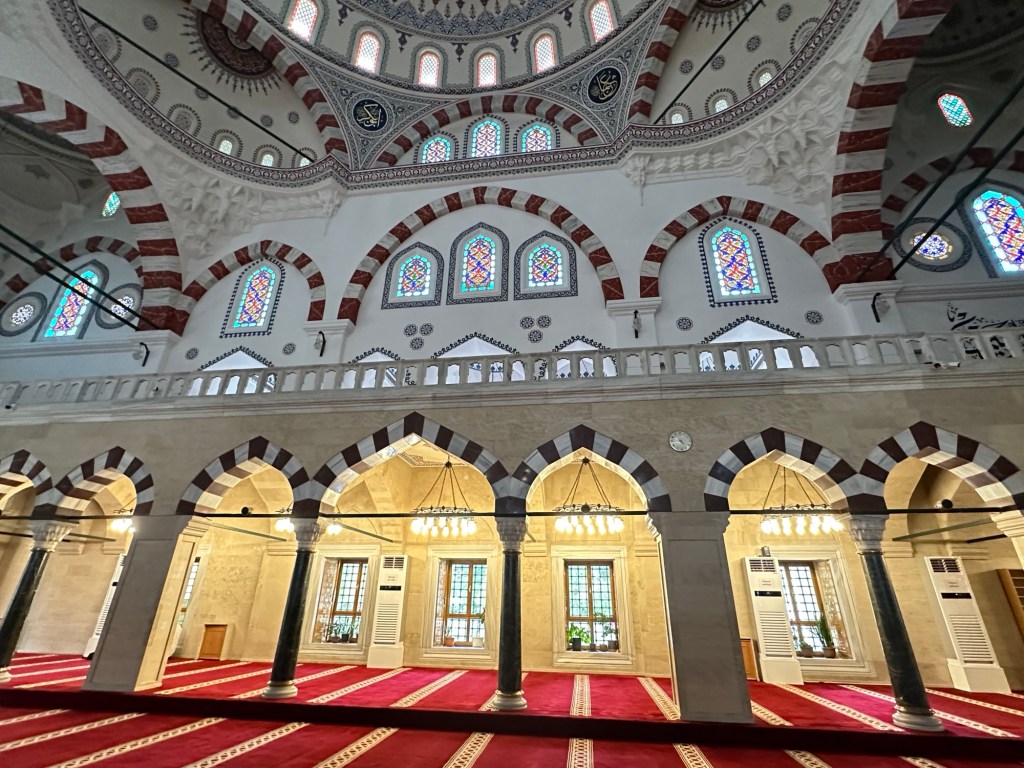
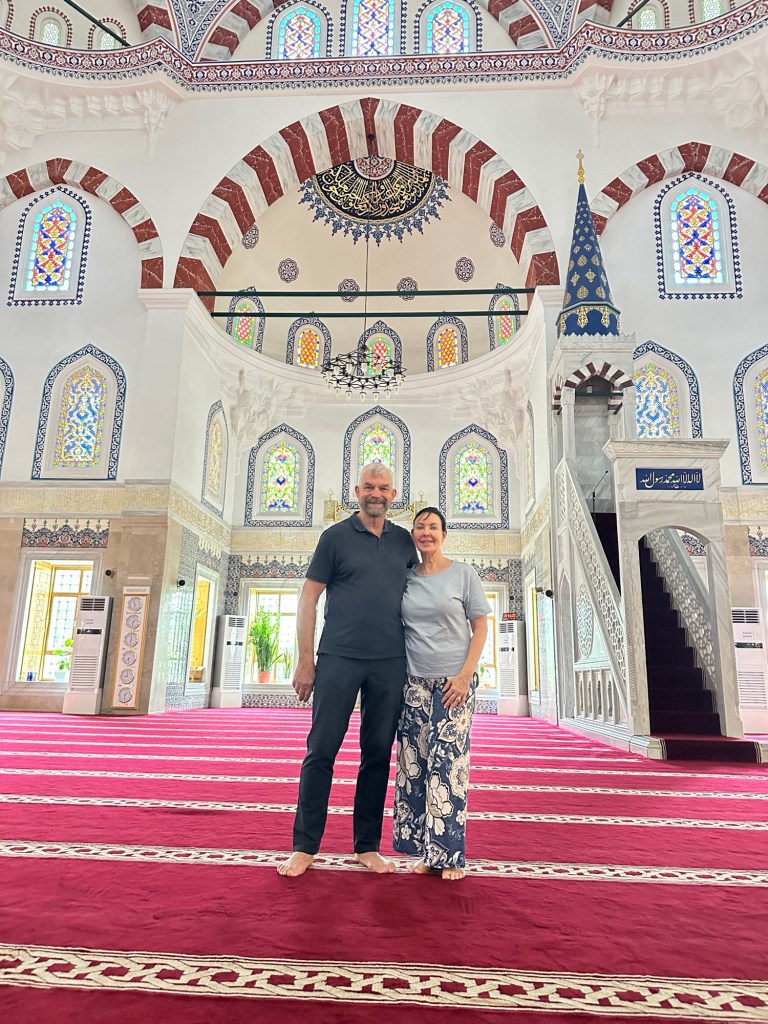
Next came the Ertogrul Gazy Mosque, its elegant domes and intricate tiles echoing the grandeur of Istanbul’s Blue Mosque. The quiet reverence inside was a serene spiritual experience.

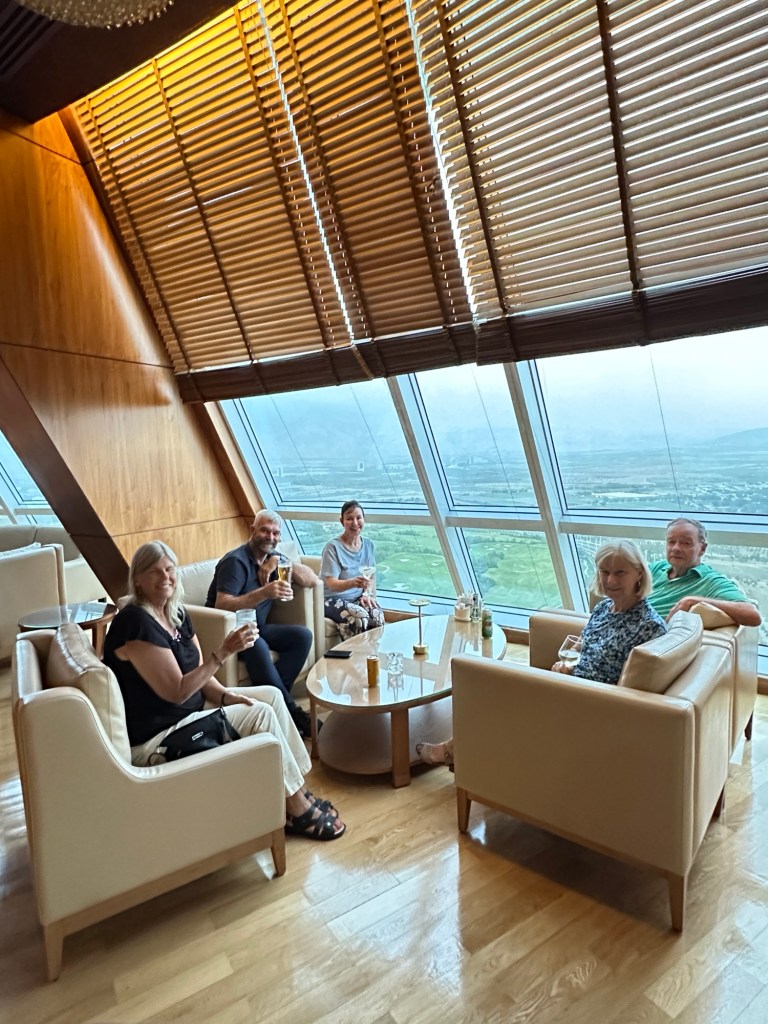
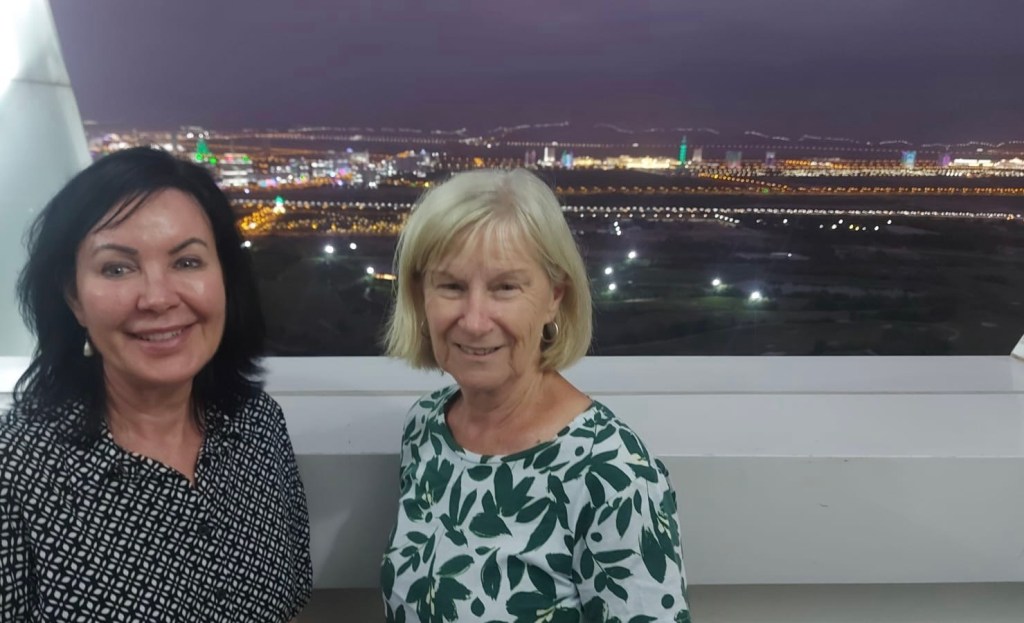
Back to the hotel for pre dinner on the 19th floor, watching the city beneath us light up as the neon lights flickered to life. Dinner one floor down was much easy on the wallet thankfully, as we’d done the earlier local currency exchange. The soundtrack? Yet more booming beats. Apparently loud music is the heartbeat of Ashgabat nights.
Day 3
Saturday 13th September
Ashgabat
20-28 degrees
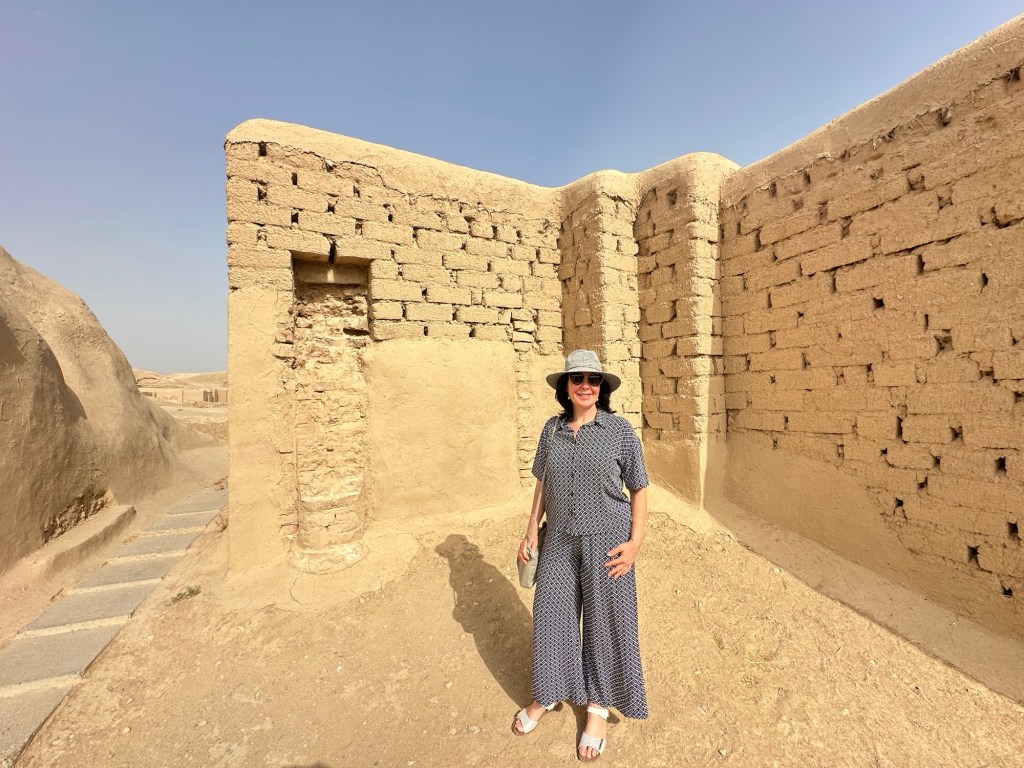
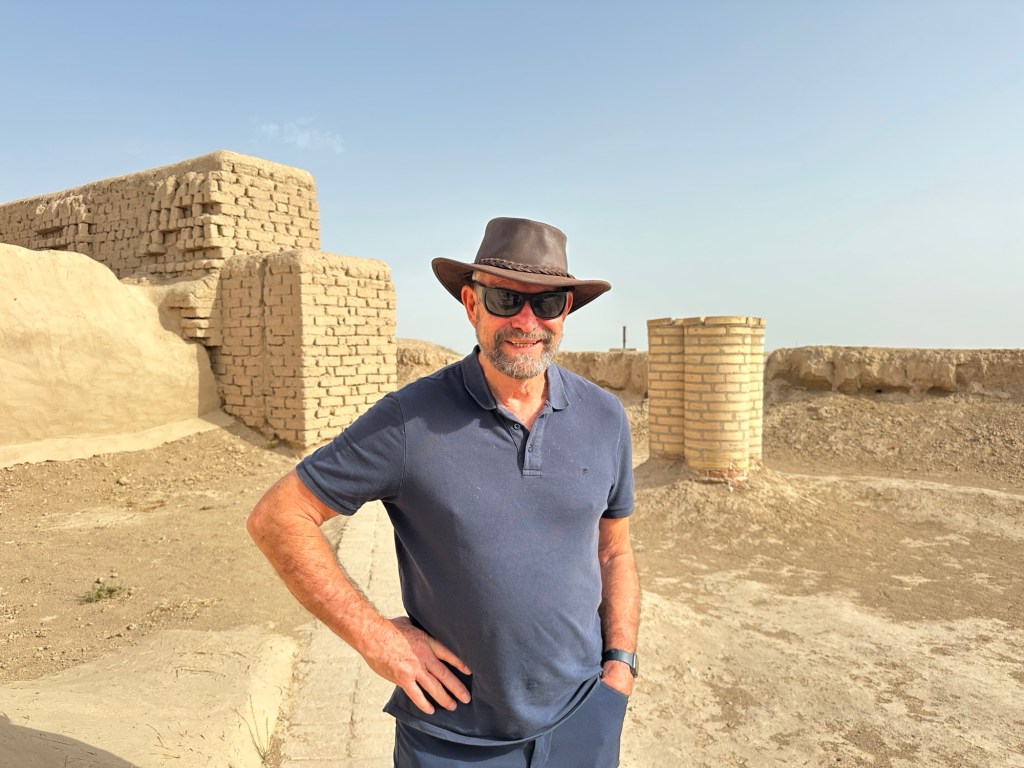
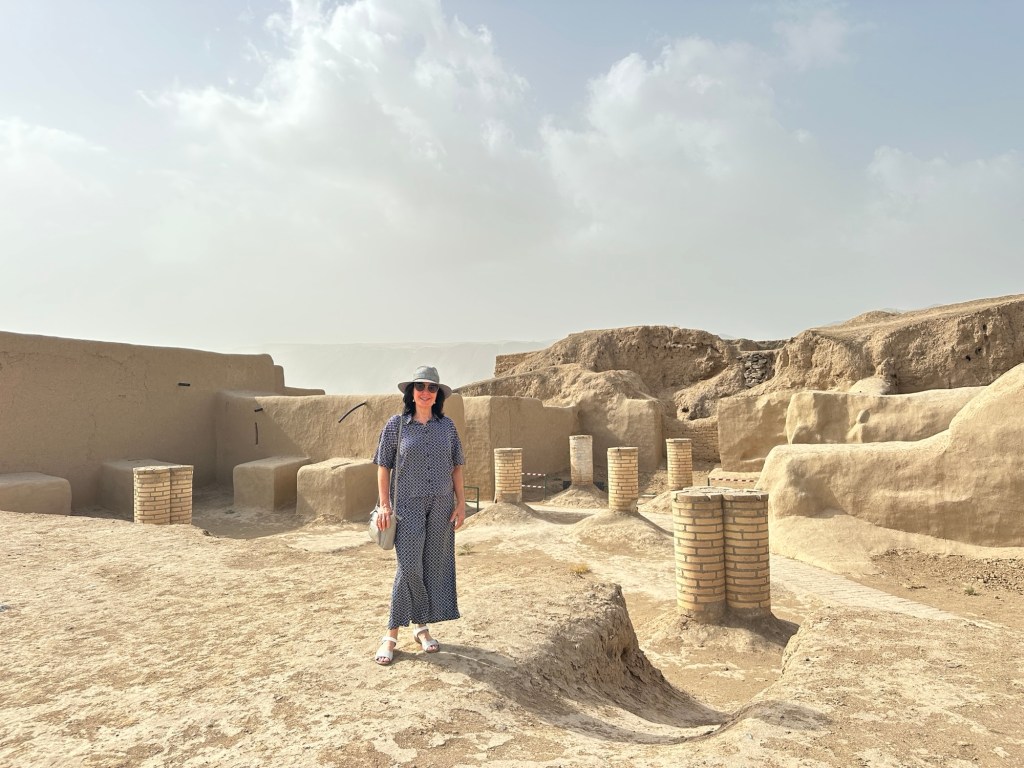
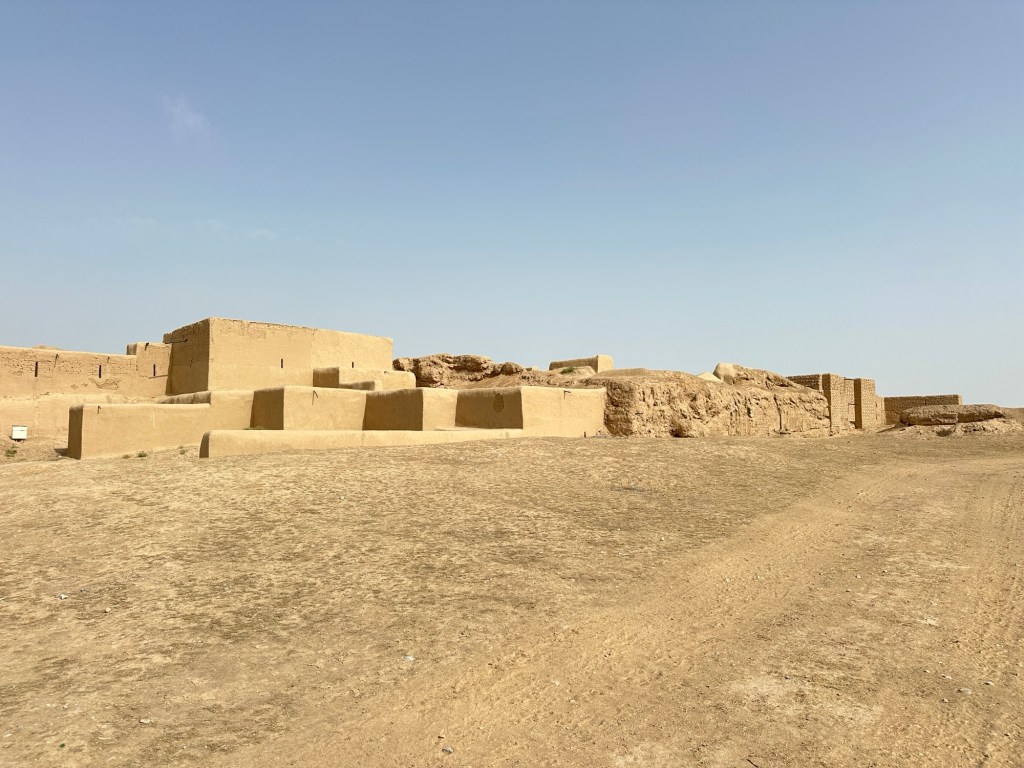
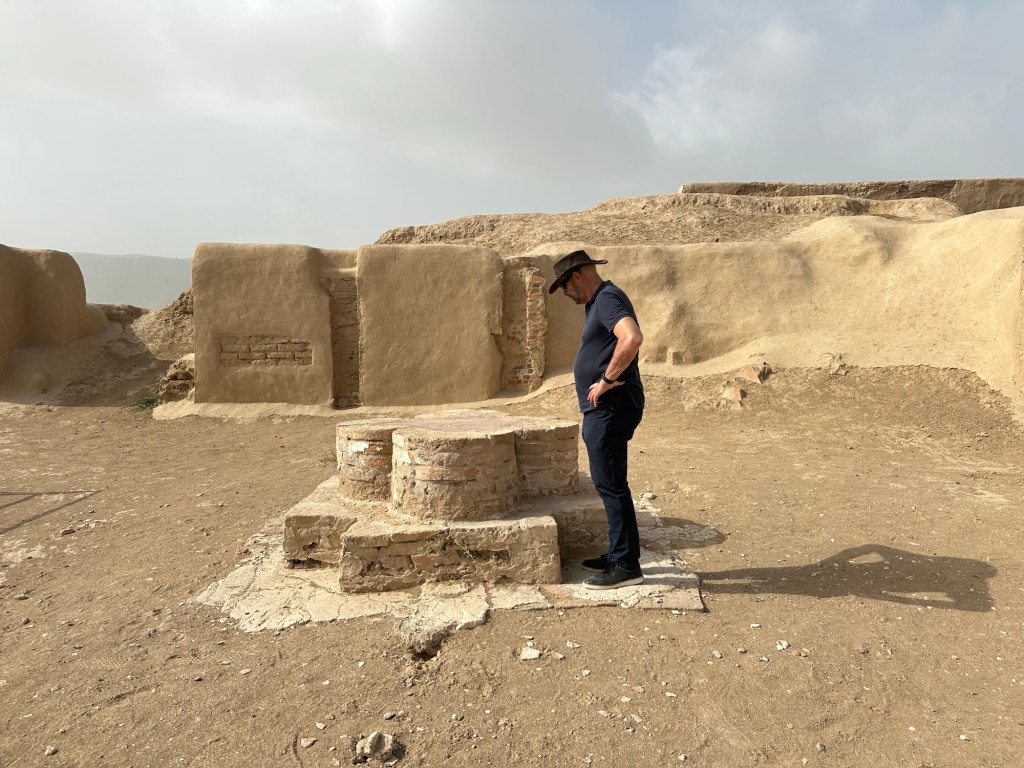
Today was a sightseeing tour of Ashgabat. Our first stop was to the archaeological site of Old Nisa which is included in the UNESCO World Heritage list. Nisa was the initial capital of the Parthians when it probably functioned as a sanctuary for early Arsacid kings, with evidence of a shrine, temple, palace and treasury. Much of their art was influenced by the Greeks, as exemplified by the classical gods and goddesses adorning many of Nisa’s carved ivory rhytons, now in the National Museum. The site also seems to have some connection with the local Zoroastrian religion, but was abandoned during the 1st century BC after a severe earthquake. Excavations continue.


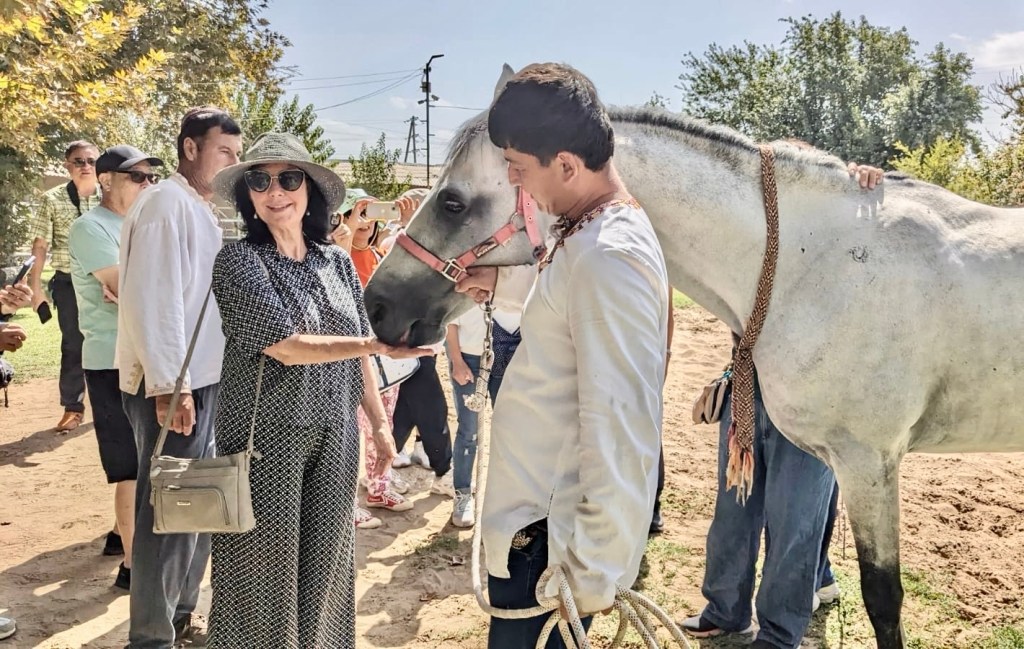
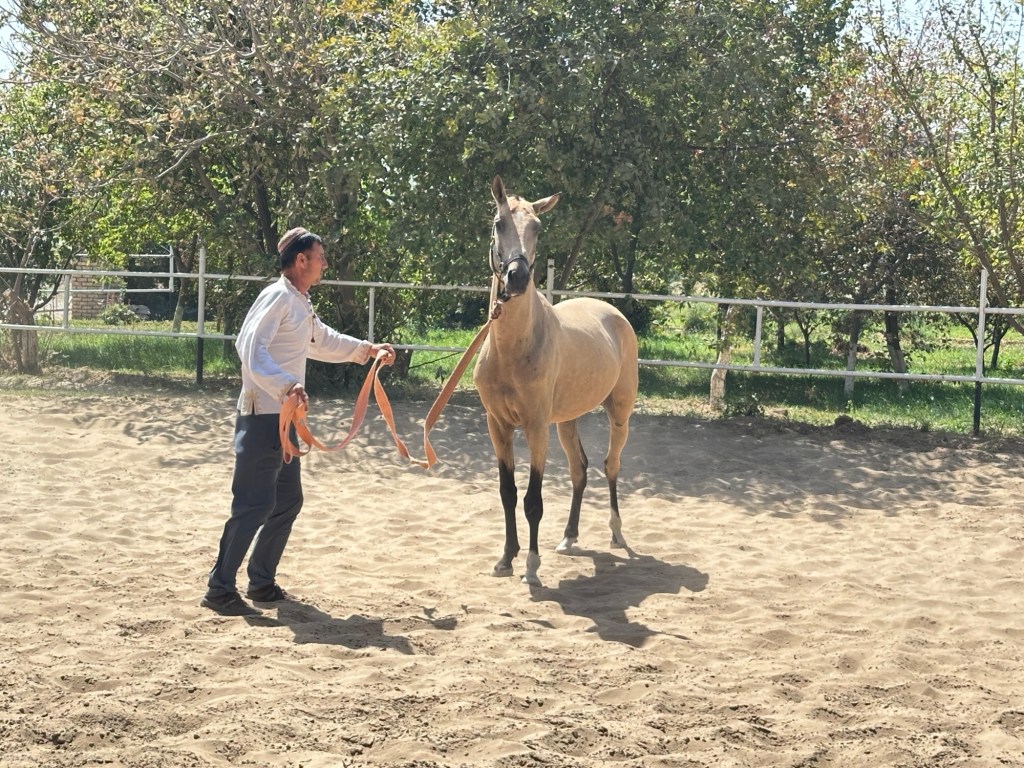
Turkmens are rightly proud of their horsemanship traditions, and in particular their famous Akhal-Teke horses, which are a national symbol and one of the oldest existing horse breeds. These intelligent animals have been extensively crossbred with thoroughbreds to create faster horses with great endurance. Today, there are less than 7,000 Akhal-tekes worldwide. We had a stopover at the Akhalteke horse stables, where we enjoyed morning tea, plus some interaction with the horses. They are a very lean breed. I loved the golden colourings of a couple of them.



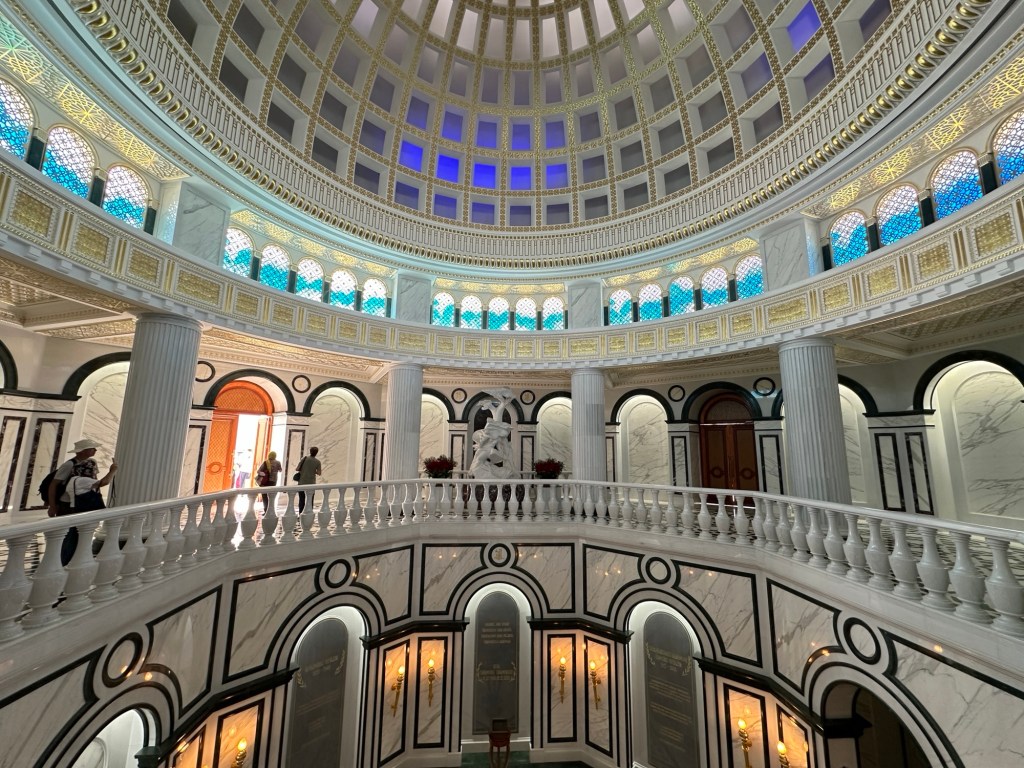
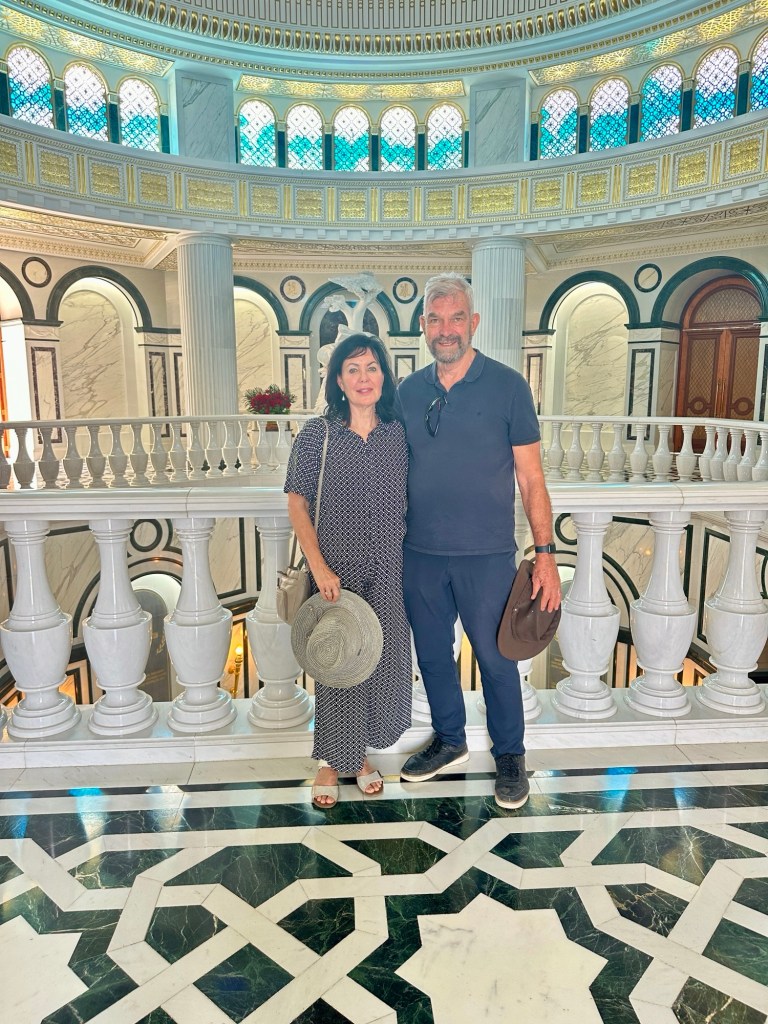
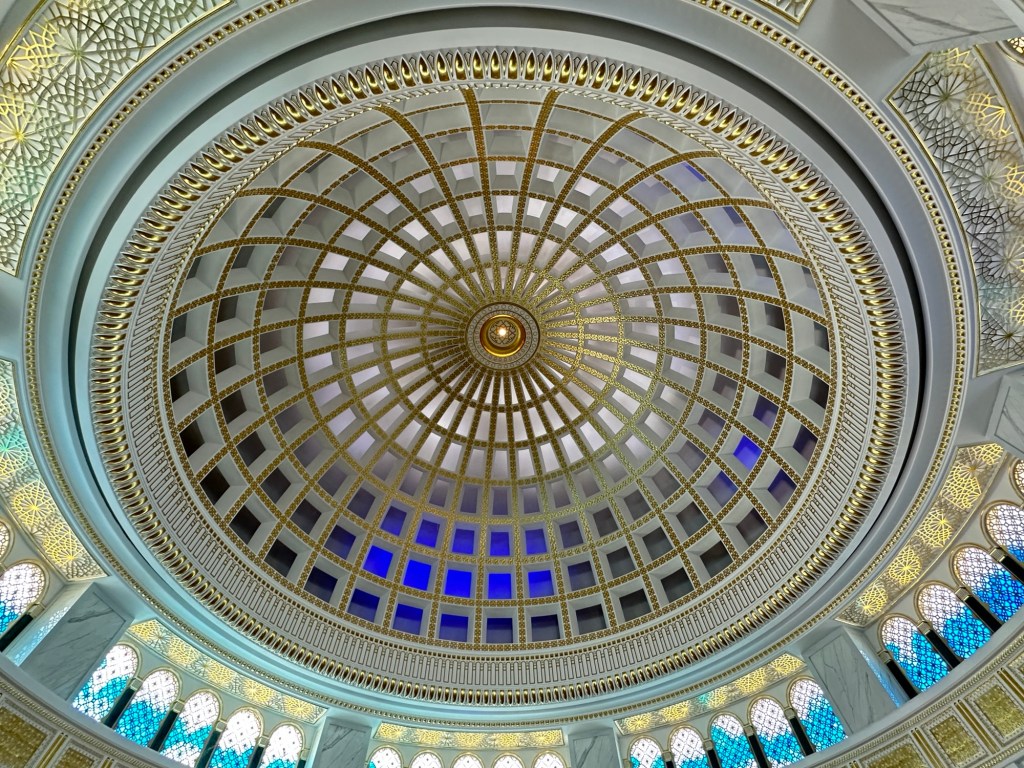
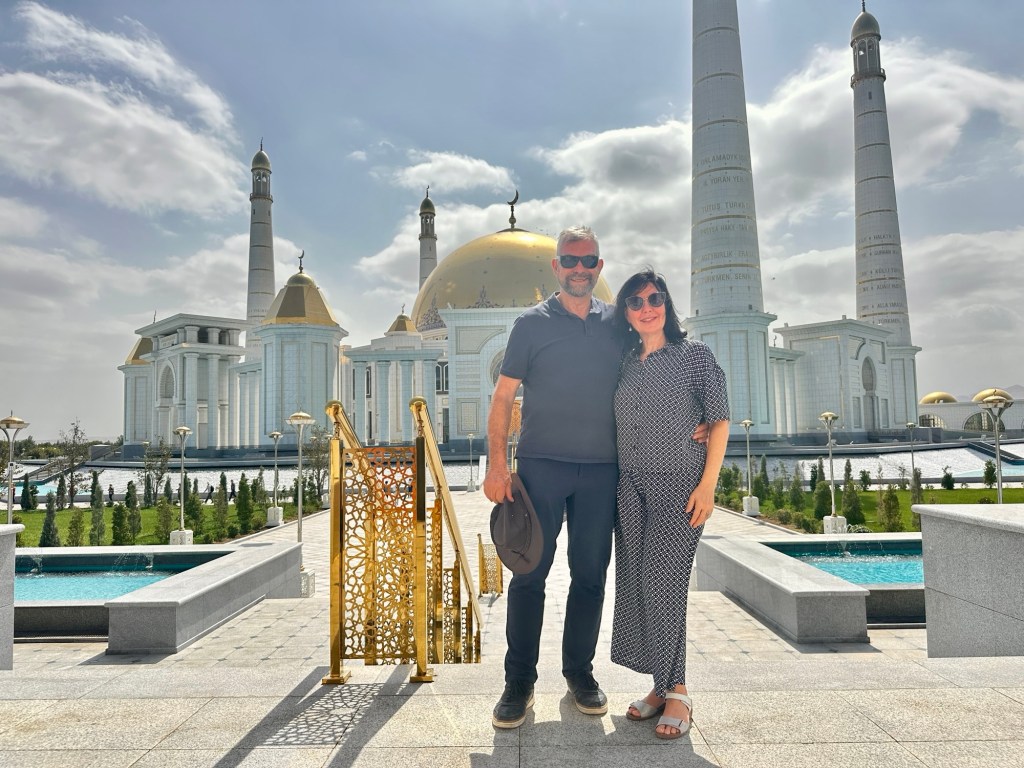
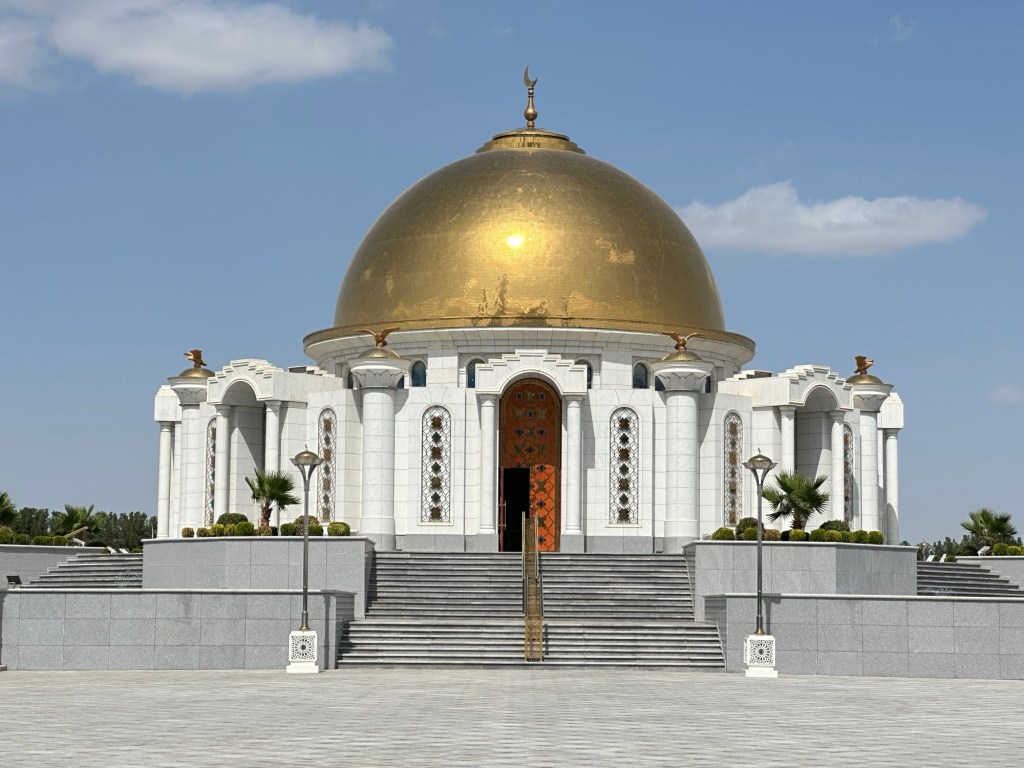
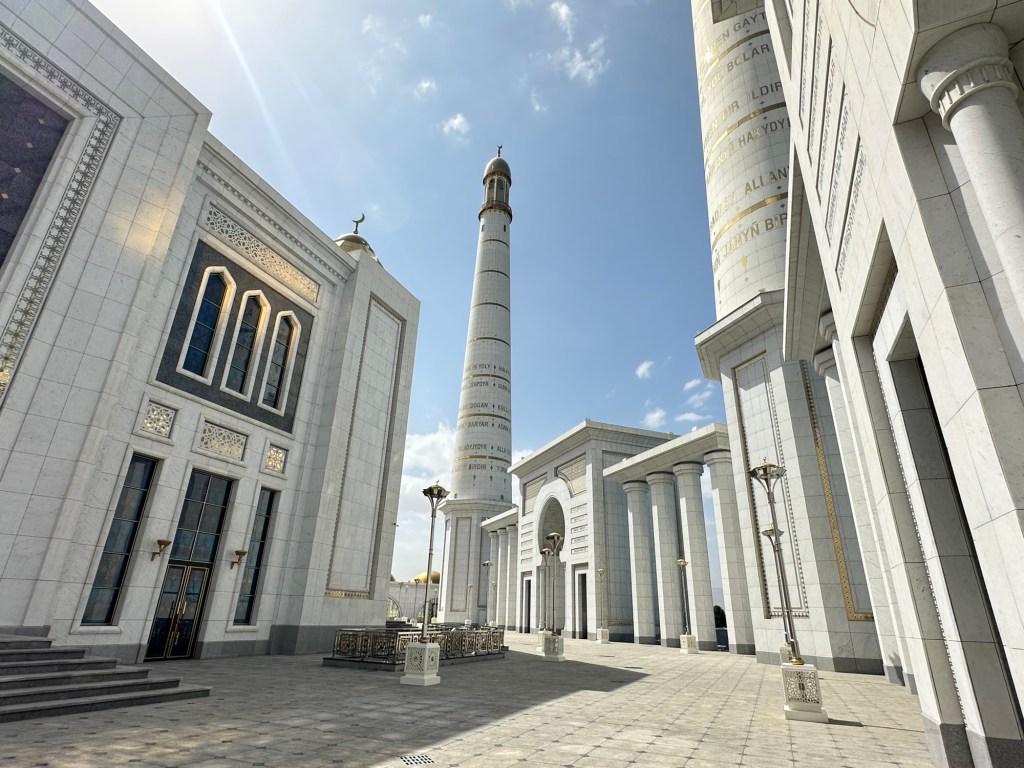
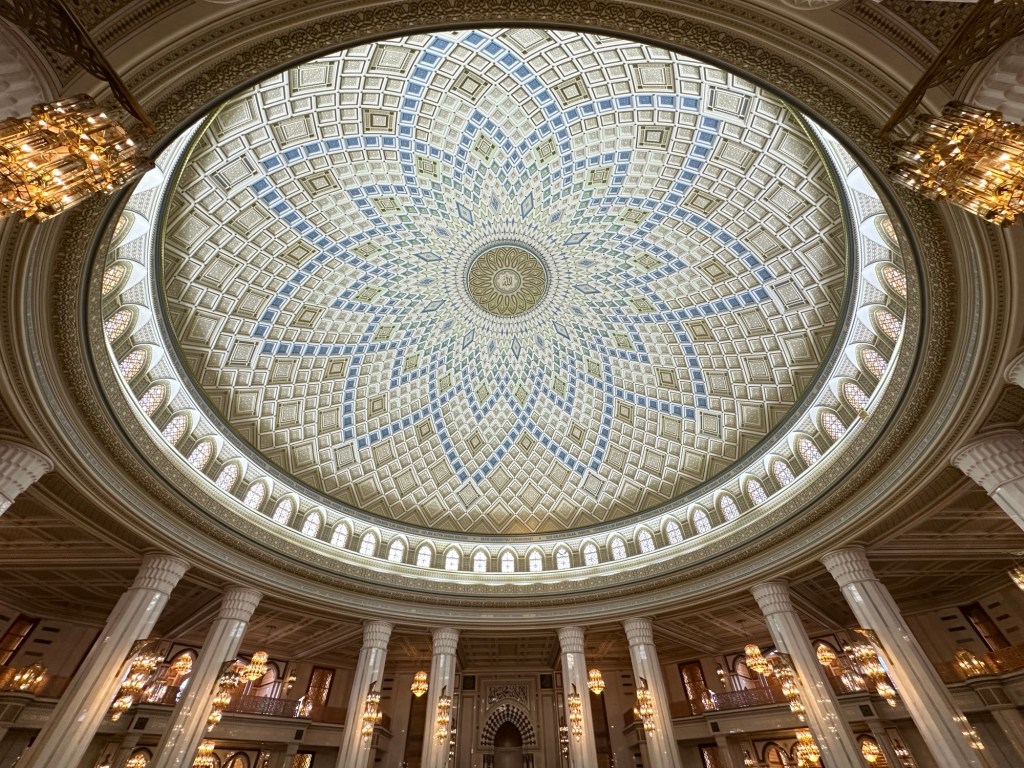
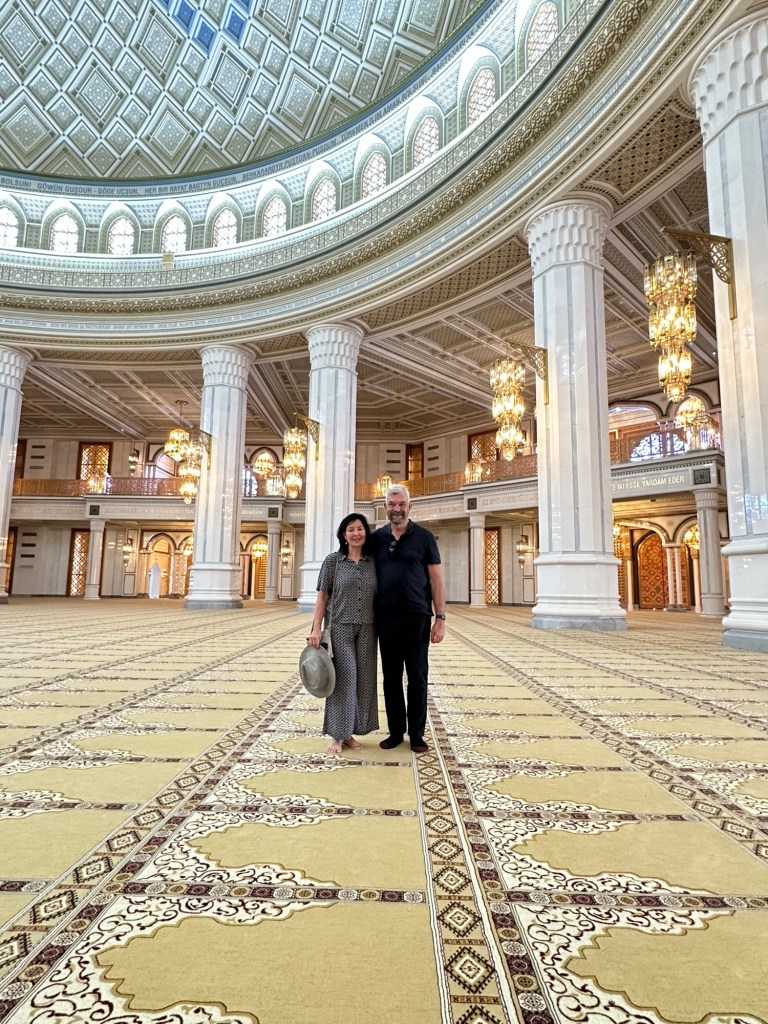
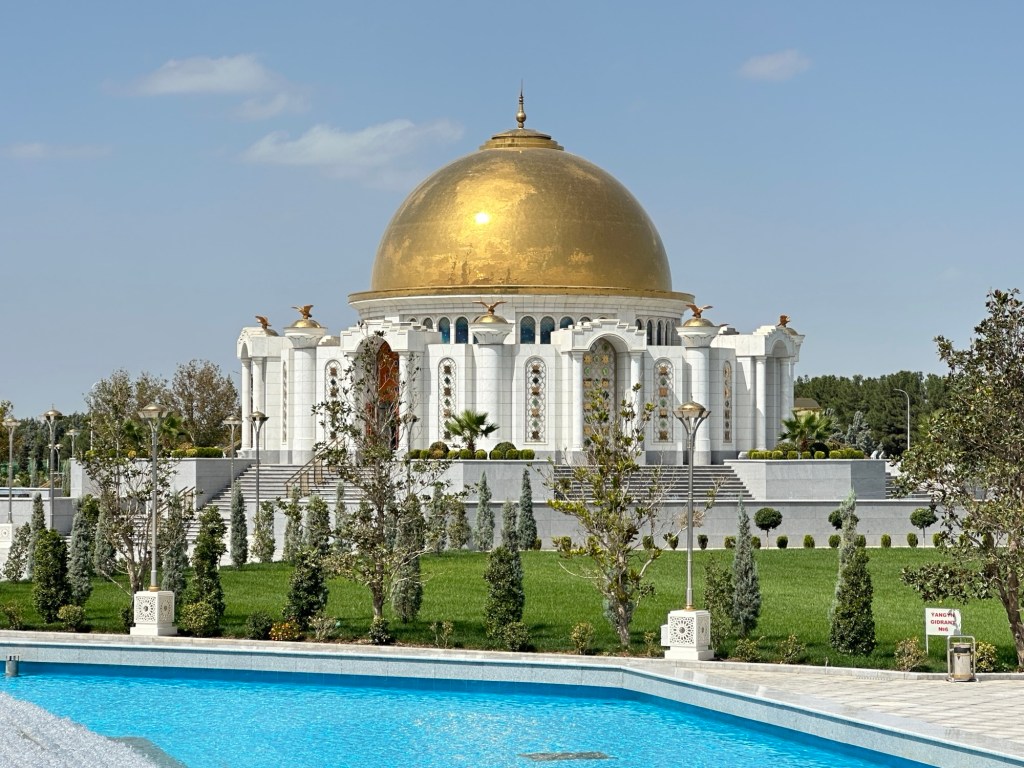
Next, the stunning Turkmenbashi Mosque-Mausoleum, one of the biggest mosques in Central Asia. Absolutely breathtaking! The mosque was built in 2002-2004 on the initiative of Turkmenbashi and named after him. The mosque itself is a one-domed building, surrounded by 4 minarets. The height of the mosque is 55 metres, and that of the minarets is 91 m to symbolize the year 1991 – when Turkmenistan gained independence. The tiles and rugs are amazing. 10000 people can worship there at one time. Next to the mosque, is the Turkmenbashi Mausoleum – more modest in décor and size. Turkmenbashi himself is buried in the central sarcophagus, alongside four family members.


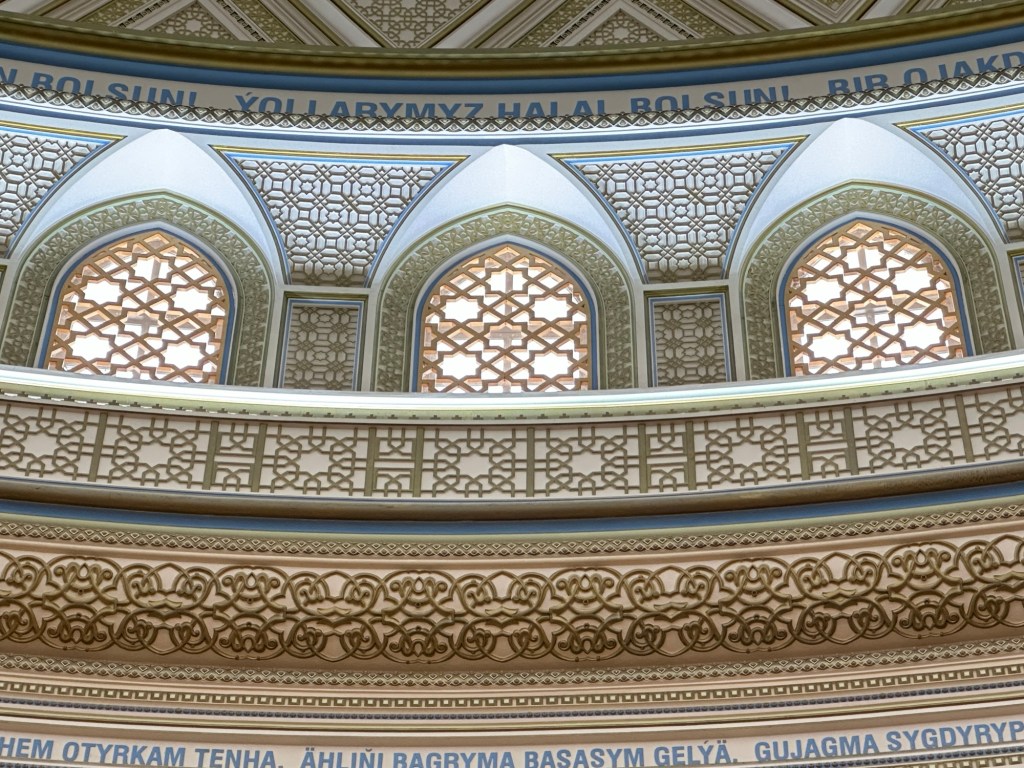
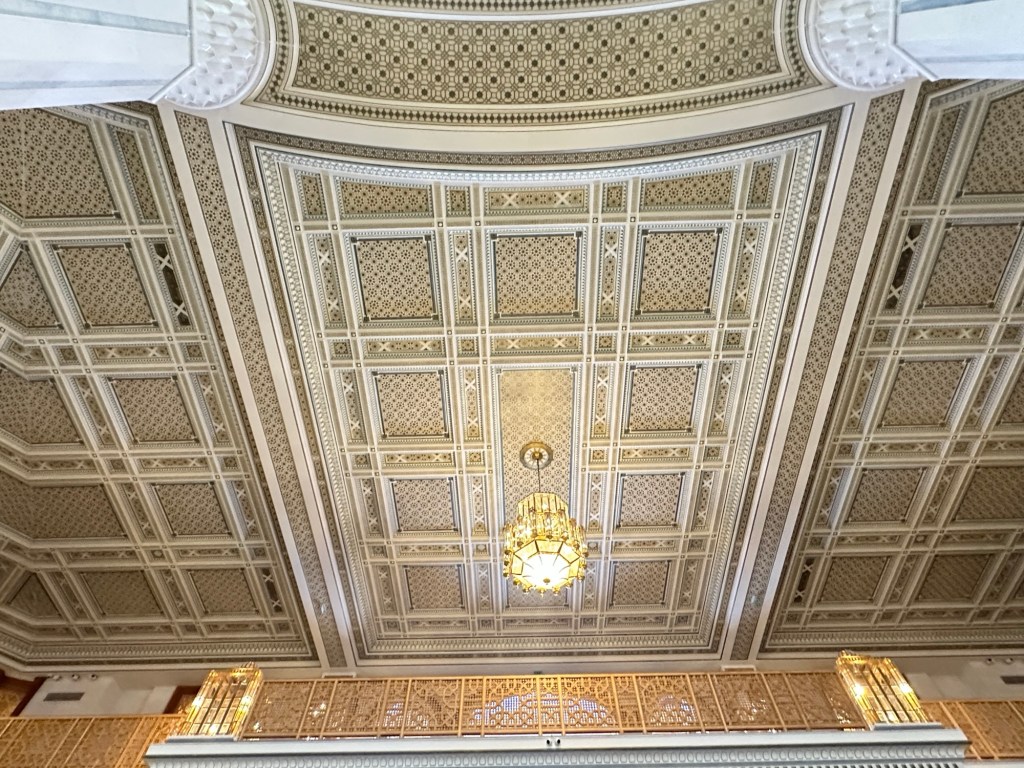

After lunch at a local restaurant where we tasted the traditional Turkmen pilaf with lamb, plus dograma – a lamb soup, we visited the National Museum of History. Here we had a guide give us an insight into Turkmenistan’s rich and ancient history.
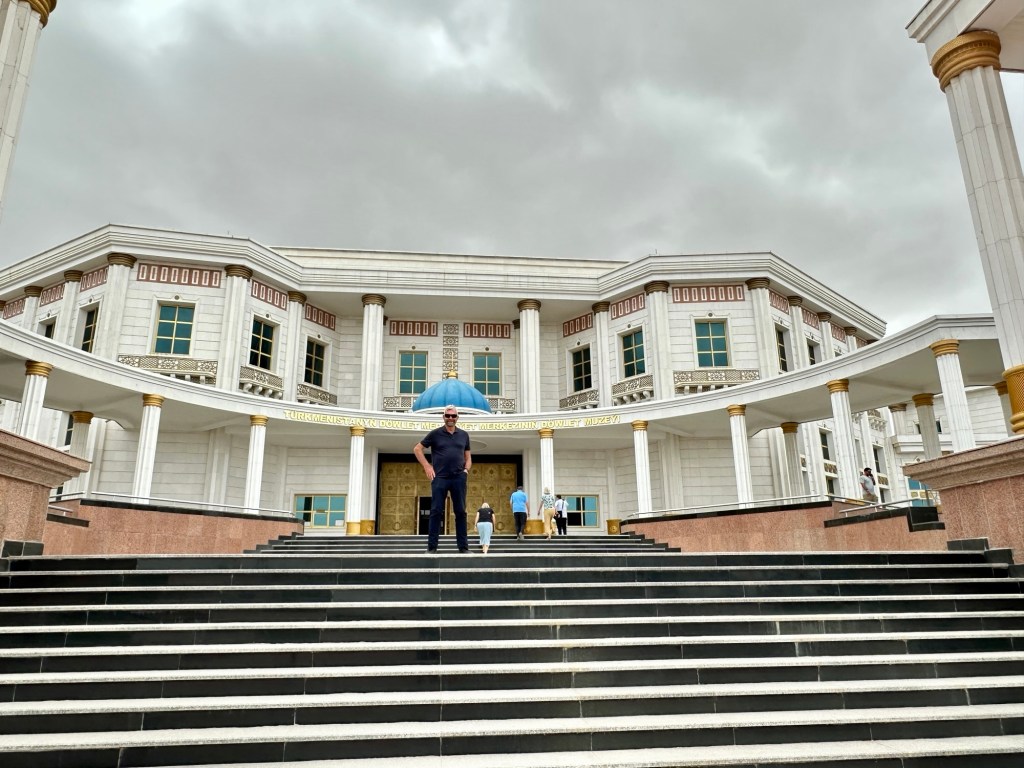

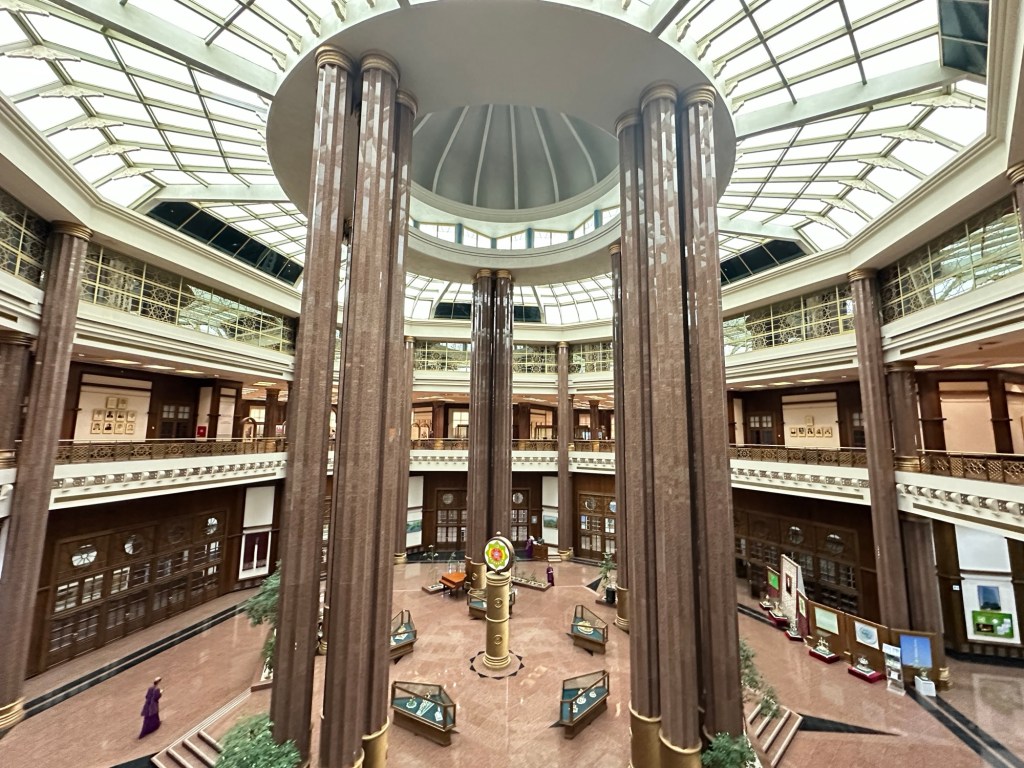
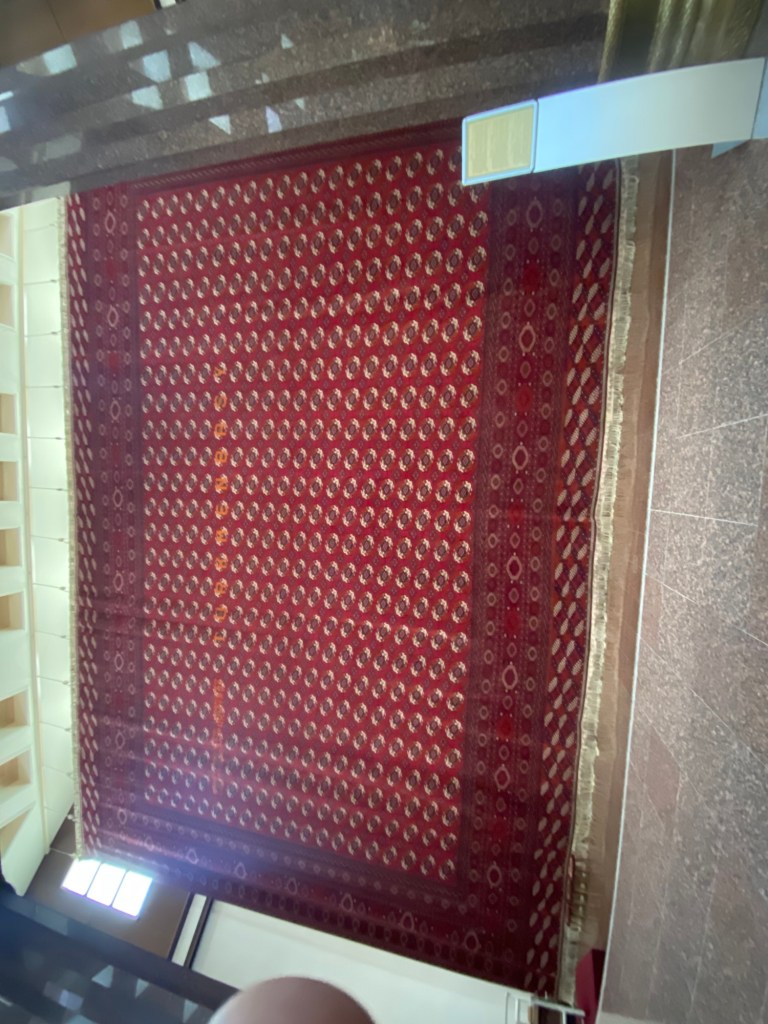
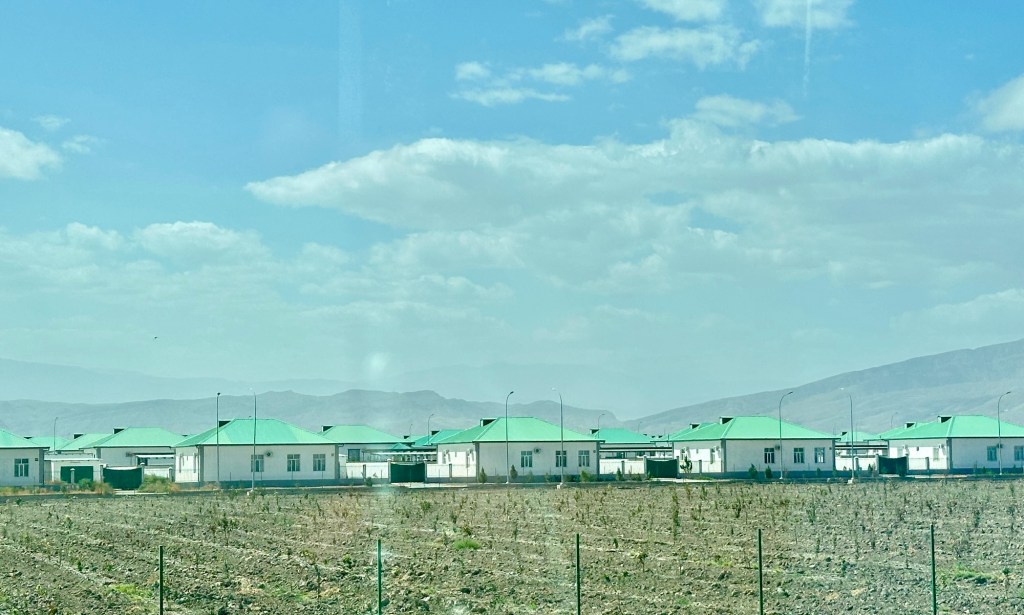
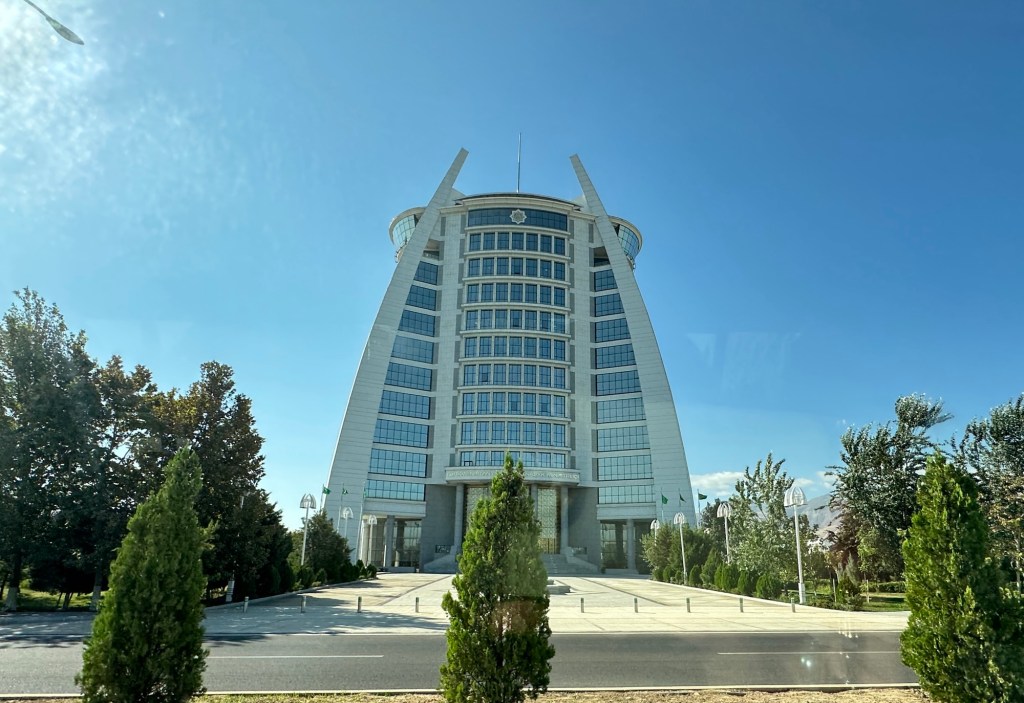
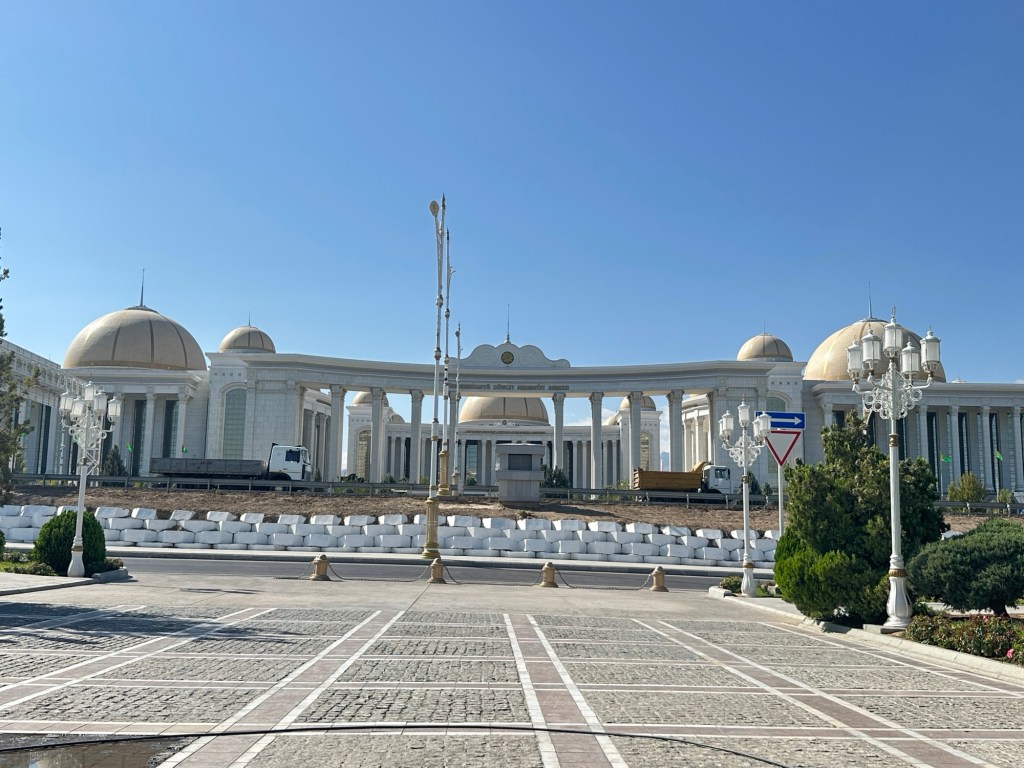
White marble buildings are everywhere. The city is spectacular. In the villages, the dwellings are still white but all with green roofs.

One fascinating building is the Palace of Happiness or the Wedding Palace, a massive white structure with a 32-meter-tall cube that houses a gigantic glass globe in the middle, topped with a golden star. The cube is said to represent the stability of marriage, and the glass globe inside reflects the eternal union of the couple. Couples can marry here plus have a reception of up to 1000 guests!

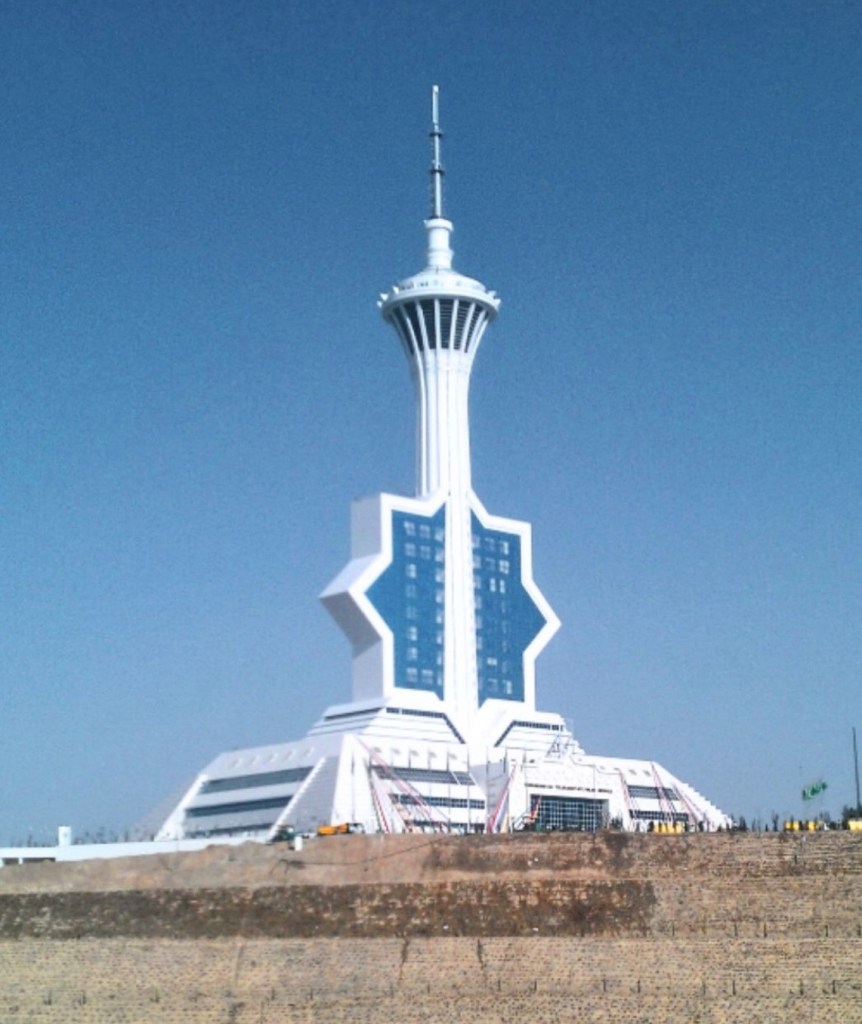
The Turkmenistan TV Tower is one of the tallest structures in the country – it’s a sleek, futuristic structure topped with a giant star, the emblem of Turkmenistan. The star alone is 91 meters in diameter, making it one of the largest architectural stars in the world.
On the way back to the hotel, Bahtiyar took us to a large shopping mall – I wanted to look for one of the lovely dresses all the ladies were wearing. Well Bahtiyar whizzed me from one shop to another – but no luck. The fabrics were either heavy velvet which would be far too hot to wear at home, or polyester which is also hot, or not a pattern I liked. The other restriction here is that they don’t take credit cards – frustrating as you don’t know how much money to change. The search continues!
Back to the hotel for a drink before bed. The late lunch saved on the need for dinner, and we needed an early night before the 3am start in the morning.
Day 4
Sunday 14th September
Ashgabat to Mary
19-29 degrees, sunny
Up at 3, ready to depart at 4am. One little hiccup on checkout – Frank had used one Nespresso pod in our suite during our stay – he was charged $6US for that luxury. You’re always learning when you travel!
The airport was quite busy at this early hour, but we navigated the process quite smoothly with our trusted guide at our side. The flight to Mary on Turkmenistan Airlines was only 45 minutes.
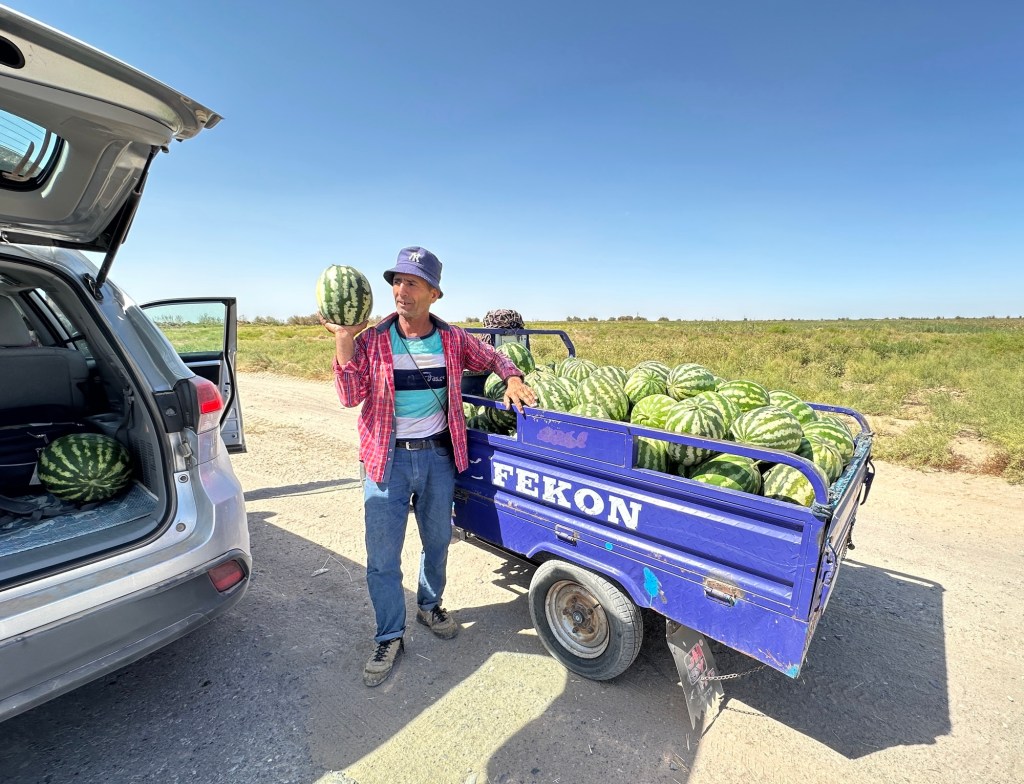
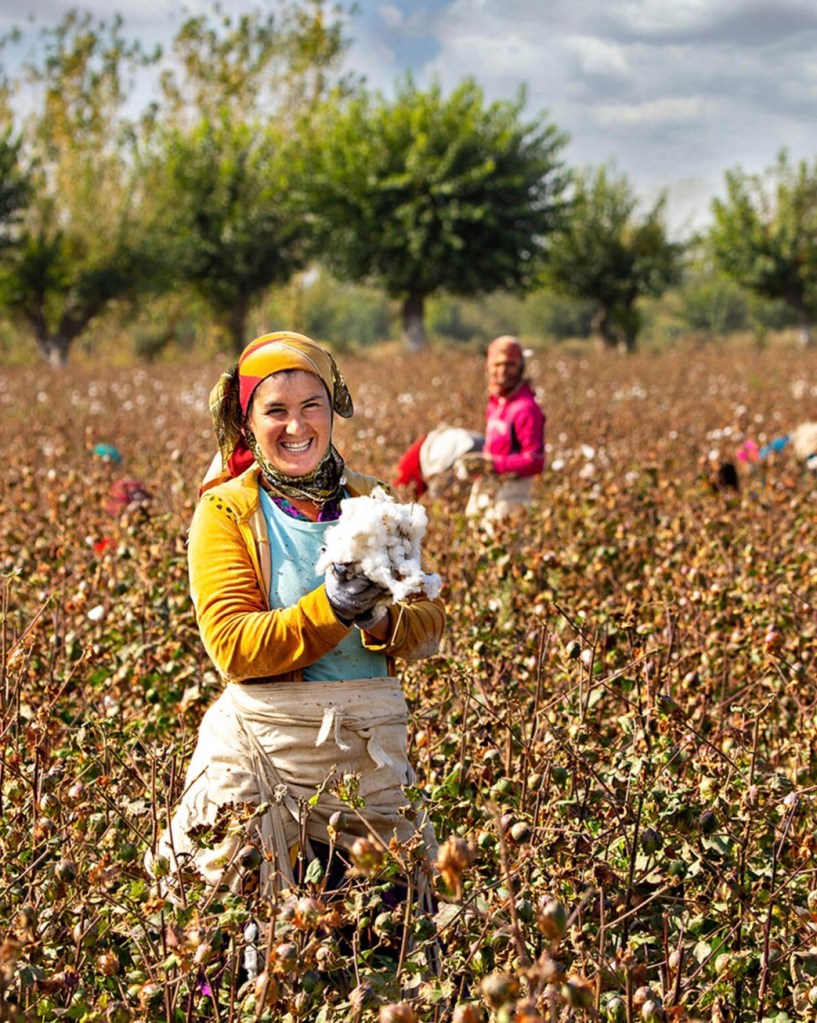
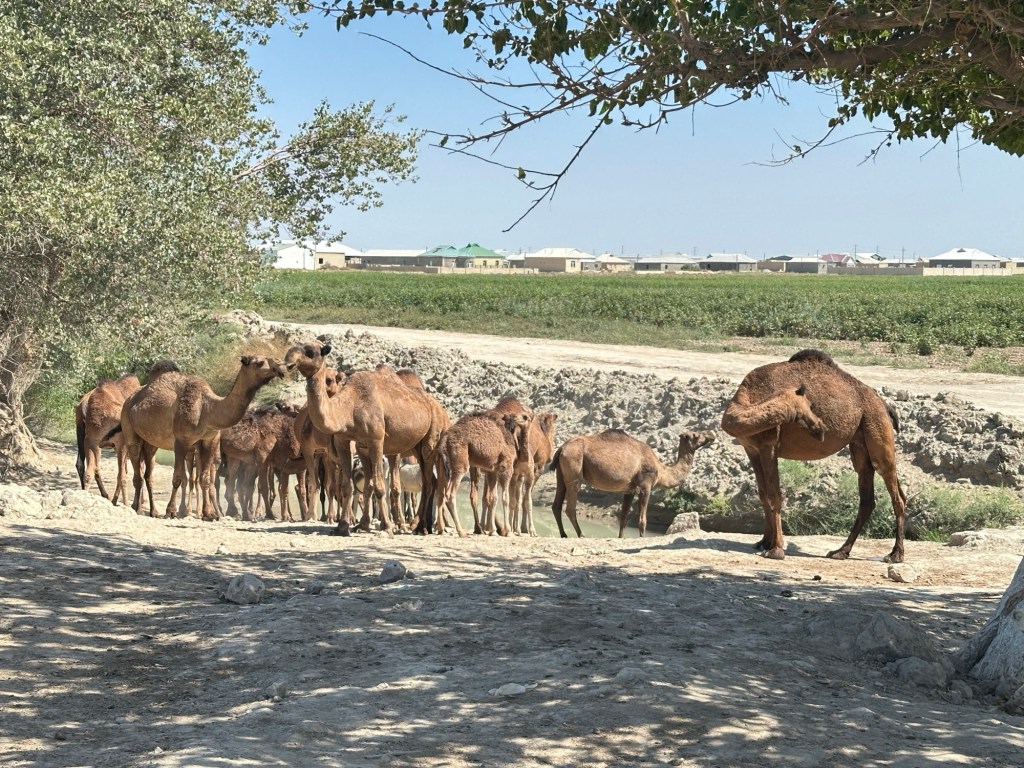
Once we landed in Mary, two drivers with cars picked us up to drive to the Karakum Desert to Margush (110km away). Well that was an interesting experience- we didn’t realise we had signed up for the Dakar car rally. It could have been a nice scenic drive through the countryside enjoying the rural countryside, instead it was two hours of dodging cars and potholes, and trying to stay upright! We drove alongside many cotton farms, and cows and camels grazing.
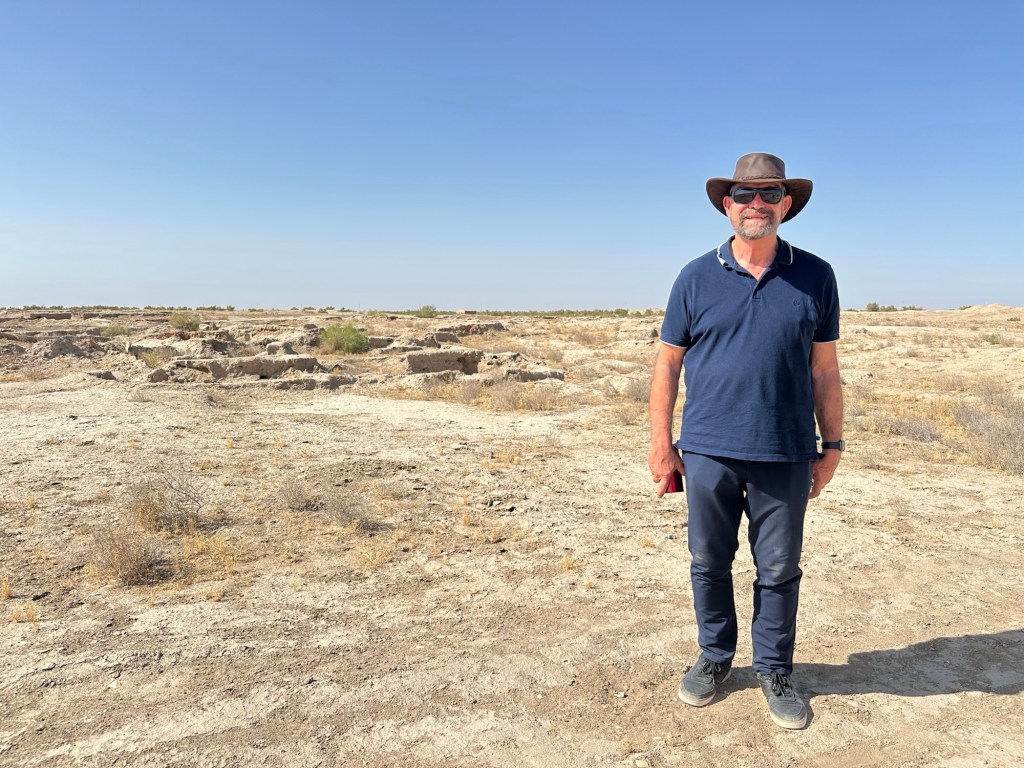
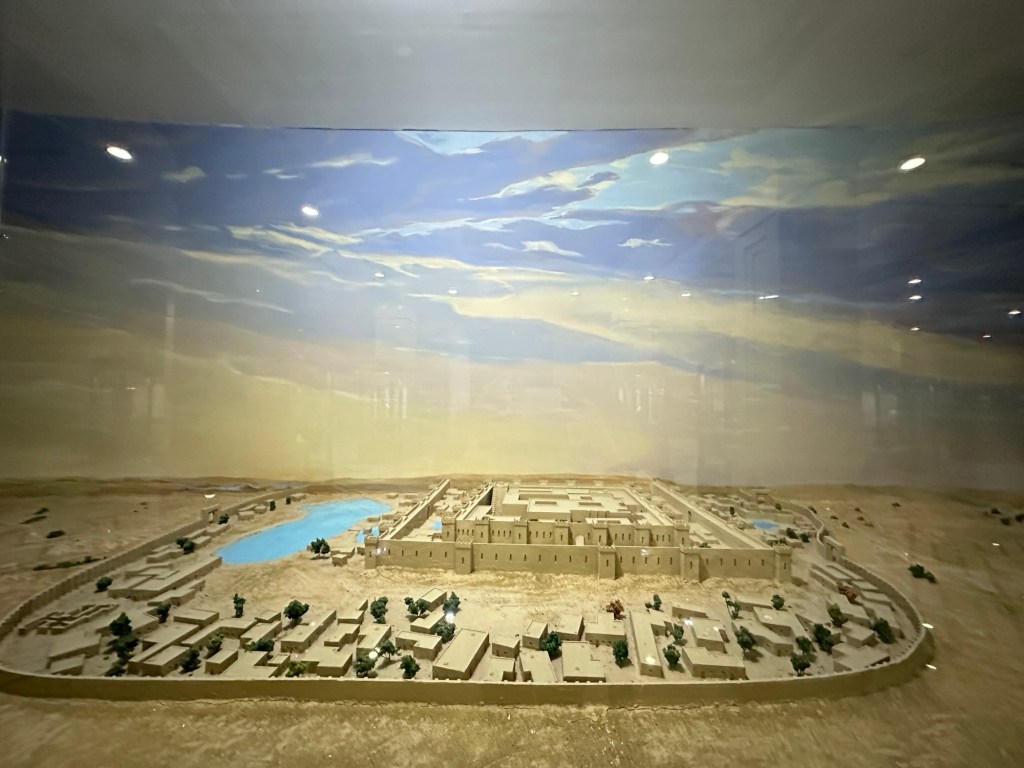
The state of Margush in the Bronze Age almost 4000 years ago, was situated in the lower delta of the River Murgab. It is thought that there may have been many temples and three hundred settlements scattered through the river’s extensive deltas. The city of Gonur-depe would have been the central focus or capital for the fortified settlements and villages of the delta area. The state of Margush in the Bronze Age was at one time a state comparable with Mesopotamia, Egypt, China or India, in that it was one of the advanced states of world civilization of its day. A little section of the settlement has been restored so you could picture how it would have been. It has been continuously inhabited for about 4,000 years by various peoples, societies and tribes. It was decimated by Genghis Khan in the 1200s and totally abandoned by the 19th Century.

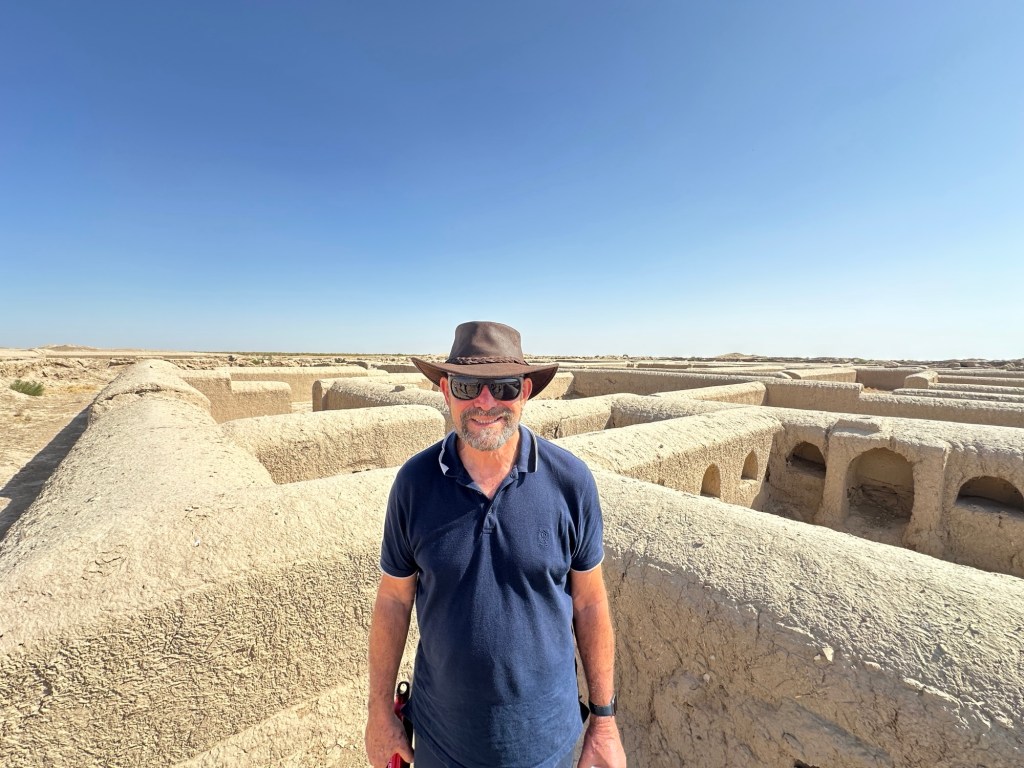
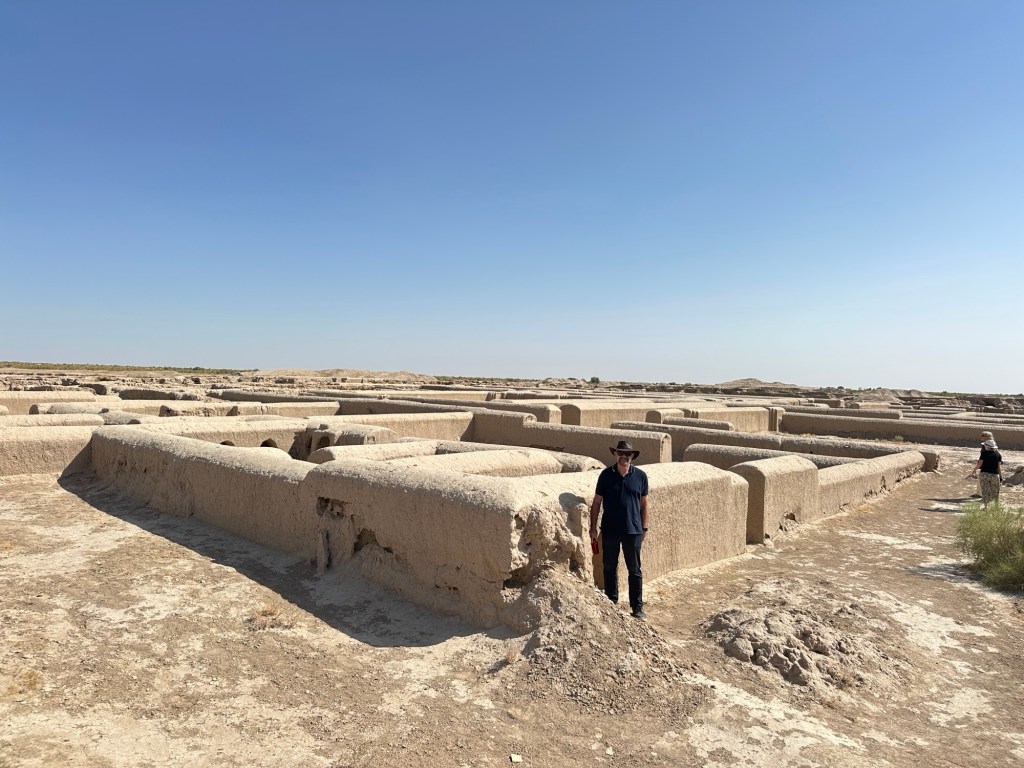


Another two hours of rally racing back to Mary where we checked into the Mary Hotel. It would have been a very grand hotel in its day, but sadly things were a little bit on the run down side.
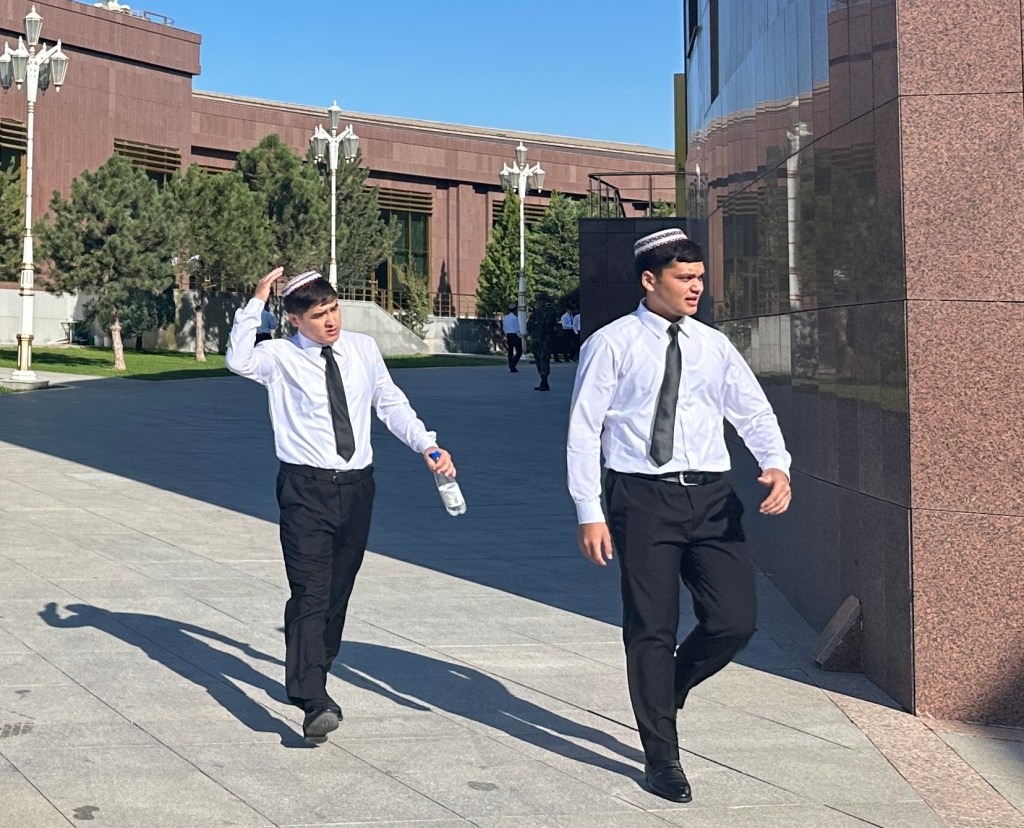
Across the road was a bazaar – Bahtiyar had said we could venture into there. All the usual local food produce, many phone and IT stores, plus what I’d been looking for – dress shops! I bought two long dresses – $25 AUS each. There were so many to pick from. The ladies look stunning here with their long dresses and head scarves.


Drink time , back at the hotel – a choice of beer, or beer. The local Zip beer is ok, and a very ok price – $3 a large sized can. Not a big choice for dinner, however the borscht soup I had was very tasty, and Frank enjoyed his Cheburek (like a pastie with only minced meat inside). Dinner set us back 55 Manat, or a whole $3! Bargain!
Day 5
Monday 15th September
Mary to Ashgabat
18-28 degrees, sunny
We didn’t hove to check out until 11am, and seeing the pool was a vibrant green colour and not conducive to swimming, it was back to the bazaar – and another dress was purchased! This time a stunning velvet number- not sure when I will wear it, but at $40, I couldn’t pass it up!


Onto the ancient city of Merv, also known as the Merve Oasis, and now a UNESCO World Heritage Site. Merv was a major Iranian city in Central Asia, on the historical Silk Road. It was once Central Asia’s lynchpin for caravan traffic, renowned for its artisans, scholars and religious institutions to rival Samarkand and Bukhara. Human settlements on the site of Merv existed from the 3rd millennium BC until the 18th century AD. It changed hands repeatedly throughout history.
Not much left of it, but most of the 18 km wall can be made out. All religions lived in harmony here, as can be seen in the various religions relics found, including the remains of a Buddhist stupa and pre-Zoroastrian temples. Genghis Khan did his damage here as he did in Gonur Depe.
We stopped at the Girl’s Fortress or Gyzgala (8th Century), the Mausoleum of two Askhabs (7th and 15th Century), and the Mausoleum of Sultan Sanjar (12th Century), plus climbed to the top of the citadel Gawurgala, where we had spectacular views over the ancient lands of Merv. The fortress walls we could see were 17 metres high and 4 metres wide. We were treated to seeing a newly married couple having their wedding photos taken at the very top.
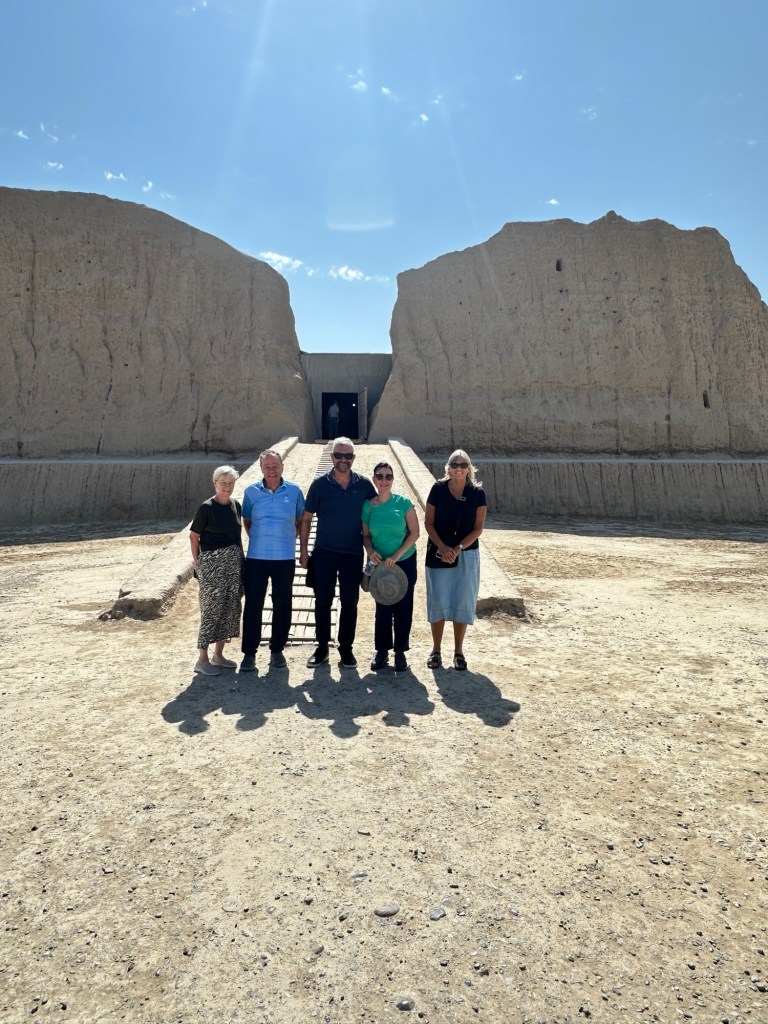
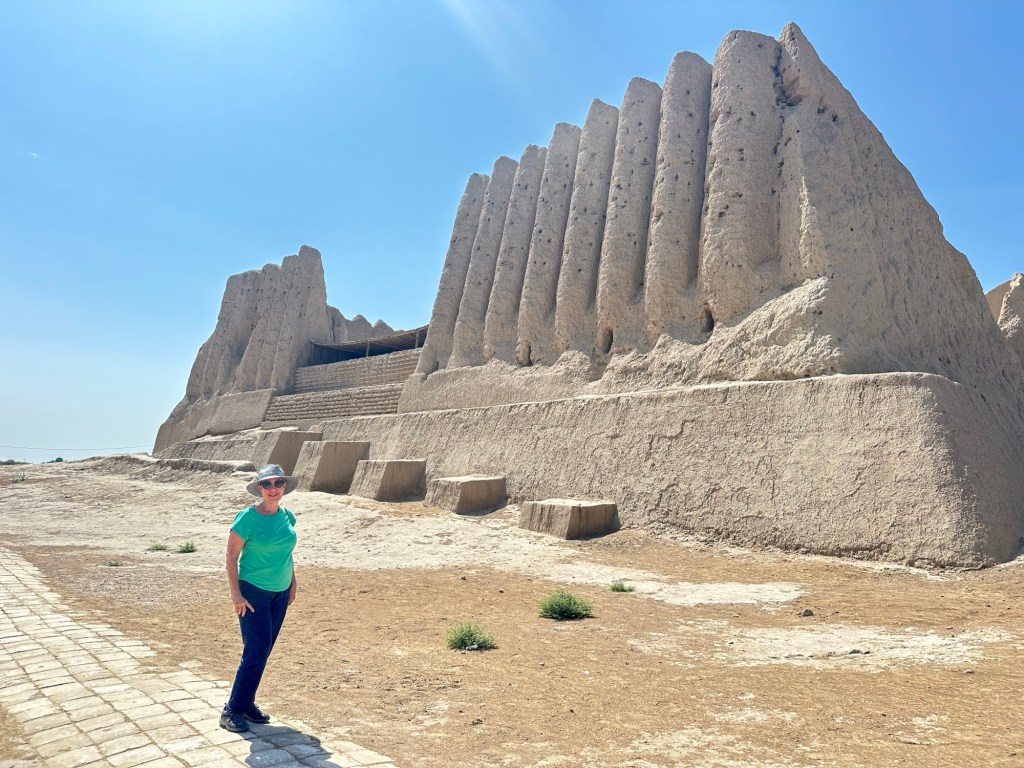
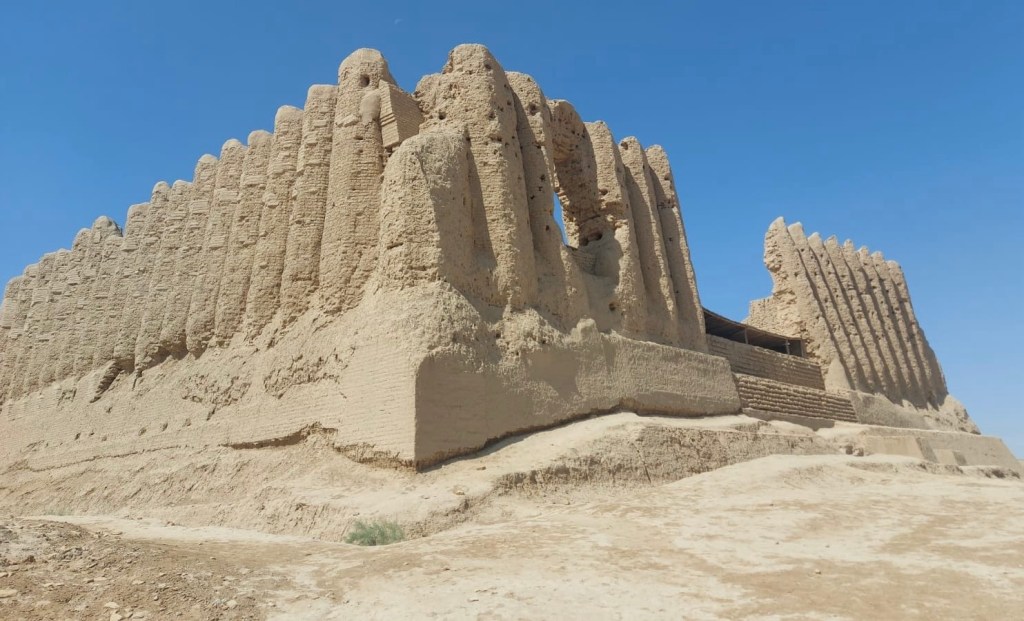
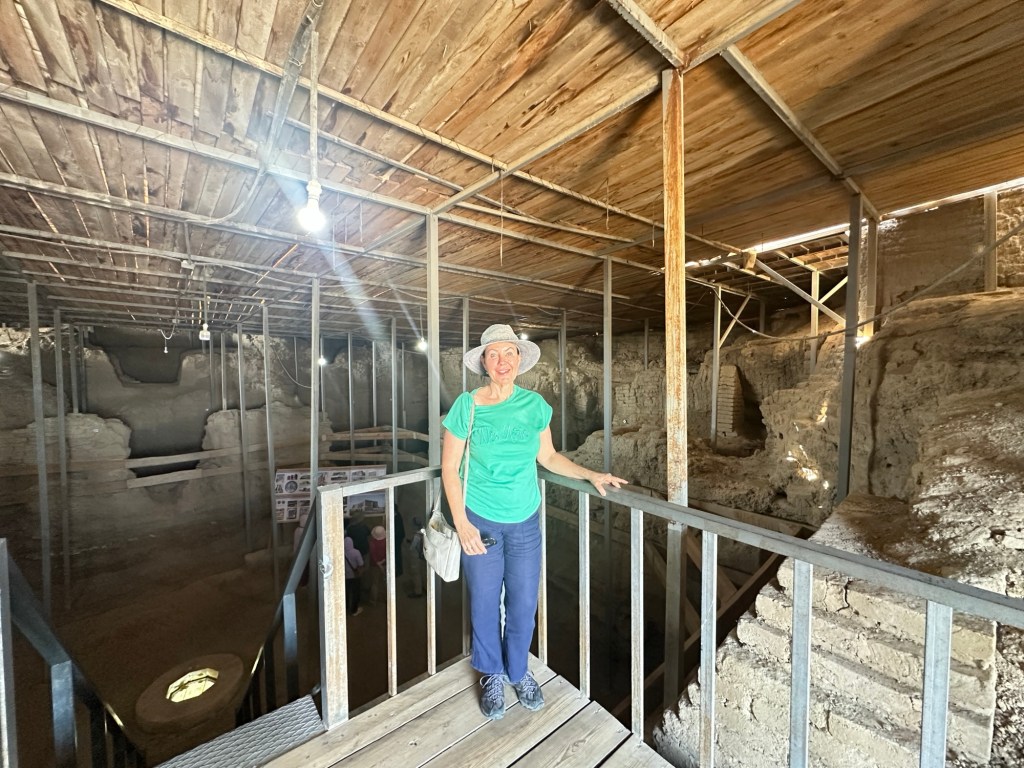


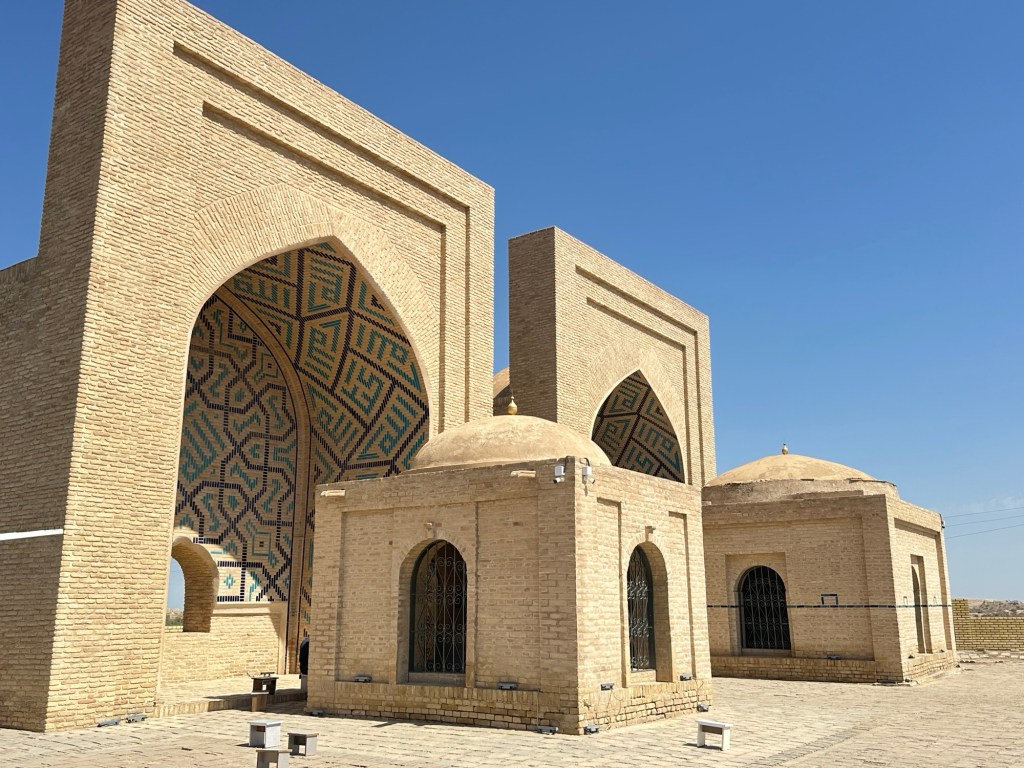
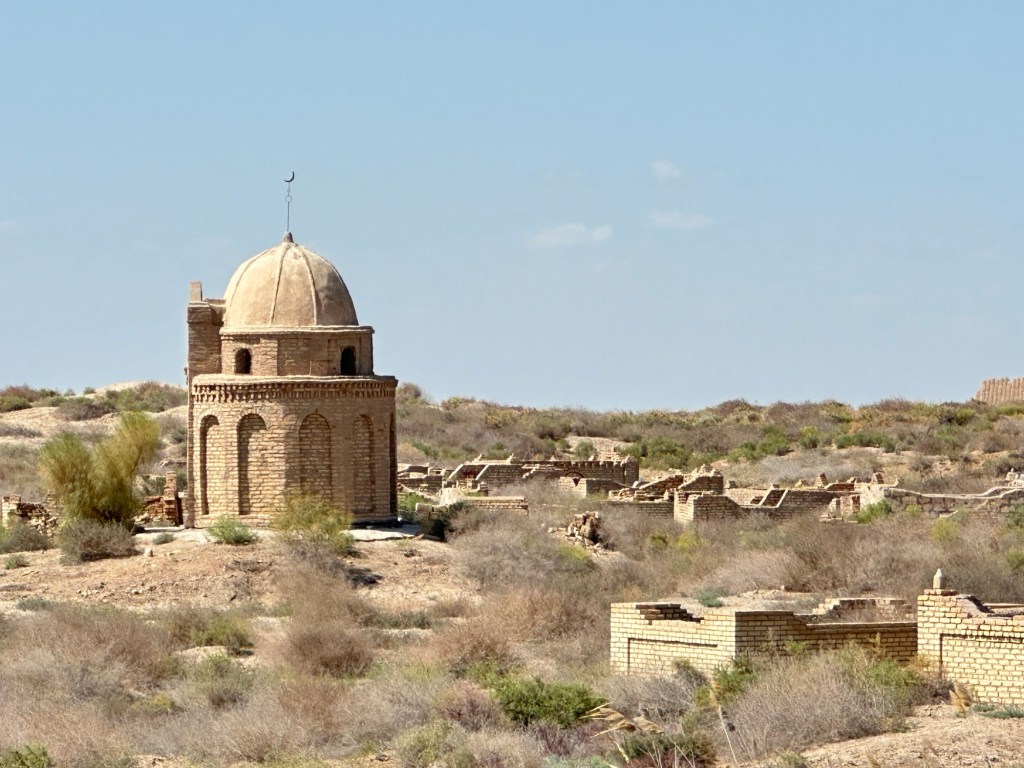
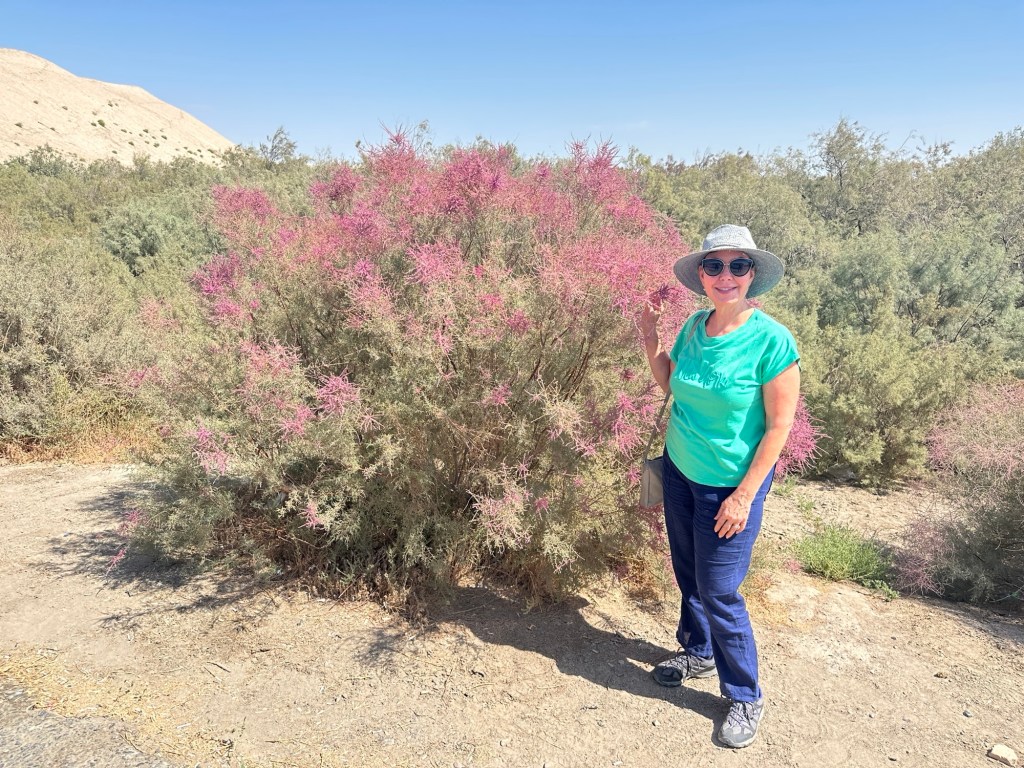


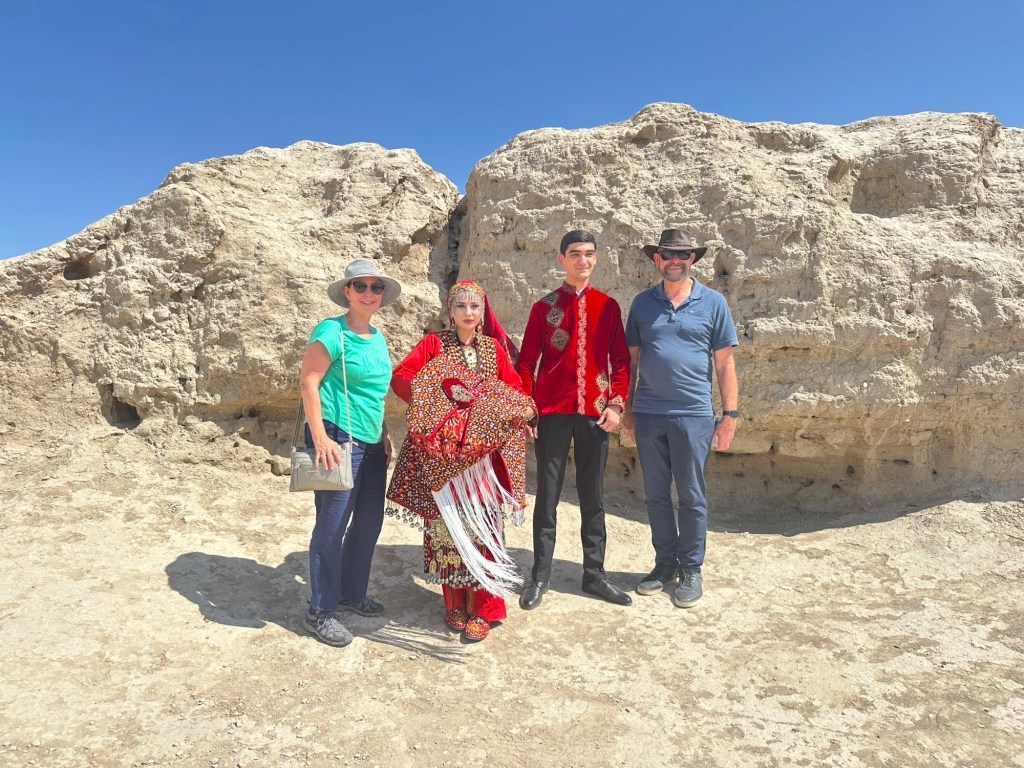
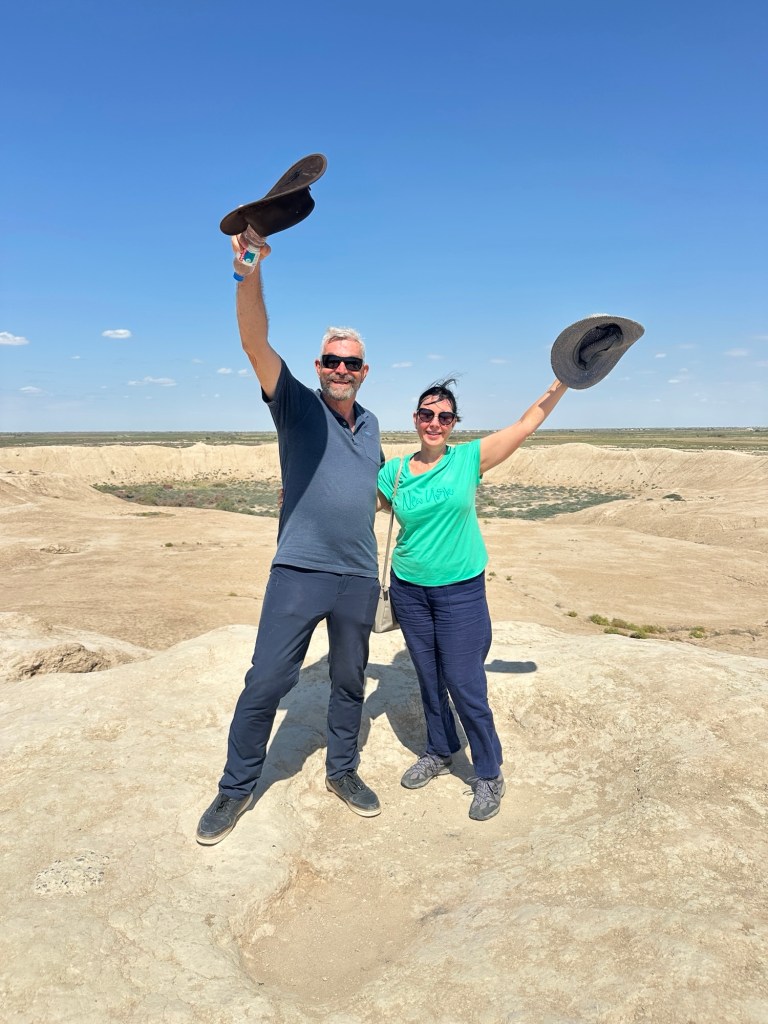
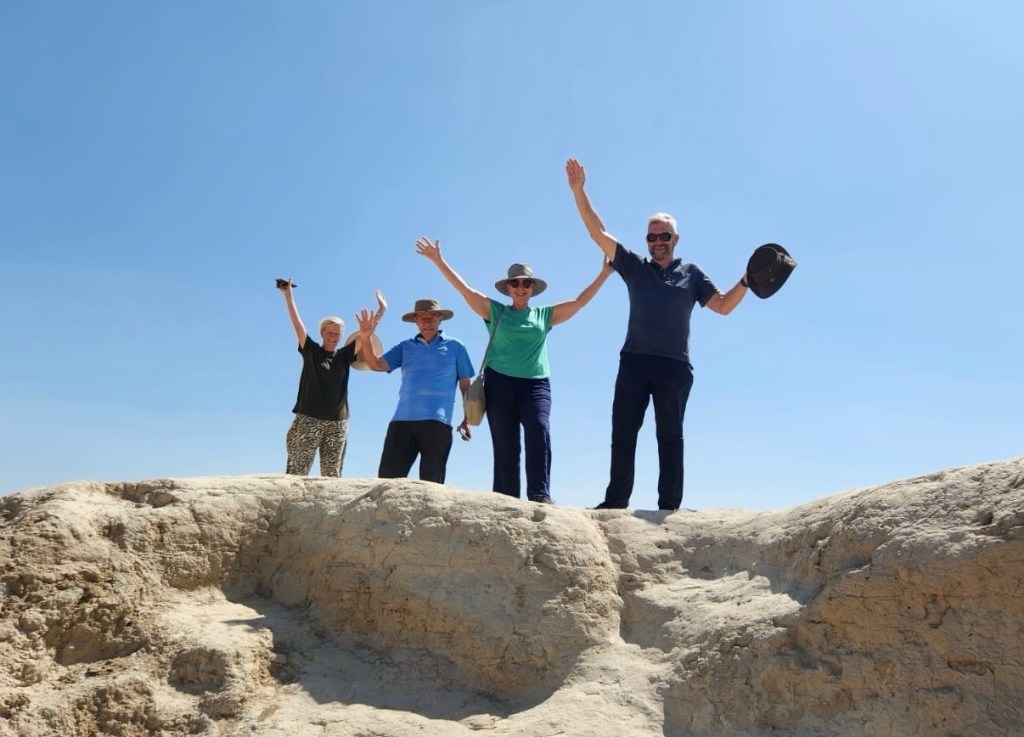
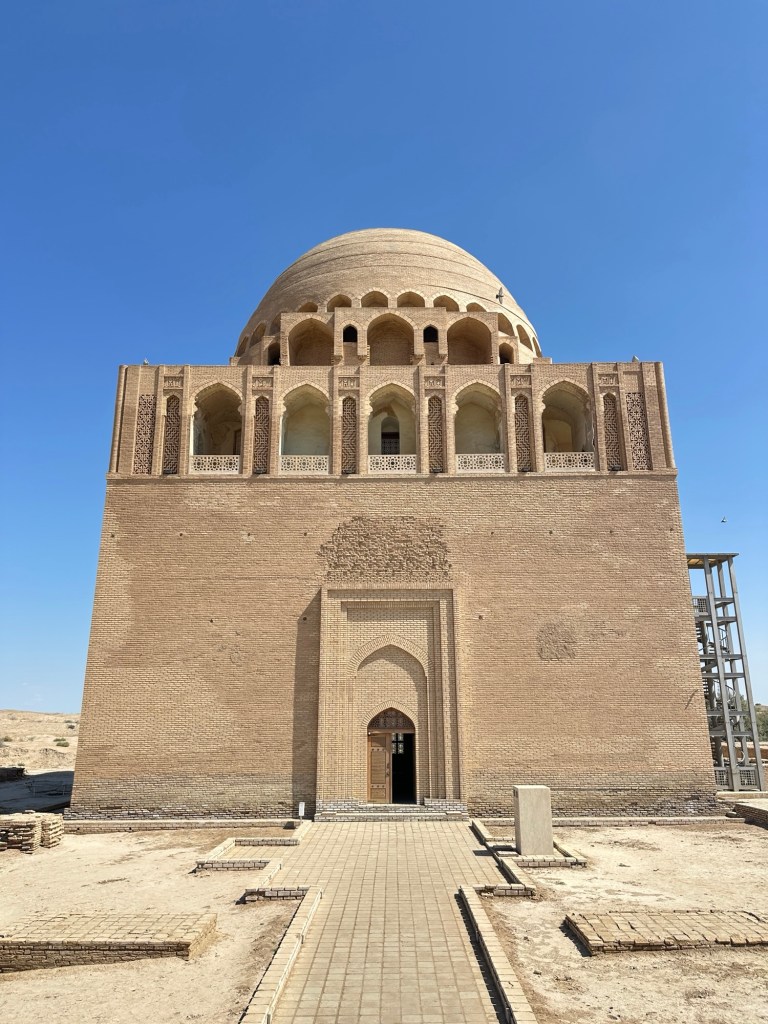
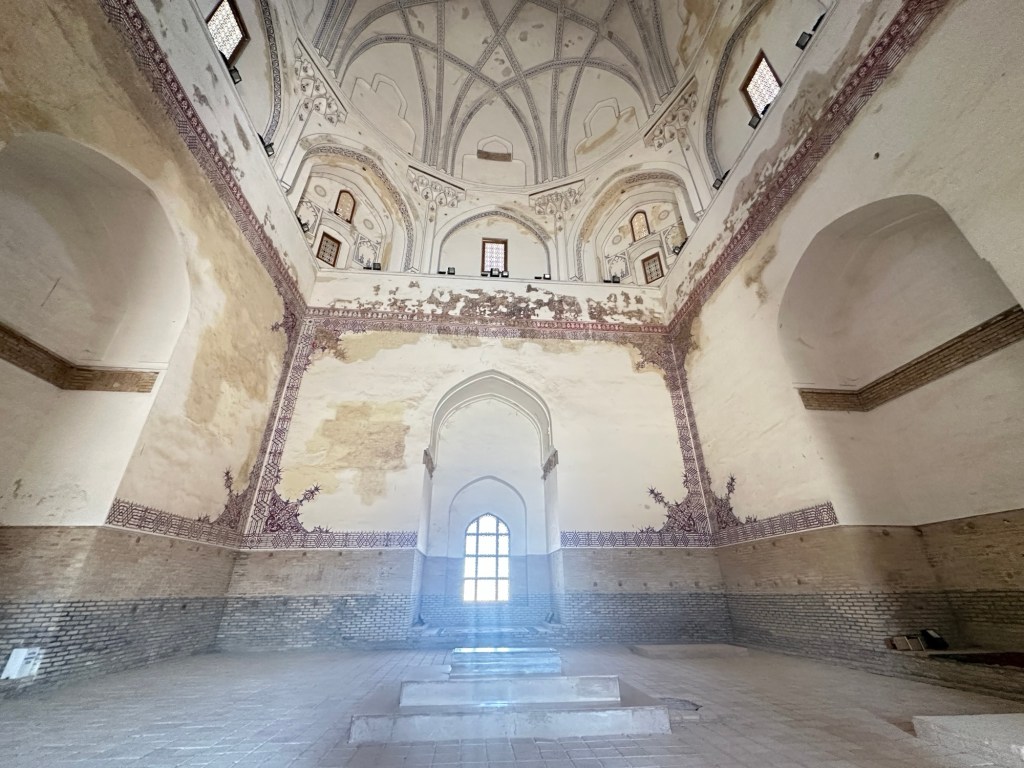
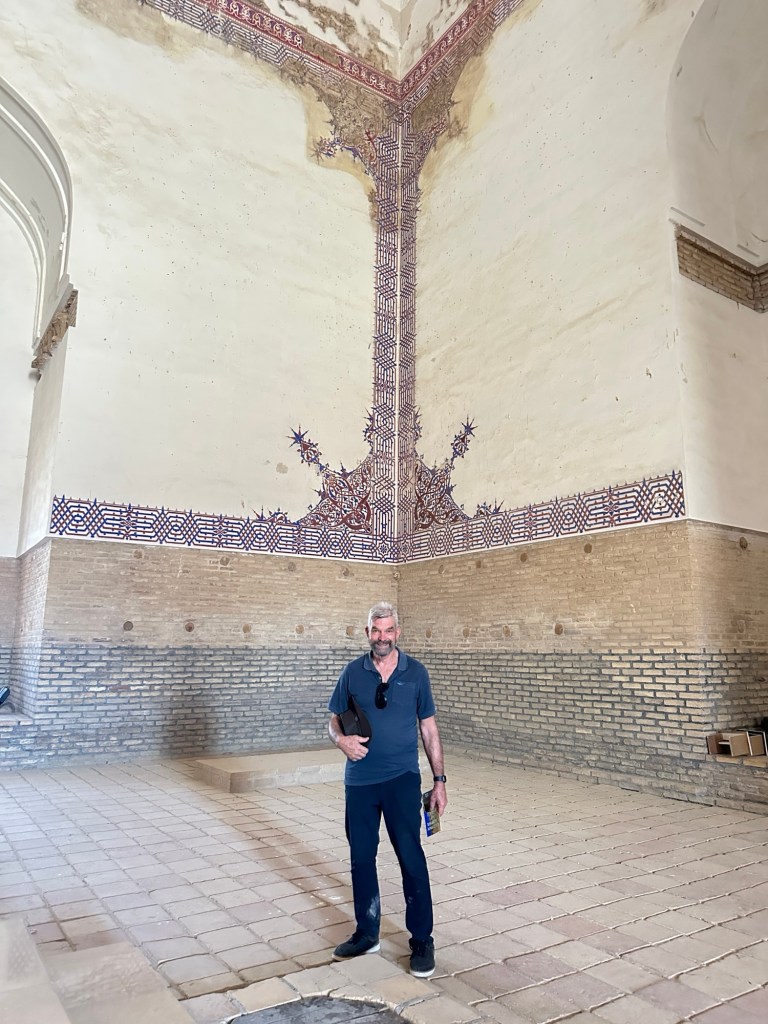
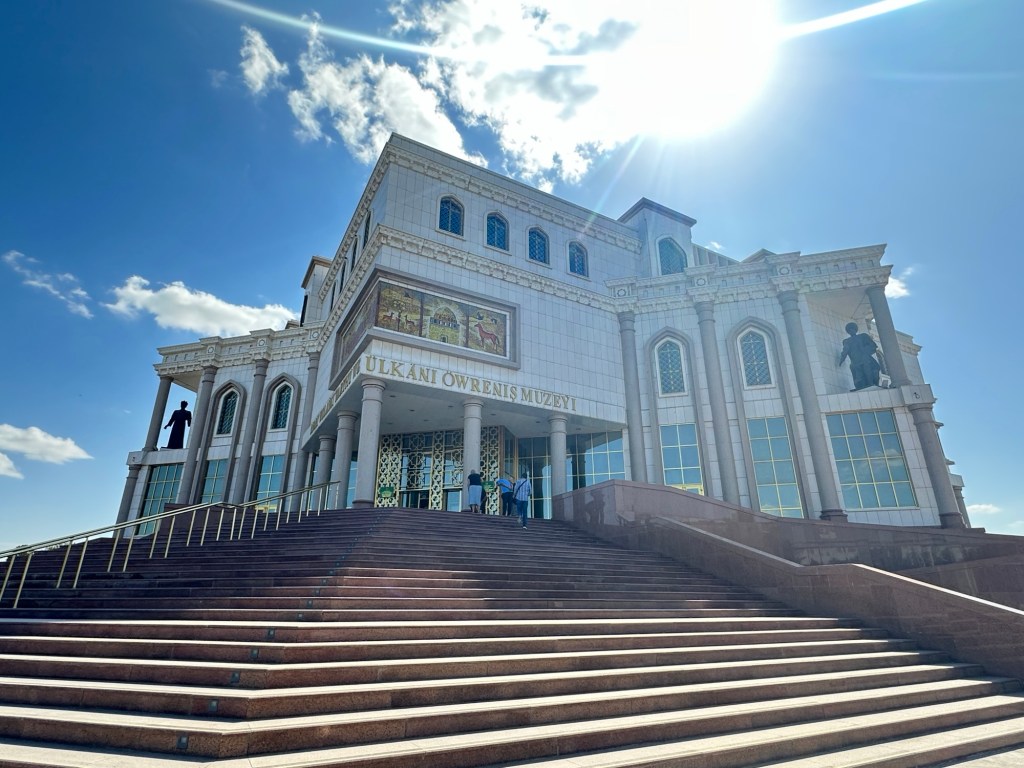
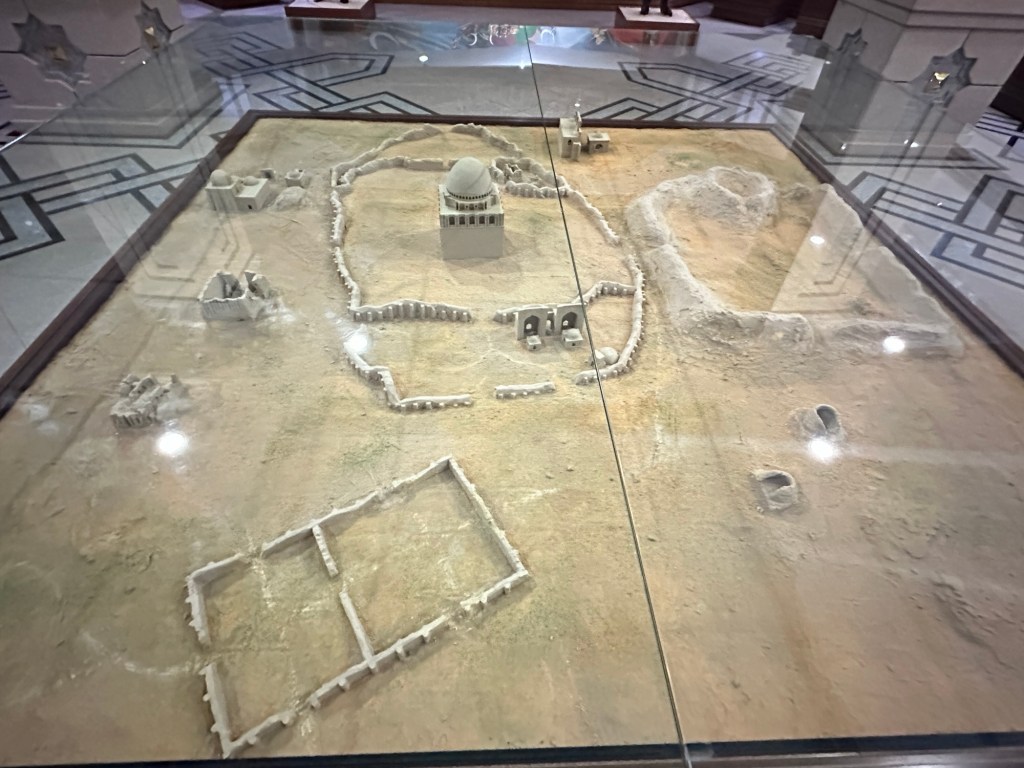
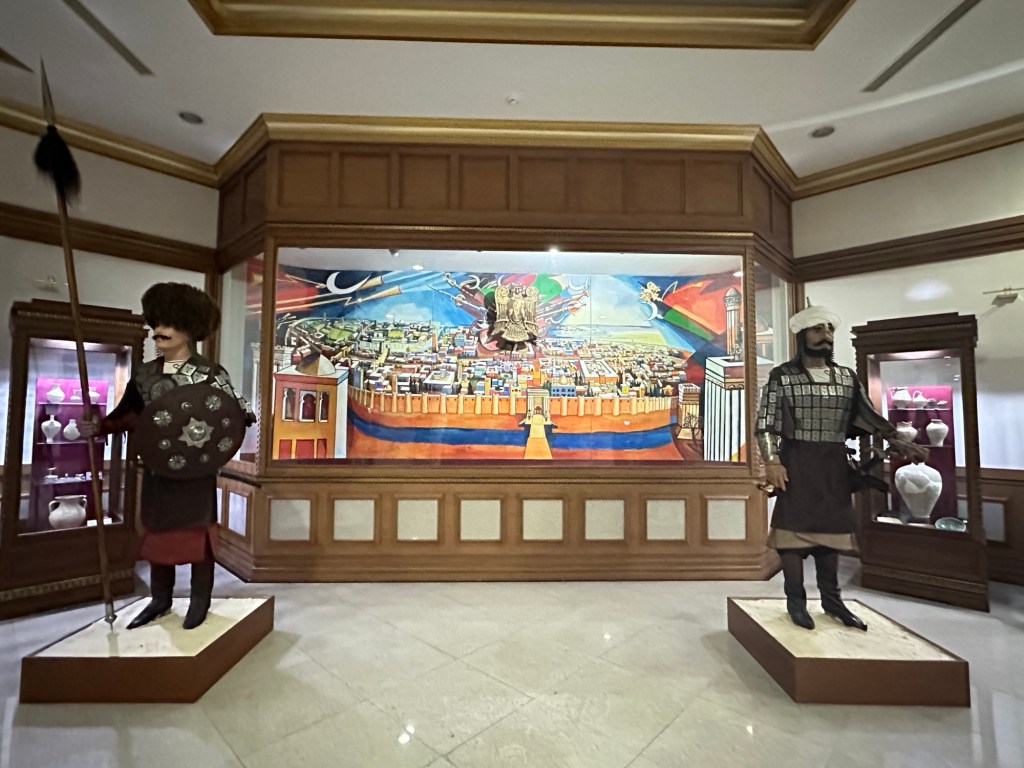
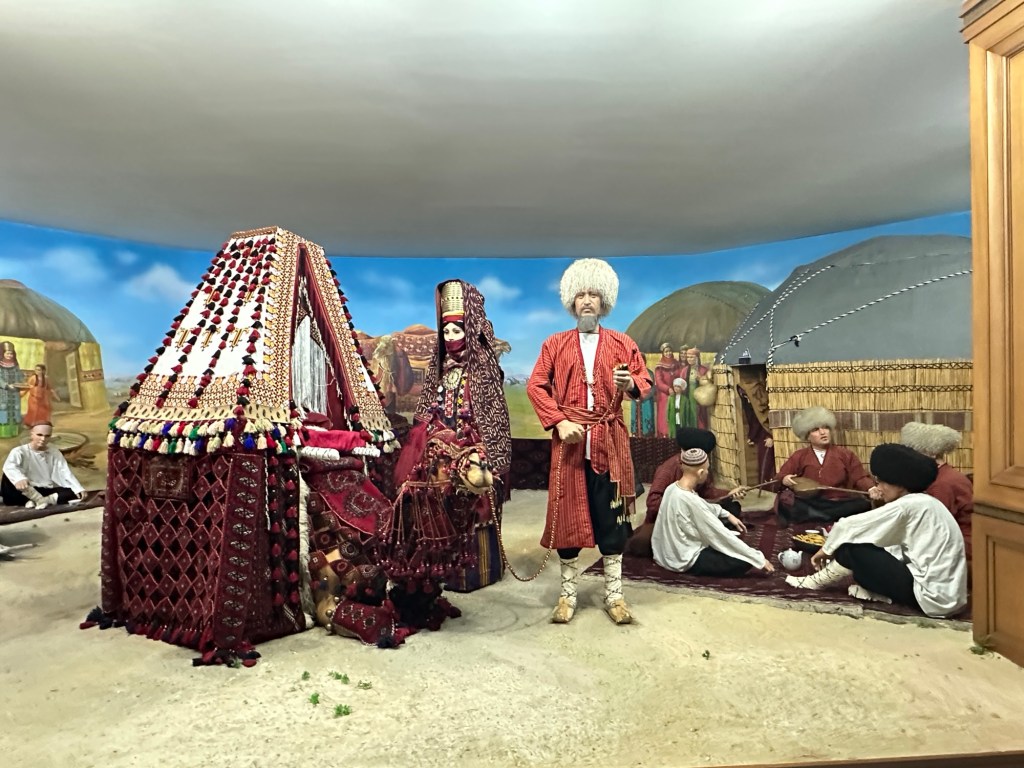
Next the History Museum – The guide there gave us an excellent presentation of the history of Margush and Merv. Hard to believe both civilisations are so old. Some of the artifacts found there were amazing – 4-5000 years old. There are still uncovered cities beneath the lands we had just walked on.

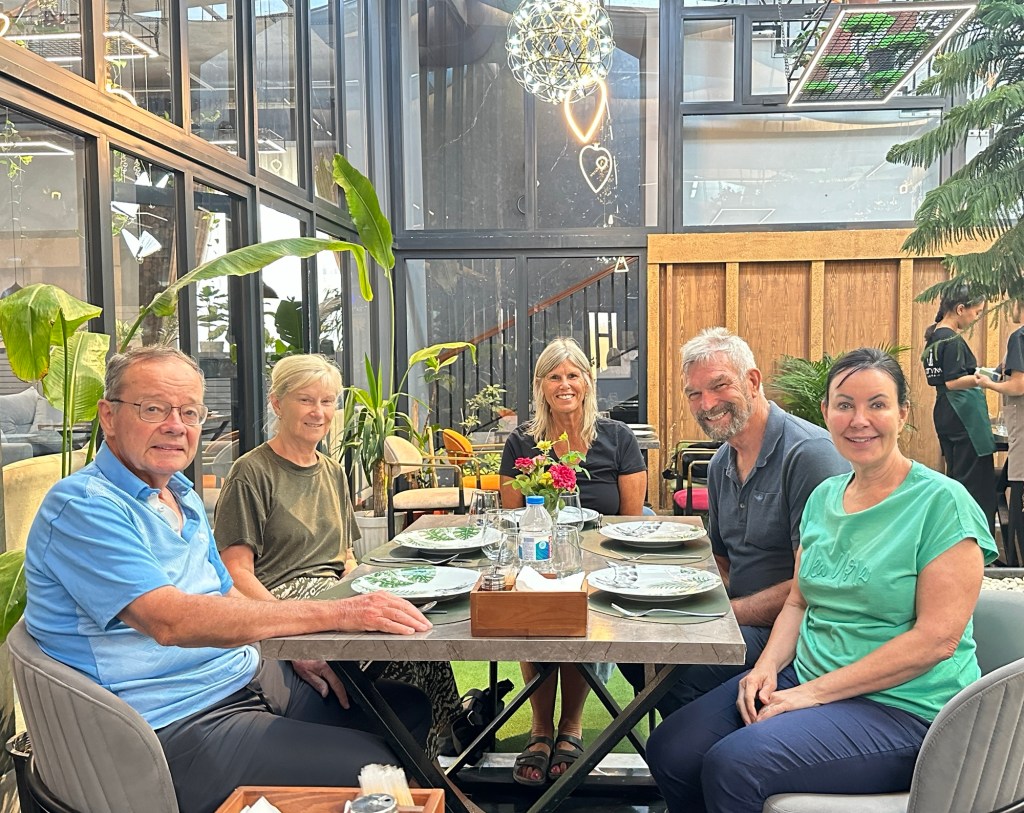
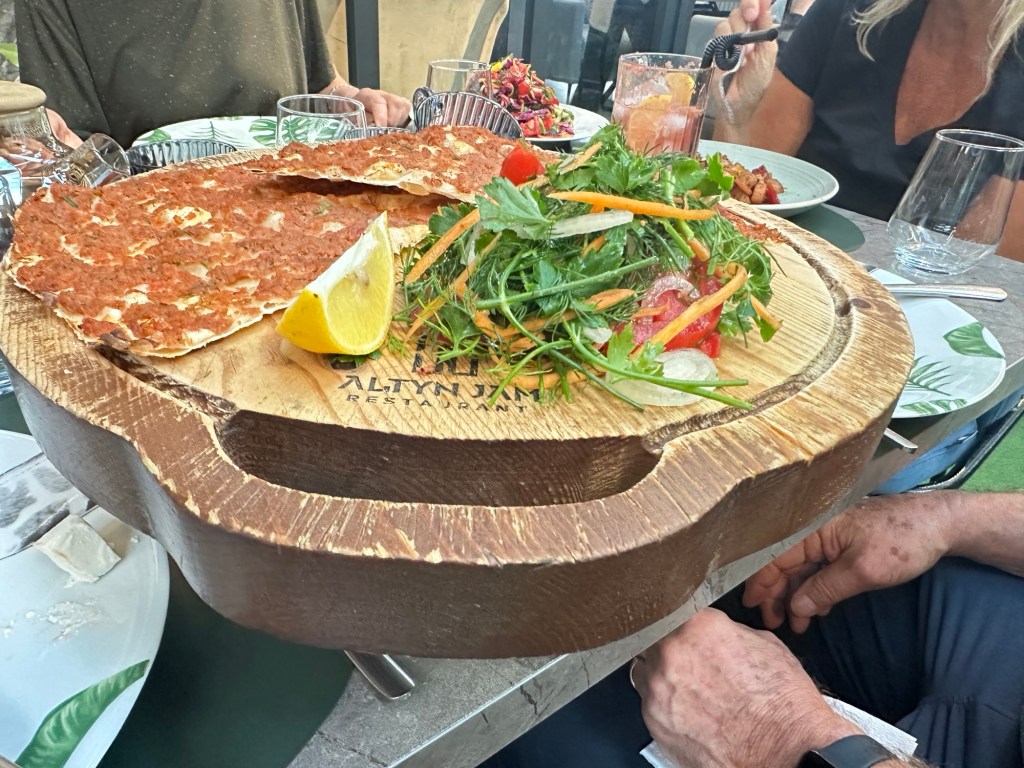
Next a late lunch at 4pm, in an exquisite restaurant – Bahtiyar description. And he was correct! The food was sensational. We shared baked eggplant stuffed with mince, a mixed grill and salad, and lahmajuhn – a flat bread covered with a tomato sauce, salad and sprinkled with lemon juice. All were delicious – beautiful flavours. We couldn’t eat it all. Even Frank faltered. And all that for $20 for both of us!

We had a short diversion at a shopping mall, as Bahtiyar wanted to show us some wedding dresses – the fabrics were just stunning.

Time to say farewell to Mary, back to the airport, the usual jump through security hoops, then the 45 minute flight back to Ashgabat, arriving at 9pm. I have to say we were impressed with Turkmenistan Airlines. We were very pleased to be staying another night at the Yyldyz Hotel for another night.
Frank unfortunately had come down with a tummy bug so had a bit of an uncomfortable night. Thank goodness for the emergency medication kit!
Day 6
Tuesday 16th September
Ashgabat to Darvaza Gas Crater
14-28 degrees, sunny
Part 2 of our Ashgabat tour – more amazing buildings and monuments.
The vast Memorial Complex features three memorials honouring those that died in the 1948 earthquake, soldiers who perished in WWII and those killed in other Turkmen battles. The Earthquake Memorial features a bombastic bronze rendering of a bull and child (said to be the baby Niyazov). With the Kopetdag Mountain range in the background it is a very impressive site.
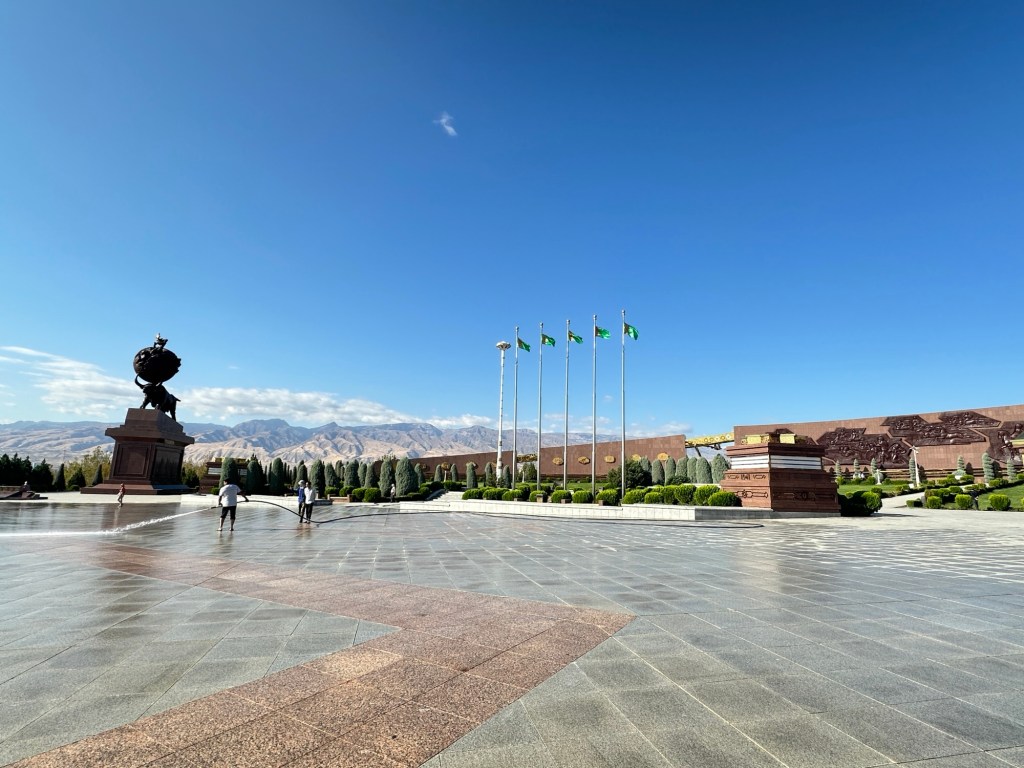
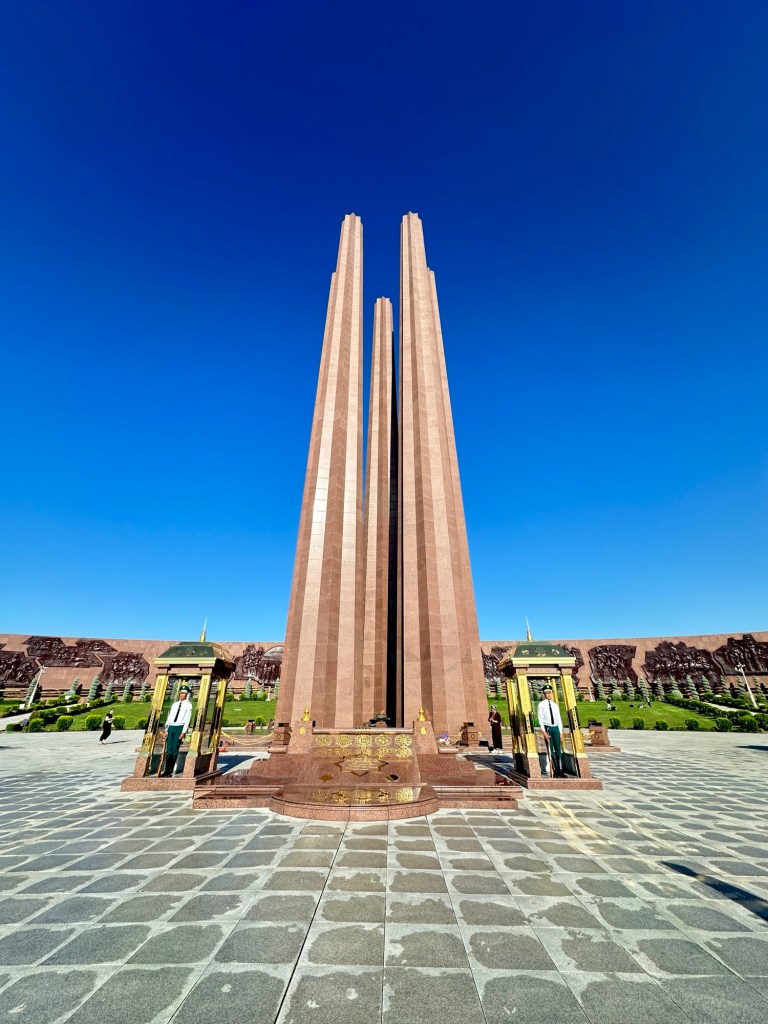

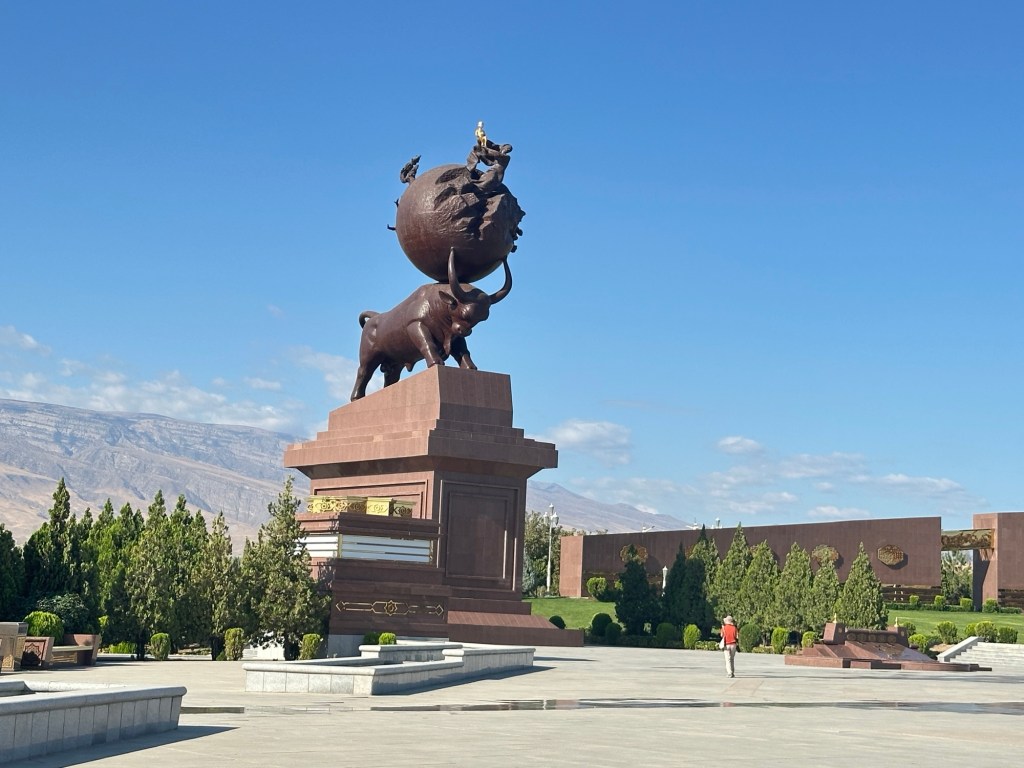
We also went to the Turkmenistan Independence Memorial, Monument arch of Neutrality, Independence Park, and so many more. More driving around enjoying the beautiful buildings. The indoor Ferris Wheel was spectacular – 50 meters in height and 60 meters in diameter, it is part of the Alem Cultural and Entertainment Center.
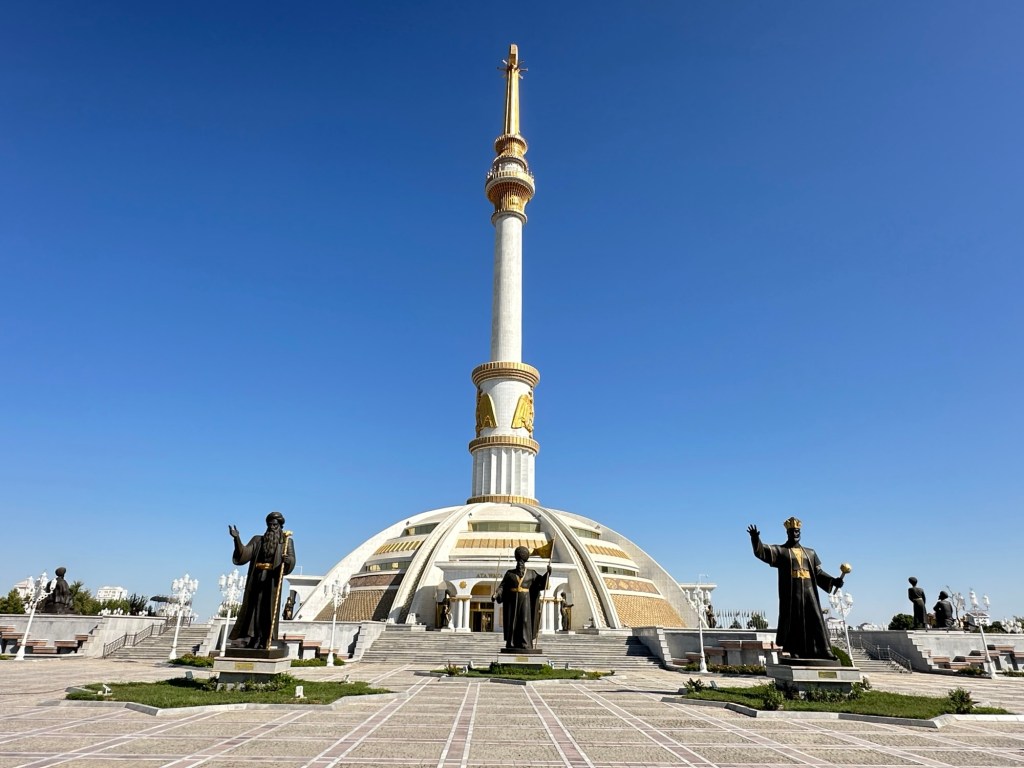
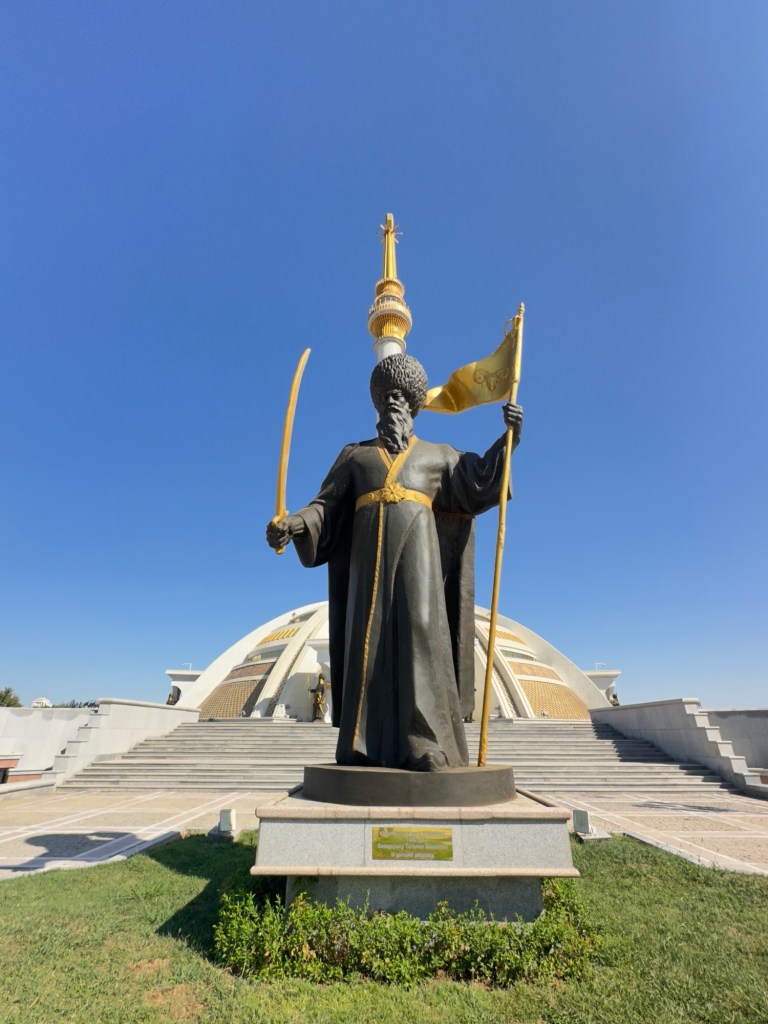
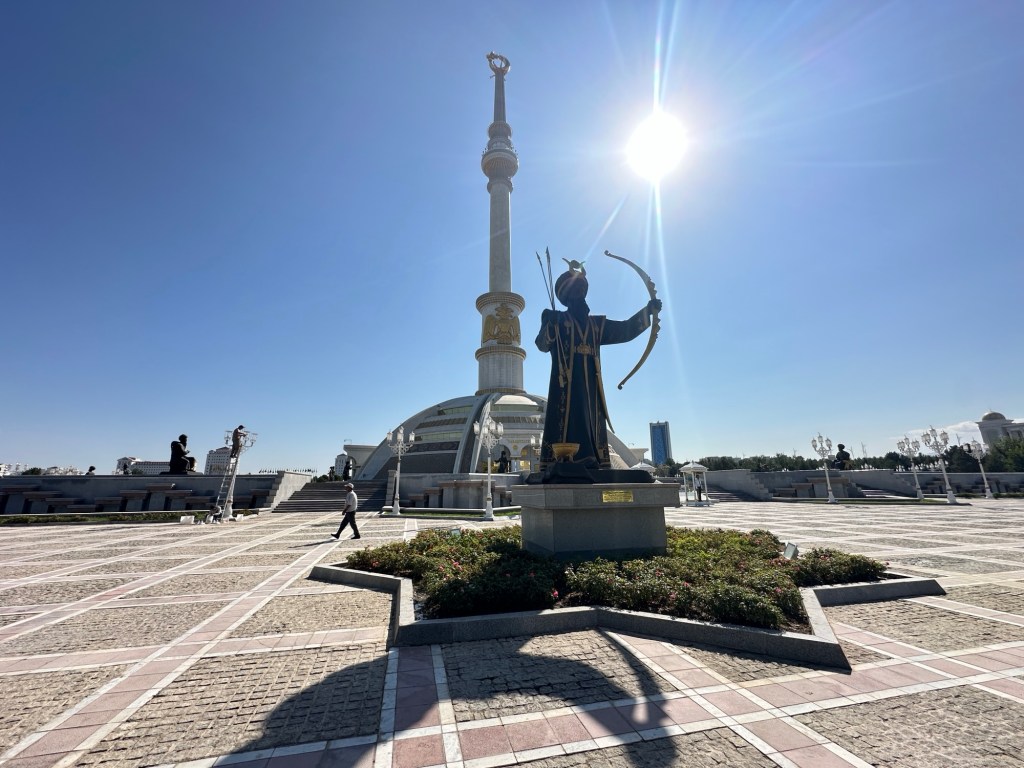
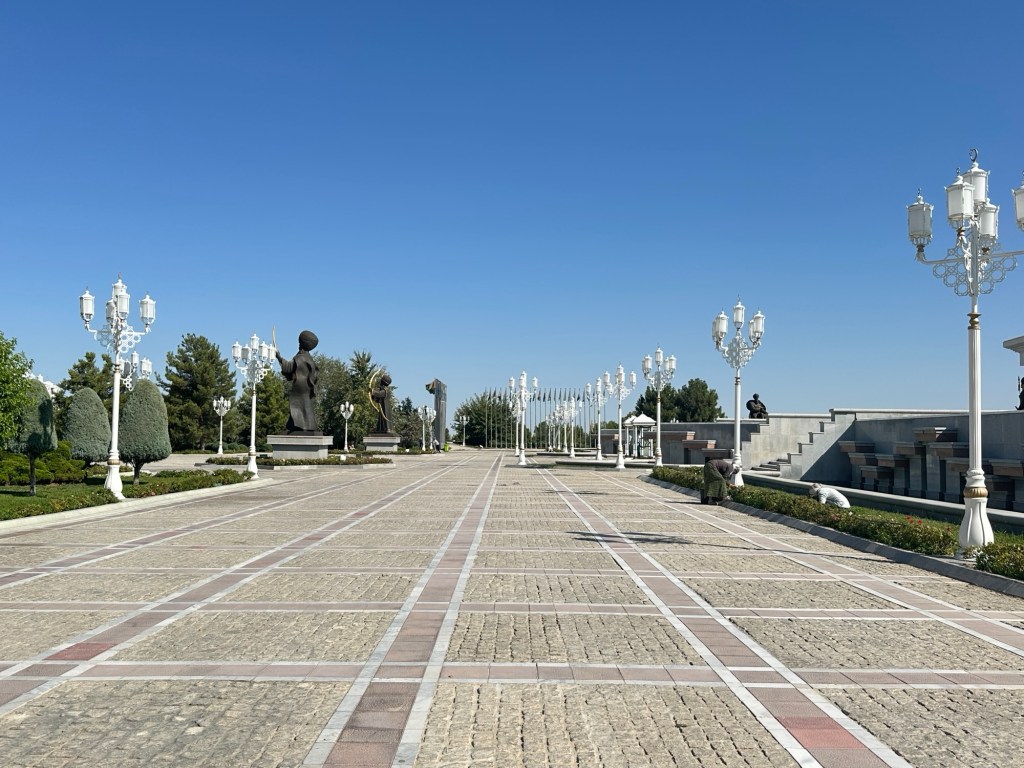
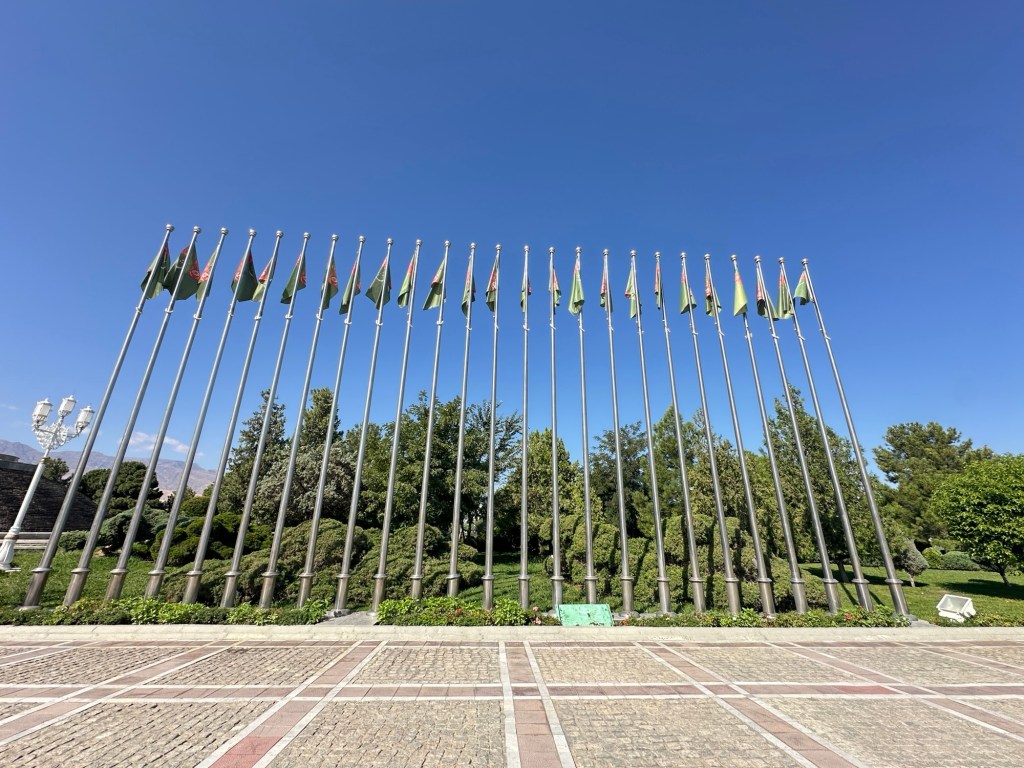
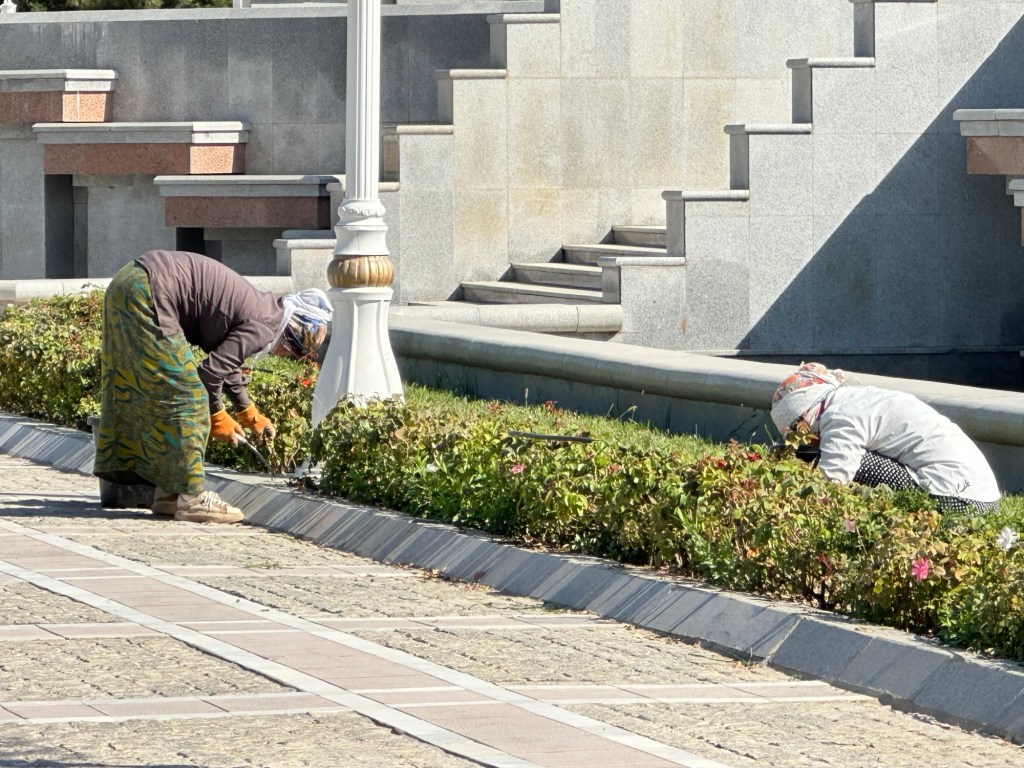


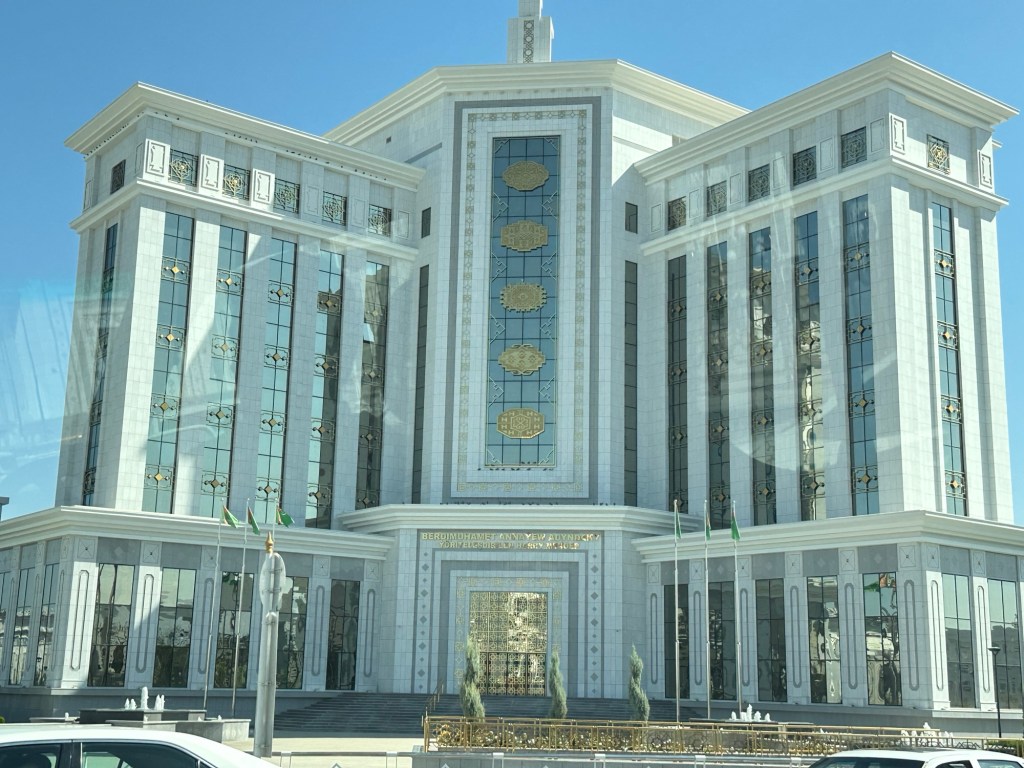

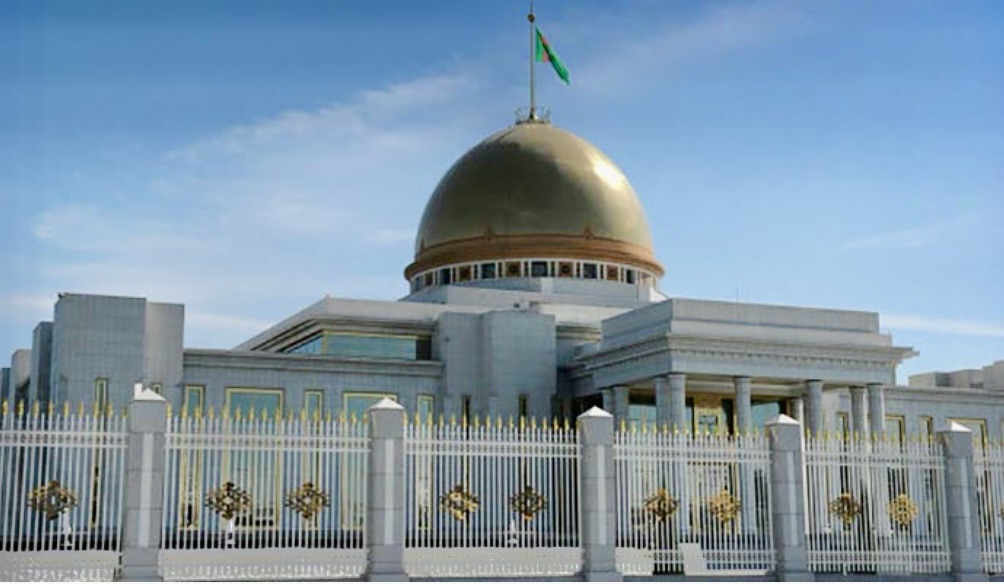

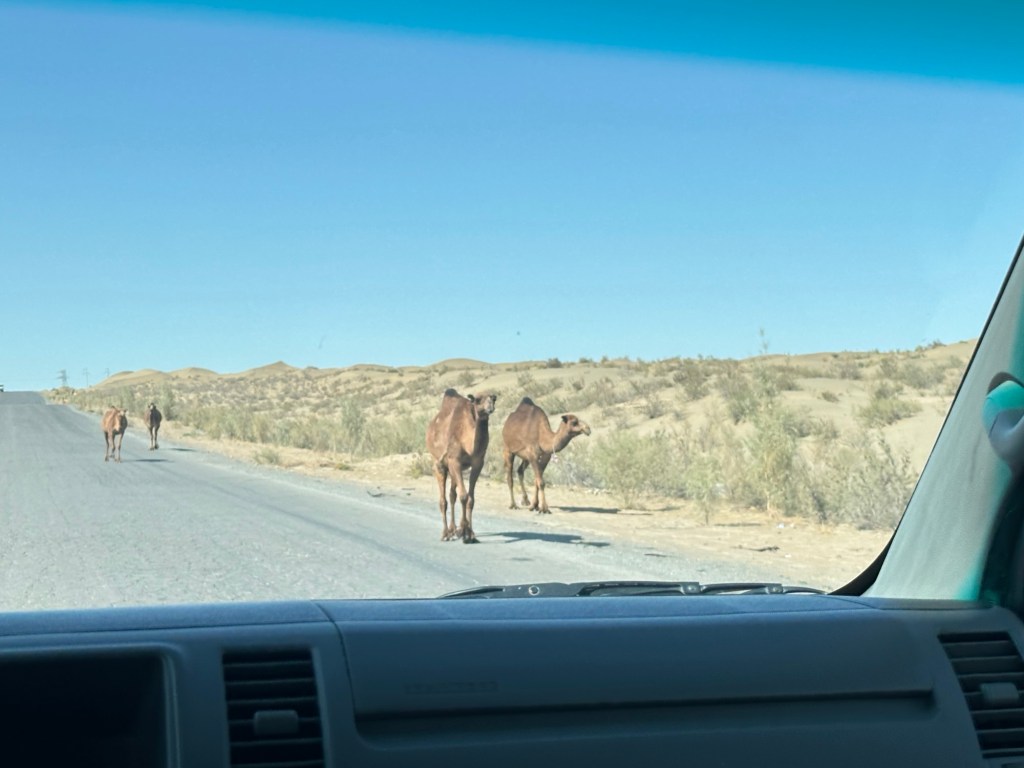
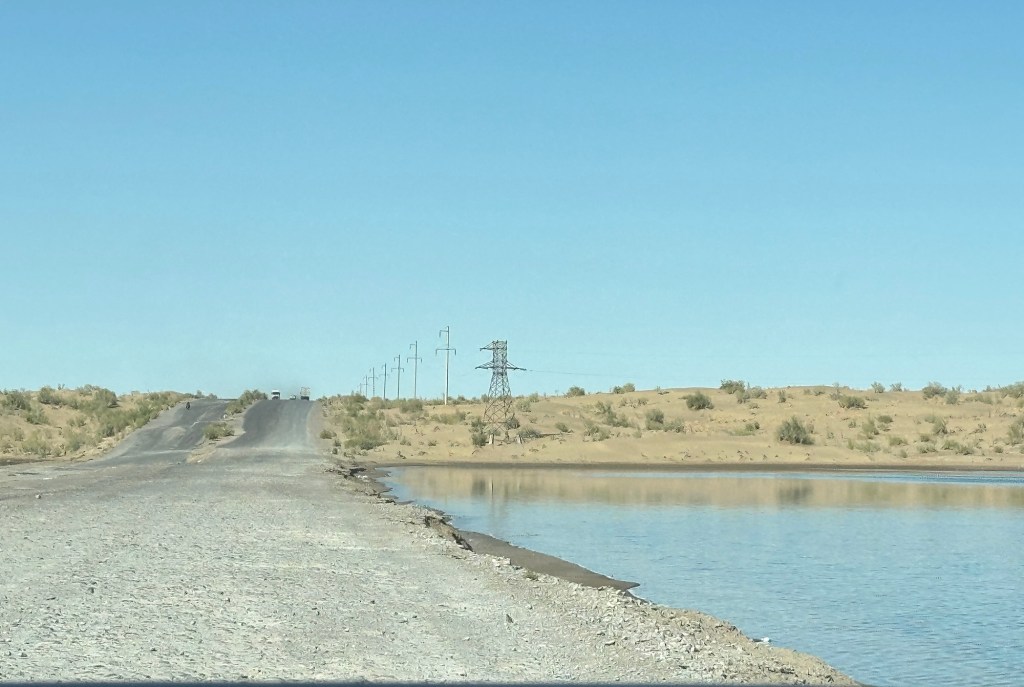
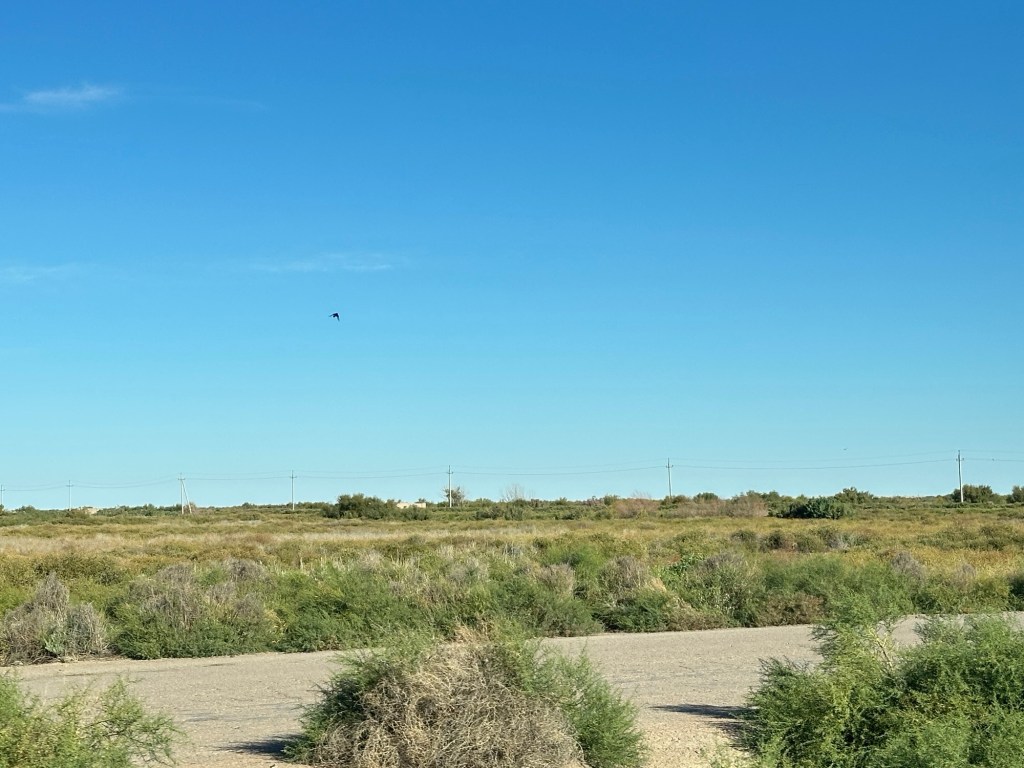
Some free time at the Russian Market to buy some souvenirs, then it was time to drive to Darvaza gas crater located in the middle of Karakum desert. 270 kms took 4 hours on very rough roads. We changed to four wheel drives half way in. Camels were everywhere just wondering along the road. The asphalt roads got progressively more pothole-y on this journey, and as we hit the desert, became dirt/sand tracks, so a very bumpy rid. One fuel station with a very sub standard toilet.

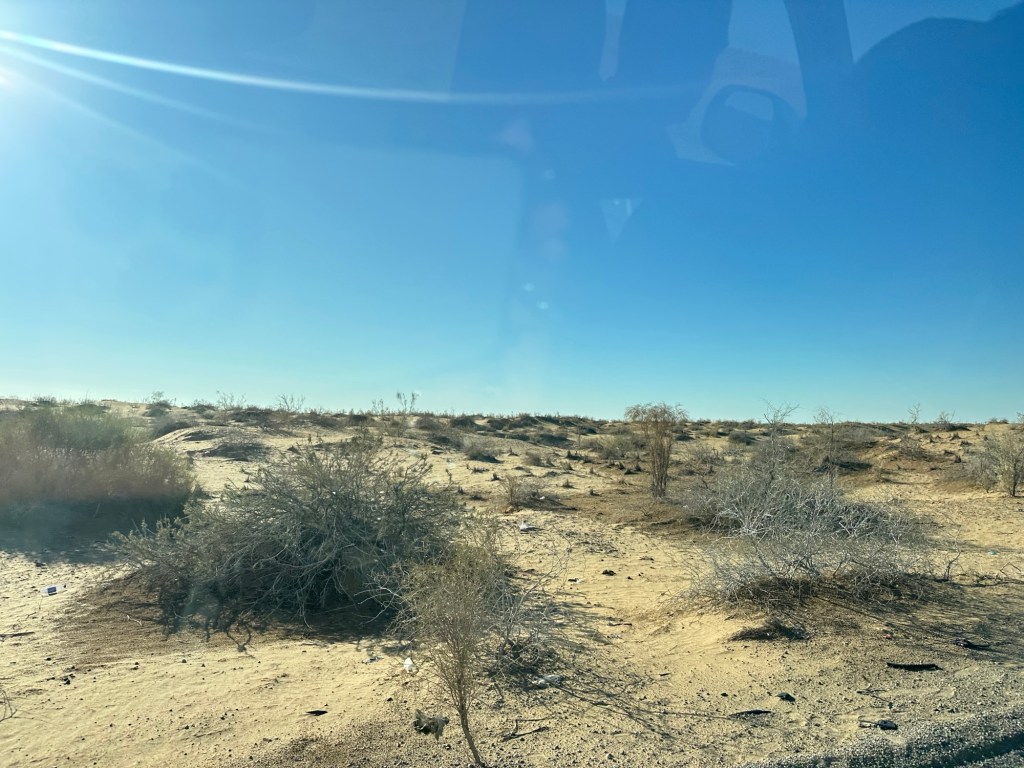

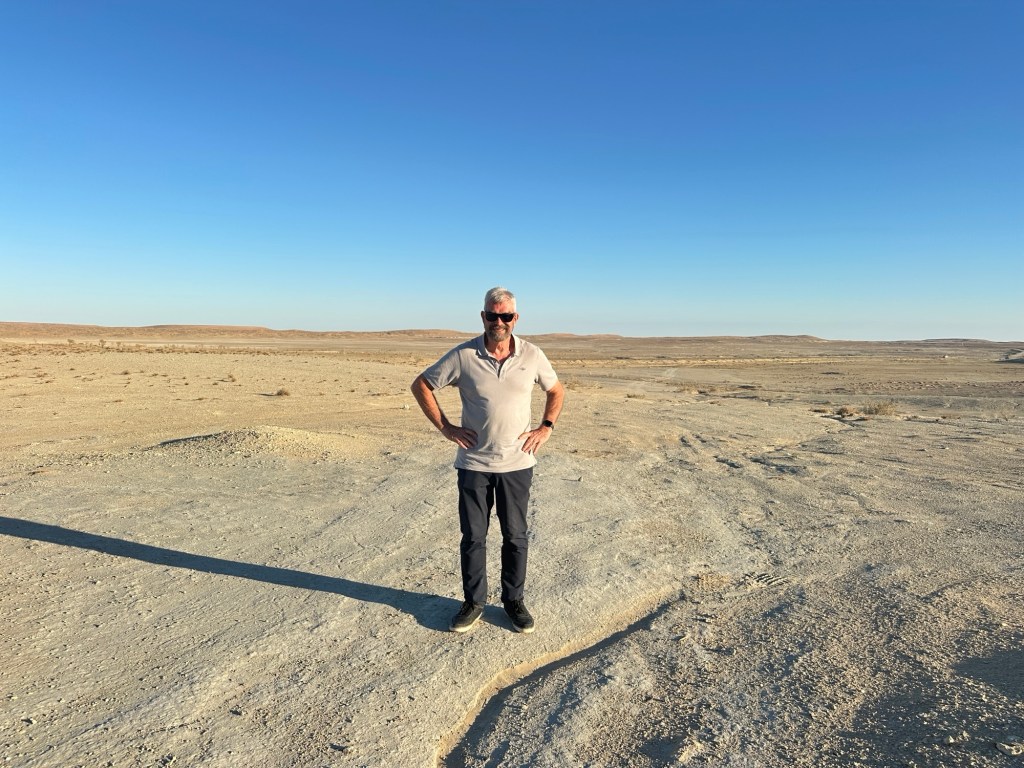
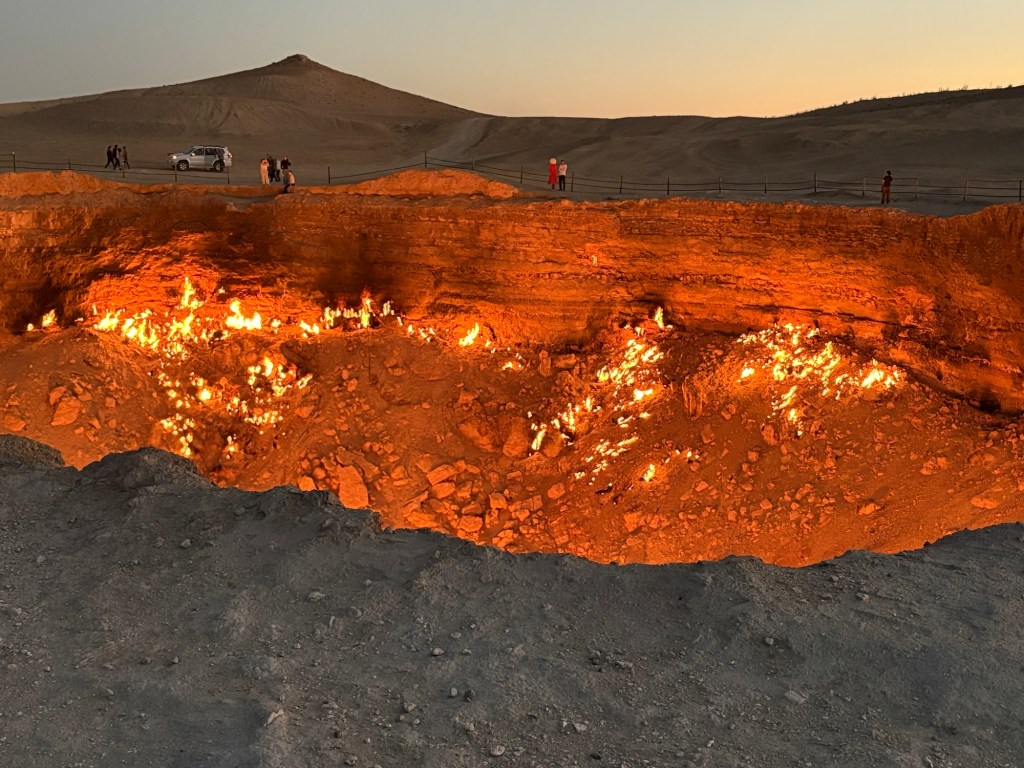
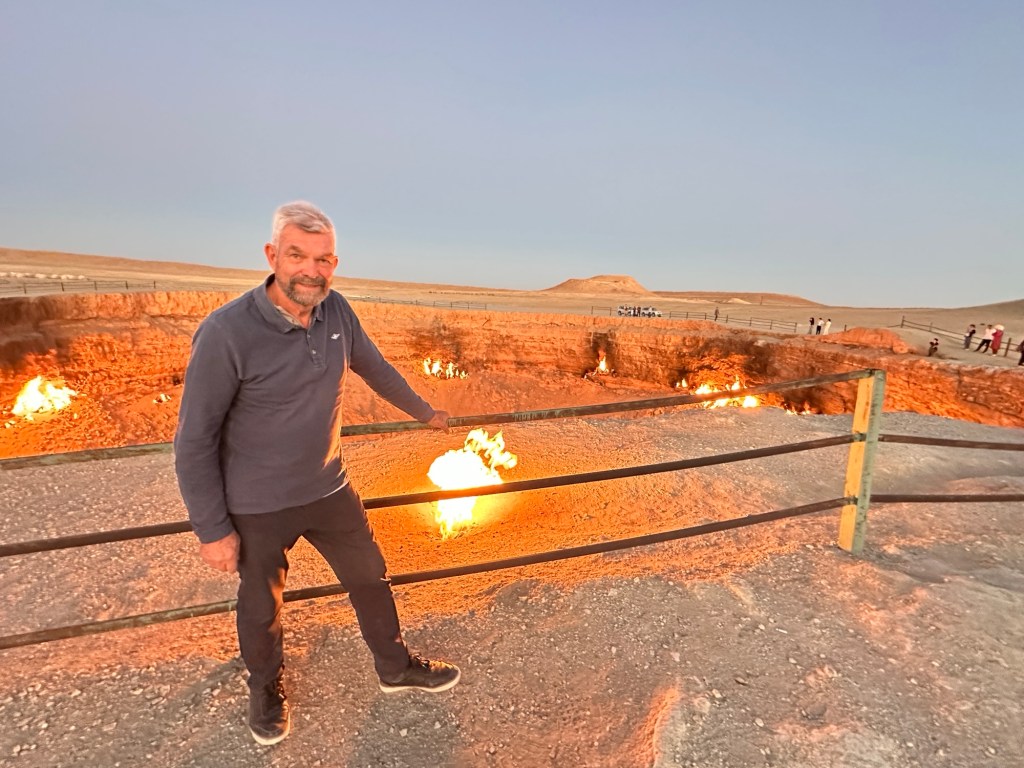
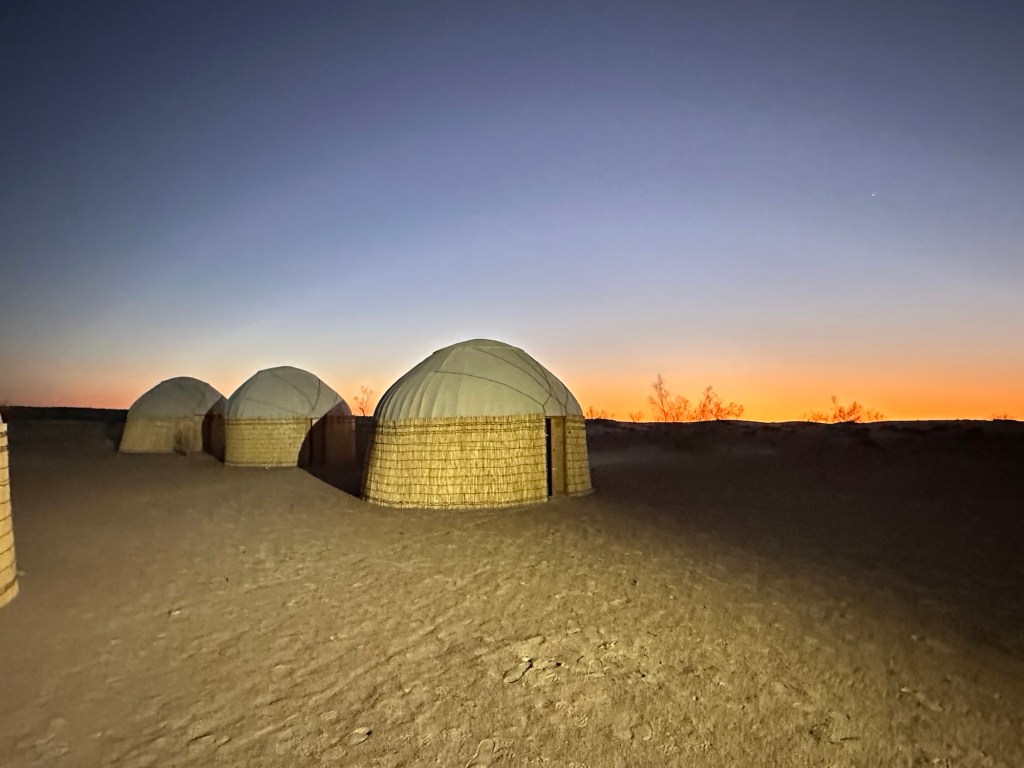
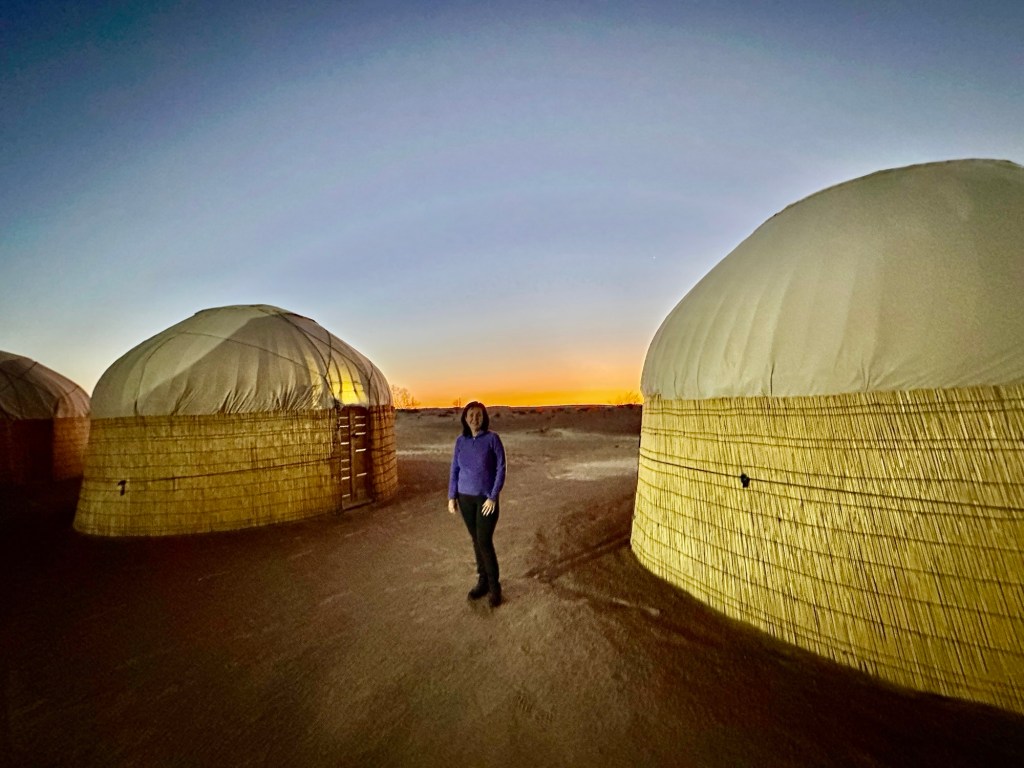
We dropped off our bags at the yurts, then went to look at the crater before and after sunset. Darvaza Crater is a manmade disaster from 1971, known locally as ‘The Gateway to Hell’, when a Soviet drilling rig collapsed into a natural gas field. The escaping gas was set alight to prevent it poisoning the local inhabitants, but instead of quickly burning out, it has continued to blaze ever since. It looked quite spectacular especially after sunset.


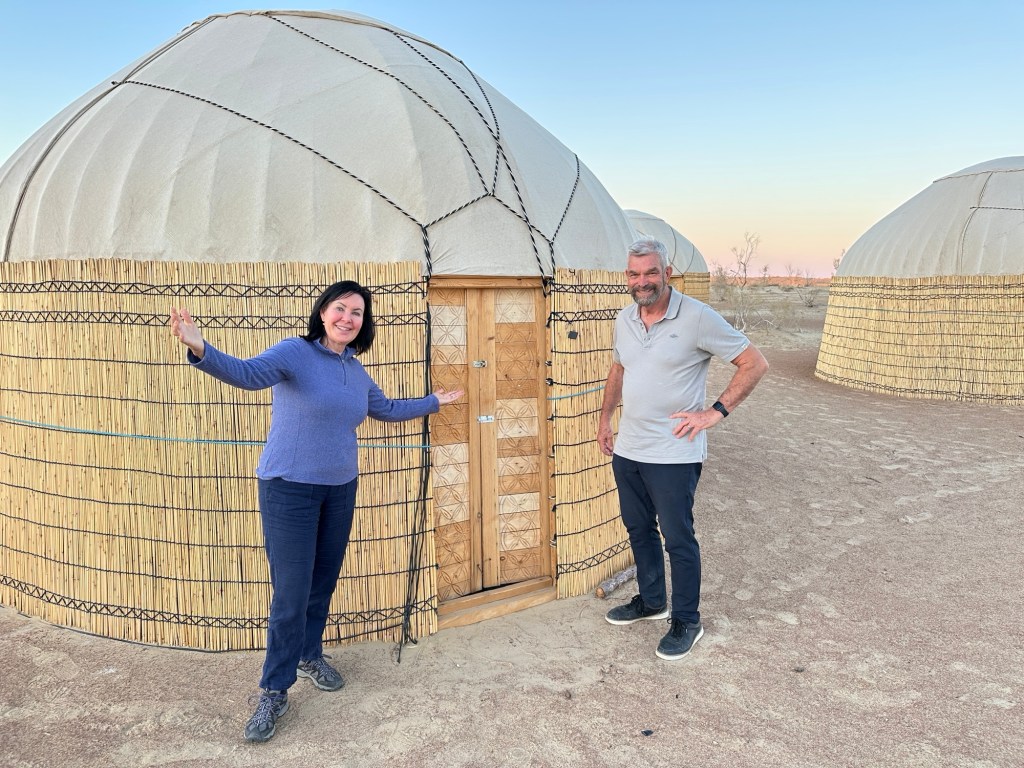
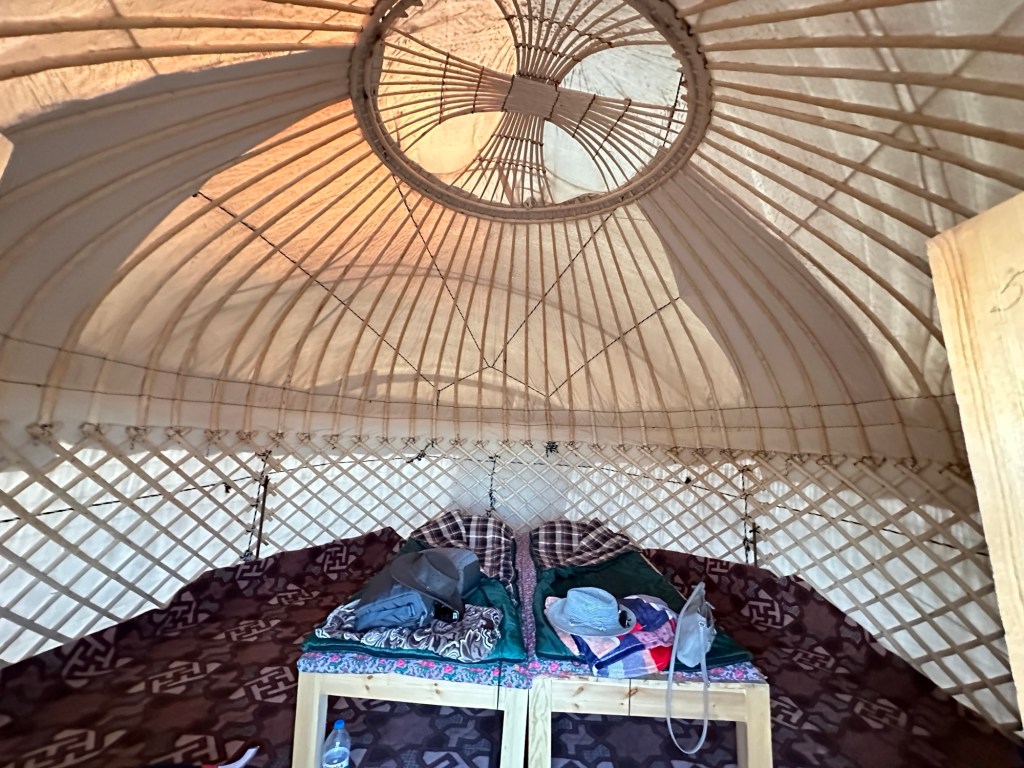
Our yurt, around 18-feet in diameter, had a tall domed roof which gave a feeling of space. A patterned carpet on the concrete floor made it look cosy and whilst the two single beds were a little hard, the sleeping bag and thin blankets were essential during the night. There was a shower, but no hot water. You’ve got to try these things once.

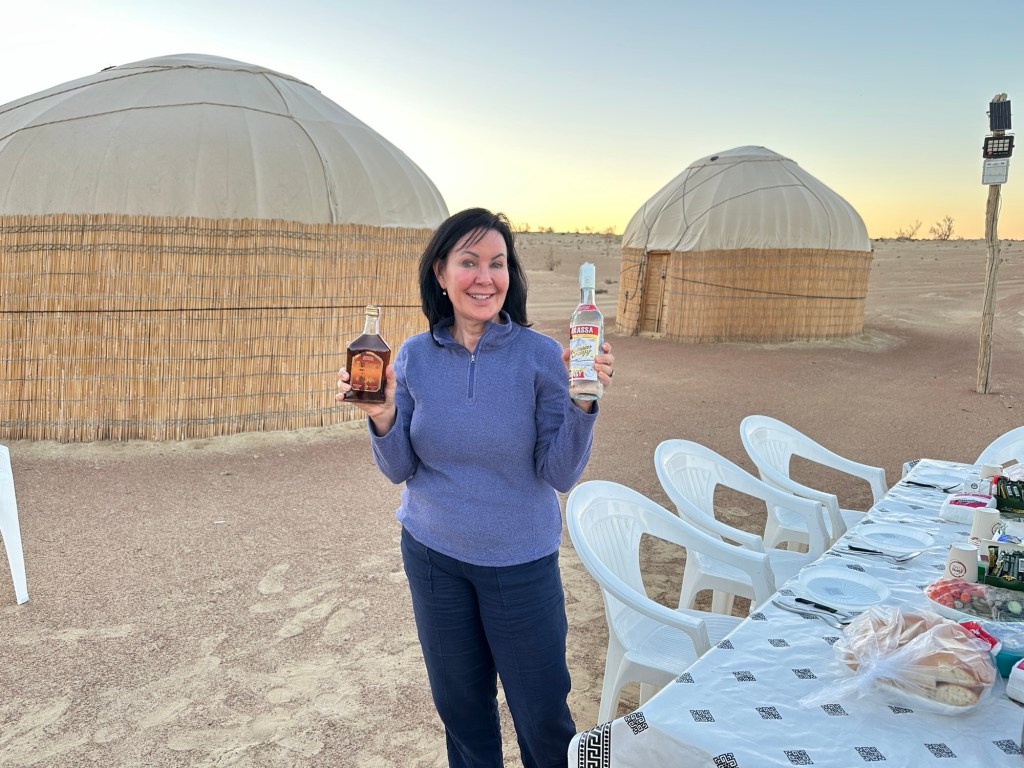
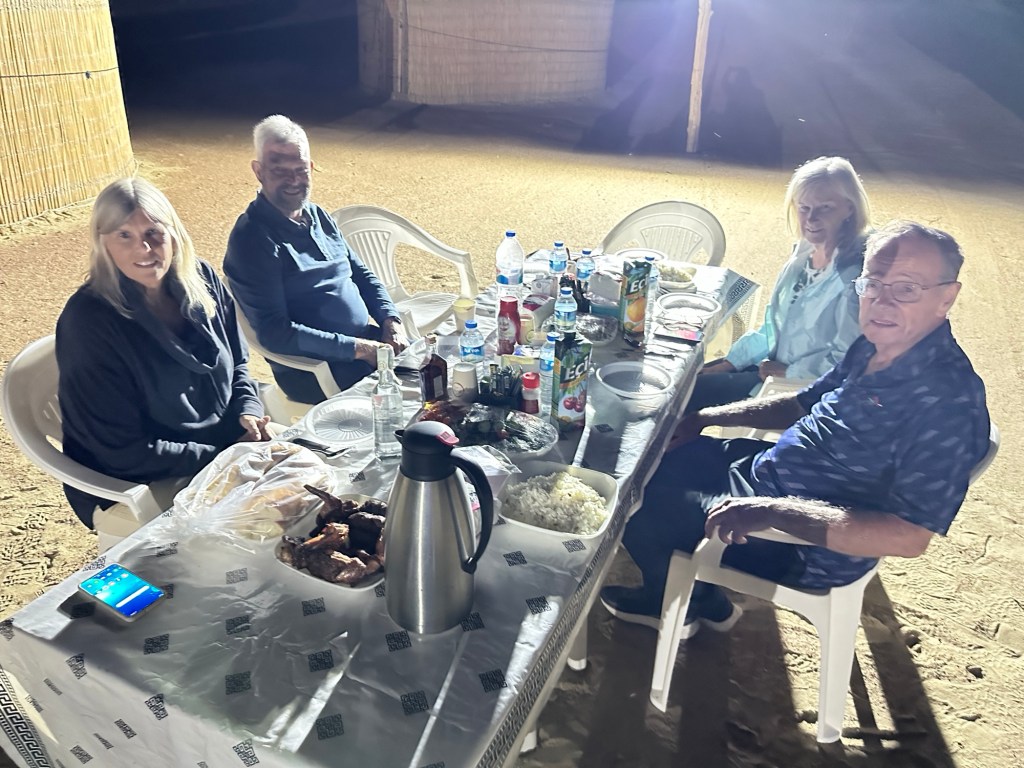
Dinner was bbq meat and salad which we ate under the stars. Vodka and cognac were offered, but alas no mixers! Early to bed as we needed to be up early. Took a while to get to sleep as the generator was very noisy.
Day 7
Wednesday 17th September
Dervaza Gas Crater to Nukus in Uzbekistan
10-24 degrees, sunny
The alarm shrieked long before dawn, and by 6:15 a.m. we were already on the move—fuelled by a lightning-fast breakfast and sheer determination. Unfortunately, it was my turn to battle the dreaded traveller’s tummy.
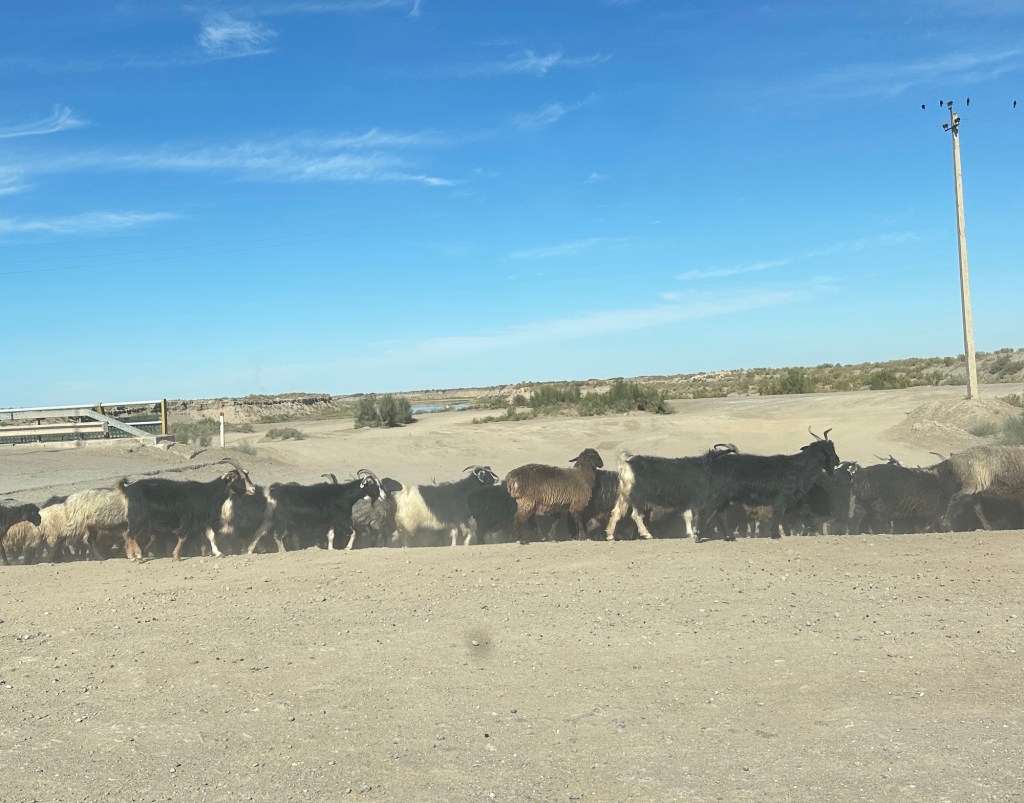


If we’d thought yesterday’s roads were rough, today’s journey proved they had only been a warm-up act. For five relentless hours the track bucked and jolted like a wild rodeo ride—every bump a personal challenge when your stomach is staging a rebellion.
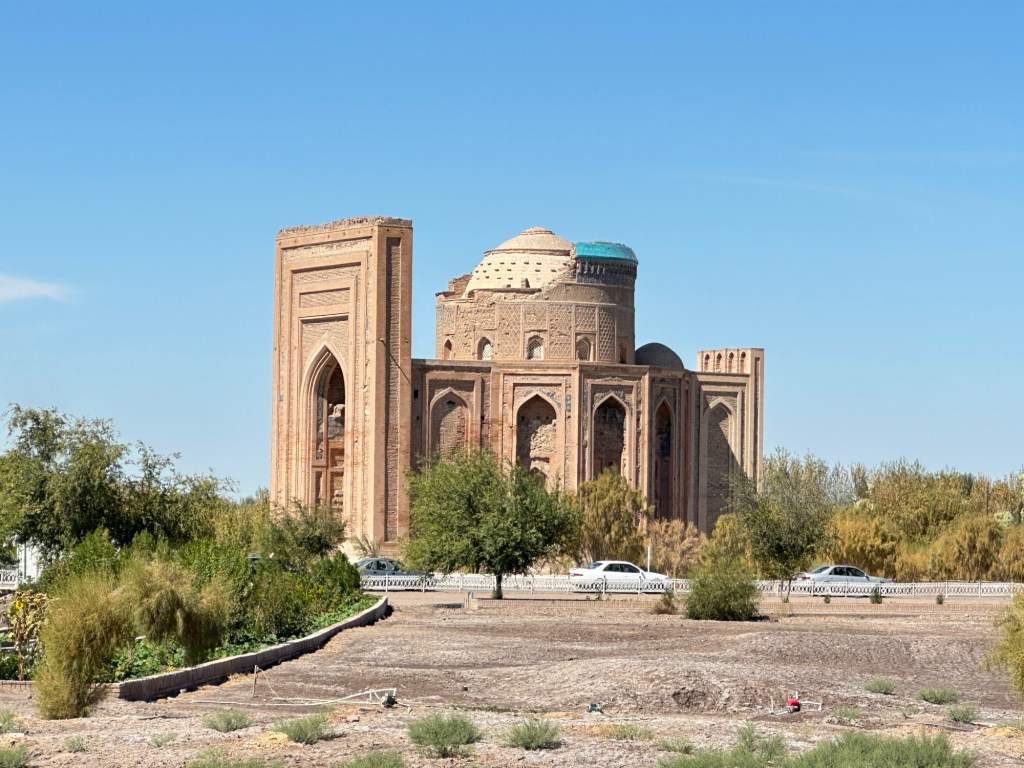
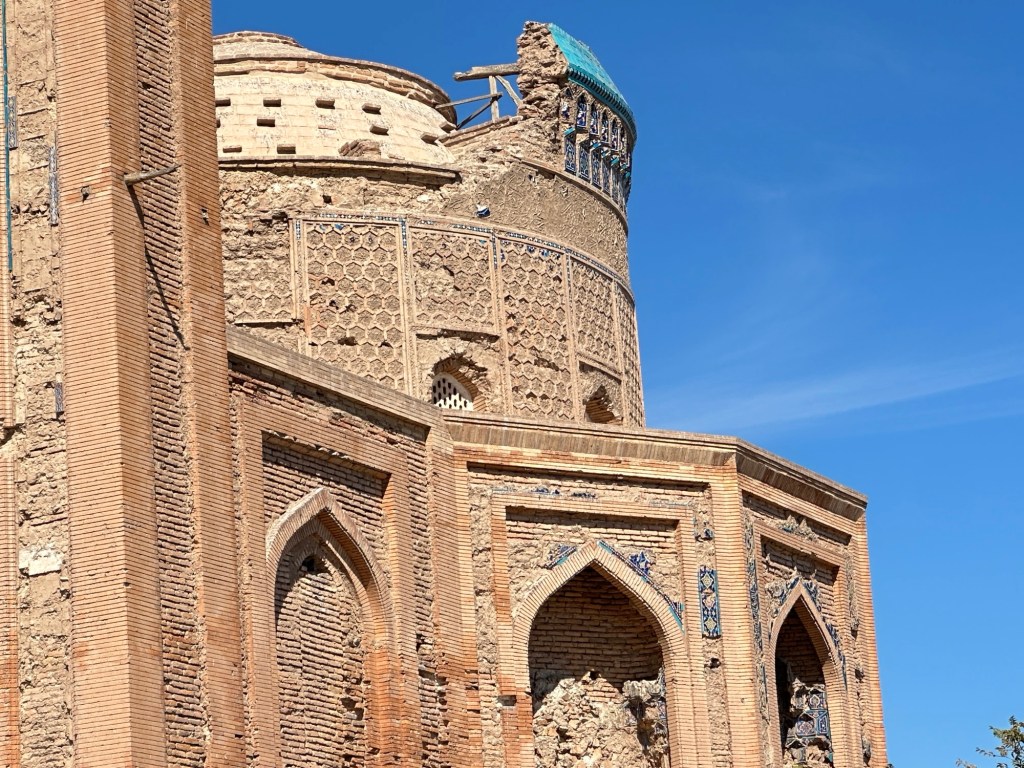
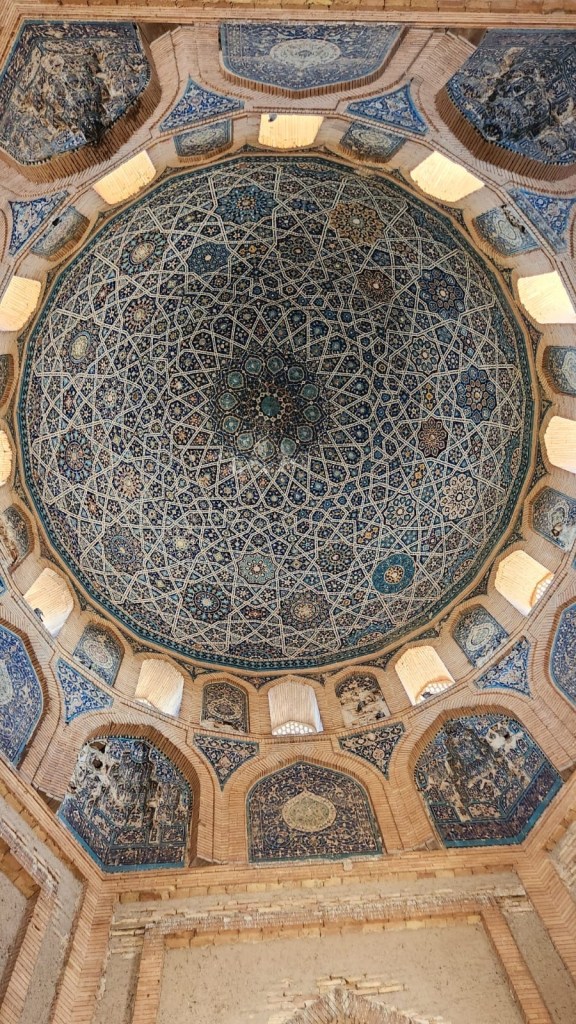
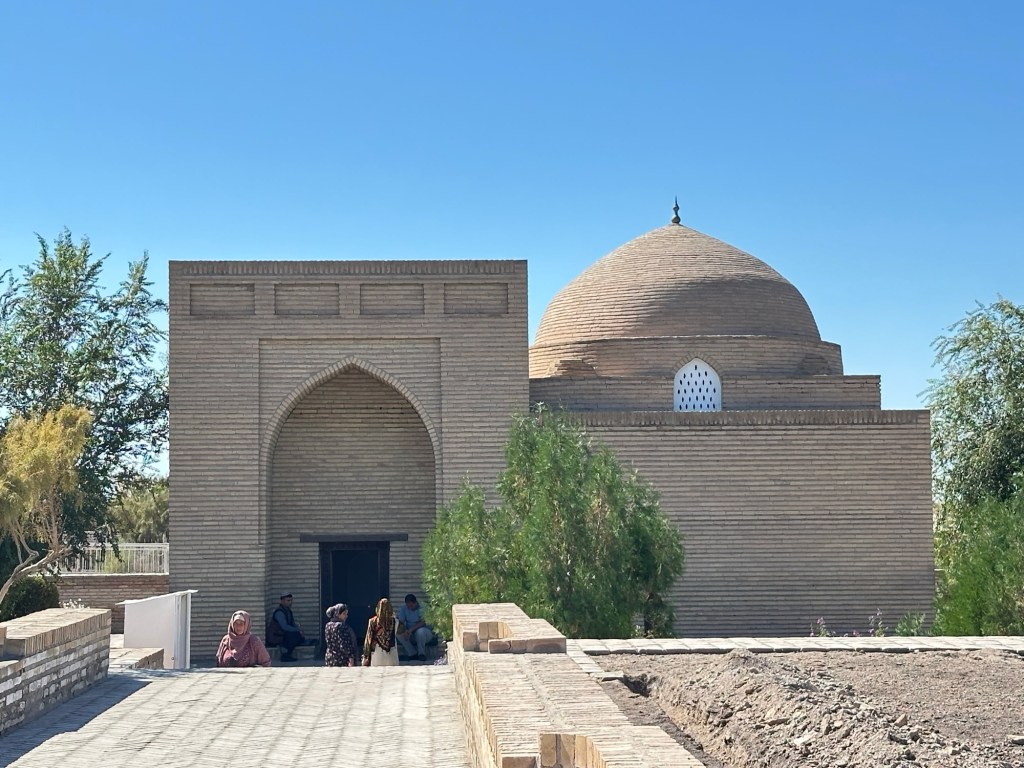
Konye-Urgench is yet another important city along the Silk Road that thrived until the Mongols decimated it. The surviving minaret is 60 metres high and was once topped by a gold cupola. Many buildings don’t seem quite vertical – apparently they are built with a 10 cm lean from base to tip because everything should bow to Allah. We visited the mausoleums of Turabek-Khanym, Sultan Tekesh, Sultan Il Arslan, Najmuddin-Kubra, Sultan and discovered the Kutlug Timur Minaret. The guide there had an amazing history knowledge of the early Mongols 11-14th Century. At Kunya-Urgench we visited the mausoleums of Turabek-Khanym, Sultan Tekesh, Sultan Il Arslan, Najmudd.
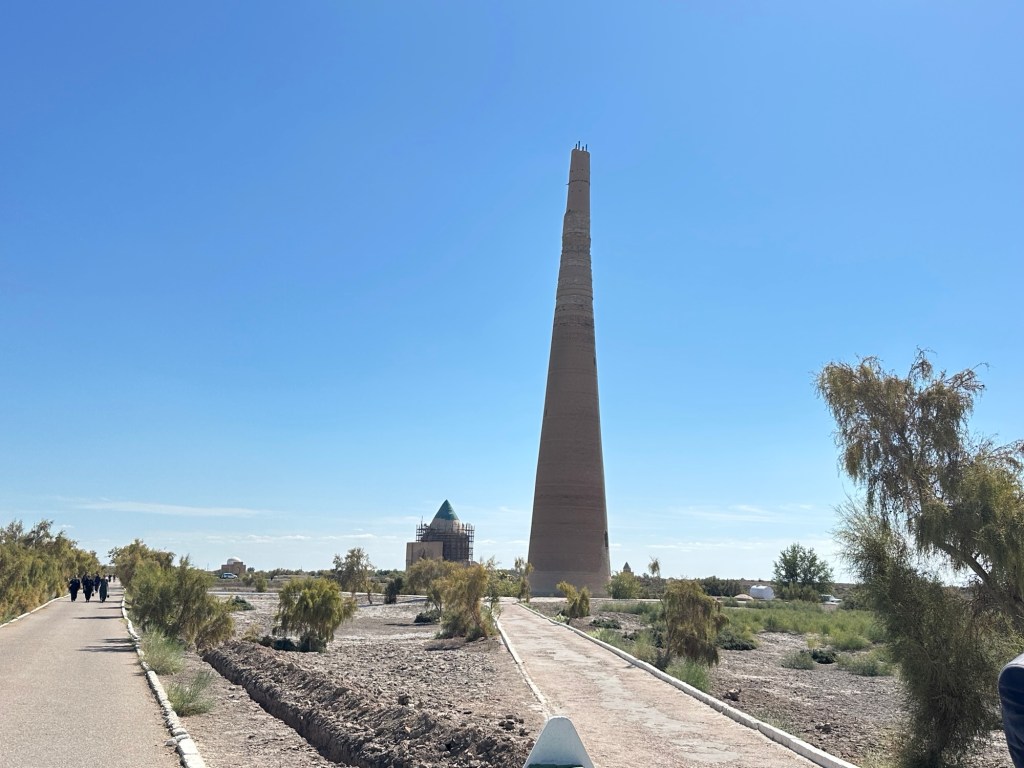


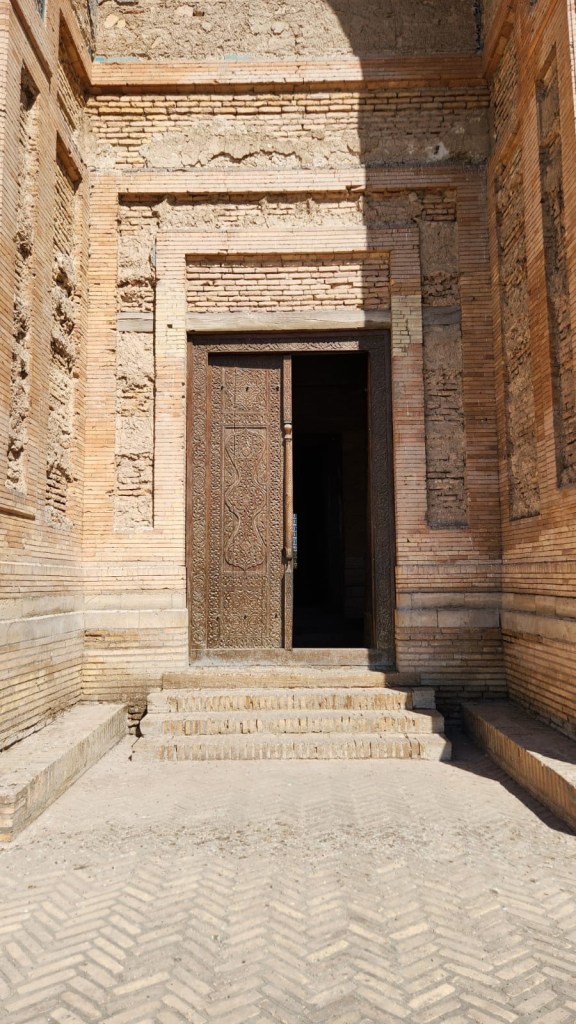
Another drive to the “Kunya Urgench-Khojeyli” border. That process took a while. We had to drag our bags on gravel for 4 x 100 metre sections between the stop points. It took almost as long to get out of Turkmenistan as it did to get in!
Once we’d passed the border formalities, we meet our Uzbek driver who drove us to the Jipek Joly hotel in Nukus, an hour away.
We settled in , then ventured out for a lovely meal around the corner from the hotel. Bonus- they accept credit cards.
Interesting things about Turkmenistan
Much of Turkmenistan’s charm lies in meeting its people. We loved them for their unassuming manner, their openness despite the intense scrutiny from the top. Everyone seems very secretive here.
Smoking is banned everywhere.
We had to pay 50 Manat, or $4, at each tourist site if you wanted to take photos. You weren’t allowed to take photos of government buildings.
You can’t use credit cards here.
Population Turkmenistan 7.5 million,
 Glammy Goes Global